The Empires of Germany and France
What was for many centuries known as “The Holy Roman Empire of
the German Nation” was a portion of the great imperial domain of
Charlemagne, divided between his sons on his death in 814. It became
an elective monarchy in 911, and from the reign of Otho the Great was
confined to Germany, which assumed the title above given. This great
empire survived until 1804, when the imperial title, then held by
Francis I. of Austria, was given up, and Francis styled himself Emperor
of Austria. It is an interesting coincidence that this empire ceased to
exist in the same year that Napoleon, who in a large measure restored
the empire of Charlemagne, assumed the imperial crown of France. The
restoration of the Empire of Germany, though not in its old form, was
left to Prussia, after the final overthrow of the Napoleonic imperial
dynasty in 1871.
The Rapid Growth of Prussia
Prussia, originally an unimportant member of the German confederation,
rose to power as Austria declined, its progress upward being remarkably
rapid. Frederick William, the “Great Elector” of Brandenburg, united
the then minor province of Prussia to his dominions, and at his death
in 1688 left it a strong army and a large treasure. His son, Frederick
I., was the first to bear the title of King of Prussia. Frederick the
Great, who became king in 1740, had under him a series of disjointed
provinces and a population of less than 2,500,000. His genius made
Prussia a great power, which grew until, in 1805, it had a population
of 9,640,000 and a territory of nearly 6,000 square miles.
We have seen the part this kingdom played in the Napoleonic wars.
Dismembered by Napoleon and reduced to a mere fragment, it regained
its old importance by the Treaty of Vienna. The great career of this
kingdom began with the accession, in 1862, of King William I., and the
appointment, in the same year, of Count Otto von Bismarck as Minister
of the King’s House and of Foreign Affairs. It was not King William,
but Count Bismarck, who raised Prussia to the exalted position it has
since assumed.
Bismarck’s Despotic Acts and Warlike Aggressions
Bismarck began his career by an effort to restore the old despotism,
setting aside acts of the legislature with the boldness of an autocrat,
and seeking to make the king supreme over the representatives of
the people. He disdained the protest of the Chamber of Deputies in
concluding a secret treaty with Russia. He made laws and decreed budget
estimates without the concurrence of the Chambers. And while thus
busily engaged at home in altercations with the Prussian Parliament, he
was as actively occupied with foreign affairs.
In 1864 Austria reluctantly took part with Prussia in the occupation of
the duchy of Schleswig-Holstein, claimed by Denmark. A war with Denmark
followed, which ultimately resulted in the annexation to Prussia of
the disputed territory. In this movement Bismarck was carrying out
a project which he had long entertained, that of making Prussia the
leading power in Germany. A second step in this policy was taken in
1866, when the troops of Prussia occupied Hanover and Saxony. This act
of aggression led to a war, in which Austria, alarmed at the ambitious
movements of Prussia, came to the aid of the threatened states.
Bismarck was quite ready. He had strengthened Prussia by an alliance
with Italy, and launched the Prussian army against that of Austria
with a rapidity that overthrew the power of the allies in a remarkably
brief and most brilliant campaign. At the decisive battle of Sadowa
fought July 3, 1866, King William commanded the Prussian army and
Field-marshal Benedek the Austrian. But back of the Prussian king was
General Von Moltke one of the most brilliant strategists of modern
times, to whose skillful combinations, and distinguished services in
organizing the army of Prussia, that state owed its rapid series of
successes in war.
Austria Overthrown at Sadowa
At Sadowa the newly-invented needle-gun played an effective part in
bringing victory to the Prussian arms. The battle continued actively
from 7.30 A.M. to 2.30 P.M., at which hour the
Prussians carried the centre of the Austrian position. Yet, despite
this, the advantage remained with the Austrians until 3.30, at which
hour the Crown Prince Frederick drove their left flank from the village
of Lipa. An hour more sufficed to complete the defeat of the Austrians,
but it was 9 P.M. before the fighting ceased. In addition to
their losses on the field, 15,000 of the Austrians were made prisoners
and their cause was lost beyond possibility of recovery.
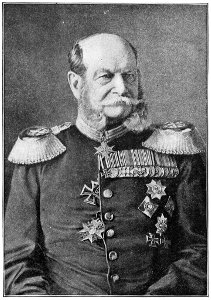
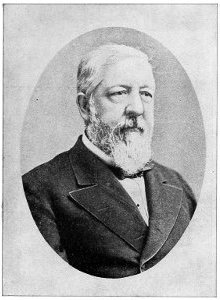
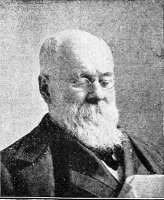
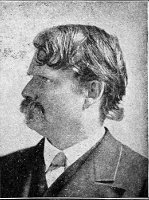
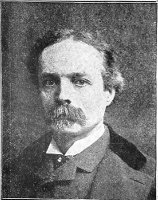
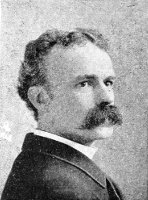
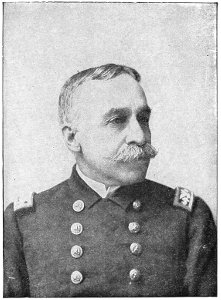
WILLIAM I. EMPEROR
OF UNITED GERMANY.
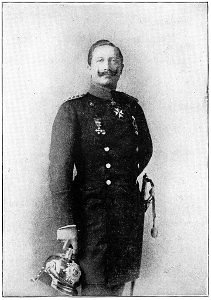
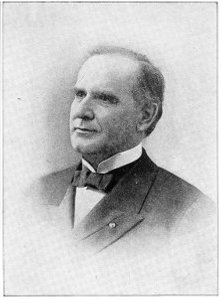
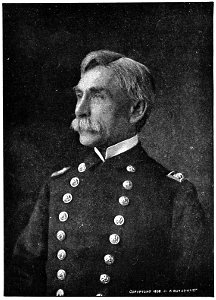
WILLIAM II. PRESENT EMPEROR.
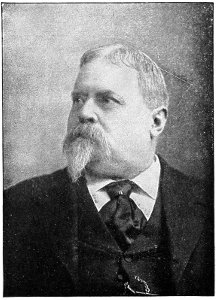
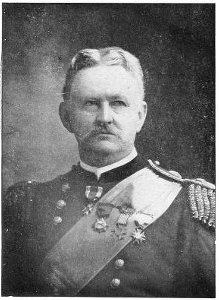
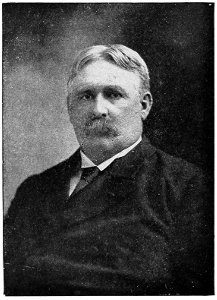
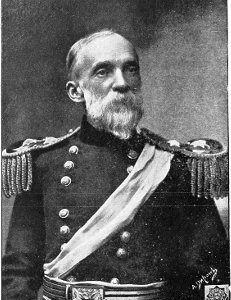
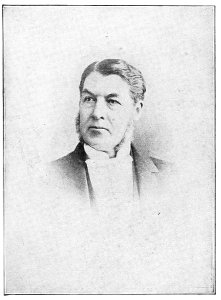
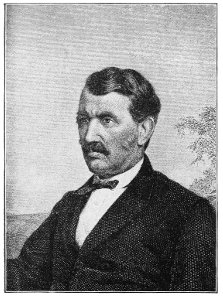
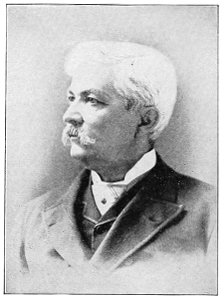
NOTED GERMAN EMPERORS
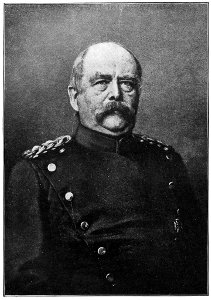
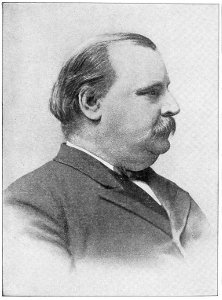
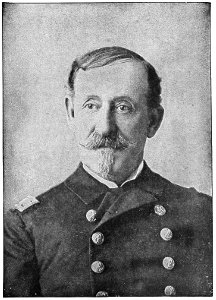
OTTO VON BISMARCK.
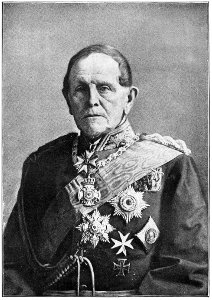
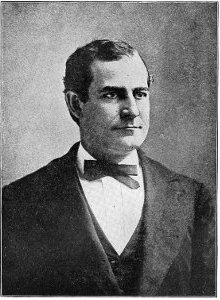
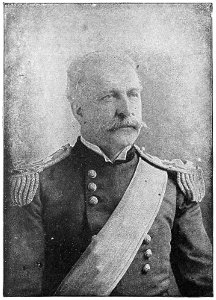
H. KARL B. VON MOLTKE.
RENOWNED SONS OF GERMANY
There seemed nothing to hinder Bismarck from overthrowing and
dismembering the Austrian empire, as Napoleon had done more than
once, but there is reason to believe that the dread of France coming
to the aid of the defeated realm made him stop short in his career
of victory. Napoleon III. boasted to the French Chambers that he had
stayed the conqueror at the gates of Vienna. However that be, a
treaty of peace was signed, in which Austria consented to withdraw
from the German Confederation. Bismarck had gained one great point in
his plans, in removing a formidable rival from his path. The way was
cleared for making Prussia the supreme power in Germany. The German
allies of Austria suffered severely for their assistance to that power.
Saxony kept its king, but fell under Prussian control; and Hanover,
Hesse-Cassel, Nassau, and the free city of Frankfurt-on-the-Main were
absorbed by Prussia.
South German States in the War
The States of South Germany had taken part on the side of Austria
in the war, and continued the struggle after peace had been made
between the main contestants. The result was the only one that could
have been expected under the circumstances. Though the Bavarians and
Würtembergers showed great bravery in the several conflicts, the
Prussians were steadily successful, and the South German army was
finally obliged to retire beyond the Main, while Würzburg was captured
by the Prussians. In this city a truce was effected which ultimately
led to a treaty of peace. Würtemberg, Bavaria, and Baden were each
required to pay a war indemnity, and a secret measure of the treaty was
an offensive and defensive alliance with Prussia for common action in
case of a foreign war.
Disunion of Germany
Mention was made in the last chapter of the long disunion of Italy,
its division into a number of separate and frequently hostile states
from the fall of the Roman Empire until its final unification in 1870.
A similar condition had for ages existed in Germany. The so-called
German Empire of the mediæval period was little more than a league of
separate states, each with its own monarch and distinct government.
And the authority of the emperor decreased with time until it became
but a shadow. It vanished in 1804, leaving Germany composed of several
hundred independent states, small and large.
Several efforts were made in the succeeding years to restore the bond
of union between these states. Under the influence of Napoleon they
were organized into South German and North German Confederacies, and
the effect of his interference with their internal affairs was such
that they became greatly reduced in number, many of the minor states
being swallowed up by their more powerful neighbors.
Efforts at Union
The subsequent attempts at union proved weak and ineffective. The
Bund, or bond of connection between these states, formed after the
Napoleonic period, was of the most shadowy character, its congress
being destitute of power or authority. The National Assembly, convened
at Frankfurt after the revolution of 1848, with the Archduke John of
Austria as administrator of the empire, proved equally powerless. It
made a vigorous effort to enforce its authority, but without avail;
Prussia refused to be bound by its decisions; and the attitude of
opposition assumed by this powerful state soon brought the new attempt
at union to an end.
In 1886 the war between the two great powers of Germany, in which most
of the smaller powers were concerned, led to more decided measures,
in the absorption by Prussia of the states above named, the formation
of a North German League among the remaining states of the north, and
the offensive and defensive alliance with Prussia of the South German
states. By the treaty of peace with Austria, that power was excluded
from the German League, and Prussia remained the dominant power in
Germany. A constitution for the League was adopted in 1867, providing
for a Diet, or legislative council of the League, elected by the direct
votes of the people, and an army, which was to be under the command of
the Prussian king and subject to the military laws of Prussia. Each
state in the League bound itself to supply a specified sum for the
support of the army.
The Feeling for Unity
Here was a union with a backbone—an army and a budget—and Bismarck
had done more in the five years of his ministry in forming an united
Germany than his predecessors had done in fifty years. But the idea
of union and alliance between kindred states was then widely in the
air. Such a union had been practically completed in Italy, and Hungary
in 1867 regained her ancient rights, which had been taken from her
in 1849, being given a separate government, with Francis Joseph, the
emperor of Austria, as its king. It was natural that the common blood
of the Germans should lead them to a political confederation, and
equally natural that Prussia, which so overshadowed the smaller states
in strength, should be the leading element in the alliance.
The great increase in the power and importance of Prussia, as an
outcome of the war with Austria, was viewed with jealousy in France.
The Emperor Napoleon sought, by a secret treaty with Holland, to obtain
possession of the state of Luxemburg, for which a sum of money was to
be paid. This negotiation became known and was defeated by Bismarck,
the King of Holland shrinking from the peril of war and the publicity
of a disgraceful transaction. But the interference of Prussia with this
underhand scheme added to the irritation of France.
The Position of Louis Napoleon
And thus time passed on until the eventful year 1870. By that year
Prussia had completed its work among the North German states and was
ready for the issue of hostilities, if this should be necessary.
On the other hand, Napoleon, who had found his prestige in France
from various causes decreasing, felt obliged in 1870 to depart from
his policy of personal rule and give that country a constitutional
government. This proposal was submitted to a vote of the people and was
sustained by an immense majority. He also took occasion to state that
“peace was never more assured than at the present time.” This assurance
gave satisfaction to the world, yet it was a false one, for war was
probably at that moment assured.
There were alarming signs in France. The opposition to Napoleonism
was steadily gaining power. A bad harvest was threatened—a serious
source of discontent. The Parliament was discussing the reversal of the
sentence of banishment against the Orleans family. These indications of
a change in public sentiment appeared to call for some act that would
aid in restoring the popularity of the emperor. And of all the acts
that could be devised a national war seemed the most promising. If the
Rhine frontier, which every French regarded as the natural boundary of
the empire, could be regained by the arms of the nation, discontent and
opposition would vanish, the name of Napoleon would win back its old
prestige, and the reign of Bonapartism would be firmly established.
Preparations for Hostilities
Acts speak louder than words, and the acts of Napoleon were not in
accord with his assurances of peace. Extensive military preparations
began, and the forces of the empire were strengthened by land and sea,
while great trust was placed in a new weapon, of murderous powers,
called the mitrailleuse, the predecessor of the machine gun, and
capable of discharging twenty-five balls at once.
On the other hand, there were abundant indications of discontent in
Germany, where a variety of parties inveighed against the rapacious
policy of Prussia, and where Bismarck had sown a deep crop of hate. It
was believed in France that the minor states would not support Prussia
in a war. In Austria the defeat in 1866 rankled, and hostilities
against Prussia on the part of France seemed certain to win sympathy
and support in that composite empire. Colonel Stoffel, the French
military envoy at Berlin, declared that Prussia would be found
abundantly prepared for a struggle; but his warnings went unheeded in
the French Cabinet, and the warlike preparations continued.
The Revolution in Spain
Napoleon did not have to go far for an excuse for the war upon which
he was resolved. One was prepared for him in that potent source of
trouble, the succession to the throne of Spain. In that country there
had for years been no end of trouble, revolts, Carlist risings, wars
and rumors of wars. The government of Queen Isabella, with its endless
intrigues, plots, and alternation of despotism and anarchy, and the
pronounced immorality of the queen, had become so distasteful to the
people that finally, after several years of revolts and armed risings,
she was driven from her throne by a revolution, and for a time Spain
was without a monarchy and ruled on republican principles.
But this arrangement did not prove satisfactory. The party in
opposition looked around for a king, and negotiations began with a
distant relative of the Prussian royal family, Leopold of Hohenzollern.
Prince Leopold accepted the offer, and informed the king of Prussia of
his decision.
The Spanish Succession
The news of this event caused great excitement in Paris, and the
Prussian government was advised of the painful feeling to which the
incident had given rise. The answer from Berlin that the Prussian
government had no concern in the matter, and that Prince Leopold was
free to act on his own account, did not allay the excitement. The
demand for war grew violent and clamorous, the voices of the feeble
opposition in the Chambers were drowned, and the journalists and
war partisans were confident of a short and glorious campaign and a
triumphant march to Berlin.
Napoleon’s Demand and William’s Refusal
The hostile feeling was reduced when King William of Prussia, though he
declined to prohibit Prince Leopold from accepting the crown, expressed
his concurrence with the decision of the prince when he withdrew his
acceptance of the dangerous offer. This decision was regarded as
sufficient, even in Paris; but it did not seem to be so in the palace,
where an excuse for a declaration of war was ardently desired. The
emperor’s hostile purpose was enhanced by the influence of the empress,
and it was finally declared that the Prussian king had aggrieved France
in permitting the prince to become a candidate for the throne without
consulting the French Cabinet.
The Declaration of War
Satisfaction for this shadowy source of offence was demanded, but King
William firmly refused to say any more on the subject and declined to
stand in the way of Prince Leopold if he should again accept the offer
of the Spanish throne. This refusal was declared to be an offence to
the honor and a threat to the safety of France. The war party was so
strongly in the ascendant that all opposition was now looked upon as
lack of patriotism, and on the 15th of July the Prime Minister Ollivier
announced that the reserves were to be called out and the necessary
measures taken to secure the honor and security of France. When the
declaration of war was hurled against Prussia the whole nation seemed
in harmony with it, and public opinion appeared for once to have become
a unit throughout France.
Rarely in the history of the world has so trivial a cause given rise
to such stupendous military and political events as took place in
France in a brief interval following this blind leap into hostilities.
Instead of a triumphant march to Berlin and the dictation of peace from
its palace, France was to find itself in two months’ time without an
emperor or an army, and in a few months more completely subdued and
occupied by foreign troops, while Paris had been made the scene of a
terrible siege and a frightful communistic riot, and a republic had
succeeded the empire. It was such a series of events as have seldom
been compressed within the short interval of half a year.
State of the French and German Armies
In truth Napoleon and his advisers were blinded by their hopes to the
true state of affairs. The army on which they depended, and which they
assumed to be in a high state of efficiency and discipline, was lacking
in almost every requisite of an efficient force. The first Napoleon
was his own minister of war. The third Napoleon, when told by his war
minister that “not a single button was wanting on a single gaiter,”
took the words for the fact, and hurled an army without supplies and
organization against the most thoroughly organized army the world
had ever known. That the French were as brave as the Germans goes
without saying; they fought desperately, but from the first confusion
reigned in their movements, while military science of the highest kind
dominated those of the Germans.
Napoleon was equally mistaken as to the state of affairs in Germany.
The disunion upon which he counted vanished at the first threat of war.
All Germany felt itself threatened and joined hands in defence. The
declaration of war was received there with as deep an enthusiasm as in
France and a fervent eagerness for the struggle. The new popular song,
Die Wacht am Rhein (“The Watch on the Rhine”) spread rapidly from
end to end of the country, and indicated the resolution of the German
people to defend to the death the frontier stream of their country.
Bismarck and Von Moltke
The French looked for a parade march to Berlin, even fixing the day of
their entrance into that city—August 15th, the emperor’s birthday. On
the contrary, they failed to set their foot on German territory, and
soon found themselves engaged in a death struggle with the invaders of
their own land. In truth, while the Prussian diplomacy was conducted by
Bismarck, the ablest statesman Prussia had ever known, the movements
of the army were directed by far the best tactician Europe then
possessed, the famous Von Moltke, to whose strategy the rapid success
of the war against Austria had been due. In the war with France Von
Moltke, though too old to lead the armies in person, was virtually
commander-in-chief, and arranged those masterly combinations which
overthrew all the power of France in so remarkably brief a period.
Under his directions, from the moment war was declared, everything
worked with clocklike precision. It was said that Von Moltke had only
to touch a bell and all went forward. As it was, the Crown Prince
Frederick fell upon the French while still unprepared, won the first
battle, and steadily held the advantage to the end, the French being
beaten by the strategy that kept the Germans in superior strength at
all decisive points.
But to return to the events of war. On July 23, 1870, the Emperor
Napoleon, after making his wife Eugenie regent of France, set out with
his son at the head of the army, full of high hopes of victory and
triumph. By the end of July King William had also set out from Berlin
to join the armies that were then in rapid motion towards the frontier.
Strength of the Armies
The emperor made his way to Metz, where was stationed his main army,
about 200,000 strong, under Marshals Bazaine and Canrobert and General
Bourbaki. Further east, under Marshal MacMahon, the hero of Magenta,
was the southern army, of about 100,000 men. A third army occupied the
camp at Chalons, while a well-manned fleet set sail for the Baltic,
to blockade the harbors and assail the coast of Germany. The German
army was likewise in three divisions, the first, of 61,000 men, under
General Steinmetz; the second, of 206,000 men, under Prince Frederick
Charles; and the third, of 180,000 men, under the crown prince and
General Blumenthal. The king, commander-in-chief of the whole, was in
the centre, and with him the general staff under the guidance of the
alert Von Moltke. Bismarck and the minister of war Von Roon were also
present, and so rapid was the movement of these great forces that in
two weeks after the order to march was given 300,000 armed Germans
stood in rank along the Rhine.
Battles of Saarbrück and Weissenburg
The two armies first came together on August 2d, near Saarbrück, on
the frontier line of the hostile kingdoms. It was the one success of
the French, for the Prussians, after a fight in which both sides lost
equally, retired in good order. This was proclaimed by the French
papers as a brilliant victory, and filled the people with undue hopes
of glory. It was the last favorable report, for they were quickly
overwhelmed with tidings of defeat and disaster.
Weissenburg, on the borders of Rhenish Bavaria, had been invested
by a division of MacMahon’s army. On August 4th the right wing of
the army of the Crown Prince Frederick attacked and repulsed this
investing force after a hot engagement, in which its leader, General
Douay, was killed, and the loss on both sides was heavy. Two days
later occurred a battle which decided the fate of the whole war, that
of Worth-Reideshofen, where the army of the crown prince met that of
MacMahon, and after a desperate struggle, which continued for fifteen
hours, completely defeated him, with very heavy losses on both sides.
MacMahon retreated in haste towards the army at Chalons, while the
crown prince took possession of Alsace, and prepared for the reduction
of the fortresses on the Rhine, from Strasburg to Belfort. On the same
day as that of the battle of Worth, General Steinmetz stormed the
heights of Spicheren, and, though at great loss of life, drove Frossard
from those heights and back upon Metz.
Occupation of Alsace and Lorraine
The occupation of Alsace was followed by that of Lorraine, by the
Prussian army under King William, who took possession of Nancy and the
country surrounding on August 11th. These two provinces had formerly
belonged to Germany, and it was the aim of the Prussians to retain them
as the chief anticipated prize of the war. Meanwhile the world looked
on in amazement at the extraordinary rapidity of the German success,
which, in two weeks after Napoleon left Paris, had brought his power to
the verge of overthrow.
Towards the Moselle River and the strongly fortified town of Metz, 180
miles northeast of Paris, around which was concentrated the main French
force, all the divisions of the German army now advanced, and on the
14th of August they gained a victory at Colombey-Neuvilly which drove
their opponents back from the open field towards the fortified city.
The Situation at Metz
It was Moltke’s opinion that the French proposed to make their stand
before this impregnable fortress, and fight there desperately for
victory. But, finding less resistance than he expected, he concluded,
on the 15th, that Bazaine, in fear of being cooped up within the
fortress, meant to march towards Verdun, there to join his forces with
those of MacMahon and give battle to the Germans in the plain.
The astute tactician at once determined to make every effort to prevent
this concentration of his opponents, and by the evening of the 15th a
cavalry division had crossed the Moselle and reached the village of
Mars-la-Tour, where it bivouacked for the night. It had seen troops
in motion towards Metz, but did not know whether these formed the
rear-guard or the vanguard of the French army in its march towards
Verdun.
In fact, Bazaine had not yet got away with his army. All the roads
from Metz were blocked with heavy baggage, and it was impossible to
move so large an army with expedition. The time thus lost by Bazaine
was diligently improved by Frederick Charles, and on the morning of
the 16th the Brandenburg army corps, one of the best and bravest in
the German army, had followed the cavalry and come within sight of the
Verdun road. It was quickly perceived that a French force was before
them, and some preliminary skirmishing developed the enemy in such
strength as to convince the leader of the corps that he had in his
front the whole or the greater part of Bazaine’s army, and that its
escape from Metz had not been achieved.
The Battle of Mars-la-Tour
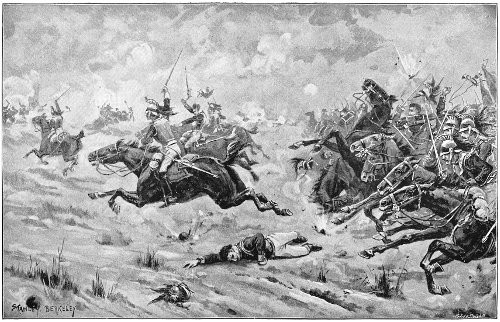
They were desperate odds with which the brave Brandenburgers had to
contend, but they had been sent to hold the French until reinforcements
could arrive, and they were determined to resist to the death. For
nearly six hours they resisted, with unsurpassed courage, the fierce
onslaughts of the French, though at a cost in life that perilously
depleted the gallant corps. Then, about four o’clock in the afternoon,
Prince Frederick Charles came up with reinforcements to their support
and the desperate contest became more even.
Defeat of the French
Gradually fortune decided in favor of the Germans, and by the time
night had come they were practically victorious, the field of
Mars-la-Tour, after the day’s struggle, remaining in their hands. But
they were utterly exhausted, their horses were worn out, and most
of their ammunition was spent, and though their impetuous commander
forced them to a new attack, it led to a useless loss of life, for
their powers of fighting were gone. They had achieved their purpose,
that of preventing the escape of Bazaine, though at a fearful loss,
amounting to about 16,000 men on each side. “The battle of Vionville
[Mars-la-Tour] is without a parallel in military history,” said Emperor
William, “seeing that a single army corps, about 20,000 men strong,
hung on to and repulsed an enemy more than five times as numerous and
well equipped. Such was the glorious deed done by the Brandenburgers,
and the Hohenzollerns will never forget the debt they owe to their
devotion.”
Great Victory of the Germans at Gravelotte
Two days afterwards (August 16th), at Gravelotte, a village somewhat
nearer to Metz, the armies, somewhat recovered from the terrible
struggle of the 14th, met again, the whole German army being now
brought up, so that over 200,000 men faced the 140,000 of the French.
It was the great battle of the war. For four hours the two armies
stood fighting face to face, without any special result, neither being
able to drive back the other. The French held their ground and died.
The Prussians dashed upon them and died. Only late in the evening was
the right wing of the French army broken, and the victory, which at
five o’clock remained uncertain, was decided in favor of the Germans.
More than 40,000 men lay dead and wounded upon the field, the terrible
harvest of those nine hours of conflict. That night Bazaine withdrew
his army behind the fortifications at Metz. His effort to join MacMahon
had ended in failure.
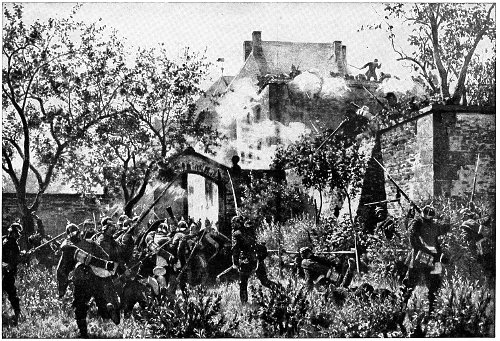
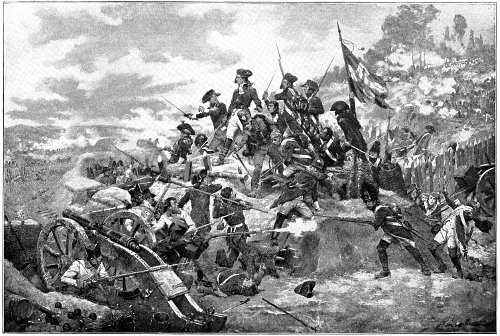
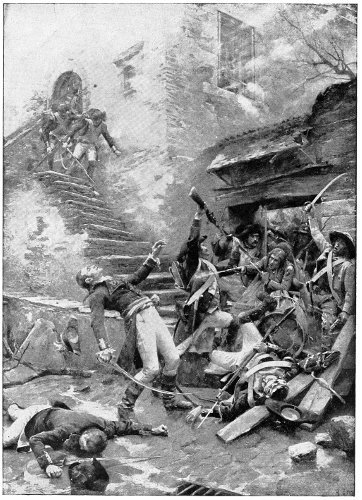
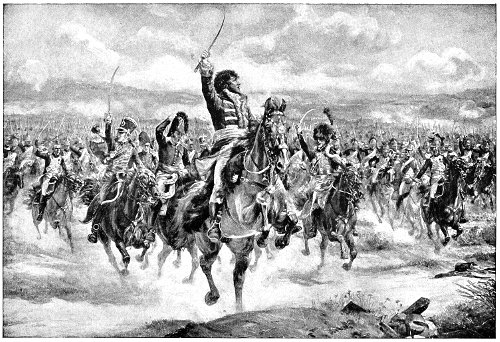
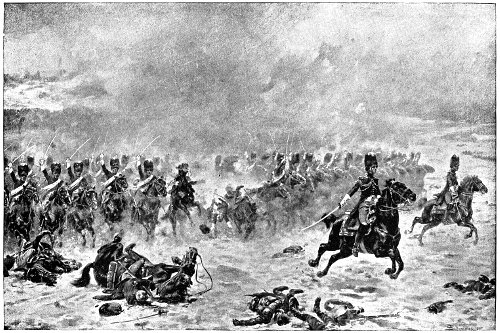
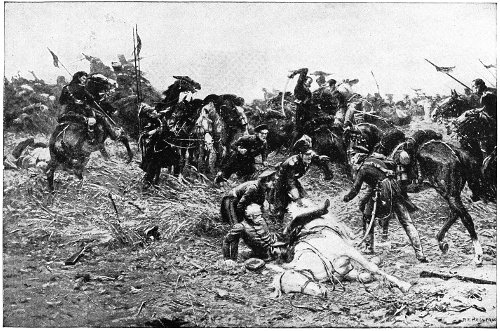
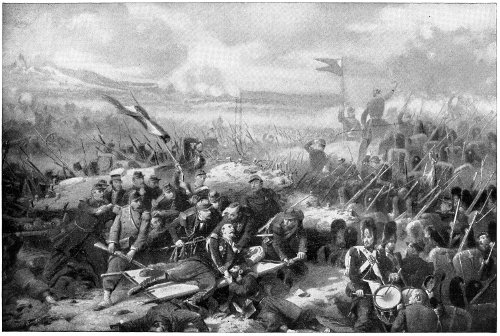
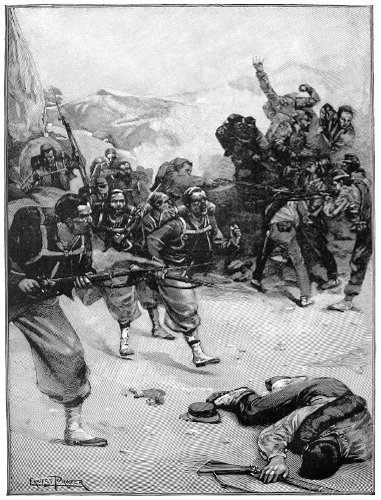
THE STORMING OF GARSBERGSCHLÖSSCHEN, AUGUST 4, 1870
An incident of the Franco-Prussian War.
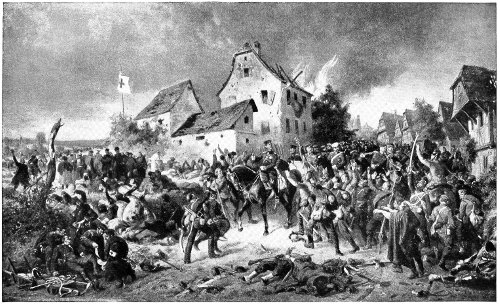
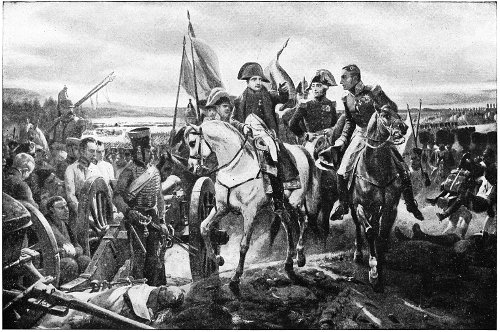
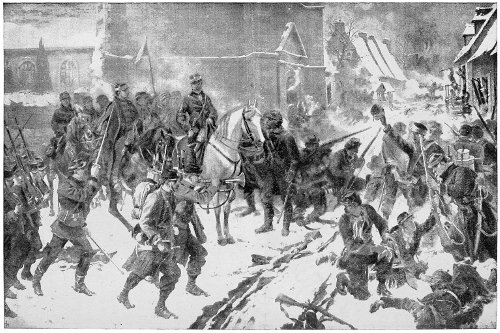
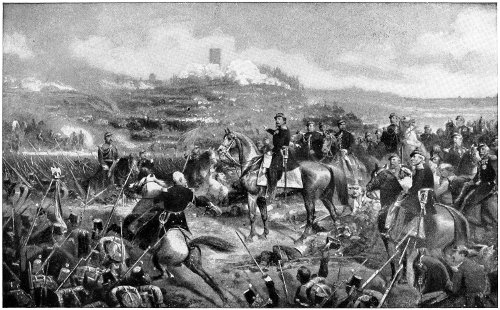
CROWN PRINCE FREDERICK AT THE BATTLE OF FROSCHWILLER
In this battle the French under Marshal MacMahon were
defeated by the Prussians.
The Siege of Metz
It was the fixed purpose of the Prussians to detain him in that
stronghold, and thus render practically useless to France its largest
army. A siege was to be prosecuted, and an army of 150,000 men was
extended around the town. The fortifications were far too strong to
be taken by assault, and all depended on a close blockade. On August
31st Bazaine made an effort to break through the German lines, but was
repulsed. It became now a question of how long the provisions of the
French would hold out.
MacMahon Marches to Relieve Bazaine
The French emperor, who had been with Bazaine, had left his army before
the battle of Mars-la-Tour, and was now with MacMahon at Chalons. Here
lay an army of 125,000 infantry and 12,000 cavalry. On it the Germans
were advancing, in doubt as to what movement it would make, whether
back towards Paris or towards Metz for the relief of Bazaine. They
sought to place themselves in a position to check either. The latter
movement was determined on by the French, but was carried out in a
dubious and uncertain manner, the time lost giving abundant opportunity
to the Germans to learn what was afoot and to prepare to prevent it. As
soon as they were aware of MacMahon’s intention of proceeding to Metz
they made speedy preparations to prevent his relieving Bazaine. By the
last days of August the army of the crown prince had reached the right
bank of the Aisne, and the fourth division gained possession of the
line of the Maas. On August 30th the French under General de Failly
were attacked by the Germans at Beaumont and put to flight with heavy
loss. It was evident that the hope of reaching Metz was at an end, and
MacMahon, abandoning the attempt, concentrated his army around the
frontier fortress of Sedan.
The French Surrounded
This old town stands on the right bank of the Meuse, in an angle of
territory between Luxemburg and Belgium, and is surrounded by meadows,
gardens, ravines, ditches and cultivated fields; the castle rising
on a cliff-like eminence to the southwest of the place. MacMahon had
stopped here to give his weary men a rest, not to fight, but Von
Moltke decided, on observing the situation, that Sedan should be the
grave-yard of the French army. “The trap is now closed, and the mouse
in it,” he said, with a chuckle of satisfaction.
Such proved to be the case. On September 1st the Bavarians won the
village of Bazeille, after hours of bloody and desperate struggle.
During this severe fight Marshal MacMahon was so seriously wounded
that he was obliged to surrender the chief command, first to Ducrot,
and then to General Wimpffen, a man of recognized bravery and cold
calculation.
The Battle of Sedan
Fortune soon showed itself in favor of the Germans. To the northwest of
the town, the North German troops invested the exits from St. Meuges
and Fleigneux, and directed a fearful fire of artillery against the
French forces, which, before noon, were so hemmed in the valley that
only two insufficient outlets to the south and north remained open.
But General Wimpffen hesitated to seize either of these routes, the
open way to Illy was soon closed by the Prussian guard corps, and a
murderous fire was now directed from all sides upon the French, so
that, after a last energetic struggle at Floing, they gave up all
attempts to force a passage, and in the afternoon beat a retreat
towards Sedan. In this small town the whole army of MacMahon was
collected by evening, and there prevailed in the streets and houses an
unprecedented disorder and confusion, which was still further increased
when the German troops from the surrounding heights began to shoot down
upon the fortress, and the town took fire in several places.
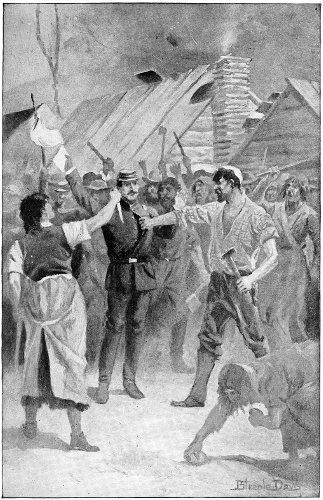
That an end might be put to the prevailing misery, Napoleon now
commanded General Wimpffen to capitulate. The flag of truce already
waved on the gates of Sedan when Colonel Bronsart appeared, and in
the name of the king of Prussia demanded the surrender of the army
and fortress. He soon returned to headquarters, accompanied by the
French General Reille, who presented to the king a written message from
Napoleon: “As I may not die in the midst of my army, I lay my sword in
the hands of your majesty.” King William accepted it with an expression
of sympathy for the hard fate of the emperor and of the French army
which had fought so bravely under his own eyes. The conclusion of
the treaty of capitulation was placed in the hands of Wimpffen, who,
accompanied by General Castelnau, set out for Doncherry to negotiate
with Moltke and Bismarck. No attempts, however, availed to move Moltke
from his stipulation for the surrender of the whole army at discretion;
he granted a short respite, but if this expired without surrender, the
bombardment of the town was to begin anew.
Surrender of Napoleon and His Army
At six o’clock in the morning the capitulation was signed, and was
ratified by the king at his headquarters at Vendresse (2d September).
Thus the world beheld the incredible spectacle of an army of 83,000
men surrendering themselves and their weapons to the victor, and being
carried off as prisoners of war to Germany. Only the officers who gave
their written word of honor to take no further part in the present war
with Germany were permitted to retain their arms and personal property.
Probably the assurance of Napoleon, that he had sought death on the
battlefield but had not found it, was literally true; at any rate, the
fate of the unhappy man, bowed down as he was both by physical and
mental suffering, was so solemn and tragic, that there was no room
for hypocrisy, and that he had exposed himself to personal danger was
admitted on all sides. Accompanied by Count Bismarck, he stopped at a
small and mean-looking laborer’s inn on the road to Doncherry, where,
sitting down on a stone seat before the door, with Count Bismarck, he
declared that he had not desired the war, but had been driven to it
through the force of public opinion; and afterwards the two proceeded
to the little castle of Bellevue, near Frenois, to join King William
and the crown prince. A telegram to Queen Augusta thus describes the
interview: “What an impressive moment was the meeting with Napoleon!
He was cast down, but dignified in his bearing. I have granted him
Wilhelmshöhe, near Cassel, as his residence. Our meeting took place in
a little castle before the western glacis of Sedan.”
Revolution and the Third Republic
The locking up of Bazaine in Metz and the capture of MacMahon’s army
at Sedan were fatal events to France. The struggle continued for
months, but it was a fight against hope. The subsequent events of the
war consisted of a double siege, that of Metz and that of Paris, with
various minor sieges, and a desperate but hopeless effort of France in
the field. As for the empire of Napoleon III., it was at an end. The
tidings of the terrible catastrophe at Sedan filled the people with a
fury that soon became revolutionary. While Jules Favre, the republican
deputy, was offering a motion in the Assembly that the emperor had
forfeited the crown, and that a provisional government should be
established, the people were thronging the streets of Paris with
cries of “Deposition! Republic!” On the 4th of September the Assembly
had its final meeting. Two of its prominent members, Jules Favre and
Gambetta, sustained the motion for deposition of the emperor, and it
was carried after a stormy session. They then made their way to the
senate-chamber, where, before a thronging audience, they proclaimed
a republic and named a government for the national defence. At its
head was General Trochu, military commandant at Paris. Favre was made
minister of foreign affairs; Gambetta, minister of the interior; and
other prominent members of the Assembly filled the remaining cabinet
posts. The legislature was dissolved, the Palais de Bourbon was closed,
and the Empress Eugenie quitted the Tuileries and made her escape with
a few attendants to Belgium, whence she sought a refuge in England.
Prince Louis Napoleon made his way to Italy, and the swarm of courtiers
scattered in all directions; some faithful followers of the deposed
monarch seeking the castle of Wilhelmshöhe, where the unhappy Louis
Napoleon occupied as a prison the same beautiful palace and park in
which his uncle Jerome Bonaparte had once passed six years in a life
of pleasure. The second French Empire was at an end; the third French
Republic had begun—one that had to pass through many changes and
escape many dangers before it would be firmly established.
Jules Favre’s Defiance
“Not a foot’s breadth of our country nor a stone of our fortresses
shall be surrendered,” was Jules Favre’s defiant proclamation to the
invaders, and the remainder of the soldiers in the field were collected
in Paris, and strengthened with all available reinforcements. Every
person capable of bearing arms was enrolled in the national army, which
soon numbered 400,000 men. There was need of haste, for the victors
at Sedan were already marching upon the capital, inspired with high
hopes from their previous astonishing success. They knew that Paris was
strongly fortified, being encircled by powerful lines of defence, but
they trusted that hunger would soon bring its garrison to terms. The
same result was looked for at Metz, and at Strasburg, which was also
besieged.
Thus began at three main points and several minor ones a military siege
the difficulties, dangers, and hardships of which surpassed even those
of the winter campaign in the Crimea. Exposed at the fore-posts to the
enemy’s balls, chained to arduous labor in the trenches and redoubts,
and suffering from the effects of bad weather, and insufficient food
and clothing, the German soldiers were compelled to undergo great
privations and sufferings before the fortifications; while many fell
in the frequent skirmishes and sallies, many succumbed to typhus and
epidemic disease, and many returned home mutilated, or broken in health.
Hardships of the Conflict
No less painful and distressing was the condition of the besieged.
While the garrison soldiers on guard were constantly compelled to
face death in nocturnal sallies, or led a pitiable existence in damp
huts, having inevitable surrender constantly before their eyes, and
disarmament and imprisonment as the reward of all their struggles and
exertions, the citizens in the towns, the women and children, were in
constant danger of being shivered to atoms by the fearful shells, or of
being buried under falling walls and roofs; and the poorer part of the
population saw with dismay the gradual diminution of the necessaries of
life, and were often compelled to pacify their hunger with the flesh of
horses, and disgusting and unwholesome food.
Thiers and Bismarck
The republican government possessed only a usurped power, and none but
a freely elected national assembly could decide as to the fate of the
French nation. Such an assembly was therefore summoned for the l6th
of October. Three members of the government—Crémieux, Fourichon,
and Glais-Vizoin—were despatched before the entire blockade of the
town had been effected, to Tours, to maintain communication with
the provinces. An attempt was also made at the same time to induce
the great powers which had not taken part in the war to organize an
intervention, as hitherto only America, Switzerland, and Spain had
sent official recognition. For this important and delicate mission
the old statesman and historian Thiers was selected, and, in spite of
his three-and-seventy years, immediately set out on the journey to
London, St. Petersburg, Vienna, and Florence. Count Bismarck, however,
in the name of Prussia, refused any intervention in internal affairs.
In two despatches to the ambassadors of foreign courts, the chancellor
declared that the war, begun by the Emperor Napoleon, had been approved
by the representatives of the nation, and that thus all France was
answerable for the result. Germany was obliged, therefore, to demand
guarantees which should secure her in future against attack, or, at
any rate, render attack more difficult. Thus a cession of territory on
the part of France was laid down as the basis of a treaty of peace.
The neutral powers were also led to the belief that if they fostered
in the French any hope of intervention, peace would only be delayed.
The mission of Thiers, therefore, yielded no useful result, while the
direct negotiation which Jules Favre conducted with Bismarck proved
equally unavailing.
Soon the beleaguered fortresses began to fall. On the 23d of September
the ancient town of Toul, in Lorraine, was forced to capitulate, after
a fearful bombardment; and on the 27th Strasburg, in danger of the
terrible results of a storming, after the havoc of a dreadful artillery
fire, hoisted the white flag, and surrendered on the following day. The
supposed impregnable fortress of Metz held out little longer. Hunger
did what cannon were incapable of doing. The successive sallies made by
Bazaine proved unavailing, though, on October 7th, his soldiers fought
with desperate energy, and for hours the air was full of the roar of
cannon and mitrailleuse and the rattle of musketry. But the Germans
withstood the attack unmoved, and the French were forced to withdraw
into the town.
Siege and Surrender of Metz
Bazaine then sought to negotiate with the German leaders at Versailles,
offering to take no part in the war for three months if permitted to
withdraw. But Bismarck and Moltke would listen to no terms other than
unconditional surrender, and these terms were finally accepted, the
besieged army having reached the brink of starvation. It was with
horror and despair that France learned, on the 30th of October, that
the citadel of Metz, with its fortifications and arms of defence, had
been yielded to the Germans, and its army of more than 150,000 men had
surrendered as prisoners of war.
The Germans at Versailles
This hasty surrender at Metz, a still greater disaster to France than
that of Sedan, was not emulated at Paris, which for four months held
out against all the efforts of the Germans. On the investment of the
great city, King William removed his headquarters to the historic
palace of Versailles, setting up his homely camp-bed in the same
apartments from which Louis XIV. had once issued his despotic edicts
and commands. Here Count Bismarck conducted his diplomatic labors and
Moltke issued his directions for the siege, which, protracted from
week to week and month to month, gradually transformed the beautiful
neighborhood, with its prosperous villages, superb country houses, and
enchanting parks and gardens, into a scene of sadness and desolation.
The Siege of Paris
In spite of the vigorous efforts made by the commander-in-chief Trochu,
both by continuous firing from the forts and by repeated sallies, to
prevent Paris from being surrounded, and to force a way through the
trenches, his enterprises were rendered fruitless by the watchfulness
and strength of the Germans. The blockade was completely accomplished;
Paris was surrounded and cut off from the outer world; even the
underground telegraphs, through which communication was for a time
secretly maintained with the provinces, were by degrees discovered
and destroyed. But to the great astonishment of Europe, which looked
on with keenly pitched excitement at the mighty struggle, the siege
continued for months without any special progress being observable from
without or any lessening of resistance from within. On account of the
extension of the forts, the Germans were compelled to remain at such a
distance that a bombardment of the town at first appeared impossible;
a storming of the outer works would, moreover, be attended with such
sacrifices, that the humane temper of the king revolted from such a
proceeding. The guns of greater force and carrying power which were
needed from Germany, could only be procured after long delay on account
of the broken lines of railway. Probably also there was some hesitation
on the German side to expose the beautiful city, regarded by so many
as the “metropolis of civilization,” to the risk of a bombardment,
in which works of art, science, and a historical past would meet
destruction. Nevertheless, the declamations of the French at the
Vandalism of the northern barbarians met with assent and sympathy from
most of the foreign powers.
The Energy of Resistance
Gambetta and His Work
The Southward Advance of the Germans
Determination and courage falsified the calculations at Versailles of
a quick cessation of the resistance. The republic offered a far more
energetic and determined opposition to the Prussian arms than the
empire had done. The government of the national defence still declaimed
with stern reiteration: “Not a foot’s breadth of our country; not a
stone of our fortresses!” and positively rejected all proposals of
treaty based on territorial concessions. Faith in the invincibility
of the republic was rooted as an indisputable dogma in the hearts of
the French people. The victories and the commanding position of France
from 1792 to 1799 were regarded as so entirely the necessary result
of the Revolution, that a conviction prevailed that the formation
of a republic, with a national army for its defence, would have an
especial effect on the rest of Europe. The Energy of ResistanceTherefore, instead of summoning
a constituent Assembly, which, in the opinion of Prussia and the
other foreign powers, would alone be capable of offering security
for a lasting peace, it was decided to continue the revolutionary
movements, and to follow the same course which, in the years 1792 and
1793, had saved France from the coalition of the European powers—a
revolutionary dictatorship such as had once been exercised by the
Convention and the members of the Committee of Public Safety, must
again be revived, and a youthful and hot-blooded leader was alone
needed to stir up popular feeling and set it in motion. To fill such
a part no one was better adapted than the advocate Gambetta, who
emulated the career of the leaders of the Revolution, and whose soul
glowed with a passionate ardor of patriotism. In order to create for
himself a free sphere of action, and to initiate some vigorous measure
in place of the well-rounded phrases and eloquent proclamations of
his colleagues Trochu and Jules Favre, he quitted the capital in
an air-balloon and entered into communication with the Government
delegation at Tours, which through him soon obtained a fresh impetus.
His next most important task was the liberation of the capital from the
besieging German army, and the expulsion of the enemy from the “sacred”
soil of France. Gambetta and His WorkFor this purpose he summoned, with the authority of
a minister of war, all persons capable of bearing arms up to forty
years of age to take active service, and despatched them into the
field; he imposed war-taxes, and terrified the tardy and refractory
with threats of punishment. Every force was put in motion; all France
was transformed into a great camp. A popular war was now to take the
place of a soldiers’ war, and what the soldiers had failed to effect
must be accomplished by the people; France must be saved, and the world
freed from despotism. To promote this object, the whole of France, with
the exception of Paris, was divided into four general governments,
the headquarters of the different governors being Lille, Le Mans,
Bourges, and Besançon. Two armies, from the Loire and from the Somme,
were to march simultaneously towards Paris, and, aided by the sallies
of Trochu and his troops, were to drive the enemy from the country.
Energetic attacks were now attempted from time to time, in the hope
that when the armies of relief arrived from the provinces, it might be
possible to effect a coalition; but all these efforts were constantly
repulsed after a hot struggle by the besieging German troops. At
the same time, during the month of October, the territory between
the Oise and the Lower Seine was scoured by reconnoitering troops,
under Prince Albrecht, the south-east district was protected by a
Würtemberg detachment through the successful battle near Nogent on the
Seine, while a division of the third army advanced towards the south
accompanied by two cavalry divisions. The Southward Advance of the GermansA more unfortunate circumstance,
however, for the Parisians was the cutting off of all communication
with the outer world, for the Germans had destroyed the telegraphs. But
even this obstacle was overcome by the inventive genius of the French.
By means of pigeon letter-carriers and air-balloons, they were always
able to maintain a partial though one-sided and imperfect communication
with the provinces, and the aërostatic art was developed and brought
to perfection on this occasion in a manner which had never before been
considered possible.
Gambetta’s Army of Defence
The whole of France, and especially the capital, was already in a state
of intense excitement when the news of the capitulation of Metz came
to add fresh fuel to the flame. Outside the walls Gambetta was using
heroic efforts to increase his forces, bringing Bedouin horsemen from
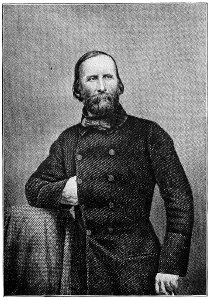
Africa and inducing the stern old revolutionist Garibaldi to come to
his aid; and Thiers was opening fresh negotiations for a truce. Inside
the walls the Red Republic raised the banners of insurrection and
attempted to drive the government of national defence from power.
The Negotiations Are Broken Off
This effort of the dregs of revolution to inaugurate a reign of terror
failed, and the provisional government felt so elated with its victory
that it determined, to continue at the head of affairs and to oppose
the calling of a chamber of national representatives. The members
proclaimed oblivion for what had passed, broke off the negotiations
for a truce begun by Thiers, and demanded a vote of confidence. The
indomitable spirit shown by the French people did not, on the other
hand, inspire the Germans with a very lenient or conciliatory temper.
Bismarck declared in a despatch the reasons why the negotiations had
failed: “The incredible demand that we should surrender the fruits of
all our efforts during the last two months, and should go back to the
conditions which existed at the beginning of the blockade of Paris,
only affords fresh proof that in Paris pretexts are sought for refusing
the nation the right of election.” Thiers mournfully declared the
failure of his undertaking, but in Paris the popular voting resulted
in a ten-fold majority in favor of the government and the policy of
postponement.
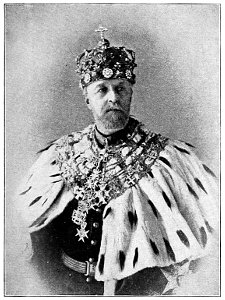
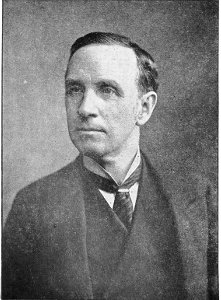
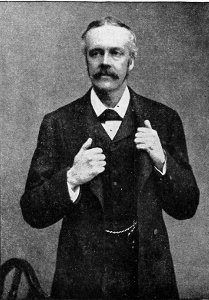
KING OSCAR II. OF SWEDEN AND NORWAY.
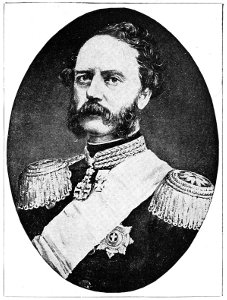
KING CHRISTIAN IX. OF DENMARK.
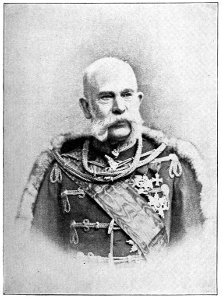
EMPEROR FRANCIS JOSEPH OF AUSTRIA.
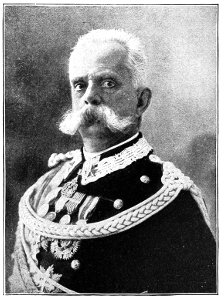
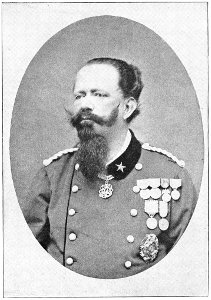
KING HUMBERT OF ITALY.
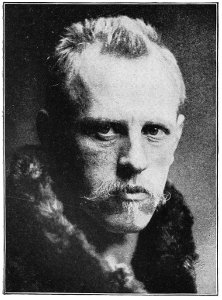
PRESENT KINGS OF FOUR COUNTRIES
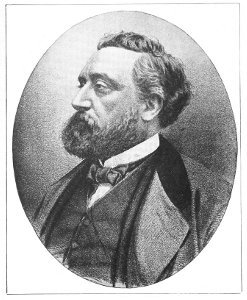
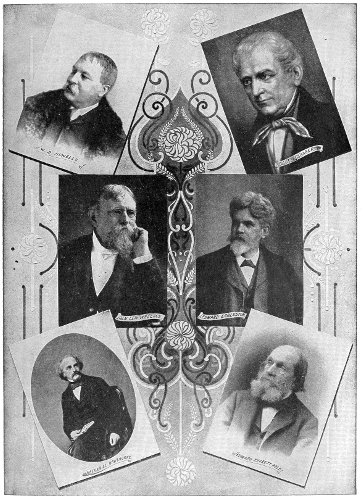
LEON GAMBETTA
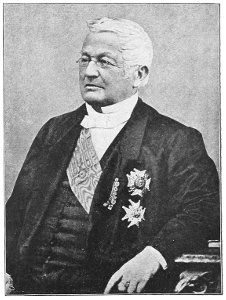
LOUIS ADOLPHE THIERS
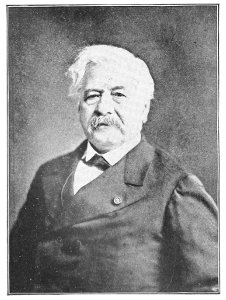
FERDINAND DeLESSEPS
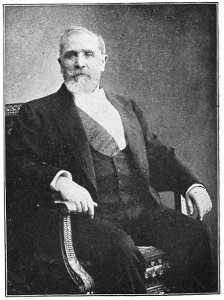
PRESIDENT LOUBET
GREAT MEN OF MODERN FRANCE
Famine and Misery in Paris
After the breaking off of the negotiations, the world anticipated some
energetic action towards the besieged city. The efforts of the enemy
were, however, principally directed to drawing the iron girdle still
tighter, enclosing the giant city more and more closely, and cutting
off every means of communication, so that at last a surrender might be
brought about by the stern necessity of starvation. That this object
would not be accomplished as speedily as at Metz, that the city of
pleasure, enjoyment, and luxury would withstand a siege of four months,
had never been contemplated for a moment. It is true that, as time went
on, all fresh meat disappeared from the market, with the exception of
horse-flesh; that white bread, on which Parisians place such value, was
replaced by a baked compound of meal and bran; that the stores of dried
and salted food began to decline, until at last rats, dogs, cats, and
even animals from the zoological gardens were prepared for consumption
at restaurants. Yet, to the amazement of the world, all these miseries,
hardships, and sufferings were courageously borne, nocturnal watch was
kept, sallies were undertaken, and cold, hunger, and wretchedness of
all kinds were endured with an indomitable steadfastness and heroism.
The courage of the besieged Parisians was also animated by the hope
that the military forces in the provinces would hasten to the aid of
the hard-pressed capital, and that therefore an energetic resistance
would afford the rest of France sufficient time for rallying all its
forces, and at the same time exhibit an elevating example. In the
carrying out of this plan, neither Trochu nor Gambetta was wanting in
the requisite energy and circumspection. The former organized sallies
from time to time, in order to reconnoitre and discover whether the
army of relief was on its way from the provinces; the latter exerted
all his powers to bring the Loire army up to the Seine. But both erred
in undervaluing the German war forces; they did not believe that the
hostile army would be able to keep Paris in a state of blockade, and at
the same time engage the armies on the south and north, east and west.
They had no conception of the hidden, inexhaustible strength of the
Prussian army organization—of a nation in arms which could send forth
constant reinforcements of battalions and recruits, and fresh bodies of
disciplined troops to fill the gaps left in the ranks by the wounded
and fallen. There could be no doubt as to the termination of this
terrible war, or the final victory of German energy and discipline.
The Fall of the Fortresses
Throughout the last months of the eventful year 1870, the northern part
of France, from the Jura to the Channel, from the Belgian frontier to
the Loire, presented the aspect of a wide battlefield. Of the troops
that had been set free by the capitulation of Metz, a part remained
behind in garrison, another division marched northwards in order to
invest the provinces of Picardy and Normandy, to restore communication
with the sea, and to bar the road to Paris, and a third division
joined the second army, whose commander-in-chief, Prince Frederick
Charles, set up his headquarters at Troyes. Different detachments were
despatched against the northern fortresses, and by degrees Soissons,
Verdun, Thionville, Ham, where Napoleon had once been a prisoner,
Pfalzburg and Montmedy, all fell into the hands of the Prussians,
thus opening to them a free road for the supplies of provisions. The
garrison troops were all carried off as prisoners to Germany; the
towns—most of them in a miserable condition—fell into the enemy’s
hands; many houses were mere heaps of ruins and ashes, and the larger
part of the inhabitants were suffering severely from poverty, hunger
and disease.
Guerilla Warfare in the East
The greatest obstacles were encountered in the northern part of Alsace
and the mountainous districts of the Vosges and the Jura, where
irregular warfare, under Garibaldi and other leaders, developed to a
dangerous extent, while the fortress of Langres afforded a safe retreat
to the guerilla bands. Lyons and the neighboring town of St. Etienne
became hotbeds of excitement, the red flag being raised and a despotism
of terror and violence established. Although many divergent elements
made up this army of the east, all were united in hatred of the Germans
and the desire to drive the enemy back across the Rhine.
Thus, during the cold days of November and December, when General
Von Treskow began the siege of the important fortress of Belfort,
there burst forth a war around Gray and Dijon marked by the greatest
hardships, perils and privations to the invaders. Here the Germans
had to contend with an enemy much superior in number, and to defend
themselves against continuous firing from houses, cellars, woods and
thickets, while the impoverished soil yielded a miserable subsistence,
and the broken railroads cut off freedom of communication and of
reinforcement.
In the Jura District
The whole of the Jura district, intersected by hilly roads as far as
the plateau of Langres, where, in the days of Cæsar, the Romans and
Gauls were wont to measure their strength with each other, formed
during November and December the scene of action of numerous encounters
which, in conjunction with sallies from the garrison at Belfort,
inflicted severe injury on Werder’s troops. Dijon had repeatedly to
be evacuated; and the nocturnal attack at Chattillon, 20th November,
by Garibaldians, when one hundred and twenty Landwehrmen and Hussars
perished miserably, and seventy horses were lost, affording a striking
proof of the dangers to which the German army was exposed in this
hostile country; although the revolutionary excesses of the turbulent
population of the south diverted to a certain extent the attention of
the National Guard, who were compelled to turn their weapons against an
internal enemy.
Gambetta and the Army of the Loire
By means of the revolutionary dictatorship of Gambetta the whole French
nation was drawn into the struggle, the annihilation of the enemy being
represented as a national duty, and the war assuming a steadily more
violent character. The indefatigable patriot continued his exertions
to increase the army and unite the whole south and west against the
enemy, hoping to bring the army of the Loire to such dimensions that it
would be able to expel the invaders from the soil of France. But these
raw recruits were poorly fitted to cope with the highly disciplined
Germans, and their early successes were soon followed by defeat and
discouragement, while the hopes entertained by the Paris garrison of
succor from the south vanished as news of the steady progress of the
Germans were received.
The Bombardment of Paris
During these events the war operations before Paris continued
uninterruptedly. Moltke had succeeded, in spite of the difficulties
of transport, in procuring an immense quantity of ammunition, and
the long-delayed bombardment of Paris was ready to begin. Having
stationed with all secrecy twelve batteries with seventy-six guns
around Mont Avron, on Christmas-day the firing was directed with such
success against the fortified eminences, that even in the second night
the French, after great losses, evacuated the important position,
the “key of Paris,” which was immediately taken possession of by
the Saxons. Terror and dismay spread throughout the distracted city
when the eastern forts, Rosny, Nogent and Noisy, were stormed amid
a tremendous volley of firing. Vainly did Trochu endeavor to rouse
the failing courage of the National Guard; vainly did he assert that
the government of the national defence would never consent to the
humiliation of a capitulation; his own authority had already waned;
the newspapers already accused him of incapacity and treachery, and
began to cast every aspersion on the men who had presumptuously seized
the government, and yet were not in a position to effect the defence
of the capital and the country. After the new year the bombardment of
the southern forts began, and the terror in the city daily increased,
though the violence of the radical journals kept in check any hint
of surrender or negotiation. Yet in spite of fog and snow-storms the
bombardment was systematically continued, and with every day the
destructive effect of the terrible missiles grew more pronounced.
The Last Great Sally from Paris
Trochu was blamed for having undertaken only small sallies, which
could have no result. The commander-in-chief ventured no opposition
to the party of action. With the consent of the mayors of the twenty
arrondissements of Paris a council of war was held. The threatening
famine, the firing of the enemy, and the excitement prevailing among
the adherents of the red republic rendered a decisive step necessary.
Consequently, on the 19th of January, a great sally was decided on,
and the entire armed forces of the capital were summoned to arms.
Early in the morning, a body of 100,000 men marched in the direction
of Meudon, Sevres and St. Cloud for the decisive conflict. The left
wing was commanded by General Vinoy, the right by Ducrot, while Trochu
from the watch-tower directed the entire struggle. With great courage
Vinoy dashed forward with his column of attack towards the fifth army
corps of General Kirchbach, and succeeded in capturing the Montretout
entrenchment, through the superior number of his troops, and in
holding it for a time. But when Ducrot, delayed by the barricades in
the streets, failed to come to his assistance at the appointed time,
the attack was driven back after seven hours’ fierce fighting by the
besieging troops. Having lost 7,000 dead and wounded, the French in
the evening beat a retreat, which almost resembled a flight. On the
following day Trochu demanded a truce, that the fallen National Guards,
whose bodies strewed the battlefield, might be interred. The victors,
too, had to render the last rites to many a brave soldier. Thirty-nine
officers and six hundred and sixteen soldiers were given in the list of
the slain.
A Truce at Paris
Entire confidence had been placed by the Parisians in the great sally.
When the defeat, therefore, became known in its full significance, when
the number of the fallen was found to be far greater even than had
been stated in the first accounts, a dull despair took possession of
the famished city, which next broke forth into violent abuse against
Trochu, “the traitor.” Capitulation now seemed imminent; but as the
commander-in-chief had declared that he would never countenance such
a disgrace, he resigned his post to Vinoy. Threatened by bombardment
from without, terrified within by the pale spectre of famine, paralysed
and distracted by the violent dissensions among the people, and
without prospect of effective aid from the provinces, what remained
to the proud capital but to desist from a conflict the continuation
of which only increased the unspeakable misery, without the smallest
hope of deliverance? Gradually, therefore, there grew up a resolution
to enter into negotiations with the enemy; and it was the minister
Jules Favre, who had been foremost with the cry of “no surrender”
four months before, who was now compelled to take the first step to
deliver his country from complete ruin. It was probably the bitterest
hour in the life of the brave man, who loved France and liberty with
such a sincere affection, when he was conducted through the German
outposts to his interview with Bismarck at Versailles. He brought the
proposal for a convention, on the strength of which the garrison was
to be permitted to retire with military honors to a part of France
not hitherto invested, on promising to abstain for several months
from taking part in the struggle. But such conditions were positively
refused at the Prussian headquarters, and a surrender was demanded as
at Sedan and Metz. Completely defeated, the minister returned to Paris.
At a second meeting on the following day, it was agreed that from the
27th, at twelve o’clock at night, the firing on both sides should be
discontinued. This was the preliminary to the conclusion of a three
weeks’ truce, to await the summons of a National Assembly, with which
peace might be negotiated.
Bourbaki’s Army and the Siege of Belfort
The Harsh Terms of Peace
The war was at an end so far as Paris was concerned. But it continued
in the south, where frequent defeat failed to depress Gambetta’s
indomitable energy, and where new troops constantly replaced those put
to rout. Garibaldi, at Dijon, succeeded in doing what the French had
not done during the war, in the capture of a Prussian banner. But the
progress of the Germans soon rendered his position untenable, and,
finding his exertions unavailing, he resigned his command and retired
to his island of Caprera. Two disasters completed the overthrow of
France. Bourbaki’s army, 85,000 strong, became shut in, with scanty
food and ammunition, among the snow-covered valleys of the Jura, and
to save the disgrace of capitulation it took refuge on the neutral
soil of Switzerland; and the strong fortress of Belfort, which had
been defended with the utmost courage against its besiegers, finally
yielded, with the stipulation that the brave garrison should march
out with the honors of war. Nothing now stood in the way of an
extension of the truce. On the suggestion of Jules Favre, the National
Assembly elected a commission of fifteen members, which was to aid the
chief of the executive, and his ministers, Picard and Favre, in the
negotiations for peace. That cessions of territory and indemnity of
war expenses would have to be conceded had long been acknowledged in
principle; but protracted and excited discussions took place as to the
extent of the former and the amount of the latter, while the demanded
entry of the German troops into Paris met with vehement opposition.The Harsh Terms of Peace
But Count Bismarck resolutely insisted on the cession of Alsace and
German Lorraine, including Metz and Diedenhofen. Only with difficulty
were the Germans persuaded to separate Belfort from the rest of
Lorraine, and leave it still in the possession of the French. In
respect to the expenses of the war, the sum of five milliards of francs
($1,000,000,000) was agreed upon, of which the first milliard was to be
paid in the year 1871, and the rest in a stated period. The stipulated
entry into Paris also—so bitter to the French national pride—was
only partially carried out; the western side only of the city was to
be traversed in the march of the Prussian troops, and again evacuated
in two days. On the basis of these conditions, the preliminaries of
the Peace of Versailles were concluded on the 26th of February between
the Imperial Chancellor and Jules Favre. Intense excitement prevailed
when the terms of the treaty became known; they were dark days in
the annals of French history. But in spite of the opposition of the
extreme Republican party, led by Quinet and Victor Hugo, the Assembly
recognized by an overpowering majority the necessity for the Peace, and
the preliminaries were accepted by 546 to 107 votes. Thus ended the
mighty war between France and Germany—a war which has had few equals
in the history of the world.
The Glory of Germany
Had King William received no indemnity in cash or territory from
France, he must still have felt himself amply repaid for the cost of
the brief but sanguinary war, for it brought him a power and prestige
with which the astute diplomatist Bismarck had long been seeking to
invest his name. Political changes move slowly in times of peace,
rapidly in times of war. The whole of Germany, with the exception of
Austria, had sent troops to the conquest of France, and every state,
north and south alike, shared in the pride and glory of the result.
South and North Germany had marched side by side to the battlefield,
every difference of race or creed forgotten, and the honor of the
German fatherland the sole watchword. The time seemed to have arrived
to close the breach between north and south, and obliterate the line of
the Main, which had divided the two sections. North Germany was united
under the leadership of Prussia, and the honor in which all alike
shared now brought South Germany into line for a similar union.
The first appeal in this direction came from Baden. Later in the year
plenipotentiaries sought Versailles from the kingdoms of Bavaria and
Wurtemberg and the grand duchies of Baden and Hesse, their purpose
being to arrange for and define the conditions of union between the
South and the North German states. For weeks this momentous question
filled all Germany with excitement and public opinion was in a state of
high tension. The scheme of union was by no means universally approved,
there being a large party in opposition, but the majority in its favor
in Chambers proved sufficient to enable Bismarck to carry out his plan.
Restoration of the Germany Empire
This was no less than to restore the German Empire, or rather to
establish a new empire of Germany, in which Austria, long at the
head of the former empire, should have no part, the imperial dignity
being conferred upon the venerable King William of Prussia, a monarch
whose birth dated back to the eighteenth century, and who had lived
throughout the Napoleonic wars.
Near the close of 1870 Bismarck concluded treaties with the ambassadors
of the Southern States, in which they agreed to accept the constitution
of the North German Union. These treaties were ratified, after some
opposition from the “patriots” of the lower house, by the legislatures
of the four states involved. The next step in the proceeding was a
suggestion from the king of Bavaria to the other princes that the
imperial crown of Germany should be offered to King William of Prussia.
The Crowning of William I. at Versailles
When the North German Diet at Berlin had given its consent to the new
constitution, congratulatory address was despatched to the Prussian
monarch at Versailles. Thirty members of the Diet, with the president
Simson at their head, announced to the aged hero-king the nation’s wish
that he should accept the new dignity. He replied to the deputation in
solemn audience that he accepted the imperial dignity which the German
nation and its princes had offered him. On the 1st of January, 1871,
the new constitution was to come into operation. The solemn assumption
of the imperial office did not take place, however, until the 18th of
January, the day on which, one hundred and seventy years before, the
new emperor’s ancestor, Frederick I., had placed the Prussian crown
on his head at Königsberg, and thus laid the basis of the growing
greatness of his house. It was an ever-memorable coincidence, that in
the superb-mirrored hall of the Versailles palace, where, since the
days of Richelieu, so many plans had been concerted for the humiliation
of Germany, King William should now proclaim himself German Emperor.
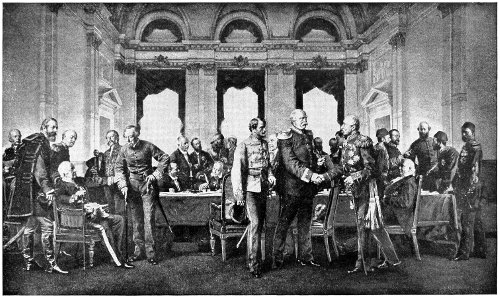
After the reading of the imperial proclamation to the German people by
Count Bismarck, the Grand Duke led a cheer, in which the whole assembly
joined amid the singing of national hymns. Thus the important event had
taken place which again summoned the German Empire to life, and made
over the imperial crown with renewed splendor to another royal house.
Barbarossa’s old legend, that the dominion of the empire was, after
long tribulation, to pass from the Hohenstaufen to the Hohenzollern,
was now fulfilled; the dream long aspired after by German youth had now
become a reality and a living fact.
The tidings of the conclusion of peace with France, whose preliminaries
were completed at Frankfurt on the 10th of May, 1871, filled all
Germany with joy, and peace festivals on the most splendid scale
extended from end to end of the new empire, in all parts of which an
earnest spirit of patriotism was shown, while Germans from all regions
of the world sent home expressions of warm sympathy with the new
national organization of their fatherland.
A Decade of Remarkable Changes
The decade just completed had been one of remarkable political changes
in Europe, unsurpassed in significance during any other period of equal
length. The temporal dominion of the pope had vanished and all Italy
had been united under the rule of a single king. The empire of France
had been overthrown and a republic established in its place, while
that country had sunk greatly in prominence among the European states.
Austria had been utterly defeated in war, had lost its last hold on
Italy and its position of influence among the German states. And all
the remaining German lands had united into a great and powerful empire,
of such extraordinary military strength that the surrounding nations
looked on in doubt, full of vague fears of trouble from this new and
potent power introduced into their midst.
Bismarck, however, showed an earnest desire to maintain international
peace and good relations, seeking to win the confidence of foreign
governments, while at the same time improving and increasing that
military force which had been proved to be so mighty an engine of war.
The Legislature of the Empire
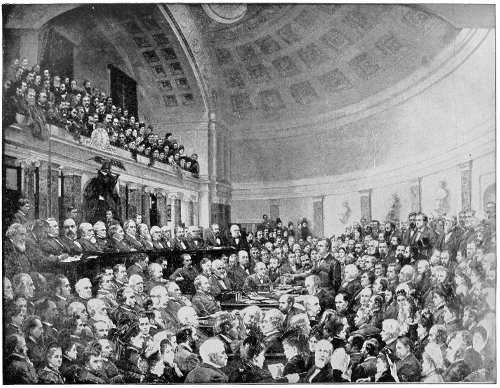
In the constitution of the new empire two legislative bodies were
provided for, the Bundesrath or Federal Council, whose members
are annually appointed by the respective state governments, and the
Reichstag or Representative body, whose members are elected by
universal suffrage for a period of three years, an annual session
being required. Germany, therefore, in its present organization, is
practically a federal union of states, each with its own powers of
internal government, and with a common legislature approximating to our
Senate and House of Representatives.
The Power of the Catholic Church in Prussia
The remaining incidents of Bismarck’s remarkable career may be briefly
given. It consisted largely in a struggle with the Catholic Church
organization, which had attained to great power in Germany, and was
aggressive to an extent that roused the vigorous opposition of the
chancellor of the empire, who was not willing to acknowledge any power
in Germany other than that of the emperor.
King Frederick William IV., the predecessor of the reigning monarch,
had made active efforts to strengthen the Catholic Church in Prussia,
its clergy gaining greater privileges in that Protestant state than
they possessed in any of the Catholic states. They had established
everywhere in North Germany their congregations and monasteries, and,
by their control of public education, seemed in a fairway to eventually
make Catholicism supreme in the empire.
The New Laws Against Church Power
This state of affairs Bismarck set himself energetically to reform.
The minister of religious affairs was forced to resign, and his place
was taken by Falk, a sagacious statesman, who introduced a new school
law, bringing the whole educational system under state control, and
carefully regulating the power of the clergy over religious and moral
education. This law met with such violent opposition that all the
personal influence of Bismarck and Falk were needed to carry it, and
it gave such deep offence to the pope that he refused to receive the
German ambassador. He declared the Falk law invalid, and the German
bishops united in a declaration against the chancellor. Bismarck
retorted by a law expelling the Jesuits from the empire.
In 1873 the state of affairs became so embittered that the rights
and liberties of the citizens seemed to need protection against
a priesthood armed with extensive powers of discipline and
excommunication. In consequence Bismarck introduced, and by his
eloquence and influence carried, what were known as the May Laws. These
provided for the scientific education of the Catholic clergy, the
confirmation of clerical appointments by the state, and a tribunal to
consider and revise the conduct of the bishops.
The Triumph of the Church
These enactments precipitated a bitter contest between church and
state, while the pope declared the May Laws null and void and
threatened with excommunication all priests who should submit to
them. The state retorted by withdrawing its financial support from
the Catholic church and abolishing those clauses of the constitution
under which the church claimed independence of the state. Pope Pius IX.
died in 1878, and on the election of Leo XIII. attempts were made to
reconcile the existing differences. The reconciliation was a victory
for the church, the May Laws ceasing to be operative, the church
revenues being restored and the control of the clergy over education in
considerable measure regained. New concessions were granted in 1886 and
1887, and Bismarck felt himself beaten in his long conflict with his
clerical opponents, who had proved too strong and deeply entrenched for
him.
The Socialists and the Insurance Laws
Economic questions became also prominent, the revenues of the empire
requiring some change in the system of free trade and the adoption of
protective duties, while the railroads were acquired by the various
states of the empire. Meanwhile the rapid growth of socialism excited
apprehension, which was added to when two attempts were made on the
life of the emperor. These were attributed to the Socialists, and
severe laws for the suppression of socialism were enacted. Bismarck
also sought to cut the ground from under the feet of the Socialists by
an endeavor to improve the condition of the working classes. In 1881
laws were passed compelling employers to insure their workmen in case
of sickness or accident, and in 1888 a system of compulsory insurance
against death and old age was introduced. None of these measures,
however, checked the growth of socialism, which very actively continued.
In 1882 a meeting was arranged by the chancellor between the emperors
of Germany, Russia, and Austria, which was looked upon in Europe as a
political alliance. In 1878 Russia drifted somewhat apart from Germany,
but in the following year an alliance of defence and offence was
concluded with Austria, and a similar alliance at a later date with
Italy. This, which still continues, is known as the Triple Alliance. In
1877 Bismarck announced his intention to retire, being worn out with
the great labors of his position. To this the emperor, who felt that
his state rested on the shoulders of the “Iron Chancellor,” would not
listen, though he gave him indefinite leave of absence.
On March 9, 1888, Emperor William died. He was ninety years of age,
having been born in 1797. He was succeeded by his son Frederick, then
incurably ill from a cancerous affection of the throat, which carried
him to the grave after a reign of ninety-nine days. His oldest son,
William, succeeded on June 15, 1888, as William II.
William II. and the Dismissal of Bismarck
The liberal era which was looked for under Frederick was checked by
his untimely death, his son at once returning to the policy of William
I. and Bismarck. He proved to be far more positive and dictatorial in
disposition than his grandfather, with decided and vigorous views of
his own, which soon brought him into conflict with the equally positive
chancellor. The result was a rupture with Bismarck, and his dismissal
from the premiership in 1890. The young emperor subsequently devoted
himself in a large measure to the increase of the army and navy, a
policy which brought him into frequent conflicts with the Reichstag,
whose rapidly growing socialistic membership was in strong opposition
to this development of militarism.
The old statesman, to whom Germany owed so much, was deeply aggrieved
by this lack of gratitude on the part of the self-opinionated young
emperor. Subsequently a reconciliation took place. But the political
career of the great Bismarck was at an end, and he died on July 30,
1898. It is an interesting coincidence that almost at the same time
died the equally great, but markedly different, statesman of England,
William Ewart Gladstone. Count Cavour, the third great European
statesman of the last half of the nineteenth century, had completed his
work and passed away nearly forty years before.
The Development of the German Army
The career of William II. has been one of much interest and some alarm
to the other nations of Europe. His eagerness for the development of
the army and navy, and the energy with which he pushed forward its
organization and sought to add to its strength, seemed significant
of warlike intentions, and there was dread that this energetic
young monarch might break the peace of Europe, if only to prove the
irresistible strength of the military machine he had formed. But
as years went on the apprehensions to which his early career and
expressions gave rise were quieted, and the fear that he would plunge
Europe into war vanished. The army and navy began to appear rather a
costly plaything of the active young man than an engine of destruction,
while it tended in considerable measure to the preservation of peace by
rendering Germany a power dangerous to go to war with.
The speeches with which the emperor began his reign showed an
exaggerated sense of the imperial dignity, though his later career
indicated far more judgment and good sense than the early display of
overweening self-importance promised, and the views of William II. now
command far more respect than they did at first. He has shown himself a
man of exuberant energy. Despite a permanent weakness of his left arm
and a serious affection of the ear, he early became a skilful horseman
and an untiring hunter, as well as an enthusiastic yachtsman, and there
are few men in the empire more active and enterprising to-day than the
Kaiser.
State Socialism
A principal cause of the break between William and Bismarck was the
system of partial state socialism established by him, of which the
old chancellor strongly disapproved. This was a system of compulsory
old age insurance, through which workmen and their employers—aided
by the state—were obliged to provide for the support of artisans
after a certain age. The system seems to have worked satisfactorily,
but socialism of a more radical kind has grown in the empire far more
rapidly than the emperor has approved of, and he has vigorously,
though unsuccessfully, endeavored to prevent its increase. Another of
his favorite measures, a religious education bill, he was obliged to
withdraw on account of the opposition it excited. On more than one
occasion he has come into sharp conflict with the Reichstag concerning
increased taxation for the army and navy, and a strong party against
his autocratic methods has sprung up, and has forced him more than once
to recede from warmly-cherished measures.
Constitution of the German Empire
It may be of interest here to say something concerning the organization
of the existing German empire. The constitution of this empire, as
adopted April 16, 1871, proposes to “form an eternal union for the
protection of the realm and the care of the welfare of the German
people,” and places the supreme direction of military and political
affairs in the King of Prussia, under the title of Deutscher Kaiser
(German emperor). The war-making powers of the emperor, however, are
restricted, since he is obliged to obtain the consent of the Bundesrath
(the Federal Council) before he can declare war otherwise than for the
defence of the realm. His authority as emperor, in fact, is much less
than that which he exercises as King of Prussia, since the imperial
legislature is independent of him, he having no power of veto over the
laws passed by it.
This legislature consists of two bodies, the Bundesrath, representing
the states of the union, whose members, 58 in number, are chosen for
each session by the several state governments; and the Reichstag,
representing the people, whose members, 397 in number, are elected
by universal suffrage for periods of five years. The German union,
as now constituted, comprises four kingdoms, six grand duchies, five
duchies, seven principalities, three cities, and the Reichsland of
Alsace-Lorraine; twenty-six separate states in all. It includes all the
German peoples with the exception of those of Austria.
The Progress of Germany
The progress of Germany within the century under review has been very
great. The population of the states of the empire, 24,831,000 at
the end of the Napoleonic wars, is now over 52,000,000, having more
than doubled in number. The wealth of the country has grown in a far
greater ratio, and Germany to-day is the most active manufacturing
nation on the continent of Europe. Agriculture has similarly been
greatly developed, and one of its products, the sugar beet, has become
a principal raw material of manufacture, the production of beet-root
sugar having increased enormously. The commerce of the empire has
similarly augmented, it having become one of the most active commercial
nations of the earth. Its imports, considerable in quantity, consist
largely of raw materials and food stuffs, while it vies with Great
Britain and the United States in the quantity of finished products sent
abroad. In short, Germany has taken its place to-day as one of the most
energetic of productive and commercial nations, and its wealth and
importance have increased correspondingly.