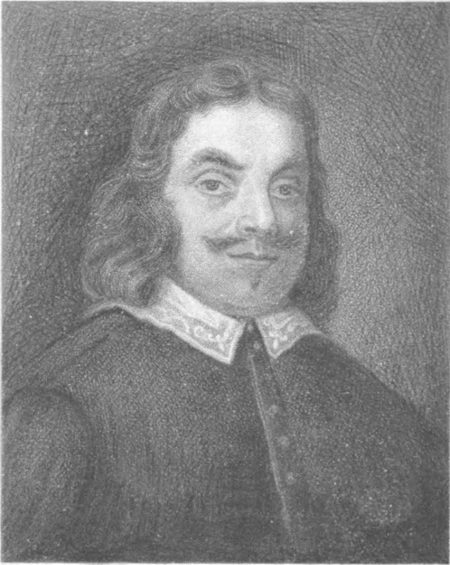
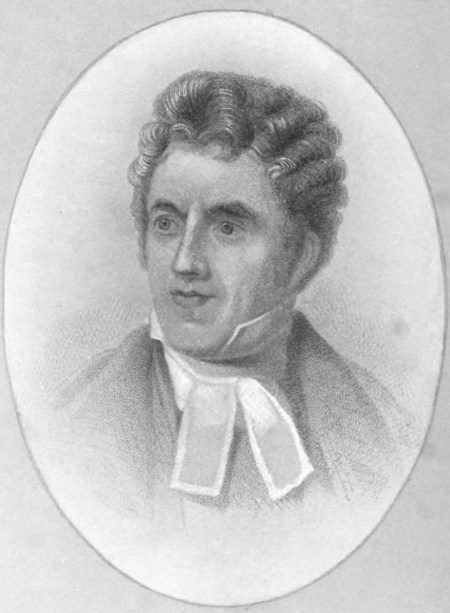
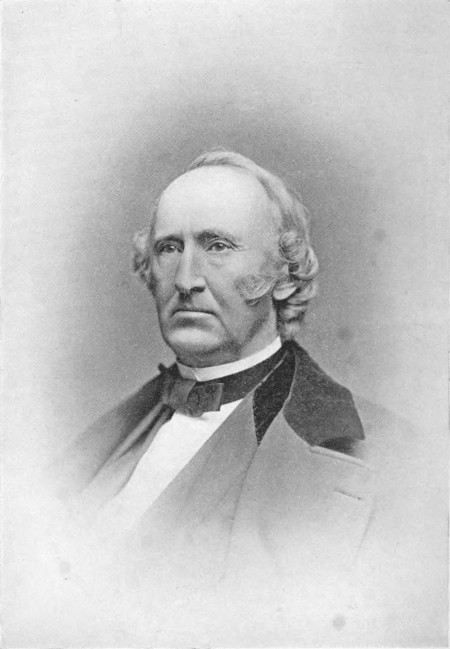
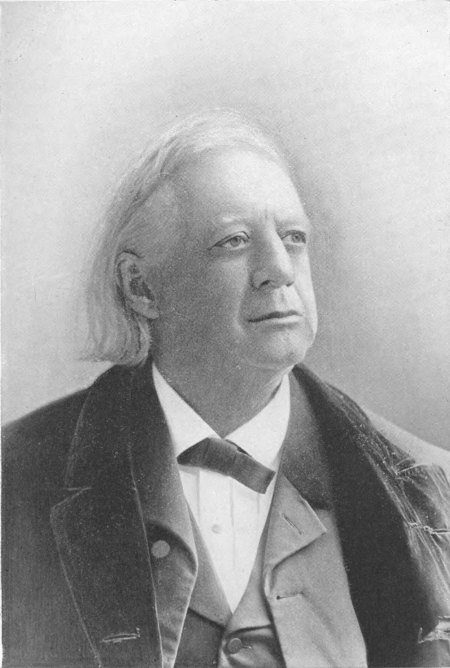
"The series of Napoleon's successes is absolutely the most marvellous in
history. No one can question that he leaves far behind the Turennes,
Marlboroughs, and Fredericks; but when we bring him up for comparison an
Alexander, a Hannibal, a Cæsar, a Charles, we find in the single point
of marvellousness Napoleon surpassing them all....
"Every one of those heroes was born to a position of exceptional
advantage. Two of them inherited thrones; Hannibal inherited a position
royal in all but the name; Cæsar inherited an eminent position in a
great empire. But Napoleon, who rose as high as any of them, began life
as an obscure provincial, almost as a man without a country. It is this
marvellousness which paralyzes our judgment. We seem to see at once a
genius beyond all estimate, a unique character, and a fortune utterly
unaccountable."
Thus wrote John Robert Seeley, Professor of Modern History in the
University of Cambridge, of the man whom he regarded as the greatest
enemy England has ever known.
Napoleon has been more praised and villified, probably, than any man in
history. Lanfrey, though careful as to facts, and Taine, are bitter,
always ready to impute sinister motives. John S. C. Abbott is adulatory;
Walter Scott cannot be impartial; and Bourrienne, the discarded private
secretary, Madame de Rémusat, and the Duchess d'Abrantès, must be read
with allowance for prejudice. Thiers, in his twenty volumes on "The
Consulate and the Empire," gives a most valuable picture of the times,
friendly to the great leader; John Codman Ropes's "First Napoleon" is
able; and the life by William O'Connor Morris of Oxford is generally
fair and interesting.
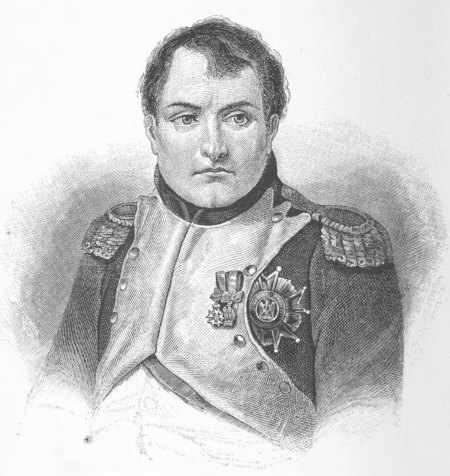
Napoleon Bonaparte was born at Ajaccio, in the Island of Corsica, Aug.
15, 1769. This date has been disputed by some authors, who claim that
Napoleon was born Jan, 7, 1768. Colonel Jung, in "Bonaparte et son
Temps," thinks the dates of birth of Napoleon and his brother Joseph
were exchanged by the parents, who wished, in 1778, to send Napoleon to
a military school at Brienne supported by the State, and he must needs
be under ten years of age.
As Corsica became subject to France in June, 1769, some persons believe
that Napoleon himself changed the date of his birth from 1768 to 1769,
that he might appear to the French nation as a French subject; but the
date, Aug. 15, 1769, is usually accepted as correct.
The Bonaparte family were originally from the nobility of Florence,
where they had taken a somewhat prominent part in politics and
literature. They had lost their fortune; and Charles Bonaparte, the
father of Napoleon, earned his living by the law. He was an eloquent
man, and an adjutant under Pasquale Paoli, a patriot of Corsica. This
island, in the fourteenth century, was under Genoa. When it gained its
independence under Paoli, such rights as Genoa still possessed she sold
to France. As a result, in 1769 a French army of twenty-two thousand
subjugated the island, and Paoli fled to England, where he lived for
twenty years.
Charles Bonaparte, at eighteen, married a girl not yet fifteen, Letizia
Ramolini, descended from a noble family of Naples, a person of unusual
beauty and strength of character. Although so young, she entered
heartily into the warfare for Corsican independence, and shared the
perils of her husband at the front.
Napoleon was the fourth of her thirteen children, the eldest, a son, and
the second, a daughter, both dying young. He was born in the midst of
war. He wrote Paoli, in 1789, when he was twenty years old, "I was born
when my country was sinking; the cries of the dying, the groans of the
oppressed, and the tears of despair surrounded my cradle from my birth."
The Duchess d'Abrantès tells this story of Napoleon's boyhood. When he
was seven years old, being accused by one of his sisters of eating a
basket of grapes and figs, although he denied the offence, he was
whipped and kept on bread and cheese for three days.
On the fourth day a little friend of the family arrived at the home, and
confessed that she and Napoleon's sister, Marianna (afterward Elisa) had
eaten the fruit. The lad was asked why he had not accused his sister,
and replied that he suspected that she was guilty, but said nothing out
of consideration for the friend.
After the submission of Corsica to France in 1769, Count Marbœuf was
appointed viceroy of the island. He became a friend of the Bonapartes;
and Charles, the father, was made king's assessor to the Judicial Court
for Ajaccio. Through Marbœuf's influence three of the Bonaparte
children were placed in fine schools,—Joseph, Marianna, and Napoleon,
the last at the military school of Brienne, near Paris. Here he
remained for five years. He was a quiet, studious lad, devoted to
Plutarch's Lives and Cæsar's Commentaries. He was always trying to find
out what made certain men great. He was easily at the head of his class
in mathematics. His industry and perseverance were astonishing.
"During play-hours," says Bourrienne, "he used to withdraw to the
library, where he read works of history, particularly Polybius and
Plutarch. I often went off to play with my comrades, and left him by
himself in the library."
He was cold in manner, talked very little with his classmates, and felt
keenly his poverty and the submission of his country to France.
Most of the boys at the school were rich, and they often ridiculed
Napoleon and his country. And yet he bore them no ill-will; and, says
Bourrienne, "when he had the supervision of any duty which they
infringed, he would rather go to prison than denounce the criminals."
During the winter of 1783-84, when the fall of snow was unusually heavy,
Napoleon, then fourteen, suggested to his mates that they build a snow
fort, "divide ourselves into sections, form a siege, and I will
undertake to direct the attacks." This sham war was carried on with
great enthusiasm for a fortnight.
Three of the best scholars were sent every year from each of the twelve
provincial military schools of France to the Military College of Paris.
Napoleon was one of the three sent from Brienne.
Here the young men lived so expensively that the youth of fifteen wrote
a letter of protest to the Vice-Principal Berton of Brienne. He urged
that, instead of so many attendants, and two-course dinners, they
should wait upon themselves, clean their own boots, and eat the coarse
bread made for soldiers. Temperance and activity would fit them, he
said, for the hardships of war.
Napoleon won the admiration of his teachers. The professor in history,
M. de l'Eguille, said: "A Corsican by birth and character, he will do
something great if circumstances favor him."
After a year at this school, he was made second lieutenant of artillery
in the regiment of La Fère, in 1785. The next five years he passed at
different military stations in France. He was always studying. He pored
over maps and plans of fortresses. He read with avidity books on law,
philosophy, theology, political economy, and various forms of
government. He wrote an essay on the question, "What are the
institutions most likely to contribute to human happiness?" He also
wrote a history of Corsica and her wrongs.
Abbott relates that on a day of public festivity at Marseilles, Napoleon
was criticised because he did not join in the amusements. He replied,
"It is not by playing and dancing that a man is to be formed."
At Auxonne, Napoleon and some other officers boarded with a plain
barber. The wife of the barber did not like the taciturn young Napoleon,
who stayed in his room and devoured his books, while the other officers
pleased her from their social ways, and enjoyment of the gossip of the
town.
Years after, Napoleon, who had won several victories, passed that way.
He asked the barber's wife if she remembered an officer by the name of
Bonaparte in her home. "Indeed I do," was the reply, "and a very
disagreeable inmate he was. He was always either shut up in his room,
or, if he walked out, he never condescended to speak to any one."
"Ah, my good woman," said Napoleon, "had I passed my time as you wished
to have me, I should not now have been in command of the army of Italy."
Napoleon was at this time very slight in physique, five feet six and a
half inches tall, with a very large head, pale face, piercing eyes of
grayish blue, brown hair, a smile that could be sweet and captivating,
and beautiful hands.
In 1791, when he was twenty-two years old, Napoleon, now first
lieutenant, visited Corsica on furlough. Remaining too long, his name
was struck off the army lists. He returned to Paris, and anxiously
looked about for some way to earn a living. He met his schoolmate,
Bourrienne, who usually paid for any meal they took together at a
restaurant, as, although poor, he was richer than Napoleon. Each day
they had projects for earning money. They found some houses building,
and desired to rent them, and then underlet them, but the owners asked
too much to realize any profit. Napoleon solicited employment at the war
office. "Everything failed," says Bourrienne.
Bonaparte's mother, left a widow with eight children in 1785, was, of
course, powerless to help Napoleon. Her husband had gone on business to
Montpellier in the south of France, and died of a cancerous ulcer in the
stomach in the thirty-ninth year of his age. His wife was only
thirty-five. Madame Bonaparte was possessed of wonderful energy, great
strength of will, and excellent judgment. These her son Napoleon
inherited in a marked degree.
She proved equal to the care of her fatherless children. "She managed
everything," said Napoleon, "provided for everything with a prudence
which could neither have been expected from her sex nor from her age.
Ah, what a woman! Where shall we look for her equal? She watched over us
with a solicitude unexampled. Every low sentiment, every ungenerous
affection, was discouraged and discarded. She suffered nothing but that
which was grand and elevated to take root in our youthful
understandings. She abhorred falsehood, and would not tolerate the
slightest act of disobedience. None of our faults were overlooked.
Losses, privations, fatigue, had no effect upon her. She endured all,
braved all. She had the energy of a man, combined with the gentleness
and delicacy of a woman."
When Bonaparte was waiting in Paris for some position to open, the
French Revolution had begun. On June 20, 1792, a ragged mob of five or
six thousand men surrounded the Tuileries, put a red cap on the head of
Louis XVI., and made him show himself at the windows to the crowd in the
garden. Napoleon was indignant, and said to Bourrienne, "Why have they
let in all that rabble? They should sweep off four or five hundred of
them with the cannon; the rest would then set off fast enough."
Napoleon also witnessed the storming of the Tuileries on Aug. 10, when
the Swiss guards were massacred. Although a Republican in sentiment, he
had no sympathy with the extreme democracy of the Jacobins, and said:
"If I were compelled to choose between the old monarchy and Jacobin
misrule, I should infinitely prefer the former."
Years later, when Napoleon was Emperor, when asked to allow a person to
return to France who had been prominent in the downfall of the Bourbon
dynasty, he said, "Let him know that I am not powerful enough to protect
the wretches who voted for the death of Louis XVI. from the contempt and
indignation of the public."
Corsica and Paoli (who had returned and become her governor) were
shocked at the excesses of the French Revolution, and hoped and planned
once more for independence. Finding themselves unable to achieve it
alone, they sought the aid of England. Bonaparte and his family favored
adherence to France, and were banished from the island, their home
plundered, and they made their escape at midnight to Marseilles. Here
they were for some time in extreme poverty. Joseph, the eldest son,
found employment as a clerk in an office, and in August, 1794, married
Julia Clari, the daughter of one of the richest merchants of Marseilles.
This was a great pecuniary benefit to the whole family.
Napoleon had finally been reinstated in the army; for with the Reign of
Terror at home, and wars with monarchies abroad, all fearful of the
growth of republican sentiments and consequent revolutions, the French
army was in need of all its able young men.
Napoleon's first important work was at the siege of Toulon. This was the
great naval depot and arsenal of France. The Royalists, or followers of
the Bourbon king, Louis XVI., had centred here, and, opposed to the
republic, had surrendered the city, with its forts and ships, to
England.
The place must be retaken; and the Republic sent out an army under
Carteaux, a portrait painter. For some months the siege was carried on,
but almost nothing was accomplished. Sixty thousand men were needed, and
Carteaux had but twenty-five thousand.
Napoleon, on his way from Avignon to Nice, passed through Toulon,
stopping to see a friend who introduced him to Carteaux. The young
officer saw at once the mistakes of the campaign. "Instead of attacking
the town," said Napoleon, "try and establish batteries which shall sweep
the harbor and the roadstead. If you can only drive away the ships, the
troops will not remain."
Cape l'Eguillette separates the two harbors, and here batteries were
placed to sweep the sea; for Napoleon had said, putting his finger on
the map, at the cape, "Toulon is there!"
As he predicted, the English ships were driven off after a terrible
bombardment; fifteen thousand of the inhabitants of Toulon in dismay
fled to the ships of the allies; the plan of Napoleon had proved a great
success.
He was not responsible for the horrors which followed. The Royalists set
fire to the arsenal and ships before their departure; while the town was
in flames, cannon from the shore sunk boat-loads of fugitives, and
hundreds in the city who could not escape were deliberately shot in the
streets and in their homes, so desperate had become the hate between
Royalists and Republicans, or really Jacobins.
Fouché, afterwards prominent under the Empire, wrote to a friend, Dec.
23: "We have only one way of celebrating victory. This evening we shoot
two hundred and thirteen rebels. Adieu, my friend; tears of joy run down
my cheeks, and my heart is overflowing."
"It was," says Walter Scott, concerning this taking of Toulon, Dec. 17,
1793, "upon this night of terror, conflagration, tears, and blood, that
the star of Napoleon first ascended the horizon; and, though it gleamed
over many a scene of horror ere it set, it may be doubted whether its
light was ever blended with that of one more dreadful."
For this brilliant undertaking Napoleon was made General of Artillery.
General Dugommier, who commanded at Toulon, said, "Promote this young
officer, or he will promote himself." Napoleon was wounded in his thigh
by a bayonet thrust in one of the charges. He was at this time but
twenty-four years of age, poor, ambitious, and with little prospect of
his future wonderful career.
He was sent to defend the coast of Provence, and was denounced by the
Jacobins, who said he was building a bastile at Marseilles to enslave
the people. In March, 1794, he rejoined the army of Italy at Nice, and
was so useful that the commander-in-chief wrote: "I am indebted to the
comprehensive talents of General Bonaparte for the plans which have
insured our victory."
In July, 1794, he was sent on a mission to Genoa, to examine the
fortresses and the neighboring country. Meantime, one set of French
leaders had been superseded by a set equally bad. Through jealousy, and
as a friend of the younger Robespierre, Napoleon was arrested as a
"suspected person," was two weeks in prison, and nearly lost his life.
He seems to have been spared for the selfish reason, "the possible
utility of the military and local knowledge of the said Bonaparte." He
addressed an eloquent letter to his accusers, quoted by Lanfrey, in
which he says: "Remove the oppression which surrounds me; give me back
the esteem of patriots. An hour afterwards, if bad men wish for my life,
I care so little for it, I have so often counted it for nothing.... Yes,
nothing but the idea that it may be of use to the country gives me
courage to bear its weight."
Soon after this, to scatter such officers as himself, who were supposed
to be Jacobin in tendency, Napoleon was ordered to La Vendée to put down
civil dissensions. He rebelled against being separated from the army of
Italy. "You are too young," said Aubrey, the Girondist deputy, "to be
commander-in-chief of artillery."
"Men age fast on a field of battle," said Napoleon, "and I am no
exception."
For refusing to proceed to his post, Napoleon's name was struck off the
army lists, and again he was in Paris, out of employment. When he and
Bourrienne took a stroll at evening on the Boulevards, and saw the rich
young men on horseback, apparently living a life of ease and luxury,
"dandies with their whiskers," says Madame Junot (Duchess d'Abrantès),
Napoleon would exclaim bitterly, "And it is on such beings as these that
Fortune confers her favors. How contemptible is human nature!"
He told Count Montholon, when in exile at St. Helena, that at this time
he came near committing suicide by throwing himself into the river. With
head down, and meditating upon his determination, he ran against a
plainly dressed man, who proved to be Démasis, a former comrade in the
artillery.
"What is the matter?" he said to Napoleon. "You do not listen to me! You
do not seem glad to see me! What misfortune threatens you? You look to
me like a madman about to kill himself."
Napoleon told him his needs, and his mother's poverty. "Is that all?"
said Démasis. "Here are six thousand dollars in gold, which I can spare
without any inconvenience. Take them, and relieve your mother."
Hardly aware of what he was doing, Napoleon grasped the money, and sent
it to his mother. Afterwards he could find nothing of Démasis. Fifteen
years later, when the Empire was near its fall, Napoleon met him, made
him accept sixty thousand dollars to repay the loan of six thousand, and
appointed him director-general of the crown gardens, at a salary of six
thousand dollars a year, and the honors of an officer in the household.
He also provided a good situation for Démasis' brother.
He never forgot a kindness. A humble shoemaker, who worked for him in
these days of poverty, and waited for his pay, was always employed by
Napoleon after he became Emperor, though he was urged to go to some one
more fashionable. A jeweller, who once trusted him, was remembered in
Napoleon's days of prosperity, and thus made his fortune. To a lady, a
stranger to him, who once was kind to him in sickness in these early
years, he sent two thousand dollars, hearing that her circumstances had
changed. To an old man in Jersey, who had once loaned his father
twenty-five louis, he sent ten times that sum.
Reverses began to attend the army of Italy. Whenever it was convenient
to use his services, it seemed always to be remembered that he had
knowledge and sagacity. Napoleon was asked by the director of military
affairs to draw up a plan of operations for the army. It was sent to
Kellermann, commander-in-chief of the army of Italy, who rejected it,
saving, "The author is a fit inmate for a lunatic asylum." Lanfrey and
other historians consider the plan altogether brilliant and admirable.
Napoleon, by years of study, had made himself a master in the science of
war, as well as along other lines. He had made himself ready for a great
opportunity, and a great opportunity came to him.
France, in her struggle for self-government, had adopted a new
constitution, under a Directory of five persons, with a Council of two
hundred and fifty Ancients, and a Council of Five Hundred, somewhat like
our House of Representatives. The new government, though acceptable to
the provinces, did not please either the Royalists or Jacobins of Paris,
and the people, now so used to bloodshed, resorted to force to destroy
the Directory.
Barras, one of the Directors, who knew Napoleon, immediately thought of
him as a young man who could quell a mob. "It is that little Corsican
officer," he said, "who will not stand upon ceremony!" The Directory had
but about eight thousand soldiers; the National Guard numbered forty
thousand. Napoleon spent the whole night in turning the Louvre and the
Tuileries into a sort of camp, with artillery posted at all the outlets.
He armed all the members of the government, that they might defend
themselves if the necessity arose, and he took care to leave a way of
retreat open to St. Cloud.
The National Guards appeared on the morning of Oct. 5, 1795 (13th
Vendémiaire, as the month was called by the Revolutionary Calendar), in
front of Napoleon's troops. All day the two armies were within fifteen
paces of each other. At four o'clock in the afternoon, General Danican
of the National Guards gave the signal for attack. Napoleon mounted his
horse, and the fight began at several places.
The cannon swept them down at every point. At six o'clock the battle was
over, and order was restored in Paris. About eighty only were killed,
and three or four hundred wounded, as the guns were loaded with powder
after two discharges. Napoleon was, as he deserved to be, the hero of
the hour. With the utmost self-possession, with a clear brain and
never-failing courage, he had been equal to the emergency.
Napoleon was made General of the Interior, with the command of Paris.
The days of poverty were over. He found places for several of his
family, and was much sought after by those in high position. He was
especially good to the poor, and the Duchess d'Abrantès tells how he
climbed to attics and went down into cellars to feed the hungry. As he
was stepping out of his carriage one day at the home of the Duchess, a
woman held her dead child before him. It had died from want. She had
come to ask him to save her other children. "If nobody will give me
anything," she said, "I must even take them all five and drown myself
with them." Napoleon remembered how near he had been to drowning himself
only a little time before. He obtained the wages due to her husband, who
had been killed while at work on the roof of the Tuileries, and a
pension was granted her.
Soon after this an attractive boy about fourteen years of age came to
Napoleon and asked for the sword of his father, who was a general of the
Republic, and had been put to death by the Jacobins, because he was a
Girondist, or moderate Republican.
"I was so touched by this affectionate request," said Napoleon, "that I
ordered it to be given to him. This boy was Eugène Beauharnais. On
seeing the sword he burst into tears. I felt so affected by his conduct,
that I noticed and praised him much. A few days afterwards his mother
came to return me a visit of thanks. I was struck with her appearance,
and still more with her esprit."
The young general of twenty-six became thoroughly in love with the
graceful and lovable widow of thirty-two. Josephine Tascher, the only
child of French parents, had been born in the Island of Martinique, Jan.
24, 1763. She was married when sixteen to Viscount de Beauharnais, a
major in the army, who introduced her to the court of Marie Antoinette,
but who, with all his wealth and position, did not make her life a happy
one. After four years of marriage and the birth of two children,
Hortense and Eugène, to whom she was most tenderly attached, she and
Beauharnais separated, and she returned to Martinique, but at his
persistent request she came back to him after three years.
On his imprisonment during the Reign of Terror she attempted to save him
and was thrown into prison, where she narrowly escaped the guillotine.
He was beheaded July 23, 1794.
"Josephine," says Meneval, the secretary of Napoleon after Bourrienne,
"was irresistibly attractive.... Her temper was always the same. She was
gentle and kind, affable and indulgent with every one, without
difference of persons. She had neither a superior mind nor much
learning; but her exquisite politeness, her full acquaintance with
society, with the court, and with their innocent artifices, made her
always know the best things to say or do."
Napoleon found at the home of Madame de Beauharnais the most noted
persons in Paris, and, what was more important for his happiness, the
one woman whom he ever after loved.
Years later he said, "Josephine was truly a most lovely woman, refined,
affable, and charming.... She was so kind, so humane—she was the most
graceful lady and the best woman in France. I never saw her act
inelegantly during the whole time we lived together. She possessed a
perfect knowledge of the different shades of my character, and evinced
the most exquisite tact in turning this knowledge to the best
account....
"I was the object of her deepest attachment. If I went into my carriage
at midnight for a long journey, there, to my surprise, I found her,
seated before me and awaiting my arrival. If I attempted to dissuade her
from accompanying me, she had so many good and affectionate reasons to
urge, that it was almost always necessary to yield. In a word, she
always proved to me a happy and affectionate wife, and I have preserved
the tenderest recollections of her."
Barras, the ardent friend of Josephine, urged her marriage with
Napoleon, and her children favored it. She admired him, but hesitated.
She wrote a friend, "Barras assures me that if I marry the general, he
will obtain for him the appointment of commander-in-chief of the army of
Italy. Yesterday Bonaparte, speaking to me of this favor, which has
already caused some jealousy among his companions in arms, although it
is not yet granted, said, 'Do they think I need patronage to insure my
success? Some day they will be only too happy if I grant them mine. My
sword is at my side, and that will carry me a long way.'"
They were married March 9, 1796, Napoleon having been appointed to the
command of the army of Italy on the preceding 23d of February. He
remained in Paris but a few days, and then hastened to his army,
reaching Nice towards the last of March.
He found an army of about thirty thousand men, "without pay, without
provisions, without shoes," opposed to about twice their number of
Austrians and Sardinians. He issued an address to them: "Soldiers, you
are poorly fed and half-naked. The government owes you much, but can do
nothing for you. Your patience, your courage, do you honor, but they
bring you no advantage, no glory. I am about to lead you into the most
fertile plains in the world; there you will find larger cities and rich
provinces; there you will find honor, glory, and wealth. Soldiers of
Italy, shall you lack courage?"
His soldiers, who till his death idolized him and would die for him,
were soon to prove on scores of battle-fields that they never lacked
courage.
This slight, boyish-looking general of twenty-six said to his veteran
officers, "We must hurl ourselves on the foe like a thunderbolt, and
smite like it."
And this was done. The first battle was on April 12, at Montenotte. The
Austrians were routed, leaving their colors and cannon with the French,
and three thousand dead and wounded. Napoleon afterwards said to the
Emperor of Austria, "My title of nobility dates from the battle of
Montenotte."
The battles of Millesimo and Mondovi quickly followed. On the heights of
Monte Zemolo, Napoleon looked out upon the fertile plains of Italy, and
exclaimed, "Hannibal crossed the Alps, but we have turned them!"
Then he addressed his enthusiastic soldiers: "In fifteen days," he said,
"you have won six victories; captured twenty-one flags, fifty cannon,
many fortified places; conquered the richest part of Piedmont; you have
captured fifteen thousand prisoners, and killed and wounded ten thousand
men. You lacked everything; you have gained battles without cannon;
crossed rivers without bridges; made forced marches without shoes;
often bivouacked without bread; the Republican phalanxes were alone
capable of such extraordinary deeds. Soldiers, receive your due of
thanks!"
Murat, his aide-de-camp, who afterwards married Napoleon's sister
Caroline, and became King of Naples, was sent to Paris with the
armistice proposed by the King of Sardinia, and Junot with the flags,
which caused the greatest rejoicing. Fêtes were celebrated at the
Champ de Mars, and Napoleon's name was honored as the conqueror of
Italy.
Napoleon writes to his bride: "Your letters are the delight of my days,
and my happy days are not very many. Junot is carrying twenty-two flags
to Paris. You must come back with him; do you understand? It would be
hopeless misery, an inconsolable grief, continual agony, if I should
have the misfortune of seeing him come back alone, my adorable one....
You will be here, by my side, on my heart, in my arms! Take wings, come,
come! But travel slowly; the way is long, bad, and tiresome."
Almost daily he writes to his wife: "My only Josephine, away from you,
there is no happiness; away from you, the world is a desert, in which I
stand alone, with no chance of tasting the delicious joy of pouring out
my heart. You have robbed me of more than my soul; you are the sole
thought of my life. If I am worn out by all the torment of events, and
fear the issue; if men disgust me; if I am ready to curse life, I place
my hand on my heart,—your image is beating there."
She is not well, and does not come to him, and again he writes: "My
dear, do remember to tell me that you are certain that I love you more
than can be imagined; ... that no hour passes that I do not think of
you; that it has never entered my mind to think of any other woman; ...
that you, as I see you, as you are, can please me and absorb my whole
soul; that you have wholly filled it; that my heart has no corner that
you do not see, no thoughts that are not subordinate to you; that my
strength, my arms, my intelligence, are all yours; ... and that the day
when you shall have changed, or shall have ceased to live, will be the
day of my death; that nature, the earth, is beautiful, in my eyes, only
because you live on it."
General Marmont says in his memoirs: "Bonaparte, however occupied he may
have been with his greatness, the interests intrusted to him, and with
his future, had, nevertheless, time to devote to feelings of another
sort; he was continually thinking of his wife.... He often spoke to me
of her, and of his love, with all the frankness, fire, and illusion of a
very young man.... During a trip we made together at this time, to
inspect the places in Piedmont that had fallen into our hands, one
morning, at Tortona, the glass in front of his wife's portrait, which he
always carried with him, broke in his hands. He grew frightfully pale,
and suffered the keenest alarm."
Again he says, "Never did a purer, truer, or more exclusive love fill a
man's heart, or the heart of so extraordinary a man."
Lanfrey says, "In this love, which has been said to be the only one that
touched his heart, all the fire and flame of his masterful nature showed
itself."
Napoleon pushed on his troops to conquer the Austrian Beaulieu, crossed
the river Po at Piacenza, and overtook the enemy at the town of Lodi on
the Adda River. The town was taken by the French; nut, to cross the
Adda and reach Beaulieu, it was necessary to storm a narrow wooden
bridge, which was defended by artillery and by from twelve to sixteen
thousand Austrians. Napoleon immediately placed a battery on his own
side of the river, sent a detachment of cavalry to ford the river and
attack the enemy's rear, and then, at the head of several thousand men,
bade them force a passage across the bridge.
The French were mowed down by the Austrian cannon. They wavered, when
Napoleon seized a standard, and, with Lannes and one or two other
officers, rushed among the troops and inspired them to gain a complete
victory. Lannes was the first to cross the bridge and reach the Austrian
gunners, who were sabred at their guns, and Napoleon the second. Lannes
was promoted on the spot for his valor. So proud were the troops that
their general should fight in the ranks, that they ever after called him
their "Little Corporal." The conflict was a bloody one. The Austrian
loss was much heavier than the French.
Napoleon said, "It was not till after the terrible passage of the
bridge of Lodi that the idea shot across my mind that I might become a
decisive actor in the political arena. Then arose, for the first time,
the spark of great ambition."
He said to his aide-de-camp, Marmont, "In our time, no one has devised
anything great; I must set an example."
On May 15, 1796, Napoleon entered Milan in triumph. The people hated the
rule of Austria, and hoped for liberty under the French Republic. A
triumphal arch was erected in the city, and flowers were scattered in
the path of the French. To his soldiers, "who had rushed," he said,
"like a torrent from the height of the Apennines," Napoleon gave all the
glory.
In accordance with the wishes of the Directory in France, he levied
twenty million francs on Milan, and took some of her best art works to
Paris. The army was supported by the countries through which it passed,
as was Sherman's in our Civil War.
Late in June, Josephine reached Milan, and for a brief period they were
happy; but Napoleon was obliged very soon to be at the front. The war
now centred about Mantua, which was strongly fortified. Seven or eight
thousand French troops were besieging it, when it was ascertained that
Würmser, the Austrian general, was marching against the French with
seventy thousand men, in three armies, while Napoleon had but about
forty-five thousand.
At once the siege of Mantua was raised, the gun-carriages burned, the
powder thrown into the river, the cannon spiked, and the French forces
were led against Würmser.
Napoleon, with his usual celerity and tact,—he used to say, "War, like
government, is mainly decided by tact,"—managed to defeat each of the
three Austrian armies in turn.
At Lonato the Austrians lost ten thousand in killed, wounded, and
prisoners. The day after the battle, one of the Austrian divisions,
reduced to four thousand men, wandered into Lonato, and demanded the
surrender of the garrison of twelve hundred. Napoleon called his staff
together; and when the bandage was removed from the eyes of the officer,
he said with authority, "Go and tell your general that I give him eight
minutes to lay down his arms!" The Austrians surrendered, and were soon
chagrined to find that four thousand had succumbed to twelve hundred
Frenchmen.
Napoleon said at Lonato, "I was at ease; the Thirty-second was there!"
So rejoiced were the men at these words that they had them embroidered
on their regimental flag.
In this short campaign twenty thousand Austrians had been killed and
wounded, fifteen thousand taken prisoners, with seventy pieces of
artillery, and twenty-two stands of colors. The latter were sent to
Paris.
Early in September, Napoleon again defeated Würmser at Bassano. After
the battle, at midnight Napoleon rode over the battle-field by
moonlight, the quiet broken only by the moans of the wounded and dying.
Suddenly a dog sprang from beneath the cloak of his dead master, rushed
to Napoleon as though asking aid, and then back to the body, licking the
face and hands of the dead, and howling piteously.
Napoleon was strongly moved, and said years afterward, "I know not how
it was, but no incident upon any field of battle ever produced so deep
an impression upon my feelings. 'This man,' thought I, 'must have had
among his comrades friends, and yet here he lies forsaken by all except
his faithful dog.' ... Certainly, in that moment, I should have been
unable to refuse any request to a suppliant enemy."
When at St. Helena, Madame Montholon, seeming to be afraid of a dog,
Napoleon said, "He who does not love a dog has never known what real
fidelity means."
Austria soon put another general in the field with over sixty thousand
men. She was determined not to lose Italy. At first the French army lost
some battles, the general-in-chief not being with them. When he came to
his army, he said to some regiments, "Soldiers, I am not satisfied with
you. You have shown neither discipline, constancy, nor courage.... Let
it be written on the colors, 'They are not of the army of Italy.'"
The men seemed heart-broken. "Place us in the van of the army," they
said, "and you shall then judge whether we do not belong to the army of
Italy."
They were soon put to the test. Napoleon marched out of Verona on the
night of Nov. 14, descended the Adige river, and fell upon the rear of
Alvinzi, the Austrian general, at Arcola. The village is surrounded by
marshes, crossed by causeways or bridges.
When the French rushed upon the bridges, they were repulsed by the guns
of the Austrians. Napoleon sprang from his horse, seized a standard, and
shouted, "Follow your general!" but he was borne by the struggling
soldiers off the bridge into the marsh.
Frenzied at the probable loss of their general, the French fought
desperately. Muiron, who had saved Napoleon at Toulon when he was
wounded in the thigh, covered his general with his own body, and
received his death wound from a shell. Lannes received three wounds in
endeavoring to protect Napoleon, who was finally extricated, and was
again at the head of the column. After three days of battle, the French
were victorious. It is estimated that twenty thousand men perished in
the swamps of Arcola.
Napoleon wrote a letter of sympathy to the young widow of Muiron, who in
a few weeks died at the birth of a lifeless child.
To the Directory he wrote: "Never was a field of battle more valiantly
disputed than the conflict at Arcola. I have scarcely any generals left.
Their bravery and their patriotic enthusiasm are without example."
In the midst of this toil and carnage, Napoleon could find time to write
to Josephine. She had followed him for a while after coming to Milan,
but her dangers were so great that it was soon found to be impossible.
After Arcola he writes her: "At length, my adored Josephine, I live
again. Death is no longer before me, and glory and honor are still in my
breast.... Soon Mantua will be ours, and then thy husband will fold thee
in his arms, and give thee a thousand proofs of his ardent affection. I
shall proceed to Milan as soon as I can; I am a little fatigued. I have
received letters from Eugène and Hortense. I am delighted with the
children.... Adieu, my adorable Josephine. Think of me often. Death
alone can break the union which sympathy, love, and sentiment have
formed. Let me have news of your health. A thousand and a thousand
kisses."
If she does not write often he is distressed; "Three days without a word
from you," he writes, "and I have written you several times. This
absence is horrible; the nights are long, tiresome, dull; the days are
monotonous.... I don't really live away from you; my life's happiness is
only to be with my sweet Josephine. Think of me! write to me often, very
often; it is the only balm in absence which is cruel, but I hope will be
short.... Day before yesterday I was in the field all day. Yesterday I
stayed in bed. A fever and a raging headache prevented me from writing
to my dear one; but I received her letters. I pressed them to my heart
and my lips; and the pang of absence, a hundred miles apart, vanished."
Yet, with all this intensity of feeling, Napoleon had wonderful
self-command. He said, "Nature seems to have calculated that I should
endure great reverses. She has given me a mind of marble. Thunder cannot
ruffle it. The shaft merely glides along."
Austria made another desperate effort to overcome Napoleon and save
Würmser, shut up in Mantua. At four o'clock in the morning, Jan. 14,
1797, the battle of Rivoli began. For twelve hours Napoleon was in the
hottest of the fight. Three horses were shot under him.
After a desperate but victorious battle, the troops marched all night,
conquered Provera before Mantua the next day, and La Favorita on the
third day. The Austrian army had lost thirty thousand men in three days,
of whom twenty thousand were taken prisoners. Napoleon, in his report of
the battle of Favorita, spoke of the terrible Fifty-seventh. Thereafter
the Fifty-seventh adopted the name of "The Terrible," proud of this
distinction of their chief.
Massena's men had marched and fought incessantly for four days and
nights. No wonder the Austrians said, "The French do not march, they
fly." Napoleon wrote, "The Roman legions used to make twenty-four miles
a day; our men make thirty, and fight in the intervals." ...
Würmser surrendered Mantua Feb. 3, 1797. Twenty-seven thousand men had
died of wounds or sickness since the commencement of the siege. The
horses had all been eaten, and the city could sustain itself no longer.
Würmser had declared that he could hold out for a year. But Napoleon
knew that so brave a marshal as Würmser would not surrender unless
reduced to the last extremity.
He therefore allowed Würmser to retire with all his staff and two
thousand cavalry. He surrendered to France eighteen thousand prisoners.
Würmser wished to salute the young conqueror of twenty-seven; but
Napoleon had gone to Bologna, not liking to subject the marshal of
seventy to humiliation. Lanfrey thinks this was done for effect, but
there seems no good reason for always imputing bad motives to Napoleon.
A man so worshipped by his soldiers, and, indeed, by the nation, had
much that was noble and refined in his nature.
Würmser, out of gratitude to Napoleon, saved his life at Bologna, by
making known to him a plot to poison him.
Napoleon now turned his attention towards the Papal States. The Pope had
no love for the "godless Republic." Thousands of priests had fled from
France to Rome. Austria and Rome were closely allied, and both ready to
sustain war against France whenever an opportunity offered.
The Directory had written to Napoleon "that the Roman Catholic religion
would always be the irreconcilable enemy of the Republic," but Napoleon
bore no ill-will towards his mother's faith and the faith in which he
himself died.
He issued a proclamation in which he said, "The French soldier carries
in one hand the bayonet, the guaranty of victory, and in the other an
olive branch, the symbol of peace and pledge of his protection."
When within three days' march of Rome, the Pope sued for peace, and the
treaty of Tolentino was signed Feb. 19, 1797.
Napoleon writes to Josephine on the same day: "Peace has just been
signed with Rome. Bologna, Ferrara, the Romagna, are ceded to the
Republic. The Pope gives us shortly thirty million [francs] and many
works of art....
"My dear, I beg of you think of me often, and write me every day....
You, to whom nature has given intelligence, gentleness, and beauty, you,
who rule alone over my heart, you, who doubtless know only too well the
absolute power you exercise over my heart, write to me, think of me, and
love me. Ever yours."
Austria was not yet humbled. Napoleon determined to march against
Vienna. The young Archduke Charles, brother of the ruler of Austria, was
in command of the Austrian army. "He is a man," said Napoleon, "whose
conduct can never attract blame.... More than all, he is a good man, and
that includes everything when said of a prince."
Charles had beaten Napoleon's generals on the Rhine, but he could not
beat the "Little Corporal." His fifty thousand men melted away as they
fled, wounded and distracted, over the Alps.
When within sight of Vienna, Napoleon proposed peace; and Austria, tired
of war for a time at least, accepted the conditions.
Early in May, France declared war against the Venetian Republic. The
latter had been neutral, although both Austrians and French had crossed
her territory. Her aristocracy had no sympathy with the French Republic,
and preferred Austria. Perhaps to guard herself from both nations, she
raised an army of sixty thousand men, and put herself in the attitude of
armed neutrality. She refused to ally herself to France. "Be neutral,
then," said Napoleon; "but remember, if you violate your neutrality, if
you harass my troops, if you cut off my supplies, I will take ample
vengeance.... The hour that witnesses the treachery of Venice shall
terminate her independence."
Whether or not her government desired to keep the peace, insurrections
arose among the people in Verona and elsewhere, French soldiers were
killed, Napoleon took "ample vengeance," and in the treaty of Campo
Formio, Oct. 17, 1797, Venice was handed over to Austria. The Republic
ceased to exist. In taking the hated oath of allegiance to Austria, the
ex-Doge of Venice became insensible, and died soon after.
Napoleon now returned to Milan, and for a time lived in peace and
happiness at the Serbelloni Palace. Josephine won every heart by her
grace and her kindness. Napoleon said, "I conquer provinces, but
Josephine wins hearts."
Madame de Rémusat wrote: "Love seemed to come every day to place at her
feet a new conquest over a people entranced with its conqueror."
The people waited to see Napoleon pass in and out of his palace. They
did him honor as though he were a king. He had sent for his mother, his
brothers Joseph and Louis, and his beautiful sister Pauline, sixteen
years of age, of whom Arnault, the poet, said, "if she was the prettiest
person in the world, she was also the most frivolous."
Imbert de Saint-Amand, in his "Citizeness Bonaparte," quotes this
incident to show Josephine's power over her husband. "He was absolutely
faithful to her," says Saint-Amand, "and this at a time when there was
not a beauty in Milan who was not setting her cap for him."
Josephine owned a pug dog, Fortuné, which, when she was imprisoned in
the Reign of Terror, was brought to her cell with a letter concealed in
his collar. Ever since she had been extremely fond of him. They were
all at the Castle of Montebello, a few leagues from Milan, during the
warm weather. "You see that fellow there?" said Napoleon to Arnault,
pointing to the dog who lay on the sofa beside his mistress, "he is my
rival. When I married I wanted to put him out of my wife's room, but I
was given to understand that I might go away myself or share it with
him. I was annoyed; but it was to take or to leave, and I yielded. The
favorite was not so accommodating, and he left his mark on my leg."
Fortuné barked at everything, and used to bite other dogs. The cook's
dog, a mastiff, returned the bite one day, and killed Fortuné. Josephine
was in despair; but the mischief was done, and there was no help for it.
Nov. 17 Napoleon left Milan, and, after a continued ovation along the
route, reached Paris Dec. 5, where, a change having taken place in the
government, he thought it wise to be for a time. Though the Directory
was jealous of the rising power of Napoleon, the people demanded a
magnificent reception for him, which was prepared in the Luxembourg.
Napoleon made an address which was eagerly listened to, and the people
were wild with enthusiasm. Thiers says, "All heads were overcome with
the intoxication." Talleyrand gave a great ball costing over twelve
thousand francs. Bourrienne, his secretary, remarked that it must be
agreeable to "see his fellow-citizens so eagerly running after him."
"Bah! the people would crowd as fast to see me if I were going to the
scaffold," was Napoleon's reply. So well did he understand human nature.
He said to Bourrienne, "Were I to remain in Paris long, doing nothing, I
should be lost. In this great Babylon one reputation displaces another.
Let me be seen but three times at the theatre and I shall no longer
excite attention; so I shall go there but seldom."
Napoleon was made a member of the Institute, in the class of the
Sciences and Arts. This honor he greatly valued, writing to the
president of the class, "I feel well assured that, before I can be their
equal, I must long be their scholar.... True conquests—the only ones
which leave no regret behind them—are those which are made over
ignorance. The most honorable, as well as the most useful, occupation
for nations is the contributing to the extension of human knowledge."
"He had," says Bourrienne, "an extreme aversion to mediocrity," or to
people who are too indolent to read and improve themselves. "Mankind,"
he said, "are, in the end, always governed by superiority of
intellectual qualities."
The Directory were anxious for an attack upon England, which had joined
the Coalition against France in 1793, and was her most formidable enemy.
"Go there," said Barras, "and capture the giant Corsair that infests the
seas; go punish in London outrages that have too long gone unpunished."
Arnault said to Napoleon, "The Directory wishes to get you away; France
wishes to keep you."
"I am perfectly willing to make a tour of the coast," said Napoleon to
Bourrienne. "Should the expedition to Britain prove too hazardous, as I
much fear that it will, the army of England will become the army of the
East, and we will go to Egypt." He spent a week in looking over the
ground, and said, "I will not hazard it. I would not thus sport with the
fate of France."
He determined to colonize Egypt. He would take with him men of science,
artists, and artisans. He said to Montholon at St. Helena, "Were the
French once established in Egypt, it would be impossible for the English
to maintain themselves long in India. Squadrons constructed on the
shores of the Red Sea, provisioned with the products of the country, and
equipped and manned by the French troops stationed in Egypt, would
infallibly make us masters of India, and at a moment when England least
expected it."
The fleet set sail from Toulon May 19, 1798, with forty thousand men
besides ten thousand sailors. Josephine came to Toulon to say good-by,
and wished to go with her husband, but this would have been most unwise.
The fleet arrived off Malta June 10, which, with almost no opposition,
surrendered to the French its twelve hundred pieces of cannon, its ten
thousand pounds of powder, its ships, and its forty thousand muskets.
On June 30 the fleet appeared before Alexandria, which was soon
captured. Then the army set out to cross the desert towards Cairo.
The heat was intense, they suffered for lack of water, and murmured at
the Directory. Napoleon bivouacked in their midst, and dined on lentils.
On July 21 they came in sight of the Pyramids. The whole army halted.
"Soldiers," said Napoleon, "from the summit of those pyramids forty
centuries look down upon you!"
Before them lay the intrenched camp of Embabeh, with ten thousand
Mameluke horsemen under Mourad Bey. These charged upon the immovable
squares of the French only to be cut to pieces by bayonets.
They fought desperately, but were routed, and many of them driven into
the Nile. Over two thousand perished, while the French did not lose
over one hundred and fifty in killed and wounded. "The banks of the
Nile," says Bourrienne, "were strewed with heaps of bodies, which the
waves were every moment washing into the sea." The soldiers bent their
bayonets into hooks, and for days fished up the bodies of the Mamelukes,
on each of which they found from five to six hundred louis in gold.
Ten days after this battle of the Pyramids, the French fleet was
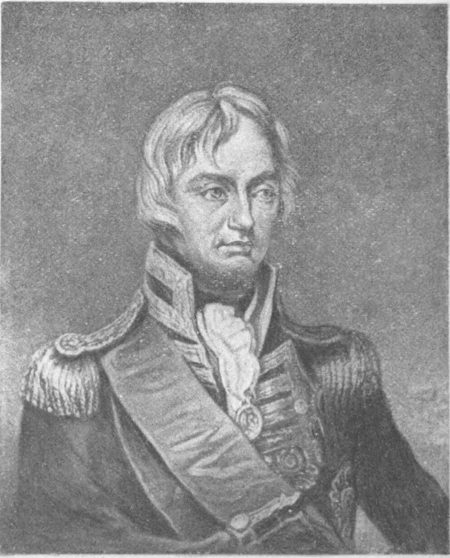
destroyed by Nelson in the terrible battle of the Nile. Admiral Brueys
was killed, and the bodies of his men seemed to fill the Bay of Aboukir.
Napoleon was virtually a prisoner in Egypt. The blow was irreparable.
The army was despondent, but Napoleon was calm. "Unfortunate Brueys," he
said, "what have you done!"
It was evident that he must organize Egypt as soon as possible. He
established in Cairo an Institute of Arts and Sciences, he built
factories, and he planned two canals, one uniting the Red Sea with the
Mediterranean across the Isthmus of Suez, and the other connecting the
Red Sea with the Nile at Cairo.
Meantime France was threatened with war on every side. Russia and Turkey
had joined hands with England and Austria. They were sweeping over
Italy. Turkey had raised an army in Syria, and Napoleon hastened thither
with thirteen thousand men over a desert of seventy-five leagues.
He took El Arish Feb. 20, 1799, then Gaza; then Jaffa was taken by
assault, as the garrison refused to yield, and beheaded the messenger
sent to them, putting his head on a pole. The massacre which followed
was horrible. Some two thousand prisoners were taken to the seashore
and shot by Napoleon's order. Bourrienne says, Napoleon "yielded only in
the last extremity, and was one of those, perhaps, who beheld the
massacre with the deepest pain."
Napoleon has been greatly blamed for this act. These men would, of
course, have gone back to the enemy, and the Turks themselves give no
quarter; and yet, for humanity's sake, one wishes that they could have
been spared.
After the battle at Jaffa the French began the siege of St. Jean d'Acre,
where Djezzar, which name signifies butcher, the head of the army,
resided. The siege lasted sixty days. Sir Sidney Smith of England, with
two ships of war, assisted the fort, and Phélippeaux, an old schoolmate
of Napoleon at Brienne, directed the artillery. Napoleon's battering
train, sent forward by sea, had been taken by the English. The siege had
to be raised, four thousand of the French being disabled, and the army
retreated to Jaffa. The plague was decimating the ranks; and Napoleon,
to inspire his men, went among the plague-stricken soldiers and often
touched them. The wounded and sick were carried on horses, while
Napoleon and all his officers went on foot. Napoleon said, "Sir Sidney
Smith made me miss my destiny."
Napoleon defeated the Turks at Aboukir, July 25, with a loss to them of
ten thousand men, and then, learning of the perilous condition of France
in her wars with the allied powers, hastened to Paris, leaving General
Kléber in charge in Egypt. Napoleon narrowly missed being captured by
the English cruisers.
France was overjoyed at his return. Bells were rung and bonfires
kindled. He reached Paris Oct. 16, 1799. Josephine had gone to Lyons to
meet him. He had started for Paris by a different route, and she missed
him.
When she returned Napoleon refused to see her. While in Egypt Junot had
foolishly told him some gossip about Josephine, who was obliged to be
courteous to everybody, which had made him jealous. It probably came
from Napoleon's brothers, who disliked her great influence over him.
Josephine was nearly heart-broken. She had not seen Napoleon for a year
and a half. Both Eugène and Hortense begged that Napoleon would take
their mother back into his heart.
Finally he opened his door, and with a stern look at Josephine, said to
Eugène, then eighteen, who had just returned with him from Egypt, "As
for you, you shall not suffer for your mother's misdeeds; I shall keep
you with me."
With commendable spirit, the boy, who idolized his mother, replied, "No,
General; I bid you farewell on the spot."
Seeing his mistake, he pressed Eugène to his heart, folded Josephine in
his arms, and sent for his brother Lucien, to show him how thoroughly he
and Josephine were reconciled to each other.
Napoleon had reached Paris at an opportune moment. The Directory were
disliked, and he had made up his mind to overturn the government. A
dinner was given to Napoleon at the Temple of Victory by five or six
hundred members of the two Councils, the Ancients, and the Five Hundred.
In the evening Josephine did the honors of the drawing-room at their own
house. "She fascinated every one who came near her," says Saint-Amand,
"by her exquisite grace and charming courtesy. All the brusqueness and
violence of Bonaparte's manners were tempered by the soothing and
insinuating gentleness of his amiable and kindly wife."
Only a few persons were in Napoleon's secret. By a provision of the
Constitution, the Council of the Ancients, in case of peril to the
Republic, could convoke the Legislative Body (the two Councils) outside
the capital to avoid the influence of the multitude, and choose a
general to command the troops to defend the legislature.
The 18th Brumaire (Nov. 9) was the day set for this Council at the
Tuileries to vote to change the place of meeting to St. Cloud. It was
given out that he was to take a journey, so his officers and some
cavalry were to be at his house at six o'clock in the morning to go with
him to the Tuileries, that he might review the troops, to be gathered
there at seven.
At six o'clock, Lefebvre, the commander of the military division, had
arrived. Napoleon said to him, "Here is the Turkish sabre which I
carried at the battle of the Pyramids. Do you, who are one of the most
valiant defenders of the country, accept it? Will you let our country
perish in the hands of the pettifoggers who are ruining it?" It was
gladly accepted.
All rode to the Tuileries. The Ancients voted to meet at St. Cloud on
the morrow, and gave Napoleon the command of the troops.
On the 19th Brumaire the way to St. Cloud was crowded with troops and
carriages. All was excitement and confusion. Napoleon's friends said,
"You are marching to the guillotine." "We shall see," was his cool
reply. When Napoleon arrived at St. Cloud he entered the hall of the
Council of the Ancients and made a brief address. Then he went to the
Council of the Five Hundred. It was five in the afternoon. At the sight
of him they shouted, "Down with the Dictator! Down with the tyrant!"
They brandished daggers and threatened his life. His soldiers hastened
to his aid; and one grenadier, Thomé, had his clothes cut by a dagger.
Bourrienne says they were simply torn. Lucien Bonaparte, the president
of the Five Hundred, left his seat in disgust at the tumult. He called
upon the general and the soldiers "to execute the vote of the Ancients."
The drums were beaten, the soldiers entered the hall, the deputies fled
in every direction, and the old government was a thing of the past.
Three consuls were elected, of whom Napoleon was the First Consul. He
rode home at three in the morning. At thirty he had conquered France as
well as Italy.
There is no doubt that a large majority of the people of France were
rejoiced at the change in government. "Napoleon," says Alison in his
History of Europe, "rivalled Cæsar in the clemency with which he used
his victory. No proscriptions or massacres, few arrests or
imprisonments, followed the triumph of order over revolution. On the
contrary, numerous acts of mercy, as wise as they were magnanimous,
illustrated the rise of the consular throne. The elevation of Napoleon
was not only unstained by blood, but not even a single captive long
lamented the ear of the victor."
On the 19th of February, 1800, Napoleon took up his residence in the
Tuileries. His salary was five hundred thousand francs a year. Ten days
before his removal to the Tuileries, Feb. 9, when the seventy-two flags
taken from the Turks at Aboukir were placed in the Hôtel des Invalides,
a funeral oration was pronounced on Washington, who had died Dec. 14,
1799. Napoleon issued this order to his army: "Washington is dead! That
great man fought against tyranny. He established the liberty of his
country. His memory will be ever dear to the freemen of both
hemispheres, and especially to the French soldiers, who, like him and
the American troops, have fought for liberty and equality. As a mark of
respect, the First Consul orders that, for ten days, black crape be
suspended from all the standards and banners of the Republic."
Feb. 20 he received a letter from Louis XVIII., in which the Bourbon
King said, "Save France from her own violence, and you will fulfil the
first wish of my heart. Restore her king to her, and future generations
will bless your memory." But Napoleon knew that the French did not want
the House of Bourbon. They had put Louis XVI. to death, and still
celebrated that anniversary.
Napoleon devoted all his time to the improvement of the state. He drew
around him the ablest persons. "The men whom he most disliked," says
Bourrienne, "were those whom he called babblers, who are continually
prating of everything and on everything." He often said, "I want more
head and less tongue."
He gave France a new constitution, which was accepted by the votes of
the people almost unanimously, over 3,000,000 in the affirmative, and a
few hundreds in the negative. He abolished the annual festival
celebrating the death of Louis XVI. He opened the prisons where those
opposed to the state were confined; hundreds of exiles returned to
France. The country was bankrupt; but now that confidence was restored,
with the help of the best financiers, the Bank of France was
established, a sinking fund provided, judicious taxation adopted, and
an era of prosperity began. Napoleon built canals, roads, and bridges,
and splendid monuments. He restored Sunday as a day of rest, which had
been set aside when the Goddess of Reason was worshipped during the
Revolution.
A little later, duly 15, 1801,—by the Concordat,—he recognized the
Roman Catholic religion as the religion of France. He said, "I am
convinced that a part of France would become Protestant, were I to favor
that disposition. I am also certain that the much greater portion would
continue Catholic, and that they would oppose, with the greatest zeal,
the division among their fellow-citizens. We should then have the
Huguenot wars over again, and interminable conflicts. But by reviving a
religion which has always prevailed in the country, and by giving
perfect liberty of conscience to the minority, all will be satisfied."
He did not like numerous festival days. "A saint's day," he said, "is a
day of idleness, and I do not wish for that. People must labor in order
to live."
Nobody labored harder than Napoleon. He kept several secretaries busy.
Writing fatigued him, and he wrote so hurriedly that the last half of
the word was usually a dash, or omitted. He could go without sleep,
snatching a few minutes in his chair, or in his saddle before a battle.
He seldom took over twenty minutes for dinner, even when he was Emperor,
and rose from the table as soon as he had finished. His time was too
precious to wait long for others. He was very prompt, and required
others to be so.
He said, "Occupation is my element.... I have seen the extent to which I
could use my eyes, but I have never known any bounds to my capacity for
application."
Lanfrey says he "had a prodigious power of work," and "a rapidity of
conception that no other man has probably ever possessed to the same
extent." He used often to say, "Succeed! I judge men only by results."
Nobody knew better the value of time. "I worked all day," said a person
to him, in apology for not having completed some duty. "But had you not
the night also?" was the reply.
"Ask me for whatever you please except time," he said to another;
"that is the only thing which is beyond my power."
While taking his bath, Bourrienne read to him. While being shaved, he
read, or somebody read to him. He ate fast, and was irregular at his
meals, sometimes passing a whole day without eating. He always walked up
and down the room, with his arms folded behind him, when dictating to
his secretaries. "He was exceedingly temperate," says Bourrienne, "and
averse to all excess."
"The institutions of modern France date not, as is often said, from the
Revolution, but from the Consulate," says Professor Seeley. "The work of
reconstruction which distinguishes the Consulate, though it was
continued under the Empire, is the most enduring of all the achievements
of Napoleon."
"The institutions now created," says Seeley, "and which form the
organization of modern France, are, 1. The Restored Church, resting on
the Concordat; 2. the University; 3. the judicial system; 4. the Codes:
Code Civil, called Code Napoléon Sept. 3, 1807, Code de Commerce,
Code Pénal, Code d'Instruction Criminelle; 5. the system of local
government; 6. the Bank of France; 7. the Legion of Honor."
"My code will outlive my victories," said Napoleon, truly. He put the
best minds of France upon the codification and improvement of her laws,
and he carefully watched every detail.
"Bourrienne," Napoleon used to say, "it is for France I am doing all
this! All I wish, all I desire, the end of all my labors, is, that my
name should be indissolubly connected with that of France!"
Now that France was prosperous and settled, Napoleon wrote to George
III., King of England, proposing peace. Lord Grenville, for his nation,
which had grown more confident since the battle of the Nile and the
successes in Egypt, declined to treat with the Consular Government of
France. Canning spoke of this "new usurper, who, like a spectre, wears
on his head a something that has a phantom resemblance to a crown." Who
would have prophesied then that young Napoleon IV. would have died
fighting the battles of England in Zululand?
He proposed peace to Austria, but she decided like her ally, England.
Napoleon said bitterly, "England wants war. She shall have it. Yes! yes!
war to the death."
He immediately sent General Moreau with one hundred and thirty thousand
men against the Austrian army on the Rhine, and took forty thousand
himself to Italy, crossing the Alps over the Great St. Bernard. The
carriages and wheels were slung on poles; the ammunition boxes were
borne on mules; the cannon were carried in trees hollowed out, each
dragged up the heights by a hundred men; the soldiers crept up the icy
steeps each with sixty or seventy pounds upon his back. At the
well-known Hospice kept by the monks, Napoleon had sent forward supplies
for his men, who, cold and exhausted, were overjoyed at the repast.
The story is told that the young guide who led Napoleon's mule over the
Alps confided to the sympathetic stranger his poverty, his desire to
marry the girl of his choice, and his inability to provide her a home.
The small man in a gray overcoat gave him a note to the head of the
convent. To his astonishment, it provided him with a house and a piece
of ground.
The army then swept down upon Italy. The First Consul entered Milan June
2; Lannes was victorious at Montebello June 9, and on the morning of
June 14 forty thousand Austrians were opposed to a much smaller number
of French on the plain of Marengo. The battle was hotly contested for
twelve hours. At first the Austrians seemed victorious, till Desaix, who
had just come back from Egypt, rushed upon the field with his reserves.
He was shot dead, but his columns were soon avenged.
Six thousand Austrians threw down their arms, a panic spread through
their troops, the cavalry plunged over the infantry to be first in
crossing the Bormida, and thousands perished in the dreadful confusion.
Marengo is regarded by many as Napoleon's most masterful battle.
Desaix's death was a sad blow to Napoleon. Savary found his body
stripped of clothing, wrapped it in a cloak, laid it across a horse, and
Napoleon had it carried to Milan to be embalmed. He said, "Victory at
such a price is dear." Kléber was killed in Egypt on the same day. At
St. Helena, Napoleon said, "Of all the generals I ever had under my
command, Desaix and Kléber possessed the greatest talent—in particular
Desaix.... Kléber and Desaix were irreparable losses to France."
Napoleon returned to Milan and went in state to the Cathedral to the Te
Deum, four days after the battle of Marengo. The people everywhere gave
him an ovation. "Bourrienne," he said, "do you hear the acclamations
still resounding? That noise is as sweet to me as the sound of
Josephine's voice." Napoleon reached Paris late in June.
Dec. 3 of this same year, 1800, Moreau fought the famous battle of
Hohenlinden, in the black forests of Germany, at midnight. In the
blinding snowstorm both armies got entangled in the forests. The
Austrians left ten thousand in dead and wounded on the field, with seven
thousand prisoners. The poem of Campbell is well known:—
"On Linden, when the sun was low,
All bloodless lay the untrodden snow,
And dark as winter was the flow
Of Iser rolling rapidly."
Finally a treaty of peace between France and Austria was signed at
Lunéville, Feb. 9, 1801, followed March 27, 1802, by the treaty of
Amiens, between France and England.
Both countries rejoiced in the cessation of hostilities. Fox came over
from England and was received with great cordiality. Napoleon said, "I
considered him an ornament to mankind, and was very much attached to
him."
Four months later, Aug. 4, 1802, by an overwhelming majority of the
votes of the people, over three and a half millions in favor to about
eight thousand against it, Napoleon was declared Consul for life. La
Fayette could not conscientiously favor it, unless liberty of the press
were guaranteed. He said to Napoleon, "A free government, and you at its
head—that comprehends all my desires."
Napoleon said, "He thinks he is still in the United States—as if the
French were Americans. He has no conception of what is required for this
country." Napoleon felt, no doubt sincerely, that France was more stable
under an Emperor than a President. And yet since the fall of Napoleon
III. France has shown that she can live and prosper as a republic.
All through these years the Royalists were plotting to return to the
throne; for when did ever a king reign who did not think it was by
"Divine right"?
Louis XVIII. wrote another letter to Napoleon: "You must have long since
been convinced, General, that you possess my esteem.... We may insure
the glory of France. I say we, because I require the aid of Bonaparte,
and he can do nothing without me. General, Europe observes you; glory
awaits you; I am impatient to restore peace to my people." In answer to
this letter, Napoleon wrote, "You must not seek to return to France. To
do so, you must trample over a hundred thousand dead bodies."
Several attempts were made to assassinate Napoleon. Possibly some of
these were the work of Jacobins, who feared that the republic was
slipping into an empire; but they were for the most part traced to
Royalists, the leaders of whom lived in England, and were receiving
yearly pensions, because they had aided her in former wars.
On the evening of Dec. 24, 1800, as Napoleon was going to the opera to
hear Haydn's Oratorio of "The Creation," he was obliged to pass through
the Rue Saint-Nicaise, where an upturned cart covered a barrel of
gunpowder, grape-shot, and pieces of iron. The "infernal machine"
exploded two seconds after he had passed in his carriage. The carriage
was uplifted from the ground, four persons were killed, sixty wounded,
of whom several died, and forty-six houses were badly damaged. One of
the horses of Napoleon's escort was wounded.
Other plans were soon discovered, concocted by Georges Cadoudal, General
Pichegru, and others, all in the confidence of the Comte d'Artois,
afterwards Charles X., the brother of Louis XVIII. He lived in or near
London.
Cadoudal, or Georges as he is usually called, was to meet Napoleon in
the streets, and, with a band of thirty or forty followers, kill him and
his staff. When all was ready, the Bourbon princes were to be near at
hand to head the revolt of the people. Georges was arrested and executed
with eleven of his companions.
The Duke d'Enghien, Louis Antoine, Henri de Bourbon, son of the Duke of
Bourbon, and a descendant of the great Condé who had done so much for
France in her wars, was living at Ettenheim, under the protection of the
Margrave of Baden, to be near the lady whom he loved, the Princess
Charlotte de Rohan, and "to be ready," says Walter Scott, "to put
himself at the head of the royalists in the east of France," if
opportunity offered.
It was reported to Napoleon that the duke came over into France probably
on political errands, and that he was corresponding with disaffected
persons in France.
Napoleon sent some officers to seize the duke on the night of March 15,
1804; he was carried to Strasburg, and thence to the Castle of
Vincennes, near Paris, arriving on the afternoon of Tuesday, March 20.
He was aroused from sleep a little before six on the morning of the
21st, and innocently asked if he were to be imprisoned. He was conducted
outside the castle; by the light of a lantern his sentence was read to
him. He denied any complicity in the conspiracy against the life of the
First Consul, which was doubtless true; requested to see Napoleon, which
was refused; asked an officer to take a ring, a lock of hair, and a
letter to his beloved, and was shot at six in the morning, by his open
grave, his devoted dog by his side. Bourrienne says, "This faithful
animal returned incessantly to the fatal spot.... The fidelity of the
poor dog excited so much interest that the police prevented any one from
visiting the fatal spot, and the dog was no longer heard to howl over
his master's grave."
Josephine had heard of Napoleon's intention to send terror among the
Bourbon conspirators, and had begged him, on her knees and with tears,
to save the life of the young prince. It would have been well for him
had he listened to her entreaties.
France, and Europe as well, were shocked at this death. The Russian
court went into mourning for the Bourbon prince. No doubt Napoleon was
incensed by the Bourbon plots, and after this death these ceased; but
Las Cases, at St. Helena, said Napoleon always regretted it, saying,
"Undoubtedly, if I had been informed in time of certain circumstances
respecting the opinions of the prince, and his disposition, if, above
all, I had seen the letter which he wrote to me, and which, God knows
for what reason, was only delivered to me after his death, I should
certainly have forgiven him."
Napoleon has been blamed for another matter,—the taking of Saint
Domingo, and the imprisonment of Toussaint L'Ouverture. This remarkable
colored man, who had been a slave, had acquired the control of the
island by driving the French and Spanish troops out, and making it a
republic, with a nominal dependence upon France. Napoleon, with a
desire unfortunately shown and carried out by other nations, wished to
enlarge his colonies and also to settle some dissensions in the island,
and sent Dec. 14, 1801, General Leclerc, who had married his pretty
sister Pauline, with 25,000 men to Saint Domingo to re-establish French
sovereignty. He was to send back to France any who rebelled. Toussaint
L'Ouverture, who was among them, was imprisoned in the fortress of Joux,
near Besançon, in Normandy, and died in ten months, away from his own
people, the victim of the spirit of conquest, which is not dead even in
the nineteenth century. The climate destroyed the French army. Only two
or three thousand ever returned. General Leclerc died, like the rest, of
yellow fever.
Napoleon said at St. Helena, "I ought to have been satisfied with
governing it [Saint Domingo] through the medium of Toussaint.... The
design of reducing it by force was a great error."
Only a year after the treaty of Amiens was concluded, it became evident
that it would not last. It was said that Napoleon's power was becoming
too great for the security of Europe. England had determined not to give
up Malta to the Knights as she had promised. Under Pitt's guidance she
was arming and making herself ready for a great combat. The Royalists
were using their pens in their English homes, to abuse the head of the
French nation, held there by the votes of the French people. It was, of
course, exasperating, and tended to produce revolt. Napoleon called
attention to the terms of the treaty, which stipulated that neither of
the two nations should give any protection to those who were injuring
the other. Commercial tariffs bred dislike. English pride was stirred
because Napoleon said, "England, single-handed, is unable to cope with
France."
Finally in May, 1803, the war began. Alison says, and Scott agrees with
him, "Upon coolly reviewing the circumstances under which the contest
was renewed, it is impossible to deny that the British government
manifested a feverish desire to come to a rupture, and that, as far as
the transactions between the two countries are concerned, they are the
aggressors."
Napoleon was determined to invade England,—Bourrienne thinks it was
only a feint, and that his real motive "was to invade Germany and
repulse the Russian troops,"—and he gathered an army of 150,000 in and
around Boulogne, and an immense flotilla which should be able to
transport these men ten leagues across the channel to the English coast.
While these preparations were going on, the French Senate, undoubtedly
in accord with the views of the First Consul, suggested publicly the
idea of an empire over which Napoleon should be the hereditary ruler.
The people were tired of Bourbon plottings, and, if Napoleon were
killed, the scenes of the Revolution might again be witnessed in the
streets of Paris. Napoleon was declared Emperor of the French, May 18,
1804, and publicly crowned by Pope Pius VII., at Notre Dame, Dec. 2 of
the same year.
Paris was thronged with people on the day of the coronation. At
half-past ten in the morning Napoleon and Josephine drove to the
cathedral in a carriage largely of glass, surmounted by a golden crown
upheld by four eagles with outstretched wings, drawn by eight superb
horses. Twenty squadrons of cavalry led the procession, Marshal Murat at
the head. Eighteen carriages, each drawn by six horses, followed.
Napoleon wore a coat of crimson velvet faced with white velvet, white
velvet boots, a short cloak of crimson lined with white satin, and a
black velvet cap with two aigrettes and several diamonds.
At the Archbishop's Palace, Napoleon put on his coronation robes. These
were a tight-fitting gown of white satin, a crimson mantle covered with
golden bees, having an embroidered border with the letter N, and a crown
above each letter, the lining and cape of ermine, the whole weighing
eighty pounds, and held up by four persons. His crown was of golden
laurel; his sword at his left side was in a scabbard of blue enamel,
covered with eagles and bees.
Josephine wore a white satin gown, with a train of silver brocade
covered with bees, a girdle of very expensive diamonds, necklace,
bracelets, and earrings of precious stones and antique cameos, and a
diadem of four rows of pearls with clusters of diamonds. The Emperor was
much struck with Josephine's beauty, and said to his brother Joseph, "If
father could see us!"
As Napoleon entered the cathedral, which was draped in crimson and gold,
twenty thousand spectators shouted, "Long live the Emperor!"
The Emperor and Empress knelt on blue velvet cushions before the Pope,
who anointed Napoleon on the head and hands, and the Empress in the same
way. Then high mass began with three hundred performers. When the moment
came for the Pope to crown the Emperor, Napoleon took the crown from his
hands and placed it upon his own head, and then crowned Josephine. Her
crown was formed of eight branches set in diamonds, emeralds, and
amethysts, under a gold globe surmounted by a cross. Then they proceeded
to the great throne reached by twenty-four steps, Josephine sitting one
step lower than her husband. France had placed her all in the hands of
one man; and Lanfrey justly remarks, "A nation that carries love of ease
so far as to thrust the whole burden of duties and responsibility on a
single man is always punished for it."
After the gorgeous ceremony was over, Napoleon and the Empress dined
alone, and were happy. He said to David, who had painted the coronation
scene at the moment when Napoleon was placing the crown upon the head of
the lovely Josephine, "I thank you for transmitting to ages to come the
proof of affection I wanted to give to her who shares with me the pains
of government." Then he raised his hat to the artist, and said, "David,
I salute you." Josephine had opposed Napoleon's becoming Emperor,
because it meant hereditary succession, and she had no child by
Napoleon. His brothers had for some years urged a divorce, so that
Josephine's life had been one of much sorrow.
Napoleon had said to Bourrienne, "It is the torment of my life not to
have a child. I plainly perceive that my power will never be firmly
established until I have one. If I die without an heir, not one of my
brothers is capable of supplying my place. All is begun, but nothing is
ended. God knows what will happen!"
Josephine had urged her young daughter Hortense into a marriage with
Louis, the brother of Napoleon, Jan. 2, 1802, with the hope that their
child might be the heir to the empire. Each loved another person before
marriage, and their married life was one of constant misery.
Their first child, Charles Napoleon, born Oct. 10, 1802, whom Napoleon
would have adopted, a beautiful and most intelligent boy, died when he
was four years and a half old, of croup, May 5, 1807. "Sometimes when
his parents were quarrelling," says Saint-Amand, "he succeeded in
reconciling them. He used to take his father by the hand, who gladly let
himself be led by this little angel, and then he would say in a
caressing tone: 'Kiss her, papa, I beg of you;' then he was perfectly
happy when his father and mother exchanged a kiss of peace."
Hortense, the mother, was so prostrated with grief, that it was feared
she would lose her reason. Madame de Rémusat says of her, "The Queen has
but one thought, the loss she has suffered; she speaks of only one
thing, of him. Not a tear, but a cold, calm, and almost absolute
silence about everything, and when she speaks she wrings every one's
heart. If she sees any one whom she has ever seen with her son, she
looks at him with kindliness and interest, and says, 'You know he is
dead.' When she first saw her mother, she said to her, 'It's not long
since he was here with me. I held him on my knees thus.' ... She heard
ten o'clock strike; she turned to one of the ladies and said, 'You know
it was at ten that he died.' That is the only way she breaks her almost
continual silence."
Josephine was doubly crushed by the blow. She saw her hopes for the
future blighted. The Emperor wrote to her from the seat of war; "I can
well imagine the grief which Napoleon's death must cause. You can
understand what I suffer. I should like to be with you, that you might
be moderate and discreet in your grief.... Let me hear that you are calm
and well! Do you want to add to my regret? Good-by, my dear."
Napoleon was not cold-hearted, but believed that only those accomplish
much in life who have self-control. Two of his soldiers having committed
suicide on account of love affairs, Napoleon caused it to be inserted
in the order-book of the guard, that "there is as much true courage in
bearing up against mental sufferings with constancy as in remaining firm
on the wall of a battery."
Nearly six months after the crowning in Notre Dame, the Emperor was
crowned King of Italy in the cathedral of Milan, May 26, 1805, with the
iron crown of Charlemagne. This crown of gold and precious stones covers
an iron ring said to have been made from a spike which pierced the
Saviour's hand at the crucifixion. Napoleon and the Empress were both
gorgeously arrayed. He placed the crown upon his own head, repeating the
words used in ancient times: "God has given it to me—woe to him that
touches it."
Everywhere Napoleon and Josephine were adored by the people. They went
into the cabin of a poor woman, who was anxious and needy because her
husband could not get work. "How much money would make you perfectly
happy?" asked Napoleon. "Ah, sir, a great deal! As much as eighty
dollars."
The Emperor gave her several hundreds, and told her to rent a piece of
ground and buy some goats.
"Josephine," says Saint-Amand, "had all the qualities that are
attractive in a sovereign,—affability, gentleness, kindliness,
generosity. She had a way of convincing every one of her personal
interest. She had an excellent memory, and surprised those with whom she
talked by the exactness with which she recalled the past, even to
details they had themselves nearly forgotten. The sound of her gentle,
penetrating, and sympathetic voice added to the courtesy and charm of
her words. Every one listened to her with pleasure; she spoke with grace
and listened courteously. She always appeared to be doing a kindness,
and thus inspired affection and gratitude."
"Her only fault," says Saint-Amand, "was extravagance." But it must be
remembered that Napoleon wished her to dress elegantly. It seemed as
though everybody came to ask her to buy, and she bought, says
Saint-Amand, "simply to oblige the dealers. There was no limit to her
liberality. She would have liked to own all the treasures of the earth
in order to give them all away." ... Napoleon, economical by nature,
scolded and forgave. "He could refuse Josephine nothing," says the same
writer, "and she was really the only woman who had any influence over
him."
Napoleon made Josephine's son, Eugène, Viceroy of Italy,—he often said,
"Eugène may serve as a model to all the young men of the age,"—returned
to Paris, and then started for his troops at Boulogne. There he waited
for some days for his feet under Villeneuve, who, having been watched by
the English, and in part crippled by them, failed to appear. He dared
not proceed to Brest, which the English blockaded, and so repaired to
Cadiz, to be crushed soon after by that Napoleon of the sea, Horatio
Nelson, at the battle of Trafalgar. Villeneuve afterwards committed
suicide, stabbing himself to the heart. He left a letter for his wife in
which he said, "What a blessing that I have no children to reap my
horrible heritage and bear the weight of my name!"
Meantime, Russia, Austria, and Sweden had joined themselves to England
to defeat Napoleon. The Emperor, with that quickness of decision and
rapidity of execution for which he was phenomenal, managed to separate
the armies of his foes, and beat them in turn. At Ulm, Oct. 20, 1805,
over thirty thousand Austrians under General Mack, led by sixteen
generals, surrendered, laid down their arms, and retired to the rear of
the French army. More than twenty thousand Austrians had been taken
prisoners in the few days preceding, and the Austrian army of eighty
thousand was well-nigh destroyed.
Napoleon wrote to Josephine Oct. 21: "I am very well, my dear. I have
made an army of thirty-three thousand men surrender. I have taken from
sixty to seventy thousand prisoners, more than ninety flags, and more
than two hundred cannon. In the military annals there is no such
defeat."
Napoleon pushed on to Vienna, which he entered Nov. 14, and went to the
palace of Schönbrunn. The Emperor Francis had fled, and joined the Tsar
and the Russian army at Brunn. Thither Napoleon marched at once. On the
night of Dec. 1, 1805, he mounted his horse to reconnoitre the enemy's
lines. As he returned, going on foot from one watch-fire to another, he
fell to the ground over the stump of a tree. A grenadier lighted a torch
of straw, then the whole line did the same and cheered the Emperor. They
remembered that the next day, Dec. 2, was the anniversary of the
coronation. The Russians thought the French were retreating. Then all
slept for a few hours, and awoke to the battle of Austerlitz.
At daybreak there was a heavy mist, then the sun shone out full and
clear, and the French believed they would win a glorious victory. They
were not disappointed. During the terrible conflict the Russians and
Austrians lost over thirty thousand in killed and wounded, treble the
number of the French. The enemy fled across the lakes, the ice of which
being broken by the French batteries, thousands were ingulfed. Their
cries and groans, says Lanfrey, were heard on the following day.
Napoleon said, "I have fought thirty battles like that, but I have never
seen so decisive a victory, or one where the chances were so unevenly
balanced." The Russian and Austrian forces greatly outnumbered the
French. To his soldiers Napoleon said, "I am satisfied with you; you
have covered your eagles with undying glory."
To Josephine he wrote: "The battle of Austerlitz is the greatest I have
won; forty-five flags, more than one hundred and fifty cannon, the
standards of the Russian guards, twenty generals, more than twenty
thousand killed,—a horrid sight! The Emperor Alexander is in despair,
and is leaving for Russia. Yesterday I saw the Emperor of Germany in my
bivouac; we talked for two hours, and agreed on a speedy peace.... I
shall see with pleasure the time that will restore me to you."
The defeat of the allies at Austerlitz hastened the death of William
Pitt of England. He looked long on the map of Europe, and said,
"Henceforth we may close that map for half a century." He died Jan. 23,
1806.
On Napoleon's return to Paris he erected a column in the Place Vendôme
to the Grand Army. It was constructed of cannon taken from the enemy,
and has illustrations upon it of the campaigns of Ulm and Austerlitz. W.
O'Connor Morris calls Austerlitz "the most perfect of battles on land,
as the Nile was the most perfect on sea." Seeley thinks, in its
historical results, Austerlitz "ranks among the great events of the
world."
The peace of Pressburg was effected between France and Austria, Dec. 26,
1805. Charles James Fox, who had succeeded Pitt in England, was
favorable to peace between the nations, but the war party in England
was strong. Fox soon died, and the peace negotiations failed.
Napoleon said at St. Helena, "The death of Fox was one of the fatalities
of my career. Had his life been prolonged, affairs would have taken a
totally different turn. The cause of the people would have triumphed,
and we should have established a new order of things in Europe."
Meantime Napoleon had placed his brother Joseph on the throne of Naples,
Louis on the throne of Holland, and had formed a Confederation of the
Rhine out of several states in the valley of the Rhine, which had
fourteen million people. Napoleon was elected Protector of the
Confederation.
Russia now became an ally of Prussia, and war was declared against
France Oct. 14, 1806. The double battle of Jena and Auerstädt was
fought, and the Prussians were completely defeated. Alison says, "The
loss of the Prussians was prodigious; on the two fields there fell
nearly twenty thousand killed and wounded, besides nearly as many
prisoners.... Ten thousand of the killed and wounded fell at Auerstädt."
Napoleon entered Berlin in triumph Oct. 27, 1806, and established
himself in the king's palace. He did not like the beautiful Queen
Louise, because he felt that she had inspired the soldiers by her
presence, and urged her husband to make war. He was unjust to her in his
bulletins, and Josephine reproached him for "speaking ill of women."
Napoleon visited the palace of Sans Souci to see the room where
Frederick the Great died, still preserved as he left it, and then went
to the church where he is buried. At the tomb, says General de Ségur,
"Napoleon paused at the entrance in a grave and respectful attitude. He
gazed into the shadow enclosing the hero's ashes, and stood thus for
nearly ten minutes, motionless, silent, as if buried in deep thought."
The sword of Frederick he took with him, and gave it to the Hotel des
Invalides in Paris, with the flags carried by his guard in the Seven
Years' War.
Early in November, Prince Hohenlohe surrendered twenty thousand
Prussians to the French; and Blücher, whom Napoleon was to meet again at
Waterloo, surrendered twenty thousand men and over five hundred
officers.
With all this victory, Josephine was not happy. Napoleon wrote her Nov.
1: "Talleyrand has come, and tells me you do nothing but cry." She wrote
to Hortense, more miserable than herself, that she could not be happy so
far from the Emperor.
Napoleon, while at Berlin, issued, Nov. 21, 1806, his famous "Berlin
Decree," wherein he declared the British Islands blockaded. All commerce
with England and her colonies was prohibited; all property belonging to
an English subject confiscated; every native of England found in a
country occupied by French troops to be made prisoner of war.
Napoleon declared that this was a retaliatory measure against England.
Every French port was, in fact, blockaded by English vessels from the
Elbe to Brest, by a decree of the British Government, passed in May,
1806, according to Alison. Some months after the Berlin Decree, England
issued further prohibitory acts, called Orders in Council. The
consequence of all this was that hate between the two nations was
increased.
After the humiliation of Prussia, the war went on with Russia. After
some minor battles, both armies met on the bloody field of Eylau, Feb.
7, 1807. Jomini thinks the forces about equal, though some historians
place the number at eighty thousand Russians, and sixty thousand French.
Part of Feb. 7 and all of Feb. 8, the armies were in deadly conflict. A
blinding snowstorm part of the time prevented the armies from seeing
each other. The snow and ice were so thick that men fought on ponds and
did not know it.
Fifty thousand dead and wounded lay on the snow. Marshal Augereau's
corps was almost destroyed; three thousand only remained out of fifteen
thousand. Napoleon wrote in his bulletins: "Imagine, on a space a league
square, nine or ten thousand corpses; four or five thousand dead horses;
lines of Russian knapsacks; fragments of guns and sabres; the earth
covered with bullets, shells, supplies; twenty-four cannon surrounded by
their artillerymen, slain just as they were trying to take their guns
away; and all that in plainest relief on the stretch of snow."
He said, as he looked upon the ghastly field, "This sight is one to fill
rulers with a love of peace and a horror of war." At three o'clock in
the morning of Feb. 9, he wrote to Josephine: "We had a great battle
yesterday. I was victorious, but our loss was heavy; that of the enemy,
which was even greater, is no consolation for me. I write you these few
lines myself, though I am very tired, to tell you that I am well and
love you.
Ever yours."
Baron de Marbot, in his most interesting memoirs, tells of his thrilling
experiences in this battle. He was at that time an officer under
Augereau. His horse, Lisette, of whom he was extremely fond, was
addicted to biting, but valued for her speed. At great risk, Marbot
carried a message to the Fourteenth. "I see no means of saving the
regiment," said the major; "return to the Emperor, bid him farewell from
the Fourteenth of the line, which has faithfully executed his orders,
and bear him the eagle which he gave us, and which we can no longer
defend; it would add too much to the pain of death to see it fall into
the hands of the enemy."
Marbot took the eagle, when a cannon ball went through the hinder part
of his hat, forcing, by the shock, the blood from his nose, ears, and
even eyes. His limbs were almost paralyzed. A hand to hand combat raged
around him. Several Frenchmen, not to be struck from behind, set their
backs against the sides of Lisette, who stood quite still. One of the
Russians thrust his bayonet into Marbot's left arm, and then into
Lisette's thigh.
"Her ferocious instincts being restored by the pain," says Marbot, "she
sprang at the Russian, and at one mouthful tore off his nose, lips,
eyebrows, and all the skin of his face, making of him a living
death's-head, dripping with blood. Then, hurling herself with fury among
the combatants, kicking and biting, Lisette upset everything that she
met on the road."
She seized another Russian who had tried to hit Marbot, "tore out his
entrails, and mashed his body under her feet, leaving him dying on the
snow."
When Lisette and her rider reached the cemetery of Eylau, where the
battle was hottest, the poor creature fell exhausted. The young Marbot,
supposed to be dead amid the piles of dead and wounded, was stripped of
his clothing. He was marvellously rescued by a servant, who cut up the
shirt of a dead soldier and bandaged the leg of Lisette, by which she
also was saved. Lisette, after doing service just before Friedland by
galloping twelve leagues on a hot day to carry a message of warning to
the Emperor, was cared for by the wife of an officer, and died of old
age.
Napoleon shared with his soldiers all the dangers and privations of war.
He wrote to his brother Joseph: "The staff-officers have not taken off
their clothes for two months, and some not for four. I have myself been
a fortnight without taking off my boots. We are deep in the snow and
mud.... The wounded have to be carried in open sleighs for fifty
leagues."
Josephine wished to come to him. He wrote: "You couldn't be racing
through inns and camps. I am as anxious as you can be to see you and be
quiet.... All my life I have sacrificed everything—peace, interest,
happiness—to my destiny."
The next great battle was at Friedland, when eighty thousand French met
seventy-five thousand Russians. "This is the anniversary of Marengo,"
said Napoleon, June 14, 1800, "and to-day fortune is with me."
And so it proved. The Russians fought desperately, but they were
overpowered. They retreated towards the river, and thousands who were
not captured were drowned. They lost twenty-six thousand, says Marbot,
in dead and wounded, and the French about half that number.
The conquered were glad to make peace, which was concluded at Tilsit,
July 7, 1807, between Alexander I. of Russia, Frederick William III. of
Prussia, and Napoleon. By this treaty, among other articles, some
provinces west of the Elbe were made into the kingdom of Westphalia, and
another brother of Napoleon, Jerome, was placed upon a throne. He had
married, when nineteen, Miss Elizabeth Patterson of Baltimore; but
through Napoleon's influence the union was annulled, and he married, at
twenty-three, Aug. 23, 1807, the daughter of the king of Würtemberg. She
proved a noble woman. When her husband was dethroned in 1814, she
refused to obtain a divorce, writing to her father: "Having been forced,
by reasons of state, to marry the king, my husband, it has been granted
me by fate to be the happiest woman in the world."
Napoleon said of her at Saint Helena, "Princess Catherine of Würtemberg
has, with her own hands, written her name in history."
Napoleon returned to Paris after the peace of Tilsit, and was received
with unbounded love and honor. He made Paris more beautiful with arches
and churches, he developed her industries, and he established schools
and colleges. He said, "We must not pass through this world without
leaving traces which may commend our memory to posterity."
England was still the bitter enemy of Napoleon. The decrees of both
regarding commerce were soon to plunge nearly all Europe into war. By
agreement of Alexander and Napoleon, if England did not consent to
peace, they were to summon Denmark, Sweden, Portugal, and perhaps
Austria, to close their ports against her. Denmark wished to be neutral.
While she hesitated, England, having heard of this project, sent a fleet
against Copenhagen and bombarded it.
Napoleon sent an army under Junot into Portugal to compel her assent,
and Murat into Spain, which at that time was friendly with France,
though distracted by royal dissensions. Napoleon placed his brother
Joseph on the throne. Mr. Ropes thinks, and probably correctly, that
Napoleon supposed "the population of the Spanish peninsula was ready
for the great reforms in government in which France had led the way, and
in which Holland, Western Germany, and Italy were then cheerfully and
hopefully marching, and that the better and more enlightened part of the
Spanish people would be thankful to see a liberal, intelligent, and
conscientious man like Joseph take the place of the bigoted and
profligate Charles IV."
Napoleon said at St. Helena: "It was the subject of my perpetual dreams
to render Paris the real capital of Europe.... My ambition was of the
highest and noblest kind that ever existed,—that of establishing and
consecrating the empire of reason, and the full exercise and complete
enjoyment of all the human faculties."
A dreadful insurrection took place in Spain against the rule of Joseph,
and Napoleon sent a large army to quell it. He succeeded in reinstating
Joseph on the throne for a time. He abolished the Inquisition and began
several reforms.
The insurrection in Spain gave great joy in England. "The general
rapture knew no bounds," says Alison. England sent her armies into Spain
and Portugal, and the Peninsular War resulted, which Napier has
described so vividly. To restore Ferdinand, the son of Charles IV., to
Spain, England spent, says Napier, one hundred millions sterling, about
five hundred million dollars, "and the bones of forty thousand British
soldiers lie scattered on the plains and mountains of the Peninsula."
The heroic Sir John Moore fell at Corunna, and was buried in his bloody
cloak at night by torchlight.
"Not a drum was heard, not a funeral note,
As his corse to the ramparts we hurried;
Not a soldier discharged his farewell shot
O'er the grave where our hero we buried."
His last words were, "I hope the people of England will be satisfied. I
hope my country will do me justice." After his death, Sir Arthur
Wellesley, the Duke of Wellington, was made commander-in-chief of all
the English troops in the Spanish peninsula. Austria considered this an
opportune time to make war on Napoleon. The latter raised another
immense army,—Lanfrey says with much truth, "France was bleeding to
death,"—marched against Austria, and several bloody battles resulted.
At Eckmühl the Austrians, says Marbot, admitted a loss of five thousand
killed, and fifteen thousand prisoners. Napoleon said at St. Helena,
"The greatest military manœuvres I ever made, and those for which I
give myself most credit, were performed at Eckmühl."
At Ratisbon the Emperor was wounded in the foot, just before the
retaking. So wild were the soldiers at the news, that as soon as his
wound was dressed he rode in front of the whole line to appease their
anxiety.
After some other successes, Napoleon reached Vienna, May 10, the Emperor
Francis having fled, as before, to a place of safety. Napoleon went at
once to the royal palace of Schönbrunn.
The enemy were now on the left bank of the Danube. The spring rains had
swollen the great river, and the crossing was most hazardous. In the
midst of the thousand yards of water was the huge Island of Lobau, four
and a half miles long. Here the troops of Napoleon intrenched
themselves, and built a bridge of boats to either side of the Danube. As
soon as a portion of the French troops had crossed the river, and
reached the towns of Aspern and Essling, the Austrians fell upon them
with great slaughter, compelling the French to retreat to the Island of
Lobau, in the middle of the river. In these battles the heroic Lannes
had both legs crushed by a cannon-ball. One leg was amputated. The
Emperor knelt beside the stretcher and wept as he embraced Lannes, whose
blood stained Napoleon's white kerseymere waistcoat.
"You will live, my friend, you will live," said the Emperor.
"I trust I may, if I can still be of use to France and your Majesty,"
was the reply.
After his death, said Marbot, "Napoleon embraced the marshal's body,
bathing it with tears, and saying repeatedly, 'What a loss for France
and for me!'"
The losses at this double battle are variously estimated from twenty to
fifty thousand; Lanfrey accepts the latter number. Seeley calls it "one
of the most terrible and bloody battles of the period." Napoleon at once
began to build substantial bridges on piles across the Danube, one of
them eight hundred yards long, broad enough for three carriages to pass
abreast. These bridges were finished in twenty days, and compelled great
admiration.
To the astonishment of the Austrians, he crossed most of his army of
150,000 men during the night of July 4, and on July 6 fought the
dreadful battle of Wagram. About 300,000 were in the battle. Fifty
thousand on both sides were killed and wounded, probably about an equal
number in each army.
The weather was extremely hot, and the corn on the battle-field caught
fire from the shells. "The movements of both armies were hampered by the
necessity of avoiding it," says Marbot; "for if once troops were
overtaken by it, pouches and wagons exploded, carrying destruction
through the ranks.... Of the soldiers who were severely wounded, great
numbers perished in the flames; and of those whom the fire did not
reach, many lay for days hidden by the tall corn, living during that
time on the ears. The Emperor had the plains searched by bands of
cavalry, and vehicles were brought from Vienna to remove the wounded,
friends and foes alike. But few of those even whom the fire had passed
recovered, and the soldiers had a saying that straw-fire had killed
nearly as many as gun-fire."
"After the battle," says General Savary, "the Emperor sent sixty francs
in crown pieces to each wounded soldier, and more than this to each
officer."
Oct. 14, 1809, the peace of Vienna was signed at Schönbrunn, between
France and Austria. "I committed a great fault after the battle of
Wagram," said Napoleon at St. Helena, "in not reducing the power of
Austria still more. She remained too strong for our safety, and to her
we must attribute our ruin."
On Napoleon's return to France he had made up his mind to an act which
will always tarnish his fame, and from which the decadence of his empire
may be dated. He would divorce Josephine, and marry another, with the
hope that he might have an heir to the throne. Undoubtedly he believed
he was doing the best thing for France; and Thiers says the French
people, while they loved Josephine, wished for the divorce.
On Nov. 30, 1809, as he and Josephine were dining together at
Fontainebleau, not a word having been uttered except Napoleon asked one
of the servants what time it was, he communicated to her his decision.
After dismissing the servants, he came to her, took her hand, pressed it
to his heart, and said, "Josephine! my dear Josephine! You know how I
have loved you.... To you, to you alone, I owe the only moments of
happiness I have tasted in this world. But, Josephine, my destiny is not
to be controlled by my will. My dearest affections must yield to the
interests of France."
"I expected this," said poor Josephine, "but the blow is none the less
mortal."
She became at once insensible; and Napoleon, alarmed, hastily called
assistance and bore her to her room. He came to see her in the evening,
and wept.
Eugène determined at once to resign his position as Viceroy of Italy,
but his mother begged him to remain the friend of Napoleon.
On Dec. 15, at the Tuileries, before the officers of the Empire, the
divorce was announced. Josephine was almost overcome by her sobs. "The
Emperor will always find in me his best friend," she said, and so it
proved.
The next day the divorce was consummated before the Senate. Eugène
announced the divorce, saying, "The tears of the Emperor do honor to my
mother." Josephine, in a simple white muslin dress, leaning on the arm
of Hortense, entered and signed the fatal decree. Both mother and
daughter were in tears, as well as many of those present. Eugène, who
idolized his mother, fell fainting to the floor. That evening when
Josephine thought her husband had retired, she came to his room, her
eyes swollen with weeping, and tottering towards the bed fell upon his
neck, and sobbed as though her heart would break. They wept together,
and talked for an hour. The next day Napoleon came to see her,
accompanied by his secretary, Meneval. "He pressed her to his bosom with
the most ardent embraces," says Meneval. "In the excess of her emotion
she fainted."
At eleven o'clock the same day, veiled from head to foot, Josephine
entered a close carriage drawn by six horses, said good-by to the
Tuileries forever, and was driven to Malmaison. She retained the title
of Empress, with $600,000 a year for her support. Napoleon passed eight
days in retirement at Trianon. On his return to the Tuileries, he wrote
to her, "I have been very lonely.... This great palace appears to me
empty, and I find myself in solitude. Adieu, my love."
He frequently visited Malmaison. One day he found Josephine painting a
violet. She says, "He threw himself with transport into the arms of his
old friend.... It seemed impossible for him to cease gazing upon me, and
his look was that of the most tender affection. At length he said, 'My
dear Josephine, I have always loved you. I love you still. Do you still
love me?"
Three months later, Mar. 11, 1810, Napoleon was married by proxy at
Vienna, Archduke Charles representing him at the wedding, to Marie
Louise, the daughter of Emperor Francis I. of Austria. He met her with
his suite at the palace of Compiègne. She was eighteen, with light hair,
and blue eyes, and gentle in manner. Napoleon was forty.
The civil marriage was celebrated at St. Cloud, April 1; and the next
day they made their triumphal entry into Paris, by the Arc de l'Étoile,
to the Tuileries, amid the cheers of three hundred thousand people. The
world must have been amazed at such a union of France and
Austria,—nations which had been at war for years. No wonder Napoleon,
at St. Helena, spoke of it as "an abyss covered with a bed of flowers."
Two weeks later Josephine wrote him, "Your majesty shall never be
troubled in his happiness by an expression of my grief. I offer
incessant prayers that your majesty may be happy."
A year after his marriage, Mar. 20, 1811, a son, Napoleon Francis, was
born to Napoleon, called the King of Rome, as the Roman States had been
annexed to the Empire. All France rejoiced when the firing of one
hundred guns announced the event.
Josephine wrote at once, telling Napoleon, "More than any one in the
world do I rejoice in your joy." Of Marie Louise she wrote, "She cannot
be more tenderly devoted to you than I am, but she has been enabled to
contribute more toward your happiness, by securing that of France....
Not till you have ceased to watch by her bed, not till you are weary of
embracing your son, will you take your pen to converse with your best
friend. I will wait."
Napoleon brought his child to Josephine. "The moment I saw you enter,"
she wrote him, "bearing the young Napoleon in your hands, was
unquestionably one of the happiest of my life."
He said at St. Helena: "Josephine would willingly have seen Marie
Louise. She frequently spoke of her with great interest.... Marie Louise
manifested the utmost dislike, and even jealousy, of Josephine. I wished
one day to take her to Malmaison, but she burst into tears when I made
the proposal. She said she did not object to my visiting Josephine, only
she did not wish to know it. But whenever she suspected my intention of
going to Malmaison, there was no stratagem which she did not employ for
the sake of annoying me."
The emperor was devoted to his son, and always considerate and tender to
Marie Louise. The boy developed into a very beautiful and bright child,
winning the love of everybody.
A little more than a year after the birth of the King of Rome, Russia
and France were again at war. Whatever Alexander's personal feelings
toward Napoleon, his nobles were opposed to him; they disliked his
restrictions on commerce, and feared his growing power. Russia and
England became allies, though Napoleon offered to make peace with the
latter, which offers she always declined. Probably the real truth was
they all wished to humble Napoleon.
Russia and France each raised a great army, the latter about a half
million men.
Napoleon left Paris for Dresden, May 9, taking Marie Louise with him. He
left her at Prague. Before he started from Paris he spent two hours in
earnest conversation with Josephine at Malmaison.
This Grand Army must have made an imposing appearance, with their twenty
thousand carriages, one hundred and eighty thousand horses employed in
the artillery, besides thousands of provision wagons and baggage.
He began to cross the river Niemen, which empties into the Baltic, on
the night of June 23, 1812. The policy of the Russians was to retreat,
burning the towns through which they passed, and destroying all produce,
that the French might find no support in the desolated country.
The first terrible battle was at Borodino, Sept. 7, where the French
lost about thirty thousand, and the Russians fifty thousand, in killed
and wounded.
On Sept. 14, Napoleon and his weary army—many thousands had been
stationed at various places along the route—entered Moscow. Here they
hoped for food and rest. They found the great city deserted. Powder had
been placed under the Kremlin, and shells under the larger palaces,
where Napoleon and his officers would be apt to lodge; water-pipes had
been cut, fountains destroyed; and, the day after Napoleon's arrival,
the whole city was set on fire by Russians detailed for that purpose. No
wonder Napoleon said, years later, of this terrible destruction of a
great city, "It was the most grand, the most sublime, the most terrific
sight the world ever beheld!"
Napoleon wrote to the Tsar proposing peace; but no answer was ever
returned, though he waited some weeks in Moscow, hoping to hear
favorably. The more intelligent serfs offered to rise against their
masters, and aid Napoleon, but he did not desire civil war.
On Oct. 19, 1812, the Grand Army of France, one hundred thousand strong,
commenced its heart-breaking retreat. Deep snow had already come,
earlier than usual. Kutusof, the Russian general, moved his army
parallel to the French, and fought them at every available point.
Marshal Ney covered the rear, and made for himself an immortal record.
Napoleon rightly called him "The Bravest of the Brave." When they
reached Borodino they sadly turned their heads away from the
battle-fields where the bodies of thirty thousand men were half devoured
by wolves. The cold became intense. Horses slipped and fell on the icy
ground. Artillery and baggage were abandoned. There was no food in the
devastated country. Where Napoleon had left provisions on his way to
Moscow the enemy had destroyed them. Men ate their horses for food. They
lay down at night on the snow to sleep, and never rose. "Every morning,"
says Marbot, "we left thousands of dead in our bivouacs.... So intense
was the cold that we could see a kind of vapor rising from men's ears
and eyes. Condensing, on contact with the air, this vapor fell back on
our persons with a rattle such as grains of millet might have made. We
had often to halt and clear away from the horses' bits the icicles
formed by their frozen breath.... Many soldiers of all ranks blew out
their brains to put an end to their misery.... All ranks were
confounded; there were no arms, no military bearings; soldiers,
officers, generals, were clad in rags, and for boots had nothing but
strips of leather or cloth, hardly fastened together with a string." The
Emperor himself was grave, calm, and self-controlled, with no diminution
of courage.
The soldiers of the allies of Napoleon, Austria, Prussia, Spain, and
others, deserted by the thousands, the Russians having sent
proclamations in various languages into the camps, telling them they
should be returned to their homes.
Finally they reached the river Beresina, the bridge over which had been
destroyed by the Russians. Tearing down the hovels in the village, the
French built two bridges at night, the men standing for six or seven
hours in the water. Then the troops surged upon them, and one bridge
broke under the weight of guns and men. In rushing upon the other, great
crowds were forced into the river and drowned. The Russians meantime
swept them with cannon. From twenty to twenty-five thousand men perished
in this dreadful crossing of the Beresina.
On Dec. 5, 1812, they were within the borders of Poland; and Napoleon,
having learned that his death had been proclaimed in Paris, and that a
man had tried to usurp the power, left his army in charge of Murat, and,
with two officers, hastened by sledges to Paris, which he reached Dec.
18.
The loss of the French army and its allies in the Russian campaign
Thiers estimates as 300,000 men; other authorities make it 350,000;
100,000 were killed in the advance and retreat from Moscow; 150,000 died
of hunger, fatigue, and cold; 100,000 were taken prisoners. The Russian
losses were also heavy.
Prussia now joined herself to Russia, and declared war against France.
Napoleon at once raised another army of nearly two hundred thousand by
conscription, and defeated the enemy at Lützen, or Gross-Beeren, and
Bautzen. His young conscripts fought heroically. His beloved Marshal
Duroc was killed just after the latter battle. Napoleon wept as he left
him dying, saying, "Duroc, there is another life.... We shall one day
meet again."
Austria offered to be a mediator, but failing, hastened to join Prussia
and Russia. The marriage with Marie Louise had not won Napoleon friends,
as he had fondly hoped.
The allies now had five hundred thousand men, the Prussians under
Blücher, the Austrians under Schwarzenberg. Upon Aug. 27, 1813, Napoleon
defeated them at Dresden, where they left forty thousand on the field,
half of whom were prisoners, but was himself defeated in the dreadful
battle of Leipsic, Oct. 16-19.
Bavaria and Westphalia had been compelled to join the allies, whose
forces thrice outnumbered the French. The Swedes, under Bernadotte, had
now turned against France. "In the three days' battle," says Alison,
"the French lost 60,000 men, and the allies nearly as many."
In the retreat of the French from Leipsic they were obliged to cross the
Elster river. The bridge had been mined, and by a mistake was exploded
before all the French had passed over. Marbot says, of those who were
left in Leipsic, about 13,000 were killed, and 25,000 made prisoners.
Meantime the English had been victorious over the French in Spain and
Portugal, and Joseph Bonaparte had been driven from the throne. He came
to the United States and lived at Bordentown, New Jersey, for some
years, dying at Florence, Italy, July 28, 1844, at the age of
seventy-six.
The allies now pushed into France, determined to enter Paris and
dethrone Napoleon. The Emperor raised a new army, and with prodigious
energy and courage fought against the coalition of Europe. Often with
his forces greatly inferior in number to the allies, he defeated them,
but finally he was overborne. Marie Louise fled to Blois. The young King
of Rome refused to go. "They are betraying my papa," he said, "and I
will not go away. I do not wish to leave the palace." He wept as he was
taken to the carriage. His governess promised that he should come back,
but she was never able to keep her promise.
Paris capitulated March 30, 1814; and the Senate, through the lead of
Talleyrand, declared that Napoleon and his family had forfeited the
throne.
Napoleon arrived at Paris a few hours after the capitulation, stunned at
the news. Fearless as ever, he wished to attack the allies, but was
persuaded by his marshals to desist.
With agony of soul, but calmness of demeanor, he signed his abdication
at Fontainebleau, April 6, 1814: "The Emperor Napoleon declares that he
renounces, for himself and his heirs, the throne of France and Italy;
and that there is no personal sacrifice, not even that of life itself,
which he is not willing to make for the interests of France."
By the will of the allies, Louis XVIII. was recalled, and Napoleon was
banished to the Island of Elba, east of Corsica, with an annual income
from France of $500,000. He bade the Old Guard an affectionate good-by.
"Adieu, my children," he said. "I would that I could press you all to my
heart. Let me at least embrace your general and your eagle." He put his
arms around General Petit, and kissed the eagle on its silver beak. Amid
the tears and sobs of his brave soldiers, on April 20, Napoleon drove
away from Fontainebleau to Fréjus, and in the British frigate, The
Undaunted, set sail for Elba, April 27, 1814.
He had frequently written to Josephine through these melancholy months.
Once he wrote: "To me death would now be a blessing. But I would once
more see Josephine," and he saw her before his departure.
Four days before he left Fontainebleau for Elba, he wrote, "Adieu, my
dear Josephine. Be resigned, as I am, and never forget him who never
forgot, and who never will forget you. Farewell, Josephine."
She longed to follow him to Elba, but waited to see if Marie Louise
would join him. At first Marie Louise desired to go to him, but was
prevailed upon by her father, the Emperor Francis, to return to Austria,
where she and her son became virtually prisoners. She finally retired to
the Duchy of Parma, which the allies had given her, and later married
her chamberlain, Count de Neipperg, an Austrian general.
Josephine wrote to Napoleon: "I have been on the point of quitting
France to follow your footsteps, and to consecrate to you the remainder
of an existence which you so long embellished. A single motive restrains
me, and that you may divine.... Say but the word, and I depart."
As soon as Napoleon went to Elba, Josephine's health rapidly declined.
She caught cold in driving in the park at Malmaison. When near death she
said to Hortense, "I can say with truth, in this, my dying hour, that
the first wife of Napoleon never caused a single tear to flow."
Napoleon landed at Elba, May 4, 1814. A month later, May 29, Josephine
died, uttering, with her last breath, "Napoleon! Elba!"
"I have seen," said Mademoiselle Avrillon, the first lady of her
bedchamber, "the Empress Josephine's sleeplessness and her terrible
dreams. I have known her to pass whole days buried in the gloomiest
thought. I know what I have seen and heard, and I am sure that grief
killed her!"
Napoleon's mother, a woman of sixty-four, and his sister Pauline, joined
him at Elba. The latter had married Prince Borghese in 1803, but they
soon separated. After several years they were reconciled to each other.
She died at Florence in 1825.
Napoleon remained at Elba ten months, when he escaped, landed at Cannes,
Mar. 1, 1815, raised an army in France as if by magic, and entered Paris
at its head, Mar. 20.
The people seemed glad to be rid of Louis XVIII., who fled at midnight,
Mar. 19. Napoleon said, with much truth, "The Bourbons, during their
exile, had learned nothing, and forgotten nothing." The Grand Army
joyously received their leader. The people shouted themselves hoarse.
They wept, and sang songs of thanksgiving. Paris was brilliant with
illuminations. When he reached the Tuileries, he was seized and borne
aloft above the heads of the throng. The ladies of the court, says
Alison, "received him with transports, and imprinted fervent kisses on
his cheeks, his hands, and even his dress. Never was such a scene
witnessed in history." Hortense and her two children were at the
Tuileries to welcome Napoleon.
The allies cared little whom France wished to rule her. They preferred
the conservative Bourbons or indeed anybody who would not disturb the
so-called balance of power in Europe. They at once banded themselves
together, England, Austria, Russia, Prussia, Portugal, Spain, and
Sweden, to crush this "enemy and disturber of the world."
A million men were soon raised by the allies, and Napoleon brought
together over 200,000. He decided at once to take the offensive rather
than let the allies invade France. He left Paris for Belgium, June 12,
1815, taking with him about 120,000 men. He drove the Prussians out of
Charleroi, and on June 16 gained a victory over the Prussian marshal,
Blücher, at Ligny. Jomini, who is usually authentic, says Napoleon had
72,000 in the battle, and Blücher from 80,000 to 90,000. It was a hotly
contested battle-field in which the Prussians lost from 12,000 to 20,000
men. Thiers says 30,000.
Blücher had his gray charger, given him by the Prince Regent of England,
shot under him, and was nearly killed in the retreat.
The same day occurred the desperate battle of Quatre-Bras, in which
Marshal Ney was defeated.
On June 18, 1815, the decisive battle of Waterloo was fought, nine miles
south-east of Brussels. Napoleon's forces, according to Jomini and
Thiers, were 70,000 in number; Seeley and Ropes say 72,000. Wellington
had about 68,000.
The ground was so drenched by rains that the battle was not begun till
a little past eleven. Both sides fought desperately. Blücher, a few
miles to the right of Wellington, at Wavre, had promised to join him.
Napoleon had told Marshal Grouchy to follow the Prussians and thus
prevent their union with the English. He started too late for Wavre; he
did not take the advice of some of his officers to hasten to Napoleon
when they heard the sound of battle, and his 33,000 men failed to help
at Waterloo. Ropes gives an interesting account of this in the Atlantic
Monthly, June, 1881, "Who lost Waterloo?"
All day long the battle raged. Hand to hand combats were constant. The
battle seemed in favor of the French. Meantime Blücher was coming from
Wavre, with his guns sinking axle-deep in the mud. "We shall never get
on," was heard on all sides. "We must get on," said the bluff Blücher;
"I have given my word to Wellington."
Napoleon kept watching for Grouchy. Early in the afternoon about 30,000
Prussians under Bulow had come to Wellington's assistance. Night came on
and the firing of musketry was heard. "There's Grouchy!" said the
Emperor. His aide-de-camp, Labédoyère, rushed to announce it to the
army. "Marshal Grouchy is arriving, the Guard is going to charge.
Courage! courage! 'tis all over with the English."
"One last shout of hope burst from every rank," says M. Fleury de
Chaboulon, ex-secretary of the Emperor; "the wounded who were still
capable of taking a few steps returned to the combat, and thousands of
voices eagerly repeated, Forward! forward!"
It was not Grouchy, but Blücher with thirty or forty thousand fresh
troops. The Imperial Guard did indeed charge with all their wonted
impetuosity. They were mowed down like grain. Ney, with five horses shot
under him, marched on foot with his drawn sword. Napoleon watched them,
pale, yet calm. "All is lost!" said he, "the Guard recoils!"
The Emperor was everywhere in the battle. "Death shuns you. You will be
made a prisoner," said his generals, and an officer seized the bridle of
his horse and dragged him away.
The French were completely overcome, and the Prussians pursued them with
great vigor. It is estimated that the French lost thirty thousand on the
field of Waterloo, and the loss of the allies was probably not much
less. It was one of the most bloody battles of modern times.
Napoleon returned to Paris, and then retired to Malmaison. He abdicated
in favor of his son, Napoleon II.; but the allies, when they captured
Paris a second time, July 7, 1815, placed Louis XVIII. again on the
throne.
Napoleon repaired to Rochefort with the hope that he might embark for
America, but the coast was so blockaded by the English steamers that
this was impossible. He surrendered himself to go on board the English
ship, Bellerophon, July 15, with the hope that he should find a generous
foe. He soon learned, to his inexpressible grief, that he was destined
for St. Helena. On Aug. 7 he was transferred to the Northumberland, and
sailed for his lonely place of exile, which he reached Oct. 16, 1815.
The Island of St. Helena, ten miles broad and seven long, is in the
Atlantic Ocean, fourteen hundred miles west of the west coast of South
Africa. It is composed of rugged mountains of volcanic origin, with
little vegetation. Wherever a vessel could approach a fort was planted,
so that the island formed a complete prison.
Lieutenant John R. Glover, who accompanied the British admiral who took
Napoleon to St. Helena, said of the island (Century, for November,
1893): "Nothing can possibly be less prepossessing, nay, more horribly
forbidding, than the first appearance of this isolated and apparently
burnt up barren rock, which promises neither refreshment nor
pleasure.... During our eight months' residence we experienced little
variation, and had continued rains. The climate is by no means healthy,
... the children being sickly, and the adults suffering from the liver,
of which complaint many of our men died."
Here Napoleon lived for six years, till his death, May 5, 1821, at the
age of fifty-two, of a cancer in the stomach, the same disease which had
killed his father. He was allowed to take with him to St. Helena three
of his generals and their families, and a secretary, Las Cases.
His jailer, Sir Hudson Lowe, seems to have been a most unfortunate
choice in the surveillance of a high-spirited and remarkable man.
Napoleon was allowed to walk or ride only within certain limits, with a
British officer near at hand. His accommodations were poor and plain.
"The rats," says Dr. O'Meara, "are in numbers almost incredible. I have
frequently seen them assemble like broods of chickens round the offal
thrown out of the kitchen." Besides he says, through the roof "the rain
entered in torrents." Napoleon's letters were all opened, both those
sent or received. He was never addressed as Emperor, England
ungenerously insisting that he be called simply General Bonaparte. Books
addressed to "The Emperor" were not delivered to him. William O'Connor
Morris says: "His humiliation was degrading and needless.... Admitting
that the allies had a right to deprive him of liberty, they had no right
to subject him to insult and wrong; and St. Helena is a blot on the fair
fame of England." From his idolized son he was not permitted to hear.
He said to Countess Montholon, at St. Helena, "On receiving into my arms
that infant, so many times fervently implored of Heaven, could I have
believed that one day he would have become the source of my greatest
anguish? Yes, madame, every day he costs me tears of blood. I imagine to
myself the most horrid events, which I cannot remove from my mind. I see
either the potion or the empoisoned fruit which is about to terminate
the days of that young innocent by the most cruel sufferings."
The boy worshipped his father. "Tell him," said the little King of Rome,
then four years old, when Meneval, Napoleon's former secretary, left
Marie Louise in Austria, "that I love him dearly." He looked like his
father, had his ambition, and, as he grew to manhood, longed to return
to France. When Charles X. was overthrown in 1830, he said, "Why was I
not there to take my chance?" He was then nineteen. Napoleon had
foreseen the fall of the Bourbons, as he said at St. Helena, "They will
not maintain their position after my death; a reaction in my favor will
take place everywhere, even in England."
Napoleon II. died at Vienna, July 22, 1832, at the age of twenty-one, of
consumption, at Schönbrunn, the summer home of the Emperor. He expired
upon the same narrow bed on which his father slept when he came as the
conqueror of Austria. General Hartmann said, "Having passed my life on
battle-fields, I have often seen death, but I never saw a soldier die
more bravely."
When near death, Napoleon II. said, "So young, and is there no remedy?
My birth and my death will be the only points of remembrance." He lies
buried in the plain Church of the Capucines, beside his mother. His
heart is in a small silver urn in St. Augustine's Church.
For six years Napoleon lived in this prison at St. Helena, dictating his
memoirs and commentaries to Count Montholon, Baron Gourgaud, and Count
Las Cases. His health failed rapidly after the first year. Not taking
exercise, on account of the constant espionage, he was finally prevailed
upon by the physician to work a little in a garden, which he found a
relief.
At the end of a year, Las Cases was banished with his son to England,
because he had forwarded a letter to Lady Clavering, telling how badly
the Emperor was treated, and it had not passed through the hands of Sir
Hudson Lowe. This was a great blow to Napoleon, as he was the only one
who could read, speak, and understand English. Dr. O'Meara was also
obliged to leave St. Helena on account of Sir Hudson Lowe's treatment of
him.
After some months of illness, the friends of Napoleon were permitted to
send Dr. Antommarchi, a Corsican, to him. In the spring of 1821,
Napoleon grew feeble and emaciated. He made his will, remembering his
friends most generously. April 22, from perspiration on account of his
great pain, Count Montholon writes, "On this night I changed the
Emperor's linen seven times." April 25, as Montholon watched by his
bedside, at four o'clock in the morning, Napoleon exclaimed, "I have
just seen my good Josephine, but she would not embrace me. She
disappeared at the moment when I was about to take her in my arms. She
was seated there.... She is not changed. She is still the same, full of
devotion to me. She told me that we were about to see each other again,
never more to part. Did you see her?"
Three days later he gave directions about his death, asking that his
heart might be put in spirits of wine, and carried to Parma, to Marie
Louise. "You will tell her that I tenderly loved her," he said, "that I
never ceased to love her."
Five days before his death he dictated for two hours his desires about
the Palace of Versailles, and the organization of the National Guard for
the defence of Paris. To the last he carried out his chosen motto,
"Everything for the French people."
He remembered his servants, and wished to see them and say good-by. One
of them exclaimed excitedly, "I will die for him."
May 2 the Emperor was delirious, and, thinking he was with his army,
shouted, "Desaix! Massena! Ah! victory is declaring. Run! hasten! press
the charge! They are ours!" He sprang from the bed and fell prostrate
upon the floor.
On the night of May 4 a tornado swept the island, uprooting the trees
which the Emperor had planted. During the night, says Count Montholon,
"Twice I thought I distinguished the unconnected words, 'France—armée,
tête d'armée (head of the army)—Josephine.'"
During the whole of May 5 he lay quiet and peaceful, conscious, his
right hand out of bed, seemingly absorbed in deep meditation. At eleven
minutes before six o'clock he died.
England would not permit his body to be embalmed or to be carried to
France, as he had requested, or his heart to be given to Marie Louise;
so, at half-past twelve, on May 8, he was buried under some willows at
St. Helena. The English garrison, two thousand five hundred strong,
which had been on the island to keep Napoleon from escaping, now
followed his body to the grave. Three volleys of fifteen guns each were
fired over it. The soldiers had unbounded admiration for the unrivalled
leader, and begged to kiss the blue cloak which he wore at Marengo, and
which was thrown over the coffin.
"We were not allowed," says Dr. Antommarchi, "to place over the grave
either a stone or a modest inscription, the governor [Sir Hudson Lowe]
opposing this pious wish."
The Emperor had written in his will, "It is my wish that my ashes may
repose on the banks of the Seine, in the midst of the French people,
whom I have loved so well."
On May 5, 1840, nineteen years after Napoleon's death, the French, now
that Louis Philippe had become king, asked England that his body might
be removed to France. Consent being given, Prince de Joinville, the son
of the king, with Gourgaud, Bertrand, and the son of Las Cases, with two
armed ships, proceeded on their sad errand, bearing an ebony coffin,
with the one word, "Napoleon," on it in gold letters. Within was a
coffin of lead. The funeral pall was of purple velvet, embroidered with
bees, and bordered with ermine.
At midnight, Oct. 5, 1840, the work of exhuming the body of the Emperor
was begun. At ten o'clock in the forenoon the coffin was reached, so
difficult had it been to remove the heavy stones and cement which
covered the vault. The first coffin of mahogany was opened, then the
leaden one, then one of mahogany, then one of tin. The body was found
wonderfully preserved, and seemed as though recently interred. The hands
were perfect, with the smooth skin as if in life. The clothes retained
their color,—the dark green coat faced with red, the white pantaloons,
and the hat, resting on the thigh. The body was exposed to the air only
two minutes; the coffins were re-sealed and placed in those brought from
France.
The ships reached France early in December. Never was there such a
funeral in Paris. One hundred and fifty thousand soldiers and more than
a million citizens assisted at the magnificent obsequies. The funeral
car, its cenotaph rising fifty feet from the ground, was drawn by
sixteen black horses, four abreast, covered with cloth of gold. The
Emperor's war-horse was draped with a veil of purple crape, embroidered
with bees. The remnants of the Old Guard were there—the hosts who
idolized Napoleon and would have died for him; but the son, the King of
Rome, was sleeping in a coffin in Austria, and Josephine was resting in
the church at Rueil, two miles from Malmaison.
At the funeral service three hundred musicians played Mozart's Requiem
in the Church of the Invalides, where now the great hero rests. The
seemingly countless throng of people were moved to tears. Could he who
was its object have looked forward to all this love and homage, when he
lay dying among the rocks of St. Helena, the agony might have been
lessened. Could he have foreseen how tens of thousands, every year, from
all the world, would stand by that tomb, under the dome of the
Invalides, and do honor to the wonderful soldier and statesman, that
bitter exile and death might not have been quite so desolate and
pathetic.
"Posterity," as he said, "will do him justice." Already the harshness
of his critics is giving place to a correct estimate of his
extraordinary genius.
"I have formed and carried into effect," he said to Dr. O'Meara, "a code
of laws that will bear my name to the most distant posterity. From
nothing I raised myself to be the most powerful monarch of the world."
Napier thought Napoleon "the greatest man of whom history makes
mention." "Never," says Alison, "were talents of the highest, genius of
the most exalted kind, more profusely bestowed upon a human being."
Napoleon worked incessantly. He saved every moment. He believed in
himself. He had great courage, will, and energy. He said to Las Cases
that he liked two-o'clock-in-the-morning courage, which he had rarely
met. "I mean," he said, "unprepared courage; that which is necessary on
an unexpected occasion, and which, in spite of the most unforeseen
events, leaves full freedom of judgment and decision."
Napoleon had this courage. Three horses were killed under him at Toulon,
several in Italy, and three or four at the siege of Saint Jean d'Acre.
When his body was prepared for burial, it was found that there were
several scars upon it, some slight, and three very distinct.
He hated selfishness. Madame la Générale Durant, first lady to the
Empress Marie Louise, relates in her book, "Napoleon and Marie Louise,"
that once, when Marie Louise said everybody was selfish, and that she
was also, he replied, "Don't say, my Louise, that you are selfish; I
know no more hideous vice."
He had great dignity combined with kindliness. After a ball, during
which he conversed with Goethe, he wrote Josephine: "I have attended a
ball in Weimar. The Emperor Alexander danced. But I? No! Forty years
are forty years."
"He had a directness of action," says Emerson, "never before combined
with so much comprehension.... Here was a man who, in each moment and
emergency, knew what to do next.... Few men have any next; they live
from hand to mouth, without plan, and are ever at the end of their line,
and, after each action, wait for an impulse from abroad. Napoleon had
been the first man of the world, if his ends had been purely public....
"We cannot, in the universal imbecility, indecision, and indolence of
men, sufficiently congratulate ourselves on this strong and ready actor,
who took occasion by the beard, and showed us how much may be
accomplished by the mere force of such virtues as all men possess in
less degrees; namely, by punctuality, by personal attention, by courage
and thoroughness."
While indomitable in battle, he was, says General Gourgaud, "of all
generals, whether ancient or modern, the one who has paid the greatest
attention to the wounded. The intoxication of victory never could make
him forget them. His first thought after every battle was always of
them."
Count Segur relates that, after the battle of Borodino, when Napoleon
and his escort were going over the field, a horse stepped on a dying
man, who expired with a groan. Napoleon uttered a shriek of pain. Some
one, to soothe him, said, "It was only a Russian." With much warmth,
Napoleon replied, "After victory there are no enemies, but only men."
His despatch was marvellous. He was generous, and never forgot the
poorest who needed his kindness. He was ambitious; but Europe, fearing
him, forced him into many of his wars. He knew how to govern himself as
well as others. He said of Lannes, one of his generals who lost his
temper, that a man could not be great who permitted himself to get
angry. The officer heard of this remark, and ever after controlled his
temper.
Napoleon was more moral than his age. He loved children and nature. "How
many times," says Bourrienne, as they walked toward Rueil from
Malmaison, "has the bell of the village church interrupted our most
serious conversations! He would stop, lest the noise of our footsteps
should drown any portion of the delightful sound."
He believed, in an age of unbelief. He said to Bertrand at St. Helena,
"I know men, and I tell you that Jesus Christ is not a man....
Everything in him astonishes me. His spirit overawes me, and his will
confounds me. Between him and whoever else in the world there is no
possible term of comparison."
Napoleon compared the reign of Christ with that of Cæsar, Alexander,
Hannibal, and of himself; "My armies have forgotten me, even while
living, as the Carthaginian army forgot Hannibal. Such is our power! A
single battle lost crushes us, and adversity scatters our friends....
What an abyss between my deep misery and the eternal reign of Christ,
which is proclaimed, loved, adored, and which is extended over all the
earth! Is this to die? Is it not rather to live? The death of Christ! It
is the death of God."
The life of Napoleon, truly called "the Great," is more interesting and
pathetic than any novel. It will always remain one of the marvels of the
world.
LORD NELSON.