Queen Elizabeth, the last of the
House of Tudor, died unmarried. Since
her death in 1603, there have been revolutions
in England due to varying causes, but all
more or less disruptive of family memories. The
son of James I had his head cut off, and after the
Commonwealth which followed, Charles I’s son
James II, had to quit on the coming of William
III, by invitation. After William’s death without
issue, Anne, daughter of James II, reigned
for a dozen years, and was succeeded by George I,
descended through the female line from James I.
His descendants still sit on the throne of England.
NO DESCENDANTS
The above facts are given not merely in the
way of historical enlightenment but rather as a sort
of apologetic prolegomenon to the ethical consideration
of the matter immediately before us. Had
Queen Elizabeth had any descendants, they need
not have feared any discussion of her claims of descent.
The issue of the legality of her mother’s
marriage had been tried exhaustively both before
and after her own birth, and she held the sceptre
both by the will of her dead father and the consent
of her dead half-sister who left no issue. But Queen
Elizabeth, whatever her origin, would have been a
sufficient ancestor for any King or any Dynasty.
Still, had she left issue there might have been lesser
people, descendants, whose feelings in the matter
of personal and family pride would have required
consideration; and no person entering on an analysis
of historical fact would have felt quite free-handed
in such an investigation.
There are quite sufficient indications throughout
the early life of Queen Elizabeth that there was
some secret which she kept religiously guarded.
Various historians of the time have referred to it,
and now and again in a way which is enlightening.
In a letter to the Protector Somerset in 1549,
when the Princess Elizabeth was 15, Sir Robert
Tyrwhitt says:
“I do verily believe that there hath been some secret promise
between my Lady, Mistress Ashley, and the Cofferer” [Sir
Thomas Parry] “never to confess to death, and if it be so, it
will never be gotten of her, unless by the King’s Majesty or
else by your Grace.”
In his Girlhood of Queen Elizabeth Mr. Frank
A. Mumby writes of this:—
“Elizabeth was as loyal to Parry as to Mrs. Ashley; she reinstated
him after a year’s interval, in his office as Cofferer,
and on her accession to the throne she appointed him Controller
of the royal household. She continued to confer preferment
upon both Parry and his daughter to the end of their lives—“conduct,”
remarks Miss Strickland, “which naturally induces
a suspicion that secrets of great moment had been confided
to him—secrets that probably would have touched not
only the maiden name of his royal Mistress, but placed her
life in jeopardy, and that he had preserved these inviolate.
The same may be supposed with respect to Mrs. Ashley, to
whom Elizabeth clung with unshaken tenacity through every
storm.”
Major Martin Hume in his Courtships of Queen
Elizabeth says of the favourable treatment of the
Governess and the Cofferer:—
“The confessions of Ashley and Parry are bad enough;
but they probably kept back more than they told, for on
Elizabeth’s accession and for the rest of their lives, they were
treated with marked favour. Parry was knighted and made
Treasurer of the Household, and on Mrs. Ashley’s death in
July 1565 the Queen visited her in person and mourned her
with great grief.”
The same writer says elsewhere in the book:
“Lady Harrington and Mrs. Ashley were, in fact, the only
ladies about the Queen who were absolutely in her confidence.”
In a letter to the Doge of Venice in 1556 Giovanni
Michiel wrote:
“She” [Elizabeth] “I understand, having plainly said that
she will not marry, even were they to give her the King’s”
[Philip of Spain] “son” [Don Carlos, Philip’s son by his first
wife] “or find any other great prince, I again respectfully remind
your serenity to enjoin secrecy about this.”
Count de Feria wrote in April, 1559:
“If my spies do not lie, which I believe they do not, for a
certain reason which they have recently given me, I understand
that she [Elizabeth] will not bear children.”
At this time Elizabeth was only 26 years of age.
The following extract is taken from Mr. Mumby’s
Girlhood of Queen Elizabeth in which is given
the translation taken from Leti’s La Vie d’Elizabeth.
The letter is from Princess Elizabeth to
Lord Admiral Seymour, 1548 (apropos of his intentions
regarding her):—
“It has also been said that I have only refused you because
I was thinking of some one else. I therefore entreat you, my
lord, to set your mind at rest on this subject, and to be persuaded
by this declaration that up to this time I have not the
slightest intention of being married, and, that if ever I should
think of it (which I do not believe is possible) you would be
the first to whom I should make known my resolution.”
The place known to the great public as Bisley
is quite other than that under present consideration.
Bisley, the ground for rifle competitions, is in Surrey,
thoughtfully placed in juxtaposition to an
eminent cemetery. It bears every indication of
newness-so far as any locality of old earth can be
new.
But the other is the original place of the name,
possessing a recorded history which goes back many
hundreds of years. It is in Gloucestershire high
up on the eastern side of the Cotswold Hills at their
southern end where they rise above the Little Avon
which runs into the embouchure of the Severn to
the Bristol Channel. The trace of Roman occupation
is all over that part of England. When the
pioneers of that strenuous nation made their essay
on Britain they came with the intention of staying;
and to-day their splendid roads remain unsurpassed—almost
unsurpassable. In this part of the West
Country there are several of them, of which the
chief are Irmin (or Ermine) Street, running from
Southampton through Cirencester and Gloucester
to Caerleon, and Ikenild Street running from
Cirencester, entering Gloucestershire at Eastleach.
I am particular about these roads as we may require
to notice them carefully. There is really but one
Bisley in this part of the country, but the name is
spelled so variously that the simple phonetic spelling
might well serve for a nucleating principle.
In all sorts of papers, from Acts of Parliament
and Royal Charters down to local deeds of tenancy,
it is thus varied—Bisleigh, Bistlegh, Byselegh, Bussely.
In this part of the Cotswolds “Over” is a
common part of a name which was formerly used
as a prefix. Such is not always at once apparent
for the modern cartographer seems to prefer the
modern word “upper” as the prefix. Attention is
merely called to it here as later on we shall have
to consider it more carefully.
The most interesting spot in the whole district
is the house “Overcourt,” which was once the
manor-house of Bisley. It stands close to Bisley
church from the grave-yard of which it is only separated
by a wicket-gate. The title-deeds of this
house, which is now in possession of the Gordon
family show that it was a part of the dower of
Queen Elizabeth. But the world went by it, and
little by little the estate of which it was a portion
changed hands; so that now the house remains
almost as an entity. Naturally enough, the young
Princess Elizabeth lived there for a time; and one
can still see the room she occupied. A medium-sized
room with mullioned windows, having small
diamond-shaped panes set in lead after the pattern
of the Tudor period. A great beam of oak, not
exactly “trued” with the adze but following the
natural trend of the wood, crosses the ceiling. The
window looks out on a little walled-in garden, one
of the flower beds of which is set in an antique stone
receptacle of oblong shape which presents something
of the appearance of a stone coffin of the
earlier ages. Of this more anon.
Whether at the time of the birth of Elizabeth
the mansion of Overcourt was itself in the King’s
possession is a little difficult to fathom, for, in the
Confession of Thomas Parry written in 1549 concerning
a period a little earlier, it is said: “And I
told her” [Princess Elizabeth] “further how he”
[Lord Admiral Thomas Seymour] “would have
had her to have lands in Gloucestershire called Bisley
as in parcel of exchange, and in Wales.”
In addition to its natural desirability in the way
of hygiene and altitude there seems to have been
a wish on the part of family advisers of those having
estates in the vicinity of this place, to enlarge
their possessions. This was wise enough, for in
the disturbed state of affairs which ushered in the
Tudor Dynasty, and the effects of which still continued,
it was of distinct benefit to have communities
here and there large enough for self protection.
This idea held with many of the families as well
as individuals whose names are associated with Bisley.
Henry VIII himself, as over-lord with ownership
derived from the Norman Conquest, had
feudal claims on the de Bohuns who represented
all the local possessions of the Dukedom of Gloucester
and the Earldoms of Essex Hereford and
Northampton. Also the greedy eyes of certain
strong men and families who had hopes that time
and influence already existing, might later on bring
them benefit, were fixed on this desirable spot.
Thomas Seymour, the unscrupulous brother of the
future Lord Protector, was high in influence in the
early days of the Princess Elizabeth, and even then
must have had ambitious designs of marrying her.
On the death of Henry VIII he had, when Lord
Sudeley, married the king’s widow within a few
months of her widowhood, and received a grant of
the royal possession at Bisley which, on his attainder,
passed on to Sir Anthony Kingston, who doubtless
had already marked it down as an objective of his
cupidity.
The “Hundred of Bisley” was one of the seven
of Cirencester which of old were farmed by the
Abbey of Tewksbury. Its position was so full of
possibilities of future development as to justify the
acquisitive spirit of those who desired it. In its
bounds were what is now the town of Stroud, as
well as a whole line of mills which had in early
days great effect as they were workable by both
wind and water power, both of which were to be had
in profusion. This little remote hamlet had a progressive
industry of its own in the shape of a manufacture
of woollen cloths. It also represented dyeing
in scarlet and was the place of origin of Giles
Gobelin, a famous dyer who gave his name to the
Gobelin tapestry.
One other thing must be distinctly borne in mind
regarding Bisley in the first half of the sixteenth
century; it was comparatively easy of access from
London for those who wished to go there. A line
drawn on the map will show that on the way as
points d’appui, were Oxford and Cirencester, both
of which were surrounded with good roads as became
their importance as centres. This line seems
very short for its importance. To-day the journey
is that of a morning; and even in the time of
Henry VIII when horse traction was the only kind
available, the points were not very distant as to time
of traverse. To Henry, who commanded everything
and had a myriad agents eager to display
their energy in his service, all was simple; and when
he went a-hunting in the forests which made a network
far around Berkeley Castle his objective
could be easily won between breakfast and supper.
There was not any difficulty therefore, and not too
much personal strain, when he chose to visit his
little daughter even though at the start one should
be at Nether Lypiat and the other at Greenwich
or Hatfield or Eltham.
The Tradition is that the little Princess Elizabeth,
during her childhood, was sent away with her
governess for change of air to Bisley where the
strong sweet air of the Cotswold Hills would brace
her up. The healthy qualities of the place were
known to her father and many others of those
around her. Whilst she was at Overcourt, word
was sent to her governess that the King was coming
to see his little daughter; but shortly before
the time fixed, and whilst his arrival was expected
at any hour, a frightful catastrophe happened. The
child, who had been ailing in a new way, developed
acute fever, and before steps could be taken even
to arrange for her proper attendance and nursing,
she died. The governess feared to tell her father—Henry
VIII had the sort of temper which did not
make for the happiness of those around him. In
her despair she, having hidden the body, rushed off
to the village to try to find some other child whose
body could be substituted for that of the dead princess
so that the evil moment of disclosure of the sad
fact might be delayed till after His Majesty’s departure.
But the population was small and no girl
child of any kind was available. The distracted
woman then tried to find a living girl child who
could be passed off for the princess, whose body
could be hidden away for the time.
Throughout the little village and its surroundings
was to be found no girl child of an age reasonably
suitable for the purpose required. More than
ever distracted, for time was flying by, she determined
to take the greater risk of a boy substitute—if
a boy could be found. Happily for the
poor woman’s safety, for her very life now
hung in the balance, this venture was easy
enough to begin. There was a boy available,
and just such a boy as would suit the special
purpose for which he was required—a boy well
known to the governess, for the little Princess had
taken a fancy to him and had lately been accustomed
to play with him. Moreover, he was a pretty
boy as might have been expected from the circumstance
of the little Lady Elizabeth having chosen
him as her playmate. He was close at hand and
available. So he was clothed in the dress of the
dead child, they being of about equal stature; and
when the King’s fore-rider appeared the poor overwrought
governess was able to breathe freely.
The visit passed off successfully. Henry suspected
nothing; as the whole thing had happened
so swiftly, there had been no antecedent anxiety.
Elizabeth had been brought up in such dread of
her father that he had not, at the rare intervals
of his seeing her, been accustomed to any affectionate
effusiveness on her part; and in his hurried visit
he had no time for baseless conjecture.
Then came the natural nemesis of such a deception.
As the dead could not be brought back to
life, and as the imperious monarch, who bore no
thwarting of his wishes, was under the impression
that he could count on his younger daughter as a
pawn in the great game of political chess which
he had entered on so deeply, those who by now
must have been in the secret did not and could not
dare to make disclosure. Moreover the difficulties
and dangers to one and all involved would of necessity
grow with each day that passed. Willy nilly
they must go on. Fortunately for the safety of
their heads circumstances favoured them. The
secret was, up to now, hidden in a remote village
high up on the side of the Cotswold hills. Steep
declivities guarded it from casual intrusion, and
there was no trade beyond that occasional traffic
necessary for a small agricultural community. The
whole country as far as the eye could see was either
royal domain or individual property owned or held
by persons attached to the dynasty by blood or
interest.
Facilities of intercommunication were few and
slow; and above all uncertain and therefore not to
be relied on.
This then was the beginning of the tradition
which has existed locally ever since. In such districts
change is slow, and what has been may well
be taken, unless there be something to the contrary,
for what is. The isolation of the hamlet in the
Cotswolds where the little princess lived for a time—and
is supposed to have died—is almost best
exemplified by the fact that though the momentous
secret has existed for between three and four centuries,
no whisper of it has reached the great world
without its confines. Not though the original subject
of it was the very centre of the wildest and
longest battle which has ever taken place since the
world began—polemical, dynastic, educational, international,
commercial. Anyone living in any
town in our own age, where advance and expansiveness
are matters of degree, not of fact, may find it
hard to believe that any such story, nebulous though
it may be, could exist unknown and unrecorded outside
a place so tiny that its most important details
will not be found even on the ordnance map of an
inch to the mile. But a visit to Bisley will set
aside any such doubts. The place itself has hardly
changed, in any measure to be apparent as a change,
in the three centuries and more. The same buildings
stand as of yore; the same estate wall, though
more picturesque with lichen, and with individual
stones corrugated by weather and dislocated by
arboreal growths, speak of an epoch ending with
the Tudor age. The doors of the great tithe-barns
which remain as souvenirs of extinct feudalism, still
yawn wide on their festered hinges. Nay, even the
very trees show amongst their ranks an extraordinary
percentage of giants which have withstood
unimpaired all the changes that have been.
Leaving busy and thriving Stroud, one climbs
the long hill past Lipiat and emerges in the village,
where time has suddenly ceased, and we find ourselves
in the age and the surroundings which saw
the House of York fade into the Tudor dynasty.
Such a journey is almost a necessity for a proper
understanding of the story of the Bisley Boy, which
has by the effluxion of time attained to almost the
grace and strength of a legend. It is quite possible
that though the place has stood still, the tradition
has not, for it is in the nature of intellectual growth
to advance. One must not look on the Gloucestershire
people as sleepy—sleepiness is no characteristic
of that breezy upland; but dreaming, whether
its results be true or false, does not depend on sleep.
In cases like the present, sleep is not to be looked
on as a blood relation of death but rather as a preservative
against the ravages of time—like the mysterious
slumber of King Arthur and others who are
destined for renewal.
It may be taken for granted that in course of
time and under the process of purely oral communication,
the story told in whispers lost nothing in
the way of romance or credibility; that flaws or lacunæ
were made good by inquiry; and that recollections
of overlooked or forgotten facts were recalled
or even supplemented by facile invention. But it
may also be taken for granted that no statement
devoid of a solid foundation could become permanently
accepted. There were too many critics
around, with memories unimpaired by overwork, to
allow incorrect statements to pass unchallenged.
There is always this in tradition, that the collective
mind which rules in small communities is a child’s
mind, which must ever hold grimly on to fact.
And that behind the child’s mind is the child’s nature
which most delights in the recountal of what
it knows, and is jealous of any addition to the story
which is a part of its being.
Major Martin Hume writes in his Courtships of
Queen Elizabeth:
“Elizabeth was only three when her mother’s fall removed
her from the line of the succession.... In 1542, however,
the death of James V of Scotland and the simultaneous
birth of his daughter Mary seemed to bring nearer Henry’s
idea of a union between the two crowns. He proposed to
marry the baby Queen of Scots to his infant son and at the
same time he offered the hand of Elizabeth (then nine) to a
son of Arran—head of House of Hamilton, next heir to the
Scottish crown.... Mary and Elizabeth were restored
to their places in the line of succession.... In January
1547 Henry VIII died, leaving the succession to his two
daughters in tail after Edward VI and his heirs. Queen
Catherine (Parr) immediately married Sir Thomas Seymour,
brother of Protector Somerset and uncle of the little king
(Edward VI). To them was confided Princess Elizabeth
then a girl of 14.”
Elizabeth was three in 1536. The story of the
Bisley Boy dates probably to 1543–4. So that if
the story have any foundation at all in fact, signs
of a complete change of identity in the person of
Princess Elizabeth must be looked for in the period
of some seven or eight years which intervened.
In such a case as that before us the difficulty of
proof is almost insuperable. But fortunately we
are dealing with a point not of law but of history.
Proof is not in the first instance required, but only
surmise, to be followed by an argument of probability.
Such records as still exist are all the proofs
that can be adduced; and all we can do is to search
for such records as still exist, without which we lack
the enlightenment that waits on discovery. In the
meanwhile we can deduce a just conclusion from
such materials as we do possess. Failing certitude,
which is under the circumstances almost impossible,
we only arrive at probability; and with that until
discovery of more reliable material we must be content.
Let us therefore sum up: first the difficulties of
the task before us; then the enlightenments.
“Facts,” says one of the characters of Charles Dickens,
“bein’ stubborn and not easy drove,” are at
least, so far as they go, available. We are free to
come to conclusions and to make critical comments.
Our risk is that if we err—on whichever side does
not matter—we reverse our position and become
ourselves the objects of attack.
Our main difficulties are two. First, that all
from whom knowledge might have been obtained
are dead and their lips are closed; second, that records
are incomplete. This latter is the result of
one of two causes—natural decay or purposed obliteration.
The tradition of the Bisley Boy has
several addenda due to time and thought. One of
these is that some of those concerned in the story
disappeared from the scene.
The story runs that on Elizabeth’s accession or
under circumstances antecedent to it all who were
in the secret and still remained were “got rid of.”
The phrase is a convenient one and not unknown
in history. Fortunately those who must have been
in such a secret—if there was one—were but few.
If such a thing occurred in reality, four persons
were necessarily involved in addition to Elizabeth
herself: (1) Mrs. Ashley, (2) Thomas Parry, (3)
the parent of the living child who replaced the
dead one; the fourth, being an unknown quantity,
represents an idea rather than a person—a nucleated
identity typical of family life with attendant
difficulties of concealment. Of these four—three
real persons and an idea—three are accounted
for, so far as the “got rid of” theory is
concerned. Elizabeth never told; Thomas Parry
and Mrs. Ashley remained silent, in the full confidence
of the (supposed) Princess who later was
Queen. With regard to the last, the nucleated
personality which includes the unknown parent possibly
but not of certainty, contemporary record is
silent; and we can only regard him or her as a mysterious
entity available for conjecture in such cases
of difficulty as may present themselves.
We must perforce, therefore, fall back on pure
unadulterated probability, based on such rags of
fact as can be produced at our inquest. Our comfort—content
being an impossibility—must lie in
the generally-accepted aphorism; “Truth will prevail.”
In real life it is not always so; but it is a
comforting belief and may remain faut de mieux.
A grave cause of misleading is inexact translation—whether
the fault be in ignorance or intentional
additions to or substractions from text
referred to. A case in point is afforded by the
letter already referred to from Leti’s La Vie
d’Elizabeth. In the portion quoted Elizabeth
mentioned her intention of not marrying: “I have
not the slightest intention of being married, and
... if ever I should think of it (which I do not
believe is possible).” Now in Mr. Mumby’s book
the quotation is made from Leti’s La Vie d’Elizabeth
which is the translation into French from the
original Italian, the passage marked above in italics
is simply: “ce que je ne crois pas.” The addition
of the words “is possible” gives what is under the
circumstances quite a different meaning to the
earliest record we have concerning the very point
we are investigating. When I began this investigation,
I looked on the passage—neither Mumby,
remember, nor even Leti, but what professed to be
the ipsissima verba of Elizabeth herself—and I was
entirely misled until I had made comparison for
myself—Quis custodiet ipsos custodes? The addition
of the two words, which seems at first glance
merely to emphasise an expression of opinion,
changes the meaning of the writer to a belief so
strong that the recital of it gives it the weight
of intention. Under ordinary circumstances this
would not matter much; but as we have to consider
it in the light of a man defending his head against
danger, and in a case where absolute circumspection
is a necessary condition of safety so that intention
becomes a paramount force, exactness of expression
is all-important.
The only way to arrive at probability is to begin
with fact. Such is a base for even credulity or its
opposite, and if it is our wish or intention to be just
there need be no straining on either one side or the
other. In the case of the Bisley Boy the points to
be considered are:
1. The time at which the change was or could be
affected.
2. The risk of discovery, (a) at first, (b) afterwards.
It will be necessary to consider these separately
for manifest reasons. The first belongs to the
region of Danger; the second to the region of Difficulty,
with the headsman’s axe glittering ominously
in the background.
(a) The time at which the change was or could
have been effected.
For several valid reasons I have come to the conclusion
that the crucial period by which the Bisley
story must be tested is the year ending with July
1544. No other time either earlier or later would,
so far as we know, have fulfilled the necessary conditions.
First of all the question of sex has to be considered;
and it is herein that, lacking suitable and full
opportunity, discovery of such an imposture must
have been at once detected—certainly had it commenced
at an early age. In babyhood the whole
of the discipline of child-life begins. The ordinary
cleanliness of life has to be taught, and to this end
there is no portion of the infantile body which is
not subject to at least occasional inspection. This
disciplinary inspection lasts by force of habit until
another stage on the journey towards puberty has
been reached. Commercial use in America fixes
stages of incipient womanhood—by dry goods’ advertisement—as
“children’s, misses’ and girls’ clothing,”
and the illustration will sufficiently serve.
It seems at first glance an almost unnecessary intrusion
into purely domestic life; but the present
is just one of those cases where the experience of
women is not only useful but necessary. In a question
of identity of sex the nursemaid and the
washerwoman play useful parts in the witness box.
Regarding Elizabeth’s childhood no question need
ever or can ever arise. For at least the first ten
years of her life, a woman’s sex need not be known
outside the nursery and the sick room; but then
this is the very time when her attendants have direct
and ample knowledge. Moreover in the case of
the child of Queen Anne (Boleyn) there was every
reason why the sex should have been unreservedly
known. Henry VIII divorced Katherine of Aragon
and married Anne in the hope of having
legitimate male issue to sit on the throne of England.
Later, when both Katherine and Anne had
failed to satisfy him as to male issue, he divorced
Anne and married Jane Seymour for the same purpose.
In the interval either his views had enlarged
or his patience had extended; for, when Jane’s life
hung in the balance, owing to an operation which
the surgeons considered necessary, and the husband
was consulted as to which life they should, in case
of needful choice, try to save, his reply was peculiar—though,
taken in the light of historical perspective,
not at variance with his dominating idea.
Gregorio Leti thus describes the incident (the quotation
is made from the translation of the Italian
into French and published in Amsterdam in
1694):—
“Quand les médécins demandèrent au Roi qui l’on sauverait
de la mère ou de l’enfant, il répondit, qu’il auroit extremement
souhait de pouvoir sauver la mère et l’enfant, mais que
cel n’étant possible, il vouloit que l’on sauvat l’enfant plutôt
que la mère parce qu’il trouveroit assez d’autres femmes.”
It had become a monomania with Henry that he
should be father of a lawful son; and when the
child of his second union was expected, he so took
the consummation of his wishes for granted that
those in attendance on his wife were actually afraid
to tell him the truth. It would have been fortune
and social honour to whosoever should bear him the
glad tidings. We may be sure then that news so
welcome would never have been perverted by those
who had so much to gain. As it was, the “lady-mistress”—as
she called herself—of the little Princess,
Mrs. (afterwards Lady) Bryan, wrote in
her letter to Lord Cromwell in 1536—Elizabeth
being then in her third year:—
“She is as toward a child and as gentle of conditions, as
ever I knew any in my life.”
The writer could have had no ignorance as to the
sex of the child, for in the same letter she gives
Cromwell a list of her wants in the way of clothing;
which list is of the most intimate kind, including
gown, kirtle, petticoat, “no manner of linen nor
smocks,” kerchiefs, rails, body stitchets, handkerchiefs,
sleeves, mufflers, biggens. As in the same
letter it is mentioned that the women attending the
child were under the rule of Lady Bryan—an accomplished
nurse who had brought up Princess
Mary and had been “governess to the children his
Grace have had ever since”—it can be easily understood
she was well acquainted with even the smallest
detail of the royal nursery. Had the trouble
of the lady-mistress been with regard to superabundance
of underclothing, one might have understood
ignorance on the part of the responsible controller;
but in the plentiful lack of almost every
garment necessary for the child’s wear by day or
by night there could be no question as to her ostensible
sex at this age.
Thence on, there were experienced and devoted
persons round the little Princess, whose value in her
father’s eyes was largely enhanced since he had secured,
for the time, her legitimacy by an Act of
Parliament.
After Elizabeth had been legitimised, she became
one of the pieces in the gigantic game of
chess on which Henry had embarked. Despite the
fact that the son for whom he had craved was now
a boy of six, it was only wise to consider and be
prepared for whatever might happen in case
Prince Edward should not live, and if, in such a
case, Mary should die without issue. The case
was one of amazing complexity, and as the time
wore on the religious question became structurally
involved. England had declared in no uncertain
voice in favour of Protestantism, and the whole
forces of Rome were arrayed against her. Mary
was altogether in favour of the religion of her injured
mother, and behind her stood the power of
Catholicism which, even in that unscrupulous age,
was well ahead in the race of unscrupulousness.
And as Elizabeth stood next to the young Prince
Edward in the forces of Reformation, on her was
focussed much of the suspicion of polemic intrigue.
The papacy was all powerful in matters of secret
inquiry. Indeed in such an inquest its powers were
unique, for unscrupulous spies were everywhere—even,
it was alleged, in the confessional. How
then could such a secret as the sex of a little girl
of not a dozen years of age, who was constantly
surrounded by women necessarily conversant with
every detail of her life, be kept from all who wished
to solve it. In such a state of affairs suspicion was
equivalent to discovery. And discovery meant
ruin to all concerned, death to abettors of the
fraud, woe and destruction to England and a general
upheaval of the fundamental ideas of Christendom.
It may, I presume, be taken for granted
without flaw or mitigation of any kind that up to
July, 1543, the “Princess Elizabeth” was what she
appeared to be—a girl.
At the time of her first letter to the new Queen,
Catherine (Parr), she was just a trifle under ten
years of age and a well-grown child, quick, clever,
rather precocious, and well grounded in the learning
of her time. The exact date of this letter is
not given by Leti—of which more anon—but it
must have been somewhere between July 12 and
31, 1543. Henry VIII married Catherine Parr
on 12 July, and in her letter of 1543 Elizabeth calls
Catherine “your Majesty.” In her letter of 31
July, 1544 she writes to the same correspondent:
“... has deprived me for a whole year of your most
illustrious presence.”
The whereabouts of Elizabeth during this last
year appears to be the centre of the mystery; and if
any letter or proof is ever found of Elizabeth’s being
anywhere but in her own house of Overcourt in
Bisley Parish, it will go far to settle the vexed question
now brought before the world for the first
time.
(b) The opportunity
The year 1542 was a busy time for Henry
VIII. He had on hand, either pending or
going on, two momentous wars, one with Scotland
the other with France. The causes of either
of these were too complicated for mention here;
suffice it to say that they were chiefly dynastic and
polemic. In addition he was busy with matrimonial
matters, chiefly killing off his fifth wife
Catherine Howard, and casting eyes on the newmade
widow of Lord Latimer. In 1543 he married
the lady, as his sixth wife. She herself can
hardly be said to have lacked matrimonial experience,
as this was her third union. Her first venture
was with the elderly Lord Borough, who, like
Lord Latimer, left her wealthy. Henry had by
now got what might be called in the slang of the
time “the marriage habit,” and honeymoon dalliance
had hardly the same charm for him as it
usually is supposed to have with those blessed with
a lesser succession of spouses. The consequence
was that he was able to give more attention to the
necessary clearing up of the Scottish war, which
finished at Solway Moss on December 14th, with
the consequent death from chagrin of the Scottish
King James V. The cause of the war, however,
continued in the shape of a war with France which
went on till 1546 when peace was declared to the
pecuniary benefit of the English King. For the
last two years of this time Henry carried on the
war singlehanded, as the Emperor Charles V, who
had begun it as his ally, withdrew.
There is a paragraph in Grafton’s Chronicle
published in 1569 which throws a flood of light on
Elizabeth’s absence at this time, 1543: “This yeare
was in London a great death of the pestilence, and
therefore Mighelmas terme was adjourned to Saint
Albones, and there it was kept to the ende.”
In his Girlhood of Queen Elizabeth, Mr. Mumby
says: “For some obscure reason Elizabeth seems to
have fallen out of her father’s favour again very
soon after Catherine Parr had obtained his consent
to her return to Court” (1543). No such cause
for the removal of the Princess from London was
necessary. It was probably to the presence of the
pestilence in London that her removal to a remote
and healthy place was due. Failing Prince Edward,
then only five years of age and a weakly
child, the crown must—unless some constitutional
revolution be effected in the meantime or some
future son be born to him—devolve on his female
heirs, a matter pregnant with strife of
unknown dimensions. Mary was now twenty-seven
years old and of a type that did not
promise much for maternity. At the same time,
Mary, though his eldest living daughter, was the
hope of the Catholic party, to which he was in violent
opposition; whereas in Elizabeth lay the hope
of the whole of the party of the Reformation.
Her life was to her father far beyond the calls of
parental affection or dynastic ambition, and she had
to be saved at all costs from risk of health.
Henry’s own experience of child-life was a bitter
one. Of his five children by Catherine of Aragon
only one, Mary, survived childhood. Elizabeth
was the only survivor of Anne Boleyn; Edward,
of Jane Seymour. Anne of Cleves had no children,
and if report spoke truly no chance of having
any. Catherine Howard was executed childless.
And he had only just married Catherine Parr, who
had already had two husbands.
On July 12, 1543, Henry married Catherine and
in due course devoted himself to the war. On the
14 July, 1544, he crossed from Dover to Calais to
look after the conduct of affairs for himself, and
on the 26th began the siege of Boulogne. This
lasted for two months when having reduced the
city he returned home. On the 8 September he
wrote to his wife to that effect. During his absence
Queen Catherine was vicegerent and had
manifestly as much public work on hand as she
could cope with. Bisley was a long way from London,
and there were no organised posts in the sixteenth
century. Moreover, ever since his last marriage,
Henry had been an invalid. He was now
fifty-two years of age, of unhealthy body, and so
heavy that he had to be lifted by machinery.
Catherine was a devoted wife; and as Henry was
both violent and irritable she had little time at command
to give to the affairs of other people. There
was small opportunity for any one then who was
sufficiently in the focus of affairs to be cognisant
of such an imposture as the tradition points out.
Doubtless hereafter, when a story so fascinating
and at first glance so incredible begins to be examined
and its details thoroughly threshed out,
more items of evidence or surmise than are at present
available will be found for the settlement of the
question, one way or the other. In the meantime,
be it remembered, that we are only examining offhand
a tradition made known for the first time after
three centuries. Our present business is to consider
possibilities. Later on the time may come—as
it surely will; if the story can in the least be accepted—for
the consideration of probabilities.
Both of these tentative examinations will lead to
the final examination of possibility, of probability,
and of proof pro or contra.
At this stage we must admit that neither time
nor opportunity present any difficulty in itself insuperable.
(a) Documents
The next matter with which we have to deal
is regarding the identity of Elizabeth. This
needs (if necessary) a consideration of the facts
of her life, and so far as we can realise
them, from external appearance, mental and moral
attitudes, and intentions. On account of space we
must confine this branch of the subject to the smallest
portion of time necessary to form any sort of
just conclusion and accepting the available records
up to 1543, take the next period from that time to
anywhere within the first few years of her reign—by
which time her character was finally fixed and
the policy on which her place in history is to be
judged had been formulated and tested.
This implies in the first instance a brief (very
brief) study of her physique with a corollary in the
shape of a few remarks on her heredity:
Grafton’s Chronicle states, under the date of 7
September 1533, “the Queene was delivered
of a fayre Lady” which was his Courtly way of announcing
the birth of a female princess, blond in
colour. In all chronicles “fayre” means of light
colour. In Wintown the reputed father of Macbeth—the
Devil—is spoken of as a “fayre” man;
evil qualities were in that age attributed to blondes.
In a letter dated from Greenwich Palace, 18
April, 1534, Sir William Kingston said to Lord
Lisle: “To-day, the King and Queen were at
Eltham” (where the royal nursery then was) “and
saw my Lady Princess—as goodly a child as hath
been seen. Her Grace is much in the King’s
favour as a goodly child should be—God save her!”
In 1536, when Elizabeth was but three years old,
Lady Bryan, the “Lady-mistress” of both Mary
and her half-sister, wrote from Hunsdon to Lord
Cromwell regarding the baby princess. “For she
is as toward a child and as gentle of conditions, as
ever I knew any in my life. Jesus preserve her
Grace!” In the same letter she says “Mr. Shelton
would have my Lady Elizabeth to dine and sup
every day at the board of estate. Alas! my Lord
it is not meet for a child of her age to keep such
rule yet. I promise you, my lord, I dare not take
it upon me to keep her Grace in health an’ she
keep that rule. For there she shall see divers
meats, and fruits, and wines, which it would be
hard for me to restrain her Grace from. Ye
know, my lord, there is no place of correction there;
and she is yet too young to correct greatly.”
Testimony is borne according to Leti to the good
qualities of the Princess Elizabeth in these early
years, by the affectionate regard in which she was
held by two of Henry’s queens, the wronged and
unhappy Anne of Cleves and the happy-natured
Catherine Parr. Anne, he says, though she had
only seen her twice loved her much; she thought her
beautiful and full of spirit (“pleine d’esprit.”)
Catherine, according to the same writer who had
seen her often before her marriage to Henry, admired
her “esprit et ses manières.”
If Leti could only have spoken at first hand, his
record of her would be very valuable. But unhappily
he was only born nearly thirty years after her
death. His history was manifestly written from
records and as Elizabeth’s fame was already made
before he began to treat of her his work is largely
a panegyric of hearsay. There is, regarding the
youth of the Princess, such an overdone flood of
adulation that it is out of place in a serious history
of a human life. In his account of the time which
we are considering, we find the child compared in
both matters of body and mind to an angel. She
is credited at the age of ten with an amount of
knowledge in all branches of learning sufficient to
equip the illustrious men of a century. The fact
is the Italian has accepted the queen’s great position,
and then reconstructed her youth to accord
with it, in such a way as to show that whatever remarkable
abilities she possessed were the direct outcome
of her own natural qualities.2
The details above given are not merely meagre
but are only explicable by the fact that during the
earlier years of her life the child was not considered
of any importance. The circumstances of
Anne’s marriage—which in any case was delayed
till it became a necessary preliminary to the legitimacy
on which any future claim to the throne must
rest—did not make for a belief in the public mind
for its permanency. Things were fluctuating in
the religious world and few were inclined to the belief
that the Pope (with whom lay the last word
and whose political leanings in favour of Catherine
of Aragon and the validity of her marriage to
Henry were well known) would be overthrown by
the English King. And in any case, were Henry
to be the final judge of appeal in his own case no
great continuity of purpose could be expected
from him. The first important event which we
have to consider with reference to the question before
us is Elizabeth’s first letter to Queen Catherine
(Parr) in 1543. In this the girl then ten
years old writes to her new step-mother, at whose
marriage she together with her half-sister Mary
had been present. It is in form a dutiful letter,
not entirely without an apparent compulsion or at
least intelligent supervision. As it stands, it is impossible
to believe that it emanated from a child of
ten quite free to follow out its inclinations. The
dutifulness is altogether, or largely, due to the
training and self-suppression of the royal child of
an arbitrary father with absolute power. But it
remains for each reader to consider it impartially.
The points which we should do well to note here
are its plain form of expression, and its entire absence
of personal affection. The latter is all the
more marked in that it was a letter of thanks for a
kindness conferred. Elizabeth was very anxious
to come to her father, and Catherine had furthered
her wish and secured its fulfilment. After the
marriage, the child, as is shown (or rather inferred),
had been sent away for more than a year,
which absence had been prolonged for at least six
months—as already shown.
There is little evidence of Elizabeth’s inner nature
in these early days; but we have every right to
think that she was of a peaceable, kindly and affectionate
nature. Lady Bryan her first nurse or
governess (after Lady Boleyn, Anne’s mother)
thought highly of her. Catherine Ashley, who
had charge of her next, loved her and was her devoted
servant, friend and confidant till her death.
Thomas Parry her life-long friend was devoted
to her, and when the circumstances of their respective
lives and the happenings of the time kept them
apart, she restored him at the first opportunity and
made his fortune her special care.
There is little base here on which to build an inverted
pyramid; our only safety is in taking things
as they seem to be and using common sense.
(b) Changes
Let us now take the years beginning with 1544.
From this time on, more is known of the personality
of Elizabeth; in fact there is little unknown,
that is, of matters of fact, and to this only we
must devote ourselves. Whatever may have been
Elizabeth’s motives we can only infer them. She
was a secretive person and took few into her confidence,
unless it was of vital necessity—and then
only in matters required by the circumstance. The
earliest knowledge we have of this second period of
her history is in her letter to Queen Catherine
(Parr) written from St. James’ Palace on 31 July,
1544.
In the year which had elapsed since her last recorded
letter Elizabeth’s literary style had entirely
changed. The meagre grudging style has become
elegant and even florid with the ornate grace and
imagery afforded by the study of the Latin and
French tongues. Altogether there is not merely
a more accomplished diction but there is behind it
a truer feeling and larger sympathy. It is more
in accord with the letter accompanying the gift to
the Queen, of her translation of the Mirror of the
Sinful Soul which she had dedicated to her.
Historians have given various rescripts of certain
earlier letters of the Princess Elizabeth, but
none of them seem in harmony of thought with
this, whereas it is quite in accord with her later
writings. Metabolism is an accepted doctrine of
physiology; but its scope is not—as yet at all events—extended
to the intellect, and we must take
things as we find them within the limits of human
knowledge.
It will perhaps be as well to reserve the consideration
of any other point, except the change in
actual identity, till the complete analogy of all natural
processes is an established fact.
(c) Her personality
We have no letters of Princess Elizabeth before
1543 which are not open to grave doubt as to date,
but there is one letter to which allusion must almost
of necessity be made. It is a letter from
Roger Ascham, tutor to the Princess Elizabeth, to
Mrs. Ashley. No date is given by Mr. Mumby,
but he states in his text that it was written “during
Grindal’s term of office” as tutor to the Princess.
Mumby quotes from the Elizabeth of Miss
Strickland, who in turn quotes from Whittaker’s
Richmondshire. Now Grindal’s term of office
lasted from 1546 (probably the end of that year)
till it was cut short by his death from the Plague
in 1548, so that he could not have known his royal
pupil before 1544. The text of the letter leads a
careful reader to infer that it was written after that
date. The important part of the letter is as follows:
“... the thanks you have deserved from that noble
imp by your labour and wisdom now flourishing in all goodly
godliness.... I wish her Grace (Elizabeth) to come to
that end in perfectness and likelihood of her wit and painlessness
in her study, true trade of her teaching, which your
diligent overseeing doth most constantly promise.... I
wish all increase of virtue and honour to that my good lady,
whose wit, good Mrs. Ashley, I beeseech you somewhat favour.
Blunt edges be dull and dure much pain to little profit; the
free edge is soon turned if it be not handled thereafter. If
you pour much drink at once into a goblet, the most part will
dash out and run over; if ye pour it softly you may fill it
even to the top, and so her Grace, I doubt not, by little and
little may be increased in learning, that at length greater
cannot be required.”
If this letter means anything at all—which in
the case of such a man as Roger Ascham is not to
be doubted—it means that Mrs. Ashley, then her
governess, was cautioned not to press the little girl
overmuch in her lessons. It is an acknowledgment
of the teacher’s zeal as well as affection, and in the
flowery and involved style of the period and the
man, illustrates the theory by pointing out the
error of trying to fill a small vessel from a larger
one by pouring too fast. She is not a backward
child, he says in effect, but go slowly with her education,
you cannot give full learning all at once.
Compare this letter with that of the same writer
to John Sturmius, Rector of the Protestant University
of Strasbourg, on the same subject in 1550:
“The Lady Elizabeth has accomplished her sixteenth year;
and so much of solidity of understanding, such courtesy united
with dignity, have never been observed at so early an age.
She has the most ardent love of true religion and of the best
kind of literature. The constitution of her mind is exempt
from female weakness, and she is endued with a masculine
power of application.
“No apprehension can be quicker than hers, no memory
more retentive. French and Italian she speaks like English;
Latin with fluency, propriety and judgment; she also spoke
Greek with me, frequently, willingly, and understanding well.
Nothing can be more elegant than her handwriting, whether
in the Greek or Roman character. In music she is very skilful
but does not greatly delight. With respect to personal
decoration, she greatly prefers a simple elegance to show and
splendour, so despising the outward adorning of plaiting the
hair and of wearing of gold, that in the whole manner of her
life she rather resembles Hippolyta than Phædra.”
That such a scholar as Roger Ascham makes the
simile is marked. Hippolyta was a Queen of the
Amazons and Phædra was an almost preternaturally
womanly woman, one with a tragic intensity
of passion.
The Elizabeth whom we know from 1544 to
1603 certainly had brains enough to protect her
neck. In 1549 Sir Robert Tyrwhitt wrote to the
Protector Somerset, apropos of the strenuous effort
being made to gain from her some admission
damaging to herself concerning Thomas Seymour’s
attempts to win her hand:
“She hath a very pretty wit and nothing is gotten
out of her but by great policy.”
In a letter from Simon Renard Ambassador to
the Emperor Charles V dated London September
23, 1553, there is incidentally a statement regarding
Elizabeth’s character which it is wise to hold in
mind when discussing this particular period of her
history. Writing of Elizabeth’s first attendance
at Mass he said: “she, Mary, ... entreated
Madame Elizabeth to speak freely of all that was
on her conscience, to which the Princess replied
that she was resolved to declare publicly that in going
to Mass as in all else that she had done, she
had only obeyed the voice of her conscience; and
that she had acted freely, without fear, deceit, or
pretence. We have since been told, however, that
the said Lady Elizabeth is very timid, and that
while she was speaking with the Queen she trembled
very much.”
Compare with this the letter of 16th March, 1554
to the Queen (Mary) written just as she was told
to go to the Tower. In this letter which is beautifully
written and with not a trace of agitation she
protests her innocence of any plot. Her mental
attitude was thoroughly borne out by a calm dignity
of demeanour which is more in accord with
male than female nature. In very fact Elizabeth
appears all her life since 1544 to have been playing
with great thoughtfulness and yet dexterity a
diplomatic game—acting with histrionic subtlety
a part which she had chosen advisedly.
A good idea of the personality of Elizabeth during
the period beginning with 1544 may be had
from a brief consideration of the risks which a person
taking up such an imposture would run, first
at the time of beginning the venture and then of
sustaining the undertaken rôle. At the outset a
boy of ten or eleven would not think of taking it
seriously. At first he would look on it as a “lark”
and carry out the idea with a serious energy only
known in play-time. Later thought would give it
a new charm in the shape of danger. This, while
adding to his great zest, would sober him; thence
on it would be a game—just such a game as a boy
loves, perpetual struggle to get the best of someone
else. To some natures wit against wit is a
better strife than strength against strength, and if
one were well equipped for such a fray the game
would satisfy the ambition of his years. In any
case when once such a game was entered on, the
stake would be his own head—a consideration which
must undoubtedly make for strenuous effort—even
in boyhood.
The task which would have followed—which did
follow if the Bisley story is true—would have been
vastly greater. If the imposture escaped immediate
detection—which is easily conceivable—a new
kind of endeavour would have been necessary; one
demanding the utmost care and perpetual vigilance
in addition to the personal qualities necessary for
the carrying out of the scheme. Little help could
be given to the young boy on whom rested the
weight of what must have appeared to all concerned
in it a stupendous undertaking. From the
nature of the task, which was one which even the
faintest breath of suspicion would have ruined, the
little band, originally involved, could gain no assistance.
Safety was only possible by the maintenance
of the most rigid secrecy. All around
them were enemies served by a host of zealous spies.
If then the story be true, those who carried such an
enterprising situation to lasting success, must have
been no common persons. Let us suppose for a
moment that the story was true. In such case the
Boy of Bisley who acted the part of the Princess
Elizabeth could have had only two assistants—assistants
even if they were only passive. Whatever
may have happened we know from history that
both Mrs. Ashley and Thomas Parry were ingrainedly
loyal to Elizabeth, as she was to them.
For convenience we shall speak of the substitute
of the Princess as though he were the Princess herself
whom he appeared to be, and for whom he was
accepted thenceforth. That the imposture—if
there was one—succeeded is a self-evident fact; for
almost sixty years there was no question raised by
any person of either sex and of any political opinion.
The statecraft of England, France, the
Papacy, and the German Empire were either unsuspicious
or in error—or both. It is reasonable to
imagine that a person of strong character and
active intelligence might have steered deftly between
these variously opposing forces. It is conceivable
that in the case of a few individuals there
might have been stray fragmentary clouds of suspicion;
though if there were any they must have
come to those who were held to a consequent inactivity
by other dominating causes. We shall
have occasion presently to touch on this subject but
in the meantime we must accept it that there was
no opinion expressed by any one in such a way as
necessarily to provoke action. Of course after a
time even suspicion became an impossibility. Here
was a young girl growing into womanhood whom
all around her had known all her life—or what was
equivalent—believed they had. It is only now
after three centuries that we can consider who it
was that formed the tally of those who knew the
personality of Elizabeth during both periods of her
youth, that up to 1543–4 and that which followed.
Henry VIII manifestly not only had no doubt on
the subject but no thought. If he had had he was
just the man to have settled it at once. Anne
Boleyn was dead, so was her predecessor in title.
Anne of Cleves had accepted the annulment of her
marriage—and a pension. Jane Seymour and
Catherine Howard were both dead. Nearly all
those who as nurses, governesses, or teachers, Lady
Bryan, Richard Croke, William Grindal, Roger
Ascham, who knew the first period were dead or
had retired into other spheres. Those who remained
knowing well the individuality of the Princess
and representing both periods were Mrs.
Ashley, Thomas Parry and the Queen (later dowager)
Catherine Parr.
We know already of the faithfulness of the two
former, the man who was a clever as well as a faithful
servant, and the woman, who having no children
of her own, took to her heart the little child
entrusted to her care and treated her with such
affectionate staunchness—a staunchness which has
caused more than one historian to suspect that there
was some grave secret between them which linked
their fortunes together.
As to Catherine Parr we are able to judge from
her letters that she was fond of her step-daughter
and was consistently kind to her. Those who
choose to study the matter further can form an
opinion of their own from certain recorded episodes
which, given without any elucidating possibilities
leave the historians in further doubt. Leti puts in
his Life, under the date of 1543, “before her marriage
to Henry, Catherine Parr had seen often
Elizabeth and admired her.” The Italian historian
may have had some authority for the statement;
but also it may have been taken from some statement
made by Elizabeth in later years or by some
person in her interest, to create a misleading belief.
In any case let us accept the statement as a matter
of fact. If so it may throw a light on another
branch of this eternal and diverse mystery.
Martin Hume and F. A. Mumby approaching the
subject from different points confess themselves
puzzled by Elizabeth’s attitude to men. The former
writes in his Courtships of Queen Elizabeth:
“No one can look at the best portraits of Elizabeth without
recognising at a glance that she was not a sensual woman.
The lean, austere face, the tight thin lips, the pointed delicate
chin, the cold dull eyes, tell of a character the very opposite
of lascivious.”
Mr. Mumby writing about Mrs. Ashley’s “Confession”
and of the horse-play between Elizabeth
and Lord Seymour (whom Queen Catherine had
married immediately after the King’s death) makes
this remark:
“The most surprising thing about this behaviour is that the
Queen should have encouraged it.”
There is plenty of room for wonder, considering
that Admiral Seymour had earlier wanted to marry
Elizabeth. But Catherine was a clever woman,
who had already had three husbands—Seymour
was her fourth—and children. If any one would
see through a boy’s disguise as a girl she was the
one. It is hard to imagine that Seymour’s wife
had not good cause for some form revenge on
him of whom Hallam speaks of as a “dangerous
and unprincipled man” and of whom Latimer said
“he was a man farthest from the fear of God that
ever I knew or heard of in England” as it was believed
at the time of her death that he had poisoned
his wife, the Queen dowager, to make way for a
marriage with Elizabeth, with whom according to
common belief he was still in love, it would be only
natural that a woman of her disposition and with
her sense of humour, should revenge herself in a
truly wifely way by using for the purpose, without
betraying the secret, her private knowledge
or belief of the quasi-princess’s real sex. Such
would afford an infinite gratification to an ill-used
wife jealous of so vain a husband.
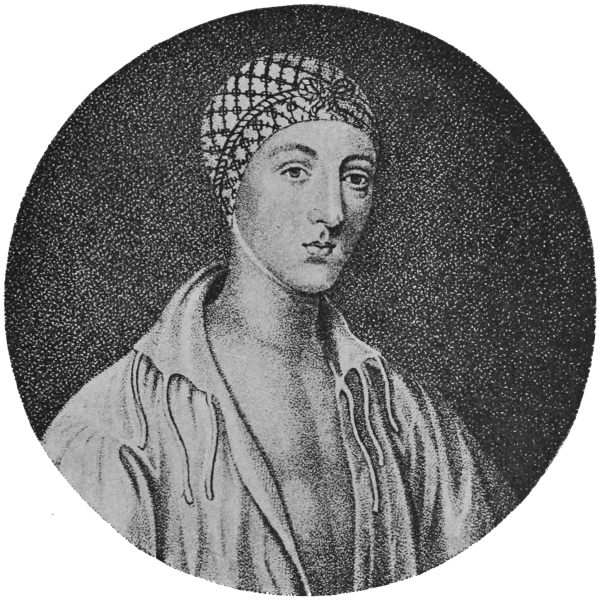
THE DUKE OF RICHMOND
We now come to the crux of the whole story—the
touchstone of this strange eventful history.
Could there have been such a boy as is told of;
one answering to the many conditions above shown
to be vitally necessary for the carrying out of such
a scheme of imposture. The answer to this question
is distinctly in the affirmative; there could have
been such a boy; had the Duke of Richmond been
born fourteen or fifteen years earlier than he was,
the difficulties of appearance, intellect, education,
and other qualifications need not have presented
themselves.
If the question to be asked is: “Was there such
a boy?” the answer cannot be so readily given. In
the meantime there are some considerations from
the study of which—or through which—an answer
may, later, be derived.
The points which must be settled before we can
solve the mystery of the Bisley Boy are:
(1) Was there such an episode regarding the
early life of the Princess Elizabeth?
(2) Was there such a boy as was spoken of?
(3) How could such an imposture have been
carried out, implying as it did—
(a) A likeness to the Princess so extraordinary
as not to have created suspicion in the mind of
anyone not already in the plot.
(b) An acquaintance with the circumstances of
the life of the Princess sufficiently accurate to ward
off incipient suspicion caused by any overlooking
or neglect of necessary conditions.
(c) An amount of education and knowledge
equal to that held by a child of ten to twelve years
of age who had been taught by some of the most
learned persons of the time.
(d) A skill in classics and foreign tongues only
known amongst high scholars and diplomatists.
(e) An ease of body and a courtliness of manner
and bearing utterly foreign to any not bred in
the higher circles of social life.
If there could be found a boy answering such
conditions—one whose assistance could be had with
facility and safety—then the solution is possible,
even if not susceptible of the fullest proof. Following
the lines of argument hitherto used in this
book, let us first consider reasons why such an
argument is tenable. I may then perhaps be
allowed to launch the theory which has come to me
during this investigation.
(a) His Birth and Appearance
A part—and no small part—of the bitterness of
Henry VIII in not having a son to succeed him
was that, though he had a son, such could not by
the existing law succeed him on the throne.
Nearly ten years after his marriage to Catherine
of Aragon and after a son and other
children had been born to them, all of whom had
died shortly after birth, Henry had in the manner
of mediæval kings—and others—entered on a love
affair, the object of his illicit affection being one
of the ladies-in-waiting to Queen Catherine, Elizabeth,
daughter of John Blount of Knevet, Shropshire.
The story of this love affair is thus given in
quaint old English in Grafton’s Chronicle first
published in 1569 which covers the period from
1189 to 1558:
“You shall understande, the King in his freshe youth was
in the cheynes of love with a faire damosell called Elizabeth
Blunt, daughter of Syr John Blunt Knight, which damosell
in synging, daunsing, and in all goodly pastimes, excelled
all other, by the which goodly pastimes, she wanne the king’s
hart: and she againe shewed him such favour that by him she
bare a goodly man childe, of beautie like to the father and
mother. This child was well brought up lyke a Princes
childe.”
(b) His Upbringing and Marriage
This son of an unlawful union—born in 1519
it is said—was called Henry Fitzroy after the custom
applicable in such cases to the natural children
of kings. Naturally enough his royal father took
the greatest interest in this child and did, whilst
the latter lived, all in his power to further his interests.
A mere list of the honours conferred on
him during his short life will afford some clue
to the King’s intention of his further advancement,
should occasion serve. The shower of favours began
in 1525 when the child, as is said, was only
six years of age. On the 18th of June of this year
he was created Earl of Nottingham and Duke of
Richmond and Somerset, with precedence over all
dukes except those of the King’s lawful issue. He
was also made a Knight of the Garter—of which
exalted Order he was raised to the Lieutenancy
eight years later. He was also nominated to other
high offices: the King’s Lieutenant General for
districts north of the Trent; and Keeper of the city
and fortress of Carlisle. To these posts were
added those of Lord High Admiral of England,
Wales, Ireland, Normandy, Gascony and Aquitaine;
Warden General of the Marches of Scotland,
and Receiver of Middleham and of Sheriff
Hutton, Yorkshire. He was also given an income
of four thousand pounds sterling per annum. In
1529, being then only ten years of age, he was also
made Lord Lieutenant of Ireland, Constable of
Dover Castle and Warden of the Cinque Ports—three
of the most important offices of the Nation.
A few months before his death in 1536 there was a
general understanding that Henry VIII intended
to make him King of Ireland and possibly to nominate
him as his successor on the throne of England.
That some such intention was in Henry’s
mind was shown by the Succession Act passed just
before the close of the Parliament which was dissolved
in 1536. In this Act it is fixed that the
Crown is to devolve on the King’s death to the son
of Jane Seymour and in default of issue by him,
on Mary and Elizabeth in succession in case of lack
of issue by the former. In the event of their both
dying before the King and without issue he is to
appoint by will his successor on the throne.
The various important posts conferred on the
young Duke of Richmond were evidently preparations
for the highest post of all, which in default
of legitimate issue of his own legitimate children
he intended to confer on him.
The education which was given to the little Duke
is of especial interest and ought in the present connection
to be carefully studied. It was under the
care of Richard Croke, celebrated for his scholarship;
who in the modern branch was assisted by
John Palsgrave the author of the earliest English
grammar of the French language “Lesclarcissement
de la langue Francoyse.” In spite of the
opposition of his household the Duke of Richmond
devoted his young life to study rather than to arms.
Whilst still a young boy he had already read a
part of Cæsar, Virgil and Terence, knew a little
Greek, and was fairly skilful in music—singing
and playing on the virginals. There was much
talk in Court circles as to whom he should marry
and many ladies of high degree were named. One
was a niece of Pope Clement VII; another was a
Danish princess; still another a princess of France;
also a daughter of Eleanor, dowager Queen of
Portugal, a sister of Charles V. This lady was
afterwards Queen of France.
Early in 1532 the Duke resided for a while at
Hatfield. Then he went to Paris with his friend
the Earl of Surrey, son of the Duke of Norfolk.
There he remained till September, 1533. On his
return to England he married by special dispensation,
on 25 November, 1533, Mary Howard, daughter
of the Duke of Norfolk by his second marriage
and sister of Surrey. Incidentally he is said to
have been present at the beheading of Queen Anne
(Boleyn), May 19, 1536. He did not long survive
the last-named exhibition, for some two months
later—22 July, 1536, he died. There was at the
time a suspicion that he had been poisoned by Lord
Rochford, brother of Queen Anne (Boleyn).
Henry Duke of Richmond and Somerset had no
legal issue. As a matter of fact though he was
married in 1533, nearly three years before his death,
he never lived with his wife. It was said that
he was not only young for matrimony, being only
seventeen; but was in very bad health. It was intended
that after his marriage he should go to Ireland;
but on account of the state of his health that
journey was postponed—as it turned out, for ever.
A light on this ill-starred marriage is thrown in
the quaint words of another chronicler of the time,
Charles Wriothesley, who wrote of the time between
1485 and 1559.
“But the said younge duke had never layne by his wife,
and so she is maide, wife, and now a widowe; I praie God
send her now good fortune.”
In this summarised history certain points are to be
noticed:
(1) The Duke of Richmond was like his father
(Henry VIII) and his mother who was “fayre.”
(2) A Dispensation was obtained for his marriage
to Lady Mary Howard which took place in
1533 but with whom he never cohabited.
There is a side-light here of the hereditary aspect
of the case. Both the Duke and Duchess of Richmond
were “fayre,” and in the language of the old
chroniclers “fayre” means blonde. Wintown for
instance speaking of Macbeth’s supposed descent
from the Devil says:
“Gottyne he was on ferly wys
“Hys Modyr to woddis mad oft repayre
“For the delyte of halesum ayre.
“Swa, scho past a-pon a day
“Tyl a Wod, hyr for to play:
“Scho met at cas with a fayr man.”
And Grafton thus speaks under date 7 September
1533 of Elizabeth’s birth: “The Queen was delivered
of a fayre Lady.”
Now Anne Boleyn is described as small and
lively, a brunette with black hair and beautiful
eyes, and yet her daughter is given as red-haired
by all the painters.
It is somewhat difficult to make out the true colours
of persons. For instance Giovanni Michiel
writing to the Venetian Senate in 1557 puts in his
description of Elizabeth “She is tall and well
formed, with a good skin, although swarthy” but
in the same page he says “she prides herself on her
father and glories in him; everybody is saying that
she also resembles him more than the Queen
[Mary] does.” As to the introduction of the
word “swarthy” as above; it may have been one of
the tricks of Elizabeth to keep the Venetian ambassador
from knowing too much or getting any
ground for guessing. If so it looks rather like
Elizabeth concealing her real identity—which
would be an argument in favour of an imposture;
if she was the real princess there would be no need
for concealment.
It is only common sense to expect, if the
paternal element was so strong in Henry as to
reproduce in offspring his own colour, that had
the Duke of Richmond had any issue especially
by a fair wife it too would have inherited something
of the family colour. Holbein’s picture of
the “Lady of Richmond,” as the Duke’s wife was
called, shows her as a fair woman.
These are two points to be here borne in mind;
that Henry VIII was probably bald, for in none
of his pictures is any hair visible. It would hardly
be polite to infer that Elizabeth wore a wig for
the same reason. But it is recorded that she always
travelled with a stock of them—no less than eighty
of various colours.
But there are other indications of such concealment.
Why for instance did she object to see doctors?
So long as she was free and could control
them she did not mind; but whilst she was under
duress they were a source of danger. Perhaps it
is this which accounts for her taking the Sacrament
on 26 August, 1554 when she was practically
a prisoner at Woodstock in the keeping of Sir
Henry Bedingfield. About the third week in June
the Princess asked Sir Henry to be allowed to have
a doctor sent to her. He in turn applied to the
Council who made answer on the 25th that the
Queen’s Oxford physician was ill and Mr. Wendy
was absent and the remaining one, Mr. Owen, could
not be spared. The latter however recommended
two Oxford doctors, Barnes and Walbec, in case
she should care to see either of them. On July 4th
Sir Henry reported to the Council that Elizabeth
in politely declining said: “I am not minded to
make any stranger privy to the state of my body,
but commit it to God.” Then, when through her
submission to the Queen’s religious convictions she
had obtained her liberty, she took no more concern
in the matter.
The Duchess of Richmond
Thomas Howard, Duke of Norfolk, married
twice. His second wife was the lady Elizabeth
Stafford, eldest daughter of the Duke of Buckingham,
and he had issue by both marriages. In 1533
the only surviving daughter of the second marriage
was Mary, who was thus the Lady Mary Howard,
sister of the Earl of Surrey. It was this lady with
whom the uncompleted marriage of the Duke of
Richmond took place. Doubtless they were early
friends. In her youth she used to spend the summer
at Tendring Hall, Suffolk, and the winter
at Hunsdon, Hertfordshire, where was one of
Henry’s palaces; in addition Henry was one of the
closest companions of her brother, the Earl of Surrey.
Lady Richmond’s part in the historical episode
before us is hardly direct. It only comes in
through two circumstances not unattended with
mystery. It is not necessary that the two were
correlated; but no student can get away from the
idea that there was some connection between them,
especially when there is another inference bearing
on the subject with reference to the second marriage
of the Duchess. This took place after an
interval of some years to Gilbert, son of Sir George
Talboys of Goloths, Lincolnshire. The name of
the second husband is variously spelled in the
chronicles as Tailboise or Talebuse. She died in
the year before Elizabeth came to the throne. The
two things to examine closely with regard to this
marriage to the Duke of Richmond were the Dispensation
for the marriage (together with the date
of it), and its non-fulfilment. The Dispensation
was dated 28 November, 1533, but the marriage
took place three days earlier. Whether this discrepancy
had anything to do with her later marriage
to Talboys we can only guess—unless of
course more exhaustive search can produce some
document, unknown as yet, which may throw light
on the subject. It is a matter of no light mystery
why a Dispensation was obtained at such a time
and by whom it was effected. At this time Henry
VIII was engaged in the bitterest struggle of his
life, that regarding the supremacy of the Pope, so
that it was a direct violation of his policy to have
asked for, or even to recognise such a Dispensation
in the case of his own son whom he intended to
succeed him as King. Before a year had passed
he had actually thrown over the Papal authority
altogether, and had taken into his own hands the
headship of the National Church. What then was
behind such a maladroit action? If it had been
done as a piece of statecraft—the ostensible showing
that there was as yet no direct rupture between
the British Nation and the Papacy—it would have
lost its efficacy if it might be cited as a Court
favour rather than a national right. Moreover, as
it was to sanction by then existing canonical law
a marriage of Henry’s son with a daughter of the
head of the most powerful Catholic House in England,
it could not be expected that Rome would
not use this in its strife for the continuation of its
supremacy. If Henry was directly concerned in
the matter, it was bad policy and unlike him to conciliate
Catholicism by a yielding on the part of one
who would be in the future the Head of the Reformed
Church. Altogether it leaves one under
the impression that there must have been a more
personal cause than any yet spoken of. Something
to be covered up, or from which suspicion
should be averted. There was already quite enough
material for a controversy in case Henry Fitzroy
should come to the throne and it might be well to
minimise any further risk. But in such case what
was there to be covered up or from which suspicion
should be averted? Already Richmond held under
his father all the threads of government in his own
hand. If he ever should need to tighten them it
would be done by himself as ruler. There must
still be some reason which must be kept secret and
of which Henry himself did not and must not
know. Beyond this again was the question of the
personal ambition of “Bluff King Hal.” It was
not sufficient for him that a barren heir should
succeed him—even if that heir was his own son.
He wanted to found a dynasty, and if he suspected
for an instant that after all his plotting and striving—all
his titanic efforts to overcome such obstacles
as nations and religions—his hopes might
fail through lack of issue on his son’s part he would
cease to waste his time and efforts on his behalf.
It is almost impossible to imagine that the Duke of
Richmond had not had some love affairs—if indeed
he was only seventeen (of which there is a
doubt)—it must be borne in mind that both the
Lancastrians and the Yorkists who united in the
Tudor stock matured early. On both his father’s
and mother’s side Henry Fitzroy was of a pleasure-loving,
voluptuous nature, and as the masculine
element predominated in his make-up there is not
any great stretch of imagination required to be
satisfied that there was some young likeness of him
toddling or running about. But in a case like his
masculine mis-doing does not count; it is only where
a woman’s credit is at stake that secrecy is a vital
necessity. We must therefore look to the female
side to find a cause for any mystery which there
may be. So far as a boy of the right age is concerned
with a decided likeness to Henry VIII it
would not have required much searching about to
lay hands on a suitable one.
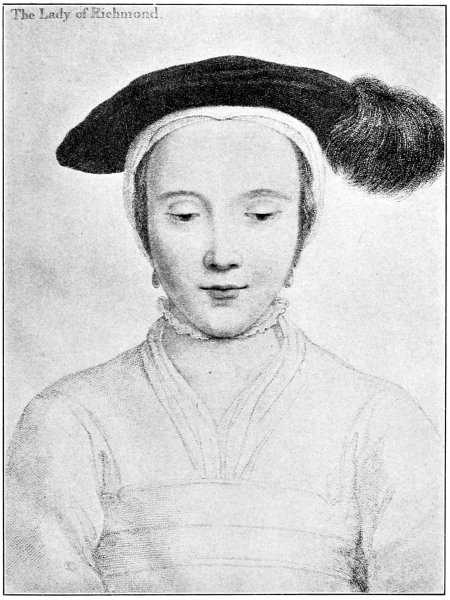
But here a new trouble would begin. It would
be beyond nature to expect that any mother would
consent, especially at a moment’s notice, to her child
running such a risk as the substitute of the dead
Princess Elizabeth was taking, without some kind
of assurance or guarantee of his safety. Moreover,
if there were other relatives, they would be
sure to know, and some of them to make trouble
unless their mouths were closed. Practically the
only chance of carrying such an enterprise through
would be if the substitute were an orphan or in a
worse position—one whose very life was an embarrassment
to those to whom it should be most dear.
Here opens a field for romantic speculation.
Such need not clash with history which is a record
of fact. Call it romance if we will; indeed until
we have more perfect records we must. If invention
is to be called in to the aid of deduction no one
can complain if these two methods of exercise of
intellect are kept apart and the boundaries between
them are duly charted. Any speculation beyond
this can be only regarded as belonging to the region
of pure fiction.
In one way there is a duty which the reader must
not shirk, if only on his own account: not to refuse
to accept facts without due consideration. Wildly
improbable as the Bisley story is, it is not impossible.
Whoever says, offhand, that such a story
is untrue on the face of it ought to study the
account of a death reported at Colchester in Essex
just a hundred years ago. A servant died who
had been in the same situation as housemaid and
nurse for thirty years. But only after death was
the true sex of the apparent woman discovered.
It was masculine!
* * * * *
Here I must remind such readers as honour my
work with their attention that I am venturing
merely to tell a tradition sanctioned by long time,
and that I only give as comments historical facts
which may be tested by any student. I have invented
and shall invent nothing; and only claim
the same right which I have in common with every
one else—that of forming my own opinion.
Here it is that we may consider certain additions
to the original Bisley tradition. How these are
connected with the main story is impossible to say
after the lapse of centuries; but in all probability
there is a basis of ancient belief in all that has
been added. The following items cover the additional
ground.
When the governess wished to hide the secret
hurriedly, she hid the body, intending it to be only
temporarily, in the stone coffin which lay in the
garden at Overcourt outside the Princess’s window.
Some tens of years ago the bones of a young
girl lying amidst rags of fine clothing were found
in the stone coffin.
The finder was a churchman—a man of the highest
character and a member of a celebrated ecclesiastical
family.
The said finder firmly believed in the story of
the Bisley Boy.
Before Elizabeth came to the throne all those
who knew the secret of the substitution were in
some way got rid of or their silence assured.
The name of the substituted youth was Neville;
or such was the name of the family with whom he
was living at the time.
There are several persons in the neighbourhood
of Bisley who accept the general truth of the story
even if some of the minor details appear at first
glance to be inharmonious. These persons are not
of the ordinary class of gossipers, but men and
women of light and leading who have fixed places
in the great world and in the social life of their
own neighbourhood. With some of them the truth
of the story is an old belief which makes a tie with
any new investigator.
The Unfulfilled Marriage
The remaining point to touch on is the unfulfilled
marriage of the Duke of Richmond. This certainly
needs some explanation, or else the mystery
remains dark as ever.
Here we have two young persons of more than
fair presence, and graced with all the endearing
qualities that the mind as well as the eye can grasp.
We have the assurance of Chronicles regarding
Henry Fitzroy; and from Holbein’s picture we
can judge for ourselves of the lady’s merits. They
are both well-to-do. The lady, one of title, daughter
of one of the most prominent Dukes in England,
the man then holding many of the most
important posts in the State, and with every expectation
of wearing in due course the purple of royalty.
They both come of families of which other
members have been notorious for amatory episodes;
voluptuousness is in their blood. They have been
old friends—and yet when they marry they at once
separate, she going to her own folk and he to
Windsor. Seemingly they do not meet again in the
two and a half years that elapse before his death.
The story about his youth and health preventing
cohabitation is all moonshine. The affair points
to the likelihood of some ante-matrimonial liaison
of which, as yet, we know nothing. Applying the
experiences of ordinary life in such cases, we can
easily believe that Mary Howard, egged on by her
unscrupulous and ambitiously-intriguing brother,
was for ulterior purposes either forced or helped
into an intrigue with the young Duke. There is no
doubt that Surrey was unscrupulous enough for it.
A similar design on his part—only infinitely more
base—cost him his head. He had tried to induce
his sister, Duchess of Richmond, to become mistress
of Henry VIII—her own father-in-law!—so
that she might have power over him; and it does
not seem that there was any wonderful indignation
on the part of the lady at the shameful proposal.
We are told that when Sir John Gates and
Sir Richard Southwell, the royal Commissioners
for examining witnesses in the case of the
charge of treason against the Duke of Norfolk
and the Earl of Surrey, arrived at Kenninghall
in the early morning and made known
their general purposes in coming, the Duchess of
Richmond “almost fainted.” But all the same
when she knew more exactly what they wanted she
promised without any forcing to tell all she knew.
As a matter of fact her evidence (with that of
Elizabeth Holland, the mistress of the Duke of
Norfolk), whilst it helped to get Norfolk off, aided
in condemning Surrey. There must have been
some other cause for her consternation. She had
been bred up in the midst of intrigues, polemical
and dynastic as well as of personal ambition, and
was well inured to keeping her countenance as well
as her head in moments of stress. The cause of
her “almost fainting” must have been something
which concerned her even more nearly than either
father or brother. It could only have been fear
for her child or herself—or for both. It is possible
that she dreaded discovery of some sort. Omne
ignotum pro magnifico. Suspicion has long flexible
tentacula, with eyes and ears at the end of
them, which can penetrate everywhere and see and
hear everything. She knew how to dread suspicion
and to fear the consequences which must result
from inquiry or investigation of any sort. If she
had had a child it must have been kept hidden, and
if possible far away—as the unknown Boy was
at Bisley. Indeed the Howards had immense family
ramifications and several of them had collateral
relationships in and about Bisley. There were
Nevilles there, and doubtless some of them were
poor relations relegated to the far away place where
living was cheap and where they might augment
their tenuous incomes by taking in even poorer
relations than themselves whose rich relatives
wished to hide them away. It is only a surmise;
but if there had been a case of a child unaccounted
for, which any member of so great a family as
the Howards wished to keep dark, it would be hard
to find a more favourable locality than the little
almost inaccessible hamlet in the Cotswolds. If
there were such a child, how easy it would all have
been. When the Duke was married he was fourteen
or perhaps sixteen at most—an age which
though over-young for fatherhood in the case of
ordinary men seemed to offer to the Plantagenet-York-Lancaster
blood no absolute difficulty of
taking up such responsibility. As Elizabeth
was only born some two months before the
Duke’s marriage there was not any time to
spare—a fact which would doubtless have been
used to his advantage if Henry’s natural son had
lived. In all probability Richmond’s marriage was
a part of the plot for aggrandisement of the Howards
which began with the unscrupulous securing
by Surrey of the son of Henry VIII at the cost
of his sister’s honour; and ended with the death of
Surrey as a traitor—a doom which his father only
escaped by the King dying whilst the Act of Attainder
was lying ready for his signature. If this
reasoning be correct—though the data on which it
is founded be meagre and without actual proof—as
yet—the risk of Duchess Mary’s child born before
her marriage must have been a terrible hazard.
On one side perhaps the most powerful sceptre in
the world as guerdon; on the other death and ruin
of the child on which such hopes were built. No
wonder then that Duchess Mary “almost fainted”
when in the early dawn the King’s Commissioners
conveyed to her the broad object of their coming.
No wonder that freed by larger knowledge
from the worst apprehension which could be for
her, she announced her willingness to conceal nothing
that she knew. That promise could not and
would not have been made had the whole range of
possibilities, which as yet no one suspected, been
opened to their investigation. For even beyond
the concern which she felt from the arbitrary power
of the King and at the remorseless grip of the law,
she had reason to doubt her own kin—the nearest
of them—in such a struggle as was going on
around them when the whole of the Empire, the
Kingdom of England, France and Spain, and the
Papacy were close to the melting-pot. It would
have been but a poor look-out for a youth of a
little more than a dozen years of age had fate made
him the shuttlecock of such strenuous players who
did not hold “fair play” as a primary rule of the
game in which they were engaged.
In his Life of Elizabeth, Gregario Leti concludes
a panegyric on the Queen’s beauty with the following:
“This was accompanied by such inward qualities
that those who knew her were accustomed to
say that heaven had given her such rare qualities
that she was doubtless reserved for some great work
in the world.” The Italian historian perhaps
“builded better than he knew,” for whether the
phrase applies to the one who is supposed to have
occupied the throne or one who did so occupy it,
it is equally true. The world at that crisis wanted
just such an one as Elizabeth. All honour to her
whosoever she may have been, boy or girl matters
not.