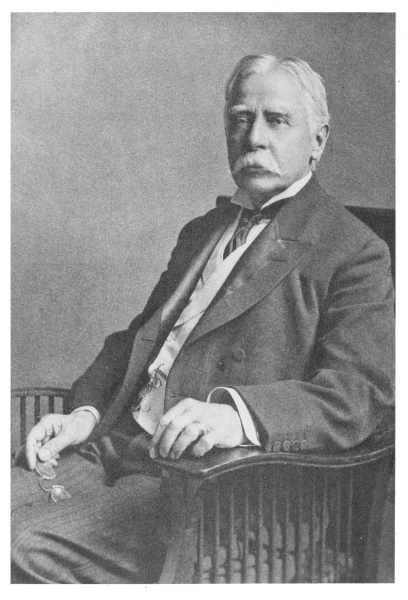
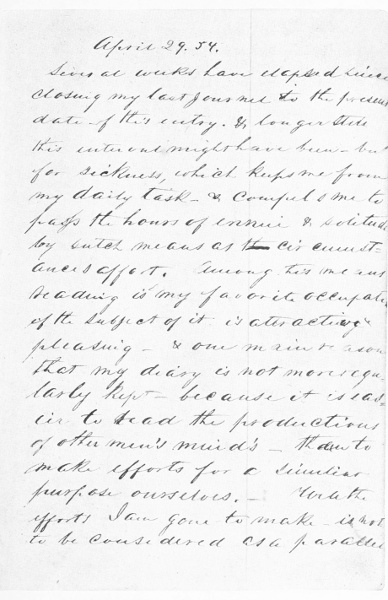
VOYAGE TO CALIFORNIA
December thirty-first, eighteen hundred and
fifty-one.
Left Wheeling on Steamer Messenger for Pittsburgh,
April twentieth. Exodus to California.
The tide of emigration for California swept
me along in its progress for the same reason as
thousands of others—to appropriate money
enough by a few years' hard toil, to secure a
future independency. When first the idea of
a movement to the West took possession of me,
I was wavering in the choice between California
and Oregon and gave finally preference to
Oregon on account of securing a homestead at
the arrival there and to judge from the last
news of the diggings better wages than in the
latter. From an inability to make up a certain
complement of immigrants I had to give up the
project and go to California. I left subsequently
Pittsburgh on the Steamer Paris, passing Wheeling
without seeing my brother, and arrived
after a week's journey down to the mouth of
the Ohio River and from Cairo up the Mississippi
to St. Louis.
The Ohio River is formed by the confluence
of the Monongahela and the Allegheny at Pittsburgh,
the formation of which place is alluvial
bottom carried down from the mountains in
previous ages. It has along its shores some of the
finest agricultural country as well as numberless
cities and towns, among which we count the
following as the largest and where the most
business is carried on: Wheeling, Virginia,
Marietta, Ohio, Cincinnati, Louisville, Evansville,
etc. Besides these, being all places where
manufacture of all kinds is carried on, I mention
from its great obstruction to navigation, rather
than its cosmogenic character, the Falls of
Louisville, with the nature of which I am, however,
too little acquainted to give particulars.
A canal, which was built years ago, to overcome
this obstacle, is of so little dimensions that the
larger boats can not pass through and therefore
this has always been a drawback to Ohio navigation
and a hindrance to more progress for the
City of Louisville. Several requests have lately
been made from several states to Congress for
the construction of a new canal large enough to
let boats of large dimensions pass at any time
conveniently. The hills running alongside the
river beginning at its source generally slope
down to its shores, having in many places very
fertile tracts for agriculture. This mountain
chain proceeds most of the time in a parallel
direction with the river down to about one hundred
and fifty to two hundred miles below the
falls where they gradually descend to a level
covered with luxurious vegetation in some places
while marshes extend over a considerable part
of it. The confluence of the Ohio and Mississippi
is at Cairo, built on a vast swampy and unhealthy
desert which, but for its low level,
would be the central place of the United States,
for merchants, around which they would gather
and from whose midst the greatest movements
would emerge and be controlled. This being,
however, a natural difficulty, which no human
skill can ameliorate, that centralizing point has
to move higher up the river to St. Louis. This
latter place has within the last twenty years
increased remarkably and is at present the
metropolis of the West and will undoubtedly
increase in importance in a ratio parallel with
the civilization of California and Oregon. By
the present tide of emigration to the latter
countries the amount of business is very much
increased. In consequence of this a great many
improvements have been made, consisting in
building a large number of new expensive houses
for merchants and manufacturers which betray
to every stranger at the first look the impression
of a great and industrial city.
Leaving St. Louis on the Steamer El Paso, we
proceeded up the Mississippi twenty miles
where we left this river to follow the course of
another great river, the Missouri. This has in
its main features a great resemblance to the
Mississippi, having a chain of mountains parallel
to both its shores and being sown with numberless
islands like the former, the most of them
nothing but sand carried down from the Rocky
Mountains. The hills, however, instead of breaking
off abruptly as on the Mississippi are generally
sloping gradually at a height of sixty or
seventy feet, toward the river bed. The country
along the shores is comparatively little cultivated,
the constantly washing power of the
water keeping back any active efforts for agricultural
improvements. A great number of
quite respectable towns are met with along the
river, as Alton, Washington, Jefferson, Booneville,
Lexington, Independence (starting point
for California, Oregon and Texas) then, Kansas
and last St. Joseph. The Kansas River coming
from the West, separates Missouri from the
Indian Territory, the latter still peopled by
the Indians as their last and only resting place
in this country. The history of this great
family of the human race teaches us the constant
progress and retreat in the pursuit of
nature's laws, the eternal relation of all things
existing. This once so numerous family of red
men were the sole possessors of America, over
which they had extended in all directions, and
several tribes had reached a high state of civilization
when the country first was discovered,
but as other families analogous to their own
(Hindus and Malays), they retrograded by
some aberration of the laws of nature and fell
back into moral darkness and gradual disappearance
from the face of the earth. The red
men, once the masters of this vast land, had to
give up their homes to give room to its present
inhabitants and who knows how soon an inevitable
Nemesis will strike out their existence from
the Book of Nations?
This territory consists of mostly fertile prairie
land, of an undulating appearance offering most
beautiful fields to the observer of nature's
beauties. After six days' journey we arrived
at St. Joseph, Missouri. After our landing was
made, a most active business took place at the
wharf for a few hours arising from the delivery
of freight to its respective owners. Having received
our little property we put it in our
wagons and camped out about a half mile above
the town in a valley surrounded by hills and
corn fields and except for a few cold rainy days
we had a good encampment and passed the time
we were there in making preparation for our long
journey.
We left camp the third day of May to proceed
on our journey further West, and after a
few hours traveling not obstructed by difficulties
with our teams nor bad roads, we arrived
at Duncan's Ferry where emigrants for the West
leave the United States and cross over to the
Indian Territory. The ferry being badly attended
to by its owners travelers were obliged to
stop here rather longer than would be necessary
if things were put in better condition with better
men there to take care of it. We got across
the river, however, after a thirty-six hour detention
and put our foot on Indian ground the
morning of the fifth, went on five miles, where,
meeting good wood and water, we struck our
camp and stopped until the next morning.
May sixth. The quiet of the night from the
fifth to the sixth was interrupted by the heavy
rolling of thunder, and its darkness by flashes
of lightning. Towards morning we had a very
heavy rain, which, although it put the roads in
a rather bad condition, helped the vegetation
considerably, and therefore, was of some advantage
to our procedure. On the morning of
the sixth we started on our journey, and after
passing a river which is difficult to cross we
ascended for the first time the plateau this side
of the Missouri. After having got up to a height
of about fifty feet above the level of the Missouri
River, a magnificent scene was displayed to
our view, resembling very much my native
country—Germany. The whole ground is
prairie land, running off in slight undulations
to the horizon and bounded in its Eastern
progress by the bed of the Missouri and the
mountain chains on the left.
Nature is in this territory following its gradual
progress and offers a vast land for cultivation to
the natives of this and other continents. The
civilization of this territory and Oregon will
raise America to its pinnacle of perfection, both
in wealth and moral efficiency. California and
the Western shore of Oregon will become a
centralizing place for business progress from
which knowledge will spread out a beacon light
to all nations.
We traveled this day about ten miles North-westward
from our last encampment and about
fifteen miles from St. Joseph. Our team got
along very well and could have traveled several
miles more but for driving our cattle as little
as possible the first few days, to let them gather
all the strength possible. We encamped at the
left of the road where we met with plenty of
wood and water and off to the right with pasture
for our cattle.
On the morning of the seventh after having
fed our oxen and taken some refreshment ourselves
we started for our further journey. About
one-half mile from Camp we passed the Creek,
on its upward ascent; passing on about a mile
further we arrived at Wolf Creek, across which
the Indians have struck a bridge, for the crossing
of which they charge the emigrants a high
price. It is, however, a great convenience to
the latter, the creek being about thirty feet wide
and from three to four feet deep. The Indians,
who built the bridge, have put up their camp
there. This side of the creek I ascended several
hills, and after traveling about five miles arrived
at the Mission. This is an Indian settlement,
where the Indians are taught the principles
of Christianity. It consists of a few log
huts, one of which contains stores where several
of our traveling companions stopped and
bought articles necessary on our journey.
After leaving the Mission we went on about
thirteen miles further, meeting within this distance
with several springs and after passing
another creek we went up to the next hill and
put up quarters for the night. This evening we
bought a pony from some of the emigrants,
which, although not of immediate necessity for
the journey, is a very convenient thing to its
owners.
On the morning of the eighth I mounted the
pony and rode ahead for a few miles. I mention
this as being rather something great, being the
first riding ever I did. Crossed about three
miles from our last encampment—Buffalo Creek—where
the Indians again charge toll for crossing
and drove on this side the creek about twelve
miles, meeting the grave of a deceased emigrant,
on which lay a live dog, probably the only
faithful servant to his master, howling away and
paying the last tokens of sympathy to him who
was resting there in a lonely grave. We stopped
at the left of the road till morning, where we
calculated to lay over Sunday. However,
not finding good pasture for our cattle,
we left there about eleven o'clock and proceeded
forwards about eight miles where we
unyoked our teams and put up for the night.
May the tenth. We started early in the
morning, proceeding Southwest on our road.
Although the sky was clear at daylight, it clouded
over toward noon and we had one of the hard
storms frequent on the plains and exposing the
emigrants to discomfort and contagious diseases.
Having driven off from the road expecting
to find water and wood in a Southwesterly
direction, about two miles off, we finally met,
after having been wet all through, a creek bordered
by plenty of timber, where we put up
our encampment. These were some of the most
discouraging moments we had since our start—arising
from the wet and cold of the weather,
and only moral courage can at this moment
prevent moral depression. A man that had
come around with us from Pittsburgh and displayed
to us the most gentlemanly behaviour,
having started with a sick family of eight little
children from St. Joseph, and kept with us up
to this night, keeping up under all difficulties,
was obliged, on account of his wife getting sick,
a woman of the greatest energy ever met with,
to turn back to the States. After having dried
ourselves, we took a good night's rest and started
with new vigor the next morning on our journey.
We had no difficulty getting along until
about three o'clock P.M.
About this time we arrived at a creek called
Mehemahah. The descent to the water is very
steep and muddy, however of no great difficulty,
compared to what is on the other side.
Here, after passing the rapid stream, the water
up to the wagon beds, we had to wade through
some of the greatest mud holes ever met with
before. Several of the teams got stuck on the
other side. By increasing, however, the force,
they finally got out and cleared the road for
us to pass. After having proceeded about three
miles on this side of the Mehemahah we stopped
for the night.
It is Wednesday to-day, the twelfth day of
May, and we have safely arrived at this side
of the Big Blue River. This is a very nice stream
and bordered with willow, elm and walnut and
some of the oak found on the hills. We crossed
the river the next day having but little difficulty,
the river being low and the roads good. A
starting house is to be found at the ferry this
side of the river where emigrants can get what
is most necessary on the journey. The country
Westward of the Blue becomes very hilly, which
with the rivulets and streams between presents
a beautiful scene. The Blue River is about one
hundred fifty miles from St. Joseph and supposed
to be about one-half the distance to Fort
Kearney. We have traveled since our fording of
that stream about thirty-five miles and are at
the present encamped somewhere in the neighborhood
of Little Blue. The weather set in extremely
cold and stormy about midnight and
not having sufficient bed clothing nearly froze
me to death. After having got up and taken our
morning refreshments, we went on to our present
place of encampment. The just mentioned
stormy and extremely cold weather continued
throughout the day, which, with the dust raised
off the roads, made traveling very disagreeable
and difficult.
On Sunday last we got in sight of the Little
Blue in a Southerly direction from our present
route. We did not, however, come to its banks
before Tuesday the eighteenth day, and passed
up an extremely hilly country for about twenty-five
miles and left this river for the Platte.
We didn't leave the banks of Little Blue until
this afternoon, Tuesday, the twentieth, the
misstatement previously mentioned arising from
the unauthenticity of the guide we took the
respective distances from. The parallel distance
we made along the shores of this river must have
been about fifty to sixty miles. It is a very
beautiful stream, much more elevated in its
beauty by the barrenness of the surrounding
country. Its water is, when at a medium stage,
very clear and of very good taste. On our passage
up the river we got in view of several
prairie inhabitants as wolves, chickens and several
miles off the river, antelopes and single
specimens of buffalo.
The weather of to-day, although it was very
pleasant and favorable to our journey, caused
by its continued dryness a dearth of grass and
by this, loss in the strength of our cattle. While
I am writing these remarks a change of weather
has taken place, which likely will make an improvement
in the growth of the vegetation.
The health of our company has been, since our
start, in a good condition and although a number
of deaths, partly of cholera morbus and
smallpox happened among the emigrants, all
of us are still enjoying our vigorous health and
in general are in a good spirited mood. The frequent
change, however, from hot days to damp
cold nights is sufficient to undermine the stoutest
constitution. How, therefore, we will in future
this great gift of nature—health—preserve, is
not to be fixed as a definite fact. Be it, however,
understood, that a careful observance of physiological
laws can abate diseases to a considerable
extent.
May the twenty-first. We are now encamped
about six miles Northwards of the Little Blue,
and although late in the day we have on account
of the rainy and stormy weather, not as yet decamped.
May the twenty-third. It is Sunday to-day
and the great bright luminary of the day is
peeping over the horizon in its full splendor,
and eternal youthfulness animating the whole
creation and endowing it with new strength and
vigor. The remark so frequently referred to
by Christians that the sublime beauty displayed
by the sun proved the existence of a God, was
made to me last night by a Universalist. True,
the beauty is grand and sublime, but it is so
without divinity connected with it. It is not
something beyond nature but a planetary phenomenon
following the great arrangements, the
great and eternal laws of Mother Nature. No
reasonable man will doubt the existence of a
great incomprehensible principle which pervades
throughout all nature, but this principle
is nothing separated from the universe but is
the great whole itself which can exist only all
in all and not other ways which always was,
always is and always will be, although things
may be subjected to great changes.
We stopped in our camp a considerable part
of the day, Orthodox Christians objecting to
our movement. Calling, however, a meeting,
and taking every single vote, the majority carried
the motion for moving onwards. Having
arrived last night within three miles to Fort
Kearney, we made this distance in about an hour's
time. The resemblance of this place to the civilized
world awakened in us a great feeling of
happiness thinking that although far, far off from
home, out in a great desert, still enjoyment was
offered to the onward moving emigrant. The
fort consists of five frame houses, two for the
use of the commanding officers, the rest for the
soldiers, all built in good style well answering
their respective purposes. Besides these buildings
is a church for the service of the Lord which
is frequented by soldiers, civilized Indians and
passing emigrants. About three miles above the
fort, we lost, by the carelessness of one of the
men, our pony. By the hardest kind of running,
we recovered it again. Nothing of weight happened
the next day. Having proceeded about
twenty miles further up the river we stopped
for the night.
Twenty-sixth. We are now about three hundred
and fifty miles off St. Joseph, encamped
along the bank of the Platte here of about one
and one-half miles width and very shallow. The
river is sown with small islands all of very
modern formation. They are generally over-grown
with cottonwoods, and some of the oak
kind, frequented more or less by wild geese,
crows and numerous birds of smaller kind. Just
as I am writing these lines my attention is
attracted by the sublimity of the scenery
around us. The whole Western border of the
horizon is grandly beautified by the setting sun
which, although out of sight, still leaves traces
of its grand and sublime beauty behind, painting
the horizon with the most various colours. It
is getting darker and the far off peaks of a mountain
chain which appears to follow a parallel
course with the edges of the horizon gradually
disappear. Quiet and peace is spread all over
nature's garden. Many a turbulent mind is
silenced by this beautiful phenomenon, and
while yet gazing at it, is sunk in the arms of
the God of Sleep, Morpheus.
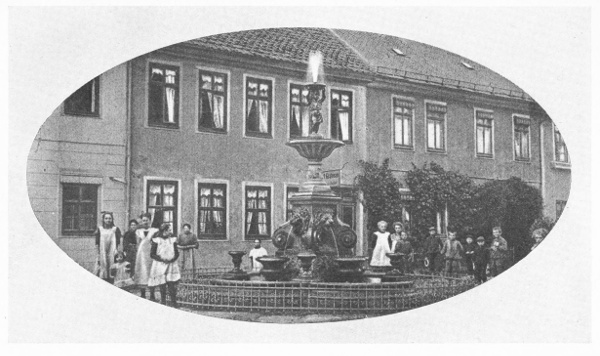
BIRTHPLACE OF WILLIAM C. LOBENSTINE
May the twenty-ninth, morning at five
o'clock. We have traveled since my last notes
were put down forty miles through a very barren
mountainous country, grass being very scarce
and water of inferior character, having in it
dissolved some alkali substances. The second
day or May twenty-eighth, inserting first that
the day before we passed several creeks, meeting
a most splendid spring at the last, we struck
the bluffs near about the forks of the river. The
bluffs which I visited this day are mainly
composed of sand, likely deposited there by the
wind in latter times. The whole bottom along
the Platte is mostly sand which in dry season on
account of the violent winds which prevail here,
nothing being here to break its force, is a great
inconvenience to travelers. The Platte river
bottom below and above Fort Kearney up to
where the road meets with the bluffs, is very
little above the level of its waters, varying from
five to fifteen feet above that, however, till when
you strike the above mentioned point, its altitude
is about twenty-five feet.
We met on the latter part of our journey
numerous graves of emigrants who had finished
their course in nature's garden to adopt new
form and shape suiting a different object in
nature. The deceased died mostly of cholera and
smallpox, more or less originating from an unhealthy
diet, bad water and exposure. Good care
and observance of physiological laws, however,
as I previously mentioned, can considerably
alleviate the diseases, if not keep them off altogether,
from which cause then, I principally
account for the good state of our health.
We are now about crossing the river (the
South fork of it) the forks of which we struck a
day before this. The river runs in a Southwest
direction and is about half a mile wide and very
shallow, with quicksand in the bottom. The
fordage was of no difficulty to us, the river as
first mentioned being very low, and having
arrived on its opposite side we pursued our
journey in a West-Northwesterly direction
toward the Cedar Bluffs. After having the day
before stopped about five o'clock at the right
of the road, where we met with fairly good
grass and water, we traveled the next day,
Sunday, the thirtieth, till we reached the point
where the road strikes the Bluffs which latter
point is about twenty or twenty-five miles from
where we crossed the river. Stopped about ten
o'clock and encamped to rest ourselves and our
cattle for the remainder of the day, which by
the hard road and great heat of the past week
was very much required to invigorate us for the
future. I read several chapters of Byron, but
my mind being nearly down to zero on account
of the excessive heat, I could not concentrate
my spirits enough to follow his violent imagination.
Next morning we started early for the
Bluffs. The passage of them was very hard on
our teams, the weather being very hot and the
road being all sand, our wagons cut in very deep
and therefore required the hardest pulling to get
along. We descended down the other side—a
terrible steep road—having traveled about ten
miles over the hills and after proceeding ten
miles further we encamped nigh the river whirl-pool.
Here was a good camping ground, dry and
pleasant.
Tuesday we started for Ashes Hollow, being
about eighteen miles from our starting place.
The road led like the previous days through
very sandy regions, the parallel running bluffs
offering from the sameness of appearance in
stratifications and composition very little attraction
to the passing travelers. Two miles this
side Ashes Hollow, the road ascends a very steep
hill, about sixty feet above the level of the sea,
being undoubtedly the hardest hill to pass over
we have met up to this on our journey. After
having got up to its highest point, the road
gradually descends into the hollow which builds
with the former a square angle. This valley is
about two hundred feet wide, bordered with
rocks and fine gravel in its hollow and timbered
with ash trees and some wild roses and grapes.
A cool spring, unsurpassed in its water by any
we have met yet in this territory, is to be found
to the right of the creek about a mile from
where you first strike it. There we met a kind of
trading post where several articles for the remainder
of the journey for a reasonable price
can be got. We passed on about two miles
further from where we left the latter and encamped
for the night (June second).
Monday, June 7th. Last week I neglected,
not being at leisure in mornings or evenings
and too much downspirited at noon, to keep up
my journal with the events as I met them, but
I shall try to recall in my memory the main
objects met with. For two days after we left
Ashes Hollow the roads were bad, being very
hard on our cattle as well as ourselves. We got
along, however, as well as circumstances did
permit and after passing several creeks, hove on
Friday last towards noon, in sight of Courthouse
Rocks, called so by emigrants from a supposed
resemblance with the building of that name,
but appearing to me, however, more like some
ancient castle than the object it is compared
with. The rock is about eight miles off the
road, a very deceiving distance to the traveler
who thinks it only two or three miles off.
Proceeding further, having the Courthouse
to our left, and the Platte at our right, the
pinnacle of another rock got within the reach of
our eye. This is what is called a chimney rock
from its great resemblance to some factory chimneys.
Although nearly twenty miles away it
could distinctly be seen. We traveled on to
within about eight miles of it and encamped to
the right of the road, nigh the river bank. The
next morning we started early. Some of our
company went on ahead to ascend the rock. I
stayed with the wagon, being not very well on
foot, and proceeded slowly on our journey.
Chimney rock is about, from its base to its
apex, four hundred feet high, consisting of a low
and second platform. Upon the latter is the
chimney or shaft of the rock nearly one hundred
feet high. This rock is principally composed of
marl and clay, intermixed with several strata of
white cement. Joining the chimney rock, right
above it, I beheld a most beautiful sight, being
a section of rock of singular construction resembling
in its appearance very much some of the
scenery along the Rhine. The whole consisted
of five rocks, one approaching the form of another
smaller chimney and giving with the rest a
most grand view, just like an ancient fort of
the feudal barons on an average steep ascending
hill, with cupola on the top assuming the forms
of ruins. Had I the talent of a Byron or the
skilled hand of a Raphael I might give an adequate
idea of the landscape, but as I am, even
common language is wanting to give an appropriate
description. I thought it, however,
romantic, and truly felt more than my tongue
may express. O what a pity it is to be deficient
of Brain!
Towards evening we arrived at a trading
post, about eight miles before the pass of Scotch
Bluffs, and encamped here for the night.
Sunday, set out with a cloudy sky and rain.
It soon, however, cleared up and turned into a
sunny day. We approached the Scotch Bluffs,
which we saw the evening before golden in the
light of the setting sun, and our whole attention
was attracted by the grandeur of the former, still
more beautified by the surrounding country.
The appearance of these sand hills, although
from far off like solid rock, has a very accurate
resemblance to a fortification or stronghold of
the feudal barons of the middle age, of which
many a reminder is yet to be met with along the
bank of the Rhine. The rock itself is separated
nearly at its middle, having a pass here about
fifty to sixty feet wide, ascending at both sides
perpendicular to a height of three hundred to
four hundred feet. The passage through here
was only made possible in 1851 and is now preferred
by nearly all the emigrants, cutting off a
piece of eight miles from the old road. We
passed through without any difficulty and after
having passed another blacksmith shop and
trading post, which are very numerous, protection
being secured to them by the military
down at Fort Laramie, we encamped for the
night.
We arrived at Laramie on Tuesday evening,
a day sooner than we calculated to get there.
The Fort is situated on the Laramie River,
which joins with the Platte about two miles
below the Fort and about one hundred yards
below the bridge for crossing of which we were
charged two hundred dollars. The country
around the fort is of a pleasing aspect. The bluffs
which surround it slope off gradually down
into the valley, through which the river of the
same name winds in the most lovely curves,
whose margins are timbered with a scattered
growth of cottonwood and brush of various
kinds. The Fort consists of several caserns for
the subordinate soldiers, a better building for
the captain, a powder and provision magazine,
a hospital open to the broken-down travelers
who wish to stop there, a good store where all
articles a man wants in civilized countries or
on the plains can be bought. The garrison disposed
here is of a small number—from fifty to
one hundred and fifty, which number although
small, is sufficient to keep down any unruly
spirit among the inhabitants of the soil. After
getting a few requisite articles, we started from
our encampment near the Fort for the black
hills, along which the road runs on towards the
Rocky Mountains.
The scenery, after passing the Fort and proceeding
a few miles up the river, assumes quite
a different aspect from that which we have
passed before the Fort. The monotony of the
prairie land disappears, and a varied highland
scenery is offered to the traveler. The road leads
generally over the bluffs at an average height of
about seventy to one hundred feet above the bed
of the Platte and in advancing approaches
sometimes towards the Southwestern mountain
chain with the Laramie Peak, whose summit is
six thousand feet above the sea and covered
with snow throughout the greater part of the
year. This mountain can be seen at a distance
of one hundred miles. We have first sight of it
at the Scotch Bluff, distant about that far from
it. Cones or little craters form the bulk of the
mountain and give it a romantic appearance.
The Platte River above the Fort Laramie takes
a different appearance from its lower course.
The low fertile land through which it runs for
nearly seven hundred to eight hundred miles to
its mouth, is changed into a highland scene.
Its course is rapid and cut through the solid
granite rocks which must have taken many a
century to open such passes and to such an
extent as we met in this part of our journey.
The beauty of the mountain chain is greatly
increased by the scattered trees of cedar and
pine and by the interruption of numerous
streams which are bordered with a most beautiful
growth of cottonwoods and other trees.
June twelfth. We left the river about noon
and ascended for the whole afternoon up the
highest bluffs on our advance. We got considerably
molested by the wind which blew right
in our faces and darkened them with sand.
Meeting a spring up near the highest point of
ascent we stopped for the night. Next morning
started for the descent. The Blackhill road
comes in from where the road commences taking
down to the bottom. We passed the LePonds
River, at the foot of the bluffs, a very nice stream,
beautifully treed with cottonwood. About four
miles forwards on the road we passed another
creek called by its red bank, Red Bank. The
whole country around is a red stratified rock of
the same kind—being iron ore.
June fourteenth. We drove about ten miles
to-day, passed several new graves, and crossed
three small creeks. Toward evening we encamped
two miles up the Little Deer Creek to
rest our cattle, as well as ourselves, and prepare
for ascending the Rocky Mountains. I read
several pages of geology treating of the different
classes of rocks, their respective composition,
position and the circumstances under which
the process of protrusion and stratification took
place.
The fifteenth. Some of our men killed various
kinds of game on the bluffs with which we quite
prepared us a feast adequate to all luxuries we
ever had at home.
June the sixteenth. We took a new start
this morning for the future of our journey.
Leaving Little Deer Creek, we struck, after
having met with the main road, the river,
along the banks of which we passed all day and
towards evening encamped within reach of it.
We passed Big Deer Creek about noon; the
country around, although the stream is of quiet
romantic beauty, is very barren, offering but
little pasture to the emigrants' teams.
June the seventeenth. This morning we
started for the ferry, twenty-seven miles above
Big Deer Creek. We arrived at the river about
noon and got across again three or four o'clock
in the afternoon, where we left the other side
for the bluffs and encamped about four miles
onwards on the road from the Platte. The
ferry at this place is carried on with flat boats
which are fastened to ropes spread across the
river. The current carries them from one shore
to the other. The following day we started very
early in the morning, ascended Rattlesnake
Hills, very rocky, and pursued our journey this
day through an extremely barren section of
country, the soil being mainly sand without any
good water and grass. At Willow Springs
twenty-six miles above the Platte ferry we arrived
towards evening and put up for the night.
Not having any grass at all we started very
early next morning intending to stop wherever
any pasture could be found. Meeting the object
of our wishes, we grazed the cattle for several
hours. Ponds with alkali water being about,
several of our cattle got to drink, and shortly
after our start, several got to be very sick, the
alkali beginning to operate. We gave some of
them fat bacon and some vinegar to neutralize
the alkali, which had the best wished effects.
The country passed over to-day is very sandy
and dry, offering nothing hardly to the passing
emigrants. The hills which range along this
part are called Blue Hills, probably from the
growth of pines with which they are planted.
Sunday, June the twentieth. Proceeding onwards,
we came to the Indian Dance Rock,
called so by Colonel Fremont in 1847. This rock
is a huge pile of granite about half a mile in
circumference and one hundred-fifty feet high.
Its sides are decorated with numerous names of
emigrants who passed them since '49. The road
leads to the left of the rock along the river and
crosses it about one and one-half miles from the
said rock. Five miles onwards, passing over a
very sandy road, we arrived at Devil's Gate, a
precipice between the perpendicular walls of
which the Sweetwater passed. This is undoubtedly
the most interesting sight to the attentive
traveler, made so by the profound deepness
of the pass and the stratæ of ancient rocks laid
open to the view of the naturalist. The rocks
here are piled up in a strange chaos, consisting
of primary (hypogene) rocks turned up on their
edges in a nearly perpendicular position, intermixed
with others in a horizontal and vertical
position. The descent of this rock is, on account
of its steepness, very difficult and connected
with considerable danger. Too great precaution
can't be taken by explorers. The river undergoes
a fall of nearly ten or twelve feet, the water
running very rapidly in its onward bound course.
The road from here leads more or less along the
river for twenty-five miles, where it separates in
two, one crossing the river and the other takes
over the bluffs. This latter road is extremely
sandy and as heavy a pull for cattle as any part
of the road we have passed. Teams that have
not been taken proper care of, generally are
lessened here by several of them breaking down
by fatigue and feebleness.
Traveling onwards we struck the river and
passed along it for two miles where we ascended
the bluffs again. Viewing the surrounding
country, we discovered on the edges of the
horizon a very large snow clad mountain, its
summit nearly hid in the clouds, and its sides
shining in a bedazzling luster.
June the twenty-third. Rain setting in
through the night, we were obliged to take a
very early start. The alkali, with which the
ground was covered, being dissolved by the
water, might, if drunk by the cattle, have some
very serious effect. Passing the bluffs, nothing
of note happened, and after fourteen miles
traveling, we arrived at the river banks, where
we stopped to feed our cattle and took our own
repast. Pasture being very gloomy here, we
left for our afternoon's journey. After crossing
the river we ascended a very steep hill, very
stony and barren ground, the road leading
down towards the river, where it turns at nearly
a square angle, and ascends another very steep
hill. The descent here is very rapid and slopes
off into the Sweetwater Valley. Pursuing our
course upwards, we met with some good pasture
where we stopped and encamped for the night.
June the twenty-fifth. Having enjoyed a
good night's rest and taken a good repast, we
started with our cattle pretty well filled for the
bluffs. This mountain, or rather tableland,
about three to four hundred feet above the
level of the river or six to seven thousand feet
above the level of the sea, is principally composed
of aqueous rocks of tertiary formation,
sand and gravel, which are turned up here in
vertical position, the upturned edges giving
evidence of volcanic action. The road over this
rock, of course, is very stony and hard, difficult
to pass over for the cattle. We struck a branch
of the Sweetwater this side the bluffs, about
fifteen miles from where we ascended them.
The weather to-day is very unpleasant, heavy
and cold showers drenching us several times.
Meeting with no grass up to our usual stopping
time, we drove on till late trying to make the
river, where we expected to meet with some good
pasture. At our arrival there we found the
prospects as poor as previously met with.
Stopped, however, and the next morning crossed
for the last time the Sweetwater.
The weather to-day, although the road led
us through hills covered with snow, was fair
and warm, and the contrast or change it was
from yesterday, made the travelers the more
sensitive to it. We arrived at the South pass
about noon and stopped to take dinner at the
Pacific Springs. The pass goes through the mountain
gradually so that when the traveler arrives
at this point he hardly feels satisfied with the
reality. The country along here is extremely
poor. No grass, and even good water is scarce.
The road ascends again this side the springs,
and continues hilly for about eighteen miles,
when it separates in two branches, the Mormon
road going off in a South, Southwest, the California
road in a nearly due West direction. Our
wagons arriving at the fork, struck without any
previous consultation with the company, the
Mormon road. Proceeding onwards we forded
the Little Sandy, nine miles off the fork and
eight and one-half miles further onwards the
Big Sandy—both pleasant streams with a lovely
growth of willows and cottonwood. We encamped
this side the bank of the latter stream
where there was good pasture for our cattle
and all necessaries for our own comfort.
June twenty-sixth. This day being Sunday and
one man in our company being sick and in rather
poor condition to travel, we stayed all day and
recruited ourselves and our oxen. Nothing happened
throughout the day except that several
of the Snake Indians caught squirrels about our
neighborhood and paid us a short visit. Towards
evening, read several passages out of the Bible
and argued about the vulgar sentiment and
language used in many places.
Monday morning, started stout and hearty on
our journey and have just arrived again after
passing over about eighteen miles of highland to
the Big Sandy. There we strike this stream for the
last time and are making now for Green River,
ten miles further onwards. About five miles
from our starting point the road forks. The
upper road is called Kiney's cut off and joins
with Sapplett's cut off. The lower branch
strikes the Green River, which is on account of
its extreme swiftness very hard to cross. The
fording of this river is, by a good ferry carried
on by Mormons, very much facilitated. Emigrants
crossing here at the beginning of the
California emigration had a great deal of trouble
to get their stock across—numbers of them lost
their lives and stock both.
Green River leads into the Rocky Mountains
and numerous tributaries are flowing into it on
its Southwesterly course where it pours its
waters into the Colorado. The river is about
one hundred and fifty yards wide and considerably
deep; its water is very cold from its
snowy origin and runs at the rate of five to
eight miles an hour. We forded the river on
the morning of the twenty-ninth and followed
down along its banks for eight miles in a Southeastern
direction. Took then the bluffs and
traveled on Southwards for about five miles
where we encamped near a branch of the river
with plenty of grass. Although snow clad mountains
bordered the horizon in the South the
weather was extremely warm and what made it
still more burdensome were the myriads of
mosquitoes which molested us very much, yes
extremely so.
Next morning we traveled onwards five miles
from our last camping ground and crossed a
branch of the Green River, on the other side of
which we took the bluffs, descending several
times into valleys where the river pursued his
ocean-bound course. After striking the river
the last time about ten miles from where we
passed the branch we ascended again and traveled
on in a Southwest direction. Meeting a
small stream of water here about five miles
distant from where we left the river, we encamped
for the night.
July first. Left this encampment after having
put in a horrible night with mosquitoes, bound
for Fort Bridger, twenty miles from this spot.
The road along this distance is hilly and stony,
pasture and water scarce, scenery poor up to
where we have sight of the Fort which is located
in a beautiful valley and named for this reason
the Garden of the Mountains. From here the
road gradually ascends a ridge and on the latter,
about five miles this side the Fort, we encamped
for the night. Cedar trees growing
spontaneously here, we had plenty wood for
cooking use and good pasture for the cattle.
The road from now covers very hilly country
over high ridges and deep valleys with very
steep ascents and descents, therefore very hard
for our teams. Proceeding onwards we met some
most lovely and beautiful sights of natural
beauty and but the hum of rural life would be
necessary to make it a second Eden. To give
an adequate idea of the beauty of this country
none but a Byron or some other passionate
writer can do. I, however, add that the high
going sea appears to have the most resemblance
to this interrupted bottom. The soil which
covers the most of these mountains is very spontaneous
(fertile), the most so in the bottoms.
The mountains themselves are a deposit of water,
the greatest number of them lately by their
abrupt form and to my view are gravity rocks,
cemented together by some binding matter.
The formations of many of these rocks offer
quite a picturesque view as we pass by. Caves
and tunnels of all shapes are carved into them
by the dissolving power of water. Towards
noon to-day after having passed many ups and
downs, we arrived at the highest point between
the States and Salt Lake. The height of this
ridge is seven thousand, seven hundred feet
above the level of the sea and is the dividing
ridge between the Colorado and the water of
the great basin. From this point on we descended
more or less and having arrived in the valley
we traveled on about sixteen miles to the Sulphur
Springs where we encamped for the night.
Next day our road continued over the same
interrupted ground. About two miles from our
last camp forwards on the road we arrived at
Bear River which we crossed with some difficulty
and went on to Echo Creek meeting on our road
some Indians who traded us venison for powder
and beads. Here we stopped for the night
and after we got our breakfast next morning,
July the fourth, we followed the river down
twenty miles, crossing it seventeen times in
this distance. This valley along which the
road leads is very narrow bordered on both sides
with high mountains of gravelly composition
closely cemented together. The valley runs in
a nearly Southern direction and runs on to where
Echo Creek joins the Webber River, a stream
about the size of Bear River. We crossed the
river Sunday towards evening and went onwards
several miles of nearly steady descent from the
top of a hill which we had previously ascended
to a creek along which we traveled about twelve
miles crossing it thirteen times—crossings very
bad. After we had the last crossing we commenced
to climb a very difficult ascent. At
the top of the latter, four miles from the base
to the high point, the road leads down hill
again. Echo Creek which heads on this side of
the mountains runs on to the city. The road
leads alongside of it, crossing it some twenty
times. We traveled on till three o'clock when
we struck the foot of a mountain three miles this
side of town and encamped for the night.
The Salt Lake Valley is built by high mountains
whose summits reach into the clouds,
forming with its craggy sides a picturesque and,
joined with the beauty of the valley, a lovely
scene. The valley is thirty miles wide and
some seventy-five to one hundred miles long.
Within its mountainous enclosure it contains
some of the most fertile and beautiful country
ever looked on by men. The Salt Lake which
stretches along the Valley on the North side helps
to beautify the scene. Beside this is the town
itself which is laid out in practical lots consisting
in a house and garden lot, the latter for agricultural
purposes. The houses, about one thousand
in number, are built of mud, dried in the
sun and are in every way like the houses in the
States. The people to the number of about six
thousand living in the city and about four thousand
in different counties of the valley are
Mormons. Although their creed contains a
great many foolish things, they have in some of
their social arrangements the advantage over us
and the traveler passing through Salt Lake
Valley and seeing everything working harmoniously
together as nature itself cannot help but
think them, more so, if he looks upon the crops
which nature spontaneously produces here, a
happy and nearly independent people. One of
the precepts of their faith, Polygamy, although
generally used as a reproach to them, I personally
admit as a true natural one, being consistent
with nature. Having supplied ourselves
with a few more necessaries for the remainder
of the trip and some little repairing done to our
teams, we left the city intending to stop at some
good pasture place in the valley. On the road
which runs on along through town towards the
North we met with the Hot Spring at the left
of the road. This Spring comes out of the surrounding
mountains, being of nearly boiling
heat and containing in it diluted a high percentage
of sulphur.
The weather to-day is very hot and oppressive,
being the more burdensome on account of
my not being well, having previously been weakened
by sickness. Eight miles from here, to
the left we espied good grass and a stream of
water, where we encamped and stopped there for
the next two days. While lying here I took sick
again, being a relapse of my former illness of
dysentery. In applying though some of Dr.
Dickson's pills and some other strong mixture
besides this, I stopped it and I am fully convinced
to-day that by paying a little precaution
to diet I shall get well and strong again.
We left our camp on Saturday, the tenth day
of July, traveling along a high mountain range
through the valley for about sixteen miles,
crossing in this distance several small creeks
bordered with willows and aspens. A great part
of the country is well cultivated and loaded
with a heavy crop of wheat, some corn and
luxurious meadows, the latter rivalling any I
ever saw before in any country. This evening
we encamped at a small streamlet about twenty-five
miles from the city. Grass very scarce, all
other things however easy to be got. From
houses being about here, we had plenty of milk
and butter.
Sunday the eleventh. Started late, many of
the company having not got used to our former
speedy proceeding yet. Drove over some
sandy roads through desert country to the
Webber river, which we had crossed just a week
ago in its upper course. The river being in a
low state, we forded it ourselves without any
difficulty and stopped three miles on the other
side of it, where we caught up with a wagon
of our company that had left us at the city.
Monday, July the twelfth. This morning the
road led through brush and high grass onto a
second bank along which we travelled the whole
day, passing numerous farms on the lower side
of the road and crossing several creeks in the
latter part of the day. To the right of the road
runs a mountain chain about one thousand to
one thousand five hundred feet above the level
of the lake, its sides as well as summit ornamented
with a lovely growth of cedars and some of
its crevices filled with snow. This evening we
struck camp three miles this side of Grazing
Creek where we laid till next morning to proceed
no further on our journey.
This day, the road crossed several creeks, the
first, Grazing, and five miles onward from this,
Box Elder—further on, several small creeks and
springs so that we had abundance of water all
day. At Box Elder, we left the settlement, and
pursued our course again on the Desert where
our former contest with hardships and privations
began from now on for the remaining
journey. We traveled to-day twenty miles
from Willow Creek and encamped at a Spring
five miles this side of Bear River. This stream we
crossed next day early in the morning paying
four hundred dollars ferriage and proceeded onwards.
From here we had as hard times as we
ever saw on the plains arising from our want of
good water for thirty-six miles which latter
circumstance with the extreme heat was very
hard on us and the cattle. We arrived at the
end of the above mentioned distance about noon
the next day at Hensols Spring where we
stopped and refreshed ourselves with some good
cold water. The road along this distance leads
over a very hilly and dry country which on
this latter account disappoints the choking
emigrant extremely, expecting at every roll to
have in sight some fountain to revive the exhausted
energies.
Six miles further we struck Deep Creek,
running on the North side of the valley until
where the road strikes the valley, where it
turns toward the South and about six miles
downward it sinks in the ground. At this place,
called Deep Creek Sink we arrived next day
and our cattle being worked down and their
feet being sore, the company again decided to
stay here and rest them as well as recruit ourselves
somewhat.
July sixteenth. We left our last encampment
at the sink and proceeded downwards for the
Pilot Springs where we intended to water the
cattle. The country begins here to get poorer,
pasture becoming extremely scarce now, hardly
to be found on creeks and around slews and then
only a good way up or down stream.
Seventeen miles from Deep Creek Sink at
some Springs in the side of a hill we met with
good pasture and although still early in the
day, we stopped there and lay till morning.
Cedar trees and sage bushes are all the vegetation
to be seen in this region and the journey
on this account is monotonous and tiresome.
The road from here takes over a hill from which
can be seen for the last time the Salt Lake with
its blue waters and its mountain high islands
which with the surrounding hills offers quite a
picturesque view to the observer.
About eight miles from Mountain Springs
onwards we came to Stony Creek, a mountain
stream whose water is more or less made up of
melted snow and ice and is very cold, therefore
very much relished by travelers. From Stony
Creek to the Casus Creek, distant about eight
miles, the country continues very poor having
nothing but wild sage and cedars on the bluffs.
Casus Creek is a small stream bordered like
all the creeks in this country with willows, the
latter from the thick bunches in which they
stand, a hiding place to the Indians. Pasture
along this Creek is plenty, therefore good camping
here. The road follows up the Creek about
eight miles and crosses it in this distance three
times, the middle ford being considerable miry
when we passed.
Leaving Casus Creek the road ascends gradually
towards a high situated point about five
miles, where it joins with the cut off roads, three
hundred and seventy miles West from the forks
of the main road.
Coming up towards the summit of the hill we
hove in sight of the City Rocks, being numerous
rocks of all sizes and shapes piled up so on the
slope of a mountain towards North West which
resembled in appearance a city at a distance
built on the side of a hill. From here the road
descends down into a valley about five or six
miles long with several small creeks which were,
however, dry when we passed them. Ascending
the hills on the West side of the valley we met
with some water to the left, running down
parallel with the road, and traveling on a mile
further struck its head, consisting of several
good cold springs. Next morning we started
on our road which on account of many sliding
rocks was very difficult and extremely hard on
cattle. These hills are called Gooth Creek
Mountains, running along a stream called the
same name. Their forms and shapes are very
various and mostly composed of aqueous rocks
in parallel stratas. Five miles traveling over
this interrupted ground brought us into the
Gooth Creek Valley which we followed up
eighteen miles—the roads good and grass plenty.
The valley along the upper course of the Gooth
Creek narrows; the mountains forming the
valley are steep and composed of some granular
gravel. Small sharp edged rocks are scattered
all along the road and are very hard on cattles'
feet.
At the head of Gooth Creek we met a good
spring coming out from under the rocks. The
water is cold and the weather being very hot
we relished it very much. From here the road
leaves the Gooth Creek Valley and continues
over a mountainous, rocky and very barren
country to the Rock Spring Valley. At the head
of it to the right are several cold springs coming
like the one spring at the head of Gooth Creek
from under a rocky ledge. Grass around this
spring is little or none. Following the road,
however, for about four miles further, grass
became plentiful and more so toward the head
of the valley. Crossing several ridges, we descended
into Thousand Spring Valley, so called
in consequence of the numerous Springs some
of very high temperature; others are mere cold
wells of considerable depth. The road leads
here along the valley ten miles and pasture was
real good.
July the twenty-fourth. Friend and companion
Logan died this morning at five o'clock.
Logan, a partner in our team, took sick very suddenly
about noon this day about two miles
this side Hot Springs. Driving on some few
miles after noon, the disease came on in a very
serious manner so that we were obliged to stop
and camp. His strength failed rapidly and
cramps in all his parts caused him very aggravating
pains. Getting worse and worse and
medical help having no effect on him we finally
concluded that although unsuspected and however
sudden he would go home to his Father.
Living on till sunrise next day, he died about
five o'clock in the morning after a sickness of
seventeen hours. This then is human life—to
live, to eat, to propagate and die. We, from this
eventful place which we left after interring the
deceased, proceeded over a long ridge which,
sloping upon the other side and ascending again,
gradually descended, taking us a stretch of
twenty miles into the Humbolt Valley, the
mountains of the same name being in view
covered with the everlasting snows. We followed
down the valley about eighteen miles
and camped on the North Branch of Mary's
River about three miles from where we forded it.
July twenty-sixth. The road from the ford
of the North Branch runs along a beautiful
valley to where it joins the South Fork of
Mary's River, twenty miles below the above
mentioned point. Grass along this valley is
more plentiful than any other place we found
along the whole route. The water, although not
very cool, is good. From the junction of the
two forks, another valley commences, the river
following it down for twenty-eight miles. At
this point the road leaves the river for the
bluffs after having previously come to the
forks of the road, crossed the river four times
within six miles and followed it down about
ten miles further to a small tributary of Mary's
River.
From here when we started early next morning,
we had to travel over a section of mountains
pretty steep and stony. Descending on
the other side of these hills we met with several
good springs on the road side and finally after
a tedious forenoon's drive we struck the river
again twenty miles from where we left it last.
The roads along here being very sandy and so
many teams passing ours it raises any amount
of dust which is very disagreeable to emigrants
and hard on cattle. We followed the river for
four miles when, finding good grass, we camped
for the night. Twenty miles further down stream
the main road takes to the right over the bluffs,
another road crosses the river and follows down
on the South side. The latter road is preferred
in low water, being the best and shortest as
well as having most grass on this side of Humbolt.
About forty miles onwards where we
forded the stream it—the road—takes up over
a rough hill leaving the river at the ascent and
coming to it again at the descent, about two
miles distant.
August the second. From this point the road
takes over a hill about five miles long when it
descends into the valley again. Pasture along
here is poor, the bottom being mostly over-grown
with sage. Although grass is scarce, for
the whole journey the careful emigrants can
always find sufficient feed for their cattle.
The road follows down the valley in a parallel
direction with the river for about twenty miles
where it turns on an obtuse angle and runs off
in a Southwest direction. Here the road takes
over low sandy hills and along the banks of
the river alternately. Twenty miles from our
starting point, we encamped on the river
banks.
August the fifth. Ascended a hill about one-half
mile on from our camp, pretty steep and
sandy. The road continues this way all along
for about twenty miles more where it takes
the bluffs for eighteen miles through a sandy
desert about three or four miles parallel with
the river. In the evening after a hard day's
drive, we struck the river but did not meet with
any grass which our starved animals badly
needed. The following day we ascended the
bluffs again for another eighteen miles desert
having no grass nor water for the teams. Leaving,
however, the main road and taking towards
the river we got near enough to water our cattle,
after which we drove on about four miles further
and struck the river again finding tolerable
good grass. Next day we started for the meadows
and sink of Humbolt River. The distance
to the former being about fifteen miles, roads
bad, both sandy and hilly, no grass between,
river handy enough in some places to water
the stock.
Saturday evening we arrived at the meadows,
our teams weakened from want of grass and
several days' hard pulling. From here to the
edge of the desert it is about twenty-five miles
which we made in three days, recruiting our
stock, making grass and taking on water.
Thursday afternoon, about three o'clock, we
started with seven head of cattle and one horse,
all of them in fair condition, for the desert—a
distance of forty miles without water and grass,
hilly and sandy roads. Thousands of dead cattle
were lying along this road which had gone out
at the previous emigration. One of our oxen
gave out, detaining us for several hours. Slaying
the latter however, we arrived safe although
a very close call at Carson River. Here people
from California have put up their shops, having
liquor and fixtures for sale for the emigrants
at high prices. Grass being scarce here we
started up the river about five miles. Being
about camping time and our cattle very tired
we stopped for the night.
From here we started the next morning having
about five miles ahead a desert of thirteen
miles. Before we started into the latter, we
stopped and fed the teams for a few hours,
then started on the said desert and the footers,
among which I was, traveled up along the river,
being higher and more pleasant than the main
road. At the point where the latter strikes the
river again we found good company which induced
us to stop for the night, grass for our
stock being plenty. From here the road takes
over the bluffs, being sandy again as the day
before and the country as poor as the deserts.
Twelve miles' traveling took us to the river
where we stopped and nooned. From here the
road gets to be stony and sidling, hard on
wagons and teams, leading over undulating
ground all along. About twenty-five miles
further ahead the road takes over a hill, a
perfect desert. To the left of this is mining
carried on in a Canyon. Although it does not
pay as well as some mines in California, still
it allows fair wages to the diggers. Some of
us, among them myself, would have stopped
and dug here but for certain bondages which
we could not get rid of without injuring our
pecuniary interest.
The distance here from the river to it again
is thirteen miles, roads tolerably good. In the
afternoon of this day (Sunday) we traveled
over another sandy plain to the river, eight
miles, where we camped over night and started
Monday morning all hearty and well. During
the day's travel we passed a good many trading
posts, crossing numerous mountain streams
with good cold water. Grass along here is
plenty so that stock as well as men do well in
this valley. Another day's travel will take us
to the foot of the Canyon which we ascend to
take us to Hope Valley. To-day at noon we
arrived within a few miles of the Canyon where
we stopped for noon. Leaving this place we
intend to ascend the ravine in the afternoon.
We took into the Canyon on the morning of
the eighteenth and ascending it we met the
worst road on the whole route being both
rocky and steep and extremely hard on cattle
and wagons. The whole Canyon is sown with
rocks (metamorphic species) thrown there in
chaos by volcanic eruption and offers to the
travelers with its steep pine clad mountains
one of those grand scenes of nature which are
only met with in mountainous or volcanic
countries. Five or eight miles of the hardest
traveling brought us into Hope Valley at the
other side of the Canyon which we followed up
to where the road takes the hills again and
finding at this point some excellent pasture we
encamped.
We left our last night's camp where we suffered
considerably by the cold and started to
ascend the first of the mountains of the Nevada.
The ascent is gradual for several miles till the
road comes to red rock where it takes a sudden
ascent for about one-half mile being very steep
and rocky and undoubtedly constitutes with
the yesterday's passed Canyon the greater part
of the elephant which will be finished tomorrow
by the steepest and highest ascent of the Sierra
Nevada. Up this mountain we doubled teams
and our wagons being light we arrived safely
at the summit about seven thousand feet above
the level of the sea. Grass being scarce here we
descended about four miles on the other side of
the mountain into a valley where we found some
good feed along the lake shore.
August twentieth. Started for the ascent of
the last and highest mountain of the Sierra
Nevada, taking first over a mountain of five
hundred to one thousand feet in height which
brought us to the foot of the last mountain,
we began our ascent, but though it was very
stony and high, we had less difficulty in passing
over it than the one we ascended the day
before. I myself arrived at the summit about
ten o'clock where I disposed of our horse which
had caused me a good deal of trouble. This done
I took a view of the country around me. I
always fancied to myself that the beauties of
the mountainous countries were grand and
sublime but never could I fully imagine such
a vast and chaotic beautiful scene as I found
here. The whole mountains are made up of
metamorphic rocks, thrown here by volcanic
causes. The mountains which extend around
you, standing at the summit to the edge of
the horizon are interrupted by alpine valleys
filled with beautiful meadows and lakes of
cold mountain water which help to make the
grand scene of the mountains lovely and rural
to the observer.
We passed over the summit and drove on
this day over mountain ridges and encamped
at night at about the same level as we traveled
over in the afternoon, finding some grass and
water on the mountain side.
The following day took up the fork of the
road, the one to the right taking to Hangtown,
the left hand one to Volcano. The distance
from the fork to the latter place is about thirty-five
miles, very hilly and extremely dusty, grass
and water scarce—from ten to twenty miles
apart in the valleys.
We arrived at Volcano August twenty-third
and sold our stock the next day for the sum of
three hundred dollars, making my share with
our previous receipt for horse and one yoke of
cattle, eighty-seven dollars and subtracting this
from the whole of my expense leaves me ninety
dollars debit to the journey.
At Volcano is the first mining district met
this side the Nevada and provisions being tolerable
cheap and some of the digging middling
favourable some five of us concluded to stay
here a while and try our luck.
Sunday, August twenty-ninth. We went to
work the second day from our arrival and sunk
a shaft from ten to twelve feet deep at which
depth we struck a lead paying us about eight
to ten cents to the ton. Water which we happened
to strike got to be very troublesome,
keeping us back considerably in our proceeding
to get out the pay dirt for washing. All we earned
up to the present is about four dollars. We
calculate however to make more next week if
we keep on at work steady and keep our health.
[1]