Harry. I wonder what all this heap of stones is for?
George. I can tell you—it is for the lime-kiln; do n’t you see it just by?
Har. O yes, I do. But what is to be done to them there?
Geo. Why, they are to be burnt into lime; do n’t you know that?
Har. But what is lime, and what are its uses?
Geo. I can tell you one; they lay it on the fields for manure. Do n’t
you remember we saw a number of little heaps of it, that we took for
sheep at a distance, and wondered they did not move? However, I
believe we had better ask our tutor about it. Will you please, sir, to tell
us something about lime?
Tutor. Willingly. But suppose, as we talked about all sorts of metals
some time ago, I should now give you a lecture about stones and earths of
all kinds, which are equally valuable, and much more common than metals.
Geo. Pray, do, sir.
Har. I shall be very glad to hear it.
Tut. Well, then. In the first place, the ground we tread upon, to as
great a depth as it has been dug, consists for the most part of matter of
various appearance and hardness, called by the general name of earths.
In common language, indeed, only the soft and powdery substances are
so named, while the hard and solid are called stone or rock; but chymists
use the same term for all; as, in fact, earth is only crumbled stone, and
stone only consolidated earth.
Har. What!—has the mould of my garden ever been stone?
Tut. The black earth or mould which covers the surface wherever
plants grow, consists mostly of parts of rotted vegetables, such as stalks,
leaves, and roots, mixed with sand or loose clay; but this only reaches a
little way; and beneath it you always come to a bed of gravel, or clay, or
stone of some kind. Now these earths and stones are distinguished into
several species, but principally into three, the properties of which make
them useful to man for very different purposes, and are, therefore, very
264well worth knowing. As you began with asking me about lime, I shall
first mention that class of earths from which it is obtained. These have
derived their name of calcareous from this very circumstance, calx being
lime, in Latin; and lime is got from them all in the same way, by burning
them in a strong fire. There are many kinds of calcareous earths. One
of them is marble; you know what that is?
Geo. O yes! Our parlour chimney-piece and hearth are marble.
Har. And so are the monuments in the church.
Tut. True. There are various kinds of it: white, black, yellow, gray,
mottled and veined with different colours; but all of them are hard and
heavy stones, admitting a fine polish, on which account they are much
used in ornamental works.
Geo. I think statues are made of it?
Tut. Yes; and where it is plentiful, columns, and porticoes, and
sometimes whole buildings. Marble is the luxury of architecture.
Har. Where does marble come from?
Tut. From a great many countries. Great Britain produces some, but
mostly of inferior kinds. What we use chiefly comes from Italy. The
Greek islands yield some fine sorts. That of Paros is of ancient fame for
whiteness and purity, and the finest antique statues have been made of
Parian marble.
Har. I suppose black marble will not burn into white lime?
Tut. Yes, it will. A violent heat will expel most of the colouring
matter of marbles, and make them white. Chalk is another kind of
calcareous earth. This is of a much softer consistence than marble;
being easily cut with a knife, and marking things on which it is rubbed.
It is found in great beds in the earth; and in some parts of England
whole hills are composed of it.
Geo. Are chalk and whiting the same?
Tut. Whiting is made of the finer and purer particles of chalk washed
out from the rest, and then dried in lumps. This you know is quite soft
and crumbly. There are, besides, a great variety of stones in the earth
harder than chalk, but softer than marble, which will burn to lime, and are
therefore called lime-stones. These differ much in colour and other properties,
and accordingly furnish lime of different qualities. Whole ridges of
mountains in various parts are composed of lime-stone, and it is found
plentifully in most of the hilly counties of England, to the great advantage
of the inhabitants.
265Geo. Will not oyster-shells burn into lime? I think I have heard of
oyster-shell lime.
Tut. They will, and this is another source of calcareous earth. The
shells of all animals, both land and sea, as oysters, mussels, cockles, crabs,
lobsters, snails, and the like, and also egg-shells of all kinds, consist of
this earth; and so does coral, which is formed by insects under the sea,
and is very abundant in some countries. Vast quantities of shells are
often found deep in the earth, in the midst of chalk and lime-stone beds;
whence some have supposed that all calcareous earth is originally an
animal production.
Har. But where could animals enough ever have lived to make mountains
of their shells?
Tut. That, indeed, I cannot answer. But there are sufficient proofs
that our world must long have existed in a very different state from the
present. Well—but besides these purer calcareous earths, it is very
frequently found mingled in different proportions with other earths. Thus
marl, which is so much used in manuring land, and of which there are a
great many kinds, consists of calcareous earth, united with clay and sand;
and the more of this earth it contains, the richer manure it generally makes.
Geo. Is there any way of discovering it when it is mixed in this manner
with other things?
Tut. Yes—there is an easy and sure method of discovering the smallest
portion of it. All the varieties of calcareous earth that I have mentioned
have the property of dissolving in acids, and effervescing with them; that
is, they bubble and hiss when acids are poured upon them. You may
readily try this at any time with a piece of chalk or an oyster-shell.
Geo. I will pour some vinegar upon an oyster-shell as soon as I get
home. But now I think of it, I have often done so in eating oysters, and
I never observed it to hiss or bubble.
Tut. Vinegar is not an acid strong enough to act upon a thing so solid
as a shell. But sulphuric and muriatic acids will do it at once; and
persons who examine the nature of fossils always travel with a bottle of
one of these acids, by way of a test of calcareous earth. Your vinegar
will answer with chalk or whiting. This property of dissolving in acids,
and what is called neutralizing them, or taking away their sourness, has
caused many of the calcareous earths to be used in medicine. You know
that sometimes our food turns very sour upon the stomach, and occasions
the pain called heart-burn, and other uneasy symptoms. In these cases it
266is common to give chalk or powdered shells, or other things of this kind,
which afford relief, by neutralizing the acid.
Geo. I suppose, then, magnesia is something of this sort, for I have
often seen it given to my little sister, when they said her stomach was out
of order?
Tut. It is; but though magnesia has some properties in common with
calcareous earths, it possesses others that are peculiar to itself.
Geo. Pray, what are the other uses of these earths?
Tut. Such of them as are hard stone, as the marbles and many of the
lime-stones, are used for the same purposes as other stones. But their
great use is in the form of lime, which is a substance of many curious
properties that I will now explain to you. When fresh burnt it is called
quicklime, on account of the heat and life, as it were, which it possesses.
Have you ever seen a lump put into water?
Geo. Yes, I have.
Tut. Were you not much surprised to see it swell and crack to pieces,
with a hissing noise and a great smoke and heat?
Geo. I was, indeed. But what is the cause of this—how can cold
water occasion so much heat?
Tut. I will tell you. The strong heat to which calcareous earth is
exposed in making it lime expels all the water it contained, (for all earths,
as well as almost everything else, naturally contain water,) and also a
quantity of a peculiar kind of air which was united with it. If water be
now added to this quicklime, it is drunk in again with such rapidity, as to
crack and break the lime to pieces. At the same time a great heat is
occasioned by the water combining with the lime, and this makes itself
sensible by its effects, burning all the things that it touches, and turning
part of the water to steam. This operation is called slacking of lime.
The water in which lime is slacked dissolves a part of it, and acquires a
very pungent harsh taste: this is used in medicine under the name of
lime-water. If instead of soaking quicklime in water, it is exposed for
sometime to the air, it attracts moisture slowly, and by degrees fails to
powder, without much heat or disturbance. But whether lime be slacked
in water or air, it does not at first return to the state in which it was before,
since it still remains deprived of its air, and on that account is still pungent
and caustic. At length, however, it recovers this also from the atmosphere,
and is then mild calcareous earth as at first. Now it is upon some of these
circumstances that the utility of lime depends. In the first place, its
267burning and corroding quality makes it useful to the tanner, in loosening
all the hair from the hides, and destroying the flesh and fat that adhered
to them. And so in various other trades it is used as a great cleanser and
purifier.
Har. I have a thought come into my head. When it is laid upon the
ground, I suppose its use must be to burn up the weeds?
Tut. True—that is part of its use.
Geo. But it must burn up the good grass and corn too?
Tut. Properly objected. But the case is, that the farmer does not sow
his seeds till the lime is rendered mild by exposure to the air and weather,
and is well mixed with the soil. And even then it is reckoned a hot and
forcing manure, chiefly fit for cold and wet lands. The principal use of
lime, however, is as an ingredient in mortar. This, you know, is the
cement by which bricks and stones are held together in building. It is
made of fresh slacked lime and a proportion of sand well mixed together;
and, when used for plastering walls, some chopped hair is put into it.
The lime binds with the other ingredients; and in length of time, the
mortar, if well made, becomes as hard, or harder, than stone itself.
Geo. I have heard of the mortar in very old buildings being harder and
stronger than any made at present.
Tut. That is only on account of its age. Burning lime and making
mortar are as well understood now as ever: but in order to have it excellent,
the lime should be of a good quality, and thoroughly burnt. Some sorts
of lime have the property of making mortar which will harden under
water, whence it is much valued for bridges, locks, wharfs, and the like.
Geo. Pray, is not plaster of Paris a kind of lime? I know it will
become hard by only mixing water with it, for I have used it to make
casts of.
Tut. The powder you call plaster of Paris is made of an earth named
gypsum, of which there are several kinds. Alabaster is a stone of this
sort, and hard enough to be used like marble. The gypseous earths are
of the calcareous kind, but they have naturally a portion of acid united
with them, whence they will not effervesce on having acid poured on them.
But they are distinguished by the property, that after being calcined or
burnt in the fire, and reduced to powder, they will set into a solid body
by the addition of water alone. This makes them very useful for ornamental
plasters, that are to receive a form or impression, such as the stucco
for the ceiling of rooms.
268Well—we have said enough about calcareous earths; now to another
class, the argillaceous.
Geo. I think I know what those are. Argilla is Latin for clay.
Tut. True; and they are also called clayey earths. In general, these
earths are of a soft texture and a sort of greasy feel; but they are peculiarly
distinguished by the property of becoming sticky on being tempered
with water, so that they may be drawn out and worked into form like a
paste. Have you ever, when you were a little boy, made a clay-house?
Geo. Yes, I have.
Tut. Then you well know the manner in which clay is tempered, and
worked for this purpose?
Har. Yes—and I remember helping to make little pots and mugs of
clay.
Tut. Then you imitated the potter’s trade; for all utensils of earthenware
are made of clays either pure or mixed. This is one of the oldest
arts among mankind, and one of the most useful. They furnish materials
for building, too; for bricks and tiles are made of these earths. But in
order to be fit for these purposes, it is necessary that clay should not only
be soft and ductile while it is forming, but capable of being hardened
afterward; and this it is, by the assistance of fire. Pottery-ware and
bricks are burnt with a strong heat in kilns, by which they acquire a
hardness equal to that of the hardest stone.
Geo. I think I have heard of bricks being baked by the sun’s heat alone
in very hot countries.
Tut. True; and they may serve for building in climates where rain
scarcely ever falls; but heavy showers would wash them away. Fire
seems to change the nature of clays; for after they have undergone its
operation, they become incapable of returning of themselves to a soft and
ductile state. You might steep brick-dust or pounded pots in water ever
so long without making it hold together in the least.
Geo. I suppose there are many kinds of clays?
Tut. There are. Argillaceous earths differ greatly from each other in
colour, purity, and other qualities. Some are perfectly white, as that of
which tobacco-pipes are made. Others are blue, brown, yellow, and in
short of all hues, which they owe to mixtures of decaying vegetable substances
or metals. Those which burn red contain a portion of iron. No
clays are found perfectly pure; but they are mixed with more or less of
other earths. The common brick-clays contain a large proportion of sand,
269which often makes them crumbly and perishable. In general, the finest
earthenware is made of the purest and whitest clays; but other matters
are mixed in order to harden and strengthen them. Thus porcelain or
china is made with a clayey earth mixed with a stone of vitrifiable nature,
that is, which may be melted into glass; and the fine pottery called
queen’s ware is a mixture of tobacco-pipe clay, and flints burnt and
powdered. Common stone ware is a coarse mixture of this sort. Some
species of pottery are made with mixtures of burnt and unburnt clay;
the former I told you before, being incapable of becoming soft again with
water like a natural clay.
Har. Are clays of no other use than to make pottery of?
Tut. Yes, the richest soils are those which have a proportion of clay;
and marl, which I have already mentioned as a manure, generally contains
a good deal of it. Then clay has the property of absorbing oil or
grease, whence some kinds of it are used like soap for cleaning clothes.
The substance called fullers’ earth is a mixed earth of the argillaceous
kind; and its use in taking out the oil which naturally adheres to wool
is so great, that it has been one cause of the superiority of our woollen
cloths.
Har. Then I suppose it is found in England?
Tut. Yes. There are pits of the best kind of it near Woburn in Bedfordshire,
and Nutfield in Surrey, England. The different kinds of slate,
too, are stones of the argillaceous class; and very useful ones, for covering
houses, and other purposes.
Har. Are writing slates like the slates used for covering houses?
Tut. Yes; but their superior blackness and smoothness make them
show better the marks of the pencil.
Geo. You have mentioned something of sand and flints, but you have
not told us what sort of earths they are.
Tut. I reserved that till I spoke of the third great class of earths. This
is the siliceous class, so named from silex, which is Latin for a flint-stone.
They have also been called vitrifiable earths, because they are the principal
ingredient in glass, named in Latin vitrum.
Geo. I have heard of flint-glass.
Tut. Yes—but neither flint, nor any other of the kind, will make glass,
even by the strongest heat, without some addition; but this we will speak
of by-and-by. I shall now tell you the principal properties of these earths.
They are all very hard, and will strike fire with steel, when in a mass
270large enough for the stroke. They mostly run into particular shapes, with
sharp angles and points, and have a certain degree of transparency, which
has made them also be called crystalline earths. They do not in the
least soften with water, like clays; nor are they affected by acids, nor do
they burn to lime, like the calcareous earths. As to the different kinds of
them, flint has already been mentioned. It is a very common production
in some parts, and is generally met with in pebbles, or round lumps forming
pebbles, in gravel-beds, and often almost entirely covering the surface
of ploughed fields.
Har. But do they not hinder the corn from growing?
Tut. The corn, to be sure, cannot take root upon them, but I believe it
has been found that the protection they afford to the young plants which
grow under them is more than equal to the harm they do by taking up
room. Flints are also frequently found imbedded in chalk under the
ground. Those used in the Staffordshire potteries chiefly come from
the chalk-pits near Gravesend. So much for flints. You have seen
white pebbles, which are semi-transparent, and when broken resemble
white sugar-candy. They are common on the seashore, and beds of
rivers.
Har. O, yes. We call them fire-stones. When they are rubbed
together in the dark they send out great flashes of light, and have a
particular smell.
Tut. True. The proper name of these is quartz. It is found in large
quantities in the earth, and the ores of metals are often imbedded in it.
Sometimes it is perfectly transparent, and then it is called crystal. Some
of these crystals shoot into exact mathematical figures; and because many
salts do the same, and are also transparent, they are called the crystals of
such or such a salt.
Geo. Is not fine glass called crystal, too?
Tut. It is called so by way of simile; thus we say of a thing, “It is
as clear as a crystal.” But the only true crystal is an earth of the kind
I have been describing. Well, now we come to sand; for this is properly
only quartz in a powdery state. If you examine the grains of sand singly,
or look at them with a magnifying glass, you will find them all either
entirely or partly transparent; and in some of the white shining sands
the grains are all little bright crystals.
Har. But most sand is broken or yellowish.
Tut. That is owing to some mixture generally of the metallic kind. I
271believe I once told you that all sands were supposed to contain a small
portion of gold. It is more certain that many of them contain iron.
Geo. But what could have brought this quartz and crystal into powder,
so as to have produced all the sand in the world?
Tut. That is not very easy to determine. On the seashore, however,
the incessant rolling of the pebbles by the waves is enough in time to
grind them to powder; and there is reason to believe that the greatest
part of what is now dry land was once sea, which may account for the
vast beds of sand met with inland.
Geo. I have seen some stone so soft that one might crumble it between
one’s fingers, and then it seemed to turn to sand.
Tut. There are several of this kind, more or less solid, which are
chiefly composed of sand conglutinated by some natural cement. Such
are called sandstone, or freestone, and are used for various purposes, in
building, making grindstones, and the like, according to their hardness.
Har. Pray, what are the common pebbles that the streets are paved
with? I am sure they strike fire enough with horses’ shoes.
Tut. They are stones of the siliceous kind, either pure or mixed with
other earths. One of the hardest and best for this purpose is called
granite, which is of various kinds and colours, but always consists of
grains of different siliceous stones cemented together. The streets of
London are paved with granite brought from Scotland. In some other
stones these bits of different earths dispersed through the cement are so
large as to look like plums in a pudding; whence they have obtained the
name of pudding-stones.
Geo. I think there is a kind of stones that you have not yet mentioned—precious
stones.
Tut. These, too, are mostly siliceous; but some even of the hardest
and most valuable are argillaceous in their nature, though possessing none
of the external properties of clay. The opaque and half-transparent
precious stones, such as jasper, agate, cornelian, and lapis lazuli, are
engraved upon for seal-stones; the more beautiful and transparent ones,
as ruby, emerald, sapphire, topaz, which go by the name of gems, are
generally only cut and polished, and worn in rings, ear-rings, necklaces,
and the like.
Geo. Diamond, no doubt, is one of them.
Har. So it has commonly been reckoned, and the purest of all; but late
experiments have shown, that though it is the hardest body in nature it
272may be totally dispersed into vapour by a strong fire, so that mineralogists
will now hardly allow it to be a stone at all, but class it among inflammable
substances. The precious stones abovementioned owe their
colours chiefly to some metallic mixture. They are in general extremely
hard, so as to cut glass, and one another; but diamonds will cut all the
rest.
Geo. But are they not exceedingly rare?
Tut. Yes; and in this rarity consists the greatest part of their value.
They are, indeed, beautiful objects; but the figure they make in proportion
to their expense is so very small, that their high price may be reckoned
one of the principal follies among mankind. What proportion can there
possibly be between the real worth of a glittering stone as big as a hazelnut,
and a magnificent house and gardens, or a large tract of country
covered with noble woods and rich meadows and cornfields? And as to
the mere glitter, a large lustre of cut glass has an infinitely greater effect
on the eye than all the jewels of a foreign prince.
Geo. Will you please to tell us how glass is made?
Tut. Willingly. The base of it is, as I said before, some earth of the
siliceous class. Those commonly used are flint and sand. Flint is first
burnt or calcined, which makes it quite white, like enamel; and it is then
powdered. This is the material sometimes used for some very white
glasses; but sand is that commonly preferred, as being already in a
powdery form. The white crystalline sands are used for fine glass; the
brown or yellow for the common sort. As these earths will not melt of
themselves, the addition in making glass is somewhat that promotes their
fusion. Various things will do this; but what is generally used is an
alkaline salt, obtained from the ashes of burnt vegetables. Of this there
are several kinds, as potash, pearlash, barilla, and kelp. The salt is mixed
with the sand in a certain proportion, and the mixture then exposed in
earthen pots to a violent heat, till it is thoroughly melted. The mass is
then cooled till it is nearly of the consistence of dough, and in this state
it is fashioned by blowing and the use of shears and other instruments.
You must see this done some time, for it is one of the most curious and
pleasing of all manufactures; and it is not possible to form an idea of the
ease and dexterity with which glass is wrought, without an actual view.
Har. I should like very much to see it, indeed.
Geo. Where is glass made in this country?
Tut. In many places. Some of the finest in London, but the coarser
273kinds generally where coals are cheap; as at Newcastle and its neighbourhood,
in Lancashire, at Stourbridge, Bristol, and in South Wales. I
should have told you, however, that in our finest and most brilliant glass,
a quantity of the oxide of lead is put, which vitrifies with the other
ingredients, and gives the glass more firmness and density. The blue,
yellow, and red glasses are coloured with the oxides of other metals. As
to the common green glass, it is made with an alkali that has a good deal
of calcareous earth remaining with the ashes of the plant. But to understand
all the different circumstances of glassmaking, one must have a
thorough knowledge of chymistry.
Geo. I think making of glass is one of the finest inventions of human
skill.
Tut. It is perhaps not of that capital importance that some other arts
possess; but it has been a great addition to the comfort and pleasure of
life in many ways. Nothing makes such clean and agreeable vessels as
glass, which has the quality of not being corroded by any kind of liquor,
as well as that of showing its contents by its transparency. Hence it is
greatly preferable to the most precious metals for drinking out of; and
for the same reasons it is preferred to every other material for chymical
utensils, where the heat to be employed is not strong enough to melt it.
Har. Then glass windows.
Tut. Ay; that is a very material comfort in a climate like ours, where
we so often wish to let in the light, and keep out the cold wind and rain.
What could be more gloomy than to sit in the dark, or with no other
light than came in through small holes covered with oiled paper or bladder
unable to see anything passing without doors! Yet this must have been
the case with the most sumptuous palaces before the invention of window-glass,
which was a good deal later than that of bottles and drinking-glasses.
Har. I think looking-glasses are very beautiful.
Tut. They are, indeed, very elegant pieces of furniture, and very costly
too. The art of casting glass into large plates, big enough to reach almost
from the bottom to the top of a room, is but lately introduced into this
country from France. But the most splendid and brilliant manner of
employing glass is in lustres and chandeliers, hung around with drops cut
so as to reflect the light with all the colours of the rainbow. Some of the
shops in London, filled with these articles, appear to realize all the
wonders of an enchanted palace in the Arabian Nights’ Entertainments
274Geo. But are not spectacles and spying-glasses more useful than all
these?
Tut. I did not mean to pass them over, I assure you. By the curious
invention of optical glasses of various kinds, not only the natural defects
of the sight have been remedied, and old age has been in some measure
lightened of one of its calamities, but the sense of seeing has been wonderfully
extended. The telescope has brought distant objects within our
view, while the microscope has given us a clear survey of near objects too
minute for our unassisted eyes. By means of both, some of the brightest
discoveries of the modern times have been made; so that glass has proved
not less admirable in promoting science than in contributing to splendour
and convenience. Well—I don’t know that I have anything more at
present to say relative to the class of earths. We have gone through the
principal circumstances belonging to their three great divisions, the
calcareous, argillaceous, and siliceous. You will remember, however,
that most of the earths and stones offered by nature are not in any one
of these kinds perfectly pure, but contain a mixture of one or both the
others. There is not a pebble that you can pick up, which would not
exercise the skill of a mineralogist fully to ascertain its properties, and
the materials of its composition. So inexhaustible is nature!
275
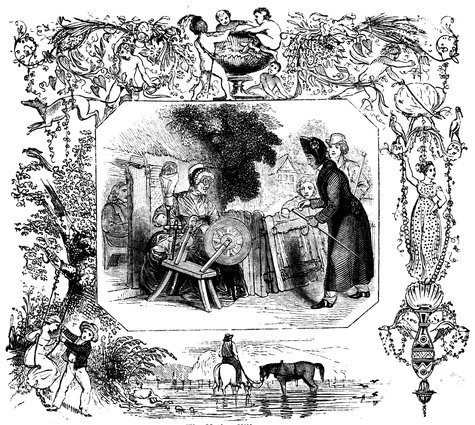
The Native Village, p. 281.
EVENING XXIII.
SHOW AND USE; OR, THE TWO PRESENTS.
One morning, Lord Richmore, coming down to breakfast, was welcomed
with the tidings that his favourite mare, Miss Slim, had brought a foal,
and also, that a she-ass, kept for his lady’s use as a milker, had dropped
a young one. His lordship smiled at the inequality of the presents nature
had made him. “As for the foal,” said he to the groom, “that, you know,
has been long promised to my neighbour, Mr. Scamper. For young
Balaam, you may dispose of him as you please.” The groom thanked
his lordship, and said he would then give him to Isaac the woodman.
276In due time, Miss Slim’s foal, which was the son of a noted racer, was
taken to Squire Scamper’s, who received him with great delight, and out
of compliment to the donor, named him Young Peer. He was brought
up with at least as much care and tenderness as the Squire’s own children—kept
in a warm stable, fed with the best of corn and hay, duly dressed
and regularly exercised. As he grew up, he gave tokens of great beauty.
His colour was bright bay, with a white star on his forehead; his coat was
fine, and shone like silk; and every point about him seemed to promise
perfection of shape and make. Everybody admired him as the completest
colt that could be seen.
So fine a creature could not be destined to any useful employment.
After he had passed his third year, he was sent to Newmarket to be
trained for the turf, and a groom was appointed to the care of him alone.
His master, who could not well afford the expense, saved part of it by
turning off a domestic tutor whom he kept for the education of his sons,
and was content with sending them to the curate of the parish.
At four years old, Young Peer started for a subscription purse, and
came in second out of a number of competitors. Soon after, he won a
country plate, and filled his master with joy and triumph. The Squire
now turned all his attention to the turf, made matches, betted high, and
was at first tolerably successful. At length, having ventured all the
money he could raise upon one grand match, Young Peer ran on the
wrong side of the post, was distanced, and the Squire ruined.
Meantime, young Balaam went into Isaac’s possession, where he had a
very different training. He was left to pick up his living as he could in
the lanes and commons; and on the coldest days in winter he had no
other shelter than the lee-side of the cottage, out of which he was often
glad to pluck the thatch for a subsistence. As soon as ever he was able
to bear a rider, Isaac’s children got upon him, sometimes two or three at
once; and if he did not go to their mind, a broomstick or bunch of furze
was freely applied to his hide. Nevertheless, he grew up, as the children
themselves did, strong and healthy; and though he was rather bare on
the ribs, his shape was good, and his limbs vigorous.
It was not long before his master thought of putting him to some use;
so taking him to the wood, he fastened a load of fagots on his back, and
sent him with his son Tom to the next town. Tom sold the fagots, and
mounting upon Balaam, rode him home. As Isaac could get plenty of fagots
and chips, he found it a profitable trade to send them for daily sale upon
277Balaam’s back. Having a little garden, which, from the barrenness of
the soil, yielded him nothing of value, he bethought him of loading
Balaam back from town with dung for manure. Though all he could
bring at once was contained in two small panniers, yet this in time
amounted to enough to mend the soil of his whole garden, so that he grew
very good cabbages and potatoes, to the great relief of his family. Isaac
being now sensible of the value of his ass, began to treat him with more
attention. He got a small stack of rushy hay for his winter fodder, and
with his own hands built him a little shed of boughs and mud, in order
to shelter him from the bad weather. He would not suffer any of his
family to use Balaam ill, and after his daily journeys he was allowed to
ramble at pleasure. He was now and then cleaned and dressed, and
upon the whole made a reputable figure. Isaac took in more land from the
waste, so that by degrees he became a little farmer, and kept a horse and
cart, a cow, and two or three pigs. This made him quite a rich man, but
he had always the gratitude to impute his prosperity to the good services
of Balaam, the groom’s present; while the Squire cursed Young Peer as
the cause of his ruin, and many a time wished that his lordship had kept
his dainty gift to himself.
THE CRUCIFORM-FLOWERED PLANTS.
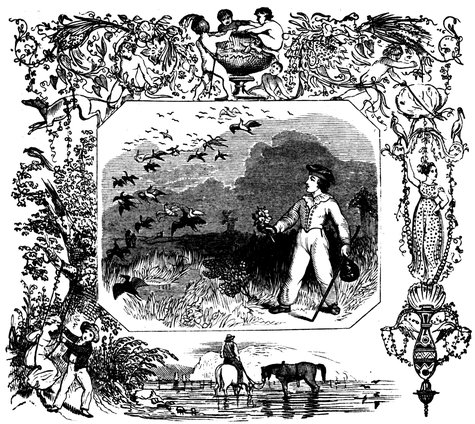
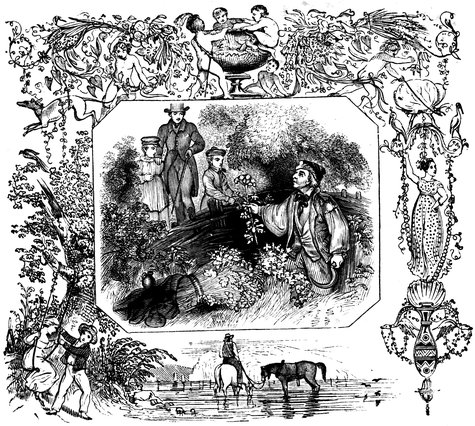
George. How rich yon field looks with its yellow flowers! I wonder
what they can be?
Tutor. Suppose you go and see if you can find it out; and bring a stalk
of the flowers with you.
Geo. (Returning). I know now—they are turnips.
Tut. I thought you could make it out when you came near them.
These turnips are left to seed, which is the reason why you see them run
to flower. Commonly they are pulled up sooner.
Harry. I should not have thought a turnip had so sweet a flower.
Geo. I think I have smelt others like them. Pray, sir, what class of
plants do they belong to?
Tut. To a very numerous one, with which it is worth your while to
get acquainted. Let us sit down and examine them. The petal, you
observe, consists of four flat leaves set opposite to each other, or crosswise.
From this circumstance the flowers have been called cruciform.
278As most plants with flowers of this kind bear their seeds in pods, they
have likewise been called the siliquose plants, siliqua being the Latin
for a pod.
Geo. But the papilionaceous flowers bear pods, too.
Tut. True; and therefore the name is not a good one. Now pull off
the petals one by one. You see they are fastened by long claws within
the flower cup. Now count the chives.
Har. There are six.
Geo. But they are not all of the same length—two are much shorter
than the rest.
Tut. Well observed. It is from this that Linnæus has formed a
particular class for the whole tribe, which he calls tetradynamia, a word
implying four powers, or the power of four, as if the four longer chives
were more perfect and efficacious than the two shorter; which, however,
we do not know to be the case. This superior length of four chives is
conspicuous in most plants of this tribe, but not in all. They have, however,
other resemblances which are sufficient to constitute them a natural
family; and accordingly all botanists have made them such.
The flowers, as I have said, have in all of them four petals placed
crosswise. The calyx also consists of four oblong and hollow leaves.
There is a single pistil, standing upon a seed-bud, which, turns either
into a long pod, or a short round one called a pouch; and hence are
formed the two great branches of the family, the podded and the pouched.
The seed-vessel has two valves, or external openings, with a partition
between. The seeds are small and roundish, attached alternately to
both sutures or joinings of the valves. Do you observe all these circumstances?
Geo. and Har. We do.
Tut. You shall examine them more minutely in a larger plant of the
kind. Further, almost all these plants have somewhat of a biting taste,
and also a disagreeable smell in their leaves, especially when decayed.
A turnip-field, you know, smells but indifferently; and cabbage, which is
one of this class, is apt to be remarkably offensive.
Har. Yes, there is nothing worse than rotten cabbage-leaves.
Geo. And the very water in which they are boiled is enough to scent a
whole house.
Tut. The flowers, however, of almost all the family are fragrant, and
some remarkably so. What do you think of wall-flowers, and stocks?
279Har. What, are they of this kind?
Tut. Yes—and so is candy-tuft, and rocket.
Har. Then they are not to be despised.
Tut. No—and especially as not one of the whole class, I believe, is
poisonous; but, on the contrary, many of them afford good food for man
and beast. Shall I tell you about the principal of them?
Geo. Pray do, sir.
Tut. The pungency of taste which so many of them possess has caused
them to be used for salad herbs. Thus we have cress, water-cress, and
mustard; to which might be added many more which grow wild, as lady-smock,
wild-rocket, hedge-mustard, and jack-by-the-hedge, or sauce-alone.
Mustard, you know, is also greatly used for its seeds, the powder or flower
of which, made into a sort of paste with salt and water, is eaten with
many kinds of meat. Rape-seeds are very similar to them, and from both
an oil is pressed out, of the mild or tasteless kind, as it is likewise from
cole-seed, another product of this class. Scurvy-grass, which is a pungent
plant of this family, growing by the seaside, has obtained its name from
being a remedy for the scurvy. Then there is horseradish, with the root
of which I am sure you are well acquainted, as a companion to roast beef.
Common radish, too, is a plant of this kind, which has a good deal of
pungency. One sort of it has a root like a turnip, which brings it near in
quality to the turnip itself. This last plant, though affording a sweet and
mild nutriment, has naturally a degree of pungency and rankness.
Geo. That, I suppose, is the reason why turnipy milk and butter have
such a strong taste?
Tut. It is.
Har. Then why do they feed cows with it?
Tut. In this case as in many others, quality is sacrificed to quantity.
But the better use of the turnip to the farmer is to fatten sheep and cattle.
By its assistance he is enabled to keep many more of these animals than
he could find grass or hay for; and the culture of turnips prepares his land
for grain as well, or better, than could be done by letting it lie quite fallow.
Turnip husbandry, as it is called, is one of the capital modern improvements
of agriculture.
Geo. I think I have heard that Norfolk is famous for it.
Tut. It is so. That county abounds in light sandy lands, which are
peculiarly suitable to turnips. But they are now grown in many parts
of England besides. Well—but we must say something more about
280cabbage, an article of food of very long standing. The original species
of this is a seaside plant, but cultivation has produced a great number of
varieties well known in our gardens, as white and red cabbage, kale,
colewort, brocoli, borecole, and cauliflower.
Har. But the flower of cauliflower does not seem at all like that of
cabbage or turnip.
Tut. The white head, called its flower, is not properly so, but consists
of a cluster of imperfect buds. If they are left to grow for seed, they
throw out some spikes of yellow flowers like common cabbage. Brocoli
heads are of the same kind. As to the head of white or red cabbage, it
consists of a vast number of leaves closing round each other, by which
the innermost are prevented from expanding, and remain white on account
of the exclusion of the light and air. This part, you know, is most valued
for food. In some countries they cut cabbage-heads into quarters, and
make them undergo a kind of acid fermentation; after which they are
salted and preserved for winter food, under the name of sour-krout.
Geo. Cattle, too, are sometimes fed with cabbage, I believe.
Tut. Yes, and large fields of them are cultivated for that purpose.
They succeed best in stiff clayey soils, where they sometimes grow to an
enormous bigness. They are given to milch kine as well as to fattening
cattle.
Geo. Do not they give a bad taste to the milk?
Tut. They are apt to do so unless great care is taken to pick off all the
decayed leaves.
Coleworts, which are a smaller sort of cabbage, are sometimes grown
for feeding sheep and cattle. I think I have now mentioned most of the
useful plants of this family, which you see are numerous and important.
They both yield beef and mutton, and the sauce to them. But many of
the species are troublesome weeds. You see how yonder corn is overrun
with yellow flowers.
Geo. Yes: they are as thick as if they had been sown.
Tut. They are of this family, and called charlock, or wild mustard, or
corn kale, which, indeed, are not all exactly the same things, though nearly
resembling. These produce such plenty of seeds, that it is very difficult
to clear a field of them, if once they are suffered to grow till the seeds ripen.
An extremely common weed in gardens and by roadsides is shepherd’s-purse,
which is a very good specimen of the pouch-bearing plants of this
tribe, its seed-vessels being exactly the figure of a heart. Lady-smock is
281often so abundant a weed in wet meadows as to make them all over white
with their flowers. Some call this plant cuckoo-flower, because its flowering
is about the same time with the first appearance of that bird in spring.
Geo. I remember some pretty lines in a song about spring, in which
lady-smock is mentioned:—
“When daisies pied, and violets blue,
And lady-smocks all silver white,
And cuckoo-buds of yellow hue,
Do paint the meadows with delight.”
Tut. They are Shakspeare’s. You see he gives the name of cuckoo-bud
to some other flower, a yellow one, which appears at the same season.
But still earlier than this time, walls and hedge-banks are enlivened by a
very small white flower, called whitlow-grass, which is one of the tribe.
Har. Is it easy to distinguish the plants of this family from one another?
Tut. Not very easy; for the general similarity of the flowers is so great,
that little distinction can be drawn from them. The marks of the species
are chiefly taken from the form and manner of growth of the seed-vessel,
and we will examine some of them by the descriptions in a book of botany.
There is one very remarkable seed-vessel, which probably you have
observed in the garden. It is a perfectly round large flat pouch, which
after it has shed its seed, remains on the stalk and looks likes a thin white
bladder. The plant bearing it is commonly called honesty.
Har. O, I know it very well! It is put into winter flower-pots.
Tut. True. So much, then, for the tetradynamous or cruciform-flowered
plants. You cannot well mistake them for any other class, if
you remark the six chives, four of them, generally, but not always, longer
than the two others; the single pistil changing either into a long pod or a
round pouch containing the seeds; the four opposite petals of the flower,
and four leaves of the calyx. You may safely make a salad of the young
leaves wherever you find them: the worst they can do to you is to bite
your tongue.
THE NATIVE VILLAGE.— A Drama. — Scene— A scattered Village almost hidden with trees . — Scene II.— The inside of the cottage. An old man sitting by the hearth.
Enter Harford and Beaumont.
Harford. There is the place! This is the green on which I played
many a day with my companions; there are the tall trees that I have so
282often climbed for birds’-nests; and that is the pond where I used to sail
my walnut-shell boats. What a crowd of mixed sensations rush on my
mind! What pleasures, and what regret! Yes, there is somewhat in
our native soil that affects the mind in a manner different from every other
scene in nature.
Beaumont. With you it must be merely the place; for I think you can
have no attachments of friendship or affection in it, considering your long
absence, and the removal of all your family.
Harf. No, I have no family connexions, and indeed can scarcely be
said ever to have had any; for, as you know, I was almost utterly
neglected after the death of my father and mother, and while all my elder
brothers and sisters were dispersed to one part or another, and the little
remaining property was disposed of, I was left with the poor people who
nursed me, to be brought up just as they thought proper; and the little
pension that was paid for me entirely ceased after a few years.
Beau. Then how were you afterward supported?
Harf. The honest couple who had the care of me continued to treat
me with the greatest kindness; and poor as they were, not only maintained
me as a child of their own, but did all in their power to procure me
advantages more suited to my birth than my deserted situation. With
the assistance of the worthy clergyman of the parish, they put me to a
day-school in the village, clothed me decently, and being themselves
sober, religious persons, took care to keep me from vice. The obligations
I am under to them, will, I hope, never be effaced from my memory, and
it is on their account alone that I have undertaken this journey.
Beau. How long did you continue with them?
Harf. Till I was thirteen. I then felt an irresistible desire to fight for
my country; and learning by accident that a distant relation of our family
was a captain of a man-of-war, I took leave of my worthy benefactors, and
set off to the seaport where he lay, the good people furnishing me in the
best manner they were able with necessaries for the journey. I shall
never forget the tenderness with which they parted with me. It was, if
possible, beyond that of the kindest parents. You know my subsequent
adventures, from the time of my becoming a midshipman, to my present state
of first-lieutenant of the Britannia. Though it is now fifteen years since
my departure, I feel my affection for these good folks stronger than ever,
and could not be easy without taking the first opportunity of seeing them.
Beau. It is a great chance if they are both living.
283Harf. I happened to hear by a young man of the village, not long since,
that they were; but I believe much reduced in their circumstances.
Beau. Whereabouts did they live?
Harf. Just at the turning of this corner. But what’s this?—I can’t find
the house—yet I am sure I have not forgot the situation. Surely it must
be pulled down! Oh! my dear old friends, what can have become of you?
Beau. You had best ask that little girl.
Harf. Hark ye, my dear! do you know one John Beech, of this place?
Girl. What, old John Beech? O yes, very well, and Mary Beech, too.
Harf. Where do they live?
Girl. A little farther on in the lane.
Harf. Did they not once live hereabouts?
Girl. Yes, till Farmer Tything pulled the house down to make his hop-garden.
Harf. Come with me to show me the place, and I’ll give you a penny.
Girl. Yes, that I will. (They walk on.) There—that low thatched
house—and there’s Mary spinning at the door.
Harf. There, my dear (gives money, and the girl goes away). How
my heart beats! Surely that cannot be my nurse! Yes, I recollect her
now; but how very old and sickly she looks!
Beau. Fifteen years in her life, with care and hardship, must go a great
way in breaking her down.
Harf. (going to the cottage-door). Good morning, good woman; can
you give my companion and me something to drink? We are very thirsty
with walking this hot day.
Mary Beech. I have nothing better than water, sir; but if you please
to accept of that, I will bring you some.
Beau. Thank you—we will trouble you for some.
Mary. Will you please to walk in out of the sun, gentlemen; ours is a
very poor house, indeed; but I will find you a seat to sit down on, while
I draw the water.
Harf. (to Beau.). The same good creature as ever! Let us go in.
Beau. We have made bold, friend, to trouble your wife for a little water.
John. Sit down—sit down—gentlemen. I would get up to give you
my chair, but I have the misfortune to be lame, and am almost blind too.
Harf. Lame and blind! Oh Beaumont! (aside).
284John. Ay, sir, old age will come on; and, God knows, we have very
little means to fence against it.
Beau. What, have you nothing but your labour to subsist on?
John. We made that do, sir, as long as we could; but now I am hardly
capable of doing anything, and my poor wife can earn very little by spinning,
so we have been forced at last to apply to the parish.
Harf. To the parish! Well I hope they consider the services of your
better days, and provide for you comfortably.
John. Alas, sir; I am not much given to complain; but what can two
shillings a week do in these hard times?
Harf. Little enough, indeed! And is that all they allow you?
John. It is, sir; and we are not to have that much longer, for they say
we must come into the workhouse.
Mary (entering with the water). Here, gentlemen, the jug is clean,
if you can drink out of it.
Harf. The workhouse, do you say?
Mary. Yes, gentlemen; that makes my poor husband so uneasy—that
we should come in our old days to die in a workhouse. We have lived
better, I assure you—but we were turned out of our little farm by the great
farmer near the church; and since then we have grown poorer and poorer,
and weaker and weaker, so that we have nothing to help ourselves with.
John (sobbing). To die in a parish workhouse—I can hardly bear the
thought of it! But God knows best, and we must submit!
Harf. But, my good people, have you no children to assist you?
John. Our children, sir, are all dead except one that is settled a long
way off, and as poor as we are.
Beau. But surely, my friends, such decent people as you seem to be,
must have somebody to protect you.
Mary. No, sir; we know nobody but our neighbours, and they think
the workhouse good enough for the poor.
Harf. Pray, was there not a family of Harfords once in this village?
John. Yes, sir, a long while ago—but they are all dead and gone, or
else far enough from this place.
Mary. Ay, sir, the youngest of them, and the finest child among them,
that I’ll say for him, was nursed in our house when we lived on the old spot
near the green. He was with us till he was thirteen, and a sweet-behaved
boy he was; I loved him as well as ever I did any of my own children.
Harf. What became of him?
285John. Why, sir, he was a fine bold-spirited boy, though the best tempered
creature in the world—so last war he would be a sailor, and fight the French
and Spaniards, and away he went, nobody could stop him, and we have
never heard a word of him since.
Mary. Ay, he is dead or killed, I warrant—for if he was alive, I am sure
nothing would keep him from coming to see his poor daddy and mamma
as he used to call us. Many a night have I lain awake thinking of him!
Harf. (to Beau.). I can hold no longer.
Beau. (to him). Restrain yourself awhile. Well, my friends, in return
for your kindness, I will tell you some news that will please you. This
same Harford, Edward Harford....
Mary. Ay, that was his name—my dear Ned!—What of him, sir, is he
living?
John. Let the gentlemen speak, my dear.
Beau. Ned Harford is now alive and well, and a lieutenant in his
majesty’s navy, and as brave an officer as any in the service.
John. I hope you do not jest with us, sir?
Beau. I do not, upon my honour.
Mary. Oh, thank God—thank God—if I could but see him!
John. Ay, I wish for nothing more before I die.
Harf. Here he is—here he is! My dearest, best benefactors! Here
I am, to pay some of the great debt of kindness I owe you. (Clasps
Mary round the neck, and kisses her.)
Mary. What—this gentleman my Ned! Ay, it is, it is—I see it, I see it!
John. Oh, my old eyes!—but I know his voice now. (Stretches out
his hand, which Harford grasps.)
Harf. My good old man! Oh that you could see me as clearly as I
do you!
John. Enough—enough—it is you, and I am contented.
Mary. O, happy day! O, happy day!
Harf. Did you think I could ever forget you?
John. Oh, no; I knew you better; but how long it is since we parted!
Mary. Fifteen years come Whitsuntide.
Harf. The first time I set foot in England all this long interval was
three weeks ago.
John. How good you were to come to us so soon!
Mary. What a tall strong man you are grown! but you have the same
sweet smile as ever.
286John. I wish I could see him plain—but what signifies! he’s here, and
I hold him by the hand. Where’s the other good gentleman?
Beau. Here—very happy to see such worthy people made so.
Harf. He has been my dearest friend for a great many years, and I am
beholden to him almost as much as to you two.
Mary. Has he? God bless him and reward him!
Harf. I am grieved to think what you must have suffered from hardship
and poverty. But that is all at an end—no workhouse now.
John. God bless you! then I shall be happy still. But we must not be
burdensome to you.
Harf. Don’t talk of that. As long as I have a shilling, it is my duty to
give you sixpence of it. Did you not take care of me when all the world
forsook me, and treated me as your own child when I had no other parent;
and shall I ever forsake you in your old age! Oh never—never!
Mary. Ay, you had always a kind heart of your own. I always used
to think our dear Ned would some time or other prove a blessing to us.
Harf. You must leave this poor hut, that is not fit to keep out the
weather, and we must get you a snug cottage in this village or some other.
John. Pray, my dear sir, let us die in this town, as we have always
lived in it. And as to a house, I believe that where old Richard Carpenter
used to live in is empty, if it would not be too good for us.
Harf. What, the white cottage on the green? I remember it; it is just
the thing. You shall remove there this very week.
Mary. This is beyond all my hopes and wishes!
Harf. There you shall have a little close to keep a cow—and a girl to
milk her, and take care of you both—and a garden well stocked with herbs
and roots—and a little yard for pigs and poultry; and some good new
furniture for your house.
John. O, too much—too much!
Mary. What makes me cry so, when so many good things are coming
to us?
Harf. Who is the landlord of this house?
John. Our next neighbour, Mr. Wheatfield.
Harf. I’ll go and speak about it directly and then come to you again.
Come, Beaumont. God bless you both!
John. God in heaven bless you!
Mary. O, happy day. O, happy day!
287
PERSEVERANCE AGAINST FORTUNE.— A Story.
Theodore was a boy of lively parts and engaging manners; but he
had the failing of being extremely impatient in his temper and inclined
to extremes. He was ardent in all his pursuits, but could bear no
disappointment; and if the least thing went wrong, he threw up what
he was about in a pet, and could not be prevailed upon to resume it. His
father, Mr. Carleton, had given him a bed in the garden, which he had
cultivated with great delight. The borders were set with double daisies
of different colours, next to which was a row of auriculas and polyanthuses.
288Beyond were stocks and other taller flowers and shrubs; and a beautiful
damask rose graced the centre. This rose was just budding, and Theodore
watched its daily progress with great interest. One unfortunate day, the
door of the garden being left open, a drove of pigs entered, and began to
riot on the herbs and flowers. An alarm being sounded, Theodore and
the servant-boy rushed upon them, smacking their whips. The whole
herd, in affright, took their course across Theodore’s flower-bed, on which
some of them had before been grazing. Stocks, daisies, and auriculas
were all trampled down or torn up; and, what was worst of all, a large
old sow ran directly over the beautiful rose-tree, and broke off its stem
level with the ground. When Theodore came up and beheld all the
mischief, and especially his favourite rose strewed on the soil, rage and
grief choked his utterance. After standing a while the picture of despair,
he snatched up a spade that stood near, and with furious haste dug over
the whole bed, and whelmed all the relics of his flowers deep under the
soil. This exertion being ended, he burst into tears, and silently left the
garden.
His father, who had beheld the scene at a distance, though somewhat
diverted at the boy’s childish violence, yet began seriously to reflect on
the future consequences of such a temper, if suffered to grow up without
restraint. He said nothing to him at the time, but in the afternoon he
took a walk with him into a neighbouring parish. There was a large
wild common, and at the skirts of it a neat farmhouse with fields lying
round it, all well fenced, and cultivated in the best manner. The air
was sweetened with the bean-flower and clover. An orchard of fine
young fruit-trees lay behind the house and before it a little garden, gay
with all the flowers of the season. A stand of beehives was on the
southern side, sheltered by a thick hedge of honeysuckle and sweet-brier.
The farmyard was stocked with pigs and poultry. A herd of cows with
full udders was just coming home to be milked. Everything wore the
aspect of plenty and good management. The charms of the scene struck
Theodore very forcibly, and he expressed his pleasure in the warmest
terms. “This place,” said his father, “belongs to a man who is the
greatest example I know of patient fortitude bearing up against misfortune;
and all that you see is the reward of his own perseverance. I am a little
acquainted with him; and we will go in and beg a draught of milk, and
try if we can prevail upon him to tell us his story.” Theodore willingly
accompanied his father. They were received by the farmer with cordial
289frankness. After they were seated, “Mr. Hardman,” says Mr. Carleton,
“I have often heard part of your adventures, but never had a regular
account of the whole. If you will favour me and my little boy with the
story of them, we shall think ourselves much obliged to you.”—“Lacka-day!
sir,” said he, “there’s little in them worth telling of, as far as I
know. I have had my ups and downs in the world, to be sure, but so
have many men besides. However, if you wish to hear about them, they
are at your service; and I can’t say but it gives me pleasure sometimes
to talk over old matters, and think how much better things have turned
out than might have been expected.”—“Now I am of opinion,” said Mr.
Carleton, “that from your spirit and perseverance a good conclusion
might always have been expected.”—“You are pleased to compliment,
sir,” replied the farmer; “but I will begin without more words:—
“You may perhaps have heard that my father was a man of good
estate. He thought of nothing, poor man! but how to spend it; and he
had the uncommon luck to spend it twice over. For when he was obliged
to sell it the first time, it was bought in by a relation, who left it him
by his will. But my poor father was not a man to take warning. He fell
to living as he had done before, and just made his estate and his life hold
out together. He died at the age of five-and-forty, and left his family
beggars. I believe he would not have taken to drinking, as he did, had
it not been for his impatient temper, which made him fret and vex himself
for every trifle, and then he had nothing for it but to drown his care in
liquor.
“It was my lot to be taken by my mother’s brother, who was master of
a merchant-ship. I served him as an apprentice several years, and
underwent a good deal of the usual hardship of a sailor’s life. He had
just made me his mate in a voyage up the Mediterranean, when we had
the misfortune to be wrecked on the coast of Morocco. The ship struck at
some distance from shore, and we lay a long stormy night with the waves
dashing over us, expecting every moment to perish. My uncle and several
of the crew died of fatigue and want, and by morning but four of us were
left alive. My companions were so disheartened, that they thought of
nothing but submitting to their fate. For my part I thought life still
worth struggling for; and the weather having become calmer, I persuaded
them to join me in making a kind of raft, by the help of which, with much
toil and danger, we reached the land. Here we were seized by the
barbarous inhabitants, and carried up the country as slaves to the emperor
290We were employed about some public buildings, made to work very hard
with the whip at our backs, and allowed nothing but water and a kind of
pulse. I have heard persons talk as if there was little in being a slave
but the name; but they who have been slaves themselves I am sure will
never make light of slavery in others. A ransom was set on our heads,
but so high, that it seemed impossible for poor friendless creatures like us
ever to pay it. The thought of perpetual servitude, together with the
hard treatment we met with, quite overcame my poor companions. They
drooped and died one after another. I still thought it not impossible to
mend my condition, and perhaps to recover my freedom. We worked
about twelve hours in the day, and had one holyday in the week. I
employed my leisure time in learning to make mats and flag-baskets, in
which I soon became so expert as to have a good many for sale, and
thereby got a little money to purchase better food, and several small
conveniences. We were afterward set to work in the emperor’s gardens;
and here I showed so much good will and attention, that I got into favour
with the overseer. He had a large garden of his own; and he made
interest for me to be suffered to work for him alone, on the condition of
paying a man to do my duty. I soon became so useful to him, that he
treated me more like a hired servant than a slave, and gave me regular
wages. I learned the language of the country, and I might have passed
my time comfortably enough could I have accommodated myself to their
manners and religion, and forgotten my native land. I saved all I could
in order to purchase my freedom; but the ransom was so high, that I had
little prospect of being able to do it for some years to come. A circumstance,
however, happened which brought it about at once. Some villains one
night laid a plot to murder my master and plunder his house. I slept
in a little shed in the garden where the tools lay; and being awaked by a
noise, I saw four men break through the fence, and walk up an alley
toward the house. I crept out with a spade in my hand, and silently
followed them. They made a hole with instruments in the house-wall
big enough for a man to enter at. Two of them had got in, and the third
was beginning to enter, when I rushed forward, and with a blow of my
spade clove the scull of one of the robbers, and gave the other such a
stroke on the shoulder as disabled him. I then made a loud outcry to
alarm the family. My master and his son, who lay in the house, got up,
and having let me in, we secured the two others, after a sharp conflict, in
which I received a severe wound with a dagger. My master, who looked
291upon me as his preserver, had all possible care taken of me, and as soon
as I was cured made me a present of my liberty. He would fain have
kept me with him, but my mind was so much bent on returning to my
native country, that I immediately set out to the nearest seaport, and took
my passage in a vessel going to Gibraltar.
“From this place I returned in the first ship for England. As soon as
we arrived in the Downs, and I was rejoicing at the sight of the white
cliffs, a man-of-war’s boat came on board, and pressed into the king’s
service all of us who were seamen. I could not but think it hard that this
should be my welcome at home after a long slavery, but there was no
remedy. I resolved to do my duty in my station, and leave the rest
to Providence. I was abroad during the remainder of the war, and saw
many a stout fellow sink under disease and despondence. My knowledge
of seamanship got me promoted to the post of a petty officer, and at the
peace I was paid off, and received a pretty sum for wages and prize-money.
With this I set off for London. I had experienced too much
distress from want to be inclined to squander away my money, so I put
it into a banker’s hands, and began to look out for some new way of life.
“Unfortunately, there were some things of which I had no more
experience than a child, and the tricks of London were among these. An
advertisement offering extraordinary advantages to a partner in a commercial
concern who could bring a small capital, tempted me to make
inquiry about the matter; and I was soon cajoled by a plausible artful
fellow to venture my whole stock in it. The business was a manufacture,
about which I knew nothing at all; but as I was not afraid of my labour,
I set about working as they directed me, with great diligence, and thought
all was going on prosperously. One morning, on coming to the office, I
found my partners decamped; and the same day I was arrested for a
considerable sum due by the partnership. It was in vain for me to think
of getting bail, so I was obliged to go to prison. Here I should have been
half starved, but for my Moorish trade of matmaking, by the help of
which I bettered my condition for some months; when the creditors,
finding that nothing could be got out of me, suffered me to be set at liberty.
“I was now in the wide world without a farthing or a friend, but I,
thank God, had limbs and health left.
“I did not choose to trust the sea again, but preferred my other new
trade of gardening; so I applied to a nurseryman near town, and was
received as a day-labourer. I set myself cheerfully at work, taking care
292to be in the grounds the first man in the morning, and the last at night. I
acquainted my employer with all the practices I had observed in Morocco,
and got him, in return, to instruct me in his own. In time, I came to be
considered as a skilful workman, and was advanced to higher wages. My
affairs were in a flourishing state. I was well fed, and comfortably lodged,
and saved money into the bargain. About this time I fell in company
with a young woman at service, very notable and well behaved, who
seemed well qualified for a wife to a working-man. I ventured to make
an offer to her, which proved not disagreeable; and after we had calculated
a little how we were to live, we married. I took a cottage with an acre
or two of land to it, and my wife’s saving furnished our house, and bought
a cow. All my leisure time I spent upon my piece of ground, which
I made very productive, and the profits of my cow, with my wages,
supported us very well. No mortal, I think, could be happier than I was
after a hard day’s work, by my own fireside, with my wife beside me, and
our little infant on my knee.
“After this way of life had lasted two or three years, a gentleman who
had dealt largely with my master for young plants, asked him if he could
recommend an honest industrious man for a tenant, upon some land that
he had lately taken in from the sea. My master, willing to do me a
kindness, mentioned me. I was tempted by the proposal, and going down
to view the premises, I took a farm upon a lease at a low rent, and removed
my family and goods to it, one hundred and fifty miles from London.
There was ground enough for money, but much was left to be done for it
in draining, manuring, and fencing. Then it required more stock than I
was able to furnish; so, though unwilling, I was obliged to borrow some
money of my landlord, who let me have it at a moderate interest. I began
with a good heart, and worked late and early to put things into the best
condition. My first misfortune was that the place proved unhealthy to us.
I fell into a lingering ague, which pulled me down much, and hindered
my business. My wife got a slow fever, and so did our eldest child (we
had now two.) The poor child died; and what with grief and illness,
my wife had much ado to recover. Then the rot got among my sheep,
and carried off the best part of my stock. I bore up against distress as
well as I could; and by the kindness of my landlord, was enabled to
bring things tolerably about again. We regained our health, and began
to be seasoned to the climate. As we were cheering ourselves with the
prospect of better times, a dreadful storm arose—it was one night in
293February—I shall never forget it—and drove the spring tide with such
fury against our sea-banks, that they gave way. The water rushed in
with such force, that all was presently a sea. Two hours before daylight
I was awakened by the noise of the waves dashing against our house, and
bursting in at the door. My wife and I and the two children (the younger
but four weeks old) slept on a ground floor. We had just time to carry
the children up stairs, before all was afloat in the room. When day
appeared, we could see nothing from the windows but water. All the
outhouses, ricks, and utensils were swept away, and all the cattle and
sheep drowned. The sea kept rising, and the force of the current bore
so hard against our house, that we thought every moment it must
fall. We clasped our babies to our breasts, and expected nothing but
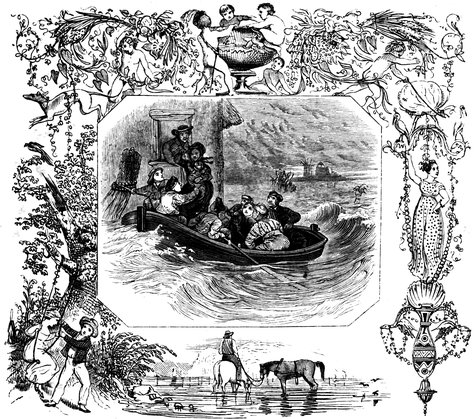
present death. At length, we spied a boat coming to us. With a good
deal of difficulty it got under our window, and took us in with a servant-maid
and boy. A few clothes was all the property we saved; and we
had not left the house half an hour, before it fell, and in a minute nothing
was to be seen of it. Not only the farmhouse, but the farm itself was
gone.
“I was now again a ruined man, and, what was worse, I had three
partners in my ruin. My wife and I looked at one another, and then at
our little ones, and wept. Neither of us had a word of comfort to say.
At last, thought I, this country is not Morocco, however. Here are good
souls that will pity our case, and perhaps relieve us. Then I have a
character, and a pair of hands. Things are bad but they might have been
worse. I took my wife by the hand, and knelt down. She did the same.
I thanked God for his mercy in saving our lives, and prayed that he would
continue to protect us. We rose up with lightened hearts, and were able
to talk calmly about our condition. It was my desire to return to my
former master, the nurseryman; but how to convey my family so far
without money was the difficulty. Indeed I was much worse than
nothing, for I owed a good deal to my landlord. He came down upon
the news of the misfortune, and though his own losses were heavy, he
not only forgave my debt and released me from all obligations, but made
me a small present. Some charitable neighbours did the like; but I was
most of all affected by the kindness of our late maid-servant, who insisted
upon our accepting of a crown which she had saved out of her wages.
Poor soul! we had always treated her like one of ourselves, and she felt for
us like one.
294“As soon as we had got some necessaries, and the weather was tolerable,
we set out on our long march. My wife carried her infant in her arms.
I took the bigger child on my back, and a bundle of clothes in my hand.
We could walk but a few miles a day, but we now and then got a lift in
an empty wagon or cart, which was a great help to us. One day we
met with a farmer returning with his team from market, who let me ride,
and entered into conversation with me. I told him of my adventures, by
which he seemed much interested; and learning that I was skilled in
managing trees, he acquainted me that a nobleman in his neighbourhood
was making great plantations, and would very likely be glad to engage
me; and he offered to carry us to the place. As all I was seeking was a
living by my labour, I thought the sooner I got it the better; so I thankfully
accepted his offer. He took us to the nobleman’s steward, and made
known our case. The steward wrote to my old master for a character;
and receiving a favourable one, he hired me as a principal manager of a
new plantation, and settled me and my family in a snug cottage near it.
He advanced us somewhat for furniture and present subsistence, and we
had once more a home. O sir! how many blessings are contained in that
word to those who have known the want of it!
“I entered upon my new employment with as much satisfaction as if I
was taking possession of an estate. My wife had enough to do in taking
care of the house and children; so it lay with me to provide for all, and
I may say that I was not idle. Besides my weekly pay from the steward,
I contrived to make a little money at leisure times by pruning and
dressing gentlemen’s fruit-trees. I was allowed a piece of waste ground
behind the house for a garden, and I spent a good deal of labour in bringing
it into order. My old master sent me down for a present some choice
young trees and flower-roots, which I planted, and they throve wonderfully.
Things went on almost as well as I could desire. The situation
being dry and healthy, my wife recovered her lost bloom, and the children
sprung up like my plants. I began to hope that I was almost out of the
reach of further misfortune; but it was not so ordered.
“I had been three years in this situation, and increased my family with
another child, when my lord died. He was succeeded by a very dissipated
young man, deep in debt, who presently put a stop to the planting and
improving of the estate, and sent orders to turn off all the workmen. This
was a great blow to me; however, I still hoped to be allowed to keep my
little house and garden, and I thought I could then maintain myself as a
295nurseryman and gardener. But a new steward was sent down, with
directions to rack the tenants to the utmost. He asked me as much rent
for the place as if I had found the garden ready made to my hands; and
when I told him it was impossible for me to pay it, he gave me notice to
quit immediately. He would neither suffer me to take away my trees
and plants, nor allow me anything for them. His view, I found, was to
put in a favourite of his own, and set him up at my expense. I remonstrated
against this cruel injustice, but could obtain nothing but hard words.
As I saw it would be the ruin of me to be turned out in that manner, I
determined, rather hastily, to go up to London, and plead my cause with
my new lord. I took a sorrowful leave of my family, and walking to the
next market-town, I got a place on the outside of the stage-coach. When
we were within thirty or forty miles of London, the coachman overturned
the carriage, and I pitched directly on my head, and was taken up senseless.
Nobody knew anything about me; so I was carried to the next
village, where the overseer had me taken to the parish workhouse. Here
I lay a fortnight, much neglected, before I came to my senses. As soon
as I became sensible of my condition, I was almost distracted in thinking
of the distress of my poor wife, who was near lying-in, must be under on
my account, not hearing anything of me. I lay another fortnight before
I was fit to travel, for besides the hurt on my head, I had a broken collarbone,
and several bruises.
“My money had somehow all got out of my pocket, and I had no other
means of getting away than by being passed to my own parish. I returned
in sad plight, indeed, and found my wife very ill in bed. My children
were crying about her, and almost starving. We should now have been
quite lost, had I not raised a little money by selling our furniture; for I
was yet unable to work. As soon as my wife was somewhat recovered,
we were forced to quit our house. I cried like a child on leaving my
blooming garden and flourishing plantations, and was almost tempted to
demolish them, rather than that another should unjustly reap the fruit of
my labours. But I checked myself and I am glad that I did. We took
lodgings in a neighbouring village, and I went round among the gentlemen
of the country to see if I could get a little employment. In the
meantime, the former steward came down to settle accounts with his
successor, and was much concerned to find me in such a situation. He
was a very able and honest man, and had been engaged by another
nobleman to superintend a large improvable estate, in a distant part of
296the kingdom. He told me, if I would try my fortune with him once
more he would endeavour to procure me a new settlement. I had nothing
to lose, and, therefore, was willing enough to run any hazard, but I was
destitute of means to convey my family to such a distance. My good
friend, who was much provoked at the injustice of the new steward, said
so much to him, that he brought him to make me an allowance for my
garden; and with that I was enabled to make another removal. It was
to the place I now inhabit.
“When I came here, sir, all this farm was a naked common like that
you crossed in coming. My lord got an enclosure-bill for his part of it,
and the steward divided it into different farms, and let it on improving
leases to several tenants. A dreary spot to be sure it looked at first, enough
to sink a man’s heart to sit down upon it. I had a little unfinished cottage
given me to live in; and as I had nothing to stock a farm, I was for some
years employed as head labourer and planter about the new enclosures.
By very hard working and saving, together with a little help, I was at
length enabled to take a small part of the ground I now occupy. I had
various discouragements, from bad seasons and other accidents. One year
the distemper carried off four out of seven cows that I kept; another year
I lost two of my best horses. A high wind once almost entirely destroyed
an orchard I had just planted, and blew down my biggest barn. But I
was too much used to misfortunes to be easily disheartened, and my way
always was to set about repairing them in the best manner I could, and
leave the rest to Heaven. This method seems to have answered at last.
I have now gone on many years in a course of continued prosperity, adding
field to field, increasing my stock, and bringing up a numerous family with
credit. My dear wife, who was my faithful partner through so much
distress, continues to share my prosperous state; and few couples in the
kingdom, I believe, have more cause to be thankful for their lot. This,
sir, is my history. You see it contains nothing very extraordinary; but
if it impresses on the mind of this young gentleman the maxim that
patience and perseverance will scarcely fail of a good issue in the end,
the time you have spent in listening to it will not entirely be lost.”
Mr. Carleton thanked the good farmer very heartily for the amusement
and instruction he had afforded them, and took leave with many expressions
of regard. Theodore and he walked home, talking by the way of
what they had heard.
Next morning, Mr. C. looking out of the window, saw Theodore hard
297at work in his garden. He was carefully disinterring his buried flowers,
trimming and cleaning them, and planting them anew. He had got the
gardener to cut a slip of the broken rose-tree, and set it in the middle to
give it a chance of growing. By noon everything was laid smooth and
neat, and the bed was well filled. All its splendour, indeed, was gone
for the present, but it seemed in a hopeful way to revive again. Theodore
looked with pleasure over his work; but his father felt more pleasure in
witnessing the first-fruits of Farmer Hardman’s story.