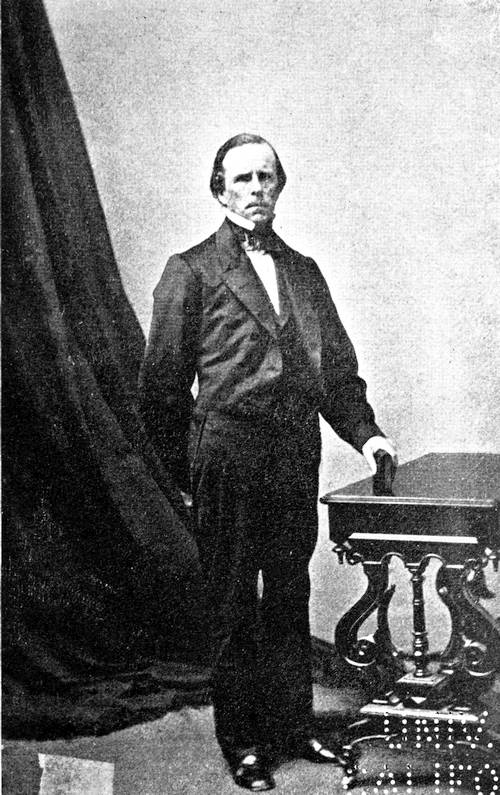
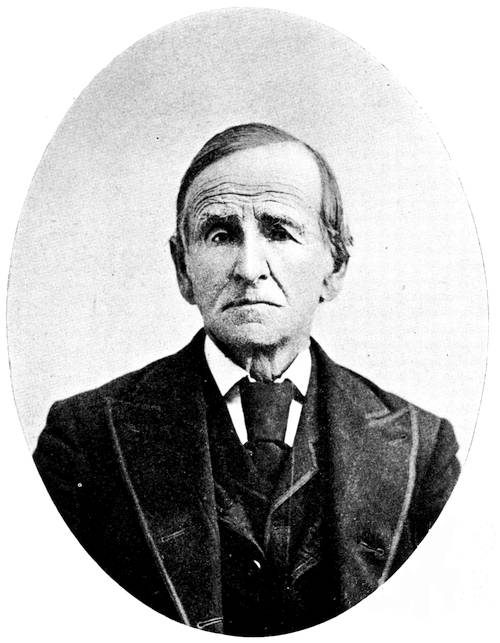
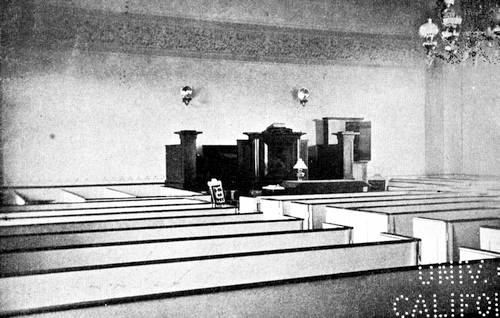
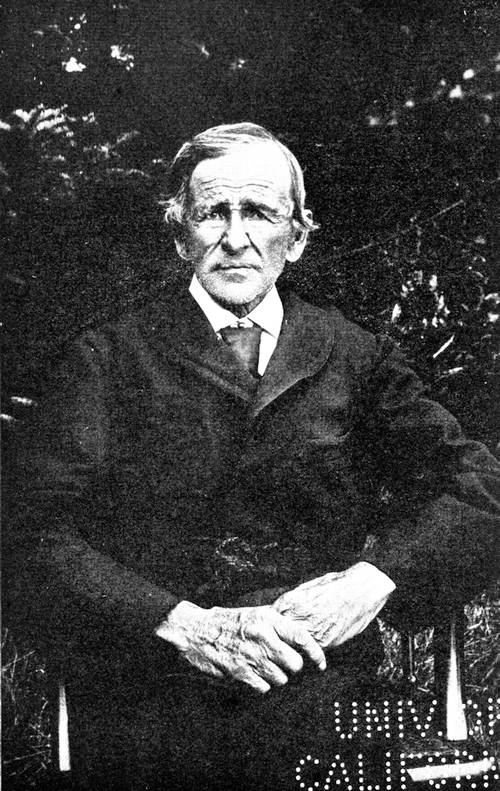
Wilmot Brookings Mitchell
Mr. Kellogg accepted the call to the
Mariners’ Church in 1854, not because he
had tired of his Harpswell farm or pastorate.
They were as dear to him as ever. But
fitted by nature and by experience to work
among sailors, he saw in the Boston pastorate
increased opportunities for doing good.
Doubtless, too, financial considerations had
their weight in this decision; for he had been
unable to pay for his farm, and he hoped
from the larger salary he would receive at
the Mariners’ Church to save money enough
to cancel that debt. While he was in Boston,
he did not sever his connection with his
Harpswell parish. Each summer he spent
some time on his farm and preached a Sunday
or two at the church. And now and then
these people would see him in the winter,
when some special errand of love or of
business called him hither. At such times
they were reminded that the city was not
spoiling their minister, but that he was the
same unique, unselfish, fearless man.
On one November, for example, he appeared
at “Uncle” William Alexander’s with two
sailors. These men, who had been dissipated,
he had persuaded to sign the pledge. He
feared, however, that if they went off to sea
at once, they would forget their good resolutions
and fall back into their old ways
of drinking. They tried to get work in
Boston and failed. At length they said if
they only had a boat, they could fish for a
living. Mr. Kellogg thought of his own
twenty-five-foot boat, and at once they set out
for Harpswell to get it. The morning after
their arrival a northeast wind was blowing a
gale, kicking up a rough sea. Mr. Kellogg
doubted the feasibility of starting for Boston
in such a gale. Whereupon the sailors
questioned his courage! They did not know
their man. “Don’t dare to, eh? We’ll see
who dares.” Quickly making ready, he set
out in his little boat, while his old neighbors,
knowing his absence of caution or of fear,
prophesied disaster. By the time the boat was
off Cape Elizabeth, the old sailors were begging
their captain to make harbor. But no;
they must see who dared! When, cold and
drenched, they reached Gloucester that evening,
they had fully decided never to stump the
sailor-preacher again.
From 1865, when he resigned as acting
pastor of the Mariners’ Church, until 1882
Mr. Kellogg continued to reside in Boston,
busily engaged in writing his books and in
preaching. During these years he supplied
pulpits at Wellesley, Massachusetts (1867),
Cumberland Mills, Maine (1869), Portland,
Maine (1870), and Pigeon Cove, Massachusetts
(1874-1875). To the Warren Church at
Cumberland Mills, the Second Parish Church
at Portland, and the Congregational Church
at New Bedford he received calls; all of which
he declined.
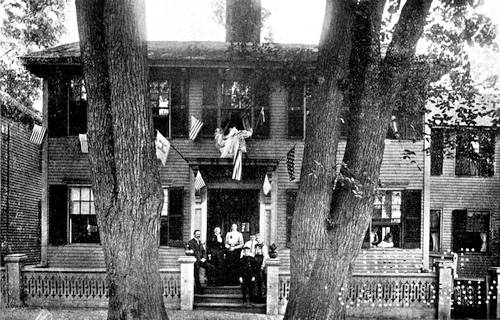
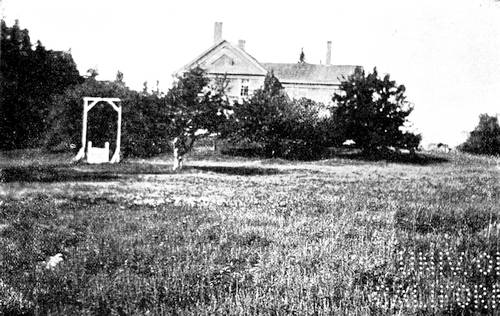
In 1882 Mr. Kellogg came back to Harpswell
to live for the rest of his life. He had
worked hard in Boston and had made there
many firm friends, but a large city was not the
place for one who loved the smell of earth as
well as he. He had often told his Harpswell
friends that if he could consult only his
own wishes, he would rather pass a winter
in a brush camp built on the lee side of
William Alexander’s stone wall than return
to Boston. Like many another, “he found
himself hungry to throw aside the tame and
trite forms of existence and to penetrate the
harsh, true, simple things behind. His imagination
and his heart turned towards the
primitive, indispensable labors on which society
rests,—the life of the husbandman, the
laborer, the smith, the woodman, the builder;
he dreamed the old enchanted dream of living
with nature.”
Though glad to return, Mr. Kellogg came
back to his first parish a poor man. His
books had made his name known throughout
the United States, but fame and the consciousness
of having done much good were his only
remaining proceeds from years of writing.
By the fire of 1872, and the consequent failure
of his publishers, he had lost money that
he could ill afford to lose. Pressed for funds,
he had even been obliged to sell all his copyrights,
with one exception—that of “Good
Old Times.” He came back to his Harpswell
home in debt, his farm run down, blindness
threatening his wife, deafness and old age
beginning to creep upon him. But his old
grit and courage were still left; and he found
his Harpswell friends unchanged, they and
their children eager to welcome him back and
to help him in every way they could. As
General Chamberlain so well shows in the
next chapter, he went to work with a will
to do his best,—farming, preaching, going
wherever duty called on errands of charity
and consolation.
These were undoubtedly hard years. His
struggle with debt was often embarrassing;
his growing deafness caused him anxiety; and
in 1890 the death of her who had been his
companion and counsellor for more than forty
years bowed him in grief. His son and daughter
besought him to come and make his home
with them. But that was not his way. He
must stay in Harpswell and do his work.
Between 1883 and 1889 Mr. Kellogg preached
in the neighboring town of Topsham, driving
up Saturday afternoon and returning Monday
morning. In 1889 he came back to his old
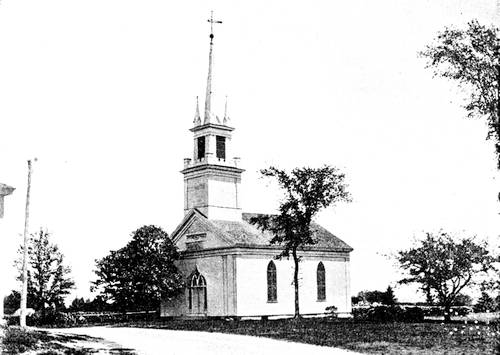
pulpit, and there, in the church that had been
built for him, he continued to preach, until he
died, on March 17, 1901, with this message to
his faithful flock upon his lips, “I want to send
my love to all these people.”
Journal.
As one reads the journal which Mr. Kellogg
kept during these years of struggle, “the years,”
as he called them, “of the right hand of the
Most High,” one feels that out of the struggle
came a character which ease and plenty could
not have given him. His boyish enthusiasm,
his ready wit, his fun and humor, are all
here; and here, too, is the faith of one who
walked as seeing the Invisible. He indeed
proved the promise, “To him that overcometh
will I give to eat of the hidden manna.”
His abounding gratitude, his childlike faith,
his willingness to put his hand in God’s and be
led of Him, his love for his people, and the way
prayer and deed were beautifully intermingled
in his life, may be seen on every page that he
wrote during these last years.
May 29, 1882.
I have kept the day as a day of fasting and
prayer. I have been called by the church to
go to Harpswell. I dare not refuse to go; at
the same time I do not see how I can go....
I have this day endeavored to cast my burden
on the Lord, feeling that as He has sent me to
Harpswell, He will provide me with a way of
getting there and enable me to do my necessary
work. And I have resolved to trace and set
down the different steps by which I am led
and to mark the finger of God in them all.
Sabbath,
June 18,
1882.
I have preached half a day and the people
seemed to make much effort to get to meeting,
and seemed, I thought, very tender.
April 2, 1884.
In the evening went to see —— —— and
had a most pleasant evening. I believe I can
do good in that family.
April 17,
1884.
This afternoon I went to the college. Found
a new student, Morton, who comes to meeting,
and he invited me to his room. Saw B——
and gave him a hint about his soul.
June 18,
1884.
I had my barley on the ground and by working
through the afternoon and getting to Topsham
the last moment could have sowed it, but
my conscience told me that was not in the
spirit of the resolutions made the Sabbath
before. Corrupt nature said, “It is duty to
get your bread.” I was enabled to say, “Corruption,
go about your business, my business
is with God.” I went to my knees, made
preparation for the Friday night meeting, and
was enabled by grace, on a pleasant, sunny
afternoon at four o’clock, to turn my back
cheerfully on my work and go to Topsham.
June 28,
1884.
I finished sowing barley to-day, and I knelt
down on the ground and prayed to God that
as I had used my own judgment to the best
advantage, had taken the advice of others, had
worked diligently, and had not neglected my
duty to Him that He would be pleased to bless
this crop sown so late and under so many disadvantages
and give me from it some good
returns.
Nov. 26,
1885.
Rose early. Prayed with my wife, provided
for her comforts, and started for Topsham.
About four or five inches of snow, the first of
the season, all blown in heaps, the ground
frozen, wind northeast by north. A cold ride.
Got to the Baptist house in time.... I thank
God I have done my duty. I have since coming
home prayed for Harpswell and have been
to the old willows and to the rock in the field
and thanked God. Oh, my God, I thank Thee
that I have for the first time since my mother
died eaten a Thanksgiving dinner in this
house, and the first time since I was married,
all the intervening winters being spent in
Boston and Thanksgiving observed in a hired
house. I ate Thanksgiving in this room with
my blessed mother for whom I built this house,
to provide a happy home for her in her old age,
in November, 1849, thirty-six years ago, and
have never eaten a Thanksgiving dinner here
with my wife till to-day, though we have been
married thirty-one years; and never with my
children who were born in Boston where we
have resided since our marriage with the exception
of the summers spent here. But I
have never formed any attachment to Boston.
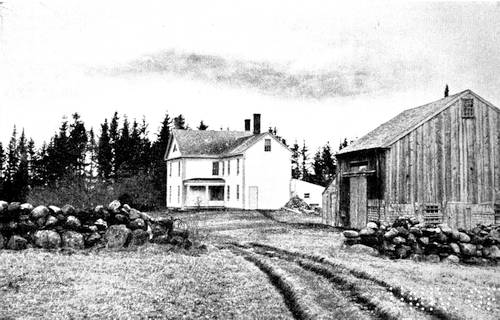
Here is my home. I cut the greater part of
the timber of this house with my own hands,
had a hard struggle to build it, and a harder to
keep it. I thank God this night I am in it
once more. God give me a grateful heart.
Nov. 27,
1885.
I have been wont to kneel at the threshold
when I went out in the morning for the first
time. It seems natural, loving, and right in
every way to ask God’s blessing the first thing
before touching the world’s work, and when
I do it, the day’s efforts always seem successful.
Nov. 29,
1885.
God in great mercy has relieved me of my
cold and given me an exchange at Harpswell,
so that I preached to my old people. I have
had a fire in my study, read my mother’s
Bible, visited the old willows, the rock, the old
maple, the Skolfield barn, the burnt tree, all
my old praying spots, and read over the “record of the years of the right hand of the
Most High.”
May 19,
1886.
Went to the old pine, read the Word at the
foot of it, and prayed for wisdom. It did me
good. My heart warmed to the spot. Went
to Knowlton; he was very kind, left his recitations,
and got me the book I wanted.
July 4, 1886.
Rose at six-thirty. Prayed and gave thanks.
I strove to put myself into the hand of God.
Mr. Little came for me in a chaise. We went
to my father’s old church where I prayed and
pronounced the benediction. At two-thirty we
went to the city hall. About two thousand
people were there. I spoke twenty-one minutes
to the apparent satisfaction of those who listened
and those who brought me here, and
the friends and benefactors who have stood by
me in my trouble. I call upon my soul and
all that is within me to bless the holy name
of God who has turned this thing I so dreaded
into an ovation, and has given me strength,
patience, and perseverance to prepare for it
under the pressure of work and still not
neglect anything.... I thank God that in
this city where I was born, where my father
preached so many years, I have received from
the city authorities so much respect, they
sending a carriage for my wife and me, honoring
me as his son, and fulfilling the promise
of a covenant-keeping God, who declares that
He will show mercy unto those that love Him
even unto the third and fourth generations.
I cannot express my feelings of gratitude that
I who so tried him and my mother have been
made by God the means of honoring their
memory.
July 6,
1886.
Rose early. Prayed and gave thanks. A
carriage was sent to take my wife and me to
the city hall to listen to the oration by
Hon. Thomas B. Reed. I was given a seat
beside him. From there we went to a clam
bake on Long Island, and there I met and
had much talk with Phillips Brooks. In the
evening we went to the last meeting, which
consisted in a general talk on reminiscences.
Thus has closed this Portland centennial. I
have here received the most kindly attention,
not only from religious people, but from the
civil authorities; have been introduced to a
great many people who have read my books
and who have spoken “Spartacus,” Phillips
Brooks among the rest. I now humbly thank
God and ask Him to keep me.... Went
to see Mr. Ezra Carter; he is confined to his
bed. He was very glad to see me. There
was not time to see him and go to my parents’
graves where I wanted to thank God for the
manner in which my father’s name had been
honored in me. But Ezra Carter has been
my friend for years. He helped me put my
father in his coffin, and was for years his
friend, and therefore, as I could not do both,
I thought it would be more acceptable to God
to comfort the living than to pray at the
grave of the dead.
Oct. 19, 1886.
Oh, how great is the goodness of God to me!
I have been to-day keeping thanksgiving in
my closet and in the sanctuary; though having
extra duties, I have found much time to
pour out my soul in thanksgiving to God.
I have been looking back upon the sea of
providential mercies and noting the most prominent
ones, but oh, it is all mercies. The trials
have brought forth mercies. I should never
have known what God is if He had not known
my soul in adversities. He has been around
my path in the daytime, my couch at night.
Nov. 7, 1886.
This has been to me a most interesting,
peaceful, and solemn Sabbath. It is with us
a day of Sacrament. At the conference yesterday
I chose this subject for my remarks: “Open thou thy mouth and I will fill it.”
It touched every chord of my soul. Indeed,
I have of all persons to open my mouth wide,
for my necessities are very great. The purport
of the whole text and context is that of
a Being so magnificent in all His attributes,
so infinite in His fulness, that we may, and
are encouraged to, ask great favors. And
on the strength of it, after looking over the
record of God’s mercies in my journal for
the past six years, I went to the altar where I
have administered the communion and threw
myself upon the mercy of God and opened my
mouth wide and asked Him for His name’s
sake through Christ to put me in a way of paying
my debts that are such a dishonor to His
cause, as I have consecrated my labor to Him
and work only for daily bread and to pay my
debts.... I also asked Him to grant me
His Holy Spirit to interpret aright the indications
of His providence, for I surely do not
wish to be a revelation to myself. I cannot
judge of their bearing on the present or the
future. His written revelations would be a
sealed book to me without His spirit, and so
will the unwritten of His providence. I can
see that preparation for another year may
have very important bearing on my stay here
and on my attempting to write a book: two
things which have sadly perplexed me, and
which I am waiting and praying for the providence
of God to solve, as He has by His providence
solved so many other things and brought
me out of so many difficulties which in prospect
seemed insurmountable. I feel now glad
that Mr. Kendall did not come for me to
preach at Bowdoinham, though I sadly needed
the money; for I feel that I have seen my
Father’s face, and I mean to mark the way by
which He leads me and take every step with
prayer. God, in mercy withhold me from attempting
or even desiring to work any deliverance
of my own. I now prepare for the
evening service.... I have just returned.
The meeting was full of young people. I certainly
have no reason to complain of my
audience, though they may have of me. God
bless them. I do not dread this week so
much as I did. God grant my first thought
may be directed to Him. Glory to God for
this pleasant Sabbath.
Sept. 29,
1887.
Rose early, prayed, and gave thanks. Hauled
in the forenoon all the rocks required. Mr.
Getchell finished at noon. In the afternoon
I took him to Brunswick, paid him, got my
lime and sand, and got home by dark. I have
knelt down beside the wall that is now finished
and humbly thanked God for doing this
kindness to me, for He has done it. Blessed
be God for the mercies of this day.
Oct. 25, 1887.
Rose early. Prayed at the hearthstone and
the threshold. John came. We sawed, split,
and hauled the wood. The old house windows
surprised him. We then prepared the horses,
and at noon John went home. Though
pressed with work, I felt prompted to go to
the burnt tree and went to that and to the
old maple and thanked God and prayed for
little Frank. Made my fires and the company
began to come. They poured in with full
hands and warm hearts to the number of
eighty or more. Surely God’s dealing with
me in most unthought-of ways. Glory to God
for the mercies of the twenty-fifth of October.
April 25,
1889.
This has been the day of the National Fast,
but has been more of a thanksgiving than a
fast to me, although I have abstained from food
and striven to humble myself before God.
Nov. 25,
1889.
Went to the Skolfield barn, prayed, and then
with a tackle and much contrivance put my ox
cart on the scaffold. I then took the wheels
from the axle, and stowed them and the axletree
away below. It took me a long time,
and was hard work. William and his boy
and myself would have done it in ten minutes,
but as they thought and said I could not do
it, I did. If it had been twenty years ago, I
should have got help; but a person situated as
I am—in debt, and having to begin life anew—must
not show any sign of failure of strength
or energy. I did it not for vanity but on calculation,
as a duty. Especially is the sin of
old age fatal to a minister.... I am now
going to treat myself to a little agricultural
reading.
Letter to Dr.
George P.
Jefferds of
Bangor, Oct.
24, 1890.
... I am well and can preach and work
and do all that I ever could, but I have become
deaf so that I cannot do anything in a
social meeting.... My people have retained
their affection for me as strong as ever. It
was a love match at the beginning, and so it
has continued; the children and grandchildren
have followed suit. I never have regretted
going to Harpswell, and I do not regret that
I wrote the books; for if I have reaped
nothing, I have abundant testimony that I
have scattered good seed in virgin soil....
I am more than glad that I learned to farm in
my youth, and that I have all these years
kept up my habits of labor, that I can do any
kind of farm labor and take care of cattle, for
otherwise I should not at this time have a
place to put my head.
I am writing you to-night before an old-time
open fire, and I cut in the woods the
fuel which feeds it. I am thankful that
deafness is no bar to labor nor to writing. If
it were not for the illness of my wife, I believe
I should write a book this winter....
I send you with this letter a copy of the Commencement
number of the Orient, by which
you will see that Bowdoin boys feel their oats
and have aspired to govern themselves. May
God bless old Jeff, and may his shadow never
grow less.
Letter to
son, June 1,
1893.
You may be assured it is from no lack
of affection or sympathy with you in your
mishap that I have not written before, but a
complication of circumstances, some of them of
a very sad nature, has rendered it impossible.
In the first place, I strained my heel cord
either by jumping out of the wagon or by
wearing a very tight congress boot, and had
to limp around for about ten days, but am all
right now. Don’t you think, the second night
it was done, just as I was going to bed, two
men came from Bailey Island for me to attend
a funeral the next day at two o’clock. I told
them it was impossible as I could with greatest
difficulty hobble to the barn. They said there
was no minister in town but me, and if I did
not go, the person would have to be buried
without any service. Upon that I told them
to go to John Randall’s and tell him to come
over in the morning, and take me to the intervale
point where they must meet me with a
boat. John came; we rode to the point.
John took me in his arms and put me into
the boat. When we were across, two men,
one on each side, led me to the house; when
we got to the doorstep one of them said, “Mr. Kellogg, do you think you will be able
to preach?” I replied, “Put me before the
people, and the Lord will tell me what to
say.” The next morning my foot and leg
were swollen to the knee, and I could not get
on a rubber boot, but had to wear arctics....
I am all right now, however, and carried a
bushel of apples on my back to-day.
I put the harness on the colt this week for
the first time since the 10th of last August, the
week before I was hurt, and he behaved so well
that I had to give him some sugar. I have
cleaned him all up, combed his hair and washed
his face, and he goes to school every day. He
is a strapping great fellow and full of grit.
Letter to
son, Dec. 1,
1893.
It is a rainy evening and I take it to write
to you. Yesterday was a most lovely day. I
went to George Dunning’s to dinner. Frank’s
wife gave us a splendid dinner,—turkey, pudding,
pies, and fruit, grapes and oranges. Betsy
was quite disappointed; she meant to have
me, but Frank got the start of her and invited
me about the middle of the month. I let
Delia go home right after breakfast, and told
her I would get my supper. I came home
from George Dunning’s about three o’clock,
took care of the cattle and got an early supper,
and had a long evening alone; that was
just what I wanted and was planning for. I
never can feel that Thanksgiving Day should
be all taken up with eating and merriment.
I never spent a happier evening than I did
last evening in looking over the year, and in
praising God for what He has done for me. I
have food, fuel, and clothing, and food for my
cattle that have come to the barn in excellent
order. Let us be grateful. Gladness is not
always gratitude.
I have been to Brunswick and preached to
the students in Memorial Hall. I will send
you and Mary both a notice of it. There are
two magazines and you can exchange them.
I feel quite happy that I have got through
with the students. They checkmated me. I
did not want to go and did not mean to,
but Dr. Mason, the minister at Brunswick,
and President Hyde wrote me and backed
them up, and also the Brunswick people who
gave me a good deal at the donation and
have for several years followed suit; I had
to give in. I was afraid I should not be
able to see in the evening, as the hall is very
large and I have been preaching in a small
house for two years; but there was no trouble.
It was a splendid light and I had the service
all in my own hands; no responsive readings.
The students did the singing and gave me
two anthems. After it was all over, I had to
shake hands with twenty-five or thirty, and
President Hyde said he could hear every word.
The town has made a road to the Lookout.
They are going to build a wharf in the spring,
and the Mere Point boat will run there. It
will be of no benefit. It will bring a Sunday
boat, rum, and tramps of all kinds.
Letter to
son, March
29, 1894.
I am glad you are having such good weather,
and that you are enjoying yourself setting out
fruit trees. You can see now why it is that
I am so much attached to this spot. I have
been through just what you are going through
now. I am eating the fruit of the trees I
have planted and grafted, and am sheltered
by them in the winter and sit under their
shadow in the summer. Such labors attach
us in a most singular manner to the spot we
have improved. The trees seem almost like
children.
Letter to
son, Jan. 22,
1895.
You ought to have been here to take supper
with us last night. I got a peck of large
clams. Fannie baked the most of them and
we set to work tooth and nail. I never ate so
many before in my life at one time. I was
almost afraid to go to bed, but I had a good
night’s sleep and experienced no trouble. We
have had very cold weather till the last week
when it has been moderate. Until last Thursday
I have not been to Brunswick since the
week before Christmas. The Sundays have
been so stormy that we could not have meetings,
and I never preached my New Year’s
sermon till last Sunday which was a very
pleasant day.
I have before me two letters both from
different places in New York State and from
men who have made their mark in the world,
who attribute their success in life to the influence
of my books. I had almost made up
my mind to send them to you. Such letters
do me good. I at one time used to fear that
I had done wrong in devoting so much time
to writing that might have been given to
preaching the Gospel, but I have of late had
so many letters of this kind that I feel differently,
especially when I consider how many
more persons a book reaches than a sermon.
I have never been so pleasantly situated
since my great loss in parting with your
mother as I am now. I have food, fuel,
raiment, and health. There has not been a
Sabbath since I was hurt that I have not
been able to preach, nor a single day in the
week that I have not been able to take care
of my cattle and do all my work. I am sure
this is something to thank God for. It is
wealth without riches. Is it not something
to thank God for to have so many friends,
so many to love you and wish you well, and
feel that you have been able to benefit them?
When I looked over that assembly of a
hundred and twenty-five persons last fall at
the donation, many of them the grandchildren
of old friends, and when I look at Fannie
sitting here ready to anticipate all my wants,
and doing all in her power to make me happy,
and think here is the grandchild of Pennell
Alexander, one of my earliest and best friends,
I feel that life is worth living, at least for me.
Letter to
son, Dec. 3,
1895.
Thirty years ago, Alcott Merriman died and
left four young children fatherless and motherless.
He was a great friend of mine, and I
kept run of the children. Fourteen years ago
Irving, the youngest, was taking me down to
Potts’s, and I entered into conversation with
him and urged him to give his heart to God.
He received it so kindly that I began to pray
for him and the other three boys, Alcott, John,
and Paul Sprague, and have prayed for them
ever since some time every day. Alcott was
converted and is a member of my church;
Irving was taken very sick a few months ago.
I went to see him and found that he had not
forgotten the conversation fourteen years ago,
and was then praying for himself. I became
intensely interested in him. I wanted him to
get well. I asked my church and many others
to pray for him, that God would forgive his
sins and raise him up. I went to see him
every week. He lived almost down to Potts’s
and the going has been bad. God did not see
fit to raise him up, but He gave him a new
and wonderful peace of mind. I wish you a
happy New Year....
Letter to
son, Jan. 1,
1896.
Perhaps you recollect Mr. McKeen, the
president of the alumni of Bowdoin College,
who introduced me at the centennial. He
sent The Outlook for a year and five dollars
as a Christmas present. He is the man who
owns Jewel’s Island. It seems to me as if
God had been with every step I have taken
all this month. Everything I have put my
hand to has prospered. I have my whole
winter stock of wood under cover. Since I
was injured I have always ridden to the
afternoon meeting, but all this month and part
of last I have walked. My fodder corn held
out till the tenth of November. I have plenty
of hay and my people seem to love me better
than ever. I hated to part with the old
year; it has been a pleasant year to me....
The missionary society got so poor in the hard
times that they gave notice that they must
cut down twenty-five per cent the churches
which they helped, but they did not cut me
down; was not that remarkable? Thus you
see I have a Shepherd who watches over me.
Letter to
daughter
Mary, Jan.
25, 1899.
Though I have not written to you for a
long time, you have seldom been out of my
thoughts. I never had so many engagements
as of late,—funerals, weddings, and letters
that must be written. There were two persons,
a brother and sister by the name of
Chaplin from Georgetown, Massachusetts, who
have visited here several years and have
always been very constant at meeting. They
were here the first Sunday in August when I
preached in the old church where I preached
my first sermon to the Harpswell people fifty-five
years ago. At Christmas they sent me
a most kind letter and a present of handkerchiefs
and neckties. I think I will send you
the letter that you may know what friends I
have among the summer visitors....
George Dunning is dead. I shall miss him
very much; we have been near neighbors and
friends for more than half a century. There
were seventy-five persons that got together,
hewed out and raised the frame of my house
when I came here to live, and George Barnes
and Stover Pennell are all that are left of
them....
Deafness is a great deprivation; it cuts me
off from exchanging and going from home to
preach. I go up to the college, but President
Hyde sits beside me and keeps me from making
blunders. I wanted to give up preaching
three years ago, but our folks said they had
rather hear me pronounce the benediction
than any one else preach a whole sermon. I
thank God for the love of my people even to
the third generation.... I went to Betsy’s
Thanksgiving to dinner, spent the rest of the
day in praising God for the great measure of
strength He has given me this winter and
courage to face the weather and do a good
deal of work; also for the help He has given
me in hard places.... Thus I had a most
happy day with my Maker and Benefactor
who has held the tangled thread of my life
all these years, who has by His providence
preserved me from perishing in some of those
harebrained, presumptuous freaks into which
my reckless nature led me. I look back upon
it all with astonishment and with gratitude.
I can hardly realize that I once tied up one-fourth
of a pound of powder and the same
quantity of saltpeter and sulphur, and because
the fuse I had fastened to it would not ignite,
held it in my fingers and put a fire coal to it
with the other hand. I was fearfully burnt;
all the skin came off from my face, hands, and
throat. But God had some better use for me
when that courage was needed in His service.
God bless you, my child!
To daughter
Mary, April
26, 1899.
I am glad that you have named the little one
Hugh. I trust that he will grow up to inherit
not only the name, but the virtues and qualities
of the old stock.... I am alone and
have been for a month. It was a great trial
to me losing Esther; she was like a daughter
to me and anticipated all my wants. I trust
the good Father who has thus far provided for
me will continue His paternal care.... I
have outlived a multitude of good friends and
helpers, but the great Friend, He of whom other
friends are the instruments, is everlasting.
Letter to
son, June 25,
1900.
We had a great time here yesterday. We
put off our service till eleven o’clock, which
gave time for the boat to arrive and bring a
great crowd from Portland. Many of them
were old friends of mine. Every one seemed
pleased and satisfied. It would have been a
very hard day for me, but Fannie came over
and got dinner, and John Randall carried me
down, so that I had no horse to harness and
take care of. I have lost one of the best
friends I ever had in George Barnes. He was
but a boy when I came here, and he helped
me to get the timber to build my house.
Last entry
in Journal,
Jan. 14, 1901.
I am going to spend this evening in thanksgiving
to God.
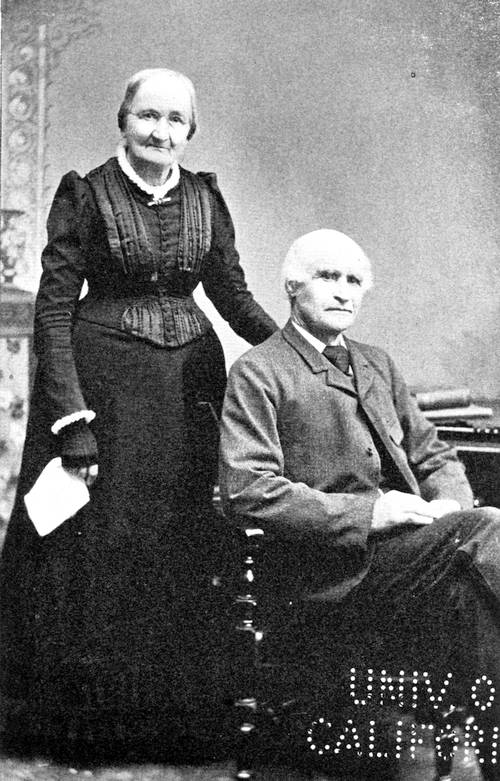
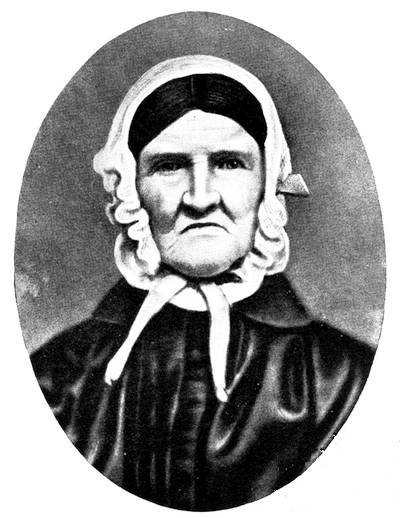
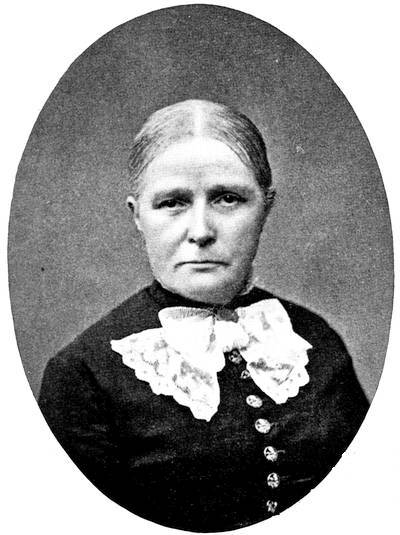
Aunt Betsy and Uncle William Alexander, for fifty years
nearest neighbors and dear friends of Elijah Kellogg.