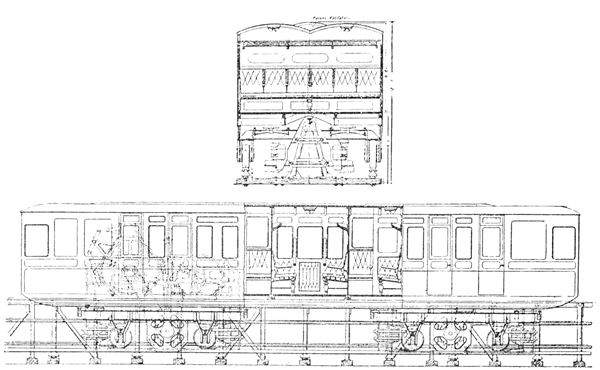
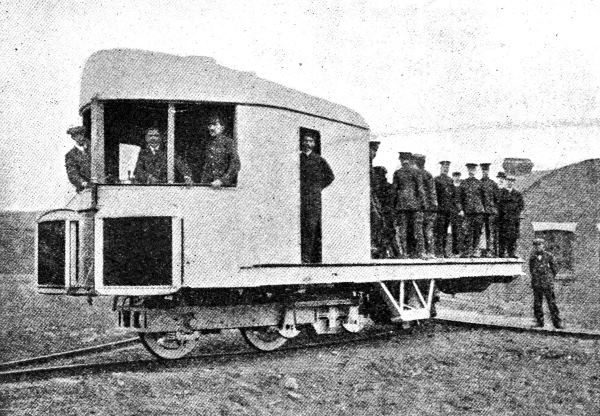
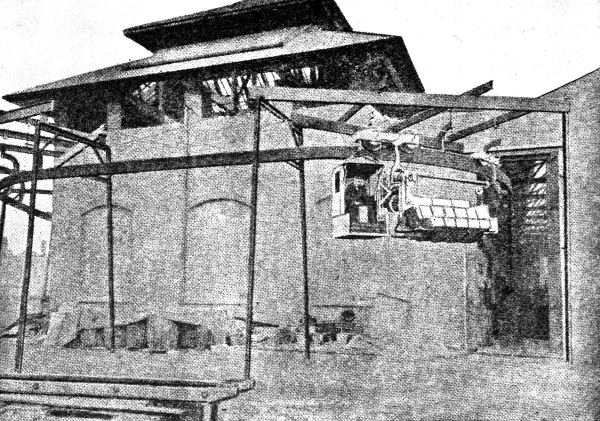
Electric tramways have reached a period of
middle age in which they are more concerned about
their internal economy than the prospect of enterprise
in new directions. Such development as they feel
capable of making under present legislative conditions
is only by proxy and tentatively, with the aid of the
trolley omnibus.
Electric railways, however, have still many worlds
to conquer. They are now in much the same position
as electric tramways held about the year 1896. That
is to say, they have already given practical proof of
their capabilities and enabled engineers to point out
the directions along which they are certain to develop.
In the railway world there is a growing conviction
that the adoption of electric traction on all suburban
and inter-urban railways must be simply a matter of
time. For main line traffic the possibilities of using
electricity are as yet only an article of faith among
electrical engineers.
Although the earliest experiments in electric
traction were made in the railway form, the first
electric lines could hardly be regarded as railways
in the ordinary sense. They were really light railways,
in which the traffic conditions approximated to those
of tramways. The routes were short, the cars small,
and the traffic of modest dimensions. They contained
the germ of both the tramway and the railway; but,
in the case of the railway, many years of technical
development had to pass before the problem of
applying electricity to the handling of large masses
of traffic under standard railway conditions was
solved.
The fact that the first electric railway in the
United Kingdom was constructed at the Giant's
Causeway (in 1883) is significant. The Giant's
Causeway is one of the few places in our islands
where water power is available close to a district
with a demand for traffic facilities. In 1885 another
electric railway deriving its energy from water-driven
turbines was built between Bessbrook and Newry.
At that period it was considered that waterfalls
provided the only really feasible source of cheap
electricity on a large scale. Even yet the impression
survives that electric power stations using steam
cannot produce current so cheaply as those which
'harness' waterfalls. Many people, in fact, are
inclined to attribute the comparative backwardness
of electrical development in Great Britain, not to
legislative conditions, but to the lack of large
waterfalls.
There might have been more active progress in
the pioneering days if the presence of water power
at convenient points had encouraged electrical
engineers to repeat the experiments at Portrush
and Bessbrook. But at an early stage in electrical
history it became clear to engineers that coal was
just as feasible a source of cheap power as water.
The idea that a waterfall provides power 'for nothing'
is one of those superficial conceptions which make
the hardiest of fallacies. To 'harness' a waterfall
requires a heavy expenditure of capital on conduits,
pipe-lines, dams, and other works. The interest
upon that capital is a heavy item, apart from the
cost of maintenance and repairs. Waterfalls are
situated in mountainous country, generally remote
from the centres of industry; the water-power
station, therefore, has to face the cost of transmission
mains and the loss of energy involved in conveying
the power to the place where it is wanted. Further,
waterfalls and the adjacent ground belong either to
individuals or to the State; and payment is generally
exacted for the right to use them.
All these items have to be covered in the price
charged for current to the public or to railway
undertakings. Nature may provide the 'head' of
water 'free,' but man has to spend money in
utilising it, just as he has to do in mining and in
obtaining heat from the coal which is also provided
'free.' Anything which is obtained 'for nothing' is
generally worth nothing.
The full economies of generating electricity by
steam power are not, however, realised until business
is done on a large scale. As the first essential
of a successful electric railway is a plentiful supply
of cheap power, development from the experimental
stage of Portrush had to wait until engineers
mastered the art of producing electricity from large
generators. They gained the necessary experience
with electric tramways and in electric lighting. We
have seen how, as regards tramways, legislation
delayed and hampered progress. A similar cause
was at work in connection with electric lighting.
In 1882 an Act was passed regulating electric
lighting on lines modelled upon the principles of the
Tramways Act, 1870. Capitalists declined to work
under this Act; and it was not until after 1888,
when the Act was amended, that any money could be
found in Great Britain for electric lighting schemes.
This delay was a serious handicap not only to electric
lighting but to the business of British electrical
manufacturing, as there was, comparatively speaking,
no demand for electrical plant for over six years.
Meanwhile, matters had been advancing on normal
lines in other countries; and when the demand came
at last, the manufacturers on the Continent and
in America were the only ones organised and ready
to meet it.
These points must be touched upon in order to
understand why so long a period elapsed between
the pioneer electric railways and the real electric
railway movement as we know it to-day. They also
serve to explain the prominent part which American
and German firms took in electrical developments
here. Engineering and legislative conditions combined
to retard electric railway enterprise so that it
did not begin to take firm root in Great Britain until
about 1890, and did not attain to any conspicuous
growth until the beginning of the twentieth century.
Until after 1890 the only electric railways in
Great Britain taking power from steam dynamos
were those at Brighton Beach, Ryde Pier (Isle of
Wight) and Southend Pier, opened in 1883, 1886 and
1890 respectively. These were all, of course, of short
length. The Brighton Beach railway, designed and
constructed by Mr Magnus Volk, was a unique piece
of work. The rails were laid on heavy concrete
blocks below high-water mark; and the cars were
platforms raised on a light iron structure. Power
was conveyed to the cars from wires hung on posts
like the standards of a tramway on the trolley system.
The unusual sensation of travelling over the water
was enjoyed by hundreds of people until the difficulty
of maintaining the track (owing to the erosive action
of the waves) led to the railway being abandoned and
another line of more ordinary character being laid on
the level of the undercliff roadway.
The first indication of the genuine electric railway
movement was given in 1893, when the Liverpool
Overhead Railway was opened. This line was constructed
to afford communication along the line of
docks fringing the Mersey. The track was carried on
a continuous bridge in order to avoid obstruction
between the docks and the streets behind; and being
overhead, there were serious disadvantages attached
to the use of steam locomotives. Electric locomotives
were therefore employed.
In this case, it should be noted, electricity was
not adopted because it was more economical or
efficient than steam. The reason lay with the
peculiar situation of the railway. A similar reason
decided the promoters of the City and South London
Railway to try electric locomotives on their line.
This railway, which was opened in 1890, was the first
deep level or 'tube' railway in the world. Moreover,
it was constructed and equipped throughout by
British engineers, and at a time when the art of
tunnelling was much less advanced than it is now.
In the later and more imposing development of
tube railways in London, the foresight and enterprise
displayed by the pioneers of the City and South
London Railway are apt to be overlooked. It was,
however, the success of the original line from the
Monument to Clapham which made it possible to
raise capital for the Central London Railway (opened
in 1900) and for the extensive tube railway system
organised by the Underground Electric Railways
Company of London.
On a deep-level railway, steam is, of course, out
of the question. Even on the old 'Underground,'
built close to the surface and furnished with frequent
openings at the stations, and by means of ventilating
shafts, the atmospheric conditions were abominable.
The sulphurous fumes were indeed recommended
for asthma and other complaints, but on a tube
railway they would have been sufficient to cure every
human ailment. Therefore the choice lay between
electric traction and haulage by cables, compressed
air, or some other innocuous system. Within these
limits electricity was chosen on its merits.
The first railway in Great Britain to undertake
conversion was one in which both the physical and
economic troubles were exceptionally serious. The
Mersey Railway is little more than a tunnel under
the river, and it is distinguished by heavy gradients
and by the continuous necessity of pumping out the
water which drains into it. With steam traction the
difficulty of ventilating the tunnel was an added
trouble. Owing to these various causes the working
expenses were abnormally heavy, and led ultimately
to a receivership. Electric traction was adopted as
the only possible cure. The pumping and ventilation
arrangements were both reorganised for electric
power; and the trains were equipped with electric
traction on the 'multiple-unit' system, an arrangement—to
be described in the next chapter—which
is well suited to the economical handling of steep
gradients. The practical result was a great increase
in traffic, with a marked decrease in the proportion
of expenses to receipts.
No other British railways, happily, were in so
desperate a condition as the Mersey line, but all of
them were, at the end of last century, feeling the
effect of certain disquieting tendencies. These tendencies
were most marked in connection with suburban
and short-distance inter-urban traffic, which is quite
distinct in character from the main-line traffic. We
talk glibly enough of railway traffic as if it were a
unity, but it is clear that very different considerations
govern the traffic on a main line between, say, London
and Glasgow, and those which control the traffic on
London suburban routes or on a railway connecting
the adjacent towns of the Potteries. Some railways
have to deal with all three classes at the same time
and occasionally on the same lines of rails. Electric
traction has, so far, made itself felt only where the
suburban or similar inter-urban traffic has been
separable from the main line traffic.
The growth which took place in suburban traffic
before and after the end of the century ought to have
brought increased prosperity to the railway companies,
but it did not always do so. Competition between
the various companies led to a reduction in fares;
Parliament, by establishing workmen's fares, forced
the companies to carry an ever-increasing number
of passengers at a loss, or at least without profit;
wages tended to increase and hours of working to
decrease—both affecting the cost of operation; rates
and taxes became heavier and heavier with the
growth of municipal expenditure; and a higher
standard of comfort and efficiency was demanded by
the public. In some instances the situation was
aggravated by the competition of electric tramways
along routes parallel to the railways. This competition
was limited to point-to-point traffic, its maximum
range being about three miles; but it was a grievance
against which the railway companies protested very
loudly, especially when the tramways were owned by
local authorities to which the railways paid large sums
in rates.
The general effect of all these factors was to
reduce the margin of profit on which the railways
were working. We have seen, in the case of tramways,
how easy it is for a slight change in a frequently-recurring
expense to have a serious effect in the
aggregate. Railways are in much the same position;
and the various influences at work upon the suburban
traffic brought them face to face with the importance,
if not the necessity, of finding some means of dealing
with larger volumes of traffic on a basis more economical
than that provided by steam locomotives.
This means they found in electric traction; but it
may be noted that even railway engineers took some
time to realise exactly what electric traction offered
them. They were looking for something to reduce
their annual expenses; and when they made calculations
about electric traction they found that, when
the expense of providing the electrical equipment
was taken into account, the total cost of hauling the
trains electrically on the existing schedule might be
greater instead of less than the cost of steam haulage.
They were therefore inclined to look upon the
economic benefits of electric traction as an illusion.
In course of time, however, it came to be recognised
that the function of electricity is not to act like a
blue pencil on the debit side of the revenue account.
Its essential purpose is to increase the volume of
traffic. From the public point of view this is very
much more valuable. Passengers are not directly
concerned with means of reducing working expenses,
but they are closely interested in the improvement
of the frequency and speed of the service. The
adoption of electricity on suburban lines has really
been dictated by the demand for increased facilities.
At the 'rush' hours of the morning and evening,
when the great tide of workers flows and ebbs, the
capacity of the steam lines was taxed to the utmost.
And with the growth of population the difficulty of
running sufficiently frequent trains became almost
insuperable.
Apart from these particular necessities, the general
features of railway economics point to the supreme
advantage of increasing the volume of traffic in every
possible way. In a railway, as in a tramway, the
preponderating item is the cost of construction and
maintenance; and unless a certain minimum of traffic
is carried, the most economical working in the world
will not secure a profit. The standing charges fall
upon the idle hours as well as upon the busy; for
every minute that a line of rails stands empty there
is a loss of money. Railway progress depends upon
reducing the proportion of idle hours; and that can
only be done where there is scope for the growth of
traffic, and where there is means—such as electric
traction—of dealing with that growth on an economical
basis.
In the succeeding chapter it is explained how
electric traction enables a more frequent service
to be run with advantage even on systems which were
worked to the maximum limit possible under steam
conditions. But in the meantime it will be interesting
to trace the effect itself on a railway which soon
followed the Mersey Railway in making the change
from steam to electricity—the Metropolitan District
Railway.
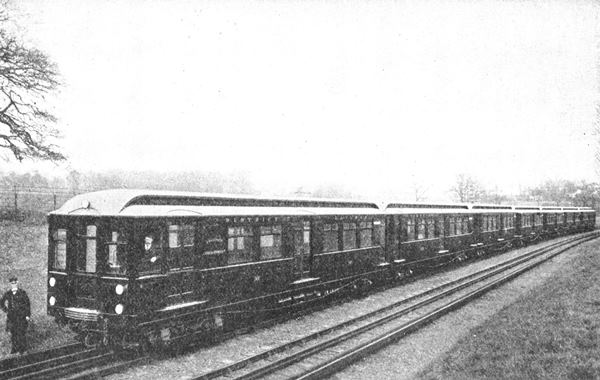
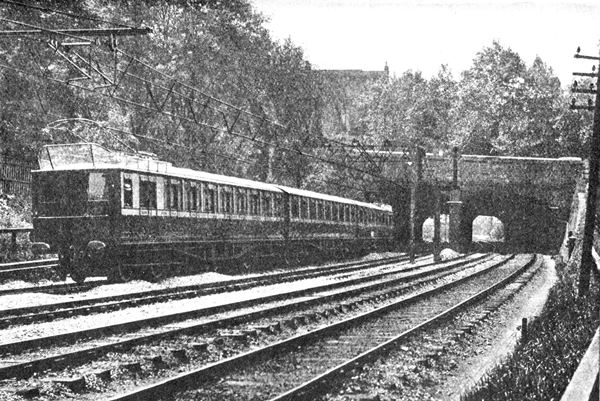
Fig. 11. An electric train on the Metropolitan District Railway, equipped by the British Thomson
Houston Company. The front and rear cars and one intermediate car are equipped with electric
motors, all controlled from the 'cab' at the end of the train. The controller handle may be seen
close to the nearest window of the first car. The rail immediately in front of the foot of the guard
is the conductor rail which conveys the current to the train. The rail between the track rails
carries the return current.
Throughout the steam age the finance of the
District Railway Company was as unattractive as the
physical conditions of the railway itself. No dividend
was ever paid on the ordinary shares; and even with
the growth of London there was little prospect of
any dividend ever being paid. When—about ten
years ago—the late Mr C. T. Yerkes came over from
America and obtained a controlling interest in the
District Railway Company with a view to converting it
to electric traction, he was regarded as a philanthropic
enthusiast. Many of the shareholders themselves
were reluctant to give their assent to the change;
they preferred to bear the ills they knew than fly to
others which might be introduced by an American
financier.
But Mr Yerkes and those who worked with him
had something more in view than the improvement
of traffic on the District Railway. They acquired
control of several tube railway schemes and obtained
powers for new lines, so as to organise a comprehensive
system of underground electric transport in London.
They had sufficient faith in the traffic possibilities of
London to find the enormous capital required to
construct these tube railways and also to convert the
whole District Railway to electric traction. The
constructional work occupied several years; and after
the lines were opened one by one, arrangements had
to be developed for through-bookings among the
various lines and between them all and the existing
underground railways like the Central London Railway,
the Metropolitan Railway (closely linked with
the Metropolitan District) and the City and South
London Railway. A systematic attempt was also
made to develop the travelling habit in London by
persistent advertising of the railway services and by
increasing the frequency and rapidity of the trains.
From these points of view the organisation of the
network of lines comprehensively known by the title
of 'Underground' is certainly unsurpassed.
The difficulties which had to be overcome in this
great work were enormous, but there has been no
break in the thread of progress. The 'tubes' are
paying dividends which, though modest, are an encouragement
to further developments. The finance
of the District Railway has lost its element of chronic
despair. Considered as a whole, the results prove
that where there is the potentiality of large traffic,
electricity is the instrument which must be applied.
During the steam days, the most crowded part of
the District Railway (the 'Inner Circle') carried a
maximum of 16 trains per hour. With electric
traction that figure has been raised to 40 trains per
hour. And the remarkable thing is that with each
increase in the service the traffic grows. Many people
welcomed the electrification of the District as a
measure of relief from the overcrowding on the
steam trains during the busy hours. But with a
service of trains more than doubled in frequency and
also increased in capacity per train, overcrowding
continues and the 'straphanger' has become an established
institution.
It may be accepted as substantially proved that,
on suburban and inter-urban railways in populous
districts, electric traction is a means of increasing
traffic and diminishing the proportion of working
costs. Moreover, these results have been achieved
in conjunction with substantial reductions in fares
and with marked improvements in the comfort of
travelling.
The engineering aspect of these changes has now
to be considered.