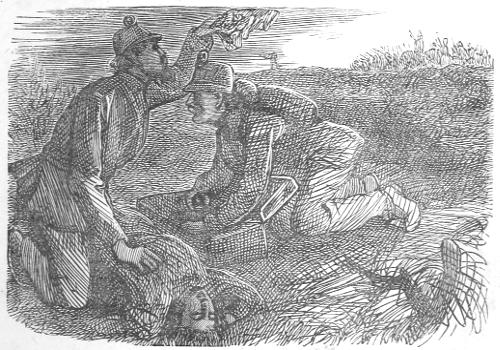
“Mamma,” said little Edith, looking
up from the toys with which she
was playing at the feet of her
mother—“mamma, why does
Motee Ayah never come in to
prayers?”
Mrs. Tuller was seated at her desk in the
large room of her bungalow (house) in India.
The day was hot; the blazing sun shone
with fiery glare; but the light came into
the room so much softened by green blinds
and half-closed shutters, that the place was
so dark that the lady could scarcely see to
write. The punkah, a kind of huge fan,
moving gently to and fro above her, made a
refreshing air which would have sent her
papers fluttering in every direction had not
weights been placed to keep them down.
Mrs. Tuller paused in her writing, but
did not reply to the question asked by her
child regarding her ayah, or native nurse.
“Mamma,” said little Edith again, “does
not Motee Ayah love the Lord Jesus?”
“Alas, my child, she does not know
him!”
“But will you not teach her, mamma?”
and the fair-haired girl looked up in her
mother’s face with such a pleading look in
her soft gray eyes, that, touched by her
interest in the poor heathen, Mrs. Tuller
bent down, kissed fondly the brow of her
child, and whispered, “My love, I will try.”
Nor did Mrs. Tuller forget her promise.
Again and again she spoke to Motee of the
Christian’s faith and the Christian’s God.
It saddened the heart of the lady to feel
that to seek to teach Motee religion was
like trying to write upon water. The ayah
joined her dark hands together, listened, or
seemed to listen, said, “Very good, very
good,” to everything that the beebee (lady)
told her, but always returned to her idol, a
hideous little wooden image, and performed
her poojah (worship) to Vishnu, as if she
had never heard of a purer religion. Mrs.
Tuller grew quite disheartened about her.
Sometimes the lady blamed her own imperfect
knowledge of the language, and sometimes
she felt almost angry with the ayah
for her blindness and hardness of heart.
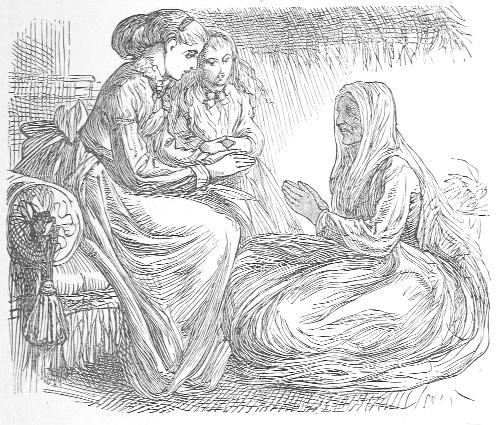
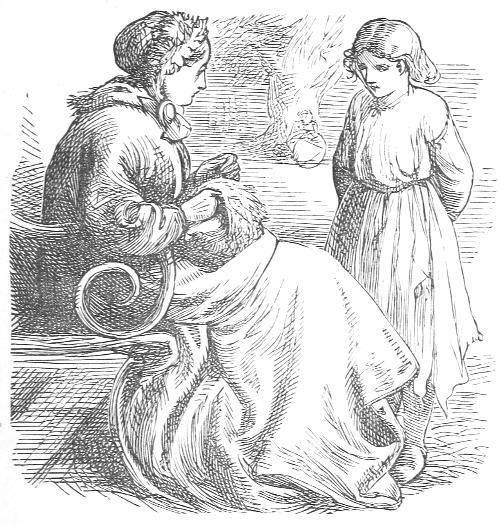
TEACHING THE AYAH.
Poor Motee had been brought up from
infancy amongst idolaters; she had never
been taught truth when a child, and now
error bound her like a chain. Motee had
actually been led to think it honourable to
her family that, many years before, there
had been a suttee in it; that is to say, a
poor young widow had burnt herself with
the dead body of her husband. Happily,
our Government has forbidden suttees—no
widow can thus be burnt now; but still the
cruel heathen religion hurts the bodies as
well as the souls of the Queen’s dark subjects
in India. Motee’s own father had
died on a pilgrimage to what he believed to
be a holy shrine. Travelling on foot for
hundreds of miles under a burning sun, the
poor idolater’s strength had given way, and
he had laid himself down by the roadside,
sick, faint, and alone, to die far away from
his home. Poor Motee had never reflected
that the religion which had thus cost the
lives of two of her family could not be a
religion of heavenly love. She worshipped
Vishnu, for she knew no better; and when
her lady spoke to her of the Lord, the ayah
only said to herself, that the God of the
English was not the God of the Hindu, and
that she herself must do what all her fathers
had done.
Mrs. Tuller’s words had little power, but
her example and that of her husband were
not without some effect upon the ignorant
ayah. Motee knew that the sahib (master)
who prayed with his family, never used bad
words, nor was unkind to his wife, nor beat
his servants, nor took bribes. Motee knew
that the beebee who read her Bible was
gentle, generous, and kind. The ayah
could not but respect the religion whose
fruits she saw in the lives of her master
and mistress.
But it was not only the lady’s words and
the lady’s example that were used as means
to draw the poor Hindu to God. Little
Edith had never heard the beautiful saying,
that “the nearest road to any heart is
through heaven,” and she would not have
known its meaning if she had heard it, but
the English child had been taught that the
Saviour listens to prayer. Every night and
morning Edith, at her mother’s knee, repeated
the few simple words, “Lord Jesus,
teach me to love thee!” and now, of her
own accord, she added another short prayer.
Mrs. Tuller caught the soft whispered words
from the lips of her darling, “Lord Jesus,
teach poor Motee Ayah to love thee!”
The mother took no outward notice, but
from her heart she added “Amen” to the
prayer of her child.
The hot season passed away; the time
had come when Mr. Tuller and his family
could enjoy what is called “camp life,” and
move from place to place, living not in a
house but a tent. The change was pleasant
to the party, most of all to little Edith.
She delighted in running about and playing
with the goats, pulling the ropes, watching
the black servants taking down the tents,
or in riding on her little white pony.
Edith’s cheeks, which during the hot weather
had grown quite thin and pale, became
plump and rosy once more; and merry was
the sound of her childish voice as she gambolled
in and out of the tent.
One day, as Edith was playing outside,
near the edge of a jungle or thicket, her
attention was attracted by a beautiful little
fawn, that seemed almost too young to run
about, and which stood timidly gazing at
the child with its soft dark eyes.
“Pretty creature, come here,” cried Edith,
beckoning with her small white hand; “have
you lost your mother, little fawn? Come
and share my milk and bread,—come, and I
will make you my pet, and love you so
much, pretty fawn!”
As all her coaxing could not lure the
timid creature to her side, Edith advanced
towards it. The fawn started back with a
frightened look, and fled into the jungle as
fast as its weak, slender limbs could bear it.
The merry child gave chase, following the
fawn, and calling to it as she ran, pushing
her way as well as she could between the
tall reeds and grass, which were higher than
her own curly head.
Motee soon missed her charge, and quickly
hurried after Edith. So eager, however, was
the child in pursuit of the fawn, that she
was some distance from the tents before the
ayah overtook her.
“O Missee Baba,” cried the panting
nurse, “why you run away from your
Motee?”
“I want to catch the pretty fawn; I want
to take it to mamma; it is too little to be
by itself,—I’m afraid the jackals will get it!”
“I am afraid that the jackals will get
Missee Baba,” cried the ayah, catching the
little girl up in her arms. “Missee must
come back to the beebee directly.”
Edith was a good little child, and made
no resistance, though she looked wistfully
into the bushes after the fawn, and called
out to it again and again in hopes of luring
it back. Motee attempted to return to the
tents, but did not feel sure of the way,—the
vegetation around grew so high that she
could scarcely see two yards before her.
She walked some steps with Edith in her
arms, then stopped and looked round with
a frightened air.
“Motee, why don’t you go on?” asked
Edith.
“O Missee Baba, we’re lost!” cried the
poor Hindu; “lost here in the dreadful
jungle, full of wild beasts and snakes!”
Edith stared at her ayah in alarm, yet at
that moment the little child remembered
her mother’s lessons. “Don’t be so frightened,
Motee,” said the fair-haired English
girl; “the Lord Jesus can save us, and
show us the way to mamma.”
There was comfort in that thought, which
the poor heathen could not have drawn from
calling on Vishnu and the thousand false
gods which the ignorant Hindus adore.
The little child could feel, as the woman
could not, that even in that lonely jungle a
great and a loving Friend was beside her!
Again Motee tried to find her way, again
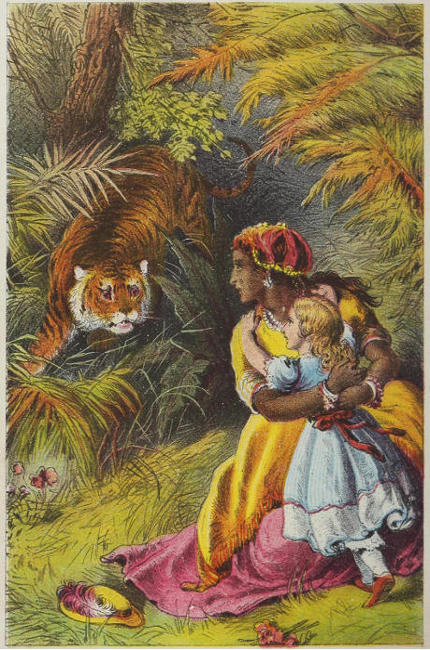
she paused in alarm. What was that dreadful
sound, like a growl, that startled the
ayah, and made her sink on her knees in
terror, clasping all the closer the little girl
in her arms! Motee and Edith both turned
to gaze in the direction from which that
dreadful sound had proceeded. What was
their horror on beholding the striped head
of a Bengal tiger above the waving grass!
Motee uttered a terrified scream,—Edith a
cry to the Lord to save her. It seemed
like the instant answer to that cry when
the sharp report of a rifle rang through the
thicket, quickly succeeded by a second; and
the wild beast, mortally wounded, lay rolling
and struggling on the earth! Edith saw
nothing of what followed; the shock had
been too great for the child; senseless with
terror she lay in the arms of her trembling
ayah!
Edith’s father, for it was he whom Providence
had sent to the rescue, bore his little
darling back to the tent, leaving his servants,
who had followed his steps, to bring
in the spoils of the tiger. It was some
time before Edith recovered her senses, and
then an attack of fever ensued. Mrs. Tuller
nursed her daughter with fondest care, and
with scarcely less tenderness and love the
faithful Motee tended the child. The poor
ayah would have given her life to save that
of her little charge.
On the third night after that terrible
adventure in the woods came the crisis of
the fever. Mrs. Tuller, worn out by two
sleepless nights, had been persuaded to go
to rest, and let Motee take her turn of
watching beside the child. The tent was
nearly dark,—but one light burned within
it,—Edith lay in shadow,—the ayah could
not see her face,—a terror came over the
Hindu,—all was so still, she could not hear
any breathing,—could Missee Baba be dead!
Motee during two anxious days had prayed
to all the false gods that she could think of
to make Missee Edith well; but the fever
had not decreased. Now, in the silence of
the night, poor Motee Ayah bethought her
of the English girl’s words in the jungle.
Little Edith had said that the Lord could
save them,—and had he not saved from
the jaws of the savage tiger? Could he
not help them now? The Hindu knelt beside
the charpoy (pallet) on which lay the
fair-haired child, put her brown palms together,
bowed her head, and for the first
time in her life breathed a prayer to the
Christian’s God: “Lord Jesus, save Missee
Baba!”
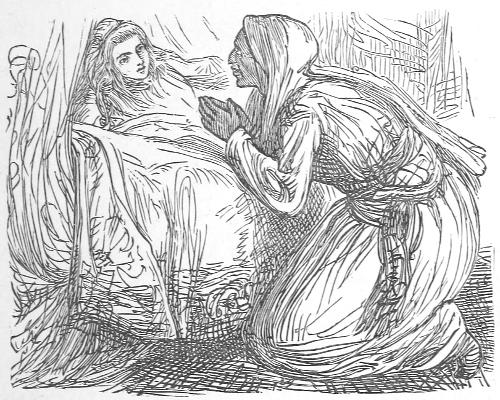
THE AYAH PRAYING.
“O Motee! Motee!” cried little Edith,
starting up from the pillow with a cry of
delight, and flinging her white arms round
the neck of the astonished Hindu, “the
Lord has made you love him,—I knew he
would,—for I prayed so hard. And oh,
how I love you, Motee—more than ever I
did before!” The curly head nestled on
the bosom of the ayah, and her dark skin
was wet with the little child’s tears of joy.
Edith, a few minutes before, had awoke
refreshed from a long sleep, during which
her fever had passed away. And from that
hour her recovery was speedy; before many
days were over the child was again sporting
about in innocent glee. And from that
night the ayah never prayed to an idol
again. Willing she now was to listen to all
that the beebee could tell of a great and
merciful Lord. Of the skin of the tiger
that the sahib had slain a rug was made,
which Edith called her praying-carpet. Upon
this, morning and night, the white English
girl and her ayah knelt side by side, and
offered up simple prayers to Him who had
saved them from death. Mrs. Tuller’s
words had done less than her example in
drawing a poor wandering soul to God; but
the prayer lisped by her little lamb had had
greater effect than either.
Oh, if, in our dear land, all the little ones
who have no money to give to the missionary
cause, who have never even seen an
idolater, would lift up their hands and hearts
to the Lord, saying, “Teach the poor heathen
to love thee!” how rich a harvest of blessings
would be drawn down by such a prayer
on those who know not the truth, and still
sit in darkness and the shadow of death!
BUY THE TRUTH AND SELL IT NOT. Prov. 23:23.
II. THE BUTTERFLY.
A party of boys had been playing
in the fields on a sunny afternoon
in the bright month of June.
They had been chasing a gay
butterfly, which, in its uncertain
flight, had led them over hedge
and ditch, till at last the beautiful prize was
won, and the brilliant insect remained a
helpless prisoner in the hands of its pursuers.
Alas, for the butterfly! A few moments
before so gay and so free, sometimes resting
on a blossom, then fluttering up towards
the sky, its lovely wings were rudely torn
away, and it lay quivering in the agonies of
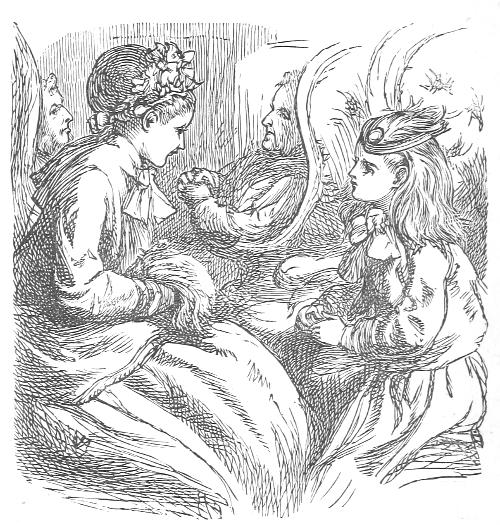
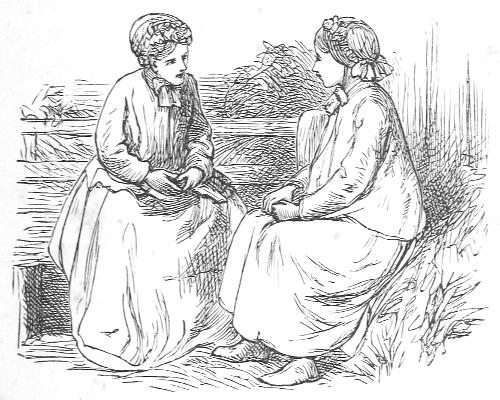
death. At this moment Ella Claremont, a
young lady of the village, approached the
party; she had seen the chase and its close,
and looked with regret on the poor mangled
butterfly. “Why did you not let it live?”
said she; “it had never harmed you, and it
was so happy. You easily took away its
little life,” she added; “but could any of
you, could any power on earth, give that
life back again?”
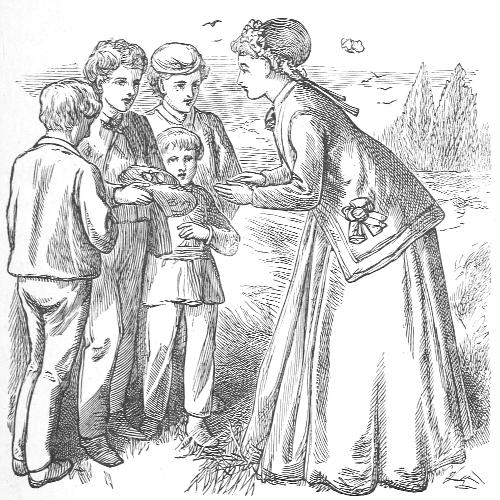
A HELPLESS PRISONER.
The boys looked one upon another, and
were silent, till the eldest of them, Giles,
replied, “I am sorry that I killed it, but I
did not know that there was any harm.”
“Surely,” said Ella, in a very gentle
voice, “in a world where there is so much
pain, one would be sorry to add, even in the
least degree, to the amount of it. There is
another feeling,” continued she, “that should
make us merciful to every creature; we
should look upon it as one of the wonderful
works of God.”
“Why,” said Anthony, “a butterfly is
only a caterpillar after it has wings.”
“True; but what human skill could form
a caterpillar! It has been calculated that
in a single caterpillar there are sixty thousand
muscles!”
An exclamation of astonishment burst
from the boys.
“They must be finer than spiders’ threads,”
cried Giles.
“I daresay,” replied the lady, “that you
are not aware that each separate spider’s
thread is said to be formed of about three
thousand joined together.”
“The world seems full of wonders,” exclaimed
little Robert.
“It is indeed; the more we search into
God’s works, the more wisdom and skill do
we behold.”
“I’ll not kill a butterfly again,” said Giles.
“I never see one fluttering in the sun,”
continued Ella, “without thinking of those
lines:—
‘Thou hast burst from thy prison,
Bright child of the air!
Like a spirit just risen
From its mansion of care!’”
“That sounds very pretty,” said Giles;
“but I don’t understand it.”
“It is not very difficult to explain,” replied
Ella. “The butterfly teaches us a
joyful lesson; it is what is called a type of
immortality! You see the lowly caterpillar
crawling over a leaf,—it cannot raise itself
towards the sky,—it cannot leave the earth;
in this it is like what we are now. Then, as
you know, it seems to die; it is wrapped up
in its little covering, and there it lies without
motion or feeling—that is like what we
must be.”
“Ah! I see; when we are in our coffins,
dead and buried,” cried Robert. “But the
bright butterfly soon bursts from the dark
case, and we do not rise from our graves.”
“We shall,” replied Ella earnestly; “we
all shall rise again. No longer prisoners
bound to earth, no longer creeping on amidst
trials and sorrows, but free, happy, glorious,
shining in the beams of the Sun of Righteousness.
‘For the trumpet shall sound, and
the dead shall be raised’ (1 Cor. xv. 52).
Why should we fear death—why should we
dread being laid in the cold tomb? When
we think of the hope set before us, well may
we cry, ‘O death, where is thy sting? O
grave, where is thy victory?’” (1 Cor. xv. 55).
There was a deep silence for a few moments;
nothing was heard but the song of a
lark high overhead, as it soared towards the
sky.
Then Giles spoke in a tone of awe, “Will
all rise again?”
“Yes, all.”
“Will all rise to be free, and happy, and
glorious?”
“Alas, no!” replied Ella.
“How can we tell,” continued the boy,
after a little hesitation, “whether we shall
be among the happy ones?”
“There will be but two classes then,” said
Ella, “as there are but two classes amongst
those called Christians now. We may divide
all who have heard of a Saviour into those
who love God, and those who love sin. Those
who love sin will awake to misery; those
who love God will awake to glory.”
“But,” said the boy anxiously, “there
may be some who love God and really try
to obey him, and yet sin sometimes.”
“All sin sometimes,” replied Ella. “There
is not one human being free from sin.”
“Then,” said Giles, “I should be afraid
that, when the trumpet sounded, my sins
would be like chains, and keep me down, so
that I could not rise.”
Every eye was turned towards Ella; every
ear anxiously listened for her reply; for
every young heart was conscious of some
sin, and felt the difficulty which Giles had
started.
“It would have been so,” replied Ella,
“had not the Saviour died for sinners like
us. His blood washes us quite clean from
all guilt—that is, if we really believe on him
and love him. Let us look upon our sins as
chains now, and struggle hard to burst them,
and pray for grace to help us: then, if we
are Christ’s people, we shall rise joyfully in
that great day when ‘the Lord himself shall
descend from heaven with a shout, with the
voice of the archangel, and with the trump
of God’” (1 Thess. iv. 16).
“I think,” said Giles, after a pause, “that
sins are like chains, and very hard to break
too. There is temper, now! I know that
I’ve a bad temper; I determine over and
over again that I will get rid of it; but the
harder I struggle, the tighter the chain
seems to grow.”
“And mother is trying to cure me of saying
bad words,” cried little Robert; “but
it’s no use—they will come; I say them
when I’m not thinking about it.”
“Have you tried prayer?” inquired Ella.
“Do you not know the precious promises,
‘If any of you lack wisdom, let him ask of
God, that giveth to all men liberally, and
upbraideth not; and it shall be given him’
(James i. 5). ‘Ask, and it shall be given
you; seek, and ye shall find; knock, and it
shall be opened unto you’ (Luke xi. 9).
These words have often been such a comfort
to me, when I felt how heavy my chain
was, and how weak my efforts to get rid of
it. And now, my young friends, I must
leave you; will you think over what I have
said?”
“Yes, miss, and thank you for it,” said
Giles, touching his cap.
Ella paused as she was turning to depart,
and gazed upon the sky, all bright with the
evening sun, setting amidst clouds of crimson
and gold.
“How glorious!” she cried, “how beautiful
that work of God! He, too, speaks of
the resurrection; he sinks to rise again!
‘Just so is the Christian; his course he begins,
Like the sun in a mist, when he mourns for his sins,
Then all in a moment he breaks out and shines,
And travels his heavenly way.
‘And when he comes nearer to finish his race,
Like a fine setting sun, he grows richer in grace,
And gives a sure hope, at the end of his days,
Of rising in brighter array!’
“Farewell, my children. Whether we
shall see each other again on this earth,
who shall dare to say? But we shall meet
again when the last trumpet sounds, and
the dead hear the Saviour’s voice, and the
saints awake in his likeness. Let us live
now as those who are waiting for the Lord,
and who long for the hour of his appearing.”
“Oh! when through earth, and sea, and skies,
Th’ archangel’s final summons flies,
May we, through Christ, immortal rise
Towards a heavenly home!
“They who together life have trod,
May they together burst the sod,
And glorious rise to meet their God!
Come, Jesus, Saviour, come!”
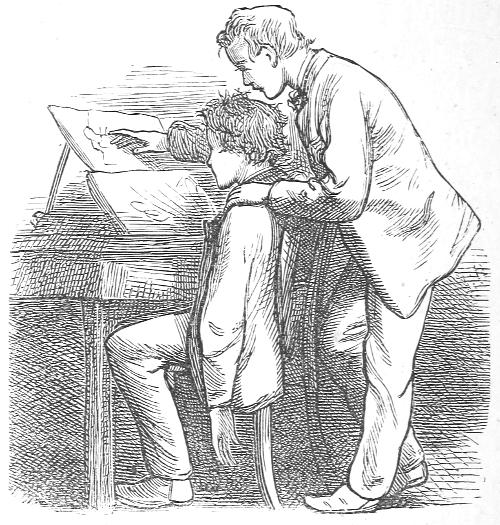
THE HAND OF THE DILIGENT MAKETH RICH
III. THE PENITENT.
“What is the matter with you,
Charley?” said George Mayne, as
he returned home from the factory,
and found his little brother crying
violently on the door-step.
“What has vexed you, Charley, my boy?”
“Oh, my father will never forgive me,”
sobbed the child.
“I cannot think that, he is so good and
so kind. Come, dry up your tears, and tell
me what has happened; perhaps I may be
able to help you out of your trouble.”
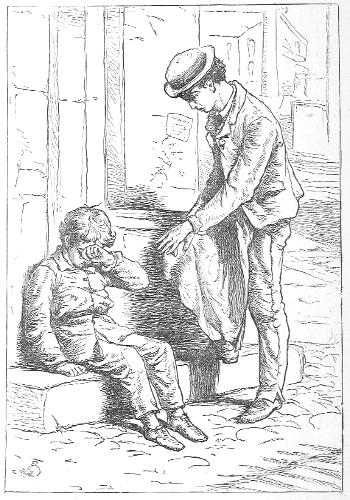
CHARLEY’S GRIEF.
It was some time before, soothed by the
kindness of his brother, the boy became
calm enough to explain the cause of his
grief. With a voice half choked with tears
he began: “Father had sent me to pay the
baker—he had given me a half-crown to do
it—he had trusted me; and now it is all—all
gone! Oh, father will never forgive me!”
and he burst into a fresh agony of sorrow.
“You lost the money, did you? Well,
father can ill afford it, but he will forgive
you for an accident, I am sure.”
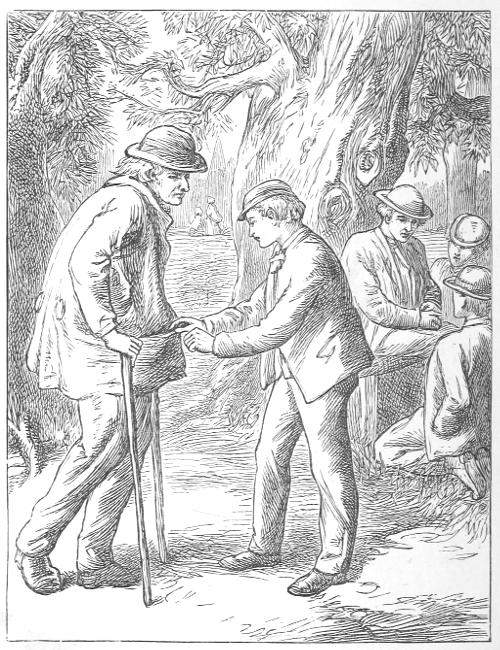
“But it was not an accident, that is the
worst of it! You see, I met Jack and Ben;
they were playing at pitch-farthing, and
they called to me to join them.”
“But father has forbidden us to keep
company with those idle boys.”
“I know it—but I disobeyed him—I was
very wrong—and I am very miserable.”
“I hope that you did not join the game?”
“Not at first—I told them that I had
given father my solemn promise never to
gamble; but they jeered me, and laughed at
me—and I played with them—and they got
all my money from me—the half-crown that
was not mine, with which I had been trusted.
Oh, father will never forgive me!”
“Now, Charley, do you know what I
advise you to do?” said George. “Go to
father at once, confess your fault to him, let
not one sin lead you to another.”
“Confess to him!—I dare not.”
“I will go with you, Charley; I will
plead for you.”
“But father is so poor; he will be in
debt, and he cannot bear that! He will be
so angry. Oh, cannot I say that some one
snatched the half-crown out of my hand?”
“Charley, Charley!” cried his brother,
almost sternly, “the Evil One is tempting
you. He has gained one victory over you;
would you be his slave entirely? Pray to
God for strength to struggle against this
temptation: remember that liars have no
place in heaven. I will plead for you, I say;
and as for the money, I have been saving up
pence for the last six months to buy a particular
book which I have much wished to
have—I have just enough of money, and I
will pay the debt.”
“O George, how good you are! But if
the debt is paid, need I confess?”
“Yes; you have not only lost the money,
but broken father’s command, and broken
your own promise. Hide nothing. Take
my hand, Charley, and come with me at
once; every moment that we delay doing
what is right, we add to the difficulty of
doing it.”
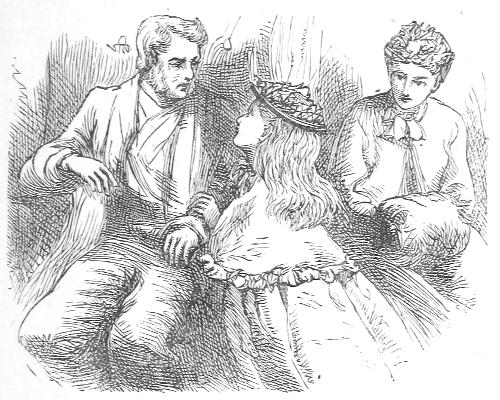
So hand in hand the two brothers appeared
before their father, who was resting
himself after a hard day’s work. George
encouraged poor Charley to confess his
fault; he entreated forgiveness for the
offender; he placed in the hand of his father
his own hard-earned savings. The parent
opened his arms, and pressed both his sons
to his heart! Then making Charley sit
down beside him, the good man thus
addressed his repentant child:—
“I forgive you, my boy, for the sake of
your brother; but there is another Friend
whom you have offended, whose commandment
you have broken, whose forgiveness
you must seek.”
“I know that I have sinned against
God,” said Charley sadly.
“And for whose sake do you hope to be
forgiven?”
Charley looked up in the face of his
father, and replied, “I hope for forgiveness
for the sake of the Lord Jesus Christ.”
“And if you are grateful to an earthly
brother for pitying you, and pleading for
you, and paying your debt, how can you be
thankful enough to that heavenly Saviour
who shed his own blood to win for you a
free pardon, and who now is pleading for
you at the right hand of God?”
Charley was silent, but his eyes filled
with tears.
“And now, George, my boy, bring me
the Bible,” said his father; “it is time for
our evening reading.”
“What part shall I read?” inquired
George, reverently opening the sacred book.
“Oh, let him read of some one who had
sinned and was forgiven!” said poor Charley.
At his father’s look of assent, George
turned to the touching story of the woman
who, weeping and penitent, sought for
mercy from the Saviour, and found it.
“Behold, a woman in the city, which was
a sinner, when she knew that Jesus sat at
meat in the Pharisee’s house, brought an
alabaster-box of ointment, and stood at his
feet behind him weeping, and began to wash
his feet with tears, and did wipe them with
the hairs of her head, and kissed his feet,
and anointed them with the ointment.
Now when the Pharisee which had bidden
him saw it, he spake within himself, saying,
This man, if he were a prophet, would have
known who and what manner of woman this
is that toucheth him: for she is a sinner.
And Jesus answering, said unto him, Simon,
I have somewhat to say unto thee. And he
saith, Master, say on. There was a certain
creditor which had two debtors; the one
owed five hundred pence, and the other fifty.
And when they had nothing to pay, he
frankly forgave them both. Tell me, therefore,
which of them will love him most?
Simon answered and said, I suppose that he
to whom he forgave most. And he said
unto him, Thou hast rightly judged. And
he turned to the woman, and said unto
Simon, Seest thou this woman? I entered
into thine house, thou gavest me no water
for my feet: but she hath washed my feet
with tears, and wiped them with the hairs
of her head. Thou gavest me no kiss: but
this woman, since the time I came in, hath
not ceased to kiss my feet. My head with
oil thou didst not anoint: but this woman
hath anointed my feet with ointment.
Wherefore I say unto thee, Her sins, which
are many, are forgiven; for she loved much:
but to whom little is forgiven, the same
loveth little. And he said unto her, Thy
sins are forgiven” (Luke vii. 37-48).
ENTER NOT INTO THE PATH OF THE WICKED. Prov.