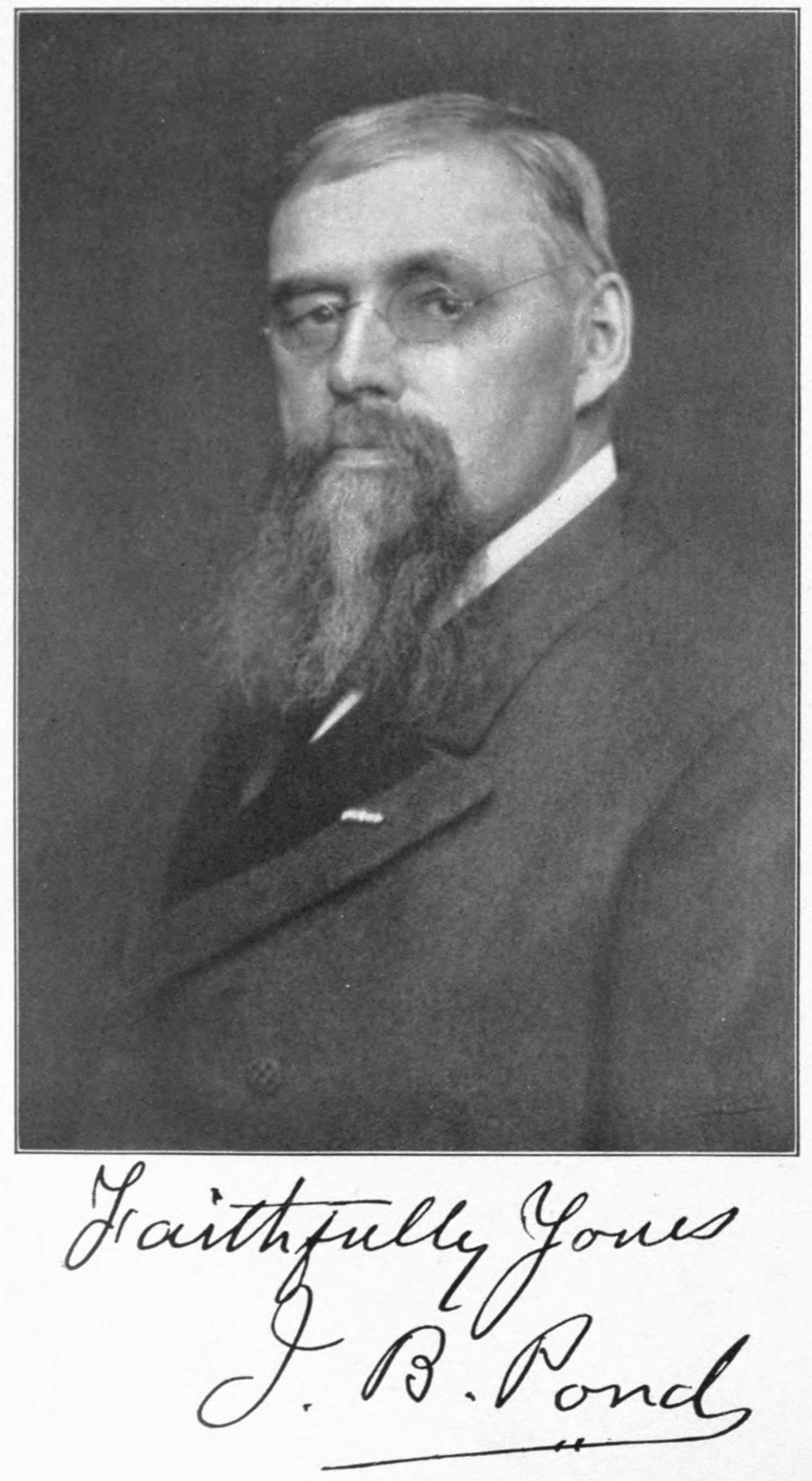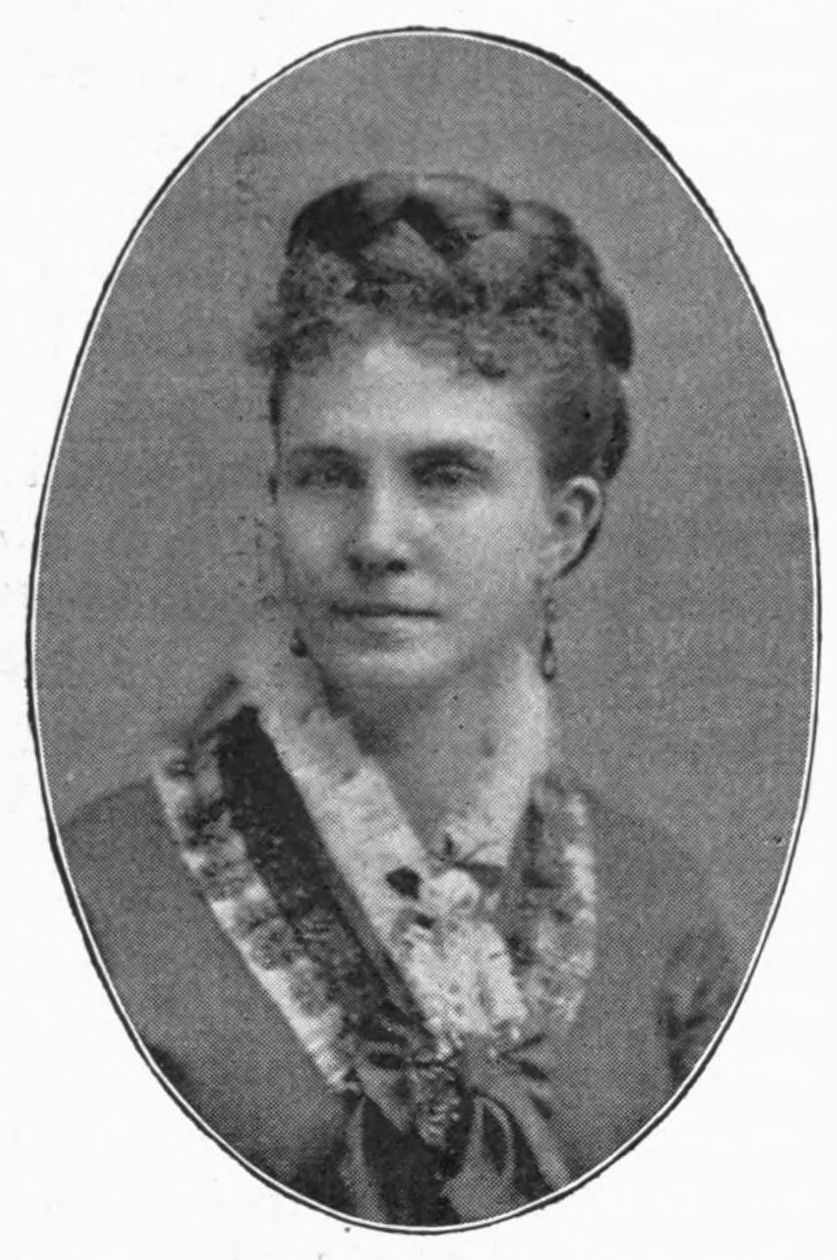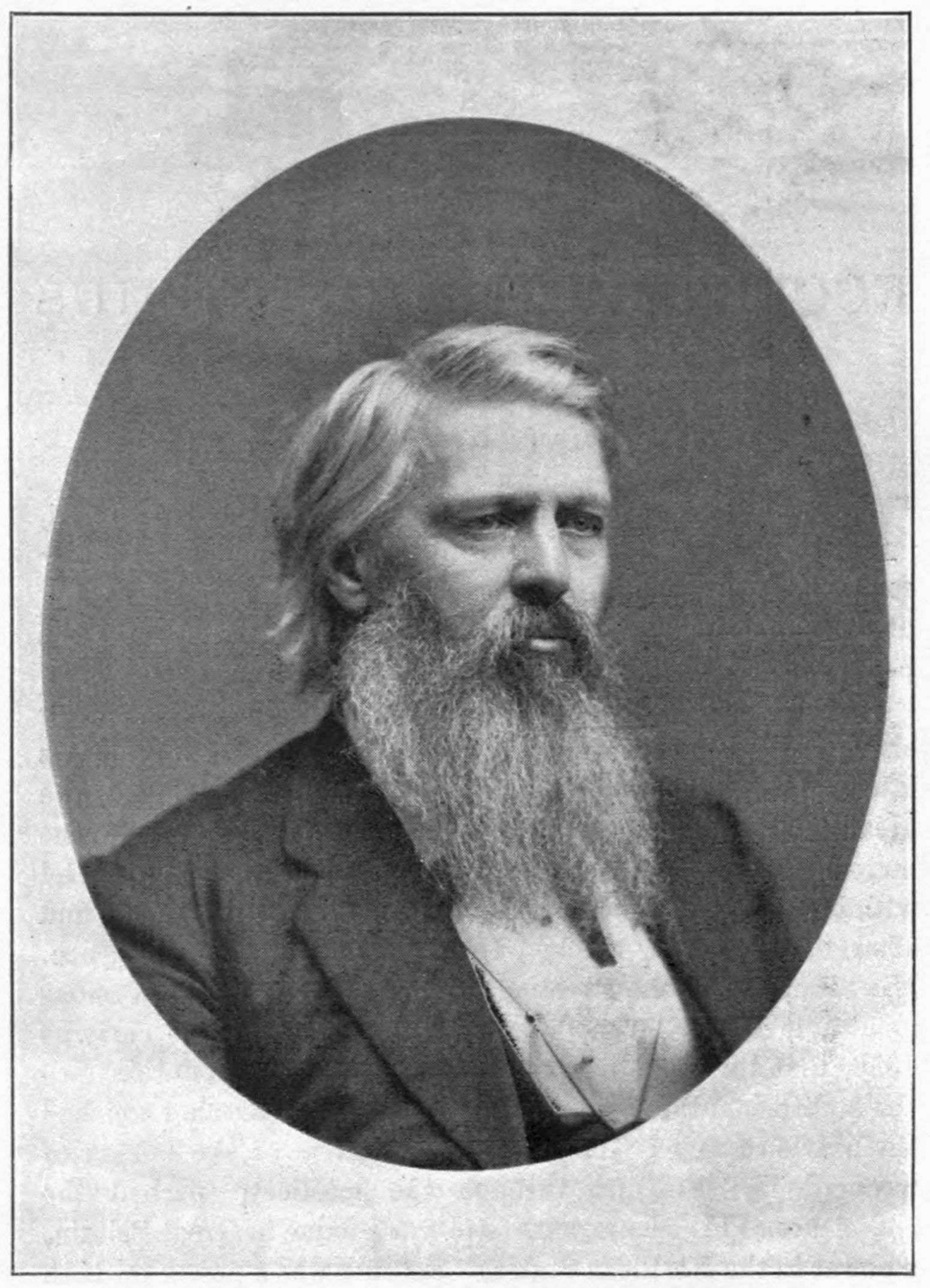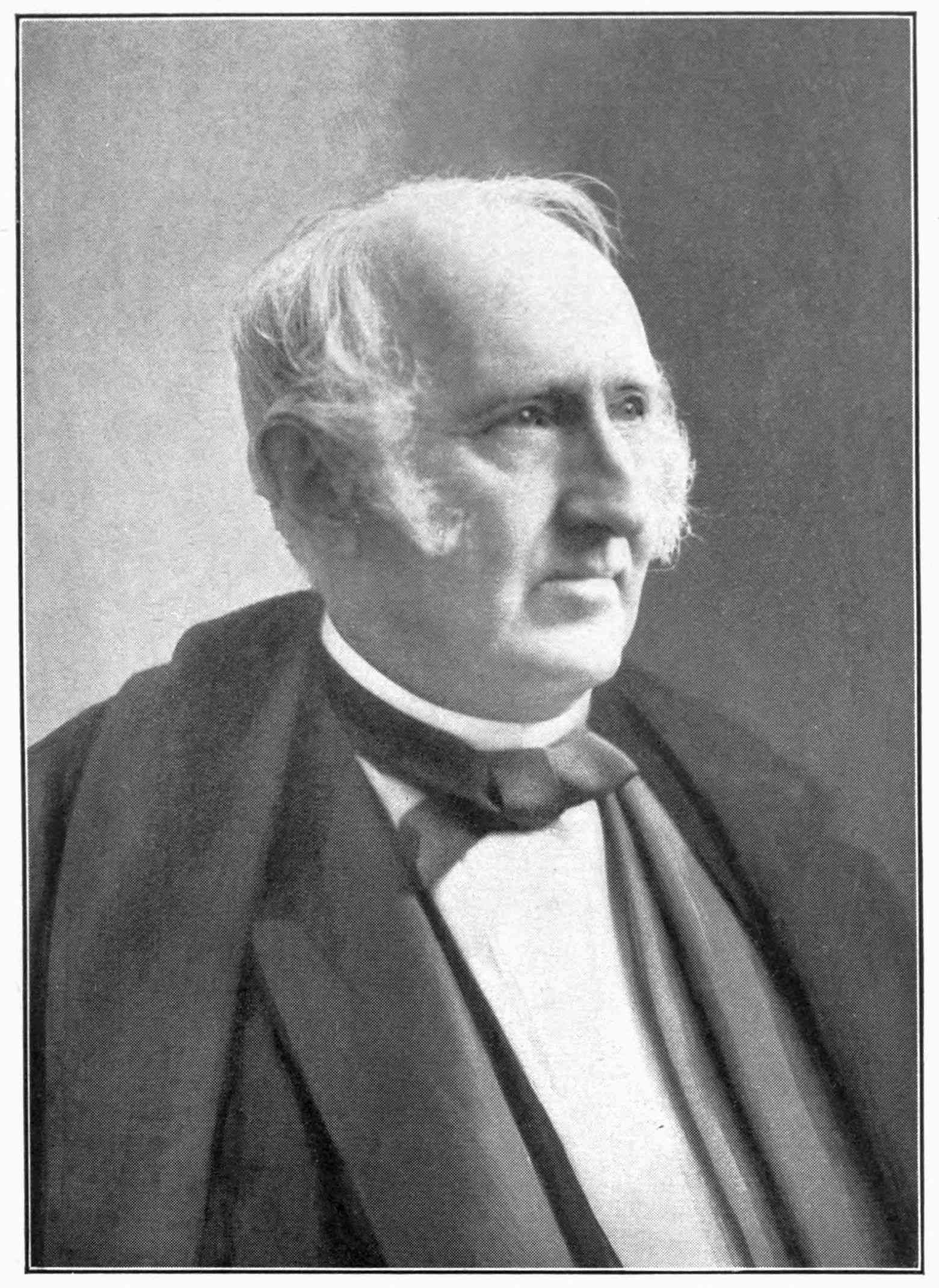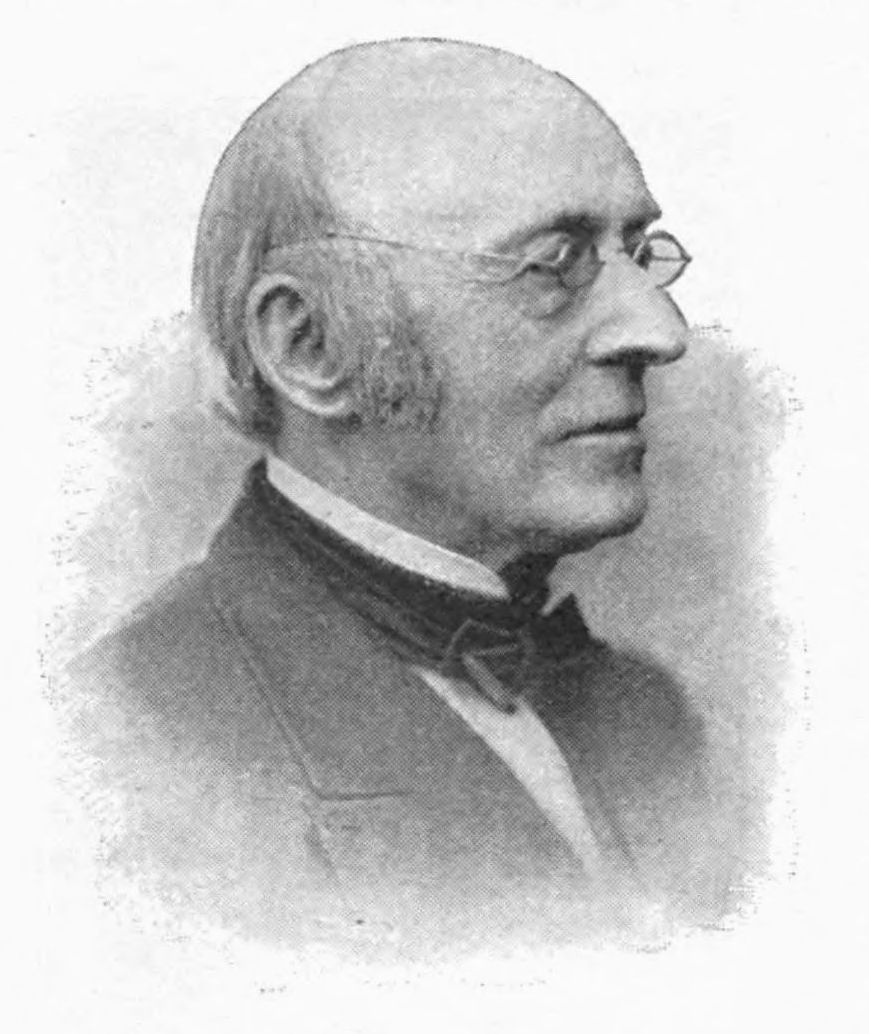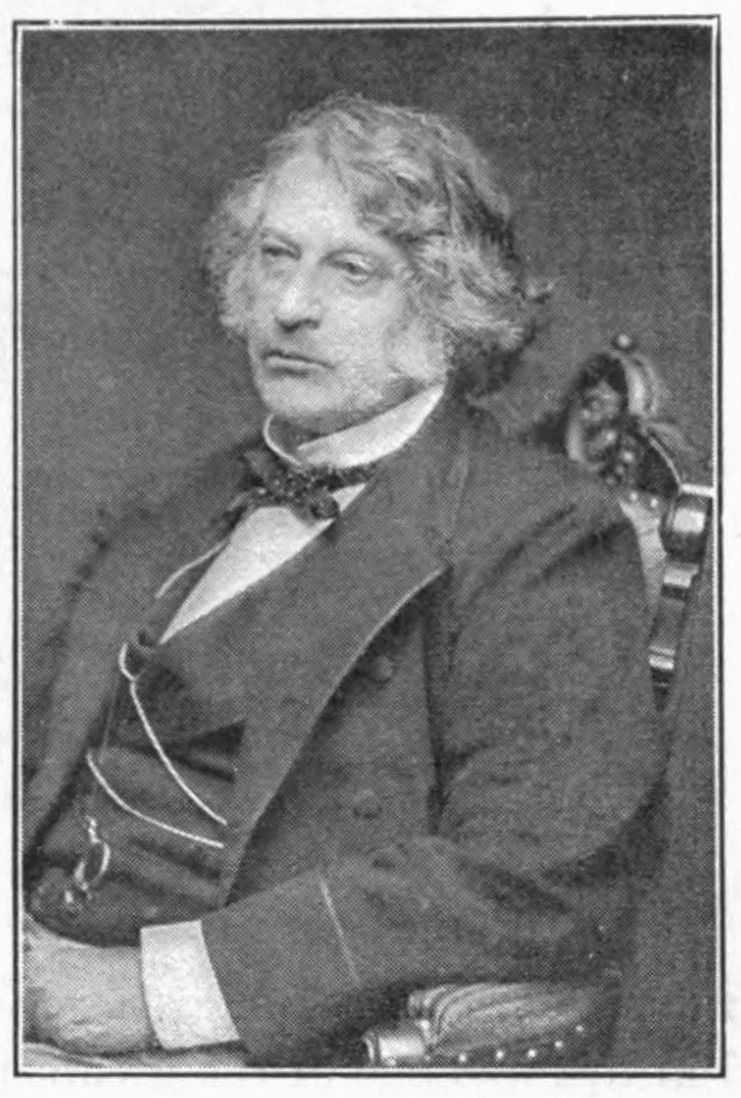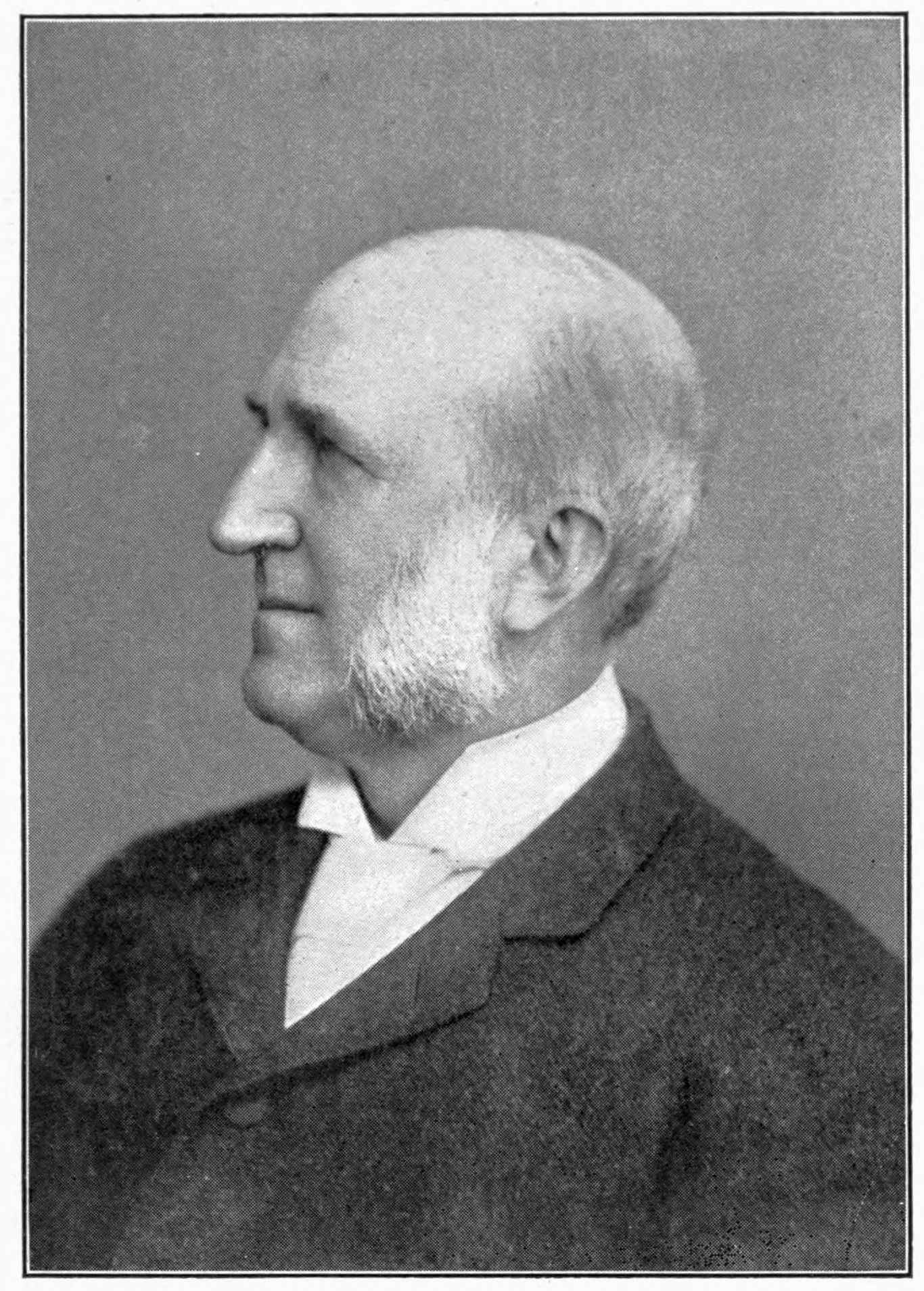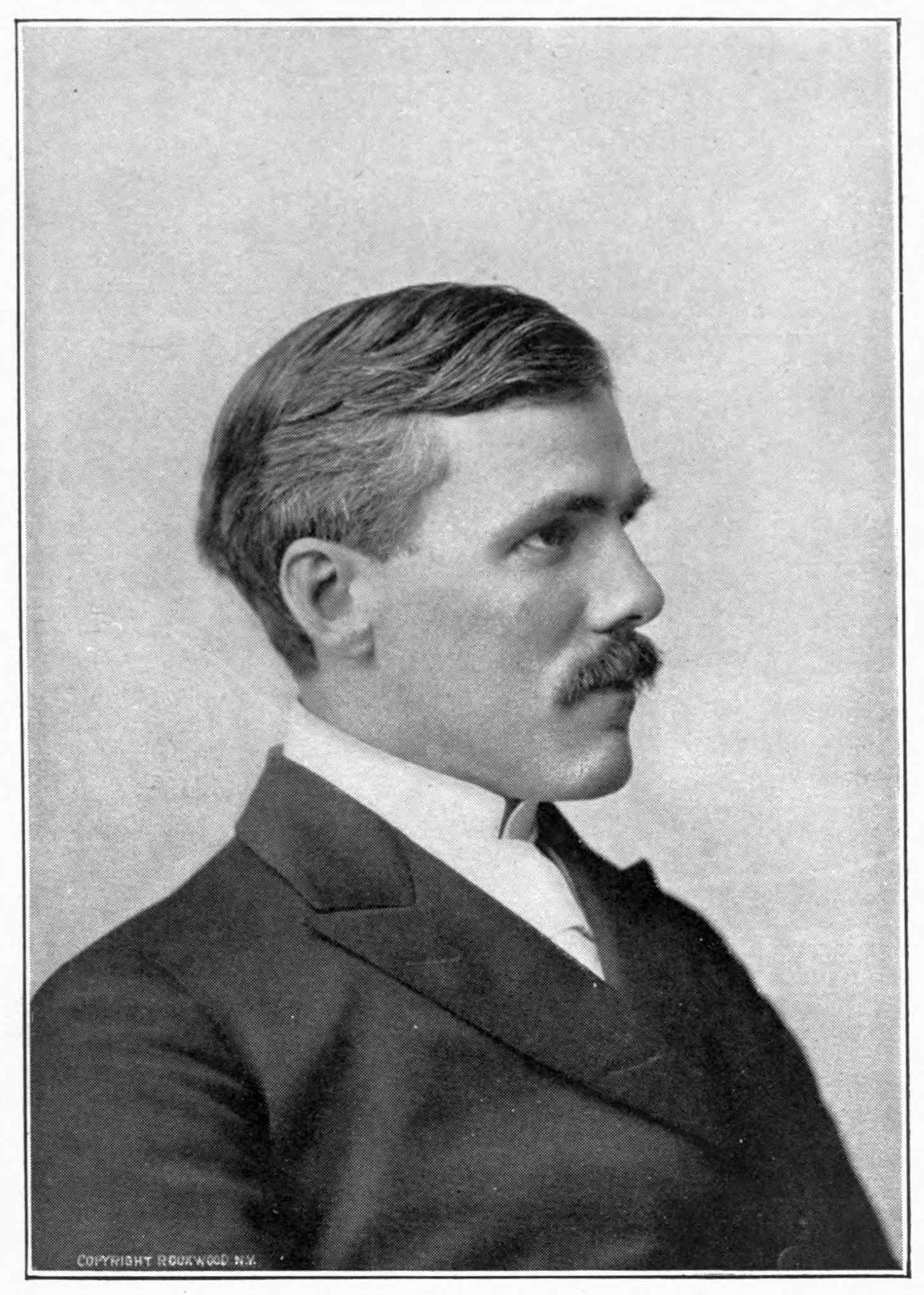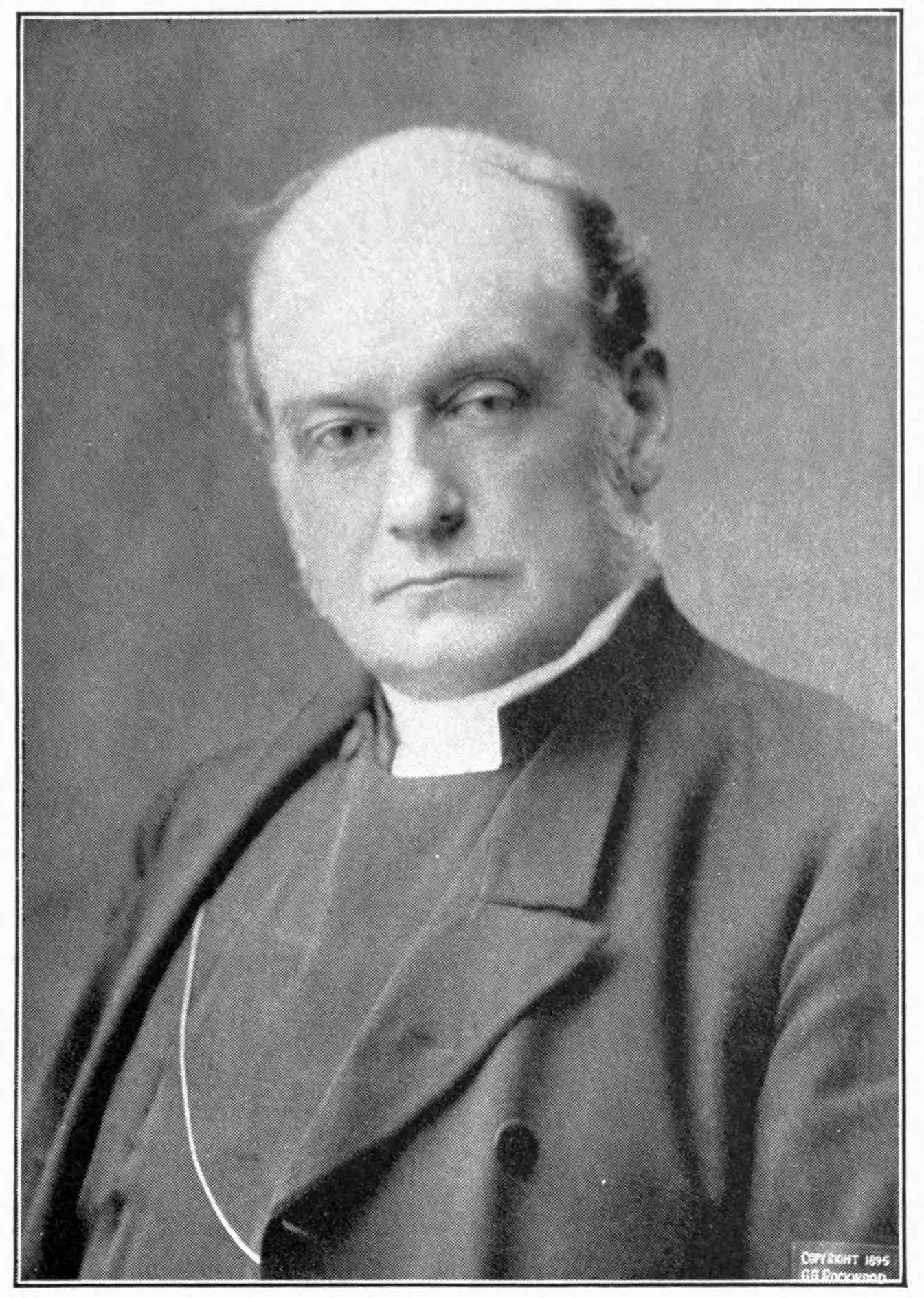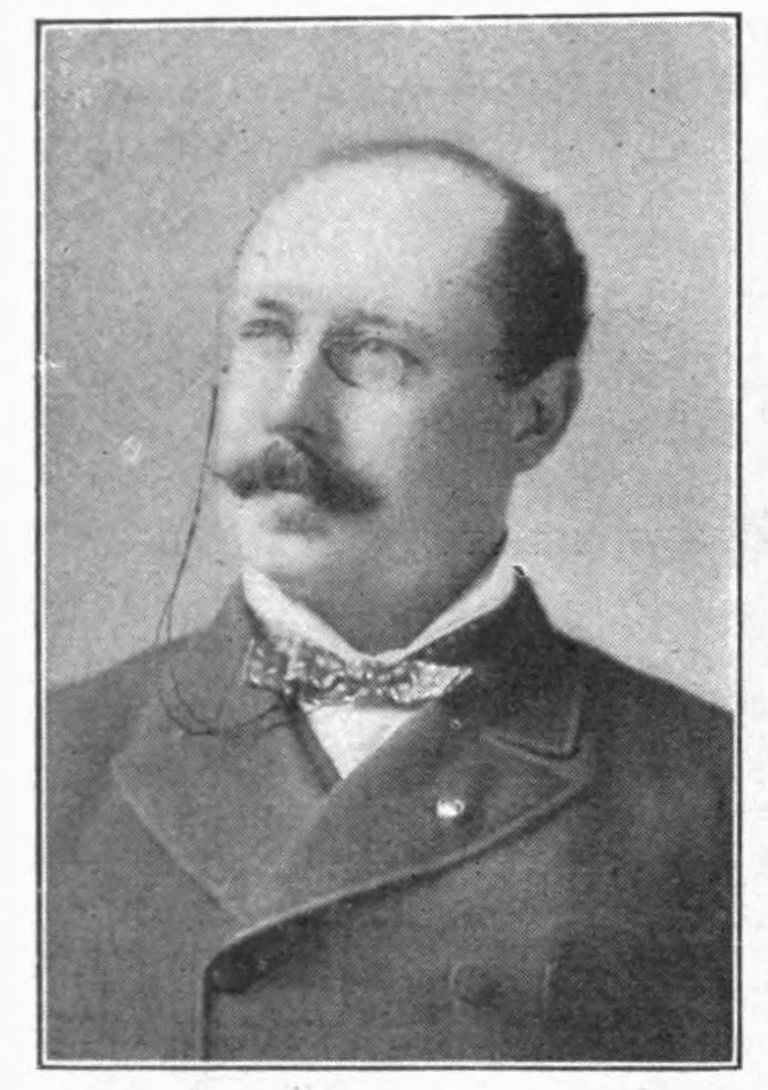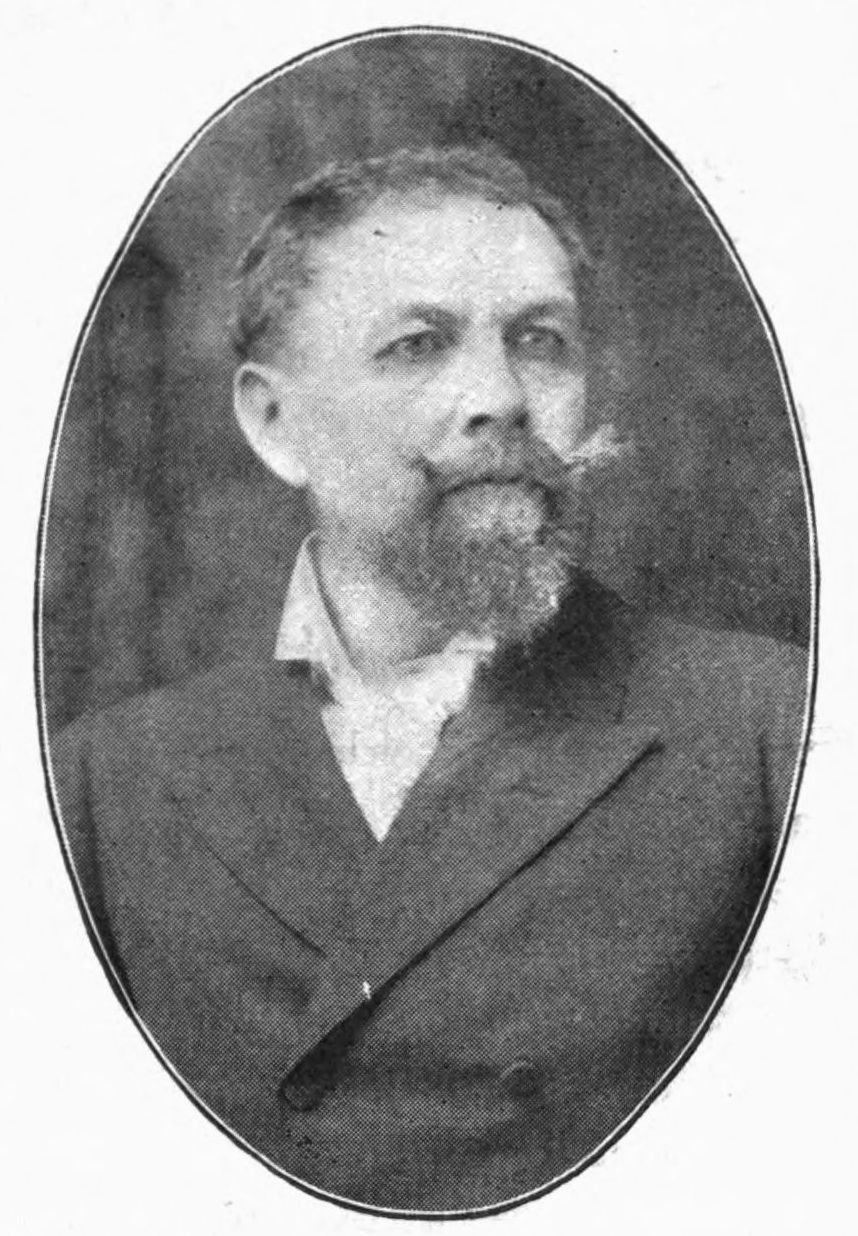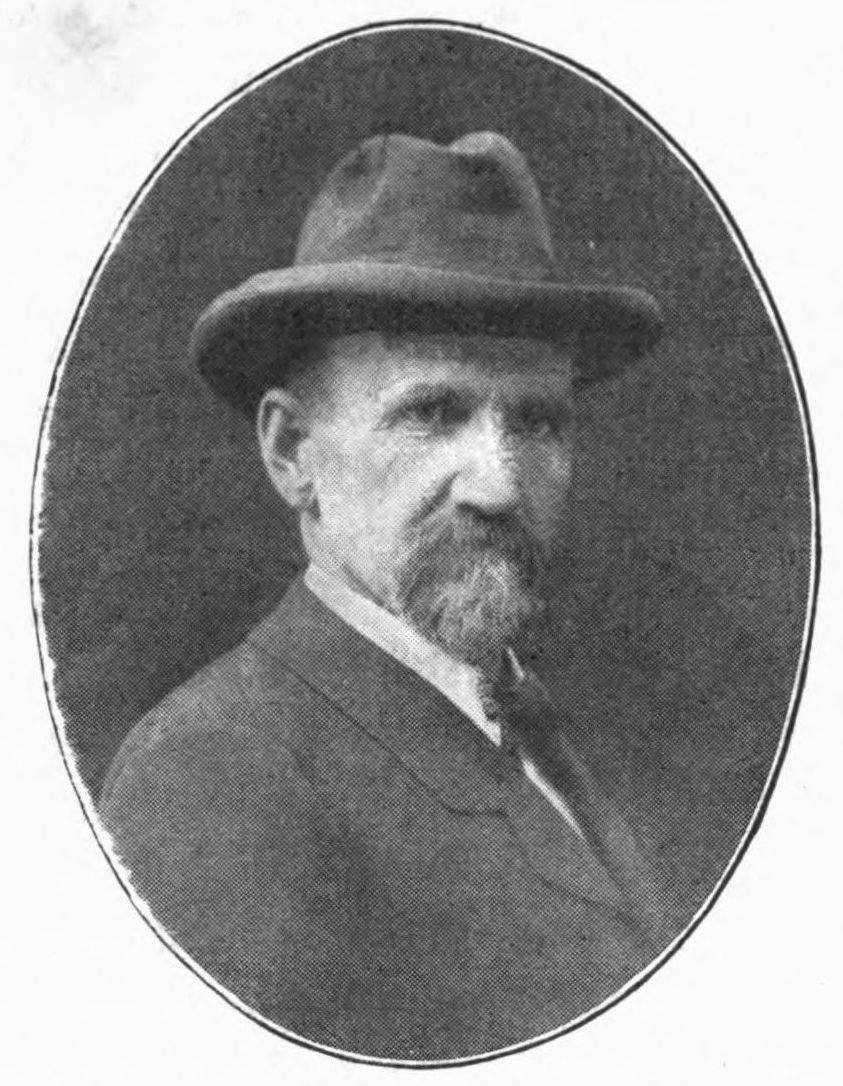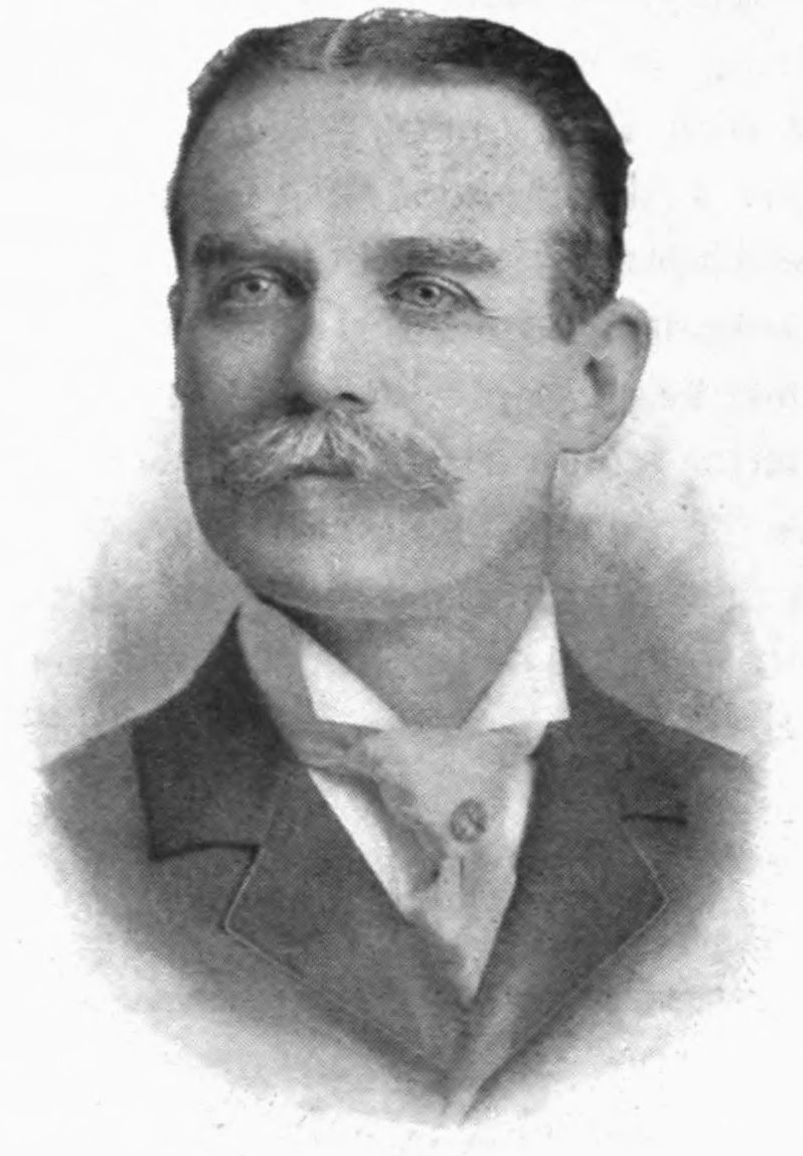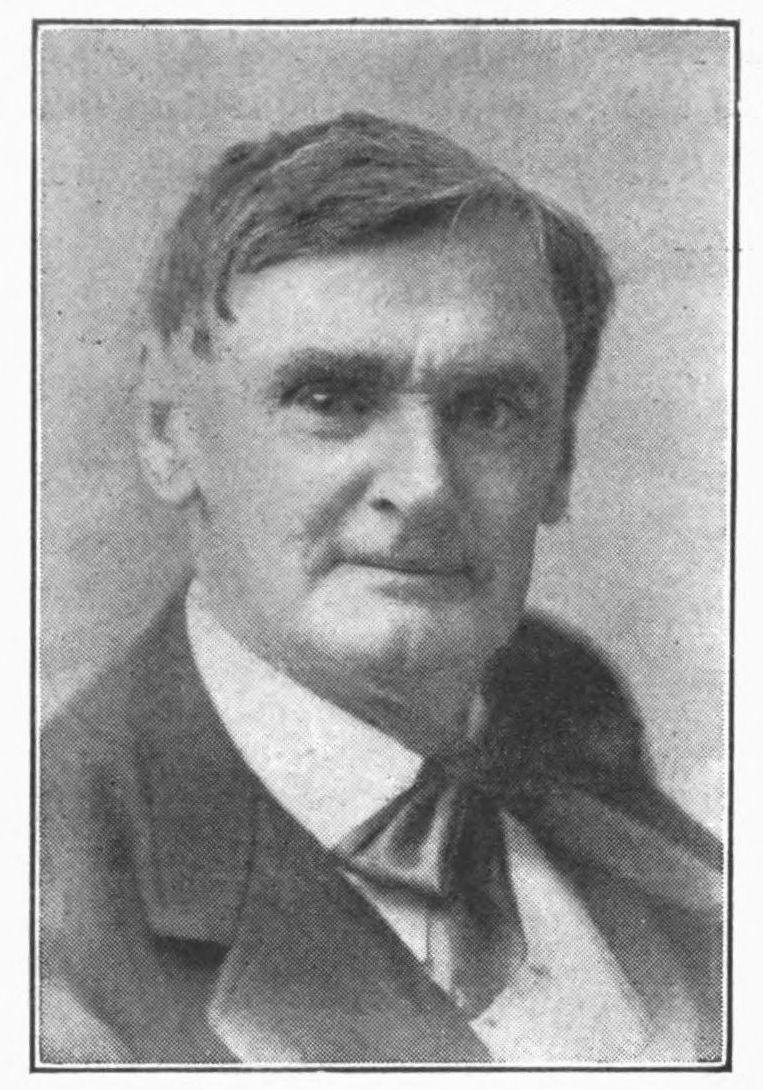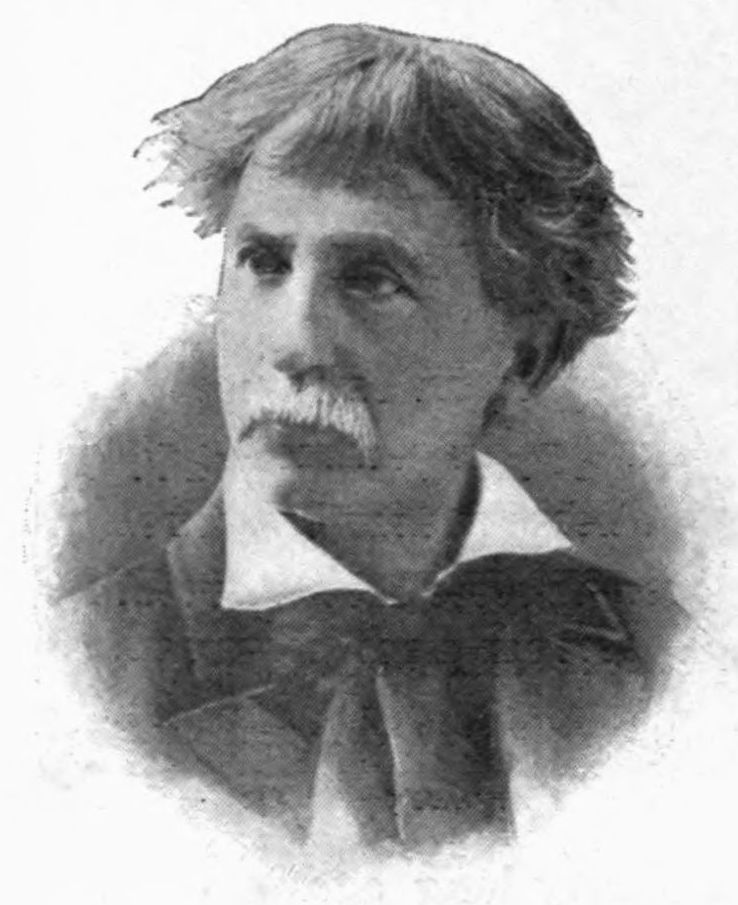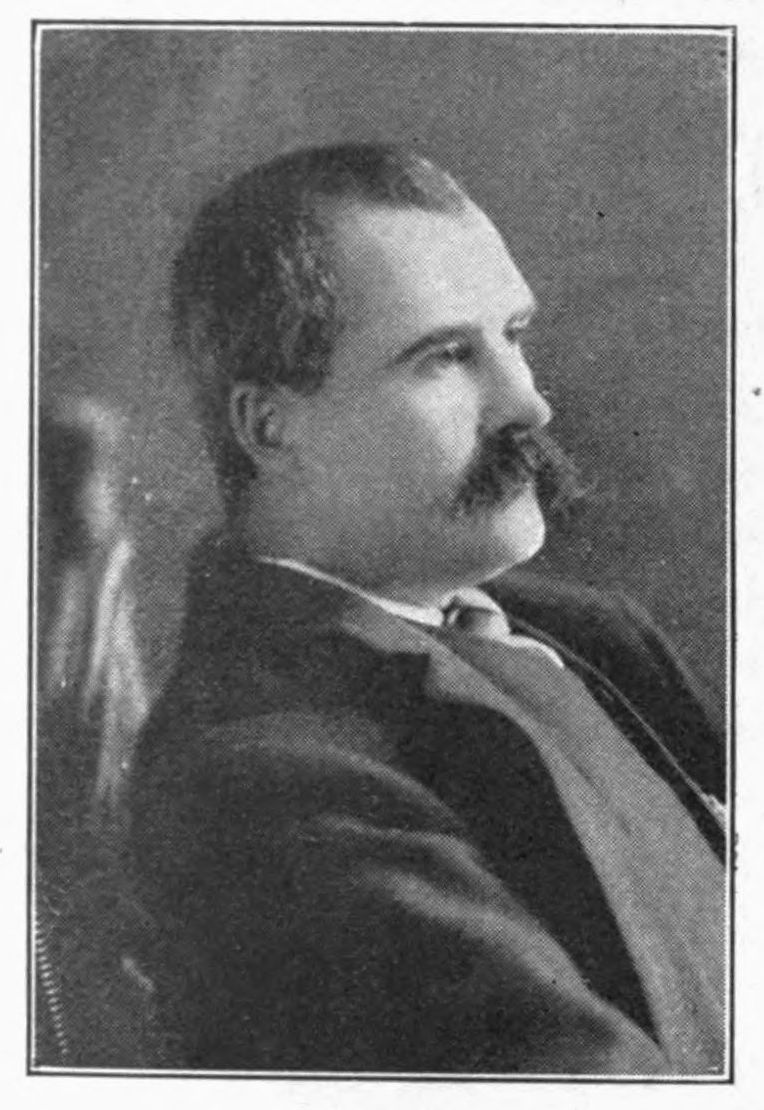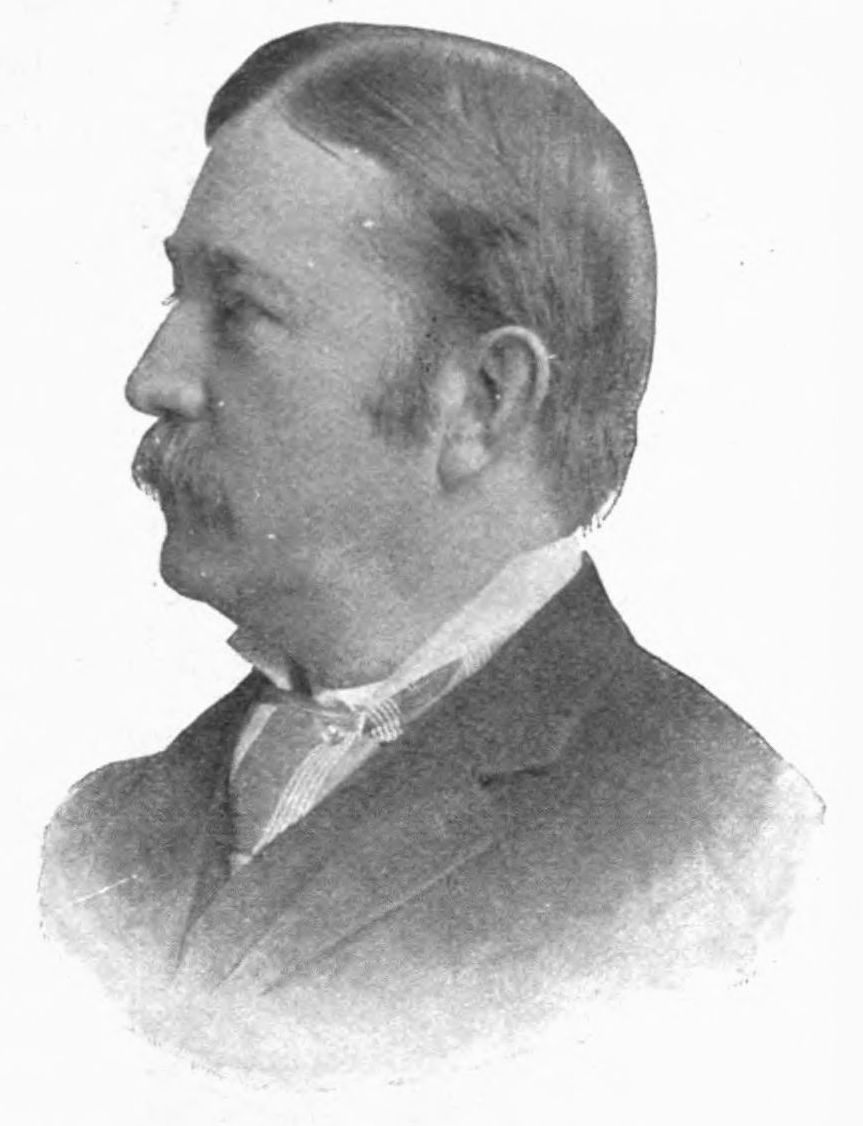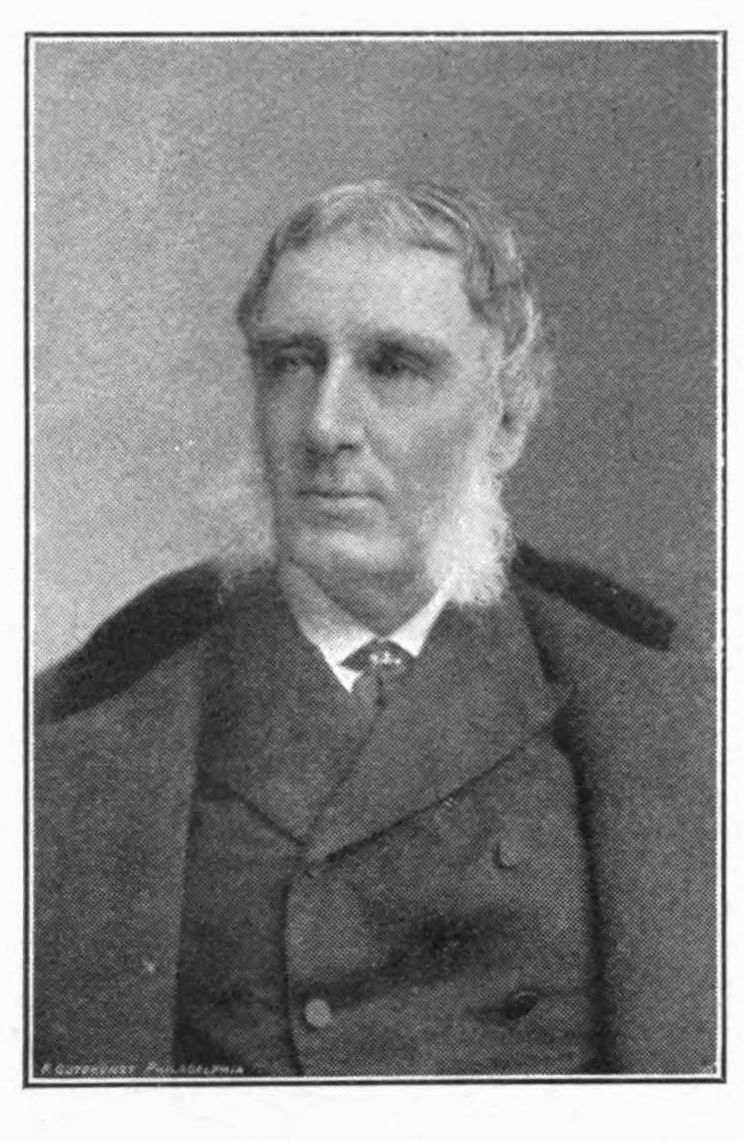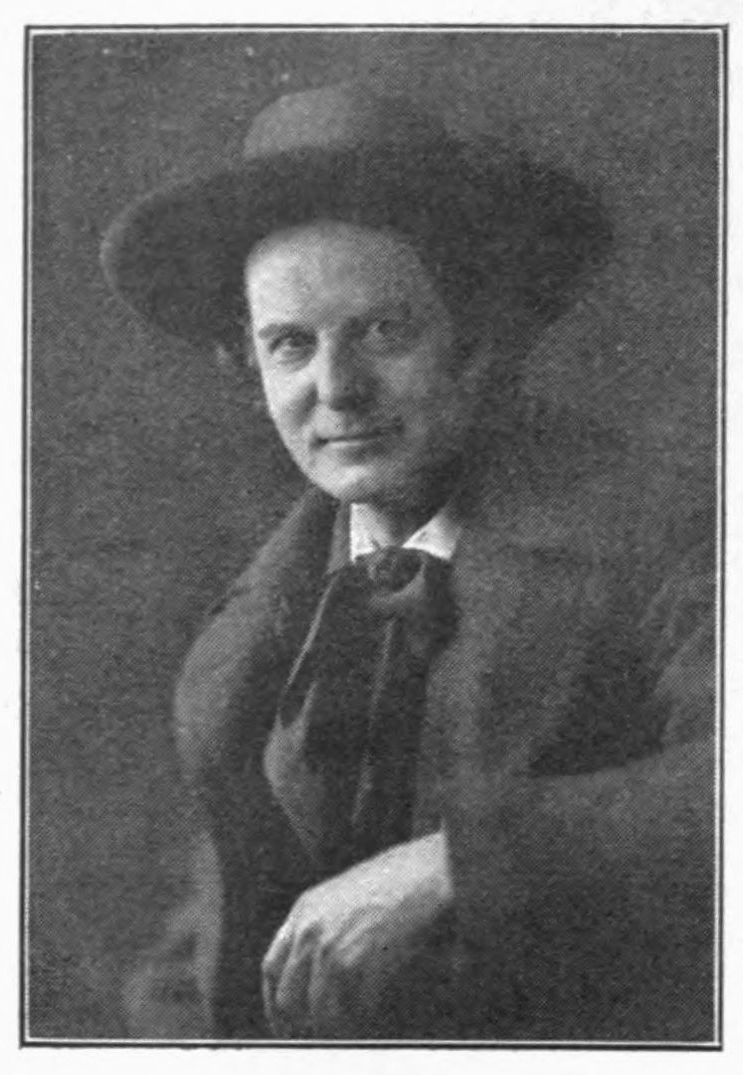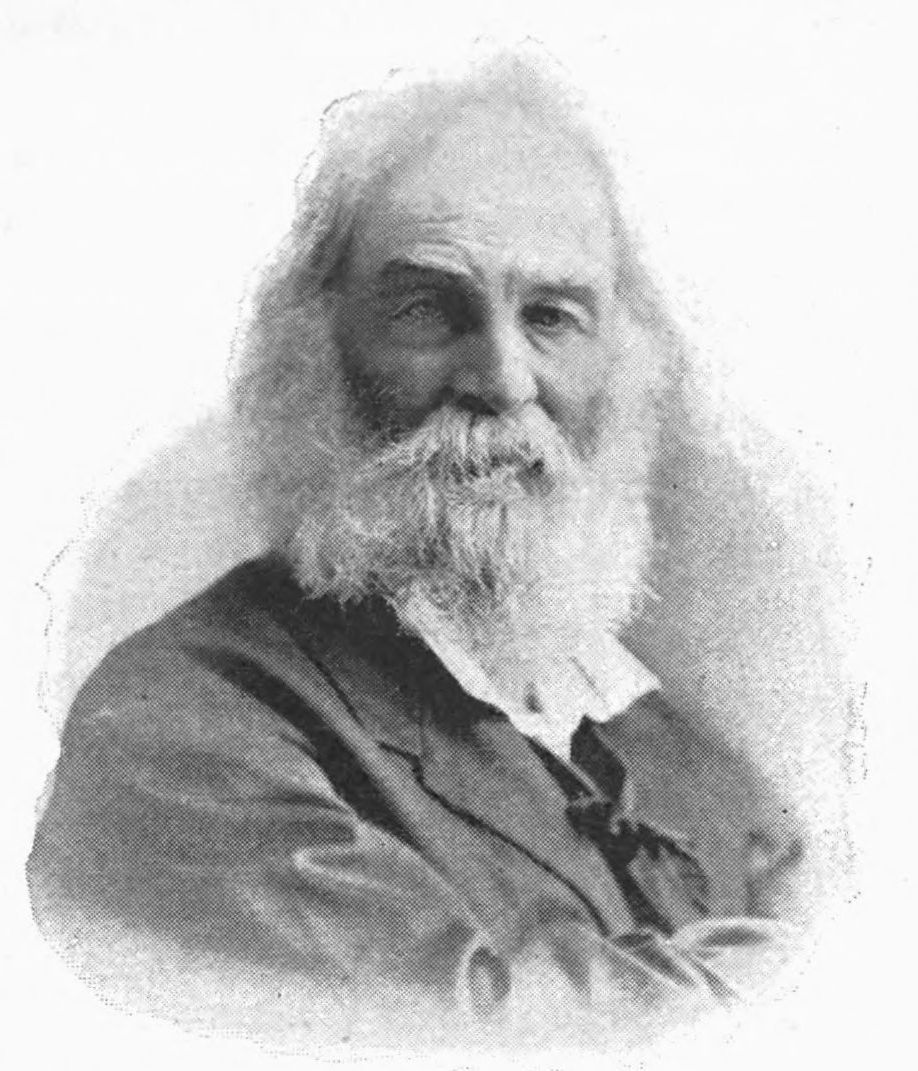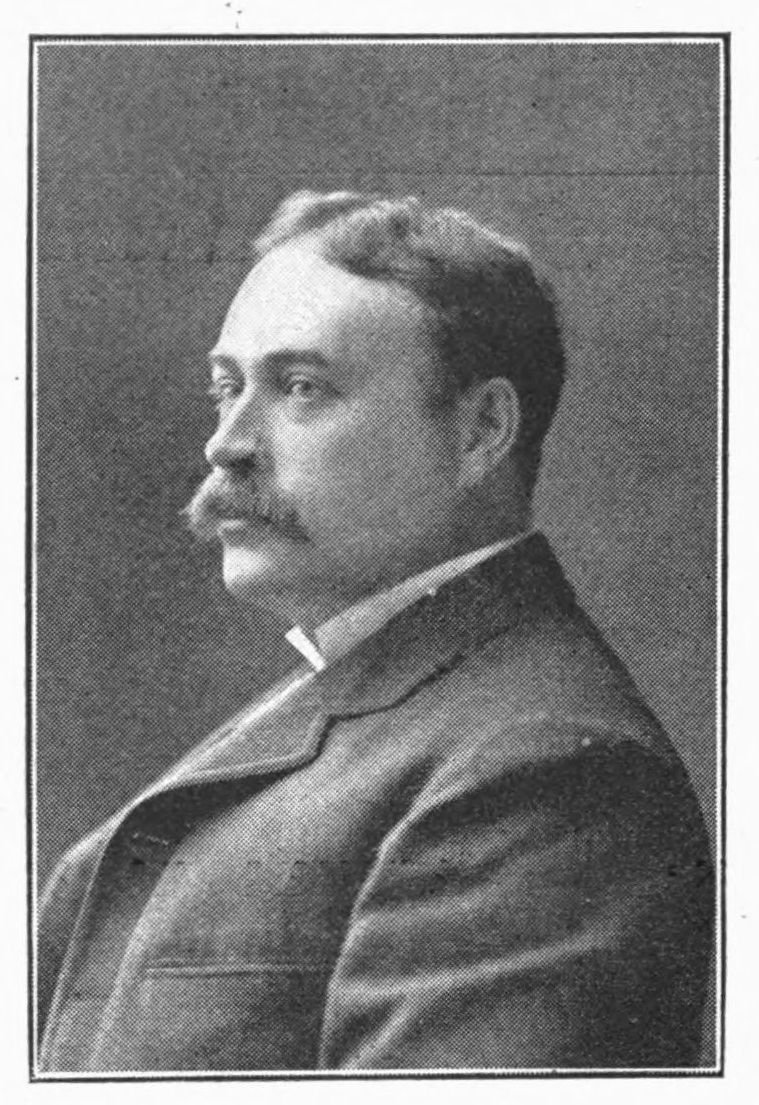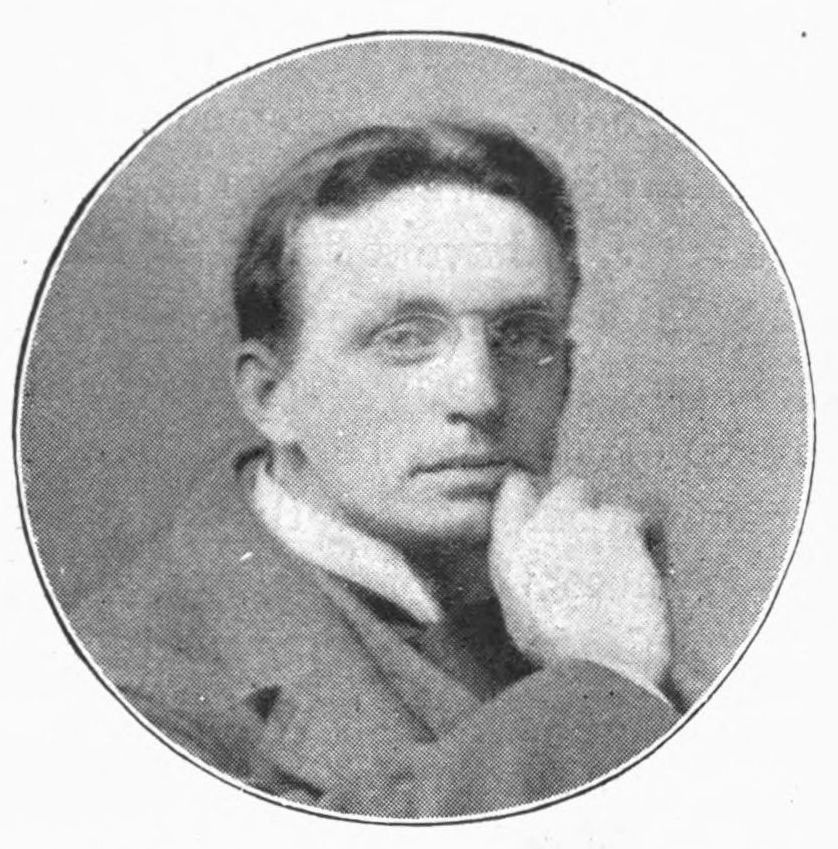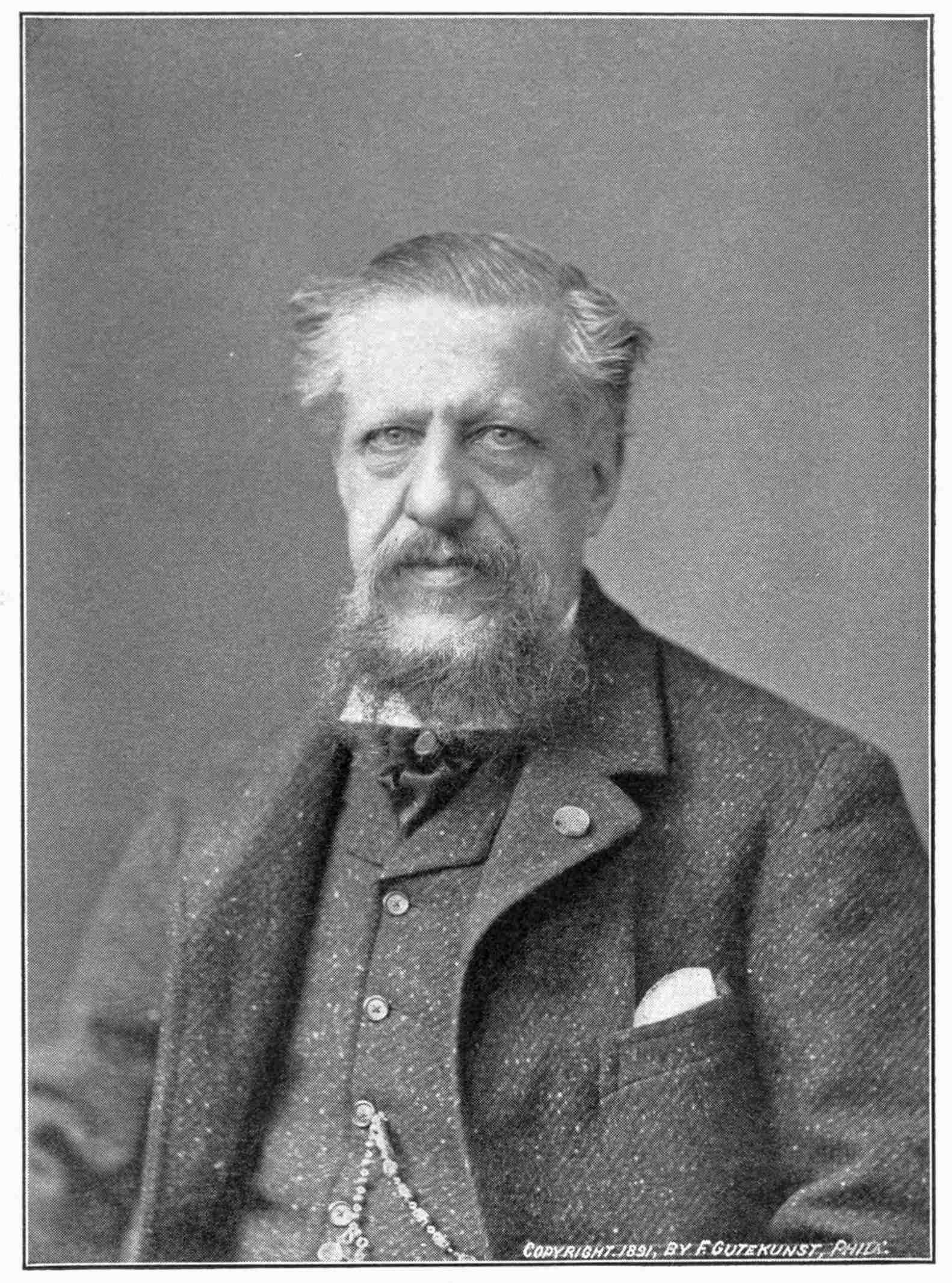
Copyright, 1891, by F. Gutekunst, Pinx.
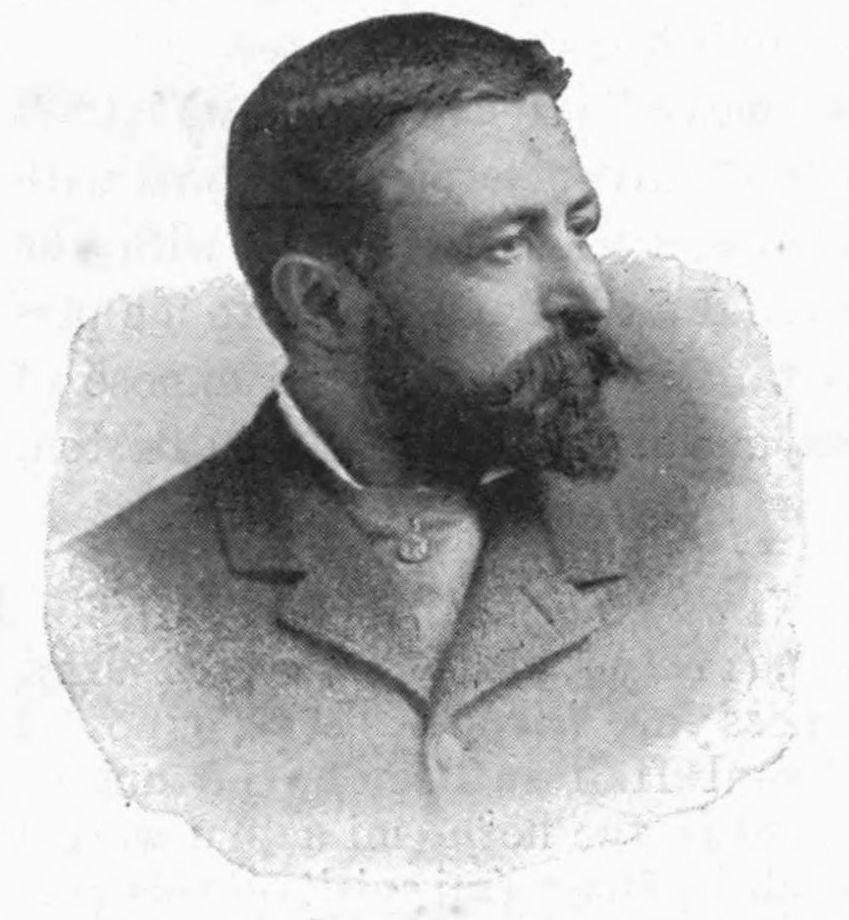
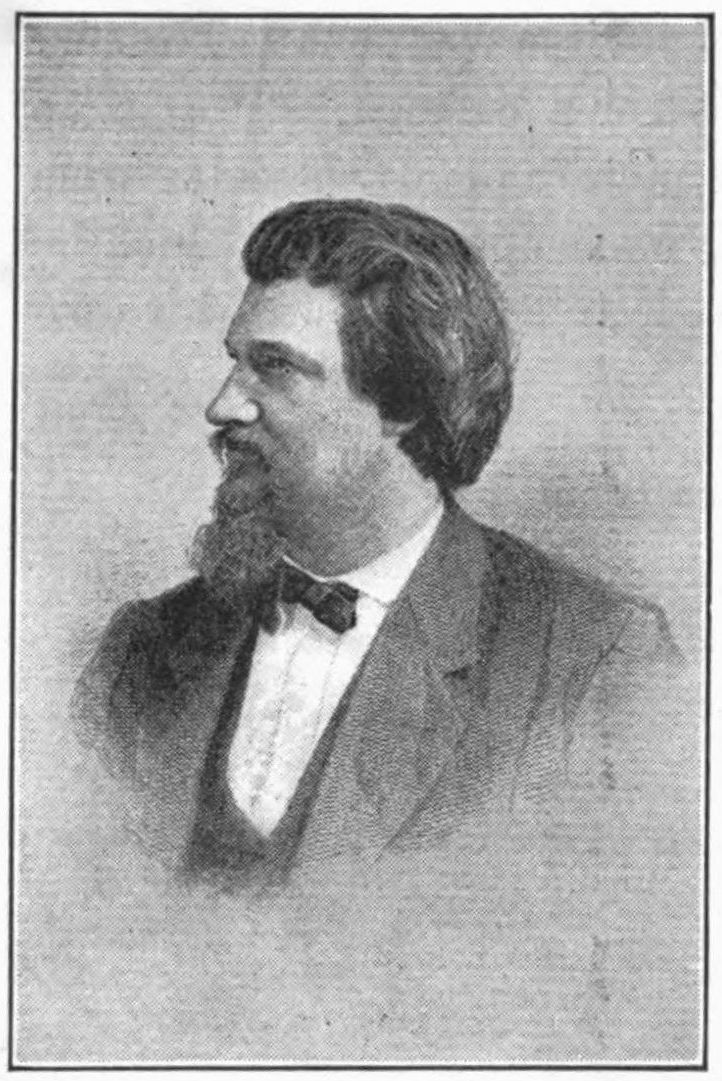
EDWIN ARNOLD
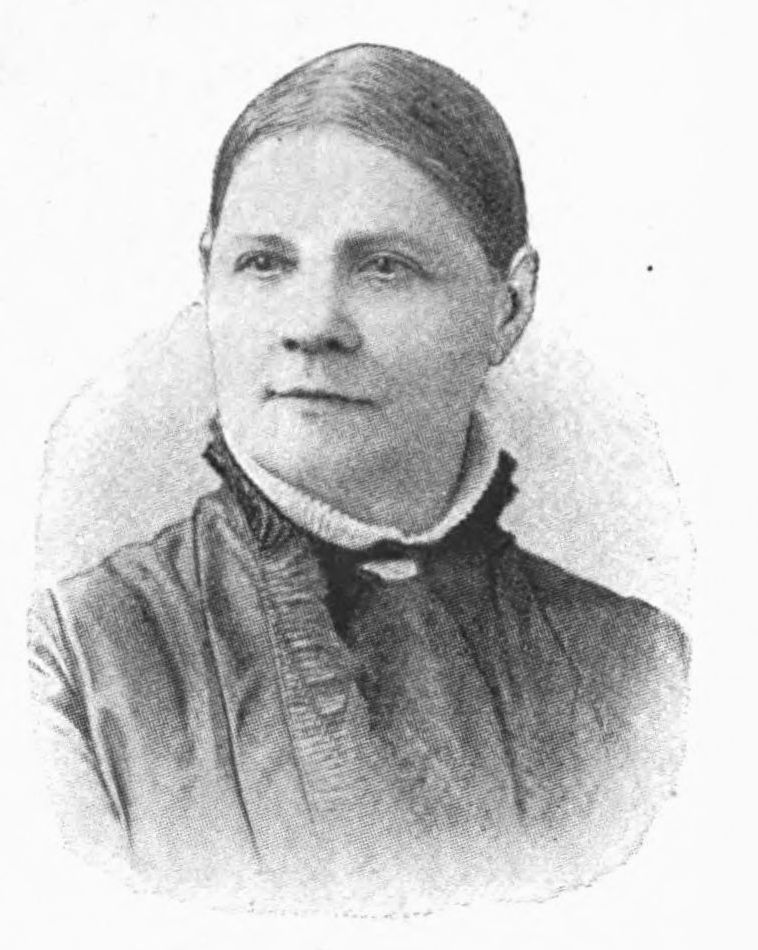
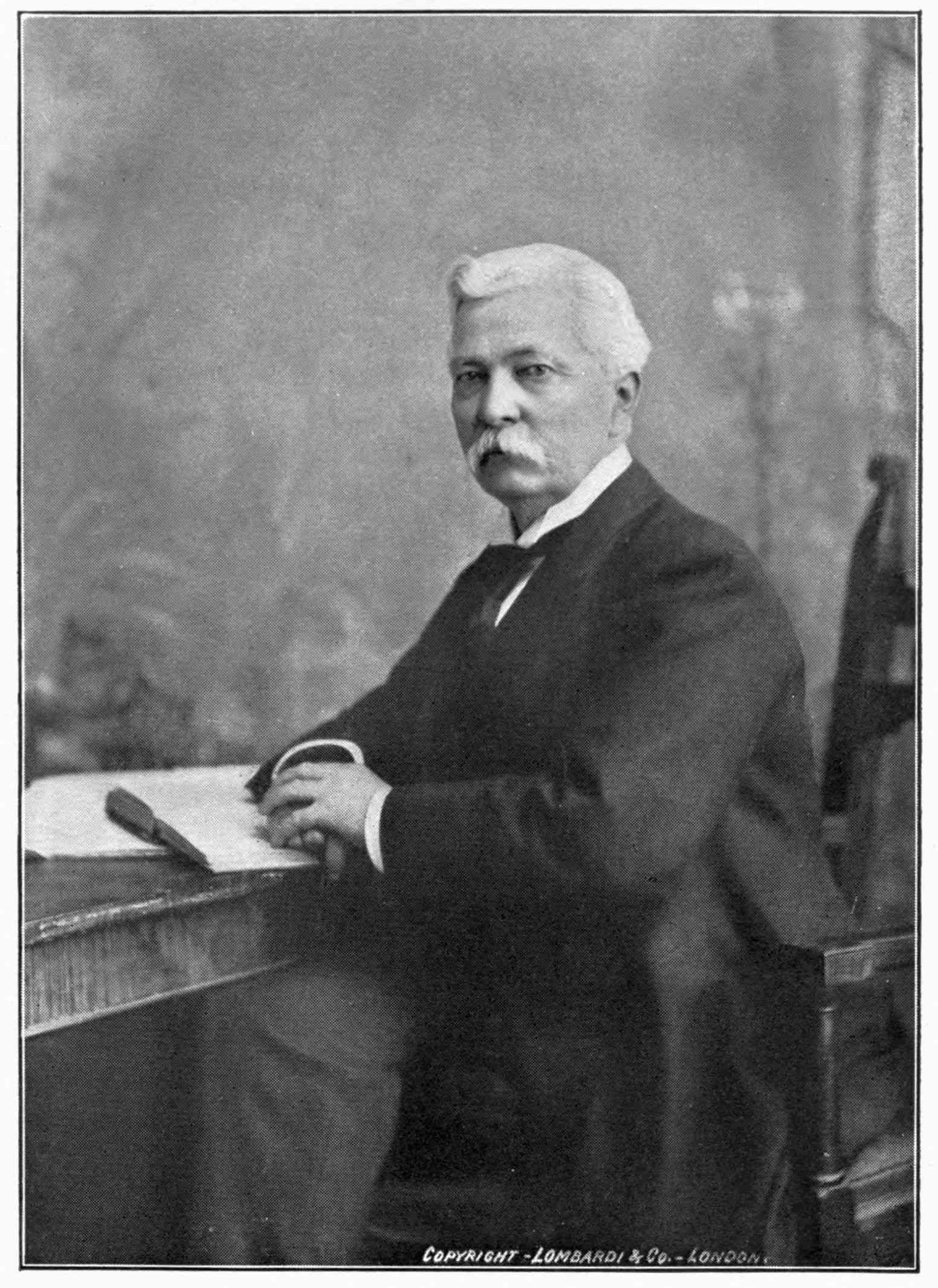
SIR EDWIN ARNOLD is only one of many notable people with whom I have
enjoyed relations of a kindly and personal character, but the enduring
friendship with which he has honored me has been one of the pleasantest
features of my whole life.
Now that his public activity, in a personal sense, has ceased, one may
measure his notable career by the large pathway it has blazed. He has
had always the honors usually attendant upon an English literary career.
Educated at two of the endowed schools, which in England are called
“public,” and of a legal family, he won a scholarship to University
College, Oxford, where he graduated in 1854, taking in 1852 the
Newdigate prize for an English poem. He was a second master in King
Edward VI. School at Birmingham, but was soon appointed Principal of the
Government Sanscrit College at Roona, in the Bombay Presidency, and was
also made a Fellow of the Bombay University. He remained until 1861,
serving also as an editorial correspondent of English papers, when he
returned to London as chief of the editorial staff of the London
Telegraph, a position that he still holds (1900).
It is certainly true, and I have had many evidences of it, that Sir
Edwin Arnold has been and still is a political writer, a power to be
counted with in British affairs. To him, perhaps, as political writer
and Asiatic scholar and poet, is far more due the beginnings of present
British Imperialism as a political condition than to either Chamberlain,
as statesman, or Kipling, as singer of the “Greater Englanders.” The
leading articles of the Telegraph have been a unique feature of that
powerful journal, as much for the wide knowledge shown of imperial
affairs as for the peculiarly rich and refulgent literary merit they
display. English editorials, though keen and incisive in logic, are
usually colorless as to rhetoric and illustration. Arnold’s leaders have
been and continue the reverse of that.
His literary work and industry have also been as marked and extensive.
His writings make a rich library, which covers much of Asiatic life.
There are ten volumes dealing with Sanscrit, Hindoo, and Persian
subjects. His output has not only been splendid, but great in quantity,
and one wonders how, with his unremitting daily labors on the
Telegraph for the last forty years, he has been able to accomplish so
much of permanent form and value.
The poet-editor, like all notable workers I have known, has orderly
habits and hours. His editorial room at the Telegraph office, Fleet
Street, London, was a modest one, furnished in light oak and with walls
of a soft gray tint. Sir Edwin has kept but few books there, because he
needed them little for reference, his wonderful memory having always
placed dates and facts at command.
Arnold has a contempt for fussiness and keeps the newspaper man’s
faculty of being able to prepare copy under any circumstances. He was
always at work during the period of my personal knowledge. When on his
Japanese “vacation” he told me that he had “written some sixty-two
columns in letters to the Telegraph, composed an epic poem longer than
‘The Light of Asia,’ and furnished articles besides for Scribner’s
Magazine that made a volume, learned to speak colloquial Japanese, and
to write the Kata Kara character.” He added, “I was not so very idle,
you will see, Major.” “The Light of the World” went to press without his
reading the last proofs, and the correctness of copy this shows is
characteristic of all his work. His editorial “leaders” went to the
printer’s hand as he dropped his pen or ceased dictation.
He once said: “I do not at any time force poetry. I must be thoroughly
in the mood. These moods come imperatively, but very irregularly. My
method is this: either I write first, and roughly, on scraps of paper,
or my daughter takes it down from my dictation—she is the only one who
can do so for me—as I walk up and down the room and smoke. I put the
rough notes in my pocket until the next day. Then I read the verse over
and over, correct and copy all out myself, altering it very much, and
filling it up. These scraps I enter into a sort of day book or ledger
until the work is nearly finished. I treat the matter thus compiled as
the rough draft. I go over it myself, polish it, and transcribe it into
a second book, which may be called the poem itself, but still in a rough
state. Then I copy it out again, and finally, in a fair manuscript for
the printer. Every line of the poem, therefore, passes through my mind
three or four times. Sometimes the lines are importunate and will be
at once registered. Reading, smoking, driving, dressing for dinner—it
does not matter how I may be then engaged, the verses will haunt and
fascinate me, dance before my imagination, demanding to be fixed; and I
must catch them then and there or they will go. Sometimes the right
ideas will come as suddenly as if by electric message.”
The popularity of Sir Edwin Arnold as a poet was more widespread in the
United States than in his own country when, in 1886, I first approached
him with the proposition to make a reading tour on this side of the
Atlantic. It is quite singular to note how little personal and popular
knowledge there is in Great Britain of the men who really mould
intellectual thought. If we Americans do not personally know a man who
has written books and sung poems for us, we do at least strive to know
his face, by wide possession of a “counterfeit presentment.” In our land
John G. Whittier’s portrait hangs on the walls of many thousands of what
the English call “middle-class” homes; yet no English poet of equal rank
finds such recognition in his own land. Tennyson and Browning are far
more widely known among us by their pictures than they are in England.
It was a constant surprise to Sir Edwin Arnold to find himself
recognized and his poems so extensively known in the United States. When
he left our shores for Japan, and later resumed his editorial and
literary labors at home, he was not only better known and appreciated as
a poet than he was when he came to us, but he was personally better
known to more thousands of cultivated people here than he was to scores
in England.
My earliest attempt to secure him for a lecture tour in this country
was unsuccessful, as the following quotation from his first letter to me
shows:
“42 Denmark Villa, West Brighton,
“December 31, 1886.
“I thank you for the compliment conveyed in your letter of the 25th, and
it is my wish and intention to visit America. It would, however, be
impossible for me to go there now.”
The poet-editor was familiar enough with the United States, by marriage
tie and several visits here, to understand our lecture platform and
audiences, as well as our habits of travel and our needs. Mrs. Arnold
was a Miss Channing of Boston. The present Lady Arnold is a member of a
prominent and cultured Japanese family, who has become one of the most
popular hostesses in London.
After Stanley’s return to England at the conclusion of his most
remarkable lecture tour (1890-91), the proposition to secure Sir Edwin
was again broached, and was fully discussed between us, the Stanleys
taking a very friendly interest in the matter and declaring that they
would do all in their power to influence the poet’s decision. The
accompanying letters show how thoroughly the great explorer fulfilled
his promise, for under date of June 26, 1891, after writing relative to
his pending lecture tour in Australia, he referred as follows to the
Anglo-Indian poet, with whom I was then corresponding in relation to the
proposed tour:
“I had Edwin Arnold to lunch the other day and we all did our best to
induce him to make you his agent, but I find he has already engaged
himself to another man—if he lectures, of which he is not assured yet.”
This was not very encouraging, but I am not easily discomfited. The
negotiations proceeded, and an agreement was reached between the poet
and myself. Stanley’s generous and constant interest is shown by this
letter, written September 30, 1891:
“Yesterday Sir Edwin Arnold took tea with us, and naturally we talked of
you and of his approaching departure for America. I do not think you
need have any fear that he will fail. He has an unusually flexible
voice, which is entirely at his command, admirably suited for the
drawing-room or for the platform. It is at its best to-day. The way he
manages it to attract, soothe, or excite, proves that were he not a
first-class poet, he would make a first-class actor.
“I have often heard him make after-dinner speeches, wherein he is
different from most men. He always contrives to express graceful
sentiments appropriate to the occasion, uttered in those benevolent
tones which leave you most kindly disposed toward him. You find his
speech seemingly unstudied—and spoken right on, pleasing to the ear, as
his expression charms the eye. He appears to be following a cue, which
is to make every one feel pleasant and agreeable, and bereave them of
unkindness toward one another. At a dinner, for instance, you never
detect in him a consciousness that he has something to say which must be
said, and that he bides his time to say it, meantime silently revolving
the subject. No, his speech drops sweetly on the hearing, smooth, bland,
and the guests look up wistful for more, for it is so apt, so rich in
thought and charity. His memory is stored with the flowers of literature
and the sweetest blossoms of poesy, and they are presented to his
hearers with the grace that marks the learned gentleman.
“From this rapid sketch of Sir Edwin you have enough to measure him by.
While he is in America he will only deem what is best in it worthy of
his regard. He cannot forget that human nature is weak and vain, but he
has a knack of shutting out observation of failings.”
It will be remembered, in passing, that Henry M. Stanley was sent to
Africa by Sir Edwin’s paper, the London Daily Telegraph, and by the
New York Herald.
I copy the last letter received from Sir Edwin before he sailed for
America, as evidence of the spirit in which he came:
“Daily Telegraph Office,
“September 23, 1891.
“My Dear Major Pond:
“I have just received your kind and pleasant letter, and rejoice at your
renewed health. I replied to it by a telegram indicating that although I
cannot write anything new in the way of lectures, it will be very easy
to put together from my prose and verse interesting discourses with
poetical illustrations of ancient and modern India, Japan, etc. I
enclose a rough sketch of the topics I would treat in this way. You need
have no fear but that I shall hold and please your audiences.
“Best thanks for your very hospitable invitations as regards Miss
Arnold. But I shall come quite alone, and shall put up at the Everett
House, and always when we travel, as far as possible, at hotels. I have
written to accept the very courteous invitation of the Lotos Club, but,
as far as possible, I wish in America to preserve my time free from
social interruption, and I shall ask you to help me in this.
“Kindly arrange that we may commence as soon as possible. But all these
matters I gladly leave in your good hands.
“There will be just time, I think, for you to send me before I start
some little sketch of what you have already planned.
“Yours always sincerely,
“Edwin Arnold.”
The engagement was for fifty “readings,” a descriptive word inadequate
to express what he gave. The term “lecture” certainly does not apply to
the delightful entertainment that Sir Edwin Arnold presented. The
descriptive talk which accompanied each reading was so fresh and varied,
and so full of the charm of scene and intimate knowledge, that it had
almost the air of personal and fireside talks with his varied and
delighted audiences. The man was felt so in it all—as traveller,
observer, teacher, and poet—that you realized the atmosphere in which
he had written, as well as the spirit of the poems which were its
product.
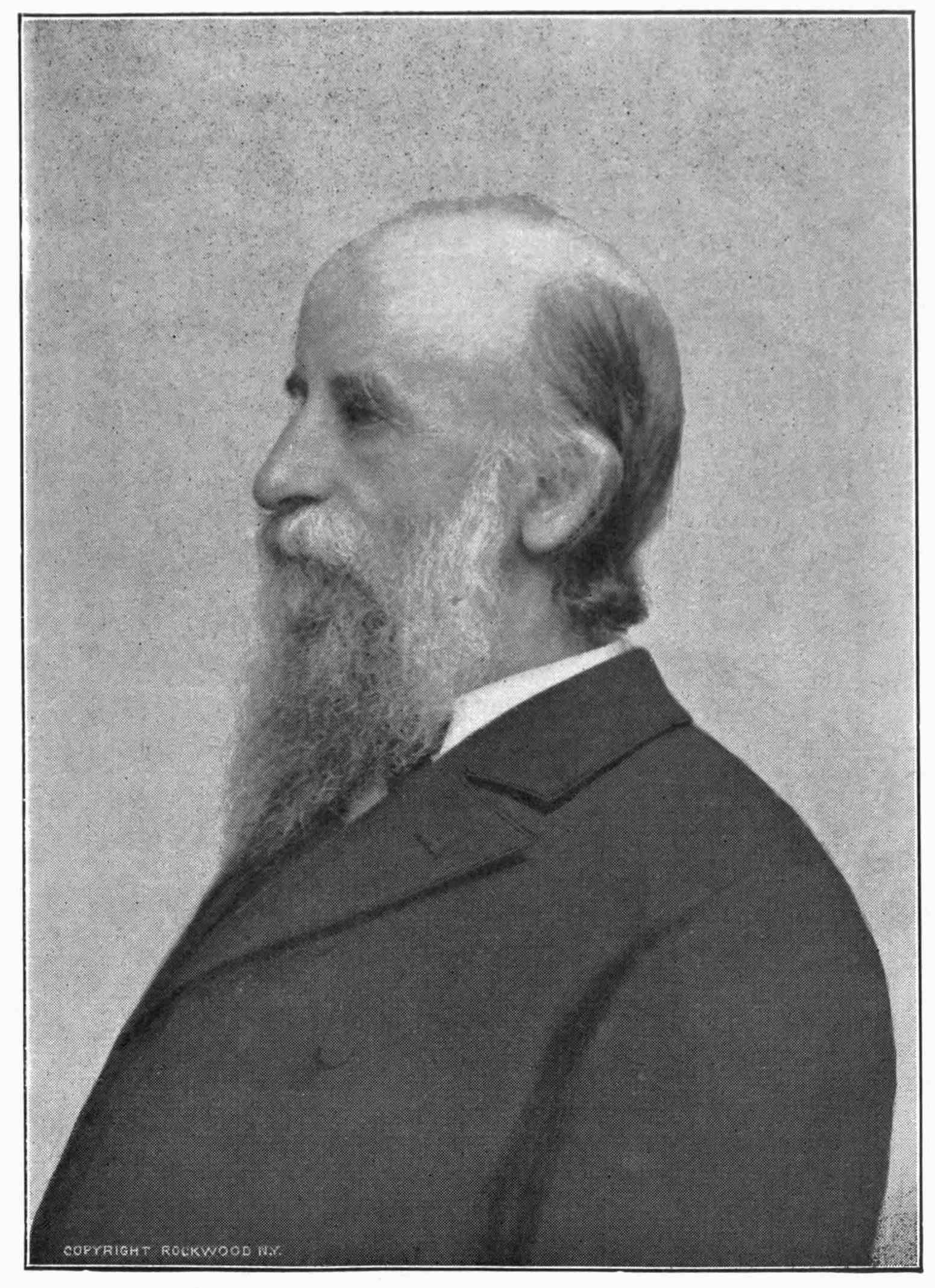
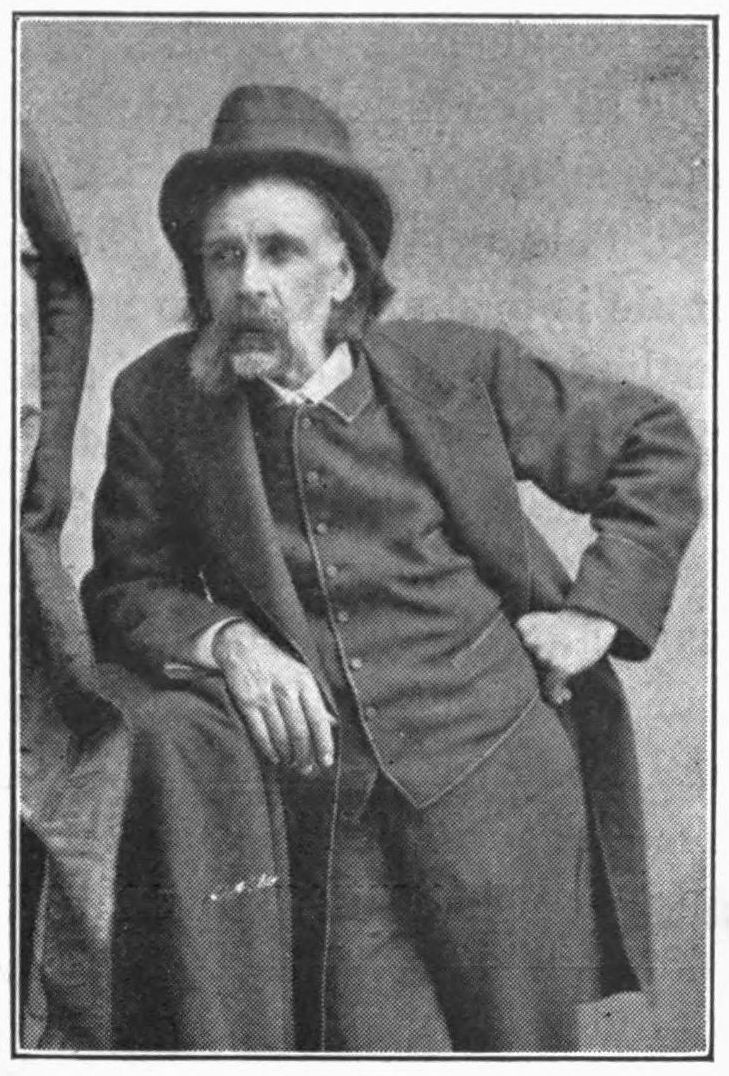
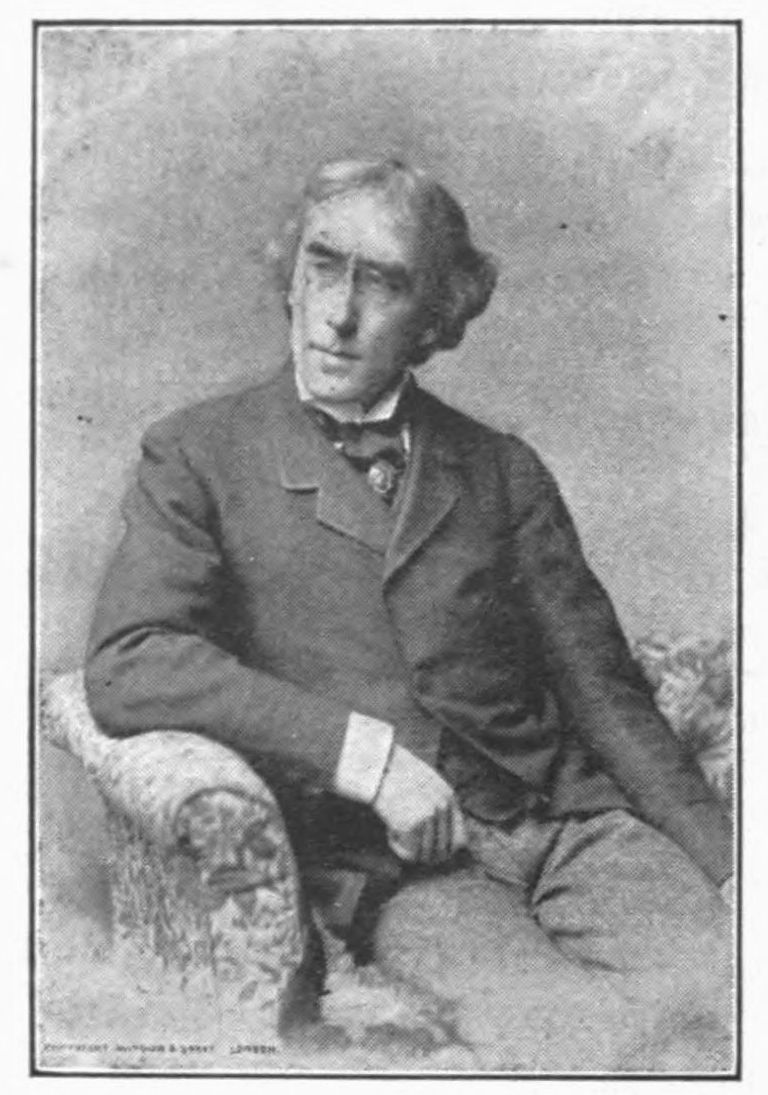
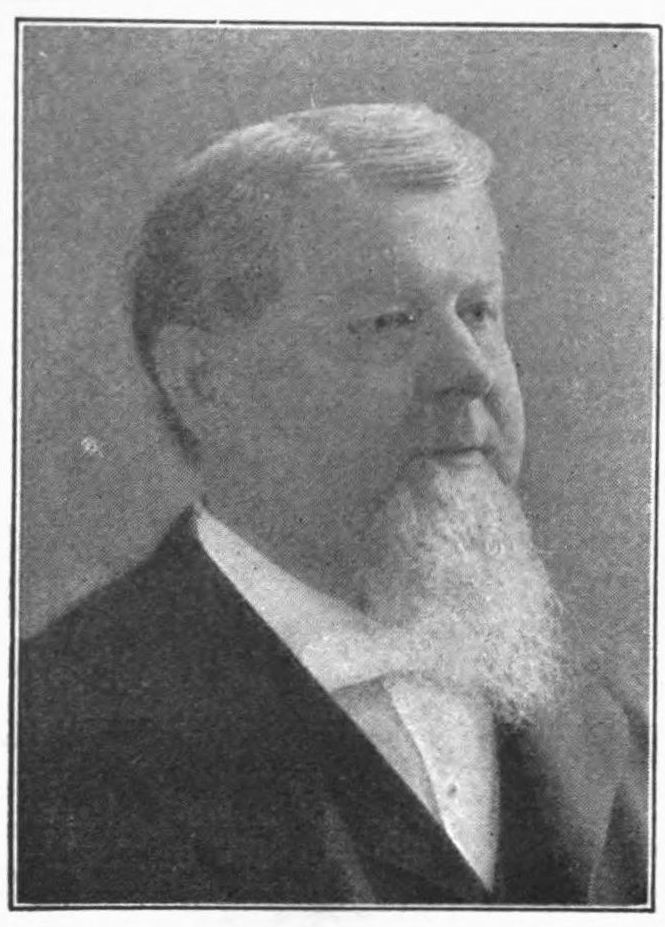
As he appeared to American audiences, Sir Edwin Arnold was of large
frame and good stature, with an open face, strong features, expansive
brow, and a broad, full, and well-rounded head, thickly covered with
iron gray hair. His complexion was fair, his eyes blue, mild, and
courteous in expression. His general air was one of kindness and good
breeding. He was in personal manner quite free from self-consciousness,
and on the platform was always absorbed in his task and by his audience.
His speaking voice was melodious, excellent in compass and timbre. It
was, in fact, among the very best for use and wear that the lecture
audiences had heard during twenty years. He has shown himself the
respect of securing a careful training for his voice, and he knows how
to take care of it. It has much of the high-bred gentleness in it that
made George William Curtis so great a favorite. In personal speech his
English intonation was apparent, but when he read, it seemed as though
the language lifted him above all such peculiarities. The modulation was
perfect, and was indeed sometimes thrilling. He is one of the few poets
that can both read and declaim their own poems. I was constantly
reminded of Stanley’s expression that if Arnold had not been a great
writer and poet, he would most assuredly have been a great actor, for at
fitting times the delivery became animated and dramatic.
He usually held the book of selections in his hand, but seldom did more
than glance at it; sometimes he laid it aside entirely, so that he could
use gesture more freely. Occasionally he read from manuscript, but
ordinarily he recited. The first line was enough to call up the entire
poem from his phenomenal memory. He could repeat perfectly any poem that
he had once heard. One evening in my library Sir Edwin was reclining on
a lounge. I was holding a rare volume of Shakespeare, which he had been
admiring and passed to me. “Now, Major,” said he, “give the first line
from any scene at random, and I’ll give you the whole scene.” I gave him
a line from one of the least known of the plays, and, to my
astonishment, he recited the entire scene. He told me afterward that he
could recite Shakespeare from beginning to end. I believe it. It was
this gift that made his readings so complete, for no public reader has
ever been a more complete success, personally and artistically, than Sir
Edwin Arnold. No better description of the poet as a reader, or of his
charm of voice and manner as a speaker, could be given than Stanley’s
words convey. I felt certain on reading them that our tour would be a
success, as it indeed proved to be. How heartily the poet entered on his
delightful task!
It was, after all, a campaign of careful preparation and hard work,
done assiduously and with the most distinct apprehension on his part of
what was due to the cordial audiences which were to give him such hearty
welcome and earnest attention. He was a model to those who were to
follow him. Beginning November 4, 1891, the tour closed February 15,
1892. For seven weeks he filled completely the demands of the situation,
working with unremitting patience and assiduity to make a complete
success.
The 21st of October, 1891, when he reached New York, was not an
auspicious day for his landing in America—wind and rain all day. Yet he
appeared in excellent health and very jolly. My office was the scene of
another remarkable interview. Representatives from all the daily papers
were there, and never has there been a more fascinated lot of reporters
than this crowd about Sir Edwin. For two hours he interested them,
answering every conceivable question as promptly as though he had been
prepared for it. He was interrogated upon all subjects, from the
Whitechapel murders to the effect of the death of Parnell upon the
status of the Irish factions. He discussed Kipling, “who has the magic
secret of style”; James Russell Lowell, “the best judge of literature
that he ever knew”; and Emerson, “the ablest American writer.” He
discussed Japan and theosophy. The only subject he refused to touch upon
was English politics. Richard Watson Gilder, who was there, asked Sir
Edwin if he had any favorite American poem. He replied, “‘Airs from
Arcady,’ but I do not know who is the author of it.” Mr. Gilder and Mr.
Robert U. Johnson, his colleague, were much pleased with his answer, for
the author was their friend, H. C. Bunner, editor of Puck.
When I went with Sir Edwin to Sarony’s to sit for pictures, Sarony was
in his element, for he found in Sir Edwin a critic who thoroughly
appreciated art. It was an interesting scene in that studio: the
exhibition of Sarony’s fine black and white drawings and the intelligent
discussion of them. We next visited Tiffany’s, and there Sir Edwin was
again at home with Mr. George Kunz, the gem expert. I had to leave the
two critics, scholars, and experts for two hours and return to my work.
A few days later Sir Edwin Arnold dined at our house, and after dinner
entertained us with a reading from his “Light of the World,” and made a
great hit. My predictions of success were again confirmed. He is one of
the most lovable and entertaining men, always even-minded and agreeable;
his tact is as invariable as his good humor, and both grow from
temperament and quality rather than from habit or policy. On this
occasion he presented Mrs. Pond with a copy of “The Light of the World,”
bound in white seal, gold clasped, telling her that he had two copies
bound alike, and that he had presented the other one to his queen. The
inscription in the book reads:
“To Mrs. Pond, with warm regards of the author.”
Before beginning the series of public appearances, he gave several other
private readings that were most enjoyable. One evening he read a chapter
from “The Light of the World” in the Everett House dining-rooms, before
a select circle of friends. On another day Joseph Jefferson, W. J.
Florence, St. Clair McKelway, Murat Halsted, Sir Edwin Arnold, and some
of our personal friends dined with us at our house in Brooklyn.
Jefferson and Florence were playing at the Brooklyn Academy of Music
that week, and in order that we might have plenty of time, and that they
should not miss their usual afternoon nap before going to the theatre,
we had dinner at noon. We had a good time together. Sir Edwin was at his
best. He read selections from “Saadi in the Garden,” and some
unpublished poems, to the delight of the two comedians, who
enthusiastically declared that they had never enjoyed anything more in
their lives. It was after six when they left us—no sleep that
afternoon. In the evening our entire party were in the theatre to see
Jefferson and Florence in “The Rivals.”
The Lotos Club, on the 31st of October, honored Sir Edwin and its own
members, by giving a dinner which, from the number participating and the
high character of the addresses made, was generally conceded never to
have been surpassed in brilliancy in the history of the club. President
Frank R. Lawrence occupied the chair, with the guest of honor on his
right, and President Seth Low of Columbia College on his left. Among the
other guests of the evening were George W. Childs, Richard Henry
Stoddard, Edmund Clarence Stedman, Gen. Horace Porter, Paul Dana, Murat
Halsted, E. B. Harper, W. H. McElroy, Arthur F. Bowers, Robert Edwin
Bonner, Ballard Smith, Walter P. Phillips, H. L. Ensign, Col. Thomas W.
Knox, William Winter, Gen. C. H. Collis, Richard Watson Gilder, Max
O’Rell, St. Clair McKelway, and Col. E. C. James.
The walls and alcoves were hung with emblems indicative of the honors
borne by the club’s distinguished guest. Siamese and Japanese flags
predominated. On the wall at the poet’s right hung a full-sized portrait
of himself, done in crayon by Sarony, and over the doorway which
separated the parlors was draped a banneret showing the “Order of the
White Elephant”—a Siamese decoration which had been conferred upon only
four English-speaking persons: Queen Victoria, Sir Edwin Arnold, Gen. J.
A. Halderman, and Col. Thomas W. Knox (the latter two, as it happened,
being both members of the Lotos and present.) Sir Edwin wore on his
breast his decorations, among which this order was conspicuous. Letters
of regret were read from Oliver Wendell Holmes, Charles A. Dana, John G.
Whittier, W. D. Howells, the Rev. John Hall, and George William Curtis.
President Lawrence, in presenting the guest of the evening, referred to
his many titles to distinction. “If there be one thing more than
another,” he said, in proposing Sir Edwin’s health, “which is worth
preserving in connection with the Lotos Club, it is our boast, for more
than a score of years, to strive to be among the first to welcome to New
York men of genius from foreign lands. This joyous custom has brought to
our club many happy moments—none more so than the present one. And so,
when it became known that Sir Edwin Arnold was to visit our shores, it
followed that the Lotos Club was to welcome him. As to his eminent
graces of mind and heart, I need not remind you or any other
English-speaking people thereof.
“He is, perhaps, best known to us as a poet. I should not say ‘perhaps,’
but that his many estimable qualities confuse me. He, more than any
other man, has brought us near Asia—that Asia of which we know so
little. We hear it said that the Laureate is in his declining days. We
hear it asked, ‘Who is to succeed him?’ Yet we know that the high
standard of English poetry will not die while the author of ‘The Light
of Asia’ lives.
“But, gentlemen, it is not alone as a poet that we meet and greet him
to-night; it is as a journalist as well. Well do we remember his
services as a moulder of public opinion in England. It was he, on behalf
of the London Daily Telegraph and in connection with one of our own
good Americans, who sent Stanley in search of Livingstone—all honor to
that humane undertaking. As a poet, as a journalist, and as a scholar;
as one who might talk to us, if he chose, in many mystical tongues, we
welcome and we greet Sir Edwin Arnold.”
The health of the club’s guest was drunk, everybody rising and cheering.
He showed the deep impression made upon him as he gracefully bowed in
acknowledgment of the cheers. His speech was one long to be remembered,
both for the pleasing manner of delivery and for the apt and eloquent
appropriateness of its matter. He said in part:
“In rising to return my sincere thanks for the high honor done to me by
this magnificent banquet, by its lavish opulence of welcome, by its
goodly company, by the English so far too flattering which has been
employed by the president, and by the generous warmth with which you
have received my name, I should be wholly unable to sustain the heavy
burden of my gratitude, but for a consideration of which I will
presently speak. To-night must always be for me, indeed, a memorable
occasion. Many a time and oft during the seven lustrums composing my
life, I have had personal reason to rejoice at the splendid mistake
committed by Christopher Columbus in discovering your now famous and
powerful country.
“I have good reason to greet his name in memory owing, as I do, to him
the prodigious debt of a dear American wife, now with God, of children,
half American and half English, of countless friends, of a large part of
my literary reputation, and, to crown all, this memorable evening, Nox
coenaque Deum, which, of itself, would be enough to reward me for more
than I have done, and to encourage me in a much more arduous task than
even that which I have undertaken.”
Referring to America, he quoted the old poet, who sang:
“Her likeness and brightness do shine in such splendor,
That none but the stars are thought fit to attend her.”
He spoke of the recent passage of our international copyright law, and
half humorously suggested:
“Personally I was nearer a fanatic on the matter. I have always rather
had a tenderness for those buccaneers of the ocean of books who, in
nefarious bottoms, carried my poetical goods far and wide without any
charge for freight.”
Two of the most striking portions of his speech were his eloquent
references to our common language, and to the feeling of kinship and
unity between the great branches of the English-speaking race. “Let us
all try,” he said, “to keep in speech and in writing as close as we can
to the pure English that Shakespeare and Milton, and in these later
times Longfellow, Emerson, Whitman, and Hawthorne have fixed. It will
not be easy. Lord Tennyson recently expressed similar opinions to me
when he said: It is bad for us that English will always be a spoken
speech, since that means that it will always be changing. The time will
come when you and I will be as hard to read for the common people as
Chaucer is to-day.’ He then quoted Artemus Ward on Chaucer, ‘The
admirable poet, but as a spellist a decided failure.’
“To the treasure house of that noble tongue, the United States has
splendidly contributed. It would be far poorer to-day without the tender
care of Longfellow, the serene and philosophic pages of Emerson, the
convincing wit and clear criticism of my illustrious departed friend,
James Russell Lowell, the Catullus-like perfection of the lyrics of
Edgar Allan Poe, and the glorious, large-tempered dithyrambics of Walt
Whitman.”
As he closed his speech, he said:
“Between the two majestic sisters of the Saxon blood the hatchet of war
is, please God, forever buried. We have no longer to prove to each other
or to the world that Englishmen and Americans are high-spirited and
fearless; that Englishmen and Americans alike will do justice, and will
have justice, and will put up with nothing else from each other and from
the nations at large. Heartily, gratefully, and with a mind from which
the memory of this glorious evening will never be effaced, I thank you
for the very friendly and favorable omens of this banquet.”
E. C. Stedman followed, paying a fine and appreciative tribute to his
brother poet. President Seth Low referred to the connection of the guest
of the evening with the cause of education, he having been at one time a
college president. Paul Dana responded for the press. General Porter
spoke as the all-round man of the world, soldier, statesman, and orator,
in a speech full of wit, humor, anecdote, and hearty appreciation of the
guest. St. Clair McKelway made one of his brilliant speeches, carrying
the audience with him to the height of feeling and amusement rarely
equalled. At the close of the banquet, Sir Edwin Arnold read his
now-famous poem of “Potiphar’s Wife,” the manuscript of which he gave to
the club as a souvenir of his visit. It is framed and hangs with his
picture on the wall of the club house. This banquet will remain in the
history of the literary events of New York one of the most notable; and
as one of the brightest pages to be recorded in the annals of the Lotos
Club.
When we went to Philadelphia we were met at the Lafayette Hotel by John
Russell Young, Henry Guy Carleton, and a number of newspaper men, among
whom was Clark Davis, editor of the Public Ledger. It was an
interesting evening. Sir Edwin read several poems, to the delight of
reporters and friends present.
The following day Sir Edwin Arnold, John Russell Young, and I went to
Camden to call on the picturesque old poet Walt Whitman, who was living
there in his own house. We were shown up a flight of stairs by the
mistress of the house, to the bare front room, where, in the midst of a
heap of newspapers, magazines, books, kindling wood, lamps, and old
pictures, from one to six feet deep, the poet sat, in a high-backed
chair, over which was thrown a goatskin robe, once white. The long hair
of the poet and of the robe, and his great wide open shirt collar, made
a picture unique beyond description. Back of his chair was a heap of
newspapers which suggested the pile of cornstalks at an old-fashioned
husking, where, when you husked the corn, the stalks and husks were
thrown back over your shoulders until they formed a big stack. Walt had
been accustomed to reading his morning papers and then throwing them
back on this stack, until they had accumulated in this enormous mass
fully as high as the back of his chair. That pile must have been the
accumulation of several years.
There was a different scene when the two poets, already known to each
other by correspondence, exchanged greetings. They plunged into animated
conversation at once, though the “good gray poet” was quite feeble. But
his was a grand personality indeed, as he leaned back against the deep
back of his huge old rush-bottomed, wide-armed chair. Something was said
of Whitman’s poems, and Arnold took down “Walt Whitman’s Complete Poems
and Prose,” a large octavo volume, from a nearby shelf. The volume was
uncut, and Whitman began looking for a paper-knife, saying, “Let me get
you something to cut the leaves with.”
“No, no. Never mind, Walt Whitman,” replied Arnold. “I have no need to
cut these leaves. I can see the first lines in the index. What poem
would you like to hear?”
A poem was named, and immediately the rich voice gave it vocal form, and
that, too, with a perfection of rhythmic tone and shade which indicated
the perfect mastery of a most difficult subject. We spent an hour and a
half, Sir Edwin and Walt quoting and commenting. It was a great day.
In the afternoon we went to Bryn Mawr, and to Mr. George W. Childs’
home, where we dined and Sir Edwin planted a tree. Here we met Mr. Clark
Davis of The Ledger, Mr. McAllister of Drexel Institute, Miss Thomas,
dean of Bryn Mawr College, and Mrs. Childs. We then returned to the
city, where the Penn Club gave Sir Edwin a grand reception.
In the Philadelphia Academy of Music Sir Edwin Arnold made his first
appearance on any stage. Although it was the evening of a hotly
contested election, and there were bonfires and bands of music outside,
and the streets were packed with crowds of excited people, we had a
large house. The gross receipts were $1,317. The readings were a great
success; the audience was delighted. Arnold read two and a half hours,
and held them all that time.
The Philadelphia papers were enthusiastic. One critic wrote: “A grace of
manner, genial presence, and a mellow, full voice are notable
characteristics of the poet-scholar; and the familiar poems which are
not less known and loved in this country than in the poet’s home,
acquired new beauty from the author’s wonderful reading of them. Without
striving in the hackneyed way, Sir Edwin, by his expressive face and
voice of many modulations, recites tales of love, pathos, or tragedy in
a manner which many a trained actor might envy.”
The first New York reading, in Carnegie Hall, November 4th, was a
tremendous success. I cannot recollect having ever before seen so large
an audience in that hall and, for a reading, held so spellbound. The
enthusiasm knew no limit. There had been a great demand for tickets for
this performance, and as the house was sold for the benefit of St.
Mark’s Hospital, Mr. A. B. de Frece, the vice-president of that
association, decided upon an auction sale of seats and boxes, which
occurred in the hall on October 26th. Twenty-six boxes brought about
$1,500 premium. The great desire both to honor and to meet the poet was
shown not alone in the sale of tickets, but even more in the eagerness
of many people to be members of the committee of reception, which
occupied seats on the platform. Such distinguished representatives of
learning and of letters were present as Edmund Clarence Stedman, Richard
H. Stoddard, Richard Watson Gilder, William Winter, William Dean
Howells, George William Curtis, Brander Matthews, the Hon. Seth Low,
President of Columbia University, and many others.
Chauncey M. Depew, as chairman, made one of his happy speeches,
referring to the event as of international significance, for “an English
audience applauding James Russell Lowell, and an American audience
cheering Sir Edwin Arnold, present the unity in essentials of these
great empires, and the possibilities which are before English-speaking
peoples. Our language is conquering the earth. It is destined in the
future to be for the East more than Buddha, ‘the Light of Asia,’ and to
diffuse around the globe ‘The Light of the World.’
The genial orator, always himself a luminous personality, made other
appropriate remarks, and when the poet rose from the remarkable group of
celebrities who crowded the platform, he was cordially welcomed. His
presence was a fine one for just such an occasion, and as he briefly
thanked the introductory speaker, he expressed the wish that the
audience would do him the honor of encouraging the ancient and classic
custom of a poet’s reading selections from works of his own creation.
Thus, from the first words, his appearance was a triumph. More than
that, he was a delight. Remembering other “readers” I had known, Sir
Edwin Arnold’s closing of the book he held in his hands, after one long
and almost rapt glance at it, was, perhaps, the most delightful episode
of the evening to me. He did not once refer to the book after that. He
knew his own poems and was always accurate to the letter. He knew, too,
the poems of other poets. His memory is remarkable, but his mastery of
the words was no more complete than his absolute possession of the
rhythm. His recitation was music itself. You felt the meaning in all the
varying shades of that perfect modulation and intonation. I make no
pretence to criticism, yet I think myself able to comprehend the
capacity of a human voice. Sir Edwin Arnold’s voice was, for his
purpose, a perfect instrument. The marvel was that only once before had
he read in public.
The following evening Sir Edwin read in the Brooklyn Academy of Music
before a magnificent audience, to which he was introduced by the Rev.
Dr. Storrs. A Brooklyn critic wrote thus of his power of improvisation:
“Sir Edwin was not restrained by any idea of slavish fidelity to his own
printed page. He gave himself up to the spirit of his poems and to the
music of his verse, and his eyes were upon the audience rather than upon
the book which he held. If one followed him in the text, it soon became
evident that he had not prepared himself by committing the poems. There
were hardly half a dozen lines in which the language was not varied.
Once or twice he used a striking phrase too soon, and had to omit a line
or two to avoid obvious repetitions. As he read, one wondered how a man
could make the substitution he was making without breaking the rhythm or
the sense, but he avoided any more serious entanglement than that of
once or twice repeating a phrase.”
Our next point was Boston. Reporters of all the papers met us at the
Parker House at about ten in the forenoon, and Sir Edwin entertained
them with a delightful chat about Japan and India, closing the interview
by reading a poem. He took well, and his reception by the Boston press
was, in short, simply a repetition of the scenes in Philadelphia and New
York, though enhanced, if possible.
Distinguished callers were constantly coming in, among whom were
President Eliot of Harvard University, Edward Everett Hale, Oliver
Wendell Homes, T. W. Higginson, John Holmes of the Herald, and Editor
Clement of the Transcript. Dr. Edward Everett Hale introduced him at
his first reading in Music Hall, and Col. T. W. Higginson at the second.
The Herald critic grasped the true spirit of the occasion when he
wrote:
“The acts and tricks of the trained elocutionist were lacking, but in
their place were a divine earnestness, a sincerity and force which would
be lacking in an elocutionist.”
The Transcript, at the end of a column and a half review, said:
“The audience was simply held entranced and spellbound by the recital of
that impassioned ballad, ‘He and She,’ whose closing stanzas are:
“‘The utmost wonder is this: I hear
And see you, and love you, and kiss you, dear,
And am your angel who was your bride,
And know, though dead, I have never died.’
“The charm of presence is an especial gift of Sir Edwin’s, and the
entertainment was one of the most delightful ever enjoyed in this city.”
His readiness, his anxiety even, to vary and brighten his programme is
shown in the following letter, which I received after I left Boston. It
illustrates his conscientious spirit and sincere desire to meet all
proper demands—a spirit which, like Sir Henry M. Stanley, he had to a
marked degree:
“Parker House, Boston, Nov. 10, 1891.
“My Dear Major Pond:
“I miss you very much indeed, but Mr. Angleman is all that can be
desired in the way of obliging and active friendship, and we had a
splendid time in the City Hall, Springfield (see Republican).
To-morrow I go at 10:15 A.M. to Wellesley College, having just arranged
this with one of the ladies; and at night, to Smith College.
“It is very difficult to devise a programme which does not shut out
something too good to lose. You see I must not quite fall into being
merely a reciter of songs and ballads! I am a serious and solid poet,
and the people themselves like some of my graver writings. Still, I know
you are right about these mixed audiences, that pieces too long waste
time and strength; so I have greatly cut down such items. The poems that
always take are:
“1. ‘He and She.’
“2. ‘Egyptian Slippers.’
“3. ‘Rajput Nurse.’
“And the little beautiful Nume from ‘Pearls of the Faith.’ I will write
on the other side my programme for to-night, and that for Wellesley
College.
“For your unbounded kindness and dear Mrs. Pond’s, my grateful thanks. I
am too much a Bohemian, I fear, ever to settle down again.
“Yours always,
“Edwin Arnold.”
As will be seen from the letter that I have just quoted, Sir Edwin
lectured in Springfield on the evening of November 9th. A Springfield
reporter wrote this striking review:
“When he [the poet] speaks in his own proper person, in preface to his
poems, directly addressing his audience, the Englishman is recognized in
his intonations; but as soon as he begins to recite, he renders the
English language in very beautiful modulation, with fitness to the
characters who are introduced, and with rare dramatic expression. It is
seldom that a reader like him is heard. The tricks of elocution are not
his; he often hesitates and pauses for a moment to recall the phrase,
either from memory or from his text, but he puts the life of his deepest
feeling into the recital, and the hearer drinks in the meaning with
unalloyed content. The fervor of his declamation in certain passages of
the talk of Pontius Pilate was thrilling; a better reading of tragedy
than he gave to the story of the Rajput Nurse could hardly be expected,
and perhaps above these would be put the picture of ‘Shah Jehan,’ when
he resists the temptation of the flesh through his faithfulness to
Arjuna, for whom he built the Taj-Mahal.”
Before returning to New York, Arnold lectured with great success in
Cambridgeport, Lowell, Hartford, New Haven, Utica, and Syracuse.
One of the most effective descriptions appeared in a Syracuse daily,
where the reporter said:
“The speaker uttered the more powerful passages with his head thrown
back, his body erect, and his chest heaving. The book was held in the
left hand, the right, and occasionally both, being used for gestures.
When he spoke of sorrow, his voice was pathetic almost to tears; of joy,
it thrilled with rapture; of power and victory, it rang like a clarion;
and in poetic description, it was as when ‘the dewdrop slips into the
shining sea.’”
I give these bits of evidence from time to time as proof of Stanley’s
keenness of judgment, and in support of my own declaration that Sir
Edwin Arnold was by far the best of author-readers that England has
given for our delight. America has yet to produce his equal.
After returning to New York the Press Club of that city gave Sir Edwin a
reception. Mr. Depew, a member of the club, in his spicy introduction,
spoke of Sir Edwin as a fellow-journalist whom he was proud to welcome.
Sir Edwin’s reply was one of the brightest speeches that he made in
America, as those privileged to be present will always remember.
We were all much shocked when we learned of the death of W. J. Florence.
Sir Edwin sent a wreath for his funeral, with the following words:
“Sans Adieu. Edwin Arnold.
“W. J. Florence, November 23, 1891.”
A new deal was made with Sir Edwin under which arrangement he was to
continue one hundred nights, for which I was to pay him $20,000. He
lectured in Albany, Rochester, Buffalo, Toronto, Detroit (twice), Grand
Rapids, Pittsburg, Cleveland, Oberlin, Toledo, Cincinnati (twice),
Louisville, St. Louis, and Chicago. Excellent reports came in from all
along the line. The day of our arrival in Chicago was an eventful one.
Representatives of the press thronged to see Sir Edwin all the morning
at the Auditorium Hotel. He was in excellent condition. Although the
weather was muddy, nasty, and foggy we visited the new Herald
building, declared by Chicagoans to be the finest printing-office in the
world. Mr. Scott, president of the Herald Co., introduced Sir Edwin to
the compositors, and he made a little speech to them. Then a sumptuous
lunch in Scott’s office, where Sir Edwin was introduced to the managing
editors of each of the great Chicago daily papers. The party sat down to
lunch at twelve. To everybody’s surprise it was six o’clock when they
separated. In the evening a reception by the Chicago Press Club, where
he made a handsome speech and read “Queen Arjamund and the Dagger.”
At his first public reading in Chicago—in Central Music Hall—the house
was packed with a fine audience of Chicago’s best. President Harper of
Chicago University presided. Sir Edwin was in excellent form and scored
another success. The newspapers contained columns of favorable notices,
and never was a visitor more heartily welcomed.
His whole Western tour was a series of triumphs. Milwaukee, Chicago
(again), Evanston, Kansas City, St. Paul, Minneapolis, Janesville
(Wis.), Rockford, Cedar Rapids, Des Moines, and Clinton, were all in the
Western itinerary.
From Chicago I returned to New York. During the trip I received the
following letter:
“Milwaukee, Dec. 17, 1891.
“My Dear Major:
“Thanks, many and sincere, for your flying note, full of kindness, like
everything you say and do. I am afraid if I let go my audiences from the
fine and subtle spell of poetry, I might lose command of them, like the
juggler who leaves off blowing his reed. But I will bear your valuable
advice in mind, if again my voice feels at all in need of resting.
“I cannot thank you enough for the repeated kindness of your wish to
keep me in America, and even under your own roof. I am touched to the
heart by such generous friendship, which I heartily reciprocate; but,
after this unwonted and difficult enterprise is concluded, let me fly
away and find the repose and change for which I shall long with
unspeakable desire. Perhaps after a period of quiet I shall feel even a
strong wish to use again the experience acquired, and to do Australia
with you, but my present feelings are concentrated upon getting through
with this series in the very best manner I can, for your cause and my
own, and then resting.
“My very warmest regards to dear Mrs. Pond. I wish I could make millions
of dollars for her and you.
“Ever most sincerely yours,
“Edwin Arnold.”
I had arranged five matinees for Sir Edwin at Daly’s Theatre. He
lectured here twice in the morning and in Philadelphia in the evenings
of the same days. He was to lecture in Trenton on the following evening,
but I was obliged to cancel this engagement because of his illness. This
was the beginning of the end, as my diary shows. He was booked for
Newark, Baltimore, Washington, Middletown, New York (four times),
Brooklyn, Portland, Providence, Lakewood, Montclair, Orange, and
Worcester. Owing to the superior knowledge of a learned doctor, he was
obliged to be ill.
It came about in this way: Sir Edwin was sick with grippe at the Everett
House, when his friend Andrew Carnegie called on him. The meeting was a
very cordial one, as Sir Edwin declared that he was under everlasting
obligations to Mr. Carnegie for the kindness he had shown to his son
when on a visit to America. Mr. Carnegie insisted on Sir Edwin’s seeing
his doctor, a learned young Scotch physician, with titles too numerous
to mention. He was the man who could tone him up. Without waiting for
Arnold to acquiesce, Carnegie sent him right around. The young physician
told Sir Edwin that he was a sick man, that he had better have a nurse,
that he must not appear on the platform the next day, and that he must
cancel all his engagements. There was nothing for Sir Edwin to do but
yield to whatever the physician prescribed, as his friend Mr. Carnegie
had sent him. So the next day we were obliged to return about $1,800 at
the box office at Daly’s Theatre to a disappointed public, telling them
that undoubtedly Sir Edwin would be able to keep his next two
engagements; but that there was no chance for those particular ticket
holders to hear him, as the seats for the remaining readings had been
sold out.
A few days later Sir Edwin finally told me that he could not go any
further, and I consented to cancel our agreement if he would give me six
more readings in New York after the present course. I then arranged for
this supplemental course at Daly’s Theatre. On the day before the
readings were to be resumed, Sir Edwin seemed in good spirits, but his
doctor forbade his reading the next day, and I was obliged to cancel all
of his new dates. It made a difference of over $3,000 to me.
I could not win over the doctor. He worried Sir Edwin very badly. The
latter said to me, “Oh, Major, if I don’t get out of this country soon I
will never be able to go at all.” I know he frightened me too. If I had
been in Sir Edwin’s place I should have thought myself about to die. He
told me that Sir Edwin was in exactly the same condition as a man who
was just convalescing from a run of typhoid fever.
When I gave back the money at Daly’s to a great crowd of New York’s best
people, everybody expressed sympathy and regret that Sir Edwin was ill.
I never witnessed a more pathetic scene around a box office, and I felt
that the poet had a hold on New Yorkers that would surely last.
A day or two later, while calling on Sir Edwin, Mr. Carnegie came in,
and when he congratulated the poet on his good fortune in having sent
him a physician who unquestionably saved his life, Sir Edwin gave me a
side wink and a smile at Mr. Carnegie’s absurdities. He then told Mr.
Carnegie that he had decided to go to Japan, and should leave as soon as
possible. He did not care to stay longer in America. He thought that an
ocean voyage would cure him of the grippe. Mr. Carnegie expostulated
with him, but Sir Edwin said his mind was made up. The next day he left
the Everett House to visit Mr. Andrew Carnegie, during the remainder of
his stay. I called on him there and found him not in the best of
spirits. He was lonesome and homesick. He would have been better off to
have kept on with his readings, he said.
On February 5th Sir Edwin gave the first of what promised to be a final
series of four morning readings at Daly’s Theatre. The house was packed.
Immediately after the reading the box-office was besieged, and I saw at
once that there would be a fine business. The next three readings were
already announced, but once more the doctor stepped in, and dates were
cancelled. The Saturday before Sir Edwin was to sail, I called on him at
Mr. Carnegie’s house. He said to me:
“Major Pond, I should like to tell the American people how much I think
of them if you will give me a chance, but you have only from now until
next Monday to do it in. Take all the receipts; I want nothing but the
audience.”
“All right,” I said. “Please send me a letter to that effect.”
It was only a few minutes after returning to my office that I received a
letter authorizing me to go ahead and book the reading for the Monday
morning following. The letter was as follows:
“5 West 51st Street, New York, Feb. 8, 1892.
“My Dear Major Pond:
“If it were possible to arrange for one more of my public readings in
New York, I should regard the opportunity as a pleasure and a privilege.
I am reluctant to quit, even for a time, the land where I have met so
many and such generous and enlightened audiences, without some sign of
the delight with which I should have continued to meet them—some
occasion permitting me to acknowledge their good will toward me,
interrupted only by my illness. It may be, moreover, that there are
those who would like to hear me for the first time, albeit in a farewell
reading, and briefly if it can be compassed—you may count, before I
leave New York, on the willing acceptance of
“Yours always most sincerely,
“Edwin Arnold.”
I had only Saturday night, Sunday, and Monday morning to advertise. The
reading came off in Daly’s Theatre, Monday morning, February 15th, at
eleven o’clock. It was Sir Edwin’s last appearance in New York, and the
house was filled to its capacity. The audience was of the best,
appreciative of all the poet’s efforts, and in touch with every shade of
expression. He read the “Discourse of Buddha,” and, as a sequel, the
conversation between Mary Magdalen and the Magi, from “The Light of the
World.” “The Egyptian Slippers” was given from the manuscript copy. “The
Renegade Lovers” was another of the poems not yet in print. The
exquisite ballad of “He and She,” one of the favorites, was also given.
Before the programme closed he gratified his audience by a brief
address, which was not merely eloquent in words, but most effective by
the earnestness of his delivery.
“I ask your permission, before I conclude this last of my readings with
some verses from the Persian of Saadi, which explains and justifies my
books, to offer first to you, and next, through you, to those sixty-five
audiences which I have had the honor to address in various cities of the
United States, my most respectful and heartfelt thanks for the grace and
kindness of the reception which they have given me. I do not presume to
praise—what is far above my praise—the large-minded enlightenment, the
glad interest in great thought which I have found everywhere existing
and active in this country, evidenced to me in many clear and remarkable
ways. But I will dare say that here, if anywhere in the world, the poet
whose credentials are honest good-will toward his kind and firm faith in
their glorious destiny, may fearlessly speak what is in his heart and
brain, and be sure of an attention as gentle and as generous as it is
cultivated.
“I came to America her friend; I go away her champion, her servant, her
lover. I have the deepest conviction that the future history of the
human race depends for its happy development upon that firm and eternal
friendship of the great Republic and of the British Empire which is at
once so necessary and so natural. Resolve on your side of the Atlantic,
along with us who know you on the other, to allow no ignorance, no
impatience, no foolish transient passion to share that amity. The peace
and progress of the earth are founded upon it, and those who would
destroy it are guilty of high treason against humanity. Accept, I pray
you, and allow me to express to others through this large and
representative assemblage, the sincere gratitude I feel for the unbroken
goodness, the incomparable patience, the quick appreciation, and the
‘sweet reasonableness’ which I have met with universally among American
audiences.”
The reading closed with the lines from Saadi, entitled, “In Many Lands.”
The enthusiasm was tremendous. People crowded around the stage to say
good-by, and Sir Edwin was not able himself to carry away a tithe of the
flowers that were heaped upon him.
The receipts were $1,851. I told Sir Edwin that there was $1,000 clear
profit from the lecture, and I thought he was entitled to it. “Not a
penny, Major Pond. You have been disappointed and obliged to return many
hundreds of dollars to a disappointed public. I only wish it were $5,000
for you instead of one.”
That evening he spent with us, appearing well and in excellent spirits.
The next day he left for San Francisco, by way of New Orleans. He spent
several days in California, at the Lick Observatory, in San José and in
San Francisco, and then sailed for Japan, where he remained a number of
months. He returned homeward in September through the United States,
accompanied by Miss Arnold, his daughter, and the Japanese lady who is
now his devoted wife.
While in New York on this homeward trip he read in my office to a party
of friends, principally connected with the New York newspapers, the
greater part of a Japanese tragedy which he had written while in the
Island Empire. It was entitled “Adzuma; or, the Japanese Wife.” Sir
Edwin gave permission to publish but one passage, and that because it
had previously been published in a Japanese newspaper. He dined at our
house that evening, and the following day sailed for England. Friendly
letters have passed between us at short intervals ever since. His
letters to me are among my literary treasures.
In 1897 Mrs. Pond and I visited England to attend the Queen’s Jubilee.
On our arrival in Glasgow, June 9th, I found a telegram from Sir Edwin
Arnold, saying:
“Have good places for you and Mrs. Pond to see procession. Let me know
when you will be in London.”
I wrote him the time we expected to arrive, and when we reached London I
found another telegram reading as follows:
“You and Mrs. Pond breakfast with me at 225 Cromwell Road at twelve
to-morrow.
Edwin Arnold.”
My diary contains the following entry:
“London, Saturday, June 19, 1897.
“Breakfasted with Sir Edwin Arnold at 225 Cromwell Road at twelve, and a
delightful visit it was. Sir Edwin welcomed us in his characteristic
genial manner, which made us feel that the entire establishment was
ours. His son, a young physician, with his wife, was there, also the
Japanese lady whom we met at his house in 1891, and who is now the head
of his household. She has mastered our language and is very refined and
intelligent. Her name is Antomesan.
“Sir Edwin presented me with a copy of his new book, ‘Wandering Words,’
and a guinea cigar. He also gave me two tickets on the first row of the
Grand Stand in the tribune of St. Paul’s Cathedral, for the grand
parade. They were hundred-guinea tickets.
“These seats were within fifty feet of where Her Majesty’s carriage
stopped during the services. I could look down on the bishops, and after
the impressive service I met our Bishop Potter.
“‘How came you in here?’ he exclaimed. ‘Are you one of the nobility?’
“I think I was the only untitled man in that assemblage of people.”
In the light of the intimate and most friendly relations that have
existed between us, and my high appreciation of the friendship with
which Sir Edwin Arnold honored me, I shall perhaps be pardoned for
quoting a few of the letters which I have received from him, some being
in reply to my efforts to induce him to return to the United States and
others being more purely personal in character. They are of especial
value, perhaps, in view of the fact that the poet and editor is now and
has been for nearly three years past confined to his residence. Under
the dates given he has some pleasant things to say in the following
letters:
“225 Cromwell Mansions, Kensington, S.W.,
“July 11, 1894.
“My Ever Dear Major:
“I am ashamed when I compare the date of your last kind letter with that
of my reply. But one is borne in such a whirl of politics and society
in this London season that much may be forgiven. I was rejoiced to hear
of the well-being of dear Mrs. Pond, the boy, and yourself; and by no
means surprised that you had developed as a great success upon the
platform. Who, indeed, ought to understand that difficult business
better than you, under the shadow of whose skill and kindness we have
all graduated? I have no doubt you would succeed over here.
“As for Dean Hole, I have the highest opinion of him; and I believe he
will delight his audiences. He is a genial Christian gentleman, whose
piety is bright with gay humor and the love of nature—the best judge of
roses in the world, and in every way a fine specimen of the English
Dean.
“What a state you are in with your strikes and strikers!
“Give very kindest messages to Mrs. Pond and ‘Bim,’ and ever believe me,
“Yours most sincerely,
“Edwin Arnold.”
By his own permission, as with Henry M. Stanley, I was often privileged
to ask questions relative to English gentlemen to whom attention was
directed as available for our platform service. Here is a letter wherein
a valuable suggestion was made, which could not be followed, however, in
time:
“Grand Hotel, Paris, Oct. 8, 1895.
“My Ever Dear Major Pond:
“In reply to your very kind letter from Paris—having just started for a
little holiday trip to Spain, after a rather fatiguing spell of work in
politics and literature. It delights me to hear that you and Mrs. Pond
and the little one are all well. I note that you have been having a good
time with Mark Twain, for whose misfortunes we have all—on this
side—felt most deeply. I should think you could easily get Du Maurier,
unless ‘Trilby’ has made him too rich. As for me, dear Major, it would
be glorious to serve under your victorious flag again, but I must not
encourage myself or you to expect that. However, I shall be back in
England before Christmas and will write to you again. I thank you with
all my heart for your friendly thoughts of me. Be sure they are
cordially returned, and ever believe me,
“Sincerely and affectionately yours,
“Edwin Arnold.”
Again he declines my request for another tour, and in doing
so gives a glimpse of his own busy hours:
“225 Cromwell Mansions, Kensington, S.W.,
“April 30, 1896.
“My Dear Major:
“I have just returned from a month’s holiday in the Canary Islands.
Hence the sad delay in replying to your kind and welcome letter of
(alas!!) the 20th of March. It delighted me by its news that Mrs. Pond,
and the ‘laddie,’ and yourself, were all well. So am I, but tremendously
busy with politics, and also with preparations for a journey to Russia,
whither I go to see the Tsar crowned.
“I am sorry to say that I don’t think Mr. Ingersoll would ‘catch on’
over here. I know and admire his great abilities and eloquence, but our
public is religious, orthodox, and conservative—so far as the ‘paying’
part of it goes. Your own lectures would be far more attractive.
“For my humble self, I wish I could see my way to once more run round
with you. At present I dream of being in India all next winter about
some temple business and have declined some very honorable
presidentships and appointments with that view. All the same, most
heartily do I thank you for your kind proof of friendly opinion and
confidence.
“Love to your home circle.
“Sincerely your very attached friend,
“Edwin Arnold.”
From the office of the Daily Telegraph, under date of August 4, 1896,
this letter of introduction came to me:
“My Dear Major Pond:
“The bearer is our good and trusted colleague, Mr. Ellerthorpe, who goes
to America to observe the social, political, commercial, and
intellectual life of your great Republic, and to send letters to the
Daily Telegraph upon these topics. Be so good as to receive and, if
you can, to help him with useful introductions. He is a most worthy
gentleman and I know you will do what you can for him for ‘Auld Lang
Syne.’
“Yours affectionately,
“Edwin Arnold.”
Later in April, 1897, comes a note introducing Mr. Edward Le Sage, son
of the managing editor of the Daily Telegraph, who visited the United
States as a representative of that paper. I am asked “to be as good as
ever I can” to the gentleman. Then came a pleasant reminder in the form
of wedding cards, with the following very pleasant epistle as a friendly
accompaniment:
“31 Bolton Gardens, London, S.W.,
“November 26, 1897.
“My Dear Major:
“The enclosed card will tell you, what you probably have long ago heard,
that I have married the gentle and faithful Japan lady whom you saw with
us. We have settled down very quietly in this new and pleasant house and
only wish that you and dear Mrs. Pond were here to have a chat
sometimes.
“I have had lately a nasty bout of rheumatism, or gout, or something,
which makes me a prisoner to my room, but am slowly getting better. I
trust you are all very well. It is not impossible you may see me again
in the States, for my doctor tells me to take rest and travel.
“Yours always affectionately,
“Edwin Arnold.”
This later letter I give explains itself, and refers to the pathetic
physical condition which now afflicts Sir Edwin.
“31 Bolton Gardens, S. Kensington,
“London, S.W., Jan. 2, 1898.
“My Dear Major:
“Warmest thanks for your kind message, and most cordial returns of the
same to you and yours!
“Your charming invitation is of course attractive, but at present I am
the victim of some strange weakness of the lower limbs, which the
doctors say may prove chronic, and which prevents me standing long or
walking much. This will oblige me, I fear, to go into the East for
sunshine, just before Lent, and at present I do all my daily work by
carriage and driving. But I will write again and give you a later
report.
“Kindest regards to Mrs. Pond and Bim, in which Lady Arnold joins.
“Ever yours affectionately,
“Edwin Arnold.”
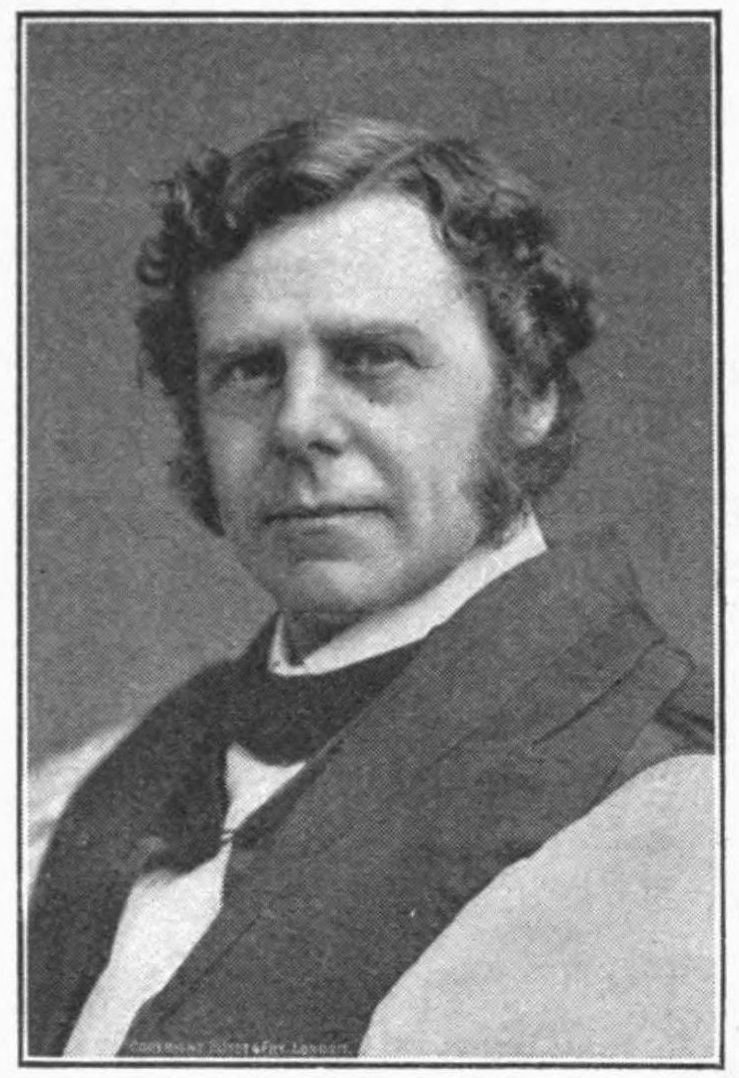
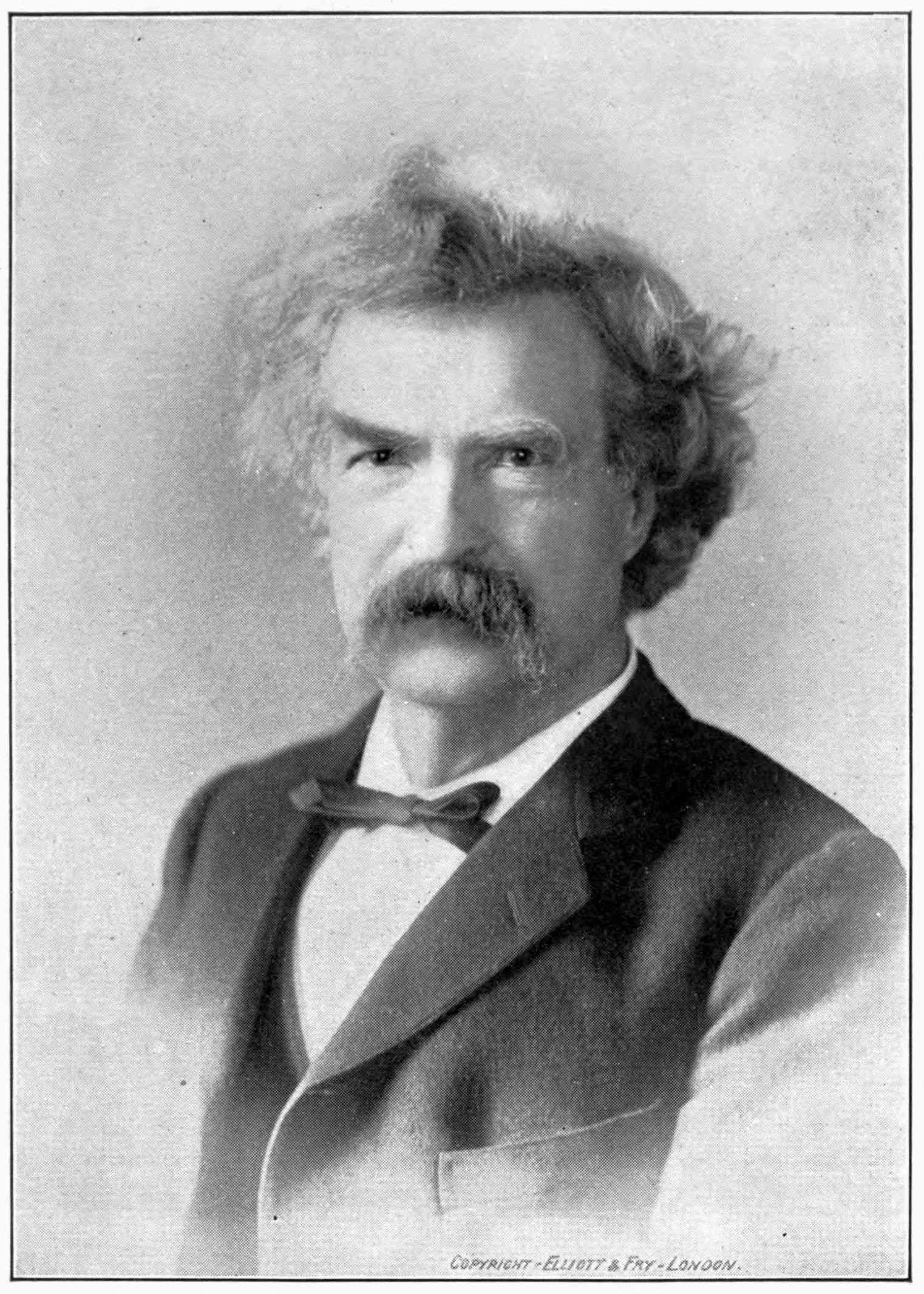
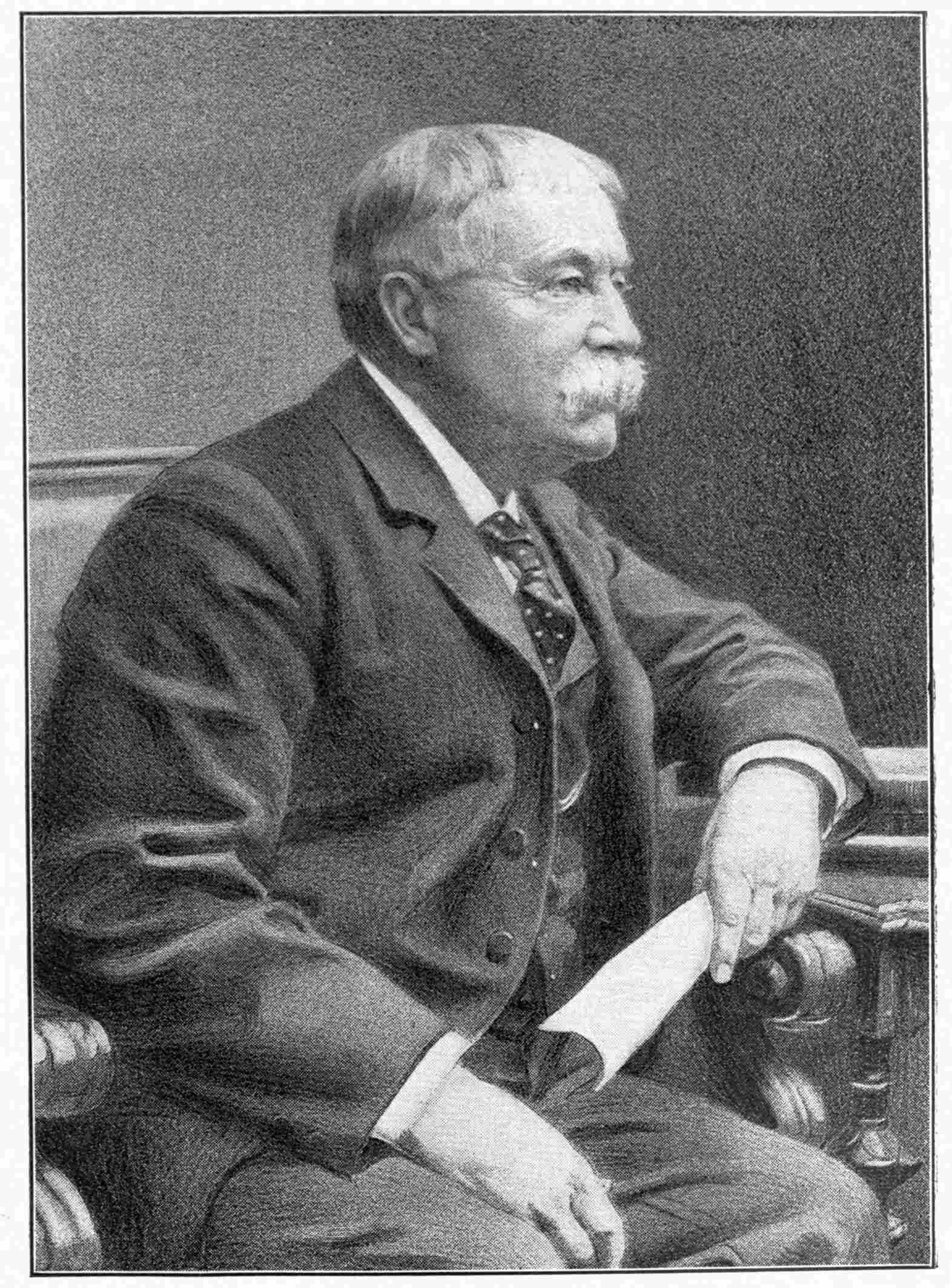
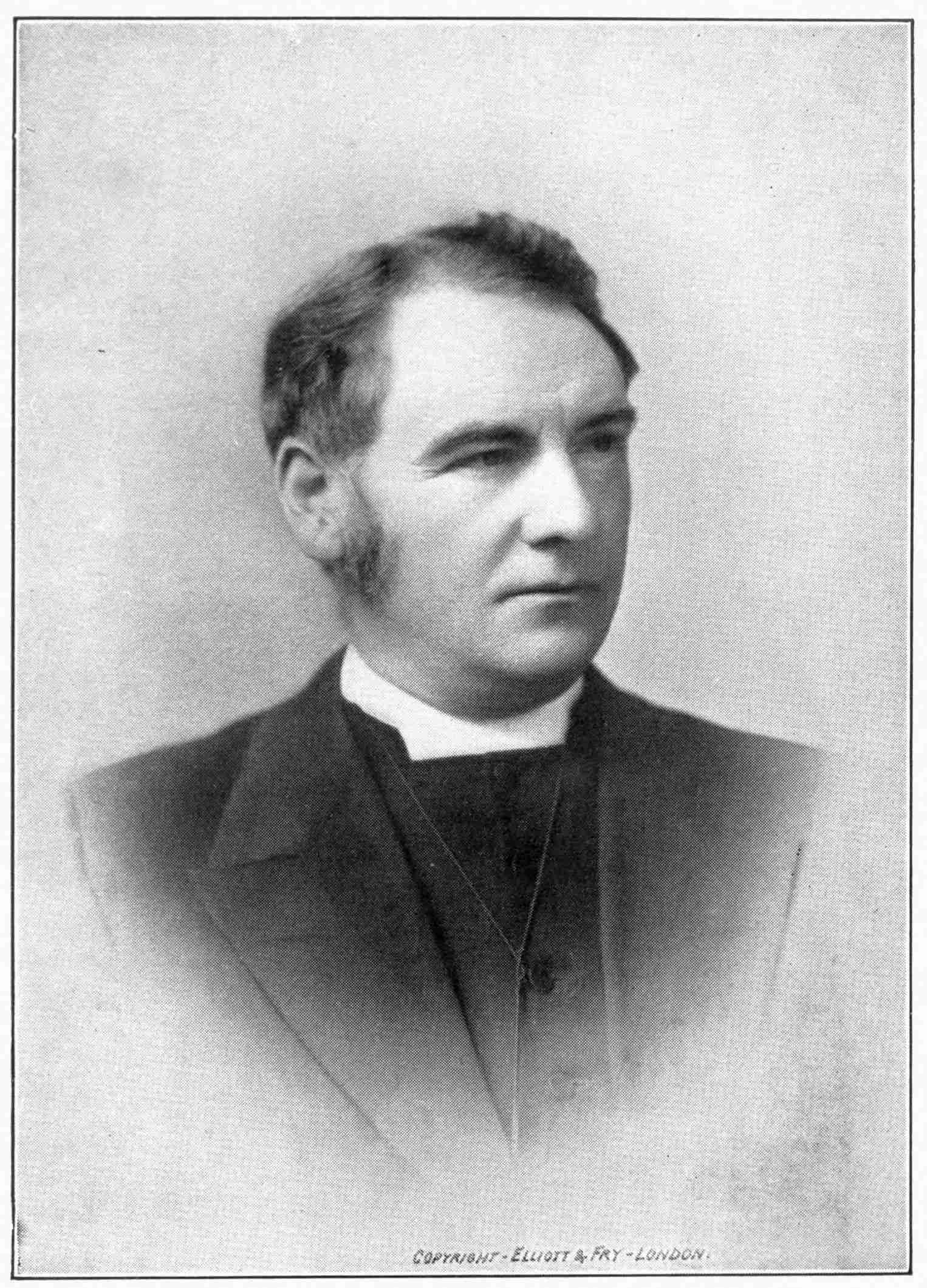 Copyright—Elliott & Fry—London.
DR. JOHN WATSON (“IAN MACLAREN”)
THE REV. DR. JOHN WATSON (“IAN MACLAREN”)
made his first lecture tour in America between
October 1 and December 16, 1896, and I think I saw
more happy faces while accompanying him than any other man
was ever privileged to see in the same length of time. During
this period Dr. Watson had ninety-six as large audiences
of men and women as could be crowded into the largest public
halls in the principal cities of the United States and Canada.
These great multitudes, with bated breath and outstretched
necks, sat and listened to him with intermingled laughter and
tears, like sunshine making the rain radiant.
Dr. Watson is a tall, straight, square-shouldered, deep-chested
man of middle age, with a large, compact, round, and
well-balanced head, thinly thatched with brown and grayish
hair, well-moulded refined features that bear the impress of
kindly shrewdness, intellectual sagacity, and spiritual clearness,
tempered, too, with a mingled sense of keen humor and
grave dignity. The eyes are open, fine, and clear in expression,
and thoughtful and observant to a controlling degree.
He is sometimes called an Englishman, because he happened
to be born in the county of Essex; but he himself says: “I
am a pure Highlander. My mother was a Maclaren, and came
from Loch Tay and spoke the Gaelic tongue. My father was
born at Braemar, and Gaelic was the language of my paternal
grandfather.” His father was a Free Church elder, and his
mother a woman of strong religious character and great spirituality.
He is himself a typical Scotch Highlander in appearance,
with every movement indicating alertness and force.
His voice is excellent, because its tones express the feeling
to be conveyed. It is skilfully used, with fine inflections and
tonal shadings that give emphasis and delicacy to his delivery.
The doctor’s mobile mouth easily lends itself to vocal changes.
He is not an orator in the usual sense of the word, but he is a
speaker who readily holds an audience to the last moment.
No one leaves while he speaks, and that is the finest test.
One day Horace Greeley, Henry Ward Beecher, and I were
passing through Bridgeport. Mr. Greeley remarked: “This is
Bridgeport. I had a successful lecture here once.”
Mr. Beecher said: “Greeley, what do you call a successful
lecture?”
“Oh, more people stayed in than went out.”
Dr. Watson’s ten weeks were filled almost beyond belief.
Yet his parting sermon at Plymouth Church was as fresh in
matter and manner as when he began at New Haven with his
famous Yale lectures on preaching given before the Divinity
School.
In physique and in his mental spirit Dr. Watson recalls Mr.
Beecher very distinctly. A broad sympathy with their fellows
is their common inheritance. The rejoicing love of nature
belongs to both lives. Dr. Watson illustrates, as Mr.
Beecher did, in book, sermon, lecture, social intercourse, that
he sees the best in all men, feels their moods, holds charity
with errors, and joys with service, is touched by pathos and
becomes tender with suffering. Dr. Watson brought a wholesome
manhood as well as a gracious mind to the work he did,
and has left a memory that all who heard him will continue
to enjoy. America is richer by his visit, and he himself carried
away the delight of sympathetic and genial associations.
It is probable that Dr. Watson, or “Ian Maclaren,” as he is
more commonly called, would still have been nothing more
than the pastor of a well to-do congregation in Liverpool if it
had not been for one man.
For many years Dr. Watson had been intimately acquainted
with Dr. Robertson Nicoll, editor of the British Weekly and
The Bookman, and the latter, who has a keen eye for literary
ability, discovered in his conversations with the Scotch minister
latent qualities which he determined to bring out. It happened
that at this time Dr. Nicoll was on a hunt for genius.
It had been through his instrumentality that both J. M. Barrie
and S. R. Crockett had been brought before the public, but
this same fickle public, having acknowledged the merit of
these two writers, was already clamoring for something new.
Dr. Nicoll realized that if he was to sustain his reputation he
would be obliged to produce another genius without delay. Is
it surprising, when he found in Dr. Watson what he was seeking,
that he should pay no heed to either the man’s age, his
peace of mind, or the wishes of his family, but should determine
to launch him, whether he desired it or not, upon the
sea of letters?
To this end the editor wrote to his intended victim, telling
him of his unknown ability, and asking him to contribute to
the British Weekly a few short stories, especially dealing with
Scotch character. But Dr. Watson at the time was deeply
engaged in an analysis of the character of the Jebusites, and
Dr. Nicoll’s request was unheeded. The latter, however,
did not intend to forfeit his reputation for such a trifling
cause. The letters and appeals which he sent to Liverpool
gradually increased in number until Dr. Watson received one
nearly every day. Before long letters were followed by telegrams,
and the fate of “The Bonnie Briar Bush” was finally
settled by the weary minister at last consenting to attempt a
short story. This was forwarded to Dr. Nicoll, and was
promptly returned, with the intimation that it was not what
was desired, while at the same time more explicit directions
were given. Dr. Watson made another attempt, and the next
week the first story of “The Bonnie Briar Bush” series appeared
in print.
The full significance of the title which Dr. Watson has
given to his book is not generally understood. The Jacobites
sang, “There grows a bonnie briar bush in our kailyard,” and
wore the white rose as their emblem. A Highlander with
Jacobite traditions, Dr. Watson has always loved the simple,
beautiful flower, which is found in many country gardens in
Scotland. When a title was needed for his volume, the author
chose this because the suggestion of the book is that in every
garden, however small and humble, there may be a flower.
The whole idea of his writing, Dr. Watson says, “is to show
the rose in places where many people look for cabbages.”
His mission is to set forth what plain people, who do not analyze
their feelings, really do and suffer.
From my very first meeting with him, as he landed at New
York from the Germanic, I liked him even more than I had
expected. He impressed me at once as strong, yet refined
and very natural. He was dressed in a plain business garb—rather
more like a Scotch merchant than a minister—and appeared
a simple, delightful man in every sense the word implies.
I liked him then; I love him now.
With Mrs. Watson—a frail, little body, with black hair and
eyes, and very quiet—we drove at once to the Everett House,
where pleasant rooms were waiting. They lunched with me.
I ordered a large double sirloin steak and hashed brown potatoes
with cream—just what never fails to catch an Englishman.
My guests had never before seen the like. “A monumental
steak,” said the doctor to his wife. “I’ve heard of
your American beefsteaks. The stories have not been overdrawn.”
After luncheon Dr. Watson and I called on Mr. John Sloane,
who had invited Dr. and Mrs. Watson to spend the Sunday
following with him at his home in Lenox. After a delightful
chat for a few minutes and the completion of arrangements
for the Lenox visit, we returned to my office, where the reporters
from the New York, Brooklyn, Boston, and Philadelphia
papers were waiting for an interview. The group was gathered
about the same round table where the two Arnolds, Stanley,
Max O’Rell, and Conan Doyle had been interviewed. It
did not take the reporters long to discover that they had an
ideal target for their ingenuity, and for two hours the air was
full of sharp and brilliant sayings from the lips of my star.
It seemed more like the Stanley epoch than any other, and,
next to Stanley and Sir Edwin Arnold, best of all. The symptoms
were promising. I thought to myself that if he didn’t
make a clean sweep, then no man could.
I went up to New Haven to hear him give the first of his
course of lectures on “The Ethics of Preaching” before the
Yale theological students. It was a delightful address. His
manner and expression were elegant. He was magnetic, brimful
of wit and sparkling with humor, and he couldn’t help it.
I knew he would be a great go on the platform.
Applications were coming in from all parts of the country
for “Ian Maclaren.” The doctor allowed me three evenings
between his Yale lectures for trial readings, so we opened up
at Springfield. I rented the theatre there and advertised in
the newspapers only—used no posters or circulars and had no
local society to back it.
I had not visited Springfield for some years, as nothing but
a theatrical attraction seemed to draw there. The night of
“Ian Maclaren’s” lecture, however, reminded me of the
palmy days of Beecher and Gough. The theatre was full.
President Gates and a large party of students from Amherst
College were there, another party from Smith College, Northampton,
besides Springfield’s best people. Dr. and Mrs. Watson
were both very nervous, but he made a great hit. His
entertainment was conversational and delightful. He had
plenty of voice of a rich, carrying quality. After the reading
the doctor seemed somewhat doubtful as to his success, but I
was satisfied.
Next morning the Springfield papers contained elaborate and
very enthusiastic notices of “Ian Maclaren’s” performance the
previous evening. The doctor himself paid very little attention
to his press notices, but Mrs. Watson read and enjoyed
them, and instructed me to save a copy of each paper for her
sons in Liverpool.
The second of the “trial performances” was given in Unity
Hall, Hartford, which has only seven hundred seats. Every
seat was sold and all the standing room occupied. The doctor
gave a lecture here, not a reading, on “Certain Traits of
Scotch Character.” Both audience and manager were delighted.
We had planned to return to New Haven the same night,
but our plan failed through a misadventure that was somewhat
amusing, although rather discomforting to me. We had
boarded the New Haven train at about a quarter to eleven,
and were very busily engaged in conversation. I was talking.
The brakeman called out the name of a station, which I did
not hear distinctly, but looking at my watch I saw it was a
quarter to twelve—the time we were due at New Haven. I
jumped up, saying, “This is New Haven?” and we all hurried
out, and the train moved on. The depot did not look familiar
to any of us, and we did not see Professor Fisher’s carriage,
which we were expecting, to take Dr. and Mrs. Watson to his
house, as they were his guests while in New Haven. There
was no carriage and not a person to be seen. After some running
about, I found a policeman and asked him where we were.
“You are in Meriden,” said the officer.
“In Meriden!” I exclaimed. “I thought this was New
Haven. When does the next train go to New Haven?”
“About six in the morning.”
I can’t describe my feelings. Dr. and Mrs. Watson overheard
the conversation, and I saw them look at each other and
smile. I didn’t know what to say, but Dr. Watson said:
“Isn’t there a public house where we can get a bedroom?”
The policeman pointed out a hotel over the way, a good
one, where we secured comfortable rooms. I sent a man out
to bring in some oysters and sandwiches, and we all sat down
to our late supper. Dr. Watson was never in better humor;
he was full of laughter and apparently amused at my embarrassment.
We sat and told stories until after one. I told the
doctor that his taking the blunder so pleasantly had made me
feel worse than if he had pitched into me. He bade me good-night,
saying, “Major, you may have something worse than
this to put up with before you are through with me.”
The doctor must have told this story to all of his friends in
England, for a year later when over there, I was often slyly
asked by friends of his if I knew a town in America called
Meriden.
After the Yale lectures were completed I arranged to have
the doctor give one public lecture in New Haven. The McKinley-Hobart
campaign was on. Here and the next night
at Bridgeport we had Tom Reed and his torchlight processions—which
took two hours to pass a given point—against
us, but it didn’t seem to have any effect on our business.
What other man could have drawn full houses under such
conditions?
Returning to New York, the doctor dined one evening with
me and a party of friends at the Lotos Club. There were
present Gen. Horace Porter, Seth Low, Frank R. Lawrence,
William Winter, John Elderkin, and Hamilton W. Mabie. It
was an enjoyable affair. There were bright sayings, good
stories, and flashes of wit that only such an occasion could
produce. It was one o’clock when Dr. Watson and I reached
the Everett House, he declaring, “You Americans are really
a wonderful people.”
On the day following, Dr. and Mrs. Watson were entertained
by Frank H. Dodd, Bleeker Von Wagenen (of the firm
of “Ian Maclaren’s” publishers), and the Rev. Dr. Lyman
Abbott, and their wives, with an excursion up the Hudson to
West Point. On their return the doctor came into my office
fairly bubbling over with fun. He had been delightfully entertained
and had enjoyed the magnificent scenery of “your
beautiful Hudson River. It is grand.” He sat and chatted
with me for an hour and charmed me with his description of
the day’s outing. He saw the bright side of everything, and
the humorous side too. He had brought with him and gave to
me, fresh from the press, a copy of “Kate Carnegie,” his new
book, telling me that this was the second copy out of the
bindery; Mrs. Watson had the first copy. In the copy that
he gave to me he wrote:
“To Major J. B. Pond:
“The second copy of this book is given by the author after the week of
his American tour, during which he has already come to consider the
Major his friend.
“New York, October 10, 1896.”
One of the proudest days of my life was the following Sunday, when I
accompanied Dr. and Mrs. Watson to Plymouth Church. I felt that the
whole of that vast congregation must envy me. My star was the centre of
all eyes until the sermon began. Dr. Abbott was at his best, and Dr.
Watson enjoyed him. “That’s great preaching,” he said to me at the
close. Friends crowded around us in great numbers, and “Ian Maclaren”
must have “shaked hands” with hundreds.
“Ian Maclaren’s” American tour really began on the evening of October
12th, in the Academy of Music, Brooklyn, under the auspices of the
Consumptives’ Home, and under the supervision of Mr. S. V. White. Before
Dr. Watson went on the stage Deacon White handed me a check for
$1,000—the fee for the lecture. The good old minister who introduced
Dr. Watson took advantage of the occasion (it was probably the largest
audience he had ever faced) to make a twenty-minute speech. The audience
of highly bred ladies and gentlemen endured it heroically. Almost any
other audience in any other city would have given vent to their pent-up
feelings and called, “Maclaren, Maclaren!” but they patiently waited and
suffered. Finally the speaker of the evening was introduced, and for an
hour and a half more that audience sat in breathless suspense, listening
to a man who gave them as much delightful pleasure as they had ever
before enjoyed in that length of time. I saw that there was going to be
lively work ahead of us for the next two months. The second lecture in
America was in Carnegie Hall, New York, under the auspices of the St.
Andrew’s Society. Sitting on the platform was a reception committee of
over four hundred, including college presidents, clergymen, judges,
statesmen, lawyers, and men of letters, besides other prominent men.
Chauncey M. Depew introduced the doctor in one of his delightful
speeches. Dr. Watson’s voice was distinctly heard in all parts of the
great hall. He was a success in every way. The gross receipts were
$2,455.50.
As the political cauldron was boiling in the States (the McKinley
campaign), I chose to fill in the early portion of our tour in Canada,
and on our way up there we made one stop, at Burlington, Vt. It was the
first ride either Dr. or Mrs. Watson had taken in a drawing-room car,
and they enjoyed it the more for having a sumptuous compartment all to
themselves. The doctor appeared tired but cheerful. I found him an
athletic man with a perfect physique and no fear of being overworked,
but Mrs. Watson seemed delicate and hardly fitted for such a rush as we
were about entering on.
Before reaching Burlington a committee of citizens came on board the
train to welcome the doctor to Vermont. We arrived in the town at just
eight o’clock in the evening, and were obliged to hurry from the hotel
to the Opera House, where we found an immense jam in waiting. Even the
stage was utilized by placing two hundred chairs there, which had been
sold for a dollar apiece.
At Burlington it was the initial experience of my friends in a typical
American hotel, the Van Ness. Mrs. Watson missed the bread plate and the
two knives. She didn’t enjoy spreading butter with the same knife that
she used to cut her meat. The doctor learned to his surprise that
preserves and jam are one and the same, and he inquired if he were
expected to spread his preserves on bread. If so, he wanted some bread.
Owing to the necessity of an early start, we got only an hour or two of
sleep that night. The Watsons were up on time—2:30—and stood the
unseasonable disturbance very gracefully and cheerfully. It seemed rough
on the little lady, but she did not complain. All slept well into
Montreal, where we enjoyed as good a breakfast at the Windsor Hotel as
ever was set before hungry travellers. I noticed a look of pride and an
at-home air about the Watsons as soon as they knew that they were in the
Queen’s dominions, and it seemed to give a relish to their food when I
exclaimed, “God save the Queen!”
At Montreal there was a delegation of representative Scotchmen waiting
to do honors to “Ian Maclaren.” I don’t think there was a man in the
city that day who hadn’t Scotch blood in him, at least I did not see
one. The lecture was in the St. James Methodist church, an immense
auditorium, with a seating capacity of about 2,300, but with
reverberating acoustics that enabled a speaker to hear the echo of his
words five times repeated. I don’t think very many could understand the
reading, and it was about the stupidest audience I ever saw for one so
numerous. The lecture, however, was a great financial success. The local
manager who had engaged the doctor for the lecture was an insurance
agent. He tried to keep possession of Dr. Watson and worried him all day
long.
Dr. Watson was up very early the next morning and knocked at my door,
saying:
“Major, are you up?”
“Come in,” I said, throwing open my door, ready to go to breakfast.
“Major, not a bad meeting last night. I see the papers are not
unfriendly; but oh! that late supper. We will have no more of them.”
We went on to Ottawa by the Canadian Pacific Overland Express. The
general manager of the road had set aside for Dr. and Mrs. Watson a
drawing-room car containing more photographs of scenery along the
Canadian Pacific route than I think they could possibly have examined in
a month, even had they done nothing else. Dinner in the dining car
pleased them. They declared it a most interesting way of enjoying a
meal, and such a good meal, too! Where could it possibly be prepared?
There was a novel experience awaiting Dr. Watson in Ottawa. Mr. Knowles,
the local manager, turned out to be a clergyman and rector of a church
there. The lecture was in the Knox Presbyterian Church. Sir Wilfred
Laurier, the Premier of Canada and a Roman Catholic, presided. He is
Canada’s famous orator, and this was a great occasion for him. When the
doctor was told that a Catholic would introduce him in a Presbyterian
church, he was greatly surprised; but he was in for it and bore it
heroically, and made a very pretty allusion to it in his introductory
speech. Later in the evening he said to me:
“Major, isn’t this a wonderful country? Think of it; I, a Scotch
minister, have given readings for a clergyman of the Church of England,
in a John Knox Presbyterian church, introduced by a Roman Catholic!”
There were cheers and handclapping during the entire evening, closing
with a motion for a vote of thanks, seconded by a speech, then a vote of
thanks to the chairman and another eloquent speech, after which the
doctor read “McClure’s Last Ride,” as an extra. What enthusiasm! I had
hardly seen the doctor since our arrival. Friends had taken possession
of him and he had done the town between 2:30 and 6.
When we got back to our hotel, the Russell, we met Mr. Isaac Campbell
and Hon. John Cameron, two prominent politicians and thoroughbreds of
Winnipeg, who had come all the way to see and hear “Ian Maclaren.”
In company with Premier Laurier and Mr. Knowles, we went up to their
rooms and spent about as interesting an hour as Dr. Watson experienced
during the entire tour. It was a revelation to him; but he had been a
boy himself once, and he learned one fact, that in the great and new
West the boy nature predominates among the men to the end of their
lives. These men were leading Canadian politicians, and the affairs of
Canada were largely in the control of the set to which they belonged.
There was a pretty intense political campaign on in Canada just at this
time over the school question, and there was a desire on the part of the
different partisans to explain to Dr. Watson why their particular party
was right and how the salvation of the country depended upon the
election of their man. He enjoyed it.
We were obliged to start very early next morning for Kingston, and were
glad to leave the old Russell House. The dull porter directed us wrong,
so that we were obliged to change cars twice, when we might have come
direct in a parlor car. My travelling companions had a chance to
experience the inconvenience of riding in the common day coaches of
Canada, and for a short distance we were obliged to ride in the caboose
of a freight train. It was not a delightful experience, but I heard not
the slightest complaint. The doctor really got fun out of it.
At Kingston we were met by Principal Grant, of Queen’s College, who
entertained the Watsons over Sunday. There was a very large audience
that evening at the Kingston Opera House, which made the local managers
happy. Principal Grant presided at the lecture and afterward asked me if
it were not possible to secure Dr. Watson to address the students at the
college next morning. I told him the doctor had agreed to lecture twice
a day for me if I would release him from preaching, so I could not
insist, though I thought he might have been willing to address the
college to please a thousand students, many of whom had given up their
hard earnings to hear him at the Opera House. But he is Scotch, and
having said “no,” he did “no,” although he worshipped with the students
at the college in the morning.
The next day (Monday) we were due at Toronto. I drove a mile in a
carriage to Principal Grant’s home at the college at about 1 A.M., found
Dr. and Mrs. Watson waiting, and we drove out to Kingston Junction to
get our train. It was an uncomfortable ride in a rickety old hack, with
the thermometer at zero. I know that Mrs. Watson and I didn’t enjoy it,
but the doctor was as beaming as though he had had a normal night’s
sleep.
“Jannie,” said he, “I guess the boys are not thinking of where we are
just now. If we hadn’t promised them those bicycles we wouldn’t be
here.” And so he kept the chilly air out by making sunshine at midnight.
The fire had gone out in the stove in the station waiting room, and all
the coal was locked up in the shed outside. The train was forty minutes
late. It seemed the longest forty minutes of my life. A more unendurable
position I never knew than waiting in a cold railway station at 2 A.M.,
in Canada, for a late train. “Ian Maclaren” found enjoyment in it. But
when the train came we had a comfortable ride into Toronto, and were
none the worse for our rough experience of the middle of the night.
Here the Scotch were out in force again. Badges and insignia of
different societies were much in evidence. They all wanted to see “Ian
Maclaren,” and he was unable to see any of them. He accepted an
invitation to lunch with Mr. E. Gurney, a prominent citizen and an old
friend of Mr. Beecher’s and mine, and then he and Mrs. Watson were
driven about the city all the rest of the day until it was time to
lecture. Lord Aberdeen presided, and it is a matter worthy of record
that the largest audience that ever attended any one-man entertainment
in Massey Hall, Toronto, and paid high prices, was the one drawn to hear
“Ian Maclaren’s” readings. A more enthusiastic demonstration of welcome
one seldom sees, especially in America. It was more like Welsh
enthusiasm.
We were booked for Detroit the following day at eleven o’clock, and
Grand Rapids at eight in the evening, so I had a lively time hustling
the doctor from Massey Hall on board the sleeping car. We reached
Detroit at 8 A.M. and breakfasted at the Russell. The doctor gave his
reading at eleven to an opera house full of Detroit’s most select
citizens. Colonel Livingstone, editor of the Detroit Journal, had
arranged a luncheon party for the doctor at the Detroit Club at 12:30,
and we were to leave at 1:20 for Grand Rapids. A carriage was engaged
during our stay in Detroit. Dr. Watson hurried from the hall over to the
club. The luncheon was a magnificent affair. About two hundred of
Detroit’s best men were there and made it a pretty lively thirty minutes
for the Scotchman. I took a special carriage and hurried to the station
and persuaded the conductor to hold the train five minutes for us.
Finally the doctor and Colonel Livingstone came. We jumped on the train
just as it was starting and went bounding over the country for Grand
Rapids.
At Jackson we took on a special train carrying the generals of the army,
who had enlisted in the Presidential campaign and were on their way to
Grand Rapids for a grand mass meeting. As we entered that city there
were brass bands playing, fireworks, and all sorts of demonstrations. I
assured Dr. Watson they were not intended in his honor, and he quickly
found out that he was a mighty small affair in the minds of that excited
populace. It was “McKinley and Hobart” everywhere, and everybody was in
some kind of uniform carrying a torch.
In due time my correspondent there appeared with a carriage and drove
us to the Baptist Church, where a great crowd was waiting to welcome
“Ian Maclaren.” It surprised the doctor. The lecture over, we went
direct to the sleeping car, which we boarded at 11 P.M. for Chicago. We
had been on the move at a very lively rate all day, but Dr. Watson’s
ability to see everything from the brightest side kept us all jolly.
We had a very early breakfast in the Auditorium Hotel, in the first sky
dining room the Watsons had ever seen. Unfortunately, Lake Michigan,
once to be seen only a short distance away, was completely hidden by the
smoke.
“How do you like this, Dr. Watson?” I asked.
“Wait until I get my breakfast and I will tell you, Major,” he said.
Reporters came early and kept the doctor under cross-examination for
some time, not, however, to his discomfort. He enjoyed them, and they
knew it, and helped to make things lively. The Rev. Dr. Gunsaulus was
the first minister to call. He drove the doctor out to the Armour
Institute, where he addressed the students that morning, and in the
afternoon he took him for another drive to see Chicago. On his return
his enthusiasm and wonder could hardly be expressed.
“Major, these big stories we read about your Chicago and the West are
not big stories at all. I have seen thirty miles of parks to-day, and I
am told that not one of them is over twenty-five years old.” In the
evening he spoke before the Twentieth Century Club.
At noon the next day the doctor lunched at the Union League Club with a
party of leading spirits. The round table, with twenty-four men sitting
about it, had been placed in the main dining room, where the
distinguished party could be viewed from all sides. I noticed that Dr.
Watson was disturbed. He was not very sociable, either, under the gaze
of so many starers. It was an elaborate lunch, but there were glasses
for water only. After we went out, Dr. Watson asked me if gentlemen were
in the habit of lunching distinguished parties without wine. A friend of
mine who was present assured the doctor that the absence of wine was
entirely on account of the presence of a distinguished minister. Had he
(Dr. Watson) been absent it would have been very different. That evening
the lecture was in Central Music Hall, which was crammed.
My Minneapolis correspondent, who had bought a single lecture for that
city, was one of the doctor’s enthusiastic auditors in Chicago. I had
originally planned that Dr. Watson should have an open date in
Minneapolis for rest, as a neighboring minister in Liverpool had
written: “Watson, poor fellow, is not strong. He has had severe
hemorrhages.” But when I found that he was an athlete, with the power of
endurance of a gladiator, and when he offered to keep all dates I made
if I would release him from preaching, I decided to fill in three more
readings in Minneapolis and St. Paul. I felt all the more warranted in
doing so as all the auditoriums in which Dr. Watson had spoken up to
this time had been crowded to their full capacity. So I told my
Minneapolis man that either he must arrange to fill in two matinées and
the open evening, or I must buy him off and go back East, where we were
sure of a much larger business. He demurred, but “it was to be,” so he
finally assented.
Looking up my dates, I found that the day before election was open in
Central Music Hall, Chicago, and I decided to place two return readings
there for the afternoon and evening of that day. The local manager
refused to have anything to do with it, so I did it myself, and enjoyed
seeing him quite demoralized because he had not accepted my offer. That
afternoon and evening Dr. Watson gave two readings, the gross receipts
for which were over $4,000.
What a delightful ride we had the next day on the fast express from
Chicago to Milwaukee, where I once worked as a printer on the
Sentinel. At that time (1857-58) Milwaukee was the metropolis of the
State; now it is a suburb of Chicago. I called Dr. Watson’s attention to
the beautiful brick which is used here, and makes such handsome
buildings. He thought them inferior in quality to the Scotch bricks, and
I think he was right.
He lectured here in Plymouth Church, where I had been with Mr. Beecher
and other stars. The church was crowded, and I was told that there had
been no such enthusiasm since the palmy days of John B. Gough. A supper
after the lecture was attended by the leading minds of the city and
State, among whom was my old friend F. N. Finney, son of the late
Charles G. Finney of Oberlin. The Woman’s Club, which had secured Dr.
Watson for Milwaukee, entertained our entire party the next morning,
showing us the sights of the city, including a first-class art gallery
and the largest, best-equipped brewery in the world.
We pushed on to Appleton, Wisconsin, where nearly the whole town was in
waiting at the depot. The rest of the townspeople met us on the train
before reaching the city. At the lecture that evening, the
Congregational Church held the biggest crowd it ever had held up to that
time. The next day (Sunday) was a proud day for me. “Ian Maclaren”
preached for one in my father and mother’s old church, in order that my
friends might hear him. It was a great sermon and a great crowd, too.
People came over two hundred miles to hear him, and filled the church
both morning and evening, and all the surrounding streets as well. It
was my second great triumph in Appleton. On a former occasion I had
introduced Henry Ward Beecher to the same public, and Dr. Watson’s
reception was just as hearty as Beecher’s. In the evening I gave my
Beecher lecture. Dr. Watson was a listener and gave me inspiration. I
talked Beecher for an hour and a half, and was attentively listened to.
The next day we went to Madison, Wisconsin, where Dr. and Mrs. Watson
were the guests of President Adams of the Wisconsin State University.
Mrs. Watson was unable to sit up. The doctor addressed the students of
the University in the afternoon, and lectured in the First
Congregational Church in the evening—the same place where, in 1879, Mr.
Beecher had drawn exactly $1,200. The legislature was in session then,
but now it was autumn, and no legislature. Dr. Watson drew just $1,000
even money.
We were obliged to take the midnight train from Madison to Minneapolis.
When we went on board poor Mrs. Watson was almost broken down, but never
a murmur escaped her. Dr. Watson nursed and cared for her all night on
the cars as gently as a mother could have done. Still he couldn’t help
saying funny things. As she lay in agony in her berth, he said: “Jannie,
you must not forget; the boys may get their wheels yet. The audience was
not hostile.”
By the time we reached Minneapolis, Mrs. Watson was so feeble that she
could hardly bear to be lifted from the car to a carriage; still she did
not complain. At the West Hotel we called in a physician, who declared
that she was threatened with pneumonia. Colonel West and his daughters
were very kind and attentive and relieved the doctor as much as
possible. The Caledonian Society and the St. Andrew’s Society were in
waiting to show honors to the distinguished visitor, and many other
Scotch institutions were out in great force. The lobbies of the hotels
were jammed. “Ian Maclaren” was the name on everybody’s lips.
He amused the audience at the beginning of one of his lectures by
telling of a letter he had received, asking whether the first name of
his pseudonym was pronounced Ian, Eean, Yan, Yon, Yane, John, Jan, or
Jane. “In answer to this question,” said Dr. Watson, “I would say that
if you want to pronounce it like an Englishman, you will say I-an; if
like a Scotchman, Ee-an; and if like a Highlander, Ee-on.”
A luncheon was given him by one society, and after the reading in the
evening he had a banquet. I absolutely believed the doctor must be
bewildered from so much increasing attention. The smart reporters here
got hold of him. His keen discernment enabled him to detect a different
atmospherical condition about these and our Eastern newspaper men. There
was a freshness and a keen assurance about the Minneapolis reporters
that rendered them irresistible. He saw and enjoyed everything.
Everybody was in love with him, and everybody wished to do something for
him.
Judge Gilfillan, of the United Scotch Societies, introduced him at the
first reading by declaring that it had been left to the lion of the
evening “to show us the lights and shadows of Scottish character as they
are exhibited in the simple, everyday scenes of life.” The doctor
stepped forward amid a wave of lasting applause. “It is my duty,” he
said, “to notice with a glow of heart the Scottish tone of this
introduction, for, as I sat listening, I could scarcely realize that I
was in the far Northwest and not in my own country.” Wherever he went he
met Scotch people—some by descent, some by marriage, and one by virtue
of the fact that her sister had been tended by a Scotch nurse.
We gave three readings in Minneapolis, instead of one, as originally
planned, and two in St. Paul. The afternoon in St. Paul was marked by
almost as terrific a rain-storm as I ever remember witnessing. The water
absolutely piled up in the streets for two or three hours. Through the
invitation of Mr. I. W. Whitney of the Great Northern R.R. Co., Dr.
Watson visited the residence of Mr. James Hill, president of the
railroad, who has the finest collection of pictures west of New York.
Dr. Watson, who is an art critic and has seen all the famous collections
of Europe, declared this the best-selected and choicest private
collection of paintings that he knew of.
We found Mrs. Watson more comfortable on our return, but the physicians
said that she had a slight touch of pneumonia and must not be moved for
a week, so we were obliged to leave her behind and go on to Des Moines
without her. I feared that the tour was about finished. I didn’t see how
the doctor could give his readings under such conditions, but he
insisted that “Jannie” was a woman of wonderful will power and he was
sure she would come through all right. To leave her among strangers, in
a strange land, nearly five thousand miles from home, was not a cheering
prospect, but Colonel West, owner of the West Hotel, and his daughters
were very kind to her, and she was heroic and brave as well. “Good-by,
Jannie. The boys will get their wheels,” were the doctor’s last cheering
words as he came from her room and we took a carriage for the depot to
go to Des Moines.
We left Minneapolis at about seven o’clock, having a Pullman sleeping
car all to ourselves. The weather was the most disagreeable possible—a
cold, sleety rain, which later changed to a gale so severe as to impede
the progress of the train. We lost time all day. When the conductor told
the doctor that we were losing time on account of the wind, he
exclaimed: “How absurd! Do you mean to tell me that any wind can retard
the speed of a heavy locomotive and train like this?” The conductor
assured him that nothing else had caused the lateness of the train. He
insisted that it was ridiculous, and wouldn’t listen to it; but I have
known a gale to lift a locomotive and whole train off the track. Little
he knows of the Iowa and Kansas zephyrs.
When I saw that we were bound to be late, I telegraphed my correspondent
in Des Moines that the train was losing time. All day we travelled over
the boundless prairie, thickly dotted with frail frame houses that
appeared hardly able to withstand the gale. This was the first real
prairie country the doctor had ever seen, and it was a surprise to him.
As there were no eating stations along the line and no food to be had on
the train, we were obliged to go without eating all day, which the
doctor did not relish, and declared that this was the last time he would
be caught on a long journey without food. I told him that we would go
right to the hotel as soon as we arrived and get something. He was
obliged to dress on the sleeper, and was very much worried, because he
was afraid he would have to lecture without his supper. I began to fear
that he was right when he told me in Meriden I might sometimes have to
put up with some very disagreeable things.
It was after eight when we reached the hotel. The clerk told us that we
could get nothing to eat, as the dining-room closed at eight (it is so
with all provincial hotels), but the doctor rushed to the dining-room
and made a loud noise on the door, which was opened by a man in evening
dress. He proved to be the head waiter.
“I want some food immediately,” said the doctor. The man stood
paralyzed.
“I must have some food right away,” the doctor repeated, and rushed by
the man to a table where were the remains of the dinner of the latest
comer. He attacked it, and the head waiter tried to stop proceedings,
but the doctor kept right on. He managed to get part of a meal, and
hurried out, the man following him. In the carriage on the way to the
Opera House the doctor told me that he hoped he had not permanently
injured that man who persisted in trying to prevent him from eating what
he could find. I think I never experienced a more amusing incident. It
was nearly nine o’clock when Dr. Watson stepped upon the stage. I’ll let
the Des Moines Leader tell the story:
“At five minutes before nine o’clock the lecturer came around the flies.
During the long wait the audience was entertained with a violin solo and
a piano solo. An impromptu choir on the stage started ‘America,’ and
four verses were sung. Then came ‘Annie Laurie,’ and it was during the
singing of that that Dr. Watson took his seat. ‘How appropriate,’ every
one said to his neighbor, and the tedium of the long delay was
forgotten. It was a gathering of which any person might be proud, and
evinced extraordinary interest concerning the new star in the literary
firmament, unknown except in his clerical capacity two years ago.”
The president of the Woman’s Club, under whose auspices the lecture was
given, introduced the speaker in a very few words of eulogy on the man
and his work. She said, “The long-anticipated hour has come,” and Dr.
Watson stood up before the audience. He said that no one could convey a
reproach so delicately as a woman, and that when he heard the words
“long-anticipated hour” combined with what was complimentary, it
reminded him of his childhood days when medicine was administered in
sweets. “Only the other day,” he continued, “I was congratulating myself
on never being late, either for pulpit or platform, but now the boast
has come home to me, as such things usually do.”
At 11:30 we were again on board the sleeper bound for Galesburg. Our
journey was interrupted by an enforced long wait at Rock Island—from 8
A.M. to 2:40 P.M.—but it proved a very delightful wait. We took a
carriage and drove about the town, visiting the United States Arsenal,
where arms and war equipments are manufactured. Through the politeness
of the commanding officer, Colonel Buffington, Dr. Watson was most
graciously entertained all the forenoon.
At Rock Island, President John Finley of Knox College (then the youngest
college president in America) met us with the private car of the
superintendent of the road, to convey us to Galesburg. The college
students, male and female, had turned out en masse to meet “Ian
Maclaren” at the station, and behind a band of music and the students
our carriage was escorted to President Finley’s house. Here was a
telegram from Mrs. Watson telling her husband that she was much improved
and would meet us in Chicago the next morning.
“Astonishing,” said the doctor, his face fairly beaming. “Can I send a
telegram right away?” he asked.
“I’ll take it,” said I, for I wanted to do something.
He wrote a telegram after the English manner—as few words as
possible—and this is the way it read:
“Mrs. Watson, West Hotel, Minneapolis.
“Much lifted.
Watson.”
I made a copy of it, which I handed in at the office, retaining the
original. I have never parted with a word of his or Mr. Beecher’s
manuscript.
After dinner, Dr. Watson visited the rooms of the new “Abraham Lincoln
Memorial to Art and Science.” About a hundred young ladies were in
waiting, dressed in white, with a little green ribbon about their necks
and each one wearing a white rose. The doctor christened the new
society, “Circle of the Order of the White Rose,” and the occasion
inspired him to make one of the sweetest addresses I ever heard. I did
not know of a man since Mr. Beecher had gone who could rise to such an
occasion as Dr. Watson did.
The lecture that evening was to help establish a fund to aid in the
objects of the new society. The Knox College students completely filled
the Opera House from floor to ceiling. As the doctor stepped upon the
stage he was greeted with a Western college cheer, given with a vigor
that could not be excelled for volume. It seemed to inspire him for the
evening’s work. This was one of the most hearty receptions he had in
America. After the lecture we returned to Dr. Finley’s home, where
flashlight pictures were taken of the party.
By 11:30 we were on the train for Chicago, Dr. Finley with us, arriving
at 6:30 Sunday morning. Our entire party were guests of my old friends,
Mr. and Mrs. C. H. McConnell, on the South Side. Although it was such an
unseasonable hour to disturb friends, Mr. McConnell met us at the door
and welcomed Dr. Watson with heart and hand in such a manner as to cause
him to say before we fairly got into the house:
“Major, I’m very glad we’re here.”
At 8:30 A.M., Mrs. Watson arrived from Minneapolis. I met her at the
train. She did look feeble, but she insisted on carrying her handbag to
the carriage, and was very cheerful and anxious to know how everybody
had gotten along without her. I assured her that she had been very much
missed, and that from now on we were all right.
That afternoon Dr. Watson preached in the Chicago University for
President Harper, and when he returned with Mr. and Mrs. McConnell,
found Mr. Lyman Gage (later Secretary of the Treasury) waiting to escort
him to his house to dinner. I suppose they went to Mr. Gage’s and waited
until the Sabbath was over and then had a good time, because the doctor
never visits on Sunday excepting on parishional work, and I heard him
say on Monday morning at breakfast, “I’ve already given one reading this
morning.”
This Monday was our red-letter day in Chicago, when we took in over
$4,000, at the matinée and evening reading; this, too, notwithstanding
it poured all day and the audience came in carriages and under
umbrellas, or dressed in waterproofs, and giving the lobby of Central
Music Hall the appearance of a small river.
Mrs. Watson was improving all the time, but we left her and Mrs. Pond
in Chicago with our friends the McConnells, to join us in Niagara Falls
the following Saturday night, where we would spend Sunday and see the
falls. Dr. Watson and I went on to Oberlin, Pittsburg, and Cleveland.
The strange old Lyceum course in Oberlin is one of the oldest in
America, and the Park Hotel is the same old barracks that I have visited
year after year with John B. Gough, Beecher, Twain and Cable, Gilmore’s
band, Clara Louise Kellogg, and many others. The people of Oberlin gave
“Ian Maclaren” a grand ovation. It was the evening of election day, and
some of the early election returns were announced at the lecture. It is
a time-honored custom in Oberlin that lectures begin at 6:30 in the
evening, and invariably open with prayer.
“I never before met a people who would pay an admission fee to hear a
long prayer,” said the doctor to me after the lecture.
Dr. Watson was the guest of the college dean. I would not attempt to
describe the impressions made on him while in Oberlin. It is an
absolutely teetotal town and all dinners are dry. The election returns
had brought the news of a McKinley landslide, and the students’
enthusiasm knew no bounds. They surrounded the dean’s house, where Dr.
Watson was stopping, built a number of bonfires, and remained there most
of the night, shouting, “What’s the matter with McKinley? He’s all
right!” Dr. Watson never got over that.
The day after the election, when we reached Cleveland, which is only
seven miles from McKinley’s home, I doubt if there could be found a
person there that day who was not hoarse. I never saw such a litter of
débris before or since. The streets were covered with papers, old box
and barrel hoop irons, ashes, and embers of bonfires, and hardly a soul
was to be seen at ten o’clock in the morning. They were used up. It did
look like the break up of a hard winter or the ruins of a burned
district. In registering, Dr. Watson asked the clerk of the hotel,
“What’s the matter with McKinley?” and he got it good and strong: “He’s
all right!” Everybody in the room and vicinity shouted. He certainly
had entered into the spirit of that contest. Notwithstanding all this
excitement, the people had roused up in the evening, and we had about
$1,100 in cash in the big Music Hall there.
There was no lack of excitement on this tour. The next day the doctor
was down for two entertainments in Pittsburg, besides a luncheon and a
dinner. We took an early morning train, reaching Pittsburg at noon,
where we were met by a delegation of ministers and business men, with
Andrew Carnegie at the head. They had planned a luncheon for Dr. Watson,
which was waiting, and then to lecture at two o’clock! I looked after
the business while the doctor was entertained by his friends. We were
getting nearly all we wanted of luncheons. One gentleman had assured Dr.
Watson that Major Pond had made a great mistake in placing a matinée
lecture, for the new Carnegie Hall could accommodate all the people, and
as there was not a soul to be seen when the doctor and Mr. Carnegie
drove up to the Opera House, the doctor said to me:
“Major, you have made a great mistake here. One reading is enough. You
have the obstinacy of a Scot.”
“Have I?” I replied. “Well, all you will have to do is to give your
‘small audience’ a better lecture this afternoon.”
When he got around on the stage and faced the crowd, he found the most
select audience Pittsburg could possibly muster. There was not a vacant
seat, and “Standing Room Only” was on the signs in the lobby. We took in
$1,800 that afternoon. He went to dinner with Mr. Carnegie, who
introduced him to another audience that evening of over three thousand
people.
At the eating station in Oil City, the next day, while on our way to
Jamestown, the doctor left his hat. I had to go into the baggage car and
get his hat box, and he went all the way into Jamestown and Buffalo
wearing his silk hat. We had one lecture at Jamestown, with no
particular incident except that the President of the Y. M. C. A. kept
the audience in agony fifteen minutes with his introductory speech.
The next day, in Buffalo, there were two lectures, a club luncheon, and
a supper, after which we went by trolley to Niagara Falls, where our
wives were soundly sleeping at 1:30 A.M. Sunday. I don’t believe Dr.
Watson had had ten spare minutes during the two weeks previous to that
time.
We saw the falls through disagreeable mist and cold drizzly rain. A more
uncomfortable day out of doors could not be, but Mr. Isaacs’s cosy
Prospect House was unalloyed comfort. Once Mr. Beecher wrote me from
this hotel: “Good room, good bed, good table, and good host. What a
cluster of blessings! Next to being at home is the blessedness of being
away from home in a good hotel.”
Two performances were given in Rochester, and here I succumbed. I could
stand it no longer, but went to bed and sent for a physician. The ladies
went directly to New York from the Falls, and the doctor “managed” for
me, which kept him pretty busy. He came to my room after the evening
performance and wished to nurse me during the night. My physician
declared me in a serious condition and ordered me to take the first
train home. Dr. Watson insisted that under such conditions I was too
feeble to move, and ruled against the physician; so I stayed in bed and
left for New York the next morning, leaving the doctor in Syracuse to
fill two engagements there.
He spoke to two unusually large crowds in Syracuse; at Ithaca the
following noon, at Elmira in the evening, and then back to New York.
Twice a day he had been keeping up his readings while I dragged and
pushed him along, and a better-natured, more delightful spirit never was
known. My business was to make the work as easy for him as possible, no
matter what fatigue it caused the “manager.” What else is a “manager”
for?
I was side-tracked at home two days. I had planned for several readings
in Philadelphia, New York, and Boston. The biggest business was yet to
come. The Watsons were our guests for a couple of days while I was laid
up. One must entertain and house Dr. Watson under one’s roof to know
what a buoyant, soul-reviving, happy spirit he possesses. He was in
excellent humor and entertained us all day long with whimsical
descriptions of cranks who visit him—crank preachers from foreign lands
who get their living by appeals in all directions for collections and
opportunities to preach. It was certainly the most remarkable,
inimitable, and side-splitting facial display of serio-comic genius I
ever saw or heard. What an actor he would have made!
Our next stand was Philadelphia, November 14th, where Mr. Harold Pierce,
the gentleman who had the doctor in charge for that Saturday afternoon
and Sunday, prior to the doctor’s lecture the Monday following, met us
and took absolute charge of the doctor and his party. Pierce is a
hero-worshipper, but a splendid fellow.
Mr. John Russell Young gave the doctor a luncheon at the Union League
Club at one o’clock, at which were a number of Philadelphia’s most
distinguished men as guests. At the right of Mr. Young at the table was
Dr. Watson; at his left, Archbishop Ryan. Next to Dr. Watson was John
Wanamaker. I don’t think that any party has ever been privileged to
listen to a more delightful theological discussion than that which took
place between the Catholic archbishop and the Presbyterian Scotch
minister. It was quite a display of wit and historical knowledge, which
made the occasion intensely interesting. It was a protracted luncheon.
We did not get up from the table until half-past three. Then the doctor
went to the New Century Club for a reception. At least Pierce called it
a reception. There was a large auditorium, every seat of which was
occupied. The doctor was led out upon the stage and introduced to the
audience. He gave there one of the brightest and most interesting
lectures of his whole tour, not finishing until five o’clock. He was
unprepared for a speech and was obliged to work out his salvation by
thinking on his feet. He was equal to the occasion, and made his best
speech in America there. He took a carriage direct to the station and
went out to Pottstown, where he gave a lecture under the auspices of the
Hill School, returning at midnight to Philadelphia. The following Sunday
he preached in Germantown, Philadelphia, in the morning. In the
afternoon, with John Wanamaker, he was introduced to many Sunday
schools and saw the working of John Wanamaker’s famous system for the
Sunday religious instruction of the young. In addition to these duties
the doctor had been interviewed by all the reporters in Philadelphia,
and his face and his name were the prominent features in all the daily
papers.
At one of his interviews, speaking of the manner in which his short
stories were written, Dr. Watson said:
“Each one was turned over in my mind for months before I put pen to
paper. It took a prodigious amount of mental labor before I even had a
story formed in my head. Then I blocked it out at one sitting. Then the
thing was put aside, while I went over and over in my mind each
detail,—each line of dialogue, each touch of description,—determining
on the proper place, attitude, share, color, and quality of each bit, so
that the whole might in the end be a unit, not a bundle of parts. By and
by came the actual writing, with the revision and the correction which
accompanies and follows. The actual composition of ‘The Bonnie Briar
Bush’ stories occupied fifteen months. They were the more difficult,
because in every case the character is revealed in dialogue exclusively.
It is different where the writer has a plot—a murder, for
instance—because then there is something definite to hold the
attention, and one can dash ahead compared with the slow progress I was
forced to make.”
The lecture in Philadelphia, in the Academy of Music, on Monday, was
attended by the largest and best-paying audience up to date, the gross
receipts being $3,009.50 for a single night.
Next came our visit to Washington, on which I had counted much, being
well acquainted with nearly all the heads of departments, as well as
with President Cleveland and every member of his cabinet. The Doctor was
the guest of the Rev. Dr. McKaye Smith, a clergyman of much distinction
and social influence, who is a relative of the Vanderbilts, and whose
home in Washington is in keeping with the wealth at his command. I had
suggested to Dr. and Mrs. Watson that I hoped to show them the Capitol
that morning, and get some good snap-shots, as they had engaged to lunch
early with the President. There were to be two lectures, afternoon and
evening. He informed me that he had accepted an invitation from
another—a gentleman who knew everything and who had come from
Philadelphia on purpose to show them the sights of Washington. I was
disappointed, for I knew the gentleman to be one of the small class of
hero followers that pursue celebrities and in many instances succeed in
hypnotizing them to that extent that they can believe no one else, not
even their well-known friends. This man turned out to be exactly what I
tried to intimate to my friends, in as delicate a way as possible and
not offend them, what he really was. He has since fled the country, and
I doubt if there is a pleasant recollection of him anywhere.
Dr. and Mrs. Watson lunched at the Executive Mansion with President and
Mrs. Cleveland, Secretary of State Olney and Mrs. Olney, Mr. H. T.
Thurber, private secretary to the President, and Mrs. Thurber. In order
to show further his admiration for the great Scotch writer, the
President engaged seats for himself and his family, and the entire party
attended Dr. Watson’s lecture that evening.
From Washington we went to Baltimore, where the doctor lectured under
the auspices of the Peabody Institute and was the guest of President
Gilman of Johns Hopkins University. As we had spent the day sight-seeing
in Washington, we did not arrive in Baltimore until a quarter after
eight, and the doctor proceeded at once to the great hall. We found a
man at the door waiting to admit “Ian Maclaren” to the platform. He
insisted that it was impossible for me to get inside the door, as there
was not a place for me to stand; and it proved absolutely true that
every inch of available room was occupied by people standing as thick as
they could be crowded in the aisles, around the platform, and against
the door. The jam was so solid that it was all Dr. Watson could do to
squeeze himself in and get to the rostrum. I did not see the audience or
hear him that night. While standing outside, two well-dressed young
ladies came up to me and asked if I were not Major Pond.
“Yes,” I said.
“We must see and hear Dr. Watson. Is it not possible?”
“I cannot possibly get in myself,” I said. “There is no earthly use for
you to try.”
“Can’t you crowd that door open so we can get inside?”
I said, “I’ll try.”
I made an effort, and managed to squeeze them inside, and the door was
pressed against me. I never saw them afterward and never knew whether
they were able to see and hear the doctor, but such was the intense
interest to hear him. He did not see his host until after the lecture,
and it was past midnight when he arrived at President Gilman’s house to
have a late supper and a chat, and then to be called at 6:30 the
following morning in order to lecture in Philadelphia at noon.
The doctor stood the crowds and endured the high pressure very
heroically, occasionally intimating to Mrs. Watson that “the boys’
bicycles are pretty safe,” and remarking to me from time to time, as we
left one city for another, “The people are not unfriendly, Major.”
We still had ahead of us Boston and New England, which I believed would
surpass everything else. At Providence we had two great crowds,
afternoon and evening. The people were simply in love with “Ian
Maclaren”; somehow he takes hold of all hearts.
Crowds followed him to the station, and the interest grew more intense
as he neared Boston.
In Boston, Dr. Watson was the guest of Mrs. James T. Field.
The crush at the box office had been unbroken for a week. The advance
sales were nearly $10,000. It was in Tremont Temple, Wednesday
afternoon, November 25th, at two o’clock, that he made his first bow to
a Boston audience, and the great house was overflowing with people who
came to see and to hear—who remained to laugh and cry; and, when the
lecture was at an end, to stand in their places for many minutes with
eyes and opera glasses levelled upon the tall and kindly visaged
Scotchman. He bore well the scrutiny of those thousands, for there were
thousands present, as he shook hands with his brethren of the ministry
who occupied the platform seats. For three-quarters of an hour before
two o’clock two solid masses of humanity wrestled for admission. Men and
women, but mostly women, crowded up the two stairways, an eager,
expectant throng. Presently all the seats on the floor and in the
balconies were filled, and the Rev. George A. Gordon of the New Old
South, the Rev. Dr. Cuckson, the Rev. Alvah Hovey of Newton, and many
other ministers of Boston and vicinity took seats on the platform. “Ian
Maclaren” was among them, but was not immediately recognized, as he kept
well in the background. The Rev. Dr. Gordon stepped forward, and in his
strong, sonorous voice, which reverberated to the farthest portion of
the great Temple, introduced the lecturer with these words:
“The hour—the expected moment—is come—and now is—when we are to
listen to him whose coming we have awaited expectantly—Ee-on
Maclaren! John Watson!”
Applause and cheers, waving of handkerchiefs and pealing of the organ
were kept up, with now and then a fresh augmentation from some seemingly
impossible source, until the full limit and capacity of the audience was
exhausted. Then the doctor began:
“You will understand me when I say no English-reading man can approach
your city without pleased expectancy. Since our fathers taught us to
read, we have known this city of Boston, and we have become familiar
with many of the scenes and places of which your people have written.
During the few days of my stay here I shall try to identify all the
places the Autocrat has told us about, only sorrowing because I cannot
see his well-beloved face.”
Then he referred to his intention to say something of the traits of his
countrymen, of “an almost inarticulate nation,” and the audience
laughed, knowing now that it had come to hear a man of genial nature say
things genially.
“A recent writer, whom I cannot identify and whose name I do not want to
know, denies that there is anything in our humor that is light in touch,
delicate, and graceful. He asserts instead that there is much that is
austere and awkward, tiresome and unpleasant. Now each nation takes its
humor in its own way, and, as might be expected, the Scotchman, on the
surface, does take his seriously, severely, and austerely. None take
humor so carefully and conscientiously as the Scotchman.
“Whenever a humorous situation presents itself to the Southern mind it
is embraced on the instant, and it is taken home for the enjoyment of
the family, and perhaps the neighbors hear it through the doors. Then
for days afterward the man who captured it shares it with his
fellow-passengers in conveyances, possibly impressing it forcibly upon
them.
“In the Scotch mind, when a jest presents itself, the question arises,
‘Is it a jest at all?’ and it is given a careful and analytical
examination; and if, after twenty-four hours, it continues to appear to
be a jest, it is accepted and done much honor.”
His final lectures in Boston were Saturday afternoon and evening,
November 28th. Not even standing room was to be had at either of them.
When the readings were over and Dr. Watson had taken his seat, the
audience would not release him without a personal word. In response to
the Chautauqua salute he made a pleasant little speech. He had dreaded
to come to Boston—he had heard so much of the city, its high standards,
its severe judgment. But having come here he could say that nowhere that
he had lectured had he been more cordially and sympathetically received,
and he would return to his home across the sea with brightest memories
of Boston and its neighborhood.
From Boston we returned to New York, where, on the 30th of November, I
opened the first of a course of five readings at the Waldorf-Astoria, at
eleven o’clock in the morning. At two in the afternoon Dr. Watson
delivered the lecture on “Robert Burns” in the Empire Theatre before an
immense crowd. The evening of the same day he was the guest of the St.
Andrew’s Society, at their dinner at Delmonico’s, where he made a great
speech.
We were in Troy and Albany on the 1st of December; had two immense
audiences and a private luncheon with the Rev. Dr. and Mrs. Hall, the
former an old classmate of Dr. Watson’s in Scotland. That evening at
Albany the lecture was in Odd Fellows’ Hall, a new magnificent lecture
hall after the style of the former lyceum halls in New England. It was
refreshing and delightful to hear the speaker in this immense room, with
its perfect acoustics and a large audience all apparently clustered
around him. That evening the St. Andrew’s Society gave him a decoration;
then, in company with a party of friends, we visited the Orange Club,
where we had supper and stories until after midnight.
Then on to Schenectady, where, at one o’clock the next day, the doctor
was introduced to a Union College audience by President W. V. Raymond.
He lectured in Utica in the evening. Everywhere the crowds were limited
by the capacity of the auditoriums. We returned to New York, where on
the following morning Dr. Watson lectured at the Waldorf and in the
evening at Flushing, L. I. On Saturday, the 5th, he lectured at the
Waldorf at eleven, and at Jamaica, L. I., at 2:30. That evening occurred
the Lotos Club dinner, which is still regarded as one of the greatest
events in the history of the club. When introduced by President Frank R.
Lawrence, Dr. Watson said:
“Mr. President, and Gentlemen of the Lotos Club:—“Your president has
referred to Bohemia and has indicated that he thinks there will be
struck up an alliance between Scotland and Bohemia—on first sight, one
of the most unlikely alliances that ever could be consummated.
(Laughter.) The president no doubt has many things in his eye, and when
we remember the careless garb of a Bohemian and the kilt of Scotland;
when we remember a Bohemian’s tendency to live, if he can, in a
good-natured way upon his neighbors, and the tendency of my respected
ancestors to take any cattle that they could see; and when also we
remember that a Bohemian’s sins are all atoned for by his love of
letters, and that all the hardness and uncouthness of Scotland may well
deserve to be passed over because no country has ever loved knowledge or
scholarship more than Scotland—I declare the president is predicting a
most harmonious marriage. (Applause.)
“Your kindness, gentlemen, is only crowning the great kindness which I
have received during the past months—a kindness which I never expected,
and a kindness which I am fully conscious I have never merited. Were I a
lad of twenty-five, I declare it would be dangerous, for after the
audiences that have been good enough to listen to me, and the favor I
have received, also, at the hands of the distinguished men of letters, I
declare, if I were twenty-five I might be confused about my position.
But, gentlemen, when one receives as much kindness as one has in
America, it doesn’t—if you will excuse in this most cultured club an
expression not quite within the range of literature—it doesn’t swell
one’s head. (Laughter.) But, gentlemen, it does something better; it
swells one’s heart. (Applause.)
“Any man who has only entered the republic of letters within a few
years, and who is fully conscious of his imperfections and has never
counted on attaining to any great standard of art, through his slowness
in beginning and through the exigencies of his position, can yet obtain
the favorable ear of the public simply because he deals with humanity.
Humanity will add what is not possible to men richly endowed with the
spirit of letters alone; it will add to such an accomplishment a grace
that no recent recruit, no amateur writer, ever can. (Applause.)
“I am convinced, Mr. President, that if those men whom, we look up to
and who sit in high places, whose witchery of style and magnificent
genius we all respect, could withdraw themselves from the study of
certain mottoes which they believe are fantastic, and certain sides of
humanity confined only to literary coteries and to great cities, the
triumph they have won in the world of letters would be as nothing
compared to the triumph they would win if, with all their genius, they
laid their hand upon the heart of the common people. (Loud applause.)
“During these months it is impossible that one should travel to and fro
without having formed impressions; and it is pleasant to go back with
such entirely friendly and kindly impressions of the nation whose best
thought and feeling are represented in this room. One thing that
profoundly impressed me—I am speaking in perfect seriousness—was the
courtesy of your people. (Hear! Hear!) Without any question—and I am
not saying this for the saying’s sake—your people are the most
courteous people one could meet, whether he be travelling on the road or
engaged in ordinary intercourse. Courtesy may be tried by various
standards, and possibly the highest form of courtesy is respect to
women. I have never seen anywhere, and certainly not among continental
nations, who rather boast of their courtesy in this direction—I have
never seen such genuine, unaffected, and practical courtesy paid to the
weaker and gentler sex as I have seen in America. (Applause.)
“Courtesy also can be tried by general agreeableness. During my
tour—and owing to the arduous exercise of my friend, Major Pond, I have
never stayed long in one place—I have travelled far and wide and
haven’t always been able to ride in parlor cars. I have, consequently,
seen a great deal of people; but with the exception of one single
person, and she was an immigrant, and, I have no doubt, a delightful
woman, although somewhat indifferent as to her personal appearance, with
the exception of that single individual, I have met no woman and no man
in the cars with whom I would not be willing to sit in the same
compartment or the same seat of the car during a day’s journey. That
seems to me a remarkable thing, but it may seem to you nothing. To us,
from an European standpoint, it means a great deal. It means the comfort
of your people; it means the self-respect of your people; it means the
manners of your people; it means many things on which I congratulate you
as a nation. (Applause.)
“And, sir, what has interested me deeply is that while you are
contending with the difficulties which fall to the lot, not only of a
new and growing people, but of a nation into which is flowing the very
refuse of Europe, there is throughout your people a great love of
letters and of art. I have seen again and again in the houses of men who
are, as they say in Europe, self-made, great evidence that their love is
not set merely on the things that a man holds in his hand, but on the
means of culture through which we see into the unseen and the beautiful.
Some of the most lovely pictures which can possibly be obtained now are
contained in the houses of those men. They do not have their pictures,
gentlemen, merely as pieces of furniture, which they have bought for so
much money, but the men who have them, as I can bear testimony, are men
who can appreciate the beauty of those pictures and who are in no mean
degree art critics. On the other side I have been assured that if a
bookseller has a rare book, one of those lovely books that we all like
to have, with a creamy and beautiful binding like that of the past, and
marked, perhaps, with a king’s or a pope’s arms, it is not in England
that he finds a purchaser, but in America. And, Mr. President, I would
congratulate you on the fact that to your high spirit and great
enterprise you are also adding a love of the past, and especially that
love of letters and art which are surely the height of perfection.
(Applause.)
“I would only add, Mr. President, one other thing, and it is this, that
while the good will between the old country and yours can be maintained
and is going to be maintained by honorable international agreement, we
are encouraged to cherish the hope that the two nations will be bound
more and more closely together, until at last the day comes when from
Washington to London may go forth a voice on the great international
question of righteousness that no nation will dare to pass by.
(Applause.) While that can only be secured, and is being secured by the
agreement of eminent statesmen, yet surely, gentlemen, the coming and
going of individuals treated kindly and hospitably after a most friendly
fashion on this side, and I trust also treated after the same fashion
on the other side, will weave together many bonds that will not only
unite men of letters and men of grammars, but will also unite our two
great nations with silken cords that can never be broken. (Applause.)”
The speech by William Winter which followed Dr. Watson’s on this
occasion is also well worth being recorded here nearly in full. He said:
“You, my hearers, fortunate children of the lotos flower, have had the
singular happiness to come into personal communion with some of the
foremost men of your time, whether in action or in thought; with Froude,
who depicted so royally the pageantry and pathos of the past; with
Grant, who led so superbly the warrior legions of the present; with Mark
Twain, the best of modern humorists; with Irving, the prince of actors,
and with many more. I need not name them. You will recall them, you will
remember them all with deep affection; and I am sure you will agree with
me that in every case when the generous heart has paid its homage to a
great man, the impulse is not that of adulation, but that of gratitude.
(Applause.)
“Such is the feeling of this hour when now you are assembled to pay
honor to the finest literary artist in the art of mingled humor and
pathos that has come into literature since Sir Walter Scott. (Applause.)
“There are two canons of criticism to which I have fixed my
allegiance—that it is always better to show mankind the things which
are to be imitated, rather than the things which are to be avoided; and
since the moral quality is present in everything, whether as morality or
immorality, penetrating all subjects and everything that can be
imagined, no work of art should have any avowed and fixed moral. Those
principles are imitated in the writings of Dr. Watson. He has himself
told you that it is impossible to analyze a spiritual fact. We all know
that his race are noble in their influence, that they have exerted a
noble influence upon society. We do not know the secret of his charm. I
cannot tell it to you; I wish I could. I think perhaps it is that same
inaccessible magic which I find in ‘King Lear,’ which I find in the
death speech of Brutus:
“‘Night hangs upon mine eyes; my bones would rest,
That have labor’d to attain this hour.’
. . . . . . .
“‘This day breathed first; time is come round,
And where I did begin there shall I end.’
“I find it in Robert Burns when he sang of the cavalier who ‘turned his
charger as he stepped upon the Irish shore, and gave his bridle rein a
shake with adieu forevermore, my love, adieu forevermore.’ (Applause.) I
have felt it in many of the stories, the matchless American stories of
Bret Harte. I feel it in that talk of poor old Bowes, the fiddler, when
standing on the bridge in the evening; I feel it in the Colonel’s
response when the chapel bell rings in the old Charterhouse, and I say
that there is but one step from the death-bed of William Lucian to the
death-bed of William Maclure. All through literature runs that plaintive
note, ‘So from hand to hand the divine torch of genius has passed
along.’ When Robert Burns died, in 1796, it might have been thought that
the voice of poetry was done, but at that time Byron was playing along
the banks of the Dee. Any one might have thought that all was ended; but
then others were ripening for the work of generations to come. So when
we look about us and see what has been done; when we see Dr. Watson, and
Barrie, and Hardy, we feel that the time of mourning for Dickens, and
Thackeray, and George Eliot has come to an end.
“I am not surprised to find that this voice comes from Scotland. When I
have stood on the old Calton hill under a blue and black sky, and seen
the drifting smoke from a thousand chimneys fall over Edinburgh; when
from the height of the necropolis I have looked down upon old Glasgow
and the grim figure of Drumtochty; when from the slopes of Ben Cruachan
1 have seen the sunsets fade and darken in the valleys; when just before
the dawn I have looked down upon the town slumbering in darkness; when I
have been in the old broken cathedral of Iona and have heard there the
swashes of the murmuring sea, I have not wondered that Scotland has all
the poetry, and that deep in the heart of every Scotchman there is a
note which thrills to the melodies of Burns, of Hogg, Ramsay, and to the
eternal memories of Scott. (Great applause.) Scotland, its beauties, its
glories, and its loves! I will read a few verses of mine, unknown, I
think, to you, descriptive of my feelings when I parted from the most
sacred of its shrines:
“FAREWELL TO IONA.
I.
“Shrined among their crystal seas—
Thus I saw the Hebrides:
All the land with verdure dight;
All the heavens flushed with light;
Purple jewels ’neath the tide;
Hill and meadow glorified;
Beasts at ease and birds in air;
Life and beauty everywhere!
Shrined among their crystal seas—
Thus I saw the Hebrides.
II.
“Fading in the sunset smile—
Thus I left the Holy Isle;
Saw it slowly fade away,
Through the mist of parting day;
Saw its ruins, grim and old,
And its bastions, bathed in gold,
Rifted crag and snowy beach,
Where the sea-gulls swoop and screech,
Vanish, and the shadows fall,
To the lonely curlew’s call.
Fading in the sunset smile—
Thus I left the Holy Isle.
III.
“As Columba, old and ill,
Mounted on the sacred hill,
Raising hands of faith and prayer,
Breathed his benediction there—
Stricken with its solemn grace—
Thus my spirit blessed the place:
O’er it while the ages range,
Time be blind and work no change!
On its plenty be increase!
On its homes perpetual peace!
While around its lonely shore
Wild winds rave and breakers roar,
Round its blazing hearths be blent
Virtue, comfort, and content!
On its beauty, passing all,
Ne’er may blight nor shadow fall!
Ne’er may vandal foot intrude
On its sacred solitude!
May its ancient fame remain
Glorious, and without a stain;
And the hope that ne’er departs,
Live within its loving hearts!
IV.
“Slowly fades the sunset light,
Slowly round me falls the night.
Gone the Isle, and distant far
All its loves and glories are:
Yet forever, in my mind,
Still will sigh the wandering wind,
And the music of the seas,
’Mid the lonely Hebrides.”
(Very great applause.)
Later in the evening Dr. Watson declared that Mr. Winter’s speech was
the most beautiful he had ever heard.
I offered Dr. Watson $24,000 if he would give me twelve more weeks. I
never could understand why he did not go on, excepting that he had
promised his people he would come back, and he considered a promise
worth more than $24,000—this, too, at the close of the nineteenth
century, although many of his parishioners told me afterward that they
would have been glad to have had him remain longer if he wished.
The doctor had such confidence in human nature that he would believe the
very first man he met, a rather amusing instance of which occurred
during our visit to Poughkeepsie.
We arrived there shortly after noon on the 9th of December, and were met
at the station by the editor and owner of a prominent Poughkeepsie
paper, with whom Dr. Watson and I were to dine at one o’clock. As we
were being driven from the station to his house, our host began
entertaining his guest by regretting that he was to have a small
audience, because the lecture had not been properly advertised. This
reminded me that when I had first announced that Dr. Watson was going to
Poughkeepsie, this gentleman had written me asking if I had not better
devote some extra space to advertising in his paper, to which I replied
that the manager of the Opera House attended to that matter for me, and
that whatever he did went.
I said to the gentleman, “Is there no interest here?”
He said, “None whatever. No advertising has been done.”
The doctor seemed chopfallen and showed me a rather unkind look, as he
had been hurried around in a lively manner that day. I didn’t discuss
the matter very extensively with our host, but on our way to his house I
noticed that my three sheet posters announcing Dr. Watson were on all
the bulletin boards, and that lithographs appeared in many of the
windows along the streets through which we were driving. I called his
attention to this, but he remarked that that kind of advertising had no
effect in Poughkeepsie. We arrived at his house, where a number of local
ministers and private friends were assembled to meet Dr. Watson at
dinner. It was not the kind of meeting that would naturally inspire a
man who had been speaking three times a day and travelling between
times. I begged to be excused, and asked our host, inasmuch as he was
to preside and introduce Dr. Watson, if he would see to getting him to
the Opera House at two o’clock, saying that if he would do so, I would
go and look after the business. On my arrival at the Opera House at 1:30
I found it packed with people. I hurried to the box office, and the
manager told me that he was in trouble, as he had sold every seat in the
house, and some of his best patrons, supposing, of course, there would
be no difficulty in securing seats, were bitterly disappointed; that he
was trying to arrange some chairs for them on the stage, but that they
had some hesitancy in going there.
“Your house is sold out?” said I.
“Yes, everything, Major. It is the greatest rush we have had for a long
time.”
By two o’clock the house was entirely seated. There were many on the
stage, and all the standing room in the galleries was occupied. The
manager, against my wishes, made the prices 50 cents, 75 cents, and $1,
which precluded there being a very large money house. It was a cold
December day, and the disappointed ones hurried away from the theatre,
so that when Dr. Watson and his host drove up there was not a soul in
sight. When they entered the lobby I said to the editor:
“Will you please step right through the lobby to the stage? There are no
more people expected, and you might as well begin at once.”
He looked around to Dr. Watson, as much as to say: “You see, Doctor, it
is as I told you; you have not been advertised.” Then the Doctor gave me
a very rebukeful look, and I said:
“Please go on, Doctor. I remember what Mr. Beecher once said to me when
I told him there was a very small audience in front. He replied: ‘That
is not my part of it; but I will try to give them a little better
lecture.’”
The gentleman led the Doctor through the alley to the stage door and on
to the stage, and as they stepped into view the sight must have
astonished him.
The presence of “Ian Maclaren” of course brought a demonstration from
that eager audience such as no man but he has ever heard in
Poughkeepsie. He was unprepared for the ovation, and I thought that he
was rather at his wits’ end to collect himself in order to begin as he
wished. But he never was in a more delightful atmosphere. Poughkeepsie’s
best, and all of the Vassar girls, were there. There is an intelligent
public in that Hudson River town, a fact that is known nowhere better
than among themselves. After the performance many rushed to the stage
and congratulated the Doctor.
“How is this?” I asked the gentleman who had been so doubtful as to the
size of the audience that would turn out to hear Dr. Watson.
His reply was: “Major Pond, where in the world did these people come
from?”
“Why,” I said, “somebody has told them about it. We don’t have to
advertise ‘Ian Maclaren.’ You just tell somebody he is coming, and he
tells somebody else, and so it spreads around. I have just paid a bill
of $60 for advertising this lecture, so you see even newspaper men are
sometimes mistaken.”
“How many people are there in here?” he asked, and I said:
“I don’t know exactly how many, but there is over $1,000 in the house,
at $0.50, $0.75, and $1.”
“Well, Major,” he replied, “this is the greatest thing I have ever known
in this city. Now, we want to take the Doctor out to Vassar.”
“Oh, my dear sir, do let the Doctor have one hour’s rest before he takes
the train for Kingston to-night. He has been on the move every moment,
night and day, for the last two weeks. Won’t you be merciful and let him
rest quietly here in the green room?”
No, he could not do that; he had promised President Taylor to take him
out to Vassar, and had a carriage in waiting. The Doctor finally
yielded. We got into an old, cold, rickety carriage, with a pair of poor
horses, and in that chilly afternoon drove four miles, not even having a
lap robe. When we were in the carriage and started for Vassar College
the Doctor said:
“Well, Major, it might have been worse.”
“Yes,” I said, “Doctor, it might have been worse. We have got over $750
out of that $3 telegram which I sent some time ago, you will
remember—and from utilizing the hours your New York friend wanted for a
breakfast.” Dr. Watson showed an expression of genuine satisfaction.
Arrived at the college, there was just time to be introduced to
President Taylor, see the pretty chapel of which they are so proud, a
dormitory, and one or two classrooms. We drove back to the station,
urging the driver and the poor horses to the extent of their
capabilities, arriving there just in time to catch the train to
Rhinecliff, which connected with the steamer to Rondout and the trolley
cars to Kingston, arriving at 7:30 P.M. We had dinner, and at eight
o’clock “Ian Maclaren” was addressing another great crowd.
No better description of a lively week’s work can be given than to copy
verbatim from my diary the entries for the last week Dr. Watson spent in
this country:
“Thursday, Dec. 10, 1896.
“Three lectures to-day. Waldorf at eleven, gross receipts were
$1,498.50. It was the social event of the season. Had luncheon there
with Dr. and Mrs. Watson, Professor Fisher of Yale, and Mrs. Pond. Then
we rode in Andrew Carnegie’s carriage to Brooklyn, where Oscar Murray
had a $2,200 house waiting for us in the Academy of Music. Mrs. Howard,
eighty-four years old—the only surviving charter member of Plymouth
Church—came back on the stage to congratulate and thank Dr. Watson.
Refreshments at the Hamilton Club, then Doctor and I went to Jersey
City, where we all dined previous to the lecture, with the Rev. Dr.
Brett, in whose church the lecture was given. The gross receipts were
$560. Everybody was very much pleased, and the Doctor never spoke
better. Gross business to-day, $4,269.50.
“To-day we have travelled on the trolley from Kingston to Rondout, by
boat to Rhinecliff, cars to New York, cab to the Waldorf, carriage to
Brooklyn, hack to the Annex Ferry, Annex boat to Jersey City, trolley
to lecture hall, and the Doctor back by trolley, ferry, and elevated
road to his hotel in New York. I am tired, but Dr. Watson is
apparently as fresh as a morning lark. ‘Major, the people are not
unfriendly,’ he remarked. ‘I think the boys will get their bicycles.’”
“Friday, Dec. 11th.
“Three more speeches to-day! Up at seven, at the office at half-past
eight, and at the Waldorf by ten. Lecture on Burns attracted a full
house. Dr. Watson and I donated the net proceeds to the poor fund of St.
Andrew’s Society. After lunch at the Waldorf, we drove to the Amphion
Theatre, Brooklyn, where he gave ‘Annals of Drumtochty.’ Then back to
New York, and to Stamford, in the evening, where he gave a reading. The
house was packed.
“Through the kindness of George L. Connor, the Boston express stopped at
Stamford at 10:09 and took us back to New York. The Doctor in good form.
Got home at 12:30 A.M. As he returned he said to me: ‘People are not
unfriendly, Major; those bicycles are pretty certain.’”
“Saturday, Dec. 12th.
“Another three-timer, and the last day of the pleasantest, most
vigorous, and most satisfactory short lecture tour I ever had the honor
to manage. Dr. Watson addressed the students of the Union Theological
Seminary in New York at ten, luncheon at 12:30, lectured in Paterson at
three, and Englewood at eight. He is happy and jolly, and gives no sign
of being tired in body or voice. Hundreds of thousands of people have
been made happier and benefited by coming in contact with him. He has
been the centre of loving hearts wherever he went. I love him, and
almost envy him the abundance of love people show him, and am thankful
that I have been so favored. I have worked hard; he has worked hard,
too. It has paid us both, and him a thousandfold more than the thousands
of dollars he has cleared in the two short months. It is hard to part
with him. How I shall miss him!”
“Sunday, Dec. 13th.
“Went to Plymouth Church. Dr. Watson was the preacher—his last public
utterance in America. It was a great sermon. Thousands thronged the
neighboring thoroughfares leading to the church, and long before the
doors were thrown open to the public the line of anxious people extended
from the church to Fulton Street on one side and past Hicks Street on
the other. Never did I see such a crowd excepting when the body of Mr.
Beecher was lying in state.”
“Monday, Dec. 14th.
“Dr. Watson spent an hour with me in the office signing books and
photographs, and telling us about his receptions and entertainments. He
christened a Scotch child in Gaelic at eleven, signed a lot of books at
Dodd, Mead & Co.’s, signed fifty more books and lithographs for me,
attended a big lunch in his honor at the Union League Club, at four went
to a reception given by Mr. and Mrs. Andrew Carnegie, and to evening
dinner at the house of John Sloane. Everybody seems to want him, and the
pressure is very great. His time is all filled between sunrise and
midnight.”
“Wednesday, Dec. 16th.
“It is very stormy. Snow-ploughs are at work in every street. Dr. and
Mrs. Watson sailed at twelve on the Majestic. The Doctor made me a
handsome present and wrote me a letter which is one of my most precious
treasures. Here it is:
“‘5 West 51st Street, New York,
“‘Dec. 16, 1896.
“‘Dear Major Pond:
“‘The day has come when we leave America and return home, and as I look
back on our campaign I am much impressed by the ability with which you
conducted the operations from beginning to end, and your unfailing
courage, good temper, and kindness.
“‘You will forgive me if at times I was depressed or irritable. It is a
Celt’s infirmity; but I have never failed to note your care for our
comfort and your sacrifices on our behalf.
“‘Accept with this note a little case for your expeditions, and as often
as you use it—out with some greater star—give a thought to Drumtochty
and its story-teller.
“‘Accept for Mrs. Pond and yourself this sincere assurance of our
regard, and believe me ever,
“‘Yours faithfully,
“‘John Watson.’
“Dr. Watson’s copy of ‘The Bonnie Briar Bush’ from which he read on the
tour he inscribed to me as follows:
“‘With grateful thoughts for his best-natured friend, from a fiery
Celt.—Ian Maclaren.’
“He is a noble man. My heart is too full for utterance. Our tour has
been a great success. In ten weeks we have cleared $35,795.91. This
beats all records except Stanley’s, and I think I have seen more smiling
and happy faces during the last ten weeks than any man has ever before
seen in that length of time.”
On his return to Liverpool he wrote me the following letter:
“Sefton Park Church, Liverpool.
“Rev. John Watson, 18 Sefton Drive.
“Jan. 1, 1897.
“My Dear Major:
“First of all let me wish you both a very Happy New Year, in which wish
Mrs. Watson desires to join. May the ‘Stars’ all be bright and shining
this year! We had rather a rough passage home, but after the first two
days suffered nothing, and arrived home at 3 A.M. on the Thursday
morning in good health, to get a warm welcome here.
“A reception was held in the church that day, and an address was
presented, with a bouquet of flowers to Mrs. Watson. Letters from all
kinds of people poured in to welcome us. I send two papers.
“We have suffered nothing from our journeys; in fact people declare that
we never looked better—so there is a feather in your cap, Major; you
did send us home as well as we came.
“My heart is warm to America, and I hope some day to see her good people
again under your care; but I fear the day is far off. With kindest
regards,
“Yours faithfully,
“John Watson.”
HALL CAINE is one of the most remarkable of personalities. A man of not
over forty years, of slender frame, middle height, and having a slight
stoop, he carries in all his movements the evidence of the intense
nervous organization with which he is endowed. He is refined and gentle
in speech and manner, low-voiced, with simple ways, giving at every turn
evidences of kindliness of feeling and sensitiveness to all emotion. He
is never fretful, though of so remarkable a nervous temperament. He
dresses very quietly.
As a speaker he would be very effective if he left his manuscript alone
entirely. His voice is low but clear, with a vibrant note of personal
appeal in it. Toward the close of a reading or lecture it would grow a
little husky, and under the strain of feeling at times a trifle
indistinct. Occasionally he would put his notes or manuscript aside and
appeal directly to the audience, pouring out for a few minutes an
electric, eloquent flood of sentences which would bring enthusiastic
response. He is original, though not sensational, in manner. As an
author-reader he followed Sir Edwin Arnold in originality by having
specially prepared for reading an unpublished story—in substance a
condensed novel. His handwriting is an index of his temperament, small,
fine, and nervous in style.
The play of “The Christian” was entirely written on fine white note
paper not over six by four inches in size. The writing is so small as
almost to require a magnifying glass to read it, and it did not occupy
more than two-thirds of the page, with the names of the characters,
etc., set on separate lines and running to the farther edge of the
paper.
I had been in correspondence with him for a number of years with the
view of making him a star lyceum attraction. I never could get his
consent, although I had very encouraging symptoms. We became great
friends. While in Europe, Mrs. Pond and I visited him at Greba Castle on
the Isle of Man, and declared it the most interesting part of our
English journey that summer. I came home, however, with very little
encouragement. He had just finished “The Christian,” and the last page
of copy had gone to the printer’s. He was cleaning out his library and
workshop, and there were thousands of manuscript pages that he had
rewritten and cross-written which he was throwing away. I asked the
privilege of saving a few, and am now sorry that I didn’t take the whole
barrel. I disliked to see them swept out.
A year later Mr. Caine came to this country to produce the play “The
Christian.” While that was being rehearsed there was hardly a day that
he did not come to my office, as many of his letters were addressed
there and he stayed at the Everett House. He advised with me a good deal
concerning many things, which I considered a very high honor. After the
play had got thoroughly established, I persuaded him to consent to give
a few readings in Boston, Albany, Rochester, Buffalo, Toronto, Detroit,
Chicago, Cincinnati, Baltimore, and Washington.
The overwhelming success of the play of “The Christian” had in some way
led Mr. Caine to believe that there would be the same sort of rush of
people to hear the author of “The Christian.” While there were
good-paying audiences and of the most select people, of course there
were not galleries and big crowds such as Mr. Caine had been accustomed
to see at performances of the play. The disappointment affected him very
much. I had all I could do to keep him cheered up.
At Albany and Troy the houses were very small. The play of “The
Christian” had its first production in Albany, turning people away, and
with thirty curtain calls. There Mr. Caine had banked upon a great
reception. The receipts were small, but he was making $500 a day on “The
Christian.” then running in New York. Why, I said, should he let a
little thing like that worry him. I tried to convince him that so far as
money was concerned he did not need it, and that it just happened to be
an inopportune time that we visited Albany; in other cities it would be
all right. We had fair business in Rochester, a large house in Toronto,
an overflowing house in Cleveland, and a matinee in Detroit before a
crowded house.
Wherever Mr. Caine went, there were invitations for all sorts of social
affairs, which he accepted and enjoyed very much. I learned, while on
this trip, that to have him at his best was at a dinner or social club
after his performance. There could not be a more delightful, brilliant,
entertaining man in conversation.
In Chicago he reserved an evening for the Manxmen residents of that
city, who gave him a dinner. They were all from the Isle of Man, his
native land. They talked Manx, ate Manx, and drank Manx (principally
water). It was a strange crowd, and Mr. Hall Caine towered above
everybody else in it. His was the only speech, as no one else there
could talk. It was an interesting occasion.
 F. MARION CRAWFORD
F. Marion Crawford is a man I love very much. I have the honor to call
him friend. Had this popular author adopted a career of politics rather
than the vocation of letters, he would have secured for himself a
position in the councils of the republic almost equal in influence to
that which he occupies as a writer of healthy and invigorating novels.
Fortunate in possessing a commanding presence, he has added to this an
uninterrupted flow of choice and vivid language, and natural gestures
which emphasize his magnificent word-pictures and carry conviction to
those who listen to his appeals to manliness and universal tolerance.
He is a man who at all times has spoken his mind on religious subjects,
with pride of strong conviction unmixed with defiance; a lecturer who
handles his subject in a manner that is at once captivating, judicious,
and wisely moderate. He breathes the very spirit of his novels—the
spirit of human brotherhood, with hatred for all things petty and mean.
F. Marion Crawford carries his own stationery and pen and ink, and never
writes with any other. He uses a “Falcon” pen, and has written every
word of every novel with the same penholder. He was always writing. His
“Ave Roma Immortalis” was written during this lecture tour. In a copy
that he signed and presented to me he wrote,
“To the Major:
“From his friend and old lecturer,
“F. Marion Crawford.
“The chapter on Julius Cæsar in this book was written chiefly on the
train while we were travelling together in the West in 1898.”
The first thing upon entering his room at a hotel, Mr. Crawford arranges
his writing materials, always in the same manner. The table is placed so
that the light will fall from his left. He sits with his side to the
table, his right arm resting on it, and the paper parallel with its
length. He writes a very fine hand, and very rapidly, punctuating as he
goes along. When a page is finished it is finished, and a work of art.
He arranges his bath and toilet articles, also, in a uniform way
invariably. He never patronizes a local laundry. He has two leather
trunks, made to order, that hold two dozen shirts; when one trunkful of
shirts has been used he sends them to New York to be laundered, and the
other trunk of fresh shirts arrives by express in time for his need.
The novelist carries a hand valise that he had made to order, with very
long handles, so that it barely clears the pavement when carried. This
enables him to get through a crowd without annoying others with his
valise, for it is never in the way. His silver monogram is on every
article of his toilet and writing equipment and his travelling-bags.
He wants his room at a temperature of sixty degrees, and so has it. He
is very kind and polite to servants, and sees to it that each one who
serves him is justly rewarded, not only pecuniarily, but with kind
words.
Mr. Crawford asks the name of every servant or waiter who attends him,
and addresses him by his name; and if he has occasion to refer to any
hotel where he has been, he can recall the name of the one who served
him.
He always has a drawing-room in the sleeping-car, and I know of only one
instance, in a journey of seven thousand miles, where he failed to
secure one. He arranges his drawing-room in exactly the same methodical
way as his hotel room. He has a hanging alarm clock that is always in
sight.
He sees the bright side of everything, and never says an ill-natured
word. He is not fond of company, and receptions are especially irksome
to him; but under such conditions he is always the perfect gentleman.
It was a long time before I could persuade him to prepare a lecture and
devote a season to the platform. In the spring of 1898 he called at my
office and asked me what my proposition was. I told him that I would do
the same with him that I did with Stanley and others: make it a
partnership arrangement, he taking two-thirds of the profit and I
one-third, and I personally conducting the tour.
So we began early in October of that season. He had prepared four
lectures: “The Early Italian Artists,” “Italian Home Life in the Middle
Ages,” “The Italy of Horace,” and “Leo XIII. in the Vatican,” and
returned to Italy for the summer to fit himself for his platform tour.
He began on the 28th of October in Bridgeport, Conn., before one of the
most select literary clubs in the country. I received a letter from the
committee in Bridgeport which had engaged him, thanking me for the most
delightful, scholarly lecture that club had ever offered to its members.
I saw that Mr. Crawford was a success. His time was booked six nights a
week, from November 1st to the following April. It was one of the most
extensive and successful tours I have ever made with a star.
He lectured before the Brooklyn Institute of Arts and Sciences, one of
the most intelligent audiences in the country. The house was closely
packed, and on the platform were a number of the leading citizens of
Brooklyn, including St. Clair McKelway, Mayor Schieren, the Rev. Dr.
Lyman Abbott, and Dr. Richard S. Storrs. Dr. Abbott said such nice
things of the lecture at its close that I asked him if I might have the
privilege of publicly quoting his words. In reply, he sent me the
following letter:
“Brooklyn, N. Y., Jan. 19, 1898.
“My Dear Major Pond:
“I heard with great interest Mr. Crawford’s lecture on ‘Leo XIII. and
the Vatican,’ and am glad to be quoted anywhere as saying what I said at
the close of that lecture, that I am sure wherever it is delivered it
will help to remove prejudice of Protestants against Romanists and of
Romanists against Protestants.
“Mr. Crawford’s literary skill needs no indorsement from me, and his
ability in analysis of character and in portrait painting is seen to
great advantage in his graphic picture of Leo XIII.
Yours sincerely,
“Lyman Abbott.”
He lectured in the Northern cities until the 30th of January,
and then made a tour through the principal cities of the South,
and up through Texas and Kansas City, Mo., where I met him
on the 12th of March and accompanied him across the continent
to San Francisco and Southern California, back up the coast
to Seattle, Victoria, B. C., Portland, Ore., Helena, Mont.,
and several other towns in Montana, closing in Fargo, N.
Dak., on the 27th of April.
In our travel across the plains from Kansas City to Denver,
I pointed out to Mr. Crawford where I had shot my first buffalo
and many scenes of Indian fights and adventure, all of
which he seemed to enjoy just as much as I did. In all, we
spent twenty-two weeks and travelled twenty-six thousand
miles. Our journey across the continent, through California,
and up the coast was a succession of pleasurable events.
With the exception of Mr. Beecher, I never had been associated
with a man who interested himself so much in everything
in which I was interested. We were inseparable, and there
were many incidents of our journey which were really memorable
in the cities where we visited.
In the Brigham Young Normal College, Provo, Utah, where
over six hundred young men and women were being taught as
missionaries to go all over the world and make converts to the
Mormon faith, Mr. Crawford gave his lecture on “Leo XIII.
in the Vatican” to as attentive an audience as I have ever
known, and what was remarkable to Mr. Crawford and me
were the characteristic interruptions of the audience. These
people are accustomed to being addressed constantly, as all
Mormons are preachers or speakers. Mr. Crawford said that
he had some of the keenest questions put to him in regard to
characters in his book and religious arguments that he had
ever encountered. He was so pleased that he gave the college
library a complete set of his books, which he signed and forwarded
to that institution on his return from the journey.
Mr. Crawford’s lecture in Salt City was largely attended
by a most remarkable audience. The Roman Catholic
bishop, four Mormon bishops, and clergymen of all the different
denominations residing there, were present. In the Methodist
Church the lecturer was introduced by the Methodist
pastor, and sixty per cent of the audience were Mormons,
among whom were several of Brigham Young’s daughters,
sons, and daughters-in-law.
The reception to the lecturer by the Ladies’ Press Club was
held in the historic Bee-hive House, the former home of
Brigham Young, where Mary Ann Angel, his first, and, as he
claimed in his will, his legitimate wife, and a number of other
wives had lived. Mormons and Gentiles were about equally
represented. Among those present were some of the prophet’s
daughters and many of his grandchildren and other former
polygamous wives. There were army officers from Fort
Douglas, with their wives, the Presbyterian and Episcopalian
ministers and their wives, all mingling with one another without
prejudice. From all appearances they were mutually enjoying
the occasion. To me it seemed strange.
The Mormon religion is as firmly founded and progressive
as any. The Mormon people, trained in industry and fealty,
are as sincere as ever. Many “Gentiles” of former days have
married Mormon women and joined the church. They had to
do it if they got the wives, for one of their religious tenets is
to marry young and increase the church, and the women have
never known any other religion. There are now over three
thousand missionaries in various parts of the world preaching
the Mormon faith and sending converts by thousands every year
to Utah. All the valleys and mountain cañons are becoming
closely settled with homes made for these immigrant converts.
They are spreading all over Nevada, Arizona, Idaho, Montana,
Colorado, Northern Mexico, and Manitoba. Industrious, honest,
frugal, patiently toiling, they are enriching the great
mountain country, and doing it quietly while they work unceasingly.
What is to be the result? The Mormon religion
is surely growing.
The attendance was very great in Southern California, where
Mr. Crawford met a large number of his readers and friends.
What was particularly interesting on the tour was the great interest
taken in him by all the Catholic priests. Invariably the
leading priest called on him wherever he visited. Whenever
we arrived at a city where there was a bishop, he would secure
a carriage and his first call was on the bishop. He claimed
that that was his duty. I had an opportunity to observe that
among the best-educated men in the land are the Catholic
priests. At Riverside, Cal., Father Sherman, the son of Gen.
William T. Sherman, took great pains to entertain us in that
interesting city. I would not have missed the opportunity of
meeting Father Sherman for a good deal, as his father had been
one of my dearest friends.
One night in San Francisco, after having returned from Oakland,
we were seated in the grill-room of the Palace Hotel, our
supper partly finished, engaged in conversation, when I suddenly
said:
“Mr. Crawford, are we in the dining-car? See how these
dishes are dancing.”
Mr. Crawford pulled out his watch and said:
“It’s an earthquake, Major. Don’t be frightened. I’ve
been in fifty of them. It will only last twenty seconds.”
Then I saw chandeliers swinging, heard glass falling, and
saw sober people staggering; meanwhile we were being shaken
with vibrations like a milk shake, beginning slowly for, say
ten seconds, then coming to the hardest part of the shock.
Our table and chairs, and we in them, were being carried along
the floor. Suddenly there was a great noise like a tremendous
explosion, and then an atmospheric depression indescribable.
All who could had rushed out into the streets. Had it not been
for Mr. Crawford’s apparent indifference there’s no knowing
where the writer would have been. It lasted only forty seconds,
so all records agree, but, ah, it seemed a lifetime to
most of those who got the benefit of it; for there never could
have been a more remarkably exciting scene than the court and
corridors of the Palace Hotel presented from the time of the
earthquake until daylight. In the grill room were a number of
men gathered in groups, with expressions on their faces that
showed they were prepared for the worst. None of them
smiled or attempted to show unconcern except Mr. Crawford,
who kept continually assuring everybody that the whole thing
was over—that if a return shock did not come within three
minutes there would be none. Every man and woman that I
saw was yawning. Whether it was because yawning is catching,
or an atmospheric condition caused by the disturbance, it is
not easy to tell, but such opening of mouths and such sallow,
yellow and green countenances I never witnessed. The elevators
began bringing guests to the ground floor, men, women,
and children scrambling for the open—in all kinds of costumes
that people sleep in, and some badly mixed up; one lady was
barefooted, in a man’s overcoat; there were men in pajamas,
trousers, and slippers, in overcoats. One man in a simple
undershirt tried to jump from the first balcony. He was a
short, fat man, weighing, I should say, 350. I thought I recognized
him as one of the staff of a certain New York magazine,
and called Mr. Crawford’s attention to the fact. He said:
“Yes, that is poor W——.” We hurried to him, only to
learn that it was some other person. He was greatly frightened,
and embarrassed, too, after coming to his senses; for the undershirt
could no more protect his shaking body than the
tinfoil on the neck of a champagne bottle could conceal all the
champagne. We were glad it was not our friend, but we could
not smile for gladness. A smile and an earthquake never
appear simultaneously.
Two men fresh from their rooms, in sleeping garb, were
supporting a young lady in angel clothes by both arms. They
carried her bodily, as she had collapsed. It was pitiable, but
not laughable, until next morning. Such calls as this: “Is
there a doctor in the house? My wife is dying!” “Oh, can’t
you get a doctor quick? I know my husband is dead or dying.
Do try. Oh, what will become of us?” “Is there any train
leaving right away?” A woman caught hold of a man’s arm,
screaming, “Save me! save me!” He tried in his rush and
fright to shake her off, but she again cried out: “Save, oh, save
me! What shall I do?” Just then he loosened her grasp,
saying, “Go to hell!” and she fell prostrate.
Returning to our rooms, I found my bed in the middle of
the floor and the centre-table very near the wall; both had
moved about four feet. Water was running in the bathroom.
On the floor in the hallway lay a young man. I asked him if
he felt badly or was in pain. He said: “No, I am in no
pain, neither am I frightened. I simply cannot get up. My
legs refuse to carry me.” We helped him to a sofa in the
corridor, and there left him, at his request, with “Thank
you.”
We were to leave for Southern California the following morning.
I noticed that Mr. Crawford had some severe spells of
coughing on the cars at night, and I thought that the earthquake
had affected him more severely than he had cared to tell
me. Before retiring he told me that he was going to take me
into his confidence, as we were partners and friends, and mentioned
the fact that he had been having a good deal of trouble
coughing, and that he had had two hemorrhages since I had
joined him; that his left lung was very sore, and he might be
obliged to return home, but that he intended to finish the tour
no matter what the sacrifice, if it were possible. In San Francisco
he had been in consultation with a physician who had
been recommended to him by his New York physician, and he
had been advised to close the tour then and there and return
home; but he was in hopes that Southern California might
help him. This put a damper on further pleasure for me. I
cared nothing whatever as to the business part of it—that
never entered my mind; but I assured Mr. Crawford that I
would not be the means of his breaking down for a dozen fortunes.
He assured me that it was not my fault at all, and that
he was going through. He had contracted a cold in New Orleans,
and at Pueblo, on a very windy day, he had visited a
smelting-works and had inhaled so much of the gas that it had
nearly killed him. He received the best of care. We visited
Southern California with no serious mishap, went back up to San
Francisco for two more lectures, and then to Portland, Ore. At
Portland he was seriously ill, and I persuaded him to call in a
local physician, who examined him thoroughly, and who told
me afterward that only a man of his perfect physique and iron
constitution could possibly have continued lecturing. But
Mr. Crawford was incorrigible, and insisted that he must be
doctored up in order to finish his tour. This physician assured
me that the case was very serious, and gave me some medicine
and some directions about how to act in case there should be
further attacks.
We continued on to Victoria, B. C., and back to Helena,
Mont., a town that we had been advised to skip owing
to its high altitude. The San Francisco doctor had insisted
that it would not do for Mr. Crawford to venture twelve
thousand feet above sea-level in Helena. It did no good.
We went to Helena. Mr. Crawford gave two lectures there
to the two largest audiences we had between the Pacific Ocean
and the Missouri River. Then we went on to Winnipeg, and
home. I was satisfied that Mr. Crawford’s days were numbered.
I had promised to say nothing to any one about it, and
I never did mention it, and would not do so now, were it not
for the fact that Mr. Crawford has written me that he has
fully recovered. During all the time Mr. Crawford kept up
his writing, and was always cheerful. It was his wonderful
power of abstraction and courage that carried him through
this ordeal.
We parted in Chicago. He was so anxious to hurry home
that he took the fastest train, while I made $16 by arriving
twelve hours later by another route. We exchanged several
telegrams on our different routes. I put it down as one of
the most enjoyable and delightful companionships that I have
ever had.
At the close of this six months’ tour Mr. Crawford sailed for
his home in Italy, still in poor health. I hardly expected
ever to see him again. I was lonesome without him, and busied
myself at odd times with writing him letters, which he never
answered. I feared he was ill, or that I had hurt his feelings
in some way, but, to my delight, in due time the
following letter came, which brought great joy to the Pond
household:
“Sant’ Agnello di Sorrento, Italy,
“Dec. 16, 1898.
“Dear Old Major:
“A Merry Christmas to you, and to Mrs. Pond, and Bim, and Miss Glass,
and all the very best wishes of the season! I am not dead and buried,
and as you may have supposed from a rude way I have of never answering a
man’s letters till he has written about six times. But I have been very
busy with my work, and between times with enjoying a long spell of home
with my wife and children. Knowing how you hate Mrs. Pond and Bim, you
will probably find this most extraordinary! You must try and get used to
the idea. (This letter does not contain a request for a loan for five
dollars at the end of it, so you may read it quite calmly—I just
thought of that.)
“I look over my old note books of last year, and it hardly seems
possible that I could ever have been the talking-piece of baggage that
was sent flying over the country for six months to be wound up every day
at the same hour. This is a good deal more comfortable, my friend, and
there is less wear and tear on one’s throat and good clothes—not to
mention one’s temper and digestion. All the same, I am glad I did it
once, and saw the country from end to end and from top to bottom, and
with a man who knows the West as you do. But if we ever do it again, I
shall take a patent reversible india-rubber coffin which can be used as
a bath, overcoat, or pulpit, and can be hermetically sealed so as to
bring the lecturer home on ice from the point at which he dies!
“Well—I am all right again, thank goodness! Whatever you do, my friend,
never let your lecturer go and visit the smelting furnaces in
Colorado. That was the beginning of my trouble, and you were not there
on that day to prevent me from going.
“We had a little earthquake here not long ago—a sort of little kitten
earthquake—but it made me think of that evening in San Francisco, when
the house rocked and the boy dropped the cheese into the ice box and
ran! That was a good supper, well shaken down—we shall probably never
digest another so quickly.
“I have discovered that the wicked Emperor Tiberius was left-handed—you
and I are in good company.
“This is just a Christmas greeting—a little less than a lecture, a
little more than an autograph, from
“Your friend and old lecturer,
“F. Marion Crawford.”
GEN. LEW WALLACE has made three distinct and
creditable reputations, as a soldier in the war for the
Union, as a lawyer and orator, and as an author. As a State
lawyer and political speaker, he is confessedly one of the most
distinguished at the bar and on the stump of Indiana. As a
novelist, he has made one of
the most brilliant successes of
late years. His “Ben Hur”
had only one rival in popularity
in America—“Uncle
Tom’s Cabin.” As a lecturer,
he has proved one of the best
attractions in the lyceum, and
his popularity is increasing.
After the success of “Ben
Hur” he was called for from
all parts of the land, especially
by the Young Men’s
Christian Associations. I
don’t know that anybody has
been in so much demand since
Gough’s time for these societies
as General Wallace.
After two or three years of earnest effort I succeeded in
getting him to make a tour of one hundred lectures. The
General was a pessimist in regard to lecturing. He did
not think the people cared to hear him, and to some extent he
was right.
He surprised me by making the suggestion that instead of
the regular fifteen per cent commission for booking time, I
should take twenty-five per cent; he thought that was little
enough. That enabled me to put a good deal of extra spirit
into my work. He kept the engagements, a hundred in number.
The tour proved very profitable. From a business
standpoint it was delightfully satisfactory. I could ask nothing
pleasanter in my life than to be constantly associated with
Gen. Lew Wallace and to be his daily companion while he was
travelling about the country delivering lectures. He had kind
words for every person he met. They were genuine, too, and
did not smack of the demagogue.
During his engagements with me, Mr. Klaw of Messrs.
Klaw & Erlanger called on me several times and proposed that
I should get General Wallace to consent to the dramatization
of “Ben Hur,” saying that they would pay any amount of
money I wanted. I made this suggestion to General Wallace
several times, and tried to point out to him the good it would
do, and the profit that was to be realized from it, as these
managers would spare no money in making the production a
success. I pointed out to him that there was an opportunity
in the chariot race for an unsurpassed scene and dramatic
effect. The General would not listen to it, although I
approached him from every standpoint possible. That success
was not for me. Two years later I found that these same
managers had obtained General Wallace’s consent to dramatize
“Ben Hur” and to bring it out in New York. I never got
over it; I entertained so high an opinion of the General’s fairness,
and felt so satisfied that our business relations had been
the pleasantest in the world, and that he would not under any
circumstances do me a wrong. I have never seen him or
heard from him on the subject and I have never seen the play.
If the General happens to read this he will know why I have
never seen it. That was another of my escapes.
Apropos of this, there is one other escape I had while in Boston.
Mr. Alexander Graham Bell came to me wanting to interest
me in a new invention that he had by which he could hear
in Lowell, or in any other town, a lecture delivered in Boston.
I went out and heard a test of it with Mr. Bell. I suggested to
him that it would be just the thing for communication between
business offices and factories, livery stables and hotels. He
wanted me to go into the business with him and urged me to
do so. He spent an hour sitting by my desk talking about it.
I spoke about it to my partner, but he reminded me that our
business contract would not admit of speculation of any kind.
I felt pretty certain that there was a fortune in the business, and
came very near telling him that I would leave the lyceum and
take the risk and go into the telephone business. As Mr. Bell
was leaving my office a gentleman from Providence, who ran
a lecture course in that town, came in, and I said to Mr. Bell:
“Here is the man you want for that business.”
Turning to the other gentleman, I said: “Gower, here’s
something that there’s a fortune in. Now you go into this
thing.”
Mr. Gower did his errand in a moment, and walked out of
the office with Mr. Alexander Graham Bell. I never saw him
afterward. Gower went up in a balloon in Paris and was
never heard from. It was said that he was worth over a million
dollars when he disappeared—all from the telephone business.
At that time he was the husband of Lilian Norton—our Nordica.
That was another narrow escape which I had.
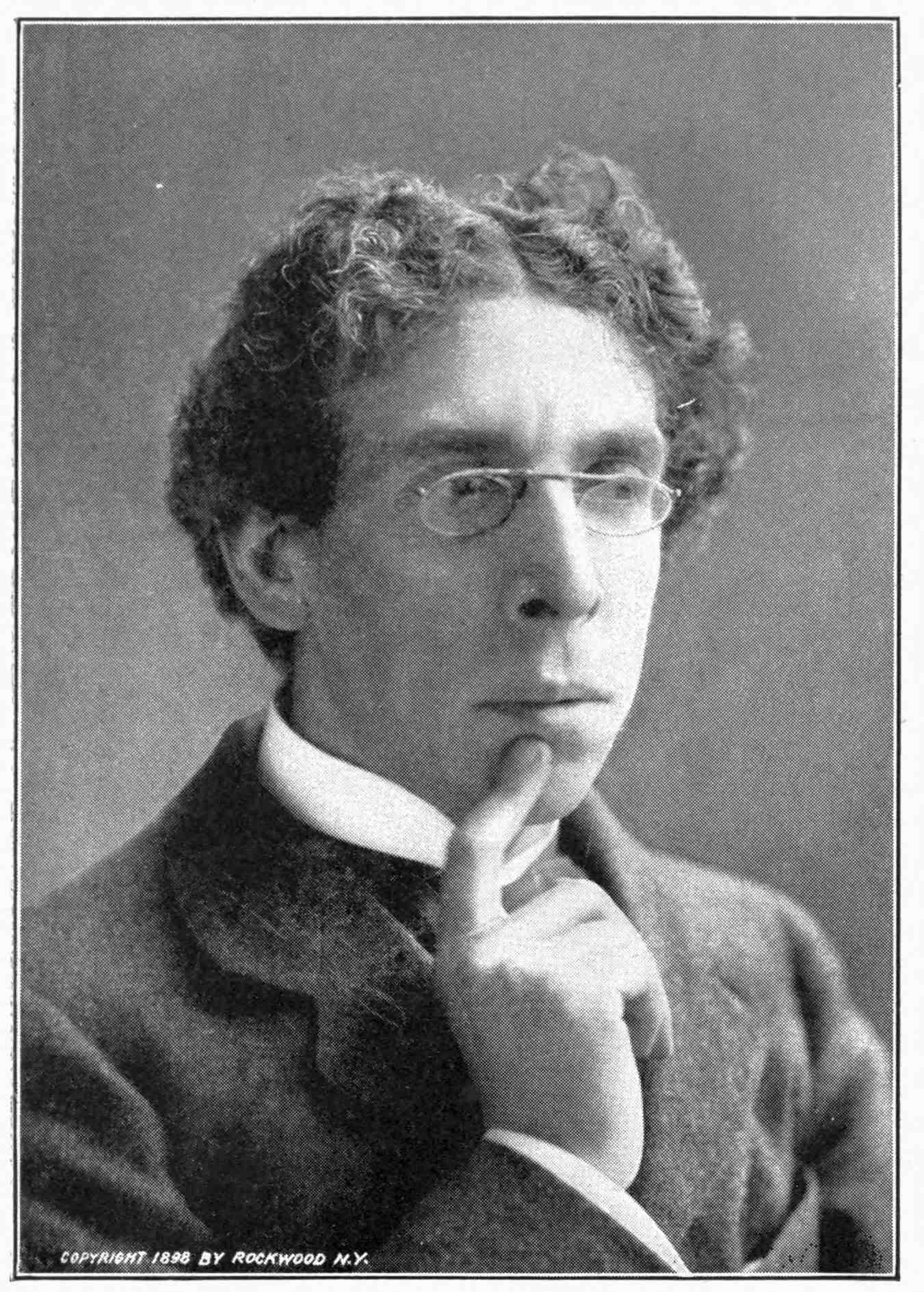
COPYRIGHT 1898 BY ROCKWOOD N.Y.
ISRAEL ZANGWILL
ISRAEL ZANGWILL, author of “The Children of the
Ghetto,” is another of the unique characters that I have
introduced to American audiences, and one who interested
me deeply. Many inquiries about him had come from all over
the country, especially from Jewish societies. I called on Mr.
Zangwill at his home in London, in 1897, and was very cordially
received. He had never lectured, but thought he could
make a go of it, and after an hour’s conversation with him I
came to the conclusion that he could not fail to interest all
who met him. It was a peculiar fascination, largely due, I
think, to his indomitable assurance. He looked me right
square in the eye when he talked, and whatever he said was
so because he said so, although I knew better at the time.
He showed me over his two rooms—one of them a library
with book shelves on all sides filled with books that bore the
marks of wear and tear, and arranged on these shelves ad libitum,
or perhaps I should say disarranged. I asked him if he
had saved press notices of his various books. He took me
into the adjoining room and lifted the lid of a trunk which
was stuffed full of press cuttings, with the Romeike attachments.
(There must have been $500 worth.) He had been
in the habit of throwing them promiscuously into the trunk and
pressing them down or stamping on them, until it looked like
a trunk packed full of old waste paper or refuse packing material.
Zangwill had just got back from Jerusalem, and showed me
another trunkful of unmounted photographs of the great
paintings and architecture of all parts of Europe. There were
thousands of them,—most of them very beautiful too,—but
they were almost ruined by the rough way in which they had
been carelessly thrown into the trunk. One very peculiar
photograph was of the mummy of Pharaoh. I asked him to
let me take a snapshot of it, and got him to hold the photograph
up against the window-sill.
It seemed almost impossible to come to any kind of understanding
with Zangwill. He thought that there was a great
public waiting for him over here, and I also thought so to a
considerable extent. But he couldn’t understand why he
should come over to America and draw great crowds and I get
a third of the profits from his earnings; so nothing was definitely
settled at that interview. I came away knowing well
enough that he intended to visit the United States, and to get
all that there was in it if he did come. Weeks went by, and
nothing was satisfactorily arranged between us. He kept me
informed of his movements. He was to sail in August in the
steamship Lucania in company with his friend Judge Sulzburger
of Philadelphia, whose guest he was to be while over
here.
He arrived on the morning of September 27th, and I met
him at the steamer. We had made no arrangement, and he was
not under my direction or under any obligation to me in any
way. Still, I knew he had made no other arrangements.
Several Jewish friends met him and took possession of him. I
asked him if he would see reporters, and he said that he would
be glad to meet them at any hour I might name. He went
with me to the Everett House, leaving his other friends to call
for him to go to Long Branch at five in the afternoon.
He met the press representatives in my office, all gathered
around the same table where many other English men of letters
had been on the stand. There was great interest in him.
The reporters recognized a brilliant subject, and succeeded in
getting about as rich material for “space” as they had encountered
for some time. Zangwill answered questions of every
conceivable sort, and returned the fire from his assailants with
vigor. The reports in all the papers the next day were excellent,
and the interest in the great Jewish novelist was manifest
everywhere.
Lecture committees called and letters of inquiry came pouring
in, but as yet I could give no answer. In the interviews
the day before he evaded all questions as to his plans, and so
it went on until October. Many excellent applications had to
be rejected because no definite answer could be given. The
result was that when an understanding was finally reached,
nearly all the lyceum courses in the country were made up, and
the only way to book Zangwill was to hire halls and speculate
or accept certainties wherever they came from.
After our contract was duly signed, I at once engaged the
Lyceum Theatre in New York for his initial performance in
America. It took place on the afternoon of October 11th, 1898.
The pretty theatre was crowded with as intelligent and fashionable
an audience as New York could turn out to welcome a
stranger. “The Drama as a Fine Art” was the subject chosen
by Mr. Zangwill. He told me that he would speak without
notes, as he had been assured that to attempt to read a lecture
to a New York audience was fatal. There was no use of
arguing this with him. It was with some difficulty that he
got under way, but the lecture itself was a shower of epigrams
interspersed with sparkles of wit that carried his audience with
him from the beginning to the very last word. Not until the
close of the lecture did a single person leave the house. The
speaker was recalled and cheered vociferously for a long time.
The lecture was a severe criticism of the dramatic critics,
and most of our New York critics were there. The only one
of whom Zangwill had spoken kindly was William Winter, on
whom the compliment was lost because the latter had ceased
long ago to take interest in such affairs.
Many of New York’s best people rushed upon the stage to
congratulate Zangwill on his real success. Some of the most
prominent Jewish citizens were there—among them Mr. Seligman
and Mr. Isidor Straus. The latter, who sat by me, declared
that I had certainly found a winner. I don’t think I
ever knew an audience to be more delighted.
Yet the papers the next morning, much to my surprise, were
not very complimentary of Mr. Zangwill’s criticism, and when
Zangwill and I met to join Hall Caine and Judge Sulzburger,
with whom we were to lunch that day at the Waldorf, he wore
about as dejected an expression as I have ever seen. Mr.
Caine’s play “The Christian” was receiving very vigorous
treatment at the hands of the New York papers about this
time, and when he and Mr. Zangwill met at the lunch table,
I think Judge Sulzburger must have noticed that the two men
were in so chopfallen and dejected a state of mind that they
might have put pepper in their coffee instead of sugar without
ever having known the difference.
If the reporters could have heard that little interchange of
opinions of the American press from two such brilliant minds,
their story would have delighted the general public if not the
journalists themselves.
I had little difficulty in booking Zangwill. After New
York, Boston, and Philadelphia, he went to Buffalo, Cincinnati,
Cleveland, Chicago, St. Louis, and Memphis; from there
to Birmingham, Ala., Atlanta, and back to New York, making
a succession of the longest rides that ever a lecturer
attempted in this country. Everywhere Zangwill met big
crowds, and his audiences were delighted.
On his return in November he gave a series of three lectures
in the Waldorf-Astoria; but the newspapers had succeeded
in creating a prejudice against the speaker, and these
lectures were very poorly attended.
I booked him for a Sunday night in Boston, and there was
a large advance sale up to the Friday evening before the lecture.
Then came a blizzard, and not another ticket was sold
until the night of the lecture, when only $2 was taken in at
the box office. It was one of the historic blizzards of Boston.
The advance sale had been $480 up to Friday, and Sunday
night it was swelled to $482, but very few of the people who
had purchased tickets in advance were able to get to the theatre.
Arrangements were made for another Sunday night in Boston
three weeks later, but the public proposed to wait until
the night came before buying their tickets, as many of them
had been disappointed on the last occasion. On the Saturday
before this Sunday another blizzard set in. Mr. Zangwill was
on hand and filled the bill, but the house was empty. Nobody
could get there. Mr. Zangwill and I had rented the
theatre and were speculating. Our loss was about $80, but
Mr. Zangwill wrote me a letter declaring he thought he must
have been the Jonah on this occasion, and insisted on paying
all the loss out of his own pocket.
The two leading Jewish clubs in New York, the Harmony
Social and the Freundschaft, each paid him $500 for a lecture
on Sunday evening, and I don’t believe Mr. Zangwill or anybody
else ever faced a more cultivated or appreciative audience
than on these occasions.
Many offers were made to Mr. Zangwill for his literary
work, and he accepted a dazzling proposition from Harpers to
write a novel, and withdrew forever from the platform, as he
said.
I tried very hard to secure Mr. Zangwill for another season,
as his lectures had given great satisfaction in the large cities
which he visited and they had been extensively reported. He
was about the best-advertised man in the country, and the public
had learned that he had something to give for the money
which the American public has always been willing to pay under
such conditions. But it was no use. Theatrical managers
were after him to dramatize “The Children of the Ghetto.”
Mr. Zangwill was a great dramatic critic, and he believed he
could write a great play, and managers had the same belief,
which they were ready to back up with large sums of money.
He came over again in 1899 and produced the play in Washington
in October of that year. There were fine criticisms and
every prospect of a fortune in sight; but it was not what New
York wanted, and so, after a long and fair trial, it was withdrawn
from the boards of the Herald Square Theatre.
Zangwill is a good lecturer, because his subject-matter is
educational to a great degree, and his copious flow of English
and epigrammatic sentences render it as entertaining and novel
as it is instructive. There is good money for him in America
whenever he wishes to set aside the time for it; but he will not
do it. He cannot jump on a steamer and come over here,
give a few lectures and run back again, without notifying the
people in advance that he is coming.
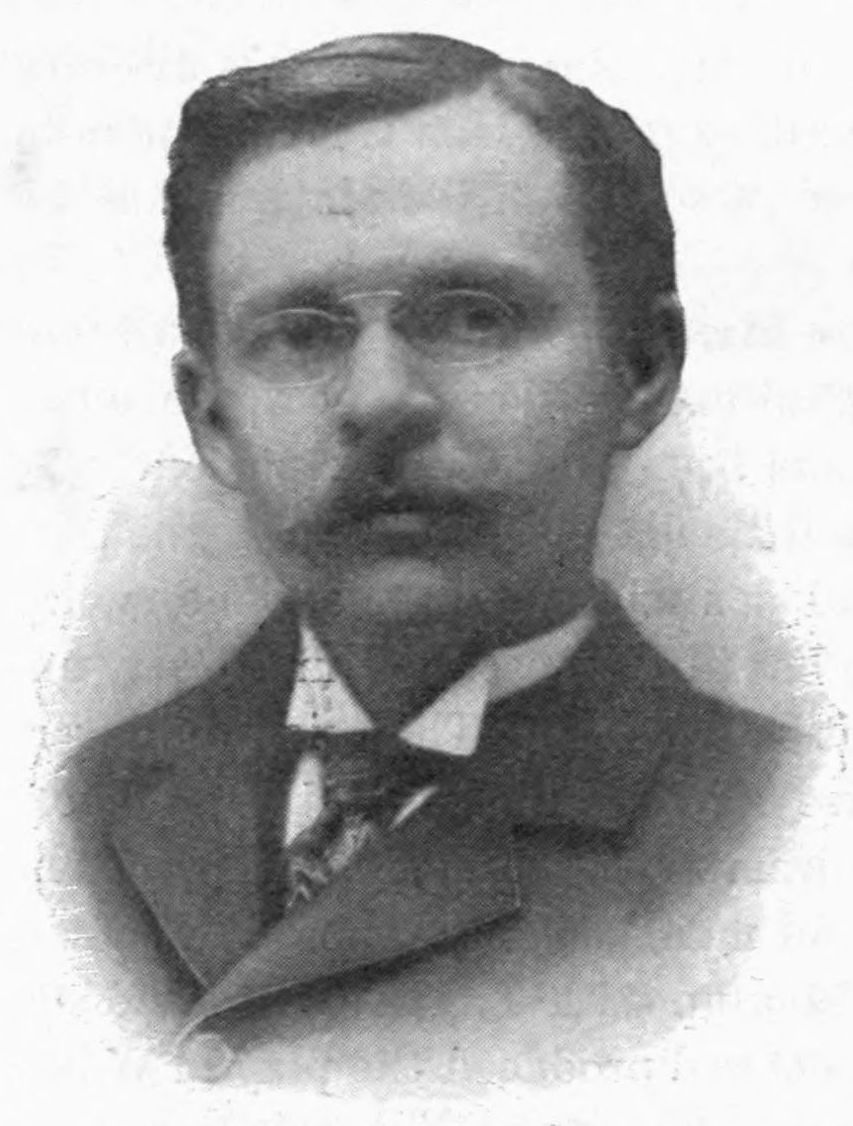
WILLIAM WEBSTER ELLSWORTH is a man whose
fame as a lecturer was not acquired through The Century
Magazine, but who has helped to make The Century
what it is at this time. He has been secretary of the great
corporation which publishes The Century since its establishment
by Roswell Smith.
Mr. Ellsworth is of Puritan
stock, a great-grandson
of Chief Justice
Ellsworth and of
Noah Webster, and he
was reared in Connecticut,
a stamping-ground
of Revolutionary heroes.
A few years ago he found
himself a recognized authority
on Revolutionary
subjects. It came about,
I believe, through a publisher’s
suggestion to an
author. Mr. Ellsworth
asked Elbridge S. Brooks
to write a book for boys
and girls on the Revolution, proposing that it should take
the form of a trip to the battlefields, and he offered to go
with Mr. Brooks. They made the trip together, and the
photographs taken by Mr. Ellsworth were used as illustrations
for “The Century Book of the American Revolution,” and were
afterward made the basis of a lecture by Mr. Ellsworth which
many of the societies of Sons and Daughters of the American
Revolution promptly asked to hear. His position gave him
access to private and public collections of manuscripts and
printing, and with his heart in the subject Mr. Ellsworth has
brought to light more interesting documents and pictures than
were ever supposed to exist. Scores of lyceum, patriotic, and
historical societies have had his two lectures, one on the Revolutionary
War, and the other on “Arnold and Andre: the
Story of the Treason,” which he prepared two years ago.
During the last two years he has made discoveries and
brought to light much interesting new material relating to the
early history of George Washington. A new lecture has been
prepared by Mr. Ellsworth on the subject, which I was invited
to hear at his home, Esperanza Farm, near New Hartford,
Conn., in August, 1900. This has certainly proved the most
interesting and charming of all. Gifted with a descriptive
voice that is strong, resonant, and absolutely faultless in delivery,
with the personal magnetism that is so essential to
a lecturer’s success, Mr. Ellsworth is unquestionably one of
the best-equipped men for an instructive and entertaining
lecture that the lyceum has yet produced. From one of
Mr. Ellsworth’s lectures the rising generation can obtain
more knowledge of the early history of our nation than from
a whole winter of hard study. School boards and teachers
are beginning to find out that one of the simplest and most
thorough means of instruction nowadays is the lecture platform.
In the city of New York there is hardly a public
school that does not have a large hall set aside for lectures.
Last year over three thousand free lectures were given in the
public schools in Greater New York on nearly every possible
educational topic, generally illustrated with stereopticon pictures
which greatly enhanced their value. In this special
line great advances are being made, and they are due to the
fact that such men as Mr. Ellsworth, who have something
to give in return for what they receive, are available for the
work.
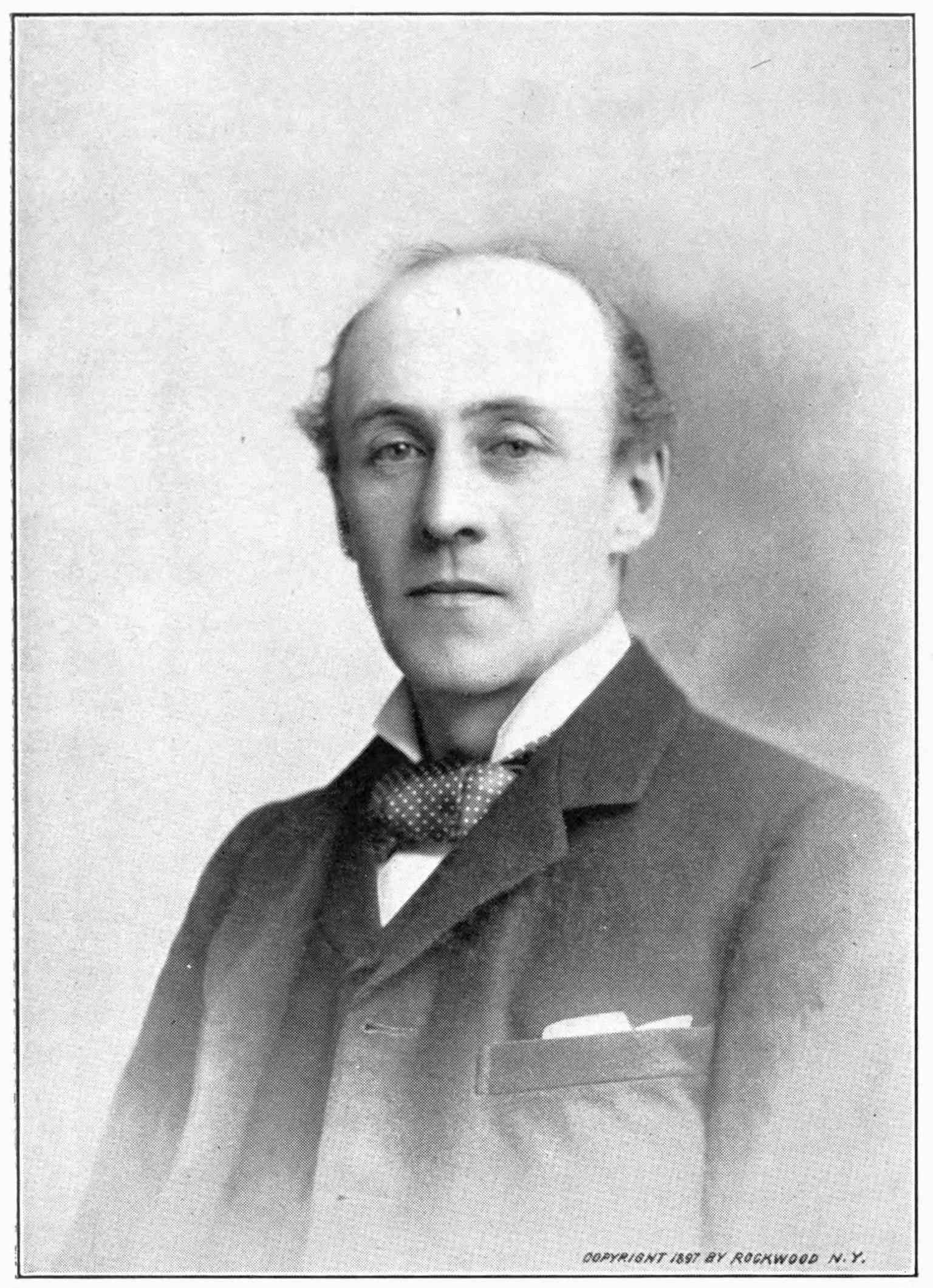
COPYRIGHT 1897 BY ROCKWOOD N.Y.
ANTHONY HOPE HAWKINS
ANTHONY HOPE HAWKINS was discovered by Robert Barr, who first went to
London in the interests of the Detroit Free Press. One night Barr,
then editing The Idler with Jerome K. Jerome, met a thin, pale, bald
young barrister who talked so charmingly about books that Barr, who is
big, burly, bouncing, and straightforward, asked him:
“Do you do anything of the sort?”
Mr. Hawkins confessed, with a blush, that he did when not painfully
busy.
“I’ll come and read some of ’em to-morrow,” said Barr. And he did. After
he had read the last sheet he said:
“Say, Hawkins, how much have you got like this?”
“Considerable.”
“Want to sell it?”
“Why—why, yes, I’d like to.”
“How much do you want a thousand words?”
Hawkins was amazed. “Oh, I don’t know,” he said. “Would a pound be too
much?”
Barr laughed. “You don’t know much about this business, do you?” he
asked.
“Absolutely nothing.”
“Well,” drawled Barr, “I’ll give you several pounds a thousand, and
we’ll start publishing right away.”
Beneath the title of each sketch Mr. Hawkins had written: “By Anthony
Hope.”
“Ought I to put my last name there?” he asked.
“It doesn’t make any difference about the name,” answered Barr; “it’s
the stuff that counts.”
And count it did.
Anthony Hope Hawkins is an English gentleman in every sense that the
words implies. I cannot say that I ever associated with a man whom I
held in higher esteem. He sees everything from the most agreeable point
of view. He has one of the most delightful laughs in conversation that
ever I heard, and I made it my business to excite as often as possible
the vein in his nature that brought it out.
He has the better qualities of the English voice, its softer tones and
accents. Owing to its richness, he can be heard distinctly by every
auditor. Although monotonous in his delivery, because of his distinct
enunciation and the sweetness of his voice, the monotony is not
objectionable.
He charms invariably his audiences, because he feels his characters and
is able to exploit them.
I shall never forget Mr. Hawkins’ first appearance in America. It was
really his first regular platform appearance anywhere. We had spent the
previous night at the Parker House, Boston, and some of the members of
the Woman’s Club of Lowell, Mass., under whose auspices he was to read
next day, telephoned me to know if we would not come early, that they
might give him a little reception before the reading. Mr. Hawkins
declined. He said he preferred to be by himself until he was introduced
to the public. On our arrival at Lowell we went directly to the hall. He
met the committee of ladies, who escorted him to the platform, and as he
went on he shook hands with me, saying: “Good by, Major. I may never see
you again.” I felt so nervous for him that I really didn’t know whether
he had made a hit or not; but as soon as his voice was heard there was
the closest attention, and an expression of satisfaction appeared on
every face in front of him. He could not possibly have escaped the
infection. I saw his beautiful face light up with a gleam of real
satisfaction. His voice rolled out in resonant tones, and the hearty
response from his hearers gave him what I believe was the most
satisfactory hour of his life. His reading of the “Dolly Dialogues” on
that occasion was one of the finest efforts that I remember.
He enjoyed his audiences very much when the benches were full in front
of him, but a small audience and a row of empty benches disheartened
him. On two occasions he urged me to return the money to the auditors;
but he filled every date, and on those two occasions I think he was as
well pleased after the performance as where he had had more and less
enthusiastic hearers.
Just after our train drew out of Boston on our way to Hartford, I
ordered luncheon in the buffet car, for we were both desperately hungry.
The composite cook, waiter, and porter promised us some royal chicken,
which he was able to furnish, he said, as good as we could get anywhere.
We came near getting it. We saw it as it was set before us just as we
arrived at Williamantic, where we were obliged to change cars.
I leave it to an anonymous journalist, who happened to be on the car, to
describe the incident as he wrote it up for the New York Evening Sun:
“Persons who met Mr. Hope on his way to Boston last Wednesday remarked
how fine and hearty he was looking. And yet at the same hour a day
later, when Hope boarded the New York train to go to Hartford, his next
stand, he looked almost an old man. His color was gone and there were
circles round his eyes. Whether the two receptions he had to attend or
twelve hours of Major Pond’s consecutive conversation had brought Hope
to this condition, none can say. But comparatively speaking he looked a
wreck, and no sooner was he on board the train than he and the Major
waylaid the waiter of a buffet car and ordered an elaborate breakfast.
Broiled Philadelphia chicken was the star attraction of the bill of
fare, and the Major, in his loudest tones, ordered that two broiled
Philadelphians should be sacrificed at once.
“Having had nothing to eat since the night before, the author and the
manager awaited their meal expectantly. At the end of the first hour Mr.
Hope looked up and inquired good-naturedly:
“‘Don’t you think it’s about time for that chicken?’ For answer the
Major hurried to the kitchen, and there was the making of a first-rate
dialect story in the sounds which emerged from that vicinity within the
next few minutes. Presently the Major came back looking so pleased with
himself that Hope lay back in his chair and hoped once more. Another
half-hour passed. Again the Major repaired to the kitchen. This time
Hope made notes of the conversation on the back of his cuff.
“Ten minutes later came the waiter bearing a three-foot tray. Hope’s
eyes were dancing, the Major smacked his lips as he grabbed the carving
knife. Just then from the end of the car the conductor cried,
‘Willimantic!’ Surely the parting between the Princess Flavia and
Rassendell was a mere farce comedy to Hope’s adieu to that chicken. His
first impulse was to seize a drumstick and run, but the Major restrained
him.
“The manager’s practised eye had noticed a crowd of Willimantic belles
on the platform intent upon catching a glimpse of Hope gratis. It would
never do for his star to make his début in Willimantic drumstick in
hand. So gently, but firmly, he persuaded Hope to renounce the chicken’s
leg in favor of his satchel. Hope, however, as he left the car, had the
good taste to do his swearing under his breath.
“On the platform the Major met the waiter, who thrust the bill into his
hand. The Major stamped on it and said he’d see him in Philadelphia
first. Neither of them had one mouthful, and he was going to report the
matter to Chauncey Depew.
“It may interest Mr. Hope to know, however, that as soon as the train
started, two drummers bought his chicken at an advance on regular rates,
and one of them, with a gallantry worthy of the Dolly Dialogues hero
himself, had the wish-bone of Mr. Hope’s chicken polished, and presented
it to his sweetheart as a souvenir.”
Mr. Hawkins and I made the tour together, visiting Montreal, Ottawa,
Toronto, Detroit, Chicago, Milwaukee, St. Paul, Minneapolis, and
Philadelphia, and everywhere he was the recipient of the choicest honors
that I have ever known a man of letters to receive. His readers were of
the most select literary class we have. His audiences varied in
different cities more than did those of some others, but where he had
been secured in a regular lyceum course and in clubs, they were
invariably large.
To him were tendered many of the most delightful banquets that I have
known any foreigner to get. The leading clubs in Toronto, Montreal, and
Ottawa entertained him. He was the guest of the Governor-General of
Canada—Lord Aberdeen. In Chicago the Lawyers’ Club gave him a
breakfast, attended by the leading members of the bar of that city, a
distinction that no other literary man has had that I remember.
At Detroit, after the reading, the Fellowcraft Club gave Mr. Hawkins a
supper, with an elaborate menu. It was Robert Barr’s home, and Mr. Barr
had undoubtedly warned his fellow-citizens of the character of the
expected visitor, and they were prepared to meet him and do him honor,
which they did. I don’t believe the good fellows of Detroit ever had a
better time. The speeches and stories of that occasion would make a rare
book, and I should like to own the copyright. It will never be printed.
Colonel Livingstone, editor of the Detroit Journal and president of
the Fellowcraft Club, is “equalled by few and excelled by none” as a
club president.
Mr. Hawkins is not superstitious. A few years ago he moved from his
lucky chambers in the quiet Middle Temple, London, where he practised
law without clients, and has working offices on Buckingham Street, near
the Strand—much as one might say West Tenth Street, near Broadway. The
house is old and dark and dingy. It overlooks the London lodgings of
Benjamin Franklin and the rooms of Peter the Great of Russia when they
were in the city. It is on the site of the famous York House, home of
Bacon. Hope’s lodgings are full of books; on the mantel there are
original drawings by Charles Dana Gibson, and there are many pipes, and
other convivial equipments.
In Washington Mr. Hawkins was met on his arrival by the Hon. John
Russell Young, librarian of Congress, who entertained and showed him
through that magnificent library and about the Capitol, introducing him
to many of the judges of the Supreme Court, and then going to the White
House, presented him to President McKinley, who entertained him about
an hour in social chat, while politicians in waiting fairly congested
the waiting-room outside. After the evening reading, Mr. Thomas Nelson
Page gave him a supper at his beautiful Washington home, where were
present Mr. Lyman Gage, Secretary of the Treasury, Mr. Theodore
Roosevelt, Assistant Secretary of the Navy, Mr. James Lane Allen, and
Mr. John Fox, Jr., the two most prominent Southern novelists, and
several other gentlemen whose names I cannot now recall. I am unable to
describe this occasion, although one of the honored guests. One can
imagine the charming intellectual atmosphere of such an event. It seemed
that there must have been some fault in the reckoning of time, for it
was four o’clock when the party reluctantly dissolved.
Everywhere we went Mr. Hawkins was the honored guest of the choicest of
our American men of letters. In Indianapolis two social events in one
day: the afternoon was a reception at the Woman’s Club, where Mrs.
Harrison, wife of the ex-President, received; and in the evening the
largest audience of the beauty and fashion of the Hoosier capital packed
the hall, being welcomed by James Whitcomb Riley, the Hoosier poet. In
Boston, among the first callers besides the press representatives were
Col. T. W. Higginson, Thomas Bailey Aldrich, Edward Everett Hale, and
Judge Holmes, son of Dr. Oliver Wendell Holmes, and many of the Harvard
faculty. I copy from my diary the following notes:
“Mr. Hawkins and I visited the Academy of Fine Arts, Trinity Church
(formerly Phillips Brooks’), the Boston Public Library, where we were
shown over all parts of the library and introduced to all the modern
systems of its wonderful operations; the new court house, where Judge
Holmes personally conducted us through the different courts, and we sat
half an hour listening to a judge charge a jury. Missed our lunch.
Hurried to depot, just caught train for Hartford, and missed lunch on
buffet car, owing to the incapacity of the composite cook and porter.
Reached Hartford, the Hublein, 6:30. Reading at 8:30 finished in an
hour. Joe Jefferson against us at Perkins’ Opera House, but we had $360
in Unity Hall. Joe Jefferson had reserved a box for us, and we saw
nearly all of ‘Lend Me Five Shillings.’ Then we all had supper together,
Joe Jefferson, his three sons, and the wife of young Jefferson. Joe was
at his best, as he is a lover of Anthony Hope’s writings, and they had
never met before, and it seemed as though they never meant to part; for
it was far beyond midnight when the weary waiters were relieved, and a
tired but happy crowd went to bed.”
“Good-night, Major,” said Anthony Hope; “you Americans are too much for
us Englishmen.”
I think the last speech that Mr. Hawkins made in New York was at a
public dinner given him by the Lotos Club, which is the most famous of
all our American clubs for its receptions and dinners to men of letters.
On this occasion he said:
“Mr. President and Gentlemen:—I am too well aware of the history of
your club and of the distinction of the guests whom you have entertained
before, not to rise on this occasion with perhaps more than usual—shall
I say trepidation or discomfort?—which possesses an after-dinner
speaker. I have received here to-night an appreciation which would have
been wholly delightful if I were not persistently haunted with the idea
that it is too excessively indulgent.
“As I crossed the Atlantic Ocean, feeling less at ease than I usually do
on land, an intelligent sailor came up to me and told me that we were in
the Gulf Stream. The consolation was slight, because the Gulf Stream
seemed to me as turbulent as any other part of the ocean. But it has
occurred to me since, that he spoke, as it were, in a metaphor, and that
what he really referred to was the gulf stream that flows between here
and England; of the gulf stream of sympathy which unites the two
countries, and which, unlike the merely physical and uncomfortable
stream, flows both ways, from us to you and from you to us. (Applause.)
“It is indeed, in a way, strange for an Englishman to make his first
visit to this country. I was asked by a cynical friend before I started
why I was going, and he referred not obscurely to the hopes I
entertained of paying my expenses. (Laughter.)
“Well, gentlemen, the ancient epigram forbids us to say that it is
necessary to live; but I am still among those who consider that it is
desirable. (Laughter.) I agree with a clergyman in my own country who
said that the Scriptures teach that the laborer is worthy of his hire,
but that, for his part, he thought it ought to be paid free of income
tax. (Laughter.)
“But that was not the sort, not exclusively the sort, of American gold
which was in my mind; and if it had been when I started, I should before
now have found out my mistake. Better than that, gentlemen, is the gold
of your cordial reception, which still sits on my heart as too much
undeserved.
“But to come here is indeed, in the old phrase, the experience of a
lifetime. It has been my fate—I don’t know whether you will be
surprised about it—to be asked quite three or four times already what
were my impressions of America. (Laughter.) When in Quarantine I was
asked first; and my only impression then was that I should never get
here. I was asked again at the landing, when my sole feeling was that I
was very glad to get here. (Laughter and applause.)
“The question I have not yet answered. It is difficult to answer. One
comes to a country that is unfamiliar, and yet not strange; that is new,
and yet recalls every moment the things that are old; that is foreign,
and yet is distinct with a separate, individual, and proud nationality.
(Applause.)
“And as with your nationality, so, if I may say so, it seems to me, with
your literature. It has its roots where our literature has; but
patriotic as I am, I must admit that a brighter sun has shone upon it,
copious rain has nourished it, it has its own fruit and its own flavor;
and thus it enhances and glorifies the English language, in which both
itself and our literature on the other side of the Atlantic are
expressed. (Applause.)
“It is far from my desire to speak to you long to-night, but it is
impossible for me to sit down, without at least trying to say to you how
very deeply I feel the generosity and the kindness of this greeting, and
to say also how I have felt for years back the kindness and the
readiness with which the public of America greets us English writers.
(Applause.)
“We come here with no credentials save that our country has played in
the past a part which our country would not repeat in the future.
(Applause.) But if you do not forget that—and perhaps you do not forget
it—you are at least willing to forgive it; and as members of the same
family, we remember, not the occasions on which every now and then,
perhaps from living too close together, we fell out, but rather the time
when we made friends again and celebrated the event by a cordial dinner.
(Applause.)
“Gentlemen, I thank you.” (Loud and continued applause.)
From October 17, 1897, to January 13th following, Mr. Hawkins and I
travelled together, visiting sixty different cities, and he gave
seventy-six readings. He saw the face of America’s book-loving public.
He spent Christmas at my home, making it a memorable day in our
household. On New Year’s day, in company with his publisher, Mr. Fred.
A. Stokes, John S. Wise, and his son, of Virginia, Mr. William Carey of
the Century Magazine, and Mr. George F. Foster of Stokes & Co., and
me too, Mr. Hawkins was given a Chinese dinner in Mott Street, the
Chinese quarters of New York. The menu was in Chinese hieroglyphics, and
as far as any of us could tell the dinner was as much hieroglyphic as
the menu. The host, Mr. Stokes, had anticipated the inability of the
party to make out or digest the Oriental spread, and took with him a
satchel filled with sandwiches, cigars, and a canteen or two of pure
water, and this, with the stories, supplied the necessaries of the day
and occasion, both of which are not easy to forget, for the delight they
gave.
Since Mr. Hawkins’ return to England we have frequently corresponded,
and many of the letters that I have received from him illustrate so
well the genial spirit of the man that I take the liberty of reproducing
a few of them by his kind permission.
“25th Jan., ’98,
“16 Buckingham Street.
“My Dear Major:
“A peaceful, prosperous voyage! The old ship rolled a bit, but my colors
were not lowered. We got in at two on Saturday—since when I have been
overwhelmed with work which had accumulated here. Your album delights my
father and family—not least your inscription at the end—which delights
me too. I feel myself a very much travelled man, although you made light
of my wanderings. I wish you well through yours in the West and look
forward to yours here in the East.
“I hope all does go well—and I think of you and drink to your health.
“Your ever,
“A. H. H.”
“17th May, ’98,
“16 Buckingham Street, Strand.
“My Dear Major:
“You have found out by now what a bad correspondent I am—for your cable
from San Francisco came and was appreciated and yet not answered—but
your letter reaches me to-day and I must congratulate you on your safe
achievement of your big journey and your return home. Our little trip
together sinks quite into insignificance, doesn’t it? I’m afraid you’d
have found me a very lazy and trying companion for so long a jaunt. If
you weren’t devoted to moving, I would wish you a good long rest at home
now, but, since you’re the man you are, I’ll wish a good and speedy
voyage to England, with Mrs. Pond and your boy this time. We have a
good many of your folks here—among them Cable, who is being well
treated, I think; he’s giving some public readings and I’m going to hear
him in about a fortnight in one of them. Our thoughts have been much
with you all in the war. I feel it even as I should an English war, and
I’m sure the great—the vast—majority over here are of the same way of
thinking. But I think you’ve done enough fighting for your country and
may fairly let the boys have a look in this time—or are you pining to
be in Cuba with your scouts? I am living my usual quiet life, writing
and reading proofs—and, I must add, dining out—when I talk quite
learnedly about America on the strength of my journey with you. The
Critic printed my letter all right—in fact I was very well treated,
smoothed down, and complimented, and called a real gentleman, and
everything that was nice. So that’s all over and all is well. And, to
prove I think so, I’ve been advising more than one eminent gentleman to
go out and do a trip with you.
“You must read ‘Rupert of Hentzau’ when it comes—we consider it rather
a good yarn.
“Give Mrs. Pond all my remembrances—just as cordial as you know how to
make them. So, my dear Major,
“Ever yours,
“Anthony H. Hawkins.”
“22d Sept., ’98,
16 Buckingham Street, Strand.
“My Dear Major:
“I was very glad to get your letter—but why haven’t you been over? I’ve
been expecting, or at least hoping, to hear of your coming all the
summer. Thanks for your news of ‘Ursula’—it seems to have made a good
beginning—here we are busy rehearsing it and hope to do as well in
London. I’m back from my holiday for this purpose—also to have teeth
out—for the holiday was spoilt by a violent attack of toothache. I had
a face like a turnip—thankful am I that this didn’t happen while I was
with you, or we should have had to bring the curtain down for a
fortnight at least. But I got a run in France and another in Scotland,
so I mustn’t complain. Only just now I’m a wreck from that dentist’s
nefarious deeds!
“I think you ought to have a success with Zangwill—he’s an interesting
personality. For me—well, I hope indeed to come over again, but I doubt
whether the reading desk will see me any more—they like my books better
than they like me, and I am very content to have it so. But I wouldn’t
have missed the tour we did together and the experience of it. Just now
I’m doing nothing—except the aforesaid rehearsals. All inspiration for
new work tarries. It’ll come some day perhaps. Congratulations that you
are well and prosperously through the war! The feeling here has
surprised me by its warmth and generality. So there’s one good result,
anyhow.
“My best remembrances to Mrs. Pond. No, I didn’t solve the riddle and
had to look! I suppose it’s no good hoping for you here before next
summer now, but then you must come at all risks.
“Yours ever, my dear Major,
“Anthony H. Hawkins.”
“30th Dec., ’98,
“16 Buckingham Street, Strand, W.C.
“My Dear Major:
“Most cordial thanks to you for your greetings—and the best of good
wishes to you and yours for the New Year. On Christmas day I did not
fail to remember our cheery banquet under your roof a year ago, and I
drank your health and Mrs. Pond’s—hoping you were drinking mine out of
a certain mug! [A loving cup which Mr. H. presented me, and which I
found on my desk after he had sailed, inscribed, “Here’s Your Good
Health, Major.”] I hope all goes well with you in health. For success,
your letter seems to tell of a good season—you’ll have made more than I
could make for you—though upon my word I don’t believe that would
prevent you from having me over again. I am glad to hear that Caine and
Zangwill both did so well—they are both very interesting people, so
it’s small wonder. I have been rather ill this ‘fall’ (you see I don’t
forget the language).... That little play I brought over to New York in
my portmanteau has come to the rescue and I come out at the right end.
It’s capital news that you hope to come over in the summer. I am sure to
be here, I think, and we’ll fight our battles over again. We are all
Americans here now—a development of feeling that gives me the heartiest
pleasure. But whether the nations go on loving one another or not, your
welcome here is safe whenever you come.
“Kindest remembrances to Mrs. Pond and your son—and I am, my dear
Major, with friendliest thoughts,
“Ever yours,
“Anthony H. Hawkins.”
“26th July, ’99,
“16 Buckingham Street, Strand, W.C.
“My Dear Major:
“I am the basest of men in that I never answered your very pleasant
letter. The only excuse is that I have been buried in a new story and
came up to the surface only yesterday! Moreover—yes, here’s
another—I’ve a vivid recollection that you were coming over this summer
and have hoped to hear your knock on my door. You haven’t come—and I
suppose won’t now?
“For me? Well, I was nearly tempted over to New York—just for fun—but
prudence stepped in and I stuck to work. That’s done, and I’ve a series
of little holidays before me, broken by the task of rehearsing a play
in the end of August. I am well, but tired—amiable but irritable (as
you may remember!)—and shall be very much better for a month of the
country. Except geographically, I have been living in America—so many
pleasant friends from your side of the water have been here and so much
dissipation have they led me into. People keep turning up whom we met on
our journeyings together. They asked me if you worked me very hard,
and I have to confess that I gave you a much worse time than you
succeeded in inflicting on me.
“What a splendidly successful season you seem to have had! You will hear
with complete resignation that I don’t think I shall ever face the
footlights again, although I do by all means intend to find myself in
America again, and that before very long. But I’ve read here once or
twice—oh, so badly! I believe I need the stimulus of your kindly but
critical eye on the back benches of the hall!
“My best remembrances and regards to Mrs. Pond, and to yourself always
good wishes and most friendly memories.
“Yours,
“Anthony Hope Hawkins.”
I quote from my diary of January 15, 1898:
“Saw my dear friend Anthony Hope Hawkins on board the Umbria, bound
for England. Sorry to part with him; never had a better time in any
man’s company for three months. He is an honor to his profession, his
country, and his race. This evening I join F. Marion Crawford for a
three-months’ tour to the Pacific coast.”
GEORGE W. CABLE, with his “Old Creole Days” and his Southern stories,
and George Kennan, with his “Travels and Explorations Among the Convict
Colonies in Siberia,” are the only public favorites as readers and
lecturers that have been brought into prominence through magazine
articles almost exclusively. Both of these gentlemen were introduced to
me by Roswell Smith, President of the Century Magazine Company.
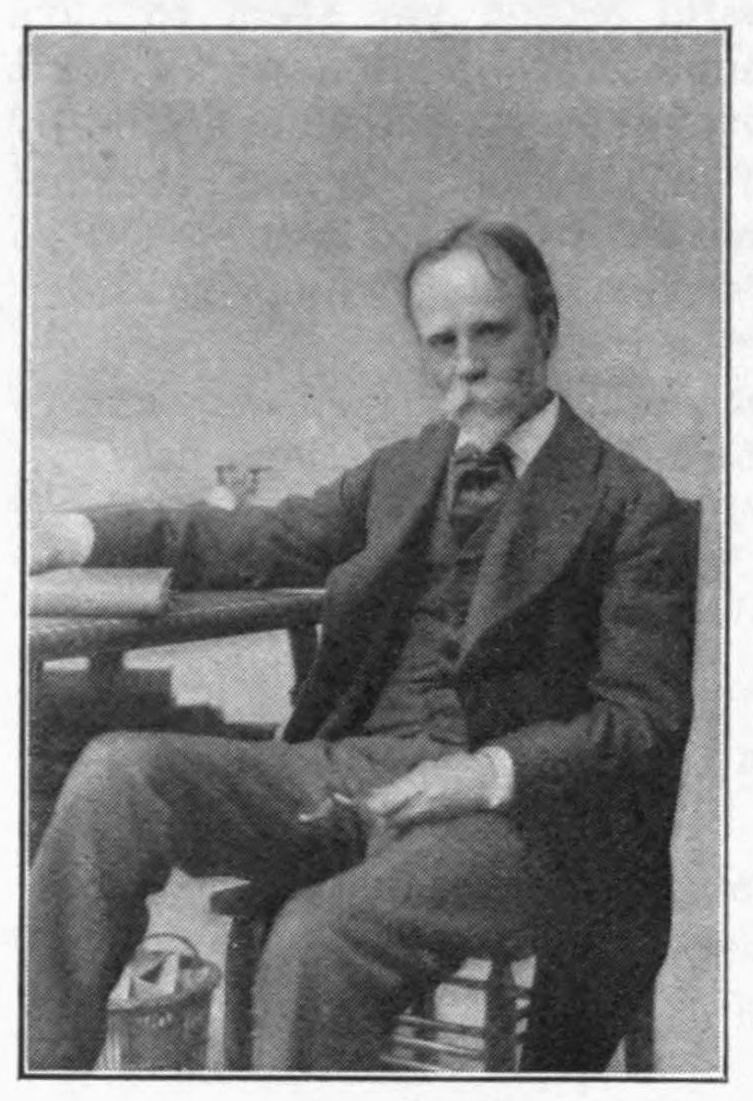
One morning Mr. Smith called at my office to ask me if I had read George
W. Cable’s Creole stories, which were appearing in the Century. I told
him that I had not, but that I had heard Mr. Beecher speak of Mr. Cable,
and was very anxious to meet him. Mr. Beecher had mentioned him to me as
having “developed great literary ability,” and advised me to go and hear
him read “just for the sake of the enjoyment.” Mr. Smith said he would
bring him in and introduce him, which he did a day or two later. I found
him a charming gentleman, and I know that he made a very fine impression
on me at the time. He told me that he had been reading in Boston and had
met with great success; that he had given five readings in Chickering
Hall which, to his surprise, had netted him about $1,000 profit. This
certainly was an excellent report for an author reader. I asked him if
he would give a public reading for me before he returned South. He said
he would. I at once arranged for an appearance in the Long Island
Historical Society Hall in Brooklyn, and asked Mr. Beecher if he would
preside; but a lecture engagement in Boston prevented his being able to
introduce Mr. Cable, much as he would have liked to present him to the
Brooklyn public. He said, however, that he would make an announcement of
the reading from his pulpit on Sunday, which he did in the following
words, taken down at my request by Mr. Ellingwood (Mr. Beecher’s
stenographer):
“Mr. George W. Cable will give a reading from his own works to-morrow
evening in the Hall of the Historical Society, at eight o’clock.
Admission, including reserved seat, one dollar. I give notice of this,
not because it is for any charitable purpose, but because I am very glad
to mark, and to asked you to observe, the fact that our literary
treasures are not confined to the North, nor to the Middle States, nor
are they all of Yankee blood. Next Friday and Saturday evenings are to
be given to the New England Societies of Brooklyn and New York, when we
shall prove that there is nothing good on the face of the earth that did
not come from New England blood. But until that is proved, it is worth
your while to believe that God has made some smart men somewhere else
besides in New England and the Middle States. After the period of
separation between the North and the South, now happily passed, it ought
to be a pleasure to every generous man to greet every returning sign of
amity and friendship. When a man, born and bred in the South, has, under
the providence of God, developed great literary talent, especially given
to America an entirely new vein of dramatic interest, and brought it out
with delicacy and richness, and with very great power, as Mr. Cable
has—all of whose works I believe I have read, and read with the utmost
relish and delight—when such a man appears among us, our hospitality
ought to be so marked that there shall be one man, at any rate, from the
South who will admit that Yankees have got hearts, and that they are not
cold. Besides all this, if you want to know what an enjoyable evening
is, go, just for the sake of the enjoyment.”
I told Mr. Cable of the pleasant things Mr. Beecher had said to me about
him, of his regret at not being able to introduce him in Brooklyn, and
of the cordial announcement made from his pulpit. Mr. Cable made no
response whatever—was absolutely silent—and I was rather surprised, as
the indorsement of Mr. Beecher assured success in Brooklyn.
The night of Mr. Cable’s appearance, Historical Hall was crowded. He
walked on to the platform alone. There was no introductory speech, but,
instead, a round of applause—I think about as hearty as Mr. Cable ever
had. He began his programme, and then everybody listened attentively to
the simple readings and delineations of the characters that he had
created, and the quaint singing of the Creole-African songs. I am bound
to say that never in my life have I witnessed an audience more
absolutely charmed than this one, by these simple natural readings. It
was a revelation to them.
Mr. Cable was obliged to return to New Orleans the next day, to be
absent three weeks. Meanwhile I made arrangements for a course of five
readings in New York, Philadelphia, and neighboring cities, I to
accompany him on the tour.
Somehow I never could get a response from him when Mr. Beecher’s name
was mentioned, and yet he must have realized Mr. Beecher’s part in the
hearty reception that he had received in Brooklyn.
On the day after Mr. Cable returned from New Orleans to begin his course
of New York readings in Chickering Hall, he said to me:
“Major Pond, you must have noticed that whenever you have mentioned Mr.
Beecher to me I have never said very much. As you know, Southern public
opinion is very hostile to him, and I am well aware that all accounts I
have had of him, or virtually all, were colored by hostile prejudice;
but it is already known of me, as far as I am known at all, that I am
not always guided by Southern opinion. I have never allowed myself to
form a fixed opinion of Mr. Beecher. I have read writings, sermons, and
speeches of his, but I have never heard him preach, and I should like to
do so to-morrow. If you can secure me entertainment for to-night (it
was Saturday) and to-morrow, I will go and hear him. I would not go from
New York on Sunday, as I never travel in public conveyances on the
Sabbath.”
This delighted me, and I at once telegraphed a common friend of Mr.
Beecher’s and mine, in Brooklyn (a lady who had a fine home on Columbia
Heights and who was a prominent member of Plymouth Church), asking if
she would entertain Mr. George W. Cable over Sunday, as he wished to
hear Mr. Beecher preach. A very hearty invitation came at once, and a
carriage was sent to the Everett House for Mr. Cable to take him to
Brooklyn.
The next day he and I sat in Mr. Beecher’s pew, and he listened to the
first sermon he ever heard the Plymouth pastor preach. It seemed to
please him greatly. After the sermon he very cordially approached Mr.
Beecher and told him how delighted he was with the sermon, and told him
then and there that he had never before felt entitled to form a fixed
opinion of him. Mr. Beecher said to me:
“Pond, will you please escort Mr. Cable to my house? I want you both to
remain and take dinner with us. I have a committee meeting which will
occupy about ten minutes, and I will join you.”
Turning to Mr. Cable, he said, “My family are all anxious to meet you,
Mr. Cable.”
All of Mr. Beecher’s family were at home to dinner and they had all read
Mr. Cable’s stories, and his characters were brought into discussion and
comment in a way that only the Beecher family could do it. It must have
been very satisfactory to the author. Mr. Beecher left the table about
two o’ clock for his accustomed afternoon sleep, and the party
dissolved, Mr. Cable and I returning to the home of his Brooklyn
hostess.
I felt much gratification at seeing Mr. Cable’s silent neutrality change
to outspoken friendship. After that, Mr. Cable and Mr. Beecher were very
fast friends, and when Mr. Cable brought his family North and settled in
Northampton, Mass., I arranged for Mr. Beecher to lecture in that city
with the view that Mr. Cable and his family should hear him. It was
quite an occasion in Northampton. Mr. Cable invited some friends to meet
Mr. Beecher at his house, and the afternoon before the lecture Mr.
Beecher planted an elm, which is now a handsome tree on Mr. Cable’s
beautiful place in Northampton, and is known as “The Beecher Elm.”
Among the first letters that I received at the time of Mr. Beecher’s
death were the two following from Mr. Cable:
“Northampton, Mass.,
“March 7, 1887.
“Dear Major:
“Can the sad rumor be true—that Mr. Beecher is stricken with apoplexy?
It is dreadful as a mere possibility. How shall one express the feeling
of loss that comes to every hearer of such tidings? How shall we send
words of sympathy to the family when as to him we are all in a greater
degree than of any other one man, his children? He is—I trust we need
not yet say was—the fatherliest man to the whole people our land has
given us. You will know whether to show this to Mrs. Beecher or not.
Yours truly,
“G. W. Cable.”
“P. S.—I have just read the sad, sad news.—G. W. C.”
“Northampton, Mass.,
“March 8, 1887.
“Dear Major Pond:
“Your letter of March 6th, written at Mr. Beecher’s desk, touches me
deeply. I know you are losing in his death the best friend you ever had;
a man who had the art of being a friend as few have it. May God turn
this great loss to your spirit’s gain, as only He can. I wish you had
written me more; but I hope to hear from you again very soon.
“The blow seems to strike everywhere. No one fails to feel that the
world is losing one of its greatest lights.
“This evening I go to read in Meriden. To-morrow I shall be back here. I
hope you will find opportunity to come up soon and let me help you in
the work—more a labor of love to you now than ever before—which you
had projected.
“Four of my children are confined with scarlet fever, but the cases are
light, and I can assist you, though not in my own house.
Yours truly,
“G. W. Cable.”
When Mr. Cable first began to give public readings he had so little
voice that he could not comfortably make himself heard by an audience of
two hundred and fifty. He decided that the first thing to do was to
secure a training of his voice, which all his life he had been using so
injuriously, because so faultily. Many of his friends advised him not to
take elocution lessons, but he persisted, with the end in view just
mentioned.
Mr. Cable’s singing of Louisiana folk-songs was a charming, quaint, and
fascinating feature of his entertainment, and was so commented on by the
newspapers everywhere. It never failed to awaken applause from his
audiences, who would have had him sing the songs over and over again had
he been willing to humor his appreciative listeners. Yet he rarely sang
more than one in an evening and almost never more than two. For a long
time he omitted them entirely from his programmes, because, as he said,
“he felt jealous for the readings when reporters spent their praises on
the songs.” One season he thought of preparing a lecture on these Creole
songs, to be illustrated by singing a number of them interspersed
through the lecture; but when Mr. Gilder told him “it seemed hardly to
comport with his dignity as an author,” he took the same view, and never
prepared the lecture.
Of late Mr. Cable has gotten back to his original usage, giving to the
public what they ask—the Creole songs and stories as he originally sang
and told them. Two years ago he gave them, in Great Britain with all the
attractive naturalness of his maiden efforts.
As a reader of his own stories, George W. Cable is among the greatest of
lyceum favorites. These creations are unique, and he alone gives them
full value. But he is also highly esteemed as a lecturer. In that field
he makes his own road also, just as he has done in realistic and
character-making literature.
The essentials for a platform entertainment were so aptly and ably
suggested in one of Mr. Cable’s letters that, for the benefit of
committees, associations, and managers they are submitted:
“New York, Feb. 10, 1886.
“My Dear Major Pond:
“To make an end of all misconceptions, let us write a list of things we
have to have and of things we would be happy without. For instance,
among the essentials it is probably not unreasonable to demand a
platform, brightly lighted and furnished with a table, which is all the
better if it is decidedly heavy, so that one can freely lean against it
without its starting away on its castors. Also, one chair, light enough
to be freely lifted about by the speaker with one hand. A comfortable
retiring room one need hardly mention; it is nearly always supplied.
Foot-lights, if practicable. These are really about all that one need
say are important to have.
“But there are other things that gladden one by their absence. One
doesn’t want any lights behind the speaker, unless they are high
overhead; nor any light on the table; nor any reading desk. Much less
any sort of railing in front of the speaker; and still less a water
pitcher and glass. Even less than these, any orchestra or band of music;
and least of all, any species of performance, amateur or professional,
long or short, musical or unmusical. And one thing which can be
dispensed with even joyfully is sitters on the platform—except in the
event of a crowded house; when everybody is welcome everywhere.
“Once more: Often there are those who would like to make certain
non-essential yet pleasant additions to the appointments of the stage if
they only knew what would be acceptable. We owe it to such kind friends
to say what luxuries of the platform are to our taste. It is pleasant,
for instance, but not imperative to have a space on the platform of
about fifteen feet square or its equivalent. A carpet is always far
pleasanter than a bare floor. An introduction to the audience is
acceptable, yet of no importance. Where practicable, it is very pleasant
to have an enclosed scene set, say a drawing-room, library, or study. A
few books in modest bindings, inkstand, pen-rack, etc., decorate the
table agreeably. Floral decorations had better be scanty than too
abundant. A tasteful programme free from advertisements and printed on
cardboard is a comfort. These trifles are real helps, and add to the
pleasures of the evening both on the platform and beyond it. Yet there
is almost nothing that cannot be dispensed with if not procurable.
Yours truly,
“G. W. Cable.”
WALT WHITMAN gave a few readings under my management during his life.
They were mostly testimonials from friends, and benefits given in the
theatres of New York City. On one occasion Mr. Carnegie took a box for
$500. I think the receipts were $1,800. It was a performance well worth
attending, and attracted a strange audience, consisting mostly of poets,
literary lights, and rich people who admired the writings of the “Good
Gray Poet.”
It was indeed a picturesque spectacle at Walt’s last appearance in the
Madison Square Theatre, on Lincoln’s birthday. Just as he was about to
recite “My Captain,” a little girl, the granddaughter of Edmund Clarence
Stedman, walked out upon the stage and presented him with a beautiful
bouquet of roses.
Walt Whitman’s Camden home seemed to be a Mecca for the litterateurs of
Europe who visited this country. Both Matthew Arnold and Sir Edwin
Arnold visited him there, and a number of other distinguished men as
well. It was during Sir Edwin Arnold’s last visit to New York that he
suggested he would like to call on Walt Whitman again. He and I went to
Philadelphia together, and, with John Russell Young, took a carriage at
the Lafayette Hotel about noon and drove to his Camden home. Whitman,
who of course knew of Sir Edwin Arnold, and he seemed cheered and
pleased by the attention. I had planned the visit the night before by
telegraph to Mr. Young, saying that we would surprise Walt. He had no
intimation of our coming until we arrived.
The aged poet sat in his bedroom. He was wrapped in a big blanket, upon
which his gray beard, that of a typical sage, flowed. The floor was
littered with books and papers, almost blocking our approach. Sir Edwin
Arnold managed to wade through the literary débris, and stood in the
full light of the window before his host.
An inexpressible flood of delight passed over the face of the American
poet as he beheld his great English confrère. Sir Edwin rushed toward
him and exclaimed, “My dear friend, I am delighted to see you.”
“Arnold, I did not expect you; how kind and considerate!” was the
surprised exclamation of the aged poet as he held out his hand. But
there was more than the usual hand-shaking. The greeting was a literal
embrace, for the two poets loved each other in the strictest literary
sense. Sir Edwin had always been infatuated with Walt Whitman’s poetry,
and the American bard found equal delight in the productions of the
former. It was the second time that the two had met. Sir Edwin Arnold’s
visit to this country in 1892 was made expressly to see Walt Whitman.
After the two poets had embraced, Walt Whitman received John Russell
Young and me with an effusive greeting.
For the next hour and a half the talk ran fast and without intermission.
Walt had much to tell, and so had Sir Edwin; it was a shower of literary
epigrams. Sir Edwin was very sorry that his friend was not in the best
of health.
“If I had hold of you,” said Sir Edwin, pointing his finger
affectionately, “I’d soon get you well. You are not sick; why, if I
could only have you, I wager that I could make you young again.
Seventy-three years—that’s not much. You’re certainly good for fifteen
years more, and during that time you can keep me delighted with books of
new verse.”
“Oh, what beautiful things you say of me,” responded Walt; “and Arnold,
how can I repay you for that splendid little tribute to me at the Lotos
Club? You don’t know how it pleased me. It stirs the cockles of my blood
to read the nice things you say of me.”
The two sat alongside of each other and began talking about American and
English poetry.
“Arnold, we’re a lively, hustling people,” said the American bard, “and
we’re too practical yet to appreciate the full sentiment of our verse.
What a wealth has been written! Yes, we have not the high poetical
spirit of the Japanese in this country. Over there in Japan there is so
much sentiment—so much that is ideal.”
Sir Edwin said he hoped that the day would not be far distant when the
people of America would have a very soft poetical glow to their
temperament. “Americans,” said he, “are a great people, of remarkable
intellect. What a future they have!”
Sir Edwin and his host next fell to musing over the great men of the
country. They talked about Washington, Lincoln, and Grant, whose
characters and deeds Sir Edwin avowed he was always fond of reading
about. Then the pair had a literary treat by talking of Emerson,
Longfellow, and other American poets. Each quoted many selections. Sir
Edwin then asked Whitman if he should not recite from memory some of the
latter’s gems.
“Have you some of my poetry in your memory?” exclaimed the aged poet.
“Well, I will guarantee to be able to recite at least half of what you
have written,” replied Sir Edwin playfully.
“Now let me try you.”
Sir Edwin then stood up when he was asked to recite a portion of Walt
Whitman’s verse on the death of Lincoln. The famous English bard’s eyes
twinkled, and he began:
“Come early and soothing Death.
Undulate round the world, severely arriving, arriving,
In the day, in the night, to all, to each,
Sooner or later, delicate death.”
Sir Edwin kept on reciting until tears filled the eyes of the American
poet and he reached forth his hand thankfully. Sir Edwin recited several
more selections, and then his host repeated many lines from Sir Edwin’s
works.
Before the party arose to take their departure, Walt Whitman had three
volumes brought to him by a servant. Each volume was very large, and
contained all of his productions in verse and prose. He jotted down his
autograph on each, and as he handed them to his guests he spoke like a
playmate to his companions: “I won’t say that I will write to you
fellows; it’s all inside the book.”
“God bless you and keep you safe and well!” responded Sir Edwin, and the
visit came to an end.
Sir Edwin spoke thus of Walt Whitman: “Great, good poet that he is, he
stands next to Emerson.”
WALT WHITMAN.
Gone has the savor from the salt
With Walt.
An untamed stallion, strong and sure,
He galloped through our literature;
No critic trainer had the grit
To tame him to the bridle bit,
No rein his headlong speed could halt,
Unharnessed Walt.
A man of many a flaw and fault
Was Walt.
He never tried to train his thought
To blossom in a flower pot;
With careless hand he flung his seeds,
And some grew roses, some grew weeds,
And some rich flowers of purple blood
Sprung from the mud.
O’er custom’s fence, with easy vault,
Leaped Walt.
The pedant’s gown he would not don,
Nor hold his pen with handcuffs on.
His rhythm, like a fetterless sea,
Broke in mad music and débris
Against the bowlders of his age
With giant rage.
We shall not find ’neath heaven’s vault
Another Walt.
He gave a gift beyond all pelf,
Man’s greatest gift—he gave himself.
Then bear, with dead hands on his breast,
This shaggy old man to his rest.
A strong, audacious soul has fled,
Now Walt is dead.
—Sam Walter Foss.
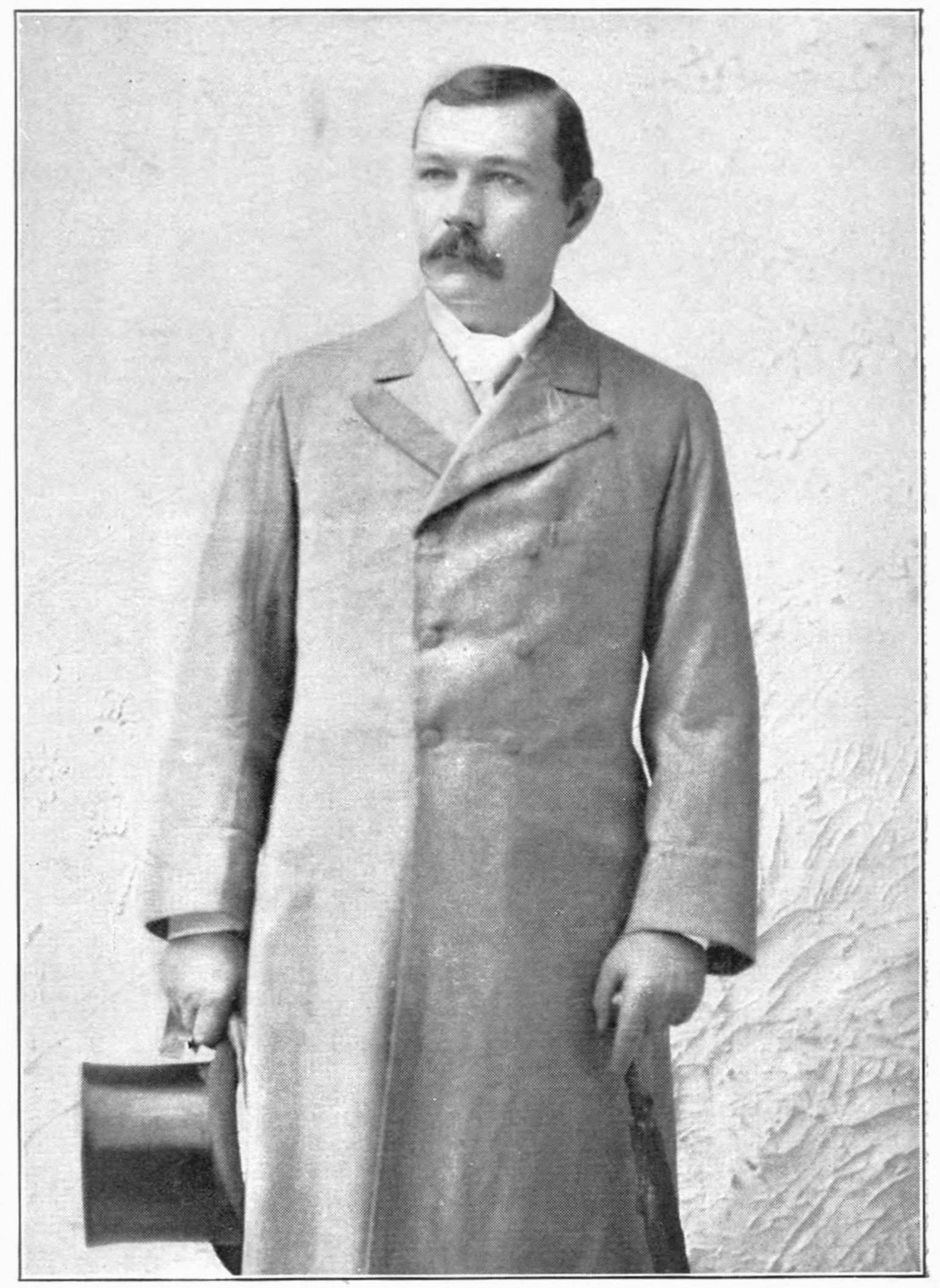 A. CONAN DOYLE
DR. A. CONAN DOYLE came to this country in October, 1894, and gave forty
public readings. Had it not been for his invalid wife, with whom he had
promised to spend Christmas, he could have continued during the season
and returned home with a small fortune in American dollars.
There was something about his personality that attracted people, and
still he was not what I would say the most satisfactory reader of his
writings. There was something about him that fairly charmed his
audiences, and many of his great admirers were seriously disappointed
when they found that as soon as the lecture was over the Doctor had made
his escape from the stage door, so that those friends who had rushed to
meet him and congratulate him could not do so.
I remember that I made a promise to a group of very prominent New York
ladies, who had made a special request to meet the Doctor after his
reading, that they could have the privilege of being introduced to him.
While in the wings as he was stepping on the stage I told the Doctor
what I had done and asked him to please wait and meet them. He replied:
“Oh, Major, I cannot, I cannot. What do they want of me? Let me get
away. I haven’t the courage to look anybody in the face.” He was a
pessimist in regard to the satisfactoriness of his entertainment.
He is a gentleman with very hot blood. He seldom wears an overcoat, even
in the coldest weather. He seemed to like everybody he met and
everything he saw in America excepting our heated hotel lobbies, public
halls, and railway cars. When he had a matinée lecture he removed his
vest and buttoned his Prince Albert coat close to his body. This he
could not very well do in his evening dress.
Dr. Doyle comes of a family of artists and literary men, his grandfather
having been a famous caricaturist, and one of his uncles the famous
Richard Doyle of the early days of London Punch, and another, James
Doyle, the historian. He studied medicine, and at nineteen went to the
Arctic regions as medical officer to a whaler. On his return to
Edinburgh he continued his medical studies and there met Dr. James Bell,
the eminent surgeon, the man who suggested “Sherlock Holmes,” his most
famous character.
Like most literary men, he makes few close friends. He is a golf fiend,
and will spend all the time possible, cold, wet, rain or shine, on the
links. He is an ideal travelling companion.
I think that Dr. Doyle was tendered more honors from clubs and societies
generally than any other Englishman I have known, hundreds of which he
was obliged to decline. He was one of the most appreciative Englishmen
that ever came to this country. American institutions and American
customs did not seem to cause unkind remark or to surprise him as they
have many others. He was a great favorite with the newspaper men, and
they were always ready and willing to say nice things of him.
As for his impression of America generally, I don’t know that I can do
better than to give his own story as he told it at a dinner given in his
honor by the Lotos Club, New York, on the 17th of November, just before
his return home.
Two hundred members and guests of the Lotos Club gathered to greet him.
President Lawrence made a highly flattering address of welcome, and,
when he presented Dr. Doyle, the latter was blushing at the kind things
said of him. He began by saying:
“There was a time in my life which I divided among my patients and
literature. It is hard to say which suffered most. But during that time
I longed to travel as only a man to whom travel is impossible does long
for it, and most of all I longed to travel in the United States. Since
this was impossible, I contented myself with reading a good deal about
them, and building up an ideal United States in my own imagination. This
is notoriously a dangerous thing to do. I have come to the United
States, I have travelled from five to six thousand miles through them,
and I find that my ideal picture is not to be whittled down, but to be
enlarged on every side. I have heard even Americans say that life is
too prosaic over here. That romance is wanting. I do not know what they
mean. Romance is the very air they breathe. You are hedged in with
romance on every side. I can take a morning train in this city of New
York, I can pass up the historic and beautiful Hudson, I can dine at
Schenectady where the Huron and the Canadian did such bloody work, and
before evening I have found myself in the Adirondack forests, where the
bear and the panther are still to be shot, and where within four
generations the Indian and the frontiersman still fought for the
mastery. With a rifle and a canoe you can glide into one of the back
eddies which has been left by the stream of civilization. I feel keenly
the romance of Europe. I love the memories of the shattered castle and
the crumbling abbey; of the steel-clad knight and the archer; but to me
the romance of the red-skin and the trapper is more vivid, as being more
recent. It is so piquant also to stay in a comfortable inn, where you
can have your hair dressed by a barber, at the same place where a
century ago you might have been left with no hair to dress.
“Then there is the romance of this very city. On the first day of my
arrival, I inquired for the highest building and I ascended it in an
elevator—at least they assured me it was an elevator. I thought at
first that I had wandered into the dynamite gun. If a man can look down
from that point, upon the noble bridge, upon the two rivers crowded with
shipping, and upon the magnificent city with its thousand evidences of
energy and prosperity, and can afterward find nothing better than a
sneer to carry back with him across the ocean, he ought to consult a
doctor. His heart must be too hard or his head too soft. And no less
wonderful to me are those Western cities, which, without any period of
development, seem to spring straight into a full growth of every modern
convenience, but where, even among the rush of cable cars and the
ringing of telephone bells, one seems still to catch the echoes of the
woodsman’s axe and of the scout’s rifle. These things are the romance of
America, the romance of change, of contrast, of danger met and
difficulty overcome; and let me say that we, your kinsmen upon the other
side, exult in your success and in your prosperity, and it is those who
know British feeling, true British feeling best, who will best
understand how true are my words. I hope you don’t think I say this, or
that I express my admiration for your country, merely because I am
addressing an American audience. Those who know me better on the other
side will exonerate me from so unworthy a motive. It is a subject upon
which I feel deeply. I am aware that the division of opinion among us at
the time of your civil troubles has been taken to mean lack of sympathy
with you. Far from being so, it was exactly the contrary. Our sympathies
are so close and vital that when you are rent in two we are rent in two,
and with a bitterness and completeness which was the counterpart of your
own. So it would be to-morrow, and when it ceases to be, it will be a
proof that we have finally lost touch with you. It is only when a great
American or an Englishman dies, when a mighty voice is hushed forever, a
Tennyson, a Lowell, or a Holmes, that a thrill through both countries
tells of that deep-lying race feeling in the development of which lies,
I believe, the future history of the world. Little waves and eddies may
disturb the surface, but there is an unseen current there a thousand
fathoms deep, which sweeps us onward to the same goal. And the proudest
thought of a literary man is that he, too, in his infinitesimal way, is
one of the forces which make for unity of feeling amongst the
English-speaking races, and for that ‘peace and good will to all men’
which such a unity of feeling would entail.
“Gentlemen, I thank you once more for your great kindness to me.”
President Seth Low of Columbia University, Hon. Abram S. Hewitt, W.
Bourke Cockran, David Christie Murray, Bartow S. Weeks, and William H.
McElroy also spoke.
The menu had in its upper right-hand corner a portrait of Dr. Doyle, and
on its border characters and scenes from his novels.
The night before Dr. Doyle sailed for England, Friday, December 6, 1894,
the Aldine Club gave him a farewell dinner. Hamilton W. Mabie presided
and introduced the guest of the evening, who had just arrived from
Boston. It was a literary crowd of our choicest men of letters. Dr.
Doyle seemed to have no set speech, but prefaced his reply to Mabie with
an account of his arrival in Boston:
“I arrived in Boston and alighted from the train almost into the arms of
a dozen cabbies. One of them had a dog-eared book peeping out of his
pocket, and I instinctively called him, saying as I got in: ‘You may
drive me to Young’s, or Parker’s—perhaps.’
“‘Pardon me,’ said the cabbie, ‘I think you’ll find Major Pond waiting
for you at Parker’s, sir.’
“What could I do but stare and acquiesce by taking my seat speechlessly?
We arrived, and the observant cabman was at the door. I started to pay
my fare when he said, quite respectfully:
“‘If it is not too great an intrusion, sir, I should greatly prefer a
ticket to your lecture. If you have none of the printed ones with you,
your agent would doubtless honor one of your visiting-cards, if
pencilled by yourself.’
“I had to be gruff or laugh outright, and so said:
“‘Come, come, I am not accustomed to be beaten at my own tricks. Tell me
how you ascertained who I am, and you shall have tickets for your whole
family, and such cigars as you smoke here in America, besides.’
“‘Of course we all knew that you were coming on this train—that is, all
of the members of the Cabmen’s Literary Guild,’ was the half-apologetic
reply. ‘As it happens, I am the only member on duty at this station this
morning, and I had that advantage. If you will excuse other personal
remarks, your coat lapels are badly twisted downward, where they have
been grasped by the pertinacious New York reporters. Your hair has the
Quakerish cut of a Philadelphia barber, and your hat, battered at the
brim in front, shows where you have tightly grasped it, in the struggle
to stand your ground at a Chicago literary luncheon. Your right
overshoe has a large block of Buffalo mud just under the instep, the
odor of a Utica cigar hangs about your clothing, and the overcoat itself
shows the slovenly brushing of the porters of the through sleepers from
Albany. The crumbs of doughnut on the top of your bag—pardon me, your
luggage—could only have come there in Springfield, and stencilled upon
the very end of the “Wellington,” in fairly plain lettering, is the
name, “Conan Doyle.”
“Now I know where Sherlock Holmes went when he died. That leaves me free
to write any more adventures of his that I wish as long as I locate them
in Boston.”
Dr. Doyle heard some fine speeches that evening after he had finished.
Bill Nye was the first to follow him; then Edward Eggleston, Thomas
Nelson Page, Charles Dudley Warner, F. Hopkinson Smith, James Lane
Allen, and others; but the intellectual part of the feast was listening
to Dr. Doyle’s story-telling. He has a brilliant capacity for telling a
true story with absolute correctness of historical detail and with
anything but historical dulness.
After Dr. Doyle returned to his home he was, of course, obliged to say
something of the impressions left by his visit. Among other things that
he said, he made a remark to the effect that an English author should
come here with the primary purpose of seeing the country and not of
making money. This was immediately seized upon as a hint that his own
tour had not paid. The following letter put that idea at rest:
“To the Editors of “The Critic,” New York:
“I notice that you allude to my recent lecturing tour in America as
though it had been unsuccessful. In justice to my most able manager,
Major J. B. Pond, will you allow me to say that it was successful beyond
all possible expectation, that I had crowded houses nearly everywhere,
and that I could have easily doubled the list of my engagements? My
remarks about American lecturing were impersonal, and I repeat that an
English author should go there with the primary idea of seeing the
country and the people, and that the making of money should be a
secondary one.”
A. Conan Doyle.
“Maloja, Switzerland, Sept. 2, 1895.”
The warm feeling of friendship he felt toward America and the American
people is well illustrated by the following letter which he wrote me
some time after his American tour:
“Undershaw, Hindhead, Haslemere.
“My Dear Major:
“It was quite a pleasure to me to see your handwriting again. I shall
always regret that I did not see you when you came to London. Pray give
my kindest remembrances to Mrs. Pond and the little man. You will, I am
sure, be glad to hear that my wife’s health has much improved.
“Has not the Anglo-American entente cordiale which I preached when I
was in the States grown since 1894? It is the best and healthiest sign
in the waning century. But we have much still to do.
Yours always,
“A. Conan Doyle.”
I would give him more money to-day than any Englishman I know of if he
would return for a hundred nights.
He must be a great disappointment to his old teacher. When he had
finished school the teacher called the boy up before him and said
solemnly:
“Doyle, I have known you now for seven years, and I know you thoroughly.
I am going to say something which you will remember in after-life.
Doyle, you will never come to any good.”
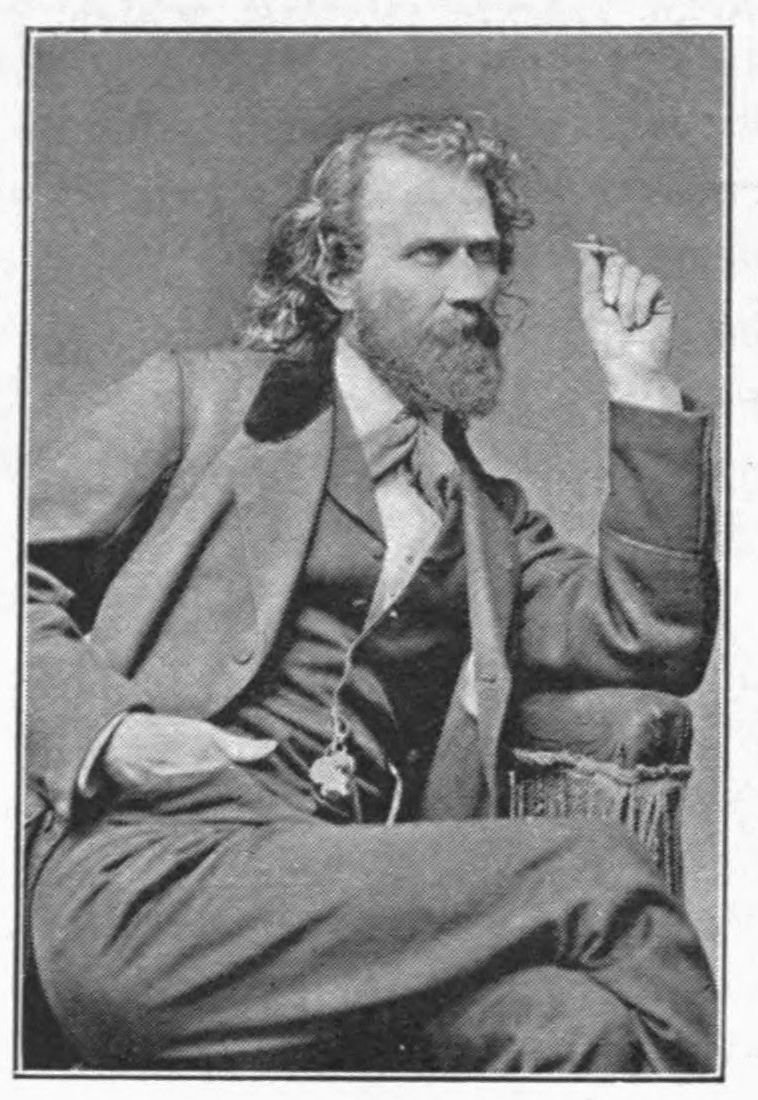
JOAQUIN MILLER, the poet of the Sierras, when he first appeared made a
great sensation, and it was believed that a second Byron had been added
to the list of our poets. He was born in Indiana, but was taken to
Oregon when a mere infant. He spent part of his boyhood with a tribe of
Indians, and there took the name of a well-known highwayman or “road
agent.” It was a mere caprice on the boy’s part, but the name stuck to
him and he stuck to the name. After leaving the Indians he went to the
mines, and his life there is described in his novel “The Danites,” which
furnished the plot and character for his play of the same name. He soon
tired of digging for gold, and established an express, which consisted
of a few teams that took and brought parcels from the mining camp to the
nearest town. Then he took to law, practised before the territorial
courts, and subsequently was elected a judge. Of course he contributed
to the territorial newspapers—everybody did who had any talent for
writing; but unlike most frontier writers his contributions soon
attracted notice outside of the Territory, and he soon found himself
famous. That made it certain in those days that he would be invited to
lecture. He did lecture a few times in California, and then came East,
but proceeded to London before attempting to lecture in New England. He
found himself unknown in London, and adopted a very original scheme for
becoming known. He issued an edition of his poems of the Sierras—just
enough to send to the leading newspapers. He instantly became famous,
and was courted by “society.” He accepted numerous invitations to
parties in high life, and went to splendid aristocratic residences clad
in red shirt, slouch hat, and with his trousers tucked into his boots.
He wore his hair long and exaggerated the manners of the far West. The
result was to make him the lion of the season. He reaped a rich harvest
from fabulous fees for readings from his Western poems, and relating
incidents of his adventures in the Rocky Mountains. When he returned to
the United States he lectured a little, but did not make a hit, and he
soon returned to the coast, and has since depended almost solely on his
pen for a living.
Later he went to the Klondike, and after his return lectured in the
States on his experiences there; but his former friends were not around,
and the present public did not know him, so his venture was a failure.
ALEXANDER BLACK is guilty of a new invention for drawing audiences. He
wrote the story of “Miss Jerry,” and not being in a position to engage a
company to produce it throughout the country, induced a number of
excellent actors to give the play in costume, and while it was being
acted photographed every scene and incident. Then he developed the
pictures, put them on lantern slides, and with the stereopticon
reproduces the play in every respect but the speaking, which Mr. Black
does himself. This stroke of genius is making Mr. Black rich, as well as
surprising the public with an absolute novelty.
He has since produced two other picture plays. In “The Capital
Courtship” the scene is laid in Washington, and the characters in the
play call on the President in his office and in his parlors at the White
House. They also visit many of the cabinet ministers, all of whom must
have consented to pose specially for these illustrations. So great has
been Mr. Black’s success with the Brooklyn Institute of Arts and
Sciences that the manager of that institution, Mr. Franklin W. Hooper,
paid him $300 for his initial performance of “The Capital Courtship,”
and wrote me that this picture play of Mr. Black’s had brought many
thousands of dollars to the institute.
The third year Mr. Black produced another play, “Miss America,” which
has met with equal success. There is hardly an established lyceum in the
United States where he has not appeared, and what is particularly
interesting in these times is that Mr. Black is recalled more than any
other stereopticon entertainer.
He was originally a journalist, and retired from that calling to become
a showman. He spends his summers in preparing some new scheme for the
edification and instruction of his myriads of friends throughout the
length and breadth of the land. As I am not Mr. Black’s manager, it can
be seen that I pay him this tribute disinterestedly.
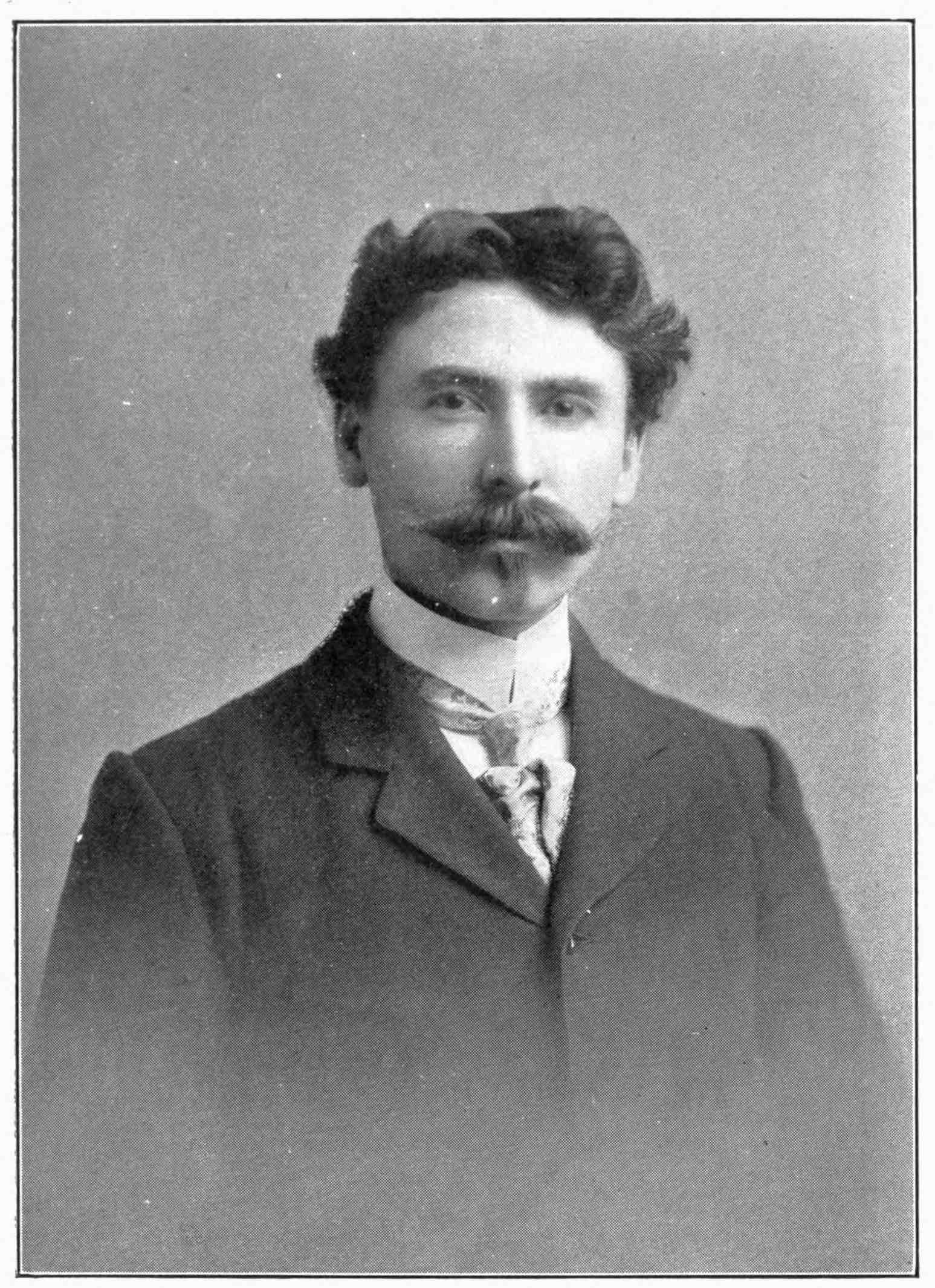 ERNEST SETON-THOMPSON
 is a practical demonstration of what I have ever
declared: that there always has been and always will be some one coming
to the front whom the general public wants to see and hear. That
somebody must do something good enough to attract general attention and
render an equivalent return for what the patrons will give.
The name of Seton-Thompson had been on my list for a season. He
frequently called at my office and gave me newspaper notices, and told
me of the pleasant things that had been said to him where he had given
lectures for small Lyceums at a moderate fee. He presented me with a
copy of his book, “Wild Animals I have Known,” which interested me
immensely, and I was satisfied that he was not lecturing or reading for
revenue only, but that he had a cause, was fond of animals, that his
life had been associated with them, and that he showed clearly that
every living creature had paternal and family instincts the same as
human beings.
I asked him if he would give a lecture in Jersey City, near my home, so
that I could hear it, which he consented to do. I then discovered that
he was certainly a big attraction. I had booked him with a kindergarten
society of New York for a lecture at Carnegie Lyceum, which I attended.
Although I went early, I found the box office crowded with women and
children trying to secure admission; but the man in the office had no
more tickets to sell. The young lady who had charge of the affair came
to me in great tribulation; there were a lot of people who wished to get
in, and all the tickets she had put out among her friends had been sold
and she didn’t know what to do. I hurried to the box office and asked
the ticket agent to sell the people something that would admit them to
the place, charging a dollar each, and I told the young lady to let
everybody in and secure all the money she could. The result was about
$160 more than the original sale of tickets that had been counted upon.
Then I suggested to Ernest Seton-Thompson that he and I give lectures in
partnership in that hall as often as we could. I secured a number of
dates,—I think eight in all,—the first one being one week from the
afternoon just mentioned. I went to Carnegie Lyceum that afternoon and
found every seat had been sold. The profits of the lecture were over
$500. I asked Mr. Thompson if that wasn’t the largest day’s work he had
ever done. He seemed very much flattered, and acknowledged that it was.
We went from there to Boston, Philadelphia, Washington, and Baltimore,
giving afternoon and evening entertainments.
The matinées were arranged so as to take place after school hours,
generally from 4:30 to 5. These were invariably the largest attended. It
was surprising to find the number of children who had read Mr.
Seton-Thompson’s book and how familiar they all were with the names of
Lobo, Wahb, Mollie Cottontail, Blanca, Silver Spot, Vixen and Tip, The
Wild Mustang, and especially Little Johnny. The appearance of any one of
them on the screen was the signal for shouts of laughter from the
children. Lobo and Little Johnny seemed to please them the most.
No man has risen more rapidly in public favor than Mr. Seton-Thompson,
as regards both his writings and his lecturing. At the present time
there are more engagements booked for him at high prices than for any
other platform attraction in the country.
Mr. Seton-Thompson demonstrated that the hunting of wild animals with a
camera, instead of with a rifle to destroy their lives, is fully as
enjoyable, and possesses much more satisfactory final results. He has
also taught us that the animals instinctively avoid man because they are
being hunted for their lives; but in communities where the shooting of
animals is prohibited, the creatures become tame and almost sociable. In
the Yellowstone Park, where no firing is allowed or has been for years,
the bears and the wolves, the cattle and the horses, and the children,
mingle together undisturbed, and children, colts, wolves, and lambs are
as safe as though in their natural homes.
Mr. Seton-Thompson is a delightful man personally. Children have no
hesitancy in approaching him or writing to him. He has received
thousands of letters from children in all parts of the land telling him
how they have enjoyed his books, and of the animals they have known that
he must have heard of, or he could not have given their characters so
graphically. The most interesting reading that I have found for a long
time is among Mr. Seton Thompson’s letters from children. Here is one:
“August 6, 1899, San Francisco, Cal.
“My Dear Mr. ——
“‘Wild Animals I have Known’ is the best and truest book I know. I have
read it twice, each time feeling its trueness more and more. In the
simple way the book is written it helps you to understand the delicate
and finer parts of animal and bird life.
“The book appeals to you because it is true and just in all it says. I
think it keen in detail, liberal and fair to every creature in it,
beautiful in its style. The style that fascinates you yet not a
novelist’s fascination. Original in every way and no quoting or phrases
of other men, but just the Author’s own original and simple words, and
on the whole it is a fine book that couldent be matched in beauty and
style. The Author must lead a beautiful life in the woods and on the
plains and in animals resting places, feeling at home with them and
learning their ways, and I guess we all thank him for his toil and labor
to compleat such a fine book. I like the Pacing Mustang and his glorious
gate, as everlasting as steel. Bingo and lots of other stories. The Don
Valley Partridge in which Mr. Thompson speaks of the cruel hunter who
hunted Redruff. I had a simeler experience but not a brutal one for it
turned out all right. My, Uncle, a boy friend of mine, and myself with
our rifels and a pistol, (we were with a party of others going for a
ducking in Eel River) we three were ahead, and just as we turned a curve
we saw a Father quail with six or seven young ones, we were all seized
with an impulse to shoot him although it was out of season. I shot
between his toes, then my uncle shot and it kept it hot. I shot twice
again but all the time my friend was shooting and the dust was flying,
there the quails stood untouched, and unmoved he waited till all the
young were hid and then he hid himself. It was about five minutes that
we had been shooting. I stopped and thought of Mr. Thompson’s book. I
tried to stop the others, and I did. When we left the spot there was one
boy ashamed of his shooting, a man glad he dident kill the quaile, but
ashamed of his shooting, and last of all I with a wreath of happiness
round my head and glad I didn’t kill the biped. Mr. Thompson saved his
life (The quail’s) by writing that fine book of his, and he made me
happy the rest of the day, and put the cruel hunting spirite out of my
head.
“Hoping Mr. Thompson will write many more books,
“I am yours sincerely,
“A—— W——.”
(Twelve years old.)
It is surprising to learn, within two or three months after Mr.
Seton-Thompson’s success, how many people have been interested in the
same way, and are ready to make sacrifices by writing books and
lecturing on wild animals.
He is a benefactor and has a cause. Fame and fortune are assured to him,
which he justly deserves.
At present writing Mr. Seton-Thompson is speaking twice a day in order
to comply with the demand for his services. Everywhere crowded houses
welcome him, and always on afternoon occasions the greater portion of
the audience is composed of children. The whole human family is his
public, because every human being loves wild animals; the rich and the
poor, the learned and the unlearned, are alike interested and
enthusiastic auditors.
All of Mr. Seton-Thompson’s writings and drawings descriptive of the
personality of wild animals are enhanced many fold by his inimitable
description of them from his own lips. It is seldom that an
author-artist is gifted with the ability to entertain upon the lecture
platform, but Mr. Ernest Seton-Thompson is as clever with his voice as
with his pen and pencil.
WILLIAM HENRY DRUMMOND, D.D., author of “De Habitant” and other
French-Canadian poems, has lived virtually all his life with the
French-Canadian people, and while most of the English-speaking public
know the French-Canadians of the cities, they have had little
opportunity of knowing the habitant as does the doctor. He knows them,
and they know and love him so well that he allows them to tell their
tales in their own way as they would relate them to English-speaking
auditors not conversant with the French tongue.
As James Whitcomb Riley’s Hoosier dialect poems have charmed the
American people, so have Dr. Drummond’s won the hearts of the Canadians.
He reads as charmingly as he writes.
For the sake of those who are not familiar with his work, I quote (by
permission of G. P. Putnam’s Sons) a few verses from his poem, “De
Habitant.”
“De place I get born me, is up on de reever
Near foot of de rapide dat’s call Cheval Blanc,
Beeg mountain behin’ it, so high you can’t climb it,
An’ whole place she’s mebbe two honder arpent.
“De fader of me, he was habitant farmer,
Ma gran’fader too, an’ hees fader also,
Dey don’t mak’ no monee, but dat isn’t fonny,
For it’s not easy get ev’ryt’ing, you mus’ know—
“All de sam’ dere is somet’ing dey got ev’rybody,
Dat’s plaintee good healt’, wat de monee can’t geev,
So I’m workin’ away dere, an’ happy for stay dere
On farm by de reever, so long I was leev.”
“O! dat was de place w’en de spring tam she’s comin’,
W’en snow go away an’ de sky is all blue—
W’en ice lef’ de water, an’ sun is get hotter,
An’ back on de medder is sing de gon-glou—
“W’en small sheep is firs’ comin’ out on de pasture,
Deir nice leetle tail stickin’ up on deir back,
Dey ronne wit’ deir moder, an’ play wit’ each oder,
An’ jomp all de tam jus’ de sam’ dey was crack.”
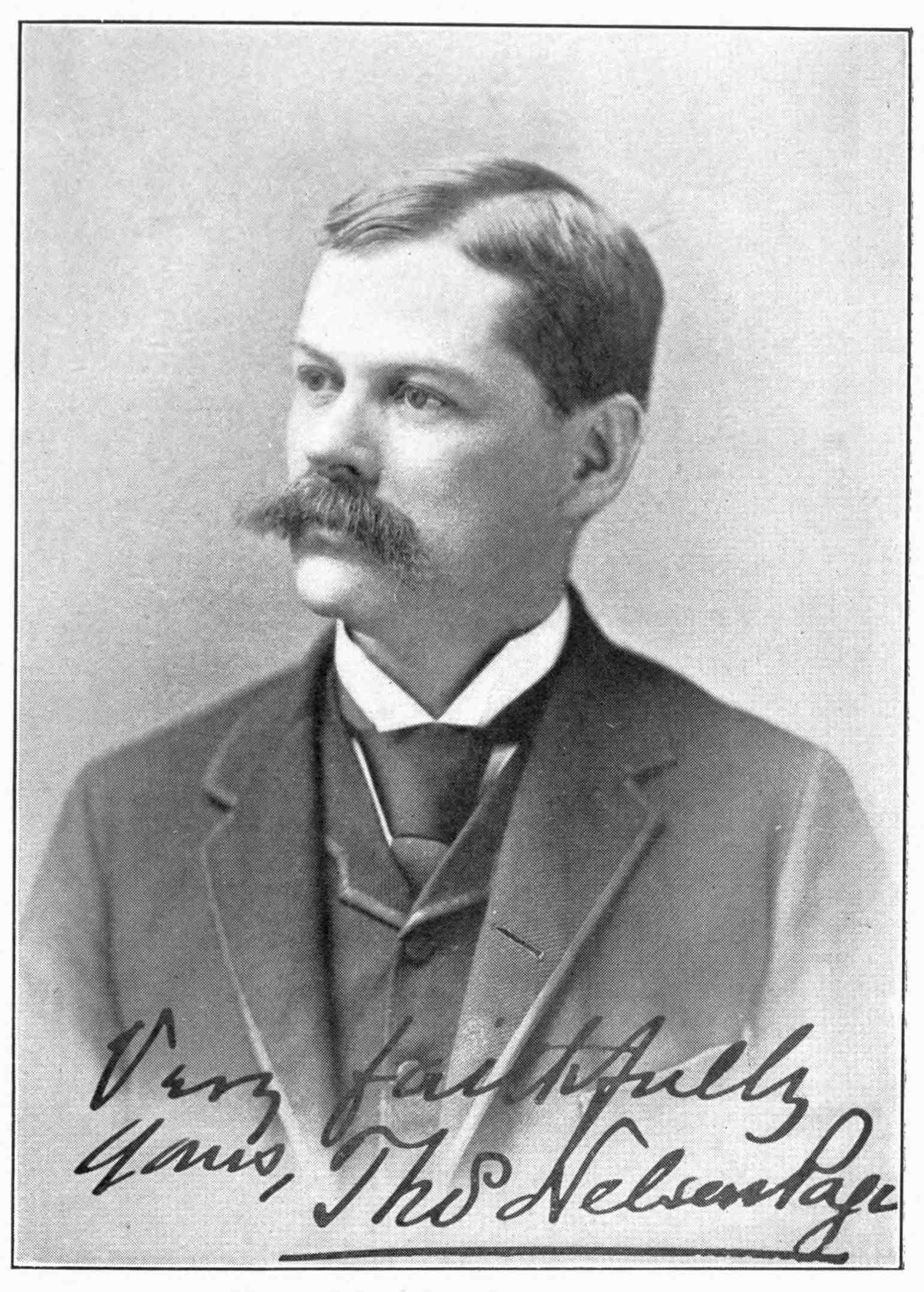
Very dutifully Yours,
Tho Nelson Page
THOMAS NELSON PAGE has been the most successful of the Southern authors
who have read from their own writings. He has done more to preserve the
traditions of the old South, the old negro character, and the interior
home life before the war, than any one else. I wish that I were able to
write well enough to say what I would like to of this Southern gentleman
of letters. He seems to convey all that is best in a character, whether
master or slave, and in such a way that every one who reads his charming
descriptive novels is made familiar with life in the South as it
actually was before the war.
Shortly after “Marse Chan” made its appearance, I received letters from
all parts of the country asking if Thomas Nelson Page, the author of
that story, could be secured to give readings. It was some time before I
obtained a favorable reply to my many invitations for him to let himself
be seen as well as read. He was very shy and quite averse to making an
exhibition of himself, claiming that he was not gifted with voice or
histrionic ability. He did consent to give joint readings with F.
Hopkinson Smith for a short tour, beginning in Boston, January 12, 1892,
in cosy little Chickering Hall. I had hoped for a big success
financially, but the fame of the two Southern authors had not preceded
them at the Hub. They opened with a small audience; but the newspapers
gave excellent reports the following day, which assured success for the
balance of the season. A Boston success means a success in New England,
but I had struck high for large cities. We went to Chicago, Baltimore,
Philadelphia, and Washington. The readings were attended by the choicest
literary public in each city. Return engagements were made invariably,
which were very remunerative, and there was a good deal of money in
sight. Mr. Page was paving the way for a magnificent success another
season, as was evident from the number of applications that came from
every city where he had appeared.
Unfortunately, that season I made one engagement too many in Chicago,
for from there I received notice from Mr. Page that he would not give
another season to the platform under any conditions. Very shortly
afterward I learned that in Chicago he had made the acquaintance of one
of the most charming ladies in that city, who seemed to have more
influence over him than the alluring promises of lyceum readings. To
make a long story short, Mr. Page changed his manager.
He is now living in Washington, and I am happy to say that I can count
him as one of my best friends.
Three years ago I was a guest at a dinner at his house given to Anthony
Hope, where were present the Hon. Lyman Gage, Secretary of the Treasury,
Theodore Roosevelt, Assistant Secretary of the Navy, and James Lane
Allen and Mr. John Fox, Jr., the two famous Southern novelists of the
time. One can imagine the charming intellectual atmosphere of an
occasion like this; none present but that felt there must have been some
fault in the reckoning of time, for it was 4 A.M. when the party
reluctantly dissolved.
Mr. Page has a beautiful home in Washington, and I know of no one better
fitted for such charming surroundings. He is as delightful as a host and
in his everyday conversation as he is as a reader of his fascinating
Southern stories. One can spend a day with Mr. Page in ordinary travel
and conversation and attend his readings at night, and find that he has
been as delightfully entertained in the ordinary speech as by the public
reading. He has the sweetest-speaking voice that I ever heard. There is
no music more delightful to listen to.
For one reason I am glad that I was deprived of his services as a star.
Had he continued on the platform he never would have written “Red Rock,”
a book which has met with an enormous sale and which gives the most
graphic picture of the trials that the Southerners endured during and
after the war. It is probably because I had been a soldier four years
and had known nearly every character exactly as Mr. Page has presented
it to the present generation and preserved it for posterity that I
enjoyed it so much. Thomas Nelson Page certainly has not lived in vain.
MR. JOHN FOX, JR., is a young friend of Mr. Page’s of whom I like to
write. He is a Kentuckian, a Harvard man, lawyer, New York newspaper
man, all-around athlete, and author of “The Cumberland Vendetta,” “Hell
for Sartain,” and “The Kentuckians,” which have won him a position among
the best writers of America and Europe.
In Thomas Nelson Page’s letter introducing Mr. Fox to me, he writes:
“Get John Fox some engagements. He is going to be a success, and some
one else will secure him. Mr. Theodore Roosevelt was praising him to me
the other night in a way to warm my heart.”
Mr. Fox is surely one of the most popular Southern authors of the time,
and is very much appreciated in the South on account of his nativity as
well as because of the high character of his literary work; but he has
appeared before the most cultivated literary circles in all of the
larger cities of the North, giving his dialect readings from his own
sketches of life in the Cumberland Mountains. He discovered a dialect
and lots of good in the humble people who inhabit that mountainous
region, and who are the least known of any of the inhabitants of our
country.
For the class he presents he is as thoroughly sympathetic as Thomas
Nelson Page is for the old-time Virginia negro “uncles” and “aunties” he
so charmingly describes. I do not know a more natural and, in a refined
sense, unconventional man on the platform and before his audience than
this handsome, well-bred, easy youngish gentleman from Bourbon County,
Kentucky.
The Cumberland tableland, which is the scene of his stories, divides the
Blue Ridge or Cumberland Mountains in East Tennessee from the “basin,”
or central and western sections of that State, and runs, a rugged
formation, into Southeast Kentucky. “Charles Egbert Craddock,” as Miss
Murfree signs herself, has preceded John Fox in the same field, but the
latter brought to his later task of dialect and character portraiture
the physical sense of companionship from his ability to actualize in his
own life the Cumberland mountaineer’s rugged out-of-door existence.
In my own wanderings as printer, soldier, and later lecture manager, I
have often felt the variant charm of the many-sided life of our land.
Often, too, have I wondered at men going abroad to find romance and
striking character, when so much of it is to be readily seen at home.
The Cumberland mountaineers, generally of non-slave-holding stock,
hunters even more than farmers, strong Union men in days of need, as a
rule, but intensely Southern, nevertheless, afford a field for the
story-teller’s art which seems to me of the most interesting and unique
character.
John Fox has won its secret and knows how to make others understand. He
has a capital presence, a magnetic force and manner, and a most telling
voice at his command. On the platform he is pretty much what he is off
it, except that he is sensitively watchful of doing his work well.
William Dean Howells declares that Fox brings a “fresh vision” and a
“novel touch” in the seeing and presenting of his scenes and characters.
If that is true of his books, it is more eminently so of his readings
and lecture descriptions. He has no mannerisms and gives no evidence of
effort. He simply tells and lives in the telling. What he gives is truly
his own work. His dialect is perfect, but it is human and actual, not a
mere caricature. The figures he gives are wholesome and clean, as is the
man who presents them.
RUDYARD KIPLING and I have exchanged a number of letters, but up to the
day before he was stricken with his late illness we had never met. After
several attempts through his friends and publishers, members of the
Century Co., to get an introduction to him, a common friend of the
editorial staff said to me:
“Major, it’s no use; Kipling won’t see you.”
“What have I done?” I asked.
“Nothing,” replied my friend. “He says that he has been told that if he
meets you he will go lecturing, and he doesn’t purpose to expose
himself.”
And although his New York house was within a block of mine, he managed
to keep out of my sight, much as I tried to meet him.
In 1895, while crossing the continent with Mark Twain on his lecture
tour around the world, Mr. Kipling was often mentioned by Mark as the
greatest “card” in the world, and I was urged to try to get him. “I am
told he is the finest reader and interpreter of his own writings of all
of us. Get him,” said Mark. So, on my return from Victoria, B. C., after
having seen Mark and his wife and daughter sail out on the Warrimoo
for Australia, I determined to call on Mr. Kipling at his home in
Vermont, hoping that, on Mark’s suggestion, I might capture him. I
received no reply to my various telegrams that I would call on such a
day, but I had determined to make the effort. Yet when I started from
Montreal to Brattleboro my courage failed. I did not stop, but wrote
Mr. Kipling immediately on my arrival in New York, and received the
following reply:
“Brattleboro, Vt., Sept. 30, 1895.
“Dear Mr. Pond:
“I am much obliged to you for your letter, but I can’t say that I can
see my way to the ententement you propose. There is such a thing as
paying one hundred and twenty-five cents for a dollar, and though I
suppose there is money in the lecturing business, it seems to me that
the bother, the fuss, the being at everybody’s beck and call, the night
journeys, and so on, make it very dear. I’ve seen a few men who’ve lived
through the fight, but they did not look happy. I might do it as soon as
I had two mortgages on my house, a lien on the horses, and a bill of
sale on the furniture, and writer’s cramp in both hands; but at present
I’m busy and contented to go on with the regular writing business. You
forget that I have already wandered over most of the States, and there
isn’t enough money in sight to hire me to face again some of the hotels
and some of the railway systems that I have met with. America is a great
country, but she is not made for lecturing in. With renewed thanks for
your very kind letter, believe me,
“Yours sincerely,
“Rudyard Kipling.”
Later I sent a complete set of his books, with a request that he favor
me with his autograph in each volume (about twenty books). He unpacked,
signed, and repacked them, and here is what he wrote:
“Dear Major Pond:
“Your order of the 22d instant has been filled, we trust to your
satisfaction, and the stuff is returned herewith.
“We did not know that there would be such a mass of lumber to put
through the mill; and we note also that your order covers at least two
supplementary orders—(a) in the case of a young lady aged nineteen
(not in original contract) and (b) an autograph work for which we have
supplied one original hardwood case.
“Our mills are running full time at present, in spite of business
depression; but we are very reluctant to turn away any job that offers
under these circumstances, and making allowance for time consumed,
sorting, packing, crating, and returning finished goods, we should
esteem it a favor if you would see your way to forwarding an additional
ten ($10) dollars to the Tribune Fresh Air Fund.
“Very sincerely yours,
“R. Kipling & Co.”
(Autographs supplied on moderate terms; guaranteed sentiments to order.
Verse a specialty. No discount for cash.)
MY “BENEFIT” EXPERIENCE.
I had never believed in benefits for managers, for it is generally
looked upon as a sort of give-away—an acknowledgment of an impecunious
condition, like the beggar who stands on the street holding out his hat
or turning a little hand-organ, labelled with the sign, “I am
blind”—and one’s friends are liable to cut an old comrade in the
street, or pass by on the other side, as an after-effect of such an
appeal to the public.
It had been a hard season, and some of my friends had reaped pretty fair
profits and urged me to accept a complimentary benefit, tendering their
services and assistance gratuitously. My friend Bill Nye visited the
proprietors of Chickering Hall and obtained from them the free use of
that edifice for the entertainment, and my printers went so far as to
volunteer to furnish programmes, tickets, and such advertising material
as I wished. The newspapers, however, didn’t open their advertising
columns gratuitously, as that would have been an innovation and an
instance unparalleled in that department of newspaperdom, but the
editors were very generous with their puffs.
So it was suggested by my friends George W. Cable, Max O’Rell, Bill Nye,
and James Whitcomb Riley that I accept a testimonial. It was arranged
that George W. Cable should be introduced by his friend Roswell Smith,
president of the Century Co.; that Max O’Rell should be introduced by
his friend, Gen. Horace Porter; Bill Nye by Col. John A. Cockerell,
editor of the New York World, and one of the finest editor-orators of
the time; and James Whitcomb Riley was to be introduced by Dr. Edward
Eggleston, the Hoosier novelist, author of “The Hoosier Schoolmaster”
and “The Hoosier Schoolboy.” Each one of these introducers was
considered an attraction in himself.
The occasion was well advertised, circulars were sent out, and I think I
never had a more copious response by mail than I had at that time from
my friends, all asking for one or two tickets—complimentary, of course.
The time arrived, and my old friends turned out in full force—the old
free list. The expenses were about $200, and the receipts about $110. I
pocketed my loss of $90, and have discouraged every suggestion of a
“benefit” offered since that time.
The entertainment was delightful. No audience ever went out of
Chickering Hall with more beaming countenances, and I had
congratulations from all my friends. I was asked by one friend, who had
paid for her ticket, if I contemplated a tour to Europe. I certainly
could afford it after receiving such a rousing benefit!
In an appropriate speech, Mr. Roswell Smith introduced his friend George
W. Cable as the most successful magazine writer of his time, and dwelt
upon the good fortune his writings had brought to the Century Co., of
which he had the honor to be known as president.
His speech brought a hearty round of applause to Mr. Cable, as he
stepped forward and read “Posson Jone’,” his favorite Creole story.
Then Col. John Cockerell, in his characteristic eloquence, presented his
pet humorist, Bill Nye, who had come from the West on his invitation and
accepted a position on the editorial staff of the New York World, and
whose writings had quadrupled the circulation of the Sunday edition of
that paper. He was eloquent in his eulogistic introduction, and Nye
caught the inspiration as he wabbled down to the front of the stage.
Without uttering a word he had the audience convulsed for a long time,
and when he did begin his story of how he earned his first dollar, the
audience fairly bubbled over, while there was not the slightest ripple
on the speaker’s round countenance. Nye was bald-headed all over, and
more so when in front of an audience.
Then Edward Eggleston, the Hoosier novelist, introduced James Whitcomb
Riley, the Hoosier poet, with many happy turns on the term Hoosier and
the Hoosier State. Roswell Smith was from Indiana, Nye was part Hoosier,
and every one down on the programme was Indianian to some degree except
possibly Max O’Rell, the French humorist.
Mr. Eggleston’s introduction of James Whitcomb Riley put the poet in
trim for his best Hoosier interpretations, and before he had finished
his recital everybody in that audience was Hoosier more or less.
General Porter was saved for the last. His witty introduction of the
French humorist was the climax of the day. There had been so much
Indiana and Hoosier in the programme, he said, that he felt a little
embarrassed and discouraged, as the only novelty about his candidate for
the audience’s amusement was that he was not from Indiana.
It was an interesting two hours’ display of ability and genius, wit and
humor, such as would be difficult to reproduce at the present time.