The group of segmented, bristle-bearing, worms,
termed Oligochaeta by zoologists, comprises what are
popularly known as earthworms together with certain
forms, inhabitants of ponds, lakes and rivers, which
are not so well known as to have received a more
distinctive name than merely 'worms.' Their next
allies are apparently the leeches and—a little more
remote—marine bristle-bearing worms termed Polychaeta;
the three groups, together with perhaps a
certain number of other forms belonging to smaller
groups, constitute the Annelida which are a distinct
and separate assemblage of invertebrate animals.
The most interesting features about these Oligochaetous
worms are their very great anatomical variation
and the facts of their distribution over the globe.
Their importance as geological agents in levelling
the ground was made known a long time ago by
Darwin, and that aspect of earthworms has remained
in much the same position as Darwin left it. We
shall concern ourselves here only with the structure,
habits, and range of the earthworms and their immediate
allies, the aquatic Oligochaeta. These three
aspects of the animals dovetail into each other more
thoroughly than is the case with some other groups.
This is due to the fact that they have of late years
been very thoroughly studied from the anatomical
and distributional side. So lately as 1889, M. Vaillant
in a very comprehensive treatise was only able to
enumerate 369 species, of which a large number
were but incompletely differentiated, and some are
no longer admitted. There are at the moment of
writing perhaps 1500 species, the vast majority of
which are well known owing to careful investigation.
Furthermore there are but few parts of the world,
and these are not of large area, from which earthworms
at any rate have not been gathered. Though
there can be no doubt that a very considerable number
of species await discovery, it would seem that we are
in possession of information which is not likely to be
seriously affected by future researches.

Although it is not contemplated to make the
present volume a guide to the structure of this
group of worms, it is necessary to give some little
anatomical sketch of the group in order first of all
to illustrate their diversity of structure, secondly to
give reasons for the classification of them,
and thirdly to enable the reader to realise
certain structural details which it is absolutely
necessary to give some account of in
order to explain other matters.
It is for example impossible to attempt
any account of the fitness of some of these
animals for their terrestrial life and of
others for an aquatic life without treating
of anatomy to some extent.
I shall take one particular species as a
type and indicate later the principal divergencies
shown by other forms. According
to the general opinion among those who have
studied the Oligochaeta I take as a representative
form a Megascolecid (this and the
other families are dealt with seriatim on
p. 14 et seq.), as this group is presumed to
be the oldest, and within that group a
representative of the genus Notiodrilus
which is with some reason held to be the
most primitive genus in the group. Finally
I have no particular reason for selecting the
species Notiodrilus tamajusi except that
there happens to be a longer and fuller
description of it than of many.
Fig. 1. Notiodrilus tamajusi. The worm shown from the ventral
surface. About natural size. (After Eisen.)
This earthworm is a native of Guatemala and is
some six inches in length with a diameter of perhaps
a quarter of an inch. The front part of the body is
thicker than posteriorly. The body will be seen to
be divided into some 218 rings by circular furrows
which run right round the body. These divisions are
termed segments or somites. At the head the mouth
is surrounded by the first of these, and on the dorsal
surface of that segment is a projection like an incomplete
segment which is known as the prostomium.
From the XIIIth segment to the middle of the XXth
the body has a different appearance, and this region is
known as the clitellum. Each of the 218 segments
of the body except the first, and possibly one or two
at the hinder end, is furnished with eight minute
projecting bristles, the setae; these are disposed in
pairs and all lie upon the ventral aspect of the worm.
The movement of these by special muscles aids in
locomotion.
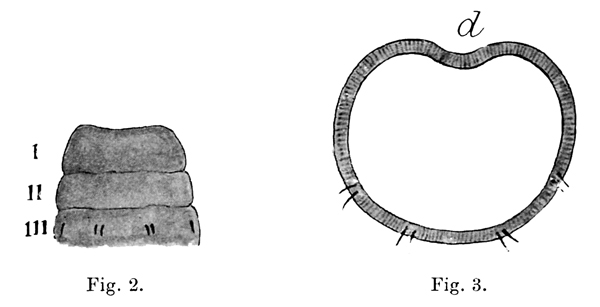
Fig. 2. The same species; first two segments and prostomium shown
from ventral surface, I prostomium, II first segment without any
setae, III second segment with its four pairs of setae (the dorsalmost
seta of each outer pair is not visible in this view).
Fig. 3. A section through the body of the same species showing the
ventral position of the pairs of setae. (After Eisen.)
An examination with even a hand lens shows a
number of external pores which are important.
Anteriorly there is the mouth which is overhung
by the prostomium referred to above. At the
extreme hind end—and surrounded by the last
segment of the body—is the vent. Along the middle
line of the back are a series of pores, one just at the
very anterior edge of each segment, through which,
when the worm is dried and then slightly pressed,
liquid is seen to be ejected. These are called the
dorsal pores and they belong one to each segment
with the exception of the first seven, or—in some
cases—more, segments. In front of one or other of
the pair of setae which is situated most laterally,
i.e. furthest from the ventral median line, is an orifice
on each side in all but the first one or two segments
of the body. These paired pores are the external
outlets of the excretory organs frequently termed on
account of their regular repetition with the segments
'segmental organs,' but more conveniently to be
named nephridia. In the clitellar region and in fact
on each of the segments XVII, XVIII, XIX are a pair
of pores of which those on the XVIIIth segment are
the least conspicuous. The large pair of pores on
each of segments XVII and XIX occupy the position
of the ventralmost pair of setae, which are here
absent, or rather replaced by a very long curved and
ornamented seta, which projects out of the orifice.
These two pairs of pores are the outlets of the
prostatic glands as they have been termed. The
minute pair of pores on segment XVIII do not take
up the position of the ventral setae; for these are
present and to the inside of each pore. A groove,
shaped something like a reversed 3 or the Greek letter
Σ, connects the orifices of each side of the body, the
middle part of the groove, where the two semicircular
halves of which it is composed meet, coinciding with
the minute pores on segment XVIII which are the
orifices of the sperm ducts.
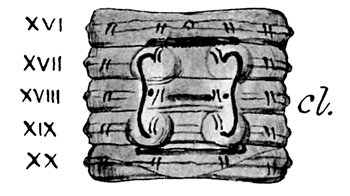
Fig. 4 The same species. Ventral view of segments XVI-XX
(numbered in the figure) which form the clitellum, the posterior
boundary of which is shown by a curved line on segment XX.
The figure will be understood from the annexed description.
Fig. 5. A longitudinal section
through the middle of the first
nineteen segments of the body
of Notiodrilus vasliti (a species
very closely allied to that
described in the text), the segments
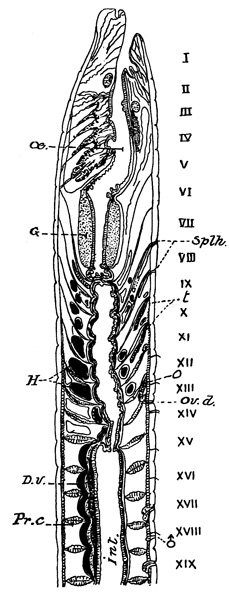
are numbered I, II, &c.
D.v. dorsal blood vessel, G
gizzard, H hearts, œ oesophagus
lying in front of
gizzard behind which another
tract of still narrow oesophagus
is seen opening into
Int. intestine. The whole
alimentary canal is supported
by the intersegmental septa
(Pr.c.) between which is the
system of spaces forming the
coelom, ov.d. pore of oviduct,
Splh. orifices of spermathecae,
♂ orifice of sperm duct, o
ovary, t spermaries. (After
Eisen.)
On segment XIV are a pair of very minute pores
a little in front of the ventralmost setae and thus
very near together. These are the openings of the
oviducts. Finally, near to the anterior border-line
of segments VIII and IX and on a line with the
ventral pair of setae is a pore on each side through
which the cavity of the spermathecae reaches the
exterior.
So much then for the external characters of our
worm. We next turn to the internal anatomy. When
the worm is opened by a longitudinal section from
end to end, and the two flaps of skin are turned
outwards and pinned down, the internal structure is
almost completely revealed. Running from end to
end is seen the alimentary canal; the general cavity
of the body (coelom) in which it lies, as do of course
the other organs to be enumerated, is seen to be
divided by cross divisions, the intersegmental septa,
into a series of chambers which correspond with the
external division into segments. The septa are in
fact inserted on to the body-wall along the furrows
which mark the divisions between adjacent segments.
Anteriorly the large pharynx is responsible for confusing
the arrangement of the septa, which become
subdivided and fused or are prolonged a greater way
backwards and thus present a less obviously segmental
disposition. Certain of the more anteriorly placed of
these septa are much thicker than the rest. This is
the case with the septa which separate segments V to
XII. The alimentary canal is perfectly straight and
runs in the middle line, being supported by the septa
which it perforates. The mouth leads into a buccal
cavity which later becomes the pharynx, a portion of
the tube which is much thickened by muscular walls
dorsally. Then follows a very short section of the
oesophagus and in the fifth segment this becomes
the gizzard, a very characteristic organ with thick
muscular walls quite smooth and with a very thick
lining of structureless membrane. After this is a
narrower tube, the rest of the oesophagus. Into this
open in each of segments VII, VIII, IX a pair of calciferous
glands; these are diverticula of the gut with
much folded walls, the cells of which secrete carbonate
of lime. In the XIIth segment or so, the oesophagus
suddenly widens out to form the intestine which runs
as such to the end of the body. This wider tube has
a ridge running along its dorsal side, the typhlosole.
Along the dorsal surface of the intestine and the oesophagus
is seen a red tube, contractile during the life
of the worm, which is the dorsal blood vessel and
whose contained blood is coloured red, as is the blood
of vertebrated animals, by haemoglobin. But in the
earthworm the colouring matter is not situated in
corpuscles as in the vertebrate. The dorsal vessel is
connected by a few pairs of equally contractile transverse
trunks with a ventral vessel which is not
contractile. There are other branches of these main
longitudinal trunks and some minor longitudinal
trunks which we shall not stop to describe further.
The nervous system of the worm consists of a pair of
ganglia which lie above the gut in the third segment;
they are connected by a commissure running round
the gut with a chain of closely fused pairs of ganglia,
one for each segment to the very end of the body.
In each of the segments, except the first two or three,
there are a pair of excretory organs known as
nephridia; these are essentially coiled glandular
tubes opening on to the exterior by the regularly
placed pores already referred to in considering the
external characters. The tube ends in a funnel-shaped,
and therefore dilated, mouth, which opens
into the segment in front of that which contains the
rest of the organ; a nephridium therefore lies in two
segments. The only other important organs which
are left for consideration are those devoted to the
reproduction of the species. The essential organs are
the spermaries and the ovaries. Of the former there
are two pairs of minute whitish bodies which lie in
segments X and XI on either side of the nerve cord
attached to the anterior septal wall of their segments.
The ovaries are not in the following, but in the XIIIth,
segment, and occupy an identical position in that
segment. A short tube with a funnel or trumpet-shaped
and wide orifice opens into the cavity of the
XIIIth segment opposite to each, and, perforating the
septum, opens on to the exterior on the XIVth segment.
A similar but larger and more folded pair of trumpet-shaped
funnels opens in the same way opposite to
each spermary. But in this case the two tubes of the
sperm ducts run backwards for some way and those
of each side after joining open on to the XVIIIth
segment by the pores already mentioned. On the
XVIIth and XIXth segments open two glands which
are long and tubular in form and much coiled. These
are the spermiducal glands and each opens in common
with a muscular sac containing the long and ornamented
seta referred to in describing the various
external orifices. It will be noticed that the sperm
duct has no direct connection with these glands but
only indirectly through the external gutter which
connects the three male orifices of each side of the
body. Segments IX-XII inclusive contain certain
sacs which depend from, and are formed as outgrowths
of, the septa of those segments. These are
the sperm sacs in which the male germ cells undergo
their development. A corresponding body (but very
much smaller) is sometimes found in relation to the
ovary but has not been actually described in the
particular species dealt with here. Finally, in segments
VIII and IX are a pair (that is four altogether) of
roundish sacs, with two or three minute diverticula,
known as the spermathecae. In the diverticula of
these sacs are stored the sperm derived from another
individual.
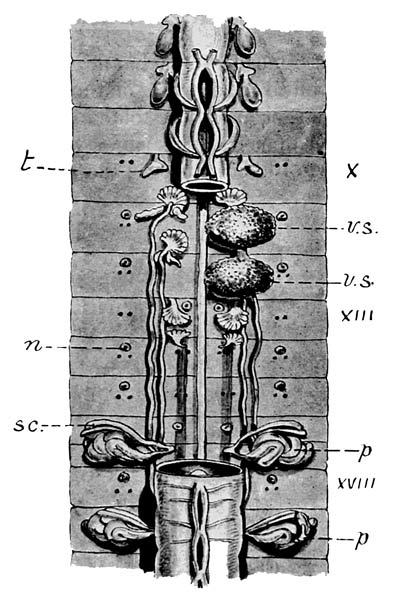
Fig. 6. Genital region of Maoridrilus dissimilis (in which species the different
organs are essentially as in Notiodrilus tamajusi). The oesophagus is cut
away between the Xth and XVIIIth segments to display the various organs. n
external orifices of nephridia which alternate in different segments; the one
lettered opens in front of dorsalmost pair of setae, that of segment XVI opens in
front of ventralmost pair, p coiled glands opening on to XVIth and XIXth
segments, sc. sacs containing long seta, associated with these glands, t spermary
of segment; another pair in an exactly similar position in segment XI. Behind
spermaries are funnel-shaped openings of sperm ducts which are seen running
along the body to their external orifice on XVIIIth segment. v.s. sperm sacs
behind the posterior of these and in segment XIII is seen the large ovary
corresponding in position to the spermary and opposite to each ovary the
oviduct. (× 3.)
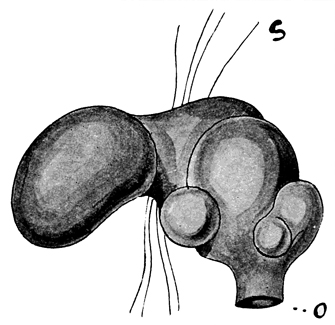
Fig. 7. A spermatheca of Notiodrilus tamajusi. The external
orifice is shown at o; above this are the diverticula, s is a portion
of an intersegmental septum. (After Eisen.)
This completes the general sketch of the structure
of Notiodrilus tamajusi which we have selected as a
type. In this same genus are a large number of species
which differ from that selected in various small
structural points. Thus in N. annectens (Beddard), a
species from New Zealand, the spermaries and ovaries
are attached to the posterior, instead of to the anterior,
wall of their segments, and there are neither calciferous
glands nor modified setae upon segments XVII and XIX.
In all essentials however the two types agree and
are thus to be looked upon as referable to the same
genus. Starting from the structure of these types we
may now sketch in quite a brief way the main
divergencies of structure shown in the group of
Oligochaeta.
We shall naturally begin with the family Megascolecidae
of which a type has just been described.
Within the limits of the same sub-family as that
which contains Notiodrilus, i.e. the Acanthodrilinae,
the changes of structure affect all the principal organs
of the body except the nervous system, but are not
very large and vary from genus to genus. They are
mainly perhaps in the direction of reduction and
simplification. Thus in Chilota, Maheina and Yagansia
the spermaries are reduced to one pair in
either the Xth or XIth segment, while in Yagansia
one pair of spermathecae and of spermiducal glands
have also disappeared. In Microscolex the spermaries
remain normal, but one pair of spermathecae
and of spermiducal glands have disappeared, the
remaining organs of these series being in the IXth
and XVIIth segments respectively. In Microscolex,
Chilota and Yagansia, moreover, there is a further
degeneration in the disappearance of the calciferous
glands. These glands are often absent and sometimes
less developed in the New Zealand Maoridrilus,
which is otherwise not a degenerate form and differs
characteristically from Notiodrilus by the fact that
the paired nephridia alternate in position in successive
segments, being now in front of the dorsal, and in
other segments in front of the ventral, pairs of setae.
While these genera are somewhat degenerate, the
New Zealand Plagiochaeta has undergone specialisation
in an upward direction. For the setae of each
segment are increased to a large number much exceeding
eight.
It is not a long step to the sub-families Diplocardiinae
and Trigastrinae. In the first of these, an
American race confined to the northern and central
parts of that continent, the male pore shows a
tendency to move backwards, being situated on any
of segments XVIII-XXI. The two spermiducal glands
follow it, but are always placed one pair in front
and one behind, as in Notiodrilus. In this group we
get a new feature of specialisation in the duplication
or triplication of the gizzard.
So too with the Trigastrinae where there are
either two or three gizzards; but in this sub-family
another modification has become apparent. The
paired nephridia have disappeared and their place
is taken by several, often quite numerous, pairs of
much smaller nephridia called on that account 'micronephridia'
instead of 'meganephridia.' To this
sub-family belong the especially African but also
American and Malayan Dichogaster, whose name is
derived from the important fact that it possesses two
gizzards.
Not far off is to be placed another sub-family,
that of the Octochaetinae, which is New Zealand
and Indian in range, the intermediate countries being,
strange to say, not populated by this race of Oligochaeta.
The group contains several genera of which
Octochaetus, Eutyphoeus, and Dinodrilus are the
best known. All these worms agree in the main
features of their anatomy with Notiodrilus; but they
have diverged in different directions. Thus in Octochaetus
the typical two pairs of gonads and glands
belonging to the generative system have been
retained, while the nephridial system consists of
micronephridia; in Eutyphoeus, one pair of spermiducal
glands has disappeared, and as a general rule
the species of this genus have only one pair of
spermaries and the corresponding pair of sperm ducts.
They are close to Octochaetus. The third genus
mentioned, Dinodrilus, is a New Zealand form
specialised in possessing 12 setae in each segment.
Otherwise it is not far removed from Octochaetus.
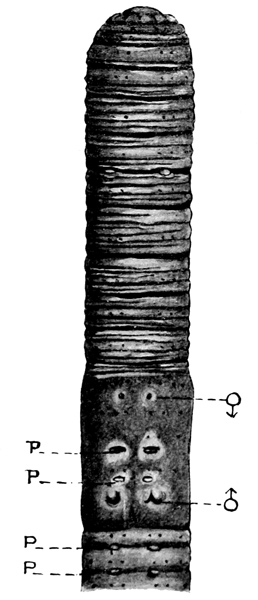
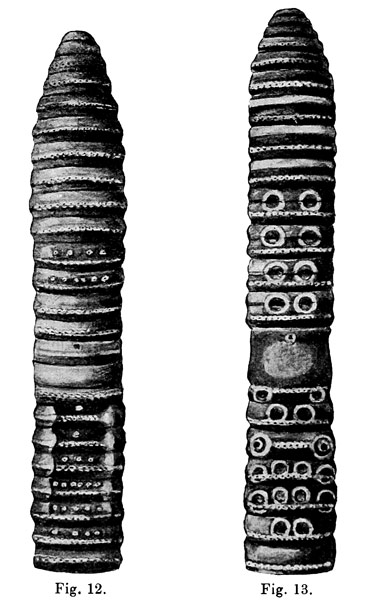
Fig. 8 Ventral view of Eutyphoeus masoni. p papillae, ♂ male
pores, ♀ oviduct pores. (× 3.)
A fifth sub-family is also easily referable to the
type whose structure has been dealt with as a preliminary
to the present survey. That sub-family is
the Ocnerodrilinae which is American and African
in range. These worms are somewhat degenerate
in comparison with their allies. Thus the calciferous
glands are reduced to a single pair or to a single
gland in the IXth segment, the nephridia though
regular and paired have no covering plexus of
blood vessels, and the worms themselves are slender
and delicate, being indeed often aquatic in habit.
The spermiducal glands, which are as in the former
sub-families independent of the sperm ducts though
sometimes opening in common with them into a short
pocket-like ingrowth of the skin, are reduced in their
minute structure and much simpler than in the other
types.
The genus Kerria is the least reduced perhaps.
It has the male pores on segment XVIII with a pair
of spermiducal glands on the segments preceding
and following this in the typical Acanthodriline
fashion. There are two pairs of spermathecae in VIII
and IX, but the spermaries are reduced to one pair
in X. The gizzard is present. Ocnerodrilus is a
little further reduced from this last. The gizzard
has gone; there is but one pair of spermiducal glands
(as a rule) opening in common with the extremity of
the male duct on to segment XVII; the spermathecae
also are reduced to one pair, but there are two pairs
of spermaries. The African Nannodrilus is more
robustly built. There are two gizzards, the male
duct opens into a muscular pouch, into which also
open one of the two or three pairs of spermiducal
glands. There are two or three other genera and
sub-genera not showing any great divergencies from
the range of structure indicated in briefly defining
those enumerated above.
Finally, we have the largest of all the sub-families
of this family, viz. that of the Megascolecinae. These
worms are mainly tropical in range and also mainly
found in the Indo-Australian portion of the world.
In them the sperm ducts open in common with
the usually single pair of spermiducal glands and
prevalently upon the XVIIIth segment. The glands
moreover have not always, though they often have,
the tubular form shown in all the sub-families hitherto
considered. In many forms they are branched
and lobate glands, and if there are two pairs one may
be of one type and the other of the second and
derived type, as for instance in Megascolex ceylonicus.
Furthermore, it is much commoner among the genera
of this sub-family for the setae to become numerous
and to spread right round the segment; this condition
is seen in the genera Pheretima, Megascolex,
Diporochaeta, Perionyx, Plionogaster. The spermathecae
also are commonly more than the typical
two pairs of the forms already considered, and in
certain species (for example Pheretima hexatheca)
there are as many as six pairs of those organs which
are moreover—and in this they resemble the majority
of species of the last sub-families—nearly always
furnished with a diverticulum or diverticula. The
nephridia are either paired or numerous and these
various characters allow of the sub-family being split
up into sixteen genera or thereabouts.
As an example of another type of organisation
and as contrasting with Notiodrilus we may now
briefly describe the structure of the genus Pontoscolex
(better known as Urochaeta), a member of the
American and African family Geoscolecidae.
The worm is some four inches long and composed
of as many as 212 segments. Each of these except
the first has eight setae which for the first few
segments of their occurrence are disposed in four
pairs in the usual fashion. Behind this point however
the setae cease to present this symmetrical
arrangement and are irregularly disposed so that a
given seta is not in the same line with the corresponding
seta of the segments in front or behind.
There is thus no region of the body which has
not a seta implanted upon it; and the effect is
therefore comparable to the condition obtaining in
those worms, such as Pheretima, where circles of
numerous setae are met with. There are however
only eight in a given segment. The clitellum extends
from segment XV to XXII or XXIII and is developed
only dorsally and laterally. It has setae like the rest
of the body; but those upon the clitellum are longer
and more markedly ornamented than are those of the
body generally. The latter are not only sculptured
with fine ridges but are bifid at their free extremity.
The prostomium is often apparently completely
absent. It is however really present but is retractile.
As to the pores which are visible externally the
dorsal pores are completely absent. The pores of the
nephridia lie in front of the dorsal pair of setae or in
a line corresponding to the position of those setae
where the arrangement has become irregular. The
spermathecal pores are three pairs and are in the
very front of segments VII, VIII, IX. The male
pores, very inconspicuous, lie on the ventral side of
segment XXI just within the clitellum. The oviducal
pores are on segment XIV.
As to internal anatomy the general plan of the
segmentation shows no great differences. Certain
septa only show a difference, i.e. those separating
segments VI-XI which are specially thickened. In
the alimentary canal a gizzard in segment VI is to be
noted and three pairs of calciferous glands in segments
VII-IX. The nephridia are paired structures and
commence early. The first two or three segments
are occupied by a pair of large glands opening into
the buccal cavity which are apparently a slightly
modified pair of nephridia and are generally termed
'peptonephridia' since they are associated, as it
would appear, with the function of alimentation and
are not purely excretory organs. There is but a
single pair of spermaries in segment XI, and of
ovaries in segment XIII. The sperm ducts open on
to the exterior in the position already mentioned and
they are not associated at their pore with any glands
comparable to spermiducal glands. A pair of sperm
sacs depend from segment XI and traverse a considerable
number of segments, being thus long and
tongue-shaped instead of short and limited to one
segment. The spermathecae are three pairs of
elongated sacs in segments VII-IX, without any
diverticula at all.
It will appear therefore that many and considerable
differences divide Pontoscolex from Notiodrilus
and indeed from all of the Megascolecidae whose
structure has been touched upon in the foregoing
pages. The most important of these are the ornamented
setae and their arrangement and the modification
of the setae upon the clitellum: the absence
of diverticula to the spermathecae: the absence of
terminal glands associated with the male ducts.
Although taken in their entirety these characters are
distinctive of the American Geoscolecidae (sub-family
Geoscolecinae), there is no one of them which is not
to be found in some Megascolecid. Thus the subgenus
Ilyogenia (of Ocnerodrilus) has sometimes no
spermiducal glands: the genus Perionyx has spermathecae
without diverticula in some species, and other
genera of Megascolecinae are in a like condition.
The setae of Dichogaster are sometimes ornamented,
while in Pheretima houlleti the clitellar setae are
different from those upon the other segments.
We can in fact only define the family Geoscolecidae
by an assemblage of characters which are
mainly these: dorsal pores absent, only a few in
the neck region being occasionally present; setae
generally ornamented, those of the clitellum being
larger and more marked than the others; spermathecae
without diverticula; often instead of a pair of
those pouches in the segment a large number of very
small sacs, as in Microchaeta, Kynotus. Sperm
ducts without terminal glandular or muscular sac,
except in a few cases; setae always eight in a
segment except in the genus Periscolex which has
acquired the 'perichaetous' condition. The range of
variation shown in the anatomy of the Geoscolecidae
will be best taken in connection with the several
sub-families into which it has been subdivided. In the
first of these, the Geoscolecinae, no great differences
divide the genera from that selected as the type, viz.
Pontoscolex. The long sperm sacs attain to an
extraordinary length in Trichochaeta (or Hesperoscolex)
where the single pair extends through no less
than 109 segments. Though as a general rule the
sperm ducts open directly on to the exterior they do
so through the intermediary of a large pouch in
Glossoscolex (= Titanus). In Onychochaeta the setae
on the last segments of the body are very much
enlarged and thus form a more effective means of
holding on to the soil than is possessed by other
species.
The sub-family Hormogastrinae which contains
but a single genus Hormogaster is remarkable for
being limited in range to the Mediterranean coasts.
The genus is mainly distinguished by possessing three
gizzards; otherwise it is not very different from the
sub-family just described. The African and Madagascar
forms are associated (together with a few
Asiatic forms) into a third sub-family Microchaetinae.
These worms frequently possess a considerable
number of very small spermathecae in segments
XII, XIII or thereabouts instead of the usual paired
arrangement. They have too very often glands connected
with the enlarged setae already mentioned
which are however (in the genus Kynotus at any
rate) usually in front of the clitellum. The latter
organ, contrary to what we find among the Geoscolecinae,
is often behind the point of orifice of the
male pores. This is so with Kynotus.
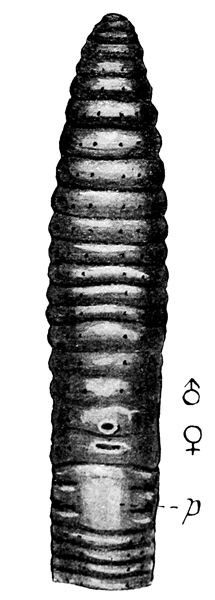
Fig. 9 Ventral view of Polytoreutus Kilindinensis, head end (× 2).
p papillae, ♂ male pore, ♀ female pore.
The last sub-family, Criodrilinae, has but three
genera Criodrilus, Sparganophilus and Alma. These
worms do not show any very marked differences from
other Geoscolecids. Alma is noteworthy for the facts
that the male pores are borne upon long processes of
the body which bear specially modified setae and
that one species at any rate has gills.
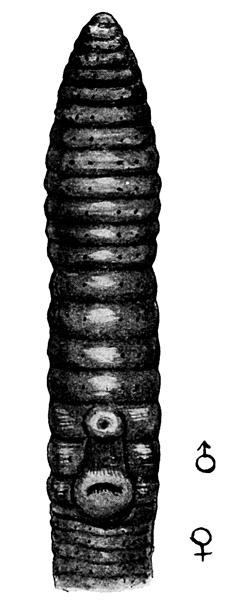
Fig. 10 Ventral view of Polytoreutus finni, head end (× 2),
lettering as in fig. 9.
Another type of structure is offered by the
Eudrilid earthworms which form rather a restricted
family. These worms are as a rule quite easy to
distinguish by their external characters only. For
the apertures of the spermathecae and sperm ducts
are apt to be very large and conspicuous. They are
also generally unpaired, a character which is however
not confined to the Eudrilidae; for there are Megascolecids,
such as Fletcherodrilus, and Geoscolecids
in which the same unpaired character occurs. The
principal feature of the family is that the ovaries are
commonly enclosed in sacs—comparable to the sperm
sacs which frequently envelop the spermaries in other
earthworms—and that these sacs not only contain the
mouths of the oviducts but are directly continuous
with the single or double spermatheca. This is
usually a large sac, always single or consisting of one
pair only, which opens on to the exterior close to the
oviducal pores; these spermathecae in the Eudrilidae
are not comparable to the spermathecae of other
earthworms; for they are in a way comparable to the
sperm sacs, being formed as outgrowths of the septa.
There is some variation of structure within the family.
In a number which are associated into a sub-family
Eudrilacea there are two paired calciferous glands
and a single unpaired one, while the paired nephridia
open by a large pore on to the exterior. In a
parallel sub-family, the Pareudrilacea, the calciferous
glands are apt to be more numerous and have a
totally different structure: they have been apparently
converted into non-digestive glands bearing some
relation to the vascular system. The nephridia
moreover do not open on to the exterior by single
pores, but form a network within the thickness of the
body wall and then open by numerous pores. There
is however no resemblance here to the micronephridia
of Dichogaster and other Megascolecids. In Libyodrilus
(as an example of the Pareudrilacea) each
nephridium forms a network out of the duct leading
to the exterior. In the interior of the body a series
of paired meganephridia are visible.
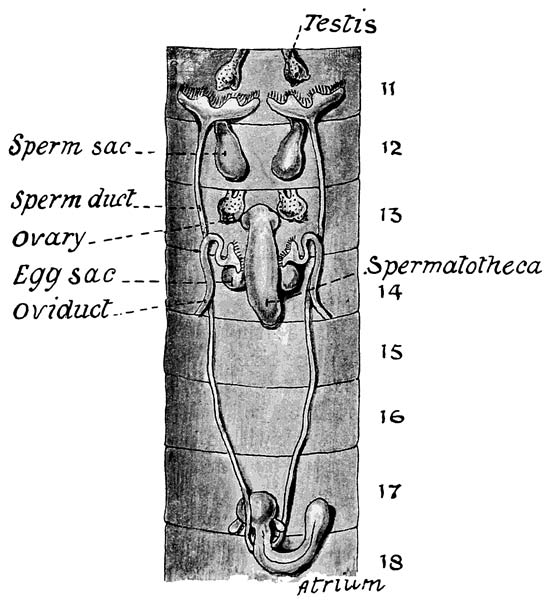
Fig. 11 Organs of reproduction of Eudriloides durbanensis.
The earthworms of Europe belonging to the family
Lumbricidae offer again a rather different type of
structure, which is more reminiscent of the Geoscolecidae
than of the Megascolecidae or Eudrilidae. In
this family there are no glands appended to, or in
the neighbourhood of, the orifices of the sperm ducts,
such as are found in the other forms. As in the
Geoscolecidae the clitellum is furnished with setae
somewhat different in form from those which deck
the body generally. These setae are never more than
eight in a segment. Dorsal pores (absent in Geoscolecidae
and in Eudrilidae) are invariably present.
The spermathecae are without appendices and nearly
always simply paired, though rarely we get numerous
much smaller spermathecae in a single segment, as
in Kynotus among the Microchaetine Geoscolecids.
Internally the most striking feature of this family is
to be seen in the position of the gizzard at the end of
the oesophagus and at the beginning of intestine. The
apertures of the male pores are—save for two or three
exceptions where they are further forward—invariably
upon the fifteenth segment, and the clitellum, often
very long, usually begins behind this point, features
which are also seen in Kynotus.
Finally we have the Moniligastridae which differ
from all the types hitherto considered in a few rather
important particulars. These worms are named on
account of the fact that they possess several gizzards
upon the oesophagus, a character which is however
met with in the Megascolecid genus Plionogaster
and in certain Eudrilids, e.g. Hyperiodrilus. The
main peculiarity of the family is that the sperm
ducts are very short and open on to the next segment
to that which contains the spermaries, as in the
water-living Oligochaeta generally. The terminal
sac into which the male ducts open is moreover
rather like that of such a family as the Lumbriculidae.
It would seem to be quite possible that when the
fresh waters of the world have been as well examined
for Oligochaeta as have so many parts of the land
areas, the number of purely aquatic Oligochaeta
will be found to equal those inhabiting the land. In
any case we are quite justified at the present moment
in stating that there are rather more families of
these smaller Oligochaeta than there are of the bulkier
terrestrial forms. But while there are certainly
seven or eight distinct families, these do not between
them contain at present so many genera as do the
fewer families of earthworms; and the number of
species of the latter that are known to science
enormously exceeds that of the 'Limicolae' as the
fresh-water worms were at one time called in common.
The fact that there are purely marine forms of these
water worms was hardly appreciated at the time that
the term Limicolae was used; now however we are
acquainted with a few such forms, and even with
some which live at will in either fresh, salt, or
brackish water. Of these something will be said later.
These forms have also been collectively treated of
as Microdrili, a term which expresses the undoubted
fact that they are all of small size and sometimes
even minute; others however reach the dimensions
of the smaller species of earthworms. There are a
certain number of characters shared by the various
families which may be considered first of all, before
dividing them into their several subdivisions. These
aquatic Oligochaetes are usually tender and transparent,
the muscular layers of the body wall being
much reduced as compared with the tougher terrestrial
forms. The clitellum is also thinner and consists of
a single layer of cells only, thus contrasting with
the double layered clitellum of earthworms. As a
rule the alimentary tract is simplified, there being
no gizzard or glandular appendices of the oesophagus
comparable to the calciferous glands of most earthworms.
But this rule is not without exceptions; for
we find in Haplotaxis a gizzard occasionally developed,
and in the remarkable genus Agriodrilus
from the Baikal lake a continuous gizzard formation
along the oesophagus, while the Enchytraeidae may
show something very like calciferous glands: and
even a Tubificid, called by Pierantoni Limnodriloides,
has a pair of diverticula of the gut.
Other internal organs show certain points of
likeness in all or in the great majority of the aquatic
families. Thus the nephridia are without a plexus
of blood capillaries surrounding them, a state of
affairs which also occurs in some of the slender
Ocnerodrilinae among the earthworms. These paired
organs also are very frequently not found in the anterior
segments of the body and these include also as a
general rule the segments in which the reproductive
elements are formed. Save for an exceptional case
among the genera of Enchytraeidae the dorsal pores
are not found among the Limicolae, but in some cases
at least a single pore, the head pore, is found. The
sperm ducts, which among earthworms usually (and
indeed always save in the anomalous Moniligastridae)
traverse a considerable number of segments on their
way from the internal opening into the body-cavity
to the external pore, do not show the same phenomenon
among the Limicolous Oligochaeta. They are
sometimes indeed limited to a single segment, that
is to say the funnels and the external pore lie in one
segment. In other cases they open on to the exterior
in the segment next to that which bears the funnel,
and it is only rarely that they traverse more than
one segment. There are also points of difference of
general applicability to be noted in the sperm sacs
and egg sacs. The latter are large and extensive,
which is not the case among earthworms, and the
former are as a rule more extensive in the number
of segments that they occupy than among the terrestrial
forms. Another difference which they show is
that their cavity is quite simple and not divided up
by trabeculae into numerous intercommunicating
chambers as in the earthworms. Finally the eggs
of the aquatic Oligochaeta are large and full of yolk
and thus contrast with the very small ova of the
earthworms which are moreover much more abundant.
These features are either of general or universal
occurrence and together form an assemblage of
characters which mark out the aquatic families of
Oligochaeta from their, at least mainly, terrestrial
allies.
We may also refer to certain structures which
although not universal among these aquatic families
are nevertheless found only in them—that is, are not
found in any family of the terrestrial worms of this
order. The most salient of such characters are the
long and hair-shaped setae tapering to a fine point and
often provided with a series of delicate branches like
a feather; such setae are often of very great length
and they occur in their various modifications among
the Aeolosomatidae, Naididae, and Tubificidae. It
is clear that these delicate setae, though they may
not be due in any way to the aquatic life, are rendered
possible by it. To drag such tender processes through
stiff clay would surely break and tear them out. It
may be also mentioned that among the aquatic
families as a rule the intersegmental septa do not
show that thickening in some of the anterior segments
of the body which is so general a feature of the land-dwelling
species. Finally it is only among the aquatic
forms, and among them only in the families Aeolosomatidae
and Naididae, that asexual reproduction
by budding takes place. Indeed so common and
usual is it in the genera of these families that even
yet there are considerable lacunae in our knowledge
of the organs of reproduction in the said families.
Together with these general similarities are many
points of structural difference among the worms
inhabiting ponds, lakes, and rivers, which allow of
their being divided into a number of quite distinct
families.
One of the most distinct of these families and
lying in any case quite at the base of the series is
the family Aeolosomatidae which includes a number
of distinct species of delicate and transparent
worms, and in whose integument are embedded
round cells bearing a large brightly coloured oil drop;
this is reddish or green in colour, or—and this more
rarely—colourless, but still recognisable as an oil drop.
The green sometimes even verges upon blue on the
one side and yellow on the other, while the red may
approach brown or purple. These worms are assigned
for the most part to the genus Aeolosoma which is
found in all of the great continents and of which
seven or eight species are known. To a more doubtful
genus Pleurophleps are assigned a few small
worms which have the general appearance of Aeolosoma,
but are without the coloured or colourless oil
drops in the skin. These worms have a very large
prostomium which is ciliated on the lower surface,
and the body is not markedly segmented externally
by constrictions or internally by septa. The bristles
are slender and hair-like, but among them are in
some species the shorter stouter bristles bifid at the
free tip, which are so general among the aquatic
families of the Oligochaeta. These worms are not
uncommon objects in pools containing weed; and
they are to be found usually crawling among the
weed. They consist as a rule of but few segments
to most of which a pair of nephridia belong. The
ovaries and the spermaries are only known in a few
forms and appear to be unpaired and lie respectively
in the fifth and sixth segments. There are 1-3 pairs
of spermathecae, and the sperm ducts if distinct from,
are at least very like, nephridia. The ova appear to
make their way to the exterior by a large aperture
in the ventral middle line of a middle segment of
the body. The vascular system contains uncoloured
blood and is greatly simplified.
The next family to the Aeolosomatidae in zoological
position is clearly the Naididae. These are
also small worms, but show in some respects a higher
grade of organisation than their allies. While asexual
generation is general, the reproductive organs are
more commonly found than in Aeolosoma, though
there are still many hiatus in our knowledge of the
same in certain genera. Where they are known it
has been found that the spermaries and ovaries are
very far forward in the body, in the fifth and sixth
segments respectively. The spermathecae are in
segment six and the male ducts open into a terminal
chamber, called 'atrium,' which is on the whole not
unlike that of the Tubificidae. The blood in these
worms is red as in the higher types, and thus differs
from that of the genus Aeolosoma. The setae are
rather varied, being in some cases long and slender,
sometimes greatly exaggerated in length as in
Ripistes; other setae are forked at the free end,
and in Paranais this is the only kind of setae met
with. A marked feature of this family is that the
dorsal bundles of setae do not always begin like the
ventral setae upon the second segment of the body.
Indeed in Schmardaella there are no bundles of
dorsal setae at all. The Indian genus Branchiodrilus
is remarkable for the fact that it has paired processes
of the body which may be termed gills and which
in some segments involve the dorsal setae. Another
kind of gill is found in the genus Dero (which has
many species) and in the allied Aulophorus. These
are placed round the vent, and are ciliated. Other
genera are Nais, Chaetogaster, Vejdovskyella, Amphichaeta,
Stylaria, Macrochaetina, Pristina,
Naidium.
Several genera, Pristina, Nais, Dero, are found
in many parts of the world; but it is not possible
at present to consider very seriously the facts of their
geographical distribution.
Next to the Naids a group of aquatic worms
present themselves for consideration which are
usually placed in three distinct families, which
families are however rather hard to define. These
three families are the Tubificidae, Phreodrilidae,
and Lumbriculidae. The Phreodrilidae were at one
time placed with the Tubificidae by Michaelsen. It
is now perhaps the general opinion that they form
a family of their own, at any rate since the discovery
of two other genera Phreodriloides and Astacopsidrilus,
besides the original genus founded by myself,
and named Phreodrilus from the fact that the species
was found in a deep well in New Zealand.
The distribution of this family especially of the
genus Phreodrilus is extremely interesting. The
genus Phreodrilus is the only one genus of the
aquatic Oligochaeta which has, like Notiodrilus, a
circumpolar range, the pole being the south pole.
It occurs in New Zealand, in Kerguelen, and, if we
are to accept the opinions of Drs Michaelsen and
Benham that my genus Hesperodrilus is to be merged
in Phreodrilus, in Patagonia also.
In this genus the male pores are upon the XIIth
segment while the spermaries lie in segment XI.
Moreover the spermathecae lie behind the male
pores. In the Tubificidae on the other hand it is
at least the rule for the spermaries and male pores
to be pushed a segment further forwards. And the
spermathecae are before the male pores. Phreodriloides
is like Phreodrilus but has no spermathecae.
It is also New Zealand in range. Astacopsidrilus is
Australian and is semi-parasitic upon the Crayfish
Astacopsis, whence its generic name. Phreodrilus
branchiatus is one of the few forms of Oligochaeta
that possesses gills. Of these there are a series of
pairs on about the last eleven segments of the body.
They are lateral in position, and thus contrast with
the also gilled Branchiura sowerbii, where the gills,
also on the posterior segments of the body, are more
numerous and lie dorsally and ventrally, a pair to
each segment.
The Tubificidae differ from the Phreodrilidae
mainly in the points already noted. There are a
considerable number of genera of which the following
are the best known, viz., Tubifex, Limnodrilus,
Limnodriloides, Branchiura, Lophochaeta, Ilyodrilus,
Psammoryctes, Clitellio, Telmatodrilus,
Bothrioneuron, Lycodrilus.
The Tubificidae are mainly northern temperate
forms, and a few of them such as Clitellio arenarius
and 'Peloryctes inquilina[1]' are found on the sea
coast. There are also a few of this family in the
southern hemisphere. These forms include Clitellio
abjornseni from Australia, and a few species of
Branchiura from New Zealand and the islands of
the Antarctic ocean. There is also to be mentioned
Rhizodrilus (or Vermiculus) aucklandicus from the
island of that name in the New Zealand area. The
only tropical species appears to be the Indian and
Malayan Bothrioneuron iris, though this genus also
occurs in Europe and in southern South America.
It is quite likely however that Branchiura sowerbii,
a species known at present from tanks in hot houses,
may be a tropical American species.
With many synonyms, including Tubifex
ater (see p. 53).
The family Lumbriculidae is yet more restricted
in its range. It has not yet been met with away from
the temperate northern hemisphere, and the great
variety of species recently described from Lake Baikal
by Dr Michaelsen is a very remarkable fact. The
Lumbriculidae are entirely fresh water in habit and
not even partially terrestrial. The following are the
principal known genera: Lumbriculus, Trichodrilus,
Rhynchelmis, Phreatothrix, Claparedilla, Stylodrilus,
Mesoporodrilus, Sutroa, Eclipidrilus, Aurantina,
Athecospermia, Lamprodrilus, Teleutoscolex.
In the worms of this family the male pores are
usually upon the tenth segment but sometimes upon
the eighth or eleventh. And in addition to a pair
of funnels in the antecedent segment there is also
commonly a second pair in the same segment as that
which contains the external pore. The two sperm
ducts however open into the same distended atrial
cavity before opening on to the exterior. In Lamprodrilus
however each sperm duct opens by its
own separate atrium on to the exterior and in two
consecutive segments. In Teleutoscolex there is but
one pair of funnels opening into the same segment
with the atrial pore.
Near perhaps to the Lumbriculidae comes a very
small family indeed, that of the Alluroididae. So
small is it that it consists of but a single genus
Alluroides of which there are two species A. pordagei
and A. tanganyikae. Both of these species were
described by myself, one of them from but a single
specimen, the other from only two. Both species—and
the name of one denotes the region—are from
eastern tropical Africa. The Tanganyika worm is
purely aquatic; the other species was found in a
swamp of the mainland opposite to Mombasa. This
remarkable genus has a pair of spermaries in
segment X; but the ovaries are as in earthworms in
the XIIIth segment. The male pores are upon that
segment also, i.e. further back than in the aquatic
worms. The spermathecae open close to the median
dorsal line of the body in one species; in A. tanganyikae
there is but one spermatheca which opens
actually in the dorsal median line between segments
VIII and IX. This family seems to come nearest to the
Lumbriculidae but has also obvious points of likeness
to the terrestrial Moniligastridae. It fully deserves
a separate family, which was founded for it by
Dr Michaelsen.
Not obviously related to any of the other families
of Oligochaeta is the family Enchytraeidae. This
consists of a very large number of species, which are
placed in about a dozen genera, and whose habitat
is nearly confined to the cold and temperate regions
of the world. A large number of species for example
have been described by Dr Eisen from Alaska, while
others inhabit the verge of Patagonia. It is only a
few which are found in warmer countries. There is
for instance a solitary Enchytraeid in India and the
neighbouring parts of Asia described by myself as
Henlea lefroyi but doubtfully of that genus according
to Dr Michaelsen. I have also myself obtained
another Enchytraeid from British Guiana. Apart
from such rare exceptions the family is arctic or
temperate in its range and is even met with upon
the ice of glaciers. These little worms—they are
very rarely of more than minute size—are both
aquatic and terrestrial and inhabitants of the sea
shore. They have four bundles of short often straight
and somewhat stumpy setae; Anachaeta is entirely
without setae. That they bear some relation to the
lowest group of Oligochaeta, that of the Aeolosomas
and Naids, appears to be shown by the very anterior
position of the spermathecae, i.e. in the fourth or
fifth segment. The spermaries and ovaries on the
other hand are in segments XI and XII. They are
peculiar among the aquatic families in having complex
glands appended to the oesophagus which recall the
calciferous glands of the earthworms. The funnel
of the sperm duct is extraordinarily deep and lined
with glandular cells except in an apparently primitive
genus from Lake Baikal.
The remaining family of the Limicolae is that of
the Haplotaxidae which contains two genera, viz.,
Haplotaxis, better known as Phreoryctes, and Pelodrilus.
These two genera overlap somewhat in their
characters and it is in the present state of our
knowledge rather difficult, if indeed possible, to
differentiate them thoroughly. They are slender
worms which frequent either damp earth or water
and are thus somewhat intermediate in habit between
the Limicolae and the Terricolae. The chief peculiarity
of their structure lies in the fact that the sperm ducts
are unprovided with any kind of terminal apparatus
whatever, but open directly upon the exterior.
Moreover there are generally two pairs of testes in
segments X and XI, and in some species two pairs of
ovaries in the two following segments. The small
family is very widely distributed in more temperate
regions, principally of the antarctic hemisphere. It
occurs for instance in New Zealand, South Australia,
the Cape, and in the northern hemisphere in Europe,
Western Asia, and North America.