Entered, according to Act of Congress, in the year 1881, by
PRESLEY BLAKISTON,
In the office of the Librarian of Congress, at Washington, D. C.
Press of WM. F. FELL & CO.,
1220-1224 Sausom Street.
To
Dr. Alexander J. C. Skene,
Professor of the Medical and Surgical Diseases of Women and the
Diseases of Children, in the Long Island College Hospital, Brooklyn, N. Y.,
THIS LITTLE WORK IS DEDICATED,
as a mark of the high esteem,
both as regards his scientific attainments,
untiring energy, and the largeness of his heart, in which he is
held by
his old pupil and sincere admirer,
THE AUTHOR.
PREFACE.
The idea of writing this little work was first suggested to
me by the numerous letters received from physicians at
home and abroad, asking for information on various points
connected with the symptomatology, prognosis and treatment
of the various “habits.” While manifesting an
earnest desire to become acquainted with the main features
of the conditions in question, many presented a lamentable
ignorance of the simple facts relating to them.
These facts I have endeavored to present in as comprehensive,
yet concise, a form as possible. But little space
has been devoted to the study of the hashisch habit, owing
to its rarity in this country.
The statements as to the dangers and peculiarities of
these conditions, aside from what I have myself observed,
are based upon the literature of the subject, and the letters
of nearly a thousand correspondents in various parts of the
world, to whom I take this occasion for returning my
hearty thanks.
191 West Tenth Street, New York City.
“After my death I earnestly entreat that a full and unqualified narrative of my
wretchedness, and of its guilty cause, may be made public, that at least some little
good may be effected by the direful example.”—Coleridge.
A curse that is daily spreading, that is daily rejoicing in an
increased number of victims, that entangles in its hideous
meshes such great men as Coleridge, De Quincey, William
Blair, Robert Hall, John Randolph, and William Wilberforce,
besides thousands of others whose vice is unknown, should
demand of us a searching and scientific examination.
As an illustration of the enormous increase of the use of
opium and morphia in the United States, the following statistics
have a painful interest, and it must be remembered that
this is no exceptional case. In one of our large cities, containing,
twenty-five years ago, a population of 57,000, the sales of
opium and morphia reached 350 pounds and 375 ounces,
respectively, or about 43 grains of opium and 3 grains of morphia
yearly for each individual, if the consumption was
averaged. The population is now 91,000, and 3500 pounds of
opium and 5500 ounces of morphia are sold annually. While
the population has increased 59 per cent., the sale of opium
has increased 900 per cent., and morphia 1100, or an average
of 206 grains of opium and 24 grains of morphia to every inhabitant.
But there are additional sales of from 400,000 to
500,000 pills of morphia, which would give us 170 ounces more
of the drug. One-fourth of the opium sold is consumed in its
natural state, and three-fourths are made into opiates, the
principal one being laudanum.
The following is official from the New York Custom House:—
Imports of opium into the United States for ten fiscal years,
ending June 30th:—
1871,
315,121
lbs.
$1,926,915
1872,
416,864
”
2,107,341
1873,
319,134
”
1,978,502
1874,
395,909
”
2,540,228
1875,
132,541
”
939,553
1876,
388,311
”
1,805,906
1877,
349,223
”
1,788,347
1878,
430,950
”
1,874,815
1879,
405,957
”
1,809,696
1880,
533,451
”
2,786,606
Facts like these must, we think, arouse attention. They
show a fearful drift. There is a worse form of intemperance
than that which comes from bad liquor, although the choice
would seem to be between the devil and the deep sea:
“And in the lowest depth, a lower deep,
Still threatening to devour us, opens wide.”
CONTENTS.
PAGE
CHAPTER I.
The Opium and Morphine Habits. Formation; General Symptoms
A higher degree of civilization, bringing with it increased
mental development among all classes, increased
cares, duties and shocks, seems to have caused the habitual
use of narcotics, once a comparatively rare vice among
Christian nations, to have become alarmingly common.
Increase in mental strain, hot-house development of the
passions, lessened physical labor and increased mental
work, have been gradually giving us bodies in which the
nervous element largely preponderates. Persons who may
be classed under the head of “nervous temperament” are
daily on the increase.
Diseases are to-day as different from diseases of a century
ago as is their treatment. While the average individual
now does more mental work in an hour than did our ancestors
in six hours, we are not one-sixth as well able to
bear the intellectual strain as they were.
Nine-tenths of us neither eat, sleep, exercise, bathe, or
procreate in a proper way. It is all hurry and turmoil;
little rest and much care. Generation by generation our
physical natures are changing, and in the children of each
succeeding generation we see the preponderance of the
nervous element; a gradual evolution of that or those
peculiarities most prominently brought forth by the exigencies
of the individual and national life of a people.
Finding pain, “nervousness” and hysteria constantly
claiming his attention, and that nothing relieves them so
well as opium, or its alkaloid morphia, which is six times the
parent strength, the physician resorts to their use more and
more freely, expecting as soon as the more distressing
symptoms pass away to pursue another and more permanent
plan of treatment. The patient, however, having once
experienced relief, insists upon the further use of the drug,
sometimes feigns illness, in order to procure it, finally
obtains some herself, and in guilty secrecy drifts rapidly
into the habit.
Some physicians are weak enough to place the means of
gratifying this morbid appetite directly in the hands of the
patient. This is more especially the case since the hypodermic
use of the drug has become common. So magical
is the effect of this mode of administration, so rapid and
forcible the action of the drug, that many persons will not
rest content until they possess and are using the instrument.
As the affections for which opium and morphine are most
commonly used are chiefly found in neurasthenic patients,
and as these patients are ever ready to indulge in excesses,
in both stimulants and narcotics, it is not surprising that
the number of victims to this slavery is daily on the
increase, both in town and country. Moreover, nervous
affections are on the increase: pain without any very
apparent cause, nervousness from the most trivial things.
Neuralgias are more common. Insanity also. Suicide is
daily more frequent.
Those not acquainted with the truth in this matter will
be surprised to learn that there are to-day thousands of
educated and respectable people in all countries and
among all classes, confirmed habituès; slaves to a habit
that is more exacting than the hardest taskmaster, that
they loathe beyond all else, and yet that binds them in
chains that they are wholly unable to break.
Everything must give way to this vice. Business is
neglected or but imperfectly performed; family ties are
sundered; hope, ambition, happiness, self-respect are
meaningless words; the one thing that fills the mind is
the gratification of this passion, which they loathe, but
from which they cannot break.
Thus from day to day, week to week, year to year, they
go on; not living—simply existing. Each day, each
hour, each minute binds them more firmly, until at last
they feel their own inability to cope with the demon that
has overpowered them, and abandon themselves, hopelessly,
listlessly, to the vice. Repentance comes too late.
The momentary pleasure, the short period of excitement,
the hour of vivacity bears fruit a thousand-fold; fruit, the
bitter taste of which must last them a lifetime. That
which at first gave them pleasure has now become the
veriest tyrant, enforcing long hours of pain and anguish,
gloom and despondency. They do not continue its use
because it gives them pleasure, but simply because it is the
only thing that, in increasing doses, can save them from
the torment it has itself imposed; because without it they
are sunk into a living hell. The mind is incapable of
healthy action, the temper is decidedly aggravated, the
person taking offence at and scolding furiously about
things that in health, or while under the influence of opium,
would excite no comment. They suffer from terrible
nightmares. They are constantly on the edge of imaginary
precipices, or falling, falling down dizzy heights.
Sleep, if had at all, is broken, unsatisfactory and fraught
with the most frightful and torturing dreams, into the warp
and woof of which are constantly woven the most horrible
sights. Now they are the victims of some terrible accident,
again, they are hurried on by some malignant persecution.
They fancy that they are drowning, that they are being
burned at the stake, inhaling the sickening odor of their
own burning flesh, feeling it peel from their aching bones.
Then comes the awakening with a start or scream. The
gradual realization that these things are not real; the cold
sweat; the trembling of the limbs; the sense of utter exhaustion
from which they sink into sleep once more, to live
again the agonizing scenes of their diseased imagination;
waking and sleeping and counting the minutes as days, the
hours as years, until morning finally comes.
Nor are the torments of day much less than those of the
night. The stomach rebels; nausea is persistent and
distressing; saliva gathers in the mouth; there is sinking
at the pit of the stomach; severe cramps of the intestines;
the lips and throat are dry and parched; the tongue
swollen. A dry, irritating cough sets in. Pains girdle the
body and shoot with agonizing intensity down the limbs
and into the face. The muscular system fails; locomotion
is attended with difficulty; the sufferer staggers like a
drunkard; the muscles of the face and eyelids twitch; the
hands shake so that a glass falls from them, and it is impossible
to pick up a small object. The circulation is
affected; flushing and chilliness alternate; the eyes are
dry, and feel as though filled with sand. The mind wanders;
delirium supervenes; diarrhœa and vomiting set in,
and sometimes collapse, and a more pitiable object can
nowhere be found.
It is at this time that the sufferer, tortured beyond all
power of endurance, would sell body, soul, anything, to
obtain that drug which, while it gives no fresh pleasure,
removes these ill effects, as if by magic.
A dose is taken. A pleasant sense of warmth pervades
the body; the mind clears, the hands become steady, the
gait natural, the pains vanish, the nausea and diarrhœa
cease, and existence becomes again bearable.
Each dose must be a little larger than the preceding, in
order to obtain the desired effect. In some cases the increase
is very slow, but these are rare exceptions. Rarer
still are those instances where no increase is necessary.
I have here portrayed the suffering of one who has been
using the drug for a considerable time, or for a shorter
time in large doses. The chains, though not at first galling,
are nevertheless there, and each succeeding dose rivets
them tighter.
There are certain rare cases where opium seems, instead
of doing harm, to be of positive benefit to the person using
it. Dr. Joseph Parrish, a veteran observer of these cases,
wrote me that he had known of several. One is related
by Dr. Golding Bird.[1] A lady, probably hysterical, took
morphia for the relief of paroxysmal pain in the loins.
She had been taking it for several years. For the past two
years she had increased the dose to ten grains, taken three
times daily. There were no obvious ill effects; functions
were properly carried on, the appetite was good, and there
was no known organic disease.
The therapeutics of any epoch is strictly in conformity
with the most prominent disease or symptom of the people
upon whom the physicians practice. This is true of whole
countries and sections of countries as well as of times.
Formerly, when it was common for physicians to prescribe
opium, it was this drug that the people ate. As
morphine came into fashion, it was prescribed largely by
the profession and the persons forming the habit at that
time, as a rule, ate morphine. Habituès of the opium
epoch also resorted to it, finding it so much more powerful
than the crude drug, so much less bulky, and it did away
with the necessity for calling forth a response to opium
from the shattered system by resort to alcoholic stimulants.
At the time in which De Quincey, Coleridge, and Southey
lived, the people and the profession knew little of the opium
habit, save among foreign nations; the habituès were few in
number, and, as a consequence, when De Quincey’s article
appeared, it created a most decided impression on the public
mind; an impression not yet effaced, and one which bore
with it an incalculable amount of harm. Men and women
who had never heard of such a thing, stimulated by curiosity,
their minds filled with the vivid pictures of a state of
dreamy bliss, a feeling of full content with the world and
all about, tried the experiment, gradually wound themselves
in the silken meshes of the fascinating net, which
only too soon proved too strong to admit of breaking.
There is no question in my mind that, in writing his
“Confessions,” De Quincey left a large debit on the side
of truth, and handed down to succeeding generations a
mass of ingenious lies; more pleasantly the fiction, vaporizing
from a laudanum-soaked brain. He must needs seek
some justification for his life of willful misery, for the blasted
hopes, ambitions and prospects of what might have been a
noble career, and he offered the dream life, the fuller
development of benevolence, and the many pleasures so
fantastically portrayed, as a justification, in part at least,
for his sin.
Nor does the final confession of the intense pain, the
abject misery, the tottering of the mind, the crumbling of
the reasoning and will power, and the ever attendant and
impenetrable gloom of a living hell, serve to fully counteract
the baneful effects of the portrayal of the pleasures of
opium. The reader, confident of his ability to stop short
of the ever-shifting line that divides the happiness from the
misery, is in no wise deterred from trying the danger-fraught
experiment. I know of several patients who began the
use of opium simply from reading this most pernicious
book.
Upon persons living in temperate and cold climates this
drug does not have any such effect, with reference to the
subject matter of dreams, as upon Orientals. Indolent,
over-fed, and by reason of their mode of life, religious
associations and habits of thought, fancifully imaginative,
it is not surprising that they should enjoy, while under the
influence of the drug, grotesque, and to them, pleasant,
dreams. Did the opium cause dreams foreign to the picture
daily conjured by their fertile imaginations, it would
indeed be more surprising. That it does not produce such
effects on our plain, work-a-day people is not to be wondered
at.
As I have already said, the preparation of the drug used
and the manner of using it in any epoch has been exactly
in consonance with the practice of physicians at that time.
Of late years physicians are becoming more and more
addicted to the subcutaneous use of morphine, and as a
consequence, the number of persons who habitually use
the drug in this way is daily on the increase. Eight-tenths
of those from whom I hear and of those who come
to me for treatment are using the drug subcutaneously.
Dr. Charles Warrington Earle, of Chicago, in a very able
and well written little pamphlet,[2] is of the opinion that the
majority of habituès do not use the drug in this way. In reply
I can only reassert my opinion just expressed, and must say
that the tendency of these patients to falsify, and their
delicacy in disclosing their manner of using the drug to
the druggists from whom they obtain their supply, must
be taken into consideration. Dr. Earle bases his conclusions
on 235 cases, the histories of which have chiefly been
obtained from druggists.
Be it understood, however, that I do not maintain that
the majority of opium and morphine takers use the latter
drug by the hypodermic syringe. I simply say that in
my experience this manner of using the drug is largely on
the increase among habituès, and will go on increasing
from year to year, in the same manner that morphine is
rapidly replacing opium in the practice of physicians.
This is well shown by one of Dr. Earle’s carefully prepared
tables:—
KIND OF NARCOTIC.
Morphia
was used in
120
cases.
Tincture of opium
was used in
30
”
Paregoric
””
5
”
McMunn’s elixir
””
2
”
Gum opium
””
50
”
Dover’s powders
””
1
”
Unknown
””
27
”
235
The age at which this habit is most common is from
thirty to forty, both in males and females. The following
table, which, as Dr. Earle states, is only approximative, is
of interest in this connection:—
Males—
From 20 to 30 years
5
From 30 to 40 years
19
From 40 to 50 years
11
From 50 to 60 years
7
From 60 to 70 years
1
From 70 to 80 years
1
Unknown age
22
Total
66
Females—
From 10 to 20 years
2
From 20 to 30 years
18
From 30 to 40 years
39
From 40 to 50 years
22
From 50 to 60 years
14
From 60 to 70 years
4
One-third entire number prostitutes, probably from 15 to 50
56
Unknown age
14
Total
169
Females are more frequent victims than males, in the
proportion of three to one. This is undoubtedly due to
the fact that women more often than men are afflicted with
diseases of a nervous character, in which narcotic remedies
are used sometimes for a long period, and also to the fact
that in some instances it is used by them in place of alcoholic
stimulants, its effects being less noticeable and
degrading, although none the less intoxicating.
Both males and females are usually of the higher orders,
in point of intellect and culture. In some cases business
failure or family trouble has been the incentive for a resort
to the use of the drug. In some instances the fact that
opium eating had ruined the mental powers of the victim,
or caused him to be careless or negligent of his home relations,
has led to the business failure, or the sundering of
family ties. The majority of patients come from the
middle classes, those people who are continually toiling
and worrying in the almost ceaseless endeavor to “keep
up appearances.”
The fact that most opium eaters are married, widow or
widower, is probably explainable on the ground that in
the majority of instances, the patients among whom it is
most common are at just the age when marriage has taken
place. In some the habit is contracted before, in others
after marriage.
I knew of one example where the wife, a young woman
of eighteen, contracted the habit of using the drug subcutaneously,
through the carelessness of her physician. The
husband began then to use it himself, and to-day the two
are separated, the wife partially insane, the husband a confirmed
habituè and also an alcoholic drunkard. One who
sees much of this disease meets with some very sad cases.
CHAPTER II. PREPARATIONS EMPLOYED. MANNER OF USING.
The following are the various preparations used by
opium and morphia takers—
Crude Opium.—Variable in strength.
Tincture of Opium, Laudanum.—1 grain of opium to
every 25 drops, or 1 grain of opium to every 13
measured drops, minims.
Tincture of opium, Camphorated (Paregoric).—1 grain to
the ounce, or 480 drops.
McMunn’s Elixir.—Same strength as laudanum.
Dover’s Powder.—1 grain of opium and 1 grain of ipecac
to every 10 grains of the powder.
Sulphate of Morphia. Acetate of Morphia.—Salts of opium,
1 grain of either being equal to about 6 grains of opium.
Laudanum was De Quincey’s favorite. He avers that he
has taken as high as 8000 drops in the course of twenty-four
hours. Coleridge is credited with having taken more.
A patient, a lady, whom I saw in consultation with Dr.
Brennan, of this city, took a half pint every morning.
Without it she was totally unfit to converse or to be seen.
Many of the old fashioned habituès use the gum opium,
but few, paregoric, and a less number still, Dover’s powder.
In order to get a sufficient amount of opium for the
average user, from Dover’s powder, the ipecac, which is
present in equal amount, would produce nausea, and offer
a further bar to its employment. Pulverized opium and
extract of opium have been used in the form of suppositories.
This was the case with one of my patients, a gentleman
suffering from chronic inflammation of the bladder;
after a time he abandoned the opium, using in its stead
morphia, in gradually increasing doses.
I have already given Dr. Earle’s table as to the relative
frequency with which the different preparations are used.
I here append his table of quantities. Of this and the
preparation sold, druggists from whom he obtained his
statistics would be able to judge with a reasonable degree
of accuracy.
QUANTITY.
Morphia—
21
persons use
from
1
to
3
grains
each day.
17
”
”
3
to
6
”
”
12
”
”
6
to
10
”
”
10
”
”
10
to
15
”
”
12
”
”
15
to
20
”
”
7
”
½
a drachm
”
6
”
1
drachm
”
20
”
1
bottle
per week.
5
”
2
”
”
1
”
11
bottles
each month.
Tr. Opium—
15
persons use
1
drachm
each day.
4
”
3
”
”
7
”
4
”
”
12
”
1
ounce
”
4
”
2
”
”
1
”
3
”
”
1
”
4
”
”
Gum Opium—
3
persons use
10
grains
each day.
5
”
20
”
”
9
”
½
drachm
”
12
”
1
”
”
4
”
2
”
”
2
”
3
”
”
1
”
4
”
”
Morphia is used either by the mouth, rectum or hypodermically.
I know of a curious case, to be detailed
more fully at a subsequent time, where the patient, a young
lady, took morphine first subcutaneously, then by the
rectum, and finally by the mouth.
I am of the opinion that morphia, when continuously
used, works more harm when taken by the mouth than
when taken subcutaneously. Moreover, that the habit is
more difficult to break, and relapses more prone to occur,
in the former than in the latter class of cases. Opium or
morphine by the mouth, after a time, exercises a directly
paralyzing and anæsthetic effect upon the mucous membrane
of the alimentary canal, and gives rise to hepatic derangement
and sometimes serious disease. The subcutaneous
injection of morphia undoubtedly exercises a baneful effect
upon the same surfaces and organs, but not so directly as
when taken by the mouth.
Among the Eastern nations opium is used chiefly by
smoking. As this is rarely seen in this country, save
among people from those countries, it does not especially
concern us. Moreover, a full account of these practices
may be found in books of travel and other treatises upon
that special branch of the subject.
To Dr. Alexander Wood, of Edinburgh, belongs the
credit of first discovering and practically applying the
hypodermic syringe to the treatment of painful affections,
more especially neuralgias. Drs. Isaac E. Taylor and
Washington, of this city, claim to have used it in this
country in 1839, while Wood’s discovery was made in
1843, and his first article appeared in 1855. Wood’s instrument
was first brought to this country in 1856, by Prof.
Fordyce Barker, of this city. Then comparatively unknown,
it is now in the possession of almost every physician in the
world. In my work upon the hypodermic use of morphia[3]
I made, in the preface, the following statement, the belief
in which has since been strengthened: “There is no proceeding
in medicine that has become so rapidly popular;
no method of allaying pain so prompt in its action and
permanent in its effect; no plan of medication that has
been so carelessly used and thoroughly abused; and no
therapeutic discovery that has been so great a blessing and
so great a curse to mankind, as the hypodermic injection
of morphia.”
The danger of forming the habit from the use of the
drug in this way is undoubted. Correspondents, physicians
from all parts of this country, England and France,
assert this and detail cases. Levenstein[4] gives many instances
in Germany, and Dr. Loose, of Bremen, sends me
the report of an able paper read by him before a medical
society, wherein he cites cases, deplores the rapid spread
of the practice, and advises special legislation upon the
subject. He remarks for that country what Dr. J. B.
Mattison, myself and others have noted in the United
States, i. e., that many of the victims are members of the
medical profession, in good standing. One hundred and
thirty-one physicians report to me one hundred and eighty-four
cases of the morphia habit, in all of which it was
contracted by the use of the hypodermic syringe.
The largest amount taken in the twenty-four hours by
this method is reported to me by Dr. W. F. McAllister,
of the Quarantine Office, San Francisco, California: “A
physician, resident in this city, contracted dysentery in
Shanghai, China, in the summer of 1873. Morphia was
used hypodermically, and he drifted into the habit of using
the drug in this way himself; the habit resulting in his death
in 1878. I was called to see him professionally in 1875. He
was at that time residing in Hong Kong, China. He was
consuming each day seventy-two grains of the sulphate of
morphia in three doses: twenty-four grains to the dose.
This he continued to do until the day of his death.”
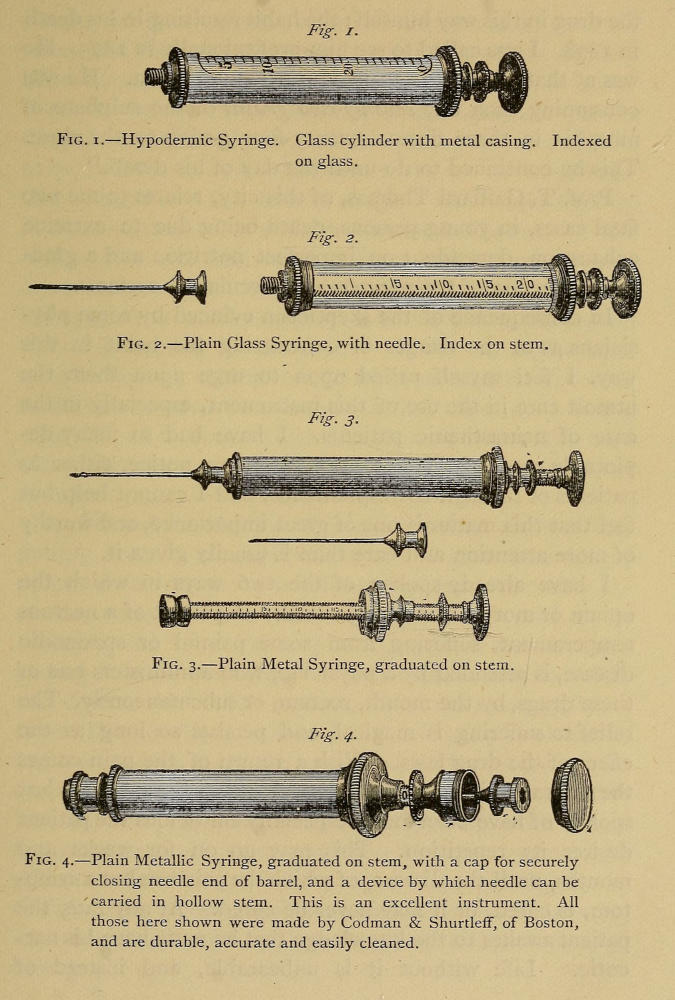
Fig. 1.—Hypodermic Syringe. Glass cylinder with metal casing. Indexed
on glass.
Fig. 2.—Plain Glass Syringe, with needle. Index on stem.
Fig. 3.—Plain Metal Syringe, graduated on stem.
Fig. 4.—Plain Metallic Syringe, graduated on stem, with a cap for securely
closing needle end of barrel, and a device by which needle can be
carried in hollow stem. This is an excellent instrument. All
those here shown were made by Codman & Shurtleff, of Boston,
and are durable, accurate and easily cleaned.
Prof. T. Gaillard Thomas, of this city, relates to me two
fatal cases, in young persons, death being due to extreme
exhaustion, dependent on imperfect nutrition and a gradual
depression of the nervous and circulatory systems.
In consequence of the skepticism evinced by some physicians
as to the danger of contracting the habit in this
way, I feel myself called upon to urge upon them the
utmost care in the use of this instrument, especially in the
case of neurasthenic patients. I have had so many deplorable
cases of this kind brought to my notice, either as
patients or through correspondence, that I cannot help but
feel that this matter is one of great importance, and worthy
of more attention and care than is usually given it.
I have already spoken of the two ways in which the
opium or morphia habit is formed. A patient of a nervous
temperament, suffering from some painful or spasmodic
disease, is attended by a physician, who administers one of
these drugs, by the mouth, rectum, or subcutaneously. The
relief to suffering is magical, and persists so long as the
effect of the drug lasts. With a return of the pain comes
the natural desire to have it relieved, and as the narcotics just
spoken of have been found especially efficacious the patient
desires its repetition. This may go on for weeks and
months, until the disease, of which the pain was but a symptom,
is cured, or it may never be cured. At any rate, the
patient awakes to the knowledge that he must have his narcotic.
Life without it is unbearable, and instead of
putting forth an extreme effort of the will, as is done by
some, and then and there abandoning its use, the majority
allow themselves to drift into this habit of daily intoxication
with opium. The majority of habituès first use the
drug for the relief of pain, and then find themselves unable
to break loose from it. Some seem to be so constituted
that a single or a few doses of drugs of this nature light up
in them an irresistible desire to continue their use. There
seems to be a morbid craving for something, exactly what
is not known, until the narcotic is tried, when this morbid
appetite is satisfied and fixed, and becomes the typical
“morbid craving for morphia.” It will be dipsomania,
morphia-mania, chloral-mania, hasheesh-mania, according
as the one or other drug is presented to the patient in the
condition of craving. Some persons are undoubtedly born
with, and some acquire, this craving for some narcotic or
stimulant.
A person knowing this fact can readily see how like
putting a match to gunpowder it is to give these people
opium or morphine in any form, and how inevitably the
reading such a book as that of De Quincey’s would create
a longing and open the way to a road that has a certain
ending in a life’s bondage. Such as these are to be pitied,
and deserve the kindest treatment and the most judicious
care. They are like a person who has lost a limb, or is suffering
from a cancer. In the one instance they lack a certain
something that should be there, and which is necessary to the
free, full and proper enjoyment of life; in the other case—the
acquired tendency or craving—they have a pernicious
addition to the system that threatens them with death.
Pity, then, rather than blame, at the same time using
every legitimate means to break up both the habit and the
tendency.
CHAPTER III. GENERAL SYMPTOMS CLASSIFIED AND ANALYZED. — THE DIGESTIVE APPARATUS. ( Stomach, Liver and Bowels. ) — THE CUTANEOUS SURFACE. — THE SEXUAL ORGANS.
I am of the opinion that a clearer and consequently
more thorough understanding of this part of the subject
can be obtained by classing the various effects of the continued
use of morphine or opium under the headings of
the different systems and apparatuses, and have, therefore,
adopted this method of presenting these matters to the
reader.
The first effect of opium or its alkaloid morphia on the
stomach is, in the majority of instances, to increase the
appetite and cause a pleasant sensation of warmth and a
feeling of general contentment. After a time, however,
especially if the drug is taken by the mouth, the appetite
is materially impaired, the bowels become constipated,
there is a sensation of sinking at the pit of the stomach,
the circulation through the liver is interfered with, a
catarrhal inflammation of the small intestine and stomach
supervenes, the opening of the bile duct is partially obstructed
by the swollen mucous membrane, and the result
is a more or less decided staining of the skin with the
biliary coloring matter. This is due, in part, to interference
with the cells in the proper performance of their
functions, undoubtedly through the medium of the nerves
passing to them. At the same time, the gastric juice is
diminished in amount and lessened in strength, as is also the
case regarding the intestinal and pancreatic secretions, the
digestion of food is imperfectly performed, and in consequence,
a condition of malnutrition results, showing itself
in wasting of the muscles and loss of the fatty tissue beneath
the skin, especially of the face, breast and abdomen.
As the gastric catarrh increases, nausea and finally vomiting
ensue, still further debilitating the patient. Derangements
of the stomach, liver and bowels are much more
common among those who use the drug by the mouth. I
have, however, seen patients who, while using morphia
hypodermically, have suffered intensely with jaundice,
catarrh of the stomach, nausea and vomiting. When these
disorders do arise in the course of the subcutaneous use of
morphia they are prone to be very acute in character. A
gentleman, aged about 32, came under my notice some
months ago, suffering from dropsy of both legs, which,
from the middle of the leg to and about the ankles, were
covered with collections of minute red spots, evidently
points at which the capillary blood vessels had ruptured.
An examination of his urine discovered thirty per cent.
of albumen and some tube casts from the kidneys. Also
a decided amount of morphine, and considerable blood.
He was put upon tonic remedies; the legs, previously
dressed with sulphate of iron ointment, were tightly bandaged.
After about two weeks the dropsy lessened, the
spots disappeared and the general health improved sufficiently
to allow of a business trip to the West. No sooner
had he neared his destination, however, than the dropsy
of the legs again appeared, and the old trouble came back
in full force. In addition, he became somewhat jaundiced,
water made its appearance in the abdomen, and a most
distressing nausea harassed him day and night. During
all this time he managed to do an unusual amount of literary
work, that required both knowledge and tact. On his
return to New York, he was in a very weak and debilitated
condition. The stomach rebelled at almost every kind of
food, the belly was distended with water, the nausea
intense, the vomiting frequent, and urine high colored,
bloody and containing about sixty per cent. of albumen.
While in the West an attempt was made to gradually
diminish the amount of morphia, but owing to severe illness,
was abandoned. Nor did I think it advisable to try
again until the general health was better. Upon iron, in
different forms (dialyzed, Bland’s pills, and muriated
tincture), strychnia, phosphorus and gentian, he gradually
improved, and is now just commencing the treatment by
gradual reduction. He consumes daily about ten grains,
using it subcutaneously. He contracted the habit some
five years ago, through its being administered to him
hypodermically, during a severe attack of acute articular
rheumatism. Two years ago he was broken of the habit
by a physician in this city, who pursued the plan of sudden
deprivation, with the result of nearly killing the patient.
While traveling in Germany, for the purpose of reporting
certain facts for his paper, he was suddenly taken with
congestion of the brain, accompanied by intense pain and
a state of semi-consciousness. A German physician who
was called in, not knowing the man’s previous history,
gave him a subcutaneous injection of morphia, with the
result of re-establishing the habit.
Fluid in the abdomen is not a common complication,
and when it does occur, crowds the stomach upward, interferes
with the circulation of blood in the viscera in the
abdominal cavity and renders the nausea and vomiting still
more troublesome.
The stools voided by morphia-maniacs are sometimes
clay-colored, being devoid of biliary coloring-matter. The
absence of bile in the intestinal canal allows of decomposition
of the food, with the production of ill-smelling gases
which regurgitate through the stomach, or pass by the
bowels. Constipation is the rule. Sometimes it alternates
with severe diarrhœa. In one patient whom I saw, the
fæces collected day by day in the bowels, until impaction
resulted and the mass was removed, with the greatest difficulty,
by means of large enemata and the handle of a spoon.
This lady had been using the drug, crude opium, for only
eight months.
This constipation from hardened condition of the fæces
produces irritation, intestinal catarrh, and often hemorrhoids
accompanied by an eczematous eruption about the anus.
Heartburn, not from an excess of gastric juice, as is so
often supposed, but from an acid fermentation of the food,
is not an uncommon symptom.
Some patients go on for years with no disturbance of the
bowels, liver and stomach, beyond a slight catarrh and
some jaundice, but these troubles are sure to come sooner
or later.
In many instances as the appetite for food decreases the
appetite for alcoholic stimulants replaces it. A young lady,
of twenty, formerly a patient of mine, after using the
drug subcutaneously for three years, lost her appetite and
subsisted for nearly eight months upon lager beer, a few
crackers and a little toast. She would consume about one
gallon of beer a day. During this time she somewhat
diminished the amount of morphine used (eight grains,
dropped to six grains, in twenty-four hours) and gained in
weight and health. At the end of this time, however,
severe gastric disturbance supervened, and she lay for
months in a precarious condition. She is now cured of the
habit.
Alcoholic stimulants are used by some habituès to increase
the effect of the morphia, which it does to a certain
extent. They delude themselves into the belief that they
will be enabled to thus reduce the amount of morphia
used, but in the majority of cases this is a fallacy. Those
who prefer laudanum and paregoric to opium or morphine
often do so on account of the amount of alcohol contained
in these preparations. I knew a gentleman, some years
ago, now dead, an Episcopalian minister, who became
addicted to the use of alcoholic stimulants. His excesses
were so frequent and so degrading that it was found necessary
to expel him from the church. Sobered by the blow,
yet unwilling to entirely abandon his habit, he seized upon
the expedient of using large quantities of laudanum, thus
getting the effect of both opium and alcohol. He died
some two years after, from taking an overdose, at the end
of a spree, the first and last one in the two years. His
tombstone is a monument to blasted hopes, unsatisfied
ambition, a life ill-spent, and points a very pregnant
moral to those who knew him. Let a man count well the
cost before he takes service with a master who is only
satisfied with a blasted life, here and hereafter.
The effects of these drugs upon the skin may be divided
into those relating to color, sensation and nutrition. The
sallow, cadaveric hue so often seen in advanced cases is
partly due to discoloration by the biliary matters,
which are not properly excreted by the liver, and partly
to a condition of malnutrition, so often seen in persons
suffering from cancerous disease. In case there is serious
interference with the working of the kidneys, the sallow
color becomes less distinct, diluted expresses it well, and
it has an appearance more like that of old white marble.
In this case the tissue feels doughy and “soggy,” and at
points a pit made in the skin by the pressure of the finger
remains. There is also puffiness under the eyelids and the
eyes are bleared and watery. When there is no dropsy
the skin is usually dry and harsh, although at times bathed
with a cold, exhausting perspiration, the odor of which is
oftentimes very offensive. A morphia or opium taker,
previously ill-nourished, sometimes seems to improve, taking
on flesh rapidly. The appearance, often best seen in the
face, is very deceptive, and is, in the majority of instances,
due to slight dropsy. It is sometimes seen a few weeks
after these patients commence to use alcoholic stimulants,
especially beer. It soon passes away, leaving them looking
thinner and more miserable than before.
In those cases where the habit has not progressed very
far, the skin is usually made redder and coarser than
natural, and is dotted here and there with pustules.
In one case that I have recently had under my care,
that of a young lady who had never used stimulants and
who had only used morphia, and that subcutaneously,
for seventeen months, a swollen and reddened condition of
the nose, exactly like that seen in old drunkards, was present.
Two weeks after the morphine was stopped the
nose began to lessen in size and the color to disappear, and
the condition was entirely cured at the end of three weeks.
No local applications were used.
Loss of elasticity of the skin is a common change. That
nutrition is seriously interfered with is seen by this alteration,
the loss of adipose tissue, the ill-balanced circulation,
giving at one time coldness and paleness, at another flushing
and undue warmth, and the variable secretion. A
plump and well nourished person who commences the use
of morphia loses those outlines of health caused by the
proper development of the muscular system and normal
distribution of fat beneath the skin. Face and form are
both changed, and certainly for the worse.
These changes are undoubtedly due to a double action
of morphine; that on the alimentary canal preventing the
proper digestion and assimilation of food, and that upon
the nerves regulating the supply of blood that passes to the
skin.
Eruptions after a time appear upon various parts of the
body, more especially the face, chest and back. They are
usually pustular, with hard, indurated bases; sometimes
papular. Herpes zoster or “shingles” is occasionally produced,
and is attended by most intolerable itching; less
often purpura hemorrhagica. In the case of the literary
gentleman already spoken of this was present, as was also
bleeding from the kidneys. When it does occur the system
must be in a greatly exhausted and the blood in a very
poor condition, a condition which it usually takes a long
time or large doses of the drug to produce.
Another symptom dependent on disordered nutrition of
the skin is the rapid or slow falling of the hair that occurs
in some patients. However much hair restorers and scalp
tonics may be used in these cases, the hair, once having
commenced to fall, will continue to do so until the general
health improves. When the drug has been stopped a free
falling out of the hair occurs, followed by a new and
luxuriant growth. Indeed, sweeping out and rebuilding
seems to be the rule in every tissue. Change in color of
the hair has been noted in some cases.
Those affections of the skin due to the use of dirty solutions
and unclean needles when the drug is given subcutaneously
will be spoken of fully presently.
Sensation is variously altered. Sometimes there is a
condition of hyperæsthesia, the least touch being intensely
painful, the contact of the clothing causing decided irritation.
Occasionally a whole limb or part of a limb or
portions of the trunk or face will feel “numb or dead.”
Sometimes there are a series of pricking or tickling sensations
that are very aggravating, as they and the numbness
are often looked upon by patients as precursors of paralysis.
Sensitiveness to cold is often extreme. This and the
very hard clay-colored stools are also seen in saccharine
diabetes, and in every case where I have noted them
sugar was found in greater or less quantity in the urine of
the patient. What the connection is I cannot say, but it
is worthy of further study.
The continued use of opium or morphine has a decided
effect upon the sexual apparatus. One of the first changes
to be noticed in women is scantiness, then irregularity,
and finally, total cessation of menstruation. In some
cases an occasional period is observed, but as a rule, the
stopping is decided and permanent until the habit is
abandoned. Occasionally menstruation occurs when a
change is made from one preparation to another, or from
one mode of administering to another.
In one of my patients, not under treatment for that, but
still an habituè, menstruation showed itself, after a three
years’ cessation, on changing from the use of laudanum by
the mouth to morphine by the skin. It occurred, however,
but the once.
In the case of the young married lady already referred
to, when a change was made from subcutaneous to rectal
injections the flow was re-established and showed itself,
although irregularly, for nearly a year.
Levenstein, who has made some interesting and valuable
researches and experiments upon this matter, believes that
this abnormal menopause is due to the inactivity of the
ovaries. He says:—
“According to Pflueger’s theory, in cases of amenorrhœa
due to morbid craving for morphia, the growth of the
ovarian cells would be stopped from one monthly period
to another, and consequently there would be a want of
stimulus on the ovarian nerves, causing on the one hand
the rupture of Graaf’s follicles, and producing, on the other
hand, a congested state of the generative organs by reflex
action. Hence, the morphia would act in the same manner
on the ovaries as on other secreting glands, i. e.,
would render them devoid of function under its continued
influence. It is likely, therefore, that the menstrual discharge
does not show on account of no ovulation taking
place; this also would account for the sterility.”[5]
Accompanying this condition of non-menstruation there
is always sterility. That this is due to the habitual use of
morphia is proven by the fact that these women have borne
a child or children before the use of the drug was commenced,
and have again become pregnant and gone to full
term after the habit was abandoned. So long, however,
as menstruation does occur, there is a possibility of the
woman’s becoming pregnant.
In the majority of instances sensation is finally lost,
although it is usually increased during the first few months’
use of the drug. A patient of mine, a lady who had used
morphine by the mouth for sixteen years, found her virile
power during and at the end of that time in no way
impaired. If anything, it was increased. Her dose of
morphine was ten grains. She had not menstruated for a
long time. This was the only case in which I tried Levenstein’s
plan of at once stopping the drug, and I shall
certainly never try it again.
With the suppression of the menstruation, there sometimes
come the usual symptoms attending the suppression
of this function in non-habituès.
Levenstein states that ladies suffering from leucorrhœa
are often cured of this complaint by the habitual use of
morphia; the discharge returning, however, as soon as the
habit is broken, and causing labor-like pains.
Certain it is that most female patients, on breaking the
habit, suffer from a severe leucorrhœa, whether or not they
had such a discharge previous to commencing the use of
the drug. One of my lady patients who used six grains a
day, subcutaneously, had a leucorrhœal discharge before
she began the use of morphia, and upon which a four years’
habituation had no curative or modifying effect. As soon,
however, as the habit was broken, the discharge increased
greatly in quantity, and changed in character, becoming
more tenacious.
Spasmodic closure of the mouth of the vagina on
attempting to introduce the finger or a speculum, I have
noticed in two cases. It, also, readily passes away after the
use of morphia is abandoned.
A woman becoming pregnant in the early course of her
addiction to this habit will, in the majority of cases, abort
before reaching full term, especially if the amount used is
large. Levenstein has noted the fact that wives of men
addicted to the habitual use of this drug in large doses
had in the last two years never carried children to full
term, although young, healthy, and having borne children
before the husband became an habituè.
There is no question in my mind but that the excessive
use of this drug by one or both parents, but especially the
mother, in case she is able to carry her child to full term,
will modify disadvantageously the physical, mental, or
moral development of the child thus born. A physician
from the South tells me of the case of a lady who commenced
the use of opium at the beginning of her pregnancy.
She was delivered of a fair-sized child that grew up in fair,
though not robust health, and menstruated at the proper age.
She is, however, very simple and childish, still plays with
dolls, although a young lady, is very eccentric, and shuns
the society of young men. The mother, who is still living,
ceased to menstruate at the age of 30 and has never menstruated
since, some twenty years. For the past two or three
years she has been using sixty grains of gum opium daily.
Dr. Alonzo Calkins[6] relates several cases where the children
of such parents were either physically or intellectually
deficient. I give but one of them: “At an inquest held
by Dr. Macnish it appeared that a child five years of age,
though to appearance only so many weeks old, had never
been able to walk, nor so much as utter an articulate sound.
The mother, during her gestation (as was in evidence),
had taken to morphine, using a drachm a day in the months
just preceding her demise. A child born before the habit
had become fixed showed a normal development and the
aspect of general health.” Another case is related where
both parents were “healthy and robust by original constitution
and by habits of life too, with the exception that the
woman had, for a very considerable period, been in the
practice of using morphine regularly and to great excess.
An infant born subject to the liabilities, had only a very
imperfect physical organization, with weak intellectual indications.”
By carefully conducted experiments on animals (pregnant
dogs and rabbits), Levenstein found that the continued
use of morphia invariably produced abortion, the fœtus
being born dead.
With the cessation of the menses the breasts usually
dwindle in size, and the voice attains a more masculine
tone.
In man the first indication of an effect on the sexual
organs is increased desire; this, however, giving way
sooner or later to partial or total impotence. The fact,
noted by Levenstein, regarding the rarity of conception
and parturition in the wives of habituès, has already been
spoken of. If the amount of opium or morphine used is
small, impotence may not come for a number of years.
The power of partial or full erection, without emission, is
preserved by some. In those cases where there is inability
to impregnate the female, there undoubtedly exists a
deterioration of the functional power of the testes. In one
case which I saw the testicles were markedly atrophied.
In two cases I was fortunate to be able to examine the
seminal fluid, a few days after the habit had been broken.
These patients, as is usual on recovery, were troubled with
erections and nocturnal emissions. In both instances the
zoosperms were small, and present in less than the normal
quantity. In one case, where it was possible, owing to
the patient’s having been previously instructed, I was able
to examine this fluid once or twice weekly for nearly two
months. Each succeeding examination showed a larger
number of zoosperms, each sample apparently better
developed than the preceding.
Even large doses sometimes fail to produce impotence.
One young man, twenty-five years of age, who has been
taking, subcutaneously, ten grains of morphia, for over
three years, is a confirmed masturbator, and seems to have
frequent emissions.
CHAPTER IV. GENERAL SYMPTOMS CLASSIFIED AND ANALYZED. — THE URINARY ORGANS. — THE EYES. — THE MUSCULAR SYSTEM. — RESPIRATION. — THE CIRCULATION. — THE MIND. — THE NERVOUS SYSTEM. — CASE I.—INTERMITTENT FEVER IN CONSEQUENCE OF MORBID CRAVING FOR MORPHIA. — CASE II.—INTERMITTENT FEVER IN CONSEQUENCE OF MORBID CRAVING FOR MORPHIA. (IMPOTENCE. DISORDERED SPEECH. ALBUMINURIA.)
Albuminuria, usually temporary, is not an uncommon
result of the prolonged use of morphia. The deposit, after
applying heat and nitric acid, may vary from one-twentieth
to one-seventieth per cent. of bulk. In some cases it comes
and goes, one day appearing as a slight, hazy cloud, and on
another as a measurable deposit. Albuminuria and diabetes
are more commonly found in patients who use the drug
hypodermically. In some rare instances casts, epithelial,
granular, hyaline and bloody, are to be found in the urine,
as also free renal cells, apparently healthy. This was the
case with the literary gentlemen spoken of in the second
chapter. This does not indicate organic disease of the
kidney, for after the withdrawal of the drug the albumen
and casts gradually disappear.
The specific gravity of the urine varies according to the
bodily condition of the patient, the weather and the
amount of fluid ingesta used. If sugar is present the
gravity is high; if albumen, usually low. In nervous and
hysterical women there is a low gravity with an excess of
the alkaline phosphates. In nearly all cases the uric acid
is increased after the drug has been used for a time, the
urea is very materially diminished, due probably to the
small amount of food taken, the congested and deranged
condition of the liver, and the impeded tissue metamorphosis.
The chlorides are always slightly, sometimes
markedly, diminished in amount.
Levenstein concludes, from his observations on patients
and experiments on animals, in whom the continued use
of morphia produced albuminuria, that this affection is due
to varying blood pressure in the renal vessels through the
nerves supplying them.
Contrary to the experience of Levenstein, I have found
sugar in the urine of some (four) of my patients. This,
like the albuminuria, was permanent in one case, and came
and went in the other three. Its presence was undoubted,
it reducing the copper of Fehling’s liquor (previously
tested) and answering to the fermentation and bismuth
tests. In three of the cases it disappeared after stopping
the morphia. The fourth patient is still under treatment.
Levenstein finds that acute poisoning by morphia, in
men and animals, is always accompanied by sugar in the
urine.
Strangury and retention of urine is occasionally the result
of the long continued use of the drug.
The albuminuria of morphia-mania is sometimes accompanied
by dropsy of the feet and limbs, less often of the
abdomen and pleural sacs. When thus occurring the case
is a grave one, and it will take time to decide whether
there is not real organic disease of the kidneys, in which
case the breaking of the habit may cause death by convulsions.
It is a rare thing to find actual disease of the eyes that
can be traced directly to the abuse of morphia. It is usual
to find the retina somewhat congested. Blurring of sight
and double vision are sometimes complained of. Muscæ
volantes, or specks floating before the eyes, are sometimes
seen. One patient of mine who had been near-sighted
four years, during which time she had used the drug subcutaneously,
claims to have regained full power of sight
since the habit has been broken.
The pupils are, as a rule, contracted and regular, occasionally
of normal size and irregular.
Locomotion is rarely affected during the continuance of
the habit, save from weakness. Twitching of isolated
muscles, such as the orbicularis palpebrarum of one eye,
is sometimes seen. When the doses of opium or morphine
become very large, co-ordination is sometimes interfered
with. Wasting of the muscles is found in advanced cases,
as also is trembling of the hands.
Respiration is rarely affected. In some cases there is
shortness of breath on walking fast or going up a long
flight of stairs. A low grade bronchitis sometimes exists,
as also a short, hacking cough, that seems to come chiefly
from irritation in the throat.
Circulation is often affected but chiefly through the
agency of the nervous system; witness the flushing of the
face, and flashes of heat over the body, followed by a cold,
exhausting sweat. There is often irregular and weakened
action of the heart, and congestion of the brain. The
albuminuria already spoken of is due, in all likelihood, to
an affection of the vessels of the kidneys, through the
nerves supplying them. The blood itself, owing to a general
condition of malnutrition and imperfect digestion, is
unquestionably deteriorated. In some cases the vessels
rupture, giving us purpuric spots on the body and hemorrhage
from the kidneys and bowels. Dropsy, which sometimes
occurs, is due, in the majority of instances, to variable
blood pressure, and a diseased condition of the walls of the
vessels, permitting the easy transudition of the watery element
of the blood. Headache, flushing of the face, flashes
of heat and the like, from suppression of the menses, is seen
during the early period of morphia addiction, but later
nothing but the nervous symptoms attendant upon this
condition are manifested.
Early in the use of morphia the effects upon the mind
are simply those of pleasant exhilaration, a feeling of perfect
contentment, good will toward all, increased conversational
power and stimulation of the imaginative faculties.
Sleep is preceded by a period of luxurious drowsiness,
fertile in pleasant retrospective and magnificent anticipation.
There is total banishment of pain and care. It is,
indeed, the ideal life of a dreamer, moulded and modified
according to the temperament and intellectual tendencies
of the individual.
As time advances, however, the duration of these periods
is found to become shorter, and it is necessary, in order
to obtain the same pleasant result, to increase the amount
of the drug. It has, also, to be taken oftener. Sleep,
when it comes, is less profound, the dreams not so pleasant.
Should the patient pass the accustomed time for the drug,
the loss is at once felt and the first symptoms of rebellion
show themselves. A further and larger dose is taken, to
quiet the rebellious demon that rules them, and again
comes the pleasure, though not so satisfying as at first.
The hours of freedom from the tyrant become shorter and
shorter, sleep refuses to come, grave doubts fill the mind,
the temper is no longer even and pleasant, but irritable
and capricious, pains show themselves in various parts of
the body, the nights are long hours of torment, conversation
becomes a burden, suspicion shows itself, a desire to
be alone is overpowering, better feelings are blunted, benevolence
is replaced by selfishness, mental stimulation
and exhilarance by torpor. Friends are neglected, the
books that were once interesting are no longer so, amusements
pall upon the taste, family ties, once so pleasant,
are become burdensome, and life a dreary space, marked
only by the hour at which the drug is to be taken. The
days are filled with repentance, the hours garnished
with resolves no sooner made than broken,
“O woeful impotence of weak resolve,”
the nights years of misery and anguish, teeming with
horrors beyond the power of tongue or pen to paint.
Here is the plaint of one, now freed from his bondage:[7]
“The morphia victim dwells, after the first
exhilaration is gone, in a realm of phantoms and
shadows. I saw sights more terrible than can be imagined.
I felt pains that do not belong to any mortal lesion. I
have shrieked my terror, but the shriek only awoke a
myriad of devils, who had been sleeping till then unseen
by me. Four months of morphia addiction sufficed to
bring me to this land of horrors, where no joy came or has
come since the making of the world. My days were spent
in self-indulgences. Alone in my office, in an easy chair,
I could, with poetry and interesting therapeutical works,
manage quite comfortably to pass the hours away. But let
a patient summon me away from home, and my gloom and
despondency was almost insupportable. I was tormented
by continual self-conflict. Conscious of the weakness of
my efforts to emancipate myself, I kept on planning some
new mode of attack, in the nerveless hope that I could defeat
the Lethean devil whose thews were strong as steel,
and yet I knew, as day followed day, and week followed
week, in so far as all this mental warfare was concerned, it
could bring me no help in my awful bondage.
“No dark imagery can paint the encompassing horrors
of those nights of torment that belonged to the last two
months of my twelve months’ morphia addiction. Not one
hour that I passed in bed between midnight and noon did
I know normal sleep. In dreams that seemed more vivid
than reality, I entered gloomy caves, and walked for hours
over rotten cadavers, sometimes forced to step on them
and be overwhelmed with loathsome odors. I saw faces
in the weird darkness, sometimes a thousand at once, and
each was made of blood-red flame; they flashed and went
out. My nightmared brain was chased and haunted by
everything that can exist in a vast hell of phantoms.”
Apropos, the following from Moore’s “Veiled Prophet
of Khorassan”:—
“Dreadful it was to see the ghastly stare,
The stony look of horror and despair,
Which some of these expiring victims cast
Upon that mocking Fiend, whose veil, now raised,
Showed them, as in death’s agony they gazed,
Not the long-promised light, the brow whose beaming
Was to come forth, all conquering, all redeeming,
But features horribler than Hell e’er traced
On its own brood; no Demon of the Waste,
No church-yard Ghole, caught lingering in the light
Of the blessed sun, e’er blasted human sight
With lineaments so foul, so fierce as those
The Impostor now, in grinning mockery, shows:
‘There, ye wise Saints, behold your Light, your Star,
Ye would be dupes and victims, and ye are.
Is it enough? Or must I, while a thrill
Lives in your sapient bosoms, cheat you still?’”
Thus it is, pursued to the very grave-edge, these victims
loathe the drug they once loved. Business is gone, family
broken, friends lost, moral sense blunted or destroyed,
mind incapable of healthy action, body wrecked, and they
see no hope here or hereafter.
They will lie and steal, do almost anything to obtain the
drug with which and without which they are finally in a
veritable hell. The face becomes sallow and soggy, the
eyes bleared and expressionless, and the final result is
either death or insanity. Some persons go on using these
drugs for years before the symptoms here described supervene;
some are thus affected in a few months.
Having reached this stage they cannot arouse themselves
from their terrible infatuation. Gloomy and hopeless, the
world and the people in it no longer interest them. A
patient whom I saw some years ago, a young Spaniard, was
suffering from insanity from the use of morphine. Hour
by hour he would sit folding, refolding and cutting paper
into small bits with an old lancet. He would speak to no
one, notice no one. This went on for months. He was
sent to an insane asylum finally, and on searching his
trunk some two score morphine bottles, as well as the
greater part of the trunk, was filled with these minute
scraps of paper. I have never been able to learn what
became of him.
A lady patient of mine, well advanced in years, would
save scraps of tin, old bits of rags, glass stoppers of bottles,
and the like, setting great store by them. She laughed
heartily at her collection, and threw them away one week
after her emancipation.
Sometimes there is a mawkish sentimentality exhibited
toward the opposite sex; sometimes there is mock
modesty or direct abhorrence.
In the majority of instances these people are great liars,
especially about matters concerning their habituation;
often also about trivial things, where falsification is absurd
and absolutely without excuse.
Occasionally there is a loss of connection between ideas
in talking, incoherence and silliness. The speech is, as a
rule, slow and somewhat drawling, and often interrupted
to wet the lips, which become dry and parched. Severe
pain in the head and about the region of the heart is sometimes
complained of, also in the “small of the back.”
In some cases, more especially those of an intensely nervous
organization, the prolonged abuse of opium or morphine
produces a condition characterized by cerebral excitement,
analogous to that of delirium potatorum. These
people are, however, less violent, and the affection usually
passes away in a short time, without treatment.
On the nervous system the effects of opium and morphine
are most manifest. Taken at first to relieve pain and disorders
of this system, having their chief action upon it at
all times, their continued use reacts with deadly intensity.
Twitching of isolated muscles, trembling of the hands and
of the tongue, when protruded, and occasionally paralysis
of one eyelid, are seen. The pains that supervene have no
distinctive character, as do those that come from the abuse
of chloral.
Itching of the whole or parts of the body is sometimes
very troublesome. Herpes zoster (shingles), an eruption
following the distribution of the nerve filaments upon the
trunk, occasionally occurs, as also does urticaria (nettle
rash). The very disorder for which the drug was first
taken, is, in some instances, aggravated or perpetuated.
This was first noticed by Dr. T. Clifford Allbutt[8], of
England, and I have seen the same in some instances.
In the condition of delirium sometimes occurring, the
pupils, usually contracted, are occasionally irregular and
dilated.
The whole nervous system is unstrung, or more properly,
too highly strung, so that it vibrates to little things that in
health would pass unnoticed. They jump at the falling of
a book or the shutting of a door.
Hysterical women still continue to have their customary
attacks, sometimes in an aggravated form.
The following interesting case history has been kindly
sent me by Dr. Judson B. Andrews:—
A woman,[9] thirty years of age, single, seamstress, with
no hereditary tendency to insanity; was of a highly
nervous and excitable organization, emotional and irregular
in feeling; at times buoyant and lively, and then
gloomy and depressed. Her health during early life was
delicate, though she suffered from no definite form of disease.
At the age of twenty, in April, 1862, she was seized
with pain in the head. It was of short duration, but very
severe, and during its continuance the patient was delirious.
Attacks of the same character, both in the severity
of the pain and the mental disturbance, have occurred
since, at intervals of from one to three months.[10] In 1864
she had acute rheumatism, and in 1865 a severe attack of
diphtheria.
After the local disease of the throat had apparently subsided
vomiting supervened, and was repeated every few
hours for some five weeks. To relieve this condition and
procure sleep, hypodermic injections of morphia were successfully
employed for about one week, and the patient
rapidly regained her health. Some two years after this, or
in July, 1867, she had an attack of inflammation of the
bowels and peritoneum, and for four weeks was delirious
most of the time. She improved somewhat in health, but
for the four months succeeding had frequent attacks of
frenzy, during which she often threatened to take her own
and her mother’s life, and became very difficult to control.
In October following she had improved so far as to pass
from the immediate charge of her physician. Soon after
this he ascertained she was using hypodermic injections of
morphia, to relieve pain in her limbs and different parts of
her body. I quote from his letter:—
I was informed that she was using it (morphia) to a considerable
extent, and called immediately to explain to her the effects
and danger attending the practice. I believe every effort was
made that could be to prevail upon her to desist, but all to no
purpose. She was cunning and artful, and would almost always
study out some plan to get the morphia. She has used
as much as two drachms in a week, in one or two well-authenticated
instances. The usual amount was one drachm per
week. She used but little, if any, for three or four months
before she was sent to the asylum, for it was very difficult for
her to get it. She has acted very strangely ever since her first
sickness. She has been truly a mystery, which no one could
solve.
Her mother says:—
That for years she has complained of pain, and pressed her
hand on either side of her head, with the exclamation, “Oh,
mother, mother, I shall die!” That for six years she has complained
of such soreness of the head that when she passed her
hand over it, in smoothing her daughter’s hair, she would cry
out: “Oh, mother, don’t; it hurts me so!” That five years
ago, in 1867, she was obliged to call in help, as the patient
threatened and intended to take her own life. That both before
and after she began the use of morphia, her conduct was
peculiar and erratic; that she was emotional and easily disturbed
by trifles. That after the morphia habit was known,
her conduct for many years preceding was wrongly attributed
to this cause.
A few weeks before she was sent to the asylum she
passed into an acutely maniacal condition, in which she
was sleepless, ate little and irregularly, lost flesh and
strength rapidly, and became quite feeble. She was destructive
of clothing, pulled her hair out, was noisy, incoherent
and violent; opposed care, wandered about, and
was with difficulty controlled. In this condition she was
admitted to the institution, on the fifth of May, 1871.
She was carried to the ward and placed in bed. Examination
revealed scars and ecchymosed spots, covering nearly
the whole of the body which could be reached by her own
hand. She asserted that she had employed the hypodermic
injections for three and one-half years, once, and much of
the time twice, a day, making in all about two thousand
injections; that during the last few months of its continuance
she had used a drachm and one-half of morphia per
week; that she inserted the needle perpendicularly to the
surface, and often carried its full length into the tissues.
For two days she was sleepless and retained no nourishment.
Chloral, in thirty-grain doses, was then administered,
which was tolerated by the stomach, and secured
sleep. The vomiting gradually became less frequent and
soon ceased. She ate well, gained flesh and strength, all
maniacal symptoms subsided, and in twenty days she was
up and about the ward. Menstruation, as she said, had
been suppressed for two years. As she complained of pain
in the back and other symptoms which usually preceded it,
she was placed on the use of capsules of apiol, and on the
24th of June began to menstruate, but the flow was scanty,
and accompanied by much pain.
During the month following she steadily gained in mental
strength, and became quite stout. At time of next
menstrual period the right breast swelled to an extraordinary
size, so that we were obliged to suspend it with adhesive
straps. It was hard and extremely sensitive to the touch.
This condition of swelling and tenderness extended in a
narrow ridge to the spine. The state of the breast was at
first supposed to be owing to the sympathetic action of the
organ with the renewed activity of the menstrual function.
For two weeks applications were employed, without success,
to relieve the pain and tension. At this time, on the
13th of August, the patient, in rubbing her hand over the
breast, discovered an elevated point just under the skin,
which, on pressure, gave a pricking sensation. This was
cut down upon, and a broken needle extracted. On the
15th another needle was removed. The breast was now
inflamed and extremely sensitive. August 28th, another
needle was taken out. August 29th, menstruation began
again. The flow was profuse, and she became at once
delirious. Was talkative, restless, profane and obscene,
and pulled her hair out. She continued in this condition
some twelve hours, and, as she stated the next day, was
entirely unconscious of what had occurred.
From this time till September 28th, from one to five
needles were removed daily from the breast. Menstruation
then occurred again, and was characterized as before
by a similar attack of mental disturbance. After this,
during the months of October and November, needles
were taken from various parts of the body; from the left
breast, the abdominal parietes, the mons veneris, the labia,
and vagina. Of these latter, some passed across the
urethra and rendered urination difficult and painful;
others across the vagina, either end being imbedded in
opposite sides. Some were removed from the thighs, from
the leg, down to the ankle, from the buttocks, from about
the anus, from the back as high up as between the shoulders.
The largest number extracted in any one day was
twelve.
On one occasion ether was administered, but the difficulty
experienced in bringing her under its influence, and
the mental disturbance produced by it were so great that
it was not again resorted to. During the whole period, to
her final illness, she retained her flesh, though she ate and
slept irregularly, under use of tonics and sedatives. She
was in a variable mental state, at times irritable, petulant,
fault-finding, attempting to create ill-feeling between
attendants, and demanding unnecessary care and waiting
upon. At other times she was abnormally cheerful, gay,
pleasant, and fulsome of praise of all around her.
For the first two months but comparatively little pain
was felt in the extraction of the needles. The skin was
thickened, harsh and dry, and almost insensible, from the
prolonged and distributed use of the injections. Afterward,
she suffered acutely, and often begged, with tears,
that their removal might be postponed from day to day.
About a month before death she had an attack of localized
pneumonia, affecting the lower portion of right lung.
This was accompanied by stridulous breathing, spasm of
the glottis, globus hystericus, crying, and other hysterical
manifestations. It was followed by an attack resembling
muscular rheumatism, characterized by great pain and
hyperæsthesia of surface. The right arm was swelled, hot
and extremely sensitive. It was supported on a pillow and
kept bathed in anodyne lotions. She lost appetite and
sleep, became much depressed, and gave up all hope of
recovery. Her tongue became dry and brown, pulse rapid,
secretions offensive, and mind very feeble. A diarrhœa
supervened and the evacuations of bowels and bladder were
involuntary. She became unconscious, and finally comatose,
and died on the 25th of December, 1871.
No needles were removed during the last two weeks;
286 were taken from her body during life; 11 were found
in the tissues after death; 3 were passed from the rectum
during sickness; making a total of 300 needles and pieces.
Of this number, 246 were whole, and 54 were parts of
needles. One was a No. 7 sewing machine needle, and
several were bent. They varied in size from No. 4 to No.
12. As regards position in the body, they were distributed
about as follows: in right breast 150; left breast, 20; abdomen,
60; genitals, 20; thighs and legs, 30; back, 20.
Of those removed after death, 5 were found in the right
and 3 in the left breast; one in a small abscess in the epigastric,
and one in the right iliac region, the point impinging
upon the peritoneum, which was discolored with
rust; and one in the upper part of lower lobe of left lung.
The presence and position of the needles were indicated to
the patient by the pricking sensation occasioned by muscular
movements. They were removed in a few instances
at first, by cutting down upon them. This proved to be a
painful, and, from the movements of the needles in the
tissues, a difficult process. Hemorrhage from the small
vessels, at times, gave some trouble. Afterwards, by
manipulation, the ends of the needles were engaged between
the thumb and forefinger, and the points, forced
through the skin, were seized and the needles extracted
with forceps. Sometimes much force was required to
withdraw them. They changed position quite readily, and
frequently moved from one to two inches in a day. They
produced little local irritation or trouble beyond the
pricking sensation, and did not seem to have contributed
in any notable degree toward producing the fatal result.
In regard to the presence of this large number of needles
in the system, no information could be obtained. The patient
repeatedly and persistently denied any knowledge of
having introduced them, either by the stomach or through
the skin. Her mother, who visited the Asylum, could
throw no light upon the subject, and was entirely ignorant
of the fact until informed by us. She, however, recalled
the circumstance that the patient purchased, at one time,
ten papers of needles, and could account for only two of
them. They were not obtained or introduced while in
the Asylum. She was under strict surveillance, and had
no means of obtaining any number of needles, and those
removed were all rusted and bore evidence of having been
a long time in the body. The stomach was closely examined
after death, and was in a perfectly healthy condition,
with no evidence of any previous inflammatory action.
The only theory which seems to us at all tenable, is
that they were introduced through the skin while she was
under the influence of morphia, hypodermically administered,
and while suffering from hysteria. That some were
found in positions where they could not have been inserted
by the patient, can be accounted for by their movements
in the tissues, which were observed so often during the life
of the patient.
The diseased condition of the brain and its membranes
was a cause sufficient to account for the abnormal mental
action and conduct of her who had been “truly a mystery
which no one could solve.” We close this remarkable
case with a transcript of the post-mortem examination.
Autopsy.—Rigor present; body well nourished; anterior
surface thickly studded with small cicatrices; abdomen
covered with thick layer of fat. A small abscess in abdominal
wall, two inches above umbilicus, three inches by one
and one-half, was filled with pus and contained one needle.
A second abscess, two inches above and to the right of the
symphysis pubis, immediately under Poupart’s ligament,
contained another needle. This pressed upon the peritoneum,
which, though discolored by rust, was not inflamed.
From the right breast, one whole and four broken needles,
and from the left one whole and two broken needles, were
removed.
Head.—Arachnoid opaque and thickened over right
hemisphere. The left hemisphere was covered by a thin
layer of pus, contained in the sub-arachnoid space. Marked
depression of convolutions at vertex of both hemispheres.
The brain substance was firmer than normal. The ventricles
were empty, and the choroid plexus contained numerous
small cysts upon its surface, filled with serum.
Thorax.—The lower lobe of the right lung was hepatized.
A whole needle was found in the upper part of the
lower lobe of the left lung.
Abdomen.—The liver was soft and fatty, and the spleen
enlarged; kidneys were normal. The stomach was subjected
to a critical examination. It was found normal, and
there was no evidence that the needles were introduced
into the system through that organ.
The vascular system, through the agency of the nerves,
is profoundly affected, as already shown.
Spasm of the muscles of the bladder and rectum is sometimes
present, and in some cases is distressing and lasts for
a considerable time.
Symptoms resembling those produced by malaria are
occasionally found. Levenstein, who was the first to call
attention to this, says: “Intermittent fever, in consequence
of a morbid craving for morphia, seems to be due to a certain
neuropathic disposition, as it does not show itself with
many patients, although they have taken large doses of the
drug, and for years together. It was, however, impossible
to fix on any other cause for the development of intermittent
fever but the use of morphia, as the respective
patients lived in regions free from malaria, and as none of
the other members of the family living under the same conditions
showed any similar symptoms.
“We may distinguish a light and a severe type of intermittent
fever, when brought on by a morbid craving for
morphia. Both forms resemble real malarial fever, inasmuch
as the first paroxysms, occurring at regular intervals,
seemed to disappear after the use of quinine, returning,
however, very soon, although the febrifuge was continually
given; that, furthermore, they were improved by change
of air, but came on again from the simplest causes, such as
boating, errors of diet, etc.
“The characteristic symptoms of this fever are the same
as those caused by malaria: chilly feeling, up to regular
shivering, headache, oppression, heat and perspiration.
They differ from one another in this respect, that immediately
the morphia is discontinued, the attacks disappear
without any treatment, although they may have existed a
long time.
“In some cases the intermittent fever sets in in an erratic
manner. The patient, at irregular times, experiences an
attack of fever, with chill, heat and sweating. These
attacks occur from three to six times, at long intervals, not
showing themselves hereafter any more at all, or only after
a great lapse of time. In most cases the attacks of intermittent
fever, in morbid craving for morphia, shows a
tertian, rarely a quotidian, type. They are sometimes
ante-, sometimes post-ponent. The attacks last from four
to ten hours, and are followed by a normal condition.
“The paroxysms disappear only in exceptional cases,
without the morphia being stopped. In this case the
patients complain of experiencing an uncomfortable sensation,
principally of an exhausting character, at the usual
time of the attacks.
“The feverish attacks are accompanied by neuralgic
affections of the different nerves, principally in the region
of the supra-orbital, intercostal and cardiac nerves. The
temperature is increased in all cases, varying from 38.5°
C. to 40° C. (101.3° F. to 104° F.). The spleen is generally
enlarged. The attack is followed by sediments in the
urine. In the severest forms of intermittents the patients
get delirious when the fever has reached its maximum,
cannot be kept in bed and may become maniacal. Both
forms cause great weakness and exhaustion, which last
during the intervals.”
I have seen but two cases that could at all be classed as
such. In one there was no fever, and the chill came every
morning at daybreak, for three mornings, missed one morning
and occurred again the next. It was followed by profuse
sweating, that lasted the whole day. In the other
case, that of the lady who had used the drug by the mouth
for sixteen years, there was fever and some intercostal
neuralgia, occurring every other day, for ten days, but not
followed by perspiration. A few doses of quinine broke
it up. It was for this that I was first called to attend her,
her husband believing her to be suffering from malarial
fever. In neither of these cases was there any enlargement
of the spleen. I then discovered that she was a morphine
habituè, much to her chagrin and her husband’s surprise,
he never having suspected it. The two following cases
are those given as examples by Levenstein:—
M. H., law student, 24 years old, sent to the Institution
by Dr. Ewald in 1874, was suffering from acute articular
rheumatism when the first injection of morphia was administered.
After his recovery, although not compelled to do
so through pain, he continued the injections several times
in the day, increasing the doses, for the sole reason that he
felt elated by them. The principal symptoms that resulted
therefrom were loss of appetite, progressive emaciation,
loss of strength, and increased perspiration, which frequently
caused the patient to become wet all over while in
a cold room and quite quiet.
Before his admission into the Maison de Santé he was
troubled with feverish attacks, which came on every two
or four days, at different times in the day, in the following
manner: first there was a chilly feeling for half an hour,
followed by heat and profuse sweating. The latter was
accompanied by the general symptoms of every feverish
attack, enlargement of the spleen also being present.
Present State.—Patient is a tall, muscular man; the examination
of the internal organs shows no abnormal condition,
excepting an enlarged spleen. Pupils of middle
size, equal, reacting well. On December 10, 1875,
the afternoon, patient received the last injection of
morphia.
December 12. Patient slept in the night. In the course
of the day he only feels a little sleepy. The face is red,
the skin moist. Toward the evening there is nausea,
pressure in the epigastrium, great restlessness, and stomach-ache.
Patient moves about in bed, complains of headache,
cannot get to sleep. Three relaxed motions.
December 22. Patient has had no sleep during the
night, three relaxed motions, vomited once. He complains
of giddiness, restlessness and palpitation of the
heart. In the morning there is a chill followed by heat
and profuse sweating. Vomiting, diarrhœa. Until the
afternoon he felt very prostrate and exhausted. Between
3 and 5 P.M. he got up. Soon, however, the symptoms of
the morning returned again, and pain in the knees, exhaustion
and restlessness compel him to go to bed.
December 23. Has slept from 2 to 5 A.M. with interruptions.
Profuse perspiration, nausea, intense craving for
morphia, frequent paroxysms of sneezing. The sickness
stopped in the course of the day. At 8 P.M. 30 grains of
chloral were given.
December 24. Only three hours’ rest. Feels knocked
up. One relaxed motion. Much sneezing; craving for
morphia. At 9 P.M. 45 grains of chloral were given, but
were immediately brought up again.
December 25. Patient has had hardly any rest. One
relaxed motion. Has been sneezing frequently. Emission
of semen. Great prostration, even in the horizontal
posture; red cheeks; craving for morphia continues for
the whole of the day. Appetite small. At 10 P.M. 45
grains of chloral.
December 26. He has slept well during the night, only
woke up two or three times. Pressure in the stomach,
headache and palpitation of the heart come on now and
then in the course of the day. At 11 P.M. 40 grains of
chloral were given.
December 27. Restless sleep, much interrupted. Patient
went about the room on waking up. During the
day he complained of heavy pressure in the head.
December 28. Patient has slept for about three hours.
Sneezing. The red color of the face of the past days was
still present to-day. Although tired he could get no rest.
Two relaxed motions. In the morning a warm bath with
cold douche was given.
December 29. Patient has slept for nearly eight hours.
Head not well yet. Severe sneezing. He feels better in
himself. Toward the evening, however, an uneasy feeling
came on in the legs. Three relaxed motions.
January 1, 1876. Except the sleep being restless,
patient feels well.
January 3. Slept only from 3 A.M.; ran about in a restless
manner previously. Three relaxed motions. In the
afternoon warm bath with cold douche.
January 13. The bodily functions are all in a normal
condition. General health good. There have been no
further attacks of fever.
January 14. Patient left the Institution.
He has had no relapse.
Urine.—The specific gravity varied from 1.012 to 1.020.
Reduction of oxide of copper was noticed.
Captain B., sent to the Institution by Staff-Surgeon Dr.
Peltzer, had been using injections of morphia in consequence
of severe pains from a gunshot wound in 1871.
For a time his medical attendant diminished the drug, but
soon, by the advice of the latter, he purchased a syringe
and bought the morphia, first at a chemist’s, and afterward
at a shop where they sold chemicals; he injected gradually
as much as twenty-four grains per day. Several times his
wife tried to stop the injections or at least to diminish the
dose, but this was followed by vomiting, diarrhœa and loss
of sleep, so that the doctor again recommended its further
use.
The principal complaints of the patient, on account of
which he, on December 20, 1875, sought admission into
the ‘Maison de Santé,’ were: The appetite is bad, the
bowels are so much constipated that they are sometimes
not relieved for eight days. From time to time patient
suffers from disordered micturition, having to strain rather
long before the water passes. Very frequently there was
congestion to the head, and during sleep quivering of the
muscles of the face and extremities. Now and then he
suffered from giddiness and headache. He feels unwell,
principally in the morning. Impotent for three years.
He was obliged to resort to alcoholic beverages as stimulants,
but he was no drunkard. From September 12 until
the end of October, 1874, the patient had had a shivering
lasting two hours daily, followed by half an hour’s heat
and two or three hours’ profuse perspiration. Large doses
of quinine taken daily for a period of three weeks are said
to have cured the fever; it is worthy of notice that the
patient stopped the use of the morphia during the latter
period of the feverish attacks. Taking to it again, there
was the same characteristic attack every week or fortnight
at first; gradually, however, the free intervals became
shorter, and at the time of his admission into the Institution
the intermittent had again returned to the quotidian
type. A treatment with large doses of quinine for several
months, resorted to by his medical attendant, proved of
no avail. Patient is pretty tall; muscles and subcutaneous
areolar tissue very well developed. Face red. Eyes
bright. Tremor of hands, slight degree of difficulty in
speaking. Patient shows great vivacity in talking; his
features move quickly; his movements are brisk. The
physical examination of the thoracic and abdominal organs
shows no abnormal condition, except a considerable enlargement
of the spleen.
The morphia was at once withheld.
December 21. Patient had a restless night, feels exhausted
and knocked up; yawns, complains of cold, loss
of appetite, severe headache on moving the head, and pains
in the back; this is followed by nausea and at night by
vomiting. Profuse perspiration.
December 22. Patient was very restless in the night;
got out of bed, ran about, laid down again, perspired
freely, asked for morphia. The abundant perspiration
lasted till midday and was accompanied by determination
of blood to the head. Patient suffered from giddiness and
felt greatly tired. Appetite poor. Frequent retching, but
no vomiting.
December 23. Patient has slept little. Three relaxed
motions in the morning. Symptoms the same as on the
previous day. New symptoms: twitchings in the extremities,
excitement, sensitiveness to the light, and epigastric
pains. To remove the latter symptom sinapisms to the
stomach, hot poultices and cupping (four times) were
attended with success. Frequent vomiting.
December 24. Patient has only slept for a few hours.
A great deal of sneezing; eight relaxed motions. In the
course of the day he felt well.
December 25. The pains and pressure in the region of
the stomach have returned and he had also palpitation of
the heart, was very much exhausted and suffered from
tenesmus. Two seminal emissions.
December 26. Four relaxed motions, shivering, feels
uncomfortable.
December 28. Patient has only had two hours’ rest.
Hands and feet burning hot. Eight motions; during the
day he felt weak, complains of formication in the hands
and feet.
December 29. Uncomfortable feeling continuing the
whole of the day. Patient’s face was of a dark red hue;
he complained of hyperæsthesia in the feet and of cold.
While reading a letter from his wife he began to cry,
although the contents showed no reason for his doing so.
Appetite good. Two relaxed motions.
December 30. Slept from 3 to 7 A.M. Two relaxed
motions. A great deal of sneezing, pressure in the
epigastrium, appetite small.
January 3, 1876. Slept from 12 to 4 A.M., after running
about in a restless manner. Formication in hands and
feet.
January 6. General condition satisfactory. Appetite
increased.
January 14. The patient has continued to recover his
strength. Bodily functions normal. Sexual power has
returned.
Urine.—During the first weeks of abstinence from morphia
the urine contained albumen.
Patient left the Institution on January 22, in perfect
health. He has not had a relapse.
Neuralgia of one-half of the face, in all respects like
malarial hemicrania, I have seen in two cases. In neither
were there other symptoms of malarial trouble. Both cases
yielded to quinine and arsenic.
Super-sensitiveness of the skin, sometimes of the whole
body, more often of a limb, or a feeling of numbness, is
not uncommon.
A fact that I had noticed before I commenced the
special study of this subject is, that those opium eaters who
live past middle age usually die from paralysis. In four
instances I have seen this. In all four cases the persons
took laudanum.
CHAPTER V. ACCIDENTS INCIDENT TO THE SUBCUTANEOUS INJECTION OF MORPHIA.
There are certain dangers attending the temporary or
continued use of morphia by the hypodermic syringe that
deserve careful attention, in order that, if possible, they
may be remedied. The first is the production of abscess
and inflammation.
The majority of those who use morphia in this way are
badly scarred. The skin is thickened, reddened and
covered with bluish and reddish discolorations. Abscesses
just forming, formed, or commencing to heal, are found
here and there. Ulcers and sloughs are sometimes seen.
Cysts are occasionally met with. Isolated patches of erysipelatous
inflammation and gangrene are found in some
instances. In the accompanying cut (p. 73) is shown the
condition of the skin in a male nurse at Bellevue Hospital,
who was an habituè. The photograph from which the cut
was made was taken but a short time before death. I have
now other patients who are quite as badly scarred. In
the case of a young married lady, the skin, everywhere
that the dress covered the body in front, and the limbs all
over, was scarred, contracted and discolored, as though
she had been badly burned and then pricked all over with
India ink.
Dujardin Beaumetz (quoted by Bartholow[11]) relates a
case where these injuries resulted in death.
These abscesses are due, in the majority of instances, to
(a) carelessness in injecting, (b) unclean needles or syringe,
(c) a dirty or over-acid solution, and (d) a low condition
of the general system, predisposing to inflammation and
suppuration on slight irritation.
I have never seen but one habituè who had a clear solution
of morphia, and he made it up fresh each day.
Abundant testimony as to the production of inflammation
and abscess from the above mentioned causes can be found
in my little work on “Morphia Hypodermically.”
Those patients who exercise great care in regard to
cleanliness and manner of injecting are rarely troubled
with abscess. Thus one patient of mine had used morphia
subcutaneously in large amount, for over six years, injecting
every time, and that several times daily, into a spot
upon one thigh, that could be covered by a small tea-saucer,
and has never yet had either inflammation or
abscess.
Indeed, some persons who exercise no care whatever to
keep syringe or solution clean, are free from this troublesome
complication. Such a case is related by Dr. Roberts
Bartholow, as follows: “One of the most inveterate subjects
I have ever encountered was a man living in the
wilds of Texas, who used a glass hypodermic syringe, that
had been broken many times, and mended with successive
deposits of sealing wax, until only the rusty old needle
remained in view, and yet he escaped all accidents.”
Magendie’s solution is that most commonly used. It is
of the strength of sixteen grains of sulphate of morphia to the
ounce of water, a few drops of acid being added to dissolve
the drug. The solution made after the plan of Dr. H. M.
Keyes is excellent. It will keep for a long time unchanged.
He writes as follows: “Some years ago, while attached
to the Roosevelt Hospital, in New York city, after repeated
experiments with various tests and anti-ferments, I became
convinced of the practicability of making a solution of the
sulphate of morphia, of the strength of Magendie’s, without
the aid of acid, except salicylic, and that not as a
solvent, but as a preventive of decomposition, making a
solution that, when properly prepared, gave perfect satisfaction
after years of use, never causing abscesses, as is
frequently the case when the mineral acids are used, and
when carried in the pocket for months being in as perfect
condition for use as when freshly prepared.
“The following directions, if followed, will give the
desired result:—
Sulphate of morphia,
256
grains
Salicylic acid,
8
grains
Distilled water,
16
fluid ounces.
“Heat the water in a porcelain capsule, over a spirit
lamp, until the boiling point is reached; add the powders
and stir with a glass rod, until they are dissolved. Filter
through coarse filtering paper, while hot, and keep in a
glass-stoppered bottle of green glass.”
Some physicians use carbolic acid, some chloral hydrate,
some benzoic acid, and some chloroform, as preservative
agents. Any of these substances, present in sufficient
amount to prevent decomposition and clouding of the
solution with minute vegetable growths, are apt to be irritating.
In my first work on morphia, a full list of the
solutions used in this and other countries will be found.
Erysipelas sometimes results from the subcutaneous use
of morphia.
The syringe needles are sometimes broken off in the
flesh. This is, however, a rare occurrence.
The method of making an injection, undoubtedly, has
something to do with the occurrence of abscess. The
usual plan is to pinch up a fold of skin and pushing the
needle in quickly, inject the solution slowly, beneath it.
Some persons prefer to plunge the needle deep into the
muscular tissue. It is claimed for this plan that abscess
seldom occurs, and there is certainly less liability of wounding
a vein.
The following is taken from my book on “Morphia
Hypodermically,” and illustrates very fully another
danger sometimes attending the use of the drug in this
way:—
Articles have, from time to time, appeared in various
medical journals, at home and abroad, detailing certain
alarming symptoms following immediately upon the injection,
subcutaneously, of moderate doses of morphia.
Such accidents have been ascribed by most authors, to the
entrance of a needle into a vein, with the consequent sudden
passage of the drug into the circulation; by some, to
the injection of a bubble of air into the vein; by others,
to fright attendant upon the dread of the operation and
the prick of the needle; and by still others to the rapid
absorption of the remedy when a vein is not punctured.
Which of these hypotheses is the correct one it is at present
difficult to decide; perhaps each may have proved a
factor at certain times or in certain cases. The weight of
opinion would seem to favor the idea of sudden entrance
of the drug into the circulation by puncture of a vein. By
a careful study of some of these cases we may be able to
come to a definite conclusion.
Dr. M. E. Woodling, of North Branch, Minn., writes:—“My
first case in which the hypodermic injection of morphia
was tried, resulted as follows: Patient large, strong and robust-looking
man. Complained of pain in the course of the
sciatic nerve, and of lumbago. Injection given back of
the trochanter major, patient sitting; given slowly. I
turned to lay the syringe on the table, when the patient
appeared unsteady, straightened rather rapidly and persistently,
and slipped from the chair, falling full length,
supine, upon the floor, pale and with absent respiration.
He was now perfectly limp. No response to shaking or
questions. Spoke the word ‘breathe,’ loudly, in his ear.
This he obeyed. Repeated this for about a minute, and
in another he was able to sit up, but was very sleepy and
unsteady, requiring assistance. In about five minutes he
was able to stand, and I took him out on the street and
walked around with him for an hour. I then took him
home, still sleepy, but improving. The next morning he
was all right, but the pain was only partially relieved.
Other injections were given, with no bad consequences.”
Dr. A. Atkinson, Professor Materia Medica, College of
Physicians and Surgeons, Baltimore, in reply to my fifth
query, writes: “Never had death to result, and but one
accident, and that was apparent suspension of animation
for about fifteen minutes, in a young lady, very anæmic,
in whose case I injected one-eighth of a grain of the sulphate
of morphia (the regular Magendie’s solution) into
the rectus muscle of the abdomen, at the repeated and
urgent entreaties of the patient, to relieve an obstinate
uterine neuralgia. She recovered from the neuralgia and
from the effects of the morphia in three-quarters of an
hour. I had, a year before, injected one-fourth of a
grain into the arm of this same patient, for cardiac neuralgia,
with complete relief of the pain in one hour, and with
no bad effects.”
Dr. E. Jones, of Cincinnati, has kindly written me and
inclosed an article[12] of his, bearing directly upon this subject.
In it he says: “Did the needle enter an abdominal
vein? Several times. The first time I became somewhat
alarmed; the patient at once threw up her arms, complained
of suffocation, giddiness, excessive fatigue, a severe
tingling sensation following the course of the circulation.
The countenance was at first livid, then flushed; the eyes
became unusually brilliant; slight muscular twitchings,
profuse sweating, with cold extremities, and in a few moments
complete relaxation was followed by deep sleep,
which lasted only four hours, when she awakened, feeling,
as she expressed it, ‘ever so much better.’
“The same accident occurred three times, the symptoms
much milder, with the exception of a burning sensation
of both eyelids of either eye and both lips, which at
one time became painfully intense. The above symptoms
were produced by an injection of five grains of sulphate of
morphia into an abdominal vein.
“Being unable to see her for a day or two, I requested
my friend, Dr. Geo. E. Walton, who had watched the
case with a good deal of interest, to call and give her an
injection of two grains, when she put both hands to her
head and gave a cry of excruciating agony. A sharp pain
darted through her head, which lasted ten or fifteen minutes;
also complained of an intense itching of nose and
lips, finally passing off, leaving no deleterious effects. The
same accident occurred to myself, only in a less degree.
These injections were also made in the abdomen.”
The patient was a German woman, aged thirty-seven,
and weighing about 135 lbs. The case was presumably
one of fecal accumulation in the colon, with severe abdominal
pains.
Dr. W. A. Neal, of Dayton, Michigan, writes in this
connection as follows: “No deaths; the only accidents
were where a vein was punctured. This produced dyspnœa,
great distress, and was usually followed by a chill
and the reaction by fever; but in every instance there has
been but one chill, and fever once, lasting three or four
hours.”
Edward T. Wilson, M.B., Oxon., F.R.C.P., Lond., who
has a valuable and interesting article on the subcutaneous
injection of morphine, in the St. George’s Hospital Reports,
for 1869, writes me as follows: “Never either
death or accident. Nothing beyond a temporary feeling
of faintness, and on two occasions a temporary outburst of
urticaria, which soon passed away.” I hardly think these
phenomena were due to injection into a vein; indeed, the
writer does not endeavor to account for them on this ground.
They partake more of the nature of rapid absorption
with some idiosyncrasy. Dr. E. C. Seguin makes
mention, in the New York Medical Record, of a lady thus
affected (urticaria) by any preparation of opium taken by
the mouth.
Arthur R. Graham, M.D., etc., of Weybridge, England,
sends me the following interesting and conclusive case:
“No deaths; but one alarming accident worth recording:
I had injected a large dose (probably three-quarters of a
grain) into the right forearm of a woman whom I was in
the habit of injecting daily. Almost immediately she
started up, and holding up her left hand and looking at it,
exclaimed, ‘O, how funny my fingers feel!’ and fell back
in a dead faint, with blanched lips. I immediately bound
a tape tightly around the arm, above the puncture, and
then gave brandy and asafœtida injections, but she remained
unconscious, I think, for more than half an hour.
After she was sufficiently recovered to talk rationally I
loosened the tape, when she immediately fainted again.
Of course, I at once tightened the ligature and kept it so
for some hours. The second swoon was less alarming than
the first. In the first no pulse could be felt, nor could the
heart sounds be heard, excepting with great difficulty.
My impression at that time was that, had I not applied the
ligature at once I should have had a fatal result to chronicle.
It was the impulse of the moment to tie on the
tape, and had I had time to reason I should have rejected
the idea as an entirely useless one; but in any similar
emergency I should now recommend any one to try it.”
Dr. E. Fletcher Ingalls[13], who has devoted much attention
to the hypodermic injection of morphia, reports the
following case: “I have often used hypodermic injections
of morphia, and always with good results, until a few weeks
since, when I obtained alarming results from the administration,
by this method, of one-fourth of a grain of morphia.
“The patient, in consequence of continuous watching
with sick children, had become debilitated, and, as a
result, suffered at times from severe pains of a neuralgic
character. I was called in the night to see her in one of
these attacks. The pain had commenced about twelve
hours previously, and with frequent exacerbations, had
steadily increased in severity until it had become unbearable.
“I dissolved one-fourth of a grain of morphia in pure
water, and administered it under the integument on the
outer side of the arm. Within a few seconds the breathing
became stertorous, the pulse failed, the lips and countenance
became livid, and the eyes were set; respiration
ceased, the radial and cardiac pulsations were lost, and
the heart sounds could not be distinguished. The woman
was to all appearances dead. How long this condition
continued I cannot tell; it seemed an age, but was probably
only ten or fifteen seconds, for by prompt means I
succeeded in resuscitating my patient.
“After a few minutes she expressed herself as much
relieved. I remained with her some time, and then left
careful directions with the husband in case any other
unfavorable symptoms should occur. During the next few
hours the patient fainted twice, but she was restored by
dashes of cold water in the face.”
Dr. H. L. Harrington, of Little York, Ill., refers me to
the report of a case[14] of his, which reads as follows: “Was
called a short time since to treat W. S., male, aged sixty-two,
for acute dyspepsia (bilious attack) accompanied by
very severe pain. Administered hypodermically, in the
hypogastric region, morphiæ sulph. 0.02 gram. Before
the syringe was emptied alarming syncope supervened,
and occurred twice, at intervals of ten or fifteen minutes.
Stimulants administered freely, artificial respiration and
the use of electricity were successful in reviving the
patient. Neither narcotism nor coma were in any degree
present. Is it possible to attribute the syncope to the effects
of the drug? Not over fifteen seconds were occupied
in the operation.” I think this an excellent example of
the puncture of a vein with entrance of the drug directly
into the circulation.
Dr. Aug. M. Tupper, of Rockport, Mass., published the
following interesting case:[15]
“On the morning of the 22d ult. I was called to see Mr.
G., who was stopping at one of our hotels. I found a
healthy-looking young man, about thirty years old, suffering
from lumbago, confined to his bed, and in considerable
pain, aggravated very much by movement. Applications
of mustard and an anodyne liniment were prescribed.
In the evening I called again, and as the relief was slight,
decided to inject some morphia directly over the seat of pain,
a method I have found very efficacious in similar cases. Accordingly
I injected nine drops of a solution of sulphate of
morphia, one grain to a drachm of water, into a spot midway
between the spine and crest of the ilium. As is my
custom, the solution contained one drop of carbolic acid,
which I added in order to keep it. In five minutes he
expressed himself as feeling relieved, and sat up in bed to
show us the improvement. I told him to lie down and
keep still awhile, and he did so. We chatted pleasantly
for perhaps five minutes longer, when, turning toward his
wife, he said, ‘I think I am going to vomit,’ and turned
to the side of the bed. I noticed that he looked a little
pale, and before Mrs. G., could get the basin, he grew
deadly pale, his eyes rolled up in his head so that only the
whites were visible, the jaws were clenched, the head was
drawn back, and the whole body stiffened, respiration
ceasing also. I immediately went to him, dashed cold
water in his face, and took the wrist to feel his pulse,
which, to my horror, was not to be felt. He was in this
state for perhaps a minute. I then raised him up, and
looking into his eyes, which were staring wide open, saw
that the pupils were widely dilated. Very soon the color
began to return to his face, he was drenched with perspiration,
and recovered consciousness. I laid him back on
the bed, and he looked up, smiled, and said, ‘I’m all right
now.’ The pulse was quite full at sixty, but inclined to
be irregular. I gave him brandy freely, and he had no
further trouble, but the pulse remained at sixty for the
next twenty-four hours; he said it was usually about eighty.
I cannot verify that, for he left town the following day.
“That was certainly a very unusual effect from such a
dose, a little over one-eighth of a grain. The question
arose in my mind whether the acid could have had anything
to do with it; but I have given the same mixture a
great many times without the slightest trouble. I may add
that the solution was prepared that morning, and I injected
the same dose into the same part of the body, for neuralgia,
in a female patient, that very same day, previous to
using it on this patient. I should not care to repeat this
operation on Mr. G., and advised him never to have it
done again. I would also state that it relieved his lumbago,
for the next afternoon he was dressed and down at his meals.”
After seeing the report of this case I wrote Dr. Tupper,
who has courteously furnished me with the following additional
facts: “My patient, I should say, was of a phlegmatic
temperament. He had taken no medicines by the
mouth before I saw him, nor while under my care. He
had never taken any narcotic in his life, he says. The
pupils were natural very soon after the effects of the dose
ceased. He writes me that his pulse remained at sixty for
a week, but that he felt first rate. Pulse rate since then has
been seventy-six. It seems to me that it must have been
a peculiar susceptibility to this drug in his case, else it
would not have had such a lasting effect upon the pulse.
I do not think it was due to the mode of administration.
He related to me afterward, that a cousin (I think that
was the relation) had very peculiar and even dangerous
symptoms from a dose of Dover’s powder, some time ago,
and that the physician in attendance was detained all
night in consequence. This would go to show an idiosyncrasy
in the family.”
I think that the doctor is right with reference to idiosyncrasy,
but I think, also, that the method of administering
the drug had much to do with it. As I have said
before, where an idiosyncrasy, be it to narcotism or any
other peculiar manifestation, exists, the sudden entrance
of the drug into the system is certain to aggravate those
symptoms; may, indeed, call forth an idiosyncrasy that
the drug given by the stomach would, possibly, never have
revealed. The fact that some ten minutes elapsed between
the time of the injection and the first appearance of the
alarming symptoms seems to preclude the idea of the
needle having entered a vein. The symptoms are, however,
exactly those that are seen when a vein is punctured.
As will be seen from the results of experiments soon to be
recorded, and from the conclusions arrived at by the
Committee of the Medico-Chirurgical Society[16] of England,
five minutes is abundant time for enough of the drug
to be absorbed to produce its characteristic, and, therefore,
its unusual effects, where idiosyncrasy exists.
Prof. H. C. Wood,[17] states that he has seen deep coma
produced in three minutes by a hypodermic injection of
morphia. This may have been due to unusual rapidity of
absorption from the cellular tissue, or to direct injection
into a vein.
Here is a somewhat similar case[18]: A lady, aged twenty-four,
who has been a sufferer from neuralgia every day for
months, was given a hypodermic injection of one-fourth of
a grain of the hydrochlorate of morphia in the subcutaneous
tissue of the leg. Alarming syncope and extreme
prostration came on within five minutes after the injection
was made. The patient was not out of danger for four
hours after, and was too ill to leave her bed for two weeks.
The neuralgia did not return for some months.
Dr. Francis H. Miller, of East New York, formerly
House Surgeon of St. Peter’s Hospital, Brooklyn, writes
me: “Several times, when I suppose my fluid entered
some small vein, the patients complained of sudden weakness,
faintness and dizziness, and almost syncope.”
Dr. Samuel W. Francis, of Newport, R. I., writes me:
“I have heard of two or three cases where extreme syncope
set in, the patients being restored only with great
difficulty.”
Dr. J. S. Jewell, Professor of Nervous and Mental Diseases,
Chicago Medical College, writes me: “I have
never had any serious consequences follow morphia injection,
but have seen temporary unpleasant symptoms (vaso-motor
disturbances), vertigo, mental confusion, etc., a few
times.”
Dr. Geo. R. Fowler,[19] of Brooklyn, states that he has
twice had alarming symptoms from puncturing a vein. He
believes that this may be avoided by making the skin of
the part to be punctured tense, and introducing the
needle at a right angle to the axis of the limb.
Prof. Nussbaum,[20] of Munich, has published an interesting
account of an accident that happened to himself. He
had made use of the hypodermic method of giving morphine
to himself, as often as 2000 times, using sometimes
as much as five grains of morphia at an injection. One
day he accidentally injected two grains of the acetate of
morphia into a vein, and did not recover from the dangerous
effects for two hours. He has seen the same symptoms,
in a less degree, in two of his patients. He advises
slow injecting, and withdrawal of the piston if a vein is
punctured.
The following interesting remarks are clipped from an
English journal,[21] and bear directly on the question in
hand:—
“‘Observer’ remarks that ‘Spectator,’ in the Journal,
of April 12th, very accurately described what always
happened when a vein has been pierced and morphia injected
into it, although he might have added (as no doubt
it occurred) that the person injected also experienced a
strong taste of morphia; and probably, also, an unusually
large quantity of blood flowed from the puncture. It is a
very serious accident to inject morphia into a vein, but it
need never happen, if the operator, thrusting the instrument
under the skin, will draw up the piston, when, if the
point be in a vein, blood will be drawn into the syringe.
‘Observer’ knows a gentleman who for years has been in
the habit of injecting himself with morphia, three and
four times a day, to whom the accident has frequently
occurred, accompanied by the symptoms described by
‘Spectator.’ He is much alarmed at the time, and is afterward
careful to draw up his piston, but in three or four
months he begins to be less cautious, until he gets another
reminder. As to the necessity of drawing up the piston,
there cannot be two opinions; for besides the symptoms
certain to follow the introduction of morphia directly into
a vein, there is the danger of air entering as well, should
care not be taken to prevent it. ‘Observer’ has known an
habitual morphia taker by injection to contract albuminuria.
The albumen would greatly diminish on the daily
quantity of the injection being lessened, and entirely disappear
in forty-eight hours, when the morphia was wholly
discontinued.
“‘Injector’ was, until very lately, for nearly two years,
one of the victims of morphia, and during that time he
five times thoroughly, and twice partially, experienced
more or less of the horrible symptoms sketched by ‘Spectator’
in the Journal of April 12th. The sensations were
as follows: 1. A dull, gnawing pain in some decayed
teeth, accompanied by a metallic taste in the mouth. 2.
A pricking and tingling of the forehead and cheeks,
somewhat like prickly heat; but this soon increased,
spreading to the ears, neck, arms and chest (but not below
the waist, although the morphia was injected into the calf
of the leg). This pain soon became almost unbearable,
but it was entirely eclipsed by what ‘Spectator’ calls
‘throbbing,’ but which ‘Injector’ says would be better
represented by imagining twenty blacksmiths confined in
his head, with each an India-rubber-headed sledge hammer,
and each trying to make the best of his way out.
Imagine, at the same time, that you are suffering from the
first mentioned broiled feeling; that your skin feels as if
about to burst; your eyes as if already started from their
sockets; your lips as if they did not belong to you—then
you may have a faint idea of what ‘Spectator’ wishes to
describe, and what I, who have five times felt it, yet feel
powerless to lay before you as I ought.” He had always
thought that this condition was caused by: 1, too rapid
injection; 2, too much at once; 3, the solution being too
strong; and 4, by its being injected directly into a tolerably
large vein. When the symptoms have occurred, he
has always noticed that injection has taken place at one of
two spots—probably into the same vein each time in each
leg—one on each leg. Again, it only occurred when he
had to inject a large quantity in a short time; and he
always used a very strong solution of acetate of morphia
(forty grains to the half-ounce of water). He advises that
when one feels any of the symptoms coming, he should
walk about as rapidly as he can. He has relieved his worst
attacks in this way, and has warded off others by violent
exercise in his room, as soon as he felt the pain in his
teeth, or the metallic taste or the “prickly heat.” He
thinks that corroboration of his belief as to the cause of the
symptoms is afforded by Dr. Pepper’s description of the
results of injecting milk into the veins of anæmic patients.
The case referred to by ‘Observer’ reads as follows:[22]
“Scarcely has the fluid left the syringe when the most intense
feeling of irritation and pricking is felt in the skin,
spreading from the puncture rapidly all over the body. At
the same time the skin becomes suffused with a bright blush.
The heart’s action then becomes greatly quickened, and
there is a throbbing, rushing feeling through the head.
The hands are somewhat swollen and the lips get a glazed
appearance. In one case that I had, the patient became
suddenly unconscious, as if knocked down by the sudden
shock; and in all the cases where these symptoms have
appeared the general disturbance has been very great and
the attack of a severe character. The symptoms generally
subside gradually, leaving behind great pain in the head.”
This gentleman gives these as the main symptoms of
several such accidents that have occurred in his practice,
and characterizes their occurrence as something novel and
important.
Dr. J. A. Houtz,[23] of Logansville, Pa., who is a staunch
advocate of the hypodermic method, says: “The greatest
danger is in injecting into a vein sufficiently large to carry
the whole dose at once into the circulation. That can be
avoided by selecting a place where the large veins are least
numerous, and by injecting, say a third of a dose, and
then waiting eight or ten seconds, when, if in a vein,
the symptoms will show themselves. The first symptoms
are a feeling of great fullness of the head and intense
flushing of the face, coming on within a few seconds after
the operation. Such, at least, was the case in a patient of
mine.”
A case of syncope and prostration is reported by Dr. E.
Wenger, of Gilman, Ill. The amount of morphia used is
not stated.
F. Woodhouse Braine, F.R.C.S., etc., publishes the following
case:[24] “Mrs. H. C., aged thirty-five, in good
health otherwise, had been kept awake seventy-two hours
by intense neuralgic pain on left side of head, face and
neck, arising from a carious molar tooth on the left side of
lower jaw. She was injected with one-third of a grain
of acetate of morphia. At 1 A.M., on June 28th last, the
morphia, dissolved in about four drops of water, was introduced
under the skin of the left arm, just over the insertion
of the deltoid. No blood appeared at the puncture.
In about fifteen seconds tightness of the chest and difficulty
in breathing was complained of, and the patient
asked to be raised, saying she felt as if she was dying. Her
face and lips now became pale; speech became indistinct
(not inaudible); pulse irregular; some spasm of the facial
muscles took place, and she fell, to all appearance, dead.
Cold water was freely dashed over her face and chest, and
as she was unable to swallow, her tongue was rubbed over
with sal volatile, and ammonia applied to her nose, artificial
respiration being kept up at the same time. During
this time her face was blanched, pulse not to be felt, and
respiration not to be perceived. Insensibility continued
for about three minutes; then, happily, one or two feeble
beats of the pulse, and a shallow inspiration or two, showed
returning animation. She then became conscious; pulse
feeble but regular; respiration slow; fingers remained
numb and both thumbs were firmly drawn into the palms
of the hands. This passed off in about six minutes, leaving
her feeling very ill, but free from the neuralgic pain,
which did not return. There was no feeling of nausea,
and no attempt at vomiting during any part of the time.”
Mr. Arthur Roberts[25] publishes the following cases:—
“Sir:—The case described by Mr. Braine, in your last
week’s journal, of an unusual effect of subcutaneous injection,
is what I have seen in two instances, but nothing like
to such an alarming extent. One was in a gentleman
whom I had injected several times previously, the other in
a lady. I have also partly noticed it when I have injected
myself. In the first case, a few minutes after the operation,
the face became intensely flushed; this was followed
by vomiting, and then a dead faint and struggling for
breath, the pulse scarcely perceptible. These cases, and
the effect on myself, taught me, when injecting a patient
for the first time, never to give more than the sixth of a
grain—wait a quarter of an hour longer, and then give the
remainder of the dose, after ascertaining how the first
injection was taking effect. Women, I have found, are
generally bad subjects for subcutaneous treatment; for
they get frightened and nervous—in fact, one woman told
me that though the morphia taken by the skin did her
more good than by the mouth, yet she preferred the latter,
for the instrument frightened her. I have used my needle
over three hundred times, and I have always noticed one
fact, that if the wound bleeds after the operation the morphine
enters the system much more powerfully and rapidly;
and I always know when it is going to bleed, by the operation
giving a good deal of pain. When this is the case I
withdraw the instrument, to see if the puncture bleeds; if
it does, I try a fresh place.”
Bartholow,[26] in his useful and able little work, calls attention
to this danger in these words: “In practicing the
hypodermic injection it is important to avoid puncturing a
vein. Serious depression of the powers of life, fainting
and sudden and profound narcotism have been produced
by injecting a solution of morphia directly into a vein.
Fatal collapse might be induced by injecting air into a
large vein, along with the solution.”
Syncope, etc., as we have seen, from this cause, is common;
narcotism rare, the drug seeming to exhaust itself in
its initial action, or to produce a condition of the system
in which narcotism is wholly or partially impossible.
Dr. Corona[27] (Giornale di Medicina Militaire), summing
up the results of his experiments on animals, says: “The
injection of the two poisons (morphia and atropia) into
the veins showed that a much smaller dose was sufficient to
produce rapid and grave poisoning, but even then the
morphia produced its action instantaneously, and its action
always superseded that of atropia.”
J. Pennock Sleightholme, L.R.C.P., Lond.,[28] reports the
following case: “A young man of sound constitution and
good health, who had never before taken morphia hypodermically,
partly as an experiment and partly with the
hope of relieving some slight restlessness, injected himself,
at about 3 A.M., with one-sixth of a grain of morphia.
Immediately after the injection he fell down on the floor
in a state of syncope, and had slight convulsive movements
on one side of the body; consciousness did not entirely
leave him, and after lying still for about ten minutes he
was sufficiently recovered to be able to go to the next room
and help himself to a couple of glasses of sherry. After
this the feeling of faintness gradually passed off, and he
slept for about two hours, but on rising, at eight o’clock in
the morning, the same feeling of faintness returned, accompanied
with great pallor. These symptoms were relieved
by a dose of brandy, but did not entirely cease until noon
the same day.”
A physician in the South, who is a slave to this habit,
writes me: “Several times I have been unfortunate enough
to puncture a vein, and to introduce some of the solution
directly into it. Immediately I feel a peculiar tingling all
over me, from the tips of my fingers to the ends of my
toes. The skin of my head feels as if a myriad of pins
were penetrating it. This feeling passes off in from three
to five seconds. Sometimes it has been followed by a turgescence
of the vessels of the brain, causing a great fullness
and throbbing, with slight headache following.”
In a most interesting and instructive letter from Dr.
Wm. W. Cable, of Pittsburg, Pa., I find the following:
“I have spoken of minor accidents which sometimes occurred.
In all that I have seen they were caused by the
injection of the morphia directly into a vein. A series of
phenomena instantly take place. The patient describes
the first sensations as the stinging of bees all over the body,
with difficulty of respiration, and intense congestion and
swelling of the face and body. In one case that I saw the
face was so swollen that in five minutes all traces of the
natural features were lost. This condition of affairs calls
for prompt action. If possible, the patient must be kept
in motion and applications of cold water be made to the
face and spine. If the patient falls the limbs must be
raised, and all methods used to keep the heart acting, for
if you can bridge over ten or twelve minutes the patient is
safe. To prevent being ‘struck,’ as he calls it, one patient
of mine carries a cord, which he throws over the arm, and
if an unfavorable symptom occurs, he uses it as a tourniquet,
and in a moment the result is apparent in the extravasation
of the blood and the morphia from the wounded
vessel. This is a safe condition, as afterward no rapid
absorption can occur.”
This is a companion case to that reported by Graham,
where ligation of the limb proved to be of great practical
importance.
An interesting series of experiments, bearing directly
upon the use of the ligature in such cases, were made by
Mr. Georges,[29] at the Paris Society of Practical Medicine,
some of which were conducted for this gentleman by M.
Claude Bernard. These experiments consisted in “injecting
poisonous substances into the cellular tissue,
with the view of showing the far greater safety and certainty
of the hypodermic method as a means of administering,
medicinally, highly-poisonous substances. He injected
quantities of codeine, atropine and especially strychnine,
which would surely cause death in the absence of
precautions for preventing the too rapid introduction of
the poisons. These injections were practiced without danger
in the dog’s paw, the passage of the poison into the
veins being checked by the forcible application of a ligature
around the paw. To render the experiment still more
striking, he resolved to employ injections of the most dangerous
of poisons—curare—and M. Claude Bernard conducted
them for him. A solution containing about five
centigrams of curare (sufficient to kill more than fifty dogs
of the size of the one operated upon), was injected into the
paw, and in twenty minutes the animal fell on its side.
The paw was now firmly tied, and at the end of about twenty
minutes the animal arose. Whenever the ligature was
loosened he again fell down, sometimes at the end of ten
minutes, and sometimes in a shorter period,[30] and in this
way it became possible to dose with complete certainty,
according to the effect desired to be produced, the quantity
of poison to be absorbed. The next day the dog was found
on his three paws, only suffering from the swelling caused
in the fourth by the injections. The ligature was removed
and he was soon all right.
“The same experiment performed on another dog was
followed by the same results, the animal being caused to
fall or rise at the end of five, ten, or fifteen minutes,
accordingly as the paw was tied or untied. This dog, however,
next morning, on the removal of the ligature, fell
down again, all the poison not having had time to become
eliminated by the urine, so that it was necessary to reapply
the ligature. M. Georges points out the superiority of the
endermic method, when we have to administer powerful
substances, as we may apportion the dose with an exactitude,
according to the tolerance of the disease and idiosyncrasy
of the patient, quite unattainable when administered
internally.”
Dr. Alonzo Clark, Professor of Theory and Practice of
Medicine and Clinical Medicine in the College of Physicians
and Surgeons, New York, kindly gives me the details
of the following case: “There was brought into Bellevue
Hospital, some years ago, during his term of service, a
young woman, aged about twenty-five, suffering from trismus.
The jaws were so firmly locked that it was necessary
to break out a tooth, in order to administer food and
medicine. All ordinary medicine failing, on the evening
of the second day the house physician determined to treat
the case with hypodermic injections of morphia. He gave
three injections of fifteen minims of Magendie’s solution,
with two hours’ interval between the doses, and finding
that no effects of the morphia were apparent at 2 A.M., he
gave an injection of twenty minims. When he returned to
the ward, at 4 A.M., the patient was dead. The nurse, on
being questioned, stated that the patient was “asleep”
before the doctor left the ward. The arm in which the
puncture had been made was examined by Dr. Clark and
others, and over the point of the last puncture a little discoloration,
as from extravasated blood, was apparent, and
which, on careful dissection, was found to mark the track of
the needle, which had opened directly into a vein.”
In this case the patient probably died almost immediately,
the action of the morphia being shock-like, and its
effect the more intense as one grain and a half had already
entered the system by the skin.
Prof. Wm. T. Lusk, of this city, writes me of a case of
syncope following immediately upon the injection. No
blood appeared at the point of puncture.
Another case of death from injection into a vein is reported
to me by Professor Willard Parker. An injection
of morphia, to relieve the severe pain of neuralgia, was
made into the temporal region of an apparently healthy
young man. Death was almost immediate. The case was
in the hands of a physician in Connecticut. I have repeatedly
written, asking for full particulars, but cannot get
them. It is a strange fact that all the cases where injection
into the temporal or infra-orbital region is mentioned by
correspondents and by some authors, have been attended
by either intense narcotism or death. This is, of course,
not a uniform occurrence, but it has happened sufficiently
often to call our attention to it, and urge caution in its
use in this situation.
In this connection, and in point of history, the following
quaintly worded extract from a diary, which appears
in Pepy’s Journal,[31] of May 16th, 1664, is of interest.
“With Mr. Pierce, the surgeon, to see the experiment of
killing a dog by letting opium into its hind leg. He and
Dr. Clark did fail mightily in hitting the vein, and in
effect did not do the business after many trials; but with
the little they got in, the dog did presently fall asleep and
so lay till we cut him up.”
The different effects produced by the same accident on
different persons seems to be due to some peculiarity of
constitution with reference to morphine. The drug is
thrown so rapidly into the circulation that it carries everything
before it, seeming to instantly overwhelm the vital
powers. The brunt of its action seems to be exerted on
the heart, and the key to proper treatment is thereby
afforded. To whatever cause due, the effect is essentially
the same, the difference being only one of degree. That
syncope and vaso-motor disturbances are ever due to the
injection of air into a vein with the solution, I very much
doubt. In the first place the morphia itself is quite sufficient
to produce the symptoms, and in the second place
not more than a bubble of air is ever left, by carelessness,
in a syringe, and this is not sufficient to produce these
symptoms. To settle this matter, I purposely injected into
the median cephalic vein of my own arm twice as much
air as this, with a solution of warm water, and without any
bad effects; in fact, no effect whatever. My arm, above
the point of puncture, was protected by a ligature that
could have been drawn tight at a moment’s notice, had
there been any untoward symptoms. The following day I
injected one-sixteenth of a grain of the sulphate of morphia
into another vein, with the effect of producing sudden
dizziness, a feeling as if the head would burst, pricking
and tingling of the nose, suffusion of the face and eyeballs,
dilatation of the pupils, faintness and nausea. The pulse
was first greatly accelerated, and then fell to about 65, and
remained so all that day. My pulse in health is 74. This
was done at 10.30 A.M., and I did not fully recover until
about 3 P.M. It may be well to state that morphia, either
by the mouth or skin, always has a very unpleasant effect
on me, while opium has not. Instead of causing sleep
and soothing irritation, the former makes me nervous,
“twitchy” and somewhat light-headed. In both cases the
needle entered the vein, as it was made prominent by the
ligature, and blood appeared at the point of puncture. As
soon as the injection was made the ligature was loosened, I
being ready to pull it tight at a moment’s notice.
M. Calvet[32] presents a physiological research of the action
of morphine upon the various functions of the organism.
A clinical study of morphine as a therapeutical agent,
especially in the relations of acute to chronic morphinism.
In the first he observes that both intravenous as well as
subcutaneous injection of the hydrochlorate of morphine
accelerates respiratory movements, succeeded by a period
of retardation, and produces sometimes a momentary arrest
or respiratory syncope. The same relative effects occur
with the cardiac movements; at first accelerated, followed
by retarded pulsations; sometimes even by cardiac syncope.
During this time animal heat exhibits analogous phenomena,
namely, the elevated is followed by lowered temperature.
In fact, the absorption of morphine, whether
by intravenous or subcutaneous injection, produces a very
marked influence upon the reflex actions. In certain cases
the period of exaltation does not occur, but the temperature
becomes lowered, and the respiratory and cardiac movements
are slower. Though he has not finally completed
his researches, M. Calvet advances the opinion “that the
above phenomena are the dyspnœa, dizziness, etc., sometimes
seen during the operation of intravenous injection
of milk.” A study of these cases[33] (milk injections) shows
us that these phenomena rarely if ever present themselves
until a large bulk of fluid (from two to six ounces) has been
added to the blood, and that, therefore, the argument does
not hold good.
An interesting and novel series of careful experiments on
man and animals, made by Dr. Gaspar Griswold,[34] then
house physician in Bellevue Hospital, this city, although
not made with that end in view, seem to demonstrate very
clearly that a powerful and possibly irritant medicine (aq.
ammonia dil.) when injected into a vein in quantity does
not produce any untoward symptoms, but, on the contrary,
were always found to have the happiest, and sometimes a
most marvelous effect.
Another question arises here: Is it possible for such
phenomena as have been ascribed to the injection of
morphia into a vein to take place without such puncture?
I think so. Some of the cases reported would seem to
prove it; notably that by Dr. Tupper, where the symptoms
did not appear until ten minutes after the injection
was made. Every insertion of a hypodermic needle, of
necessity, cuts across or opens a number of capillary vessels,
to which is undoubtedly due, to a certain extent,
the rapidity of absorption when drugs are given in this
manner. The Committee of the Medico-Chirurgical Society[35]
came to the conclusion, from experiments on men
and animals, that absorption of a sufficient amount of the
remedy to produce decided symptoms took place in from
four to ten minutes.
“Experiments on a healthy man, aged thirty-two. One-sixth
of a grain of acetate of morphia was employed:—
Symptoms.
Skin.
Mouth.
Absorption
5
min.
110
min.
Pulse increased
8
beats.
None.
Pulse lowered
12
”
10
beats.
Headache
36
hours.
10
hours.
Nausea
46
”
3
”
Pulse, its nat. standard
22
”
8
”
Incapacity to work
7
”
None.
Total duration of symptoms
46
”
11
hours.
I have found that some drugs, notably jaborandi, when
used hypodermically, manifest their peculiar symptoms in
so short a time as one minute, no vein of any size being
punctured. It is to be supposed that one drug is absorbed
from the subcutaneous cellular tissue with about the same
rapidity as another, but that each drug manifests its presence
in the circulation with a difference in point of time, according
to its peculiar action, or to some idiosyncrasy of
the patient. Thus, while morphia may be absorbed as
rapidly as pilocarpine or jaborandi, it does not, save in
certain persons or at certain times, give evidence of its
presence by recognizable symptoms so early or so decidedly
as the latter, unless the patient manifests some idiosyncrasy.
From this it would appear possible, in certain cases, for
a very rapid absorption to take place, and sudden overwhelming
of the heart by the drug to occur without the
puncture of a vein. As the needle does not go deeper than
the subcutaneous cellular tissues, in a large majority of the
cases the immediate treatment would be as effective in
one case as in the other.
At a recent meeting of the New York Pathological
Society,[36] Dr. Amidon presented some microscopic specimens
exemplifying the pathology of hypodermic medication.
He said that although hypodermic medication
had been in vogue twenty-five years, or according
to the claims of some, forty years, he was not aware
of any accurate investigation of the relations between
the hypodermically injected mass and the skin. He had
injected Prussian blue (a weak solution) into the skin
of moribund subjects, and a portion of skin was excised
after death. The hypodermic injection was given in
what he considered the best manner, namely, the pinching
up a fold of skin and introducing the needle horizontally.
The hypodermic injection was found to occupy a space
three and a half centimetres in diameter and one millimetre
in thickness, tapering in shape. The location of
the hypodermic injection varied according to the amount
of adipose tissues in the subject. In those who had but
little adipose tissue the hypodermic injection remained
immediately below the skin, while in those who had much,
the injection diffused itself. It would be seen in the
specimens presented that the hypodermically injected mass
lay close to the arteries and veins; sometimes it completely
surrounded an artery or vein. This, together with
some other experiments, proved that it
was by the blood vessels and not by the
lymphatics that absorption took place.
a, Commencement of the
Cephalic Vein; b, Main
Trunk of the Cephalic
Vein; c, Anterior Branch
of Basilic Vein; d, Posterior
Branch of Basilic Vein;
e, Basilic Vein; f, Median
Vein; g, Median Basilic
Vein; h, Median Cephalic
Vein; i, Biceps Muscle; j,
Tourniquet.
(Agnew.)
In order to still further test the matter,
he had injected muriate of pilocarpine
into the ankle and into the supraclavicular
region. The physiological
effects of the drug (diaphoresis, salivation,
etc.) were produced in both
cases in about the same time, varying in
different subjects from one and a half to
four minutes; there was no appreciable
difference. If the absorption had been
by means of the lymphatics, the injection
in the supraclavicular region would
have produced its effects much more
rapidly than that injected into the ankle.
In one of the slides the section had fortunately
been in the line of the puncture
of the needle, and showed that considerable
injury had been done to the tissues.
I am firmly convinced that no physician
should be held free from blame in case
of accident where he has not had a ligature
or tape loosely encircling the arm
above the point of puncture. At the
first intimation of danger this should be
pulled tight and kept so for several
hours, being loosened gradually, thus
permitting but a gradual entrance of the
drug into the general circulation. With
this precaution it will be seldom necessary to treat such
alarming symptoms as are here recorded. A tourniquet
for this purpose is here shown. It consists of a strap or
heavy tape, at one end of which is sewed a “patent buckle,”
that will catch and hold at any point. In the absence of
this or a skate strap with such a buckle, any cord or tape,
so arranged as to be pulled tight at a moment’s warning,
may be used. The treatment of such condition when already
established, is summed up in one word—stimulation.
Whiskey and ammonia hypodermically, cold affusion, electricity,
when there is a battery at hand, and hot bottles to
the præcordia.
In some instances tetanus has followed the use of rusty
needles, in one case resulting in the death of the victim,
an habituè.[37]
At Southsea, recently, an inquest was held upon the
body of Mrs. Frampton, wife of a lieutenant and adjutant
in the Royal Marine Light Infantry.
The husband of deceased deposed that his wife was twenty-five
years old, and that in 1871, previous to giving birth
to a child, she suffered greatly from sickness. A surgeon,
to alleviate this, used morphia by the hypodermic method,
always injecting the solution himself. Some time since
deceased assured him she had entirely given up the use of
morphia.
On the previous Thursday he found the deceased suffering
from convulsions. She grew worse and died the
following morning. Since her death several bottles had
been found in her wardrobe, tied up in a parcel and secreted,
together with five or six small cases, each containing
a hypodermic syringe.
Mr. Cruise, pharmaceutical chemist, said that at first he
refused to serve the solution, but on reference to his junior
assistant he was informed that Mrs. Frampton had been
frequently supplied with the solution. In August, September
and October, he supplied nine bottles each month,
the last being on the 30th ult.
Dr. Norman described the state he found deceased in,
and stated that when Mr. Norman and Dr. Jackson were
called in they discovered on the upper part of both arms a
large number of old scars, which they were informed were
the result of hypodermic injections five years ago. There
were no recent marks about the arms, but upon both thighs
there were a large number of similar marks, and also several
marks of recent punctures. Around some of these
latter there was a redness of the skin in different stages,
and one particularly had the appearance of having been
made within twenty-four hours. He was of opinion that
Mrs. Frampton died from tetanus, caused by the punctures
made in the thighs for the purpose of injecting a solution of
morphia. He had been shown three syringes, all of which
were in a dirty condition, apparently not having been
wiped dry after using. The steel needles were in a very
rusty state, which would be likely to set up inflammation.
The jury returned a verdict to the effect, “That the
deceased died from tetanus, or lockjaw, caused by inflammation
arising from punctures made by the deceased herself,
for the purpose of subcutaneous injection of a solution
of morphia.”[38]
The newspaper report of the following case has been
kindly sent me by F. W. Barkitt, L.R.C.P., etc., Dublin,
Ireland. The extract is from the Irish Times newspaper,
October 23d, 1870, giving an account of the coroner’s
inquest:—
The patient was a governess, single, aged 56, and addicted
to the morphine habit, using the drug hypodermically.
Dr. Austin Meldon deposed he was called to see the
deceased on the morning of the 16th instant. He found
her in the spasm of lockjaw. She was actually in the
spasm when he entered the room, her body being bent
forward. Witness was of opinion the disease commenced
late on Sunday night. From examination and inquiry,
witness had made up his mind that the disease was caused
by a slight wound, inflicted by the needle of a subcutaneous
injection syringe. There were numbers of marks
over her body, where she had been in the habit of making
these injections. The slight wound to which he had referred
was made on the previous Friday. He found she
had been in the habit of using these injections for years.
That morning she told him she had used twelve grains of
morphia in one injection, and showed him the papers
which had contained the four powders. That was an
enormous quantity, a quarter grain being a full dose. The
immense quantity she used that morning showed she had
been using it for years. She told him that she was in the
habit of using, when affected with neuralgia, twenty grains
in twenty-four hours. There was no case on record of so
much being used.[39]
Witness asked her why she had adopted that mode of
taking morphia. She said, in order to avoid the temptation
of taking more of the drug. There was a case of
poisoning from morphia in the same way in London, last
year, but the quantity was considerably smaller—the dose
taken being only one grain four times a day. After
witness saw her, he continued the injections during her
spasms, and they relieved her pain, but, of course, the
doses he gave were very small, and as the suffering became
less, so did the quantity in the injection he administered.
He would account for the lockjaw which caused her death
by the particular puncture in the skin, as a nerve might
have been injured by the entrance of the needle. It was
a very hazardous thing for an unprofessional person to
use one of those needles. He knew of two cases of
lockjaw caused by it. In one of these cases, the patient
was very nearly poisoned, for he used when he had no
pain a dose which had been ordered him by a medical
man when he was in great pain.
Witness made a careful post-mortem examination. He
had never seen a lady of that age whose organs were in a
more healthy condition. The reason she used it, I may
say, was to relieve facial neuralgia, in the first instance,
and the habit grew on her. I found the surface of the
body punctured in innumerable places with the needle.
She seemed as if she had been tattooed.
“Coroner. Is there anything else you think it well to
tell us? Are you certain she died from traumatic tetanus?
‘I am clearly of that opinion, both from the history and
condition of the case.’
“Coroner. There is one point which I would wish to
have cleared up. Several medical men have mentioned
to me that it is quite possible she might have obtained,
either by mistake or otherwise, strychnia in place of morphia.
You are satisfied that is not the case? ‘I am perfectly
satisfied. I should say that the symptoms of tetanus
and strychnine poisoning are the same while the spasms
are on. After the spasms pass away, the patient becomes
quite well in strychnine poisoning, but the muscles remain
contracted in lockjaw.’”
I have written Dr. Meldon, asking for histories of the
two cases of tetanus referred to, but as yet have not had a
reply. The British Medical Journal, in commenting on
this case, says that it has no knowledge of the case referred
to by Dr. Meldon as occurring in London, but refers to
three cases of death from traumatic tetanus after the hypodermic
injection of the sulphate of quinine (Lancet, July 6,
1867), and a case of tetanus after the use of morphia, due,
probably, to the use of rusty needles (Lancet, December,
1876, p. 873).
CHAPTER VI. THE TREATMENT OF THE OPIUM AND MORPHIA HABITS.
So many of our fellow-men have been, in the past, are
now, and will be, bound hand and foot in this terrible
bondage, from which they seem utterly incapable of releasing
themselves; so many illustrious men have offered
themselves as living sacrifices to this false deity; so many
lives have been ruined, homes desolated, hopes destroyed,
ambitions smothered by it; so many of those dear to us
have fallen beneath the shadow of this sickening evil; so
rapidly is the habit spreading, that the question of its
treatment and cure has become one of momentous importance.
Reading the histories of those cases where a cure was
effected some years ago, one’s mind is divided between
admiration of the great heroism displayed by the unfortunates,
and pity for the agony which they were allowed to
endure.
Great advances have been made in the treatment of this
affection in the last few years, and to-day, although science
is unable to substitute for the accursed drug one that can
fully take its place, still she can lend a helping hand,
whereby the ascent is made easier and more rapid. The
suffering incident to the breaking of the habit can, in a
great measure, be relieved.
The method strongly advocated and practiced by Levenstein,
of Germany, I consider barbarous in the extreme,
and dangerous. The following cases, a type of all, selected
from those published in his book,[40] well illustrate this:—
Mr. von X., sent to the Institution by Professor Westphal,
had caught cold while on a journey, which brought
on rheumatic pains. To relieve him injections of morphia
have been administered since 1872, at first by the medical
attendant, and afterward by the patient himself, and in
increased quantities, the largest daily dose having amounted
to sixteen grains. The symptoms showing themselves in
consequence of this use were loss of appetite and sleep,
excited condition, emaciation, tremor of the hands.
On October 9, 1875, patient came into the Institution;
he had injected morphia for the last time on the morning
of the same day. At 10 P.M. patient went to bed and at
once fell asleep. At 3.30 A.M. he was sick, felt very weak
and prostrate, suffered from twitching in the lower extremities
and diarrhœa.
October 10. In the morning patient had five relaxed
motions. Frequent vomiting during the whole of the day.
Excitement and intense craving for morphia increases
hourly. In the afternoon he talks of suicide.
October 11. Patient has had no sleep during the night,
but has been frequently sick. Severe vomiting continued
until 11 A.M., but stopped entirely during the rest of the
day. Patient complains of languid pains in the legs, severe
pain in the stomach.
October 12. At 10 P.M. patient suddenly started up, and in
a frightened manner asked, several times, “Was not the
doctor in the room just now?” only the nurse having been
present. Until 12 P.M. he laid in bed quietly without
speaking; he afterward raised himself up and screamed
out, in great excitement, “Who is that big fellow in the
next room? He is so tall that he cannot get through the
door! And now he is getting taller still. Now there are
several of them; they are ghosts!” His voice was
trembling, his extremities in constant convulsive movements.
He was quieted, but only with great difficulty.
Again and again he raised himself and anxiously looked at
the door. Temperature, 38.5° C. (101.3° F.). In the
morning the patient addressed the superintendent, as he
entered, as follows: “Ah, good morning, dear Emily. I
am very glad you are coming!” While saying so
he was lying down quietly. Now and then he raised
his head slightly and looked at the wall for a time,
as if observing something, and his lips were moving as if
he was talking to somebody. In the course of the day he
vomited considerably, several times. Patient feels very
weak, the speech is unintelligible, the tremor has increased.
He entered into a short conversation, and thinks himself
better than yesterday. Although very tired he cannot get
to sleep. Pulse was strong throughout the day. Auscultation
and percussion of the lungs and heart showed a
normal condition. The bladder was empty and no urine
was passed until 5 P.M. Several relaxed motions.
October 13. Toward midnight patient suddenly raised
himself up, looked around, stretched his hands, as if frightened,
and called out in a trembling voice, “What do you
want? There is the—the ghost!” The voice next morning
was hoarse, hesitating, unintelligible, devoid of sound.
The features looked worn. During the whole of the day
there was diarrhœa and vomiting. An injection of food
into the bowels was given (after Leube).
October 14. Patient has slept for only a quarter of an
hour in the night. The other part of the time he was
dozing; vomited four times, and had four relaxed motions.
At 5 A.M. he called out to those watching him during the
night, “Come along, come along, quick, quick!” He
gradually lost consciousness, did not move upon being
called. Pulse 40, very small, hardly to be felt; respiration
gasping, slow. Hippocratic face. Injected one-fourth
of a grain of morphia. Pulse and respiration soon
became regular, and he regained his consciousness. There
was no vomiting during the day. The voice is still gone,
the features worn. Toward the evening the patient had an
injection of food (Leube) of sixteen and a half ounces.
Great prostration. Skin moist and hot.
October 15. Patient had no sleep, but lay quietly in
bed until about 2 A.M., when there was vomiting, oppression,
moaning, clonic contractions of the muscles of the
face and extremities. Pulse strong.
October 16. He had three relaxed motions, vomiting
and bleeding of the nose during the night. During daytime
patient felt well.
October 17. Patient has had no sleep during the night,
but was quiet; vomiting and diarrhœa. In the day feeling
of great weakness. Appetite good.
October 18. No sleep, patient feels thoroughly knocked
up. In the afternoon he slept for a short time.
From this time the patient’s condition was satisfactory.
He slept at first for three hours, afterward for five hours,
at last during the whole of the night; the appetite increased
considerably, the disposition was changed. He left the
Institution on November 21st.
Urine.—The specific gravity of the urine vacillated between
1.019 and 1.029. A precipitation with alkaline
solution of sulphate of copper was noticeable only occasionally.
The patient, whom I saw six months after his discharge,
has had no relapse.
Mrs. Jane G., a patient of Dr. B. Fränkel, of Berlin,
35 years old, eleven years ago, after having been suffering
with typhoid fever, was afflicted with an abdominal complaint
which caused so much pain that the family doctor
had to administer an injection of morphia daily. Ten
years ago patient married, and has given birth to two
children one five years, the other eight years old now.
The confinements were protracted; both children died
soon after their birth. During both pregnancies the
use of morphia was discontinued by the doctor, the same
taking place during several occasional journeys to bathing-places
made by the patient because of her complaint. For
five years she has injected morphia herself, the largest dose
pro die having been eight grains.
While using the drug, a febris intermittens tertiana
showed itself, two years ago, lasting, with an interruption
of four weeks, until November, 1876. Regularly at 4.30
P.M. she had shiverings, followed by burning heat, and
ending in perspiration. The repeated use of quinine, even
a change of air and a sojourn in the country, were unable
to suppress the fever. Dr. B. Fränkel, who had only for
three months attended Mrs. G., and whom she had never
told of her custom of using morphia regularly, made the
diagnosis of morbid craving for morphia only through considering
the intermittent fever. Apart from the latter, the
use of the drug had brought on the following symptoms:
sleeplessness, headache, principally in the region of the
right occipital nerve, parched mouth, loss of appetite, nausea,
sickness, constipation, feeling of oppression, mental
anxiety, palpitations of the heart. Patient, after having
hardly fallen asleep, wakes up with dyspnœa, which increases
to actual fits of choking; swimming before the eyes
and muscular quivering.
Patient is admitted into the Maison de Santé, and the
use of the morphia is stopped forthwith.
October 16. Hardly any sleep during the night; in the
morning patient is in a happy temper, makes no complaints.
Temperature and pulse normal. In the course of the forenoon
there was much perspiration, and patient complained
of headache and nausea. Pupils unequal, the left smaller
than the right. Pressure on the stomach, shivering, yawning;
in the afternoon, there is restlessness, stomach-ache,
epigastric pain, oppressiveness, much perspiration, shivering.
Poultices were applied to the abdomen. Up to the
evening she had altogether vomited twelve times and had
one relaxed motion. Pupils unequal, the left wider than
the right. The excitement, in consequence of the pain in
the stomach, increases hourly. Patient moves about in
bed and moans aloud. Frequent spasmodic yawning. At
9 P.M., a bath with cold douche of a quarter of an hour’s
duration is given, after which she became quieter for a
short time.
October 17. Patient has been sick thirteen times during
the night; no sleep; the pains in the abdomen were very
severe, having the character of labor pains. Face pale,
pulse 64, full, regular. Frequent yawning, burning in the
throat, and abdominal pains continue during the whole of
the day. Patient looks worn out, is now and then in a
half-dozing condition. Left pupil wider than the right.
Great prostration, great thirst. In the course of the day
vomited nine times, two relaxed motions.
October 18. No sleep during the night, restless; complains
of tearing pains in the legs, and excessive pain in
the stomach; pulse and respiration normal; vomited four
times, one relaxed motion, frequent sneezing during the
day; she is very sensible to every kind of noise. Frequent
retching; severe vomiting ten times. Left pupil
wider than the right. Patient feels cold. In the afternoon
at 5 o’clock patient lisps, becomes of a pale, death-like
color, is very much oppressed, and loses consciousness;
sinks back on to the pillows with closed eyes. Pulse 42,
small, irregular. A quarter of a grain of morphia was at
once given, and repeated after twenty minutes’ time.
Right pupil wider than the left. After a quarter of an hour
patient wakes up, says that she had never felt so well before;
takes milk with relish without bringing it up again.
Pulse 60, strong and powerful. This favorable condition
lasts till 9 P.M., when she again has nausea from time to
time. At 10 o’clock a bath, with a cold douche, is given.
October 19. Patient has slept only from 10.30 P.M. to
1.30 A.M. At this time retching again occurs, vomiting,
prostration, pains in the epigastric region; hallucinations,
illusions set in, followed by collapse accompanied by the
symptoms already mentioned, and necessitating the immediate
injection of half a grain of morphia at 2.20 A.M.,
followed by a weaker injection of a quarter of a grain of
morphia at 4.15 A.M. Afterwards patient again felt quite
well. During the forenoon her condition has been good
only at times, the principal complaints being great prostration,
impossibility to sleep, pains in the stomach, great
thirst. Left pupil wider than the right. About 10 A.M.
the sickness increased to such an extent that an injection
of one-fifth of a grain of morphia had to be administered.
Feeling well after it, patient partook of a pint of milk and
soup. In the afternoon she had some cocoa, which she
has not brought up. Towards the evening she felt oppressed,
which, however, subsided after a warm bath, with
cold douche. At 9.25 P.M. another injection of a quarter
of a grain of morphia had to be given, on account of symptoms
of a collapse showing themselves. Only three-quarters
of an hour afterwards the good effect was visible.
October 20. Patient has slept altogether for five hours
during the night, with many interruptions. During the
intervals, besides being restless, there was prostration,
craving for morphia, nausea, and frequent vomiting, and
pains in the stomach. In the morning sneezing and yawning.
During the daytime the condition was comparatively
good. Left pupil wider than the right, towards the evening
the contrary taking place. At 8.30 P.M. patient had
a bath at 31° R. (87.8° F.) of half an hour’s duration, with
cold douche.
October 21. Restless during the whole of the night,
craving for morphia and increased reflex action. During
the daytime the condition of the patient is satisfactory,
excepting some yawning, sneezing, and slight prostration.
October 22. No sleep during the night, paroxysms of
sneezing and yawning.
October 23. Patient slept for three hours with interruptions.
Towards the morning severe sneezing. Appetite
good. She had a bath, with cold douche, morning and
night.
October 24. Patient was very restless in the night,
moved about in the bed, and in the morning was much
exasperated on account of the bad night. At 9 P.M. 40
grains of chloral were given in gruel, but were immediately
brought up again.
October 26. Patient slept for two hours with interruptions.
During the remainder of the night she felt oppressed
and had palpitations of the heart. Sneezing the
same as yesterday.
October 28. Very restless during the night. Patient
had only about one hour’s sleep towards the morning, and
then felt pains in the lower part of the abdomen.
October 29. Has had hardly any sleep during the
night. Mental condition nevertheless good; appetite the
same.
October 31. During the past nights she slept, on the
average, for three hours. Meals are taken regularly.
Thirty grains of chloral were given in capsules. Patient
in the daytime complains of labor-like pains in the lower
abdominal region.
November 1. Patient slept for several hours after having
taken 30 grains of chloral. The pains in the hypogastric
region are still apparent now and then; some reddish
watery spots show on the linen.
November 2. The pains have increased in the morning;
the whole abdominal region is sensitive to the touch.
Poultices were applied. In the middle of the day the menstrual
discharge shows itself.
November 3. The pains have abated. Patient has
slept for four hours.
November 4. Menstrual discharge still continues.
While it is said formerly to have lasted only for a few
hours, it has now lasted for forty-eight hours. Toward
midday the patient left her bed and remained on the couch
for several hours.
November 5. Slept from 11 P.M. till 2.30 A.M. Patient
felt oppressed in the night; there was difficult breathing,
and she could not remain in bed.
Patient leaves the Institution on November 15th, all
bodily functions having become regular. She has up to the
present time had no relapse.
In favor of this plan of treatment Levenstein urges the
following: “Confidence in the medical adviser is strengthened
in consequence of the short duration of the severe
symptoms, and the improvement already experienced after
a few days; the patients take courage, look forward to
their complete recovery, and submit with patience and
resignation to the few days of suffering.” And again:
“The human organization, as we know from our surgery,
midwifery, etc., will, in general, submit more easily to
sudden and energetic treatment, even when acting powerfully,
than to a milder influence. The gradual deprivation
requiring a long time, excites the physical and moral
powers to a greater extent, because every dose, smaller
than the previous days’ quantity, will produce new symptoms
of reaction. The constant mental anxiety in which
these patients live, while expecting a smaller dose on the
following day, makes them fretful and irritable; their
intention of submitting till the end of the cure, and their
energy, begin to decline, and they try to evade the treatment.
They set up intrigues against the officials and
nurses; they simulate morbid appearances, in order to
excite the pity of their relations and friends; they lose
confidence in themselves and in their doctor, whose full
and absolute authority is indispensable for the successful
treatment of abstinence.”
This is certainly true of those cases where the treatment
is by very gradual reduction, not at all so of those where
it lasts but from four to seven days; ten at the most. The
latter plan combines all the advantages of Levenstein’s
method, and escapes the danger and misery of his, and that
of the long protracted course.
In many instances persons addicted to this habit gradually
reduce the quantity they have been using to a certain
point, beyond which they seem unable to go. Thus, a
physician who came under my care reduced his dose from
three grains to one-twelfth of a grain in the twenty-four
hours, and maintained it at this point for a long time.
Finally, however, he returned to the use of the full amount.
He employed the subcutaneous method. The majority of
patients express their willingness to be rid of the habit, and
do endeavor, up to a certain point, to assist themselves,
but at this period will power, naturally weakened, gives
way, and good resolves are thrown to the wind. It is
at this time that every facility for full control of the patient
is necessary, for without it the sufferer will invariably
stop treatment, claiming that the suffering is beyond his
strength, bemoan his sad fate and return to the old habit
with renewed force, exclaiming, with Coleridge’s son—
“O woeful impotence of weak resolve.”
The treatment of these cases at the homes of the habituès
is rarely successful. Some ruse, some strategy, some deception
is sure to be practiced, either by the patient, the
friends, the relatives or the nurse. Very often the relatives,
not understanding the meaning of certain symptoms,
distressed beyond measure by the pitiful pleadings of the
sufferer, will interpose and at once put an end to treatment,
thus unwittingly and with well meaning doing the patient
an injury of the gravest kind. For, the treatment, persisted
in almost to the point of cure and then abandoned, so
thoroughly disheartens the person that it takes a long time
for him to make up his mind to try it again.
Those who are the most likely to behave in a manner such
as to cause their friends to interfere, from fear of death or
insanity resulting, are hysterical females. Absolute committal
to a public or private institution, where the nurses
can be absolutely relied upon, and where obedience to the
physician’s orders are rigidly enforced, is the only rational
plan for treating these cases. Then, too, conveniences for
baths of different kinds and temperatures, and varied electrical
appliances, not found in patient’s houses, are necessary;
more necessary than drugs.
It is best for the patient, if an adult, or the parents of
the patient, if he is a minor, to sign a paper, submitting
him fully to the entire control of the physician for ten days.
On leaving home his trunk and clothing should be thoroughly
searched, and any form of opium or morphine
should be removed. On entering the institution in question,
the person is allowed from twenty-four to forty-eight
hours’ rest, to recover from the effects of the journey, to
become acquainted with his surroundings, and to allow the
physician in charge to judge fully the amount of morphine
taken, and the condition of the different organs. The
urine should be carefully analyzed and the result saved for
future reference. The windows in the rooms are to be
firmly secured, and no extra furniture, sharp instruments,
or projections from which hanging could be possible, are to
be allowed. Low, iron bedsteads are to be preferred, and
the room heated by furnace or steam pipes, well protected.
On commencing the treatment, the patient is required
to give up all money or valuables he may have about him,
for which he is given a receipt. He is then undressed by
a nurse, wrapped in a blanket, and taken to the bath-room,
where he is given a bath. While this is being done, another
nurse, under the supervision of the physician, searches
everything the patient has brought with him, including
the clothes just removed, and takes away any morphine
or opium that may have been secreted, as, also, scissors,
knife, needles, etc. The search must be very thorough, as
I have known patients to sew packets of morphine into the
lining and waistbands of their clothing. The patient is
then brought back to his room, the nurse fully instructed,
and the treatment by rapid reduction commenced.
The physician himself administers the drug, whether by
the mouth or by the skin. I usually reduce the quantity
used in twenty-four hours one-third, sometimes one-half,
the first day. The following case will illustrate the plan
pursued:—
Miss B. (sent to me by Drs. Claggett and Walls, of
Baltimore), single, aged twenty-seven, born in Virginia.
Tall, thin, emaciated. Weight about ninety-eight pounds.
Complexion reddish. Dark-brown hair, grayish-blue eyes.
Height five feet seven and one-half inches. Extremely
nervous temperament. Pupils irregular and contracted.
Entered my house for treatment October 16, 1880. Had
been taking morphia subcutaneously for eighteen months.
It was first given her by a physician, to relieve the intense
pain of an attack of pelvic cellulitis. At the end of the
treatment, being still a sufferer, she procured a syringe, and
continued the injections herself, gradually increasing the
dose until the daily amount reached six grains. Sometimes
it would be less than this. She was accustomed to
take three injections in the twenty-four hours; one in the
early morning, one about midday, and one late in the
afternoon. She ceased to menstruate three months after
she commenced to use the drug, and had not menstruated
up to the time of admission. No history of alcoholic
excesses in ancestors. Has one sister who is extremely
nervous, and a brother just recovering from paralysis of
one side of the face.
Her face is dotted with pustules, as also the chest. Body
and limbs marked by cicatrices of old and recent punctures.
Appetite fair, bowels constipated. Somewhat lethargic
and stupid in mind, but, withal, very nervous. Is despondent,
and cries easily, but is very anxious to abandon the
habit. There is some vaginismus and spasm of the sphincter
of the bladder.
October 15, 1880. Seen by Dr. T. Addis Emmet, who
pronounced her to be free from all uterine and ovarian
disease, beyond the remains of an old pelvic cellulitis, by
which the uterus was drawn somewhat to one side. He
recommended the injection of large quantities of hot
water.
October 16. Was given four grains of morphia, subcutaneously,
in two doses, one at 7 A.M., the other at 3 P.M.
Is feeling very much depressed and homesick.
October 17. Passed a fair night. Very nervous in the
morning. Given one hundred grains of the bromide of
potassium. Fluid extract of coca (Parke, Davis & Co.), in
half-ounce doses, at 9 and 11 A.M., 2, 4 and 9 P.M.; also
one-half grain pills of cannabis indica, at 8 and 10 A.M.,
3, 5, 7 and 10 P.M. Given two grains of morphia at 7
A.M., and one grain at 2 P.M. More quiet; using beef tea
(the juice of steak squeezed into boiling water and seasoned),
sherry and bottled beer. Some pain over left
ovary. Ice cream and milk for supper. 8 P.M., Pulse 100.
Less nervous; more talkative and pleasant; expressed a
desire for oysters. Pain over left ovarian region somewhat
relieved by poultices. Bowels have not moved for
two days.
Urine.—Specific gravity 1.018; reaction acid; color
pale amber; odor normal; sediment slight; microscopically
nothing; chemically nothing save an excess of phosphates.
October 18. Passed a good night. Pupils of medium
size and regular. Craves food. Given two-thirds of a
grain of morphia, at 7 A.M. Obliged to draw her water;
this had been her habit for a long time. Poultices to left
ovarian region. Bromide and other medicines continued
as before. Two-thirds of a grain of morphia at 3 P.M.
Rather nervous and restless, but bright. Appetite good.
Given—
℞.
Mass. hydrarg.,
Ext. colocynth co.,
āā
gr. iij.
At bedtime.
One bottle of beer and some sherry wine. Two-thirds of
a grain of morphia at bedtime. Left pupil larger than the
right; both somewhat dilated. Is suffering slightly from
bromism.
During the day she has taken the following mixture every
three hours, while awake:—
℞.
Strychniæ sulphat.,
gr. ss.
Tinct. belladonnæ,
Tinct. capsicum,
āā
ʒ iij
M.
Sig.—Take ten drops
every three hours, increasing three drops each day.
October 19. Slept well all night. Two-thirds of a
grain of morphia at 5.30 A.M. Bright. Appetite good.
Dressed herself and came down stairs. Half a grain of
morphia at 3 P.M. Medicines continued as usual, with the
exception of the bromide, which was given in the form of
an elixir (ten grains to the drachm), one drachm after
each hemp pill. Pupils regular. Pulse good. 6 P.M.,
had a severe hysterical convulsion, brought on by talking
and thinking about home. Given two-thirds of a grain of
morphia. Some headache. Bowels have not moved yet.
Given seidlitz powder.
October 20. Rather nervous during the night. Tossed
from side to side of bed. Bowels moved naturally about
2 A.M. Two-thirds of a grain of morphia at 6 A.M. Pupils
contracted and even. Slight headache. Restless. One-third
of a grain of morphia at 3 and 9 P.M. Much headache.
October 21. Bowels moved naturally during the night.
One-third of a grain of morphia at 6 A.M.; one-third of a
grain at 2.30 P.M., and one-sixth of a grain at 6 P.M.
Appetite excellent. Took some exercise in the yard.
Hysterical attack at 5 P.M., after reading a letter from
home. Given twelve grains asafœtida. Bromide eruption
on chest and back. Urine slightly albuminous and
containing a trace of sugar.
The spasm consisted of moaning, with greatly labored
breathing, the moan being made at each full expiration.
There was trembling of the hands and twitching of the
muscles, accompanied by a feeling of suffocation. Pulse
small and frequent. At 6.30 P.M. was sufficiently recovered
to eat a hearty supper. During the evening she felt
well. One-sixth of a grain of morphia at 9 P.M. Ordered
half an ounce of tincture of hyoscyamus at bedtime.
October 22. Restless all night. Hyoscyamus did not
produce more than two hours’ sleep. One-sixth of a grain
of morphia at 6 A.M. Very nervous and restless all morning.
One-sixth of a grain of morphia at 3 P.M. Complains
of pain in body, limbs and side. Given a very hot sitz-bath,
followed by belladonna plaster to ovarian region.
One-twelfth of a grain of morphia at 6 P.M. Less nervous
at 7 P.M. Vomited once. One-sixth of a grain of morphia
at 9 P.M. Still restless. All medicines continued.
Pupils dilated and irregular; right larger than the left.
October 23. Passed a sleepless night. Very nervous
in the morning. One-sixth of a grain of morphia at 6 A.M.
Distressing nausea and vomiting. Given ice and wine.
In the afternoon there were some symptoms of collapse.
One-twelfth of a grain of morphia at 1 P.M., one-half grain
at 4 P.M., one-twelfth grain at 5 P.M., and one-sixth grain
at 9.30 P.M. Towards night the nausea ceased. Complains
of severe pains in limbs and back. Is thoroughly
rubbed with whiskey and water. Pupils contracted. 4 P.M.
slight symptoms of collapse. Gave stimulants. In place
of belladonna, strychnia and capsicum mixture, ordered
the following:—
℞.
Strychniæ sulph.,
gr. ss.
Tinct. belladonnæ,
ʒ ij
Tinct. lobeliæ,
ʒ j
Tinct. stramonii,
ʒ j
Tinct. capsicum,
ʒ ij.
M.
Sig.—Take twenty
drops every three hours, increasing three drops daily.
Continued the other medicines in the same way as before.
Urine passing freely. Albumen one-twentieth of
the bulk. No sugar. Hysterical attack at 9 P.M.
October 24. Slept well all night. Given four ounces
of milk and lime water every two hours; also some milk
punch. Severe hysterical tetanoid seizure on rising from
commode. Lasted over an hour. Great difficulty in overcoming
spasm of respiratory muscles. Expiration loud
and forcible. Hands clenched. Fingers and toes forcibly
flexed. Clonic spasm of muscles of face and jaw. Face
purple, veins distended, pulse at wrist hardly perceptible.
She was put fully under the influence of ether, with good
result. Complained of headache, nausea and soreness of
muscles, after the effect of the ether wore off. Says that
when she stood, a pain darted into the left ovary, and
threw her into the spasm. Medicines continued. Gave
hot hip bath, followed by cold douche, and the interrupted
current along spine and over ovary. Also massage,
which greatly relieved pains in limbs and soreness of
muscles.
12 M. Feeling bright and cheerful. Took some bottled
beer. Bowels have not moved for two days. Poultice
over abdomen. One-twelfth of a grain of morphia at 3
P.M., also one-twelfth grain at 8 P.M. This was the last
dose of morphia. At 9 P.M. another hysterical spasm.
Again etherized. Soon after this the bowels moved.
12 midnight. Left pupil larger than the right. Slept
from 2 to 5 A.M.
October 25. Very nervous and restless. Complains of
constriction of chest by an imaginary band. Dyspnœa.
At 6 A.M. another spasm on rising from commode. Again
resorted to ether, after three hundred and thirty grains of
bromide of potassium in an hour and a half’s time had failed
to relieve. A few whiffs of ether were sufficient. Some nausea
from the ether. 9 A.M., symptoms of collapse that yielded
readily to brandy. In a quiet state all day. Stimulants
and liquid nourishment every hour. Some vomiting,
sneezing and hiccough. Diarrhœa during the day. Face
purplish red. Respiration 36; pulse 120. Stupid but not
sleeping.
6 P.M. Improving. Recognizes faces; talks rationally,
but speech thick. Takes food well and seems to
enjoy it. Double Vision. 9 P.M., restless. Wants to get
up and walk about the room. Given a subcutaneous
injection of water. Slept for two hours. Medicines
continued.
October 26. Yawning, gaping and sneezing. Complains
of pain in limbs, also of vesical and rectal tenesmus.
An examination reveals a small hemorrhoid. Given a
suppository containing half a grain of extract of belladonna,
which seemed to afford some relief. Pulse stronger.
Dyspnœa less marked. Given a hypodermic injection of
water at 8 A.M., 3 and 9 P.M., much to her relief. Doubts
as to whether there was morphine in the solution used, were
dissipated by letting her touch her tongue to the needle,
which had been previously dipped in tincture of nux
vomica. Complexion clearer; eyes bright; speech not so
thick. Strychnia mixture stopped.
8 P.M. Great rectal tenesmus, with small, offensive
stool. Given one grain of extract of belladonna, by suppository,
and a capsule containing—
℞.
Mass hydrargyri,
Ext. colocynth co.,
āā
gr. iv
The mouth tasting badly, she was given the following as
a wash:—
℞.
Sodæ hyposulphite,
ʒ ss.
Tinct. kino,
Tinct. myrrhæ,
āā
ʒ j
Ol. gaultheriæ,
gtt. xvj
Aq. rosæ,
ad
℥ iij.
M.
Sig.—Teaspoonful in half a glass of water.
Pains in limbs and body still severe. Much relieved by
a hot bath, followed by the cold douche. Hemp pills
stopped. Stimulants and liquid food continued.
State of partial collapse at 5 P.M. Relieved by the free
use of stimulants.
October 28. Slept well. From this time she improved
rapidly. She was put upon cod-liver oil, cream, milk,
generous diet and the following tonic:—
℞.
Strychniæ sulph.,
gr. 1/24
Tinct. cinchona co.,
ʒ ij
Three times daily.
In nine weeks’ time her weight increased from about
100 to 146 pounds.
The bromide eruption, which was severe, was treated
with a wash of sodæ salicylate, ten grains to the ounce.
November 11. Some puffiness of abdomen and pain in
left ovarian region. Given aloes, iron and myrrh, until
bowels were moved freely.
November 17. Menstrual flow established. Passed
through period with but little pain. Some leucorrhœa
followed. Partly relieved by injections of infusion of
white oak bark.
December 11. Again unwell. Less pain.
December 23. Discharged well. Absolutely no craving
for morphia.
In this case the hysterical element was decided, and
somewhat modified the treatment.
The symptoms that follow the sudden deprivation of
morphia are so vividly and well described by Levenstein,
who has treated many cases in this way, that I cannot
refrain from giving his own words:—
“Although persons who suffer from morbid craving for
morphia show different symptoms, some of them beginning
to feel the effects of the poison after using it for several
months, while others enjoy comparatively good health for
years together, there is no difference between them as
regards the consequences upon the partial or entire withdrawal
of the narcotic drug.
“In this respect they are all equal. None of them have
the power of satisfying their passions unpunished.
“Only a few hours have passed since using the last injection
of morphia, and already the feeling of comfort brought
on by the action of the drug is passing off. They are
overcome by a feeling of uneasiness and restlessness; the
feeling of self-consciousness and self-possession is gone,
and is replaced by extreme despondency; a slight cough
gradually brings on dyspnœa, which is increased by want of
sleep and by hallucinations.
“The vaso-motoric system shows its weakness by abundant
perspiration, by the dark color of the face, which
replaces the pale condition apparent during the first few
days.
“Flow of blood to the head and palpitation of the heart,
with a hard pulse, soon show themselves. The latter symptom
often disappears suddenly, and is replaced by a slow,
irregular, thread-like pulse, which is the sign of the beginning
of a severe collapse.
“The reflex irritability increases, the patients begin to
sneeze and to have paroxysms of yawning; they start if
any one approaches them; touching their skin causes
crampy movements or convulsions; the trembling of the
hands, if not already evident, now becomes distinctly perceptible.
The power of speech is disordered; lisping and
stammering take place. Diplopia, and disorders of the
power of accommodation, frequently accompanied by increased
secretion of the lachrymal glands, show themselves.
The patients are overcome by a feeling of weakness
and total want of energy, and are thus compelled to
lay in bed.
“Neuralgic affections of various parts of the body, pain
in the front and back of the head, cardialgia, abnormal
sensations in the legs, associated with salivation, coryza,
nausea, vomiting and diarrhœa, tend to bring them into a
desperate condition.
“Some persons will bear up with fortitude under all these
trials; they will quietly remain in bed, and will endure
the unavoidable suffering, hardly uttering a complaint. Of
the others, although the great minority of them sleep and
doze during this trying time, some can find rest nowhere;
they jump out of bed, run about the room in a state of fear,
crying and shrieking. Gradually they become calmer,
although occasionally their excitement increases. A state
of frenzy, brought on by hallucinations and illusions of all
the sensitive organs, at last causes a morbid condition, to
which I have given the name of delirium tremens, resulting
from morbid craving for morphia, it being similar to that
caused by alcohol. Some of the patients, however, will
be found walking about in deep despair, hoping to find an
opportunity of freeing themselves forever from their
wretched condition.”
The patient whom I treated by the sudden deprivation
of the drug was a married lady, aged forty-five, stout and
flabby. She had been using morphia by the mouth for
nearly sixteen years, in the last year taking from seven to
ten grains daily. I saw her one afternoon and commenced
treatment the next morning. The drug was taken away at
once. That day she began to complain of salivation, dyspnœa,
intense grinding pains in the calves of the legs, headache,
pain about the heart and a strong desire for morphia.
The first night she did not sleep at all. Was feverish and
restless, tossing from side to side of the bed, moaning,
occasionally crying out. Toward morning she became
delirious, ran about the room, screamed, attacked the
nurse, attempted to jump out of the window and battered
at the door. By 8 A.M. she had sunk into a stupor, from
which she was occasionally roused by fits of sneezing. A
hard, dry, hacking cough supplemented the dyspnœa.
Nausea was intense and vomiting frequent. She, on the
third day, knew none of those about her, saw imaginary
men and animals, wept, laughed, moaned and muttered
incoherently. Sordes formed upon teeth and lips; the
fæces and urine were passed in the bed. In this state she
remained for six weeks, in spite of every effort to arouse
her. All day in a typhoid condition; at night staggering
about the room, screaming, crying and attacking the nurse.
In the seventh week she began to recognize faces, although
her hallucinations and delusions continued. She very
slowly regained strength. Pains persisted in the limbs.
There was trembling of the hands and tongue, inability to
read, and she would cry at the most trivial thing. Her
nights were filled with terrible sights and dreams, the
memory of which lasted her the whole of the following
day. Several times there was severe collapse, necessitating
the free use of stimulants and an occasional small dose of
opium. During all this time tonics, concentrated food,
baths and electricity were given. It was fully four months
before her mind regained its balance. She was seen once,
in consultation, by Dr. G. H. Wynkoop, of this city.
That was my first case, and I shall never try the experiment
again. I know of several instances where physicians
have tried this plan and abandoned it.
Her urine contained both sugar and albumen in large
amount. This afterward wholly disappeared.
Here is further testimony as to the efficacy of the treatment
by sudden deprivation:—
“Dr. Osgood (Quart. Jour. Inebriety, June, 1879,) has,
in a hospital, during the past two years, treated 800 cases
of opium inebriety. His plan, in general, is: (1) The
absolute and total discontinuance of the use of opium from
the beginning of treatment. (2) A trusty attendant to be
with the patient day and night for the first three days. (3)
Chloral hydrate for the first three nights, if required. (4)
Good food, milk, raw eggs, brandy (in some cases),
chicken broth. (The above to be taken in small quantities.)
(5) In diarrhœa give two-drachm doses of a mixture
of equal parts of tincture of catechu and tincture of
ginger. (6) Vomiting will frequently yield to bismuth in
fifteen-grain doses; and in some cases a single dose of
calomel has acted like a charm. Ice is of advantage in
some cases. (7) Throughout the entire treatment it should
be remembered that the patient is below par, and requires
tonics. Quinine and tincture of iron have a prominent
place in our list. (8) The patient should expect to suffer
more or less for the first three days, and should make himself
a prisoner for that time. By the fourth day there is
usually marked improvement. (9) Usually by the sixth
day all desire for opium is gone. The patient then requires
a change of air and surroundings, and tonics for a
few weeks. Out of one hundred cases thus treated there
was but one death and that from apoplexy.”
However well this plan may answer for the Germans and
Chinese, it certainly is a dangerous and barbarous practice
when applied to American and English people.
The dangerous collapse that so often occurs in the carrying
out of this method Levenstein combats by small, subcutaneous
injections of morphine, stimulants, dropping
ether on the skull, etc.
CHAPTER VII. AGENTS EMPLOYED IN THE TREATMENT OF THE OPIUM AND MORPHINE HABITS. — BATHS. — ELECTRICITY. — DRUGS. — DIET AND STIMULANTS. — AFTER TREATMENT. — PROGNOSIS.
Limited space forbids my illustrating each modification
of treatment with pertinent cases, and I content myself
with discussing the various drugs and agents used, and the
indications calling for their employment. In this way, too,
the reader will become acquainted with the various symptoms
that arise in the course of rapid deprivation.
Baths of various kinds are the mainstay in the treatment
of most cases of this kind. They are used for four
purposes: (a) To allay excitement. (b) To relieve pain.
(c) To equalize the circulation, and (d) To procure sleep.
They succeed when drugs fail.
On the third or fourth day of treatment it is usual to
have, especially in very nervous persons, considerable excitement,
reflex nervous irritability, not so great, however,
as when the drug is suddenly taken away. The violent
delirium tremens spoken of by Levenstein I have never
seen, save in one case, which I treated according to his
method. When delirium occurs at all, it is usually of a low,
muttering, harmless kind. For its treatment and that of the
severe nervous irritability and restlessness sometimes seen,
the hot bath, followed by the cold douche, is an excellent
remedy. If the patient is strong I let him remain in it for
twenty minutes; if weak, from five to fifteen minutes.
A good reaction is had and the quieting powers of the bath
enhanced by pouring one or two pails of cold water over
the patient’s head and shoulders, or directing upon him for
a moment a number of fine jets of cold water, with considerable
force. The nozzle should be so arranged that
from twenty to forty jets may play at the same time. After
this the body should be thoroughly rubbed with a hair
glove, until the surface is in a glow, and the patient then
be put to bed, where gentle perspiration usually follows,
with considerable relief to the pain in the limbs, shivering
and sneezing; oftentimes a quiet sleep, lasting from thirty
minutes to two hours, follows.
A rapid hot bath, followed by the douche or spray, and
that by thorough rubbing, I find an excellent measure in
the after-treatment of these cases, it hastening the breaking
down of old and stimulating the growth of new tissues,
as also the different secretions.
The temperature of the bath should never be below 112°
Fahr.
In some neuralgic patients, the cold douche sometimes
causes pain afterward. In these cases it should be omitted,
the hair glove being used freely in its stead.
Several baths may be given in the course of a day, but I
rarely find it necessary to give more than two or three in
the worst cases.
The bath, too long continued or too often given, will
sometimes greatly weaken the patient. In debilitated subjects
and those suffering from pelvic pains I find the hot
sitz bath, followed by thorough rubbing and kneading of
the whole body, often gives great relief.
For persistent insomnia I find the cold pack a most
serviceable agent. The patient is wholly undressed, a
sheet is wrung out of cold water, and he is wholly enveloped
in it up to the chin. The sheet should be folded
under the feet and tucked in evenly and closely about the
neck. He is then closely wrapped in from four to six
blankets, and in the majority of instances will soon fall
asleep, a gentle perspiration breaking out all over him. He
may be allowed to remain in this an hour or even two
hours.
Excitement and nervousness are calmed by it, the restlessness
and pain disappear, and the sufferer often remarks
how much good it is doing him.
In removing it, the whole matter should be done rapidly,
under cover of a heavy blanket, and the body be thoroughly
rubbed with a sponge dipped in whiskey and water.
This is also a valuable agent in the treatment of the pains,
that are usually distressing. Sometimes the interrupted,
sometimes the continuous current acts the best. As a rule,
however, a powerful continued current (from ten to forty
cells) is the most serviceable. The electrodes should be
kept continuously moving up and down the limbs, and the
current be occasionally reversed.
Dr. William F. Hutchinson relates the following interesting
case[41] of cure by electricity: “About the first of
January of the present year, I was requested by Dr. O. C.
Wiggin, of this city, to see with him a lady supposed to be
suffering with cerebral congestion in an advanced stage.
“A visit to Mrs. S. revealed the following history: Age
thirty-nine; married; one child, aged six; and has had
one miscarriage; weight about 150 pounds; and general
appearance of contour and skin good. Patient kept up a
low moaning, answering most of my questions intelligently,
then relapsing into a semi-unconscious condition.
Pulse 100, compressible; temperature 99°; no loss of
control of evacuations; conjunctivæ congested and pupils
contracted closely; perspiration starts upon the smallest
exertion, which also causes pain in abdomen and excites
vomiting, which has lately become persistent, accompanied
with intense thirst. Hands and feet cold, with
shriveled palms and plantar surfaces. No difference in
temperature of head and axilla.
“Ophthalmoscopic examination gave retinal and choroidal
congestion, with venous enlargement, slight optic
neuritis and choked disk.
“There was constant pain, and sense of fullness in frontal
region.
“The only family history that could be obtained bearing
upon the case was the death of one sister, a year ago, from
acute brain inflammation, the remainder of the immediate
family being still living and in good health; and the present
condition appeared to be the culmination of six years
of almost constant pain and general nerve exhaustion, following
the birth of a child, and aggravated by a subsequent
miscarriage.
“At this visit no suspicion was entertained by me of any
opium habit, and the case was diagnosed as passive cerebral
congestion, dependent upon general neurasthenia.
“The next day Dr. Wiggin called and gave me the following
additional items, which at once placed the case in
its proper light and gave the key to many of the symptoms
before cited. After her confinement, which was a long
and painful one, she suffered severely from wandering pains
in back and hips, for which her attending physician at the
time ordered tincture of opium applied externally, giving
at the same time ten drops by the mouth, and the ground
was broken for the building of the habit. The dose
steadily increased until she came under the charge of Dr.
Wiggin, some six months previous to my seeing her, when
she was taking four ounces of laudanum daily, internally,
besides continuing external applications as before.
Attempts were made to stop the pernicious habit, but it
was too late for wise counsel to avail, and the usual cunning
of opium eaters procured for her the drug in spite of every
effort of both husband and physician.
“All forms of concurrent medication had been faithfully
tried, but nothing was of use except the opium, to which
it became absolutely necessary to resort occasionally, as
without it the poor lady would arouse the neighborhood
with agonizing screams and cries.
“At this juncture, as a forlorn hope, it was decided to
essay galvanism, hoping that its great vitalizing power
might aid in restoring tone to the exhausted nerve centres.
At my suggestion, Collis Brown’s chlorodyne was given in
place of laudanum, and produced the same effect with an
ounce per diem that the four ounces of the former had
done.
“Central galvanism was applied, with a twenty-four cell
Bartlett battery, using six cells from the cilio-spinal centre
to the forehead, with a downward current; then from the
cervical vertebræ to the solar plexus, with an ascending
current, each lasting six minutes, or until the skin was
thoroughly reddened under the negative carbon point. For
the first few days applications were made morning and
night. In a week the vomiting had ceased and consciousness
returned, and the evening sitting was omitted. After
a month the dose of anodyne was gradually decreased, but
with every diminution the nausea returned, and nothing
but a return to the old dose would avail. But her condition
was very much improved. She slept better, the eyes
were normal as to color and the palms were no longer dry.
At the close of the second month she was able to sit up,
and the dose of anodyne was steadily cut down without
the patient’s knowledge, by adding to the chlorodyne a
sufficient quantity of flavored treacle to replace each dose
taken, until at that time an ounce would last three days.
“Her general condition was greatly improved, and she
began to take interest in her surroundings. In two months
more she commenced to go out, and came to my office for
treatment, when I changed the current to the Siemens and
Halske cabinet cell, which, with its low tension and perfect
capability of control, I regard as the ideal battery for central
galvanism. There was no further trouble, and to-day,
June 21st, the lady is quite well, attending to all her
household duties, not having tasted opium in any form for
seven weeks, and expressing unbounded delight at being
free from the terrible habit which had so long been her
master.
“The rationale of the action of galvanism in this case is
difficult to understand. When the circuit was closed over
the superior sympathetic ganglion, Dr. Wiggin and myself
distinctly observed a sudden wave-like contraction of the
distended retinal veins, which resumed their size in a few
moments after the stimulus was removed. But, after some
weeks’ treatment, these veins became normal, and the intraocular
congestion had disappeared pari passu with the
cerebral symptom, and having repeatedly witnessed the
same phenomenon in other cases, I am led to believe that
the galvanic current has a direct tonic influence upon the
vaso-motor system, which accounts for the occasional
surprising results obtained in cases of cerebral congestion.
With the advent of increased nerve circulation came an
absolute horror for the drug, and it is not easy to know
to what to attribute the increase of strength of will up to
the point of totally dispensing with it of her own accord,
unless it be to some change in mental power, due to increased
nerve tone, the direct result of what I have before
termed the vitalizing power of the galvanic current.
Faradism was not at any time employed.
“Dr. Wiggin gives full credit to the special treatment for
the cure of the case.”
The bromides I have found to be very valuable, especially
where there is a hysterical tendency. The bromide of
sodium is said to disorder the stomach less than any of the
others. To be of any service they must be given in large
doses. Dr. J. B. Mattison gives sixty grains, three times
a day. I have given as high as three hundred and thirty
grains in one hour and a half, and often in one hundred
grain doses, and have never yet seen the least harm result,
but very decided good. Wyeth’s elixir of the bromide of
potassium is an elegant preparation. Its strength may be
increased at will. Where there is too decided irritation
of the stomach I give the drug by the rectum, in milk.
Occasionally a large dose of the bromide will quiet persistent
nausea. It certainly modifies the excitement and reflex
irritability, as also the headache and salivation.
Coca I have tried in several cases, but cannot agree with
Prof. Palmer as to its peculiar adaptability to these cases.
As a nerve tonic it is a valuable adjunct to other treatment,
but beyond that nothing.
Strychnia, capsicum and belladonna I use in large doses,
or small doses often repeated. They are all heart stimulants,
and the two former decided nerve tonics, aside from
their action on the stomach. I vary the quantity of each
ingredient to suit each case. The use of capsicum was
first suggested by its successful employment in delirium
tremens. A nervous tonic may at the same time be a
sedative to nervous irritability. I gradually increase the
dose as the symptoms are wont to increase, during three or
four days, and the drugs thus given seem to have a better
effect.
If the nervous irritability is extreme, especially if there
are hysterical symptoms or twitching of muscles, or spasm
of the rectal or vesical sphincter, I add lobelia and stramonium,
which, besides relieving these symptoms, are
excellent in allaying the nausea and vomiting.
Cannabis indica is an excellent agent to cause tranquillity
and destroy hallucinations. It seems to take the place of
the morphine to a certain extent. It, too, must be given
in large doses.
Hyoscyamus and hyoscyamia I have tried, and never
derived much advantage from them. The former usually
increases or produces diarrhœa. My failure to obtain
good results has not been due to using too small doses.
Chloral, except in small doses, is a dangerous remedy,
and one with which, if a good effect is had, the patient
is apt to fall in love. It is not of much service as a sleep
producer, save in dangerously large doses. Levenstein
found that in some cases it produced violent excitement.
I have seen a ten-grain dose produce urticaria that tormented
the patient for several days.
Hydrocyanic acid was first recommended in the treatment
of this affection by W. C. Blalock.[42] He claims that
it supplies the place of morphine or opium. It does not
do so. His formula reads as follows—
℞.
Acidi hydrocyanici dil.,
gtt. xlviij
Syr. simplicis,
℥ ij
Aquæ,
℥ j.
M.
Sig.—A teaspoonful at
7 A.M., 12 and 8 P.M.
As a quieter of gastric irritation and nausea, and as a
nerve stimulant, it is an excellent adjuvant in certain cases.
Lupulin and Lactucarium. I have not had sufficient opportunity
to test these drugs fully, but in one case, which
I have under treatment now, they seem to take the place
of morphine with excellent results, the patient going
twenty-four hours with but a small amount of discomfort on
a minimum amount of morphine and large amounts of these
drugs. In three days I have been enabled, by their use,
to reduce the amount of morphine from twelve grains to
half a grain, in the twenty-four hours, the patient being up
and about. Whether the effect will hold, and whether these
drugs can be easily abandoned, remains to be seen. It is
in drugs of this class that we must look for a substitute for
opium and its alkaloid. With other treatment we merely
combat the symptoms that arise.
The fluid extract of lupulin may be used in from one to
four drachm doses, by the mouth, or from thirty to sixty
drops hypodermically. Lactucarium is best given in
powder, in half drachm doses.
I have also used the extract of lettuce (English) in ten-grain
doses, every two hours.
In the management of these cases diet is as important as
medication. With the plan which I am now pursuing I
rarely have nausea lasting longer than a few hours, a very
important point, both as regards the comfort of the patient
and the possibility of full nutrition. Diarrhœa, too, so
common in Levenstein’s plan, rarely proves troublesome,
is often entirely absent, and I am occasionally obliged to
use laxative medicine. If there is any tendency to relaxation
of the bowels I interdict the use of fruit, of which
these patients are very fond, and give subnitrate of bismuth,
in large doses.
Beefsteak, beef broth, chicken soup, mutton broth, wine
jelly, eggs and plenty of milk are called for. With the
milk a little lime water should be used. If the digestion
is slow and labored, from ten to twenty grains of pepsine
should be given after each meal. If there seems to be
decided gastric catarrh nothing acts so well as pills composed
of—
℞.
Argent. nitrat.,
gr. 1/6
Creasote,
gr. ss.
One, one hour before meals.
If there are symptoms of collapse, although this is
unusual, wine should be given freely, or whiskey hypodermically,
three or four syringefuls at a time. Milk punch is
an excellent stimulant and food, and egg-nog good, when
well borne by the stomach, which is not always the case.
The best wine for these patients is sherry, and it should
be better than that found in drug stores and bar rooms.
Port is usually largely adulterated. Claret causes acidity.
As a rapid stimulant the best champagne is excellent.
There comes a little apparatus that can be screwed through
the cork of the bottle, and by turning a faucet as much or
as little can be drawn as is wanted. It saves wine and
keeps it from staling.
Bottled beer is of service in some cases. The purest
only should be used. It may be kept from staling in the
same manner as the champagne.
Alcoholic stimulants should be continued only so long as is
absolutely necessary, which is never more than ten days.
This is very important, for it must be borne in mind that
these patients are prone to go to excess with stimulants, as
well as narcotics.
The thorough cure of an opium or morphine habituè does
not consist alone in stopping the use of the drug. This is
certainly a very important step, but there yet remains much
to be done, especially in those cases where the person became
habituated to the use of the drug through its employment
in some extremely painful neuralgic affection. This
disease may still persist or return in full force on the withdrawal
of the drug.
The use of the drug being discontinued, attention should
be at once directed to the treatment of the original affection
or of any disease that may lead the patient to again
return to the use of the drug.
There are, too, certain troublesome symptoms, about
some of which I have already spoken, that come on a few
days after the opium or morphine is stopped. The most
troublesome of these is “soreness of the throat,” consisting
in congestion of the pharynx, tonsils, larynx and vocal
cords. There is a sensation of tickling and a short, dry,
annoying cough, that comes on in paroxysms and is especially
troublesome at night. It is best treated by the local
application of nitrate of silver (twenty to forty grs. to the
ounce) and five-drop doses of benzoic acid given several
times daily.
The insomnia is usually relieved by exercise better than by
drugs, although I have often found bromide of potassium and
hyoscyamus of service. On no account use chloral hydrate,
or give stimulants at bedtime. Exercise is by far the best
remedy. Walking, running, making garden, etc., sufficient
to tire the patient out thoroughly, is an almost certain
sleep producer, appetizer and hastener of tissue metamorphosis.
The cold pack or a hot bath at bedtime often
proves of service.
The appetite usually needs no stimulation by drugs. It
is, as a rule, ravenous for the first few weeks after the morphine
is stopped, so much so that ten-grain doses of pepsine
will often be found necessary after each meal, the
patients usually over eating. As a rule, I give the following
mixture, as much for its effect on the nervous system as
for the appetite:—
℞.
Strychniæ sulph.,
gr. ss. vel gr. j
Tinct. gentian co.,
Tinct. cinchona co.,
āā
℥ ij.
M.
Sig.—One drachm half an hour before meals.
If anæmic, nothing acts so well as the muriated tincture
of iron, which usually contains a trifle of arsenic, in from
fifteen to forty-drop doses, three times a day, after meals.
It should be given in half a goblet of water. Cod-liver oil
is also of great benefit, especially if there is combined with
it minute doses of the iodide of arsenic.
Seminal emissions and priapism in males will right themselves.
Females who suffered from leucorrhœa before they
commenced using opium or morphine, and who stopped
during the time they were taking it, as, also, those who
have never had such a discharge, are usually troubled with
a white, ropy matter passing away from them in large
amount. This is sometimes accompanied by severe, labor-like
pains. Vaginal injections of a strong infusion of white
oak bark are called for, to be followed by the use of the
following on the top of pads made of borated or absorbent
cotton:—
℞.
Tinct. iodin comp.,
℥ ss
Glycerin,
℥ ij.
M.
These pads are made a little larger than a lemon, with a
pedicle twisted with fine cord. They are medicated on
the top, the sides smeared with vaseline, and are then
pushed up against the mouth of the womb. A small piece
of cord is left hanging, so that they can be easily removed.
They are to be introduced in the morning, and removed at
night.
Neuralgic pains in the limbs and body are best removed
by the hot bath and massage.
The menses may come on irregularly, that is to say, not
at the period at which they usually came before addiction
to the habit caused their suppression. Pain in the pelvic
region, fullness of the abdomen, and a general sensation
of puffiness, indicate their coming. On the appearance of
these symptoms I give the following until the bowels are
freely moved, at about which time the menses usually
appear:—
℞.
Ferri sulphatis,
gr. ij
Pulv. alöes soc.,
Pulv. canella,
āā
gr. iv.
M.
In capsule every night or morning, or the
pills of Oppolzer.[43]
The period is finally established at its proper time by
coming on a few days sooner each month until the normal
date is reached, after which there is rarely any change.
The second and third menstruation is much more abundant
and less painful than the first.
Dyspepsia and “biliousness,” which are sometimes
present, are best overcome by pepsine, and the following,
every third night, to be followed in the morning by some
laxative mineral water:—
℞.
Mass hydrargyri,
Ext. colocynth, co.,
āā
gr. iij.
M.
It may be made in pill form or be put in a capsule.
Finally, plenty of exercise and fresh air, baths, regular
habits of life, and treatment directed to those complaints,
real or imaginary, if still existing, for the relief of which
the patient first took the drug.
The rapid way in which these patients gain flesh is sometimes
astonishing. A gain of fifty pounds in a month’s
time is not unusual.
The prognosis is, in the majority of cases, good. A
cure can be effected in any case, provided the directions
followed are faithfully carried out, especially in a private
institution, where absolute control of patient and nurse is
possible, and where the number of patients is limited.
Levenstein says:—
“To treat morbid craving for morphia with success, it is
necessary to decide the principal question, namely, whether
each individual patient does or does not suffer from
pathological complaints or chronic disorders requiring
narcotics for their relief. If he does, it is only necessary
for the doctor to deprive the patient of the morphia syringe
and to inject personally, if his time permits of so doing, a
dose which he thinks sufficient, or else to give the narcotic
internally.
“Furthermore, we exclude from the treatment all patients
weak or exhausted through bodily or mental affliction. It
is all the same whether the prostration is caused by night
duty, distress, illness, childbed, want of proper food, flooding,
etc.; only those conditions of weakness following upon
the poisoning with morphia constitute no counter-indication,
as they disappear in consequence of the deprivation.
Only such individuals, therefore, are suited for the treatment
who have continued the injections while in perfect
health, the former morbid appearances for which they at
first administered them having disappeared.”
From these statements I must heartily dissent. No
organic disease, no affection of the general system, save
those that are sure to prove fatal, as cancer and the like,
justify continuance in this habit. In almost every instance
the accompanying ill effects will be found to be due more
to the abuse of morphine than to the disease itself. Indeed,
its continuance may place the patient in a condition
that will preclude the possibility of recovery.
Patients with one foot apparently in the grave, when
deprived of their morphine, take a decided turn for the
better, and regain fair, if not perfect health. A fatal
ending sometimes follows the waiting and attempting to
build up the health before commencing the treatment of
the habit.
As to the advisability of treating debilitated and exsanguinated
patients by the method of sudden deprivation, I
fully agree with him, for the trial is as much as a robust
and healthy individual can bear. By substitution and
gradual deprivation, however, it can be accomplished
safely and satisfactorily.
The danger of a return to this habit decreases with each
year, each month, each day of abstinence. It is greater
in neurasthenic patients and those who have taken large
amounts, or who have not received proper after treatment.
Under no circumstances should these people be given
opiates in any form or for any complaint, save when life
can be saved in no other way, for a relapse is almost certain
to occur if this is done. Witness the case of the literary
gentleman already referred to. A single dose may undo
the work of years.
In conclusion, I feel that I am warranted in again insisting
upon the growing evil of indiscriminate and careless
use of the hypodermic syringe. The following, from my
work upon the hypodermic use of morphia, well expresses
my feelings in this matter.
“Some of my correspondents, men of ability and in
large practice, express themselves as very skeptical of the
truth of the statement that the morphia habit has ever
been formed by the use of the drug hypodermically. Testimony
from all parts of the civilized world settles this
matter beyond question. Bartholow, from whose excellent
little work I have so often quoted, says:[44]
“‘The introduction of the hypodermic syringe has
placed in the hands of man a means of intoxication more
seductive than any which has heretofore contributed to his
craving for narcotic stimulation. So common now are
the instances of its habitual use, and so enslaving is the
habit when indulged in by this mode, that a lover of his
kind must regard the future of society with no little apprehension.
It may well be questioned whether the world
has been the gainer or the loser by the discovery of
subcutaneous medication. For every remote village has
its slave, and not unfrequently several, to the hypodermic
syringe, and in the larger cities, men in business and in
the professions, women condemned to a life of constant
invalidism, and ladies immersed in the gayeties of social
life, are alike bound to a habit which they loathe, but
whose bonds they are powerless to break. Lamentable
examples are daily encountered, of men and women, regardful
only of the morphia intoxication, and indifferent
to all the duties and obligations of life, reduced to a state
of mental and moral weakness most pitiful to behold.
“‘Usually the habit is formed in consequence of the
legitimate use of the hypodermic syringe in the treatment
of disease. Employed in chronic painful maladies for a
long period, it is discovered, when an attempt is made to
discontinue the injections, that the patient cannot or will
not bear the disagreeable, even painful, sensations which
now occur. More frequently, when the injections are to
be used for a long time, the patient is unwisely intrusted
with the instrument, and taught all the mysteries of the
solutions and the mode of administration.’
“A study of the opinions and cases that I have collected
and presented in the preceding chapters furnishes abundant
food for thought; the more so, as nearly every physician
in the world is using a hypodermic syringe with more
or less frequency. Many are unquestionably using this
instrument too often; are using it in cases where the same,
or other remedies, by the mouth, would be equally efficacious,
and certainly safer. Far be it from me to condemn
the use of an instrument the employment of which has
brought both temporary and permanent relief, sometimes
cure, to thousands suffering the most intense agony. Its
value in cases especially suited to it cannot be over-estimated;
its use in cases unsuited to it, or where other
means would answer as well, cannot be too strongly and
heartily condemned. Death, syncope, alarming narcotism,
and, perhaps, more important than all, that living death—the
morphia habit—bids us choose our cases well, and
continue its use for only so long a time as is absolutely
necessary.
“It would seem, from a study of the cases related under
the latter head, and from many of the interesting letters
for which I cannot find space, and, therefore, give at second-hand,
that so long as the drug is used carefully, and with
discrimination, by the physician, the morphia habit is little
apt to result, and that it may be broken off when once
formed, although the amount of morphia used is large.
But, nevertheless, even when these results are attained,
persons, especially those of the neurasthenic type, will
often procure a hypodermic syringe surreptitiously, and
continue, commence or re-commence the practice anew.
For this the physician is certainly not to blame, but the
fact still stands, and the question arises whether relief by
other means, though less prompt and less permanent, would
not have been more preferable to the deplorable mental,
moral and physical condition that almost uniformly obtains
when the habit is once established.
“When Wood first gave his idea to the world, and when
that idea was practically developed and extended in point
of applicability by Hunter and others, it was thought to
be glory enough to have found a weapon sufficiently powerful
to cope with severe and obstinate neuralgia and diseases
that would not yield to other treatment. To-day, as
seen from its journal literature, the subcutaneous method of
giving morphine has become almost universal, and it is
employed for complaints of the most trivial character.
Aside from the immediate and remote danger of thus needlessly
extending this practice, there is another reason why
this instrument should not be so commonly employed—there
is apt to be slurring of diagnosis and a blind treatment
of the most prominent symptom. This is especially
the case with the younger members of the profession.
Having relieved the pain, they fail to study the minor
symptoms, to look at patient’s family and personal history,
to be observing of skin, and tongue, and pulse. It may be
urged that the patient often recovers without any other
treatment. True! But many do not, and the lack of
study of every point in the successful cases bears its fruit of
slovenly diagnosis and unscientific treatment in many succeeding
cases.
“Finally, let it be distinctly understood that I consider
the hypodermic use of morphia a very decided therapeutic
advance, and of incalculable benefit in allaying pain and
curing disease in cases where other modes of treatment
utterly fail. In calling attention to the dangers sometimes
attending the use of the drug in this way, I do it not from
a one-sided view of the question, not with a desire to condemn
it, simply to point out what may occur, endeavor to
show how best to avoid it, and, if possible, restrict its use
to those cases in which it is proper.”
The physician should never entrust a syringe or the
solution to patients or their friends. He should use it
himself.
THE CHLORAL HABIT.
CHAPTER VIII. THE CONTINUED USE OF CHLORAL HYDRATE.
But little attention has been paid in this country to the
habitual use of chloral. German and English literature is
more abundant, but at best vague and unsatisfactory, and
the professional mind does not seem to be at all settled upon
the subject as to whether such a thing as a chloral habit
does or does not exist.
A committee was appointed by the Clinical Society of
London, a short time ago, to investigate this matter. The
result was a failure, owing to the fact that the medical
gentlemen who received circulars asking for information
upon various points failed to answer in sufficient numbers
or with sufficient explicitness to make the results valuable.
There were but seventy replies from the thousand circulars
sent out.
Not knowing until afterward of the work then undertaken
by that society, I prepared and sent out some ten
thousand circulars, containing a series of questions upon
chloral, one of which related to the habitual use of the
drug. To this circular I received over four hundred
replies, one hundred and seven of which related to the
chloral habit.
One hundred and seven physicians reported 135 cases
where the long continued use of the drug had led to a more
or less marked craving for it.
An analysis of these cases may prove of interest.
The ages of the patients were obtained in ninety-four
instances, and show as follows:—
From 20 to 30
12
From 30 to 40
25
From 40 to 50
27
From 50 to 60
19
From 60 to 70
11
94
The sex was obtained in one hundred and thirteen cases,
as follows:—
Males
77
Females
36
113
There were among the number clergymen, physicians,
editors, clerks, prostitutes, mechanics, farmers and hospital
nurses.
The majority of the females were married women, suffering
from painful uterine complaints. The majority of the
males, persons who had been or were addicted to the use
of alcoholic stimulants. Some, both males and females,
formed the habit through taking it for insomnia and mental
depression, dependent on family troubles, business failures
and the like. Some through hearing or reading of its
magical effects and trying it to satisfy themselves.
In many important points the habitual or long continued
use of chloral differs from that of opium or morphine, viz:
1. Many persons take it for years without any obvious
ill effect.
2. Its continued use is not so liable to be followed by a
morbid craving for it as for morphine or opium.
3. The habit once formed is, in the majority of instances,
easily broken.
4. An abrupt change from chloral to some other narcotic
is often made.
As regards the first and second propositions the following
facts may be taken into account:—
Dr. W. M. Compton,[45] Medical Superintendent, Insane
Asylum, Jackson, Miss., says that he has given twenty to
thirty-grain doses of chloral hydrate nightly, for years, to
noisy patients, without observing any ill effects. Dr. J.
H. Nordlin,[46] of Rome, Ga., has given it in combination
with bromide of potassium, capsicum and ammonia, in
asthma, for a long time, without any ill effects.
A correspondent of the London Lancet,[47] a medical man,
says that, for sleeplessness, he has been obliged to take
twenty-grain doses of chloral at bedtime, for upward of
four years, without any bad consequences whatever.
Dr. J. G. Thornley[48] has used chloral in the treatment of
insane persons, continuing its use for from six months to
two years, without any ill effects.
Dr. Schlaugenhausen, First Assistant Physician to the
Lunatic Asylum, Hall, Tyrol, writes me that in a case of
insanity he gave thirty grains of chloral every night, for
six years, without any perceptible bad effect. He says that
he has never seen a case where there was a morbid craving
for chloral, such as is seen from opium or morphine. Dr.
John Wirtinger, of Ybbs on the Danube; Dr. Reiman, of
Kiev, Russia, and Dr. Fr. Akland, of Stockholm, Sweden,
write the same.
Dr. A. Ady,[49] of West Liberty, Iowa, gave chloral in a
case of chronic diffuse nephritis, for nearly a year and a
half, without any bad results and with no tendency to the
formation of a habit.
Bidlack[50] relates a case where this drug was used for a
year, with no bad effects.
Lawrence Turnbull[51] gave chloral, in medicinal doses, for
one year, as a sedative and narcotic. Its use was stopped
at once, without any ill effects whatever. Dr. Blackwood[52]
used thirty grains three times a day, in combination with
bromide of potassium, for three months. No bad effects
beyond slight conjunctivitis. No evil effects followed the
withdrawal of the drug.
Dr. Carlos F. MacDonald[53] writes: “As regards the
so-called ‘chloral habit,’ I can only say that I have used
chloral very largely in my practice—commencing with its
introduction to the notice of the profession in America—and
I have yet to meet with a case.”
A physician, who does not wish his name used, took
twenty grains at bedtime, for insomnia, for nearly two
years and a half, without ill effect. Professor A. A. Smith,
of Bellevue College, this city, writes me: “A lady of an
extremely nervous temperament had it administered to her
during an attack of typho-malarial fever. This was seven
years ago, and she has taken it every night of her life
since. Usually ten grains suffices, but sometimes she takes
thirty grains. It has had no perceptible bad effect. She
seems perfectly well. I have, time and again, tried to
wean her from the habit, but to no purpose, and I am
quite certain that the drug has never yet done her any
harm.”
Dr. G. A. Shurtleff, Medical Superintendent State Insane
Asylum, Stockton, California, writes me that he has seen
a morbid desire for chloral produced by the taking of
from twenty to forty grains regularly at bedtime, to procure
sleep. It was easily broken, the desire passing away
in a few days.
Dr. M. L. Holbrook, of this city, writes me of the case
of a highly cultured lady, an authoress, now in Germany,
who had taken thirty grains of chloral nearly every night,
for eight years, without the production of a morbid craving
or other ill effects.
Dr. Joseph Parrish, of Burlington, N. J., writes me of
the following curious case:—
“I have known persons (and have one under treatment
at this time) who are habituated to the use of narcotics,
and who, to avoid being enslaved by either one, alternate
between morphia, chloral, whiskey, and the bromides,
with the result of rest and composure from each in its
turn. They are not opium or chloral habituès, nor inebriates
from alcohol, but they are habituated to artificial
narcotism.
“In the case now under treatment, the chloral dose does
not exceed fifteen grains at bedtime, and the morphia dose
does not exceed half a grain, nor the whiskey dose more
than a fluid ounce. I learn from the patient that his former
physician employed these remedies for long-standing
insomnia.
“Present condition fair; i. e., delicate constitution, but
good appetite, and even temperament; functions not interfered
with, though the habit of taking something to promote
rest and sleep is of several years’ duration.”
The following is from a prominent physician, who does
not care to have his name appear in connection with the
case:—
“A lady patient of mine—now fifty-seven years of age—began
to take fifteen grains of chloral about eight years
ago, after very great family affliction, to procure sleep, and
has kept up its use almost uninterruptedly ever since, without
increasing the dose, though she occasionally (not very
often) repeated the dose once during the night. During
seven of these eight years she was subjected to the depressing
influence of the care of a child with severe epilepsy
and mental deterioration slowly progressing. During the
last year she has gone several times, for a week at a time,
without the drug, and I think that she could now dispense
with it almost entirely were it not for constant anxiety
about one of her children. She takes it only to procure
sleep; and I cannot see that it has harmed her in any
way.
“The above case cannot be called one of the chloral
habit, as during a number of hours out of every twenty-four
she is free from the influence of the drug; but I think the
case may be of value as illustrating the length of time
during which the drug may be taken, almost daily, without
any increase of dose.”
Professor Henry M. Lyman, of Rush Medical College,
Chicago, writes as follows:—
“I am acquainted with a clergyman, sixty-five years of age,
whose mother died insane. He informs me that for ten
years past he has been obliged, in order to procure sleep,
to take ten grains on retiring, and ten grains more about
3 A.M. His health is otherwise good, and he is possessed
of more than common intellectual power. He, however,
though never in the habit of using alcoholic drinks, has
the red eyes and rather ‘groggy’ appearance of a person
who drinks too much. I have known of other cases where
persons were in the habit of taking ten grains at bedtime,
every night, for months together, with great benefit. I
have never happened to make the acquaintance of a person
who was addicted to its use as a simple instrument of
pleasure.”
Some men, in the early history of this drug, and some
at the present day likewise, lauded it highly as a substitute
for opium, claiming for it perfect freedom from the danger
of forming a habit and the non-production of ill effects
when used for a long time.
“Long-continued use does not impair the general health.
I know persons who have taken it almost since its introduction,
in the same dose and with the same success.”
Dr. Pollak[55] says: “The prolonged employment of
chloral is not usually attended with any disagreeable effects,
and if any such occur, they are of no consequence. It
especially does not induce congestion of the brain or disturbance
of the digestive organs.”
Dr. C. W. Cram,[56] of Columbus, Ohio, writes: “Its
use is not followed by that craving for its continuance
which so often attends the administration of preparations
of opium, especially morphine, producing a multitude of
opium-eaters.”
Others went to directly the opposite extreme.
Dr. Madison Marsh[57] says: “Its effects are so pleasant,
its use so exquisitely fascinating, that, the habit once acquired,
a person becomes a slave to its use, never to stop
till death closes the scene. The enchantments of alcoholic
stimulants, cannabis Indica, morphine or tobacco, bind
with silken cords, compared to the bars and hooks of steel
thrown around the unhappy victim of this popular drug
and infatuating stimulant.”
The first to call attention to the possibility of the formation
of a “chloral habit” was Dr. B. W. Richardson, of
London, a part of whose most excellent paper[58] I cannot
refrain from giving.
“It is a matter of deep regret to have to report that,
since the name was given to the disease, chloralism has
become widespread. It has not yet spread far among the
female part of the community. It has not yet reached the
poorer classes of either sex. Among the men of the
middle class, among the most active of these in all its
divisions—commercial, literary, medical, philosophical,
artistic, clerical—chloralism, varying in intensity of evil,
has appeared. In every one of these classes I have named,
and in some others, I have seen the sufferers from it and
have heard their testimony in relation to its effects on
their organizations. Effects exceedingly uniform and, as
a rule, exceedingly baneful.
“At the meeting of the British Association for the Advancement
of Science, held in Edinburgh, in the year
1871, I drew earnest attention to this subject. I said, and
the words were published in the reports of that year (p.
147), there is another subject of public interest connected
with the employment of chloral hydrate. I refer to the
increasing habitual use of it as a narcotic. As there are
alcoholic intemperants and opium eaters, so, now, there
are those who, beginning to take chloral hydrate to relieve
pain or to procure sleep, get into the fixed habit of taking
it several times daily, and in full doses. I would state
from this public place, as earnestly and as forcibly as I
can, that this growing practice is alike injurious to the
mental, the moral, and the purely physical life, and that
the confirmed habit of taking chloral hydrate leads to inevitable
and confirmed disease. Under it the digestion,
natural tendency to sleep, and natural sleep are impaired;
the blood is changed in quality, its plastic properties and
its capacity for oxidation being reduced; the secretions
are depraved, and the nervous system losing its regulating,
controlling power, the muscles become unsteady, the heart
irregular and intermittent, and the mind excited, uncertain,
and unstable. To crown the mischief, in not a few cases,
already, the habitual dose has been the last; involuntary,
or rather, unintentional suicide closing the scene. I press
these facts on public attention not one moment too soon,
and I add to them the further facts that hydrate of
chloral is purely and absolutely a medicine, and that
whenever its administration is not guided by medical
science and experience, it ceases to be a boon and becomes
a curse to mankind.
“This was stated within two years after the substance,
chloral hydrate, came into medical use. If at that time
the mind of the public had been as ripe as it is now for
the acceptance of the truth, or if I could then have reached
the ear of the public more plainly, much evil might have
been nipped in the bud. As it was, the warning had little
effect, except to expose me to adverse criticism as an
alarmist, and the evil has gone on with increasing rapidity
and mischief. There is, at the present time, a considerable
community addicted to the habitual use of chloral hydrate,
on one pretence or another, and a learned medical society
has recently framed a series of written questions on the
subject, which questions it has felt it expedient to address
to members of the profession of medicine generally, for
their replies.
“The persons who become habituated to chloral hydrate
are of two or three classes, as a rule. Some have originally
taken the narcotic to relieve pain, using it, in the earliest
application of it, for a true medicinal and legitimate object,
probably under medical direction. Finding that it gave
relief and repose, they have continued the use of it, and at
last have got so abnormally under its influence that they
cannot get to sleep if they fail to resort to it. A second
class of persons who take to chloral are alcoholic inebriates
who have arrived at that stage of alcoholism where sleep is
always disturbed, and often nearly impossible. These
persons at first wake many times in the night, with coldness
of the lower limbs, cold sweatings, startlings, and restless
dreamings. In a little time they become nervous about
submitting themselves to sleep, and before long habituate
themselves to watchfulness and restlessness, until a confirmed
insomnia is the result. Worn out with sleeplessness,
and failing to find any relief that is satisfactory or safe, in
their false friend, alcohol, they turn to chloral, and in it
find for a season the oblivion which they desire, and which
they call rest. It is a kind of rest, and is, no doubt, better
than no rest at all, but it leads to the unhealthy state we
are now conversant with, and it rather promotes than
destroys the craving for alcohol. In short, the man who
takes to chloral after alcohol enlists two cravings for a
single craving, and is double shotted in the worst sense.
“A third class of men who become habituated to the
use of chloral are men of extremely nervous and excitable
temperament, who by nature, and often by labors in which
they are occupied, become bad sleepers. A little thing in
the course of their daily routine oppresses them. What to
other men is passing annoyance, thrown off with the next
step, is to these men a worry and anxiety of hours. They
are over susceptible of what is said of them and of their
work, however good the work may be. They are too elated
when praised, or too depressed when not praised or dispraised.
They fail to play character parts on the stage of this
world, and as they lie down to rest they take all their cares
and anxieties into bed with them, in the liveliest state of
perturbation. Unable in this condition to sleep, and not
knowing a more natural remedy, they resort to the use of
such an instrument as chloral hydrate. They begin with a
moderate dose, as occasion seems to demand, and at last,
in what they consider a safe and moderate system of employing
it, they depend on the narcotic for their falsified repose.
Among these classes of men the use of chloral hydrate
is on the increase. The use is essentially a bad business at
the best, and while I do not wish in the least to exaggerate
the danger springing from it, while, indeed, I am willing
to state that I have never been able to trace out a series
of fatal organic changes of a structural character from such
use, I have certainly seen a great deal of temporary disturbance
and enfeeblement from it, without any corresponding
advantage that might be set forth as an exchange of some
good for some harm. The conclusion I have been forced
to arrive at is, in brief, to this effect, that if chloral hydrate
cannot be kept for use within its legitimate sphere, as a
medicine to be prescribed by the physician, according to
his judgment, and by him as rarely as is possible, it were
better for mankind not to have it at any price.”
A case showing the evil effects of the continued use of
chloral in large doses, and aptly illustrating how readily
some of these patients pass from the use of this drug to
alcoholic stimulants and vice versa, is related by Dr. T.
Inglis,[59] of the Royal Edinburgh Asylum. I here give an
abstract of his very interesting article.
“F. S. P., shopkeeper, male, aged forty-seven. Patient’s
father died of kidney disease, at an advanced age. Mother
“nervous,” died of paralysis. Two sisters neurotic and
eccentric. Brother a confirmed dipsomaniac, died of
brain softening. Patient a man of average intelligence,
neurotic temperament, previous general good health, but
has had asthma. Habits teetotal for ten years, up to three
weeks before admission.
“Seven years before was ordered chloral and bromide
of potassium, for relief of spasmodic retention of urine.
Of these he took about one drachm each, daily, for six
years regularly, and during that time neither he nor his
friends noticed any ill effects on either mind or body.
“At the end of this time he had an attack of bronchitis,
for the dyspnœa attending which he was given chloral,
without bromide. Recovery from bronchitis was rapid.
Death in his family and other troubles, however, led him
to the continued use of the chloral. Commencing with
sixty grains daily, he came to use one hundred and eighty
grains daily. This in ten-grain doses, often repeated.
Effect not hypnotic, but calmative and soothing.
“No headache or vertigo were complained of, but there
was lassitude, nervous debility and exhaustion; irritability
of temper and peevishness. Anorexia, acidity, nausea and
vomiting appeared. Piles became troublesome and the
fæces white and hard.
“Intellectual enfeeblement and perversion of affective life
and character. He became untruthful and deceitful, and
manifested a dislike for home and family. Even threatened
violence to his wife. Three weeks before admission
he discontinued using chloral, and kept himself in a chronic
state of muddle and confusion, by means of whiskey. In a
day or two he became restless, excited and quite unmanageable.
Diarrhœa set in, with great discharge of blood
from the bowels. A state resembling delirium tremens
came on. Imaginary voices mocked him; he saw loathsome
animals, snakes, etc. What little sleep he had was
broken by terrible dreams. This terminated in three
severe and unmistakable epileptiform convulsions, at intervals
of four hours. This was followed by stupor, and
that by excitement.
ON ADMISSION.
“Man of average height and development, but seems to
be prematurely old and broken down. Very weak and
anæmic, can speak only in an undertone, and can hardly
walk.
“Expression blank and vacant. Eyes dull and meaningless.
Great enfeeblement of mind. Silly, childish, and
almost imbecile. No excitement, but, rather, slight depression
of mind. Would laugh and cry without adequate
cause. No interest in surroundings. Replies to questions
rambling, incoherent and disconnected, being unable to
carry on a consecutive line of thought. Memory almost
obliterated. Could not tell his age or where he came
from. Had vague, fleeting delusions on various subjects.
“Persistent muscular tremulousness of upper and lower
extremities, requiring assistance in walking, while the finer
acts of coördinative power, as writing and whistling, could
not be performed at all. Tongue furred in the centre,
tremulous and with fibrillary twitching at the edges, and
pointed markedly to the right side. Articulation thick
and indistinct. Pupils equal, dilated, irregular at margins,
and insensible to light. Right side of face partially paralyzed.
Reflex action of cord much impaired. Common
sensation acute, verging on hyperæsthesia. Complained
of sleeplessness and exhaustion, but had no headache nor
neuralgic pains.
“No cutaneous eruption. Muscles poor and flabby. Conjunctivæ
yellow. Respiratory and circulatory system normal.
Pulse 67, weak and thready. Temperature 97°.
Urine, specific gravity, 1.005. Neither albumen, sugar,
bile nor tube casts. Could only make water at night,
when it was passed in large quantities, was clear and limpid,
resembling that of hysteria. Bowels confined, fæces hard
and of a white color.
“Neither narcotics nor alcoholic stimulants were used.
Tonic mixture, containing strychnia, prescribed. Improvement
in all the symptoms marked and rapid. Discharged,
well, physically and mentally, in three months’
time.”
This case illustrates, also, the fact that the majority of
those who become habituated to chloral, and in whom it
works the most serious injury, are of the neurasthenic type,
and manifest a morbid craving for some stimulus or narcotic.
Of the cases where I have been able to obtain information
upon this point, I find the temperaments given as
follows:—
Nervous,
63
Sanguine,
1
Nervo-sanguine,
8
Melancholic,
21
93
In forty-one cases there is a history of either nervousness,
nervous disease, insanity, alcoholism or opium addiction
in the ancestors.
In many of these patients there is a “mixed” habit, as
opium and chloral, alcohol and chloral, alcohol, chloral
and morphine, chloral and chlorodyne, etc.
It is largely used[60] by the intemperate as a substitute for
alcohol. On this point the testimony is abundant and
positive.
As an example of hereditary tendency, etc., the following,
sent me by Dr. N. Jasper Jones, of Blairstown, Iowa,
is very interesting:—
“Alcoholism prevalent in the family, also the opium
habit, but no insanity, although the mother, at times, under
mental worry, becomes somewhat unreasonable, as though
she might become insane. Father died of heart trouble
while sitting at breakfast. The entire family are of the
most intense nervous type, on the mother’s side, all the
children taking after the mother; but the father was unusually
reserved and cautious, probably because he had
schooled himself to be so, on account of his wife’s and children’s
excitable natures.”
It will be seen, from the foregoing cases, that while
there is no doubt that in certain individuals a morbid
craving for chloral may be established by the prolonged
use of the drug, it is very different, as a habit, from that
produced by opium or morphine. As an offset to this
stands the fact that, in those cases where a habit is formed,
it causes a more complete and rapid ruin of mind and body
than either opium or morphine.
Persons addicted to the habitual use of this drug are
usually of the educated class, as is the case with opium.
It has been denied by some authors that it is ever used
as a stimulant to the mind. In one case now under my
care, and in several reported to me by correspondents, this
was the object for which it was first taken, and it was
found to answer the purpose admirably, especially in the
case of those doing continuous literary work. This effect
was, however, short-lived and the reaction decided.
Dr. Quintius C. Smith, who has had a large professional
experience among the prostitutes of the Pacific coast, writes
me that the drug is or was used largely by this class, they
finding it quite as efficient a stimulant, nerve sedative and
sleep producer, as opium or alcohol, and having the advantage
of leaving no ill after effects. One such patient,
unless she previously took a dose of chloral, would have a
severe epileptiform convulsion at each connection.
A clearer idea of the ill effects of the long-continued use
of chloral in large doses is best studied on each system or
apparatus separately. Unlike morphine, it not only shows
its baneful effects on the nervous system, but it acts to
directly undermine the health by disorganizing the blood.
CHAPTER IX. EFFECTS OF CHLORAL ON THE DIFFERENT SYSTEMS AND APPARATUSES. — MIND. — POINTS OF INTEREST. — THE NERVOUS SYSTEM. — POINTS OF INTEREST.
As I said in my last chapter, it is not every person who
uses chloral for a lengthened period who becomes an habituè,
and it is not every habituè who is affected in every
way as fully or completely as in the manner about to be
described. In each individual the organs chiefly affected
and the length of time necessary to produce the effect vary
according to idiosyncrasy, which simply means peculiar
personal susceptibility. This same fact holds good with
reference to opium and morphine, as well as chloral.
The effect of the long continued use of this drug on
the mind is, in the majority of instances, much more rapid
and distinct than that of opium. At first there is a transient
period of stimulation, followed by gradual weakness
and cloudiness of intellect, mental hebetude, apathy to
what is going on around. A low species of cunning is
usually developed, that leads to the planning of plausible
excuse and subterfuge to obtain a full supply of the drug.
This condition is well illustrated by the following:—
Dr. Wm. Kirkpatrick Murphy[61] reports three cases of
chloralism—
1. Lady, fifty-eight; spare but muscular, and of more than
ordinary intelligence and strength of will. Took morphine
for some time, to overcome sleeplessness due to painful
affection of the bladder. Six months before Dr. M. saw
her she had been taking chloral, twenty grains at night, to
commence, finally one hundred and fifty grains in the
twenty-four hours. At his first visit found her almost a
skeleton, hard to rouse, maudlin and semi-narcotized.
When questioned, answered wildly and disjointedly. State
of mind closely bordering on imbecility. Pupils dilated.
Pulse slow, feeble and intermittent. Face flushed and
anxious. This had been her condition for many weeks.
Her rare lucid intervals were spent in childish whining
for more chloral, or in cunning attempts to deceive her
attendants and obtain an extra dose surreptitiously. From
having been a cheerful, upright, exceptionally intelligent
and strong-willed woman, she had become morose, deceitful,
and imbecile alike in intellect, memory and will.
Points of exceptional interest.
1. Marked decubitus, with not mere indisposition, but,
at times, manifest incapacity for exertion.
2. Dark, erythematous flush over head and neck, with
extraordinary twitching of facial muscles.
3. Partial paralysis of the œsophagus, not spasmodic
stricture; but sluggish and incomplete contraction of the
muscles of deglutition, with regard to both food and drink.
This was well marked in Case 2, and in both recurred at
intervals for many months; even after convalescence was
established.
4. Dimness of sight; eyes bloodshot and constantly
watering. Once, after total cessation of chloral, temporary
loss of vision, lasting, with intervals, two days.
5. Dryness of the hair.
Case 2.—Lady, aged forty-five, good health and keen
intellect. Insomnia from worry and from dyspepsia. Had
taken chloral for two years. At first only at bedtime;
after a time during the day also. Never above seventy
grains in twenty-four hours. Both physical and mental
exhaustion, morbid fear, confusion of mind, lack of concentration
and impairment of memory. (She was, however,
an authoress, apparently doing her regular literary work.—K.)
1. Erythema of head and neck.
2. Excessive hyperæmia after smallest quantity of wine
or beer.
3. Partial paralysis of the œsophagus, with nervous disinclination
to take food or drink.
4. Dimness of sight, with eyes bloodshot and overflowing
with tears. Marked projection of eyeballs.
5. Intense nausea, oftentimes, after taking chloral.
Intense melancholia, with suicidal tendencies, hallucinations
and delusions, delirium. Acute and chronic mania,
have resulted. A condition, seemingly a cross between
idiocy and softening of the brain, sometimes occurs, the
patients crying at the most trivial things, and bemoaning
their persecution by what would to others appear to be
but trifles. The moral nature is profoundly affected, but
the tendency to lie does not seem to be so distinct as in
the opium habit.
Delirium is not so often found while the patient is taking,
as when he stops the drug. In some cases it does not even
occur then, but when so happening, is usually very
violent.
Convulsive seizures are rare, but do occur, as has been
shown by the labors of the Clinical Society, of London.
Two of my correspondents speak of such cases. In both,
the character of the attack was epileptiform, and occurred
in persons who had used large doses of the drug for a long
time.
A mind greatly enfeebled by the continued use of
chloral is sometimes thrown completely from its balance
by the effects of an overdose, or the unusually intense
action of an ordinary dose, an accident that is liable to
take place at any time. Such a case is related by Dr.
Willis P. King,[62] of Sedalia, Mo., as follows:—
“Mrs. S., aged forty years, first began to use chloral
during an attack of rheumatism. Has now been taking it
for some years. Dose about 32 grains, taken from three
to five times a day. I was treating her for acute rheumatism,
and allowed her, by her request, to take an
occasional dose of a solution that she had been using for
years. She begged for more than I was willing to allow,
and, in the absence of the nurse, got up, and, from the
amount missing, must have taken anywhere from 100 to
200 grains. I found her, three hours afterwards, in profound
stupor, pulse small and 190 per minute, respiration
rapid and stertorous, extremities cold. Under stimulation,
etc., she recovered consciousness after a few hours, but
was insane, and was sent to the Missouri Insane Asylum,
where she was treated for acute mania. She was always
‘flighty’ before she went to the asylum; on her return
from there her mental condition was greatly improved.”
The temper becomes irritable, peevishness is developed,
friends and acquaintances are shunned, and the patient
lives in a world of his own, built by the warped and distorted
outcome of a diseased imagination. The delusions
and hallucinations are more often terrifying than pleasant,
varying, however, somewhat, with the mental peculiarities
of the victim. The following interesting case is sent me
by Dr. D. N. Kinsman, of Columbus, Ohio:—
“Patient’s age, twenty-four years. Had been surrounded
by a set of vicious companions, and got to drinking excessively.
Had an attack of delirium tremens, for which
chloral, bromide of potassium and valerian had each been
prescribed. In a fit of virtuous indignation at his oft-repeated
falls, he signed a ‘Murphy pledge.’ Having
learned the value of chloral for the horrors, now, in his
abstinence from alcohol, he began the use of chloral. He
would sit in the office and sleep in his chair, day after day.
His speech became drawling and indistinct, and he could
not remember what he read. At the end of two or three
weeks he had an eruption appear on his face, neck, and
shoulders, like acne. These pimples, at first hard and
red, suppurated, being attended with much soreness and
pain.
“After being in this condition for some weeks he began
to hear voices at night, rose from his bed in great terror,
and ran to his father’s room, saying burglars were in the
house, on several occasions. His neighbors were in a conspiracy
against him; living in a double house, could hear
them planning against him, through the walls. On going
home at night would go at full run, waiting till very late,
to have the streets deserted; asserted he was often pursued
by a ‘band of niggers’ who had been hired to injure him.
Heard people talking about him, whom he passed, even
when I was with him and knew nothing was said.
He continued in this state for several weeks; finally became
exhausted, had to take to his bed, where he remained
several weeks. He had been removed to his father’s farm,
several miles distant, at this time, hence, not at this period
under my observation. Now, being obliged to abstain, he
got better; but when he got better, relapsed into his old
habit. Now, he was sent to Fort Hamilton, and there
kept for, I think, six months. Perhaps a record of this
case can be found there.
“He returned here, and has been fully restored. Though
after his sojourn in Fort Hamilton he had another attack
of his appetite for chloral, whiskey, etc., which lasted some
months.
“His doses of chloral, daily, would amount to half an
ounce, I estimate, for days together. The data are impossible
to learn, because he never kept it all in one bottle,
and he had a supply located at various points, for convenience.
“The eruption did not itch. It lasted during the time
of taking the drug, and subsided after it was discontinued.
There was also, at times, a use of valerian, in quantities
unknown.”
Dr. Roswell Park, of Chicago, Ill., writes me of a young
man “who established the chloral habit after a series of
business reverses. He was nervous and excitable. I have
no idea as to what amount he took. He finally developed
a suicidal tendency, jumped from a fourth-story window,
sustained a compound comminuted fracture of the elbow,
and other injuries, and finally died, about the tenth day,
from acute mania and exhaustion.”
Dr. James Bunting[63] had a patient who took large doses
of chloral daily, with the effect of perverting the morals
and producing a tendency to suicide.
Dr. Thos. Bond[64] relates the case of a friend, a young
medical man, who died of acute mania, produced by continued
and excessive use of chloral.
The memory, especially for words, is greatly impaired.
I have seen one case of this kind, and one such was reported
to me by a medical gentleman in Boston, who forgot
to sign his name to his very interesting letter.
The patient whom I saw not only had an impaired memory
for words, but would use one word for another, as “slippers”
for “hat,” or “pen” for “coat.” He had been
using the drug for nearly six years, and, although profoundly
affected by it, would, at times, be decidedly better
than at others.
Dr. G. W. Davis, of Chico, California, writes me of the
case of a lady who had been using the drug for some time.
She first took it for facial neuralgia. She takes from forty
to sixty grains daily. Her present health is fair. “She
complains, however, of a fullness about the head, confusion
of ideas, and loss of memory.”
Drs. Norton Folsom, of Boston, and J. W. Parsons,[65] of
Portsmouth, N. H., relate cases where the habitual use of
this drug produced childishness, fretfulness, muscular tremor,
and, in Dr. Parsons’ case, seemed to aggravate an
existing attack of melancholia.
Dr. James Perrigo,[65] of Montreal, relates the case of an
old lady, sixty years of age, who took chloral, forty-five
grains at bedtime, and fifteen grains during the day. She
was partially insane, but whether from the chloral or not,
I have been unable to learn.
Maudsley[65] uses it but rarely in insanity. “Sometimes
in melancholia. Rarely in mania, and then only when
subacute.” Similar testimony was obtained from Drs.
Maudsley, Clouston and Lindsay, by the Committee of the
London Clinical Society.
Dr. A. P. Hayne, Medical Superintendent Inebriate
Asylum, San Francisco, Cal., writes me: “There is no
doubt but that its long continued use is one of the causes
of insanity. I think I may safely say that several cases of
this kind have fallen under my immediate observation,
where chloral has been the remote or immediate cause of
the disease.”
Dr. H. H. Doane,[66] of Litchfield, Ohio, reports a case
where chloral produced, in an habituè, melancholia, with
suicidal tendency.
The following interesting case history was sent me by
Dr. Frank R. Fry, of St. Louis, Mo.:—
Patient, J. M., aged fifty-nine years. First used chloral
eleven years ago. At that time he had been having some
domestic troubles, had been drinking some—he says, not
hard; he was unable to sleep, on account of these troubles
and severe pains in the soles of his feet. His physician said
they were not caused by rheumatism, but did not say by
what. His physician prescribed him 15 grains of chloral
in one ounce of water. Two teaspoonfuls of this solution,
the prescribed dose, gave the patient some relief at first,
but he immediately increased the dose to four teaspoonfuls.
Does not remember exactly how soon, but very soon, he
was taking from thirty-five to forty grains at a dose, every
night, to obtain sleep. He increased the dose as fast as
was necessary to obtain the continued desired effect, until
he was taking eighty grains every night, and often a large
dose during the daytime.
Six years ago he was in the City Insane Asylum, for
three months. When he left there he felt very much
better, and states positively that he used no chloral for a
period of three years after that time.
He began the use of chloral again, subsequently, and for
the last two and a half or three years he has been using it
very steadily and in large doses. He does not take such
large doses at present, but takes it much oftener than he
did. Says the size and frequency of the dose are much of
the time varied according to his means. He does not
now pay any attention to the number of grains he is taking,
as he used to, but he has a hard time, often, in getting
enough to satisfy. He is also drinking to some extent now.
Says he has tried to substitute alcohol and morphine for
chloral, but has always fallen back to the latter.
He is now in bad health, suffers from dyspepsia and
constipated bowels, and a generally debilitated condition.
His father was a hard drinking man and his mother a very
“nervous” person.
Dr. C. Pollock,[67] of Donnelsville, Ohio, reports the case
of a physician, aged fifty. From twenty to sixty grains
were used nightly for two years, with the result of producing
loss of co-ordinating power, marked failure of memory,
loquacity and intense despondency, and obstinate insomnia,
only relieved by continued taking of the drug that had
caused all his misfortune, and which brought on only a
troubled slumber, laden with dreams horrible beyond description.
The most prominent features of the case were
his profound melancholia and extreme loquacity.
A somewhat similar case is reported by Dr. T. D.
Crothers,[68] Superintendent Walnut Hill Inebriate Asylum,
Hartford, Conn., the case ending fatally.
As in the opium and morphine habits, only more so, business
is abandoned, friendship broken, family ties sundered,
and unless relieved the victim sinks into a state of slobbering
insanity or acute mania, finally ending in death through
hemorrhage, exhaustion, or from the satisfaction of a suicidal
tendency. Physical wrecks, guided by shattered mental
rudders, they sink out of sight or go to pieces through
accidents incident to their own self-produced restlessness.
Thirty-eight of my correspondents report the production
of insanity by the habitual use of this drug, as follows:—
Acute mania,
8
Melancholia,
16
“Insanity,”
3
Silliness, childishness, etc.,
11
38
In many cases where I wrote for more full and positive
information I received no reply.
On the nervous system the effect of chloral, when habitually
used, is quite as decided and injurious as upon the
mind.
These symptoms may be classed as:—
(a) Those affecting the nerves themselves.
(b) Those affecting other organs, or systems, through
the medium of the nervous apparatus supplying them.
To the first class belong anæsthesia and hyperæsthesia,
usually of parts of the body only. These may and do
extend to the mucous, as well as to the cutaneous surfaces,
as evidenced by gastralgia, loss of taste, incontinence
and irritability of the bladder and sexual organs, etc., to
be more fully considered a little further on.
Neuralgic pains are felt here and there, more especially
in the neighborhood of, but not in, the joints. Mattison[69]
and others lay great stress upon this pain, which usually
girdles the limb above or below the joint, as a diagnostic
mark of the chloral habit. That it is not distinctive of
this affection, and occurs in only a few cases, is proven by
the fact that out of all the cases I have been able to collect,
this symptom appears in but a few—nine—and in not all
of these is the pain in the neighborhood of a joint. I
have taken special pains to investigate this matter, for the
value of a positive diagnostic sign in these affections cannot
be underrated. In many of the cases, pains, resembling
those of rheumatism or neuralgia, were present, but they
did not girdle the limb or occur in the neighborhood of
joints.
Dr. Mattison says that Dr. Lee and others have observed
these pains in the wrists and elsewhere. I find a
case reported by Dr. Benj. Lee,[70] of a very nervous woman,
who had taken chloral in twenty-grain doses, nightly, for
eighteen months. Conjunctivitis occurred, the dose was
reduced, and the eye trouble disappeared. She again increased
the dose, when pains appeared in the wrists,
running along the course of the radial arteries. The chloral
was stopped and the pains disappeared. I find no reference,
in the place mentioned, to pain girdling the limbs.
Unfortunately, Dr. Mattison makes no reference to the
source of his information, so that it is impossible to say
whether this is the Dr. Lee referred to or not.[71] Anstie, as
quoted by Dr. Mattison, said that he was of the opinion
that many cases of supposed rheumatic or neuralgic pains
would be found, on careful investigation, to be due to
chloral taking, and cited the following case, in which this
symptom was prominent:—
“A. B., physician, began the use of chloral Feb. 1,
1873, in thirty-grain doses, to produce sleep, when kept
awake by great anxieties. In two months noticed inflamed
and weakened eyes, with scalding tears. Continued
the drug, however, sometimes increasing the dose and
repeating it. From April to August the usual amount was
one drachm. In this latter month commenced using it
during the day, one to three times. About Dec. 1st, began
to realize the amount he was daily taking, and found it
half an ounce, sometimes more. He now began to complain
of severe general pains, especially about the joints,
which grew worse in the moist air of London. There was
no tenderness, and they were not increased by motion.
Chloral did not relieve them, except when it put him to
sleep. Soon after this he made a mistake in his dose,
using from a strong solution, which brought on the pains
with frightful severity, and Dr. Anstie was summoned.
He found him with suffused eyes, haggard features, sleepless,
peculiar, broken speech, lower extremities partially
paralyzed, with loss of coördinating power, and excessive
joint pains. An examination disclosed that he had taken
more than an ounce of chloral the preceding day. It was
at once withdrawn, cannabis Indica used to relieve the
nervous disturbance, tonics ordered, and under this treatment
he recovered.”
It is a well-known fact that rheumatism or rheumatic
neuralgia, so called, is often aggravated by the administration
of acids. It is barely possible that in this case, the
drug being kept in a solution, probably with syrup,
partial decomposition may have taken place, and through
the large amount of chloral taken, a sufficient amount of
hydrochloric acid has been ingested to produce the
aggravation of pain. I offer this simply as a suggestion.
Many chloral-takers, especially the English, use the drug
in the form of the officinal syrup chloralis (B. P.), or in
a syrupy solution, expose it to the air and light, and do
not keep it in warm places. When a large amount of the
drug is used, and decomposition has taken place, an appreciable
amount of acid might be taken.
Pains in the limbs, face, chest, eyes, and about the heart
are not uncommon, but in some cases never occur, although
the person is taking large amounts (100 to 200 grains).
Flushing of the face and ears, and congestion of the
eyes, the latter apparently bloodshot, is often seen, and is
intensified by the use of a small amount of any alcoholic
stimulant. A physician in the South, an habituè for years,
writes me that his face became so very scarlet, and his
eyes so bloodshot after drinking a glass of liquor, that
people in the street would turn around and stare at him in
amazement. It is of the same character, though less intense
than that flushing of the face produced in some
people, not chloral-takers, by the use of coffee. It is due
to a more or less complete paralysis of the vaso-motor
nerves. It is usually accompanied by dyspnœa and palpitation
of the heart. It sometimes occurs on taking stimulants
a week or ten days after the habit has been broken.
Nervous chills are also often found, and following them is
sometimes felt numbness of one leg or arm, or the sensation
of insects crawling on the skin of the trunk, less often
of the limbs.
Paralysis sometimes occurs, and is usually confined to
the legs. Dr. W. R. Upham, of Yonkers, N. Y., reports
the following:—
“Had one case of a lady afflicted with cancer of the
breast, who had taken about twenty-five to thirty grains,
for one year. Soon after this she became partially paralyzed
in the lower extremities; and, becoming very much
frightened, she discontinued the use of the drug at once,
and without much trouble. She afterwards took up the
use of morphine, and has recently died from the original
disease. She was of a very nervous temperament.”
Here is a similar case by Dr. William Kirkpatrick Murphy[72]:—
“Young man, twenty-nine years of age. Muscular athlete.
Took chloral for insomnia. Amount taken not
known, as it was taken loosely, without measure. Once
nearly died from an overdose. Awoke one morning to
find the power of his lower limbs completely gone. This
was transient, but caused him to abandon the use of the
drug.
“1. The necessity often to use a large amount, in order
to obtain any effect. When awakening, thirst, nausea,
headache, irritability.
“2. Well-marked erythema, intensified by stimulants.
Palpitation very severe.
“3. Acute pains in lower limbs, especially calves of
legs. Some loss and perversion of sensibility in feet and
legs in morning.
“4. Inability to use legs. Passed off in one day, leaving
patient physically and mentally weak.”
Brown-Sequard[73] relates “two cases of mania, with obstinate
insomnia, in which he gave five grains twice a day to
one and double that to the other, followed by thirty to forty
grains at night. After seven or eight weeks of this treatment
the patients had become so feeble as to be unable to
walk or to put one foot before the other. This rapidly
disappeared when the chloral was withdrawn.”
Anstie (also quoted by Dr. Mattison), with his characteristic
honesty, relates the following:—
“He was called in consultation, to a lady, aged thirty-eight
years, with symptoms of partial paraplegia, of obscure
origin. Reflex uterine irritation was mentioned as a
cause, but the suggestion was not accepted. The regular
medical attendant then suggested that the nightly doses of
chloral, which the patient had for some time been taking,
to procure sleep and allay mental anxiety, might be a
factor in the paralytic trouble. This was also rejected,
and, as some sedative seemed called for, the chloral was
continued. The lady, however, failed to improve from
the treatment recommended, and, after one or two consultations,
a different physician was called. He accepted
the chloral hypothesis, the sleeping draught was discontinued,
and she speedily lost her paraplegia. Anstie
observed that the case afforded him some practical but
rather rueful reflections.”
Dr. Mattison says: “The loss of power in the lower
extremities is sometimes very marked, and strongly suggestive
of serious spinal lesion.” It would seem, from the
rapidity with which the trouble disappears on the discontinuance
of the drug, and its sudden appearance in some
cases, to be due, more likely, to derangement of the circulation
in the cord, dependent on vaso-motor paralysis.
Vertigo, trembling of the hands and body, and “inability
to stand erect, with tendency to fall forward, as in
ataxic trouble, lack of coördinating power, so as to be
unable to write, whistle, button clothing, etc.” (Mattison),
are often seen. The tongue, when protruded, trembles;
paralysis of one side of the face and ptosis sometimes occur.
Flashes of heat, followed by a cold sweat, on stumbling,
“stubbing” the toe, or without any appreciable cause, is
often noticeable.
CHAPTER X. EFFECTS OF CHLORAL ON THE DIFFERENT SYSTEMS AND APPARATUSES. — THE DIGESTIVE APPARATUS. — THE URINARY ORGANS. — SEXUAL ORGANS. — CIRCULATION AND COMPOSITION OF THE BLOOD. — MUSCULAR SYSTEM. — RESPIRATION. — THE EYES.
The effect of chloral upon the organs of digestion is
twofold. (a) That due to its local action, and (b) its
effects produced through the medium of the nerves supplying
the parts. Taking the throat first, we find that
there is usually more or less irritation and congestion from
the local action of the drug. In some cases there is
paralysis of the muscles of deglutition. Dr. J. H. Arton,
of Hamilton, Bermuda, writes me that in one case chloral,
no matter how given, always produced irritation of the
throat and difficulty in swallowing. No other drugs were
being given at that time. It disappeared on stopping the
chloral. This patient was not an habitual user of the
drug. It only produced this effect when the drug was
given in large quantity, or often.
Dr. R. C. Brandeis[74] relates the case of a lady who was
an habitual user of chloral. For some nine months she
had been taking from forty to sixty grains, three or four
times a day. It produced great difficulty in swallowing,
intense hyperæmia of the pharynx and larynx, and the
return of fluid through the nostrils. There was occlusion
of the œsophagus and paralysis of the muscles of the
larynx. She fully recovered on strychnia, iron and
quinine, finally stopping the chloral. The curious fact
has been noted by some of my correspondents, that a
rectal injection of chloral will, in some patients, immediately
produce a peculiar sensation in the throat and
a metallic taste in the mouth.
“Dyspepsia” is one of the earliest symptoms complained
of by these patients. From simple loss of appetite to the
gravest forms of gastric trouble may be produced. There
is loss of sensitiveness, alternating with the most severe
gastric pain. The tongue is coated, the breath foul, and
not having the odor of chloroform. Circulation in the
liver is disordered, gastro-duodenal catarrh results, with
accompanying jaundice, that is sometimes intense. A sense
of fullness and pain over the hepatic region is not uncommon.
Small, brownish patches upon the skin, known
to the laity as “liver spots,” are frequently seen. The
bowels are constipated, the stools lacking in bile, and,
consequently, clay-colored, hard, and sometimes coated
with mucus, here and there streaked with blood. Hemorrhage
from the bowels and stomach sometimes occurs.
Diarrhœa alternates with constipation.
Some patients, taking the drug in large amounts and for
a considerable time, are not troubled at all with affections
of the digestive organs.
An habituè, a physician in the South, assured me that
it always increased his appetite when taken before meals,
and Dr. A. P. Hayne, of San Francisco, says that he has
seen a number of these cases, in which there was no effect
on these organs beyond a temporary stimulation.
Upon the kidneys the effect of the long continued use
of chloral is to produce congestion, dilatation of the
vessels, and albuminuria. There is no positive evidence
that chloral produces any organic change in these organs.
Albumen is present in the urine, often in large amount,
but its presence there is readily accounted for by the vaso-motor
paralysis, and the impoverished condition of the
blood, which is still further aggravated by this, its symptom.
Casts are often found, but are usually small and
medium sized light granular, and hyaline. Epithelial
and fatty casts occasionally occur, but it is probable that,
in these cases, renal disease had commenced before the
chloral was used to excess. Hemorrhage from the kidneys
and, indeed, from the whole urinary tract, is sometimes
found. It is but a part of a general condition, usually,
purpuric spots being found on the skin, and bleeding occurring
from the mucous membrane of the throat, stomach,
nose, or bowels.
Both before the albuminuria appears, and during its
continuance, dropsy is not uncommon. Puffiness of the
face and eyelids, dropsy of the feet and legs, and ascites
occur in certain cases, not from suppression of urine, but
from the condition of the vascular system and blood.
The albuminuria, unlike that of opium patients, is usually
persistent.
Diabetes is found in some cases where large amounts of
the drug have been used for a long time. In acute poisoning
by this drug sugar has been found in the urine of man,
by Bouchut[75] and Levenstein[76]. Labbée[77] failed to find it
in the urine of chloralized rabbits and frogs, but Feltz and
Ritter[78] found it in the urine of dogs into whose veins they
had injected chloral. They proved its presence by both
the fermentation and reduction tests. They also claim to
have found an organic body, which was present in such
small quantity that a determinative analysis was impossible.
The same substance was probably found by Von
Mering and Musculus, who named it uro-chloralic acid.
They found that it reduced the copper and bismuth tests,
and turned the polarization apparatus to the left. This
from small doses, while large doses gave sugar, turning the
polarization apparatus to the right.
Dr. John B. Roberts and Morris J. Lewis[79] found that
the urine of patients taking chloral, and urine to which
chloral had been added, gave a yellow precipitate, with
Fehling’s test solution.
It is probable that in the urine of patients habitually using
small doses of chloral, the reaction with the copper solution
is due to the presence of uro-chloralic acid, while
that of those taking large doses is due to both uro-chloralic
acid and sugar; the preponderance of the latter masking
or overcoming the reaction of the former, especially with
the polarization test.
The functional activity of the kidneys varies greatly from
day to day. At times the urine is very scanty and high
colored, at others, passed in quantity and of a light straw
color. Unlike the urine of opium takers, the gravity
varies markedly from day to day (1.006 to 1.045).
On the mucous surface of the bladder and urethra the
continued use of this drug sometimes produces decided
irritation, and often congestion. Frequent desire to urinate,
burning and cutting pain in the act, and a sensation as
if the contents of the bladder had not been fully evacuated,
are often found, more especially in women.
It has an action, also, on the muscular structure of the
viscus, producing temporary paralysis, with retention.
Oxalate of lime, and numerous fibrillæ of mucus, occur as
deposits. The reaction varies from intensely acid to distinctly
alkaline.
Deposits of stellar phosphates are of frequent occurrence.
My correspondents report as follows:—
Irritability of the bladder, with tenesmus,
21
instances.
Hemorrhage from the urinary organs,
6
”
Retention of urine,
11
”
“Atony” and paralysis,
7
”
Albuminuria,
23
”
Reduction of copper test,
16
”
Casts in urine,
7
”
The evidence as to the effect of the continued use of
chloral on the sexual apparatus is meagre and conflicting.
The sexual appetite seems to be at first decidedly
increased, but finally greatly impaired or lost. Such an
increase was observed in one case by Dr. J. A. Miller, of
Williamsburg, Ky. (non-habituè). I have seen a decided
increase in two cases from occasional small doses, where
the effect could have been due to nothing but the chloral;
and in one case, by Dr. John N. Upshur,[80] where it had
been used for weeks, with large doses of the bromides, in
a case of tetanus in a negro.
On the other hand, Dr. Edward Bradley, of this city,
writes me that in ten cases he has found decided decrease
in sexual appetite and inability to have an erection in
patients taking chloral for a short time. It disappeared
shortly after stopping the chloral. Dr. J. W. F. Webb,[81]
of Liberty, Miss., has known it to diminish and temporarily
destroy the sexual appetite, when taken only for a
few days. Also in the case of a chloral eater.
Dr. Horatio C. Bigelow,[81] of Washington, D. C., saw
“loss of erectile power follow the use for one month of
ten grains of the drug, three times daily.” The person
was a strong, healthy man, seemingly of good virile power,
to whom it had been given for chronic dysentery. He was
never so affected before. It was some months before there
was any return of power.
Dr. J. H. Nordlin,[82] of Rome, Ga., has used it successfully
as an anaphrodisiac, as also a correspondent of the
Lancet.[83] Dr. O. F. Ham, of North Barnstead, N. H., writes
me of a chloral taker, a lady, whom he has questioned
closely. She avers that chloral has absolutely no effect on
her sexual appetite, which was never marked.
Sensitiveness of the organs of generation, a kind of
mucous membrane hyperæsthesia, has also been noted by
Dr. H. H. Doane,[82] of Litchfield, Ohio, as follows:—
“Female, aged forty-two; used chloral for twelve years.
Given for insomnia and nervousness of prolapsus uteri,
with constipation. Bilious temperament. Dose, twenty
grains, four or five times a day. Present condition, prolapsus
uteri, obstinate constipation, great loss of flesh and
muscular power, appetite poor, stomach weak and tender
on pressure; also constant, dull, and sometimes sharp
gastric pain. Headache, nervous prostration, loss of mind
(general melancholia, with suicidal tendency, if chloral is
withdrawn for a few days). No pain in neighborhood of
joints, slight dimness of vision accompanying headache.
No family history of morphine or opium habit or alcoholism.
Extreme sensitiveness of sexual organs.”
Its effect on menstruation is slight. It sometimes causes
too free flow, sometimes a slight, continuous flow. I can
find no facts supporting the belief that it, like morphine
or opium, produces sterility. As menstruation seems to be
unaffected it is probable that it does not do so.
As bearing upon the effect of chloral on menstruation,
the following letter is of interest. No replies seem to have
been received.
To the Editor of the Lancet:—
Sir—Have any of your correspondents noticed one
peculiarity in the action of hydrate of chloral—namely,
its power entirely to check the catamenial discharge? I
have three patients who are in the habit of taking the drug,
for attacks of asthma, and who have assured me that its
exhibition is attended with this one drawback, if taken at
the onset of the monthly period. I have had no opportunity
of verifying their statements, but imagine there must
be some truth in them, as they are all three of them in
different stations of life, do not know one another, and
cannot have compared notes. Moreover, their statements
were volunteered, and not elicited by leading questions.
Your obedient servant,
G. H. R. Dabbs, M.D.
Newport, I. W., Sept. 21st, 1872.
Aberrations in circulation are due to derangement of
the nerves governing the vessels; in other words, the
vaso-motor system.
Flushing of the face, fullness of the head, redness of the
ears, congestion of the eyes, alternating hyperæmia and
anæmia of the various organs, is the result. From this
cause we have the intense splitting headache one day,
vertigo the next.
Palpitation of the heart, a weak, intermittent, irregular
pulse, cough due to lung hyperæmia, accompanied by excess
of secretion, often follow. Heart murmurs are sometimes
heard, chiefly in very anæmic patients. Palpitation
and irregular action of the heart is due to three causes, in
the majority of cases—irregular nerve supply, impoverished
blood, and atony of the cardiac muscles. This is not so in
all cases, for we sometimes get these same symptoms from
single doses of chloral, referable wholly then, I think, to
disturbed nerve supply.
Upon the blood itself chloral acts as a disorganizer.
That it does so we know. How it does so it is impossible
to tell. This deterioration is evidenced by its action on
the skin, to be noticed fully further on; by the tendency
to hemorrhage from mucous membranes, purpuric spots
beneath the skin, spongy gums, falling of the hair, loss of
the finger and toe-nails, malnutrition of the muscles, brain,
and nervous system, anæmia, dropsy, and the but too palpable
evidences of a general breaking up of the whole
system.
Ludwig Kirn,[84] who has contributed some very valuable
observations on the long continued use of chloral, relates
the following:—
“We come now to a fourth group of cases, in which
both the quality of the symptoms and their greater or less
extension in the organism indicate a distinct change in
the composition of the blood.
“In this connection, the following cases, observed by
Crichton Browne, may first be referred to; their interesting
phenomena justify a detailed report.
“Case 1.—A woman, aged sixty-nine years, suffering
from periodical mania, had twenty grains of chloral twice
daily; on the fourth day a redness was developed on the
skin of the chest and shoulders, which did not vanish on
pressure; on the sixth day the eruption had extended over
the whole trunk and limbs, livid spots and deep-red
patches alternating. The lips and the mucous membrane
of the mouth were excoriated, the gums spongy, the tongue
blistered and ulcerated, the breath fœtid. The general
state was one of great depression; pulse 120. On the
eleventh day the ulceration of the mouth had extended
further; the lips were covered with crusts. The petechial
eruption was diminished on the chest and abdomen; the
spots were yellowish, with patches of white skin between
them; the spots on the arm lost their redness later. On
the fifteenth day there was a sort of general desquamation;
fissures of the skin over the sacrum and in the neighborhood
of the joints. From that time convalescence proceeded
and ordinary health was restored.
“Case 2.—A woman, aged forty-six years, suffering
from cardiac disease, hemiplegia, and dementia, took
fifteen grains of chloral, three times a day, with calming
effect. On the nineteenth day of the treatment numerous
purple-red spots appeared in the neighborhood of the left
elbow; on the next day many similar spots were seen on
the shoulders and forearms, which coalesced with the
others. On the twenty-first day livid spots came on the
face; the left arm swelled and became hard. On its surface
appeared a multitude of minute points, of a much
deeper color, which did not diminish on pressure. Next
day there were dark purple spots and discolorations; some
small, round, and circumscribed; others broad and irregularly
shaped, on the legs and abdomen, and in stripes on
either side of the vertebral column. Simultaneously with
the petechia there was great prostration, tendency to somnolence,
weakness and excitability of the pulse, sore lips,
thickly coated tongue. On the twenty-third day the spots
and discolored patches had extended in every direction,
and the previously bright-red spots had assumed a deep-purple
color. Finally, signs of lung congestion appeared,
with gradual failure of power, and death, after several
fainting fits, on the twenty-sixth day. At the autopsy
numerous ecchymoses, of every shape and size, were observed,
more or less, on all parts of the skin; the right
lung was congested and œdematous; the heart dilated and
its valves thickened; over the right central hemisphere
there was a large arachnoid cyst, containing fluid blood.
“With the foregoing may be joined a case, related by
Monkton, in which, after four days’ administration of
sixty grains of chloral daily, a rash resembling slight
variola, with hemorrhagic purpura, appeared, and death
occurred on the sixth day, by syncope.
“Finally, may be mentioned two patients of Pelman, in
whom, after treatment with chloral, there were larger and
smaller petechia over the whole skin; in one which proved
fatal numerous petechia were found on the mucous membrane
of the larynx and under the endocardium, and a
hæmatoma on the right side in the skull, reaching to the
base, the fluid contents of which gave evidence of their
recent origin.
“I shall now relate a case observed by myself, which is
yet more striking, from the multiplicity of its phenomena,
which are of a kind, perhaps, to give us some clearer understanding
of their origin. The case was observed by me at
a time when the evil effects of chloral hydrate were not
yet known; the medicine was, therefore, continued, in
spite of the most multiplied symptoms, because chloral
was not for a long time recognized as their cause; the
affection was, therefore, followed up further than we should
dare to do now, that our increased knowledge would oblige
us to stop at an earlier stage. [Here follows a detailed
report of the case, which need not be given]. If we may
sum up the weightier symptoms of this case, we find a
young, strong, personally healthy person suffering from
uncomplicated mania, in whom, on the ninth day of
chloral treatment, a rash appeared in the form of groups
of red spots, which soon became confluent. On the
twentieth day the temperature and pulse rapidly rose to a
febrile pitch; three days later the temperature had reached
106.7°; large and repeated doses of quinine were given
without result, and baths had only a temporary effect.
Œdematous swelling of the face, cheeks, eyelids and ears
now set in. During the whole course of the disease the
skin, so far from returning to its natural appearance, was the
seat, now of impetiginous, now of moist, now of scaly eczema
and ichthyoses, so that the process of desquamation, instead
of being short, as in the acute exanthemata, occupied many
weeks, during which great sheaths of epidermis were cast
off from all parts of the body.
“The profound lesions of the skin nutrition were evidenced
in the later stages by a remarkable shedding of the hair,
and a gradual falling off of all the nails of the hands and
feet. The affection of the skin was accompanied by a
similar one of the mucous membranes, first of the intestines,
which kept up watery diarrhœa in spite of medicine,
and then by a similar affection of the conjunctiva and the
bronchi. From the sixth week of the disease onward a
series of large abscesses formed on both arms, over the
shoulders and armpits, which secreted a considerable quantity
of pus. While these phenomena were occurring there
had been for eight weeks a continuous fever, occasionally
remitting, and then again running up to a temperature
beyond 104°.
“The symptoms which we have now collectively described
must be defined as chronic blood poisoning. We
cannot, however, place this in any of the known groups;
we have not to do with a pyæmia or septicæmia, nor with a
metallic or vegetable poisoning, since none of the causes
have been at work which would lead to these affections,
nor do we observe their characteristic phenomena; still
less did the affection which the medicine produced in this
patient resemble puerperal mania. In fact, there was no
other external cause except the administration of the
chloral; this medicine, which in even much larger single
dose produces no such effect, was for ten weeks given in
nightly doses of forty to sixty or even seventy-five grains;
sometimes in two doses daily. The symptoms began after
a certain saturation had been produced by accumulation,
to spread further and further, and finally to assume the
complete picture of a chronic blood poisoning.
“The origin of the disease leads us thus, by exclusion, to
conclusions which have a high degree of probability, and
we are also in a position to adduce positive facts. If a
glance be cast at the symptoms observed by ourselves and
others, after a more or less continued administration of
chloral, we meet with the greater part of the phenomena
observed in our last case, especially the very various affections
of the skin and mucous membranes, the alterations
in vascular action, and finally, the profound alterations of
the blood, which in some cases remind us of the phenomena
of scurvy.”
The characteristic feature in the morbid picture which
we have given consists less in symptoms which in themselves
are altogether new, than in the assemblage of the
most heterogenous phenomena, which previously had only
been observed singly, in one person, and in a most aggravated
degree of intensity.
It is a peculiar fact, that such severe symptoms as are
here related, comparatively common in the early history
of the drug, are not now seen, save in very rare instances,
even in persons using larger quantities of the drug for a
much longer time. There must have been some impurity
in the drug as then used. It might be supposed, also,
that such effects would be more apt to occur in these
insane patients, much below par mentally and physically,
was it not well established that its prolonged use in like
cases, at the present day, does not produce the same effects,
save in occasional instances.[85] The ulceration of the skin
about the finger and toe-nails, spoken of by so many observers.
Thus, Professor Nathan R. Smith, of Baltimore,[86]
reports two cases where this occurred. Twenty-six similar
cases have been observed by Dr. James G. Kiernan,[86]
former Assistant Physician at the New York City Asylum
for the Insane.
From eighteen superintendents of insane and five physicians
of inebriate asylums, from whom I have heard, not
one mentions this condition of skin about the edges of the
nails. The only case of the kind reported to me is by Dr.
J. W. F. Webb, of Liberty, Miss., and consisted in simple
elevation of the skin at these points, without ulceration.
I think we must conclude that there was some impurity
of the drug used, although Dr. Kiernan avers that the
drug was that furnished by Powers & Weightman.
Disordered condition of the blood manifests itself in
other skin affections. Judging from its effects in single or
small doses in certain persons who manifest an idiosyncrasy,
would lead us to entertain the possibility of skin
affections from the long continued use of the drug. An
artificial idiosyncrasy seems to be developed.
Single doses, or the use of moderate doses for a short
time, has been found to produce erythema, eczema, papular,
pustular, or macular eruptions; also urticaria and
herpes zoster. In a few well-authenticated instances, eruptions,
exactly resembling and in some cases mistaken for
those of measles and scarlatina, have been produced. They
passed through regular gradations, finishing with the
typical desquamation of the disease simulated. Further
use of the chloral again produced the same disturbances.[87]
It has been suggested that these effects are due to disorders
of the digestion, as excessive acidity, etc., produced by
chloral. This is disproved by the fact that in the majority
of instances where they occur, the digestive organs are not
disturbed.
Schüle[88] believes that the majority of these skin affections
are due to nervous disturbance.
The following cases of hemorrhage are of interest in this
connection:—
Dr. A. E. M’Rae (Edinburgh Medical Journal, Nov.,
1871) relates a case of hysteria, where he gave chloral for
months. Bleeding from the lungs became so frequent and
violent that twice the patient’s life was despaired of, and
he had to abandon the use of the drug entirely. He refers
also to a case by Dr. Husband, where fatal hemorrhage
from a fibrous tumor of the womb occurred in a patient
who was taking chloral. Spencer Wells (Medical Times
and Gazette, Sept. 18, 1869) has, however, given it in
cases of cancer of the womb, without producing bleeding.
Turnbull (Philadelphia Medical and Surgical Reporter,
Aug. 31st, 1872) claims that it increases the menstrual
flow. Dr. C. R. Cullen, of Richmond, Va., writes me
that he has seen flooding follow its use. R. C. Shettle,
Physician to the Royal Berkshire Hospital, believes that its
use is dangerous in labor cases, owing to the likelihood of
flooding afterwards. This is totally disproved by a mass
of testimony sent me by my correspondents.[89]
Bleeding from the nose has been noted by Inglis (Edinburgh
Medical Journal, Sept., 1877), by Mauriac, in three
cases (Gazette des Hopitaux, 1870, p. 405) and Dr. F.
Delmont, of San Buena Ventura, Cal. (by letter). This
was a hysterical lady, who was using large quantities of
chloral. After one of her spasms about an ounce of blood
flowed from her mouth in a fine stream, as though thrown
by a syringe.
Upon this system the effects are decided, and are chiefly
produced through the agency of the nervous system.[90]
Trembling, spasm of isolated muscles and muscular fibres,
convulsions, paralysis, loss of coördinative power, etc.,
have already been spoken of.
Certain symptoms, as flabbiness, paleness, atrophy and
weakness, result from imperfect nutrition. By confining
these patients to the house a great deal it still further
lowers the tone of the general health.
This vital function is very seriously affected in certain
advanced cases. Dyspnœa is the most prominent symptom.
This is more marked if alcoholic stimulants are
taken. The trouble is undoubtedly of purely nervous
origin. It is usually accompanied by a slight cough, and
excessive secretion of mucus. Ludwig Kirn[91] says:—
“An important symptom which we have noticed in a
series of cases of the long continued use of chloral is an
interference with respiration, which may remain slight and
scarcely troublesome to the patient, or may become positive
dyspnœa.
“This symptom was experimentally produced by the
Swede, Hammersten, who observed severe dyspnœa in a cat
that had taken chloral, and was briefly noticed by Jastrowitz,
one of whose patients, while taking chloral, suffered from
severe dyspnœa, with occasional cessation of breathing;
and it was finally completely described and explained by
Schüle, who observed a patient who, after a long use of
chloral, used regularly to suffer after meals from a sense of
oppression, which made going up stairs extremely difficult,
and even interfered with speech, although there was no
chest disease to account for this. The symptoms persistently
recurred in spite of all treatment, until the chloral
was left off, when the oppression entirely disappeared. A
similar chloral dyspnœa, though not so long continued,
occurred in many cases observed by us, either with or
without a rash, and a feeling of heaviness and anxiety.
That the chloral dyspnœa does not always stop at the lower
degrees, but may proceed to the most severe and dangerous
developments, is shown by the following observation communicated
to me by an eminent physician. This gentleman
was summoned in consultation by a lady prostrated
by long suffering, who had of late suffered from attacks
of extreme dyspnœa, which had increased to asphyxia.
At the same time the face was swollen, the facial muscles
paralyzed, and there were also all the signs of cerebral
effusion.
“Every remedy had failed, and the patient seemed on
the brink of the grave. The physician, therefore, recommended
the discontinuance of a daily dose of forty-five
grains of chloral which had been given as an hypnotic,
whereupon all these highly alarming symptoms vanished,
in an almost magical way; the cerebral disturbance ceased,
and the respiration quickly resumed its normal type. The
dyspnœa may be anatomically explained by analogy with
the effects of chloral upon the skin and mucous membrane,
by hyperæmia of the lungs, which is produced through the
channel of the vaso-motor nerves.
“We find here a further confirmation of the assumption
that chloral operates upon the vaso-motor centre and the
medulla oblongata, and that its paralyzing influence extends
thence to the peripheral branches of the affected nerves.
This might also lead to a practical contra-indication of
chloral in all morbid conditions where there is a tendency
to congestions or stases of blood in the lungs.”
In non-habituès it has been found by Fothergill[92] to produce
dyspnœa where there is cardiac disease:—
“A patient was taken into the West London Hospital,
with emphysema and aortic stenosis. In spite of rest,
digitalis and ammonia, he was liable to attacks of dyspnœa,
which had come on since his admission into the hospital.
On searching for an explanation, it was found that the
house-surgeon had benevolently prescribed chloral for the
sleeplessness complained of. This was at once stopped,
and the attacks of dyspnœa never returned, though the
man gradually sank.”
Dyspnœa is reported by thirteen of my correspondents
as a symptom of the continued use of chloral.
On the throat and larynx the effect is one of decided
irritation, attended by congestion and sometimes ulceration.
The uvula is congested and œdematous, the epiglottis
red and swollen, and the vocal cords sometimes congested
also. Cases of this kind are reported by Kirn[93] and Chapman[94].
Upon the eyes the continued use of chloral produces a
very decided and characteristic effect. Some persons not
addicted to the use of chloral manifest a peculiar idiosyncrasy
with reference to it. A single dose sometimes,
more often a few doses, will produce severe conjunctivitis,
occasionally accompanied by œdema of the subjacent
parts, as also of the face. Photophobia is often marked.
Abundant testimony as to this effect of chloral on the eyes
may be found in my article upon that subject in the N. Y.
Medical Record for 1881.
Conjunctivitis from the continued use of chloral is reported
by forty-one of my correspondents, œdema by thirteen,
and photophobia by thirteen.
Sixteen report “weakness of vision,” nine report “double
sight,” one cataract, one sudden blindness disappearing
on discontinuance of the drug, one ptosis, four amblyopia,
and six asthenopia. Two cases of temporary blindness
from chloral are also reported. This was in non-habituès.
Keyser,[95] of Philadelphia, reported the case of a gentleman
accustomed to sixty and eighty grain doses of chloral, who
suddenly became blind. Opthalmoscopic examination
revealed great retinal anæmia. The drug was discontinued,
and in a few days sight was restored.
Schüle[96] demonstrated that in chloral takers the retina was
congested. The same condition was observed by Bouchut[97]
in the retina of children completely anæsthetized.
Burke Haywood,[98] of North Carolina, observed an elderly
man, who, after some weeks’ use of chloral, began to
complain of dimmed vision, which persisted and increased
till the drug was withdrawn, when it gradually disappeared.
The case of ptosis is reported by Dr. H. C. Bigelow, of
Washington, D. C., as follows:—
“Female, aged thirty years, married, spare build, nervous
temperament, and active mind. Grains thirty to
sixty, daily, for eighteen months. Emaciated, hysterical,
constipated, flatulent. Temper irritable. Ptosis of the
right eye, commencing iritis and photophobia. Ulceration
of os uteri. Had an orgasm while being examined.
Vaginismus; sexual appetite strong, but dislikes her husband
and marital intercourse. Suffers from insomnia, loss
of memory, mental unsteadiness. She ascribes all these
symptoms to chloral.”
Dr. N. C. Husted, of Tarrytown, N. Y., reports to me
the case of a lady who has used the drug in from ten to
twenty-grain doses, for about eighteen months. She is
troubled with partial amaurosis and excessive lachrymation.
Dr. Edward Bradley, of this city, reports to me the case
of a lady who took twenty grains of chloral, three times a
day, for some time. Eyesight gradually failed, and she
was soon obliged to wear glasses. Her eyes were thoroughly
examined, and nothing abnormal was found. On
discontinuing the chloral the eye trouble speedily disappeared.
The effects of the drug on the general system,
especially the digestive apparatus, was very marked. The
habit was broken without trouble.
For a full discussion of the subject here presented in
outline, the reader is referred to my article in the Record,
already spoken of.
CHAPTER XI. SYMPTOMS OF ABSTINENCE FROM CHLORAL—DOSES AND DANGERS—TREATMENT. — PROGNOSIS. — DANGERS.
The symptoms incident to the abrupt withdrawal of
chloral from those who have used it for a long time are
rarely severe; never so severe as those attending the same
procedure in opium or morphine habituès. Many chloral
takers voluntarily intermit the use of the drug for weeks at
a time, themselves.
One of the most prominent symptoms that occurs occasionally
is the supervention of severe delirium, very like
that of delirium tremens. Such a case is reported by Dr.
Geo. F. Elliot.[99] The patient, a man, aged thirty-five
years, had, however, taken fifteen grains of opium, daily,
for many years. He had for a few weeks substituted
chloral, taking 200 grains of this drug daily. On withdrawing
the chloral all the phenomena of delirium tremens
appeared. It subsided on the use of large doses of tartar
emetic and opium. Similar symptoms are reported by
many of my correspondents.
Flashes of heat, nervous prostration, palpitation of the
heart, dyspnœa, insomnia, sometimes persistent, intense
headache with vertigo, and neuralgic pains in the occipital
region, are likewise common.
Pains in the limbs are usually found, but are not so
severe as those occurring after stopping the use of morphine.
They are speedily relieved by large doses of gelseminum.
This drug was first used for the pains occurring
in the limbs of chloral eaters, during the continuance of
the habit, by Mr. Herbert M. Morgan.[100] It acted well.
Baths, electricity, the cold pack, and the measures recommended
for the treatment of the morphia habituès, should
be used. There should be no gradual reduction, unless
the patient is very anæmic and much debilitated. Quinine
in twenty-grain doses is an excellent sleep producer in
these cases. The delirium tremens is best treated by digitalis
and bromide of potassium. Stimulants should be
freely used for the first three days, and strychnia and iron
be given in large and frequently repeated doses. Cod-liver
oil, extract of malt, and a generous diet should be
prescribed. Pepsine should be given in fifteen to thirty
grain doses after each meal. The bowels should be kept
gently moving, by some mild laxative and cold water
enemata. Hemorrhage from the bowels, stomach or urinary
passages is readily controlled by the homœopathic tincture
of witch-hazel, in ten-drop doses.
After the first ten days of treatment, strenuous efforts
should be made to improve the patient’s health and mind
by means of exercise, free diet, good reading, and pleasant
conversation.
The conjunctivitis is best treated by mild astringent applications,
as tea, or the following:—
℞.
Acid tannici,
gr. vj
Sodæ biboratis,
gr. xv
Vin. opii,
ʒ j
Glycerinæ,
℥ j
Aq.,
℥ ij.
M.
Sig.—Eye wash.
The eye troubles and the skin affections usually pass away,
without interference, a few days or weeks after the discontinuance
of the chloral.
Restraint, full control, and a thorough search of the
patient are necessary with these as with opium or morphine
takers.
The practice employed by some physicians, of “tapering
off” chloral eaters on small doses of opium or morphine,
I consider unnecessary, and extremely dangerous, for these
patients, as is well established, are prone to go from one
habit to another, and the use of these drugs is placing
needless temptation in their way.
Cure may be assured if proper control of the patient is
had. As much depends on proper after treatment of these
cases as in that of the morphine habit.
Relapses less often occur in these than in opium
habituès.
Finally, then, the prolonged use of chloral is not so
likely to form a habit; is not so thoroughly enslaving when
formed; is less prone to endanger life in small, more prone
to destroy mind and body in large doses, and is easier
broken, than the opium and morphine habits.
There is a certain peculiar danger attending the use of
chloral that is comparatively rare among opium habituès, viz:
that of death from an overdose; death, also, from a dose
that has previously been taken with safety.[101] Medical
literature is filled with records of such cases, and instances
where death almost occurred, the patient only being saved
through the exertions of the physician called.
In some instances an overdose was accidentally taken;
in others the person is found dead, it being probable that
he took no more than his customary dose, which, however,
acted with unusual strength upon a system surcharged with
the drug.
Here, for instance, is, supposably, one of these cases. It
is sent me by Dr. P. C. Remondino, of San Francisco,
Cal.:—
“Isaac H., barrister, aged fifty-six; about four years ago
began taking chloral for sleeplessness, due, he was told, to
cerebral anæmia; was then a portly gentleman; hair and
beard dark; beard slightly tinged with gray; feeling
the need of stimulus, began to drink quite freely, and also
to take morphia; then soon followed the habitual use of
chloral. He now takes as much as one hundred and eighty
grains per day, in three to four doses. Sometimes takes
ten grains of morphia with one of the doses; is more than
usually nervous; now is greatly emaciated; hair and beard
a bleached white; skin itches and has a hard, dry feel;
has small brownish spots, about the size of this ◯, that
cast off a small scab of skin; suffers with pain in wrists and
knees; also elbows and ankles, but not so severely as in
the wrists and knees; insomnia and loss of appetite. Bowels
regular; mental faculties are active; of course nothing like
those he formerly possessed, as his physical debility makes
him childish, but still he can use his mind and will, to a
certain extent; acts perfectly gentlemanly, although he is
as stated. His physical state is that of the debility and
tottering of a man of ninety.”
A short time afterward the doctor writes: “The chloral
eater died some few days ago, in Los Angelos. Was found
dead in the water closet of his hotel. The despatch says,
‘supposed cause apoplexy.’ I think it was more likely
cardiac asthenia.”
Dr. R. F. Lewis, of Lumberton, N. C., writes me: “A
prominent physician of this place who was intemperate in
the use of spirits, morphine, etc., began the use of chloral
instead, and for weeks or months was more or less under
its influence. He died suddenly after using it in increased
quantities the day and night before. No autopsy.”
Dr. A. R. Kilpatrick, of Navasota, Texas, sends me the
following curious note:—
“About four or five years ago there was a doctor living
at Port Hudson, West Feliciana Parish, La., named (I
think) Harris, who wrote several papers for the Med. and
Surg. Reporter, of Philadelphia. He wrote one or two
papers especially on the use of chloral and on the chloral
habit, and very impressively warned people about its use
and abuse, and in less than a year after the publication of
those pieces I saw his death announced, and that he had
been a habitual consumer of chloral, and that it killed
him.”
Here is another case of death from an overdose, in an
habituè, contributed by Dr. S. Henry Dessau, of this
city:—
“The only case where I have known death to be in any
way connected with the administration of chloral, was in
a case of dipsomania in a hysterical female. I prescribed
a combination of fifteen grains of chloral with thirty grains
of bromide of potassium, to be repeated every two hours,
until sleep was procured; the effect was obtained after three
or four doses. About eight doses were given in the mixture.
I ceased attending the case, and about a year after
learned through the press that the patient had died from
an overdose of chloral. On inquiring from the druggist
who had prepared the prescription, I learned that the
patient continued to use the medicine steadily after my
visits ceased, and that for twenty-four hours before death
she had used two bottles of the mixture, or in other words
four ounces of chloral with one ounce of bromide of potassium.”
Two cases of chloral habituation in men past middle
age are reported by Dr. C. A. Bryce of Richmond, Va.,
where death occurred from symptoms resembling apoplexy.
THE HASHISCH HABIT.
CHAPTER XII. HASHISCH INTOXICATION.
A common practice in some of the far Eastern countries—hashisch
taking—is comparatively rare among the people
of civilized nations. Here, as there, the practice is not one
of steady, daily intoxication with this drug, but it, more
like alcohol, is resorted to at certain times, when the system
seems especially to crave it, or the temptation is offered.
In this it differs materially from the practice of opium or
morphia taking. In point of continual craving, we might,
I think, arrange these drugs in the following order: Morphine
or opium, chloral, hashisch, alcohol.
It would seem that, as the more intense is the daily or
hourly craving for a stimulant or narcotic, the easier it is
to permanently destroy that craving when the habit is once
broken. Thus a short struggle of from four to eight days
will, in the majority of instances, cure the opium patient,
while with alcohol or hashisch, less so with chloral, the
desire seems to be latent and to crop out at odd times, and
under peculiar circumstances. Once the desire is fully satisfied,
then it remains quiescent for a shorter or longer
period, to again show itself in its original, or with increased
intensity, at a later date. Hence it is that it is so very
difficult to permanently cure dipsomania. With the opium
or morphine habituè, the desire at first, certain symptoms
at a later date, come to the surface and demand a renewal
of the drug saturation as soon as the effect of the last dose
passes away.
We must differentiate between a diseased mental condition
that imperatively calls for some narcotic or stimulant,
and that craving for these substances that is only developed
after their prolonged use, and which did not exist
before their use was begun. Both conditions are those of
disease; the one always existing, the other springing from
the prolonged use of the substance to which they become
addicted. Be it distinctly understood that where, throughout
this book, I have used the word “habit,” I have
meant an abnormal appetite or condition, calling for the
use of narcotics or stimulants, that either existed before or
was produced by the use of the substance in question.
There are those who use hashisch steadily the year round,
as many of our countrymen use alcohol; but this is due
more to moral depravity than to any special morbid craving
for the substance used.
Were we able to procure a thoroughly reliable extract of
hemp in this country, and did physicians use it as freely,
as carelessly, and in as large doses, as they are using opium,
morphine and chloral, hashisch takers would be more common.
Known in English-speaking countries as Indian Hemp
or Cannabis Indica, it is called Hashisch by the Arabians,
Gunjah and Churrus by the inhabitants of India, Bust or
Sheera by the Egyptians, Dagga or Dacha by the Hottentots,
El Mogen by the Moors. This is the solid extract.
Bangue, Bang or Bendji is the spirituous extract.[102]
Our pharmacopœia offers a tincture of Cannabis Indica,
every drachm of which represents fully three grains of the
extract. Some of our manufacturing chemists prepare a
fluid extract, and a fairly though not thoroughly reliable
extract of hemp is manufactured by the English.
The English extract is that usually employed for
medicinal purposes, and for the production of intoxication.
The only habituè that I have known was a woman,
thirty-eight years of age, who consumed, daily, nine grains
of the English extract. She would roll it up into a little
lump, knead it for some time between the fingers, and then
placing it in the bowl of a common clay pipe, partly filled
with tobacco, light it, and inhale the smoke. This was
done twice daily, about four and a half grains being used
at a time. Sometimes she would go a week at a time—at
least so she said—without using any; but I suspect that
on those days when she did not smoke it, she used it by
the stomach.
She was of an intensely nervous temperament, formerly
addicted to the excessive use of alcoholic stimulants; of
sallow complexion, dull eyes, pupils always widely dilated,
pulse slow and irregular, occasionally intermitting a beat;
heart sounds feeble, body poorly nourished, skin dry,
bowels usually loose, appetite poor, and urine scanty and
high colored, but free from casts, albumen or sugar. She
had been using the drug in this way about eighteen months,
and found it necessary to occasionally increase her doses.
She complained, especially in the morning, when waking
from her almost cataleptic state, of intense pain in the left
side of the head, and along the course of the sciatic nerve
of the same side.
She began to use the drug through curiosity, having read
of its peculiar effects, and being extremely desirous of finding
something to supply the place of the alcohol, to which
she had become a slave.
When not under the influence of the drug her intellect
was dull and sluggish, and her temper, at times, bad and
unreasoning. During the night, when most completely
under the influence of hemp, her dreams were highly pleasurable;
she seeming to live in a different world, a thought
being answered by its accomplishment, a wish by its fulfillment;
distances were traversed in a few seconds; feasts,
marked by plenty and variety, the food on dishes of gold,
studded with diamonds and other precious stones, were set
before her. Everything was done on a scale of magnificence.
At times the dreams partook of a highly lascivious
character. She assured me that she seemed to be living a
double life—the one the real, the other that produced by
the hemp. In the latter the incidents of one night’s dreams
seemed to follow as regularly, and the characters to be as
real, as the incidents and people of every day life.
There was one peculiarity: if she took a little more than
her usual allowance of the drug, she found her dreams of
an entirely different nature; not pleasant, but inexpressibly
horrible, new faces and new scenes taking the place of the
usual ones, the thread of her dream romance being suddenly
snapped. The same thing occurred, though not so
markedly, if she took less than the usual amount.
Before commencing the use of this drug she was in fair
health, stout, and when not under the influence of liquor,
bright and cheerful.
She passed entirely away from my observation, and I
have never since been able to learn what became of her,
though I heard once that she had died, how or when I do
not know.
I once saw her in one of those deep sleeps produced by
hashisch, and noted that there seemed to be complete
anæsthesia, deep snoring respiration, thirteen to the minute,
dilated and irregular pupils, purplish congestion of
the face and conjunctivæ, and a spasmodic twitching of the
left eyelid that lasted all the time I was with her—two
hours.
She was possessed of some money, and was very highly
educated. She claimed to be the widow of an English
army surgeon.
In the morning she rarely smoked all that was put in the
pipe, and never enough to put her to sleep. Occasionally
she added a little opium to the hemp. She was a mental
and bodily wreck. Her gait was tottering, and sometimes
she would be forced to go in a direction opposite to that
in which she desired to move.
She expressed no desire to be broken of her vice, saying
often that if she wished it she could stop without any
trouble. I regret exceedingly that her temper and many
peculiarities would not permit my studying her case more
closely. The urine examined was obtained by catheterization
during the semi-cataleptic spell already spoken of.
The mental effect of this drug has been variously described
by different authors. Thus, Calkins[103] says:—
“The mental condition is an ideal existence, the most
vivid, the most fascinating. Time and space both seem to
have expanded by an enormous magnification; pigmies
have swelled to giants, mountains have grown out of molehills,
days have enlarged to years and ages. De Moria
in wending his way one evening to the opera house, seemed
to himself to have been three years in traversing the corridor.
De Saulcy having once fallen into a state of insensibility
following upon incoherent dreamings, fancied he
had lived meanwhile a hundred years. Rapidity as well
as intensity of thought is a noticeable phenomenon. De
Lucca, after swallowing a dose of the paste, saw, as in a
flitting panorama, the various events of his entire life, all
proceeding in orderly succession, though he was powerless
in the attempt to arrest and detain a single one of them for
a more deliberate contemplation. Memory is sometimes
very singularly modified nevertheless, there being perhaps
a forgetfulness, not of the object, but of its name proper,
or the series of events that transpired during the paroxysm
may have passed away into a total oblivion.
“The normal mental condition is that of an exuberant
enjoyance rather than the opposite, that of melancholy
and depression, though the transition from the one state
to the other may be as extreme as it is swift. Oftener the
subject is kept revolving in a delirious whirl of hallucinatory
emotions, when images the most grotesque and illusions
the drollest and most fantastic crowd along, one upon
another, with a celerity almost transcending thought.
(Mirza Abdúl Roussac.)
“Command over the will is maintainable, but temporarily
only. As self-control declines the mind is swayed by the
mere fortuitous vagaries of the fancy; and now it is that
the dominant characteristic or mental proclivity has its
real apocalypsis. The outward expression may reveal itself
under a show of complacency and contentment in view
of things around, or suspicion, distrust, or querulousness of
disposition may work to the surface, or may be, a lordly
hauteur that exacts an unquestioning homage from the
‘profanum vulgus’ by virtue of an affected superiority over
common mortals, is the ruling idea of the hour; or peradventure,
the erotic impulses may, for the time, overshadow
and disguise all others.
“Amid the ever-shifting spectacular scene the sense of
personal identity is never perhaps entirely lost, but there does
arise in very rare instances the notion of a duality of existence;
not the Persian idea precisely, that of two souls
occupying one and the same body in a joint stock association,
as it were (the doctrine as alluded to by Xenophon,
in the story of the beautiful Panthea), but rather the idea
of one and the same soul in a duplication or bipartation
else, and present in two bodies.”
Many persons who have put themselves once or twice
under the influence of this drug claim that no such pleasant
effects, but rather torturing and horrible conditions are produced.
The results when the drug is taken in this way,
like those produced by tobacco on boys who smoke for the
first time, should not be taken as a true estimate of the
results obtained by the continued use of either.
A curious, interesting and valuable experiment was made
upon himself by Dr. H. C. Wood, of Philadelphia, who is
especially qualified to undertake and record the results of
such an observation.
“When given in full doses, cannabis Indica produces a
feeling of exhilaration, with a condition of reverie, and a
train of mental and nervous phenomena, which varies very
much according to the temperament or idiosyncrasies of
the subject, and very probably also, to some extent, according
to the nature of his surroundings. The sensations are
generally spoken of as very pleasurable; often beautiful
visions float before the eyes, and a sense of ecstacy fills the
whole being; sometimes the venereal appetites are greatly
excited; sometimes loud laughter, constant giggling, and
other indications of mirth are present. Some years since,
in experimenting with the American extract, I took a very
large dose, and in the essay upon the subject (Proceedings
of the American Philosophical Society, 1869, vol. xi. p. 226),
the result was described as follows:—
“About half-past four P.M., September 23, I took most
of the extract. No immediate symptoms were produced.
About seven P.M. a professional call was requested, and,
forgetting all about the hemp, I went out and saw my
patient. While writing the prescription I became perfectly
oblivious to surrounding objects, but went on writing,
without any check to or deviation from the ordinary series
of mental acts connected with the process, at least that I
am aware of. When the recipe was finished, I suddenly
recollected where I was, and, looking up, saw my patient
sitting quietly before me. The conviction was irresistible
that I had sat thus many minutes, perhaps hours, and
directly the idea fastened itself that the hemp had commenced
to act, and had thrown me into a trance-like state
of considerable duration, during which I had been stupidly
sitting before my wondering patient. I hastily arose and
apologized for remaining so long, but was assured I had
only been a very few minutes. About seven and a half
P.M. I returned home. I was by this time quite excited,
and the feeling of hilarity now rapidly increased. It was
not a sensuous feeling, in the ordinary meaning of the
term; it was not merely an intellectual excitation; it was
a sort of bien-être—the very opposite to malaise. It did
not come from without; it was not connected with any
passion or sense. It was simply a feeling of inner joyousness;
the heart seemed buoyant beyond all trouble; the
whole system felt as though all sense of fatigue were forever
banished; the mind gladly ran riot, free constantly to
leap from one idea to another, apparently unbound from
its ordinary laws. I was disposed to laugh; to make comic
gestures; one very frequently recurrent fancy was to imitate
with the arms the motions of a fiddler, and with the
lips the tune he was supposed to be playing. There was
nothing like wild delirium, nor any hallucinations that I
remember. At no time had I any visions, or at least any
that I can now call to mind; but a person who was with
me at that time states that once I raised my head and exclaimed,
‘Oh, the mountains! the mountains!’ While
I was performing the various antics already alluded to, I
knew very well I was acting exceedingly foolishly, but
could not control myself. I think it was about eight
o’clock when I began to have a feeling of numbness in my
limbs, also a sense of general uneasiness and unrest, and a
fear lest I had taken an overdose. I now constantly walked
about the house; my skin, to myself, was warm—in fact, my
whole surface felt flushed; my mouth and throat were very
dry; my legs put on a strange, foreign feeling, as though
they were not a part of my body. I counted my pulse and
found it one hundred and twenty, quite full and strong.
A foreboding, an undefined, horrible fear, as of impending
death, now commenced to creep over me; in haste I sent
for medical aid. The curious sensations in my limbs increased.
My legs felt as though they were waxen pillars
beneath me. I remember feeling them with my hand and
finding them, as I thought, at least, very firm, the muscles
all in a state of tonic contraction. About eight o’clock I
began to have marked ‘spells’—periods when all connection
seemed to be severed between the external world and
myself. I might be said to have been unconscious during
these times, in so far that I was oblivious to all external
objects, but on coming out of one it was not a blank,
dreamless void, upon which I looked back, a mere empty
space, but rather a period of active but aimless life. I do
not think there was any connected thought in them; they
seemed simply wild reveries, without any binding cord—each
a mere chaos of disjointed ideas. The mind seemed
freed from its ordinary laws of association, so that it passed
from idea to idea, as it were, perfectly at random. The
duration of these spells, to me, was very great, although they
really lasted but a few seconds to a minute or two. Indeed,
I now entirely lost my power of measuring time. Seconds
seemed hours; minutes seemed days; hours seemed infinite.
Still I was perfectly conscious during the intermissions between
the paroxysms. I would look at my watch, and
then, after an hour or two, as I thought, would look again,
and find that scarcely five minutes had elapsed. I would
gaze at its face in deep disgust, the minute-hand seemingly
motionless, as though graven in the face itself; the laggard
second-hand moving slowly, so slowly it appeared a
hopeless task to watch during its whole infinite round of a
minute, and always would I give it up in despair before
the sixty seconds had elapsed. Occasionally, when my
mind was most lucid, there was in it a sort of duplex action
in regard to the duration of time. I would think to myself,
it has been so long since a certain event—an hour, for
example, since the doctor came; and then reason would
say, no, it has been only a few minutes; your thoughts or
feelings are caused by the hemp. Nevertheless, I was not
able to shake off this sense of the almost indefinite prolongation
of time, even for a minute. The paroxysms
already alluded to were not accompanied with muscular relaxation.
About a quarter before nine o’clock I was standing
at the door, anxiously watching for the doctor, and
when the spells would come on I would remain standing,
leaning slightly, perhaps, against the doorway. After
awhile I saw a man approaching, whom I took to be the
doctor. The sound of his steps told me he was walking
very rapidly, and he was under a gas-lamp, not more than
one-fourth of a square distant, yet he appeared a vast distance
away, and a corresponding time approaching. This
was the only occasion in which I noticed an exaggeration
of distance; in the room it was not perceptible. My extremities
now began to grow cold, and I went into the
house. I do not remember further, until I was aroused by
the doctor shaking or calling me. Then intellection
seemed pretty good. I narrated what I had done and
suffered, and told the doctor my opinion was that an
emetic was indicated, both to remove any of the extract
still remaining in my stomach, and also to arouse the
nervous system. I further suggested our going into the
office, as more suitable than the parlor, where we then
were. There was at this time a very marked sense of
numbness in my limbs, and what the doctor said was a hard
pinch produced no pain. When I attempted to walk up-stairs
my legs seemed as though their lower halves were
made of lead. After this there were no new symptoms,
only an intensifying of those already mentioned. The
periods of unconsciousness became at once longer and
more frequent, and during their absence intellection was
more imperfect, although when thoroughly aroused I
thought I reasoned and judged clearly. The oppressive
feeling of impending death became more intense. It was
horrible. Each paroxysm would seem to have been the
longest I had suffered; as I came out of it a voice seemed
constantly saying, ‘You are getting worse; your paroxysms
are growing longer and deeper; they will overmaster
you; you will die.’ A sense of personal antagonism
between my will power, as affected by the drug, grew
very strong. I felt as though my only chance was to
struggle against these paroxysms—that I must constantly
arouse myself by an effort of will; and that effort was made
with infinite toil and pain. I felt as if some evil spirit had
control of the whole of me, except the will power, and
was in determined conflict with that, the last citadel of my
being. I have never experienced anything like the fearful
sense of almost hopeless anguish and utter weariness which
was upon me. Once or twice during a paroxysm I had
what might be called nightmare sensations; I felt myself
mounting upward, expanding, dilating, dissolving into the
wide confines of space, overwhelmed by a horrible, rending,
unutterable despair. Then, with tremendous effort, I
seemed to shake this off, and to start up with the shuddering
thought, next time you will not be able to throw this
off, and what then? Under the influence of an emetic I
vomited freely, without nausea, and without much relief.
About midnight, at the suggestion of the doctors, I went
up-stairs to bed. My legs and feet seemed heavy, I could
scarcely move them, and it was as much as I could do to
walk with help. I have no recollection whatever of being
undressed, but am told I went immediately to sleep.
When I awoke, early in the morning, my mind was at first
clear, but in a few minutes the paroxysms, similar to those
of the evening, came on again, and recurred at more or
less brief intervals until late in the afternoon. All of the
day there was marked anæsthesia of the skin. At no time
were there any aphrodisiac feelings produced. There was
a marked increase of the urinary secretion. There were no
after effects, such as nausea, headache, or constipation of
the bowels.
“The sense of prolongation of time which I experienced
was to me very remarkable, but is not uncommon in these
cases. It is evidently due to the immense rapidity of the
succession of ideas. The mind, without doubt, measures
time by the duration of its own processes, and when an
infinitude of ideas arise before it in the time usually occupied
by a few, time becomes infinitely prolonged to the
mind. It is a lifetime in the minute. A very common
mental phenomenon, not yet mentioned, is a condition of
double consciousness, a sense of having two existences, of
being at the same time one’s self and somebody else.”
Pleasurable as may be the stage of excitement or intoxication,
fascinating as may be the dreams that follow, the
evil effect upon the body is rapid and decisive.
Wasting of the muscles, sallowness of the skin, hebetude
of the mind, interference with coördination, failure of the
appetite, convulsive seizures, loss of strength, and idiotic
offspring, seem, from all accounts, to be the uniform result
of the long continued use of this drug.
CHAPTER XIII. CONCLUSIONS.
A careful study of the facts presented in the foregoing
chapters teach us several lessons well worth considering,
and suggest certain cautions and reforms that are greatly
needed.
From the abundant evidence upon this point I think we
must conclude that the abuse or habitual use of narcotics
is steadily upon the increase, especially the subcutaneous
use of morphine; that these drugs are, in the majority of
instances, first taken to relieve pain, and not for simple
gratification of a morbid appetite; and that the drug used
and the manner of using it is in consonance with the prevalent
medical practice of the time in which the habituè
lives.
There are two classes especially blamable for this—the
physicians and the druggists. In the early history of the
use of the hypodermic syringe the danger of contracting
the habit through its frequent use was not recognized, and
the physician was not then to blame. At the present time,
however, knowing fully the dangers incident to its use, the
physician is criminally careless in placing the instrument
in the hands of the patient or her friends for their use. If
he does not appreciate the full extent of the danger,
he is culpably ignorant, and certainly deserving of punishment.
The deaths, and dangerous accidents, and the spread of
the continued use of narcotics, is due, to a great extent, to
the druggists, who, in many cases, sell the drug without a
physician’s prescription, and without any reasonable excuse
on the part of the patient, in direct violation of the law.
Chloral is sold to men just recovering from a spree; prescriptions
containing large amounts of these drugs are
renewed for patients for whom they were not originally
given; the druggist himself often prescribes a mixture of
chloral, morphine and bromide of potassium, for repentant
drunkards, or for patients suffering from insomnia.
When spoken to about this matter, they coolly excuse
their practices with the remark that “if we don’t do it,
some other druggist will; and why should we lose the
money.” The laws relating to the sale of poisons are loose
and inefficient, the practice rotten, and the statute really
a dead letter. Dangerous and even fatal consequences[105]
are not, then, so much to be wondered at.
Another matter in this connection needs attention, viz:
the lying pretensions of a few charlatans, notably in the
West, who, by specious advertisements and deceitful lies,
induce the victims to these habits to buy their medicines,
or come under their care for treatment. Their so-called
specifics are simply preparations of opium or morphine,
and their treatment is based upon the plan of substituting
one form of the drug for another.
These sharpers are utterly without conscience, and do
not scruple to prey upon and undermine the health of their
victims, in order to gain a few dollars. It is about time
that the people found out that honest, honorable and trustworthy
physicians, who have only the good of the patient
at heart, do not advertise. It is a shameful fact that the
religious press tolerates the advertisements of these charlatans
in their columns. As a rule, the vilest advertisements
are to be found in these newspapers. Owing to the moral
weight supposed to be carried by these sheets, owing to
their large circulation among the people, who look upon
every word therein contained as truth, these announcements
and endorsements do the people an infinite amount of
harm. Can it be that the financial “backers” of these
papers overrule the scruples of the religious editor? If so,
while a good investment financially, it must be a very poor
one morally.
I have emphasized the fact that the continued use of
chloral is not so liable to end in the formation of a habit,
as is the prolonged use of morphia or opium; not that physicians
may exercise less care and discrimination in its
employment, for the danger is sufficiently great, but simply
to refute the statements of some men who are gone wild
upon the subject of habituation and inebriety, and who
suggest measures for reform, and plans for restraint and
treatment, as impracticable and impossible as their statements
are whimsical and truthless.
Finally, be it distinctly understood, that many of the
symptoms enumerated as occurring in both the morphine
and chloral habituès, but especially the latter, are only
found where the drug has been used in large amount, or
for a long time. Every symptom will, moreover, be
modified somewhat by the systemic peculiarities of each
patient.
The “mixed” habits, so called, where patients are using
two or more narcotics at one time, have not been discussed
separately, as they possess no distinctive characters, and
the physician who understands the prominent points of
each will have no trouble in detecting and treating these
cases.
[10] From the subsequent history of the patient, especially while in the asylum, we are
led to believe that these attacks of delirium took place at menstrual periods.
[11] “Hypodermic Medication,” p. 96. Philadelphia, 1879.
[12] “Some Observations on the Deep Injection of Morphia.” Cincinnati Lancet
and Clinic, August 10th, 1878.
[13] Chicago Medical Journal and Examiner, Aug. 1877.
[14] Chicago Med. Journal and Examiner, April, 1879.
[15] Boston Medical and Surgical Journal, October 30th, 1879.
[31] E. P. Wilson, “St. George’s Hospital Reports,” 1869.
[32] “Thèse de Paris,” N. Y. Med. Journal, Sept. 1877.
[33] Pepper, N. Y. Medical Record, Nov. 16th, 1878. H. H. Smith, Ibid. Joseph
H. Howe, Ibid., Dec. 7th, 1878, and Jan. 4th, 1879. J. S. Prout, Ibid., May 11th,
1878.
[34] “The Intravenous Injection of Ammonia,” N. Y. Medical Record, June, 1879.
[35] “Medico-Chirurg. Transactions,” vol. L., p. 570.
[70] Philadelphia Medical and Surgical Reporter, Nov. 9, 1878.
[71] In a letter just received Dr. Mattison states that Dr. Benj. Lee, of Philadelphia,
is the gentleman referred to, but that he (Dr. Mattison) does not remember in what
journal he saw the case reported.
[87] Kane; “Some Peculiar Effects of Chloral Hydrate on the Eyes and Skin.”
N. Y. Medical Record, 1881.
To those interested in the further study of the action of chloral on the skin, I give
the following references:—
Browne, Crichton, Lancet, Vol. 1, p. 440. Curschmann, Deutsches Archiv f.
Klin. Med., 1871, p. 139. Brochin, M., Bull. Gen. de Therap., Feb. 15, 1880.
Burman, J. Wilkie, Lancet, Mar. 16, 1872. Farquharson, Braithwaite’s Epitome,
Mar., 1880. Ingalls, Wm., N. Y. Medical Record, 1871, p. 91. Liebreich, O.,
Lancet, June 16, 1877. Mayer, La France Medicale, 1876. Martinet, Thèse de
Paris, 1879. Neal, Breward, Lancet, Aug. 23, 1873. Smith, Nathan R., N. Y.
Medical Record, 1871, p. 299. Kiernan, J. G.; Quoted by Mattison. Op. cit.
[88]Allgemeine Zeitschrift f. Psychiatrie, Bd. 28, Heft. 1.
[89] Kane, “Chloral in Obstetric Practice.” American Journal of Obstetrics,
March, 1881.
[90] This is conclusively proved by the experiments of both Labbée and Rajewsky,
quoted by H. C. Wood, “Materia Medica and Therapeutics,” Philadelphia, 1877, p.
318, 319.