Larger versions of most illustrations may be seen by right-clicking them
and selecting an option to view them separately, or by double-tapping and/or
stretching them. When text follows the contours of an illustration, a larger
version of that illustration may be seen by clicking or right-clicking the
word “Larger” just below the illustration.
Dragons and Cherry Blossoms
By
Mrs. Robert
C. Morris
New York
Dodd, Mead
& Company
1896
Copyright, 1896, By Dodd, Mead and Company. All rights reserved.
University Press: John Wilson and Son, Cambridge, U.S.A.
TO MY HUSBAND.
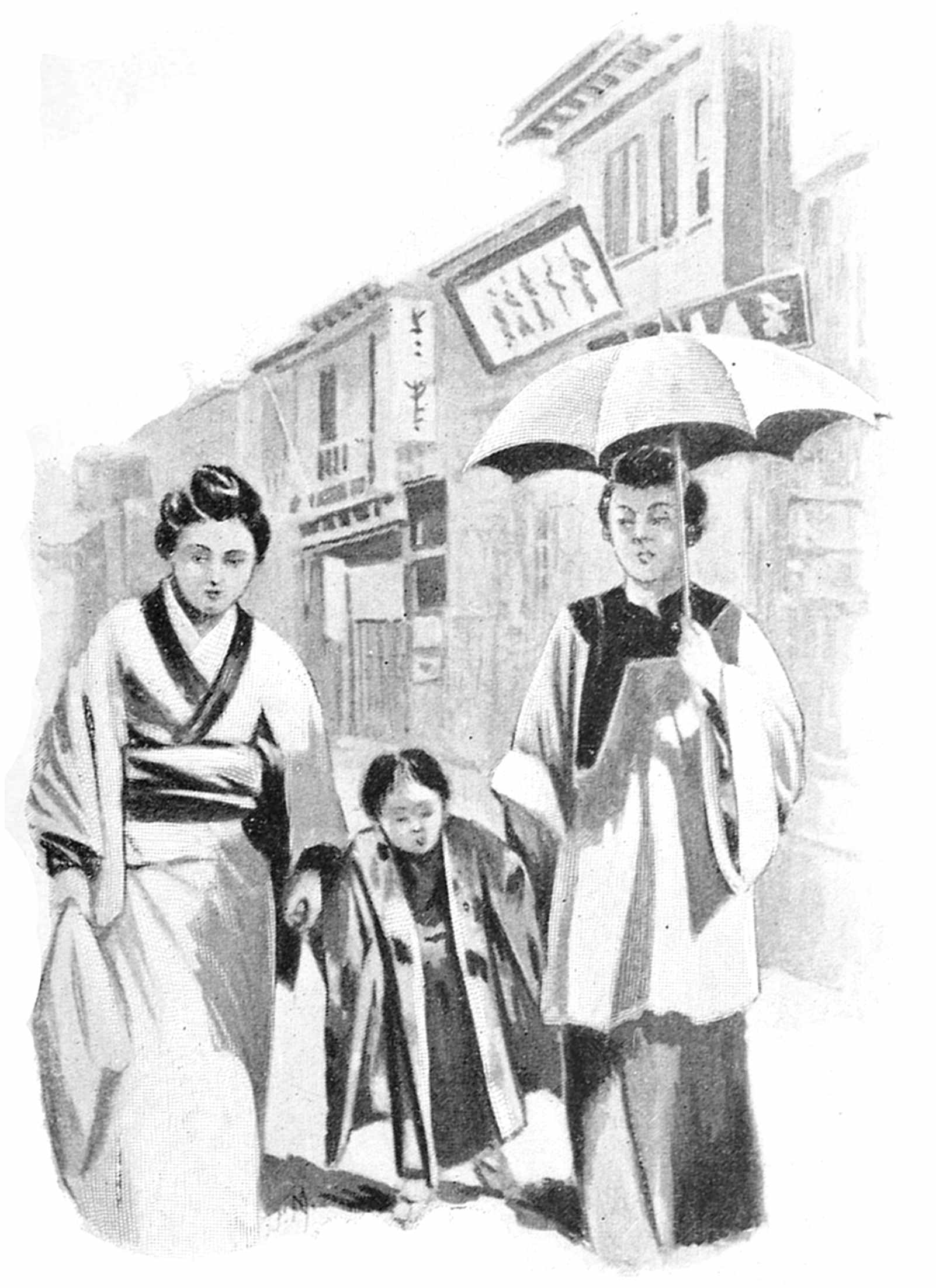
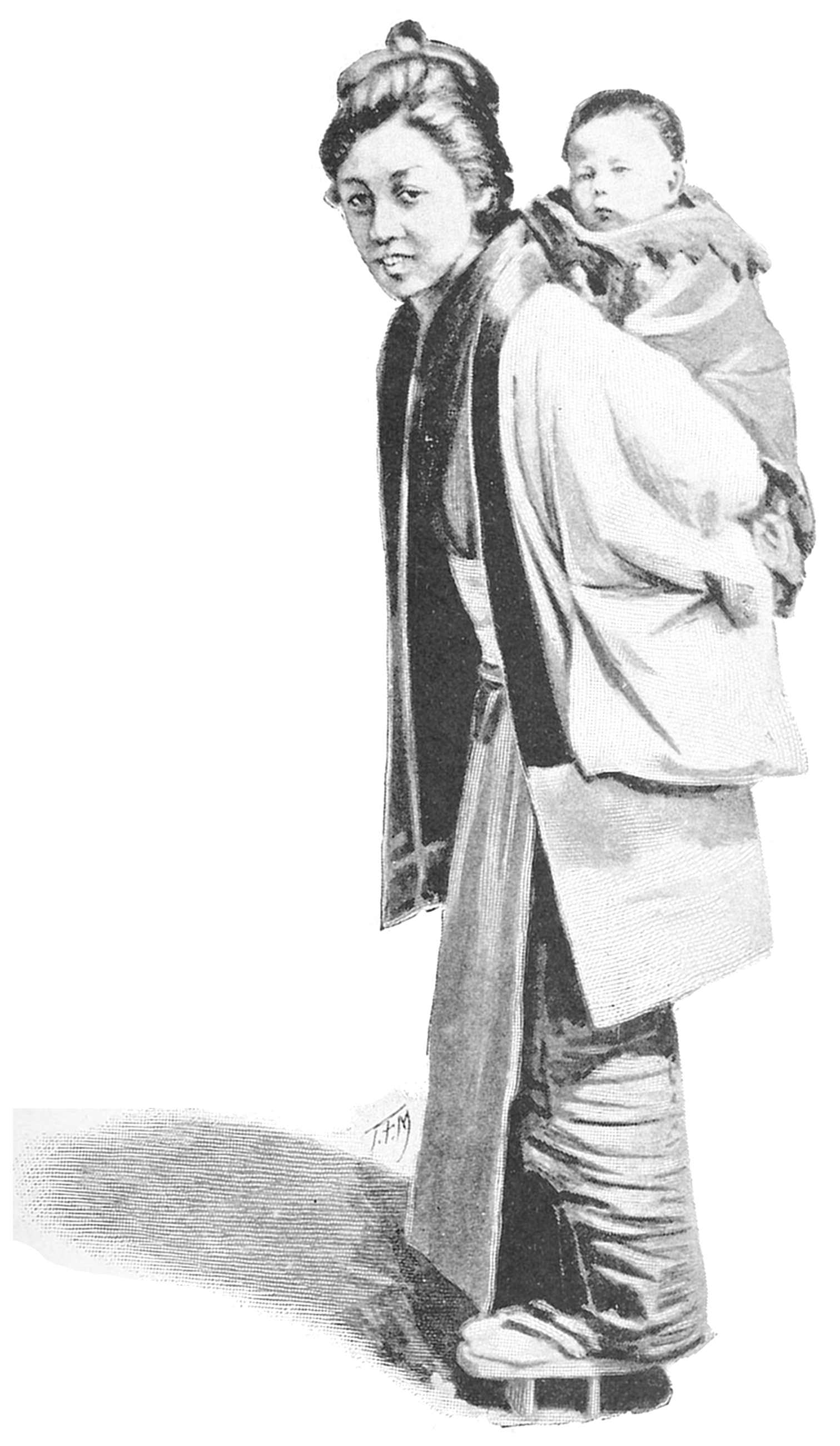
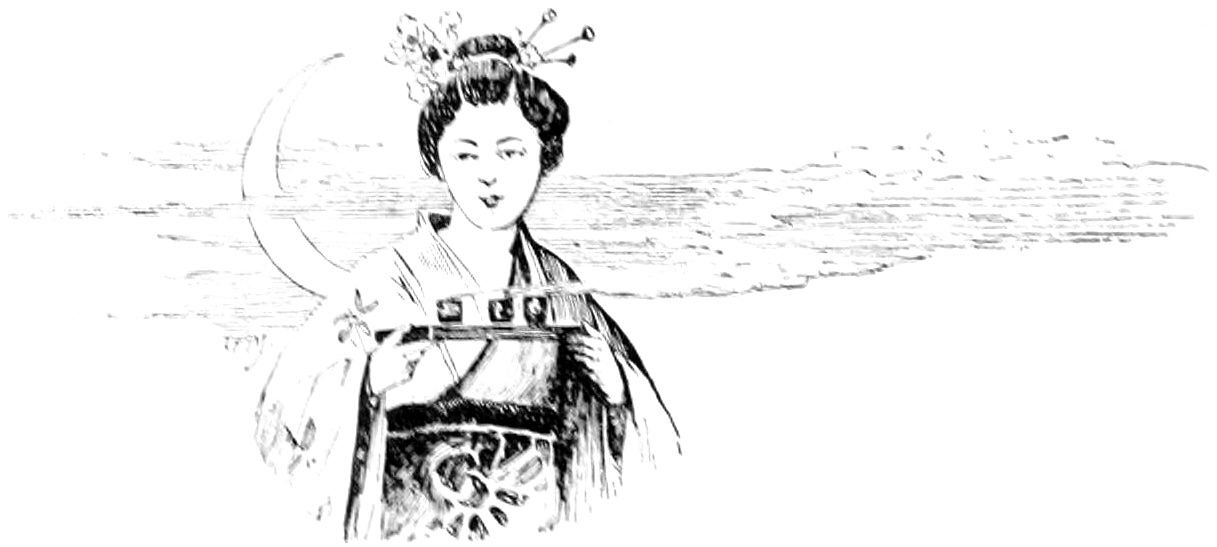
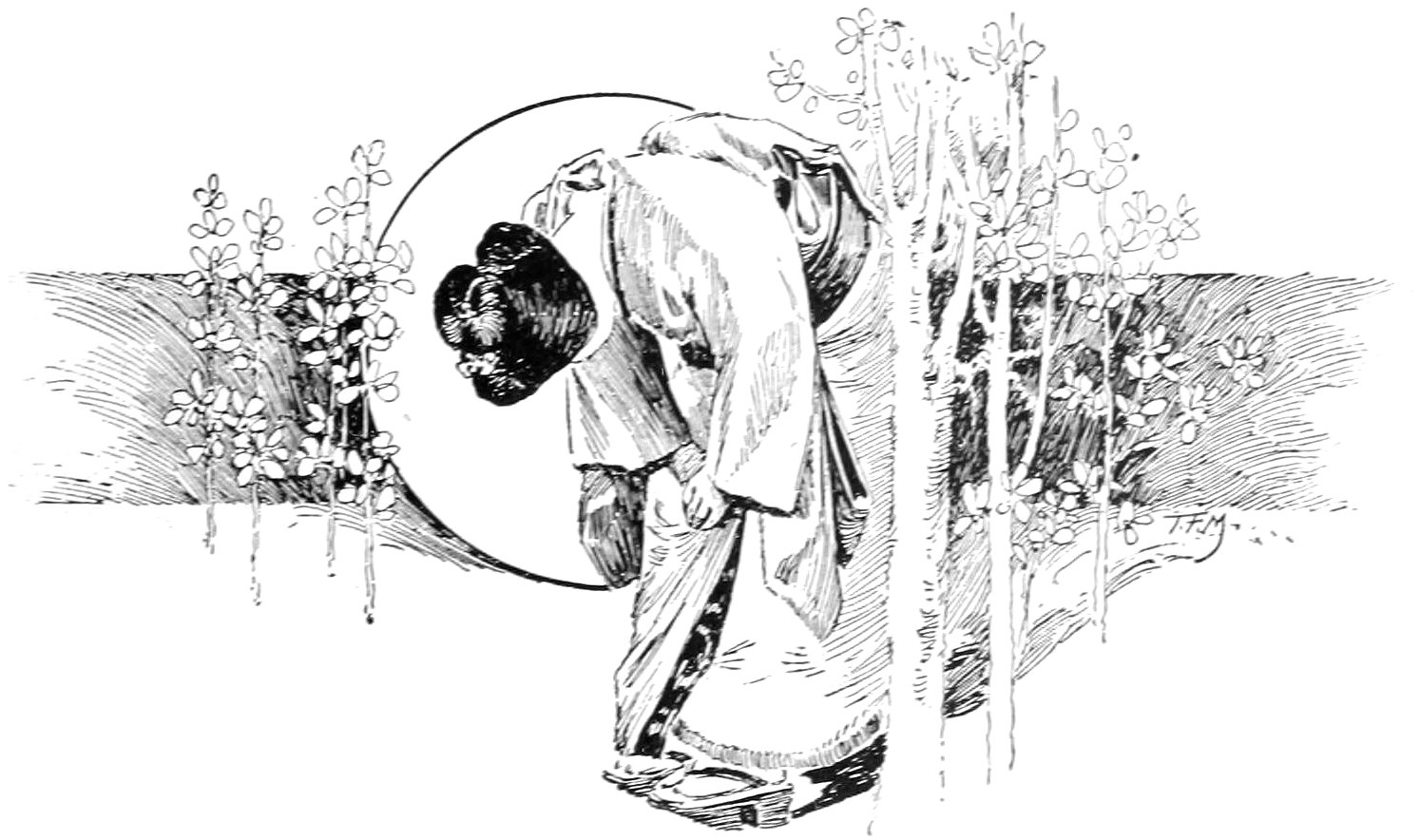
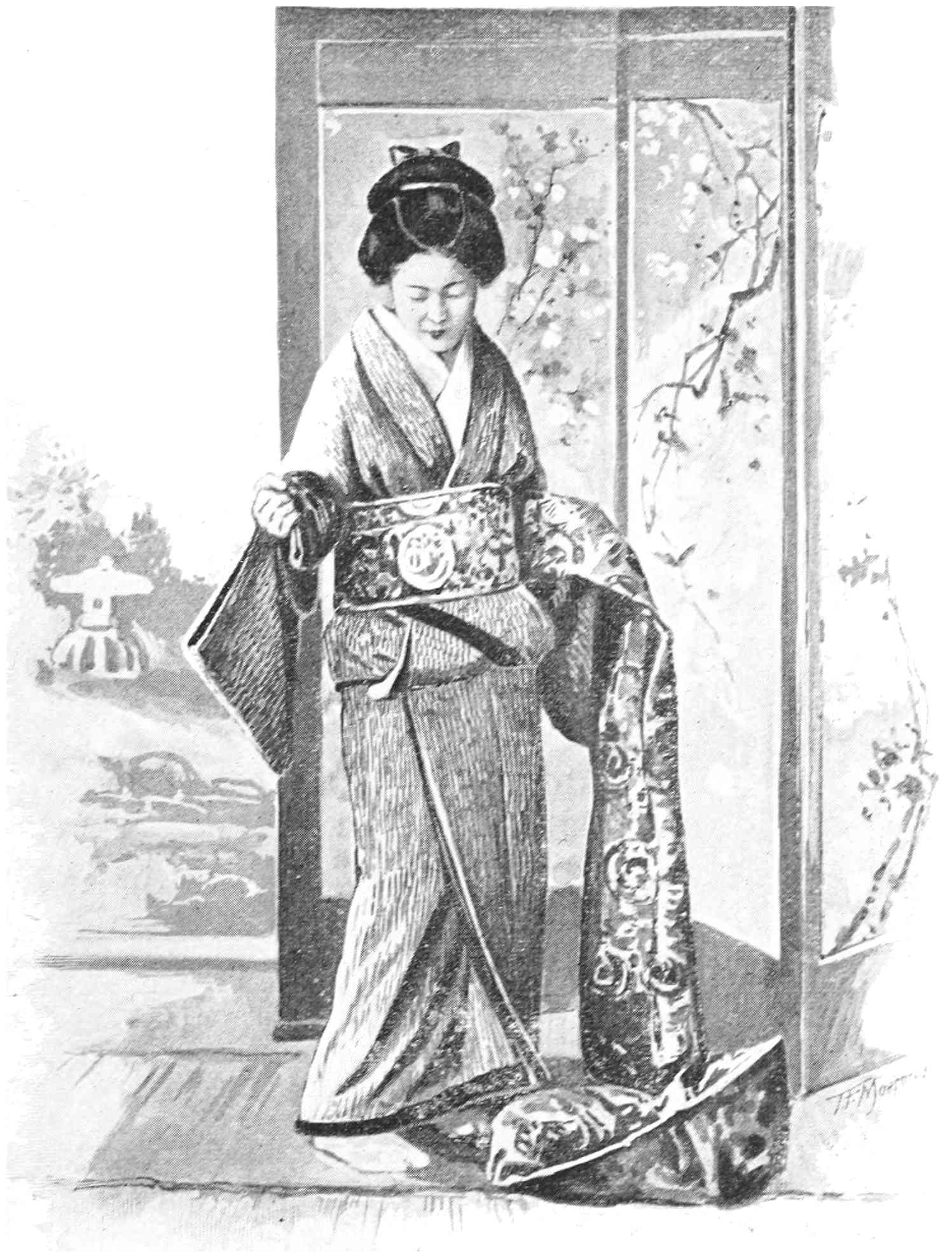
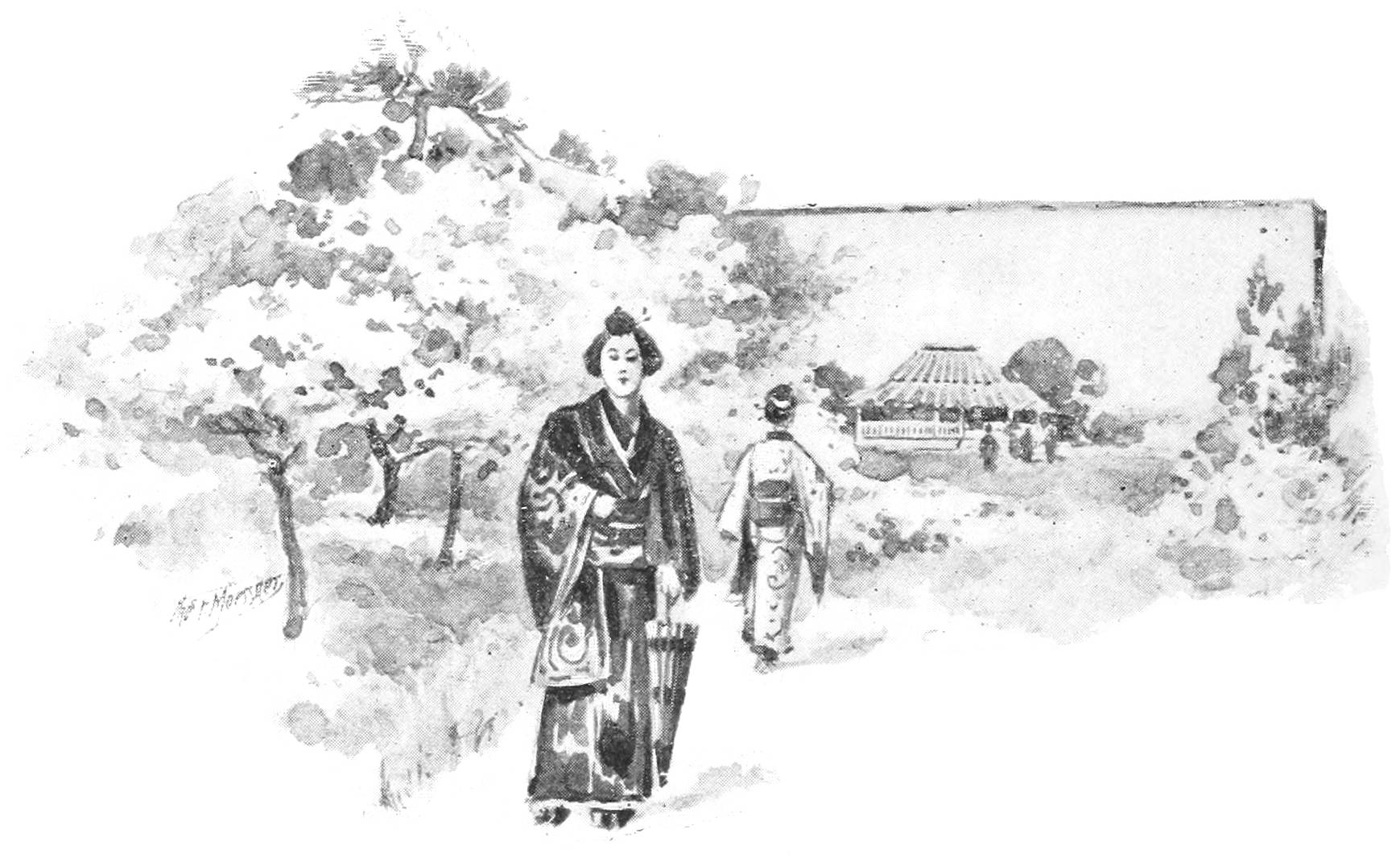
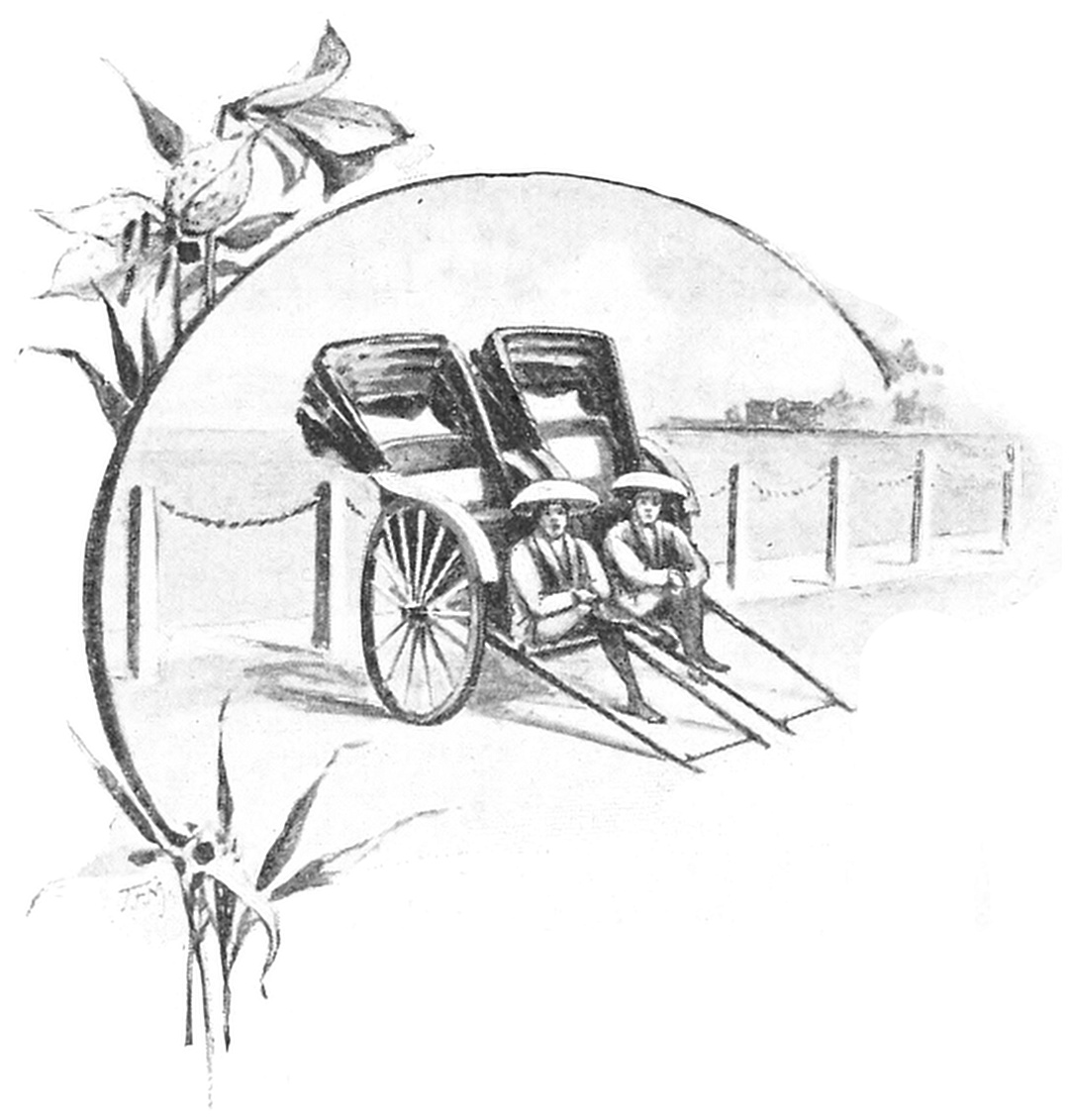
Clad in native costume.
CONTENTS.
Many have been before me, and the theme
of this volume can hardly be called new, for
Japan has been viewed from every side and
through all kinds of eyes. This, however, has
not deterred me from jotting down a few
observations and experiences of my own, hoping
that in them my readers may feel some
rays of the Orient sunshine and beauty.
I desire to thank Mr. Burton J. Hendrick
for the kind and sympathetic aid given upon
the manuscript.
Your visit to Japan is likely to be
a succession of surprises. Our
discovery of the country is so recent
that the large amount of literature on
the subject frequently fails to change
your childhood impression of that distant
land. European travellers often
entertain us with their ideas of America
as an uncultivated waste with an
occasional hastily constructed town,
in which the red man is still to be
seen; and my notions of the land of
the Mikado were somewhat similar.
I could never think of the Orient
without thinking of the mushroom
hat; and for me Japan meant a succession
of bamboo huts, almond-eyed
men with long and low-hanging
moustaches, an occasional china cup,
and now and then a strangely decorated
fan. I was not at all sure that
it was a hospitable shore to visit; I
understood that heads were removed
there upon the slightest provocation.
My earliest knowledge was gained
from the paper lanterns that were the
delight of Fourth-of-July celebrations,
and those remarkably
adorned napkins familiar
to patrons of
church fairs. I was
also frequently called
upon to make Sunday-School
contributions
for the conversion of these abandoned
souls, and have vivid recollections of
listening to many addresses by daring
spirits, who had actually returned
from the dangerous soil. After such
occasions as these, I always looked
upon the principal occupation of the
Japanese as the stoning of missionaries.
As I grew older, I tried to
educate myself into different ideas,
but all the books that I read, and
even an occasional Japanese friend
that I made, did not succeed in doing
away with my childish fancies.
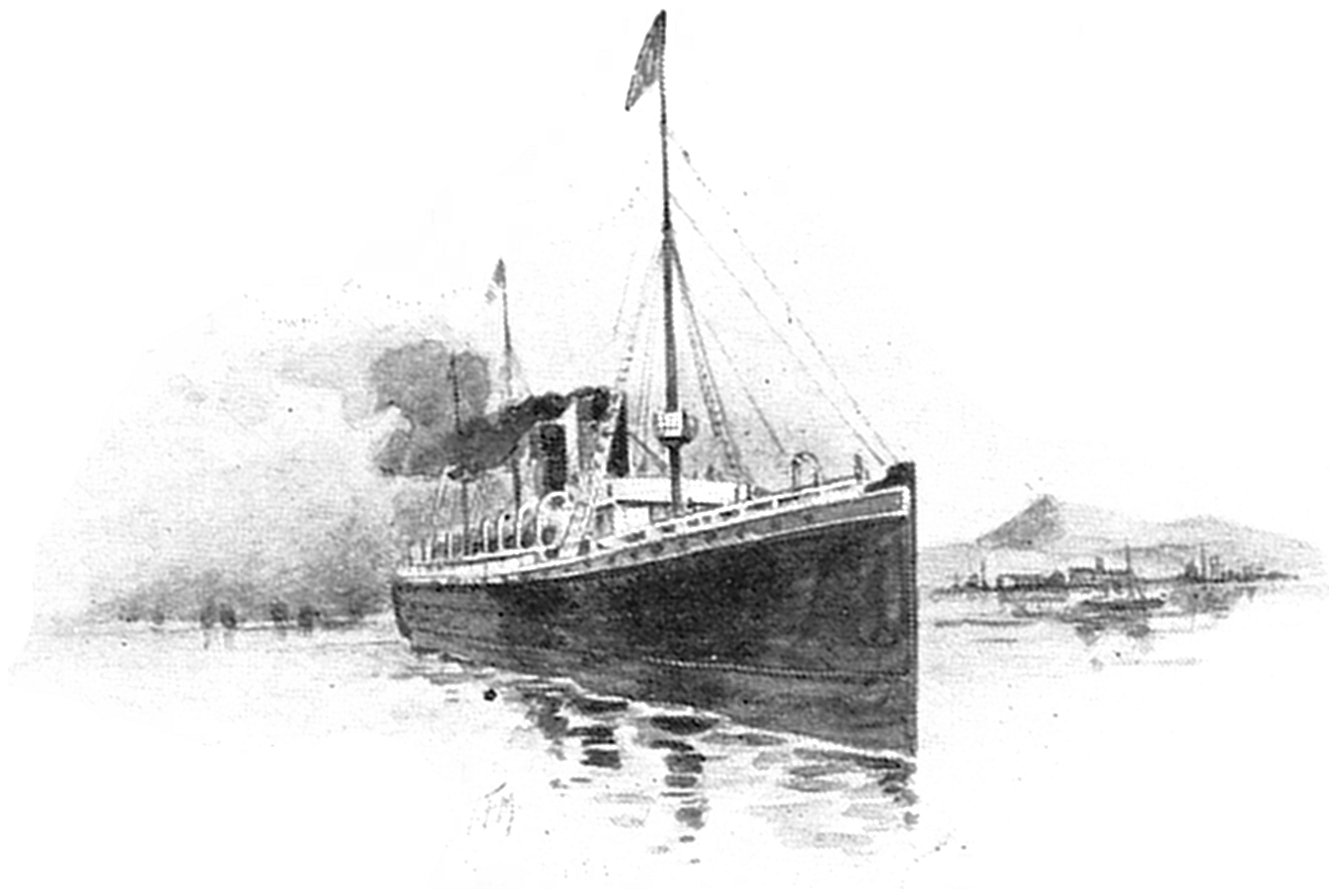
And so, when I found myself sailing
into the Port of Yokohama one
bright April morning, the ideal Japan
of years gone by was what was uppermost
in my mind. At first I thought
there must be some mistake, for there
was nothing to be seen in this harbour
to correspond with the strange delights
of my dreams. Not a single
one-storied, thatched house, such as
used to grace the pages of my geography,
was visible on the shore.
Everything, as far as I could see, was
the same as the entrance to an European
seaport. The long array of
wharves might perhaps be missing,
but there was many a ship built on
western lines, and occasionally a small
steam-tug went puffing by, the whistle
blowing as naturally as in any
western harbour. And, even as I
looked beyond all this, towards the
shore, there was no visible sign that
I had reached Japan. “Those people
who make pictures of Japanese life
do not tell the truth,” I thought to
myself, completely bewildered. When
I landed, I found large brick houses
of a most occidental kind, and shops
fitted out in the regular English style.
Not only were the outward evidences
of life most un-Japanese, but few of
the people passing up and down the
street had the almond eyes, the short,
wiry hair, or the olive complexion that
I had quitted America to see; and
young nurse girls wheeled about little
carriages containing the same kind of
babies that I had left three thousand
miles away. Children in little trim
English clothes, with their little English
bare legs, were walking about and
occasionally disappearing behind English
hedges into houses of a distinctly
Queen Anne type.
While I was surveying all this with
a startled air, I was delighted and relieved
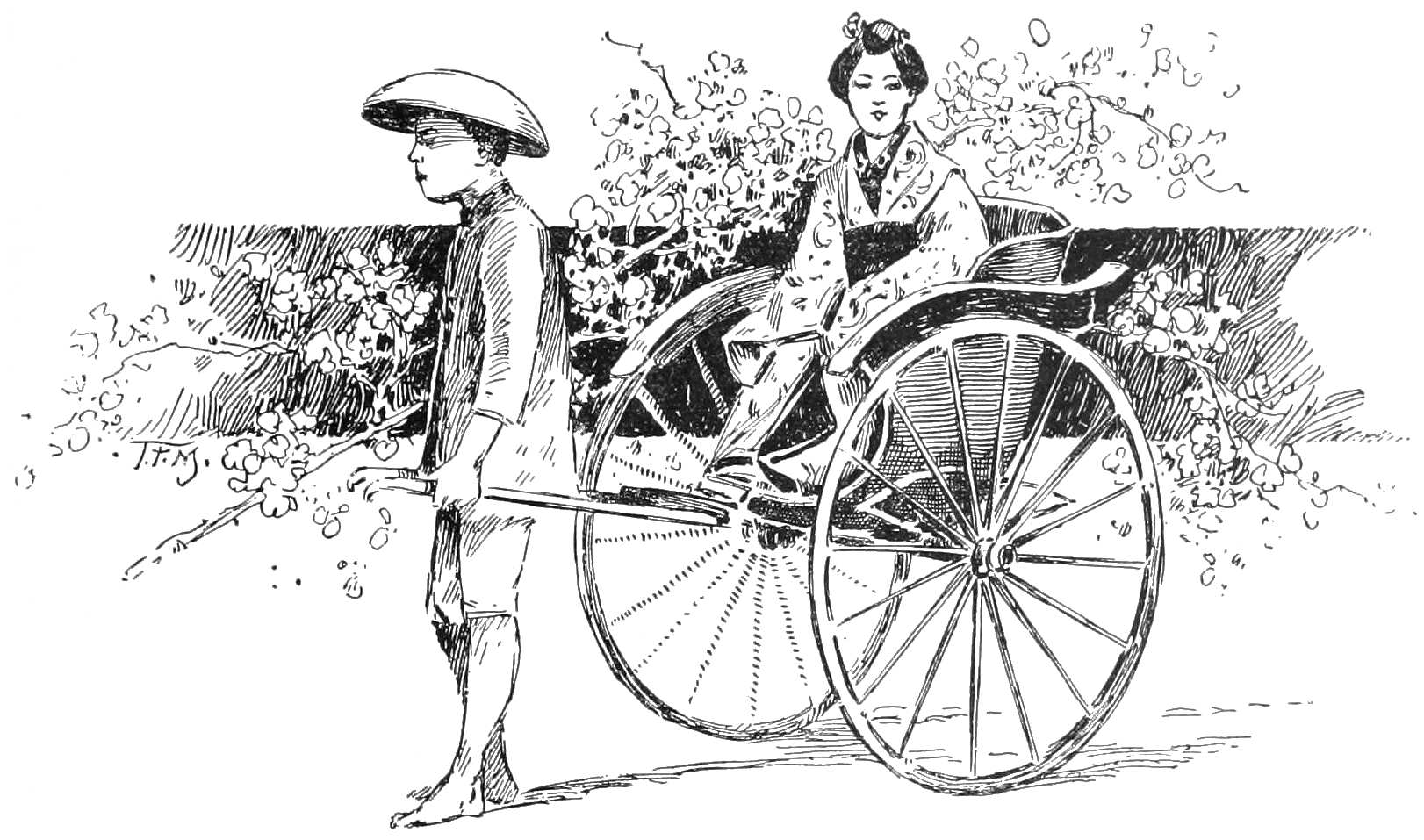
by the sight of several small
Orientals who ran quickly up to the
wharf, dragging behind them peculiar
two-wheeled conveyances. Yes,
after all, here was some indication of
the thing for which I had been looking;
these were men of Japan, it
was true, but hardly the Japanese of
whom I had dreamed. They seemed
rather out of place in this European
city, and did not assume an aggressive
air at all, as they politely offered
to carry us to the hotel in their strange
vehicles.
The explanation of this state of
affairs is, however, very satisfactory.
When you reach Yokohama, you land
at what is called the Settlement, which
is the portion of the city set aside by
the Government for the foreign residents.
Japan itself is situated back
of this, and there, if you jump again
into your jinrikisha and take another
ride, you will find that it is Japan
indeed.
There is one great hotel at Yokohama,—a
genuine European importation,
with large parlours, reading and
sitting rooms, electric lights and bells.
Your jinrikisha man immediately takes
it for granted that you wish to stop
at the Grand Hotel, and without waiting
for instructions, hurries you off
to Ni-jiu-ban, as it is called in the
vernacular. You will probably arrive
during the season of travel, and so be
enabled to see the house at its best.
If one or two of the foreign ships are
in the harbour, and the officers come
ashore, a scene of unusual attractiveness
is sure to follow. A military
band plays during dinner, commonly
discoursing the patriotic airs of the
different nations, though a well-known
western march is frequently interspersed.
The rooms are trimmed
with flowers; there are ladies in
bright, pretty gowns, men in evening
dress, and Japanese “boys” in blue
tights, white coats, and stocking feet.
The gathering is decidedly cosmopolitan.
You can talk with an American
on stocks, an Englishman on golf, a
Frenchman on Panama, or a Russian
on the Triple Alliance. If you only
step out on the piazza and take a
short stroll, you will have a fine opportunity
to gratify your taste for
contrast, for it will be stepping from
the Occident to the Orient. Perhaps
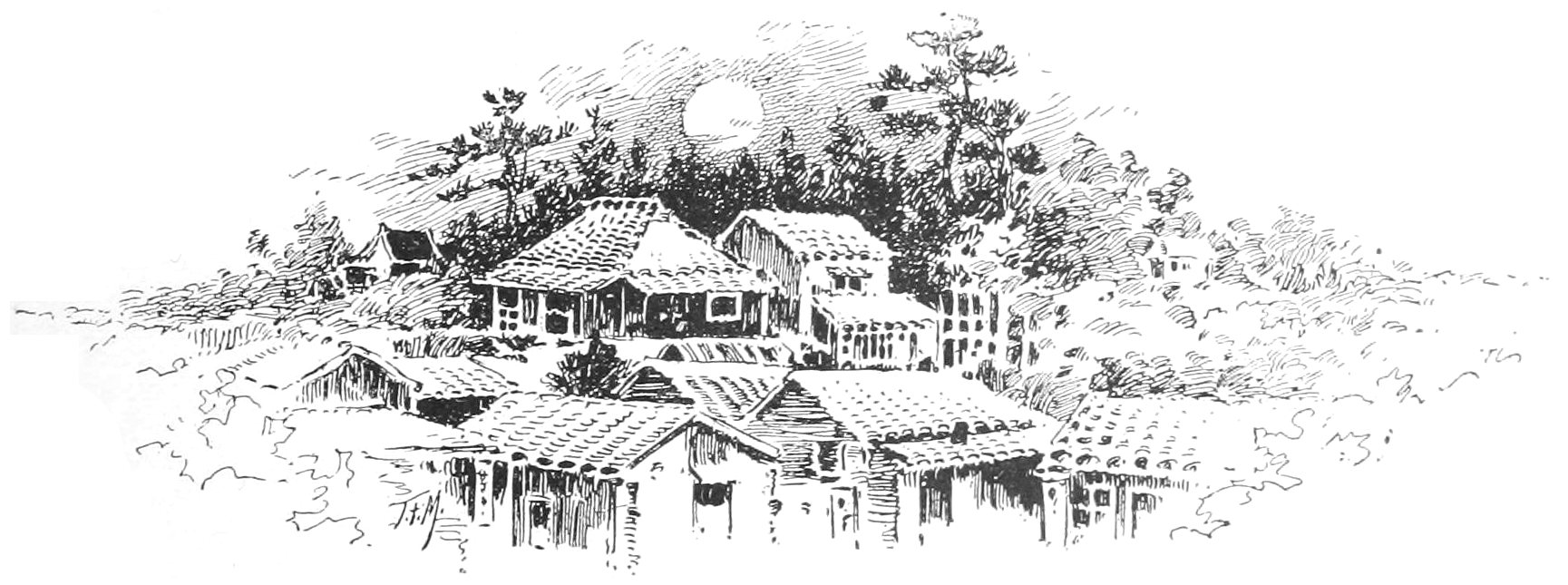
the moon is shining—and the moon
seems to shine differently in Japan
than at home. There, below you, lies
the land you thought you were being
cheated out of; there are the small
one-storied houses, the narrow streets,
all bathed in the silence that so well
fits your mood. A few lights are
blinking below, but for the most
part you see only what the moonlight
cares to reveal. Off in the harbour are
large shadowy forms which you know
are western vessels, and your spirit
feels a touch of old-fashioned patriotism
at the thought that one of them
is flying the American flag. The
sound of the music comes from the
distance, and you know that the dancing
has begun; but you care little at
the present time for such occidental
diversions.
In the morning the sun will probably
be shining in a truly oriental way,
and you think it might be well to take
a drive. Probably the first thing you
will see, will be a large number of
young Japanese girls, apparently out
for a walk. Though they are clad in
their own native costumes and have
a general appearance that is decidedly
Japanese, there is yet an air about
them suggestive of the West. You
puzzle over the matter for some time,
and at last, with a sudden burst of
intelligence, exclaim: “A boarding-school.”
And you are right; these
young girls are being trained in the
usages of the best English society, and
have begun to dabble in French and
algebra in a true boarding-school style.
As they pass you by and you go on, you
will see many small children attended
by Japanese amahs, and baby carriages
meet you everywhere. There are also
a few shops scattered around, and
looking to the left you will see the
British flag waving above the marine
hospital. A little further on, your
heart gives a bound, for you see the
stars and stripes waving in the breeze,
and you think that being an American
is not so bad after all, whatever the
foreigner may say of our confusion of
“baggage” and “luggage” and our
use of ice-water at dinner. It is the
American hospital, a large, old-fashioned
building, comfortable and home-like,
with a garden filled with flowers
and tropical plants. You can look
from here into the bay, and the ship
so dimly perceived the night before,
you see is the “Baltimore.” You
keep in the road, pass more Queen
Anne houses and pretty green hedges,
and an occasional bungalow; and further
on you meet a park that has been
laid out by the foreigners. Here are
more baby carriages and bare legged
children, and several prettily arranged
tennis courts in which the players are
enjoying themselves in a genuine
English way.
It is probably a holiday, and the
people will soon turn out for a celebration.
It is hard to find a day in
Japan that is not a holiday. It is well
to know this before you visit the
country, or you will be very much
inconvenienced. You will be likely
to visit the bank, and be much surprised
to find it closed. “Why?”
you will ask a friend, and he will
answer: “It is a holiday.” And
what is the day celebrated? Perhaps
the fall of the Bastile; perhaps the
discovery of the Gunpowder Plot;
perhaps Washington’s birthday, the
Fourth of July, or one of the innumerable
sacred days of the Japanese. The
trouble is that there are so many different
nationalities in Japan, each
demanding that certain events be
respectfully observed, that only on
about one-third of the calendar days
can business be transacted. It is a
country of a perennial holiday. There
are a great many ways in which
properly to observe these occasions,
and a large number of entertainments
are arranged. If you wish, you can
attend the theatre,—not the anciently-established
institution of the
country, but a genuine play, such as
you sometimes see in the Occident.
I qualify the statement because I think
it seldom that you will permit yourself
to attend such execrable performances
at home as draw crowded
houses of intelligent people at Yokohama.
They are given by strolling
players on their way around the
world, who stop at the principal Japanese
cities and foist their wares upon
a diversion-craving public. They entertain
you with the misfortune of
the “Forsaken Leah,” the mistakes
and unavailing repentance of “Bob
Briley,” the “Ticket-of-leave-man,”
or you may have the opportunity of
weeping through five acts of “East
Lynne,” or “The Elopement.” A
minstrel show has been known to
come ashore, and an exhibition of
French marionettes is no uncommon
sight.
Perhaps your nature requires a different
kind of excitement; if so, you
may attend the races. These are carried
on in the true English style, and
are very generously patronised. The
occasions are holidays in themselves,
and offer a sufficient excuse for the
closing of the banks and stores. A
race track has been laid out back of
the residence portion of the city, and
has an additional attractiveness in the
fact that it commands an excellent
view of the elusive Fuji. Foreigners
turn out in full force, many coming
down from Tokio. Often the Mikado
honours the affair with his presence;
he is always an interesting addition to
any event, but he is an inconvenient
person to have around, owing to a
peculiar phase of Japanese veneration.
No one may hold his head higher than
the Mikado, else his sacredness would
be outraged; and the many attempts
to make him tower above the rest
of the populace frequently produce
amusing complications. Such a predicament
happened a short time ago,
when the Mikado was on his way to
the races. An American with more
curiosity than knowledge of Japanese
religious rites, thought it a fine opportunity
to catch a glimpse of the
royal person, and so elevated himself
upon a box near by and awaited the
procession. He had stood there some
time, flattering himself upon the difference
between American and Oriental
intelligence, when his peace of mind
was suddenly disturbed by a series of
shouts, which, he divined from the
gesticulations, were directed towards
himself. The constant motions to
descend he regarded with a true Yankee
stoicism, and it was not until the
box was pulled from beneath his feet,
that he was induced to pay the proper
respect to the Majesty of Japan. The
races themselves, with the little shaggy
horses, have proved to be a very fertile
means of entertainment. The
riding is done to a considerable extent
by the little Japs, who take to it
quite readily, and make very acceptable
jockeys.
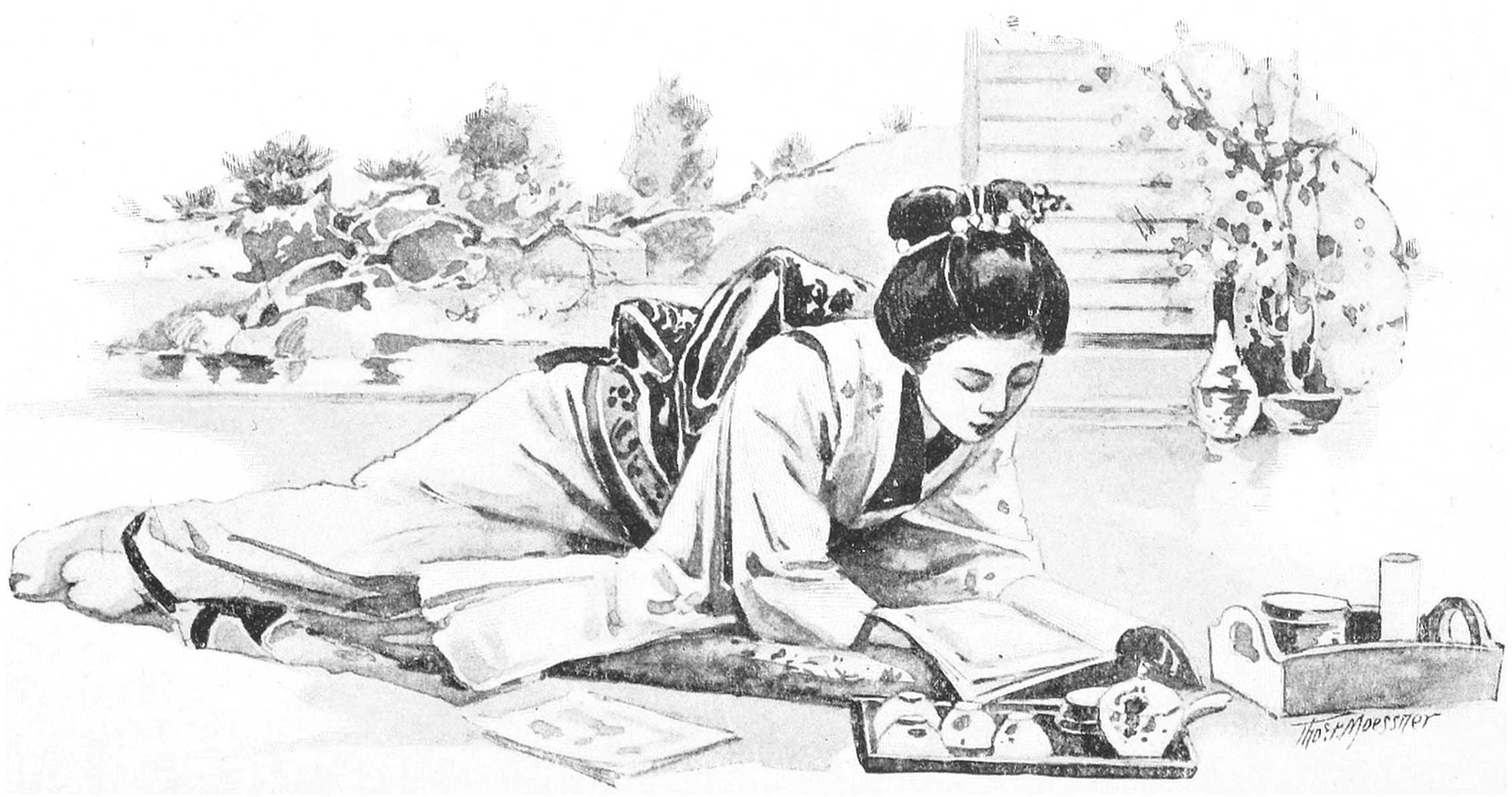
“The dainty kimono-clad forms.”
One of the most delightful events
in the social life of the foreign residents
of Yokohama is Regatta Day.
All their pent-up enthusiasm seems to
let itself out, and the numerous visiting
vessels contribute to a most entertaining
scene. The contests take
place in the spring, and preparations
are made many days in advance. The
vessels in the harbour are gayly decorated
with flags and streamers; the
wealthier classes turn out in their carriages,
and the Bund is one mass of
ladies and children in white dresses,
intermingled by the dainty kimono-clad
form of the Japanese. The hotel
is impartially adorned with the colours
of every nation, and the piazza is a
varied scene of moving gayety. Every
one does not attend the races behind
the bluff, but Regatta Day is the one
event of the season, and furnishes an
excuse for considerably more than the
nautical contests. The races themselves
are perhaps not of sufficient
importance to justify all this excitement,
but Yokohama is very different
from New York harbour. The day
is bound to be clear, the sky is always
of Italian deepness, and the sun never
fails to shine down on the lively scene
with a refreshing glow.
Domestic life in Japan has its inconveniences;
but it has also its
more advantageous side. Do you
wish to live in splendid style on a
small income? You should dwell in
the land where servants cost only
four dollars a month. The life of the
foreign residents in Japan is somewhat
mysterious; the position of the
mistress of the household eluded my
investigations for a long time. “What
do you do?” was a question I asked
many of the ladies, but never received
a satisfactory reply. After
much thought I have come to the
conclusion that the only thing your
position requires of you is to sit in
your parlour and amuse yourself as
best you may; and when you wish
anything done, simply clap your hands
and cry “Boy.”
This last word is the keynote to
the situation. As soon as you have
learned the word “Boy,” you have
solved the whole problem of the European
household in Japan. Everything
centres around this important
dignitary, whom even foreign innovation
has not succeeded in abolishing.
The “Boy” has edged his way into
every foreign home in Japan, and his
position is as firmly established as the
homes themselves. He is one of the
most indispensable domestic functionaries
that have figured in history.
But, in the first place, an excusable
mistake must be corrected. The
“Boy” is not a boy at all, but is
simply called so in deference to custom.
Most of the “Boys” have
large families of their own, and I have
seen many with white hair and
wrinkled faces. He never seems to
resent this youthful title, and would
feel very much bewildered should you
suddenly begin to call him “Man.”
He appreciates his important position
very keenly; he is no ordinary servant,
but a man with thoughts of his
own and the dignity of a household
resting upon his shoulders.
The whole thing is managed somewhat
after this style: You receive
an intimation that a few friends will
dine with you, and this intimation is
all about which you need trouble yourself.
You never begin to think what
you have to offer your guests, for you
are not supposed to know anything
about such things. You simply sit
down, clap your hands and shout
“Boy!” In a few moments the door
will open and the person who bears
this title presents himself. He approaches,
bows lowly, and makes a
single ejaculation,—
“Heh!”
This simply means that he is all
attention. If you are inexperienced,
you will get the idea that this word
means “yes.” But you will have
many opportunities later to correct
your mistake. The Japanese says
“Heh!” to signify that he is listening,
and there his responsibility ends. He
never commits himself.
“I am going to have two friends
to dinner,” you reply, and you give
their names.
“Heh!”
He bows again, turns around, and
leaves the room. That is all you have
to do until the dinner hour arrives.
Never make any suggestions; the
“Boy” would be completely mystified
by such a proceeding. The way
he goes about everything is very picturesque.
You understand that the
man who has just made his exit is the
head “Boy” or No. 1 “Boy.” He
goes downstairs and begins to examine
the possibilities for the dinner.
Very likely he finds something lacking.
If so, he immediately makes a
call on No. 1 “Boy” next door, and
returns with the supplementary dish
needed to make the dinner a success.
There exists a kind of free-masonry
among the “Boys,” and what one
cannot find in his own domain he
feels no hesitation in borrowing from
a friend near by. Your “Boy” then
visits the “Boys” of the friends who
are to dine with you and makes many
interesting inquiries. He asks what
their favourite wines are, and never
hesitates to request a loan of their
plate and linen. He usually also demands
the cooks of your friends, and
leads them off to your house in order
that the dinner may be more satisfactorily
prepared. Thus it happens
that when your friends arrive they are
very likely to eat your dinner cooked
by their own servants and to see their
own china and linen gracing your
table. More than this, the “Boys”
of your friends are usually present and
attend to their wants. The order of
things will be reversed when you dine
out.
You see this “Boy” is a very convenient
and important person, and as
he is usually an intelligent man, everything
goes smoothly on. Occasionally
a difficulty arises owing to the
fact that he has not a sufficient regard
for the mistress of the house, and
indeed it is a question whether he
ever looks upon her as such. Japan
has not yet learned to rate women at
their true worth, and it is this sentiment
that is at the bottom of the
“Boy’s” reluctance to take orders
from anyone but a man. Most of
them are gradually coming around and
will obey you, but a few conservative
souls still remain. I had a friend who
possessed a very worthy “Boy,”
whose character was blemished by
this one defect. She told him one
day to remove a plant into an adjoining
room. He bowed, said “Heh!”
and departed. Some hours passed,
and the plant was still unmoved. He
was called in again, again he bowed,
ejaculated the usual “Heh!” and left
the room. My friend tried this
several times, and succeeded in getting
more bows and more “Hehs!” but
the plant remained where it had been.
She spoke to her husband about the
matter, who called in the “Boy” and
told him to remove the object of the
dispute. The “Boy” bowed, said
“Heh!” took the plant and carried it
into an adjoining room. When asked
to explain his previous disobedience,
he said: “I will do it if master wishes
it, heh!” and with a profound obeisance
he retired.
Another great enemy to domestic
life is what is known as the “Squeeze.”
This is not peculiar to the household,
but is found in every part of the Japanese
social system. The whole business
of the country is run on a
commission. Every time you buy
anything, you have to pay several
“squeezes,” or commissions, to the
various people concerned in the transaction.
No “Boy” will run an errand
without his “squeeze,” and he
uses a great deal of liberty in your
domestic accounts. Should you send
him out to buy a bouquet of flowers,
he would always charge you as well as
the florist a “squeeze” in the reckoning.
The butcher who deals with you
has to pay him a certain amount, and
of course you are the one who suffers
in the end. This is altogether independent
of the profit of the goods,
and often is little more than a personal
consideration. Foreigners have
made war many times against the
“squeeze,” but their efforts have been
unsuccessful. It seems to be a second
nature with the Japanese; it is one
of those good old customs that they
will not let die. I had an iconoclastic
friend who resolved that there should
be no “squeezes” to impede her domestic
calculations, and who decided
upon a reform. She thought that she
would begin modestly at first, and
hit upon the lamps to experiment on.
There is a very humble person whose
occupation it is to go from door to
door and fill all the lamps of his customers,
but his pay is not too small
to necessitate a little “squeeze” to
the head “Boy” for the privilege.
The lady in question decided to hire
this boy directly, and for a time she
thought the plan was succeeding remarkably
well. One day, however,
she found that her head “Boy” had
a pleasing custom of making a round
of the lamps every morning and removing
a certain quantity of the oil.
By selling what he procured this way,
he recovered the “squeeze” of which
he had been defrauded.
The specialising tendency of the
people is another thing particularly
irritating to those who live in Japan.
Such a thing as a man-of-all-work
who goes around picking up odd
jobs is an unknown phenomenon.
You must have a large number of servants
or you will get nothing done.
A certain “Boy” puts the coal in the
stove and another cooks the dinner.
But the “Boy” who does the cooking
would never touch the coal, if
you had a dozen guests waiting upstairs.
It is a matter of caste, and one
occupation is immeasurably superior
to another; at least, in the opinion
of him who practises it. You have
a “Boy” who takes care of the
horses, but he would not understand
you at all should you ask him to
drive them. If a light needs turning
up, and you request your head “Boy”
to do it, he would never think of
obeying. He would rather run two
blocks to fetch the menial whose duties
are along that line. I was told
a story of a lady on shipboard, who
requested her attending “Boy” to
close an open port-hole. He answered
“Heh!” and went out to search for
the servant who attended to such matters.
It took him fifteen minutes to
find him, but he finally led him triumphantly
in, and the port-hole was
closed. It had never occurred to the
former that he ought to do it himself;
he had not been educated to that position
in society, and it would have
grated harshly against his sense of
the fitness of things to suggest that
he was fully qualified to close port-holes.
Every Japanese has a great
pride in his task, knows his own
place, and thinks that the greatest
requirement of a virtuous life is that
he does not interfere with the duties
of others.
SHOPPING.
You will have many friends who
will give you a great deal of
kindly advice before you leave for
Japan. On no point will their suggestions
be as plentiful as on the
mooted question of shopping. With
a knowledge born of experience, they
will inform you that these almond-eyed
Orientals are not the guileless
souls that they may seem, and that
beneath all their gentleness of manners
there lies a keen wit which
will tax your American sharpness to
the utmost. They may perhaps go
further and descend to particulars,
and you will have the opportunity of
learning the number of tricks you
will be subjected to and the large
amount of wares that are being reserved
until you land. All this advice
you will carefully note, and think that
when you start down the streets of
Tokio or Yokohama you have an advantage
over your compatriots, and
that you are secure from the dangers
of early shopping in a new country.
You have all the words of your friend
in mind, and decide to wait several
days before you make a single purchase.
At about this point of your
self-congratulations you will catch
sight of a small two-story building,
and for some inconceivable reason be
attracted within. Perhaps it is the
dainty sign over the door; perhaps
the smiling face of the host, who
looks upon you with so inviting an
air; perhaps the ever-attendant evil
spirit of shopping that has begun to
work his baneful spell. At any rate,
in a short time you find yourself in
a small room surrounded by a delightful
collection of
bric-à-brac, with
a cup of tea in
your hand and
the happy face
of the proprietor
beaming down
upon you. An
hour or two slips by, and when you
leave you will suddenly discover that
you have ordered a large part of the
merchant’s wares, and that you have a
neat little bill smilingly presented to
you. It is not until you are in the
street again, or perhaps easefully reposing
in your room at the hotel, that
the whole terrible truth flashes upon
you. You have done just what you
were told not to do, and just what you
had considered yourself firmly guarded
against. A horrible suspicion crosses
your mind. What if all those charming
things you bought belonged to
the worthless class your friend had
so conscientiously warned you of;
and what if the genial smile of the
merchant were but the mask of a
deceiving heart? In a day or two
your suspicion will have been confirmed.
The goods that you so
rashly purchased will be given as a
present to your attending “Boy,” and
your shopping henceforth will become
rather a scientific than an emotional
affair.
The Japanese are rapidly learning
the proper use to be made of tourists,
and are always ready to receive them.
You will not have been long in your
room when a gentle knock will be
heard at the door, and a most obsequious
Oriental will make his entrance.
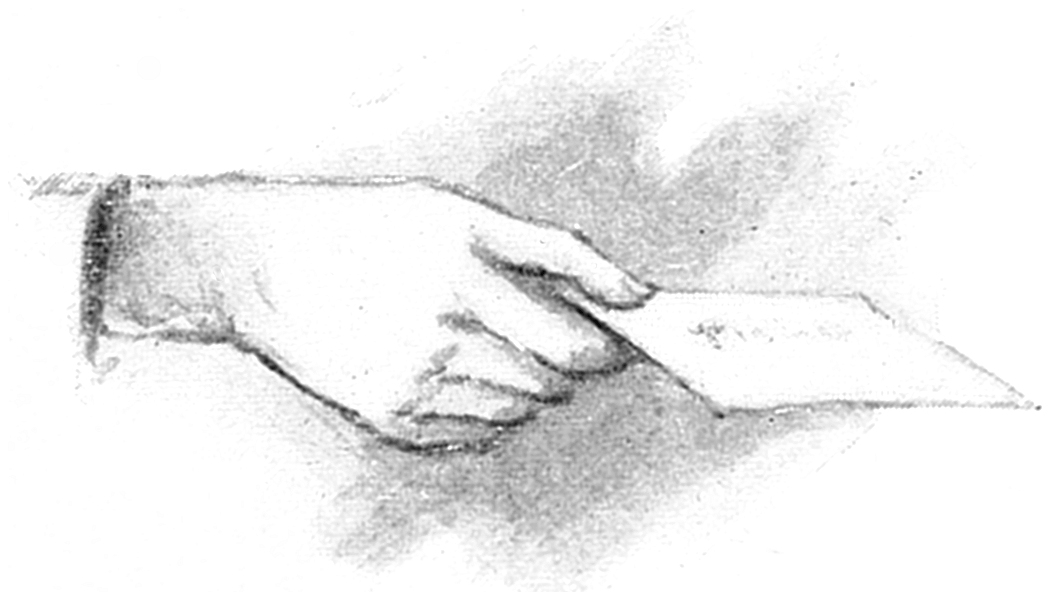
He will bow with the utmost
profoundness, and present you with
a card which contains his name and
crest,—usually in the form of a
teacup or fan. You return his gaze as
kindly as possible. He says: “Please
you come see my shop,” makes another
bow, and retires. The whole scene is
not unpleasing to you, and you are
thinking it over as an interesting
experience when another knock is
heard. Another Jap of the same appearance
as your former visitor now
enters, makes a similar bow, gives
you his card, says: “Please you come
see my shop,” and as gracefully takes
his leave. If you are wise you will
now determine to receive no more
callers, for this sort of thing will be
kept up all day, and you will have a
varied assortment of cards before the
evening comes. Your new friends
are most scrupulously polite and have
no air of bluster or eagerness; but
they are quietly persistent, and would
not think of passing you by without
giving you a chance to learn of the
advantages of their house. They
keep a careful watch for the arrival
of every new steamer, and trace all
the passengers to the different hotels.
The reputation of the American as
the generous spender of millions is
as firmly fixed in the minds of the
Japanese as in those of less distant
lands, and to them they give a large
amount of attention.
Indeed, it is generally assumed by
everyone you meet that you have
come to Japan to shop, and the
kindest favour he can do you is to
show you how and where you can
do so with the best results. Even
the humble coolie, who carries you
around in your jinrikisha, firmly believes
this, and thinks that if he is in
a small measure the means of your
making a happy purchase, his way
into your affections is won. If you
tell him in the morning that you wish
to take a ride, he will tuck you comfortably
in and start at a rapid pace
towards the main thoroughfare of the
city. You will be quietly enjoying
everything you see, and will, perhaps,
be somewhat surprised when the
coolie suddenly stops before one of
those two-story buildings with which
you are now so familiar, and glances
up into your face with the most self-congratulating
expression. If you do
not immediately descend and enter
the shop, he will suddenly become
crestfallen, and wear a look that
means that you are quite unable to
appreciate a favour, and do not know
a good thing when you see it. The
chances are, however, that you will
feel an invisible force attracting you
within the little shop, and so leave
your coolie without, a happy man.
If you are in Japan during a period
of silver depression, you are a very
unfortunate person indeed. You
have perhaps visited the bank the
day before and changed a thousand
dollars of your gold into two thousand
dollars of silver, and this unexpected
increase in your worldly
possessions is the very worst thing
that could have happened to you.
For you are likely to get the idea
that you can now afford to be a little
extravagant; that you have just twice
as much money as you had before,
and that you would be a very stingy
person, did you not scatter a little of
it about. You have probably, however,
one advantage in the fact that
you have shopped before, and do not
think that there is much danger that
the experience of a few days ago will
be repeated. By this time your respect
for your anxious friend, who so
vainly gave you his advice, has greatly
increased; and you decide that when
you return you will make a point of
breathing the same gentle counsel in
the ears of all you meet who are on
their way to the land of the cherry-blossom
and the almond-eyed sharper.
The street in which most of the
shops are found has the delicious
local flavour that seldom fails to entice
the unwary purchaser. The
thoroughfare is very narrow, and is
lined by two rows of shed-like buildings
adorned in front by hanging
cloth signs. Many of these signs
are inscribed with the name of the
keeper, who does not confine himself
to the Japanese characters, but frequently
spells himself out in English,—a
thing that you are likely to take
as a personal compliment to yourself.
The cloths are also sometimes covered
with emblematic figures representative
of the goods sold within.
There are grotesque and unheard
of birds; armour, and paintings representing
the god of money and good
luck. The lower story of the house
is probably open to the street, but it
is sometimes hidden by a curtain of
blue and white, which an attendant
lifts to allow you to enter. Really,
there is nothing in all this that tells
you of the treasures that lie beyond,
but you have a sensation which for
the time being seems uncontrollable.
Sometimes, on a holiday, the whole
scene may be changed, and by the
addition of a large number of paper
lanterns and clusters of wistaria and
cherry-blossoms an element of festivity
is introduced. But the grotesque
methods of advertising that you are
familiar with as an American, are unknown
to the Japanese, and utterly
distasteful to their sense of propriety.
Even in the marking of prices they
exercise the greatest taste, using little
thin strips of cloth with the cost of
the article painted in blue. This,
however, you do not see until you
enter the shop. The proprietor will
receive you with the utmost politeness,
but there is no sign of unpleasant
aggressiveness in his behaviour.
He views your visit both from a
social and business point of view,
and esteems your notice of him as a
personal favour. Even though you do
not buy, he always takes pleasure in
showing what he has to sell. He
likes to have you show some appreciation
of his goods; and if you have
done this, you can leave without
buying a thing and be sure of as
warm a welcome when you return.
One demand he will make of you,
and that is, that you take plenty of
time. He likes to talk and discuss,
and seems dissatisfied unless you
consider the transaction as one of
great importance and worthy of much
meditation. The hurried visits that
he sometimes receives from Americans,
who rush in and wish to do
everything in a few moments, utterly
bewilder him. He is willing to spend
a whole day with a single customer,
and never shows any impatience except
when you are in a hurry. He
greets you with a profound bow, and
smilingly places his shop at your disposal.
He usually has one or two
assistants who keep at a respectful
distance until their services are required.
The host is very quiet, and
does not begin to praise everything
in the room, but calmly calls your
attention to each article, and relies
upon your own good taste to see its
virtues. His first floor is usually
given up to a large display of ancient
armour and swords, each piece with a
history of its own, and speaking terrible
tales of the good old fighting
days of the Shoguns. There are
grotesque and grinning masks that
the most stoical temperament cannot
gaze at without shuddering, and frequent
representations of the Japanese
conception of the Devil that make
you suddenly turn your back and
become interested in something of a
less religious aspect. The weapons
are what delight many a warlike
spirit; Japan has always been famous
for its steel, and many of these
swords might make one think that
the days of the famous blades of old
had returned. All these are now, of
course, as antique to the Japanese as
to ourselves, for their usefulness, except
as interesting curios, has been
replaced by the more prosaic implements
of modern warfare.
If you are a woman you will not
be likely to buy any of these articles
of war, and you will find it a
relief to escape the fiery eyes and
low-hanging tongue of that mask in
the corner. The proprietor calls your
attention to a rickety staircase, and
invites you to ascend into the second
story. By so doing, you will soon
find yourself in a little room which
reveals altogether a different sight
to the one below. You have left
the domain of war and blood, and
are now surrounded by suggestions
of religion and art. There are Buddhas
of every kind,—wooden, bronze,
and gold; there are dainty little tea-pots,
porcelains, candlesticks, and
altar-pieces, to satisfy the most exacting
taste; there are highly-polished
mirrors gracing the walls, and another
collection of swords, of a perhaps less
warlike appearance than those below.
The scene has graceful touches, for
the small children of the family are
huddled together on the floor, amusing
themselves with such Japanese
playthings as grasshoppers and
crickets. These are their dolls, and
they would never lay them aside for
the less animated toys of the Western
world. The wife of the proprietor
is always at hand, who supplements
the bows of her husband with
dimpled smiles of her own, and who
treats you with a respect that is not
too distant to be friendly. She is
sitting on the floor in front of a small
hibachi. You have not been in the
room long before you hear that little
quiet steaming that you now know
so well, and soon the little woman
rises and, with a smile and bow,
leaves the room.
“The wife of the Proprietor.”
All this is very delightful, and it
requires all your presence of mind
and the recollections of a previous
day’s experience to keep you from
falling into a snare. You know very
well that all these dazzling things
about you have more glitter than
gold, and that they are manufactured
expressly for unknowing foreigners,
such as you are assumed to be. You
may be sure, that there are finer
goods than these, kept carefully out
of sight. The merchants never display
their choicest wares on the
shelves, but have them neatly tied
up in boxes in an adjoining room.
In some way you hint to your suave
friend that you have shopped before,
and are perfectly familiar with the
peculiar tricks of the trade. All this
he receives with an intelligent smile,
and asks you to seat yourself. If
you look around for a chair you will
betray yourself as less experienced
than you claim, so you had better
drop at once on your heels; for by
doing so, you will immediately gain
a point in the good graces of your
host.
And now a delicate patter is heard
on the stairs, and the little woman
who left a few moments ago returns.
She has a small tray full of cups and
sweetmeats, which she deposits on
the floor as she sits down in front
of you. The proprietor joins the
group, and occasionally one or two
of the children forego their grasshoppers
and crickets, and supply the
sole element lacking to a very pretty
domestic picture. The tea is now
poured out; you are expected to
drink several cups, else the shopping
that is to follow would not be a
success. The host says many pretty
things, rejoices at the fact that you
are an American, and thinks your
country the crowning triumph of
modern civilization. He trusts that
your health is as good as your rosy
cheeks and sparkling eyes would lead
one to believe, and that nothing will
happen to make your journey in
Japan anything but one of the delightful
memories of your after-life.
Meanwhile you sip the pale drink,
nibble at the cakes and candies, think
your charming new friend not the
crafty schemer you know him to be,
and are almost led to believe that you
have come not so much on business
as for the sake of making a morning
call.
But now the host claps his hands,
and an attendant appears from a rear
room, bearing several neat-appearing
boxes in his arms. The goods that
you have come to buy are in these
little square affairs, but you are almost
as much interested in the boxes
themselves as in what they contain.
They are daintily made of light
wood, and are not disfigured by the
clumsy nails or cracks that do not
annoy our less æsthetic merchant
of the West. When the attendant
begins to remove the wares your
appreciation of the artistic shopkeeper
increases, for everything is
daintily wrapped up in cloth of alternate
red and yellow sides. Japanese
paper is of a much choicer kind than
ours, but no self-respecting merchant
would ever think of using it to cover
his wares. You become very familiar
with this yellow cloth before you
leave the country, for it is as generally
used as our less artistic substitute at
home.
Perhaps you know what you want
and perhaps you don’t, but it will
make no difference to the proprietor,
who prefers that you take plenty of
time. He says very little in praise
of what he puts before you, though
occasionally he will unaggressively
remark on the particular qualities of
an unusually charming article of bric-à-brac
or roll of silk, or drop a word
on the depth of colour and finish of a
piece of gold lacquer; nor is he willing
to let an occasional piece of Satsuma
pass by without calling your
attention to its delicate shade and
crackle.
This goes on for some time, until
your eye alights on something that you
must have, and then the most interesting
feature of the performance begins;
for a Japanese merchant is entirely
out of harmony with the one-price
system of the West, and would never
think of asking the actual amount
for which he will really sell his wares.
He has his price, it is true, but this
is only for those of small experience,
and from others he seldom hopes to
get more than one-third to one-half
of what he asks. Never think, however,
that you get the best of him,
for there is always a limit below
which he will never go. Friends of
mine have reached this limit, and
their most persistent efforts have
never succeeded in making the shopkeeper
less firm. They would drop
into the shop morning after morning
and renew their offer; the merchant
would smile, but remain unshaken.
If you stay very long in Japan you
will become so accustomed to this
haggling practice, that you will acquire
a habit you will have difficulty
in shaking off. When, after I returned
home, a dry-goods-store clerk
told me that the price of a certain article
was fifteen dollars, I could hardly
keep from replying, “I’ll give you ten.”
“How much will you sell me this
for?” you inquire at last, perhaps
picking up a piece of delicate bric-à-brac,
which in your fond imagination
you already see gracefully reposing
on your library table at home.
The shopkeeper looks at it sharply
with his little eyes for some time,
then answers with a smile,—
“Sixty yen.”
Your hands go up in horror.
“What?” you frantically exclaim;
but the merchant answers you with
another smile. Your emotion, however,
is as feigned as the shopkeeper’s
apparent firmness, for you know that
it will be an easy matter to make him
reduce the price,—the main question
being whether your limit will be the
same as his. The chances are that he
will take just about one-third what
he asks, and make a handsome profit
then. So, you with the proper spirit
decide to take him at an even lower
figure and reply,—
“I will give you fifteen.”
The dejected air that suddenly
spreads over his face is the kind of
which a Japanese merchant is alone
capable. He gives a great sigh and
gazes at you with a look that seems
to ask if you were born without a
heart. His emotion is so great that
he may even rise, walk around the
shop, and examine several of his dearly
beloved curios that have not been
subjected to such outrageous treatment.
He will soon return, however,
and, with the humblest voice in the
world and a sadly withered smile,
announce his ultimatum,—
“Will give for thirty yen.”
You shake your head, push the rare
object aside, and rise. You do not
intend to go, but you begin to look
at a different line of goods. The
shopkeeper has not lost his politeness,
and he takes the utmost pains
in showing a large number of things
that he knows you never intend to
buy. During all this you and he
occasionally cast furtive glances at
the object of your disagreement, but
neither one for a long time makes
any allusion to it. Finally, the moment
comes for you to go, but you
decide to make one more attempt,
which you know will be effectual.
Picking up the dainty bronze, you say
in an off-hand manner that you will
give him twenty yen.
He looks at you sadly, and then
again at the object in your hands.
He casts his eyes at the ceiling, bestows
a glance upon his innocent
children playing with grasshoppers
and crickets, all unaware that they
are being defrauded of an inheritance,
makes the bow of humiliation, and
says with a short gasp,—
“I am resigned.”
After he has expressed his emotions
in this unvarying phrase, his spirits
seem once more to return. He smiles
again in his old way, and his bows
have the old obsequiousness. He
even gives you another cup of tea,
and in other ways betrays the secret
satisfaction that he feels on having
made a very good bargain. He follows
you down the stairs to the
awaiting jinrikisha and bids you farewell
with the most touching “Sayonara”
that you have yet heard. As
you slowly ride away, the last thing
you see is his bowing form in the
door, and you give a sigh at the
thought that all this display of friendship
is but owing to the fact that
you have probably paid twice what
you should for the dainty bronze
statue that is to adorn your library at
home.
OUR DINNER AT KIOTO.
Of course, it could hardly be expected
that our dinner would
be Japanese in all its features, but
it was not only our embarrassment
at our surroundings that prevented it
from being so. The appearance of
our host himself in side-whiskers was
enough to give an un-oriental air to
the ceremony, and clearly indicated
the peculiar mixture of the East and
West of which his character presents
a striking example. For he had
visited extensively in America, where
he had performed high diplomatic
functions and carried back many of
our traits, not the least evident of
which were the whiskers above referred
to. It was also unnecessary
to use an interpreter when talking
with him, as he spoke our language
easily and well. As far as politeness
went, however, he was entirely
Japanese. I have an indefinite recollection
of him as an embodiment
of smiles and bows; his manners
were perfect, his voice was of unusual
sweetness. He had a keen
mind and kept a watchful eye on us
during the evening, in order that the
strangeness of our situation should
add rather a feeling of pleasantness
than of discomfort.
He was a man far advanced in the
ideas of new Japan, and he had gone
so far as to adopt the European costume.
But this evening he had cast
it aside and appeared in all the splendor
of a Japanese host. After we
had travelled under the direction of
a little musmee with a lighted candle,
through a long, arched lane, we suddenly
found ourselves before a small
house and heard the most un-oriental
of all words: “Good evening.” We
looked up, and there stood our host
between two wicker panels which he
had thrust aside, with his handsome
face smiling the most cordial of welcomes.
He wore the conventional
divided skirt, and over this a kimono
of dark grey, caught together in front
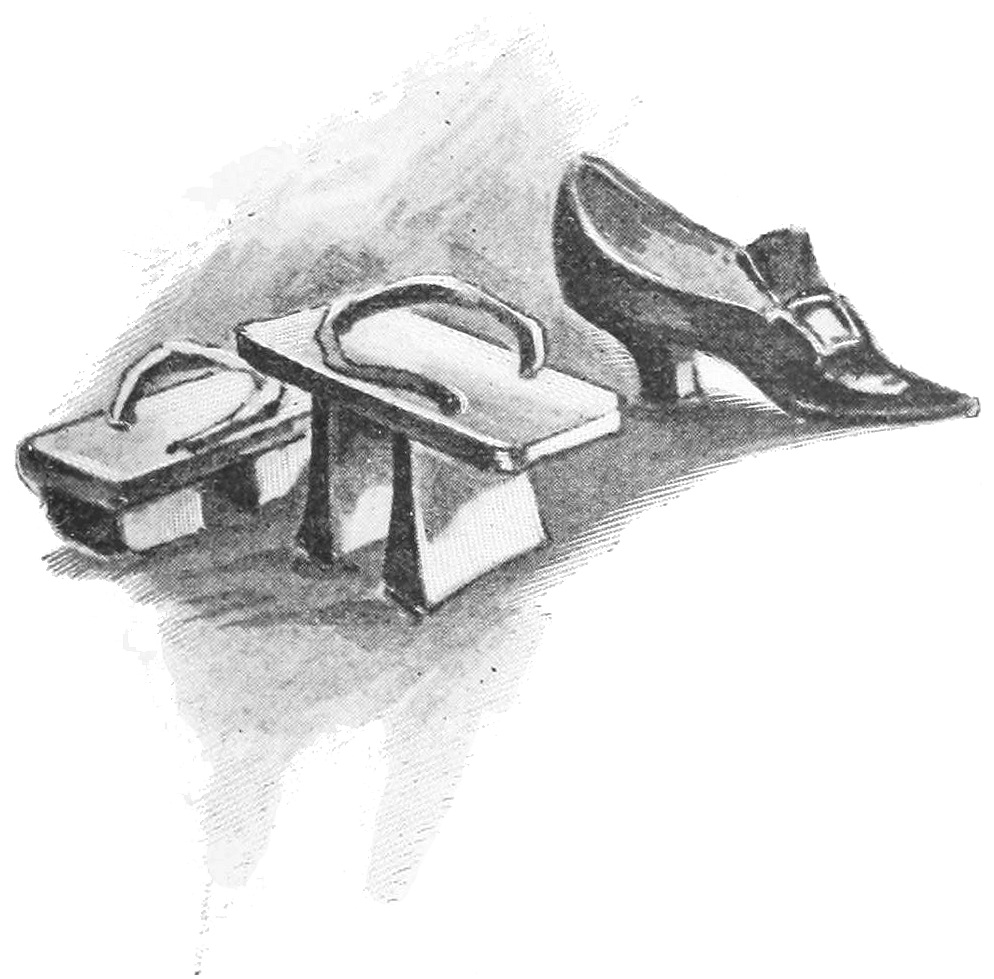
with a cord. His foot-gear was the
customary sandals, which, however,
he did not wear during the evening.
Of course he did not have his wife
with him, for even his progressive
spirit had not reached the point where
he could allow any feminine supervision
of his feast. The hostess is
unknown in Japan, where domesticity
does not play the part it should.
We had another proof of this in the
invitations we received, which did
not invite us to our host’s house, but
to one of the swell restaurants of
Kioto. For a Japanese to entertain
at his own house would be a social
barbarism.
The length of the Major—one of
our party—was often inconvenient
in Japan, and I saw him casting
troubled glances at the house before
which we found ourselves. It was
very small, and when we finally entered
he found it necessary to stoop
in order to get in at all. We did not
gain an entrance immediately, for we
found an obstacle in our way in the
form of the little musmee who had
conducted us thither. Before starting,
the two ladies of the party had
debated for a long time what foot-gear
they should wear, being faced
by the American extreme of shoes
and the Japanese extreme of stocking
feet. They congratulated themselves
that they had hit upon a happy solution,
by wearing their party slippers;
but when they arrived they found
that they had miscalculated.
As they
stepped upon
the platform
and were
about to enter
the room,
the little musmee’s
hands went up in horror.
We can only appreciate her
feelings by imagining our
own, should one of our callers
elevate his feet upon the parlor
furniture. Should they desecrate her
spotless white mats with their barbarous
American slippers? Our poor host
had his hands full, trying to pacify the
little enraged body, and at the same
time to act towards us as though this
outburst was one of the regularly-planned
features of the dinner. His
ever present smiles were still more in
requisition, and he could not bow
enough in his endeavour to make us
feel at ease. Suddenly, there came a
calm; the little maid withdrew, and
we were bidden in a most polite way
to enter. The offended girl, however,
sulked away like an angry child, and
I am convinced that if we made any
enemies in our trips in Japan, the
little musmee at this restaurant was
one of them.
This was the first Japanese house
I had ever been in, and naturally I
was interested to see what it was
like. It was oriental in every way,
though by no means an example of
oriental splendor. At one end there
was a platform on which incense was
burning, and the walls were entirely
bare but for two paper kakemonos.
The floor was covered with white
matting, on which were placed black
velvet cushions. These were our
seats for the dinner, and each of us
was supplied, in addition, with a black
lacquered candlestick. For some time
we stood there waiting for the host to
begin, but as we afterwards learned,
it is customary at Japanese social
functions for that dignitary to follow.
He smilingly requested us to be seated
as quietly as though he was bidding
us to four hours in Paradise, and not
to the physical discomfort—almost
torture—that it proved to be. The
ladies seated themselves with little
trouble, but things did not go so
well with the poor Major. His legs
formed a large part of a body that
measured considerably over six feet,
and as those six feet had to be disposed
of picturesquely in a sitting
posture, you will see that we had
almost a tragedy on hand. The Major
made several spasmodic attempts, and
finally threw himself down in a lifeless
heap in a way that furnished our
host new cause for smiles and bows.
For all this the scene in which we
found ourselves had its romantic
side. It was early in the evening of
a beautiful night in April, the Japanese
June. The wicker panels of the
house were thrown open, and the
warm air came through, scented with
the perfume of the cherry-blossoms
and bearing delicate sounds from the
garden without. We could see the
stars from where we sat, and they
had that warm, melting lustre that
one sometimes sees at home, but
which
is characteristic
of an
oriental night. In
front of the house
was one of those famous
miniature gardens that
embody the dainty Japanese
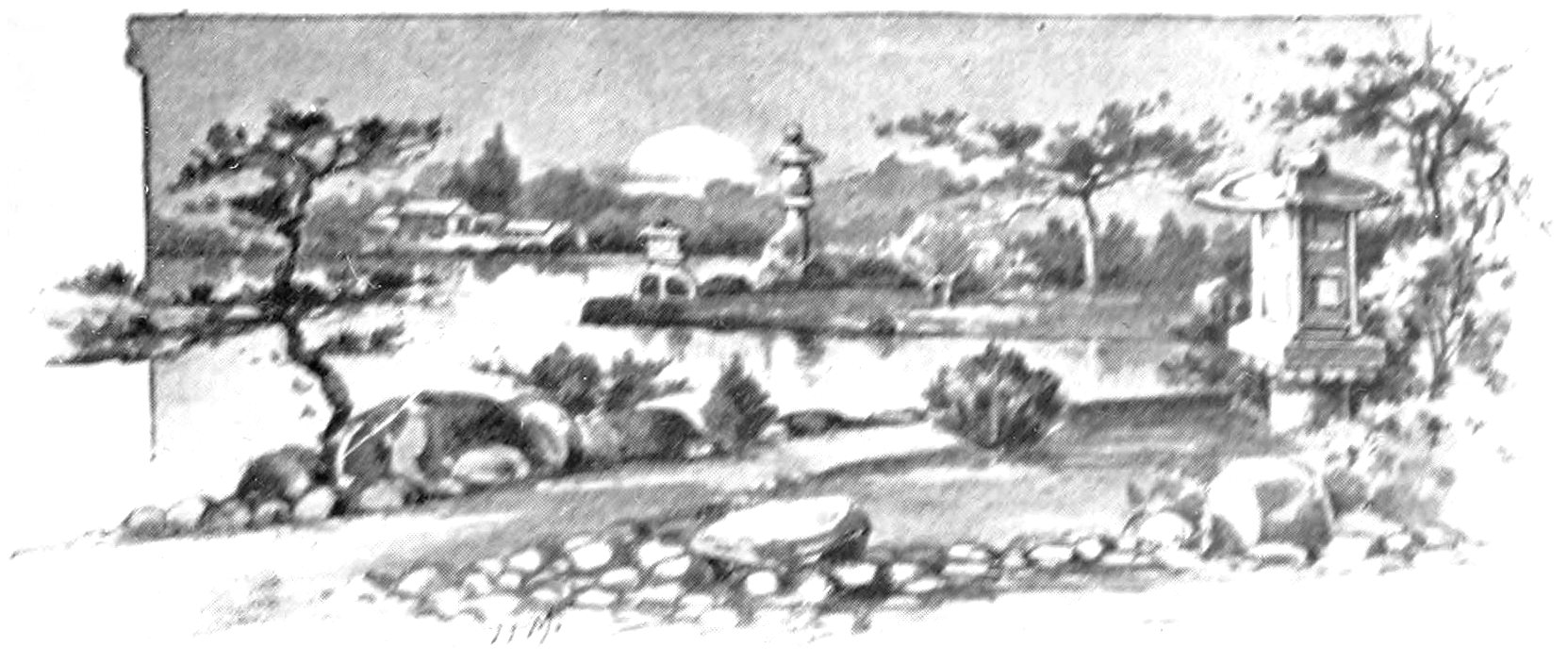
taste. A small, sparkling lake was
bordered by the sacred cherry-trees,
which were in full bloom; a passing
breeze had blown many of the blossoms
upon the surface of the water.
The shores were covered with dwarf
trees and a few sprays of pansies. All
of this we could clearly see, for the
moon gleamed down upon the scene
with just enough brightness to render
all distinct without removing any of
the enchantment. From the distance
we could hear the faint tinkling of a
waterfall. Even the Major’s uncomfortable
state of body could not prevent
him from catching the poetic
flavour of all this. But there was
more romance ahead. We all felt a
disappointment when our host dropped
the oriental manner of salutation and
simply bowed profoundly; but now
we were soon to have Eastern respect
at its fullest. Two musmees entered,
and, falling on their hands and knees,
touched their flower-bedecked heads to
the floor. In this respectful attitude they
remained before us for some seconds,
while we wondered whether the occasion
demanded any action on our part,
when, suddenly, they rose and presented
us with handleless cups full of tea—for
every dinner in Japan begins with
tea. I looked at the host in despair.
“Ah! I will explain,” he said, with
a laugh, and he did so. This is the
way you do it: you place the cup in
the palms of both hands, twist the
fingers into a supporting position
(I do not yet fully understand it), and
drink between the thumbs. If you
are well-enough bred, you will do
this with the utmost ease; but if you
are not, you may land the tea in your
lap, break the china cup, and be put
down as an extremely low person.
Of course, the fact that we were
foreigners warded off any harsh judgment;
and besides, I really believe we
all of us did manage somehow to get
through the crisis in a way that was
not entirely disgraceful.
Japanese æstheticism extends to
their dinners, which are extremely
graceful affairs. Our host, for example,
had divided this dinner into
four parts, each typical of a season
of the year. In this was a hidden
compliment; he intended thus to express
his regret that we were unable
to spend the whole year in Kioto, and
his hopes that this evening’s pleasure
would offer as good a substitute as
possible. And in spite of our uncomfortable
attitudes and the strangeness
of many of the dishes placed
before us, I do not think he was
entirely unsuccessful. Not the least
pleasant part of the dinner, for example,
was that which immediately
followed the tea drinking. We had
hardly handed the cups back to the
musmees, when they gave to each of
us a beautiful wicker basket filled
with flowers,—that, at least, is what
we thought they were, until we
discovered that they were without
smell. In fact, it took us some time
to find out that they were not flowers
at all, but most exquisite candy
imitations. They were more than
confectionery—they were true works
of art.
But there were other surprises in
store for us. As we sat admiring
these delicate creations, the doors at
the rear suddenly opened, and a living
wave of colour came fluttering in.
At first we could distinguish nothing
but a flock of miniature bats, storks,
and other creatures which figure exclusively
in Japanese natural history,
disporting themselves among dainty
representations of purple violets, dandelions,
and white and pink cherry-blossoms.
After recovering from our
first surprise we saw that these were
small pieces of embroidery on a background
of pale greys and shaded blues,
and then we caught sight of waving
loops of hair in which were intertwined
sprays of flowers and fancy
pins. This delicate yet somewhat confused
mass drew nearer, and we saw
five little faces painted entirely white
with the exception of clearly-defined
spots of red under the eyes and lips,
that were made particularly small by
a skilful handling of the brush. We
could but ejaculate one word:
“Geisha!” These were the famous
dancing girls of Japan, who lead, I
fear, not too happy lives in furnishing
much of the enjoyment of Japanese
social life. It is only ordinary
people who frequent the theatre in
this country, and it falls upon these
little creatures to furnish the higher
classes a large part of their amusement.
They dance, they sing, they
joke, act as waiters, and are generally
expected to supply the element of
gaiety without which no dinner can
be thought complete.
The Japanese do not walk, they
flutter; they do not sit down, they
sink. Each of these delicate bits of
humanity bearing a small lacquered
tray sank down before the guest she
was to serve. They were continually
laughing and chattering among themselves,
making naive criticisms of our
costumes and of ourselves—for the
geishas are given a great deal of
freedom. They were particularly inquisitive
about the ladies’ dresses,
and even went so far as to ask,
through the interpreter, the cost of
them. They also were anxious to
know whether the Americans made
them themselves, and how long it
took. These materialistic thoughts
changed when they caught sight of the
ladies’ diamonds, which they romantically
imagined to have grown on trees.
They made endless remarks about us
which we did not understand, and
from the interpreter’s unwillingness to
translate many of their speeches, I am
sure the little fault-finders saw much
in us to criticise.
And now the dinner began in earnest.
By our sides we discovered
mysterious packages done
up in paper, which we were
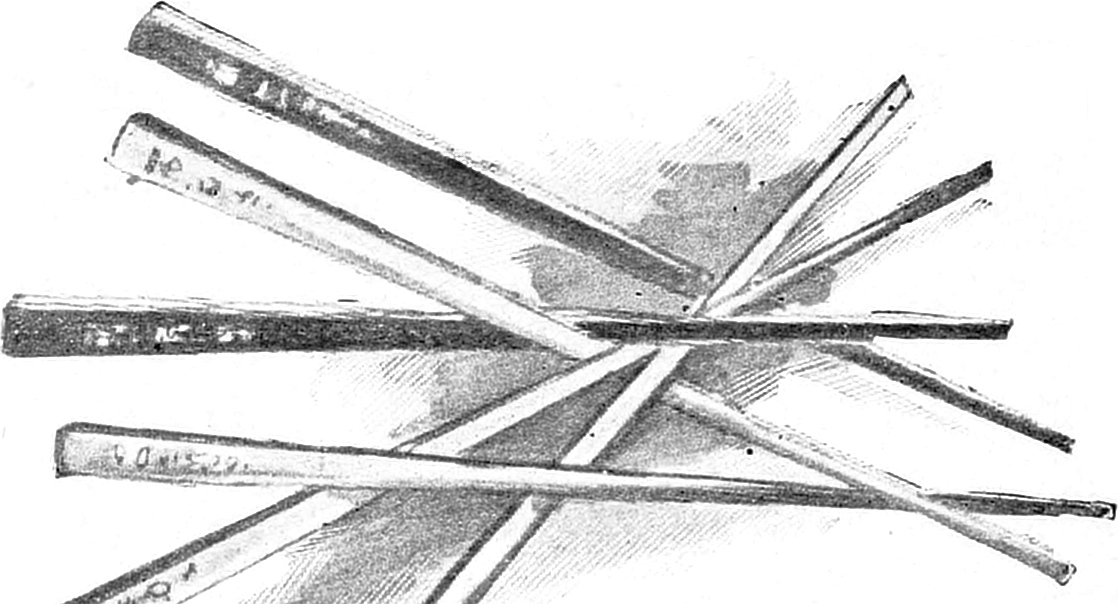
horrified to find contained chop-sticks.
This was worse than drinking
tea between your thumbs. It was my
first experience with these utensils,
and I hardly thought myself in a well-chosen
place to learn their mysterious
qualities. I was greatly surprised,
however, to find that it was not so
difficult as it looked, and that chop-sticks,
after all, are not the impossible
things the untutored suppose. We
had a hard dish to begin on; for after
we had got our chop-sticks in battle
array, the geishas startled us by bringing
in soup. More smiles from the
host, and more explanations. All you
have to do is to eat the solid part with
the chop-sticks and drink the liquid as
you drink tea. The soup was politely
christened “Congratulatory,” and
was made of green turtle, which is
popularly supposed to live a thousand
years—another compliment for us.
And now that I have begun the
menu, I may as well say that the
succeeding dishes included fish and
eels, and an unprecedented number of
soups, cooked à la Japonaise, particularly
one made of seaweeds, in
which their taste was by no means
concealed. And there were wines,
bomei, which the Japanese regard as
a kind of medicine to prepare the
stomach for the food, and saki, the
national drink, not dissimilar in appearance
and taste to a pale, dry
sherry.
At this point we were surprised by
the arrival of another guest. He had
been invited to meet us as a friend
of our host, but for some reason had
been detained and had sent his excuses.
He was clad in the same
costume as our host and had also
adopted the occidental whiskers,
though his were grey. He was not
sufficiently Europeanised, however, to
omit the Japanese salutation, and consequently
prostrated himself “on all
fours” before us. He further mystified
our minds by presenting each of
our party with his card. We looked
at our host in despair, who explained
that it was customary on such occasions
to exchange cards. But we had
failed to bring any along, and therefore
had to apologise ourselves out of
the difficulty as best we could. Of
course, our excuses met with the customary
smiles.
“We hope you will be able to visit
our country sometime,” one of us
had inspiration enough to say through
the interpreter the new arrival had
brought with him.
“I have been there already,” he replied.
“And how did he like it?”
“It is a very beautiful country, and
I hope to go back again sometime.”
Though the conversation was satisfactory,
the inconvenience always
occasioned by the use of an interpreter
prevented it from being very
lively. The next remark I remember
was from the Major, and was not of
so suave a kind.
“Say, if I have to sit here much
longer, I shall never be able to use
my legs again.”
All the evening he had been attempting
to gain relief by a constant
change of position, but his efforts did
not seem to have been successful.
We all of us were somewhat tired,
but the Major had a great deal more
to be tired than we. He had to compose
himself, however, for one of
the most distinctive features of the
dinner.
There was a slight pause after
his remark, and we began casting
glances at one another and wondering
what was to come next. The
pause at an American dinner we
should consider an awkward one, but
our host did not seem to entertain
any such idea. Suddenly we heard
two snaps that apparently came from
stringed instruments, and at the same
time the panels in a rear room were
drawn aside. We were taken somewhat
by surprise, for we were not
acquainted with the fact that a small
theatrical performance is one of the
usual accompaniments of a Japanese
dinner.
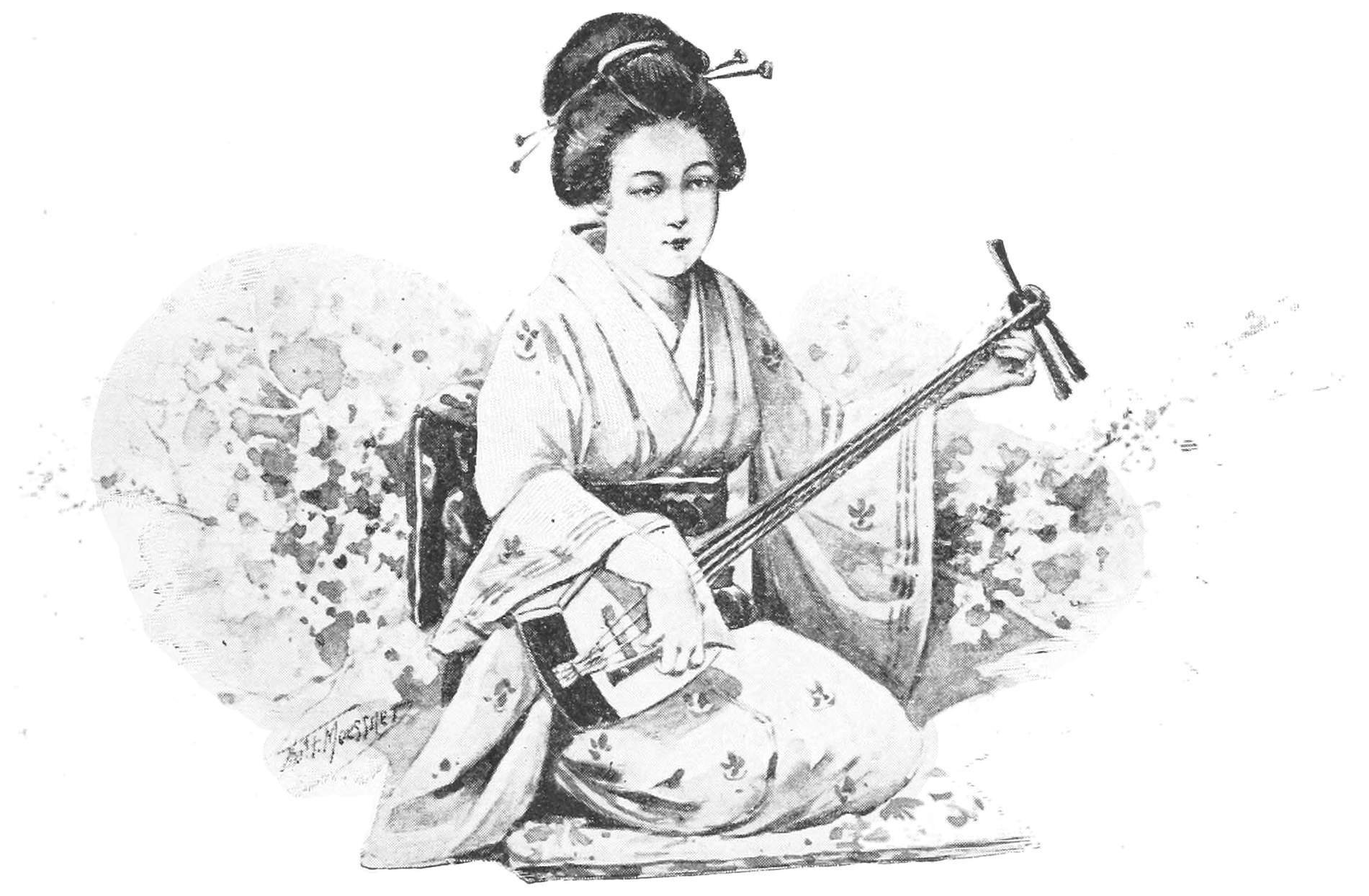
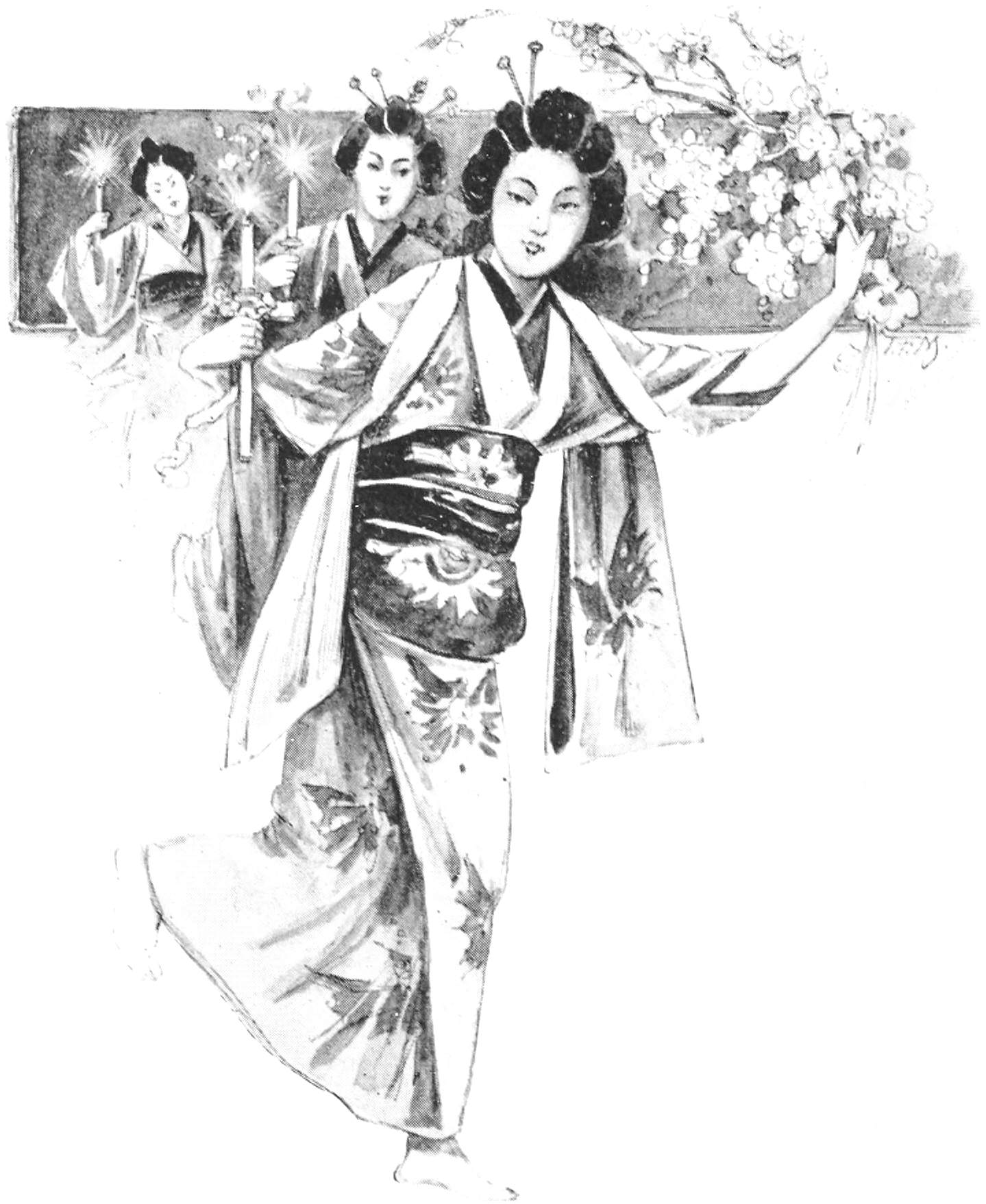
Two of the geishas began to play
on the samisen, the Japanese banjo,
and the koto, a kind of elongated
harp, picked with ivory tips. At
the same time one of the girls came
out in the centre of the room, and
we had our first sight of Japanese
dancing. While she went through
the movements of the “Reign of
Spring,” the two girls with the instruments
began singing in that falsetto
key which it takes an educated
taste to appreciate. They sing so
shrilly and the notes they strike are
so unnatural, that it becomes a very
painful exercise, and will frequently
bring tears to the performer’s eyes.
And how about the dancing? One
who is accustomed to the serpentine
mazes of our occidental skirt dancers
and who likes that sort of thing, may
find it hard to enter into the spirit of
her Japanese contemporaries; but if
you delight in gracefulness in any
form, these little geishas cannot fail
to please. Their costume plays an
important part in the series of posturings
that makes up the dance, and
no small amount of the success
achieved depends on the proper manipulation
of the fan. You can get
the best idea of what it is like, by
imagining a succession of dainty
tableaux in which the changes are
made before your eyes.
After sitting in a Japanese posture
on American legs for four hours at a
stretch, it was with some difficulty
that we finally arose and prepared to
leave. As we went out into the
night we were followed by a veritable
chorus of “Sayonara,” which is the
Japanese word for “good-bye.” We
were somewhat surprised to be followed
by the little musmees, bringing
as gifts, neatly tied up in boxes, that
portion of the dinner we had not
eaten. There is something delightfully
original in that idea. The smiles
and bows of our host were succeeded
by those of his friend, whom he had
sent to escort us safely home. His
courtesies did not stop here, for he
called on us the next morning to
thank us for the honour we had done
him in accepting his invitation to
dine,—a notable expression of the
refinement of Japanese politeness.
The night had grown still more
beautiful during the four hours we
had spent within, and we caught
many interesting glimpses of local
colour on our way to the hotel. The
air was warm, the sky clear, and the
brilliantly-lighted parks were filled by
proud Japanese fathers and mothers
with their prattling children. Men
and women were stopping under the
cherry-trees that were in full bloom,
gazing upon the sacred blossoms that
have been dear to Japanese hearts for
so many centuries. We went by one
of the temples, standing on a hill, the
approach marked by a succession of
bright red gateways. Under the light
of the moon, this ancient structure,
which for ages has been the heaven
of aspiration and love for so many
hopeful spirits of this land, had an
air of the utmost impressiveness.
The whole scene made us forget that
we had been sitting for four hours
on our heels, and called to our minds
the fact that we had had one of the
most enjoyable experiences of our
lives.
MIYAKO ODORI.
We suddenly found ourselves
before the entrance to an
unfamiliar by-street, and turned to
our guide to inquire the meaning
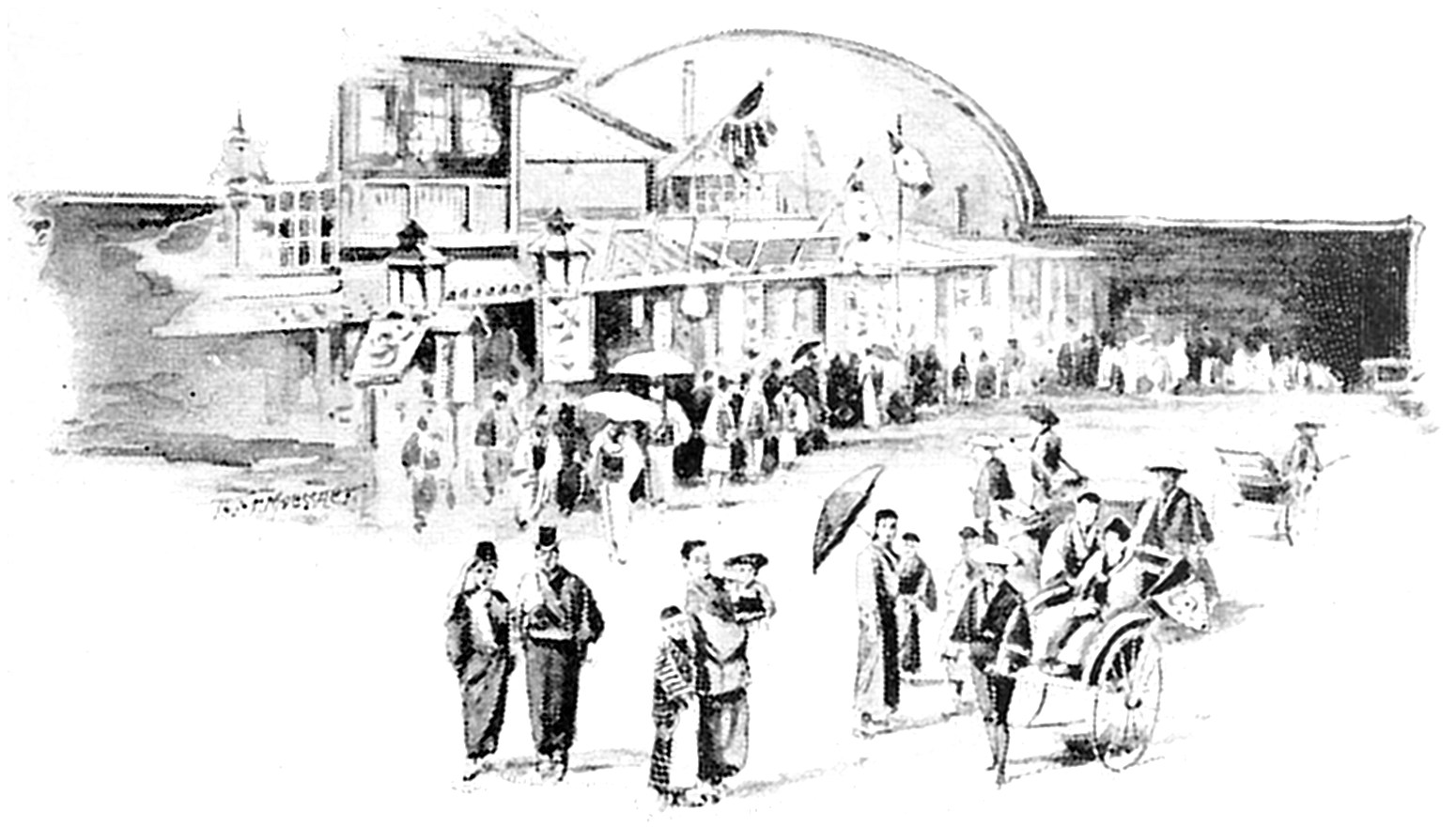
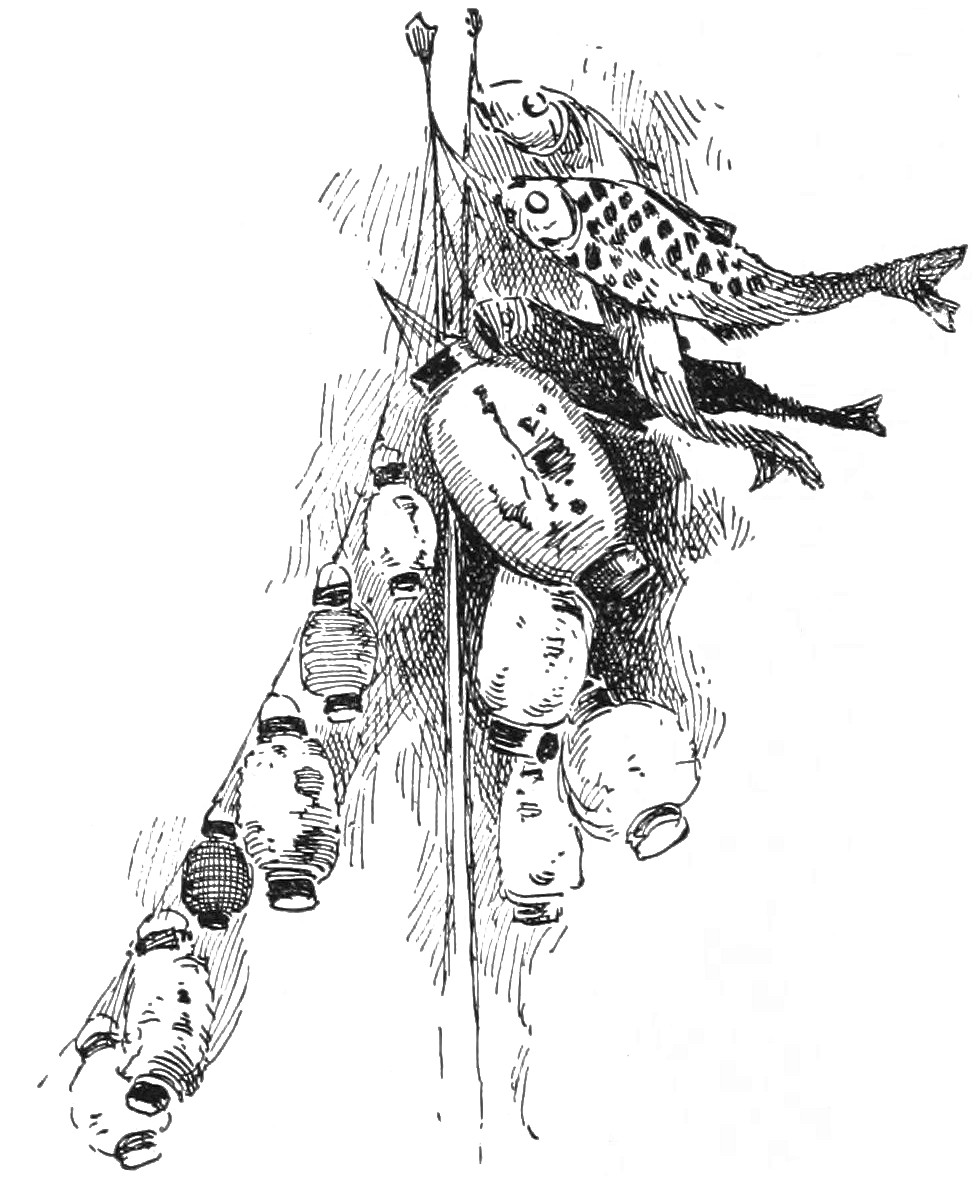
of what we saw. The huge red lanterns
hanging in a perpendicular
row from two high poles, evidently
had a significance about which
we were in the dark, and the exhibition
of haste, which we observed
on the part of these leisurely Orientals,
surely was inspired by no everyday
event. The girls were looking their
prettiest with their hair filled with
flowers and their pale grey kimonos
tied with that magical sash-knot,
which is the despair of their Western
sisters. Along with them trotted their
smaller brothers in bright-coloured
flowing robes, their little heads cropped
close with the exception of a solitary
tuft. Fathers and mothers of sedater
age and deportment displayed an
eagerness that was equally strong, if
more quietly marked.
Our attending coolie informed us
that we had hit upon a festival that
has particular attractions to the foreign
eye. You have probably heard of
those sacred cherry-blossoms that are
so dear to the hearts of the Japanese,
and which, with the chrysanthemum,
are their chief floral pride. It is true
that meddling foreigners have said
that they are not cherry-blossoms at
all; but that does not seem to prevent
the delicate mingling of pink and
white from being a very beautiful
flower. It is in the month of April
that they are to be seen at their best,
and it is then that this æsthetic people
assemble in different ways, and touchingly
illustrate the part that these
flowers play in their lives,—for the
Japanese without their cherry-blossoms
would not be the Japanese at all.
When, therefore, the coolie informed
us that all these people were on their
way to see the famous cherry-blossom
dance, we lost no time in mingling
with the throng and following it down
the lane-like street.
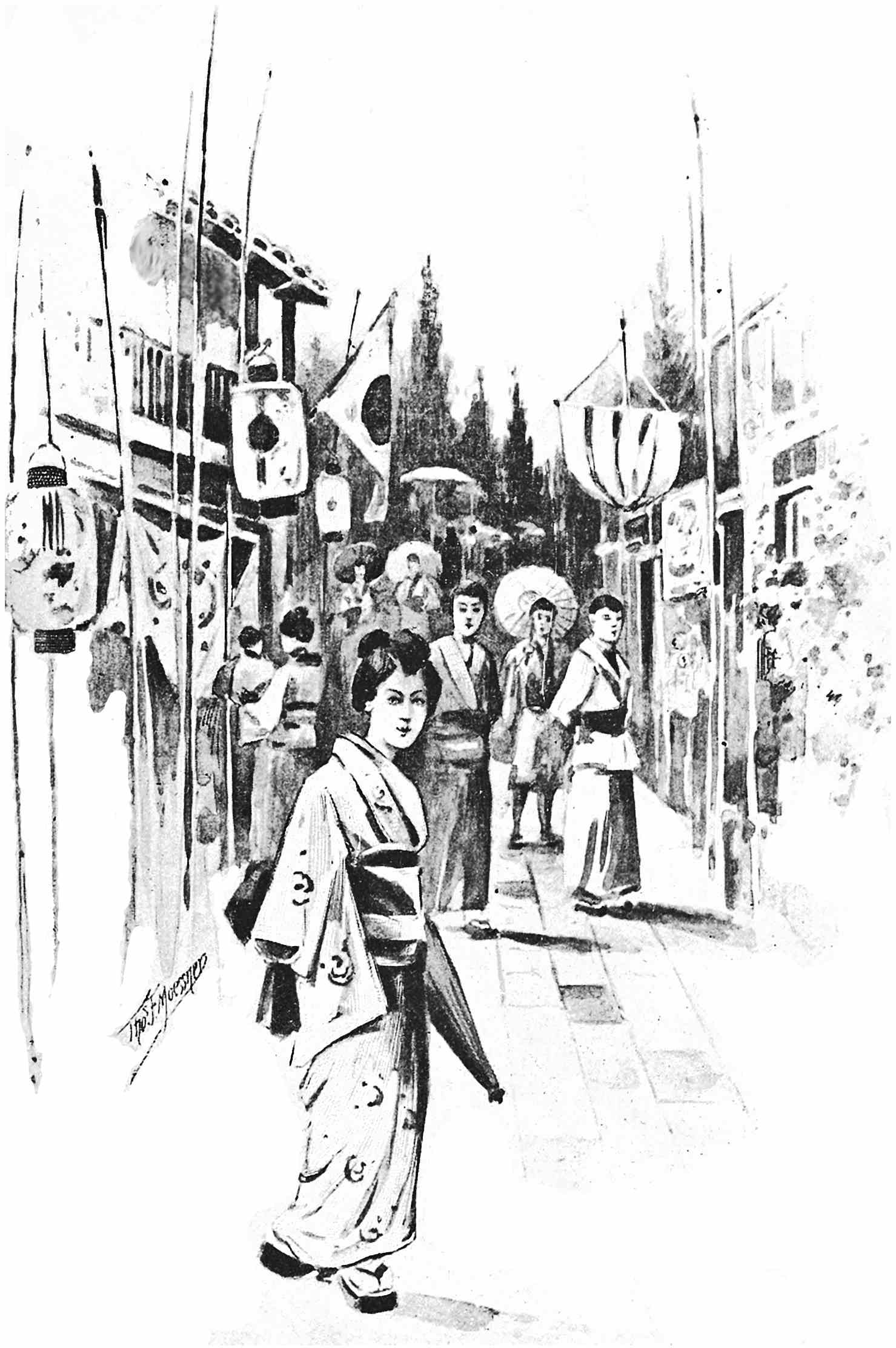
Everything here was a maze of Japanese
forms clad in their daintiest
robes, and Japanese faces flushed with
eagerness and anticipation. Though
æsthetic before everything else, the
people have a keen eye for business,
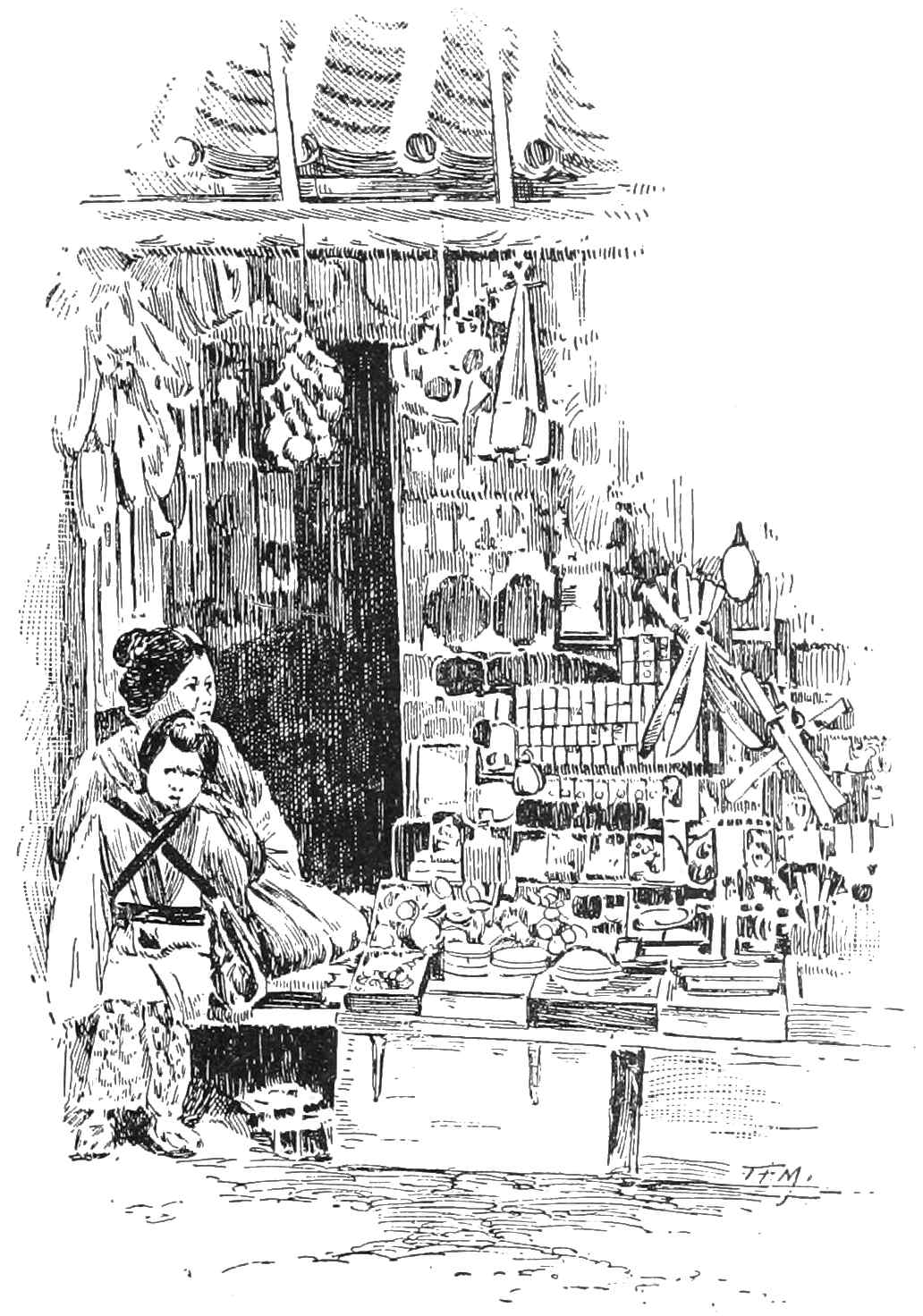
and the street was lined with booths
full of knicknacks and toys of every
kind. And here also were whole families
picturesquely seated on their heels,
sipping the everlasting tea. Pushing
our way through the crowd, we drew
up before a platform-like entrance, and
were immediately met by one of the
attendants, who presented us each
with a pair of enormous white duck
shoes. If you travel long in Japan,
you will become accustomed to this
sort of thing, and cease from experiencing
any embarrassment or indignation
at being requested to remove your
foot-gear before stepping on a Japanese
floor. The irreverent foreigner,
however, unaccustomed to walking
around in stocking feet, does not
always see things from the Japanese
point of view, and it has therefore
been necessary at the temples and
places of public amusement to have
a stock of these ungainly foot-coverings
for his benefit. The measure, of
course, is a conciliatory one, and is
intended to smooth the ruffled feelings
of the Westerner without at the same
time scandalising the sensibilities of
the Japanese. We had had many
similar experiences, and so lost no
time in incasing our feet in a manner
that would insure us entrance into the
theatre, even though it might detract
a little from our dignity.
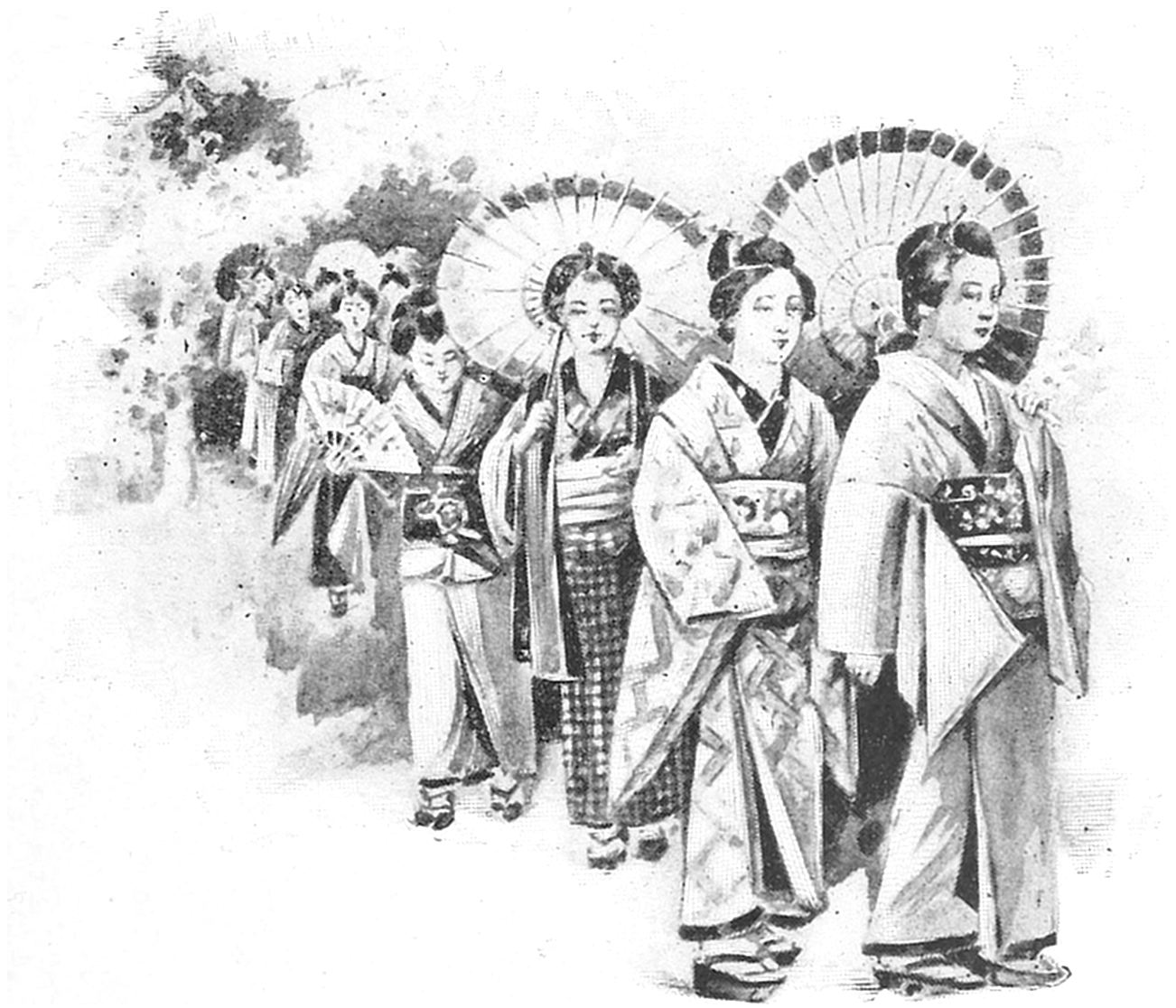
Japanese Forms clad in their Daintiest Robes.
In the small lobby in which we
found ourselves were a number of
Japanese enjoying the national attitude
of repose, and quietly waiting for
something to turn up. The other
end of the room was occupied by a
counter on which was displayed a
large collection of fans made of artificial
cherry-blossoms, similar to those
that were afterwards used in the dance.
These are exhibited in a large measure
for the benefit of the foreigner, who is
expected to make generous purchases.
All the while we could hear notes of
that unmistakable Japanese music
coming from beyond a small wooden
door, mingled with weird voices and
unclassifiable sounds. We began to
fear that the dance had begun before
our arrival, and that we might miss
the best part of the show. We signified
our wish to enter by pounding
on the small door; but it was securely
locked, and those on the other side
treated our emphatic demands with
oriental disdain. As we had paid our
admission fee, we began to get indignant
at this kind of treatment; but it
is better not to get indignant at such
things in Japan. Besides, the explanation
was quite satisfactory, as one of
the attendants told us that it was a
fixed rule never to interrupt the performance
by the entrance of new
spectators, and, therefore, any one who
came late must wait until all was
finished. We were pacified when we
learned that the dance was now
nearly over and would shortly be
repeated, and that we would lose
nothing by waiting. But we were
not the only ones who were impatient.
There was one little Jap accompanied
by his mother, who, after a careful
search finally succeeded in discovering
a small crack near the floor, to which
he applied his eye in much the same
fashion that his penniless occidental
cousin watches the progress of a game
of baseball; and evidently with the
same emotions, if the glances of delight
which he occasionally threw
towards his mother might serve as
indications.
Suddenly the music ceased, and the
crowd began to push in. Japanese
crowds are particularly noted for
their good nature, and our progress
into the theatre was the occasion of
many sprightly jokes from the local
wits, which were evidently very good,
for they were received with bursts of
laughter. We soon found ourselves
in a front seat of a small gallery, with
a three-sided stage before us. This
gallery was reserved for those from
over the seas and for those of the
higher classes of Japan. Below in
the pit sat those of humbler station,
making themselves as comfortable as
possible with their cushions spread
out on the floor. Spectators who had
already seen the performance were
leaving the theatre from the two
entrances under either end of the
gallery, but the eager crowd from
without was rapidly filling their
places. The faces seemed the same
that we had parted with a few minutes
before, and they had the same appearance
of expectant happiness. Here
and there was a father and mother,
followed by five or six wee ones,
hurriedly rushing around to find the
most convenient place. Apparently
satisfied, they would finally sit down,
begin to chatter and laugh, until suddenly
one would notice what he
thought a more advantageous place,
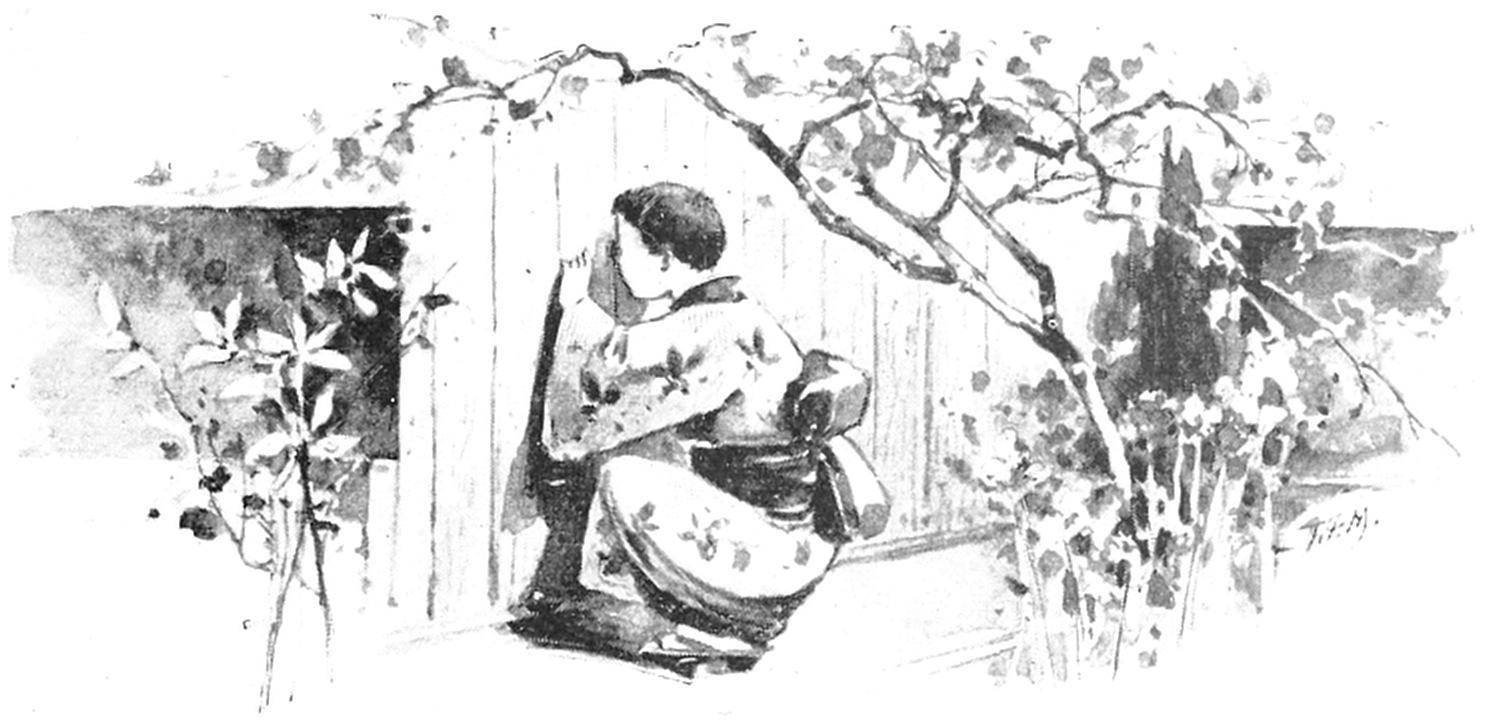
when up they would all scramble
again and hurry on in fear that some
one might forestall them. It sometimes
took more than two trials
before they were satisfied, and so,
while we were waiting for the curtain
to rise, the gay mass below us
was constantly changing about in the
eagerness of the spectators to gain as
comprehensive a view of the stage as
possible. Each little group was provided
with that indispensable adjunct
to happiness,—the tobacco-box. The
occasion meant far more to them than
what took place on the stage; it was
a general holiday, and they were there
to get as much out of it as possible.
There was a continual buzz as the
conversation went on, and occasionally
from some animated group there
would rise a loud shout of laughter,
whence we could infer that an oriental
funny man had made another appreciated
hit. Indeed, the sight below us
was so interesting and brought us so
in touch with the people themselves,
that we almost forgot that there was a
more pretentious display to follow, and
gazed at the curtain before us in total
disregard of the glories that lay beyond.
Suddenly our attention was aroused
by the loud clapping together of two
pieces of wood; and as suddenly
every chattering tongue quietly ceased,
and every laughing face assumed an
expression of the utmost interest. It
was the Japanese substitute for the
prompter’s bell. The curtain obediently
rose, and we settled ourselves
for the enjoyment of an oriental performance.
Even at the beginning we
could see that the Japanese prefer to
manage these things in a way of their
own, for the orchestra with them is
not a mere incident of the performance
with which to appease the impatience
of the audience between the
acts or to drown the weak portions of
a faltering tenor’s solo. In Japan the
orchestra is kept behind the curtain as
the chief performer, and comes in as
generously for its share of applause.
The first thing that caught our gaze,
therefore, were two rows of geishas,
picturesquely ranged on either side of
the stage, with koto and drums ready
for the opening overture. They were
all painted and plastered after the usual
geisha style, their little red and white
faces surmounted by towering head-dresses
of the ever-present cherry-blossom
and wistaria. Dainty is a
word that one constantly finds one’s
self using while speaking of the
geisha, and none other seems to serve
the purpose so well. Those on the
left, in their bright kimonos, with their
little drums shaped like hour-glasses,
were in the full daintiness of geisha
life, while those picking the koto opposite,
though still very young, could
not but bring the pathetic thought
that that strange life is a brief one.
The whole audience observed the
strictest silence all through the opening
selection, which was not without
its charms, even to unaccustomed
ears. Occasionally a small shrill voice
would be heard above the steady
thrumming of the instruments, and
though this could not perhaps be
called singing, it had charms for those
receptive souls in the pit.
But in the mean while
our attention had been
attracted to the stage. It
had been prettily arranged as
a garden scene, in a way far more realistic
and beautiful than the painted
trees and urns which pass for such in
our own theatres. Here we had a
profusion of cherry-blossoms to serve
as a background to the equally pretty
and delicate girls, who now began to
enter from the two doors that had been
previously used by the spectators.
They were in two files, one in which
pale blue and pink predominated,
while the kimonos of the others were
of bright red. The faces and headgear
had been arranged in the same
way as those of the musicians, and
each held in her hand a cherry-blossom
fan. Their entering motion was
very slow, consisting of a step forward
and a step backward, the time of the
music being scrupulously observed.
In this way they proceeded up the
middle of the stage, where they parted
and formed in line on the sides, meeting
again in the centre. They were
now ready for the dance to begin.
The word “dancing,” in its western
interpretation, can hardly be applied
to the graceful body-motions which
satisfy the more subdued taste of the
Japanese. The nearest thing that our
stage can offer for comparison is the
march, more spectacular than artistic,
in which glistening helmets and emblazoned
shields and swords play so
large a part. In place of the knightly
helmet these Japanese use their cherry-blossom
head-dresses to good effect,
while their less aspiring minds are
satisfied with a fan instead of a sword.
They have large flowing sleeves which
they are constantly waving with a
motion not too slow to be picturesque,
and they can bend their little bodies
in a way that their Western rivals have
yet to learn. They toss their heads
backwards and forwards in a very
graceful and captivating way, and
make any number of gesticulations
with their sleeves, holding them in all
conceivable positions in front of the
face, back of the head, or stretching
them out at arm’s length as a bat
does its wings. At times the marching
and counter-marching becomes
delightfully confusing, the stage being
a mass of slowly-waving colour, from
the midst of which a large number of
cherry-blossomed crests can be seen
and an occasional smiling white-plastered
face. The dancers do not show
the slightest traces of fatigue, and
when the curtain is rung, or to be
more precise, clapped down at the
conclusion of this first act, they seem
as fresh as when it began, and a little
disappointed that they are obliged to
pause for a short time.
Another clap, and up went the
curtain again. The scene-shifters had
been working hard during the interval,
and produced a charming change
for the second act. We thought at
first that we were to have an oriental
version of a well-known scene of
Italian love-making, for here was a
Japanese house with bow-windows
and balconies that would have delighted
the eye of the most fastidious
Romeo. But there were only Juliets
in this play, and they made, after all,
a satisfactory use of the windows and
piazza, though they relied simply upon
their own charms for their success.
Now one tiny form would appear in
a window, now one would step upon
a balcony, and another somewhere
amid the trees would smilingly gaze
upon her sister above. There were
no carefully memorised speeches of
blank verse, but the scene was full of
that clever geisha sentiment that can
be so charming. Each little actor
became her own poet, yet there was
no need of words to make us feel the
happy spirit of romance inspiring her
unrestrained heart. The atmosphere
of gayety was not confined to the
stage but found its way into the delighted
souls in the pit, and scarcely
had the curtain descended when they
seemed to feel it their duty to give a
performance of their own. The children
began to run about, pull each
other by the sleeves, roll around on
the floor,—all to the accompaniment
of ceaseless tittering and all with the
utmost good nature. A wrestling
match formed the diversion of one
group gathered around two diminutive
athletes of local reputation, who
were tugging savagely at each other
with the utmost disregard of usual
athletic rules. The pit was not without
gymnasts of its own, who turned
somersaults and handsprings in a way
that must have shocked the more
refined taste of the gliding geishas.
While all this was going on, the more
dignified members of the family were
sitting on their heels, smoking their
pipes in a stately manner, and occasionally
bringing forth materials for a
light lunch. This would have a greater
attraction than the trials of athletic
skill, and even one or two of the most
successful turners of the somersault
made a pause in their gyrations to
watch the progress of the meal.
My attention was so occupied by
the busy throng below, that it was
not until I felt a gentle tug at my
elbow that I was aware that I had a
visitor at hand. I turned and saw a
smiling white-plastered face, surmounted
by tall sprays of cherry-blossoms,
gazing up into mine. It
was one of the geishas, who had left
the stage and who had quickly selected
a foreigner on whom to bestow
her favours. And yet, I like to think
her attentions were not merely of a
perfunctory kind, and that she was
drawn towards me for other reasons
than because it was the way in which
she had been trained. Her actions
surely had not an artificial air, and the
continued smiles which she showered
upon me seemed to be sincere. She
did not feel the least embarrassment,
and kept talking on in her sweet
little voice as though I understood
everything that she said. And a great
deal of it was perfectly plain. When,
for example, she glanced up into my
eyes in such a meaning way and let
drop a few dulcet words, could my
woman’s nature refuse to understand
the little flatterer? She was amused
by the ornaments on my hat, and
smoothed my hair in a most caressing
manner. When she tired of this, she
called my attention to a small tray
at my side, which I had not noticed
before. From this she took a cup of
tea in her delicate little hands and
offered it to me. I drank it with the
utmost readiness, and did not stop to
think that it was the bitterest thing
that had ever passed my lips. This
was the real object of her visit, and
with another smile she gathered up
her tray and passed on. I gave a sigh
as I saw her go through the same
thing with another lady not far away,
and apparently with the same sincerity
and feeling. With an equal tenderness
would she clasp her hands, and—crushing
stroke to feminine vanity—gaze
into her eyes with the same
admiration as she had into mine.
And now, for the first time, I noticed
that there were several geishas in the
back part of the gallery engaged in
making the bitter potion I had tasted
under such romantic circumstances.
This is no every-day occurrence, and
it has a long history that gives it a far
from vulgar interest. Perhaps you
think that our “teas” are of native
origin, and that they are an invention
of modern times; but you are mistaken.
In the sixteenth century there
lived a mighty man in Japan, named
Hideyoshi, and he it is who must bear
the burden of those social functions
about which the men say so many
unkind things. For in his effort to
lighten the cares of state and lessen
the tedium of his life, Hideyoshi, after
much careful thought, decided on the
following plan. He gathered to himself
several of the choicest spirits of
the realm, to whom conversation was
a developed art and wit a perennially
flowing spring, and said: “I hereby
establish an entirely new form of social
diversion to be known as ‘tea.’
In so doing, I have a careful eye on
those who shall follow, and particularly
those of other lands, who shall
shower their blessings upon me to
the end of time. So come, my friends,
gather around, and in the words of an
unborn poet: giggle, gobble, gabble,
and git.” Probably this last allusion
was a mere pleasantry on his part, and
had reference to the degenerate forms
in which we should receive the ceremony.
Hideyoshi had no feminine
hands to assist him,—Japan at that
period of its history not kindly favouring
budding débutantes. He went
about it himself in this way. He took
a piece of purple silk and carefully
cleaned each article to be used, folding
and refolding the fabric in a most deliberate
manner. He then heated a
bowl with hot water and placed in it
a spoonful of the green powder that
the Japanese call tea. Nothing remained
but to put in the boiling
water and to serve the bitter result.
With a most profound bow he passed
this around to his guests, giving each
at the same time a small cake with a
taste rather suggestive of dry ginger.
The affair was a great success, and
was taken up with readily by the
most exclusive sets of Japan, and
passed into modern times. It is called
the “cha-no-yu,” and the Japanese
regard it with a reverence that makes
it almost sacred.
The day was now drawing to a
close, and the theatre was gradually
becoming dark. The informality of
the performance was continued at the
next rise of the curtain, when the
scene-shifters came out and prepared
to arrange things for the last act.
They were not visible to the spectator,
however, because they had on
black gowns and black masks,—and
because the Japanese have a very
lively imagination. But to us, not so
happily endowed, these men’s sombre
costumes did not prevent them from
being seen, and we watched them
with considerable amusement and interest
as they solemnly went around,
preparing the stage for the finale.
Everything was darkened, and when
the geishas again appeared, they each
held a candle in one hand and a spray
of cherry-blossoms in the other. Enormous
clusters of this flower seemed
to fall from the wings in one mass,
barely leaving room beneath for the
little girls to go through the concluding
steps. The dance that followed
was even slower than the former, and
was accompanied by a still weirder
music, the finest we had yet heard in
Japan. Everything had an air of
strangeness and unreality, and we felt
indeed that we were in a different
atmosphere than that in which we
had spent our lives. Slowly the
brightly-clad geishas moved around
the stage, the white blossoms gracefully
waving in the air, and still more
weirdly rose the threatening tones of
the koto.
We were aroused from our enchantment
by the gradual descent of the
curtain. The spectators for the next
performance were already entering,
the conversational jabber once more
began, and to the accompaniment of
the same laughing voices and probably
the same jokes, we made our way
to the street.
THE RISE AND FALL OF THE KAKEMONO .
It was our last night in Kioto. We
had spent the day in the temples,
and though we were somewhat tired,
we still managed to keep up a desultory
conversation upon the interesting
things we had seen. Suddenly we
were interrupted by a shy knock.
Before any one had time to prevent it,
a handsome Japanese face thrust itself
through the gradually opening door;
it was immediately followed by the
handsome figure of a young man.
Perhaps it was because of the good
looks that the intrusion was not resented.
The new-comer possessed
large brown eyes, bushy black hair,
and beautiful white teeth, and in addition
to this spoke English.
“Can look see some of goods.
Have very beautiful things.”
This is the way they teach it—or, at
least, learn it—at the mission schools.
The speaker continued: Would
Madame be so kind as to glance at the
charming wares at present gracefully
reposing in a pack on his shoulders?
They were something out of the usual
run, and he had brought them especially
for her inspection. To tell the
truth, Madame was very tired, and
murmured an objection; but a beautiful
face has always touched her
artistic sensibilities, and here was one
of the finest she had yet seen in Japan.
The new-comer seemed to notice this,
for he entered without more ado. He
immediately dropped to the floor and
began to unpack his bundles. We
were all soon interested in other things
than our visitor’s face, for he had
hardly begun to display his wares,
before we saw something novel ahead.
Japanese peddlers usually have an
innumerable collection of small boxes,
but our friend’s were larger and
heavier and of a much richer kind.
With the usual number of bows and
smiles he began to reveal his treasures
to our gaze, when we were honoured
by the entrance of a small counterpart
of himself, who had evidently been
waiting outside until the coast was
clear. Apparently they were brothers,
and together they began to arrange
their merchandise in a way to catch
the American eye most temptingly.
We had already seen many of those
hanging pictures which figure so
prominently in Japanese art, but
nothing of so delicate a texture as
those our visitor now laid before us.
They were for the most part representations
of religious emblems, but there
was one of a more secular kind of
which the young man was particularly
proud. It was rather large, with a dark
background on which was exquisitely
embroidered a tall, white cock with
head erect, crowing to his heart’s
content, and strutting about in all the
majesty of a flaming red comb.
But this was only a beginning.
Evidently our friend had brought
these merely to see whether we were
people of taste and could properly
appreciate the untold treasures he had
at his command. In his Mikado’s
English he informed us that our
artistic eye had touched him profoundly
and had caused him to call
to mind a kakemono of unparalleled
beauty, that would delight us still
more. Whereupon, he ruthlessly
folded up the cock with the flaming
comb, placed it with the rest on the
floor, and set the boy down upon the
pile to guard matters until his return.
It did not seem to occur to him
that this latter act was a slur at our
honesty—things are different in
Japan, you know.
“Have got house very beautiful
kakemono. Priest won’t sell.” So
he said, and so we understood him;
giving him credit for grammatical
correctness, when really he meant
“want to sell.” Here, we thought, is
a touching example of Japanese politeness!
Our visitor is so impressed
by our appreciation of his embroideries
that he is about to show us one
of the treasures of the temple, for
the sole purpose of gratifying our
taste for art. Soon this obliging
Oriental returned, bearing a large
bundle over his shoulder, which he
immediately spread before our astonished
gaze, all the while murmuring,
as we thought, a repetition of the
fact that the priest would not sell.
We were further mystified by an
occasional reference to a tea-house
that seemed to disturb the young
man’s peace of mind.
However much we may have been
puzzled by this, there was no doubt
that we had before us one of the most
delicate creations of art. Could it be
possible that all this was the result of
man’s labour, using what many of us
find so clumsy an instrument as a
needle? I have thought long how
to give an idea of the skill, the patience,
the taste displayed in this
piece of tapestry; but who can tell
a blind man
what a rainbow
is like?
Besides, I do not
yet myself thoroughly
appreciate what it all means, for,
though I have owned the tapestry
for some time, I never look at it
without finding something I have not
seen before. It seems such an inadequate
thing to say, that it was about
eight feet long and three wide, and
that the figures were worked upon
a grey background surrounded by a
border of black. If you could only
have seen it as it first flashed upon
me that evening, a glorious mingling
of the bright Japanese colours of red,
black, and white, as yet totally undimmed
by the nearly two centuries
that it had lain, a holy thing, in the
Daitokuji Temple at Kioto! There
seemed to be some historical scene
portrayed, evidently a naval battle, for
there were castles and boats and
water, and in the distance the sacred
mountain of Fujiyama, worked in a
rich gold. Over all, with outspread
wings, were flying storks, and in the
sea were strange fish and monsters.
And there were royal crests, sailors,
warriors, birds of many kinds, the
colours as finely blended in this piece
of needlework as in an artist’s painting.
Later I have had the opportunity
to examine it more in detail, and to
discover that the castles on the shore
are undergoing a siege, the date of the
events being that of the ascendency
of Hideyoshi. We are sure of this
because Hideyoshi himself is there
in red armour, and though his face
is not more than a quarter of an
inch in diameter, the features are
easily distinguishable. I have the
names of the other officers and castles,
with a full description of the event
written in choice Japanese by the
priest of whom the purchase was
made.
For he would sell, after all. As we
stood admiring this monument of
skill and patience, little thinking that
it might be ours, the young man kept
up his story about the refusal of the
priest to sell, and also his pathetic
allusions to the mysterious tea-house.
Suddenly, however, he cleared up
everything by turning to us despairingly
with the words,—
“Please buy!”
Then we at last learned that the
priest “wanted” to sell, and that he
was driven to this strait by the necessity
of raising money for a tea-house
adjoining the temple. And we
gladly bought. It was with reluctance
that the priest gave us this Japanese
treasure in return for our
American dollars, for behind the act
there is a pathetic story that touches
the very heartstrings of the faithful
followers of Buddha. It might not
be inaptly styled “The rise and fall of
the Kakemono.”
In those good old times when the
Mikado was only a picturesque ornament
of the community, subject himself
to the dictates of some powerful
shogun or warrior like our friend
Hideyoshi; before the barbarous West
with its parliaments and trousers and
sense of art-perspective had begun to
intrude, a great being ruled in the
hearts of the Japanese and filled them
with longing and hope and love. He
was not a native, it is true; but the
fact that he came from India did not
seem to make him any less national,
and he was as much at home in this
sunny island as in his own snowy
Himalayas. To tell the truth, the poor
Japanese peasant was not the happiest
of mortals in those days; for
we have many stories of the little
regard in which he was held by those
above him, and the insignificant part
he played in the social system. It is
not altogether strange, therefore, that
this wanderer from the south should
have met with a hearty welcome; for
his lessons were those of kindness
and hope. More than this, he taught
the down-trodden serf that life was
not a mere matter of unrewarded
toil and undeserved suffering, but that
it had a gleam of greatness even for
him, and that besides there was something
beyond. This bearer of glad
tidings dwelt in the temples on the
hills, and his name was Buddha. It
is true that the ungodly Japanese had
little stone images of him of which
they thought a great deal, and so his
religion was an idolatrous one; but
for all that they might have done
a great deal worse.
For many centuries, therefore, they
loved great Buddha, and loved him
with all their souls. Every one, from
the haughty shogun to the little white-faced
geisha, found in his spirit a
something which he could find nowhere
else, and which resulted in a
stronger and purer life. There was
one, however, who remained proudly
aloof from all this, and regarded
Buddha with a somewhat doubting
eye. This was no less a personage
than the Mikado himself, who, after
all, could not be greatly blamed for
the way he looked upon the new-comer.
For Buddha was not only a
foreigner but a revolutionary character,
and expelled a former visionary
something very dear to the Mikado’s
vanity. This was the creed of Shintoism.
Now I hope you will not
embarrass me by asking what Shintoism
is, for I assure you, that though
I have given the matter some attention
I have not yet a clearly defined
idea as to what it all means. It
does, however, teach us something
indefinite about listening to the dictates
of our hearts, and something
definite about following the decrees of
the Mikado. It treats this dignitary
even more kindly than this, for it goes
on to say that he is not a man at all,
but a great god moving here among
us,—a sacred thing to be worshipped.
It supports this claim by a very long
and highly respectable pedigree, proving
him to be descended in the direct
line, without twist or turn, from one
Amaterasu, who was a sun-goddess
before Buddha came. For Buddha
did not trouble himself about the
Mikado’s genealogical tree, and so the
good man had little use for him. During
many centuries he treasured up his
ill-feeling; but things worked slowly
in Japan in those days, and it was
a long time before disobliging history
gave the Mikado a chance to get even
with this iconoclast of the south.
To tell the truth, through all these
years the Mikado was not the important
personage his ancestry would
lead you to suppose. His main occupation
was posing gracefully as the
head of the state, and for ages this
descendant of the sun-goddess was
kept in golden chains, a practical prisoner
in his own castle. But he still
kept his hold on the people, who,
by some peculiar inconsistency very
noticeable in their religious faiths,
firmly believed that story about Amaterasu.
This, however, did not in the
least affect their warm love for Buddha,
of which they gave evidence in many
ways. They built many temples,
which were approached by a series of
handsome torii, or stone gateways, and
which were regularly attended by
priests. But by far the best thing
they did was to make these embroidered
pictures, one of which I have
described at length. Those were
emphatically the days of the kakemonos,
and they are the most telling
expressions of the deep-rooted
affection with which the Japanese
regarded their divine teacher. The
works are deeply religious in the most
profound sense of the word, and fill
the same place in Japanese art that
the works of Raphael and Michael
Angelo do in Christian painting.
Handsome torii, or Stone Gateways.
And these old masters had their
counterparts in Japan, though but few
are known to fame. I fancy, for
example, that not many have heard of
a certain genius named Tosa Mytzeoki;
but he it was who flourished at the
middle of the last century and spent
three years of his life in making the
beautiful tapestry that I now possess.
The makers of these kakemonos
formed a separate class of society, and
spent their whole lives in the practice
of the delicate art. They had no instrument
but the needle, and no
material but Japanese silk with which
to produce these wonderful results.
They worked year after year at the
beck of grosser spirits than themselves,
and of course were poor and
unhappy. They did not have the
hope of fame that inspires so many
artistic souls; for when a kakemono
was completed it was immediately
laid away in the temple, far from
vulgar eyes. Poor Tosa Mytzeoki
never dreamed that the result of his
delicate toil would some day grace
an American drawing-room! It is
true that on days of religious festivals
the kakemonos would sometimes
be brought out and used in decorations
for the walls, but these occasional
exhibitions were a sorry
foundation for future fame.
When some nobleman—for the
higher classes alone could afford such
a sacrifice—wished to gain the favour
of Buddha, he would go to one
of these humble artists and give him
an order for a kakemono. There were
two kinds from which he might select,
those that were embroidered and
those made of paper. The latter were
especially abundant, and of all kinds
and sizes. Many of them contained
merely an autograph done with the
brush,—the national pen; for the
Japanese have always had a liking for
fine handwriting, esteeming excellence
in that line a separate art. The
figures with which a large number
of these paper kakemonos are covered
are splendid examples of Japanese
painting, the scenes being mostly of
a historical and religious kind. Buddha
and Confucius are the special
favourites. The backgrounds are
often filled with a host of figures;
I remember one at Kioto, that contains
nearly as many faces as Tintoretto’s
painting in the Doge’s Palace at
Venice. This kakemono is remarkable
for other reasons than this, for the
work is lifelike and vigorous, and
though five hundred years old is well
preserved. It is called the “Death of
Buddha,” and represents the expiring
prophet surrounded by worshippers
with grief-stricken faces, so vividly
depicted that the very air seems filled
with lamentation.
For many centuries these kakemonos
were being collected in the
Buddhist temples all over Japan.
Then came the memorable year 1868,—a
year that marked the close of the
Japanese middle ages. The feudal
system was abolished, and the whole
scheme of government renovated.
Now the Mikado emerged from his
obscure position as a public official,
and began to play more than a sentimental
part in Japanese life. The
days of the shoguns were over, and
the Mikado was the Mikado indeed.
From this time the misfortunes of the
kakemonos began. The long-awaited
opportunity of the Mikado had arrived.
He solemnly sent forth an edict that
Buddha had outlived his usefulness,
and that the day of his great-great-grandmother,
the sun-goddess, had
come; the sole religion of the Japanese
henceforth was to follow the
teachings of his heart, but above all
those of the Mikado. So Buddha’s
occupation was gone. The Japanese
were already on that downward path,
which was to end in their wearing
European trousers under Japanese
kimonos, and they began to find the
Indian prophet a little out of date.
And besides, the missionaries had
impressed upon their minds that
those little stone images were things
no self-respecting man would have
about him. Many, therefore, decided
to do away with these abominations,
and follow the teachings of
their hearts.
But, though the government was
persistent, Buddha was even more so,
and was very loath to give up the sway
he had secured over the affections of
the Japanese. The humbler classes
were also blind to the superior virtues
of the Shinto Temple, and therefore
an interesting struggle began, to see
which was the fitter to survive. The
struggle is not ended yet, nor is there
any great indication that it soon will
be. The Mikado himself has confessed
the weakness of his own cause,
for he has found that the mere listening
to the teachings of one’s heart
and obeying the decrees of the sovereign
does not constitute a religion.
He has therefore been obliged to borrow
a great deal from his antagonist,
and it so happens that the state religion
of Japan is a tangled problem.
But the masses of the people are still
faithful to Buddha, whose temples
are increasing every day.
The Mendicant Priests.
In the midst of all these reforms
there was one class on whom the burden
rested with a peculiar weight.
What was to become of the priests?
The Mikado cared no more for these
than he did for Buddha himself, and
so, while a large part of Japan was
listening to the teachings of its heart,
these priests wandered in a melancholy
way about the temples, at a
loss as to what it all meant. Not
only this, but they were hungry men,
as the governmental supplies had
suddenly ceased. The temples were
beginning to show the evils of the
sentimental tendency of the people,
and it was evident that something
must be done, or Buddha would have
to limp back to India with a lessened
appreciation of Japanese hospitality.
Thus it was that some one more daring
than the rest bethought him of
the kakemonos. Here were treasures
indeed, and moreover here were
wealthy foreigners beginning to swarm
anxiously to lay sacrilegious hands on
everything. You see it was a simple
case of sentiment versus necessity, and
as usual necessity came out on top.
The priests must be fed, tea-houses
must be built, the temples preserved;
the government frowned upon them
all. Every time, therefore, that the
needs became too pressing to be resisted,
a kakemono was aroused from
its rest of ages, and converted into
cash. Buddha was thus given a lease
of life once more, while his sacred
kakemonos were transported to do service
in the drawing-rooms of Europe
and America.
Many of them were bought up by
the Japanese themselves. They are
a source of entertainment at dinner
parties, where they are brought out
for the inspection of the guests in
much the same fashion that we display
our bric-à-brac or collection of
paintings. A careful history of each
is kept, which always accompanies
it. The more kakemonos the Japanese
has, and the greater the antiquity of
them, the prouder man he is. But the
demand for them has occasioned many
imitations which are reserved for the
benefit of the unsuspecting foreigner.
The connoisseur, however, can detect
the difference as easily as he can
distinguish between a copy and an
original.
But the problem is not solved yet.
The government has issued another
decree, obliging the priests to make an
inventory of the treasures of the temple,
and to see that no more kakemonos
are sold. He that has secured one
of these works of art, therefore, has
great cause for congratulation. But
one still wonders what is to become
of the hungry priests, and the shamefully-treated
prophet of India. The
question is made more interesting
because Buddha shows about as much
indication of returning to his native
land as the priests do to begin listening
to the teachings of their hearts.
A GLIMPSE OF ROYALTY.
“You must go to Nara,” they told
us, as soon as we had landed
in Japan. “It is one of the oldest
and most sacred cities of the Empire.
Though now politically of little importance,
there are many interesting
things to be seen. There are beautiful
groves of cryptomerias, shadowy
roads, crumbling stone lanterns, tame
deer, and many an ancient Shinto
temple. If you do not see Nara, you
do not see Japan.”
And so on a certain April morning
we found ourselves on our way to
the southern part of the island.
You have heard much of the sunshine
and the flowers, the tea-drinking,
and the various æsthetic touches
of Japanese life, so it may be somewhat
disillusioning to learn that there
are other points of view. This thought
forces itself upon my mind whenever
I think of our watery journey to Nara,—for
it rains in Japan. The days can
be cold and dark, hotel accommodations
can be scanty, and foreigners
can take a long and hungry railroad
ride, and have impressions that they
do not care to put down in a book of
travels. We had heard the praises of
the journey so rapturously sung, that
the rainy mountains, the swollen
streams, the dripping trees, the cold,
wet, and uncomfortable passengers,
struck us with a painful sense of the
reality of things. As yet I had experienced
only the warm and sunshiny
side of the climate, and so, as I stepped
from the train that afternoon, and
gazed about on the various signs of
general discomfort, I could but ask
myself, “Is this Japan?”
Yes, it was Japan, and more than
that, it was Nara. If I had any reasonable
doubt, before me stood the everlasting
symbol of things Japanese,—the
jinrikisha man. He had a melancholy
and rainy-weather look, which
was increased by the freedom with
which he had discarded his usual costume
and appeared wrapped in a
covering of straw. Such a picturesque
equipage and ingenuous
attendant look well in a photograph,
and can even afford a certain amount
of pleasure in a busy city with plenty
of daylight and interesting objects as
a background; but as I stood there,
facing the downpour and a two-mile
ride, I began to wonder whether the
ancient capital of Japan was such
a fascinating study as my friends had
promised.
For all that, I crawled in, and my
stoical friend began to arrange me
with a tenderness of which his face
betrayed no sign. He drew a leather
robe over my lap, tucked it in to keep
out the least intruding drop of rain,
drew the top of the carriage completely
over and shut me in, much after the
way in which my grandmother used
to draw her sunbonnet over her face.
Everything was dark and mysterious,
and had I been of a nervous temperament
there would have been much to
terrify. I began to wonder how the
rest of the party was getting on; but
the blind faith that there was a jinrikisha
somewhere back of me could not be
confirmed until I had reached the end.
I could feel small streams of water
trickling down my neck, and pools
gathered in the bottom of the carriage.
It began to splash into my face and
hands; the wind came pouring in,
and a blast occasionally unloosened
my lap robe. I was surrounded by
impenetrable darkness, with the exception
of a small aperture below,
where I caught sight of a pair of uncovered
legs automatically moving.
I divined that these were the property
of the gentleman who had arranged
me in my present position with such
extreme solicitude, and whose spirit
would have been keenly pained had
he known that so large a portion of
the storm was finding its way into
the carriage. His utter disregard of
himself had a suggestion of the sublime;
for, though the day was cold,
he had on hardly more than a covering
of straw, and his bare feet went
through the mud and pools with the
utmost indifference. I learned afterward
that his limited wardrobe was
not so real as apparent, and that his
appearance that afternoon was caused
not so much by poverty as by pride;
for this jinrikisha man occupied an
enviable position among his fellows,
and had reason to consider himself
a favourite of fortune. This is all
explained when I tell you that he was
the haughty possessor of a pair of
European trousers. It mattered little
to him that these might have been
thrown aside by some more fastidious
American, or that the style might
have been a little behind the time.
They were the chief glory of his life,—and
the chief torment too. No
one can say how much his melancholy
aspect was caused by the fact
that fate had heaped such bountiful
favours and grave responsibilities on
his head,—for he lived under the
constant fear that some day he might
wear these trousers out. And so,
with the true Japanese spirit of economy,
he had hit upon an excellent plan
against such a contingency,—he resolved
not to wear them at all.
This unconscious humourist furnished
the only diversion of the ride.
Doubtless I passed through many
delightful scenes, and might have
caught many charming bits of Japanese
rural life. I shall never know
how those tea-fields looked in that
pouring rain, and the plodding Orientals
that must have
passed are a sealed
picture. I could
occasionally hear
the tall trees swaying
and scraping
together in the
cold breeze, but
they were not for
the eye. All that
I could see was a
small square of
mud and water, and the mournful
movement of the untrousered legs
below. These were very instructive
as object-lessons in domestic economy,
but I would have preferred to
have enough landscape to set them
off to better advantage. Such an interesting
thing, however, was enough
in itself to keep my spirit up, and I
thoroughly enjoyed the ride, in spite
of the many things I could not see.
My faithful friend unconsciously kept
up a stock of that good humour
which was soon to be called into
play; for when we had reached the
hotel where we were to spend the
night, the guide came gloomily towards
us and made the announcement
that the house was full, and that we
would be obliged to find some other
place. He said that he had succeeded
in finding a small Japanese house near
by, and that this was the best that
could be done.
It was still raining hard, the night
was getting dark, and there was nothing
for us to do but to take what we
could get; and I do not know that
we regretted it after all. The approach
to the house was not convenient,
but the place itself was of
the true Japanese daintiness: a tiny
affair, with but one story, the earthquakes
having been duly considered
in its erection. It contained but two
rooms, and resembled more a child’s
play-house than a dwelling. It was
furnished with the ever-present white
mats that are so prominent a feature
of Japanese domestic life. We decided
to conform ourselves to our
surroundings, and be distinctively
Japanese. So, carefully removing our
shoes, we sat down on our heels,
while the guide departed to see what
could be found to eat. This oriental
posture is very interesting as an experiment,
but I would not advise you to
let your enthusiasm carry you too far.
If you have spent hours on the floor
with a child playing with paper dolls,
you can get a good idea of what it
is like. Our first intention was to
spend the whole evening in this way,
and in other respects to do as the
Japanese did, but we soon found that
the effect was mainly valuable as furnishing
a few jokes to enliven the
conversation. And when we thought
of eating our dinner after the fashion
of the best Japanese society, we
again became irresolute, and were
greatly relieved when one of the little
musmees returned with American
dishes and American chairs. Thereafter
we let our attendants look after
the honour of Japan. They amused
us during the progress of the meal by
tying and untying their sashes,—their
chief feminine vanity,—and by indulging
in the endless capers and
familiarities permitted to the musmee
alone. The evening passed rapidly
and gaily, and the wind and rain were
forgotten in the Japanese dreams that
followed the artless speeches and
childish pranks of our little entertainers.
Tying and untying their Sashes.
A soft, grey light came streaming
through the paper panes, and in my
drowsy ears I heard the chatter of
the musmees, telling us that it was
morning, and time to be on our way.
The storm was not entirely over,
though it was indulging in a momentary
pause. The water was dripping
from the trees, only waiting for the
sunlight to pierce through the heavy
clouds to clothe every leaf with sparkling
gems. The sky had an air of
indefiniteness and unconcern, in doubt
whether to repeat its performance of
the day before, or to burst forth into
that splendour with which we were
more familiar. There was nothing
lacking but this for a perfect day; the
wind had worn itself out during the
night, the atmosphere was assuming
a more oriental gentleness, the flowers
were fresh and bright, and our hearts
were full of gay anticipation. We
had little time during the day and
evening previous to think of one great
predominant fact: that we were at
the far-famed city of Southern Japan,
warm with tradition and beauty, its
history alive with the early tales of a
struggling people, its temples and
shrines aglow with much that is
finest in human sentiment.
We were surprised at our breakfast
by the hurried entrance of our
guide. He was a man of considerable
refinement and composure, and we
were therefore taken aback at the
excitement that he now displayed.
With bated breath he explained to us
that the unforeseen had happened,
though whether this was a matter of
congratulation his demeanour did not
make clear. If you are familiar enough
with the mixture of reverence and
love with which the Japanese regard
their dowager Empress, you will
readily understand the agitation of
our guide. She is an exalted being,
the wife of one Mikado and the
mother of another, and is besides a
most estimable woman with lovable
qualities of her own. So when the
guide learned that she was at the
present time at Nara and would be
there for the rest of the day, his emotions
of loyalty and awe had a sudden
inspiration, and there was nothing
for him to do but to try to communicate
them to us. After we had
satisfied him that we were duly
impressed by the situation, he consented
to descend to particulars. One
of the most ancient ceremonies at
Nara is the sacred dance which is
yearly given in the adjoining grounds
of one of the temples, and at which
some member of the royal family is
expected to be present. That her
Majesty should select the very day
that we had appointed to visit the
place can only be considered as a
happy coincidence of fate. Preparations
had been going on for many
days, and everything was ready for a
most elaborate performance. At this
point the guide became somewhat
mysterious, and began to hint that
possibly after the royal party had
finished we might persuade the priests
to repeat the dance for our benefit.
Of course we were duly shocked that
any such thing should be done, but
we smothered our reverential emotions,
and decided to make the attempt.
I all along suspected that our
friend had completed arrangements
before he had spoken to us, but he
betrayed no evidence of this in his
anxiety lest his plan should fail. To
confess the truth, I did not feel quite
at ease over the matter, for the
Empress had been painted to me in
a rather unpleasant light, and I was
very much afraid of offending her
royal pride. I had been told that she
regarded foreigners with an unfriendly
eye, and was jealous of the innovations
that were creeping in from the
West, and gradually making the real
Japan a thing of the past. It was
said that she looked upon the European
costume as a thing to be
abhorred, and the silk hat as a sign
of barbarism. Particularly, my friends
had been kind enough to inform me
that she regarded the American race
as a peculiarly unpleasant growth,
and one to be tolerated by no respectable
Japanese. Though I discovered
later that my information was wrong,
the thought sufficed to make me
uncomfortable, and I felt that to intrude
upon a ceremony intended only
for the royal eye, was audacious and
indelicate. The assurance of the
guide that this had been done before
did not mend the matter, and I had
some twinges of conscience as I
stepped into the jinrikisha awaiting to
conduct me to the temple grounds.
As we rode out of the court-yard,
we observed an interested throng
gathered around an equipage of a
kind somewhat difficult to classify.
Had we seen it in an American city
we should have taken it for a dilapidated
victoria; but it was hard to
determine what connection such a
disreputable affair could have with
the mother of the Mikado. The
whole thing, from the ragged upholstering
to the rickety wheels, had
a most unroyal appearance. The
small, shaggy horse may have been
having a good time, but he failed to
reveal it by any expression of contentment.
The coachman, however,
managed to extract much satisfaction
from the situation. He had the
bristling, black hair so characteristic of
the people, and on the back of this
he wore a small, low-crowned derby
hat, gracefully cocked on one side,
with an air of great self-satisfaction.
His dress was the not uncommon
combination of Japanese kimono and
European trousers, the latter being
carefully creased, and turned up to
display his American shoes. His
studied attempt to appear dignified was
made the more amusing by the shortness
of his stature; but the crowd
was not amused. The Japanese take
this sort of thing seriously, and the
only emotions their faces displayed
before this cosmopolitan outburst were
those of envy and admiration. When
my attendant informed me that this
was the equipage provided for the first
lady of Japan, I began to suspect that
her reported dislike of western civilisation
was unreal. I told the jinrikisha
man to hurry on before she
came out, as I was anxious to escape
her observation.
We entered the temple-grounds by
a long avenue arched over by tall
cryptomerias, which extended in a
tangled forest on either side. Through
the wistaria vines, almost as dense as
a jungle, occasional glimpses of the
sky could be seen. There was little
sunshine, and the morning had the
air of twilight. The avenue extended
in a long and regular line ahead, and
seemed a fitting entrance to the most
sacred shrine of Japan. A gentle
touch was given the whole scene by
a number of tame deer that find safe
abode in these forests, where the
hunter is unknown. As they came
up to us and looked into our faces
with their large, confiding eyes, they
were followed by a troop of little
girls who had cakes to sell, of which
the animals were very fond. Little
was said, for we all felt that we were
in a sacred atmosphere, and the quieting
influence of the past was beginning
to steal over us. The endless
array of those famous stone lanterns,
ranged on both sides of the avenue,
was a fitting suggestion of former
glory; the days of many of these had
long gone by, and they were slowly
crumbling in ruins. We were told
by our guide that occasionally
one was
lighted, but most of
them had been extinct
for years. Before
us we could see
the pavilion where the
dance was to take
place. It was a simple
roof supported by
columns, its floor the
mat-covered earth.
The priests were walking
around in their
stately white robes and fly-screen
shaped hats, with little priestesses by
their side. We had abandoned our
jinrikishas on entering the grove, and
now walked slowly along, thinking
of nothing but the trees, the stone
lanterns, the deer, and the general
beauty of the scene. Even the Empress
had been forgotten, until, happening
to glance back, I was startled
to see the royal carriage with the
sedate coachman on the seat, ambling
along at a leisurely Japanese gait.
A few seconds later it stopped, and
the Empress and her retinue alighted,
with the apparent intention of doing
the rest of the journey on foot.
Wishing to avoid observation, we
quickly stepped behind one of the
stone lanterns at a turn of the road.
Unfortunately we were not quick
enough, or the glance of her Majesty
was too keen, for our presence and
hurried movement did not escape her.
As she slowly passed we had a good
opportunity to observe her closely,
and in spite of the disagreeable stories
we had heard, the impression was
not an unfavourable one. She was
apparently seventy years of age, with
an intelligent and kindly face, having
by no means the severe demeanour
we had been led to expect. She
was dressed in the old-time Japanese
style, with bright red skirt and white
satin kimono. Her hair was arranged
in a kind of a halo, falling down her
shoulders in the back. All the ladies
in her train were dressed in a similar
style, but the men were attired after
the European fashion,—in the prevailing
court costume. The chamberlain
of the household department, an
elderly man, was in charge of affairs.
As the procession neared our place
of vantage, it turned to the right in
the direction of the Temple-grounds.
We were about to congratulate ourselves
that we were to escape unseen,
when her Majesty turned completely
around and subjected us to a scrutiny
that was embarrassing, however
kindly meant. I bowed with a reverence
that would have done credit to
the most obsequious Oriental, and at
the same time the men of the party
lifted their hats in approved occidental
style. The ladies and gentlemen
of the royal retinue returned our
greetings with a politeness that rivalled
our own, but the Empress did
not incline her body in the least. She
continued gazing at us with the same
puzzled expression, yet with no indication
of displeasure. Apparently
satisfied with what she had seen, she
presently passed on. The few moments
had been embarrassing for us,
for we did not know of how many
breaches of propriety we might have
been guilty; and our salutations had
not been without a touch of penitence
as well as respect.
The Empress had hardly disappeared
when one of the priests,
with long robes waving in the wind,
came running towards us. We were
now confident that he had some message
from the Empress, and were fearful
that the long-expected dislike of
foreigners was to be shown. This
idea could hardly have been gained
from the priest’s face, however, as it
betrayed no evidence of offended
dignity, though there were signs of
anxiety and surprise. He paid no
attention to us, but immediately engaged
our guide in an earnest conversation,
the conclusion of which
we waited with some apprehension.
Finally our attendant turned and
spoke to us in the following surprising
terms,—
“Her Majesty has learned with
pleasure that you have come so far
to see the sacred dance, and is very
glad that you have happened here the
same day as herself. She is very
unwilling, however, that you should
be kept standing while she witnesses
the performance, but thinks that you
should be treated with all the kindness
and hospitality of Japan. She has
therefore sent one of the priests to bid
you greeting, and offers you the seats
that have been prepared for herself
and party; and she will feel very
much offended if you do not
accept.”
These words affected us with
mingled feelings of astonishment,
flattery, and embarrassment. We had
heard much of the politeness of the
Japanese, but here was a unique
expression of it; one could hardly
receive more. And what had become
of the dislike for foreigners which I
had been told was so prominent a
trait in her character? We were
somewhat in doubt as to what was
the right thing to do, and stood there
gazing at each other for a few
moments, waiting for some one to
take the initiative.
“I hope you will thank her Majesty
for us,” I finally answered, “but we
could not think of taking her place at
the dance. We can just as conveniently
wait until she has finished.
We all, however, very deeply feel her
kindness.”
“Oh, but you must come—you
must come,” hurriedly returned the
guide, dropping a little of his formality
in his fear that we would not
accept. “The Empress would not like
it at all if you refused her invitation.
She says that she can see it at any
time, but you have come from far
over the seas, and must see it to-day
or never. You cannot decline,—it
would never do.”
Without considering the possibility
of our refusal any further, he and the
priest immediately led the way. There
was nothing for us to do but to follow;
and the faces of our Japanese
friends were wreathed in smiles as
they saw that we had overcome our
scruples. We were much relieved on
our arrival to find that the Empress
and her train had gone to the northern
part of the temple to perform their
devotions. However much we would
have liked to thank her in person, our
acquaintance with Japanese court etiquette
was not such that we could
know just how it should be done.
With a genuine oriental awe we seated
ourselves in the chairs that had been
destined for the venerable Empress,
and from the cups made for nobler
hands drank the tea that was meant
for royal lips. We soon found ourselves
in a more comfortable frame of
mind, and by the time the dance had
begun, we were in a condition to
enjoy it.
There is not much variety in Japanese
dancing, and that which we
saw on this occasion differed little
from many similar performances we
had attended. There were five little
girls, ranging from nine to twelve
years of age, dressed in the old imperial
costume of red silk, with divided
skirts, the white kimono being covered
by another of gauze, painted with
purple wistaria. As usual, their faces
were covered with white plaster, their
lips were of a bright carmine, and
their eyebrows shaved. Their hair,
tied in gold paper, hung down their
backs, and on their foreheads were
clusters of wistaria and white camellias.
The accompaniment was furnished
by two priests, one performing on a
kind of fife, the other provided with
two small sticks of wood, which he
struck together, at the same time that
the chief priest delivered, in a high-pitched
voice, notes very suggestive
of the Midway Plaisance. The dancing
consisted of the slow posturing
that the Orientals so much prefer to
the agile movements of the West, and
we had begun to catch the spirit of it,
and were able to enjoy it after the
true Japanese style.
We saw no more of the Empress
who so disliked foreigners, but who
could treat them with such delicacy.
We had another indication of her
kindly disposition, however, after we
had left the pavilion at the conclusion
of the dance. Outside stood the sacred
white horse always to be found
near these ancient temples, and one of
the little girl attendants stood by,
selling the peculiar mixture which
forms his only food. After I had
done my duty by the divine animal,
I took the hand of the little girl, who
looked up into my eyes and said,—
“Her Majesty has just gone by.
She was very gentle to me, and gave
the sacred horse many measures of
grain.”
FIN DE SIÈCLE JAPAN.
You must not think that you are
a person of no consequence if
you do not receive an invitation to
the Mikado’s garden-party, for there
are a great many important people
not always on his Majesty’s list. I
cannot tell you just what are the
necessary qualifications to the royal
favour, for the presence of the entire
diplomatic corps is not always requested,
the pride of many a native
noble receives a fall, and no one
knows what anguish of mind the
majority of the democratic Americans
in Yokohama experience at not receiving
a card. Perhaps the most
fortunate thing connected with the
party is the delicate flower that is its
most prominent feature; everything
in Japan connected with the cherry-blossom
is sacred, and this probably
accounts, to some extent, for the
chariness with which the Mikado distributes
his favours. In October the
advent of the chrysanthemum is similarly
observed, but this function is
not as important as that held in April.
Everything depends on the capriciousness
of the cherry-blossom, and the
party is given early or late as the pink
and white deign to display themselves
to the worshipping Japanese. Invitations,
therefore, are issued only a few
days in advance, and are then subject
to recall should circumstances happen
to prevent the spring-time flower
from looking its daintiest.
The invitation is written in highly-refined
Japanese with a sixteen-petaled
chrysanthemum crest in gold. The
party is held in the royal Asakusa
garden, and the Mikado is always
present with his slim, pretty little
wife at his side. The guests are
usually very punctual in assembling;
the national anthem is played with
a royal sonorousness; the Emperor
and Empress, with a dignified suite,
pass through the garden with the
genuine stolidity of ceremonial Japan.
Presentations are seldom made, and
when there is a person of sufficient
dignity and importance for this honour,
the ceremony is more stately than
cordial. The larger part of the time
is spent in admiring the cherry-blossoms,
which are everywhere, and
which in their early glow are of singular
beauty. All this is very well;
yet it is not the Mikado or the flowers
that are likely to attract the greater
part of your attention. There is a
feature of the party of more surpassing
interest than these: this is the
high hat. It is this picturesque head-piece
which redeems the sombreness of
the gathering, and makes it an event
unique in social life. You are probably
somewhat surprised that our occidental
high hat and the delicate white
and pink cherry-blossom of Japan
should have anything in common, but
they do have a great deal. Several
years ago the Japanese saw that this
article of dress was the very thing
needed to crown gracefully their
kimono-clad forms, and they eagerly
took it. They borrowed it of course
from western foreigners, for the Japanese
imagination is not capable of
such wild flights as this. It has so
become the fashion that they now
regard it with a kind of reverence,
and require its appearance on the
most sacred occasions. It is therefore
specially stipulated in the Mikado’s
invitations to his parties that
the gentlemen shall wear frock coats
and high hats. The ladies are left to
their own judgment, and generally
appear in light calling dresses.
But this stipulation has been the
cause of no end of dismay to those
foreigners so ambitious of social advancement
in Japan. The American
is more likely to suffer in this
respect than his European cousins.
At any rate it not unfrequently happens
that when sailing for the land
of the kimono you leave your high
hat on western shores. And so an
invitation to the Mikado’s party affects
you with mingled feelings of apprehension
and tickled vanity. It is a
case where a beaver hat can be quite
a serious affair. At first you give
up in despair, and decide that the
invitation must be declined, but
on second thought you think it
might be well to consult your confidential
Japanese friend. You are
somewhat relieved when this gentleman
assures you that everything can
be arranged, and that there is nothing
to prevent your attending the party,—and
in a high hat too. The Japanese
friend now murmurs something
about “The Beaver Pound,” and you
immediately recall certain institutions
at home where stray animals are
gathered from their wanderings, and
protectingly held until the requirements
of the law are fulfilled. You
are a much puzzled man; but after
you have been conducted to the place
mentioned, this state of mind is likely
to give place to another. With the
utmost gravity your friend discloses
to you the treasures of the place, and
politely invites you to help yourself.
For here are high hats, both silk and
beaver, of all sizes, ages, and countries,
and you must be a very fastidious
person indeed if you find nothing to
your taste. Every time a westerner
leaves a high hat behind him it is
immediately spirited away by mysterious
hands, and it is seen no more
until it graces the head of a careless
foreigner at some social occasion of
more than common import. By this
time there is quite a collection, ragged
and marred as the coins and stamps
that are a frequent hobby with us.
You had better visit the Pound
early, as the hats are in great demand,
and you may have difficulty in fitting
your head. You finally make a choice;
the likelihood being at best that you
will have a size too large or small, but
this is only the simplest of the complications.
You are by no means the
first man that has worn this hat, and
it shows the effects of many cherry-blossom
parties. Occasionally a new
sleek hat finds its way into the Pound,
and there is considerable competition
as to who shall secure the prize. You
had better in some way exhaust all
the humour that the idea gives you
before you attend the party, else you
will not have sufficient command over
yourself to view the occasion with
the stoical eye of the Japanese; for
the hats show off to a better advantage
from a comparative point of
view. You must place a neat, decorous,
low crown of the latest style
beside the parabolic curve of several
years ago to see really how funny it
all is. There is the white and drab
head-piece, suggestive of the gentleman
of sporting tastes, and an occasional
shaggy something that we now
see only in pictorial representations of
Uncle Sam. All this is very amusing;
but it is a graver matter when
a young man of eighteen has to parade
around in a widower’s weed, or a staid
clergyman or pompous Member of
Congress is obliged to hide behind the
trees in order to conceal the fact that
his head is adorned by one of the
little peaked affairs in vogue a long
time ago. Nor are these the only
things in the same line. The ladies
of the court have caught that disease
which is spreading so rapidly in
Japan, — Europamania, — and have cast
aside their beautiful native costumes
for a western dress. Their success at
best is doubtful, but there is one who
seems to have managed things with
a greater skill. You will likely wonder
how the Mikado’s wife can look
so well when you have heard of the
difficulties she has to undergo in her
desire to dress like a European lady.
Her person is too sacred to be touched
by vulgar hands, and this unfortunate
fact interfered with her progressive
plans for some time, until the
problem was solved by fitting her
dresses upon one of her attendants
of similar height and figure. In spite
of this inconvenience, the Empress
appears very well, and is one of the
few Japanese ladies who wears the
European costume with dignity and
grace.
Yet all this is only a fair example
of what you may see in any part
of Japan. The changes that have
been sweeping over the country have
not been confined to political institutions,
but have affected the most
trifling details of Japanese life. It
makes no matter where you go, or
the people you meet, everything bears
the traces of the new lands and peoples
that have found such favour in
their eyes. To any one who has a
taste for the picturesque, the attempts
of the Japanese at cosmopolitanism
are an interesting field of study. The
background of their life is, of course,
the Japan of ages gone by, with its
Mikado, its flowers, its sunshine, and
its tea; but upon this are sprinkled
the innumerable foreign traits that
make everything grotesquely amusing.
With their Mikado they have parliamentary
government, and though
they are perhaps as
fond of their tea as
ever, they can occasionally
lay it aside
for the champagne of
the West, and beer
flows almost as freely
as in Germany itself.
We Americans may
take a pride in all this,
and may feel delighted
that the Japanese will
christen themselves with
such names as George Washington
and Abraham Lincoln; yet I have
my doubts whether it is not a mistaken
idea of development that persuades
us to dignify it by the name
of progress. The Japanese are extremely
quick and imitative, but like
most imitative people, they are likely
to perceive only what is most obvious,
and so become grotesque. They can
see that there are many attractive
things about the feminine attire of the
West; they fail to see that it is not
suitable to themselves. It is a question,
after all, whether it is the preferable
qualities of the new things
which they meet that leads them to
adopt them, or whether it is a mania
simply for what is new. At the best
they are in a stage of transition. The
East is constantly touching the West,
and the average Japanese to-day is an
interesting combination of the inherited
traits and emotions of a remote
civilisation, and an environment too
powerful to be resisted.
You will understand all this immediately,
should you take a short walk
in one of the streets of a representative
Japanese city. The appearance
of the people will strike you as un-Japanese.
The women, as a rule, do
not now blacken their teeth, or shave
their eyebrows, as you have been
brought up to suppose. There are
still, it is true, many who do not like
to see these usages die out; but most
of them live in the country districts,
which have naturally not been affected
by the changes in the same way that
the cities have. The old women still
go around with blackened teeth, but
it is because they were disfigured this
way before the innovation was introduced.
The Empress adopted the
new idea a few years ago, and the
people have rapidly followed. Most
of the women still wear the dress of
their ancestors, yet it is doubtful
whether this is by inclination or necessity;
anything in a foreign line is
a luxury, and only the higher classes
can afford to follow the style. They
still retain their peculiar ambling walk,
which is like a slow run, but there
are many little indications that this
will be abandoned soon.
It is in the dress of the men, however,
that the greatest changes are to
be seen. The number of combinations
that the average Japanese can
ring upon kimono and coat and trousers,
I have never yet tried to count,
but you cannot go into a city street
without seeing a new one. It is
sometimes the kimono and trousers,
sometimes the trousers without the
kimono, or the kimono without the
trousers. They view the derby hat
with great favour, and some wear their
hair long, like an American football
player. They have caught the infection
of creased trousers, and take satisfaction
in rolling up the ends of
them in the clearest weather. I once
saw an enthusiastic and progressive
Jap walking stolidly through the
streets with a small stiff hat perched
on the back of his head, with his
kimono turned up in the back, disclosing
a pair of flannel underdrawers,
white stockings, and laced American
shoes, the whole gracefully consummated
by a cane, which he swung
jauntily as he marched along. The
conscious pride that he took in this
outfit was something delightful to
see, and the serious and possibly
envious glances showered upon him
by his friends showed that he was
a centre of admiration.
I was surprised one day by a vehicle
that I saw slowly creeping up one
of the streets of Tokio. It was a
small affair, with a single horse in
front, the approach of which was
announced by the mournful jingle
of a bell. At a distance the equipage
looked like a little yellow box, and it
was some time before I could convince
myself that it was a sorry
specimen of that most American of
institutions,—a horse-car. I learned
later that it was only Tokio that could
boast of such an incongruity, and the
contented and proud air of the driver
was in itself an indication that his position
was an unusual one. It was
rather the idea of the thing that was so
delightful, for so far as convenience
was concerned, the slow motion of
the car could not be thought much of
an improvement over the jinrikisha.
I have a Japanese friend who had
been educated in America and had
adopted our ways, who relates an
amusing experience he had in connection
with this strange innovation.
The cars have bells and conductors
after the American plan; but, unlike
our custom, they are used for the purpose
for which they are designed.
My friend did not know this, and so
when he wished to alight he walked
out to the platform and jumped off
while the car was in motion. He
had not gone far, however, when he
saw the conductor running frantically
after him, with an air of the utmost
consternation. The car was stopped,
and quite a crowd collected to watch
the outcome of the dispute. My friend
was astonished, and completely in
the dark as to what it all meant, when
the conductor in angry tones asked
him how he dared to disregard the
law by alighting from a horse-car
while it was going at full speed?
The accused man protested his ignorance
of such a statute; but the conductor
was unpacified, and threatened
to call a policeman. It was only
when he learned that his unruly passenger
had lately returned from
America, where they do all kinds
of barbarous things, and where he
had learned to disregard the conductor,
that he consented to let him
go. My friend received a solemn
warning never to repeat the act, and
on so promising was reluctantly released.
Many other things in the streets
will remind you of home. It is
nothing strange to see a bicycle
come leisurely down the street,
perched upon by a Jap clad in the
combination of trousers and kimono
that most strikes his fancy. The
electric light is rapidly being introduced.
The Japanese have their
policeman, and they dress him after
the European style. He has a blue
uniform, a small peaked hat, and a
club,—but here the comparison must
cease. He does not exactly know
what to do with all the power bestowed
upon him, and he will never
arrest a man except on extreme provocation.
When he does decide to
enforce the dignity of the law, he
calmly goes up to his prisoner, ties
his hands together with a hempen
rope, and leads him off with the
utmost gentleness.
The English language suffers at
the hands of our commercial friends,
and their attempts to catch the American
trade in this way reveal many
startling things. One shop informs
us that “cakes and infections” are
found within; but the best thing in
this line I have seen, is the following
business card of a Yokohama
firm: “Jewelry maker, a finest in
town, Whiskey Boy. Our shop is
best and obliging worker that have
everybody known, and having articles
genuine Japanese crystal and all kinds
of Curious Stones, Shells, Ivory Cats-eyes—work
own name on monograms
or any design according to
orders. We can works how much
difficult Job with lowest price insure,
please try, once try. Don’t forget
name Whisky.”
English, however, is spoken fairly
well, and with what Japanese he will
pick up, the average foreigner gets
along without much trouble. There
has been lately introduced that ever-present
travelling companion, the
phrase-book, in which we are told
how to ask the time of day, what we
want for dinner, and other needful
questions; but the language is so
strange in its construction, that few
have courage to try anything very
elaborate, and for more intricate matters
must rely upon the guide, who
usually speaks our language with
fluency. One of the men of our
party tried on a certain occasion to
show a little gallantry to his attending
geisha, and began to tell her, by
the aid of a phrase-book, that she had
very beautiful eyes. He thought that
he had succeeded so well in this that
he would go one step further, and presumed
to inform her that they shone
like the stars. You will see that this
latter is not only a more delicate compliment,
but that it is a more involved
sentence, and requires knowledge of
grammatical construction not essential
to the more simple statement.
The little geisha did not understand
him at all, but he kept at it persistingly
almost the entire evening.
Finally the interpreter was called in,
and the puzzling speech was rendered
into Japanese. The girl glanced coyly
up and replied: “Oh, but there are
a great many favoured in the same
way.” After that our friend gave
up the phrase-book, and conducted his
future gallantries by means of an
interpreter.
The Japanese have learned more
things from the visits of foreigners
than a change of costume and the art of
war. Perhaps the spirit of trickery is
inborn, but the numerous signs we
saw of this were of an order that
would do credit to the shrewdest
Yankee. One of our party was always
a little sensitive to any reference to
ducks, and I myself had an experience
with certain artistic representations of
dragons of which I was frequently
reminded by my friends. Our companion,
while taking an evening walk
in Kioto, had been attracted by a certain
individual carrying, by means of
shoulder straps, a miniature pond, in
which there were very dainty images
of ducks swimming around as naturally
as you could wish. He paused
to watch the proceeding, and became
deeply interested. His enthusiasm
reached its height when he saw the
fowls occasionally dive under the
water and reappear, apparently greatly
refreshed by the plunge. My friend
excitedly asked the price of these
phenomenal birds, paid down a large
sum with great willingness, received
a paper with instructions as to the
way to produce the desired effect, and
started for the hotel. Arriving there,
he began to read the paper in order to
prepare for the first exhibition. He
was somewhat chagrined by being
advised therein to buy a few sprightly
gold fish, attach them to the ducks,
place both on the water, and await
developments.
And now, I suppose, it would be
only fair to tell you how I was victimised
by a similar piece of roguery. I
had not been in Japan long enough
to distinguish the good shops from
the bad, nor to know the proper
methods of collecting curios. I was
attracted one morning by a graphic
representation of a woman sitting on
a dragon, the whole evidently the
work of a Japanese sculptor. The
colour of the image, a rich dark brown,
was what particularly struck my
fancy. The keeper of the shop informed
me that it was a rare piece of
art, that it was made of a certain
sacred wood, and that the price was
thirty dollars. I did not buy that
morning. In the evening we took a
walk through one of the busy streets,
and lo! here was an itinerant merchant
with my dragon at his side,
anxiously looking for a customer. I
quickly stepped up to
him, and listened to
the same tale I had
heard in the morning,
with one important
exception,—the price
was now eighty-five
cents. Perhaps because
I thought
I was getting a
bargain, perhaps
out of curiosity,
I purchased the
statue, had it done up in paper, and
departed with my treasure. Before I
showed it to my friends I thought I
would wash it a little, as it had a very
dusty look, and would be improved by
a bath. I was somewhat startled to see
the rich dark brown colour fade away
and leave me a pure white dragon of
a cheap Japanese material resembling
plaster-of-paris. I called in the guide,
who gave a broad grin as he surveyed
the melancholy object before me. He
kindly told me that it had been
“dipped in medicine,” and I made
him a present of the curiosity for his
information. He bore it away with a
satisfied air, and that was the last I
saw of my dark brown dragon,—though
by no means the last I heard
of it.
These are only a few of the ways in
which the influence of the West can
be traced in Japan. It will be interesting
to watch what the next few
years will bring about; whether the
kimono will triumph over the trousers,
the tea over the beer, or whether there
will be a gradual mingling into a new
type. The whole thing may be but a
temporary mania, a passing aberration
of a quickly assimilative people; and
perhaps in a few years the progressive
Japanese will see the folly of his ways,
and learn that he can best advance
after a manner of his own.
CHO AND EBA.
They were surely not the most distinguished
friends we made while
we were in Japan. As far as worldly
considerations went, they were very
humble indeed; but they possessed
other qualifications which entitled
them to our favour, and the youthful
Eba particularly has left a lasting impression
on our minds. Throughout
our stay they were our companions;
we could never visit a temple without
their aid, nor climb a mountain
without their words of advice and encouragement.
On many a shopping
expedition did they faithfully act as
our guides, and many a quiet hint
would they give us as to the commercial
wiles of their countrymen.
Cho and Eba belonged to the most
insignificant class of oriental society.
In a land where caste is of such importance,
I know that any of our aristocratic
Japanese friends would be
horrified to learn that we entertain so
kindly a remembrance of these paltry
creatures, to whom the haughty noblemen
of the East would hardly deign to
give a passing glance. Perhaps it was
because we treated them differently
that they repaid us with such tender
regard and would apparently sacrifice
any happiness of their own to give us
a momentary satisfaction. For our
humble friends were jinrikisha men,
and, more than that, they belonged to
the despised class of the coolies. Before
you have travelled long in Japan
you will become very familiar with the
two-wheeled conveyance which has
become an institution of the country,
and will take a patriotic interest in
it, for it is reported to be the invention
of an American. It is a low carriage
with shafts, in which a toiling
coolie acceptably fills the place of a
horse, and it is preferred by the Japanese
to the most elaborate coach-and-four
of the West. It was for this
position in the world that Cho and
Eba were born, and in this capacity
they proved indispensable to us.
It was at our landing that we met
them for the first time, and had our
first jinrikisha ride. As you step
upon the soil of Japan, you will see
a long row of these carriages with
shafts resting on the ground, and at
the same time a corresponding row of
unobtrusive natives who accost you
with a most respectful air. They
have been sitting between the shafts,
with their hands around their knees,
patiently awaiting the landing of the
boat, when they know their services
will be required to conduct the passengers
to the Grand Hotel. They
have spent the time in laughing at
each other and cracking Japanese
jokes, for the amount of merriment
they can get out of life seems without
end. If the air is cold, they will
be wrapped up in blankets, and will
remind you of our western Indians;
but oftener their covering consists of
the simple blue tights which will
become so familiar to you in the days
to come. If you are so unfortunate
as to land on a rainy day, they will
throw this aside for a covering of
straw with bare feet and legs; but
the weather will not affect their spirits
at all, and they will sit with the water
pouring down upon them, and crack
the same old jokes, and laugh with an
appreciation to which the sunshine
can add nothing. They wear the
regulation mushroom hat, with their
name and number inscribed across
the front.
You will, of course, immediately
call to mind the hackmen of the West,
but more by way of contrast than
comparison. The duties of each are
in a large measure the same, but here
they are exercised in a way that is
entirely different. The Japs have
none of the disagreeable aggressiveness
of their western contemporaries;
they are quiet and polite, preferring,
indeed, that you should take the initiative
in the transaction. It is very
interesting to watch the outcome of a
rivalry that sometimes occurs when
two of the coolies hit upon the same
patron. The angry dispute to which
many of us are accustomed
never takes place;
they treat each other to
smiles instead of scowls, and the unsuccessful
aspirant leaves with a laugh
to find a more appreciative customer.
During my stay in Japan I hardly ever
saw a discontented or angry jinrikisha
man, and if a genial smile and gentle
manners are an indication of inward
happiness, they are the happiest mortals
it has been my lot to meet.
All this is very well, and yet it is
with some hesitation that you decide
to surrender yourself into the care of
one of those unpromising equipages,
and it was my first impulse to look
around and see if something less oriental
could not be had; but I quickly
reproved myself, and remembered
that I was in Japan. Meanwhile, my
companion had arranged the matter,
and I saw a little old man smilingly
approaching, dragging the dreaded
jinrikisha behind him. His face was
sadly wrinkled, his moustache was
small and grizzled, and when he lifted
his hat I saw that his hair was white.
His spirit, however, seemed very buoyant,
and not to have suffered from
the many years of toil that would
occasionally make his step a little unsteady.
I felt a natural hesitation about
permitting this little old man to drag
me about the city; but the almost paternal
air with which he assisted me
into the carriage made me feel more at
ease. Glancing at his cap, I saw that
my new acquaintance bore the name
of “Cho.”
I had hardly been comfortably seated
when I saw my companion ride past,
borne by much nimbler and more
youthful legs than those of my poor
old Cho. Riding in Japan is the most
unsocial thing in the world. Each
traveller has a jinrikisha to himself,
and the carriages are compelled by
law to move in single file, so that the
streets may not be blockaded. It is
true that they will sometimes hold
more than one person; but these conveyances
are meant for the Japanese
alone, who are so light that two can
be carried by one man. The constant
parade of the jinrikishas, therefore,
through a large thoroughfare, is very
interesting. It makes no difference
how many people there may be in
your party; one must follow another
in regular order, or your offending
coolie may find himself in the lock-up
before the day is over. You can
easily see the disadvantages of this
state of affairs; it makes conversation
almost impossible,—and who can
travel with pleasure if he cannot
talk?
Both for this reason and for another,
which I afterwards learned, I
soon lost sight of my companion,
whose more sprightly attendant
speedily left my veteran in the background.
Cho made little effort to
gain a position ahead of his fellows,
but leisurely fell into line, and trotted
along with the contentment of old age.
As I knew that my forerunner was
looking for rooms, I was not greatly
annoyed.
I arrived at last, bringing up the
rear; and as we stood there congratulating
ourselves, the younger man
slowly approached us. Eba had a face
of unusual intelligence, and his eyes
sparkled in a way that contrasted
forcibly with the dreamy blinking of
Cho. His whole appearance was less
conservative. Under his kimono he
wore something that had a resemblance
to western trousers, and he
had discarded the mushroom-hat for
a peaked cap like that of a college student.
His every feature bore evidence
of a keen though kindly disposition;
his hair was thick and wiry, his eyebrows
heavy, his mouth large and
firm. He had a way of darting sharp
glances at you that immediately let
you know that here was a man who
was not likely to bring up last in a
’rikisha or any other race.
He bowed profoundly, with a smile,
and said,—
“Please you have me to-morrow.”
My companion murmured that he
might if he was a good man.
“Oh, yes; me very good man.
Can run fast.”
“What is your name?”
“My name Eba; can run very
fast.”
He had already given evidence of
this, and he was told to be on hand
the next morning. He bowed again,
and moved on. But he had an unsatisfied
air, and in a hesitating way
he turned around and approached us
once more.
“Cho, you know,” he said, with
an anxious though somewhat downcast
face, “Cho very good man
too.”
And he looked at me appealingly.
“Yes,” I returned, “Cho is a very
good man.”
“Cho not quick like me,” he returned,
somewhat reassured; “but a
very good man. Cho old.”
After he had given us this information
he waited for a few moments,
meditatively digging his bare toes
into the sand. Finally he came to the
point.
“Me bring Cho to-morrow? Very
good man. My friend.”
We told him that we would be
very glad to see Cho also; and with
a face beaming with smiles, and the
most exaggerated of bows, Eba took
his leave.
This was the beginning of our acquaintance
with these two friends,
and we grew to be very fond of them
during the weeks that followed. They
were most assiduous in their attentions,
devoting to us all their time.
The first thing we saw every morning
as we glanced out of the window,
were the forms of our coolies gracefully
reposing in their shafts, waiting
until it was our pleasure to take a
ride. Eba was of a light-hearted temperament,
and was always laughing
and joking with Cho, who received
his advances with a sedate air more
suited to his greater age. We had
already had a touching example of
the filial care with which the younger
looked after the older man, and this
was only one of many. I tried several
times to learn whether there was any
particular relationship which necessitated
this attention, but never discovered
that there was anything beyond
a congenial sense of comradeship.
We may be sure that Cho was not
the only one who profited by this,
for Eba was of a more impulsive
nature, which might have done many
foolish things had it not been for the
sage advice of his senior. He always
treated him with the utmost respect,
and his attentions were those of an
affectionate son.
I had been frequently told that the
Japanese were a people of little natural
emotion, and that their extreme
expression of respect and affection
was merely the national idea of politeness.
When I think of this I always
call to mind our two humble friends,
and the genuine attachment I am
confident they still have for us. The
two men’s natures were as widely
different as their ages; Cho was the
practical man, and thought that the
best way he could manifest his affection
was by polishing up the jinrikisha
wheels to a dazzling brightness,
or by running up a difficult hill with
unusual rapidity; but Eba more romantically
permitted himself little
attentions in the way of Japanese
nosegays, and in pointing out unusual
and attractive features of the scene.
Cho kept a careful eye on our business
affairs, would drop many a quiet
hint on the practices of the shopmen,
and thought that the greatest kindness
he could do us was to prevent
the impositions of his crafty countrymen.
It was evident that he despised
the more artistic nature of his
companion, and at one time I feared
that their friendship might suffer from
the little rivalry that was going on.
As Eba’s nosegays increased in size,
our carriage wheels grew brighter and
brighter, and when Eba was spending
a large part of his time pointing out
new and interesting scenes, Cho
seemed to be seeking unknown curio
shops from which to warn us to keep
away.
Eba was more intelligent than Cho,
and was always ready to talk. He
told me that he could read and write
Japanese, having attended school between
the ages of eight and twelve.
He was twenty-two years old, and
had dragged ’rikishas for about six
years. He now worked for a company
at three yen a month, but he
was working hard, and in time hoped
to save up enough money to buy his
own carriage and be his own master.
In addition to his business capacity,
he had a quick eye for what was
really fine, and always used the utmost
taste in the selection of his
bouquets.
On one occasion he was delightfully
æsthetic. We had been riding in a
suburban district, and the roads were
lined with wild-flowers. We paused
a moment for a little rest, and lounged
around in the grass in various attitudes
of ease. I grieve to record that
Cho leaned his head against a tree
and went to sleep, but I have a better
tale to tell of Eba. I could see him
wandering around at a short distance,
picking now and then a flower, which
he arranged with the utmost care.
He seemed to bestow a large amount
of thought on every fresh addition,
rejecting many a posy that he had
selected, and starting on a new search
for something he had not yet found.
Finally satisfied, he returned and presented
me with the result. It was a
little bouquet not as large as your
thumb, but perfect in every detail. It
was surrounded by a thin border of
green, and the flowers were the tiniest
I had yet seen in this land of tiny
things. The production was a real
work of art, and could never have
been accomplished but by a man of
inherent delicacy. It seemed almost
a sacrilege after this that my tasteful
friend should be subjected to the
indignity of lifting the ’rikisha shafts,
and toiling up the steep hills like an
ordinary soul.
Eba’s attachment was a kind that
manifested itself in smiles. The profoundness
of his bow was also an
excellent gauge of his devotion; had
anything happened the day before to
jar upon his sensitive nature, his body
would be sure to incline itself a little
more stiffly than usual. These little
congelations would occur when the
spray of cherry-blossoms that he
had laid on our sitting-room table had
remained unnoticed, or when we had
declined an offer to take a sunset ride.
When all was sailing smoothly on,
however, his bow was a thing in
which his whole body played a part,
and his smile would often degenerate
into a grin. I was curious to know
something about his home-life; but
my questions elicited no confidences.
I often wondered where he stole away
in the night-time, and what his own
domestic ties might be. But I never
learned; whenever the morning came,
there he sat between the shafts of his
jinrikisha, with the sleepy Cho at his
side, and this was the only glance I
could get into the manner of his life.
In other more tangible ways, however,
did Eba display his kindly spirit.
He early learned my admiration for
the mountain of Fujiyama, and the
desire I felt to view it under the most
promising circumstances. It is not
the easiest thing in the world to see
this capricious peak, owing to the
dense mist that almost constantly envelops
it; you have to await your
chance, which is not likely to come
many times. Eba took it upon himself
to keep a careful watch of affairs,
and spent a large part of his time
with his eyes towards the West.
One day he ran into my room in the
utmost excitement, and going to the
window pulled the curtain aside, with
the air of a long-nourished wish
fulfilled.
“Come, Mississy, quick,” he exclaimed.
“See Fuji!”
And there was Fuji indeed, towering
in the golden sunset, its outlines
clearly marked against the sky, and
its summit wrapped in glistening
snow.
But his attachment still expressed
itself most touchingly in flowers. I
know he kept a careful eye upon me
to see what I did with his offerings,
and when I occasionally wore one of
his bouquets, his smiles and bows
reached their highest extravagance.
One morning he appeared early at the
door with a beaming face, though it
bore evidence of some anxiety, as if
he had formed a plan of the success
of which he was doubtful.
“Come, Mississy,” he said, pointing
to the awaiting jinrikisha.
But I was too busy that day, and
told him I could not go. He seemed
almost ready to cry, and looked up to
me again appealingly.
“Some other day, Eba,” I returned.
“No, no,—to-day. Cannot see
to-morrow.”
After a little further conversation, I
decided to spend a few moments this
way, and so stepped into the jinrikisha.
He started off in high glee, and
ran at a pace that would have terrified
me had any other than Eba held the
shafts. One or two small children
who were so unfortunate as to be in
his way were overturned with a single
thrust of his arm and went rolling
over into the gutter. Eba laughed
loudly at his little joke, and shouted
lustily to Cho, who passed us with a
perplexed and disapproving shake of
the head. Finally we drew up before
a florist’s shop, and Eba proudly led
the way to the shrine of his peculiar
pilgrimage.
He stopped before a small potted
plant, and pointed at it with a smile.
I was amazed to see a
tiny pine-tree not over
six inches high, but perfectly
formed in the smallest
detail. I had seen
many other Japanese experiments
in minuteness,
but this surpassed them
all. Eba was delighted
with my satisfaction, and
informed me that this
thrifty dwarf had been
growing for many years. It was
to be on exhibition for that day
only, and this explained his anxiety
that I should visit the shop that
morning.
When I told my two friends that
we were to leave Yokohama, and
spend a few weeks in China, their
faces suddenly fell, and only brightened
when I added that our journey
would be a short one, and that we
should expect to see them on our
return. They carefully inquired when
we were to go, and the exact time we
were to stay. We thought little of
this until, after having spent the allotted
number of days in the land of
the pig-tail, we rode into the station
at Yokohama. During my absence I
had given many a thought to the
two friends, and wondered whether
their thoughts of us had vanished
when we ourselves left their sight.
I was somewhat surprised, as well as
pleased, as the train drew in, to see
two familiar figures enjoying the old-time
repose between the same jinrikisha
shafts. They were Cho and Eba,
who eagerly came forward as the
train drew to a stop, and scanned the
passengers. One or two of those
alighting tried to engage their services,
but in vain. Eba first caught
sight of us, and came up bowing,
smilingly followed by the less demonstrative
Cho, whose face, however,
disclosed that he was a delighted man.
Eba later informed us that they had
carefully counted the days and the
trains, and had hit upon the exact time
that we should return.
And now there were more bouquets,
more smiles and bows, and
more polishing of jinrikisha wheels.
Again did Eba keep a watchful eye
upon Fuji, and many a glimpse of the
majestic mountain did I owe to him.
But the time came when all this had
to end, and when we must sail away
from Japan for home. They realised
this with regret at least, and during
the last few days were more attentive
than ever before. Steamer-day came
at last, when we should have to bid
farewell to our friends, perhaps forever.
Eba and Cho were not the
only ones to regret the parting. They
had become such familiar companions,
and had served us so faithfully, that
we disliked to think that we should
see them no more.
Early in the morning of the day of
separation I heard a gentle knock at
the door. When I opened it I could
see nothing at first but a huge bouquet
of beautiful Japanese roses.
Presently the roses bowed up and
down, and I heard a familiar voice
come from behind them. “For Mississy.”
It was Eba’s farewell present!
Cho, softened a little at the thought
of parting, was also without, and both
came into the room and helped us
pack our trunks, and performed various
little acts of kindness. The ride
along the Bund was the slowest we
ever took; Eba had lost much of his
sprightliness, and Cho’s poor old legs
lagged more than ever. They insisted
on going aboard the boat with us,
and tried to find pretext after pretext
for remaining, long after their
usefulness was over. Finally the last
blast of the steam whistle was heard,
and Cho and Eba reluctantly moved
away.
“Good-bye, Eba! Good-bye, Cho!
Perhaps we shall return some day.”
“Good-bye, Mississy.”
I offered Eba my hand. It was
probably the first experience of the
kind he had ever had, and he looked
at it with a puzzled air. Finally he
just touched it with the tips of his
copper fingers, and sadly bowed himself
away.
SAYONARA
Transcriber’s Notes
Punctuation, hyphenation, and spelling were made
consistent when a predominant preference was found
in the original book; otherwise they were not changed.
Simple typographical errors were corrected; unbalanced
quotation marks were remedied when the change was
obvious, and otherwise left unbalanced.
Illustrations in this eBook have been positioned
between paragraphs and outside quotations.
The illustration on page 180 is shown with a
light grey background because removing that background also removed the
delicate structure of the content.