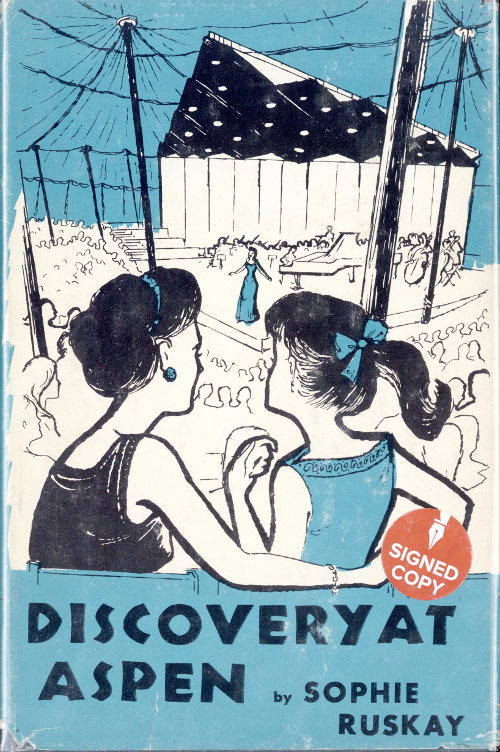
A. S. Barnes and Company, Inc.
11 East 36th Street
New York 16, N.Y.
Thomas Yoseloff Ltd.
123 New Bond Street
London, W.1, England
To the memory
of my husband
CECIL B. RUSKAY
whose delightful personality
and creative gifts
made him so beloved
by his children and grandchildren
and a host of young friends.
Judy Lurie sat cross-legged on the floor of her room surveying
the results of her labor. The room was a mess, even by her easy
standards. But the box containing her last summer’s meager
wardrobe had been thoroughly gone over and everything that
could be salvaged was in piles ready for the family trunk. The
empty battered suitcase and the books, she decided, could wait,
since it was still five days before she and her parents, Minna
and John Lurie, were to leave for the summer holiday.
“So you’re going to Aspen!” a familiar voice ejaculated. “How
wonderful for you and John!”
Preoccupied as Judy was, the voices from the living room
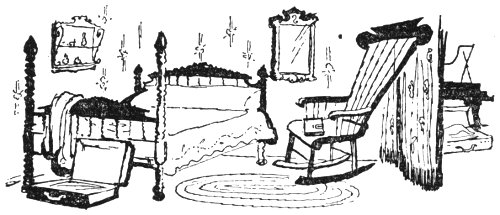
reached her dimly at first. Her room, a tiny alcove separated
from the living room by heavy chintz draperies, frequently had
its disadvantages. But there were compensations, too. You
could hear and see and yet be delightfully invisible.
“I wish I were able to go to Colorado!” another voice remarked
with a shade of envy. “How wonderful for you and
John.... By the way, where is John? Is he trying to hide from
us?”
“Hide?” her mother repeated, a slight flush spread over the
lovely pale face. “Of course not. He was so sorry, so much music
to pack....”
12
Judy forgot her invisibility and nearly laughed out loud.
When her mother had casually mentioned as they left the lunch
table that some of the girls would be dropping in to say good-bye,
her father, with a let-me-out-of-this look, took refuge in
his studio. Lucky father, probably enjoying a book or a nap or
fussing with his viola while she was imprisoned in this alcove,
unless she wished to barge into the melee....
The voices of the guests were getting louder. Judy got up,
stretched her cramped legs and cautiously pushed a corner of
the drapery to one side. Nobody had gone. Instead the room
overflowed with new arrivals. Gifts were heaped on the piano,
purses on the fine mahogany tables, and a patent-leather bag
stood on the mantel, making the Staffordshire dogs look even
more foolish.
“Minna,” one woman was saying, “with that glorious voice
of yours you ought to be a sensation!”
Her mother, surrounded by her guests, smiled happily.
“Not a sensation, but it is a wonderful opportunity for me
to study with Mme. Rousse and to work with some of the advanced
pupils. And best of all, to sing in the opera. As for John,
it’s just what he wanted. To play in the orchestra, have his own
quartet and some teaching. It should be a good summer for all
of us, especially since we will have Judy with us.”
At the mention of her name, Judy listened attentively.
“It’s lovely that she’s going with you; but Judy’s only about
fifteen and a half. Isn’t that rather young to be attending the
Aspen Music School?”
“Oh, she’s not going to attend the school. Fifteen isn’t too
young if one is a serious student but, as a matter of fact, Judy
has given up the piano.” Minna’s sigh was audible through the
chintz.
“But she used to play so beautifully!”
13
“That’s the pity of it.” Her mother went on retelling what
Judy knew. “At the age of ten she was improvising songs and
pieces. We thought we had produced another Mozart. Now she
plays when the mood is on. She claims practicing dulls inspiration.”
There was a slight titter of amusement, but one woman whom
Judy had frequently seen at the house said earnestly, “But
what will she do there, then?”
“Oh, I’m not worried about Judy,” her mother said lightly.
“She’s very resourceful, very intelligent.”
The girl felt a warm glow of satisfaction.
“She reads everything,” her mother went on. “My father considers
her his special vessel for all his accumulated wisdom.
Like him, she loves to sketch, preferably in oils. Now the canvases
are left to molder in Mother’s attic—fortunately not
here. I guess it’s anything but music!” Minna smiled at her
questioner, “but Aspen ought to change all that.”
Judy left her listening post trying to stem a feeling of rebellion
at her mother’s words. Mechanically she began to
straighten up the room and noticed the matching scarf of the
new party dress which she had pressured her mother into buying
for her. “Very well, for concerts then,” her mother had said
as she finally succumbed. Judy hoped that both she and the
dress were destined for more exciting occasions than mere concerts!
The thought of the dress cheered her. She wished it
weren’t already packed in the trunk, so that she could try it
on again. The scarf would do. She draped it around her shoulders
to suggest the dress and rubbed the dull surface of her
mirror.
14
“A real treasure from Colonial days,” her grandmother had
said when she gave it to her. Well, maybe so; the frame was
certainly beautiful, but the smoky surface didn’t help her visualize
how dazzling she would look, the steel blue bringing out
the deep blue of her eyes, the tight bodice and the billowy
skirt, making her small waist look smaller still.
She turned her head to one side. Hmmm. The nose was passable.
The eyes, well, she knew they were her best feature.
But why hadn’t she Mother’s creamy, pale skin instead of this
healthy, dusky glow! She touched the thick brown hair held
firmly by a rubber band. A pony tail was all right but some day
her mother would weaken and she would get that permanent.
A long, soft pageboy would hide these bony shoulders.
She folded the scarf and laid it on her day bed. Then she
wedged herself into the small Boston rocker, the first of her
antique possessions. She rocked gently, repeating the question
her mother had not answered. “What would she do in Aspen?”
She wasn’t so sure about the blessedness of belonging to a
family so entirely dedicated to music. Her growing misgivings
had been heightened by her recent visit with her grandparents.
Again she thought of what her grandmother had said. “Your
father and mother will be busy all day with rehearsals, teaching,
concerts, parties night and day. Why not spend the summer
with us as you’ve done for years? You love the sea, racing
the dog on the beach. I need you in the garden and your
cousins will be back again for a visit. The youngsters on the
block want you to teach them to swim—fifty cents a lesson.”
Why, then, Judy wondered, had she given up so quickly a
summer where she had been so happy in the past? Of course
going to Aspen meant a trip to the West, to Colorado, the
Rockies. The West was romantic. And her schoolmates were
doing exciting things for the summer. One was going to a
ranch in Wyoming. Her best friend was going to a work camp
in Vermont. But these things cost money and Judy knew there
was none to spare.
15
One thing had influenced her above everything. When her
parents received the invitation to join the staff at the Aspen
Music School, the first thought of her mother and father had
been not of the wonderful opportunity for themselves. No, over
and over they had repeated, “At last Judy can spend a whole
summer with us.”
But in the weeks that followed they had become more and
more immersed in their preparations, selecting music for the
Quartet, conferring with the Dean of the Aspen School and as
their excitement mounted, Judy felt hers diminish. She felt she
didn’t belong in her parents’ world. They didn’t need her.
She walked to the window and stared ahead of her.... The
summers of the past took on an even rosier hue. The swims, the
companionship of cousins rarely seen, the homey loving household
of which she was so much a part. And the long summer
evenings.... She saw herself again on the screened porch of the
Beach House. A few young neighbors, whom her grandfather
called his steady customers, were sitting near her. Her grandfather
was reading “Hamlet.” How tender his voice as he spoke
the lines of Ophelia. The moths beat their wings against the
lamp, a soft droning accompaniment. With hands cupped over
his mouth he made the trumpet sound. The King and Queen!
The Duel scene... you could almost hear the clash of rapiers....
Hamlet was dying ... Laertes ... the Queen! What made
Grandma leave the room at such a moment! But she returned
almost at once carrying a tray of ice-cream covered with oozing
red, red strawberries. And Grandfather, outraged at the sight,
with an imperious gesture, waved her aside, declaiming as if
it were part of the play, “Can’t you wait until they all decently
die?” Judy smiled at the remembrance.
16
She loved her parents. She didn’t want to hurt them, but at
this moment she felt she must speak up before it was too late.
She heard her father saying jovially, “Well, have the locusts
finally gone?”
Judy parted the draperies and peered through the opening.
“Thank goodness, they’re all gone.”
She took a deep breath and strode into the room.
“Father,” she stopped and gulped. “You and mother are going
to be so busy at Aspen. What will I do there? I don’t know
anyone. I haven’t any friends there.”
Her father looked startled but said nothing.
“Why it’s childish to feel that way,” her mother answered
easily. “There are loads of young people at the Aspen Music
School. You’ll meet them.”
“How? I’m not going as a music student. You know how
things work out. Students all get involved in their school activities.
I’ll just be an outsider. I’m worried,” her voice broke. “I
want to have fun, but more than that, I want to do something
for me—something that matters—if you know what I mean.”
Mrs. Lurie looked distraught. “You don’t want to come with
us? It’s the first summer in years that we’ve been able to plan
to be together like a normal family. You’re sure to find companions.”
She turned to her husband for support, but he had
disappeared.
“Judy,” her mother said with a touch of finality in her voice,
“there’s no sensible reason why you can’t take up the piano
again. Don’t set your mind against it. The whole atmosphere
of Aspen engenders the love of music, the desire to study it.”
“But that’s exactly what I don’t want, Mother. Can’t you
understand my feelings? Practicing hours on end! I’ll never be
a real performer, so why bother?” She hesitated and then went
on, her voice almost inaudible. “I’d rather stay with Grandma
and Grandpa at the Beach House, hearing poetry and plays
that I love.”
17
Her mother suddenly looked sad, and Judy was overcome
with remorse.
“Mother,” she began.
The tired eyes looked at her questioningly, “Yes....”
“I guess I’m just being selfish,” Judy said, then added desperately,
“Maybe it’ll work out all right. I’ll go.”
Minna smiled with relief. “I don’t think you’ll regret it. Sometimes
new unfamiliar surroundings bring out a potential one
didn’t know one possessed. Something good is bound to emerge
from the three of us living together in a carefree atmosphere.”
She paused, studying her daughter’s face.
“Our careers have often come first—or so it seems, but for
a little while we’d like to be just parents. Do you understand?
It would have been an unbearable disappointment to your
father.”
John Lurie bounded into the room, excited as a schoolboy.
“It’s all settled! It’s in the bag!” He grabbed his daughter and
waltzed her around.
“Father,” she begged when she could catch her breath,
“what’s in the bag? What are you talking about?”
“All right, I’ll tell you. A few weeks ago, the Dean mentioned
that my friend Jim Crawley had gone ahead with his scheme
and was opening a Little Theater in Aspen. That gave me an
idea. It was the day after you were such a knock-out in the
class play. I called him on the phone and told him, ‘I have a
lovely, gifted daughter, nearly sixteen who’s going with us
to Aspen. Do you think you have room for a budding Audrey
Hepburn?’ He laughed that he didn’t know at the moment but
he would get in touch with me. With all his plans, I guess he
forgot about it. I’m ashamed to confess I forgot about it. But
when you threatened to desert your music-driven parents for
another summer to do something on your own, a flash illuminated
this tired old brain. I just finished speaking with Jim.
He says, if you’re half as good as I say, if you’ve got decent
diction, are willing to cooperate in every way—that means,
help paint scenery and fix costumes, and are willing to work
for free, since we’ll be feeding and housing you, he’ll take you
on. P.S. You’ve got the job.”
18
“Father, you mean it! It’s not one of your practical jokes?”
He nodded solemnly.
“It’s too good to be true. I’ll be acting! Not in a school play
but in a real theater!”
“Oh, it’s only a barn,” her father made haste to explain. “Summer
theaters are always in barns. That’s why they’re called the
Straw Circuit.”
“Oh, I’m so excited!”
“And we’re just as happy for your sake,” her mother said,
“but don’t get too carried away. If you’re lucky, you’ll get a
walk-on or maybe a bit part as the little household slavey, in
which you dust the stage furniture before the star walks on.”
“It doesn’t matter! Just to smell the grease paint!”
She flung her arms about her father and kissed him. “You’re
wonderful. Absolutely the most. I can’t wait until I tell Grandfather.”
Hurrah for the three Luries, professionals all.
19
2 ASPEN: FROM SILVER DUST TO MUSIC
Now that the summer in Aspen had acquired so many glamorous
possibilities, Judy could scarcely wait for the day of
departure. She went over her wardrobe a dozen times to make
sure everything was properly packed. With her new responsibilities,
clothes became more important than ever. After all,
an actress had to dress properly off-stage as well as on. She
owed it to her public.
Finally the interminable few days passed. The trunks were
packed and shipped off. The suitcases the Luries would carry
with them were also stuffed and ready. It was the last night
and there was only the final visit from Grandpa and Grandma
to say good-bye.
On learning of her summer theater job, Judy’s first impulse
had been to phone her grandparents immediately and regale
them with the great news. But then she decided it would be
more fun to break it to them in person and now she awaited
their arrival with eager anticipation.
Despite that, when the elderly couple did arrive, Judy
greeted them in her usual affectionate manner. She was going
to do this in her own way.
20
As Mr. Ritchie settled himself in a comfortable chair, John
Lurie dug into his pocket and came up with a huge cigar. “I
saved this for you, C.B., tin foil and all. I got it from a big shot.”
“Thanks John, but if you don’t mind I’ll smoke one of my
own. I have certain misgivings about cigars heavily disguised
in tin foil wrappings.” He lit his own and watched the smoke
curl around.
“That’s a nice engagement you’ve managed to get. Wonderful
country and ideal surroundings.”
Grandmother’s voice reached them. She had been earnestly
talking to her daughter and now walked restlessly up and
down, glancing at the packed suitcases cluttered in one corner.
“Tanglewood, Minneapolis, now Aspen. Like Gypsies!”
She came over to Judy and lightly touched her hair. “Well,
Judy, are you glad you’re going?”
“Of course I am.” The girl tossed it off lightly. “But even if
I weren’t I couldn’t back out at this point ... not with all my
commitments.”
Mrs. Ritchie peered at the girl with a puzzled look. “What
commitments?”
“My engagements. I can’t just throw them overboard.”
The grandmother turned to Minna. “What is the girl talking
about?”
Minna swallowed a smile and shrugged her shoulders. “You’d
better ask her.”
“All right. What are these engagements you’ve mentioned?”
Judy refused to be hurried. “Well, mother is engaged to sing
in the opera. Father is engaged to play in the orchestra and
string quartet. And I’m engaged to....” She hesitated long
enough to permit the suspense to build. Then with a leap, she
flung her arms around her grandmother and shouted the rest
of it. “I’m booked to act in a summer theater. A real, professional
summer theater.”
21
With a rush of words she poured out the whole story as her
grandparents listened with excitement and pleasure.
Grandpa stood up and walked across the room. “Good luck
to you, Judy. After watching this little performance you put
on for us I know you’ll be the star of that company before the
summer’s over.” Mr. Ritchie beamed down at his granddaughter.
“You’ll love Colorado, Judy, as we did.” He took his wife’s
hand. “Remember when we were there, climbing like goats and
weeks later went on to climb Mt. Rainier—”
“I love the mountains. I’ve never seen anything higher than
Mt. Washington.”
“Aspen is high. Eight thousand feet and is surrounded by
peaks thirteen and fourteen thousand feet.” Mr. Ritchie paused,
a faraway look in his eyes. “Those glorious mountains once
possessed the greatest silver mines in the world! But that’s a
story in itself.”
Judy looked up expectantly. For years her grandfather had
told her fascinating tales of American history.
“You know you’re going to tell that story.” Minna smiled at
her father.
He looked quizzically at his daughter. “I’m only being persuaded
for Judy’s sake.”
“Yes, yes, we know,” his son-in-law added grinning.
“The fascinating thing about Aspen, Judy, is that until about
seventy-five or eighty years ago, it was an empty valley in the
heart of the Rockies. Colorado was a territory with little to
attract settlers until they discovered silver. Then there was a
mad rush to get to the camps near Denver. Soon all the claims
were staked out. The late comers looked across the jagged peaks
and thought of the silver hidden in those mountains.”
“Did they go?” Judy asked impatiently.
22
Her grandfather continued, unruffled by the interruption.
“The settlers were warned that the land beyond the Continental
Divide belonged to the Iute Indians. But the rights of
the Indians meant little to men hungry for riches. They entered
the Indian country, naming it Aspen because of the forests of
white-barked aspen trees.”
“Our treatment of the Indians was worse than shabby,” John
muttered vehemently.
“Yes, there were cruel and bloody struggles, but finally the
Iute Chief made peace with the white man.” Mr. Ritchie paused
to relight his cigar. “The rush for silver was on once more—this
time at Aspen.”
“Isn’t that what you told me happened when Great Uncle
Jake went out to California at the time of the Gold Rush?”
“Perhaps, Judy, except that Uncle Jake never struck gold
and came back poorer than when he left—
“In Aspen country, settlers got rich, mining silver or building
up the town. They built comfortable homes, not the ugly
shacks you see in most mining country. Aspen never became
one of those gambling, shooting communities. The settlers
were different. Schools, churches, a bank, a newspaper, everything
mushroomed into the empty valley. Millions of dollars’
worth of silver ore was taken out of the mines. Then when
things were at the brightest, the silver mining towns lost their
biggest customer, the United States Government! The final
blow came in 1893! Our government decided that gold, not
silver, should be used in the United States Mint.
“The mines stopped operating. Miners were thrown out of
work—so was everyone else. The people had to leave or
starve. Aspen became a ghost town!”
“What do you mean, Grandpa?”
23
“When people have to leave their homes, everything they’ve
labored to build, the town dies. That’s what happened to
Aspen! Maybe a hundred settlers stayed on. The houses were
empty, their doors swinging in the wind, the streets deserted,
Aspen slept.”
Minna’s voice broke the spell. “Music, not a prince, woke
this sleeping beauty. The old houses and new ones, too, are
filled with music students from all over the country. A great
orchestra, like the one in which John will play, gives concerts
to thousands of people every week. Even the old opera house
has its season, students and professionals singing the roles.
Aspen is a paradise for musicians! And great lecturers, too, I’m
told.”
“And don’t overlook the skiers in winter,” John added happily.
“They come from all over the world to ski and to train
for the Olympic matches. I’m afraid, Judy, you’ll find no ghosts
in Aspen, summer or winter. So don’t let Grandpa’s tall tales
bother you any.”
“Charles, we should be going. These young people will have
to get some rest. Besides, we’ll see them off tomorrow morning.”
“No, Mother dear, I won’t hear of your coming to the airport.
We’ll say good-bye right here—but don’t hurry away—stay a
little longer!”
Mr. Ritchie shook his head. “We’ve got too much sense to
stay on.” He extracted a package from his briefcase.
“Judy, I nearly forgot to give you this. There’s a diary, a
drawing pad, a box of pastels, and a volume or two of poems.
Something for every shining hour, providing your heavy duties
with the theater ever permit such trivial occupation—” He
laughed as he kissed her.
“Do you like my present?”
24
“Of course, I do. I was just thinking of last summer. When I
told one of the girls at school about your Shakespeare readings,
she looked at me pityingly. ‘You listened to Shakespeare of your
own free will!’” Judy laughed. “It’s lucky I never told her about
my secret ambition,” Judy looked innocently at her grandmother.
“Yes, a writer—some day!”
Her grandmother shrugged her shoulders. “Why not choose
something easy like digging ditches?”
The sarcasm was lost on her granddaughter. “The trouble is
I like so many things—but actually,” she went on, “I don’t see
why writing should be so difficult. You get an idea, you write
it down, do a line research, maybe—there are enough words
in the dictionary—”
“Of course,” her grandmother said wryly.
Mrs. Ritchie put on her coat and she too remembered a parcel.
“Minna dear,” she said, handing her daughter an oversized
shoebox, “take this with you on the trip. It might come in
handy.”
Her daughter eyed the box suspiciously. “Come in handy?”
She’d heard that formula before. “Mother! You’d think we
were crossing the continent in the covered wagon days. Haven’t
we enough to carry?”
“Be thankful, Minna, it isn’t a roast turkey with all the trimmings,”
her father said, laughing while Minna shook her head
in mock despair.
John cleared his throat and impulsively put his arms around
his parents-in-law. “We know how good you’ve been to us,
and how patient. But as musicians, we must go where opportunity
beckons.”
Judy stood with her mother at the window and watched her
grandparents walk slowly to their car. Their shoulders touched,
Grandma holding Grandpa’s arm.
25
“They’re so wonderful,” her mother murmured. “They made
our careers possible. It wasn’t easy for us, nor for them.” Her
voice was low, as if speaking to herself. “Struggle ... to get
even this far—”
“What struggle?” Judy wondered. All those exciting trips
her parents took to faraway countries? Of course, they were
rarely able to get engagements together. Last month her father
was in Canada and her mother in Argentina. But in only two
weeks they were back. As for herself, she always had her grandparents!
They disliked the city and the cramped quarters of
their daughter’s apartment. But they came just the same, giving
it, even for a week or two, something of the atmosphere of their
own home. A corner of the living room was turned into a studio
for Grandfather where he painted happily after a busy day at
the office. In another corner of the living room Grandmother
had her typewriter where she labored, when time permitted,
at stories hopefully sent off, but whose return never disheartened
her for long! Records were played, but the piano was
rarely opened. Yes, it was fun having her grandparents move
in. Members of the family dropped in whom Judy otherwise
never saw. And the joy of the theater! Once it was “Medea.”
When her grandmother protested, Grandfather had said,
“What, have the girl miss the chance of seeing Judith Anderson!”
They sat in the balcony, Grandmother wearing Grandfather’s
glasses. She always insisted her eyes were perfect, except
now and then. Her firm, straight back was bent forward,
not to miss a single word. Grandfather sat at ease, enjoying
himself.
Her mother touched her arm. “What are you thinking about,
Judy?”
“Nothing ... just remembering some wonderful times with
Grandmother and Grandfather.”
Her mother sighed. “It seems only a few years ago that they
were climbing mountains! Now they seem old.”
26
“How can you say that, Mother? They never seem old to me.”
“You’re a strange girl.”
They turned back to the living room. Mrs. Lurie checked
over the suitcases for the last time. Judy tidied up the room
while her father carefully covered his precious viola with
layers of soft cloths.
The last chores were done. In the morning they would start
on the first lap of their journey to Aspen.
27
3 PLEASURES OF TRAVEL
Flying was no novelty to her parents, but to Judy, whose small
journeys had always been by car, this, her first plane trip, was
an event. In Aspen they were going to do without a car. Mr.
Lurie wouldn’t trust their old bus on those mountain roads.
It was still foggy when they took their seats in the plane.
Judy was conscious of the unconcern of everyone but herself.
Why, only last week she heard over the radio, “the plane had
only just left the ground when—”
The motors started, whirring noisily as they warmed up.
Mrs. Lurie noticed the strained expression on her daughter’s
face.
“Once we’re in the air, you’ll be thrilled. You’ll see Long
Island as a bird might—”
The girl smiled feebly. She closed her eyes. When I open
them, she told herself, I’ll be up in the air. She counted slowly
to a hundred—they were still in the same spot. Twice she repeated
the experiment. The plane was still on the ground, racing
along the runway! Then when she least expected it, there
was a sudden lift and they were flying. The mist had disappeared.
The world below was an intricate design of shining
water, green fields, and toy houses. It was more wonderful
than anything she had ever imagined and with the wonder, her
fears vanished.
28
Before long they were flying at nineteen thousand feet. All
she could see were soft fleecy clouds. The plane seemed like a
giant bird skimming over endless banks of snow. Three hours
from the time they left the airport they could make out the tall
buildings of Chicago, hundreds of miles from home.
“I’ll meet you at the railroad terminal in an hour, two at the
most,” John told his wife, taking only his viola with him as he
stepped into a taxi to keep his appointment.
Mrs. Lurie and Judy proceeded to the railroad. The porter
left them with their five pieces of baggage near the gate marked
“Denver and California.” There were no seats nearby and before
a half hour passed, it became increasingly difficult to stand.
Judy balanced herself on one of the upturned suitcases and
her mother soon followed her example. They tried to read. A
coke from one machine and salted peanuts from another provided
a pleasant interlude. Judy watched people going into a
restaurant at the far end of the station. Her mother noticed her
fascinated absorption.
“We can’t move these bags and there isn’t a porter in sight.
As soon as your father comes, we’ll get something to eat.”
At the word “eat,” Judy remembered her grandmother’s
shoebox—such tremendous chicken sandwiches and fruit! This
was the emergency her grandmother always managed to foresee.
When another hour passed, Mrs. Lurie, no longer able to
conceal her anxiety, went in search of a porter. He tossed their
luggage on his truck while they took up their vigil at the gate,
scanning every entrance. With less than five minutes to spare,
John rushed toward them, mumbling breathlessly, “Sorry,
darlings.”
29
“Sorry nothing,” Judy thought, severely critical. On the contrary,
she noticed his eyes sparkled.
“I signed the new contract,” he whispered to Minna as he
herded them aboard the train. Mrs. Lurie, too, was now all
smiles, the tension of the last hours forgotten.
They entered the car where they would spend the remaining
hours of the late afternoon, the night, and most of the following
day.
Mr. Lurie cleared the seats of the luggage. His viola, never
out of his sight for a moment, he placed conspicuously near the
seat he would occupy.
“When we’re ready to retire,” Mrs. Lurie said, “the porter
will come and make up our beds. You’re taking the upper berth.
Father and I will share the lower one.”
It was seven-thirty before they could get seats in the dining
car. They stood with a long queue of people in the narrow corridor
of the swaying train. Everyone was friendly and freely
gave advice. “Be sure to get up early tomorrow morning so that
you can get seats in the Vista Dome—”
At last the Luries were ushered to their seats by an impressive-looking
steward. Mr. Lurie was studying the menu card.
“Outrageous!”
“What is?” Judy asked, turning her gaze from the jiggling
silver on the table.
“The prices! One has the choice of starving or becoming
bankrupt!”
“John,” her mother said quietly, “everyone can hear you.
Besides, the railroad can’t help charging so much. I read an
article that showed they actually lose money on the dining
cars—the cost of food, the waste. They threaten to discontinue
them altogether.”
30
“Well then, let’s eat and be merry,” he replied, his high spirits
returning.
By the time they returned to their car, their beds were made
up for the night. Using the ladder, Judy climbed into her berth.
The curtains were fastened.
“Mother,” Judy called, sticking her head through a tiny opening,
“it’s pitch black. I can’t seem to locate the light.”
“It’s overhead, near the pillow,” her mother whispered.
“Father and I are going into the club car.”
Judy, on her knees to avoid bumping her head, groped about
vaguely, found the small button and pressed it hard. There was
a resounding ring. She jumped at the sound and then, quite by
accident, found the light switch. Cautiously, still on her knees,
she began pulling off her sweater.
“What is it, Miss?” The kindly face of the porter peered at
her.
“I’m sorry to have disturbed you,” Judy said thickly, her
sweater wedged over her nose and mouth. “I couldn’t find the
light. But it’s all right now.”
“Ring whenever you need me.” He quickly withdrew his
head. A battery of bells called him.
She finished undressing lying flat on her back, struggled into
pajamas, and tossed her jumbled clothes in a heap at the foot
of her berth.
“It’s six-thirty, Judy.” It was her mother speaking. “We want
to get an early breakfast so that we can get seats in the Vista
Dome.” Her mother was already dressed, when she could have
slept through the morning, a luxury Minna loved but rarely
enjoyed.
When Judy made her appearance, her mother looked at her.
“Your hair!—You look as if you fell out of a grab bag.”
31
In the dressing room, overflowing with crying babies and
their mothers, Judy made herself presentable. Once again they
went through the lunging cars.
For Judy, the dinner of the night before hadn’t been much
of a success. She flushed as she remembered the white rivulet of
milk coursing down her new sweater.
“No fluids, thank you—something solid and substantial, like
pancakes with syrup. Besides,” she whispered to her father,
“imagine, orange juice, forty cents a glass!” His smile and nod
commended her for her good sense.
After breakfast they hurried to the last car. It was a comfortable
lounge in the center of which was a short flight of
steps. They ascended the stairway and entered the Vista Dome,
a train above a train, completely glassed in, even the top. The
Luries crowded together in the last vacant seat. They were
silent, enraptured by the beauty of the scene. Mountains
hemmed them in on both sides. “What if there were a landslide?”
Judy thought, “and one of those overhanging crags came
crashing down on the glass dome!”
The train climbed steadily. As the hours passed, the mountains
took on a somber brown and dullish red and assumed the
fantastic shapes of turreted castles. Frequently the train disappeared
into a tunnel cut through the mountain. One of them,
“the Moffat Tunnel,” the loudspeaker announced, “is a great
engineering feat and is six miles long.”
Many seats were vacant now. People were getting tired in
spite of the glorious views. Judy noticed a girl about her own
age sitting alone.
“Why don’t you go over and speak to her,” her mother suggested.
“She’ll probably be glad of your company.”
Within a matter of minutes Judy and Audrey were like old
friends.
32
“We’ve lived in so many cities,” Audrey said with a tired
shrug. “Now we’re bound for L.A.” At Judy’s look of interrogation,
she added, “Los Angeles.”
“We’d only just bought a house in Omaha. Now it’s up for
sale! Honestly, my father says his boss moves him around like
a piece on a checkerboard!”
Judy was sympathetic. “I thought only musicians move so
much.”
“Musicians? You?”
“No,” Judy answered quickly. “My mother and father. That’s
why we’re going to Aspen. Mother’s a singer and Father plays
the viola. And they always practice at home—Mother with
her accompanist and Father and his quartet—can you imagine
what it’s like sometimes?”
“Awful! How can you stand it?”
“You get used to it. Sometimes, I must admit, it’s very nice.”
“Have you a job or something out in Aspen?”
“Not exactly a job, but I—I—er—expect to act—in one of
those little summer theaters,” Judy spoke diffidently, but she
couldn’t quite conceal her exultation.
Audrey was impressed. “An actress! But you don’t look like
one!”
“Well, you know, Audrey, with grease paint and makeup—besides,
I probably will have the most minute role,” she smiled
with a deprecating little gesture.
Audrey returned to her own problems. “I don’t mind telling
you, it is a tragedy for me to leave Omaha.”
Judy was about to inquire what she meant by those solemn
words when a big voice boomed behind them.
“You can see the broken-down, deserted cabins halfway up
the mountains.”
33
The girls turned toward the voice. A short, stocky man was
standing near them, a pair of field glasses in one hand and
pointing to the mountains with the other.
Judy smiled out of politeness and he returned her smile.
“Like to have a peek?” He handed her the glasses. She too
could see the trails and dilapidated shacks that led to the mines.
“Here, Audrey, you look.”
“Oh, yes, I see them,” Audrey said, returning the glasses to
the owner.
“And do you know what was in those mines?” the man
continued in a stentorian voice. “Gold! That’s what brought
them to Colorado, gold!”
“I thought it was silver,” Judy said quietly. “My grandfather
told me that silver—”
She got no further. She could hear the subdued chuckling of
the passengers.
“You’re right, Miss, but only half right. First they came for
gold, then for silver. Tell that to your grandpa!”
He went on talking, explaining.... Judy’s eyes ached from
the sun that blazed through the glass dome, and her neck was
stiff from looking and straining.
“Attention, please!” The voice of the loudspeaker broke in
on the man’s eloquence. “When we reach the next station, there
will be a wait of twenty minutes for the automatic car washing.
This process will be of interest to our passengers.”
The two girls had only one thought, to get off the train and
stretch their legs. Arm in arm they walked down the long platform,
soon engrossed in their former conversation.
“The reason I hated to leave Omaha was not because of the
new house, but because I was going steady with a boy! Now
we’re separated, maybe forever.”
Judy pressed Audrey’s hand to indicate how deeply she
understood.
34
With slow, leisurely steps they walked back, remembering
the car washing. They looked down the tracks. The train had
vanished.
“What will we do?”
“And we haven’t any money to telegraph or anything,” Judy
waved her empty purse. A stone would have been moved by
that gesture.
“What’s the matter, girls?” A nice-looking gentleman, standing
nearby, having heard their cries of alarm, smilingly faced
them.
“The train!” they stammered in one breath. “It’s gone!”
“I wouldn’t worry if I were you,” his mouth twitched as if
he wanted to laugh. “The train is down a siding, about a mile,
having that grand wash. Remember? It’ll come back.”
The girls were too miserable to talk. They kept staring down
the empty tracks, not quite believing, yet hoping the train
would return.
At last the train, beautifully clean, slid down the tracks before
them. The girls stood together on the train as it began to move.
“Be sure to write,” Judy said tensely. “Remember, everything
about him.” Addresses were hurriedly exchanged. Feeling
almost like sisters who have just met, only to be cruelly torn
apart, they kissed fondly and separated, Audrey to her car
and Judy to the Vista Dome where she had left her parents
peacefully sleeping.
Glenwood Springs, the railroad station for Aspen, was the
next stop. The Luries hurried back to their car.
Their berths were made up and the luggage was once again
piled on the seats and under them. Mr. Lurie methodically
counted them. “One, two, three—where’s the viola? I don’t see
it!—” His voice was almost a gasp.
35
“The porter has probably taken it out with our large case,”
Minna said confidently, but her face was as white as his. “I’ll
ring for him.”
The porter appeared. “Where’s my viola?” Mr. Lurie asked in
a voice that scarcely concealed his rage.
“Your what, Sir?” the porter asked calmly.
“My viola,” Mr. Lurie snapped. “It looks like a violin, only
larger. It was in a black case. It’s not here. We’ve looked everywhere.”
His voice shook. “Did you take it out with any other
baggage?”
The porter shook his head. “I remember that violin thing.
Just took the things from the bed, laid them down while I
made up the berths.”
“And why did you make up my berth? Didn’t I ask you to
leave it alone?”
“But I has to make up the berths,” the porter argued mildly.
“That berth down there isn’t made up,” Mr. Lurie’s eyes
flashed as he pointed to the one that still had its curtains drawn.
As if startled by the turmoil, the head of an elderly woman,
her hair secured in a pink net, suddenly protruded from the
curtains.
“Porter,” she asked querulously, “how many times must I
ring? You promised to bring my tray an hour ago.”
“I know, Ma’am, I was just fixing to bring it when this
gentleman here got some trouble.”
A slow smile broke over the porter’s face. “I recollect now—everyone
leaving at one time to get to the Vista Dome. I piled
things everywhere. That lady down there, I couldn’t make up
her berth. She was feeling poorly. When she went into the
ladies’ lounge, I naturally set a lot of things in her upper berth.
It was empty. Then she comes back unexpected and—”
“Instead of all this palaver,” Mr. Lurie interrupted, “will you
kindly see if it is there?”
36
“Pardon me, Ma’am,” and with a practiced hand he reached
into the upper berth and drew out the black case of the viola.
“There you are, Sir. No harm done. Never lost a thing in all
my—”
“Thank Heaven!” Mr. Lurie said fervently, wiping the beads
of perspiration from his face.
“You have no idea, Porter, what the loss of that instrument
could mean to me. You were negligent,” Mr. Lurie reiterated,
not nearly so belligerently, “but the main thing is that it was
found.”
Everybody smiled with relief. The train was slowing down.
Judy and her parents said good-bye to their fellow passengers
and a few minutes later they were standing on the platform.
Judy watched the long train slowly pull away. It took on
speed and was soon lost to sight.
“Come on, Judy,” her mother called impatiently, “stop dreaming.
We still have a short bus ride to Aspen.”
37
4 FIRST GLIMPSE OF ASPEN
The short ride to Aspen proved to be forty miles!
A tall, ungainly youth, his good-natured face topped by thick
red hair, walked unerringly to the man carrying the musical
instrument.
“Mr. Lurie?”
Mr. Lurie nodded.
“I’m Fran,” the boy smiled. “I’m to drive you to Aspen.”
“Good,” and with an answering smile, Mr. Lurie introduced
him to Mrs. Lurie and Judy. Fran helped with the luggage
as well as with the cartons already arrived, and piloted them
to the car.
It was a neat little bus, and its name gaily painted in red
letters, “Little Percent,” was visible through the film of dust
that covered the car like a blanket.
“That’s an odd name,” Mr. Lurie commented.
“Not for Aspen. There was once a mine called ‘Little Percent.’
Now it’s the name of the only taxi business around here.
Nearly everything here is named after the silver mines—Little
Annie, The Smuggler. Now they’re just fancy eating places.”
As Judy was about to take her seat with her parents, Fran
said offhandedly, “Maybe you’d better sit up front with me. No
sense all being crowded in there with all that baggage.”
38
Fran put his foot on the gas and they were soon speeding
along a dirt road, the dust almost choking them.
“Sorry about the dust,” Fran said over his shoulder. “We
haven’t had a drop of rain in weeks.”
They rounded curves on one wheel and Fran seemed to
enjoy Judy’s terrified “Oh’s!” as they edged a precipice with
only inches to spare.
“Don’t tell me you’re scared!” he smiled jovially. “This is
nothing! Wait until sometime you go up Independence Pass.
There you really have to watch your bus.”
“I love mountains. I’ve climbed them since I was a child,”
Judy said stiffly. “But racing over ledges is something different.
You can trust your feet—that’s more than you can say about a
car.”
Barely glancing at the road, Fran gazed obliquely at Judy
with new interest. “If you like mountain climbing, you’ll be
crazy about Aspen.”
“Really? I thought everyone came here to study music, or
play in the orchestra, or sing!”
“We get lots of that kind all summer. And besides them there
are the thousands who come to listen and go to lectures every
night!”
He maneuvered another hairpin curve, taking no notice of
a shuddering “Oh!” this time from Mrs. Lurie. “But the real
excitement,” he went on, “the real money spent around here is
for skiing. From fall right up to spring! That’s a sport. Skiing!”
His face glowed.
“How do you find time to ski?” Judy asked.
“What do you mean? You might as well ask how one finds
time to eat!”
39
Mrs. Lurie leaned forward and tapped her daughter on the
shoulder. “Don’t you think you should let Fran concentrate on
his driving instead of annoying him with your chatter?”
“I barely opened my mouth!” Judy said indignantly, as she
turned around. “Blaming me!—” When she saw the strained
look on her mother’s face, she nudged Fran and told him to take
it easy. He was making her mother nervous.
The clouds of dust were finally left behind and they approached
Aspen over a bumpy, paved road.
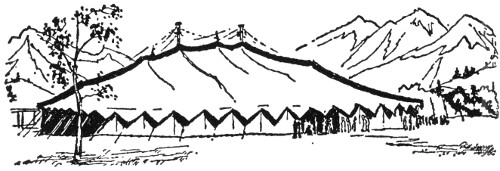
“See that enormous white tent?” Fran said, unconsciously
assuming the role of a driver of a guided tour. “That’s where all
the big concerts are given. The supports inside the tent are
a bright orange and the cushions of the seats are blue. Very
pretty!”
And the Luries obediently looked, eager to get their first
glimpse of the canvas concert hall they were to know so well.
“Cost the music people about ten thousand dollars,” the irrepressible
Fran continued.
“Ten thousand dollars,” Mrs. Lurie echoed. “How did they
manage to raise such a large sum of money?”
Fran slowed the car, his head turned toward his uneasy
passengers behind him. “Well, for one thing, there’s a Mr.
Paepcke. He’s the president of a paper container corporation—a
millionaire! It was his idea to make Aspen a music center.”
“Yes. I’ve heard of him,” Mr. Lurie replied. “He seems to be
quite a person. In fact, I understand that since the Aspen Music
Associates—that’s the new name for the Music Festival—” he
told his wife, “—since they now can get contributions to cover
the deficit, Mr. Paepcke has turned his attention to other
projects.”
40
“That’s right, Mr. Lurie. He’s just crazy about culture! Has
paintings and art exhibits, even highbrow lectures!” Fran
turned down a side street, stopping the car. “I thought I could
show you his latest—but it’s too far out of our way. He’s built
a large, plush hotel, just for businessmen when they come here
for vacation. He expects them to go to the lectures he’s arranged,
highbrow stuff—philosophy and that sort of thing,
so they shouldn’t waste their time while on vacation!” Fran
shook his head over the strange, inexplicable notions of Mr.
Paepcke.
“A very remarkable idea,” Mr. Lurie said thoughtfully. “To
be able to use one’s hours of leisure on vacation for the things
one never has time for—”
“I bet they’ll still come here just to ski, anyhow, when there’s
any snow,” Fran said with a grin.
They were driving through many of the principal streets of
Aspen. It was a small town that nestled in a lovely green valley
between two great mountains: Aspen and Red, Fran named
them. He pointed to some houses high up the mountain, barely
visible because of the forests. “Imagine people building big
homes up there because the town’s too crowded! The road is
so steep only the jeeps can make it. A good car gets used up
in no time.”
They continued to drive slowly through the town. Houses of
all shapes and styles of architecture were huddled together.
Some were old with pointed roofs, gables, and bulging bay
windows. Mr. Lurie admired the ones patterned after Swiss
chalets, happy reminders of a boyhood vacation in Switzerland.
None of the Luries looked with favor on the newer houses,
squat, flat-roofed dwellings with large picture windows.
“They are out of place in this lovely mountain setting,” Mrs.
Lurie said, but added as an afterthought, “but they’re probably
divine to live in.”
Fran, undiscouraged by his passengers’ preoccupation with
houses old and new, continued to enlighten them.
41
“That’s where they print the Aspen Times,” and he pointed
out a wooden structure reminiscent of an earlier era. “It comes
out once a week, but it’s been right here since the silver boom
days.”
Judy had made several attempts to break in on Fran’s
monologue. She thought quickly. “By the way,” she said with
elaborate nonchalance, “You wouldn’t happen to know where
that cute little theater is—I’m surprised you didn’t point that
out!”
“Oh, the Isis! We didn’t happen to pass it. But they have
movies there—the greatest!” Judy gave up, as Fran continued.
“That big gray stone building next to it is the Jerome Hotel.
When they built it in 1881, it was a show place. That’s when
silver was all there was in Aspen. It was elegant! It’s still the
finest place in Aspen, fixed up modern today with a half dozen
or more annexes. And it’s got a swimming pool!” he added impressively.
“Can anyone use the pool?” Judy asked, “or is it just for the
hotel guests?”
“It’s mostly for the guests, but the music festival people
get in somehow.”
42
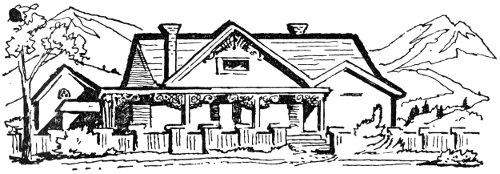
They had now reached the end of town and Fran stopped in
front of a plain little cottage with an overhanging veranda.
“Here we are,” he said, jumping out to unload the car.
“Is that ours?” Judy asked, considerably let down. But her
mother, it was apparent, felt differently.
“Isn’t it lovely, John!” she exclaimed. “Real Victorian. Look at
that fine old grille railing on the roof—”
Mrs. Lurie lost no time in entering the house, her husband
following. She had to know at once.
There it was, a large, ebony, upright piano that dwarfed the
parlor sprinkled liberally with overstuffed chairs and a small
sofa, more chairs, tables with artificial flowers, lamps of all
kinds. But Mrs. Lurie was radiant.
“They gave us the piano after all!”
“Yes, darling,” her husband said, equally happy. “Perhaps all
that letter-writing helped.” Then he frowned as if he suddenly
remembered. “It may not prove an unmixed blessing. Remember
the conditions? Students must be permitted to practice
any hour of the day.” He smiled, “Knowing how pressed they
are for practice space, they’ll probably start at dawn!”
But Mrs. Lurie’s enthusiasm remained undampened. She’d
have her two hours!
Meanwhile Fran brought up the last of the cartons and luggage
and set them on the porch where Judy was gazing raptly
at the mountains.
“Any time you want to climb,” he said shyly.
“I’d love to, but I expect to be rather busy—I’m going to act.”
She paused for the effect.
Fran looked puzzled. “Where?”
“Right here in Aspen, at the Barn.”
“You mean Mr. Crowley’s summer theater?”
43
“That’s right. I’m in the company.” Languorously, the girl
smoothed back a few wisps of hair in an unmistakably theatrical
gesture.
Fran grinned. “I guessed you were kidding.”
“Kidding!” Judy frowned indignantly. “It happens to be true.
Mr. Crowley is a friend of my father and he himself arranged
for me to join his theater.”
“When was that?”
“A few weeks ago.”
“Oh! That explains it.”
A strange note in the boy’s voice caught Judy’s attention.
“Explains what?” she asked cautiously.
“It’s funny you didn’t hear about it,” Fran muttered. He eyed
her unhappily. “There isn’t going to be any summer theater.
Mr. Crowley couldn’t raise enough money to swing it. He went
back to Denver three days ago.”
“Oh!” Judy felt the blood mounting to her face. There were
questions she wanted to ask but she didn’t trust herself to speak.
“I’m sorry about it, kid,” Fran murmured. “But don’t let it
get you down. Maybe next year Crowley will raise the money
and you’ll be back as leading lady.” He edged off the porch back
to his bus. “Aspen isn’t a bad place, even without a theater.
You’ll have a lot of fun. And don’t forget, whenever you want
to climb—” He was at the wheel racing the motor. The bus
pulled away, gathered speed, and disappeared around the
corner far up the street. Slowly, Judy turned and dragged herself
into the house.
“Judy? Judy? Where are you?”
“You haven’t seen the house! How do you like the piano?
Ugly, but it has a wonderful tone! From what I just learned
about the students coming here to practice, you’ll escape playing
without even a struggle,” her mother rattled on.
“Oh, I’ll play sometimes.”
44
It was not only the voice bordering on despair but her
features distorted in pain that made her father eye her keenly.
“Judy, why this face of gloom on this lovely, happy occasion?”
“Fran just told me that the theater is all washed up—that
Mr. Crowley went back to Denver—” She couldn’t go on.
A fleeting uncertainty passed over Minna’s face but her
father smiled reassuringly.
“I’d like to know one way or the other. Can’t you telephone
or telegraph—or something,” the girl pleaded.
“The opening is probably postponed!” her father said convincingly.
“That often happens with a new venture. Of course
Jim went to Denver—that’s where he has all his connections.”
Again he gave her that warm, reassuring smile. “Suppose you
don’t get started for a week or two! So much the better. You’ll
get a chance to discover Aspen, walking miles in this wonderful,
bracing climate and have fun with us.”
“You’re a real cure for the blues, Father. Grandma once
called you the incurable optimist.”
Her father raised his eyebrows. “That doesn’t sound particularly
complimentary!”
“But it was meant in the nicest way. Grandma said Minna
was a worrier and that she was lucky to be married to a man
like you.”
By nightfall, basic unpacking was finished and, with no time
or opportunity to purchase food, they decided to go out for
dinner. They walked aimlessly through several streets trying
to discover one of the colorful restaurants Fran had mentioned—Little
Nell, Golden Horn, Mario’s. From the latter, as they
stood on the sidewalk, voices were heard singing operatic arias!
That settled it. They went in.
45
Judy’s parents were enchanted not only by the atmosphere
but even more by the waiters who sang as they served and
again at interludes between courses. The food was new and
exotic and Judy ate with rapt enjoyment, the problem of Mr.
Crowley and the theater temporarily forgotten.
She glanced occasionally at her mother and father. They
were incomprehensible! Their food grew cold as they talked
to the waiters. Suppose they were studying opera at the Aspen
Music School! Her father finally succumbed to the aroma of
the good-smelling dinner but her mother, between listening
and applauding, found no chance to eat.
“I like opera, Father,” Judy told him, savoring the last mouthful
on her plate. “Remember how I adored ‘Pagliacci’ when I
heard it at the Metropolitan Opera House with Grandma and
Grandpa! There was scenery and costumes, and what a story!
That was Opera!”
Her father laughed. “A lover of music doesn’t need trappings
of scenery and costume to enjoy opera. Your mother would
rather sing or listen to singing than eat.”
Judy shook her head. “After all,” she argued, “when you eat,
you should enjoy eating, not have to listen—to applaud.”
“Minna,” John addressed his wife, “I think Judy has a point
there. Please eat your dinner before it’s utterly spoiled.”
They returned from Mario’s relaxed and gay, Minna still
humming some of the melodies. Opening the screen door, a
letter fell on the porch. Judy picked it up, quickly glancing at
the name of the sender.
“It’s a special delivery from Mr. Crowley, Father, for you.”
Her face paled.
Mr. Lurie read it silently while his daughter watched the
pained disappointment deepen on his face.
46
“Judy dear,” he hesitated for a moment then went on quickly
as if wishing to have the unhappy business over as fast as possible.
“It seems Fran was right. There will be no summer
theater,” and he handed her the letter. She read, tears blurring
the words. “The backers faded away.... I’m so sorry about
your daughter. I know how these kids are, what a disappointment
this must be. Tell her next year, cross my heart....”
Judy was desolate. It wasn’t just the disappointment at not
having the opportunity to act: that was bad enough. But what
would she do with herself in Aspen for a whole summer? The
weeks ahead loomed empty and void.
Her parents tried to cheer her up. “There’s a whole new
world for you to discover out here,” her father said. “A girl with
your curiosity and interests needn’t have a dull moment.”
“And I’m sure there are young people your age in Aspen,”
her mother added. “With a little effort, you won’t have any
trouble finding companions.”
Judy didn’t argue with them. What was the use? They had
tried their best. It wasn’t their fault that Mr. Crowley’s theater
had fallen through. “I have to make the best of it,” she said, and
added realistically, “Don’t make them miserable.” Then she
further cautioned herself, “Assume a virtue, if you have it not.”
The next few days passed quickly, even for Judy. The house
had to be made livable. “The kitchen is as old as Methuselah,”
Mrs. Lurie said, “and has the conveniences of the Stone Age.”
But once everything was done and food supplies stocked, Judy
found her parents still “tearing around like mad,” a phrase she
used in her recent letter to her grandparents.
There were faculty meetings, rehearsals to be arranged. John
had to set up programs for his newly organized quartet, and
Minna was in daily conference with Mme. Rousse and her
pupils.
47
After four days of comparative quiet, the music students of
the School began to arrive with clockwork regularity at two-hour
intervals. Judy saw them sometimes, deadly serious as they
rushed out after practice to some other task or perhaps to a
date. They were intent and enthusiastic young people but to
Judy they seemed hoary with age and responsibilities.
For want of anything better to do, she threw herself into
organizing the household regime. Washing dishes and making
beds were her department. Her father used the carpet-sweeper
and mopped up the kitchen floor with giant strokes more suitable
for a shuffleboard. There was laundry for Minna to iron
whenever someone remembered to borrow a car and call for
their bundle at the laundromat.
Judy never wondered how her mother managed to prepare
their meals. Mrs. Lurie did that and many other things besides
with an ease, a sleight of hand that was slightly deceptive. She
worked hard to get everything done and yet find time for
her arduous profession. She had set herself the task of singing
in opera, a dream possible of realization here at Aspen, but
she doggedly pursued her domestic tasks. For breakfast she
whipped up some wonderful pancakes and for sheer quantity
consumption, Judy held the family record. Lunch was tuna
fish, an egg, or a salad, usually prepared by Judy for herself.
Dinners meant hamburgers or chops broiled over their outside
grille, with soup and vegetables frozen or out of a can, milk,
and fresh fruit. Once a week she went all out to bake a chicken
or something in a casserole, which she optimistically expected
to see them through for days. It rarely did.
New friends and some old ones dropped in nearly every night,
that is, when there were neither lectures nor concerts scheduled.
It was a busy, full life for Judy’s parents.
But to Judy, the prospect of spending an entire summer doing
simple household chores and wandering about sightseeing
alone was far from cheering.
48
Each morning her mother left the house, visibly disturbed.
“Judy dear, I’m planning to take you to the pool a few afternoons
during the week. We’re dying to go ourselves. It’s already
past nine. We’ve got to rush. Good-bye, darling.” The door
closed. A moment later her mother’s head reappeared at the
door.
“Forget anything, Mother?”
“No, dear. I just wanted to tell you that once our schedules
are definitely arranged, we won’t be so hectically busy.” There
was the impatient honking of a horn from the car picking them
up. Her mother hurriedly left.
Another week passed, and there was no change in the absorbing
activity in the lives of Minna and John Lurie. There
were many famous people in Aspen, artists, musicians, composers,
and to Judy it seemed her parents had to meet them all!
Even during dinner in the evening, they were involved in
their own interests, often trying to draw Judy into their conversation.
Separated during much of the day by their individual
activities, they talked with enthusiasm of discovering this one
or that one. But Judy was bursting to tell them of her discoveries:
the Chairlift where she spent many hours each day,
eating her lunch or writing letters. Sometimes she sketched the
tourists as they jumped on the moving chairs of the Lift and
disappeared among the lofty mountains.
“Yes,” her mother said absently, “we know the Chairlift. We
pass it every day.”
“Some day we’ll go up and see that famous sundeck thirteen
thousand feet high,” her father casually promised and went on
talking of other matters.
49
“Now this Mr. William Primrose. I’ve spoken of him before,
Judy. He’s the greatest viola player in the world!” Her father’s
eyes shone with the adulation he felt for this great artist.
“He’s to be the soloist at several of the Festival concerts.
You’ll be with us, Judy—something you’ll remember all your
life!”
Nor was her mother to be outdone. “Judy, you’ll never know
how wonderful the clarinet can be until you hear Reginald Kell!
When he plays, his tone more nearly resembles the human voice
than anything in the world—so delicate, so pure! He’s the
greatest, the most celebrated clarinetist!”
They tried to interest her in Darius Milhaud, the greatest
living composer of modern music.
“Everyone you and Father mention seems to be the greatest,”
Judy had interrupted, a wicked gleam in her eye. She remembered
the many reproofs she had received for using just such
superlatives.
“But they just happen to be,” her father said, brushing her
remark aside. “Darius Milhaud,” he began but stopped, noticing
the blank look on Judy’s face.
“You must have heard his music at concerts or on the radio!”
her mother interjected.
As Judy shook her head, her father went on patiently.
“He’s a very great composer of modern music, a Frenchman,
and teaches conducting and composition to advanced students.
It’s a great honor to have such a man on our faculty!”
He looked at his daughter hopefully. She seemed interested
at last.
“What I tried to tell you before you interrupted me, this
great man is coming to our house next week. He is permitting
my quartet and me to play his newest composition in manuscript
form. He’s coming with his wife, a former actress, a fine
artist in her own right.”
50
For a week they talked of nothing else. Whom among their
friends should they invite? Who would call for the composer
and his wife, since it was well known he walked little? What
should they serve after the music? The house must shine and,
indeed, late in the night John polished floors and furniture
until they gleamed.
When the great evening came, the little parlor was crowded
with friends long before the honored guests arrived.
As Darius Milhaud walked into the room accompanied by his
charming wife, everyone rose. Milhaud walked slowly; his
heavy body was crippled by arthritis and he leaned heavily on
the arm of his wife.
He greeted Minna and John Lurie warmly and with a few
pleasant words to the guests put everyone at ease—that is,
everyone except Judy, who stared uncomfortably at the composer’s
face, so white and unhealthy-looking.
After some general talk, Milhaud gave the signal and the
music began. The composition took nearly an hour and to Judy,
accustomed to the more melodic harmonies of an older school,
the music was extremely trying. She was convinced that the
quartet, including her father, was playing wrong notes! Otherwise
how to account for such terrible sounds? She squirmed
wretchedly on the small couch, wedged in by former students
of Milhaud who, judging by the expression on their faces, were
literally in heaven! For a few blissful moments Judy found herself
dozing, only to be rudely wakened by a dissonance that
shattered her.
But she found compensation at last! She watched the composer.
She couldn’t take her eyes off his hands. How beautiful
they were as he moved them gently, guiding the players. She
no longer tried to listen to music she neither liked nor understood.
She glanced at Mrs. Milhaud and was deeply touched.
There was something in her face, her eyes, her whole being,
fastened upon her husband. As the hour advanced and the
room grew chilly, she unobtrusively rose and put a plaid shawl
upon her husband’s knees. Seeing them so, husband and wife,
Judy somehow thought of her grandparents.
51
The piece was finished. Everyone clapped and shouted
“Bravo!” “It was grand!” “A memorable performance!” “Sure
to be an astounding success!”
But the Luries did not have to entertain a celebrity to have
music in their home. Friends came to spend a social evening,
but invariably brought with them their musical instruments—bass fiddle,
cello, violin, clarinet—and stacked them on a
bed or on chairs. Everyone cheerfully pushed the parlor
furniture about, carried the music stands from the closet under
the hall stairs, switched lamps from there to here for better
lighting. There was talk, gossip of the great ones, a little politics
and world affairs, but mostly music.
Judy went to her room shortly after the first pleasant greetings
were over. Sometimes she fell asleep in spite of the music
played fortissimo right under her room.
She could always tell when it was eleven o’clock, by the
clatter of the teacups. Her mother was serving coffee and cake.
Why are musicians always so hungry, she wondered, even as
she bit greedily into a large slice of cake her mother had
thoughtfully brought her.
She opened her diary. Among its pages lay the letter from
Mr. Crowley. She read it again, then briefly wrote in her diary.
“I went to the Theater Barn yesterday, just to see it! It was
just as I dreamed it would be, except the heavy padlock on
the door and the sign ‘For Rent.’ Poor Mr. Crowley!”
And it seemed to Judy that she had no sooner fallen sound
asleep when she was awakened by the crash of chords. The
early-bird piano student had arrived for morning practice.
52
5 A RUDE YET PLEASANT AWAKENING
By the end of the second week Judy knew every street in Aspen.
She had stumbled over the uneven slabs of stone that passed for
sidewalks while gazing absently into shop windows displaying
curious articles imported from all over the world.
She had even ventured beyond the confines of the town itself
and paid her own visit to the Tent, before her official attendance
at a concert. How inadequate had been Fran’s “Very pretty!”
It was stunning. The sunshine filtering through the open flap
bathed the colored sides of the tent and supports in luscious
gold.
53
Not more than a few hundred yards from the Tent was a
queer-looking building of octagonal design. Approaching it,
she asked one of the bystanders, “What do they do in there?”
“Lectures,” was the terse reply. “It’s the Seminar Building.
But don’t try to listen in on them,” he said, apparently amused
at the expression on Judy’s keen and inquisitive face.
“I see you’ve got a sketch pad,” he went on. “If you are interested
in art, you’ll find the walls lined with paintings—American
subjects—very fine.” and with a nod, he was gone.
She went in and remained, examining the paintings long
after the students and visitors left.
One day she got up enough courage to go into the Jerome
Hotel. Assuming an air of confidence, which she was far from
feeling, she followed some ladies entering the lobby and
doggedly kept at their heels until they reached the pool.
How blue it looked under the dazzling sun! As fresh and cool
as the forests on Aspen Mountain not far in the distance! Guests
sat on the lawn beside the pool, their sunburnt bodies shaded
by bright, colored umbrellas. They were laughing, talking,
eating.... Shouts from the pool. She felt so alone. It was
not the first time she recalled her grandmother’s words.
Monday morning came. Would this be another week of half-kept
promises?
At breakfast her mother said brightly, “Judy, I have some
news for you. I just heard about a camp and I met the girl who
runs it. She’s charming and I took such a fancy to her.”
“A camp? Here in Aspen?” Judy asked, interested, but a little
cautious. “What kind of a camp?”
“It’s a day camp. The hours are from eight-thirty to one
o’clock, and it’s just been a Godsend to the mothers and the
children. It’s called the Festival Day Camp.”
54
Judy’s face was a study. Her mother couldn’t possibly mean
those little tots in the station wagon she had frequently passed
on the road—the youngsters noisily piping their camp song,
“We’re the Festival Day Camp, F-E-S-T-I-V-A-L.”
“How old are the children?”
Mrs. Lurie’s enthusiasm was slightly chilled by the ominous
look on her daughter’s face. “Some are quite young, but,” she
added hurriedly, “Mrs. Freiborg’s daughter is ten, possibly
eleven. I understand they do interesting, creative things.” Mrs.
Lurie found it difficult to go on. “It could be fun,” she finished
on a note that sounded more like a dirge than a happy conviction.
“What would I be doing at such a camp!” Judy asked scathingly.
“Please don’t worry about me, Mother. I am all right as
I am.”
“Let’s discuss it later,” her mother pleaded. “This afternoon
Mrs. Freiborg is definitely going to pick us up on her way to
the pool.”
“Stop scowling, Judy,” her father said, displeased at Judy’s
attitude. “Lynne, who runs it, is beautiful and extremely capable.
Young as she is, she’s had years of experience. You won’t
be just a camper, you’ll get to know Lynne. Her husband is one
of the youngest men in our orchestra. They’re a delightful
young couple. Mother has practically said you would go. We’re
happy to spend the money.” He patted Judy’s shoulder affectionately.
“At least you won’t be wandering around Aspen like
a lost sheep.”
“But, Father, how can you expect me to go to a camp with
such infants?”
“Suppose they are younger than you?” her father asked, trying
to see Judy’s point of view. “What of it? While they carry on
their activities, you can be doing other things on your own.
Differences in age don’t matter as much as you think. We have
youngsters and graybeards in our classes. Give it a try.” At the
door he paused, “You get out of anything what you put into it.”
55
Still smarting under the unaccustomed pressure her parents
were trying to exert, Judy started making her lunch. In her
resentment she forgot the hours, the days of loneliness. She
wrapped her sandwich and put it in her bag with pad, pencils,
crayons, and change purse. With that awful camp looming on
the not too distant horizon, she was determined to have a really
good time today. Something exciting! But what? She couldn’t
climb mountains by herself. Besides, all the trails were miles
away. For a moment she considered Fran and as quickly dismissed
him. He was busy all day riding the bus. All he ever did
was to wave his hand and smile as he passed her.
With the collapse of her plans to act, other means of retrieving
the summer from “total loss” occasionally occurred to her.
A job. Audrey, in a letter, described hers with such loving detail
as quite to overshadow the meager news about her erstwhile
boy friend.
A job? Judy tried, but her disappointing attempts always
followed the same pattern.
“Have you any experience?” “None?” “Sorry.” or “We have
all the help we need. You must apply early in Aspen, long before
the season.”
Judy surrendered. Actually she was enjoying this unexpected
leisure. Lonesome sometimes? Yes, but free, free to wander
about....
Entering the shop of Berko Studio, she exhausted the patience
of the elderly salesman before she selected her two
views of Aspen and the mountains nearby. How much there
was to see in this wonderful world of the Rockies! A thought
flashed through her mind. Why not come back with an article
for the The Plow, her high school paper? The October issue
was always lavishly devoted to a Vacation Series.
56
“My Summer in Aspen.” She shook her head. What had she
done that was interesting? Precisely nothing—yet.
“Aspen Past and Present.” Decidedly better, she thought.
But it had its drawbacks. You must have an encyclopedia or
some means to acquire information. She meditated. She had
finished every book she owned. The library! She slung her bag
over her shoulder, thankful that Aspen had one!
She reached the library in a half-hour’s brisk walk and found
to her surprise it was an insignificant corner of a large red
brick structure, “The Aspen Bank.” Thinking she must be mistaken,
she circled the block only to discover the bank building
had still another entrance with an inconspicuous sign, “Wheeler
Opera House, 1881.” She stood there puzzled. Could this be the
opera house where world-famous singers and actors had appeared
in the old mining days? Why, only the other night her
father had brought home some colored photographs. Together
they had fairly drooled over the plush and gold interior, more
than four hundred gilt chairs in the orchestra, stage boxes upholstered
in red plush. Her mother had remarked with chilling
candor, “It’s nothing like it used to be. It was twice burnt down
and twice restored.... We’re going there on Thursday night.
The Juillard Quartet is giving a Lecture—Recital. You’ll see it
then.”
“It’ll be a wonderful evening,” her father promised, “and I’ll
take you on a personally conducted tour of the House.”
Judy retraced her steps. The Opera House could wait.
A single room lined with books—that was the library! A
placard prominently placed on the wall cautioned “Silence.”
The only person in the room besides herself was the librarian,
sitting at her desk and looking rather forbidding in her horn-rimmed
eyeglasses.
57
Judy searched the shelves. Still under the spell of the old
mining days, she selected Aspen and the Silver Kings. It was a
large, heavy book, its text liberally interwoven with pictures.
She sat down at a table to examine it more leisurely. Mule teams
with heavy wagons carrying the silver ore over Independence
Pass, a road thirteen thousand feet high. A trip over this scenic
wonder was, even to the passengers in Kit Carson’s stage coach,
a fearsome thing. A hut near one of the mine shafts. Five men
playing cards. A snow slide and the five were buried under
twenty-five feet of snow.
She turned the pages. The coming of the first railroad, a
queer-looking train pulled by two engines, smoke belching
from its odd-looking funnels; people rushed down to the depot
with flags, yelling themselves hoarse. It was a great day. Ore
could now be moved by train!
Judy cheerfully skipped the pages. She still hoped for something
more personal, maybe romantic. It was the human element
she anxiously sought.
She read on. Under the intriguing title, “Horace Tabor, the
man who preferred love and Baby Doe to his silver empire,”
Judy recognized romance. This was the sort of pioneer life that
appealed to her!
She looked at Tabor’s picture, a tall, well-built man with fine
features and a long silky mustache. While not exactly a Don
Juan, he was devotedly loved by two women, both of them interesting
characters.
Augusta, his wife, came with Horace Tabor from Maine. In
Leadville they opened a general store and in a short time Horace
became postmaster and then mayor of the seventy shanties
that comprised Leadville at that time. Augusta, even as the
mayor’s wife, took in boarders to help with the family budget.
Tabor generously staked the miners to food, picks, shovels,
dynamite, anything they needed to get on with their prospecting.
Augusta objected to his easy-going ways. Money was hard
to make and they often quarreled.
58
But Tabor in staking the miners got a share in whatever they
found. The mines began to pay off and Tabor became rich.
From “Little Pittsburgh” alone he made five hundred thousand
dollars in fifteen months. He bought other mines. He was civic-minded,
gave Leadville the Opera House and a Grand Opera
House to Denver, was spoken of as the future United States
Senator. But the Tabors were unhappy and their quarrels increased.
At the age of forty-seven he met the beautiful blonde, Mrs.
Harvey Doe, known as Baby Doe. It was love at first sight!
Tabor begged Augusta to give him a divorce. She refused. He
offered her mines, properties. “Never,” she repeated. After five
years of wrangling in court, she gave him the divorce and accepted
the mines. “Some day,” she told the newspapers, “Tabor
will return to me when that blonde hussy grows tired of him.”
Judy wondered what became of Baby Doe. No doubt, somewhere
among the pages of the book something more would be
told.
She went over to the desk. “I’d like to take this book home.”
The librarian looked at the title and raised her eyebrows.
“Don’t you think this is a little technical?” she smiled indulgently.
“We have a copy of Lorna Doone, Jane Eyre.”
“Thank you,” Judy smiled, “but I read those.”
“Dickens?” The librarian suggested helpfully.
“This book’s history, isn’t it?” Judy said, holding the book
possessively. “I like history and since I’m staying in Aspen, I
think I ought to look into—”
“Very well,” the librarian said kindly. “How shall I make out
the card? There’s a deposit of one dollar, which will be returned
to you when you leave Aspen.”
59
“A dollar!” Judy exclaimed. To give up so much money even
if only temporarily—she emptied the contents of her bag on
the librarian’s desk, although she knew all the time that it contained
only twenty-five cents.
“May I take the book for a quarter and bring the rest of it
tomorrow?”
“No, dear. You come tomorrow and in the meantime I’ll put
the book aside for you, although,” she added with a smile, “no
one has taken it from the shelf in years.” Her smile was so
friendly, Judy wondered how she could have thought her grim
and forbidding.
Judy stood there in a quandary. It was much too early to go
anywhere for her lunch and she no longer wished to remain in
the library. The Wheeler Opera House again obtruded itself
upon her thoughts. It was just around the block. Since she was
here—
“Miss...” Judy began. “Wilkes,” the librarian finished for
her.
“Miss Wilkes,” Judy began again, “would it be all right for
me to go into the Opera House now? That is, is one permitted
to just go in to look around?”
“Yes, of course. The entrance is at the extreme end of the bank
building. There’s a sign, ‘Wheeler Opera House.’”
“Yes, I saw the sign.”
“The Opera House is at the very top of the building. It’s a
steep climb and the door may be locked, but you can try.”
60
Judy felt grateful to the librarian who had assisted her in
this happy solution. She could spend an hour “exploring,” her
favorite expression for any walk or errand in Aspen. She reached
the entrance of the Opera House and ran up the wooden steps
that led into the hall. It was dingy, not in the least what she
had expected. An enormous, an apparently never-ending flight
of stairs appeared ahead of her. Worse than anything was the
deafening sound of musical instruments coming at her like
waves from every part of the building, like a giant orchestra
forever tuning up. As she stood there irresolute a pianist could
be heard, the music coming from under the staircase. For a
little while it drowned out the din of the other players.
A light now dawned on Judy. This was where the students
practiced! She recalled her father speaking of them as the lucky
ones who didn’t have to go to private homes such as theirs. He
surely must have been joking! Bank, library, practice rooms,
and Opera House, all in one old brick building! Her eyes measured
the staircase. She began to climb and increased her speed
to get there quickly. By the time she reached the landing, she
was out of breath. More doors leading to more practice rooms.
If anything, the cacophony had increased.
Another staircase stretched ahead, seemingly to go to the
roof. She slowly ascended. The sounds of the instruments grew
muffled, then almost ceased. On the landing there was only
one door, marked “Entrance.” She gently turned the knob,
pushed the massive door, and stepped within. There was a prolonged
whine as the door closed behind her. She stood there,
blinking at the glare of white lights on the stage. Four musicians
were sitting before their music stands and were playing with
such absorption that her mouselike entrance went unnoticed.
A quartet—she recognized the instruments.
She looked about her diffidently. A glow from the windows
in the balcony shed a soft light over the auditorium. She saw
the walls, papered in deep red embossed with gold medallions.
But there were no gold and plush boxes, nor hundreds of gilded
chairs!
61
She couldn’t remain standing there like a statue. If she sat
down in one of the orchestra seats, she might be seen. The
balcony would be best; besides, from that point of vantage she
could see everything better. She moved quietly along the wall,
tip-toed up the circular stairs, and gently lowered a seat. The
hinge snapped and the seat fell with a bang. The quartet was
playing softly, which made matters worse, and only when it
began its brilliant finale did she slide into the seat. She looked
about her. It was easy to picture the one-time audience, all
satin and brocade, glittering with diamonds and jewels. She
was jolted out of her pleasant fancies when one of the musicians
stepped forward to address the empty auditorium.
“In order to give the student body and our guests some
greater insight into the music of Bartok, each member of the
quartet will play a solo passage and follow it with his interpretation.
In this way, we feel that those unfamiliar with the work
of Bartok will learn to understand its profound meaning and—”
The voice of each of the successive players was pleasant.
They explained long and difficult passages, preceded by equally
long and difficult excerpts from the music. Judy sighed. And
this is what her father had promised would be a wonderful
evening! She sat there, her lips compressed. If this is what the
Juillard Quartet was going to play Thursday night, wild horses
wouldn’t drag her here again!
Her eyes ached from the harsh lights on stage. One could
hear as well with eyes shut. Her father often did. The musicians’
faces, their voices and their music faded, then melted into an
exciting vision....
She recognized immediately the figure of Horace Tabor. His
thick, silky mustache was unmistakable. And that was Augusta,
his wife, as she upbraided him as she swept the stage, her long,
black skirt swishing about her, her eyes flashing, her hair like
a tower on her head.
62
“Is that how you repay me for the many years of hard work,
traipsing all the way from Maine to Colorado? And now that
you are rich, you think you can desert me for that baby-faced
blonde, Baby Doe?” Her voice quivered with anger and disdain.
“Be reasonable, Augusta,” Tabor’s voice was firm, yet sad.
“Reasonable! I will never give you a divorce. Never!”
“But, Augusta, you forget. I have my divorce!”
“One that I will never recognize!” she wildly interrupted.
“Baby Doe is now my wife. I love her!”
And there clinging to Tabor was Baby Doe, her soft curves
pressed close to him, her head crowned with golden curls resting
on his breast.
“She, that creature, will be your ruin!” Augusta said and
pointed her finger derisively. “You’ll never become Senator
tied to her! You’ll never be anything! You’re finished!”
“Augusta,” Tabor spoke with sorrowful dignity. “I have made
you rich. I’ve given you mines. You want more money, very
well! Only I will have Baby Doe....” And he clasped the silent
clinging figure closer to him.
Augusta rose to her full height, like an angry prophetess of
old. “She’s after your money, your fortune. And when that is
gone, she’ll leave you! Some day when you are ragged and
poverty-stricken, you will wake up. Wake up!”
Judy felt someone shaking her arm. “Wake up!” the voice
repeated. She opened her eyes with difficulty. A boy was bending
over her.
“The rehearsal’s over. The quartet will be leaving in a few
minutes and lock up.”
Judy looked at him, her mind still hovering between the past
and the present. “Who are you?” she asked.
“My name’s Karl. I’m a violin student. I’ve been listening to
the rehearsal. Please come along. I don’t want to get locked in
here.”
63
64
“I just closed my eyes for a minute,” Judy said as she followed
him down the balcony steps.
“It was a long minute, closer to thirty,” he laughed. “I saw—or
rather heard you—as you lowered that seat—sort of crash
landing.”
“I know. I was petrified when it fell. A broken spring, I
guess.”
They neared the entrance door. The music stands were folded
and the players were talking and laughing among themselves.
Judy and Karl left unnoticed and ran swiftly down the two long
flights of stairs.
“They’ve stopped practicing!” Judy said, surprised at the
silence in the halls.
“Of course, lunch time. Most of the students eat at the houses,
you know, the dorms where they live.”
“You too?”
Karl shook his head. “I came weeks before the Music Festival
started. I live with my uncle.”
They stood for a moment. The sun felt warm and pleasant
after the mustiness of the Opera House. They looked at each
other curiously.
“Well,” the boy smiled, about to leave.
“Karl,” Judy said hesitantly. She didn’t want him to go, not
just yet. He was nice—didn’t treat her like a child.
“Karl,” she said with a little more confidence, “where are
you going to eat your lunch?”
“Anywhere,” and he shrugged his shoulders as he tapped the
pocket of his coat bulging with a yellow bag.
65
“I have my lunch along too. The Chairlift is where I nearly
always go. There are benches and one can buy something to
drink right there.”
“O.K.,” Karl said. “It’s one of my favorite spots too.” They
started walking.
“By the way, what’s your name?”
“Judy.”
“Judy,” he repeated. “I once knew a girl who was called
Judith.”
“You did? What was she like?”
“It was a long time ago when I lived with a family abroad,”
he said quietly and quickly changed the subject.
“How did you like Bartok? Or didn’t you hear any of it?” he
said with a good-natured smile.
“Of course I did!” Remembering how little of it she had
really heard, she went on carefully choosing her words. “I
found it difficult to understand—to—”
“You’re right,” he interrupted, much to Judy’s relief. “I’ve
heard it now five times and each time I discover something
new in it. It’s great music. Like Milhaud and the other moderns,
you’ve got to hear them again and again. I came especially to
hear Bartok’s piece because I’m studying it. I can’t wait to
hear it again on Thursday night.”
“Oh, yes, Thursday night.”
“Expect to be there?” Karl asked.
“Naturally,” Judy answered. “My parents count on my going.”
Her recent resolution flashed through her mind. “Wild horses
wouldn’t drag me here again!” But it was different now. Now
there was Karl!
66
6 KARL
They walked on, Judy matching with ease Karl’s long stride.
One block, then another. She gave him a quick sidelong glance.
He was much taller than she was. His appearance was all that
she could have wished. His eyes—well, she had noticed them
from the first, blue and dreamy. Even his chin came in for
some scrutiny. Her grandmother had often summed up a person.
He’s got a weak chin, vacillating, will never amount to
anything—or he’s got a strong chin, shows character. Karl’s, she
thankfully noted, was of the strong variety. So absorbed was
she in her appraisal of Karl that she was scarcely aware of the
silence between them.
When he began to whistle, a sad, plaintive melody, she realized
at once that she must say something. Silence could be
devastating! How often she and her friends discussed this very
problem! What to say to a boy you hardly know, especially
when dancing, when it takes all your ingenuity to keep your
mind on those intricate steps, or when walking, as at the present
moment. She must say something—anything, if only something
brilliant or clever came to mind.
“Er—Does your uncle live around here?” she asked brightly.
67
“No,” Karl said, leaving off his whistling. “If we were walking
in the opposite direction, I could have shown you his place on
Main Street. He has an apartment over his business. Maybe
you’ve seen it? It’s called the Swiss Shop.”
“Yes, I think I have, if it’s the one with the window full of
carved peasant figures, gnomes and cuckoo clocks!”
“Yes, that’s it!” Karl interrupted. “I arranged that window
display myself,” he added with a touch of pride.
“Really?” Judy tactfully refrained from saying how ugly she
had thought it. “I’ve passed it many times. Does the name Swiss
Shop mean that your uncle imports these things from Switzerland?”
“Yes, and lots of other articles besides; jewelry and scarves,
sweaters for skiers and mountain climbers. Of course, cuckoo
clocks are his real hobby.”
“I can’t imagine who would want to buy a cuckoo clock,”
Judy ventured to say.
“No, neither could I, at first, but they do. Tourists, lots of
them, especially from Texas—they’re our best customers. Personally,
I think they’re a nuisance, a mechanical bird popping
at you every hour. It can be quite annoying when you practice.”
The jinx of silence was broken for the moment. Judy knew
she had to keep the talk flowing. The subject of clocks could be
pursued.
“The kind of clocks I like best,” she said, “are the antique
ones from our American Colonial days. My grandmother collects
them. She has one on every mantel, over every fireplace
in her house! They’re really beautiful, usually of mahogany,
with delicate pointed spires, like a church steeple. Of course,
none of them work. When you really wish to know the time,
you have to dash into the kitchen to look at the electric clock
fastened to the wall.”
“Well, what’s the good of them—just ornaments?”
68
“Grandma says they can be made to work if she ever got
around to finding a really dependable clockmaker,” Judy finished,
rather crestfallen. The subject of clocks was definitely
exhausted.
It was while they stood at a crossing, waiting for some cars
to pass, that Karl, as if struck by some original idea, said, “How
do you like Aspen?”
Judy frowned, summoned up all her dramatic fervor, and in
deep, reproachful tones declaimed, “Et tu, Brute!”
Karl turned to her, a puzzled smile on his face, then he
laughed outright. “Why do you spout ‘Julius Caesar’? What do
you mean?”
“Because that’s all anyone has asked me ever since I came
to Aspen! Nor do they ever bother to listen to an answer.”
“So, I’m in their class!” Karl gave her a quick look. “You’re a
queer duck!”
His pleasant and forthright manner, above all his acceptance
of her as a companion, put her at ease. The ice was broken.
They reached the Chairlift, found a bench, and ate their sandwiches.
Judy shared her malted milk and consumed most of
Karl’s chocolate bar. The empty chairs of the lift went monotonously
skyward, unnoticed by the girl and boy.
Judy, now uninhibited by any barrier of self-consciousness,
pursued her usual method of satisfying what she termed her
inquiring mind. She asked questions and Karl spoke freely.
She learned he would be eighteen in October and would
enter his last year at Music and Art High School in New York.
That he had private instruction in violin and in theory and
practiced three hours a day, week ends longer.
“What will you do after graduation?” the young inquisitor
went on.
69
“I don’t know—I can’t say. College, perhaps? It’s a hope, but
a dim one. If I’m to pursue music as a career—things are a bit
mixed up just at present.” He paused, as if weighing the matter.
“You see,” he said in a serious voice, “I owe it to my father
to become a fine musician, if possible a great one. That’s my
mother’s dream. It’s mine also.”
Judy shook her head. It all sounded very dull and depressing.
“Then all your life is just school, music lessons, and practicing.
You never have any time for any fun—for sports, for nothing
except work!”
“No, perhaps not,” Karl said cheerfully. “But it all depends
on what you want to do—to accomplish.” He went on. “But
I don’t lack for exercise, if that’s what you mean. I have a bicycle
and a newspaper route. I get plenty of fresh air. I even have
a pupil. Maybe I’ll get another,” he said hopefully. “The money
will be very useful.”
“Money!” For the first time Judy was critical of her new,
much-prized friend. Idealists didn’t worry about money. “Is
that all that matters? Money?”
“Yes, money is important,” Karl said emphatically. “My
mother works at a music shop. She spends two hours and more
each day traveling on the subway. When she gets home at
night, tired as she is, there’s dinner to prepare, things to do in
the house, people to see—a few friends. Concerts, of course.
Someone I should hear—always my interests guide her. So it’s
up to me to do well in my studies, in my music, and earn a little
money to justify her sacrifice. She doesn’t call it sacrifice. She
loves what she’s doing and is buoyed up by her ambition, her
certainty of my success.” Karl had spoken with considerable
heat, but now he added quietly, “So you see how important are
the few dollars I earn, to pay part of the cost of my lessons.”
70
“You didn’t understand me, Karl,” Judy said humbly. “Money
is important to us too. But what I meant is that there are other
things that don’t cost anything and are important too.” She
spoke diffidently, trying to formulate thoughts she had never
seriously considered but accepted as the air she breathed.
“There are books—and friends—and art.” Still struggling to
express herself, she raised an arm to the mountains. “And nature!”
Karl nodded his head in agreement. “Of course, I like all
those things. Who wouldn’t? I love to read, although the only
time I have is usually late at night when I should be asleep.
As for friends, I would be untruthful if I didn’t admit I miss
having close friends, even one. At first, even though I could
speak a little English, I was considered a foreigner.”
At Judy’s exclamation, “That’s so narrow-minded!” Karl
calmly said, “That all passed in a year or two. I’m friendly with
boys in my class and I know a few of the girls. But they’re just
as busy as I am, in different ways, perhaps. There are some in
the class, of course, who don’t take their future careers seriously
and they look down upon those of us who do. They manage to
have a good time, sports, girls, movies, everything!” He
shrugged his shoulders. “I have to go my own way. Someone
has said that to be lonely makes one strong. I’m not so sure.
One misses an awful lot.”
For once Judy was at a loss for words. She was touched by
Karl’s simple, unaffected words. To think that she had complained
of being lonely! Her mother and father led busy lives,
but she knew she was never far from their thoughts. They filled
the house with gayety. Yes, they worked, her mother and father.
“What about your father, Karl? Doesn’t he....”
“I thought you understood,” Karl interrupted her sharply.
“He’s been dead for eight years. He died four months after he
was liberated from a concentration camp.”
“Oh!” was all Judy could say.
71
The floodgates of memory were loosened.
“He was a great violinist.” The boy’s face was transfigured
by a passionate devotion. “He had made a great name for himself.
My mother told me of his triumphs. And he could have
escaped in time as he advised others to do, but he refused to
leave until he succeeded in getting my mother and me out of
Austria. Then it was too late. He was picked up with others and
sent to the Polish border—”
“But you say he was freed, taken from that—that camp—”
“Yes, for three, perhaps it was four wonderful months we
were together. But he was a shadow, thin, emaciated, sick. But
his spirit was exalted. Something I couldn’t understand, being
the child I was. But I felt his excitement, that poured itself out
in his love for me. I could feel his eyes bore into me as he
talked. His faith was something unbelievable. In spite of all
he had gone through, he believed in the goodness of people,
the mercy of God. While he was in there, in daily expectation
of—you know—he wrote a piece of music—for himself and
for the others waiting to die. He sang that piece to me. He
played it over and over. ‘Some day,’ he said, ‘it will be the
theme of a larger work for the land of our hope—Israel!’ He was
only thirty-five when he died.”
“I didn’t mean to bring back all those terrible memories. I’m
sorry, Karl,” Judy’s voice trembled.
“There’s nothing to be sorry about any more. What happened
to my father was the fate of six million others! Just because
they were Jews and other brave ones who dared to risk their
own lives to help them!”
He turned to Judy as if to brush away these thoughts. “Even
my mother could not dwell on her miseries. When Uncle Yahn
asked us to come to America, we were glad. I was even happy.”
72
He got up, then sat down again. “I never talk about that
which has happened. One cannot forget. The present is to be
lived—the future lies before us. I believe as my father did that
a better world is at hand.” He paused. “I have told you more
than I’ve told anyone in the seven years we’ve lived in America.
So, enough about me!” He seemed determined to change the
subject.
“What are you studying in Aspen, Judy? What instrument
do you play?”
“Instrument?” Judy repeated. She found it difficult to make
the transition from his tragic story to her own self.
“I’m not a music student. I’m just here because of my parents.
I did study the piano for years, but I didn’t enjoy the drudgery
of practice.”
Then seeing the disappointment on Karl’s face, she went on,
“I love music and I like to play for my own pleasure. But, you
see, there’s enough music in our house and some to spare!
Father’s a violist and Mother’s a singer. I thought I would round
out the picture and try something else.”
“Such as what?” Karl asked smiling, but persistent.
“If you promise not to laugh at me, the fact is I can’t make
up my mind! Sometimes I want above everything to become a
writer. I love everything about books, biographies, history,
poetry, plays and novels, of course. My teacher at school has
been very encouraging.” She paused, her brow furrowed in
thought. Some instinct warned her not to speak of her more recent
passion for acting. “But for the last two years,” she went
on, “I’m mad about painting! Last summer and on all vacations
I sketch with my grandfather. He says I have talent. Maybe he
only says that to make me keep on painting. I asked him for his
advice, which shall it be? Do you know what he answered?”
Karl was interested. “What?”
73
“‘You’ve got a big appetite. Go ahead, do both! There’s no
law to prevent an author from illustrating his own stories!’”
Judy shook her head. “You see, darling as he is, he doesn’t
take me seriously either.”
Karl laughed. “I like that grandfather of yours. He just wants
you to make up your own mind. You still have lots of time to
decide. But it’s a long, hard road. A true artist lives only for
his art.”
“That’s just the trouble with it. There’s so much I want to
see and do, not just be a person dedicated to art! Take my
mother and father. They live for their art!” Judy grimaced,
“Some day when father’s old, forty-five or fifty, perhaps he’ll
get recognition! Everyone says Mother has a wonderful voice.
She has engagements all year. But is that enough? No! She has
to study languages, acting, and her singing. Lately her manager
suggested she take up dancing! Did you ever hear of anything
so crazy, at her age!”
“Some fine singers go into operettas and musicals.”
“But she hasn’t time as it is, ever to enjoy herself! At least
Father once or twice a year takes off a week end and goes on a
ski trip or a mountain climb. But Mother, no! She’s either too
tired or must rehearse or the house has been neglected and she
wants the chance to catch up on it, or her—well, it’s always
something! Even here at Aspen, which she tells everyone is
simply idyllic, she works and worries.”
“Worries about you?”
“Me? Of course not! She’s worrying about the concert at
which she’s to be the soloist. I couldn’t bear such a life!”
74
Karl was deep in thought, analyzing, as was his nature, all
that Judy so impetuously revealed. “I don’t think you really
understand your mother, Judy,” he said. “She possesses that
inner fire that drives her on. She’s probably far happier than
you think. I’m willing to say, without knowing her, that excepting
her family, singing is the biggest thing in her life.”
Judy seemed unimpressed. “What are your parents’ names?”
he asked.
“Lurie. My father’s John and my mother, Minna.”
“Your father is John Lurie? I’ve heard him play. The students
worship him. He’s a wonderful violist! He’ll be a second Primrose,
someday.”
“Tell that to Father and he’ll love you. Primrose is his hero,”
Judy said airily.
Karl looked at Judy and shook his head. “With such parents,
to throw away the chance of being a musician!”
“If everybody did exactly what their parents did, there’d
never be any progress or change in the world. Shoemakers
would continue to be shoemakers, plumbers would go on
plumbing.”
Karl burst out laughing. “Say, little philosopher, how old did
you say you were? Sixteen?”
For a moment Judy thought of correcting this slight error.
I’m going to be sixteen, but she quickly concluded, one needn’t
be too exact! She smoothed her new plaid skirt, looked at it
with satisfaction. How lucky that she put it on this morning
before her mother had a chance to shorten it. It certainly added
distinction—even dignity.
The church bell rang and Karl looked hastily at his watch.
One-thirty! “I have to get along.” He got up and threw his coat
over his shoulder. “Must be at the Aspen Times by two.”
“Aspen Times?” Judy inquired eagerly, her eyes large with
curiosity.
75
“No, I’m not the music critic,” he said. “I have an easy, pleasant
little job there twice a week. Today I distribute posters to
hotels, stores, the inns, and nail some on telegraph poles. A boy
I know, Fran, is taking me around on the bus.”
“Fran who drives Little Percent?”
“Yes, you know him?”
“Mmmm. Mother says he drives like a madman. He brought
us from the Glenwood station to Aspen and he certainly gave
us an earful, Aspen—past, present and future.”
Karl was amused. “He knows Aspen all right. Of course, he
should, living here all his life.”
“He missed his vocation. He should be driving a large sightseeing
bus, a megaphone to his mouth—”
“Nonsense,” Karl said. “I like Fran. He calls himself dumb,
but he isn’t. He’s awfully kind and—”
“Oh, you mean he’s got a good heart?” Judy interrupted.
“I mean he’s a good guy generally. You should see him ski!
He’s wonderful. He took me on. I hadn’t been on skis since I
was nine years old. Before I knew it, he had me doing jumps.
A late April day, the snow was perfect, like powder—”
“I’m only joking. I know he’s all right. Remind him for me
that I still haven’t climbed any mountains.”
“O.K. I’ll give him the message. By the way, Judy, do you
usually eat your lunch here?”
“Yes, I do,” was Judy’s all too prompt answer.
“Then, if I don’t see you at the concert Thursday night, I can
find you here sometimes.”
“Not see me at the concert?” she swiftly considered. To listen
to Bartok with Karl would be pleasant. Without him....
“Why don’t you come to dinner with us Thursday night?”
she said. “Then we can all go together.” She smiled, not a little
pleased at her brilliant inspiration.
“I don’t like to barge in on your parents. They don’t know
me—”
76
“That doesn’t matter. Mother adores me to have company.
You see, we never fuss.”
“Well, if Uncle Yahn doesn’t feel deserted, it’s a deal. I’d love
to know two such artists as John and Minna Lurie!”
When he was long out of sight, Judy recalled she didn’t even
know his name or his uncle’s. She thought how she would inform
her mother. “I’ve asked Karl whose uncle owns the Swiss
Shop to have dinner with us.” “Karl who?” her mother was
sure to ask. “Oh, I’ll cross that bridge when I come to it,” Judy’s
solution to any vexing problem.
She went back to the bench. There was still an hour or more
before her mother would arrive home. With considerably less
enthusiasm than usual, Judy took out pen and paper to continue
the letter to her grandparents begun the day before. She
was filling pages, so she imagined, but the pen remained quiet
in her hand. Her thoughts were of Karl. What was his life like,
living with strangers who took him in out of pity? And his
father! She shuddered. She knew something of those vague, unbelievable
horrors of the Nazis. But it was all so long ago. Nobody
seemed to remember any more. Why?
She folded the still unfinished letter and put it in her bag.
Tomorrow, she promised herself, she would write a real letter
to them—tell them about Karl. They will understand his sufferings.
They will love him.
They will love him! Why only “they”? Why not—“There I
go letting my imagination run wild.” And smiling to herself,
she collected her possessions and walked leisurely toward her
home.
77
7 A FAMILY ARGUMENT HAPPILY RESOLVED
Mrs. Lurie mounted the sagging steps of their villa, which she
cheerfully if a bit resignedly called her Victorian relic. Elated
that she had managed to finish her classes and her teaching
ahead of schedule, she was particularly pleased with herself at
having resisted the temptation to rehearse her aria.
“No,” she had said with a faint tinge of regret. “I have a date
with my daughter. We’re going to the Pool. She’s been looking
forward to it for weeks. Tomorrow, perhaps?”
The front door of the house was unlatched as was the trusting
custom of all dwellers in Aspen. “Judy!” she called. There
was no answer. Even the piano was silent, the warm sunny day
having apparently won the battle between the students’ struggle,
duty versus pleasure.
78
Mrs. Lurie was annoyed at not finding Judy at home, but she
knew she herself was to blame. In the argument over the camp
this morning, she had overlooked telling Judy she would try
to be home early. It was only two-thirty. There was ample time,
she reflected. She would, in the meanwhile, get ready: put on
her yellow sunback cotton, long reserved for this occasion, her
yellow and gold sandals. She lightly brushed her brown hair,
yellow where the sun had bleached it. She was grateful that
nature had provided her with hair that fell in soft, natural
waves. Mrs. Lurie was far from vain, but she was pleased at her
image reflected in the mirror.
Another trip to the sidewalk and still no sign of Judy! Mrs.
Lurie re-entered the house, laid out Judy’s shorts and sleeveless
blouse. This was a slight risk she felt impelled to take. Her
daughter had for years made a fetish of selecting her own things
and rebelled at any infringement of her rights. Mrs. Lurie had
encouraged her to do this. But time and again she wished Judy’s
taste wasn’t so lurid. That skirt, for example, she wore this
morning—not even shortened. Mrs. Lurie glanced at the clock
and concluded this was no time to think about such matters.
The car that was to fetch them to the Pool would arrive in ten
minutes.
She made her third trip to the sidewalk, scanning the street
as if by sheer wishing she could conjure up Judy into appearing.
At last! There she was, dawdling along at a snail’s pace, walking
with an abstracted air as if in another world.
As soon as Judy was within hailing distance, her mother
called in a voice that would have roused a Valkyrie from her
mountain fastness.
“Hurry, Judy! You’re late!”
Judy looked around, startled at the familiar voice, then seeing
her mother, she quickened her steps to a run. There was no
thought or remembrance of a visit to the Pool. Her mother was
home. She would tell her about Karl. The need to talk was
overpowering.
“Mother, I want to tell you something exciting!”
79
Mrs. Lurie tried not to show her annoyance. “Judy,” she interrupted.
“I made such an effort to get home early. Mrs. Freiborg
and her daughter will be here in less than ten minutes.
Go in and wash up quickly. I’ve laid out your things on the bed.
Brush your hair. We can’t keep them waiting.”
But Judy wasn’t listening. Her face was still glowing as she
followed her mother into the house. “I’ve got to tell you something
quite wonderful that happened. I met the nicest boy—”
“Boy?” Mrs. Lurie turned to her daughter. “What boy?
Where?” There was a perceptible note of sharpness in her
voice.
“We ate our lunch together at the Chairlift. He’s a music student
and studies the violin.”
“That’s nice, dear,” Mrs. Lurie interrupted, giving Judy an
indulgent smile. The boy, thank goodness, wasn’t some nondescript.
A music student had an open sesame to Mrs. Lurie’s
regard.
“But now, hurry, dear,” she said brightly. “You’ll tell me all
about him later.”
“Later, always later,” Judy grumbled to herself, her high
spirits dashed for the moment. “You know, it only takes me a
few minutes to change.”
“And,” Mrs. Lurie added, following her own train of thought,
“please don’t wear that skirt again until I’ve taken inches off
the hem. It’s bad enough without trailing your ankles.”
Mrs. Lurie gave a noncommittal grunt as she packed bathing
suits and caps into a zippered bag. Judy put on the shorts and
blouse without any audible objection and stood near the mirror.
“In this sort of thing you’ll have to admit, Mother, everyone
looks alike. But a skirt like my plaid gives one a certain air—personality!”
80
Her mother shrugged her shoulders. She knew it was useless
to argue, but she couldn’t resist saying, “I think you’re more
appropriately dressed as you are now, for a warm summer day.
As for that skirt which you chose against my better judgment,
all I can say is that it rivals the crazy quilt on your grandmother’s
Colonial bed.”
An impatient honk of the horn ended the argument as Judy
and her mother hurried to the walk just as the dusty blue sedan
pulled up in front of the door.
Judy sat in the back seat next to a pale, freckled-faced girl
with straight honey-colored hair. Her large hazel eyes were
continuously fastened on her mother.
“This is Anne,” Mrs. Lurie smiled at both girls. “I know you’re
going to like each other.”
Mrs. Freiborg, a slight, distinguished-looking woman whose
manner reflected the importance her husband had achieved in
the music world, also turned and said affably, “I’m glad, Judy,
you and Anne will get acquainted at last.” Immediately both
mothers were engaged in an animated conversation and
promptly forgot the existence of their daughters.
The girls sat in strained silence. Judy wondered why her
mother was so sure she would like this girl. With an effort she
broke the silence.
“I’ve never been in the pool as yet, have you?”
“Yes,” Anne said in a flat voice, reluctantly shifting her eyes
from her mother’s back to Judy’s face. “I take swimming lessons.”
“I’ve been swimming for ages,” Judy said with a slightly
superior air, “but I would love to learn how to dive.”
“I used to be so scared of the water,” Anne confided, “but
I’m not anymore. Mother says lots of girls are afraid—”
“Did she? I guess I belong to the foolhardy type. You still
scared?”
“No. I find it easy in the pool. I wonder why it’s so different
from the lake where I just used to sink.”
81
“If the pool’s salt water, that would explain it.”
“What difference would that make, being salty or not?” Anne
asked with a puzzled look.
“Because in salt water, you’re buoyant, that is light. If you
ever tried swimming in the ocean, you would immediately see
the difference.”
Anne shook her head still uncomprehending. Judy tried to
remember the explanation in her science book. “You—er—that
is, the body displaces less water when it’s salty. You sort of
float, being so much lighter.”
She tried to elucidate her point more clearly. Science, she
knew, wasn’t her strong point. Then she dismissed the subject
with a shrug.
There was no further conversation, scientific or otherwise,
and the girls seemed unfeignedly delighted to part company
at the parking area.
As they walked toward the hotel, Mrs. Freiborg discovered
several acquaintances. She stopped with each, just to say a
word, but the minutes lengthened and added to Judy’s impatience.
“Mother, must we wait for them? Can’t we go ahead?”
Mrs. Lurie unexpectedly agreed and tactfully informed Mrs.
Freiborg they would meet later.
Entering the hotel with her mother, Judy felt considerably
more at ease than on her previous visit.
82
The sunny terrace dotted with tables and gay umbrellas was
a lovelier sight too than she remembered. To her surprise everyone
seemed to know her mother. Their progress toward the
pavilion was a sort of slow triumphal procession. “Come back
and sit with us—” “We’ve saved room for you at our table.”
Again and again they were stopped and Judy introduced. There
followed the kindly inquiries, “And how do you like Aspen,
Judy?” And as usual, before the girl could think of a reply, the
talk drifted into other channels.
At last they reached the pavilion. Dressed in their bathing
suits, they stepped gingerly on the wet, slippery stones of the
pool. Instead of the longed-for plunge into the water, Mrs.
Lurie suggested they first get a good sunburn. “Besides,” she
added mysteriously, “someone’s coming here especially to meet
you.”
Judy slumped down on the thick carpet of grass near her
mother’s table. She gazed at the water, enchanted by the azure
color that was achieved, as she learned later, by the paint on the
bottom of the pool.
At an adjoining table, two women were playing Scrabble
with fierce concentration, but their absorption in the game
didn’t prevent their cross-table conversation with numerous
friends.
“How did you like the concert, Minna? I admit there’s no
one who can conduct the way Izler Solomon does—”
Judy was left with her own thoughts. She barely noticed her
mother leave her seat to meet a young girl coming toward her.
But she looked up sharply when she heard her say, “Lynne, I’m
so glad you were able to make it. I almost gave up!”
So that was Lynne! Judy watched as they stood talking. She’s
pretty, and very young looking, Judy admitted grudgingly.
Yes, for once, her parents were right. She was beautiful! Judy
admired the slender, graceful figure in the black skin-tight
bathing suit. She noticed the coal-black hair and how Lynne
wore it in a chignon low on her neck.
83
Judy saw her mother nodding in her direction. “They’re talking
about me. Mother’s probably telling her all my shortcomings
and my latest—that I don’t like the idea of going to a
camp—that is, her camp. Probably asking her to give me a talking
to.” Just as Judy feared, her mother returned to her table
and Lynne came directly to where Judy sat scowling.
“Hello!” said Lynne, sitting down next to her on the grass.
“I’m Lynne and you’re Judy, the girl who doesn’t want to go to
my camp. Is that right?” she asked with a delightfully disarming
smile.
Judy found her anger dissolving at Lynne’s unexpected
warmth.
“I don’t especially care about a day camp,” Judy said lamely.
“Why? Did you ever go to one?”
“No,” Judy said, surprised at Lynne’s directness. “But I’ve
friends who went and were bored.” Judy knew she would have
to defend her opinion if she was to escape. “I feel as they do,”
she went on. “I like to paint when I feel like painting, swim or
read or do any activity when I’m in the mood, not just at certain
set periods.”
“I see,” Lynne said, with just a suspicion of a smile on her
lips. “You’re afraid of regimentation. But don’t you find that
unless one plans to do a certain thing at a definite period, one
never gets around to it at all?”
“I do,” Judy said, but even as she spoke, she was conscious
of the many things she never managed to get around to doing.
“Of course, I’d feel very differently about going to a sleep-away
camp,” Judy went on with more confidence. “Sometimes
you go on canoe trips and long, exciting hikes, mountain climbs
and spending nights in a hut, preparing your own meals—things
you can’t possibly do by yourself.”
“That’s true,” Lynne agreed, “but no one could recommend
such a program for very young children. Those are the ones
we try to reach. They can live at home with their parents and
yet for part of each day have companionship of other children
and do interesting things.”
84
“A lecture instead of a swim,” Judy groaned inwardly and
yet she couldn’t help being interested in spite of herself.
“You see,” Lynne went on, “children of professional people,
musicians especially, frequently have long separations from
their parents—tours, long or short, recitals, rehearsals at all
sorts of inconvenient times. They miss their mothers and
fathers. And I find that it’s just as important for the parents who
want their children with them when it’s at all possible. Here at
Aspen our camp serves such a purpose.”
“Yes,” Judy said. “I guess it’s wonderful for young children,
but I don’t fit into that picture. I’ve always had my grandparents
in such emergencies and when I don’t, I manage all
right by myself.” Her eyes wandered to the pool.
Lynne touched her shoulder. “Let’s get our swim now. We
can finish talking later.”
Lynne gave a few deft twists to hair, tucked it under her
cap and went swiftly to the diving board. Judy watched as she
ascended the high board. There was a splash as her body, taut
and graceful, hit the water. A few seconds later, Lynne coming
up from her dive called to Judy to follow.
Judy shook her head. “I can’t dive.”
“Then fall in or use the ladder.”
Obediently Judy went to the ladder, holding the rail firmly
as she descended the slippery steps. With her back to the pool,
she braced herself for the shock of cold water as she cautiously
reached for the last rung. Wildly trying to grasp the receding
rail, she fell in, hitting the back of her head with a resounding
smack. With a few strokes she came to the surface only to find
Lynne laughing.
“That’s what you call a perfect take-off. How’s the head?”
85
“The head’s all right, but the water! It’s warm! It’s like swimming
in a bathtub.” Judy grimaced with keen disappointment.
Her eyes were burning and her nose was itching. “And it’s full
of chlorine,” she added indignantly.
“You’ll get used to the chlorine and the temperature is divine.
We ordinary folks love it. Come on, you polar bear, I’ll
race you to the end of the pool.”
They enjoyed the swimming, but Judy soon tired. “I can’t
understand it, Lynne,” she said, breathing like a whale, “I
usually can swim a half-hour without feeling it. Now after only
ten minutes, I’m pooped.”
“So am I,” Lynne said cheerfully. “It’s the altitude in Aspen
that makes breathing difficult, especially swimming or mountain
climbing. I’m gradually getting used to it, and so will you.
Let’s go out. I have a big bath towel and we can stretch out
on the grass and dry in the sun.”
“Hi, Lynne!” A man was walking toward them accompanied
by Mrs. Lurie, Mrs. Freiborg, and Anne. “Lynne, aren’t you
coming in for another swim?”
“I’ll join you later, Allen. Judy and I want to rest for a while.
“Allen’s my husband. Don’t you think he’s handsome? And
he’s wonderful!” Lynne’s eyes sparkled. “Don’t think I’m
prejudiced. Everyone loves him.”
Judy’s eyes followed the tall, powerful, dark-skinned figure.
“He must be very strong,” she said, not knowing what else to
say.
“And sweet and considerate and talented! Don’t get me
started on the subject of Allen!” However, she went right on.
“He helps me at the camp too. Twice a week when rehearsals
are over early, he comes over and plays baseball with the little
ones. They adore him! Can you imagine those tots hitting the
ball with a bat bigger than they are and racing for bases? It’s
a riot!”
86
The sun, even as the afternoon was drawing to a close, was
still warm and glowing. Lynne turned on her side, her face
close to Judy’s.
“Let’s go back to what we were talking about. No day camp
can hope to offer the things you speak of, Judy. Our children
are young—”
“That’s my real objection, Lynne. I met Anne today. She’s
supposed to be one of the older campers. Maybe she’s eleven
or twelve, but she seems so much younger—”
“Yes, I’m surprised you noticed it. Anne’s shy besides being
a little immature in some ways. With some children the process
of growing up takes longer,” Lynne said thoughtfully. “I won’t
go into all the reasons for it, but in Anne’s case, she’s finding
herself. She’s very talented in singing and acting. Our little
camp has done a lot for her already. She’s going to come
through fine.”
“Lynne,” Judy said hesitantly, “I hope you won’t mind my
being awfully frank with you. I really can’t see myself as a
camper with such youngsters. Now if I could help in some
way—I get along with children—”
“What did you say?” Lynne interrupted excitedly. “You’ve
given me a terrific idea! I think it was taking shape inside me
all afternoon while we was talking.” She stared at Judy appraisingly.
“You could become my helper! You’re intelligent and for
fifteen—”
“Nearly sixteen,” Judy interrupted.
“So much the better,” Lynne smiled happily, “I don’t expect
you to understand these children and their problems. That isn’t
necessary.” Lynne paused, expecting Judy to say something.
But the girl was so surprised by the sudden turn of the conversation
that she wasn’t sure she had understood Lynne correctly.
87
“As a matter of fact,” Lynne went on, completely captured
by her idea, “I’ve been trying to get someone to replace Claire.
She has to return home next week. You’ll be perfect. Claire has
been responsible for songs and stories, arts and crafts for the
younger ones. Your mother told me you’re rather good at that
sort of thing. What a blessing for me! Arts and crafts—that’s
where you could fit in. What do you say, Judy?”
“I love to paint and make things, but I couldn’t teach anyone,
honestly, I couldn’t.”
“There’s no need to teach,” Lynne said reassuringly. “The
children create. We only direct them how to use their tools.
If you come while Claire is still with us, you could watch how
she makes things out of wire and puppets out of papier-mâché.
And in the meantime you will get to know the children. I have
a feeling you’ll do well.”
Judy was overwhelmed and a little frightened. Yet, she was
already seeing herself telling Karl about this new, this fantastic
thing, a job!
“You’ve never seen my camp?” Lynne asked.
Judy shook her head, still immersed in an imaginary conversation
with Karl.
Lynne took no notice of Judy’s abstraction and lovingly
described the camp site, an immense corral that belonged to a
farmer who leased it to her for the summer. “There are cows
and a few horses who graze at a comfortable distance. The
children love the animals.”
Judy was now listening, hanging on every word.
“There are two ponds with ducks and every morning there is
a regular ceremony of feeding them with chunks of bread
donated by the local bakery. On the sandy beach of the pond
the children have their sings, which they grandly call concerts.
When the singing is over, Claire tells them a story and encourages
them to act it out.”
88
“That must be fun,” Judy said.
“Twice a week I take a group of the children riding. They
love the stables and the horses and the ride over the dirt road
into the open country. While I’m away, Claire is in charge.”
“How long are you gone from camp?” Judy asked worriedly.
The words “in charge” had serious overtones.
“Just a little over an hour. There’s a shed with tables and
benches that we use as an art room, and a hayloft houses our
much overworked phonograph and the costumes for our playlets.”
“It sounds like a very busy morning,” Judy said, a little
dubious of her ability to carry on such a varied program.
“Not really,” Lynne said. “At twelve-thirty we are all ravenously
hungry and we spend the lunch period in our grove of
aspen trees. It’s a cool and restful spot, a lovely end to our
morning. At one o’clock we drive the children back to their
homes.”
“It sounds wonderful,” Judy said breathlessly. “I think I
would like to try it.”
“Good. Let’s start tomorrow. And, Judy,” Lynne said with
that dazzling smile Judy loved, “I don’t expect to exploit my
young helper. While I can’t pay you a salary, your mother will
not have to pay any tuition for you—or she can pay and you
receive it back as a bonus. That’s the arrangement we have with
Claire, except that she lived with us and was able to take advantage
of music events—and dates! Judy, you’ll get good
experience as a junior councilor-in-training. Do you like the
idea?”
“I think it’s absolutely terrific. I never dreamed of anything
like that. I can hardly wait to tell Karl.”
Lynne looked a little bewildered. “Karl? Who’s he?”
89
“He’s a boy I met, a music student. He believes that everyone,
I mean boys and girls, should help the family earn money.”
“Oh? And at what tender age does he suggest one starts?”
Before Judy could answer, the swimmers returned, dripping
pools of water around them and demanding that Lynne and
Judy join them for a last swim.
Lynne got up and addressed the little circle, calling them by
name, “Allen, Mrs. Lurie, Mrs. Freiborg, Anne, I have an
announcement to make. I want to present a new member of the
Festival Day Camp staff, Judy, our new junior councilor.”
There was a faint gasp from Mrs. Lurie. Then everyone
applauded and went joyfully to the pool for that last dip.
90
8 SMUGGLER’S CAFÉ
It was undeniably rewarding, Judy discovered, to be suddenly
elevated to the position of junior councilor. She received the
congratulations of her mother, still in a mild state of shock,
and an enthusiastic pat of assurance from her father.
But one thought clouded Judy’s satisfaction. When would
she be able to see Karl? How was she to tell him her news about
camp? If she didn’t let him know at once why she could no
longer meet him for lunch at the Chairlift, he might think she’d
forgotten. Worse still, that she didn’t care!
In a novel she had picked up and eagerly devoured, the word
“tryst” was prominent in the story. In fact, all the harrowing
events that pursued the unlucky heroine were the result of her
not keeping a certain appointment. As Judy sat brooding over
this knotty problem, her eyes fell on the telephone—of course.
Her mother was busy in the kitchen preparing dinner. Her
father was out for the moment. Now was undoubtedly the
perfect time. She looked up the number in the directory and
called. Karl himself answered the telephone.
91
“It’s me, Judy.” The great news was conveyed. “Wonderful!
Good for you!” Judy hurried on to the crux of the matter. “I
can’t ever make it for lunch any more—What’s that? A customer?
I should come to the Swiss Shop after camp? Yes, I can.
All right, we’ll decide then—”
The next two days of Judy’s apprenticeship were rather a
let-down. It wasn’t only that Claire was as beautiful as a Greek
goddess, and withal so capable! Judy watched her as she transformed
a bit of wire into an amusing figure. With what patience
she encouraged the little ones to fingerpaint while at the same
time, with exasperating ease, she gave casual direction to those
busy with their puppets!
It was small consolation to know Claire was eighteen. But
the real hurt was inflicted by the children themselves. They
either ignored her or made unflattering remarks.
“Your hair’s not nearly as nice as Claire’s,” one pretty little
innocent observed.
“It’s cool this way,” Judy said, apparently unruffled, but
she touched the offending pony tail with a mental note to attempt
something more sophisticated.
Willie, whose affection she believed she had won by bestowing
much labor and many smiles upon his daubs, moved his
head closer and closer to hers with fascinated interest. At last
he pointed to her teeth, “It comes out at night when you sleep,
doesn’t it?”
Judy gave an embarrassed laugh. She had forgotten the existence
of the small wire brace she wore over a recalcitrant tooth
to keep it from protruding.
“Don’t be silly. When you grow up and one of your teeth
is crooked, you’ll have to wear a brace like mine, maybe a much
larger one.”
“Does it hurt?” he persisted.
“No, it doesn’t.” She closed her mouth with a snap. Otherwise
the words “little brat” might have been audible.
92
Claire was still there, kind and helpful, but a trifle unconscious
of the children’s studied indifference.
“Let me help you,” Judy said time and again, only to be rebuffed.
Less than a week later Claire left amid a scene of tears and
heartbreaking farewells. She had scarcely left the camp
premises when the children of their own accord turned to Judy,
ready to transfer their affection to her. How could they forget
their adored Claire so quickly! Judy wondered if she had
even been so callous or so lacking in loyalty in that faraway
time when she was seven or eight years old.
When she saw Karl at the Swiss Shop, he made light of her
complaints. “All kids are like that.”
The shop was empty. Uncle Yahn was taking his siesta. “All
Europeans take an afternoon nap. Besides, he gets up at five
o’clock every morning.”
They sat down at his improvised desk on which were spread
sheets of music.
“I’ve been trying to enlarge that little melody of my father’s.
Write it for violin, piano, and oboe, as a start—I want to make
something fine out of it. I will—some day! But I don’t know
enough yet about other instruments.” He shrugged his shoulders.
“Maybe I’m just sentimental.”
“No, it’s a wonderful melody,” Judy said, surprised at her
own vehemence. “You can make variations on it, like Paganini
did on his beautiful theme. Why don’t you talk to my father
about it? He loves composing.”
“Your mother says it’s all right for me to come?” Karl asked.
“Of course,” Judy said, painfully aware she never did get
the chance to tell her mother she had invited Karl for dinner.
“Seven o’clock all right?”
93
94
“Or before,” Judy said with decision. She felt certain that
her mother would put no obstacles in her path now that it
was a “fait accompli,” another expression from that same, much-prized
novel.
At home that evening she avoided discussing the less happy
details of her day at camp and artfully turned the conversation
to the Juillard Concert.
“Which reminds me, Minna,” her father said, “I have two
extra tickets. I wonder whom we can ask?”
“I—er—asked Karl to come with us,” Judy said haltingly. “He
has his own student ticket, but I asked him to have dinner
with us so that we could all—”
“Karl?” her father asked. “You know him, Minna?”
Mrs. Lurie shook her head. “And why to dinner?” she asked,
her eyebrows raised.
“You remember, Mother. He’s the music student I told you
about. Studies the violin. He lives with his uncle who owns
the Swiss Shop. I tried to tell you—” Judy said, almost in tears.
“That’s all right. Only I wish you wouldn’t be so impulsive.
However, since you’ve asked him,” her mother added with a
smile, “there’s nothing more to be said.”
“I’ll bring in the dessert,” Judy volunteered, happy to escape
any further discussion.
“I suppose there’s no harm in having him, especially as Judy
has already done the inviting. We’ll have the uncle too,” Mrs.
Lurie added as an afterthought. “It might be interesting to
meet a native Aspenite.”
Judy, standing at the kitchen door, listened breathlessly to
this exchange.
She entered immediately carrying the bowl of stewed
peaches. “Oh you don’t have to invite the uncle,” she said,
forgetting she was not supposed to have been within earshot.
95
“May as well be hung for a sheep as a fowl,” her father said
enigmatically. “Your mother is asking them both.”
“Karl will be glad. He didn’t want to leave his uncle before
dinner,” Judy said, suddenly convinced she had the most
understanding parents in the world.
On the night of the concert the guests arrived in good time.
Karl seemed completely overshadowed by his large, ruddy-faced
relative. After the uneasy introductions, Uncle Yahn
singled out Judy and handed her a prettily wrapped parcel.
“This is for you, a little present.”
“What is it?” Judy asked, her eyes glistening with anticipation.
“Open it and see for yourself,” Uncle Yahn smilingly ordered.
It was a small cuckoo clock! She swallowed hard to conceal
her disappointment, and with a mischievous glance at Karl’s
glum face said, “Isn’t it adorable!”
Uncle Yahn beamed. “You see, Karl, I told you she would find
it most admirable.”
Mr. Lurie and Uncle Yahn seemed to take to each other at
once. There was a lovely sunset, just perfect for their cookout.
Both were hovering over the crude stones of the grille, watching
the steak but more intent on their talk, skiing and music.
Mrs. Lurie, relaxed and comfortable in a reclining chair, was
entertaining Karl.
“There I was, announced in all the papers and posters as the
great lyric soprano,” she smiled. “You know the extravagant language
of those billings—and my accompanist had broken his
wrist an hour after we got off the plane. The manager combed
the city for someone to accompany me. We decided to cancel
the engagement when at the very last moment a noted pianist,
just returned from his tour—”
96
Judy had heard the story. Her attention wavered as she
caught snatches of the conversation between her father and
Uncle Yahn. She heard Karl’s name and moved a little closer
to them.
“It looks as if Karl will have an unusual opportunity, that is,
if he proves himself worthy.” Uncle Yahn wagged his head
mysteriously.
“What opportunity?” her father asked.
“It’s a little too early to talk. Nothing is definite, but my sister-in-law’s
letters in the last two weeks are filled with this miracle,
as she calls it.”
Mr. Lurie was interested and Uncle Yahn went on to explain.
“A close friend of my poor brother managed to escape to
America before it was too late. It was my brother who insisted
that he get out. He was unmarried,” Uncle Yahn went on, “and
could take the risks and he did. After many hair-raising experiences,
he reached America and because he knew someone
in Chicago, he went there. He got a job as a waiter in a restaurant.
The rest is like a fairy tale. He met a man, a customer
in the restaurant. They became acquainted, drawn together by
the love of music. This stranger offered him a job. No, not
as a musician but as a worker in his plastic factory. Now comes
the fairy tale. After ten years, he is now a partner and rich! A
few months ago he came to New York on business. He stopped
in at Ditson’s to buy some music. Karl’s mother works there.
They met. You can imagine the scene! He insists upon providing
for Karl’s musical education. He says it is only justice!”
“And now?” Mr. Lurie asked.
“If Karl will put his music before everything else, put himself
in Mr. Werther’s hands, his future is assured! He will
have the best teachers, study abroad.”
“But why abroad?” Mr. Lurie interrupted. “We have the
finest schools and teachers right in America.”
97
“That is true,” Uncle Yahn conceded, “but Mr. Werther
received his training in Vienna. He feels that with the stamp
of European approval, Karl will achieve recognition so much
sooner.” He smiled and shrugged his shoulders. “The decision
need not be made for a year, perhaps two. Karl finishes high
school in a year. Then it will be up to him.”
The steak was finished and placed on a platter. There was
laughter and anecdotes and beer. Judy mechanically chewed
a piece of steak, her eyes staring at some far-off place. Why
did this busybody of a rich man have to come and snatch Karl
away just when she was getting to—she hesitated to name her
feeling—like him so much.
She glanced at Karl. He looked untroubled and was enjoying
himself. So was Uncle Yahn. She was worrying needlessly. It
was only talk—Isn’t that what Uncle Yahn said? The decision
need not be made for a year or two. So much could happen!
Karl might prefer to go to the Curtis Music School in Philadelphia
or David Mannes right in New York. Anything was
better than having an ocean between them!
If she studied like mad, she could be through with school
and college in six years—be equipped to teach—earn money—six
interminable years! And why college, she argued with
herself. Many clever people never—
“You’ve hardly touched the good meat on your plate,” Uncle
Yahn observed, gently nudging her. “Dreaming instead of eating!
That’s not what makes a nice, plump young lady.”
Nor did she fall asleep during the two hours of chamber
music of the Juillard Quartet. She was too excited. Karl sat
next to her, his fists under his chin, his body thrust forward,
his eyes glued to the players. An occasional smile and a well-directed
poke from his elbow helped her to listen.
98
During intermission she told Karl she liked Bartok better,
hearing the music a second time. “And I love seeing the red
and gold opera house again. But,” she added laughing, “the
music can’t compare with the thrilling play I dreamed up about
Baby Doe and Horace Tabor when you woke me up.”
After the concert, the Luries decided to prolong the evening’s
pleasure. They would go to Smuggler’s Café for refreshments
and talk. Uncle Yahn excused himself, “No night life
for me.” But Lynne and Allen joined the party and Judy’s cup
of delight was full. They too would meet Karl.
Candles dimly lit the room. A boy played the guitar and
sang. When he left off strumming and singing, someone started
the jukebox. Wonderful, exciting jazz! Allen and Karl were
discussing the merits of their instruments, where they were
bought, how many thousands of dollars it took to own a really
good violin or viola—Lynne was talking camp—Judy was filled
with a vast content and smiled at everyone.
The sputtering candles in the dimly lit room, the singing and
guitar, the jazz still throbbing, waiters hurrying by with ice
cream floats dizzily topped with whipped cream—Lynne and
Allen, her parents, gay and carefree—above all, Karl! This was
Aspen life! At last she was part of it!
99
9 A SMALL TRIUMPH
Judy’s days seemed to speed on wings. Since she had joined
the camp staff, she was given a wider scope for her talents as
Lynne recognized her interest in stories and her flair for translating
them into dramatic episodes.
All camp activities now centered upon the coming exhibition
for Parents’ Day. Old sketches were reworked. A new one, its
selection and production left in Judy’s hands, was now in
rehearsal. Examples of the varied arts and crafts ornamented
the walls of the shed. Judy made a lively poster of a boy and
girl dripping rainbow-hued paint from their attenuated fingers
pointing to the words, “See What We Made.” The repertory of
songs and dances was played endlessly on the wheezing victrola
and rehearsed with zest. Allen came as frequently as possible
to coach his diminutive baseball team and then stayed
to hammer away, improvising props and sets. It was work but
lots of fun, and the children were eager to stay an extra hour
to perfect their show.
100
Yet there was hardly a day that Judy didn’t see Karl. After
the children were driven to their homes, the camp bus dropped
her at the Swiss Shop. The hour, sometimes two, spent with
Karl cemented what was now a close, a tender friendship. They
recommended their favorite reading to each other and exchanged
books. Sometimes they argued about world affairs,
about which neither was too well informed; or religion, a subject
that Judy suddenly discovered as being important. Karl
knew someone in the Israeli Symphony Orchestra and there
was much talk and speculation about that little country. Judy
found Karl’s ardor and interest in Israel contagious, and the
remembered discussions in her grandparents’ home took on new
meaning.
Judy was happy, unspeakably happy, until for four days her
well-timed visits to the Swiss Shop had been fruitless! Karl was
nowhere in evidence. She was surprised and hurt, but too
proud to mention anything to Lynne. Like the heroines in
her literary world, she put aside her personal grief and rehearsed
her little troupe with fanatical zeal. The words frequently
heard in her home, “The show must go on,” were
frequently in her thoughts.
At last everything was in readiness. Figures of wire dangled
in the breeze over the entrance and the puppets sat on the
shelves ready for their part in the show. Behind a screen were
the props for Billy the Goat. The set for Peter and Wendy was
hauled out of the shed. There were only twenty campers, but
all twenty were eager to shine.
It was a perfect day. The parents and guests arrived at ten
in the morning and would stay through lunch. They sat on
the hard, backless benches in the hot sun of the compound and
watched the program with enthralled interest. When it was
over, the applause was terrific.
101
Lunch time was a mad scramble. The children rushed to
extract their individual lunches from the heap of lunch boxes,
all singularly alike. Drinks and ice cream had to be taken from
the coolers and benches carried up the hillock to the grove
of aspen trees. Everyone, or nearly everyone, helped. Mrs.
Freiborg, assisting Lynne and Judy to carry one of the benches,
never ceased to express her enthusiasm.
“And,” she continued as they awkwardly struggled up the
path, “I can’t thank you enough, Lynne, for all you’ve done for
Anne.”
Lynne gave a pleased smile and Mrs. Freiborg went on. “I
don’t say that Anne was the most wonderful Wendy, but that
she consented to play the role at all surprised me. It was
always Peter she fancied and yet she played Wendy with such
feeling.”
“Let’s drop the bench right here,” Lynne said. “I’m too tired
to carry it any further.” She sat on it and motioned the others
to do the same.
“Don’t thank me for Anne’s performance. Judy is the little
wizard who deserves our thanks. I helped occasionally with
the direction. Allen and the farmer who owns this property
built Wendy’s house out of some discarded plywood. Luckily
it didn’t fall apart as it did at one of the rehearsals. But Judy
selected the sketch, cast the players, and produced it.”
Mrs. Freiborg smiled, “Judy?”
“Yes,” Lynne answered. “She had the idea that Anne would
rid herself of the concept of not wanting to grow up by having
her take the part of Wendy, a mother image. A sense of responsibility,
a maturity would develop—gradually.”
“Lynne,” Judy interrupted, bewildered by these high-flown
words, “you know I didn’t figure it out that way! I just
thought it would do Anne good to look after someone else,
like the Lost Boys—and after the first try-out, I saw she could
do it.”
“And your instinct or whatever you choose to call it was
correct.” Lynne put her arm around her young assistant.
102
Yes, it was a small triumph for Anne and for Judy as well.
Mr. Lurie strutted about the camp accepting compliments,
he who was so modest about his own work. And Mrs. Lurie, still
sitting in the hot sun, smiled with pride whenever she caught
her daughter’s eye.
Judy was grateful her mother had come. She knew it entailed
her giving up an important rehearsal that morning and that
she would have to make it up that afternoon and again in the
evening. Her debut with the entire Festival Orchestra was only
five days off. It was from Lynne and Allen that Judy learned
how much depended on this performance. Success might lead
to an engagement at the City Center Opera Company of New
York! As Judy mopped her own moist face, she thought more
than once that her mother ought to get out of that sun.
At last the picnic, the games, the excitement were over! The
parents took the children home. Allen was busy burning rubbish
while Lynne and Judy were methodically taking down the
exhibits.
Judy was thankful the tension of the last few days was
behind her. Now she would have the leisure to think. Why
hadn’t she heard from Karl in five days? Had she said anything?
Absent-mindedly she fingered a puppet and threw it into the
rubbish heap.
“What are you doing?” Lynne asked sharply. “Those puppets
are not to be thrown out! The children expect to take them
home.”
She glanced at Judy’s troubled face, then said with her usual
gentleness, “Why are you scowling? I thought you’d be happy.
Everyone praised you—”
“It’s nothing, Lynne. I guess it’s the heat.”
103
“But it’s much cooler now.” Lynne’s eyes twinkled. She
thought of one subject certain to chase the gloom from Judy’s
face.
“By the way,” she said with affected nonchalance, “guess who
I met this morning at the post office. Karl!”
Judy perked up perceptibly.
“I asked him where he’d been keeping himself, that I hadn’t
set eyes on him for a week.”
“What did he say?” Judy mumbled almost inaudibly.
“That he’s been busy, frightfully busy. Imagine, he’s entered
a competition, written an original piece based on some theme—he
was rather vague about it. But he’s been working on it every
spare moment and expects to play it himself. He had to get
an accompanist—your father’s idea. Isn’t it exciting?”
“Yes, it is. It’s wonderful! Did you say something about an
accompanist? Who is he, Lynne?”
“It’s a she, a very nice girl, one of the students,” Lynne
said brightly, too preoccupied with the cleaning up to notice
the deep flush that suddenly appeared on Judy’s face. Lynne
went on, “He put up a notice on the bulletin board and got an
immediate response. The girl volunteered her services and
isn’t charging Karl anything.”
“Really?” Judy said, immediately suspicious.
“Yes. You see it works both ways. She’s anxious to perfect
herself as an accompanist and is interested in helping Karl
at the same time.”
Judy emitted a long, skeptical “Hmmmm.” Interested in
Karl, not in helping him, she thought to herself as she tried
to shake off her mounting anguish. She tormented the wire
figure in her hand. “What’s she like?” Judy asked in a tone
elaborately casual.
104
“I really don’t know much about her, but I gather from what
Karl said that she’s an older girl, that is, older than he is. He
seems very pleased about her.”
Judy gloomily digested this piece of information while lost
in thought. Karl had made no effort to tell her the great news—no.
He had a new confidant now, had no need for her. Only
her grandfather, voicing Hamlet’s foreboding of evil, would
understand. “O my prophetic soul” now found a sympathetic
echo in Judy’s heart.
Lynne looked up and eyed Judy keenly. “Why are you
looking so tragic? I know what’s the trouble,” she said affectionately.
“You’re just overtired. Let’s drop everything and go to
the pool. It’ll be cool and refreshing and we can finish up
tomorrow. What do you say?”
“I don’t know. I ought to go home.”
“Help me pull this last box of stuff into the shed. There,
that’s fine. Allen, don’t burn anything more. We want to
leave as soon as possible.”
After everything was carefully stowed away, Lynne walked
to the log fence. “Let’s sit up here until Allen’s ready.”
Judy climbed up next to Lynne.
“On Saturday,” Lynne said, “we have a beautiful, free day,
no concert, no rehearsal, no camp. For a long time Allen and I
have planned to visit Toklat. You’ve heard of the huskies, the
wonderful Alaskan dogs that live there, trained and bred by
Stuart Mace.”
Judy nodded.
“I think you’ll love seeing them. Allen’s crazy about dogs
and he’s been dying to go there ever since we came to Aspen.
And not a stone’s throw from Toklat is a real ghost town, the
kind you’ve been babbling about. Ashcroft, once larger than
Aspen, is still deserted after seventy years.”
105
“You mean the silver-mining town?” Judy asked, interested
in spite of herself. Karl’s faithlessness receded for the moment.
Lynne nodded. “The same. And maybe we’ll top off the day
with a ride up the Chairlift.”
“You mean—you want me to go along?”
“Of course.” Pleased at having roused Judy from her lethargy,
Lynne said, “I’m glad you like the idea. It’ll be fun having you
with us, almost like having my sister Jane. I miss my family. I
haven’t seen them in a year. So you see how much I need you!”
Is Lynne saying that just to cheer me?
“Saturday? I’d love to go. It’s wonderful of you to ask me.”
After a pause she sighed, “How I wish Karl could come too—”
“Well, maybe he can—but Saturday is a very busy time
at the Swiss Shop—but I can ask him.”
“He’ll probably have other things to do besides the Swiss
Shop.” Lynne looked at Judy, understanding the girl’s troubled
spirit.
“Karl or no Karl, we’re going to have a good time! Now, what
about that swim in the pool?”
“No. I’ll go home. Mother’s rehearsing this afternoon and
again tonight. She’ll be tired. I want to help with dinner.”
As they bumped along the stony road that separated the
camp from Aspen, Judy was silent. She thought of the sad
things she would have to communicate to her diary. Her happiness
was forever gone! Her lips twisted into what was intended
to be a cynical smile. A broken heart? As a potential
writer she was critical of the phrase. No, not broken, but
damaged, certainly. Karl had deserted her for another!
106
10 A CATASTROPHE WITH A HAPPY ENDING
Dinner was long over. The dishes washed, only the burned
pots remained. While preparing the meal, Judy’s thoughts had
been engaged on more important matters. Karl’s cruel neglect!
She told herself, so what? It isn’t the end of the world! But
in her heart she felt it was. Mr. Lurie, perched on the step-ladder,
was putting away into the inaccessible closets plates
and platters Judy had managed to assemble for this, her first
experiment in preparing dinner.
As she scrubbed at the stubborn stains on the aluminum, she
was thoughtful. She’d come home early, early enough to see
her mother wasn’t feeling well. Minna had sunk into a chair,
too tired, she admitted, to move. It was at Judy’s insistence that
she went to bed. What mattered that the onions were burnt
to a crisp, that the creamed spinach had emerged like green
glue? The smiles and pleasantries of her parents were compensation
enough.
107
Minna had sat through the dinner, refreshed by her nap, the
color once more back in her cheeks. She ate little. Occasionally
she touched her throat, a gesture no one noticed. It was only
when pouring coffee that her hand trembled so violently that
the cup and saucer fell from her hands.
“What made me do that?” she asked in a troubled whisper.
“It means that you’re going right back to bed for another
rest before the boys come to rehearse.” And with a great show
of assumed indifference, he persuaded her to lie down once
more.
The telephone rang. Judy, struggling with steel wool and
pot, paid no heed to the insistent ring. Her father, still perched
on the ladder trying to fit a platter into a space several inches
too low for its bulk, said, “Take the phone, Judy.”
She dried her hands on her apron and unhurriedly reached
the phone. No one ever calls me, she thought with a touch of
bitterness as she picked up the receiver.
“Hello. Who’s this? Judy?”
“Yes, it’s me, Karl,” she answered, too surprised to say more.
“Is your father going to be home tonight? There’s something
I’d like to talk to him about.”
“Oh, Father?” An unreasoning resentment filled her. So it
was her father he wanted to see—not her! Maybe it was always
her father, or her mother—
“He’s rehearsing tonight, that is, Mother is,” she said dully.
“He’ll be kind of busy.”
There was a long, disappointed, “Oh!” at the other end of
the wire. Judy clutched at a straw. With a quick, turnabout
gayety, she said, “Other people are available. Maybe—”
“Do you think I could come over and listen in?” Karl asked
eagerly. “Your father said I might come sometime but we never
made it definite. Then—I could see you too.” His voice rumbled
away in silence.
“Hold the wire, Karl, I’ll ask him.”
108
She made a wild dash to the kitchen and found her father
lighting his pipe after his kitchen labors. She asked her question.
“Oh, I guess it’s all right. I did promise—”
She barely allowed him to finish and bounded back to the
parlor, knocking over a spindly chair in her marathon.
“Father says it’s all right. Yes, eight o’clock.”
She tore back to the kitchen, picked up a dust cloth, and
began to tidy up the place. She was considering her strategy.
“I’ll ask him immediately why he didn’t take me into his confidence.
And who is this girl, this accompanist? I won’t beat
about the bush and I won’t act as if I cared.” She gave the
table an extra rub and with a flourish of the cloth she swept
some sheets of music to the floor.
“My goodness!” her father exclaimed as he picked up the
scattered sheets. “What an eager beaver we’ve become! Is it
Aspenitis or Karlitis?” he said grinning.
Judy felt her cheeks grow hot. “Father,” she said, “if that’s
the way you appreciate my services, making despicable jokes—”
“Oh, come now, Judy, can’t you take a bit of razzing?” He
looked at her flushed face and said with great sweetness, “I’m
glad you know Karl. I think a lot of that boy and I don’t mean
only in the music field. He has character and a great deal of
talent and with hard work, I think his future looks bright. I’m
trying to help him in a small way.”
She looked up gratefully. “Karl said he wanted to talk to
you.” There was much more she wanted to say but she suddenly
remembered her hair, her dress.
When the doorbell rang, a spruced-up Judy greeted the musicians
and Karl. The music stands were taken from the hall
closet, the lamps moved into place, and the men sat down
busily chatting among themselves.
109
Judy motioned to Karl. “We can sit over here on this little
sofa.” An innate delicacy made her refrain from calling it “the
Victorian loveseat,” her mother’s term for this small, uncomfortable,
but charming little piece. “We can see and hear
perfectly,” she said as they seated themselves.
“I hear you’ve entered a competition for original compositions,”
Judy said, plunging right in without further preliminaries.
“Yes. I guess Lynne told you, although I did want to keep
it a secret,” he said somewhat sheepishly. “For one thing, it
hasn’t been accepted as yet. I wanted to surprise you. I’m still
working on it.”
“I thought it was finished.”
“No. That’s what I wanted to consult your father about.
Maybe I should leave it with just a piano accompaniment since
that’s pretty well worked out and the accompanist plays it
well.”
110
For one bleak moment Judy regretted she hadn’t touched the
piano all summer. If she had, maybe—Aloud she said brightly,
“I hear your accompanist is not only beautiful, but plays like
an angel!”
Karl looked puzzled. “I don’t know what you’re driving at.
Marie Hoeffer is a fine young lady but she’s no Rubinstein, if
that’s what you mean.”
Judy smiled her skepticism.
“She came to Aspen for a summer of music,” Karl went on,
“but I guess she’s chiefly concerned with having a good time,”
he laughed good-naturedly.
Judy knitted her brows. A serious musician one might respect.
But for someone to come to Aspen under the cloak of music
deliberately to waylay and ensnare a boy like Karl, that was a
more serious matter!
The men were tuning their instruments and in the jangle of
sounds she remained silent. But her curiosity was sorely tried.
How old was she? Where did she come from? If from California
or Maine or Alaska, all was not lost! She would have to go
back to those remote places—
“I hear she’s quite ancient,” Judy said at last, her voice
drooling sweetness.
Before Karl could gather up his forces to reply, Mrs. Lurie
came into the room. She looked beautiful but terribly pale.
“I’m sorry to have kept you waiting. I hope you’ll forgive
me,” she said, speaking barely above a whisper.
“You didn’t keep us waiting at all,” Mr. Lurie said. “We had
lots to discuss. But now, my dear, we’re ready, if you are.”
Minna took up her position at the piano. Her husband tapped
his bow and the opening measures were begun. Minna was
given her cue to start. She sang a few bars, then stopped as if
displeased with the tone.
111
Mr. Lurie held up his bow. “We’ll start again. We play five
measures, Minna, then you come in.”
The opening bars were repeated. Minna came in at the
appropriate beat. She sang three bars, then another. She opened
her mouth for the next high note. There was a hoarseness, a
thickness, then nothing. Finally a heartbroken whisper broke
the strained silence.
“John, I can’t sing—I’ve lost my voice—”
In the confusion that followed, Judy only remembered the
terror in her mother’s eyes and her father’s gentleness as he
calmed her.
“Karl,” Mr. Lurie said quietly, “Dr. Keene lives down the
block. No use telephoning, his wire is usually busy at this hour.
Go quickly and tell him to come.”
The musicians left, murmuring their sympathy. Mr. Lurie
carried the inert and almost helpless Minna to her bed. She was
suffering now from a chill and Judy, without having to be told,
fetched the hot water bottle and extra blankets.
She returned to the parlor and stared at the empty chairs,
the shining music stands, the blaze of lights. She began pacing
the tiny room. All these weeks she hadn’t given a thought to
her mother, thought only of Karl. She murmured an inarticulate
prayer—“Oh, God, don’t take away her voice. She’ll die if she
can’t sing.” Her mother’s words spoken weeks ago beat upon
Judy’s memory. “Struggle to get this far—” Judy knew now
that it took a great deal to make an artist, hours, days, years of
work.
“God,” she murmured again, putting her fist to her mouth
to keep it from trembling, “help her!”
112
She heard the back door open and then close. That must be
the doctor. The waiting was intolerable. She put away the
stands and the lamps and chairs were back in their accustomed
places. Anything to keep busy! Karl tiptoed into the room,
“The doctor is with your mother.”
Judy nodded. He made her sit down and clumsily patted her
shoulder.
At last Dr. Keene came into the room followed by Mr.
Lurie.
The doctor smiled a greeting to Judy and told John to sit
down. “I want to talk to you,” he said in his breezy voice.
“If you don’t mind, I’d rather stand. Shall I send the youngsters
from the room?”
“No, they can stay. Perhaps Judy can be of some help and,
anyhow, it will be necessary for her to understand her mother’s
condition.”
“Yes, yes!” John said impatiently. “Go on!”
“You heard me tell Minna,” the doctor proceeded calmly,
“there is no visible damage to her throat or her vocal cords.”
“I thought you just said that to prevent her worrying, for
psychological reasons,” John interrupted.
“Partially,” Dr. Keene nodded in agreement. “But I am
convinced also this will clear up in a matter of days. If it
shouldn’t,” he paused a moment, “then other measures will
have to be taken. But we’re going on my diagnosis for the
present until I see the necessity of changing it.”
John gave an audible sigh of relief.
“I’ve watched Minna all summer. She’s driven herself too
hard, particularly as she continues the same pace all winter.
She’s overworked and there are other contributing causes.
Luckily, she has a fine constitution, otherwise I wouldn’t be
so optimistic.”
113
At last John seemed calm enough to sit down. “You’re right,
of course. I should have seen this thing coming. She’s taken this
concert too seriously—and her teaching and her own lessons—to
say nothing of helping students who should be on their own.”
He spoke disjointedly. “She never spares herself.” He shook his
head. “Then there’s the house, the meals, and she worries about
Judy. I should have put my foot down,” he said reproaching
himself.
“No, John. There’s nothing you or anyone can do about a
person who has this excessive drive. Without it a great talent
often peters out.”
Dr. Keene paused to light his pipe. “John, your wife needs
rest, bed rest, and she is absolutely forbidden to use her voice,
even to whisper. Whatever she requires or wishes to communicate
must be written down. With good, light, and nourishing
food, plenty of fluids, and the complete rest of her vocal
cords, she will be all right.” He smiled reassuringly at Mr.
Lurie. “She’ll sing at the concert. I gave her my promise and I
mean to keep it.”
“Doctor, you can really promise—”
Dr. Keene nodded. “Unless something unforeseen—but I
don’t anticipate any complications. I’ve come across this condition
several times, particularly with pianists and singers. It is
aggravated by too much exposure to the sun, later followed by
a chill, exactly as was the case with Minna.”
The doctor looked thoughtful. “I would like to suggest you
have a nurse except that I know that one is impossible to be
had. Our Pitkin County Hospital is understaffed. Who’s going
to help you, John? I know you’ve got to teach. Classes must go
on—”
“Private lessons can wait or be postponed. It’s the music
school that bothers me and—”
“Father,” Judy broke in, “you’re forgetting me. Dr. Keene
said I could help.”
114
“And I’ll take your place at camp,” Karl said eagerly. “It’s
only mornings and I can arrange it, if you wish, Judy.”
Dr. Keene got up. “That settles everything nicely. Judy, you
and your father will relieve each other. Remember again, absolute
silence on your mother’s part in her cure. I’ve given her
a sedative and I advise you and your father to go to bed.”
Mr. Lurie accompanied Dr. Keene to the door and Judy followed
with Karl. While the two men were exchanging some
final words, Judy said, “I can’t thank you enough, Karl, for
offering to help at camp. But I’m worried, too. You need every
hour of practice.”
“Haven’t you enough on your mind without taking me on
too? I’ll manage,” he said cheerfully. “Besides, I want to help.
I’m doing very little really and Uncle Yahn won’t mind. He admires
your family so much.”
He held Judy’s limp hand. “Don’t you understand how much
your family and—you have meant to me this summer?”
Dr. Keene motioned to Karl and said, “Come on, young man,
we’ve got to let these people get some rest.”
For four days Minna Lurie’s room was in semidarkness. No
one rang the doorbell and no one was permitted to telephone.
The music students came quietly, played with unusual softness
and left just as unobtrusively. When Judy saw the first one arrive,
she was alarmed and hastily inquired, “Shall I send the
young Paderewski away?”
Minna wrote with a still unsteady hand, “No. Like hearing
piano.”
Preparing three meals a day might have taxed an even older
girl than Judy, but her confidence was undaunted. No worker
in a scientific laboratory studied instructions with more meticulous
care than Judy lavished over the fine print on boxes of
jell-o, cream of wheat, or custard puddings.
115
The doctor smiled and told her a nurse couldn’t have been
more efficient. On the following day Minna was permitted to
sit in a chair for a few hours, the sun allowed to filter into the
room.
Judy stood at the window, enjoying the play of the sunshine
on the trees. She turned as she heard the gentle tapping of the
pencil. Minna held up her pad. “I want you to go outdoors for
a breath of air. Take a long walk.”
“No, Mother. Father won’t be home for hours. I won’t leave
until he—”
“I’m staying with Mother and you’re to go out,” Lynne said
breezily as she greeted them.
Judy warningly touched her lips. Lynne nodded, “I know the
rules. I’ll do all the talking. I’ve so much to tell Minna—Now
run along. I only have an hour and a half.”
As she followed Judy into the hall to speed her on her way,
Judy asked, “How’s Karl making out at camp?”
“Not badly, but nothing sensational. He has too much on his
mind. Three days were quite enough—I can manage for the
rest of the time until you get back. Now go! To use your own
overworked phrase, ‘tempus fugit!’”
Judy stood on the porch, hesitating. Where? Her feet led her
unerringly to the practice room where she knew Karl would be
working. She smiled joyfully as she heard his violin. She could
recognize that tone no matter how many violins were playing!
Hmmm, and that must be the accompanist, Marian. She
stepped inside and sat down unnoticed. The playing went on.
At a propitious moment of silence, she cleared her throat noisily.
Karl turned, saw her, a smile lighting up his face as he
waved his bow. The rehearsal went on. Talk—repetition of
parts—more talk. Judy sat wondering if she should leave. Then
Karl’s voice, “Hold it, Marian—”
116
He strode over to Judy. “It’s just wonderful to see you! I
know your mother’s coming along great. Your father and Lynne
told me.” He looked pensively at her, “You look peaked—”
“I’m all right, now that I know Mother’s going to be able to
sing—How’s the piece coming along?”
“Slowly. It sounds so wonderful in my head, but when it
comes to setting it down—it takes so much time and I feel so
pressed for time—”
“I know. Sometimes I think of a story—everything seems so
right until I come to writing it down.” She looked at him smiling,
“But you have a wonderful basic theme. It has power to
move one—nothing can spoil that. Folk tunes could be introduced,
you know, the way Dvorak did in his ‘New World Symphony.’”
He shook his head approvingly. “I can clarify things just by
talking them out with you. I miss you, Judy—so much!”
“Me too,” the budding author sighed, throwing grammar to
the winds.
An impatient chord at the piano—
“I can’t keep Marian waiting. Tomorrow she comes at one
o’clock and leaves at three—”
Another chord and the slightly sharp voice, “Work before
pleasure—” and Marian smiled with a condescending graciousness,
“Hi, Judy!”
Judy smiled back absently. Karl was saying urgently, “Meet
me here tomorrow at three.”
Judy nodded, “I’ll arrange it somehow.”
When she reached home, Lynne was ready to leave. Mrs.
Lurie’s eyes brightened as she looked at her daughter. She hastily
scribbled on her pad and held it aloft, “You’ve color in your
cheeks and your eyes have their old luster. You’re one of those
who blossom in sun and air.”
117
“Yes, Mother,” Judy sweetly agreed, but she was deeply
aware of the real reason for the glowing cheeks and brightened
eyes—and judging from the smile lurking on Lynne’s face, so
was she!
That evening Mr. Lurie examined his schedule and announced
with great satisfaction, “Yes, I can come home early
tomorrow—last session at two-thirty. If I get a ride, should be
here ten minutes later.”
By two-thirty Judy was dressed. Her mother was in a comfortable
chair, her music in her hands which she could study
silently. That morning her pad had pleaded for a rehearsal. The
doctor was obdurate. “One hour before you appear at the concert.
Not before.”
Judy gave herself another fleeting glance at the mirror. The
candy-striped blue and white cotton with its full skirt looks
cool, Judy considered, even if I’m melting inside of it. The embroidered
collar, stiffly starched, scratched—but then, she
smiled, Karl has never seen this dress. Maybe it didn’t have the
smart elegance of Marian’s tie silk, but it was fresh looking!
As she glanced at the clock, now two-forty-five, she reviewed
the things she must tell her father—the egg nog, ready in the
refrigerator, the watercress sandwiches. She tiptoed into the
bedroom.
Minna’s eyes opened. A descriptive arm indicated the window
saying plainly, “Why wait? Why don’t you leave now?”
“There’s not that much rush. I’ll play something. The P.S.
(the family abbreviation for Practice Student) hasn’t arrived.
Something sweet and soothing to induce sleep.”
Remembered bits of Chopin Nocturnes, the “Minute Waltz,”
and the fingers stumbled exactly at the same tricky places. Another
look at the clock—the piano was gladly relinquished to
the late and harried P.S.
118
Judy went to the porch and anxiously scanned the street.
She returned, stared at the clock as its hands moved relentlessly.
At five minutes to four she heard her father’s leisurely
step.
“You’re an hour later than you promised—” she said accusingly.
“Dear old faculty meeting—a special one!” he said apologetically.
“You needn’t hurry back. I’ll fix dinner—”
Judy was already at the door, mumbling something incoherently
about egg nog, refrigerator, watercress—hearing only her
father’s puzzled exclamation, “Where’s the fire?” as she recklessly
rushed down the porch steps.
The cool, refreshing wind blew through her hair, but she
arrived at the Hall hot and breathless.
Judy blinked. The room seemed dim after the sunlight. Two
boys were in the room, one at the piano, the other toying with
an oboe or flute—she couldn’t tell which. They stopped talking
as she entered. She recognized the colored boy whom she had
met with Karl. “A brilliant student,” Karl had told her, “completely
at home in what must be a new and strange environment.”
“Aren’t you James Powell?” she asked.
“Yes, of course, and you’re Judy. Hello!”
“Hello,” came in hollow tones from some remote region of
Judy’s chest. “You didn’t happen to see Karl here, did you?”
she asked diffidently.
“He left with a very cute number some fifteen minutes ago,”
the other boy volunteered with an innocent smirk.
As Judy made no comment, James added quickly, “He
seemed very put out, Judy, he’d been waiting around so long—”
“Yes, I’m late, but it couldn’t be helped.”
119
“After supper I’ll stop at his home—I’ll give him a message
for you.”
“Don’t bother, James, but thanks just the same.”
On the street, the warm sunshine enveloped her like a cloud.
She raged at herself, at her father. Why couldn’t he tell those
stuffed shirts—And Karl? Well, he just decided I couldn’t get
away—and, of course, nobody could use the phone. She tried
not to feel hurt, yet he could have waited a little longer.
Her dress looked squashed, the collar itched, her throat felt
parched. She was tired, too. All that useless running and waiting—and
hungry. She always felt hungry when she was miserable.
“No, I won’t go home and sit around while Father cynically
probes, ‘Why back so soon?’”
She opened her bag, powdered her shiny nose, wiped the
perspiration from her neck and face. A look into her change
purse fortified her.
“I’m going to get the biggest chocolate fudge whipped cream
ice cream soda I can buy!”
She walked on aimlessly until she recognized the Cafe and
Snack Bar they’d visited the exciting night of the Juillard Concert.
It seemed so long ago! How happy she had been, sitting
next to Karl—Lynne and Allen, her mother and father—everyone
so gay.
She stepped up to the entrance and looked in at the curtained
window. It was empty, except for a waiter. No, there in a far
corner a table glittered with silver and glassware, a teapot,
cups and saucers. And there—coming to the table was Karl!
What heavenly luck! How surprised he’ll be when he sees me!
At that moment Marian sat down, some music sheets in her
hand. Judy stood there ashamed, unable to move! Their heads
were close together. Marian was laughing—and Karl looked,
yes, looked adoringly into her eyes, just as he looked at Judy at
times. She tore herself away.
120
She walked woodenly on the familiar and often dearly loved
streets and at last stumbled home, bone tired.
As soon as dinner was over and her mother comfortably in
bed, Judy pleaded weariness.
“Good idea for us all to get to bed early. Tomorrow is the big
day,” her father smiled.
“You’re sure Mother’s going to be able to sing? It’s wonderful,
Father—”
Judy picked up her book, an ancient and much worn copy of
Les Miserables that she had found in some neglected cabinet.
The title appealed to her. With a deprecating little smile at
her father, she ascended the staircase, much as Sidney Carton
is said to have ascended the gallows.
* * * * * * * *
It was a quarter to four on Wednesday afternoon. The
Amphitheater, as the Big Tent was sometimes called, was
packed, every seat taken.
Judy, no longer the lonesome stranger of those first weeks in
Aspen, knew many people. The children of the camp were
there. Even the youngest came to hear his father play in the
orchestra. They waved and smiled to her and she waved back.
But she was tense and frightened, impatient for the concert to
begin, and wishing it were over. Her mother was well, the
doctor was more than satisfied. But could that terrible thing
happen again—
Mr. Izler Solomon, the conductor, stood on the podium,
bowing to acknowledge the applause. Judy sat through Beethoven
and Prokofieff, hardly knowing which was which. Her
mind was a blank, her heart was pounding.
121
122
Minna Lurie stepped on stage, bowed at the ripple of applause.
Judy stared open-mouthed. Was that her mother? So
poised, so beautiful, in that shimmering green dress? Solomon
lifted his baton. The orchestra began.
Minna Lurie’s lovely voice, as if in defiance of the enforced
rest, filled the tent. The flute, then the oboe followed her clear
notes. The strings came in. Judy sat in a transport of joy. It
seemed as if her mother’s voice soared into the orange supports,
into the poppy-colored sides of the tent. She felt an ecstasy she
had never experienced.
The applause was deafening. “Wonderful!” “Magnificent!”
Judy sat unable to move. Someone gripped her shoulder. It
was Lynne. Judy got up dazed. “Wasn’t she marvelous, Judy?
I’m so excited!” Lynne said.
People were leaving their seats and the crowd swirled around
them. Lynne said something about Saturday.
“What did you say, Lynne?” Judy asked.
“You remember. We’re going to Toklat and Ashcroft on
Saturday.”
“But I thought you went last Saturday?”
“No, we wouldn’t go without you.” Lynne was pushed down
the aisle. “Saturday,” she repeated. “We’ll call for you at nine
o’clock—”
Karl had made his way through the crowd. He pumped Judy’s
hand until it ached. The crowd moved toward the exits and
Judy and Karl were carried along in its stream. They stood at
the tent opening, the large flaps framing them. The field where
hundreds of cars had been parked was being emptied swiftly.
Many young people, their arms linked, were walking over the
rough ground. Now the last stragglers appeared, the men of
the orchestra, carrying their instruments. Judy whispered,
“Mother and Father will soon be coming too.”
“Judy,” Karl said huskily, “why didn’t you come yesterday?”
123
“I couldn’t leave Mother,” she said, turning her head so that
he shouldn’t see the hurt that was all but forgotten.
The sky was beginning to darken. Something sang in their
young hearts. There was no need for words. They just stood
there quietly, foolishly smiling at nothing at all.
124
11 JUDY, AMATEUR PSYCHOLOGIST
With the exaltation of a young acolyte returning to a sacred
task, Judy appeared at camp the morning following the concert.
“Now let’s feed the ducks. Who’s in charge?”
“Paul.”
Their white-feathered friends were placidly waiting at the
water’s edge and after they were fed, swam out toward the
middle of the pond.
The children took their seats at the long wooden table.
“Where’s Willie?” Judy asked. “I saw him just a few minutes
ago.”
“Don’t bother about him! He’s a pest!”
“But I must—Oh, there he is under the table.”
On being called and asked to sit with the others, Willie
looked up and shook his head. “I don’t want to.”
He seemed so content playing with his little mounds of dirt
that Judy didn’t insist. The children were waiting. She set
bowls of wet clay and tubes of paint on the table and distributed
pipe cleaners.
“See how pliable they are. They bend easily to any shape and
with a pair of scissors can be cut any length. I’m going to try
to make a man out of this wire and fill in the face with clay.”
125
The little group became interested. They suggested their
own ideas, horses and snakes, violins and trombones. All were
soon completely absorbed. Judy, her head bent, was delicately
painting the eyes and mouth of her figurine. A stream of icy
water descended on her back. Jumping from shock and surprise,
she lost her balance and fell from the backless bench, her
skirt flying ignominiously over her head. The children were
convulsed with laughter as the water continued its steady
stream.
Rising clumsily to her feet, she looked around for the cause.
There a few feet back of her sat Willie holding the garden hose
while the children frantically cried, “Turn it off!”
For one brief moment Judy stared at the little boy’s cherubic
face. The words of Gilbert and Sullivan flashed through her
mind, “Let the punishment fit the crime.” She grasped the hose
and turned it on Willie. “Now you know how it feels to get
soaked to the skin with all your clothes on.”
The children shouted their approval. “He deserves worse
than that—” “Always tinkering with that hose—”
Judy asked the children to go back and finish their projects.
With as much dignity as she could command, she and Willie,
both dripping pools as they walked, went toward the barn.
Surprisingly enough, Willie hadn’t uttered a sound nor shed
a tear! She helped the boy change into a pair of shorts discovered
among the costumes and Lynne’s discarded bathrobe did
service for her. Together they hung their wet clothes on the
fence where the hot sun would soon dry them.
“Willie,” she said, “let’s sit on the grass for a few minutes before
we go back to the others.” She studied the boy and wondered
what went on in that little head, behind the woebegone
little face.
126
127
“I thought you liked me—Don’t you?” She pleaded. “I had
to punish you for your naughtiness.”
He said nothing for a moment, then unexpectedly, he put
his hand in hers. “I didn’t mean to do anything bad.” His large
eyes looked at her earnestly.
“But, Willie, you’re not a baby. I’m afraid I’ll have to mention
this to your mother.”
“Mommy’s sick. She’s always sick. You mustn’t bother her.”
Judy was perplexed. “Willie,” she said gently, “tell me why
you put the hose on me?”
He looked at her as if surprised at her obtuseness. Then he
blurted out, “I wanted to water my garden and you were in
the way.”
“Your garden? I didn’t see any garden.”
“Oh, yes, there was, right under the table. I just wanted to
water it the way I do at home.”
“I see,” Judy said, not really seeing but trying to understand.
“I can water all I like, all afternoon until Daddy gets home.
Your hose here is heavy. I couldn’t hold it right—”
While the little boy was talking, Judy vaguely recalled
Allen’s speaking about Willie’s parents. His mother had had a
breakdown of some sort; mountain air and rest were supposed
to help. His father played the drums and timpani in the orchestra
and had a part-time job besides. The boy was of necessity
much alone. The camp had been such a happy solution. But
Judy had forgotten the story and its possible bearing on little
Willie.
128
“The next time you want to water your garden at camp, you
must first ask permission,” she said. She put her arms about the
boy. “After all, I’m not a tree.” They both laughed gaily. When
they returned to the others, Judy couldn’t help noticing an air
of pleased expectancy on their faces as if they rather hoped
more fireworks were in order.
“Willie didn’t intend to do anything mean,” Judy said offhandedly.
“He was trying to water his garden,” and she pointed
to the twigs planted in the mud.
Happy to dismiss the subject, she asked, “Let me see, children,
what you’ve accomplished?”
She was delighted with their skill and assured them that the
Aspen church would want to acquire the animals and assorted
instruments for its bazaar. “Then your parents can buy them
right back again,” she said laughingly.
“Wouldn’t it be nice to let Willie take charge of feeding the
ducks this week? You don’t mind, Paul, do you?”
“But I do mind.”
“Look, Paul, Willie’s only five years old, the youngest in
camp. Don’t you think we could show him we don’t bear any
grudge, that we trust him enough to give him this responsibility?”
The appeal to Paul’s better nature succeeded and Willie was
acclaimed the mascot for the week. In the days that followed
Willie followed Judy about camp much as the little lamb is
said to have followed Mary.
Several days later a jeep stopped at the camp entrance. Judy
was in charge as Lynne had taken a group horseback riding. A
man stepped out of the jeep and moved in long, easy strides toward
them. She wondered who he could be until she heard
Willie joyfully call out, “Daddy! Daddy!”
She stopped the victrola and managed a sickly smile of welcome.
Willie’s father! He’s come to complain about the hosing
I gave his boy—maybe withdraw him from the camp?
The man gave a brisk, “Hello, kids!” and stopped to rough
up his little boy’s hair. He was young and handsome.
129
“Are you Judy?” he asked, addressing her.
She nodded and murmured, “Yes.”
“I was driving by. I can only stay for a minute. Is Lynne
around?”
“No. Is there anything I can do?” she asked weakly.
“Just tell Lynne I wanted her to know how sorry I was to
have missed Parents’ Day. I couldn’t get away.”
“Whew!” Judy almost said aloud in relief. “I’ll tell her,” she
smiled for the first time.
“But it’s you I really came to see.”
“Me?” She was thankful the children had run off to play. She
was beginning to marshal her defenses as to just why she had
done what she had—
“Yes, you,” he repeated. “That’s what I wanted to talk to
Lynne about. Willie’s mother asked me to give you a present
but I don’t know what girls like—I thought Lynne would help
me out. But never mind—” and again he smiled.
“But I don’t deserve—I’m very fond of Willie but—” Her
words tumbled over each other.
Before she could protest any more, he stuck some bills in
her hand. “Get something for yourself, please,” and with a hasty
“good-bye,” he was gone.
130
She had come into a fortune of three dollars. After the first
pleased sensation of having money of her own, she pondered
on how to spend it. That very afternoon she went to the library
to secure the book on Aspen history that had been waiting for
her and her dollar deposit for over a month. The rest of the
money went for presents; a beautiful linen handkerchief for her
grandfather, no trouble about that. He adored fine handkerchiefs!
Grandmother’s was more difficult. After much hesitation,
examining each case of knickknacks with the greatest care,
she finally selected a brooch made of two crossed skis. Still she
hesitated. Suppose Grandma doesn’t like it? She never likes
any present. Judy heard her say time and again to anyone who
gave her a gift, “Now why did you have to spend money on me?
You know I don’t need anything!” Judy gave the brooch another
admiring look. “Well,” she confided to the all-too-patient shop-owner,
“if Grandma doesn’t like it, it certainly won’t be wasted.
It’ll look stunning on my sweaters.”
Nor was Willie left out of her calculation. Once her deposit
was returned, he too would get a present. That was only fair,
she decided, since he was the author, so to speak, of her good
fortune.
She reached home tired and hungry.
Her father was sitting at a desk absorbed. He looked up at
her with an abstracted air and said, “Mother went out marketing.
Got a chance to go in somebody’s car. She’ll be back soon.
Have a nice day?”
“Lovely,” and Judy patted the gift-wrapped package. She
watched him silently for a while. Writing music out of your
head without playing an instrument was something she
couldn’t fathom. He continued writing.
“I’ll set the table,” she offered. “Anything else?”
“No—well, yes. There’s the music stands to pull out. I borrowed
some extra ones. There’ll be eight of us, I imagine.”
“What, a rehearsal again?” Judy asked. “I thought you and
Mother were going to have people over tonight just to have
fun.”
Mr. Lurie got up and reluctantly closed his desk. “So we are,”
he smiled at her. “Whenever musicians get together, they make
music. That’s their fun.”
“Hmmmm,” was all Judy said.
“What’s that book you brought home?” He glanced at the
title. It was his turn to say, “Hmmmm.”
131
“You’ve forgotten, Dad, I’m going with Lynne and Allen to
Ashcroft. I thought I’d give Lynne a shock by surprising her
with my knowledge of the history of these parts around here.
No one seems to know anything about Ashcroft.”
“Very commendable,” her father said seriously. “By the way,
if you should uncover any clues to hidden treasures overlooked
by the early settlers, let me know. A few silver nuggets would
come in very handy.”
“Oh, Father,” Judy said impatiently. It’s no use, she decided.
During dinner Mr. and Mrs. Lurie were discussing the next
important event of the concert season. In addition to the regular
program, original compositions would be played. The
judges would make the award to the composer of the best piece
of original music and to the most promising conductor.
“Is Karl’s composition going to be played that day?”
“No,” her father answered, “he’s not satisfied with it.” But
added with real conviction, “I’m certain it will be heard later.”
Judy immediately lost interest in their talk and pointing to
her book, asked to be excused. “I have work to do too.”
Her mother appeared impressed. But her father said, with
that dead-pan expression he loved to assume, “I hope the Beethoven
Quintet will provide pleasant background music for
your scholarly labors.”
Giving him scarcely a smile, although she was laughing inwardly,
she ostentatiously picked up the library book and went
to her room.
Propped up in bed, surrounded with well-sharpened pencils,
reams of paper and her diary, she turned on her radio tuned to
some weird jazz. She began to read.
The idea of writing a story for the Plow, while still nebulous,
had not been discarded. If she wrote something that would
stun her classmates into admiration—
132
Facts, dull facts: drilling—pumps—shafts—mining operations.
It was disappointing!
Undiscouraged she plodded on, skipping whole pages. At
last she was rewarded by a tiny paragraph that she recorded
on her note pad.
“Aspen, situated in one of the most beautiful valleys of the
world, is surrounded by giant mountains which guard her
treasures. Ashcroft, her near neighbor, just as beautifully situated,
makes the picture complete. Together, their silvery riches
give promise of greater treasure than has yet been found in the
marvelous state of Colorado. Who can foretell the future?”
Judy looked blankly at the word “future.” “That rosy future
had come and gone,” she sagely commented to herself. But
how did it all start? By more diligent searching, she discovered
something more of the early beginnings of Aspen and an occasional
reference to Ashcroft. Again she faithfully recorded a
brief summary of her findings.
“Henry Gillipsie, a man of thirty-one, a graduate of Kansas
Agricultural College, left his home to seek his fortune mining
gold. When he reached Leadville, the town was in a ferment.
Silver had been discovered in the mountains of Colorado! He
turned from his dreams of gold to the surer thing—silver. True,
there had been news of an Indian uprising; a United States
Major had been killed and some soldiers, but Gillipsie made up
his mind to go. He got a horse and a pack mule, took his son
and persuaded a friend to join him. Some twenty-five other
prospectors followed Gillipsie’s trail. All staked out their claims,
Gillipsie even buying two mountains. Although a truce had
been concluded with the Indians, Gillipsie and the others decided
to return to Leadville. Besides the Indians, winter was
coming on. But he was no sooner back than he began worrying
about his holdings. Once the thaw set in, thousands would go
over Independence Pass and might take possession of his
claims. He told his fears to a friend who knew all about mines
and mine country.
133
“‘How can we get across the Pass in winter? The reports are
terrible. Men and mules bogged down in snow—broken legs—starvation.’
“Together they worked out a plan. They built snow boats
of good, strong lumber and loaded them with two hundred
pounds of provisions and plenty of blankets. The boats, really
giant sleds, would be pulled by miners. All would travel only
at night when the snow was hard-packed, making the going
easier.
“Still the men objected. ‘How do you expect us to walk over
snowdrifts twenty-five feet deep?’
“Undaunted, Gillipsie and his friend had the answer. ‘We’ll
need snowshoes. Since we can’t get the webbed kind, we’ll
make them out of board, eight feet long, the way the Norwegians
do.’
“When Gillipsie and his fourteen men, a strange looking pilgrimage,
arrived at their camp, Aspen’s mining history began.
“More settlers arrived, lured on by the tales of fabulous
riches. They spread out to Ashcroft, only twelve miles away.
The success of Horace Tabor, the owner of the two most famous
mines in Ashcroft, stimulated the miners.” (Horace Tabor, the
romantic figure who loved Baby Doe) she parenthesized, for
the benefit of her grandfather.
“But Ashcroft developed slowly. The mountains were not
only high but inaccessible. Progress was slow. In the meantime,
Aspen moved on to quicker glory. A one-gauge railroad—buildings
went up at terrific speed—churches, schools, a bank,
the Aspen Times—living expenses were high—flour cost one
dollar a pound.”
134
The music from her radio egged on Judy’s flagging spirit.
Further reading only revealed the names of Tabor’s two mines
at Ashcroft. It was in vain she looked for more news of Baby
Doe. There was nothing. Only the gloomy recital of the ruined
silver kings.
History book and diary fell off the bed. She switched off the
lights and turned off the radio. The researcher wearily yawned
and slept.
135
12 ASHCROFT, THE GHOST TOWN
The weather all summer had been fine. When there was an
occasional shower it came, considerately enough, late in the
afternoon. It never interfered with the outdoor activities and
indeed was only noticed by the concert-goers, who heard the
brief but heavy drumming on the canvas of the huge tent.
This Saturday morning was no exception. The sun rose brilliantly
and the air was crystal clear, a perfect day for the excursion
to Toklat. To Judy there was only one drawback: if
only Karl could have come. Yet he might turn up with Fran,
late in the afternoon.
She paced the walk outside her home. Lynne and Allen were
late. She thought of that silly old adage about the early bird!
All those pancakes she’d left uneaten! There’s such a thing as
being too prompt! But, she grudgingly remembered, in that not
so distant past she had been the one for whom others had
waited.
At last their station wagon approached.
“We overslept!” Lynne gaily announced as the car stopped.
Judy climbed in.
136
The winding road to Toklat hugged the mountain and although
Allen drove at only a moderate speed, a number of
furry animals, feeling much at home in the early morning stillness,
flipped across their path to escape only just in time! Once
they all breathlessly exclaimed, “There’s a deer,” but it was so
fleet of foot as it bounded into the woods that they couldn’t be
sure.
At the entrance to Toklat was a handsome wood and stone
structure, Toklat Lodge. Early as it was, people were already
lined up to make their reservations for the luncheon they hoped
to enjoy later. The food at the Lodge was famous. Everyone
knew about the gourmet dishes and the perfection of its service.
But Lynne, with a shade of regret in her voice said, “That
kind of elegance is not for us or our budget. However,” she
smiled as she indicated the lunch basket on the back seat,
“we’ve come prepared.”
They parked the car in the shade of some trees and beyond
a log fence enclosure they could see the heavy wooded area
where the dogs lived. Mr. Mace, they were told, would arrive
later to take visitors through the gate and see and hear all about
the Huskies.
On the other side of the road stretched a vast, treeless
meadow abruptly ended by the range of mountains rising sheer
from the valley. There were some houses sparsely set in the
field.
“Is that part of Toklat, too?” Allen asked the man idly standing
guard at the gate.
“Nope,” came the laconic answer. “That’s Ashcroft.”
137
In the clear sunlight the houses seemed close at hand. They
could count eight, maybe ten. Judy recalled the description of
Ashcroft described in her library book, “The giant mountains
guarding their silvery treasure.” She wondered what there was
to guard in that desolate spot now. She was eager to go there
at once. The tour could wait. Judging by the crowds already
arrived, there would be a number of tours. Besides, if Karl did
come, he would expect to meet her at Toklat.
Lynne agreed, but Allen preferred to remain in the hope of
having a few words alone with Stuart Mace. They would meet
later “over there,” meaning Ashcroft.
“And don’t forget the lunch,” Lynne cautioned.
Crossing the rough fields overgrown with wild, prickly
grasses, they soon came close enough to see the houses—large,
three stories high, the frames of gray, weather-beaten timber,
ageless. Two of them had wooden signs nailed over the entrance,
“Groceries,” “Drygoods.” They tried to look in and discover
if anything remained of the boasted merchandise. But
the windows were barred. They walked down to another house
further down the field, but that too had the doors and every
window boarded up.
“You’d think from the care with which they closed the houses
they expected to return,” Lynne said wonderingly.
All had the sad, forlorn look of houses long empty and deserted.
But one house, larger than the others, gaped wide open.
Glad of the opportunity at last to satisfy their curiosity as to
what the interior might be like, they stepped inside. Had vandals
carried away the staircase to the upper chambers, or torn
out the partitions that must have once divided this huge room?
The window frames in the upper portion of the house were
hung with vines through which no ray of sun could penetrate.
From the heavy beams under the roof, wisps of clothes waved
weird and ghostlike in the slight wind. The two girls stood
huddled together and felt like intruders as they talked of the
people who once must have lived there. Judy, her imagination
in full flight, pointed to the tattered garments.
138
“Look, I can make out a miner’s cap—and there’s an old
bearskin coat. They probably had to shoot the bear, eat the
meat—bear meat is very good, you know—and then use the
fur to keep from freez—”
She stopped in the middle of her rhapsody. A pair of small
beady eyes looked down on her. She could distinguish a wing—then
another. It moved! more wings—more beady eyes. Wings
fluttered—began to circle near them.
“Bats! The place is full of them. They can attack us—get into
our hair!”
Without a moment’s delay, they flung hands over their heads
and rushed to get out, stumbling over the ancient doorsill in
their hasty exit.
Once out in the sunny meadow, Lynne laughed at herself.
“I feel like a goose running out the way I did. Who ever heard
of bats attacking anyone?”
“Is that so?” Judy said warmly. “One night a few summers
back a bat got into my bedroom. It flapped around horribly,
looking for me. I still get the creeps when I think of it. If
Grandpa hadn’t come in—”
“O.K. I’ve heard of bats in the belfry,” Lynne said dryly,
“but never mind. Have it your own way.”
They walked on to examine the few remaining houses. Except
for the ruins of a fence and an upside-down hut that was
probably once an outhouse, nothing remained to indicate that
people once lived there.
“Ashcroft is sure a ghost town,” they both agreed.
They started to trudge back. They had gone further than
they expected and found the walking hard and tiring. When
they stopped once or twice to rest, they thought they heard
the unmistakable chop chop of an ax. Following the direction
of the sound, they came upon a cabin, no larger than a good-sized
woodshed. Near it stood a man swinging his ax with an
easy, steady rhythm.
139
He looked up as they approached and said, in answer to their
greeting, “’Tis a fine morning.” He nodded and smiled at
them.
They could see at once that he was old, very old. His face
was crisscrossed with fine lines, but his blue eyes were bright
and he held himself so erect that Judy involuntarily straightened
her slumping shoulders.
“Isn’t that pretty strenuous?” Lynne asked, pointing to the
huge tree he was splitting.
He smiled again. “I’m eighty-two and never felt better. We’ll
need all the wood we can cut.” He spoke with the pride of the
very old whom the years have used well.
Judy walked closer to the cabin and the door being ajar, she
looked inside—two cots, some shelves sparsely stacked with
cans of soup, some other foodstuffs.
“You don’t live here, do you?” she asked, her voice incredulous
as she again faced the old man.
“Yes. My pal and I, we live here. We’re the only two natives
left in Ashcroft.”
“You are?” Lynne and Judy said in one voice.
“Let’s stay here for a while,” Judy whispered. “The meadow’s
so flat, we can’t help seeing Allen when he comes looking for
us.”
Lynne nodded. “May we sit here a little while and rest,
Mister? We expect to meet someone later.”
He seemed pleased. “I’m glad of your company.” He picked
up his ax and placed it against the woodpile.
“Set yourselves down. Make yourselves comfortable—the
logs or the grass.”
He sat down on the fallen tree and Judy, on the stiff undergrowth,
looked up at him with deep, commiserating eyes.
140
“I don’t see how you can bear to live in that little cabin all
winter. I should think you’d die of lonesomeness or freeze to
death!”
“It’s never that cold, Miss. The sun’s good and hot even on
the coldest days. And I’m used to it.”
He looked at Lynne. “Came here as a boy when my father
worked in the silver mines and I’ve stayed here, off and on,
ever since.”
He fished out a pipe from his shirt pocket and the girls
watched the gnarled fingers first clean it and then stuff it with
some yellowish weed.
“Was Ashcroft ever like Aspen? You know what I mean, well
populated, with lots of mines?” Lynne asked, as the old man
puffed contentedly on his pipe.
“Well, yes and no. Ashcroft was built up before Aspen, but
Aspen got ahead faster.”
“Why?” Judy asked.
“I’ll tell yer. For one thing, the mines out this way were hard
to work and new mines weren’t easy to locate. At Aspen things
were different. New veins kept on being opened all the time
and they weren’t so hard to mine. Nature favored it more, or
maybe it was better equipment. Anyhow, prospectors and settlers
both got discouraged. They gradually took off. Yep, they
just moved away. A lot of them dragged their houses with them
by mule team.”
“What about Montezeuma and Tam-o-shanta? They were
here. Horace Tabor made a big success of his mines.” Judy
wagged her head in the manner of one who had spent her life
in the bowels of the earth.
Lynne looked at her in surprise. “How do you know?”
“Oh, I’ve been reading up about it,” she answered with a
superior smile.
But the old man saw nothing strange in Judy’s erudition.
141
142
“The young lady’s right,” he said. “Montezeuma had plenty
of good ore and it did well. Made Tabor a tidy fortune. But
it was too high. Nearly thirteen thousand feet. Dragging supplies
out there was hard, but only a man like Tabor could make
a good thing of it.” He nodded at them and a great smile spread
over the wrinkled face, deepening the two well-marked furrows
around his jaw.
“Tabor built a mansion out here, real elegant, gold paper on
the walls. Built it for Baby Doe. That’s the second Mrs. Tabor
that maybe you heard about.”
“Yes. Did you ever see her?” Judy asked, with mounting interest.
“Well, in a manner of speaking. Saw her coming and going.
The day she came out to see Montezeuma, Tabor was that
happy he declared a twenty-four-hour holiday for everyone
working in the mine. He was a real silver king.” The old man
shook his head appreciatively. “He treated everyone that day
to all the liquor he could drink.”
But his smile quickly faded. “Augusta got that mine too.”
He sat thinking for a moment. “Not that you can altogether
blame her, the first Mrs. Tabor. She’d helped him when he
was—well, nobody. And now that he was rich and famous, she
wanted to hold on. Guess she loved him, so she said right out
in all the newspapers.”
“Augusta seems to have done very well for herself,” Judy
commented sternly.
Again Lynne lifted her eyebrows. She was certain now Judy
had been boning up not only on the history but on the gossip
column of those days.
“Well, did Horace Tabor and his new love live happily ever
after?” Lynne asked lightly.
143
Judy brushed aside the question. “What happened after the
Silver Panic, Mister? Did Baby Doe leave Tabor when he became
poor?”
“No, Miss.” The answer was emphatic. “She stuck to him
through thick and thin. Nobody expected it of her—she was
that young and handsome. When she married Tabor, the biggest
people in Washington came to the wedding. Tabor was an
important man, not only rich. He’d done a lot for Leadville—the
opera house and then at Denver, built a hotel and lots more.
“The State of Colorado was grateful and he become a Senator
for a while.” His words came more slowly as if the embers of
his excitement had died out like his pipe.
“Well, Augusta made such a scandal of his leaving her that
she spoiled his chances in politics. Then comes the Panic—1893!
Baby Doe, from being the millionaire darling of a silver
king, came down to even taking in washing. She proved herself
a good wife and faithful.”
“I knew she would,” Judy said triumphantly. She wanted to
know more. “Is that all?” she asked.
“No.” The old man shook his head gravely. “As I was saying,
Tabor lost everything and what he didn’t lose, he’d given to
Augusta. She was rich and stayed rich. All that remained to
Tabor was one mine. He still owned Matchless. It wasn’t paying
any but he had great faith in it. When he was on his deathbed,
he tells Baby Doe, ‘Hold on to Matchless. It’ll make a
fortune yet.’”
“And did it?” Judy asked anxiously.
The old man shook his head. “She held on to it because
Tabor told her. She become that poor, she didn’t have a roof
over her head. So she moved out to the mine. Lived alone in a
one-room cabin.”
He leaned forward, holding his young listeners.
144
“Gettin’ enough to eat wasn’t all her trouble. Tax collectors
came out to the mine and she held them off with a gun. But
she had friends who stuck by her, respected her grit, like that
Jacob Sands of Aspen and some others, I forget the names.
They spent money to clear her title to Matchless so that she
could hold on to it, to the very end. She held it for forty years,
but it never paid any.” He sighed deeply.
“They found her one day, her body dressed in rags, her feet
covered with newspapers to keep out the cold—found her
frozen to death.”
For a while no one spoke. Then as if wishing to break the
pall of sadness that engulfed him, Lynne asked, “Do you ever
get to Aspen?”
“Sometimes. We have friends over there,” and he pointed
in the direction of Toklat.
Looking across the field, they saw Allen coming toward them
with great long strides. “Had a wonderful time with Mr. Mace,”
he said as soon as they were within earshot. Then coming closer
he noticed the old man. Allen’s eyes seemed to ask, “Where did
you pick up this ancient?”
“Allen,” Lynne said quickly, “this gentleman is one of the
two natives of Ashcroft—and still lives here.”
“I’m happy to know you,” Allen said, shaking his hand.
They repeated the Baby Doe story for Allen’s benefit as they
spread their lunch, which they insisted the old man share with
them. When they left, he stood there waving, a tall spare figure,
framed by the deserted houses and the brooding mountains.
Allen hurried them along. “What an extraordinary man Mace
is! What skill he uses in handling his dogs!”
“What’s so special about that?” Judy asked, still ruminating
about the ups and downs of Baby Doe. “Horses pull wagons
and dogs pull sleighs. Why is Mr. Mace so wonderful?”
145
“For one thing, kid,” Allen said, annoyed at Judy’s lack of
enthusiasm, “he was with the ski troops that saw Arctic duty
in World War II. He learned about dogs the hard way.”
Allen turned to a more appreciative audience. “Lynne, I
guess none of us realized what these mountain troops went
through out in that wasteland of snow and ice. The pilots they
saved, the planes and cargo they salvaged—”
“What had the dogs to do with the pilots?” Judy asked.
“Fierce storms often forced the planes down,” Allen explained
patiently. “Mace was in charge of a division whose job
it was to search for and rescue the flyers and, of course, to save
the air cargo on which their lives depended. You see, Judy,
only dogs and dog-sleighs can travel over that sort of country.”
They moved along at a snail’s pace as Allen became more
and more engrossed in his subject. “Mr. Mace had to train the
dogs, keep the drivers from fighting each other. Tempers get
ugly under such conditions. The war went on. Sleighs wore out.
He had to make new ones—new equipment.” Allen shook his
head. “Mace is a modest man. You have to drag the story out
of him.”
“How did he happen to get to Ashcroft?” Lynne asked.
Allen laughed. “I asked him that myself. It seems that when
the war was over, they didn’t know what to do with those
wonderful dogs. The top brass ordered them sold. Mace said
he’d grown to love working with dogs. The thought of giving
it up made him wretched. He saved some money and he bought
all the top-strain dogs he could afford. He and his wife decided
to take their dogs to Aspen to breed and train them, as
a hobby.”
“What did he do before the war?” Lynne asked.
146
“Some kind of research on flowers that grow on the Rocky
Mountain slopes. But when he came back, there was no interest
in that sort of thing. And there weren’t any jobs that he
could find to do around Aspen. So he decided to move out to
Ashcroft. Land was cheap and snow lay on the mountains
seven months of the year. Dog-sledding and skiing had become
a great national sport. So he decided to turn his hobby into a
job! He and Mrs. Mace worked through one summer and a long
hard winter to build the log and stone lodge we passed. Guests
can stay there and enjoy long trips into the mountains with the
dog-sled teams and—”
Lynne, interrupting him with a laugh, said, “You’re so wound
up talking about Mr. Mace, you forgot about the tour. I can
see from here people crowding through the gate.”
They made the remaining distance on the run. They arrived
in time to join the twenty or thirty others all trying to squeeze
as close as possible to the owner and guide, while Judy unabashed
scrutinized every likely or unlikely person that might
be Karl.
147
13 THE HUSKIES
Stuart Mace was dressed in well-fitting khaki trousers and a
plaid shirt open at the throat. His sturdy bronzed neck suited
the finely molded features of his face and his smile was warm
and friendly.
“As you see,” he began, “we have a great family of dogs,
bred for hard work in the mountains, ice and snow. From our
original nine dogs we have eighty, among them some of the
finest leaders and teams in the country.”
He motioned the group to follow him. Individual kennels
shaded by trees extended in all directions. The dogs, tied by
long leashes, had a great deal of freedom. They looked at the
visitors unmoved. None barked. Mr. Mace pointed out common
characteristics: their large, long-haired bodies, the markings
on their bodies, their intelligent faces, their long pointed ears
and bushy tails. As Mr. Mace passed the dogs, he fondled them
and those who were by chance overlooked snuggled up to him
and their eyes begged for his caress.
“Let’s have a look at some of the very young dogs,” Mr. Mace
said, the crowd at his heels. He picked up a beautiful furry
puppy and held him in his arms like a baby.
148
“This Alaskan dog is only three months old. We know by
this time that she will never do the work our dog teams must
do.”
“How do I know?” Mr. Mace smiled at the man who asked
the question.
“We have our way of knowing. When I decide that such is
the case, we sell them as pets. They make good watch dogs and
are gentle and affectionate.”
“What does it cost to buy such a puppy?” Allen asked in a low
voice.
“About a hundred dollars, only what it cost us to raise and
feed the dog for the three months.”
Judy looked at Allen, who was whispering something to
Lynne.
In that momentary lull she could hear Lynne’s answering
whisper, “But what would we do with him when you’re away
on tour for eight weeks and I’m busy teaching?”
“When do you throw them the meat?” a little boy asked as
they went on among the older dogs.
“We’re not in the zoo, my little friend. No lions or tigers
here,” Mace replied with a grin. “These dogs are never fed any
meat. Up in the Arctic regions, the dogs get walrus and chunks
of seal. But here, it’s not necessary. See that box of food next to
each kennel? When a dog is hungry, he goes over and eats
what he wants of it. It’s a mixture of the best scientific foods
these dogs require.” He pointed to the pans of water near each
kennel. “They need lots of water during the summer months,
but in the winter the snow is enough.”
“Gee, these dogs are kind of lazy—the way they just sit
around.” Mr. Mace overheard the little boy’s complaint.
149
Mr. Mace smiled at the boy. “Don’t you think these dogs deserve
a rest after working hard from November through April?
This is their vacation, son,” he said kindly. “That’s how we
keep them fit and happy.”
They were now among the full-grown dogs selected for their
team work. “Eight, ten, sometimes twelve dogs make a team,”
Mr. Mace explained, “depending on the distance to be traveled
and the load to be pulled. The dogs are harnessed in pairs, but
the leader runs in single harness in front. Teams must be well
matched, not only for beauty and appearance, but in strength
and size. But the leader is the prize of the pack—like this one
here.” Mr. Mace bent over to pet him.
“He’s pure Malamute strain. That’s one of the best. See his
powerful chest, his long bushy tail, like the others, only longer
and bushier. Look at his feet, those powerful nails, the short
hair cushioning the toes, the long hair between. He is sure-footed,
intelligent, and has a fine sense of smell. Never forgets
a road once he’s been over it, never forgets commands once
they’ve been mastered. And he has character! Don’t laugh,”
he smiled at Judy. “This dog has got character. He demands
obedience from his team. Where he goes, the team must
follow.”
Mr. Mace turned his attention to a large handsome dog that
seemed unresponsive to his petting. “She’s Eskimo, and she’s
brooding. We took away her puppies some days ago and she’s
still unhappy.”
A little boy, more venturesome than the others, went over
to her. “Don’t go near her,” Mr. Mace said. “She’s not vicious,
none of them are, but she’s best left alone at present.”
The crowd moved on. The boy who had just been admonished
stood in front of the kennel watching the sulky animal.
As Judy tried to pass, the boy stood talking to the dog.
“What’s the use of being sore?” He stepped closer. “Come
on, let’s shake hands.”
150
The dog lifted her leg and gave the boy’s chest a shove. He
went down as if hit by a load of bricks. The boy lay there,
stunned. Judy screamed, “Mr. Mace! Mr. Mace!”
It was her frightened call that brought Mr. Mace loping
back. He picked up the frightened boy and said severely,
“You’re not hurt, but I warned you to let that dog alone.”
Mr. Mace walked on and the group, a little sobered, followed.
“How much cold can these dogs stand?” Lynne asked.
“In the far north they can take a temperature that goes to
sixty or seventy degrees below zero. We, of course, haven’t
such extremes of cold here, but it’s plenty cold in the mountains
in the winter. When we take people on our sledding trips over
snow-covered trails, we stop overnight at a cabin we’ve built.
Our riders enjoy a good fire, a comfortable bed and a meal.
“But,” he went on, “the dogs are just unharnessed, fed, and go
to sleep in the snow. You’ve noticed these Huskies have thick
coats of fur and nature further protects them with a wool matting
close to their hide. So you see,” and he smiled at Lynne,
“these dogs can stand all kinds of weather.”
“Look at that dog there,” a woman exclaimed. “I’ve never
seen such a handsome dog! His black markings on the forehead
and nose are so striking against his white coat!” All turned to
look. “See how he stands there as if he enjoyed our admiration.”
“Of course, she does,” Mr. Mace said. “She’s our prima donna,
one of our famous movie stars. She’s only completely happy
when she’s in front of a movie camera.”
“Can she do some tricks for us now, please?”
“I’m afraid not. Our dogs have performed often right out
here in these very mountains. You’ve probably seen them on
your own TV’s at home, thinking they were made in the Arctic!
But most often when Hollywood needs our dogs, we just board
a plane and go there.”
151
There was more, much more. Eighty dogs are a lot of dogs
to see and Judy must have looked as she felt, very weary. The
tour was over.
As they neared the exit, Mr. Mace turned to the crowd still
following him. “Like to hear my dog concert?”
“Sure!” everyone said.
“Kyloo,” Mr. Mace addressed a powerful Husky whose
kennel was near, “how about some music for these nice people?”
Kyloo didn’t seem interested.
“Now come on, Kyloo,” Mr. Mace’s voice was coaxing. “Don’t
be shy. I’ll start you off.”
Mr. Mace thrust back his head and a loud, prolonged wail
came from his throat.
Kyloo didn’t need any more urging. He tilted back his head,
opened his wide jaws and the same powerful, prolonged note
issued from his throat. It re-echoed through the grove and grew
in volume as the wail was taken up by the eighty dogs.
It was a strange, primitive call, high and piercing. Yes, it
was a kind of song, the dogs’ farewell to the visitors, farewell
in music.
While Allen stayed on to take some snapshots of the dogs,
Lynne and Judy followed others into the Arctic Trading Shop,
a lovely log cabin displaying rare and unusual things. When at
last Allen joined them, they returned to the car to drive back
to Aspen.
It was only as they drove through Main Street past the Ski
Lodge and Chairlift that Judy suddenly remembered.
“Allen,” she said, putting her hand on the wheel, “aren’t we
going up the Chairlift? You promised!”
“Judy, I hate to say it, but the answer is ‘no.’”
“Why?” she asked, unable to hide her disappointment.
152
“Well,” Allen said slowly as if to lessen the blow, “chiefly
because Lynne and I went up last Saturday.”
“You went up?” Judy repeated, reluctant to believe such
treachery, going up without her!
Allen nodded. “You see, a lot of Festival people planned the
trip, getting some special rate and Lynne and I couldn’t resist
a bargain! But, Judy,” Allen smiled sheepishly, “I think we’re
sort of glad you weren’t along to witness our disgrace. We got
off at Midway!”
“How could you get off when the chairs keep moving all the
time? The machinery never stops. I’ve watched it a hundred
times.”
“Well, it takes a bit of agility, but everyone has to get off at
Midway for a few minutes. The mechanism changes direction
at that point. You walk a few feet and leap on again. That’s
where the chair immediately swings out over a bottomless
chasm! I decided I had enough! Dangling like a clothes hanger
from that slender cable was too much for me. I had no stomach
to ride over that yawning abyss and then ascend to thirteen
thousand feet!”
Judy looked at Lynne. “Is he joking? He gave up just like
that?”
“We gave up, just like that,” Lynne said laughing. “Allen
shouted to me, ‘I’m getting off at Midway. Not going further.
You keep going if you wish, but I don’t think it sensible.’
“Jouncing along, my nerves a bit jittery, I guess I was secretly
glad and yelled back, ‘I will too.’ My young campers were
below me, swinging along, waving their hands and laughing.
I knew we would have to brave their jeers, if not their scorn.
But we did.” Lynne and Allen exchanged glances as if there
were some reason for their lack of hardihood.
153
“So like a cautious young couple with good reasons for our
caution,” again that special smile for Allen, “we walked down
a steep mining road that took us back to Aspen. It was wonderful
even if we didn’t get to the top.”
Allen patted Judy’s shoulder. “I guess it isn’t so bad when
the mountains and the chasm are blanketed in snow. Leave
something for another time or another year. You’ll be coming to
Aspen again. Everyone does.”
“I hope so,” Judy said with forced resignation. Then she
remembered Ashcroft and the dogs. “It’s been such a perfect
day. How can I ever thank you!”
The car pulled up in front of Judy’s house. “I’m sorry we
can’t stop in—marketing, and dinner still to get,” Lynne said.
“We’ll see Mother and Dad in a few days—we have something
very special to tell them.”
Judy wondered.
Lynne went on, “You know, Allen and I feel flattered. You
didn’t mention Karl’s name once all day!”
“But that doesn’t mean that I didn’t think of him. Everytime
I looked at those gorgeous Eskimo dogs with their sad,
dreamy eyes, I thought of Karl. Isn’t that strange?”
“Truth is stranger than fiction,” Lynne laughed. “I’m afraid
you’ve got a real case! Good-bye, dear!”
“Good-bye!”
“Something special to tell them?” Judy repeated to herself
as she slowly mounted the porch steps. “Maybe that’s why
Allen didn’t want Lynne to go further on the Chairlift. After
all, they are married two years—”
154
14 “CONFIDENTIALLY YOURS”
“... and so, dear Grandpa, I’ve brought you up on all the
latest news. One or two things more. Mother is still hopeful for
an early audition for the City Center Opera Company. Father
continues to write incomprehensible notes on his music sheets—and
literally walks on air when it goes well. Other times he
just looks black and frustrated, staring into space as if listening.
But his work at the school is fine. And his quartet is making a
name for itself in this oasis we call Aspen. There! That’s enough
about them!
“I can see you look at me in that way you have and say,
‘What about you?’
“That’s not so easy to answer. Part of me is getting along
swimmingly. Lynne says I have a gift with children! Imagine,
I who during those first days at camp felt like wringing their
individual and collective necks!
155
“Happy as I am to have that wonderful job, that’s not the
important thing in my life. Mother is blind and so is Father!
The great change in my life—in me, has come since I’ve known
Karl! When I first wrote to you about him, I told you of his looks,
his love and knowledge of music, his almost unnatural devotion
to his mother! But our friendship, oh so necessary to both of
us, has deepened, has matured into something quite wonderful!
Please don’t smile. I couldn’t bear it and somehow I know
you won’t or I wouldn’t be writing as I do.
“When I see him, his nearness gives me a joy I can’t explain.
We see each other nearly every day—if not at his Uncle Yahn’s
Swiss Shop, then he drops in here. We never finish all we have
to say. I know his character, his thoughts, his dreams. I weep
for all his father has been through. Remember the prophets
of the Old Testament you used to read to me? I listened with
only half an ear. But Karl knows a lot of Jewish history and I’m
learning fast. When Grandma hears of this phenomenon, she
will be glad that all her efforts to fill the huge gap in my
ignorance has at last born fruit. I’m beginning to glimpse what
she used to call ‘our great heritage.’
“But Mother sees little of all this greatness in Karl. She treats
him like any other music student.
“‘How are things going, Karl?’ Then she’s off to the kitchen
or marketing or sometimes, more lately, to rest. Father is more
interested, but he too is preoccupied with his own work. So I
have become more necessary to Karl as he is to me.
“I love him! There, I have written the word. I dream of what
he’ll be some day, how I can help and how I can become that
which he seems to see in me. Will our discovery of each other in
Aspen flower into something as wonderful as the present? Don’t
tell me I’m young! Juliet was only fifteen! Happily for us,
there are no Montagues and Capulets with their senseless feuds
to try to keep us apart!
“I know my own feelings, but how can I know that Karl
loves me? I do know he likes me a lot, but even so, there are
complications!
156
“Karl works with a pianist and she’s fiendishly clever! She’s
pretty, very superior, and treats me like a child! She’s old,
at least twenty. For all that, she looks so dainty and petite.
And I’m awkward, stupid and tongue-tied when I’m with
her.
“Karl asked me to meet her. I was terribly curious about
her and agreed although I knew in advance I wouldn’t like her.
Twice was enough! I’ll not subject myself again to such humiliation.
I asked him why he allowed her to order him around and
make jokes about the most serious things?
“His only answer was, ‘She knows her piano. I don’t. I’m
lucky to get that ribbing. It helps to keep one’s feet on the
ground. Besides, she’s fun to be with!’
“He looked at me in surprise. ‘You used to have a sense
of humor, Judy. What’s become of it? I hoped you’d enjoy
Marian as much as I do.’
“I couldn’t tell him I never want to see her again! She stirs
up the ignoble in me. I know, at least I feel, she’s trying to
entice Karl, trying to get him in her clutches, away from me.
Probably, she recognizes the genius he’ll become some day! I
try not to think of her and often I forget her completely,
especially when Karl and I are together, alone.
“Good-bye, Grandpa. Keep well and know I love you. This
letter is for you only. I won’t mail it until I’ve written another
for Grandma with all the concerts, lectures (ugh!), recitals
and rehearsals—in short, with all the news that’s fit to print.
O.K.?
Lovingly and confidentially yours,Judy”
157
15 THE MOUNTAIN CLIMB
It was the middle of August and the season in Aspen was
drawing to a close. In a little more than two weeks, the students
of the Festival would begin to trickle back, some to college,
others to jobs. The artists and faculty members were already
speaking of their fall engagements to travel all over the United
States, Canada, and South America.
But in the meantime, as if the planners of the Music Festival
wished to end the Festival in a blaze of glory, life in
Aspen increased to a furious tempo. Lectures, recitals, concerts,
music in one form or another filled the days and nights. No
one seemed to feel the strain except Judy. She wondered sometimes,
did the nearby mountains ever tire of this constant
paean of music?
One evening Mrs. Lurie casually announced at dinner, “We’re
all going tonight to a lecture at the Seminar Building.” She
turned to Judy. “You remember that attractive ultramodern
building near the Tent? You loved the paintings exhibited there
on those circular walls.” She shook her head meditatively,
“Those paintings by American artists were given by Mr.
Paepcke. He’s certainly been very generous.”
“Allen and Lynne are going to pick us up in their car,” her
mother went on cheerfully. “Oh, here they are!”
158
After the usual greetings, Mrs. Lurie said, “Judy’s coming
with us. The lecture will be over by ten.”
“What’s the lecture about?” Judy asked.
Her mother answered, “‘Modern Trends in Disharmony.’ It
should be wonderful!”
Judy shuddered. She remembered other “wonderful lectures”
through which she had sat bored and rebellious. In that brilliantly
lighted hall one had not even the small luxury of being
able to fall asleep!
“They’re playing a wonderful Western at the Isis,” Judy
said desperately.
“A Western!” her mother and Lynne said. “They’re dreadful!”
“Oh, I don’t know,” Allen said quite unexpectedly. “Daredevil
riding on magnificent horses, hairbreadth escapes, mountain
scenes like our Rockies—” His eyes flashed. “They’re
packed with excitement—loads of it.”
Judy looked at Allen, then shifted her gaze to her father. In
his eyes too there was more than a glint of interest.
“Come to think of it,” Allen went on, “it’s funny, we haven’t
been to a movie all summer.”
“What’s funny about that?” Lynne asked with marked disappointment
at Allen’s bourgeois taste in films. “Of course, we
haven’t been to a movie, nor have we seen any television. And
we certainly haven’t missed either.” She looked for encouragement
to Mr. Lurie as she went on.
“Who wants to see gun-shooting, Hollywood cowboys tearing
up and down mountains when one can enjoy a delightful
evening listening to ‘Modern Trends’!” She smiled at John
certain of his unqualified support.
159
Instead of an answering smile, he cleared his throat and said
with a deprecating air, “I agree with Allen. There’s something
to be said for these Westerns. The sight of horses leaping from
crag to crag, men hurled from saddles, climbing inch by inch
over backbreaking trails—” He laughed and shrugged his
shoulders. “It fills me with a nostalgia.”
“But this lecture, John,” Minna said in a quiet, determined
voice, “is by one of the foremost musicologists.”
“One of the greatest,” Lynne added.
Allen placed his large, friendly hands on Judy’s shoulders.
“Have a heart, Lynne. This kid has listened to music and
lectures without let-up for seven long weeks. Sure, it’s been
great, but maybe she’d like a change of diet.”
There was a flurried consultation between Lynne and Minna.
Then with a martyrlike smile, Lynne said, “Allen, dear, since
you feel so strongly about Judy’s state of mind, of course, we’ll
go to the Isis.”
Allen brazenly winked at John. Then everyone laughed. Judy
was unable to see the joke. As they walked along the quiet
streets, seeing her father and Allen in such high spirits, she
wondered. Had they made all that fuss on her account or were
they satisfying some secret desire of their own?
The very next day John Lurie announced his decision to climb
Maroon Peak on Sunday. All summer he had been promising
himself one good climb. The movie did it! As Judy phrased it,
“The close-up of the mountain trails whetted his ‘blunted
purpose,’” something she had culled from her favorite play of
Shakespeare. Whatever the reason, John Lurie cleared his
calendar and made his plans.
Fran accepted the role of guide, since he knew the trails
well. Karl was invited “to please a certain nameless young lady,”
he said. “Oh, Father!” came ecstatically from Judy at this
bit of news. Minna was invited but refused as she didn’t feel
equal to so difficult a climb and might spoil the day for the
others.
160
The final arrangements were discussed. Extra jackets and
sweaters were to be taken in their knapsacks as the summit
was often bitterly cold, even in summer. Each one was to provide
his own sandwiches and a drink of some kind or water
in a canteen and heavy socks and shoes were to be worn. The
agreed to meet at eight o’clock in the morning at the foot of the
trail twelve miles from Aspen. Judy and her father were getting
a lift through the kindness of a neighbor, but Fran cheerfully
volunteered not only to get Karl and himself to the trail, but
also to have a car meet them at seven that night to take them
back to Aspen.
The night before the climb Judy lay in bed unable to sleep.
A whole day with Karl ahead of her! She felt like a general
mapping out her strategy. Her father would race ahead with
Fran, but she, affecting an air of languor (lovely thought, she
hoped she could bring it off!) would set a slower pace and
Karl, with his usual consideration, would be beside her. She
sighed luxuriously. There would be hours and hours to talk!
And at the summit, resting amid the clouds, they would read
poetry! She had slipped a volume of her grandfather’s poems
into the knapsack, just in case—although she knew a few of
them by heart.
As she tossed on her bed, the thought of Marian crossed her
mind. Karl hadn’t mentioned her name in days, yet her pretty
face still troubled Judy. Jealous! Of course not! That was over
and done with. “Jealousy was degrading,” she muttered into
the pillow, turning it for the tenth time. It was good to feel
cleansed and serene. But a sweet and consoling thought lulled
her to sleep. The words repeated themselves like a lullaby:
“Marian would soon return to Chicago. Soon, soon—the sooner,
the better!”
161
“Judy, you’re a fine one to depend on! I thought you’d be
up at dawn.” It was her father, fully dressed, ready for their
trip.
They reached the trail long ahead of the scheduled time.
During the half-hour wait the crystal-clear air gave Judy such
an appetite that she consumed a sandwich and was nibbling on
a hard boiled egg when her father rescued what remained of
her lunch and replaced it in his knapsack.
At the sound of a motor Judy jumped up, “Here they are!”
A beautiful, shiny, black convertible roared toward them,
swung into the brush and came to a stop. She stared at it.
Every car in Aspen was laden with weeks of dust. No one they
knew ever bothered to clean a car that would get just as dusty
an hour later.
Fran stepped out of the car and walked toward them. His
face was shining, his heavy boots were laced to the knees, and
a coil of rope and knapsack were jauntily slung over his
shoulder.
“Where’s Karl?” Judy asked as he came nearer.
“He’s here. Like a real gentleman, he’s helping the lady.”
“The lady?” Judy repeated stupidly, her eyes fixed on the
car.
Yes! There she was walking with Karl, a hand on his arm,
a dainty figure in dark blue jeans, a cap to match and a bright
red sweater. It couldn’t be—No!—that was impossible!
They approached slowly. Karl, with a battered old rucksack
borrowed from his uncle, heavy-booted and heavy of tongue,
smiled feebly, “I hope you won’t mind. Marian begged to come
along.”
Marian gave Judy a little nod and held out her pretty manicured
hand to Mr. Lurie. “I know I’m just an interloper, but to
be in the heart of the Rockies and not able to boast of one little
climb—” She gave Mr. Lurie a ravishing smile.
162
“Little climb,” Judy muttered under her breath, but she
noticed that her father looked as pleased as Punch and said,
“We’re delighted to have you come along.”
“That’s sweet of you, Mr. Lurie.” Then as if just remembering
Judy’s existence, she said, “How are you?” And without waiting
for an answer continued, “I bet you’re glad not to be the only
girl in the party!”
“Well, let’s get started,” Fran said. “We’ve a novice with us,”
he chuckled. “Marian may look like an ad for the ski patrol,
but, brother, she’s never climbed a mountain except in a car.
Well, there always has to be a first time. Besides, if we hadn’t
Marian’s car, we would have had to hike the twelve miles to get
here. The guy who was to take us found himself with five passengers
for Denver. A break for him, but—”
Judy stood in the circle and except for a hollow “Hello,
Marian,” had been too numb to say anything. Her heart was
sore with all her useless, foolish planning. As her grandmother
remarked when an irrepressible neighbor invaded her privacy
with stupid visits and more stupid conversation, “This neighborhood
was always so lovely. Now she has to move next door.
There’s always a fly in the ointment!”
Mr. Lurie was laughing at something Marian was saying. He
turned to Fran, “Maybe you’re right about the stylish outfit,
but why didn’t you tell Marian to wear heavy shoes?”
“I did tell her.”
“They both did,” Mirian said with a careless shrug. “But
I don’t own a pair of delightfully sensible cowhide boots such
as Judy is sporting.”
Only Judy noticed the subtle sarcasm, “delightfully sensible.”
She looked at her thick socks, the mud-colored boots inherited
from her mother’s climbing era. She clenched her teeth.
163
“Don’t worry about me,” Marian added lightly. She lifted
a trim little foot. “These sneakers are the best—new and strong.
I’ll manage.”
Judy said nothing but silently prayed those sneakers of hers
would fall apart and expose her bleeding toes on the rocks.
They began to climb in single file. The first half hour was
easy, a slow upward grade. Marian’s teasing voice could be
heard.
“You call this a climb?”
She talked incessantly until Fran told her brusquely to save
her breath. “You’ll need it,” he warned.
The next three or four hours were hard. Fran leaped ahead
like a goat while Judy and her father, with set faces and their
bodies bent forward, plodded steadily on. Breathing hard
and frequently panting, they were glad of the rest periods
Fran ordered at fifteen-minute intervals. The trail led over
rocks and huge boulders, mud ankle deep from hidden springs.
The trees grew more sparse, then disappeared altogether. In
spite of herself, Judy was enjoying the climb, the exertion, the
clear, exhilarating air, the sudden views of deep chasms that
fell away a thousand feet.
Of Karl and Marian they saw nothing after the first hour.
Every once in a while Fran would give his weird call, “Halloo,”
and on hearing a faint answering “Halloo,” would say briefly,
“They’re on the trail. O.K. Let’s keep moving.”
At one-fifteen the three stopped for lunch. They were on a
plateau of smooth rock and before eating, they rested, lying
down on the hard surface to dry their soaked shirts and
perspiring bodies, then turned over on their stomachs, warming
their backs in the hot rays of the sun. In five minutes they were
completely refreshed and sat up to eat and marvel at the view.
164
Giant peaks cut into the sky, deep forests of black pine were
far below, and in the distance a thread of silver shimmered, a
river, perhaps unknown, uncharted on any map. In a craterlike
hollow, barely seen at first, lay a lake of dazzling color, like a
giant emerald, sparkling in the sun.
Mr. Lurie at last broke the silence. “You know,” he said
in a meditative voice, “it’s hard to explain one’s love for mountain
climbing to anyone who doesn’t share your enthusiasm.
Most people see it as a foolhardy, backbreaking, unnecessary
exertion. ‘Knock yourself out! For what?’ they ask with undisguised
condescension, sometimes with a sort of incredulous
contempt. And we lovers of the sport can’t explain.” He flung
out his arms in a sort of ecstasy. “We say it’s the extraordinary
view one gets as a reward for the struggle. No,” Mr. Lurie
continued, letting his arms drop beside him, “you get an incomparable
view from Pike’s Peak driving up in a car or bus. No,
it isn’t the view alone.”
“It’s like a dare or a challenge, isn’t it?” Fran said. “You set
out to do what you know is hard and tough. Maybe reach a
peak no one ever saw before. You don’t go out for the pleasure
of the kill as a hunter does. You’re making a new trail of following
someone else’s who had dared before you. And when
you’ve done it, boy, you feel good!”
“That’s about it, Fran. You’ve conquered one of the difficulties
Nature constantly presents. You push yourself ahead,
beyond endurance sometimes, but when you reach the summit,
you want to shout, ‘Look, I’m here too! I share your lonely
grandeur if only for a moment of time.’”
Then in a more matter-of-fact tone he said to Judy, “I guess
you haven’t climbed enough to feel that way about it, but it’s
that spirit in one form or another that has led to opening up
parts of the world that would otherwise have remained unknown.”
165
“Oh, I agree with you perfectly, Father, but I was only
wondering what happened to Karl and Marian.”
“Yes, where are they?” Fran said impatiently. “We’ve been
here for half an hour.”
Mr. Lurie looked at his watch. “It’s only one-twenty-five.
How long do you figure, Fran, it will take us to reach North
Maroon Peak?”
“At least another hour. We ought to leave now.”
Fran gave his call and after repeating it several times, a
faint answer could be heard. At last, they caught a glimpse of
the two figures slowly toiling upward.
“They’re O.K. Come on, let’s push on,” Fran said, settling
his rope and knapsack on his shoulder.
“I think we ought to wait for them,” Mr. Lurie suggested.
“Marian looks as if she could use a little encouragement.”
Fran grudgingly agreed. “They’re holding up,” he grumbled,
still chafing at the delay. They watched the slow, painful progress
of the two climbers and noticed Karl at times pulling
Marian by her hands over the large, smooth boulders.
At last they reached the plateau. Their faces were drawn,
streaked with dirt and grime. They dropped down wearily and
Marian stretched out flat on her back as if she never expected
to rise again. Her eyes were closed as she groaned, “I ache
in every bone, every muscle of my body. It’s going to be years
before I feel human again.”
As for Karl, his weariness soon left him. He rested as the
others had and sat up. Wordlessly, he looked at the magnificent
range of peaks jutting into the sky. Then he murmured something:
“What wonders He has given us this day to behold,”
adding the Hebrew words.
“Is that a prayer of thanksgiving?” Judy asked quietly.
Karl nodded.
166
Fran, always practical, broke in, “Have you eaten yet?”
“No,” Karl said as if awakened from a dream. “I’m glad you
reminded me. I’m hungry as a bear.”
He reached into his rucksack and took out a brown paper bag
and a daintily wrapped box.
“Better have something to eat, Marian,” he said, placing the
package beside her.
“Thanks. I don’t want anything.”
“Look, folks,” Fran said impatiently, “if we’re to make the
top and get down before dark, we have to leave in ten minutes.”
“I’m ready to leave as soon as you say,” Karl answered, “but
I can’t speak for Marian. Look at her right sneaker. The sole
has been flapping for the last hour. It’ll be off entirely any
minute.”
They examined the sneaker and even Judy hadn’t the heart
to gloat or to say, “We told you so.”
Marian lifted her head from the stone. “Please, all of you,
go ahead without me. You’ll find me here when you get back.
I’ll drink in the view. In fact, I’ll do anything but climb another
foot of this mountain. Unfortunately, I’ll have to climb down!”
Mr. Lurie laughed. “Marian, you’ll feel better after you’ve
eaten and rested a few minutes longer. You’ll get your second
wind.”
“Second wind!” She moved uneasily to a different position.
“I used that up long ago. What I need is a pair of bellows to
keep my lungs going, to say nothing of a relay of fresh, untrodden
feet!”
Judy too couldn’t help laughing. She sat down next to
Marian and fed her pieces of orange. She put a sandwich in her
hand and coaxed her to take a bite, then another, until it was
finished.
“You’ll be all right, Marian. I have an idea. Father has some
string in his knapsack. Fran can wind it around your sneaker
to reinforce it so that it holds.”
167
168
“Please,” Marian pleaded, “all of you, go ahead and that includes
Karl. I’ll sleep here peacefully with the birds and
beasts—and mountains, and dream peacefully of a hotel room
with a hot, steaming bath!”
“No,” Karl said firmly, “I’m not leaving you here alone.”
“It’s a darn shame,” Fran protested. “You’re the one, Karl,
who wanted to see Maroon Peak most of all.” He turned dejectedly
to Mr. Lurie. “What do you say, Professor?”
“I agree with Karl. We can’t leave Marian alone. There’s no
actual danger. We don’t expect any landslide or sudden snow
flurry.” He looked at the unclouded sky. “But,” he paused as he
tried to hide his own disappointment, “maybe we should give
up and all of us return together.”
Judy looked heart-broken. “Marian, I know you feel better
now. Why don’t you let Fran fix your sneaker?” she urged. “I
know it worked with a girl who went up Mt. Washington with
me! We’ve gone three quarters of the way. To turn back now is
to admit defeat! You’re spoiling everybody’s fun. Don’t you
see!”
“No, I don’t see. But I don’t want to be a spoilsport either.”
She dragged herself to a sitting position.
“Once I played in a golf tournament,” she went on. “At the
end of eighteen holes the score was tied. I’d just gotten over
the flu and I shouldn’t have played at all. I was all beat out but I
played another nine holes before the match was finished. It
didn’t kill me. All right, you win!”
Judy felt a new respect, almost an affection for this girl
whom she had secretly called her “hated rival.”
169
Fran fixed the offending sneaker and then he announced
in his best “guided-tour voice,” “Let everyone attend to his
needs.” And with that command the boys and Mr. Lurie discreetly
retired to a declivity and were quickly out of sight.
“Where are they going?” Marian asked.
“You know. You heard Fran. This gives us our chance too.
I’ve learned on other mountain trips,” she said as she led Marian
down to a deep cleft among the rocks.
170
16 NEAR TRAGEDY AND RESCUE
The last hour was brutal. Mr. Lurie took the lead with Karl
and Judy close behind. On hands and knees they crawled over
boulders until they secured a foothold. At one spot Judy was left
dangling until her father and Karl inched toward her on their
stomachs and pulled her to safety.
Marian’s role was more passive. The coil of rope that Judy
had skeptically regarded as a showpiece for Fran now proved
its usefulness. Tied under Marian’s arms, he hauled her over
rocks and boulders she pluckily attempted but could not scale.
At last they reached the summit. Their salute to the mountain
peak was brief. A sharp wind blew through their wet and
clammy sweaters. Jackets and windbreakers were pulled from
knapsacks. They stood awed and shivering, surrounded by the
nearby peaks, silent in the vastness of its forbidding grandeur.
Only the cairns, little heaps of massed stones, marked the path
of retreat to a world of safety. Mr. Lurie put his arm around
Judy and held her close. Fran, as moved as the others, relentlessly
pointed to the slanting rays of the sun.
171
Ten minutes later, they began the descent. Fran rushed
ahead with Karl and Judy followed him down the dizzying path.
It was fun racing down at almost breakneck speed. The boulders
that had defied them and were so hard to grip on the upward
climb were friendly on the descent. They sat and slid down, the
well-padded leather seats of their pants taking the punishment
instead of their young, tough bodies.
Looking back at intervals, they saw Mr. Lurie patiently
guiding Marian down the trail, supporting her as she slid down
the slippery boulders. Still high above them on the trail, they
looked unbelievably small silhouetted against a background
of rock and sky.
With high spirits and exuberant bursts of laughter, the three
forerunners reached the plateau they had left only an hour
and a half earlier and were content to rest as they waited for
Marian and Mr. Lurie.
“If you’re game, we can take another trail down,” Fran said.
“It’s a little tough in places, but much shorter. We’ll see what
they say when they get here.”
When Mr. Lurie and Marian approached and were within
hailing distance, Fran called, “Hurry, I want to—”
He got no further. He and his companions eyed Marian with
amazement. Her jeans were torn. Long strips of fabric hung in
ribbons and light pink stuff showed through the rents of the
once slick garment. Her cap was gone and Mr. Lurie’s leather
jacket hung loosely on her shoulders. With her rumpled curls
falling limply over her brow, she looked like a desperate young
bandit.
“Well, here I am,” she greeted them, “a thing of rags and
patches, minus the patches.” She flopped down beside them
with an anguished “Oh!” as her knees crumpled under her.
Fran gave her a sad, appraising glance. “I was just saying,
there’s another trail down. We’ll have to slide on some ice, but
it’s nothing much and we can save an hour, maybe more.”
172
Mr. Lurie shook his head. “I don’t know. Maybe we better
stick to the same trail even if it’s longer.”
Marian perked up, suddenly alert. “Fran, did you say we
can save an hour? That would get us down by six or seven.
Golly, what’s keeping us? It can’t be worse than what I’ve been
through already!”
“No,” Fran said reassuringly, “in many ways it’s easier.
Just a slide or two, nothing to it.”
“Good! I’m ready,” she said, getting up shakily. “The sooner
this ghastly trip is over, the better.” She tenderly felt her
mud-spattered, torn jeans. “If these rents get any worse, I
may be very anxious for night to fall,” she said, still able to
smile at herself.
In twenty minutes they reached a gully, crossed it, and came
to what looked like an icefield. At one extremity it sloped
precipitously and beyond it lay a stretch of flat land with scrub.
“From there on,” Fran gestured, “there’s a trail going straight
down. I heard it was once the bed of a river made from centuries
of melting snow from the mountain top. Anyhow, the trail’s
pretty dry at this time of year. Steep all right, but short.”
He picked up a large, sturdy stick that lay discarded among
the stones and walked on the ice, hitting it several times, testing
it.
“Couldn’t be better.” He turned and faced his companions.
“Each of us will in turn sit on this ledge of ice, getting as close
to the very edge as we can. Then let yourself go. Slide down the
ice. That’s all there is to it. I’ll go down first. Remember, the
main thing is to let yourself go—easy like. There’s some brush
that I’ll grab as I hit the bottom and break my speed. Then I
roll over. But you don’t have to worry about that. I’ll be there
as you come down.”
173
He threw down the stick, adjusted his rope and knapsack,
and sat down on the ice as if on his own toboggan. Without
another word, he slid down the ice. It was over. Before they
knew it, they saw him roll over, pick himself up, and wave. Mr.
Lurie went next, then Karl. There were the three of them
waving and smiling, urging Judy and Marian to follow.
Judy turned to Marian, “You want to go next?”
“No, you go. I want to see how you make out.”
Judy sat down as the others had, closed her eyes to block
out the steep drop. She shot out like an arrow and before she
knew it, she felt her father’s powerful arms grasping her.
She stood up now and waved with the others. “Come on,
Marian, it’s nothing.”
“What’s she waiting for?” grumbled Fran.
Marian stood there, Fran’s discarded stick in her hand,
looking like a statue contemplating the ice.
All yelled together, “Sit down! Slide! Don’t keep standing
there!”
She heard them for her answer came clearly. “No, I can’t sit
down on that cake of ice! It’s too cold. I’ll go down standing.
I’ve got the stick.”
“You’re crazy,” Fran shouted, cupping his hands around his
mouth to make sure his voice carried. “Sit down! Don’t be an
idiot! Sit!”
Before he could shout another warning, she stepped firmly
on the icy slope, took another step—a terrifying shriek tore
the air! They saw the stick fly from her hand. She pitched
forward, doubled over, then rolled down the other side of the
precipice.
Judy couldn’t look—was afraid to look. Fran’s practiced
eye marked the direction and he and Mr. Lurie ran to where
she fell. Karl and Judy, panting with fright, followed.
174
She lay there stunned—or dead. They didn’t know which.
They could only hear their own heavy breathing. Fran was
bent over her. Mr. Lurie was on his knees with Fran. They
touched her hands, her face. She opened her eyes.
“That you, Professor?” She tried to smile but the pain in her
badly bruised face made the smile a grimace. “You see, I got
here on my own after all.” Her voice was barely a whisper. She
tried to turn her head. “I just want to investigate—the damage.”
“Don’t move, Marian!” Mr. Lurie said quickly. His face was
pale, his voice tense. “You may be badly hurt. At first one
can’t tell ... shock, you know—”
“Nothing hurts, except—all of me.” Again, that grimace
of a smile. “Ouch! My ankle!”
Fran looked stern. “You’re mighty lucky! If you’d rolled
another hundred feet—there’s a sheer drop over there.” He
shook his head, the picture of misery. “I’ll never understand
why you did it.”
There was no further talk. Mr. Lurie and Fran made a carry
out of Fran’s rope, cutting it and weaving it like a basket.
They spread their jackets over the rope and carried Marian
gently to a spot where shrub and a huge rock gave some shelter
from the wind. Her ankle bulged big over the sneaker, which
miraculously held together. Extra sweaters were piled on
Marian, whose teeth were now clattering like castanets.
“I’ve got something to fix her up,” Karl said as he took a
large thermos from his rucksack. “Hot coffee! Uncle Yahn’s
idea.”
It was a godsend. Marian sipped it as if it were nectar and
immediately felt warmer. Judy and the others had a few good
swallows and nothing ever tasted half as good.
175
Mr. Lurie now took command. “Fran, go down the trail. Make
as good time as you can and notify the ski lodge of the accident.
They’ll send up relief. They always do. That’s the unwritten
code among mountain climbers. Judy will go with you. Karl and
I will remain with Marian. After the ski lodge has been notified,
try to get Judy home. Her mother will start to worry. Oh, yes,”
he said as an afterthought, “have you the keys to Marian’s car?”
Fran nodded.
“Good! That will help rounding up volunteers.”
Fran stood irresolute. “I think maybe you should go down
the trail with me, not Judy. We can make better time and you’re
the one who can get a rescue party together.”
“He’s right, Father,” Judy broke in. “Let me stay with Marian
and Karl.”
After a moment’s hesitancy, Mr. Lurie agreed that this was
the wisest thing to do. Without another word he took off his
sweat shirt and made Judy put it on. Fran did the same, giving
his to Karl. Neither of them now had any protection against
the increasing cold and wind except their thin cotton shirts.
Judy protested but Mr. Lurie said, “Don’t worry about us.
At the speed we’ll be going, we’ll keep warm enough.”
He stood there for a moment thinking. “It’ll be four or five
hours, if we’re lucky, before anyone can get here. The cold’s
going to get worse. Keep close as you can to each other. Your
bodies will provide some heat. So long, kids. Keep your chins
up!”
With that he and Fran were gone.
It was a long vigil. Judy and Karl sat huddled together close
to Marian. Darkness fell quickly. They tried to pass the hours
talking of school, their plans for the future. They sang snatches
of songs and discovered to their surprise they dozed off while
they thought they were still singing, only to wake, cramped
and stiff with the cold.
176
They had no watch by which to measure the passing hours,
but when the moon lighted up the dismal, fearsome darkness,
they cheered! They knew how much the moonlight could ease
it for those who, guided only by lantern, must make the steep,
hazardous climb to reach them!
In one of the quiet lulls between sleep and wakefulness, Judy,
no longer able to bear the increasing pangs of hunger as well as
the weight of silence said, “I know a poem. It’s called ‘The
Trail’ and it’s symbolic too. My grandfather wrote it for my
grandmother.”
“Good,” Marian drawled from under her heap of jackets.
“We’re the helpless victims. We’ll listen.”
“I’m not sure I remember it exactly—”
“So you’ll skip a few lines. We won’t know the difference.”
“Want to hear it, Karl?” Judy asked, suddenly feeling shy.
“Of course I do.”
“You know,” Judy said half defensively, “my grandparents
climbed mountains all their lives, even went up Mt. Rainier.”
“Never mind the build-up. Just begin,” Marian ordered, like
a stage manager.
Judy cleared her throat.
The rocky trail
Steep-periled cliffs and far below
The deep ravine where mountain torrents flow.
Stay for a moment on this extended ledge.
Look back the way we’ve come.
Far, far below the starting of The Trail
The distant lakes that lie like mirrors
To the Heavens.
The hush of silence, the stillness of the scene,
The circling hawk, the woods, the valleyed hills
A panorama of the world. One seems enchanted in a land of dreams
Come, come away. I ask no better trail than this;
Thy voice, thy love, thy hand in mind, thy kiss.
177
“It’s beautiful,” Karl whispered. “Do you think I’ll ever meet
your grandfather?”
“Yes. He knows all about you.”
“But he left out a lot of things a realist like myself would have
included,” Marian said with a sigh. “That’s the trouble with
being a poet. What would rhyme with broken ankles or shredded
pants!”
“I suppose,” Marian went on, as she cautiously tried to
change her position, “you’ve sharpened a carload of pencils to
carry on and maybe even snatch the mantle from your grandfather!”
Embarrassed, Judy muttered, “I’ve never been able to write
even a jingle!”
She impulsively put her hand on Marian’s. “I know how you
must feel, all that pain and probably starving too. Why don’t
you lay your head on my lap—you tell her, Karl! That rock must
be cutting ridges in her scalp!”
Marian took the proffered hand. “Why stop at the scalp?”
she said lightly. “I’m certain it’s penetrated deep below the
bony structure. I wouldn’t be at all surprised if the brain was
in danger! At least it certainly feels addled. No thanks, Judy
dear, I’ll stay as I am. Besides, one pain offsets another. I didn’t
know I was hungry until you mentioned it.”
It was the first time Marian had displayed any affection for
Judy. There was a significant pause. Then Marian went on.
178
“I have to get something off my chest. For weeks I thought
of you as an insufferable brat and,” she went on quickly before
Judy could interrupt, “I know what you thought of me—a vampire
trying to ensnare Karl! Don’t deny it! You gave yourself
away more than once,” she gloated happily.
“Stop talking such rot!” Karl said, bristling with suppressed
anger. “Between the two of you—”
But Marian went on serenely. “Now I take it all back. I like
you, Judy, and I hope you like me.”
“Marian, you’re just the most,” Judy gulped. “I guess I was—I
don’t know—maybe I didn’t take the trouble to understand
you. I was awful,” she said, on the verge of tears.
“As for Karl,” Marian continued in a voice as if she had already
joined the heavenly choir—“I have a Karl of my own.
His name happens to be Charles, which is close enough. He’s
very sweet—too much money for his own good—too much of
a playboy—but very sweet,” she repeated sleepily. “And now
I think I’ll take a little nap.” With that she closed her eyes.
When the rescue party arrived, they found the three fast
asleep, fallen on each other, in a state of complete exhaustion.
Awakened, they were given hot drinks and food. Marian was
lifted onto a stretcher and covered with blankets. There were
sweaters and coats for Judy and Karl, and friendly hands helped
them down the mountain. By midnight they reached the foot
of the trail. An ambulance waited there and in less than an hour
Marian was in Pitkin County Hospital. Her mother and the impeccably
dressed Charles flew in from Chicago the next day to
visit the invalid. They found her holding court with two Appalachian
mountain climbers, visitors in Aspen, a reporter from
the Aspen Times, a photographer, and others.
179
For two issues the Aspen Times featured the story as “Dramatic
Adventure Up Maroon Peak.” Marian, looking very chic
in her elegant lounging robe, was photographed with her
broken ankle, chipped knee, lacerations, and bruises under the
caption, “Lucky Girl.” Fran, Karl, Mr. Lurie, and Judy also
came in for their share of glory.
But the real heroes, the Aspen Times noted in its editorial,
were the six volunteers who reacted immediately to the plight
of those on the mountain.
“... there are no tangible rewards. No law requires them to
undergo the physical hardship and possible danger to aid the
injured girl.
“We are proud of the men who answer to an unwritten code,
always present in the mountains, to go to the aid of his fellow
man when in danger. The men who participated in the rescue
are the real heroes and merit the gratitude of all.”
None subscribed more feelingly to this sentiment than did
the little band of five who were the principals in this adventure
on Maroon Mountain.
180
17 CLOUDS ON THE HORIZON
A letter from home! That was what Mrs. Lurie still called the
much prized letters from her mother that arrived at regular
intervals all through the summer. Minna herself was an indifferent
correspondent and John occasionally scrawled a few
lines with a program enclosed of past or coming events.
Yet the grandmother’s letters never held any reproach for
the long silences. She related family events with gusto, the
small or large happenings of her own household ... the guest
who came for a week end and stayed the week. Frequently
Minna was concerned, often annoyed.
“Mother’s incurably hospitable! It’s a shame, she never gets
any rest—”
Mrs. Lurie seemed to have forgotten those years when she,
her brothers and sisters filled the house with their guests. She
never wondered then how her parents bore up under the strain.
A feast or a snack, long past midnight, radio blaring, the rug
turned back for dancing, late breakfasts and untidy bedrooms,
bathing suits drying on antique chairs, dates and parties—and
the tired voice, “Everyone in? Thank goodness. Try to keep
quiet—Your father needs his rest.”
181
“Incurably hospitable!” Minna repeated, while John patiently
waited to hear the letter so recently arrived and cause
of his wife’s outburst.
“Listen to this, John! ‘I finally succeeded in getting Sam
Sterling and Jennie Coleman to come down together for a
week end. You remember Jennie? She’s been a widow for eight
years, but is still hopefully looking over the field. I don’t blame
her—she’s lonely.
“‘Sam is as charming as always. He’s still unmarried and
lives alone since his sister died. Need I say more? I still believe
propinquity is the best matchmaker.
“‘Shortly after dinner, when we were about to sit down to
a game of canasta, Jennie whispered to me, “I can’t find my
bridge!”
“‘“Your what?” I asked.
“‘“My denture. I couldn’t stand the pressure—that steak, I
guess.”
“‘What a night! We were too embarrassed to tell Sam and
C.B. why we ransacked the house. Along about midnight, I
thought of the garbage! Jennie and I lifted that five-foot can,
dragged it down the cellar steps and emptied its contents on
the cement floor. There we found it, neatly wrapped in her
monogrammed handkerchief, safe and snug among the coffee
grounds and tea bags!’”
John was laughing. “Only your mother would think of the
garbage!”
“Honestly, John, I don’t see how Father puts up with Mother’s
passion for doing good! Think of all those remote cousins,
aunts, and uncles, content and accustomed to family indifference,
suddenly recalled from oblivion—and the inevitable
letter, inviting them to leave the hot city, come down for a
week end—”
182
Minna smiled in spite of her serious misgivings. “But these
people must bore Father and her too. She abuses her health.
Father ought to put his foot down!”
John merely shook his head. “Your father adores your mother.
He thinks these successive waves of self-torture are an endearing
weakness and so plays along. It’s a gift—to be so selfless,
doing kind and gracious things—actually enjoying doing
them.”
When for ten days after the climb up Maroon Peak there was
still no letter from “home,” Mrs. Lurie became anxious and put
in a long distance call. Her mother tried to sound cheerful but
Minna could detect her anxiety. “Father didn’t wish me to
write that he was ill.... He’s doing nicely.... Yes, he’d love
to see you, but he wouldn’t want you to leave until the Season
is over.”
That night the Luries had a conference and made a quick
decision. Mrs. Lurie and Judy would leave Aspen as soon as
they could get plane reservations for New York. Mr. Lurie, because
of his commitments, must wait until the official closing
of the Music Festival, then he would follow by train with most
of their luggage.
Little Percent Taxi, which had blossomed into a travel bureau,
secured the necessary plane tickets from Denver to New
York. In two days Minna and Judy would leave, travel over
the famous Independence Pass to Denver, conveyed there by
a Little Percent Taxi. “The charges for the ride,” John cynically
observed, “were far from little.”
Minna began to pack. There were frequent interruptions,
last-minute interviews, and conferences about the coveted appearance
in New York.
183
Judy too had things to do—her farewell appearance at
camp—the library book to be returned and, with the dollar
deposit, purchase the gift for little Willie. She paid a hurried
visit to Uncle Yahn with the hope of seeing Karl. It was an almost
unbearable disappointment that Karl was nowhere in
sight and she had to be content with his uncle’s easy assurance
that he would give him her message.
The morning before their departure, Judy and her mother
were in the kitchen packing the remaining utensils.
“This pressure cooker weighs a ton, Mother. Why do you
always take it with you?”
“I wouldn’t know how to keep house without it, so don’t drop
it,” her mother answered, looking up from her own labors. Her
eyes rested on her daughter.
“Goodness, I’ll have to get you some new bras as soon as we
get home. You’ve developed a bosom in these two months!”
Judy was flattered by this reference to her budding curves,
but she looked at her mother, “Is my body the only thing that
has developed?” she asked hopefully. “There is such a thing as
mind as well as matter.”
Mrs. Lurie tried to repress a smile. “You’ve developed in
other ways, matured. Perhaps it was the regular duties at camp
and its responsibilities.” She looked thoughtfully at her daughter.
“Anyhow, whatever the reason,” she said with unwonted
tenderness, “it was good to have you with us this summer. And
when I was ill—I don’t know how we’d have managed without
you.”
Mrs. Lurie was undemonstrative. She knew herself to be
reserved almost to a fault, and she secretly envied the mothers
who could display their affection. She now added a little self-consciously,
“I hope, Judy, that you liked being with us as
much as Father and I loved having you. It’s been our first summer
together in years.”
184
“Yes, it was nice, Mother, much nicer than I expected.” Her
mother looked disappointed. Her eyes seemed to say, “Is that
all?”
“Let’s sit down and rest for a little while?” Mrs. Lurie suggested.
Judy pulled up a stool while her mother sank into a
chair.
“Then you are glad you came with us?” her mother asked
again.
“Of course,” Judy answered quickly, thankful for the interlude
in the drudgery of packing and the chance for a talk with
her mother. “It was fun,” she went on, her arms hugging her
knees, “to be included in everything, or nearly everything you
and Father did. I love Aspen and things here are exciting. You
just breathe and music seeps in, like some pleasant, contagious
disease! I think I’ll go back to my piano—” There was an imperceptible
pause. “Now especially, that—”
“I’m so delighted,” her mother broke in, too pleased at this
admission to notice her daughter’s emphasis on the “Now especially,”
or the revealing smile that accompanied it.
“Father will be as happy as I am—Go on, dear.”
“What more can I tell you? It was because of you and Father
that I came to know Lynne and Allen and I love them dearly.
They’ve been so wonderful to me. But, Mother,” she paused
and said shyly, “don’t you think that—er—er—Karl had something
to do with my maturing, as you call it?”
“Karl?” Her mother raised her eyebrows in surprise. “It was
very pleasant to have him around.” Noticing her daughter’s reproachful
glance, she went on briskly, “He’s a fine boy, hard-working
and very talented.”
Judy nodded vigorously, her eyes glowing with pleasure.
“Yes, he’s wonderful, isn’t he? If only you knew him as well
as I do! But surely there’s something unusual ... something
special you must have noticed—”
185
“Unusual?” Mrs. Lurie who rarely smoked, lighted a cigarette
to gain time before replying. Her face clouded as though
she resented Karl’s being introduced into a conversation that
concerned only themselves.
“Yes,” she said at last in a quiet, judicious voice, “remarkably
dependable. I think you can feel proud, considering how
young you are, that Karl has chosen to make you his friend.”
Judy’s face darkened. She resented the calm, dispassionate
voice of her mother, her ignorant appraisal of how much Karl
meant to her.
She answered heatedly, “Friend! Suppose I was to tell you
that I love Karl!”
Minna put down her cigarette. “You’ll be in and out of what
you call love a dozen times before you’re much older,” she
spoke calmly, but was now thoroughly roused. “What can you
know about love or speak of love at your age?” she added more
sharply.
“Why not?” Judy asked bristling. “Grandpa was in love with
Grandma when he was eighteen and she was only fifteen and
they’ve been happy all their—”
“Things were different in those days,” her mother interrupted.
“Women had no careers or rarely did. Because your
grandmother married so young, she never went beyond her
freshman year at college. You certainly want to go to college!”
“Did I ever say I wasn’t going to college? I intend to go, although
I’ve heard you say dozens of times that Grandma is
better read and better informed than most college graduates
you knew. And what about Abe Lincoln?” she hurried on.
“What schooling did he have and everyone knows that his
speeches are considered—”
186
“Look, Judy, what are we arguing about?” Mrs. Lurie said
wearily. “I’m only saying that you are too young to think of
Karl or anyone else seriously. You’re only fifteen!”
“I’m practically sixteen—or will be in a few months.”
“Come, dear, let’s forget the argument. How about a cup of
tea?” Mrs. Lurie said, anxious to restore the good feeling between
them.
Judy glumly assented. Mrs. Lurie went to the stove and put
on the kettle. “I guess people will be coming in droves tonight,”
she said pleasantly. “Oh!” she interrupted herself, “I just remembered.
Karl phoned last night when you were at the drugstore.
I completely forgot to tell you.”
Judy muttered to herself, “Forgot to tell me and I was unable
to sleep a wink last night, worrying.”
“Did he leave any message?” she asked tensely.
“Yes, he did. I think I remember his exact words.” Unconsciously
Mrs. Lurie mimicked the halting words of the boy.
“There will be a moon tomorrow night. I’d like to take Judy for
a walk so that we can say good-bye to Aspen together.” She
laughed good-naturedly. “It was so deliciously young!”
With an angry cry the girl faced her mother, “You’re heartless!
What’s more, you haven’t a shred of feeling—no soul!”
Minna felt outraged. She turned her puzzled gaze upon her
daughter. “What did I say to bring that on?” Her lips tightened.
“Since you get so wrought up about trifles, so emotional over
nothing, I think it will be just as well if you said good-bye to
Karl right at home. After all, the moon will be just as visible
from our porch.”
“You mean to say that I can’t go out with Karl tonight? Our
last night together!”
“That’s exactly what I do mean.”
187
“I intend to go and you can’t stop me!” Judy’s face was
flushed, the tears falling unheeded. She rushed from the room,
“I hate your dominating ways!”
Mrs. Lurie’s anguished eyes followed her daughter. “No, she
couldn’t mean that—she couldn’t—what’s become of the little
girl I adore so?” she asked herself miserably as she paced the
floor. “She looks upon me as an enemy! Until a year ago she was
so easily managed! So content with her grandparents—It
wasn’t our tours! They’re never long. Besides, I’m entitled to
live my own life,” she told herself defensively. “I have my
career!” She sat down dejectedly, her head in her hands. “It is
my fault. I haven’t tried enough. I must find a way to reach
her—but I must protect her against her foolish, extravagant
ideas of romance—” She went back to the stove, mechanically
turned out the light, stood there staring bleakly into the empty
cups.
Tempers cannot remain at fever pitch all day. Judy was sorry,
ashamed of her outburst. If her mother had only understood
how much Karl meant to her! To forbid a last walk together—she
would appeal to her father. No, that was useless. She knew
her parents always supported each other—family discipline!
Mrs. Lurie too had second thoughts. Why had she been so
stern, so unfeeling? Could one experience love at fifteen? or
sixteen? If she had met John at that age, would she have felt as
Judy did about Karl? These thoughts harassed her all day whenever
she paused in her work.
That evening Karl came dressed in his city clothes. Judy
watched him as he talked with her father. He’s so handsome!
She watched his face light up with a smile, then become serious.
The ill-fitting suit couldn’t hide his strong, broad shoulders.
Clothes don’t make the man!
Her father beckoned to her. As she joined them, he said,
“Karl has some very exciting news—”
188
“If you don’t mind, I’d like to tell Judy myself,” Karl gently
interrupted. “We’re going for a walk—”
“I’m not so sure about the walk,” Judy said uncertainly.
At her father’s look of surprise, she said with an attempt at
lightness, “According to Mother, I’m supposed to be doing
penance tonight. I’m not to move off the porch while Karl gives
me a lecture on astronomy.”
Her father smiled. “Sounds pretty dull. Doing penance for
what?”
“Something I said. I was furious about—never mind!” She
glanced at Karl, not wishing to go on.
“Let’s go over to speak to Mother. There she is next to the
punch bowl.” He piloted them to where Minna was serving refreshments.
“Minna,” he began, as he drew his wife to the comer where
Judy and Karl waited, “I understand you’ve forbidden the
time-honored custom of two youngsters taking a walk by moonlight.”
He smiled, “Any crimes committed of which I am
ignorant?”
“No crimes, unless impertinence, defiance—” She stopped
and looked at her daughter’s eyes, pleading. Was Judy solely
to blame for the scene? As her mother, wasn’t she being a little
ridiculous? The girl had asked for sympathy and understanding
and all she had given her was logic and cold reasoning! The
wisdom and tenderness of her own parents during her adolescence
flashed through her mind. Why wasn’t she like them?
Instead she was following the pattern of Grandmother Fannie,
Judy’s great-grandmother! She recognized herself with a
start—she had always admired the grim strength of that remarkable
old lady and yet with what delight she had heard
her mother tell how she had been brought to terms!
189
“What was it you asked me, John?” Minna asked, recalled to
the present.
“The youngsters want to take a walk. Any valid objection?”
“No, I don’t think so,” she said lamely.
She turned to her daughter. “I guess I was just putting myself
in your great-grandmother’s shoes. She had very definite
ideas about—life. Sometime I’ll tell you about her. But,” she
added with a smile, “I don’t measure up to her, nor do I really
wish to.”
Judy looked at her mother. “Thanks awfully. You know I
didn’t mean any of—”
“I know, dear,” her mother spoke gently. She turned to Karl.
“Only don’t stay out late. Remember, we leave very early tomorrow
morning.”
190
18 A DREAM IS CRYSTALLIZED
“Cute, aren’t they?” The woman smiled indulgently at the man
standing beside her, as she watched Judy and Karl make their
way through the maze of guests.
The man nodded. “I’ve seen them together many times—those
who’ve forgotten call it ‘puppy love.’ It’s a beautiful
time! Wedekind calls it ‘Spring’s Awakening.’” The man looked
thoughtful. “It can be desperately serious too. I’ve never forgotten
my first—”
The boy and girl couldn’t help hearing the whispered words
and tried to look as if they hadn’t heard.
They stood on the porch a moment. The sky was heavy with
stars brightened by the crescent moon. It was so wonderful to
be together away from the prying eyes of others. They walked
arm in arm down the silent street, absorbed in their thoughts.
Judy wondered about her mother; her recent turnabout, her
surrender. We love each other. Why do we hurt each other so
often? She glanced at Karl. His face was serious. Had it anything
to do with the news he wished to tell her?
When they reached the Chairlift, Karl’s face brightened.
“Let’s sit here. This is where we ate our first sandwich together.”
He smiled. “Remember?”
191
192
They sat close, their arms and hands interlocked.
“It’s too bad you have to leave so soon—”
“I know. I just hope Grandfather’s illness isn’t serious. It
frightens me!”
“It can’t be so bad, otherwise your grandmother would have
telegraphed.”
“I guess you’re right. He was never sick a day until that
attack four years ago. A walk with him or a talk was an adventure.”
She stopped, embarrassed. “You must be tired hearing
me speak of him so much.”
“You know very well that isn’t so. Actually since I’ve known
you and have heard you talk about grandparents, aunts and
cousins, I’ve had a longing to be part of a big, interesting
family.”
Judy nodded. “It is fun when the clan gets together. Grandmother’s
house can expand like an accordion. My cousins and
I usually beg to sleep overnight. Couches miraculously open
into double beds, cots are hauled from the attic. It’s bedlam,
really, but we love it. On Thanksgiving Day two turkeys are
necessary to feed the hungry mob. The Seder, the Passover
Feast, is unforgettable—dignified and joyous. The story of the
Passover, the Exodus from Egypt is especially interesting today—the
songs are fun and such food—until you could burst!”
She smiled at Karl.
“You’ve been to a Seder, haven’t you?”
“Not for a long time. Not since—My mother is sad at such
times.”
“Next year you and your mother will come to us,” Judy said
with warmth. “We’d love it. After all, a table that seats twenty-five
can just as easily have two more.”
193
After a moment she said, “A big family’s pretty wonderful
but when you come down to it, it’s your own parents that matter.
You have to live with them!” She smiled, “and they with us!
I’ve discovered in the last year or two that parents don’t understand
their children, at least in the growing-up stage. I’m not
speaking just for myself. Girls at school have talked to me and
they admit there’s a sort of undeclared war between them and
their parents.”
“What do kids that age have to complain about? I think you
exaggerate. Small tensions exist everywhere. Parents are only
human.”
“I don’t exaggerate, Karl. Believe me, there’s always something
to argue about! If it isn’t clothes, and their taste is awful,
then it’s money! You’re either a spendthrift or a miser. If you
happen to hate math, they think you should make a special
effort and deliver A grades. Your reading is either childish or
far beyond your years. They disapprove of your best friend
and look aghast when at the age of fourteen you wish to go to
a party to which boys are invited!” Judy shook her head
solemnly. “I tell you, either they interfere and make your life
miserable or ignore you altogether!”
Karl laughed. “You can’t be serious. Your father is terrific
and so is your mother. You don’t know how lucky you are to
have such parents.”
“Yes, I do,” Judy said, on the defensive at once. “I love them.
I’m proud of them, but I don’t understand them. I used to think
that Father was always making fun of me. But now I’m beginning
to enjoy his brand of humor. This summer at Aspen has
really made a big difference. He and I are pals. But Mother is
different. It could be funny if it weren’t so irritating. She treats
me like a subject in one of those child-study books she used to
read.” Judy shook her head. “She hasn’t the faintest idea what
goes on in my head, or of my feelings. At least so it appears
sometimes—”
194
For the first time Karl looked sympathetic. “I guess that’s
true of all mothers. I’m in that sort of jam myself.”
“You?” Judy said incredulously. “You’ve said your mother
lives only for you!”
“Yes, that’s just the trouble,” Karl said gloomily. “It all started
since Mr. Werther came into our lives. That’s what I wanted
to talk to you about. Your father knows, from what Uncle Yahn
told him the night we were at your house and what I’ve told
him since.”
“I remember overhearing some things your uncle said—and
that your mother met Mr. Werther through some—”
Karl nodded. “Mr. Werther calls it fate ... my mother, the
hand of God.”
“Tell me the rest,” Judy urged.
“Mr. Werther asked many questions about me. Need I tell
you that she plunged into the subject with enthusiasm! She
showed him my photograph, the prizes I had won—” He
shrugged his shoulders. “In short, she gave it as her unbiased
opinion that I was a budding genius! Being pressed for more
details, she admitted we were poor and with few friends.”
Karl went on. “Mr. Werther is rich. He’s married, but has no
family. Music is still his passion and is bound up in his love and
remembrance of my father. He offered almost at once to become
my patron. You know what that means, Judy?”
“I guess so. A sort of benefactor?”
“Well, yes, a patron is a lover of arts who has money and
wishes to encourage some struggling musician or artist. It’s
not a new idea. In medieval times it was the Church that commissioned
paintings, allowed the artist to flourish. Sometimes
it was the government or a nobleman who provided this encouragement.
Today Foundations do the same.
195
“Anyhow,” Karl went on. “Mr. Werther became fired with
this idea. My mother was quite carried away by his generosity.
Both agreed I should be consulted. My mother wrote all this in
her letters. She was careful to add that after all the offer was
made on impulse. He wished to speak to his wife and that we
must not count on it too much. I was interested but I gave it
little serious thought. It was something for the distant future,
if at all.”
Judy’s face was downcast. Karl asked, “Do you really want
to hear all this?”
“Of course. Please don’t stop every minute.”
Thus prodded, Karl continued. “Last week Mr. Werther
came again, this time with his wife. He had made all the necessary
inquiries and had a definite program. He goes to Europe
every year on business. Next year, after I graduate in June, he
expects me to go with him. No more talk of consulting me. The
plan is ready. I go to Europe, study in Paris and so on—”
“And does your mother now object?” Judy asked, suddenly
hopeful of an unexpected ally.
“Far from it! Judging from her letters, the sooner, the better!”
Judy’s face was now as gloomy as Karl’s.
Fumbling for words, Karl tried to explain this change in his
mother. Loyal as he was, he could not conceal his resentment.
“She doesn’t care that I’m to be uprooted again or separated
from those I care so much about—” He looked yearningly at
Judy. “It’s only my career that matters to her now!”
“But wasn’t that always uppermost with her?” Judy asked,
trying to be fair.
“Not the way it is now. Happiness was a goal as well as one’s
ambition. We worked hard but we both loved what we were
doing—for each other. She’s changed, I tell you. She’s possessed
by this—glitter of my success.” He sat there thinking.
196
“When I wrote to her about the wonderful friends I made in
Aspen, your parents, you, Fran and Marian, she wrote with
such happiness, grateful that I had such warm friends. But
after Mr. Werther came with his golden promises, her letters
became enigmas. New words, new phrases—‘single-mindedness
of purpose, friends must not be allowed to take time from
hours needed for study or practice,’ a whole philosophy on
how to become the great and successful musician!”
Judy’s heart ached for Karl. With amazing intuition she
understood that his anger was less directed at his mother than
at himself and the choice he must make.
“I don’t want to be pushed,” he said finally. “I have my own
ideas. Maybe I could get a scholarship and go on as I have,
take my chances. I admit that at first I thought it a pleasant
thing to have Mr. Werther obligingly in the wings, like a good
fairy, until I gave the signal. Now it is he and my mother who
give the signals.”
Judy felt crushed. Her beautiful dream of love and romance
was disintegrating into thin air. How could she combat the
forces against her? Karl’s mother, her own, Mr. Werther—and
Karl? Was he so sure of himself? Wasn’t he glad at first? What
really mattered was Karl’s future! It was hard to look at the
question objectively, as if it were someone else, not one about
whom she cared.
Karl took a letter from his pocket. “Maybe I haven’t done
justice to my mother or her reasons,” he said, with a tinge of
self-reproach in his voice. “She’d gladly keep on working all
her life. It’s only my good she wishes.
“This came yesterday. Will you hold this flashlight so I can
see.” He turned the pages. “I’ll read part of it to you.
197
“‘... Karl, my son, there are hundreds of talented boys who
may or may not be as gifted as you. Everyone cannot get scholarships.
There just aren’t enough. To be able to study with the
best teachers, to do this without worries about money or part-time
jobs—the freedom from such responsibilities often makes
the difference between a mediocre player and a great one. And
later one must be heard. Where is the money to come from in
order to play before the right audiences? Write to Mr. Werther
that you accept his generous offer.
“‘Put away your childish thoughts. Running up and down
mountains! Friends are not so important. That can come later
when you have the time for it.
“‘The few years ahead may be lonely, for me certainly, but
I do not hesitate, nor must you—’”
Judy’s hand shook as she held the light. “Your mother is
brave!” she said feelingly, for the first time forgetful of her own
unhappiness.
Karl folded the letter, put the flashlight back in his pocket.
“I must write to Mr. Werther. But what? He’s waiting to
hear from me. He doesn’t know me. He’s never heard me play.
Suppose I don’t live up to his expectations—and all that money
wasted!” He touched Judy’s hair, no longer the thick pony tail,
but hanging soft and luxuriant on her neck.
“Here I am bothering you with my troubles and uncertainties.”
He shook his head. “Although you’re a kid as years go,
you’ve lived all your life with musicians. You must have heard
some of their problems discussed. Tell me, how does all this
strike you?”
“I’m thinking, thinking hard, Karl.” She stared in front of
her. She must be honest. Suppose this chance had come to another
boy, not to Karl, not to the boy she loved. What would
she say? She was remembering her mother and father speaking.
Why had this friend not taken the position in the orchestra he
had wanted so much? Was it because he didn’t feel good
enough? No, it was money! He just couldn’t afford to wait the
six months or more before the position came through. His family
needed money. He took a job with a musical show instead.
198
“These men,” her father had said, “never get back to the playing
they’ve been trained for and really love.”
But Karl with Mr. Werther’s help can get to the top! She
pressed her hands together as if seeking some inner strength.
“It’s a wonderful opportunity, Karl!” She was surprised at her
voice, its fire and enthusiasm. “You shouldn’t hesitate. Such a
chance may never come again!”
The flame in her eyes kindled his. “That’s what your father
said to me tonight.”
He took her hands in his, pressing them until they hurt. “I
feel as if a stone has been lifted from my shoulders. I didn’t
know how much I wanted you to say just that.”
“And you’ll leave in June?” Her voice was small. Her heart,
now that it had spoken, felt like lead.
And Karl, in his unexpected feeling of relief, noticed nothing
of the effort it had cost Judy to speak so honestly. “We have
months before us—fall, winter, spring! And after I leave, long
letters to and from each other across the ocean. This is not the
end for us, Judy, only the beginning of something wonderful—”
Judy shivered. Karl took off his coat and placed it on her
shoulders. His arm tightened, holding her close to him.
“Autumn comes early in the mountains.”
His head was close to hers. “I can’t put into words what
you’ve meant to me. I’ve found the sweetest, the most wonderful
girl in the world. You’ll wait for me, Judy—You must! You’ll
be going to college—” Their lips met.
A burst of harsh laughter made them draw hastily apart. Two
boys, not much older than Karl, came from their hiding place
and stood before them jeering.
199
“You call that a kiss? Need any help? Give her a good
squeeze—that’s what the kid’s asking for!” They laughed uproariously.
There were more jests, unpleasant—the boys came
closer.
Judy tried to hide her face on Karl’s shoulder but he got up
and advanced toward them.
“Beat it,” he said sternly, “and be quick about it.”
“Look, Romeo’s looking for a fight!”
“Aw, come on,” the other said, “let’s leave the smoochers
alone!”
They ambled off, looking back every few steps to laugh, to
whistle, until they were out of sight.
“Thank heaven, they’re gone,” Judy whispered. “I was
frightened.”
“The movies must be over,” Karl said absently, as he sat
down and put his arm protectingly around Judy. “Last year, I
went with Uncle Yahn to Hanover, to help him on some business
matter. Late in the afternoon we went to a movie. The
place was crowded with college students. At every love scene
there were catcalls—they pelted the screen with peanuts. I
couldn’t understand why they did it.” He shrugged his shoulders.
“Nor do I understand them,” and he motioned to the two
figures disappearing down the street.
“Don’t think about them,” Judy whispered. She wanted to
hear again the words so lovingly spoken, words so full of promise
for their future. But the tender mood was gone. Karl stood
up.
“Come, Judy, it’s time for us to go.”
200
They walked back slowly, their bodies pressed close, wishing
they could walk on and on. They forgot the inevitable separation,
the drive and ambition of the most devoted of mothers.
A sweetness enveloped them, a confidence in their future they
could neither understand nor explain.
Karl stood before Judy’s home as if he couldn’t bear to break
away. “I’ll telephone to you as soon as I return to New York.”
“Mother and I will be staying at my grandparents’ for a week,
maybe two. I gave you their address and telephone number,
didn’t I?”
“Yes.” He stood there awkwardly. “Good-bye, Judy. Say
good-bye to your mother for me. I’ll see your father every day,
I guess. Good-bye again—” He bent down and kissed her on the
mouth, holding her tight. Without another word he rushed
down the path.
As in a trance, Judy walked into the house. The guests were
gone. Only the hall was lighted. She climbed the stairs to her
room.
“Is that you, Judy?”
“Yes, Mother.”
“I was just beginning to worry what was keeping you so
late.” Her mother spoke evenly but Judy could detect the
annoyance in her voice.
“Get to sleep quickly, dear.”
Judy lay huddled on her bed, her clothes negligently tossed
on a chair. She murmured to herself, “He loves me—thank
Heaven, he loves me—” She closed her eyes to live over again
this last wonderful hour.
Between half-consciousness and sleep, she saw Karl bowing
before a great audience in Carnegie Hall, a Stradivarius under
his arm. She, looking beautiful and elegantly dressed, sat in a
stage box. As the wife of the newly acclaimed artist—her lips
trembled, overcome with joy.
A hand lightly touched her forehead. “Feel all right?” It was
her mother. “I got up to get a blanket and saw the light on in
your room—”
201
202
“Forgot, I guess,” Judy’s eyelids flickered for a second. She
turned on her side to continue dreaming.
Mrs. Lurie, sighed, shook her head, and turned off the light.
203
19 FAREWELL TO ASPEN
Pale and apathetic, Judy waited on the porch for the Little
Percent to take them to Denver. It was cold. A mist hung over
the valley. The elation of the previous night was gone. Through
the open door she could hear her parents talking. What can
she know of life ... hardship ... disappointments ... give
her stability, direction—They mean me, she thought bitterly.
Then her father’s comforting words about Grandfather—
The car swung briskly before the house. Fran jumped out,
picked up the suitcases from the porch, and hurriedly whispered
to Judy as he passed, “Sit up front with me. You don’t
want to sit with them,” indicating with a nod the other passengers
in the car.
While Fran stowed away the luggage, the Luries stood at the
curb. John kissed his wife and helped her into the car. Judy
still gazed at the mountains, overhung with low clouds. She
sighed heavily. She felt her father’s hand. He started to say
something about Karl. Instead he took her in his arms. “Clouds
have a way of disappearing,” he said gently, “just as yours will.”
He wanted to see her smile. “You’ll soon get a glimpse of the
two characters on the back seat. They’re smothered in robes
and scarves all set for a polar expedition.” He chuckled. “The
ladies may be young and beautiful, but who can tell?” Judy
returned his smile.
204
Mrs. Lurie was already seated with the two characters—caricatures
would more aptly describe them, Judy thought. Yet
they looked vaguely familiar.
“Would it be all right, Mother, if I sat up front with Fran?
This little straight-back seat doesn’t look too—”
“Of course, dear. You’ll be more comfortable.”
The car rushed forward in a cloud of dust with Mr. Lurie’s
voice trailing it, “Don’t forget to send me the wire when your
plane reaches New York.”
Aspen was soon left behind. From the back seat came a
continuous stream of talk. Whenever her mother addressed her,
Judy turned with a dull, indifferent glance. It was during one
of these fleeting moments that Mrs. Lurie attempted an introduction
to their fellow passengers. “This is Miss Simms and
Miss Clark—” Judy, wrapped in her own thoughts, couldn’t
care less.
The sun broke through the heavy mist and the two ladies
peeled off several layers of covering. For all Judy’s abstraction,
she couldn’t help identifying them through their formal address
of each other.
“Miss Simms, that mountain is Granite.”
“Look at the map, Miss Clark, it’s Mt. Massive.”
The gray, fuzzy ringleted Miss Clark in her mouselike turban
was still cheering for Granite. Miss Simms, her hair a shiny
black, two spots of rouge giving her an odd, clownlike look,
stoutly maintained otherwise. Suddenly Judy remembered:
These were the two birdlike visitors whom she had tried to
sketch at the Seminar Building.
“I see you lost your job as guide,” Judy remarked to Fran.
205
He nodded, “Teachers are smart but queer. Imagine, they
came to the office yesterday just to find out the exact route so
they could be prepared with maps and things.”
“Not music teachers?”
“No, High School. They were in Aspen three weeks and took
in every lecture night and day and concerts in between.” Fran
shook his head over such incredible industry. “In the fifteen
minutes they were in the office they gave me advice as if I
were their long lost brother.”
“About what?”
“About learning. ‘You don’t want to be a cab driver all your
life? How about studying at night? Or taking correspondence
courses. There are some good ones.’” Fran shrugged his shoulders.
“I told them I like what I’m doing—making money, helping
Mom out with the kids, skiing in winter, and I make money
then too, enjoying life. They looked kind of disgusted or maybe
just disappointed. ‘Where’s your ambition?’ they asked.”
The car made a turn skirting a deep precipice. Accustomed
to Fran’s sadistic pleasure in scaring his passengers, Judy repressed
her own impulse to cry out. Besides, there had been
enough terrified “Ohs” during the last two hours.
“Will I be thankful when we get to Leadville,” Miss Clark
said resignedly. “I understand we can get an excellent meal
there—a restaurant famous in the old silver-mining days.”
“I’m hungry too. How much longer will it be before we get
there?”
Fran turned around squarely, an old habit of his. “In about
an hour or so.”
“Don’t you dare turn around like that!” came the stern rebuke.
“Look, another car’s approaching.”
“Don’t worry, Miss Simms, that car’s not moving, waiting for
us to pass, I guess.”
206
They approached the waiting car. It rested precariously on
the edge of the road, part of it in the deep gully. A young man
stood beside it, an anxious smile on his unshaven face.
“What’s the trouble?” Fran asked, sticking his head out of
the window.
“I hit one of those rocks.”
Fran didn’t wait to hear any more. He got out, followed by all
his passengers.
“The rocks must have fallen during the night,” the man
went on. “I was trying to steer clear of one boulder when I hit
the other. The tire blew. I guess we were lucky at that.”
A baby’s wail startled the group. “Is that a baby crying?”
The man pointed to a piece of flat ground partially hidden
by scrub and trees. “My wife’s over there. The little feller hasn’t
stopped yelling for an hour.”
Mrs. Lurie started toward the clearing, followed by the
teachers and Judy.
“Can we be of any help?” Mrs. Lurie timidly inquired.
The young woman looked up, a radiant smile transfiguring
her thin face. She was sitting on a rug untidily surrounded by
cans, pots, and zippered bags.
“Awfully nice of you folks to stop,” she said, talking over the
head of the screaming child. “I was beginning to think ours was
the only car on this terrible road. Your driver going to help my
Jim?”
“Of course,” Judy said quickly. “He’s getting the tools out
of the trunk right now.”
“What a beautiful baby!” cooed Miss Simms.
“Beautiful,” echoed Miss Clark.
“I was just thinking maybe I should warm some milk. He
won’t touch the nice bologna sandwich we brought along.”
207
Miss Simms shuddered visibly. “Maybe it’s just as well the
little man refused it. Why don’t you and Mrs. Lurie see about
the milk. Miss Clark and I will amuse the baby.” She firmly
took hold of the protesting child.
“High-diddle-diddle, the cat and the fiddle—” on and on
went the strangely sweet tones, while Miss Clark bounced the
baby up and down in what even Judy knew was thoroughly
unorthodox fashion. The baby quieted ... smiled.
“Judy,” Fran shouted. “Come over here and lend a hand.
We’ve got to get the car squarely on the road before we can
take off the tire. Lucky she’s light. You, Judy, grab the front
with Jim. I’ll take the ditch side. One, two, three, heave—” The
car was set on the road.
In half an hour tube and tire were patched, air pumped in,
and the spare examined.
“Everything’s O.K. Where’d you say you were heading for,
Jim?”
“Los Angeles. I’ve a good job I’m to take over in two weeks. A
lucky break. I was laid off back in Detroit for two months.”
Mrs. Jim joined them and placed the sleeping baby into
the car bed. Her bundles, neatly packed by the faithful, were
beside her.
“Our only worry,” Jim went on, “is where we’re going to live.
The company couldn’t promise a thing.” He shrugged his
shoulders. “We’ve got to take our chances.”
“Not have a place to live—and with a baby—that’s awful!”
Judy exclaimed involuntarily.
Mrs. Jim turned. “No, it’s not awful. Jim’s got a job and
we’ve got our health. The rest is in the Lord’s hands. Didn’t
He send you good people along?”
A few minutes later they were saying good-bye after having
wished each other well. They drove off in opposite directions.
208
For a while something intangible silenced the energetic
teachers. Perhaps they and Mrs. Lurie were weighing the possible
hazards that still awaited Jim and his family.
Fran finally found his tongue. “I think it’s putting quite
a strain on the Lord to expect Him to send a car along—or find
sleeping quarters! Don’t you agree, Judy?”
“Maybe.” She was thinking of her own problems now
dwarfed by the recent encounter. “Faith is beautiful,” she said
dreamily.
“Beautiful, but not sensible,” Fran answered with a skeptical
grin.
An hour later they reached a town. Passing warehouses and
unpretentious stores, Fran drove straight to a plain-looking
restaurant with an enormous sign, “Welcome to Leadville and
Walker’s Cafe and Bar.”
“Here’s where we eat,” Fran told the crestfallen Judy, who
had envisaged a gilded palace.
Seated at a longish wooden table, each studied the oversized
menu card. Next to such tempting items as sizzled hamburgers
with Western trimmings, steak hunter style, and the like were
pictures of once famous mines and in fine print, the history
of Leadville. Judy, her appetite for the printed word unimpaired,
read avidly while munching her food.
“The population of Leadville, once sixty-five thousand, has
dwindled to five. Look, here’s a picture of Matchless that
Horace Tabor gave to Baby Doe!”
“What, another baby?” Miss Simms innocently inquired.
Judy shrugged her shoulders.
“Why of all things!” Miss Clark eagerly turned to Fran.
“Climax is only fifteen miles from here. Any chance of our
passing it? It’s the biggest molybdenum mine in the world.”
“No, I’m afraid not. What kind of a mine was that you
mentioned?” Fran asked, stumped for once.
209
“You mean molybdenum? It’s a metal used in steel. You see,
being a chemistry teacher, I happen to know about it.”
If there was anything left of the glamour of the old silver-mining
days, the Little Percenters got no glimpse of it. On they
traveled over the winding road, seven thousand feet high, the
ravines dotted with mines worked today for uranium and
other strategic metals.
Barely leaving the towering peaks behind them, they drove
into the shining city of Denver, as impressive in its setting of
modern skyscrapers as Leadville was mean and dingy.
“We’ll soon be getting to the airport, Judy—”
“Yes, Fran.”
“I just wanted to tell you that Karl promised to write to me.
Could you—that is when you have time—would you—”
“Of course, I will. It’ll sort of be a link between us and Karl.”
“Thanks. I want to ask you something else. Do you think I
should study the way those teachers said?”
“It would be wonderful if you can manage. Why don’t you
speak to them before they go on the train? They’re very nice
and kind. They like to help people.”
“I will. One thing more. Books, the kind you and Karl go
for—” He paused, then smiling sheepishly, said, “Maybe I’m
biting off more than I can chew.”
“No. Books are wonderful. I can send them. We’ve shelves
and shelves filled with them. And I’ll get the list from our
librarian. You’d be surprised at the wonderful books there are,
in the libraries just for the asking.”
“You see, I don’t want Karl to be ashamed of me—when he
comes back—maybe famous.”
“When Karl comes back,” Judy’s voice shook a little, “we’ll
have a grand reunion in Aspen!”
210
At the airport, Mrs. Lurie shook hands warmly with the
teachers, whom she had gotten to know and like. To Fran she
said, “You’re a fine driver and a kind and capable young man.”
Judy too made amends for her early indifference. “We’re like
ships that pass in the night,” she told the astonished teachers,
“friendly, helpful ships,” and she smiled enigmatically.
The Little Percent with its remaining passengers drove off.
211
20 MOTHER AND DAUGHTER
Judy, seated next to her mother, watched as the plane raced
along the runway and without a tremor felt it rise skyward.
Experience had already dulled the fine edge of wonder.
The girl slumped in her seat, closed her eyes, pretending to
sleep. She had to think. Her mother tentatively turned the
pages of a book.
Judy’s brows were knitted, her lips moved wordlessly. Think
things out—face reality! How often in the months ahead could
she see Karl? She knew his demanding schedule: newspaper
route ... final year at school ... homework ... violin lessons
... practice ... practice. The lone pupil anxiously
retained ... concerts ... people to see ... Mr. Werther
... preparations to leave ... when would there be time
for her?
She had recoiled from the thought of the vast Atlantic Ocean
dividing them. But what of the hour and a half journey from
his home in Washington Heights to hers in Washington Square?
No more would there be the casual dropping in as at Aspen.
No time for soul-searching talks, their dreams and hopes: books,
America, Israel, even religion! No, nor hear him play some new,
aborted little tune he’d just composed!
212
She recalled the romantic stories in magazines she affected
to despise but frequently enjoyed. “True love never runs
smooth!” The magazines, she acknowledged, had cheap, lurid
covers but they tell the truth about love! Her shoulders sank
even lower nor could she restrain a deep sigh.
Mrs. Lurie let the book slide from her hands. She put an arm
around her daughter. Her heart ached for her and she wanted
to say something. But what? I can’t tell her she’ll probably get
over it like a case of measles! Mrs. Lurie blushed at her own
callousness. Her fingers pressed the girl’s shoulders, each finger
saying, “I love you. I want to help you. I want you to talk to me.”
Her eyes no longer pretending sleep, Judy responded to the
unspoken tenderness. “Mother, did Father tell you that Karl
is going away for perhaps years?”
“Yes, he told me last night.”
“And in the months before he goes, how often will I be able
to see him? He’s so busy,” she said dejectedly.
“If he wants to see you, he’ll make time somehow. Nothing
will stop him.”
“You think so?” A quick smile lighted the girl’s face, only to
vanish a moment later.
“He’ll be in a foreign country, meeting students from every
part of the world, maybe travel, get to know clever, sophisticated
girls like Marian—while I remain a dull schoolgirl. What
is there so special to remember about me!”
“You’re far from dull, Judy, and so much humility isn’t exactly
becoming to you or in character. Remember all the things you
threatened to do! Paint, write—”
213
She patted her affectionately. “Besides, Karl isn’t going on a
picnic exactly or touring Europe in the grand manner. He’ll
have to work hard, harder than ever. It isn’t only his violin
technique, but studying and understanding the great music
of the old masters as well as the moderns. He’ll need every ounce
of concentrated effort. Since you love him and he loves you,
be content with that! Have faith in each other—”
Judy pondered. Faith—that’s what Mrs. Jim has.
Aloud she said, “A week ago, Mother, you spoke very differently.
You dismissed me and Karl as if—”
“I know.” Mrs. Lurie hurriedly broke in. “I didn’t believe you
were old enough or capable of feeling so deeply about a boy.
I’ve done a lot of thinking since then. Besides, you’re not going
to sit idly waiting like a lily in a pond, looking pale and wistful.
In your way you’ll be as busy as Karl.”
“You mean college?”
“Yes. Major in English as you so often said, or sociology. You
seem to have a curious bent in that direction, a heritage, no
doubt, from your grandmother. And you said you wanted to
take up your music again—now it’s sort of inevitable,” she
laughed, “if only to keep pace with Karl.” Mrs. Lurie paused.
“Karl will meet young people and,” she added cautiously, “so
will you. You’ll have dates, have fun, and live the life of a
normal young girl. With work to do and plans to make for
yourself and others, the few years of so-called waiting will pass
more quickly than you now think possible.”
In a crisp, matter-of-fact voice Mrs. Lurie went on, “Most
young people today have to endure separation before they are
ready to make a life together. They go to different colleges, are
often compelled to take jobs that take them far from their
home moorings, like your Cousin Robbie who got his first
opportunity at engineering in South America. And, of course,
today young men have to serve in the armed forces, usually
overseas, even in peacetime. Yet, most of these early loves
endure.”
214
“I’m glad you say that, Mother,” Judy’s eyes shone.
Mrs. Lurie pressed the girl’s shoulder lovingly. She smiled
a little self-consciously. “It wasn’t only your grandparents
whose love, as the novels say, overcame all obstacles—”
“You and Father?”
Mrs. Lurie nodded.
“Funny, I never heard you speak about your romance. Why?”
“I don’t know. You never asked and we’ve been busy being
happy and enjoying our work. We never think of the past.
Maybe when you’re old, memories are more important. But as
I look back, the years of waiting didn’t hurt us. I saw many of
my friends marry while still at college, the boy and girl
graduating together, sometimes with a baby on the campus.
Maybe we would have liked that too, but John was studying
and playing the viola in Philadelphia and getting his M.A.
at the same time. I had school and was studying voice in New
York.” She smiled at the recollection. “It only toughened our
resolution to marry as soon as we could.”
“I think it’s exciting to know about you and Father. It makes
me happy. If you could do it, so can I.”
“Of course, you can. There’s only one little difference. When
your father and I went together, what you youngsters call
‘going steady,’ I was nineteen and your father, twenty-two.”
“Oh, Mother, what difference does a few years make! The
main thing is that we love each other. Karl is mature, much
older than his years. Why wouldn’t he be with all he’s gone
through and endured? He’s not like the boys who only live for
a football game or having a good time.” She clasped and unclasped
her hands, then said quietly, “I want to be perfect, be
all that I know Karl admires. Of course, I won’t be able to, not
always. Maybe never. But I’m going to try.”
215
At her mother’s look of slight alarm, Judy laughed. “Don’t
worry, I know I can’t live like a hermit. I’ll go places and to
parties when I’m invited. But,” and she shook her head emphatically,
“every boy will know in advance I’m going steady, at
least in spirit!” She laughed gaily at her little joke.
It was now Mrs. Lurie who sighed, but with relief! Judy, for
all her acceptance of the role of waiting for her hero to return,
would be no princess locked up in her lonely castle. Her self-pity
had vanished. She was ready to admit that life wasn’t
finished at sixteen.
Mother and daughter leaned back in their seats, relaxed, conscious
of a new closeness. Mrs. Lurie was wise enough to know
there would not always be clear and easy sailing in the months
and years ahead. There would be other storms, other moments
of anger or dispute. But the basis for understanding between
them was deep and could never be shaken.
DISCOVERY AT ASPEN — About the Author — Other Wonderful World Books
By SOPHIE RUSKAY
Illustrated by Janet D’Amato
Judy is a young girl just past her fifteenth
year. Her parents are musicians—staff
members at the Music School at
Aspen—and they are anxious for her to
share with them some of the enchantment
of the famed music festival in
Colorado.
But for Judy other plans and other
dreams are more important. A part in
the new theatre group? Romance? Adventure?
Anything but the dreary routine
of piano lessons and practice. In her attempt
to escape the discipline of the
musician’s life, she explores Aspen and
inadvertently finds herself caught up in
the lore of the early mining history of
that community. Baby Doe, the old
Opera House, the ghost town of Ashcroft
are mysterious wonders which begin
to awaken in her a new interest in
her surroundings. Her meeting with
Karl, a talented refugee from Nazi Austria,
and their adventures together on
the snowy mountain cliffs help to fulfill
her dreams of romantic love—an experience
through which she attains not only
the depth and understanding of her
parents but her own maturity.
What threatens to be a dismal summer
for Judy becomes a time of discovery of
herself, of music and of America.
A Wonderful World Book
Teenage
Sophie Ruskay enjoys a family life very much
like the one she creates in Discovery at Aspen.
Having raised a family of five children, she has
now added twelve grandchildren, many of them
teenagers who consider her their friend and
compassionate advisor. She is the author of
Horsecars and Cobblestones, a warmly received
novel of immigrant life in New York at the turn
of the century. The same understanding which
she showed in that work, she now applies to the
story of a young teenager whose problems and
frustrations she depicts with deep sympathy.
Mrs. Ruskay writes of the world around her
with an eager eye and a responsive spirit. The
grandeur of Aspen, its natural beauties, its cultural
life as well as its historical heritage—all are
graphically described. It is in this setting that we
see the young generation of today striving for
self-realization, often in rebellion against their
parents during this trying period of adolescence.
Mrs. Ruskay has been a beloved figure in her
community for many years, participating in the
cultural, philanthropic and civic activities as a
creative and energetic leader. She has written
and directed a large number of plays which have
been notable for their humor and social awareness.
Perhaps the most significant demonstration
of Mrs. Ruskay’s life-long devotion to literature
and drama is seen in her formation and leadership
of a literary class in the Women’s House of
Detention in New York City.
Also by Sophie Ruskay:
Horsecars and Cobblestones Illustrated by Cecil B. Ruskay
PRINTED IN U.S.A.
THE PERSIAN DONKEY BEAD
By MARGARET KRAENZEL
Illustrated by Peter Fellin
The rich and moving story of a young Iranian boy who leaves his
small farm village to search for his father, with help of an Arab girl,
in the crowded squares, the apartment houses and slums, and even
the great underground bazaar of Tehran.
FOR LIFE AND LIBERTY
By JANET NEAVLES
Illustrated by Delia Marcel
Nate rides his thoroughbred filly Liberty Maid on a race to save his
family’s farm from Joseph Brant’s Indians in this fine historical
novel set in upper New York State during the Revolutionary War.
THE SLAVE WHO SAVED THE CITY and Other Hassidic Tales
By HARRY M. RABINOWICZ
Illustrated by Ahron Gelles
The glowing, miraculous legends grown around Rabbi Israel Baal
Shem-Tob, the father of Hassidism, lovingly collected and especially
adapted for young readers.
DOUBLOONS
By MARISTAN CHAPMAN
Illustrated by Carl T. Herrman
A rousing mystery-adventure story in which four Tennessee boys
are plunged by a hurricane into the Florida Everglades, are “rescued”
by modern pirates and stranded in the Ten Thousand Islands,
and discover pirate gold.
New York: A. S. BARNES and COMPANY, INC.
London: THOMAS YOSELOFF, LTD.
Transcriber’s Notes
Copyright notice provided as in the original—this e-text is public domain in the country of publication.
In the text versions, delimited italics text in _underscores_ (the HTML version reproduces the font form of the printed book.)
Silently corrected palpable typos; left non-standard spellings and dialect unchanged.