In London, as at Dover, numerous friends were waiting to welcome
them, but Sir Moses did not remain long in their company; he
deemed it his duty, before entering his house at Park Lane, to
call on Sir Robert Peel, Lord Aberdeen, and Baron Brunnow, and
leave his cards.
The next day he called again on the latter, and remained with him
for an hour; also on Sir Robert Peel, and on Lord Aberdeen at the
Foreign Office. His Lordship said he should be most happy at all
times to do what he could. Sir Moses also called on Sir Roderick
Murchison, and left his card, with the letter from Colonel de
Helmerson of St Petersburg; thence he went to the Palace, to
enter his name in Prince Albert's visitors' book, and also called
on Lord Bloomfield.
Notwithstanding his natural desire for rest, after the labours of
his recent missions, Sir Moses felt that the greatest and most
important part of his work yet remained to be done. He had to
make a report to the Emperor of Russia. He had to show His
Majesty the groundlessness of the accusations brought against his
brethren, and to place before the Emperor their humble petition
for the removal of all those causes which prevented them from
attaining that degree of prosperity which His Majesty so
graciously desired that they, in common with his other faithful
subjects, should enjoy.
He also had to report on the state of their education, with a
view to removing from the minds of His Majesty's Ministers the
unfavourable impressions which incorrect representations had made
on them.
Sir Moses having made the subject in question his principal
study, was enabled, after mature consideration, to draw up and
forward to the Ministers, to be placed in the Emperor's hands,
three reports—one, on the state of the Jews in Russia; another,
on that of the Jews in Poland; and the third, on the state of
their education in Russia and Poland.
Sir Moses, however, being mindful of the condescension shown to
and confidence reposed in him by his late Imperial Majesty the
Emperor Nicholas, considered the reports as private and
confidential communications, and would not publish them during
His Majesty's lifetime. Now that both the Emperor and Sir Moses
are no more in the land of the living, history demands the
publication of what Sir Moses communicated to His Majesty.
I therefore place before the reader in the following pages exact
copies of the reports in question, the full particulars of which
he has undoubtedly, in the interests of humanity, the right to
know.
I shall also give the Ministers' reply, made by command of the
Emperor, showing that His Majesty was fully informed of all the
communications which Sir Moses made to him, and had given orders
for the formation of a committee to examine the statements
therein made to him, with a view to improve the condition of his
Jewish subjects.
The first and second of Sir Moses' reports are addressed to Count
Kisseleff, and the third to Count Ouvaroff.
"To His Excellency, le Comte de Kisseleff, Ministre du
domaine de l'Empire, de sa Majesté l'Empereur de Russie,
&c., &c., &c.
"May it please your Excellency,—In addressing your
Excellency after my return from Russia to this country,
I deem it an imperative duty to express again to your
Excellency the deep sense of gratitude I feel for the
distinguished honour which has been conferred upon me by
His Imperial Majesty, in granting me so gracious a
reception, and to assure your Excellency that the kind
promises which I have received from that most exalted
and magnanimous Monarch, and his enlightened Ministers,
to promote the welfare of my co-religionists dwelling in
His Majesty's vast empire, have not only been a source
of great delight to the Israelites in Russia, and to
their brethren in England, but have very extensively
afforded great satisfaction to the friends of humanity
throughout Europe.
"The perusal of the very important documents which your
Excellency was pleased to place in my hands previously
to my departure from Saint Petersburg, gave me an
additional proof of the paternal principle entertained
by His Imperial Majesty towards his Hebrew subjects; and
when that august Monarch graciously intimated to me that
I should go and see the state of my brethren, I hailed
the opportunity which was thus afforded to me to
communicate to them the good intentions of the
Government, and to persuade them cheerfully to conform
to the benevolent intentions of their wise and powerful
Monarch.
"It is now my momentous task in compliance with your
Excellency's benign suggestion, to report to your
Excellency the result of my visit to His Majesty's
Hebrew subjects, and I feel confident that your
Excellency will deign to regard my communication with
the indulgent attention and consideration which the
cause of philanthropy has ever received from your
Excellency, the more so as I have the gratifying promise
of your Excellency to place my representation in the
hands of His Majesty, whose great object it has ever
been to adopt every suitable measure for securing the
moral and physical welfare of every subject under His
Imperial sway.
"From the information which I gathered during my sojourn
among the various Hebrew congregations in Russia,
confirmed by my own personal observation, I am enabled
to affirm that my brethren in His Majesty's empire are
fully sensible of the good intentions of His Majesty's
Government, that they speak with enthusiasm of the
magnanimity of their mighty Sovereign; and declare their
readiness at all times and under all circumstances to
serve their country to their latest breath.
"It did not, however, escape my notice that there exist
some obstacles which prevent the benign rays of His
Majesty's mercy from imparting to His Hebrew subjects
the full measure of comfort to which the wise and just
general laws of the Russian Government would entitle
them; I therefore, with your Excellency's permission,
will now briefly repeat the advantages granted to them
by their excellent Monarch, and venture to describe
briefly to what extent and by what measures they are
administered to the Israelites. I shall, at the same
time, not withhold from your Excellency some
observations upon the charges preferred against them,
which I will leave to the wise and profound judgment and
candid and indulgent consideration of your Excellency.
"In the document your Excellency was pleased to hand me
it is stated to the effect—That the union of the Polish
Provinces with Russia was for the Israelites a new
epoch; that the Imperial Government not only allowed
them, like its other subjects, to partake of all civil
rights, and granted them permission to be received in
the corporation of the body of town merchants, but also
accorded them the privilege of taking part in the
elections, and of being themselves eligible to become
members of common councils, and to fill other local
offices. Besides this, they were permitted to acquire
immoveable property, and to settle as agriculturists,
either on their own estates or on the lands of the
crown, in which latter case Government also granted them
support and freedom from all taxes, the Israelites also
enjoying the right of settling in seventeen Governments
(a superficies of 17,000 square miles) among a
population of twenty millions of inhabitants, in
countries where, by means of the harbours of the Black
Sea (and in part through those of the Baltic), a lively
commercial intercourse is kept up both in Russia and
with foreign countries, have had, it is stated, all
possible means in their hands of turning their activity
to useful objects, and of establishing their prosperity
upon a safe basis.
"The knowledge that such privileges have been accorded
cannot but excite a deep and universal gratitude towards
His Imperial Majesty for the paternal care which has
thus been taken of his Hebrew subjects. But on a careful
examination into the condition of the Israelites in some
places situated within the above named 17,000 square
miles, causes appear to prevail owing to which they do
not actually derive from these enlightened measures the
advantages they were intended to confer.
"I would respectfully invite your Excellency's attention
to the circumstance that in the entire Government of
Livonia there is only the city of Riga in which the
Israelites are permitted to dwell, and there only to the
number of about one hundred families. In Courland only
those Israelites who were present in the year 1799 and
their families are permitted to remain, but even those
who have acquired the rights of citizenship are greatly
restricted in their respective trades, for a Ukase,
dated in April 1835, declares the Israelites in Mitau,
in consequence of a privilege granted to the Christians
of that city in the year 1785, disqualified to be
received into the Christian corporations of the body of
tradesmen or mechanics. The result of such a restriction
is that the Israelite is never regarded as a master
tradesman, and therefore cannot employ in his service
either a journeyman professing the Christian religion or
one who adheres to the principles of his own religion.
He is likewise prohibited from keeping apprentices even
of his own creed. Thus the Israelite is prevented from
following any trade that requires particular assistants;
he cannot with any prospect of success become a joiner,
locksmith, blacksmith, or bricklayer, nor can he do the
work of any mechanic where the aid of other persons is
absolutely requisite. The disadvantages which he must
labour under are indeed numerous. Where there is a large
family, and the children are of tender ages, it becomes
scarcely possible for the parent to maintain them, and
it must be evident that when men become enfeebled by old
age, or afflicted by bodily infirmity, they can no
longer exert personally the labour which their business
requires, and thus they become utterly destitute; and
when a parent dies his children, if not sufficiently
advanced in years to have acquired from him a knowledge
of his trade (to which he dared not apprentice them),
must relinquish it altogether.
"Your Excellency may perhaps think me wrong in this
assertion, the former Governor General, the Marquis
Paulucci, having in the year 1820 interceded in the
Israelites' behalf, and obtained permission that they
should in future enjoy the privilege of teaching their
children their respective trades. This privilege has,
however, again been taken away from them. In the course
of time most of the operative class thus naturally
became poor, to such a frightful degree that the
community is obliged to furnish them with the
necessaries of life. It may be said that Israelites who
cannot follow the trade of their parents need not become
a burthen on the congregation; an imperial Ukase having
been issued in April 1835 to the effect that the
Israelites in Courland should enjoy the right of
keeping, either by rent or obrok, farms, inns, or
baiting stables; but your Excellency will please to
remember that this privilege was soon recalled. And,
moreover, for some cause the Hebrews were ordered to
quit the frontiers of Courland, as well as all the other
places situated near the sea shores; and to withdraw
fifty wersts into the interior of the country, which
latter decree deprives them of the right to inhabit
nearly one-third of that Gubernium. In the same province
the Israelites are not only prohibited from settling
with their families, but are prevented by the law from
becoming contractors to the Crown and undertaking the
erection of any government building, even though they
might be merchants of the first or second guild. Neither
are they suffered to sell goods by wholesale under their
own firm.
"Your Excellency will give me leave also to advert to
the expulsion of my brethren from the city of Kiew,
where they are at present not allowed to remain even a
single night; from the city of Nicolaiew, in the
Gubernium of Kherson; the city of Swart-opol, in the
Gubernium of Ekat-erinaslow; and all the villages
situated in the Gubernium of Whitebsk, Moghilew,
Tchornigow, and Voltawa, as well as all the other
villages of those Guberniums situated within fifty
wersts along the frontiers.
"If in consequence of the last Ukases the Israelites are
also to be removed from all the towns and villages
situate within fifty wersts of the Austrian and Prussian
frontiers, and must quit every house where the sale of
spirituous liquors is offered to the peasant, the number
of exiles would surely equal the number of those who are
already settled in the interior, and their fate cannot
be any other than epidemic, disease, destitution, and
starvation. This, as I had the honour of hearing
personally from your Excellency, is not and never can be
the intention of that great and most benevolent Monarch
whose anxiety for the welfare of all his faithful
subjects is so well known to all the world.
"With respect to commerce, the above-named space of land
of seventeen thousand square miles, if available to the
Israelites, as was originally intended, would, in the
opinion of most of them, afford sufficient scope for
securing a flourishing state of commerce amongst them.
There are, however, some disadvantages against which the
Hebrew merchants have daily to contend, and unless these
be removed, the mere extent of land constituting the
field for their exertions would not insure to them those
advantages which they might have expected to realise
from the benevolent intentions of their illustrious
monarch. Merchants professing any other faith, either
purchase their stock in the interior of Russia, or
proceed to foreign countries and import it from them.
But the Hebrew merchants have no permission to travel
into the interior of Russia, with the exception only of
those of the first and second guilds, whose privilege is
restricted to making one journey for goods in the course
of the year to Moscow; their sojourn in that city being
limited—as respects the former to six months, and the
latter to three months. Were they permitted to visit
Moscow and other places at such times as their business
might require, they would thus have sufficient
opportunity for the necessary replenishment of their
warehouses with the newest fashions in proper season
during the year, which they cannot do if they are bound
to lay in at once a stock for the whole year; and it is
often the case that the purchases they have made in
Moscow by the time they arrive at their destination are
out of fashion. The Hebrew merchant is obliged to appear
personally at Moscow, and dares not send his agent there
to transact his business.
"Your Excellency will be pleased to consider the great
expenses he must incur before he has the opportunity of
offering his goods for sale, and the impossibility of
his becoming prosperous in business whilst he is obliged
to repair to Moscow for such goods as his Christian
neighbour can import from the nearest factory in the
interior of the land.
"The imperial city of Saint Petersburg the Israelite
must never visit on commercial business; he is only
allowed to appear there in connection with a law suit,
or in some other particular occasion, of very rare
occurrence. The Hebrew merchant thus has to contend with
numerous difficulties in being obliged to import his
goods from foreign countries, for the duty he has to pay
on them is exceedingly high, therefore making it
impossible for him to compete with his Christian
neighbour. These disadvantages have reduced the
commerce of the Israelites to a deplorably low ebb, and
are banishing prosperity from amongst them. And it is a
fact that in one of the principal cities where formerly
there were thirty Hebrew Moscow merchants, there are at
present only two, and these can only preserve their
commercial standing by extreme exertion.
"Your Excellency will further condescend to take into
consideration that there are various other disadvantages
which the Israelites have to contend with, and which I
shall merely mention in a few words for fear of
encroaching upon your Excellency's most valuable time.
His Majesty's Hebrew subjects are deprived of their
congregational unions known by the Hebrew term Kahal,
and are thus debarred from the advantage of any great
measure for their common relief, which might otherwise
be effected through the community. The Kahal served as a
central point in which every individual had an interest,
and there were able to do something for the amelioration
of their own town in particular cases, which cannot be
done now. It is true their financial affairs are
generally under the best care, being administered by the
members of the Town Hall (Dume), where according to His
Majesty's gracious Ukase, Israelites are entitled to be
admitted; yet it appears they are excluded from the
enjoyment of this privilege in some important cities
where they were first refused admission as members of
the magistracy, and subsequently excluded from
participating in the administration in the Town Hall.
The Israelites, under these circumstances, greatly
suffer from the dissolution of their congregational
unions. A Hebrew is not allowed to engage the assistance
of any Christian servant, neither is he permitted to
settle as an agriculturist within four or five wersts
from the habitation of a Christian. He is not permitted
to keep posting establishments. He is further prohibited
from keeping brewhouses either in towns or villages. A
Hebrew, when serving in the army or navy of His Majesty,
can never rise even to become a subaltern. The Israelite
suffers from all the above-named restrictions,
notwithstanding the distinct desire of His Imperial
Majesty that he should be allowed to partake of all
civil rights like all the other subjects of His Imperial
Majesty. I have thus endeavoured to present to your
Excellency a brief view of some of the causes which
operate to deprive my brethren of the full enjoyment of
those privileges intended for them by their illustrious
and most humane Sovereign.
"There are, however, other causes which I fear also tend
to this unhappy result. I refer more particularly to
certain charges made against the Israelites, too
important to be passed over unnoticed, and which,
entreating your Excellency's kind attention, I will now
proceed to enumerate and comment upon.
"I have ascertained on enquiry that the following
charges are preferred against the Israelites, viz.:
"That they are inclined to an idle course of life, and
prefer petty commerce to agriculture; hence the
prohibition not to live in Old Russia.
"That they impose upon the peasant, and in return for a
small quantity of spirit, deprive him of all his
property (hence the removal from all the villages in the
Guberniums of Whitebsk and Moghelew).
"That all of them living near the frontiers have the
reputation of dealing in contraband goods; hence the
removal from all the towns and villages within the fifty
wersts.
"In answer to the above accusations in general, your
Excellency will permit me to say that I am far from
being inclined to aver that an Israelite of a bad
disposition is less capable of doing wrong than any
other individual of bad principles belonging to any
other creed, but I feel confident that a wise and just
Government, like that of His Imperial Majesty, will not
deem it right to punish many thousands of its Hebrew
subjects for the transgressions of a few. Let him who
offends against the law of the country, or violates the
rights of his fellow creatures, be punished, but let all
the rest enjoy the comfort designed for them by their
magnanimous Monarch. I entreat your Excellency to
consider that the number of Hebrews who maintain
themselves by commercial enterprises is but a small
portion of the whole, for, as I had the opportunity of
seeing, most of them are either mechanics or common
labourers; they do not appear to be of idle disposition;
on the contrary, they seek work as far as they are
permitted to extend their movements. In all those
Guberniums where Israelites have the privilege of
settling, there are some of them who are tailors,
shoemakers, farriers, glaziers, &c., &c., others who
employ themselves with a more laborious occupation, as
that of a blacksmith, locksmith, bricklayer, carpenter,
&c. There is a class which may be reckoned amongst the
artizans, such as watchmakers and goldsmiths, and
another, which may be considered as a most numerous one,
is that which consists of people who break stones on the
chaussees, cut wood for fuel, or dig the ground and
carry water, or remove heavy loads from one place to
another. Your Excellency will, I believe, bear me out in
this statement, for the Israelites to this very day
remember with gratitude when your Excellency, in the
spring of 1845, feelingly expressed your approbation to
General Bulmering of his having allowed the Israelites
to break stones on the road. There is also another
instance which speaks favourably for the Israelites in
this respect. I allude to two of the finest houses at
Wilna, the one belonging to Count Teschkewetz, and the
other to the nobleman Wilgatzke, but inhabited by the
present civil Governor, both of which were entirely
constructed by the Israelites. This, I venture to say,
is a satisfactory proof of their being most anxious to
work, and if the fact of their being seen walking about
the streets without any occupation be urged against my
assertion, I may be permitted to answer in their defence
that want of work (within the boundary of those places
where they are authorised to live) may be assigned as
the cause of it; for the Israelite cannot, like his
Christian neighbour, quit one Gubernium and repair to
another, where he may be sure to find occupation.
"Indeed there are often a great many Christian labourers
to be seen in the Jewish Guberniums, in consequence of
their business being slack in their own district.
"Your Excellency will now permit me to state my humble
opinion with regard to the accusation of the Israelites
feeling disinclined to cultivate the land. The great
facilities which His Majesty's benevolent Government
afforded me for the purpose of having the necessary
intercourse with my brethren, enabled me to learn that
they were always desirous, and are at present most
anxious to devote themselves to agriculture. I shall
adduce the following statement in support of this
assertion:—In the year 1835, when His Imperial Majesty
most graciously declared that the Israelites should
cultivate the land, a great many of them shewed their
willingness to desert their homes and move even to the
remotest parts of the country. Unfortunately after
several hundreds of Israelites had sold all their
moveable and immoveable property to repair to Tobolsk
and Omsk, in Siberia (these two places having been
assigned to them), and actually succeeded, though not
without great sufferings on the road, in reaching, with
their wives and children, the above-named colonies, it
was intimated to them that the land was not to be
cultivated by the Israelites. In the year 1840, a great
many families went to Kherson for the same purpose, but
a considerable number of them on their arrival found
their plans frustrated. They were most kindly treated,
it is true, by His Excellency the Governor of Wilna.
Every adult received forty-eight copecks banco
assignations, and every child half that sum. They were
also provided with the necessary vehicles for their
conveyance, one being assigned to each family; but as
they proceeded thence into the other Guberniums the
adults received only twenty-four copecks banco and the
children twelve copecks banco each, and the number of
vehicles was reduced to one for every two families. The
emigrants had to wait several days before the vehicles
were ready for their use, during which time they were
not provided with the necessary diet money. They were
further furnished with boats for the purpose of
performing part of the journey on the river Berezina and
Dnieper. The money requisite to pay the hire of these
boats was deducted from the amount allotted for their
diet. The Israelites were assured that it would take
them only a fortnight's time to make the passage on the
rivers, and for this reason only received money to
defray the expenses of their diet during that period;
but the passage occupied seven weeks, and they had to
sustain themselves out of their own means. Many of them
were great sufferers from severe cold and hunger, and a
considerable number who had not even the smallest coin
beyond that which they received from Government, being
left without food, whilst they had to endure the
inclemency of the season, necessarily perished.
"The survivors, on arriving at the places of their
destination, found that they could not obtain possession
of the houses, agricultural implements, and cattle
assigned for them in the month of May in accordance with
the decree of His Majesty's Government, but had to wait
for them until the month of August, and for the articles
furnished to them which were of a very bad description,
they were subject to a charge considerably exceeding
their value.
"The rye seed which the Israelites ought to have
received in the month of August, was not given to them
before the month of October; the consequence was, that
the crops of the first year did not prosper, and they
were obliged to take provision from the Government for
the next year also. The seed for the summer crops which
ought to have been given them in the month of March,
they did not receive before the month of May; thus they
were obliged to put the seed into the ground very late
in the season, and heavy rains which followed again
caused the crops to fail. The habitations assigned for
their occupation being of very bad materials, and badly
constructed, most of them soon fell to the ground.
"Then followed an epidemic disease among the cattle, and
the Israelites suffered a considerable loss. In
consequence of this misfortune the Government
benevolently ordered passports to be granted in order
that they might repair to other places for the purpose
of gaining their daily bread; but instead of paying for
a passport valid for a year, according to the law of the
country, they had sometimes to pay most exorbitantly.
"In addition to this and other similar hardships, I may
mention the fact of the Poll Tax being demanded from the
old settlers who are not liable to it.
"In the year 1844, when an Imperial Ukase appeared again
inviting the Hebrews to agriculture, with a grant of
support out of the Korabka, His Majesty's Hebrew
subjects, desirous to avail themselves of this Ukase,
not only forwarded their humble petitions on the subject
to the Governors of their respective towns and villages,
but even made voluntary offers to defray the necessary
expenses from their own means. Your Excellency has full
evidence of this fact in the numerous applications
addressed to your illustrious person, and I feel
convinced that your Excellency will be surprised to hear
that difficulties are thrown in the way on occasions
like the following.
"Some Crown land situate in the vicinity of Wilna and
Kowno was offered to the public by auction, and
Israelites were prohibited from being amongst the
applicants, although many of them distinctly declared
their willingness to cultivate the land in question
personally. All this, I trust, will be sufficient to
satisfy your Excellency that the Israelites are not
averse to agricultural pursuits, and that there is no
foundation for the charge brought against them in this
respect.
"Having thus, I trust, convinced your Excellency that
there is no just ground for the accusation that my
brethren are disinclined to work laboriously and
cultivate the land, I now humbly request your Excellency
to consider with your wonted justice the two other
charges brought against them, viz.:—
"That they impose upon the peasant and deal in
contraband goods, these vices being traceable to a
disposition to idleness. I trust, however, I have
succeeded in proving that idleness is unjustly charged
against them, and in further refutation of these two
imputations against the Israelites generally, I may also
be justified in observing that a man, however inclined
he may be to accumulate riches, will not readily give up
an occupation which insures him bread in comfort, and
respectability for a business that is attended with
little profit and great risk of life. I have already
stated to your Excellency that only the fourth part of
the Hebrew population in each town or village is engaged
in commercial pursuits, and supposing even for a moment,
that all the merchants in any one town might be liable
to transgress the law of excise and customs (which case,
I think, almost impossible, as the Hebrew law distinctly
forbids such transgressions), surely so wise and
benevolent a Government will not cause the removal of
the entire Hebrew population from the Austrian and
Prussian frontiers, because a few among them may have
acted in opposition to the law? For these delinquents I
do not intercede, His Majesty's wise and paternal
Government will treat them like similar offenders in the
Imperial cities of Saint Petersburg and Moscow, where I
believe it will appear from the records preserved by His
Majesty's Minister of Finance, there exists a great
number of them notwithstanding the entire absence of
Israelites. I implore only the extension of its merciful
protection to the rest of the Hebrew inhabitants.
"The presence of the Israelites in the various villages
throughout the Empire is said to be pernicious to the
peasants. From the information I received, your
Excellency will perceive that this cannot be the case.
My informants assured me that since the Israelites were
obliged to leave the Guberniums of White Russia and
Little Prussia, the peasants have found themselves in a
most deplorable state, and are very often in such an
unfortunate condition that they are even without the
seeds necessary for the future crops, which never
happened whilst the Israelites were amongst them.
"There is also another striking proof which your
Excellency, I am confident, will agree with me to be in
their favour. If the Israelites had indeed imposed upon
the peasants and impoverished them, the former, as they
were obliged to quit the villages and join their
brethren in the towns, would undoubtedly have carried
some property with them, but their utter destitution was
apparent from almost all of them becoming immediately a
heavy burthen on the congregation, and many of them
actually perished from want before they could reach the
town fixed upon for their future abode.
"Your Excellency will also be pleased to reflect that
the proprietors of the various establishments let on
rent to the Israelites being themselves good and
charitable Christians, and naturally most benevolently
inclined towards their brethren in faith, would not have
suffered their Hebrew tenants to impose upon them, and
had the Israelites in reality been guilty of the crime,
the proprietors would of themselves have driven them
away.
"The circumstances, explanations of which I have now had
the honour of submitting to your Excellency, have,
however, in consequence perhaps of similar endeavours
not having been made previously to the present moment,
produced an unfavourable impression on the mind of His
Majesty's Government; so much so, that His Majesty the
Emperor, in his august solicitude for the welfare of the
Hebrew population resident in his dominions, appointed a
special committee to investigate the causes of the
unsatisfactory state in which the population remains to
this day, and to deliberate on the means fittest to be
applied as remedies. The result of these enquiries was
that the Israelites were represented to the Committee in
very erroneous and unfavourable colours. Those who were
characterised as rebellious and disobedient were
therefore subjected to coercive measures as idlers who
prove a burthen to the society of which they are
members, and in order to be able to institute a just
discrimination between such Israelites as have sought to
make themselves useful, and such as do not yet carry on
a trade or some other legal occupation, His Majesty's
Government calls upon the latter to enrol themselves in
one of the four following classes: 1st, one of the three
guilds of merchants; 2nd, the burgess of a town by the
purchase of a piece of land or a house; 3rd, a
corporation of artizans, after having given the proof of
ability required by the law; or 4th, the grand body of
agriculturists, whether on their own property or under a
proprietor. And such Israelites as shall not have placed
themselves by the appointed time (the 1st January 1850)
in one of the four classes are to be subject to such
restrictive measures as the Government shall think it
right to employ.
"Believing that in consequence of such classification
more than four-fifths of the Hebrew population will
necessarily have to be enlisted amongst those who,
according to the above declaration, will be regarded as
a burthen on society at large, I feel it a duty humbly
and earnestly to make a few observations to your
Excellency, and beg at the same time that your
Excellency will be pleased to give credit to my
assurance that in this instance I am regarding the
Israelites not with the sympathy natural to a brother in
faith, but with the impartiality of a perfect stranger;
the sentiments which I now shall have the honour to
express to your Excellency being those only of a friend
to humanity.
"There cannot exist a doubt that the above imperial
decree will be a most beneficial incentive to a large
number of the Hebrew communities to enrol themselves in
some one of the four classes in question; and his most
gracious Majesty will now have the high gratification of
knowing that in future those amongst his Hebrew subjects
can, under no pretence whatever, be accused of idleness,
the nature of their occupation being registered in the
archives of the respective Guberniums they inhabit. I,
however, humbly venture to suggest the addition of two
other classes to the four already specified, as a
proceeding in accordance with the enlightened views of
His Majesty's Government. I allude, first, to labourers
of every description, domestic servants, clerks,
commercial agents, brokers and employees,
water-carriers, porters, waggoners and carmen, provision
dealers, cutters of wood for fuel, and persons engaged
in similar occupations. The nature of their pursuits
does not qualify them to be enrolled in any of the four
classes, yet they are a body of people who, as your
Excellency will admit, deserve to be looked upon with an
eye of mercy for two reasons. First, because they are
continually exerting themselves by their incessant
labours to maintain themselves and their families in an
honest and respectable way; and, secondly, because the
existence of such individuals is most essential to the
promotion of the welfare and comfort of His Majesty's
Hebrew subjects belonging to any of the four classes.
For if the latter were obliged to devote their time and
attention to all the work originally intended to be
executed by their inferiors, what would become of their
business? Would it then not appear quite natural that in
the course of time their situation would become
precarious to such a degree that they would have to give
up their avocations altogether. Another class of people
which I am particularly anxious to introduce to the
consideration of His Majesty's Government is that which
comprises the spiritual leaders of the congregations,
assessors of the Hebrew ecclesiastical courts, scribes
qualified to write the sacred scrolls of the
Pentateuch, and other religious documents, persons
qualified to slay animals for food in conformity with
the Jewish law, readers of prayers in the Synagogue,
readers of the Pentateuch to the congregation, operators
of circumcision, students who devote themselves to the
study of Hebrew theology, and teachers of religion. The
body of people just mentioned, your Excellency will give
me leave to say, I regard as the very soul of the
congregation, for it is religion alone that makes a man
true and faithful to his fellow creatures, and sincere
and loyal to the Government under which he lives.
"His Imperial Majesty being sensible of this sacred
truth, in his great mercy and paternal love to all his
subjects without reference to their religious creeds,
granted permission to his Hebrew subjects, the soldiers
at St Petersburg, to have Synagogues of their own, and I
assure your Excellency that I cherish with feelings of
the deepest gratitude to His Majesty, the memory of
those days when, by his gracious permisssion, I was
enabled to join my brethren in prayer. This event alone
is a sufficient assurance to me that His Majesty's
Government will in its wisdom add all those individuals
to the classes of those who are considered as subjects
useful to society. There are also individuals, though
they cannot be brought under any of these various
classes, to whom the Government will, I dare hope,
extend its mercy. I mean persons advanced in age, or in
an infirm state of health, and others who have no choice
but to cultivate the soil, but have not the means to
purchase land and agricultural implements. In short,
these observations are merely to show that an immense
number of people still exist who may be in every respect
useful, honest, industrious, learned, and distinguished
in various branches without finding a place in any of
the four classes. A wise and humane Government then will
surely not suffer them to be regarded as a burthen to
the congregations, and cause them to be subjected to
coercive measures.
"I have now shown (I trust clearly) to your Excellency
that the reasons advanced for not extending to the
Israelites the mercy of their most illustrious and
benevolent Monarch are unfounded incorrect
representations, a circumstance which, of course, I am
far from attributing to the most honourable and
distinguished Committee appointed for the purpose, but
to parties for unaccountable reasons inimically inclined
towards the Israelites. I have further proved to your
Excellency that the Israelites in general are not of an
idle disposition; that, moreover, most of them are
anxious to cultivate the land, and even pray for such
occupation; that the majority of the Israelites dwelling
near the Austrian and Prussian frontiers are so
circumstanced that an accusation of transgressing the
laws of excise and customs cannot in justice be
preferred against them. I have also represented to your
Excellency that the numerous restrictions under which
the Israelites of all classes suffer are a cause that
their commerce can have no chance whatever of
prospering, but that, on the contrary, they must from
day to day sink into deeper distress; and, further, that
the last measure adopted for the amelioration of their
condition would tend to a contrary effect, unless the
number of classes be increased. It is an unquestionable
fact that the great body of the Israelites in His
Majesty's empire are in a state of extreme misery. I do
not venture to discuss again the causes of these evils,
but only speak of the reality and depth of their
existence. His Majesty himself has seen them, the
Special Commission has verified the fact, and I myself
having had His Majesty's most gracious permission to
visit my brethren, have been a sorrowful witness of it.
This, then, being so, I am convinced His Majesty and his
Government will bear with me while, with heartfelt
gratitude for the goodness which His Majesty has already
extended to the House of Israel in his solicitude to be
made acquainted with their real condition, I venture to
submit to your Excellency my own very humble but earnest
belief of the principles of policy which, if brought
into action, would surely remedy most extensively the
evils already described, and bring the work of
investigation which His Majesty and his Government have
begun to a most happy, glorious, and honourable
consummation.
"I venture to hold my own views on this subject with
confidence and decision, only because I know most
intimately the feelings of my brethren. I have observed
them closely in different parts of the world; have
watched over them through a long life with very anxious
attention; and could now, if it would benefit them, lay
down that life for what I know to be their true
character.
"Their natural disposition as a body, your Excellency,
is not what it may have appeared to be. Expelled long
ago with fearful slaughter from their ancient country,
and dispersed in every land under heaven, the oppression
of ages may have given them, in the eyes of His
Majesty's Government, the semblance of a character which
is not their own. That which they may appear to have may
be artificial and superficial, forced upon them by long
existing, most extraordinary, and peculiar
circumstances. For these evils His Majesty the Emperor
holds the full and most efficacious remedy in his own
most gracious heart and most powerful hands, under the
blessing of Almighty God, which would surely rest upon
him in the prosecution of such an unspeakably benign
object.
"Will His Majesty deign to hear my most humble and most
earnest petition, and graciously put this remedy into
application?
"I beseech indulgent consideration while, confiding in
the nobleness of His Majesty's mind, and in the high
wisdom of His Majesty's Ministers, I proceed to describe
it.
"It consists primarily in nothing more than the full and
real accordance to Israelites of the boon which His
Majesty's Ministers have informed me has been already
designed for them by the Imperial Government—videlicit,
"Equal rights with all other subjects of the empire."
This great favour bestowed by His Majesty publicly,
immediately, and without reserve would, I am deeply
persuaded, produce the most beneficial results. It would
cancel at once the heavy despondency produced by the
degradation of ages; it would call forth the ardent
gratitude which I assure your Excellency abounds in the
hearts of my brethren, and it would present to His
Majesty's other subjects, and to the world at large, a
most distinguished proof of His Majesty's paternal
mercy, wisdom, condescension, and high magnanimity.
"I would not argue that this favour, if it had been
granted without limit at other times, and under other
circumstances, would have been productive of the same
advantages. I would only humbly urge that now at this
moment, when the minds of my brethren and of other men
have been so powerfully drawn to observe His Majesty's
attention to their condition, such a measure must be
followed by most happy consequences.
"Entering with the deepest respect into the details of
this subject, I would most earnestly solicit and
supplicate—
"1st. That my brethren should enjoy without reserve
the fullest and completest right of settling at their
own choice in any part of the Russian territory
comprised within seventeen governments or provinces, a
surface occupying 17,000 square miles, and that to this
end His Majesty the Emperor would be most graciously
pleased to cancel all laws and customs which prevent
them from settling in any towns and villages of the
Guberniums of Livonia and Courland, in the cities of
Kiew (formerly a most considerable Hebrew congregation),
Nicolaiew, and Swatopol, and in the villages situated in
the Guberniums of Whitebsk, Mogilew, Tschornigow, and
Poltawa, and that His Majesty would further graciously
and mercifully deign to cancel entirely the Ukases which
order the removal of all Israelites for fifty wersts
from the frontiers and sea shores, leaving to summary
individual punishment any evil disposed persons who
might participate in offences against the revenue, and
by His Majesty's great kindness exciting the good and
loyal to combine amongst themselves to put down all such
nefarious practices, as I faithfully believe that moved
by His Majesty's high policy and favour they would do.
"2nd. That they should be allowed to live in every
town or village situated within the already mentioned
space of 17,000 square miles without being confined to
any particular street or restricted locality, and to
establish manufactories. It should be borne in mind that
the Hebrew population has greatly increased since the
period (December 9, 1804) when they were first confined
to the above-named space. From my own observation I can
affirm that in many places the Hebrew people live
crowded together to such a degree, that four or five
families have no more room to occupy than that which
would barely suffice for one family in any other
Gubernium inhabited by His Majesty's subjects of another
creed.
"3rd. The suspension of the Ukase respecting the
removal from the inns in the villages, and permission to
the Hebrew inhabitants of the Gubernium of Courland to
keep farms, inns, and baiting stables agreeably to an
Imperial Ukase of the 13th April 1835-64.
"4th. The admission of the Hebrew mechanics, artizans,
and tradesmen inhabiting Courland into the Christian
corporations of their respective trades, or to
substitute the privilege of forming their own
corporations so that the Israelite might have the
advantage of being allowed to keep his journeymen,
apprentices, or other assistants to his trade belonging
to his own creed or to any other, and thus avert
inevitable distress.
"5th. Permission to Hebrew merchants throughout Russia
belonging to any one of the three guilds to travel into
the interior of Russia for commercial purposes, and to
visit Moscow and St Petersburg with the same freedom as
the merchants of other creeds, and the extension of this
permission to their agents, and also to mechanics of
every description, and to carmen, waggoners, and
labourers for the more successful prosecution of their
business; of course upon the condition of their being
provided with the customary passports. Respecting those
individuals who do not belong to any of the four
classes, my humble petition to His Majesty's Government
would be to permit them to go into the neighbouring
Guberniums for the purpose of their making purchases of
the produce of the land and necessary provisions. Such
privileges to Hebrew merchants and others, instead of
being a disadvantage to commercial persons of other
creeds, would, I think, operate to their great benefit,
for competition and activity are the mainsprings of
prosperous commerce, and these elements would become
increased universally amongst the trading classes by
this act of favour.
"6th. Permission to re-establish the congregational
unions called Kahals, which serve them as their natural
point of centralization; and to leave all congregational
offices in the hands of Israelites, so that their
finances, their charitable institutions, and their minor
duties may be under their own administration. This boon
would, I am sure, be particularly satisfactory to my
brethren, and would especially call forth at the same
time their confidence and affection towards His
Majesty's person and his Government, and that proper
feeling of self-respect without which they cannot be
expected to rise from their present condition of
despondent degradation.
"7th. Permission to Israelites to avail themselves of
the assistance of Christians in the various occupations
of life—a measure which would tend strongly to soften
down those feelings of difference which now exist
between these two classes of His Majesty's subjects, and
to obliterate that line of demarcation which His Majesty
and his Government justly regard with so much regret.
"8th. Permission to the Israelites to live as
agriculturists in the vicinity of their Christian
neighbours.
"9th. The right of keeping brewhouses.
"10th. Promotion from the ranks of Hebrew soldiers or
sailors who distinguish themselves in the Imperial army
or navy.
"11th. And, in fine, the removal from the Israelites
of all such taxes and restrictions as at present they
are made to bear in a greater number and to a greater
extent than other classes of His Majesty's subjects, and
in particular that of the Sabbath Light, which presses
so heavily on the poor.
"Such are the general details of the request that I most
respectfully solicit your Excellency to lay before His
Majesty the Emperor. I most humbly and earnestly pray,
that in the great opportunity which Divine Providence
has opened to His Majesty, he will raise the fallen,
relieve the oppressed, cheer the desolate, and by a high
and magnanimous measure of policy set an example which
the whole world, and especially my brethren, will never
cease to remember with gratitude and admiration.
"Your Excellency will observe that what I here entreat
in the name of my brethren, as well as in that of every
friend of humanity, amounts in fact to nothing more than
that which your Excellency's most enlightened and
benevolent Sovereign has already accorded to His Hebrew
subjects, by the declaration contained in the document
with which your Excellency obligingly furnished me.
"Under existing circumstances, deprived as they are of
the means adverted to in that declaration, of turning
their activity to useful objects, and of establishing
their prosperity upon a safe basis, poverty, distress,
and the annihilation of all hope must be the fate of His
Imperial Majesty's most faithful and loyal Hebrew
subjects, and indeed they appear already reduced to the
lowest depth of distress.
"I therefore most humbly approach His Majesty's
philanthropic Government with my fervent prayer, that it
will be pleased to carry out without delay the good and
humane intentions of His Most Gracious Majesty the
Emperor, manifested in his decrees.
"With respect to the real disposition of my brethren, I
feel it right to mention that from communications which
I held with the Russian authorities during my permitted
visit to the Israelites in His Majesty's dominions, I
have reason to think that my co-religionists have been
generally exempt from the commission of capital crimes,
and that even in regard to ordinary morality and the
greater proportion of minor offences, their conduct is
of a very exemplary kind. I sincerely hope that this
statement will accord with the reports in the possession
of His Majesty's Government. I feel confident that His
Majesty's Government will reflect upon another pleasing
fact of which I was also informed, that the Israelites
have never been connected with the formation of any plot
or scheme against those in authority, but on the
contrary have endeavoured on all occasions to serve
their country with earnest zeal, and with most unanimous
sacrifices of life and property. As an instance, I shall
only mention their exertions in favour of the Empire
which they have the happiness to inhabit, during the
presence of the French in Russia, in the year 1812, and
more particularly in the revolt of the year 1830. On the
latter occasion the Israelites were highly gratified by
a proclamation, which their magnanimous Monarch caused
to be issued in his name, by the Adjutant General Prince
Nikolai Andrewitz Dolgarukow, in which His Majesty
condescended to express his great satisfaction with my
brethren, and, moreover, renewed his assurance to them
that they should find in Russia, under the glorious
sceptre of their exalted Monarch, a fatherland and
security of their property and privileges.
"I am happy to repeat my statement to your Excellency
that the same loyal sentiments towards His Majesty's
Government, which they have invariably cherished, still
animate their hearts, and that they embrace with avidity
every opportunity to accede to the wishes of the
Government.
"The following fact will, I trust, bear me out in my
assertion. On His Majesty's desiring that the Israelites
should change their costume, for which, as having been
peculiar to themselves and their ancestors, they had a
natural predilection, they have shown their obedience to
this desire, though this was not done without
considerable pecuniary sacrifice and ruinous loss to
many whose warehouses were well provided with furs and
silks.
"I beg to assure your Excellency they are ready to
cultivate the land; they are prepared to undertake any
work however laborious; they wish to establish
manufactories of every description; they are desirous to
cultivate their minds to the best of their power by the
study of modern science and literature. Be assured that
poverty, restriction, and disproportioned taxation have
alone heretofore prevented them from effecting these
objects. But it is in the power of His Majesty's
Government to raise and revive them all, by simply
decreeing the removal of existing impediments to their
full enjoyment of all the privileges which their most
humane and paternal Emperor has granted them.
"I beg to assure your Excellency that I well know how to
appreciate the great confidence which His Majesty's
Government has placed in me, in granting the privilege
of personally witnessing the state of my brethren in
Russia. The influence which I flatter myself that I have
with them, I have exercised for the purpose of
strengthening them in their continual efforts to meet
the wishes of His Majesty's Government.
"With your Excellency's kind permission I shall have the
honour from time to time to address your Excellency on
the important matter which forms the subject of my
present communication, and to which His Majesty's
enlightened Government has devoted itself with so much
zeal and humanity.
"I shall ever gratefully remember the kindness and
attention which your Excellency was always pleased to
evince towards me during my stay in the Imperial city,
and your Excellency will give me leave to say that my
visit to Russia will ever be remembered with heartfelt
gratitude for the greatest condescension and humanity of
the most illustrious and magnanimous Emperor Nicholas,
from whose royal lips I heard that I should have the
satisfaction of taking with me his assurances and the
assurances of his Ministers that he was desirous to
improve the condition of my co-religionists.
"In most fervent prayers I unite with two millions of
His Majesty's faithful Hebrew subjects, supplicating the
most High to grant long life and everlasting glory to
their beneficent Sovereign, who we further pray may
behold the fruition of his desire to ensure the
happiness of every class in his dominions, and thus reap
the sincerest gratitude of every humane and
philanthropic heart.
"It may be proper to observe that, mindful of the
condescension and confidence reposed in me by His
Imperial Majesty, I consider this report, together with
the two reports by which it is accompanied, a private
and confidential communication.
"In conclusion, I entreat your Excellency's indulgence
to pardon the length at which I have ventured to intrude
on your Excellency's attention, and with feelings of the
most profound respect, I have the honour to be your
Excellency's most faithful and devoted humble servant,
(Signed) "Moses Montefiore."
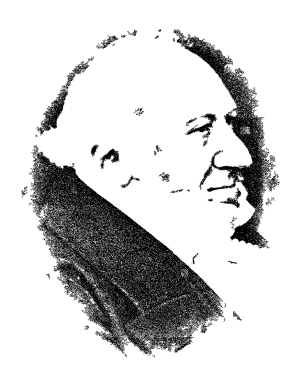 Reproduced From A Photograph On Porcelain
In The Possession Of Mrs Loewe Taken At The Age Of 80
Reproduced From A Photograph On Porcelain
In The Possession Of Mrs Loewe Taken At The Age Of 80
 Ancient Coat Of Arms Of The Montefiore Family,
explained on page 6.
Ancient Coat Of Arms Of The Montefiore Family,
explained on page 6.