(The figures in brackets after each name give the population
of the parish in 1901, from the official returns, and those at the
end of each paragraph are references to the pages in the text.)
Appledore (2625). A small sea-port at the mouth of the Torridge,
wrongly supposed, through confusion with an Appledore in Kent, to have
been the landing-place of Hubba the Dane. (pp. 27,
61,
130,
131.)
Ashburton (2628). A market-town on the Yeo, eight miles
south-west of Newton Abbot, one of the Stannary Towns, with some
manufacture of cloth. A good centre for Dartmoor, and with a fine church
and other old buildings. Near it are Holne Chase and the Buckland Woods,
with very beautiful scenery. (pp. 46,
112,
118,
120,
151,
173,
212.)
Axminster (2906). Close to the border of Dorset, high above the
Axe. Interesting for the history of its church, founded in 755, and
endowed by Athelstan after his victory over the Danes. The manufacture
of Axminster carpets was discontinued here in 1835. (pp. 114,
150,
153,
168,
170,
199,
206.)
Axmouth (643). A pretty village in a combe in rugged chalk
cliffs, near the mouth of the Axe. The coast here has been much altered
by landslips. (pp. 66,
199.)
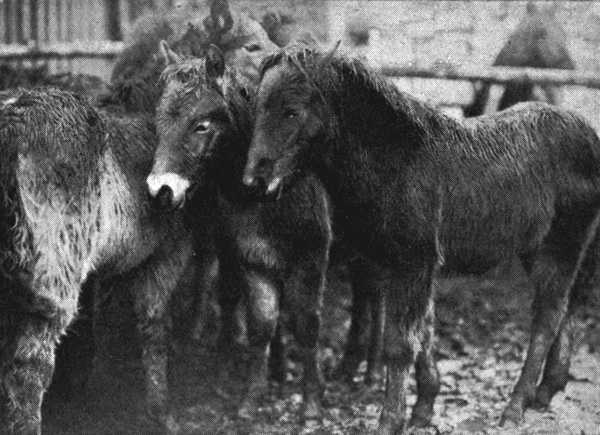
Bampton (1657). An old market-town, near the border of Somerset,
with a very large annual fair, especially for the sale of sheep and
Exmoor ponies. Has also large limestone quarries. (p. 191.)
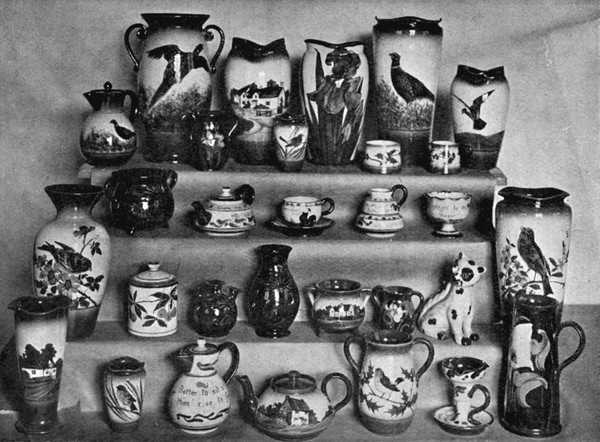
Barnstaple (11,999). The chief town of North Devon, nine miles
from the mouth of the Taw, where the river widens into a tidal estuary.
It formerly had much trade with America, but is now noted only for its
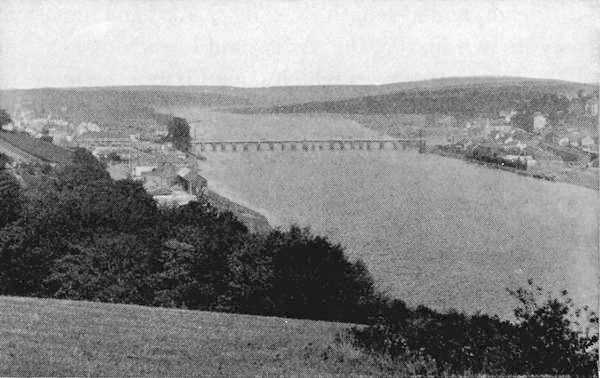
pottery, called Barum ware. The river is spanned by a famous stone
bridge of 16 arches, dating from the thirteenth century. (pp. 82,
101,
112,
114,
130,
131,
139,
149,
173,
192,
206,
207,
210,
212.)
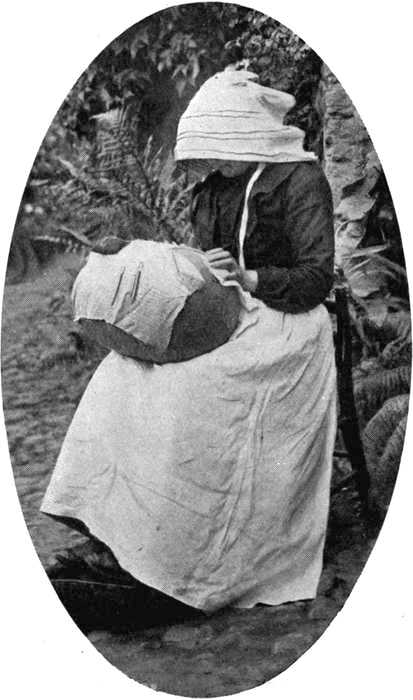
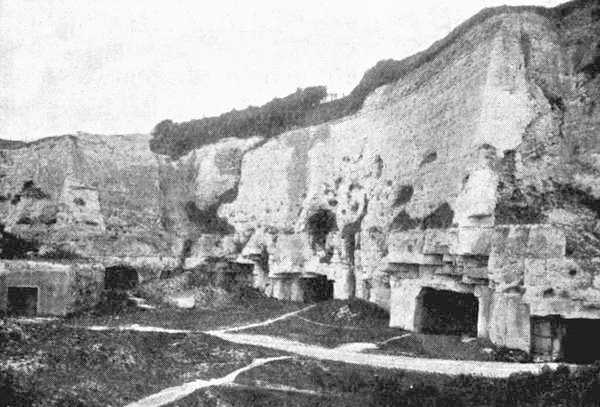
Beer (1118). A fishing-village at the foot of a narrow, deep
valley near the Dorset border, noted for lace-making, and for its very
extensive subterranean quarries of fine building-stone. (pp. 68,
112,
114,
123,
168,
200.)
Bere Alston. A village eight miles north of Plymouth, close to
the border of Cornwall, was formerly noted for its rich silver mine,
flooded by the Tamar in 1860. (p. 121.)
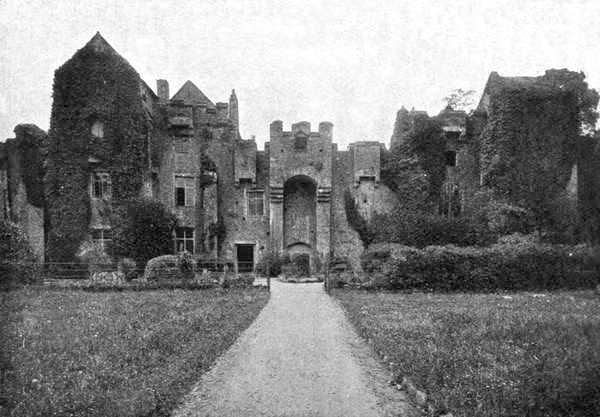
Berry Pomeroy (423). A village in the valley of the Dart, near
Totnes, famous for its ruined castle, the most picturesque ruin in
Devonshire. (pp. 100,
176,
188.)
Bideford (8754) is a market-town and river-port near the mouth
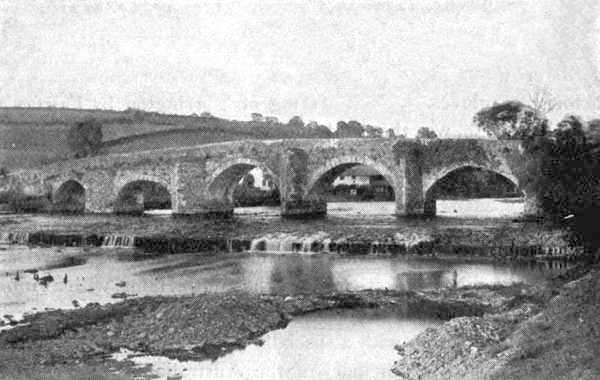
of the Torridge, here crossed by a fine bridge, built in the fifteenth
century in place of the dangerous ford which gave its name to the town.
It was a very important place in Armada days, and formerly had great
trade with Newfoundland and other American colonies. (pp. 114,
123,
130,
131,
194,
204,
207,
210.)
Bovey Tracy (2693), six miles north-west of Newton Abbot, is
noted for beds of clay and lignite, and for its potteries. (pp. 25,
40,
114,
122,
123.)
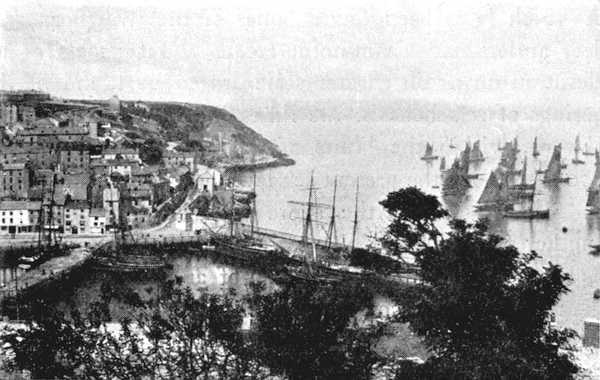
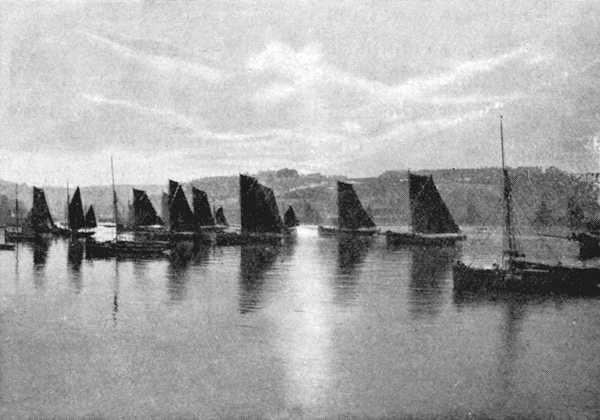
Brixham (8092), a sea-port with a good harbour, a market-town,
and a very important fishing-station, with many trawlers, stands on
Berry Head, at the south end of Torbay. Here William of Orange landed in
1688. (pp. 73,
118,
128,
130,
132,
150,
154,
197.)
Buckfastleigh (2781) is a small town in the Dart valley, with
woollen factories. Buckfast Abbey, a Saxon foundation, was restored and
reinhabited by French Benedictine monks in 1882. (pp. 112,
171,
184,
200.)
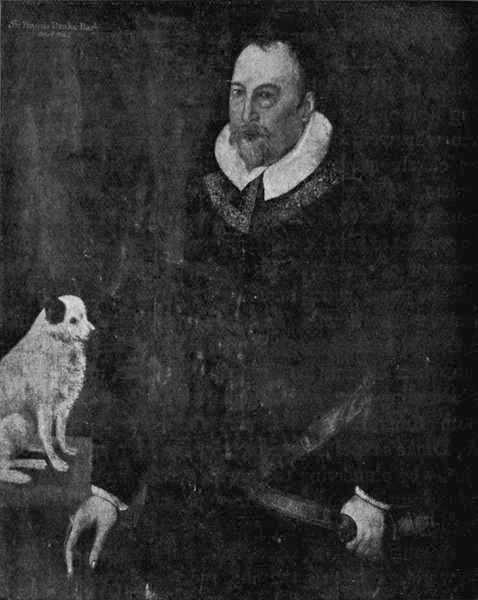
Buckland Abbey, seven miles north of Plymouth, was in part
converted into a dwelling-house by Sir Richard Grenville, and this was
afterwards altered by Sir Francis Drake, of whom interesting relics are
here preserved. (pp. 54,
145,
166,
184.)
Budleigh Salterton (1883). A small port and favourite
watering-place, beautifully situated five miles east of the mouth of the
Exe. (pp. 69,
129,
199.)
Chagford (1397). A small market-town, high above the Teign
valley, on the borders of Dartmoor, forming a good centre for tourists,
naturalists, and archaeologists. There are many Bronze Age antiquities
in the neighbourhood. (pp. 25,
120,
191,
204.)
Chudleigh (1820), seven miles inland from Dawlish, contains the
ruins of the palace of the Bishop of Exeter, built in 1080. Ugbrooke,
often visited by Dryden, is a mile away. (pp. 123,
199,
200,
221.)
Chumleigh (1158), is a village on high ground above the valley of
the Taw, chiefly interesting for the history of the Seven Prebends of
its church. (pp. 172,
196,
197.)
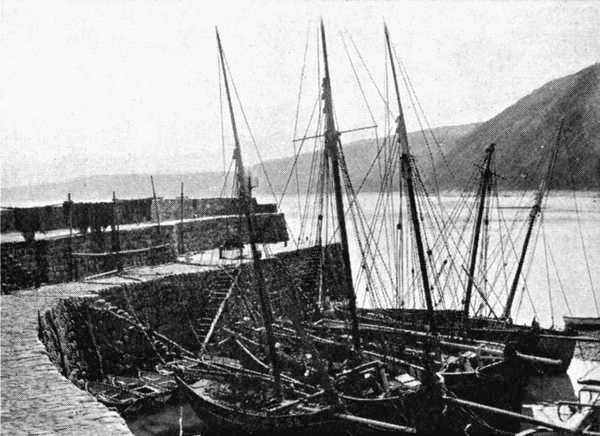
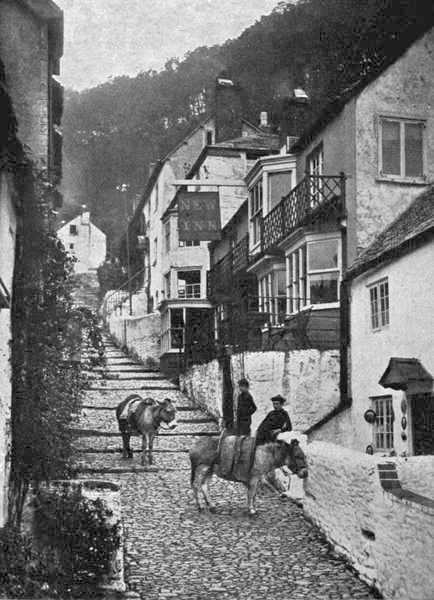
Clovelly (621). A small but extraordinarily picturesque
fishing-village, consisting of one cobble-paved street, running steeply
up a narrow ravine through a densely-wooded hill-side. Near it is the
Hobby Drive. There is a fine camp on the hill above. (pp. 62,
63,
85,
161,
176.)
Clovelly
Colyton (1943) is a small market-town, beautifully situated in
the Coly valley, near the border of Dorset, with a fine church. (pp.
114,
122,
150,
168,
191.)
Combe Martin (1521), a village on the coast six miles east of
Ilfracombe, in a fertile valley, was formerly noted for its very rich
silver mine; now for market-gardening. (pp. 15,
121,
171,
172.)
Countisbury (279) is a little village on the west side of the
Foreland, close to the Somerset border.
Crediton (3974), a market-town with boot and shoe, and cider
factories, stands above the valley of the Creedy, eight miles north-west
of Exeter, whither the see of the Bishopric was, for greater safety,
moved from here by Leofric, in 1050. The very fine church, of unusual
length, contains many monuments. (pp. 112,
118,
168,
172,
200,
219.)
Cullompton (2919) is a market-town 12 miles north-east of Exeter,
on the road from Bristol. The manor belonged to Buckland Abbey. The
Walronds is a fine Elizabethan mansion. (pp. 112,
118,
172,
173.)
Dartington (478), so-named when the tidal estuary of the Dart ran
close to it, is now a suburb of Totnes. Dartington Hall is a very fine
Elizabethan house. (pp. 129,
194.)
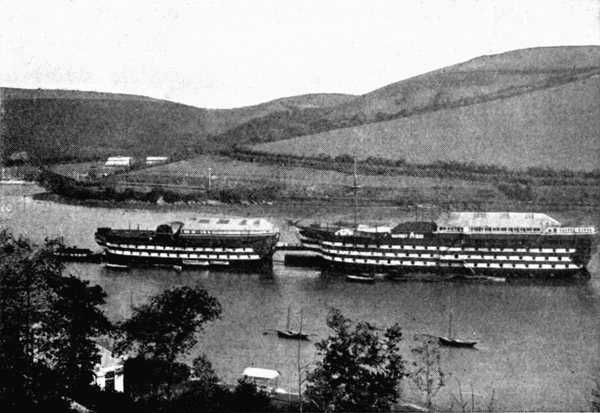
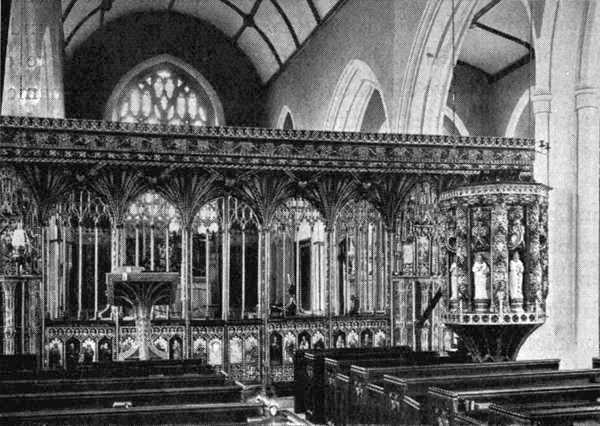
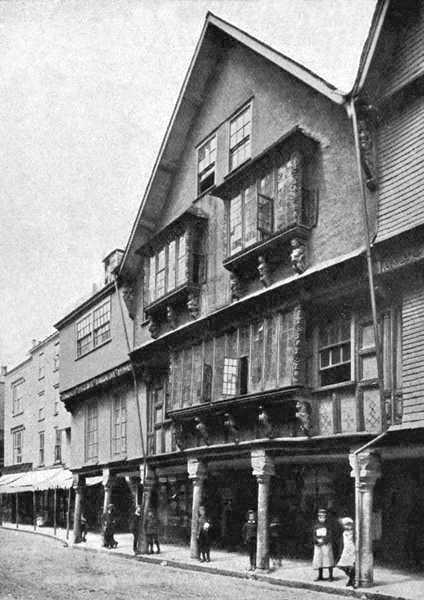
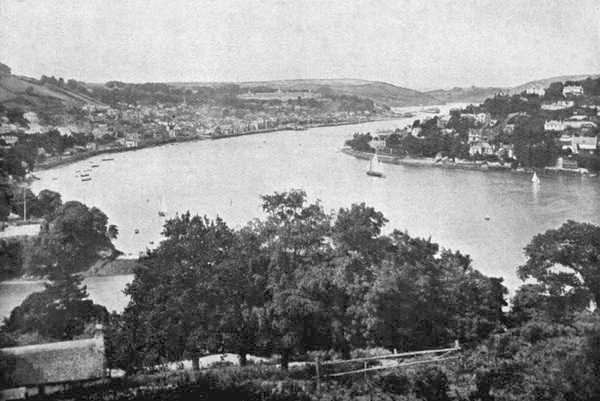
Dartmouth (6579), a market-town, and favourite resort of
yachtsmen, and formerly a port of great importance, at the narrow
entrance of the Dart estuary, is a place of exceptional beauty and of
great historic interest, built in terraces on a steep, wooded hill.
In the old town along the quay and in the Butter-Walk are fine old
Elizabethan houses. St Saviour's, one of its four churches, dates
from 1372, and has a splendid rood-screen and a very fine pulpit. The
land-locked harbour was guarded by two castles. On a hill above the town
is the great white building of the naval college, which has superseded
the old training-ship Britannia. (pp. 23,
74,
75,
129,
130,
132,
140,
147,
172,
175,
176,
191,
200,
210,
212,
218,
222.)
Dartmouth, from Warfleet
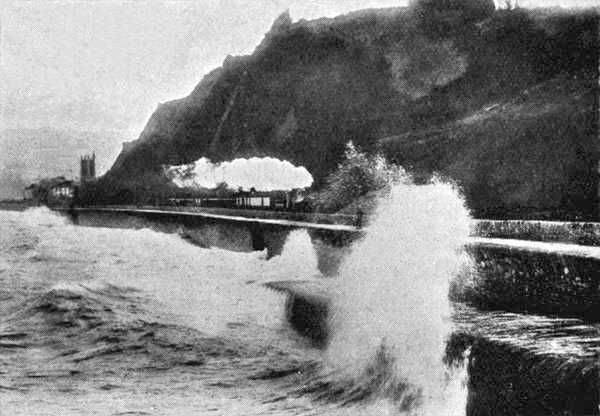
Dawlish (4287) is a charming and highly popular watering-place
with fine sands and beautiful red cliffs, in a sheltered combe, south of
the estuary of the Exe. A pretty pleasure garden called the Lawn, with a
stream through it, divides the new town from the old. (pp. 69,
80,
128.)
Devonport (70,437) is a parliamentary, municipal, and county
borough, on high ground above the estuary of the Tamar, two miles
west-north-west of Plymouth, one of the chief naval arsenals in Britain,
with government establishments—dockyards, barracks, magazines,
etc.—stretching nearly four miles along the Hamoaze, a great anchorage
for men-of-war. (pp. 79,
118,
210,
212.)
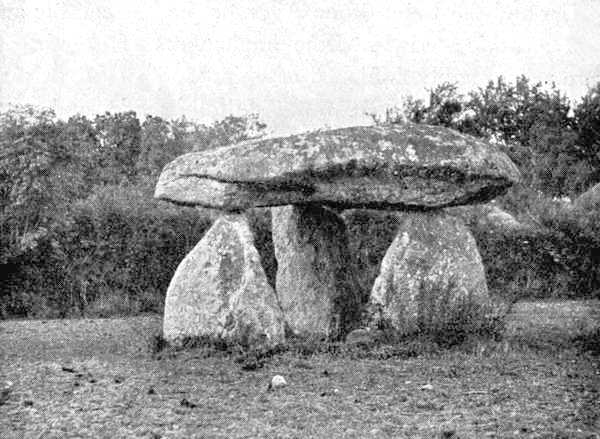
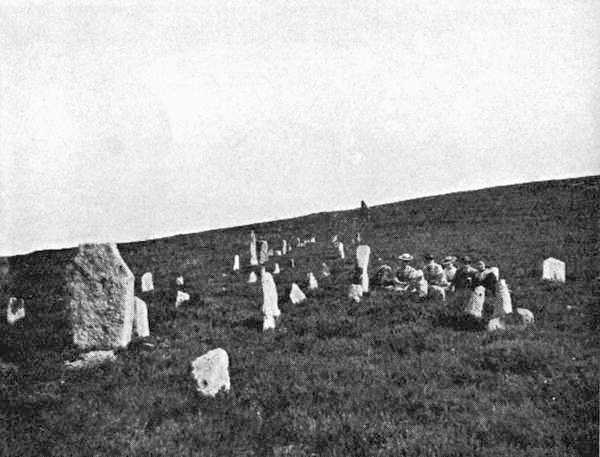
Drewsteignton (673), a large village near the Teign, not far from
which is the Spinster's Rock, the only cromlech in Devonshire. (p. 154.)
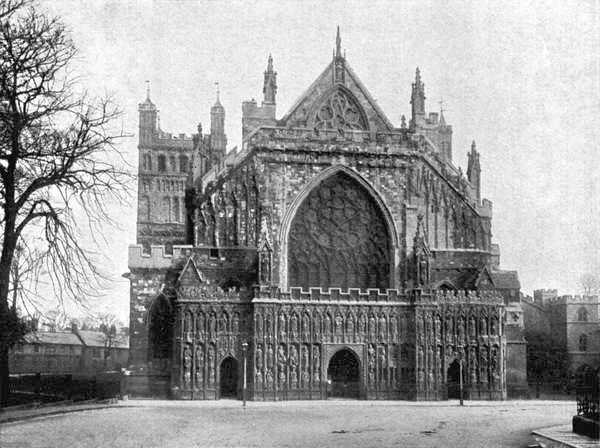
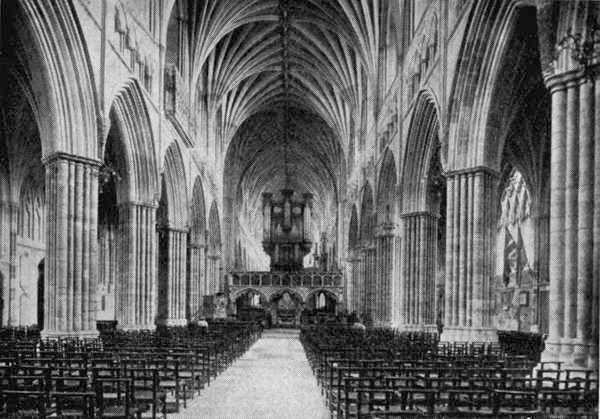
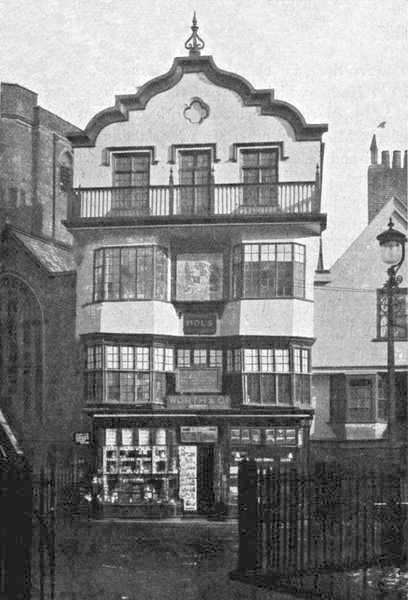
Exeter (47,185), the capital of Devonshire, and long regarded
as the Key of the West of England, is a picturesque old city, standing
on high ground above the Exe, which passes through the town. It is a
port, with a large basin connected with the estuary of the Exe by a
canal. A municipal, county, and parliamentary borough, it has factories
of agricultural implements and gloves, and there are large nurseries
round it. Of its castle of Rougemont, built by the Conqueror in 1067,
little now remains. But its magnificent cathedral, which contains
many most beautiful and interesting features, is the finest example
of the Decorated style of architecture in England. Other interesting
or important buildings are the Deanery, the House of the Abbots of
Buckfast, Mol's Coffee House, the Guildhall, and the Albert Memorial
Museum.
The history of the town is of the highest interest, and is linked
with every event of importance connected with the county. It has been
besieged in turn by Danes and Normans and Saxons, by King Stephen, by
the army of Perkin Warbeck, and the rebels of the "Commotion," by the
Yorkists, and by Royalists and Parliamentarians. Many distinguished
Bishops have held the see; and noteworthy names of those who have been
born in the city are those of the "Judicious" Hooker, Sir Thomas Bodley,
and the Princess Henrietta, daughter of Charles I, and afterwards
Duchess of Orleans. (pp. 22,
101,
112,
118,
132,
137,
138,
139,
140,
141,
142,
146,
147,
148,
149,
150,
160,
163,
164,
168,
170,
171,
175,
176,
178,
180,
181,
182,
187,
195,
196,
197,
200,
203,
204,
205,
210,
212,
219,
221,
222.)
Exminster (2550), a village on the west bank of the Exe, where is
a large asylum.
Exmouth (10,485), once a sea-port, is a rapidly growing and very
popular watering-place, with docks and brick-works, at the entrance
of the estuary of the Exe, here narrowed to a swift current by the
sand-bank called the Warren. (pp. 22,
82,
96,
129,
132,
191,
206.)
Haccombe (9), the smallest parish in England, contains the
residence, not always occupied, of the Carew family, and three other
houses. In the tiny church, the rector of which is an "arch-priest," are
many memorials. (pp. 171,
176,
209.)
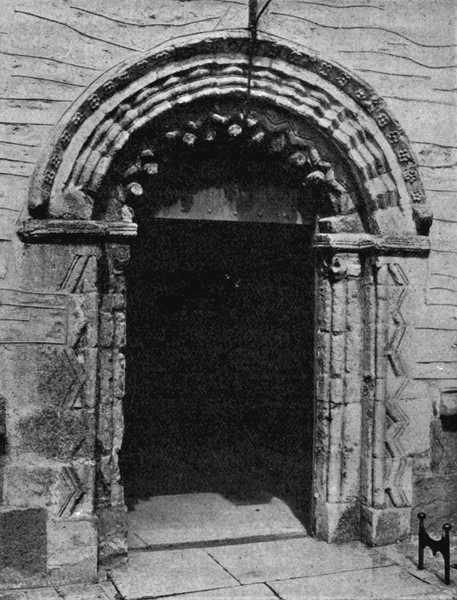
Hartland (1634), a small town in a very large but
thinly-inhabited parish, stands on the west side of Hartland Point. In
the church, whose lofty tower serves as a steering-mark for ships in the
Bristol Channel, is one of the longest rood-screens in Devon, and also a
good Norman font and door. (pp. 64,
150,
170,
172,
173,
175,
184.)
Holbeton (850) stands on the Erme estuary, ten miles from
Plymouth. Its fine church contains a magnificent rood-screen and a
Norman font. (pp. 175,
196.)
Holcombe Rogus (607), on the Somerset border, south-west of
Wellington, contains a church in which are many monuments of the Bluett
family, who formerly owned Holcombe Rogus Court, the finest Tudor
mansion in the county. (p. 195.)
Holne (273), a small village in the beautifully-wooded valley of
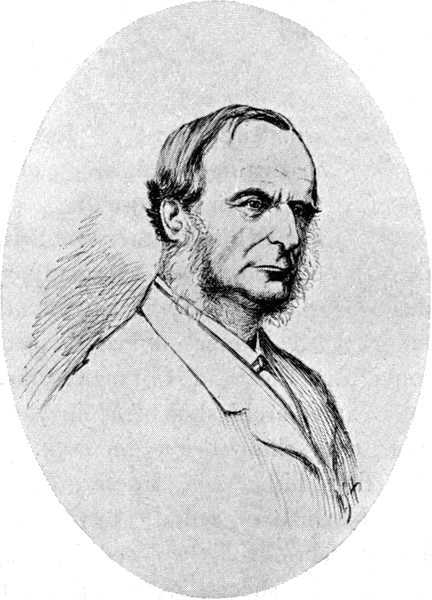
the Upper Dart, was the birth-place of Charles Kingsley. The church has
a fine screen and pulpit. (pp. 23,
160,
175,
220.)
Holsworthy (1371), is an important market near the border of
Cornwall, ten miles inland from Bude. The very ancient horse-fair of St
Peter is held here in July.
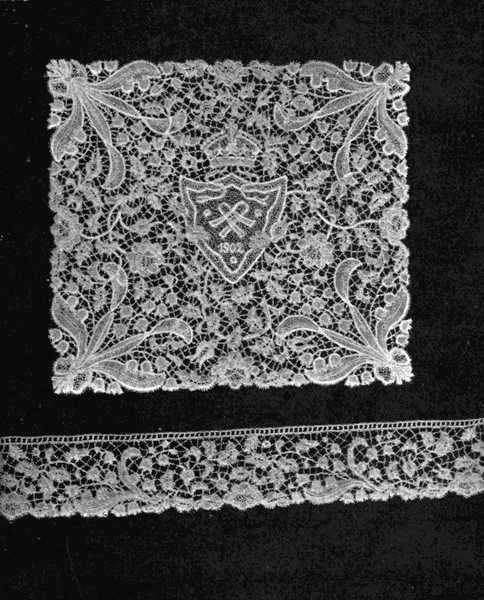
Honiton (3271), a municipal borough on the London and Exeter
road, 16 miles from the latter town, gives its name to the lace which
was first made here by Flemish refugees. St Margaret's Hospital for
Lepers has been converted into almshouses. Four miles away is Hembury
fort, one of the finest camps in Devon. (pp. 112,
138,
161,
175,
210,
212.)
Ilfracombe (8557), a small sea-port and very popular
watering-place on the north coast, having a land-locked harbour
sheltered by the Capstone Hill, and with the Chapel of St Nicholas, now
a lighthouse, at the entrance of it, is celebrated for the exceptional
mildness of its climate. (pp. 58,
94,
130,
131,
150,
151,
170,
206.)
Instow (634), a small but very ancient port, at the point where
the Taw and the Torridge meet, has weekly communication with Lundy. (pp.
27,
61.)
Kenton (1612), a very picturesque village, inland from Starcross,
with a fine church of red sandstone, whose rood-screen, partly Flemish,
is one of the best in England, and its oaken pulpit perhaps the finest
in Devon. (pp. 172,
174,
175.)
Kingsbridge (3025 with Dodbrooke) is a small but important
market-town at the head of the Kingsbridge estuary, which is really a
tidal creek without a river, in the extreme south of the county. It is
one of the chief places in the fertile district called the South Hams.
(pp. 16,
50,
54,
118,
122,
193.)
Kingswear (841) is a picturesque village opposite Dartmouth,
which is reached from it by a steam-ferry. Near the old castle, now
modernised, but said to date from John's reign, are the remains of
a guard-house from which a chain was stretched across the river to
Dartmouth Castle, to guard the estuary. (pp. 74,
191.)
Lydford (2812), a small village in the largest parish in England,
including a great part of Dartmoor, was once second in importance to
Exeter, a Stannary Town, and the seat of the Stannary prison. There is a
ruined Norman castle. Lydford Gorge, spanned by a single-arched stone
bridge, is one of the most beautiful spots in Devon. (pp. 14,
120,
138,
139,
190,
204,
207,
209.)
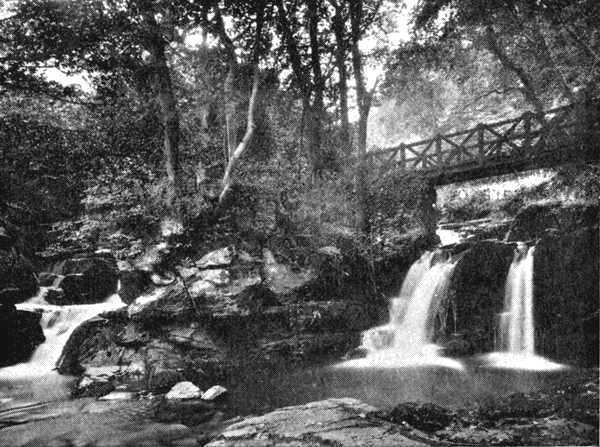
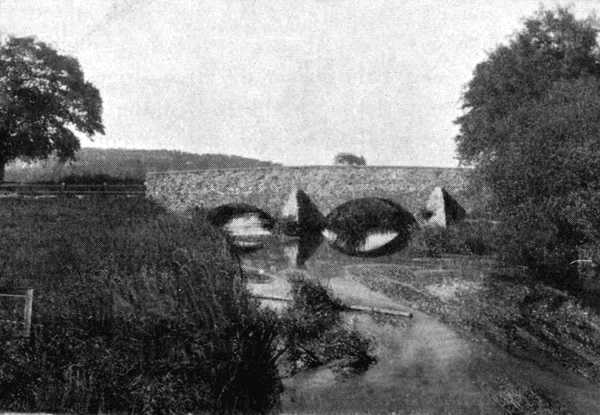
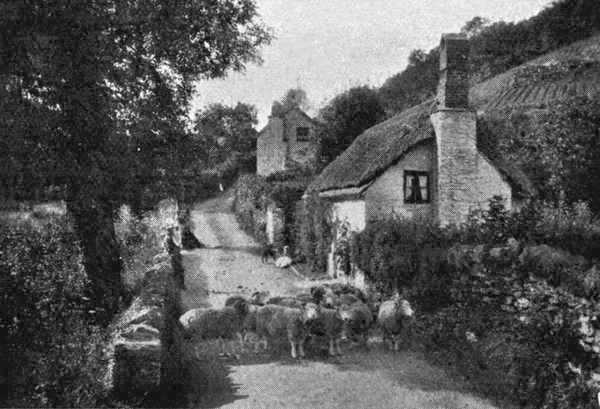
Cherry Bridge, near Lynmouth
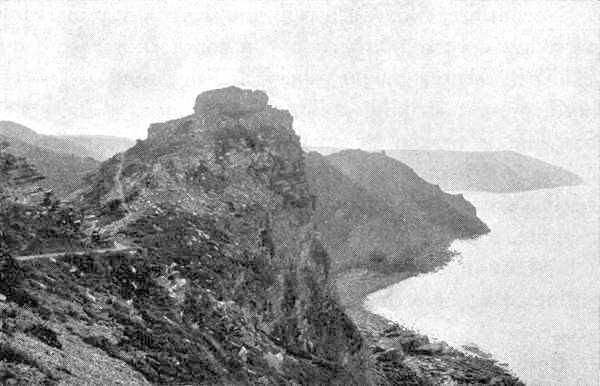
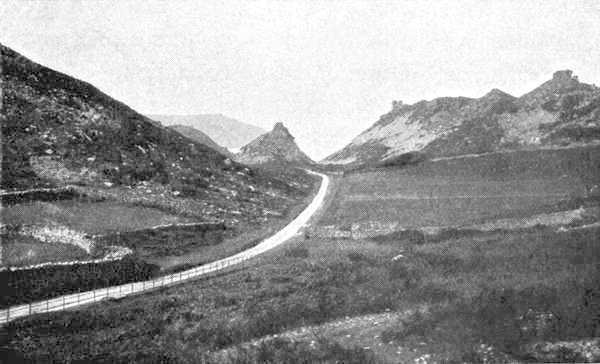
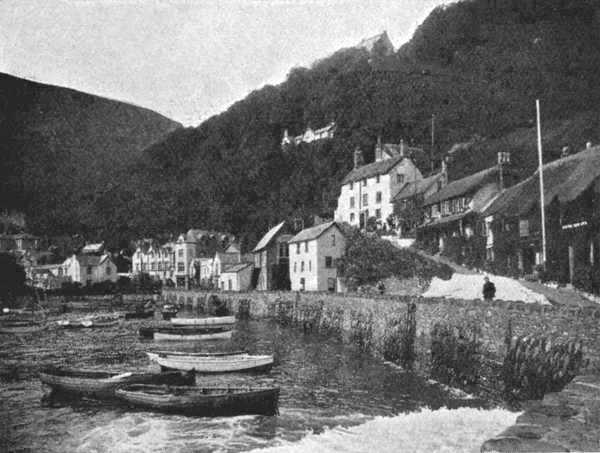
Lynton (1641) and Lynmouth (402) are two villages in the
parish of Lynton, on the north coast, the latter on the shore, and the
former 450 feet above it, famous for their very beautiful scenery,
especially along the river Lyn—where one of the finest spots is at the
Watersmeet—and in the wild ravine called the Valley of Rocks. (pp. 16,
57,
82,
127,
150,
221.)
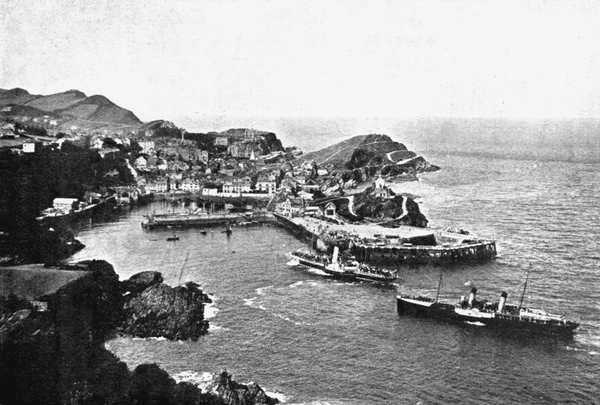
Lynmouth Harbour
Modbury (1242) is a small market-town 12 miles south-east of
Plymouth, once the principal residence of the Champernownes, who made it
famous as a musical centre in Tudor times.
Moreton Hampstead (1541), a picturesque little town on the
eastern border of Dartmoor, with an important cattle-market. (pp. 151,
222.)
Mortehoe (788), a small but growing watering-place near
Ilfracombe, with an interesting church, and not far from Woollacombe
Sands and the dangerous headland of Morte Point. (pp. 60,
173.)
Newton Abbot (16,951), in very beautiful country six miles from
Torquay, has large markets for cattle and for dairy-produce, and wharves
on the Teign for trade in timber and coal. The parish church has fine
screens and many monuments. Both Charles I and the Prince of Orange were
entertained here at Forde House. (pp. 26,
161,
195,
197,
203,
205.)
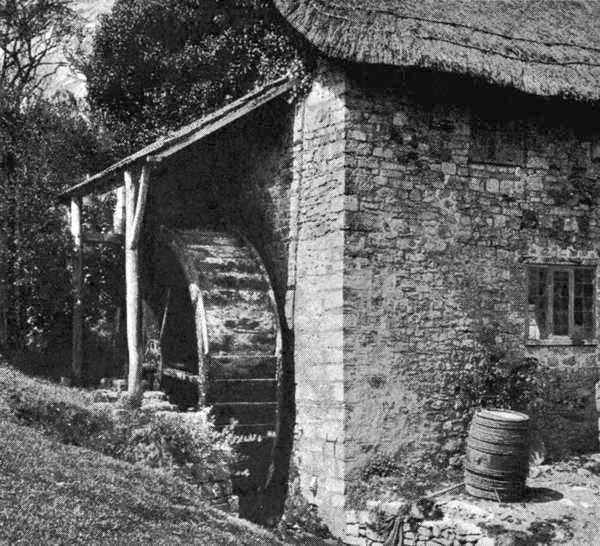
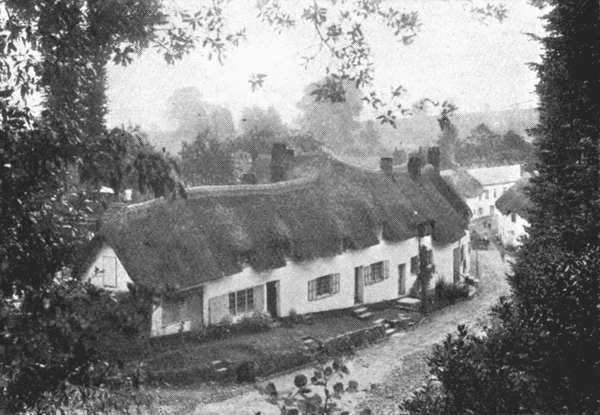
Ogwell Mill, near Newton Abbot
Okehampton (2569), on the north-west edge of Dartmoor, has large
markets for cattle and agricultural produce. In the neighbourhood are
the very picturesque ruins of a Norman castle and other attractions both
for antiquarians and naturalists. (pp. 140,
151,
188,
210.)
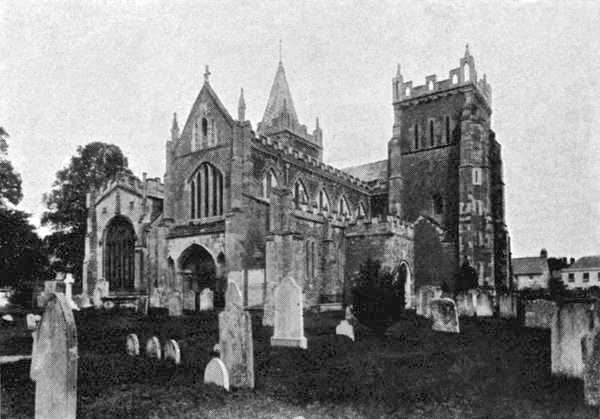
Ottery St Mary (3495), a market-town south-east of Exeter, in
the beautiful valley of the Otter, is famous for its noble church, the
finest in Devonshire, and containing many very interesting and beautiful
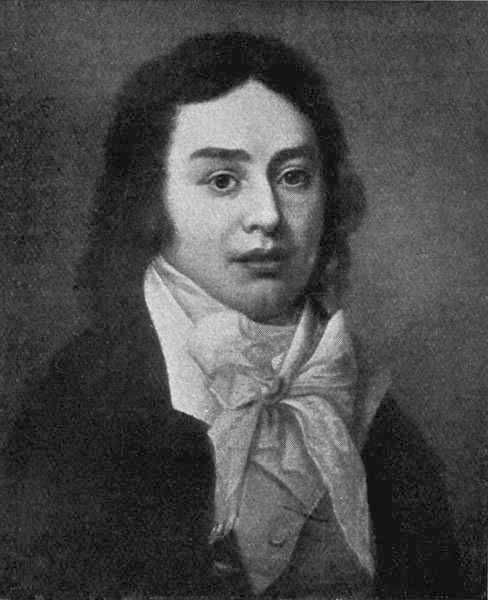
features, and also as being the birth-place of the poet Coleridge. (pp.
170,
171,
173,
176,
178,
195,
200,
221.)
Paignton (8385), a rapidly-growing watering-place on Torbay, with
a fine situation, a bracing climate, and good sands (pp. 73,
175,
176.)
Plymouth (107,636), very finely situated at the mouth of the
river Plym, at the head of Plymouth Sound, a parliamentary, municipal,
and county borough, the chief seat of trade, commerce, and manufactures
in Devonshire, is one of the most famous seaports in the kingdom.
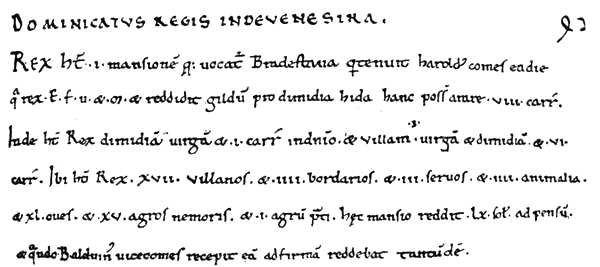
Described in Domesday Book as Sutton, and occasionally known as
Plymouth as early as the fourteenth century, it did not definitely
receive its present name until the reign of Henry VI.
Its spacious docks, Millbay, the graving-dock and the floating basin,
can accommodate the largest merchant-ships. In Sutton Pool and the
Catwater, in the Hamoaze—the estuary of the Tamar, the Lynher and the
Tavy—and at the head of the Sound, in the shelter of the breakwater,
a very large number of vessels find safe and convenient anchorage. At
its numerous quays, connected with the Great Western Railway, to which
company the docks belong, are landed passengers and mails from the
United States, from Australia and New Zealand, from the West Coast of
Africa and the Cape, from India and the East, as well as merchandise
from all parts of the world, especially from France. Next to Newlyn, it
is the most important fishing-station on the south coast of England.
Further details will be found in the chapters on shipping and fisheries.
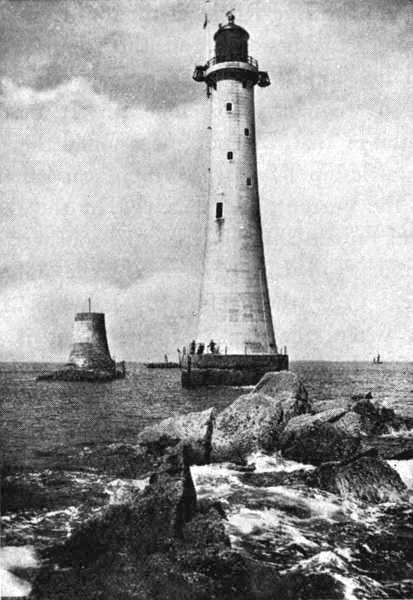
Two of its most remarkable monuments, both on the Hoe, are a copy of
Boehm's fine statue of Drake, and part of the old Eddystone lighthouse,
re-erected as a memorial to Smeaton.
Plymouth has had a stirring history. In mediaeval times, especially
in the fourteenth and fifteenth centuries, it suffered much from the
attacks of the French, who, in 1403, under du Chastel, are said to have
burnt 600 houses. Its most important periods are those connected with
the defeat of the Armada, with the Civil War, and with the French war
that ended with the battle of Waterloo. It was in the Catwater that the
English fleet lay at anchor, while Drake and his fellow-captains waited
on the Hoe, the famous ridge between Millbay and Sutton Pool, until the
Spanish ships had passed. More or less closely blockaded from 1642 to
1646 by the Royal forces, and many times desperately assailed, Plymouth
was the one town in the whole west of England that was never lost to
the Parliament. In the Napoleonic war the town was the scene of great
activity, fitting out many naval expeditions against the French, and
receiving many captured ships.
Many famous names are associated with the town. It was from here that
the Black Prince set out for France and the victory of Agincourt. Here,
in 1470, landed the Duke of Clarence, in the hope of enlisting recruits
for the Lancastrian army. Here, too, came Margaret herself, with Prince
Edward, just before the final overthrow at Tewkesbury. It was at
Plymouth that the Princess of Aragon landed, on her way to marry Prince
Arthur. From Plymouth sailed Drake and Hawkyns on their filibustering
expeditions, and to this port they came back loaded with Spanish gold.
Here, too, came Drake, after his voyage round the world. From here
Sir Humphrey Gilbert set out on his last voyage, and from here sailed
Captain Cook. In the streets and on the quays of Plymouth Benbow and
Rodney, Howe and Jervis, Collingwood and Nelson, were, in their time,
familiar figures. (pp. 48,
78,
79,
82,
83,
86,
101,
114,
123,
128,
130,
131,
132,
134,
136,
140,
142,
144,
146,
147,
148,
151,
153,
159,
160,
199,
204,
205,
206,
207,
210,
212,
215,
217,
222.)
Plympton (4954), a parish north of Plymouth, comprising two
separate villages which grew up round the castle and the priory. Until
the fifteenth century the Prior of Plympton controlled the affairs of
Plymouth. (pp. 108,
114,
172,
183,
190,
212,
223.)
Plymstock (3195), a parish to the east of Plymouth, with large
quarries, and with extensive fortifications for the protection of the
harbour.
Powderham (233), a village on the west side of the estuary of the
Exe, where, in a very beautiful park, stands Powderham Castle, chief
seat of the Courtenays, Earls of Devon. (pp. 187,
192.)
Princetown, in the western part of Dartmoor, is the site of a
famous convict prison, originally built, in 1809, for the reception
of French prisoners of war. The convicts have brought much land
into cultivation, and there are also large granite quarries in the
neighbourhood. (pp. 96,
151,
155,
205.)
Salcombe (1710), a small port at the mouth of the Kingsbridge
estuary, with an exceptionally mild climate, and with other attractions
as a watering-place. (pp. 82,
132,
149,
191,
222.)
Seaton (1325), a pleasant watering-place near the mouth of the
Axe, in the chalk cliffs, close to Dorset. (pp. 66,
80,
114.)
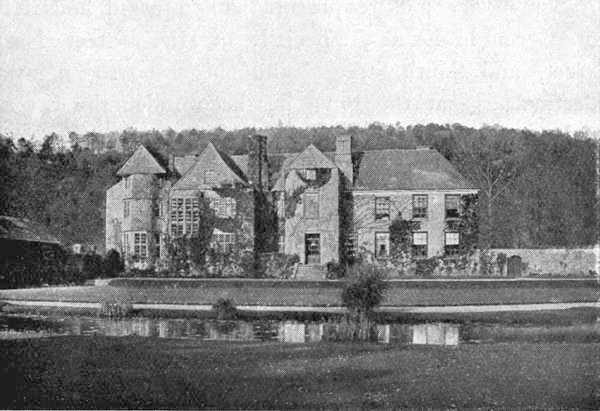
Shute (461), a scattered parish, containing the former seat of
the De la Poles, has many monuments to them in its church.
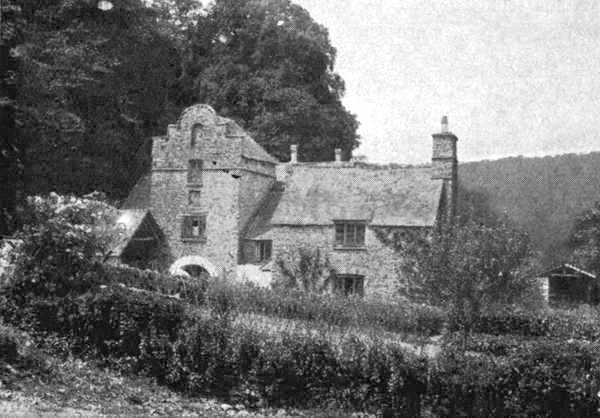
Shute Manor House
Sidmouth (4201), a fashionable watering-place, very pleasantly
situated at the mouth of the Sid, between Exmouth and the border of
Dorset. Its equable climate is perhaps its chief attraction, but it was
an important harbour before its sheltering cliffs were destroyed by
landslips. Queen Victoria spent some years of her childhood here. (pp.
68,
80,
130,
163.)
South Molton (2848), a very ancient market-town in the south of
Exmoor, has corn-mills and a very fine church-tower. (pp. 172,
212.)
Tavistock (4728), close to the border of Cornwall, with the ruins
of a great abbey, round which the town grew up, was formerly very famous
as a mining-centre, and was one of the Stannary Towns. Sir Francis Drake
was born here, and the statue of him by Boehm, of which there is a copy
on Plymouth Hoe, is one of that sculptor's finest works. (pp. 112,
118,
120,
122,
138,
151,
171,
183,
197,
204,
205,
212,
213.)
Teignmouth (7366), an ancient sea-port, a modern and very popular
watering-place and a market-town at the mouth of the Teign, has a good
harbour, sheltered by the Den, once a mere sandbank, but now a promenade
and pleasure-garden. The wooden bridge over the river is one of the
longest in England. (pp. 26,
69,
71,
129,
132,
140,
150,
207,
221.)
Tiverton (10,382), an old market-town where the Loman joins
the Exe—hence the name, Two-ford-town—was formerly noted for its
woollen trade, but now for its lace-factory. The church contains many
interesting monuments. (pp. 111,
114,
146,
163,
166,
172,
176,
190,
200,
202,
205,
210,
212,
222.)
Tiverton Bridge
Topsham (2790), once a famous port, is now a market-town and
fishing station on the estuary of the Exe. (pp. 22,
130,
132.)
Torcross, a small fishing-village and watering-place at the south
end of the Slapton Sands. The bay being very exposed, the fishermen
train Newfoundland dogs to swim out to boats in rough weather, and take
the "painter" ashore. (p. 129.)
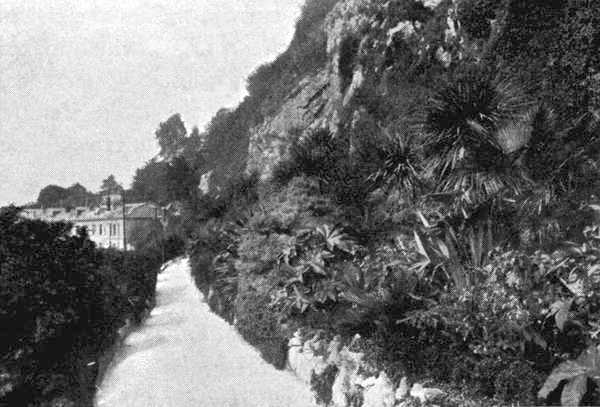
Torquay (33,625), one of the best-known towns in Devon, is a
large and fashionable watering-place, very celebrated for its mild and
equable climate, standing on the south slopes of the northern headland
of Torbay. From the well-sheltered little harbour the town rises in a
semicircle, so protected from rough winds that palms, myrtles, aloes,
agaves and other sub-tropical trees flourish here freely in the open
air. Near the town is Kent's Cavern, in which have been discovered many
most interesting remains of extinct animals and of pre-historic man.
(pp. 11,
73,
94,
95,
123,
127,
128,
132,
151,
153,
188,
210,
212.)
Torrington (3241), a market-town on the Torridge, south of
Bideford, with important fairs and cattle-shows, and with factories of
gloves. The storming of Torrington by Fairfax in February, 1646, was the
death-blow to the cause of King Charles, and practically ended the Civil
War in Devonshire. (pp. 118,
148,
149,
191,
210,
218.)
Totnes (4035), one of the oldest municipal boroughs in England,
at the head of the navigable portion of the river Dart, is one of the
chief market-towns of the South Hams, with a ruined castle and other
remains of fortification, some picturesque old houses, a fine church
with a specially good stone rood-screen, and a granite obelisk in memory
of the Australian explorer Wills, who was born here. (pp. 23,
112,
139,
175,
188,
191,
194,
210,
212.)
Westward Ho! a watering-place on Northam Burrows on the shore of
Barnstaple Bay, with a good climate, and with many attractions for the
marine zoologist, was named in honour of Kingsley's great romance. (p.
62.)
Widecombe-in-the-Moor (657), a village in the centre of Dartmoor,
with an annual fair for the sale of sheep and ponies, with many very
interesting prehistoric remains in the neighbourhood, and a very fine
church tower. (pp. 167,
173.)
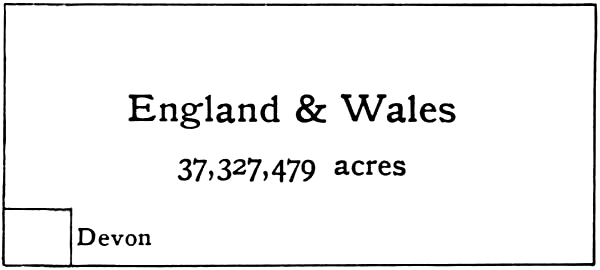
Fig. 1. The Area of the Ancient Geographical County of Devon
(1,667,154 acres), compared with that of England and Wales
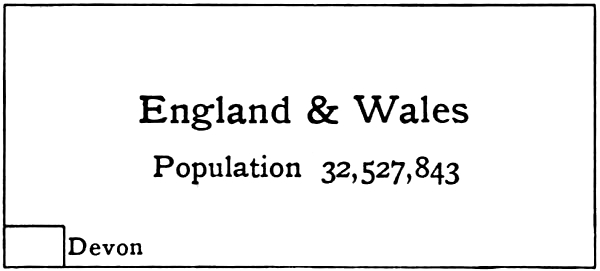
Fig. 2. The Population of Devon (661,314) compared with that of
England and Wales (in 1901)
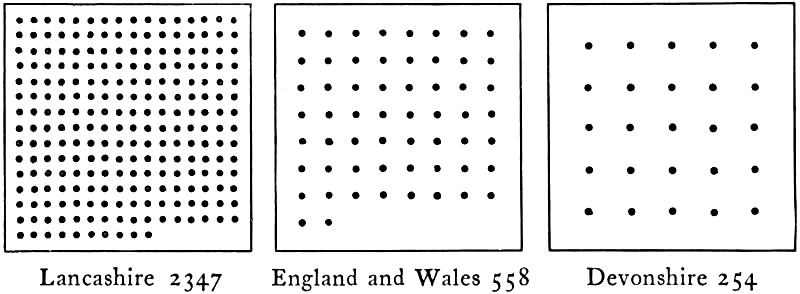
Fig. 3. Comparative Density of Population to Square Mile in 1901
(Each square represents a square mile)
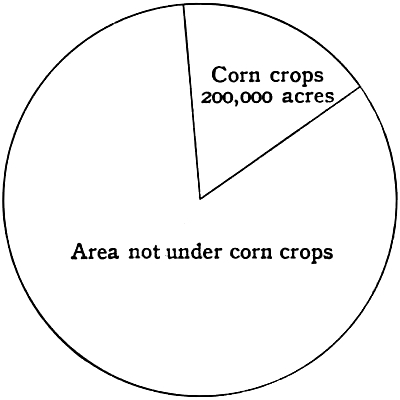
Fig. 4. Proportionate Area under Corn Crops in Devon in
1908
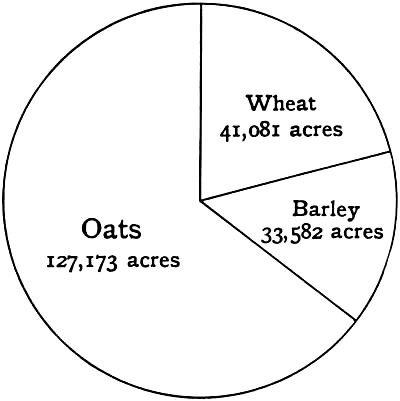
Fig. 5. Proportionate Area of chief Cereals in Devon in
1908
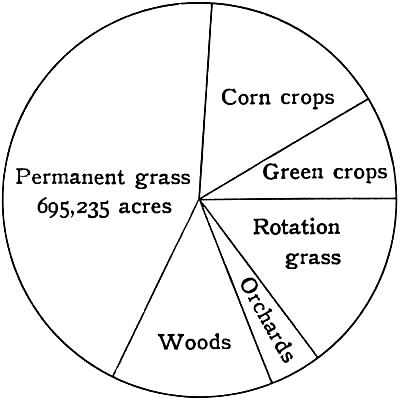
Fig. 6. Proportion of Perennial Pasture to other Areas in
Devon in 1908
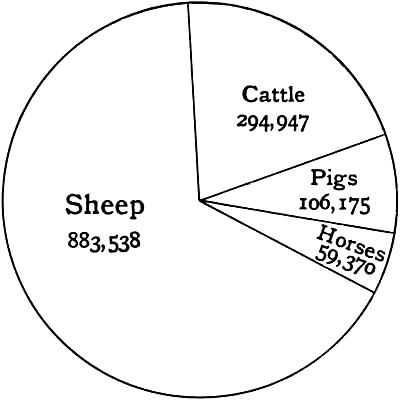
Fig. 7. Proportionate numbers of chief Live-stock in
Devon in 1908
Cambridge:
PRINTED BY JOHN CLAY, M.A.
AT THE UNIVERSITY PRESS
Transcriber's Note:
This e-text is based on the 1910 edition. The following errors have
been corrected; corresponding comments are marked in the text using
a red dotted underline.
# p. 68: "standstone" → "sandstone"
# p. 71: bad print image; "south of": "of" restored
# p. 131: "exent" → "extent"