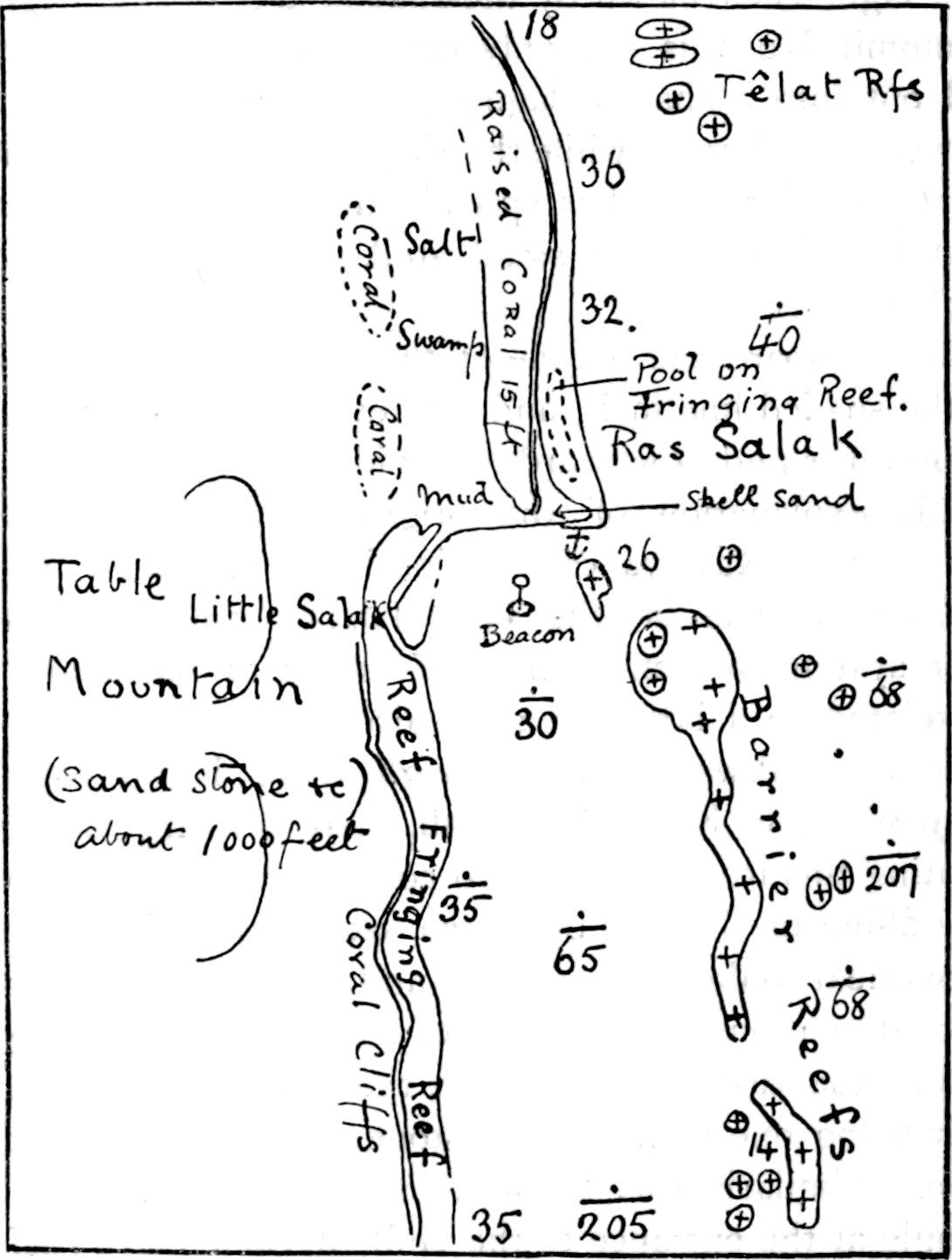
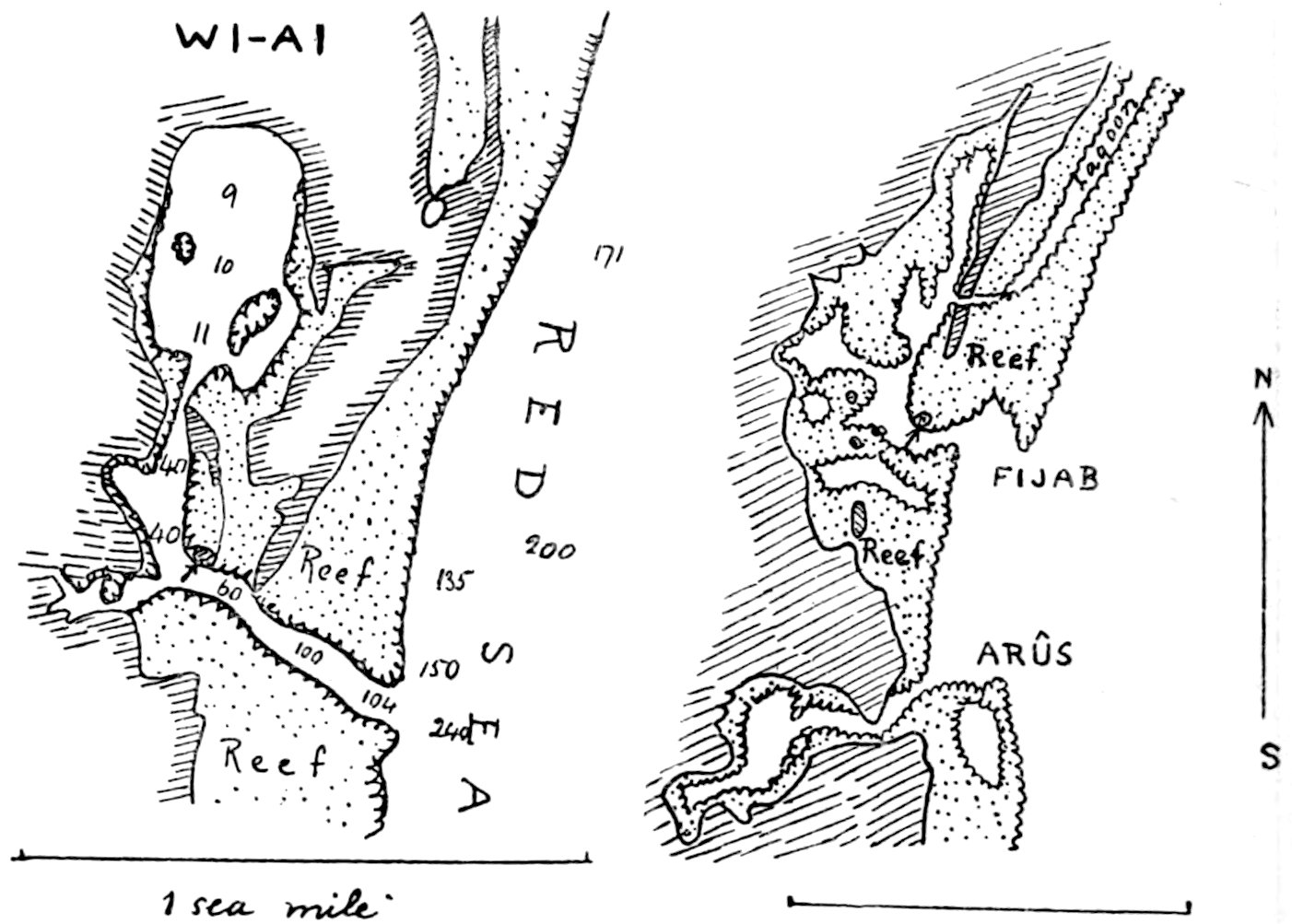
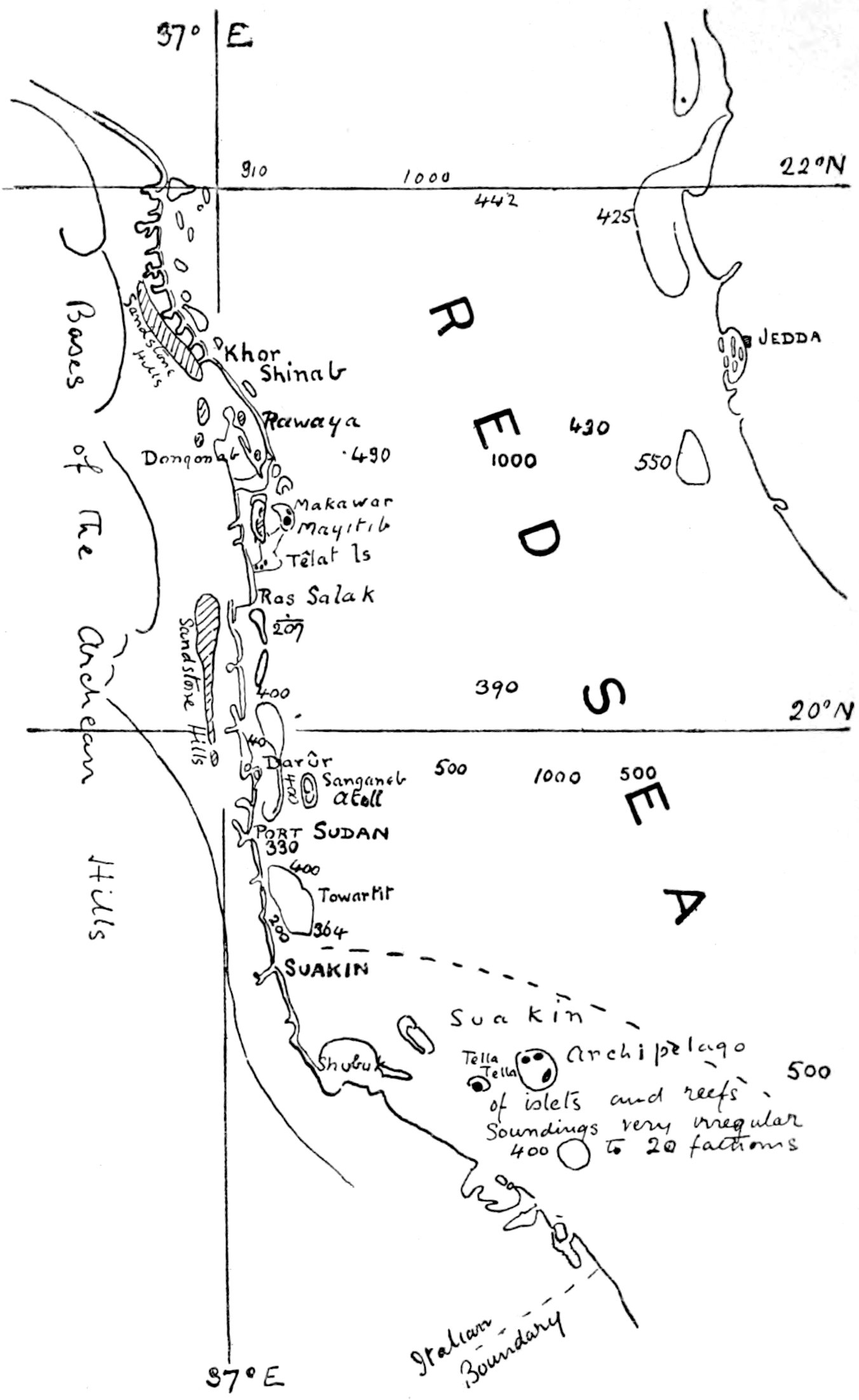
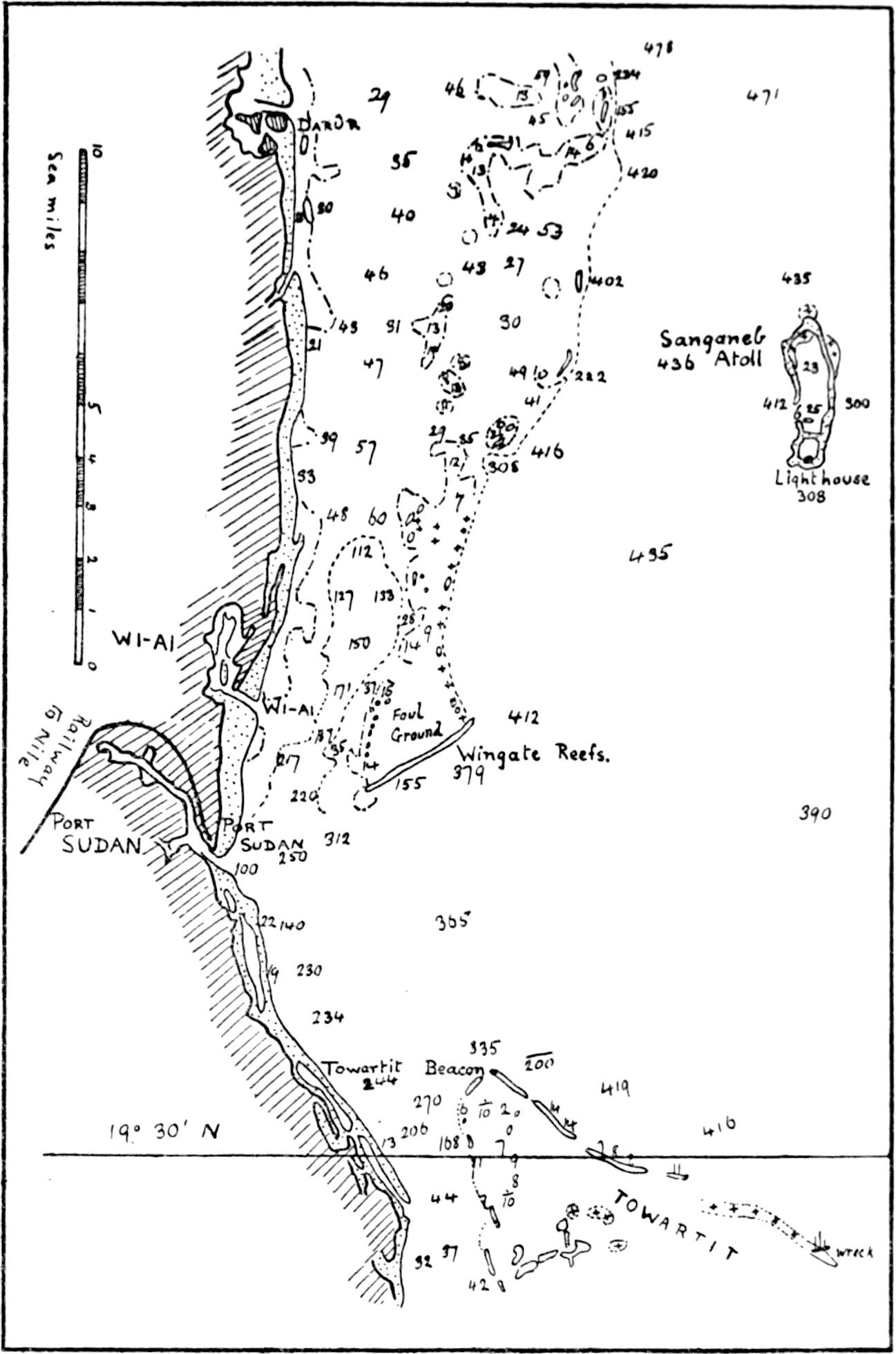
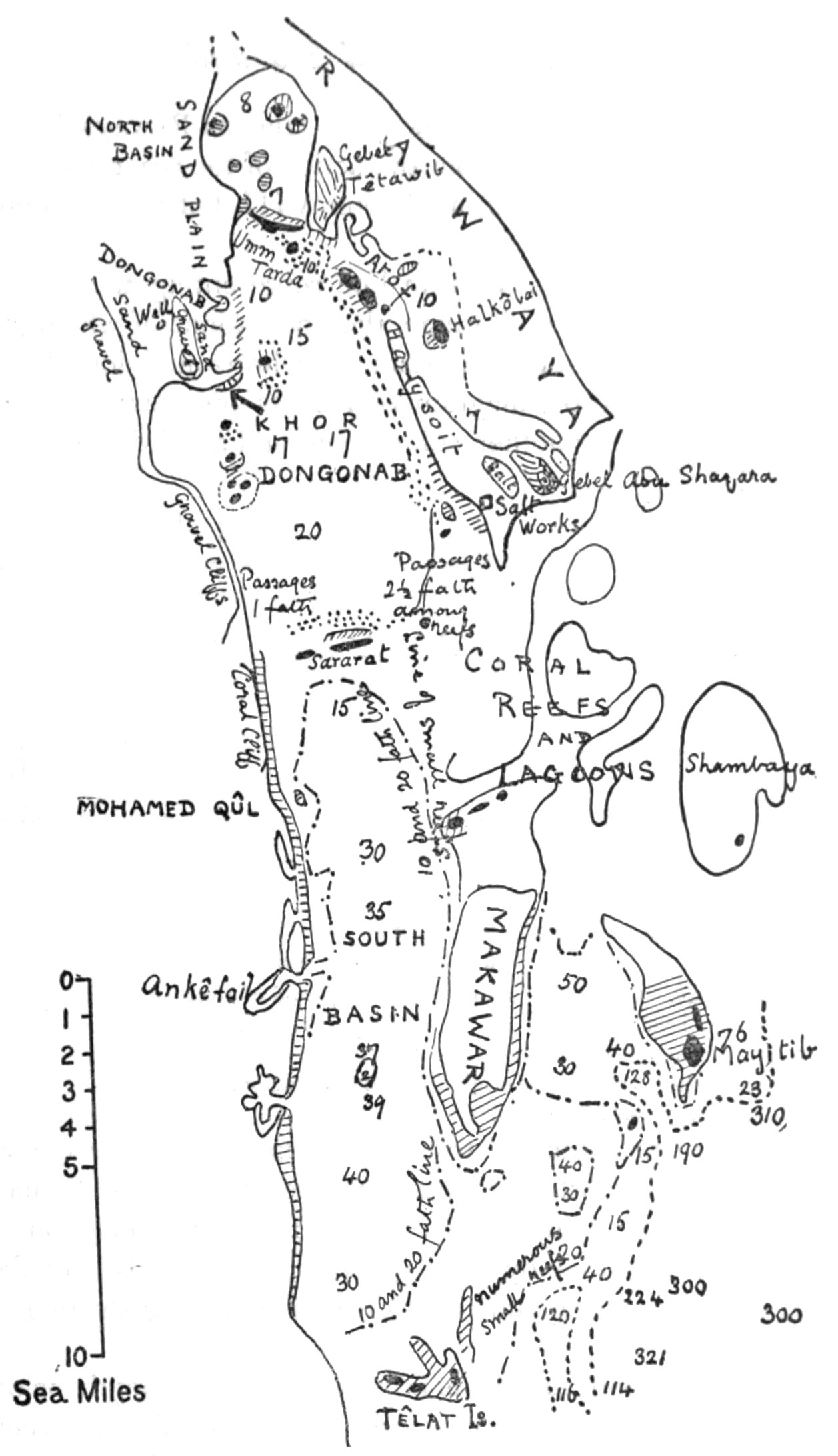
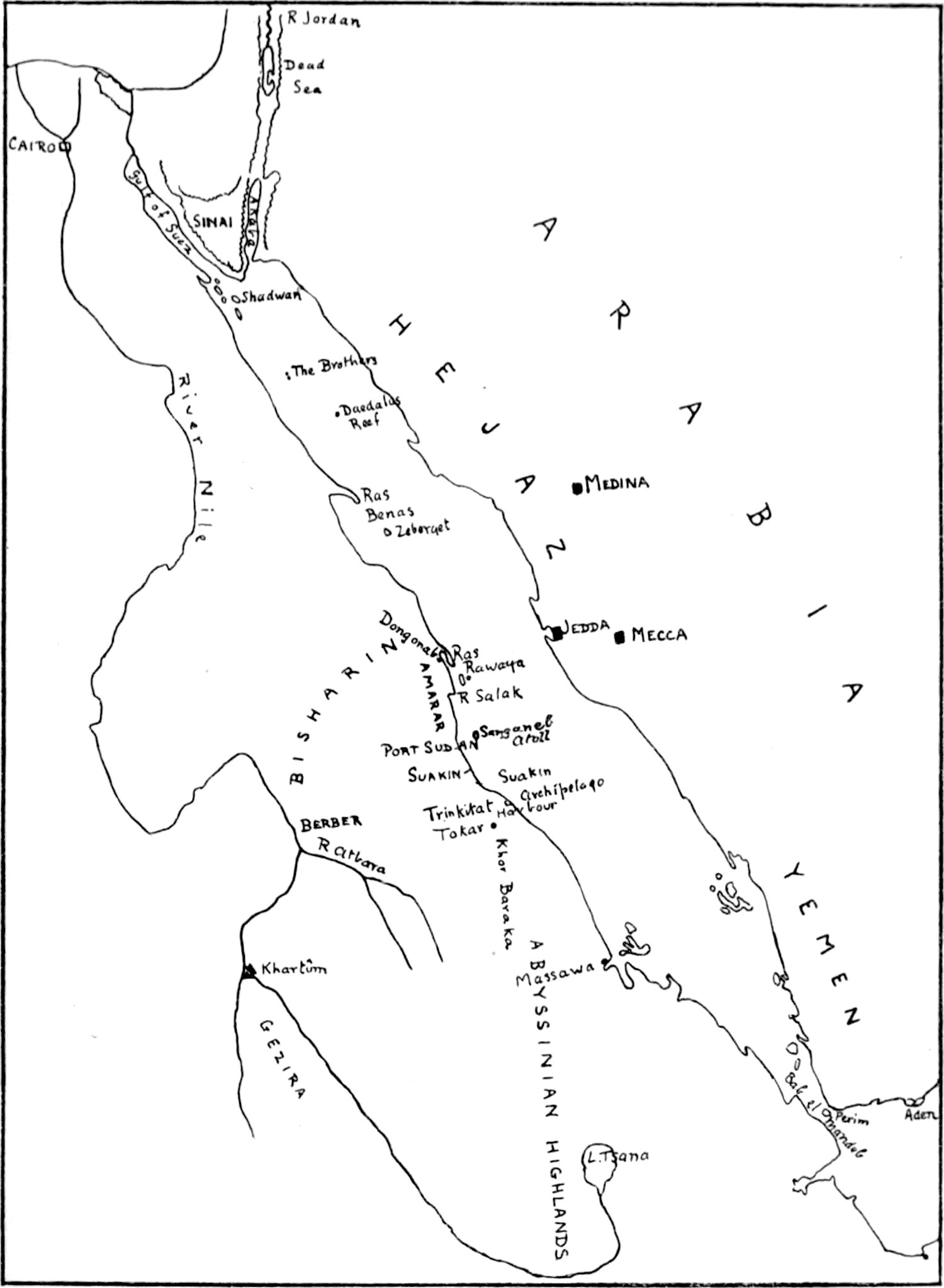
Sandstone hills shaded, small islands
black. Coastline double, the outer line being the edge of the
fringing reef. The thin lines enclosing roughly oval or elongated
areas at sea are the barrier reefs. Figures on sea represent depths
in fathoms.
DESERT AND WATER
GARDENS
OF THE RED SEA
CAMBRIDGE UNIVERSITY PRESS
London: FETTER LANE, E.C.
C. F. CLAY, Manager
Edinburgh: 100, PRINCES STREET
London: WILLIAM WESLEY & SON, 28, ESSEX STREET, STRAND
Berlin: A. ASHER AND CO.
Leipzig: F. A. BROCKHAUS
New York: G. P. PUTNAM’S SONS
Bombay and Calcutta: MACMILLAN AND CO., Ltd.
All rights reserved
Plate III
Fig. 3. A sandstorm seen from among the Barrier Reefs
BEING AN ACCOUNT OF THE
NATIVES AND THE
SHORE FORMATIONS OF THE COAST
BY
CYRIL
CROSSLAND M.A. Cantab., B.Sc. Lond., F.L.S.,
F.Z.S. Marine Biologist to the Sudan Government
Cambridge: at the University Press
1913
Cambridge:
PRINTED BY JOHN CLAY, M.A.
AT THE UNIVERSITY PRESS
TO MY WIFE
TO WHOSE BRAVE ENDURANCE
OF A LARGE SHARE OF MY EXILE IS OWING MUCH OF WHATEVER I HAVE
ACHIEVED, OR OF WHAT SUCCESS MAY YET BE MINE
PREFACE
IT is my fortune to know intimately a portion
of the Red Sea coast, that between 18° N. and 22° N. on the western
side. This must be one of the least known coastlines of the world.
Until 1905, the Admiralty Chart shewed an area of 25 square miles
of reef, which the surveys run for the approaches to the new town
of Port Sudan have proved to be non-existent. Though a considerable
distance north of this point has now been accurately surveyed,
practically no details of the great barrier system of reefs leading
up to the Rawaya Peninsula, or of the land inside the coastline,
have yet been mapped.
As I shall shew later, certain features of the maritime plain
are of the greatest interest, but they have only been hurriedly
examined by Mr Dunn, one of the Sudan Government geologists; and no
survey of the country has yet been made.
The explanation is not to be found in any laxity in either the
Admiralty or the Sudan Government surveyors. Considering that the
country is an absolutely unproductive desert, traversed only by a
sparse population of nomads, that no steamer passes within miles of
the outermost reefs, that the native vessels sail by perhaps at the
rate of one a month, the existing chart is a monument to the
greatness of the Admiralty’s conception of taking the whole world
for its province, even the most useless desert coasts.
Perhaps the fact that this country, though so near to Europe, is
only artificially made habitable at all, may add interest to my account; but
besides the description of things and peoples more or less unique
and peculiar to this country, I have aimed at giving information of
general interest. For instance, in treating of the coral reefs I
describe features of the barrier system which may be unique in the
world, but I have combined with the description of this special
point a general account of coral animals and the reefs which they
build. This may recall and complete the interesting conversations I
have had on such subjects with friends both at home and in those
places where the very streets and houses were once parts of coral
reefs.
Biologists have one way of justifying their existence which has
to some extent been neglected. Their reply to the eternal question
“What good is it? where does the money come in?” should be, in some
cases, that of the artist. Just as there are those to whom the love
of beauty in pictures, sculpture and architecture is one of the
things in life they would least wish to lose, to whom the existence
of professional artists is more than justified, so there are many
outside the ranks of professional biologists, to whom the romance
of the beginnings of life, and of strange lowly forms of being,
might become an absorbing interest, an enrichment of life in which
money does not necessarily “come in” at all.
This is an interest especially accessible to the exiles of the
coral seas, where ordinary amusements are so restricted that their
repetition produces a sense of loneliness and monotony scarcely
conceivable by the man of normal surroundings. For these among my
friends I have written, beginning from the beginning and omitting
as not pertinent to the questions they ask me, many points vital to
the science of animal anatomy, but not essential to their
understanding perfectly such questions as, “What is the coral
organism? How does it build up these rocks?”
These questions
are my own special province, I deal with them as an expert though
writing so briefly, but in the rest of the book I have made no
attempt at writing a treatise on anthropology or a guide book to
the Sudan coast, but only to present what is to me beautiful,
interesting or amusing in the places and people as I see them. What
I describe I write of with all the accuracy of which my words are
capable; so far as it goes, all is strictly true. But alas, no one
has yet written of the beauty of this desert coast as it should be
written. Could I describe one half the beauty of the memory
pictures I owe to this country, I should be a poet, whereas I am
only a man of facts.
I wonder much at the neglect of this route through the Red Sea
by those who make extended journeys on the Nile. From Atbara a
perfectly comfortable train journey carries one swiftly through
desert and mountains to either Port Sudan or Suakin. I trust that I
have written clearly enough to prove that a few days on this coast
is time well spent.
Finally, this route to Khartum and Uganda is a quicker and
cheaper one than that by the Nile.
Prof. J. Stanley Gardiner’s reading and criticism of what
follows is but one of many kindnesses, and is especially valuable
in the case of the chapters on corals and reefs, of which our
knowledge has been so greatly added to by Prof. Gardiner’s
researches.
CYRIL CROSSLAND.
Windermere, September 1912.
POSTSCRIPT TO PREFACE
ON reading my book for the press I find that it
has a moral, a thing never intended! It is that real romance and
beauty are to be found in things as they are, so that the man of
science, popularly supposed to be hardened by “materialistic”
pursuits, has opportunities for a truer worship than has the
sentimentalist who bows before idols of his own imagination.
I tender my thanks to the Council of the Linnean Society who
have permitted the reproduction of most of the illustrations of
Chapter IX and some of those of Chapter VIII from my papers in
their Journal, vol. xxxi, in which the account of Red Sea
Structure was originally published for Scientific readers, and to
Messrs Murray and the Challenger Society for the use of two
diagrams from their Science of the Sea. The beautiful
photograph of a Suakin mosque is by my friend W. H. Lake, Esq.
Approach by sea through coral reefs — The
maritime plain and the mountains beyond — Desert flowers — Summer
calm on the pearling grounds — Sandstorm — Winter rain — Golden
desert and turquoise sea — Coral gardens — Port Sudan — Suakin
The three nationalities — The negroes —
Escapes from slavery, Mabrûk’s adventure — Introduction to a
Hamitic native — Dress and arms — Women — Sexual morality, duels —
Government under Shêkhs — Tribal fights — Fraternity and Equality,
little Liberty — The power of tradition — Mohammedanism
Religious phraseology — Veneration of Shêkhs
— “Old Man Flea” and his legends — The mûled celebration and
“dervish dance” — Amulets — Witchcraft — Milking — Evil Eye —
Pearls — Cats — Eclipse of the Moon — Medical — British parallels —
Honesty
Importance of corals — Coral polyp and sea
anemone — Propagation by cuttings — Colonial polyps — Forms of
corals — Fungia — Coral gardens — Colours — Place in marine life,
and in Evolution
Fate of dead corals — Stony seaweeds — Rate
of growth of a reef — Destruction of coral by sponge, mollusca,
&c. — Form of a coral reef — Origin by growth of coral —
Abrasion of the shore forming reef flat — Origin of the boat
channel — Distinctive features of coral reefs formed by abrasion
alone in Zanzibar, Cape Verde Islands, and near Alexandria —
Recrystallisation of limestone — Three kinds of reef — The problem
of Atolls — Darwin’s Theory — The Funafuti boring — Atolls formed
by direct growth
Climate, alternations of desert and sea
conditions — Hot sand-bearing winds — Rainfall — Peculiarities of
the tide — Canal-like shape of Red Sea — The great Rift Valley —
Origin of the “Brothers” and “Daedalus Reef” — “Emerald Island” —
The coast and reefs — Maritime plain — Its coral border — Recent
nature of internal structure of coral rock — Elevation of coastline
— Foundations of the reefs — Previous theories inadmissible —
Rawaya peninsula — Three steps on sides of Rift Valley — Successive
elevations — Harbours — Problem of their origin — A natural
promenade — Coast-wise travel — The Shubuk labyrinth — Summary of
history of the Red Sea
Halaib is a name unknown to natives, who
call the place Olê. From this the official name is derived through
Arab orthography probably. The Arabic alphabet is the best possible
for its own language, and the worst for any other.
PART I
CHAPTER I THE SUDAN COAST
In thinking of an unknown place it is
inevitable that some image should rise in the mind and recur until
it is finally shattered by the revelation of its almost total
falsity which a visit to that country brings about. My own
imaginings, based on what I had seen in passing through the Red Sea
on my way to Zanzibar, were fantastically unreal. I saw blue
mountain tops like jagged teeth appearing over the horizon at
sunset, and combining these with what I had seen of the reefs and
islands of the Gulf of Suez and Bab-el-Mandeb, it came as a shock,
some years later, to find that the essential of life on the coast
is the great maritime plain, the mountains remaining in the
distance, still inaccessible for me.
My first actual sight of the country was typical of the cloudy
weather which sometimes occurs in winter. Our little steamer was
entering the great gap in the barrier reefs five miles out to sea,
directly opposite to what is now the harbour of Port Sudan. Then it
was only “Mersa Shêkh Barûd[1],” a saint’s tomb forming the
only work of man for many miles. Grey sea and sky, blue mountains,
faintly visible beyond the great dull plain, greeted me; later, the
little tomb, built on a knoll of yellow coral rock at the entrance
of the inlet, a mark for sailors, gleamed white out of all this
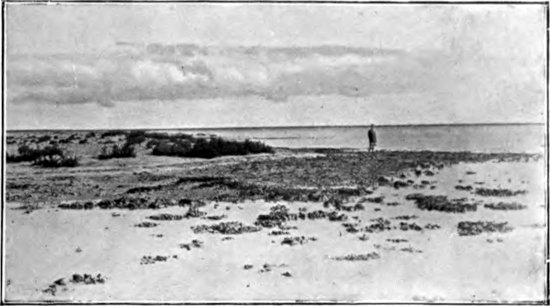
greyness. Coming nearer still, one saw that the shore is composed
of a low level line of yellowish cliffs, about six feet high,
undermined below by the constant wash of the waves and sloping
inwards at their
summits. The shore is separated from the blue-black water by a
broad band of green shallows, its outer edge defined by a thin
white line of breakers. This is the edge of the fringing reef,
which is practically uniform and continuous through the length of
both shores of the Red Sea. We were sailing in a channel of fairly
deep water partially protected from the waves of the open sea by
the barrier reefs. These are a series of shoals and surface reefs,
extending parallel to the shore, at a distance of one to five miles
out to sea.
This, my first view of the country, may be taken as typical of
the whole coast, variations in its uniformity being few. The
weather that day was rather exceptional, for often in winter there
is all the incomparable sparkle of sunshine and crisp breeze of
Egypt, and the mountains, in this wonderful air, come nearer. There
are days when I have seen distinctly all the light and shade of
their precipices 80 miles away. I leave to your imagination the
clearness, almost brilliance, of the great mountains seen at only
15 miles on such days as these. Even so they do not lose their
dignity of form and distance, while revealing their vast precipices
and terrible ravines, all bare rock, no vegetation, or even soil,
to soften their outlines. Truly they are a “great and terrible
wilderness.” So too is the plain, vast and uniform, all open to the
sky—neither the few acacia bushes[2], nor the sparse tufts of
apparently dead and almost woody grass serving to render it soft
and pleasant to the eye, nor to cover its grey sand and gravel from
scorching in the rays of the sun. Great and terrible, a naked
savage land, every feature typifying thirst and starvation, so it
became to me during my first visit. I was glad indeed to leave,
half hoping I should never return.
In absence savagery and poverty faded, and I found myself
picturing the mountains at sunrise, ruddy clear, the peacock blue
of the deep sea with white waves, the light blues, greens, yellows,
and browns of the coral reefs and the submarine gardens they
shelter, and so back again to the mountains at evening, veiled now in the tender
blues and purples of our hills at home, but behind them sunsets of
indescribable magnificence. To memory came back that great plain,
its openness, its sense of freedom wild as the sea itself, which
indeed once gave it birth. I thought of how after a little winter
rain there comes the spring; the sand is dotted with little
flowers, weeds elsewhere perhaps, here brave conquerors of the
desert; the shallow watercourses are full of grass. The acacia
bushes become a tender green with a moss-like growth of tiny
curling leaves giving out the sweetest of scents, recalling our
larches at home. Later they are covered with flowers, like little
balls of scented down on slender stalks.
Two of those transiently appearing plants, amongst the commonest
of all, have special claims. One, the little “forget-me-not” of the
desert, is loved individually for its pure white flowers, the
other, for its effects when growing in mass. This latter has a
peculiar form, a network of branches springing from a central stem,
spread out horizontally over the sand, bearing cylindrical bright
green leaves and tiny yellow flowers. The whole plant is of great
delicacy, and would be unnoticed by the non-botanical observer but
that it is sometimes so abundant as to carpet the ground like a
bright green moss, which later is golden from the abundance of its
tiny flowers. At the approach of summer, the heat of which has an
effect like a touch of frost in England, its leaves take on
splendid autumn tints. Once I landed on an islet circled with the
low grey-green bushes always present on sand islands, within which
I found a display of colour the beauty of which will enrich my
store of memory pictures for the rest of my life. The principal
scheme was a golden carpet of these tiny, almost microscopic
flowers merging into a bright and tender green, and on to all kinds
of orange browns and reds. Here and there another of the plants of
this peculiar salt-loving flora gave patches of wonderful deep
crimson. These vivid colours were thrown up by the dull grey green of the encircling bushy
plants, which remain the same all the year round, and by clumps of
a “grass[3]” which is of a deep glossy green colour like
that of rushes, the whole being in a shallow depression in the dull
yellow coral rock. All the transient beauty of changing bracken,
moss, and heather was here, but with a wonderful quality of
translucence under that blazing sun. As a background to all this
imagine the bluest of blue seas and mountains seen over the water,
and the picture is complete.
The only really conspicuous flower of the coast lands is a
Pancratium, a bulb-plant with pure white delicately scented
flowers about the size and something of the shape of the British
wild daffodil. Unfortunately, this is rather rare, but after all
size is but one quality out of many, and certainly not one
essential to beauty or interest. An Abutilon is found in dry
stream beds.
The existence of perennial, herbaceous vegetation, remaining
green after the winter vegetation has shrivelled, in a country
where there may be no rain at all for four years[4], a
land of scorching sun and hot winds alternating with steamy damp
days, where the wells are so salt that ordinary plants die at once
when watered from them, where sand-laden gales may cut one’s face
and grind the surface of glass, is a wonderful display of the power
of adaptation to the most adverse conditions, a magnificent success
in the struggle for existence. We have the development of a special
flora, a selection of plants from many distinct families, which has
acquired the ability to live in the salt sands and in crannies of
bare rocks by the sea. The commonest of these are two plants which
have special beauties. One, Statice plumbaginoides, grows
generally on bare coral rock, and has large flower-heads of a
beautiful pink colour, like sprays of heather contrasting with its
dark green leaves. The other, Suaeda volkensii,
which grows only in
sand, has nothing that looks like leaf or flower, but seems to
consist of branched rows of translucent green beads. The special
beauty of this plant, apart from its shewing green life on such
inhospitable sand, is the wonderful tints it takes on at certain
times. Every autumn longer spikes appear, which become of brilliant
translucent orange or crimson, like the changes of leaves in
northern woods. It is a case where the colour is due to the flower
bracts, the flowers themselves being inconspicuous.
A few pictures, of summer calm and storm, and my foundations for
a visual impression of the country are laid. Just south of Suakin
is an area of (approximately) 100 square miles consisting of a
labyrinth of coral reefs with winding passages of deep water, and
here and there open pools. Slowly my vessel picks its way through
the wholly uncharted and unbeaconed maze. There is, indeed, no
immediate necessity for aids to navigation, for the breeze, fresh
but not strong, ripples the water so that the reefs shew among the
blue-green of the deeper channels as clearly as the white squares
of a chess board. They are all beautiful shades of green as the
water over them is more or less shallow, merging into yellow where
a sand-bank approaches the surface, and richest brown where beds of
living corals grow. Ahead is the outer reef, an unbroken line of
foam separating these calm waters and lighter tints from the deep
blue, the colour of a peacock’s neck, of the open wave-tossed sea.
Landwards are the mountains, faint and hazy in the heat. The
coastal plain is invisible under the horizon; despite our shallow
waveless water and the presence of reefs, we are far out at
sea.
Two or three native boats, painted dark red, add a finishing
touch to the colour scheme. They are anchored in these landless
harbours, while their crews are scattered in canoes, mere black
specks, searching for the pearl shell oysters which occur here at
rare intervals.
My storm picture (see frontispiece) has a
similar reef harbour for its foreground, but we are only five miles
out at sea on the
barrier system, north of Port Sudan. To-day the reefs are barely
visible, for with us it is almost a dead calm. All those colours of
shoaling sand and coral beds are only visible when the water is
rippled. A few stones, mere specks here and there above the glassy
surface alone shew the presence of a reef on which no swell is
breaking.
Calm is thus more dangerous to a steamer than storm, for should
she approach the reef areas before picking up the beacons and
lighthouse that mark the entrances to Port Sudan and Suakin, she
runs great risk of striking an invisible reef. Sailing vessels are
safe, as whenever they are under way the water is rippled and the
reefs easily seen.
But landwards peace gives way to storm. The mountains are
purple, inky clouds with lurid white edges blot out the blue. The
sea is black with wind, white puffs of spindrift rise, drive over
the water and disappear again. Some native vessels, which last
night may have anchored in land-locked harbours some miles astern
of us, are racing before the north wind, only daring to shew a
corner of their great lateen main-sails, while we have not wind
enough to find our way out of the reef-labyrinth in which we
anchored for the night. Later arises a dun-coloured cloud in the
north—a dust-storm. Rapidly this bears down upon us, increasing in
size as it comes, till it reaches towards the zenith, blotting out
the storm clouds, mountains, and plain with a pall as dense as a
curtain. For those in the cloud the wind is burning hot[5];
the fine dust covers the face, cakes the eyelashes and even the
teeth. One’s face is made sore with the impact of the coarser
particles; sight is as impossible as in the densest London fog. One
must lower one’s sails and trust there are no reefs within the
distance the vessel may drift before the storm blows itself out.
After the dust may come a furious squall of rain.
Here, where rain is so visibly the coming of life to the earth,
it is fitly heralded by the full majesty of vast cloud mountains with snowy summits, from
whose dark bases issue continuous lightnings and thunder. In such
weather heavy squalls may be expected from any quarter, causing
much anxiety to sailors used to the regular winds of the Red Sea.
One cloud mass may grow until the sky is covered, mountains hidden
in a black veil of rain, a furious wind hiding the shore by a great
brown cloud of dust. Before the squall reaches the vessel sail is
reduced to a mere corner of the great triangle usually spread, amid
much excited shouting. Lightning and thunder become almost
continuous and the sea is lashed white with rain and spray. It is
as cold and dark as night, and impossible to see more than a few
yards ahead, all idea of entering harbour is given up and a
look-out is kept downwards in case the vessel may pass
over a shoal (which would be visible five fathoms down, in the
clear water) on which she could anchor till the storm passed off.
Suddenly a tiny rift appears in the cloud mass ahead; a mountain
top becomes visible through the rain, then the masts of a vessel in
harbour. In five minutes we may have passed from darkness, storm,
and anxious peering through rain, to the bright sunshine and calm
of a summer sea.
Could the love of beauty, the artist’s sense of colour, find any
object in this bare land, dead yellow rock and sands bordering a
waste of sea? What is there to replace the infinite variety of
colour, of ferny rock, heathery moors and sedgy pools of the desert
places of our own land? At times the lover of beauty, even of
colour, can be fully satisfied, for the sun alone can throw over
this emptiness a glory like that of the golden streets and jewelled
gates of the prophet’s vision. The sea becomes one splendid
turquoise, the coral rock more beautiful than gold, the mountains,
mere heaps of dead rock though they are, savage and repellent,
change to great tender masses of lovely colour, ruddy violets and
pinks, luminous as though they had some source of light within
themselves and shared in the joy they give to the solitary
beholder; changing as the sun sinks to deeper colder shades,
announcing the
benediction of a perfect night. Vessels entering harbour, their
crews returning home after a week at sea, become fairy craft, each
sail like the rare pink pearls found within the rosy edge of
certain shells.
To visit sunset land is but a dream of children, happiness is
nearer than the sunset clouds. That gold has been thrown about our
feet, over the common stones and bitter waters, and we have
gathered spiritual wealth. The kingdom of heaven is within us and
the vision of Patmos realised.
One thing necessary to the happiness of a nature-lover the
desert can never supply. One needs some sight of luxuriant, riotous
life, some equivalent for the rapid growth of grass and trees, that
overflowing of life that in other lands causes every vacant inch of
soil to bear some weed or flower.
The satisfaction of this desire is easily found in the
Red Sea, not above it. At present the love of the sea gardens is an
esoteric pleasure, some day we hope it may become as universal as
the love of wild nature inland. Corals to take the place of plants,
fishes and lower animals of all kinds, beautiful, bizarre, useful
and poisonous, making gardens of teeming life under water, where
the very worms are often beautiful as flowers. In the harbours
where the water is stagnant, but clearer than any British sea,
besides corals are weeds of all kinds and shapes, among which swim
numbers of little fish of comical form, quaintly tame and
gorgeously coloured. The biologist knows, however, that these
strangely coloured weeds, brown, grey, green, violet, red and
yellow, are mostly animals like the corals, some are sponges, some,
like clusters of brown or grey daisies, a kind of cousin of the
coral polyps. That large feathery flower, white, yellow, or reddish
brown, will vanish like a flash if touched. It is nothing more nor
less than the head of a worm, not much like the slow-moving
senseless earthworm, but one which builds a house for its
protection among crannies of the stones, into which it can withdraw
its plumed head, sensitive to even a passing shadow.
The multitude of
forms assumed by the corals, their frequently gorgeous colours,
equal anything to be seen in a land garden. These grow in greatest
luxuriance outside the harbour where the water is of astonishing
clarity. It is owing to the vigour of their growth that the edge of
the reef is nearly a vertical wall, so that looking down strange
beautiful shapes are seen one below another, weird fish entering
and leaving their lairs under the coral tangle, till in the pure
blue depths the forms of coral and fish become indistinct and pass
into the haze of water 60 feet or more deep.
The portion of the coast I have described is typical of the
whole. The mountains may be lower or higher, the plain is narrower
in the south, broader in the north, and the sea is varied with a
few islands about Rawaya and islets of coral rock or sand form the
Suakin Archipelago. These sand cays, if always above highest
water-level, are peculiar in bearing quite a dense border of
low-growing woody plants, at a level immediately above high tide.
The rocky islets are almost entirely bare, yellow in colour,
surrounded by cliffs like those described at Shêkh Barûd (Port
Sudan), and generally level-topped.
In the thousand miles of this side of the Red Sea coast below
Suez there are but two towns, Kossêr, in Egypt, now decayed to a
mere village, and Suakin. The new town, Port Sudan, the building of
which only began in 1905, is, as the name implies, merely the end
of the railway communicating with the real Sudan, “the country of
the blacks” far over the mountains, by the Nile. It has no
significance as a part of this country; the Briton came, took over
the bare desert round the wonderful natural harbour of Shêkh Barûd
and built there a perfectly modern town, quay walls that the
largest ships may lie alongside, electric cranes for their cargoes,
and electric light for the town, a grand opening railway bridge
over the harbour and every modern need of a great port and
terminus. No longer is the tomb the only mark for sailors; one of
the finest lighthouses in the world stands on Sanganeb Reef, and the harbour
itself is complete with all necessary lights and beacons, the
entrance being naturally as safe and easy as if it had been planned
by Providence as a harbour for big steamers[6].
The Romance of Modern Power did attempt to live with that of the
Eastern beauty of a desert metropolis in old Suakin, but the site
was too cramped and Suakin is now left much as it was before the
railway linked it with the Nile and made it, for a brief season, a
station on a great thoroughfare.
Owing to the existence of the barrier reefs the approach to
Suakin is down a 30-mile passage parallel to the coast, and from
two to five miles wide. The shore becomes very low, and the
fringing-reef wider than near Port Sudan, so that the distinction
between sea and shore would be almost untraceable but for the
presence of those salt-loving plants which grow everywhere along
high water-mark. Suakin is situated two miles inland, at the head
of the inlet which forms its harbour, yet so low is the land that
its houses appear over the horizon as though standing in the sea. A
cluster of tall houses becomes distinct later over the starboard
bow and finally, when the town is nearly abeam, a channel in the
shore reef, hitherto
invisible, opens out and, instead of a harbour we enter a narrow
winding natural canal of deep water, passing
Fig. 4. Plan of Suakin
for a mile through the shallow water on the reefs,
its course marked by the contrast between its deep blue and the
varying pearly tints of the reef shallows. The regularity of the
canal
Fig. 5. Suakin. The Customs House and
Government buildings
(C on plan)
is astonishing when one remembers that it is purely
natural, and not a river but an inlet of the sea. Then the reefs
are replaced by
low-lying land of yellow coral rock. We pass the tombs of shêkhs,
cubical or domed, each with its set of tattered flags which are
presented at intervals by the pious. Before us the harbour expands
slightly and the canal forks; an island thus formed bears a solid
mass of tall and graceful white houses, beneath which, to the
right, cluster the short sloping masts of native vessels; beyond
all, over the sunlit plain, the mountains. I know no other town
which can compare with Suakin in the fair white dignity which it
shews to one approaching. It is the realisation of one’s romantic
image of an Arabian desert town. No higher praise could be given
than by saying that this fair view of Suakin may replace and
enlarge the image of our romantic dreams, and yet I give this
praise deliberately, careless of contradiction.
Suakin is indeed a long way from being a city of palaces, as its
residents know full well. There are no cathedral mosques, no
citadel like that of Cairo. The buildings which made our view of
fairyland include quite prosaic offices of the Bank, Quarantine,
Eastern Telegraph, the Government House and the Customs. The rest
are private houses occupied by very ordinary persons, Arab
merchants and so on. All are either Arab buildings slightly adapted
to their modern uses, or built by Arab architects in their own
style. I suppose Suakin owes its fascination largely to its site.
The houses appear so high and graceful, rising as they do directly
from the water’s edge or from land only a foot or two above that
level. Then the two branches of the harbour enclose it and render
its boundary definite and compact, no straggling into dingy
suburbs, on this side at least, and yet no hiding of the true town
behind walls. Frankly, complete and self-contained, calmly the town
faces the never-ruffled waters of its harbour, and looks over the
great plain towards mountains and sea. Jedda, by comparison, is a
finer and larger town, with more of architectural beauty, and also
purely Arabian, but it is on the open shore, so lacking the ordered
approach, the definiteness of site of Suakin, lying in its arms of
the sea.
Plate IV
Fig. 6. A Suakin Mosque
(Photo by W. H. Lake, Esq.)
We do not expect
much noise of traffic in the city of our fairyland, nor much
display in the public buildings of our desert city. True this
ancient and religious city is full of white-washed mosques, and of
domes over the tombs of shêkhs, but their minarets are often no
higher than the surrounding houses, and marble pillars give place
to painted wood, but the minarets, short and free from carving and
other ornament though they be, are quaintly graceful; they are
neither Turkish nor Egyptian, but purely Arabian in design
(Plate IV)[7]. One would not wish to alter
the stern yet peacegiving simplicity of the places where
generations of men of the desert and sea have prayed, for the more
ornate buildings of richer lands.
Well do I remember waking at sunrise after a night spent under
the stars on a flat house-roof, to a scene of beauty that does much
to reconcile me to the monotony and loneliness of exile in Suakin,
and help me to bear the terrible heat of summer days. Sunrise over
the sea, a great blaze of gold following the pearly pinks which
made the sky like the inside of a lovely shell. Houses and mosques
purest white, no stain shewing in that fresh light. Over the grey
plain I cannot tell whether what I see is mere gravel or a layer of
grey morning mist, from which rise the deep red foot-hills, and
beyond are the high mountains in perfect clearness, first purple
then ruddy, all detail visible, yet with no loss of aerial
perspective. From the harbour below come the voices of sailors,
“Al-lah, Al-lah” is the word distinct among the babel as they call
upon God and His Prophet for help in the task in hand. But one who
has come in from a sojourn of weeks in the desert rests his eye
with infinite pleasure on a spot in the near distance, the oasis of
Shâta, where, just beyond the embankment between two of the forts
which were built to keep Suakin from the dervishes, the tops of
green trees nestle. One promises oneself a walk out there to the
trees and gardens in
the afternoon, when it is not cool indeed, but still a little
cooler. Meanwhile though the sun has risen not half an hour it is
scorching already, and one must seek shelter from it and prepare
for the day’s work.
A history of Suakin would be worth reading, but it remains
mostly unwritten; though since the times of Gordon it might be
extracted from reports and newspapers. Gordon was once
Governor-General of the Red Sea, and the “Mudiria,” or Government
House of Suakin, was his official headquarters. Traces of the
railway begun for his relief in Khartûm, but never finished, the
outlying forts once attacked by dervish fanatics, are within easy
reach, and the nearer ones for the defence of the Shâta Wells and
the town itself are close at hand. Even the rifle trenches, the
barbed wire entanglements and such temporary defences, though
nothing has been done for their preservation, are still present to
shew how near, in Suakin, we are to those famous fights.
Plate V
Fig. 7. Suakin. The causeway and town gate (A on plan)
Fig. 8. Suakin. One of Kitchener’s forts (B on plan)
Fig. 9. Sunset on the Red Sea
Plate VI
Fig. 10. A young man of the Amarar
(Note absence of sewn clothing)
CHAPTER II SOCIAL AND RELIGIOUS CONDITIONS
Note. My account
of the natives is based on my dealings with the people at a point
about a hundred miles north of Port Sudan, on the boundary between
the tribes of Bisharia and Amarar, but it would apply to those of
the south in most essentials.
Nationalities
Three perfectly distinct nationalities
have representatives on this coast[8]. Besides the natives proper
there are true Arabs from the other side of the Red Sea, and
negroes, who are slaves or the descendants of slaves brought over
the mountains from the upper Nile valley.
The true natives are called, and call themselves, Arabs, and
many of them speak Arabic. For all that they are no more Arabs than
they are Europeans, being of Hamitic not of Semitic race, allied to
the ancient Egyptians and far less mingled with Arab blood than are the
so-called “Arabs” of Modern Egypt[9].
This western shore being altogether too poor a country for the
evolution of real sea-going vessels, and the Arabs of the eastern
side being one of the first of the sailor and exploring nations of
the world, it is no wonder that all the traffic of the Red Sea is
carried out by Arabs, and that Arabs are to be found in every
village of the coast. Besides the sailors they supply the
shop-keepers, merchants and skilled artisans, and nowadays many
come over to work as labourers in Port Sudan. The two types,
Hamitic natives and Semitic Arabs, can therefore be seen together
and contrasted very easily. (Compare Figs. 11, 12 and 13 on
Plate VII and Fig. 10.) Apart
from dress the following important physical differences are obvious
at first sight. The West Coast man is generally the taller, much
darker in colour, and with smaller features, especially a smaller
and straighter nose. He is as often “good looking” as is the Arab,
and that perhaps, is the most generally appreciable difference
between him and the negro. In contrast with the Arab his hair is a
“fuzzy” mop not jet black[10] nor merely curly. His
beard[11] is scantier, though to both it is the most
precious of personal beauties. Mentally, though many are very
intelligent, he is the inferior of the Arab who has occupied all
the skilled trades in the country, but he is the superior again of
the negro. It is however debateable whether this effect may not be
partly due to the civilisation of a more populous and richer
country having brought out the capabilities of those Arabs who
possess any.
Plate VII
Fig. 11. An Arabian Sea captain
Fig. 12. An old man of the Bisharin
Fig. 13. A negro ex-slave
I have had closer personal acquaintance, than
is generally possible to an Englishman, with more than fifty
natives, and know the character and capabilities of each individual
among them. Some are intelligent, some stupid, varying extremely,
just as much as a corresponding number of English labourers. On the
whole I should think too that they vary between much the same
limits. Our chief sailor, an Arab, is not far ahead of the best of
the natives, and Arabs I have met are often as stupid as the less
intelligent of the latter.
The negroes are quite distinct. To begin with they are black,
not merely chocolate brown, with a blackness that hardly admits of
shades, and differ from the other races in all the well-known negro
characteristics, such as shape of nose and lips, poor development
of calf, and the curious way the hair grows in little patches.
We thus have every possible shade of colour between yellow and
densest black. The Arab merchant or teacher, who rarely exposes
himself to the sun, is hardly dark enough to be called brown, but
his poorer brethren become darker, those who labour much in the sun
being as dark as the lighter Hamites. These vary down to the
darkest chocolate, and then we have the negroes. I well remember my
introduction to three new sailors who had been engaged for me in
Port Sudan. There appeared a huge negro, coal black, a giant with a
gentle voice, and on either side of him a little yellow Arab, like
two canary birds hand in hand with a crow.
Socially, the negroes come lowest in the scale; even if slaves
no longer, they are treated as complete outsiders in all affairs,
and in general with a kindly contempt. I notice for instance that
when the villagers go fishing two by two in their canoes negroes
pair off together, never Hamite and negro in one canoe. At the same
time the headman of a larger sailing vessel always wishes to
include a few negroes in his crew, their honesty and tractability,
combined with great strength, being qualities which counterbalance
dislike to close contact with them in a cramped space.
Intermarriage
between Hamite and negro must be rare, as I have met no case[12].
If the village contains no negro women, the male negro must remain
unmarried, and no regular marriage between a Hamite man and a black
woman has come under my observation, though this union is the more
likely to occur. Exceptional men from among them have always risen
at intervals, and the British rule, in giving a greater equality of
opportunity to all races, will cause more negroes to come to the
front. There is some intermingling between the two first races, as
Arab sailors are not different from others in liking to have a wife
in every port, but it is not at all extensive. The Arabs form no
permanent settlement on the coast, the sailor classes at least
rarely or never bringing over their women, and the merchants save
money to end their days at home. Labourers and sailors will only
contract for limited periods; they are soon homesick and go off
with their savings for so long as the latter will last. Of the
Arabs in my employ only one has settled down and taken a wife on
this side. While the native sailor is always in debt and scarcely
able to live on his wages (whether £2 a month or £3, it is all the
same in many cases) I was astonished at one Arab who kept coming to
me and handing over money for safe keeping until I had £5 or so
besides what other savings he had. Having accumulated this fortune
he gave me a month’s notice and went off to his own country,
returning and saving when that was spent. One of my men who was
getting the magnificent wages of £4 a month brought his old
father-in-law over, but the suggestion that he should also bring
his wife and settle down in the house I promised to build for him
was met simply by the regretful statement, “It is not our custom to
bring our women over the sea.” He has so lost the best job he is
likely to find in the Red Sea, for soon after he declared he could
no longer stand being away from his own people and returned
home.
In my village at
least there is a strong prejudice against such marriages, and the
above is the reason. Among less than a hundred families I know of
two cases where a daughter has married an Arab and been left with a
young family to support, with her father’s and brothers’
assistance. Naturally that makes the Arab distinctly unpopular as a
son-in-law.
The negroes, being a minority and, though permanent residents,
not natives of the country, I have less to say of them and so
dispose of them first.
I have already referred to their comparatively industrious and
frugal habits, and to their subordination. These qualities are less
romantic than are the desert restlessness and blood feuds of the
Hamites, but they endear them to the administrator, whether of
justice or of work.
In manner some are undignified, just “jolly niggers,” but others
have as good a bearing as any Arab.
They have all been slaves, some to within a year or two, their
histories demonstrating the efficacy of the government’s repression
of slave dealing, even within the country, and in the second and
third of the cases I give, the proof is striking.
Several have very similar stories. They remember little of their
capture, in remote provinces of the Sudan, as all were then boys of
ten or twelve at most. One remembers that his father was killed.
Four practically began life in Jedda, where they were first set to
tend camels, then sent with the pearling fleet up and down the
coast, even as far as Aden and Jibûti, in French Somaliland. At
this time several formed friendships which induced them to
foregather in my village when they were free.
After years in the pearling fleet, three were sold in Suakin to
“Arabs” of the Atbara district, many miles inland, over the
mountains and desert, towards Berber. A fourth reached the same
tribe by a more adventurous way. Peacefully tending camels for his
master near Handûb, in the Red Sea hills, in ignorance of the
vicinity of war, he suddenly found himself in the midst of battle[13],
and, after receiving a stray bullet through the leg, was carried
off by Osman Digna’s dervishes in their flight to Tokar.
After the capture of Tokar in 1891, this being the conclusion of
the war on the Red Sea coast, he was sold to pearlers from Masawa,
finally, at Suakin, to the tribe from the Atbara.
Two others, who had been born in the service of one master in
the above-mentioned district, are here. One explained his presence,
across hundreds of miles of desert and the Red Sea mountains, by
stating that he had heard that his “brother” was doing well in
Suakin. There was no romantic desert flight, he took the train near
Berber, with his master’s concurrence, possibly with his assistance
also. His owner had said simply, “I have all the slaves I can
manage, go or stay as you like.” Such a permission, given freely to
two slaves of the most valuable kind, about thirty years old, of
powerful physique, intelligent, docile and industrious, is emphatic
evidence of the impossibility of sale nowadays. If a secret sale
could have been effected, the sacrifice would have been too great,
even for an old man anxious to lay up treasure in Heaven.
It is strange enough to find in this tiny village on the edge of
the world, men from Darfur and the sources of the Nile, but we have
even a Swahili from Zanzibar. Old Mabrûk’s life has been far from
that of the “Blessed One” his name signifies. He was kidnapped when
a boy of ten or twelve, in the days of old Sultan Bargash, away
from the island of plenty, to spend the rest of his days on desert
coasts. The old ruse, of offering him some coppers to carry a
parcel aboard a sambûk, started him on the journey from
which he never returned. He found himself with “two hundred” others
beating up desert coasts for “seven months[14],” through the Gate of Tears into the Red Sea, to
Hodêda, and thence to Jedda. There they were thrust into a tiny
house by the sea (here Mabrûk indicated my bookshelf as
approximately the size of the house!) and sold a few at a time at
night.
Plate VIII
Fig. 14. Old Mabrûk, from Zanzibar
Fig. 15. Hamitic woman
Two cotton shawls form her complete dress
After a year in Jedda he was sent in a
sambûk loaded with camels to Suakin, where he obtained his
liberty, he scarcely knows how. He was employed aboard a
sambûk used by Government to convey money and stores to
its employés at the three coast villages, and in the course
of time his son was with him as his fellow-sailor. One night, while
in fancied security in a desert harbour, they were set upon by
“forty” Arabians, who took them, the Government money, stores, and
all, to Jedda. Here he was a slave again, working at collecting
fodder in a state of semi-starvation. Two others of the crew had
escaped in the night; the rest, including his son, were taken
inland and he never saw them again. His skipper, being a freeman, a
Hamite not a negro, was not enslaved, but was an exile, until an
acquaintance from this side found him and took him home to Suakin.
The portrait of this veteran is shewn on Plate
X.
After three months came his great adventure, his crossing the
whole Red Sea in a stolen canoe, a mere dug-out about fifteen feet
long by a little over two broad. This feat is part of one of the
stories of Saint Flea (page
37) and seemed legendary until Mabrûk appeared, a man who had
done it in actual life, and whose canoe is in sight from my
window.
Like the saint he had no store of food and but little water; it
was dead calm, and only those who have been exposed to the Red Sea
sun can appreciate the wonder of his endurance, in paddling for
eight days, and of his good fortune in landing at the only village
in three hundred miles of coast. The present Governor of the Red
Sea Province, being on a tour of inspection, revived the half dead
man with wine, food, and water, and sent him on to Suakin, where
the “Pasha” gave him three months’ pay and offered him work on
another sambûk. He was tired of the sea, and
preferred to wander
up the coast in his stolen canoe, gaining a precarious living by
fishing.
The old man’s misfortunes have left him some humour yet, he
chuckles delightedly at the idea of his secure and honourable
possession of the stolen canoe, forgetting the suffering with which
he paid for it, and how near he was to death by thirst, or more
mercifully, by the waves of the sea.
Another, who was skipper of a coasting vessel until he went
blind lately, and whose portrait is on Plate
VII, was stolen in Kordofan when a boy, and taken to Cairo,
where shopping with the cook is all the hard labour he remembers.
Then his master, in pious mood, gave him his paper of freedom, “for
the sake of our Lord.” This happened at Suez, which led the
freedman to the life on merchant and pearling sambûks
which he has followed since, and which has thrice taken him as far
as Basra on the Euphrates.
It was at Aden he heard that money was to be had in vast
quantities by labourers, in the making of the new town of Port
Sudan, and there he was engaged for me as ordinary sailor by the
Arabian skipper of my little schooner, who once had been his cabin
boy or midshipman, or whatever the equivalent may be aboard a
sambûk!
From what I gather, this is the first time he has spent more
than a year in one place, or had a hut he could call his own,
though his beard is going grey.
After a few years’ service in my vessels he went blind, and is
reduced to living on charity, for once well deserved. Even this was
not his only trouble, for the Hamites wished to take away his baby
son, to be brought up as a slave, denying his paternity. This may,
we hope, be prevented.
Having placed our man among the other nationalities in the
country, we want to know what he is like to meet and to deal with,
how he spends his time and gets his living, what he thinks about,
and how this reacts upon his actions, in short, what kind of a man
he is.
Plate IX
Fig. 16. An elderly Bishari
I may say at once,
that my experience has quite shaken my belief (if I ever held it)
in the usual notion that:
“East is East, and West is West, and
never the twain shall meet.”
The great mysteries of the East are the mysteries of all
humanity, and as you may scratch the Russian and find a Tartar, so
you may scratch an “Eastern” and find,—just a man, much like the
rest of us.
When we meet our friend we generally see a tall, well-made man,
light in build but strong and active, often good-looking, with a
pleasant and self-respecting expression. He may rise as we pass, to
shew respect, but offers no salutation unless his superior should
salute first. If we speak to him he will address us respectfully,
yet as an equal, first shaking hands as he would to one of his own
nation. If he is not a very poor man, or engaged in manual labour,
he is probably much more gracefully dressed than we are, in the
folds of yards of calico looped about his person, leaving arms and
neck free. True his hair, a great fuzzy mop, plastered with mutton
fat, looks a trifle ridiculous and even unclean, but Burton e.g.
has, after experience, much to say in favour of a free use of
grease in a tropical climate. Or he may wear a turban, which
appears more dignified to European eyes, being more familiar.
He displays his freedom, his membership of a desert community,
not only by his self-reliant look, but by his always carrying arms.
As we meet him, his camel has been tethered[15]
before the shop where he is obtaining provisions, and his sword,
shield, or spear given into the merchant’s keeping, our mountaineer
retaining only a dagger, stuck into a loose heavy leather belt, or
having its sheath bound round his arm, just above the elbow. The
former dagger is generally a curved blade nine inches or so long,
the latter a small broad dagger with a plain round handle. The sheaths
are very ornamental, bearing embossed patterns and strips of green
leather among the brown.
Neither is he anything but proud of the evidences of his
religion and superstitions. There may be a circular patch of dust
in the middle of his forehead, where he touched the ground, bowing
in prayer, and his amulets, paper charms wrapped up in little
square leather cases worn as a necklace, or, more often, tied round
the arm immediately above the elbow, and his string of prayer
beads, are his principal ornaments. He may wear a ring or two, on
his fingers, and a narrow band round his arm, both of silver, while
a thin curved skewer, of hard wood or ibex horn, thrust through his
hair, completes his adornment.
In conversation we find him generally intelligent, rarely surly
or ill-behaved. Having self-respect himself he appreciates and
returns politeness, and is not so foolish as to interpret it as
weakness. In travelling through the desert any dusty old man will
expect you to give a friendly greeting, and the news, and smile
upon you as a friend. Unfortunately the language is rather a
stumbling-block, as many natives are not fluent in Arabic, and few
British know the Hamitic speech. However, for a friendly salutation
Arabic (or perhaps any language!) will suffice anywhere.
An introduction to a woman is not so easily arranged. Though the
women are only partially secluded, and are not veiled, even if one
knows the husband, sons, and brothers of a family quite well, the
women shew a distinct reserve. One knows their character largely
through complaints brought by their husbands, for not only does the
British lord of a desert village become their father in name, but
he is dragged at intervals into the consideration of intimate
family concerns. Also in no country can “Cherchez la femme” be a
better motto for investigating any dispute. They appear in the
background of every lawsuit and complaint, even if it at first
seems to concern men alone, and when men would let a
doubtful claim go by,
it is the women who insist on their rights, as keenly on fancied as
on real, and send their men before the magistrate.
Plate X
Fig. 17. A veteran seaman
Fig. 18. Hair dressed with mutton fat weeks
ago
Fig. 19. Three daggers and an amulet
Fig. 20. Woman’s hand with stalked rings, etc.
In person they are rather slight, and
well made like the men. In accordance with their more sheltered
life they are lighter in colour, and their dress and ornaments are
altogether different, for instance the hair is plaited into a
number of tight little tails, and the fat which is rubbed in is
mixed with soot. It is nearly long enough to reach their shoulders,
and is decorated with strings of beads and thin plates of gold.
Sometimes these are in quite good taste, in other cases the effect
is merely barbaric. Though the men dress in white only (a white
which speedily becomes the general tint of the desert), the women
practically always wear coloured cotton stuff. Dark blue with a red
and yellow border is common, but the fashion now in my village is
for a red stuff with yellow threads interwoven. Two pieces make the
complete outfit, one being tied round the waist reaches the feet,
the other is laid shawl fashion about the shoulders, and, in the
case of married women, over the head as well. The women are not
veiled, but on meeting a white man they generally draw part of
their garment over their mouths.
Their ornaments consist of strings of beads round neck and
waist, silver rings for fingers and ankles, and, if possible, gold
(or gilt) ornaments for nose and ears.
I give illustrations of some of the ornaments on Plate X; note the curious ring, stalked to display its
stone, which may be mere coloured glass or such a stone as
cornelian. The nose ring must be a trying discomfort. It is often
my fate to administer medicine, and, before drinking, the nose ring
must be pushed aside, and held so, I suppose, whenever anything is
put to the mouth. The ankles bear large scars made by the friction
of the rings when they were first worn.
They are just as good-looking and intelligent as their husbands,
and young women and girls are often very pretty, the former in spite of their
nose rings. But the circumstances of their lives often give the
older women a hard expression, though I know of old women living in
the most abject poverty who remain models of genial
good-nature.
The fact that the northern[16] and southern tribes,
otherwise of similar customs and beliefs, differ altogether in such
a fundamental matter as female morality, is instructive. In the
south a girl who became pregnant illegitimately would run a great
risk of death at the hands of her relatives, in the north it would
be easily condoned. Not only so, but a woman is the more valued by
her husband if she gives proof of her attractiveness to other men,
even by adultery; he has no resentment against his wife, his honour
being satisfied by an attack with his dagger on the first meeting
with his rival.
The explanation that suggests itself is that the lesser rainfall
of the north, making the country able to support but a sparse
population, necessitates a greater restriction of the natural
increase than in the more habitable south. In the northern deserts
war is unknown, pestilence cannot flame from end to end of so
scattered a people, and local famines can be more or less avoided
by nomads, the men of whom are so inured to hard fare as to be able
to travel for days on dry uncooked “dûra” corn alone. Hence the
postponement of marriage which, combined with oriental licence,
brings about the result with equal certainty, and greater misery,
than do that awful trinity, War, Pestilence, and Famine.
The women may easily excuse themselves to the western critic by
asking why they should be faithful to a contract in the making of
which they had no voice, and sexual immorality cannot here be
condemned as a sin against the race as it is in the West.
In spite of the use of weapons, in private or in tribal
quarrels, examples of which I describe later, I consider
no really lawless or
unintelligent race could have built up, and maintained, the
administration they have, under the circumstances of desert life.
They are elaborately subdivided into tribes and family groups under
Shêkhs[17], of superior and subordinate ranks, whose
decisions they respect as a rule. The Government has found the
system workable, and on the whole confines its attention to
perfecting and supplementing it where necessary. Cases brought
before a magistrate are often, after hearing, referred back to a
Shêkh, whose decision is, if necessary, backed up by the Civil
Power. No Englishman need carry any arms in living in or passing
through their country, and, at least in the north, he need have no
fear of theft. They are perfectly contented with the Government and
respect all its agents, pay their taxes and obey the decisions of
either magistrates or their own Shêkhs. They have a lively
recollection of the Mahdist General, Osman Digna, and their
gratitude for, and jubilation over his downfall is still expressed
in ordinary conversation. I had polite enquiries for him the other
day, with remarks on the impoverishment of the country which he
caused. I fear my sailor was disappointed to hear that he was not
yet dead. Osman Digna’s men, “fuzzies” though they were, were
either foreigners brought into the country and living upon its
already poor inhabitants, or conscripts taken more or less by
force. In any case there was very little fighting so far north as
my station.
Arms, though but rarely used, are regarded as indispensable, and
no native goes a mile or two away from the towns unarmed. A leather
belt, generally a very broad heavy affair, ornamented with patterns
cut into it, carries the typical curved knife or “khangar[18]”; or a straight dagger may be carried in a
sheath which is tied round the arm immediately above the elbow. One
of these together with a very hard heavy stick, slightly curved,
and not used as a walking-stick, is the ordinary man’s equipment,
but if he goes on a journey he takes as well a round leather shield
and long sword or a spear. If afoot he carries the former on his
back, the sword under his arm like an umbrella. Perhaps the fact
that he does not carry them after the style of the hero of romance
only emphasises the fact that they are carried as a matter of sober
business. The wounds that I have dealt with have been mere flesh
wounds and apparently had been inflicted with the curved khangar,
which seems beautifully adapted to give showy wounds without going
so deep as to endanger life. In two cases, the jugular or carotid
had been aimed at, but missed, though the great angular gash
resulting was a sufficiently disgusting sight. Almost all the
natives one meets have great scars and the reasons they give for
them are generally “only a little talk,” but of course women are
concerned with most. Trivial private quarrels have a way of
becoming inter-tribal in our neighbourhood, as we are on the
boundary between the Bisharia and Amarar. For instance two of the
more serious cases which have come about during my residence here
arose as follows:
A man drawing water for his camels fell into the well and
another laughed at him. Unfortunately the two men were of different
tribes and a fight resulted, one man was knocked senseless by a
blow given end-on by one of their thick and heavy sticks, and two
more were badly cut about with knives. The former was expected to
die at any moment, and his death would confer on his relatives the
right and duty of killing the murderer, or, failing him, his next
of kin. They declared their intention, as soon as the man should
die, of coming for two of my employés, who were related to
the murderer but who had been at work with me during the
fight, so I was
appealed to. I proposed to send the threatened men away by boat,
but to pass the reefs by night was a difficulty. All the head boat
men declared it impossible and declined the risk except one, the
younger and more adventurous, who took them through and has gloried
in the feat since.
Plate XI
Fig. 21. Our postman, starting for his hundred mile ride, armed
with sword and shield
There was some danger of a general fight between the two tribes,
but a third and impartial set came down from the hills to keep the
peace. Next day came requests that we should dress the wounds. So,
my wife accompanying me, we rode out to a tent among the trees, in
the dark depths of which we found two savage half-witted looking
men stolidly sitting sniffing onion and spices with which their
noses were plugged to prevent them inhaling any possible odour of
their wounds. Each had three or four cuts about six or eight inches
long and one to two deep. I tried more or less to close up the
edges of the cuts in one man’s back, which would have caused great
pain to a white man; if I hurt this one at all he only shewed it by
laughing. We were far from laughter in that dark and smelling tent
and glad to get under way again. We were then led to the house of
the dying man and found a tent among the acacia bushes surrounded
by a semicircle of men sitting silently to await what might befall,
every man fully armed with swords, daggers and spears, apparently
ready to wreak vengeance the moment the victim should die. We found
the man sitting in the middle of the tent, a roughly circular hole
in his forehead exposing the pulsating brain. We could do nothing
for him; it would have been no use suggesting sending him to Port
Sudan hospital, though that might have saved his life. Of course
the man was completely unconscious, his sitting up was explained by
the fact that he remained in any position in which he might be
placed. It was more than a week before he died and meanwhile the
murderer had gone into the country of another tribe. For the
present he is safe, but should he return without the blood money
his life is forfeit. It is usual for a murderer to collect say £10
from the charitable, the payment of which to the next of kin to the murdered man
may be the condition of peace between them. One imagines him on his
tramp repeating, “I am a poor man and having committed a murder, a
most worthy object of your charity. Give me a little towards the
blood money.” It seems an easy way of settling for a murder, but
five to ten years’ exile as a beggar in another tribe must be a
very serious thing for these family-loving people. It is at any
rate less barbarous than that horror of civilisation, penal
servitude for life. It is one of those cases where the ends of
justice are well served by the Government’s policy of leaving,
under supervision, whatever of administration can justly be left to
the natural rulers of these wanderers among inaccessible
mountains.
In this particular case I hear the avengers are implacable, no
mediation will induce them to accept blood money, they must have
the murderer’s life.
Another quarrel arose from a debt of one shilling only, the
debtor refusing to pay. The creditor came to complain to me when I
was busy in my office and I put him off awhile. He came again and
said something about somebody striking him. I said I would see
about it directly. Five minutes later on going out I found four men
sitting on the sand each in a little pool of blood, and a crowd
waving sticks coming up from the village. The first thing was to
meet the crowd and make my men take possession of all the sticks
and knives and throw them into my store, but such was the
excitement that some would part with their stick to no one but
myself. This done I spent two hours bandaging the wounds of those
four men. I suppose there would be sixteen cuts altogether. None
made the smallest sign of pain. One, a boy of about eighteen, who
had lost a good deal of blood through the severing of a vein,
looked rather sleepy. We hope soon to be too civilised for these
scenes and nowadays the carrying of knives in the village, except
in the case of men actually coming in from or starting out upon a
journey, is being punished by the confiscation of the knife, and
fighting otherwise discouraged.
Just as their
system of Government is patriarchal, so also the junior members of
their community treat each other with a consideration and good
nature one would be glad to see more of, among blood-brothers in
other lands. They work together with invariable good humour, an
extra man never shirking his share of work, but often insisting
that his turn at the oar, e.g., is due before his fellow is willing
to give it up. Heavy labour is accompanied by song and invocations
of God and the Prophet, and work in a big, noisy crowd, is one of
the pleasures of life. I remember once when timber was being
unloaded from a sambûk, work continued after hours, but a
suitable song being started, and extra men being put on, turned the
whole thing into a game; as each man threw down his load he dashed
back along the pier at a dancing run, to receive another plank with
the eagerness a child shews over sweets. There is nothing very
inspiriting in the songs as a rule, mere vain repetitions such
as:
Recit.
“Moses stood at the door.”
Chorus.
“At the door.”
Who Moses was I have not discovered, except that it is
not the prophet but another of that name.
In Unison.
“The night comes,
The night comes,”
was sung at about six o’clock in the morning!
This makes them extremely pleasant to work with, and though
among a number of employés disputes necessarily occur, and
slackness has to be rebuked, I do not feel that I should get more
work from members of a “superior” race, and I doubt whether I
should be able to be on the same friendly footing with them. In
intelligence they vary widely, just as do members of any other
nationality or any class, and while some are only at the level of
European labourers and factory hands, others could be trained to
become good rough carpenters and blacksmiths, while a man capable
of managing a boat well, through all the chances and intricacies of
a ten days’ voyage,
and able to preserve discipline among his crew, shews skill and
intelligence of no mean order.
From what has been said so far, one would imagine social
conditions to be almost Utopian, but just as the Mohammedan
religion is admirable from one aspect, and a degradation from
another, so the patriarchal system, which breeds self-reliance with
subordination, tribal patriotism and consideration for fellows,
also produces a strength of public opinion, which, coupled with the
absence of privacy inseparable from life in small communities of
overcrowded and unfenced tents, becomes a grinding ever present
tyranny. The action of any more clear-sighted man who should arise
among them would thus be instantly and automatically extinguished,
superstition is stereotyped, a man’s life is hedged in with
restrictions, which are absurd because the meanings they have had
are now utterly forgotten[19]. There is nothing more
unfortunate than the great idea many British express, of the
wonderful knowledge the “Arabs” possess, which is held to transcend
all that mere western methods can ever discover. Put to the test,
by a careful examination of the working of their own particular
interests, say camel breeding and pearl fishing, this wonderful
science all falls down to rule of thumb, coupled with that sublime
assurance in making unfounded assertions which is the prerogative
of the very ignorant. A year or two’s acquaintance with either
industry will put a careful observer into possession of more
knowledge than has been accumulated from hoary ages of rule of
thumb and the lazy theorising which is the parent of all
superstition.
Again, the fearful loss caused by the absence of love, with its
concomitant immorality and suffering, is largely due to the
levelling down which results from the tyranny of public
opinion. The partnership of man and woman which, in our ideal, is closer than any other,
is impossible under their conditions of life, which make privacy
and individuality so difficult, and men are not the more eager to
marry, where that involves coming even further under the fetters of
custom, and the giving of all the wife’s relatives, as well as
those of blood, a voice in their private affairs.
One symptom of this state of things is the fact that a married
woman is often more loyal to her brothers than to her husband, and
it is a common complaint that she is supporting able-bodied
brothers in idleness, on her husband’s earnings, without his leave
and, so far as possible, without his knowledge.
I believe that in this all powerful patriarchal rule we touch
upon a cause of much of the difference, for good or evil, between
East and West, the stagnation of the East generally as well as the
all powerful solidarity of Japan.
Of the Mohammedan religion the same may be said. It is
attractive to most of those who approach it with any sympathy, to
whom a religion for men, the ideal of proud yet ready
submission to Almighty God, set forth by a ritual hardly surpassed
in dignity by any, must appeal strongly. Yet here again is the
tyranny of dead customs, the awful, blinding influence of
Bibliolatry. Everything that was knowable was spoken to the Prophet
by the messenger of God Himself, and to add to, or subtract from
that knowledge, is sin. The customs and ideas of a provincial town,
in the middle of desert Arabia, thus become unalterable laws for
all the world, and those who will not acknowledge this are
infidels, damned to the wrath of God.
In this atmosphere all advance in knowledge, all testing of
theories by experiment, is mere foolishness, and though the
infidel, whom the mysterious will of God has placed over them, may
be their Friend and Father when all is well, let but some trifling
incident pit his knowledge against theirs, and he will find that he
is no longer the light shining in a dark place that he fondly
imagined, but a mere ignorant meddler in matters that are too high for him;
his poor “savage” children are the elect, the possessors of light
and infallible guidance, he is in the darkness, groping among the
beggarly elements, and occupying himself with ridiculous trifles.
Very annoying indeed, and very trying to the temper of His
Excellency, the British Magistrate, is it to have this fact rubbed
in by personal experience, but it has a fine educative value. Even
when he comes home, and studies the social problems of Britain, he
will soon meet and be thwarted by members of his own nation who
have all the essential characteristics of the typical Eastern,
though clothed in different ideas, and will find that East and West
not only meet, but inextricably intermingle.
In theory the often ridiculous miracle stories of Mohammedanism
are non-essentials, in practice they impress the average believer
far more than do the high religious moral ideals which are set
forth with, and by, them. We must guard against thinking that our
dark friends’ morality and actions are much influenced by his
formal religion, it is only the general tendency, falling in as it
does with his social ideas, which has any influence.
CHAPTER III RELIGIOUS OBSERVANCES AND SUPERSTITIONS
The forms of religion are inextricably
interwoven with every event of the people’s lives. As the sailors
pull at a heavy rope there are cries upon God and the Prophet for
help, and as the rope begins to give to the strain, the long-drawn
“Pray,” “Pray,” “Oh, God, Oh Prophet” gives place to a quicker
chant, “God gives it, God gives it.” To the enquiry “Are you well?”
the reply is “Praise be to God”; and if two travellers meet and one
asks the other “Where are you going?” he receives the reply “To the
Gate of Bountiful God,” after which the real errand may be
discussed.
Just as “Inshaallah,” literally meaning “If God wills,” is
really to be translated by a plain “Perhaps,” so this habitual use
of the phraseology and ordinances of religion, instead of
indicating a living ever present influence, is here, as everywhere,
the mark of easy formalism[20].
Only in the higher peoples, and quite recently in history, is
moral perfection regarded as essential to religious preeminence,
and so we find that, in general, a popular saint is venerated for
his miracle working, and his moral worth, if any, is totally
forgotten. But I wish to insist that this disregard of the holy
man’s morality is not a distinction of “savage” or
“semi-heathen” men, but, shocking though it be, is common to all
the lower moralities, of Europe or elsewhere, in the Middle Ages or
the present time. I should explain also that until about seven years ago, when the
first Arab shop-keeper settled in our village, the inhabitants did
not know their prayers, the calls of the Muezzin or the performance
of the worship known as “Mûled” described below. They called
themselves Mohammedan, but knew nothing, and my friend the doctor
says that the reply to his consolation to patients, “Well, you
won’t have this pain in Paradise,” is often, “Who knows if there is
a Paradise?”
On a sandy islet in the bay near my station, a spot of almost
dreadful loneliness, is a shêkh’s tomb of the simpler kind. The
grave itself is surrounded by stones set on edge and the large
white shells of Tridacna, and by a sort of hedge of sticks,
the longer at the head, which the pious decorate with rags[21].
A second enclosure of stones includes this and the remains of other
graves, and the whole area is kept perfectly clean and sprinkled
with pure white sand from the beach. The short broken sticks and
decayed rags are not thrown away, but carefully taken down and laid
aside.
One is naturally interested to enquire who the Shêkh was in
life, and what qualities are considered as meriting so much
posthumous honour, and conferring the power of intercession with
God. Strange to say, no one knows anything excepting that his name
was Sad, the prevailing idea seeming to be that, since his
usefulness and power began after his burial, there is no reason to
be interested in who he was, and what he did, in life. Even after
death but one miracle is vaguely recorded, viz. that a certain man
attempted to steal some pearl shells which had been deposited at
the grave, and so placed under the Shêkh’s charge. The thief was
punished by the loss of his hand, but whether by paralysis, or
through the agency of a shark when he was diving, my informants
neither knew nor cared. “It was something of that sort” was all
they would say. And yet I believe that the dead Shêkhs are more thought of as
practical help in time of trouble than either God or the
Prophet.
Plate XII
Fig. 22. Prayer at the grave of Holy Island
Fig. 23. Note the shaven band over top of
head distinctive of little boys; aristocrat on left wears a shirt
and strings of amulets, the middle one only a loin cloth and one
lucky white stone
The once lonely tomb of Shêkh Barûd, whose name was in those
days given to the harbour which is now Port Sudan, was mentioned in
Chapter I. The name literally interpreted is “Old Man Flea,” but it
has no contemptuous significance to the pious. It was indeed a
title of honour, for the old man so felt the sanctity of all life
that he would not kill the most degraded of insects. His story is
that of a poor pilgrim using all possible shifts to reach Mecca,
and in the end succeeding. There are two accounts of his return. In
the one he was compelled to trust himself to the sea journey of 180
miles alone in a tiny canoe. The sea spared him and he reached land
where his tomb now stands, dying or dead of thirst. At any rate he
was dead when found, and, being recognised as one who had perished
on the pilgrimage, was buried as a shêkh. It is said that in memory
of the manner of his death, sailors passing the spot pour a little
fresh water into the sea. But, as a matter of fact, the custom is a
general one, and all shêkhs’ tombs are thus honoured. It is a fine
example indeed of a persistent, widespread, and very ancient
observance, probably less bound up with Moslem and old Christian
theology than Omar Khayyam’s well-known lines:
“And not a drop that from our cups we
throw
For Earth to drink of but may steal
below
To quench the fire of anguish in some
eye
There hidden—far beneath and long
ago.”
(See note by Aldis Wright in “Golden
Treasury Edition.”)
Personally I think my sailors are actuated by some
quite vague sacrificial idea.
The second, and more correct, story places his death at Jedda,
while on the pilgrimage. As those who die in the performance of
this sacred duty earn very special merit, he was honoured by burial
in a wooden coffin. During the ceremonies so violent a storm arose
that the mourners left the coffin on the sea-shore. Next morning it
was found that a sudden rise of the sea had borne away the saint,
and later the coffin
was found floated ashore at the entrance to a harbour on the other
side of the sea[22]. When found it was recognised as the
remains of a holy man, and buried in a stone tomb on high ground at
the harbour entrance; which harbour was renamed after him, Mersa
Shêkh Barûd. The harbour was then completely desert, and this tomb,
the size of a very small room, was the only stone building, except
two small police stations, between Suakin and Egypt! Once a
conspicuous mark for sailors (the Government for this reason
keeping it brightly whitewashed), it is now quite inconspicuous
under the towering electric cranes and coal transporters of the
modern seaport, of which it is the only object more than five years
old.
The sites of the tombs of these Holy Men of a sailor people are
always well and appropriately chosen, generally on high ground at a
harbour entrance. One I know, where the land is too low to give an
impressive site, is built on the outermost point of the shore reef,
hardly dry ground at lowest water level. That of our Holy Island
has been mentioned; that of Shêkh Dabadib is by a well, and is also
a conspicuous mark on a coast otherwise featureless, even for the
Red Sea.
Mohammedanism here meets Ancestor Worship and involves the
sanctity of the head of a reigning house. This tomb is none the
less sacred for being new, antiquity and miraculous power are not
always necessary to reverence; The Shêkh buried here is known to
men still living, and his relatives are prominent people
hereabouts. The photograph shews the building, which contains the
tomb, with a prayer-space marked off outside, the Mecca-ward niche of
which is decorated with flags. Here is also an almost perfectly
spherical piece of granite, a natural boulder, black with libations
of butter. One of my sailors is seen addressing this, hoping
thereby to complete the prayers already made at the grave
within.
Plate XIII
Fig. 24. A prophet that had honour in his own country
Fig. 25. A mediaeval tomb, now neglected
The building of even so simple a tomb must have been a great
expense so far from civilisation. Masons were brought from Suakin
to trim the coral blocks, taken living from the sea, of which the
walls are built.
The other photograph on this plate shews one of a series of
little towers which are found here and there near the foot of the
mountains, the finding of which, in the midst of a desert devoid of
all buildings, is almost startlingly unexpected. They also are
Moslem graves, but are not now regarded with reverence. Built long
ago in the Middle Ages they are relics of the old trade route from
the ancient kingdom of Axum, to the now vanished seaport of Aydeb
which may some day be discovered in the ruins of “Old Suakin” or
Berenice.
Another way of honouring the saints is by the killing of sheep
at their graves, especially on feast days. The flesh is eaten of
course—after being distributed to all who care to take it.
I suppose as a safeguard against idolatry the posture of prayer
at a tomb is entirely different from those prescribed for prayer to
God. There are no bowings, or kneelings with the forehead touching
the ground. The petitioner stands throughout, holding the palms of
his hands as though they were an open book from which he read, and
at the end of his prayer passing them over his face. The idea
symbolised is that during the prayer his heart is open to receive
the blessing, and at the close his action sets forth his faith that
a blessing has been received, and applied to his person.
Whenever in the desert men encamp for any length of time, a
place is set apart for prayer, and marked off by stones set on
edge. It is a semicircle or half oval, the apex of
which is in the
direction of Mecca, to which all the Moslems of the world turn to
pray. The space within is kept clean as holy ground, and no one may
step within the stones without first removing his sandals and
washing, with water if by a well or the sea, otherwise with sand,
as though entering a mosque.
The third type of religious exercise is the “zikr” or
“remembrance,” here called the “mûled[23]”
or “Birthday,” this name being given because the main part of the
ceremonial is the reading of a long poem, composed by a shêkh of
this country, describing the birth and life of Mohammed.
As in Egypt, religious recitation takes the place of a dinner
party or evening entertainment. The material apparatus required
are, first and foremost, lamps and candles, the more that can be
borrowed the better; secondly, some carpets and sheets of matting
to lay in a circle on the ground for the guests to sit upon. Minor
matters are tea (coffee is more rarely used in our village) and
incense.
Imagine the Eastern starlight relieving the soft purple
darkness, a gentle moving air, cool after the heated storm winds of
the day. The only light visible in the whole village is that placed
before the reader, a brilliant little circle shewing up the
principal guests in their white robes and turbans, the holy book
and the smoking censer. One by one the guests appear out of the
darkness, the droning chant of the reader taking no heed of their
comings. Some, in new white robes and turbaned heads, or those to
whom age gives dignity independently of wealth, seat themselves in
the light near the reader; others, shaggy haired and wild faced
herdsmen from the hills, in dust coloured calico, remain half seen
on the farther side of the circle. No woman or girl is visible, but
they may gather at a little distance and raise their curious
whistling trill, their joy cry, at intervals. The little boys of
the village, of the age at which church going and sitting
still generally were
especially abhorrent to ourselves, are much in evidence, and
certainly do not come for the tea, of which they may not be invited
to partake.
The service contains real religious feeling, and besides the
birth and life of Mohammed there is recited a long prayer, the
droning of which is broken by the mournful chanting of responses,
of which of course “La Allah ill’ Allah” is one. Nothing could be
more expressive of submission to the hardness of desert life, or so
impress upon the listener remembrance of his exile from his fellows
in the cheerful striving with life of the younger nations, than
these people’s singing, whether it be done for pleasure or as a
religious service. The whole thing is full of Eastern poetic
licence, e.g. blessings are called down upon each detail of the
Prophet’s body separately. At the point where his actual birth is
announced all stand awhile. Only one sentence is really
objectionable to a Christian, where all the older prophets extol
Mohammed, Jesus is made to repeat the words of John, “I am not
worthy to unloose his shoe latchet.”
After about an hour’s reading all rise and join hands in a
circle, chanting “La Allah ill’ Allah,” “There is no god but God,”
emphasising the words with deep bowings, or by stamping the feet in
unison; after some repetitions the time quickens, and the sentence
is shortened to “La Allah”; even these words are finally
abbreviated to a grunt as the bowings and stampings degenerate into
mere furious exertion. Another sentence repeated in the same way is
“Hû hay kayâm,” “He is the Life, the Almighty,” with an emphasis on
the pronoun, Hû, that excludes all sharers in His attributes. In
the same way this sentence is shortened down to “Hu” alone,
delivered with a deep gasp, so that at a little distance the sound
of worship may be mistaken for the barking of dogs. At intervals
one of the more excitable men enters and dances round inside the
ring, urging the congregation to still greater rapidity and energy
of sound and movement. When the men are tired they resume their
seats, tea is handed round again, and more incense thrown on the charcoal,
which is kept burning for the purpose. The reader resumes his
recitation awhile until the spirit moves the congregation to rise,
bow and repeat the formula “HE is the Life, the Almighty,” as
before.
The borderline between religion and superstition is of course
very indefinite, and the belief in evil spirits and witchcraft is
as strong as that in the intercession of dead saints. It is of no
use to point out that such ideas are inconsistent with that of the
Unity and Omnipotence of God, and only force can give weight to the
consideration that loud drumming close to the head of a sick
person, while certain to do harm, is unlikely to drive away the
evil spirit which is the cause of the disease, or that a man
suffering from heart disease is more likely to kill himself than
drive out the evil spirit, by the violent exertions of a Mûled
dance.
The wearing of amulets is, perhaps, the superstition most akin
to religion, and one at least that has had its origin in
intelligent respect for written wisdom. Every man wears them in
numbers, and children have a few, mingled with other lucky objects,
however insufficient their clothing. In the commonest form the
paper is enclosed in a neat little leather case, a little over an
inch square by half an inch deep, which may be slung round the neck
with the prayer beads, by a string of twisted leather, or attached
to a cord, of the same material, which passes round the arm just
above the elbow. In some cases a man may wear up to twenty of these
packets, partly as ornaments, partly as defence against each and
all of the ills of life.
The contents are various, since, trusting to the ignorance of
the purchaser, the charm-writer may put down the first thing that
comes into his head, perhaps even lewd poetry, or the name of God
written in various fantastic ways. Some charm-writers are quite
illiterate, and their works are mere childish scribblings. A friend
enquired of one of the better Shêkhs whether he had any faith
himself in what he wrote, the reply being merely, “The Arabs like them
so I write them.” I suppose the corollary, “and I like the money
they pay for them,” may be taken for granted.
I was talking of amulets to one of my sailors. “The paper in
this,” he said, indicating a dingy silver case hung by a bit of
string round his neck, “was worth four pounds.” (This is two
months’ pay.) “When I was in Suakin I went to a shêkh there as I
was ill. He was a great Fakir, a great Shêkh, and his tomb is now
in the middle of the bazaar. He told me he had a very good paper by
him, and if I wore it for twelve days, I should, if it pleased God,
become well. The price of this paper was four pounds, but I said,
‘I have only ten shillings.’ ‘Never mind,’ said he, ‘give me the
rest if my words come true.’ And after twelve days I got better. He
was no liar.” I was anxious to know whether the balance of the four
pounds had been actually paid over or not, but my diplomatic
questions were met by an impenetrable reserve, and the conversation
was deflected into theology. “The Fakir does not say ‘you must get
better’ after so many days, but only ‘if it is God’s will’.”
The common way of dissolving the ink of the writing in water and
drinking it as medicine, is practised here. Sometimes the fakir may
instruct the patient to burn a piece of it each day on a censer,
enclosing the smoke in his clothes and so fumigating himself with
it. My clerk called on a sailor who was ill, or thought he was. The
cause of illness was presumed to be the issue against him of a bad
writing by some malicious person unknown, so the obvious cure was
to get a counterblast written by someone friendly to the bewitched
sufferer. Do not imagine the romance of oriental wizardry, or of
mediaeval alchemists with patriarchal beards! Superstition is, in
reality, most dingily matter-of-fact. The good fairy who wrote the
counterblast is a fat, waddling, little man, with tiny screwed-up
eyes in a face expressing only good-natured commonplaceness, as
completely as his figure expresses laziness and love of food. He is
in fact as much like
a grocer as an eastern magician, but he is a good little man too,
and has undertaken the work of village schoolmaster, and teaches
the boys the correct bowings and postures of prayer, without any
remuneration.
Customs, possibly peculiar to this people, and not held by the
Arabs of the other side of the sea, for instance, are connected
with milking. A woman may not milk a sheep or goat, only men may
perform this duty. Further, a man having milked an animal may not
drink until some other man, no matter whom, has first taken three
sips. So strong is this idea that the phrase “He milks and drinks”
is a term of abuse. One would think the origin of the custom to be
the unwritten laws of hospitality, but if so, the present
generation have no knowledge of any such derivation. “It is just
the custom” is all they can say.
I remember meeting a little boy and his sister, who for this
purpose had carried milk two miles or more, to the only house
besides their father’s then on the peninsula of Rawaya. What the
thirsty father would have done if they had returned after finding
no male at home I do not know. By chance one was ashore, the others
having gone fishing.
Belief in the evil eye is universal here, as in the world at
large, and the common sign which is supposed to afford protection
against it, the figure of a hand with fingers outspread, is trusted
in here also. This belief in the evil eye has prevented my
obtaining more than one portrait of a woman, even the photograph of
a woman’s hand and rings, etc. (opp. page 24)
being obtained with much difficulty. The lady stood within a little
window, placed low down in the side of her house, so as to be quite
satisfied that her head could not be “seen” by the camera’s wicked
glass eye. The reason given was that photography was an offence
against their modesty, but I am sure the evil eye superstition had
more to do with their reluctance.
The common idea that a pearl is due to the hardening of dew, to
obtain which the oyster comes to the surface of the sea at night, was suggested to
me by an Arab dealer, but a purely native idea is that abundance of
rain in the winter will result in the appearance of many young
oysters next summer. Because to themselves every drop of the scanty
rainfall is precious beyond everything, they sympathetically
imagine it must be of value to the oysters. However, this point,
like the former on the formation of pearls, needs no great study of
oyster habits to refute. As practically all oysters live under at
least six feet of sea water, and are anchored firmly to the bottom,
neither dew nor showers of rain can reach them, much less have any
effect whatever upon them. Also the breeding season is summer, not
winter.
The porpoise[24] is known as “Abu Salâma” or “Father of
Safety,” its useful habit, in days of long ago, being supposed to
be the conveyance to shore of shipwrecked sailors. But one day,
according to tradition, a porpoise rescued a negro, who, as soon as
he reached shore, most ungratefully put a knife into poor Abu
Salâma. Since that day shipwrecked mariners have had to shift for
themselves. (Note how the blame is put on to the subject race.
Prof. D’Arcy Thomson[25] gives a similar superstition regarding
another kind of dolphin at Rio de Janeiro, where it is said to
bring home the bodies of drowned sailors, and to defend swimmers
against another genus which is dangerous to man.)
No one will destroy a cat or drown young kittens. This is not
merely misplaced compassion or respect for life in general, as they
bury[26] superfluous puppies without any qualm. Perhaps
it is a relic of the ancient Egyptians’ reverence for these
animals. I tried to point out the inhumanity of
allowing cats to
multiply unchecked, and found that the avoidance of causing
suffering to the cat had little, if anything, to do with the
matter. “If they die of starvation it does not matter, but we must
not kill them.” The consequence is that every town and village
swarms with miserable half-starved cats.
I was once staying in a house where the balcony, on which we
dined, overhung the sea at a height of perhaps 30 feet. A miserable
cat, which had adopted the house as her residence, came and made
herself a nuisance by the usual feline methods. One of the guests
rose, caught, and threw her over the balcony into the sea. It
seemed rather callous, but obviously such an animal’s destruction
lessens the amount of misery in the world. I could hardly believe
my eyes two days later, when that same cat walked on to the
verandah. It appears that the process, which I had thought
necessarily fatal, was repeated on this cat at recurring intervals,
the dose being only sufficiently powerful to take effect for two or
three days, after which she was as actively disagreeable as ever,
and it had to be repeated.
Talking of cats there are not less than seven names for this one
beast in Arabic! I wish I had taken down the complete list as my
informant gave it, but one of the two I know is a good instance of
onomatopœia, or instinctive naming from sounds associated with the
object. The Arabic gutt is obviously the same as cat, and
may be the same word by actual derivation, but the Red Sea word is
“Biss,” which, the Arab not being able to pronounce the letter P,
is the same as “Puss.” It is hard to believe that this should
actually pass through Egypt to finally be used in England as a
merely “pet” name. It must have arisen independently in the two
countries.
Once travelling on the desert east coast of Zanzibar island and
sleeping in the open, I awakened in the night to find an eclipse of
the moon in progress (1901 was the year). I expected my boat boys
to be alarmed at the phenomenon, especially as they were some of
the original inhabitants of the island, not mingled with Arab blood. But they
took it very calmly, saying something to the effect that “The
English know all about that!” In my Red Sea village in 1909, it was
quite different. On going out in the morning my clerk asked me
whether I had been disturbed by the natives’ efforts to save the
moon’s life, or, as he put it, Had I heard the eclipse? It
appears that directly the shadow touched the moon everyone was
aroused and a beating of tin cans commenced, with loud prayers that
God would not allow the moon to be destroyed.
One of the origins of superstition is false reasoning from
observed fact. When a native has a wound or open sore he is careful
to keep his nose plugged with rag, or to sniff continually at
aromatic substances, as he believes the smell of a wound will cause
fever and mortification. The observation that if a wound smells,
the patient is likely to be in a bad way, is sound enough, but the
inference that the smell, or any smell, e.g. women’s scents, causes
the fever is superstition. I am informed that this idea is very
widespread. I fear my applications of iodoform, than which nothing
can have a more persistent smell, will convince the natives that we
share their belief in the efficacy of “drowning,” rather than
preventing, the odour of decay.
Somewhat similar was the native treatment of a man who fell from
the roof of a house we were building. He was lying senseless when I
arrived, his nostrils carefully plugged with onion! Probably the
smell of onion, like that of ammonia, may be useful in fainting,
but far more important is free access of air, and that
they treated as a matter of no account at all.
The great remedy for everything is the application of a red-hot
nail. Hence many of the scars which otherwise might be taken for
the results of fighting.
One of my men, being in great pain from stricture, I gave the
maximum dose of opium for his relief. On returning to see the
effect he answered, “Yes, I have had no pain since they burned me.” My little
tabloids were despised as too trifling a remedy for such serious
ill; burning had been considered a more sensible treatment, and the
relief afforded by a full dose of opium attributed to it. “Perhaps
it was the English medicine that relieved your pain?” I suggested.
“The English medicine is good, but I have had no pain since they
burned me,” he repeated. Great is Faith! How many cures may have
resulted from the faith excited by a red-hot nail, without the aid
of opium! At the same time English medicines are highly valued,
especially those which have a prompt and visible effect, and there
is no fear of their being too nasty. I gave a baby girl, about a
year old, a dose of castor oil. She smiled and licked her lips;
perhaps it was no more unpleasant than native butter.
One of our camels fell lame. My clerk thought it had stepped on
a thorn, but the native opinion was that it had smelled the dung of
a hyaena.
A bundle of the knuckle bones of a sheep are hung up in the tent
with the object of assisting the healthy growth of the baby, and
dog’s teeth are tied round its neck to insure the regular
succession of its own.
The cure for a headache is a string bound tightly round the
head, and amulets are generally included.
My junior clerk having been stung by a scorpion, was induced by
the severe pain, in the absence of other help, to trust to native
ministrations. His head (which has abundant curly hair) they did
with butter anoint, even with the malodorous “samin,” and gave him
copiously of the same to drink. The root of a certain tree was
bound round his wrist and an amulet round his elbow. I do not know
which of these four remedies effected the cure; a good drink of
“samin” would certainly have an effect in the right direction.
The Exhibit at Shepherd’s Bush of “charms” and magical objects,
recently in use in England, indicates a mental level no whit higher
than that of my brown people. And yet with what contempt would
these English wearers of amulets and dried mole’s feet have regarded the “heathen
niggers.” And can we say much more for the large numbers of
half-educated people who do not like to spill the salt, and
generally bow to the new moon, because “there might be something in
it,” who refuse to believe what is strange to them, no matter what
the evidence, though believing many things on no true evidence at
all?
Religion and superstition having occupied
so much of our attention, I seem to lack a sense of proportion in
devoting but a short space to the more real matter of morality.
Brevity is, however, excused by the fact that all description of
men’s ways of life is necessarily an exposition of their moral
state.
These northern tribes, isolated in the deserts, possess the
primitive, yet most advanced, virtue of strict honesty. During the
winter, when rain has fallen upon certain favoured spots and most
of the population has migrated to them, one frequently comes across
small trees bearing bundles of matting, boards, and sticks, the
materials of a tent-house. The owner has left the country for the
time the grazing will last, and, not wishing to take all his house
with him, merely puts the materials out of the reach of the goats,
secure in finding them untouched, not even borrowed, on his return
two or three months later; this too in a country where even a bit
of old sacking is a thing of value.
CHAPTER IV THE DAILY LIFE OF THE PEOPLE
At first sight, the country seems to be
one from which no human being could extract the barest subsistence.
The usual explanation, that the natives live by stealing, did not
help me to an understanding, as that is no more an economic
possibility than the story of the two old women who lived by taking
in each other’s washing. The fact is, the Sudan sheep, goats and
camels, have a marvellous tenacity of life, and on their sufferings
the native exists. I once had acquaintance with a British donkey to
whom corn was given on a piece of stiff brown paper, to prevent
waste. When the corn was done, the donkey proceeded to eat the
brown paper before going to his desert of thistles. What luxury a
diet of brown paper and thistles would be to a Sudan goat! After
nibbling dry sticks all day in the desert, they come and eat
resinous shavings from my workshops, or pick up single grains of
corn from the sand where our camels have been fed, shewing that a
day’s feeding leaves them ravenous beyond all the British donkey’s
idea of hunger.
My particular village is richer than most places on the coast in
possessing a few square miles of scattered acacias which bear a few
little leaves when all else fails. There are some salt woody plants
too (Arabic, hamid = sour) and some low trees (“Asal” or
“adlîb”) which are a vivid green all the year round, the latter of
which, however, all animals, except camels, refuse.
The goats spend much of their day on their hind-legs, supporting
themselves with their fore-legs on the lower branches of the acacias while reaching as
high as their necks will stretch to nibble the little leaves from
among the inch-long and needle-sharp thorns. I have even seen goats
standing with all four feet on boughs several feet above the
ground. This is a fairly uncomfortable way of living, indeed I
should think the most diligent browsing, and the most callous
disregard of the contact of lips and tongue with thorns, would
scarcely keep a healthy goat’s stomach full. But it is better than
the alternative, the hurried pacing with short stops just long
enough to eat the single blades of dry grass, which is the only
food should the locusts come down and clear every leaf off the
acacias. I speak glibly of single blades of dry grass, but I am far
too optimistic in my terms. A scrap of woody salt herb, or a bit of
grass-stick, something like slender bamboo, is all that is visible
to the human eye. For some months they graze on hope, air and dust,
and are given a very minute ration of “dûra” corn on their return
home in the afternoon. (This dûra, Sorghum vulgare, is
called darri seed at home, and is used only for fowls I believe.)
Why is the camel the only type of endurance? Surely the goat is his
equal? As for drinking, goats are not watered oftener than camels,
and in both cases water too salt and filthy for human beings is
good enough for them.
Plate XIV
Figs. 26 and 27. Water carriers. Three to
five full skins are slung over a wooden saddle, the odd one
balanced on the top
In the winter and spring, if it rain, things are better; a
little thin grass appears, single blades which last only a week or
two, and the grey-brown tufts of sticks, which are the remains of
last year’s grass hummocks, put forth scanty leaves and long wiry
stems, a little less dry than those they spring from. The sour
“hamid” becomes brilliant and luxuriant, and the acacias more leafy
than usual. The beds of the torrents, which contain water only for
a short time immediately after rain, become in some places almost
full of grass, though at the best there is always much more sand
and gravel than vegetation to be seen, except in the most favoured
spots.
A large number of
annuals of the clover tribe appear in some places, for instance in
the valleys of the raised coral ground of Rawaya peninsula; in
consequence, after it has rained, there is a small exodus from our
village, and boats are employed to convey families, tents and
animals across the bay, to stay there so long as the water supply
will last.
It is astonishing that the acacias and “hamid” can struggle
through the climatic conditions and the incessant persecution of
the animals. Think of their young trees wholly at the mercy of the
famishing goats, who every year eat even the hamid nearly to bare
sticks. The women again beat the trees to obtain the leaves which
are out of reach of the animals, and collect particularly the
flowers and green seed pods in this way. Somehow the acacia still
struggles on, producing leaves and flowers even after a rainless
winter. The hamid seems to be able to live on dew, for it puts
forth new shoots and becomes green in the spring independently of
rain.
Very few natives are so tied down to any village as to be
dependent on a local rainfall. If rain is seen to fall for an hour
or so in any direction for several days in succession, they have
only to make a bundle of their tent and cooking-pot and be off to
the favoured spot. Even beyond the limits of their tribal districts
the whole desert is home; there are no fixtures in it other than
the wells. Inland there are no permanent villages; indeed, in the
north country, it is rare to see more than two or three tents
together. Even in the fixed villages of the coast and the
considerable suburbs of Suakin about Shâta, the majority of the
habitations are tents, and most of their owners are there only for
part of the year to buy corn until the rain comes again[27].
Every year my men have leave to go, one or two at a time, to
visit their relatives. A hundred miles’ journey to search for
persons whose whereabouts he knows extremely vaguely, and who are continually moving,
is nothing to the native, even though he may do all, or nearly all,
afoot. Only once has a man come back to report that he had tramped
all his three weeks’ leave away without coming across those he
sought. Not family affection only prompts these visits, though I
believe that feeling is strong in most cases. They desire to drink
milk, as they put it, rightly believing that a diet of rice and
dûra needs the addition of milk for a month or two in the year if
health is to be preserved. This is especially the case with the men
in my employ who are often either those who possess few animals or
who have made over their flocks to relatives.
This desert is a great camel-breeding area. For travel or
military purposes the camel bred in Egypt and fed on juicy clover
is obviously useless, so, every spring, representatives of the
Coast Guards and Slavery Repression Department come down from Egypt
to buy. As a good camel is worth £12 to £18 the man who has a
couple to sell is sure of enough money for himself and his family
to live on for a year. The milk of the females is a source of
food.
An article made in considerable quantities in the country is
butter, so called, or samin to give it its native name. It is a
whitish liquid with a powerful cheesy smell, repulsive to the
European. The native regards it as one of the necessities of life;
I have known sailors leaving for a week’s voyage to turn up next
day with “we forgot our samin” as their excuse for returning. This
is, to their minds, as good a reason as if they had forgotten the
rice, the water, and the matches as well[28].
The nomads’ tents are illustrated opposite the next page.
Externally they are made of palm-leaf matting[29],
in colour as well as in shape suggesting haycocks. The sheets of
this material are
stretched over long, bent sticks and fastened together with wooden
skewers. The doorway of the tent is on the less steeply-sloping
side and though only two or three feet high is partly curtained
with a piece of sacking or other cloth. They are invariably built
with their backs to the north, that is, against the prevailing
wind. This is the case even in the summer, when to be out of the
wind is torture to the European. If the wind changes to the south,
the door is closed up and the wall propped up a little on the north
side. In all, except the poorest, the house is divided into two
parts, even though the whole space is generally only about 10 feet
square. The larger division is formed by the erection of a kind of
second tent of goat’s hair cloth within that of matting. This is
entirely closed in by a curtain from the low space by the doorway
where the cooking is done, and where visitors sit on their
heels.
The inner compartment is really a sort of four-poster family
bed, the bed and bedding consisting of some boards arranged as a
flooring a few inches above the ground, on which is spread a mat
made of the split midribs of palm-leaves placed parallel to each
other and tied together with thin strips of leather. This is known
as the “serîr,” a word which in Egypt denotes a bedstead. For
bedding there is perhaps a hard leather pillow, or a piece of rough
log will serve this purpose. I have seen odd ends of squared poles
thrown away from some carpenter’s shop used thus, for sharp angles
in the pillow are not regarded by men whose idea of comfort is a
plank bed minus blankets.
If a regular bedstead be part of the furniture of a town house,
it is an “angarîb” made of cords stretched over a frame. This, if
large and well made, is very comfortable, judged even by European
standards.
Of the other objects to be seen in the house the most
conspicuous is the master’s shield, with dagger belt and sword, and
the most essential is a large water jar. To one of the upright
sticks supporting the tent are hung various utensils containing the family larder,
e.g., the bowls and skins of milk (which is generally sour and evil
smelling). The milk bowls are curious, being either closely woven,
water-tight baskets of palm-leaf, gourds[30],
or bottles hollowed out of solid blocks of hard wood. Some of these
latter are great works of art, being perfectly round and nearly as
thin as porcelain vessels, though cut out of a dark red wood
entirely by the unaided hand. The practical advantages of enamelled
iron ware appeal to the natives; the brass cooking pots of antique
design, such as shewn in Fig. 50 on Plate XXIII,
and the fellows of which may be seen at Pompeii, are being replaced
by this prosaic material. For cups, empty meat tins, cleaned and
the edges straightened, are most commonly used if an European lives
near. A stock of samin butter may be kept in a four-gallon paraffin
tin.
Plate XV
Fig. 28. Tents on the edge of Yemêna Oasis
Of all the kindly fruits of the earth the onion is the greatest
boon to us desert dwellers. Its portability and keeping qualities
enable it to arrive fresh and wholesome even at this
end-of-the-world village, and after weeks of rice and dûra diet the
value of a dish flavoured with onions is immense. It is the only
vegetable ever used, water-melons being the only fruit, and those
but rarely seen even in the winter.
Smoking is rather rare, chewing universal. Pipes or
“hubble-bubbles” I have not seen except in the hands of Egyptians
or Arabians, the tobacco being burnt by natives in the end of a
piece of sheep’s marrow-bone, or as cigarettes. All love to chew a
kind of brown snuff which seems to be a great solace during work
and in the intervals of pearl diving.
Tea is taken after every meal and oftener. A half-pint teapot
suffices for half a dozen men as it is sipped,
saturated with sugar,
from tiny glass tumblers. Its flavour, poor to begin with, is
utterly spoiled by the brackish water and of course by the excess
of sugar.
Coffee is not so much used in our village, though in the South I
was told by a resident Egyptian official, “These people do not
complain if they have no food. They are used to that, but if they
have no coffee they become as though mad.” Coffee is made in the
following manner:—Glowing charcoal is placed in a thick wooden bowl
(a) of Fig. 31, the “beans[31]”
laid upon it, and the whole shaken occasionally to keep the
charcoal alight and yet prevent burning. When roasted, the berries
are pounded in a wooden mortar (b) with a stone pestle
(c). The wooden case and its cover (d), like the
rest, is cut out of solid wood and contains the fragile earthenware
coffee pot. The coffee is boiled in this until it froths up, when
the pot is removed until it subsides, when it is replaced on the
fire and removed until it has frothed up three times. After it has
been allowed to settle for a minute or two it is ready to sip[32].
Incense is used, not only during religious performances, but
also for scenting the clothes and body. The man or woman desiring
this luxury squats over a smouldering censer, which he covers with
the clothes he is wearing, so that all the smoke is collected
within them.
Some form of citron oil is used very extensively as a scent,
indeed so much so that the odour of it seems characteristic of
natives. Possibly some of its favour is due to its usefulness in
keeping off mosquitoes.
Except for the liberal anointing of the hair with mutton fat,
the natives are very cleanly in their persons, and quite free from
vermin. The sailor population is so much in the sea as well as on
it that they could hardly be dirty; but I believe all natives will wash when they can.
Inland, I am informed, things are very different, but there the
preciousness of water is an all sufficient excuse. It is one
recognised by their religion, which permits dry sand to be used for
water in the ablutions necessary before prayer in the desert.
Plate XVI
Fig. 29. Goats feeding on thorn bushes
Fig. 30. Milk bowls, plaited and wooden, gourd and baskets
d
b
a
c
Fig. 31. A coffee set, and some women’s rings
Plate XVII
Fig. 32. Arabian sword dance
Fig. 33. Arabian sword dance
Fig. 34. Hamitic wedding dance
Set forms of amusement seem to be few. As already mentioned, the
performance of the Mûled is both a religious exercise and an
entertainment, and a peculiar “dance” is indulged in with much
relish on all occasions, though the performance seems pointless and
monotonous in the extreme. The photograph was taken at a wedding,
the bundle of dried palm leaves on the extreme left set up on the
ridge pole of the tent being here, where no palm trees grow, the
symbol of wedded prosperity. The women guests form a rough
semicircle and provide music by chanting and clapping the hands
together. The men stand in a group opposite at a little distance,
and at intervals one or two of them run forward towards the women,
jump into the air as high and as often as they can, and then return
to their fellows. The photograph shews two men at the top of their
jump together.
The sword dance illustrated was a really fine display, made by
the captain and crew of a merchant sambûk which was in
harbour. Hearing a considerable noise in the village one night, I
strolled out to see what it might be, and found complete silence
and darkness! Enquiring at the house of one of my sailors, I found
the whole party in his tiny hut; I told them there was not the
least objection to their dance provided it went on no longer than
midnight, and that I should much enjoy seeing it. I was rewarded by
a really interesting display, instead of the tame performance I
expected; sticks being used in place of swords. So I arranged for
another performance, which is depicted on Plate
XVII, by daylight, and gave leave for real swords to be brought
from the sambûk. The principal dancers each had a sword
and its scabbard in their hands, the crew, negro and Arab, forming
the lines between which the dancers marched, turned and whirled to the sound of song,
clapping and drum. It was desperately hot work by daylight, but the
enjoyment of all is visible even in the photograph.
Sham fights are sometimes performed, with apparent fury, by
natives armed with sword and shield; but this is a much lower thing
than the symbolic expression of emotion given by the Arabians’
dance. The ordinary negro dancing is absolutely stupid in
appearance, and I could not find that the performers attached any
meaning to it. Two of these men, however, can give a good sham
fight with sticks, but it is that and nothing more, the emotions
dramatised being of the crudest. Throwing their heavy curved
walking sticks at another which is stuck vertically into the sand,
is one of the minor amusements for boys and men. Sides are chosen,
the losers’ penalty is to carry the winners on their backs over the
range, or this may be compounded for by the losers standing cups of
tea. This is really practising a useful art, as hares &c. are
killed in this way. There is also a game in which two men move
white and black pebbles over a draughtboard in which holes are cut
to contain the pebbles, or the board may be merely a series of
little holes in the sand. There is a good deal of gambling over
cards, the ordinary European cards, and those of good quality too,
being very cheap. I was at pains to discover the game, but found it
so elementary and uninteresting that I straightway forgot it again.
Perhaps this is why it is played for money; without serious
gambling interest the game would not be worth playing, even to a
native.
CHAPTER V SAILORS OF THE RED SEA
The sailors of the Red Sea are
practically all Arabians and their negro slaves. They generally
give Jedda or a neighbouring port as their headquarters, though
some are from Sinai in the north to Hodêda in the south. The Sudan
coast is merely a portion of their beat, few vessels really belong
to the country. The pearlers, too, come and go as they visit the
reefs of the whole sea in turn.
The maritime Hamites are so very few and so rarely depend
entirely on the sea for a living, but upon their animals also, that
it is surprising to find that they are distinguished in any way
from the country population. The difference may be expressed in the
actual words of one of them. “You see that man riding a camel? He
would think me a fool because I know little about camels, while I
think him a fool because he might die of hunger by the sea-side,
not knowing how to get even clams (Tridacna) to eat.”
“When these people from the hills come down here and we offer
them rice they look at it and say ‘That is worms (? maggots), we
don’t eat worms.’”
They are skilful sailors of their little dug-outs and readily
learn the management of larger vessels, but very rarely go with the
Arabians away from their own coast. No boat building is done even
in Suakin, the country being devoid of timber, though repairs can
be effected there.
The coasting vessels of the Red Sea are “dhows” or as here named
“sambûks” (see Figure on pages 60 and 62, and
Fig. 36, Plate XVIII). Several kinds are
distinguished by separate names, e.g. a rather small type is known
as a “gatira,” but all are essentially the same. They are both
beamy and deep, with long overhanging bow and a square stern. There
is little keel apart from the depth of the boat itself and they are
not good at beating to windward. They are quite open, such decking
as there is at bow and stern being merely for convenience in
managing sail and rudder, not built with the idea of protection
from a sea breaking aboard.
a. Halyard tackle. bbb. Stays. c.
Fêsha.
Fig. 37. Rigging of a sambûk
The rig is a single lateen sail of cotton canvas, which in a
boat over 50 feet long is of great size. A mizzen mast is stepped,
but the mizzen sail is only used under the very best of conditions.
I have often asked the headman of one of these boats why, on
starting out with a light breeze at 6 o’clock in the morning he did
not set his mizzen, and have been told that, as he knew the breeze
would freshen about 10 a.m., it was not worth while. They are
excellent sea boats and will stand a great deal of bad weather.
Despite the extreme clumsiness of the rig and the apparently
haphazard way the
numerous half-naked sailors tumble over one another and yell like
Babel when anything has to be done, they are cleverly handled. When
travelling in them I have sometimes seen situations calling for an
extreme nicety of manipulation to avoid an accident, manoeuvres
which were carried through with skill and coolness by men who,
placed in an English boat, would seem both clumsy and mentally
unbalanced.
Plate XVIII
Fig. 35. Pearling canoes coming in from diving
Fig. 36. A pilgrim sambûk
Besides the clumsiness of the lateen rig with its huge single
yard, the primitive blocks and tackle used necessitate a large
crew. One of my boats, 50 feet long by 10 feet beam, requires a
crew of nine, and the headman considers this too few. Generally all
passengers join heartily in the hauling
Fig. 38. Diagram of halyard
and yelling, which (especially the latter) is
necessary to raise the great yard. Two thick ropes, named the
Fêsha, attached to the yard pass through rough sheaves at the mast
head, the other ends being both attached to a hanging pulley block
of four sheaves or more. Through the sheaves of this hanging block
pass the halyards, which, running through a block at deck level
form a tackle by which the hanging block and the “fêsha” ropes are
hauled down and the yard of course rises. In practice there are two
halyards, both passing through the same hanging block, as there is
not room for the whole crew to haul at a single rope. The cordage
is all made of coconut fibre and there is no standing rigging, all
stays and the “vang,”
or stay to the yard, being moveable and set up with simple tackles.
They may be made very useful in hauling heavy goods aboard when
loading.
There are two principal disadvantages of this lateen rig which
call for special skill. The first is that at the end of each tack
in a head wind you cannot “go about” in the ordinary way but must
fall away from the wind and wear round. In an ordinary fore and aft
rigged vessel this operation would involve gibing, the sail going
over with a violent bang which would be extremely dangerous in a
high wind, especially where the tack of the sail is fixed down
forward of
Fig. 39. Laden sambûk under sail
(From a photograph)
the mast. As this sail has no boom gibing is
avoided by letting go the sheet and carrying it and the sail
forward while the tack is unfastened and brought aft, both meeting
at the mast, so that the sail is practically furled. The long yard,
being balanced by its suspension at the mast head, is brought to a
vertical position, the sheet carried forward of both it and the
mast and so round to its new position on the other side and carried
aft. As there is no tackle[33] on either sheet or tack
the boat is so steered as to help these movements and the sail does not draw until the
sheet is made fast. It is to facilitate the movement of the heavy
yard from one side of the mast head to the other that the mast
slopes forward so markedly. The operation is ingenious and calls
for good seamanship, especially in a strong wind and heavy sea,
when any fault might result in great force being unexpectedly
applied to the rigging with awkward results. Just as this is the
reverse to our gibing so, instead of carrying weather helm, the
vessel falls off from the wind instead of luffing if left to
herself, and where the steersman of a fore and aft rigged vessel
would luff to a big wave or strong squall the Arabian falls away.
As there is but one sail, a large part of which is forward of the
mast while the deepest part of the keel is aft, it is impossible to
have any of the sail set when at anchor, and so the anchor must be
raised, sail set and way got on the vessel almost simultaneously,
indeed the sail must draw as soon as it begins to rise and the yard
is not at the mast head till some distance has been travelled.
Similarly on coming into harbour the sail is lowered completely,
long before the anchorage is reached.
Like most sailors of the warmer seas the Arabs are amphibious.
For instance, the order is given to carry out an anchor away from
the vessel, which is to be moved by hauling on the anchor rope. If
the distance is not great and the depth inconsiderable the sailors
will consider it less trouble, instead of lowering a canoe in which
to carry out the anchor and rope, to throw them overboard and then
go after them with a run, a yell and splash, to the sea bottom,
where two or three men seize and run with the anchor a few yards
under the water, come up for a breath of air while others go down,
descend again and carry the anchor another stage, until the anchor
rope is fully extended. Generally when the anchor goes overboard at
the end of the day’s journey one or two of the crew go down after
it and work it nicely into the mud. Similarly in getting an anchor
up if it is caught in the coral, instead of manœuvring the boat to
loosen it in the
usual way a man goes down to see what is the matter, and either
loosens it or directs the operations of those in the boat. How
would an English yachtsman regard diving after his anchor? Not as
an everyday occurrence, but as an adventure of a lifetime.
To the Arab sailors such a voyage as from Bombay to Aden, and on
through the whole length of the Red Sea, must be an adventure like
that of a voyage of Ulysses. As to the old Hero so to them all
accidents are due to the personal intervention of God, or of good
and evil spirits, and there is no dividing line between fact and
legend. Distances, which for us have so dwindled, remain for them
enormous. I have myself spent as long over a voyage of a hundred
miles, anchoring each night in yet another desolate creek or
“khor,” as over the whole voyage by steamship from Marseilles to
Port Sudan. At that rate 1000 miles in a sambûk would be
almost equivalent to a circumnavigation of the globe in a modern
vessel. But what a difference! In the latter case, to the passenger
deck chairs and novels, to the officers methodical routine and the
keeping the running correct as per time-table, in the former
ceaseless personal effort, at frequent intervals the direct pitting
of oneself against the chances of the sea, the winds and waves,
reefs and hidden coral pinnacles, the everyday hardship often
aggravated by the rarity of the points at which water and food may
be procured. Rarely are two days alike, and the date of the
voyage’s close is, as they would express it, known to God. And
adventures everywhere, the calling at strange little desert towns,
the outer fringe of even Arabian and Turkish civilisations, islands
and harbours unknown to the outer world, wild peoples, communities
living apart, connected with the world only by some rudiments of
their common faith, savages even to the Arab sailors. There is too,
even yet, the chance of meeting pirates, or of a windfall or ruin
resulting from some smuggling adventure. I would that they could be
conscious of the poetry of it all. To them the glory of
the battle is but the
hardship of everyday life, strange scenes and places only the
possible failure to procure provisions or the chances of being
robbed by petty tyrants. At least it is a life that makes real men,
men who must have learned some communion with the God of Nature and
the Sea.
Plate XIX
Fig. 40. Hamitic fisherman
Fig. 41. A small pearling gatîra
Fig. 42. A large pearling sambûk with ten canoes
The Hamites are skilful sailors of their small boats and of the
little dug-out canoes in which pearl fishing is done. These measure
about 16 ft. in length with a beam of 18 in. to 2 ft. For a short
distance weather seems to be of no consideration to them; one sees
canoes tearing along under full sail, the steersman busy throwing
out[34] the water with his spare hand, while the other
occupant hangs to the mast which threatens to be carried away by
the wind at every moment, and leans as far over the side as he can
to prevent her capsizing. I know several cases of men travelling
eighty to a hundred miles along the coast in such canoes, partly on
the open sea and partly on the shallow water over the reefs. One
instance is particularly remarkable, a bent old man, practically
blind with age, appeared, having travelled from the next village to
the north, eighty miles away. His only companions were two
particularly irresponsible-looking little boys, whose ages I should
estimate at 8 and 10. I enquired how he managed the boat seeing he
was blind. “The boys tell me to luff or bear away and I do as they
say” he replied, as if that were quite a simple, safe, and easy
method of travel.
Pearl fishing is carried on by the Arabs all over the Red Sea by
means of vessels of every size from the smallest, carrying four men
and a boy, to the largest with a crew of twenty or more. Frequently
the captain is a patriarch, the crew being largely his family and
connections, with a few negro slaves or ex-slaves.
The sambûk carries as many canoes, dug out of solid
tree trunks, as it can, up to half the number of the crew, and
the actual fishing is
done from these canoes, the large vessels being merely means of
transport and eating and sleeping places.
On reaching the fishing-ground the sambûk anchors,
under the shelter of a reef, perhaps miles out to sea, or perhaps
near some islet or sandbank. The canoes with which it is loaded are
launched and two men paddle away in each. Though both can dive they
go in pairs distinguished as “captain” and “paddler,” the former
being chosen for good eyesight and skill in distinguishing the
pearl shells from the weeds, sponge, and stones among which they
grow. A bad captain “sees every stone as a shell” which results in
waste of energy in useless diving. He examines the sea-bottom by
means of a “water telescope” (Arabic “Maraya,” a word also applied
to mirrors, among other things), a paraffin tin with a glass
bottom. The glass is pressed on the surface of the sea, thus
flattening out ripples and giving a smooth surface through which,
in this transparent sea, objects can be clearly seen at a depth of
from twenty, thirty, and sometimes even sixty feet[35].
So the canoe is slowly paddled over the sea until a shell is
sighted, when the canoe is manœuvred into the proper position, and
the diver descends and secures it. The business is not generally a
simple dive and return, though that is a clever enough thing to do
without upsetting the canoe. In the case of not quite fully-grown
oysters the creature is attached to the bottom by a very strong
silky green cable, and I have watched the diver plant both feet
firmly on the bottom, and wrench and twist at the sharp-edged shell
with both hands for some time before it would come away.
The average duration of a long dive is 90 seconds, two minutes
being the longest I have seen. To one in the boat counting the
seconds waiting for the reappearance of the diver this seems a long
time, and doubtless the exaggerated reports of divers staying under
water for five minutes have thus arisen. Two minutes of considerable
exertion under the pressure of 30 ft. of water is surely a
sufficiently remarkable feat. The greatest depth to which a naked
diver descends is thirteen fathoms, equal to seventy-eight
feet.
Plate XX
Fig. 43. A pearl oyster seen; manœuvring the canoe
Fig. 44. The dive
Fig. 45. The “oyster” secured
Fig. 46. Landing on Dongonab beach
The captain only dives for an hour or two in the morning, after
which he saves his eyes for finding the shells which his paddler
secures. These men, whether Arabs of the sambûks or
Hamites who go out from their villages in canoes, dive without any
apparatus at all. A few negroes descend by a weight and cord in
likely places where the water is too deep to see the bottom, on the
chance of coming across shells. The Hamites ridicule them for using
this method, but so far as I can see their results are just as
profitable. Two or three large shells seem to be considered an
adequate reward for a day’s great labour.
The provisions for a sambûks cruise of six months are
of the simplest, sacks of dûra corn and a barrel or two of the
brackish warm water of the desert wells. Stones for grinding the
corn, a big cooking-pot and a basin or two are the whole equipment.
The fire is kindled on a box of sand. A sheep kept alive until a
feast day, is sometimes seen on board, but coffee is the one
luxury. It is a terribly hard life. Think of coming in from a day’s
work of diving and paddling a canoe under that blazing sun to a
meal of tasteless dûra porridge, sometimes a little fish, burnt
rather than cooked[36], and warm brackish and dirty water, eaten
probably without shelter from the sun, or at best under a scrap of
flimsy cotton, here set against a sun which blazes and scorches
rather than shines. Well have they earned their night’s rest, yet
what a bed is theirs, a surface of hard wood without even the
flatness and smoothness of the plank bed of a prison cell.
Though sharks occur and are sometimes common in the Red Sea, a
native does not look round for them before going overboard, though if one should
be seen, diving is over for the day. To one locality, named Shark
Island, divers will not go for fear of these beasts, but diving is
continually going on in a bay where several sharks are captured
each year. I have only heard of one fatality, in which case a man’s
feet were taken off and he bled to death after regaining his
canoe.
Fishing is done by running a net round a shoal of fish, by
throwing-net, hook and line, trolling with a scrap of white rag or
sheepskin with white wool left on, and by spearing. The latter
method alone is peculiar to this coast so far as I know, so the
former need but scant mention. The throwing-net is circular, about
twelve feet in diameter, made of fine string with small mesh. The
circumference is weighted with small pieces of lead. In use the
fisherman grasps the centre of the net and folds the rest over his
arm carefully, after wringing out excess of water. He then walks
cautiously along by sandy shallows, looking for the ripplings,
invisible to foreign eyes, which indicate the movements of fish. On
seeing these, bending double, he creeps up as cautiously as
possible until near enough to throw. This is done very suddenly and
with a circular motion, so that the net spreads out parachute
fashion in the air and descends vertically upon the fleeing fish.
The fisherman kills any that are enclosed by biting their heads
through the meshes of the net before removal. The fish thus
captured is generally a species of mullet about the size of a
herring, and excellent on the table. Its native name is El Arabi,
i.e. the Arab. The method is of course only possible in shallow
water with a sandy bottom, but such ground occurs at the head of
all the harbours, so the throwing-net is much used. I have seen two
men returning from fishing with festoons of “Arabs” covering their
whole bodies, but such good luck as this is not common.
Hook and line fishing is the same here as anywhere else. The
favourite baits are “sardines” and pieces of the flesh of the giant
clam (Tridacna) or of the big whelks (Fusus,
Murex, and Strombus), all of which are as easily
obtained as lug-worms
or mussels at home. Clams’ flesh is the commonest, and anyone
interested in curio-collecting should ask a fisherman to keep for
him the pearls found in them. As the clam shell is an opaque white,
so are the pearls, which, though consequently valueless, are as
much true pearls as those formed by the lustrous pearl oyster.
“Sardines” are known even to the natives by this name, but are a
small species of anchovy of the sardine size. At certain times they
collect, presumably for breeding purposes, into shoals in the
shallow water so dense as to form black patches 10 or 20 yards
across, from which it is easy to collect a bucket-full in a few
minutes by means of a sheet. They are kept alive by the fisherman
allowing his canoe to be a third full of water in which they swim
until thrown overboard to attract fish, or impaled on the hook as
bait.
The number of species of fish thus caught is large and the
greater number are very good. The best are several species of
Caranx known as “bayâda,” some of which attain to a great
size, sometimes four or five feet long, but the smaller are better
for eating. The most peculiar is perhaps the “abu sêf” or “father
of a sword,” a most appropriate name. It is ribbon-shaped, three
feet long or so, back and belly quite straight and flattened from
side to side, in fact just the shape of a sword blade. Further, its
sides are of the most dazzling whiteness, brighter than any silver,
and its ferocious teeth and vigorous movements bring the terror of
a sword to all the smaller fish.
The nets and spears bring in the greatest variety of all, the
brilliant blue, pink, and green species of the parrot-beaked
Pseudoscarus, which actually eat coral; the queer
bladder-fish, in which also the teeth are fused up like beaks,
which can blow themselves up like footballs, in one species
(Tetraodon hystrix) thus erecting the hundreds of fearful
spines into which its scales are modified; the box or coffer fish,
the skins of which are quite stiff and bony and cover square
bodies, which in some species have horn-like spikes pointing
forward over the
eyes; file fish (Ballistes) which feed by crunching up
shellfish (including pearl oysters) with their powerful jaws; in
fact enough variety of strange habits and shapes and colours,
striking by their brilliance or interesting by their resemblances
to the inanimate environment of their possessors, to fill another
book (were half known) or stock a museum.
Besides fish of ordinary size the larger species, such as rays
and sharks, are generally captured by spearing. Nowadays the spear
is a piece of round bar iron, half an inch in diameter, a rough
unbarbed point at one end and with an eyehole, to which a line is
attached, at the other. It is twelve feet long, and quite small
fish may be impaled upon it in twenty-four feet of water. Its use
is often combined with pearl fishing. Should the captain see a fish
the spear is handed to him as he leans over the side of the canoe,
and he watches the fish through the water glass in one hand, the
spear being held in the other, with perhaps half its length in the
water, more or less according to the depth. The canoe being rightly
placed, a sudden jerk sends the spear shooting downwards, and more
often than not the fish is impaled at the first attempt; so little
splash is there, that it is often possible to throw it several
times without driving the fish away altogether.
There are in most tropic seas certain gigantic rays or skates,
whose horizontally flattened bodies are like a huge square, ten to
twenty feet across. One corner is the head, eyes above, mouth
underneath, the two side corners are fins, while to the fourth is
attached the tail. This is a strange thing for a fish, being like a
whip-lash, say 6 feet long, provided at its base with one or more
erectile spikes four to six inches long, sharp and barbed all along
each edge, and further very poisonous. The natives of both Zanzibar
and the Red Sea assure me that even in the case of the smaller
species, to tread on these spikes is death. Hence the common name
of the family, Sting Rays. It is interesting to note that these
dangerous implements are used purely in self-defence. All species
are conspicuously coloured, one being yellow brown with large bright blue spots,
another black with round white spots. The largest are black, and so
conspicuous on the sandy bottoms they frequent that none but the
most unteachable animal, human or otherwise, can incur the dreadful
penalty of careless interference with them. Otherwise the animals
are perfectly harmless, living on shellfish which their small but
powerful jaws can crush up[37]. Yet so impressive is the
size of some species, so ghostly the appearance of a vast black
living shadow rising from the blue depths under the boat, and so
queer the formation of the head in some, that they are universally
known as Devil fish. And for all their harmless diet and their
warning colour which considerately advises that one interferes with
them at one’s own risk, I join in hearty approval of their
opprobrious name.
Plate XXI
Fig. 47. Pearl-divers
As is so sadly true of most marine organisms, we know far too
little of their habits. What is the reason for the strange leaps
they make into the air, falling back on to the water with a
thudding splash that can be heard a mile away? It is usually done
by night, a circumstance that adds to the strangeness of this
sudden obtrusion upon our minds of the existence of a scarcely
known world beneath the water, which we, in our preoccupation with
our own half of the world, had almost forgotten.
So much for the prey, now to its hunting. They occasionally
appear on the surface, two or three pairs swimming together, the
black point of the side fin appearing above water, now on this
side, now on that. On one occasion I was out in a small sailing
boat with three or four canoes of pearl-divers, and as the fish
when chased went down wind, we were able to follow, spread out in a
long line so that whichever vessel saw the prey could signal to the
others. We thus kept the chase going for an hour or more, striking
with fish spears repeatedly, but as these are not barbed,
and as in all that
hundred or more square feet of body the brain and heart occupy but
a few square inches, the spears may go through and through, and be
withdrawn again when all the line has been run out, with no
appreciable damage to the animal. So on this occasion we made no
capture, but the hour’s chase over this silver sea with glimpses of
mystery beneath was a pleasure to remember.
Another chase, also without capture, was stranger still. I found
a pearling canoe moving over the dead calm sea with no visible
means of propulsion. On reaching them I found they had made fast to
a fish and dared not play the line attached to the spear for fear
of its breaking away. Looking down into the blue with a water glass
one saw the dim shadow of one of those monsters, Pristis by
name, half shark, half ray, in which the snout is prolonged into a
beak, into the sides of which are set formidable teeth, an object
frequently exposed for sale in curio shops as the sawfish’s jaw.
This was one of the largest species of the genus and must have been
ten to twelve feet long without the toothed snout.
We seemed to be in a dilemma; hauling upon the line would almost
certainly withdraw the spear before the fish would be near enough
for further attack, and the canoe had already been drifting about
for two hours or so. However I understood that there was some hope
of capture if the beast could be induced to approach shallow water,
though I was left to wait and see the bold plan which was in the
natives’ minds. By dint of careful manœuvring we at last approached
a reef, when one of the sailors unrove the boat’s rigging and made
a running noose with which he actually dived to the bottom, braving
the six feet of two-edged saw, to slip the noose over the monster’s
tail! I, watching in safety from above, saw one of the finest
diving feats imaginable, the man with the noose swimming to and
fro, following the slow beats of the gigantic tail, watching his
opportunity. Alas, as might have been expected, the monster was
startled, a sudden wriggle and he disappeared, carrying the spear
with him.
CHAPTER VI DAILY LIFE—WOMEN
Theoretically the women are supposed not
to shew their faces and to be hidden from the world, liable to
divorce at the caprice of the husband, and to be their downtrodden
mindless slaves. As a matter of fact so far from men having four
legal wives and numerous concubines, practically every marriage is
monogamous. A tribe of nomads cannot enclose their women within
high walls, and as for veiling, the most that is done is to hold a
corner of their robe over the mouth, or perhaps between their
teeth, and this is probably done as much to ward off the evil eye
as from any ideas of modesty. No woman will, however, enter the
yard enclosing my workshops without urgent cause, and if brought
into my office by her husband she covers her face completely and
squats out of sight behind my writing table, whence the husband
must cuff her on to her feet before business can proceed.
As a general rule the manner and look of the women is as of
persons who know they have rights and a position, and who
habitually make themselves heard in the family councils. Often I
have been aware of the idea in a man’s mind which in English might
be expressed by “I must ask the Missis,” and often it is bluntly
put into words. Indeed, among these Northern tribes the women have
a remarkable freedom, too much for the characters of many of them,
as some subsequent anecdotes shew.
In any dispute brought before me, formally or informally, I find
that, though it appears to be between men only, and to deal with men’s concerns
exclusively, a woman turns up sooner or later, and often that
complainant’s whole case has been put into his mouth by his wife or
some female relative. It is safe to say that if the men only went
to law on their own account, and were left to settle things their
own way, the hard lot of the magistrate would be much lightened.
While blaming the women, it is only fair to say that the men shew
themselves born lawyers in their statements of a case. The
complainant’s account of a transaction makes things look black for
the defendant, and certainly justifies his being sent for, even if
a hundred miles away, but on his arrival one frequently finds that,
though containing no direct lies, the complainant’s story will bear
a different interpretation.
As for divorce, and the consequent laxity of the marriage tie,
all natives feel the difference between a regular marriage and an
irregular alliance, and, if an individual did not, the wife’s
father and brothers would soon point it out. Indeed, a wife can
keep her husband in due subjection by appeals to her relatives.
One morning, after we had been out at sea since sunrise, when I
gave the signal for breakfast, one of my sailors remarked, “That is
good news; we are hungry this morning.”
“Why more than usual?”
“We were out with you yesterday till seven o’clock so when we
got home there was no supper.”
“But you are married men; did not your wives have anything ready
for you?”
“Oh no, they had eaten their own suppers and gone to sleep.
Women do as they like with us. You see, in a town we could go out
and buy something ready cooked, but that is not possible here.”
The idea that wifely duty involved getting up and providing
something, rather than that a husband who had been kept at sea
overtime should go hungry to bed, seemed to them a sweet, but
unattainable ideal. I deprecate wife-beating, but I asked “Did you
not feel inclined to strike them?” but that course would have meant settling with
the father and brothers-in-law, the explanation that the husbands
had come in hungry from the sea and had found no supper provided
being, to their ideas, adequately met by the retort, “You must let
them do as they like, that is the custom of our tribe and you must
do as others do.”
Plate XXII
Fig. 48. Spinning goats’ hair. Note nose ring and bead
ornaments
(N.B. The word WAR on the tent door merely means that the sack
originally contained War Office stores)
Marriage is by purchase, and though the bride has no choice,
brothers and sons-in-law are carefully chosen. I once ventured on
the impertinent question, “Now that your sister’s marriage with
so-and-so is not to take place who will she marry?”
“It is so hard to find a husband who will treat her well.”
“Oh yes, of course you don’t want her to marry a man who might
beat her.”
“No I don’t, for if he did it would be my business to beat him,
and I do not intend to have that bother put upon me,” brotherly
love being thus seen to have a practical side.
I know of few cases of legal polygamy and but one or two of
concubinage. One of the former cases is that of my oldest skipper,
a really good old man, whose one grief is that he remains childless
near the close of life.
Divorce was suggested in a case of persistent causeless
desertion, but the husband’s reply was, “I took her when she was
such a little thing, so I love her.”
In another case the woman is a hopeless imbecile. Relatives
begged me to fire a gun close to her head in the hope of awaking
her senses, which I declared useless and dangerous, and refused to
do. “She is my cousin, so I cannot divorce her,” said the husband,
an elderly man who shews her every kindness.
After some months of consultations, in which I shared and tried
to act as peacemaker, one case actually did lead to divorce, and
the lady was known as “the mother of Ali’s child” instead of as
Ali’s wife. In a few weeks, however, Ali came begging for advance
of wages. This being refused he entered into explanations, “You see
I am going to take my
wife back. Being divorced, she has had nothing to eat for a month,
so now I must give her a good feed.” This literal translation of
his speech must evidently be taken in the spirit, for the lady
still lives.
Pecuniary questions are so intimately associated with all
matters of marriage and divorce that men’s actions must not be read
as though they indicated feelings only. In the same way the women’s
independence is not only due to their knowledge of their value as
women but also to the fact that the husband, if of the poorer
class, paid, say, six goats, a camel, and four pounds in cash for
them, besides providing for the wedding feast, this involving a
debt which will take him a year or two to pay off, sometimes many
years.
Ibrahim’s story is a good illustration of the freedom of women,
which is often abused, and the subjection in which they keep their
men folk. It gives an instance also of the pagan devil worship
which is the real belief of these Muslim when faced by
calamity.
Ibrahim is a simple kindly old man, one of four brothers, all of
whom have passed their lives upon the sea. They are old men now,
and their sons are sailors too. The portrait of one of the four is
on Plate X, and decrepit though he looks he
still goes to sea in his own boat, or rather canoe, taking the few
goats which are his wealth across to an island where a shower has
fallen. There was a touch of heroism when he came to me saying, “If
you will give me work as a sailor you will see I am quite strong
still. I used to be captain, but I cannot be that now as my eyes
have gone dim, but try me as a sailor.”
Coming of such a family Ibrahim easily obtained the post of
skipper of my little schooner when it became vacant in my absence.
But though conscientious according to his lights, and a good sailor
in native fashion, he turned out to be not quite the man we needed.
He would travel two hundred miles to fetch the letters, the arrival
of which made a gleam in the darkness of isolation in which we live
here. His arrival was
the event of the month—or should have been, but his reply to the
demand was often “Letters? I forgot.” People who have never been
quite alone for even one month cannot imagine the disappointment,
though they may gauge the effect upon business.
As is so often the case here he was an elderly man when he
married a girl of fourteen or less.
I once asked, “Do you think it really quite right for a
white-haired old man to take a little girl like that?”
“If he has the money of course it is quite right” was the
expected reply.
Marital love seems almost unknown, but family affection
sometimes rises strong in later years, apart from its normal origin
in the mutual love of young man and maid, but if the marriage is
childless, or circumstances make it uncomfortable, the worst
results follow in many cases.
His young wife, as wives often do here, one day decided that to
live with her father’s people in the hills would be more agreeable
than with her husband by the sea. By and by Ibrahim began begging
for leave to go to see her, his appeals that she should return to
him having been in vain.
Her replies, as he repeated them to me, were certainly explicit.
“I have only got a couple of girls by you. That’s no good, so I
don’t want you any more.”
Cases like this give rise to an immense amount of solemn
conference between relatives to the nth degree
and the village elders[38], in spite of the fact that
many women go their own way in any case. The stages were reported
to me at intervals, and in the end the woman reappeared of her own
accord. Alas, her motive soon became obvious, for she was
illegitimately “burdened,” i.e. pregnant. So poor Ibrahim’s joy was
turned to anger and perplexity. He dearly loved his two little
daughters, the two who were held as “not good enough” by their mother, and wished to
keep them while divorcing the mother. My advice being asked (though
I am about half the age of complainant) I was in a quandary, since
the infants were not old enough to do without a woman’s care and
Ibrahim was not prepared with a substitute.
At this point I came home on leave, and on my return three
months later I found that Ibrahim had actually become reconciled to
his faithless wife; the child of “some young fellow in the hills”
had been born a week or so, and the old man rejoiced over him as
though he had been his own son.
A week later, and surely the hand of Providence was visible even
to fatalists.
“Please come and see Ibrahim’s wife, she is very ill.” Even I
could see that the woman was dying, and that nothing could be done
for her, but at least I succeeded in saving the child from being
fed on “samin,” stinking native butter, which might soon have
killed him.
The inconceivable stagnation of life in a desert coast village
makes any event a godsend. Illness brings joy to all, even the
sufferer seeming to be supported by the knowledge that he is a
benefactor to the public. He is invariably surrounded by a deeply
interested crowd, and never fails to shew appropriate symptoms.
In case of wounds the men are absolutely stoical, where a white
man could not restrain evidence of suffering, and the application
of a red hot nail, which is a frequent treatment for most
complaints, is borne without a murmur. And so the gentle groaning
of the sick is never allowed to become indecorous, but merely
serves to prove that the host and patient is conscious of, and
means to fulfil, his duty to his guests.
In this case things were very different, the woman was beyond
even involuntary groans. The first thing to do was to send a boat
for Ibrahim, who was absent on an island ten miles away. His return
was delayed a full day by his going another five miles down the
coast to the next village, where he spent a month’s wages on new clothes and
borrowed all the jewellery he could. With these his dying wife was
decked out, as a means of persuading the evil spirit, which had
caused her illness, to depart. At home meanwhile drums were being
vigorously beaten outside the tent, a few feet away from her
unconscious head, in the hope that what suasion could not effect in
the mind of the malignant spirit might result from fear.
A stifling crowd of women and children filled the tiny tent,
crowding upon the dying, while behind, in the shade, another party
were making tea very cosily, around one who appeared to be already
sewing the shroud.
The day after Ibrahim arrived the shrieks of this crowd of women
suddenly announced the death. Within half an hour the body was
buried and the mourners were about their ordinary occupations.
Ibrahim wept like a child, though why he should grieve for such a
wife it is hard for a white man to say.
Negro women, being escaped or liberated slaves, and so having no
relatives who can settle disputes with their husbands, sometimes
come in to complain of being beaten, though they owe protection to
the fact that negro women are fewer than the men, so that a husband
who is disagreeable to his wife runs the risk of losing that
valuable property. Hamitic women only come to try and get an
increased allowance from their husbands rarely to complain of
ill-treatment, from which they are protected by their
relatives.
The making and mending of clothes, that great part of women’s
daily work, is non-existent with us, for, as before stated, the
lengths of flimsy cotton are worn as they come from the shop.
Washing is often in progress, rather a miserable business in
sea-water without soap, but the thinness of the stuff makes it
easier[39].
Besides cooking
and the care of children and animals the women have certain
manufactures. The palm-leaf matting for the outer covering of the
tents and houses is bought ready made, but the inner coarse blanket
material is woven at home from the hair of the owner’s goats, which
is collected and spun into coarse thread as it becomes available.
The spinning is entirely by hand, the thread being merely wound on
a dangling stick which is kept spinning by hand. When a dozen or so
large balls of this grey-black and brown thread have accumulated, a
rough weaving frame of three sticks is pegged out on the sand, and
weaving goes on for some days. Neighbours are called in to help,
three to six women generally working together.
Any man passing near women who are working at blanket making
must beware lest they should throw the balls of wool at him. If he
is struck by one the women have the right to demand a present,
which is divided among the helpers.
The palm-leaves used in basket making and for the “Serîr” or
sleeping mat are brought from Suakin, no palms growing in all our
country. These baskets are so closely woven that when once the
fibres are thoroughly wetted they become watertight. The figures on
Plate XVI illustrate a milk-bowl made in this
way; the other baskets have covers and are used to keep women’s
trinkets &c., or the fragile earthenware coffee-pot, one being
ornamented by the interweaving of strips of thin leather, the other
by pieces of red flannel and tufts of camels’ hair. In other cases
the leaves are bought ready dyed and the resulting basket displays
bands of colour.
In making a “Serîr,” or sleeping mat, a woman slits up the
midribs of palm leaves and provides a number of goat-skins scraped
free of hair. These skins are cut into narrow strips like string
and woven in and out between the palm midribs which are laid side
by side, and the number of skins used in making one mat is
surprising. The work is tedious, and she gets neighbours’ help; the result, as
an addition to comfort, seems hardly worth the labour.
Plate XXIII
Fig. 49. Weaving. Behind the three women is finished blanket, in
front the threads of the warp
Fig. 50. Marriageable girl of thirteen cooking rice in antique
brass pot
It is the women’s business to strike and pitch the tents. In the
village this is done not only on arrival and departure, but after
the tent has stood some time in one place it is shifted to a fresh
site by way of a “spring cleaning.”
Old women and children drive the goats out to “graze” in the
desert in the early morning and may feed and tether them on their
return, but, as already remarked in Chapter III, a peculiar
superstition declares that men must do the milking. They also bring
water from the well, in goat-skins on donkeys.
Women suffer sometimes from a mysterious disease, the symptoms
of which seem closely to resemble those of the “vapours” of our
ancestresses. The help of a female shêkh has to be called in,
sometimes at great expense. First seeing the patient she prescribes
what articles of clothing, especially what ornaments, are to be
worn, and then goes off alone into the desert, where, according to
my informant, she behaves like a maniac, apparently invoking good
and exorcising evil spirits. “Vapours” would of course yield most
easily to suggestion, and the little break in the monotony of life,
the fuss and mild excitement, are quite enough to bring about a
cure.
In my demonstration of the independence of women even in a
Moslem community I am conscious that the less agreeable side of
their character becomes unduly prominent. I would now leave on
record that in many cases the standard of wifely duty is far above
what one has any right to expect from the conditions of their
lives.
The best women are often the least conspicuous members of any
community, but their presence is made evident in the existence of
any kind of prosperity or real happiness. I conclude my account by
saying that in this village amid all the laxity of an Oriental
civilisation bordering on savagery, in spite of its desolation and
poverty, lack of defence against either the dreadful heat of summer or the
cold of winter, the hunger that makes men eat the food of cattle,
and where fresh water is often an unattainable luxury, men find the
happiness of home in a way which multitudes of our own urban poor
do not know. Where this is so goodness must necessarily be; though
its laws differ from those we ourselves know, its presence is none
the less evident.
Plate XXIV
Fig. 51. Baby girl with lamb, which is not woolly
PART II
CHAPTER VII CORALS AND CORAL ANIMALS
Directly we look at the ground in the
neighbourhood of Port Sudan or Suakin, or indeed anywhere on this
part of the Red Sea coast, we see that it is largely composed of
shells and fragments of coral. Further, it is easy to see that
these differ from the fossils of home limestones in their extreme
abundance, in their lying loose among the surrounding sand, and in
their being familiar to the collector of shells as common species
still living in the neighbouring sea. The same is true of the
corals, though in this case the identification is not quite so
obvious. The fact is we are walking upon a coral-reef, almost
exactly like those still forming and growing in the sea, which has
been elevated by earth movements above the water, and every grain
of the earth was once part of a living creature.
Such elevated coral-reefs are common in the world, but they
rarely remain so little altered by the upheaval as here. All this
dry land and these splendid harbours, many mountain masses in
different parts of the world, innumerable islands in the Pacific
and Indian Oceans rising from enormous depths of water, are
monuments of the life-activity of certain lowly organisms.
So much is generally understood, but too often the vision is of
“patient insects building islands in the deep.” At least the
visitor to the new town of Port Sudan must recognise the coral
organism as the fundamental fact of all that he has come so far to see. They are the
builders of those foundations of which the great quay-walls are but
a trimming and straightening of an infinitesimal portion, but it is
no more possible to directly observe the building action of the
coral polyps than to see the growth of the bones in a child.
Fig.
52. A simple sea-anemone.
Figs. 53 and 54. Young and fully developed
colonial anemones.
Figs. 55 and 56. Two views of a living coral
polyp (Caryophyllia smithii) from above and from the side.
The radial plates of limestone, conspicuous in Fig. 57, are seen
through the transparent body wall. Otherwise the animal is like
Fig. 52.
(Drawn from living animal by H. C. Chadwick,
A.L.S.)
Fig. 57. The stony cup of Caryophyllia,
seen from above and from the side, after removal of the polyp’s
flesh.
Plate XXV
Fig. 52
Fig. 53
Fig. 54
Fig. 55
Fig. 56
Fig. 57
Sea-anemones and corals
An examination of any typical coral fragment,
living or dead, massive or branched, shews that the surface of the
stone is shaped into little cups, which may be large (half an inch
or more in diameter) or very small; they may entirely cover the
surface or be scattered at intervals, be sunk below the general
level or project boldly from it (see the figures of corals on
Plate XXVI). In any case, all ordinary corals
consist of a multitude of such cups borne upon a common mass of the
same stony material, and each cup may be regarded as the remains of
one individual “polyp” as the coral animal is called.
It will be a simpler way of gaining an idea of what a coral
polyp really is to take a least specialised member of its class,
one in which each individual lives disconnected from its fellows
and does not secrete the complicated skeleton characteristic of the
stony corals. Fig. 52 shews a “sea-anemone” in
no material respect different to those which Gosse has so
beautifully figured from our own shores. It is seen to be a
graceful translucent cylinder fixed by its base to some chance
stone or shell. This extreme simplicity of form gives the living
animal a by no means inconsiderable beauty.
The free end of the cylinder bears a circle of what look like
hairs, but which are found on testing to be highly sensitive to
touch and are surprisingly adhesive for organs of such transparent
delicacy. They are consequently better named the tentacles, their
function being to adhere to and close down upon any little
water-flea or such-like animal that has the bad luck to swim
against them. They are also provided with stinging cells which are
used for paralysing their prey and for defence. In the centre of
the disc is the mouth, a simple opening, a mere hole in the top of
a sac.
Our polyp, or
anemone, has no organs of locomotion, no organs of sight, taste or
hearing, indeed no brain. It has at any rate the rudiments of a
nervous and muscular system, for it is able to move its tentacles
all towards that one which has captured prey and assist it in
conveying the food to the mouth. The body is sensitive all over,
for any part when touched will contract, and a violent shock causes
the tentacles to fold together and the whole animal to close down
to a shapeless hemispherical mass. This is the limit of its sensory
and muscular powers, two or three muscular movements, a few of the
simplest reactions to outside influences, nothing that could be
called even the sense of touch.
Internally again the principal interest of the organism is its
extreme simplicity. There is no stomach or gut, no heart or veins,
no lung or gills, no kidneys and no brain. The animal is in fact a
simple sac, the inner walls are much folded to increase their area,
but there is but one body-space to serve for everything. In this
space the food is digested. There is but one opening into it from
the outside, so the indigestible remnants of the food are voided by
the same opening as that they entered by.
Simplicity of organisation could scarcely go farther; we have
here an example of one of the lowest forms of life. Lowly organisms
of this kind shew an astonishing indifference to the separation of
one part from another. No cutting or mutilation does any permanent
harm. Chop the beast to fragments, and not only will each piece
remain alive, but it will grow until it encloses a new sac, forms a
new mouth, tentacles, and adhesive base, and behold a number of new
and complete polyps. This possibility has been taken advantage of
by nature, and numbers of these lowly forms of life propagate
themselves in this way. A projection arises on the side of the
animal, is automatically amputated, grows missing organs, and
becomes a complete and independent animal. The process is exactly
like the planting of rose-cuttings, one of the cases of asexual
reproduction in the animal kingdom.
Now in many cases,
where propagation by buds takes place, the buds undergo their full
development into complete polyps while remaining connected with the
parent. An example of a “colony” of sea-anemones thus formed is
given by Plate XXV, Figs. 53 and 54. An allied form, known as Palythoa, is common
in the Red Sea as little star-like rings of tentacles, of a
beautiful deep, yet bright, green, carpeting the sand and stones in
shallow water. Each star, or polyp head, measures about a
quarter-inch in diameter, so that when a few dozen occur together
they form a quite conspicuous patch of colour.
As already stated the corals are similar “colonial” organisms,
the numerous cups on their stony branches representing each one
polyp head. But how the polyps are connected with the stony
material is best explained by, as before, taking the simplest
possible case, that of a solitary non-colonial polyp, which is
exactly like our simple sea-anemone, but has a stony cup like one
of those of the ordinary corals.
Plate XXV, Figs. 55 and 56, represents such a form, which is in fact the only
British stony coral[40]. But for differences in shape and
proportion, the upper part of the organism is exactly similar to
the sea-anemone shewn in Fig. 52, but beneath it
is a stony mass, the coral cup, secreted by the base of the polyp,
a seat exactly adapted to its own shape. The empty cup, after
removal of the anemone, is shewn as seen from above in Fig. 57, to the right, and the curious radial plates of
the same stony matter, so characteristic of all coral cups, are
very plain. This polyp is comparatively large, measuring half an
inch or more across.
This cup is not formed in the complicated way in which bone is
made in the higher animals. The material is the cheapest possible,
viz. limestone; this occurs in minute quantities in solution in all
sea-water, and the coral polyp has the power of absorbing it[41]
from the water and rendering it insoluble and stony in just those
places where it is needed to form the kind of cup characteristic of
the species. Another difference from bone is that the secretion is
altogether outside the body of the animal; the cup is a mere dead
structure from the first. One can imagine the animal as throwing
down a limestone seat for itself, and as the seat thickens the
polyp is raised more and more above the sea-bottom.
Plate XXVI
Galaxea
Seriatopora
Favia
Porites
(another form)
Stylophora
Siderastrea
Coeloria
Favia
Pavonia
Pavonia
Pocillopora
Pocillopora
Porites
(a common kind)
Hydnopora
Fig. 58. Stony corals of 13 species
belonging to 9 genera;
generic names only given
Plate XXVII
Fig. 59. Dendrophyllia, a simple colonial coral with
distinct polyp cups
Imagine now the polyp to bud, as does Palythoa, and each
bud to secrete its own cup, while the connecting branches also
throw down the same limestone, so that the cups are connected on to
one mass, and we have at once the formation of ordinary reef coral,
of which perhaps the simplest possible case is the
Dendrophyllia, figured on Plate XXVII,
where each polyp gives rise to but one bud, which gives out one
other, so each branch is like a simple chain of polyps and their
cups. The other corals figured are rather more complicated, since
one polyp gives off many buds, and their branches are
correspondingly more massive. In the hemispherical corals, the
connecting branches are short, practically non-existent, and the
polyps are crowded together, as a kind of skin, over the solid mass
of limestone they have secreted. Certain species of coral form
enormous colonies, containing hundreds of thousands of little
polyps. I remember a certain part of the fringing reef of
Zanzibar[42] over which the water was 6 feet or more deep.
Being perfectly clear, and so favourable to coral growth, it was
inhabited by a species of the genus Porites, which formed
huge cylinders, the flat tops measuring 6 to 12 feet across, level
with that of the lowest spring-tide, since it is impossible for the
polyps to live above that level. So closely were these great
cylinders planted in the water that it was easy, by striding and jumping from one
to another, to cross the channel to the shallower part of the reef
on the other side.
From what has been said of the formation of the coral cups it is
clear that the quantity of living matter going to the formation of
these great cylinders is very small, a mere gelatinous film over
the surface.
The fundamental simplicity of structure, which is common to
every coral, does not preclude the evolution of an amazing variety
of forms. In the course of time as many species have been evolved
as there are possible combinations of the conditions, animate and
inanimate, which affect coral growth and survival. In form these
range from huge and solid stones, weighing many tons, to tiny
delicate things like petrified lace or ferns, some of substance
nearly as hard as shells, others so spongy as to be easily cut into
by a knife. I have been enabled to give two plates illustrating a
few out of this amazing variety. Both massive, hemispherical or
dome-shaped, and more delicate branched species are shewn, but
lobed growths, such as that shewn at the bottom of the first group,
intergrade the two divisions. The latter specimen is of particular
interest, being a species of the genus Porites, already
referred to as forming great cylinders of solid stone. This small
specimen was taken from shallow water, near lowest tide level, so
that the polyp cups, which are too small to be visible in the
photograph, were intact only on its sides. Above they were killed
by the air and sun, and the stone they had formed, being exposed to
the action of the sea, has been dissolved away slightly, leaving a
narrow rim round the edge, where the part that was protected by
living flesh shews the height the colony originally attained.
In the middle of the plate are small dome-shaped colonies, of
species which, though rarely growing to the size of the
Porites cylinders, may form very considerable boulders.
Notice the different shapes of the polyp cups, with their radiating
plates, and the varying beauty they impart to the surface of the stone, a beauty
which is enhanced by examination under a lens.
Plate XXVIII
Fig. 60. Stony corals
All are forms of genus Madrepora except the lowest, which is
a species of Symphyllia
Most of the branched kinds belong to one great genus
Madrepora, one of the most conspicuous of all the forms seen
in a living reef, and which contains a very great number of
species. In spite of the wide variety of outer shape, the structure
of the coral polyps is almost identical throughout this genus. The
colonies may be quite small and are generally of moderate size, but
one tremendous growth has been recorded, which covered an acre of
the sea bottom and sent its branches of stone to the height of 50
feet. In this case a single coral equalled in size a plantation of
large trees, but what is usually seen is a network of branches
springing from one thick stem and spreading horizontally, and
covering a fan-shaped or circular area of a square yard at
most.
Not only are the growth-forms of corals varied as those of
plants, but the details of the polyp cups are well worth attention.
Typically the surface of the coral is covered with round
depressions, which may be minute, as in Porites, or half an
inch across as in Caryophyllia and the dome-shaped species
shewn on Plate XXVI. All are partially filled up
by complicated series of radial plates, and a central core, best
seen in the illustration of Caryophyllia, and the
arrangement and ornamentation of these form an endless variety of
patterns. In other cases the depressions, instead of being round,
are elongated, forming meandering grooves over the surface, which,
from their superficial likeness to the convolutions of the human
brain, give the name “Brain coral” to certain kinds. In others
again the walls of the cups disappear, and the system is reduced to
a network of plates, converging to the centres of the polyps, or
these may be so thickened and flattened that the spaces between
them appear as fine lines, tracing a lace-like pattern on the
surface of the stone.
One is tempted to write a whole book on the beauties of corals
and coral animals but must refrain; one other form is however so interesting, and at
the same time so common, that a short special description is
given.
In many sheltered water gardens may be seen numbers of what look
like overturned, stalkless, mushrooms. On handling they are found
to lie loose on the sand and to be stony corals. They are in fact
single polyps of phenomenal size, being up to six inches across,
and the radiating plates, which so resemble the “gills” of a
mushroom (hence the name of this genus, Fungia) correspond
to those already seen in the other corals illustrated. The cup wall
is however absent.
The life history is as strange as the coral that results. The
young polyp produces at first a quite ordinary, small, cylindrical
cup, Plate XXIX, which is fixed to a stone in
the usual way. After reaching a certain size this swells at the top
into a disc, like a mushroom on its stalk, except that the mushroom
head is turned wrong side up. A little later this head falls off on
to the sand, where it continues to grow into the big Fungia
discs first met with. This, however, is not the death of the
original polyp, which goes on growing new heads which in turn fall
off, ad infinitum!
Many attempts have been made to visualise the beauties of a
coral garden, in poetry, romance, and works of sober science. I can
make no claim for my own picture, but that perhaps it is written
with better acquaintance than is generally possible to poets and
romanticists, and that it is free from exaggeration, as the
writings of a biologist should be.
Let us imagine our exploration from the beginning. It is a calm
morning in summer, the sea a pearl of beauty, under the new-risen
sun. The heat, great even in the early morning, is unnoticed in
enjoyment of the delicate pink and blue and golden shades reflected
by the mirror-like surface, unbroken by any indication of what lies
below. The tints of reef and shoal, which form so beautiful a part
of the seascape when the water is rippled, are now exchanged for
atmospheric colours, which, as we float over from deep to shallow
water, give place to a panorama of coral gardens below.
Plate XXIX
Fig. 61
Fig. 62
Fig. 63
Mushroom Corals
Fig. 61. Herpolitha, an elongated fungid
Fig. 62. The young form of Fungia
Fig. 63. A typical Fungia-disc
As we row, keeping
watch ahead, the reef seems suddenly to spring up before us, so
steep is its slope.
The pleasure of the sight of a new and beautiful world of shapes
and colours, mimicking yet utterly unlike those of life on land, is
for us enhanced by the vigour of its life and growth, in happy
contrast to the desert shore.
On the edge of the shoal Porites and other solid forms
appear as great rocky buttresses among the lighter plant-like
growths, or, a little way from it may rise from the depths as an
isolated pillar. In many places in the Red Sea such coral pinnacles
abound in comparatively deep water, a horror of unexpected danger
to the sailor.
There is nothing more fascinating than the edge of a reef in the
open sea, where numbers of forms and their delightful groupings can
be seen in succession, one below another, till they become hazy and
gradually lost in the blue depths, sixty to ninety feet below us.
There are precipices clothed with a thick bush of spreading coral,
some seeking the light by reaching out horizontally, others by
growing upwards tree fashion, what appear to be bare rocks turning
out to be massive colonies, as much alive as the more plant-like
forms, caves, dark in contrast to the bright corals that surround
their mouths, and the white shell-sand with which they are
floored.
The general colour of living corals is very various, the snow
white or creamy skeletons seen in museums being covered by a tinted
film of polyps. The majority of species are some shade of brown,
from deep chocolate to the golden colour of some seaweed covered
boulders on home shores, but among these bright tints are abundant.
The brown branches of Madrepora are generally tipped with
light violet, pink or white, as though each ended in a flower,
while other branched corals are a brilliant scarlet or bright green
all over. Another forms a series of large thin sheets, spreading
horizontally one above another, and all of a brilliant yellow! In
these the flesh is inconspicuous, appearing as a mere colouring of
the stony branches, but in others the polyps are as conspicuous as
“sea-anemones,” with typical flower-like discs, a row of tentacles
surrounding the mouth, or the tentacles may be so long that nothing
else is visible. One of these, Galaxea, is very beautiful,
shades of bright or dark green mingling with a greater or less
proportion of brown, so that the rounded knolls of coral may
resemble hillocks of grass, or of brown seaweed. Another large
coral is almost devoid of tentacles altogether, but the polyps are
large and the stone is covered as it were with green brown velvet,
laid down in soft folds.
Of the inhabitants of these gardens and grottoes there is no
space to speak. Anemones of all sizes and colours abound, and
flower-like animals, the most beautiful of which are the sensitive
sea-worms, add colour even to the corals. The gorgeous fish that
lazily pass in and out, as though flaunting their beauty they could
be careless of danger, have been described by every traveller.
The association between certain smaller fish, crabs and other
higher animals with corals is remarkable. One sees for instance a
branched coral with a shoal of tiny green fish hovering near, or in
another case the fish are banded vertically black and white. Drop a
pebble among them and they instantly disappear among the branches,
and if the coral is taken out of the water the fish still cling to
their refuge, and most of them are captured with it. These are but
two examples of a whole world of life found only among corals.
Seeing that all corals are derivable from the sea-anemone (some
form of which must have been the original ancestor of the whole
family), and that the sea-anemone has been proved to be very
distinctly an animal, I trust that the animal nature of the corals
is now too firmly fixed in the reader’s mind to be shaken by their
vegetable fixity, vegetative growth and form, or even by the fact
that I am about to explain, viz. that the majority of corals do
not obtain their nourishment by the capture of prey, but
by the decomposition of the carbonic acid gas contained in the sea-water, a method
of feeding which is the most distinctive feature of plant-life as
opposed to animal. To recapitulate the well-known and fundamental
fact of the life of this world, the plants are characterised by
their taking up carbonic acid gas which, by the power of sunlight
upon their green matter, they split up in some way so as to form
starch from the carbon with water, while the oxygen is liberated
back into the air. The animals, on the other hand, eat the food
ready prepared for them by the plants, which is consumed in their
bodies, and burned, as it were, back to carbonic acid, which
land-animals get rid of in breathing. So there is a balance, the
oxygen necessary to animal life being freed by the plants from the
carbonic acid given by the animals, which carbonic acid is the
necessary food-stuff of the plants.
The process in the sea is exactly similar, only that the gases
concerned are dissolved in the water and rarely separate and become
visible as bubbles. Fishes give off carbonic acid gas, dissolved in
the sea-water, from their gills, and this is broken up by the
seaweeds which liberate the oxygen from which the fishes and all
animals re-form carbonic acid gas.
Now the amazing thing about the corals is that the polyps have
entered into an alliance with certain microscopic plants which come
to live in their bodies, and they feed upon the starchy products
these plants form in sunlight, and even upon the plants themselves.
So intimate is the union of these strange partners that neither can
live without the other, the coral has lost its independence, and in
fact as well as in appearance leads the life of a plant. At the
first sight of a coral sea one wonders what takes the place of the
great beds of brown and green weed which fringe British shores, and
are a source of the oxygen essential to animal life. The discovery
of these plant partners of the corals gives the answer. This easy
life, this evasion of the necessity of capturing prey, is doubtless
the reason for the degeneration of the polyp structure noticed
above.
One of the
greatest interests of these lowly forms of life is their place in
the evolution of the higher. We have left all that is familiar, the
creatures with heads and limbs, far behind, on the surface as it
were, and are groping among the foundations of the edifice of
creation. It is difficult indeed to express how very far down we
are without some description of the rest of the series. But this is
impossible; I am asked to give means of understanding what a coral
is, and should not be thanked for giving in reply a treatise on
Zoology. Let us take two steps only of the process of evolution,
and let these short lengths give an expression of the whole
descent.
Consider the vast interval of time and changes of structure
involved in the evolution of man from his ape-like ancestor. How
many thousands of years, what vast advances! How far above the
purely animal is the lowest savage, and how far above that the best
of civilised man! And yet even in the case of the brain, the
development of which is man’s main advance, the man’s brain is but
the further development of the ape’s[43],
which has already gone the greater part of the way manwards from
the condition found in ordinary animals.
Now we and the apes together are derived from some fish-like
ancestor. We all had gill bars fundamentally like those of a fish
at one stage of our existences. It is a vast descent through the
reptiles to the amphibia and then to the fishes[44]!
And the fishes again are our second step illustrative of the vast
changes involved. Fish are just fish to the ordinary man, and yet
the fact is that the difference between man and ape is just nothing
to that between the ordinary higher fish, the kinds that come in
after the soup, and the sharks. The shark family have not yet
attained the possession of true bone, for instance, and their brain
development is almost rudimentary. But we are already in the dim
beginnings of geological history, for sharks essentially like those
we now know were living when almost the earliest of rocks were
being laid down as mud in primeval oceans. These were times
incredibly remote, when land animals were not in existence, when
plants were represented only by seaweeds, the whole land a desert
but for possibly some creeping films of vegetation adapted to life
on damp soil ashore, times long ages before those strange reptiles
Iguanodon, Diplodocus, the whale-like Ichthyosaurus, the giant
ferns and lycopods of the coal measures, whose fossil remains
remind us of nightmare worlds which have passed away, had ever come
into being.
We are at the beginning of geological history, and yet the
corals are a large and flourishing class, coral-reefs are growing
as nowadays, and the corals themselves, though of course of
altogether different forms, are essentially the same down to the
first syllable of recorded time. But having proofs of evolution
which are independent of the geological record over these vast
aeons, we may safely carry back the process into those times
represented by rocks so ancient that no fossil trace of life is
found in them, to the times when the lowest fish-like vertebrata
were not, and the simple polyp was the highest product of life upon
the earth. We know that most probably there really was such a time,
but to imagine it is like trying to comprehend the solar system by
arithmetic. We may speculate and wonder at the first beginnings of
life, but I, for one, prefer to leave it to each reader’s
imagination.
CHAPTER VIII THE BUILDING OF REEFS
Sea-water, besides containing
comparatively large quantities of common salt, contains several
other substances in solution in less quantity. One of these is the
limestone[45] which the coral polyp extracts and renders
solid as its stony skeleton, and of which, in essentially the same
way, the “shell fish,” whether oyster, winkles or crabs make their
hard coverings. Another constituent is magnesium carbonate, a
substance rather similar to limestone, to which we refer later.
Having examined the individual stone formed by the growth of a
coral colony we must consider how such stones are aggregated to
form a reef.
It is obvious that colonies cannot live for ever, any more than
do individuals, and we need to know the fate of a dead colony and
how it is replaced by a living one which shall continue the
building. So great is the competition among the crowds of the
floating young of the fixed animals that any vacant spot is at once
appropriated. When a coral colony dies the coloured film of flesh
speedily rots away and the snow-white stony skeleton remains,
washed clean by waves and currents[46]. In a few days this is
covered with a film of the finest green seaweed, invisible among
which are the embryos of several orders of animals, e.g.
shell-fish, or, there may be the larvae of some other coral. There
is a tense struggle for survival among these young creatures, but
on a growing reef conditions of course generally favour the coral’s
young (otherwise the reef would cease to grow), some of which grow
at the expense of nearly everything else and cover the site. Many
of the large hemispherical corals live on the reef like loose
stones, but on turning them over one may find quite a small shell,
or coral branch, attached to the centre of the underside. This is
the foundation of the whole, the resting place of the tiny floating
larva, the growth of which first covered the stone on which it
settled by a vigorous colony which when large enough to be
independent of support continued its growth until the mass exceeded
by hundreds of times the bulk of the original foundation.
The more delicate of coral skeletons, such as those of the
porous branched madrepores, rarely survive the death of the polyps
that formed them. On losing its coat of living flesh the coral is
exposed to the action of boring animals, as well as to the direct
solvent action of the sea-water, and many are thus destroyed.
Partly they go back into solution, but the greater portion is
broken down to mud and sand. In shallow water branched colonies are
broken up into pebbles and coarse sand by the waves, and these
materials serve to fill in the spaces between the larger colonies
and pack the whole together into a solid mass.
There are other constituents of coral reefs of not very much
less importance than the corals themselves. Large masses are formed
of the bivalve shells which live in the coral mud, and which, by
the solidification of this mud, form with it a limestone, such as
that of which the houses of Port Sudan are built. Although among
the very numerous and conspicuous fossils of this stone coral
branches are not the commonest, yet the mass of shells and hardened
mud is every bit as much a part of the reef as anything else is. In
some reefs too,
even where coral is growing abundantly, the shells of the great
clam Tridacna are so abundant as to make up a considerable
part of the total mass. Others again contain quantities of certain
peculiar seaweeds (of which the “coralline” of British seas is one)
which, though true plants in every detail, have the property of
taking up limestone from the sea and forming therewith a skeleton,
even harder and more compact than that of the corals. Plate XXX shews the appearance of these plants, and will
enable the reader to identify some of those he meets with. These
sometimes form a cement, by which the coral colonies and fragments
are held together, and in some others the whole reef is formed of
them[47]. Other organisms assist, but I observe my
principle of dealing only with the most important features and
desist from enumerating all.
This is the whole structure of the interior of such a reef as
that which fringes the Red Sea coast, as seen e.g. during the
excavation of the quay walls or slipway at Port Sudan. Great
“stones” which are the more massive colonies, generally the genus
Porites, are bedded in with smaller colonies whole or
broken. In places are collections of grey mud and sand, also formed
from coral by the action of boring organisms or perhaps as the
residue left after partial solution by the sea.
“How fast does a coral reef grow?” is a question often asked,
and never as yet truly answered. Probably each of the hundreds of
species of coral has its own maximum rate of growth, which is
however rarely attained, as it is certain that the rate of every
colony of each species varies very widely with its position on the
reef and its immediate surroundings. So taking the rate of growth
of a few samples would go a very little way towards giving that of
the corals in any given square yard of the reef edge. Although
individual colonies may grow quite rapidly this is but half the
question. We must know also full details of the action of eroding
and transporting sea currents, solution, boring organisms (in
coral, coral sand and mud) and subtract the total from that of the
deposition of stone by living polyps, to obtain the net
increase.
Plate XXX
Figs. 64 and 65. Stony seaweeds, massive and branched.
Lithothamnia
The boring animals mentioned as reducing coral stone to mud are
very easily found and examined. Almost any old worn piece of coral,
and many still living colonies, are found to be studded with small
slit-like holes with slightly raised borders. On breaking into the
stone each hole is found to lead at once into an oval cavity, say
an inch long by three-eighths in diameter, containing a bivalve
shell of about the same size, Lithodomus by name, from its
appearance known as the “date shell,” which has made the hollow and
is continually enlarging it. Other colonies when broken across
instead of shewing pure white limestone are found to be honeycombed
with yellow or red spongy matter. This is the sponge Clione,
which has the property, especially astonishing in a sponge, of
boring into any limestone, whether coral or shell, making it quite
rotten and so, finally, reducing it to mud and sand.
Certain worms live in the same way. The largest species of
these, by name Eunice siciliensis, attains a length of a
yard or so, and the thickness of a quarter of an inch, but so
intricate is its boring that it is practically impossible to
extract a full-grown specimen entire. The head end is at the
innermost part of the burrow, and when extracted the two white
gouge-like teeth, by which the burrow is cut out, are easily
seen.
There is a fish too, Pseudoscarus by name, which actually
lives on coral! It is commonly taken by fishermen and is easily
recognised by its gorgeous green, blue and pink colours, but
particularly by its teeth, which are fused into two pairs of
chisels, with which the surface of the coral, and with it
its living matter,
is browsed away. Cut open a specimen of this fish and you find its
guts full of fragments of coral[48].
Figs.
66 and 67. Two specimens of Porites.
In 66 the flesh has been left on the coral and
where it is broken it is seen that the dark coloured living matter
penetrates the mass only to the bottoms of the coral cups. In this
small piece the openings of 14 Lithodomus burrows are seen,
and in four of them the lips of the shell are visible.
In 67 the base of the still living coral is
rotting away, being full of small holes formed by the sponge
Clione and small boring worms.
Fig. 68. An old piece of coral in which so much
of the surface has rotted away that the numerous Lithodomus
borings, of which only the small openings can be seen in living
corals, are fully exposed. This in spite of partial protection by
growth of encrusting stony seaweed as at the point marked
a.
Fig. 69. Section of a large shell, a material
very much harder than any coral, yet bored in the same way by both
mollusca and sponge.
Fig. 70. The mollusc Pholas lying in its
burrow in coral.
Fig. 70 about natural size, the rest about half
this.
From specimens in the Cambridge University
Museum of Zoology.
Plate XXXI
Fig. 68
Fig. 66
Fig. 67
Fig. 69
Fig. 70
Borings of molluscs and sponges
Pholas, another boring bivalve mollusc, common in shales
on some British coasts, is less often seen. Its burrow is deeply
buried in a solid living colony separated from the outside by a
comparatively long passage. But it is not nearly so common as the
preceding forms, and lives more solitary, Lithodomus
generally occurring in numbers together.
After the coral has been broken down by these means, the sand is
further reduced to fine mud by the action of those animals which
live by burrowing in it, and passing large quantities through their
guts, after the manner of earthworms. Just as there is a great
fauna which lives on the nourishment filtered from large quantities
of sea-water[49] so there is another great and varied community
of sand eaters. There are first of all the worms, next, but more
important in the tropics, great numbers of large holothurians or
“sea slugs” (though slugs they are not), some of which
crawl on and eat only the surface sand, but one species burrows
deeply and raises casts like an earthworm, but a hundred times the
size. Considering the large effects produced by the ordinary
earthworm in a year, that resulting from the presence of animals
hundreds of times their bulk, whose casts in many lagoons entirely
cover the bottom, must be very considerable indeed.
One observation that can be made by anybody is to note how long
it is before corals reappear once a reef has been cleared out, e.g.
for the foundations of a quay wall. Two small portions of an
apparently growing reef at Port Sudan were buried under a pile of
stones for the foundations of the east and west Customs landings,
and four years later there was no growth of coral on the artificial
slopes thus made, though every condition apparently remains as
favourable as before. Again at a point inside Dongonab Bay, where
coral growth is luxuriant in shallows, the coral was some years ago
collected from one spot and a sea wall built with it. A few small
colonies have established themselves upon the sides of the wall
after an interval of twelve years; they are perfectly healthy, yet
their bulk is an infinitesimal fraction of that removed from the
wall by solution and attrition. This shews how even among growing
coral one cannot be sure that the degradation of rock to sand and
mud is not in excess of aggradation, i.e. its building up by coral
organisms, and how a lagoon may be rapidly eating away its
encircling reefs and yet contain comparatively luxuriant coral
gardens.
Diagram 1. Section across a Coral Reef, fringing the shore
It is in its external form that a coral reef shews features
which give it an individuality above that of a mere heap of stones.
Generally it rises with a steep slope from the sea bottom which
ends in a low precipice, above which is another and more gentle
slope to the highest point of the reef, a foot or two above lowest
water, which is near its outer edge. Passing landwards the reef
level is lower again, and we may have a boat channel or series of
lagoons, where the native canoes can travel on calm water however
the sea may rage outside. This is succeeded by a flat of bare rock,
which rises slowly up to the base of the undercut coral cliffs as
in imaginary section in Diagram 1 and the Photograph on Plate XXXII.
We have here three striking features, viz. precipitous reef
edge, raised border and reef flat with boat channel,
strongly
differentiating the shore of a coral sea from the more or less even
slope we are accustomed to at home, resulting in a nearly waveless
shore and breakers out at sea, an endless line of purest white
dividing the green of the shallows from the blue-black of the deep
water.
Plate XXXII
Fig. 71. Undercut cliffs of Rawaya. The whole foreground is reef
flat formed by the planing down of the land
Imagine land newly raised from the sea upon which coral growth
is only beginning. In section its coastline would be a more or less
gradual slope (to take the simplest case) as the line A, B in
Diagram 2, sea level being represented by the line C, D. Suppose
the scale to be such that the depth C to A is about 50 fathoms. Now
it is found that under the best of conditions reef corals do not
grow at this depth; if the conditions are less favourable so the
maximum depth at which
Diagram 2. The Commencement of a Reef
these corals grow is decreased. (That this fact is
the crux of the problems to be discussed later may as well be noted
at once.) Coral growth will be most luxuriant in the shallow water,
and the first stage of our reef will be a mound of coral of the
shape shewn in section by the dotted area. Between E and D this
comes to the surface, and the corals, projecting above the water at
lowest spring tides, are killed at the top, so that E to D becomes
an almost flat surface of dead corals, some of which may, however,
be still living where their bases are immersed in clear sea-water.
A continuation of this process gives us a reef flat of considerable
area, indicated by the line F, D, the slope A, F becoming
correspondingly steepened. At the point F the waves have thrown up
a long low mound of coral fragments and shells, which, in
the way described
below, may be consolidated into a ridge of solid rock.
It is easy to see how an extension of coral growth would make A,
F a regular precipice, as F approximates to C. What happens after
F, the reef edge, grows out to water 50 fathoms deep, where no
living foundation can be laid for
Diagram 3. Further Growth of the Reef
the support of the still growing reef above?
Diagram 3 explains. Passing seawards from F is the gentle slope
formed by the breaking waves, next a precipice, followed by a very
steep slope to the sea bottom beyond A formed of the broken and
dead corals fallen from the growing zone above, and which forms the
foundation on which the shallow water corals extend the reef
seawards.
Diagram 4. The Abrasion of the Coast
Now at the same time as growth has added to the reef seawards
the waves have cut down the land on the other side. Consider this
case separately and then combine with that above. As before, A, B
in Diagram 4 is the outline in section of recently formed land upon
which the sea has as yet had no action, and C, D is the level of
lowest tides, C′, D′ that of the highest. Between these two levels, upon
the land mass lying between D and D′, is the never ceasing beat of
waves and the wear of silt-carrying currents, so that in time the
land is eaten away along a line a little above C, D, say X, Y, and
a cliff, Y, Z, is formed. We are assuming that the material of the
land is sufficiently coherent to form such a flat and cliff, but
even so in general X, Y becomes a sloping shore, not a flat. It
only remains as a flat if for some reason the seaward surface at X
is protected against further detrition by waves, e.g. by the growth
of corals and stony seaweeds. If they are present, even if their
growth adds nothing to the mass of the rock, it hinders its decay
and causes the formation of a reef flat in place of a sloping
shore.
Diagram 5. Formation of fringing reef partly by growth of coral,
partly by cutting down of land
Now these two processes, addition by growth and abrasion by wave
action, go on simultaneously, and to get at the true method of
formation of a reef flat in the Red Sea the two diagrams must be
combined, as in Diagram 5, where as before F is the raised reef
edge and F, Y the whole extent of the reef flat, and the cliff Z, Y
is undermined as shewn. Where, as in some seas, F to D is recent
growth and X to Y is rather older coral rock, it is impossible to
locate accurately the dividing line between reef formed by recent
growth and that cut out of the land, but near shore, where the flat
is free from mud and sand, its surface is seen to consist of
sections of the constituent shells and corals, cut as
cleanly as if done by a stonemason (see Plate
XXXIII). Even such hard shells as those of the “giant clam,”
Tridacna, are cut across at the same level, thus shewing
very clearly the origin of the surface by the planing down of a
mass of rock to that level.
The boat channel indicated between F and G remains to be
accounted for. As the reef flat widens it results in a great area
covered by shallow water at high tide level and partly bare at low.
Exposed to a tropic sun life is impossible for any but a few
specialised forms, the rock is unprotected from such wave motion as
there is, and from boring organisms, which agencies quickly reduce
its level. Strong currents also flow over the surface, for the
breakers throw water over the raised edge which may have to travel
several miles before reaching a gap through which it can return to
the sea, and this with tidal currents cause swift rivers of muddy
water to flow over the reef flat parallel with the shore. The
obvious result is the hollowing out of a boat channel[50],
and the accumulation in it of great quantities of mud and sand,
which in many places form the greater part of its actual surface,
but which eventually are swept out to sea.
The presence of certain marine flowering plants of grass-like
form (Cymodocea and other genera) assists, if not wholly
responsible for, the formation of such accumulations by binding the
mass together by their strong and tangled roots and rhizomes.
When the channel has become broad and deep enough, coral growth
may resume sway in it, sometimes to such an extent as almost to
block it up again.
I need offer no proof of the formation of a reef flat and
precipice by coral growth, the thing is obvious, at least in
the case of
ordinary fringing reefs. But the hollowing out of the boat channel,
and with it that of other lagoons enclosed by coral, is less
obvious, and it is natural to assign to a feature so distinctive of
coral reefs an origin more directly dependent on the laws of coral
growth. The proof comes from a consideration of the simplest case.
Do we know of any reefs where solution and abrasion have formed
these characteristic features without aid from coral growth? We
do.
Plate XXXIII
Fig. 72. A portion of a reef flat shewing sections of
contained shells
Fig. 73. The under surface of the
same stone shewing that the reef is composed of a loosely cohering
mass of shells and broken coral. In the centre of the mass is a
shell easily recognisable as one living in abundance nowadays,
Strombus fasciatus
The east coast of the island of Zanzibar is, like that of the
Sudan on the Red Sea, composed entirely of elevated coral. But for
some reason this abundant growth ceased shortly after the elevation
of the island, and the reef edge bears now nothing but a little
stony and filamentous seaweed, and in deeper water forests of
sea-grass (Cymodocea). The reef is very wide, up to three
miles, the edge regularly raised, and boat channel, as above
mentioned, generally well developed. On the raised edge of the reef
are numbers of stones, a foot or two in diameter, composed of the
same recrystallised coral rock[51] as the shores and cliffs
of the island. Now this rock differs very widely from that formed
of recent coral in its hardness and weight. Its specific gravity
totally forbids the assumption that these stones were torn from the
reef by breakers and cast up in their present position above low
tide level and indeed, though constantly among them and turning
them over to search for specimens of marine life, I never saw one
that had recently been moved by the waves, much less broken away
from some projection of the submarine precipice.
In fact these are the hardest remnants of the mass of rock which
has been removed in the cutting out of the reef, and their presence
proves (1) that this was the mode of formation of the reefs, (2)
that the addition by growth taking place since the elevation of the
old reef has been either nothing or very inconsiderable. Here
solution, attrition, and boring organisms alone have carved out
from dead rock all
the features of a reef which has grown up undisturbed[52].
The present flora of the reef edge may have been preceded by a
flora and fauna capable of affording a more efficient protection,
as is at present the case in the adjacent and similar island of
Pemba, where the reef is narrower and consequently cleaner, and
some stunted corals and Tubipora grow on the outer slope of
the reef edge, a position where such species are never found in
Zanzibar.
The absence of corals from the outer slope of the reef edge is
remarkable seeing that they flourish in a few places in the boat
channel, so much so in one place as to almost block it up and form
a new reef surface. They flourish too round all the many sandbanks
and islets of the channel which separates Zanzibar from the
mainland of Africa. The mud from the broad reef flat together with
the strong currents that impinge upon these coasts are amply
sufficient to prevent the settlement of the delicate coral larvae,
if not to destroy full-grown colonies.
Another case from the Cape Verde Islands, where reef corals do
not exist at all, is shewn on Plate XXXIV. A
reef flat, with raised definite edge and miniature boat channel
complete, has been cut out of sandstone, the edge of which was
protected by a growth of stony seaweed (lithothamnia), and vast
numbers of the shelly tubes of that strange animal
Vermetus[53]. These two organisms combine to form a
continuous crust over the whole surface of the seaward edge
of the sandstone,
and so greatly delay its removal by the sea, but landwards, this
protection being absent, the reef flat is hollowed out into a “boat
channel.” This sandstone is a local deposit just to the south-west
of the town of St Vincent, but the volcanic rocks of which the
island is composed are cut down to a narrow flat in the same way,
but less regularly.
Plate XXXIV
Fig. 74. A sandstone reef near St Vincent, Cape Verde
Islands
Fig. 75. An embryo fringing reef near Ramleh, Alexandria
A third case, from the Mediterranean near Alexandria, is so
striking as to be worth illustrating, though only the embryo of a
reef, as it were a ledge a few yards wide, has been formed as yet.
The rock is a calcareous sandstone, a consolidated dune, and the
protecting organisms are much the same as those found in the Cape
Verde Islands, but here forming a less coherent coating to the
rock. The regularity of the ledge laid bare by the retreat of a
wave is very striking.
Reefs may shew other features, no one arrangement can be taken
as typical of all. Instead of the smooth slope and rounded ridge
which compose the reef edge on this coast and that of Zanzibar it
is usual, in many oceanic reefs, for the growing edge to be cut
into by deep and narrow fissures, up which the great breakers send
violent torrents of water.
The land, or reef islands, may be either portions of the reef
elevated above sea level, containing fossil corals in the positions
in which they grow, or it may be partly formed of a mass of corals
thrown up by storms backed generally by an accumulation of sand.
The coral rock thus elevated may be, as in the Red Sea, but little
different from the original material of which it was formed, but
more generally it is much altered. The continual wetting by spray
or rain and drying under the tropical sun has a very marked effect
in hardening and consolidating elevated coral, or coral sand. The
upper parts are dissolved, and as the water sinks into the porous
corals and becomes supersaturated with lime, the latter is
crystallised out, thus filling up all cavities with
crystalline limestone. Thus in the end the highly porous
heterogeneous limestone becomes a rock of exceeding hardness, crystalline and
homogeneous. All the more delicate organisms are dissolved, only
the largest remaining recognisable. At the same time as sea-water
contains magnesium carbonate as well as limestone, and the former
is less soluble than the latter, it tends to be deposited more
quickly, so that it comes to replace the original limestone to some
extent[54]. The alteration in the external appearance of
the rock is very marked. Instead of the yellow, rather shapeless,
cliffs of the Red Sea coast, in most other parts of the world,
where tides supply spray and there is a considerable rainfall, we
have coal-black rock with a very peculiar surface, all covered with
sharp points and knife edges separating depressions left by the
solution of the stone by water, hence the name “coral rag” applied
to such rock. Where it forms the shore of a sheltered bay its
homogeneity causes the undermining by the sea to go on to an
astonishing extent before the unsupported piece falls away from the
cliff to which it is attached. Such projections of the rocks which
may be much longer than those shewn on Plate
XXXV, also illustrate the hardness of this recrystallised
material, for on striking one with a hammer a loud clear bell-like
note is produced. Given the right conditions and we have the same
peculiar result in the Red Sea and even in the Mediterranean. For
instance, a considerable swell breaks at times on the narrow reef
fringing the east side of the Tella Tella Kebir Islands, thus
keeping the cliff behind it drenched with spray. In consequence the
rock has become like that of Zanzibar and British East Africa. And
generally, wherever the coral rock is exposed to spray it takes on
these characters partially or completely, as is the case at the
bases of all the cliffs along a narrow band just about sea level,
where the rock is “’twixt wind and water.” Here the outer part is
converted into a black, hard, and pitted crust, higher up it is
harder than normal but above gradually passes into the slightly
altered rock of the normal cliffs. Such a crust also covers the reef flats of the Red
Sea, the reef within consisting, as before noted, of loose masses
of coral bedded in with shells and sand. A portion of this crust is
photographed on Plate XXXIII; the upper surface
(Fig. 72) with its sections of contained shells has
already been referred to. It is nearly smooth and very hard. The
under side of the same fragment is shewn in the next figure and is
seen to consist of an irregular mass of shells and coral branches
lightly cemented to the crust, from between which the sand, which
has not been consolidated, has fallen away. The formation of beach
sandstone is practically the same process of cementation, by
alternate solution and deposition of lime, taking place in a mass
of shell and coral sand instead of larger fragments, the rock
following exactly the curve of the sandbank, of which it is
obviously a part which has been consolidated in situ.
Plate XXXV
Figs. 76 and 77. Coral Cliffs, Zanzibar
Fig.
76.
Chuaka Bay.
Note undermining of fallen fragments
„
77.
Bawi Island.
Rock masses supported by narrow stalks
Coral reefs are classified into three sets according to their
relation with other land[55].
I. Fringing reefs, which, as the name implies, border
the land, are continuous with it, and the seaward edge of which can
be reached by wading.
II. Barrier reefs, which run parallel to the coast but
separated from it by deep water navigable for coasting vessels
larger than canoes.
III. Atolls, ring- or crescent-shaped reefs having no
obvious relation to any land and typically found far out in the
ocean, from the great depths of which they rise with steep slopes
to, at most, a few feet above high tide level.
Fringing reefs we have already dealt with; the two agents
described—growth and abrasion of coral—will account for all of
them. Barriers and atolls are more puzzling. Why should the barrier
form its line parallel to the coast, though at a distance from it,
and the very existence of atolls is one of the most striking
phenomena of Nature.
The problem is complicated by the fact that ordinary reef corals
die out at a depth of 50 fathoms or so. Now 50 fathoms is a mere nothing compared to
the depths from which the Pacific atolls rise, and is only a
quarter the depth often found within a few hundred yards of the Red
Sea reefs. How then to account for the building of reefs in deep
water?
One suggestion was that atoll rings were formed by the growth of
a mere cap of coral round the edge of the craters of huge submarine
volcanoes. But that postulates far too large a number of such
immense volcanoes[56], and the early stages of these formations
have not been found. Darwin’s hypothesis was hailed with joy as the
obvious solution, and held the field against all rivals for many
years. Briefly it is that corals formed a reef by direct growth in
shallow water on the coast of an island, forming a fringe thereto
in the way explained above. Now is postulated one of those great,
slow earth movements such as have very often occurred in the past
and are occurring at the present day. In this case the island is to
sink slowly, at such a rate that the reef grows upwards as fast as
it is submerged. The result is obviously a mass of corals of a
thickness equal to the total sinking movement of our island, though
every individual coral grew while in water under 50 fathoms
deep.
When our island is half submerged the fringing reef has become a
barrier, when wholly gone the reef ring remains enclosing an empty
lagoon, and is the only mark of the grave of a drowned island. Thus
Darwin’s theory has the further merit of referring the two forms of
reef, barrier and atoll, to one common cause, the sinking of the
land. But we have no idea of how the original islands were formed
in such numbers, and many believe that no such vast sinking of the
ocean basins has occurred since they were formed. Also, if solution
be ignored, it is difficult to see why, as the island sank, coral
growth did not close in over the submerged land, and so form a vast
reef flat instead of leaving a lagoon up to 50 fathoms deep.
To settle the matter an expedition was sent to a typical atoll,
Funafuti, and a boring 1200 feet deep was made to find out what the interior of the
reef is made of. The material brought out of the bore hole has been
carefully examined by experts, and reported to consist of the
remains of exactly similar corals to those found near the surface,
and this result was taken by one or two geologists as complete
vindication of Darwin’s theory. But apart from the extreme
difficulty of the identification of all coral species, especially
those which have been subject to partial crystallisation and so on,
one remembers that a considerable part of the foundations in deep
water are formed of corals which have fallen down the steep slope
from the growing reef above, so that their presence buried a
thousand fathoms deep proves nothing, while the boring at Funafuti
only went to about 200 fathoms.
Diagram 6. Original elevation A of sea bottom
shaded, B₁-B₄ additions formed by growth, C₁-C₃ slopes of coral
&c. fallen from above. The thick line of C₃ is outline of
section of the atoll mass resulting.
After all it is easier to imagine that the atoll grew up from
the bottom of the deep sea. The only postulate is a chance
elevation on the sea bottom. On such elevations it is found that
the remains of marine organisms, including deep sea corals (as
distinct from reef builders), tend to accumulate much more rapidly
than on the floor of the surrounding depths. The elevation is
consequently slowly but surely raised, and the higher it grows the
more rapid the accumulation, until at last reef corals obtain a
footing forming a cap or pinnacle reaching to the surface. From
this masses of coral, sand, stones or large boulders, are always
falling on to the foundation slopes, forming successive sloping
layers indicated by the dotted lines, upon which fresh growth takes
its rise[57]. When the coral reef has become of some
breadth (and atoll
rings may be 30 miles or more across) a boring at the edge might
descend for a thousand fathoms and never meet with the original
foundations, but would pass only through recent corals fallen from
the shallow zone.
We should expect to find a continuous surface of coral at sea
level. As a matter of fact there is a broad lagoon, generally of
considerable depth, one or two gaps through the encircling reef
giving communication with the open ocean. This is the natural
result of the causes described when dealing with the boat channel
of a fringing reef; it is the same thing on a much larger scale.
Seeing that the rate of growth of coral masses is always only the
excess of growth over destruction and solution, the presence of
growing corals is no evidence against the fact that the lagoon
shores may be undergoing destruction, and that such coral growth as
is present may add nothing to the inner sides of the reef in the
end. No more does the accumulation of great quantities of mud prove
that the lagoon will in time be quite filled in. Mud and sand[58]
are but stages in the destruction of coral rock, and its presence
where that process is going on is to be expected. An abnormal tide,
a shift of the currents, and vast quantities are swept out through
the gaps in the reefs. My home on the Red Sea is beside a large
landlocked lagoon in which coral gardens of great luxuriance,
whence collections of many species can be procured, are frequent.
Spite of this, the evidence is as clear as possible that its shores
and islands are undergoing rapid denudation, and its reefs are
being cut down by currents to banks below water level. As in the
Red Sea the level rarely alters by more than a foot once in the
twenty-four hours, and often the rise or fall is much less, the
action of tidal currents is at a minimum, yet even so they produce
well-marked effects.
Barrier reefs
may be formed from fringing reefs by the enlargement of the boat
channel, while the reef is extending seawards.
The island of Zanzibar, 60 miles long by 20 wide, and 20 miles
from the mainland of Africa, seems to be a part of the East African
barrier system, and it certainly was separated from the mainland by
the destruction of the intervening land; the shallow dividing
channel being full of shoals and sandbanks formed by cutting down
of islands. The fauna of Zanzibar, including leopards, serval cats,
&c., can be accounted for in no other way. The Great Barrier of
Australia, a thousand miles long, is the same thing on a vastly
greater scale. But, as described in the next chapter, the Barrier
system of the Red Sea is quite another thing, and its mode of
formation may possibly be unique in the world.
CHAPTER IX GEOGRAPHY OF RED SEA AND FOUNDATIONS OF THE REEF SYSTEMS — Summary of Geological History of the Red Sea.
The Climate has already been roughly described but it
is interesting enough to deal with in more detail.
One might suppose the extremes of dry heat and cold of the
desert climate to be moderated by the sea, and the resulting mean
to be a fairly mild and equable climate. Actually we get
alternations of desert and sea climates, extreme dry heat in summer
and steaming winds from the sea, both bringing great
discomfort.
The winter from November to March is cool and pleasant so long
as the prevailing north-east wind blows, but there are spells of
very disagreeable weather even in winter. When the wind is from the
south-east the temperature rises and at the same time it becomes
very damp, saltish moisture being over everything, so that even the
natives become lazy and depressed and many suffer from rheumatism,
&c.
One has however the satisfaction of knowing that the south-east
wind usually lasts but three days or so, and never more than a
week, when the north wind comes back and we revive.
The south wind is generally preceded by a day’s calm and
increases in strength until the end, when a short calm ushers in a
very strong wind from the north. On several occasions I have
actually seen the approach of this sudden and welcome change as a
line of low cloud, formed by the condensation of vapour where the
cold north wind meets the damp from the south.
This sudden
change was the cause of the wrecking of a sambûk which was
beating down to Port Sudan in a south-east wind. Anchoring one
night in a long narrow harbour open to the north, they were caught
by the north wind next morning and, being unable to beat out
against it, were driven on to the reef. The crew had to walk in to
Port Sudan, distant about twenty-five miles, without food or water,
one of them having a badly crushed wrist. As I had cargo on the
sambûk I went up immediately, and after only two or three
days there was nothing visible of the sambûk, but
fragments scattered over miles of reef.
In winter the desert wind, due north or a little west of north,
is very much colder than the usual north-north-east The mornings
indeed may be quite chilly, and though this is very welcome to the
Englishman the natives suffer considerably. On the first day or two
of such a period the wind is strong, charged perhaps with sand, and
so dry that the backs of books curl as if they had been before a
fire.
In the summer the alternations of climate may be astonishingly
rapid, both may occur on one hot-weather day in July or August as
follows. The land breeze is very weak, and dies away about 6 a.m.,
when already the sun is blazing hot. By 8 a.m. it is intolerable,
but as it is still dead calm pearlers and fishermen are at sea
making use of their opportunity. If however they expect a day of
“hurûr” or hot wind they do not go far away, and when warned by two
or three preliminary puffs of wind off shore, they must make all
haste to return, or risk being swept out to sea. In half an hour
the wind may be furiously strong, heated as by a furnace and
bearing dense clouds of fine dust, of the colour and density of a
London fog, together with coarser sand that stings the face. Woe to
one who has to travel against such a storm! The dry heat soon
produces intolerable thirst, the eyes, nose and mouth are filled
with sand, while one’s face, eyelashes and even teeth are caked
with mud produced by it with the natural moisture.
These conditions
continue until noon, when a change may be expected, but may be
deferred until 4 p.m., or rarely even 6 p.m. The wind suddenly
ceases, the world becomes again visible, and the temperature drops
from say 105° F. to 95° F. But soon there comes the reverse wind,
almost equally strong, from the sea, and the humidity increases so
much that the fall of temperature is not the relief that might be
expected, being but the change from oven to steam-kettle. The
natives tell me that this wind, so hot in the plains, among the
mountains is cold, and is heated by its passage over the
sun-roasted plains. Apparently the great heat here originates
miniature local cyclones, cold air from the mountain tops, or drawn
over the mountains, rushing down to fill the low pressure area on
the plains, being heated there and rushing on a few miles out to
sea, whence the easterly return wind originates. At Dongonab these
“hurûr” winds are rarer than they are further south, where they are
of almost daily occurrence during the summer, while at Halaib, 100
miles further north, the natives tell me they do not occur at all.
Consequently we are sometimes visited by the return wind in the
morning, caused by “hurûr” at a point further down the coast. Such
a cyclone is illustrated by the frontispiece, which represents the
combination of thunder clouds over the mountains while a “hurûr”
rages over the plain and for several miles out to sea. But among
the barrier reefs, though the wind is blowing directly towards
them, all is glassy calm.
The rainfall is extremely scanty and local, though markedly
better in the south, where the population is correspondingly
greater and the fauna richer.
There are two seasons when rain may be hoped for, viz. the
“kharîf” which centres round August, and which is referred to in
the frontispiece, and the winter months, but if rain fell for an
hour or two on three days it would be considered a liberal supply
for the whole year in most places. At Dongonab there has been no
rain (above a millimetre or two) since December, 1907, though one
or two showers have
fallen on Rawaya and Makawar[59]. There is of course much
more rain on the hills than on the plains, but even so grass grows
only in scattered areas to which the people migrate.
Tides. The Red Sea undergoes considerable variations of
level at its extremities, up to seven feet at Suez, but in the
middle the variations are small, only a few centimetres at Port
Sudan. At Dongonab the difference between highest and lowest levels
recorded is 80 cm., but the maximum change in any 24 hours is
rarely over 30 cm. Records shew a distinct tide, but this may be
interfered with by changes of level due to wind and changes of
atmospheric pressure, and in any case one of the usual two tides of
the 24 hours is practically suppressed, the water remaining near
high tide level until it falls for next day’s tide. In the summer
the average level is lower than in winter and the tidal effects are
partially masked by the results of the peculiar climatic
conditions. The water may remain low for days, so that all the
coral which has grown above that level since the last occasion of
extreme low water, which may have been one or even two years ago,
dies off.
I suppose that every school-boy looking at an atlas, is struck
by the peculiar shape of the Red Sea, and is led to ponder on the
usefulness of this peculiar canal, the sole value of which is that
it gives communication between Europe and the East, a value which
needed but the trifling addition possible to human effort to make
it the great highway of the world. Its own shores are desolate
wastes, in itself it has no attraction for traffic, and even its
shape seems to indicate that it is but a passage to other seas.
(See map inside the cover.) For so narrow a sea, only a little over
a hundred miles wide, the depth is great, two hundred to five
hundred fathoms at the side and a thousand in the middle. These
peculiarities are also well marked in the deep Gulf of Akaba which
bounds Sinai on the east—the Gulf of Suez, on the west, being
a shallower branch
valley. Both these gulfs, like the Red Sea, are bounded on either
side by high mountains, and those of the southern part of Sinai are
particularly grand in the savage barrenness of their jagged peaks
and vast precipices.
The Gulf of Akaba is directly in line with the Jordan Valley, a
similar depression on a smaller scale, only partially occupied by
water, the Dead Sea, while southwards we find another dry valley
running through British East Africa and adjoining territories, a
great trough bounded by plateaux, several thousand feet above its
bottom. We can thus trace
Diagram 7. Formation of a rift valley
this trough-like valley from Palestine to some
degrees south of the Equator as a stupendous crack in the earth’s
surface, well named “The Great Rift Valley[60].” The Red Sea is its greatest section, its
total depth here being, say, 5000 feet from the summit of the
mountains[61] to sea level and 6000 feet to the sea bottom,
11,000 feet in all.
The formation of such a valley, by the dropping down of a series
of strips of country below the level of the remainder, is
illustrated by Diagram 7. To study the simplest
possible case we
draw a section through the ground and imagine it formed of three
kinds of rock, of which two form horizontal sheets, AA and BB, over
the third CC. These were originally unbroken, and in the positions
shewn by the lines of dashes, but were broken by the dropping down
of the central part to form the valley shewn here in section. The
floor of the valley has the same structure as the original surface
of the ground, the same three beds, A, B and C, occurring in the
same positions, but at a lower level. They are found again in each
of the steps on the valley’s sides, their regular reappearance in
this way being conclusive proof of the earth movements
postulated.
The vertical lines FFFF, between each step and the next drop,
along which the continuity of the beds is broken, are termed
“faults,” a geological term which should be remembered.
Rift valleys are found elsewhere in the world, but are
exceptional, ordinary valleys, with their winding courses and
rounded outlines, having been formed by the action of streams,
which slowly wash away the ground and hollow out their courses to
the sea.
The actual structure of the middle portion of the Red Sea Valley
is shewn diagrammatically by the section on page 145. Five steps are shewn, Nos. 2 and 3
being further separated by a minor fault valley. The details are
described later.
The southern part of the sea, below Masawa, has recently been
subjected to volcanic[62] action; many of the islands there are
quite well-preserved volcanic cones, but as regards the rest of the
sea, though earth movements have been frequent and considerable,
there are now no traces of volcanic action, and the movements that
have occurred have not necessarily involved cataclysms greater than
severe earthquakes.
There are however in the north two islands the existence of
which is most readily explained by volcanic action. I refer to the
coral formations known as “The Brothers” and “Daedalus Shoal,” the former a pair of
low islets, the latter a flat reef, rising out of the centre of the
sea and surrounded by water hundreds of fathoms deep. They are
extremely steep-sided cones, and what could form and support such
structures far out from land is puzzling. A certain view of another
section of the Rift Valley, that once seen can never be forgotten,
seems to offer an explanation. After passing through the forests of
the Kikuyu Plateau by the Uganda Railway one comes out into the
open on the brink of the great escarpment of the Rift Valley and
looks across a trough 3000 feet deep to the similar forest-clad
heights of the Mau on the other side. The continuity of the valley
is rudely broken by two volcanic cones rising abruptly in the
middle of the flat bottom of the trough. On consideration the
strangeness of their appearance in the middle of a valley passes
away, one sees that the bottom of such a rift must be a zone of
weakness of the earth’s crust where volcanoes might naturally be
expected to arise.
Diagram 8. Formation of atoll as a cap of
coral growing on a mound of loose volcanic material. A original
mound, B as cut down by the sea, C the atoll.
If the water were removed from the Red Sea Valley would not the
appearance of The Brothers and Daedalus be very much like that of
the two volcanoes of British East Africa, allowing for the steeper
angle at which their materials would lie under water? Given such
cones of loose volcanic ash, &c., wave action would quickly
level down their summits until coral growth afforded protection and
formed a cap of rock, part of which is now raised again above sea
level as the islands on one of which the lighthouse is built.
The ring-shaped reef of Sanganeb[63], opposite Port Sudan,
which is outside the Barrier system and separated from it
by water 400
fathoms deep, may be built on a similar foundation. Like the two
coral reefs above it rises with extremely steep slopes from this
deep water, and is the summit of a submarine pinnacle rather than
hill.
On the other hand, the foundations of these strangely isolated
reefs may be like a certain island which, rising high above sea
level, shews its structure, a centre of olivine rock fringed with
coral. This island is variously known as Zeberjed, St Johns, and
Emerald Island, the latter name due to its possession of mines for
peridots, which are worked by the Khedive of Egypt. Its position is
23° 30′ N., distant about 60 miles from the African coast, a
formation quite independent of the sides of the Rift Valley. It is
an example of the “Block Mountains” described by Professor Gregory,
portions of the original earth surface which have remained standing
when the surrounding country dropped down to form the trough of the
Rift Valley, not a mass of land thrust upwards and subsequently
carved into peaks and valleys by running water, which is the way
ordinary mountain ranges are formed.
One gets a good idea of the structure of the Red Sea coasts on
leaving the Gulf of Suez for the voyage south, before the ship’s
course passes far from land. On the western horizon is a range of
wild mountains, a grey plain ending in a yellow shore-line
separating them from the sea, and the off-lying islands are of the
same colour. The plain is formed of gravel from the high hills, its
yellow border seawards being coral limestone, and the islands also.
In the sea are numerous reefs, here of very intricate plan, lines
of white breakers separating the deep blue black water from large
areas of green and brown shoals in waveless lagoons. There are deep
channels between these reefs and the shore, which is itself fringed
by a shallow reef with its edge at low water level but bearing
perhaps one or two fathoms of water on its surface within.
This being the simple structure of both sides of the
whole Red Sea
trough I may proceed to describe in detail one section of the
coast, that bounding the territory of the Anglo-Egyptian Sudan,
between 18° and 22° N. This section includes two (Ras Rawaya and
Ras Salak) of the three promontories which break the straight line
of the west coast north of Masawa, the third being Ras Benas,
further north. The map opposite shews clearly the fringing reef
which lies along the whole coastline, the numerous harbours, of
which Port Sudan, Suakin, and Trinkitat are of commercial
importance[64], the deep channel separating the fringing from
the barrier reefs, and the atoll of Sanganeb on which the
lighthouse is built.
Sandstone hills shaded, small islands
black. Coastline double, the outer line being the edge of the
fringing reef. The thin lines enclosing roughly oval or elongated
areas at sea are the barrier reefs. Figures on sea represent depths
in fathoms.
On land the bases of the high mountains are indicated, and
certain lower hills, of sandstone, which rise in the midst of the
maritime plain. A striking fact is visible on first inspection of
this map, viz. that not only is the Red Sea a nearly parallel-sided
trough but that the constituents of the sides are themselves placed
in lines parallel to the coast. The Archean hills[65],
the lesser sandstone ranges, the coral bounding the maritime plain,
and the barrier reefs, are all four roughly parallel to the main
axis of the sea.
We will consider each feature in more detail. For the Archean
hills consult the extremely interesting memoirs of the Egyptian
Geological Survey[66]; for our purposes it is enough to note
that they are all of ancient igneous and metamorphic rocks, that
they rise to heights of from four to eight thousand feet, and the
valley bottoms are generally flat and filled in with gravel.
The maritime plain is from five to ten miles wide, sloping up
regularly from the sea towards the bases of the hills, where it may attain a level of
several hundred feet. Except at its seaward edge, it is composed of
black gravel, the product of the decay of the hills carried down by
the torrents resulting from the rare but furious rain-storms, and
spread out to form the plain. Sand-hills occur, but not very
commonly, though the gravel is mingled with sand throughout, and in
sections of the plain exposed by wells, layers of gravel alternate
with sand, fine or coarse, as far as the deepest borings have been
carried[67].
The pebbles, though black predominate, are of a most remarkable
variety of kinds and colours. Bright green and red, yellow and
clear white are abundant, and any square yard would yield a rich
collection in Petrology. As the torrents open out into the level
plain they lose themselves, continually taking to fresh channels,
so that the débris from series of hills quite distant from
one another are mingled; in a given spot gravel from one valley is
laid down this year, from another and totally distinct one another.
One would expect gravel which had been carried by torrents a
distance of many miles to be rounded down by friction into smooth
boulders or pebbles, like those of our home streams. As a matter of
fact it is nearly always angular, the rounded surfaces we should
expect being rarely met with on the surface. The pebbles, as we now
see them, have been re-formed from larger stones since their
transport through the valleys and over the plain. Large stones,
lying half buried in smaller material, shew the usual rounded
surfaces of water-borne rock, but they are invariably split up by
fissures, which may be half an inch broad, so that the stone is as
it were built up of angular fragments fitted together after the
style of a puzzle picture. During the hundreds of years they have
lain there, apparently secure from all interference, they have been
exposed to innumerable fierce heats and cold nights, which,
causing successive
minute expansions and contractions, have at last split the stones
into small pieces. This is the origin of the irregularly shaped
gravel; first indeed it was rounded by the grinding and pounding of
the torrents of hundreds of successive winters, then it was split
up again by the silent invisible stresses of heat and cold.
Plate XXXVI
Fig. 79. The maritime plain and Irba Mountains
Yemêna oasis in foreground and gravel-covered ridge across middle
distance
Plate XXXVII
Figs. 80 and 81. Corals, in position of
growth, on the summit of Jebel Têtâwib
The accumulation of this vast mass of gravel and sand in the
manner described has taken a length of time compared to which a
human life is but a moment. Even from the geological point of view
it has been not inconsiderable. There is abundant evidence that the
plain was formed, much as it is now, at a time when the coast-line
was entirely different, and though there is no good evidence of the
country’s having been other than desert throughout historical time,
there probably was a greater rainfall when the formation of the
plain was in full swing.
The sandstone hills are particularly interesting in that one
finds a regular layer of coral on their summits, which shews that
they were once nearly level with the sea, and are in fact coral
reefs which have been elevated to heights of from 100 to 1000 feet.
In some of those hills to which I have had access the corals on the
summit are wonderfully well preserved, and by this fact, and that
the species are indistinguishable from those now living in the sea,
prove the elevation of the hills to have been geologically recent.
Further, the larger coral colonies are at once seen to be still in
the position in which they grew, not tilted or overthrown in any
way. This is not the case with the older rocks on which they lie,
the strata of which are frequently twisted and broken, and this is
particularly noticeable sometimes in the case of the layer of
gypsum which is often found between the coral and the sandstone
(Fig. 89 on page 144).
The hills are not marked on any map, indeed no survey has yet
been made hereabouts. My account is therefore incomplete, but this
does not invalidate the conclusions drawn. From seaward these hills
are very easily distinguished from the jagged hills of archean rock, the true
boundary of the Rift Valley, by their flat tops and the light
yellow colour of their cliffs, and also by their generally being
nearer the sea even than the great mounds of gravel which sometimes
form the foot-hills of the mountain range.
Passing from south to north the first range is met with a few
miles north of Mersa[68] Durûr, as a chain of low butts rising
from the alluvial plain a few miles inland. These become higher and
more continuous as one passes northwards, culminating in two
considerable hills, of about the same height and area of base, the
northern of which is marked on the charts, where it is called Table
Mountain, and given a height of 1000 feet.
At about five miles inland from Dongonab are a couple of small
hills standing alone, but a little farther north lying inland from
the middle of the North Basin of Dongonab Bay is a considerable
range, extending towards the hills about Khor Shinab, Hamama,
&c., from which it is separated by an interval of only a few
miles.
The Abu Hamâma[69] range (which I so name from its most
prominent though not highest peak, a landmark for sailors) extends
from about the inner branches of Khor Shinab to some distance
beyond Khor Abu Hamâma, lying much nearer the sea than do the
others. Its height is estimated by a government surveyor at from
500 to 700 feet. (Map, p. 126.)
These ranges are wholly inland, and rise from the maritime
plain, which they divide longitudinally. The scattered ranges of
sandstone are not the whole of this formation however. I give a
view of a part of the maritime plain in which it is seen to rise as
a distinct fold across the middle distance. This appears to consist
of the usual gravel, but where cut into by the Yemêna ravine a very
different state of things is displayed. It is practically all sandstone,
covered by a few feet of gravel and gypsum conglomerate. Of coral I
only saw one large boulder, having no time for a search. There is
yet another range rising from the sea, namely two small hills on
the peninsula of Rawaya, and the islands of Makawar and Mayitib, of
which Makawar is the only considerable elevation. This range is of
special interest and will be described in detail.
Plate XXXVIII
Fig. 82. Water-hole under a stratum of hard gravel and gypsum
conglomerate, in the lower part of the ravine
Fig. 83. Exposure of sandstone under the gravel of the
plain
Two views in Yemêna ravine, which cuts the maritime plain
Coral of the coast-line.
This band of elevated coral is never very wide, about a mile at
Suakin, exclusive of the reef, and rather less at Port Sudan. At
Suakin, and to the south it is very slightly raised above sea
level, but at Port Sudan and generally to the north it is from
10—20 feet higher, and is separated from the gravel plain by a
depression a few hundred yards wide. This depression is often very
near sea level and floored with mud in which grow the plants of
salt marshes.
Although to the ordinary non-scientific person the idea that
most land was once beneath the sea, and nearly all rocks were
formed beneath the water, may be known, yet unfamiliar, no one can
land on these coral shores without being specially and personally
impressed by the fact that, as the ground is entirely formed of
corals and shells it has been raised up from the sea, beneath which
it was formed. One may walk about on a limestone hill in England
and, by patient collection of fossils, partially corroborate the
geologist’s assertion that the whole thing is a mass of ancient
shells, squeezed together and finally thrust up from the sea
bottom, but here, so fresh are the shells, so familiar their forms
and so abundant the coral, often complete in all its delicate
detail[70] (like those figured opposite pages 88 and 91) that every man may be his
own geologist and
assert the origin of the rock as a matter of personal knowledge.
Further, he may assert that all the shells and most of the
corals[71] are exactly like those now living on the Red
Sea reefs, and so deduce the fact that the uplifting of the
original coral reef has been geologically recent, long ages since
the successive worlds of species of animal whose remains make up
the older, and to British minds, more usual, limestones had, one
after another, passed away and been finally replaced by the
inhabitants of our own world.
It is one of the most recent of rocks, and yet it gives some
idea of the meaning of the expression “Geologic time” to remember
that these very ordinary-looking shells lived thousands of years
before the builders of the pyramids.
We can better appreciate the raw newness of the Red Sea cliffs
if we digress a little to the comparison with the very different
rocks of Equatorial East Africa and elsewhere which have however
much the same origin. These latter are much more typical of
elevated coral the world over, the Red Sea, owing to its nearly
rainless climate, having peculiarly well preserved the corals of
its raised reefs. Plate XXXV of cliffs in
Zanzibar should be compared with the Red Sea rocks on Plates XXXII and XXXVII, and the
comparison made in Chapter VIII, page 111, referred to. Of course the differences
between the elevated coral of the Equatorial coast and that of the
Red Sea might be due to the former being of greater age; though, if
such a difference exists, as it is not considerable[72],
we are led to lay more stress on the different physical conditions
under which they are placed. These are that the equatorial rocks
are exposed to a considerable rainfall, and, owing to the tides, to
far more drenching by spray than are those of the Red Sea,
resulting in the solution of the surface layers of the rock and the
crystallisation of the dissolved limestone in all the cavities of
the interior, thus making the rock both crystalline and homogeneous
within, as before described.
Where the Red Sea rock is exposed to alternate wetting and
drying the beginnings of this change are evident. All the way along
the coast from sea level up to a few feet above that portion of the
cliff which is undermined by the waves, the rock is harder and more
homogeneous, but this is merely a local alteration due to the
action of spray. I had opportunities of examining the internal
structure of these cliffs both when the foundations of the quay
walls were being dredged out and when the slipway was excavated at
Port Sudan. In both cases I found that within the homogeneity of
the outer crust disappeared completely, giving place to exactly the
structure of a recent growing reef, the larger colonies of coral
forming great boulders bedded into a loose mass composed of smaller
species and the broken fragments of those more delicately branched.
At a depth of five metres I picked out shells retaining almost
perfectly the colours and appearance of their living relatives of
the same species. The general colour of the excavation was grey,
the colour of the mud which is formed by the disintegration of
coral and shells by boring worms, molluscs and sponges.
The finding of beds of coral on the tops of the sandstone hills
at heights of 500 feet and more above sea level, and the fact that
dead coral and shells form the ground along the coastline, are
explained, as we have seen, by a general uplifting of the whole
country whereby coral reefs have become dry land and even hill
tops. The breadth of the maritime plain is another evidence of the
same fact, for no such plain can be formed on a sinking coast-line;
in such places the successive deposits of sand and gravel from the
hills are submerged and the following form layers on the top of the
preceding and cannot be carried out beyond them to form a
plain.
As an example of such a sinking coast-line compare Norway, where
the hills rise directly from the sea and the valleys have sunk below the water
forming the characteristic fjords.
Startling though the thought of such changes of the relative
levels of sea and land may be, they are of common occurrence, and
always have been, in fact they are the commonplace of geological
history everywhere. Our present case is a movement of very minor
degree, involving but a few hundred feet, a mere detail of the
opening of that stupendous fissure, the Rift Valley, of which the
whole Red Sea is but a portion.
It is interesting to note how very regular this elevation has
been, entirely without twisting or contortion of the strata, so
that the individual corals remain exactly in the same position,
relative to the surrounding rock, as they did when growing on the
reef.
Hence also the almost perfect level of the coast-line, which,
spite of “faulting” by which a few small areas rise to a higher
level as hills, and the opening of fissures, preserves the same
level, within 20 feet, for several hundred miles. At the same time
the elevation has been effected in several stages, as evidenced by
the existence of level parallel lines of cliff along the sides of
hills, e.g. Jebel Zêt in the Gulf of Suez, Jebel Makawar on the
Sudan coast, which were cut out by the sea when the hills were at
lower levels, and by successive beds of coral at different levels
on hill sides in positions that could not be due to tilting of the
hill during elevation. Also, at various sheltered points of the
shores of Port Sudan and Suakin harbours, and elsewhere, the latest
stage of this elevation can be traced in the form of a low cliff,
standing a few yards back from the sea, fronted by a reef flat now
dry land, though only a foot or two above the sea level. The cliff
is undermined exactly as are those still under the influence of the
waves, and even the detailed marking of the rock surface
characteristic of this marine erosion remains, not yet obliterated
by the flaking away of the surface through the action of the sun’s
heat and the cold
of the clear nights, or by the filing action of the sand blasts of
summer.
As explained in Chapter VIII, page 107, much of the fringing reef is really a
part of the coral limestone of the coast, and its formation needs
no further explanation, but it is interesting to note how greatly
it varies in width in correspondence with the height of the land
behind it. For instance, about Suakin it is up to 1½ miles wide, at
Port Sudan only one-third of this, in correspondence with the fact
that the shore about Suakin is raised scarcely two feet above sea
level, whereas at Port Sudan it rises six to ten feet.
This variation is exactly what we should expect on the theory of
reef formation by abrasion, the cutting down of the low-lying land
involving the removal of comparatively small masses of rock and so
proceeding quickly. Again, on the coast about Ankêfail (see Map,
p. 139), where the land is as high as at Port
Sudan, the reef is only a few yards wide, but this may be partially
attributed to the shelter from waves provided by the large island
Makawar.
That the differences in breadth are so marked shews that
abrasion has had much more to do with the formation of the reef
flats than has growth of coral, for we see no reason why this
latter factor should not have operated equally well over the whole
coast and tended to equalise the reefs’ breadths.
But it was also explained in Chapter VII that ordinary corals
cannot grow in very deep water, and as we find depths of even 200
fathoms just over the edges of these reefs we are confronted with a
problem. We have explained the origin of only the surface of the
ground, what lies beneath and how it came about that there was a
foundation ready, within the narrow limits of depth in which corals
could build, continuous through so many hundreds of miles, are the
real problems. The barrier reefs, right away from land, from which
they are separated by deep water, still more conspicuously need an
explanation. These are the main questions of this chapter.
Barrier Reefs.
The barrier system is not a single linear reef, or line of
reefs, but rather a line of areas of shallow water full of reefs of
all sizes, generally more or less crescentic or ring-shaped. The
details have not been surveyed, except very partially in some
cases, the charts from which the map on page 126
is copied merely giving the outlines of the areas on which the
reefs stand.
Some of these areas are very broad, the southernmost, Towartit,
being eight miles across, their size, intricacy, and their being
completely useless to all navigators but a few pearl fishers,
preventing their survey within the outer borders, except in the
case of that which bounds the passage to Port Sudan on the north,
shewn on the map opposite. This area is obviously a continuation of
the barrier system, spite of the fewness of its reefs, and the fact
that over the greater part of it an average depth of 10 fathoms
obtains. It is a young reef, mostly not yet grown to the
surface.
Origin of Barrier Reefs.
The origin of these reefs cannot be explained by any of the
theories discussed in Chapter VIII. Darwin’s theory is quite
inapplicable as the coast has risen continuously throughout recent
geological time, and no currents could have carved out such a
channel as that separating the reefs from the land, with such
irregular great depths as are shewn on the maps, where, within the
barrier depths over 150 fathoms are seen in proximity to soundings
of only 30 to 40 fathoms, or even close alongside surface
reefs.
Finally, coral growth alone, as already mentioned, could not
give rise to such sheer precipices as those in which these reefs
generally end.
The examination of two features of the land makes all clear at
once. These are the promontories and sandstone hills, of which the Rawaya peninsula is
the best example, and worth describing in some detail.
Fig. 84. Approaches
to Port Sudan, shewing Sanganeb atoll, portions of the barrier
reefs and fringing reef. The latter dotted.
The map opposite shews that Rawaya is a large area joined by a
very narrow neck to the mainland and enclosing a large bay, Khor
Dongonab, about 20 fathoms deep.
Directly south of its extremity are the islands of Makawar and
Mayitib, which, like Rawaya, enclose a deep basin of water (40
fathoms) on their west side, while on the east depths of 200
fathoms are found only a mile and a half from Mayitib, and 300
fathoms only three miles away, while half a mile from the islet of
Shambaya the same depth occurs. In comparison the elevation of the
peninsula, and even of the islands, is very trifling, and the
difference of level between them and the maze of reefs which
separates them absolutely negligible. Indeed
Diagram 9. Section through Rawaya and Makawar.
Rawaya is extremely low, its average being about
ten feet above the sea, the areas of its two hills, Jebel Têtawib
in the north, and Jebel Abu Shagara in the south, being
inconsiderable, and their heights only about 40 and 127 feet.
Further, an inspection of the ground shews that these hills are
merely parts of the peninsula which have been thrust up to a higher
level (see Diagram 9), and even on Makawar, where much of the
island attains a height of over 250 feet with summits of 300 feet,
the two ends and west side are low like Rawaya. In short, Rawaya,
Makawar and the reefs between and about them are obviously one
continuous ridge, the middle part of which is slightly lower, and,
by coral growth and wave erosion, has been built up and cut down
into the level area of reefs we now find there.
Fig. 85. Peninsula of Rawaya and reef systems connected with
it
The narrow fringing reef along shore of mainland
shaded as are coral beds in Khor Dongonab. Small Islands are black.
Dotted areas are reefs free from coral.
-·-·-·-·- 10 (and in south basin 20) fathom line.
--------- 100 fathom line.
The conversion
of such low-lying land as Rawaya into a reef maze follows at once
from the action of the sea, restrained by coral growth, described
in Chapter VIII, but the diagrams make the case clearer.
A is the first stage, the thin line representing the outline of
a partly submarine hill range, the undulations of which are much
exaggerated in the diagram. The horizontal dotted line is the
sea-level, so the diagram represents one summit above the sea, an
island, another submerged, and a third emerging to the right.
Diagram 10. Conversion of a line of low hills, partly submarine,
into a maze of surface reefs
A First stage. B after elevation and second period of
abrasion.
----- sea level.
additions made by coral growth.
Coarse shading = remains of original hill after abrasion.
Fine shading = coral mud or sand.
In A the first summit to the left appears above water as a
rounded island, which is cut down considerably and much of its area
converted into reef flat, and the deep lagoon to the right is
narrowed by coral growth on both this reef flat and over the next
summit, as indicated by zigzag shading in the diagram.
As this second summit is at about the right depth below the
surface, coral grows vigorously upon it forming a surface reef,
slightly hollowed out in the middle. The third summit is like the
first.
Plate XXXIX
Figs. 86 and 87. Two views on Rawaya
Upper figure in the north of the peninsula, lower
near salt works in the south. Both shew one of the canal-like
inlets of the sea which cut up the western side of the peninsula.
In the lower one the inlet is partially cut off from the sea and
the great heat has evaporated its water leaving a lake of salt. The
low ground of Rawaya is shewn behind as a mere line on the horizon
in the upper, but in the lower photograph the hill of Abu Shagara
is included.
In B the thin
line represents the final stage of A, further elevation and
abrasion, with coral growth, resulting in the levelling down of
islands and reefs and partial filling of the deeper lagoons as
shewn by the shaded area of the diagram.
Summit No. 1 is not only cut away altogether but hollowed out
into a shallow lagoon, the deep lagoon has been narrowed
considerably while the ring-shaped reef on summit 2 is much as
before, but has spread out and encloses a larger lagoon, thus
becoming a small atoll. Summit 3 shares the fate of number one.
Now compare the outline of the original hill range in A, with
the shaded line in B, and the levelling action of the sea, both
upwards and downwards, is evident.
This explanation of the origin of the reefs between Makawar and
Rawaya can obviously be extended to those to the south as far as
the Têlat Islands, and to the whole barrier system in fact. The
reefs south of Salak are similarly related to a large area of
raised coral extending from the point northwards, and though there
is no bay here, corresponding to Khor Dongonab, there is a large
salt marsh separating this from other raised coral to the west, and
formed by the filling in of a bay by blown sand. The diagrammatic
map overleaf makes this clearer, and shews that on land we have
continuations of both kinds of reef, the barrier being continued as
the eastern coral ridge, the fringing reefs of Salak Seghir being
one with the limestone on the west side of the swamp. Similarly Ras
Benas to the north (lat. 24° N.) and the angle at the entrance to
the Gulf of Suez, have reefs and islands in continuation of them
southwards, the former being named Makawar, in this as in
appearance recalling the island off Ras Rawaya.
It is now evident that the origin of both barrier and fringing
reefs is identical with that of the whole coast-land, and is not to
be looked for in any laws of coral growth, or marine sedimentation
and abrasion, these factors having merely affected the summits of
submarine hills hundreds of miles long, nearly two thousand feet high,
often peculiarly narrow, and always more or less parallel to the
axis of the sea-filled Rift Valley.
Diagram 11. Fringing and barrier reefs in
neighbourhood of Ras Salak, shewing correspondence of both systems
with coral formations on land
Soundings with line and dot over mean that
no bottom was found after so much line was run out.
The rocks of which these ranges are composed are laid bare in
the cliffs which have resulted from the upthrusting of the hills of
the Rawaya-Makawar range, and on the hills of the maritime
plain.
Plate XL
Fig. 88. In a fault ravine of Abu Shagara. Cliff coral, gypsum
and sandstone, the latter containing sheets of recrystallised
gypsum, selenite, in every crack
I illustrate
overleaf part of Jebel Têtâwib in the north part of Rawaya. It is
about 40 feet high, and of this from one to six feet are occupied
by the basal sandstone, a soft laminated rock generally yellow in
colour, sometimes greenish or red. Next is a band, up to 20 feet
thick, of gypsum, the strata of which are considerably contorted in
contrast to the coral formations overlying them, which are nearly
horizontal, and as usual retain the relative positions they
occupied during the growth of the reef. In the south Jebel Abu
Shagara is higher, 127 feet, and its cliffs, being higher, contain
very much more sandstone, but are essentially the same, as are
those of Jebel Makawar and Mayitib, and those of the sandstone
hills of the mainland.
The sandstone ranges, coral coast-line, and barrier reefs are
then three parallel repetitions of the same structure extending
with great regularity along the sides of the Rift Valley from the
entrance to the Gulf of Suez to Suakin, a distance of about 700
miles. Southwards of this point, as we shall see, similar
structures occur, but without this extreme regularity.
Their formation is due to the opening of the Rift Valley which
resulted in these sandstones[73] being thrown into a series
of steps as it were along each side of the trough, as shewn on
page 145. Of these we
are acquainted with three, but more would probably be discovered if
detailed soundings were taken from outside the barrier reefs to the
narrow trough which runs down the centre of the sea and is a
thousand fathoms deep.
The further history of these three steps or ridges has been as
follows. We will distinguish them as numbers one, two and three,
the former being the highest, the present sandstone hills and
ridges of the maritime plain. The coral caps on these were formed when the sea
reached to the bases of the Archean hills, the sandstone range No.
1 being a line of barrier reefs off the mountainous coast-line. The
mountains, then as now, were being broken down by the action of the
weather, and the resulting sand and gravel was washed down into the
sea as the beginning of the maritime plain.
Fig. 89. Jebel
Têtâwib, in Khor Dongonab, a butt near its southern extremity, seen
from its south side.
The letter B is at a level about 25 feet above the foreground
A. Coral colonies, in position of growth, bedded
in a mass of loose coral débris, shells, &c.
C. Hardened coral-mud. The weathered surface forms
rounded masses in low relief.
D. Gypsum strata, here steeply tilted, and
upturned at their ends in the piece shown in the foreground. They
are much folded in other parts of the cliff.
E. Green and red shaly rock underlying and
sometimes interstratified with the gypsum. It is here broken down
into sand. This rock contains sheets of glass-like recrystallized
gypsum.
Meanwhile organic remains were accumulating on ridge No. 2, and
as elevation brought this within fifty fathoms or so of the
surface, reef corals took possession and covered the summits one
after another as elevation proceeded, so that
Diagram 12
when ridge No. 1 emerged from the sea altogether,
and its bases were surrounded by the gravel from the hills, No. 2
was a second barrier reef out at sea.
The same process has been repeated, so that coral growth and
levelling have made ridge No. 3 into the present barrier system and
the maritime plain has reached the one-time barrier No. 2 and so
made this the present coast-line.
During the last of these elevations a good deal of breaking and
cracking of ridges Nos. 2 and 3 took place. For instance, Rawaya
was originally connected with the mainland, the proof being the
presence upon it of scattered pieces of Archean rock which could not possibly have
reached it unless a continuous surface stretched from it to the old
hills. Dongonab Bay, and with it probably other parts of the
channel within the barrier system, have evidently been formed or
enlarged since the maximum extension of the maritime plain. The
harbours of the coast, which are so interesting in themselves as to
deserve separate consideration, were formed also at this time.
Natural harbours, almost completely surrounded by land or reef,
waveless in all weathers, more perfect than almost any made by man,
abound throughout the length of this coast. In one part, just north
of Rawaya, are ten of these strange inlets in a space of only 40
miles (see map, page 126). That of Suakin has
been already described; on entering for the first time it is hard
to believe that this long parallel-sided, deep channel, bounded by
reefs covered only by a foot or two of water, and then by land only
the same amount above the sea, is not an artificial canal. It leads
nearly straight inland for two miles, but not quite
straight, indeed there is a bend that large steamers frequently
fail to clear, and which led to the abandonment of Suakin as the
Port of the Sudan.
Obviously this canal-like inlet is not the mouth of a river,
past or present, for present rivers there are none, and no river,
flowing over a wide plain, through loose and heterogeneous
materials, could cut out such a channel, but would end in a wide
shallow estuary or delta, if it formed a definite mouth at all.
The new harbour of Port Sudan is much wider both in the entrance
and within, but the origin of this deep landlocked basin is equally
puzzling.
The forms of all the harbours of the coast can be reduced to one
plan more or less easily, that of a cross with arms parallel and at
right angles to the coast-line, and are in fact formed by two
cracks in the earth’s surface nearly at right angles. The former
arm is generally the largest, in Port Sudan it is two miles long,
the other arm, which connects this with the sea and forms the
shallower branch harbour, being much the shorter. The same applies to
for instance Wiai, Fîjab, Salak Seghir and Ankêfail Kebir, whereas
in the case of the narrower harbours, like Suakin, Arûs, Shinab and
its neighbours, the arm at right angles to the sea is the longest,
and the plan of the inlet is more like the conventional cross.
Fig. 90. Two of the
canal-like “Khor” which run into the coral plain. Soundings in
fathoms, note comparatively great depth of the water
The arrow in Khor Shinab indicates the point at
which the material of the cliff changes from coral to gravel.
In Wiai, Fîjab, Salak Seghir and other harbours most of the land
between the inner arm and the sea, corresponding to the East Town
in Port Sudan, has been cut down
Fig. 91
and converted into reef, upon which strips of sand
have accumulated to form islands in places. In all three harbours
currents flowing in and out have buried the south end of this reef,
next the entrance passage, in a steep sandbank (the point is marked
by an arrow on the plans). As the water is too deep for convenient
anchorage of small vessels, the sambûks run their noses on
to these sandbanks, a couple of sailors walk ashore with the
anchor, and they are moored for the night, as the prevailing wind
is from the north.
Salak Seghir has
a long narrow winding entrance, like a deep still river between
reefs. Having successfully but fearfully navigated this in my
launch, I found that my sailors’ design was to run her on to the
sandbank, sambûk fashion. I declined this, for my copper
sheathing’s sake, and was all unprepared for the fact that the
passage there is about as wide as my launch is long and that the
inner branch is shallow and full of humps of coral, giving me a
choice of evils which I do not intend to make again. The sand lying
on the reef between the inner harbour and the sea has become
consolidated into sandstone in a narrow parallel-sided band,
perfectly level and almost as regular as an artificial breakwater.
A short length of such a formation would be striking, but this
extends to nearly two miles.
These curious and most useful splits of the land have been made
since the maritime plain was complete, as we saw was the case with
Dongonab Bay, and, consequently, part at least of the barrier
system. In some cases the innermost parts of the harbours are
composed of gravel, not elevated coral. At Fîjab this is due to
erosion of the coral, as shewn by rocks and islets of this material
remaining on the shallows which separate the gravel cliffs from the
deeper water, but in other cases the gravel bounds the actual
fault.
This is well seen at Shinab, where almost the whole harbour is
bounded by raised coral cliffs, but near the innermost end this is
overlaid with gravel, and finally gravel replaces the coral in the
most regular manner, shewing that the two materials were in perfect
continuity when the split which made the harbour occurred. The
north and south limbs of the crosses have been largely filled in
with water and wind-carried sand; they were originally of much
greater length.
The peculiarities of the coast impress unusual methods upon
those who travel along it by sea. The wave motion varies greatly;
from Port Sudan to Darûr for instance the waves are much the same
as on an open sea, from Darûr to Fîjab the barrier system gives
considerable shelter, the vessel passing into perfect calm for short periods
as she approaches near the reefs in tacking. From Shalak to the
Têlat Islands is a bad bit in stormy weather, quite open sea and no
possibility of anchoring anywhere in an emergency, so that vessels
are often windbound at Salak[74] anchorage, waiting a fall
in the wind in which to reach the next section of the barrier
system.
To travel by night is obviously impossible, the navigation of a
boat, even among well-known reefs, when moonlight seems bright as
day, is an experience once tried never repeated, without urgent
cause. Even when the sun is low it is extremely difficult to see
one’s way, though a good native pilot sees indications of reefs
where all is a white glare to even an experienced Englishman.
Consequently it is the invariable custom to get into the nearest
harbour about four o’clock in the afternoon, and if the coast were
not thus liberally provided, the natives’ travel by sea would be
nearly impossible. The start is early next morning, between 2 a.m.
and 4 a.m. according to the wind and the distance of the reefs. If
the wind is fairly off shore, so that the neighbourhood of reefs
will not be reached for some time, the start is early and the sail
is hoisted in a strange silence, the sleepy sailors, on these
occasions only, omitting their shouts and chants, and the vessel
slips out of harbour like a slowly-gliding ghost.
As already remarked the formation we have described is that of
almost the whole Red Sea, but south of Suakin it loses the
regularity that is so noticeable northwards. The area marked on the
map (p. 126) as “Suakin Archipelago” consists of
innumerable small reefs, shoals and islets, the water between being
of very irregular depth, three hundred fathoms being found close
alongside surface reefs. Opposite Trinkitat the water shoals
gradually, only 30 to 40 fathoms being found as far as 45 miles
from land. The shore itself is extremely low and sandstone hills
are absent. The area marked Shubuk, south of Suakin, shewn on the
map enclosed by a thin semicircular line on the north and east
sides and by the land on the west and south, has a very remarkable
structure. An area of 100 square miles is enclosed by a regular and
unbroken reef, indicated by the above curved line, the space within
being a most intricate maze of reefs with comparatively deep
canal-like passages between them. In the south are broader passages
and some islets of elevated coral. The bounding reef is extremely
regular and, on its eastern side, unbroken. It consists of a steep
slope and precipice of growing coral up to near the surface, when
the slope becomes very gradual and forms a nearly smooth surface of
stunted corals with grey Xenia. This extends to among the
breakers, above which is a band of gravel formed of broken and
wave-rounded pieces of coral. Within is sand, and the coral capped
sandbanks of the labyrinth. Landwards the ground is for miles so
low and so much broken into by salt lagoons and marshes that a
definite coast-line can scarcely be said to exist.
This is the remains of an old delta of the Khor Baraka, a river
which rises in the Abyssinian highlands, but which nowadays never
reaches the sea. Its floods come down on to the maritime plain at
Tokar, where, spreading over a considerable area, they render
possible the growth of cotton and other crops in the fine soil they
leave soaked with water. Tokar is thus the one fruitful spot of any
size on the whole Red Sea coast, but its character of fertile oasis
is but short-lived. When the crops are gathered even the dry cotton
stalks must be removed lest they should collect the sand, which,
every day of the summer, is carried over them by burning gales, and
so would convert the fertile ground into barren sandhills.
As it is, at any rate at present, impossible to predict these
floods the seed must be sown after each, even though it frequently
happens that another flood comes down and carries it all away. The
seed must then be patiently re-sown, and that left by the last
flood will grow and bear. In the old days, before man was there to
make any use of it, the Baraka formed a regular delta, subject to
yearly floods, a miniature Egypt. The growth of coral in this neighbourhood
would then be impossible, the shifting sand, muddy and freshened
water rendering its life impossible.
Now when the rainfall decreased so that for the greater part of
the year no freshwater stream entered the sea, and the materials of
the edges of the delta became stationary, coral growth arose here
and there, forming a fringing reef, the extension of which seawards
must have been exceptionally rapid in this gradually shelving
water. There was then an elevation of the sea-bottom, here
comparatively slight, and the sea began to cut into the raised
coral, carving it out into islets, surface reefs, tidal channels
and lagoons.
At the seaward edge of the reefs, the coral in the purer water
could continue as it is doing now, a rapid and continuous growth,
the uniformity of the conditions producing the remarkable unbroken
reef already described. The disintegrating forces described in
Chapter VIII break the inner side of the reef into sandy flats and
pools, but the extension of these pools into wider spaces and
continuous channels makes coral growth again possible in the
shallows on their banks, so that all the inner sandbanks and rocks
are capped with live corals which prevents their further demolition
and gives the steep-sided canal-like form to the passages between
them.
Living Reefs.
In detail the living reefs of the Red Sea are characterised by
(1) their luxuriant growth of coral, (2) the absence of large
stones or “negro-heads” along their edges, (3) their frequently
crescentic or circular forms. There are remarkably few points on
the coast where coral is not growing in abundance, and at the edges
of reefs in the open sea its luxuriance is wonderful. Even at the
inner ends of the canal-like harbours, where the water is stagnant
and dirty, scattered colonies are found. The absence of rivers
probably favours these growths, but even so the floods bring fresh
water into the
harbours occasionally, and colour their waters a deep red brown,
like the Nile in flood, for several days together once or twice a
year. The absence of strong currents carrying mud is another
factor; where such occur, in Khor Dongonab, the vertical sided
coral reefs give place to sloping bottoms of rock covered with
stones formed by the growth of lithothamnia—stony seaweeds—but I
only know this one place where these conditions prevail.
There are no stones of any size on the edges of the reefs,
nothing but a few pieces of coral, a foot or so in diameter at
most, project above lowest water level. It would decrease the
danger of navigation in dead calm weather, which at present, except
in frequented places, is considerable, if larger stones, such as
the “negro-heads” of some reefs, were present at intervals. As in
most cases these larger masses are the remains of former land and
are not, as sometimes stated, fragments of the living reef thrown
up by storms, one cannot expect their presence here, where the reef
edge has grown up in situ. But even large boulders such as
form the “hurricane beach” of Pacific atolls, and are cast up by
storms in profusion on the reefs of Queensland, are not found here.
There is plenty of strong wind in the Red Sea, but the strongest of
all, the hot winds of summer, blow off land and do not extend far
to sea and such vast breakers, up to 40 feet high, as are recorded
of the Pacific, never occur. The reef edge above the precipice
consists of a slope of stunted coral which above water-level
changes to a gravel of coral fragments coated with lithothamnia;
within is sand, generally with bands of seaweeds and marine
flowering plants (grass-like in appearance) on the shallows, with
muddy pools and channels a fathom or two deep. The edge is higher
than the rest, but does not appear continuously above lowest
water-level. Reefs not exposed to the waves have not this definite
edge, the platform being covered with two or three feet of water in
which stand separate coral colonies, numerous at the edge, rarer
within towards the lagoon.
The crescentic
or circular forms of isolated reefs is very far from being a
peculiarity of the Red Sea, but is worth while mentioning as
bearing on the formation of the lagoons of atolls on the larger
scale. From the smallest to the largest these reefs shew a
hollowing out in the centre, where the reef material, not being
protected by living matter, is exposed to the destructive
influences detailed in Chapter VIII.
There are some reefs in the Red Sea quite of the Atoll form, of
which the largest is Sanganeb, the plan of which, on the map on
page 137, is sufficiently explanatory. Another
is Tella Tella Seghir, which is elevated to 40 feet above
sea-level, and consists of a ring of high ground enclosing a
depression, once a lagoon though its floor is now a little above
sea-level. The elevation of this ring-shaped reef has been at least
two stages, the lagoon having contained water to about one-third of
its depth comparatively recently, since a line of undermined cliffs
occurs at this level. The Admiralty Pilot remarks that the
edge of the ridge bears numerous cairns. Some of these are
artificial I am told, but those I examined were large coral
colonies, in the position in which they grew, left exposed by the
removal of the softer stuff in which they were embedded. One
example of the coral genus Mussa was especially conspicuous,
as much so as the corals illustrated on Plate
XXXVII on the top of Jebel Têtâwib.
(1) There was originally a shallow sea covering the
space between the high mountains of both sides of the present Red
Sea. In this sea were laid down sandy and gravelly sediments, and
limestones were formed which are now found in the sandstone hills
of the maritime plain, &c.
The gypsum beds found here are the result of the drying up of
the water of this shallow sea.
(2) The beds of rock thus formed were broken up by the sinking
in of a long strip of the earth’s crust forming the Rift Valley, which extends
from Jordan to Tanganyika. Part of this valley was filled by sea
water and became the Red Sea.
(3) There have been three successive systems of barrier reefs
along the Red Sea coast, which by continual uplift have become,
(a)
A range of sandstone hills rising from the alluvial maritime
plain.
(b)
A fringe of limestone along the present coast-line.
(c)
The present barrier system.
(4) These three ridges were formed by the faulting of
sedimentary rocks which overlay the bases of the Archean hills at
the time of the great movement which opened the Red Sea section of
the Great Rift Valley.
(5) The northern ends of several sections of the present barrier
reefs are elevated above sea-level, and examination of these, and
of the hills of the maritime plain, enable us to reach the above
conclusions.
(6) At the same time Rawaya gives evidence of a seaward movement
as well as uplift, Khor Dongonab and some at least of the channel
within the barrier reefs being recent fault depressions, not merely
an anticlinal fold formed at the opening of the Rift Valley.
The harbours and other fissures in the coral limestones, &c.
of both coast-land and of the barrier reefs are due to the same
secondary faulting.
(7) The maritime plain had its maximum seaward extension after
the growth of coral on the second and third barriers. Owing to
elevation nothing has been added to its seaward slopes since the
formation of the features of the present coast-line by secondary
faulting.
(8) The filling in of valleys and the completion of the
connection of the second barrier with the maritime plain has been
largely due to blown sand. The process is continuing, e.g. an
extensive plain near Dongonab shews perfect uniformity in its
formation.
[4]I am writing of the neighbourhood of Lat. 22°
N. About Suakin conditions are better, at least for plant life.
[5]Actual temperature of the wind 100° to 115°
Fahr.
[6]Besides the completest possible system of
harbour lights, the quays, etc., with every facility for handling
cargo, the needs of shipping are well provided for by a large stock
of coal electrically handled, tugs and water barges, and a complete
dockyard for repairs of any kind up to a considerable magnitude.
Since 1910 a salvage tug has been stationed here and the slipway at
the dockyard has been completed and is in use. The town water
supply, though healthy, is slightly brackish (though much less so
than most desert wells), but the very large condensing plants
produce and sell fresh water very cheaply. The railway of course
runs alongside the shipping, the Customs godowns are liberally and
conveniently planned, and the railway bridge rises vertically
upwards so that any vessel may pass up to the dockyard without
obstruction.
A first-class hotel has just been opened.
Spite of the harbour’s being practically tideless its water is
perfectly pure, all garbage being collected in barges and towed out
to sea, where they are emptied at a distance of about five miles
from land.
The whole town is a fine example of what can be done by
scientific forethought given free scope and a clear desert site,
unhampered by the presence of partially obsolete arrangements and
conflicting vested interests, and keeping ever in view the great
extensions of every department which the increasing trade of the
Sudan will soon need.
[7]Many of the smaller mosques in Egypt,
particularly those near the deserts (e.g. Suez and Belbês) are very
similar.
[8]The population of my own tiny village well
illustrates the cosmopolitan nature of all commercial and
administrative activity in the Sudan; including Government
employés we have:
British: one, myself.
Syrians: two, my assistant and a carpenter.
Italian: one, engineer—we communicate in Arabic.
Egyptians: about six.
Arabians: also about six, including natives of Sinai in the
north and the Yemen and Hadramaut in the south.
Hamites: the natives of the country.
Negroes: these include several distinct nationalities, e.g.
Nubas and Nilotic tribes.
Swahili: one, from Zanzibar.
Elsewhere Greeks abound, as in so many countries.
We all speak Arabic, which was however the mother tongue of only
a dozen individuals, and even these speak three or four different
dialects!
[9]I am at a loss for a name for this particular
Hamitic nation. The names Hadendoa, Bisharia and so on, are those
of large tribal subdivisions of one nationality, which again is but
one out of several distinct Hamitic peoples. The name “Beja” is not
known to any native I have met.
[10]Apart from the use of henna, I have detected
a distinct red tinge in some men’s hair, but the wonderful gold and
brown mops of the Somalis are not seen here.
[11]Some Arabs grow bushy beards as dense as any
European’s, but the majority, at any rate before middle age have
only scanty beards, if any.
[12]Contrast Zanzibar and the tropical coast of
East Africa where nearly the whole population is supposed to be a
cross between Arab and negro.
[13]Presumably General Grenfell’s engagement
with the dervishes, Dec. 1888.
[14]Inverted commas indicate quotations from
Mabrûk’s statement. The probability is that the hardships of a
seven months’ voyage were actually compressed into so many
weeks.
[15]The camel kneels and his halter rope is
bound round one foreknee. Only a fractious beast will rise when so
tied, and straying or running away is impossible.
[16]I am told that the sexual freedom of women
is a peculiarity of one tribe only—the Aliab—but it certainly
applies to all the maritime people with whom I live.
[17]The word Shêkh, meaning literally an old
man, is used to designate alike a dead saint of the highest
supernatural powers or one whose sanctity is barely acknowledged by
an occasional decoration of his tomb by a piece of rag on a stick.
Among the living the Shêkh may be a native leader of any grade,
from the head of a great tribe, with whom the British Governor of a
Province may consult, and to whom is entrusted real power, to one
of his subordinate agents. In my village one of these combines the
trade of butcher with a dreadful dentistry.
[19]I give a few examples, but Dr and Mrs
Seligmann, being expert anthropologists, were able to extract more
curious information from my own men in half an hour’s talk than I
had done in five years. Their report will be of the highest
interest.
[20]I need not say that I refer to national
habit. To say this of personal expression would be an obvious and
gross libel.
[21]It is curious how all races of mankind, from
Ireland to India, Borneo, Japan and Zanzibar, should concur in
decorating their holy places in this way. Probably practical
convenience is a prosaic part of the explanation.
[22]In spite of its improbabilities the story
illustrates well-known and interesting phenomena. Such a sudden
rise of the sea as is demanded is quite possible, and the shore
level about Jedda, as elsewhere, is extremely low. Though
practically tideless the Red Sea is subject to variations of level
which cannot be predicted, and which may be as much as three feet
vertically. Also objects from the Arabian shore are very commonly
carried across the whole sea and stranded on the west side. A year
or two ago we learnt that abnormal floods had occurred in Arabia
from the number of palm trunks found stranded, and another time,
the whole coast, for 100 miles at least, was littered with the
bases of palm leaves. These had been left on the ground in some
Arabian valley when the leaves were cut for use or sale, and
carried into the sea by a flood.
[23]In Egypt Mûled or Mowled means a fair held
on a saint’s birthday. On the Red Sea coast a man “makes a mûled”
to celebrate any private event, or simply by way of giving an
entertainment.
[24]Really dolphin, but this name is also used
for a certain fish. The true dolphins, like porpoises, are whales
in miniature, air-breathing animals which have become disguised by
a fish-like outer shape in accordance with their marine life.
Internally every structure is like that of the land mammals from
which they are descended, and totally different to that of
fishes.
[25]Science of the Sea, issued by the
Challenger Society, John Murray. Any reader interested in Part II
of this volume should obtain this book as a guide to work in Marine
Biology.
[26]One would not drown them simply
because water costs money.
[27]Suakin is populous in winter, the
inhabitants going into the hills to escape the summer heat. At my
village the reverse is the case.
[28]Flint and steel are sometimes used, but
nowadays matches are extremely cheap in all corners of the
world.
[29]The leaves and midribs of the date palm are
essentials to the people of the desert, nowadays at least, as they
use them for all sorts of handicrafts. There are some date palms
near Suakin, but their matting is imported.
[30]Gourds are continually mentioned in books of
travel, and as the word remained mysterious to me from my eighth to
my twentieth year I explain in detail. Certain species of
melon-like plants produce a hard-skinned fruit, the bitter pulp of
which dries up to a powder, leaving the skins hollow. Cut a hole in
this, clear out the seeds and fibre, and you have a basin or a
bottle according to the shape of the fruit. Only the former shape
is seen on the Red Sea coast.
[31]Is “coffee bean” a corruption of the Arabic
bûn?
[32]This is of course the regular way of making
Turkish coffee and can be imitated at home by anyone. The coffee
should be finely ground or crushed like cocoa.
[33]The sheet is passed round a smooth thick
thwart and one or two of the crew take up the slack as the rest
haul in. This to some extent takes the place of
tackle.
[34]They do not bale water out of a
canoe, but throw it with a paddle, shell or broken wooden bowl! The
method is very effective.
[35]Merely to see the bottom, without
distinguishing small objects, is often possible at greater depths
still.
[36]The flesh of the pearl oysters and clams are
only eaten when all else fails and as fish is obtainable in times
of scarcity it is not much appreciated when anything else is to be
had.
[37]Unlike the Ballistes, some species at least
are able to swallow the flesh of shellfish without the shells, so
that the only indications of the origin of their diet is by finding
opercula and radulae among the half-digested mass. They also break
up pearl oysters, leaving the ground strewn with the broken
shells.
[38]The rather majestic term “Shêkh” often means
nothing more than this, though it also includes persons of real
importance and power in the country, and saints devoutly
venerated.
[39]Donkeys’ dung provides a cheap substitute
for soap. The clothes are buried in the sand of the sea-shore with
dung, left overnight and washed out in the sea next day.
[40]Except certain rare forms obtainable only
from very deep water in the Atlantic.
[41]More correctly by decomposition of calcium
sulphate, thus,
CaSO₄ + H₂CO₃ = CaCO₃ + H₂SO₄,
since the sulphate forms 3·6% while the carbonate
only forms 0·2% of the salts dissolved in sea-water.
[42]Similar masses are common in the Red Sea,
but I do not know of a case quite so striking as this.
[43]The apes include a wide variety of type,
e.g. the baboon is on the whole lower than the ordinary monkey,
which is lower than the big man-like apes, chimpanzee, orang-outang
and gorilla. The lemurs link lower monkeys and ordinary quadrupeds.
See Huxley’s essay “On the relations of man to the lower animals,”
1863.
[44]Avoid the conception of descent as the
highest fish giving rise to the lowest amphibian, the highest
amphibian giving birth to the lowest reptile, and so on. The fishes
did not cease their evolution when the amphibia appeared, and
ancestral types must have been generalised, and so, in one sense,
lowly forms.
[45]More accurately gypsum, CaSO₄, which is
decomposed to form limestone CaCO₃ as noted bottom of page 89 above.
[46]To obtain a specimen of coral of this
beautiful snow-white colour it is necessary to remove the flesh
from any living colony, which is usually coloured brown or yellow,
by rotting the same for a week in sea-water in a bucket. Cover the
bucket to keep out dust, and change the water a few times to reduce
the smell. The last traces of decayed flesh are removed by dashing
buckets of water on to the coral. Rinse in fresh water. Or the
specimens may be dried thoroughly, rotted in water after
return to Europe, and finally bleached with hydrogen peroxide.
[47]See for instance, among other literature by
the same author, “The Fauna and Geography of the Maldives and
Laccadives,” Cambridge University Press, and “The Percy Sladen
Trust Expedition to the Indian Ocean,” by J. Stanley Gardiner,
M.A., F.R.S., etc., Transactions Linnean Soc. Zoology,
Vol. XII., pp. 35, 51, and illustrations on Plate IX, and on pages
128 and 135.
[48]The duller coloured and peculiarly shaped
“bladder” or “parrot” fish, Tetraodon or “four tooth” is
distinguished by its peculiarly rounded shape and alteration of
scales into spines. Though its teeth are very similar to the coral
eater, Pseudoscarus, it eats softer animals, e.g. Ascidians
and Echinoderms, and sometimes shell-fish.
[49]Includes the whole oyster and bivalve
shell-fish family, and many other less generally known forms of
life.
[50]Owing to the practical absence of tide in
the Red Sea the boat channels of the fringing reef are
discontinuous, so that at intervals the canoe men must wait for
favourable weather and put out to the open sea. In Zanzibar, e.g.,
one can travel the whole 60 miles of the east coast within the reef
but for the crossing of one bay, except at lowest spring tides.
Some of the deeper parts of the boat channel of Red Sea reefs are
due to faulting (see next chapter) as may be also a very peculiar
reef channel just north of Mombasa Harbour.
[51]For the qualities and formation of this rock
see page 111.
[52]The absence of similar stones from all other
parts of the reef is to be accounted for by their being subject to
the continual friction of strong sand-laden currents, while those
on the raised edge are exposed to waves of clean water for a
portion of each day only.
[53]These tubes form a mass by coiling loosely
together like a cluster of worms, though the animal which makes
them is exactly like those that have regular spiral shells and move
about freely, e.g. the whelks. The young Vermetus has a
shell like a young whelk, but as it then fixes itself down, the
shell degenerates, and grows into the loosely coiled tube of the
adult mollusc. Nothing could be more different than the body of a
Vermetus and that of a worm, the resemblances between the
shell of the one and the tube of the other being pure
coincidence.
[54]More correctly a compound, not
mixture of carbonates, is formed, viz. dolomite, CaMg(CO₃)₂.
[55]Examples of all three are well shewn on the
map opposite page
136.
[56]I.e. in the great oceans. As shewn later,
volcanic mounds and islands are found in the Red Sea, and may have
formed the foundations of certain of its reefs.
[57]Gardiner, J. S., “The building of Atolls,”
Proc. Camb. Phil. Soc. or The Challenger Society’s
Science of the Sea, John Murray.
[58]In some lagoons quantities of sand are
formed of great numbers of the minute shells of lowly organisms,
the foraminifera. This is, of course, a very different thing to
that resulting from breaking up of coral and shells.
[59]1912 was a rich year! 40 millimetres fell on
Oct. 22nd and 20 millimetres in December, about 2½ inches
altogether.
[60]J. W. Gregory, The Great Rift
Valley, John Murray, 1896.
[61]The ranges bordering the sea are from 4000
feet to 8000 feet high, but of course were much higher in the days
when the Rift opened.
[63]Such ring-shaped reefs, rising out of deep
water, are termed Atolls. Sanganeb is a small example compared to
those of the Indian and Pacific Oceans.
[64]I have marked other harbours as they are
interesting geologically, but there are only three miserable
villages on this whole coast in addition to the two towns. There is
no village at Trinkitat, but the cotton from Tokar is loaded on to
sambûks here.
[65]I.e. hills of Archean, ancient rock, as
opposed to the newer sandstones, gravels and limestones.
[66]The Eastern Desert of Egypt, southern
section, describes a part of the Red Sea coast range north of the
Sudan boundary, but essentially similar to the rest.
[67]Two borings, made in the hope of obtaining
water two miles inland, near Port Sudan, were carried down through
300 metres, nearly 1000 feet, of this kind of material.
[69]Arabic Hamâma = pigeon. The shape of this
hill is a cone with a cubical block on its apex, hence the
appropriate name Pigeon Hill. “Khor” is used for an inlet of the
sea, among other meanings.
[70]Actually many of these shells retain some of
their colour! e.g. the red of the common Spondylus, the
bands of Strombus fasciatus and the mottlings of Cyprina
tigrina are quite distinct on some specimens from 100 feet
above, and on others dug out 15 feet below sea level.
[71]All the corals are of existing
species, but the identification is less easy than in the case of
the shells.
[72]Such fossils as are found in the Equatorial
rocks are recent species, and the fault harbours of the coast have
not had time to lose altogether the peculiar characters of such
structures under the influence of the rivers which enter them and
the strong tidal currents.
[73]The gypsum often found between the sandstone
and the coral was most probably formed by the drying up of a
shallow sea which occupied the site before the Rift Valley
appeared, and probably the sandstones are the sediments deposited
in the same sea; also parts of the present maritime plain were
formed as the shore deposits of this ancient sea.
[74]The forms Salak and Shalak are both used by
the natives.
Cambridge University
Press
SELECTED LIST
The Land of the Blue Poppy. Travels of a
Naturalist in Eastern Tibet. By F. Kingdon
Ward, B.A., F.R.G.S. With 40 plates and 5 maps. Royal 8vo.
12s net.
The Duab of
Turkestan. A Physiographic sketch and account of some
travels. By W. Rickmer Rickmers. Large
Royal 8vo. With 207 illustrations. 30s net.
Yun Nan, the
link between India and the Yangtze. By Major H. R. Davies, 52nd Oxfordshire Light Infantry. With map
and 73 plates. Royal 8vo. 16s net.
A History of
Geographical Discovery in the Seventeenth and Eighteenth
Centuries. By Edward Heawood, M.A.,
Librarian to the Royal Geographical Society. Crown 8vo. With 59
illustrations. 12s 6d net.
The Lands of
the Eastern Caliphate, Mesopotamia, Persia and Central Asia,
from the Moslem conquest to the time of Timur. By Guy le Strange, Author of “Baghdad during the Abbasid
Caliphate,” etc. Crown 8vo. With 10 maps. 15s
A History of
Ancient Geography. By H. F. Tozer,
M.A., F.R.G.S., Honorary Fellow of Exeter College, Oxford. Crown
8vo. With 10 maps. 10s 6d
Outlines of
Military Geography. By T. Miller
Maguire, LL.D., of the Inner Temple, Barrister-at-Law. Crown
8vo. With 27 maps and illustrations. 10s 6d
The Geography
of Disease. By Frank G. Clemow, M.D.
Edin., D.P.H. Camb., Physician to H.M. Embassy, Constantinople.
With 12 maps and charts. Crown 8vo. 15s
A Geographical
History of Mammals. By R. Lydekker,
B.A., F.R.S., etc. Crown 8vo. With 82 figures and a map. 10s 6d
Ethnology. In two parts: I. Fundamental
Ethnical Problems, II. The Primary Ethnical Groups. By A. H. Keane, F.R.G.S. Crown 8vo. With numerous
illustrations. Second edition, revised. 10s 6d
Man, Past and
Present. By A. H. Keane, F.R.G.S.
Crown 8vo. With 15 illustrations. 12s
The Climate of
the Continent of Africa. By Alexander
Knox, B.A. (Cantab.), F.R.G.S. Royal 8vo. With 13 maps and a
diagram. 21s net.
A complete catalogue of the
publications of the University Press
will be sent post free on application
Cambridge
University Press Fetter Lane, London. C. F. Clay,
Manager
Cambridge University
Press
SELECTED LIST
A
History of the Colonization of Africa by Alien Races. By Sir
Harry H. Johnston, G.C.M.G., K.C.B., Hon.
Sc.D. Cantab. New edition, revised throughout and considerably
enlarged. Crown 8vo. With 8 maps. 8s net. Cambridge Historical
Series.
Ethnology of
A-Kamba and other East African Tribes. By C. W. Hobley, C.M.G., A.M.Inst.C.E. Demy 8vo. With 54
illustrations and a map. 7s 6d net.
The Tribes of
Northern and Central Kordofan. By H. A.
MacMichael, Sudan Civil Service, late Scholar of Magdalene
College, Cambridge. Demy 8vo. With 19 plates. 10s 6d net.
Brands used by
the chief Camel-owning Tribes of Kordofan. By the same
author. Demy 8vo. With 17 plates. 6s net.
Initia
Amharica. An Introduction to spoken Amharic. By C. H. Armbruster, M.A., Sudan Civil Service. Royal 8vo.
Part I. Grammar. 12s net. Part II. English-Amharic Vocabulary with
phrases. 15s net.
Vocabularies of
the Kamba and Kikuyu Languages of East Africa. By
Hildegarde Hinde (Mrs Sidney L. Hinde). Crown 8vo. 3s net.
The Masai
Language. Grammatical Notes, together with a Vocabulary.
Compiled by Hildegarde Hinde. Crown 8vo. 3s
6d
A Grammar of
the Somali Language with Examples in Prose and Verse. And an
account of the Yibir and Midgan Dialects. By J. W.
C. Kirk, B.A. Demy 8vo. 7s 6d net.
The Modern
Egyptian Dialect of Arabic. A Grammar, with Exercises,
Reading Lessons and Glossaries, from the German of Dr K. Vollers. With numerous additions by the Author.
Translated by F. C. Burkitt, M.A. Crown
8vo. 10s 6d
Dictionary of
the Hausa Language. By the Rev. Charles
Henry Robinson, D.D. Demy 8vo. Vol. I. Hausa-English. Third
edition, revised and enlarged. 12s net. Vol. II. English-Hausa. 9s
net
Specimens of
Hausa Literature. By the Rev. Charles Henry
Robinson, D.D. Small 4to. 10s Translation, Transliteration
and Notes, without Facsimiles, 5s
A
Galla-English, English-Galla Dictionary. Collected and
compiled by E. C. Foot, F.R.G.S. Published
with the aid and approval of H.M. Foreign Office. Demy 8vo. 6s
net.
A complete catalogue of the
publications of the University Press
will be sent post free on application
Cambridge University
Press Fetter Lane, London. C. F. Clay,
Manager
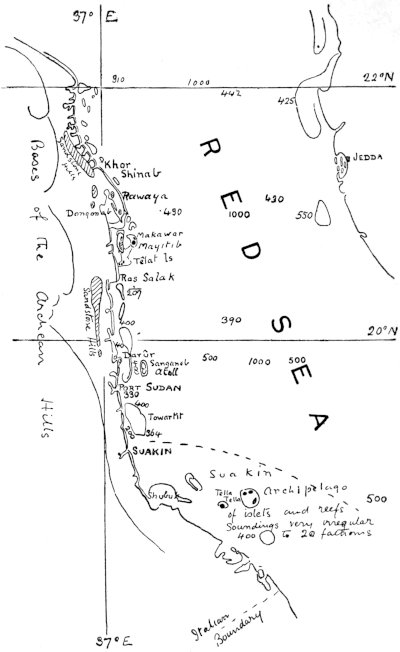

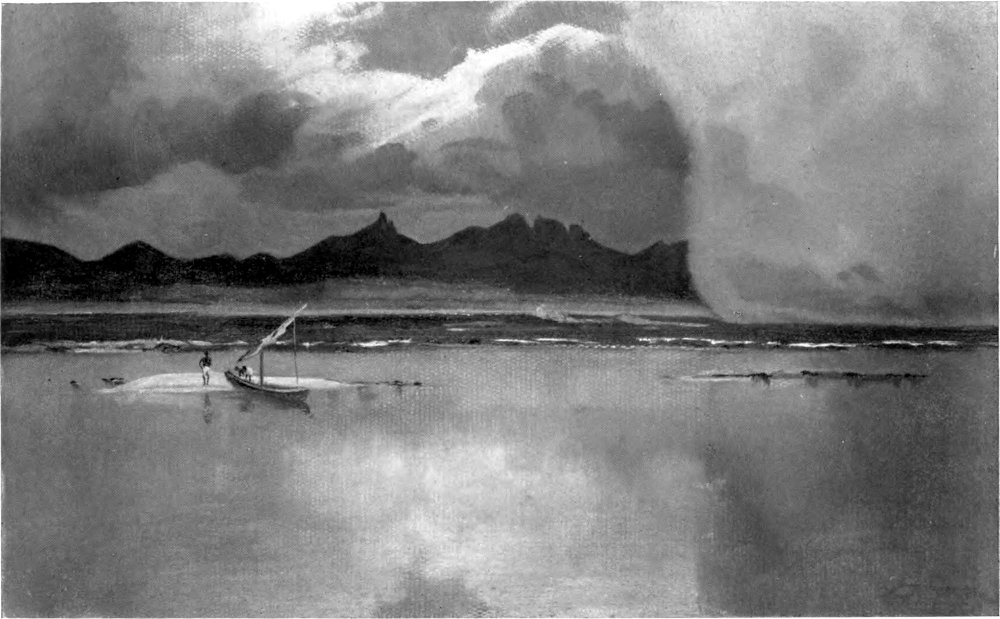
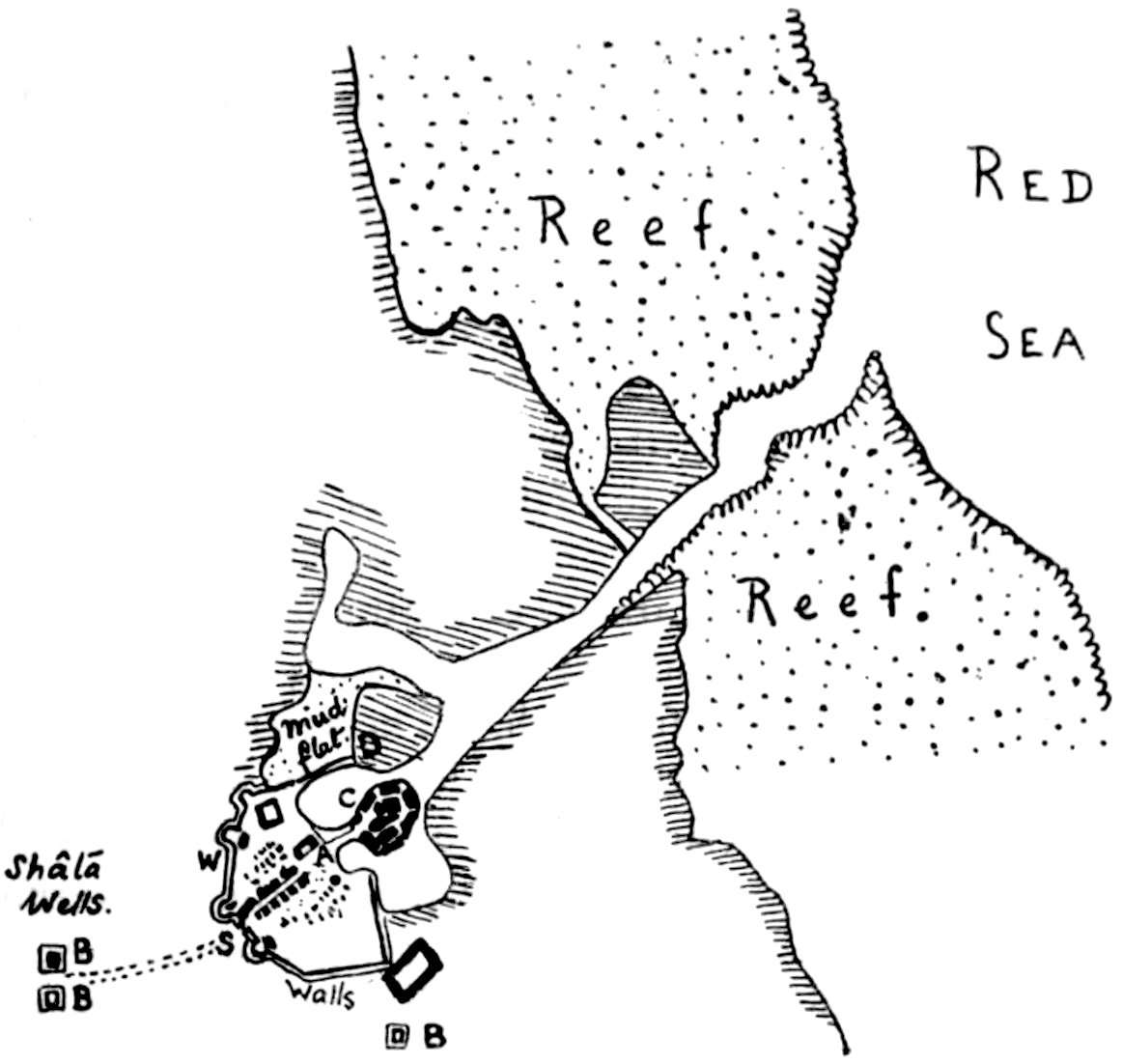
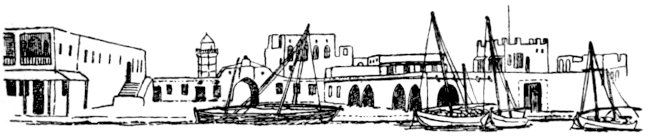
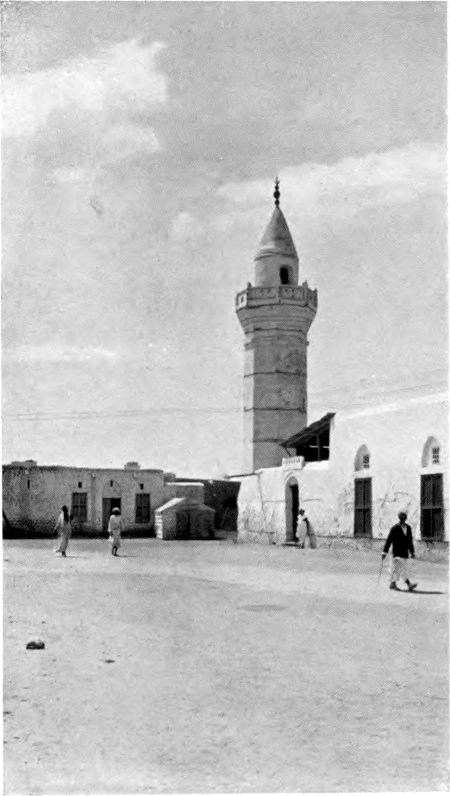
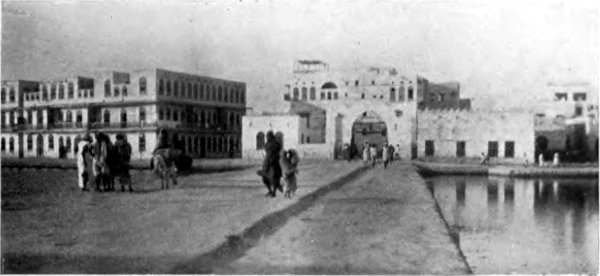
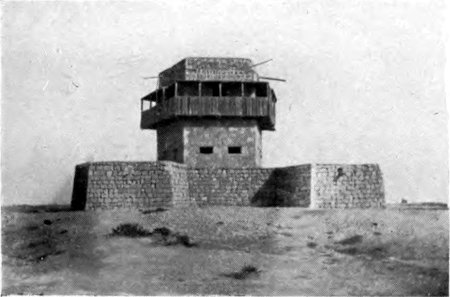
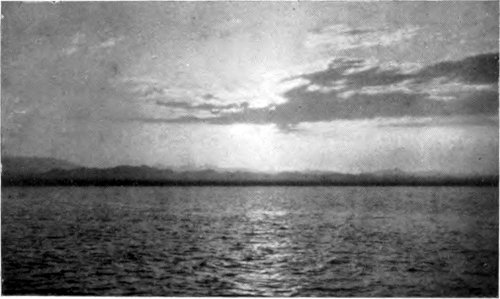
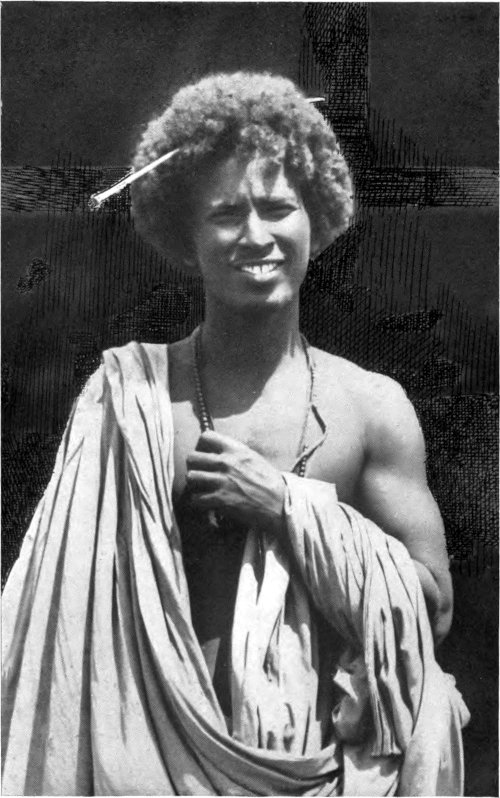
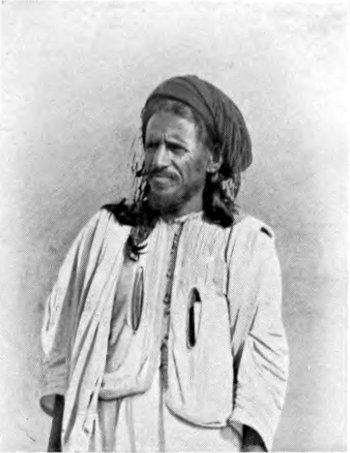
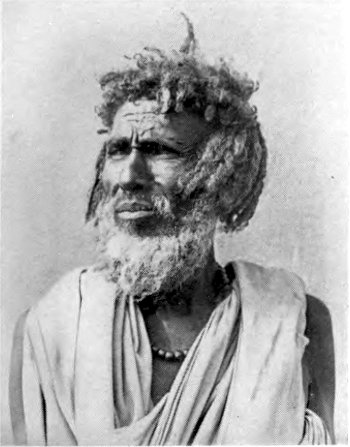
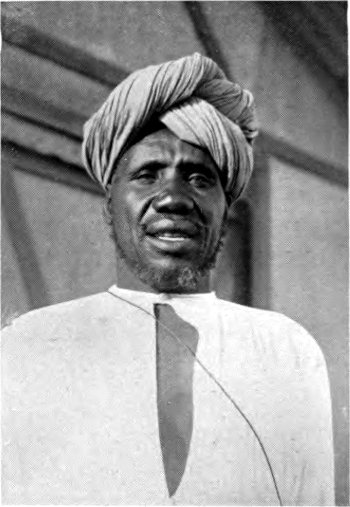
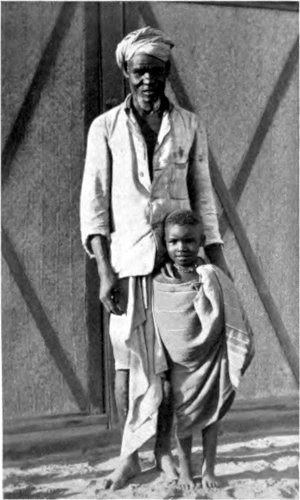
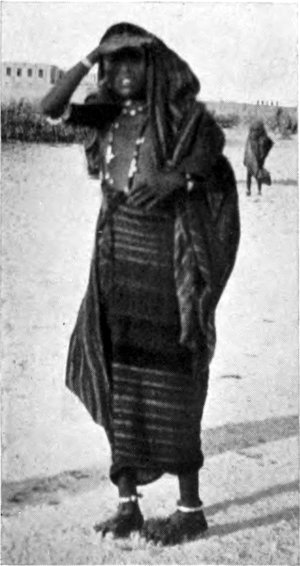
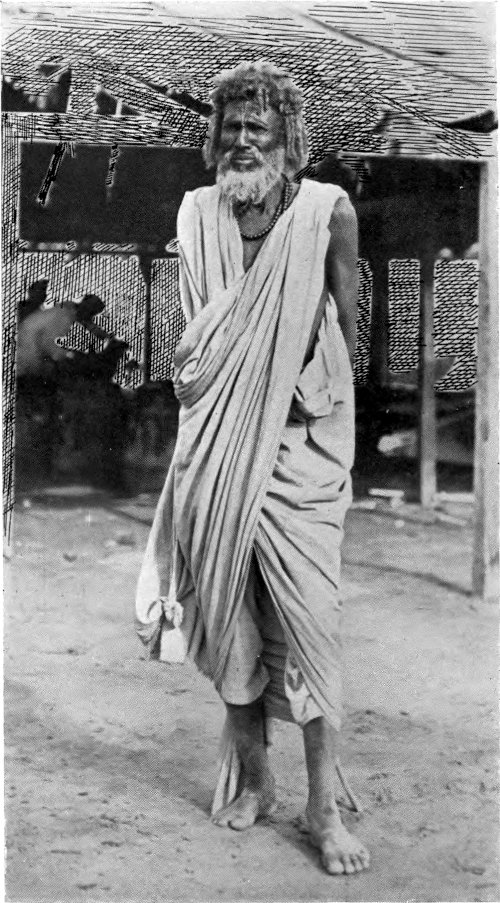
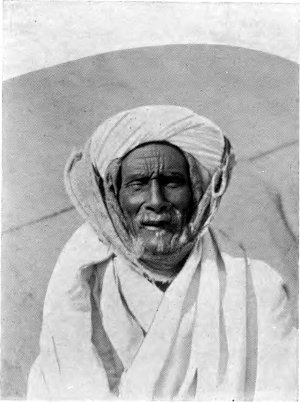
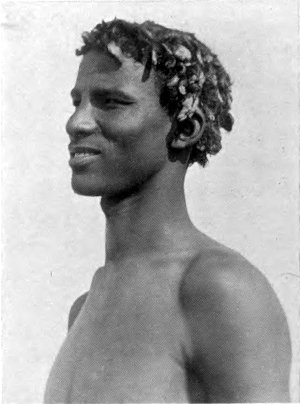
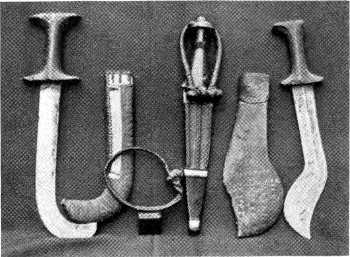
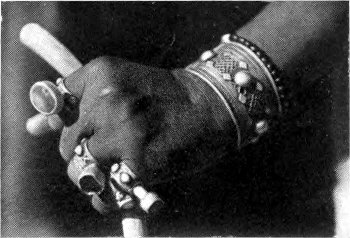
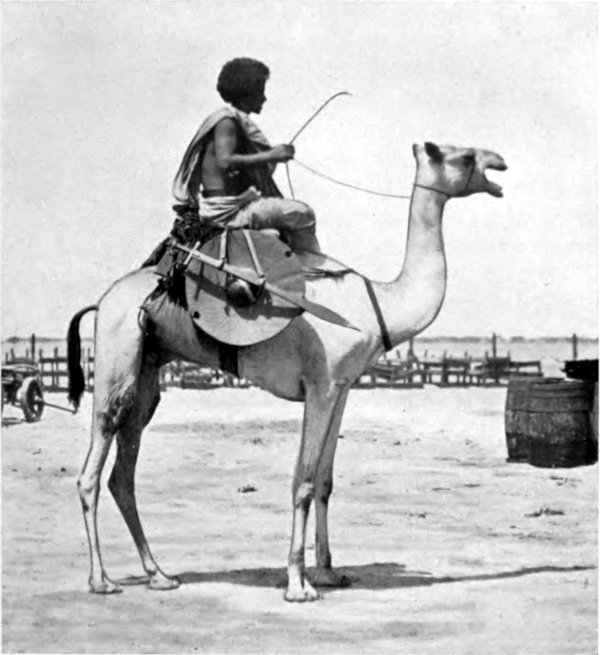
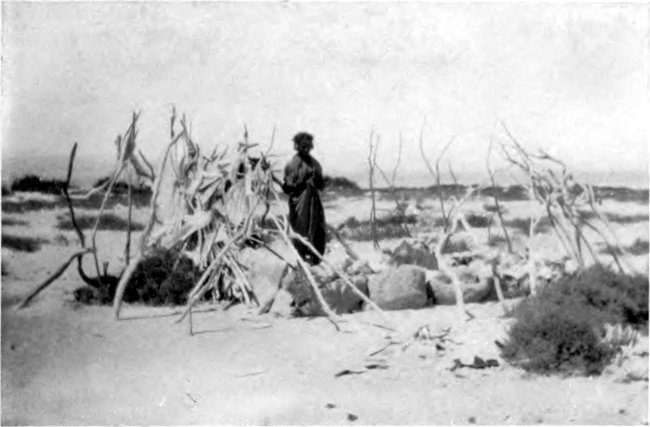
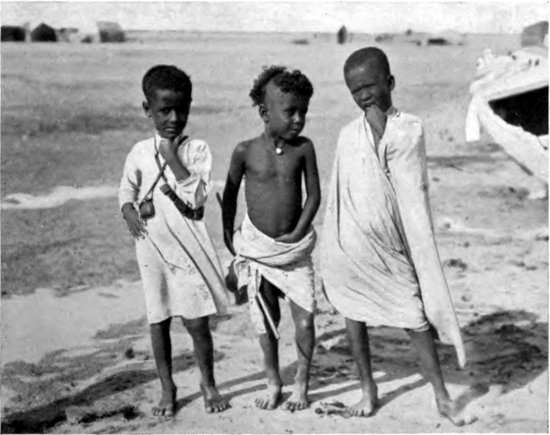
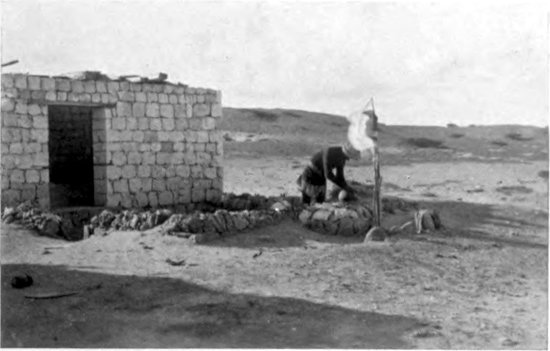
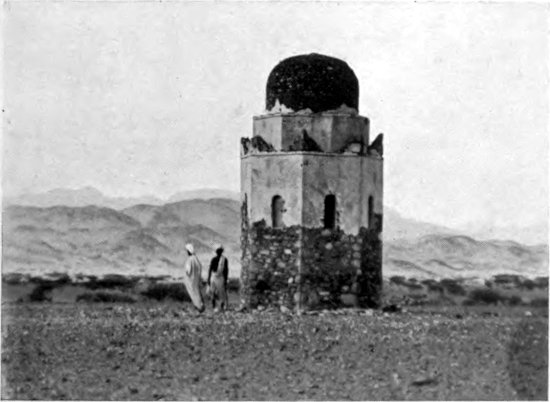
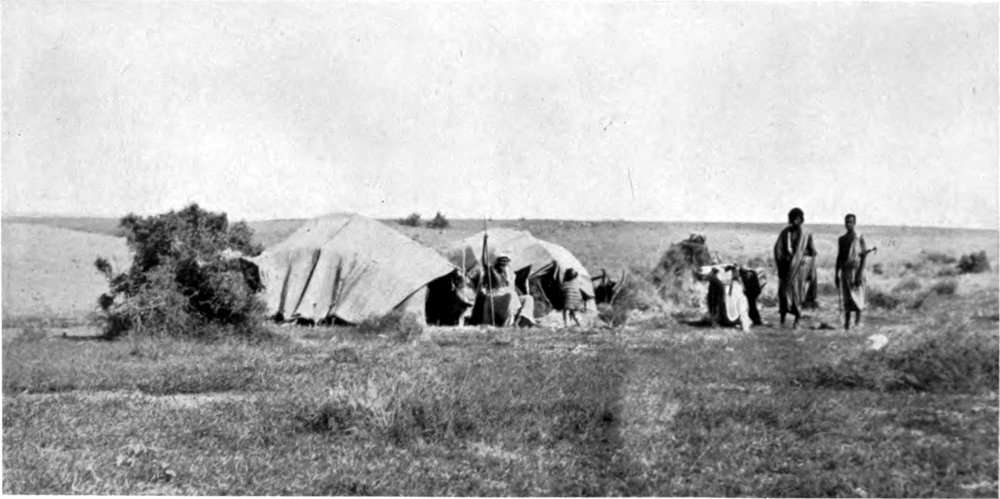
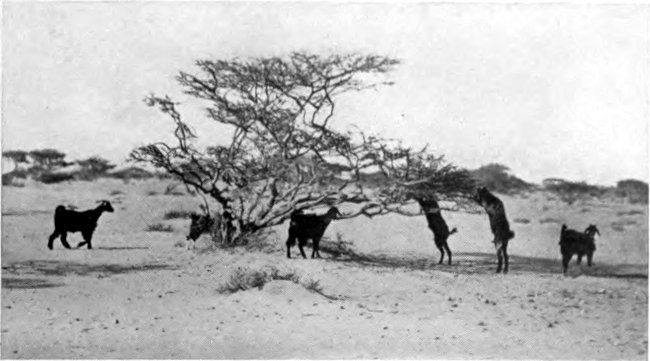
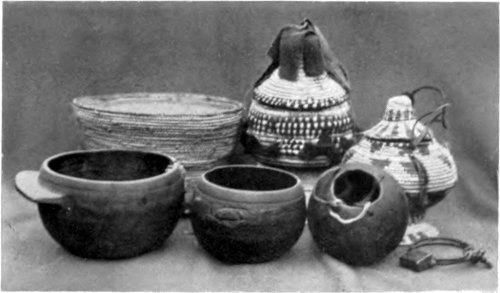
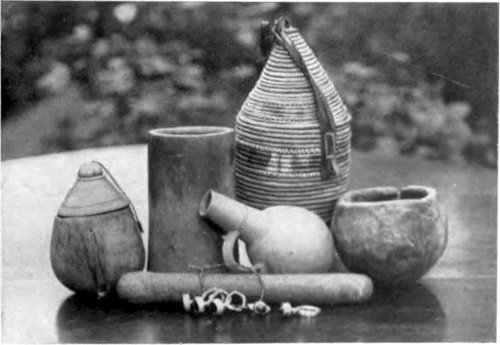
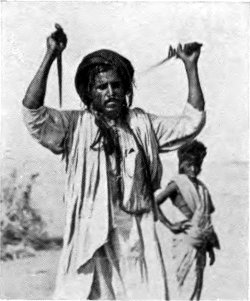
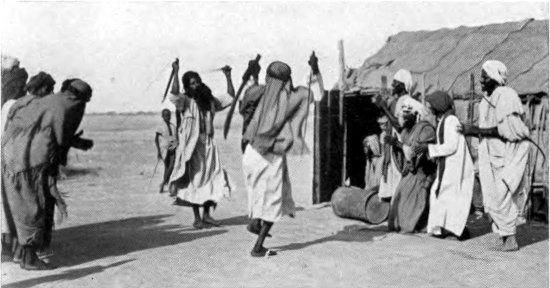
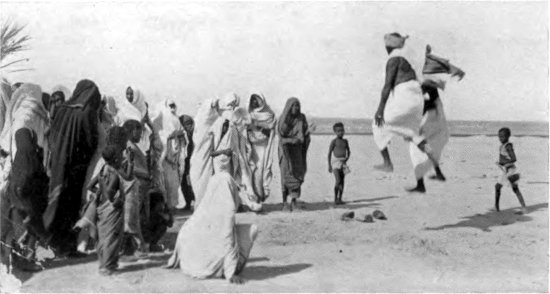
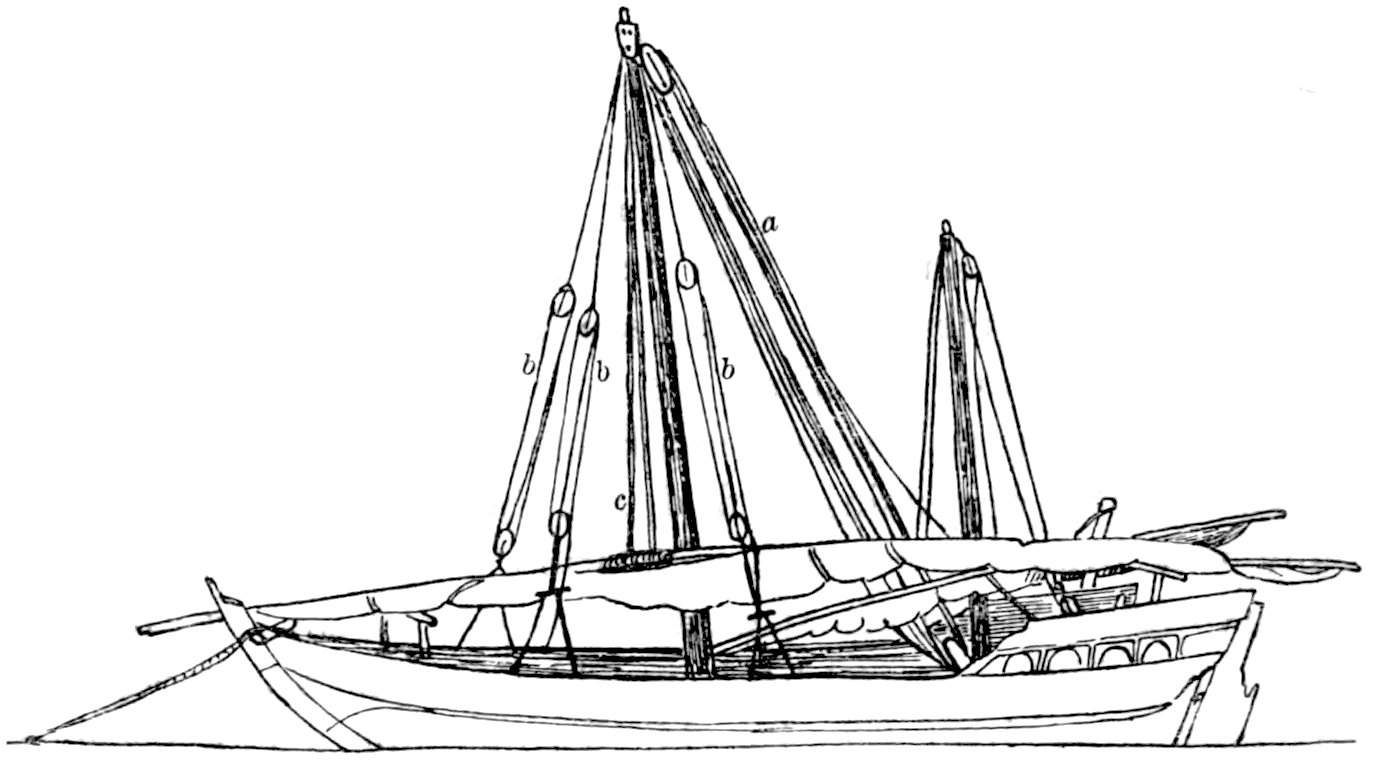
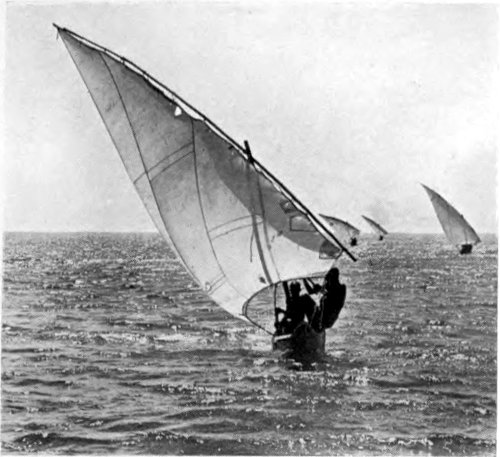
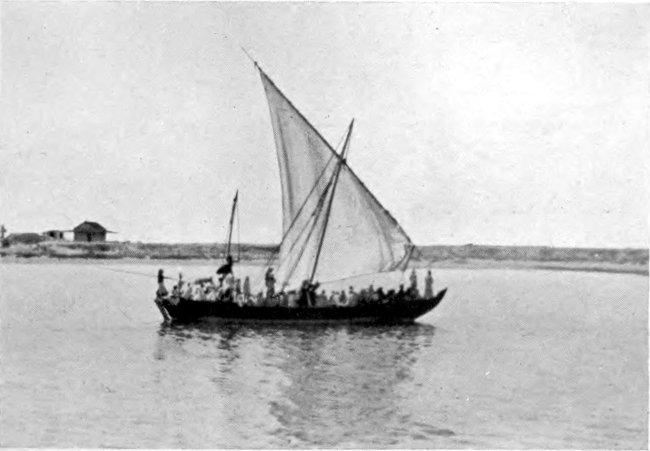
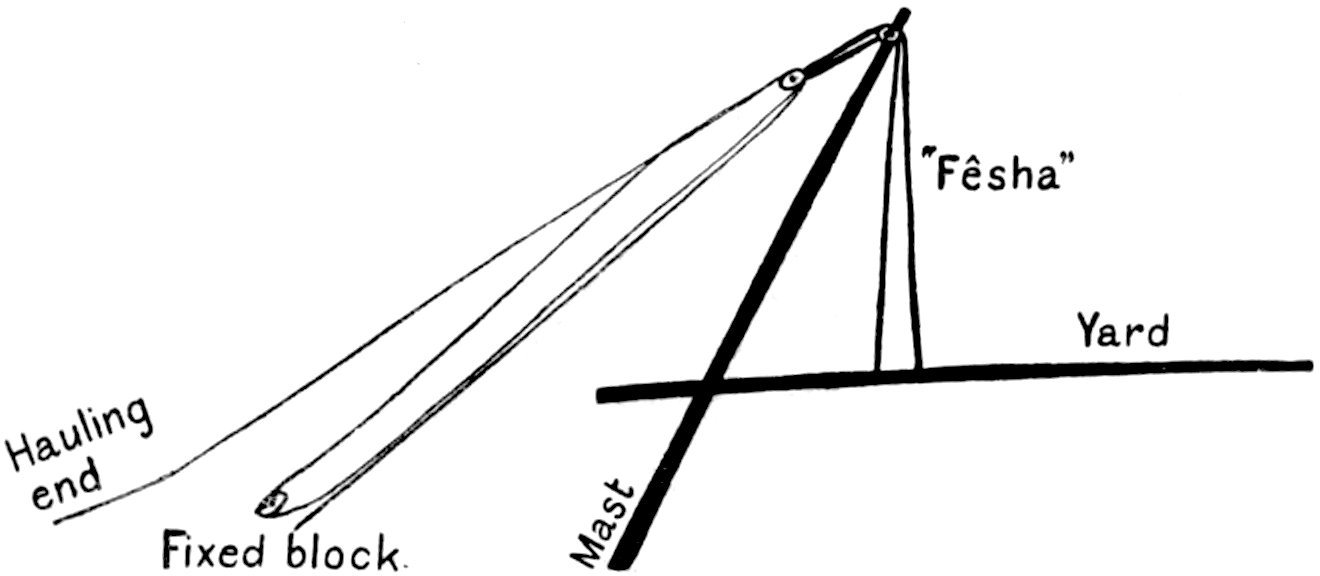
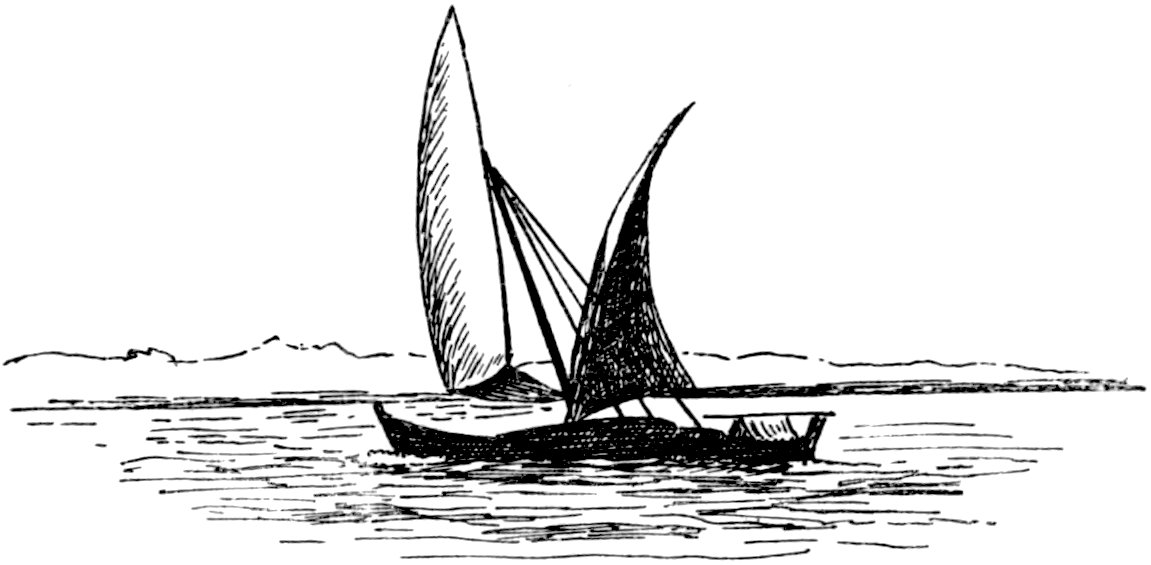
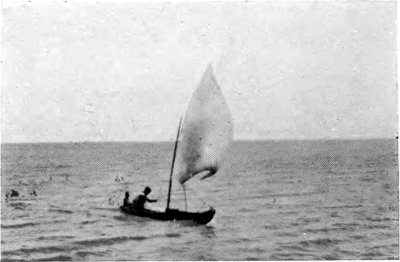
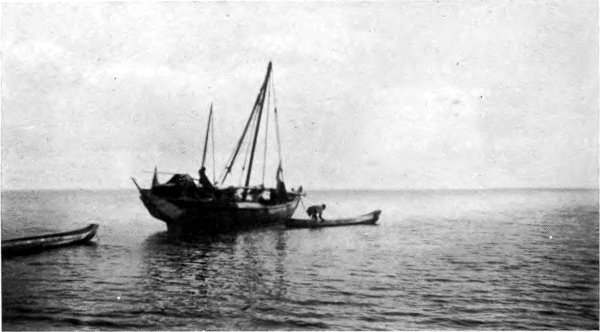
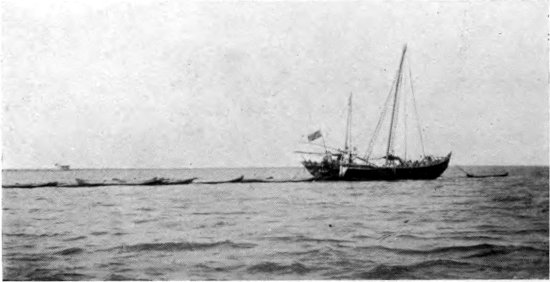
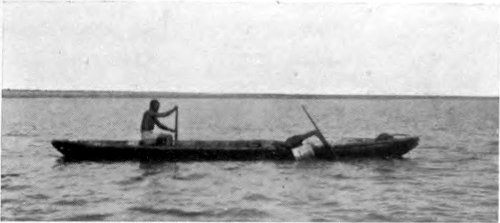
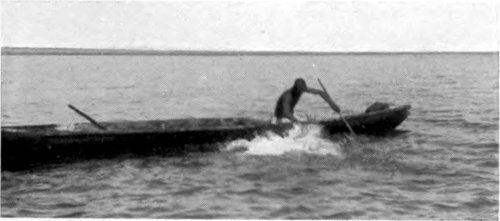
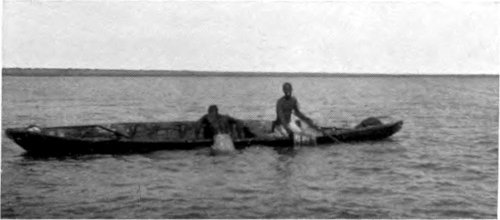
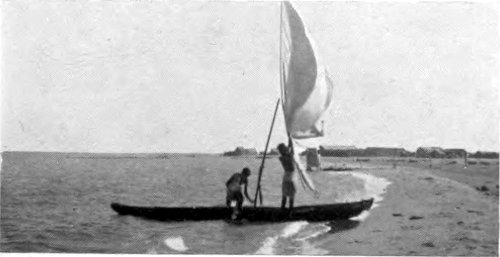
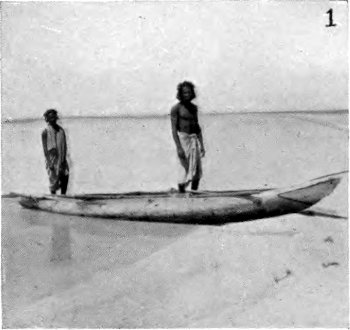
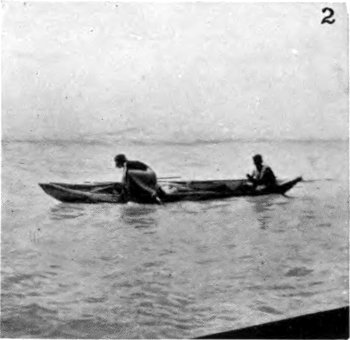
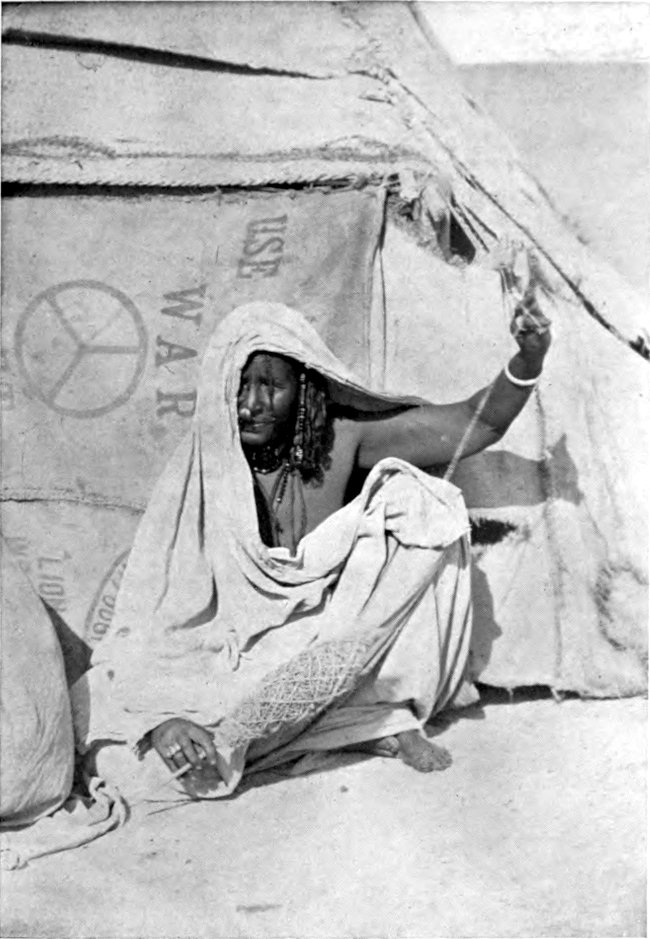
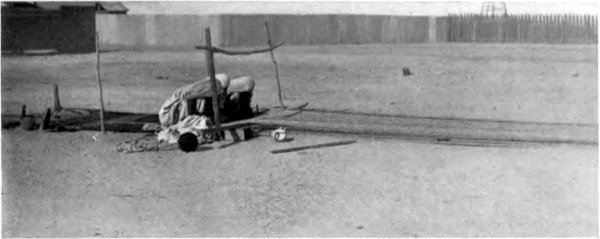
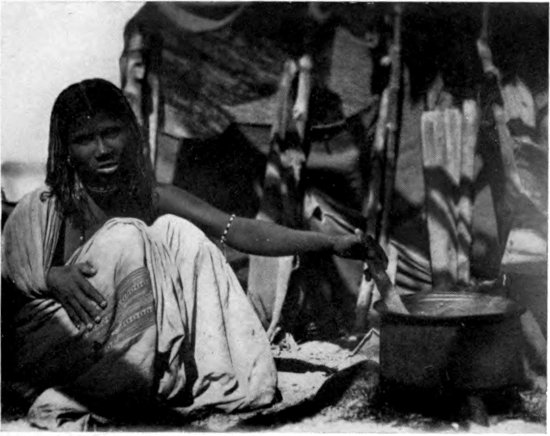
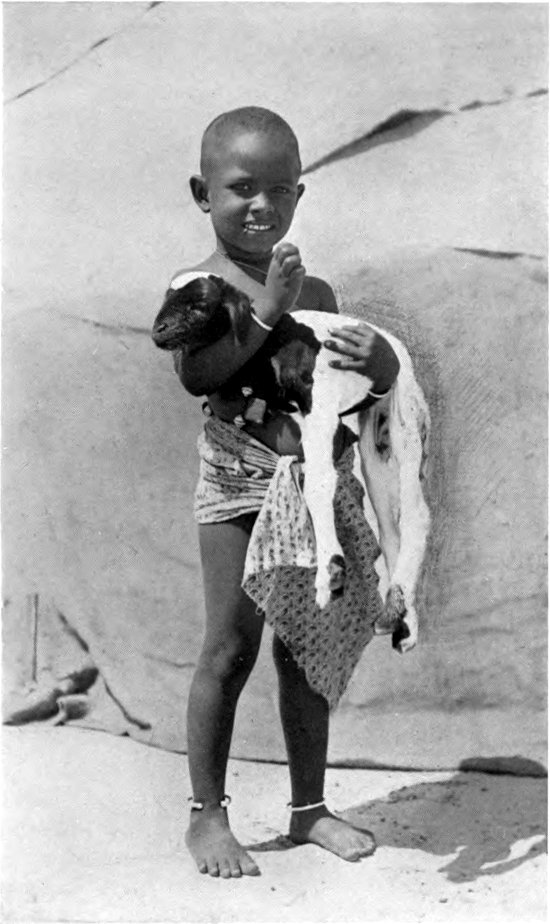
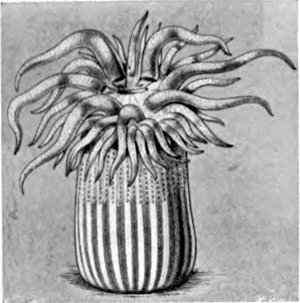
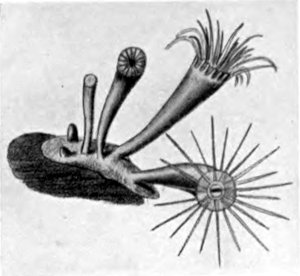
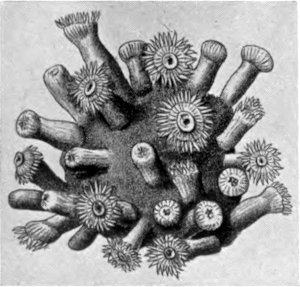
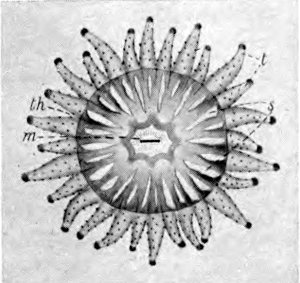
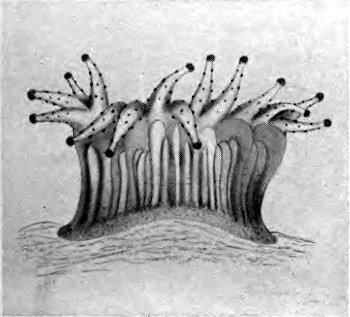
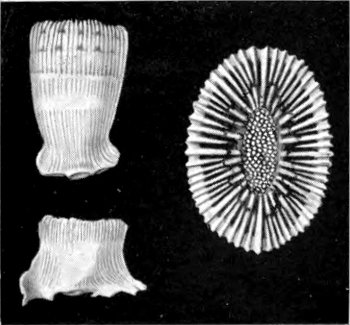
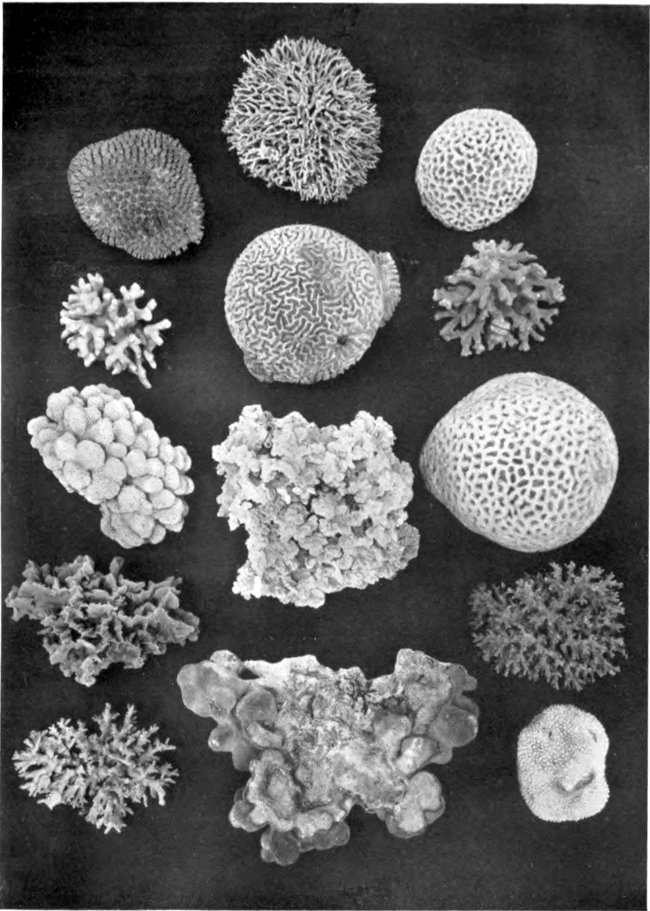
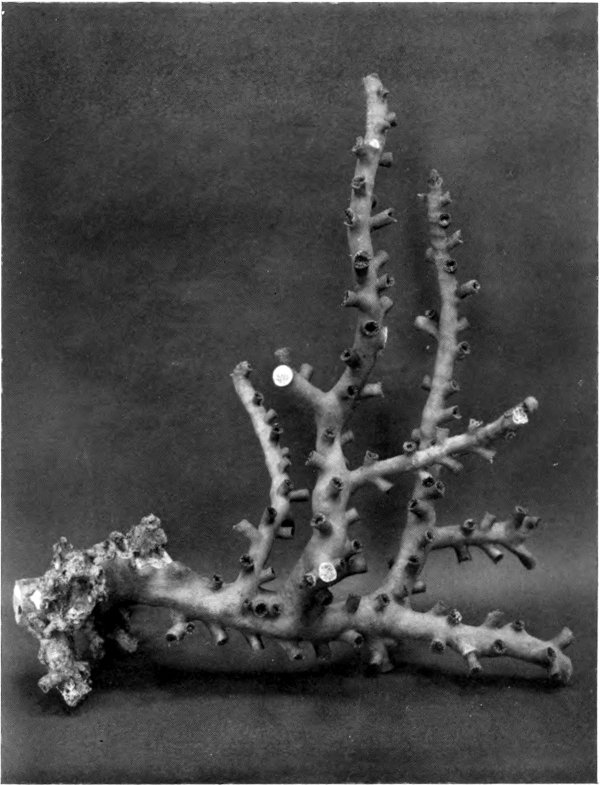
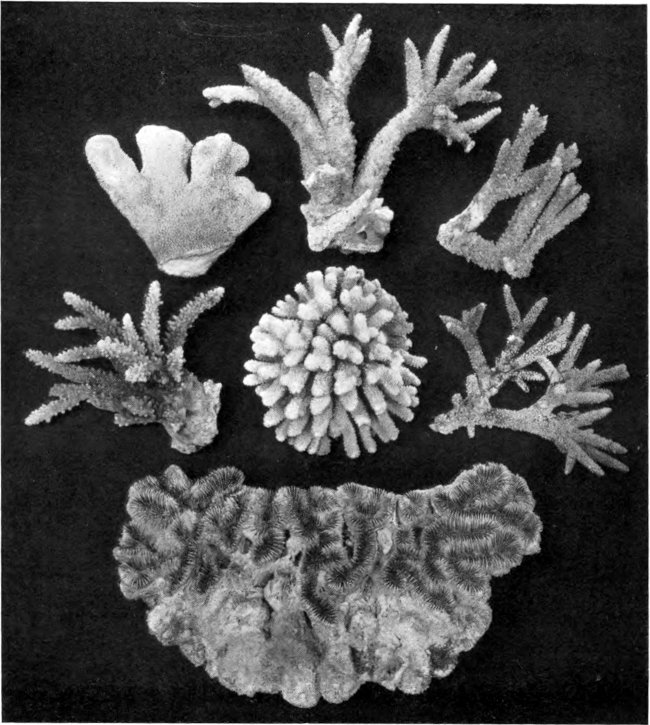
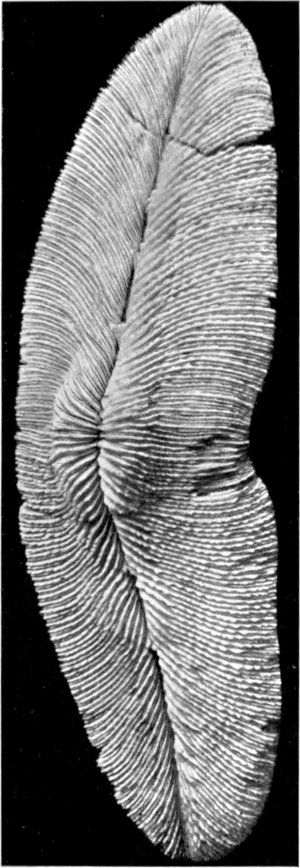
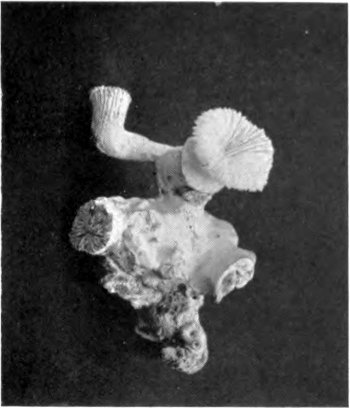
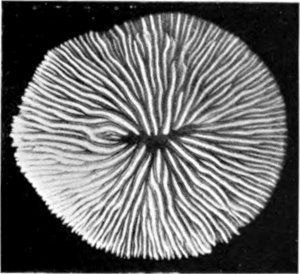
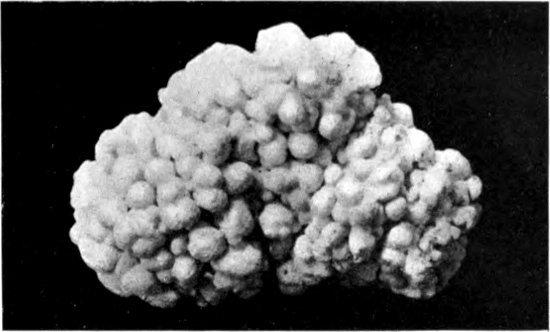
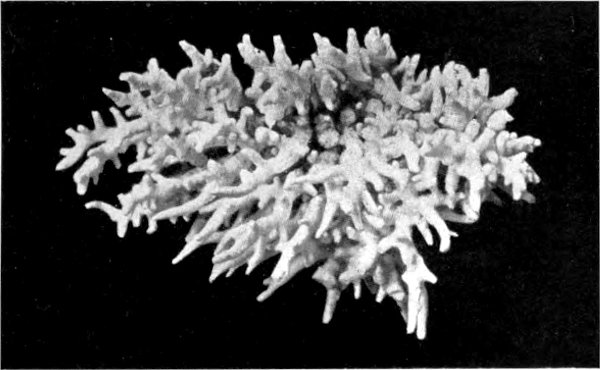
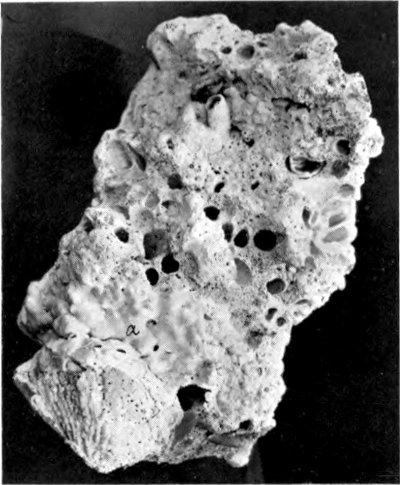
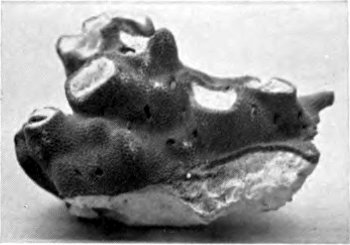
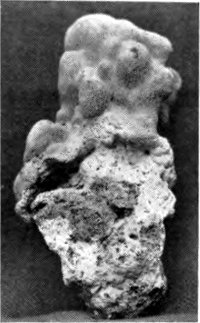
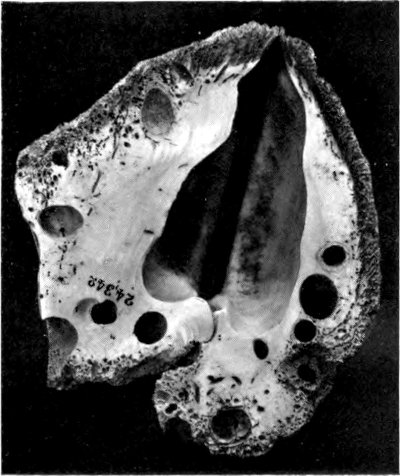
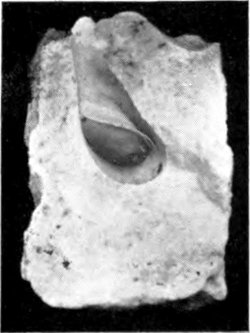
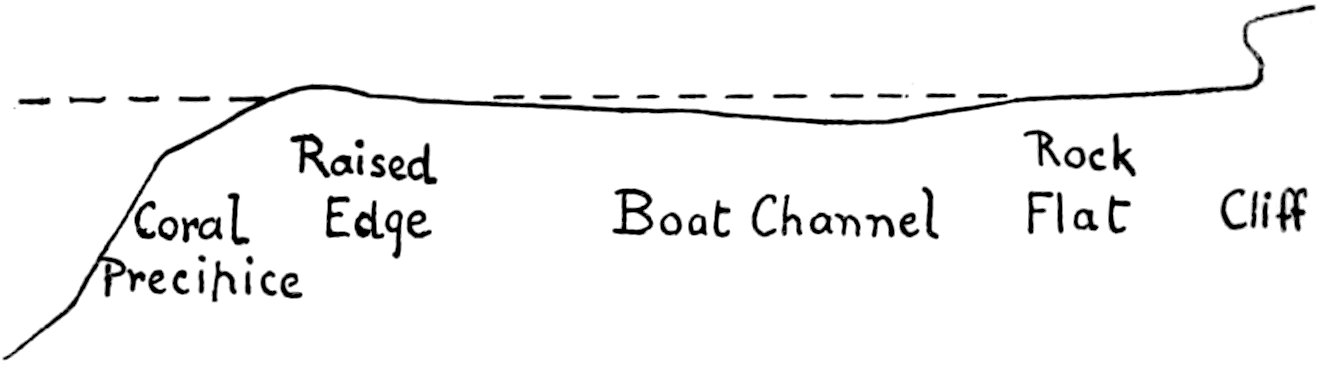
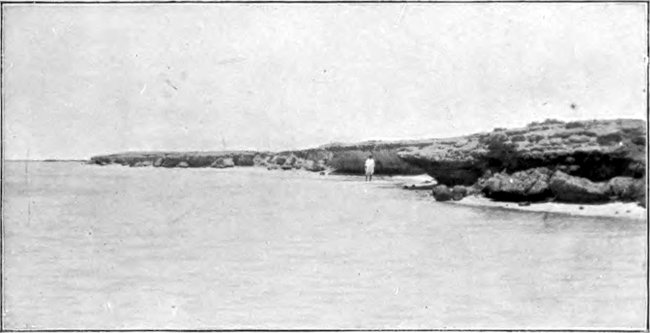
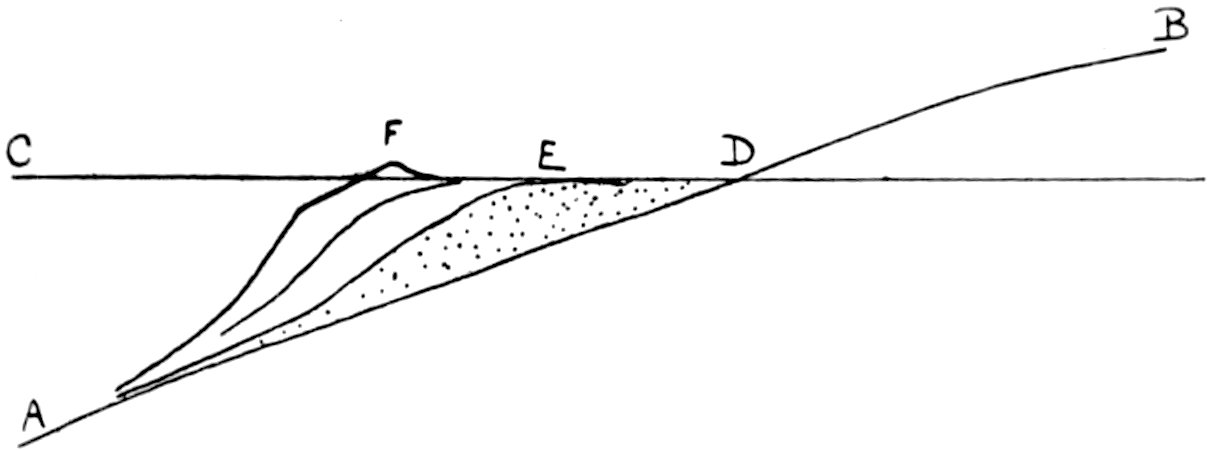
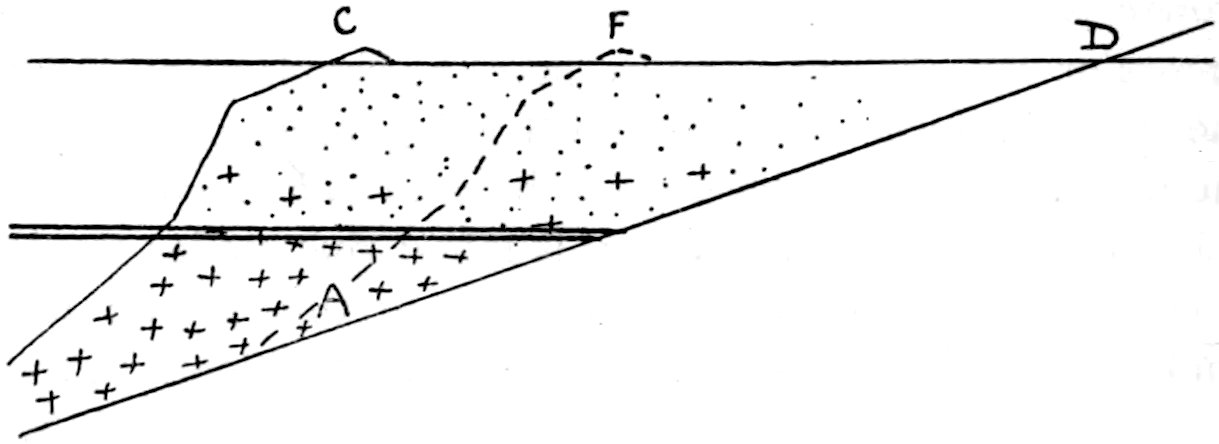
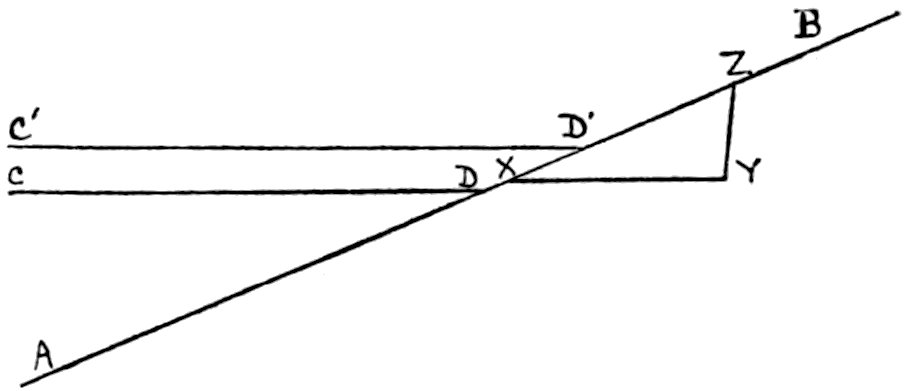
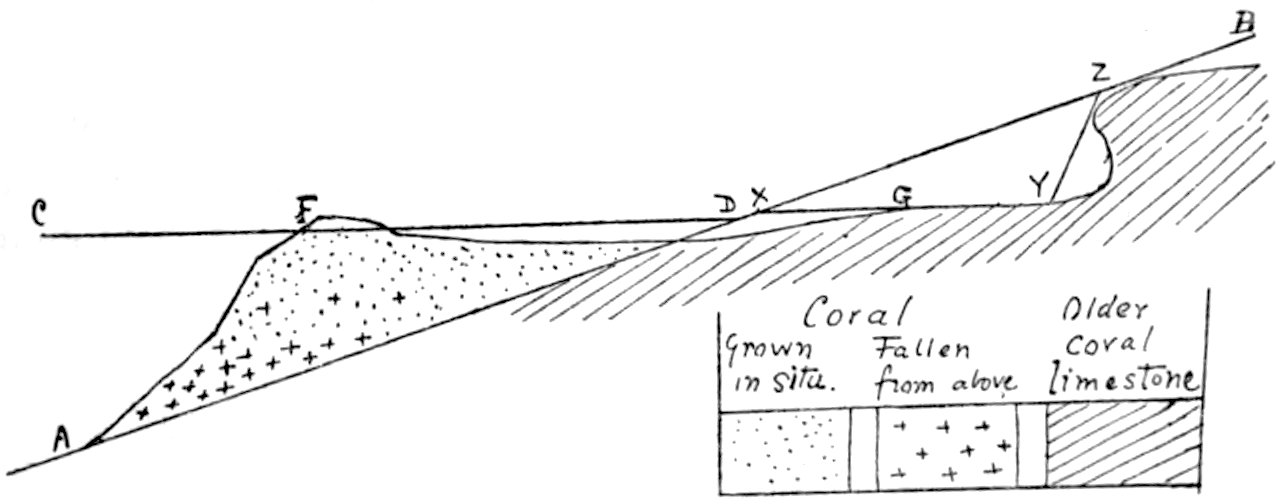
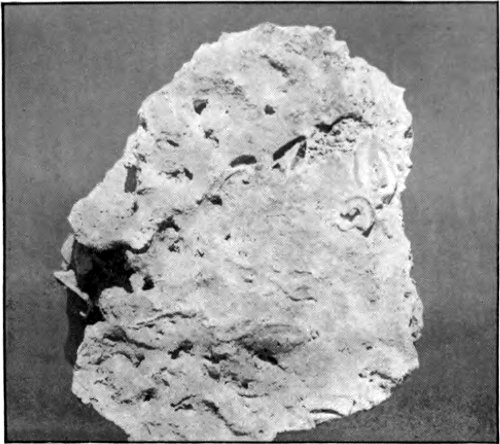
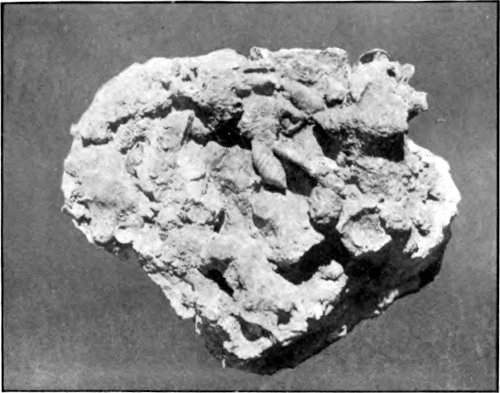
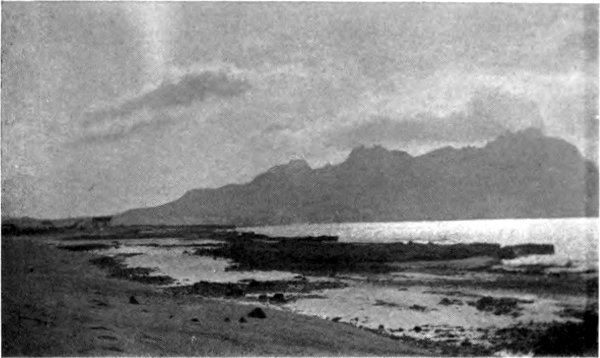
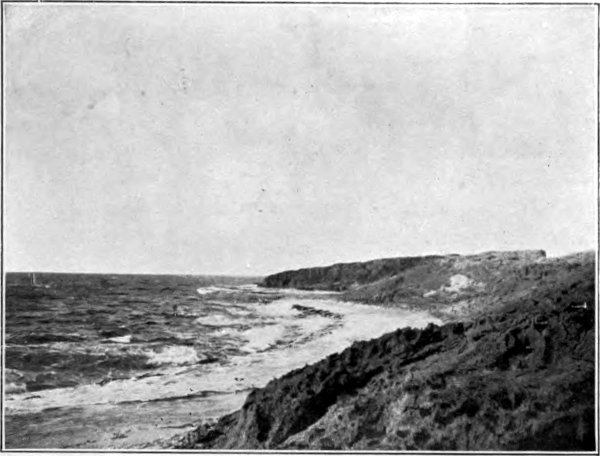
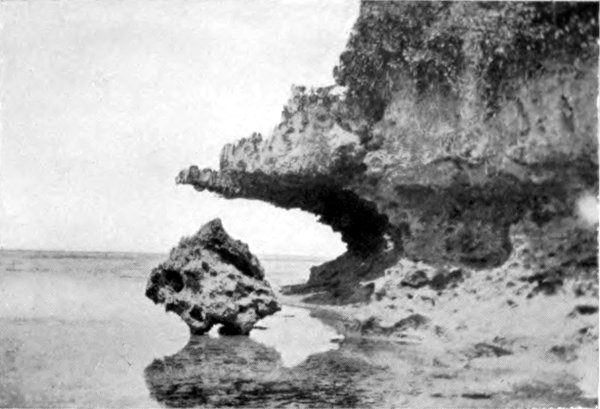
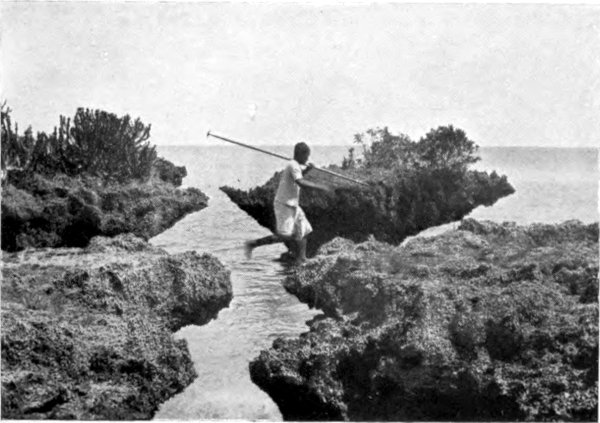
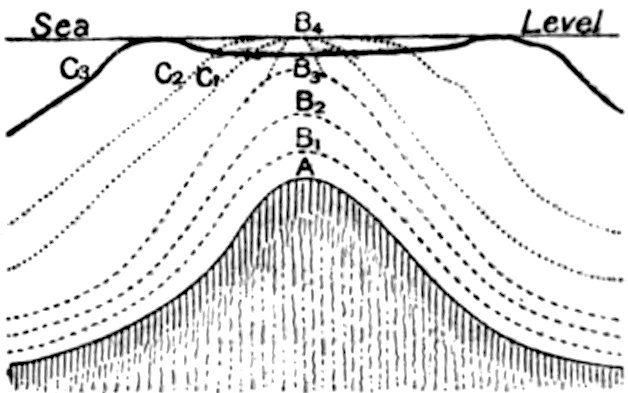
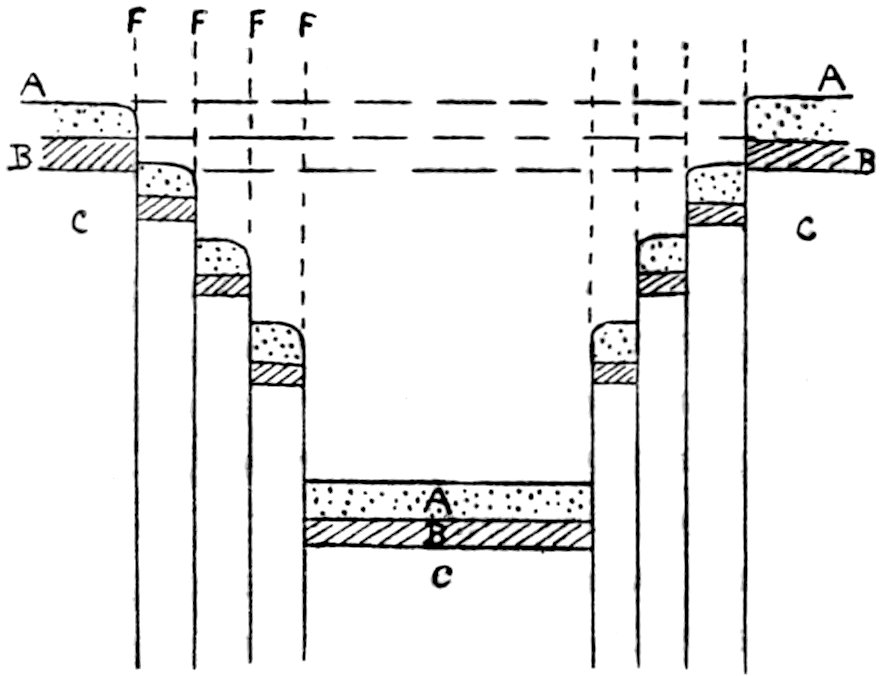
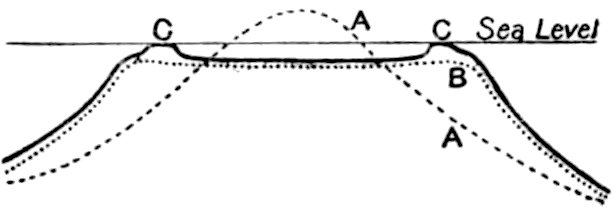
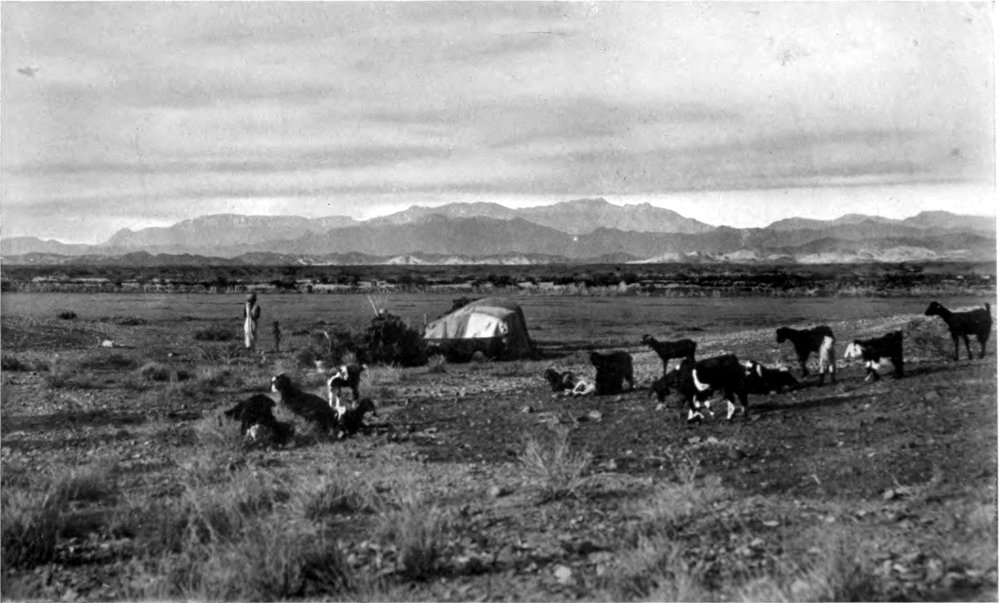
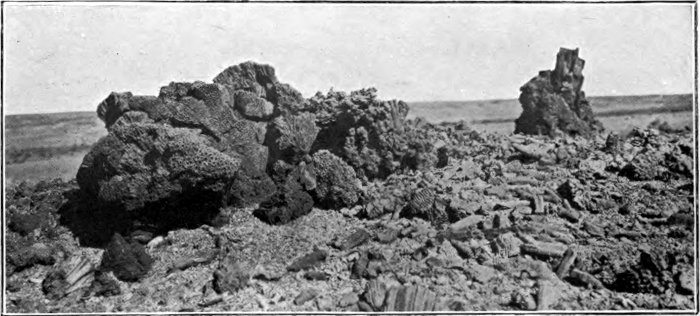
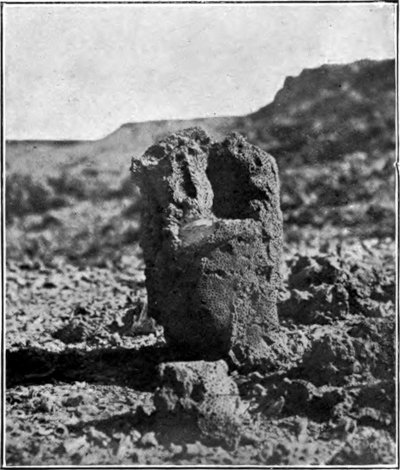
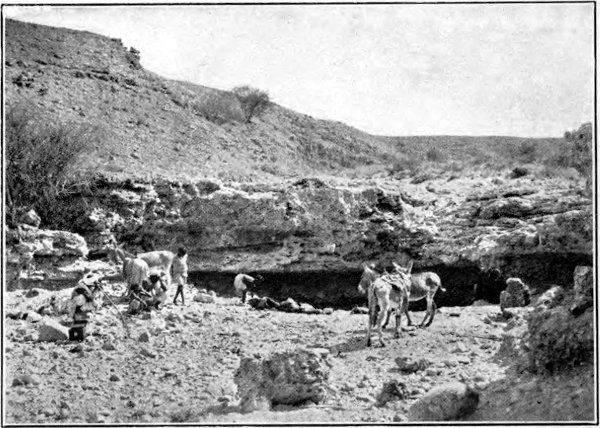
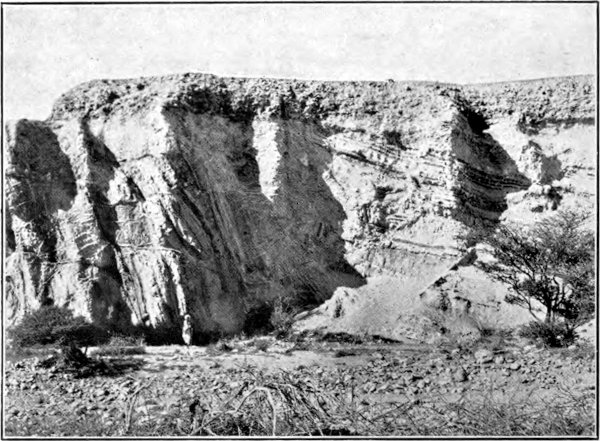
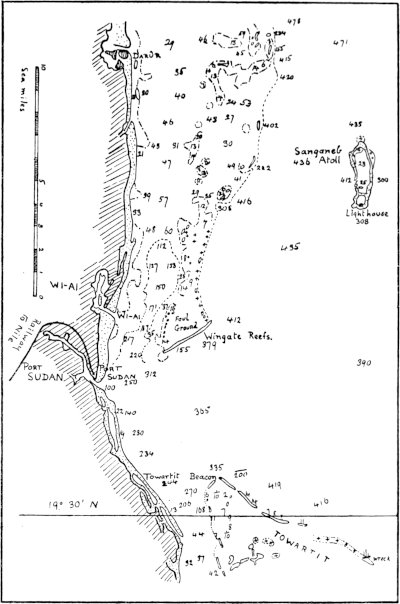
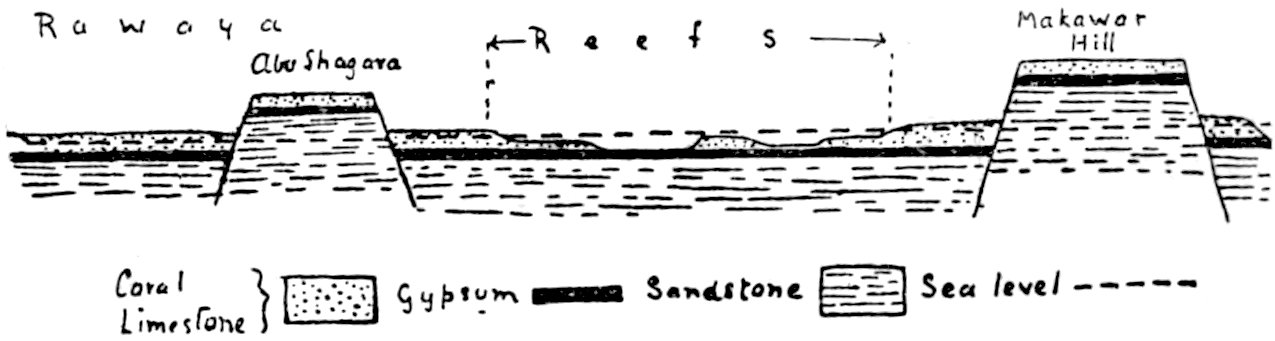
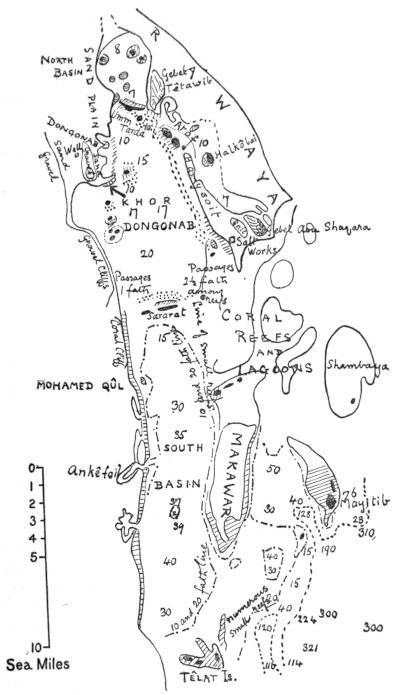
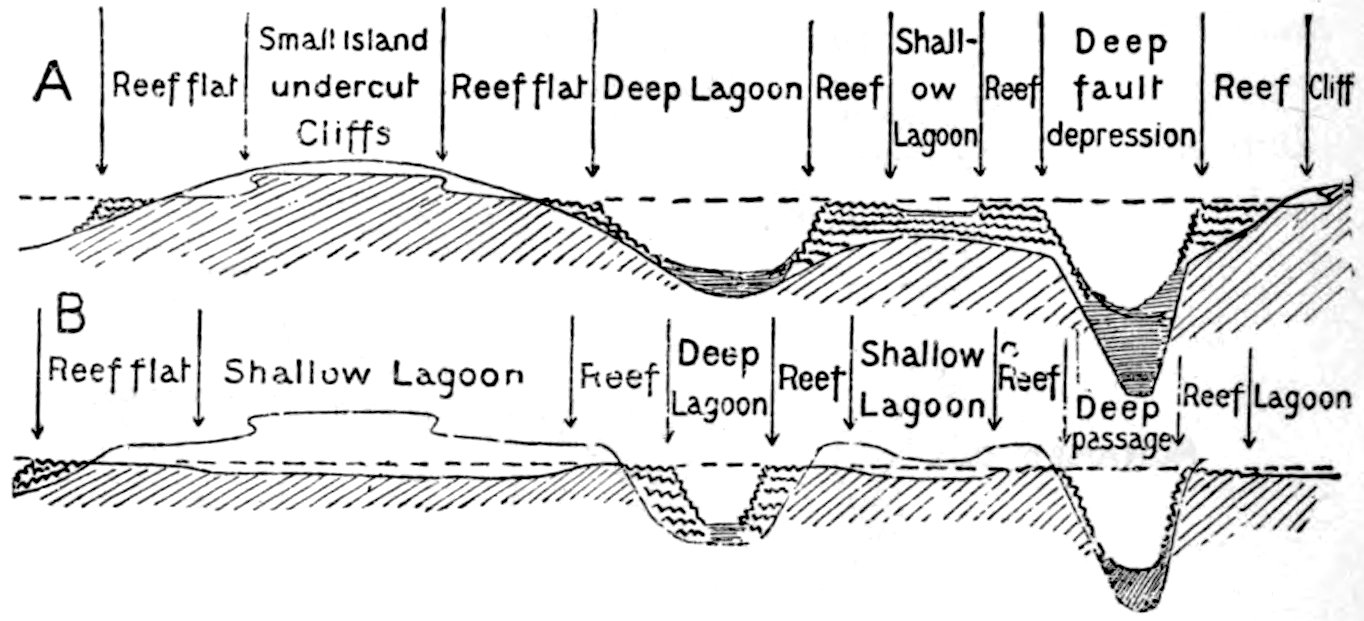
 additions made by coral growth.