I am at this moment meditating a book, singular for more than one
reason, whose form will be no less novel than its contents. Your majesty
will read it, I hope, with interest.
The title of this book is to be: "My Revelatory Episodes, or the History
of an Idea Pursued for Forty Years."
It will be my task to connect and condense into a single narrative all
the circumstances of my life which had as logical consequences the
numerous discoveries which it has been granted me to follow up,
discoveries which my daily occupations left me neither time nor ability
to set forth as a whole.
I know not what fate is reserved for this book. I know not whether I
shall succeed in seeing it in print during my lifetime. The minds of men
are, in these evil days, so little disposed to serious ideas, that it
seems to me difficult to find a publisher disposed to publish things so
far removed from the productions of the century.
But, however it may be, if I succeed in getting at least some part of my
work printed, I crave, sire, your majesty's permission to offer the
dedication to you. This favor I entreat not only as an honor, but also
as an opportunity to pay public homage to all the kindnesses which your
majesty has never ceased to lavish upon me.
François Delsarte.
The subject in question was a scene in the play of the Maris-Garçons.
The young officer, whose part I was studying, met his former landlord
after an absence of several years, and as he owed him some money, he
desired to show himself cordial.
"Ah! how are you, papa Dugrand?" he says, on encountering him. This
apostrophe is, therefore, a mixture of surprise, soldierly bluntness and
joviality.
At the first words I was stopped short by an almost insurmountable
difficulty. This difficulty was all in my gesture. Do what I would, my
manner of accosting papa Dugrand was grotesque; and all the lessons that
were given me on that scene, all the pains I took to profit by those
lessons, effected no change. I paced to and fro, saying and resaying the
words: "How are you, papa Dugrand?" Another scholar in my place would
have gone on; but the greater the difficulty seemed to me, the higher my
ardor rose. However, I had my labor for my pains.
"That's not it," said my instructors. Good heavens! I knew that as well
as they did; but what I did not know was why that was not it. It seems
that my professors were equally ignorant, since they could not tell me
exactly in what my way differed from theirs.
The specification of that difference would have enlightened me, but all
remained, with them as with me, subject to the uncertain views of a
vague instinct.
"Do as I do," they said to me, one after the other.
Zounds! the thing was easier said than done.
"Put more enthusiasm into your greeting to papa Dugrand!"
The greater my enthusiasm, the more laughable was my awkwardness.
"See here; watch my movements carefully!"
"I do watch, but I don't know how to go to work to imitate you; I don't
seize the details of your gesture." (It varied with every repetition.)
"I don't understand why your examples, with which I am satisfied, lead
to nothing in me."
"You don't understand! You don't understand! It's very simple! Really,
your wits must have gone wool-gathering, my poor boy, if you are unable
to do what I have shown you so many times. Watch closely now!"
"I am watching, sir, with all my eyes."
"You certainly see that the first thing is to stretch out your arms to
your papa Dugrand, since you are so pleased to see him again!"
I stretched out my arms to their utmost extent; but my body, not
following the movement, still wanted poise, and recoiled into a
grotesque attitude. My teacher, for lack of basic principles to guide
him, was unable to correct my awkwardness; and, vexed at his inability
which he wished to conceal, fell back on blaming my unlucky intellect.
"Fool," said he finally, "you are hopelessly stupid! Why are you so
embarrassed? Are my examples, then, worthless?"
"Indeed, sir, your examples are perfect."
"Well, then, imitate them, imbecile!"
"I will try, sir."
In this, as in all preceding lessons, I could give only a blind
imitation, which had not the small merit of being twice alike, even in
my own eyes, for every time I reproduced them I observed marked
variations which the master did not perceive.
I went to my room, as I had done many times before, with tears in my
eyes and despair in my heart, to renew my useless efforts, vainly
turning and returning in all lights my unfortunate papa Dugrand.
This cruel ordeal lasted five months without the least progress to
lessen its bitterness.
Heaven knows with what ardor I cultivated my papa Dugrand! I thought of
him by day, and I dreamed of him by night. I clung to him with all the
frenzy of despair, for I was determined not to be beaten. I was bound to
triumph at any cost, for it was life or death to me. I resolved not to
give up papa Dugrand, even though he should resist me ten years!
My unceasing repetitions of (to them abominable) papa Dugrand caused my
comrades to call me a bore. In short, I became disagreeable to all
around me. Alas! all this study, all these efforts, could not overcome
the stubborn resistance of papa Dugrand. My teachers were at their wits'
end, and finally refused to give me another lesson on the subject. But
nothing could daunt the ardor of my zeal.
One day I was measuring the court-yard of the Conservatory, as usual, in
company with papa Dugrand, and repeating my "how are you?" in every
variety of tone, when, all at once, having got as far as: "How are you,
pa--," I stopped short without finishing my phrase. It was interrupted
by the sight of a cousin of mine, whose visit was most unexpected.
"Ah! how are you?" I said; "how are you, dear cou--"
Here my words were again interrupted by a surprise; but this surprise
was far greater than that caused by the appearance of my cousin. Struck
by the analogy between this greeting and the unstudied attitude which I
had assumed under the action of a genuine emotion, I cried in a
transport of joy which bewildered my innocent cousin: "Leave me--don't
disturb me--I've got it--wait for me--stay where you are--I've got it."
"But what is it that you've got?"
"The dickens, papa Dugrand!"
Thereupon I vanished like a flash, to run to my mirror and reproduce to
my sight papa Dugrand, Judge of my astonishment: not only my gesture,
until now so persistently awkward, seemed suddenly metamorphosed and
became harmonious and natural; but, stranger yet, it did not correspond
in the least to what had been prescribed. However, it was nature herself
that had revealed this to me. Then, the movements of my body, but a
moment before so discordant in my eyes, had acquired, under the
influence of this gesture inspired from above, an ease and a grace that
filled me with surprise. Without doubt, I now possessed the truth. An
emotion, spontaneously produced and so deeply felt, could not result in
an error.
This is what had happened under the action of a natural surprise:
My hands were not extended toward the object of my surprise--not the
least in the world. By an anterior extension of the arms, they were
raised high above my head, which, far from being uplifted with the
exultation which I had hitherto simulated, was lowered to my breast; and
my body, stranger yet, instead of bending toward the attractive object,
bent suddenly backward.
What a blow nature had given to my masters! What an overthrowal of all
conjectures! My reason, before this sovereign decision, was humbled and
dumbfounded. What arguments could my instructors invoke in the face of
truth itself?
"What," thought I, "are my masters absolutely ignorant of the laws of
nature?"
"What, does their reason, as well as mine, know nothing of all this?
How is it that this much-praised reason has inspired me with effects
precisely opposite to those that were prescribed? What is reason? Is it,
then, a blind faculty?"
Let us first see what these strange phenomena, whose importance I cannot
deny without denying nature herself, signify.
I was in the midst of these reflections when the recollection of my
cousin came into my mind.
"Good heavens," thought I; "I had forgotten all about my poor cousin;
what will he think? I will hurry down, and, lest my precious ideas take
flight, send him away, and return to my reflections.
"Wretch that I am; I think only how to get rid of him, when he has so
enriched me! This is a lesson to me. Poor boy! What opinion will he have
of me? Ah, that is he whom I see stretched out on that stone bench. He
has been patient, indeed. I believe that he is asleep!"
"No, I am not asleep," said he, rising; "I am furious! Explain, if you
are not too insane to be rational, the extraordinary manner in which you
received me. Do you know that I have been waiting here for you more than
an hour?"
"Ah, my dear cousin," said I, embracing him warmly, "you do not know
what a service you have rendered me. I embrace you now, my good friend,
for the wonderful lesson you have given me. Without you I should never
have found it out, and, rest assured, I shall never forget it."
"What? Who? What is it?"
"Zounds, papa Dugrand! I freely acknowledge that I have learned more
from you in one second than from all my masters during four years."
"Are you in your right senses?"
The matter was finally explained. My cousin then told me about my home
and my family; but I must confess that I paid little attention to the
good news that he brought me, so excited and preöccupied was my mind.
Even then I could not help thinking of the fragility of the heart in its
affections. We soon separated, and I hurried to my room, which seemed to
me on this day-paradise itself.
I gave myself up to my interrupted course of reflections.
I had proved the impotence of my own reason, and also that of my
masters. Now, as it was not probable that all my teachers and myself
were more stupid than the rest of mankind--the common herd--I concluded
that reason is blind in the matter of principles, and that all her
instructions would be powerless to guide me in my researches. But, from
another side, it was evident to me that without this reason I could not
utilize a principle. What is human reason, that faculty at once of so
little avail and yet so precious? What role does it play in art? I feel
that this is most important for me to know.
The answer to this question must spring from the study of the phenomena
of instinct. Let us examine, then, what nature offers us freely.
If these phenomena are directed by a physiological or a spiritual
necessity, a necessity on which instinct is based, I am forced to admit,
here, a reason that is not my reason; a superior, infallible reason in
the disposition of things; a reason that laughs at my reason, which, in
spite of itself, must submit under pain of falling into absurdity. I
feel that it is only by this absolute submission of my reason that it
can rise to the reason of things, since, of itself, it would know
nothing. [See definition of reason.]
Let us seek, then, without prejudice, the reason of the things that
interested me, in order that my own reason may be raised to a higher
plane. And when it shall be illumined with the light that must break
upon it from the superior reason, I feel that my reason can generalize
instruction, and will be all-powerful in arranging the conclusions that
it may deduce. I am aware, from the utter impotence of my reason, that
all principles must be accepted humbly, in order to understand the
deductions. My reason does not know how to lead me to principles of
which it is ignorant; but it knows how to guide me back. In other words,
it is a blind person a priori, it is a luminary a posteriori. Though
it may not know at first, once shown, it readily recognizes; though it
may not divine, it learns by study; though it may not seize, it
retains, masters and generalizes.
Reason, then, is a reflex power, and as such, if, in a matter of
principle, it recognizes itself as impotent and even absurd a priori,
it knows that once in possession of the principle, it borrows from its
light and becomes identified with it--an incomparable power of
generalization.
Let the reason of the attitudes that I had observed be once shown me,
and my individual reason would possess the Archimedean lever with which
I might open unknown worlds.
My reason! Ah! I will identify it with the reason of things!
Henceforward this shall be my method, this shall be my law.
But the reason of things--who will give it to me? Is it not my reason
itself? Oh, mystery! I will follow thee to the depths of thy abyss. Thou
shalt have no more secrets from me, for God has said that He hides only
from the wise and prudent man, but reveals Himself to the simple and to
children. Yes, these things shall be given to me through my reason, if
it will bow itself and be attentive and humble; if it will patiently
await the teachings of a mute and persevering observation; if it will
subordinate itself to the intuitive lights that constitute genius; and,
finally, if it knows how to estimate things other than itself.
Thus my reason, established, inflamed, consumed by the charm of its
contemplation, will be transfigured in order to be more closely united
to the sovereign reason toward which it ever reaches out.
The first fruit of my observation consists in making me recognize, in
the facts examined, the proof of a superior and infallible reason, and
then to arm against my individual reason and all its errors. Another
thing yet more strange, but easily comprehended on reflection, is that
to this defiance, this contempt of self, I owe the boldness and the
power of my investigations.
Let us see, now, from which observations the preceding thoughts are the
direct result.
In the phrase, "How are you, etc.," my reason dictated this triple,
parallel movement: Advancing the head, and the arms, with the torso on
the fore-leg. Now, the similar phrase, "How are you, dear cousin,"
although uttered in a situation identical with that of papa Dugrand,
produced phenomena diametrically opposed to those that my reason had
said were the only ones admissible. Is it not reasonable to suppose that
the sight of an agreeable or loved object will excite in us a genuine
feeling that before we had vainly striven to simulate? Does it not seem
natural to extend the hand to a friend when, with affectionate surprise,
we exclaim: "How are you, dear friend?" And should we ever think of
drawing the body away from the object that attracts us? Finally, does it
not seem that the head should be raised, the better to see that which
charms us?
Ah, no! All these things, apparently so true and so perfectly clear,
are radically false. Facts prove this beyond a doubt, and with facts
there can be on discussion, no argument. We must admit them a priori
or renounce the truth. Here, as in all questions of principle, the
greatest act of reason consists in an act of faith. This is absolutely
undeniable.
In the phrase, "How are you, papa Dugrand," the arms should be raised,
the head lowered and the torso thrown back, supporting itself on the
back leg. This was indeed a blow to the presumption of my poor reason,
but should it complain? No, for it has gained even from its confusion
most fruitful instruction.
Let us see. In questioning the effects and the analogy, we shall
doubtless explain their reason of being. Why should the head become
lowered? I do not see all at first sight; but let us generalize the
question and probably it will specify itself.
When does a man bow his head before the object which strikes his eye?
When he considers or examines it.
Does he never consider things with head raised?
Yes, when he considers them with a feeling of pride. It is thus that he
rules them or exalts them; and also when he questions them with his
glance; in fine, when what he sees astonishes or surprises him.
This last statement contradicts the example in question, and seems to
condemn it. Not the least in the world. How is this? Thus: when the
astonishment or the surprise is not intense enough to shake the frame,
the head wherein all the surprise is concentrated, is lifted and
exalted. But so soon as that surprise is great enough to raise the
shoulders and the arms, as by a galvanic shock, the head takes an
inverse direction, it sinks and seems anxious to become solid to offer
more resistance to that which might attack it, for the first instinctive
movement in such a case is to guard against any unpleasant event; then
if the head is lifted to look at that which surprises it, it is because
it has no great interest in the recognition of that which it considers;
but as soon as that interest commands it to examine, to recognize, it is
instantly lowered and placed in the state of expectation.
O, now it becomes clear.
Now, how does surprise cause us to lift our arms?
The shoulder, in every man who is agitated or moved, rises in exact
proportion to the intensity of his emotion.
It thus becomes the thermometer of the emotions. Now, the commotion that
imprints a strong impression, communicates to the arms an ascending
motion which may lift them high above the head.
But why do not the arms, in an agreeable surprise, tend toward the
object of that surprise?
The arm should move gently toward the object that it wishes to caress.
Under the rapid action of surprise, therefore, it could only injure or
repel that object.
This it does in affright.
But instinct--that marvelous agent of divine reason--in that case turns
the arms away from the object which they might injure by the rapidity of
their sudden extension, and directs them toward heaven, leads them to
rise as if expressing thanks for an unexpected joy, so true it is that
everything is turned to use and is modified under the empire of our
instinct. Certainly, there is no similarity between this and the
superfluous action, the inconsequent movements determined by the working
of a rule without a reason. And this is so because in all that instinct
suggests, it is the Supreme Artist himself who disposes of us and acts
in us, while whatever is suggested by a reason insufficiently inspired
by the contemplation of the divine handiwork is fatally incoherent, for
we thus pretend to substitute ourselves for God, and God thenceforth
leaving us to ourselves, surrenders us to all the discordant effects of
an inconsequential and vain conception.
It remains to find the justificatory reason for this retroactive
movement of the body, which seems illogical at first sight.
Let us inquire in what case and under the action of what emotions a man
may shrink from the object which he is considering.
In the first place, he shrinks back whenever it inspires him with a
feeling of repulsion. He shrinks from it particularly when it inspires
him with fright. This is a matter of course and self-evident.
In what case does the body take an inverse direction to the object
which attracts it? This we must know before we can explain the
phenomenon in question.
We move away from the thing which we contemplate to prove to it,
doubtless, the respect and veneration that it inspires. In fact, it
seems a lack of respect to that which we love to approach it too
closely; we move away that we may not profane it by a contact which it
seems might injure its purity.
Thus the retrograde movement may be the sign of reverence and
salutation, and moreover a token that the object before which it is
produced is more eminent and more worthy of veneration.
A salutation without moving shows but little reverence, and should only
occur in the case of an equal or an inferior.
In justification of the actual fact, let me give another observation of
quite another importance.
When a painter examines his work, he moves away from it perceptibly. He
moves away in proportion to the degree of his admiration of it, so that
the retroactive movement of his body is in equal ratio to the interest
that he feels in contemplating his work, whence it follows that the
painter who examines his work in any other way, reveals his indifference
to it.
The picture-dealer usually proceeds in quite another manner. He examines
it closely and with a magnifying-glass in hand. Why is this? Because it
is less the picture which he examines than the handiwork of the painter,
the actual work which is the chief object of his survey.
But why does the artist move away from the work which he contemplates?
The better to seize the total impression. For instance: if it be a full
length portrait and the artist studies it too closely he sees, I will
suppose, the nose of his portrait and nothing more. If he moves a little
farther off he sees a little more, he sees the head; still farther and
he sees both the head and the torso which supports it. Finally, moving
still farther away, he gets a view of the whole and thus seizes its
harmonious relations. This inspection may be called synthetic vision,
and in opposition to this, direct vision, which I assumed before
instinct taught me better, is but short and limited.
To sum up: If instinct did not lead us to retroact, to examine an object
unexpectedly offered to our gaze, each surprise would expose us to
error.
Now we must retroact to see an object as a whole and not expose
ourselves to error, and then, too, does not the love which a creature
inspires within us naturally extend to the medium which surrounds him,
and in this way does it not seem as if all that touched him partook of
his life and thus acquired some title to our contemplation?
Thus my mind, tortured by one preoccupying thought, had, thanks to the
fixed idea which swayed it, found wondrous lessons in the simple
incident of my cousin's return, otherwise so devoid of interest; and I
may truly say that the lesson learned from meeting my cousin taught me
more than all those I had received in the space of three years. In
short, I had learned how vain is advice dictated by the caprice of a
master without a system! I had learned the inanity of individual reason
in a matter of experience. I knew that certain laws existed, that those
laws proceeded from a Supreme Reason, an immense centre of light, of
which each man's reason is but a single ray. I knew without a doubt how
ignorant my masters were of those laws to the study of which I meant to
devote my life. I possessed facts which I saw could be applied in
countless ways, luminous doctrines radiating from the application.
Thenceforth I had the nucleus of the science I had so vainly asked of my
masters, and I did not despair of formulating it.
Judge of my joy! The facts I then found myself the possessor of, seemed
to me more valuable than all the treasures of the world.
Some time later, I again saw my worthy cousin, the innocent cause of all
my joys. He was a medical student, and came to propose a visit to the
dissecting-room. I did not hesitate to accept; the proposal harmonized
with my desire.
I did not go, as so many go to the morgue, merely to see dead bodies.
No; the curiosity that impelled me, and the avidity with which I pursued
the object of my study, was not to be so easily satisfied.
Dead bodies only attracted me when they were--if not dissected--at least
flayed. Children break their dolls to see what there is inside; so I,
too, wanted to see what there was in a corpse. It seemed to me that
under the mutilations which the scalpel had inflicted on the body, I
should find the answer to more than one enigma--might solve some of the
secrets of life.
The prospect of this visit had the charm of a pleasure party to me. I
made it a holiday and awaited the hour with impatience.
But, on arriving, when I found myself in that place chill and gloomy as
the tomb; when I felt choked by the mephitic gases that arose from this
seat of infection; when I found myself in the presence of a heap of
corpses mutilated by the scalpel, disfigured by putrefaction and
partially devoured by rats and worms; when, beneath tables laden with
these horrible remains, I saw mean tubs filled with human entrails
mingled with limbs and heads severed from their trunks; when I felt
fragments of flesh reduced to the state of filthy mud, clinging to my
feet, my heart throbbed violently, and I was overcome by an
indescribable sense of repulsion.
"What," I said to myself, "those shapeless and putrifying masses have
lived! They have thought, they have loved! And, who would believe it
from the horror and disgust that they inspire, they have been loved,
cherished, perhaps adored! Ah! if, as some think, the soul is not
immortal, if so many aspirations, so many schemes, so many hopes are to
end here--what is man?"
But yet more lamentable food for thought was reserved for me: the
spectacle of a ruin yet more profound than those which my eyes could
scarce endure, was to appear before me in all its hideousness.
In fact, there reigns in these gloomy halls where no tear has ever
fallen, no prayer has ever been heard and no ray of hope has ever
pierced--there reigns something yet colder than death, something more
unwholesome, more nauseous, more deleterious than the putrid miasmas
that infect the air, something more sad to see than the nameless
fragments of extinct life, something more loathsome than those filthy
and disgusting remnants, something more repulsive than those noses eaten
by worms and those empty eyeballs devoured by rats. I mean the cynicism
of the dwellers in that place; I mean their insensibility, their
indifference and calm heedlessness in the presence of such grave
subjects for thought. I mean that lack of perception, that spirit of
negation and revolt of which those wretched men make a boast and which
they obstinately oppose to all religious sentiment, all principle of
tradition or revealed authority. I mean the atheism and ceaseless
mockery with which they invariably meet any generous impulse aroused in
an honest soul by a healthy faith.
This struck me even more sensibly than the spectacle of death and
dissolution which I have striven to describe. Thus the apparently living
men who haunt this spot are more truly dead than the corpses upon which
they exercise their pretended science. They seemed to me ruins far more
terrible than those of the body, ruins which repelled all hope, being
born of doubt and leading to negation.
If the mutilated and half-devoured bodies that lay before me, filled me
with horror and disgust, they, at least, left within me a faint
lingering hope surviving death; but the state of blindness of those
souls who have lost consciousness of their being and even the feeling of
their existence, the shadowy abyss into which they allow themselves
complaisantly to glide, the nullity which they adorn with the title of
science,--all this filled me with fright, for I felt the doubt and
despair into which contact with it would inevitably have plunged me,
if, by a special favor, the tone and mimetics, alike self-sufficient and
mocking, of these free-thinkers, as they are now styled, had not, from
the first, inspired me with aversion for them and a salutary hatred of
their doctrine.
And yet, amidst so many repulsive objects, the faculty of observation to
which I already owed such fruitful remarks was not dormant in me: I had
already asked myself by what evident sign one could recognize a recent
corpse.
From this point of view, I made a rapid exploration, and I questioned
the various corpses left almost intact; I sought in some portion of the
body, common to all, a form or a sign invariably found in all.
The hand furnished me that sign and responded fully to my question.
I noticed, in fact, that in all these corpses the thumb exhibited a
singular attitude--that of adduction or attraction inward, which I had
never noted either in persons waking or sleeping.
This was a flash of light to me. To be yet more sure of my discovery, I
examined a number of arms severed from the trunk; they showed the same
tendency. I even saw hands severed from the forearm; and, in spite of
this severing of the flexor muscles, the thumb still revealed this same
sign. Such persistence in the same fact could not allow of the shadow of
a doubt: I possessed the sign-language of death, the semeiotics of the
dead.
I rejoiced, foreseeing the service which this discovery would render
upon a battle-field, for instance, where more than one man risks being
buried alive. I divined, moreover, something of its artistic importance.
I then questioned my cousin and the other students present in regard to
the symptomatics of death, and I saw with surprise that, not only had
the expression of this phenomenon escaped them hitherto, but that they
had no exact and precise knowledge concerning this grave and important
question.
There remained, in order to complete my discovery and to deduce useful
results from it, to verify the symptom on the dying man. It was
important for me to know in what degree it might become manifest on the
approach of death.
My wishes were gratified as if by magic, for I was led from the school
of anatomy to that of clinical medicine. There a house-student, a friend
of my cousin, placed me beside a dying patient, and I examined with the
utmost attention the hands of the unhappy man struggling against the
clutches of inevitable death.
At first I observed something strange in regard to myself, namely that
the emotion which such a sight would have caused me under any other
circumstances, was absolutely null at this moment; close attention
dulled all feeling in me. I then understood the courage which may
inspire the surgeon in the discharge of his duty; and I drew from this
observation deductions of great artistic interest.
Now I proved that the thumbs of the dying man contracted at first in
almost imperceptible degree; but as the last struggle drew near, and in
the supreme efforts made by the patient to hold fast to the life which
was slipping from him, I saw all his fingers convulsively directed
toward the palm of the hand, thus hiding the thumbs which had previously
approached that centre of convergence. Death speedily followed this
crisis and soon restored to the fingers a more normal position; but the
contraction of the thumb persistently conformed to my previous
observations. The presence and progress of this phenomenon in the dying
was invariably confirmed by numerous tests which I afterward tried.
Thus, I had acquired the proof that, not only does the total adduction
of the thumb characterize death, but that this phenomenon indicates the
approach of death in proportion to its intensity. I, therefore,
possessed the fundamental principle of a system of semeiotics hitherto
unknown to physiologists; but this principle, already so full of
interest, must be made profitable to art.
A multitude of pictures, which in former times I had admired at the
museum, passed before my mind's eye. I recalled battle-scenes where the
dying and the dead are represented; descents from the cross where Christ
is necessarily represented as dead. The idea struck me that I would go
and verify the action of the thumb in these various representations
which the painter's fancy has given us of death.
It was on a Sunday. The Louvre was on my way to the Conservatory,
where, as is well known, I lived as pensioner.
I had often traversed the galleries of the Louvre; but now I was armed
with a criterion that would give my criticisms indisputable authority.
The ignorance of the fact I sought, even among artists of renown, was
not long in being made apparent: all those hands, where they thought
they had depicted death, afforded me nothing but the characteristics of
a more or less peaceful sleep. The correctness of my criticism may be
verified anywhere.
Thus, the mere discovery of a law sufficed to elevate a poor boy of
fifteen years, destitute of all science and deploring the deep ignorance
in which he had hitherto been left, to the height of an infallible
critic in whom the greatest artists found no mercy. I then understood
all the power, all the fertility given by an acquaintance with the laws
that regulate the nature of man, and in how much even genius itself may
be rendered sterile by ignorance of those laws which simple observation
would make them acquainted with. But, I thought, my discovery is not
complete, for if, thanks to it, I have succeeded in proving that all
these pictures of death are false, true only as representing sleep, it
is, on the other hand, impossible for me to prove in how far those
figures live, in which the painter aims to represent life. I must,
therefore, seek the sign of life to complete my standard of criticism.
Suddenly, struck with amazement by the dazzling rays of unexpected
light, I asked myself whether the criterion of death would not reveal to
me, by the law of contraries, the thermometer of life. It should a
priori--it does!
Still I felt that it was not here that I might be permitted to
contemplate the vital phenomena attached to the thumb: since death was
so badly rendered here, I had strong reasons for thinking that life was
no better treated.
I left the museum, then, where I had nothing more to learn; and, to
observe living mimetics of the thumb, I went out on the promenade of the
Tuileries thronged by aristocratic people. I carefully examined the
hands of this crowd, but I was not long in discovering that these
elegant idlers had nothing good to offer. "This class," I said to
myself, "is false from head to foot. They live an artificial, unnatural
life. I see in them only artifice, or an art dishonored by using it to
mask their insincerity and artificiality."
The happy idea came to me to mingle with mothers, children and nurses.
"Ah," said I, "in the midst of this throng, laughing and crying at the
same time--singing, shouting, gesticulating, jumping, dancing--here is
life! If the contemplation of this turbulent and affectionate little
world does not instruct me, where shall I find the solution I seek?"
I did not have to wait long for this solution.
I noticed nurses who were distracted and indifferent to the children
under their charge; in these the thumb was invariably drawn toward the
fingers, thus offering some resemblance to the adduction which it
manifests in death. With other nurses, more affectionate, the fingers of
the hand that held the child were visibly parted, displaying a thumb
bent outward; but this eccentration rose to still more startling
proportion in those mothers whom I saw each carrying her own child;
there the thumb was bent violently outward, as if to embrace and clasp a
beloved being.
Thus I was not slow to recognize that the contraction of the thumb is
inversely proportionate, its extension directly proportionate to the
affectional exaltation of the life. "No doubt," I said to myself, "the
thumb is the thermometer of life in its extending progression as it is
of death in its contracting progression."
Countless examples have confirmed this. I could even, on the spot, form
an idea of the degree of affection felt for the children entrusted to
their care, by the women who passed before my eyes.
Sometimes I would say: "There is a servile creature whose heart is dead
to that poor child whom she carries like an inert mass; the position of
the thumb drawn toward the fingers renders that indifference evident,"
Again it was a woman in whom the sources of life swelled high at the
contact with the dear treasure which she clasped; that woman was surely
the mother of the child she carried, the excessive opening of her thumb
left no room for doubt.
Thus my diagnostics were invariably confirmed by exact information, and
I could see to what extent the remarks which I had recorded, were
justified. I drew from them most interesting applications for my special
course of study.
Thus, suppose I had asked the same service from three men, and that each
had answered me with the single word yes, accompanied by a gesture of
the hand. If one of them had let his thumb approach the forefinger, it
is plain to me that he would deceive me, for his thumb thus placed tells
me that he is dead to my proposition.
If I observe in the second a slight abduction of the thumb, I must
believe that he, although indisposed to oblige me, will still do so from
submission.
But if the third abducts his thumb forcibly from the other fingers, oh!
I can count on him, he will not deceive me! The abduction of his thumb
tells me more in regard to his loyalty than all the assurances which he
might give me.
Behold, then, an intuition whose correctness the experience of forty
years has not contradicted.
It is hard to imagine the joy I felt at my discovery produced and
verified in a single day by so many examples, differing so greatly one
from another and of such diverse interest.
All the emotions of this extraordinary and fertile day had so
over-excited my imagination that I had great difficulty in calming my
poor brain, and far from being able to enjoy the rest which I so much
needed, I was a prey to wakefulness in which the turmoil of my ideas at
one time made me fear that I was going mad. I then felt for the first
time the frailty of the instrument of thought in regard to the faculty
which rules and governs it.
In brief, I was--thanks to my double discovery--in possession of a law
whose deductions ought to touch the loftiest questions of science and
art,--and I was enabled thenceforth to affirm upon strong and
irrefragable proof that the thumb, in its double sphere of action, is
the thermometer of life as well as of death.
The day after that which had been so fruitful both in emotions and
discoveries, a thousand recollections tumultuously besieged my mind and
still disturbed me. I saw that if I could not contrive to classify them
in strict order of succession, I should never be able to derive any
practical value from them. I therefore took up link by link the chain of
events of the previous day, but in inverse order. That is, I began my
course where I left off the day before, and thus proceeded toward the
Tuileries to end at the Medical School.
At the retrospective sight of all that merry, noisy little world, of all
those fat, cheerful nurses, careless and laughing as they were, of those
mothers each so tenderly expansive in contemplation of her child, so
happy in its health and strength, so joyous and so proud of its small
progress, the recollection of a phenomenon which I had not at first
observed struck me with all the force of a vivid actuality.
I should say, by the way, that it is much more to the strength of my
memory than to the present observation of facts, that I owe these
remarks. Stability is the sine qua non of the things one proposes to
examine, and the memory must possess the singular power of communicating
fixity to fugitive things, permanence to instantaneousness, and
actuality to the past.
Now, the phenomena of life occurring with the rapidity of lightning can
only be studied retrospectively; that is to say, in the domain of
memory, except to be verified if the attention, free from all other
preöccupation, allows us to seize them on the wing once more. The remark
suggested to me by memory seemed all the more interesting because it
formed in a new order of facts a flagrant opposition to the opinion
formulated by my masters under the title of theory. Thus nature once
more proved to me that the only point in which I had found them to
agree, rested upon a fundamental error. I have since recognized that it
is thus in the majority of cases, so that one may almost certainly
pronounce erroneous any statement in regard to which all the masters of
art agree.
This proposition at first seems inexplicable, but its reason is readily
understood by those who know the sway of falsehood over a society
perverted in its opinions as in its tastes; to those who know the
deplorable facility with which error is spread and the tenacity with
which it clings to our poor mind. Error, moreover, owes to our abasement
which it flatters and crushes, the privilege of freedom from
contradiction, and it is only in regard to truth that the minds of men
are divided and contend.
On retracing in my memory the walks I had taken in the Tuileries, I was
struck by an important fact amidst the phenomena called up: the voice
of the nurse or mother, when she caressed her child, invariably assumed
the double character of tenuity and acuteness. It was in a voice equally
sweet and high-pitched that she uttered such words as these: "How lovely
he is!" ... "Smile a little bit for mamma!" Now this caressing
intonation, impressed by nature upon the upper notes of all these
voices, forms a strange contrast to the direction which all
singing-teachers agree in formulating; a direction which consists in
augmenting the intensity of the sound in direct ratio to its acuteness.
Thus, to them, strange to say, the entire law of vocal shades would
consist in augmenting progressively the sound of the ascending phrase or
scale, and diminishing in the same proportion for a descending scale.
Now, nature, by a thousand irrefutable examples, directs us to do the
contrary, that is, she prescribes a decrease of intensity (in music,
decrescendo) proportionate to the ascensional force of the sounds.
Another blow, I thought, for my masters, or rather I receive it for
them, for they, poor fellows, do not feel it. But how can these
phenomena of nature have escaped them, and by what indescribable
aberration can they direct, under the name of law, a process absolutely
contrary to that so plainly followed by those same phenomena? However, I
added, every supreme error under penalty of being self-evident, must, to
endure, necessarily rest upon some truth or other. Now, on what truth do
so many masters claim to base so manifest an error? This is what we
must discover.
I was now convinced that caressing, tender and gentle emotions find
their normal expression in high notes. This is beyond all doubt. Thus,
according to the foregoing examples, if we propose to say to a child in
a caressing tone that he is a darling, it would clearly be very bad
taste to bellow the words at him on the pretext that, according to
singing-teachers, the intensity of the sound is augmented in direct
ratio to its acuteness.
But my memory, as if to confirm this principle, and to show its contrast
with the custom admitted by those gentlemen, suggests to me other
instances derived from the same source. Let a mother be angry with her
child and threaten him with punishment; she instantly assumes a grave
tone which she strives to render powerful and intense. Here, then, on
the one hand (and nature proclaims it), the voice decreases in intensity
in proportion as it rises higher; and, on the other hand, it increases
in proportion as it sinks. This double fact, undeniably established,
constitutes an unanswerable argument against the system in question. But
it is not, therefore, necessarily its radical and absolute refutation.
No, doubtless, whatever may be the significance and the number of the
facts opposed to the directions of those gentlemen, these facts do not
seem to exclude exceptions upon which they may be founded. In fact, I
find in my memory many examples favorable to those masters. Thus, I
have seen many nurses lose their temper and still use the higher tones
of their voice; and, on the other hand, I also remark (and the remark is
important) a certain form, the appellative form, where all the
characters agree without exception in producing the greatest intensity
possible upon the high notes.
The professors of singing triumph, for they find in this appellative
form, always and necessarily sharp and boisterous at the same time, a
striking confirmation of their system. Here I seem to stray far from the
solution which I thought I already grasped! Far from it; the light is
breaking. Hitherto the examples evoked had only increased my obscurity
by their multiplicity, and I saw nothing in all these remarks but a
series of contradictions whence it seemed impossible to deduce anything
but confusion, into which I found myself plunged.
But was this confusion really in the facts which I examined, or was it
not rather the creation of my own mind? Now, in the matter of principle,
the weakness of individual reason has been too often proved to me to
allow of my attaching any other cause to the contradictions which block
my path and force me to confess my ignorance. I will not, then, here cry
mea culpa for myself or for others to justify that ignorance or excuse
its confession. It must be acknowledged that God knows what He does, and
His omnipotence is assuredly guiltless of the divagations which an
impotent mind finds it convenient to attribute to it.
Now, let others in the blindness of proud reason, forget this truth,
which they contest even by opposing to it the quibbles for which
free-thinkers are never at a loss, and to escape the confusion which
they inevitably derive from the ill-studied work of the Supreme Artist.
Let them venture to attribute to it their own darkness. For my part, I
shall not thereby lose my conviction that all which seems to me
disordered or contradictory in the expression of the facts which I
question, is only apparent and only exist in my own brain.
The profound obscurity into which light plunges us does not prevent the
light from being; and the chaos of ideas which, most generally, results
from our examination of things, proves nothing against the harmonies of
their constitution.
The pebble virtually contains the spark, but we must know how to produce
it. Thus the phenomena of nature contain luminous lessons, but we must
know how to make them speak; and, what is more, understand their
language. Now, I would add, the spirit of God is inherent in all things;
and this spirit should, at a given moment, flash its splendors in the
eyes of an intellect alike submissive, attentive, patient and suppliant.
Moreover, does not the Gospel show us the way to fertilize
investigations such as those to which I have given my life? Does it not
say: "Knock and it shall be opened, ask and it shall be given?" Then
what must I do to find my way out of the maze in which my reason
wanders? What must I do in presence of the contradictions which
nevertheless must needs contain a fecund principle? Finally, what must I
do in order to see light break from the very heart of those obscurities
wherein light is lost?
I will seek anew, night and day, if needful; I will knock incessantly at
the door of the facts which I desire to examine. I will descend into the
secret depths of their organism; there I will patiently question every
phenomenon, every organ, and I will entreat their Author to divulge to
me their purpose, their relations and their very object.
Well! It is thus that those men, proud of their vain knowledge, were
made dizzy by the splendor of that same light which they thought that
they could subject to their investigations, and the blindness which has
fallen upon them is the punishment which God is content to inflict upon
them in this world.
Having said this, where was I in my investigations? Ah! it was here.
The memory of the high inflections invariably affected by the women whom
I had seen on the previous day, caressing their infants, struck me with
the more force that I had learned from my masters that law which had
hitherto ruled uncontested, and now underwent a refutation which
demonstrated the falsity of its applications with a clearness and
minuteness which left no room for doubt.
The examples in virtue of which I saw the errors of my masters,
unanimously proclaimed the tenuity of the voice to be in proportion to
its acuteness.
Now this formula is, in letter as in spirit, the reverse of the
prescription upon which, by a caprice whose cause I have just explained,
all the masters of art agree.
I then perceived that my first affirmations were no better founded than
those of the masters, whose theories I had attacked. The truth of the
matter is that ascending progressions may arise from opposite shades of
meaning. "Therefore," said I to myself, "it is equally inadmissible to
exclude either affirmation."
The law is necessarily complex: let us bring together, that we may seize
them as a whole, both the contrary expressions and the circumstances
which produce them.
Vulgar and uncultured people, as well as children, seem to act in regard
to an ascensional vocal progression in an inverse sense to
well-educated, or, at any rate, affectionate persons, such as mothers,
fond nurses, etc.
No example has, to my knowledge, contradicted this remark.
But why this difference? What are its motive causes?
"Ha!" I cried, as if struck by lightning, "I've found the law! As with
the movements of the head, sensuality and tenderness, these shades
of the voice may be traced back to two distinct sources: sentiment and
passion. It is sentiment which I have seen revealed in mothers; it is
passion which we find in uncultured persons."
Sentiment and passion, then, proceed in an inverse way. Passion
strengthens the voice in proportion as it rises, and sentiment, on the
contrary, softens it in due ratio to its intensity. It was the confusion
of these different sources which caused a momentary obscurity in my
understanding.
Let us now formulate boldly the law of vocal proportions.
Given a rising form, such as the ascending scale, there will be
intensitive progression when this form should express passion (whether
impulse, excitement or vehemence).
There will be, on the other hand, a diminution of intensity where this
same form should express sentiment.
This law even seems regulated by a quantitative expression, the form of
which appeared to me like a flash of light. This is the formula:
Under the influence of sentiment the smallest and most insignificant
things that we may wish to represent proportion themselves to the degree
of acuteness of the sounds, which become softened in proportion as they
rise.
Under the influence of passion, on the contrary, the voice rises, with a
corresponding brilliancy, in proportion to the magnitude of the thing
it would express, and becomes lowered to express smallness or meanness.
Thus an ascending scale being given, it must be considered as a double
scale of proportion, agreeing alternately with an increasing or
decreasing intensitive progression, increasing under the influence of
passion and decreasing under the influence of sentiment.
Thus we would not use the same tones for the words: "Oh, what a pretty
little girl!" "What a lovely little flower!" and: "See that nice, fat
peasant woman!" "What a comfortable great house!"
By such formulæ as these I was able to sum up, in clear and didactic
form, the multifarious examples suggested by my memory, startled at
first by their contradiction and then delighted at the light thrown upon
them by these very formulæ, due, not to my own merit, but to the favor
of Him who holds in His hand the source of all truth.
Thus, I feel and readily acknowledge, that the discovery upon which I am
at work is not my own work; and, therefore, I pray for it as for a
signal favor. Nor can it be otherwise with any man. It is, therefore,
always an impertinence for any man to attribute to his personal genius,
vast as he may suppose it to be, the discovery of any law. God alone
discloses His treasures, and, as I have experienced, He only reveals
them to the eye of reason raised by humility to contemplation.
Man seeks that which he desires to know with attention and patience
proportioned to the ardor of his desire. The attention of which his mind
is capable and the constancy of will brought to bear in pursuit of his
research, constitute his only mark of distinction. Herein lies all the
merit to which he can lay just claim. But at a moment absolutely
unforeseen, God reveals to him that which he seeks, I should say that
for which he does not seek, and for his due edification it is generally
the opposite of what he seeks which is revealed to him. This is not to
be contested. Thus the things discovered to him cause him such surprise
that he never fails to beat his brow when he sees them, as if to prove
that he is not the author of their discovery, and that he was far from
foreseeing anything like what has been shown to him; and that there may
be no possible mistake in the interpretation of the gesture, he
invariably accompanies it by the phrase: "What a fool I am!" All will
admit that if a man really believed himself the author of his discovery,
he takes a very inopportune time to declare his impotence and his
stupidity so distinctly. But taking none too kindly his avowal which,
moreover, is but the proclamation of an indisputable truth, let us
rather say that this act of humility is forced from him by the greatness
of his surprise.
Happy, very happy is the man whose pride does not instantly react
against the humble and truthful confession of his folly.
Ever since I made these remarks I have asked myself the cause of the
sterility of the learned bodies, and I do not hesitate to say to-day,
that it is because scientists refuse to declare themselves fools, and it
is to this lack of sincerity that they doubtless owe the punishment that
paralyzes their genius.
How can these men fail to take seriously the little knowledge to which
they cling and their fortune and renown; how can these wise men, to whom
the world pays incessant homage, consent meekly to confess the infirmity
of their reason? They feign, on the contrary, even when crushed beneath
the Divine splendor, an air of great importance; and when the Omnipotent
in His mercy deigns to bend to their low level, to lay open to them the
treasures of His sovereign thought, do you think that in token of the
sacred and respectful admiration which they owe in return for such
goodness, they will prostrate themselves like the Seraphim whose
knowledge assuredly equals the few notions which they adorn with that
title? Ah! far from it. You little know these scientists, when you
impute to them an act which they would qualify as contemptible and would
declare unworthy of a free-thinker! They stand erect, on the contrary,
with head held high, insolently laying claim, by virtue of I know not
what conquest of the human mind, to judge the eternal and immovable
light of the Divine Reason.
My retrospective journey from this point of departure seemed destined to
be even more full of observations than that which preceded it. My day
had been so full of work, so fruitful in unexpected discoveries, that it
was absolutely necessary for me to stop at this first station.
After a few days of rest I naturally resumed my walk, toward the garden
of the Tuileries, whither I was led by an instinct full of promise.
There, in fact, fresh re-appearances were not long in adding light to
that with which I was still dazzled!
I remember that I had been vaguely struck by the contemplative attitude
of a mother toward her child. The reason why this attitude struck
even in the midst of my absorption in search of notes relative to the
thumb, was, first, because this attitude was a contrast to that assumed
by most of the nurses under the action of the same feeling; and, in the
next place, it seemed to deny the contemplative forms which I had
deduced from my first discovery, and which rested upon such motives as
the following: That a painter admires his work by throwing back his
head. Hitherto it had seemed to me clearly proven that admiring
contemplation entailed this retroaction. I considered this, it will be
remembered, the characteristic feature of a law, and that for the
reasons which I had previously given. Well! were all these reasons,
plausible as they appeared, to be contradicted by a single fact still
present to my memory, in spite of the observations in the midst of which
it arose, and which, moreover, should have been more than enough to
efface it? Strange to say, this fact vaguely noted amidst preöccupations
to which it seemed absolutely foreign, had remained persistently in my
mind! Now this fact, becoming by a reflex act the object of serious
thought, resulted from this observation:
That a woman, as she contemplated her child, bent her head toward it.
Searching in my memory, I found several similar instances completely
confirming this principle, opposed to my observations, that
contemplation tends to push the head toward the object contemplated.
And yet this example does not affect those to which I had at first paid
exclusive heed. Here, as in the preceding remarks, the law is complex,
and it must first be recognized that contemplation or simple admiration
is produced alike by the retreat or advance of the head. This double
action being admitted, it remained to decide how far they might be
mingled in a single situation; that is to say, to what point these two
inverse inclinations might be produced indifferently; and if, as I must
a priori suppose, these inclinations recognized two distinct causes.
If so, what were those reasons? The question was not easy of solution,
and yet it must be decided definitely. I could enjoy no peace until I
had answered it. The doubt instilled into my mind by this new
contradiction was intolerable. I set boldly to work, determined not to
pause until I had found a final solution. I called to mind all my
memories having any bearing on this double phenomenon. These memories
were far more numerous and far more striking than I had dared to hope.
What a magnificent thing are those mysterious reservoirs whence, at a
given moment, flow thousands of pictures which until then we knew not
that we possessed? A whole world of prostrate believers adoringly
turning their heads toward the object of their worship, appeared before
me to support the example afforded me by the mother lovingly bending her
head toward the child at which she gazed.
Among other instances, I saw a venerable master affectionately bending
his head toward the being to whom he thus seemed with touching
predilection to give luminous instructions.
I saw lovers gazing at their loved one with this attractive pose of the
head, their tenderness seeming thus to be eloquently affirmed. But, side
by side with these examples, I saw others totally opposite; thus, other
lovers presented themselves to my mind's eye with very different aspect,
and their number seemed far greater than that of the other. These lovers
delighted to gaze at their sweetheart as painters study their work, with
head thrown back. I saw mothers and many nurses gazing at children with
this same retroactive movement which stamped their gaze with a certain
expression of satisfied pride, generally to be noted in those who
carried a nursling distinguished for its beauty or the elegance of its
clothes.
Two words, as important as they are opposite in the sense that they
determine, are disengaged: sensuality and tenderness.
Such are the sources to which we must refer the attitudes assumed by the
head on sight of the object considered.
Between these inverse attitudes a third should naturally be placed. It
was easy for me to characterize this latter: I called it colorless or
indifferent.
It is entirely natural that the man who considers an object from the
point of view of the mere examination which his mind makes of it, should
simply look it in the face until that object had aroused the innermost
movements of the soul or of the life.
Whence it invariably follows that from the incitement of these
movements, the head is bent to the side of the soul or to the side of
the senses.
"Which is, then, for the head, the side of the soul," you will ask me,
"and which the side of the senses?"
I will reply simply, to cut short the useless description of the many
drawbacks that preceded the clear demonstration that I finally
established, that the side of the heart is the objective side that
occupies the interlocutor, and that the side of the senses is the
subjective, personal side toward which the head retroacts; that is to
say, the side opposed to the object under examination. Thus, when the
head moves in an inverse direction from the object that it examines, it
is from a selfish standpoint; and when the examiner bends toward the
object it is in contempt of self that the object is viewed.
These are the two related looks that I have named Sensuality and
Tenderness, for these reasons:
The former of these glances is addressed exclusively to the form of its
object; it caresses the periphery of it, and, the better to appreciate
its totality, moves away from it. This is what occurs in the retroactive
attitude of the head.
The other look, on the contrary, aims at the heart of things without
pausing on the surface, disdaining all that is external. It strives to
penetrate the object to its very essence, as if to unite itself more
closely within it; it has the expression of confidence, of faith--in a
word, the giving up of self.
Thus, when a man presses a woman's hand, we may affirm one of three
things from the attitude which his head assumes:
1. That he does not love her, if his head remains straight or simply
bent in facing her.
2. That he loves her tenderly, if he bows his head obliquely toward her.
3. Finally, that he loves her sensually--that is to say, solely for her
physical qualities--if, on looking at her, he moves his head toward the
shoulder which is opposite her.
Such are, in brief, the three attitudes of the head and the eyes, which
I have named colorless, affectional, sensual.
Henceforth I possessed completely the law of the inclinations of the
head, a law which derives from its very complexity the fertility of its
applications.
When I found myself the possessor of this law whose triple formula is of
a nature to defy every objection, I sought to appropriate to myself,
before the mirror, all its applications.
But there arose yet another difficulty that I had not foreseen.
I, indeed, reproduced, and at the proper time, the movements of the head
already described, but they remained awkward and lifeless.
What was the cause of this awkwardness and coldness of which I was well
aware, but which I could not help? I strove unceasingly to reproduce the
examples that lived so vividly in my memory, but all these laborious
reproductions, these efforts from memory, were futile. The stubbornness
of an indomitable will, however, led only to a negative result. I was
vexed at an awkwardness the reason of which I could not find.
One day, almost discouraged by the lack of success in my researches, I
sorrowfully said to myself: "What shall I do? Alas! the more I labor,
the less clearly I see; am I incapable of reproducing nature--is the
difficulty that holds me back invincible?"
As I uttered the preceding words, I noticed that, under the sway of the
grief which dictated them, my shoulders were strangely lifted up, and,
as then I found myself in the attitude which I had previously tried to
render natural, the unexpected movement of my shoulders, joined to that
attitude, suddenly impressed it with an expression of life so just, so
true, so surprising, that I was overwhelmed.
Thus I gained possession of an æsthetic fact of the first rank, and I
was as amazed at my discovery as I was surprised that I had not observed
sooner a self-evident movement, whose powerful and expressive character
seems fundamentally connected with the actions of the head. "How stupid
I am," I thought, "not to have remarked so evident an action of an agent
which leads the head itself. How could I let this movement of the
shoulder escape me!" And I revelled in the pleasurable triumph of
reproducing and contemplating expressions which I could not have
rendered previously without dishonoring them. Thenceforth I understood
without a doubt all the importance of this latest discovery. But this
importance, clearly proven as it was, was not yet fully explained to me.
Thus, I knew henceforth the necessity for movements of the shoulder, but
I was still ignorant of their motive cause; and I was reluctant to be
longer ignorant. I foresaw a concomitance of relations between this
movement of the shoulder and the expression of the head.
The shoulder, then, became, in its turn, the chief object of my
studies, and I gained therefrom clear and indisputable principles.
In this way I managed to form the bases of my discovery. The mothers
whom I had seen bending their heads over the children on whom they
gazed, thus revealed something unreserved and touching; and in my
ignorance the important part which the shoulder played in the attitude
had escaped me. It was indeed from the action of the shoulder, even more
than from the inclination of the head, that this expression of
tenderness, so touching to behold, proceeded.
The head, in such a case, accordingly receives its greatest sum of
expression from the shoulder. That is a fact to be noted.
For instance, let a head--however loving we may suppose it to be
intrinsically--bend toward the object of its contemplation, and let the
shoulder not be lifted, that head will plainly lack an air of vitality
and warm sincerity without which it cannot persuade us. It will lack
that irresistible character of intensity which, in itself, supposes
love; in brief, it will be lacking in love.
"Then," I said, "I have found in the shoulder the agent, the centre of
the manifestations of love."
Yes, if in pressing a friend's hand I raise my shoulders, I shall
thereby eloquently demonstrate all the affection with which he inspires
me.
If in looking at a woman I clasp my hands and at the same time raise my
shoulders, there is no longer any doubt as to the feeling that attaches
me to her, and instinctively every one will say: "He loves her truly;"
but if, preserving the same attitude in the same situation, the same
facial expression, the same movement of the head, I happen to withhold
the action of the shoulder, instantly all love will disappear from my
expression and nothing will be left to that attitude but a sentiment
vague and cold as falsehood.
Once more, then, the inclinations of the head whose law I have
previously determined, seem, to owe to the shoulder alone the
affectionate meaning that they express; but the head--as I have
said,--in its double inclination, characterizes two kinds of love (or
rather two sources of love) which are not to be confounded: sensuality
and tenderness.
What part, then, does the shoulder play in regard to this distinction?
It will be curious to determine this point. Let us see!
The part played by the shoulder is considerable in tenderness; that is
not to be doubted. But its role seems to be less in sensuality. Thus the
shoulder generally rises less when the head retroacts than when it
advances toward the object of its contemplation. Why is this? Is it
because sensuality pertains less to love than tenderness? Has it not the
same title to rank as one of the aspects of love? In a word, why is less
demand made upon the shoulder in one instance than in the other?
If I do not mistake, the reason is this: love gives more than it lays
claim to receive, while sensuality asks continually and seeks merely the
possession of its object. Love understands and loves sacrifice; it
pervades the whole being; it inspires it to bestow its entire self, and
that gift admits of no reserve.
Sensuality, on the contrary, is essentially selfish; far from giving
itself, it pretends to appropriate and absorb in itself the object of
its desires. Sensuality is, so to speak, but a distorted, narrow and
localized love; the body is the object of its contemplation, and it
[sensuality] sees nothing beyond the possession of the object.
But love does not stop at the body--that would be its tomb; it crosses
the limits of it, to rise to the soul in which it is utterly absorbed.
Thus love transfigures the being by consuming its personality, whence it
comes that he who loves, no longer lives his own life, but the life of
the being whom he contemplates.
Let the vulgar continually confound these two things in their
manifestations; let lovers themselves fail to distinguish accurately
between tenderness and sensuality; for me this confusion is henceforth
forbidden, and I can from the first glance boldly separate them, thanks
to the lessons taught me by the inflections of the head.
But let us return to the shoulder. Am I not right in saying that in this
agent I possess the organic criterion of love? Yes, I maintain it. But
let us follow the action of this organ in its various manifestations.
One thing at first amazed me, in view of the part which I felt I must
assign to the shoulder. Whence comes, if the designation of that role be
in conformity with truth,--whence comes the activity so apparent, so
vehement indeed, which the shoulder displays in a movement of anger or
of mere impatience? Whence comes its perfect concomitance or relations
with moral or physical pain? Lastly, whence comes that universal
application which I just now perceived clearly and which, until now, I
had confined to such narrow limits? But if the elevation of the shoulder
is not the criterion of love, if, on the contrary, that movement is met
with again just as correctly associated with the most contradictory
impressions, what can it mean?
Here I was, once again, thrown far back from the discovery that I was so
sure I possessed.
It is very fortunate that I have been neither an author nor a
journalist, and I bless to-day that distrust of self which has saved me
from the mania of writing. I highly congratulate myself on the spirit of
prudence that has invariably made me reply to whoever pressed me to
publish: "When I am old."
Age has come, and it has found me even less disposed to publicity than
ever. This work owes its existence solely to the earnest and continual
solicitations, the sometimes severe demands of deep friendship and
devotion, which it was impossible for me to refuse. This book is not,
then, a spontaneous enterprise on my part; it is the work of friendship.
And if this book has any measure of success, if it accomplishes any
good, it may be traced back to and acknowledged as rising from the
never-failing encouragement of my old friend Brucker.
Let us return, now, to where I was in my researches.
It remains, then, for me to specify the true meaning of the shoulders in
the expression of the passions. Their intervention in all forms of
emotion being proven to me, it would seem that the very frequency of
that intervention should exclude the possibility of assigning any
particular role to this agent.
Fancy my perplexity, placed face to face with an organ infinitely
expressive, but whose physiognomy is mingled promiscuously with every
sentiment and every passion!
How, then, are we to characterize the shoulder? What name shall we give
to its dominant rôle? How specify that supreme power outside of which
all expression ceases to exist? Is it allowable for me to call it
neutral? And if the universal application of that agent apparently
authorizes that appellation up to a certain point, whence comes its
importance? Whence the empire that it exerts over the aspect of its
congeners? Is it admissible for a neutral agent to exert so much action
upon the totality of the forces to which it is allied?
Assuredly not! The word neutral, moreover, excludes the idea of
action, and even more strongly that of predominant action which belongs
surpassingly to the shoulder. Truly, here was a treasure-house for me.
It was, as they say, "to give speech to the dogs."
This new difficulty only increased the determination with which I had
pursued my researches; and with the confidence arising from the fact
that no obstacle had yet conquered me, I said to myself that the
solution of this problem would be due to my perseverance. I could not,
in view of the importance of its expression, consider the shoulder as a
neutral agent. After spending a long time in vain study, I was on the
point of giving up as insoluble the problem that I had set myself. Let
us see by what simple means I obtained the solution. How much trouble
and pains one will sometimes give himself in looking for spectacles that
are on his nose!
The shoulder, in every man who is moved or agitated, rises sensibly, his
will playing no part in the ascension; the successive developments of
this involuntary act are in absolute proportion to the passional
intensity whose numeric measure they form; the shoulder may, therefore,
be fitly called the thermometer of the sensibility.
"Thermometer," I cried, "there is an excellent word, strikingly correct.
But have I not, in pronouncing it, simply and naturally characterized
the rôle that I am striving to define?
"Thermometer of the sensibility! Is not that the solution of the
enigma? Thermometer; yes, that is it! That is the very expression to
give to my researches, an expression without which nothing could be
explained. That, indeed, answers to everything, and makes the
difficulties against which my reason struggled disappear."
The shoulder is, in fact, precisely the thermometer of passion as well
as of sensibility; it is the measure of their vehemence; it determines
their degree of heat and intensity. However, it does not specify their
nature, and it is certainly in an analogous sense that the instrument
known by the name of thermometer marks the degrees of heat and cold
without specifying the nature of the weather--a specification belonging
to another instrument, the complement of the thermometer--the barometer.
The parallel is absolute, perfect.
Let us examine this point:
The shoulder, in rising, is not called upon to teach us whether the
source of the heat or vehemence which mark it, arise from love or hate.
This specification does not lie within its province; it belongs entirely
to the face, which is to the shoulder what the barometer is to the
thermometer. And it is thus that the shoulder and the face enter into
harmonious relations to complete the passional sense which they have to
determine mutually and by distinct paths.
Now, the shoulder is limited, in its proper domain, to proving, first,
that the emotion expressed by the face is or is not true. Then,
afterward, to marking, with mathematical rigor, the degree of intensity
to which that emotion rises.
After having finished the formulation of this principle I exultingly
exclaimed:
"God be praised! I now possess the semeiotics of the shoulder, and
thereby I hold the criterion of the passional or sensitive powers--a
criterion outside of which no truth can be demonstrated in the sphere of
sentiment or feeling."
Thus, a word suggested by chance became my Archimedean lever. The word,
like a flash of light, flooded my mind with radiance which suddenly
revealed to me the numerous and fertile applications of a principle
hitherto unknown. Yes, I henceforth possessed an æsthetic principle of
the utmost value, the consequences of which, I could readily see, were
as novel as they were profound.
The innate æsthetic principle of the semeiotics of the shoulder was at
last clearly demonstrated to me, and no more doubt or uncertainty upon
that point seemed to me possible. I might safely formulate the following
rule:
When a man says to you in interjective form: "I love, I suffer, I am
delighted," etc., do not believe him if his shoulder remains in a normal
attitude. Do not believe him, no matter what expression his face may
assume. Do not believe him--he lies; his shoulder denies his words. That
negative form betrays his thoughts; and, if he expresses ardent passion,
you have merely to consult the thermometer which, all unwittingly, he
himself offers to your inspection. See, it marks zero! therefore he
lies; doubt it not, he lies! but his shoulder does not lie. He amiably
puts it at your disposal--read, read at your ease; it bears inscribed in
living letters his deceit and craft. It can never cheat you, and when
the gentleman accosts you with such words as: "Dear friend! how charmed
I am to see you!" say to yourself as you look at his thermometer:
"Traitor, your delight as well as your friendship is below zero! You try
to deceive me, but in vain; henceforth you have no secrets from me,
clumsy forger! You do not see, as with one hand you proffer the false
jewel which you would sell me, that the other at the same instant gives
me the touch-stone which reveals your tricks; your right hand thus
incessantly exposing to me the secrets of your left hand!"
What an admirable thing is this mechanism of the body working in the
service of the soul! With what precision it reveals the least movements
of its master! What magnificent things it lays bare! Voluntarily or
involuntarily, everything leads to truth under the action of the
translucid light which breaks forth in the working of each of our
organs!
And yet, well founded as the preceding theory may be, solid as are the
bases upon which it rests, is it free from any and all objection? May
not some oppose to it, for instance, the impassibility of men and women
of the world, among whom it would be difficult to find the movements of
the shoulder, which such people deem so ungraceful in others as to
deprive them of all desire to imitate them? Now what conclusions are we
to draw from the absence of this movement in those who are known as
aristocrats? Must we tax them all indiscriminately with falsehood?
Here I might, and without hesitation, answer by the affirmation, Yes,
all aristocrats lie! The medium which they constitute and which is
called the world is nothing but a perpetual lie. Civility itself
rests upon a lie. Nay, more, it insists upon deceit as a duty. Heavens,
what would become of the world if truth were a necessity! Quarter of an
hour of sincerity would be intolerable; ... the inhabitants would slay
each other!
In the world people display their feelings, even the most avowable, with
great reserve; this prudence, which paralyzes the very springs of
sensitive life, seems as if it needs must neutralize the role which I
attribute to the shoulder; and yet, in spite of contrary appearances, I
deny that the thermometric action of the shoulder undergoes the least
alteration in the aristocratic world; I deny explicitly that this agent
proves less expressive and, above all, less truthful there than in the
street; and that for the following reasons:
In the first place, we cannot reasonably suppose very ardent passions in
men who are enervated by the perpetual influence of an artificial
society. Now, here the stationary condition of the thermometer is
explained: it proves absolutely nothing against the truth of the
reports; it remains at zero to mark a colorless medium totally destitute
of vitality. The shoulder would violate its law if it were to rise under
such circumstances. It is, therefore, perfectly in character here; it
should be, a priori, impassive in a negative society.
But is the shoulder really impassive in that medium which we call
society?
Yes, in the eyes of people who are not of it, and who, from that very
fact, cannot understand the value of certain expressions which are
almost imperceptible; no, to those who constitute that special world
of relations called superior.
How many things, in fact, the shoulder reveals by those slight changes
unseen by ignorant persons, and expressing particularly the delicate and
exquisite charm of spiritual relations! It is the law of infinitesimal
quantities, of those scarcely perceptible movements or sensations that
characterize the finer relations of people of culture, of eloquence, of
grace, and of refined tastes.
It should be borne in mind, as I have already shown, that the
manifestations of the shoulder in the street by no means accord with
those of people ruled by the fashions of society. There is very little
harmony or relation between the exquisite joints of a refined nature,
the swift and flexible movements of an elegant organism, and the
evolutions clumsily executed by torpid limbs, ankylosed, as it were, by
labor at once hard and constant
This observation logically led me to an important conclusion, namely,
that the value or importance of a standard is deduced expressly from the
nature of the being, or the object to which it is applied. Of what
value, for instance, could a millimeter be when added to the stature of
a man? That same millimeter, however, would acquire a colossal value
when added to the proportions of a flea. It would form a striking
monstrosity.
An imperceptible fraction may, in certain cases, constitute an
enormity. Again, the value of a standard, not the specific or numerical
value which is an invariable basis, but the relative or moral value,
must be deduced from the importance of the medium to which it applies.
For instance: Five hundred men constitute a very good army in the midst
of a peaceful population; and this handful of soldiers exerts, indeed,
more moral power than the multitudes restrained under their government.
A smile coming from the lips of a sovereign leaves in the soul that it
penetrates a far deeper trace than all the demonstrations of a common or
vulgar crowd. The traveler, detained by the winter in the polar regions,
finds that he is warm and takes pleasure in the discovery, though at the
time the thermometer marks 10 degrees below zero.
The atmosphere of a cave that we find warm in winter seems to us,
without being modified in the least, of an icy coldness in summer.
The large quantity of alcohol that laboring people consume would ruin
the health of less strongly constituted persons.
To conclude, then, these examples prove beyond dispute that one can only
appreciate the importance of an act when he takes into account the
nature of its agents, and that without these considerations he will be
obliged to give up immediately all serious estimation of these
manifestations.
Here I touch, it seems to me, a law of harmony, a curious law that I
wish to examine incidentally. I shall, then, occupy myself with the
objections that may, perhaps, be opposed even yet to the thermometric
system of the shoulder
The foregoing study has, as it seems, established an important fact,
namely, that among the various classes of men which make up society
there is no common standard of measure. It, therefore, appears
impossible, at first sight, to establish a harmonious scale of relations
between so many various circles.
However, if these circles, whatever their differences may be, were
specified and sufficiently known; if I could, for example, judge a
priori of the style and mode of activity adapted to each class of
society; in a word, if it were possible for me to characterize each of
its classes dynamically, should I not succeed in ascertaining a
proportionate gamut or scale among them, and thereby should I not be
enabled securely to apply the principles established above?
Let us say, to begin with, that if each social sphere affects a
determinate character in the intensity of its passional evolutions, it
has, in consequence, its special gamut; then, as many spheres as there
are, so many gamuts must there be. Now, all these gamuts taken together
must form a scale of proportion in virtue of which they may be
characterized. That is obvious. But the difficulty is to prove the mode
or first tonality of these gamuts. How are we to set to work?
I cut short, for the clearness of my demonstrations, the recital of the
events through which I have been obliged to pass before realizing even
my earliest observations. I shall set forth, plainly and simply, the
final result of my studies; and it will be seen, in spite of the many
difficulties that may arise, with what absolute certainty the principles
I have established can be applied.


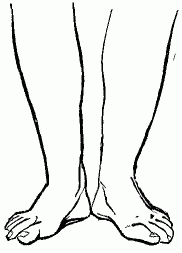
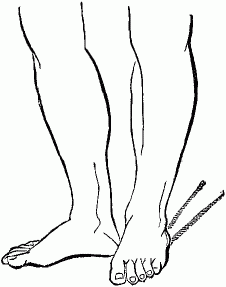
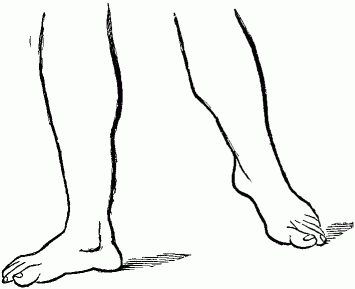
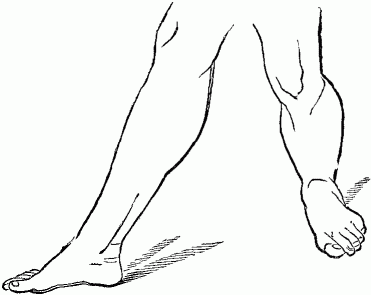
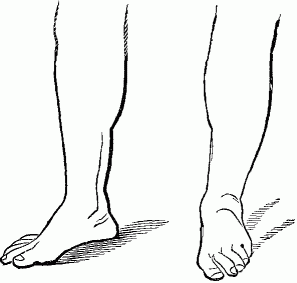
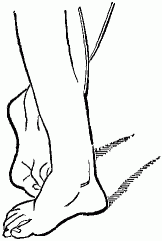
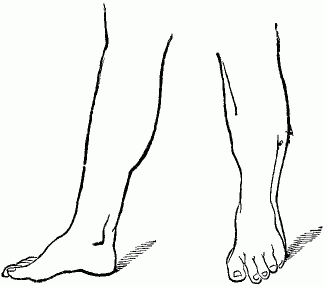
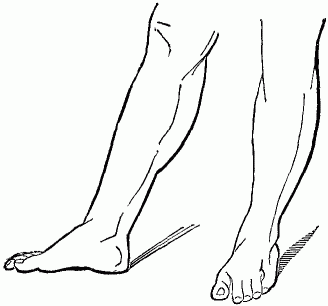
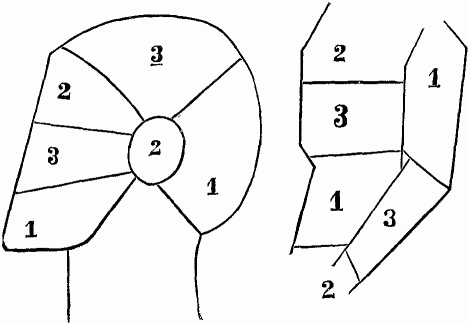
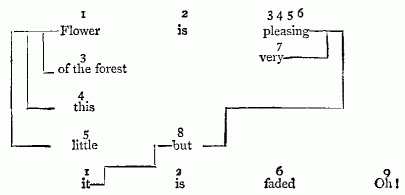

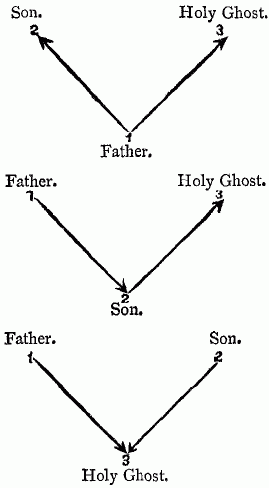
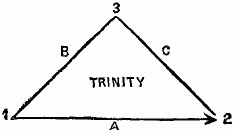



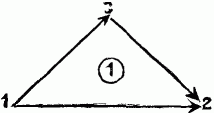
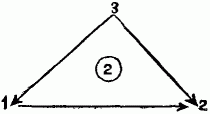
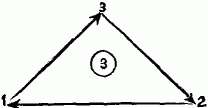
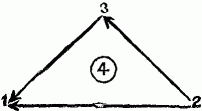
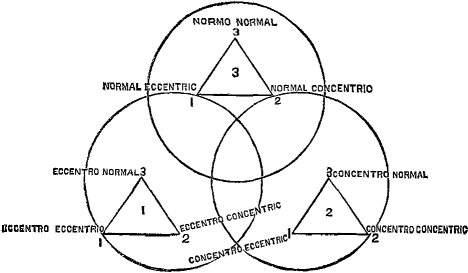
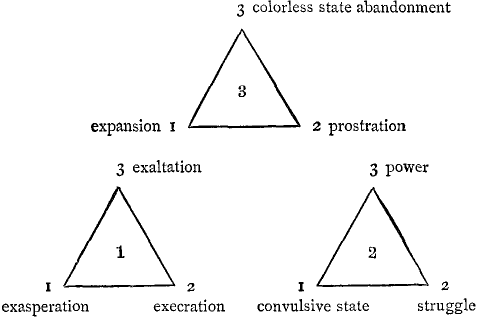
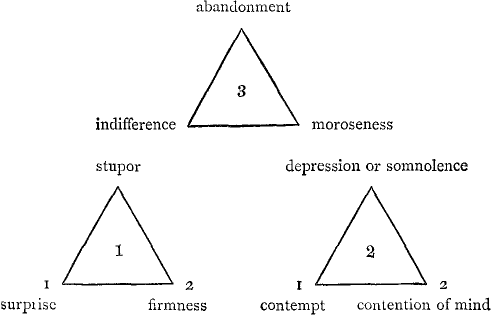
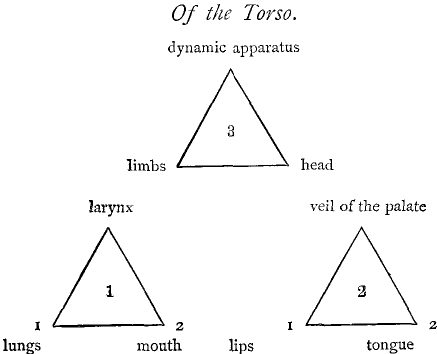
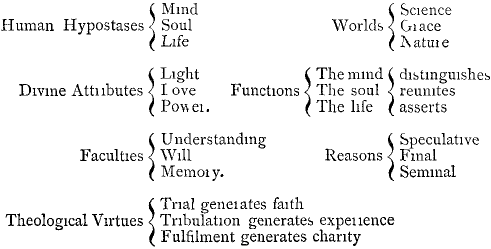
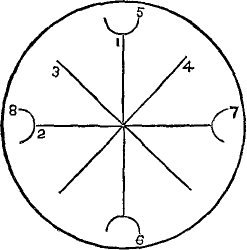
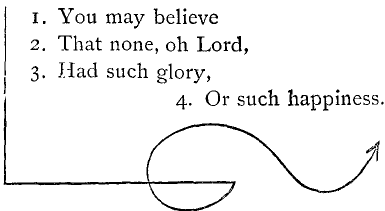
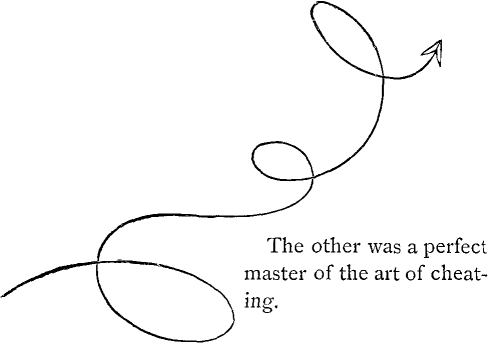
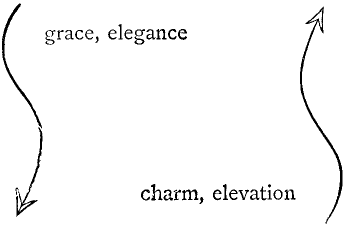
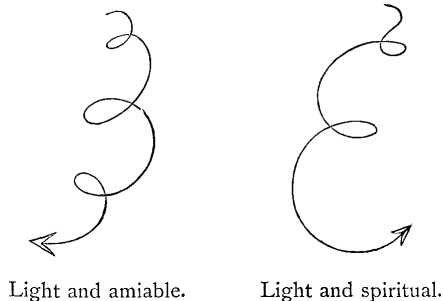
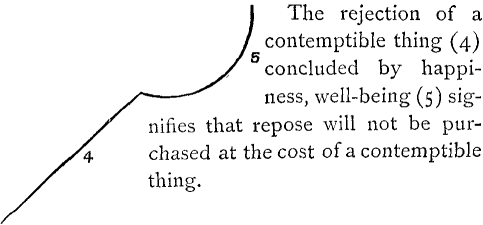

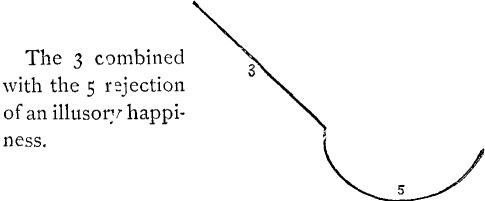
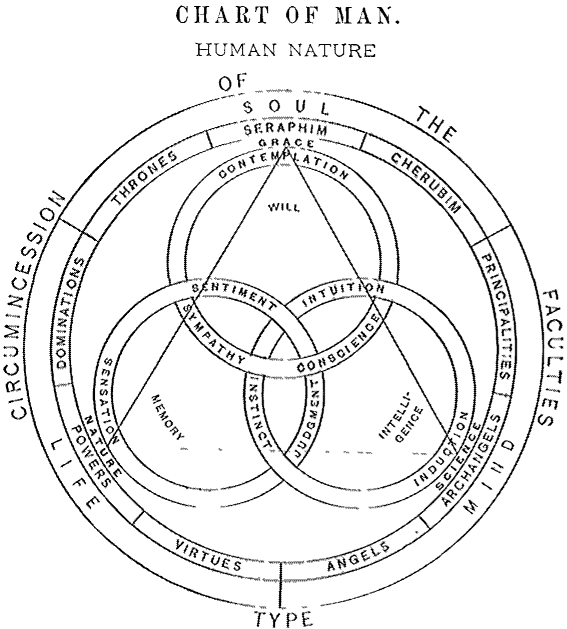
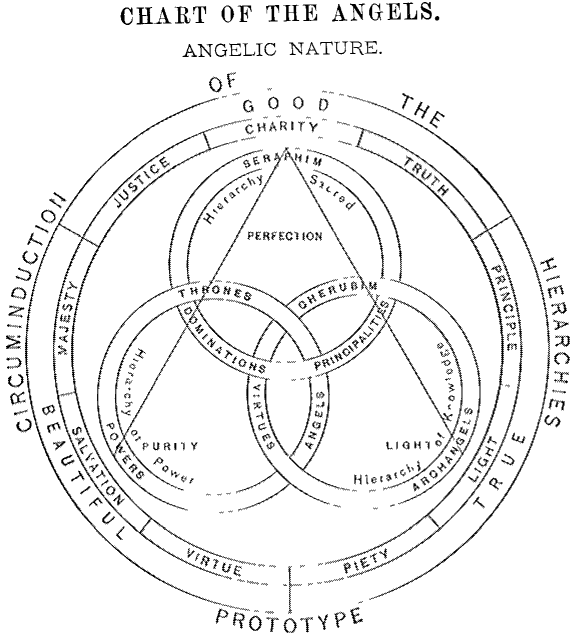
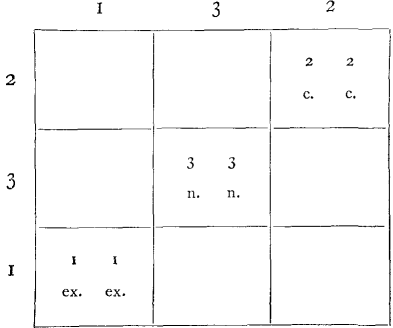
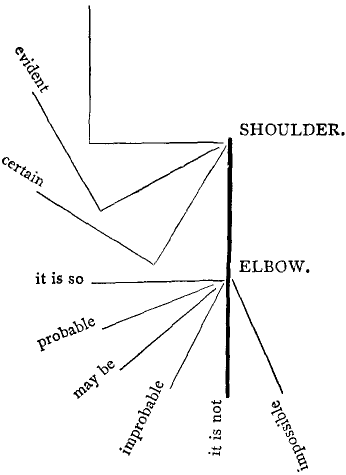
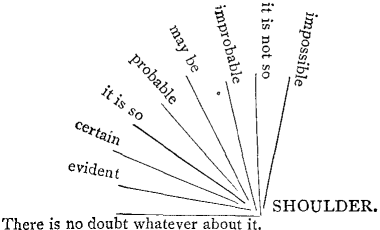
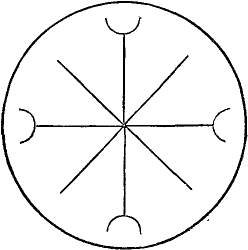
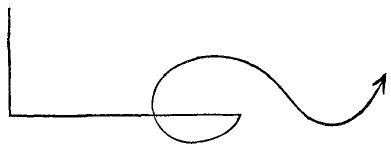
 had as much glory or happiness."
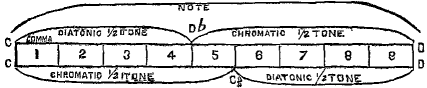
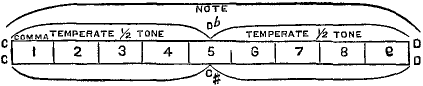
![Ex. No. 1. [Music] Ah! mon fils](https://openoldbooks.sgp1.digitaloceanspaces.com/books/delsarte-system-of-oratory/images/illus068.png)
![Ex. No. 2. [Music] il re-nia ta me-re](https://openoldbooks.sgp1.digitaloceanspaces.com/books/delsarte-system-of-oratory/images/illus069.png)


