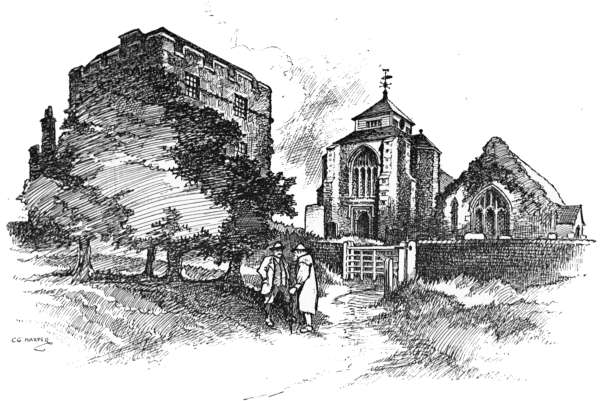
Sight-seeing with ease and comfort is the ideal of
the cycling tourist, and this run into a corner of
Buckinghamshire and the Milton country comes as near
the ideal as anything ever does in a world of punctures,
leakages, hills, headwinds, and weather that is either
sultry or soaking.
Starting from Southall Station, which will probably
strike the tourist as in anything but a desirable locality,
we gain that flattest of flat highways—the Oxford road—just
here, and, leaving the canal and its cursing
bargees, together with the margarine works, the huge
gasometers, and other useful but unlovely outposts and
necessaries of civilisation, speed along the excellent
surface, past Hayes End and the hamlet Cockneys are
pleased to call “’illingdon ’eath,” until within a mile and
a half of Uxbridge, where a turning on the right hand
will be noticed, properly furnished with a sign-post,
pointing to Ickenham, Ruislip, and Pinner. Here we
leave the dusty high road and its scurrying gangs of
clubmen, whose faces, as they scorch along, are indicative
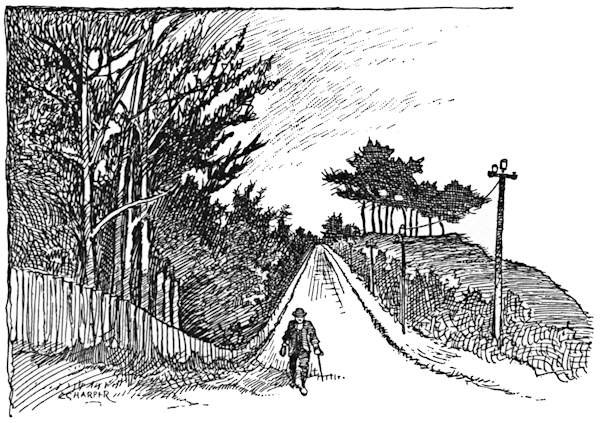
of anything but pleasure. It is a pleasant by-road
upon whose quiet course we have now entered, going in
a mile-long descending gradient, past the grand old
trees of Hillingdon Court overhanging the way, down
towards Ickenham. It is a perfectly safe and thoroughly
delightful coast down here, far away from the crowds,
along a lane whose leafy beauty and luxuriant hedgerows
might almost belong to Devonshire, instead of being
merely in Middlesex. At Ickenham, one of those
singularly tiny and curiously old-world villages that
are, paradoxically enough, to be found only in this most
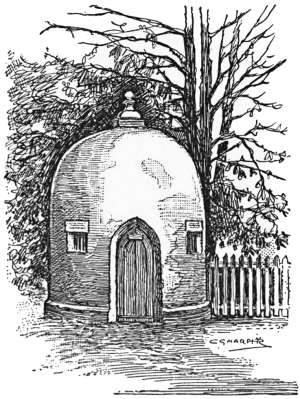
populous of English counties, are a village green, a pond,
and a pump. The pond is, perhaps, not so translucent
as it might be, for the reason that the ducks are generally
busily stirring up the mud; and the green, being mostly
loose gravel, is not so verdant as could be wished; but
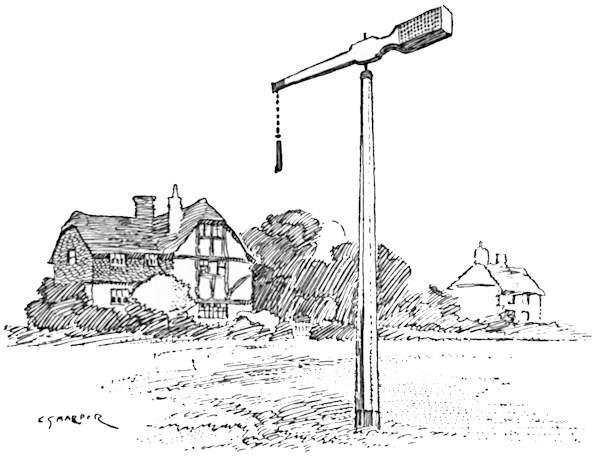
the pump, occupying a very central position, is at once
ornate and useful, and, in appearance, something between
a Chinese joss-house, a County Council band-stand, and
a newspaper kiosk. Also, it still retains on its weathercock
the tattered and blackened flag of some loyal
celebration or another, which may mean loyalty in
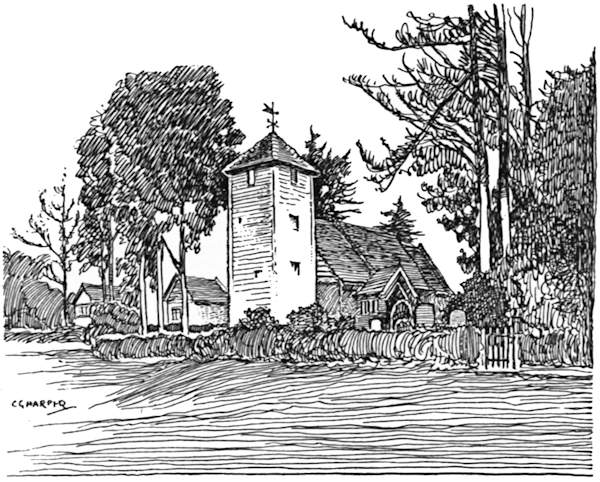
excelsis or merely local laziness. The very interesting
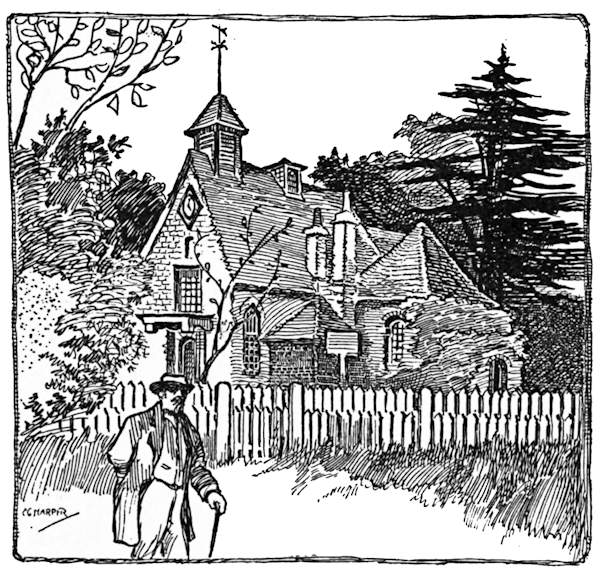
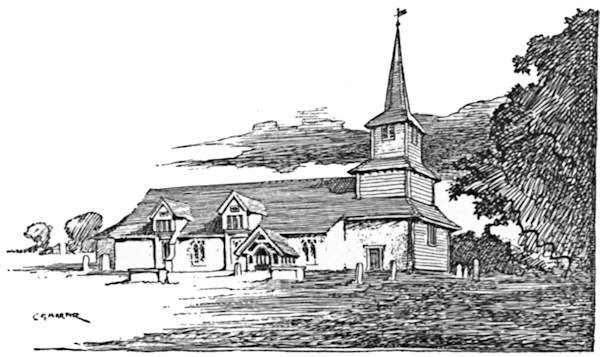
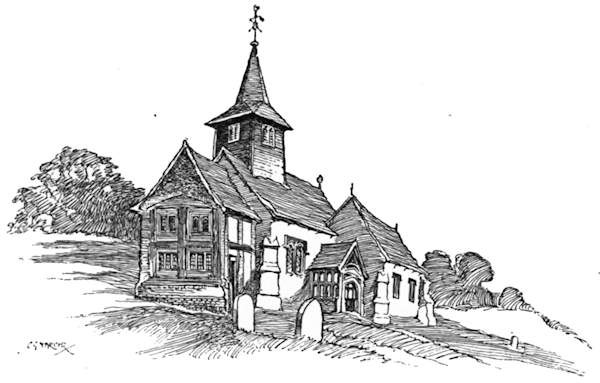
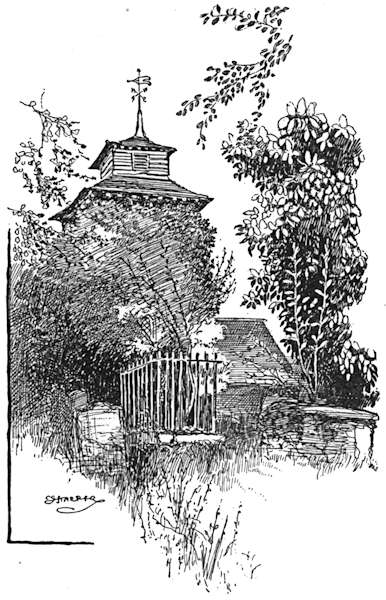
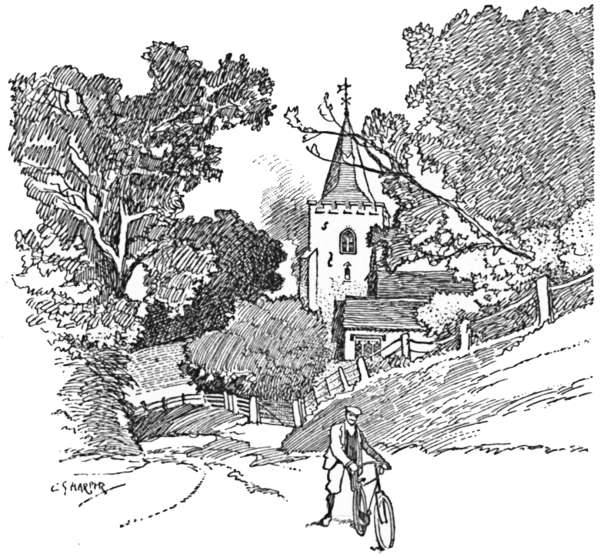
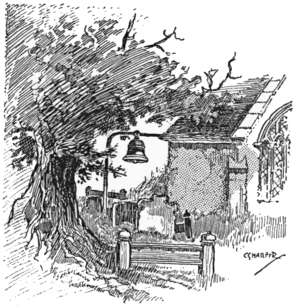
old church, with whitewashed walls and with odd
dormers in the roof, has some excellent windows and
a little timbered spirelet that shows up white against a
dense background of trees, and is, altogether, just such
a place as Gray describes in his “Elegy,” in whose
churchyard sleep the rude forefathers of the hamlet.
Suburbia has not yet disturbed this “home of ancient
peace,” and it is still worth the very earnest attention
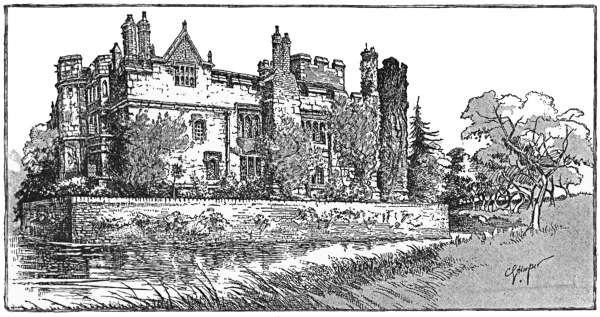
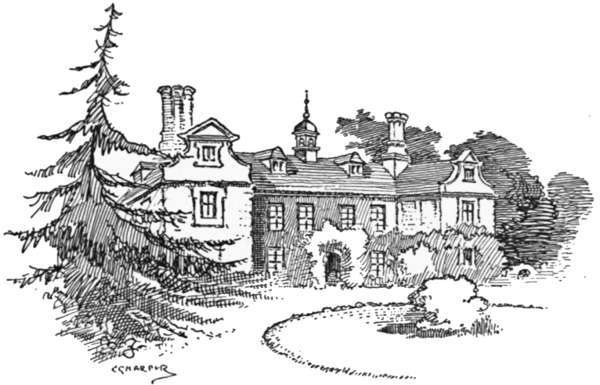
of the artist, as also is that grand old Jacobean mansion
of Swakeleys, standing in its park, near by.
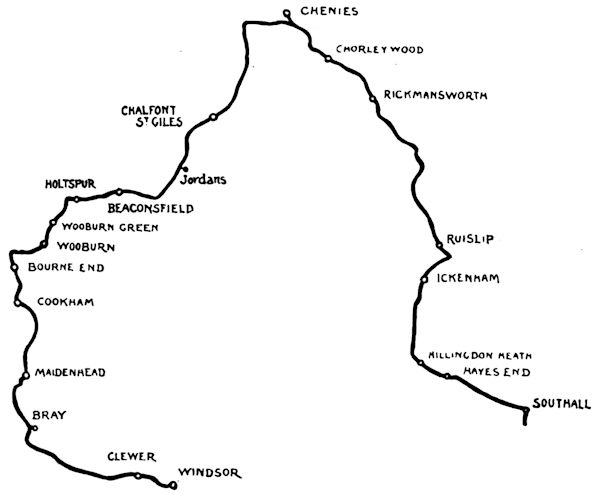
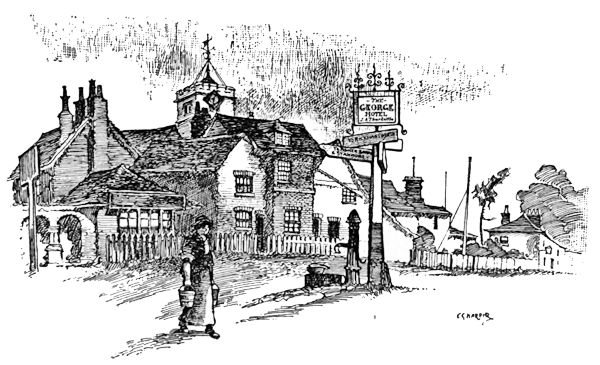
A mile onward is Ruislip, best reached by bearing to
the right at the next turning, and then sharply to the
left. Round about “Riselip,” as its inhabitants call it,
they grow hay, cabbages, potatoes, and other useful, if
humble, vegetables; and, by dint of great patience and
industry, manage to get them up to the London market.
It is only at rare intervals that the villagers ever see a
railway engine, for Ruislip is far remote from railways,
and so the place and people keep their local character.
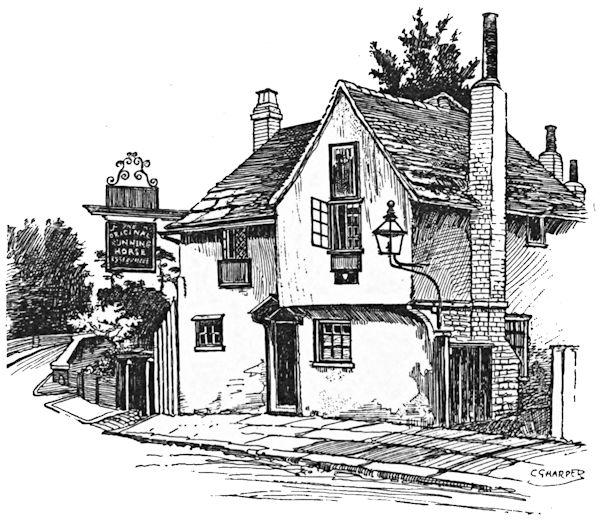
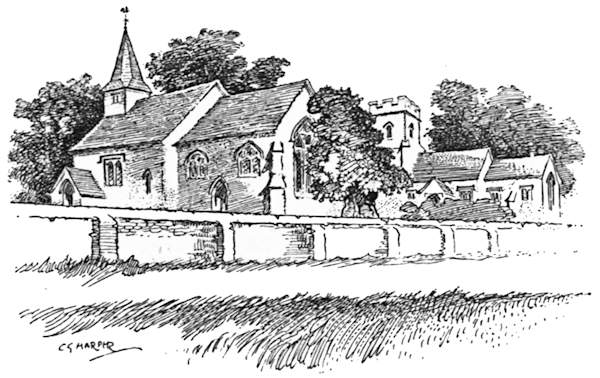
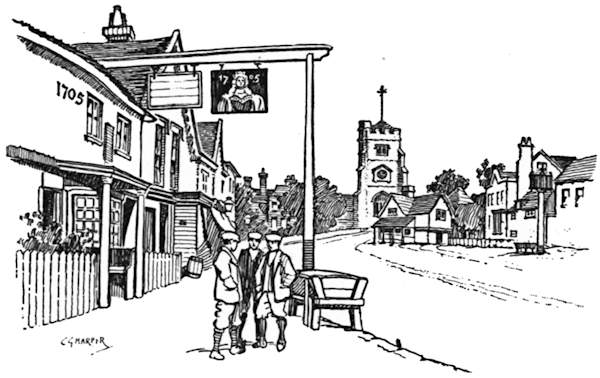
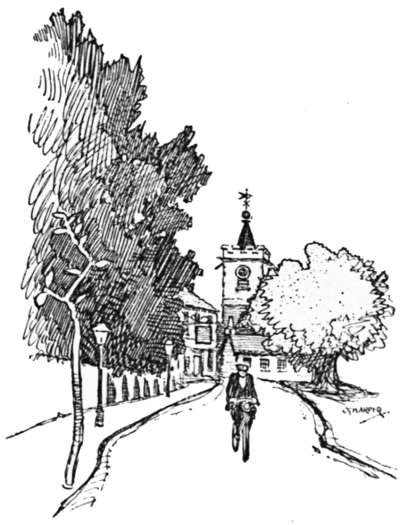
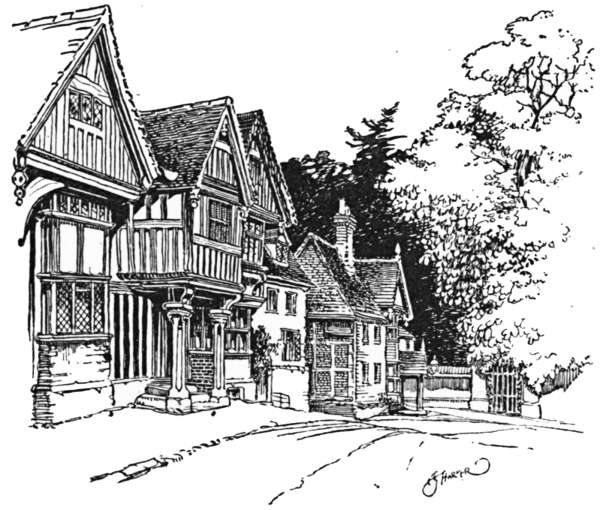
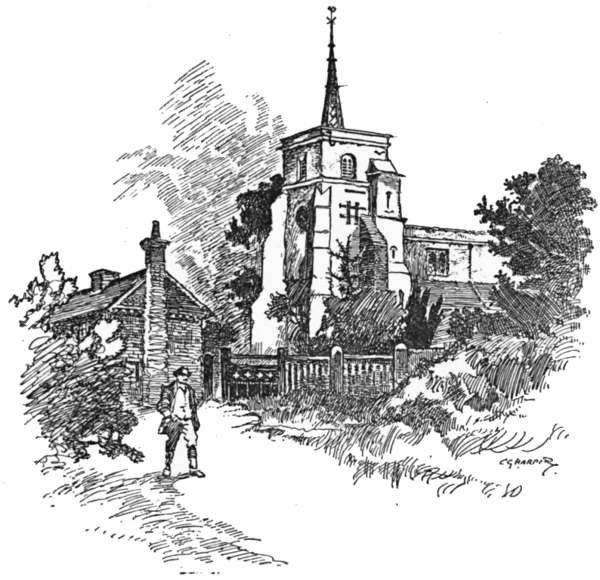
Two or three remarkably quaint inns face the central
space round which the old and new cottages are grouped,
and the very large church stands modestly behind, its
battlemented tower peering over the tumbled roofs and
gable-ends with a fine effect, an effect that would be
still finer were it not that the miserably poor “restoration”
work of the plastered angles, done by that
dreadful person, Sir Gilbert Scott, is only too
apparent.
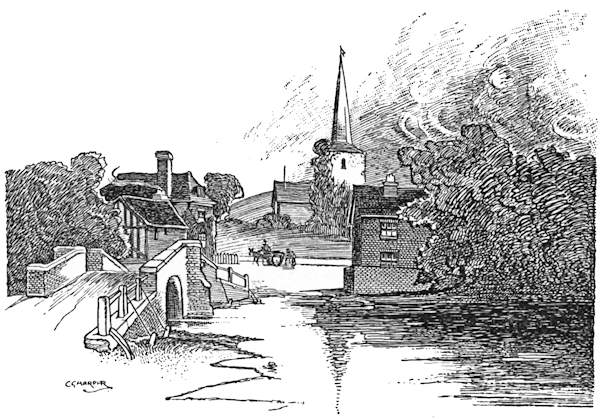
RUISLIP.
Taking the Rickmansworth road, and presently
crossing the road to Harefield, a desolate, half-ruined
modern house of large size, apparently never yet
occupied, is seen on the right. This is called St.
Catherine’s End. Beyond it, on the same side, presently
appears an unobtrusive road, with an air of leading to
nowhere in particular, and, in fact, abruptly ending on
the banks of Ruislip Reservoir. The sound of
“reservoir” is not a pleasing one to those who are
familiar with the ugly things of that name with which
an unbusiness-like Legislature has allowed the water
companies to destroy the beauty of the suburban
Thames; but there are reservoirs of sorts, and this
is one of the picturesque kind. The Regent’s Canal
Company made it, many years ago, as a store for
refilling that waterway, and it was doubtless more than
sufficiently ugly then. But trees have since that time
partly covered the hillsides sloping down to it, and that
finest of all artists and best of landscape gardeners,
Nature, has grown rushes and water-lilies here, and
nibbled a bit out of the straight-edged bank there, until
the place looks anything but artificial. Wild birds and
wild flowers, too, render this a pleasant spot, and there
are boats even, in which one may voyage down the mile,
or less, of lake, at whose distant end the red-roofed
villas of Northwood may just be seen, whimsically like
some foreign port.
Returning to the road, the first hill of the journey
presents its unwelcome front to be climbed or walked.
Duck’s Hill, as it is called, leads to an elevated tableland
where the bracken and the blackberry briars grow, and
shortly leads down again, by means of an exceedingly
steep, though short, fall through a mass of loose stones
and thick dust. The gradient and the quality of the
road-surface render this bit particularly dangerous.
Succeeding this is a more gradual descent, leading to
a right and left road. The right-hand, on a down-grade,
and one the tourist would fain follow, is not the
route, which lies, instead, to the left, and goes determinedly
uphill for half a mile. Just when you begin
to think this excursion is too much like taking a bicycle
out for a walking tour, it becomes possible to mount
and ride with comfort; and then, entering Batchworth
Heath and Hertfordshire simultaneously, the lodge
gates of Moor Park are seen across a wide-spreading
green surrounded by scattered houses. It is of little
use to describe Moor Park, for the house cannot be seen
by the casual tourist, and the cyclist is not allowed in
the grounds. The place has passed through many hands,
and now belongs to Lord Ebury. It was once the
property of a certain Benjamin Hoskins Styles, a
forerunner of the modern type of financier, who had
grown suddenly rich by speculating in South Sea shares.
He caused the hills that faced the house in either
direction to be cut through, in order to provide “vistas.”
He secured his vistas at a cost of £130,000, which seems
a high price to pay for them; but, according to Pope,
he also let in the east wind upon his house, and the next
owner, who happened to be Admiral Lord Anson, spent
£80,000 in trying to keep it out again.
Gradual descents, and two or three sharper ones,
lead for a mile in the direction of Rickmansworth, and
then a C.T.C. danger-board shows its red warning face
over a hedge-top, just as a beautiful distant view of the
town unfolds itself below. There are those who, as a
rule, disregard danger-boards: if such they be who
wheel this way, let them be advised to make this an
exception, for it is a long and winding drop down, and
ends by making directly for a brick wall, some cottages,
and a canal; sufficiently awkward things to encounter
on a runaway machine. Those who will not be advised,
and are accordingly run away with, are recommended
to choose the canal.
But the wise walk down, and, nearing the level,
mount again, and wheeling over a switchback canal
bridge and a river bridge, come happily into
Rickmansworth.
This old town resembles Watford, Ware, and Hertford,
but is much prettier. They are four sisters, these
Hertfordshire towns, with a strong family likeness but
minor differences. Ware is the slippered slut of them,
without doubt, and Hertford (if local patriotism will
forgive the comparison) the dowdy; Watford the more
pretentious; while Rickmansworth is the belle. All
are alike in their rivers and canals, their surrounding
meads and woodlands, and their breweries.
Green pastures and still waters, hanging woods and
old-world ways, render Rickmansworth delightful. One
comes into it from Batchworth Heath downhill, and,
across its level streets, climbs up again for Chenies,
reached past Chorleywood and its common, and a
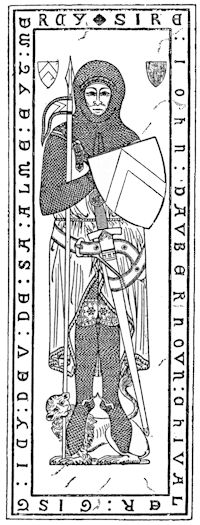
succession of the loveliest parks. Chenies is a place
of pilgrimage, for the church is the mausoleum of the
Russells, Dukes of Bedford; and if one cannot, in fact,
feel any enthusiasm for a family that has exhibited
such powers of “getting on in the world,” and has
consistently used those powers of self-aggrandisement,
while professing Liberal opinions, at least the long and
splendid series of their tombs is worth seeing.
The Rozels, as they were originally named, came
over, like many other Norman filibusters, with the
Conqueror. They did not, for a long while, make any
great mark after that event, and history passes them
by until 1506. During all those centuries, the Russell
genius for getting on lay fallow, and none of them did
anything in particular. They just vegetated on their
lands in Dorsetshire, at Kingston Russell, near Bridport,
until that year, when a quite unexpected happening
put the beginnings of promotion in their way. John
Russell, heir of the uncultivated bucolic head of the
house, had just returned from Continental travels, and
had acquired polish and the command of the French,
Spanish, and German tongues, accomplishments that
would probably have been of no sort of use to him had
it not been for the singular happening already hinted
at. In the winter of 1506 the Archduke of Austria,
voyaging from the Low Countries to Spain, was driven
by the fury of the Channel gales into Weymouth. He
was most unromantically sea-sick, and landed; although
England was at that time no safe place for one of his
house. But he preferred the prospect of political
imprisonment to the unkindly usage of the seas.
Meanwhile, until the king’s pleasure became known,
he was sheltered by Sir Thomas Trenchard of Wolveton,
near Dorchester; and because Sir Thomas knew no
tongue but his own robust, native English, he had his
young kinsman, John Russell, over from Kingston
Russell, to act as interpreter and entertainer to the
distinguished foreigner. Young Russell proved himself
so courtly and tactful that when the Archduke visited
Henry the Seventh on a friendly invitation to Windsor—where,
instead of being clapped into a dungeon, he
was royally entreated—he spoke in such high praise
of this young Englishman that the king speedily found
him a position in the Royal Household. Thus was a
career opened up to this most fortunate young man.
He was with Henry the Eighth in France, and fought
in several battles, losing an eye at the taking of Morlaix
and at the same time gaining a knighthood. Diplomacy,
which, rather than fighting, is the Russell métier, soon
claimed him. Diplomacy, it has been well said, is the
art of lying for the advantage of one’s country. Perhaps
he had not learned the art sufficiently well, for his great
mission to the Continent failed, and he returned, not
in disgrace, but, with the inevitable Russell address
and luck, to preferment. The times were fatal to
honest men, and that Russell survived that troubled
era and died in his bed in the reign of Mary, at peace,
and ennobled by the title of Earl of Bedford, enriched
with the spoils of confiscated religious houses and the
lands of attainted and executed friends, is therefore
no recommendation of his character, which was that of
a cautious time-server and cunning sycophant. He
lies here, the Founder of his house, his recumbent effigy
beside that of his countess, who brought Cheneys into the
family. It is a magnificent monument and the effigies
evidently carefully executed likenesses, even down to
the small detail of the earl’s eyelid, represented as
drooping over the lost eye.
The second Earl of Bedford was a man of greater
honour and sincerity than his father, the Founder.
His monument and that of his countess stands beside
his parents’ altar-tomb, and is of alabaster bedizened
to extremity with painting and gilding. He was the
first Francis of the family. The last was the man
(Francis, 9th Duke of Bedford) who poisoned himself
in 1891.
Earl Francis, perhaps, derived his sincerity from his
mother. Both were sincere Protestants, while his
father was anything you pleased, so long as he could
keep his head on his shoulders and put more money
in his pocket. The son’s Protestantism was nearly
the undoing of him, for the bloody Gardiner would
probably have sent him to the stake had he not
escaped to Geneva. When Elizabeth succeeded her
sister, he returned and served his Queen well and
truly, until his death in 1585. He was succeeded by
his grandson, Edward, who in turn was followed by
his cousin Francis; “the wise earl,” they call him,
perhaps because he found, after being released from
his imprisonment in the Tower for his political
opinions, that it was more peaceful and profitable to
busy himself about the draining of the ill-gotten Russell
lands at Whittlesea and Thorney, than to contend
with Parliament against the Crown. This is indeed
wisdom, and worthy of a Russell and a lawyer; for
as a lawyer he had been trained before his succession
to the earldom had been thought of. His son William
reproduced the shiftiness of the Founder, and lukewarmly
sided first with King, then with Parliament,
and so continually back and forth during the Civil
War. They made him a duke before he died—they,
that is to say, the advisers of William the Third—and
the price paid for it was the blood of his eldest son.
The title was given as a kind of solace for the loss
of that son, and must have been a bitter kind of
plaister to salve grief. That son, William, had not
the canny caution of his race, and deserves to be
honoured for the self-neglecting enthusiasm for the
Protestant religion which brought him to the block in
1683 for his alleged complicity in the Rye House Plot.
The most elaborate monument here at Chenies is that
to his father and mother, but more truly to himself; for
that fantastic pile of theatrical statuary, exhibiting the
Duke and Countess contorted with paroxysms of grief,
leads up, as the central point of this stony emotion, to
the portrait head of this unhappy patriot who fell under
the headsman’s axe.
There are other Russell monuments here, for the
family has rarely been averse from post-mortem
glorification; but to make a catalogue of them would
be wearisome. Among the latest, and the most unassuming,
is the plain slab to Earl Russell,—the Lord
John Russell of earlier political struggles,—who died in
1878.
Chenies village, let it at once be said, is utterly disappointing,
after one has heard so much of its beauties.
“A model village,” no doubt, but how depressing
these model villages are! And, indeed, the Russells rule
“Chaineys” (as it should be pronounced) with an iron
rule. The country in which it is set is beautiful, and at
the centre of the village a group of noble trees, with a
pretty spring and well-house, may be noticed; but that
anyone can admire the would-be Tudor architecture of
the cottages, almost all rebuilt by a Duke of Bedford
about fifty years ago, is surprising. Yet there are those
who affect to do so. The village lies just off the road,
to the right; and at its farther end stand the church
and the manor-house, close to one another.
“Isenhampton Cheneys” is the real name of the place,
but the Cheynes who once were paramount here are
long since extinct, and the insistent “B” is now on
every cottage, gate-post, and weathercock. The church,
rebuilt, has the whole of its north aisle appropriated as
the Bedford Chapel, so that, even here, you see how the
Russells maintain the feudal idea. Froude, indeed, says
the gorgeous monuments here are second only to the
tombs of the Mendozas, the proudest race in Spain; but
true though that be, he is grossly fulsome when he
praises the Russells for their “Liberal” ideas. Truth to
tell, the family has ever been content to wear the
Liberal mask and yet to treat its unfortunate tenants
in a manner that many an old Tory race would have
neither the courage nor the wickedness to adopt. Ask of
the Russell tenantry what they think, and, receiving your
answer, the wonder arises how that family can keep up
their curious pretence of being “friends of the people.”
Leaving Chenies, and regaining the highway to
Amersham, we wheel along until, passing under the
Metropolitan Railway at Chalfont Road Station, we take
the second turning to the left, leading to Chalfont St.
Giles. These three miles form the most exquisite part
of the whole tour, from the purely rustic point of view;
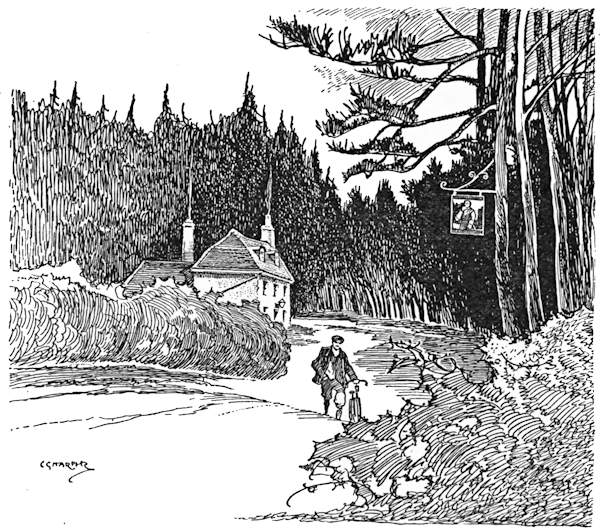
for they lead down through sweet-scented woodlands
where the perfume of the pines and the heavy scent
of the bracken (strongly resembling that of ripe
strawberries) mingle with the refreshing odour of the
soil itself. Nothing breaks the stillness in the daytime
save the hoarse “crock-crock” of the pheasants, and,
when night comes, the feathered choir from the well-named
neighbouring Nightingale Woods tunes up.

MILTON’S COTTAGE, CHALFONT ST. GILES.
Chalfont St. Giles lies down in the valley of the
Misbourne, across the high road which runs left and
right, and past the Pheasant Inn. It is a place made
famous by Milton’s residence here, when he fled London
and the Great Plague. The cottage—the “pretty cot,”
as he aptly calls it, taken for him by Thomas
Ellwood, the Quaker—is still standing, and is the last
house on the left-hand side of the long village street.
The poet could only have known it to be a “pretty
cot” by repute, for he was blind.
Americans, perhaps more than Englishmen, make
this a place of pilgrimage; and serious offers were
made, not so long since, to purchase the little gabled
brick and half-timbered dwelling, and to transport it to
the United States. Happily, all fears of such a fate are
now at an end; for the parish has purchased the freehold,
and has made the cottage a museum, where the literary
pilgrim can see the veritable low-browed room where
Paradise Lost was written and Paradise Regained
suggested, together with the actual writing-table the
poet worked at. An interesting collection of early and
later editions is to be seen, with Milton portraits, and
cannon-balls found in the neighbourhood. No one will
grudge the modest sixpence charged for admission by
the parish authorities to all who are not parishioners.
The parish church still remains interesting, although
three successive restoring architects have been let loose
upon it; and there are some really exquisite modern
stained-glass windows, as well as some very detestable
ones. Their close companionship renders the good an
excellent service, but has a very sorry effect on the bad.
Notice the very beautiful carved-oak communion rails,
which came from one of the side chapels of St. Paul’s
Cathedral, given by Francis Hare, Bishop of Chichester
and Dean of St. Paul’s. This spoiler of the metropolitan
Cathedral is buried here, and a tablet records his dignities.
Among other posts, he held that of Chaplain to the great
Duke of Marlborough, whose courier, Timothy Lovett,
by the way, who died in 1728, aged seventy years, lies
in the churchyard, beneath the curious epitaph—
“Italy and Spain
Germany and France
have been on Earth
my weary Dance.
So that I own
Ye Graves my greatest Friend
That to my Travels
all has put an end.”
Timothy, it is evident, was not of the touring kind
by choice.
Having seen these literary and other landmarks, we
can either regain the road, and, passing through
Chalfont St. Peter and its picturesque water-splash,
where the Misbourne crosses the road by the church,
come to the Oxford road, and by the turning to Denham
through Uxbridge into Middlesex again; or else, braving
a very steep, stony, and winding lane, make for Jordans,
that lonely graveyard and meeting-house of the early
Quakers, where lies William Penn, founder of the State
of Pennsylvania, with many another of his sect. A left-hand
fork in the road leads toilsomely in a mile and a
half to the solitary shrouded dell where Jordans lies
hid, embosomed amid trees. It was precisely for its
solitude and comparative inaccessibility that Thomas
Ellwood, the friend of Milton, with others of the Society
of Friends, purchased Jordans in 1671. They bought it
of one William Russell with the original intention of
making it merely a burial-ground, but the building of
the meeting-house soon followed.
This is the humble, domestic-looking, red brick
building the pilgrim suddenly catches sight of when
wheeling along the darkling lane. Hepworth Dixon,
writing in 1851, says, “the meeting-house is like an old
barn in appearance,” but that is scarcely correct. As a
matter of fact, it greatly resembles a stable, and indeed
is almost precisely identical in appearance with the still-existing
range of stables facing Old Palace Green,
Kensington; buildings erected at the same period as
this.
The stern, austere character of the original Quakers—Cobbett
calls them “unbaptized, buttonless blackguards”—is
reflected in the look both of their burial-ground
and their meeting-house. Nothing less like a place of
worship could be imagined. Many in style—or in the
lack of style—like it are to be seen in the New England
States of the United States of America, to whose then
desolate shores many of the early Quakers carried the
creed that made them outcasts in their native land; and
the American citizens who throng here in summer
must often be struck with the complete likeness of
the scene to many Pennsylvanian Quaker places of
meeting.
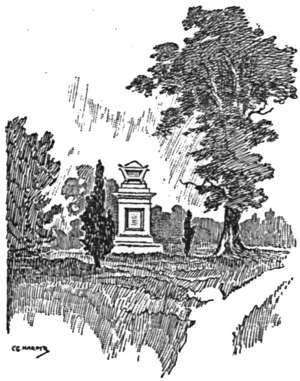
The plot where Penn and many others lie is just
an enclosed field, and not until recent years were any
memorials placed over some of their resting-places. A
dozen small headstones now mark the grave of William
Penn, the Founder of the State, and others of his
family.
Twice a year is Jordans the scene of Quaker worship,
on the fourth Sunday in May and the first Thursday in
June, when many of the faith come from long distances
to commemorative services.
Leaving Jordans, and striking the road into Beaconsfield,
we reach that quietly cheerful town in another
two miles, coming into it past Wilton Park, on the
Oxford road. The little town that gave Benjamin
Disraeli his title is a singularly unpretending place, and
is less a town than a very large village. Passing through
its yellow, gravelly street, and turning to the left, when
a mile and a half out, down the Oxford road, at the
hamlet of Holtspur, the way to Wooburn Green and
Bourne End lies downhill, along the valley of that little-known
tributary of the Thames, the Wye, which, some
miles higher up, gives a name to High Wycombe.
Bourne End has of late years grown out of all knowledge,
being now a place greatly favoured by those
outer suburbanites who more especially affect the
Thames; so that new villas plentifully dot the meads
and the uplands towards Hedsor Woods and Clieveden.
And so across the Thames into Cookham and
Berkshire. Frederick Walker discovered Cookham, and
painted the common and the geese cackling across it,
long before Society had found the Thames. He died
untimely, and is buried in the old church close by; and
since then Cookham has become more sophisticated—pretty,
of course, and equally, of course, delightful, but
not the Cookham of the seventies. But if, on the other
hand, you did not know the village then, and make its
acquaintance only now, you will have no regrets, and
will enjoy it the more. There is an odd effort at poetry
on a stone in the churchyard, which, perhaps, should not
be missed. It tells of the sudden end of William Henry
Pullen in 1813, and among other choice lines says—
“Well could he drive the coursers fleet, which oft he’d drove before;
When, turning round a narrow street, he fell—to rise no more.
No one commanded more respect, obliging, kind, and fair;
None charged him with the least neglect, none drove with greater care.
He little thought when he arose the fatal fifth of June
That morn his life’s career would close and terminate so soon.”
Three parts of the road from Cookham to Maidenhead
are exceedingly dull and uninteresting; let us therefore
take the towing-path, and cycle along that, ignoring,
like everyone else, the absurd prohibition launched a
few seasons ago by the Thames Conservancy. Not
hurrying—that would be foolishness; for although the
river is well-nigh spoiled by Boulter’s Lock, it is still
lovely all the way to Cookham, with the most glorious
views of Clieveden Woods, rising, tier over tier, on the
opposite shore. Here too, of course, have been changes
since first Society, and then the Stage, discovered the
river a few years ago, and bungalows are built on the
meadows; but we must needs be thankful that they
were built in these latter days, now that the hideous
villas of forty years since are quite impossible.
Nearing Maidenhead, and coming to the Bath road,
running right and left, we turn to the right and then down
the first road to the left (Oldfield road), then the next
two turnings in the same direction, when the old tower
of Bray Church comes in sight; that Bray celebrated
for its vicar immortalised in the well-known song, who,
when reproached with being a religious trimmer and
inconstant to his principles, replied, “Not so; for I
always keep my principle, which is to live and die the
Vicar of Bray.” Simon Alleyn was the name of this
worthy, who lived, and was vicar, in the reigns of
Henry VIII., Edward VI., Mary, and Elizabeth.
First a Papist, he kept his place by becoming a Protestant,
recanting when Mary came to the throne, and again
becoming a Protestant under Elizabeth. Called apostate,
renegade, turncoat, and denier of Christ, modern times
would give him the kindlier name of “opportunist.” At
anyrate, his opportunism was successful, for he held office
from 1540 to 1588. The ballad originated in 1712, in a
song entitled “The Religious Turncoat; or, the Trimming
Parson,” which refers to no particular place or person,
and has no fewer than eighteen verses, quite distinct
from the modern ballad. Thus they run, for example:—
“I lov’d no king in ’Forty-one,
When Prelacy went down;
A cloak and band I then put on,
And preached against the Crown.
When Charles returned into the land,
The English Crown’s supporter,
I shifted off my cloak and band
And then became a courtier.
When Royal James began his reign,
And Mass was used in common,
I shifted off my Faith again,
And then became a Roman.”
These verses, it will be noticed, place the trimming
story a hundred years later.
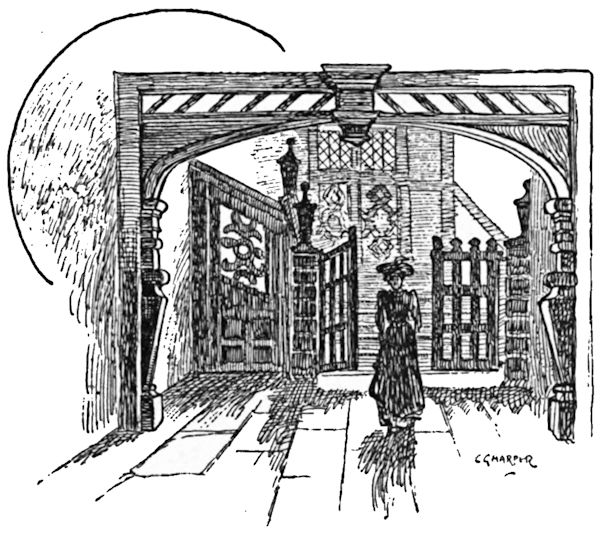
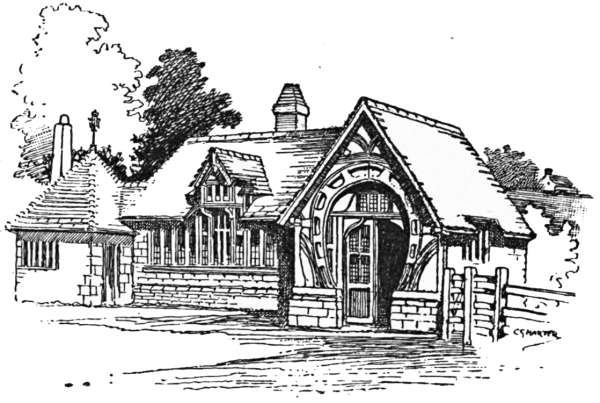
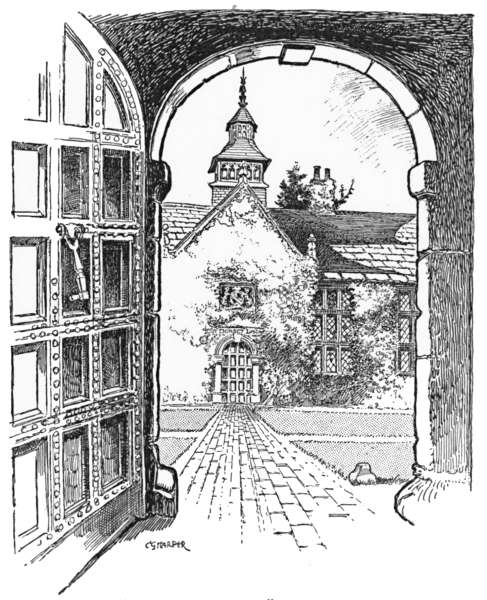
The churchyard is entered by a lich-gate with a
curious old house over it. In the church itself is a
monument to William Goddard, the seventeenth-century
founder of Jesus Hospital, and Joyce, his wife. That
celebrated old almshouse stands on the road as we leave
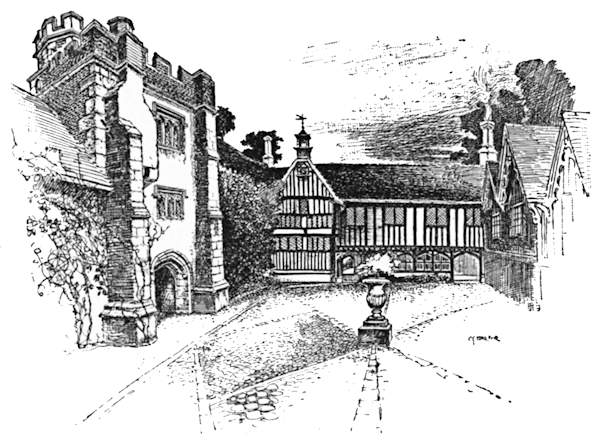
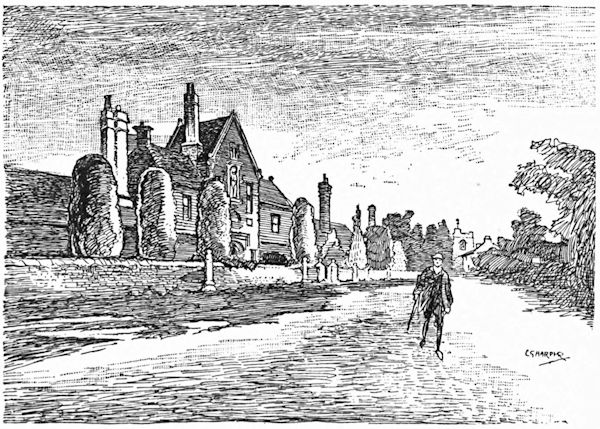
Bray for Windsor. It is a quaintly gabled, red brick
building, with a statue of the founder in an alcove over
the entrance. A central courtyard has little dwellings
ranged round it, and a rather striking chapel, familiar
in Frederick Walker’s famous picture, the “Harbour of
Refuge,” painted here in 1871-72. Unfortunately, those
who are familiar with that beautiful picture (now in the
National Gallery) will be disappointed on seeing the
real place, for the painter has quite idealised Jesus
Hospital, and has imagined many details that have no
existence.
JESUS HOSPITAL, BRAY.
Beyond the hospital, a turning to the left leads to
Windsor, past Clewer. Windsor bulks hugely from these
levels, with huddled houses and the towering mass of
the castle lining a ridge above the Thames; the Round
Tower, grim and terrible in other days, merely, in these
times, a picturesque adjunct to the landscape.
It seems, indeed, that everywhere in these days the
iron gauntlet has given place to the kid glove;
persuasion is, nowadays, more a mental than a physical
process. Only at Windsor these things take higher
ground; here for persuasion in this era read diplomacy,
where it had used to be a blood-boltered performance,
in whose dramatic course axe and chaplain took
prominent parts. The castle survives, its mediæval
defences restored for appearance sake, but its State
Apartments filled with polite furniture, dreadfully
gilded and tawdry. It makes a picture, this historic
warren of kings and princes; but alas for picturesqueness,
Henry the Eighth’s massive gateway is guarded to-day—not
by an appropriate Yeoman of the Guard, but
by a constable of that singularly unromantic body—the
police!
If one is wise, one does not visit Windsor for the sake
of the State Apartments, but for the external view of
the castle, set grandly, like a jewel, amid its verdant
meads. The meads form the most appropriate foreground;
the proper time, either early morning or
evening, for then, when the mists cling about the river,
and the grass is damp with them, that ancient palace
and stronghold, that court and tomb of Royalty, bulks
larger than at any other hour, both on sight and mind.
And, having thus seen Windsor aright, you cannot but
return well pleased.