Crimson clover is a heavy seed-producing plant, and yields of 5
to 10 bushels per acre are common, depending upon the thickness of
the stand, the extent of growth produced, and the care used in harvesting
the seed. The florets are self-fertile, but bees increase the number
of seed per head by tripping and transferring the pollen. Placing
colonies of honeybees next to blooming fields will increase pollination.
More seed is usually produced on soils of medium fertility than on
rich soils, since fertile soils seem to stimulate the growth of stems and
leaves rather than develop flower heads.
Large yields and ease of harvesting seed are two important reasons
why crimson clover is such an ideal legume crop. Farmers can save
seed with very little expense other than their own labor. When the
seed heads are mature they readily shatter and are easily harvested
either by hand stripping or by using horse-drawn home-made strippers.
One bushel of unhulled seed contains about 2 pounds of hulled
seed, and although bulky, it can be easily stored on the farm until fall.
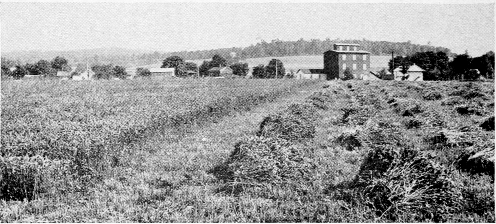
Figure 4.—Crimson clover seed crop cut with a mower equipped with a
bunching attachment.
When the seed is mature the crop is cut with a mower (fig. 4), which
may be equipped with a bunching or windrowing attachment, or it
can be harvested with a combine. During wet seasons it is sometimes
difficult to combine the seed from standing plants. Under such conditions
the plants can be cut and windrowed and than threshed by
the combine from the windrow. As crimson clover shatters easily
when ripe, cutting with the mower when the heads are damp with dew
or rain is recommended. If it is allowed to stand too long after
ripening a beating rain will shatter much of the seed. After a few
days of curing, the seed is hulled with an ordinary clover huller, with a
grain separator equipped with hulling attachments, or by a combine
equipped with pick-up attachments or used as a stationary machine.
The less the clover is handled the less seed will be lost by shattering.
Many troublesome weeds are difficult to separate from crimson
clover seed, including field peppergrass (Lepidium campestre),
wintercress (Barbarea praecox), and the bulblets of wild onion (Allium spp.),
which are probably the worst. Seed of the mustards, rapes, and
turnips (Brassica spp.), dock (Rumex crispus), wild geranium
(Geranium dissectum), sorrel (Rumex acetosella), and catchweed (Galium
aparine) are also found in the seed. Little barley (Hordeum pusillum)
is a pest in unhulled seed, and the use of such seed will naturally
increase the prevalence of this weed.
U. S. GOVERNMENT PRINTING OFFICE: 1947
For sale by the Superintendent of Documents, U. S. Government Printing Office
Washington 25, D. C. — Price 5 cents
Transcriber Note
Illustrations moved to avoid splitting paragraphs and closer to references
in the text. Minor typos may have been corrected. Table of Contents added
to facilitate searching for topics.