JUDGE CAHILL drew his chair a trifle nearer the fire and the tall,
muscular young man who was with him, and who bore so striking a
resemblance to him as to be unmistakably his son, dropped into one
opposite. They had finished their late dinner and were on the way to the
library, but the elder man had paused before the big chimney-piece,
standing meditatively for a few moments, and had finally seated himself
comfortably and evidently with no immediate intention of proceeding to
the library beyond.
“The whole arrangement is just what I have planned and hoped for all my
life,” he said at length, with a bright look at the young man opposite.
“And we have a capital chance of talking it over together to-night. It
is rather lucky that your aunt is away for a few days, Dana. Your sister
will be delighted. You must write to her at once that it is un fait
accompli and that she must leave college for over Sunday and come in
and celebrate with us!”
“Oh! it will doubtless seem a mere trifle to Louise in comparison with
her own arduous duties and tasks,” responded young Cahill, laughing a
little and offering a cigar to his father, who refused it with a slight
shake of his fine, white head.
“If you don’t mind, I’ll smoke one,” he said, lighting his own.
“Oh! I don’t mind at all,” said the elder man; and then absently and
sadly, as he pushed the thick, silvery hair back from his forehead with
a quick decisive motion habitual with him:
“I wish your mother could have lived to see this, Dana!”
The younger man made an inarticulate murmur of assent and regret, and
then they both sat silent, staring into the crackling logs, while the
butler moved noiselessly about, putting a decanter and glasses on the
table and turning down the lamp a bit and folding back the screen. The
younger man was making a rather unsuccessful attempt to recall his
mother. He remembered her vaguely as a boy of eight remembers, and she
had always seemed to him rather like some beautiful woman of whom he had
read than his own mother; and the portrait of her in the drawing-room,
although he could recall every feature, every line of it, was like the
picture of any other beautiful woman he might have seen in a gallery
abroad or the year’s Academy. At last he looked up, and shaking the ash
from his cigar, said, with rather an effort—
“You have been most kind, sir. I scarcely think I deserve so much at
your hands. I shall try to be all you wish.”
Judge Cahill looked quickly around. “That’s right! that’s right, my
boy!” he said heartily, and with a touch of surprise in his voice. “You
have always been what I wished—not very studious, perhaps”—he laughed
indulgently, “but you always stood fairly well at the University, and
although you have doubtless done a great many things of which I know
nothing and of which I do not wish to know,” he added quickly and
decidedly, “still I believe you have lived a life which you have no need
to be ashamed of. I know that you are honest, and truthful, and
straight, and that I can trust you, and that the responsibilities which
you are to assume will make you even more upright and ‘square,’ if
possible.”
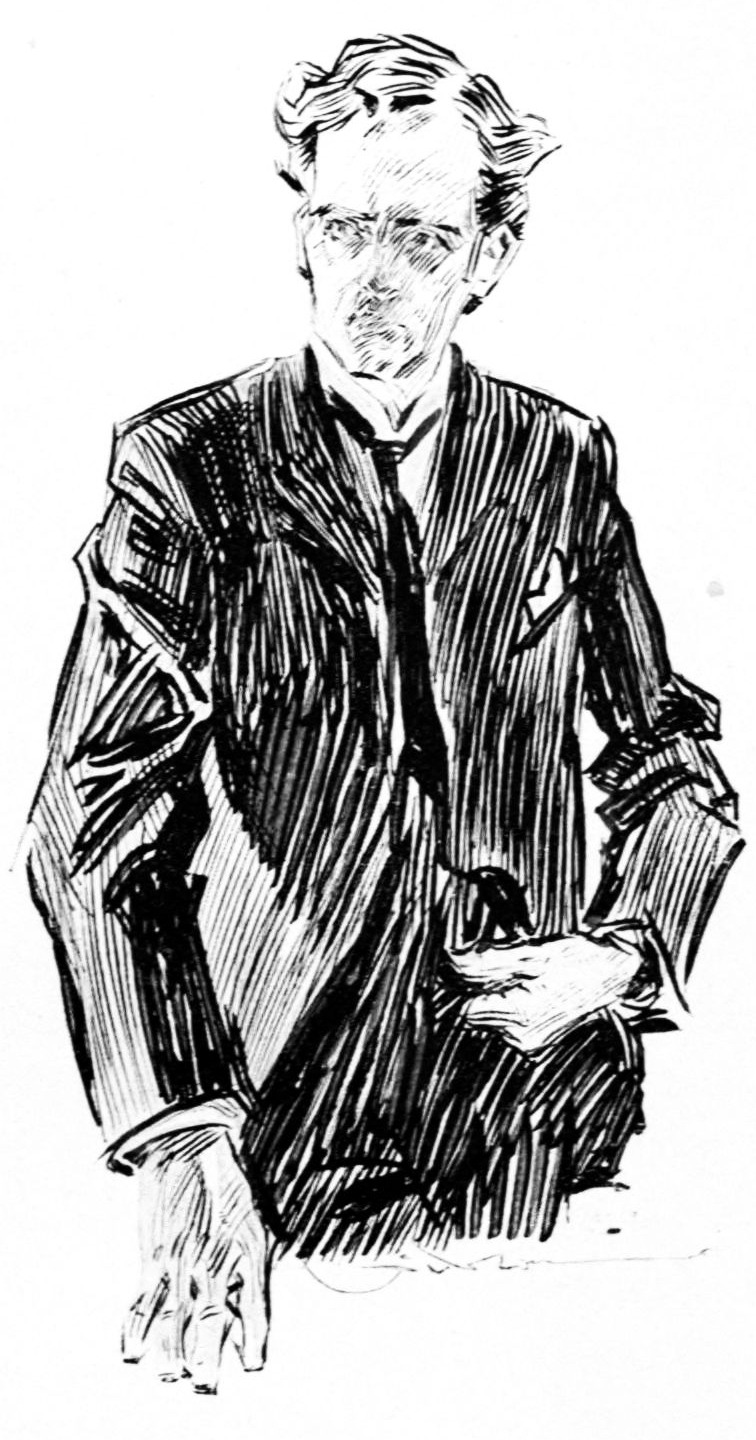
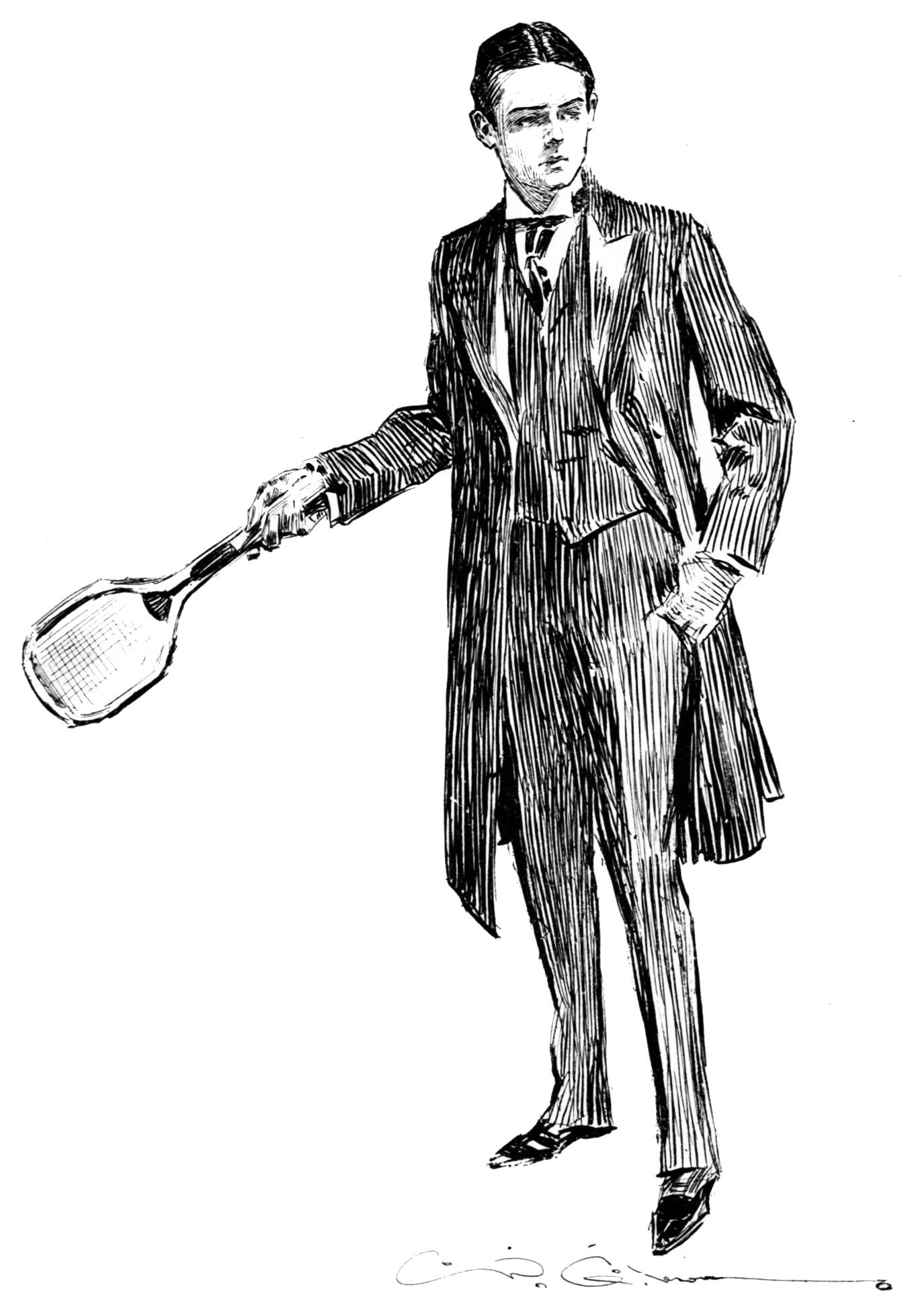
He glanced admiringly and affectionately at the athletic young figure
sitting easily before him, at the well-shaped head and pleasant blue
eyes and finely-cut mouth of the young man.
“You might have been so different,” went on the older man, musingly,
and with a certain whimsicality. “You might never have been willing to
go through the University; or worse still, you might never have been
able to get through; or you might have made debts that even I would not
have felt willing or able to pay; or you might have been unwilling to
supplement your college education with the years of travel which I
thought necessary; or you might have had so decided a dislike for the
law that it would have been impossible for me to take you in the firm as
I am now so delighted, so proud to do; or you might have married too
soon and ruined your life. In short, you might have been a
disappointment—and you are not.”
The young man shifted his position a little, and tumbled the burnt end
of his cigar into the ash-tray at his elbow.
“You are very kind, sir,” he repeated. “I am not quite equal to telling
you just how kind you seem to me, and how proud I am to be the junior
member of the firm. I feel a legal enthusiasm kindling within me which I
am sure will land me on the Supreme Bench some day!” And then he went on
more seriously, and with an anxious note in his voice. “But I hope you
are not deceiving yourself about me, sir. If you remember, you did
have to pay debts for me at the University, and there was one time when
I thought active measures would be taken to prevent my finishing my
course even if I had been quite inclined to continue, as indeed I was;
and I am not very clever, and shall never be at the head of my
profession as you are, sir!”
Judge Cahill leaned back and laughed easily.
“I had quite forgotten those little incidents, Dana!” he said, “and do
you know, it seems to me that we are unusually complimentary and
effusive to each other to-night. I am congratulating myself on having
such a son, and you on having me for your father! Well—it is not a bad
idea. A little more demonstration in our family will not hurt anything.”
He paused slightly, and then added: “Your mother was not very
demonstrative.”
Again young Cahill murmured an assent as he looked reflectively into the
fire. He could just remember that she had not seemed very fond of
himself.
“But Louise is demonstrative enough,” he said, at length.
“Yes—yes, indeed,” replied his father, readily. “Louise is very
affectionate and enthusiastic. She seems tremendously interested in her
college—much more so than you were in yours,” he added with another
laugh.
Dana Cahill got up leisurely, and stood by the chimney-piece thrusting
his hands in his pockets and looking thoughtfully into the fire.
“I am thinking, sir,” he began, hesitatingly, “of what you have said
about my having lived straight. I want to be fair about it. I have
lived better than some. I have done nothing to be ashamed of, as you
said, sir, and I cannot think of anything just now to speak of which
would illustrate my point. But I cannot help thinking that your ideals
and principles are so much higher and purer than those of most young men
of to-day, that I may have fallen short of them in a great many ways of
which you do not dream.” He moved back uneasily to his chair and dropped
into it. “I do not mean in the more vital questions. I have done nothing
dishonorable, nothing that I could not afford to do according to the
world’s standard.”
The elder man looked at him, and a shade of annoyance and uneasiness
crept into his face.
“Well?” he asked, finally.
Young Cahill looked up, and his frank, boyish face wore a rather
perplexed, troubled expression.
“Well,” he said, “that’s all—unless—” he stopped suddenly and lit
another cigar rather nervously.
“Unless what?” insisted the elder man, the uneasiness and annoyance
betraying themselves in his voice.
“But,” he added, quickly; “don’t tell me anything that you might later
regret telling, or anything very disagreeable if you can help it, for I
confess you have been so satisfactory, so thoroughly all that I wanted
my son to be, that I shrink from hearing anything to your detriment.”
“I don’t know that it is exactly to my detriment, for after all, I was
thinking of a particular case to illustrate what I said a while ago, and
I am pretty sure that most of the men I know wouldn’t think seriously of
it for a moment; but I acknowledge that I have never felt satisfied with
myself about it all.” He threw back his head and stared fixedly at the
ceiling for a moment, and then burst out laughing.
“By Jove, sir! we are getting demonstrative,” he said. “Do you feel
yourself equal to being a father confessor besides just an ordinary
father?”
Judge Cahill smiled in a perfunctory way.
“If your conscience is in such a bad way as to need confessing, Dana, I
shall be very glad to hear, although I, of course, cannot give you
absolution.”
Cahill paused a moment.
“That’s so, sir,” he said, finally. “After all it is hardly worth while
troubling you about such a small thing, and one that happened so long
ago, and which is settled now, rightly or wrongly, forever.”
He stood up as if to say good-night, but the elder man did not rise and
sat looking thoughtfully at the blaze with the uneasy, surprised look
still on his face.
“It is not about business? nothing that affects your character for
honesty and fair dealing?” he said at length, interrogatively.
“Oh, no!” replied Cahill, quickly.
Judge Cahill looked inexpressively relieved. He poured out a little wine
and drank it off quickly, as if he had experienced some moment of sharp
emotion which had left him faint. The younger man noticed the action and
went on hastily.
“It was nothing—only about a girl whom you never heard of, and
myself—something that happens to two-thirds of the men one meets—it is
really of little consequence, though it has worried me, and since I have
spoken of it at all, I may as well tell you about it, sir.”
But it was a very fragmentary story that he told and the facts, as he
reviewed them hastily, seemed absurdly commonplace and inadequate to
the amount of worry he had given himself.
“It was five years ago, sir, you remember, just after I left college,
and went out to Nevada for the summer with Lord Deveridge and the rest
of that English syndicate. It was when they bought ‘The Bish’ mine, you
know. Of course we went about a great deal. They were so afraid of being
swindled, and there had been such pots of money lost out there by
English syndicates, that they determined to investigate fully and take
every precaution. So they went around trying to sift things out, and
there were a great many complications of all sorts which occasioned a
great deal of delay, and there were so many conflicting rumors about the
value of the mine, that I began to think they were never going to wind
up things. Deveridge and I got awfully tired of pottering around after
all sorts of men, meeting an expert geologist here and a committee
there, and never getting at anything; so we finally decided to cut the
whole thing for two weeks and go off on a little shooting expedition.
Two or three others joined us, and we had magnificent sport for four
days—and then I sprained my bad ankle again.” He stopped suddenly. “It
is very curious how things happen,” he said at length, with a little
laugh. “If it hadn’t rained the morning of the Springfield game, the
ground wouldn’t have been wet and I wouldn’t have slipped in that last
scrimmage, and my ankle wouldn’t have been sprained, and I wouldn’t have
wrenched it on that mountain road, and I wouldn’t have been laid up two
weeks in the house with her, and none of this would have happened.”
But the elder man was in no mood for trifling.
“You were saying——?” he began, anxiously.
“That I hurt my ankle and had to limp to the nearest inhabited place and
stay there until it got better. Of course the others went on. They were
coming back that way and stopped for me. I was all broken up at not
being able to enjoy the shooting, but my ankle gave me so much trouble
at first that I didn’t have a great deal of time to think about it; and
then it began to dawn on me that she—the daughter I mean—was unusually
pretty and refined and quite different from her parents seemingly,
and—and—there was nothing else to do, sir, and I am afraid that I
acted as most young men would act under similar circumstances.”
“You mean,” said his father, with an uncompromising directness which
Cahill thought rather brutal and unnecessary, “you mean that you made
love to the girl?”
The young man nodded.
“She was very pretty, you know, and it was only for a short time, and
she must have seen—have realized—that there was a difference, that
there was nothing to it. It was only the most incipient flirtation—the
same thing that goes on at Bar Harbor and the Pier and Newport among a
different class of people.”
Judge Cahill said nothing, rather to the young man’s discomfiture, so he
ran on, hurriedly:
“They were very poor, and I paid them liberally for what they did for
me. I confess I rather lost my head about the girl for a week! She was
strikingly pretty, but she had only the most elementary education and
was absurdly unconventional. Of course it was nothing, sir, and I don’t
flatter myself that she felt any worse when I left than I did—at least
she never made any sign,” he added, meditatively.
“I can see how, from your point of view, it appeared nothing, Dana,”
said the elder man, gravely, at length. “But I hope this is the only
episode of the kind in your life,” he continued, after a moment’s pause.
The younger man stood up with a rather relieved look on his face.
“Indeed it is, sir! and I think the fact that I have let it worry me so
much is proof that I am a novice at it. The whole thing was so
unimportant that I feel rather ridiculous for having spoken of it. There
was never anything serious in the affair, and of course, sir, I did not
dream—I knew it would be impossible to bring her here. You—my
sister——” he stopped and looked around him rather helplessly.
“Of course,” assented the elder man, readily. “I am glad you got
yourself so cleanly out of such an entanglement. As you say, it was
commonplace and unimportant. Have you ever heard anything of her since?”
“O, no! I saw her for two weeks and then we parted with mutual regret,
and that was all, sir! Your too complimentary remarks recalled the whole
episode to my mind, and made me feel rather hypocritical, for I confess
that I consider that sort of thing extremely caddish. There’s no excuse
for it.”
“There is not, indeed,” assented the elder man, rising. “And it has
further surprised me, because you have always seemed rather indifferent
to women, Dana—almost too much so. Well—I am glad you told me. Your
life has been clean, indeed, if you have no worse things to tell of than
a two weeks’ flirtation with a little Western girl!” He laughed again—a
deep, hearty laugh, with a relieved ring in it.
“Good-night!” he said. “To-morrow you will please get to the office
promptly as a junior member should! ‘Cahill, Crosby, and Cahill’ sounds
very imposing, doesn’t it, Dana? much more so than merely ‘Cahill and
Crosby.’ I’m delighted, my boy! And it is especially good to think that
you are back with me. What with your college life and travels, and law
study, I have hardly seen anything of you for ten years, and at my age
one cannot spare ten years—it is too big a slice out of the little cake
left! Good-night!”
“Good-night, sir!” responded the young man, heartily, as he held the
door open for his father to pass into the library.
And then he reseated himself before the fire and smoked another cigar
and recalled a great many details that had somehow slipped his memory
when talking to his father, and he felt distinctly relieved and glad to
get away from his own thoughts when he remembered an engagement which
took him out immediately.
At Easter Miss Louise Cahill left college to spend the vacation at her
home in Boston. It was possibly because she was small and blond and
quite irrepressible that her most intimate friend, Edith Minot, of
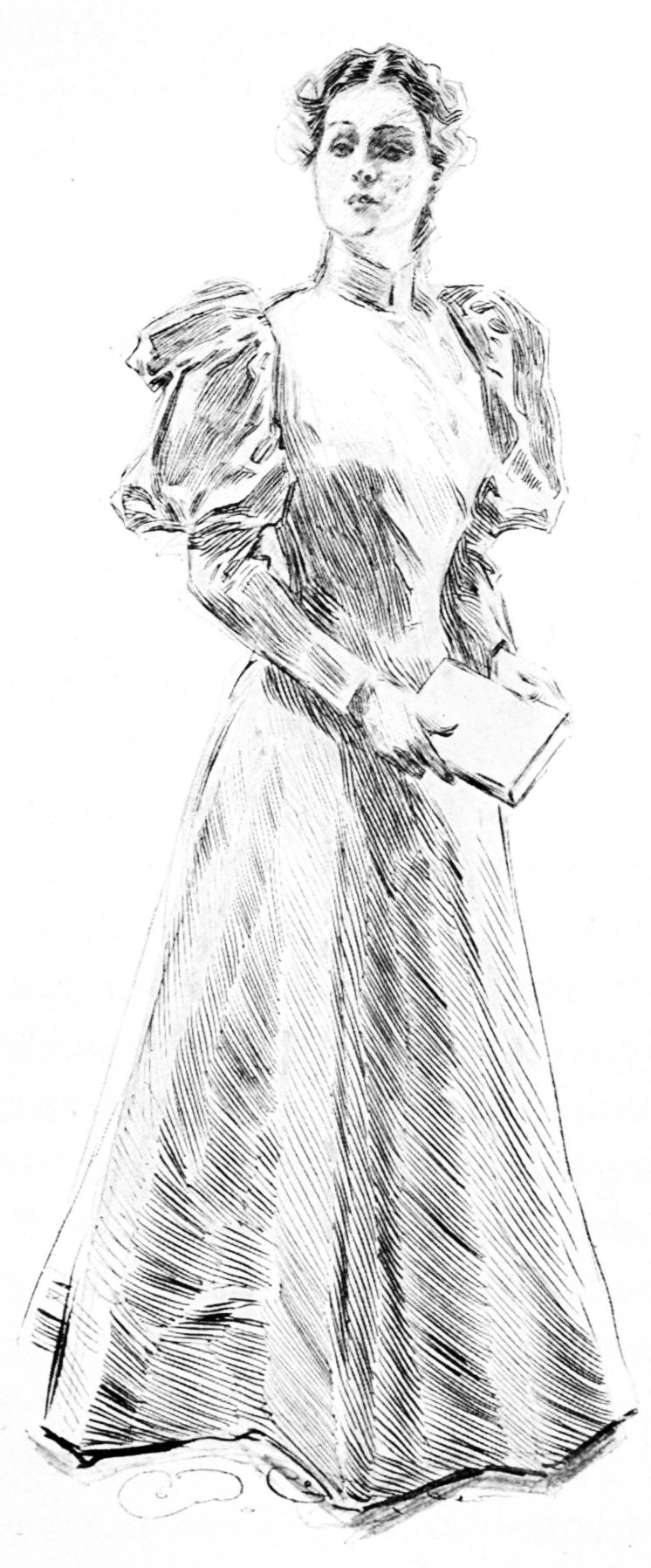
Baltimore, whom she brought home with her, was tall and rather stately,
with a dark, severe beauty quite in contrast to that of Miss Cahill.
They were alike, however, in a great many ways, in their young
enthusiasms and in their devotion to art—they worshipped Israels and
Blommers and Herzog—and in their vast interest in electrical inventions
and discoveries, and in their sympathy with whatever was weak or ill or
oppressed, and in modern charities and college settlements. They had
been great friends at college, where Miss Minot had taken her degree the
year before, but they had seen little of each other since, Miss Cahill
having returned to finish her college course and Miss Minot having been
abroad until late in the fall, and having then been much taken up with
the social life of Baltimore.
Miss Cahill was very much afraid that society had spoiled Miss Minot,
and that she would be less interested in art for art’s sake, and in
university extensions and college settlements and organized charitable
work. She was therefore much delighted and very enthusiastic to find
that her friend was not at all changed in the ten months of absence, but
that in the midst of her travels and social pleasures she had contrived
to devote a great deal of time to the things that had always interested
her, and that she had studied the Guild Hall Loan Exhibit and the East
End with equal enthusiasm, while in London, and was greatly interested
in Nikola Tesla’s latest experiments and in college settlements. It was
the college settlements that interested her most, however.
“But I think,” she explained earnestly that evening to her friend and
young Cahill, after the Judge and his sister had gone into the
library—“I think that although there are more interesting and dreadful
things to be contended with at the Chicago Settlement, and although
Rivington Street is on a much larger scale, still I think I like the
Boston College Settlement the most. Perhaps it’s because I know it
better, or because it is not quite in the slummiest slums, or because
I’m so interested in my protégée there—at any rate, I like it best.”
Miss Cahill looked plaintively at her brother.
“Just think, Dana, when Edith was at college she used to spend her
Christmas vacations in Tyler Street. Don’t you think she’s very brave
and good? I’m sure I’m only too glad to give my money, and I’m greatly
interested in it, and awfully pleased when the others go; but I don’t
think I could possibly stay there myself! And I actually believe she
came near refusing my invitation to come here, because she thought she
ought to go to the settlement!”
Cahill laughed easily.
“That is hard on us, Miss Minot. Think of having to compete in
attractions with the college settlement, and only just managing to come
out ahead!” He was not thinking very much of what he was saying—he was
looking at the sombre, beautiful eyes, with the lids slightly lowered
over them, and the sensitively cut lips and air of thorough breeding of
the girl before him; and he was saying to himself that he had been
singularly unfortunate to have always been away in Japan, or at the law
school, or in Paris, when Miss Minot had visited his sister.
A little touch of color crept into the clear pallor of the girl’s
cheeks.
“How unkind of you and Louise!” she exclaimed, smiling. “You must know
there could be no question of what was nicest to me. I’m very sorry
that I like dances and the opera and luncheons and all that so much, but
it is so, and the people at the college settlement are very good to let
me come in now and then, and try to help a little and ease my conscience
a little for all its self-indulgence and worldly pleasures. So you must
not think better of me than you should!”
“Don’t believe her, Dana!” interposed Miss Cahill, indignantly. “She
does it all because she’s so awfully good, and she never brags about
it as I would do, I’m sure, and they all adore her down there, and the
little boys beg for her flowers, and the little girls have to be kissed,
and the teachers are always delighted to see her,” she ran on,
breathlessly and triumphantly.
Miss Minot looked up. “I do love the little children and they interest
me tremendously,” she said. She leaned forward eagerly, and appealed to
Cahill. “Don’t you see,” she said, “how easy it is to become interested
in that sort of thing? One doesn’t have to be particularly religiously
inclined or even ordinarily good—it’s just the human nature of it which
touches one so. You ought to see them,” she went on, still appealing to
Cahill. “They are so interested and amused in their ‘clubs,’ which meet
different afternoons in the week, and they are so anxious to get in even
before the others leave! I have seen them climbing up in the windows to
get a look at the good times the others were having, and waiting about
at the door in the cold until that ‘club’ should have gone home and left
the warm rooms and the playthings, and the cheerful, bright teachers to
them. It rather puts our society functions to shame, where no one goes
to a reception until the receiving hours are half over, or to the opera
until next to the last act.”
“And you ought to see how fond they are of her,” insisted Miss Cahill,
admiringly. “She lets them get on her prettiest gowns and muss her, and
she is so patient! I keep at a distance, and tell them they are very
good and I hope they are having a nice time.”
Cahill laughed.
“Philanthropy made easy, is what suits you, Louise!”
“But it isn’t philanthropy at all,” objected Miss Minot, “unless it’s
philanthropy to us outsiders to be allowed to go and help and share a
little of the pleasure and culture of our selfish lives. Really you
ought to see the children,” she went on, eagerly. “I don’t believe
Palmer Cox’s brownies or ‘pigs in clover’ are such favorites anywhere
else, and you wouldn’t imagine how interesting the making of a
pin-cushion cover could be; and I never thought ‘Daisy Bell,’ and ‘Sweet
Marie,’ and ‘Mollie and the Baby and I,’ were really pretty tunes until
I heard a little girls’ club singing them in excellent tune, and with an
appreciation of the sentiments quite astonishing.”
Cahill nodded a trifle absently. He decided that he had never seen any
girl’s face quite as lovely or that appealed to him so as this girl’s,
and that she was very different from most of his sister’s college
friends, who were such serious young women and who rather over-awed him,
and with whom he was never entirely at his ease.
“And then the women in the evening! They like the singing best, I think.
It is wonderful to watch them when she sings for them, and I think her
voice never sounds so beautiful as then.”
Cahill looked up interrogatively.
“She?” he said.
“It’s her protégée, Dana,” interposed Miss Cahill. “Edith won’t tell you
the straight of it, so I shall. Edith found her already at the
settlement. She was awfully poor, but she had this glorious voice and
she was trying to support herself, and earn enough to have her voice
trained. And she would come over Sunday evenings—she lived near the
settlement—and sing for the men and women. You ought to see how they
appreciate it and how they listen to her quite quietly, as if astonished
and charmed into silence. She is nearly as poor as they, and it is all
she can do for them, she says—I forget what she did, type-writing or
something—and she was going to an awfully bad teacher and getting her
voice ruined, and so Edith made friends with her in that way. She has
now sent her to Alden and really supports her so she can devote herself
entirely to her music.”
Miss Minot glanced quickly up in a little embarrassed way.
“Louise is terrible!” she said, laughing. “But you cannot imagine how
wonderfully beautiful her voice is. It is one of those naturally perfect
voices—she had always sung, but never suspected what an extraordinary
gift she had until two or three years ago. It’s such a tremendous
satisfaction to do something for a voice like that. One gets so tired
spending on one’s self and cultivating one’s own little society voice,
that can just be heard across the drawing-room if everyone keeps quite
still! Alden says she will be ready for Marchesi in six months, and for
the Grand Opera in a year.”
“And one of these days, when she is a great prima donna and has married
a marquis, or a count at least, she will come back and patronize you and
send you a box for the matinée!” remarked Cahill.
Miss Minot shook her head smilingly.
“You are very cynical and you don’t know her in the least. She is very
beautiful and very fine and most grateful—absurdly grateful.”
“And she adores Edith,” put in Miss Cahill. “She has been her only
friend and confidant, and she worships her and treats her as if she were
a goddess, and I believe she would have her hands chopped off or her
eyes burned out, or be executed quite cheerfully, to show her devotion.”
Miss Minot looked openly amused. “I don’t know about all that, I’m
sure!” she said, “but I don’t think she would patronize me. Besides it
would not be strange if she were cynical and hard like yourself, Mr.
Cahill,” she went on smiling over at him, “for she has had a great deal
of trouble already.” The girl pushed her chair back a little, and her
fine, earnest face grew grave and perplexed.
Miss Cahill gave a little gasp. “I knew she had a history, Edith! She
looks like it. She is awfully pretty,” she went on, turning to her
brother. “I have seen her several times at the settlement, but we are
not friends yet—I doubt if she even knows my name. I would like to know
her, though—there is something so sad about her eyes and mouth, and her
voice makes one cry.”
“And Alden—you know Alden, Mr. Cahill?—well, he’s rather brutal,
sometimes—thinks only of his art—and he told her one day that she was
particularly fortunate to have had a great trouble in her life, and that
it would do more for her voice than ten years of training. You ought to
have seen how she looked at him! But men are brutal; it was a man who
made her suffer first. She only told me part of the story, I don’t quite
understand, but I know it nearly broke her heart, young as she was, and
that she will never get over it or be the same again. I am not sure,”
went on the girl thoughtfully, “it was before she came to Boston, but I
don’t know the details, and of course I could ask no questions. She met
him quite a while ago, out West, I believe, where she lived, and she
thought he loved her, he led her to believe so, and she loved him, I
know. He must have been quite different from the men she had known. He
had everything and she nothing. It was a sort of King Cophetua and the
Beggar Maid episode, only the king was not kingly at all, and when the
time came for him to go, he left her quite calmly.”
Her face was flushed now and her eyes wide open and shining with the
indignation she felt. It struck Cahill again that she was the handsomest
girl he had ever seen, and he liked her so—aroused and animated—even
better than coldly beautiful. He was not listening very much to what
she was saying, but he was watching her quietly and intently, the nobly
poised head and low forehead with the hair growing so beautifully on it,
and the rounded chin and firm, rather square jaw. As he looked at her
the conviction was borne in upon him that she was a girl who would be
capable of entire devotion or utter renunciation, and that she would be
implacable if her confidence were once destroyed.
“It must be a fine thing for a man to do,” she went on, scornfully, “to
make a girl love him and believe him nobler, and better, and stronger
than he is, and then to undeceive her so cruelly! And a girl like this
one, too! That was the worst of it. It is bad enough when the girl and
the man have equal chances—when they know each other’s weapons and
skill, and when they can retire gracefully and before it is too late, or
when they are already so scarred up that one wound more makes no
difference. But when the advantages are all on one side—when one is so
much stronger than the other! It may be because I am so fond of this
girl, or it may be because I am even yet unused to the world’s ways, and
the four years spent in college and away from such things may have made
me super-sensitive, but however it may be, it seems a despicable thing
to me!” She stopped short, and the indignation and scorn in her voice
rang out sharply.
Cahill moved uneasily and looked around him. He had been so absorbed in
watching the girl’s face that he had hardly taken in what she had been
saying, but in some vague way he felt jarred and restless.
“And then,” continued Miss Minot, “if only she did not take it as she
does—if she were only angry, or indifferent, or revengeful even—but
she loves him still and she would do anything for him. She would be
capable to-morrow of sacrificing herself and her love if she thought it
would make him happier. Such devotion is as rare as genius.”
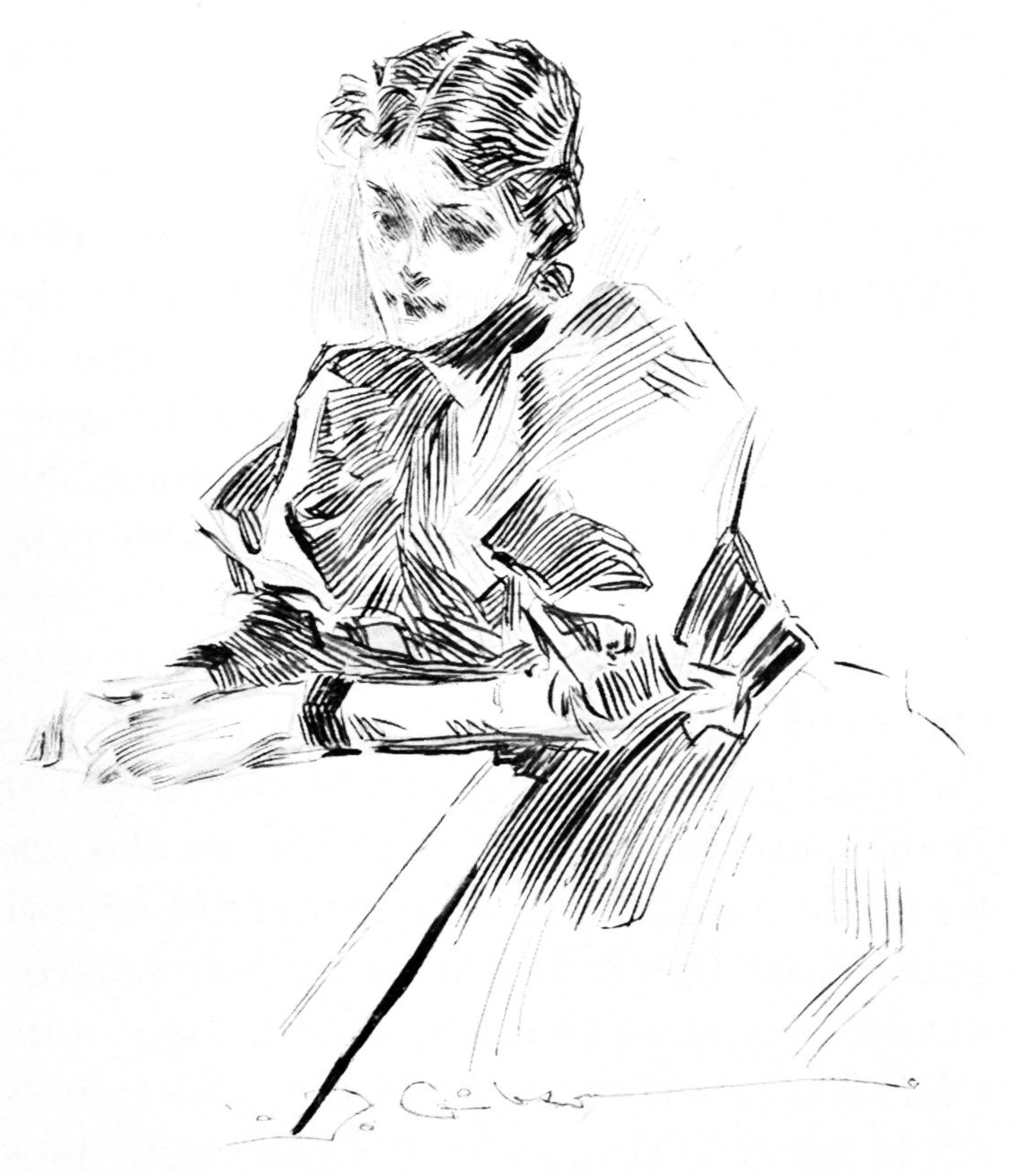
Miss Cahill leaned far forward, tracing out the delicate inlaid pattern
of the table with the point of her silver letter-opener.
“If I were engaged to a man,” she said, thoughtfully, “and were to
discover that he had treated a girl so, I would give him up, no matter
what it cost me.”
“And you, Miss Minot?” said Cahill, “what would you do?” He felt a
sudden, sharp curiosity as to her answer, and a vague apprehension of
what she would say. The girl lifted her head proudly.
“It would not be any effort for me to give such a man up,” she said,
quietly.
Cahill stood up restlessly. This girl had touched upon something which
he would have liked to forget. Of course it had been greatly different
in his case, he assured himself, but he felt uneasy and sore. And then
he smiled. There was something which struck him as pathetically amusing
in the seriousness of these two girls. They were so young and untried
and utterly unworldly, and they took such a tragic view of such a
common-place affair, and were so ready to be sacrificed for their high
ideals and principles.
“You are very severe,” he said at length, with a rather forced laugh.
“If we are all to be judged like that it will go hard with us.” But he
could attempt no excuse or explanation with the girl’s beautiful,
indignant eyes upon him, and presently the talk drifted off in other
channels.
It was about two weeks after this that Cahill began to realize just how
deeply in love he was with Edith Minot. She had interested him from the
first, and her very dissimilarity from most of the society girls he
knew, the nobility and seriousness of her nature beneath a rather cold
and conventional manner, and the young purity of her presence had struck
him as being the finest and most attractive things he had ever seen. He
had been with her a great deal in the two weeks she had spent with his
sister, and he had had a great many opportunities of finding out just
how superior she was to most girls, how witty and clever she could be,
and what native dignity and fine simplicity of character she possessed,
and how sincere and truthful she was. They had gone together to teas and
receptions, and small dances, and the numerous post-Easter weddings, and
the fact that she was his sister’s guest made it very easy for him to
see a great deal of her without any gossip or talk. But delightful as
all that had been, he was glad now that she was going back in a few days
to her own people, and that he could go down in a decently short time
and tell her what he could not tell her in his father’s house and which
he had found so hard to withhold. The uncertainty in which he was as to
whether she cared for him or not made him restless and very properly
despondent, although he sometimes fancied that she was less cold to him
than to the others, and that if she talked with him about certain things
of particular interest to her, it was because she valued his opinion and
friendship. And he was much pleased and very flattered when she appealed
to him about her different schemes, and was even ready to sacrifice
their last day to the college settlement.
“I really must go to Tyler Street to-day,” Miss Minot had said. “It’s my
last chance. I have been very selfish, and have been having entirely too
good a time. Why, I haven’t even seen my boys or heard the Prima Donna
Contessa!” She turned and smiled at Cahill as she spoke. “By the way,”
she continued, “why don’t you and Louise come with me and hear her sing?
I have sent her a note telling her to meet me at the settlement at four
o’clock, and I know she will be only too pleased to sing for us. It is
quite wonderful, you know.”
“Of course we will go,” assented Miss Cahill briskly, while her brother
aquiesced cheerfully, if less enthusiastically. It occurred to him that
it would be as well for him not to be alone with Miss Minot any more, if
he intended to hold to his resolution of not speaking just yet.
It was rather late when they started for the settlement, and by the time
they had walked down Tyler Street from Kneeland—they left the carriage
at the corner of Kneeland—they found that it was quite four and time
for a club, the members of which were enthusiastically crowding around
the door waiting for permission to enter, and playing leap-frog and tag
and imperilling life and limb by walking on the spiked iron fence in
their frantic attempts to see in the windows. But when they caught sight
of Miss Minot they stopped playing and jumped down from the fence and
threw away their shinny sticks, and began to all talk at once at her,
and to tell her what they had been doing during the winter, and that
they hadn’t been absent from school but twice or ten times, or not at
all, as the case happened to be, and they all seemed to have had a
surprising number of deadly diseases, of which fact they were
inordinately proud; and there were several still on the waiting list,
who wanted her to intercede for them to have their names put in the club
books, so they could go in and have a good time with the others; to all
of which, and a great deal more, she listened sympathetically and
interestedly. And as she stood so, the eager, softened expression on her
face, laughing and talking with the children crowding around her, the
boys grabbing at her hands and the little girls touching shyly the gown
she wore, it seemed to Cahill that he had never seen her quite so lovely
and lovable. He felt an amused sort of jealousy as he saw her run
lightly up the steps with her slim hands held tightly by two very dirty
and very affectionate little boys, with the rest swarming after her and
hemming her in; and when the front door was finally opened and she and
his sister disappeared with them into the rooms beyond, he felt rather
aggrieved and out of it.
He found himself in a narrow little hall and was just wondering what he
should do with his hat and stick, when she came out from the inner room,
closing the door behind her. She was laughing in a breathless, pleased
way, and her face had a little flush on it as she turned to him.
“Please take off my coat,” she gasped, leaning against the balustrade of
the steep little stairs. “I’m going to amuse them until the Prima Donna
comes—she isn’t here, at least I don’t see her anywhere. Louise is
playing for them now.” Cahill could just catch the sounds of a piano
above the shrill laughter of the children. They were quite alone in the
little hallway, and as he bent down to take off her coat, a sudden, wild
impulse overcame him. He forgot everything except that he loved her and
must tell her so, and he held her tightly while he spoke rapidly and
earnestly. It suddenly seemed preposterous to him that he could have
dreamed of waiting another week to find out whether she loved him or
not; she must tell him then and there, he said, quick, before anyone
came. And although she did not, in fact, tell him anything at all, he
was so content with her eyes as she turned toward him that, bending
down, he gave her one quick kiss after another.
And then the sound of the piano ceased and they heard a scramble of
running feet at the door, which was thrown open by Miss Cahill.
“Where are you? come in!” she cried.
As Cahill and Miss Minot went into the room beyond, a girl came slowly
down the stairs which they had just left. Her face was pitifully white
and drawn, and there was a scared, surprised look in her eyes which was
not good to see. When she reached the lowest step she stopped
thoughtfully, leaning heavily against the stairs’ rail.
“I saw them,” she said, softly and tremulously to herself. “I saw them,
and there is no possibility of a mistake. I don’t understand anything
about it—how it has happened—but it was he—it was he! If she
loves him—and she does love him—I saw it in her face, there is but one
thing for me to do—there is no other way now.” She put both hands on
the banister and swayed slightly toward it in her effort to control
herself. “She has been everything to me, has done everything for me. And
if I love him—and I do love him!—there is a million times more
necessity for me to do it.” Her lips worked painfully and silently for a
moment.
An instant later she had crossed the narrow passageway, and throwing
open the door, stood there smiling faintly, with the hurt, frightened
look still on her pale face. Miss Minot was the first to see her. She
moved toward her, swiftly catching both the girl’s hands in her own, and
dragging her forward to where Cahill and his sister were standing.
“The Prima Donna Contessa!” she said, gayly. “May I introduce Miss
Cahill, Mr. Cahill——” but she stopped suddenly, for she saw Cahill
take a step forward while a dull red suffused his face.
“You!” he said—“you!” His voice sounded an octave higher than usual and
there was a queer, excited ring to it.
The girl drew back in a puzzled, half-offended way. But Cahill left his
sister’s side and crossed quickly to where the girl was standing.
“Great heavens!—you!—aren’t you—?” he began, but the girl interrupted
him quickly.
“Excuse me,” she said, in a politely distant tone.
“Don’t pretend—” he began again with a curious insistance in his voice;
and then he stopped, putting his hand heavily on the back of a chair
near him and looking at Miss Minot and the girl standing beside her. An
agony of apprehension took hold upon him.
The girl made a little gesture of surprise and turned proudly and
indifferently to Miss Minot.
“I don’t think I understand,” she said quietly to her.
The nonplussed, vacant look on her face made Cahill hesitate. He looked
fixedly at her. The red had left his face now and it showed a strange
pallor. He was just conscious of the cold, astonished look on Miss
Minot’s face, and that his sister was staring blankly at him. He pulled
himself together sharply.
“I beg your pardon,” he said, with slow difficulty. “I have made a
stupid mistake—I thought—” he stopped and drew a sharp breath.
The girl’s eyes met his steadily for a moment, and then she smiled again
slightly.
“Oh, certainly,” she said, easily. “I have reminded so many people of so
many other people that I am getting quite used to it! Resemblances are
so often deceiving.”
Cahill looked at her in a curiously relieved way.
“And here we are, standing talking,” she ran on, “while the children are
waiting to sing! They have learned some very pretty Easter hymns. You
shall hear them.”
She spoke rapidly and directly to Cahill as though she wished to prevent
him from talking, and her voice sounded strained and monotonous. She
went over to the piano quickly and seated herself, and presently, when
the children had got through their songs, she began to sing alone, and
that evening both Miss Minot and Miss Cahill agreed enthusiastically
that she had never sung like that before, and that if the director of
the Grand Opera had heard her he would have signed a contract with her
on the spot.
Miss Minot was rather disappointed that Cahill did not seem more
impressed.
“I don’t believe you enjoyed it half as much as I thought you would,”
she said, reproachfully to him. It was late, and they were just leaving
the drawing-room, but he had held her back for an instant while the
others passed on into the big hall.
“And isn’t she lovely and a great artist?” she insisted.
Cahill looked down at the severely beautiful face beside him, and for an
instant the feeling of dread and apprehension which had swept over him
that afternoon returned with redoubled force. He felt again the sudden,
awful shock the sight of that girl’s face had been to him, the intense
relief on discovering his mistake. He realized acutely and for the first
time just how impossible it would ever be to tell her of that episode in
his life which the girl’s face had recalled, and which he had once felt
impelled to tell his father, and he determined to make up to her in
every way that a man can, for his silence. The possibility which had
faced him for a moment, of losing her, had made her inexpressibly dear
to him, and in that instant he had realized passionately all that the
loss of her would mean to him. He had felt unutterably glad that the
danger had been averted and that she need never know. He did not mean to
deceive her, but as he held her hand and looked at her, he had but one
thought, one fierce desire—to keep that look of trust and happiness
forever on her earnest and beautiful face. He leaned forward slightly.
“How can I tell anything about any other woman when you are there?” he
said, argumentatively, smiling at her. “You didn’t expect me to take
much interest in the timbre of her voice or her trill when you had
just told me——”
“Oh, yes—I know—I never told you anything,” objected the girl,
laughing and drawing away her hands. “And you were so dramatic—so
curious when you met her, that if I had—known you longer, I think
absolutely I would have demanded an explanation. Isn’t that what they
say in books—‘demand an explanation?’”
He shook his head. “I don’t know what they say in books. No book ever
told me anything about this!”
The girl turned her shining, happy eyes upon him.
“How unutterably silly of me,” she said, breathlessly. “For a moment you
said she was so like someone, and she had told me her story, I hardly
know what I thought—imagined.” She spoke in little, broken pauses, and
as she finished she laid her hand timidly on Cahill’s arm. “You said she
reminded you of——”
The young man laughed happily. “The mere idea!” he said, touching her
hands softly, and then he added lightly, as they moved toward the door:
“What she reminded me of was an episode in my life that happened long
ago and which was very uninteresting and unimportant.”