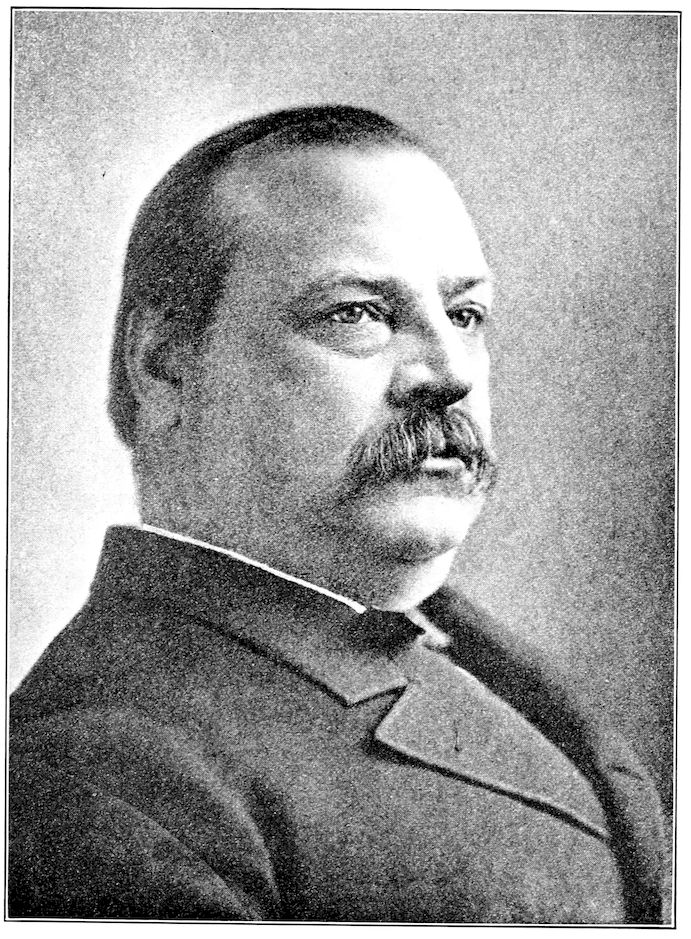
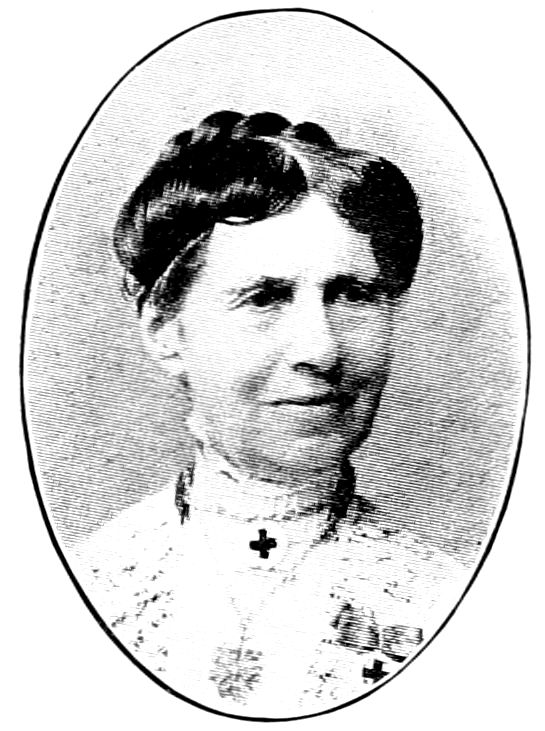
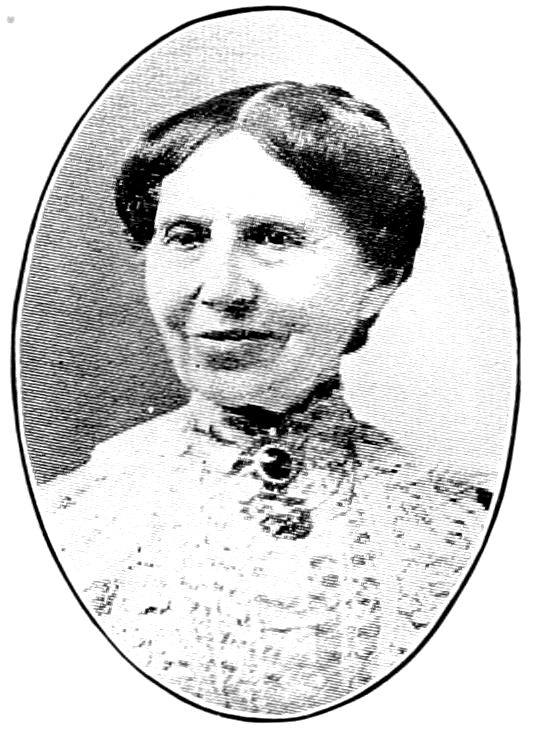
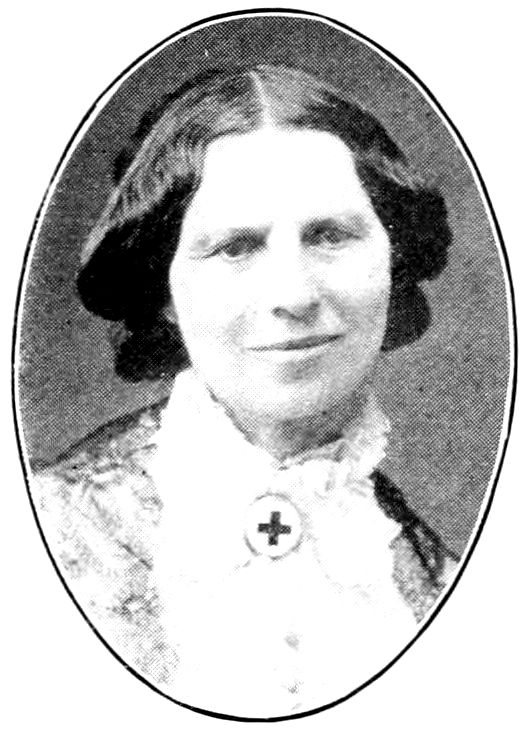
Clara Barton a Centenary Tribute to the World’s Greatest Humanitarian
Whole book · 107 sections
CLARA BARTON A CENTENARY TRIBUTE TO THE WORLD’S GREATEST HUMANITARIAN FOUNDER OF THE AMERICAN RED CROSS SOCIETY AUTHOR OF THE AMERICAN AMENDMENT TO THE INTERNATIONAL RED CROSS CONVENTION OF GENEVA FOUNDER OF THE NATIONAL FIRST AID ASSOCIATION OF AMERICA
Transcriber’s Note:
The cover image was created by the transcriber and is placed in the public domain.
Press of J. J. Little & Ives Company, New York, U. S. A.
This book is respectfully dedicated to
the Boys and Girls of the World; and
to the Men and Women who are still Boys
and Girls, in their love for humanity.
ACKNOWLEDGMENTS
5
The author, in the preparation of his pen pictures,
begs to acknowledge with sincere thanks the courtesies
extended to him by Mr. Stephen E. Barton, the Executor
of the Clara Barton Estate; by Doctor J. B.
Hubbell, for many years the manager for Clara Barton;
by the Oxford (Mass.) Memorial Day Committee of
1917; by the Twenty-First Massachusetts Regiment
G. A. R.; by many of the Army Nurses of the Civil
War; also for material assistance in data by the
American National Red Cross; by Mrs. J. Sewall Reed
Acting-President, National First Aid Association of
America; by Honorable Herbert Putnam, Librarian
of Congress; by General W. H. Sears for the use of
his data in his book of 177 pages, prepared for and used
in the defense of Clara Barton before the Library Committee
of Congress, and his generous contribution of
incidents in the life of his personal friend; by Honorable
Francis Atwater for data in “The Story of My
Childhood,” by Clara Barton; by the Macmillan Co.,
Publishers of the Life of Clara Barton by Percy H.
Epler, the book of the best data on her life now before
the American people; by the National First Aid Association
of America and likewise to many other associations,
personal friends and admirers of America’s most
remarkable woman.
7There is a woman at the beginning of all great things.
Lamartine.
Honor women! they entwine and weave heavenly roses in our
earthly life. Schiller.
“The fairest chaplet Victory wears
is that which mercy weaves.”
I live to learn their story,
Who suffered for my sake;
To emulate their glory
And follow in their wake;
Bards, patriots, martyrs, sages,
The noble of all ages,
Whose deeds crown History’s pages,
And Time’s great volume make.
· · · · ·
For the cause that needs assistance,
For the wrongs that need resistance,
For the future in the distance
And the good that I can do.
THE FOREWORD
The author undertakes to produce a few pen
pictures of a personal friend—humanity’s friend.
They are pictures of sentiment, pictures of reality—pictures
of humanity.
Although precluded the use of data left by Clara
Barton for her biography the author, nevertheless, is
conforming to the sentiment of her oft expressed wish
that he write the story of her life. Recognizing the
8wish to be a sacredly imposed trust, for the past six
years he has gleaned what he could for his sketches
from public documents, from her personal friends in
California, New England, New York, Washington and
elsewhere, as well as from his memory of facts developing
through the years he enjoyed her confidence and
received from her highest inspirations.
The author assumes not a rôle literary—has herein
no aspirations, literary. His impulse to write is not
fame; it is sentiment, a love-sentiment for a woman
whom all the world loves and whose “life gives expression
to the sympathy and tenderness of all the hearts
of all the women of the world.” His motive in writing
is to point a moral in “a passion for service”; to limn
scenes, vivid, along “paths of charity over roadways of
ashes”; to depict for the lesson it teaches a career, a
career the memory of which must remain a rich
heritage to the American people.
In life’s drama, wherein Clara Barton played the
leading rôle, there appear faces to inspire, faces to
instruct, but also the faces of intrigue. In the closing
incidents of a life-heroic time’s detectives disclose the
plotters, and the motive in their plot to destroy—
Like a led victim to my death I’ll go,
And, dying, bless the hand that gave the blow.
Except now and then in dim outline, the faces of
intrigue in the tragic scene do not appear. These faces
are un-American—inhuman—and would mar humanity’s
picture.
The Divine Humanitarian forgave His enemies, but
the picture of the crucified on the cross ever suggests
the Pontius Pilate and the executioners. Clara Barton
9also forgave her enemies, and yet some day a literary
artist may portray the Judasette Iscariot, or possibly the
plotting Antony and Cleopatra, to make a Clara
Barton picture historically and tragically complete.
In biography is the world’s history. If, in human
logic, the silencing of truth in biography be an imperative
virtue, then literature should be relegated to the
ash-heap of forgotten lore. As “in a valley centuries
ago grew a fern leaf green and slender,” leaving its
impress on what have become the rocks of the centuries,
so truth leaves its impress imperishable on what become
the tablets of history. Truth crushed to earth again
and again will appear; and, when Clara Barton’s
Gethsemane appears with all its delineations in a
picture complete, there will be none so poor to do
reverence to Clara Barton’s character assassins, nor to
the Clara Barton ghouls who desecrate her tomb and
use the United States mails to traduce the dead.
Sentiment is the soul of action. The highest tribute
to mortal is the angel-sentiment—the tribute to self-sacrificing
woman that blazes her “path where highways
never ran.”
Ever the blind world
Knows not its angels of deliverance
Till they stand glorified ’twixt earth and heaven,
and yet more powerful than armies is the soul-sentiment
that protects fame,—the fame of the Florence Nightingales,
the Clara Bartons and the Edith Cavells.
Her “friends” say time will vindicate Clara Barton.
The more such “friends” the more’s the pity. It’s not
time, it’s truth, that vindicates. “Procrastination is the
thief of time.” The thief of time must not be permitted
to steal from the present, even under pledge to disgorge
10in the future. The present is ours to possess, ours to
enjoy. It’s not that the millions can do something for
Clara Barton; instead, the Clara Barton spirit can do
something for the millions. The plotter may revile the
Red Cross Mother; the Red Cross Artist may picture
the cross of red on the breast of a fictitious “Greatest
Mother in the World;” the self-constituted autocrat in
Red Cross literature may suppress, and belie, truth;
but the spirit of Clara Barton is the Mother-Spirit still,
the real spirit of the American Red Cross, the Red Cross
spirit in all Christendom. The fighting sons of America
on the “Western Front” may not have read of Clara
Barton in recent Red Cross literature but, trooping under
the Red Cross peace-banner that Clara Barton
brought here from Europe, were more millions of her
followers in America than in the world war there were
soldiers marshalled under the military banners in all
the armies in Europe.
Grant was “Grant the Great” at Appomattox; Lincoln
was more than “six feet four” when in the home of
Confederate General Pickett he stooped down to kiss
the brow of “Baby George” Pickett; Stephen A. Douglass
was more than “the little giant” when at the inauguration
on the east steps of the capitol he held the
hat of Abraham Lincoln; Clara Barton was more divine
than human when, with love for her enemies, in
her last world prayer she gave expression to the forgiving
sentiment of the Divine Humanitarian.
Clara Barton said that the bravest act of her life was
crossing the pontoon bridge under fire at Fredericksburg.
The historian will say that the bravest act of her
life was snatching her Red Cross child from the social—political—fat-salaried-swiveled-chair
clique at
11Washington, and handing over her best beloved
unharmed to the country for which in the smoke of
battle and terrors of disaster she had many times risked
her life. The historian will further say that in
refusing to accept a pension of $2500 for life and
Honorary Presidency of the Red Cross from that
“clique” as the price of her child, and suffering persecution
for life as the penalty, there was shown the true
mother spirit that must commend her for all time to
those who respect the spirit of self-sacrificing Motherhood.
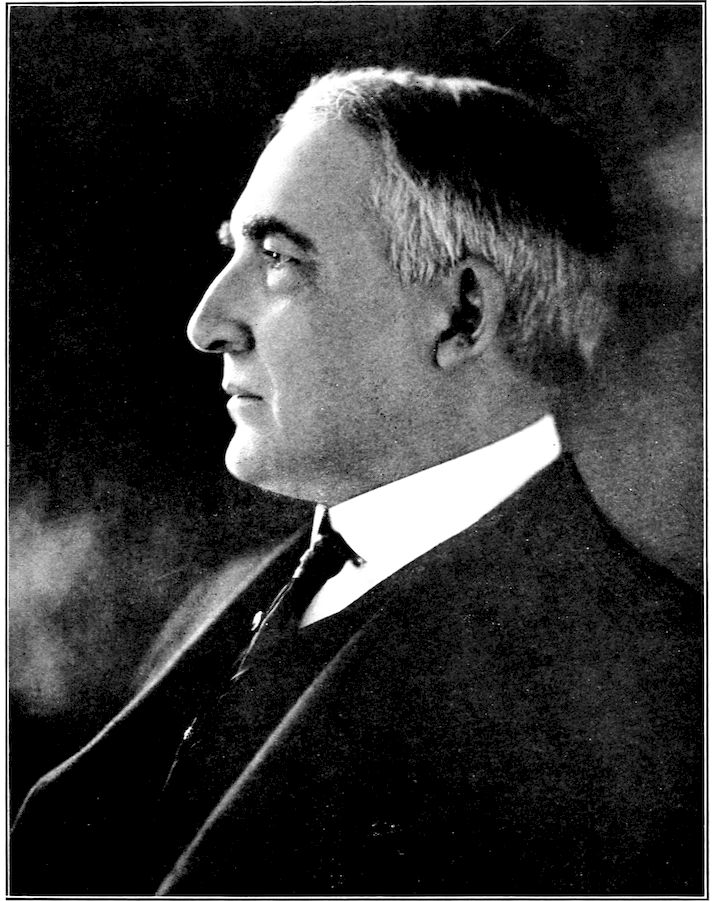
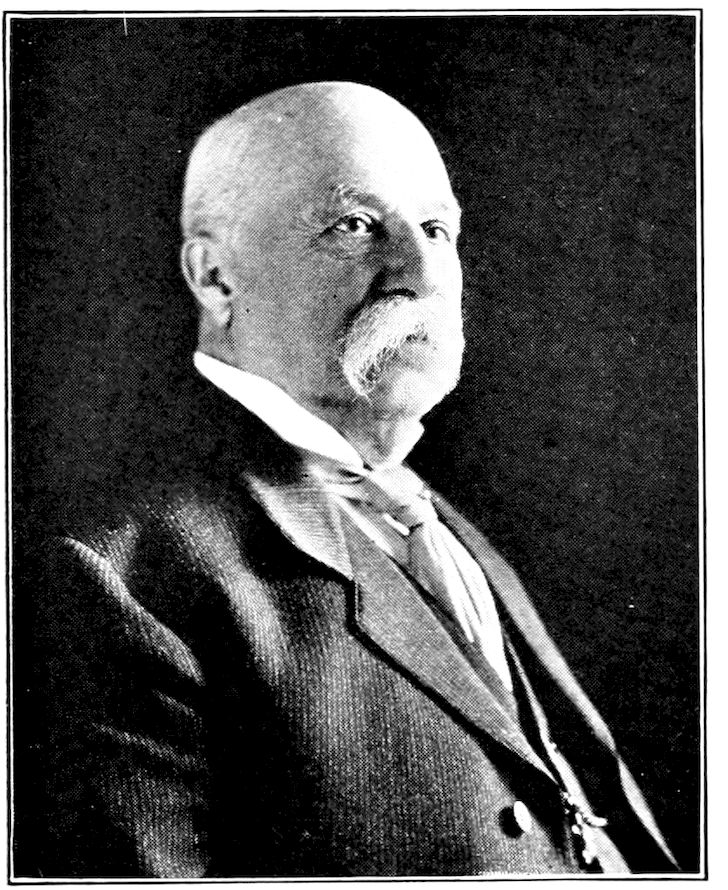
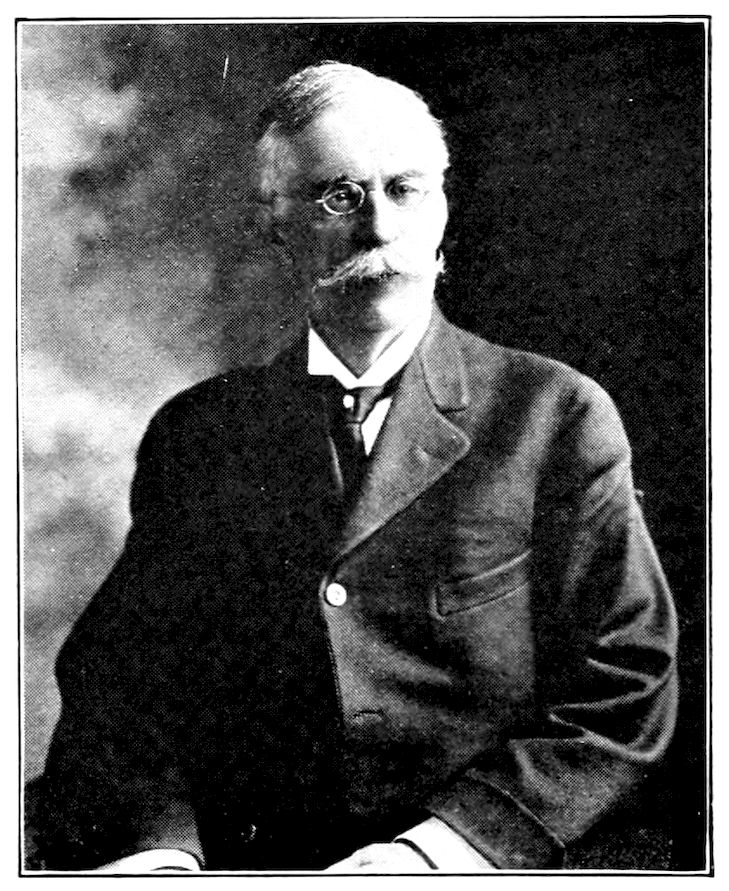
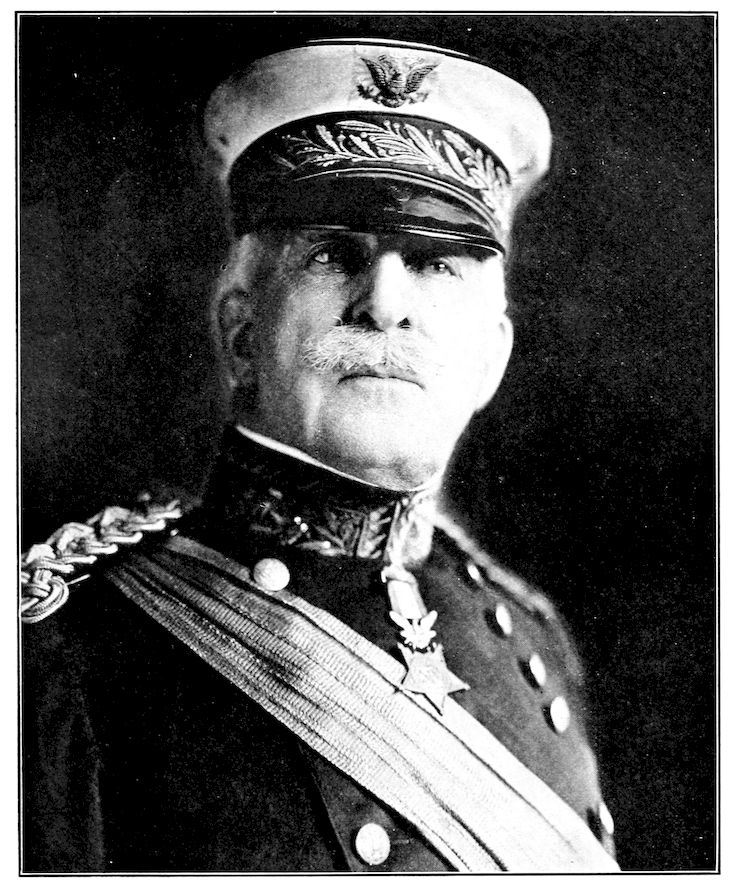
President Warren G. Harding, the president also of
the Red Cross, “entertains the highest sentiment regarding
the splendid service of Miss Barton.” Ex-President
Woodrow Wilson—also ex-president of the Red
Cross—has voiced the sentiment of the American
people in no uncertain sound as has a second Clara
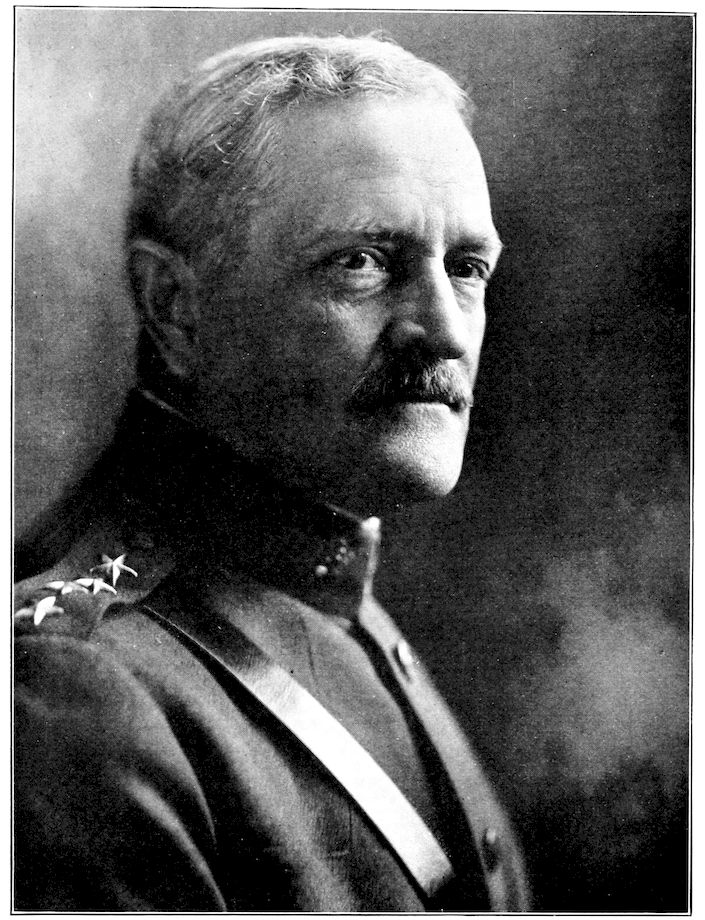
Barton,—the soldier-angel Margaret Wilson. General
John J. Pershing has not been silent in his admiration
of the great woman, nor have the hundreds of thousands
of American boys on the “Western Front” been unmindful
in gratitude to the Founder of the American Red
Cross; and, if signs fail not, from the American Congress
there will come to America’s greatest humanitarian
a testimonial—accompanied by an acclaim that
will be heard around the world.
On a certain state occasion the statement was made
that there is less to censure, and more to commend, in
the public life of Clara Barton for the twenty-three
years she was President of the Red Cross than in the
public life of any one of the twenty-eight Presidents
from George Washington to Woodrow Wilson. There
commenting on the statement, America’s beloved Mrs.
12General George E. Pickett significantly said: “Yes,
that’s true, but Clara Barton was a woman.” But
woman is coming into her own, and Clara Barton said,
“My own shall come to me.” Never was prophecy
more certain of fulfillment. With hundreds of thousands
of Americans receiving the benefits of “First
Aid”; with more than thirty thousand brave American
nurses, ten thousand of these following the illustrious
example of Clara Barton by going to the battlefield;
with more than thirty millions of Americans serving
the Red Cross in time of war; with more than a billion
of human beings making use of the Red Cross American
Amendment in times of peace and war, Clara
Barton already has come into her own.
The American nation will come into its own, as did
respectively two great nations of Europe, when she
wipes out from the scroll of history its foulest blot,—by
giving national recognition to a national heroine; the
American Red Cross will come into its own when it
shall repossess the name Clara Barton; the American
people will come into their own when they patriotically
recognize, and sacredly cherish, that immortal
Mother-Spirit which, after a half century of heroic
sacrifices in the war of human woes, passed triumphant
through the archway ’twixt earth and heaven.
If these pen pictures give to the boys and girls of
America inspiration to loftier patriotism and higher
ideals in achievement; if truth in the biography give
renewed impulse to American Red Cross philanthropy;
if through this volume immortal deeds, and a name
unsullied, be treasured for world-humanity then Clara
Barton’s dying message to the author shall not have
been in vain.
CHARLES SUMNER YOUNG
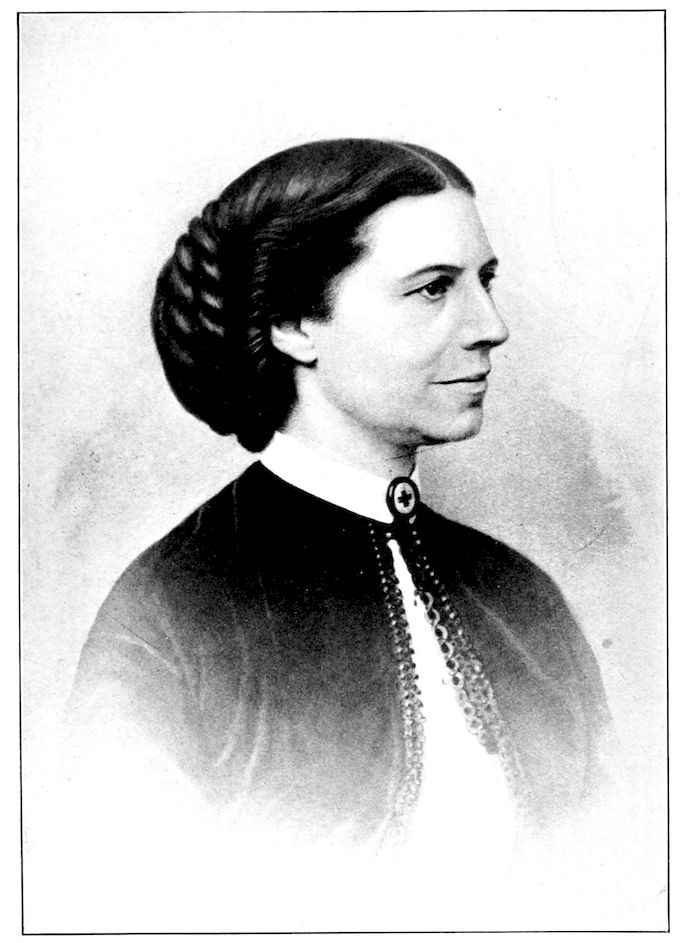
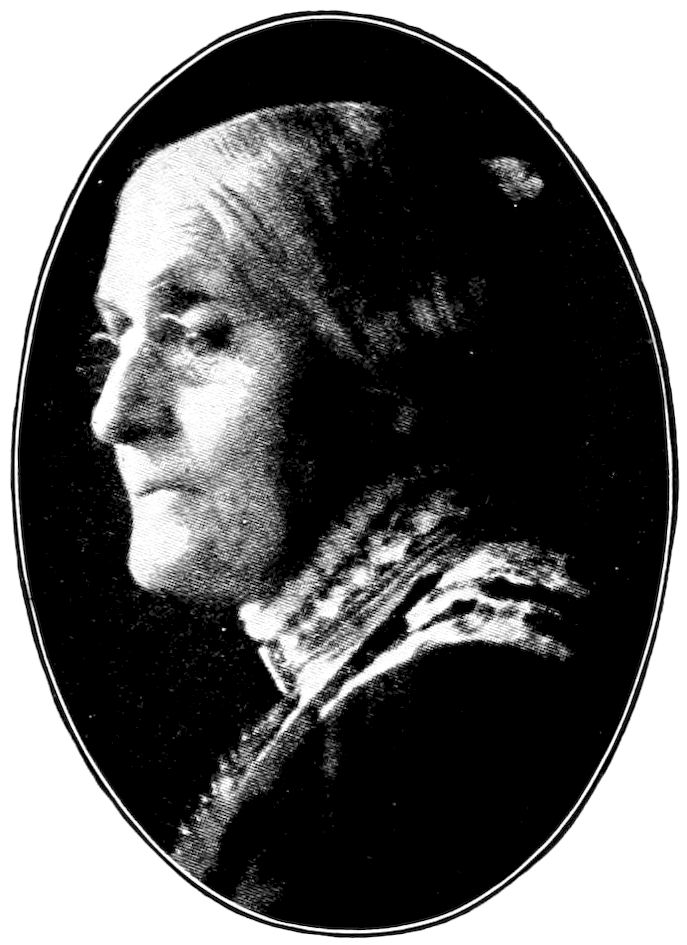
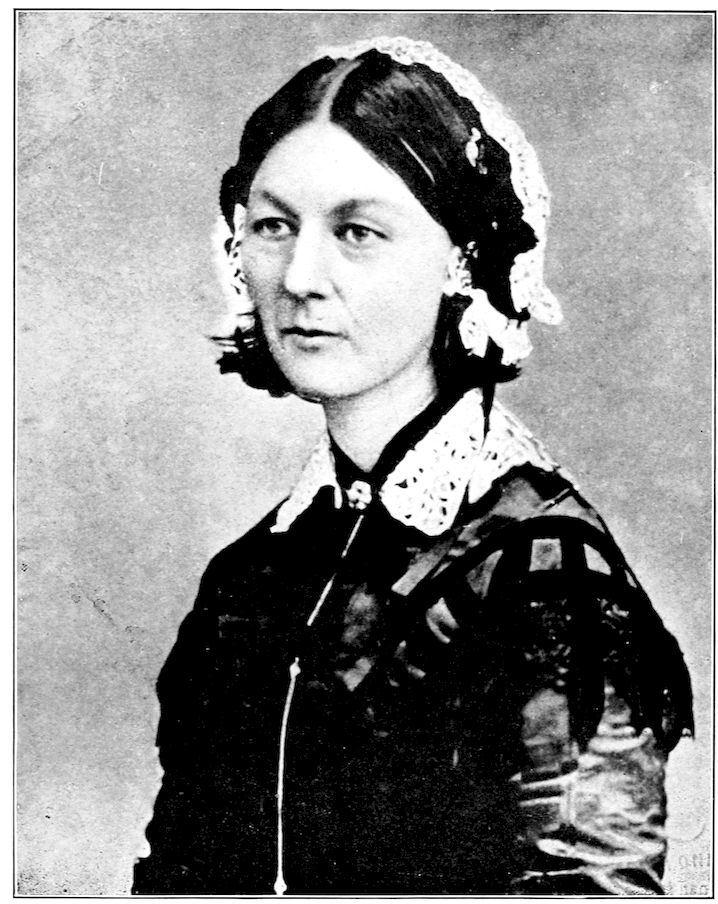
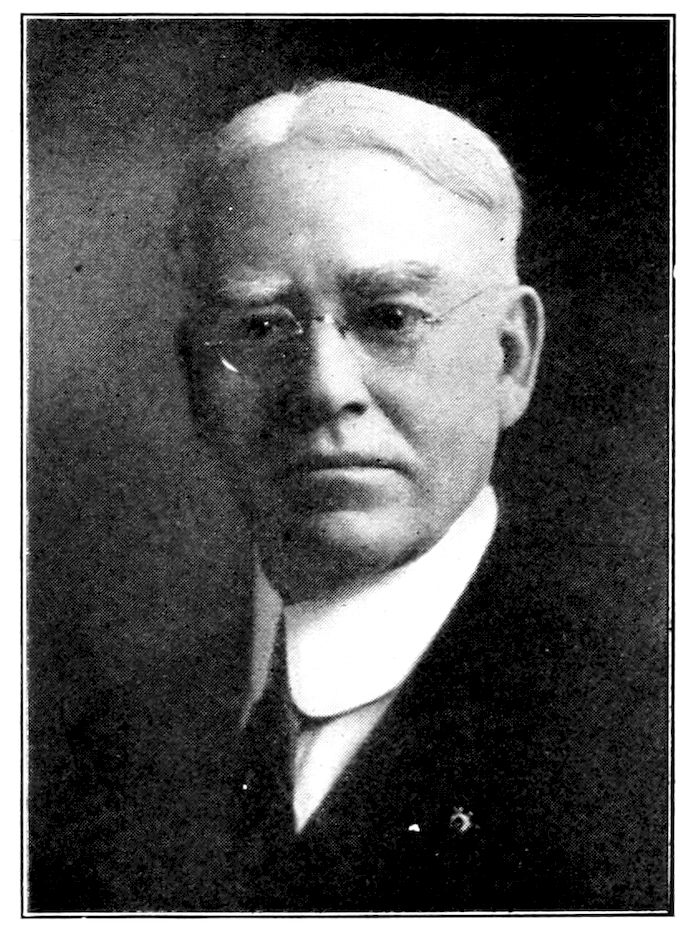
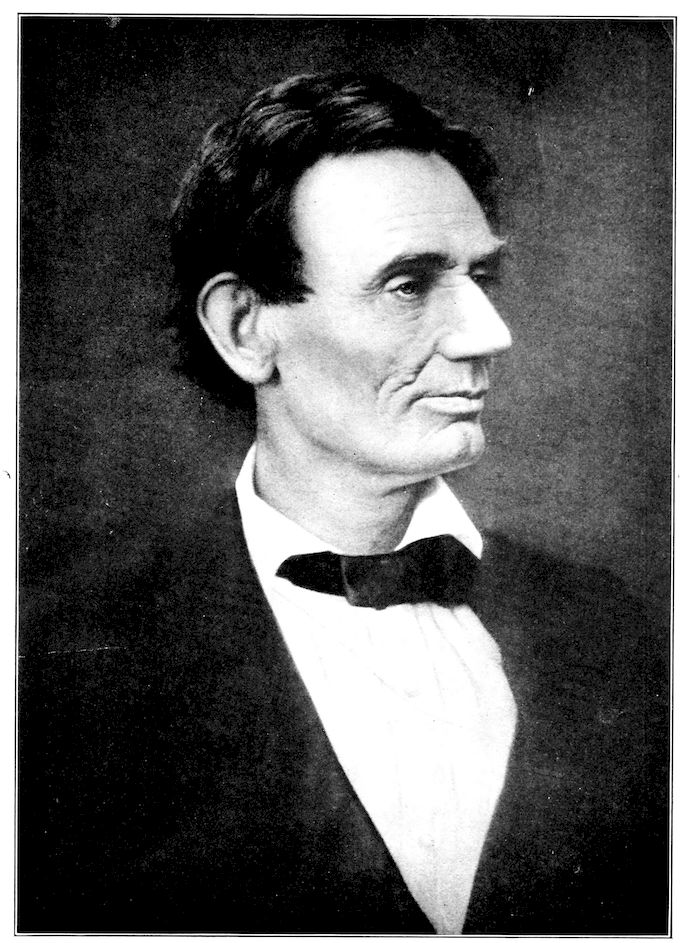
13The only picture of myself that I have cared anything about at all
is the one taken at the time of the Civil War (1865), in which I am
represented in the uniform of a nurse. If my friends had let me have
my way, I would never have had another picture taken. (Frontispiece)
17I want the last picture of the friends I love to show them in their strength, and
at their best, not after time and age shall have robbed them of all characteristic
features which represented them in actual life.—Clara Barton, from her diary of
December 13, 1910.
The embossed cut on the front cover is a reproduction of a bronze bust by Mrs. Otto Heideman.
21
CLARA BARTON
There is a kind of character in thy life,
That to the observer doth thy history
Fully unfold.
I take my pencil (at 86 years of age) to describe the first moment
of my life that I remember. Clara Barton—In The Story
of My Childhood.
Do not sin against the child. Genesis.
The fir trees dark and high,
I used to think their slender tops
Were close against the sky.
Hood—I remember, I remember.
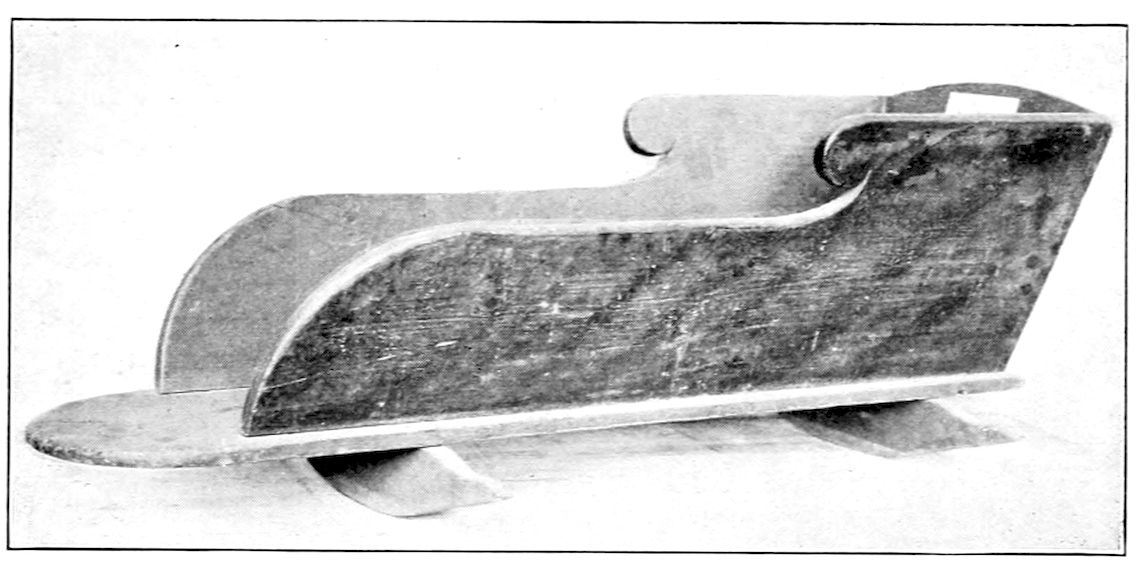
The rude wooden cradle in which Clara Barton was rocked is
now one of the very interesting curios in possession of the Worcester
(Mass.) Historical Society. The Author.
The child’s grief throbs against the round of its little heart as
heavily as the man’s sorrow. Chapin.
Baby lips will laugh me down. Tennyson.
A child’s sob curseth deeper in the silence
Than the strong man in his wrath.
E. B. Browning.
Dispel not the happy delusions of children. Goethe.
Happy child! The cradle is to thee a vast space.
Schiller.
Who can foretell for what high cause
This destiny of the gods was born.
Andrew Marvell.
22
Babyhood repeats itself. Babyhood is practically the
same yesterday, today and forever. And yet who does
not try to recall first impressions and first experiences?
Clara Barton says her first baby experience that she recalls
was when she was two and one half years of age.
She thus describes it:—
“At length they succeeded in inducing me to listen to
a question, ‘But where did it go, Baby?’
“Among my heart-breaking sobs I pointed to a small
round hole under the doorstep. The terrified scream
of my mother remained in my memory forevermore.
Her baby had ‘mos’ caught’ a snake.”
Her second experience that she recalls was when
four years old, at a funeral of a beloved friend of the
family. She previously had been terrified by a large
old ram on the farm. On this occasion she was left in
care of a guardian, in a sitting room. The four windows
were open. Suddenly there came up a thunder
storm. Sharp flashes of lightning darted through the
rising, rolling clouds. She thought the whole heavens
were full of angry rams and they were coming down
upon her. Her screams alarmed, and her brother
rushed into the room only to find her on the floor in
hysterics.
Sorrows put permanent wrinkles on the face, in maturity;
on the mind, in childhood. Only strangeness
may produce fear in babyhood but, with a baby,
strangeness is everywhere. Darkness and strange noises
frighten. Forms of phantasy float on the imagination;
23when gradually, it’s comedy; when suddenly, it’s
tragedy.
These tragic moments left their impressions on Clara
Barton’s plastic mind. Such impressions ever must remain.
Miss Barton said she remembered nothing but
fear in her earlier years; and terror-stricken she remained
to the end, except when she could serve someone
in distress, or rescue someone from danger of death.
An English philosopher says: “the least and most imperceptible
impressions received in our infancy have
consequences very important and are of long duration.”
The greatest minds of earth, in all ages, have tried to
recall baby experiences, and have wondered what they
had to do with success or failure.
II — SCHOOL—CHILDISH MEMORIES—MILITARY
24
At three years Clara Barton was taken a mile and one-half to
school on the shoulders of her brother Stephen; at eleven years she
ceased growing, then but five feet three inches. The Author.
When I found myself on a strange horse, in a trooper’s saddle,
flying for life or liberty in front of pursuit, I blessed the baby
lessons of the wild gallops among the beautiful colts.
Clara Barton.
Clara Barton—The memories of her childhood belong to our
little town, and are our most precious heritage.
Mrs. Allen L. Joslyn, Oxford, Mass.
Remember that you were once a child, full of childish thoughts
and actions. Clara Barton.
Sweetly wild
Were the scenes that charmed me when a child.
Lydia H. Sigourney.
The sports of children satisfy the child. Goldsmith.
Children’s plays are not sports, and should be regarded as their
most serious actions. Montague.
When I was a child, I spake as a child, I understood as a child,
I thought as a child. I Corinthians.
A sweet child is the sweetest thing in nature. C. Lamb.
Sweet childish days, that were as long
As twenty days are now.
S. Wordsworth.
The scenes of childhood are memories of future years.
J. O. Choules.
I do not like to beat my children—the world will beat them.
Elihu Burritt.
25How dear to this heart are the scenes of my childhood
When fond recollections present them to view.
S. Wordsworth.
Deep meaning often lies in childish plays. Schiller.
Backward, turn backward, O time, in your flight!
Make me a child again, just for to-night.
Elizabeth A. Allen.
Toil without recompense, tears all in vain;
Take them, and give me my childhood again!
E. A. Allen.
The Baker homestead (Bow, N. H.)—Around the memory thereof
cluster the golden days of my childhood.
Mary Baker Eddy.
A long way seems the dear old New England home—its sheltering
groves and quiet hills; amid the clustering memories my tears
are falling thick and silently like the autumn leaves in forest dells.
Clara Barton.
Children have more need of models than of critics.
Joseph Joubert.
Children think not of what is past nor of what is to come but
enjoy the present time, which few of us do.
La Bruyere.
Women are only children of a larger growth.
Chesterfield—Letter to his son.
The only fun is to do things. Clara Barton.
I pledged myself to strive only for the courage of the right and
for the blessedness of true womanhood. Clara Barton.
What woman has not said “I remember when I was
a girl....” Clara Barton at eighty-six years said, in
26the story of her childhood, I remember ..., I remember
riding wild colts when I was five years of age.
I remember how frightened I was, but acquired assurance
when my brother used to tell me to “cling fast to
the mane.” To this day (at eighty-six years of age)
my seat in the saddle, or on the bare back of a horse,
is as secure and tireless as in a rocking chair. I remember
I thought the President might be as large as the
meeting house and the Vice President perhaps the size
of the school house. I remember telling my teacher
that I did not spell such little words as “cat” and
“dog,” but I spell in artichoke, artichoke being the
first word in the column of three syllables.
I remember writing verses, many of which for years
were preserved—some of these verses by others recited
to amuse people—some verses to tease me. I remember,
in school, making a mistake in pronouncing
‘Ptolmy,’ when the children laughed at me, and I burst
out crying and left the room.
I remember that my father taught me politics; and
that, as an old soldier,[1] he amused the other children
and myself by giving us practical lessons in military
life. We used improvised material, such as children
are accustomed to use in “playing soldier,”—paper
caps, plumes, banners, kettle for the kettle drum, tin
swords, sticks for guns and bayonets—all of which were
perfectly satisfactory to us.
1. A Clara Barton paternal ancestor immigrated to America from Lancashire,
England, about twelve years after the landing of The Mayflower.
Since that date a direct descendant of his has participated in every war,
by this country.
Our muskets were of cedar wood
With ramrods bright and new;
27With bayonets forever set,
And painted barrels, too.
We shouldered arms, we carried arms,
We charged the bayonet;
And woe unto the mullen stalk
That in our course we met!
The armies played havoc with each other, had fearful
encounters and, what seemed to our young minds
then, suffered disastrous results. Camps, regiments,
brigades, military terms, she said, thus became familiar
to her as the most ordinary matters of home.
Is it warm in that green valley,
Vale of childhood, where you dwell?
Is it calm in that green valley,
Round whose bowers such great hills swell?
Are there giants in the valley—
Giants leaving footprints yet?
Are there angels in the valley?
Tell me—I forget.
III — ON HER FAVORITE BLACK HORSE
28
In my home here at Oxford, we would listen with intense interest
to the story of her early years, to childhood and girlhood, and to
scenes and events in her old home on the hillside. Clara Barton,
by her shining example to our children and our children’s children,
has left a rare legacy to the town of her birth.
Mrs. A. L. Joslyn—In Clara Barton In Memoriam.
Bucephalus was calmed, and subdued, by the presence of Alexander
and became his favorite war-horse.
Abbott.
My arms, my arms. My horse; come quick, my horse——.
Joan of Arc.
My brother David was the “Buffalo Bill” of all that surrounding
country.
Clara Barton.
My father was a lover of horses, one of the first in the vicinity to
introduce blooded stock.
Clara Barton.
The first horses imported into the United States were brought to
New England in 1629. Surviving the ocean voyage were one horse
and seven mares. Oxen being used for all farm work, horses did
not come into general use until one hundred years afterwards.
The Author.
Joan of Arc, Clara Barton and Florence Nightingale was each
an expert horsewoman and each made use of her skill in horsemanship,
in war.
The Author.
Like many other country girls, Clara Barton was
fond of horseback riding. When twelve years of age,
29on one occasion, she ran away from home to go for a
ride. She came down stairs quietly and slipped out for
a ride on her favorite black horse.
What a wild triumph, that this “girlish hand”
Such a steed in the might of his strength may command!
Falling from the horse, she injured her knee. Determined
to keep the injury a secret she joined her
brothers in the field as though nothing had happened.
But she limped, and her brothers noticed it. She
merely told her brothers she had injured her knee,
but would say no more. They sent for a doctor. By
plying many questions as to how it happened, the doctor
drew from her a confession. In later life—in the Civil
War, in the Franco-Prussian War, in the Spanish
American War, her skill as a horseback rider was of
great service to her. On several occasions she had to
“ride for her life.” In speaking of this accomplishment,
she used to say “When I was a little girl I could
ride like a Mexican.”
IV — PHRENOLOGY—READ HER CHARACTERISTICS—BASIS OF FRIENDSHIP
30
Clara Barton—the pitying sweetness which fills her eyes and the
sympathetic lines which have been drawn about her mouth bear
witness to a long intimacy with suffering and death.
Central (Mo.) Christian Advocate. (1912)
Physiognomy is the language of the face. Jeremy Collier.
Physiognomy is reading the handwriting of nature upon the human
countenance. Chatfield.
Palmistry is a science as old as the history of the human race.
The mind deceives; the hand tells the truth; the thumb in particular,
the tell-tale of character.
Dolores Cortez, Queen of the Spanish Gypsies.
Show me an outspread hand and I’ll show you whether or not its
master is honest, is kind, is affectionate.
Arthur Delroy,Author.
Human nature, as unfolded by phrenology, is being universally
accepted by all classes of people. Cranium.
Phrenology can be used in every phase of life. C. S. Hardison.
Phrenology is very fruitful in its capacity to paint mental images.
Miss Jessie Allen Fowler.
Phrenology,—a science that has been of great help to us in the
progress of life. Doctor Charles H. Shepard.
The shape of the brain may generally be ascertained by the form
of the skull. O. S. and L. N. Fowler.
Phrenology professes to point out a connection between certain
manifestations of the mental and peculiar conditions and developments
of the brain. O. S. and L. N. Fowler.
31Of all the people in England, I was most glad to meet Doctor
L. N. Fowler, the same gentle, kind man he used to be so many
years ago, and who has done so much for the middle classes of England,
giving them helpful advice they could not get from other
sources. Clara Barton.
Remembering that fully one-fifth of my life (1856) has been
passed as a teacher in schools, it is not strange that I should feel some
interest in the cause of education. Clara Barton.
’Tis education forms the common mind; just as the twig is bent
the tree is inclined. Alexander Pope.
The physiognomist reads character in the face; the
palmist in the hand; the phrenologist in the skull.
Physiognomy since the origin of man has been nature’s
open book. The science of palmistry is at least five
thousand years old; but the science of phrenology is of
comparatively recent origin. When Clara Barton was
a little girl phrenology received its really first great
impulse in this country, through the lectures and writings
of the Doctors Fowler of England. In England,
as in this country, phrenology was then the subject of
much ridicule. Of this strange science Thomas Hood
sarcastically writes:
’Tis strange how like a very dunce,
Man, with his bumps upon his sconce,
Had lived so long; and yet no knowledge he
Has had, till lately, of phrenology—
A science that by simple dint of
Head-combining he should find a hint of,
When scratching o’er those little pole-hills
The faculties threw up like mole hills.
32Little Clara was bashful, afraid of strangers, too
timid to sit at the family table when guests were present;
would not so much as tell her name when asked
to do so. When spoken to by a stranger she would burst
out crying—sometimes leaving the room. Now and
then she would go hungry rather than ask a favor even
of a member of the family. Doctor L. N. Fowler
visited Oxford. While there he was a guest at the
Barton home.
Doctor, what shall we do with this girl, asked the
mother; she annoys us almost to death. We can hardly
speak to her without her crying, from fear. The doctor
examined her head. He replied, she is timid, that’s
all. The “bump” of fear is over-developed. Nothing
will change a child’s innate fear; that is a characteristic
of her nature. She may outgrow it to some extent
but her sensitive nature will remain as long as she
lives. The doctor advised the parents to give her something
to do; to keep her at work, and thus to let her
forget herself. Don’t scold her; encourage her. When
she does anything well, give her full credit—compliment
her. Throw responsibility on her; when she is
old enough give her a school to teach.
To be understood is the basis of friendship. The
Doctor understood Clara; little Clara understood the
Doctor. They became friends. That friendship lasted
through life. Many years after the Doctor visited
Oxford Clara Barton visited the Doctor, in London.
They spent evenings together. The Doctor renewed
his interest in the people of those early days in New
England. He especially recalled the characteristics
of Miss Barton’s father;—they became mutually
reminiscent of the days of her childhood. The Doctor
33had then become old and decrepit but was still giving
lectures on phrenology. The happiest hours Clara
Barton spent in England were in the home of the
Fowlers; with the Doctor, his charming wife and three
beautiful daughters.
V — “SPONTANEOUS COMBUSTION” LAID TO CLARA BARTON
34
The earth can never have enough women like Clara Barton.
Detroit (Mich.) Free Press.
Clara Barton belonged not only to the United States but to the
entire civilized world. Boston (Mass.) Globe.
A merry heart doeth good like a medicine. Proverbs.
Laugh and the world laughs with you. Ella Wheeler Wilcox.
With mirth and laughter let old wrinkles come.
Shakespeare.
A little nonsense now and then
Is relished by the best of men. Anonymous.
The next best thing to a very good joke is a very bad one.
J. C. Hare.
Full well they laughed with counterfeited glee
At all his jokes, for many a joke had he. Goldsmith.
If ever there were lost, or omitted, a well-turned joke or a bit of
humor by the various members of the Barton family it was clearly
an accident. Clara Barton.
Joking decides great things stronger and better of’t than earnest
can. Milton-Horace.
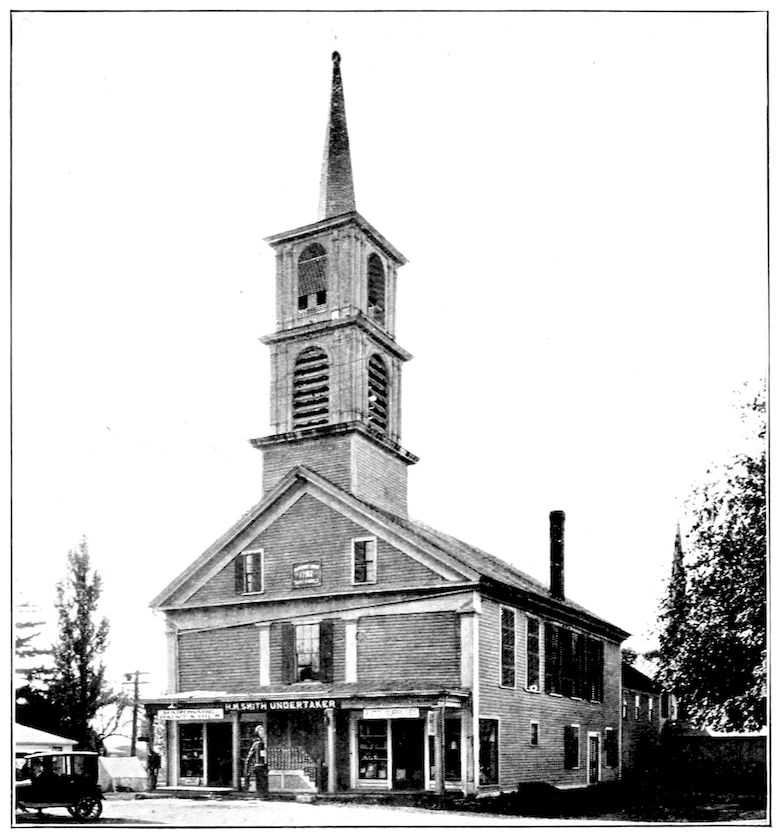
THE UNIVERSALIST CHURCH, MAIN STREET, OXFORD, MASSACHUSETTS
Where Clara Barton attended church. Oldest Universalist Church in the world, built 1792. Society second oldest. Organized April 27, 1785. Denomination organized here, September 14, 1785.
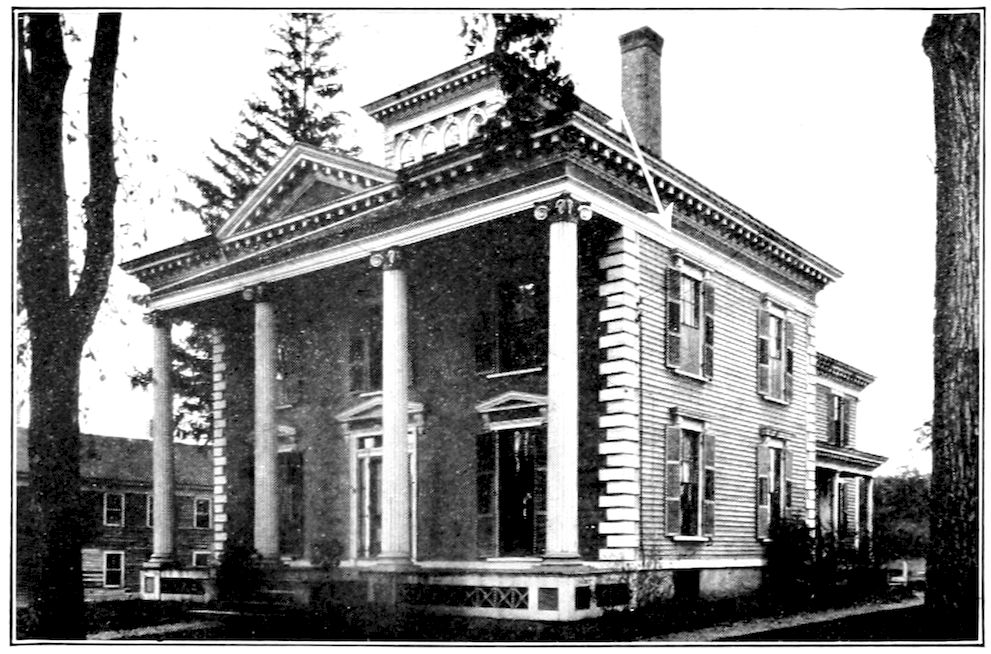
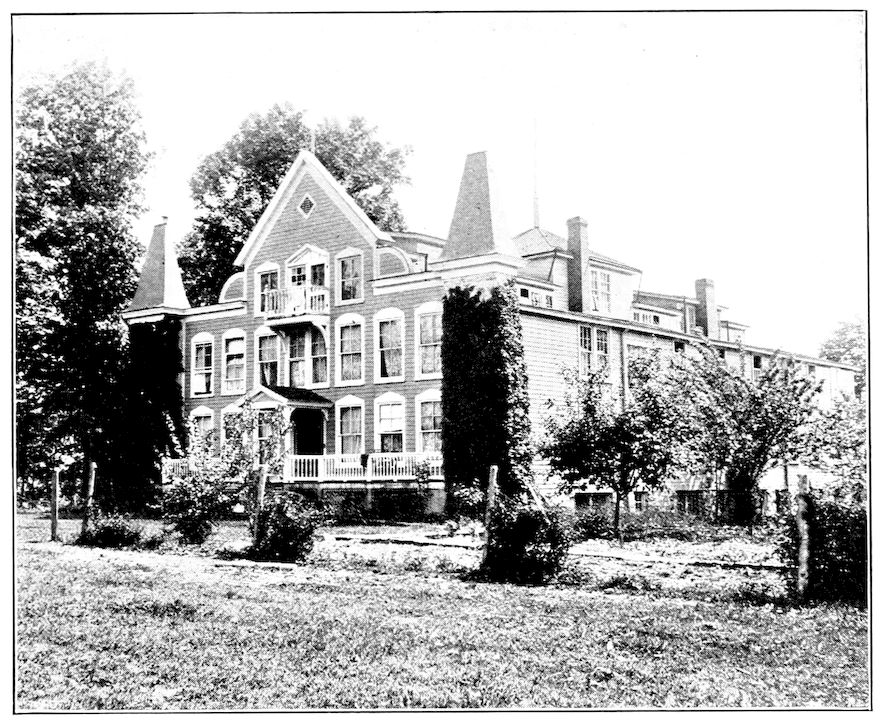
SUMMER HOME OF CLARA BARTON, OXFORD, MASSACHUSETTS
Arrow points towards the window of the room where Clara Barton was bed-ridden for several months, through her last fatal illness, in the latter part of 1911.
35
A timid child is invariably the butt of jokes. Clara
Barton, in her youth, was not an exception. As a little
girl she had learned to weave, working in a North
Oxford satinet mill. She had not been it work there
very long when the mill took fire and burned down.
Then, as no satisfactory explanation of the cause could
be given by the members of the Barton family, the fire
was attributed to spontaneous combustion, brought on
because Clara had worked so fast as to set the mill on
fire. Clara Barton did not object to, but rather enjoyed,
a joke on herself. She used to tell her friends of
this joke and said that in her own town and among
her playmates that joke was “told on me for many
years.”
VI — CHRISTMAS A CHRISTMAS CAROL (1894)
36
Forget not Christmas. Henry IV. of England.
At Christmas be merry, and thankful withal,
And feast thy poor neighbors, the great with the small. Tusser.
Those who at Christmas do repine,
And would fain hence despatch him,
May they with old Duke Humphry dine,
Or else may ‘Squire Ketch catch him.’
Poor Robin’s Almanac, 1684.
Without the door let sorrow lie,
And if, for cold, it hap to die,
Wee ’le bury ’t in a Christmas pye,
And evermore be merry.
Wither’s Juvenilia.
Now Christmas is come,
Let us beat up the drum,
And call all our neighbors together.
And when they appear,
Let us make them such cheer,
As will keep out the wind and the weather. Old Song.
A Christmas baby! Now, isn’t that the best kind of a Christmas
gift for us all? Father Stephen Barton (1821).
Clara Barton was a Christmas present, given to the world.
Bridgeport (Conn.) Standard (—In 1912).
The sweet love-planted Christmas tree. Will Carleton.
A good conscience is a continual Christmas.
Benjamin Franklin.
This day shall change all griefs and quarrels into love.
Shakespeare.
37I will honor Christmas in my heart and try to keep it all the
year. Charles Dickens.
On Christmas Day we will shut out from our fireside nothing.
Charles Dickens.
’Tis the season for kindling the fire of hospitality in the hall, the
genial fire of charity in the heart. Washington Irving.
I was born on one bright Christmas day, and I am told that there
was a great family jubilation upon the occasion. Clara Barton.
For which the shepherds at their festivals
Carol her goodness loud in rustic lays. John Milton.
The winds ever chant on the bright Christmas morn,
The sweetest of carols for “Two” that were born.
E. May Glenn Toon.
For my 30,000 Sea Island Friends
A Loving Greeting and Merry Christmas. Clara Barton.
Lo! The Christmas morn is breaking,
Bring the angels bright array,
For the Christian world is waking,
And the Lord is born to-day.
Shout then, brothers; shout and pray,
For the blessed Lord is born to-day.
No more tears and pain and sorrow,
Hark! I hear the angels say
Blessed be the bright to-morrow,
For the Lord is born to-day.
Shout then, sisters; shout and pray,
For the blessed Lord is born to-day.
Forget your night of sad disaster,
Cast your burdens all away,
Wait the coming of the Master,
38For the Lord is born to-day.
Shout then, children; shout and pray,
For the blessed Lord is born to-day.
In the sunlight, soft and golden,
Round the babe the angels play;
List, their notes so grand and olden,
Lo! The Lord is born to-day.
Shout, all people; shout and pray,
For the blessed Lord is born to-day.
VII — “BUTTON”—“BILLY”—CLARA BARTON OWNERSHIP
The life of Clara Barton should be familiarized to every child.
Woonsocket (R. I.) Call.
Learning to ride, Clara, is just learning a horse.
Brother David (“Buffalo Bill”) in 1826.
How can I learn a horse, David? Sister Clara.
Catch hold of his mane, baby, and just feel the horse a part of
yourself—the big half of the task being.
Brother David. Heroines of Service.
Love me, love my dog. Heyward’s Proverbs.
The one absolutely unselfish friend that a man can have in this
selfish world, the one that never deserts him, and the one that never
proves ungrateful, or traitorous, is his dog. Senator Vest.
We are two travellers, Roger and I—Roger’s my dog—so fond, so
unselfish, so forgiving. John Townsend Trowbridge.
39I have seen many friends in my travels,
Some friends whom the world would call game,
But the friendship of my old dog Roger
Would put all the others to shame.
William Devere.
I would rather be a dog and bay at the moon
Than such a Roman. Julius Caesar.
Every dog has his day, why not I?
Dogs are very much like people—
I am Preacher Smith’s dog, whose dog are you?
Abbie N. Smith, “Bobtail Dixie.”
A horse! a horse! my kingdom for a horse! Shakespeare.
O for a horse with wings. Cymbeline.
Champing his foam, and bounding o’er the plain,
Arch his high neck and graceful spread his mane.
Sir R. Blackmore.
A good rider on a good horse is as much above himself and others
as the world can make him. Lord Herbert.
I die,—but first have possessed
And come what may, I have been blessed. Byron.
Aspiration sees only one side of every question; possession, many.
Lowell.
How senseless is the love of wealth and treasure. Guarini.
Remember not one penny can we take with us into the unknown
land. Seneca.
A dog is a real philanthropist, his whole existence
is living for others. The best “war-scout” known is
the Red Cross dog, wearing the insignia. In a dog
Miss Barton found a congenial spirit. Her first ownership
was a dog, and known by the name of “Button.”
40He was medium-sized, very white, with silky ears,
sparkling black eyes, and a very short tail. “Button”
was Clara Barton’s guardian in the cradle, her playmate
in childhood.
Some little dogs are very good,
And very useful too:—
“Button” would try to pick her up when she fell down,
sympathize with her in her troubles,—ever unselfish,
helpful, loyal.
Clara Barton’s second individual ownership was
“Billy.” “Billy” was a horse. She said he was high
stepping; in color, brown; of Morgan ancestry, with
glossy coat, slim legs, pointed ears, long black mane
and tail, and weighing nearly nine hundred pounds.
Ownership endowed “Billy” with wonderful characteristics.
He could trot, rack, pace, single-foot,—a
Bucephalus worthy of world fame. “Like beads
upon a rosary” she would count and recount the joys
of memory, memory of her saddle horse, and she on his
back, riding like mad, at ten years of age. He had
many characteristics, doubtless, that she didn’t recount.
As a horse is known to be “a vain thing for safety”
“Billy” could probably run away, get frightened at a
shadow, senselessly “kick up” and “smash-up,” as do
other horses. But fun is in the danger; the greater
the danger to life and limb the greater the fun.
“Billy” would not stand over her to guard her, nor help
her up when she fell down, but was useful and gave
her pleasure. “The true, living love is love of soul for
soul,” hence mankind loves, in return for love, only
what gives love; but mankind also pretends to love
41what it can force to serve man’s purpose. The dog
spirit and the horse spirit satisfy the longings of human
nature—all the world loves a dog and assumes to love
a horse.
In hearing of the cannon’s roar one afternoon, an
officer galloped up asking, “Miss Barton, can you
ride?” “Yes sir.” “But you have no saddle—could
you ride mine?” “Yes sir, or without it, if you have
blanket and surcingle.” “Then you can risk an hour.”
An hour later the officer returned at breakneck speed—and
leaping from his horse said: “Now is your time
Miss Barton; the enemy is already breaking over the
hills.”
Oh! not all the pleasures that poets may praise,—
Not the wildering waltz in the ballrooms blaze,
Nor the chivalrous joust, nor the daring race,
Nor the swift regatta, nor the merry chase,
Nor the sail heaving waters o’er,
Nor the rural dance on the moonlight shore,—
Can the wild and fearless joy exceed
Of a fearless leap on a fiery steed.
Romance enters into ownership of pet animals.
Probably “Button” was just a dog and “Billy” only a
horse. But one has said that the right of ownership is
the cornerstone of civilization. Ownership of what is
worthy of love at least enriches character—contributes
to the happiness of human existence. If the Father of
his Country was right, that the object of all government
is the happiness of the people, then the love of animals
serves a very high purpose.
With the first “gold dust” suddenly acquired, an
illiterate Western miner built on the desert a stone
mansion. He ornamented it with gold door knobs
42door hinges of silver—the doors opening but to golden
keys.
Yet some there be that by due steps aspire
To lay their just hands on that golden key,
That opes the palace to eternity,—
To such my errand is:—
Where human beings throng, and men and women
suffer, Clara Barton built a structure and ornamented
it with a RED CROSS on a white ground—the emblem
of service to the suffering. With unusual earning
capacity for seventy-five years, and at all times practicing
greatest economy, Clara Barton’s ownership at
her passing was but $21,000. The Glen Echo Red
Cross home that had been used, free of cost to the RED
CROSS, was valued at $5,000. While the owner lived
she continued to keep it as a charity center—a home
for the homeless and indigent—ex-soldiers, civilians,
children.
In her closing years she had, therefore, for her own
personal and exclusive use in money and realty, not
to exceed $21,000. This was nine thousand dollars
less than the value of her property when she first became
interested in Red Cross work. “Mere money,”
she said, “never separates me from my friends. I don’t
care for money; I wish only not to become an object
of charity, and to be a burden to my friends when I am
unable to work for others.”
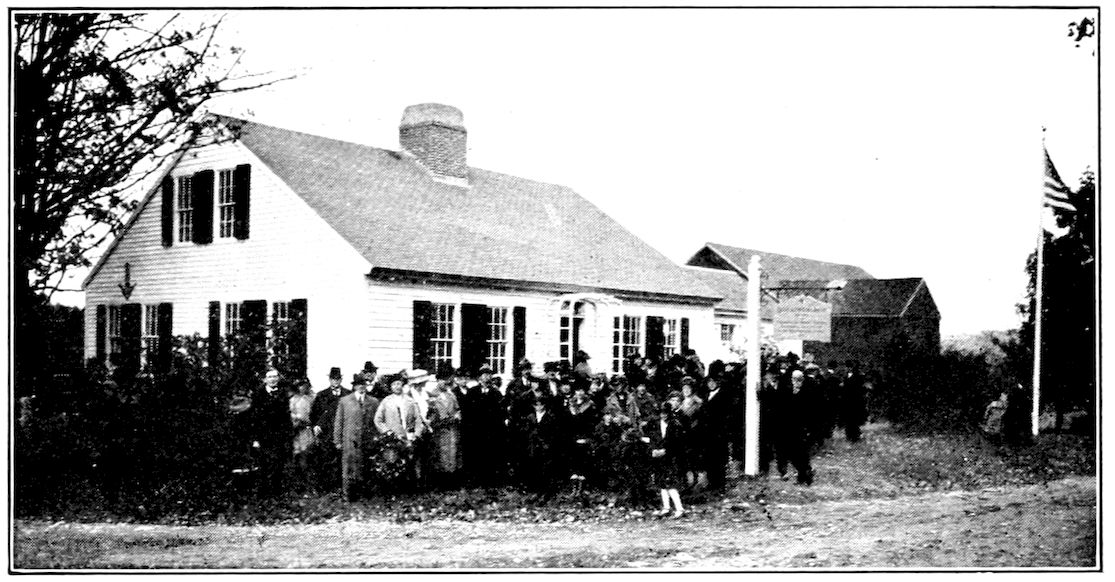
BIRTHPLACE OF CLARA BARTON, NEAR OXFORD, MASSACHUSETTS
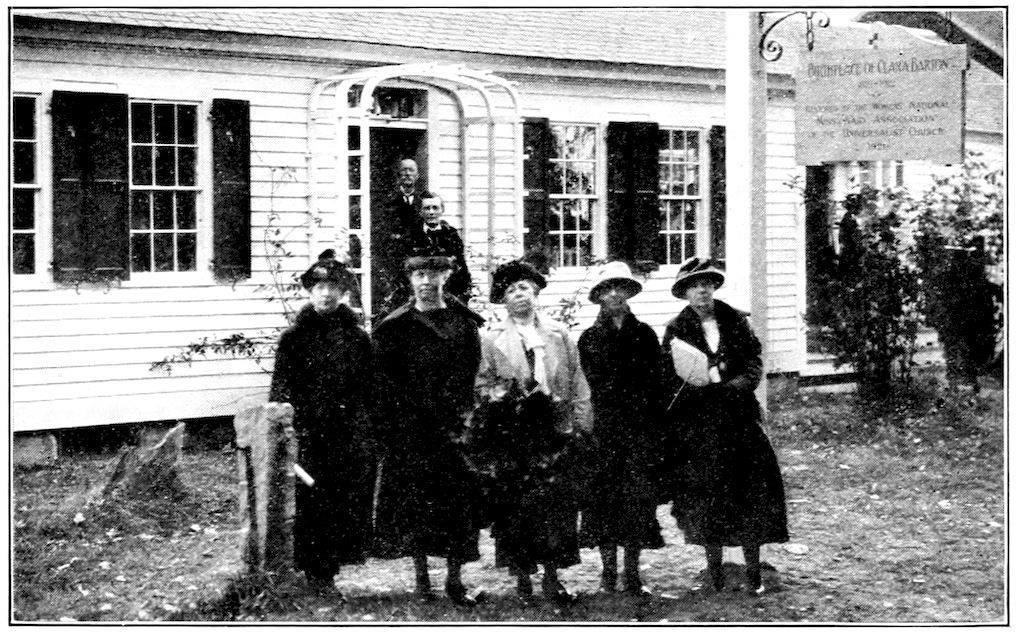
On March 14, 1921, the title to the Barton Homestead was transferred by Carl O. Carlson to The Woman’s National Missionary Society of the Universalist Church. It is now known as The Clara Barton Memorial Home. Mementoes, Red Cross literature and all else possible to obtain that appertain to Clara Barton’s life work will be assembled here and become a part of the Memorial. The homestead consists of the house where Clara Barton was born, and eighty-five acres of land. It was dedicated as a shrine for the public, October 12, 1921.
Arrow points to the room where Clara Barton was born. Size of the room 8 × 10 feet. Ceiling 8 feet high. Clothes closet 5 feet 2 inches × 2 feet 5 inches. Two windows each 4 feet 5 inches high × 2 feet 3 inches wide. Two sashes in each window; six panes of glass in each sash.
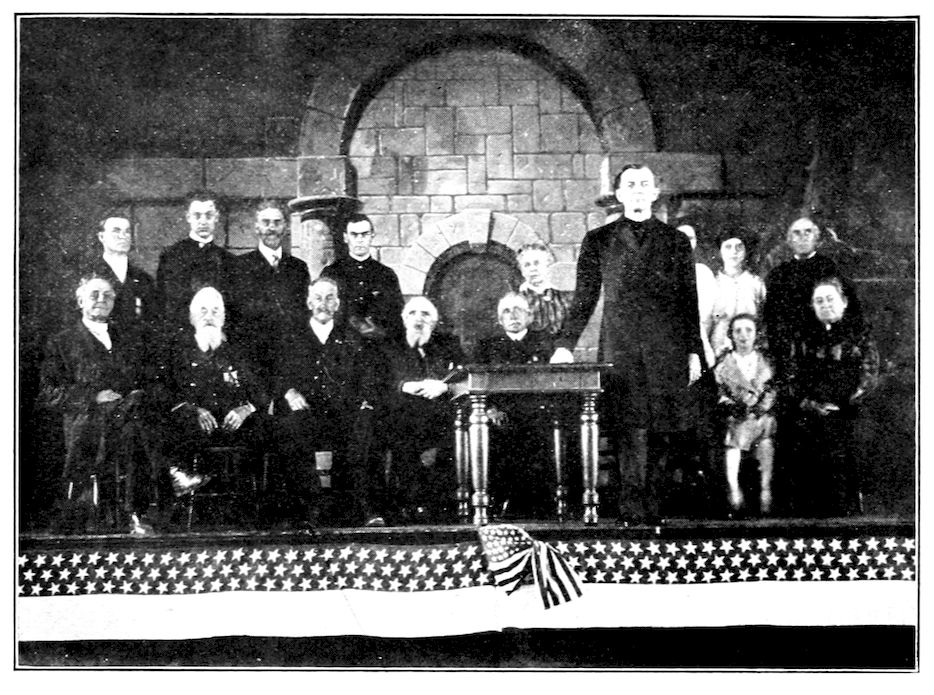
OFFICERS OF THE W. N. M. A. PRESENT AT THE DEDICATION OF THE CLARA BARTON MEMORIAL ON OCTOBER 12, 1921.
Left to Right: Mrs. Bertram O. Blaisdell, Trustee; Mrs. Ethel M. Allen, Rec. Sec’y (now President); Mrs. Marietta B. Wilkins, President; Mrs. Fred A. Moore, Literature Secretary; Miss Susan M. Andrew, Trustee (Chairman Clara Barton Guild).
VIII — PAUPER SCHOOLS; FROM SIX TO SIX HUNDRED
43
Every child in the country has known of Clara Barton.
Oakland (Calif.) Tribune.
Pestalozzi was the Father of the Public School; Washington the
Father of his Country; Lincoln, the Father of a Race; Clara Barton,
the Mother of the Red Cross. The Author.
The building which housed Clara Barton in her efforts for popular
education is still standing along with other historic landmarks.
Bordentown (N. J.) Register.
If you will let me try, I will teach the children free for six
months. Clara Barton.
I thank God that we have no free schools—in the colony—and I
hope we shall not have these hundred years.
Governor Berkeley of Virginia in 1670.
The first incorporation to provide free schools, under the provisions
of the State, was passed in New York in 1805.
The Modern School System.
The basis of free government is in education; in a republic the
hope of the millions is the free public school.
The Two Republics.
The hope of all modern civilization is the public free school.
Ancient School Systems.
I taught in an uninclosed shed at North Oxford, there being no
house for that purpose. Clara Barton.
The first meetings for the establishment of a kindergarten system
at Washington was held at the Clara Barton home, in Washington;
44among others present Phoebe Hearst and Mrs. Grover Cleveland,
wife of the President, the chairman. The Author.
Let us live in our children. Frederick Froebel.
New Jersey had no public schools. The people said
they were not paupers and would not have their children
taught at public expense—would not send them to
“pauper schools.” In New Jersey Clara Barton
opened, for the first time, what was called a “free
school for paupers.” Since those puritan days, what
a change in public sentiment! Then it was “Pauper
school” education; now
Free education is the poor man’s marble staircase that leads upward,
and into, the palaces of wealth, health and happiness.
Clara Barton was told that a public school was impossible;
every time it had been tried, it had failed.
At Bordentown she found herself with six bright boys,
and the public school[2] commenced. At the end of
twelve months her six pupils had grown to six hundred
pupils—among whom no corporal punishment had
been administered.
2. The School Building, erected in 1837. School taught by Clara Barton,
in 1853. Building and site the property of New Jersey, purchased through
contributions by teachers and pupils. Building dedicated June 11, 1921,
and now known as The Clara Barton Memorial School but used as a Clara
Barton Museum.
“Pauper schools” became thence in fact the free
public school; now the free public school is the one
institution from whose flagstaff freedom’s flag is never
hauled down.
IX — CHILD LOVE—JOE AND CHARLIE—APPRECIATION
45
Clara Barton taught the rich to be unselfish and the strong to be
gentle. Charles E. Townsend, U. S. Senate.
Her voice was soft,
Gentle and low; an excellent thing in woman.
Shakespeare.
Miss Barton was a soft-voiced, retiring little woman, yet she had
a way of approaching her work in a most telling manner.
Buffalo (N. Y.) Express.
Miss Barton followed her own light with steadfast steps.
Springfield (Mass.) Republican.
Clara Barton—a model of the beautiful simplicity of a life given
to others. Bridgeport (Conn.) Standard.
The severest test of discipline is its absence. Clara Barton.
Social, friendly and human, Clara Barton joined with the children
in the playgrounds;—instead of being locked out as the previous
teachers had been she “locked” herself “in” the hearts of every boy
and girl. The Life of Clara Barton, by Epler.
Show me a child well disciplined, perfectly governed at home, and
I will show you a child that never breaks a rule at school.
Clara Barton.
Whenever corporal punishment is inflicted on a pupil it is a sign
of negligence and indolence on the part of the teacher, says Seneca.
Ancient School Systems.
In refinement of taste and beauty of action, or purity of thought
and delicacy of expression, nature’s own best teacher is woman.
The Modern School System.
46
To the child nothing is small; nor does the child
forget. Whatever kindness comes to the child is stored
in one of the cells of the brain for future years. As
an heirloom, the longer it is possessed the more it is
cherished.
Referring to her teacher of long ago, Dr. Eleanor
Burnside recently related this incident in her school
life: “I recall when a little girl in her school Clara
Barton’s friendly interest in the progress of her pupils;
unvarying patience, no matter what the circumstances
might be. I do not think she knew how to scold, nor
were scoldings and other manifestations of ill temper
necessary. Her quiet, firm word, pleasantly expressed,
seemed sufficient always.”
Speak gently; it is better far
To rule by love than fear—
Speak gently; ’tis a little thing
Dropped in the heart’s deep well;
The good, the joy, which it may bring,
Eternity shall tell.
Not easily disturbed, Miss Barton did not notice
little misdemeanors by the children at all. She seemed
not to observe one day when some fun was started by a
boy sitting back of Joe Davis. The mischievous boy
was putting his finger in Joe’s red hair and pretending
his finger was burnt. Of course it amused the children,
but only for a moment. To govern too much is worse
than to govern too little. This was an incident merely
of a child’s humor, requiring no reprimand. “But no
47matter what happened, Clara Barton did not scold.
Her pupils loved her and that made what she did, and
what she said too, right.”
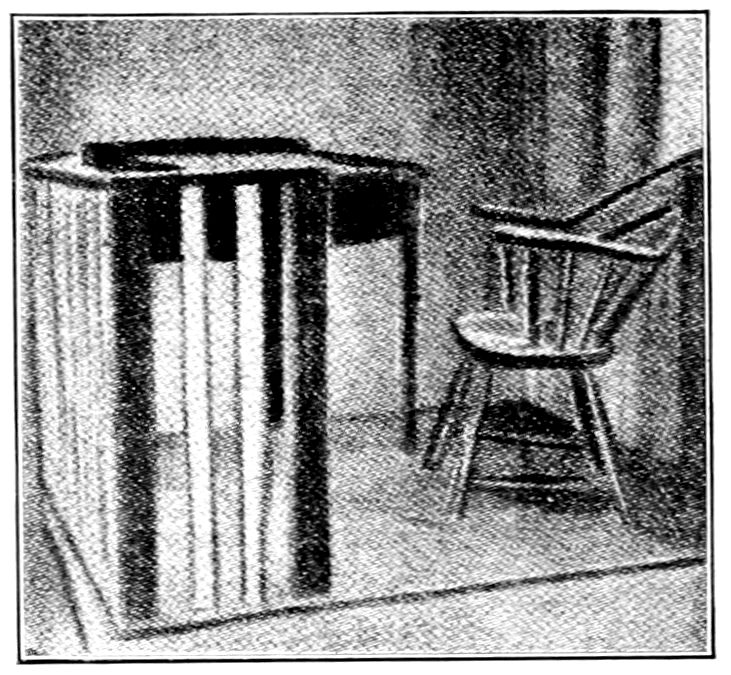
The old desk used by Clara Barton recently has been
found in possession of one of the old families at Bordentown,
New Jersey. By tracing back the ownership
it has been proved conclusively to be the original desk
used by Miss Barton. The desk refuted the libel that
she was a disciplinarian, and not a humanitarian.
The libel referred to was that she had a particularly
unruly boy; that she seized him by the nape of the
neck, lifted the lid of the desk and dropped him inside.
Now that the desk has been discovered, her admirers
point to the interesting fact that it doesn’t have a top
lid; it has a small drawer.
Childhood is ever of the living present. Up the
stream of time the eye keeps fixed on memory’s treasures
of youth. In one of the battles of the Civil War,
Clara Barton stooped down to place the empty sleeve,
then useless to the bullet-shattered right arm, over the
shoulder of a soldier boy. Recognizing the face of his
former teacher the fair-haired lad dropped his face
into the folds of her dress, then threw his left arm
around her neck, in deepest grief, crying: “Why, Miss
Barton, don’t you know me? I am Charlie Hamilton
who used to carry your satchel to school.”
X — TEMPERANCE—CLARA BARTON AND THE HIRED MAN—STRANGER THAN FICTION
48
Like a patriotic soldier Clara Barton responded in the youth of
her womanhood to the call of service to others.
York (Pa.) Gazette.
Clara Barton is one of the greatest heroic figures of her time.
Buffalo Press.
Clara Barton—our greatest national heroine. Literary Digest.
We reckon heroism today, not so much on account of the thing
done as the motive behind the act. Chauncey M. Depew.
Yes, it is over. The calls are answered, the marches have ended,
the nation saved. Clara Barton.
The best blood of America has flowed like water.
Clara Barton.
The soldier is lost in the citizen. Clara Barton.
The proudest of America’s sons have struggled for the honors of
a soldier’s name. Clara Barton.
Their glory, bright as it shone in war, is out-lustered by the nobleness
of their lives in peace. Clara Barton.
I shall never take to myself more honesty of purpose, faithfulness
of zeal, nor patriotism, than I award to another. Clara Barton.
What can be added to the glory of a nation whose citizens are
its soldiers? Whose warriors, armed and mighty,—spring from its
bosom in the hour of need, and peacefully retire when the need is
over. Clara Barton.
49I have taught myself to look upon the government as the band
which the people bind around a bundle of sticks to hold it firm,
where every patriot must grapple the knot tighter.
Clara Barton.
If our government be too weak to act vigorously and energetically,
strengthen it till it can act; then comes the peace we all wait for,
as kings and prophets waited—and without which like them we seek
and never find. Clara Barton.
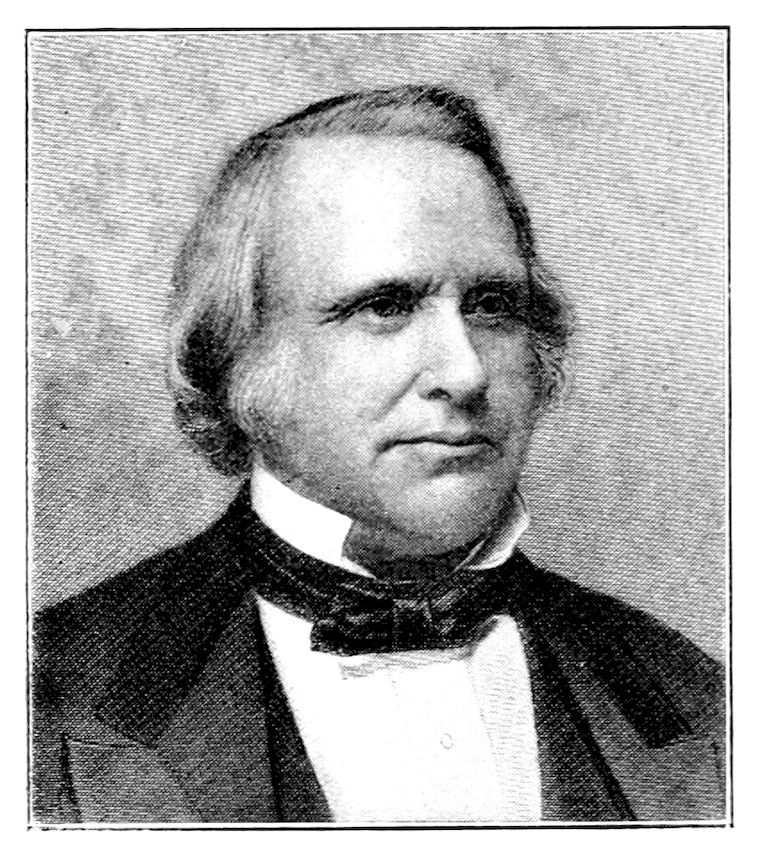
Henry Wilson worked on a farm at six dollars per month. Then
he tied up his scanty wardrobe in a pocket handkerchief, and walked
to Natick, Massachusetts, more than one hundred miles, to become
a cobbler. The trip cost him but $1.88.
Henry Makepeace Thayer.
I am the son of a hireling manual laborer who, with the frosts
of seventy winters on his head, lives by daily labor. I too lived by
daily labor. Henry Wilson.
Henry Wilson, born in New Hampshire, February 16, 1812;
elected to U. S. Senate, 1855; elected Vice-President, 1872; died
November 22, 1875. The Author.
We should yield nothing to our principles of right.
Henry Wilson.
The sorrows of drunkenness glare on us from the cradle to the
grave. Henry Wilson.
I would not have upon my soul the consciousness that I had by
precept or example lured any young man to drunkenness for all the
honors of the universe. Henry Wilson.
Clara Barton’s never-failing friend, Senator Henry Wilson.
Percy H. Epler.
50
Way back in 1857 in Worcester, Massachusetts, Clara
Barton showed her humanitarian spirit and organization
ability. Under the Reverend Horace James, she
assisted in the organization of the Band of Hope,[3] a
society originating in Scotland whose object was: “To
Promote the Cause of Temperance and Good Morals
of the Children and Youth.”
3. First Temperance Society organized in America, in 1789; First National
Temperance Convention, in 1833; a “temperance revolution” urged, in 1842,
by Abraham Lincoln; Women’s Christian Temperance Union organized in
1874; National Prohibition went into effect January 16, 1920.
On the breaking out of the Civil War, the Reverend
James became Chaplain of the Twenty-fifth Massachusetts
Regiment, and two of the boys that Clara
Barton induced to join the society became officers of
the Fifty-seventh Massachusetts Regiment. One was
Colonel J. Brainard Hall and the other Captain
George E. Barton. At the Battle of the Wilderness
the Colonel Hall referred to was seriously, then
thought to be fatally, wounded. Clara Barton was the
first at his side to nurse, and to care for, him. As soon
as he was able to be moved, she sent him to Washington
to be cared for there by one whom she told him was
her very dear friend. Stranger than fiction, on reaching
Washington, Colonel Hall discovered this friend
to be the “Hired Man,” previous to 1839, who worked
in his grandmother’s shoe-shop,—the late Henry
Wilson, Vice-President of the United States.
XI — LOOKING FOR A JOB—EQUAL SUFFRAGE
51
Every woman who loves her country and who realizes what true
patriotism means will always revere the name of Clara Barton,
and connect it with the highest ideal of service to one’s country.
Dr. Anna H. ShawPresident American Woman Suffrage Association.
Clara Barton has won the hearts of the women of the world.
Carrie Chapman Catt, President American Woman Suffrage
Association.
John Marshall, for thirty-five years Chief Justice of the U. S.
Supreme Court, held the female sex the equals of men.
Justice Joseph Story.
I had not learned to equip myself—for I was no Pallas ready
armed but grew into my work by hard thinking and sad experience.
Clara Barton.
I am a woman and know what barriers oppose all womanly
efforts. Harriet G. Hosmer.
Clara Barton is the best clerk, either man or woman, I ever had in
my office. Mr. Mason, Commissioner of Patents.
It is less difficult for a woman to obtain celebrity by her genius
than to be forgiven for it. Brissot.
Only the machinery and plans of Heaven move unerringly and
we short-sighted mortals are, half our time, fain to complain of
these. Clara Barton.
It is possible for the wisest even to build better than he knows.
Clara Barton.
52Who furnished the Armies; who but the Mothers? Who reared
the sons and taught them that liberty and their country was worth
their blood? Who gave them up and wept their fall, nursed them in
their suffering and mourned them, dead? Clara Barton.
There is none to give woman the right to govern herself, as men
govern themselves by self-made and self-approved laws of the land.
Clara Barton.
Only the Great Jehovah can crown and anoint man for his work,
and he reaches out and takes the crown and places it upon his head
with his own hand. Clara Barton.
Whenever I have been urged as a petitioner to ask equal suffrage
for women a kind of dazed, bewildered feeling comes over me.
Clara Barton.
In making an appeal to her soldiers for “votes for women” Clara
Barton said: “When you were weak and I was strong, I toiled for
you; now you are strong, and I am weak. Because of my work for
you, I ask your aid; I ask the ballot for myself and my sex. As I
stood by you, I pray you stand by me and mine.” The Author.
Clara Barton advocated “Votes for Women” on the platform of
the First National Suffrage Convention in this country.
Buffalo (New York) Courier.
Among the ancients, controlling the certain affairs
worthy of man, were many goddesses; of these, Venus,
Ceres, Juno, Diana, Pomona, Minerva. Such man’s
inherent respect for femininity that feminine names in
classic days were given to temples of worship; to
the continents, Europe, Asia, Africa, and later to
America.[4] Feminine names with few exceptions, also,
have been given to all countries,—“she” and not “he,”
likewise the word used to identify great things mechanical
and useful. Long and hard has been the contest for
woman to achieve in fact what in spirit seemingly comports
with womanhood. In this contest through the last
half of the nineteenth, and the first half of the twentieth,
century Clara Barton was conspicuous.
4. In 1507, by Martin Waldseemuller, the name of America was given to
the then newly discovered continent.
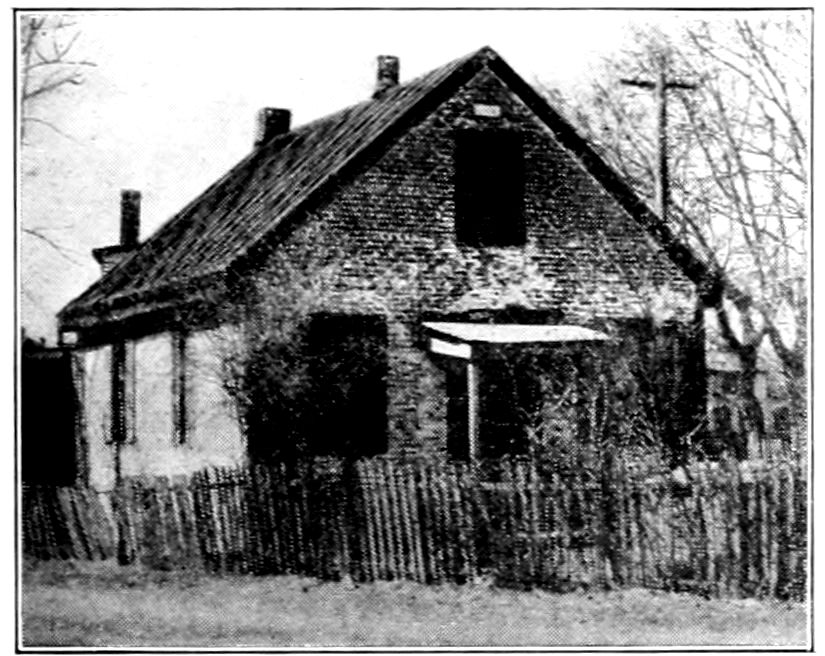
THE SCHOOL HOUSE
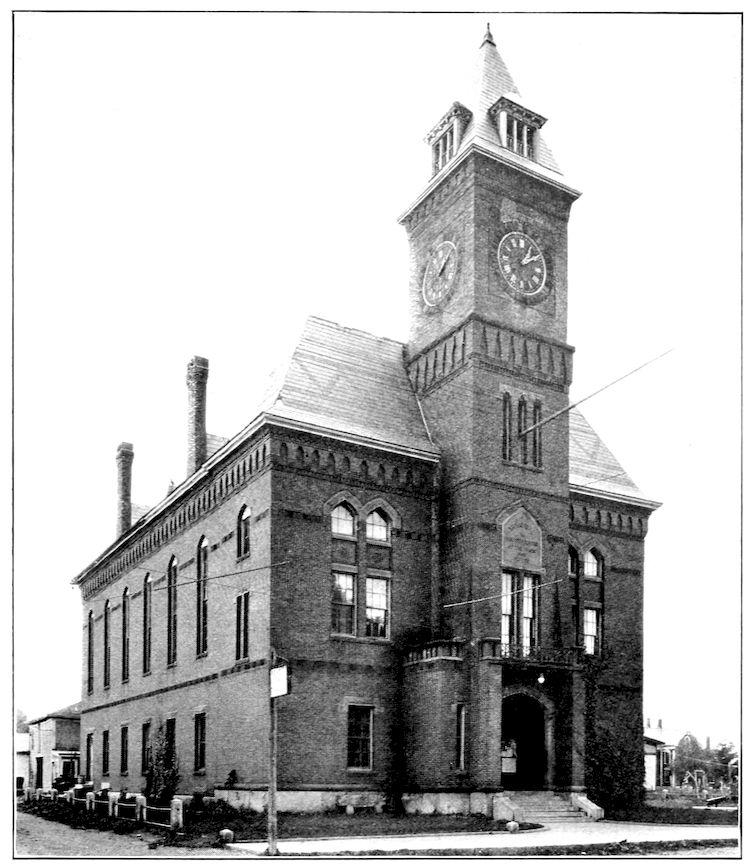
Built of brick, in 1839, where Clara Barton taught school in 1853. See page 47.
53Alone in the world, dependent upon her own efforts
for a living and looking for a “job,” the following is
what in letters Miss Barton says of herself in 1854 and
1860 respectively:
In a letter to her friend Miss Lydia F. Haskell,
Washington, D. C., January 20, 1854, Clara Barton
said:
“Well, I am a clerk in the United States Patent Office, writing
my fingers stiff every day of my life.... The truth is, I have
written nights until one or two o’clock for the last two weeks. I
shall not be so very busy long. I am just now fitting the mechanical
report for the press; that off my hands and I shall be quite at ease,
I suppose.”
In a letter to Frank Clinton, Bordentown, New Jersey,
dated January 2, 1860, Clara Barton said:
“I can teach English, French, drawing and painting.... I
am a rapid writer or copyist, and have the reputation of being a
very good accountant ... and if, in your travels through the South,
you see an opening for me, tell me.”
As the pioneer woman in Government service Clara
Barton was the object of commiseration. And only
because she was a woman, she suffered through jeers
and hoots and cat-calls, and tobacco smoke in her face,
and slanderous whisperings in the hallways and boisterous
talks about “crinoline”—all sorts of offensiveness,
on the part of Government employees. Clara
Barton in the public school, in the patent office, in the
Civil War, in the Franco-Prussian War, in the Cuban
War, in national disasters, in the presidency of the Red
54Cross, now filled by the President of the United States,
is a series of object lessons of the greatest significance
in the progress of womankind in the public service.
Clara Barton the intruder among men in the patent
office in 1855, and Jeannette Rankin, the honorable
among men in Congress in 1918, are the exponents
respectively of two conditions of American sentiment
as to the public function of women in the United States.
Possibly because of her sad experience as a woman
in the public service, she became one of those who,
with Susan B. Anthony, Elizabeth Cady Stanton, and
other suffragettes, blazed the way to equal rights for
women—equal rights now approved by the President,
the United States Congress and the American people.
At a meeting of the American Suffrage Association
held in Washington, D. C., in language most caustic
and argumentative, in part in a public address Clara
Barton said:
A woman shan’t say there shall be no war—and she shan’t take
any part in it when there is one; and because she doesn’t take part
in the war, she must not vote; and because she can’t vote she has
no voice in her Government. And because she has no voice in her
Government she is not a citizen; and because she isn’t a citizen she
has no rights, and because she has no rights she must submit to
wrong; and because she submits to wrong she isn’t anybody. Becoming
optimistic, she said, the number of thoughtful and right
minded men who will approve equal suffrage are much smaller than
we think and, when equal suffrage[5] is an accomplished fact, all will
wonder as I have done, what the objection ever was.
5. The Nineteenth Amendment to the Constitution proclaimed August 26,
1920.
XII — CREDULOUS OX—INNOCENT CHILD—CLARA BARTON, A VEGETARIAN
55
Clara Barton’s simple life was long, and so full of stirring incidents
that all the books will not record the whole of it.
Worcester (Mass.) Telegram.
Be not like dumb-driven cattle.
Longfellow—The Psalm of Life.
The Ox has therefore stretched his yoke in vain.
A Midsummer Night’s Dream.
And the plain ox,
That harmless, honest guileless animal,
In what has he offended? he whose toil,
Patient and ever ready, clothes the land
With all the pomp of harvest.
Thompson—The Seasons.
A man loves the meat in his youth that he cannot endure in his
age. Much Ado About Nothing.
Tell me what you eat, and I will tell you what you are.
Brillat Savarin.
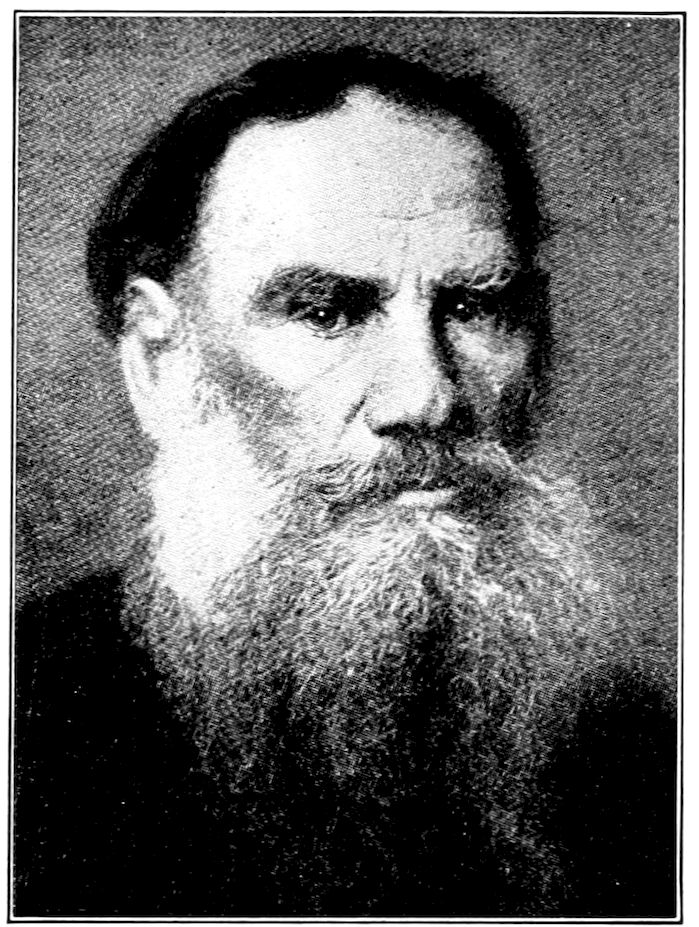
The sign of true, not casual, progress, ... is the progress of
vegetarianism ... more and more people have given up animal
food. Tolstoi.
I had not then learned the mystery of nerves. Clara Barton.
Among the Puritans the horse was a luxury; the
beast of burden was the ox. In the first half of the
nineteenth century the ox made possible in Massachusetts
even the existence of man. In the snows of
56winter, at seed time and at harvest, the toiling ox was
loyal—faithful to the best interests of the family. The
ox himself was unsuspecting, and untutored in the art
of deceiving others. He couldn’t think his kindly
attentive Master, Man, unappreciative, disloyal—wholly
obsessed with greed. He didn’t know that
money was above life,—he hadn’t read war-history.
He didn’t know that through the love of money, by
man, come life’s woes. The ox knew only that he was
the friend to man; and he thought man must be his
friend. Poor credulous ox! And yet in the child the
friendship of the ox is not misplaced. Innocent child!
to man and beast Heaven’s best gift, a loyal friend.
Captain Stephen Barton kept a dairy. When a small
girl Clara used to drive the cows and oxen to, and from,
the pasture. Clara also assisted morning and evening
in milking the cows. One evening she observed three
men, one holding in his hand an axe, driving a big,
red, fat ox into the barn. She saw the man with the axe
strike the ox in the head, then saw the ox drop to the
floor. At the same moment she fell unconscious to the
ground. She was carried to the house, placed on a bed,
and a camphor bottle freely used. When she regained
consciousness, in reply as to why she fell, she said:
“Someone struck me.” “Oh, no, no one struck you,”
they said. “Then what makes my head sore,” she asked.
At that time her desire for meat left her; and in later
years she used to say, “all through life to the present,
I have eaten meat only when I must for the sake of
appearances. The bountiful ground always yields
enough for all of my needs and wants.”
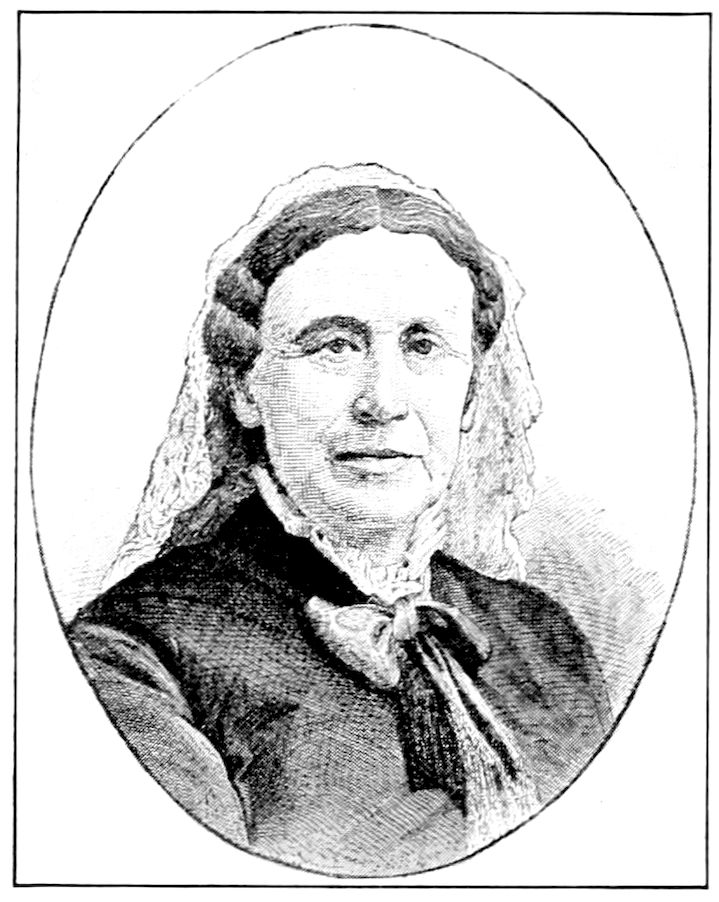
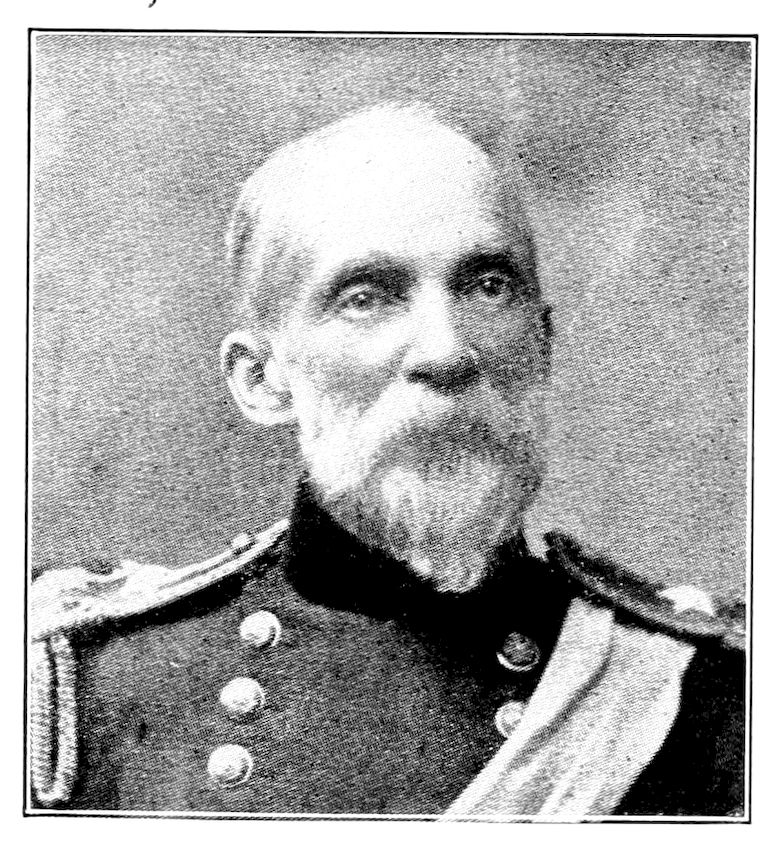
ANNIE WITTENMEYER
Clara Barton is second to none of womankind.—Mrs. Annie Wittenmeyer, First President W. C. T. U.
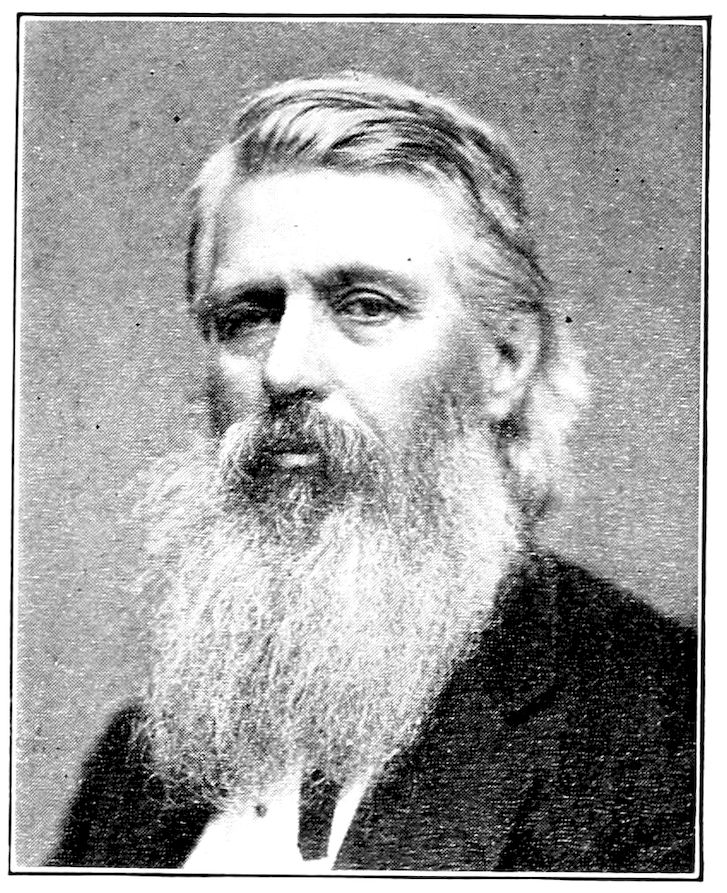
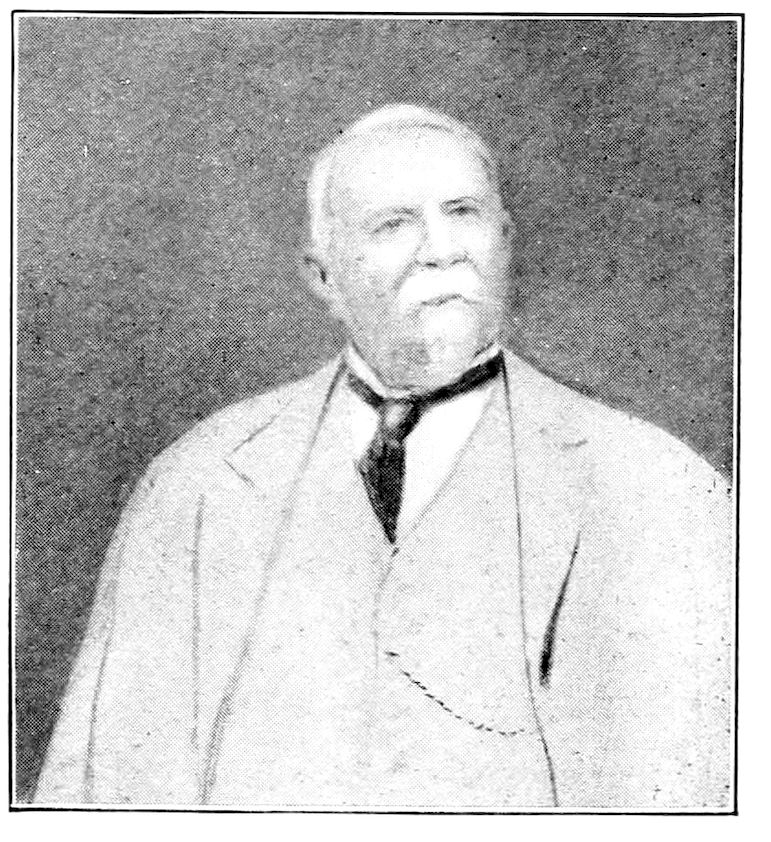
JOHN B. GOUGH
Clara Barton’s lecture—I never heard anything more thrilling in my life.—John B. Gough, America’s Greatest Temperance Lecturer.
REPRESENTATIVE TEMPERANCE ADVOCATES
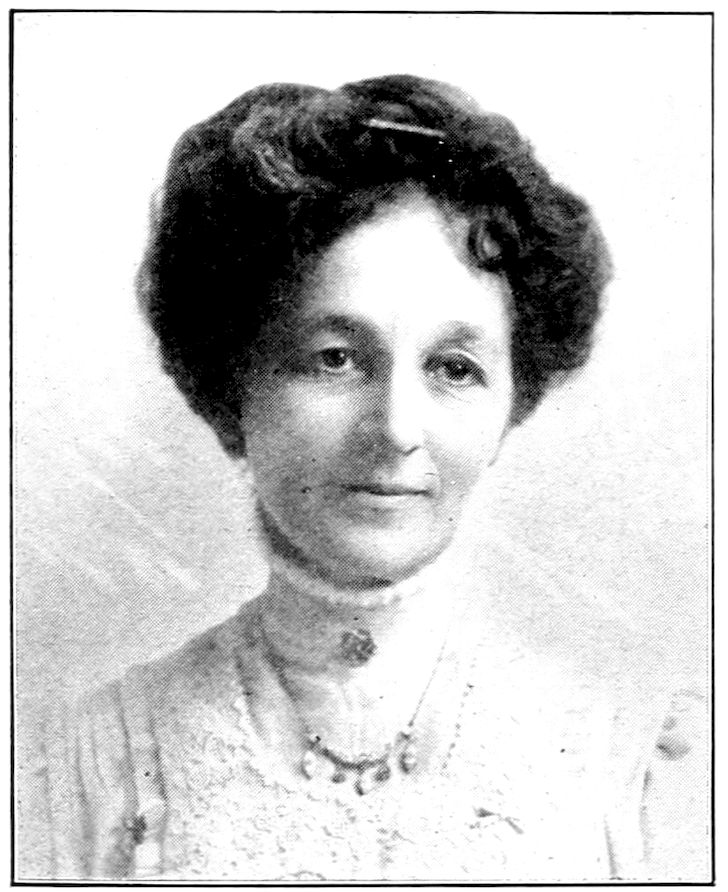
MARY STEWART POWERS
Clara Barton was prominent among women as an advocate of the cause of temperance. Through her leadership in practical humanitarianism she endeared herself to the whole world. Her good name will live forever.—Mrs. Mary Stewart Powers, Public Lecturer and State Superintendent of Scientific Temperance of Ohio.
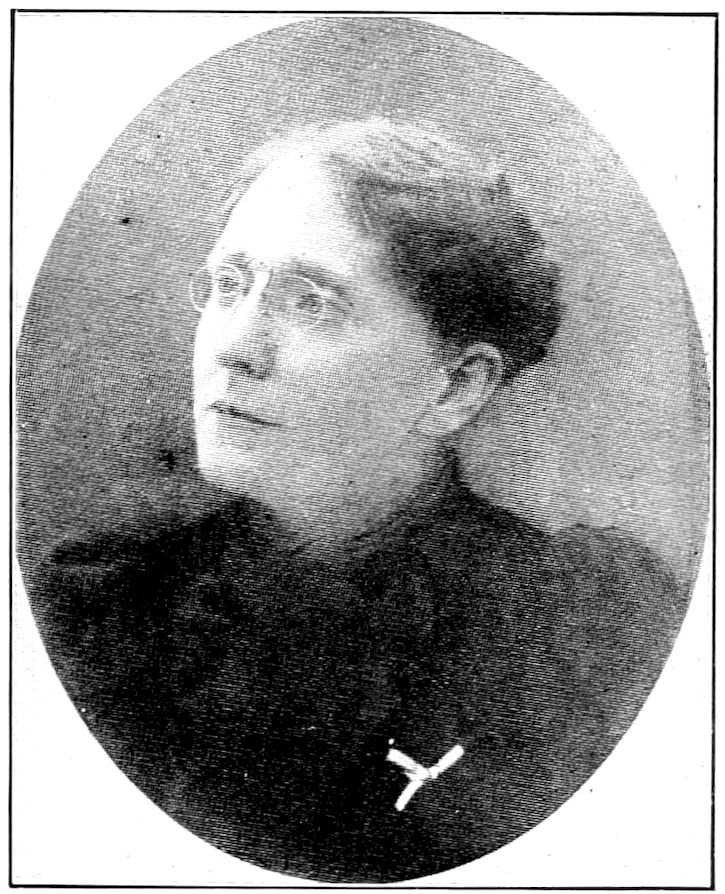
FRANCES WILLARD President W. C. T. U.
In the name of your God and my God, ask your people and my people not to be discouraged in the good work (Red Cross) they have undertaken.—Clara Barton. From Armenia, in 1896, to Miss Willard.
The Mother, patriot though she were, uttered her sentiments
through choking voice and tender trembling words, and the young
man caring nothing, fearing nothing, rushed gallantly on to doom
and to death. Clara Barton.
The soldier’s fear is the fear of being thought to fear. Bovee.
Self trust is the essence of heroism. Emerson.
I have no fear of the battle field; I want to go to the suffering
men. Clara Barton.
I was always afraid of everything except when someone was to be
rescued from danger or pain. Clara Barton.
Like the true Anglo-Saxon, loyal and loving, tender and true,
the Mother held back her tears with one hand while with the other
she wrung her fond farewell and passed her son on to the State.
Clara Barton.
The first time Clara Barton visited in New Haven,
she wore a gray dress that had bullet holes in it—received
in caring for the wounded at Fredericksburg.
In describing the battle scene Clara Barton said:
“Over into that City of Death; its roofs riddled by
shells, its very Church a crowded hospital, every street
a battle line, every hill a rampart, every rock a fortress,
and every stone wall a blazing line of forts!”
58At Fredericksburg
They rated blood as water,
And all the slope shone red,
Past Valor’s call
By bristling wall;
Defeat linked arms with slaughter
Astride the blue-robed dead.
As Miss Barton was being assisted off the bridge by
an officer, an exploding shell hissed between them, passing
below their arms as they were upraised, carrying
away both the skirts of his coat and her dress. A moment
later, on his horse, the gallant officer was struck
by a solid shot from the enemy; the horse bounded in
the air and the officer fell to the ground dead, not thirty
feet in the rear.
In her usual modest manner, in relating war incidents,
she described the experience to a lady friend and
said: “I never mended that dress. I wonder whether
or not a soldier ever mends a bullet hole in his clothes.”
XIV — WICKEDNESS OF WAR—SETTLES NO DISPUTES
59
Military glory—that attractive rainbow that rises in showers of
blood, that serpent’s eye that charms to destroy.
Abraham Lincoln.
The friends of humanity will deprecate war, whenever it may
appear. George Washington.
There is no need of bloodshed and war. Abraham Lincoln.
Wars are largely the result of unbridled passions.
Clara Barton.
War is only splendid murder. James Thomson.
War is the mad game that the world so loves to play. Swift.
Every battleship is a menace to the peace of the world. With
each new battleship every nation carries a chip on its shoulder.
Clara Barton.
The Red Cross took its rise in, and derived its existence from,
war. Without war it had no existence. Clara Barton.
Deplore it as we may, war is the great act of all history.
Clara Barton.
War has been the rule, if not largely the occupation, of the peoples
of the earth from their earliest history. Clara Barton.
Scarcely a quarter of the earth is yet civilized, and that quarter
not beyond the probabilities of war. Clara Barton.
General Sherman was right when, addressing an assemblage of
cadets, he told them “war was hell!” Take it as you will, it is
this;—whoever has looked active war full in the face has caught
some glimpse of regions as infernal as he may ever fear to see.
Clara Barton.
60Only time, prolonged effort, national economics, universal progress
and the pressure of public opinion could ever hope to grapple
with the existence of war, the monster evil of the ages.
Clara Barton.
I have studied the massing of forces and scanned from point to
point the old battle-grounds of Marengo and Jena and Waterloo
and the Magenta and Solferino and it has seemed to me that these
armies had a fairer field and a better chance than ours, in the Civil
War. Clara Barton.
War may be a great harmonizer, but it is not a humanizer.
Clara Barton.
That which is won by the sword must be held by the sword,
whether it is worth the cost or not. Clara Barton.
If there be any power on earth which can right the wrongs for
which a nation goes to war, I pray it may be made manifest.
Clara Barton.
If there be any good wars, I will attend them.
Sir Philip Sidney.
That noble and numerous class of patriots who are brave with
other men’s lives and lavish of other men’s money. Gladstone.
There never was a good war, nor a bad peace.
Benjamin Franklin.
Don’t talk about war; we have done with war. The Peace of the
world is the question now. Clara Barton.
Clara Barton was a patriot, but “not a war woman.”
She had no sympathy with the religion such as was
Odin’s, of the ninth century, which religion assured for
him who had killed in battle the greatest number the
highest seat reserved in the Paradise of the Valhalla;
61nor with the sentiment of the King of Denmark of that
day, “What is more beautiful than to see the heroes
pushing on through battle, though fainting with their
wounds;” nor with the sentiment of that same king’s
boast, “War was my delight from my youth, and from
my childhood I was pleased with a bloody spear.”
Princes were privileged to kill,
The numbers sanctified the crime.
Wolves in “packs” seek prey; so do men—in sheep’s
clothing. Wolves truthful, in howls, send forth their
propaganda—hunger; men untruthful, in words, send
forth their propaganda—hate. If the “survival of the
fittest” be nature’s law only brutes conform to nature—by
using no weapons. Men kill their own “kith and
kin”; brutes combine to protect their own species. The
more one sees of men on war’s slaughter-fields killing
their friends or strangers, for prospective profit, the
more he must admire the ethics of the brute. In brute
history there have been no wars. Facing human record,
the record of 3,400 years, there have been 3,166 years
of war, and only 234 years of peace; facing the picture
of which history makes no mention and which in the
wake of armies she had seen, Clara Barton says:
“Faces bathed in tears and hands in blood, lees in the
wind and dregs in the cup of military glory, war has
cost a million times more than the world is worth,
poured out the best blood and crushed the fairest forms
the good God has ever created.”
Through war and its consequences, one third of
“civilized man” since the world began has come to an
untimely end, by violence, as did Abel at the hands of
Cain.
62Earth’s remotest regions
Lie half unpeopled by the feuds of Rome.
“Mankind is the greatest mystery of all mysteries,”
says Clara Barton, and insists that she can never understand
the history of human conduct in this world, and
wonders whether or not she will in the next. In the
light of war’s history and, trying to solve the “mystery
of all mysteries,” she asks: “Heavenly Father! what
is the matter with this beautiful earth that thou hast
made? And what is man that thou art mindful of
him?”
Further philosophizing on the “Wickedness of War,”
in a masterful public address, she says: “There is not
a geographical boundary line on the face of the earth
that was not put there by the sword, and is not practically
held there by this same dread power. War
actually settles no disputes, it brings no real peace;
it but closes an open strife;—the peace is simply buried
embers. The war side of the war could never have
called me to the field—through and through, thought
and act, body and soul, I hate it. We can only wait
and trust for the day to come when the wickedness of
war shall be a thing unknown in this beautiful world.”
Again philosophizing she says: “As I reflect upon
the mighty and endless changes which must grow out
of war’s issues, the subject rises up before me like some
far-away mountain summit, towering peak upon peak,
rock upon rock, that human foot has not trod and
enveloped in a hazy mist the eye has never penetrated.”
XV — HER WARDROBE IN A HANDKERCHIEF—THE BATTLE SCENE
63
In the same year, and about the same time in the year, that Clara
Barton first started for the battlefield her warm personal friend,
Julia Ward Howe, wrote “The Battle Hymn of the Republic.”
The Author.
You remember the time was Sunday, September 14th, 1862.
Clara Barton.
Society forbade women at the front. Clara Barton.
Tradition absolutely forbade a good woman to go unprotected
among rough soldiers. Clara Barton.
And what does woman know about war, and because she doesn’t
know anything about it she mustn’t say, or do, anything about it.
Clara Barton.
It has long been said, as to amount to an adage, that women don’t
know anything about war. I wish men didn’t either. They have
always known a great deal too much about it for the good of their
kind. Clara Barton.
I struggled long and hard with my sense of propriety—with the
appalling fact that “I was only a woman” whispering in one ear;
and thundering in the other the groans of suffering men dying like
dogs—unfed and unclothed, for the life of every institution which
had protected and educated me. Clara Barton.
When war broke over us, with an empty treasury and its distressed
Secretary, Salmon P. Chase, personally trying in New York to borrow
money to pay our first seventy-five thousand soldiers, I offered
to do the work of any two disloyal clerks whom the office would
discharge and allow the double salary to fall back into the treasury.
When no legal way could be found to have my salary revert to
the national treasury, I resigned and went to the field.
Clara Barton.
64I could not carry a musket nor lead the men to battle; I could
only serve my country by caring for, comforting, and sustaining
the soldiers. Clara Barton.
I broke the shackles and went to the field. Clara Barton.
Washington, D. C., June 20, 1864.
Dr. J. M. Barnes,
Acting Surgeon General, U. S. A.,
Sir: The undersigned, Senators and Representatives of Massachusetts,
desire you to extend to Miss Clara Barton of Worcester,
Massachusetts, every facility in your power to visit the army at any
time or place that she may desire, for the purpose of administering
to the comfort of our sick and wounded soldiers. Also that such
supplies and assistants, as she may require, may be furnished with
transportation.
We are, very respectfully,
H. L. Dawes,
Alex. H. Rice,
D. W. Gooch,
John D. Baldwin,
Thos. D. Eliot,
Geo. S. Boutwell,
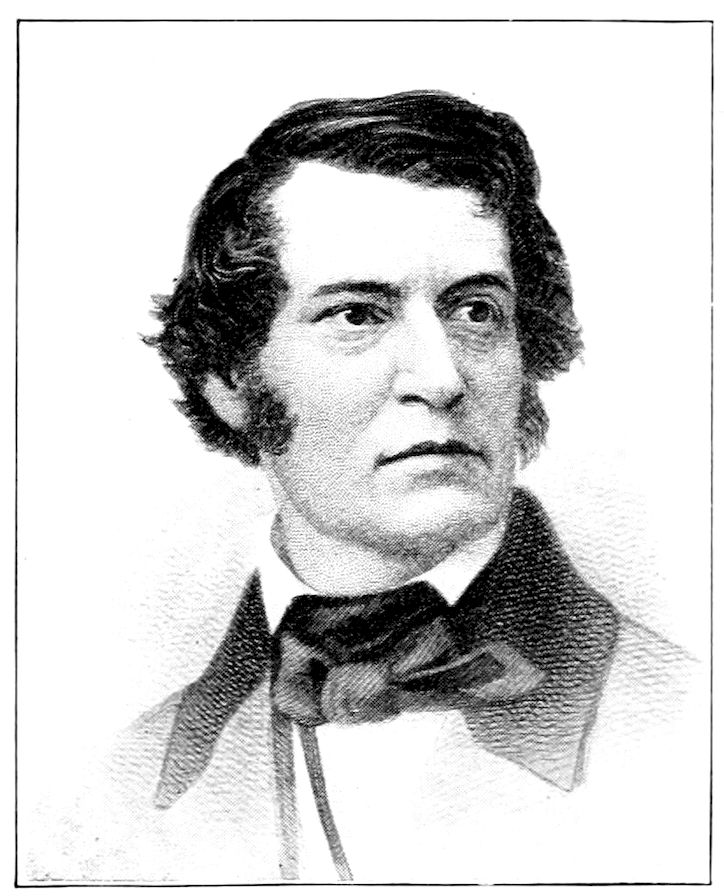
Charles Sumner,
Henry Wilson,
Jno. B. Allen,
Oakes Ames,
W. F. Washburne.
On September 14, 1862, Clara Barton started from
the City of Washington to the firing line, then at
Harper’s Ferry. She took with her no Saratoga, no
grip, no “go-to-meeting clothes.” The articles in her
65wardrobe on that eventful trip will never be known but
it is known to a “dead certainty” that whatever
“worldly goods” she did take with her were all tied
up in a pocket handkerchief.
Her only escort was a “mule skinner.” He, wearing
the blue, held the one jerk line to the team of six mules,
animals known in the west as “Desert Canaries.” The
vehicle in which Clara Barton took that eventful ride
was an army freight wagon covered with canvas, such
wagon sometimes called the “prairie schooner.” “In
the Days of Old, the Days of Gold,” as “Westward the
Course of Empire Takes its Way,” the “prairie
schooner” was almost the exclusive vehicle of conveyance
over the deserts for freight and passengers. It
was in the “prairie schooner” that the Mormons went
to Utah in 1848, and the Argonauts to California, in
“’49 and ’50.” It was from a “prairie schooner” that,
rising from a sick bunk and looking out over that beautiful
valley of Salt Lake, Brigham Young exclaimed:
“This is the Place!”
After an eighty-mile ride bumping over stones and
dykes and ditches, up and down the hills of Maryland,
Clara Barton arrived at the battlefield. There, side by
side, cold in death with upturned faces, were the brave
boys of the Northern blue and the Southern gray. In
closing a description of this battle scene Clara Barton
says: “There in the darkness God’s angel of Wrath and
Death had swept and, foe facing foe, the souls of men
went out. The giant rocks, hanging above our heads,
seemed to frown upon the scene, and the sighing trees
which hung lovingly upon their rugged edge dropped
low and wept their pitying dews upon the livid brows
and ghastly wounds beneath.”
XVI — THE BRAVERY OF WOMEN—CLARA BARTON’S BRAVEST ACT
66
Clara Barton carried on her work in the face of the enemy, to
the sound of a cannon, and close to the firing line.
Boston (Mass.) Transcript.
So long as the Republic lives the name of Clara Barton will be
honored. Roswell Record.
Clara Barton—Glorious Daughter of the Republic!
The Buffalo News.
Clara Barton performed work for wounded soldiers often at the
risk of her life. Phebe A. Hanaford, Author.
Clara Barton—right into the jaws of death she went, ministering
to the wounded, soothing the dying.
Chaplain Coudon (of G. A. R.)
National House of Representatives.
Follow the cannon. Clara Barton.
The soldier has been supposed to die painlessly, gloriously, with
an immediate passport to realms of bliss eternal. Clara Barton.
The soldier who has fallen in battle “with his face to the foe”
has been regarded as a subject of envy, rather than pity.
Clara Barton.
If wounded and surviving, the honor of a soldier’s scars has been
cheaply purchased, it has been supposed, though he strolled a limping
beggar. Clara Barton.
Only a small portion of the thought of the generations of the
past has been devoted to the subject of devising, or affording, any
means of relief for the wretched condition resulting from the
methods of national and international strife. Clara Barton.
The pitiable neglect of men in war appears to have constituted
one of the large class of misfortunes for which no one is to blame,
or even accountable, assuming that wars must be. Clara Barton.
67Go card and spin,
And leave the business of war to men. Dryden.
I am a U. S. soldier and therefore not supposed, you know, to be
susceptible to fear. Clara Barton.
When asked where occurred her bravest act, Clara
Barton replied: “At Fredericksburg.” She made
headquarters at the Lacy House, just north of the
Rappahannock River. While there, the surgeon in
charge of the wounded on the south bank of the river
sent a special messenger to Miss Barton to come across
with her assistants and supplies at once. As a soldier
and as an American patriot, she obeyed orders and
followed the flag over the bridge and on to the battle
field. In later years describing the women who went
to the war Clara Barton sings:
The women who went to the field, you say,
The women who went to the field;—what did they go for—?
Did these women quail at the sight of a gun?
Will some soldier tell us of one he saw run?
In referring to the incident, in her experience at
Fredericksburg, she said: “As I walked across this
bridge with the marching troops, the bullets and shells
were hissing and exploding in the river on either side
of me, the long autumn march down the mountain
passes—Falmouth and old Fredericksburg with its
pontoon bridge,—sharp-shooters—deserted camps—its
rocky brow of frowning forts—the one day bombardment,
68and the charge!” There, unperturbed, among
the men was Clara Barton, there in the broad glacis,
the one vast Aceldama, where—
In the lost battle,
Borne down by the flying,
Were mingled war’s rattle
With the groans of the dying.
SUSAN B. ANTHONY
My dear Clara Barton, you have done some wonderful things in the world.—Susan B. Anthony, Pioneer Suffrage Leader.
Susan B. Anthony was the first woman to lay her hand beside mine in the promotion of the Red Cross Society.—Clara Barton.
REPRESENTATIVE SUFFRAGE LEADERS
CARRIE CHAPMAN CATT
One of the great women of the world. Broad of vision, exalted of soul and absolutely free from selfishness that binds, Miss Barton was a rare human being.—Carrie Chapman Catt, President National American Woman Suffrage Association, 1900–1904; 1913——; Ex-President International Woman Suffrage Alliance.
Every woman who loves her country will revere the name of Clara Barton.—Dr. Anna Howard Shaw, President National American Woman Suffrage Association, 1904–Dec., 1915.
XVII — YES, AND GOT EUCHRED
69
Clara Barton—soldiers of every battlefield since the Civil War
have almost deified her. Mothers, wives, sisters and sweethearts of
the conflict have ever since held her name in the highest reverence.
Hartford (Conn.) Post.
The ears of the sick are strangely acute. Clara Barton.
A light heart lives long. Shakespeare.
The burden becomes light that is cheerfully made. Ovid.
A cheerful spirit is one of the most valuable gifts ever bestowed
upon humanity by a kind Creator. Aughey.
Whatever comes, keep up cheerful and happy and hope for the
best. Clara Barton.
During the battles of the Wilderness and Spotsylvania,
while the Federals lay again in Fredericksburg,
Clara Barton one evening went to the hotel which from
ground to garret was filled with wounded men. Five
hundred of these were lying upon the bare floors. They
had no food to eat, nor was there any food to give them.
Clara Barton was struck with their fine soldierly figures
and features, remarkable even in their terrible extremity,
and stopping near one she asked: “Where are you
from?” “Michigan,” he said. On to another—“Michigan,”
and so on “Michigan”—“Michigan”—“Michigan.”
70Up one flight of stairs, then another, still
“Michigan.” At length in her surprise, she said somewhat
humorously and without reflection, “Did Michigan
take up this hand and play it alone?” “Yes,” answered
a poor fellow lying on the floor nearby, seriously
wounded but one who evidently understood the
game better than she did, “Yes, and got euchred.”
XVIII — TO DREAM OF HOME AND MOTHER
71
With a strong, brilliant, cultivated mind was united a gentle,
tender, loving heart, and nothing was too great, nothing too small to
enlist Miss Barton’s earnest thought and tender sympathy.
Harriette L. Reed,
Past National Secy. Woman’s Relief Corps.
Men are what their mothers make them.
Ralph Waldo Emerson.
All I have, and am, I owe to my mother. A. Lincoln.
All that I am my mother made me. John Quincy Adams.
Work and words are for the individual soldier—what he does, sees,
feels or thinks in the dread hours of leaden rain and iron hail.
Clara Barton.
I remember my mother’s prayers, and they have always followed
me. They have clung to me all my life. A. Lincoln.
Happy he
With such a mother! faith in womankind
Beats with his blood, and trust in all things high
Comes easy to him. Tennyson.
As the years sped on and the hands were stilled, there shone the
gleam of the far sighted mother’s watchfulness that neither toil
could obscure nor time relax. Clara Barton.
His sweetest dreams were still of that dear voice that soothed
his infancy. Southey.
72
At Decatur, Alabama, in a well-remembered scene
of the Civil War many were the songs by southern chivalry
started, but none finished. All efforts to sing one
evening having been boisterously tabooed, there arose
in the air a voice carrying the sentiment that thrills the
camp, the field, the hospital. In gloom for today with
foreshadowing for tomorrow, around a score of camp
fires thousands of voices following the leader there
broke forth pathetic, in full chorus, “Who will care
for Mother now?”
While General Butler was digging Dutch Gap in
1863, a hospital boat was plying daily between Fortress
Monroe and Point of Rocks. In the Civil War,
among the wounded brought in from the battlefield to
Point of Rocks was a lad about sixteen or seventeen
years of age. One of his arms, and a leg, had been
amputated.
Away from home! Crippled for life! Homesick,
and no “tear for pity.” Hope gone! No, not all hope.
He still has his Mother—“She floats upon the river
of his thoughts.”
A Mother is a Mother still
The holiest thing alive.
“Mother, come to me—thine own son slowly dying
far away.” “No, you can’t come. May I come to you,
my dearest Mother?”
The President, also President American Red Cross Society, March 4, 1921–.
From a letter by the Secretary to President Harding: “The President entertains the highest sentiment regarding the splendid service of Miss Barton and her contribution to the development of practical modern humanitarianism.”
73His soldier chum heard his pleadings and interceded:
“Miss Barton, can’t we possibly find room for
this boy on the boat going down to Fortress Monroe
tonight? I think he has grit enough to live.” Miss
Barton, turning to the boy said: “My dear boy, you
shall go, though they have sent word they can take no
more.” The boy was taken down a long steep hill on a
stretcher, tenderly placed in a nice comfortable cot
way up on the hurricane deck, to dream of home and
Mother.
XIX — TRIBUTE OF LOVE AND DEVOTION
74
The test of civilization is the estimate of woman.
George William Curtis.
A woman who is resolved to be respected can make herself so, even
amidst an army of soldiers. Cervantes.
Clara: Go, if it is your duty to go. I know soldiers, and they will
respect you and your errand. Stephen Barton (Her Father, an
old soldier).
To a gentleman every woman is a lady, in right of her sex.
George Eliot.
Man pays deference to woman instinctively, involuntarily.
Gail Hamilton.
I gaze upon the men through blinding tears of admiration and
respect, and sing in my heart “It is well to be a soldier.”
Clara Barton.
“I was young and strong and loved to walk,” says
Clara Barton. “I had four great wagons loaded with
supplies for sick and wounded soldiers coming in the
rear, so I decided I would not get my feet wet, but wait
for my wagons and cross in one of them. The soldiers
splashed right through in solid ranks, the water being
only about a foot deep. Suddenly the captain of a
company in the middle of the stream called out to his
men ‘Company, Fours, Left, March! Halt! Right,
Dress! Front! Now, Boys, There stands Clara Barton.
75I want you to kneel down in the water on your
right knees, and let Miss Barton walk across on your
left knees.’ This order the soldiers instantly obeyed,
and I stepped from knee to knee, the soldiers reaching
up and holding my hands, and passed dry shod to the
other shore.” As Miss Barton related this incident the
tears streamed down her cheeks, and she said, “This
was the most beautiful tribute of love and devotion ever
offered me in my life.”
XX — CHEERING WORDS—ALWAYS READY—WEARS A SMILE
76
All the elements of desolation have traced such lines upon that
face as no mortal artist ever drew, and filled it with emotions that
no music could incite. Oh, the power of the expression of the face
of Clara Barton! Congressman Porter H. Dale.
Welcome ever smiles
And farewell goes out sighing.
Troilus and Cressida.
Her smile which cheered—like the breaking day.
John G. Whittier.
A smile is a thankful hymn. Gerald Massey.
A smile—the effusion of fine intellect, of true courage.
Charlotte Brontë.
A tender smile, our sorrow’s only balm. Young.
Smile and the world smiles with you. Ella Wheeler Wilcox.
A smile that turns the sunny side o’ the heart
On all the world. Elizabeth Barrett Browning.
Duke of Marlborough—his fascinating smile and winning
tongue, equally with his word, swayed the destinies of Empires.
William Matthews.
Smiles are the language of love. Hare.
Smiles more sweet than flowers. Shakespeare.
Smiles are better teachers than mightiest words.
George McDonald.
Smiles are smiles only when the heart pulls the wire.
Theodore Winthrop.
77Smiles, not allowed to beasts, from reason move. Dryden.
Sweet intercourse of looks and smiles, for smiles from reason flow.
Milton.
There is no society where smiles are not welcomed.
William Matthews.
A beautiful smile is to the female countenance what the sunbeam
is to the landscape. Lavater.
Her smiles were like the glowing sunshine. Bullard.
If He has a place and work for me, and I think He has, I believe
I am ready. A. Lincoln.
Clara Barton’s energy and humanity, with a “God bless you.”
Boston (Mass.) Journal.
A noble and attractive everyday bearing comes of goodness, of
sincerity, of refinement. William Matthews.
I have no higher ambition than to work obscurely, and singly,
where I can see the greatest necessity. Clara Barton.
No being other than the human knows how to wear
a smile. A smile is as significant as are words—the
smile oft proclaims the mind. Wearing apparel is the
gift of man; the smile, the gift of nature. Wearing
apparel wears out; the smile that is genuine never wears
off. Of a woman it is said her face is her fortune. It
also may be said, to rob the world of woman’s smile
would leave the human race poor indeed. Of Clara
Barton an author has said, “her heart made music and
her face radiated sunshine.” Of Clara Barton a soldier
said, “No discordant word ever escaped her lips;
78in camp or on the field she always wore a smile.” Her
smile and her cheering words won the heart of the private
soldier, the heart of royalty—won the heart of the
world.
A woman without effort may receive a “windfall,” in
wealth; but success is achieved through personal qualities,
by effort. Said a writer: “The life of Clara
Barton should be familiarized to every child. Her history
and work should be as well known to the young
of the nation as those of the great Presidents. Her
history should be taught in the public schools for the
enlightenment of all pupils, boys and girls, that they
may realize how great a task for humanity was undertaken
and accomplished, by a weak woman.”
It was at Fredericksburg. The rising sun was casting
its rays aslant the eastern sky. The boys had just
come off picket-duty. Their fingers were stiff with
cold; their clothes, wet and frozen. Five or six of the
comrades went to the rear; there they discharged their
rifles. Then they went to a brick house one quarter mile
distant—where they found Clara Barton. In anticipation
of their proposed call, Clara Barton was ready.
She had not forgotten, when a little girl, how she suffered
from the cold, fell unconscious in a pew at
Church and was taken home with frozen feet. She had
for them a “blazing-hot” fire, and also had prepared
for them plenty of hot ginger tea. In the gloom of
war’s woes all must wear “sorrow’s crown of sorrows;”
but, seeing them approaching the house, she met them
at the door with a smile—with greetings as kindly as
if they had been her long-ago friends, of happier days.
At a recent annual reunion of her regiment Comrade
Vincent, in tears while relating the incident, said
79“THAT’S CLARA BARTON. I will never forget
that smile and that welcome.” In speeding her parting
guests, at the door she said: “God bless you, my boys!
If I can do anything for you at any time, call on me—it
is never too late nor too early. I want you to know
you will always find me ready.”
XXI — HORRIBLE DEED—LEADS AMERICAN NAVY—ANGEL OF MERCY
80
From the days of earliest cravings for “fairy stories” there have
been recounted to young people the wonders wrought by that noble
woman of New England. Oakland (Cal.) Tribune.
Clara Barton’s work in Cuba, in 1898, added still greater luster to
her glory. Holyoke (Mass.) Telegram.
We have heard soldiers, who faced death green-eyed, tell with
quivering voice of Clara Barton’s services before the Battle of Santiago
when, perched on a gun-carriage, she gave directions to the
doctors and nurses. Lexington (Ky.) Herald.
Miss Barton, when your country was in trouble (1776) Spain
was the friend of America; now Spain is in trouble, America is her
enemy. General Blanco (In a Salon, Santiago de Cuba, 1898.)
Miss Barton, you will need no directions from me, but if any one
troubles you let me know. Admiral Sampson.
God will not call me home until my work is done.
Clara Barton.
There was an Overruling Providence when the “State of Texas”
was loaded for Cuba. Clara Barton.
I have with me a cargo of 1400 tons, under the flag of the Red
Cross, the one international emblem of humanity known to civilization.
Clara Barton.
A man said to me “The Red Cross has been a fairy godmother to
us.” Clara Barton.
Wherever men fight and tear each other to pieces, wherever the
glare and sound of war are heard, there the Red Cross aims to plant
the white banner that bears the blessed sign of relief.
Clara Barton.
81The Red Cross has come to quicken into fresh new growth the
best things in life. Clara Barton.
Our Red Cross century tree blossomed in the smoke, and valor,
and wails of the Spanish-American War. Clara Barton.
The highest and best in the land stood under the cooling shade
of the Red Cross, and breathed its atmosphere of peace, love and
help. Clara Barton.
The Red Cross recognizes no features other than the relief of the
victims and the mitigation of the horrors of war. Clara Barton.
The Red Cross is founded in the soundest and noblest principles,
in the deep needs of human nature and in the enduring instincts
of mankind. Clara Barton.
Men do not go to war to save life; they might save life by keeping
the peace, and staying at home. Clara Barton.
Men go to war solely with the intent to inflict so much pain,
loss and disaster on the enemy that he will yield to their terms.
Clara Barton.
It is a wise statesmanship which suggests that in time of peace
we must prepare for war. It is no less a wise benevolence that
makes preparation in the hour of peace for assuaging the ills that
are sure to accompany war. Clara Barton..
In no other country, as in ours, have the people so often risen
from a state of unreadiness and accomplished such wonderful results—at
such a sacrifice. Clara Barton.
As friends of humanity, while there is still a possibility of war
or a calamity, it behooves us to prepare. Clara Barton.
The memories of pitiful Cuba would not leave us.
Clara Barton.
To those who could not understand, Heaven came; to those who
could, “Cuba Libre.” Clara Barton.
82Not with the booming of cannon; not with the shouts of victory,
but with the singing of Christian hymns and the outstretched hand
of help,—never before in the history of warfare was there triumphant
entry such as this. Wm. E. Barton, D.D.
Oh, the horrible, useless, tragic waste which no Peace Congress
has yet been able to avert! O treacherous fate! That made the
great woman of peace wait to see men of blood go before her to
kill, to wound, to devastate. Alice Hubbard.
Could it be possible that the commander would hold back his
flagship and himself, and send forward, and first, a cargo of food
on a plain ship, under direction of a woman? Did our commands,
military or naval, hold men great enough of soul for such action?
It must be true, for the spires of Santiago rise before us. How
sadly the recollection of that pleasant memorable day has since
recurred to me! Clara Barton.
“Go to the starving Cubans!” She went. She had
been entertained by Captain Sigsbee and his officers
on the Maine the evening before the explosion. “Remember
the Maine!” became the war cry.
War was declared. The Government wired: “Take
no chances; get out of Cuba.” She returned to Florida
to await events. The blockade of Cuban ports followed;
the war was on. Let Clara Barton draw a
picture of the war scene:
“War has occurred four times in the United States
in 120 years. Four times men have armed and
marched; and its women waited and wept. But we
cannot always hold our great Ship of State out of the
storms and breakers. She must meet and battle with
them. Her timbers must creak in the gale. The waves
must dash over her decks; she must lie in the trough
of the sea. But the Stars and Stripes are above her.
She is freighted with the hopes of the world. God
holds the helm; and she is coming into port.”
WILLIAM T. SAMPSON
Miss Barton, you need no advice, only the opportunity. If any trouble happens you, let me know. Rear-Admiral William T. Sampson, of New York. Commander-in-Chief, U. S. Atlantic Naval Forces, Spanish-American War.
Clara Barton is the greatest woman of either the nineteenth or twentieth century.—Isaac B. Sherwood, of Ohio, Brigadier-General, Civil War; U. S. Congress, 1869–1875; 1907–1921.
JOSEPH TAGGART
Clara Barton gave expression to the sympathy and tenderness of all the hearts of all the women in the world.—Joseph Taggart, of Kansas. U. S. Congress, 1912–1918; Captain, World War.
83Bullets had done their ghastly work; disease had run
riot amidst filth and squalor. Starvation had stalked
ruthlessly over the island. “May I return to the starving,”
asked Clara Barton, “with my relief ship of supplies
now in waiting?”
“Not so,” replied Admiral Sampson, “I go first; I
am here to keep supplies out of Cuba.”
“I know, Admiral, my place is not to precede you.
When you make an opening I will go in. You will go
in to do the horrible deed. I will follow you and, out
of the human wreckage, restore what I can.”
Cervera’s fleet was at the bottom of the sea, or
wrecked on the shores. Spanish Cuba doomed, the
enemy had raised the white flag, capitulated; soldiers,
sailors, civilians, women and children, the human
wreckage. Fateful days! Enough crime and misery
rampant to satisfy the God of War and the imps of
regions infernal.
Fair land of Cuba! on thy shores are seen
Life’s far extremes of noble and of mean;
The world of sense and matchless beauty dressed,
And nameless horrors hid within thy breast.
Cuba! Thou still shalt rise, as pure, as bright
As thy free air—as full of living light;—
The American navy, with flags flying, in triumph
was ready to enter the Bay of Santiago. The Red
Cross Flag floats from the flagstaff of the State of
84Texas. The Admiral gives the order that the “Red
Cross Ship” is to lead; that now “flag-ship” moving
majestically, is commanded by a woman—that woman
“The Angel of the Battlefield.” Moving over the
smooth waters of the Bay that Angel with her cospirits
thrilled the ear with the patriot’s song “My
Country ’Tis of Thee;” and there too the little band
of crusaders, while nearing the holy wreckage they
would rescue, touched the human heart with the grandest
of all hymns of gratitude, “Praise God from Whom
all Blessings Flow.”
As on the Island of Corsica nearly three decades
before, again there goes in spirit to Heaven the prayer
of Clara Barton: “And I pray, Oh! how earnestly, once
more to battle with error; to help sever the shackles of
the oppressed of every name and kind; to hold firm
the right and to set right the wrong; to raise up the
weak against the power of the mighty; to make our
country what it should, and must, be—true and just as
well as great and strong. Once more to comfort the
afflicted; to give rest and shelter to the weary, water
to the thirsty, bread to the hungry; to stay the tide and
bind the wounds that bleed, or to take the farewell
message and point the glazing eye to hope and heaven.”
There is a woman, it’s the Red Cross!
My God, boys, it’s Clara Barton! now we’ll
Get something to eat. (Starving children.)
“Majestic in simplicity” and of more heraldic splendor
than that of the army and navy, with their thousands
of heroes, stands the little woman overlooking
the scene of woe’s misery. There on the peaceful
waters are the destroyers that had done the “horrible
85deed;” there on the bridge of the Peace-Ship, leading
all others, stands the “Angel of Peace,” who will restore
what she can; and before the eyes of all lay the “Gem
of the Ocean,” strewn with life’s woes—a scene of
pathetic grandeur unequaled in the annals of history.
Miss Barton: Admiral Sampson, I wish to express to you my
sincere appreciation of your exceeding courtesy in permitting my
ship to precede the battleships into Santiago.
Admiral Schley (in a side remark): Don’t give the Admiral too
much credit, Miss Barton; he was not quite sure how clear of torpedoes
the channel might be. Remember that was a trial trip.
XXII — AT GALVESTON FLOOD — CONFEDERATES AND FEDERALS ALIKE TREATED — A KNOT OF BLUE AND GRAY
86
Clara Barton dressed the wounded of both armies indiscriminately—a
practice which first annoyed and sometimes angered the Union
officers—from whose headquarters she worked. Ida Tarbell.
Be generous and noble. Clara Barton.
War is in its very nature cruel—the very embodiment of cruelty
in its effects—not necessarily in the hearts of the combatants.
Clara Barton.
As the daughter of a Mason my Father bade me to seek and comfort
the afflicted everywhere, and as a Christian he charged me to
honor God and love mankind. Clara Barton.
Baron Thomas B. Macaulay thought it not a mitigation but an
aggravation of the evil that men of tender culture and humane
feelings, with no ill will, should stand up and kill each other.
Clara Barton.
It is comforting, in our reflections upon the past, to know that
the idea of humanity to an enemy in distress is not entirely modern;
for Xenophon in Cyropaedia, about 400 B.C. represents Cyrus the
Great as ordering his surgeons to attend the wounded prisoners.
Clara Barton.
A wounded Confederate that Clara Barton had been serving
whispered to her, “Lady, you have been kind to me—every street
and lane in the city is covered with cannon. When your entire
army has reached the other side of the Rappahannock, they’ll find
Fredericksburg only a slaughter pen. Not a regiment will escape.
Do not go over or you will go to certain death.”
Percy H. Epler.
87
Major McDowell, ex-Union soldier, wounded—assistant to Clara
Barton: Comrade, here is some clothing for you.
Ex-Confederate: But, Major (hesitating), I am an ex-Confederate
soldier....
Major McDowell: God bless you, poor suffering soul; what
difference does that make—here, will this fit you?
Love and tears for the Blue
Tears and love for the Gray.
Frances Miles Finch.
Quite a number of wounded Confederate officers
were brought to us. They shared alike with our own
men. They were amazed, said C. M. Welles, at the
kindness of northerners, particularly at a Massachusetts
lady (Clara Barton) devoting herself to them as freely
as to her own neighbors. One of them, a captain from
Georgia, needed shirt, coat, stockings and something to
eat. After being supplied, he said to me, while tears
were streaming down his face, “Sir, I find that I have
mistaken you; and, if I live to return, I will never fight
against such a people any more.”
An Angel of Mercy,—her touch they will miss,
That was felt by the Boys of the Blue and the Gray;
But her name is still fragrant with Service, and this
Will inspire their sons in the Cause of Today.
At Fredericksburg a shell shattered the door of the
room in which Miss Barton was attending to wounded
men. True to her mission, she did not flinch but continued
her duties as usual. She found a group of Confederates
with their garments frozen fast in the mud.
88As the wounded were helpless, Miss Barton got an axe
and chopped them loose. She then built a fire in a
negro cabin and, while the wounded were warming
themselves she dressed their wounds, fed them gruel
and otherwise cared for them as if they were her
“Brothers in Arms.”
Upon my bosom lies
A knot of blue and gray;
You ask me why; tears fill my eyes
As low to you I say:
I had two brothers once,
Warm hearted, bold and gay;
They left my side—one wore the blue
The other wore the gray.
One rode with Stonewall and his men,
And joined his fate with Lee;
The other followed Sherman’s march
Triumphant to the sea.
Both fought for what they deemed the right,
And died with his sword in hand;
One sleeps amid Virginia hills,
And one in Georgia’s sand.
The same sun shines upon their graves,
My love unchanged must stay;
And so upon my bosom lies,
The knot of blue and gray.
XXIII — THE ENEMY, STARVING—TACT—THE WHITE OX
89
Clara Barton deserves first place in the living memory of the
world today, and of generations to come.
Jacksonville (Florida) Times-Union.
She bore herself with a poise that lost for her no friends.
Utica (N. Y.) Observer.
She had a faculty for seeing what needed to be done, and how
to do it. New York Examiner.
She accomplished what crowned heads failed in.
Unity, Chicago.
Things came to me as if ordered by a world-controlling power.
Clara Barton.
Goodness does not consist in greatness, but greatness in goodness.
Athenæus.
O God! that bread should be so dear, and flesh and blood so
cheap.
Hood.
The greatest attribute of Heaven is mercy;
And ’tis the crown of justice, and the glory,
Where it may kill with right and save with pity.
J. Fletcher.
Tact is born with some people.
William Makepeace Thayer.
Tact is not a single faculty, but a combination of faculties.
W. M. Thayer.
90What men call “shrewdness” and “Common Sense” usually
signify no more than tact. W. M. Thayer.
To know is power, but the power may be latent.
Tact is skill, ever alert. Tact knows what to do, when
and how to do it. Queen Elizabeth had tact, unerring.
Her long reign was a series of tactful events. Tact was
the basis of the supremacy of the Elizabethan Age.
Clara Barton had tact, unerring. Tact gave her
position among rulers of nations, and likewise won for
her the esteem of the lowly. Tact attracted to her unpaid
Red Cross assistants, who cheerfully shared her
privations. Through tact she retained her friends,
made new friends, and to an extent unprecedented.
Clara Barton was with the Army of the Blue, but
nearby was a hospital in which were the wounded Gray,
starving. The surgeons from within were begging for
food. The Federal Quartermaster had refused supplies,
giving as a valid excuse that he was a bonded
officer and responsible for the property under his
charge.
A “bunch” of cattle were seen passing. Clara Barton
said to the officer: “I know you are bonded, but I am
neither bonded nor responsible.” The officer taking the
“cue” was soon out of sight. Clara Barton then gave
orders to her men, at the same time pointing to the large
unsuspecting white ox that had strayed from the
“bunch.” The men appreciated the delicate situation;
the ox somehow strayed over to the enemy, and later
received a hearty reception among the starving
wounded inside the hospital.
MATHEW C. BUTLER
My dear Miss Barton:—
I do not see how those poor people in South Carolina will ever be able to thank you enough for your noble work of relief. Certainly you have been to them a “ministering angel.” I shall never cease to be grateful for your self-sacrificing, heroic work.—Mathew C. Butler, of South Carolina, Major-General Civil War, Major-General Spanish-American War, U. S. Senator 1877–1895.
General Butler, that busy, hard-worked Senator, prompt and kind. Clara Barton.
REPRESENTATIVE OF TWO WARS
JOSEPH WHEELER
I think it due Miss Barton that the government should give to her the highest possible recognition, and thanks.—Joseph Wheeler, of Alabama, Major-General Civil War; Major-General Spanish-American War; U. S. Congress, 1881, 1882; 1885–1893; 1895–1900.
HARRISON GRAY OTIS
Clara Barton is one of the blessed ones of the earth, and her name will remain green in the heart of America.—Harrison Gray Otis, of California; Brigadier-General, Civil War; Major-General (Brevet), Spanish-American War; America’s Great Journalist.
XXIV — BULLETHOLE—AMPUTATED LIMBS LIKE CORDWOOD—GOD GIVES STRENGTH
91
One’s blood runs cold and then mounts high in reading of the
amazing feats of strength and courage of heart shown by this little
lone woman. The Outlook.
Clara Barton—her personal service and self-sacrifice are beyond
praise. Philadelphia Public Record.
The sum of all human agony finds its equivalent on the battlefield.
Clara Barton.
We cannot desert our poor charge of humanity, but must stay
and suffer with them if need be. Clara Barton.
And if you chance to feel that the positions I occupied were rough
and unseemly for a woman—I can only reply that they were rough
and unseemly for men. Clara Barton.
The sooner the world learns the better that the halo of glory
which surrounds a field of battle and its tortured, thirsting, starving,
pain-racked victims exists only in the imagination.
Clara Barton.
When dying President Garfield murmured: “The great heart
of the nation will not let a soldier die,” I prayed God to hasten the
time when every wounded soldier would be sustained by that sweet
assurance. Clara Barton.
My business is staunching blood, and feeding fainting men.
Clara Barton.
I am so sorry for the necessity, so glad for the opportunity, of
ministering with my own hand and strength to the dying wants
of the patriot martyrs who fell for their country and mine.
Clara Barton.
I sometimes discuss the application of a compress, or a wisp of
92hay under a broken limb, but not the bearing of a political movement.
Clara Barton.
I make gruel, not speeches; I write letters home for wounded
soldiers, not political addresses. Clara Barton.
You must never so much as think whether you like it or not,
whether it is bearable or not; you must never think of anything
except the need, and how to meet it. Clara Barton.
If it has been granted to me to be ever so little service to those
about me, in need of my help, He alone who granted me the privilege
knows how grateful I am for it. Clara Barton.
The valley of Antietam lies in Maryland. In September,
1862, on the night of the 16th, the Federals
were on one ridge of the valley; the Confederates, on
the opposite ridge. Somber night was hushed to stillness.
Within the fog that arose from the valley and
the smoke of the campfires there gleamed the stacked
bayonets and the properly placed cannon which portend
the fateful tomorrow. On the tomorrow Antietam was
to be the harvest field, death and suffering the harvest.
In the early morning were heard the bugle notes
which call to battle. The fight to death was on—possibly
the fight that would unmake a nation, or make
a new nation. A little lone woman had flanked the
cannon at midnight and, in the early sunlight, stood
beside the artillery. Terrifying the sharp crack of the
musketry, deafening the boom of the cannon. The
earth quaked; the sun, obscured. Over her head were
shells bursting or, passing, buried themselves in the
93hills beyond. Her tongue was dried by the sulphurous
powder smoke; her lips parched to bleeding. Such the
scene of the conflict in which Clara Barton said she
had the most terrible experiences of her life.
The men were falling, bleeding to death. Within
that organized system for death there was no system to
save life,—no surgical instrument, no bandage, no lint,
no rag, no string. Clara Barton hastens to her supply
wagon, and with all things needful rushes into the line
of fire. There on the battlefield, with a pocket knife,
she extracted a ball from the face of a wounded soldier.
There, while lifting a canteen of water to quench the
thirst of a soldier-lad, a minnie ball from the gun of
the enemy passed harmlessly through her clothing and
fatally into the body of the soldier she was trying to
save.
Close beside her, faintly moaning, fair and young a soldier lay,
Torn with shot and pierced with lance, bleeding slow his life away!
With a stifled cry of horror, straight she turned away her head;
With a sad and bitter feeling looked upon her dead.
But she heard the youth’s low moaning, and his struggling breath of pain,
And she raised the cooling water to his parching lips again.
Whispered low the dying soldier, pressed her hand and faintly smiled;
Was that pitying face his mother’s? Did she watch beside her child?
All his broken words with meaning her woman’s heart supplied:
With her kiss upon his forehead, “Mother!” murmured he and died.
There through the day, in that awful carnage of blood,
fearless Clara Barton worked to save human lives. Did
she shrink from danger? She said “I am an American
Soldier and am not supposed to be susceptible to fear.”
But the most gruesome of her experiences was after
94nightfall. Through the night in a barn near by, she
assisted the surgeons. The surgeons had no bandages,
she supplied them; they had no light, she supplied the
lanterns and candles until the operating tables were
in a blaze of light. They had no food; she supplied
the gruel made from Indian corn meal, cooked in great
brass kettles. The surgeons were without adequate
assistance; she assisted at the amputating tables.
“Through the long starlit night,” she said, “we wrought
and hoped and prayed.” When the morning came the
amputated limbs made a pile so high that you had to
look up to see the top, a pile of human limbs like a
cord of wood.
Not only gruesome was that “cord of wood” but
pathetic. In that pile the limbs were from mere boys,—innocent
victims of the greed of men;—not a leg,
not an arm in that pile was from “War’s Profiteers.”
And with the morning came complete exhaustion.
When she returned from her uncanny labors her arms
were crimson with blood; her skirts, blood-soaked; her
shoes, blood-sopping. In all human history did woman
have such experience as had Clara Barton through
that two days of human carnage—carnage on one of
America’s most famous battlefields in the most infamous
fratricidal war in history? Frail Clara Barton!
“The most timid person on earth!” The same Clara
Barton who fainted at the killing of an ox? Can it be?
Let hers be the explanation: “I was always afraid of
everything except when someone was to be rescued from
danger or pain. Human endurance has its limits;—God
gives strength and the thing that seems impossible
is done.”
XXV — FEARLESS OF BULLETS AND KICKING MULES
95
An Overruling Providence seemed to interpose its hand between
Clara Barton and the perils of war and epidemic alike, for a high
and splendid purpose. Pawtucket (R. I.) Times.
If Almighty God gives a man a cowardly pair of legs, how can
help their running away with him? A. Lincoln.
Cowards die many times before their deaths
The valiant never taste of death but once.
Shakespeare.
For others Clara Barton will be perfectly fearless.
Dr. L. N. Fowler (Phrenologist.)
I have no fear of the battlefield; I have large stores but no way
to reach the troops. Clara Barton.
General Shafter used to say that he did not think
Clara Barton knew the meaning of the word fear.
Sharp words passed between the General and Miss
Barton because she would not obey his orders to keep
away from the “firing line,” out of the way of the fighting
men and of the bullets. On one occasion he even
threatened to order her out of Cuba, if she continually
disobeyed his orders in this respect.
Sergeant Henry White, of the 21st Massachusetts
Regiment, said that he had seen Clara Barton in positions
96of danger where an old veteran would hardly dare
venture. He had seen her passing among the wounded
lying around on the ground, the battle raging in front
of them. As she did so, she supplied the boys in turn
with coffee, milk, and other food. Just to please the
“boys” she accepted the Sergeant’s pistol which she
carried several weeks.
Not only was she oblivious to the danger of the bullets
on the battlefield but even more reckless as to her
personal safety in the camp. She would go around
among the army wagons, close to the heels of kicking
mules, where any moment there might be a “stampede,”
endangering her life. In a “stampede” of mules, she
would be as helpless as in a shower of grape and cannister
from the guns of the enemy.
XXVI — HIS COMFORT, NOT HERS; HIS LIFE, NOT HERS
97
And when at morning and evening repast, with folded hands and
grateful heart, you bless God for the bounties He has placed before
you, let your thoughts wander a little to find if there is not another
than yourself. Clara Barton.
Paradise is open to all kind hearts. Beranger.
Kind words are the music of the world. F. W. Faber.
Happiness must be unselfish; only in the happiness of all can one
find happiness. Tolstoi.
Kindness in women, not their beauteous looks
Shall win my love. Shakespeare.
I have always refused a tent unless the army had tents also, and
I have never eaten a mouthful of my own soft bread or fresh meat,
until the sick of the army were abundantly supplied with both.
Clara Barton.
Clara Barton is the noblest, bravest, and most unselfish woman
God Almighty ever made. Judge Joseph Sheldon.
In the winter of 1863–64 Clara Barton lived for a
time in an old plantation house on Chapin’s farm, in
Virginia. Chapin’s farm was not far from the field
hospital. In the hospital were the sick and wounded;
her services there were greatly needed. An ambulance
was sent as a detail to bring her to the hospital. The
98soldier-messenger arrived at the house, and called for
her. It was in the midst of a snow storm, the thermometer
indicator hovering around zero. “Wait a
minute,” she said; “tie your horses and come in. Have
you had any dinner?” “No marm,” he replied. The
soldier sat down to a dinner of cold meat, hot biscuit,
cake and cocoa,—a refreshing change from “hardtack”
and “salt hash,” the daily rations of the soldier.
While the soldier-messenger was eating his meal she
had been thinking. “The soldier has generally no part
nor voice in creating the war in which he fights. He
simply obeys, as he must, his superiors and the laws of
his country.” The soldier is under orders, but he is
under my orders now. It’s bitter cold and, while I can
ride comfortably on the inside of the ambulance, he
must ride outside on the seat in the snow. She considered
his comfort, not her own; his life, not hers.
She ordered him to put his horses in the barn and care
for them. She made him her guest, standing sponsor
for him at military headquarters—awaiting a pleasant
day for the trip. In soliloquizing on her conduct she
said: “God forbid that I should ask the useless exposure
of one man, the desolation of one home.”
XXVII — DOES NOT NEED ANY ADVICE
99
Advice is seldom welcome. Lord Chesterfield.
Men give away nothing so liberally as their advice.
Rochefoucauld.
I do not like giving advice; it is incurring an unnecessary responsibility.
Beaconsfield.
Those who give bad advice to the prudent both lose their pains
and are laughed to scorn. Phaedrus.
I pray thee cease thy counsel, which falls into my ears as profitless
as water in a sieve. Much Ado About Nothing.
Clara Barton—in her 77th year—followed to the fever ridden
tropics, to lead in the relief work on Spanish battle grounds.
Grand Rapids (Mich.) Herald.
In Cuba one saw only
Nodding plumes over their bier to wave,
And God’s own hand in that lonely land
To lay them in their grave. Clara Barton.
Mr. Cottrell, private secretary of Clara Barton, says: “Miss
Barton was the means of saving thousands of lives in Cuba. She
was a small, unostentatious woman, very quiet in her demeanor and
spoke in a soft, sweet tone. Her habits were simple, but she had a
great capacity for organization work.”
New Orleans (La.) Times-Democrat.
100My post is the open field between the bullet and the hospital.
Clara Barton.
At Santiago Miss Barton approached Admiral
Sampson and said, “There is some doubt about our
being able to unload.”
“Miss Barton,” replied Sampson, “Tell the world
that the Red Cross Society does not need any advice.
We only need an opportunity. If any trouble happens
you, let me know.”
On one of the boats in the harbor of Santiago, the
following conversation took place between a Major-Surgeon
and Clara Barton:
Major: “You have been at the front?”
Clara Barton: “Yes, Major.”
Major: “I should think you would find it very
unpleasant there.”
Clara Barton: “Such things are not supposed to be
pleasant.”
Major: “What do you go for? There is no need of
your going there; it is no place for women. I consider
women very much out of place in a field hospital.”
Clara Barton: “Then I must have been out of place
a good deal in my lifetime, Major, for I have been there
a great deal.”
Major: “That does not change my opinion; if I had
my way I would send you home.”
Miss Barton: “Fortunately for me, if for no one else,
Major, you have not your way.”
101Major: “I know it, but again that does not change
my opinion. I would send you home....”
Miss Barton: “Good morning, Major.”
“I am with the wounded,” flashed along the wire
From the Isle of Cuba swept with sword and fire.
Angel sweet of mercy, may your Cross of Red
Cheer the wounded living; bless the wounded dead.
XXVIII — HAD BUT A FEW MOMENTS TO LIVE
102
Clara Barton—humanity is richer for her having lived.
Grand Rapids (Mich.) Press.
Life is a shuttle. Merry Wives of Windsor.
Life is a bubble. Wm. Browne.
Life is a miracle. King Lear.
Life is a walking shadow. Meredith.
Life is like a stroll on the beach. Thoreau.
Life is scarcely the twinkle of a star. Bayard Taylor.
Life lives only in success. Swift.
That life is long that answers life’s great end.
Young’s Night Thoughts.
For the multitude of failures I have encountered I am sorry.
Clara Barton.
Life is so short at best. Clara Barton.
It’s now three minutes past twelve and I am thirty-three. Alas,
my friend, the years pass swiftly by, but I do not regret them so
much for what I have done, as what I might have done. Byron.
Clara Barton supplied the place of mother and sister
to the sick soldiers, and this she did for many months,
while in the deadly miasma of the South Carolina
marshes. Much of this time she was with the soldiers
and facing the guns of Fort Wagner. There with the
103shot and shell whistling about her, the heroic woman
could be seen at all hours of the day and night stooping
over the wounded soldiers, and tenderly administering
to their wants. An officer who had been with the Army
of the Potomac said that he had seen this woman upon
the field of battle, sitting with the head of a dying soldier
in her lap, apparently unconcerned and then only
for the comfort of the poor fellow who had but a few
moments to live.
XXIX — ENLISTED MEN FIRST—THE COLONEL’S LIFE SAVED
104
Clara Barton—representing the mercy and magnanimity of the
nation. Columbus (Ohio) Despatch.
Clara Barton—her works of mercy in war and peace made her
an international figure. New York Tribune.
Everybody’s business was nobody’s business, and the stricken victims
perished. Clara Barton.
The door that never creaked a hinge for the feeble child of want
may swing wide open at the thundering knock of the Marshal’s
Staff. Clara Barton.
The incentive to help and heal another in distress is spontaneous,
generally the result of sympathetic impulse and kindness—a thing
of the feelings and consequently of sudden growth.
Clara Barton.
“The other ladies could not endure the climate at Morris Island,”
and, as I knew somebody must take care of the soldiers, I went.
Clara Barton.
The idea of humanity in distress is not entirely modern;
Alexander was accompanied in his march by the most famous physicians of the age. Clara Barton.
Homer and Plato were so struck with Egyptian Science and skill
that they declared the Egyptians were all doctors.
Clara Barton.
It is probable that the first practitioners in common life were
women. Clara Barton.
A wise physician, skilled, our wounds to heal
Is more than armies to the public weal.
105A sister and family followed me to Washington that I should
not be quite alone in that slave city, for up to 1860 they bought and
sold slaves at the Capital. Clara Barton.
When I think, I fear how supreme an International Court must
have been to be able to induce the Southerners to liberate the slaves,
or to convince them that “mudsills” and “greasy mechanics” and
“horned yankees” are a people entitled to sufficient respect to be
treated on fair international grounds. Clara Barton.
In ancient Greece, in the Roman Empire, in Europe
through the middle ages, in the more modern chivalry
of “Dixie,” among soldiers no slave, no servant—none
but a gentleman carried a gun to kill. Killing in war
time was the occupation of “gentlemen” only. For the
first time in the history of the Centuries—in 1863—the
ex-slave alongside the “gentlemen” on the battlefield,
fought for human rights. It was at the battle of Fort
Wagner on Morris Island; Colonel Shaw had led his
“colored regiment” to that field of slaughter.
The first woman nurse on any battlefield, a veteran
nurse at the front, was there,—the only woman present
among the thousands of boys in blue. The chivalric
southern soldiers hated the “mudsills,” the “greasy
mechanics” and the “horned yankees,” but with a still
more deadly hatred the “nigger in blue”—the ex-slave
now marshalled in battle array against his former master.
The onslaught there amidst the whizzing of bullets
and bursting of shells is pictured as the “orgy of
hell.”
The Colonel while leading that colored regiment was
among the wounded. “Miss Barton, Colonel Shaw is
106lying on a dissecting table. His leg has been taken off.
His life is ebbing away; won’t you go to him?”
Bearing the bandage, water and sponge,
Straight and swift to the wounded I go—
Miss Barton replied: “Officers generally have friends
enough to see that their wants are attended to, while
the poor enlisted men are neglected. I will go to see
the Colonel as soon as I have attended to my charges
here.” When she was through with the wounded enlisted
men, Clara Barton gave her attention to the Colonel,
and through her services his life was saved.
XXX — YOU’RE RIGHT, MADAM—GOOD DAY
107
If any number of Americans were asked off-hand to name the
woman who stands highest in the esteem of the American people,
the reply would be unanimously, “Clara Barton.”
Republic Magazine.
The patience, the nobility of soul, the resignation and bravery
of our gallant troops! Clara Barton.
Love chivalry. Armand.
Chivalry is the essence of virtue. Lord John Russell.
Chivalry was the parent of honor. A. Delevan.
The true spirit of chivalry is a generous impatience of wrong.
Chatfield.
Chivalry has not entirely died out in this prosaic age.
Cecilia Findlay.
“People say that I must have been born brave,” said Clara Barton.
“Why, I seem to remember nothing but terrors in my early days,
I was a shrinking little bundle of fears, fears of thunder, fears of
strange faces, fears of my strange self.”
Mary R. Parkman—In Heroines of Service.
Fear loves the idea of danger. S. Croxall.
The moment my fear begins, I cease to fear. Schiller.
The weak most fear, the timid tremble, but the brave and stout
of heart will work and hope and trust. Clara Barton.
108
Immediately following the Battle of Fredericksburg,
every house in the city became a hospital. Among the
thousands of wounded Clara Barton, in her usual unobtrusive
manner, passed in and out of the houses, first
on one side of the street then on the other, on her mission
of mercy. Provost Marshal General Patrick seeing her
alone among the soldiers mistook her for a resident
driven from her home.
The general did not seem to know that any good
woman is safe among men, brave and true, and nowhere
else more so than among soldiers. He did not fully
appreciate that when a woman is true to herself
So dear to heav’n is saintly chastity,
That when a soul is found sincerely so,
A thousand liveried angels lackey her;
and he did not know Clara Barton.
So, with admirable southern chivalry, he dashed to
her side, bowing with hat in hand, and said: “Madam,
you are alone and in great danger here!”
“No, I think not, Marshal.”
“Yes, you are, Madam. May I offer you my protection?”
“No, Marshal, I think it is not necessary.” Then
turning to the ranks of the soldiers she further commented:
“No, Marshal, I am the best protected woman
in the United States.”
The soldiers appreciating the compliment sent up
cheer after cheer, accompanied with “That’s so! that’s
so!”
The Marshal, taking in the situation and waving his
hand towards Miss Barton with a broad smile, said:
“I think you are right, Madam, Good day!”
XXXI — BLEEDING TO DEATH—HIS HEADLESS BODY—WOMEN IN THE WAR
109
Clara Barton dared the bullets on the battlefield with the abandon
of a dashing cavalry leader. Pawtucket (R. I.) Times.
In Clara Barton, the world has lost a guardian angel.
Pueblo Chieftain.
Death grinned a horrible ghastly smile. John Milton.
Says Clara Barton, in one of the battles of the Civil War, “A
little sibley tent had been hastily pitched for me in a slight hollow
upon a hillside. How many times I fell from sheer exhaustion
in the darkness and mud of that slippery hillside I have no knowledge;
but at last I grasped the welcome canvas, and a well established
brook which washed in on the upper side, at the opening
which served as the door, met me on my entrance to the tent.”
Percy H. Epler.
Clara Barton slept on the ground, wrapped in a blanket like a
soldier, but her zeal was in no way diminished by hardship.
St. Paul (Minn.) Pioneer Press.
Clara Barton gave a lifetime of glorious service to humanity—a
ministering angel like a benediction of her God amid the desolate,
the stricken, the hungry and despairing. Los Angeles Examiner.
Sickness, confusion and death—these are inseparable from every
conflict. Clara Barton.
I can never see a poor mutilated wreck, blown to pieces with
powder and lead, without wondering if visions of such an end ever
floated before his mother’s mind when she washed and dressed her
fair-skinned boy. Clara Barton.
110When giant misery stalks to the very threshold, and raps with
bloody hands on one’s door, it is almost a libel upon the good
Christian term to call it charity that answers. Clara Barton.
Women should certainly have some voice in the matter of war,
either affirmative or negative, and the fact that she has not this
should not be made the ground to deprive her of other privileges.
Clara Barton.
“They say”:
Imagine their skirts ’mong artillery wheels,
And watch for their flutter as they flee ’cross the fields,
When the charge is rammed home and the fire belches hot;—
They never will wait for the answering shot.
They would faint at the first drop of blood in sight—
Clara Barton.
One day Miss Barton was asked to tell what was the
most terrible experience she had ever gone through on
a field of disaster or war, and she replied: “It was at
the battle of Antietam. The poor boys were falling so
fast that I rushed up into the line of fire to save them
from bleeding to death by temporarily binding up their
wounds. Bullets went through my clothing, but I did
not think of danger. I loaded myself with canteens
and went to a nearby spring and filled them with
water, until I staggered under the load. The wounded
were crying for water and I went to one poor boy who
was wild with thirst and, stooping, I lifted his head on
111my arm and knee and was giving him water from the
canteen when a cannon ball took his head off, covering
me with blood and brains. I dropped the headless
body and went to the next wounded soldier, and so all
day I worked through this awful battle and refused to
retire, though officers and men tried to drive me back.”
In the Civil War there was widespread opposition to
the presence of women on the battlefield—both on the
part of civilians and the military officers. Lincoln was
not the exception. He protested that a woman on the
battlefield would be a “fifth wheel to a wagon.” After
the close of the war Clara Barton penned the following,
a part of the poem entitled “The Women who
went to the Field”:
Will he glance at the boats on the great western flood,
At Pittsburgh and Shiloh, did they faint at the blood?
And the brave wife of Grant stood there with them then,
And her calm stately presence gave strength to the men.
XXXII — TIMID CHILD—TIMID WOMAN
112
In spite of her retiring nature and shrinking from publicity,
Clara Barton remained probably the best known woman in America,
surely one of the best-beloved.
New Orleans (La.) Item.
Miss Barton took the lecture platform, under an agreement to
lecture 300 nights at $100 a night.
Louisville (Ky.) Courier-Journal.
Fear is the mother of foresight. Henry Taylor.
Fear is the mother of safety. Edmund Burke.
Fear makes us feel for humanity. Earl of Beaconsfield.
In the earlier years of my life, I remember nothing but fear.
Clara Barton.
It was high counsel that I once heard given to a young person:
“Always do what you are afraid to do.”
Ralph Waldo Emerson.
Timid as a sheep. Ouida.
Timid as a doe. Robert Noel.
Timid as a fawn. Thackeray.
I am the most timid person on earth. Clara Barton.
Some critic has said that I was visibly agitated when I arose to
address my audience;—the critic was right, and why should I
not be? Clara Barton.
All speech-making terrifies me. First I have no taste for it, and
lastly I hate it. Clara Barton.
Nothing could gratify me more than to know that I had been
one of these self-reliant American girls like our sweet poetess Lucy
Larcrom. Clara Barton.
113If I could have gotten over my timid sensitiveness it would have
given far less annoyance to my friends, and trouble to myself, all
through life. Clara Barton.
Fear is relative. The fear of death by flames is
greater than by water. The fear not to do is ofttimes
greater than the fear to do. The fear of failure is supplanted
by courage. To the sensitive nature the fear
that others may suffer impels to the greatest courage.
Despite innate fear, courage is uppermost in the minds
of those who would achieve results. The most renowned
in the fine arts, in oratory, in patriotism, in the
humanities, are those by nature timid.
John B. Gough and Clara Barton at one time lived
in the same town; were personal friends; in the lecture
season, successively talked from the same platform.
These two Americans were each as timid, probably, as
ever appeared before a public audience. But each
achieved an enviable reputation as a platform lecturer.
The morning following one of his inimitable temperance
lectures, I remarked: “Mr. Gough, I wish I
had your assurance before an audience.” “Young
man,” he replied, “you don’t know me. I have given
thousands of lectures, but I never rise to address an
audience that my knees don’t knock together, from
stage fright. Last night, as I arose to address that
splendid body of college boys, I was scared stiff; for
some moments I was so frightened I couldn’t utter a
word.”
114In his autobiography he wrote: “For thirty-seven
years I have been a public speaker, but have never
known the time when I did not dread an audience.
Often that fear amounts to positive suffering. In my
suffering, trembling seizes every nerve.”
Clara Barton was a timid child; so much so as to
annoy her parents, and other friends. When about
eight years of age she was sent away to school in the
hope that, among strangers, she would become at ease
in the presence of others. At school she grew tired;
became thin and pale; said she was hungry, but refused
to eat. It was suspected that it was all on account of
her timidity, and that she might die of starvation.
Because she dared not eat, the teacher returned her to
her home. In referring to this experience, and her later
experiences in the presence of strangers, a few years
before she died, she said: “To this day I would rather
stand behind the lines of artillery at Antietam, or cross
the pontoon bridge under fire at Fredericksburg, than
to preside at a public meeting.”
XXXIII — EZ EF WE WUZ WHITE FOLKS
115
The negro has no linguistic laws—his pathetically musical speech
is fast dying away—only will linger the salient printed form to
convey to the future some idea of the olden dialect.
La Salle Corbell Pickett—“In de Miz Series.”
I know of the intelligence of the negro, for I have heard of his
unquestioned loyalty between every war of our land from Bunker
Hill to the Argonne. Secretary of the Navy Daniels.
The only flag the negro ever carried was when his spirit was
stirred crimson by the sacrificial blood he gave for America. Cite
me a negro traitor! Justice Stafford.
In the World War, in France up in the zone where death was
spread about I found the black man and the white man fallen side
by side. Secretary of War Baker.
The courage that faces death on the battlefield, or calmly awaits
it in the hospital, is not the courage of race or color.
Clara Barton.
Two of the bravest men I ever saw lay wounded, almost side
by side, one white and the other black. Clara Barton.
The patient suffering of the black soldier is fully equal to that
of the Anglo-Saxon. Clara Barton.
At Galveston one day, when Miss Barton was busy
dictating letters her companion, Mrs. Fannie B. Ward,
came in and told her that there were two negro soldiers
of the Civil War waiting to see her. Miss Barton said,
116“Let them come in.” The two old negroes came in with
their hats in their hands and bowing at every step.
One of them asked, “Miss Barton, do you know us?”
She replied, “No, I don’t remember you.”
“We knows you, Miss Barton,” was the reply, “We
wuz in de battle er Fo’t Wagner an’ got wounded dyar,
an’ you foun’ us an’ tied up our wounds an’ tuk cyar
er us same ez ef we wuz white folks.”
Proud of their wounds, one of the negroes rolled up
his sleeve and showed a great scar on his arm, saying,
“I wuz in de cha’ge, Miss Barton, an’ a officer slashed
me wid a swo’d.” The other pulled up his trousers and
displayed a very deep scar on the calf of his leg and
said, “En’ I got wounded in de leg wid a bullet.”
Miss Barton’s smile of appreciation and her cordial
handshake sent them away with happy memories.
There is a call for women who will carry forward the work begun by Florence Nightingale and Clara Barton.—Leonard Wood, Major-General Spanish-American War; Major-General World War; Governor-General Philippine Islands.
General Wood, alert, wise and untiring, with an eye single to the good of all, toiled day and night.
Clara Barton.
XXXIV — IN HER DREAMS—AGAIN IN BATTLE
117
Clara Barton’s name will take its place among the world’s
heroines. Denver (Colorado) Times.
Life is like a dream. Dr. S. Johnson.
Our Life is a dream. Charles Wesley.
I have a presentiment that I shall not outlast the rebellion.
A. Lincoln.
Dreams are the bright evidence of poem and legend, who sport
on the earth in the night season. Charles Dickens.
Dreams in their development have breath and tears, and torture
and a touch of joy. Lord Byron.
I have dreamed of bloody turbulence; and this whole night
Hath nothing been but forms of slaughter. Shakespeare.
It seems to me I have been dreaming a horrid dream for four
years; now the nightmare is gone. A. Lincoln.
O Memory! that midway world,
’Twixt earth and paradise,
Where things decayed and loved ones lost
In dreamy shadows rise.
A. Lincoln.
To dream of battle—danger of persecution.
Madame Claire Rougemont, Author.
For a woman to dream that she is in battle is a very lucky omen.
The Queen of the Romanies.
118
“What’s that big barn of a house?”
“It’s the Red Cross house.”
“Who lives there?” “Clara Barton, don’t you know
Clara Barton?” “And what does she want to live in a
house like that for?”
“It is her headquarters—her home. There is where
she does her work; there is where she keeps her supplies.
Whenever there is a cry of distress anywhere in
the United States she is off at a moment’s notice.”
No paint on the outside of the house, none on the
inside—a regular barn—why wouldn’t the stranger ask
questions?
The inside of the house is also strangely mysterious,
with its great central part open to the ceiling; the balconies
protected by railings, reminding one of a steamship,
the atmosphere giving the stranger a sort of
weird, uncanny feeling.
The visitor when within is still curious, and would
ask other questions. “What are all these things on the
wall?”
“They are diplomas, resolutions of cities, states and
nations—medals won for services rendered in distress—all
kinds of souvenirs complimentary to Clara Barton.”
“Interesting, very interesting!”
“Yes, no other place like it in all the world.”
“But what are these small doors for? They look like
doors to sleeping berths.”
“No, they are doors to closets. There are thirty-eight
rooms in this house and seventy-six closets.”
“What are the closets for?”
“Well, these closets in the walls, on either side of
119the big hall, are where she keeps bandages, linen,
clothes, food in large quantities, to be shipped wherever
wanted. It is surely no vine-clad cottage; it is a veritable
store-house of food for the needy, a ware-house
of clothes for the suffering,—anywhere in the world.
Clara Barton called it her ‘House of Rough Hemlock
Boards’—the boards were from the wreckage of the
Johnstown flood.”
Hourly in the presence of such environments as to
suggest war and flood and famine, and at times
delirious, it is not strange that two nights before her
death, on April 10, 1912, in her dreams there flitted
before her the tragic past; that she dreamt that she was
again in battle; that she saw “her boys” with legs and
arms gone; that she gave crackers and gruel to the sick
and bound up the wounds of the soldiers; that again
she felt the twitching at her dress and heard “You saved
my life;” that again she caught the last words of the
dying to be sent to the mothers and sisters and sweethearts,
and heard from the lips of her dying soldier-brother,
“Oh! God, save my country!”
XXXV — FOUR FAMOUS WOMEN
120
Minerva, the goddess of wisdom, was the greatest feminine mind
of the ancient deities concerned in human welfare. The Author.
Bring the feminine mind to bear upon all that concerns the welfare
of mankind. Julia Ward Howe.
Judge—You voted as a woman, did you not?
Miss Anthony—No, sir, I voted as a citizen of the United States.
Susan B. Anthony.
(In 1872, she then being under arrest for voting
for President of the United States.)
Let us “push things” so that every state in the union shall speedily
surrender to the advocates of women’s equality and elevation.
Mary A. Livermore—Jan. 8, 1870.
American women and students of American history have long
deplored the meagre credit which has been given to women for the
part they have taken in the progress and achievement of America,
as a nation. Mrs. John A. Logan.
In “Part Taken by Women in American History.”
I know nothing remarkable I have done. The hum-drum of my
every day life seems to me quite without incident. Clara Barton.
Speaking of myself, and my own doings, is a thing very distasteful
to me. Clara Barton.
THE RED CROSS HOME OF CLARA BARTON, GLEN ECHO, MARYLAND
“Clara Barton to the end kept open house at her Glen Echo home, for the soldier boys.”
“The Red Cross House at Glen Echo was a flag museum of historical achievements.”
Historical ground carries its own sentiment: Mount Vernon, American Liberty; Monticello, American Democracy; Glen Echo, World Humanity.
121
A famous artist called at Miss Barton’s home and
explained to her that he had been sent out to secure the
portraits of the four most famous women in America.
She asked him, “Whom have you been to see?” And
he replied, “I have come to you first.” “And whom
will you go to next?” Miss Barton inquired. “To Julia
Ward Howe, of Boston,” he replied. “And whom for
the third?” Miss Barton asked. “I do not know,” he
answered. “You tell me, Miss Barton.” “Well,”
replied Miss Barton, “why not go to Mrs. General
John A. Logan?” “I will, Miss Barton,” he said.
“And whom will I go to next?” asked the artist. Miss
Barton replied, “I cannot tell you, but if Susan B.
Anthony were living, or Mary Livermore, I could tell
you.”
Susan B. Anthony wrote to Clara Barton: “I know,
in a general way, my dear Clara, that you have done
some wonderful things in the world, but I would like
to have a list of just what you have done, to present to
my audiences. So please prepare a brief story of your
achievements for my use.” In due time came the reply,
enclosing a very brief chronological list of Miss Barton’s
achievements. Miss Anthony wrote back at once
and said: “Dear Clara: I cannot present this skeleton
to the public. Please put some clothes on it.”
XXXVI — SIMPLICITY OF CHILDHOOD—PET WASPS PET CATS—LOVED LIFE-DOMESTIC
122
Clara Barton—a wonderful majesty in the simplicity of her
character. Sacramento (Cal.) Record-Union.
Like the stories from fairy lore are the accounts, modestly written
and simply given, of the tremendous, almost super-human, work
done by this little woman. Oakland (Cal.) Tribune.
Clara Barton loved everything that lived. Roanoke (Va.) News.
Bugs and other insects, as well as squirrels and other animals,
gave her hourly enjoyment. Clara used to say, “these are my
friends, they have as good a right to live as I have.”
“Sister Harriette” L. Reed.
Her love for the farmyard and its animals never left her.
Percy H. Epler.
It was her heroic soul and deep woman sympathy that made Clara
Barton strong and brave. William E. Barton.
Nothing endures but personal qualities. Walt Whitman.
Sir John Franklin,—who never turned his back upon a danger,
yet of that tenderness that he would not brush away a mosquito.
William Matthews.
I too have a kitty and he is pretty much master of the house.
He doesn’t speak German, although I have no doubt he understands
it. Clara Barton.
A harmless necessary cat. Merchant of Venice.
A cat may look on a king. Haywood’s Proverbs.
In the night all cats are grey. Cervantes.
When the cat’s away the mice will play. Old Proverbs.
123As vigilant as a cat to steal cream. Shakespeare.
It has been the providence of nature to give this creature nine
lives, instead of one. Pilpay.
Hang sorrow! Care will kill a cat,
And therefore let’s be merry. George Wither.
Confound the cats! All cats—alway—
Cats of all colors, black, white, gray;
By night a nuisance and by day—
Confound the cats! Dobbin.
Even poverty has its compensation. Clara Barton.
There is neither teacher nor preacher like necessity.
Clara Barton.
No work can retain its vitality without constant action.
Clara Barton.
Though to bed at daylight, or at best midnight, Clara Barton
never slept late in the morning. J. B. Hubbell.
Let us each make haste to do the work set before us, in the Providence
of God, unostentatiously, thoroughly and well.
Clara Barton.
She looketh well to the ways of her household, and eateth not
the bread of idleness. Proverbs.
In October, 1911 (at the age of 90), while she was propped
up in bed and seriously ill, I asked “why, Miss Barton, you haven’t
a gray hair in your head, have you?” Quick was the response, “I
don’t know, I haven’t had time to look.” The Author.
Oftener than I could wish my heart sinks heavily, oppressed with
fear that I am falling short of the fulfillment of life’s duties.
Clara Barton.
Domestic Happiness, thou only bliss
Of Providence that hast survived the Fall. Cowper Task.
124
The simplicity of childhood continued with Clara
Barton through to her latest years. Because requested
by children in letters to do so, at eighty-six years she
commenced to write “The Story of My Childhood.”
She did not reach second childhood; she was in her first
childhood at ninety. On a certain occasion, having
declined to address an audience, she reconsidered and
said: “Oh, yes, I will talk to the children.”
Pets, as in childhood, continued; she had them
wherever she happened to be,—pets of the chickens,
pets of the birds, pets of the squirrels, pets of the
domestic animals. She saw Divinity in nature; loved
as does the believer in pantheism, as does the believer
in the “transmigration of souls.” To the science of
entomology she was not a stranger. Among her swarms
of bees she continued the student of those who work
for man and do not “bruise their Master’s flower;”
loved even that household “pest,” the wasp.
A wasp met a bee that was just buzzing by
And she said, “Little Cousin, Can you tell me why
You are loved so much better by people than I?”
But in the existence of a wasp Miss Barton did not
think there was wholly of “mischief to do.” Genius
philosophizes. To serve its uses, the wasp is perfect
in its organs, and in its symmetry. The male wasp does
not sting at all; and, while the “female of the species
is deadlier than the male,” the female does not sting
except in defence, in obeying the first law of nature,—the
law which is the saving principle in the universe.
125The wasp renders service, service to the fruit-grower
by destroying the caterpillar, especially of the green
fly and black fly, and of other harmful insects. The
wasp is not too aristocratic to act as scavenger, stripping
the bones of small dead animals of skin and flesh—for
its grubs—thus precluding carrion from becoming
offensive and, through pollution of the atmosphere,
unhealthful. The social wasp is strategic, is accredited
with amazing cleverness, with courage never-failing,
with intelligence higher than instinct,—having a system
of living that should shame its human enemy. He
who, in his ignorance, comes to the wasp to scoff goes
away to admire. If only the wasp would toil for man,
appeasing man’s appetite for sweets, that winged “pest”
would be loved as is the honey bee.
At the Glen Echo Red Cross house, on the window-ledges,
in the slats for window-catches, where the walls
and ceilings join, in every nook and corner, the welcomed
wasps had their little mud cells. While at the
dining table, or at her writing desk, Miss Barton would
cut an apple and sometimes around it would gather a
swarm of these “pests.” Of the wasps, that nobody
likes, she was wont to say “these are my little friends;
they keep me company;”—as they hovered over and
around her she seemed to get inspiration from them in
her literary work.
In her early years Clara Barton’s special pets were
the dog and the horse; in later years, the cat. She accredited
her black and white cat at Dansville with
human personality. Her Maltese cat at Glen Echo she
accredited with reasoning powers, with a logical mind.
Of Maltese Tommie she tells this story. Tommie saw
another cat in the mirror. He stared at it; moved his
126head in rapid succession to one side of the mirror, then
to the other side. The other cat did likewise. He
dashed like mad to the back of the mirror, but found
no cat. Returning to the front of the mirror, he put
his left paw on the glass; the right paw of the other
cat responded. He put his right paw on the glass; the
left paw of the other cat met his. He again put his
left paw on the glass, this time being close to the edge of
the mirror and, continuing to hold it there he reached
around to the back of the mirror with his right paw to
grab the insolent intruder. Not seeing the other cat,
as he quickly glanced around the edge of the mirror,
and not having found it with his right paw, “he wiser
grew” and walked away philosophizing;—in this vain
world—
Things are not what they seem—but then,
A pleasant illusion is better than a harsh reality.
The picture of Maltese Tommie, painted by
Antoinette Margot, is still one of the historic art-treasures
on the walls of the Clara Barton Glen Echo
home.
Those who think of Clara Barton only as the “war
woman” within the battle smoke, or on the rostrum
addressing literary audiences, or on state occasions as
the cynosure of all eyes, or as the guest of honor among
the crowned heads of Europe—as masculine and not
feminine—have not seen the daily life-picture of Clara
Barton. Clara Barton was most womanly when most
childlike, queenliest when lowliest and, like the Roman
Matron, most aristocratic when most domestic.
As Divinity lives in all life, as God the first garden
made and work was the best religion Clara Barton had,
127her applied religion was in the yard as she cared for
the domestic animals; in the garden as she cared for
the shrubs, the flowers, the vegetables, her special pride
being in raising fine strawberries. Frequently was
Miss Barton called from the yard or garden, to meet
guests in her “House of Rough Hemlock Boards,”—there
where was welcome ever royal and farewell went
out loyal; there where—
Honest offered courtesy
Which oft is sooner found in lowly sheds
With smoky rafters than in tapestry halls
And courts of princes, where it first was named
And yet is most pretended.
XXXVII — CLARA BARTON IN THE LITERARY FIELD
128
Of the women writers that lived at the time of the Civil War
the mind of Harriet Beecher Stowe was the most imaginative; “the
vehicle of thought” used by Clara Barton, the best equipped, the
most powerful. In war-literature Mrs. Stowe will live through
the genius of her great novel; Clara Barton, through her descriptive
powers, forceful diction, and patriotic sayings. The Author.
Learn to be good readers. Carlyle.
God be thanked for books. Channing.
Mankind are creatures of books, as well of other circumstances.
Leigh Hunt.
The true university of these days is a collection of books.
Hero and Hero Worshippers.
Reading to the mind is what exercise is to the body. Addison.
Books that are books are all that you want, and there are but
half-a-dozen in a thousand. Thoreau.
Books, like friends, should be few and well chosen. Fuller.
Read much, but not many books. Sir William Hamilton.
When a new book appears, read an old one.
English Aphorism.
Old wood to burn, old wine to drink.
Old friends to trust, old books to read.
Alonzo of Arragon.
Miss Barton would not rewrite a public address; on looking it
over, not a sentence, not a word, could be improved by changing.
J. B. Hubbell, Assistant to Clara Barton.
She who desires information can sit down, read, and obtain it.
Clara Barton.
129Persons who use their brains, tongues and pens for the improvement
of their kind, are those of whom biographies may profitably
be written. Clara Barton.
Miss Barton is in the front rank of American lecturers—excelled
by none. Aurora Beacon.
The Secretary to President McKinley used to say that in his
correspondence at the White House the letters of Clara Barton
excelled all others in literary merit. The Author.
Clara Barton’s lecture is beautifully written. John B. Gough.
The treasure-house of the world is of books. Books
are one’s chosen friends, and friends are of souls with
like aspirations. From the contents of books character
is made. The legacy in books is what youth bequeaths
to maturity. In youth Clara Barton entered the “true
university,” that of books. She read not only books
from the shelf but found “books in running brooks,
sermons in stones, and good in everything.” Her
favorite authors were Shakespeare, Longfellow, Milton,
Keats, Schiller, Bunyan, Tennyson, Scott and
Browning.
Had she followed the promptings of her head, and
not her heart, Clara Barton might have been a Mrs.
Sigourney. One of her admirers says that, had she
been an author, “her gracefulness of expression, her
buoyancy of thought, and brilliancy of imagery” would
have placed her in a class with Maria Edgeworth,
Jane Austen, and Charlotte Brontë. But Clara Barton
is now in a class—in a class by herself—and throughout
130the future the student of humanity will study Clara
Barton.
Clara Barton’s descriptions of battle, and other,
scenes are surpassing in vividness—unequalled. In her
diaries, which she kept for more than half-a-century,
are nuggets of human wisdom. Her wise sayings, as
those of Benjamin Franklin, would fill a volume. Such
Clara Barton Red Cross maxims, and other wise sayings
as appear in these pages, are but the flotsam and
jetsam of a cargo of writings, the cargo partly wrecked
and no part of it available by the author.
Clara Barton was a nurse, but only as Lincoln was a
rail-splitter. As an executive, Clara Barton is accredited
as the greatest man in America, by one of America’s
greatest statesmen; as the greatest woman in the world,
by one of America’s greatest generals; as having done
more for humanity than any other woman since the
time of Mary of Galilee, by a great State Executive.
By a great writer, it is said that through reading everything
is within one’s reach. Clara Barton’s mental
reach into national and world problems at least widens
and heightens the possibilities of womankind.
Her Red Cross lectures are not “Caudle Lectures to
Ladies”; they, including official reports, are high-class
state papers which would do credit to the White House—literary,
argumentative, statesmanlike. For twenty-three
years in America Clara Barton was the Red Cross
encyclopedia, the Red Cross dictionary. She was also
the Red Cross legislature, the Red Cross Supreme
Court, the Commander-in-Chief of our Red Cross battalions,
at home and abroad. Although one of the “remonstrants,”
in the press, referred to the Red Cross as
“Clara Barton’s Bread and Butter Brigade” the
131Achilles in that brigade had won for humanity the
greatest battle on American soil.
Her address, “History of the Red Cross; Its Origin
and Progress,” is all comprehensive, showing research,
scholarship, logic. Her “Address to the President,
Congress and People of the United States” on “The
Red Cross—A History of This Remarkable Movement
in the Interest of Humanity” is as overwhelmingly
convincing, as to the necessity of adhesion by this
Government to the Treaty of Geneva, as was Webster’s
historic reply to Hayne, in advocacy of the perpetuity
of the Union. Her address on “What is the Significance
of the Red Cross in its Relation to Philanthropy”
is hardly less meritorious. Her address at Saratoga on
“International and National Relief in War” is more
than a literary gem; it is a compendium of humanitarian
history—of Red Cross philosophy. No similar
humanitarian address even approximates it, in wisdom
and argument.
Through seven years, in the field of letters and politics,
there raged a war against woe, a war led by a
Master Spirit. Humanity won—won through that
Master Spirit. That Master Literary Spirit, says another
great woman, has “won the hearts of the women
of the world.” She not only “walked like a benediction
of her God amid the desolate, the stricken, the
hungry and despairing,” but she walked and talked and
lived “in pulses stirred to generosity.” Her pathos of
sentiment and elegance of diction won the hearts of the
American people, won Congress, won the President,
won the Red Cross for America. And “the Red Cross
in its great and human principles, its far-reaching
philanthropy, its innovations upon long established and
132accepted customs and rules of barbaric cruelty, its wise
practical charity, stands forever next to the immortal
proclamation of freedom to the slaves that crowns the
name of Abraham Lincoln.”
IDA M. TARBELL
Clara Barton got the preliminary experience which led to the foundation of the Red Cross work, on the battlefields of the Civil War. I have a high regard for her devotion, her organization ability.—Ida M. Tarbell.
LUCY LARCROM
Even a casual observer can not fail to see in Clara Barton’s work a unity peculiar to itself—a work which has grown out of a character, and which no one but herself could have done.—Lucy Larcrom.
REPRESENTATIVE OF THE LITERARY WORLD
ELBERT HUBBARD
Clara Barton has given us a constant lesson in thrift; a worker from infancy, taking neither vacation nor recreation.
ALICE HUBBARD
The greatest woman of all times. The people of the United States admire, revere and devotedly love Clara Barton.
The Fra—Elbert and Alice Hubbard.
XXXVIII — THE ART OF DRESSING—CLARA BARTON’S INDIVIDUALITY
133
Clara Barton’s dress was so simple that no one tried to follow her
fashion. Alice Hubbard.
For personal adornment Clara Barton cared little, choosing green
dresses in her youth; and ornaments of bright red, for cheer, in her
older years. Corra Bacon-Foster, Author.
Dress changes manners. Voltaire.
Eat to please thyself, but dress to please others. Franklin.
Ridiculous modes, invented by ignorance, and adopted by folly.
Smollett.
To live to dress well indicates a fool. Dr. A. E. Winship.
The plainer the dress with greater luster does beauty appear.
Lord Fairfax.
Beauty, like truth, never is so glorious as when it goes plainest.
Sterne.
Those who think that, in order to dress well, it is necessary to
dress extravagantly, make a great mistake. Nothing so well becomes
feminine beauty as simplicity. George D. Prentice.
A plain, genteel dress is more admired and obtains more credit
than lace and embroidery, in the eyes of the judicious and sensible.
George Washington.
Elizabeth, who died the happy owner of 3,000 dresses, issued a
solemn proclamation against extravagance in dress.
George William Curtis.
loveliness
Needs not foreign aid of ornament,
But is, when unadorned, adorned most.
Thomson—Autumn.
We sacrifice to dress till household joys and comforts cease.
Dress drains our cellar dry and keeps our larder lean. Cowper.
134The dress that shows taste and sentiment is elevating to the home,
and is one of the most feminine means of beautifying the world.
Miss Oakey.
A lady of genius will give a genteel air to her whole dress by
a well fancied suit of knots, as a judicious writer gives to a whole
sentence by a single expression. Gay.
A rich dress is not worth a straw to one who has a poor mind.
Az Zubaidi.
’Tis the mind that makes the body rich. Shakespeare.
I wear what I want to. Clara Barton.
Dress is a sentiment, sentiment of an occasion. Dress
is an expression of the attitude of the mind as to propriety,
necessary to accomplish results. Like smiles,
dress is an expression of the intelligence of the wearer.
Dress is an art, one of the highest of the arts. Dress has
to do with the form divine and, whether dress be for
good or ill, depends on the mind that fashions it. Court
dress, then the want of dress, Clara Barton disliked and
on one occasion would not conform. She thereby
missed the honor of being a guest on a state occasion—proffered
her by the world’s greatest queen.
There is an individuality of dress, as of conduct.
Clara Barton had individuality. There has been no
one else like her, and a famous American woman says
we shall never again produce her like. In religion she
adhered to no creed; in social life, to no rules; in wearing
apparel, to no fashion. In service to the world she
wished for something to do that no one else would do—something
that no one else thought of doing. “Clara
135Barton was Clara Barton,” individual even in her wearing
apparel. The first straw bonnet she ever had she
made herself. She cut the green rye; she scalded it;
she bleached it in the sun; she cut it into lengths; with
her teeth she split the straws into strands, flattening
them. She braided the bonnet by the use of eleven
strands; she fashioned it to suit herself; she wore it;
it was Clara’s individual bonnet, and at 86 years of
age she regarded it the great achievement of her life.
When advised by a clerk in a store that a woman of
her age should wear lavenders and violets, Clara
Barton turned to her shopping companion and said,
“I guess she doesn’t know I wear what I want to.”
While on the lecture platform, to a limited extent, she
conformed to custom and wore trains. On a certain
occasion, looking her over from head to feet, an obtrusive
flatterer said to her “How stunning!” Floating on
a breeze several degrees below zero came from Miss
Barton’s lips “What did you say!” Nor would she
gossip about the dress of others. Says Goethe: The
“highest fortune of earth’s children is personality.”
Characteristic of her observations on personality rather
than of dress, on an occasion when she was a special
guest of honor, she thus writes of her hostess: “I want
you to know what a beautiful, bright lady I think Mrs.
President Hayes to be. She is brilliant and beautiful,
brunette with abundant jet black hair, put back over her
ears;—she is entirely different from the Grand Duchess
of Baden, and still bright and full of life, like her.”
Every human being dresses for effect, as does the
actress before the footlights—the greater the intelligence
the greater the discrimination. Clara Barton
was the designer of her own fashions, the mistress of
136her own stitches. In the use of one of her stitches, she
taught the women of Corsica to do more work in one
hour than previously they had done in five hours. She
found forty thousand people in despair, ill clothed. In
her “dress-making shop,” she taught large classes of
girls to sew. Daily, with these poor girls,
Plying her needle and thread,—
Stitch! Stitch! Stitch!
she left those people the best clothed people in Europe.
Clara Barton was as proud of her skill with the
needle as was Lucretia with the spinning wheel, or
Florence Nightingale in the art of nursing. In a
western town a lady was discredited, and shunned,
because she had been a sewing girl. Appreciating the
situation, and ambitious socially, she made her home
the center of fashionable sewing circles. She taught
fancy crochet, and embroidery stitches; in a very short
time she had the aristocratic women at her feet, and
became the social leader.
The bright little needle, the swift-flying needle,
The needle directed by beauty and art.
Clara Barton’s apparel was her personal care, and
not the care of a modiste. While in charge of relief
work on a field of disaster, she said I have no clothing,
and couldn’t attend to it if I had.” She fully appreciated
also that “rags are royal raiment when worn
for virtue’s sake.” She would sew on her own buttons,
mend, clean, stitch and hemstitch, make and remake,
her own clothes,—not only as a matter of economy but
as a matter of personal pride.
W. R. SHAFTER
No governmental red tape system could possibly be as effective as were Clara Barton’s sensible business methods in Cuba. W. R. Shafter. Brigadier-General Civil War; Major-General Commanding the American Army in the Spanish-American War.
General Shafter, the kind and courteous officer and gentleman. Clara Barton.
137Clara Barton received no one until she had donned
the, to her, becoming apparel,—the proper bow at the
neck, the proper bow in her hair. Everything about
her dress must be, to her, au fait. Propriety of dress
had been a part of her education. She recognized that
a tramp seldom gets by the barking dog at the gate,
while the door of the palace opens wide to the person
well-dressed. And possibly also she entertained the
sentiment of Emerson, “The sense of being well-dressed
gives a feeling of inward tranquillity which
religion is powerless to bestow.” She agreed with Walt
Whitman that only personal qualities endure, and dress
bespeaks personal qualities.
That she succeeded in the art of dress—that her
personal qualities were at all times in the ascendancy,
is attested by the fact that the press reporter overlooked
her dress, in describing the “ladies’ costumes.” He
would describe her very dark, bright eyes, her face as
the ideal one which conforms to her character, her
raven black hair worn in the fashion of our mothers
and grandmothers; or “her hair, black as the raven’s
wing, does not follow fashion’s ways but is dressed
like Longfellow’s Evangeline, low down on either side
of her forehead,” and then possibly dismiss her with
the simple statement: “Miss Barton was attired in
black silk.”
XXXIX — THE JEWELLED HAND AND THE HARD HAND MEET
138
Clara Barton—her brilliancy and bravery won her a European
reputation; she was decorated with several honorary orders in recognition
of her exploits. Raleigh (N. C.) Times.
The whole of Europe is marshaled under the banner of the Red
Cross. Clara Barton.
In the Grand Duchy of Baden, woman leads in Red Cross work.
Clara Barton.
Scarcely had man made his first move in organizing the Red
Cross, when the jeweled hand of royal woman glistened behind
him, and right royally she has done her part. Clara Barton.
Sovereigns deeply interested in the work of the Red Cross will
be less and less disposed to precipitate their peoples into war for
light and trivial causes, for small, or personal, or unworthy ends.
Clara Barton.
The patrons of the Red Cross in Europe are always of the Crown,
or royal families, as Empress Augusta of Germany, Victoria of
England, Dagmar of Russia, Marguerite of Italy, and the Royal
Grand Duchess of Baden. Clara Barton.
In the Franco-Prussian War the jeweled hand of the
princess and the hard hand of the peasant met, and
labored side by side unquestioned and unquestioning in
their God-given mission. Side by side they wrought,
139says Clara Barton, as side by side their dead lay on the
battlefield.
Empress Augusta became the active head of the
Red Cross Society of Germany. Luise, Grand
Duchess of Baden, only daughter of the Emperor and
Empress of Germany, was untiring in the conduct of
the Society she had already formed and patronized.
Her many beautiful castles, with their magnificent
grounds throughout all Baden were at once transformed
into military hospitals. The whole court with herself
at its head formed into a committee of superintendents
an organization for the relief of the wounded soldiers.
Clara Barton was the leading spirit in all such relief
work. She says: “I have seen a wounded Arab from
the French Armies, who knew no word of any language
but his own, stretch out his arms to my friend, the
Grand Duchess, in adoration and blessing as she passed
by.”
XL — CLARA BARTON AND THE EMPEROR
140
Clara Barton—The object of decorations by many sovereigns.
Tacoma (Wash.) Ledger.
Clara Barton—The rulers of many nations have done her honor.
Boston (Mass.) Herald.
The title of Emperor never loses itself. Napoleon.
A throne is but of wood, covered with velvet. Napoleon.
Royalty is no longer the feeling of the age. Napoleon.
Uneasy lies the head that wears a crown. Shakespeare.
Every monarch is subject to a mightier one. Seneca.
The name of Emperor is a word, like another; but he who bears
it must have a better title to render him worthy of posterity.
Napoleon.
Clara Barton was the welcome guest in the soldiers’ camp, the
woodman’s hut, and the palace of the king.
Universal Leader, Boston, Mass.
Clara Barton’s services in the Franco-Prussian War brought her
recognition from the German Emperor in the shape of an iron
cross, Germany’s most prized decoration.
Bridgeport (Conn.) Post.
The “little woman” accomplished what crowned heads failed in.
Unity—Chicago.
Germany, which was in the vanguard of treaty nations was thoroughly
organized and equipped. She was the first to demonstrate
the true idea of the Red Cross—people’s aid for national, for military,
necessity. Clara Barton.
His Majesty, in the name of humanity, was glad to meet and
welcome those who labored for it. Clara Barton.
141
The royalty of Germany had assembled to speed the
parting guest, to pay tribute of respect to the “little
lady” who had sacrificed herself for the sick and
wounded in the Franco-Prussian war. William the
First was there. The Emperor observed, among her
many decorations, two decorations worn on that occasion
by the “little lady.” One of these had been presented
to her by His Majesty on his 75th birthday;
the other, the “Warrior Brothers in Arms” of Milwaukee,
he had not seen. It was the “Iron Cross of
Germany,” on an American shield. The “American
Eagle” surmounted the arms for defence; and the colors
of Germany—the Red, White, and Black, of the
Empire,—united the two.
The Emperor, with much curiosity, turned to his
daughter, the Grand Duchess, as if to ask “does my
daughter understand this?” His daughter’s explanation
was satisfactory, whereupon the Emperor expressed
the wish to know whether or not the Germans
make good American citizens. “The best that could
be desired,” responded the “little lady,”—“industrious,
honest, and prosperous.”
The Emperor then commented on the high compliment
thus paid the German-Americans; “I am glad
to hear this; they were good soldiers and, thank God,
they are true men everywhere.”
In a personal sense the Emperor said: “Of myself,
I am nothing. God be praised; it is all from Him. I
am only His. He made us what we are. God is over
all.”
142Miss Barton, “this is probably the last time; we may
not meet again in this world, but we will be sure to meet
in the world beyond. Good-bye.”
Farewell! if ever fondest prayer
For others availed on high
Mine will not all be lost in air,
But waft thy name beyond the sky.
This was the last time. When she again visited
Europe he had passed to the Beyond. But Prince
Henry later visited the United States. Clara Barton
was then temporarily at Hotel Willard, Washington,
D. C. At the request of Kaiser William, Lieutenant
Commodore Von Egidy, of the Royal Suite, made a
personal call upon Clara Barton at her hotel. She had
been apprised of his coming and was tastefully attired,
wearing her historic souvenirs, including those presented
to her by the Royal Family of Prussia. Among
the souvenirs were the Iron Cross of Prussia, by Emperor
William the First and Empress Augusta; Gold
Cross of Remembrance, by the Grand Duke and Grand
Duchess of Baden; Silver Medal, by Empress Augusta
of Germany; Jewels, including the Ruby Pin, by the
Queen of Prussia; Jewels, including the famed Pansy
Pin, by the Grand Duchess of Baden; Medal of the
International Committee of the Red Cross of Geneva,
Switzerland. The Lieutenant Commodore, in full
uniform, bore the greetings of Prince Henry to Miss
Barton; and also friendly messages from the Emperor
and other members of the Royal Family. Among the
other pleasant messages from the Emperor was the
statement that he still cherished the “little lady,” as a
member of his own family.
XLI — AMERICA—SCARLET AND GOLD—EUROPE
143
Were all the crowns and laurels of earth won by the kings of
earth within my reach on one hand, and on the other there rested
the One Never Dying Jewel—made brilliant and lustrous by Clara
Barton’s good deeds—I would count myself most blessed of men
to—in reverence—touch the latter rather than become the owner
of all the others. T. V. Powderly.
Clara Barton’s name was mingled with the orations of statesmen,
the elegance of the pulpit, the command of royalty, the commands
of generals—engraved in the halls of fame, in books of
story for children and adults, and engraved on jewels of costly
make and rare art. Bangor (Me.) Commercial.
What have kings
The privates have not, too, save ceremony?
Shakespeare.
A crown
Golden in show is but a wreath of thorns. Milton.
The crowned heads of Europe were quick to perceive the benign
uses of Red Cross Associations, and bestowed upon the Central
Committees of their countries money, credit and personal approbation.
Clara Barton.
Secretary of State Frelinghuysen, insisting that illness was not
a good excuse, and that Clara Barton must represent the United
States at the International Conference at Geneva, in 1884, said:
“All the country knows what you have done and is more than satisfied.
Regarding your illness—you have had too much fresh water,
Miss Barton—I recommend salt and shall appoint you.”
The Author.
144I saw Paris when the Commune fell; the Army of Versailles
shot down its victims on the streets by the ghastly glare of blazing
palaces. Clara Barton.
In 1872, at the time of the Reign of Terror there, Clara Barton
walked into the city of Paris. When the people saw her entering
the stricken city on her errand of mercy, they cried out: “God, it
is an angel!” Percy H. Epler, Author.
As Clara Barton and her faithful attendant, Antoinette Margot,
a fair haired Swiss maiden, were on their way in Europe to the
front they heard “Turn back, turn back; turn back; the Prussians
are coming.” “Yes,” said Miss Barton, “that is why we are going,
we are on our way to care for the wounded of the battle.” And
the people cried out: “Dieu vous benisse!” Percy H. Epler.
For services among the Armenians, Turks and Kurds, Sultan
Abdul-Hamid of Turkey decorated Clara Barton with the order
of Shefacat and diploma for charity, and referred to her as “A Missionary
of Humanity.” W. H. Sears.
Miss Barton was President of the Red Cross at the time of the
Russian famine. The total contribution from America was estimated
at $800,000.
In 1902 Clara Barton, and party, was invited to Moscow, Russia,
where she had a royal reception lasting three days.
Referring to her relief work in Russia, to Clara Barton the mayor
of St. Petersburg said: “The Russian people know how to be appreciative.”
The Author.
The Czar of Russia personally decorated me (1902) with the
highest honor conferred on anyone not of royal blood. I was entertained
in the royal palaces and the imperial railway trains were
placed at my disposal. Clara Barton.
In 1902 the delegates were received by the Czar, and as such
they passed in review. Everyone bent over and kissed his hand.
When it was Miss Barton’s turn, she attempted to bend over to
kiss his hand, but he pulled his hand away and said: “Oh! no,
145Miss Barton, not you,” and shook her hand, instead. B. F. Tillinghast,
Delegate to Quinquennial Conference of the International
Red Cross Society, in 1902.
To honor me, the likes o’ me, not so! Poor little me who has
not seen the present ruler (1909) of her own country.
Clara Barton.
In the autumn of her life honors, like the rich and
beautifully colored leaves from the trees of New England,
fell upon Clara Barton in showers. Twenty-seven
testimonials officially were conferred upon America’s
greatest woman philanthropist. The nations thus
recognizing her valuable services to their respective
countries are: Germany, Prussia, Austria, Russia,
Switzerland, Servia, Turkey, Armenia, Spain, Portugal
and Cuba. Through official sources it is learned
that several of these nations have under consideration a
perpetual Clara Barton memorial, and it is not improbable
that the first great monument to our American
World-Character will be on foreign soil.
Before the organization of the National Red Cross
Society, in 1870–71, Clara Barton was an active participant
in relief work on the following battlefields:
Hagenau, Metz, Strasburg, Sedan; in relief work at
Belfort, Woerth, Montbelard; in hospitals at Baden;
in relief work in Paris at the Fall of the Commune; and
for some time thereafter personally assisted in organizing
relief work for the sick and wounded in France.
Clara Barton officially represented the United States
Government at the Red Cross International Conferences.
146She was appointed by President Arthur in
1884, as our country’s representative at Geneva, Switzerland;
by President Cleveland in 1887 to the Conference
at Carlsruhe, Germany; by President Harrison in
1890 to the Conference at Rome, Italy; by President
McKinley at Vienna in 1897; by President McKinley
in 1902 to the Conference at St. Petersburg, Russia. In
person she attended the Conference at Geneva, at
Carlsruhe, at Vienna and at St. Petersburg.
At Geneva, “Mlle. Barton bien merite de
l’human’te,” prepared by an Italian delegate, was
adopted by acclamation by the representatives of all the
governments of Europe—an honor to a woman never
before or since equaled in the world’s history.
At St. Petersburg Clara Barton and party were received
by all the royalty of Russia; entertained by them
at dinners, luncheons, on excursions, given free transportation
with an escort, everywhere. At Carlsruhe she
received signal honors at the hands of the Emperor and
Empress of Germany, Grand Duke and Duchess of
Baden, Grand Duchess Luise, Bismarck, Von Moltke,
and other statesmen and military officers. At the palace
of the Grand Duchess Louise, she had attendants
liveried in “scarlet and gold”; received all the honors
accorded to royalty; and on leaving for America all
Royalty stood hat in hand wishing her Bon Voyage and
Dieu Vous Benisse!
XLII — THREE CHEERS—WILD SCENES IN BOSTON—TIGER!! NO, SWEETHEART
147
Clara Barton is the greatest woman in the world.
General W. R. Shafter.
Greatness is the courage to exercise common sense in high places.
Judge T. M. Cooley.
General Shafter, while in Santiago as he had been at all other
times, was the kind and courteous officer and gentleman.
Clara Barton.
In Cuba General Leonard Wood—alert, wise and untiring, with
an eye single to the good of all—toiled day and night.
Clara Barton.
Take whatever three or four years of my existence you will, but
leave the old army life untouched. Clara Barton.
It was on the twenty-fifth anniversary of the Grand
Army of the Republic, held at Atlanta, Georgia.
Mrs. W. M. Scott, of O. M. Mitchell No. 2, W. R. C.,
was the President. At that meeting the President described
the scene occurring at one of the sessions in
Boston the previous year.
Mrs. Annie Wittenmeyer was the President of the
W. R. C. at the session in Boston. As President she
said: “I have the pleasure and the honor to introduce
148to you”—and hundreds of lips ejaculated “Clara
Barton!” Then there occurred an ovation seldom witnessed.
Handkerchiefs waved from every part of the
hall, and loving little tears of tenderness streamed down
the faces in that vast throng of admirers of the beloved
woman. And Clara Barton talked. She, describing a
former meeting, said (her voice tremulous): “They
showed me the wounds they said I had helped to heal,
and the stubs of the limbs they said I had tried to save,
and they clustered around me like loving boys, and I—I
cried, and they cried too; and we talked of those terrible
times, and then we talked of those glorious times.
They were grateful to me for what I had done for them,
and I was grateful that I had the privilege of doing it.”
“And,” says Mrs. Scott, “as Clara Barton told the simple
story of her experiences with her soldier boys every
one of us women, gazing at her, thought that if we did
not have a sweetheart, or husband, at that time to nurse,
well,—we wish we had.”
The old soldier boys brave and true in numbers were
there. The G. A. R. too was having its session in Boston,
and their heroine also was there. He, too, whom
history will record as one of the greatest of American
generals, was there. As since has the soldier’s idol, the
great General also had “suffered the slings and arrows
of outrageous fortune”—at the hands of schemers and
politicians. Under the General she had served in Cuba—the
same fearless woman that at the battle of Santiago,
perched on a gun-carriage, gave orders to the doctors
and nurses. Clara Barton again received an ovation,
and General Shafter shared in the honors.
EMPRESS AUGUSTA
The Empress—her precious gift, the beautiful cross, is the chiefest among my treasures. Clara Barton.
LUISE, THE GRAND DUCHESS OF BADEN née Princess of Prussia
FRIEDERICH, THE GRAND DUKE OF BADEN Duke of Zährengen
For more than forty years, I have known dear, beloved Miss Clara Barton. Great affection and great admiration and great gratitude united me with her. Her memory I will keep sacred in faithful and thankful remembrance of her whose friendship was in our never altering affection so very precious to me.—Luise, the Grand Duchess of Baden (in 1912).
The Grand Duke, one of the kindest and noblest types of manhood. Clara Barton.
See pages between 326–7, decorations Nos. 2, 4, 5, 16, 17.
149The literary exercises were over. The General had
stepped down from the platform. There at the foot of
the steps the General waited. The audience had remained
sitting. In a few moments Clara Barton and
her chivalric old Commander were in private conversation.
As that great audience, composed principally of
old soldiers, saw together the greatest hero and the
greatest heroine of the Spanish-American War, reminiscing
of common hardships and common dangers,
as one man they rose to their feet, tumultuously cheering.
An old soldier at the top of his voice shouted:
“Three cheers for Clara Barton!”
The cheers given were uproarious, cheers continuing
again and again. At a still higher pitch of voice
another shouted: “Tiger!!”
Hardly had the echo of that voice died away when
still another voice cried out: “No, Sweetheart!!”
Then shouts and tears were intermingled and little
Clara, with a love as true to her “soldier boys” as that
of her “soldier boys” to her, much embarrassed and
speechless, could only smile back her love in return, and
in tears smile and smile and smile.
XLIII — THE LAST RECEPTION—HER AUTOGRAPH—THE BOYS IN GRAY
150
I have been shaking hands since nine o’clock this morning, and
my right hand is almost paralyzed.
A. Lincoln, January 2, 1863.
My “duties?” Receiving and shaking hands with two thousand
persons, sitting down to the May breakfast at one o’clock with
eleven hundred—leaving the table at four P. M.
Clara Barton, May 3, 1910.
All speaking terrifies me. Clara Barton.
Formality and parade I hate. Clara Barton.
Vain pomp and glory of the world
I hate ye. King Henry VIII.
Who was it that said that life is three-fourths conduct? Matthew
Arnold, I think. Bishop William F. Mcdowell.
While Clara Barton’s religion was real, it was a thing expressed
not in words nor creeds, but almost wholly in deeds.
Reverend Percy H. Epler.
Such lives as Clara Barton’s teach the world a lesson which it
must never be permitted to forget—namely, that the wealth of
human life is not what it gets, but what it gives.
Rev. Wm. E. Barton, D.D.
The last great public reception to Clara Barton was
in Chicago, May 3, 1910. Miss Barton made the trip
alone from Washington to Chicago, she then being
151nearly ninety years of age. The reception was given
by the Social Economics Club, in Mandel’s Tea Room,
to twelve hundred delegates, representing the club
women of the State of Illinois, Clara Barton being the
special guest of honor. Just back of Miss Barton on the
stage was a snow-white flag bearing in its center a
blazing red cross.
The question to be discussed was “Are We Elevated
by Knocks or Boosts?” Under the spell of Miss Barton’s
presence, “Knocks” was omitted from the program
and “Boosts” resulted in a symposium of tributes,—in
an ovation given to Miss Barton “such as few mortals
receive.”
Since her death her autograph has become very valuable.
Even then it was highly prized, and she was not
permitted to leave the hall until every delegate present
had her autograph. At the close of the meeting a delegation
of Southern women waited on Clara Barton to
thank her for what she did for the “boys in Gray” during
the Civil War.
The following Sunday evening she was asked to fill
the pulpit of a famous Chicago divine. She declined.
“But you must, Miss Barton; it is announced, and the
audience expects you.”
Commenting on the occasion she remarked to a
friend: “I got even with the pastor, for he had to sit
in the pulpit to listen to my talk; but possibly more
annoying to him is the fact that he sat there, facing the
largest audience he had ever seen in his church—wondering
all the while what had been the trouble with his
sermons.”
XLIV — OPEN HOUSE—COST OF FAME, SELF-SACRIFICE—BEST IN WOMAN
152
I am sure I express the sentiment of our great commonwealth when
I say “All honor to the memory of the great founder of the Red
Cross.”
Charles E. Townsend, U. S. Senate.
Clara Barton’s fame will live as long as the race honors self-sacrificing
devotion in ministering to the suffering.
Dayton (Ohio) Journal.
Clara Barton—her fame will live throughout the ages.
Tampa (Fla.) Tribune.
Thou art Freedom’s now and Fame’s. Fitz-Greene Halleck.
Fame outlives marble. W. G. Clark.
Fame is but a phantom. J. Brooks.
Fame is the echo of action. Fulton.
Fame is a magnifying glass. Pavillon.
Fame is the thin shadow of eternity. Martin Luther.
Fame is the perfume of heroic deeds. Socrates.
Fame comes only when deserved. H. W. Longfellow.
Fame is no plant that grows on mortal soil. Milton.
The temple of fame stands upon the grave. Hazlitt.
With fame—in just proportion, envy grows. Young.
He lives in fame that died in virtue’s cause.
Titus Andronicus.
What is fame? A fancied life in other’s breath.
Pope—Essay on Man.
NICHOLAS II The Czar of Russia
Oh, no, Miss Barton, not you.
The Czar.
The Czar is young and handsome, an educated, refined, kind-hearted gentleman. I know him. Clara Barton.
ALEXANDRA FEODOROWNA The Czarina of Russia
The Czarina was the active head of the Red Cross, in the Russian famine of 1892. She and the Czar gave a special audience to Clara Barton, on the occasion of her visit to St. Petersburg, in 1902.
THE ROYALTY OF RUSSIA
MARIA FEODOROWNA The Empress Dowager née Princess Dagmar of Denmark
The personal friend of Clara Barton and who, with the Czar, presented her with a decoration. See page 327, decoration No. 23.
153There is nothing vainer than the love of fame. Theophrastus.
Earth hath bubbles as the water has. Macbeth.
What is fame? The advantage of being known by people of
whom you yourself know nothing and for whom you care as little.
Stanislaus.
Nor Fame I slight, nor for her favors call;
She comes unlooked for, if she comes at all.
Alexander Pope—In The Temple of Fame.
So long as we love, we serve. Robert Louis Stevenson.
Happiness can be attained only by considering the good of others
as our own. Tolstoi.
Love gives itself to others, and inclines to extremest sacrifice.
Tolstoi.
To give up seeking one’s own happiness, as animals, is the true
law of the life of humanity. Tolstoi.
When we help someone else, we add to our own resources and
power. Dr. Eugene Underhill.
If we cannot live so as to be happy, let us at least live so as to
deserve happiness. Fichte.
He serves most who serves his country best. Alexander Pope.
They never fail who die in a good cause. Byron.
Coarseness and roughness lock doors and close hearts; courtesy,
refinement and gentleness are “open sesame” at which bolts fly
back and doors swing open. William Matthews.
The years of unsheltered days and nights, the sun and storm,
the dews and damps have done their work and now with bitter
tears I turn my face away from the land I have loved so well and
154seek in a foreign clime, perchance, a little of the good strength once
lent me here. Clara Barton.
Reserve your energies, doing those little things that be in your
way, each as well as you can, so that when God shall call you to
do something good and great you will be ready to do the work
quickly and well. Clara Barton.
We question whether there has been any man or woman in the
whole world’s history who has been a greater blessing to mankind
than Clara Barton. Topeka Daily Journal.
Clara Barton stands as the complete refutation of the spirit of
the age that either great wealth, social position or political power
is necessary to the achievement of success.
The Universalist Leader (Boston).
Life is giving one’s self to save others. Clara Barton.
Grace was in all her steps, heav’n in her eye,
In every gesture dignity and love. Milton.
Clara Barton kept “open house.” She was “in” to
everybody. One had but to knock and enter. Expressive
of her welcome, on one occasion she says: “You
will begin to feel the strings of welcome tugging at your
footsteps when you leave the cars, and will know that
it is fastened firmly to the knob of the door, pulling only
the harder as the door swings wide open.” At one time
her Glen Echo home was filled with indigent, homeless
soldiers. About this time “Bessie Beech” was
heard to say: “Clara Barton really needs a guardian;
she gives away everything she has and almost starves
155herself. Recently she gave to her soldier friends in
distress, $800.00—all the money she had and is
“strapped.” A well known millionaire gave, fearing
he might die rich; Clara Barton gave, knowing that she
must die poor. Giving,—that was Clara Barton’s
whole existence.” “All the world,” she says, “expects
me to give something every time it can get through the
door or get a letter to me.”
“To pay respects” is a convenient excuse for imposing
on good nature. To pay respects to America’s humanitarian
became a fad. She not only personally answered
3,700 letters annually, besides her foreign correspondence,
but thousands of people every year called,
on her “to pay their respects.” On one occasion it
would be for her to entertain the First Lady of the
Land, representatives of the Army, the Navy, the Military,
the Members of the Cabinet, the Members of
Congress, the Officers of the Bureau of Education—“Official
Washington.” On another occasion it was for
her to entertain 600 members of the American
Woman Suffrage Association, headed by the President
Susan B. Anthony. It was for her almost daily to
receive delegation after delegation, titled men from
Europe, “globe trotters,” “sight-seers,” “prominent
officials”—and to receive the “people who want something”
all the time. If “the greatest of all sacrifices
is the sacrifice of time,” for others, Clara Barton made
a sacrifice theretofore without precedent,—“the sacrifice
of half a century.”
Fame is one’s misfortune. Clara Barton did not seek
fame, she sought work; fame was thrust upon her. It
may be enjoyable to achieve fame, but it is misery to be
a slave to fame. Only when the possessor of fame is
156dead can there come compensation—that’s a monument.
A famous English Cardinal moaned, “Would that I
had served my God with half the zeal I served my
king!” A world-famed French philosopher soliloquized,
“What a heavy burden is a name that has become
famous!” An immortal American President said:
“I wish I had never been born—my position is anything
but a bed of roses.” Again, in the nation’s darkest
night, despairingly this same President said: “Oh, if
there is a man out of hell that suffers more than I do
I pity him.” Another, America’s most beloved President,
advised a small boy: “Grow up to be a good man,
a useful man, but don’t try to be President; it won’t
pay you.” Responsive to an admirer, who said “I
helped to nominate you,” a world-famed President in
the afternoon of his release, with nerves shattered, from
an invalid chair commented: “Yes, you helped me into
a lot of trouble.”
Even more than a famous man does a famous woman
“belong to history and self-sacrifice.” In the evening
following an “afternoon at home” to a thousand people,
in full dress, and while sitting on the floor entertaining
her little children with their toys, America’s most
famous society entertainer and wife of a multimillionaire
U. S. Senator, was heard to say, “This is the only
pleasure I get out of Washington society.” To reach
the heights of mere social fame is an achievement of
folly. To live in an atmosphere of social aristocracy is
to live on a desert-waste; the only attraction, the mirage
that deceives.
On the steamer, while in ill health on her way to
Europe, in her diary, Clara Barton philosophizes: Is
my life really worth while? I give all of my time and
157strength to the public that seems unappreciative. In
obscurity I might have had health, at least personal
comfort. I might have married and had a home, a
family of children; I might have taken up painting or
literature, in each of which my friends say I have ability.
In either of such life’s work I might have
achieved success. As it is, even while serving the public,
I am alone in the world, buffeted about and nobody
seems to care for me unless to use me for some purpose.
I wonder whether or not any woman thinks her life a
success? Oh, well, I guess it was intended that I should
do the work I am doing, forget myself and live for
others, so I might as well make the best of it and try to
be happy.
All organization is difficult; Clara Barton organized.
She brought into existence the machinery of the organization
and her master mind, unerring, directed the
movements of every part of the machinery, “in a way
that the people knew what she had done and are more
than satisfied.” Without a title she occupied such a
position as now must be filled by the male executive of a
great nation. In qualities feminine, in sympathy tender,
shrinking from publicity as no other woman in
history, she filled a public-service position as no man
could fill it. To an audience of women in Boston, another
self-sacrificing woman who would serve the
human race, said: “Clara Barton is an epitome in her
life and character of all that is best in woman; she is
what we would all like to be.”
XLV — KNEELED BEFORE HER AND KISSED HER HAND
158
She had all the royal makings of a queen. Shakespeare.
She moves a goddess, and she looks a queen. Homer—Iliad.
Clara Barton, America’s uncrowned queen.
Hon. Francis Atwater.
We crown you in our minds and hearts as a “Queen Among
Women.” B. H. Warner, Chairman, Public Reception, Washington,
August 8, 1896, to Clara Barton on her return from Turkey
and Armenia.
Clara Barton’s “queenliness as a woman and womanliness as a
queen” endear her to our hearts beyond all words.
President Economics Club, Chicago, Ill.
Clara Barton should be exalted above queens.
Central Relief Committee of Galveston, Texas.
In 1902 the International Red Cross Conference was
held at St. Petersburg. At this conference the civilized
nations of the world were either indirectly or directly
represented. The Czar and Czarina gave Clara Barton
a special audience. The Dowager Empress also
gave her the honor of a state dinner. Of all the delegates
present Clara Barton was the most sought after
personage. Not only at St. Petersburg but wherever
she went throughout Europe, similar queenly honors
159were accorded Clara Barton by rulers and world-famed
military officers.
When they came into her presence and were introduced,
as to a queen, the greatest generals kneeled before
her, and kissed her hand. They were invariably
profuse in compliments and in undisguised praise of her
services to humanity. Whenever the little, modest,
timid woman attended the sessions of the Conference
as she entered the hall the whole audience would rise
to their feet and would remain standing while she was
walking down the aisle to take her seat, and this was
not infrequently accompanied by cheers and the waving
of handkerchiefs, as if in the presence of royalty.
Referring to Clara Barton, at a public reception, one
of America’s great women said: “No one loves a self-sacrificing
woman as well as—as all other good
women.” In America, as in Europe, Clara Barton was
honored as has been no other American woman,—by
the “First Lady of the Land,” by the Julia Ward
Howes, by the Frances Willards, by the Susan B.
Anthonys, by all great and good women—all recognizing
her “queenliness as a woman and womanliness as a
queen,” and graciously willing to crown her “Queen
Among Women.” Writers also have referred to her
as “The Angel of the Battlefield,” “The Angel of the
World’s Battlefields,” “The Beautiful Lady of the Potomac,”
“The American Lady with the Lamp,” “The
Angel of Peace,” “The Angel of Mercy,” “The Angel
of Humanity,” “Our Lady of the Red Cross.”
XLVI — I NEVER GET TIRED—EATING, THE LEAST OF MY TROUBLES
160
Life at best is so exhaustive. Frank W. Gunsaulis, D. D.
Clara Barton was a soft-voiced little woman, yet she had a way
of approaching her work in the most telling manner.
Buffalo Express.
The Stars make no noise. Irish Proverb.
The secret of my long life, “Hard work and low fare.”
Clara Barton.
A surfeit of the sweetest things
The deepest loathing to the stomach brings.
Midsummer Night’s Dream.
They are sick that surfeit with too much,
As they that starve with nothing.
Merchant of Venice.
This was the afternoon of Monday. Since Saturday noon I had
not thought of tasting food.
Clara Barton (At Battle of Chantilly).
You have the full record of my sleep—from Friday night till
Monday morning—two hours.
Clara Barton (Among the wounded at Chantilly).
At Cedar Mountain, among the wounded, Clara Barton had
five days and nights with only three hours’ sleep, and a narrow
escape from capture. Percy H. Epler.
I never think of weariness. Clara Barton.
Clara had some source of strength that we knew nothing about.
“Sister Harriette” L. Reed.
161Clara Barton’s endurance is unprecedented, and I have never
known her equal. Surgeon-in-Chief A. Monae-Lesser.
Gentleness, sweetness, quiet unobtrusiveness were her armor;
from dawn to midnight usually her working day; the frugal meal
at Red Cross headquarters was frequently prepared solely by her
hand. Charles A. Baker, Treasurer, Red Cross.
Clara Barton: My working hours are fourteen out of the
twenty-four.
Port Royal Nurse: You mean eighteen out of the twenty-four,
Miss Barton, don’t you?
“Miss Barton, these workers say they are starving,”
said “Sister Harriette”; “it’s four o’clock, and they
have had nothing to eat since early morning.”
“Why, bless their dear hearts; I had forgotten all
about them. Take them to the restaurant across the
street, and get them something to eat.”
“But, Miss Barton, you need a rest and something to
eat as much as we do.” “Oh, no, I never get tired, you
know, and eating is the least of my troubles.” Miss
Barton kept at her work in the warehouse, unpacking
and repacking, preparatory to leaving.
In the dusk of the evening, her assistants returned
and Miss Barton was still there, alone, and at work.
Turning to the workers Sister Harriette said: “Did
you ever see such a tireless worker? Miss Barton must
have some source of strength we know nothing about.”
The relief workers had cared for, provisioned and resettled
in their homes 30,000 negro refugees, victims of
162the cyclone and hurricane disaster on the Carolina
Islands. The party arrived at Beaufort late that night;
the “workers,” worn out; Clara Barton, as vigorous as
when the relief-work-campaign opened ten months
before.
XLVII — ROYALTY UNDER A QUAKER BONNET
163
Clara Barton, “Our Lady of the Red Cross”—her real life is
measured by deeds, not days—rich in the joy of service.
Mary R. Parkman—Author of Heroines of Service.
The ladies of Johnstown, Pennsylvania, presented Clara Barton
with a gold pin having a large diamond in the center. From it
hung two small gold chains to which was attached a superb gold
locket with a beautiful sapphire on the face of it. The Author.
Clara Barton learned how to care for her many pets which lived
in the farm yard and was especially fond of horses. Her turkeys,
dogs, geese, and cats were added to Clara’s stock of pets. She also
learned to milk the cows. English Author.
I was a very poor boy, hired on a flat-boat at $8.00 a month—if
you call this aristocracy, I plead guilty to the charge.
A. Lincoln.
I have neither clerk nor typewriter; I still aristocratically eat by
myself and do my own work. Clara Barton.
Clara Barton had at Glen Echo a beautiful pet Jersey
cow. This she personally cared for, feeding and milking
her morning and evening. While milking the cow
she would wear usually a plain black gown, white and
blue checked apron, a white shawl over her shoulders,
and on her head a brown, old-fashioned Quaker bonnet.
164As pendants on her breast there would be the elegant
Pansy pin, presented to her by the Grand Duchess of
Baden, and the Iron Cross of Prussia, presented to her
by the Emperor of Germany. These royal jewels she
had promised the donors to wear as long as she lived,
and the promise she faithfully kept, whether she was in
the parlor entertaining guests or in the yard among the
animals doing the “chores.”
Miss Barton: What beautiful medals you are wearing.
Diplomat: Oh, yes, Miss Barton, but mine are from my own
country, while yours are from the whole world.
XLVIII — STILL STAMPING ON ME—PERSONALLY UNHARMED
165
Clara Barton, a Christian-like spirit.
Pueblo (Colo.) Chieftain.
Clara Barton—no other woman has come so near the Christ
Spirit. Worcester (Mass.) Gazette.
Revenge, at first though sweet,
Bitter ere long back on itself recoils. John Milton.
This was the most unkindest cut of all. Julius Caesar.
Wisdom and goodness to the vile seem vile. Shakespeare.
The wicked plotteth against the just. Psalms.
The black destroyers, the red torturers
Shall vanish—they like smoke shall disappear.
Mother Armenia.
Women always find their bitterest foes among their own sex.
J. Petit-Senn.
’Twill not, false traitor!
’Twill not restore the truth and honesty
That thou hast banished from thy tongue with lies.
John Milton.
The traitor to humanity is the traitor most accursed. Lowell.
The utmost ingenuity of metaphysics cannot
Excuse the man who wantonly wounds another.
Benjamin Constant.
A woman’s shape doth shield thee. Shakespeare.
166Aunt Clara has only Christian forgiveness for others.
Stephen E. Barton (Executor of the Clara Barton estate, 1911).
Clara Barton had no time to hate; only time to serve, to live,
to give,—one of the greatest souls that ever came to earth.
Alice Hubbard.
In a letter under date of November 20, 1905, Clara
Barton said: “I thank you for the clipping concerning
Miss ——’s lecture. I have received others not at all
complimentary to me personally. I am learning some
very bad things of myself.
“I wonder whether it ever occurs to her that taking
a reputation and appropriating the work of another
might be quite honest. I have, however, nothing to
say. I have done with it all and so long as I am left
personally unharmed I expect nothing more. They
have long ago done everything else, and I have lived
through it thus far. If they think their work will
progress faster, or show better, by still stamping on me
I shall not complain. I never have.”
The fairest action of human life
Is scorning to revenge an injury.
XLIX — AT THE MEMORIAL—“THE FLAGS OF ALL NATIONS”—A GOOD TIME
167
Clara Barton—Let all flags fly at half-mast, and all the world
stand reverently with uncovered head.
Richmond (Va.) Leader.
The world stands with uncovered head.
Chicago (Ills.) Inter-Ocean.
A grateful world pays tribute to her. Boston (Mass.) Pilot.
Her soul goes marching on. Boston (Mass.) Journal.
The pomp that is attendant on funerals feeds rather the vanity of
the living than does honor to the dead. Rochefoucauld.
Let me not be made to appear proud and fond of vain show,
when I am dead. John Burroughs.
When her mother died Clara Barton wore no evidence of mourning.
The Author.
Clara Barton said that death was only one of the things of life,
a part of life. She is not dead; I cannot even say she is away.
Alice Hubbard—In The Fra.
Clara Barton still lives. Father Tyler.
Great sorrows speak not. C. Marat.
The deeper the sorrow the less the tongue has it. Talmud.
Suspect that sorrow which is anxious to show itself. Ruzzik.
Some grief shows much love
But much of grief shows still some want of wit.
Romeo and Juliet.
168Excess of grief for the deceased is madness; for it is an injury
to the living and the dead knows it not. Xenophon.
Christ never preached any funeral sermons.
Rev. D. L. Moody.
I cannot go to Heaven until my work is done. Clara Barton.
How often I have wondered whether or not the souls will know
us in the Great Beyond. Clara Barton.
The Red Cross is a peculiar institution, without nationality, race,
creed or sect, embracing the entire world in its humanizing bond
of brotherhood; without arbitrary laws or rules, and yet stronger
than armies and higher than thrones. Clara Barton.
The world is my country; to do good is my religion.
Tom Paine.
I know no section. In the labors that have come to me the
nations of the world, and their strange tongues, have become my
own. Clara Barton.
Just to have seen the collection of flags from all over the world,
brought together through the mercy and loving kindness of one
woman, made us feel that a Peace Proclamation is not an improbable
thing. Alice Hubbard.
There flowed in upon Clara Barton blessings uttered in all
tongues known among men. Portland (Ore.) Telegram.
All nations shall call you blessed. Malachai.
Charon, the ancient guide over the River Styx, was
peculiarly equipped to serve departing souls. Following
169the souls’ escape from earth, mourning customs are
as numerous as are tribes and nations, as varied as are
nationalities. At funerals, lives have been sacrificed,
human forms disfigured, mourners employed, bells
rung, lighted candles used—to serve their respective
purposes, as have food, jewels, implements and
weapons at the “last resting place.”
Go, call for the mourners and raise the lament,
Let the tresses be torn and the garments be rent,—
Funerals and memorials sometimes are to honor the
dead; sometimes to cater to the vanity of the living;
sometimes seemingly to strengthen an organization,
social, religious, political, but in every instance following
custom’s ways. Were not the public funeral display
the custom, it would be sacrilege—custom sanctifies
barbarity. Averse to personal display Clara Barton
was also averse to the use of any custom of public
mourning.
At the memorial held in honor of America’s greatest
humanitarian, soon after her passing, the stage and the
boxes of the theatre were decorated with flags that had
been given to Clara Barton by grateful nations. Some
were of silk, rich and magnificent; some, battle-stained
and bullet-scarred. Some she had carried on the battlefield
along with the Red Cross flag, the emblem to the
sick, wounded and dying, that an Angel of Mercy was
winging her way to their presence. There were the
flags of England, Germany, Austria, Belgium, Italy,
Norway, France, Russia, Cuba, Prussia, Holland,
Greece, Switzerland, Turkey—and the flag of the
United States.
170To me remains nor place nor time;
My country is in every clime.
Anticipating that there might be a memorial for her
by the Philadelphia School of Nurses, Clara Barton
thus advised the President: “Do not make it a serious
occasion; let the people laugh if they want to, and tell
stories and have a good time. There is no reason why
it should be serious.”
When I am dead, no pageant train
Shall waste their sorrows at my bier.
L — CLARA BARTON KEPT A DIARY — “DOING MY WORK,” AT 87 — “A RATHER HARD DAY”
171
Clara Barton—a biography of absorbing interest.
Duluth (Minn.) Tribune.
Clara Barton wrote several golden pages in the history of the
brotherhood of man. Houghton (Mich.) Gazette.
“Amici! diem perdidimus” (Friends! we have lost a day), said
Titus when at the end of a day he had nothing memorable for his
diary. The Author.
Nothing is of greater value than a single day. Goethe.
A great library contains the diary of the human race.
George Dawson.
The diary is greatly relied on by the writers of history, but—
Charles Dudley Warner.
Tolstoi keeps a diary in which he notes down what he has been
thinking. Translator for Tolstoi.
Diaries tell their little tales with a directness, a candor conscious
or unconscious, a closeness of outlook which gratifies our sense of
security. Reading them is like gazing through a small pane of
clear glass. Varia—By Agnes Repplier.
A man’s diary is a record in youth of his sentiments, in middle
age of his actions, in old age of his reflections.
John Quincy Adams.
A well kept diary is one of the most interesting productions of
human industry—not the least benefit of a diary is that it produces
a taste for writing. Reverend William Sutton, S. J.
We converse with the absent by letters, and with ourselves by
172diaries—many of our greatest characters in public life have left
such monuments of their diurnal labors. Isaac Disraeli.
Her unpublished diaries and letters are my chief original sources
of information that the book should come forth with the force of
an autobiography. The Life of Clara Barton, by Epler.
Only two classes of people can keep diaries of unimportant things—those
who never have time to do anything else and those who
have stopped doing things. I have done neither. Clara Barton.
Clara Barton’s war diaries, and diaries of her travels, if published,
would be eagerly read by the people and be of great historic
interest. The Author.
Clara Barton could say with Seneca: “I keep an account of my
expenses; I cannot affirm that I lose nothing, but I can tell you
what I lose, and why, and in what manner.” The Author.
The diary is an important factor in literary culture,
and likewise in history. Diaries in some form are
probably co-existent with the history of man. Keeping
diaries, however, was revived in the seventeenth century.
The best known diaries are those by Samuel
Pepys and John Evelyn, of England. In this country,
among the many well known diarists are John Quincy
Adams and Henry David Thoreau. From youth continuous
through her long and eventful life, Clara Barton
kept a diary. The subject matter therein consists of
routine daily work, travels, public functions, personal
opinions of people she met, and philosophizing, which
would fill volumes with interesting reading.
173In her diary also she discussed questions of the day,
public men, the problem of life, spiritualism, religion,
politics,—everything that passes through the human
mind, besides keeping account of every cent expended
and for what purpose. By reading her diaries, almost
any friend could find Miss Barton’s opinion of himself.
Before retiring for the night her custom, amounting
almost to a religious one, was to write in her diary the
day’s events.
Pleasing, when youth is long expired, to trace
The forms our pencil or our pen designed;
Such was our youthful air, and shape, and face,
Such the soft image of our youthful mind.
Illustrating this remarkable characteristic in her life
are appended two excerpts of a domestic nature from
her diary in 1907, she then being eighty-seven years of
age.
Friday, October 18, 1907.
This is my first day (since my illness) of doing my
work and having a guest, but it has gone superbly.
The breakfast table was neatly elegant—all silver and
glass except the plates and cups and saucers. We had
soft boiled eggs, cooked on the table, corn flakes, and a
delightful platter of cream toast, with grapes, apple
sauce, Dutch cheese and thick cream, and two kinds of
coffee. Mr. Brown went to town returning at 5 P. M.,
when we had supper (or dinner)—a nicely cooked
steak and sausage, fine potatoes, rice pudding, bananas,
cake and tea—fruit.
I arranged the milk and cream, put the house in
174order, took care of lamps and room, and drafted a long
letter to the Grand Duchess (from the medium), and
Empress.
Doctor got Uncle Silas to come at evening and I
engaged one hundred bundles of fodder at .04 cents a
bundle, to be bought and put in the stable next week.
Have talked with Mr. Brown concerning Lucy.
Saturday, Oct. 26, 1907, Glen Echo.
Another fine day. But an experience this morning
was anything but that. As Mrs. Barker did not come I
was “doing up” the breakfast dishes at the sink and had
put a kettle of beans on the stove to parboil for baking,
as Doctor had expressed a desire for them. A rather
heavy coal fire was going for this purpose. Suddenly
I was startled by a great rush at the stove. Supposing
that my kettle of beans had boiled over, I turned to see
a flame three feet high from a vehicle larger than my
kettle, pouring a liquid out over the hot stove that
blazed the moment it touched. The Doctor had
wanted to use some tar about the roof, and brought in
a two-gallon tin bucket partly full and set it on the stove
to warm up, and left it without speaking or in any way
calling my attention to it. It had gotten boiling hot,
and my first notice of its presence was the burst of blaze.
The bucket of boiling black tar running over all on fire,
the flame streaming up some two feet high. I called
the Doctor at the cellar steps, at the windows—no response.
The blaze went higher and wider. The carpenters
must be on the roof and to the top I rushed, to
find no one there—down again. I saw I was the only
175person on the premises. The room was dark with
smoke. I could see little but the blaze. Four feet to
the left stood a five-gallon can of kerosene oil for the
lamps. I could not remove it and, if I could, I must
carry it directly past the flame—if a spark reached, we
would be blown to atoms, house and all. The floor was
bare, with one or two small cotton mats. I dared not
use even them. There was but one way; I must grapple
the boiling, blazing mass, take it across the room and
throw it from the window. I had no inflammable
material on me, being dressed in entire black silk, waist
and skirt. There was no time to lose. I tore away the
curtain, raised the window to its fullest height, seized
the bucket firmly with both hands and landed it on the
ground. I knew the smoke must raise outside help as
I did it. The Doctor had been to the post office. He
rushed in to find me in the midst of darkness. I had
closed the doors at first, still the smoke poured out of
the chamber windows we kept closed. My right hand,
which had taken the tip of the bucket, was nearly covered
in a coat of tar, put on boiling hot, and to stay. I
did not try to remove it but put it in hot water and went
to work with it. I need not say that the rest of the day
was needed, and given to the house, but we were only
too thankful that we had a house to clean up. The tar
coating and hot water saved the hand, so that a few
heavy blisters tell the story of their hardship. It is all
over now. I write this the next day; last night I could
not have done it.
Doctor went to Mrs. Warneke’s; I remained home.
Mrs. Hinton came but I made no mention of the morning
adventure. She has commenced her new home. I
gave her butter, fruit, jellies, to help her table. A
rather hard day.
LI — NURSING A FINE ART—OVER THE WASHTUB
176
All the world pays homage to the nurse—poets, warriors, statesmen,
kings, and the numberless multitudes of human sufferers....
Eugene Underhill, M.D., author of “Nursing—The
Heart of the Art.”
Efficient nurses are the most difficult to obtain of all aid in Red
Cross work. Clara Barton.
I never claimed to be a nurse. There are hundreds of women
who could nurse as well as I, if not better, than I could.
Clara Barton.
Time is the great physician. Disraeli.
Physicians mend or end us. Lord Byron.
Send for a physician;—but the sick man answered, “It is no
matter for, if I die, I’ll die at leisure.” Lord Bacon.
For the woman has a friend
Who will keep her to the end. Ironquill.
Was Clara Barton a nurse? Yes, and Florence
Nightingale said that nursing is a fine art; and to succeed
requires greater devotion than that in the art of
painting or sculpture, for nursing has to do with “the
living body, the temple of God’s spirit.” It’s probably
the finest of the fine arts. Clara Barton did not assume
177the rôle of an art-nurse; she said others could surpass
her in this art.
Miss Barton in her passion for service claimed to be
only a “working-woman.” Work did not undignify
her; instead, she seemed to dignify work—she surely
made nursing popular. Work was a part of the best
religion she ever had. With her
Human hopes and human creeds
Have their seat in human needs.
The day preceding the delivery of her public address
she spent washing the clothes of the family and the linen
of the household. Such exercise, more useful than golf
and serving like purpose, strengthened the muscles, increased
the blood circulation, made the brain active.
Commenting on the “wash-tub custom” her old
physician said as she became so very tired after a hard
day’s washing at first he used to protest, then facetiously
remarked,
But her spirits always rose
Like the bubbles in the clothes;
and therefore he concluded that Miss Barton knew
better than he did what was good for her.
LII — IMMORTAL WORDS—A MILLION THANKS
178
Clara Barton—The millions she has blest.
Kate Brownlee Sherwood.
With the gleam of the scarlet she walks with the immortals now.
Haverhill (Mass.) Gazette.
One of the few immortal names. Fitz-Greene Halleck.
Oh! the love of woman, the love of woman! no coldness, no
neglect, no harshness, no cruelty can extinguish thee! Like the
fabled lamp in the sepulchre, thou sheddest thy pure light in the
human heart, where everything around thee is dead forever.
Will Carleton.
Will Carleton—author of “The New Church Organ,” “Betsy
and I are Out,” “Over the Hill to the Poor-house,” and many
others. The Author.
Thy voice sounds like a prophet’s word;
And in its hollow tones are heard
The thanks of millions yet to be.
Fitz-Greene Halleck.
The following correspondence occurred between two
beloved Americans:
On the occasion of Memorial Day, May 30, 1895,
at Arlington, Will Carleton delivered the poem. It
179was so fine that at its close I felt a great desire to reach
him with some word of appreciation and, tearing a
scrap from an envelope which I had, I wrote this
upon it:
Thanks: Immortal thanks for immortal words.
Arlington, 1895. (Signed) Clara Barton.
Folding and addressing the scrap to Mr. Will Carleton,
Miss Barton passed it to the next person, who graciously
passed it to the next, and so on, through possibly
a hundred hands, until finally it was lodged with Mr.
Carleton. In due course of time, another little scrap
with the following words came back to Miss Barton,
through the same hands:
To Miss Clara Barton,
A million thanks to one,
Who hath a million plaudits won,
For deeds of love to many millions done.
(Signed) Will Carleton.
LIII — THE PANSY PIN—FOR THOUGHTS
180
Wherever flowers cannot be reared, there man cannot live.
Napoleon.
A rose to the living is sweet. Clara Barton.
The roses are sweet, and blessed be they who bring them into
one’s life. Clara Barton.
A heaven-sent gift, and blessing, is the rose,
Its grace inspireth aspirations high. E. G. Browne.
The red rose has been blazoned with a boar’s head on the Barton
crest ever since the War of the Roses.
Dr. William E. Barton.
All the world brings its roses to the bier of Clara Barton.
Grand Rapids Herald.
My life is like the summer rose
That opens to the sky,
But ere the shades of evening close
Is scattered on the ground—to die.
Richard Henry Wilde.
There’s the rosemary, that’s for remembrance;—and there is
pansies, that’s for thoughts. Shakespeare.
Once Friendship weaves its silken band
It cannot be by time or distance broken;
And severed friends are bound by Mem’ry’s hand
More closely by some little simple token.
The “Pansy Pin,” of which so much has been written,
and which Miss Barton continually wore, was given to
181her by the Grand Duchess of Baden. The pin is about
as large as the case of a lady’s watch and in the shape of
a pansy. The five petals are splendid amethysts and a
single large beautiful pearl rests in the center, like a
dew drop. The gift was accompanied with the words:
“This is a simple gift, but it is a pansy which means ‘for
thoughts.’”
Jeweler—“Miss Barton, do you know the value of
that pin?”
Miss Barton—“No, sir, it was a present to me.”
Jeweler—“Each of these jewels is almost priceless.
They represent a king’s ransom.”
Miss Barton—“The pin is priceless to me. I always
wear it ‘for thoughts’ of a very dear friend.”
LIV — CLARA BARTON PAYS RESPECTS TO FLORENCE NIGHTINGALE
182
AT A DINNER IN LONDON
Lord Stratford—Will the guests kindly write on a slip of paper
the name of the one, including the famous generals, who served
in the Crimean War they think will be the longest remembered?
Guests—Florence Nightingale (written on every slip).
The Author.
Clara Barton is to America what Florence Nightingale is to us.
London Times.
No general that led hosts to victory on the battlefield is nearly
so secure of lasting fame as is the name of Clara Barton.
Dayton (Ohio) Journal.
Miss Nightingale found herself misunderstood and lost her Governmental
position—suffering much from Governmental heartlessness
and neglect. England, in later Governmental acts, was more
appreciative of her war heroine.... Percy H. Epler.
English women are solid and sensible, learned and self-possessed,
and all the world respects them. Clara Barton.
Surely woman should bring the best she has, whatever that is,
to the work of God’s world. Florence Nightingale.
A white marble cross, 20 feet high, overlooking Balaclava and
seen from ships crossing the Black Sea, is known as the “Nightingale
Cross,”—erected at the personal expense of Florence
Nightingale in memory of the soldiers and nurses who died in the
War. The Author.
(Left to right.) The monument erected at Waterloo Place, corner of Pall Mall, London, England, to the memory of Florence Nightingale. Funds, by public subscription. Unveiled, February 24, 1915.
“To the memory of 2162 officers, non-com. officers and privates of Brigade of Guards who fell during the war with Russia in 1854–1856. Erected by their comrades.”
(In front) Statue of Sidney Herbert, associated with the life work of Florence Nightingale.
183
In the year 1854 occurred the Crimean War. At the
Scutari and Barrack Hospitals, Florence Nightingale
rendered service that gave her immortal fame. “Her
services there,” said Clara Barton in 1882, “marked an
era never before reached in the progress of the world.
When Miss Nightingale, with her thirty-eight faithful
attendants, sailed from the shores of England, it meant
more for the advancement of the world, more for its
future history, than all the fleets of armies and navies,
cannon and commissary, munitions of war, and regiments
of men, than had sailed before her in that vast
campaign.
“This unarmed pilgrim band of women that day
not only struck a blow at the barbarities of war, but
they laid the axe deep at the root of war itself. When
Florence Nightingale, covered with the praises and
honors of the world, bending under the weight of
England’s gratitude, again sought her green island
home, it was to seek also a bed of painful invalidism,
from which she has never risen and probably never
will.”
’Tis good that thy name springs
From two of earth’s fairest things
A stately city and a sweet-voiced bird.
LV — THE PASSING OF YEARS—RIGHT HABITS OF LIFE
184
How age is a matter of individual commendation I have never
been able to see. Clara Barton.
We have no control over the beginning of life and, unless criminally,
none over its ending. Clara Barton.
It is not my fault, if my gray hairs are not honorable.
John B. Gough.
One is as old as his strength. Clara Barton.
We can neither hasten, nor arrest, age. Clara Barton.
Let work be thy measure of life. W. E. H. Lecky.
We live in deeds, not years—we should count time by heart-throbs.
He most lives who thinks most, feels the noblest, acts the best.
Philip J. Bailey.
Although she had lived more than ninety years Clara Barton
never gave the impression to anyone that she was an old woman.
‘Her age knows no time.’ She gave to the world nearly a century
of work. Alice Hubbard.
A life spent worthily should be measured by a noble line—by
deeds, not years. Pizarro.
Age is opportunity no less than youth itself, but in a different
dress. H. W. Longfellow.
At the age of 11 years Clara Barton was a nurse; at
15 years, a teacher; at 34 years, a clerk in the Patent
185Office; at 40 years, a nurse in the Civil War; at 59
years, an organizer of nurses in the Franco-Prussian
war; at 60 years, President of the American Red Cross;
at 78 years as President of the Red Cross in the Spanish-American
war; at 83 years, retired from the Presidency
of the Red Cross; at 84 years, organizer and the President
of the National First Aid Association, which
Presidency she held up to the time of her death in 1912,
when she was 91 years of age.
Commenting on the passing of years, Clara Barton
philosophizes: “Age is no business of ours. We have
no control over its beginning and, unless criminally,
none over its ending. I have never, since a child, kept
a ‘birthday’ nor thought of it only as a reminder by
others.
“I have been able to see that persistent marking of
dates, and adding one mile-stone every year, encourages
the feeling of helplessness, and release from activities
which might still be a pleasure to the possessor. Somehow
it has come to me to consider strength and activity,
aided so far as possible by right habits of life, as forming
a more correct line of limitation than the mere
‘passing of years.’”
LVI — SHE WON HIS HEART
186
Clara Barton, the good angel of comfort, will live enshrined
in the hearts of America and of the world.
Western Christian (Ohio) Advocate.
Great evils die hard. Clara Barton.
Don’t drink. A. Lincoln.
Cold water,—the only beverage I have used, or allowed, in
my family. A. Lincoln.
The saloon, the most blighting curse;—liquor traffic, the tragedy
of civilization—I am a practical prohibitionist. A. Lincoln.
Intemperance is one of the greatest, if not the greatest, of all
the evils among mankind. A. Lincoln.
The one victory we can ever call complete will be that one
which proclaims there is not one slave nor drunkard on the face of
God’s green earth.
A. Lincoln—(In a letter to George E. Pickett.)
Although the temperance cause has been in progress for nearly
twenty years, it is apparent to all that it is just now being crowned
with a degree of success hitherto unparalleled.—Hail, full of fury!
Reign of reason, all hail! A. Lincoln, February 22, 1842.
Humanity is the peculiar characteristic of great minds.
Chesterfield.
Lincoln’s tenderness was as gentle as a woman’s.
Henry Ward Beecher.
Lincoln was human and thus touched the chord that makes the
world akin. H. W. Bolton, D.D.
187God has placed the genius of women in their hearts, because the
works of their genius are always the works of love. Lamartine.
The son had broken a mother’s heart, and crushed out
her life. The relatives and other mourners were at the
open grave, made ready to receive her. Among them
stood the son, then maudlin with drink. In that
pathetic scene was Clara Barton. She stepped to the
side of the boy, and grasped his arm. The ceremony
halted. In a low voice she made her appeal; she won
his heart; he promised—The casket was lowered; the
group separated and she led the boy away. A few more
words, then humanity’s friend and the boy parted, she
to other deeds of mercy and he to a new life.
LVII — YOU BUY IT FOR HIM
188
The philosophy of the old-time African servitor was of the most
consoling character—he preached the gospel of contentment, perhaps
as divine as any other principle of the moral law.
LaSalle Corbell Pickett—“In de Miz Series.”
America had freed a race. Clara Barton.
A gift must be outright. Clara Barton.
Our gifts fall short of the best. Clara Barton.
Charity and beneficence are degraded by being reduced to a dependence
upon a system of beggary. Clara Barton.
Charity bears an open palm; to give is her mission.
Clara Barton.
How good it is to make two blades of grass grow where was one.
Clara Barton.
I know I am right because I know liberty is right. A. Lincoln.
The colored people would probably help, in some trying time, to
keep the jewel of liberty in the family of freedom. A. Lincoln.
My early history is perfectly characterized by a single line of
Grey’s elegy:
“The short and simple annals of the poor.”
A. Lincoln.
The history of philanthropy has few brighter pages to record than
at the Sea Island Hurricane, and its pleasant memories will gladden
the hearts long after its weary hours are forgotten.
Clara Barton.
189
The policy of the Red Cross was to help people to
true independence by enabling them to support themselves
by their own work. In Galveston after the flood
had produced widespread ruin, Clara Barton authorized
her field agent to visit the coast towns, ascertain
the needs of the people, and send in requisitions by telegraph.
As the agent was leaving on this mission she
said:
At the Sea Islands one day a negro came to see me.
He said that we had built a little house for him, fenced
in his field and garden and given him seed and plow and
tools to work with. Now if he had a horse or a mule or
a little bull to pull the plow he could put in his crops.
I gave instructions that his need should be supplied and,
as the horse or mule could not be found, a two-year-old
steer was bought for him.
Now you are going to the coast country, but wherever
you go in all the world if you find anybody who
needs a horse or a mule or a little bull, you buy it
for him.
Oh, chillun, life’s contra’wise,
But you’ll neber know no diff’unce
’Twel you’s knockin’ at de skies.
LVIII — OR GOD WOULDN’T HAVE MADE THEM
190
Clara Barton—perhaps the most perfect incarnation of mercy
the modern world has known. Detroit Free Press.
Peace and good will to all the world. Clara Barton.
Animals are such agreeable friends; they ask no questions, pass
no criticism. George Eliot.
Humanity is much more shown in our conduct towards animals
than towards our fellow creatures. Chesterfield.
Some animals are so faithful that I hate to call them brutes.
Lord Erskine.
There is in every animal’s eye a dim image and gleam of humanity.
Ruskin.
Clara Barton’s affection for dumb animals showed itself in
almost every letter. Rev. Percy H. Epler.
Nature teaches beasts to know their friends. Coriolanus.
Asoka, Ruler of India, about 300 years before Christ, organized
hospitals for the treatment of animals. Lajpat Rai.
Clara Barton had some reward in the fact that every human
living thing that knew her loved her. Roanoke (Va.) News.
Just back of the old Red Cross house at Glen Echo,
the hills slope somewhat abruptly about 100 feet down
191to the Chesapeake and Ohio canal. The canal is still
in use, with its locks intact, the boats plying day and
night up and down between its banks. The canal is
historic—one of the oldest in the United States. It is
of unusual interest because the first construction work
was under the supervision of George Washington, he
being the President of the canal company. The canal
was operated long before railroads came into use in this
country. From the Red Cross house forest trees and
thick underbrush cover the slope of the hills down to the
canal.
One day Miss Barton had a distinguished guest, who
wanted to stroll down to the edge of the canal and have
her tell him about it. Miss Barton accompanying him,
they made their way slowly through the growth of
ferns, tall brakes, thick underbrush and dead timbers.
On their way a “cotton tail” jumped out from the brush.
The visitor suddenly pulled out of his pocket a pistol to
kill the rabbit but Miss Barton protested, saying: “I
do not permit wild animals to be killed around my
place. These animals are my friends; I am very fond
of them.” The visitor, disappointed in not enjoying
the “sport” of killing, tried to convince his hostess that
the squirrels, rabbits, muskrats and other such animals
would injure her fruit trees, destroy her flowers and
ruin her garden. Miss Barton mildly responded: “I
suppose they do, but they also must do some good in
the world too, or God wouldn’t have made them.”
LIX — CLARA BARTON—MARY BAKER EDDY
192
All creeds in need of help enlisted Clara Barton’s sympathies
and received her cordial assistance. Harriette L. Reed, Past
National Secretary, Woman’s Relief Corps.
Neither “Mental” nor “Christian” Science, nor Theosophy claims
to be new, but only the distinct enunciation of great world-wide
truths. Tolstoi.
I read “Science and Health” very conscientiously at all times.
Clara Barton.
I accepted Christian Science as something better than I had
known, without seeing its text books, without ever having heard
an argument. Clara Barton.
Isn’t it blessed that the way is opening for the relief of the ills
of the human race—poor, suffering race, how many of our ills we
make ourselves. Clara Barton.
Clara Barton and Mary Baker Eddy[6] were warm
personal friends.
6. Born July 16, 1821, five months and nine days before Clara Barton.
For three years Clara Barton attended the Christian
Science Church, but did not become a member. On
numerous occasions Miss Barton expressed high estimation
of the work done under the leadership of that
most wonderful woman, Mary Baker Eddy, in the religious
life of the people. Spiritually these two great
women were in harmony.
193“Miss Clara Barton,” says Mrs. Eddy, “dipped her
pen in my heart, and traced its emotions, motives and
objects. Then lifting the curtain of mortal mind, she
depicted its rooms, guests, standing and seating capacity,
and thereafter gave her discovery to the press.
“Now, if Miss Barton were not a venerable soldier,
patriot, philanthropist, moralist and stateswoman, I
should shrink from much salient praise, but in consideration
of all that Miss Barton really is, and knowing
that she can bear the blame which may follow said
description of her soul visit, I will say ‘Amen,’ so be it.”
On December 5, 1910, in her diary, Clara Barton
writes: “This morning brings the sad news of the
death of Mrs. Mary Baker Eddy.” In the diary the
following day Miss Barton writes: “More particulars
concerning the passing of Mrs. Eddy. All so quiet,
correct—no form, no excitement, no mourning; all
peaceful, thoughtful, proper. What a lesson she has
taught the world, and what faithful, apt scholars she has
taught and trained! The greatest woman of all; her
life a signal triumph and her death the greatest of all.
“No criticisms now, no light comments. Her followers
bow in meek submission and her foes stand rebuked.
There is no such person left, no such mind, no such ability.
Long ago I said she was our greatest living
woman; I now say she is our greatest dead.”
LX — LIKE TOLSTOI SHE LIVED THE SIMPLE LIFE
194
Clara Barton has given us a constant lesson in thrift. She lived
so simply that at her desk, at work, a piece of bread and cheese and
one apple was her dinner; a frugal supper and a most abstemious
breakfast. Alice Hubbard.
Count Tolstoi gave up his whole time to mitigating the suffering
caused by the Russian famine. Clara Barton.
The simple needs being the only true needs, their satisfaction
alone is guaranteed. Tolstoi.
The satisfaction of all simple, normal wants is guaranteed to
men as it is to the bird and the flower. Tolstoi.
The brave soul rates itself too high to value itself by the splendor
of its table and draperies. Ralph Waldo Emerson.
Economy, prudence, and the simple life are the sure masters of
need. Clara Barton.
Clara Barton’s food was of the simplest. Costly
food, even at another’s expense, she could not enjoy;
eating costly food, to her, seemed a sin. For breakfast,
her first choice of menu was a dish of graham
mush, with milk and fruit; her second choice, meal
grains and vegetables, with simple accompaniments.
COUNT LYOF NIKOLAYEVITCH TOLSTOI
I would like to visit the United States, but I would want to spend the time among the farmers. Give Clara Barton my love; I feel that we are related.—Count Lyof Nikolayevitch Tolstoi.
CO-WORKERS WITH CLARA BARTON
DR. HENRY W. BELLOWS
Miss Barton, I trust you will press this (Red Cross) matter upon our present administration with all the might of your well-earned influence.—Dr. Henry W. Bellows (November 21, 1881). Ex-Chairman, U. S. Sanitary Commission.
DR. JULIAN B. HUBBELL
Clara Barton was scrupulously honest, severely economical in her personal needs, always sacrificing self for others, and her simple life in her home was as beautiful as her public life.—Dr. Julian B. Hubbell, Clara Barton’s physician and co-worker in the field for thirty years.
195A favorite meal was bread, cheese and a Rhode
Island Greening Apple. Two meals a day satisfied,
and nothing eaten between meals. No tea, no coffee,
no substitutes, and no wine. A bottle of wine presented
by a friend would last from one year to five years.
There is now a bottle of Bordeaux, in her old home at
Glen Echo, that has been there for twenty-five years.
Like Tolstoi, she was a vegetarian, and an advocate of
“low fare”; but, like Tolstoi, she did not so much as
advise the household of which she was a member what
to eat, or how much to eat. Like Tolstoi, Clara Barton
lived the simple life, but did not impose her philosophy
upon others; like Tolstoi, she lived to a ripe old age,
endured persecution, and served the human race. So
much in common were their habits of living, and their
philosophy of human life, that Tolstoi, in sending his
love to Clara Barton, said: “I feel that we are related.”
LXI — CLARA BARTON—FLORENCE NIGHTINGALE
196
Two Angels—God’s sweet gifts, one of the Old World, one of
the New.—E. May Glenn Toon.
Just as Florence Nightingale was “The Angel of Crimea,” so
Clara Barton was “The Angel of the World’s Battlefields.”
Boston Transcript.
Florence Nightingale, who introduced into the world a system
of women hospital nurses, was ousted from her Governmental position,
she then being an invalid. Later the treatment accorded to
her by England was made a national issue, and on that issue her
admirers and friends overwhelmingly won. The Author.
At the unveiling of the Florence Nightingale Memorial in the
Crypt of St. Paul’s Cathedral, as she pulled the cord revealing the
beautiful sculpture, Queen Victoria said: “I have great pleasure in
unveiling this memorial.” The Author.
Although unknown to each other save in name, the “Lady of the
Lamp” and the “Angel of the Battlefield” were indeed sisters.
Constance Wakeford.
When Florence Nightingale labored among the sick and wounded
at Scutari, Clara Barton was still writing beautiful “copper-plate
style” in the office at Washington. English Author.
When Florence Nightingale had safely returned to her lovely
home in England, the great call came to Clara Barton away on
the other side of the Atlantic. English Author.
For half a century we have thanked God for what Florence
Nightingale has wrought and taught. Constance Wakeford.
197Clara Barton’s personal devotion had already planted the idea
of the Red Cross in the heart of the American people better than
any official bureau could do. Heroines of Modern Progress.
I will not speak of reward when permitted to do our country’s
work—it is what we live for. Florence Nightingale.
What is money without a country! Clara Barton.
Clara Barton was born in 1821 and lived to be
ninety-one years of age.
Florence Nightingale was born in 1820 and lived to
be ninety years of age.
Clara Barton lived her long life without marrying;
Florence Nightingale likewise lived her long life without
marrying.
Clara Barton is known as the “Angel of the Battlefield”;
Florence Nightingale, as the “Lady of the
Lamp.”
Although they were strangers to each other, they are
known as, indeed, sisters.
Clara Barton had the distinction of being born on
Christmas and passing away on Easter; Florence
Nightingale had the distinction of having for a name
the name of a stately city and a sweet-voiced bird.
Clara Barton as a nurse had her first experience
nursing a brother by the name of David; Florence
Nightingale as a nurse had her first experience caring
for a pet shepherd dog by the name of “Cap.”
Clara Barton on an army wagon seated with a mule
driver left Washington to go to the battlefields of the
198Civil War; Florence Nightingale on board of a vessel
with 38 other nurses, sailed from England to go to the
hospitals at Scutari, Turkey, in the Crimean War.
Clara Barton continually “followed the cannon”
from the camps of the soldiers on to the “firing line”;
Florence Nightingale lived at Scutari, but on one occasion
inspected the camps of the soldiers at Balaclava
within hearing of the cannon.
Clara Barton had for a pet, presented to her, a white
Arabian horse and known as “Baba”; Florence Nightingale
had for a pet, presented to her, a Russian hound,
and known as “Miss Nightingale’s Crimean Dog.”
Clara Barton wore the Iron Cross of Prussia, representing
Germany, and presented to her by Emperor
William I; Florence Nightingale wore a brooch bearing
a St. George’s Cross, in red enamel on a white field
representing England, and presented to her by Queen
Victoria.
Clara Barton received from the Sultan of Turkey a
“Diploma,” and “Decorations”; Florence Nightingale
received from the Sultan of Turkey a costly diamond
necklace.
The United States Government refused to appropriate
one thousand dollars for a memorial tablet to Clara
Barton in the Red Cross Building; England conferred
on Florence Nightingale the dignity of a “Lady of
Grace of the Order of St. John of Jerusalem,” and later
the still higher “Order of Merit,” founded by King
Edward VII himself, in 1902.
The people of the United States contributed to a fund
for Clara Barton—well, perhaps, this is a secret and
should not be told here; the people of England contributed
to a fund for Florence Nightingale, through
199the Jenny Lind concerts and in other ways, a fund
amounting to $250,000, the fund since used to establish
the “Nightingale Home at St. Thomas’ Hospital”—a
Training School for Nurses.
By her request, Clara Barton was buried near her
home at Oxford, Massachusetts; by her request, Florence
Nightingale was buried near her home at Lea
Hurst, Derbyshire, England.
Clara Barton built for herself, at her own expense, a
very unpretentious memorial in her family burying
ground at Oxford; Her Majesty the Queen unveiled the
memorial to Florence Nightingale in the crypt of St.
Paul’s Cathedral, London, where are the tombs of Nelson,
Wellington, Wolsey and Lord Roberts.
The plain granite monument to Clara Barton in the
country cemetery bears the inscription:
CLARA BARTON
ANGEL OF THE BATTLEFIELD
Civil War 1861–1865.
Franco-Prussian War 1870–1871.
Spanish-American War 1898.
Organizer and President of the American
National Red Cross 1881–1904.
December 25, 1821–April 12, 1912.
BARTON
The memorial to Florence Nightingale is a beautiful
sculpture in white marble, representing Florence
Nightingale bending over a wounded soldier, to whose
lips she is holding a cup. A rich alabaster frame surrounds
the marble, inscribed above with a legend,
“Blessed are the merciful” and below: Florence Nightingale,
200O. M.; born May 12, 1820—died August 13th,
1910.
Of two famous women be it written:
Their bodies are buried in peace; but their names live for
evermore.
LXII — THE GENERAL HAS MONEY—I AM HIS RECONCENTRADO
201
American Red Cross Founder, a life of sacrifice.
New York Tribune.
We realize the economies which Clara Barton lived and practiced,
that she might give life and aid to those who were in dire
need. The Fra.
Economy is not parsimony. Burke.
Economy is no disgrace. Berz.
It would be well if we had more misers. Goldsmith.
Economy is the poor man’s mint. Tupper.
Economy is half the battle of life. Spurgeon.
Economy is the parent of integrity, of liberty, and of ease.
Dr. S. Johnson.
A habit of economy is prolific of a numerous offspring of virtues.
C. Butler.
Sound economy is a sound understanding, brought into action.
Hannah More.
It is not what we earn, but what we save, that makes us rich.
Sir Walter Scott.
Beware of little expenses; a small leak will sink a ship.
Benjamin Franklin.
The prospect of penury in age is so gloomy and terrifying that
every man who looks before him must resolve to avoid it.
Dr. S. Johnson.
I was brought up New England, and I have the New England
thrift. Clara Barton.
My expenses have been so heavy and my receipts so “nothing”
that I cannot take on more “help.” Clara Barton.
202There must be no more big hotel bills; the money must be saved
for the sufferers. Clara Barton.
Clara Barton has often been known by those near her to rob
herself of all her personal income—to carry on the work of an
abiding and all-absorbing charity. Dr. J. Gardner.
At first I used to be shocked over her penuriousness but when
I discovered the motive, that it was to save for others in need, no
words could describe my conscience-stricken feeling and my admiration
of that self-sacrificing woman.
General W. H. Sears, “Secretary.”
When traveling on the cars, Clara Barton would take
her lunches with her. At night she would sit up in the
day coach, and not take a sleeper—because of the expense.
She made a trip from Washington to Boston.
Her secretary was with her. He wanted a sleeper.
How could he enjoy the luxury and Miss Barton not
know it? Miss Barton had taken her shawl—in a
bundle tied together with straps—and laid her head on
it for a pillow. “Now is my opportunity,” thought the
secretary, but she didn’t close her eyes. Four or five
hours any night was enough sleep for Miss Barton, and
the secretary knew it. The secretary was becoming ill
at ease. He said, “Now, if you will excuse me, Miss
Barton, I will go to the smoking car and have a smoke.”
He was not there long;—he quietly slipped into the
Pullman and went to sleep.
WOODROW WILSON The President, also President of the American Red Cross Society, March 4, 1913–March 4, 1921.
I have learned, from all I have heard of Clara Barton, to admire her very much. Woodrow Wilson (in 1918).
203Early the next morning he passed unseen into the
smoker of the day coach, then to where Miss Barton,
bright and cheerful, was sitting. As nothing was said
about “a good night’s rest,” he assumed that she thought
he too had practiced self-denial. Nevertheless, he was
ashamed over his “make-believe,” and also that a lady of
seventy years the possessor of wealth had beaten him,
her able-bodied young secretary, on a small salary, at
the “game of economy.”
On arriving at Boston “Sister Harriette,” owner of
one of the ancestral homes of Massachusetts, was at the
station to meet her. The secretary unsuspecting—still
“blooded” and a “real sport”—as they entered the station
restaurant said “Now, ladies, you are going to
have breakfast with me this morning.”
“Sister Harriette,” having served with the Red Cross
in the Spanish-American War and knowing the secretary,
fully understood when Miss Barton slyly remarked
“oh, yes, the General has money, you know;
he travels in a Pullman and I am his reconcentrado.”
LXIII — ABRAHAM LINCOLN’S SON
204
The greatest generals were proud to know her; eminent statesmen
felt honored by her friendship.
Bridgeport (Conn.) Post.
Abraham Lincoln—the simplest, serenest, sublimest character of
the age. U. S. Senator John M. Thurston.
The beauty of Lincoln’s immortal character has thrown in the
shade the splendor of his intellect. Bishop J. P. Newman.
Presidents Arthur, Cleveland, Harrison and McKinley, with
their cabinets, have been actively interested in, and committed to its
(Red Cross) work. Walter P. Phillips, Chairman, Red Cross
Committee (in 1903).
Character is higher than intellect. Emerson.
Character is the dearest earthly possession. T. Sharp.
If our character is lovely we are loved. Preston.
Character lives in a man; reputation lives outside of him.
J. G. Holland.
Character, like everything else, is affected by all the forces that
work upon it, and produce it. Bishop W. F. McDowell.
Character is made up of small duties faithfully performed.
Anon.
The true character of a man displays itself in great events.
Napoleon.
Brains and character rule the world. The most distinguished
Frenchman of the last century said: “Men succeed less by their
talents than by their character.” Wendell Phillips.
205Great trials test great characteristics. Clara Barton.
Great trials seem to be a necessary preparation for great duties.
Edward Thompson.
Times of general calamity and confusion have ever been productive
of greatest minds. Colton-Lacon.
It is only by the active development of events that character and
ability can be tested. A. Lincoln.
Robert T. Lincoln was Secretary of War.
When Clara Barton handed her card to the porter,
he asked, “What do you want to see him about?”
“Just because he is Abraham Lincoln’s son. I knew
his father and merely want to pay my respects to him.”
Clara Barton was admitted. The War Secretary
rose as she entered the office, and Miss Barton opened
the conversation by saying: “I knew President Lincoln
well. He was good and kind to me in whatever I
tried to do for the soldiers. He seemed to appreciate
the little things I had succeeded in doing; and when
there came a great undertaking (referring to making
a record of the missing soldiers), so great as to appal
with its seeming impossibility, he encouraged me.
Survivors of the missing entreated me to undertake the
work and, when other officials said it could not be done,
your father, with his big heart, said ‘I will help you.’
He smoothed the way and made it possible, assisting
me until the work was done. When I came back to
Washington, he was not here to receive my grateful
thanks. He had gone beyond all that. It was a sad
little burden to carry around with me unshared, but I
206have carried it. At home and beyond the sea, wherever
I have been, it has gone with me, and I have come today
to ask you, as his representative, to accept my burden
of thanks for him.”
The tears were filling Miss Barton’s eyes before she
had finished. She was abashed at her failure to control
her emotions but, glancing up at the Secretary, she saw
that he too was weeping. Looking at each other a moment
in silence, the Secretary reached out his hand to
Miss Barton and said “I do accept your tribute of
thanks—for my father.”
LXIV — THE BUTCHER DIDN’T GET IT
207
Clara Barton—intelligent and reclaiming, her leading attributes.
Atlanta (Ga.) Constitution.
Pity it is to slay the meanest thing. Hood.
Man is an aristocrat among animals. Heine.
The merciful man doeth good to his own soul. Proverbs.
How deeply seated in the human heart is the injunction not
to kill animals. Tolstoi.
Animals in their generation are wiser than the sons of men.
Joseph Addison.
Could we understand the language of animals, how instructive a
dialogue of dogs would be. Eudoxes.
Animals, in our degenerate age, are every day perishing under
the hands of barbarity, without notice, without mercy. A. Dean.
Surely the sensibility of brutes entitles them to a milder treatment
than they usually meet with from hard and unthinking
wretches. A. Dean.
“Miss Barton, the butcher has been here today. He
wants to buy the little Jersey calf; offered me $5.00 for
it,” said the manager of the Red Cross home, “and I
told him he could have it.” “But he can’t,—why
didn’t you ask me about it?” “Well, I knew we
couldn’t keep it; we need the milk—” “But the calf
needs the milk too, and I tell you that the calf is not
208going to be killed.” “But I have sold it.” “That
doesn’t make any difference; I haven’t—and it’s my
calf.”
“You just ask your neighbors, and they’ll tell you that
nobody thinks of raising a calf—in town here.” “But
I’m not asking my neighbors.”
“Now, Miss Barton, don’t you know we have no
pasturage and we have to buy all our feed, and feed is
high now, too.”
“Never mind, we’ll get the feed.”
“But, Miss Barton, the calf is a nuisance around the
house, and it will cost more——”
“Now, you’ve said enough; the calf is not a nuisance
and I am paying the expenses. If you don’t want to
take care of the calf, I’ll take care of it myself. Now
go along and don’t talk to me any more about that calf.
The butcher will not get it.”
And the butcher didn’t get it.
LXV — THE KIND OF GIRLS THAT NEEDED HELP
209
Clara Barton, an example of charity to a younger generation.
Boston (Mass.) Pilot.
Woman! there is a place for thee; go forth and fill it, that in
thee mankind may be doubly blessed. Clara Barton.
Let all things be done in charity. I. Corinthians.
Go and sin no more. St. John.
The Lord alone can direct me. Clara Barton.
Go straight to God’s work, in simplicity and singleness of heart.
Florence Nightingale.
I never in my life performed a day’s work at the field that was
not grounded in that little sentence “Inasmuch as ye have done
it unto one of the least of these, ye have done it unto me.”
Clara Barton.
With malice towards none; with charity for all. A. Lincoln.
Alas, for the rarity of Christian charity under the sun. Hood.
O charity, thou friend to him who knows no other friend besides.
Canon Bowles.
Charity and personal force are the only investment worth anything.
Walt Whitman.
Did universal charity prevail, earth would be a heaven and hell
a fable. Colton.
Clara Barton—the candles of her charity lighted the gloom
of death. Grand Rapids Herald.
210Clara Barton—her beautiful deeds of charity.
Roswell Record.
How white are the fair robes of charity, as she walketh amid
the lowly habitations of the poor. Hosea Ballou.
In Miss Barton’s relief work in the overflow of the
Ohio River at one of the stops, at Shawneetown, among
the people who came on board the boat for relief were
two girls. They had evidently told Clara Barton their
needs in a private conversation and were leaving, when
somebody living in the town came to Miss Barton and
quietly told her that she had better not have anything to
do with these girls; they were not the kind she should
be helping.
Without ostentation, or without making any display
about it, she called the girls back, had a long private
talk with them and furnished them with all of the supplies
they needed, in quiet defiance of the advice which
had been volunteered about the character of the girls.
Of course her advice would be of a kind that they would
never forget through their whole lifetime and would be
their guide in the future. And as they left she calmly
remarked that they were the kind of girls that probably
needed her help more than any others in the place.
LXVI — A ROMANCE OF TWO CONTINENTS
211
Clara Barton—loved and honored as perhaps no other woman
of her day. Tacoma (Wash.) Ledger.
Switzerland is an armed neutrality in which one has faith.
Clara Barton.
The Red Cross was chosen out of compliment to the Swiss Republic;
the Swiss colors being a white cross on a red ground. The
badge chosen were those colors reversed. Clara Barton.
Romance is the poetry of literature. Madame Necker.
Romance is always young. Whittier.
Romance—the parent of golden dreams. Byron.
The Red Cross seems to have become the milder romance of war.
Clara Barton.
Love took up the glass of time. Tennyson.
Love will find out the way. Alfred Noyes.
Love took up the harp of life. Locksley Hall.
Love conquers all things. Virgil.
All mankind loves a lover. Emerson.
True love is better than glory. Thackeray.
Love is the beginning of everything. F. W. Boreham.
None but the brave and beautiful can love. Bailey.
Love rules the camp, the court, the grove.
Lay of the Last Minstrel.
A love that makes breath poor, and speech unable.
Shakespeare.
212Hail wedded love,
Perpetual fountain of domestic sweets. Milton.
Love’s history, as Life’s, is ended not by marriage.
Bayard Taylor.
Love is greater than war, truer than steel, stronger than fear or
danger of death. Clara Barton.
The battle had been fought, and on the bloody field
lay the wounded. Among these was a Swiss boy who
had left his native country, coming to America to fight
in the cause of the Union. In her ministerings on the
field, Clara Barton had heard of this lad, by name Jules
Golay, but had not seen him. He was undergoing a
surgical operation. As the knife was doing its work,
in great pain he cried out, “Mon Dieu!” Clara Barton
heard the cry and went to him. He could not speak
in English, but in French Clara Barton while dressing
his wound gave him words of sympathy. Daily, as
tender as a mother, she cared for him until he recovered.
Only the brave know how to be grateful. The
soldier’s gratitude knew no bounds. He did not forget,
and awaited his opportunity. Years later Miss Barton
was taken ill, and went to Switzerland. Jules
begged her to come to his home. There, in her shattered
physical condition, she was cared for in greater
than a royal palace—a cottage where love reigns.
Clara Barton returned to America. The elder Golay
died; his family then scattered. The eldest son, Mons
A. Golay, came to New York. There his wife, of a
The hand that rocks the cradle
Is the hand that rocks the world.
William Ross Wallace.
THE CLARA BARTON BABY CRADLE
I remember my first baby experience, when I was two and one-half years of age. Clara Barton.
213year, died also. He, ill and penniless, came to Dansville
to see Miss Barton, then convalescing.
Mons A. Golay, recovering his health, went to
Chicago and became established there in business with
his brother Jules. Jules’ old wounds broke out afresh
and in consequence he died, leaving a broken hearted
wife and several children. “One woe doth tread upon
another’s heel so fast they follow.” The widow soon
followed him to the Beyond. The orphan children became
the care of Mons. A. Golay, who struggled nobly
to provide for them. In his distress over the problem
of life, he remembered.
She was a form of life and light
That seen becomes a part of sight
And goes wher’er I turn my eye
The moving star of memory.
But the romance does not end here; the romance
follows:
A Miss Kupfer while traveling had been stricken
with a fever, and was seriously ill at a hotel in Switzerland.
There the ever humane Clara Barton took care
of her, nursing her back to life. When Miss Kupfer,
in her far-away home, heard of Miss Barton’s serious
illness she crossed the ocean to be at the bedside of her
benefactor, then living at Dansville.
Mons A. Golay revisits Dansville and there, as on
former visit, meets the beautiful Miss Kupfer, herself
still exemplifying that “the religion of humanity is
love.”
“Love is life’s end, an end but never ending.”
The two of foreign birth thus strangely brought
together were each of gentle manners, of rare culture,—of
214like tastes and alike spiritually. As love is the
spiritual friendship of two souls, unwittingly through
Miss Barton there became inter-clasped two human
loves, the crowning event of all human bliss.
It was one of the happiest of occasions in her home
at Dansville when Miss Barton gave away the bride,—Miss
Kupfer becoming Mrs. Mons A. Golay, and the
guardian spirit of the little children needing a mother’s
care. The romance of two continents, which reads
like a fiction resulted in a happy family, in an ideal
American home.
LXVII — THE LITTLE MONUMENT—FOR ALL ETERNITY
215
Clara Barton’s monument is the gratitude of humanity.
Boston (Mass.) Record.
Deeds, not stones, are the true monuments of the great.
Motley.
The grave, dread thing! Men shiver when thou’rt named; nature,
appalled, shakes off her wonted firmness. Robert Blair.
An immortal hope was in her gaze and in her soul—in her life
she did everything thoroughly. What more natural than that she
should want to know her last resting place would be in order when
the Master called? Rev. Percy H. Epler.
The monument means a world of memories, a world of deeds,
a world of tears and a world of glories. James A. Garfield.
By desire and nomination of President Garfield, I was made
President of the American Red Cross. Clara Barton.
Life’s race well run,
Life’s work well done,
Life’s crown well won
Now comes rest.
President Garfield’s Epitaph.
She suddenly stopped talking; she faltered; she
choked; then trembling, the veteran of many struggles,
216propped up in bed and suspecting the end near, on
Oct. 3, 1911, there occurred the following conversation:
“Now Mr. Young, I want to ask something of you.
Would you do me a favor?”
“Why certainly, Miss Barton, what is it?”
“I know it is uncanny. You may not want to do it.
I must not ask it, and yet I must.”
“My dear Miss Barton, tell me what it is.”
“You know, I have no one to leave my little
property to,—well, I have from time to time been
spending some money out in the cemetery.” Then she
hesitated for fully two minutes, sobbing but trying to
control her emotions, when she continued—“where I’ll
remain for all eternity. Maybe you would like to see
the little monument I have had constructed; to keep it
in memory, and to associate me with the place I am to
be always. I would so much like to have you see it, and
it might be some satisfaction to you. Will you do me
this favor? You can get off the electric car on your
way to Worcester; it won’t take you long, and I would
feel better to have you do so.”
“My dear,” I said, “it is so kind of you to have
mentioned this. I appreciate it more than I can
tell you. I won’t get off the car, but if Doctor Hubbell
will go with me, I’ll get an auto to drive out there. I
also want to see where you were born. How far is
that?”
“Only two or three miles. If you will do this you
will make me very happy.”
I am taught by the Oak to be rugged and strong
In defense of the right, in defiance of wrong.
Helen O. Hoyt.
HISTORIC AND SENTIMENTAL
BABA, CLARA BARTON’S PET HORSE
Baba was presented to Clara Barton at Santiago, Cuba, by a war correspondent of the New York World, 1899.
We both loved him. I am glad my last act was for his welfare.
(Tree registered in Hall of Fame for Trees, Washington, D. C.)
The Baba Tree (Quercus Alba), grown on Cedar Green Farm, Battlefield of Chancellorsville, Virginia. Planted April, 1912, on Woodland Farm, two and one half miles from Bloody Angle, of said battlefield. White oak trees nearby, eleven feet in circumference, whose age (estimated) is between two hundred and three hundred years.—William H. Lewis, Chancellor Virginia.
217“Do you know, I can get no help here; I thought
when I came here I could get all the help I wanted, but
it seems to be something that neither love nor money
will buy. Haven’t been able to get a nurse to wait on
me. But my tenants on the lower floor are very kind,
and bring me my meals. I feel very much alone. I am
the lonesomest lone woman in the world. You do not
know how much I appreciate your coming such a long
distance to see me; it has done me so much good—”
Moved by a sudden impulse I took her right
hand in mine, kissed it and said “God bless you!”
Faster than the mind thinks, she raised up in bed with
a “No, no”—caught my left hand in both of her hands
so excitedly that I could not divine her movements,
other than to suspect that I had performed a breech of
decorum. Holding tight my hand in both of hers she
kissed it, and with tears in her eyes said: “I’ll never
see you again, this is the last—”
“Oh! yes you will,” I said.
“No, not again. Good-bye!”
“No, Miss Barton, I’ll not say good-bye to you;
you cannot die. You will live always. I will only
say—God bless you!”
And then, backing out of the room, facing her all the
while and watching her changing expressions as the
shadows played over her features,—waved a kiss, and
said “God bless you!”
LXVIII — STORY OF BABA—DREAM OF A WHITE HORSE—LIFE’S WOES
218
I think I shall never see a poem as lovely as a tree. Joyce Filmer.
The trees are monuments with a meaning, for they live gloriously
just as did those for whom they are planted. Charles Lathrop
Pack, President of the American Forestry Association.
The soil is right and the husbandman will not fail. Clara Barton,
President The National First Aid.
There never was any heart truly great and generous that was
not also tender and compassionate. South.
Life is war; eternal war with woes.
Young’s Night Thoughts.
Before any great national event I have always had the same
dream.
I had it the other night; it is a ship sailing rapidly.
A. Lincoln.
Whichever way it ends, I have the impression that I shall not
last long after it is over. A. Lincoln.
O, I have passed a miserable night,
So full of ugly sights, of ghastly dreams.
King Richard III.
Always there have been believers in dreams. From Genesis to
Revelation we read of dreams and visions and their influence for
219good or evil upon the acts and lives of numerous characters in
Biblical history. In Genesis, Jacob dreams of a ladder to Heaven;
Joseph’s rise to eminence is based on dreams and his solution of
them. The Revelation of St. John the Divine in its entirety is
given to us as a vision seen while on the Isle of Patmos.
Queen of the Romanies.
While in Santiago Clara Barton was presented with
a beautiful white Arabian horse, named Baba. Baba
was a pacer and an ideal saddle animal. Miss Barton
was fond of Baba, and Baba just as fond of Miss Barton.
Having been bred and reared on the Island of Jamaica,
Baba was very fond of bananas and, when Miss Barton
brought from the store any of this fruit, her first
thought on returning home was to share it with Baba.
On one occasion, when her little nephew was out
riding Baba, Baba spied a banana on the side of the
road; he refused to go further, and insisted on turning
around and going back. Not knowing why Baba
acted in this way, the little boy kicked him, struck
him with his stick, but Baba won out, went back and
got the banana. After eating it, he went on as if
nothing had happened. When Miss Barton found it
out she scolded the little boy for mistreating the horse.
And when it was explained to the boy he cried piteously
because he had been so cruel, for he too was fond
of Baba.
Baba was a great traveler. He visited New York,
Massachusetts, and Virginia, always living on the best
in the land. Baba made friends wherever he went for
220he was not only kind and beautiful but he was fond of
children. Baba was never happier than when the children
were on his back, having a good time. Baba
passed his last days in a pasture in Virginia and as the
favored guest of a good friend of Miss Barton.
In the absence of Baba from Glen Echo, Miss Barton
would frequently dream of a white horse. To dream
of a white horse, she interpreted, was a bad omen.
When she heard of Baba’s death Miss Barton became
very despondent, and said to the members of her household
“this means that I am not going to stay here a
great while.”
Clara Barton, who was at that time preparing for
herself a monument, wished also a monument for Baba.
She philosophizes and thinks it should be a tree—the
longest-lived of all living things. Of a tree’s longevity
there is of record in England an oak 800 years, an
elm 2,600 years, one yew 3,000 years, and another yew,
with a diameter of 27 feet, 3,200 years; in Africa,
baobabs 4,000 years; near the Castle of Chapultepec,
Mexico, a cypress 26 feet in diameter, and said to be
6,000 years old.
Of the first class at Bowdoin was George Thorndike.
He planted the Bowdoin Oak, and is the only one of
that class remembered by the students of that American
college. The boy died in 1802, at the age of twenty-one
years, but the tree is still the pride of that great institution
of learning, and sacred to the memory of him
who planted it.
In this instance, Miss Barton thought “Woodman,
spare that tree” might be a sentiment to be respected for
hundreds of years. She, therefore, selected for a monument
to Baba a tree,
221Jove’s own tree,
That holds the woods in awful sovereignty.
Characteristic of the heart that quickened to sympathy
for life’s woes the peoples of the world is the sentimental
philosophizing of Clara Barton on the death of
Baba in the following remarkable letter:
Glen Echo, Maryland,
November 19, 1911.
My Dear Mr. Lewis:
Your letter telling me of the last of our dear Baba came yesterday;
and I hasten to reply, for I know you need sympathy as well
as myself. We both loved him, and are alike grieved; and yet
there is much to be thankful for. He went quickly and was not
left to suffer, nor to give pain or trouble to others.
His future care and keeping are no longer questions. He no
more needs me. He lived without harm and died well. I do not
think he ever knowingly nor intentionally did a wrong thing in
his life. Could a human being blest with intelligence and language
do better? He had a language of his own which we both understood,
and I always felt that he largely understood ours. Kindly
as a brother and obedient as a child,—I am glad my last act was
for his welfare. He lived with you, and loved you, to the last.
He has gone from our hands and our care, leaving with us a loving
memory tinctured with respect for the virtues he possessed, and
knew not of.
Let me thank you, dear Mr. Lewis, for the tender care given his
remains, and for the grave you have given him on your own farm.
Some time when the spring days come, if you see a thrifty oak sapling
and have time, will you kindly transplant it beside the grave?
His body will nourish it, and let it be his monument. The children
will love and protect it as Baba’s tree. His saddle and bridle you
ask; you keep them and his little belongings as no one else could hold
them so tenderly as you.
222I will take back the check for his winter feed as useless now; but
wish to enclose in this ten dollars for the last tender care and burial,
with the assurance that you will always hold a high place in my
esteem and affection for the kind and manly part you have taken
in this little episode of life’s woes.
Let me repeat from your letter this sentiment, the hope that we
may be friends while life shall last.
Yours gratefully,
Clara Barton.
LXIX — PEOPLE, LIKE JACK RABBITS—NO “SHOW-WOMAN”
223
Resolved, in behalf of the State of Texas especially does the
legislature thank Clara Barton, President of the Red Cross Society.
Approved February 1, 1901.
A tribute of honor, of which sovereigns might be proud, clothed
in language the eloquence of which our English tongue does not
surpass. Clara Barton.
Greater love hath no man than this, that a man lay down his life
for his friends. St. John.
Clara Barton is the embodiment of the saving principle of laying
down one’s life for one’s friends. Her achievements are greater
than the conquest of nations or the inventions of genius, and who
is justly crowned in the even-tide of her life with the love and
admiration of all humanity.
Central Relief Committee of Galveston, Texas.
The name of Clara Barton has ever been a cherished one in our
Southland, and the Red Cross the symbol of the most noble charity.
Mrs. Rosene Ryan, Chairman, the Governor’s Relief Committee
for Clothing, March 5, 1901.
It proves to us more strongly than ever, after the experience we
have had since the arrival of Miss Barton, that “woman rules the
world, as she has always done.” Mrs. Jens Moller, of the Central
Relief Committee, November 13, 1900.
No name in Texas is today dearer to its people than that of Clara
Barton. Red Cross Committee, 1903.
How much of the heroic there is in our people when it is needed.
Clara Barton.
224The Red Cross has come to be the first thought of any community
suddenly overtaken by disaster. Clara Barton.
The Red Cross creates an organized neutral volunteer force, from
the people, supplied by the people. Clara Barton.
The Red Cross is the outward and practical expression of that
universal sympathy that goes out from millions of homes and firesides;
from the heart of the nation to humanity in distress.
Clara Barton.
Not one dollar, for twenty years or more, on twenty fields of
national disaster, has there been drawn from the Treasury of the
United States,—the beneficence of the people through their awakened
characters were equal to all needs. Clara Barton.
High or low, rich or poor, we are the people of this God-given
nation; we are also the arbiters of its fate.
“For sure as sin and suffering’s born
We walk to fate abreast.”
Clara Barton.
I am here at Galveston, my fingers are in the wound, and I assure
you that the side was pierced and the nails did go through.
Clara Barton.
Despite all its woes and terrors, the memory of Galveston comes
ever back to me with a gleam of pleasure for the hope in humanity,
which it has kindled, and the noble characteristics of our country
which it disclosed. Clara Barton.
In every instance the gratitude of the people has been the glad
heritage of the Red Cross and its willing servers.
Clara Barton.
In 1900 a devastating flood visited Galveston.
Thousands of human lives were destroyed. For two
225miles back from the shore not a house remained standing.
Only here and there on the barren sands were
seen the wreckage of the storm-swept city. Suffering
and death held sway in that city of once happy homes.
Clara Barton, with a corps of able assistants, was there
having come from Washington at the urgent solicitation
of the authorities of the City of Galveston.
From overwork and nervous strain she had been
taken ill. She was in bed at the Tremont Hotel. For
three weeks her life hung in the balance. The writer,
with a party of California tourists, happened to be in
the city on his way east. He incidentally “dropped in”
the hotel, only to learn of the serious condition of his
friend. Fanny Ward was standing guard at the door
of the sick room. Undaunted, the writer ventured to
suggest: “I’d like to see Miss Barton.” “Well, sir,
you can’t see Miss Barton.” “Why not?” “She is ill,
and nobody is permitted to see her.” “But she is a
friend of mine.” “That makes no difference. I have
orders from her physician not to let anybody go to her
room. No one but the nurse has been permitted to
enter this room for three weeks.” “Well, if that’s so, I
don’t expect to see her, but kindly take in my card.”
“No, I’ll not do that either.” “Well, it seems strange
to me that I cannot at least send a card of sympathy to
my friend.” “Oh, well, if you insist, I’ll take in your
card, but it won’t do you any good.” “All right, I
insist.”
The messenger returned, and reported that Miss
Barton wanted to see me and would be ready in about
fifteen minutes, but she could see no one else in the
party. As I entered the room, she was half sitting and
half reclining in her bed, having two large pillows at
226her back. She had her hair neatly arranged, a pink
bow adjusted tastefully at the neck, a little white shawl
hanging loosely over her shoulders and otherwise attired
as for a state occasion, as similarly was her custom
when receiving any friend.
Miss Barton: “Mr. —— I am glad to see you.
The Doctor said two weeks ago that I had but one
chance to live. I told him that I would take that
chance. I did; and I know I am going to get well.”
Mr. ——: “Miss Barton, do you know that on the
barren sands between here and the shore they already
have two or three ‘shacks’ going up?”
Miss Barton: “That does not surprise me. People
are like jack-rabbits. Scared out of their nice warm
nests, they soon forget and return from where they
started. That whole sand waste will soon be built on
again, and the people will forget that there has been a
flood.”
M. ——: “Miss Barton, there is a very wealthy
young lady in our party who wants to see you.”
Miss Barton: “But I cannot see her.”
Mr. ——: “I know, Miss Barton, but she told me
to tell you that, if your assistant would open the door
wide enough so that she could just see your face, she
would give a hundred dollars to charity, and you could
use it among the sufferers.”
Miss Barton: “I have worked very hard here, and
am a very sick woman, but I have not yet become a
‘show-woman,’ and I don’t think I will. I do not
understand such curiosity, nor why your young lady
friend would care to see me,” and she unconcernedly
passed on to another subject apparently more agreeable
to her modest nature.
LXX — CLARA BARTON’S HEART SECRET—$10,000 IN “GOLD DUST”
227
Clara Barton was loved by the people of the whole world.
The Two Martyrs—By Hon. Francis Atwater.
Love is the life of the soul. William Ellery Channing.
The law of Heaven is love. Hosea Ballou.
The soul of woman lives in love. Mrs. Sigourney.
Love—’tis woman’s whole existence. Byron.
The religion of humanity is love. Mazzini.
Love is the Amen of the universe. Novalis.
Love is indestructible;
The holy flame forever burneth
From heaven it came, to heaven returneth.
Southey—Curse of Kehama.
There is in the heart of woman such a deep well of love that no
age can freeze it. Bulwer-Lytton.
Love is the beginning, the middle, and the end of everything.
La Cordaire.
Love lives on, and hath a power to bless when they who loved
are hidden in their grave. Lowell.
Julia—His little speaking shows his love but small.
Lucetta—Fire that’s closest kept burns most of all.
The Two Gentlemen of Verona.
Clara Barton was very non-communicative as to her
personal affairs, confiding in no one her heart’s secrets.
228But a woman’s curiosity got the best of the closest
friend Clara ever had, and on a certain occasion
“Sister Harriette” ventured to draw out of her heart
what she had long wanted to know:
“Clara, have you never had a sweetheart?”
“Oh yes!” she replied, “just the same as all other
girls.”
“But tell me about yours,” Harriette ventured further.
“I will, sometime,” Clara said.
“Oh, no, tell me now,” Harriette continued.
“No, not now—some other time I’ll tell you all about
it,” persisted Clara. Then she said: “Oh, well, I’ll
tell you I had a dear friend in my younger days, but
he went to California in the rush to the gold fields
with my brother David, and never came back.”
“Did you really love him?” asked Harriette again,
trying to draw her out.
“Now, don’t ask me anything more, for I am not
going to tell you,” replied Clara.
“But you said you would and I am really curious,”
continued Harriette.
Clara hesitated, then said: “I don’t feel like it now,
but sometime I’ll tell you the story.”
She never told her love,
But let concealment, like a worm i’ the bud,
Feed on her damask cheek; she pined in thought;
And with a green and yellow melancholy,
She sat (like patience on a monument)
Smiling at grief.
On a certain other occasion it became necessary for
her attorneys to know in detail of her finances, and
their origin, so they plied her with questions:—
THE CLARA BARTON MONUMENT
Built at her expense in the cemetery at North Oxford, Massachusetts. In her will Clara Barton left sixteen hundred dollars for the permanent maintenance of the Barton cemetery lot. William E. Barton.
No more fitting tribute could be paid by the American people than the raising of a monument that will perpetuate the life work of Clara Barton. Lieutenant-General Nelson A. Miles.
Monuments and endowments are the physical testimonials, but they do not express the entire obligation. The life of Clara Barton should be familiarized to every child. Woonsocket (R. I.) Call.
Congress should pass a Special Act setting aside a plot and defraying the expenses of a suitable monument over the last resting place of the noble woman who has served the nation in peace and in war. Manchester
(N. H.) Mirror.
As we passed one particular monument in the cemetery at Buffalo Clara Barton said: “There is a design which I wish to have copied, and sometime to have a monument put up in my family yard in Oxford for my Father and Mother, my brothers and sister and to be ready for me when I join them.” The design was copied and the monument placed as Miss Barton desired. Francis Atwater.
229Attorney—Now, Miss Barton, tell us where you got
all your wealth.
Miss Barton—I haven’t much wealth—what do you
mean?—Everything?
Attorney—You inherited some money did you not?
Tell us about that.
Miss Barton—I inherited, no—Oh! yes, I got some
money once, but why should I tell you?
Attorney—It may be brought up in “the investigation”
by the attorney on the other side and we don’t
want any surprise sprung on us.
Miss Barton—Well, that seems reasonable—I’ll tell
you. My brother and another went to the California
gold fields; my brother returned,—the other never did
return. But he left me all his savings, $10,000 in gold.
Attorney—What did you do with the $10,000?
Miss Barton—I always regarded this too sacred to
use, so I placed it in a New York bank. This was in
1851. I kept it there on interest until President
Lincoln commissioned me to look up the names of the
missing soldiers. I did not consider it too sacred for
this purpose, and so in 1865 I drew it out of the bank,
then with the interest about $15,000, and used it to pay
the expenses....
The romance includes the trip in a sailing vessel
around the “Horn,” the “49ers outfit” in San Francisco,
and on the way to the “placer diggins,” the
death scene in the pueblo of Los Angeles, the story of
the sack of “gold dust” that reached the sweetheart, and
its use later in giving cheer to thousands of unhappy
homes.
Only on the two occasions were these disclosures of
that heart secret, and yet visions of her sweetheart are
230said to have appeared to Clara in her dying hours.
The most sacred of the heart secrets of womankind
Clara Barton carried with her to the other world—a
secret of her love affair which her closest friends think
may have been the inspiration of her self-sacrifice for
humanity.
LXXI — FELL ON THEIR KNEES BEFORE “MIS’ RED CROSS”
231
Clara Barton represented the spirit that knows not race nor color.
New York Globe.
Charity and beneficence are degraded by being reduced to a dependence
on a system of beggary. Clara Barton.
A grateful mind is a great mind. T. Secker.
There is not a more pleasing attitude of mind than gratitude.
Joseph Addison.
A grateful mind is not only the greatest of virtues but the greatest
of all virtues. Cicero.
Don’t kneel to me—that is not right. You must kneel to God
only, and thank Him for the liberty you will now enjoy. I am but
God’s humble instrument. A. Lincoln.
Grateful to me! It is I who should be grateful, and I am.
Clara Barton.
We of South Carolina can never forget her contributions to the
storm-wrecked people on our desolated sea-coast, after the fearful
tempest of 1893. She came as an angel of mercy. With uncovered
heads, and with profound deference, we bow to the blessed name
of Clara Barton. The Southern Reporter.
A terrific hurricane and tidal wave had struck the
coasts of North Carolina, South Carolina and Georgia.
232It was estimated that at least thirty thousand people
were rendered homeless,—the larger number of these
being of the colored population. Governor Tillman
and Senator M. C. Butler sent an urgent request to
Clara Barton to come to their assistance.
Clothing was so scarce among the poor colored people
that only the men could appear on the streets.
About four o’clock in the morning, a crowd gathered
about the warehouse. Only men were present and these
were attired in such garments as could be found, mostly
ragged at the best. In some cases only rags were tied
about them, just enough to enable them to come for
their rations of food, for their starving families. A
motley crowd it was, but there was never any jostling
or crowding, nor confusion of any sort.
“Many pathetic scenes come to my mind as I remember
this work,” says “Sister Harriette.” “When Miss
Barton was engaged and could not be seen, it was my
place to receive the visitors, ascertain their wishes, and
dispose of them as seemed best. They called Miss
Barton ‘Mis’ Red Cross,’ came to see her, sometimes
in crowds and, when she was not otherwise engaged,
they were taken to her office. Many of them were old
women, and upon entering the room one and all fell
upon their knees and bowed their heads, as if in the
presence of a superior being. She approached them
graciously; some seized her hands and kissed them;
others reached a fold of her skirts and carried it to their
lips, never saying a word, asking for nothing, satisfied
with just being permitted to look at her. They left as
quietly as they had come in and went out to their homes
satisfied that they had been permitted to see ‘Mis’ Red
Cross.’”
MARIO G. MENOCAL
In commendation of the Founder of the American Red Cross—Clara Barton, it gives me great pleasure to state that her services rendered to the cause of humanity in general and the poor starving people of Cuba in particular, during our last struggle for independence, were inestimable and her memory is linked to the history of Cuba by ties of gratitude, love and respect. Mario G. Menocal, The President of Cuba, 1912–1920.
While the American Navy (in 1899) was sinking the ships of
Spain, the Spanish Cortes, by unanimous vote, granted Clara Barton
a “Diploma,” a “Decoration,” and a “Vote of Thanks”; and
following the war, a “Diploma of Gratitude.” The Author.
I am with the wounded. Clara Barton.
Cuba was a hard field, full of heart-breaking memories.
Clara Barton.
Send food, medicine—anything. Clara Barton.
It is to the Rough Riders we go, and the relief may be rough but
it will be ready. Clara Barton.
At the time of the Spanish-American War, in Cuba, Colonel
Theodore Roosevelt personally accepted favors at the hands of Clara
Barton, as President of the Red Cross. Percy H. Epler.
Keep the pot boiling; let us know what you want.
Clara Barton.
The first American War (Spanish-American), since the adoption
of the Treaty of Geneva, has brought the Red Cross home to the
people; they have come to understand its meaning and desire to become
a part of it. Clara Barton.
Without the Red Cross, as one of our treaties, we could not in
the Spanish-American War have floated a relief boat without danger
of capture. Clara Barton.
The Red Cross of Spain has officially recognized in a most graceful
and welcome manner its high appreciation and gratitude for the
good offices we were able to render in line of our duty to its sick
and wounded countrymen, during the late Spanish-American War.
Clara Barton.
234
After the Spanish-American war nearly 500 of the
leading men and women of Cuba joined in inscribing
their names together with the most touching tribute,
and sentiments of appreciation, in a beautiful album
to Clara Barton. In order to get their signatures it
required five and one half years of time for the collection
of the same throughout the Republic.
Miss Barton’s reply to the testimonial in part follows:
“I have watched the beautiful island since independence
came to it as a proud, careful mother watches her
child; have seen the steps, at first uncertain, grow to
the sturdy strides of manhood, and the gem of the sea
become a nation among nations and its destinies held by
the same strong patient hands that so struggled for its
life.
“It had learned endurance from suffering, drawn
strength from adversity, courage from the proud ancestral
nations whose blood is its own, and the memory
of its untold woes has enveloped it in a veil of tender
thoughtful justice to others that will form its brightest
gem.
“God bless the new nation the world is glad to welcome.
She is still the ‘Gem of the Ocean.’ My soul
craves once more to look upon her beautiful face, and
its grateful prayer forever goes up to Him who ruleth
and guideth all—that He watch over her, keep her pure
and true, and safe-guard forever her motto and watchword,
‘Cuba Libre’!”
Note.—If Cuba gets free, she must come to the United States, as she is
too small to stand alone against the greed of great nations which will try to
gobble her up for her riches, in soil and products. (Prophecy in 1874)
Clara Barton.
LXXIII — AT THE BIRTHPLACE OF NAPOLEON—THE CORSICAN BANDIT
235
Upon every line of Clara Barton’s life may be hung a thrilling
story of perilous adventure and pathetic moving incidents.
“Clara Barton and Her Work.”
Like everything in Corsica, my education was pitiful.
Napoleon.
Greatness is nothing, if it is not lasting. Napoleon.
Impossible! That word is not in the French dictionary.
Napoleon.
Drama is the tragedy of women. Napoleon.
I have fought like a lion for the Republic and, by way of recompense,
it grants me permission to die of hunger. Napoleon.
Fortune is a woman. The more she does for us the more we
expect. Napoleon.
Thus conscience does make cowards of us all. Shakespeare.
The wicked flee when no man pursueth. Psalms.
The thief doth fear each bush an officer. Shakespeare.
Little sea-girt Corsica is weird, wild, soft and bewitching,
strange, unique, but she had so much that one wearied of.
Clara Barton.
At Ajaccio, on the Island of Corsica, there is still
carefully preserved the house where was born
236Napoleon, in 1769. The island (a French Colony)
is 114 miles long and 52 miles wide, and contains about
300,000 inhabitants; Ajaccio, the capital, about 19,000
inhabitants. Many of the street names, and statues of
the city likewise, perpetuate the memory of the great
military chieftain, as do other spots of similar historic
interest in connection with his boyhood.
At Ajaccio, Clara Barton lived for some time. There
she not only visited every place of interest but she also
studied the character, and military strategy, of that
masterful leader of men, as later she studied him in the
city made by him “Paris Beautiful.”
For a time, until she regained her health, she lived
incognito; later, she produced a letter from our U. S.
Minister Washburn, then at the Court of Paris. When
her identity became known she was overwhelmed with
attentions from the natives, as well as from Americans,
and attended many receptions given in her honor by
that most hospitable people. Her experiences there
were so numerous and sensational as worthy to become
the basis for a great novel.
From the back door of her hotel a path led out into
a forest of wildness and rare beauty. Describing the
wood, by way of comparison, Clara Barton said:
“The wood of Cuba is beautiful in quality, but hard
to burn; in Corsica, one may take the green, wet wood
and make a blazing fire.” By the side of the house were
terraces on which were orange trees, loaded with the
golden fruit. A little strategy secured what oranges
Miss Barton wanted. She would take her blue bandana,
put a franc in it, tie the ends of the bandana with
a stone mason’s cord, then let it down from her room
on the fourth story of the hotel to a little girl living
237in a rude hut. The back of the hut was against a
precipitous stone cliff, the living quarters of the girl’s
family being partly in the hut and partly in a chamber
blasted out of the rock, as frequently occurs on the
island. The girl would fill the bandana with fruit then,
the signal given, Miss Barton would pull the fruit
through the side window to her sick room.
All Americans in Europe are supposed to have
money. Clara Barton there alone, unsuspecting and
unguarded, was not protected against theft. A native
bandit one evening sneaked into her room and demanded
her money, or her life. With her usual presence
of mind, and fearlessness in imminent danger,
Clara Barton at the top of her voice cried out: “Now,
boys, come on; I’ve got him!” Quicker than it takes
to tell it, the bandit jumped through an open window in
one corner of the room, and escaped into the forest.
LXXIV — WHEN CARES GROW HEAVY AND PLEASURES LIGHT
238
Clara Barton, beloved by every one who knew her. Hon. Peter
Voorhees DeGraw, U. S. Fourth Postmaster General.
And memory turns to him fondly
Whom we call by the name of Friend!—
Carl F. Rosecrans.
The chiefest of human virtues,—loyalty to friends.
C. S. Young in The Richmond Terminal.
The better part of one’s life consists of his friendships.
A. Lincoln.
Friendship and love
Take second place to loyalty and honor. Calderon.
Friendship is necessary to life. Bishop Wm. F. McDowell.
Friendship’s the wine of life. Young’s Night Thoughts.
Friendship is a sheltering tree. S. T. Coleridge.
No man is useless while he has a friend.
Robert Louis Stevenson.
Our wisest friends are life’s best book. Calderon.
Poor is he, and beggar, that hath no friends at all. Gracian.
The face of an old friend is like a ray of sunshine through dark
and gloomy clouds. A. Lincoln.
The friends thou hast, and their adoption tried,
Grapple them to thy soul with hoops of steel.
Shakespeare.
And can true friendship be tested, if not in the hour of misfortune?
The Mayor of St. Petersburg to Clara Barton.
239
It became incumbent upon Clara Barton to write
tens of thousands of autographs, and inscriptions in
books. As a philosopher, many such inscriptions are
interesting and instructive. Characteristic of her is
the following inscription which she wrote in a book
presented to a personal friend:
My Dear General and Friend:
When life’s track has grown long, and the road bed flinty and
hard; when the cares grow heavy and the pleasures light; and the
tired soul reaches out for help, may you find those who will be as
loyal and faithful to you as you have ever been to me.
Fraternally,
Clara Barton.
You have bound yourself so closely round my heart,
Friend of mine,
That it seems as if our paths could never part,
Friend of mine!
Oft the vine forsakes the wall
Stars have e’en been known to fall,
You are not like star nor vine,
Friend of mine!
LXXV — A RED CROSS RED LETTER DAY
240
The Red Cross Organization has been built up largely by the
heroic work of Clara Barton. Frederick H. Gillett, Chairman
(1900) House Committee on Foreign Relations; now Speaker of
the House of Representatives.
Honor to whom honor is due. St. Paul.
Never did an organization select so wisely and elect so judiciously
as did the National Red Cross Association when it chose Clara
Barton to preside over its beneficent work.
Johnstown (Pa.) Democrat.
In Cuba, the Red Cross Society snatched thousands from the grave
and made the sufferings of other thousands much lighter. But for
Clara Barton America would today have been a stranger to the Red
Cross and its beneficent work. Doctor Henry M. Lathrop.
Author of “Under the Red Cross; or the Spanish-American War.”
Miss Barton’s well-known ability, her long devotion to the noble
work of extending relief to suffering in different lands, as well
as her highest character as a woman, commend her to the highest
consideration and good will of all people.
President William McKinley.
Officers and men unite in saying that too much praise cannot be
given those noble Christian women, Clara Barton and her assistants,
for their gentle care, their tender solicitude and untiring efforts in
aiding and comforting our sick and wounded soldiers. They came
as ministering angels to the suffering army at Santiago.
General John J. Pershing (in 1919).
WILLIAM McKINLEY
The President, March 4, 1897–September 14, 1901.
Whatever Clara Barton says, and does, is always honest and right. William McKinley.
Miss Barton, I have long wanted to thank you for what you did for my boys in Cuba. William McKinley.
Mr. President, I could not have done what I did in Cuba, if you had not stood by me so nobly. Clara Barton.
241
For thirteen years Clara Barton had tried to secure
from Congress and the President a National Charter
for the Red Cross. The bill had been before the 56th
Congress, and passed. It was then before the President
for his signature. He sent for Miss Barton. She went,
accompanied by a few personal friends. They were at
the White House, at the appointed hour. After a few
moments of waiting, the President came into the room,
receiving Miss Barton in a beautiful manner. He put
his left arm around her, and holding her right hand in
his said:
“Miss Barton, I have long wanted an opportunity
to thank you for what you did for my boys in Cuba.”
She replied: “Mr. President I deeply appreciate
your thanks, but I could not have done what I did in
Cuba if you had not stood by me so nobly.” Then the
President said:—
“Miss Barton, I am proud of this opportunity to sign
this bill.” Miss Barton then introduced one by one her
friends to the President. With his usual graciousness,
he chatted for a few moments with his guests, then sat
down at his desk where Secretary Cortelyou had placed
the bill. With a plain steel pen he signed his name:
“William McKinley, June ,” and then stopped,
looked over his desk and asked, “Captain where is my
calendar?” An old soldier looked high and low but
couldn’t find the missing calendar. The calendar was
standing on one corner of the broad, flat-topped desk,
in another part of the room. Seizing it, one of the party
tore off “June 5th,” and placed it before the President.
He said “thank you, sir,” then signed “6th, 1900.”
Rising from his seat, and extending his hand, he said:
“Miss Barton, I will make you a present of this pen.”
Graciously appreciative Miss Barton replied: “I
thank you, Mr. President. I will preserve it in the
archives of the Red Cross as a treasured memento of
this occasion.”
LXXVI — PATRIOTIC WOMEN OF AMERICA SELF-SACRIFICING
242
As a nurse in the Civil War Clara Barton performed invaluable
service. Pueblo (Colo.) Star Journal.
Clara Barton in the theme of her address here, “The Ministering
Angel,” urged the organization of Nurses’ Associations and Training
Schools for Nurses. Atlanta (Ga.) Constitution.
The great war-nurse, friend of the world. The loftiest eloquence
could give her none that more clearly expressed the keynote of her
life. Grand Rapids (Mich.) Press.
Come from the four winds, O breath, and breathe upon these
slain that they may live. Ezekiel.
Nothing is impossible to Organized Womanhood,—united in aims
and effort. Caroline M. Severance—“Mother of Clubs.”
American nurses are covering their profession with a glory that
will live forever is the report that comes from France.
American Red Cross.
The nurse is proud to be chosen from millions of women anxious
to care for the sick, as the representative of American womanhood.
American Red Cross.
Thirty-two thousand graduate nurses have said to the American
Red Cross, “We are ready, use us.” American Red Cross.
Profane histories are three-fourths filled with the details of battles
and sieges, and almost silent as to any provision for the sick and
wounded. Clara Barton.
There were probably surgeons and nurses long before there were
military chieftains. Clara Barton.
Agrippina, wife of the General, distributed clothing and dressings
to the wounded. Clara Barton.
243Courage of the soldier awakes the courage of woman. Emerson.
Scarcely had man made his first move in organizing the Red Cross
when the jeweled hand of royal woman glistened beside him, and
right royally has she done her part. Clara Barton.
Women are, by nature, much better fitted for nurses than men
can be. Clara Barton.
Had there been need for them, the Red Cross could easily have
recruited an army of twenty-five thousand nurses from the flower of
American womanhood. Clara Barton.
Large organizations of women, the best in the country and I believe
the best in the world, have faithfully labored with me to merge
the Red Cross into their societies, as a part of woman’s work.
Clara Barton.
I have wrought day after day and night after night, so sorry for
the necessity, so glad for the opportunity,—ministering with my own
hands and strength to the dying wants of the patriot-martyrs, who
fell for their country and mine. Clara Barton.
To the army of nurses, brave, generous and true who, either as
auxiliaries at home or as nurses in the field, made up that magnificent
array of womanhood ready for sacrifice on the altar of humanity
and their country—no words of mine can do justice.
Clara Barton.
Three great conflicts were seen by Miss Barton, and her career
is an example to thousands of women who today are trying to heal
human suffering. Buffalo (N. Y.) Express.
Nursing in war is of comparatively recent origin.
While it is recorded that Fabiola, a patrician Roman
lady, founded a hospital in A.D. 380, and 600 nurses
in the early part of the fifth century were in the hospitals
in Alexandria, nursing in war hospitals dates from
244the Crimean War; and on the battlefields, from our
Civil War. The Crimean War gave the first real impulse
to this humanitarian work, and the Civil War
gave added luster to the glory of this work of humanity,
as did the Franco-Prussian War and the Spanish-American
War. But the late war broke all records;
now, war-nursing will continue until “Nation shall not
lift up a sword against nation, neither shall they learn
to war any more.”
The true disciples of humanity in war are the nurses,
wearing the sign of the Red Cross and whose sacred
mission it is to bind up the soldier’s wounds and “To
heal all manner of sickness and all manner of diseases.”
In the World War, reports show that there were approximately
11,600 American Red Cross nurses in
service over-seas.
The total number of nurses employed:
Army Nurse Corps, Regulars and Reserves 22,854
Navy Nurse Corps, Regulars and Reserves 1,500
Nurses assigned directly under the Red Cross for
service overseas 604
Nurses assigned to U. S. Public Health Service in
this country—extra military zones, essential
war industries plants; marine hospitals 284
———
Total 25,242
The cost for operation for June 30, 1917–July 1, 1918, was
$197,180.00.
Total assignments of Red Cross nurses in foreign activities:
To the Army 17,931
To the Navy 1,058
To the U. S. Public Health Service 284
To the Red Cross nurses 604
———
Total 19,877
245The Red Cross has furnished equipment to approximately
12,000 nurses and lay women personnel engaged
in foreign war service, and to nurses in cantonments and
naval hospitals in this country, at an approximate cost
of $2,000,000.
Personnel equipped by the Red Cross for overseas
duty, from the beginning of the war to December 31st,
1918, at the following cost:
Army
$2,031,120.00
Navy
60,120.00
Red Cross
138,960.00
12,546 nurses—Total cost
$2,230,200.00
As to the work of the American Red Cross Clara
Barton says: “History records the wonderful achievements
of the Red Cross, the greatest of relief organizations,
though it cannot record the untold suffering
which has been averted by it.” As to the Red Cross
war-nursing, she says: “There can be no estimate of
the misery assuaged and the deaths prevented by the
unselfish zeal and devotion of the nurses of the Red
Cross.” In prophecy she says:
And what would they do if war came again?
The scarlet cross floats where all was blank then.
They would bind on their “brassards” and march to the fray.
And the man liveth not who could say to them nay;
They would stand with you now, as they stood with you then,—
The nurses, consolers, and saviours of men.
LXXVII — OPPOSITION—THE AMERICAN RED CROSS “COMPLETE VICTORY”
246
Clara Barton started the Red Cross alone.
Boston (Mass.) Transcript.
Miss Clara Barton, the American Red Cross is your society alone,
and none other we will patronize. G. Moynier, President, International
Red Cross Committee, Geneva, Switzerland.
The total expense connected with the acceptance of the Treaty
by this Government, in addition to the personal service of more than
five years, was defrayed individually by Clara Barton. Red Cross
Committee (in 1903). House Document No. 552, Vol. 49, 58th
Cong.
If we heed the teachings of history we shall not forget that in
the life of every nation circumstances may arise when a resort to
arms can alone save it from dishonor.—We must be prepared to enforce
any policy which we think it wise to adopt. Chester A.
Arthur, The President. (In advocacy before Congress of Clara
Barton’s Red Cross Measure).
Legislation by Congress is needful to accomplish the humane end
that your society has in view. It gives me, however, great pleasure,
Miss Barton, to state that I shall be happy to give any (Red Cross)
measure which you may propose careful attention and consideration.
James G. Blaine, Secretary of State (in 1881).
The first official advocate of the Red Cross measure, and fearless
friend from its presentation in 1877, was Omar D. Conger, now
Senator from Michigan, then a member of the House.
Clara Barton (Sept. 6, 1882).
JAMES A. GARFIELD The President, March 4, 1881–September 19, 1881.
Executive Mansion. Will the Secretary of State please hear Miss Barton on the subject herein referred to? J. A. Garfield.
The first tribute to Clara Barton in her Red Cross measure, March 30, 1881.
Clara Barton, friend and counselor of Abraham Lincoln, Ulysses S. Grant, of Garfield, of Hayes, Harrison, Cleveland and McKinley. Organized the American Red Cross and was appointed for life by Garfield. While the republic lives and womanhood is honored, her place is sure among the millions she has blest and whose name and fame they will cherish and revere. Kate Brownlee Sherwood, in a letter to the Toledo (Ohio) Times.
CHESTER A. ARTHUR The President, September 19, 1881–March 4, 1885.
The President in whose administration the American Red Cross was approved by the U. S. Government, also the first President of the Board of Consultation, American Red Cross Society.
Washington, March 3, 1882.
Whereas (certain facts of Red Cross history here detailed)....
Now, therefore, the President of the United States of America, by and with the advice and consent of the Senate, do hereby declare that the United States accede to the said Convention of October 20, 1868.
Done at Washington this first day of March in the year of our Lord one thousand eight hundred and eighty-two, and of the Independence of the United States the one hundred and sixth.
By the President, Chester A. Arthur.
Frederick T. Frelinghuysen, Secretary of State.
247In 1877 Monsieur Moynier, President of the International Red
Cross Committee, decided to make a further effort to obtain the adherence to the Treaty by our Government. For this purpose a special
letter was sent to Miss Barton to deliver to President Hayes.
Mabel T. Boardman—In “Under the Red Cross at Home and
Abroad.”
In 1869 Clara Barton went to Geneva, Switzerland. She was
visited there by the President and members of the International
Committee for Relief and of the Wounded in War, who came to
learn why the United States had refused to sign the Treaty of
Geneva.—Years of devoted missionary work by Miss Barton with
preoccupied officials and a heedless, short-sighted public at length
bore fruit. Mary R. Parkman—Author of “Heroines of Service.”
Miss Barton, I trust you will press this matter upon our present
administration with all the weight of your well-earned influence.
Having myself somewhat ignominiously failed to get any encouragement
for this (Red Cross) measure from two administrations, I
leave it in your more fortunate hands, hoping that the time is ripe
for a less jealous policy than American isolation in international
movements for extending and universalizing mercy towards the victims
in war. Dr. H. W. Bellows (Nov. 21, 1881).
Later—Miss Barton, I advise you to give it up as hopeless.
Dr. H. W. Bellows
(Ex-Chairman U. S. Sanitary Commission).
Miss Clara Barton, I thank you in the name of all of us (myself
and colleagues of the International Committee).—Thanks to a
perseverance and zeal which has surmounted every obstacle. Wishing
to testify to you its gratitude for the services you have already
rendered to the Red Cross (in securing the adherence of the United
States to the Treaty), the Committee decided to offer to you one
of the medals which a German engraver caused to be struck off in
honor of the Red Cross. Please to regard it only as a simple memorial,
and as a proof of the esteem and gratitude we feel for
you. G. Moynier, President Red Cross International Committee.
Note.—The silver medal referred to is beautifully engraved with the coat
of arms of the nations within the Treaty compact,—the medal being a model
both of skillful design and exquisite workmanship.
248Department of State,
Washington, D. C.
February 16, 1883.
My dear Miss Barton:
It affords me great pleasure to transmit a parcel containing a book
presented to you by Her Majesty, the Empress of Germany, as a
token of her high appreciation of the success of your efforts for the
formation of an Association of the Red Cross in America.—Congratulating
you upon the compliment which the Empress has paid
to you by her action in sending you this gift I am, my dear Madam,
Very truly yours,
Sevellon A. Brown,
Chief Clerk.
On the night that came to Europe the news of the accession of
the U. S. Government to the Treaty of Geneva (news sent by cable)
there were lit bonfires in the streets of Switzerland, France, Germany
and Spain. The Author.
If I live to return to my country (from Switzerland) I will try
to make my people understand the Red Cross and that Treaty.
Clara Barton.
Weak and weary from the war-soaked fields of Europe, I brought
the germs of the thrice-rejected Red Cross of Geneva, and with personal
solicitations from the international Committee sought its adoption.
Clara Barton.
I stood with this unknown (Red Cross) immigrant from the little
Republic of Switzerland, outside the doors of the Government,
for five years before I could secure for him citizenship papers and
recognition as a desirable resident of the United States.
Clara Barton.
Perhaps no act of this age or country has reflected more merit
abroad upon those especially active in it than this simple and
beneficent Red Cross measure. Clara Barton.
Transitions are neither rapid nor easy. Dark days, if not dark
ages, have shadowed them all. Clara Barton.
249The Red Cross is one of the thresholds to the Temple of Peace.
Clara Barton, President, Red Cross.
Respect for the rights of others is peace.
Benito Juarez, President, Republic of Mexico.
The history of a country is mainly the history of wars.
Clara Barton.
Men have worshipped at Valkyria’s shrine and followed her siren
lead until war has cost a million times more than the whole world
is worth; poured out the best blood and crushed the finest forms
that God has ever created. Clara Barton.
There is in the Red Cross no entangling alliances that any but a
barbarian at war can feel any restraint. Clara Barton.
There is not a peace society on the face of the earth today, nor
can there be one, so potent, so effectual against war as the Red Cross
of Geneva. Clara Barton.
There can be no estimate of the misery assuaged, and the deaths
prevented, by the unselfish zeal and devotion of the Red Cross.
Clara Barton.
Your children and your children’s children will need the Red
Cross, when your hands are powerless to do that which is within
your grasp. Clara Barton.
She had served in Europe with a brassard on her
arm; she had served in the camp, on the march, in the
hospital, in the smoke of battle; she had bound up the
wounds, soothed in a foreign tongue the dying; and
there had learned her first Red Cross lessons. She had
visited the Solferino battle ground where Dunant
250caught the humane inspiration for relieving distress
of victims in war. She had breathed the spirit of
great minds in the Red Cross world movement. She
was armed cap-a-pie for a humane warfare. She made
a vow, “If I live——;”—the vow of woman is a decree,
unrecorded.
Since 1864 the Red Cross measure had been before
the American people. Dr. Henry W. Bellows, of more
than national fame as a diplomat and humanitarian,
through a period of ten years had failed of a respectful
consideration. For nearly two decades man had failed—signally
failed; what could woman do?
The vow of woman! that’s all between failure and
success. The woman with the vow lived to return to
America. She “pestered” her friends with her
visionary scheme; she haunted the offices of Senators
and Representatives; she pled her cause before the
Secretary of State and the President. With her logic
and eloquence she combated “it’s an entangling alliance
with foreign powers;” “it would encourage war;” “it’s
a war policy in the interest of war-makers;” “it’s un-American;”
“it would demoralize army discipline;”
“the military doesn’t want it, Congress doesn’t want it,
the people don’t want it;” “Secretary of State Seward
years ago gave the ultimatum: ‘The Government
wishes to act as a free agent with option in the premises
and in its own good time;’” “Dr. Bellows has given
it up;” “it’s no use, Miss Barton, to discuss this question,
it has been before the American people for many
years and it’s a dead issue, forever settled.”
Alone her task was wrought,
Alone the battle fought.
251She took the rostrum, travelling from place to place
throughout the country; she appealed to the people in
the name of God and humanity. She was denounced
as “that war woman;” “that woman who is trying to
put something over on the people;” “something behind
it, or she wouldn’t be spending her own money;”
“wonder what she’s going to get out of it, anyway?”
Senator John Sherman was then a tower of strength
in this country. She approached him on the subject.
He was against it; said that he did not see any use of
going to this trouble; that making such preparation for
war would have a tendency to agitate the public, and
bring on war. Oh, no, Miss Barton, I can’t support
such foreign organization as is your proposed Red
Cross. Besides, we will never have another war in this
country. Having given his final answer and subsided,
the ever-ready-with-answer Miss Barton remarked that
it seemed to her years ago, back in 1858, a certain
Senator Sherman had made such a statement in the
Senate. Caught in a trap set by himself, yet graciously
smiling, the Senator replied, “Yes, I believe we did
have a little brush after that.” A second “brush” occurred,
in 1898. Senator Sherman, then Secretary of
State, had occasion in connection with Red Cross work
to issue to the head of the Navy the following order:
“I have the honor to commend Miss Barton to the kind
attention of your department.”
One of the ablest arguments ever presented on any
national issue was presented in an address in November,
1881, by Clara Barton on the Red Cross issue “To the
President, Congress and the People of the United
States.” In that masterful address among other things
she said: “Yes, war is a great wrong and sin and,
252because it is, I would provide not only for but against
it. But here comes the speculative theorist! Isn’t it
encouraging a bad principle? Wouldn’t it be better
to do away with all war? Wouldn’t peace societies be
better? Oh, yes, my friend, as much better as the
millennium would be better than this, but the millennium
is not here. Hard facts are here; war is here;
war is the outgrowth, indicator and relic of barbarism.
Civilization alone will do away with it, and scarcely a
quarter of the earth is yet civilized, and that quarter
not beyond the possibilities of war. It is a long step
yet to permanent peace.... Friends, was it accident,
or was it Providence, which made it one of the last acts
of James A. Garfield, while in health, to pledge himself
to urge upon the representatives of his in Congress assembled
this great national step for the relief and care
of wounded men? Living or dying, it was his act and
wish, and no member of that honored, considerate, and
humane body but will feel himself in some manner
holden to see it carried out.”
Among the first who became champions in her cause
for the Red Cross were Senators Conger of Michigan,
William Windom of Minnesota, Chairman of the
Committee on Foreign Affairs, and who was the first
to investigate, and take the matter up, as a member of
President Garfield’s Cabinet. Senator E. G. Lapham,
of New York, “who spared neither time nor thought,
patience nor labor, in his legal investigations of
the whole matter;” Senators Morgan of Alabama,
Edmonds of Vermont, Hawley of Connecticut,
Anthony of Rhode Island, Hoar of Massachusetts,
“all accorded to it their willing interest and aid.” And
also she had the support of the eminent Secretary of
State James G. Blaine, Presidents Garfield and
Arthur, as well as many other statesmen of whose
services on this measure there has been left no official
record.
THE INTERNATIONAL COMMITTEE OF THE RED CROSS (in 1898)
Resolved: That this conference declares that in obtaining the accession the United States of America to the Convention of Geneva, Miss Clara Barton has well merited the gratitude of the world.—International Conference of the Red Cross, Geneva, Switzerland, 1884.
253Early Red Cross history reads like a tale of romance
from some long ago past century, the leading woman
character inspirited by a power superhuman. Was
Clara Barton the Founder of the American Red Cross?
Of the millions of Americans who would esteem such
honor, no one else so much as lays claim to it. In
appreciation, Monsieur Moynier, President of the
International Red Cross Committee, in an address
delivered in Europe on September 2, 1882, on “The
Foundation of the American Society of the Red
Cross” in part said: “Its whole history is associated
with a name already known to you—that of Miss
Barton. Without the energy and perseverance of this
remarkable woman we should probably not for a long
time have had the pleasure of seeing the Red Cross
revived in the United States. We will not repeat here
what we have said elsewhere of the claims of Miss
Barton to your gratitude;—we know that on the first
of March she gained a complete victory.”
Commenting on her struggles, and expressing her
natural desire for the Red Cross, Clara Barton says:
“A time will come when I shall lay down my work.
Out of the many years I have given to it has grown one
great, natural desire, a desire to leave my little immigrant
of twenty-seven years ago a great National Institution,
in the hands of the people, supported by the
people, for their mutual help and strength in the face
of disaster; and I would have those who take it up and
254follow in our footsteps freed from the severity of toil,
the anguish of perplexity, uncertainty, misunderstanding,
and often privations, which have been ours in the
past.”
LXXVIII — GREETINGS — NATIONAL FIRST AID ASSOCIATION OF AMERICA
255
War, although more tragic, is not the only evil that assails humanity.
Clara Barton.
Do you know that more than 1,500,000 persons were killed or
injured in automobile accidents in 1921? Boston American, May
16, 1922.
Not nearly all the sick and crippled are on the battlefield, nor is
all the danger there. Clara Barton.
Peace has her battlefields, no less than war. Clara Barton.
Day by day men and women are being maimed and killed in our
great industrial struggle, and in the rush and hurry of our strenuous
life. It is in the mitigation of the horrors of this strife, and of this
struggle, that the First Aid Department of the Red Cross is to find
its mission and its work. E. Howe, Superintendent of the First
Aid Department, American National Red Cross (December 8,
1903).
The mission of the First Aid (National First Aid Association of
America) is to preserve the name of Clara Barton all over the country.
The work she accomplished during the Civil War placed her
at the head of the women of the country at that time, and her name
should stand forever before the American people. We all know
how England is reverencing the name of Florence Nightingale, and
it is for America to preserve the name of her Florence Nightingale
in Clara Barton whose efforts have been so world-wide as to place
her at the head of woman’s work for humanity throughout the
world. Mrs. J. Sewall Reed, first Acting President, National
First Aid Association of America (in address to 9th annual meeting
of the association held May 7, 1914).
The work of the National First Aid Association of America,
which was founded by the noble Clara Barton, continues to “Carry
On” in the philanthropic spirit which it has inherited from her.
256The association is practically a college for National First Aid work,
offering one course of lectures, one textbook, one examination in kind,
for all to follow. The handsome diploma which is only granted
to students attaining 80 per cent., or over, upon a thorough examination
is the prized possession of thousands of graduates all over the
United States, Alaska, Panama, Canada and England. Thus do
we honor our president, Clara Barton, in death—world honored as
she was in life for her achievements for suffering humanity; for
upon each diploma the association has placed these words—“Clara
Barton, Founder and President.” Roscoe Green Wells, present
Acting President, National First Aid Association of America.
October 15, 1921.
Clara Barton was a world worker for suffering humanity, and
our first president. As a perpetual tribute to her memory the National
First Aid Association of America has established her name as
“President—In Memoriam.” Clara Barton has passed on, but the
noble spirit which lived within her continues to live in her last great
national endeavor. Mary Kensel Wells, Secretary of the National
First Aid Association of America. October 16, 1921.
The First Aid will become time-honored in America, for it has
come to stay. Its character is broad and firm, its title clear; and
although young its organization is complete. It has its own characteristics,
in keeping with its motives,—neither ambition, self-seeking,
nor vain-glory, but good-will, helpfulness, kindliness, the spirit
of Him who gave his life for others, whose example we seek to follow,
and whose blessed birth was God’s great Christmas gift to the
world. Clara Barton (Christmas, 1905), President, the National
First Aid Association of America.
To the Friends of these, and other, days:
“Merry Christmas and Happy New Year, Ay! Many
New Years, each happier than the last.
257“The unerring records affirm that on Christmas day
of 1821, 84 years ago, I commenced this earthly life;
still, by the blessing of God I am strong and well, knowing
neither illness nor fatigue, disability nor despondency,
and take the privilege of bringing to you an outline
of My Later Work (First Aid). * * * Work has
always been a part of the best religion I had.”
Clara Barton.
(In 1905.)
(Clara Barton, President In Memoriam; and First Aid Department in the American National Red Cross)
On February 9, 1903, there was established in the
American National Red Cross a department known as
“First Aid to the Injured.” Mr. Edward Howe, a
member of the St. John Ambulance Association of
London, England, was made the Superintendent of the
department.
On December 8, 1903, Section 7 of the By-Laws to
the Constitution was adopted and provided for its permanent
operation—the formation of classes of instruction
in first aid, methods of treatment of the injured
and other necessary provisions. On December 8, 1903,
Superintendent Howe made his first annual report, including
the approval of thirty-five States of the Union,
through the Governors respectively; also his report of
its successful inception in Massachusetts. “The American
Amendment” to the Red Cross Treaty of Geneva,
258and relating to national disasters, was thus followed by
the First Aid Department to the Red Cross.
There are pioneer souls that blaze their paths
Where highways never ran;—
But let me live by the side of the road
And be a friend to man.
After Clara Barton’s retirement from the Presidency
of the Red Cross in 1904, the First Aid Department
was discontinued, but was reëstablished January 2,
1910. Independent of the American National Red
Cross Clara Barton organized the National First Aid
Association of America. She was the President of the
Association while she lived and, since her death, to
perpetuate the Clara Barton spirit and to be a permanent
Memorial to the Founder, Clara Barton is officially
recognized as
“The President In Memoriam.”
The National First Aid Association of America was
the development of a little New England organization
named The New England First Aid Association, and
Clara Barton was the Chairman of its Advisory Board.
When the work grew and calls came for classes from
western and southern states, it was Clara Barton who
suggested the value of national incorporation. Therefore,
on April 18, 1905, The National First Aid Association
of America was incorporated, under the laws of
the District of Columbia, and Clara Barton accepted
the Presidency.
“To Clara Barton’s First Aid,” thus addressed, are
many letters which arrive at the headquarters of The
National First Aid Association of America in Arlington,
259Massachusetts. Although not the corporate name
of the last great work of Clara Barton, it serves the
purpose of demonstrating that First Aid and Clara
Barton are inseparable.
The real tribute of Clara Barton to the organization,
which is today paying tribute to her, lies in the following
words of welcome which she delivered at the second
annual meeting of The National First Aid Association
of America in 1907, as its President. Opening her address
by reading a letter from former field workers, she
continued:—
“They are not with us, and I have given this soulful
letter in their place.
“I have read it because it speaks the silent sentiment
of a body of people, few of whom are here, and few of
whom you know. From far off scattered homes they
watch the flickering blaze of this new bonfire, with an
anxious tender interest you little dream of. Below its
sparkling flame they see the embers from which it
springs. They live over again the terrible fields of
woe where the sufferers suffered, and the dying died;
where, in the moment of consternation paralyzing the
whole land, they stood, the sudden vanguard of order
and relief, till other help could reach—never asking for
help—never shouting for aid nor money, but trusting
to the great hearts of the people to render what they
had to render, when they should understand the need.
This, friends, was First Aid, and the people were the
doctors. We held life in the injured till they could be
reached.
“Did our method fail? Let the old friends answer.
Was a more satisfactory relief record ever made? Let
the swollen Ohio and Mississippi, Johnstown, the Sea
260Islands, Armenia, and Galveston make reply. It was
the foundation of knowledge through experience gained
there and then that makes this work and this day possible.
These are the smouldering embers watched from
afar.
“But this, friends, is the giving, and the teaching of
mere material aid for human suffering; all to be done
over and over again to the end of time, and no one the
wiser, no one knowing any better what to do than before.
This was charity. Blessed be it for ‘the greatest
of these is charity.’ Leave it to do its work in its
own way.
“But out of this has come to us another feature of
human beneficence, having its foundation in knowledge;
when one shall know, not only how to give, but
how to do, and possibly prevent; when every man may
understand his wounded brother’s need and how to
meet it; when the mother shall know how to save her
child in accident; when even the child shall be taught
how to lessen the pain or to save the life of its playmate—then
comes the real help.
“Think, friends, what it would be—yes, what it will
be, when all the rough, sturdy men of danger, living
every hour in the face of accident and death, shall
know what to do in the moment for his writhing companion
in toil; when the homes—the children in the
streets and in the schools—shall all possess the knowledge
which this method of human beneficence teaches—this
is First Aid—this is what it stands for—the lessons
which it inculcates and its faithful apostles teach.
“So young, so tiny, this beginning seems to you,
scarcely meriting the attention or the aid of busy people.
261“But, watch it, busy men and women, it will bear
watching.
“We are here today to learn something of what it has
accomplished in a year.... I am dumb with amazement.
The very thought of the diligence—the tirelessness—the
cheerful alacrity—the bravery with which
obstacles have been attacked—the courage with which
they have been overcome—the single handedness—the
small means and the great results astonish, and gratify
me. So much for so little. Let me step aside and give
place to the report which will tell us all.”
The association is today what its name implies—The
National Association of First Aid in America. It is
to the American people what the St. John Ambulance
Association is to England, and the St. Andrews Ambulance
Association is to Scotland. It is a college of
National First Aid instruction—offering one textbook,
one course of lectures, one examination, one diploma
in kind for all.
For the past nine years, since the death of the
Founder, it has given service the Clara Barton way—promptly,
efficiently, thoroughly—and its classes send
forth each year hundreds of National First Aid graduates
who are capable men and women, and who wear
the little medallion of National First Aid service
(which only a graduate may purchase and wear), out
into a world of suffering humanity. Word of their
activities comes back to national headquarters from
many fields—even from far off India, South America,
and the Hawaiian Islands. One graduate sent back
word from the Soudan, Africa, “What would we have
done without National First Aid when there is only
one medical doctor to every 500,000 natives?”
262Clara Barton said of The National First Aid Association
of America: “Another work reaches out its
hands to me and I have taken them. The humane and
far sighted are pressing to its standard—the standard
of organized First Aid to the Injured.”
The true history of Clara Barton should not leave
out the work of The National First Aid Association
of America, Clara Barton’s last work. If so, the history
of the great philanthropist becomes an unfinished
record. The association stands today as a working
memorial to Clara Barton. It continues to serve the
American people under her name. Without ostentation
it continues its humane service, making friends,
sending forth efficient graduates, and carrying systematic
and organized First Aid instruction to every
part of the country.
By a leading cosmopolitan newspaper: “It is said
that every year more than 11,000,000 persons, about
one-tenth of the total population of the United States,
fall downstairs, get run over, drown, lean too far out of
the window or peer into a gun they ‘didn’t think was
loaded,’ meeting death or injury in these and kindred
ways. Statisticians say that, when war claims a victim,
accident takes four victims.”
It is estimated that 100,000 fatal accidents occur annually
in the United States, and 500,000 accidents occur
that render the victims incapable of earning their own
living. Hundreds of thousands are being trained in
first aid classes; and likewise many hundreds of thousands
of victims of accidents on the railways, in the
factories, and on the farms, are receiving the benefits
of first aid assistance. The First Aid Division of the
American Red Cross is affiliated with the Young Men’s
263Christian Association, the Young Women’s Christian
Association, the Boy Scouts of America, the Girl Scouts
of America, and also allied with many other humanitarian
and patriotic associations.
“First Aid,” therefore, is becoming hardly less important
in war and peace than Red Cross Aid in war.
Clara Barton’s constructive humanitarian work in First
Aid may yet be recognized by her country as even of
greater humanitarian service than her Red Cross
achievement, or that of the “American Amendment”
to the International Red Cross. For seven years—from
the inception of the “First Aid” in 1905 to 1912—Clara
Barton was the unanimous choice of its members for
President. To her co-workers in her latest national
humanitarian association are the prophetic words of
the “Mother of First Aid:”
“I believe the ‘First Aid’ to be the beginning of an
organized movement that shall permeate more homes,
carry useful knowledge to more men and women who
would get it in no other way, assuage more suffering
that nothing else could reach, awaken an interest in the
welfare of his brother man in more rough toil-worn
hearts unknown to it before, than lies in our power to
estimate or our hopes to conceive.”
LXXIX — HUMANITARIANISM, UNPARALLELED IN ALL HISTORY
264
Clara Barton worked for humanity, for whom she had a love
unparalleled in history. Alice Hubbard—In The Fra.
My first endeavor has been to wipe from the scroll of my country’s
fame the stain of imputed lack of common humanity—to take her
out of the rôle of barbarism. Clara Barton.
Alas! what a stony soil the Red Cross has sometimes found, and
the seeds scattered by the wayside many a day. Clara Barton.
With what fidelity, wisdom and unanimity it has fulfilled its important
and peaceful mission, its vast work of almost twenty years
(1901) has conclusively shown. Clara Barton.
The whole civilized world acclaims the noble character and good
work of Clara Barton. Portland (Oregon) Union.
The Clara Barton movement spanned the globe.
Springfield (Mo.) Republican.
Clara Barton is one of the greatest women that ever lived.
Julia H. Gulliver, President Rockford College.
I personally inspected the vouchers—In tracing the missing men
Clara Barton expended $2,000 more than the government gave her
for the expenses. U. S. Senator Grimes, in a speech in the
Senate.
Clara Barton expended from her own savings during the Civil
War $1,000 each year ($4,000), receiving no pay nor salary, except
her bare living expenses and these expenses she paid, herself, largely.
Frances B. Gage.
265Miss Barton has devoted her life and strength to Red Cross work
in America and during which time she has not received, nor desired
to receive, a penny for her services. It will be readily seen that she
has made an investment in principal and interest for the benefit of
her countrymen to the amount of another quarter of a million of
dollars—half a million of dollars in all.
Ellen Spencer Mussey, Attorney for the Red Cross.
The life of Clara Barton ought to be taught in the public schools
for the enlightenment of all pupils, boys and girls, that they may
understand the work of the Red Cross and realize how great a task
for humanity was undertaken, and accomplished by a weak woman.
Woonsocket (R. I.) Call.
Largely through Clara Barton’s endeavors, the Red Cross became
international, with the national power represented by the Stars and
Stripes as one of its staunchest supporters. Hon. John M. Ross,
President of District of Columbia Board of Commissioners.
We question whether there has been any man or woman in the
world’s history who has been a greater blessing to mankind than the
sweet-faced Clara Barton. Topeka Daily Capital.
Greater than the organization of the American Red
Cross, and of far more reaching importance to the
human race, was the securing of the so-called American
Amendment to the original International Red Cross
treaty. To secure this amendment, Clara Barton personally
addressed the Governments through the “International
Committee of Geneva,” advocating the measure.
This measure was seriously considered by the
“Congress of Berne,” and adopted by the powers. The
266amendment is in force by every civilized nation in the
world—wherever there is a Red Cross Society.
Through their representatives, hundreds of millions
of people are reaping continuing benefits of this
humanitarian Clara Barton measure.
The amendment permits the Red Cross to do the
work of alleviating distress in all national calamities,
such as fire, flood, famine, cyclone and earthquake.
Under this amendment, Clara Barton administered
relief at Johnstown, Charleston, Carolina Islands—in
all, in about twenty disasters—relief of untold benefits
to hundreds of thousands of American people. No
other woman in this country, nor in the history of civilization,
has to her credit an achievement of such world-humanitarian
influence.
Clara Barton, as President of the Red Cross, served
for over twenty years and on every field of national
disaster then occurring in the United States; and also
served in Cuba through the Spanish-American War
within that period of time. Through that period of
over twenty years, not one dollar was drawn by her
from the national treasury; with confidence in her, the
people contributed what was necessary. And, further,
unprecedented in all history was her self-sacrificing
humanitarian spirit in this, and in all similar work.
Clara Barton, in a personal letter, confides to her friend
as follows: “In all my life, in its various humanitarian
activities, I have never received, nor have I desired,
remuneration for my services; and with the exception
of the $15,000 (expended out of my private funds and
returned to me by the 39th Congress), I have never
received in all my life anything in return for my personal
expenditures.”
267“During the first nineteen years, to maintain the Red
Cross Headquarters, to build up the Organization and
carry on its work,” according to an official report made
to the House of Representatives by the Red Cross Committee,
“Clara Barton expended from her individual
funds an average of $4,000 a year, or a total of $76,000.
This does not include her expenses for the four years
that followed while she was President of the Red Cross,
nor for the five years spent in securing for this country
the American Red Cross. Nor does this include the
amount expended by Miss Barton, after retiring from
the Red Cross—from 1905 to 1912—in organizing and
carrying on the work of the National First Aid Association—this
amount from her personal funds being
about $5,000.”
As through her fifty years of public services she continuously
expended moneys from her personal funds,
accepting no remuneration for her services, it has been
estimated by an ex-secretary of the Red Cross that Clara
Barton put the equivalent of a half million dollars in
the Red Cross Society.
LXXX — CLARA BARTON’S PRAYER ANSWERED
268
The great good Christian woman—one of God’s noblest creatures.
Doctor Henry A. Lathrop, Author.
Clara Barton lives in deeds, and will be an inspiration to millions
who shall come after her.
Chaplain Coudon, Nat’l House of Representatives.
Clara Barton bequeathed to the world a glorious heritage.
Birmingham (Ala.) Age-Herald.
Whatever the Red Cross accomplishes in the future; whatever it
has accomplished in the past, to this one woman (Clara Barton)
belongs the credit. It was her child, with which she blessed the race.
90,000 years will not blot out the mercies which Clara Barton set
in motion. Springfield (Ill.) News.
Clara Barton,—founder of the most philanthropic movement of
the age—an intrinsic part of world civilization. Detroit Free Press.
World-wide, Clara Barton will be remembered.
Holyoke (Mass.) Telegram.
At the mention of the name of Clara Barton the world stands
with uncovered head. Chicago Inter-Ocean.
Clara Barton, worthy immortality. Jane Addams.
Clara Barton did a world’s work, and her name will be immortalized.
William Sulzer, Governor of New York.
At all of our early fields the Red Cross went, and worked, alone.
Clara Barton.
For twenty years (1901) the Red Cross work so small at first—a
mere speck—has grown up under our hands until its welcome
269blaze has lightened the footsteps of relief for the entire and direful
contest of nations. Clara Barton.
In loud acclaim by the man whose arm had been cut
off by order of the Queen, with the other arm upraised
there came forth from the throat of the guiltless victim,
“God Save Elizabeth.” Although her strong arm,
serving humanity for half a century, had been paralyzed
by the tyrannous “Powers that Be,” Clara
Barton’s daily prayer, from 1904 to the closing scene
at Glen Echo in 1912, was “God Save the American
Red Cross.”
The Mother’s prayer for the Red Cross has been
gloriously answered; the Red Cross is safe and the spirit
of Clara Barton still lives. Practically for 23 years
Clara Barton was the Red Cross and the Red Cross was
Clara Barton. The American people knew none other
than Clara Barton. Through the confidence of the
people in her, she received and distributed to the suffering,
$2,557,000.00, in money and supplies. Through
her Red Cross literature, her Red Cross talks from the
rostrum and as the official representative of this nation
at the International Red Cross Conferences in Europe,
Clara Barton became widely known, and the Clara
Barton spirit became the spirit of every humanity-loving
household in America.
Tens of thousands of women who as girls learned to
love her were proud in the World War to wear, as
nurses, the Red Cross badge of distinction. Men of
national fame were honored in accepting a position in
the Red Cross Service. Men of wealth were glad of
270the opportunity to finance such a worthy organization,
and of such deservedly good name, in humanity’s
cause.
Through the reputation of Clara Barton, the adhesion
of the Government to the “Treaty of Geneva” had
been secured; by Congressional action and the signature
of the President, a national charter had been
granted; the American Government had given official
recognition to the American Red Cross. The American
people recognize that, when the Mother of the Red
Cross retired from the Presidency, what she then said
was true: “When I retired from the Red Cross, my
little nursling (Red Cross) had grown to manhood.
It was taken over with the highest reputation of any
organization in the country—its methods settled, its
organization unexceptional, its prestige assured at home
and abroad, and a balance of funds subject to its call,
and sufficient for all its needs.”
A greater need arose; the call came and, Clara
Barton’s home people in Massachusetts leading all
others in the Red Cross spirit, the American people
responded. They responded, up to January 1, 1918,
to the number of 21,000,000 in memberships, with
9,000,000 members additional of the Junior Red Cross.
Besides, there were more than 8,000,000 volunteer Red
Cross workers. The memberships, and volunteer enrollment
workers, were made possible on the lines laid
down by Clara Barton; “I would recommend the
enrolling of the whole country under the banner of the
Red Cross.” In the first drive for funds, the Red Cross
realized $110,000,000; in the second drive, $135,819,911.56;
a total in the two drives of $245,818,911.56.
In less than eleven months the American people contributed
271more than $300,000,000 to the Red Cross;
through the World War up to February 18, 1919 $400,000,000.
This enormous amount of money was used for
the benefit of the millions of soldiers and others, of this
country and of the allies. The foregoing memberships
and financial strength have verified Clara Barton’s
conception of the Red Cross possibilities:
“The Red Cross is capable of becoming the largest
organization in the United States and one of the most
useful.”
Of what she had done in her life-time, Governor W.
R. Stubbs of Kansas said: “Looking over history as far
back as Mary of Galilee, I cannot recall where God
has chosen a maid servant—who has done more for
humanity than Clara Barton.” In prophecy of the
future results of her life’s work, Honorable George F.
Hoar in the United States Senate said: “Known not
only throughout our land, but throughout the whole
civilized world, countless millions and uncounted generations
will profit by the humanity of which Clara
Barton has been largely the embodiment.”
LXXXI — NOT THE VALUE OF A POSTAGE STAMP
272
Clara Barton—America’s foremost philanthropist.
Pasadena (Calif.) News.
Clara Barton—the usefulness of this extraordinary woman.
San Jose (Calif.) Herald.
Clara Barton—the most useful woman of her day.
Bangor (Me.) News.
Clara Barton’s slogan: “People’s Help for National Needs.”
The American Red Cross (1896) never appeals for, nor solicits,
aid for any purpose. Clara Barton.
The Red Cross has received nothing from the Government.
No fund has been created for it. Clara Barton.
Not a penny of tax, nor dues, has ever been asked for the expenses
of the National Red Cross. Clara Barton.
Every dollar and every pound that has been received by the Red
Cross has been the free-will offering of the people, given for humanity
without solicitation and disbursed without reward.
Clara Barton.
The greatest work performed by the Red Cross has consisted in
the education of the peoples along the lines of humanity.
Clara Barton.
The Red Cross was “her child,” and Clara Barton naturally and
willingly provided for it. Heroines of Modern Progress.
When the Government accepted the Red Cross, perhaps a bit
arrogantly, I felt that my end was accomplished and I was ready
to give it up. Clara Barton.
273The Red Cross “opposes the arms of humanity to the arms of
violence.” Clara Barton.
Antagonistic to nothing the Red Cross can know neither jealousies
nor rivalry. Clara Barton.
The future of the Red Cross will be worthy of the labors and
sacrifices in which it originated. Clara Barton.
But for the never-ending kindly words that bade me strive on,
I fear I should have been inclined to give up the fight.
Clara Barton.
For me I had few words of prayerful gratitude and many
memories of the long years of patient watching that had brought
the American Red Cross even up to the point it had attained.
Clara Barton.
In 1902 a party of friends visited Clara Barton in
her Glen Echo Red Cross home. In our party were
two gentlemen from Mexico. One of the latter, an
Englishman, had lived in the “Land of the Montezumas”
for many years. He described to Miss Barton
the people, their peculiar customs, their love of music
and the other arts, their beautiful Moorish architecture,
their lofty mountains and fertile valleys. Then
he portrayed the characteristics of Porfirio Diaz, the
then popular ruler of the Mexican Republic.
Miss Barton was much interested. She said that for
some time she had been doing what she could to get
the Mexican Government to organize, under the
Geneva Convention, a Red Cross Society. With the
tact of a diplomat and the strategy of a general she laid
out her plan of campaign. She asserted that in no other
274country could so much good be done by the Red Cross
as in Mexico.
She wanted the influence of President Diaz. How
could she get it? Through whom? And of what assistance
could her Mexican guests be to her? That her
guests might become interested in the Red Cross she
described in detail her work, how she got the necessary
funds, the supplies, and how they were distributed.
She explained that whenever there was suffering from
flood, fire, famine—suffering anywhere in the world
from any cause—she would issue a call, setting forth the
fact and needs. Immediately thereafter, the good
people would respond with money, food, clothing. In
some cases money and material were sent to her personally,
and sometimes to her as President of the Red
Cross.
Also she would send out an appeal for assistants who
would serve without pay on any certain field of disaster.
At that time the Government did nothing whatever
for the Red Cross; had not contributed towards it
so much even as the value of a postage stamp. Then
the people were being educated along the lines of
humanity, and which Clara Barton said was the most
important work of the Red Cross Society. As the result
of such education and of its then growing importance,
she predicted that sometime it would be the largest
organization in the United States. In fulfillment of
this prediction, in the World War, the people on one
occasion, in a few days, responded to a Red Cross call
for $100,000,000.
CLARA BARTON
The President (now In Memoriam) of the National First Aid Association of America.
HARRIETTE L. REED
With statesmanlike ability Clara Barton directed the affairs of panic-stricken citizens paralyzed by the fearful calamities which had overtaken them and rendered them powerless.—Harriette L. Reed (Sister Harriette). Also known as Mrs. J. Sewall Reed, First Acting President of the National First Aid Association of America, June 6, 1912–April 2, 1920.
The historic pictures on this page were taken each on the occasion of the
organization of the National First Aid Association of America, in Boston,
in 1905.
LXXXII — HONORARY PRESIDENCY FOR LIFE—PROPOSED ANNUITY
275
In re a bill before Congress (1902) proposing an annuity of
$5,000 for Clara Barton during life, in an official letter to Congress,
she protested as follows: “Any grant of Government moneys, either
in aid of this body (Red Cross) direct, or of myself as its President,
would be subversive of its principles and methods, and not to
be desired.” The Author.
If those now (1904) at variance with me on Red Cross matters
will meet me in the same spirit by which I am animated, we cannot
fail to adjust all difficulties to our mutual satisfaction, and to the
advantage of the cause all should have at heart. Clara Barton.
Unless one is actually going down hill with a load, it is easier to
stop than to go on. Clara Barton.
I have nothing to gain from the Red Cross, and never have had.
Clara Barton.
In Red Cross work I have no ambitions to serve, and certainly no
purposes. Clara Barton.
I am glad that after thirty years our country has been awakened
to the thought that it could confer an honor on the Red Cross; and
I wish you could know how entirely indifferent I am to the personal
“honors” conferred. Clara Barton.
No private individual in the world’s history has ever before been
able to command through a long term of years, and a continuous
succession of almost a score of great public disasters, the unlimited
276confidence of the whole people, so that the response to each successive
call has been instant and in generous amount.
Contributions in money and supplies have been received for the
relief of the sufferers by these national calamities of more than
$1,900,000.
The Officers and Members of the American National Red Cross
(in 1903)—in a Memorial to Congress—From House Document
No. 552, Volume 49, 58th Congress.
Miss Mabel T. Boardman, after the retirement of
Clara Barton, became Chairman of the Executive
Committee of the American Red Cross Society. In the
following excerpts from letters in 1903, she certifies
to the integrity, good name and fame, of Clara Barton,
this being at the time the “MOTHER OF THE RED
CROSS” was offered the Honorary Presidency for
life, with an annuity of $2,500:
“The character of Miss Barton nobody has assailed.
“No such assault was made, nor intended, upon Miss
Barton’s character.
“No loss of confidence in Miss Barton’s personal
integrity is meant.
“A proposition of —— which I should not for a
moment have thought of assenting to, if I had believed
Miss Barton wanting in integrity.
“Believe me, there is no desire for one moment to
humiliate Miss Barton nor to withdraw her from any
honor due her for past services in the interest of
humanity. The very fact of our trying to get up a fund
for Miss Barton to place her in an honorable position—is
277sufficient evidence that there was no purpose to attack
Miss Barton personally.
“I feel that by accepting the position of Honorary
President for life (with an annuity given as a token
of appreciation of her past services) Miss Barton will
be placed in a most dignified and honorable position.
“Mr. Foster, Mr. Glover, Mr. Chas. Bell, Mr.
Walsh and my Father will act as guarantors of the annuity
for the first year.
“As to the annuity;—five or six responsible gentlemen,
such as Messrs. Bell, Glover, and others, would
sign a letter guaranteeing to Miss Barton, for the first
year, an annuity of $2,500, and pledging themselves to
have set on foot a movement to raise a Red Cross fund,
within a year, out of which should be paid to Miss
Barton a similar annuity during life.
“People are continually urging that a complete investigation
be made of Red Cross expenditures and
methods, beginning with the Johnstown disaster, the
Armenia disaster, Russian famine, Sea Islands, etc.;
but we do not want to have to do this, and will not, if
Miss Barton in the true interest of the Red Cross, and
in the true interest of her own name and fame, will
consent to take the distinguished position of Honorary
President.” (The foregoing are excerpts from a
letter by Miss Mabel T. Boardman under date of
February 20th, 1903, and found in Document 552,
House Documents, Volume 49,—58th Congress.)
Under date of February 18, 1903, Honorable John
W. Foster, of the Red Cross Society, the ex-Secretary
of State, in a letter says: “We have canvassed the
matter of a proper person to succeed Miss Barton as
President (she accepting the place of Honorary President,)
278and the best fitted person for the position seems
to be Admiral Van Reypen.... It is presumed he
would be acceptable to Miss Barton. As to the annuity:
five or six responsible gentlemen—will sign a letter
guaranteeing to Miss Barton for the first year an
annuity of $2,500 and pledging themselves to have set
on foot a movement to raise a Red Cross fund, within
a year, out of which should be paid to Miss Barton a
similar annuity during life.” (From House Document
No. 552, Volume 49, 58th Congress.)
The official records show that the highest representative
of a former Administration, the minority and
majority in the so called “controversy” unanimously
commended the name of Clara Barton; and in writing
the minority, through Miss Mabel T. Boardman, unanimously
solicited Clara Barton to become, and to remain
for life, Honorary President of the Red Cross.
Note.—For reasons which seemed good to Clara Barton and her friends
the foregoing named annuity and honor were declined. The Author.
LXXXIII — OMISSION OF, OR ACQUIESCENCE IN, THE TRAGEDY OF 1904 — “PASSES THE BUCK” — “REFUSES TO ANTE” — CLARA BARTON’S RESIGNATION
279
Clara Barton’s services in the Franco-German war, as a member
of the Red Cross, were memorable throughout both continents.
Holyoke (Mass.) Telegram.
There are old soldiers, veterans of the German battlefield, who
still live and tell with tear-dimmed eyes of Clara Barton’s work
among the wounded and the dying. Sioux Falls (S. D.) Press.
O, reputation! dearer far than life. Sir Walter Raleigh.
A good name is rather to be chosen than great riches.
Proverbs.
Good name, in man or woman, is the immediate jewel of their
souls. Othello.
Why persecutest thou me? Acts.
Those about her
From her shall read the perfect ways of honor.
King Henry VIII.
Miss Barton witnessed the work of the Red Cross during 1870.
Mabel T. Boardman—In “Under the Red Cross Flag at Home
and Abroad.”
In 1870–71 Clara Barton attached herself by invitation to the
foreign Red Cross, and in that relation was actually in the Red
Cross work during the entire Franco-Prussian war.
Red Cross Committee.
My physical strength had long ceased to exist, but on the borrowed
force of love and memory I strove with might and main—I
walked its hospitals day and night; I served in its camps, and I
marched with its men; and I know whereof I speak.
Clara Barton.
280During the eighteen months of European experience I worked
with the Red Cross on my arm. The horrors and sufferings of
Weissenburg, Woerth, and Hagenau, Strasbourg, Metz, Sedan and
Paris—poor twice shattered Paris—and every besieged and desolated
city of France fell under my observation and shared the labor
of my hands through eighteen hard and dreadful months.
Clara Barton, in public address at Cape May.
Truth, like the sun, submits to be obscured; but, like the sun,
only for a time. Bovee.
Our dearly beloved and most honored Clara Barton! She understood
fully the meaning of the Red Cross, and knew well how
to put into action the great and beautiful, though difficult, duties of
the Red Cross. How shall I forget what she was to us here in the
year 1870, helping us during the time of war we had to go through
with then! God grant her peace eternal! There where her beautiful
soul will live in the glory of Christ.
Luise, Grand Duchess of Baden (1912).
It may be we shall let most of the period of the differences with
the Red Cross remain in solution till the larger life and letters (by
William E. Barton).
Reverend Percy H. Epler,
(In 1915)
One of the “Committee to Advise,” and
Author of “The Life of Clara Barton.”
281
If there was any lack of consideration for Clara Barton, it would
do no good now to remember it.
Reverend William E. Barton,
(In 1922)
One of the “Committee to Advise,” and
Author of “The Life of Clara Barton.”
Years were to Clara Barton merely opportunities of service, not
measures of life. This attitude prolonged her life and kept her
young in spirit.
At ninety (1911) there was no mark of physical infirmity upon
her nor was there any slightest slacking in the interest of the object
for which she long had cared.
Senility was farther removed from her at ninety (1911) than
from most women at sixty.
At the age of ninety-one (1912) there was not a physical lesion
nor a diseased organ in the body.
She lived to enter her tenth decade, and when she died (1912)
was still so normal in the soundness of her bodily organs and in the
clarity of her mind and memory that it seemed she might easily
have lived to see her hundredth birthday.
William E. Barton
“Her Cousin, the Author.”
(“William E. Barton is one of our third or fourth cousins.
Stephen E. Barton,”)
Clara Barton’s Nephew, and Dedicatee of
Barton’s “Life of Clara Barton.”
At no time in her life has Miss Barton been in sounder bodily
or mental health or better able to continue the work to which her
years of experience and natural endowments have preeminently fitted
her. Moreover, the nation’s confidence is Miss Barton’s, and no
hand can better guide its Red Cross work than hers.
Red Cross Committee, officially, to Congress.
Written report unanimously concurred in.
(In 1903.)
282Year after year your President has framed and offered her resignation
to the preceding Board and Committees. These have been
resolutely met by appointment for life. Clara Barton.
Miss Barton has resigned three times before this time (May 14,
1904) but every time we have elected her again unanimously; and
twice we have elected her for life and every member, 315 in number,
voted for her. W. H. Sears, Secretary for Clara Barton.
I certify that at the meeting of the American National Red Cross,
held in Washington, D. C, December 9, 1902, on motion to elect
Clara Barton President of the organization for life, a standing vote
was taken, resulting as follows: Ayes 28, noes 3, the three negative
votes being....
S. W. Briggs, Secretary, Red Cross Committee.
It is the Red Cross, without the glamor of war or disaster, to
attract your interest, that I bring to you to nourish and protect.
Clara Barton.
When the Government accepted the Red Cross, perhaps a bit
arrogantly, I felt that my end was accomplished and that I was
ready to give it up. Clara Barton.
It is a pride as well as a pleasure to hand to you an organization
perfectly formed, thoroughly officered, with no debts and a sum of
from $12,000 to $14,000 available to our treasury as a working
fund. (Amount realized $15,541.89. The Author.) Clara
Barton (on May 14, 1904, in offering her resignation as President).
It would be strange, if after so many years of earnest effort for
the relief of human suffering, during which time I have always lived
and moved in the full glare of the public gaze, I could not now
safely trust my character and good name to the care of the American
people. Clara Barton.
MRS. JOHN A. LOGAN
Clara Barton is the greatest woman of this, or any other, age.—Mrs. John A. Logan, the Vice-President under Clara Barton; the President of the American Red Cross Society, May 14, 1904–June 16, 1904.
It is an unspeakable joy to me that the toil-worn, weary mantle, that drops from mine, falls upon the shoulders of my vice-president, the woman so cherished in our own country and honored and trusted in other countries.
Clara Barton.
283
At a meeting of the American National Red Cross,
held December 10, 1901, President Clara Barton said:
“at that meeting (July 10, 1900) I brought my armor,
worn and rusted, and reverently laid it at your feet with
the request that I be released. You declined to permit
me to retire. I again lay my armor before you, recommending
the filling of this most eminent position
in your gift by someone better fitted than I ever have
been to assume its duties, and wear its honors.” The
Red Cross again refused to accept the resignation.
The so called “charges” against Miss Barton were
made December 10, 1903. The case was heard before
the Proctor Red Cross Committee on May 3, 1904.
Only one witness testified and, as elsewhere stated, he
refused to be cross examined whereupon his statements
were discredited, the case summarily dismissed for want
of evidence, and on motion of the committee itself.
Miss Barton previously had been re-elected, almost
unanimously, to succeed herself.
The “remonstrants” discredited, their “charges”
found baseless, Miss Barton vindicated, on May 14,
1904, she again offered her resignation[7] of the Presidency,
this time in favor of Mrs. General John A.
Logan, and insisted on its acceptance. Her friends protested
her resignation; insisted she should not resign
but should hold the position for life. Miss Barton
persisted in sacrificing herself for what she then
thought would be in the interest of harmony, and the
cause nearest her heart. The following is the personal
explanation of her then attitude of mind.
7. Clara Barton resigned the presidency May 14, 1904. Mrs. John A. Logan
succeeded to the presidency, holding the office until June 16, 1904. Mrs.
Logan nominated W. H. Taft as her successor. Mr. Taft declining then
to serve, Admiral W. K. Van Reypen, according to Red Cross official records,
acted as president pro tern until January 8, 1905, when Mr. Taft accepted
the presidency.
“In initiating measures for the conciliation of opposing
interests and views, it may seem to some of my
284friends that I have overlooked just grounds of personal
offence in imputations wantonly made upon my
honor and integrity. I do so knowingly and willingly,
and because the cause that the American Red Cross is
meant to promote stands first in my affections and my
desires. It would be strange if it did not—if the cause
for which I have devoted myself for half a century
were not deemed by me worthy of any possible sacrifice
of personal pride or personal interest.”
’Tis not the house and not the dress,
That makes the saint or sinner,
To see the spider sit and spin,
Shut with her walls of silver in,
You would never, never, never guess,
The way she gets her dinner.
Had she entered the spider’s web of the society
“remonstrant”; had she accepted the proposed annuity—and
proposed honor of Honorary President, and
thrown her child to the sharks, Clara Barton’s frail
bark would have been towed into port, in peace. Instead,
with her never failing courage she took to the
life boat, on a stormy sea, and survived the storm to
hand over her Red Cross child not to an unworthy,
but to her Country and humanity.
LXXXIV — NO RED CROSS CONTROVERSY
285
No cynic will find a flaw in what Miss Barton did.
Boston (Mass.) Record.
The spiteful factionist, to be found in every cause—even the cause
of Christ himself—formed an opposition to Miss Barton.
Harrisburg (Pa.) Telegram.
Truth hath a quiet breast. Shakespeare.
Great souls suffer in silence. Schiller.
Silence is the Mother of Truth. Earl of Beaconsfield.
Come, let us have peace. U. S. Grant.
Peace to the land forevermore. Clara Barton.
I never spoke a discordant word in my life, meaningly.
Clara Barton.
Like her Master, whom she followed, Clara Barton opened not
her mouth. Kate Brownlee Sherwood.
And when He was accused by the chief priests and elders He
answered nothing. St. Matthew.
“There has been no Red Cross controversy,” says
Clara Barton, “as the sensational press has termed it,
inasmuch as the Red Cross has taken no controversial
part. It has only spoken when it must, and as little as
possible, and its President not at all, nor ever will.
“When it is necessary for me to defend myself before
the American people, let me fall. I should not value
286the defense thus gained, and I trust I shall never feel
it needful.”
In her later years the following was oft quoted by
Clara Barton:
The stars come nightly to the sky,
The tidal wave unto the sea
I’ll rail no more ’gainst time or tide,
For lo! my own shall come to me.
LXXXV — INTERNATIONAL RED CROSS—AMERICAN RED CROSS—AMERICAN AMENDMENT
287
A Greek Red Cross on a field of white should tell any soldier
of any country within the treaty that the wearer was his friend and
could be trusted; and to any officer of any army that he was legitimately
there, and not subject to capture. Clara Barton.
This is what the Red Cross means, not an order of knighthood,
not a commandery of it, not a secret society, not a society at all by
itself, but the powerful, peaceful sign and the reducing to practical
usefulness of one of the broadest and most needed humanities the
world has ever known. Clara Barton.
I hope that all the patriotic and humane men, women and children
of the United States who are able to do so, will give it (the
Red Cross) their support by becoming members of our national
organization. Ex-President Theodore Roosevelt.
I hereby commend the plan of the Red Cross to secure a large
membership in this country. I hope the American people will prove
as patriotic in this respect as are the people of other nations, so that
we may be as well prepared as they to render relief in the misfortune
of war or to mitigate the suffering caused by pestilence, famine,
fire, floods, mine explosions and other great disasters.
Ex-President W. H. Taft.
A large, well-organized and efficient Red Cross is essential. It
is both a patriotic and humane service that is rendered by every citizen
who becomes a member of the American Red Cross.
Ex-President Woodrow Wilson.
I perceive that in creating an institution that shall be National
and of the people the foundations must be as broad and as solid as
the whole nation. Clara Barton.
288The Red Cross has become well known and well beloved. Of
all the great humanitarian institutions of this country the Red Cross
is surely among the greatest. Clara Barton.
Though we may leave our task unaccomplished, the task may be
glorious in design if not in completion, and speak of us sincerely
and with more fitting substance than words could ever compass
or suggest. Clara Barton.
The Red Cross is the Big Brother of the Fighting Man.
General Leonard Wood.
The Red Cross is the most generally recognized humanitarian
movement in the known world. Clara Barton.
The Red Cross has awakened the senses, and attuned the public
ear to the cry of distress wherever emanating. Clara Barton.
The Treaty of Geneva takes its powers from the common consent
of the United Governments of the civilized world.
Clara Barton.
Human intelligence has devised the provisions of the Red Cross,
and it is peculiarly adapted to popular favor. Clara Barton.
It is probable that no sign nor figure in the secular world is sacred
to so many people as is the Red Cross of Geneva. Clara Barton.
The insignia, which has given its name to the Treaty of Geneva,
has become universally known and respected. Clara Barton.
The Red Cross never leads, but follows, in all military matters.
Clara Barton.
The Red Cross has given rise to most valuable inventions and,
under its humane impulses, sanitary science has made rapid progress.
Clara Barton.
Inspired by the love of humanity and the world-wide motto of
the Red Cross: “In time of peace and prosperity, prepare for war
and calamity.” Clara Barton.
The veneration in which Russians of every class hold the name of Clara Barton.—Russian Ambassador Boris Bakhmeteff (in Boston in 1917).
The Ambassador requested me to transmit to you the expression of every loyal Russian appreciation for the splendid work done by the American Red Cross during the last war, and especially for its assistance to the needy in Russia.—G. Gagarine, First Secretary to the Embassy (in Washington in 1920).
289Some forty nations are in the Red Cross treaty, and from every
military hospital in every one of these nations floats the same flag.
Clara Barton.
Of all existing organizations, there is possibly not one that has
causes for sentiment of higher devotion and more prayerful gratitude
than the Red Cross, which owes its very life to pity and help for
the woes of the world. Clara Barton.
The Red Cross means not national aid for the needs of the people,
but the people’s aid for the needs of the nation.
Clara Barton.
History records the wonderful achievements of the Red Cross,
greatest of relief organizations, though it cannot record the untold
suffering which has been averted by it. Clara Barton.
I desire to enroll all to whom this message may come as subscribing,
or sustaining, members of the Red Cross; and I wish this idea
to spread and grow until it develops into a great National Red Cross
movement. Then my hope will be realized. And when the call
shall come I can lay the burden of my work tenderly and lovingly
into the lap of the whole people, with whom I have labored so many
years, and who will keep and cherish it always because it is the
sacred cause of humanity they hold. Clara Barton.
In France recently there was found in the mails an unstamped
postcard addressed, “Clara Barton, Heaven,” and on the card was
written, “You certainly founded a wonderful institution,” and
signed “A Soldier.” Press Dispatch.
No country is more liable than our own to great overmastering
calamities, various, widespread and terrible. Clara Barton.
Seldom a year passes that the nation, from sea to sea, is not by
the shock of some sudden, unforeseen disaster, brought to utter
consternation and stands shivering like a ship in a gale, powerless,
terrified and despairing. Clara Barton.
290Through Clara Barton’s influence the International Congress of
Berne adopted the “American Amendment.”
Mary R. Parkman, Author.
Although the original purpose and object of the Red Cross was
indeed to heal the wounds and sickness incident to warfare, there
will remain the work under the “American Amendment,” in which
the Red Cross goes forth to heal other great ills of life.
Clara Barton.
The International Treaty of Geneva—Red Cross—dates
from August 23rd, 1864. The Red Cross is a
Confederation of Societies in different countries for the
amelioration of the condition of wounded soldiers in
arms, in campaigns on land and sea. The World
Society originated with Henri Dunant of Switzerland,
after seeing the condition from neglect of the wounded
at the battle of Solferino, Italy, on June 24, 1859.
Gustave Moynier, also of Switzerland, called a meeting
at Geneva, Switzerland, and the organization followed—August
23, 1864.
France was the first nation to adopt the treaty, this
being September 23, 1864. The United States was
the thirtieth in the list of nations adopting the treaty,
this being on March 1, 1882. Up to the present time
49 nations have acceded to the Treaty of Geneva. In
this list are the following possessing a National Red
Cross Society:
2911. Wurtemberg
2. Belgium
3. Prussia
4. Denmark
5. France
6. Italy
7. Spain
8. Hessie (Grand Duchy)
9. Portugal
10. Sweden
11. Norway
12. United States
13. Saxony
14. Baden
15. Switzerland
16. Russia
17. Austria
18. Netherlands
19. Bavaria
20. Turkey
21. Great Britain
22. Montenegro
23. Serbia
24. Roumania
25. Greece
26. Peru
27. Argentine
28. Hungary
29. Bulgaria
30. Japan
31. Congo
32. Venezuela
33. Uruguay
The following are governments that have signed the
Geneva convention but have not Red Cross Chapters
recognized by the International Committee:
34. Bolivia
35. Brazil
36. Chili
37. Colombia
38. Cuba
39. Ecuador
40. Guatemala
41. Haiti
42. Panama
43. Siam
44. Luxembourg
45. Mexico
46. Persia
47. Honduras
48. Nicaragua
49. China
Anticipating the adoption of the treaty by the United
States, in July 1881 the American Association of the
Red Cross was organized, seventy-five persons present
with Clara Barton the President. The United States
Senate having acceded to the Treaty of Geneva, its
ratification was proclaimed by President Arthur July
26, 1882. This association was incorporated April 17,
1883, under the name American National Red Cross;
reincorporated by Act of Congress, the charter signed
by President McKinley June 6, 1900. That charter
was repealed and a new charter substituted, the same
being adopted by an Act of Congress and approved by
President Roosevelt January 5, 1905. Under the new
292charter the name continued to be The American
National Red Cross. Section 4 of this Act was
amended by an Act of Congress, and approved by
President Taft June 23, 1910. This amendment
relates to the collection of moneys by authorized agents,
the use of the Red Cross emblem or any other insignia
colored, and similar matters. A second amendment
was adopted by Congress and approved by the President
December 12, 1912, and relates to the time of the
annual meeting.
The American National Association of Red Cross
(organized in July 1881) was independent of the
Treaty of Geneva; it was a private association, but Miss
Barton was constantly urging this Government’s adhesion
to the Red Cross Treaty of Nations. In compliment
to Clara Barton, she was invited to address a meeting
at Dansville, New York. As a result there was
formed on August 2, 1881, the first local Society of
the Red Cross in the United States of America.
In September 1881, the Michigan forest fires occurred.
This became the first test of the merits of the
Red Cross work in America. Miss Barton was at this
time also invited to make an address on this subject to
the citizens of Syracuse, New York. A proposition
to organize an auxiliary in that city was made at the
close of the meeting. The amount there raised for the
relief of the Michigan sufferers was $3,807.28, the new
Red Cross Auxiliary Society numbering 250 members.
This, in brief, is the history of the inception of the Red
Cross and the two auxiliaries in America.
ELUTHEROS K. VENIZELOS
Although I never met Miss Barton, her achievement in establishing the American Red Cross is such as to win for her the lasting gratitude of many millions of people all over the world.
Greece, in particular, will never forget the noble work accomplished here by the American Red Cross. Its aid has been invaluable during the world war and I am therefore glad to be given this opportunity to pay this small tribute to the founder and first President of this splendid organization. Elutheros K. Venizelos, The Ex-Premier of Greece.
293Of the Michigan forest fires Clara Barton said:
“So sweeping has been the destruction that there is not
food enough left in its wake for a rabbit to eat, and
indeed there is no rabbit, if there were food.”
In the spring of 1882 for hundreds of miles there
overflowed the raging waters of the Mississippi, destroying
homes and causing great suffering. Again the
new association responded to the cries of distress.
While the National Association was in session, devising
ways and means for extending relief, a messenger came
from the U. S. Senate announcing that the United
States had acceded to the Treaty of Geneva. “Through
all the past years, during which the Red Cross has
sought recognition, protection and cooperation of the
Government,” says Clara Barton, “it has been but for
one purpose—to be ready.” The relief of suffering in
national disasters, hitherto unknown in the history of
the world through Miss Barton had become popular
among the American people.
The ratifying powers at Berne accepted the National
American Red Cross with the proposed Clara Barton
amendment, generally known as the American Amendment.
The system for relief work in national disasters,
made popular in the United States through Clara
Barton, was later approved and adopted by the International
Red Cross Committee of the Treaty of Geneva.
It has therefore become a part of the Red Cross system
of all Treaty nations. These nations, representing a
population of more than one billion of human beings,
or four-fifths of the human race, are now enjoying the
beneficence of the constructive genius of Clara Barton.
LXXXVI — BLACKMAIL ALLEGED—“CONGRESSIONAL INVESTIGATION”—TRUTH OF HISTORY — “CHARGES”? YES, REDUCTIO AD ABSURDUM — THE LIST OF NAMES OF TRIBUTES IN THE WAY OF BADGES, MEDALS, DECORATIONS AND OTHER EVIDENCES OF ESTEEM PRESENTED TO CLARA BARTON.
294
Clara Barton—one of God’s noblest. Augusta (Ga.) Journal.
One of the world’s greatest.
Sacramento (Cal.) Record-Union.
Honored in three continents. St. Paul (Minn.) Dispatch.
Her movement spanned the globe.
Springfield (Mo.) Republican.
The preferring of charges against Clara Barton, and her subsequent
investigation, is one of the rankest instances of injustice in
the history of this country. Unfounded charges, political spite and
the hope of remuneration,—the charges were refuted and the
schemers were discredited, but politics had triumphed and Miss Barton
was cast aside. Los Angeles (Cal.) Examiner.
It was demanded of Clara Barton that she give an accounting
of goods and food distributed to dying and wounded on the battlefield.
The unspeakable Turk never did anything as bad as this.—But
that investigation was only an exigency, an excrescence, a malformation,
a wart on the nose. The Fra, East Aurora, N. Y.
Squint-eyed slander. Beaumont and Fletcher.
Slanderous as Satan. Shakespeare.
Slander expires at a good woman’s door. Ewald.
’Twas slander filled her mouth with lying words,
Slander, the foulest whelp of sin.
Pollock—Course of Time.
Slander, meanest spawn of Hell—
And woman’s slander is the worst.
Tennyson—The Letters.
295’Tis slander “whose breath
Rides on posting winds and doth belie
All corners of the world.” Cymbeline.
If the end brings me out all right what is said against me won’t
amount to anything. Abraham Lincoln.
Truth is generally the best vindication against slander.
Abraham Lincoln.
Speak not evil of the dead. Chilo.
They that slander the dead are like envious dogs that bark, and
bite, at bones. Zeno.
A poor lone woman. Shakespeare.
Done to death by slanderous tongues. Shakespeare.
Speak me fair in death. Shakespeare.
And thereby hangs a tale. Shakespeare.
The greater the truth the greater the libel. Lord Mansfield.
The greatest friend of truth is Time. Colton-Lacon.
Truth is the daughter of Time. Mazzini.
Truth is Truth. Tennyson.
There is nothing so powerful as truth. Daniel Webster.
Truth pierces the clouds; it shines like the sun and, like it, is
imperishable. Napoleon.
The happiest women, like the happiest nations, have no history.
George Eliot.
All error, false hate, malice, evil company and their kindred, are
sure to find their true value, and though apparently successful are
doomed to die at last. Clara Barton.
296The Almighty has his own purposes. Abraham Lincoln.
We never know the uses the Master will put us to. His designs
are known only to himself. Clara Barton.
When you come to the certain conclusion that only truth and
justice are eternal, you will find it easy to wait and let the Heavens
rule. Clara Barton.
Nothing but truth lives. Clara Barton.
My Lord will help me. Joan of Arc.
God shows me the way I shall go. Joan of Arc.
We are all lost! We have burned a saint.
Tressart, Secretary to Henry VI.
Would that my soul were where I believe the soul of that woman
is.
John Alespie,
Peter Maurice.
(Two of the judges that condemned Joan of Arc.)
First in the list of American great women is Clara Barton; first
in her ideals; first in her achievements. In America, she ranks with
Jeanne d’Arc, of France, to whom the English are now (1818)
placing a monument in Manchester.
Corra Bacon-Foster, Author, Clara Barton, Humanitarian.
Joan of Arc was rather tall, well shaped, dark, with a look of
composure, animation and gentleness. Guizot.
It is not true, I think, that Miss Barton has ever done anything
to disentitle her to a conspicuous recognition in the Red Cross Building.
Ex-Secretary of State Richard Olney (in 1917). (The
eminent American selected by the “Remonstrants” in 1903, and
unanimously approved by the Red Cross, to name the members of
the Red Cross Proctor Committee—to investigate the “charges.”)
GROVER CLEVELAND
The President, March 4, 1885–March 4, 1889; March 4, 1893–March 4, 1897
Miss Barton, I want you to represent the United States at the International Red Cross Conference at Carlsruhe, Germany. Frederick T. Frelinghuysen (in 1887), Secretary of State, under Grover Cleveland.
I thank you, Mr. Secretary, but I cannot do so; I am ill.—Clara Barton.
Miss Barton, all the country knows what you have done, and are more than satisfied. Regarding your illness, you have had too much fresh water, Miss Barton, I recommend salt.—Frederick T. Frelinghuysen.
297There is, and can be, no foundation for such a charge.... During
all the twenty-five years that Miss Barton has devoted herself
to the Red Cross work she has been in receipt of an individual income
which it has been her pleasure to use in defraying her own
expenses and for such helpers as the extensive correspondence compelled.
(Signed Red Cross Committee
By Walter P. Phillips Chairman,
Samuel M. Jarvis,
J. B. Hubbell.)
(In a Memorial to Congress, March 3, 1903—from House Document
No. 552, Vol. 49, 58th Cong.)
Wherein ... was removed from his position, under
Miss Barton, he said: “I can stand a great deal of cuffing, but then
my time will come, so help me God I will not humbly submit to
all I am having to bear.” ... was brought to Washington
from a distant State ... principal witness for the
“Remonstrants.” Mr. Stebbins and I were convinced that ...’s object was blackmail.
W. H. Sears, Attorney for Red Cross.
... conspired to supplant Miss Barton by destroying
her name and fame. Miss Barton resigned in my favor. Hoping
to secure justice for Miss Barton I accepted the Presidency, but
finding that I would be unable to assume the onerous duties as her
successor, with Miss ...’s insatiable desire to be at the
head of the Red Cross, I resigned in favor of a party Miss ... dared not oppose. Affidavit by Mrs. John A.
Logan. (From a book of 177 pages by General W. H. Sears, in a
report to the Library Committee of Congress, in 1916.)
... not one of whom (“remonstrants”) ever went to a field nor
gave a dollar, above fees; and half of whom were never known as
members until now they appear in protest against the management.
Clara Barton (1903).
As to the threat of an investigation, if there be any, Miss Barton
cannot assent that it be suppressed by any act of hers. Red Cross
Committee, 1903. From House Document No. 552, Vol. 49th, 58th
Congress.
298The Red Cross up to this time, 1898, had kept clear of political
rings, and uncontaminated. Miss Barton was the acknowledged
chief in authority. The Society had begun to win the most enviable
reputation; it was growing to be a power; and politicians who had
hogged everything else, from a cross-roads postoffice to a foreign
minister, had begun to lay plans for displacing Miss Barton with
a wife, niece, or daughter of a Washington politician. Miss Barton
was probably not aware of this unholy scheme at this time.
Perhaps, even if she had been, it would not have disturbed the
serenity of her countenance for she was working for God and
humanity. Under the Red Cross; or the Spanish-American War
(Page No. 154, book published 1898; Author, Doctor Henry M.
Lathrop; Editor, John R. Musick.)
Joan of Arc was born in 1410; Clara Barton in 1821—411
years later. The former became the leader of
the armies of France; the latter, the leader of humanitarianism
in America. Each was a patriot—self-sacrificing—serving
not for self-glory, but for a great
cause. The little clique of politicians and military
aristocracy plied Joan of Arc for five months with
“catch questions” on “trumped-up” charges, then condemned
her to be burned at the stake. The little clique
of politicians and social aristocracy plied Clara Barton
with “catch questions” on “trumped-up” charges, then
tried to condemn her to eternal ignominy. General
Leonard Wood, humanity’s friend and chivalric, with
whom Clara Barton served in the camp, the hospital,
and on the battlefield, says: “There is a call for women
actuated by the same spirit of service as a Deborah,
a Joan of Arc, a Molly Pitcher—women who will carry
299forward the work begun by Clara Barton and Florence
Nightingale.”
Let the ends thou aimest at be thy country’s
Thy God’s and Truth.
Clara Barton met her fate in the Nation’s Capital.
Says The Fra: “The clique went before Congress and
secured an amended charter to the Red Cross, which
included none of Miss Barton’s friends. Because the
name of Clara Barton headed the list, the bill was
passed; the members of Congress supposed it was a bill
that Miss Barton wanted. This was done without Miss
Barton’s knowledge or consent. However, Miss Barton
was ignored by the new organization. Her name has
never been mentioned in their reports or publications;
she has never been invited to attend any meeting of the
Society which she had created, and established in this
country.”
The Red Cross then was non politics, non society,
non salary, non graft. President Clara Barton was
obdurate, non pliable. She could not be used. Her
virtues became her undoing. She was retired. From
Europe, for inspiration in America, was brought the
English heroine;—suppressed or belittled, the American
Red Cross Mother in semi-official literature, “At
Home and Abroad.” The coup won—the conspiracy
completely triumphed. And how the official records
disclose.
Washington is the rendezvous of “in full dress”
criminals—character-assassins,—“that strange bedlam
composed largely of social climbers and official
poseurs.” They carry a stiletto, half truth, but in desperate
cases make use of slander, of forty-five calibre.
300Their prospective victims range from rich Uncle Sam
down to a poor lone woman, of charity. They ply their
vocations sometimes, through envy, for self-glorification;
sometimes, through ambition, for self-exaltation.
While Washington was having the honor of dishonoring
the great American philanthropist, a western town
was offering as a present to her a fifty thousand dollar
home, just to have the honor of her presence there.
Lincoln, Garfield, McKinley, Miss Barton’s three cospirits
and co-workers for humanity, met their fate
while guarded by detectives; under certain customs
prevailing in the West and South, as there is no protection
from slander against a woman, “Chivalry”
would have come to the rescue of defenseless Clara
Barton.
There is an official Red Cross report to Congress,
made in 1903, said report on file in House Document
No. 552, Vol. 49, 58th Congress, statements of historic
interest relating to the status of Red Cross affairs about
that time. In re the proposed annuity of $2,500 and
the Honorary Presidency for Life, should Clara Barton
consent to permit the minority membership thereafter
to control the Red Cross, and other matters relating
thereto, appear the following in that report:
Since the filing of their (the remonstrants) Memorial in Congress,
at least two thousand newspapers, in the country and out
of it, have openly published these damaging statements, without the
slightest knowledge of the facts.
The memorial includes an ex parte statement.—It is greatly to
be regretted that such action should have been taken—without giving
a hearing to the majority of the organization, or to Miss Barton
herself.
From a photograph taken at St. Petersburg, Russia, July, 1902, at the time the Decoration of the Red Cross was conferred on Clara Barton by the Czar and Empress Dowager.
From a photograph taken in 1904, at the time when occurred the so-called “investigation” of Clara Barton, at Washington, D. C.
From a photograph taken in Washington, D. C., in 1878.
From a photograph taken in 1897, just before leaving the United States for her work among the Reconcentrados in Cuba.
From a photograph taken in 1882, just after Clara Barton had completed the organization of the American Red Cross.
301While there were seven States represented by members actually
present (at the meeting), the entire list of signers to the Memorial
(by the remonstrants), with one exception, were residents of Washington,
D. C.
With one exception, not one of the twenty-five members has ever
taken part in Red Cross Field work for a single day;—and she
valuing her services, however, at $50.00 per week for two weeks,
making a sum of $100, which was allowed and paid by the board;
nor were there any records to show that, aside from their membership
fees aggregating about $160, they have ever contributed to the
funds of the Red Cross, while individual signers of this Memorial
have drawn from it more than
500, in aggregate amount.
Clara Barton has never been a pensioner on the Red Cross Society,
and certainly could not assent to be placed in that relation. We
may, too, reasonably ask how these sticklers for correct form in all
proceedings can find authority, being only a small minority of the
membership, to offer such terms; and how can they undertake to
barter its offices, privileges, and funds for a compliance with their
demands? They admit they can stop the proceedings in Congress—for
a consideration—thereby indirectly admitting the purpose of
their movement from the beginning. The mere statement of the
situation will suggest its difficulties. The majority in control of the
body is at a loss to know where and how, under the charter or any
of its bylaws, past or present, there can be authority for such proceedings.
“That it was physically withstood,” says Clara
Barton after her retirement, “was beyond either the
expectation or the intention;” “still stamping on me;”
“so long as I am personally unharmed I expect nothing
more.” Fortunately for her country her life was
spared, by her “enemies,” eight years more; for in that
eight years she did a work many times more difficult
than to have kept running her perfected and well-oiled
Red Cross machinery. She brought into existence a
302new organization, of possible greater benefit to the
American people than the Red Cross, an organization
with headquarters in Boston and branch societies everywhere
from Maine to California.
And why should she not have done so? About the
time of her retirement (in 1903) there was filed with
Congress by a committee of the Red Cross an official
report, unanimously concurred in by the committee, in
which report appears the following: “At no time in
her life has Miss Barton been in sounder bodily or
mental health, or better able to continue the work to
which her years of experience and natural endowments
have preeminently fitted her. Moreover, the nation’s
confidence is Miss Barton’s, and no hand can better
guide its Red Cross work than hers. While every right
minded person will deplore the mental suffering,
anxiety, and personal humiliation inflicted upon one of
the noblest women that ever lived, it cannot be supposed
that she will abandon her life work on such a
demand as this, or that she will retire from the office
to which she has been almost unanimously elected,
while under fire; nor would her friends permit it if she
were so disposed.—We find nothing in the opposition
except malice, resentment, and the jealousy of a few
people whose ambition has been thwarted.”
Tis eminence that makes envy rise;
As fairest fruit attract the flies.
Successful with her new organization, the Red Cross
a few years later (in 1910) formed in its society a department
to carry on relief as then carried on in Miss
Barton’s new organization, the department being of
like name—The First Aid Division. In her new field
303of humane service, Clara Barton expended from her
personal funds about $5,000, besides five years of hard
work, before she achieved success.
She was herself again; she was on the “firing line”;
she had the support of her former Red Cross field
forces,—not one had deserted her. She didn’t flee her
“enemies” to Mexico, but to the “Hub”;—where, and
in which vicinity, she had enjoyed social amenities with
the Julia Ward Howes, the Wendell Phillips’, the
George Bancrofts, the John B. Goughs, the Louisa M.
Alcotts, the Lucy Larcoms, the Mary Baker Eddys,
the Henry Wilsons, the Charles Sumners, the George
F. Hoars. Either among such then living or their
friends, she had lost none of her prestige because she
had been attacked in the “Den of Character-Assassins.”
Be thou chaste as ice, as pure as snow,
Thou shalt not escape calumny.
On her “First Aid” Advisory Board were Lieutenant-General
Nelson A. Miles and ex-Governor John L.
Bates, of Massachusetts; Dr. Eugene Underhill, of
Pennsylvania; Dr. Charles R. Dickson, of Canada;
Dr. Joseph Gardner, of Indiana. Associated with her
in various other capacities, also, were persons of national
fame and widely-known humanitarianism. She
was unanimously elected and re-elected, while she
lived, the Active President of the organization—the
organization known as the National First Aid Association
of America: now she is the President In Memoriam.
In the House Records of 1903 and 1904 there is
found the following: “They (Remonstrants) suggest
that Miss Barton is a party to loose and improper arrangements
304for securing the needed accountability for
supervision of disbursements for money furnished in
demand of exigency of the Red Cross by the charitable
public.” In 1916, a letter signed by a leading Red
Cross official was mailed to the members of the United
States Senate and the House of Representatives. In
that letter, among many other “charges,” was the following:
“I think I have given sufficient evidence to
show why the dishonest appropriation of relief funds
for the personal use of Miss Barton makes the officials
of the Red Cross strongly opposed to having the memorial
of such a woman placed in a building that stands
in remembrance of the noblest, finest, and most self-sacrificing
womanhood of America.”
It is inexcusable, on the part of a member of the
present management of the Red Cross, to make public
“accusation” of Clara Barton’s book-records without
certification to that effect by an expert accountant, in
an official capacity, and then only confidentially to the
organization itself for some good purpose; and in no
case to the public in defamation, to support the position
taken by an “enemy.” Similar conduct, on the
part of an employé in a well-ordered private corporation
would subject the guilty, probably, to dismissal in
disgrace from the service. If in the interest of public
policy such information should be made public, and
become of record, it should be made officially public,
and through the President of the society.
In what has been done, pro bono publico has had no
consideration. In publicly attacking the Red Cross
Founder’s book-records before the members of the
National Legislature, there should also have been considered
that conditions now are not as were the conditions
305a score of years ago. Then the President-Vice-President-Chairman-Vice-Chairman-Comptroller-General
Manager received no salary; now
(in 1919) the annual salary of four Red Cross officers
is $41,400; $15,000 and $10,000 respectively, for Chairman
and Vice-Chairman; $8,000 and $8,400 respectively,
for Comptroller and General Manager. In re
the attitude of the “Remonstrants” towards her, Clara
Barton said: “I am still unanimously bidden to work
on for life; bear the burden of an organization; meet
its cost myself—and now threatened with the expenses
of the ‘investigation.’”
In consonance with her sentiment, and statement,
“The foundation on which all good government rests is
conformity to its laws,” Clara Barton in 1904 turned
over to the new management all Red Cross books, official
papers, official records, public funds—all Red
Cross matters of whatsoever kind or nature. If there
were evidence of defalcation, or “dishonest appropriation
of relief funds for the personal use of Miss
Barton,” then was the time to have made the charges,
and in the criminal court. “Instead, the post mortem
charges were made twelve years after Clara Barton’s
resignation of the Red Cross Presidency, and four years
after her death.”
Kings, queens and states,
Maids, matrons, nay, the secrets of the grave
This vituperous slander enters.
Under the laws of this country the accuser was
estopped from making “charges” in 1916; or at any
other time, except in a court of competent jurisdiction.
Were it not for this wise provision the reputation of no
306man nor woman, alive or dead, could have adequate
protection from “enemies,” in ambush. By what code
of ethics, legal or moral, is such personal judgment
against the dead rendered? And where is the record-verdict
of the “crime”? In five or six years of the
investigation, I have been unable to find any record
that such “crime,” as is alleged against Miss Barton,
was committed. Nor do I find that a criminal charge
of any kind against her is of record in the criminal
court, the only institution under the laws of this country
where a person should be adjudged guilty of crime.
I do find from the records, however, that the Red Cross
official making these charges was one of the “Remonstrants”
of 1903–4, and who then certified to Miss
Barton’s “integrity”; and also over her own signature
proposed that Miss Barton accept the Honorary Presidency
of the Red Cross as a tribute to her “integrity.”
“Loose and improper arrangements for securing the
needed accountability”; “such a woman”; “dishonest
appropriation of relief funds for the personal use of
Clara Barton!” Says The Fra, then under the management
of Mr. and Mrs. Elbert Hubbard, “Such accusation
is not only the blunder of boors but it is crime
and sacrilege.” If such unproved, unfounded charges
against a woman, with immunity to their author, can
get into the government record, into the hands of the
people’s representatives at Washington, passing without
governmental protest through the mails, perilous
the adventure of the women of America to enter upon a
career of public service.
And has the cause of Clara Barton grown? Yes,
gloriously, to the infinite credit of Clara Barton in laying
the foundation in conformity to her statement,
307“To be efficient, the Red Cross must have government
recognition, must bear the stamp of national individuality,
and be constructed according to the spirit, habits,
and needs of the country it represents;—in contemplating
the possible realization of my hope and all it would
entail and involve, I have been looking carefully and
anxiously to the plans of the foundations of the structure
we are hoping to build; and I perceive in creating
an Institution that shall be National and of the people,
the foundations must be as broad and as solid as the
whole nation.”
To the credit of the Clara Barton management, and
of the succeeding management, of the Red Cross; to
the credit of the American people that for twenty-three
years previous to the “accusation,” and thereafter notwithstanding,
the world has held in highest regard the
Red Cross Founder and Red Cross integrity. What
of financial support, for reasons that have been withheld,
(probably millions) has not been reported. What
of financial and moral support accorded to the Red
Cross brings a flush of pride to the face of every true
American; what of seeming policy toward the Founder
also brings a flush,—but not of pride. A public policy,
not in harmony with public sentiment, has brought on
national disasters—a world disaster.
Mere growth, of itself, is not a virtue; for the upas
tree grows, with spreading branches. The best prosperity
is that prosperity whose foundation is secure,
whose record-history is untarnished. The best philanthropy
is that philanthropy which lives in the best
atmosphere, breathes of the purest, gives of the soul’s
best. To her latest breath Clara Barton breathed love,
breathed purest Red Cross philanthropy,—but prayed
308justice for herself. She had never spoken a discordant
word in her life, meaningly; her “enemies” monopolized
the discordant words. So far as known, she never
made an enemy; her “enemies” were self-made—their
self-made record, on the books, reported “in the red.”
Wearing a “political helmet,” those who attacked a
helpless woman took possession of her reputation and
prospered. At no time in her life has it been shown
that in her chosen field, with years of successful experience,
Clara Barton was not a good business manager;
her “enemies” assumed themselves, without experience,
to be good in business and took charge of her affairs:—but
under proper political protection.
Slander—it is a coward in a coat of mail
That wages war against the brave and wise.
Her “enemies,” shielded behind “charges,” made accusation
against her,—without self-sacrifice; she exposed
herself to attacks of every character known to womankind,
and made self-sacrifices for the Red Cross and for
country. What is inscribed over the portals of the cell,
near Brussels, of Edith Cavell, must be inscribed on
history’s tablets, of Clara Barton: “She sacrificed herself
for the Red Cross; she sacrificed herself for the
country.”
Slander
I saw it tread upon a lily fair—
A maid of whom the world could say no harm;
And when sunk beneath the mortal wound,
It broke into the sacred sepulchre
And dragged its victim from the hallowed grave
For public eyes to gaze upon.
309Yea, I have seen this accursed child of envy
Breathe mildew on the sacred fame of her
Who once had been her country’s benefactor.
Human nature hasn’t changed since he, who became
the first American President, suffered through the
“Conway Cabal,” a cabal not dissimilar in the motives,
the charges and the execution, to that through which
suffered the first Red Cross President. But George
Washington was a fighter; Clara Barton, a woman of
peace. The Red Cross President was as patient as was
the first martyred American President, under persecution,
and who then said “I am nothing, but truth is
everything.” She was as innocent and unsuspecting as
was our last martyred American President, who said
“I have never done any man wrong, and I believe no
man will do me one.”
Man, political, cowardly-man constructed the apparatus;—the
tongue of woman, the sender; the ear of
woman, the receiver. Of all the God-given good of
earth, one woman is the best; TWO WOMEN, the worst.
The only serious charge in history that will stand
against Clara Barton is that she WAS A WOMAN; her
most serious “misappropriation,” that of her confidence
in another woman.
Away the fair detractors went
And gave by turns their censures vent.
Elected for life? Yes. Then resigned? She was
not a “war-woman,”—she had never filled a swiveled-chair;—yes,
she resigned in the interest of peace and
harmony. And from the facts, distorted, and the motives,
impugned, as to why she resigned were taken the
310bundle of faggots to add fuel to the flames of her
torture.
Slander never wants for material;
Virtue itself provides it with weapons.
As for safety, the ancient criminal fled to the Temple
of the Gods, so America’s modern character-assassin
fled to the Temple of the Red Cross, and implored
silence; for then to recite the historic facts of the martyrdom
might cause vibrations that would have shaken
to earth the pillars of that sacred temple. President
Clara Barton of the Red Cross said: “Its President
has spoken not at all, and never will.” Silence reigned.
The truth was withheld at the Red Cross receiving station,
while untruth sped wireless—and all the world
wondered.
The Red Cross! No, the recent Red Cross officials
don’t know the facts,—the reputation of the Mother
is the child’s richest heritage. The Mother loved the
Red Cross child; the child, the Mother—the slander
of the Mother, dead, is by the individual, not by the Red
Cross. The slander having coiled itself in Red Cross
official circles there it lives, and will live, until scotched
by the Red Cross or the American people.
For slander lives upon succession;
Forever housed, where it gets possession.
The so-called “investigation of charges” against
Clara Barton in 1904 was before the Red Cross Proctor
Committee. The “Remonstrants” demanded an investigation,
and suggested that Honorable Richard Olney
name the committee. The Red Cross unanimously approved
the selection. The great Ex-Secretary of State
named as that committee: U. S. Senator Redfield
311Proctor of Vermont; William Alden Smith of Michigan,
then a member of the House and later a member
of the Senate; General Fred C. Ainsworth, of the
United States Army, of Washington, D. C. This in
fact was a Red Cross Committee and not, as so-called,
a Congressional Committee. “Congressional Committee
to investigate” was a threat to frighten a timid
woman.
In the so-called “remonstrance” (of record) there is
by the “remonstrants,” of whom the “post-mortem
accuser” was one, a disclaimer of
(a) “Any dishonesty on the part of Miss Barton in
the administration of the affairs of the Red Cross.
(b) “Any charge of misappropriation of any property
or any money by Miss Barton; or
(c) “Any improper act or conduct of any kind which
involved in the slightest degree any element of moral
turpitude.”
Had there been an official charge at that time of
“misappropriation of any property or any money,” or
any other charge involving “in the slightest degree any
element of moral turpitude,” on the part of the Red
Cross Founder, charities would have thenceforward
ceased to flow into Red Cross coffers, the Red Cross
would have collapsed, and the “remonstrants” making
such accusation haled into court, on a charge of criminal
libel. The “remonstrants” foresaw that the good
name of the Founder was the one hope of the Red
Cross. The disclaimer was prerequisite to the attainment
of the “remonstrant’s” ultimate object, namely:
the coming into possession of a popular organization
that carried political and social prestige.
Mrs. Logan, the Vice-President, threatened court
312proceedings unless her name was removed from Red
Cross literature, and in consequence it was removed.
Not so, Miss Barton. She at all times wished it removed,
at one time threatened court action, but she
dared not risk the possibly fatal consequences to the
Red Cross. She suffered, in heart-aches, because of
such conscienceless fraud on the American people, as
she often said, that the Red Cross might survive. Thus
to the very day of her death, through silent acquiescence
in the fraudulent use of her name to secure legislation
and the people’s confidence for the new management,
she was being terrorized, lest by her own word or act
her Red Cross child might come to grief. The post mortem
charges are camouflage, a shield to protect the
actors in the “tragedy of 1904;” the game as of the
cuttle-fish in making the waters murky, when being
chased by a superior force;—in this case, that of Truth.
The charges made were:
(a) “That proper books of account were not at all
times kept;
(b) “That the property and funds of the Red Cross
were not at all times distributed upon the order of the
Treasurer of the Society, as alleged to be required by
the by-laws of the Society; and
(c) “That a certain tract of land in Lawrence
County, Indiana, had been donated to the Society by
one Joseph Gardner; that the Society was reincorporated
after such donation, and that such donation was
never reported to the new corporation.”
It was shown at the investigation that no Red Cross
money had been invested in the tract of land referred
to; that for reasons the proposed deal was not consummated,
and the title lapsed; that proper books of
313account had been kept, and receipts taken for material
and money, but not individual receipts from the sick,
the wounded and the dying on fields of disaster—a
system of red-tape impossible consistent with good
service; that also the by-laws had been complied with
in making disbursements through the Treasurer except,—when
that too was impossible—during the stress of
active relief work in the field. As her every field
worker, then living that had at any time served under
President Barton, approved her methods in Red Cross
work; as the Washington “Society Remonstrants” had
no experience in field work, manifesting pitiful ignorance
as to what was required, the “charges” of
incompetency on the part of the accused received no
consideration at the hands of the Committee.
L. A. Stebbins, of Chicago, Illinois, ex-attorney for
the Red Cross, in July, 1916, in a written report to the
Library Committee of the House, and to which report
he makes affidavit, refers to the charges of 1903 and
1904 in words such as follow: “The only witness ever
produced to give testimony;—testimony was wholly
unworthy of credit—false and untrue;—for blackmailing
purposes;—clearly indicating blackmail.”
On February 20, 1903, as elsewhere stated, the
“remonstrants” certified in writing (certification of
record) as to the “integrity, good name and fame of
Clara Barton.” At the investigation held in the Senate
Foreign Relations Committee Room on April 12, 1904,
in re the terrifying twenty-four page “remonstrance”
before the Proctor Red Cross Committee, General
John M. Wilson, himself a “remonstrant” and representing
the “remonstrants” on that occasion, among
314other things said “We do not charge that anybody has
been guilty of malfeasance,” in Red Cross affairs.
Referring to this very occasion, Major-General
W. R. Shafter, Commander of the American Army in
the Spanish-American War, in 1904 while the case was
pending, said: “If the charges made against Clara
Barton were true, no gentleman could afford to be
mixed up in the affair, but not one word uttered against
her is true.” Clara Barton, in 1911, referring to that
now historic event, said: “The harvest is not what the
reapers expected, and I suspect if it were all to be done
over again in the light of their newly-gained experience,
it would not be done.”
To the credit of man’s respect for historic truth in
official decisions, and his innate American chivalry,
since the exoneration in 1904 there is not, at least of
record, by any man an adverse criticism of the Red
Cross Founder. The perversion of the truth of history,
however, by woman is as injurious to the public
weal as such perversion by man, and through no ingenuous
excuse of chivalry for a live woman, and
against a dead woman, should untruth have countenance.
The investigation, for want of evidence, was
summarily dismissed, on motion of the Committee
itself. It thus became a mere farcical episode in
American history.
The written certification of the Founder’s “integrity,”
by the “remonstrants” in 1903; the oral disclaimer
by the “remonstrants” of any Red Cross malfeasance
in office officially proclaimed at the investigation
in 1904, followed by a unanimous decision adverse
to the “remonstrants,” the incident then should have
been closed. The “accusation,” however, of even worse
315import than that originally in the indictment, by the
“remonstrants” of 1903 and of 1904, again comes to the
attention of the public in a semi-official way, from the
same “lone woman accuser,” and is still a living factor
in Red Cross policy,—still coming—still going—never
ending—
All slander
Must still be strangled in its birth; as time
Will soon conspire to make it strong enough
To overcome truth.
A certain letter by a Red Cross official, assuming to
represent the Red Cross Society, was mailed from the
Washington Red Cross headquarters to the members of
the U. S. Senate and House of Representatives. Said
letter was written to be used, and was used, as the basis
of an argument against the record and fame of Clara
Barton before the Library Committee of Congress.
On the letter-head was the following:
The American Red Cross
Pointe-au-Pie
Province of Quebec,
Canada. July 29, 1916.
The letter was signed ... (unofficially).
From that long letter, certain to be in American annals of peculiar
interest as an epistolary curio, are taken the following excerpts:
“Her father died in 1862, leaving property valued at a little
more than $1,000, of which she received a few hundred.”
“I may say individually that previous to the war Miss Barton
appears, according to her statement to have taught school at Bordentown,
New Jersey, where a teacher’s salary was $300 per year. A
little later the records show that she and some other woman occasionally
did copying in the Interior Department.”
“She obtained from Congress in 1866, $15,000 which she said
she had expended of her own money in tracing the missing soldiers.
316It is difficult to understand where she obtained this money and also
upon what her income depended in future years, as she stated she
never received any salary or income from the Red Cross and yet
she had no other remunerative occupation that we know of.”
“In the 126 volumes of the War Department records of the Civil
War no mention is made of Miss Barton’s name or services except
in a single letter from her asking information as to prisoners at
Annapolis.”
“We have a printed diary of.... This diary was published
in 1863. Though the names of a number of efficient women
like Miss Dix and others connected with the Sanitary Commission
are mentioned in a laudatory way, Miss Barton is never referred to.”
“In many published accounts of the Sanitary and Christian Commissions,
Miss Barton is not mentioned, though hundreds of other
devoted women are given.”
“Just after the Civil War, several gentlemen who had been connected
with the Sanitary Commission organized the first American
Red Cross Society, but as the Senate had not at that time ratified
the treaty of Geneva, this body could hold no official status and
shortly went out of existence.”
“In 1881 Miss Barton who, previously when visiting in Vienna,
had learned of the treaty of Geneva and the Red Cross societies,
with a number of others organized the American Red Cross.”
“The International Committee of Geneva transmitted through
her a letter to the President of the United States requesting the ratification
of the Treaty.”
“Mr. Blaine interested himself in the matter and in 1882 the
Treaty was ratified by the United States Senate.”
“From 1881 until 1904 Miss Barton remained the President of
this small American Red Cross, and sometimes acted also as its
treasurer.”
317“Financial statements were not made public and it is impossible
to say what funds were received and expended during the 23 years
of its existence.”
“I don’t care to take your time in stating many evidences of the
misuse of the Red Cross relief funds under Miss Barton, but I desire
to mention two or three incidents.”
“She advertised in the Worcester papers for contributions for
relief among the soldiers, but no record was made of what she received
or expended during the Civil War.”
“Certain letters we have seem to show that she occasionally had
some of the contributed funds invested in the West.”
“It is difficult to obtain data regarding the receipts and expenditure
of funds.”
“At the time of the Russian famine in 1892 ... no financial
report was made.”
“Shortly after this time Miss Barton bought real estate in Washington
and Glen Echo....”
“I think I have given, however, sufficient evidence to show why
dishonest appropriation of relief funds for the personal use of Miss
Barton makes the officials of the American Red Cross strongly opposed
to having the memorial of such a woman placed in a building
that stands in remembrance of the noblest, finest and most self-sacrificing
womanhood of America. Should your committee desire
me to go to Washington and lay before it the evidence I have given
and more in our possession, I would be willing to do so.”
... would well become
A woman’s story at a winter’s fire,
Authorized by her grandam.
The “charges,” including detractions, innuendoes
and suspicions (of which the foregoing are only in
part), take a wide range, extending from the time Clara
Barton taught her first school at Bordentown in 1836
(80 years previous), down to the Sea Islands hurricane
318in 1893 (22 years previous). These “charges” were
segregated by a friend of Clara Barton for the Library
Committee. In that form they consist of thirty-one
“charges,” including the accuser’s personal verdict, “the
dishonest appropriation of relief funds.” In history
the “accusation” will be referred to as “The Thirty-One
Charges Without a Charge In It.” In legal circles
such affirmations are known as “stale charges,” or by a
worse name; but, even if presented immediately, such
“charges” would have no standing in any court of equity
in this country. The “charges” are further negatived
by the admissions of the accuser, “It is difficult to obtain
data regarding the receipts and expenditures;” “It is
impossible to say what funds were received and expended.”
Also, inexcusable ignorance was shown on the part of
the accuser of Clara Barton as to her methods in Red
Cross affairs. It is certified to by the Red Cross (and
of official record) that Clara Barton made her report
at the close of every disaster, and in every instance the
report was approved by the Red Cross, and was satisfactory
to her government and the American people.
Besides besmirching the history and good name of the
Red Cross and her country, thus to impeach the integrity
of the Founder of the Red Cross and for more than
a score of years its President, is to impeach also her
various boards of officers and her hundreds of other
associates, including American Presidents,—all of
whom uniformly approved her methods, her reports
and the results achieved, while “she remained the
President of this small American Red Cross and sometimes
acted also as its Treasurer.”
319If what the “lone accuser” asserts be true, that “we
(Red Cross) have letters that seem to show that she
occasionally had some of the contributed funds invested
in the West,” they are letters, among other Red Cross
effects, that came officially into the possession of the
Red Cross, in 1904, through the pleasure and free-will
offering of the conscientious-and-honest-to-a-fault-concealing-nothing
Clara Barton. And for which also she
received a clearance card, a “receipt in full.” As an
American citizen and a member of the Red Cross I protest
the legal right, or the moral right, of the Red Cross
“accuser” now to incriminate her whose lips are sealed,
or longer to approve of record, upon what seems to
show.... The facts not only seem to show, but do
show, that if Clara Barton had not accepted as a present
from the twin brothers, Edwin and Edward Baltzley of
Glen Echo, Chautauqua, her Glen Echo real estate, and
for a house thereon as a present, the wreckage lumber
from the people of Johnstown, Pennsylvania, in 1889,
there would have been no free-of-rent home for the
Red Cross for the last fifteen years of her Red Cross
administration and that of other philanthropies; that,
while the accuser was living in a palace and “rolling
in wealth,” the accused would have been homeless and
penniless, living on charity.
The “lone accuser” has no “letters that seem to show,”
save and except such letters be interpreted by an “enemy,”
and for an ulterior purpose. There is no truth
in cynicism, or but half truth, which is more untruth
than no truth. There is no truth in “we (Red Cross)
have others in our possession” which the “lone accuser”
pretended to have in her post-mortem cruise, in 1916,
while trying to thwart the will of the people as to the
320proposed Clara Barton memorial tablet in the American
Red Cross Building; and, still worse, trying to blot
out forever the name of the Red Cross Founder. As
the sentiment of all the people, but said by the people
of Johnstown just after the flood, in 1889: “Try to
describe the sunshine. Try to describe the starlight.
Picture the sunlight and the starlight, and then try to
say good bye to Clara Barton.”
Truth will come to sight.
In re Memorial to Clara Barton in 1916, the Library
Committee of the House of Representatives, having
before them all charges of whatsoever nature against
Clara Barton, but especially those certain post mortem
“charges,” wholly ignored each charge, and all
“charges,” made by the “remonstrants” of 1902–4, in
their memorial to Congress at that time. The report
of the Library Committee in 1916 was favorable to Miss
Barton, and as disastrous to the cause of the “remonstrants”
as was that of the Red Cross Proctor Committee,
in 1904.
From the House Records, in the unanimously approved
report by the Library Committee, are the following
excerpts:
“Miss Barton’s life was given up to the work of relieving
the distress in Europe and America, and her
place in the affection of her friends and admirers is
secure. None of them is willing to admit that she
needs any special tablet, or stone, or that either is required
to keep alive her memory as a benefactor of all
distressed mankind. As one of the women of the Civil
War, and a distinguished one, she also is memorialized
in the Red Cross Building.”
RICHARD OLNEY
I have always believed in Miss Barton’s merits as a patriot and disinterested worker in aid of suffering humanity. Richard Olney, in 1916.
ATTORNEYS FOR THE AMERICAN RED CROSS SOCIETY UNDER THE PRESIDENCY OF CLARA BARTON
LEWIS A. STEBBINS
Clara Barton is one of the greatest, if not the greatest, of humanitarians of recent times. Lewis A. Stebbins, in 1922.
WILLIAM H. SEARS
Measured by her achievements, Clara Barton is the greatest woman the world has yet produced. William H. Sears.
321The memorial tablet[8] was not placed in the Red
Cross Building, as requested by the friends of Clara
Barton, backed by one and one-half millions of petitioners
to have it so placed, the most forceful argument
being that one of the largest contributors to the cost of
the building—and a friend of the accuser—made objection.
8. As a substitute for the proposed memorial tablet in the Red Cross
building, the statue of Clara Barton, representing American philanthropy,
should be placed in the “Hall of Fame” in the National Capitol, alongside
that of Frances Willard, representing temperance; and the name of the
Red Cross Founder also should be recognized as President In Memoriam
of the American Red Cross, as her name is now recognized by The National
First Aid Association of America.
The foregoing is the authentic record presented to
Congress in 1916, and a complete statement of facts—all
the important recorded facts—relating to the
“charges” of 1903–1904, with no official charges succeeding
that date. Nor have I found in many months
of examination in the Library of Congress, consisting
of 2,800,000 volumes, or anywhere else of record, any
detraction of early American Red Cross history or the
slightest intimation that the Red Cross Founder was
dishonest or a malfeasant in office, except from the pen
of this “lone accuser.”
Every officer, under oath sworn to conduct his office
to the best of his ability, that knowingly conceals “dishonest
appropriation” of public funds becomes
particeps criminis, in the dishonest transaction. If
true, therefore, as the “lone accuser” asserts over her
signature in her letter to the Members of Congress, that
“we (i.e., Red Cross) have letters that seem to show”—“dishonest
appropriation of relief funds” then, inasmuch
as no effort was made to recover from her or her
322estate these alleged losses, Clara Barton’s successors as
Red Cross executives, in their capacity as trustees of a
public trust, Mrs. John A. Logan, W. H. Taft and
Woodrow Wilson become involved.
If not true, what could have been the object hoped for
by the accusing Red Cross official, in her perversion of
Red Cross history? Was it that she might dictate to one
hundred millions of people the sentiment of a government
building, known as The American Red Cross
Building? It is somewhat significant that a few
months later the United States put four millions of
soldiers in the field, to make “The World Safe for
Democracy.”
Since this chapter was written and in type, there
came into the possession of the author a letter, unsolicited,
and relating to the possible motive. The letter
was written by the Honorable Francis Atwater, the
well-known Journalist and Ex-State Senator of Connecticut,
and who for 40 years was Clara Barton’s co-worker
and financial adviser. The letter, sworn to,
follows:
October 14, 1921.
Mrs. Marietta B. Wilkins,
359 Boylston Street,
Boston, Mass.
My dear Mrs. Wilkins:
Miss Andrews informs me that —— has been in communication
with you in regard to Miss Barton. I would like to
say a few words about ——. About 1900 she became
interested as a member of the American Red Cross. Miss Barton,
323some fifteen years previous, had founded the association after years
of effort. She furnished the funds for the purpose, as she did for
many years afterward for its support. It became a very popular
institution. Miss Barton was honored by the world as no other
woman had ever been.
—— having great wealth and connected with the social
elements of Washington, coveted Miss Barton’s position and honors.
She used her every endeavor to accomplish this purpose. She visited
me in my office at Meriden, Conn., knowing I had great influence
with Miss Barton, and offered, if I would get her to become honorary
president of the Red Cross, to raise a million dollars for a Red Cross
temple to be built in Washington and Miss Barton could have any
sum she chose as an annuity, expecting, of course, to succeed Miss
Barton as president. If we did not accept her offer she insinuated
we would be sorry. Her proposition was spurned.
From that day she hounded and persecuted Miss Barton until
her wicked design was completed. Since Miss Barton’s death
—— has made the most damaging, slanderous statements,
well knowing there is no law to which she is amenable. If there
was we would avenge Miss Barton’s memory quickly.
I will say that Miss Barton when she died was several thousand
dollars poorer than when she established the Red Cross. She had
the friendship and confidence of every president from Lincoln to
McKinley, also Gen. B. F. Butler, Vice-President Wilson, Charles
Sumner, Senator Hoar and Richard Olney of Massachusetts, the
most influential men of the country, and the crowned heads of the
world. Many, like myself, gave years of our time and paid our
own expenses, not for the Red Cross, but for Miss Barton and
humanity. With friends of great wealth who offered and sent her
checks for large amounts to her individual order to be used as she
pleased (I opened many such letters) could any one imagine that
Miss Barton would stoop to steal a few paltry dollars?
If —— persists in vilifying Miss Barton’s character,
I wish you would ask her to make her statements in my presence.
Our Saviour was crucified, but has been remembered affectionately
ever since.
—— is down and out in the Red Cross, which since
her removal has printed much in Miss Barton’s favor.
—— seems obsessed with only one idea, to besmirch the
324memory of Clara Barton but, like Abraham Lincoln, who in life
was so sadly traduced, Miss Barton’s name will be blessed more and
more as the years pass by, while —— will pass away practically
unknown and unmourned.
Yours truly,
(Signed) Francis Atwater.
AFFIDAVIT
Personally appeared before me Francis Atwater, and made oath
that the facts set forth in the above statement are true to the best
of his knowledge and belief.
(Signed) Edward B. Whitney.
Notary Public.
Meriden, Conn., Oct. 21, 1921.
The probable motive of the “lone accuser” was the
subject of much comment on Capitol Hill. Soon after
the defamatory letter reached the Members of the National
Legislature there came a near-explosion in the
House that promised to rival that of the Petersburg
mine explosion of Civil War days; and to which scene,
in the blackness of night, midst thunder and lightning
and blinding storm, and on her horse with one attendant
taking her life in her hands, Clara Barton rushed to the
scene of death and mangled bodies, to save the lives of
her country’s patriots. Accompanying the near-explosion,
there also was predicted a tidal-wave as destructive
to the Red Cross management as was that at
Galveston in 1900 to her stricken people; and hard-following
which, from what was then thought to be her
death-bed, Clara Barton was on that storm-swept coast,
in charge of the life rescue station.
Especially tense was the consternation on the part of
the members from fifteen or twenty states whose
peoples respectively (from 1881 to 1900), had been
the beneficiaries to the extent of thousands of lives saved
and untold sufferings assuaged, at the hands of that
325“small American Red Cross.” What really quieted the
five hundred legislators on Capitol Hill was the rumor
that the sensation came from a luxurious summer resort
in Canada, where there had been summering merely a
harmless phenomenon—an incinerator with a “continuous
performance” furnace-flame, containing no heat
units. But just what happened, and why, at the Nation’s
Capital with threats, impendent, of a criminal suit
and in the “jungle of intrigue” following, is a story for
the novelist, not a subject for this pen picture.
One patriot-Congressman, however, for days kept
revolving in his mind the many awful scenes, in which
Clara Barton was her country’s “Angel of Mercy”; of
the Michigan forest fires of 1881; of the two Mississippi
River floods of 1882 and 1883; of the Ohio and
Mississippi River flood of 1884, in which Clara Barton
came near losing her life; of the Charleston earthquake
of 1886; of the Mt. Vernon cyclone of 1886; of the
Florida Yellow Fever scourge of 1888; of the Johnstown
flood of 1889; of the Cuban scourge of famine and
war of 1898, where “The Angel of Mercy” again lay
at death’s door; nor could he forget the many other
national, and international, disasters in which the
woman-patriot served her country.
Her fitful days of war were over; in far-away New
England, she was sleeping her sleep of harmless peace;
her character was being assailed in the very Capitol
Building where fifty-five years before she had cared
for the unfortunate boys of the Sixth Massachusetts
Regiment, who had fallen in service to country. In all
the world was there ever such tragedy? But the “assassin”
lives to a purpose; he serves to perpetuate to
posterity the virtues of his victim; in contrast, his victim
326seems the more glorious. In such atmosphere of near-treason,
as did many other Congressmen, “Fighting
Joe,” of Kansas, tried to be “reasonable,” but his “Fighting
Irish” got the best of him. He was too chivalric
to give his pent-up feelings vent to a woman; but he
was less considerate of one of the most distinguished
of his men compatriots, as is shown in the following
letter (letter of record in “Sears’ Report to the Library
Committee of Congress”—page 139, but text given by
Taggart from memory):
September 6, 1916.
Major-General Arthur Murray, U.S.A., Retired,
American Red Cross Society,
Washington, D. C.
My Dear General:
After a careful perusal of the enclosure on the subject of a tablet
for Miss Clara Barton, I find it my duty to say to you that I am
profoundly astonished that an officer of your rank would lend himself
to the publication of such an unseemly screed against one who
is esteemed the greatest of American women.
As one who served as a soldier in the least of capacities, I am
astonished that a distinguished soldier should have a shame in belittling
and accusing the dead—not simply the ordinary and common
dead, but a glorious woman who has departed.
To my mind, Miss Clara Barton gave expression to the sympathy
and tenderness of all the hearts of all the women in the world. If
she was overwrought, and did more than she might have done, who
will say that it was a fault? The whole world knew and loved
her; and I daresay that her own dear land, that she served with
such unremitting devotion as an angel of mercy, is the only place
under all the stars where harsh words were ever written or said
about her.
General, I know you are not responsible for the inscrutable jealousy
that gnaws at the hearts of women. You did not write the
article. I have no commission to defend Miss Barton, except what
I trust is the best impulse of an American citizen. Her name should
not perish and no one should listen with patience to an attack upon
her record, much less her character.
Yours truly,
(Signed) Joseph Taggart, M.C. 2nd Kansas District.
No. 1. Masonic Emblem. Given to
Clara Barton by her father, and worn by
her through the Civil War, 1861–1865.
No. 2. The German Official Red
Cross Field Badge. Presented by the
Grand Duchess of Baden, and worn by
Clara Barton through the Franco-German
War, 1870–1871.
No. 3. The Iron Cross of Germany.
Conferred by Emperor William I and
Empress Augusta, 1871, in recognition of
Clara Barton’s services for humanity in
the Franco-German War.
No. 4. The Gold Cross of Remembrance.
Conferred by the Grand Duke
and Duchess of Baden, Germany, 1871.
No. 5. Royal Brooch. Presented by
the Grand Duchess of Baden, Germany,
1897. When presenting this brooch
to Clara Barton, the Grand Duchess
said: “An unbroken friendship of 26
years deserves to be tied by a knot of
gold.”
No. 6. The Official Medal of the International
Red Cross. Presented by
The International Committee of Geneva
to Clara Barton when, through her efforts,
the Congress of the United States
adopted the Treaty of Geneva in 1882.
No. 7. Servian Decoration. Conferred
by Queen Nathalie of Servia, 1883, in
recognition of Clara Barton’s services for
humanity.
No. 8. Gold Badge. Presented by the
National Woman’s Relief Corps to Clara
Barton, the sole Honorary Member of
the Relief Corps, 1883.
No. 9. Silver Medal. Conferred by
Augusta, Empress of Germany, 1884.
No. 10. The Gold Badge of the
“Waffengenosen.” German soldiers in
America, who took part in the Franco-German
War 1870–1871, presented to
their Honorary Member, Clara Barton,
1885.
No. 11. Silver Medal. Of the Mass.
Charitable Mechanics Institution. Presented
1887.
No. 12. Turkish Decoration. Conferred
by the Sultan Abdul-Hamid 1897,
through the State Dept., with the request
that if America desired to send
further relief to his domains please
send back the missionaries of humanity
they sent before.
No. 13. Gold Badge of “Sorosis,” N.
Y. Presented to Clara Barton, their
Honorary Member, 1890.
No. 14. Red Cross Insignia. In Commemoration
of the Armenian Relief Field,
1896. Presented by Clara Barton’s Assistants
on the field, in memory of the
same.
No. 15. Gold Brooch and Locket.
Presented by the Ladies of Johnstown,
Pa., at the close of the Relief Work
of the Johnstown Flood, 1889.
No. 16. Amethyst Pendant—Royal
jewel. Given by the Grand Duchess of
Baden and constantly worn by Clara
Barton.
No. 17. Royal Jewel—Smoky Topaz
surrounded by perfectly matched pearls.
Presented by the Grand Duchess of
Baden, 1884.
No. 18. Royal Jewel—Topaz brooch
with Red Cross. Presented by Augusta,
Empress of Germany, 1887.
No. 19. Belgian Decoration. Conferred
by the Red Cross of Belgium, in
1892.
No. 20. Spanish Decoration of Honor.
Conferred by the Spanish Government
in 1898.
No. 21. Gold Badge of “The Clara
Barton Lodge of the Sisters of the G.
A. R. of Gloucester, Mass.” Presented
to Clara Barton, their Honorary Member,
1890.
No. 22. Armenian Decoration. Conferred
by the Armenian Prince Guy Lusignan,
1896, in recognition of services
in relief of the Armenian Massacres.
No. 23. Russian Decoration. Conferred
by the Czar Nicholas and the Dowager
Empress Dagmar, 1892.
No. 24. Gold Medal of the Vanderbilt
Benevolent Association of South Carolina.
Presented to Clara Barton, their
Honorary President, 1894.
In addition to the above pictured decorations, the original collection as arranged by
Mr. and Mrs. Roscoe G. Wells for exhibition at the first annual meeting of The
National First Aid Association of America contained
Gold Badge of the War Veterans and
Sons Association, of Brooklyn, N. Y.
Presented to their Honorary Member,
Clara Barton, April, 1899.
Badge of the Loyal Legion of Women
of Washington, D. C. Presented to their
Honorary Member, Clara Barton, 1893.
American Red Cross Pin. Presented
by a Friend.
Silver Ink Stand. Presented to Clara
Barton on her departure for Armenia,
1896, by Mr. Spencer Trask.
Ivory Sealing Wax Set with Gold
Trimmings. Presented to Clara Barton
on her departure for Armenia in Relief
of the Sufferers of the Massacres in
1896 by Mrs. Charles Raymond, President
Red Cross Hospital.
Top.—Picture of Clara Barton taken in
Paris in 1871.
Clara Barton was also the recipient of many diplomas of honor, resolutions, votes
of thanks and commendations from rulers of nations, legislative bodies, relief Committees
and distinguished or titled personages. In her home at Glen Echo the visitor
could see many of these, together with great flags of foreign nations which had
been presented to her as tributes to, and testimonials of, Clara Barton’s great work
for humanity.
BADGES, MEDALS, DECORATIONS
327The unintentionally offending official, on receiving
the foregoing letter, forthwith resigned his position in
the Society; but the author of the “unseemly screed”
continues “full of honors”—a shining Red Cross light
to the youth of this country, while the “screed” remains
of record as a blot on the fair name of the Red Cross
Founder.
Contrasting Patriotic West towards the memory of
the Father of his Country and Political Washington
towards the memory of the Mother of the Red Cross,
about this time there appeared the following pertinent-to-the-occasion
Associated Press dispatch:
JAIL WASHINGTON’S LIBELER
Tacoma Man Must Serve 4 Months for Attack on First President.
Olympia, Wash., Dec. 29.—As a libeler of George Washington’s
memory, Paul Haffer, of Tacoma, must serve four months in the
county jail, the Washington supreme court today upholding the conviction
of Haffer on a criminal libel charge.
Haffer published an article accusing the first President of the
United States of drunkenness and other irregularities.
Washington Post, Dec. 30, 1916.
It might be of interest, both to the friends and “enemies”
of Clara Barton, by way of contrast to this
pathetic picture of her closing years and of the more
recent years, to know that three years before her passing
she deeded her “Glen Echo Red Cross Home,” the gift
to her by friends, to Dr. Julian B. Hubbell, who had
served her cause for more than thirty years without
328compensation, but with the expressed wish that eventually
it should revert to the American Red Cross. It
can, therefore, be said of Clara Barton and the Red
Cross as similarly it was said of that bond of “love
eternal” between Theodosius and Constantia, “They
were lovely in their lives, and in their death they were
not divided.”
At no time in her life did Clara Barton seek preferment;—she
said, “I wish you could know how entirely
indifferent I am to personal honors conferred.” She
did not seek the Red Cross Presidency; she accepted it,
under protest, from President Garfield. Resigning the
position several times, she still continued to hold it
because no one else acceptable to the Society was found
to take her place. She appealed to no jurist nor politician
to protect her, for she had always lived and
moved in the full glare of the public gaze and could
safely trust her character and good name to the care
of the American people. She entrusted her all—her
Red Cross and her good name—to the Government she
had “loyally tried to serve:” and so long as the Red
Cross banner is held sacred as the emblem of America’s
humanity God have mercy on her country and ours, if
that trust of woman shall have been misplaced.
The records, in the “reign of terrorizing,” show that
the so-called “charges” before the Library Committee
were made by one person, unofficially, not by the Red
Cross; by the same person, of record in 1903, who made
similar “charges” before the Red Cross Committee, the
accuser by the Committee discredited; by the same person
who appeared before the Red Cross Proctor Committee,
and there unceremoniously “turned down”; by
the same person referred to by Clara Barton’s successor
329to the Red Cross Presidency, as to the motive of the
accuser in the affidavit herein presented; by the same
person whom Clara Barton refused to support as her
successor; by the same person who has taken the rostrum
since Clara Barton’s death to traduce the country’s
benefactor; by the same “enemy” who has relentlessly
persecuted Clara Barton and traduced her memory for
nearly twenty years; by the same person whom Clara
Barton received in her Red Cross household, and in her
personal household, as her friend; by the same person
who, on February 20, 1903, wrote to their mutual
“friend,” Mrs. General John A. Logan (letter of
record): “Miss Barton is in town.... I know you
will use all your influence to have her accept the position
of Honorary Presidency for Life, with an
annuity.”
The affidavit by Clara Barton’s immediate successor
to the Red Cross Presidency, Mrs. John A. Logan, as
to the conspiracy and the object hoped for, in the persecution;
the statement by the “remonstrants” themselves
in 1903 as to the “integrity” of Clara Barton; the statement
of ex-Secretary of State Richard Olney; the summary
dismissal by the Proctor Red Cross Committee,
and on motion of the Committee itself, of the investigation
of all “charges” whatsoever made by the “remonstrants”;
the unchallenged sworn statement by Attorney
L. A. Stebbins; the unchallenged signed statement by
Attorney W. H. Sears; the official statement by the
American Red Cross that “There was no foundation for
such a “charge”; the exceeding high compliment by the
Library Committee of Congress;—all these facts of
public record make officially conclusive the vindication
(no, the spotless record), of Clara Barton.” As her
330reputation has been three times in jeopardy, Clara
Barton has been thrice-vindicated, thrice officially complimented,
every time unanimously.
Truth is truth
To the end of the reckoning.
Previous to the date of the so-called “charges” in
1904, as tributes unsolicited and graciously tendered,
Clara Barton had received twenty-seven decorations and
other official honors; had received tributes from nine
American presidents, nine foreign rulers; also by eleven
foreign nations and several of our American States and
Cities, through official resolutions. Since 1904, the
year in which the conspiracy occurred, Clara Barton
has been commended by two American Presidents, at
the laying of the corner stone of The Red Cross Building
at Washington by the U. S. Government through
the then Acting Secretary of War; by the Commander
of the largest American army ever mobilized; by at
least three thousand American newspapers, not one
newspaper in the country commenting on the “charges”
with approval; by America’s great statesmen; by America’s
great women; by a memorial representing a million
and one-half of American citizens; by the Civil
War veterans, North and South; by the United Spanish
War Veterans; by the Sons of Veterans; by the Legion
of Loyal Women; by the National Woman’s Relief
Corps; by the National Army Nurses; by the National
Woman Suffrage Association; by the Woman’s Christian
Temperance Union; by the Protestant, Catholic
and other religious organizations; and by all other public
and private institutions whose attention has been
called to this matter of national interest.
331Whether in art, literature or philanthropy the pride
of a nation is in the realized ideal. That which must
live longest and best serve the race is the highest ideal,
realized. American philanthropy, the realized ideal
obtained through “a movement the most philanthropic
of the age and an intrinsic part of world-civilization,”
is the nation’s chiefest moral asset. A decent respect to
the opinions of mankind requires that the memorial
tributes to the Founder and petitions by the people be
heeded,—the schemers discredited officially—that the
record of untruth may not stand against this nation
through envy of “one of God’s noblest.”
Justice is the end of government, womanhood the
crown of American civilization,—and the spirit of the
woman “whose movement spanned the globe,” a
heritage to this nation priceless. That spirit through
wars and national disasters should be the saving spirit in
untold suffering among “the countless millions and uncounted
generations throughout the civilized world.”
“Unfounded charges,” inhumanity’s foul blot, must be
and will be removed from the scroll of The American
Red Cross, off the escutcheon of the American nation—that
the name of humanity’s luminary may shine
throughout time as the guiding star in American philanthropy.
LXXXVII — OF GRAVES, OF WORMS, OF EPITAPHS — GRATITUDE OF A BROKEN-HEARTED MOTHER — THANK YOU FROM MY VERY HEART, HIS POOR HEART-BROKEN MOTHER — MAY GOD BLESS YOU — MY PRAYERS FOR YOU
332
Andersonville[9] was not the gateway of hell; it was hell itself.
Clara Barton.
9. Without honoring the request of the Secretary of War, Edwin M. Stanton,
to take an expedition to Andersonville to mark the graves of the missing
soldiers, there could have been no cemetery at Andersonville. The cemetery
which the Government now so worthily owns is a gift from our active corps
of women.—Clara Barton.
He (President Lincoln) said, “I will help you.” He smoothed
the way and made it possible, assisting me until the work was done.
Clara Barton.
Only in the Great Book of Life is it written what Clara Barton
did for the homes of this land, after the Civil War was over.
Sarah A. Spencer.
In a Memorial to U. S. Congress, Clara Barton said that in
doing this work referred to, as per itemized bill, she reported that
she had expended from her private funds as a contribution to the
cause $1,759.33, and further said: “My own time and services have
been cheerfully given.” The Author.
I remembered our prisons crowded with starving men whom all
the powers and pities of the world could not reach with a bit of
bread. I thought of the widows’ weeds still fresh and dark through
all the land, north and south, from the pine to the palm, the shadows
on the hearths and hearts over all my country—sore, broken hearts;
ruined, desolate homes. Clara Barton.
DORENCE ATWATER
For the record of your dead you are indebted to the forethought, courage and perseverance of Dorence Atwater, a young man not twenty-one years of age.—(Signed) Clara Barton, in an official report to the people of the United States of America, in 1865.
This memorial will stand as a silent reminder of the untiring and loyal devotion of one whose memory will live while time endures.—Ida S. McBride, Chairman Memorial Committee.
DEDICATION OF MEMORIAL TO CLARA BARTON AT ANDERSONVILLE, GEORGIA, MAY 31, 1915
Erected by the Woman’s Relief Corps Auxiliary to the Grand Army of the Republic.
Left to right: Mrs. Emma E. Grinnell, P. Dept., Pres. Wisc. W. R. C.; William Grinnell, P. Dept., Com. G. A. R., Wisc; Mrs. Ida S. McBride, P. Natl. Pres. W. R. C.; Miss Agnes Hitt, P. Natl. Pres., W. R. C.; Hon. Washington Gardner, P. Com.-in-Chief, G. A. R.; Mrs. Mary A. North, P. Natl. Jun. Vice-Pres., W. R. C.
333The path of this work was opened for her through records kept
by Dorence Atwater, a Connecticut boy-prisoner at Andersonville,
who had been detailed to keep a record for the prison officials of
the dead, and their burial. He kept a secret duplicate record, with
location of graves. He saw a notice asking for information signed
“Clara Barton,” when he at once wrote to her. Together they
went to Andersonville and with his aid she succeeded with the
identification of 19,920 graves and placing headstones above them,
while 400 of these were marked “unknown.”
Manchester (N. H.) Mirror.
Yes, give me the land with a grave in each spot,
And the names in the graves that shall not be forgot;
Yes, give me the land of the wreck and the tomb—
There’s grandeur in graves, there’s glory in gloom;
For out of the gloom future brightness is born,
And after the night looms the sunrise of morn;
And the graves of the dead, with the grass overgrown,
May yet form the footstool of liberty’s throne;
And earth’s single wreck in the war path of night
Shall yet be a rock in the temple of right.
Father Ryan.
After the Civil War Clara Barton engaged in a sad
mission. Of the Federal soldiers, there were 80,000
missing. Letters from the sorrowing were coming to
the President and the Secretary of War, for information.
To obtain the names of the missing, how died,
where buried, and other information about loved ones,
was a tremendous undertaking,—it was Clara Barton’s
mission. Many of her personal friends said it was impossible,
but President Lincoln gave her encouragement.
She also received her Commission from the
President, who had published the following:
334TO THE FRIENDS OF THE MISSING PRISONERS:
Miss Clara Barton has kindly offered to search for the missing
prisoners of war. Please address her at Annapolis, Maryland, giving
the name, regiment, and company, of any missing prisoner.
A. Lincoln.
For four long years she carried in her heart the sorrows
of scores of thousands, in unhappy homes. She
took the lecture platform and, in public halls, churches
and school-houses, she said to the people “let’s talk of
graves and worms and epitaphs.”
She had known Sorrow,—he had walked with her,
Oft supped, and broke the bitter ashen crust;
And in the dead leaves still she heard the stir
Of his black mantle trailing in the dust.
Few of the obscure dead had even head-boards at
their graves. In the absence of head-boards, the information
was obtained through an ex-federal prisoner,
who had kept the necessary data. Tens of thousands
of letters were exchanged. Through correspondence,
private information, personal contact with friends of
the missing, and an inspection in the cemetery, the
remains of 19,920 of the missing were found, the
remains sent home, or the grave marked. The whole
expense of this work was about $17,000, the amount
advanced by Miss Barton. Later, the Government
reimbursed her to the extent of $15,000. So stupendous,
so philanthropic, and so successful, was this work
that this one mission of love, of itself, would have given
Clara Barton eternal fame.
Sad wistful eyes and broken hearts that beat
For the loved sound of unreturning feet
335And when the oaks their banners wave,
Dream of the battle and an unmarked grave!
Frank L. Stanton.
If all that has been said by orators and poets since the creation
of the world in praise of women were applied to the women of
America, it would not do them justice, for their conduct during the
war. God bless the women of America. A. Lincoln.
I feel how weak and fruitless would be any word of mine which
should attempt to beguile you from the grief of a loss so overwhelming;
but I cannot refrain from tendering you the consolation
that may be found in the thanks of the Republic they died to save.
A. Lincoln (in his letter to Mrs. Bixby).
Mothers—wives—and maidens, would there were some testimonials
grand enough for you—some tablet that could show to the
world the sacrifice of American womanhood and American motherhood
in the Civil War! Sacrifices so nobly and so firmly—but so
gently and so beautifully,—made. Clara Barton.
In the crowded yards of every prison ground, in the dark ravines
of the tangled forests, in the miry, poison swamps, where the slimy
serpent crawls by day and the will-o’-the-wisp dances vigil at night,
in the beds of the mighty rivers, under the waves of the salt sea,
in the drifting sands of the desert islands, on the lonely picket line,
and by the roadside, where the weary soldier laid down with his
knapsack and his gun, and his march of life was ended; there in
their strange beds they sleep till the morning of the great reveille.
Clara Barton.
To show the sentiment then existing among the people,
and the appreciation of the services rendered,—of
the thousands of letters received by Miss Barton are
appended the following:
336
“Paw Paw, Van Buren Co., Michigan,
July the 5th, 1865.
“Miss Clara Barton,
“Dear Madam:—Seeing a notice in the paper of the
effort you are making to ascertain the fate of missing
soldiers from Michigan, I hasten to address you in
regard to my son. His name is Eugene P. Osborne.
He was a private in the 13th Michigan Regiment, Co.
H Infantry; was in Sherman’s Army; left Atlanta last
November with the Regiment, became lame soon after
leaving there, and fell out the first day of December,
near Louisville, Georgia. Since that time we have
never been able to learn anything of him, or what has
become of him. Those that went with him from this
place, and were in the Company with him, have returned,
but they know not what has become of him, or
what his fate may be. We have endeavored to learn
something of him by writing to various persons and
places, but as yet we have heard nothing reliable.
“Will you, Oh! will you, aid me in the search for
my loved but unfortunate son; if so, the prayers and
gratitude of a heartbroken Mother shall be yours.
Please answer without delay and tell me if you know
aught concerning him, for this cruel suspense is dreadful.
“Respectfully yours,
“Address
“Mrs. C. A. Osborne,
“Paw Paw, Van Buren Co., Michigan.”
337I never for a moment lose sight of the mothers and sisters and
white-haired fathers, and children moving quietly about, and dropping
the unseen, silent tear in those far-away saddened homes.
Clara Barton.
“Miss Barton:
“Dear Angel of Love and Mercy:—I address these
few lines to you hoping to get some information in
regard to my son’s remains. He died in August in the
dreadful prison pen at Andersonville. I think it was
about the ninth day of the month. Did you find when
you were there on the list the name of Edward H. Walton,
Co. H, 57th Regt. Massachusetts Volunteers? If
so, you will confer a great kindness on me, his poor
heartbroken Mother, by giving me what information
you can. He went from Worcester, Mass.
“Please let me know if you think I could obtain his
remains if I should send for them, as I am very
anxious to get them. I shall ever remember your great
kindness and labor in thus giving me the comfort that
you have seen the remains of the poor murdered ones
decently buried. I thank you from my very heart and
may heaven bless you while you live and when you
have done on earth may the richest of heaven’s blessings
be yours through that never ending eternity for which
thousands of mothers will pray.
“Very respectfully,
“Your humble servant,
(Signed) “Mrs. Dolly Walton,
“Worcester, Mass.
338“Mother of Edward H. Walton, Co. H, Fifty-seventh
Regt. Mass. Vol., died at Andersonville Prison
in August, ’64.”
Nor has morbid sympathy been all; out amid the smoke and fire
of our guns, with only the murky canopy above and the bloody
ground beneath, I have not lost sight of those saddened homes.
Clara Barton.
“LaFayette, Ind., March 30, 1866.
“Dear Miss Barton:—
“Will you please excuse a bereaved Mother again
addressing you. I have seen by the papers that you
have visited Andersonville. Can you give me any
information respecting my dear lost son, my poor boy,
as you have visited the graves of the precious dead; did
you find the name of John Newton Strain? Oh! it
would be a satisfaction, although a melancholy one, to
know where his dear remains rest and oh! if I could
only have them brought home, my noble boy, no better
son a Mother ever had. If he had died on the field of
battle it would not have been so hard. He belonged to
the New York 2nd Cavalry Co. I. Dear Miss, if you
can give me any information it will be most thankfully
received and the best I can say is, may God bless you
and be your great reward.
“From your afflicted friend,
(Signed) “Eliza Foresman.
“Lafayette, Ind.”
“Please answer.”
I have too often wiped the gathering damp from pale anxious
brows and caught from a shy quivering lip the last faint whispers
of home, not to realize the terrible cost of these separations.
Clara Barton.
The history of Andersonville is the most sad, and at the same time the most discouraging
to our confidence in man’s inhumanity to man, of all the episodes of the
Civil War.—Harper’s Weekly, Oct. 7, 1865.
The name of Clara Barton will be held in grateful remembrance whenever and
wherever human needs are weighed in the scales of human want.—Washington
Gardner.
By permission of “Harper’s Weekly.”
CEMETERY AT ANDERSONVILLE, GEORGIA
The Department of Georgia, Grand Army of the Republic, early secured title to the Andersonville stockade, which it later transferred to the National organization, Woman’s Relief Corps, Auxiliary to the Grand Army of the Republic. This body, after having purchased very considerable additions and improved and beautified the whole through a period of sixteen years, deeded the entire property to the United States Government which, together with the cemetery, will be held in trust perpetually as the most tragic and hallowed plot of ground under the flag. Washington Gardner, Post Commander-in-Chief, G. A. R., in his memorial address, May 31, 1915.
The number of graves marked is 19,920. Scattered among the thickly designated graves stand four hundred tablets, bearing only the number and the touching
inscription “Unknown Union Soldiers.”—(Signed) Clara Barton, in an official report to the people of the United States of America, in 1865.
The winds will blow, the skies will weep,
Where fair Columbia’s heroes sleep,
And Clara Barton’s name is known
Where waves our flag or stands a throne;
The work she did fills every heart
Wherein affection hath a part;
A woman to her country true,
She marked the graves where sleep the Blue.
—From the dedicatory poem Clara Barton, by T. C. Harbaugh.
339
“Miss Clara Barton:
“Please give me some information, if you can, of
Frank Pearson of the U. S. Str. Mackinaw, North Atlantic
Squadron. He was from New York State. I
have not heard from him since the last of March.
They were then on the Appomattox River and I suppose
he fell when Petersburg was captured. I wrote
to him the first of April, and not getting any word from
him I wrote to his Captain but never heard from him.
I had given up all hopes of ever hearing what has happened
my best friend. When I saw your name, that
you were trying to find our lost friends, I took courage,
but whether I will have any better luck to hear just a
word about Poor Frank. Three years and a half on
the Blockade. Oh! how fast the time was passing; only
six months from April until he would have been once
more free. I would have willingly died for him, but
God has ordered it otherwise and I am not the only one
that is mourning for a Dear Friend.
“If you can find anything about him please let me
know as soon as you can conveniently. My prayers for
you. Oh! how lonely! how sad I feel all alone in this
cold world. ‘Would that I were resting too!’
“Pardon me and excuse the writing. My eyes are
dim. Please answer soon. I am
“Your friend,
(Signed) “Mattie C. Beatty,
“Coal Bluff, Washington County, Penna.”
LXXXVIII — TURKEY—STATESMANSHIP OF PHILANTHROPY—ARMENIA — MARMORA
340
Clara Barton is Clara Barton. Dr. Samuel Woodward.
Clara Barton went to Russia, in 1892, to carry food to the
famine sufferers there;—the most widely known American of today.
Central Christian Advocate.
The total value of contributions from America to Russia in 1892
was estimated at about $800,000. Through all sources, here and
in Europe, upwards of 35,000 people were saved from starvation.
Percy H. Epler, Author.
Clara Barton gave to the world a greater influence than Catherine
of Russia with her millions of subjects—her name will be
remembered when that of Catherine shall have been forgotten.
Parsons (Kan.) Sunday.
The sign of the Red Cross, in crimson red, had come nearer its
true significance under Clara Barton’s direction than it ever did
before, whether by Constantine, named, or borne by crusader bands
in assaults upon the Crescent. Worcester (Mass.) Telegram.
When stricken Armenia called for help in 1896, it was Clara
Barton who led the relief corps of salvation and sustenance.
Grand Rapids (Mich.) Herald.
Resolved, That we regard Miss Barton the highest representative
and purest embodiment of the Christian humanitarian spirit in
America. The Church of Martyrs (Armenian Congregational
Church). Worcester, Mass.
They knew, in Turkey, we had taken our lives in our hands
to come to them, with no thought of ourselves. Clara Barton.
No American will hereafter in foreign lands feel any less security
since the American National Red Cross has been before them in
Russia and Armenia. Clara Barton.
341When the cry came from Turkey, what man was there in all this
land brave enough to lead where Clara Barton went, like an Angel
of Mercy? The boundless love of that woman’s heart! God bless
Clara Barton! Mrs. Ellen Spencer Mussey.
When the wail of the Armenians and downtrodden of the Oriental
World was heard, Clara Barton was among the first to raise
the banner of the Red Cross, like the crusader of old and push forward
to the scenes of anguish and carnage.
Mrs. Gen. John A. Logan.
The work Clara Barton did in Asia Minor, and which Col.
Hinton designated as the Statesmanship of Philanthropy, was similar
to the work along this line she did at the Sea Islands flood, in
the Carolinas. The Author.
Clara Barton, in Asia Minor, has done a splendid work, sensibly
and economically managed. Henry C. Dwight, D.D., American
Board of Foreign Missions at Constantinople.
The difficulties of the work in Asia Minor, the perils and discomforts
would surely have appalled a less courageous heart than Clara
Barton’s. Jos. K. Greene, Resident Missionary in Armenia.
To Turkey and Armenia—a mission so difficult and perilous that
all the world wondered, watched, waited, hoped and prayed for
her success, and her safe return to her native land. W. H. Sears.
To us who have seen so much and worked so long and so hard,
it would seem that the Red Cross movement has some “significance”—some
connection with philanthropy. Clara Barton.
The Red Cross flag has no Christian sense that many suppose.
It is broader than Christianity itself, because it has neither prejudice
nor bounds; Christian, Mohammedan and pagan are the same
in the eyes of the Red Cross. Clara Barton.
The principal nations of earth are bound together by the bands
of the highest international law that must make war in the future
less barbarous than it has been in the past. Clara Barton.
342Bakashish is the substitute for our “tip” system. To make any
headway in Turkey with a hoard of beggars, two words must be
mastered: “Yok”—No; and “Hide-git”—Be off with you.
George H. Pullman, Secretary to Clara Barton in Turkey.
The moral support given in Asia Minor was far beyond any
valuation. At such a money valuation then, the aggregate value of
the relief distribution is nearly $350,000. Geo. H. Pullman.
Reticent, constant and efficient, Clara Barton has won the confidence
of every government under whose flag she has labored—as
in the land of the Crescent and Scimitar—and has done honor to
her native land. B. H. Warner.
No matter how far from home, how lone and desolate, the soldier
knows the Red Cross for his own; the glazing eye can discern
it and next to God or “Allah” it is his Saviour, the American Annie
Laurie of the wounded soldier. Clara Barton.
There is, we are happy to believe, a warmth and an appreciation
of the Red Cross that brings added honor to the country.
Clara Barton.
“Alone, bereft, forsaken, sick and heartbroken, without
food, raiment or shelter, on the snow-piled mountain
sides and along the smiling valleys they wander and
linger and perish. By scores, by hundreds, they die;
no help, no medicine, no skill, little food and, as if
common woes were not enough, the Angel of Disease
flaps his black wings like a pall.” Such the condition,
says Clara Barton, in Asia Minor in 1896; and “Help
or we perish,” the cry of the people.
DR. G. PASDERMADJIAN
THE DEMOCRACY OF ARMENIA
Armenian Legation, January 17, 1922.
After the great massacre of 1895, thanks to the personal testimony of Clara Barton, we came to learn of another Christian Power, a nation dedicated to the lofty principles of our common religion, a champion of liberty and justice, and a helpful friend to all oppressed and suffering peoples. We are indebted to Clara Barton in the sense that she was the first among other Americans to inspire us with this faith.
Dr. G. Pasdermadjian, Minister from Armenia to United States.
I. H. R. PRINCE GUY DE LUSIGNAN Last of the Royal Line
THE ROYALTY OF ARMENIA
The Armenian Decoration
I have received a decoration, officially described as follows:
Brevet of Chevalier of the Royal Order of Melusine, founded in 1186, by Sibylle, Queen and spouse of King Guy of Jerusalem, and reinstituted several years since by Marie, Princess of Lusignan. The Order is conferred for humanitarian, scientific and other services of distinction, but especially when such services are rendered to the House of Lusignan, and particularly to the Armenian nation. The Order is worn by a number of reigning sovereigns, and is highly prized by the recipients because of its rare bestowal and its beauty. This decoration is bestowed by His Royal Highness, Guy of Lusignan, Prince of Jerusalem, Cyprus and Armenia.—Clara
Barton.
See pages between 326–7; decoration No. 22.
343To enter Turkey at this time was an undertaking too
great for man; this must be the work of woman. There
was one woman equal to the emergency, and she seventy-five
years of age. All eyes were turned toward that
woman. She was chosen unanimously. Her assistants
were to be men but she stood sponsor for man’s conduct,
a responsibility the greatest in life woman ever
assumes. The deference paid to this woman—Mirabile
dictu—was some years before a woman was regarded
even capable of sitting as member of the American
House of Representatives or as Member in the
English House of Commons. Did she accept? Nothing
too hazardous for her to undertake; she ever was
seeking for something to do that no one else would do,
no one else could do.
Florence Nightingale sailed for Crimea “under the
strong support of England’s military head and England’s
gracious Queen;” Clara Barton set sail for
Turkey, “prohibited, unsustained either by governmental
or other authority,”—destined to a port five
thousand miles away, from approach to which even the
powers of the world shrank in fear. As Clara Barton,
with her four assistants, left New York City, on the
S. S. New York, “crowded were the piers, wild the hurrahs,
white the scene with the parting salutes, hearts
beating with exultation and expectation;” longing the
anxious eyes that followed far out to sea that band of
five fearless American crusaders, on humanity’s mission.
Would she reach Constantinople? The Turkish
Minister, resident at Washington, forbade her and her
344Red Cross band to enter the land of the Moslem. Her
Christian presence there was not desired; would not
be permitted. Unperturbed, she proceeded on her
way. She arrived at Constantinople. She stopped at
Pera Palace hotel. She asked for an audience with
Tewfik Pasha, Minister of State. She explained; she
begged the privilege of self-sacrifice. The High Official
listened attentively, then said: We know you,
Miss Barton; have long known you and your work.
And you shall have it. We know your position, and
your wishes shall be respected. Such aid and protection
as we are able to render, we will cheerfully render
you. I speak for my government. I extend to you my
cordial good wishes in your work among our distressed
people.
At the interview Clara Barton thus assured Tewfik
Pasha: “We have no newspaper correspondent, and I
promise you I will not write a book on Turkey. What
we see and hear will be confidential—not repeated.”
But she didn’t keep faith with the Government—she
reported on the dogs. Dogs in Constantinople are held
sacred, but not because decorated with a brassard they
serve in Red Cross work or otherwise are useful. The
streets and plazas day and night are filled with dogs,
colonies of dogs. Fond of dogs, she enjoyed telling
this story. About to be overpowered by other dogs the
Turkish dog flops over on his back, his feet in air to
serve as the dog’s Red Cross flag, over a hospital. In
the “hospital” he remains until there is an opportunity
of escape when, without so much as “by your leave,”
he invalids himself home.
The British Legation had a blooded rat terrier, also
sacred. By chance the terrier slipped out of the yard.
345Unsuspecting he was “ambushed” and, not knowing
Turkish dog strategy, was foully slain. The secretary,
in righteous wrath, forthwith imported from England
“Bull Brindle,” of a famous fighting breed. The British
“warrior” also strolled out on the plaza, but not by
chance. A colony of several hundred dogs, with confused
noises as terrifying as of a “pack of coyotes” hunting
prey, massed an attack on the lone “Britisher.”
Victory this time was not with the largest battalions.
Bull terrier was killing mongrels without mercy or
shame, and with as much ease as the terrier had killed
rats, and so continuing until four score or more lay
dead on the field.
As ranged
Achilles in his fury through the field
From side to side, and everywhere o’ertook
His victims, and earth was dark with blood.
By chance, through an opening in the walled fence
of the embassy, the secretary was an eye-witness. The
natives in numbers, aroused, watched the uneven contest
but no one dared to lay hands on the “achilles.”
Alarmed over the possible consequences to himself, the
secretary rushed to the scene, grabbed Brindle by the
collar, led him to the embassy, chained him. A diplomat,
the secretary returned to the plaza—explained—expressed
regrets—almost heartbroken, apologized, but
to Miss Barton he confidentially said: “That’s one
time I got even with the unspeakable Turk.”
Aghast and horrified had stood the world over the
news of the then recent terrible massacres; of the contagious
diseases that windswept Asia Minor, leaving
thousands and tens of thousands dead and dying in its
wake. But proud was America. Her heroine was at
346the Moslem Capital, the foreign representative of the
one country there on guard for humanity. This, her
picture of the trip to Killis, the scene of one of the many
terrible massacres: “Our security, the official order,
‘Go and we protect,’—camels heavy-laden not with
ivory and jewels, gold in the ingots and silk in the
bales, but food and raiment for the starving, the sick, the
dying. Onward toward dread Killis—the wild tribes’
knives before, the Moslem troops behind—till at length
the spires of Aintab rise in view. Weary the camels
and weary the men.” In fear that the means might
not be at hand to do all she would, in anguish of soul
Clara Barton writes to her friend Frances Willard:
“My heart would grow faint and words fail to tell the
people of the woes here and the needs. In the name
of your God and my God, tell them not to be discouraged
in the good work they have undertaken.”
She was then on the site of Ancient Byzantium whose
history reaches back six hundred years before the Christian
Era, a city with its successor Constantinople, the
rival of Athens and Rome and Jerusalem, in service to
civilization. She might have said, as did the proud
Roman General, “I have come, I have seen, I have
conquered.” But no word then,—neither before nor
since—escaped her lips. She was there, having taken
her life in her hands, not thinking of self, knowing no
race, no creed, no religion, no nationality; there to distribute
to the needy in such a way as an American President
said she only knew how.
Permission D. Appleton & Co.
ABDUL-HAMID 1876–1899
Some months after returning home I received through our State Department at Washington, the Sultan’s decoration of Shefacat and its accompanying diploma in Turkish. The translation is here given: “As Miss Barton, American citizen, possesses many great and distinguished qualities and as recompense is due to her, I am pleased, therefore, to accord to her the second class of my decorations of Shefacat.” Clara Barton (in 1897).
See pages between 326–7; decoration No. 12.
347Strange and startling must have been the sensation to
the Moslem as, on an eventful reunion of the Crusaders,
through the open windows of [10]Red Cross headquarters there came from his foreign benefactors, in chorus,
strains of sweetest music: “Home, Sweet Home,” of
which the native was merely dreaming; “Sweet Land of
Liberty,” of which he had only read; “Nearer My God
to Thee,” which was wholly foreign to his religious
teachings. It was on the patriotic Fourth at Constantinople,
at the time of her carrying a message to the
Turkish people, that in a poem entitled “Marmora,” of
her own country Clara Barton sung:
10. Red Cross work in Turkey is under the name of Red Crescent.
It was twenty and a hundred years, oh blue and rolling sea,
A thousand in the onward march of human liberty,
Since on its sunlit bosom, wind tossed and sails unfurled,
Atlantic’s mighty billows bore a message to the world.
And weary eyes grew brighter then, and fainting hearts grew strong,
And hope was mingled in the cry, “How long, oh Lord, how long?”
The seething millions turn and stir and struggle towards the light;
The free flag streams, and morning gleams where erst was hopeless night.
Four expeditions through Turkey, Armenia and
other parts of Asia Minor were planned and successfully
carried out. Coasting boats were used to reach
the interior, as were caravans of camels over the deserts
and other almost waste places—the expeditions supplying
the destitute with food, medicine, clothing, seed and
farming implements. For this, the greatest undertaking
of its kind in history, she was decorated by the
Sultan of Turkey, by the Prince of Armenia, and from
348each of these rulers also she received a Diploma of
Merit.
She was then in the hey-day of her popularity.
Abdul-Hamid was on the throne of Turkey. Twelve
years later the Sultan was dethroned and by his people
put into prison. Oh! the irony of fate! About that
time she draws this picture: “The Sultan was locked
in and I locked out, but my whole country seemed my
prison and I struggled to free myself of it.” Unfair the
comparison! The “Young Turks” (a political party),
representing the people, had dethroned, then imprisoned,
Abdul-Hamid. Not so Clara Barton, by
her people.
She was dethroned by methods that would shame a
Turkish brigand; her prison-keeper was not the people,
but
Man, proud man!
Drest in a little brief authority.
On her return from Turkey Clara Barton was accorded
a most wonderful reception at the nation’s Capital,
and was acclaimed a world-heroine by the whole
American people.
LXXXIX — TREASON—LINCOLN ASSASSINATED—GRANT PROTECTS CLARA BARTON
349
Clara Barton, friend and counselor of Abraham Lincoln. Kate
Brownlee Sherwood.
Already the pale messenger waits at the gate, and his weird
shadow falleth near. Clara Barton.
Treason must be made odious. Andrew Johnson.
Treason is ever odious. J. Hall.
Treason doth never prosper. Sir John Harrington.
Treason is one of the greatest crimes possible. T. Dwight.
Treason seldom dwells with courage. W. Scott.
Treason always operates, if possible, by surprise. W. H. Seward.
Treason and murder ever kept together as two yoke-devils, sworn
to either’s purposes. Henry IV.
Washington brought the United States of America into being;
Lincoln made that being immortal. George H. Smythe, Jr.
The life of Lincoln should never be passed by in silence by young
or old. David Swing.
His biography is written in blood and tears.
Henry Ward Beecher.
Lincoln—not thine the sorrow, but ours, sainted soul!
Henry Ward Beecher.
Lincoln now belongs to the ages. Edwin M. Stanton.
On the evening of the 14th of April, 1865, Clara
Barton was at 488½ Seventh Street, Washington, D. C.
350She saw two men on the opposite side of the street,
talking, and then excited men and women running up
and down the street. Not long afterwards she heard
the footsteps of a man pacing up and down the hall outside
of her door, on the third floor. She cautiously
opened the door to see who it was. In the hall she saw
a sentinel, with his gun, passing—she wanted to know
what it was all about. He said that he had been sent
there to guard her, but could only tell her that a general
massacre was feared. The sentinel stood guard there
all night.
The news came sometime in the night that Lincoln
had been assassinated, and that there was a plot to assassinate
W. H. Seward, Salmon P. Chase, U. S. Grant,
and Andrew Johnson; that they were protecting her because
they felt sure that she was also to be attacked,
as she was close to Lincoln. She did not close her eyes
in sleep, but paced the floor until morning. In the
morning she opened the door and saw another sentinel
outside the door. This other sentinel said it would not
be safe for her to leave her room; that if she would give
him her order for breakfast he would see that it was
served; that if she had any letters to mail to pass them
out, but she must remain a prisoner for the present.
The first person that came to see her in the morning
was a messenger from General Grant—to see if she were
all right. Soon after this she heard that Lincoln had
died,—another messenger brought her the news. Describing
the terrible events of the saddest of all nights
at the Capital, Miss Barton said: “I heard a great
commotion in the street and looking out the window I
saw strong men standing everywhere, crying.” The
people still feared there was going to be a general massacre.
351At the end of three days Miss Barton was told
she might leave her room. The body of Lincoln was
taken to Philadelphia to lie in state at the old State
House, Sixth and Chestnut streets. Miss Barton received
a letter from General Grant, asking her to go to
Philadelphia. The General sent a companion to accompany
her on the trip. Clara Barton attended the
memorial in the “City of Brotherly Love,” and there
paid her last tribute of respect to her friend, the immortal
Lincoln.
XC — PRESIDENT MCKINLEY SENDS CLARA BARTON TO CUBA
352
It is a wise benevolence that makes preparation in the hour of
peace for assuaging the ills that are sure to accompany war.
Clara Barton.
The thoughtful mind will readily perceive that these responsibilities
incurred by relief societies involve constant vigilance and
effort, during periods of peace. Clara Barton.
The Red Cross has stood, unrecognized in the shades of obscurity,
all the eighteen years of its existence among us, waiting for
sure, alas, too sure the touch of war to light up its dark figure, and
set in motion the springs of action. Clara Barton.
The fundamental principle of good citizenship is willing acquiescence.
Clara Barton.
It will be history by and by to whom Cuba belongs and, while
one has to study to learn past history, it is not worth while to let
slip that which is all the time making history in our day and generation.
Clara Barton, in 1874.
With funds, or without, the Red Cross has been first on every
field of disaster. Clara Barton.
The cause the American Red Cross is meant to promote stands
first in my affections and desires. Clara Barton.
The Cuban field gave the first opportunity to test the co-operation
between the Government and its supplemental hand-maiden,
the Red Cross. Clara Barton.
Thirty years of peace had made it strange to all save the veterans,
with their gray beards, and silver-haired matrons of the days of
the old war long since passed into history. Could it be possible
that men were to learn anew (in Cuba)? Were men again to fall
and women to weep? Clara Barton.
353The able and experienced leadership of the President of the
Society, Miss Clara Barton, on the fields of battle and at the hospital
at the front in Cuba. President William McKinley.
President McKinley personally had subscribed
$1,000 to a fund to relieve the starving Cubans. He
issued an appeal to the American people; the people
responded with barely $50,000. Discouraged, he sent
for Clara Barton. Not knowing the President’s desire
to see her, Private Secretary Pruden told her that the
President was very busy, and probably would not be
able to see her until the next day. As she was about to
leave Major Pruden said: “Wait a minute, Miss
Barton, I’ll take your card in.” Returning, Major
Pruden said: “Miss Barton, the President wants very
much to see you.” Entering, Miss Barton found the
President in conference with Secretary of State Day on
the very matter of sending her to Cuba, to take charge
of furnishing relief to the starving reconcentrados.
The conference, which was to have been held next day,
was held at once. At this conference Miss Barton outlined
a complete plan of action. The plan was approved
by the President, but provided only that Miss
Barton herself should go to Cuba to take charge of the
relief work. The President, in highest appreciation
of her, said: “My dear Miss Barton, this is your work;
go to the starving Cubans, if you can with your relief
ship, and distribute as only you know how.”
In Red Cross relief work through Clara Barton, under
her slogan “People’s Help for National Needs,” the
354uniform policy was not to sell, but to distribute. In
Cuba when “Teddy the Rough Rider,” with money in
his pocket and a gunny sack over his shoulders, in behalf
of his soldiers ill and in distress, appeared at the door
of her tent to buy, Clara Barton said: “Colonel, we
have nothing to sell. What do your boys need? We
have food and clothing to give away.” Recently commenting
on that policy, an editorial writer says: “That
its members should know neither friend nor foe, but
serve all alike in fields of war and in camps of sickness,
was the essence and spirit of the Red Cross which Clara
Barton founded.”
In the troublesome times preceding and following the outbreak of the Spanish-American War, I learned to know how valuable the services of Clara Barton have been to her country.—William R. Day, Associate Justice, U. S. Supreme Court; the Secretary of State under President McKinley.
XCI — IN DETAILS—CLARA BARTON, A BUSINESS MANAGER—WORLD’S RECORD
355
Everything Clara Barton did was performed in a masterly and
businesslike way. New York Examiner.
Clara Barton possessed rare executive ability.
Boston (Mass.) Journal.
Clara Barton—her strong and capable hands—her clear and
logical brain—her systematic methods. Boston (Mass.) Globe.
Is it not the finest kind of glory that when the American Red
Cross is seen the name of Clara Barton comes to the mind like a
benediction. New York (N. Y.) Sun.
The world lost in Clara Barton a great lawyer when it gained
a whole-souled philanthropist. Ellen Spencer Mussey, Attorney
for American Red Cross.
Had Clara Barton belonged to the other sex, she would have
been a merchant prince, a great general, or a trusted political leader.
Dr. Henry W. Bellows.
Clara Barton’s herculean work was done with means that most
men would scorn as too trivial to begin a work with.
Alice Hubbard—In The Fra.
Our methods are based upon strict business principles.
Clara Barton, President Red Cross.
No donor to, nor recipient of, Red Cross relief ever criticised Clara
Barton’s bookkeeping. Corra Bacon-Foster, Author.
After each event a financial statement has been prepared showing
in full detail both receipts and expenditures. Every donation of
356money sent to the field and every one of the supplies, so far as could
be identified, has had individual acknowledgment.
Red Cross Committee,
By Walter P. Phillips, Chairman.
Samuel L. Jarvis,
J. B. Hubbell,
House Document, No. 552, Vol. 49, 58th Congress.
In re Clara Barton’s business methods,—although the exigencies
of the situation rendered the distribution one of great difficulty, it
has been done so wisely, prudently and effectively, as not only to
accomplish its purpose but to excite the admiration of all who
are personally conversant with it. Red Cross Committee, in Official
Communication to Congress, House Document, No. 552, Vol.
49, 58th Congress.
The Red Cross has set in motion the wheels of relief at a moment’s
warning over the whole land. Clara Barton.
It has been my custom, as the head of the organization which
has grown up around me, to reach a field of great disaster in the
shortest possible time, regarding neither weather, night, nor Sunday.
Clara Barton.
On Christmas Eve, 1899, there arrived for Clara
Barton at her Glen Echo home, besides letters, more
than a bushel basket full of presents. These presents
were from various parts of the world. One of them
from Cuba was a large cocoanut with her name and
address burned with a hot iron, the cocoanut plastered
with postage stamps. The other presents were in packages.
From these her secretary commenced to cut the
strings. “Don’t do that, General; untie the strings. I
357save all the strings; we may need them.” Following
her custom the General then untied the strings, looped
the ends together in every case and so continuing until
each bunch was about six inches long; then he tied the
bunches respectively with a loose bow-knot. All the
bunches so arranged were then taken upstairs into one
of the small rooms of the house and there hung on nails
for future use. Red, white, and blue strings to the
number of perhaps thousands were thus hung on the
row of nails on the wall, the whole length of the room.
Whenever a string of a certain length was wanted she
would take from the nail a bunch of the length needed
at that particular time.
Equally methodical was she with wrapping paper.
She ironed out the paper and folded it, placing the
papers respectively on shelves; the papers likewise were
classified as to size, and this including corrugated
paper. She would remind her assistants that it is not
the value of the strings and the paper but the certain
need of them; and being saved and thus classified, time
would be saved when the need came. Spools of thread,
needles, thimbles, hosiery, garments, shoes, or whatever
else used by her in her work, were in like manner classified
and through a system as nearly perfect as in the
best arranged store in the world.
In 1893 occurred the Sea Islands Hurricane and
Tidal Wave Disaster. Thirty thousand people were
homeless in consequence. Clara Barton, with her four
Red Cross assistants, was in charge. Admiral Beardslee,
of the U. S. Navy, volunteered as a “helper.” He
made notes, and later a report, on the Red Cross work
there. He reported that for a desk Clara Barton had a
dry goods box; for a bed, a cot; that she had systematic
358and businesslike methods; that books were kept and
every penny, or penny’s worth, were accounted for;—that
what had been contributed by the people was honestly
and intelligently placed where it would do most
good.
General Leonard F. Ross, of Civil War record and of
large affairs, was in Cuba at the sinking of the “Maine.”
Clara Barton accepted his proffered services as superintendent
of the warehouse. The General said Miss Barton
had a perfect business system—such a system as he
had not seen equalled. General W. R. Shafter, in
charge of the American forces in the Spanish-American
War, commending Clara Barton, said that in relieving
distress and saving life no Governmental red tape system
could possibly be as effective as Clara Barton’s
sensible, business methods, in Cuba. United States
Senator Redfield Proctor was not only a statesman but
also a business man, handling successfully millions of
dollars in business annually. He was chairman of the
Senate Committee, to make investigations in Cuba. In
his official report, in his speech to the Senate, he eulogized
Clara Barton in highest terms. The Senator told
the Senate that Clara Barton could give him points in
business; that she needed no commendation from him;
that he found in her conduct of the business affairs of
the Red Cross there was nothing to criticise, but everything
to commend her to the American people.
The storm and tidal wave had struck Galveston.
Clara Barton received the news in the evening. A moment’s
warning was all that was necessary. At once she
took counsel with her secretary. “General, what are
we going to?”
BENJAMIN F. BUTLER
There has been inaugurated by Clara Barton a system of economy that will save ten thousand dollars, within a year of her administration.—Benjamin F. Butler, Governor of Massachusetts, 1881–1882; Major-General Civil War; U. S. Congress, 1867–1875; 1877–1879. See pages 359; 364.
HER BUSINESS RECORD
FRANCIS ATWATER
Clara Barton had rare business qualifications. No person existed more scrupulously honest, as I know from having been her financial adviser for nearly forty years. There was no time in her life when she was not doing good. A wonderful woman!—Francis Atwater, State Senator in 1906, Connecticut; Journalist. See pages 323; 359.
LEONARD F. ROSS
In Cuba, Clara Barton had a perfect business system, such as I have never seen equalled.—Leonard F. Ross, Brigadier-General, Civil War; Superintendent of Red Cross Warehouse in Cuba, 1898, under Clara Barton.
General Ross is one of the most gracious, courteous gentlemen I have ever known.—Clara Barton. See page 359.
REDFIELD PROCTOR
I especially looked into Clara Barton’s business methods, as to system, waste and extravagance. I found nothing to criticise, but everything to commend. She could teach me on these points.—Redfield Proctor, Colonel in the Civil War; Governor of Vermont; member of the U. S. Senate, 1891–1908; Chairman Red Cross Proctor Committee to “investigate” Clara Barton.
359Secretary: “Well, Miss Barton, we are going to an
awful scene of death and destruction.”
Miss Barton: “Yes, but what are we going to; we
are going to nothing, aren’t we?”
Secretary: “I suppose we are, Miss Barton.”
Miss Barton: “Why, at Johnstown I hunted a half
day and couldn’t find a thimble with which to do some
sewing. Here, General, take these keys and go
through the house and whenever you find anything that
can be used where there is nothing, you pack it up.”
The secretary took the keys, went through the house
of thirty-eight rooms and seventy-six closets. He
found carefully stored away supplies of every description.
He found packing-chests, trunks, valises and
telescopes all ready for use—everything imaginable at
hand. Miss Barton and her secretary worked all night.
The next morning two great dray-loads of goods were
en route to the railway station, and Galveston. Arriving
at Galveston she asked: “Mr. Mayor, have ward
committees been organized?”
Mayor Jones: “No, Miss Barton.”
Miss Barton: “How many wards are there in the
city?”
Mayor Jones: “Twelve.”
Miss Barton: “Do go at once and organize strong
committees in every ward; provide ward headquarters,
and a store-room where every ward committee can take
charge of supplies furnished. Have your ward committees
canvass every ward thoroughly and get the name
of every person and what he needs—the food necessary
and in case of clothing the exact size of the clothing.
Then have your committees make requisition for what
is needed on the Red Cross at its headquarters. My
360corps of helpers will see that these requisitions are
promptly filled, and the goods sent to ward headquarters
for distribution.”
Miss Barton then said to her helpers: “Now we
must work! Mr. Lewis, you go at once and secure a
good saddle-horse, and direct the organization of
Mayor Jones’ ward committees. General Sears, you
go into the city and secure a headquarters building for
the Red Cross. Mr. Talmage, you go to Houston and
stay there until every delayed Red Cross car is forwarded
to Galveston. Major McDowell, you go to the
headquarters to take charge of the unpacking, the classifying,
and the issuing of the supplies. Mr. Ward, you
will go with Major McDowell to open up an office at
the headquarters. Keep a careful book account of the
receipts of all supplies and moneys. Mr. Marsh, you
will go with Mr. Ward, to be his assistant. Mrs.
Ward, you will stay by me to take such directions as I
may have to give you from time to time. Miss
Coombs, you are to be my stenographer and typewriter—you’ll
find plenty to do to keep busy. Miss Spradling
(a trained nurse), you arrange proper space for
the opening up of an orphanage at headquarters building,
then gather up all the homeless, uncared-for
orphans in the city and take care of them. Every person
in charge of work is expected to report to me daily,
and hourly if necessary.” In less time than it takes the
military commander to get his columns into action the
woman, who had “the command of a general,” had humanity’s
forces on the “firing line.”
Clara Barton possessed in the highest degree the elements
necessary to succeed in business. She had the
mental grasp of a great enterprise; she had executive
361ability; she inspired confidence in those serving with
her; she was methodical in attention to details—without
a superior in the business world; she was economical in
her personal expenditures, exacting like economy on
the part of her assistants;—ever anticipating the future
by making wise provision. When much was at stake,
and means necessary to accomplish her purposes, she
was without limit as to expenditures. These elements,
combined in her, gave to her the power she swayed as
the business head of a great corporation.
The measure of success is the measure of the capacity
for achievement. It was on her nursing record in the
Civil War that she made her national reputation; on
her business record, her world reputation. She was not
a Hetty Green in a bank account, for she invested in
the field of humanity, not of finance; but her genius
shone in handling, unerringly, a great business enterprise,
her record far surpassing that of the woman-wizard
of Wall Street. By American Presidents, by
commanders of armies, by statesmen, by financiers, by
her co-workers, without an exception who were with
her on fields of war and disaster, she was commended
for her business acumen, business methods, and in the
results obtained. From previous knowledge, from personal
observation at the Galveston flood, from having,
within the past five years, spent many months in her
Glen Echo Red Cross home, with the accountants who
were going through her business records and assisting
myself in the work, I speak what I do know.
She did not come into the business world panoplied
as from the head of a Jupiter, her record was not temporary
camouflage; it is a record of years; nor was it
solely through the heart, for other women have hearts.
362Clara Barton had genius, “the power of meeting and
overcoming the unexpected;” had genius for work, and
through work comes genius. Her business record
is as firmly established as is that of her heart record;
as is that of the great “captains of industry” and, as
theirs, is based on methods and success, the only known
data for such determination. In the use of her approved
methods in continuous service for twenty-three
years, she was without one record-failure, achieving
success under varied and most trying conditions.
It is said of her by one writer, “a woman of great
force of character;” by another, from the results accomplished
and without prejudice toward womankind in
the business world, “one of the world’s greatest personages,
for greatness knows no sex;” by another, as shown
in her capacity to do things, “she must be classed as a
genius, for genius is the intuitive capacity for overcoming
insurmountable difficulties.”
Clara Barton’s twenty-three years as the Executive
Head of the Red Cross; her collection and distribution
of two and one-half millions of money and material;
her unanimous election three times to the Red Cross
presidency for life, on her business record, is without
precedent. She might have been a Merchant Prince;
she could teach one of America’s most successful business
men on business points; she excited the admiration
of all who were acquainted with her business methods.
Some day some man or woman may appear as her rival
on the horizon of the business world but, up to the
present time as an unpaid executive with unpaid helpers,
Clara Barton holds the world’s record as Business
Manager, in public service.
THE AMERICAN RED CROSS BUILDING, WASHINGTON, D. C. Dedicated to the Heroic Women of the Civil War.
Cost $800,000.00—$400,000 by Congress; $400,000 by Friends of the Red Cross (Mrs. Russell Sage, $150,000, Rockefeller Foundation, $100,000, James A. Scrymser, $100,000, Mrs. E. H. Harriman, $50,000).
One and one-half million of names were represented on the petition memorializing the 65th Congress to place a Clara Barton tablet in the new Red Cross Building at Washington, D. C.—Corra Bacon-Foster, author of Clara Barton, Humanitarian.
Clara Barton, “Her character eternally crystallized at the base of an enduring foundation and an immortal American destiny—the greatest an American woman has yet produced.”—Hon. Henry Breckenridge, Acting Secretary of War, at the laying of the corner stone of the American Red Cross Building at Washington,
D. C., March 15, 1915.
XCII — SUPERINTENDENT OF WOMAN’S PRISON
363
Honor any requisition Clara Barton makes; she outranks me.
General B. F. Butler.
The Jury passing on the prisoner’s life may in the sworn twelve
have a thief or two guiltier than him they try. Shakespeare.
Every penitentiary should be a real reformatory—the discipline
of the average prison hardens and degrades—the criminal should
be treated with kindness. R. G. Ingersoll.
Even the most obstinate yields to the rule of kindness, firmly
and steadily administered. Clara Barton.
There is a woman’s prison, supported by the state
at Sherborn, Massachusetts. Its condition had been
unsatisfactory. Governor Ben F. Butler[11] sent for Miss
Barton, and begged her to accept its superintendency.
He said: “I ask it as a personal favor.” “But, if I
accept, Governor, what would be required of me?”
“Well, it will be necessary first for you to put up a ten
thousand dollar bond.” “Would you accept a cash
bond, Governor?” “Of course,” he replied. And she
put up the bond.
11. At a public reception in honor of Miss Barton a few years after the Civil
War, the wife of a Massachusetts Congressman, addressing General
Benjamin F. Butler, said: “How wonderfully well Miss Barton looks in her
evening dress! What beautiful arms and shoulders she has!” General
Butler replied: “Yes, I have seen those arms red with human blood to the
shoulders.”
364The ten thousand dollars was not in the “coin of the
realm”; it was in railroad bonds, then above par. The
governor had enemies who at no time closed their eyes
to his faults, real or imaginary; but he also had adherents,
who were his “friends to a fault.” It was reported
that the governor had accepted her personal bond. His
enemies adversely criticized the waiving of the requirements
of the law in her case. His friends justified
the official conduct of the executive, protesting that
Miss Barton’s personal bond was good anywhere.
While the agitation of the public mind over the bond
was at its height, the governor paid an official visit
at the prison. On the issue pending the governor to
Miss Barton made this comment: “If the good Lord
would only protect me from my ‘fool friends,’ I could
take care of my enemies myself.”
Her executive ability and methodical work soon
showed results. Discipline and economy had transformed
the prison. Instead of insubordination, there
was obedience; instead of wastage, there was frugality.
The Governor and his Council paid the institution an
official visit. In a public address delivered shortly
after this at Springfield, the Governor said: “I’ll tell
you that the Prison Is In a Thorough Condition, and
there has been inaugurated there a system of economy
that will save $10,000 within a year of her administration.”
XCIII — GREATNESS—AN IMMORTAL AMERICAN DESTINY—IMMORTALITY
Clara Barton’s, a career which has no parallel in American history.
Cleveland (Ohio) Plain Dealer.
Clara Barton—in citizenship, the memory of her career must
remain a rich heritage to the people of this country.
Portland (Ore.) Telegram.
Clara Barton’s Red Cross achievements are monumental, and
because of the corner-stone she laid the present superstructure will
endure. Her name is the synonym for the American Red Cross
as it was, and as it is. B. F. Tillinghast, Delegate to the International
Red Cross Conference at St. Petersburg, Russia, in 1902.
Destiny is the decree of God. A. Cunningham.
Destiny cannot be avoided. G. Cowpay.
Destiny bears us to our lot. Disraeli.
Who can turn the stream of destiny? Spencer.
In your own bosom are your destiny’s stars. Coleridge.
How circumscribed is woman’s destiny. Goethe.
Let a woman steer straight onward to the fulfillment of her own
destiny. Mrs. Emma R. Cole.
Clara Barton—one of the immortals. Brooklyn Citizen.
Quaff immortality. John Milton.
Born of immortality. Wordsworth.
This longing after immortality. Addison.
366I have an immortal longing in me. Shakespeare.
Immortality! We bow before the very term, Immortality!
George Douglas.
’Tis immortality to die aspiring. Chapman.
No one could meet death for his country without the hope of
immortality. Cicero.
Clara Barton—she earned immortality.
Boston (Mass.) Herald.
She passes through the portals of immortality.
Joplin (Mo.) Globe.
Rest thee among the immortal names that were not born to die.
Rutland (Vermont) Herald.
He is truly great that is great in charity.
Thomas À Kempis.
The most useful is the greatest. Theodore Parker.
Great names stand not alone for great deeds. Henry Giles.
He who does the most good is the greatest. Bishop Jartin.
He only is great at heart who floods the world with a great
affection. Roswell D. Hitchcock.
As the stars are the glory of the sky, so great men are the glory
of their country; yea, of the whole earth. Heine.
Greatness is nothing unless it is lasting. Napoleon.
On eagle’s wings immortal scandals fly. Stephen Harvey.
To reproach is a concomitant to greatness, as satire and invectives
were an essential part of a Roman triumph.
Joseph Addison.
Such is the destiny of great men that their superior genius always
exposes them to the butt of the envenomed darts of calumny and
envy. Voltaire.
367America has her Washingtons, Jeffersons, Lees, and others whose
names are written down in the hearts of all Americans, but Clara
Barton accomplished a work compared with which the career of
generals fade in the distance as a shadow.
Pensacola (Fla.) Journal.
From a speech by Honorable Henry Breckenridge, Acting Secretary
of War, representing the United States Government, at the
laying of the corner-stone of the American Red Cross Building, at
Washington, D. C, March 27, 1915.
To every soldier who fought in the Union Army, and
survived the war, the name of Clara Barton was known.
And as long as the American Red Cross endures or its
name is remembered the memory of Clara Barton will
be cherished. Her sympathies were universal, her zeal
unflagging. She nursed the wounded of two wars on
the continents, in our Civil War and in the Franco-Prussian
War. She directed the work of her association
to the calamities of peace, as well as the stricken
fields of war. She was in Cuba before the Spanish
War—was on the “Maine” the day before it was blown
up, and tended the wounded survivors in the hospital
ashore. Wherever humanity called for help—in the
Balkans or in Strasburg—in Cuba or in Galveston—in
Paris or on the American battlefields of the sixties—there
came the ministering hand of Clara Barton.
To take an historical perspective, disfavor with a
temporary and passing administration means nothing in
the end to a name as great and a career as long as Clara
Barton’s, as this estimate shows. For a while it may
368mean on both sides much misconstruction and suffering,
but in the end this is forgotten and the fame remains
undimmed.
Florence Nightingale, at the Crimea, England’s
great introducer into the world of the system of women
hospital nurses, was actually so ignored by a subsequent
English ministry that, though a poor invalid, she was
ousted from her minor position in a Governmental
office. It caused her intense pain, and although a
chronic sufferer from her many labors, she saw herself
ignominiously thrown out by new political leaders who,
great as they were, could not understand her. But
when she became an octogenarian, all this became a
buried incident, and all England a few years ago bent
to do her homage, when the Lord Mayor of London
granted her the freedom of the city, and the Golden
Casket, England’s highest of honors. Now, since her
death, a monument is being erected and nothing is
considered too good to let Great Britain make her
memory green in the British Isles.
Thus will perish the temporary unhappy misunderstanding
and misconstruction of 1902–1904, through
which Clara Barton suffered. In the atoning stream
that swallows time’s ticking seconds of little troubles,
its unessentials will be dissolved. Indeed, as demonstrated
in nearly 3000 American newspapers in 1912,
they have already been dissolved, leaving her character
and career eternally crystallized at the base of an enduring
national foundation and an immortal American
destiny—the greatest an American woman has yet produced.
So long as the American Red Cross endures, and its name is remembered, the memory of Clara Barton will be cherished.—Henry Breckenridge, of Kentucky. Orator of the Day, Assistant Secretary of War, representing the U. S. Government at the laying of the corner stone of the Red Cross Building at Washington, D. C., March 17, 1915; Lieutenant-Colonel World War.
Clara Barton has built an imperishable monument for herself
in the hearts of the people of all creeds. Dallas (Texas) Herald.
Clara Barton—her deeds lend honor to her country’s fame.
The Outlook.
Clara Barton—the embodiment of one vital principle of all
creeds, the love of humanity. Detroit Free Press.
Before her gentle assault the steel walls of religious prejudice
and race hatred melted like a mist. Leadville (Colo.) Herald.
Put your Creed in your Deed. Ralph Waldo Emerson.
Souls in Heaven are placed by their deeds. Robert Greene.
Things of today? Deeds which are honest, for eternity.
Ebenezer Elliott.
Truly does the Hindoo say, with averted face: “God only is
great.” Clara Barton.
Without guile, and with pure purpose, let us renew our trust
in God. A. Lincoln.
Each of the great religions of the world seems to have some
good in it. Bishop W. F. McDowell.
God bless all the Churches. A. Lincoln.
I am profitably engaged in reading the Bible. A. Lincoln.
There are few people who have memories of harder Church work
and better Church love than I. Clara Barton.
In regard to the Great Book, I have only to say that it is the
best gift that God has given to man. A. Lincoln.
What sensations can possess the mind but wonder and adoration
for the power of Almighty God, and a humble gratitude that no
words can speak. Clara Barton.
370You believe that God is a Divine Immanence; you believe that
God is now communicating himself to humanity and that his loving
Presence is here now as ever. Why, then, can’t you call up a direct
relationship, rather than going around to the uncertain allusions
of Theodore Parker? Clara Barton.
In the Universalist Church at Oxford, where Clara Barton attended
Church, there is carefully preserved the pulpit in which the
famous Reverend Hosea Ballou was ordained in 1794.
The Author.
Reverend Father Tyler, a memorable Universalist minister, who
officiated at the funerals of Father and Mother Barton, on the occasion
of her funeral pronounced also at the grave a memorial
tribute to Clara. Among her religious friends also were Hosea
Ballou, Phillips Brooks, Mary Baker Eddy, Archbishops Gibbons
and Ireland. The Author.
I firmly believe in the divinity of Jesus Christ, the Jesus of
Nazareth, in His life and death, His suffering to save the world
from sin, so far as in His power to do so. But it would be difficult
for me to stop there, and believe that this spirit of divinity was accorded
to none others of God’s creation who, like the Master, took
on the living form and, like Him, lived the human life.
Clara Barton.
Miss Barton does not wait and “wish to be an angel.” She goes
right about it. A visible, substantial, present angel she is—a
“ministering spirit.” W. H. Armstrong.
Over all, spreading its Aegis like a benediction is the great mantle
of Christianity, wrapping all in its beneficent folds.
Clara Barton.
371
Was Clara Barton a Church woman? Of herself
she says: “There are few people who have memories
of harder Church work and better Church love than I;
I have never lost my love for the old Church of my
Fathers, my family and my childhood.”
Was she a Mormon? A friend of the Mormons,
and one of the biggest receptions ever tendered to her
was in the tabernacle at Salt Lake City, by the Mormons
of Utah. Was she a Mohammedan? She was
most cordially received by the Mohammedans, and
decorated by the Sultan of Turkey. Was she a Spiritualist?
She attended spiritualistic meetings, studied
the cult, consulted mediums, and mingled with spiritualists.
Commenting on the fact, claimed, that
spiritual communications occur between those of this
world and those of the other world, she said: “I am
more and more filled with wonder how these things
can be” but—“I hope so.”
Was she a Catholic? She frequently attended the
Catholic Church, and counted among her friends Sisters
of Mercy, Priests, Bishops, and Archbishops.
Was she a Congregationalist? She attended that
Church at times. Several Congregational ministers
officiated at the funeral, and a beautiful Clara Barton
window is preserved in the Congregational Church at
Oxford. Was she a Methodist? She attended the
Methodist Church, and the Methodists now use Clara
Barton leaflets, and other Clara Barton literature, in
their Sunday Schools throughout the country.
Was she a Christian Scientist? She said: “I do not
know enough to be one, nor to understand it,” but she
372also said: “I cannot see why Universalists should not
become Christian Scientists.” She attended the Christian
Science Church for three years, but a leading scientist
editor said: “We do not claim her, nor do I think
any other Church can claim her.” Was she a Universalist?
She was reared a Universalist, and in her youth
attended the Universalist Church where the famous
divine, Hosea Ballou, was pastor and she also requested
a Universalist pastor to assist in officiating at
her funeral.
She attended other Churches, and ministers of several
denominations officiated at her funeral. Clara Barton
says: “I am not what the world denominates a Church
woman; I was born to liberal views, and have lived a
liberal creed.”
But really what was her religion? “Perplexed in
faith but pure in deeds,” Clara Barton, to the annoying
question so often asked by the curious, answered:
“I am a well disposed pagan.”
XCV — ONE DAY WITH CLARA BARTON
373
I never had a mission and I don’t know what I should do with
one, if I had it. Clara Barton.
We all tumble over opportunities for being brave and good, at
every step we take. Life is just made up of such opportunities.
Clara Barton.
Wanting to work is so rare a merit that it should be encouraged.
A. Lincoln.
There are other altars than that of Venus on which to light your
fires—work, incessant, hard, earnest work. Sir William Osler.
How much of the sweets of life one loses in the rush of it.
Clara Barton.
I lost two months entire, but the time went on and spun its
web each day. Clara Barton.
The gray haired military chieftain, whom all would recognize
were I to name him, was correct when he once said to me: “Strange
as it may seem, the days of ‘rest’ at the field are the hardest days.”
Clara Barton.
I always had a passion for service. Clara Barton.
Honest labor bears a lovely face. Thomas Decker.
Labor: All labor is noble and holy. Frances Sargent Osgood.
Work ye, and God will work. Joan of Arc.
Life is a great bundle of little things. O. W. Holmes.
Life is made up, not of great sacrifices or duties, but of little
things. Sir Humphrey Davy.
Nothing is of greater value than a single day. Goethe.
Life is but a day at most. Burns.
Life is a short day, but it is a working day. Hannah Moore.
374Living is doing. Clara Barton.
“Even while we say there is nothing we can do, we stumble over
opportunities for service that we are passing by in our tear-blinded,
self-pity.” Clara Barton.
I have had more work than I could do lying around my feet,
and try to get it out of my way so I can go on to the next.
Clara Barton.
There is but one method, and that is hard labor.
Sidney Smith.
If God works, Madam, you can afford to work also.
Julia Ward Howe.
Clara Barton was a worker from infancy. She gave to the world
nearly a century of work, taking neither vacation nor recreation.
Alice Hubbard.
Women, always—as a rule—have worked harder than men.
Clara Barton.
I do hope I may live long enough to get the story of my life
and my life’s work in shape for publication. I am doing this ill
in bed (at 90 years of age), sometimes working until two or three
o’clock in the morning. Clara Barton.
How so much was accomplished in the lifetime of
one woman may be understood by reading “One Day
with Clara Barton,” as described by herself in a personal
letter to a friend:
“How shall I manage to be a woman of business, and
act like a lady of leisure? How strangely odd it
seemed to me when I read your pretty description of
how your time was passed, that you could dress for
breakfast, help do some little things about the house,
get ready for tea and walk after it. When did I see
375such days, or even one such day. If it would not take
too long I could tell you something of how I pass a day.
Let me try; and as one day is a fair sample of another,
suppose I take yesterday as I remember it better than
any other. Well, let me brush up my hair and try to
think. First, I rose when I could see to dress, I suppose
a little past four, went into my bath room, and
bathed thoroughly in preparation for a scorching day
and partly made my toilet; then read my chapter in
the scriptures by myself, and offered my own prayer
and thanksgiving (no family service to unite in like
you, and I have too much of the dust of old Plymouth
Rock sticking to me to omit it); then finished a hurried
toilet, and sat down to a French lesson at half past six;
went to my breakfast at seven, commenced my French
recitation, lasted until eight; after this put my chamber
and myself in order and started for the office; called on
my dress-maker on my way and tried on a dress; called
at the post office and found one business letter; and
reached the office at nine; distance little over a mile,
and then commenced the tug of war. I wrote until
three o’clock P. M., took an omnibus home, took my
writing, or a portion of it, along with me (don’t tell; it’s
against the rule), reached home at three-thirty, took a
hurried bath, went to dinner and at four-thirty was
seated at my table writing for my life. Did not leave
my room again, or scarce arose from my table until
twelve o’clock, when I retired and slept as fast and hard
as I could until daylight in preparation for a repetition
of the same. Perhaps you wish, or are curious, to know
how much I accomplished in all that time. Ten thousand
words of bold round record which must live and
be legible when the mound which once covered me
376shall have become a hollow and the moss-covered headstone,
with ‘born’ and ‘died’ no longer to be traced
upon its time-worn front shall have buried itself beneath
the kindred turf.”
Working twenty hours out of the twenty-four would
give almost any woman the reputation of being a
genius. Thinking the woman who had done things
held the secret of woman’s success, a touring party of
ambitious young ladies called on Clara Barton, in her
later years, at Glen Echo. The following conversation
took place:
Vassar Girl—Miss Barton, these other ladies and
myself called to pay our respects. We have heard
much of you since we were little girls. A few weeks
ago, in the class of ——, we graduated from Vassar
College. We, as you have done, wish to do some good
in the world. We cannot decide what we should do;
we want your advice.
Clara Barton—My dear young lady, do the first
thing that comes to your hand. Do it well. Then do
the next thing. Do that well. Then do the next thing,
just so keep on doing——.
Clara Barton then pinned a Red Cross badge on each
of these young ladies, the happiest visitors when leaving,
says Miss Barton’s secretary, that he had ever seen
in that “house of rough hemlock boards.”
XCVI — THE PERSONAL CORRESPONDENCE—CLARA BARTON’S PROPOSED SELF-EXPATRIATION — THE WAIL OF AN ACHING HEART — SCHEMERS—DEFAMERS—PIRATES — SHE READ THE ACTORS LIKE A BOOK — A TRIBUTE — LOVED AND LOYALLY TRIED TO SERVE — THE STRICTEST SILENCE — OVER THE MEXICAN LINE — A GREATER POWER AND A WISER MIND — WRITE NONE—SEE ONLY THOSE I MUST [12] — DATA AS TO THE TWENTY-FIRST MASSACHUSETTS REGIMENT
377
Finally Clara Barton was forced out of her position in May, 1904.
New York Examiner.
Clara Barton—antagonism she encountered. But in all of them
she bore herself with a poise that lost for her no friends.
Utica (N. Y.) Observer.
I know there is a God, and he hates injustice. A. Lincoln.
There were no heroes, there were no martyrs.
Bulwer-Lytton.
Great women belong to history and self-sacrifice.
Leigh Hunt.
I am in the Garden of Gethsemane now, and my cup of bitterness
is full to the overflowing. A. Lincoln.
Let us have faith that right makes might. A. Lincoln.
Why should there not be a patient confidence in the ultimate
justice of the people? Is there any better, or equal, hope in the
world? A. Lincoln.
Beneficence breeds gratitude, gratitude admiration, admiration
fame, and the world remembers its benefactors.
President Woodrow Wilson.
To be great is to be misunderstood. Ralph Waldo Emerson.
The people will never understand the motive, and of course
cannot comprehend that it was necessary for the “aspirants” to resort
378to “charges” in order to accomplish their purpose,—to gain
possession of the Red Cross. Clara Barton.
What you are speaks so loud I cannot hear what you say.
Ralph Waldo Emerson.
Crowns of roses fade; crowns of thorns endure. Calvaries and
Crucifixions take deepest hold of humanity; the triumphs of might
are transient, they pass and are forgotten; the sufferings of the
right are graven deepest on the chronicles of nations.
Father Ryan.
Alas! I have not words to tell my grief:
To vent my sorrows would be some relief. Dryden.
For the heart must speak when
The lips are dumb. Kate Putnam Osgood.
Clara Barton speaketh from the heart in eloquence pathetic and
convincing; through her own words, written to Professor Charles
Sumner Young at this time (1904), are “The most vital, and
interesting of a wonderful life and a wonderful work, and few
men hear of it without envy and emulation.” New York Sun.
Occurring in October, 1911, in the sick room at
Oxford, was the following interview:
Mr. Young: Miss Barton, you once requested me
to do a certain thing for you. I did not do it then and
I won’t do it now, so please don’t ask it.
379Miss Barton: What’s that? I don’t understand.
Mr. Young: You requested me to destroy a certain
letter. I did not do it.
Miss Barton: Was that the letter in which I asked
you to take me to Mexico? And why did you not destroy
it as I requested?
Mr. Young: That’s the letter. It is now in a safe
deposit box in Los Angeles. I did not destroy it because,
in my opinion, that letter would do more in your
defense than any argument that could be put up by
the greatest lawyers in America. What you wrote at
the time of your persecution, in confidence to a friend
with a request that the letter be destroyed, the American
people would believe. No slander would stand
for a moment against your heart’s secrets, thus told to
a friend. In case I should die before you do, I have
arrangements with a mutual personal friend that in
any event the letter will be published after you shall
have passed.
Miss Barton: (Hesitatingly, then very frankly):
Mr. Young, you are a very wise man; possibly you are
right. Anyway, do what you please with that letter
when I am gone. Now, Mr. Young, I meant it. For
several months I was getting together my belongings
and adjusting my affairs so that I could go. There
were but two countries where the Red Cross did not
exist; one was China, and the other Mexico. I did not
want to go to China, but I did want to go to Mexico.
Oh! Well, it’s probably best that I did not go; if I had
gone I might not be alive now.
Freedom lives hence, and banishment is here. Shakespeare.
Have stooped my neck under your injuries, eating the bitter
bread of banishment. Shakespeare.
380The letter referred to and similar correspondence
follow:
Glen Echo, Maryland,
January 13, 1904.
My dear Mr. Young:
It is a blessing to your friends that you have a good
memory. Otherwise, how should you have carried the
recollection of poor me, all these weary months running
into years and, through friends all unknown to
me, sent such tribute of respect.
I waited, after receiving the notices from you, to be
sure of the arrival. I have directed the acknowledgement
to be made to Mr. and Mrs. Canfield, but words
tell so little; you will, I am sure, thank them for me.
You will never know how many times I have thought
of you, in this last, hard and dreadful year to me. I
cannot tell you, I must not, and yet I must. So much
of the time, under all the persecution it has seemed to
me I could not remain in the country, and have
sought the range of the world for some place among
strangers and out of the way of people and mails—and
longed for some one to point out a quiet place in some
other land; my thoughts have fled to you, who would at
least tell me a road to take, outside of America, and
who would ask of the authorities of Mexico if a woman
who could not live in her own country might find a
home, or a resting place, in theirs.
Clara Barton rendered her country and her kind great and noble service.—Champ Clark, of Missouri. Congress, 1893–1895; 1897–1921; Speaker of the House, 1911–1921.
REPRESENTATIVE OF UNITED STATES CONGRESS
CHARLES F. CURRY
DENVER S. CHURCH
Clara Barton, one of the great characters of history; unselfish and altruistic in
her service for humanity; an American, intensely patriotic, but with an international
mind and sympathy that embraced all humanity.—Charles F. Curry, of California.
Congress 1913—
I regard Clara Barton one of the greatest women that ever lived.—Denver S.
Church, of California. Congress, 1913–1919.
381This will all sound very strange to you—you will
wonder if I am “out of my mind”—let me answer—no;
and if you had only a glimpse of what is put upon me
to endure, you would not wonder, and in the goodness
of your heart, would hold the gate open to show me
a mule-track to some little mountain nook, where I
might escape and wait in peace. Don’t think this is
common talk with me, I have never said it to others;
and yet I think they, who know me best, may mistrust
that I cannot endure everything and will try in some
way to relieve myself.
To think of sitting here through an “investigation”
by the country I have tried to serve,—“in the interest of
harmony,” they say, when I have never spoken a discordant
word in my life, meaningly, but have worked
on in silence under the fire of the entire press of the
U. S. for twelve months,—forgiven all, offered friendship,—and
am still to be “investigated,” for “inharmony,”
“unbusinesslike methods,” and too many years—all
of these I cannot help. I am still unanimously
bidden to work on for “life,” bear the burden of an
organization—meet its costs myself—and am now
threatened with the expenses of an “investigation.”
Can you wonder that I ask a bridle track? And that
some other country might look inviting to me?
Mr. Young, this unhappy letter is a poor return to
make for your friendly courtesy, but so long my dark
thoughts have turned to you that I cannot find myself
with the privilege of communicating with you without
expressing them. I cannot think where I have found
the courage to do it, but I have.
I know how unwise a thing it seems but if the pressure
is too great the bands may break, that may be my
case, and fearing that my better judgment might bid
me put these sheets in the fire—I send them without
once glancing over. You will glance them over and
put them in the fire. Forgive me. You need not forget,
382but kindly remember, rather, that they are the wail
of an aching heart and that is all. Nature has provided
a sure and final rest for all the heart aches that
mortals are called to endure.
If you are in the East again, and I am here, I pray
you come to me.
Receive again my thanks and permit me to remain,
Your friend,
(Signed) Clara Barton.
Earth naught nobler knows
Than is the victim brave beneath his cross.
’Tis in the shadow that the dawn-light grows.
Archag Tchobanian.
Bakersfield Club,
Bakersfield, Cal., February 2, 1904.
My Dear Miss Barton:
Your favor of January 13 received, and read with
exceeding interest. Mr. and Mrs. Canfield appreciate
your letter to them personally, as well as your kind
words sent through me, in recognition of their slight
token of high regard for you. While here a day or
two ago, Mrs. Canfield requested me to convey these
sentiments to you.
Now, Miss Barton, why you have confided in obscure
me is a mystery I cannot solve; such a compliment is
more than I can hope to deserve. (Having written the
above General W. R. Shafter came into the Library
and sat beside me at the table. I stopped writing and
we entered into a discussion of you and your affairs.
He is exceedingly complimentary to you and of your
383work. He especially requested me to extend to you
his greetings and sincerest good wishes.)
I have known for several years more of the secret
plottings than you think. From our mutual friends I
have known also of your heart aches and the causes,
and a thousand times have wished that I might say
something, or do something, so that you might know
that in my inmost heart I was in sympathy with you
and your struggle against the coterie of schemers. I
have also wished that I might have power long enough
to show you in what esteem you are held by the households
in America; what a charm attaches to your name
wherever spoken,—such as neither royalty possesses
nor money buys.
Your defamers no more represent the American people
than pirates upon the high seas the country from
which they spring.
The unanimous vote of confidence, last week by the
Woman’s Club of Bakersfield enthusiastically expressed
by all present rising to their feet, was but one
manifestation among tens of thousands of similar ones
which would occur if the facts were known. I hope
you will soon hear of similar evidence of love for you
and fidelity of your friends from organizations elsewhere
in California, including the State Federation of
Women soon to convene in Sacramento.
My Uncle, General Ross, never told me of any event
in his military career with so much pride as that of
offering you his services, and acting as your lieutenant
in the ware-house of the Red Cross at Havana. Likewise
would I be proud of the distinction to serve you
in the most humble capacity, either for the cause you
represent or for yourself personally.
384While I do not, and can not, take seriously even the
remotest suggestion that you might seek retirement and
seclusion, I would gladly volunteer to be your Kit
Carson over any mountain trail leading to happiness.
I don’t think the American people will ever permit
your forced retirement, but in the event you should
voluntarily withdraw from public service, I would
indeed be glad to suggest to some of my friends, who I
am sure would esteem it an honor and privilege, to
offer you a home in Los Angeles and a competence the
rest of your life.
I expect to be in the East again soon and hope to
have the honor of seeing you. I have in mind several
things I would like to talk over with you, and thank
you kindly for the invitation to call at your home in
Glen Echo.
If in my humble way I can be of any service to you,
you will please remember that you have but to command
me.
Believe me,
Sincerely your friend,
(Signed) C. S. Young.
To
Miss Clara Barton,
Glen Echo, Maryland.
Whispering tongues can poison truth.
Samuel Taylor Coleridge.
The paths of charity are over roadways of ashes; and he who
would travel them must be prepared to meet opposition, misconstruction,
jealousy, and calumny. Clara Barton.
And when they had crucified him, they parted his garments, casting
lots upon them what every man should take. St. Mark.
385
EXECUTIVE OFFICE
6 Beacon Street,
Boston, Mass.
July 11th, 1907.
Mr. C. S. Young,
Los Angeles, California.
My dear Mr. Young:
I wonder if I have ever said a word in reply to your
comforting letter of May. If I have or have not said
anything on paper I have in my heart answered it many
times and bless both you and Mrs. Logan for your
kindliness and trust. I have never in my life had a
moment’s doubt of the loyalty of Mrs. Logan. She
stood the brunt of the battle while she could, and longer
than I wished her to. She foresaw what was coming
with her keen knowledge of human nature and thorough
political training. She read the actors like a book.
I well remember one night when she made this remark,
and it was comparatively early in the game. Looking
earnestly at me she said, calling me by name, “At first
I called this prosecution, then I called it persecution,
but now I name it crucifixion, and that is what they
mean.” I knew it too but there was no redress, no
course but to wait the resurrection if it came.
The trust even of one’s best friends, under the circumstances,
and knowing nothing of the facts could not
be expected to withstand it. That it was physically
withstood was beyond either the expectation or the intention.
But, my good friend, that is all passed. The
press no longer turns its arrows upon me. The harvest
386was not what the reapers expected, and I suspect if it
were all to be done over again in the light of their newly
gained experience it would not be done.
I would like to tell you some day of the newer work
that occupies, and will take pleasure in sending you a
report issued at our second annual meeting when it
leaves the press. I am writing from Boston, where I
am spending a few days at our headquarters, but return
soon to Glen Echo, where I hope to see you whenever
circumstances call you to the East.
Again thanking you most warmly for your letter,
which brought me much satisfaction, and wishing the
best of all good things for you I am, dear Mr. Young,
Most cordially yours,
(Signed) Clara Barton.
And Marie of Logan; she went with them too,
A bride, scarcely more than a sweetheart, ’tis true,
Her young cheek grows pale when bold troopers ride
Where the “Black Eagle” soars she is close at his side.
Clara Barton.
The name of Clara Barton will forever shine among women who
won deathless fame in the days of war that called for loyal effort.
Phebe A. Hanaford, Author.
For patriotism, for national honor, I would stand by that at
all cost. Clara Barton.
If my life could have purchased the life of the patriot martyrs
who fell for their country and mine, how cheerfully and quickly
would the exchange have been made. Clara Barton.
387What king so strong,
Can tie the gall up in the slanderous tongue?
Shakespeare.
The following are excerpts from letters written to
the author:
In April, 1909, she writes as follows:
“Does ‘Mexico’ recall to your mind a request I once
made of you that you should see me across the border
line of that strange country? However much I needed
it and whether well or ill I never knew. I only know I
did not go. But my own country seemed to me so hard
that I thought I could not live it through.
“The Government which I thought I loved and
loyally tried to serve has shut every door in my face
and stared at me insultingly through its windows.
What wonder I want to leave?
“The locks have never turned, the doors are rusted
in their hinges. The old warders go out and the new
ones come in, sworn faithfully to their charge, with no
knowledge of why they are charged to do it; ignorant
of every fact, simply enemies by transmission; and yet
I stay represented as of ‘doubtful integrity,’ ‘weak,’
‘decrepit,’ ‘imbecile,’ but yet, very ‘dangerous.’”
She then draws a picture of a Sultan of Turkey who
was made a prisoner.
“He was locked in and I locked out, but my whole
country seemed my prison and I struggled to free myself
388of it. Pardon me, I never thought to recall the
disagreeable subject again, but like the boy’s whistle
it ‘blew itself.’”
A time to keep silence, and a time to speak. Ecclesiastes.
I am reminded of what Theodore Parker used to say so piteously
of himself—‘I can never talk but I talk too much.’
Clara Barton.
The following is an excerpt from a letter under date
of Nov. 9, 1909:
“There has never been an occasion, nor a time, when
I have so missed my old time privilege of speaking in
behalf of a friend. I never before have so fully realized
what a pleasure that privilege had been to me
through half a century. It is a change to me, to come
to feel that my only help must lie in the strictest silence;
an expressed wish for any one would be fatal; not perhaps
with President Taft personally, for I am of small
importance to him, if he even knows me, but from the
advice he would be sure to receive from those he does
know. So I wait and hope....”
Excerpts from letter written under date of Dec. 14,
1909:
May 31st, the date runs, and I know I never answered
that letter, for I never in my life could have
389answered a letter like that, but still more, I never even
tried to. Discouraged at the onset and gave up the
encounter. A glimpse at the topics it handled were so
far beyond any reply from the “likes o’ me.” “Great
services unnoticed”—“Future remembrances when
others are forgotten”—“To be told in story and sung
in other lands”—poor little me who has never seen the
present Ruler of her own country!
“Then let us hope, and although you may never
escort me over the Mexican line, I have never lost sight
of the darkness of the day when I proposed that you
should.”
If it were not my firm belief in an overruling Providence.
A. Lincoln.
Excerpts from a letter under date of November 21,
1910:
“How well I remember when I once asked you to
escort me over! and I never can understand why I
failed to go; a Greater Power and a Wiser Mind were
guiding me, no doubt——”
To God my life was an open page,
He knew what I would be;
He knew how the tyrant passions rage,
How wind swept was all my anchorage,
And why I would drift to sea.
He who hath a thousand friends hath none to spare.
Ali Ben Abou Taleb.
I am never weary when meeting my friends. Clara Barton.
390Clara Barton’s intellect was never keener, clearer nor more alert
than it is now (1911). Stephen E. Barton.
The report which went out that I was ill set the country, nay
the world, by the ears and the letters came pouring in by the score,
yes, and more. Clara Barton.
Such beautiful letters! I have read them through tears.
Clara Barton.
Oxford, Sept. 21, 1911.
Prof. Young,
My Dear friend:
I am trying to speak to your letter of yesterday, myself,
but it is from a very sick bed.
I write none—see only those I must.
I must see you. Come and see me though only a
week. I had hoped to see you under better conditions.
I replied to your dispatch. Come when you will;
all times are alike to me.
Yours sincerely and always,
(Signed) Clara Barton.
12. Her friends who were with her through her last illness say the letter of
which the above is a copy is the last letter written by Clara Barton.
I did not err: there does a sable cloud
Turn forth her silver lining on the night.
Virtue may be assailed, but never hurt,
Surprised by unjust force, but not enthralled;
Yea, even that which Mischief meant most harm
Shall in the happy trial prove most glory
Number
Enlisted men leaving Worcester, August 23, 1861
1,001
Total enlisted men throughout the war
1,277
Number
Ages
1
Emery G. Wilson, Co. K.
15 years
5
17 years
101
18 years
111
19 years
140
20 years
358
Total number under 21 years
170
at the age of
21 years
574
between 22 years and 30 years
120
between 30 years and 40 years
50
between 40 years and 48 years
2
at the age of
46 years
1
at the age of
47 years
2
at the age of
53 years
1277
Of this number 560 were killed or wounded in battle. The regiment was a member
of the ninth-army Corps under General Burnside, a corps that did not lose a color
nor a gun.
Membership of the Twenty-first Massachusetts Regiment Association August 23,
1921–61.
Carrie E. Cutter, Daughter, 1861–1862.
Clara Barton, Daughter, 1862–1912.
Flora S. Chapin, Secretary and Daughter, 1912——.
Miss Carrie E. Cutter, delicate and accomplished, was known as the Florence
Nightingale of the Twenty-first. She was the daughter of Calvin E. Cutter, surgeon
of the regiment; died in the service as nurse, March 24, 1862. Aged, nineteen years
and eight months. Mrs. Flora S. Chapin is the daughter of Reverend Charles E.
Simmons Hospital Steward in the Civil War, under Surgeons Calvin E. Cutter and
James Oliver, of the Twenty-first Massachusetts Regiment. Clara Barton was the
daughter of non-commissioned officer Stephen Barton. He enlisted in 1793, serving
three years in the Indian wars (1793–97), and later was known by his friends as
“Captain Barton.”
Clara Barton, then a war nurse and nearly forty-one years of age, was made
Daughter of the Regiment on the battlefield of Antietam, in October, 1862. This
was a few days after President Lincoln had reviewed the Army of the Potomac,
the review occurring October third. The army at that time numbered about 145,000
men. It was towards nightfall, and the regiment was on dress parade. “She made a
little speech,” says Comrade James Madison Stone, “and there was cemented a
friendship begun under fire which was destined to last to the end of the lives
of all the participants.”
Says Captain Charles F. Walcott of the Twenty-first Regiment (afterward Brigadier-General),
and the author of the history of the regiment: “Our true friend, Miss
Barton, a Twenty-first woman to the backbone, was now permanently associated
with the regiment and, with two four-mule covered wagons which by her untiring
efforts she kept well supplied with delicacies in the way of food and articles of
clothing, was a ministering angel to our sick. General Sturgis kindly ordered a
detail from the regiment of drivers and assistants about her wagon. And this true,
noble woman, never sparing herself nor failing in her devotion to our suffering men,
always maintained her womanly dignity, and won the lasting respect and love of
our officers and men.”
Clara Barton’s last message to the regiment was delivered forty-five years after
the Civil War, through an address and original poem, she then being eighty-nine
years of age. The occasion was the annual reunion of the regiment, the date August
23, 1910; the reunion held at Worcester, Massachusetts.
REUNION OF 21ST MASSACHUSETTS REGIMENT
Picture taken on the occasion of the annual reunion of the Twenty-first
Massachusetts Regiment Association—on August 23, 1921—Sixtieth anniversary
of the day the Regiment left Worcester for the field.
On Fame’s eternal camping-ground
Their silent tents are spread;
And Glory guards, with solemn round,
The bivouac of the dead.
Theodore O’Hara.
I hear the loved survivors tell
How naught from death could save,
’Til every sound appears a knell
And every spot a grave.
Abraham Lincoln.
“I never made a secret of the fact that of all the glorious regiments that
marched to the music of the Union and cooled their heated brows in the
shadows of the Stars and Stripes, the Twenty-first Massachusetts was
peculiarly my own—nearest in my thoughts, and deepest in my love, and
there are many who know that more than once my heart went down
in agony under the blood-stained soil with the lifeless forms of its bravest
and its best. I would divide the last half of the last loaf with any soldier
in that regiment, though I had never met him.”—Clara Barton.
Top, left hand corner—Clara Barton.
Top, right hand corner—Carrie E. Cutter.
Lower row, center—Flora S. Chapin.
391But evil on itself shall back recoil,
And mix no more with goodness when, at last,
Gathered like scum, and settled to itself,
It shall be an eternal restless change,
Self-fed and self-consumed. If this fail
The pillared firmament is rottenness,
And earth’s base built on stubble.
XCVII — CLOSING INCIDENTS—THE BIOGRAPHY—OTHER CORRESPONDENCE — AUTHORIZED TO SPEAK FOR CLARA BARTON — PROPOSED HOME IN CALIFORNIA — FORECASTING THE BIOGRAPHY — ONE OF MY AUNT’S LAST REQUESTS — EXCERPTS FROM OTHER LETTERS — AUTHORIZED
392
I am so glad to see you; I was afraid you wouldn’t get here in
time. Clara Barton. From “Notes” at Oxford, Massachusetts,
Oct. 2, 1911.
Accompanying the letter under date of December
14, 1909, came data from Clara Barton to be used in
her proposed biography, and which data the author
had previously promised to make use of as soon as his
private business would permit him to give the time
necessary to do this literary work. Commenting on
the author’s final acceptance of her commission, in her
letter she said: “Your talent to writing a biography of
me—of me! Your talent and time for such as this!
‘Why was this waste made’?” The object hoped for
in her letter of September 21, 1911, wherein Clara
Barton says “I must see you” and therein the “dispatch”
referred to, was that she might consult the author on
her biography and to make a final request that after
her passing he would protect her good name which,
continuously being assailed, she then thought to be in
jeopardy.
Arriving at Oxford, Massachusetts, at the end of a
special trip from California for the final consultation
as to the facts and motives involved in her persecution,
393on October 3, 1911, in the sick room and at the time
when she thought that she had but a few hours to live,
the author made the promise. The further object of
the visit at Oxford, on the part of the author, was to
try to stimulate her health, through a possible sea voyage.
That there had been in anticipation for several
months previous such sea voyage was well known in
her household, and is personally indicated by her in
her Easter Greetings for 1911. In this letter she writes:
“And we may expect you in the East!! That is more
than I dared hope. It would surely be a luxury to visit
the old old countries of the world. I should indeed be
glad to see them with you.”
I may come to California this winter; will do so, if I am able.
Clara Barton.
From “Notes” of a visit in the sick room at
Glen Echo, Maryland, Oct. 20, 1911.
A few days after the consultation at Oxford she rallied,
and on a Pullman was taken to her Glen Echo
home. Seriously ill and thinking this would be her
last ride, she expressed the wish to have for the party
of three, consisting of her physician, her nephew and
herself, the Pullman exclusively. The cost for the use
of the car would be three hundred dollars. This having
been made known to her she protested the seeming
extravagance whereupon a friend, after having been
refused such tender by the Pullman office in New
York, himself made the tender of the car, without cost
to her. Characteristic of her, she declined to accept
394the courtesy, but said she would have accepted such
courtesy from the Pullman Company. She accepted,
instead, a drawing room—to save the proposed expense,
even by another. Early on the way to Glen
Echo, she is reported to have said to those accompanying
her: If he were here now I would not leave the
car until I shall have reached California, where I
would make my home with my friend as long as I live,
thereby accepting his invitation to become his guest
permanently—in his home nearby and overlooking the
Pacific ocean.
She stood the journey so well, says her physician, that
again she said to us just before reaching Washington
that she would be glad to remain on the train and continue
on to California, emphasizing “That’s what I’d
like to do.” The physician further comments: “Her
faith in her friend’s loyalty would have been sufficient
tonic to make the journey easy and a delight, and I feel
sure now that had she taken the journey then, as she
expressed the wish, the end of the journey would have
found her in an improved condition, with constant-increasing
physical strength.”
In the author’s diary for October 20, 1911, is found
the following:
At ten A.M. visited Calumet Place. Mrs. John A. Logan and
I then went to Glen Echo on the street car. Visited Miss Clara
Barton, who was in a chair awaiting our presence. Spent an hour
or so with her. She was in good spirits, happy and much improved
in health. Mrs. Logan and she talked over personal matters. She
received me most cordially, and said she was most happy to see me;
also said she would like to go to California with me. Mrs. Logan,
Dr. Hubbell, Stephen E. Barton and I had a talk in the room downstairs
on matters of personal interest to Miss Barton, formulating a
plan for her vindication.
395
In April, 1912, her physician, Dr. Julian B. Hubbell,
wrote from Glen Echo that a few hours before
her passing Clara Barton expressed the wish that, if
not exclusively so, in any event the author must be associated
with her biographer. The protection of her
“good name” by her biographer was more to her than
a recital of her deeds of valor. She had in mind in
selecting her biographer not what fame thereby might
come to him, not kinship nor the family name, not
what profit there might be in her biography. She had
in mind her own “good name,” and the cause such
“good name” represents. These were to her vital;
these to her were dearer than life itself. Respect for
the wish of the dying, and the dead, is regarded sacred;
such wish has been regarded sacred, and binding,
throughout the centuries, alike by Christian and Pagan.
To do violence to the sentiment and well known wish
of Clara Barton, on the part of the author, similarly
would do violence to the sentiment of the country which
would protect her “good name,” a name historic and
beloved by the people—violence to the sentiment pervading
all humanity.
As the financial executor had possession of, and control
of, the historic data prerequisite, for all practical
purposes he could name the biographer of the nation’s
heroine;—could dictate what data and sentiment must
be, and must not be, included in the biography of his
Aunt. As soon after her passing as it could be written
and reach California there came from her nephew,
Mr. Stephen E. Barton, of her nearest of kin and by
her made the Executor of her Estate, the following
letter:
396
Boston, Mass.,
April 20, 1912.
Col. Charles Sumner Young,
Los Angeles, Cal.
My dear Col. Young:—
When the death of our beloved occurred at Glen Echo on the
morning of the 12th inst. Doctor Hubbell thought you were at
the Palace Hotel in San Francisco and I immediately wired you
there, but I was notified that you had left the city. I was exceedingly
glad to receive your beautiful message of the 13th from
Los Angeles.
I followed your wishes by placing some beautiful flowers in your
name upon her bier at Oxford and I knew that the sympathy and
tenderness of your great heart were with us that day. I am sending
you Worcester newspapers, which will give an account of the last
ceremonies, all of which were carried out just as she desired them,
both at Glen Echo and Oxford....
I am sending you enclosed a copy of the tribute written by Mrs.
Logan and read at the Glen Echo services by her daughter.
Has it not the ring of eloquence, of justice and of fearless friendship?
I gave it to the Associated Press, but I believe it was used
only in a garbled form. You are at liberty to use it in any form
which you choose.
At this moment I have not time to say more, but I hope to hear
from you and to see you again. There is much to do and to say
in the future. I shall need the good advice and guidance of such
friends as your good self and one of my Aunt’s last requests was
that I invite you with a few other such friends to compose a committee
to advise with me in the future.
Very truly yours,
(Signed) Stephen E. Barton.
Concerning the biography of my Aunt, she desired that I call to
my assistance several of her good friends, including your dear self.
Stephen E. Barton.
From a letter to the author, and dated November 18, 1912.
397I judge from your letter that you may not be aware that a preliminary
biography of my Aunt has been written by Reverend
Percy H. Epler, of Worcester, and published by the Macmillans.
I have organized a literary committee composed of Reverend
William E. Barton of Oak Park, Illinois, Reverend Percy H. Epler
of Worcester, Massachusetts, Honorable Francis Atwater of New
Haven, Connecticut, Dr. Julian B. Hubbell of Glen Echo, Maryland,
and myself.
Stephen E. Barton.
From a letter to the author, and dated February 29, 1916.
Charles Sumner Young was authorized by Clara Barton to write
the history of her life and so far as I know the only person so
authorized.
Julian B. Hubbell.
Clara Barton’s General Field Agent for the twenty-three years
she was President of the American Red Cross.
Glen Echo, Maryland,
July 8, 1922.
XCVIII — A RECORD HISTORY AT THE FUNERAL
398
Last words of Clara Barton: Father, forgive them, for they know
not what they do. Let me go! Let me go!
Percy H. Epler, Author.
A diagnosis of Clara Barton’s illness was made a few months
before she passed. The report of the Doctors was that every organ
in her body was perfect—heart, lungs, stomach—every organ functioning
as in her youth. The Author.
This morning’s papers (Tuesday, April 23, 1912) are filled with
startling stories to the effect that Miss Barton died of a broken
heart, caused by a clique of Washington politicians and ambitious
society people. That she died of a broken heart, so caused, is a
fact. W. H. Sears, Secretary to Clara Barton.
Considerable comment was caused at the funeral of Clara Barton
by the absence of any representative of ——, or of the
American National Red Cross, the organization which Miss Barton
founded; neither were there any flowers from either the organization
nor the White House in evidence. Rockford (Ills.) Register
Gazette.
Governments are but the voice of the people. Clara Barton.
The Government of my country is my country, and the people
of my country are the government of my country as nearly as a
representative system will allow. Clara Barton.
The Government which I thought I loved, and loyally tried to
serve, has shut every door in my face, and stared at me insultingly
through its windows. Clara Barton.
The humanity of peoples is beyond that of Governments.
Clara Barton.
399Ingratitude! Thou marble-hearted fiend, more hideous when
thou showest thee in a child than the sea monster.
Shakespeare.
Of all the anguish our Heavenly Father calls us to endure—none
pierces more keenly, nor wounds more deeply, than the sting
of ingratitude. Clara Barton.
Dear Clara Barton! I hope that somewhere she is reaping a
glorious reward of her life-long heroism and self-sacrifice. Mrs.
La Salle Corbell Pickett.
Clara Barton will still live as a potential force for good, and
coming centuries will see her labors carried on even as they were
carried on while she directed them in person.
Springfield (Illinois) News.
Sublime, O Life, when in Easter balms did cease,
When shadows of thy sunset hour bore thee “peace.”
E. May Glenn Toon.
The funeral exercises for Clara Barton, who had
served for 23 years as President of the Red Cross, were
held in her Red Cross home in Glen Echo, Maryland.
Flowers in profusion were there; her personal and real
friends, with moistened eyes and aching hearts, were
there; hundreds of telegrams of sympathy from all over
the country were there; millions of humanity-loving
American men and women, in spirit, were there; her
devoted friend and immediate successor as President
of the Red Cross, Mrs. General John A. Logan, was
there.
History will record that certain then acting officials
of the Red Cross, either personally or in sympathy,
400were not there; that not a flower, not a word of sympathy,
from any Red Cross official was there; that not
national honors, not even Red Cross honors, were then
bestowed lovingly or at all upon the great and good
Red Cross Mother, that made possible officially the
very existence of the then Red Cross officers.
And history will record that no good reason could
be given why these certain Red Cross officials were not
there; and history will further record that the reason
must be understood as that in the case of Another when,
on a similar occasion, no Pontius Pilate and no politicians
were there, but “many women were there beholding
from afar.” And finally history will again
record that, centuries after the doer of “petty politics”
shall have been forgotten, the doer of humane deeds
will shine as a fixed star in humanity’s firmament, diffusing
her beneficent rays upon the millions, in generations
as they successive come and go.
XCIX — FROM LINCOLN’S FAVORITE POEM — CLARA BARTON’S LAST RIDE
401
Clara Barton saved too many lives to count.
Worcester (Mass.) Telegram.
The lives he had saved were enough to gain Heaven’s chiefest
diadem. Clara Barton.
God’s plans are known only to Himself. He alone knows what
plan He is working out. Clara Barton.
The grave is but a covered bridge, leading from light to light
through a brief darkness. Longfellow.
The paths of glory lead but to the grave. Grey.
Oh, why should the spirit of mortal be proud?
Like a swift-fleeing meteor, a fast flying cloud,
A flash of the lightning, a break of the wave,
He passeth from life to his rest in the grave.
William Collins.
On her last ride from Glen Echo, Maryland, to
Oxford, Massachusetts, Clara Barton went by the
Federal Express. She was accompanied by her three
friends, Stephen E. Barton, Doctor Julian B. Hubbell
402and Doctor Eugene Underhill. Every consideration
was shown her by her personal friends and the railway
company. Because of the fog on New York Bay and
certain formalities to be imposed by the New York City
authorities, an embarrassing delay was menacing the
party. To circumvent the delay the party ignored the
advice of the railway authorities to take another route
from Jersey City, and continued on to New York.
At New York, to make connections with the outgoing
train, the party transferred themselves to a covered
express wagon. It was nearly midnight. The streets
were wet and slippery from the fog. The busy throng
of human beings were in their slumbers. The streets
were bereft of all things living, save now and then a
belated traveler; and silent, except the tread of his footsteps
on the sidewalk.
The party’s destination, Oxford, must be reached at
a certain hour. There must be no delay. The driver
was urged to hurry. He became impatient and, turning
to one member of the party, asked: “Whom have you
got in this box anyway?” Then came the reply: “It’s
the body of Miss Clara Barton.” “You don’t mean
the Civil War Nurse, the Red Cross woman!” “Yes,
that’s the one.”
Then there followed a scene pathetic, and most dramatic.
Dropping his lines and throwing up his hands
the driver exclaimed: “My God! is it possible? My
father was a Confederate soldier and, at the battle of
Antietam, was wounded in the neck. Miss Barton
found him on the battlefield and bound up his wounds
in time to save his life. And just to think ‘the likes o’
me,’ a poor driver, is hauling her body across the city
tonight.”
C — ACHIEVEMENT—WORLD RECOGNITION — CHRONOLOGY OF THE LEADING ACHIEVEMENTS IN THE LIFE OF MISS CLARA BARTON — ACHIEVEMENTS — THE AMERICAN CIVIL WAR — THE MEMORIAL TREE PLANTING TO THE MEMORY OF CLARA BARTON — CLARA BARTON AND THE OAK — THE FRANCO-GERMAN WAR — RED CROSS WORK — RED CROSS FIELDS
403
Clara Barton has to her credit 72 achievements, every one of
which entitles her to a page in history.
W. H. Sears, Secretary to Miss Barton.
Clara Barton,—this woman’s immortal work.
Boston Transcript.
Not all the noblest songs are worth one noble deed.
Alfred Austin.
Clara Barton,—her work and her achievements,—wonders
wrought by that noble woman of New England.
Oakland (Cal.) Tribune.
Clara Barton,—no other whose achievements even approximate
hers; her allegiance ran the whole race of mankind.
Sacramento (Cal.) Union.
Clara Barton,—measured by any scale you may choose, was the
most useful woman of her day and generation.
Bangor (Me.) News.
By our deeds, and by our deeds alone—
God judges us—if righteous God there be,
Creeds are as thistle-down, wind-tossed and blown,
But deeds abide throughout eternity. George Barlow.
All who work beneath its glorious folds (Red Cross) are coworkers
not only with the noblest spirits of all ages and all countries
404but, even reverently be it spoken, co-workers with the Divine
beneficence whose blessed task we know will one day wipe every
tear from every eye. Clara Barton.
Clara Barton was the recipient of twenty-seven decorations, medals
of honor, diplomas of honor, badges, jewels, flags, resolutions, votes
of thanks, and commendations from rulers of nations, legislative
bodies, Red Cross decorations, relief committees, and distinguished,
or titled, personages,—as testimonials of her great work for humanity.
The Author.
Some day the full and complete history of Clara Barton and her
unparalleled achievements will be given to the world, and no
library on the face of the earth will be complete without a set of
the volumes of that history.
W. H. Sears,
J. B. Hubbell,
Ex-Secretaries to Clara Barton.
(Especially prepared for this volume by her
ex-secretary, W. H. Sears)
1. Organized, conducted and popularized Free
School System, Bordentown, N. J., at her own expense.
Commenced her school with six pupils, all boys, and
in one year had six hundred; secured five teachers to
assist and had promises of a new building, if she would
continue. It was built for her and is still in use.
“Pauper Schools,” that is, Public Schools at public
expense, were ridiculed by the people. The six boys
were renegades from private schools. Third week,
405room filled and assistant required. Such was the success
that the private schools were discontinued and a
four thousand dollar school house, three stories of
brick, was built and Miss Barton inaugurated the Free
Public School of Bordentown, N. J. With six hundred
pupils and eight teachers, impetus was given to the
cause of free education over the State, 1852–4.
2. First Woman Clerk in Government Office,
Washington, D. C. A place of trust at $1,400 per year,
in charge of caveats, Patent Office, which position she
gave up at the opening of the Civil War to work in the
field. 1854–’61, under Mr. Charles Mason, Commissioner
of Patents. Discharged when Buchanan
came in; but recalled under Lincoln; resigned when
war came on.
3. Met and furnished relief at “Old Infirmary,”
where Judiciary Square Hospital now stands; first day
and next day at Capitol, in Senate Chamber (Senate
not in session) to wounded soldiers of the 6th Mass.
Volunteers in Washington, on arrival from the Baltimore
attack by mob, April 19, 1861. First Civil War
Field.
4. Met and furnished relief to sick and wounded
soldiers, brought from the front on trains and boats to
Washington, D. C., May 1, 1861 to July, 1862.
Afterwards she was on the following fields of battle
and relief:
5. James Island, battlefield, July 7, 1862.
6. Cedar Mountain, battlefield, August 9, 1862,
3,700 killed and wounded.
7. Second Bull Run, battlefield, August 30 to September
4061, 1862. Found seven of her old pupils, Massachusetts
schools, in this field and each had lost an arm
or leg.
8. Chantilly, battlefield, August 31 to September 1,
1862.
9. Point of Rocks, Md., battlefield, September 4,
1862.
10. Point of Rocks, Md., battlefield, September,
1862.
11. Antietam, battlefield, September 16 and 17,
1862.
12. Falmouth battlefield, December 11 and 12,
1862.
13. Fredericksburg, battlefield, December 12 and
13, 1862. 18,000 killed and wounded.
14. Folly Island, battlefield, April 10, 1863.
15. Morris Island, battlefield, July 10 to September
7, 1863.
16. Fort Wagner, battlefield, September 7, 1863.
17. Charleston, S. C., battlefield, September 8, 1863.
18. The Wilderness, battlefield, May 6–7, 1864.
19. Spotsylvania, battlefield, May 8 to 21, 1864.
20. Petersburg, battlefield, June 15 to 18, 1864.
21. Petersburg Mine, battlefield, July 30 to August
5, 1864.
22. Deep Bottom, battlefield, August and September,
1864.
23. Richmond Campaign, battlefield, January 1 to
April 3, 1865.
24. Annapolis Hospital, 1865, met starving, sick
and wounded returning Federal prisoners and furnished
relief.
Lieutenant-General Nelson A. Miles, the chairman of the ceremonies, with the first shovel of dirt.
(The Chairman of the National Advisory Board, National First Aid Association of America)
by the American Forestry Association at Glen Echo, Md., 3 P. M., Easter
Sunday, April 16, 1922. The occasion—to commemorate the tenth anniversary
of the passing of Clara Barton.
Mrs. John A. Logan, with second shovel of dirt. Author of the Congressional measure creating May 30th a national holiday, known as Decoration Day; and sponsored in Congress by U. S. Senator John A. Logan.
He who plants an oak looks forward to future ages, and plants for
posterity.
Washington Irving.
THE CLARA BARTON OAK Registered in the Hall of Fame for Trees, Washington, D. C.
The American Flag
The Glen Echo Service Flag
The Red Cross Flag
The Clara Barton Red Cross Home
Pin Oak (Quercus Palustris), 8½ feet high, 5½ inches in circumference
at the base; 3½ inches in circumference, 4½ feet from the ground.
The Memorial Address
The tree is the longest lived of all the lives of earth. Trees are in existence
whose birth antedates that of our Christian civilization. The Cedar of Lebanon of
the Old World is a part of the religious sentiment of the human race. The General
Sherman Sequoia of the New World had battled against the warring elements
of Nature for thousands of years before existed the warring forces of the Anglo-Saxons,
on this continent. If there “be tongues in trees” every historic tree might
say: “What I have seen and known is identified with the human race.”
Every country has its trees, historic, sacred through association with an individual
or with some great national event. Of the tree, historic, the historian writes, the
poet sings, and in delineating its beauties the painter exhausts his art. He who
plants an historic tree transmits history and poetry and art to posterity. The tree
becomes a part of a country’s history.
England has her Parliament Oak, under whose branches King John held his
parliament; her Pilgrim Oak, associated with Lord Byron, her Falstaff Tree, her
Shakespeare Tree. The United States has her Penn Treaty Elm, under whose possible
inspiration, for once at least, faith was kept with the North American Indian; her
Charter Oak that became the guardian of the parchment that held the liberties of the
Puritans; her Cambridge Elm within whose cooling shades George Washington took
command of the Colonial forces in the struggle for human liberty; her Liberty Tree,
whose very soil wherein it grew, said Lafayette, should be cherished forever by the
American people.
At the nation’s capital there are trees historic. On Capitol Hill there is the great
elm, said to have been planted by George Washington in 1794. On the grounds of the
Woman’s National Foundation, near Dupont Circle, is the tree known as the Treaty
Oak. Its history is of pathos, possibly in part of fiction, but whether of fact or of
fiction, like the wanderings of Ulysses the tree is of never-ceasing interest. In the
Botanic Gardens is the Peace Oak, said to have been planted by a Southerner who
tried desperately to prevent the Civil War, and died broken-hearted over his failure.
And near by this historic tree is the picturesque oak that came from an acorn picked
up by the grave of Confucius, in far away Shantung.
Of all the trees of ancient and modern times the oak is the most historic. The
Ancient Greeks and Romans thought that the oak was Jupiter’s own tree; the Ancient
Britons, that it belonged to the God of Thunder—groves of oaks were their temples.
Among the Celts the oak was an object of worship; the Yule log was invariably of
oak.
We plant an oak to commemorate a career, sacred, sacred to one who loved the
world—to one whom all the world loves. As in Japan a certain tree is sacred, in
America every tree is sacred that is love-planted. Our act, and sentiment, is in consonance
with hers whose almost last wish was that an oak sapling be planted at the
shrine of her beloved horse; that it might be his monument, and with the hope
that the children would love and protect it as Baba’s Tree.
“Sing low, green oak, thy summer rune,
Sing valor, love, and truth.”
In no other atmosphere of her native land as here is a place so appropriate to
plant this historic tree. Through this atmosphere, into yonder edifice, came the cry
“Come and Help Us”;—from Cuba that cruelty, pestilence and starvation were the
portions of thousands; from Galveston that still other thousands of men, women and
children had become victims of disaster, on her storm-swept coast. In every instance
to the cry for help was there response, and on wings of love the Angel of Mercy
sped forth to minister with her own hands to suffering humanity.
It was here that she basked in the sunset rays, as they dipped gently towards the
west. Yonder are the trees which she planted with her own hands; yonder the soil
wherein grew her beautiful flowers; yonder humanity’s centre from which flowed
her charities to almost every part of the known world; yonder the chamber from
whose bed of sorrow she cried: “Let me go; let me go”; yonder the window through
whose casement on Easter Morn, in 1912, her spirit flew to the Great Unknown.
Nature that springs from the soil decays and dies; deeds that spring from the
soul never die. Nature’s foliage that ornaments is destroyed by the frosts of winter;
the spiritual foliage that ornaments is perennial. The American Red Cross whose
bud, in 1881, opened to the sunlight in the forests of Michigan is now the sheltering
tree for the world’s millions; the woman that planted the seed and nourished it with
her tears, as later she planted that other tree known as THE NATIONAL FIRST
AID, is now the spirit that stands sponsor for certain charities, charities the most
widely known of all the charities of earth.
Neither marble nor canvas is so venerated as the tree, from out of GOD’S FIRST
TEMPLES—a tree to commemorate the individual is the most venerated memorial
in the world. The world will little care, or note not at all, what we say and do
here and yet the spirit of these environments may become the inspiration of future
ages. The mound that soon must shut out from view our mortality will be leveled
and covered with earth’s foliage, only to be forgotten or marked “UNKNOWN.”
But let us pray that the tree, whose sentiment is world-humanity, may take highest
rank among the world’s other historic trees; that through the centuries the children
of successive generations will love and protect THE CLARA BARTON OAK,
NATURE’S EASTER-TRIBUTE TO IMMORTALITY.
Planting the “Clara Barton Rose”—Miss Carrie Harrison, Chairman Clara Barton Centennial Committee of the National Woman’s Party.
MEMORIAL TREE PLANTING TO THE MEMORY OF CLARA BARTON
Charles Sumner Young, while delivering the memorial address.
40725. Summer of 1865 at Andersonville identifying
the dead, and laying out the first National Cemetery,
by request of the Government. Raised the first United
States flag over Andersonville.
26. 1865–67 Searching for the 80,000 missing men
of the army. Found 19,920 of them at an expense to
herself without pay of $17,000. The Government reimbursed
$15,000 of this sum.
27. The Lecture Field. Delivered 300 at $100 per
lecture on the battlefields of the Civil War, 1867–8.
Was on the following battlefield and relief fields
during this war:—
28. Hagenau, battlefield.
29. Metz, battlefield.
30. Strasburg, battlefield (8 months) siege, and relief
after siege.
31. Belfort, relief.
32. Woerth, relief.
33. Baden Hospitals.
34. Sedan, battlefields.
35. Montbelard, relief.
36. Paris, Fall of the Commune; relief.
37. Organizing and managing relief for sick and
wounded soldiers and sick and destitute people in
France at close of war, 1871.
38. With the International Red Cross Committee
in Europe, Switzerland, Germany and France. 1869–71.
1872–73, ill in London.
39. Seven years’ effort to make Red Cross known to
the United States and asking for the treaty; 1875–1882.
Secured adhesion of the United States to the Treaty of
408Geneva, March 1, 1882, having organized the American
National Red Cross Association the year before,
and was nominated to first presidency by President
Garfield, 1882; was the President for twenty-three
years; 1881–1904.
40. Author of American Amendment authorizing
Red Cross to administer relief in time of great National
disasters, which was adopted by all treaty nations.
41. Organized First Aid Department within the
Red Cross; but when she resigned in 1904 as President,
it was discontinued by her successors, 1903.
42. Organized The National First Aid Association
of America, independent of the Red Cross, similar in
its scope and object to the St. John Ambulance Association
of England. Five hundred and twenty-two classes
have been organized with ten thousand students and
five thousand four hundred graduates—January 1,
1922.
43. Conceived idea of a Rest Cure and School
where people should be taught to keep well.
(The cost of distributing the funds and other contributions
entrusted to Clara Barton, as President of the
American Red Cross during her twenty-three years of
administration, did not exceed two per cent. of the
amounts contributed for the twenty fields of relief in
this country and the four fields in foreign countries.
Signed: Julian B. Hubbell, General Field Agent of
the Red Cross during the twenty-three years of Clara
Barton’s Presidency.)
44.
Michigan Forest Fire, 1881, expended
$80,000.00
40945.
Mississippi River Floods, 1882, expended
8,000.00
46.
Mississippi Cyclone, 1883, expended
1,000.00
47.
Mississippi River Floods, 1883, expended
18,000.00
48.
Balkan War; relief, 1883, expended
500.00
49.
Ohio and Miss. River Floods, 1884, expended
175,000.00
50.
Texas Famine, 1885, expended
100,000.00
51.
Charleston Earthquake, 1886, expended
85,500.00
52.
Mt. Vernon Illinois Cyclone, 1886, expended
85,000.00
53.
Florida Yellow Fever, 1888, expended
15,000.00
54.
Johnstown Flood, 1889, expended
250,000.00
55.
Russian Famine, 1892, expended
125,000.00
56.
Pomeroy, Iowa, Cyclone, 1893, expended
2,700.00
57.
S. C. Islands Hurricane and Tidal Waves, 1893, expended
65,000.00
58.
Armenian Massacres, Turkey, Asia Minor, 1896, expended
116,325.00
59.
Cuban Reconcentrado relief, Spring of 1898, expended
1,300,000.00
60.
Spanish-American War at San Juan, battlefield, 1898
61.
Cuban Orphan Asylums, Summer and Fall of 1898
62.
Galveston Storm, 1900, expended
130,000.00
63.
Typhoid Fever Epidemic, Butler, Pa., 1904
Total
$2,557,025.00
41064. Superintendent of the Massachusetts Reformatory
for Criminal Women. One year; appointed by
General Butler, then governor of Massachusetts, 1884.
Represented United States Government at International
Red Cross Conferences, as follows:—
65. At Geneva, Switzerland, in 1884.
66. At Carlsruhe, Germany, in 1887.
67. At Rome, Italy, in 1890.
68. At Vienna, Austria, in 1897.
69. At St. Petersburg, Russia, in 1902.
70. Author of books.
71. Author of lectures.
72. Author of poems.
CI — THE PRESS AND THE INDIVIDUAL — THE PRESS — THE INDIVIDUAL
411
The press is the representative of the people.
Gen. Joseph R. Hawley.
The newspaper is the immediate recorder and interpreter of life.
Henry Irving.
Three Thousand newspapers voiced the public opinion of the
nation; thousands no doubt escaped us.
Editor—Clara Barton In Memoriam (1912).
The press shapes the fortunes of the world and makes and unmakes
with a breath. Clara Barton.
The American press has been to me, to my assistants, and our
work, a band of faithful brotherhood. Clara Barton.
Human progress had evolved a “Press” whose lever moved the
world. Clara Barton.
Among the dark hours that came to us in the hopeless waste of
work and war on every side, the strong sustaining power has been
the Press of the United States. Clara Barton.
I thank the press of my country for its unwavering and genuine
kindness for all the years it has dealt with my name.
Clara Barton.
Through all of good report or ill; contradictory, perplexing, incomprehensible,
the one thing that has not only sustained but astonished
me has been the loyalty of the American press.
Clara Barton.
Clara Barton is to America what Florence Nightingale
is to us. The American Civil War created her,
and determined the whole course of her life. There is
412that which war, and nothing less, can do with a woman.
It can make her, right away, what we may without
irreverence call superwoman; and, having done that, it
can set her to hard administrative work, to reform and
organize great matters of national welfare; and it can
keep her at that high level to the end of her days.
Only, it must have her all to itself; she must give up
everything that she was doing.
It was a wonderful life. She was inspired to save
lives. Providence, very wisely, chose her for its purposes,
not because she was an intellectual woman but
because she was a pure flame of sympathy. Not peace,
but war, made her what she was.
London (Eng.) Times,
January 27, 1916.
Among the countless thousands, in her lifetime, that
Miss Barton numbered as her friends, the following
have been culled; and Miss Barton had not only letters
thanking her for her work from the following but also
enjoyed their personal friendship:
Presidents of the United States
Abraham Lincoln
Andrew Johnson
Ulysses S. Grant
Rutherford B. Hayes
James A. Garfield
Chester A. Arthur
Grover Cleveland
Benjamin Harrison
William McKinley
Vice-Presidents of the United States
John C. Breckinridge
Hannibal Hamlin
Schuyler Colfax
Henry Wilson
William A. Wheeler
Garret A. Hobart
413Secretaries of the Interior
Zachariah Chandler
Henry M. Teller
John W. Noble
Secretaries of the Navy
Benjamin F. Tracey
Hillary A. Herbert
John D. Long
Secretaries of the Treasury
Salmon P. Chase
George B. Boutwell
William Windom
Charles J. Folger
Secretaries of State
William H. Seward
Elihu B. Washburn
Hamilton Fish
William M. Evarts
James G. Blaine
T. F. Frelinghuysen
Thomas F. Bayard
John W. Foster
Walter Q. Gresham
Richard Olney
John Sherman
William B. Day
John Hay
Secretaries of War
Edwin M. Stanton
John M. Schofield
William T. Sherman
Robert T. Lincoln
William C. Endicott
Redfield Proctor
Daniel S. Lamont
Russell A. Alger
Secretaries of Agriculture
Norman J. Coleman
Jeremiah M. Rusk
J. Sterling Morton
James Wilson
Postmasters General
James N. Tyner
John Wanamaker
Wilson S. Bissell
William L. Wilson
Chief Justices U. S. Supreme Court
Salmon P. Chase
Morrison R. Waite
Stanley Matthews
414The Army
Maj. Gen. Nelson A. Miles
Maj. Gen. Wesley Merritt
Maj. Gen. John R. Brooke
Gen. Daniel E. Sickels
Brig. Gen. James F. Wade
Brig. Gen. M. I. Luddington
Brig. Gen. Adolphus W. Greely
Brig. Gen. John M. Wilson
Brig. Gen. Jos. C. Breckinridge
Brig. Gen. W. A. Hammond
Brig. Gen. H. D. Rucker
Lieut. Gen. John M. Schofield
General Officers U. S. Volunteers
Maj. Gen. William R. Shafter
Maj. Gen. Leonard Wood
Brig. Gen. James H. Wilson
Brig. Gen. Fitzhugh Lee
Brig. Gen. William Ludlow
Brig. Gen. Fred D. Grant
The Navy
Rear Admiral Winfield S. Schley
Rear Admiral William F. Sampson
Sovereigns of Europe
Francis Joseph, Emperor of Austria
Frederick, Grand Duke of Baden
Abdul-Hamid, Sultan of Turkey
William I., Emperor of Germany
Empress of Germany
Nathalie, Queen of Servia
Czar of Russia
Grand Duchess of Baden
Miscellaneous
Surg. Gen. Joseph K. Barnes, U.S.A.
Gen. Phil H. Sheridan
Gen. R. D. Mussey
Hon. George B. Loring
Hon. E. G. Lapham
Surg. Gen. George H. Crum, U.S.A.
Gen. Benjamin F. Butler
Sumner I. Kimball, General Superintendent U. S. Life Saving Corps
Walter Weymann, Surgeon General, Marine Hospital Service
CII — THE CLARA BARTON CENTENARY THE SIMPLICITY OF THE END — THE FINALE
415
Time rolls rapidly—and the events we meet to revive are already
history. Clara Barton.
Clara Barton—before the growing strength and power of her
sweet spirit, the armies of the world shall some day halt and ground
arms. Madison (Wis.) Journal.
Worcester has even a tenderer affection than all humanity for
Clara Barton, the “Angel of the Battlefield.” She was in her Oxford
birth a Worcester County Contributor to the world’s upward
move. Worcester (Mass.) Post.
Her career as a nurse in the battlefields of the Civil War ranks
high among the achievements of women in human history. In the
roll of the centuries no other name will stand higher nor shine
brighter than that of the modest, the loving, the loyal, the world-wide
patriot. Worcester (Mass.) Gazette.
MILLIONS WILL REGARD THE SIMPLICITY OF
THE END. Worcester (Mass.) Telegram.
She lives whom we call dead. Henry W. Longfellow.
To die is to begin to live. Ralph Waldo Emerson.
Death borders on our birth and our cradle stands in the grave.
Bishop Hall—Epistles.
Death but entombs the body; life, the soul;—death is the crown
of life. Young’s Night Thoughts.
How sleep the brave who sink to rest
By all their Country’s wishes blest!
William Collins.
416Nor shall your story be forgot,
While Fame her record keeps,
Or Honor points the hallowed spot
Where Valor proudly sleeps.
Theodore O’Hara.
Resolutions have been adopted by the army nurses to provide for
perpetual decoration of Miss Barton’s resting place with the flag
she loved, and served under from 1861 to 1865, that its folds may
wave, summer and winter, in loving remembrance of the glorious
work for humanity accomplished during her long life. Boston
(Mass.) Transcript. April 17th, 1912.
Memorial address delivered at the Annual Reunion of the Twenty-first Massachusetts Regiment,—held at Worcester, Mass., August 23, 1921
By Comrade Charles Sumner Young
(Honorary Member of the Regiment)
Comrades of the Twenty-first Massachusetts:
This year is the centenary of the birth of a Daughter
of the Regiment. Three score years today that regiment
left Worcester for fields of frightful carnage.
Regiment and daughter shared in scenes tragic that the
Union might live.
At the close of the war the war-service of the regiment
ended, but not the public service of the daughter.
Continuous thereafter she served the human race. She
served in disaster;—in fire and flood and famine and
WILLIAM HOWARD TAFT
The President, March 4, 1909–March 4, 1913.
President American Red Cross Society, January 8, 1905–March 4, 1913
Chief Justice of the U. S. Supreme Court, 1921——.
417cyclone and earthquake and yellow-fever and massacre.
She served in two succeeding wars. She served in the
camp, in the hospital, and on the firing-line. She was
on the firing-line in the Civil War, in the Franco-Prussian
War, in the Spanish-American War;—she
was on the “firing-line” for half a century in the War of
Human Woes.
It was fifty years after his passing that the American
people fully appreciated the heart and public services
of Abraham Lincoln. Long before half a century shall
have lapsed into history world-recognized will be the
world-services of the Daughter of the Regiment. An
oft recital of her deeds is the best tribute that mortal
man can pay to her. But there are now of record tributes
to her by powerful influences; tributes by eleven
American presidents, including ex-President Wilson
and President Harding; tributes to her by nine foreign
rulers, by eleven foreign nations, by several American
States, and Cities, and by more than fifteen hundred
thousand American citizens. At the laying of the corner
stone of the Red Cross Building, in March, 1915,
at Washington, D. C., Acting Secretary of War Henry
Breckinridge of her said: “Hers is an immortal
American destiny, the greatest an American woman
has yet produced.” General John J. Pershing, Commander-in-Chief
of the American Expeditionary
Forces, in November, 1919, said, “The accomplishments
of the Red Cross during the past four years constitute
an historical monument to the memory of this
noble woman.”
Autocracy cannot take precedence over heart; wealth
cannot compensate the loss of the spirit of love; wrong
cannot win permanent victory over right; official mandate
418cannot dim the glory of record achievements. The
highest achievement is the highest ideal, realized. In
a nation the highest ideal, realized, is not wealth, not
the palace of wealth; it is the individual. Eliminate
the individual and there would be no history. The
history of the individual is the history of a nation. In
Greece the highest realized ideal is Homer; in Italy,
Dante; in England, Shakespeare; in American philanthropy
it is the Founder of the American Red Cross,
of the National First Aid, and author of the American
Amendment.
As in the early sixties the Daughter of the Regiment
lit the fires of hope on the field and in the hospital of the
Southland, in later years through her “American
Amendment” her service-system in alleviating human
suffering has become the system of forty civilized
nations, comprising four-fifths of the human race.
Certain of fulfillment the prophecy of our illustrious
statesman, the late George F. Hoar of this city, who
said that countless millions and uncounted generations
will profit through the Founder of our American systems
of philanthropy.
The achievements of the Daughter of the Regiment
are the heritage of the nation. But the fame of the
daughter is indissolubly linked with that of the regiment;
the fame of the regiment, with that of the
daughter.
Regiment and daughter were comrades in adversity,
comrades when bullets whizzed and death stalked.
That comradeship was the most beautiful of the humanities
in the Civil War. Said a gallant son of the
Twenty-first Massachusetts: “We dearly loved her, and
I do not think there was a man in the regiment who
419would not have been willing to die for her.” Said the
Daughter of the Regiment: “If my life could have
purchased the lives of the patriot martyrs who fell for
their country and mine, how cheerfully and quickly
would the exchange have been made.” That sentiment
reciprocal—willing to serve at the risk of life—is a
sentiment chivalric, unsurpassed by the belted and
spurred knights of the sword in Feudal Days.
The guns cease firing,—the battleground, a ghastly
scene. Human ghouls are lurking, preying upon the
helpless. The “lone woman” is in their midst, going
in and coming out of houses where lay the dead and
dying, walking through the streets and alley ways, on
her mission. A knight-errant in his saddle, with hat in
hand graciously bowing, gallops up to her, admonishing
that she is in great danger and offering her the
City’s protection. Pointing to the thousands of boys
wearing the blue, she answered: “No, Marshal, I think
not; I am the best protected woman in the United
States.”
In the autumn of her life when war scenes were a
misty memory, on a public occasion, she again comments:
“In all the world none is so dear to me as the
Old Guard who toiled by my side years ago.” As she
is not here to speak for herself, kindly permit me to
echo her sentiments in the very words the late daughter
expressed to you at a former annual reunion:
Ye have met to remember, may ye ever thus meet,
So long as two comrades can rise to their feet;
May their withered hands join, and clear to the last
May they live o’er again the great deeds of the past
Till summoned in victory, honor and love,
To stand in the ranks that are waiting above,
420And on their cleared vision God’s glory shall burst,
Re-united in Heaven, the old Twenty-first.
The meek brown-eyed little maiden who, in 1836,
left the scenes of her childhood at the age of fifteen
had returned crowned with laurel, in 1912, then
seventy-six years a veteran in the service of humanity.
Impressive in its simplicity is that home coming which
occurred at Oxford. In Memorial Hall had assembled
gray-haired men and women who had known her
from her youth. In that hall were the children, grandchildren
and great-grandchildren of the playmates of
her childhood. The hall had been decorated by loving
hands; flowers of rare beauty gently had been placed
near the temporary altar. By her request her beloved
pastor was there to invoke Him who was highest in
service to humanity; to speak words of cheer and to
bespeak immortality. Songs were sung, prayers were
said, eulogies of her real character pronounced, and the
long line of personal friends accompanied her to the
Silent Home of her ancestors. Still clad as from youth
in her fair robes of charity, there she lives and sleeps
and sleeps and lives.
The Cradle and the Tomb
Alas! so nigh.
No bugle sound reached the ear, no crack of the soldier’s
rifle rent the air, no war hero’s honors were hers;
hers were the honors of a gentle maiden that came to
save life, not to destroy it. Into the open earth that
received her, and on the grassy slope of the hill,
lovingly were dropped flowers of sentiment; among
these the red rose, the flower she loved best; the lily,
421symbol of immortality. There Valor proudly sleeps,—there
almost in sight of the birthplace; where her eyes
greeted, first, the Christmas Morn; where she was
rocked in her rude wooden cradle; where her baby
fingers had pressed against the window pane and her
eyes looked out upon innocent nature; where she had
romped with other children in the wildwood, gathered
wild flowers in the field, ridden untamed horses, skated
upon the smooth surface of frozen waters, learned life’s
early lessons at home and in the school-room; where
she had said “goodbye” to childhood, to enter public
service. There, after more than four score years and
ten, death was still almost amidst her baby playthings.
Only a few steps from her cradle to the grave and yet,
on that short journey, she had taken millions of steps
for humanity. At the end of her journey is her memorial
tribute to those she loved; waving appreciative is
the flag she served; looming significant is the Memorial
Red Cross, a memorial that gives expression to “a world
of memories, a world of deeds, a world of tears and a
world of glories;” and, as was said of another great
American at his passing, Clara Barton now belongs to
the ages.
After the ceremonies at the cemetery, concluding with the hymn
“Nearer, My God, to Thee,” the following conversation took place,
at a christening:
The Mother: My little girl was born in Clara Barton’s birthplace;
in the very room.
Reverend Barton: Bring her to me and I will christen her at once,
“Clara Barton.”
CIII — CLARA BARTON
422
Honorable Charles Sumner Young’s address was an eulogy surpassing
anything ever heard in Oxford on the woman whom the
town delights to honor—Clara Barton. Worcester (Mass.) Telegram,
May 31, 1917.
There is properly no history—only biography.
Ralph Waldo Emerson.
(Delivered by Charles Sumner Young, at Oxford, Massachusetts,
Memorial Day, 1917)
The inspiration of this historic day originated in the
mind of woman. To the credit of womanhood there is
a woman at the beginning of every great undertaking,
sentimental and humanitarian. Today we pay the
floral tribute to the late soldier-patriot. Equally befitting
is it, amidst flowers of memory and at her birthplace,
to pay tribute to the soldier’s comrade, the greatest
woman-patriot of the Civil War.
In ancient days woman was the cultivator of the
soil, the guardian of the fire, the creator of the home,
the oracle of the Temple, and not infrequently the
leader of men. Countless women in closing their career
could similarly say as, according to Greek legend, said
Semiramis: “Nature gave me the form of a woman,
my actions have raised me to the level of the most
valiant of men.” Artemisia was a heroine, wise in the
councils of war, and had Xerxes not scoffed her advice
he would not have gone down to eternal disgrace at
Salamis. Cornelia, the mother of the Gracchi, who
of her two sons said “These are my jewels,” lives honored
as the highest type of Roman motherhood.
THE OXFORD, MASSACHUSETTS, MEMORIAL BUILDING
“A memorial to the defenders of the Union from Oxford, Mass.”
The building in which were held the funeral ceremonies for Clara Barton April 15, 1912, and the Clara Barton Memorial Exercises, Memorial Day, 1917.
THE INSIDE OF MEMORIAL BUILDING, OXFORD, MASSACHUSETTS
Scene on the stage, on the occasion of the Clara Barton Memorial Exercises, Memorial Day, 1917; also where were held the funeral exercises for Clara Barton, April 15, 1912.
423To a woman Rome was indebted for her republic;
to a woman, the legal right of plebeians to become
office-holders in the Roman Commonwealth; to a
woman, the inspiration of Dante in transmitting to the
world the Divine Comedy; to a woman, who pawned
her jewels that she might finance Columbus, must be
accorded the discovery of America; to a woman, the
saving of the colonists of Jamestown and the colony’s
future existence; to a woman America owes the Treaty
of Guadaloupe Hidalgo; to a woman, the Sisters of
Charity in the United States with its thousands of
angels of mercy; to a woman, the foundation of Christian
Science to which is anchored the hope of millions;
to a woman, known as the “Grandmother of the Revolution,”
the revolt against tyranny by autocracy in
Russia; to a woman, the American Red Cross with its
millions of humanists.
So vital to the human race is labor that in the centuries
of the classic past gods and goddesses supervised
the various fields of human effort. Such was the dignity
of labor that even a toiling ox was regarded sacred,
and whoever killed this companion of toiling man was
punishable with death.
There is dignity in labor
Truer than e’er pomp arrayed.
In the presence of more than a hundred suitors,
Penelope was daily engaged in weaving while waiting
424the return of her Ulysses. The celebrated Lucretia
was not too proud to spin in the presence of her attendants.
In the days of Homer princesses did themselves
the honor to dip the water from the springs, and with
their own hands to wash the linen of the household.
Augustus, the world sovereign, wore with pride the
clothes made by his wife and sister. The sisters of
Alexander the Great made the clothes worn by their
distinguished brother. To the request of her son to
make Mt. Vernon her home during her declining years
Mary, the mother of Washington, replied: “My wants
are few in this world, and I feel perfectly competent
to take care of myself.” Queen Victoria became world-beloved
because she rendered personal service to her
children, and to the children in families less fortunate
than her own.
Hypatia, the philosopher and teacher at Alexandria,
refused the advances of all would-be lovers that she
might give instruction to her pupils. Elizabeth accepted
maidenhood rather than motherhood that she
might exclusively serve her subjects; Maria Theresa
reproached herself for the time she spent in sleep, as
so much robbed of her people; Clara Barton, with but
a few hours of sleep daily, served not her people but
strangers. Wherever locating, Clara Barton was the
directing spirit of a swarm of workers where were
permitted no drones, and among whom she was the
queen. She adopted as her rule of conduct, “hard
work and low fare,” sacrificed health without complaint,
risked life without hope of reward.
Nations are the rising and falling tides of humanity;
women, the fixed beacon lights along the wave-borne
highway of human progress. Fabiola, the Roman
425Matron of the fourth century, who established the first
hospital and herself cared for human wrecks, set a
precedent existent through all succeeding centuries.
All honor to Queen Isabella, the first to appoint military
surgeons and to originate what was known as the
“Queen’s Hospital” for the sick and wounded. As a
nurse in her home, in the plagues of her country and
the wars of the fourteenth century, Catherine Benincasa
rose to the exalted position of Saint Catherine,
patron saint of Italy. As a nurse among the poor,
sewing, cooking, keeping the house clean indoors, and
working with her brothers in the harvest field—before
she saw the vision of St. Michael—prepared
Joan of Arc to become the deliverer of France from
Britain in the fifteenth century, and in consequence
the Maid of Orleans became a patron saint of that
period.
Maria Theresa provided hospitals for the wounded
soldiery in the country over which she ruled, until then
a soldiery wholly neglected in their sufferings on the
battlefield. Ever green in memory should be kept the
name of Grace Darling, and that graphic picture of her
as she hastens down from the lighthouse on Farne
Island, and through the mists of that terrible night in
1838 goes to the rescue of the shipwrecked sailors.
Born in Florence, Italy, reared in England, a little girl
caring for the injured birds and animals in her improvised
hospital at Lea Hurst, the student nurse in Germany,
the superintendent of nurses in the Crimean War,
Florence Nightingale became adored throughout
Christendom, diffusing rays of glory on the closing
years of the nineteenth century.
Of England’s heroine, Longfellow sings:
426A Lady with a Lamp shall stand
In the great history of the land;
A noble type of good,
Heroic Womanhood.
CLARA BARTON! The Babe of Oxford, a
Christmas gift to humanity. In a little corner room
of a little farmhouse, her tiny eyes greeted, first, the
eyes of highly esteemed but not far-famed parents.
From this Huguenot Colony, with no prestige of birth
and no power of wealth, the meek, brown-eyed maiden
went forth unheralded to carry her message of love and
service. No Star of Destiny had cast its rays aslant the
cradle, and no omen betokened her future as
Out of the quiet ways
Into the world’s broad track
she ventured.
Timid as a fawn, “the sweet voiced retiring little
woman” emerged from Youth’s environs. She had
dreams romantic, but her romance was wrecked. She
had visions of a mission, but for her no mission materialized.
Things came to her “as if by a world controlling
power.” In whatever her field of service, she
stumbled over opportunities to be brave and good;—there
seems to have been for her a decree of the Fates
against “how circumscribed is woman’s destiny.”
Having a wide vision, she laid the foundation for the
superstructure. She was a student of the best English
writers; of the classics that gave prestige to Aspasia,
the mentor of Socrates and Pericles. She studied sanitary
methods at Jackson Sanitorium, and treatment of
diseases with Doctor Carpenter at London and with her
co-worker, Doctor Hubbell. In statesmanship she
427learned at the feet of Webster, Calhoun, Sumner and
Lincoln. In military tactics and military strategy, she
studied Napoleon at Ajaccio, his birth-place, and at
Paris made by him “Paris Beautiful,” whence the
leader of men promulgated the Napoleon Code of
Laws;—“Paris Beautiful” and the Code, two services
which of themselves entitle Napoleon to lasting fame.
Of great versatility, she had varied accomplishments.
She conversed in French, and was a close student of
Holy Writ. In crayon and painting, she produced
work highly commended by artists. In letter writing,
as evinced by letters which “excelled all others in literary
merit that come to the White House,” and by tens
of thousands of other letters, she must ever rank in a
class with Cornelia, the Roman matron; and Abigail
Adams, the illustrious American. In poetry, as tokened
in “Marmora,” “A Christmas Carol,” “The Women
Who Went to the Field,” and in many other published
and unpublished poems, she at times received real
inspiration from some gentle muse. In pedagogy, as
through Pestalozzi in Switzerland so through Clara
Barton in New Jersey, “pauper schools” were transmuted
into public schools.
In oratory, through her six war lectures and many
other public addresses, she established her reputation
as a public speaker. Speaking from the same platform,
receiving a like fee and being as great a “drawing
card” as John B. Gough, Charles Sumner, Wendell
Phillips and Henry Ward Beecher, she must rank for
all time as one of the greatest orators of a half century
ago. Mr. W. J. Kehoe, having reported thousands
of speeches and for twenty-five years official reporter
of Congress, says: “Clara Barton evinced qualities of
428diction and oratory hardly excelled by any other
American.”
Separate and distinct from that of man is the inner
machinery of woman’s mind; distinctive also are the
outward manifestations. Whether as the ruler of a
nation or the ruler of a cottage, a woman’s mind rules
in its own inimitable way. In the realm of heart,
woman is the queen and in that realm there can rule no
king. Of our many great American heroes and statesmen,
only one has been honored in having had accorded
to him the heart of woman—all Americans worship at
his shrine. Of a woman’s mind, the inner workings
and outward manifestations, no man has made portrayal,
none save perchance the Bard of Avon through
his fifty heroines. Having “the brain of a statesman,
the command of a general and the heart and hand of
a woman” no man, as indicated by Lincoln, could have
become world-adored through services such as were
rendered by Clara Barton.
Equipped a leader among women, she became no
Zenobia with thirst for fame; no Cleopatra, with
Cæsars and Anthonys at her beck and call; no Catherine
the Great, with political and military support;
no Joan of Arc, with a frenzied and despairing soldiery
at her heels; no Elizabeth nor Victoria, with an Empire
to acclaim her reign; Clara Barton became the self-termed
“lonesomest-lone-woman-in-the-world”;—a
woman “majestic in simplicity,” who went about
merely doing good and, in enduring influence for good,
surpassed them all.
She came not from a line of ancestors reliant mainly
on social prestige. Her inheritance from environments
was a spirit intensely practical—the puritan spirit.
HENRY WILSON
To President Lincoln: Clara Barton is worthy of entire confidence.—Henry Wilson. U. S. Senate, 1855–1873; Chairman Committee on Military Affairs, Civil War; Vice-President, 1873–1875.
Senator Henry Wilson was my always good friend.—Clara Barton.
Clara Barton has the brain of a statesman, the command of a general, and the heart and hand of a woman.—Charles Sumner, U. S. Senate, 1851–1857; 1863–1869.
GEORGE F. HOAR
Clara Barton is the greatest “man” in America. Where will you find a man to equal her?—George F. Hoar, U. S. Senate, 1877–1901.
429She achieved through nature’s endowments—a head to
think, a heart to feel and hands to work. From her
hard-working Barton forbears she inherited the sentiment
in the Roman adage—“There is no easy way to the
stars from the earth”;—all things are conquered by
labor. For her to labor was to worship; to her the
dignity of labor was greater than queenly dignity;
labor, “wide as earth,” became her passport from the
farm, the field of war, fire, flood, drouth, famine and
pestilence, into every country of earth; her “labor of
love,”—the open sesame to the White House, to the
palaces of kings and emperors.
The illustrious author of “The True Grandeur of
Nations,” a personal friend of Clara Barton, says: “No
true and permanent fame can be founded, except in
labors which promote the happiness of mankind.”
Clara Barton learned lessons in manual training before
manual training became a science; she learned to use
her hands in the kitchen, in the garden, in the factory,
in the sick room. She not only knew how to sew and
spin and weave and cook and care for the sick, but she
organized women for such work throughout two continents.
Labor organized by her among the poor, the
sick and wounded in Germany, France, Russia, Sea
Islands, Turkey, Armenia, Cuba and other countries,
attesting her appreciation Luise, the Grand Duchess
of Baden, writes: “Clara Barton possesses the ever
powerful mind and ready love for suffering mankind;—faithful
gratitude follows her for ever.”
In person she was not a Queen of Sheba arrayed for
kings to admire; not a Cleopatra bejeweled in richest
splendour to beguile military heroes; not an Elizabeth
with a new dress for every day in the year to impress
430millions of subjects—she was a “working-woman.”
Her raiment was homespun or commonplace, by her
‘made over,’ raiment which would put to shame for
economy the average rural housewife, and yet she could
but be envied for her artistic taste by the heiress to
millions. Simple in dress she lived close to Nature,
a Nature-child of perennial growth;—“a passion for
service,” she developed through the years an identity
all her own. Her identity thus developed, she became
a landmark in her own country for humanity, as in
Switzerland became Dunant who first caught the spirit
of the Red Cross work on the bloody fields of Solferino.
Most unusual were Clara Barton’s physical and mental
powers. If her powers were portrayed by the imaginative
mind of a Homer, Clara Barton would be a
composite being possessed of attributes as to the head,
of a Jupiter; as to the heart, of a Venus; as to the shoulders,
of an Atlas; as to the hands, of a Vulcan. But
she was human, intensely human, a “frail woman,”—in
her own words, a “Poor little me.” Her weakness was
her strength; her courage, a woman’s heart.
She dwelt not on a Mount Olympus, not in a palace;—when
on the “firing-line,” “rolled in her blankets”
she camped under the wagon, or on the ground within
a canvas tent. In the days of rest through her closing
years, she “camped” in a warehouse of thirty-eight
rooms, with seventy-six closets; in her “house of rough
hemlock boards,” a house stored with food and clothing
and she ready “to set in motion the wheels of relief at
a moment’s warning over the whole land.” She lived
on the banks of the quiet Potomac, in the midst of
Nature’s foliage, in the presence of the oak, the elm,
the cedar, the poplar,—within “God’s first temples,”
In my investigations (in Cuba) I visited the orphanage under the care of that sainted woman, Clara Barton. I wish I could command language eloquent enough to pay just tribute to her,—a very angel of mercy, and of human love and sympathy. God bless Clara Barton.—Jacob H. Gallinger, of New Hampshire. Senate 1891–1915.
Everybody knows Clara Barton’s work, and when I mention the name of that lady, it is not only with respect but reverence, for I have seen her work in foreign lands, in hospitals, and amid scenes of suffering and distress.—H. D. Money, of Mississippi. Senate 1897–1911.
431where birds sang to her beautiful songs, and where
flourished sweetest scented flowers.
Within that house on the Potomac, Clara Barton
received from President McKinley the command:
“Go to the starving Cubans with your relief ship, and
distribute as only you know how.” In haste to carry
out that command, when nearing the point of service,
she begged that she might have the right of way. “Not
so,” said the Admiral of the Navy; “I am here to keep
the supplies out of Cuba; I go first.” Clara Barton
replied: “I know my place is not to precede you.
When you make an opening, I will go in. You will go
and do the horrible deed; I will follow you, and out
of the human wreckage restore what I can.” Having
herself achieved a place in unusual fields of public
service, in this war timely the advice of Clara Barton:
“Woman, there is a place for thee, my hitherto timid,
shrinking child; go forth and fill it, that in thee mankind
may be doubly blessed.”
Following the precedent of him who was “first in
war, first in peace,” in war and in peace at her own expense
and without salary, Clara Barton served her
country. Hers was the patriotism of a Washington,
“What is money without a country.” In the early days
of the Civil War, as to the probable capture of the City
of Washington by the Confederates, she exclaimed:
“If it must be, let it come, and when there is no longer
a soldier’s arm to raise the Stars and Stripes above the
Capitol, may God give strength to mine.” In defiance
of sentiment as to the propriety for a “lone-woman” to
go with the soldiers on the battlefield, she conformed to
her father’s patriot-sentiment, “Go, if it is your duty
to go.”
432Through the thousands of years of Pagan and
Christian history there had existed the sentiment
“Humanity in war must stand aside.” Among men,
war-trained and war-sacrificed, rare the word of pity
that reached the Most High for the wounded soldier.
On the battlefield there had been seen no angel of mercy
until was seen the angel nurse, with the candles of her
charity lighting up the gloom of suffering and death.
At the second Bull Run, in August, 1862, with a
tallow candle in her hand through the darkness, in tears
the ministering angel moved gently among the suffering
thousands, putting socks and slippers on the wounded,
feeding the hungry, giving water to the thirsty. Her
own life then in peril, while on that field of carnage
there came from her lips the heroic words: “I should
never leave a wounded man, if I were taken prisoner
forty times.” Was hers patriotism to country?
Greater than patriotism. Was hers woman’s love—woman’s
love for her friend? It was love divine, a
woman’s love for all mankind.
On, on to Chantilly, mid darkness and gloom,
Fire, thunder and lightning, guns boom upon boom.
At Chantilly the rain came down in torrents, the
darkness impenetrable save when lit up by the lightning
or the fitful flash of the guns. There up the hill to her
tent she goes, falling again and again from exhaustion,—only
to find a few moments’ rest on her bed of earth
soaked with water. From her tent at midnight, the
dead grass and leaves clinging to her, her hair and
clothes dripping wet, she comes back to heartrending
scenes. Forgetful of self, she carries army crackers
mixed with wine, brandy and water for her compatriots, such work continuing for more than one hundred
consecutive hours, save two hours of dreamful sleep.
Clara Barton is the greatest humanitarian the world has ever known.—Nelson A. Miles, Major-General Civil War, Commander American Army, 1895–1903; made Lieutenant General, 1900.
433It was on Sunday morning, September 14th, 1862,
in plumed hats, costly jewels, silken dresses and French-made
shoes, that the ladies with their equally well-attired
escorts were on their way to church. Adown
Pennsylvania Avenue at the same time at our national
capital, on an army wagon, the wagon loaded with well
filled boxes, bags and parcels for the suffering—and
seated with the driver—again there goes to the scene of
war-carnage a woman, the woman self-styled as to
theoretical religion a “well-disposed pagan.” For more
than half a century past she has been, and for centuries
to come the woman who went to the front on that
Sunday morning—as to practical religion—will be
known as the purest Christian womanhood.
“Chaste and immaculate in very thought,” chosen
from above “by inspiration of celestial grace, to work
exceeding miracles on earth!” “Inspiration of celestial
grace!” That inspiration carried Clara Barton on an
army wagon, through the night, past the sleeping artillery
to the front of the battlefield of Antietam. There
with her own hands she bandaged the wounds of the
boys that were falling, falling and bleeding to death,
herself escaping with a bullet through her clothes;
carried her to another point on that battlefield, and
there while supporting on her arm and knee a soldier
his head by a cannon ball was severed from the body.
That inspiration carried her with the soldiers under fire
over the pontoon bridge at Fredericksburg, amidst the
hissing of bullets and exploding of shells; across the
Rappahannock where a cannon ball tore away a part of
the skirt of her dress and where a few moments later
434the officer, who had assisted her off the bridge, was
brought to her shot to death.
It was that inspiration which gave her the strength
with an axe to chop the ice from around the wounded
“boys in gray”; to carry them to a negro cabin; to feed
them gruel and to bind up their wounds; that nerved
her with a pocket knife on the field of battle to cut the
bullet from the face of a wounded soldier. It was that
inspiration which gave her the courage to assist in a
hospital where amputated human limbs were stacked
in piles like cordwood. It was this scene to which
General Butler referred, and of her in her presence at
a public reception in Boston, to say, “I have seen those
beautiful arms red with human blood to her shoulders.”
Inspiration! “Inspired to save lives,” says of her the
London Times.
“A great mind is an appreciative mind”; Clara
Barton was appreciative. Of a simple New Year’s
greeting she says: “’Twere worth the passing of the
year to be so remembered.” At various periods in her
life, from those she served and whose minds could
appreciate, upon her honors fell thick and fast as fall
the autumn leaves in your maple groves. As the
daughter of the twenty-first Massachusetts Regiment
stood on the banks at Aquia Creek by no divine command
did the waters part that she might cross on dry
land; but by command of a chivalric officer, in an
instant and proud of the honor, on the left knees of
that line of boys in blue with the soldiers’ helping hand
Clara Barton crosses over. With tears streaming down
her cheeks, she relates this incident and says “This is
the most beautiful tribute of love and devotion ever
offered me in my life.” On the three cheers given her
as she entered Lincoln Hospital by the seventy soldier
boys, boys she had served on the battlefield of Fredericksburg,
she says “I would not exchange their memory
for the wildest applause that ever greeted conqueror
or king.”
It gives me sincere pleasure to add an expression of appreciation for the inestimable services which Miss Clara Barton rendered to her country and to mankind in founding and fostering the American Red Cross, of which she was the President for twenty-three years, as well as for her unselfish interest and splendid achievements during a life devoted to public welfare work. The accomplishments of the Red Cross during the past few years constitute an historical monument to the memory of this noble woman.—John J. Pershing, (1919) Commander-in-Chief of the American Expeditionary Forces in Europe; made General of the Armies of the United States, September 4, 1919.
435From the days of Benjamin Franklin honors in
Europe have been showered upon the dignity of the
American office, on two ex-Presidents in private life,
but high and above office-holders and ex-Presidents in
the list of royal honors received stands Clara Barton.
Her royal receptions, her royal decorations in all history
have not been equaled. Czar and Czarina,
Emperor and Empress, King and Queen, Prince and
Princess, Duke and Duchess, all royalty so poor as to
do honor to the richest in world-service. Paris,
Madrid, Berlin, Geneva, Carlsruhe, Vienna, Baden-Baden,
St. Petersburg, Constantinople, Santiago,—no
city too great, no city too unchristian, to open her gates
to welcome Clara Barton.
At the great international sittings of the Red Cross in
Geneva, in Carlsruhe, in Vienna, in St. Petersburg,—Clara
Barton, the only woman officially representing
any government among the representatives of forty
nations. As the unpretentious woman of five feet three
comes into the hall, the great men of the earth rise to
their feet,—eyes eager, handkerchiefs in air, then
huzzas that echo the heart throbs of a world humanity
greet the ear and touch the heart of the “lonesomest-lone-woman”
as she walks down the aisle of the auditorium
to take her seat among the great world-humanitarians.
Small in stature but great in deeds, a galaxy of
deeds!
Peasants,—Russians, German, Austrian, Turk,
436Greek, Swiss, Cuban, Spaniard, Armenian, American
soldier,—all so rich in gratitude as to “God bless her,”
the angel of the world’s battlefields. Was it mere pastime
that moved the famous generals of Europe to kneel
in front of her and kiss her hand, accompanied by
greetings of the highest praise? Did the Czar of all
the Russians honor himself most or her when he declined
to permit her to kiss his hand, as is the custom
in the presence of royalty? Of Puritan origin, in
peasant attire, she was recognized as royalty itself,
American royalty, the highest type of royalty.
As “fame comes only when deserved,” would you
know Clara Barton? Follow her into countless permanent
and improvised hospitals, over nineteen battlefields
of the Civil War,—from Cedar Mountain in ’62
through the Richmond Campaign in ’65; and I beg of
you not to forget that twenty-mile ride on one night in
June, ’64, as on to Petersburg astride her black horse
in the darkness, in a rain storm amidst thunder and
lightning that “lonesomest-lone-woman” goes on her
mission to the relief of the thousands of victims of an
explosion. Follow her into the malarial climate
through the “Campaign before Charleston,” water
deadly in character, on the barren sands under a tropic
sun, sand granules transforming brown eyes to eyes
swollen and bloodshot, feet calloused and blistered,
where again she is seen under the fire of death-dealing
guns, serving the whites and blacks alike. Follow her
through nineteen national disasters,—from the Michigan
forest fires in ’81 to the typhoid fever epidemic in
Butler, Pa., in 1904. Follow her as she accepts the
commission at the hands of President Lincoln and
through the long, mournful months, searches the
437records, and walks the cemetery in the southland to
identify the graves of the missing soldiers. Follow her
over four of the great battlefields of the Franco-Prussian
War; and then on the public highway as she
walks into the city of stricken Paris.
Follow her again through numerous hospitals and
on American relief fields. Follow her as on the relief
ship State of Texas, to the strains of “My Country ’Tis
of Thee” she leads the American navy into the torpedo-mined
Bay of Santiago, and from Santiago into the war-stricken
fields and the yellow fever camps of Cuba.
Follow her as President of the American Red Cross
through a score of national calamities and as President
of the First Aid Association in untiring service. Follow
her into an American audience where she receives
the official greetings of Japan for her services in securing
adhesion of the Japanese government to the Red
Cross International Treaty. Follow her, as the official
representative of our American nation, on four trips
across the Atlantic, thence into the halls of world conference
where not hate but love rules. Follow through
half a century the woman whose deeds of love are as
lighted candles for vestal virgins to keep burning on the
altar in the Temple of Fame.
Of America’s heroine, Will Carleton sings:
A million thanks to one
Who hath a million plaudits won
For deeds of love to many millions done.
In having the fullest confidence of our Presidents,
Clara Barton expressed herself in 1909 as follows:
“I never before have so fully realized what a pleasure
that privilege has been to me through half a century.”
438That confidence, by the record, existed between her and
Lincoln, and Johnson, and Grant, and Hayes, and Garfield,
and Arthur, and Cleveland, and Harrison, and
McKinley, a record with presidents unequaled by any
other American in public life. McKinley expressed
the sentiments of nine presidents when he said: “What
Clara Barton says and does is always honest and right.”
Nor might nor greatness in mortality
Can censure ’scape; back wounding calumny
The whitest virtue strikes.
All streams reach the ocean and calumny in the
limpid streams of truth is lost in the grand ocean of
human thought. Whenever “back wounding calumny”
the nation’s heroine strikes, paraphrasing the words of
President Garfield to Secretary of State Blaine and
relating to Clara Barton, “Will the American people
please hear the truth from the truly great and good of
America on the subject herein referred to?” General
Nelson A. Miles says: “Clara Barton is the greatest
humanitarian the world has ever known.” “Clara
Barton rendered her country and her kind great and
noble service,” says Speaker Champ Clark. “The
greatest of American women, the whole world knew
and loved her,” says Congressman Joseph Taggart.
Says Carrie Chapman Catt: “Clara Barton has won
the hearts of the women of the world.” Speaking of
her, no less a scholar and statesman than Senator George
F. Hoar said: “Clara Barton is the most illustrious
citizen of Massachusetts, the greatest man in America.”
General W. R. Shafter says: “She was absolutely
fearless. Miss Barton is a wonder; the greatest, grandest
woman I have ever known.” Mrs. General John A.
439Logan, says of her: “One of the noblest, if not the
noblest, woman of her time—the greatest woman of
the nineteenth century.” Says Senator Charles E.
Townsend: “The modest, unselfish and yet undaunted
Clara Barton did as much for the highest good of the
world as any single individual since the birth of civilization.”
Says General Joe Wheeler: “The good work
done by Clara Barton will live forever and her memory
will be cherished wherever the Red Cross is known.”
Mrs. General George E. Pickett says of her: “A veteran
of the ’60’s, with all the years since filled with
noble deeds, she is a marvel to the world; with all of
our executive women, social figures and ambitious
Zenobias, we shall never produce her like.”
Living at the same time, and serving in the same
great struggle for humanity, the two names alike adored
and which for all time will be associated in American
history are ABRAHAM LINCOLN and CLARA
BARTON. Lincoln was born in obscurity, reared on
the farm; so was Clara Barton. Lincoln was inured to
poverty, self-educated in mature years; similarly, Clara
Barton. Lincoln stands alone,—no type, no famed ancestors,
no successors; true of Clara Barton. Lincoln,
in the opinion of Robert G. Ingersoll, had the brain of
a philosopher and the heart of a mother; likewise Clara
Barton. Lincoln was gracious to social aristocracy,
but did not court it; far from it, Clara Barton.
As was true of Lincoln, Vice-President Henry Wilson
said of Clara Barton: “She has the brain of a
statesman, the heart of a woman.” Lincoln was a
many-sided man; Clara Barton a many-sided woman.
Lincoln had intellect without arrogance, genius without
pride and religion without cant; so had Clara
440Barton. Lincoln stood the test of power, the supremest
test of mortal; so did Clara Barton. Lincoln worked
seventeen years, paying in instalments a debt incurred
in a mercantile adventure; Clara Barton, while serving
humanity, disbursed hundreds of thousands of dollars
without the appropriation of a penny to her personal
use.
Oblivious of titles, epaulettes, clothes, rank and race,
Lincoln saw only the weak mortal; not less so Clara
Barton. Lincoln was an orator,—clear, sincere,
natural, convincing. In her hundreds of lecture engagements,
made through the same literary bureau,
speaking from the same platform, Clara Barton was
classed with Charles Sumner, Wendell Phillips, John
B. Gough, and Henry Ward Beecher, the greatest orators
of half a century ago.
Lincoln broke the shackles of the blacks in bondage;
Clara Barton broke the shackles of education in America,
as Pestalozzi in Europe, and transformed “pauper
schools” into public schools. She broke the shackles
of her sex, and her name was placed on the payroll as
the first woman in the government’s service at the
nation’s capital. She broke the shackles of war-ethics,
and was the first woman “angel” on the battlefield.
She broke the shackles as to national lines, and was
the first woman to traverse the ocean to minister to the
war stricken of another continent. She broke the
shackles as to national disasters, and was the first human
being to organize a system to relieve human distress in
times of peace, this now the system of every Red Cross
organization in the world. She broke the shackles of
women in educational life, in military life, in social
life, in humanitarian life. Through the centuries
441Clara Barton, as Abraham Lincoln, will stand as the
sentinel on the parapet between the warring forces of
humanity and inhumanity.
Lincoln advocated the admitting of “all whites to the
right of suffrage who pay taxes or bear arms, by no
means excluding females.” Clara Barton advocated
“the admission of women of whatever race to all the
rights and privileges—social, religious and political—which
as an intelligent being belongs to her.” Lincoln
directed the greatest political organization of his time;
Clara Barton, the greatest humanitarian organization.
Lincoln bore malice toward none,—charity for all;
equally so Clara Barton. Lincoln is the strongest tie
that binds together all classes of Americans; Clara
Barton is the strongest, tenderest tie that binds together
humanitarians. Lincoln was the grandest man in the
Civil War, is now receiving the highest homage; Clara
Barton, the grandest woman, and now the most beloved.
Lincoln was denounced a failure, inefficient as an
executive and disloyal to the Union. Clara Barton
was accused of “inharmony, unbusinesslike methods
and too many years.” Lincoln passed without warning
and could make no defense; in her own words Clara
Barton says: “When it becomes necessary for me to
defend myself before the American people, let me fall.”
Fleeing the scene of his crime, and referring to
Lincoln, there emitted from the lying tongue of the
assassin: “Sic semper tyrannis”; in answer from the
regions of the dead to the woman with the serpent’s
tongue, Clara Barton replies: “Truth is eternal; evil
conspiring and their kindred are doomed to die at last—my
own shall come to me.” If Lincoln dead may yet
do more for America and Americans than Lincoln living,
442so Clara Barton dead may yet do more for America
and world humanity than Clara Barton living. Abraham
Lincoln and Clara Barton, humanity’s martyrs, the
two immortals.
A score of “the Immortals” lost to memory in any
nation and that nation might well exclaim: “I have
lost my reputation, I have lost the immortal part of
myself.” Efface from memory the twenty, or fewer,
immortals of Carthage, of Greece, of Rome, of Italy, of
France, of Germany, of England, of America, then in
the centuries hence over the tomb of every such nation
only could be written “Nation Unknown.” In all the
world destroy a score of “the Immortals” respectively
in religion, in literature, in science, in art, in the heroic,—a
hundred names and their influence,—and wealth
greater to the human race shall have been destroyed
than if were destroyed every public structure possessed
by one billion six hundred millions of people now
living.
Whether real or imaginary, the heroes of Homer and
Virgil are worth more to the literature of that ancient
period than all the physical wealth of Greece and
Rome. What legacy to a nation could be greater than
to have inherited the name and influence of a Homer, a
Socrates, a Michael Angelo, a Queen Victoria, a Washington,
a Franklin, a Lincoln, a Florence Nightingale,
a Clara Barton? In the long centuries ago, of fame it
was decreed: “Fame (’tis all the dead can have) shall
live.” Through the centuries, Church and State have
fought for their respective heroes and heroines not unlike
Peter the Hermit and his followers, in the cause
of Him on whom depended their future happiness.
Now, as in all the past, the chiefest of a nation’s enduring wealth are the immortal names that were not born
to die.
ABRAHAM LINCOLN (Picture taken in June, 1860) The President, March 4, 1861–April 15, 1865
Miss Barton, I will help you. A. Lincoln (in 1865).
President Lincoln was good and kind to me in whatever I tried to do for the soldiers. Clara Barton.
443As an inspiration to the millions yet to be, the name
of America’s Angel of Mercy will live—live heroic in
the deathless songs of peace and of war. There is
Second Bull Run, and Chantilly, and Antietam, and
Fredericksburg, and Petersburg, and Strasburg, and
Sedan, and Paris, and Johnstown, and Santiago, and
Galveston,—there on tablets of memory her heroism is
inscribed, there to remain forever. Neither will the
millions forget, nor cease to cherish, The American
Red Cross and The American Amendment and The
National First Aid,—forever theirs and their children’s,
through the constructive genius of the American
philanthropist. If “gratitude is the fairest of flowers
that springs from the soul,” perennial must spring millions
of fairest flowers over her whose services to the
millions are unending, and world-wide.
At Glen Echo on the Potomac when the world-humanist
received her final orders, sustained by an unfaltering
trust, she exclaimed: “Let me go, let me go!”
Thence, as if by imperial summons called, the spirit of
Clara Barton arose triumphant and on Easter Morn
winged its flight to that undiscovered bourne amid the
Islands of the Blest.
In yonder Silent City,
Pointing heavenward,
Stands a granite shaft;
Above that shaft of gray,
The granite Cross of Red,
and there a shrine for the human race till the end of
time.
CLARA BARTON
444Clara Barton
Born at Oxford, Massachusetts
Christmas Day, 1821
Died at Glen Echo, Maryland
Easter Morn, 1912
President of the American Red Cross Society
from
1881 to 1904
President of the National First Aid
Association of America
from
1905 to 1912; now, The President
In Memoriam.
ABRAHAM LINCOLN
Born at Hodgensville, Kentucky
February 12, 1809
Died at Washington, D. C.
April 15, 1865
President of the United States
from
1861 to 1865
THE RED CROSS MONUMENT
Built by Stephen E. Barton, Executor of the Estate of Clara Barton in the Cemetery at North Oxford, Massachusetts.
How peaceful and powerful is the grave. Lord Byron.
Her memory deserves a monument. Nashville (Tenn.) Banner.
Her monument is the sign of the Red Cross. Sioux Falls (S. D.) Press.
Clara Barton needs no monument, her fame is written on the world’s battlefields. Albany Press Knickerbocker.
Congress should provide for the erection of a handsome monument to the woman who has served the nation in war and in peace. Baltimore Sun. The Red Cross will serve as her monument and that is her work which, we trust, will keep alive her merciful spirit through the oncoming centuries. Boston Journal.
Clara Barton needs no monument; her name
will live in the hearts of the people. Jackson (Mich.) Patriot.
The whole civilized world owes Clara Barton more than it can ever pay in the form of tributes or material monuments. Worcester (Mass.) Telegram.
Long after the funeral service, as we passed on the way home, pathways were full of people coming from a distance; and next day hundreds trod the worn by-path in the cemetery to the still-standing Red Cross—a path that the feet of the world will tread to the end of time. Clara Barton In Memoriam.
445“Clara Barton joined the choir invisible
Of those immortal dead who live again
In minds made better by their presence; live
In pulses stirred to generosity,
In deeds of daring rectitude, in scorn
For miserable aims that end with self,
In thoughts sublime that pierce the night like stars,
And with their mild persistence urge man’s search
To vaster issues.
So has she joined the choir invisible
Whose music is the gladness of the world.”
TRANSCRIBER’S NOTES
P. 40, changed “she would could and recount” to “she would count and recount”.
P. 274, changed “responded to a Red Cross call for $ 00,000,000.” to
“responded to a Red Cross call for $100,000,000.”.
Silently corrected typographical errors and variations in spelling.
Archaic, non-standard, and uncertain spellings retained as printed.
Footnotes were re-indexed using numbers and moved to the bottom of the paragraph.