Just about the time when Fritzl and Tzandi waked, that
Christmas morning, two little children within the palace at
Schönbrunn were welcoming the Christ Child’s Day.
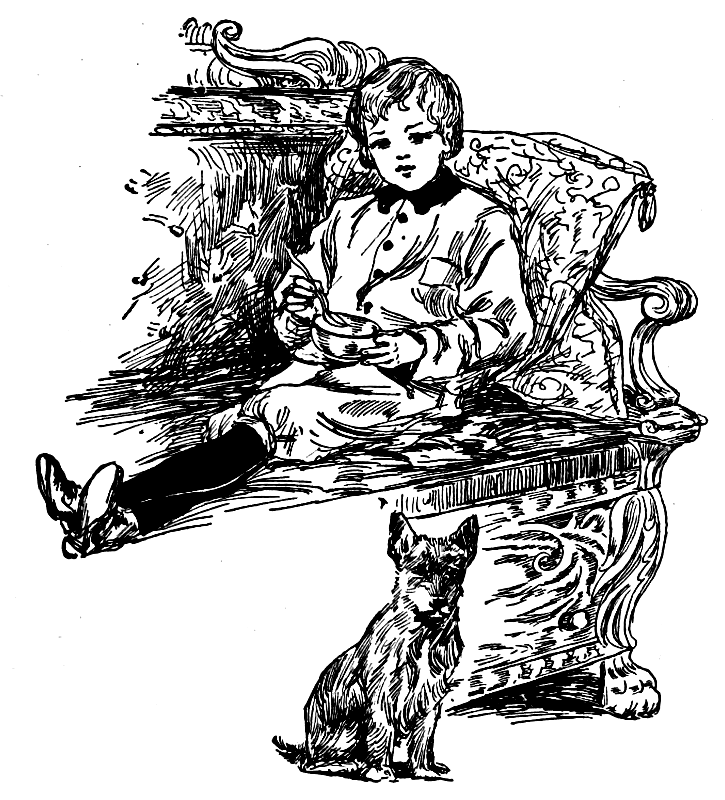
One, a boy of eleven, known throughout Austria-Hungary as
“the little lame Prince,” was the Archduke Maximilian. The
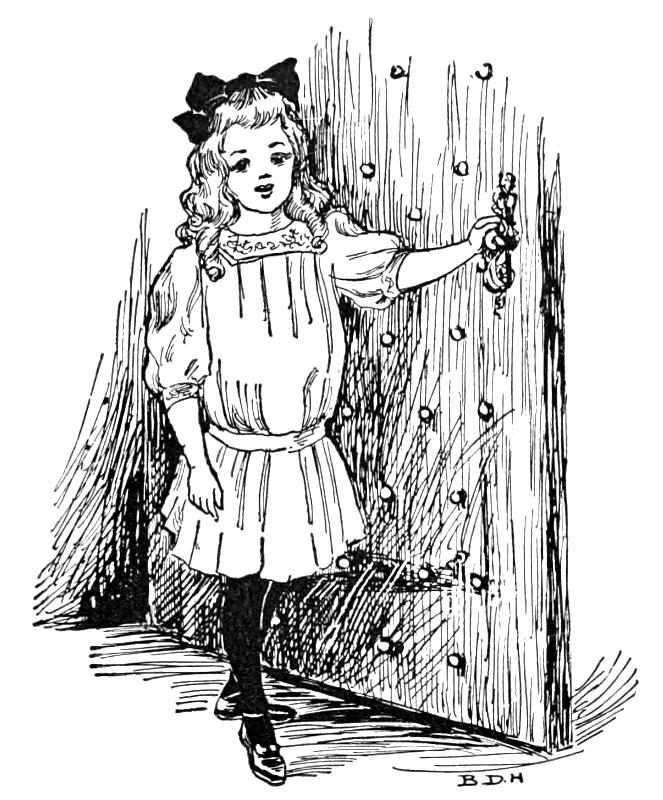
other, a girl of nine, was the
Archduchess Elizabeth. But
to each other, and the imperial
family at Vienna, they
were known as “Max” and
“Betty.”
Max had been the first to
waken; but for a time he
laid very still, cuddled within
the soft blankets of his bed,
his young heart beating happily,
at the thought of what
the day was to bring to him.
Ever since he was born, the
little Prince had been crippled.
But for nearly two years, the famous surgeon of the
Kinderspitzel of Vienna had been treating him; and this
Christmas Day he was to walk, for the first time in his life.
And all the great empire of Austria-Hungary was waiting for
the test, almost as eagerly as he. For when the good Emperor,
his grandfather, should cease to reign, Max would be “Unser
Kaiser” to millions of people.
Suddenly there came a knock at the door.
“Merry Christmas, and come in, Betty!” called Max excitedly.
And a small girl, crying as excitedly, “Merry Christmas,
Maxchen, and I knew perfectly well you’d say it first!” pushed
open the door, and running across the room, threw herself
down by Maxchen’s bed, flinging her soft arms around her
brother’s neck.
“Oh, Betty, Betty,” he cried, as he nestled against her, “it
seems almost too good to be true! Only it must come true,
mustn’t it, Christmas Day?”
“’Course it must,” agreed Betty stoutly; “why, didn’t the
Herr Doctor tell you it would come true, this very day?”
“Yes,” breathed Max softly.
“And there’s nothing in the world, the Herr Doctor doesn’t
know,” declared Betty; “and I love him.”
“So do I,” cried Max; “almost as much as Grandpapa
Franzchen!” For by that name, born of affection, was the
august Emperor of Austria-Hungary known to his grandchildren.
“Betty,” the boy cried abruptly, “the very first race we’ll
run will be from there,” pointing to the “Gloriette,” shining
like a jewel in the sunrise light,—“straight to the edge of the
lily pond. And—and—I’ll beat you, you little girl!”
“Can’t!” answered Betty, stretching out her slim straight
legs, and looking at them with confidence.
“Can!” Max cried delightedly. And then they both laughed,
and cuddled together more closely.
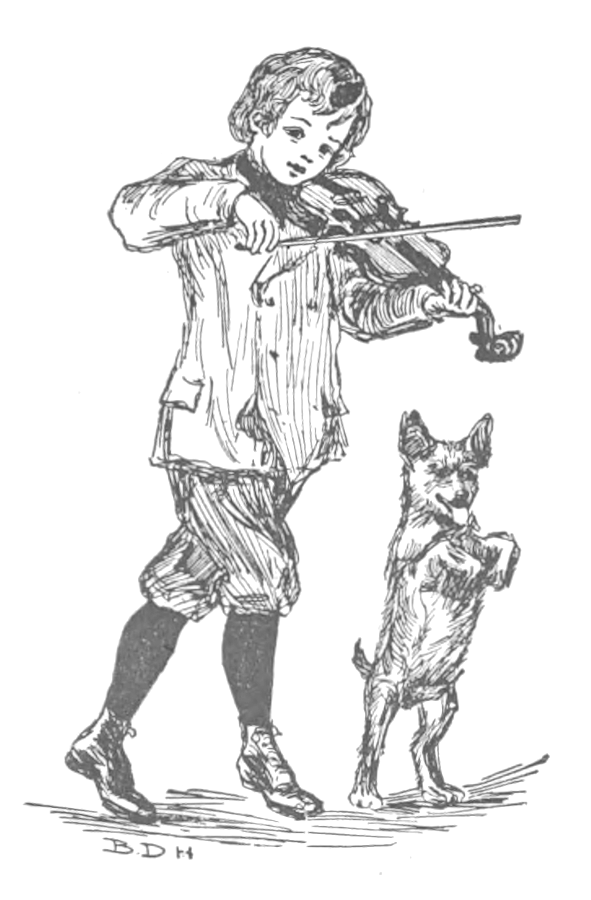
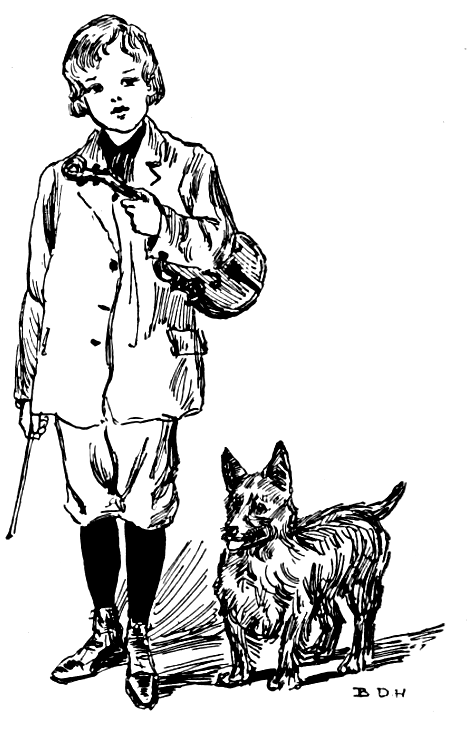
“Do you remember,” Max went on, “that boy we watched,
in the rose garden, running races with his dog, one day last
summer? The boy with a violin under his arm?”
Yes, Betty remembered.
“My, how he ran!” sighed Max, “and we called and called
to him, and finally made ‘Goggles’” (this the most dignified
of the tutors of the Prince) “go after him. But of course he
couldn’t run fast enough, and the boy got quite away. I wish
I could find that boy. Betty,” rising on one elbow, “when I
walk, I will! I do so want that boy and that dog!”
“Why,” laughed matter-of-fact Betty, “you’ve heaps of
boys to play with, and heaps of dogs!”
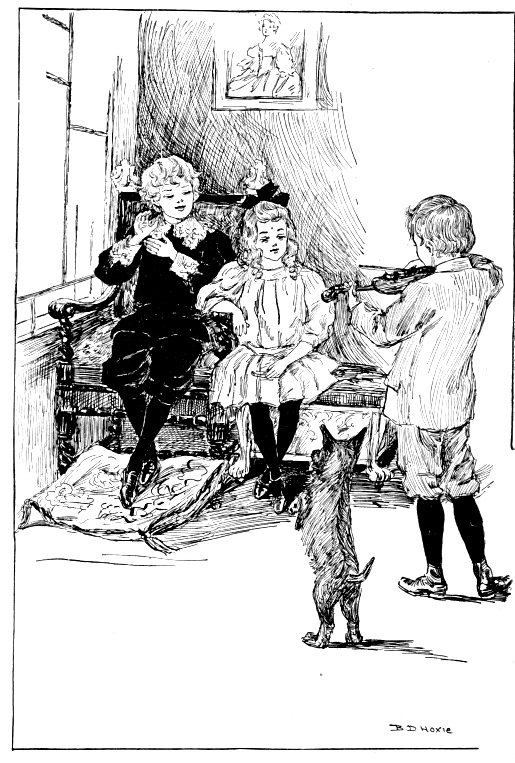
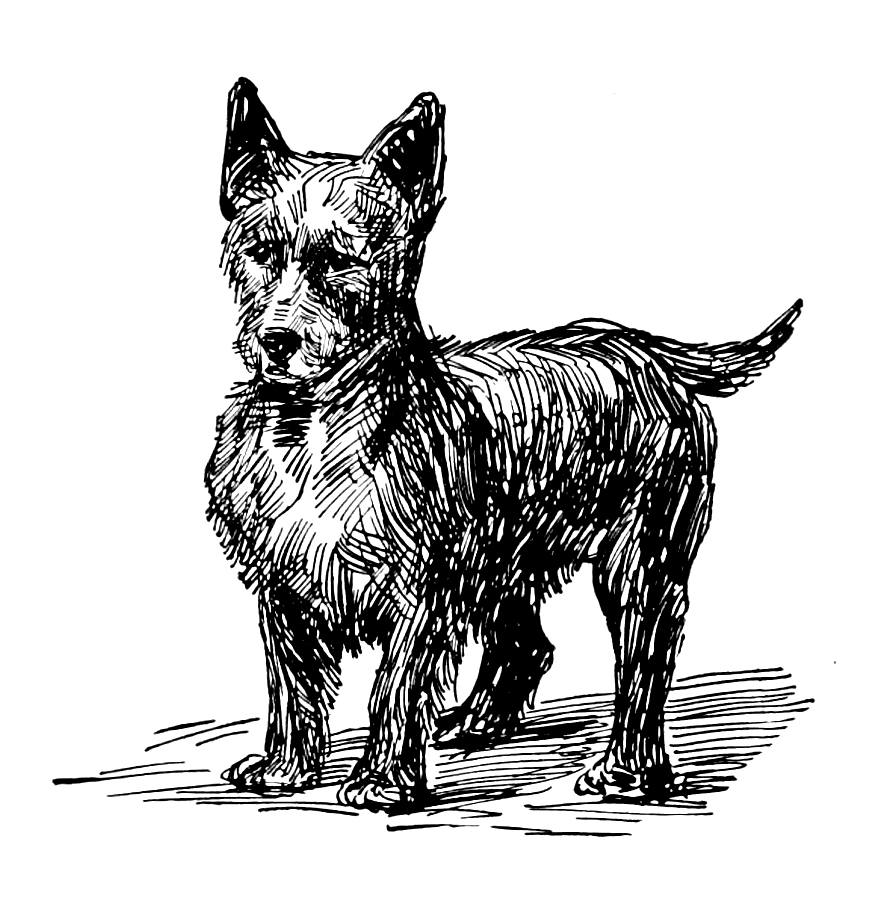
“But not one boy who can play the violin. And not one dog
that can dance.”
“Well, that dog was a dear,” Betty agreed cordially; “and—why,
Maxchen,” she went on, “we’ll ask Grandpapa Franzchen
to get the boy and the dog for us, this very Christmas
Day. We’ll—” But the little maid’s blithe voice was interrupted
by the sound of footsteps in the corridor. The door
opened softly, “His Majesty the Emperor and the Herr Doctor,”
was solemnly announced. And into the sunlit room, two
stately men came.
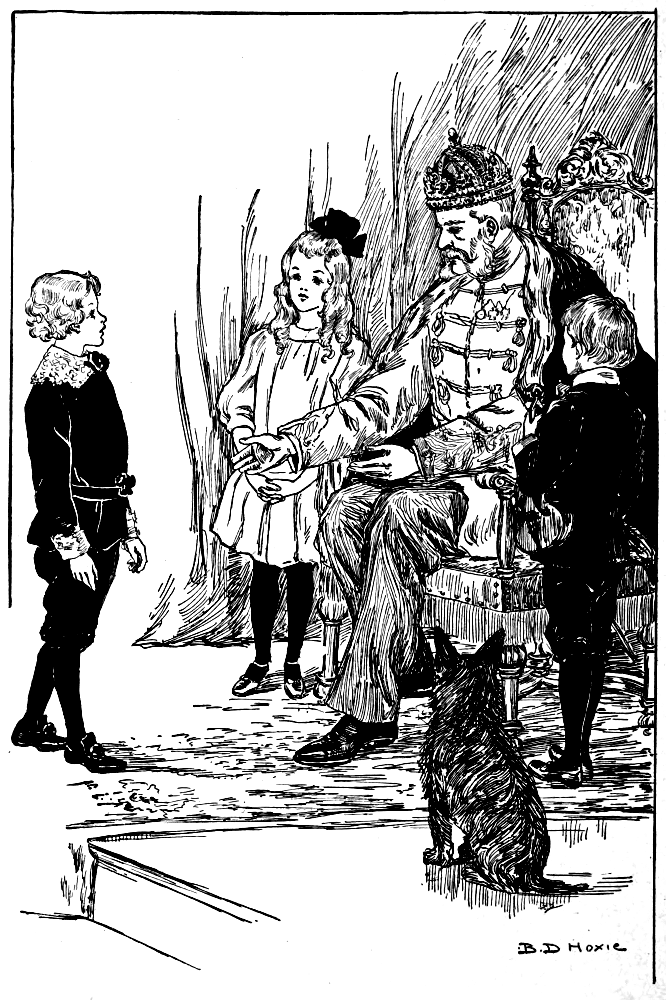
We know quite well how “Unser Franz” looked. We saw
him, that very morning, speaking kindly to Fritzl and Tzandi,
at the Riesenthor.
“Merry Christmas—Merry Christmas, dear Grandpapa
Franzchen and dear Herr Doctor!” cried the children. And
Betty slipped quickly to the floor, and curtsied demurely
to the Emperor.
“Merry Christmas, Merry Christmas!” returned the Emperor
and Doctor gaily, who had wisely given the children the
longed-for chance to say it first.
Then the old Kaiser caught Betty up in his arms, and kissed
her forehead. “Now God bless thee, Liebchen,” he said, seating
himself in the great chair beside the bed, and bending over and
kissing Max on both his cheeks. Then, with an arm around
each grandchild, he looked up at the Herr Doctor, standing
straight and tall beside him.
A very king of men was the Herr Doctor, with stalwart
shoulders, and kindly grave eyes, the color of the sea, when the
sky is clouded.
“Well, your Highness,” he said, in a voice as tender as his
eyes, “all ready to walk to-night?”
“Yes, sir,” answered Max bravely, but nestling closer against
his grandfather.
Then the Herr Doctor looked down into the anxious face of
the old Emperor.
“Your Majesty need have no fear of the result of to-night’s
test,” he said softly, “the little lad will walk.”
“And Grandpapachen,” cried Betty, breaking into the
solemn pause which followed, “he’s going to run races with
the boy and the dog! The boy with the fiddle, and the dog that
can dance, you know,” she explained rapidly. “Why, Grandpapa
Franzchen,” stroking his white hair with her dimpled
hand, “Max wants that boy and that dog, so! Please get
them for him, dear Grandpapa Emperor!”
When Betty commenced her story of the races to be run
with a boy who carried a violin, and a little dog that could
dance, a strange look had flashed into the Emperor’s eyes.
This deepened to one of amazement, and then his whole face
glowed with the thought within his heart.
It seemed that he was going to be able to give even more
pleasure than he had hoped.
“Well, Maxchen,” he laughed, “thou hast set thy grandfather
a hard task! To find, in his great city of Vienna, a boy who
plays the fiddle and who has a dog that dances! But he will
try, Liebchen,” patting his grandson’s head softly. “Would
you know them, should you see them again, little ones?” he
cried, quite as excited now as the children.
“Why, of course we would,” laughed Betty, for herself and
Max too: “there are only—they—you know, Grandpapa
dear!”
“I will commence to search for them this moment,” announced
the Emperor gaily, lifting Betty to the floor and rising
from his chair, “and the Herr Doctor shall help me! But what
wilt thou do with them, beside run races, should I find them for
thee?” he asked Max.
“I will make them happy,” said the little lame Prince.
As the two men were leaving the room, the Herr Doctor
turned. “Your Highness,” he said, “where will you go first,
when you walk to-night?”
“To my Emperor,” answered the boy proudly, raising one
little hand in salute.