I shall never forget my last Sunday in Runswick Bay. It was
at the end of September, and was one of those gloriously
brilliant days which we get in the early autumn, when the sky
is cloudless, when the air is fresh and clear, and when the
autumnal tints on trees, hedges, ferns and brambles make the
landscape gorgeous and extremely beautiful and fascinating.
The high cliff above the bay was a perfect study in colour
that morning; I have never seen more splendid colouring,
every varied shade of red and gold and green was to be found
there.
'Tom will be off to Scarborough,' I said to myself as I
dressed. 'What a grand day he has got!'
But I did not wish myself with him; no, I was both glad and
thankful to look forward to a quiet and peaceful Sunday.
There were not many visitors still at Runswick, most of them
had left the week before; but the fishermen came in great
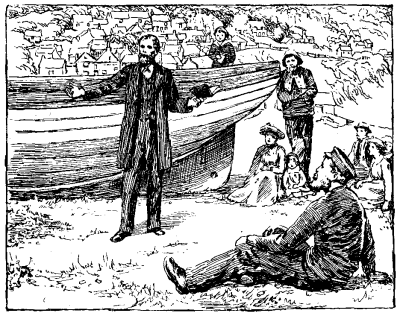
numbers to the service, and the green was covered with them
when little Jack and big Jack appeared, hand-in-hand as
usual. Duncan was in the choir, but Polly thought the wind
rather cold for little John, so had remained with him at
home. A good many women and children were present, however,
and the bank was covered with mothers and babies, sitting at
a little distance, lest the noise of the children should
disturb the preacher or the listeners.
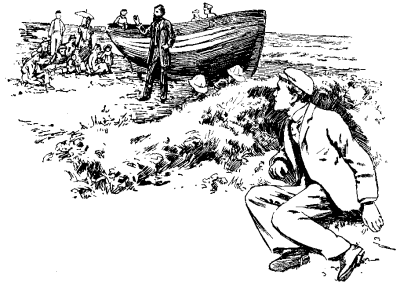
What was it that made me think of Tom just as the service
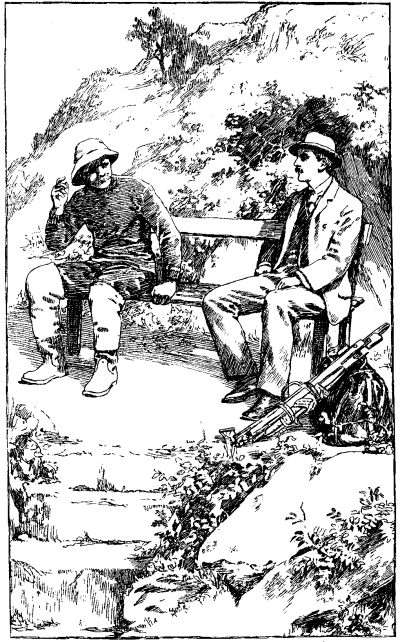
began? Was it a shepherd's plaid cloth cap, of the kind Tom
wears, which I saw on the head of some visitor who was
sitting almost out of sight on the seaward side of the bank?
Such small things bring people and things before us
sometimes, and my thoughts wandered to Scarborough for a few
minutes, and I wondered what Tom was doing at that moment. I
thought to myself how he would smile, if he saw me sitting
under the old boat and listening attentively to an open air
preacher.
But my thoughts did not wander long, for when the service
began every word of it seemed to be for me.
WHERE ARE YOU GOING? I had worked the subject out in my mind
before I came to the service, and had quite decided what line
of thought Mr. Christie would take. I thought he would
picture the two roads, the one leading to life, the other to
destruction; and then I imagined that he would speak of the
blessedness of being on the narrow road, and would dwell very
vividly on the awful consequences of continuing to walk on
the road leading to hell. But I found that my idea of what
his sermon would be was quite a mistaken one.
'Where are you going? My question to-day,' he said, 'is
addressed only to some of you; would to God it were addressed
to you all! I speak to-day to those who have crossed the
line, who have run into the loving Saviour's arms, who have
become servants of Christ.
'My friends, my dear friends, where are you going? What does
the Master say? He calls to every one of His servants, and He
says, "If any man serve Me, let him follow Me, and where I
am there shall also My servant be."
'Servant of Christ, where are you going? The Master answers
you, WHERE I AM.
'And where is that? A little group of men are standing on the
Mount of Olives; above them is the deep blue sky, and they
are gazing earnestly upward, for their Master is rising far
above them, and even as they watch a cloud receives Him out
of their sight. Yet still He ascends higher and yet higher,
and as He rises countless angels attend Him. He is joined by
company after company of the heavenly host, who have come out
to meet their King. At length heaven's gates are reached, and
the cry goes forth, "Lift up your heads, O ye gates, even
lift them up, ye everlasting doors, and the King of Glory
shall come in." Amidst heaven's most joyful music the Master
passes within to the Heavenly Jerusalem, the glad, glorious
Home. Every care, every sin, every sorrow is left outside;
within all is sunshine, all is joy. And as heaven's gates are
closing, we hear the Master's voice. He leaves us a word of
hope, "Where I am, there shall also My servant be."
'Oh, fishermen, oh, friends, think of that! If you are His
servants, those gates will open for you. Your life may be
hard now: some of you have large families, and heavy work,
and long, cold, comfortless nights tossing on the stormy sea;
but never mind, home is coming, heaven is coming, for "Where
I am, there shall also My servant be."
'But that is not all. There is something more wonderful
still. For where is the Master now? He is not only inside the
gates of the city, He is not only walking through the golden
streets; but He is in the midst of the glory of God, He has
sat down on the right hand of the throne of God. Will you and
I, dear friends, ever dare to go near that throne? Will not
the glory be too dazzling? Will not the place be holy ground,
too holy for us to approach? Will He allow us to draw near to
His footstool, and even there, close to His glory, to lie low
before Him?
'Listen, O servant of Christ, again the Master says, "Where I
am, there shall also My servant be."
'What, on the throne of God! Yes, even there He bids
you come; for what does He say? "To him that overcometh will
I grant to sit with Me in My throne, even as I also overcame,
and am set down with My Father in His throne." Oh, what a
wonderful promise! We could never have thought of it; we
could never have believed it; we could never even have dreamt
of such a thing, if the Master had not told us Himself.'
And then he concluded by asking us to remember our glorious
future. 'Sometimes,' he said, 'you get downhearted, full of
sorrow and fear, and you say, "I shall never hold on to the
end." Oh, dear friends, it is worth an effort, for at the end
lies home, at the end stands the throne of God, with a place
waiting for you upon it. "Where I am, there shall also My
servant be."
'What if you have to bear something for the Master's sake?
What if you have to give up friends or comforts for Him? What
if you have to take up your cross and follow Him? It is only
for a few days, only for a little while, and home is coming.
"Where I am, there shall also My servant be." Is it not worth
while?'
Then, as he ended, he spoke a few words to all who were
there, and he begged those who were not servants of Christ,
to consider what they were losing. 'All this might be yours,'
he said, 'the wide-open gates, the Heavenly City, the seat on
the glorious Throne; but you are turning your backs on it
all, and you are choosing instead—what? A few of
earth's fleeting pleasures, a little of this world's passing
enjoyment. Oh, dear friends, think before it is too late,
what your eternal loss will be!'
He said much more, but I cannot remember it now. I only know
that I came away feeling that I had been very near the golden
gates of which he spoke, and had heard the Master's voice
saying to me, 'Where I am, there shall also My servant be.'
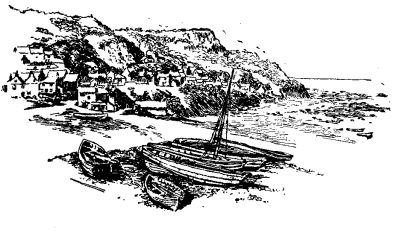
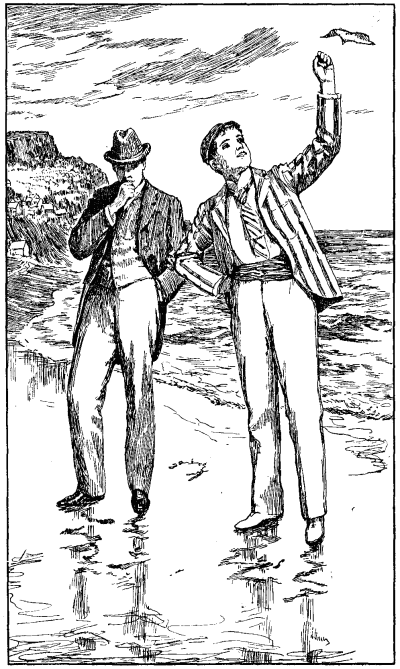
The tide was coming in as we left the service, and I was
standing on the shore watching the waves rolling in over the
rocks, when I felt an arm slipped in mine, and when I looked
round, to my great surprise, I found that it was Tom.
'Why, Tom!' I said, 'back already? how early you have come
home!'
'Back, Jack?' he said, laughing; 'why, I've never been.'
'Do you mean you haven't been to Scarborough?'
'No, of course not; you didn't think I would go without you,
old boy. We'll go to-morrow, of course. I thought we settled
that last night.'
'Why, I've been thinking of you in Scarborough all day!' I
said.
'Then your thoughts have gone in a wrong direction for once,
Jack,' he replied, 'for I've been here all the time.'
'I'll walk with you up the hill,' I said; 'it isn't quite
dinner-time.'
I was very pleased to see him, and to find that he did not
appear to be vexed with me. We chatted for some time, and
then he said casually, 'He does not speak badly, that lay
preacher of yours, Jack.'
I stood still in astonishment. 'Who?' I said, 'Mr. Christie?
Why, you surely were not at the service, Tom! Oh, I know,' I
cried, before he could answer, 'you were behind the bank; I
saw a black and white cap, and I thought how much it was like
yours.'
'It could not be much more like, seeing that it was the very
same,' said Tom.
'I'm so glad you heard him,' I ventured to say.
He made no answer, so I thought it was better to say no more;
but when we reached the top of the hill, and he was just
leaving me, he said:
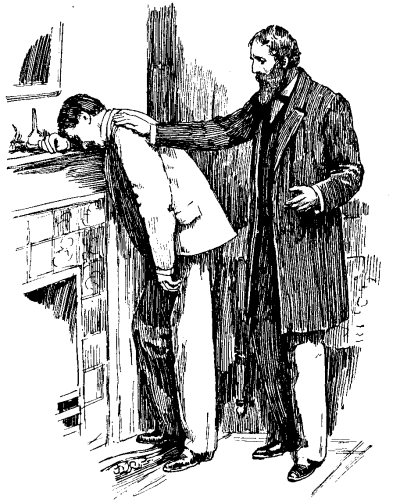
'Jack, I'm afraid I was a bit crusty last night. You must not
think any more of it, old fellow. We'll have a jolly day at
Scarborough to-morrow. And, Jack,' he went on, 'I was very
much annoyed at the time, I own I was; but I'm not sure after
all that you're not right.'
He said no more, but hurried away, and it was many years
before he referred to the subject again; but the day came
when he did mention it, and when he told me, with tears in
his eyes, that he looked upon that Sunday at Runswick as the
first link in the chain of God's loving Providence, by means
of which He had led him to Himself. He told me then that he
had never forgotten my firm refusal to go with him, and he
had never forgotten the sermon to which he had listened
hidden from sight by the bank.
Our day at Scarborough exceeded all our anticipations. The
weather was glorious, and Tom was in excellent spirits, and
we thoroughly enjoyed everything.
I could not help feeling sorry when Thursday came, which was
to be my last day at Runswick Bay. It had been such a happy
and so eventful a time. I seemed to have passed through so
much, and to have learnt so much unknown to me before, that I
felt very reluctant to bring my holiday to a close. As for
Duncan and Polly, they were quite melancholy as the time for
my departure drew near.
'We shall feel lost without you, sir,' said Duncan.
'We shan't know what to do'; and there were tears in Polly's
eyes as she said mournfully, when she set the herrings on the
table for my supper, 'Them's the last herrings I shall fry
you, sir, and I feel as if there was going to be a death in
the house.'
'Cheer up, Polly,' I said, 'who knows? Perhaps you may have
to put up with me next time I get a holiday, and you may be
sure I shall want plenty of herrings then.'
She brightened a little at this, and little John, who was
quite well now, and who had become very friendly with me
since his illness, climbed up on my knee, and stroked my face
with his little thin hand, as if he were trying to coax me to
come back to them again.
There was one thing which I had a great desire to do before
leaving Runswick. I knew that Duncan was much troubled about
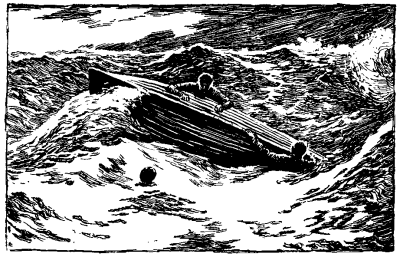
the Mary Ann. She had been terribly knocked about in the
storm, which was no wonder, seeing that she had drifted
about, bottom upwards, and had been driven hither and thither
on the waves. When Duncan had examined her the day after his
arrival, he had found that she leaked in several places, and
was altogether unseaworthy, and he had been obliged to hire a
boat until such time as the Mary Ann could be properly
repaired. Then he went over to Whitby, and brought an
experienced man back with him, and he overhauled her
thoroughly, and gave it as his opinion that it would be a
waste of money to try to patch her up.
When Duncan came in that night I saw that the poor fellow was
terribly downcast. 'The Mary Ann's days are numbered, sir;
she'll never be able to rough it again,' he said. 'She's been
a good old boat to me and my father before me, and it will be
like parting from an old friend to give her up. Yon man, he
says she might be cobbled together a bit; but you would never
make a good job of her; she'd do maybe well enough for fine
weather, but you couldn't trust to her in a storm.'
I saw Polly turn pale as he said this. 'Duncan,' she said,
going up to him, and laying her hand on his arm, 'you'll
never go in her again; promise me that. Think of me and
little John, Duncan.'
'Ay, my lass,' he said; 'ay, Polly, I do think of thee and
little John; but the worst of it is there's bread must be
earnt for thee and little John. I can't let thee starve,
wife.'
'What about the bank-book, Duncan?' I said.
He went to the old oak-chest, and brought it out. I was much
touched by his handing it to me, and bidding me see how it
stood. He was perfectly open with me, and spoke to me as
freely as if I had been an old and tried friend. I added up
the amount and read it out to him.
'Well, sir,'he said, 'it's getting on; but it's a good ten
pound short yet. We shall have to hire Brown's boat a bit and
do as well as we can, though it isn't a very paying business
when one takes to hiring: it will be hard enough to make two
ends meet, you see, sir, let alone saving up for the new
boat. But I can't see nothing else for it, sir; that is, if
Polly won't let me risk it in the Mary Ann.'
'Duncan,' she said solemnly, 'if thee went to sea in the Mary
Ann, and she went to the bottom, I could never say,
"The will of the Lord be done," for I don't believe it
would be God's will for thee to go in that rotten old
thing.'
'Polly is right, Duncan,' I said; 'you must never go in the
Mary Ann again.'
'Well, sir,' he said, 'I see what you mean, you and Polly
too, and the Lord will show us what's to be done.'
Nothing more was said about the Mary Ann at that time, but I
had already made my own plan about the new boat. My aunt had
just left me her little property, and a very nice little
property it was. I felt myself a rich man, for in addition to
money invested in various ways, about £200 of ready
money had been placed to my account at the bank.
What could be more delightful, I thought, than to spend the
first ten pounds of this in helping Duncan to complete the
purchase of the new boat? The only difficulty would be to get
Duncan to accept the money, for he had all the honest
independence of a Yorkshireman, and I knew would hesitate
about receiving help from any one. But, at the same time, I
knew that in this instance his need was great, and his kindly
feeling towards myself was so strong, that I was not without
hope that I might be able to manage what I had contemplated
without giving the dear fellow offence. I thought, at one
time, that I would take Mr. Christie into my confidence, and
would consult with him, but on second thoughts I decided that
it would be wiser not to do so, and felt that I should be
more likely to succeed if no one else was in the secret. So I
folded my bank-note in paper, put it into an envelope, and
wrote outside, 'With little John's love to his daddy, to help
him to buy another Little John.' This I determined to slip
into the child's hand when I said good-bye.
That evening I had supper with the Christies. They were
kindness itself, and told me what a great pleasure it had
been to them to meet me. 'Not only because you are your
mother's son, Jack, but for your own sake as well as hers,'
said Mr. Christie with a smile.
I wanted to say something in return, but the words would not
come—at least not then. But, just before I left, I went
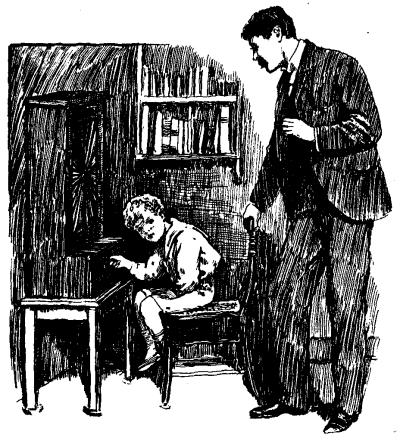
with Mr. Christie into his study, and he said, 'Jack, I
thought perhaps we might have a little prayer together before
we part'; and then the words came,—
'Mr. Christie,' I said, 'I can never, never thank God enough
that I came here.'
'Let us thank Him together, Jack,' he said.
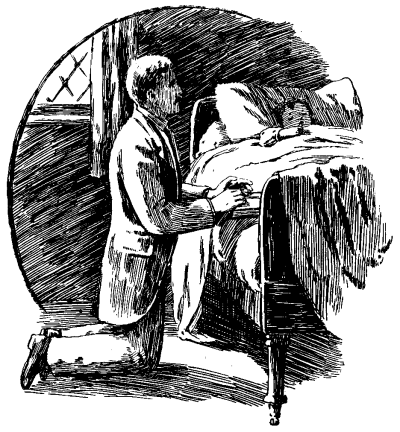
Then we knelt down, he by the table, and I with my arms
resting on the old organ, and he thanked God for His mercy in
bringing me across the line, and he committed me to His care
and keeping to bring me safely along the road which leads
home.
The next morning I was up early, for our train started at
eight, and we had two miles to walk. I had told Polly I
should want nothing but a cup of tea before I set off, but
when I came down I found a most tempting breakfast prepared
for me—ham and eggs, and toast in abundance, and fresh
lettuces from Duncan's small garden.
'Well, Polly,' I said, 'you are spoiling me to the last.'
'We can never make enough of you, sir,' said Polly, and there
were tears in her eyes as she said it.
I ran up to pack my bag and collect my things, and I
determined to start in good time, so that I might allow
myself a few minutes to say good-bye to the Christies.
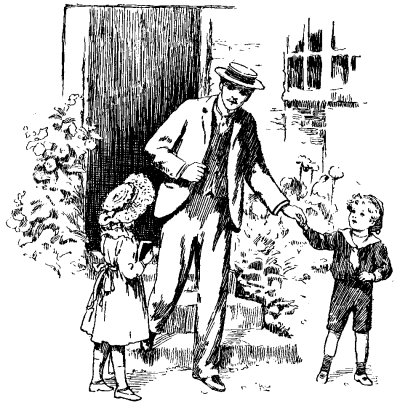
'I must be off, Duncan,' I said.
He was standing outside with little John in his arms, and
Polly, with her hat on, was standing beside him.
'We're coming along with you, sir, to the station,' said
Duncan. 'You won't think it a liberty will you, sir? but me
and Polly and little John would like to see the last of you.'
'Come, that is good of you,' I said. 'I shall have a
grand escort up the hill!'
Polly took the child from his father, and Duncan carried my
bag and easel, and would not even hear of my giving him a
hand with them.
I ran into the Christies, but could find no one below;
however, I heard a great running backwards and forwards
overhead, and presently Mr. Christie called out of the
bedroom window, 'Wait one moment, Jack; we are all coming to
see you off.'
So my escort increased as I proceeded, and Tom, as he came
out of the hotel, said he thought the whole of Runswick must
be going by the early train, when he saw us, one after
another, come toiling up the hill. Little Jack rode up the
whole way on my back, and his horse was very hot when the top
was reached.
Though it is now so many years ago I can see that little
party of friends standing together on the platform, as the
train moved out of the station. I can feel again the warm
grasp of Mr. Christie's hand, and can hear his whispered,
'God bless you, Jack!' I can see Mrs. Christie holding
Marjorie by the hand, and waving her handkerchief to me, and
can hear little Jack crying out, 'Come back soon, do, big Mr.
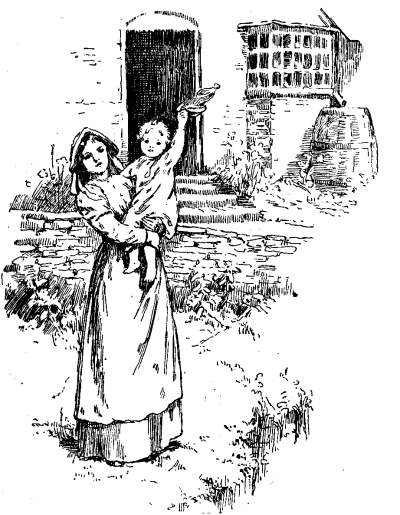
Jack.' I can see Duncan bareheaded, with little John in his
arms, the child waving the envelope which I had put in his
hand as I stepped into the carriage, and which was still
unopened. I can see Polly wiping her eyes with her apron, and
then holding it up and waving it till I was lost to sight. I
can see them all as they appeared to me that day, kind hearts
and true, not one of them ranking amongst the number whom the
world counts great, and yet all of them well known to Him who
calleth His own sheep by name and leadeth them out.
I must just mention here that I had a very touching letter
from Duncan at the end of that week. The spelling was most
wonderful, and the grammar was quite of his own making; but
it was full, from end to end, of the most simple-hearted
affection, and of the deepest gratitude.
'Me, and my missus, and little John, can never be thankful
enough, sir,' he said, 'and when the other 'Little John' is
afloat, as please God she soon will be, we hopes as how you
will come and have a sail in her.'
So ended my visit to Runswick; and when I consider all that
happened during those few weeks, I think it is small wonder
that the little bay is still fresh in my memory, and that
Ella's yellow ragwort made me dream of it so distinctly. For
surely that month was the most important month in my life,
for was it not the beginning of a new life, which, thank God,
has continued ever since?
I can say to-day, even as I said then, 'One is my Master,
even Christ,' and I can look forward, humbly but hopefully,
to the time when the golden gates will open to me, and when
the Master's promise will be fulfilled to me, 'Where I am,
there shall also My servant be.'
  O Jesus Christ, my Master,
    I come to Thee to-day;
  I ask Thee to direct me
    In all I do or say:
  I want to keep my promise
    To be Thy servant true,
  I come to Thee for orders;
    Dear Lord, what shall I do?

  I want a heart not heeding
    What others think or say;
  I want a humble spirit,
    To listen and obey.
  To serve Thee without ceasing,
    'Tis but a little while,—
  My strength, the Master's promise,
    My joy, the Master's smile.

  A.C.W.