When every month brings some change in the
political position in China, and the daily press is
full of more or less contradictory rumours as to
what is going on at Pekin, it is impossible to
come to any real decision on the many vexed
questions under discussion. One great fact, however,
emerges distinctly from out of the chaos of
conflicting data, and that is, that it will be Russia,
with her wonderful faculty for working steadily
onwards towards a definite aim, who will secure
the lion's share in the spoliation of the Celestials,
whilst her Trans-Siberian railway, which already
pays its way, creating trade wherever it passes, and
in another four years will connect St. Petersburg
with Port Arthur, will be one of the most important
factors in changing the course of the commerce of
the world.
Shut in as she is on the East by the English
in Burmah and the French in Cochin-China,
threatened on the West by the Germans and the
Japanese, and dominated on the north by Russia,
the Celestial Empire finds herself compelled to
awake from her long stupor, and to arouse herself to
action of some kind. With no real army, no longer
an efficient fleet, however, what can she do? She
can only choose what seems to her the least of
the evils hemming her in on every side, and elect
from among the many competitors for the post,
the protector best able to save her not only from
her outside enemies, but from herself.
IMPORTANCE OF RUSSIA
As has been very aptly said, Russia is of all the
Western Powers the most imbued with Oriental
ideas, and she combines, with the energy and
ambition of a first-rate power of the future, a
sympathy with the Celestials altogether wanting
to France, Germany, or Great Britain. There
is, in fact, an actual affinity of race between the
Chinese and the inhabitants of the northern steppes,
and there is therefore far more hope of real
amalgamation between them than there can be
in any other case. The English, the French, the
Germans, the Italians, if they win the concessions
they are now in their turn clamouring for, will
always be aliens in the districts they acquire, and
there will never, to use a homely but expressive
phrase, be any love lost between them and the
natives.
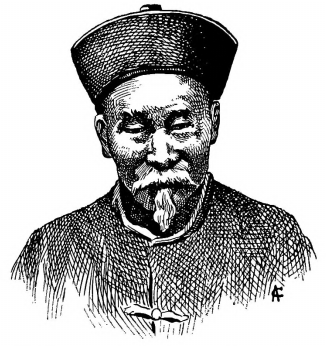
Li-Hung-Chang, one of the most enlightened
statesmen who have ever arisen in China, came
to Europe in 1896 with a view to ascertaining by
personal observation, which of the western nations
would be likely to be the best friend for his
distracted country, in the enfeebled condition to
which the war with Japan had reduced her. He
saw quickly enough that it would not be England,
nor Germany, nor France, but that it would be
Russia. It was therefore with Russia that a treaty
was eventually made, and ratified in 1897; this
treaty, in addition to other privileges, giving to the
great northern power. Port Arthur, with the right
of making it a coaling station, and in case of
war of concentrating troops in its harbour. "The
Russians and the Chinese," said Mitchie, writing
more than thirty years ago, "are peculiarly suited
to each other ... the Russians meet the Chinese
as Greek meets Greek ... they understand each
other's character thoroughly, because they are so
closely alike." Recent events have proved how
true was the insight of this astute observer, and it
is evident that whilst the other Powers will have
to content themselves with their various spheres
of influence, Russia alone will obtain real political
control of the Celestial Empire as a whole. There
remains now no hope that the disintegrating forces
at work in the once powerful nation will be
arrested from within, in spite of the fact that again
and again China has risen in the past from
apparent dissolution into a greater nation than
before, absorbing her conquerors and converting
them into patriots, ready to dare all for their
adopted country. The saving force must now come
from without, and when once more there is a strong
hand directed by a strong brain at the head of
affairs, the resources of the unhappy land will be
found to be practically inexhaustible. With a prolific
soil, vast mineral wealth, and a teachable
population, there is indeed no limit to what China,
which has been called the India of the future, may
become.
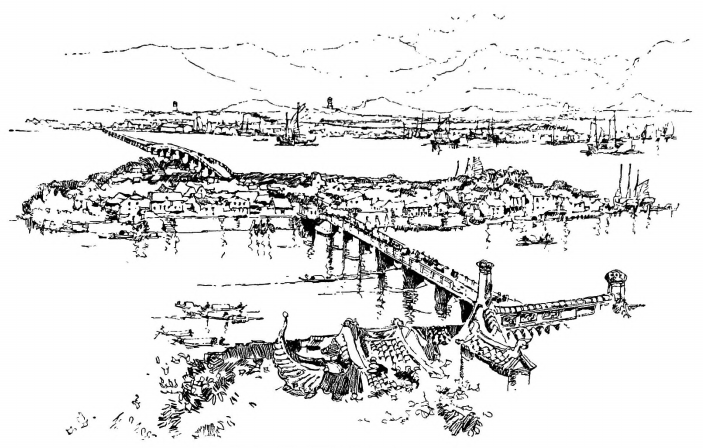
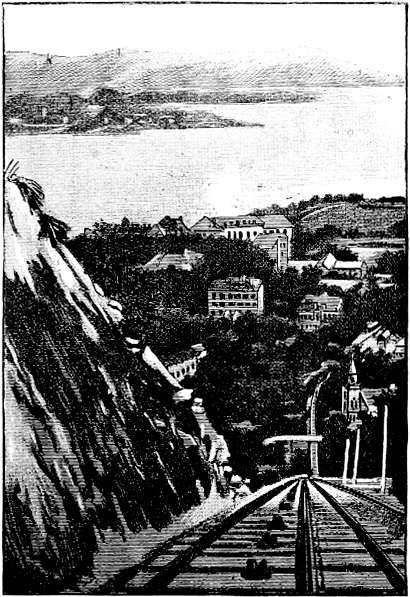
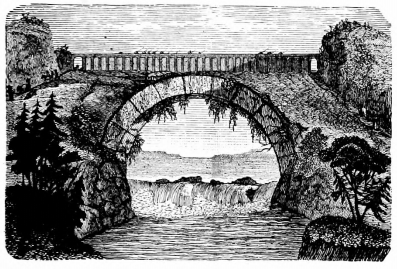
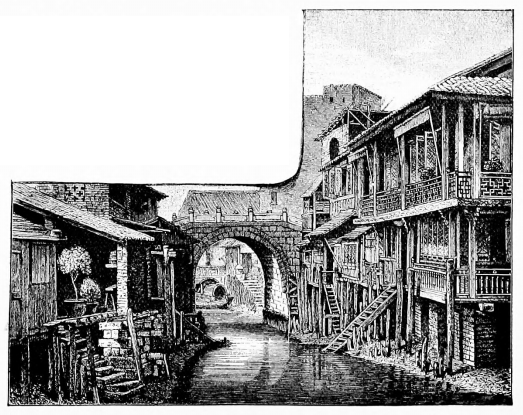
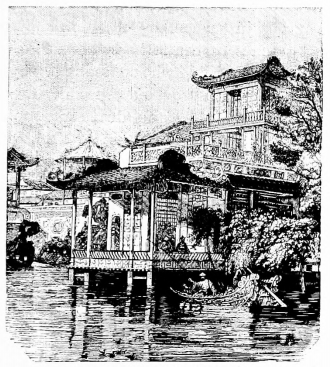
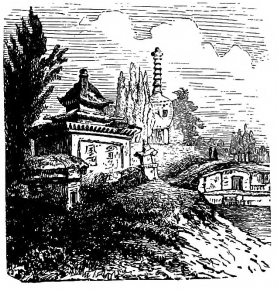
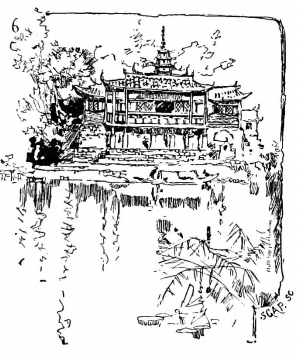
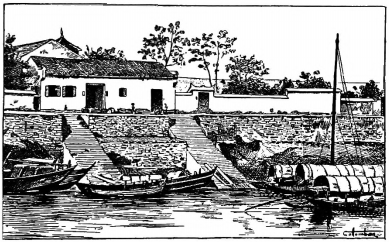
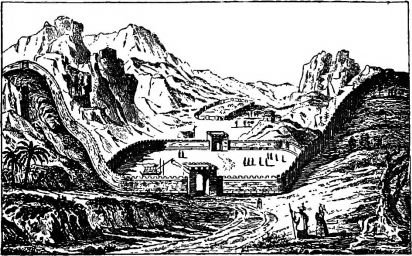
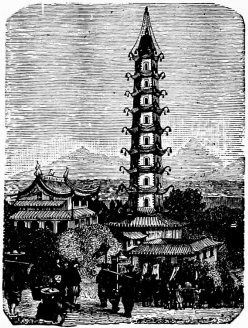
FIG. 58.—THE TOWN AND BRIDGE OF FUCHAM.
In the imminent partition of China into spheres
of influence, should that partition finally supersede
the more generous policy of the opening of the
whole country on equal terms to the trade of all
the European nations, the Yang-tse basin, with
its populous towns of Nanking, Hankow, Fuchan,
and others, will be the field of action of Great
Britain; whilst Shantung, a rich sea-bound province,
will be that of Germany; and the French, who
already occupy Tonking on the south, will obtain
concessions in the neighbouring districts. On
every side railways are now being projected, and
the probability is that ere the century just about
to open has run half its course, the whole of
China will be intersected by them.
In the Blue Book on Chinese affairs, issued on
the 14th March of the current year (1899), the
following significant statistics of the railway concessions
granted to foreigners in the Celestial
Empire are given, showing that Great Britain is
more than equal to Russia in the actual amount
of mileage secured, whilst Germany, France, Belgium,
and America have among them less than
Great Britain alone:
TELEGRAPHS IN CHINA
| British |
railways |
2,800 |
miles |
| Russian |
" |
1,530 |
" |
| German |
" |
720 |
" |
| Belgian |
" |
650 |
" |
| French |
" |
420 |
" |
| American |
" |
300 |
" |
More important still, as breaking up finally the
isolation on which China has prided herself for
so many centuries, is the fact that already pretty
well all the important towns of the vast Empire
are connected by telegraph with each other, and
with the outside world. The search-light of publicity
is in fact turned full upon the land once so
fraught with mystery, and before long there will
be no hidden thing connected with either court
or country which will not be revealed to the
inquisitive gaze of all the world.
THE END
Richard Clay & Sons, Limited,
London & Bungay.
In One Volume, Small 4TO.
PRICE HALF-A-GUINEA.
Women Novelists of
Queen Victoria's Reign
A BOOK OF APPRECIATIONS.
| THE SISTERS BRONTË |
|
By Mrs. Oliphant. |
| GEORGE ELIOT |
|
By Mrs. Lynn Linton. |
| MRS. GASKELL |
|
By Edna Lyall. |
| LADY GEORGIANA FULLERTON. |
 |
By Charlotte M. Yonge. |
THE AUTHOR OF "THE VALLEY
OF A HUNDRED FIRES" |
| THE AUTHOR OF "MARY POWELL" |
| MRS. CATHERINE CROWE |
 |
By Adeline Sergeant. |
| MRS. ARCHER CLIVE |
| MRS. HENRY WOOD |
| MRS. CRAIK (MISS MULOCK) |
|
By Mrs. Parr. |
| AMELIA B. EDWARDS |
 |
By Mrs. Macquoid. |
| JULIA KAVANAGH |
| MRS. NORTON |
|
By Mrs. Alexander. |
| "A. L. O. E." (MISS TUCKER) |
|
By Mrs. Marshall. |
| "AUNT JUDY" (MRS. EWING) |
HURST AND BLACKETT, Limited,
13, GREAT MARLBOROUGH STREET, LONDON, W.
New Work by H. D. Traill.
IN ONE VOLUME, CROWN 8vo. PRICE 6s.
The New Fiction
and Other Essays on Literary Subjects
By H. D. TRAILL
Author of "The New Lucian," "The Life of Sir John Franklin," etc.
SUBJECTS:—
THE NEW FICTION.
THE POLITICAL NOVEL.
THE POLITICS OF LITERATURE;—A Dialogue.
MATTHEW ARNOLD.
SAMUEL RICHARDSON.
THE NOVEL OF MANNERS.
NEWSPAPERS AND ENGLISH;—A Dialogue.
LUCIAN.
THE REVOLUTION IN GRUB STREET;—A Boswellian Fragment.
THE PROVINCIAL LETTERS.
THE FUTURE OF HUMOUR.
HURST AND BLACKETT, Limited,
13, GREAT MARLBOROUGH STREET, LONDON, W.
WORKS BY
GEORGE MAC DONALD, LL.D.
Each in One Volume, Frontispiece, and Uniformly Bound, Pries 5s.
ALEC FORBES OF HOWGLEN.
"No account of this story would give any idea of the profound interest that pervades
the work from the first page to the last."—Athenæum.
"A novel of uncommon merit Sir Walter Scott said he would advise no man to try
to read 'Clarissa Harlowe' out loud in company if he wished to keep his character for
manly superiority to tears. We fancy a good many hardened old novel-readers will feel
a rising in the throat as they follow the fortunes of Alec and Annie."—Pall Mall Gazette.
"The whole story is one of surpassing excellence and beauty."—Daily News.
"This book is full of good thought and good writing. Dr. Mac Donald looks in his stories
more to the souls of men and women than to their social outside. He reads life and
Nature like a true poet."—Examiner.
ROBERT FALCONER.
"'Robert Falconer' is a work brimful of life and humour and of the deepest human
interest. It is a work to be returned to again and again for the deep and searching
knowledge it evinces of human thoughts and feelings."—Athenæum.
"This story abounds in exquisite specimens of the word-painting in which Dr. Mac
Donald excels, charming transcripts of Nature, full of lights air, and colour."—Saturday
Review.
"This noble story displays to the best advantage all the powers of Dr. Mac Donald's
genius."—Illustrated London News.
"'Robert Falconer' the noblest work of fiction that Dr. Mac Donald has yet
produced."—British Quarterly Review.
"The dialogues in 'Robert Falconer' are so finely blended with humour and pathos as
to make them in themselves an intellectual treat to which the reader returns again and
again."—Spectator.
DAVID ELGINBROD.
"A novel which is the work of a man of genius. It will attract the highest class of
readers."—Times.
"There are many beautiful passages and descriptions in this book. The characters are
extremely well drawn."—Athenæum.
"A clever novel The incidents are exciting and the interest is maintained to the
close It may be doubted if Sir Walter Scott himself ever painted a Scotch fireside with
more truth than Dr. Mac Donald."—Morning Post.
"David Elginbrod is the finest character we have met in fiction for many a day. The
descriptions of natural scenery are vivid, truthful, and artistic; the general reflections are
those of a refined, thoughtful, and poetical philosopher, and the whole moral atmosphere
of the book is lofty, pure, and invigorating."—Globe.
SIR GIBBIE.
"'Sir Gibbie' is a book of genius."—Pall Mall Gazette.
"This book has power, pathos, and humour. There is not a character which Is not
life-like. There are many powerful scenes, and the portraits will stay long in our
memory."—Athenæum.
"'Sir Gibbie' is unquestionably a book of genius. It abounds in humour, pathos,
insight into character, and happy touches of description."—Graphic.
"'Sir Gibbie' contains some of the most charming writing the author has yet produced."—Scotsman.
"'Sir Gibbie' is one of the most touching and beautiful stories that has been written
for many years. It is not a novel to be idly read and laid aside; it is a grand work, to be
kept near at hand, and studied and thought over."—Morning Post.
HURST AND BLACKETT, Limited,
13, GREAT MARLBOROUGH STREET, LONDON, W.
WORKS BY THE AUTHOR OF
'SAM SLICK, THE CLOCKMAKER.'
Each in One Volume, Frontispiece, and Uniformly Bound, Price 5s.
NATURE AND HUMAN NATURE.
"We enjoy our old friend's company with unabated relish. This work is a rattling
miscellany of sharp sayings, stories, and hard hits. It is full of fun and fancy."—Athenæum.
"Since Sam's first work he has written nothing so fresh, racy, and genuinely humorous
as this. Every line of it tells in some way or other—instructively, satirically, jocosely, or
wittily. Admiration of Sam's mature talents, and laughter at his droll yarns, constantly
alternate as with unhalting avidity we peruse the work. The Clockmaker proves himself
the fastest time-killer a-going."—Observer.
WISE SAWS AND MODERN INSTANCES.
"This delightful book will be the most popular, as beyond doubt it is the best, of all the
author's admirable works."—Standard.
"The book before us will be read and laughed over. Its quaint and racy dialect will
please some readers—its abundance of yarns will amuse others. There is something to
suit readers of every humour."—Athenæum.
"The humour of Sam Slick is inexhaustible. He is ever and everywhere a welcome
visitor; smiles greet his approach, and wit and wisdom hang upon his tongue. We promise
our readers a great treat from the perusal of these 'Wise Saws,' which contain a
world of practical wisdom, and a treasury of the richest fun."—Morning Post.
THE OLD JUDGE; OR, LIFE IN A COLONY.
"By common consent this work is regarded as one of the raciest, truest to life, most
humorous, and most interesting works which have proceeded from the prolific pen of its
author. We all know what shrewdness of observation, what power of graphic description,
what natural resources of drollery, and what a happy method of hitting off the
broader characteristics of the life he reviews, belong to Judge Haliburton. We have all
those qualities here; but they are balanced by a serious literary purpose, and are employed
in the communication of information respecting certain phases of colonial experience
which impart to the work an element of sober utility."—Sunday Times.
TRAITS OF AMERICAN HUMOUR.
"No man has done more than the facetious Judge Haliburton through the mouth of the
inimitable 'Sam' to make the old parent country recognise and appreciate her queer
transatlantic progeny. His present collection of comic stories and laughable traits is a
budget of fun, full of rich specimens of American humour."—Globe.
"Yankeeism, portrayed in its raciest aspect, constitutes the contents of these superlatively
entertaining sketches. The work embraces the most varied topics—political parties,
religious eccentricities, the flights of literature, and the absurdities of pretenders to learning
all come in for their share of satire; while we have specimens of genuine American
exaggerations and graphic pictures of social and domestic life as it is. The work will
have a wide circulation."—John Bull.
THE AMERICANS AT HOME.
"In this highly entertaining work we are treated to another cargo of capital stories
from the inexhaustible store of our Yankee friend. In the volume before us he dishes up,
with his accustomed humour and terseness of style, a vast number of tales, none more
entertaining than another, and all of them graphically illustrative of the ways and manners
of brother Jonathan. The anomalies of American law, the extraordinary adventures
incident to life in the backwoods, and, above all, the peculiarities of American society, are
variously, powerfully, and for the most part amusingly exemplified."—John Bull.
"In the picturesque delineation of character, and the felicitous portraiture of national
features, no writer equals Judge Haliburton, and the subjects embraced in the present
delightful book call forth, in new and vigorous exercise, his peculiar powers. 'The
Americans at Home' will not be less popular than any of his previous works."—Post.
HURST AND BLACKETT, Limited,
13, GREAT MARLBOROUGH STREET, LONDON, W.
 |
|
 |
| |
HURST AND BLACKETT'S
THREE-AND-SIXPENNY SERIES.
To be had at all Booksellers and Railway Book-stalls
LONDON:
HURST AND BLACKETT, LIMITED,
13, GREAT MARLBOROUGH STREET |
|
 |
|
 |
Each in One Volume, Crown Octavo, 3s. 6d.
THE AWAKENING OF MARY FENWICK.
By Beatrice Whitby.
"We have no hesitation in declaring that 'The Awakening of Mary Fenwick' is the
best novel of its kind that we have seen for some years. It is apparently a first effort,
and, as such, is really remarkable. The story is extremely simple. Mary Mauser marries
her husband for external, and perhaps rather inadequate, reasons, and then discovers
that he married her because she was an heiress. She feels the indignity acutely, and
does not scruple to tell him her opinion—her very candid opinion—of his behaviour. That
is the effect of the first few chapters, and the rest of Miss Whitby's book is devoted to
relating how this divided couple hated, quarrelled, and finally fell in love with one another.
Mary Fenwick and her husband live and move and make us believe in them in a way
which few but the great masters of fiction have been able to compass."—Athenæum.
TWO ENGLISH GIRLS.
By Mabel Hart.
"This story is distinguished by its pure and elegant English, and the refinement of its
style and thought. It is a lively account, with many touches of humour, of Art study in
Florence, and the story weaved into it exhibits a high ideal of life ... The lively, pleasant,
and refined tone of the narrative and dialogue will recommend the story to all
cultivated renders."—Spectator.
"Beatrice Hamlyn is an emancipated young woman of the most pleasing type, and her
friend Evelyn is hardly less amiable. But the cleverness of Miss Hart's story lies in the
simple yet effective portrait of the Italian character. The elder Vivaldi is presented to us
in a way that shows both knowledge and sympathy. There are pleasing touches of
humour, too, in the minor personages."—Saturday Review.
HIS LITTLE MOTHER, AND OTHER TALES.
By the Author of 'John Halifax, Gentleman.'
"'His Little Mother' is the story of a sister's self-sacrifice from her childhood until her
early death, worn out in her brother's and his children's service. It is a pathetic story
as the author tells it The beauty of the girl's devotion is described with many tender
touches, and the question of short-sighted though loving foolishness is kept in the background.
The volume is written in a pleasant informal manner, and contains many tender
generous thoughts and not a few practical ones. It is a book that will be read with interest,
and that cannot be lightly forgotten."—St. James's Gazette.
"The book is written with all Mrs. Craik's grace of style, the chief charm of which
after all, is its simplicity."—Glasgow Herald.
MISTRESS BEATRICE COPE:
Or, PASSAGES IN THE LIFE OF A JACOBITE'S DAUGHTER.
By M. E. Le Clerc.
"This is a new one-volume edition of one of the prettiest stories that has been written
for a long time. It has all the charm and glamour of the most romantic and heroic period
of English history yet it never for an instant oversteps the limit of sober fact and probability
in the way which mars, so many romantic stories. The tone of the book is absolutely
fair and just, and so good qualities of both parties are done justice to. Not that
politics as such do more than form a background for the sweet figure of Mistress Beatrice,
one of the simplest, most charming, tender, and heroic maidens of fiction. It is a good
story well and dramatically told, which gives a life-like picture of the end of the most
stirring and heroic period of our national history."—Queen.
HURST AND BLACKETT, Limited,
13, GREAT MARLBOROUGH STREET, LONDON, W.
Each in One Volume, Crown Octavo, 3s. 6d.
A MARCH IN THE RANKS.
By Jessie Fothergill.
"Ever since Mies Jessie Fothergill wrote her admirable first novel, 'The First Violin,'
one has looked forward to her succeeding books with interest. The present one is a
pleasant book, well-written, well-conceived. A book that is written in good sensible
English, and wherein the characters are mostly gentlefolk and 'behave as sich,' is not to
be met with every day, and consequently deserves a considerable meed or praise."—World.
"The characters are so brightly and vividly conceived, and the complications which go
to make up the story are so natural, so inevitable, and yet so fresh, that the interest
awakened by the opening of the tale never declines until the close, but rather, as is fitting,
becomes richer and deeper."—Academy.
NINETTE.
By the Author of 'Vera,' 'Blue Roses,' Etc.
"A story of sustained power from beginning to end, it is put together according to the
true principles of art; moreover, we congratulate the author upon her hero and heroine.
Ninette, in her simple untaught rectitude of conduct, her innate modesty, and child-like
faith, recalls some of the happiest touches in the Lucia of the immortal 'Promessi Sposi.'"—Church
Quarterly Review.
"'Ninette' is something more than a novel; it is a careful and elaborate study of life
among the Provençal hills, and, as such, deserves special attention. It is a pretty tale of
true love, with its usual accompaniments of difficulty and trouble, which are all overcome
in the long run."—Library World.
"'Ninette' is evidently based on long and intimate acquaintance with French rural
districts, is excellently written, and cannot fail to please."—Scotsman.
A CROOKED PATH.
By Mrs. Alexander.
"'A Crooked Path' is, to say the least, as good a novel as the best of the many good
novels which Mrs. Alexander has written; indeed, most people, even those who remember
'The Wooing O't.' will consider it the most satisfactory of them all, as a piece of literary
work, as well as the most interesting as a story. Starting from a point so common as the
suppression of a will, the reader before long finds himself following her into the least
expected yet the most natural developments, reaching poetical justice at the end by equally
natural and equally unlooked-for means. The portraiture is invariably adequate, and the
background well-filled."—Graphic.
ONE REASON WHY.
By Beatrice Whitby.
"Our old friend the governess makes a re-entry into fiction under the auspices of Beatrice
Whitby in 'One Reason Why.' Readers generally, however, will take a great deal
more interest, for once, in the children than in their instructress. 'Bay' and 'Ellie' are
charmingly natural additions to the children of novel-land; so much so, that there is a
period when one dreads a death-bed scene for one of them—a fear which is happily unfulfilled.
The name of the authoress will be remembered by many in conjunction with
'The Awakening of Mary Fenwick.'"—Graphic.
"Every page of 'One Reason Why' shows the mark of a fresh, vigorous mind. The
style is good—in some parts excellent. It is clear, expressive, and often rhythmic."—Scotsman.
HURST AND BLACKETT, Limited,
13, GREAT MARLBOROUGH STREET, LONDON, W.
Each in One Volume, Crown Octavo, 3s. 6d.
MAHME NOUSIE.
By G. Manville Fenn.
"Mr. Manville Fenn has the gift of not only seeing truth, but of drawing it picturesquely.
His portrait of Mahme Nousie is faithful as well as touching. Like all her race
she is a being of one idea, and that idea is her child. To keep her away from the island,
to have her brought up as a lady, it is for this that Nousie has opened a cabaret for the
negroes and has sat at the receipt of custom herself. Of course she never once thinks of
the shock that the girl must undergo when she is plunged suddenly into such a position,
she never thinks about anything but the fact that she is to have her child again. Her
gradual awakening, and the struggles of both mother and daughter to hide their pain, are
finely told. So is the story of how they both remained 'faithful unto death.' History has
a power to charm which is often lacking in tales of higher pretensions."—Saturday Review.
THE IDES OF MARCH.
By G. M. Robins.
"'The Idea of March' is a capital book. The plot does not depend for its interest upon
anything more fantastic than an old gentleman's belief that a family curse will take effect
unless his son marries by a given date. The complications which arise from this son's
being really in love with a girl whom he believes to have treated his friend, Captain Disney,
vary badly, and getting engaged to another girl, who transfers her affections to the
same Captain Disney, are skilfully worked out, while the dialogue is, in parts, extremely
bright, and the description of the founding of the Norchester branch of the Women's
Sanitary League really funny."—Literary World.
"'The Idea of March,' in spite of its classical name, is a story of the present time, and
a very good one, full of lively conversation, which carries us merrily on, and not without
a fund of deeper feeling and higher principal."—Guardian.
PART OF THE PROPERTY.
By Beatrice Whitby.
"The book is a thoroughly good one. The theme is fairly familiar—the rebellion of a
spirited girl against a match which has been arranged for her without her knowledge or
consent; her resentment at being treated, not as a woman with, a heart and will, but as
'part of the property'; and her final discovery, which is led up to with real dramatic skill,
that the thing against which her whole nature had risen in revolt has become the one
desire of her heart. The mutual relations each to each of the impetuous Hedge, her self-willed,
stubborn grandfather, who has arranged the match, and her lover Jocelyn, with
his loyal, devoted, sweetly-balanced nature, are portrayed with fine truth of insight; but
perhaps the author's greatest triumph is the portrait of Mrs. Lindsay, who, with the
knowledge of the terrible skeleton in the cupboard of her apparently happy home, wears
so bravely the mask of light gaiety as to deceive everybody but the one man who knows
her secret. It is refreshing to read a novel in which there is not a trace of slipshod work."
CASPAR BROOKE'S DAUGHTER.
By Adeline Sergeant.
"'Caspar Brooke's Daughter' is as good as other stories from the same hand—perhaps
better, it is not of the sort that has much really marked originality or force of style, yet
there is a good deal of clever treatment in it It was quite on the cards that Caspar himself
might prove a bore or a prig or something else equally annoying. His daughter, too—the
fair and innocent convent-bred girl—would in some hands have been really tedious.
The difficulties of the leading situation—a daughter obliged to pass from one parent to
another on account of their 'incompatibility'—are cleverly conveyed. The wife's as well
as the husband's part is treated with feeling and reticence—qualities which towards the
end disappear to a certain extent. It is a story in some ways—not in all—above the
average."—Athenæum.
HURST AND BLACKETT, Limited,
13, GREAT MARLBOROUGH STREET, LONDON, W.
Each in One Volume, Crown Octavo, 3s. 6d.
JANET.
By Mrs. Oliphant.
"'Janet' is one of the ablest of the author's recent novels; perhaps the ablest book of
the kind that she has produced since the Carlingford series; and its ability is all the more
striking because, while the character material is so simple, it is made to yield, without
any forced manipulation, a product of story which is rich in strong dramatic
situations."—Manchester Examiner.
"Mrs. Oliphant's hand has lost none of its cunning, despite her extraordinary—and, one
would think, exhausting—industry. 'Janet' may fairly rank among the best of her recent
productions."—St. James's Gazette.
"'Janet' is really an exciting story, and contains a great deal more plot and incident
than has been the case in any of Mrs. Oliphant's recent novels. The character sketches
are worthy of their authorship."—Queen.
A RAINBOW AT NIGHT.
By the Author of 'Mistress Beatrice Cope.'
"In common, we should imagine, with a large circle of novel-readers, we have been
rather impatiently looking forward to the time when M. E. Le Clerc, the author of 'Mistress
Beatrice Cope,' would produce a successor to that singularly interesting and charming
tale. 'A Rainbow at Night,' though it certainly lacks the romantic and dramatic
character, combined with the flavour of a fascinating period, which gave special distinction
to its forerunner, has no trace of falling off in the essential matters of construction,
portraiture, and style."—Graphic.
"Thanks to an interesting plot and a graphic as well as refined manner, 'A Rainbow at
Night,' when once commenced, will not readily be laid aside."—Morning Post.
IN THE SUNTIME OF HER YOUTH.
By Beatrice Whitby.
"A description of a home stripped by the cold wind of poverty of all its comforts, but
which remains home still. The careless optimism of the head of the family would be incredible,
if we did not know how men exist full of responsibilities yet free from solicitudes,
and who tread with a jaunty step the very verge of ruin; his inconsolable widow
would be equally improbable, if we did not meet every day with women who devote themselves
to such idols or clay. The characters of their charming children, whose penury we
deplore do not deteriorate, as often happens in that cruel ordeal. A sense of fairness
pervades the book which is rarely found in the work of a lady. There is interest in it
from first to last, and its pathos is relieved by touches of true humour."—Illustrated
London News.
MISS BOUVERIE.
By Mrs. Molesworth.
"Mrs. Molesworth has long established a reputation as one of the freshest and most
graceful of contemporaneous writers of light fiction; but in 'Miss Bouverie' she has surpassed
herself, and it is no exaggeration to say that this is one of the prettiest stories which
as appeared for years."—Morning Post.
"Everyone knows Mrs. Molesworth by her exquisite Christmas stories for children, and
can guess that any novel she writes is interesting, without sensationalism. The refinement
which pervades all Mrs. Molesworth's stories comes evidently from a pure, spiritual
nature, which unconsciously raises the reader's tone of thought, without any approach to
didactic writing."—Spectator.
HURST AND BLACKETT, Limited,
13, GREAT MARLBOROUGH STREET, LONDON, W.
Each in One Volume, Crown Octavo, 3s. 6d.
FROM HARVEST TO HAYTIME.
By the Author of 'Two English Girls.'
"The accomplished author of 'Two English Girls' has produced another novel of considerable
merit. The story is one of a rural district in England, into which there introduces
himself one day a foot-sore, hungry, sick tramp, who turns out to be a young man
of education and consideration, whose career in the past is strange, and whose career in
the future the author has depicted as stranger still. The writer is successful chiefly in the
excellent life-like pictures which she presents of Rose Purley, the young lady who manages
the farm, and of the village doctor, Gabriel Armstrong. The book is one which may
be read with pleasure."—Scotsman.
THE WINNING OF MAY.
By the Author of 'Dr. Edith Romney.'
"It is the writing of one who is determined, by dint of conscientious and painstaking
work; to win success from that portion of the public that does not look for the brilliant
achievements of genius, but can recognise meritorious work. The tale is an agreeable
one, and the character of Mr. Beresford is admirably drawn, showing considerable insight
and understanding. The author has a steady mastery over the story she wishes
to tell, and she tells it clearly and eloquently, without hesitation and without prolixity.
The book has this merit—the first merit of a novel—that the reader is interested in the
people rather than the plot, and that he watches the development of character rather
than that of event."—Literary World.
SIR ANTHONY.
By Adeline Sergeant.
"Sir Anthony introduces two mysterious children, Henry and Elfrida, into his house, and
compels his wife, whom he dislikes, to protect and virtually adopt them. In due course
he tells these children, in his own vigorous Anglo-Saxon, 'You two are my eldest son
and daughter, lawfully begotten of my wife, once Mary Derrick, and known afterwards
as Mary Paston. You will be Sir Henry Kesterton when I die, and Elfrida is heiress
to her grandmother's money and jewels.' Lady Kesterton overheard this terrible
statement. He repeats it in a still more offensive form. Thereupon she gives him an
overdose of chloral and fights desperately, and with temporary success, for what she
regards as the rights of her children, but especially of her son Gerard. Failure overtakes
her, and Elfrida, though not poor Henry, comes by her own. The plot is good and
thoroughly sustained from first to last."—Academy.
THUNDERBOLT.
By the Rev. J. Middleton Macdonald.
"'Thunderbolt' is an Australian rival of Claude Duval and Mr. Macdonald records his
daring feats with unflagging verve. Never was police officer more defied nor bewildered
than the Major Devereux, of brilliant Indian reputation, who, in the Australian bush,
finds that to catch a robber of Thunderbolt's temperament and ability requires local
knowledge as well as other gifts undreamt-of by the Hussar officer. Thunderbolt goes
to races under the Major's nose, dances in the houses of his friends, robs Her Majesty's
mails and diverse banks, but conducts himself with (on occasion) the chivalrous courtesy
that characterised his prototype. His tragical end is told with spirit, while the book
has excellent descriptions of Australian life, both in town and country."—Morning Post.
HURST AND BLACKETT, Limited,
13, GREAT MARLBOROUGH STREET, LONDON, W.
Each in One Volume, Crown Octavo, 3s. 6d.
MARY FENWICK'S DAUGHTER.
By Beatrice Whitby.
"This is one of the most delightful novels we have read for a long time. 'Bab' Fenwick
is an 'out of doors' kind of girl, full of spirit, wit, go, and sin, both original and
acquired. Her lover, Jack, is all that a hero should be, and great and magnanimous as
he is, finds some difficulty in forgiving the insouciante mistress all her little sins of omission
and commission. When she finally shoots him in the leg—by accident—the real
tragedy of the story begins. The whole is admirable, if a little long."—Black and White.
ROBERT CARROLL.
By the Author of 'Mistress Beatrice Cope.'
"M. E. Le Clerc devotes herself to historic fiction, and her success is sufficient to justify
her in the occasional production of stories like 'Mistress Beatrice Cope' and 'Robert Carroll.'
Beatrice Cope was a Jacobite's daughter, so far as memory serves, and Robert Carroll
was the son of a Jacobite baronet, who played and lost his stake at Preston, fighting for the
Old Pretender. Of course the hero loved a maiden whose father was a loyal servant of
King George, and, almost equally of course, one of this maiden's brothers was a Jacobite.
A second brother, by the way, appears as a lad of sixteen in the spring of 1714, and as a
wounded colonel of cavalry on the morrow of the fight at Preston, less than two years
later—rapid promotion even for those days, though certainly not impossible. The author
has taken pains to be accurate in her references to the events of the time, and her blend
of fact and fiction is romantic enough."—Athenæum.
THE HUSBAND OF ONE WIFE.
By the Author of 'Some Married Fellows.'
"It is a comfort to turn from the slipshod English and the tiresome slang of many
modern novels to the easy and cultured style of 'The Husband of One Wife,' and we have
been thoroughly interested in the story, as well as pleased with the manner in which it is
told. As for Mrs. Goldenour, afterwards Mrs. Garfoyle, afterwards Mrs. Pengelley, she is
certainly one of the most attractive as well as one of the most provoking of heroines, and
Mrs. Venn has succeeded admirably in describing her under both aspects. The scene of
the dinner-party, and the description of the bishop's horror at its magnificence is very
clover. We are very glad to meet several old friends again, especially Mrs. Gruter, who
is severe and amusing as ever. Altogether we feel that Mrs. Venn's novels are books to
which we can confidently look forward with pleasure."—Guardian.
BROTHER GABRIEL.
By M. Betham-Edwards.
"The story will be followed with unfaltering interest. Nor is anything short of unmixed
praise due to several of the episodes and separate incidents of which it is composed.
The principal characters—Delmar, Zoe's cousin and lover—stand out in decided and life-like
relief. In the sketches of scenery, especially those of the coast of Brittany and the
aspect of its sea, both in calm and storm. Miss Betham-Edwards need not fear comparison
with the best masters of the art."—Spectator.
"The book is one that maybe read with pleasure; it is fluently, flowingly, carefully
written; and It contains very pleasant sketches of character."—Academy.
HURST AND BLACKETT, Limited,
13, GREAT MARLBOROUGH STREET, LONDON, W.
Each in One Volume, Crown Octavo, 3s. 6d.
A MATTER OF SKILL.
By Beatrice Whitby.
"Miss Whitby essays a lighter vein than usual in her collection of stories, entitled 'A
Matter of Skill.' But she writes with the same excellence and freedom, and all these
miniature love-stories will be cordially welcomed. Lovely woman appears in these pages
in a variety of moods, humorous and pathetic, and occasionally she seems not a little
'uncertain, coy, and hard to please.' The title story, showing how a stately girl is captured,
after a good deal of trouble, by a short and common-place young man, is very amusing;
and there are other sketches in which it is interesting to follow the wiles of Mother Eve
ere she has come to years of discretion."—Academy.
JOHN HALIFAX, GENTLEMAN.
By Mrs. Craik.
"The new and cheaper edition of this interesting work will doubtless meet with great
success. John Halifax, the hero of this most beautiful story, is no ordinary hero, and
this his history is no ordinary book. It is a full-length portrait of a true gentleman, one
of nature's own nobility. It is also the history of a home, and a thoroughly English one.
The work abounds in incident, and many of the scenes are full of graphic power and true
pathos. It is a book that few will read without becoming wiser and better."—Scotsman.
A LIFE FOR A LIFE.
By Mrs. Craik.
"We are always glad to welcome this author. She writes from her own convictions,
and she has the power not only to conceive clearly what it is that she wishes to say, but
to express it in language effective and vigorous. In 'A Life for a Life' she Is fortunate
in a good subject, and she has produced a work of strong effect The reader, having read
the book through for the story, will be apt (if he be of our persuasion) to return and read
again many pages and passages with greater pleasure than on a first perusal. The whole
book is replete with a graceful, tender delicacy; and, in addition to its other merits, it is
written in good careful English."—Athenæum.
CHRISTIAN'S MISTAKE.
By Mrs. Craik.
"A more charming story, to our taste, has rarely been written. Within the compass
of a single volume the writer has hit off a circle of varied characters, all true to nature—some
true to the highest nature—and she has entangled them in a story which keeps us
in suspense till the knot is happily and gracefully resolved; while, at the same time, a
pathetic interest is sustained by an art of which it would be difficult to analyse the secret.
It is a choice gift to be able thus to render human nature so truly, to penetrate its depths
with such a searching sagacity, and to illuminate them with a radiance so eminently the
writer's own."—The Times.
HURST AND BLACKETT, Limited,
13, GREAT MARLBOROUGH STREET, LONDON, W.
Each in One Volume, Crown Octavo, 3s. 6d.
A NOBLE LIFE.
By Mrs. Craik.
"Few men and no women will read 'A Noble Life' without feeling themselves the
better for the effort."—Spectator.
"A beautifully written and touching tale. It is a noble book."—Morning Post.
"'A Noble Life' is remarkable for the high types of character it presents, and the
skill with which they are made to work out a story of powerful and pathetic interest."—Daily
News.
THE WOMAN'S KINGDOM.
By Mrs. Craik.
"'The Woman's Kingdom' sustains the author's reputation as a writer of the purest
and noblest kind of domestic stories."—Athenæum.
"'The Woman's Kingdom' is remarkable for its romantic interest. The characters are
masterpieces. Edna is worthy of the hand that drew John Halifax."—Morning Post.
A BRAVE LADY.
By Mrs. Craik.
"A very good novel, showing a tender sympathy with human nature, and permeated:
by a pure and noble spirit."—Examiner.
"A most charming story."—Standard.
"We earnestly recommend this novel. It is a special and worthy specimen of the
author's remarkable powers. The reader's attention never for a moment flags."—Post.
MISTRESS AND MAID.
By Mrs. Craik.
"A good, wholesome book, as pleasant to read as it is instructive."—Athenæum.
"This book is written with the same true-hearted earnestness as 'John Halifax.' The
spirit of the whole work is excellent."—Examiner.
"A charming tale charmingly told."—Standard.
HURST AND BLACKETT, Limited,
13, GREAT MARLBOROUGH STREET, LONDON, W.
Each in One Volume, Crown Octavo, 3s. 6d.
YOUNG MRS. JARDINE.
By Mrs. Craik.
"'Young Mrs. Jardine' is a pretty story, written in pure English."—The Times.
"There is much good feeling in this book. It is pleasant and wholesome."—Athenæum.
"A book that all should read. Whilst it is quite the equal of any of its predecessors
in elevation of thought or style, it is perhaps their superior in interest of plot and
dramatic intensity. The characters are admirably delineated, and the dialogue is natural
and clear."—Morning Post.
HANNAH.
By Mrs. Craik.
"A powerful novel of social and domestic life. One of the most successful efforts of a
successful novelist."—Daily News.
"A very pleasant, healthy story, well and artistically told. The book is sure of a wide
circle of readers. The character of Hannah is one of rare beauty."—Standard.
NOTHING NEW.
By Mrs. Craik.
"'Nothing New' displays all those superior merits which have made 'John Halifax'
one of the most popular novels of the day."—Morning Post.
"The reader will find these narratives calculated to remind him of that truth and
energy of human portraiture, that spell over human affections and emotions, which have
stamped this author as one of the first novelists of our day."—John Bull.
IN TIME TO COME.
By Eleanor Holmes.
"'In Time to Come,' by Miss Eleanor Holmes, merits a good place among one-volume
novels. The theme is interesting, the characters who work it out have been observantly
studied and carefully drawn, and the sequel justifies what at the first blush seems rather
a vague title."—Dundee Advertiser.
HURST AND BLACKETT, Limited,
13, GREAT MARLBOROUGH STREET, LONDON, W.
Each in One Volume, Crown Octavo, 3s. 6d.
THE UNKIND WORD.
By Mrs. Craik.
"The author of 'John Halifax' has written many fascinating stories, but we can call to
mind nothing from her pen that has a more enduring charm than the graceful sketches
in this work. Such a character as Jessie stands out from a crowd of heroines as the type
of all that is truly noble, pure, and womanly."—United Service Magazine.
DALEFOLK.
By Alice Rea.
"'Dalefolk' tells of the effect produced on a simple and impressible people by a terrific
curse, pronounced by a half-insane clergyman on a parishioner whom he believes to have
written an anonymous letter of complaint to the Bishop of the diocese The cloud of
mingled awe and repulsion that rests on the family for two generations is forcibly described.
But this is only a background for a series of capital sketches of life as it was
among the West Cumberland dalesmen at a period—this is the only note of time—when
the diocese was ruled from Chester instead of, as now, from Carlisle. The author evidently
writes from full acquaintance with her subject, and brings out in vivid colours the quaint,
old festivities, the dancings, and wrestlings, and card-playings, the great gatherings for
shearings and 'salvings,' all of them excuses for genial and unstinted hospitalities, and
renewals of kind, neighbourly feeling and good-fellowship, which were so needed among
the loneliness and isolation which were of necessity the habitual lot of the occupiers of
the great sheep farms. She is equally happy in entering into the ways of thought and
feeling which must have been characteristic of the primitive and simple folk to whom
the reader is introduced in her pleasant pages."—Guardian.
STUDIES FROM LIFE.
By Mrs. Craik.
"These studies are truthful and vivid pictures of life, often earnest, always full of
right feeling, and occasionally lightened by touches of quiet genial humour. The volume
is remarkable for thought, sound sense, shrewd observation, and kind and sympathetic
feeling for all things good and beautiful."—Morning Post.
A WOMAN'S THOUGHTS ABOUT WOMEN.
By Mrs. Craik.
"A book of sound counsel It is one of the most sensible works of its kind, well
written, true-hearted, and altogether practical. Whoever wishes to give advice to a
young lady may thank the author for means of doing so."—Examiner.
"These thoughts are worthy of the earnest and enlightened mind, the all-embracing
charity and well-earned reputation of the author of 'John Halifax.'"—Standard.
"This excellent book is characterised by good sense, good taste, and feeling, and is
written in an earnest, philanthropic, as well as practical spirit."—Morning Post.
HURST AND BLACKETT, Limited,
13, GREAT MARLBOROUGH STREET, LONDON, W.
BEATRICE WHITBY'S NOVELS.
EACH IN ONE VOLUME CROWN 8vo—3s. 6d.
THE AWAKENING OF MARY FENWICK.
"We have no hesitation in declaring that 'The Awakening of Mary Fenwick' is the
best novel of its kind that we have seen for some years. It is apparently a first effort,
and, as such, is really remarkable. The story is extremely simple. Mary Mauser marries
her husband for external, and perhaps rather inadequate, reasons, and then discovers
that he married her because she was an heiress. She feels the indignity acutely, and
does not scruple to tell him her opinion—her very candid opinion—of his behaviour. That
is the effect of the first few chapters, and the rest of Miss Whitby's book is devoted to
relating how this divided couple hated, quarrelled, and finally fell in love with one another.
Mary Fenwick and her husband live and move and make us believe in them in a way
which few but the great masters of fiction have been able to compass."—Athenæum.
ONE REASON WHY.
"The governess makes a re-entry into fiction under the auspices of Beatrice Whitby in
'One Reason Why.' Readers generally, however, will take a great deal more interest, for
once, in the children than in their instructress. 'Bay' and 'Ellie' are charmingly natural
additions to the children of novel-land; so much so, that there is a period when one dreads
a death-bed scene for one of them—a fear which is happily unfulfilled."—Graphic.
PART OF THE PROPERTY.
"The book is a thoroughly good one. The theme is fairly familiar—the rebellion of a
spirited girl against a match which has been arranged for her without her knowledge or
consent; her resentment at being treated, not as a woman with a heart and will, but as
'part of the property;' and her final discovery, which is led up to with real dramatic skill,
that the thing against which her whole nature had risen in revolt has become the one
desire of her heart. The author's greatest triumph is the portrait of Mrs. Lindsay, who,
with the knowledge of the terrible skeleton in the cupboard of her apparently happy
home, wears so bravely the mask of light gaiety as to deceive everybody but the one man
who knows her secret."—Spectator.
IN THE SUNTIME OF HER YOUTH.
"A description of a home stripped by the cold wind of poverty of all its comforts, but
which remains home still. The careless optimism of the head of the family would be incredible,
if we did not know how men exist full of responsibilities yet free from solicitudes,
and who tread with a jaunty step the very verge of ruin; his inconsolable widow
would be equally improbable, if we did not meet every day with women who devote themselves
to such idols of clay. There is interest in it from first to last, and its pathos is relieved
by touches of true humour."—Illustrated London News.
MARY FENWICK'S DAUGHTER.
"This is one of the most delightful novels we have read for a long time. 'Bab' Fenwick
is an 'out of doors' kind of girl, full of spirit, wit, go, and sin, both original and
acquired. Her lover, Jack, is all that a hero should be, and great and magnanimous as
he is, finds some difficulty in forgiving the insouciante mistress all her little sins of omission
and commission. When she finally shoots him in the leg—by accident—the real
tragedy of the story begins. The whole is admirable."—Black and White.
A MATTER OF SKILL.
"Lovely woman appears in these pages in a variety of moods, humorous and pathetic,
and occasionally she seems not a little 'uncertain, coy, and hard to please.' The title
story showing how a stately girl is captured, after a good deal of trouble, by a short and
common-place young man, is very amusing; and there are other sketches in which it is
interesting to follow the wiles of Mother Eve ere she has come to years of discretion."—Academy.
HURST AND BLACKETT, Limited,
13, GREAT MARLBOROUGH STREET, LONDON, W.
MRS. CRAIK'S NOVELS
Each in One Volume, Crown Octavo, 3s. 6d.
JOHN HALIFAX, GENTLEMAN.
"The new and cheaper edition of this interesting work will doubtless meet with great
success. John Halifax, the hero of this most beautiful story, is no ordinary hero, and this
his history is no ordinary book. It is a full-length portrait of a true gentleman, one of
nature's own nobility. It is also the history of a home, and a thoroughly English one.
The work abounds in incident, and is full of graphic power and true pathos. It is a book
that few will read without becoming wiser and better."—Scotsman.
A LIFE FOR A LIFE.
"We are always glad to welcome this author. She writes from her own convictions,
and she has the power not only to conceive clearly what it is that she wishes to say but
to express it in language effective and vigorous. In 'A Life for a Life' she is fortunate
in a good subject, and she has produced a work of strong effect. The reader, having read
the book through for the story, will be apt (if he be of our persuasion) to return and read
again many pages and passages with greater pleasure than on a first perusal. The whole
book is replete with a graceful, tender delicacy; and in addition to the other merits, it is
written in good careful English."—Athenæum.
CHRISTIAN'S MISTAKE.
"A more charming story, to our taste, has rarely been written. Within the compass
of a single volume the writer has hit off a circle of varied characters, all true to nature—some
true to the highest nature—and she has entangled them in a story which keeps us
in suspense till the knot is happily and gracefully resolved; while, at the same time, a
pathetic interest is sustained by an art of which it would be difficult to analyse the secret
It is a choice gift to be able thus to render human nature so truly, to penetrate its depths
with such a searching sagacity, and to illuminate them with a radiance so eminently the
writer's own."—The Times.
A NOBLE LIFE.
"This is one of those pleasant tales in which the author of 'John Halifax' speaks out
of a generous heart the purest truths of life."—Examiner.
"Few men, and no women, will read 'A Noble Life' without finding themselves the
better."—Spectator.
"A story of powerful and pathetic interest."—Daily News.
THE WOMAN'S KINGDOM.
"'The Woman's Kingdom' sustains the author's reputation as a writer of the purest
and noblest kind of domestic stories. The novelist's lesson is given with admirable force
and sweetness."—Athenæum.
"'The Woman's Kingdom' is remarkable for its romantic interest. The characters
are masterpieces Edna is worthy of the hand that drew John Halifax."—Post.
A BRAVE LADY.
"A very good novel, showing a tender sympathy with human nature, and permeated
by a pure and noble spirit."—Examiner.
"A most charming story."—Standard.
"We earnestly recommend this novel It is a special and worthy specimen of the
author's remarkable powers. The reader's attention never for a moment flags."—Post.
MISTRESS AND MAID.
"A good, wholesome book, as pleasant to read as it is instructive."—Athenæum.
"This book is written with the same true-hearted earnestness as 'John Halifax.' The
spirit of the whole work is excellent."—Examiner.
"A charming tale charmingly told."—Standard.
HURST AND BLACKETT, Limited,
13, GREAT MARLBOROUGH STREET, LONDON, W.
MRS. CRAIK'S NOVELS
Each in One Volume Crown Octavo, 3s. 6d.
YOUNG MRS. JARDINE.
"'Young Mrs. Jardine' is a pretty story, written in pure English."—The Times.
"There is much good feeling in this book. It is pleasant and wholesome."—Athenæum.
"A book that all should read. Whilst it is quite the equal of any of its predecessors
in elevation of thought and style, it is perhaps their superior in interest of plot and
dramatic intensity. The characters are admirably delineated, and the dialogue is natural
and clear."—Morning Post.
HANNAH.
"A powerful novel of social and domestic life. One of the moat successful efforts of a
successful novelist."—Daily News.
"A very pleasant, healthy story, well and artistically told. The book is sure of a wide
circle of readers. The character of Hannah is one of rare beauty."—Standard.
NOTHING NEW.
"'Nothing New' displays all those superior merits which have made 'John Halifax'
one of the most popular works of the day."—Post.
"The reader will find these narratives calculated to remind him of that truth and
energy of human portraiture, that spell over human affections and emotions, which have
stamped this author as one of the first novelists of our day."—John Bull.
THE UNKIND WORD.
"The author of 'John Halifax' has written many fascinating stories, but we can call to
mind nothing from her pen that has a more enduring charm than the graceful sketches in
this work, such a character as Jessie stands out from a crowd of heroines as the type of
all that is truly noble, pure, and womanly."—United Service Magazine.
STUDIES FROM LIFE.
"These studies are truthful and vivid pictures of life, often earnest, always full of right
feeling and occasionally lightened by touches of quiet genial humour. The volume is remarkable
for thought, sound sense, shrewd observation, and kind and sympathetic feeling
for all things good and beautiful."—Post.
A WOMAN'S THOUGHTS ABOUT WOMEN.
"A book of sound counsel. It is one of the most sensible works of its kind, well written
true-hearted, and altogether practical. Whoever wishes to give advice to a young lady
may thank the author for means of doing so."—Examiner.
"These thoughts are worthy of the earnest and enlightened mind, the all-embracing
charity, and the well-earned reputation of the author of 'John Halifax.'"—Standard.
"This excellent book is characterised by good sense, good taste, and feeling, and is
written in an earnest, philanthropic, as well as practical spirit."—Post.
HIS LITTLE MOTHER.
"'His Little Mother' is the story of a sister's self-sacrifice from her childhood until her
early death, worn out in her brother's and his children's service. It is a pathetic story
as the author tells it. The beauty of the girl's devotion is described with many tender
touches, and the question of short-sighted though loving foolishness is kept in the background.
The volume is written in a pleasant informal manner, and contains many tender
generous thoughts, and not a few practical ones. It is a book that will be read with interest,
and that cannot be lightly forgotten."—St. James's Gazette.
HURST AND BLACKETT, Limited,
13, GREAT MARLBOROUGH STREET, LONDON, W.
EDNA LYALL'S NOVELS
EACH IN ONE VOLUME CROWN 8vo—SIX SHILLINGS.
DONOVAN: A MODERN ENGLISHMAN.
"This is a very admirable work. The reader is from the first carried away by the
gallant unconventionality of its author. 'Donovan' is a very excellent novel; but it is
something more and better. It should do as much good as the best sermon ever written
or delivered extempore. The story is told with a grand simplicity, an unconscious poetry
of eloquence which stirs the very depths of the heart. One of the main excellencies of
this novel is the delicacy of touch with which the author shows her most delightful characters
to be after all human beings, and not angels before their time."—Standard.
WE TWO.
"There is artistic realism both in the conception and the delineation of the personages;
the action and interest are unflaggingly sustained from first to last, and the book is pervaded
by an atmosphere of elevated, earnest thought."—Scotsman.
IN THE GOLDEN DAYS.
"Miss Lyall has given us a vigorous study of such life and character as are really worth
reading about. The central figure of her story is Algernon Sydney; and this figure she
invests with a singular dignity and power. He always appears with effect, but no liberties
are taken with the facts of his life.'"—Spectator.
KNIGHT-ERRANT.
"The plot, and, indeed, the whole story, is gracefully fresh and very charming; there
is a wide humanity in the book that cannot fail to accomplish its author's purpose."—Literary World.
WON BY WAITING.
"The Dean's daughters are perfectly real characters—the learned Cornelia especially;—the
little Impulsive French heroine, who endures their cold hospitality and at last wins
their affection, is thoroughly charming; while throughout the book there runs a golden
thread of pure brotherly and sisterly love, which pleasantly reminds us that the making
and marring of marriage is not, after all, the sum total of real life."—Academy.
A HARDY NORSEMAN.
"All the quiet humour we praised in 'Donovan' is to be found in the new story. And
the humour, though never demonstrative, has a charm of its own. It is not Edna Lyall's
plan to give her readers much elaborate description, but when she does describe scenery
her picture is always alive with vividness and grace."—Athenæum.
TO RIGHT THE WRONG.
"We are glad to welcome Miss Lyall back after her long abstraction from the fields of
prosperous, popular authorship which she had tilled so successfully. She again affronts
her public with a very serious work of fiction indeed, and succeeds very well in that
thorny path of the historical novel in which so many have failed before her. That 'glory
of warrior, glory of orator, glory of song,' John Hampden, lives again, to a certain extent,
in that dim half light of posthumous research and loving and enthusiastic imagination
which is all the novelist can do for these great figures of the past, resurrected to make the
plot of a modern novel."—Black and White.
HURST AND BLACKETT, Limited,
13, GREAT MARLBOROUGH STREET, LONDON, W.
Transcriber Note
Images were moved to avoid splitting paragraphs. Some paragraphs were split
to insert the Sidenotes.