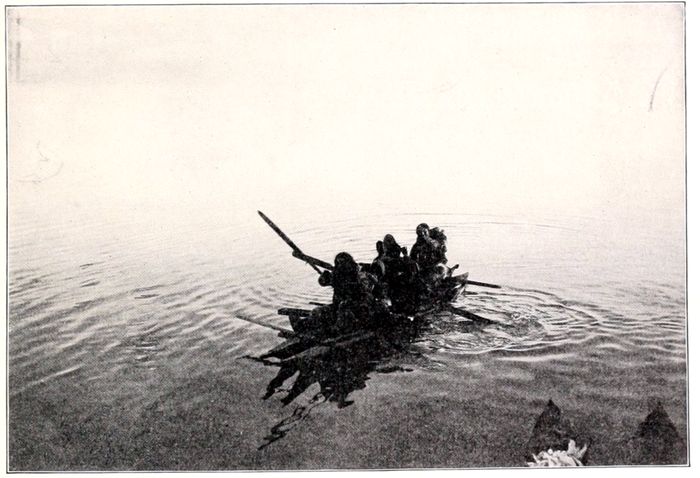
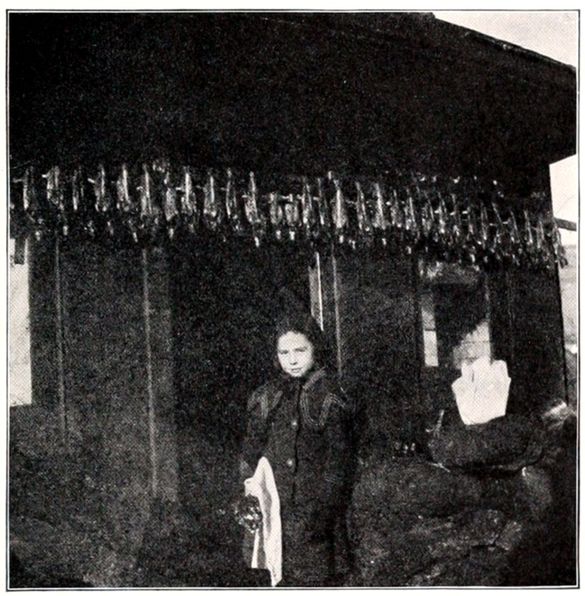
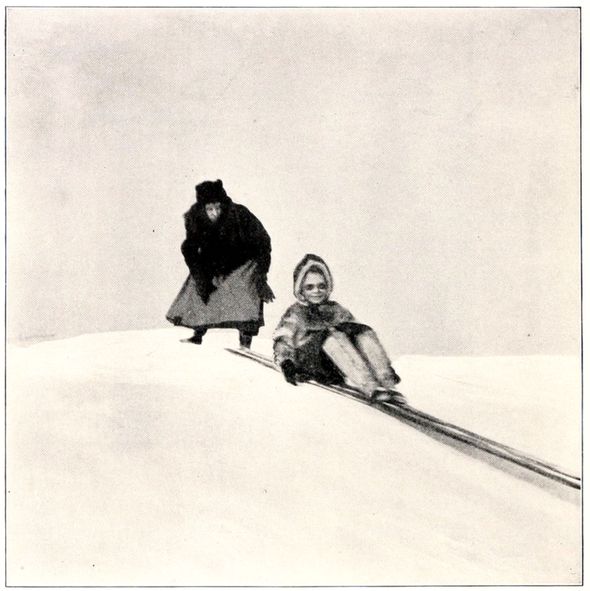
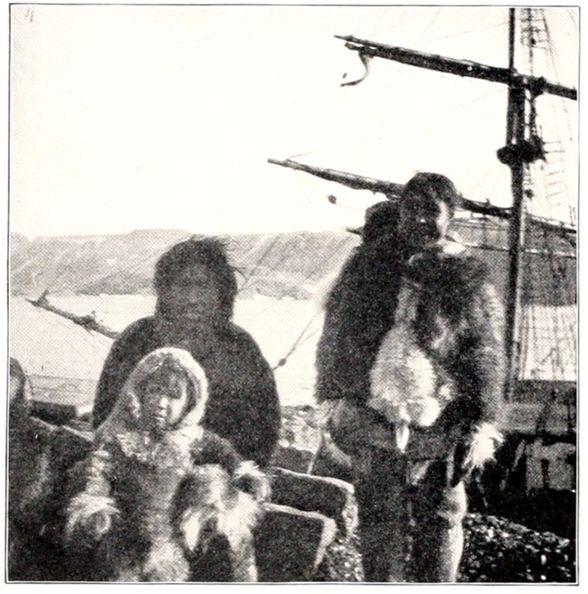
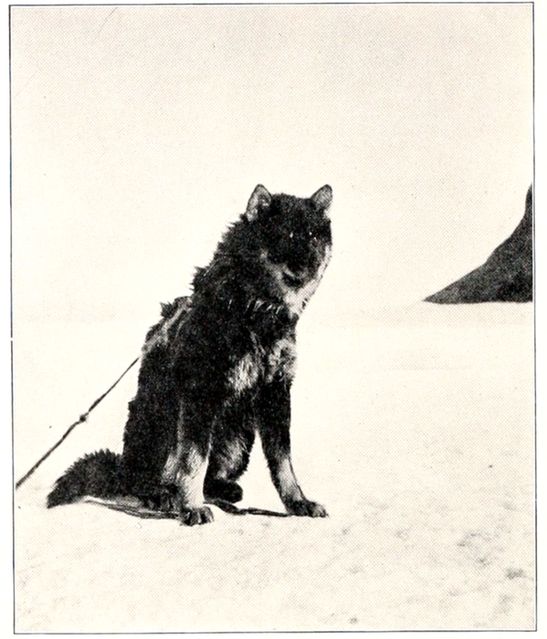
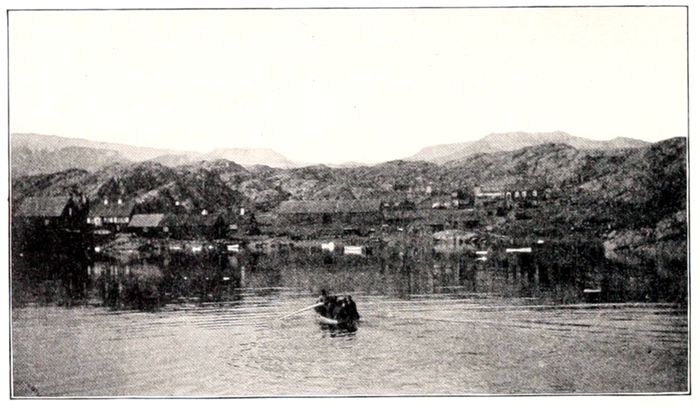
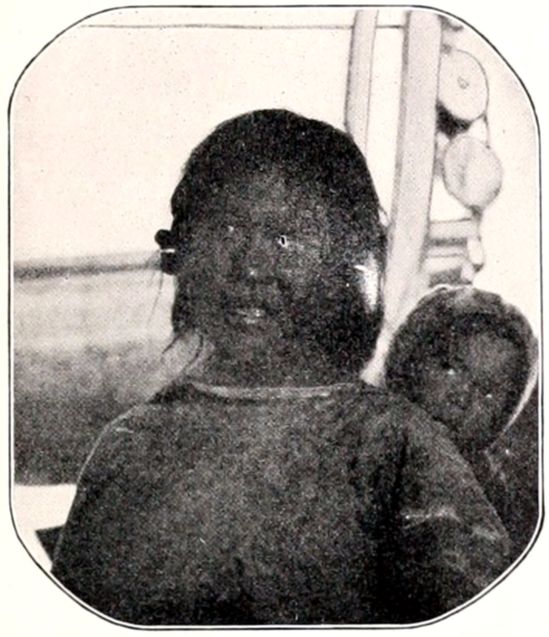
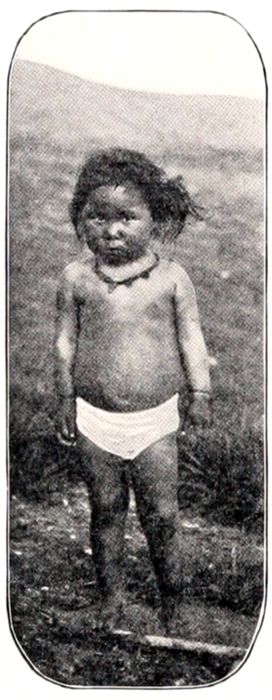
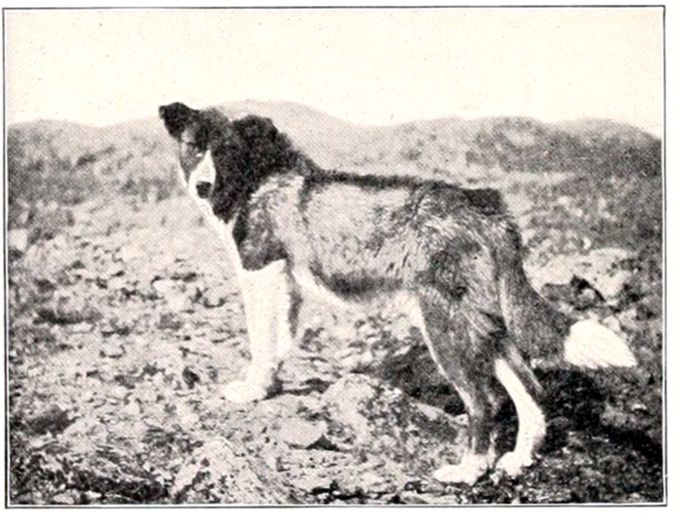
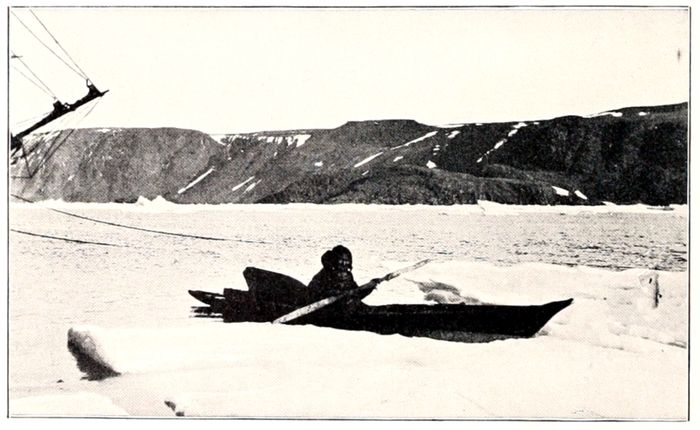
The cover image was created by the transcriber and is placed in the public domain.
CHILDREN OF
THE ARCTIC
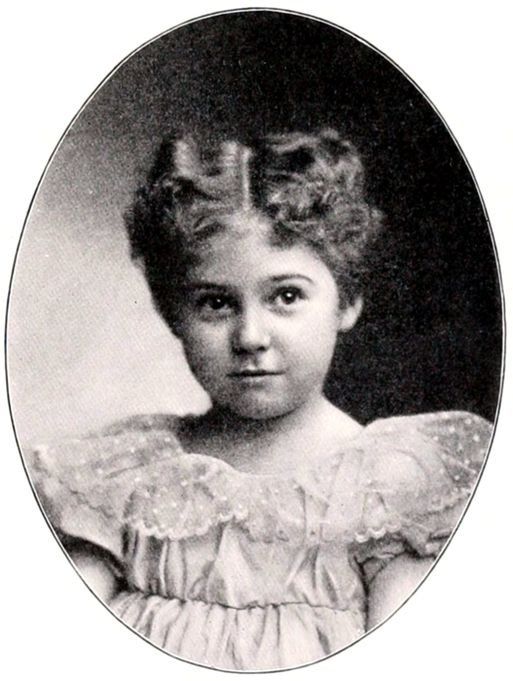
MARIE AHNIGHITO PEARY
ByTHE SNOW BABY AND HER MOTHER
NEW YORK · FREDERICK A. STOKES COMPANY · PUBLISHERS
Copyright, 1903
by Frederick A. Stokes Company
All rights reserved
Printed in the United States of America
9
CHILDREN of the ARCTIC
I
If any one had invited
AH-NI-GHI´-TO to go
back to the Snowland the
day after her return to her
Grossmamma’s house, she
would not have listened a
moment; for there was so
much to tell, and do, and
see, and learn that in her
opinion she could not possibly
spare time for another
visit to the far-away land.
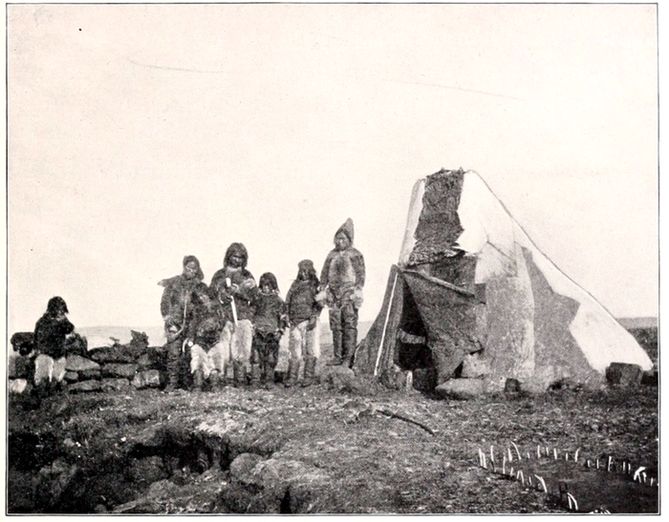
Yet, the next summer, when her father went
off again in the great black ship, to the land
where all AH-NI-GHI´-TO’S queer fur-clad
friends lived, there was a big lump in her throat,
and something that looked very much like tears
in her eyes, when she found that she and mother
were going to remain at home this time.
10But she was nearly five years old now, and
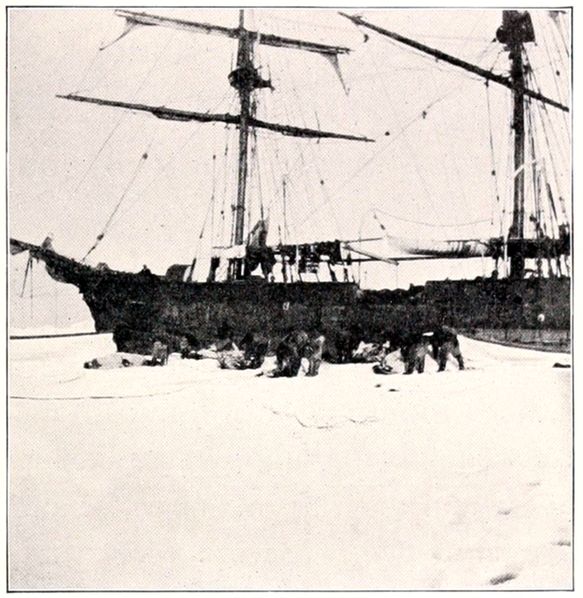
father said she must soon go to school and
learn a great deal by the time he returned;
and if she would be a very good girl, and do
just what mother said, he would tell Santa Claus
to bring her a sister.
AH-NI-GHI´-TO was much pleased. She
wanted a playmate very much and promised to
do all she was told; and father sailed away.
All through that summer AH-NI-GHI´-TO
roamed about on a farm, where everything was
new to her. She had bunnies to pet; chickens
to feed; nests to hunt; cows to be driven to
pasture in the morning and brought back in the
evening; butter to be churned; flowers to be
gathered and arranged; and really so many
things to be done of which she had never
even heard, that the days were hardly long
enough.
The summer came to an end quickly and
AH-NI-GHI´-TO returned to her “Grossy’s”
home and to her kindergarten, of which she
was very fond.
11Then Christmas came bringing many pretty
toys for her, and soon afterward, coming home
from the kindergarten one day, AH-NI-GHI´-TO
found the dearest little sister waiting for her.
At first she thought father had brought her,
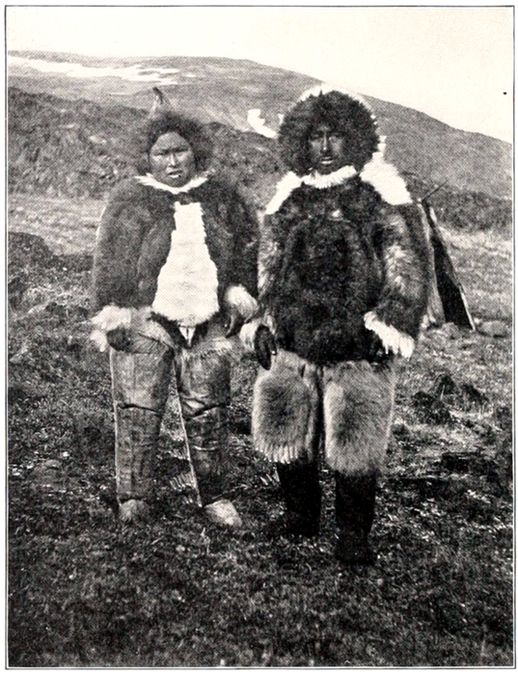
and was quite disappointed to learn that she
had been sent, but as sister brought a letter
from “dear old Dad” in which he told AH-NI-GHI´-TO
that she must be very good so
that she might set sister a good example, she
began at once to take the part of elder sister.
All through the winter and spring and well
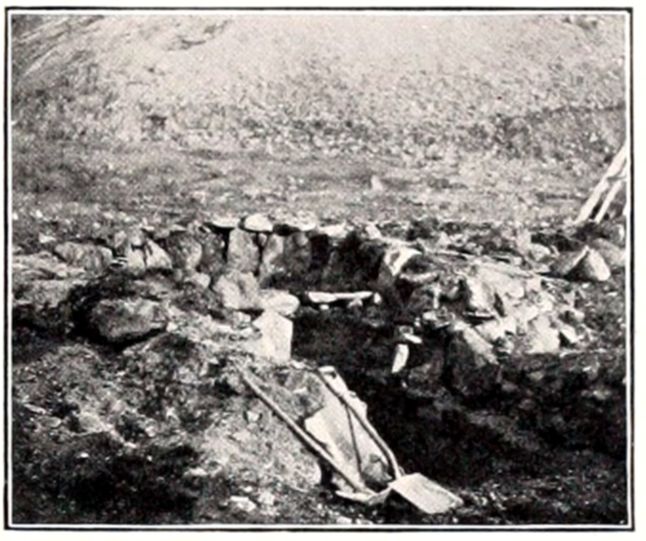
into the summer AH-NI-GHI´-TO was a happy
little girl. Each day sister grew to be more
of a playmate, and the two little girls had
merry times together; sometimes on the bed,
sometimes on the floor, and often on the white,
warm sand of the seashore. But one morning
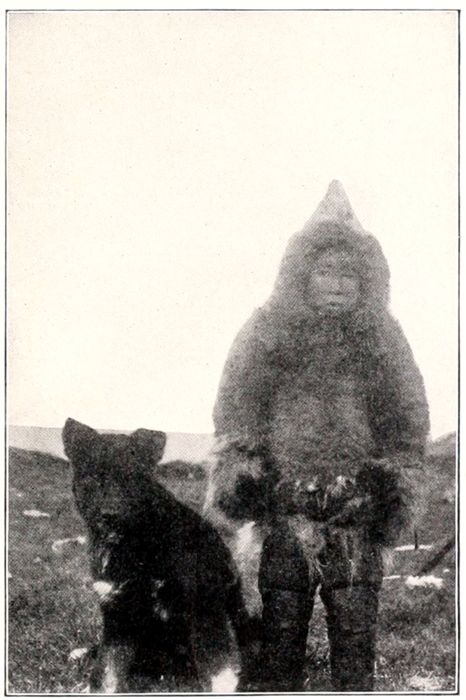
sister was not well and did not care to frolic
with AH-NI-GHI´-TO. She would lie still and
only smile a little sometimes, too sick to enjoy
the fun. The next evening she went to sleep
and even AH-NI-GHI´-TO’S kisses could not
12awaken her. Poor AH-NI-GHI´-TO, this was
her first grief and she was nearly heart-broken.
It was a long time before she could believe it
was better for sister to be an angel in heaven
where she would have no pain and where AH-NI-GHI´-TO
would rejoin her some day and
they would never be separated again.
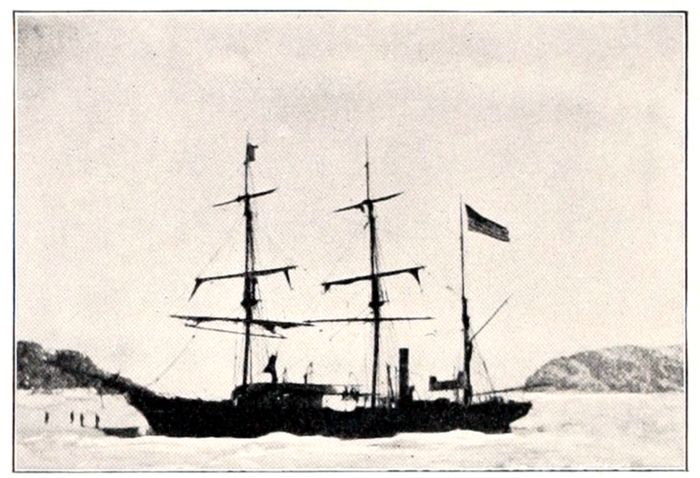
“The Black Ship which sailed for the Snowland”
13
“AH-NI-GHI´-TO was Six Years old now.”
It seemed that AH-NI-GHI´-TO’S happy
days were over for a while, for soon after this
the big black ship which had sailed for the
Snowland early in the summer to bring AH-NI-GHI´-TO’S
father news of her and his homeland,
returned with the sad tidings that he had
been caught by the cruel Jack Frost far up in
the Snow country during the cold, dark winter
and had his feet frozen. Though his letters
told AH-NI-GHI´-TO and her mother that he
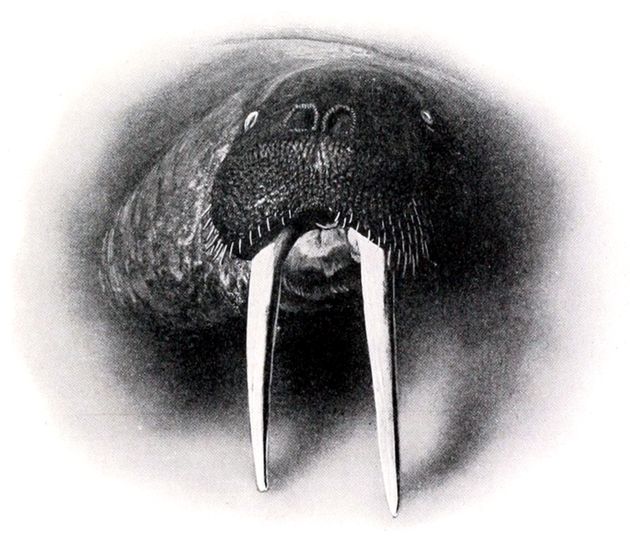
was quite well now, still they had their doubts,
and AH-NI-GHI´-TO said, “Oh, mother, can’t
we go to father? I think he must need us to
take care of him.” Her mother agreed that
when the ship went north again the next June,
she and AH-NI-GHI´-TO would go too. AH-NI-GHI´-TO
could not see why they must wait
so long. Why not go at
once? She had quite
forgotten that in the far
north the long, cold
night was now beginning
and that all the
sea was frozen solid.
For four months father
would have no sunlight:
only the faint
light of the stars and
once a month the moon.
Only when the summer
14came again with its bright warm sun to
thaw the ice and allow the ship to plough
her way through, could she go to him.
AH-NI-GHI´-TO was six years old now and
was going to real school, but all her spare time
she spent in getting ready for her coming visit
to father in the Snowland.
She made many picture scrap-books, and paper
dolls (with dozens of dresses for them) to
give to the little Danish children who had been
so kind to her when father’s ship stopped at
their villages on the way home with the great
Star stone. All her pennies were carefully saved
that she might buy other presents for her many
little friends. So the winter and spring passed,
and at last came the day, July 7, when AH-NI-GHI´-TO
bade Grossy and Tante good-bye,
promising to surely return in the early Fall and
perhaps bring father too.
II
15
“At last We are on Our Way to see Father”
On the way to join the ship she stopped to
say good-bye to Uncle in New York and to
dear old Grandma in Portland, Maine. Here
too she promised to return in the Fall and if
possible to bring father with her.
Her one wish now was to board the ship
and get away, and this she really did on July
20 at Sydney, Cape Breton. That night before
going to sleep she wrote in her diary.
“July 20, 1900.—Glory,
glory, at
last mother and I
are on our way to
see father. I wonder
how long it will take
us. I can hardly wait.
“We have such
tiny rooms here that
one of us must stay in
bed while the other
dresses. Everything
is very clean and
comfortable and I
16have a little kitty with which to play, and I think I
will like our maid too.
“A little Kitty with which to play”
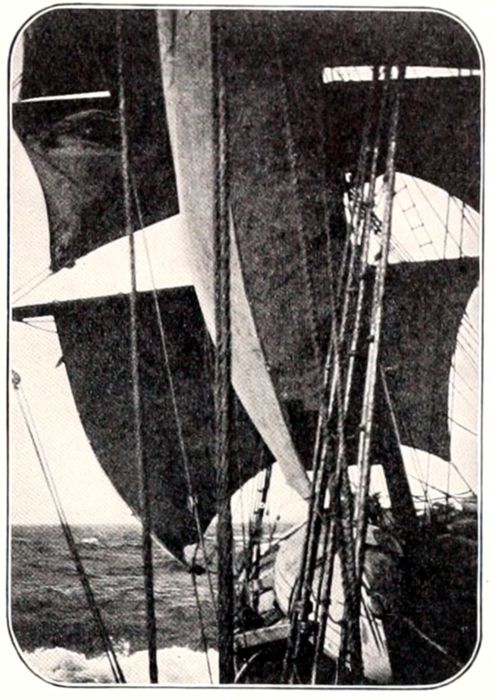
“When a Breeze would fill the Sails”
“She is the wife of the steward. She has never been
away from her home in Newfoundland before, except to go
on the fishing boats to Labrador. They spend the summer
there catching codfish, and live on it through the winter.”
During the first week the weather was clear
but quite cold. At least AH-NI-GHI´-TO and
her mother thought it was, to what they had had
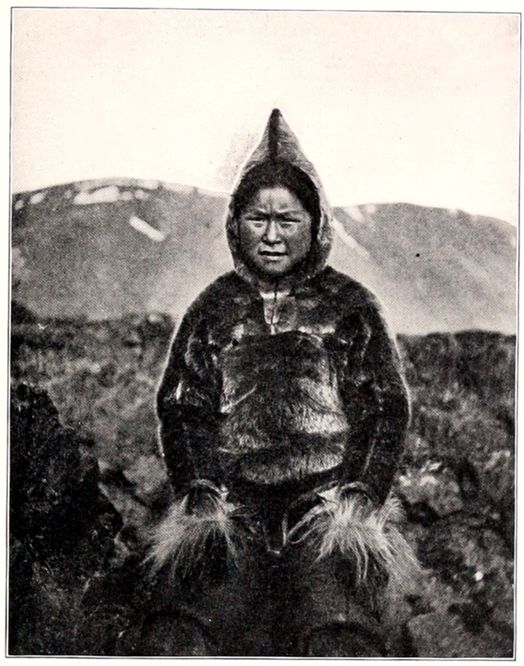
before leaving home.
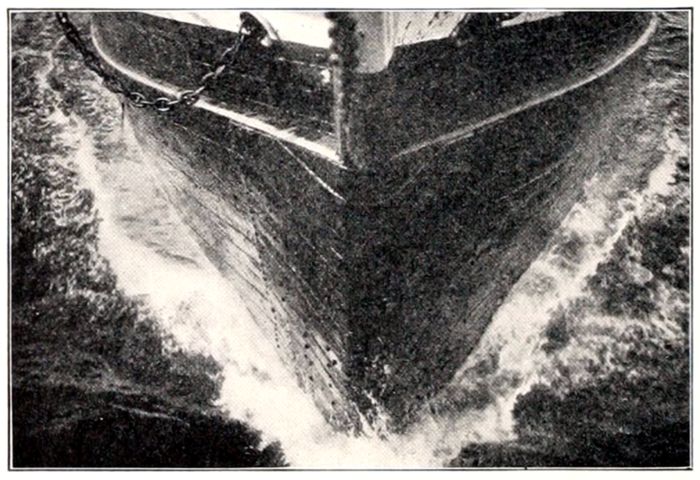
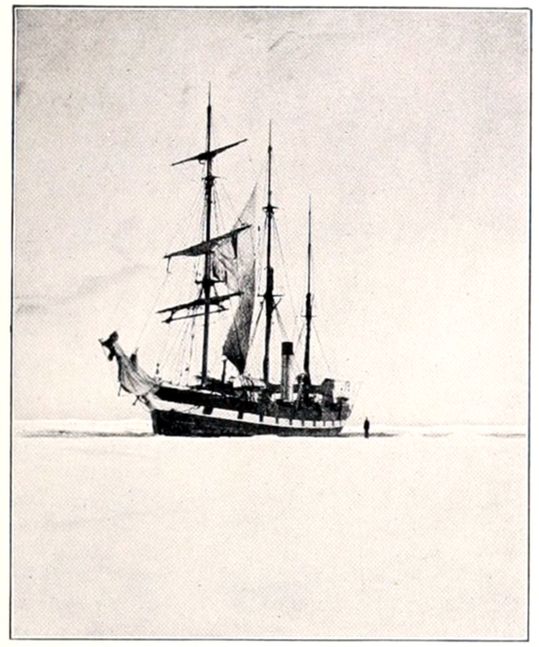
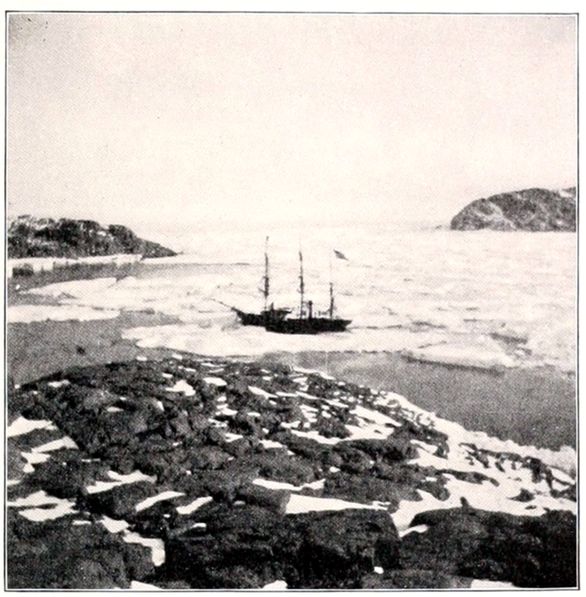
The old ship, called the “Windward” was
very slow, and so they were thankful when a
17breeze would fill the sails
and help the engines push
the ship ahead.
From Sydney they sailed
through the Gulf of St.
Lawrence, along the Newfoundland
shore as far as
the Straits of Belle Isle.
Then through the straits,
where the last lighthouse
was passed, and along the
Labrador coast. On July 29th letters for home
were given a passing fisherman, who promised
to mail them at the nearest place in Labrador
where the mail boat would touch. This was
AH-NI-GHI´-TO’S last chance to send news
home to her dear ones until she returned herself
the next autumn, and in one of her letters
she wrote the following:
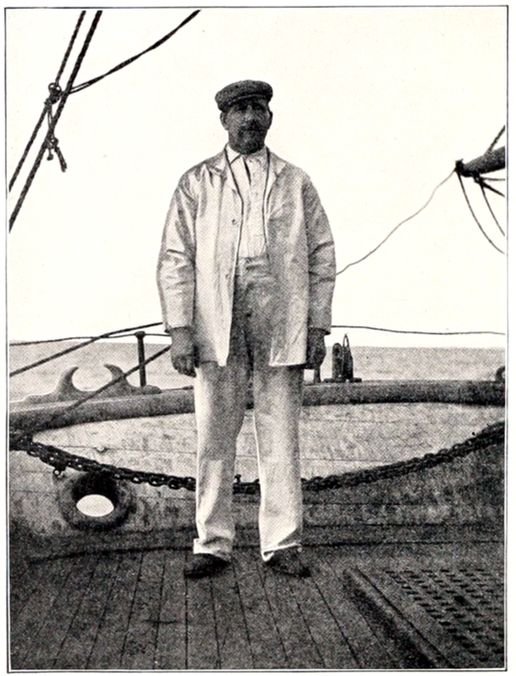
“Charlie the Steward”
“S. S. Windward,” July 29, 1900.
My dear Uncle,—Nearly every day has been fine.
In the Straits of Belle Isle we passed many large
cakes of ice. I am glad we had sunshine, because Captain
18Bartlett, whom I like very much, says there are rocks
there too. If our ship should strike either of these it would
wreck her; and we might easily run against them if the
fog was thick and he could not see ahead.
My kitty is very wild
and will not come to
me, though I feed her
milk and bread and try
my best to make friends
with her. The Captain
is very jolly, and helps
me have fun. He has
had a nice swing put
up for me on deck, and
when our ship does not
roll too much I have
fine times there.
Percy, the maid, says
she never saw children
play, that where she
comes from they only
sit with their hands in their laps and keep quiet. I am
glad I don’t live in that place. I am teaching her to
play with my paper dolls and to play tea-party, but as
she feels seasick most of the time we do not get along
very fast.
“Percy the Maid”
Mother and I with Percy are at one end of the ship,
while the Captain and his men are at the other end.
19We live in what is called the “after
cabin” and the Captain and his officers
live in the forward saloon, but
the sailors are in the forecastle; so,
you see, there is the whole length of
the ship between us. I can make as
much noise at my play as I choose,
without any one being able to hear
me. Percy serves our meals in our
cabin, and it is just as if mother and
I lived alone on the ship.
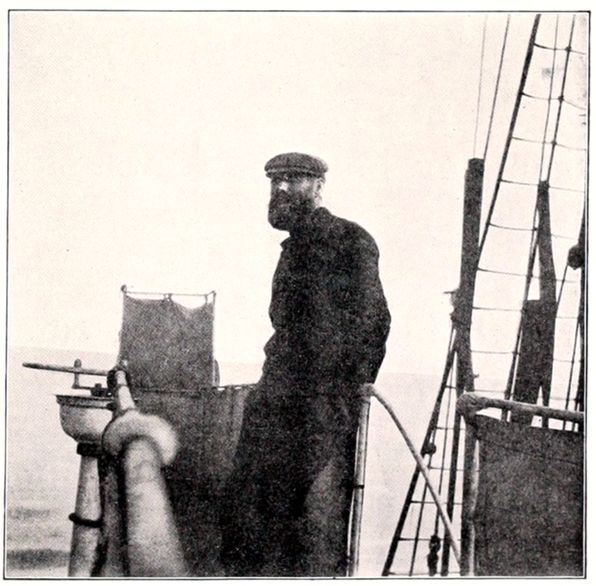
“Captain Sam”
The Captain comes down sometimes
and plays checkers with me,
which is very nice of him; and I
am going to call him Captain Sam, because father has
had two other captains by the name of Bartlett.
To-day it is raining
and quite cold,
and the poor fishermen
look as if they
would rather be indoors; but they say
it is a good day for fish and they must
try to get as many as they can. Mother
20bought enough fish for dinner and breakfast; and now
I must close, for Captain Sam is waiting for our
mail.
With much love and a bushel of kisses, from
Your AH-NI-GHI´-TO.
P. S. We don’t have any real night at all now. It is
daylight almost all night long.
As soon as the fisherman dropped into his
boat with the mail the “Windward” went on
her way, but the foggy weather and north winds
kept her back a few days along the Labrador
shore. Davis Strait was crossed in a wind storm
which kept up for days, and one day while
AH-NI-GHI´-TO’S mother was reading to her
in the cabin there came a gust of wind wilder
than any before. It was followed by a great
crash on deck, a shower of broken glass from
the cabin skylight and the shouting of the Captain
to his men and the running of the sailors
obeying his orders. AH-NI-GHI´-TO’S mother
was frightened, but hardly had the glass stopped
falling when AH-NI-GHI´-TO cried, “Go on
with the story, mother.” She had been in so
21many storms at sea that she was not the least
afraid, and took everything that happened on
board ship as a matter of course.
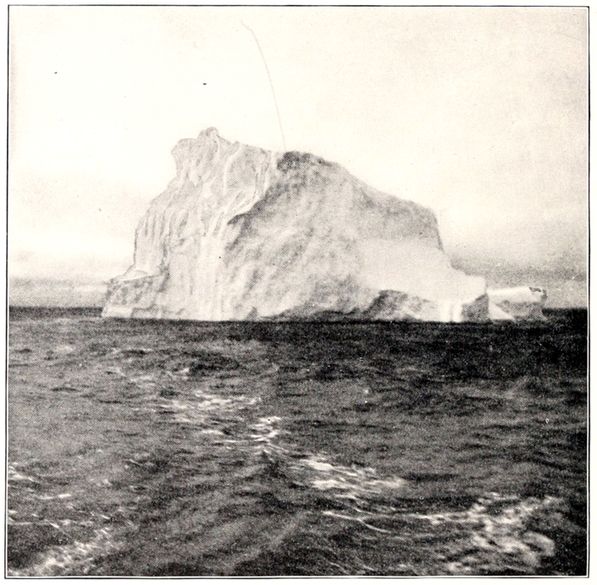
“A Great Iceberg”
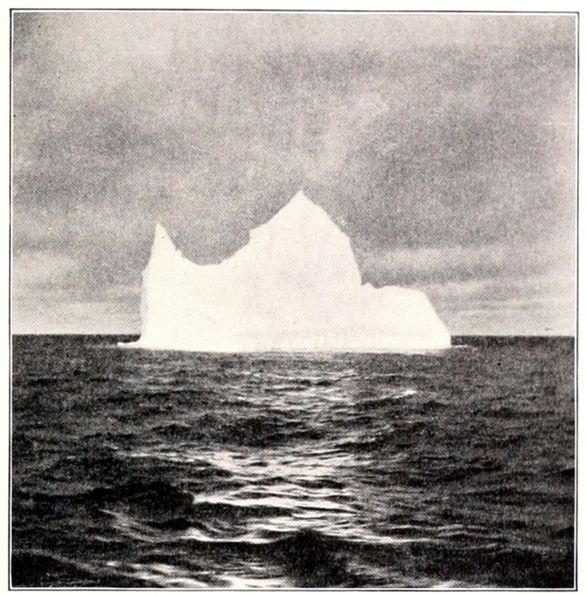
Captain Sam said afterwards that the ship had
been tossed on the waves like a ball, and in the
storm and fog had come so near a great iceberg
that when the man on the lookout saw it she
had to be brought round the shortest and quickest
way, to keep her from being dashed to
pieces against its frozen sides.
22This caused the bags of coal lashed on deck,
to break loose and slide across the deck, smashing
everything in their way.
Four hours later the ship was in a smooth sea
with the sun shining brightly.
The bunch of bananas that were taken for
father were now getting so ripe that they must
be eaten, and it was AH-NI-GHI´-TO’S delight
to take an armful on deck and divide
them among the sailors. Some of them had
never eaten them before.
III
23
A few days later
the first stop in
Greenland was
made at Godhavn,
the capital of the
country. Just outside
the harbour the
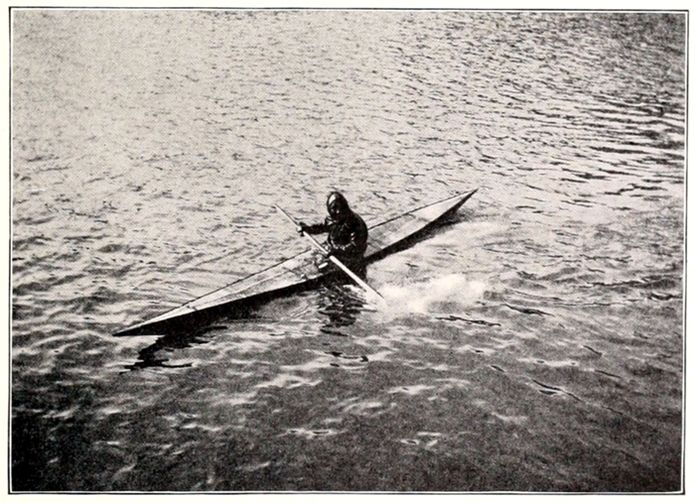
pilot, an Eskimo
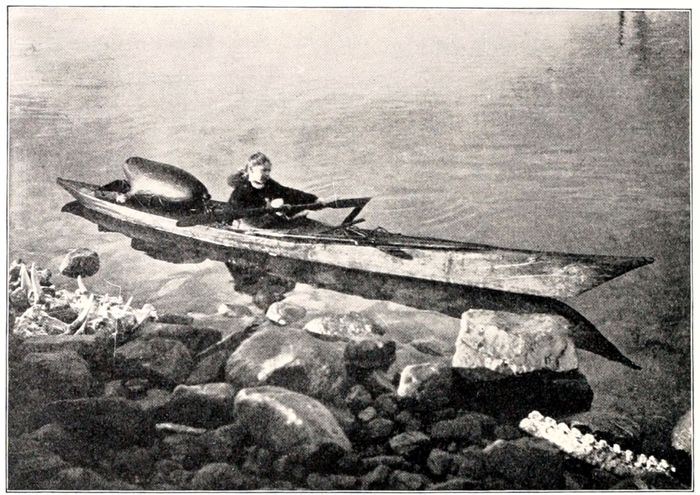
in his tiny skin canoe or kayak, met the ship and
was hoisted on board, canoe and all. Here Captain
Sam expected to get some seal-skin clothing
24which had been ordered for AH-NI-GHI´-TO’S
father.
“The Pilot in His Skin Canoe”
The sun now shone throughout the twenty-four
hours, so there was no night at all.
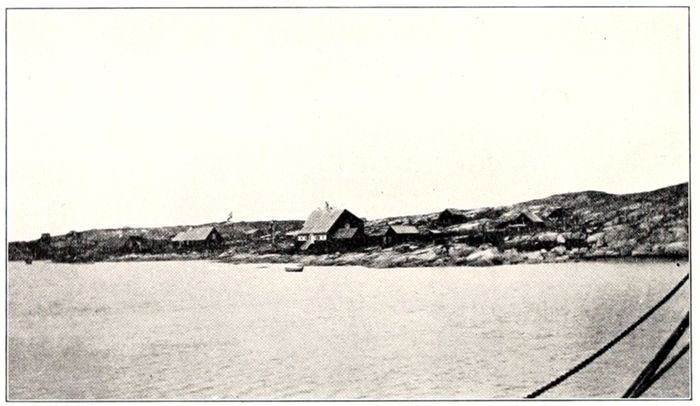
“Godhavn, the Capital of Danish Greenland”
When AH-NI-GHI´-TO’S mother told her
Godhavn is the capital of Danish Greenland,
AH-NI-GHI´-TO said, “Just as Washington is
the capital of the United States? Oh, mother,
how funny it is to look over there and see
only a few frame houses one and a half stories
high, a tiny frame church with a school-bell
on top, and then only mounds of turf with a
25window stuck in the end of each and a chimney
put on one side, —— and to think this is a capital
city!”
But it is true. The Inspector of Danish
Greenland, the Governor of Godhavn, and an
assistant with their families are the only white
people in the “city.”
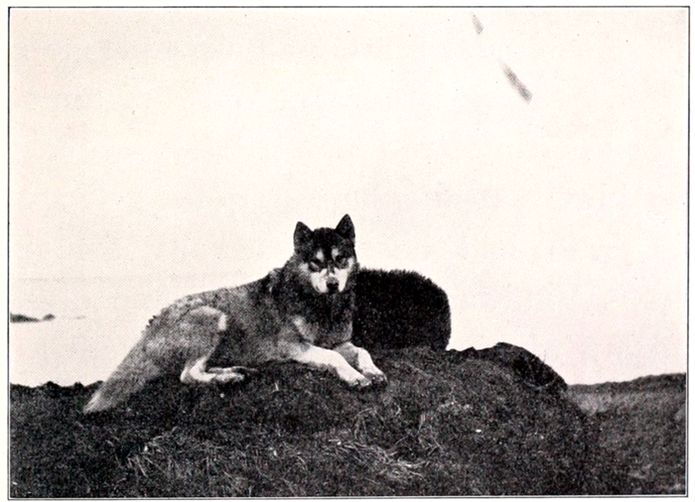
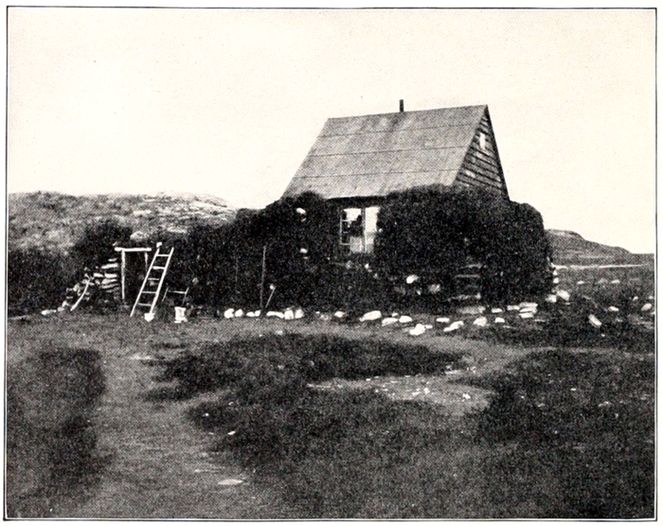
“Huts like Mounds of Grass on which the Dogs sleep”
“The mounds of turf” as AH-NI-GHI´-TO
calls them, are the native huts. They are only
one story high and built of stone and turf half
in and half above the ground. The turf with
which the stones are chinked is allowed to grow
26until the stones can hardly be seen for grass.
Some of the dogs belonging to the household are
nearly always asleep on top of the huts, and this
makes the huts look still more like mounds of
grass. The Danish Governor requires the children
of these natives to go to school and to
church. The schoolmaster is also the preacher,
and he is usually a native Greenlander who was
taught in this same school when he was a boy.
AH-NI-GHI´-TO was disappointed because
it was two o’clock in the morning when the
anchor went down and every one on shore was
asleep.
The Captain said we had no time to spare,
and he would go ashore at once without waiting
for rising-time, and see if the Governor would
receive him. While he was gone a few of the
natives, who had been roused by the tooting
of the “Windward’s” whistle, came on board
to find out whose ship it was and whether there
was any chance for them to trade their toy
kayaks (boats) and sledges for coffee, sugar,
and biscuit.
27
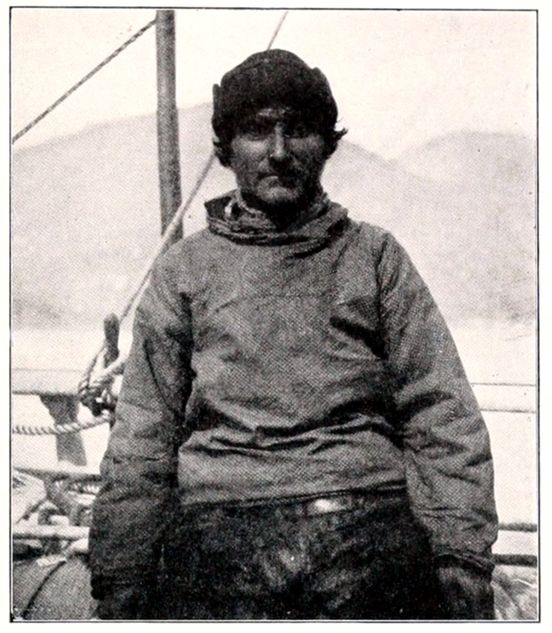
“Broberg”
Among them was an old native, named Broberg,
who had seen AH-NI-GHI´-TO when
she was a baby, and again when she was four
years old. He first knew her father in 1886,
and asked about him in his broken English.
AH-NI-GHI´-TO was much amused, and later
wrote in her diary:
“August 10.—Came to Godhavn at two o’clock this
morning. Could not go ashore. Saw some old Eskimos
I had seen before. One old man was very funny. His
name is Broberg. He came toward us and shook hands
28with mother and me and said, ‘Me very glad see
you. You plenty big now. All you look plenty well.
Me hope you find Peary all same well. Me go my
house catch you kamiks. You pickaninny feet keep
plenty warm in good kamiks. No cold, you wait,
me see.’
“Mother teases me by saying that he said, ‘You plenty
bad now,’ and not ‘plenty big,’ but I know he did not
because he doesn’t know me well enough.”
While old Broberg had gone to see if he
could “catch” a pair of warm kamiks (fur-lined
boots) for AH-NI-GHI´-TO, she saw a
few of her old friends, who as soon as they
heard it was Peary’s ship, and that AH-NI-GHI´-TO
was on board, showed their delight
by bringing her the best they had, and they
wanted her to come ashore and visit their
pickaninnies.
29
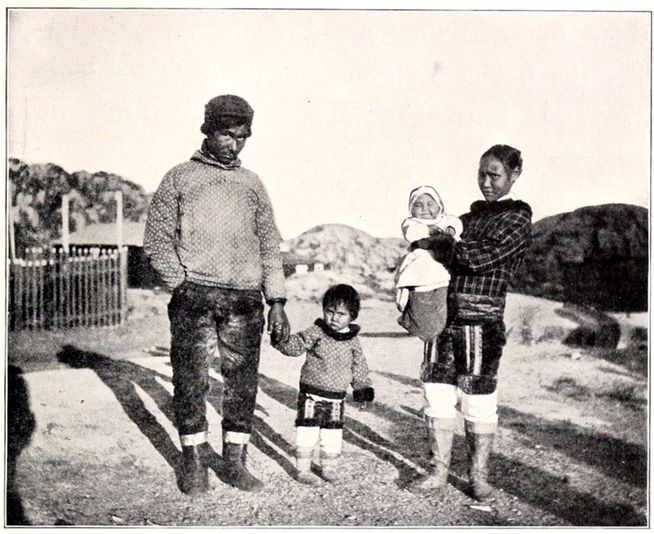
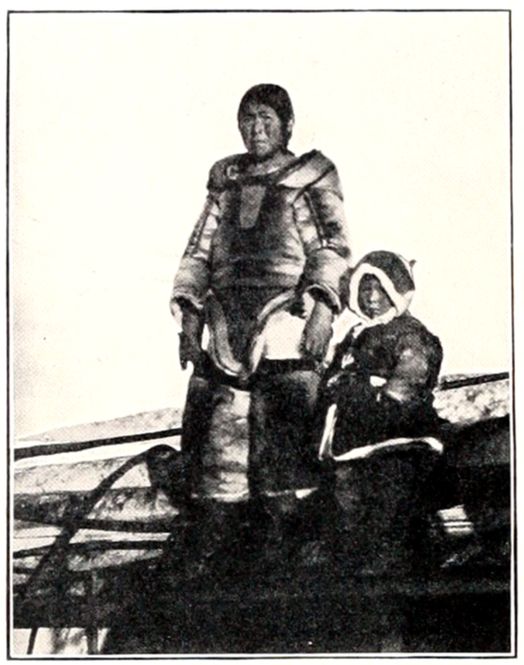
“Eskimo Family at Godhavn”
One man brought his family close to where
the ship lay, that AH-NI-GHI´-TO might see
what fine children he had. The little girl, a
child of three years, had on short, white
leather kamiks (boots) with long seal-skin stockings
coming to the thigh, but the tops of the
stockings above the boots were covered with
snow-white, lace-trimmed pantalettes made of
muslin. Her little seal-skin trousers had bands of
white leather embroidered in red, down the front
of each leg, and her top garment made like a
sweater, was of red and white figured calico,
trimmed about the neck and wrists with black
30fur and lined with the soft, warm breasts of the
eider duck. The baby was dressed very much
like the babies at home, only the feet and legs
were put into a fur bag covered with bright
calico.
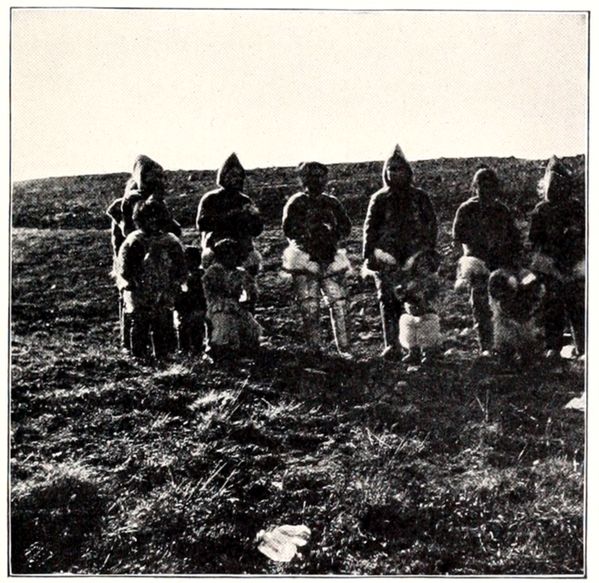
AH-NI-GHI´-TO pleased them by taking
their pictures as they stood there hand in
hand.
Nearly all the natives of Danish Greenland
wear clothing made of woven material, for which
they trade their furs and blubber with the Danish
people who govern them and teach them.
In a short while Captain Sam returned.
With him came the Inspector and the Governor.
AH-NI-GHI´-TO heard that the Danish
children whom she met here on her last
visit were now living somewhere else, and of the
two Danish families in Godhavn now only one
had children. To these she sent fruit and sweets
and said she hoped to see them on her return, for
now the Captain was in a hurry to be off while
the good weather lasted, and there was no time
for visiting.
31Old Broberg returned, but had not been able
to “catch” a pair of kamiks to fit AH-NI-GHI´-TO.
He felt sorry about it and wished
the Captain to wait until his daughters could
make a pair, as he said “they plenty quick
sew.” But of course this was not to be thought
of.
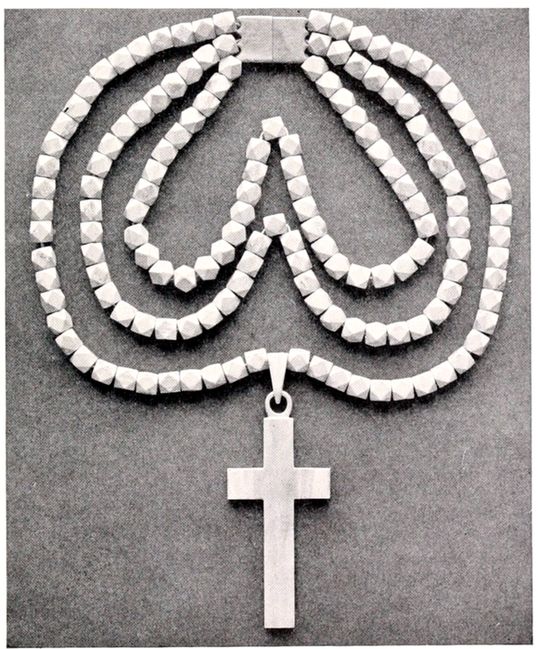
“Ivory Necklace, carved from Walrus Tusks and Narwhal Horns”
32Just as the “Windward” was ready to leave
and had blown her “good-bye” whistle a messenger
from the Governor’s wife climbed over
the ship’s side and handed AH-NI-GHI´-TO a
beautiful ivory necklace as a keepsake.
IV
33
“In Melville Bay”
For days after this,
when it was clear, AH-NI-GHI´-TO
could see
no water; nothing but
what looked like snow.
It seemed to her as if
the “Windward” would
certainly be stopped by
some of the heavy sheets
of snow-covered ice. But
the bright sun had been
shining on it day and night for months, and it
was not nearly so strong as it looked to be.
When the ship struck it a sharp blow it shivered
to pieces and the old “Windward” shoved them
aside and pushed on. The sunlight on these
great fields of snow-covered ice was so blinding
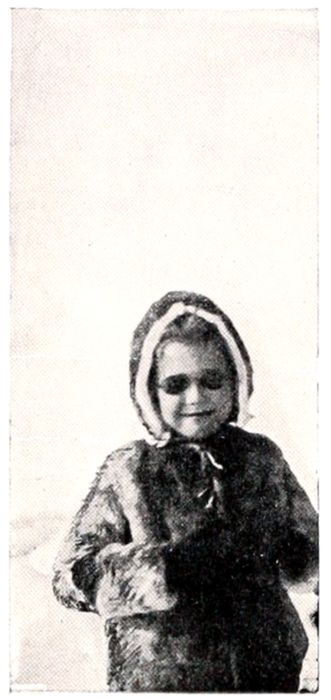
that AH-NI-GHI´-TO was obliged to wear the
darkest smoked-glass goggles all the time.
“To wear smoked-glass Goggles all the Time”
Even if the progress was slow AH-NI-GHI´-TO
knew that every night when she
34lay down to sleep she was one day nearer her
father’s camp, where she hoped to meet “dear
old Dad,” whom she had not seen for over two
years.
The ever dreaded Melville
Bay, full of icebergs and large
sheets of ice, was crossed at last.
Captain Sam expected the north
water to be free from the large
pans of ice. He did not fear
the great white icebergs, for the
sun shone during the twenty-four
hours without setting, and he
could keep out of their way.
Sometimes he would run the old
ship right alongside of one of
these “palaces of the Ice King” and fill the
water tanks with pure cold water which formed
in pools where the ice had been melted by the
hot rays of the sun.
Sometimes AH-NI-GHI´-TO saw these large
masses of ice turn “somersaults,” as she called
it. This was caused by the water washing against
35the sides of the berg until the part in the water
was lighter than that above the water, and
the berg became top-heavy and tumbled over.
At first there was a low rumbling noise, then as
it gained headway it grew to a roar, like the
increasing sound of an approaching train. This
was followed by the boiling and foaming of
the water (filled with pieces of ice which had
broken off) as far as the eye could see, until at
the shore the waves dashed high.
The poor old “ice palace” would roll over
and over and rock and sway and totter until at last
it regained its balance. But now the part which
before had been under water was above it and
glistened like polished silver, with lots of little
rainbow colours in between, where the sun glinted
from drops of sea water.
Here it would stay until some other time when
it again became top-heavy by the washing of
the waves, and the same thing would happen
to it. Each time it would become smaller, until
at last it was only a lump of ice floating idly
about on the water. Such pieces are liked by
36the seals and walrus to crawl upon out of the
cold water into the warm sunshine, and there
take their sun-bath.
“Iceberg, ‘Palace of the Ice King’”
AH-NI-GHI´-TO thought it must be a very
cold bed, but these animals all have such a thick
37blanket of fat wrapped entirely around them, just
under the skin, that it does not seem cold to them.
One morning about four o’clock AH-NI-GHI´-TO’S
mother came on deck to look
around, when just alongside, on quite a large
cake of ice she saw a beautiful snow-white bear.
He had been swimming about in the hope of
finding a seal or two for his breakfast, and coming
to this cake of ice, thought he would get
up on it, stretch his legs, and get a nice drink
of water.
The man on the “lookout” had been looking
at ice and water in the glaring sunshine for so
long that he had failed to notice the bear who
was just the colour of the ice on which it stood,
and so it was that AH-NI-GHI´-TO’S mother
was the first one to see it, and call the Captain.
Captain Sam never undressed when he went
to bed while the ship was in motion, and so it
was only a few moments before he appeared
with his rifle. The poor bear did not seem to
know that he was in danger for he stood quite
still, with his head up sniffing the air, and watching
38the ship slowly nearing him. The Captain
fired, and the bear jumped into the water and
began to swim away. The Captain fired again,
and though the poor brute did not stop, the
water about him turned red and we knew he
had been hit. Another shot and his head
drooped and his body floated on the water.
He was dead. A boat was lowered and the animal
hoisted on board, where he was hung in the
rigging to dry before being skinned and cut up.
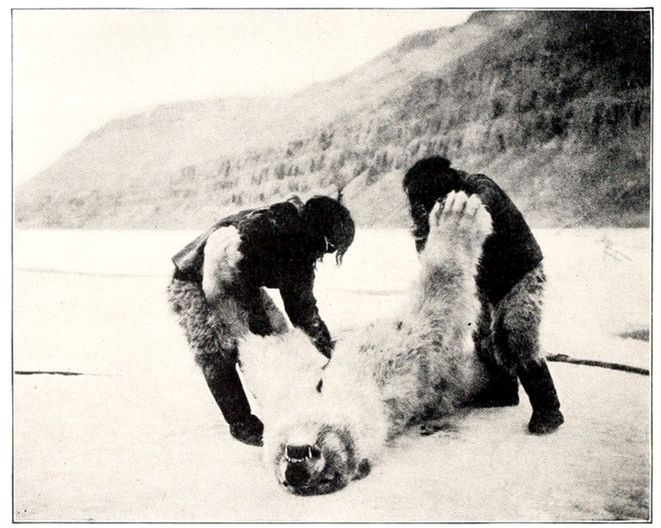
“Skinning the Bear”
39AH-NI-GHI´-TO was very much excited.
Her heart bled for the bear, and she hoped
all the while the shooting was going on that he
would get away. Her mother told her it was
necessary to kill these animals for her father, who
needed the meat to feed his dogs and his Eskimos,
and the skin to make into clothing to help keep
him warm during the long, cold winter. But
AH-NI-GHI´-TO still grieved for the bear.
V
40
A few days later Etah,
the place where her father
had built his winter house,
was sighted, and AH-NI-GHI´-TO
thought that in
a few hours she would be
in his arms; but she was
to be disappointed, for before
the ship reached the
inlet AH-NI-GHI´-TO’S
mother saw that the dear old stars and stripes
were not flying from the little red house, and
told her this was a sure sign that father was not
there.
As soon as the ship’s anchor was down a boat
full of Eskimos came off from the shore and they
said that Peary had not yet returned, but he had
sent letters which were in his house on shore.
Captain Sam jumped into the boat and in a short
time brought letters from AH-NI-GHI´-TO’S
father, in which he told the Captain what he
41wanted done at Etah and that he wished the ship
to come on to Fort Conger where he would
meet it.
“A Boat full of Eskimos”
Now Etah is on the east shore of Smith Sound
and Fort Conger, the place where AH-NI-GHI´-TO’S
father hoped to meet his vessel, is on the
west side and nearly three hundred miles farther
north. The ice here was very thick and only
small lakes of water were to be seen through it,
in the direction in which the ship must go.
42Both Captain Sam and AH-NI-GHI´-TO’S
mother felt that there was little chance of getting
to Fort Conger in their small ship. Before leaving
Etah the Captain must get hundreds of tins
of canned goods, barrels of flour, cases of sugar,
rice, biscuit, oatmeal, etc., etc., on board to take
with them. These had all been piled near the
beach by AH-NI-GHI´-TO’S father, ready to be
put on the ship as soon as she came.
This took more than twenty-four hours and
during this time AH-NI-GHI´-TO was ashore as
much as possible meeting some of her old Eskimo
friends and getting acquainted with others. That
night she wrote in her diary:
“August 20, 1900.—Ashore all day. Took a look at
father’s house. It is very empty and very small. I also
looked into the tents of the Eskimos. They are dirty
places. Am so sorry not to find more children here.
Only a boy nine or ten years old and a baby. They are
going on the ship with us, so I guess I will have a good
time. The ‘grown-ups’ thought it was very funny to see
me jump rope with the ‘Bosun,’ and also to see me swing.
They helped me pick flowers, which I have just finished
pressing, and they took me to the glacier which mother
43says is a river of ice that flows down the mountain-side
toward the sea just as if it were water, only it moves very
slowly; not more than a few feet in a year. They tried
to tell me about my father, but I did not understand them
very well. I gave one of the women a white cup and
she was very proud to have it. Early in the morning we
hope to get away from here and take with us five grown
Eskimos and two children. I wonder will we meet
father soon.”
“Father’s House is very small.”
44
“Coasted down the Slopes of the Ice Hummocks”
Poor little AH-NI-GHI´-TO thought that in
a few hours at most the ship would cross Smith
Sound and reach her first landing-place on the
opposite shore, Cape Sabine, only thirty miles
away, where a depot of supplies and coal would
be landed for the use of those on board the
“Windward” in case she should be crushed in
the ice, while trying to get north, and her people
45forced to return to the shore in boats. But it
took eight long days to reach this place, and during
all of this time there was hardly a moment
when the ship was not in danger.
Sometimes the great sheets of ice would hold
the “Windward” in their grasp and not allow
her to move an inch. Then the current would
take her, together with the ice, and drift the whole
southward. In this way the ship was often farther
south at the end of the day than she was when
she started to steam north a few hours before.
At these times when the “Windward” was drifting
she was perfectly motionless and AH-NI-GHI´-TO,
together with Percy and some of the
Eskimos, would climb over the side of the ship
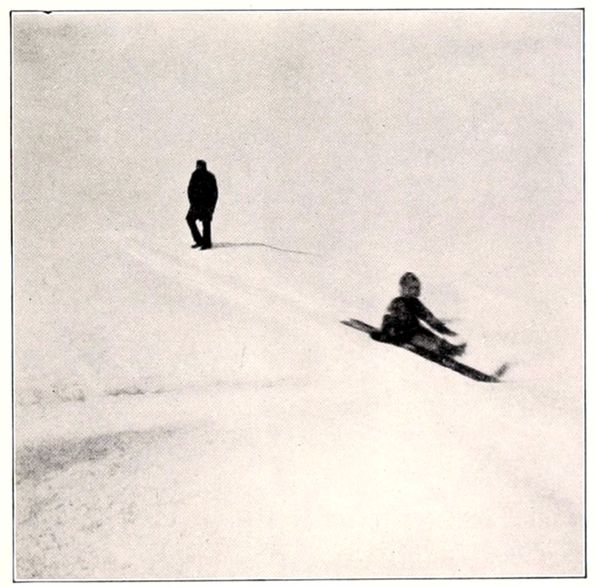
onto the Hoes and there they would play and slide
on the smooth ice; and once Captain Sam lashed
two Norwegian skates called “Ski” together,
and she coasted down the slopes of the ice hummocks.
This was great sport and helped pass
the time.
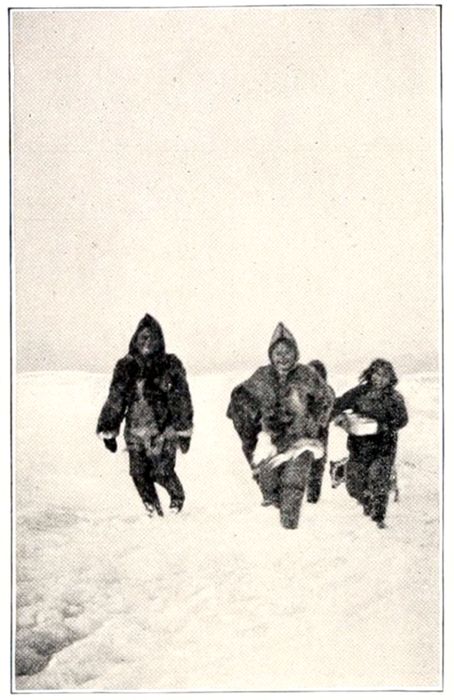
“Eskimo Family”
There were other times that were not so pleasant
when the heavy fields of ice would crush against
46the ship so fiercely that pieces would break off
and pile up against her sides till some of them
fell upon the deck, and the ship would groan and
tremble with the pressure like a person in pain.
At times the ship
would force her
way between
mountains of ice
so high that the
boats hanging at
the davits had to
be hauled in to
keep them from
being smashed,
and all the seamen
climbed out and
chopped away the overhanging pinnacles as fast
as possible so that the rigging would not be cut
or torn away.
At last, after eight weary days in the ice, the
little harbour was reached. Here a family of
Eskimos had been watching the ship during the
last three days, fearing all the time that she would
47be crushed and sink. Now there was great rejoicing,
for the Eskimos on the ship had not seen
this family since early Spring, and all were eager
to gossip.
This family consisted of a man, Accom-moding-wah,
his wife, Ah-we-a, a son of seven years,
Ne-ah-kwa, and a daughter of twelve, Ach-ah-ting-wah.
The boy, though some months older
than AH-NI-GHI´-TO, was still a perfect baby;
his mother nursing him like an infant; but the
girl was a playmate for AH-NI-GHI´-TO and
they soon became friends.
VI
48
The “Windward” was
run alongside of the rocks
and made fast, and every
one except a watchman intended
to get a good night’s
rest; the first in more than
a week, for the next morning
coal and provisions must
be landed and this meant
hard work for the men.
AH-NI-GHI´-TO and
her mother too were glad
go to bed. This they had
not been able to do while pounding through the
ice, for the big floes might crush the ship at any
moment, and every one had to be ready to jump
into the boats and leave her.
Now they had a fine bath and told Percy she
need not call them for breakfast, as they wanted
to sleep.
49
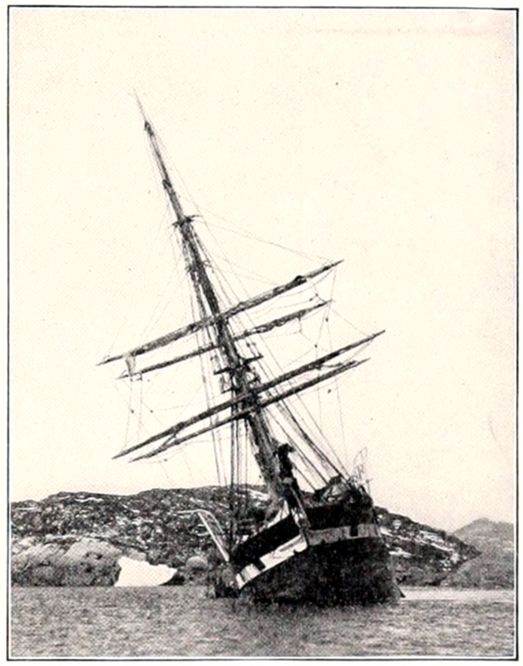
“Lay with one side on the Rocks”
At five o’clock in the morning Captain Sam
knocked on the cabin door and called to AH-NI-GHI´-TO’S
mother to get up and dress herself
and AH-NI-GHI´-TO as quickly as possible.
A brisk wind which sprang up towards morning
had blown the ship in against the rocks, and here
when the tide went out
she lay with one side on
the rocks, with only a few
feet of water under her,
and with the other side,
where there were no rocks,
far down in the water.
As no one knew how
much lower the tide would
fall, Captain Sam thought
it best to get every one and
everything of value ashore as quickly as possible,
for fear the vessel would capsize and sink.
AH-NI-GHI´-TO’S mother awoke her. By
this time the cabin floor was almost at right angles
to what it should have been,—the slant so steep
that it was impossible to walk on it.
50
“This was the 30th day of August”
AH-NI-GHI´-TO, still in her berth, was quickly
dressed in her warmest clothes, and after putting
her own clothing on, AH-NI-GHI´-TO’S mother
gathered the important papers and as much warm
clothing as possible into a bag; AH-NI-GHI´-TO
begging all the time not to leave her dolly and
her kitty. When this was done Percy took the
bag, and Captain Sam and the steward helped
them on deck. This was not very easy, as some
of you may find out if you try to crawl up a
board with one end on a barrel and the other
51on the ground. Again and again one or the
other slipped back, but at last the deck was
reached, and now all that could be done was to
sit down and slide over the side into a boat held
there by the sailors, for the water was on a level
with this side of the deck, while the opposite side
looked as if it were right overhead.
Although this was the 30th day of August, the
snow was falling so fast that the shore, a few
yards away, could hardly be seen. Thither the
boat was rowed, and there AH-NI-GHI´-TO with
her mother and Percy landed.
AH-NI-GHI´-TO did not realize that the
ship was in great danger, and so her one thought
was to have a good time. Together with the
Eskimo girl Achatinǵwah and Percy the maid,
she snowballed and made snow forts, which were
shot at with cannon-balls made of snow; when
tired of this she went off to explore a little valley
where Achatinǵwah told her there was a lake.
They were gone about an hour, and when
they returned AH-NI-GHI´-TO was much excited
and said she had seen footprints of an
52animal, which Achatinǵwah told her were fox-tracks.
She followed them for a short distance,
when they were crossed by hare-tracks. These
she followed up the side of the cliff, and all at
once around the corner of a big boulder peeped
the hare himself. He was sitting on his hind
legs, his nose twitching as he sniffed her,—a fine,
large fellow, snowy white all over except the tips
of his ears, which were black. AH-NI-GHI´-TO
thought he was tame like the little white bunnies
at home, but as soon as she came near him away
he scampered much faster than the children could
follow.
At ten o’clock the good ship was once more
afloat and out of danger but not quite upright
yet. As AH-NI-GHI´-TO was very hungry by
this time, all went on board. The steward had
lighted a fire in the cabin stove and swept the
water out of the cabin, but everything was still
wet. Breakfast was prepared at once and soon
every one was feeling better, but very tired.
Getting up at five o’clock in the morning and
being put out in a blinding snowstorm for five
53hours without anything to eat or drink, and without
even a place where one can sit down unless
it is on the snow-covered ground, is not at all
pleasant.
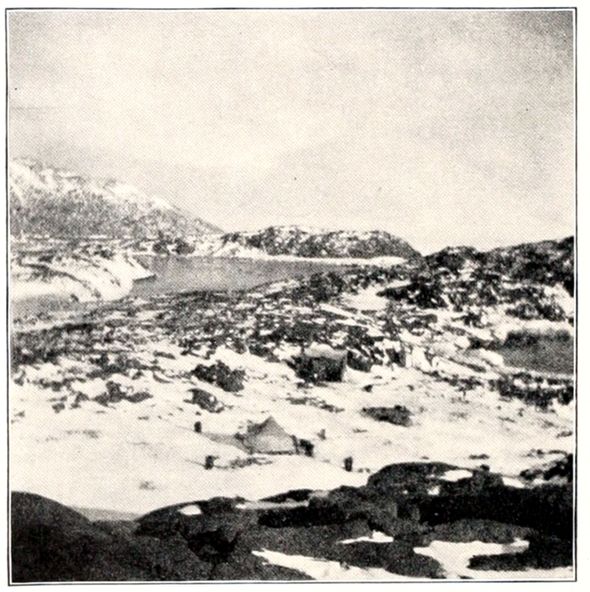
“A large Field of Ice had been pushed across the Entrance to the Harbour”
The poor men who had been working waist-deep
in the icy water were worn out and could
do no more work that day.
Two days later all needed supplies had been
landed and the “Windward” was ready to start
north again. Captain Sam, who had been carefully
watching the ice drift past the harbour day
54and night, now told AH-NI-GHI´-TO’S mother
that a large field of ice had been pushed across
the entrance to the harbor and shut the door,
so to speak, on the ship, and nothing could be
done.
If this field of ice should break up then the
ship would be free to go on her way; but unless
the wind broke it up or blew it away from the
entrance, AH-NI-GHI´-TO and her mother with
all on board would be prisoners for the winter.
This was a dreadful thing to happen, for no
one had taken clothing enough to last so long a
time. Thanks to AH-NI-GHI´-TO’S father,
there was food enough for every one, such as it
was. AH-NI-GHI´-TO had learned to eat
many things that she thought she could never
eat, and also to do without things that she had
thought were necessary.
One morning AH-NI-GHI´-TO awoke and
found it was September 12th. Then there was
great rejoicing all over the ship, for this was AH-NI-GHI´-TO’S
seventh birthday, and the fourth
one spent in the Snowland.
55She jumped out of bed to see what kind friends
had given the “Birthday Man” to bring her,
and was kept busy as a bee all day long. In
her diary she wrote the story of the day.
VII
56
“September 12, 1900, and
my birthday. I never expected
to spend it in this country
when I left home. Grossy
promised me a party, but
mother gave it to me here
instead, and I have had a
beautiful day. When I came
into the cabin I found such
a nice chocolate cake, with seven candles burning around
it, and a doll, oh a beauty, all dressed in dotted swiss
over pink silk with a pink sash and white stockings and
white kid shoes. She is one of my prettiest children, and
I have named her Lois, after a little girl I met in Sydney,
and who was very kind to me. I also found a pair of
doll’s real seal-skin slippers, a purse, a box of chocolates,
and a two-and-a-half gold-piece. The sailors asked
Captain Sam to allow them to hoist the flag in my
honour and he did so. The men gave me three cheers
when they hoisted it. Mother had the steward make
a pitcher of hot grog and cut up a big cake, and then
he and I took it around to all the men and gave them
their share. At tea time I invited Captain Sam and the
Chief Engineer to take tea with me. The supper-table
looked very pretty, with the candles burning about my
57cake, and we had a jolly time playing games afterward,
but oh dear, I could not help thinking every little while
if only father were here how much nicer everything would
be. I had nothing to give the Eskimos except some
coffee and biscuit, which they like, and some candy which
they don’t care much about, but they seemed pleased,
especially with my doll. They thought it was alive because
it had real hair and could open and shut its eyes.”
“ACHATING´WAH and AHWEAHGOOD´LOO”
58Achatinǵwah was AH-NI-GHI´-TO’S daily
companion, and the two little girls had a merry
time together. This little Eskimo girl’s father
was dead. A walrus had pulled him into the
water and drowned him. But her mother, Aweah,
had another husband, who took care of Achatinǵwah.
She had two real brothers and a stepbrother.
One of her own brothers was Ahnǵoodloo,
who, besides being the “Captain” of all the Eskimos
who worked for AH-NI-GHI´-TO’S father,
was the husband of “Billy Bah,” the Eskimo
girl who was AH-NI-GHI´-TO’S first nurse.
She came to AH-NI-GHI´-TO’S home in Washington
and spent a year with her and then returned
to the Snowland.
Ahnǵoodloo was one of the only two left-handed
men in the tribe, and he was the best
hunter of all. He was very fond of AH-NI-GHI´-TO’S
father and always stayed with him.
Achatinǵwah also had another brother, Wee-shá-kup-sie,
who spent a year in New York City
and returned to his country when AH-NI-GHI´-TO´S
59father went there the last time. So Achatinǵwah
knew more about the ways of the
“Kab´loonahs” (white people) than most of her
tribe.
“BILLY BAH”
Mrs. Ahnǵoodloo]
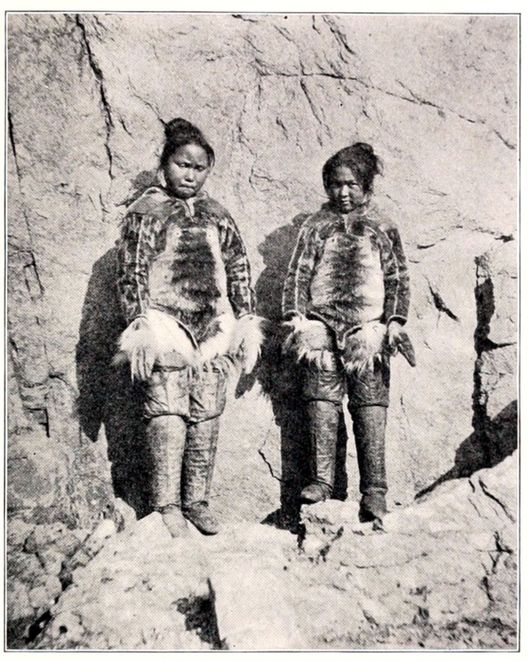
Her hair was always smooth and her face
and hands clean when she came to play with
AH-NI-GHI´-TO.
60She wore yellow kamiks (boots) made of the
tanned seal-skin, and these she rubbed with snow
to clean them before coming on the ship. Her
trousers, made of the skins of the blue fox and
the white fox, she also rubbed with snow and
beat with an ivory knife made for this purpose
out of a walrus tusk, until they looked like new.
Her kapetah (coat with hood), made of the fox-skins,
too, she took off in the cabin, and her
bird-skin shirt looked white and clean.
The days grew shorter and shorter, and soon
the day came when the sun did not shine in the
little harbour at all, and, looking to the south,
the big, round, yellow ball could not be seen on
the horizon. This meant that he was on his
way south and would keep travelling away from
the Snowland until the 21st of December.
Then he would start back again, but not until
the middle of February would he shine upon
AH-NI-GHI´-TO and the ship again.
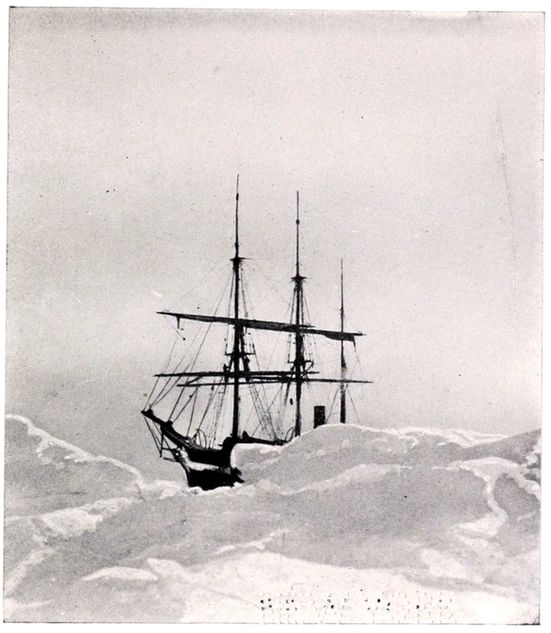
It was now settled that the “Windward”
must stay in her icy bed during the coming
winter and spring and part of the summer, and
61every one was busy making things as comfortable
as possible; for it grows very cold
after the sun leaves, and the north wind blows
through every crack and cranny.
During these long months it was dark all of
the time, except for the moonlight and starlight,
which made deep black shadows on the snowdrifts
and ice hummocks. These caused AH-NI-GHI´-TO
to have many a tumble, because
the ice seemed level where it was full of hollows
and holes.
But Achatinǵwah and the two Eskimo boys
came every day for AH-NI-GHI´-TO to go
sliding and coasting with them, in spite of the
cold and darkness.
Many curious things she learned these days,
as this extract from her diary will show:
“Clear day. No wind. Achatinǵwah and I were
out coasting from eleven to nearly one. The stars were
very bright.
“Achatinǵwah told me all about the Eskimo stars. I
know only one, the great Dipper. Achatinǵwah says the
stars in this are a herd of reindeer in the sky. The
62Eskimos call it TOOK-TOK´-SUE. Then there are
three other bright stars which are the stones supporting
the lamp of an Eskimo woman up in the sky; and a
hunter and his dogs after a bear, and lots more.
“I wish Father were here to tell me what we call them.
When we came on board, Captain Sam said the thermometer
on deck had been at seventy-two degrees below
freezing all day.”
They never went far from the ship, so that
they could run on board, into the warm galley
(kitchen), where the steward, kind old Charley,
was ever ready to give them a hot drink, and
allow them to warm their fingers and toes, even
if he did threaten to make mince meat out of
them if they bothered him too much.
One day he said to AH-NI-GHI´-TO: “Why
don’t you have a party on the ice? Get the
youngsters to help you fix up a house, and I
will help you with the supper.”
This was a great idea for the children, and
at first they intended to build a real native
snow igloo; but, as the grown Eskimos were too
busy to help them, they soon found this was
too much for them to do alone.
63Then AH-NI-GHI´-TO went to the Captain
and asked him to lend her one of her father’s
tents, and have the men put it up for her out
on the ice. When this was done, the children
shovelled the soft snow up on the sides of the
tent as high as they could reach. This kept the
wind from blowing under the canvas into the tent.
It took them several days to do this and to
furnish and decorate their reception room. Large
boxes were brought from the ship and covered
as tables; small ones were used as chairs. The
walls were draped with flags, and a lantern
was hung at each
end.
While AH-NI-GHI´-TO
wrote the
invitations to an
“At Home,” her
playmates shovelled
a path through
the deep snow from
the tent to the
ship.
VIII
64
Just before it was time for
the guests to arrive,
Charley took out a
steaming pot full of
chocolate; three
plates piled high
with cake, cookies, and sandwiches. AH-NI-GHI´-TO
came after some taffy she had made
the night before, and last of all Charley took out
an oil-stove, which he placed in one corner of
the tent. “For,” said he, “it is all very well
for Miss AH-NI-GHI´-TO and her young Eskimo
friends to be out here with the temperature
70 degrees below freezing, for they are dressed
in furs from head to feet, but the invited people
would have the good things freeze in their mouths
with no fire at all.”
Billy, one of the ship’s men, acted as butler,
and the party was a great success.
The guests stayed as long as the eatables
lasted, and then the Eskimos licked the cups
65and the crumbs, and amid shouts of laughter the
dishes were brought aboard. But when Charley
asked who would help wash up, every one was
much too tired and sleepy.
“A Snow Wall all around the Ship.”
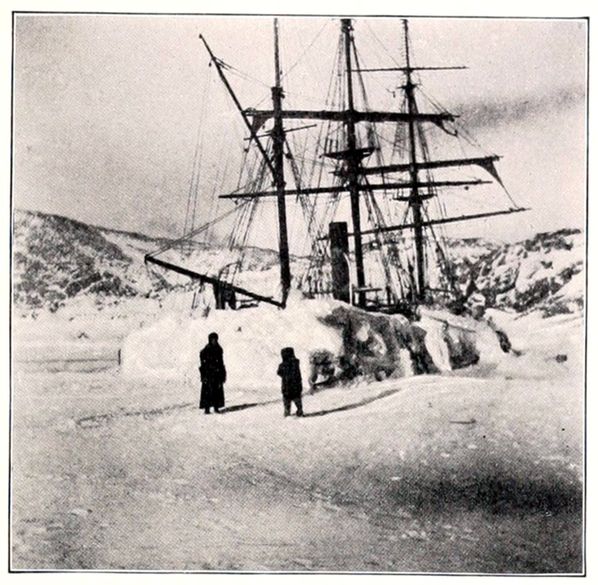
The “Windward” would not have been
taken for a ship now except for her masts and
spars. For weeks the men had been cutting
blocks of snow from the hard drifts and building
a snow wall all around the ship, close to her
hull and a few feet higher than her rail. At
night water was thrown on this wall until it
66became solid ice, through which no wind could
come.
From the top of this wall, across the ship to
the other side, canvas was stretched as a roof,
and this gave a covered place on deck, where
AH-NI-GHI´-TO and her friends played when
the wind howled and whirled the snow so fast
that it was not possible to stand up against it.
The natives, too, as soon as they knew that
they must spend the winter here, said they
wanted to go ashore and build their own houses,
for then they could keep much warmer with less
fuel than on the ship. They were not used to
so much room and did not feel at home in it.
Each family built their own igloo; the women
working with the men. Achatinǵwah’s mother
helped carry the heavy bowlders from far off for
their igloo, while Achatinǵwah scraped them free
of snow and helped to loosen those that were
frozen down, by pounding them with smaller
stones.
After enough had been collected a place was
scraped free from snow and made level; and for
67this they were glad to borrow the ship’s tools,
for it would take much longer to clear the spot
with only a rude knife made from walrus tusk
than it did with a large
shovel.
At one end of the circular
space Achatinǵwah’s
father built a platform about
a foot high.
“Building an Igloo.”
The walls he put up,
just as a stone mason would
put them up, only he used turf which Achatinǵwah
brought, instead of mortar, to stop the
cracks. After the walls were three or four feet
high the whole was roofed over. Usually this
is done with large flat stones, but as Achatinǵwah’s
father was in a hurry to get his
family moved into the house he threw a
walrus-hide over the top and held it down
with heavy rocks to keep the wind from blowing
it off.
The igloo was then thickly covered with snow,
and the inside of it lined with seal skins.
68The doorway, or entrance, was scarcely two
feet high, and opened into a long, low passage-way
which ended in a vestibule as high as the
igloo itself. This passage-way and vestibule
Achatinǵwah’s father built of snow-blocks.
The natives leave their fox-skin kapetahs (coats)
in this vestibule if they are covered with snow,
for if they took them into the warm igloo the
snow would melt, and it would take a long while
to dry the heavy fur garments.
After the skins had been put on the platform
Achatinǵwah brought in two Eskimo lamps with
which to heat and light the igloo.
These were cut out of soapstone by her father
with his knife, and were shaped like our dustpans.
She filled them with small pieces of blubber
from the seal, and then placed dried moss
across the straight side. This she lighted, and
the heat from it melted the blubber and soaked
it up, burning it like a wick. These lamps must
be tended all the time, or the smoke from them
would soon cover everything with a greasy soot.
69
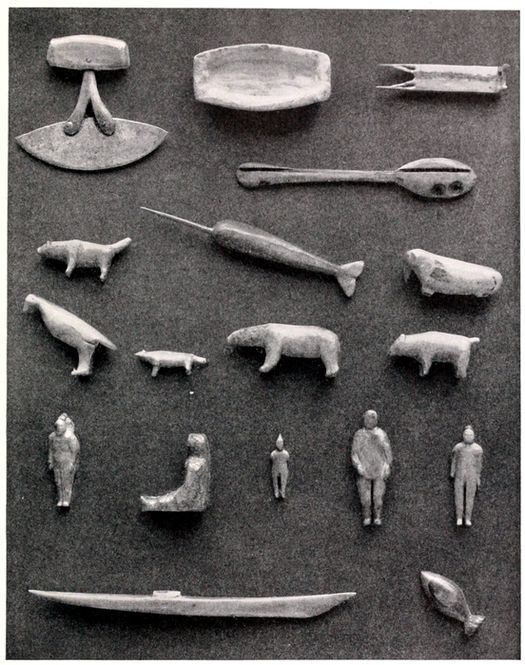
“ESKIMO TOYS CARVED FROM THE TEETH OF THE WALRUS”
70Near the top of the igloo above the lamps,
Achatinǵwah’s mother fastened a sort of lattice-work
rack, made by lashing sticks together with
sinew. On this the members of the family put
their wet stockings, mittens, and shirts to dry.
Close down over each lamp she hung an
oblong-shaped pot, also made of soapstone, in
which the snow is melted for drinking-water.
The Eskimos never use water for any other
purpose. They had never heard of a bath until
AH-NI-GHI´-TO’S father and mother came
among them, and the most they ever did was
to wipe their faces with a greasy bird-skin.
Achatinǵwah now helped her mother bring
their stock of bear, deer, and seal skins into the
igloo and spread them on the platform, and the
family was settled for the winter.
Over the stone lamps Achatinǵwah’s mother
cooked their food, and on the platform the
entire family slept.
Days when it was too cold and stormy to go
to the ship this platform was the playground
of Achatinǵwah and her little brother, where
they amused themselves with little figures of
71men and women, toy sledges and dogs, and
canoes; bears, seals, foxes, walrus, and the other
strange animals of the Snowland, carved by their
father from the teeth of the walrus; or played
“cat’s cradle,” making Toó-loo-ah the raven,
Ter-i-a-níah the fox, Oo-kud´-ah the hare, and
Ka-lil´-o-wah the great narwhal, with sinew strings.
Sometimes they played “cup and ball” with
a slender ivory pin and the bone of a seal with
two holes drilled in it.
Then at night they snuggled warmly under
the thick, heavy furs, hugging each other tightly
as they heard their father and mother talking of
“Tor-naŕ-suk” the “evil one,” or how “Nan-nook´-soah,”
the great white bear, had carried off
and eaten one of their relatives.
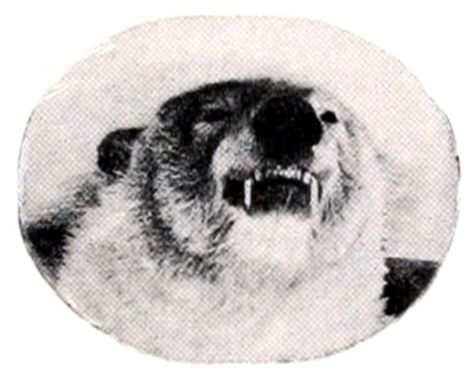
Very glad they were that the Oo-miak´-soah
(ship) was so near, to frighten Nan-nook´-soah
away; otherwise at every growl of the wind about
their hut they would have thought he was pushing
his great head with the little eyes, red tongue,
and long teeth, into the entrance after them.
IX
72
After the stone igloos
had all been built, the
men built snow huts in
which their dogs could
find shelter from the fierce
north winds, for, except
when the wind blew, the
Eskimo dog would rather
curl up on the snow than
be housed.
The sledges and harnesses were put on top
of these huts, where the dogs could not reach
them. When they get loose the Eskimo dogs
chew up everything they can get hold of, no
matter how well fed they may be.
The Eskimos on shore made quite a little
settlement, and their visits to the ship made
things lively on board.
73
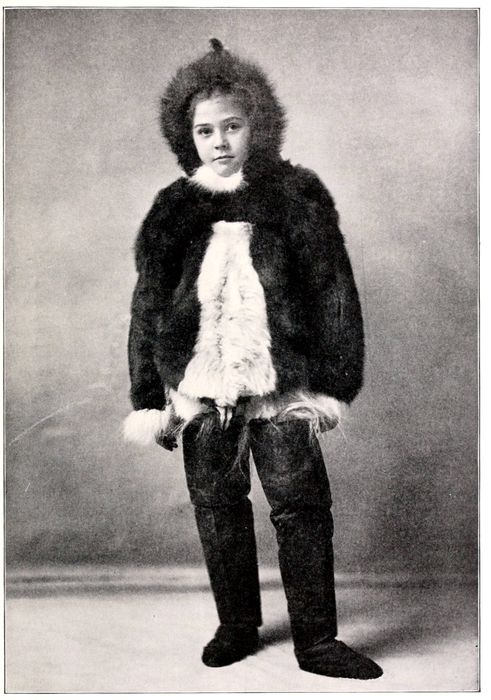
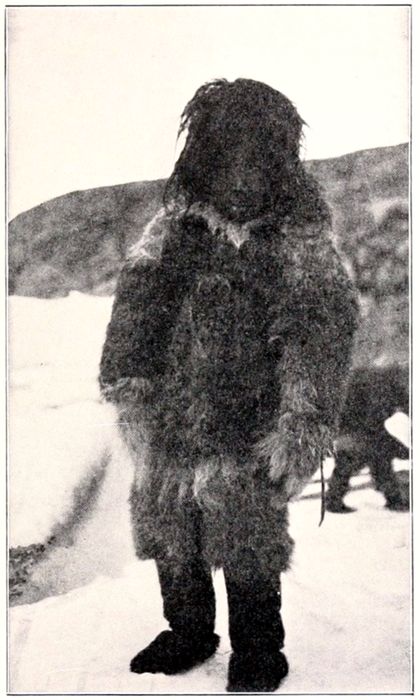
“She dressed exactly as the Eskimos did”
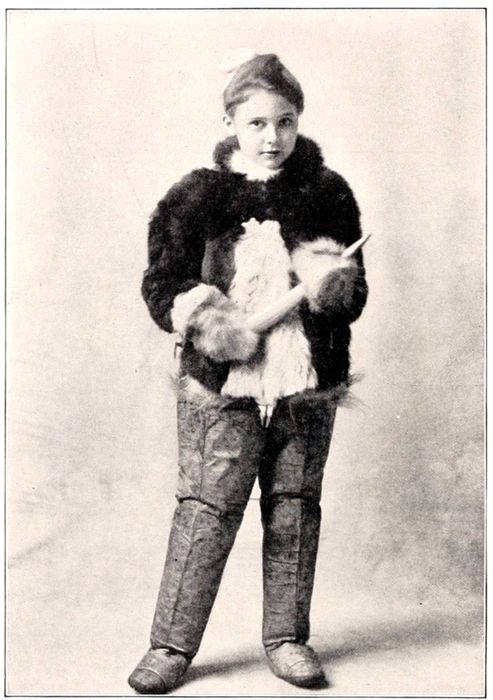
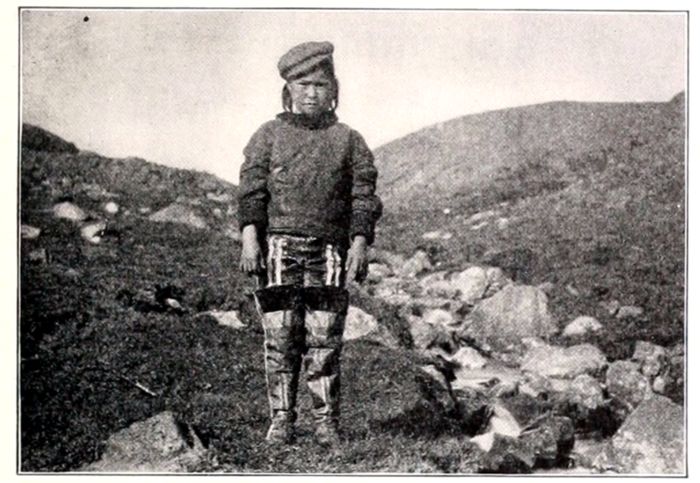
74AH-NI-GHI´-TO now spoke the Eskimo
language perfectly, and every native was her
friend. She dressed exactly as they did, except
that she wore a woollen union suit instead of
the bird-skin shirt. Often her mother looked
for her several minutes before noticing that she
was right alongside the ship with her Eskimo
companions. But when her back was turned it
was not an easy matter to know the little white
girl among the fur-clad children.
“The Eskimo dog chews up everything”
In February her mother sent letters for the
dear ones at home, by the Eskimos, to a place
75where the whaling ships would stop on their
way to catch the big black whales. Then, if the
old “Windward” should be held by the ice
until it was too late to return home the coming
summer, the grandmothers and uncles and aunt
would know that all were well, and did not
return because the ship could not get out of
the ice.
AH-NI-GHI´-TO sent this letter home:
February 21, 1901.
My dear Grossy and Tante and Uncle,—I am afraid
you will be worried not to hear from me for so long a
time, so I take this first chance to write this letter to you.
I will come to see you soon, I hope. I want to see you
all very much. I play on the ice every day and have
a fine time with Billy and the Eskimo children. We
have been in the ice for ever so many days. We have
had a good time most always, but I want to see you all.
I will tell you how I spent my Christmas. A
week before, we began to get ready for the holidays.
Mother baked a whole stack of raisin loaves and cut
fifteen stockings out of some canopy lace, and I worked
them round with red worsted. These we filled with
dates, peanuts, chocolates, home-made taffy, mixed candy,
a silver dollar, popcorn, prunes, and oranges.
76At eight o’clock on Christmas eve I went down into
the forecastle with Charley and gave each man half a loaf
of raisin cake, and a big pot of chocolate for all. They
cheered and clapped and I left them to enjoy their feast.
I played parchesi with mother and the Captain until
ten o’clock, then I hung up my stocking and went to bed.
In the morning it was full. I jumped out of bed and
found in it several pieces of money, two pieces of pink
ribbon, a book, a paper doll and her dresses, and a box
of chocolates. I was delighted, and could only wish
father and Grossy and tante and uncle were here to see
how happy I am.
While on deck a little later, playing with the Eskimo
children and Billy, Maksangwah handed me a lovely card
and a box of beads from Mr. Warmbath.
About two P. M. mother called to me that it was time
to invite all hands down into the cabin to get their
Christmas stockings.
When we all came down, there, in the middle of the
table blazed a beautiful Christmas tree, which Mr. Warmbath
had made for me as a surprise. It looked as if it
had just been cut in the woods, and yet he made every
bit of it. I will tell you how.
First he made a skeleton tree, using a broomstick for
the trunk and making the branches out of heavy wire;
then he covered the wire with softened wax, until some
of the branches were one half an inch thick and others
not so big. Some wax was also put on the broomstick,
77and when trunk and branches were entirely covered with
wax, they were all thickly sprinkled with coffee-grounds,
well pressed into the wax. This made them look just
like the branches of a pine tree without its needles.
Next he took some hay and laid it out straight on a box
and painted it green. When the paint was dry he cut
it into pieces about as long as pine needles and with
melted wax stuck them all over the branches of the tree.
It looked so real that I thought I could smell the lovely
pine woods at home.
All around the tree mother had put the stockings.
It was a fine sight.
The tree was trimmed in chains made of popcorn,
and some of tin-foil, cornucopias, “silver dollars,” and two
dozen candles.
The Eskimos were very sober at first because they
thought we were worshipping it, but when they saw us
laughing and I gave each a stocking, they too shouted
and laughed and said “peuk! peuk!” many times. Mother
gave them cake and coffee, and I tried to tell them
that trees like this grew in the ground where the
white man lived; but this they did not believe, and
said, “Oh, you can’t fool us, we saw Mr. Warmbath make
this one.”
For our Christmas dinner we had roast beef (canned),
stewed tomatoes (canned), dandelion greens and corn
(canned), and baked beans. Then plum pudding with
sauce.
78After dinner we had songs and games, and for a little
while I quite forgot that I was thousands of miles away
from home and hundreds of miles from any other white
people. Mother and I had been invited to take tea
with Captain Sam in the forward saloon, and we spent
a pleasant evening. I wondered if father had a good
Christmas and if he was coming to us soon. This is
the first real Christmas tree celebration the natives have
ever seen, and I am sure they will never forget it.
So you see I had a good time, only I wanted you all
to be with me too. I send you much love and many,
many kisses.
Your loving
Snowbaby.
X
79
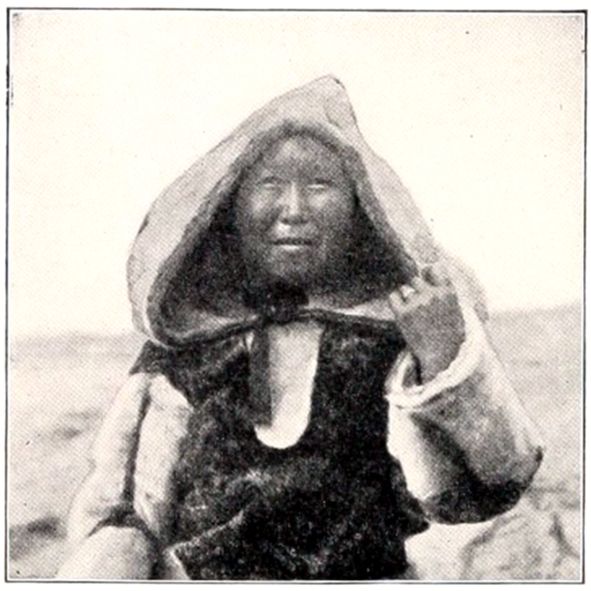
“A tiny baby in the hood”
The holidays over,
everything went on as
usual. AH-NI-GHI´-TO
took walks with her
mother and some of the
Eskimos nearly every day.
Once in climbing a steep
slope of hard snow AH-NI-GHI´-TO
began to
slip and could not stop
herself. It was very far to the bottom and she
was badly frightened, but one of the Eskimo
boys ran to her, and digging his feet into the
hard snow far enough to catch his heels and
keep himself steady, he held on to her until
she too had made a place in the snow for her
heels. Then together they carefully picked
their way off the slippery slope to where the
snow was soft and their feet sank into it.
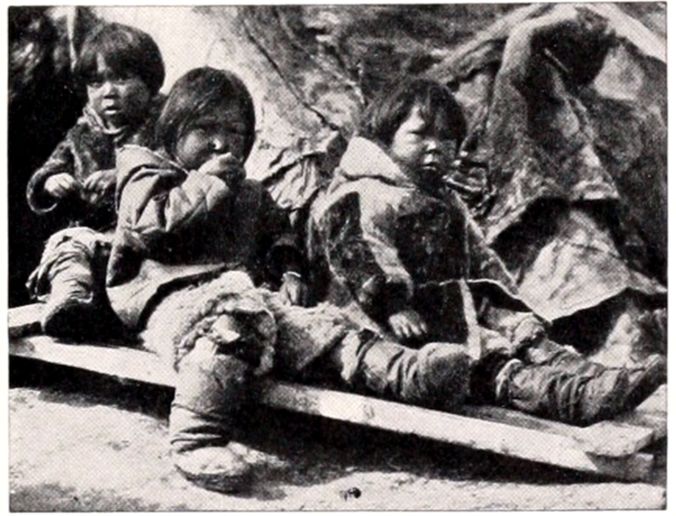
“Such little flat noses”
Another time they walked farther than they
intended, and the moon went behind the clouds,
80leaving it quite dark. In taking a short cut
they came to a slope which, in the dim light,
looked as if it were not very steep, and they decided
to sit down and slide; but no
sooner was AH-NI-GHI´-TO seated
than away she shot out of sight, the
others following her so quickly that
no one was able to give the warning.
It was a good thing that
there was a bed of soft snow at the
bottom, into which the youngsters
tumbled.
There was a little daylight every
day after January 15th, yet the sun
did not really shine on the “Windward”
until February 21st.
The days kept getting longer and longer;
that is, the sun rose earlier and set later each
day until on March 21st, Spring’s opening, he
shone from 6 o’clock in the morning until 6
o’clock in the evening and there was daylight
all night long. Strange to say, it was now very
much colder than it had been while it was dark.
81But no one minded the cold as long as the sun
shone.
The Eskimos from across Smith Sound came
oftener to visit the ship, and every time they
brought AH-NI-GHI´-TO either fur mittens or
stockings or kamiks; and what pleased her most,
numbers of children came with them. She wrote:
“I shall get Billy to wash them”
“When Achatinǵwah and I came in from coasting to-day,
we found eight sledges with Eskimos had come over
from Etah, and oh, there are so many children
I know we are going to have a good
time.
“Three of the women have tiny babies in
their hoods. One of them was brought to
the mother just before she started for the
ship. It is much uglier than the others. Its
head wobbles back and forth against its
mother’s bare shoulder. She carries it all
naked, except for a little tight fur cap and a
short fox-skin shirt, in a hood on her back
right next her bare skin, which helps keep it
warm. Its eyes are never open, and it makes
me think of a young kitten.
“The other two must be older, for they
can hold up their heads, and they have their
eyes open all the time when they are awake.
82“When the mothers want to feed them they take the
little naked things out of the hoods, without covering
them—right out on deck in the cold, and the babies
don’t seem to mind it at all. Then there are some little
boys. I shall get Billy to wash them to-morrow so I can
play with them.
“They all have black hair and big black eyes and white
teeth and such little flat noses, and they wear the funniest
little short trousers made of bear-skin, with tiny fur-lined
boots and big fox-skin coats. I could laugh every time I
look at them.
“Funny little bear-skin trousers”
“Achatinǵwah told me all about the sun and moon
to-day. Ever so many years
ago, longer than the oldest
Eskimos can remember, a girl
ran out of an igloo with a piece
of lighted moss in her hand.
Her brother ran after her with
a larger piece of moss. They
ran so long they ran right up
into the sky, where the girl
became the moon and her
brother the sun. Isn’t it funny?
We say there is a man in the
moon; the Eskimos think it is
a girl.”
XI
83
March went and April
came, with “April Fool’s
Day” and Easter, of
which, of course, AH-NI-GHI´-TO’S
Eskimo
friends knew nothing.
During April there
were many pleasant days,
and AH-NI-GHI´-TO
and her mother were out
most of the time.
The Eskimos crossed Smith Sound to the
open water off the Greenland shore, where the
walrus were plentiful and where most of the tribe
gather every spring for the hunt. Each family
builds a snow igloo, and there they stay and
hunt and feast until the breaking up of the
ice warns them that if they wish to return to
their settlement before the next autumn they
must move on.
84Only one family and an orphan boy remained
with the ship. This boy was the son of Magipsu,
the seamstress who sewed for AH-NI-GHI´-TO’S
mother the first time she came to
the Snowland, and whom she found dying two
years later.
This poor little fellow had also lost his father
since then and was all alone. No one in particular
took care of him, but if he needed clothing
the family who could best spare it gave it to him,
and his food he got wherever he happened to be.
Koodluk´too, or “Good luck to you” as
Charley called him, and AH-NI-GHI´-TO became
great friends, and AH-NI-GHI´-TO’S
mother said he could stay on the ship and she
would take care of him as long as she remained
in the Snowland.
This gave AH-NI-GHI´-TO a constant companion
and guide; for he knew the feeding
places of the hare and the fox, and the nesting
places of the Eider duck, the Brant Goose, and
other birds whose eggs would be a very welcome
change on the bill of fare.
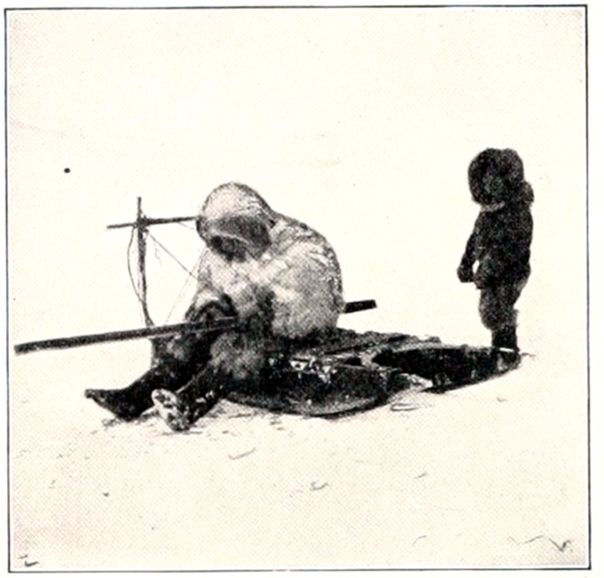
85Though young, Koodluk’too, like all the
Eskimo boys, could drive dogs, and he and
AH-NI-GHI´-TO had frequent rides drawn by
six or eight dogs that looked for all the world
like wolves. She wrote:
“The dogs look very pretty going along”
“April 28.
A beautiful
day, and I have
had such fun.
Koodluk’too
took me out
sledge-riding
way round
Elephant Head
and back.
The dogs were
not used to pulling together, so that we did not always
go where we wanted to.
“As the dogs are guided by the whip and not with
reins like our horses, it kept poor Koodluk’too’s arm going
all the time, and he got so excited when they would
not obey him that he cut me over the head and round
the neck as he swung the whip over his shoulder. But
my fur hood is so thick that it did not hurt me at all.
It made him feel badly because he says the men don’t do
that and he ought to know better.
86“I thought he would surely be hoarse, for he kept
shouting to the dogs all the time.
“Once when we crossed a fox’s track on the ice the
dogs started off in a gallop to follow it, and the only way
Koodluk’too could stop them was to steer the sledge up
against a big lump of solid ice. It gave me a fearful
bump and would have thrown me off if he had not
warned me to hold tight.
“The dogs look very pretty when they are going along.
Each one has his bushy tail laid up on his back like a
feather duster.
“It is fine sport to skim over the smooth ice, but I
don’t believe I should like to ride all day long.”
“Sinful”
Before leaving, one of the Eskimo men gave
AH-NI-GHI´-TO a puppy with which she
and Koodluk’too had great sport. She was
reddish-brown in colour and AH-NI-GHI´-TO
named her “Cinnamon,”
but called her
“Cin” for short.
She was full of mischief
and was known
to the sailors as
“Sinful.”
87On May 5th AH-NI-GHI´-TO coaxed her
mother to have cake baked, so that she could
feast her friends the next day, it being her
father’s birthday. All day she was busy with
Charley getting her feast ready, and when night
came she was glad to climb into her bunk and
go to sleep. She did not dream that something
great would happen before breakfast the next day.
The next evening she wrote in her diary:
“May 6. It seemed as though I had only just closed
my eyes when I was awakened by Mother, who was sitting
up in bed calling, ‘Charley, Charley, unlock the cabin
door quickly, Mr. Peary has come.’ At first I thought
she was dreaming, but a second later I heard some one
rattling at the cabin door, while Charley, half asleep, was
trying to unlock it. Then a great giant all dressed in
bear and deer skins was coming toward the bed asking for
his baby, and here was Father really and truly, safe and
well, and on his birthday too; glory, glory, now we could
really celebrate, and Mother knew his step even when she
was asleep. Dear old Dad, he looks the same. Of
course we got right up and dressed, while Father took his
bath, and at five o’clock in the morning our whole family
sat down to breakfast together, for the first time in three
years. The day has been a holiday for every one on board.”
XII
88
After AH-NI-GHI´-TO’S father returned,
the time fairly flew.
Ahnǵoodloo and Billy Bah were among the
Eskimos who returned with AH-NI-GHI´-TO’S
father, and they now joined AH-NI-GHI´-TO
and Koodluk´too in their play.
AH-NI-GHI´-TO’S father said he would not
return home this summer, but would remain
another year and once more try to reach the
North Pole.
During all the long winter months, while
AH-NI-GHI´-TO’S home had been on the
“Windward,” the old ship had been as steady
as a house on shore, for she was held firmly by
the ice and could not move. But on June 7th,
while AH-NI-GHI´-TO was at dinner with her
parents, they were surprised to hear a loud
creaking noise and at the same time feel the
ship quiver and then roll slightly from side to
side.
89
“A Narwhal”
“We are free,” said AH-NI-GHI´-TO’S
father; “the old ‘Windward’ has broken out
of her winter berth and longs to be off again.”
Everybody rushed on deck, and surely enough the
old ship was afloat once more.
But the ice had only melted away from her
sides, leaving her without a support. Nowhere
else did it seem inclined to break away, so that
while the “Windward” was afloat she was still
a prisoner in the ice.
90By the middle of June the sea ice was covered
with pools of water, and it was no easy task to
get ashore from the ship without getting the feet
wet. Snow buntings (our snowbirds) were flitting
about the rocks, and small tufts of green
grass were to be seen here and there.
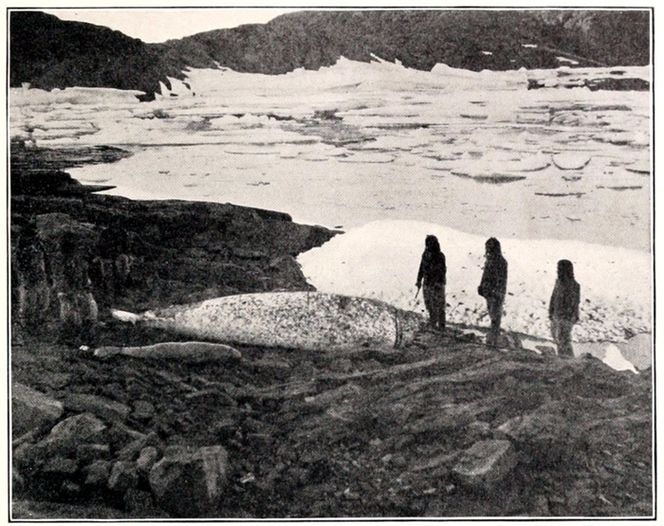
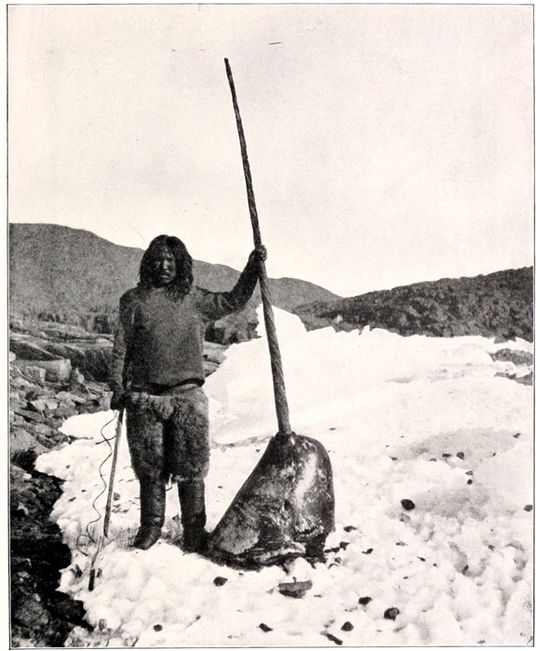
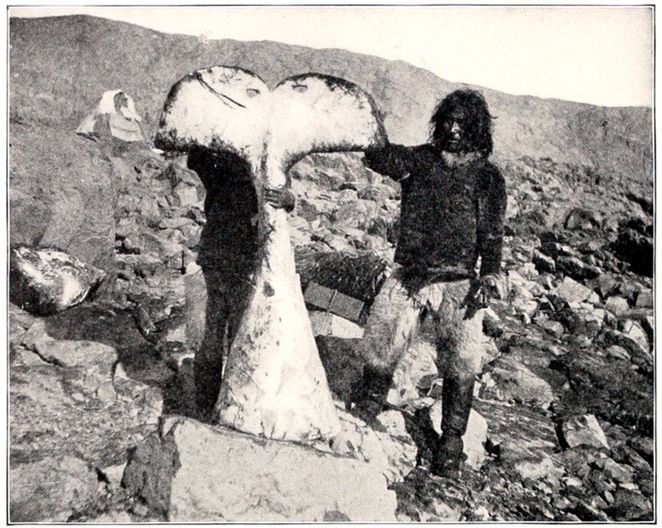
The Eskimos harpooned some narwhal out at
the edge of the ice, and AH-NI-GHI´-TO is
perhaps the only little white girl who ever saw
these strange Arctic sea animals, with their long
white ivory horns and huge tails.
It was now decided to help free the ship by
having the men saw a road through the ice to
the open water beyond.
Saws eight and ten feet long were used, and
for weeks the sawing went on.
Sometimes a bottle filled with gunpowder was
let down under the ice through a hole that
had been drilled, and the long fuse that had
been fastened to it was lighted. When the fire
reached the powder it exploded; but although
it cracked the ice for a little distance, very little
was broken off.
91
“AHNG´OODLOO and a Narwhal Head with its Long White Ivory Horn”
During this time AH-NI-GHI´-TO was over
on the island with Koodluk´too and Billy Bah
92every day, gathering eggs, which were plentiful
now.
“The huge Tail of a Narwhal”
The ducks lay their eggs on the ledges of the
rocks, in nests made of the down which they
pluck from their breasts.
As hundreds of the birds had their nests on
this island, it was not necessary to take the eggs
from the same nest twice, and this left enough
eggs for the birds to breed.
One day a great windstorm swept down from
93the north and broke off all the ice which had
been cracked by the blasting and carried it out of
the harbour. Only a small pan of one-year-old
ice was left between the ship and the open water.
The fires were started under the boiler, and
with the help of the saws and the steam, the
ship soon pushed out the remaining ice, and on
July 3rd, with every living creature in the settlement
on board (not forgetting about seventy-five
dogs), the “Windward” steamed out of
the little harbour where she had been lying for
ten months, and reached Littleton Island on the
opposite shore that evening.
The next day was Fourth of July, and it was
decided to have a holiday.
The ship was dressed in her flags, and all who
wanted to go went shooting birds or hunting
walrus.
AH-NI-GHI´-TO did neither of these things,
but she had a happy day and in her diary tells
about it:
“July 4, 1901.—A beautiful day. Warm, bright,
and sunshiny. The Eskimo men and most of the sailors
94went out after breakfast to see what they could find, and
came in at four o’clock with one hundred and twenty-five
ducks, three barrels of eggs, and two walrus. The eggs
will be packed away for father’s use in the fall. Mother,
father, Percy, and I have been ashore gathering flowers
and playing tag and having a fine old-time. Dinner at
five o’clock, and then I heard mother and father planning
to walk across the country to Etah while Captain Sam
took the ‘Windward’ around there. I coaxed them to
let me go with them. Mother said I could not walk it
because there would be so much climbing to do, but
father said, ‘Let her try it. I believe she can do it.’ At
half-past seven father had two of the sailors put us ashore
and with our kapetahs (fox-skin coats) over our arms we
started off. Over the rocks we went—up one side, down
the other side, of the cliffs. In some places my feet went
into the wet moss above my ankles. The steep, hard snowbanks
gave me lots of tumbles. In one place we had to
climb around the high steep walls of a cliff with the icy
water dashing against them twelve feet below. Father said
it was about twelve feet, but I thought it was twenty-five.
If I had fallen I should have had the coldest bath I ever
had. We had to wade through some of the shallow
brooks, and they were cold enough for me. I was very
tired, but I had made up my mind not to say a word
about it. It took us two hours, and father said we had
walked about six miles; but we beat the ‘Windward,’
for when we got to the Igloos at Etah, she was just coming
95round the point, and that pleased me, for now I
could tease Captain Sam. As soon as the ‘Windward’
got in, mother and I went on board, and mother rubbed
me down, gave me a cup of cocoa, and put me to bed,
too tired to write up my diary; but I wrote it up this
morning so the home folks will know what I did on the
glorious Fourth.”
XIII
96
From Etah the “Windward” steamed to
Northumberland Island, where the Eskimo women,
children (except Koodluk´too), and dogs,
with a few of the old men, were landed with their
tents and enough food to last them a few weeks.
The ship with the rest on board started for
a walrus hunt.
AH-NI-GHI´-TO’S father wanted to get
packed away as much meat as possible, with
which to feed his natives and dogs during
the coming winter. AH-NI-GHI´-TO herself
tells how these huge animals were hunted.
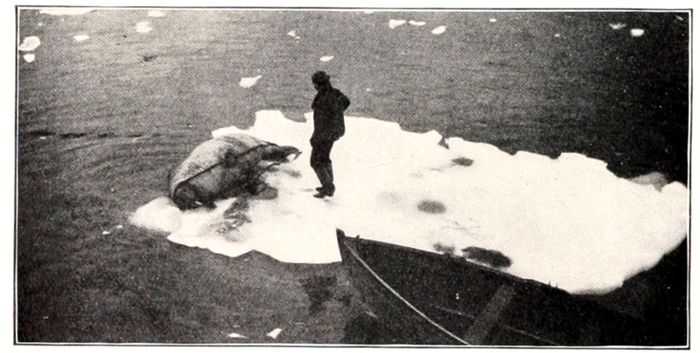
“Dead Walrus on Ice Cake”
“For the
last ten days
we have been
hunting walrus.
The walrus is
a large animal
which lives in
the water, but
like the whale
97it cannot breathe under water. It comes to the surface
and fills its lungs with air by taking deep breaths, then it
closes its nose tight and goes under, where it can stay
many minutes without breathing.
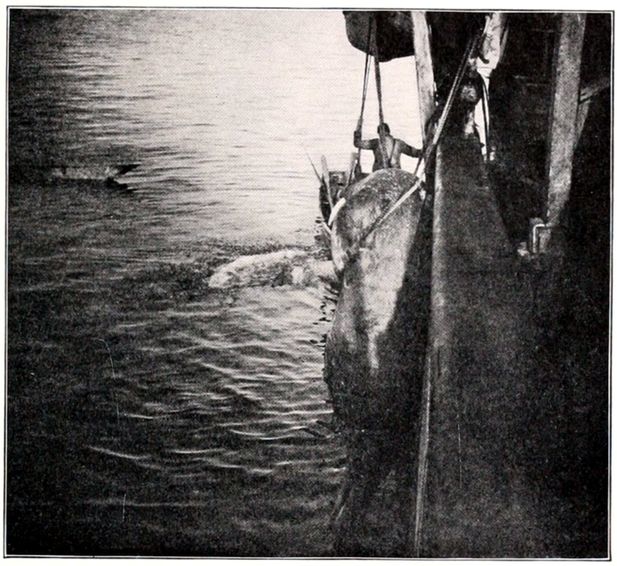
“Hoisting a Walrus on Board”
“They love
to crawl upon
the pans of ice
when the sun
shines, warming
themselves and
sleeping for
hours at a time.
It is then the
hunters go after
them. The walrus
are hunted
with both gun
and harpoon.
98
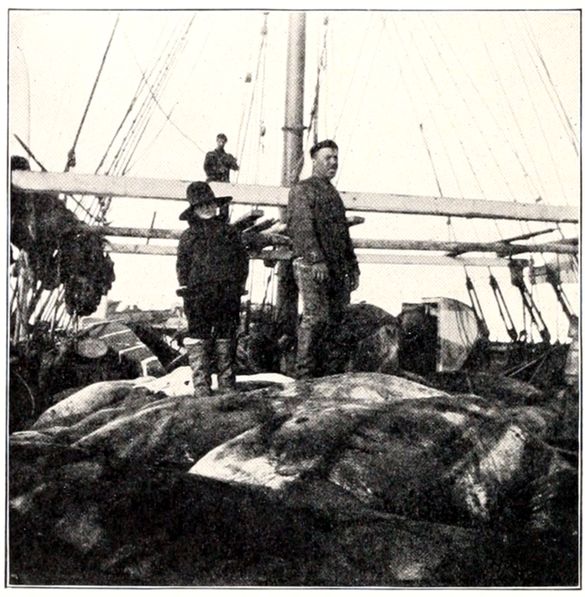
“AH-NI-GHI´-TO and Billy standing on the dead Walrus”
“Cutting up Walrus on the Ice”
“Father sends
out each boat with one or two white men and their rifles,
and four Eskimos with harpoons and floats. They row
toward the pan of ice where the walrus are asleep, coming
up to them from the side where the wind blows from the
walrus to the boat. If they came from the other side
the walrus would smell them even in their sleep. When
the boat is close enough each Eskimo throws his harpoon
at a walrus, and all the walrus slide off the ice into the
water. Those struck by the natives have the harpoon
head fastened in their skin with a line to it. The other
end of the line is fastened to a float. Now the boat
follows them, and every time the walrus comes up to
breathe one of the men with the rifles tries to shoot him.
They are very hard
to kill because the
hide is so thick and
tough and the fat is
so thick under it.
Sometimes if the
walrus are full grown
they get mad and
make for the boat,
which they try to
upset with their
ivory tusks. Even
if they don’t upset
the boat they often
put their tusks right
through it, and frighten the Eskimos very much; and I
guess the white men are scared too, only they won’t say
so. After a walrus is killed the float is left fastened to
him and we come along in the ship and hoist him on
board. He is not a pretty animal but very large, and the
meat is the best food for the dogs. The walrus weighs
more than a thousand pounds, but his ears are tiny holes
in his head, so small I can just put my finger into one.
But his mustache is terrible. I am glad father’s is not
99like it. The bristles are as big around as one of mother’s
knitting needles, but only as long as my finger, and the
ends are very sharp. I wonder if Mrs. Walrus kisses him
sometimes. Mother said she thought not. After father
gets about twenty-five
walrus on board
we steam alongside
of some large ice floe
and all the animals
are put on the ice
and cut up. This
saves the mess on
deck. The meat and
skin and blubber are
kept separate, and
packed away for dog
food in the winter
when everything is
frozen. When father
has seventy-five walrus cut up he says, ‘We will go back
to Cape Sabine, if we can, and land the meat and start
all over again.’ I hope we won’t get caught in the ice
if we go.”
About the middle of July there were nearly
ten thousand pounds of clear meat on board,
and as the weather was fine it was thought best
100to take the “Windward” back to her winter
home and there land the meat.
This was done without meeting any ice; but
after reaching the little harbour the wind blew
a gale for several hours.
AH-NI-GHI´-TO was on shore during this
time and wrote about it in her diary.
“July 16.—Fine day. Wind blowing hard in the
evening. After dinner mother and father and I went
ashore, and I pinned some more pictures on the walls of
father’s room and his dining-room. When I got through
we went to the lake, where I spent some time sailing my
boats and digging in the water among the rocks. About
five p. m. my feet were very wet and we started for the
ship. We saw her driving away from the shore. The
wind was blowing a gale so that we could hardly stand
up against it. But the ship sailed off out of sight. We
waited and ‘shivered our timbers,’ but she did not come
back, so we went to father’s house and a fire was made
at once. Mother took off my wet kamiks and stockings
and I put on a pair of father’s socks. We had supper in
regular picnic style. A box on father’s trunk was our
table, a paper on it was our cloth, beans and corn in the
can, coffee we drank out of beer-mugs, and biscuit galore
made our hearty supper.
101“We were just beginning to plan how we should spend
the night, when ‘hoot’ went a whistle, and looking out
of the window we saw the old ship in the harbour. The
wind was not blowing so hard now, so I put on my
kamiks and we went aboard. Here we learned that the
‘Windward’ had actually been blown from her fastenings,
and the Captain had to steam out to keep her from
going on the rocks.
“To-night I feel as if I had been on a picnic.
“We leave here in a few minutes for Etah, and to-morrow
I am going to have a day with father and mother
among the bird cliffs near Etah.”
Ah’-wik-so-ah (The Walrus)
“I wonder if Mrs. Walrus kisses him sometimes”
XIV
102
“July 17.—Fine day with a little
wind. Arrived at Etah this morning.
After dinner I started ashore
for the Eskimo tents with mother
and father. We had not gone far
when we were overtaken by one of
father’s Eskimos with sledge and
dogs. We all hopped on, and away we dashed, over the
ice and through the pools of water until we came around
the corner of the cliffs. Here we saw hundreds of little
birds called ‘Little Auks’ perched on the rocks. Father
said if we could get ashore we might find some eggs, as
these birds lay their eggs among the loose rocks, without
making a nest. Each bird lays one egg only. After
quite a little trouble we reached the rocks and began to
look for eggs. I found the first one. After finding a
few more we went on to the tents. At them we found
that all the men had gone out to catch ‘Little Auks,’ so
we went to the bird place. Here the rocks were actually
covered with the birds. How they chattered! They would
fly so close over our heads that we could see into their
little black eyes. One bird was marked exactly like the
others. They have black heads, necks, backs, and tails.
Their breasts are white. Their wings are black with a
103few white feathers in them. They have black feet and
legs. The men hide among the rocks. They have a
net on the end of a long pole. They take hold of the
end of the pole and throw the net back and forth as
the birds fly to and from the rocks. In this way the
old men who cannot hunt the walrus or the bear support
themselves and their families. The women and children
help. Every Eskimo wears a shirt made of these skins,
and it takes from seventy-five to one hundred for each
shirt. We found a few more eggs here.
“Tupics of the Eskimos”
104
Ahng-o-do-gip'-su and his wife In'-a-loo Eskimo couple at Etah
“On our way down to the shore I picked many kinds
of flowers. When we reached the ice we saw our team of
dogs running away with our sledge. But an Eskimo who
was just starting for the ship kindly took me on his
sledge. The Eskimos
can hop off
and on the sledge
while the dogs are
running. I tried
to do it, but once I
fell in the ice-cold
water and got very
wet, and that was
enough for me.”
Another trip
was made to the
old winter home
late in July
and more meat
landed.
August 1st the
“Windward”
anchored off Etah again, and while awaiting the
coming of the ship from home AH-NI-GHI´-TO
learned to paddle about in an Eskimo kayak.
105Sunday, August 5th, while AH-NI-GHI´-TO
and her parents were below in the cabin they
heard the Eskimos shouting, “Oomiaksoah!”
“Oomiaksoah!” and hurrying on deck they
saw a ship just rounding the point.
AH-NI-GHI´-TO was much excited because
she thought she saw her uncle on board, but as
the new ship drew nearer she found it was a
stranger.
The name of the ship was the “Erik” and
she brought many letters from home to AH-NI-GHI´-TO
and her father and mother.
In one letter was the sad tidings that AH-NI-GHI´-TO
would never see one of her grandmothers
again. This grieved her very much,
and she wanted to go home at once for fear
others would be gone before she could get there.
The “Erik” was a much larger and stronger
ship than the “Windward,” and AH-NI-GHI´-TO’S
father said that the “Windward” should
wait here while the “Erik” took him with his
party across the now ice-filled Smith Sound and
landed him at his winter house.
106
“To paddle about in an Eskimo Kayak”
AH-NI-GHI´-TO, her mother, and Percy
went on board the “Erik” together with her
father and his party, that they might be with
him as long as possible.
Charley, the steward, was going to stay and
cook, and AH-NI-GHI´-TO told him to be
sure and take care of her father.
After fighting with the ice for four days the
“Erik” was still twenty miles south of Cape
107Sabine, and there seemed little chance of getting
any nearer.
AH-NI-GHI´-TO’S father then said all his
party and dogs and meat, with some provisions,
should be landed here, and he would work his
way to his house later in the season.
Two nights before, the old “Erik” had
a narrow escape from being crushed between
a heavy floe and the straight, hard walls of a
glacier face, against which the ice had driven her.
August 29th, AH-NI-GHI´-TO and her
mother said good-bye to “dear old dad” and
to Charley, promising to come up on the ship
next summer, and father in turn promised that
he would return home with them.
The home voyage on the “Erik” was made
in two weeks, landing AH-NI-GHI´-TO in
Sydney the day after her eighth birthday, September
13th, in time to catch the only train of
the day for home.
Two days later she was in the home of her
grandmother, but as that dear one had been
called to another home, AH-NI-GHI´-TO did
108not care to stay long, and the next day she and
her mother went on to New York where uncle
was waiting for them.
“Country of the Iceberg and the Midnight Sun”
With him they left for Grossy’s home in
Washington, where they arrived late at night
and found every one asleep. It did not take
long to rouse the household, and there was
great rejoicing, for they had not seen their
“Snowbaby” for fifteen months, and she had
so much to tell that it seemed as if no one
would go to bed that night.
109Every one felt very sorry that AH-NI-GHI´-TO
did not bring her father home with
her, but they were glad that she left him well,
and that he had promised to come home next
year.
AH-NI-GHI´-TO went to school at once
and found to her delight that, because she had
played at school with mother during the past
winter, she was now able to take her place with
her little classmates who had been going to
school all the time she was in the Snowland.
When July came, AH-NI-GHI´-TO and her
mother once more boarded the “Windward,”
with good old Captain Sam in command, and
sailed for the country of the iceberg and the
midnight sun again.
When AH-NI-GHI´-TO returned from this
voyage the next September she was nine years
old, and instead of sending her diary to her
Grossy, who was still in Europe, she tried to
write the story of her summer in the Snowland
in a long letter to her.
XV
110
New York City, September 20, 1902.
My dear Grossy,—Here we
are back again, and father is
with us. But I will begin at
the beginning of my trip and
tell you all about it.
July 21st mother and I
reached Sydney, and the next
day at eight o’clock in the evening
we steamed away on the “Windward.” A new house
had been put on the ship, and we had a suite of rooms in
it which made it very nice and comfortable.
I could run on deck any time I liked, without being
afraid of being thrown downstairs, because there were no
stairs. Mother let me wear boys’ clothes, and I liked it
ever so much.
Captain Sam was just as kind to me as last year, and
I had a fine time. We made no stops on the way, but
just cut a bee line for father’s house. Early on the
morning of August 5th we were so near to Cape Sabine,
where father’s house is, that we could see the people
running about on the rocks, but we could not tell
whether they were Eskimos or whites. Oh, but I was
excited.
111
“Cin” and her Pups
At one time I thought I saw father, then I thought
I didn’t, and poor mother just stood and looked through
the glasses and said nothing except, “If I see father I will
tell you.” Well, as we got nearer we could make out
Matt, then Charley,
then some of the Eskimos,
but not until
we were almost at the
landing did we see
father. There he
stood, twice as tall
as any one else, and
we had not seen him
because he had on
light kamiks, white
bear-skin trousers, and
gray shirt, and he looked the same colour as the rocks
behind him.
I thought we would never land, but at last, father
swung himself on board, and I was in dear old dad’s
arms, hugged up tight. Of course now I was anxious to
go ashore and see Charley and Matt and Koodluk´too and
“Cin,” my dog that I left in Koodluk´too’s care. “Billy
Bah” was there, too, father said, and they were all waiting
to see me. We all went ashore after father had said
“How do” to every one on board. We found father’s
house as neat and tidy as possible, and mother teased
Charley, saying she knew he had been “house cleaning”
112ever since he saw the smoke from the “Windward;” but he
said he kept it this way all the time. He then said, “You
come with me, Miss, and I’ll show you how I’ve been thinking
about you.” The first place he took me was on top of
the house, and here in a large box with wire netting across
one end he had four of the dearest bunnies I ever saw.
“The Woolliest Black Calf”
Koodluk´too
They were gray on their backs, but snow-white on
the breast and head, and Charley said when they were
grown they would be white all over; that when Koodluk´too
found them for me, they were no longer than
113kittens, and as gray as rats, but as they grow older they
shed the gray coat and become real white. And you
must know they are mine, and Charley has taken care of
them for me. All this time
Koodluk´too, who was standing
by, was asking me every
minute to come with him;
he wanted to show me something.
After feeding the rabbits
some willow, which they are
very fond of, I went with
him, and what do you think
he showed me? A pair of
the loveliest pups, and my
own old “Cin” is the mother
of them. “Cin” knew me
too; she licked my hands
and face and was as glad to
see me as I was to see her
and her dear babies.
Charley, “Daisy” the Musk-calf and AH-NI-GHI´-TO at Etah
I could have stayed with
them all day, but Charley called, “Come on now; there’s
more yet to be seen.” Together we went to a funny-looking
place, built up of boxes and wires, and in it was the
woolliest black calf, with long hair over its forehead and
hanging over its eyes. When Charley said, “Come here,
Daisy,” it ran to him and pushed against him until I
thought it was butting him, but he said, “She just wants
114her bottle;” and he told Koodluk’too to get the bottle
out of the house. When Koodluk’too came back with
it the calf acted just like Mrs. S’s baby when he is hungry
and his mother shows
him the bottle. It
was too cute for anything.
Charley told me
that Daisy too was
mine, and he hoped
I would be good to
her, for she had been
his bottle baby for
over two months.
Some of the Eskimos
brought her back
from a musk-ox hunt
where her mother had
been killed. Charley
said I might feed her when she came aboard, and then
she would follow me just as she did him. I am glad she
hasn’t such horns as the big Musk-oxen.
Many of the Eskimos had died since we left them last
year, and all that stayed with father were in a hurry to
get over to the Greenland settlements and see their
friends. Before I had half time enough to visit all our
old-time play-houses with Koodluk´too and “Billy Bah,”
father had everything on board and was ready to be off.
I hated to say good-bye to this place because I had had
some very good times here and would never see it again.
115
“Gave the Eskimos Presents”
First we stopped at Etah, where Koodluk´too and “Billy
Bah” and I went ashore and gathered bags full of grass for
Daisy and arms full of willow for the bunnies, while the
Eskimo men were out
after birds.
After dinner Charley
said he would
help me take Daisy
ashore where she
could crop the grass
and have a run, for
she was not very fond
of being penned upon
the ship. You should
have seen her look
round for Charley
and bellow when he
hid behind the rocks.
After leaving Etah we visited all the places where Eskimos
were living, and father gave them presents and said
good-bye to them.
The natives who had been with father, about fifty of them,
said they wanted to live in Academy Bay at a place called
Kang-erd-luk´-soah, so the “Windward” steamed there and
landed them with their belongings. Most of them had no
seal-skin tupics (tents), and these father gave tents of canvas.
While they were putting them up Charley got one of
father’s tents and put it up too, and we used to go ashore
with Daisy and get our lunch and stay all day, letting her
browse and scamper about.
116
“Listening to the Phonograph”
When the tents were all up father gave the natives food
enough to last them through the winter except meat. He
then told the men that they should come aboard the
“Windward,” and he would hunt walrus with them until
they had enough for themselves and their dogs for the
winter.
While we were on this hunt, one evening we were
going to anchor for a sleep (because you know there was
no night; the sun shone bright all the time).
117
“The babies are not so pretty”
Father and Captain Sam had both come in off the
deck when the old ship went “bumpty bump.” We had
run aground. Such a time as we had trying to get the
“Windward” afloat! She slid away over on one side and
everything in the cabin tipped over, and we did not get
away until the next evening. I was scared. I thought
we should have to stay here all winter.
After we had a hundred or more walrus we steamed
back to Kang-erd-luk´-soah and put them ashore. Then
father sent some of the natives to hunt deer, so we would
have fresh meat on our home trip. The three days they
were gone I just lived on shore with my calf. Of course I
did not forget to feed my pups and the bunnies too.
118
“The women wear dirty skirts over their fur trousers”
“Steady”
I gave “Cin” to Koodluk´too because mother said I
had no place to keep her at home. The calf, and the bunnies,
and the pups, father
says will be kept in the
New York Zoological
Garden. One day father
had the Eskimo women
sing into the phonograph,
and then made the phonograph
sing their song
back at them. You ought
to have heard them laugh.
“Port”
“Billy Bah” and
Ahng´oodloo wanted to
come home with me, but
mother would not let
them. Ahng´oodloo is
very fond of father, and
119when he found he could
not go back with us he
took “Billy Bah” up on
the mountain so they
would not have to say
good-bye. All the natives
felt sad to have
father leave them, but
after we had all the
venison we needed we
steamed away. Poor
old Koodluk´too felt
very badly, and so did I.
I was kept busy caring
for my pets on the
way home, and one
morning I found one
of my bunnies dead. He
had been killed by one
of the others in a fight.
They are all white as
snow and perfect
beauties.
“Hard Over”
We stopped among
the west side Eskimos
120at a whaling station. I didn’t like the looks of these natives
at all. I am sure they are not as kind as father’s
people. The babies are not nearly as pretty. Their
dress looks different too. They have funny long tails to
their coats, and the women wear dirty calico skirts over
their fur trousers.
The carpenter had to make Daisy’s pen higher before
we reached Sydney because she had grown so much.
The puppies too have grown and are as playful as kittens.
But you must hurry home and see them yourself. I have
much more to tell you, but can’t think of it now.
With much love Your Snowbaby.
P. S. Oh, I forgot to tell you, Captain Sam taught me
how to turn the wheel, and let me steer the “Windward.”
I can “Steady” and “Port” and “Hard Over”
just like the sailors.
THE END.
TRANSCRIBER’S NOTES
Silently corrected typographical errors and variations in spelling.
Retained anachronistic, non-standard, and uncertain spellings as printed.