This ceremony was perhaps the most important of the four-day
ceremonies of the Pomo. It was usually held in the spring and was
witnessed only by properly initiated men, never by women or children.
The uninitiated men, as well as the women and children, were much
afraid of these dancers and kept a very respectful distance when they
entered the village. This was due to the belief that to approach closely
would produce serious illness.
Such esoteric ceremonies are unusual among the Pomo, though
they occur among other California tribes. As examples might be
mentioned the Hesi ceremony among the Wintun and Maidu, especially
among the Maidu, who have a definite secret society.
The ghost dance of the Pomo has been attributed by Powers
[7] to
a secret society. In speaking of the subject of chastity among the
Pomo, he describes a "devil-raising" ceremony conducted by what he
terms a "secret society" which had several branches in the various
Pomo villages. His description of this ceremony is given from information
obtained by him from an old resident closely connected with
the Indians of the region in early days, and, while his assumptions and
deductions are in many respects incorrect, it is plainly a description
of the ghost dance.
After speaking of the "secret society ... whose simple purpose
is to conjure up infernal terrors and render each other assistance in
keeping their women in subjection," Powers says:
[8]
Their meetings are held in an assembly-house erected especially for the
purpose, constructed of peeled pine-poles. It is painted red, black, and white
(wood color) on the inside in spiral stripes reaching from the apex to the ground.
Outside it is thatched and covered with earth. When they are assembled in it
there is a doorkeeper at the entrance who suffers no one to enter unless he is
a regular member, pledged to secrecy. Even Mr. Potter, though a man held in
high honor by them, was not allowed to enter, though they offered to initiate
him, if he desired. They do not scruple to avow to Americans who are well
acquainted with them, and in whose discretion they have confidence, that their
object is simply to "raise the devil," as they express it, with whom they
pretend to hold communication; and to carry on other demoniacal doings, accompanied
by frightful whooping and yelling, in order to work on the imaginations
of the erring squaws, no whit more guilty than themselves.
Once in seven years these secret woman-tamers hold a grand devil-dance
(cha-du-el-keh), which is looked forward to by the women of the tribe with
fear and trembling as the scourging visit of the dreadful Yu-ku-ku-la (the
devil). As this society has its ramifications among the many Pomo tribes, this
great dance is held one septennium in one valley, another in another, and so on
through the circuit of the branch societies.
Every seven years, therefore, witnesses the construction of an immense
assembly-house which is used for this special occasion only. I have seen the
ruins of one which was reared in Potter Valley somewhere about the year 1860.
The pit, or cellar, which made a part of it was circular, sixty-three feet in
diameter and about six feet deep, and all the enormous mass of earth excavated
from it was gouged up with small, fire-hardened sticks and carried away in
baskets by both men and women, chiefly men. It was about eighteen feet high
in the center, and the roof was supported on five posts, one a center pole and
four others standing around it, equidistant from it and the perimeter of the pit.
Timbers from six to nine inches in diameter were laid from the edge of the pit
to the middle posts, and from these to the center pole. Over these were placed
grass and brush, and the whole was heavily covered with earth. Allowing four
square feet of space to each person, such a structure would contain upward of
seven hundred people. In their palmy days hundreds and even thousands of
Indians attended one of these grand dances.
When the dance is held, twenty or thirty men array themselves in harlequin
rig and barbaric paint and put vessels of pitch on their heads; then they secretly
go out into the surrounding mountains. These are to personify the devils. A
herald goes up to the top of the assembly-house and makes a speech to the
multitude. At a signal agreed upon in the evening the masqueraders come in
from the mountains, with the vessels of pitch flaming on their heads, and with
all the frightful accessories of noise, motion, and costume which the savage
mind can devise in representation of demons. The terrified women and children
flee for life, the men huddle them into a circle, and, on the principle of fighting
the devil with fire, they swing blazing firebrands in the air, yell, whoop, and
make frantic dashes at the marauding and bloodthirsty devils, so creating a
terrific spectacle, and striking great fear into the hearts of the assembled
hundreds of women, who are screaming and fainting and clinging to their
valorous protectors. Finally the devils succeed in getting into the assembly-house,
and the bravest of the men enter and hold a parley with them. As a
conclusion of the whole farce, the men summon courage, the devils are expelled
from the assembly-house, and with a prodigious row and racket of sham fighting
are chased away into the mountains.
After all these terrible doings have exercised their due effect upon the
wanton feminine mind, another stage of the proceedings is entered upon. A
rattlesnake was captured some days beforehand, its fangs were plucked out,
and it was handled, stroked, fed, and tamed, so that it could be displayed with
safety. The venerable, white-haired peace-chief now takes his station before
the multitude, within the great assembly-house, with the rattlesnake before him
as the visible incarnation of the dreadful Yukukula. Slowly and sonorously
he begins, speaking to them of morality and feminine obedience. Then warming
with his subject, and brandishing the horrid reptile in his hand full in the faces
and over the heads of his shuddering auditors, with solemn and awful voice he
warns them to beware, and threatens them with the dire wrath of Yukukula if
they do not live lives of chastity, industry, and obedience, until some of the
terrified squaws shriek aloud and fall swooning upon the ground.
Referring again to the "devil dance," as practiced among the
Gualala, Powers says:[9]
In the midst of the ordinary dances there comes rushing upon the scene an
ugly apparition in the shape of a man, wearing a feather mantle on his back
reaching from the armpits down to the mid-thighs, zebra-painted on his breast
and legs with black stripes, bearskin shako on his head, and his arms stretched
out at full length along a staff passing behind his neck. Accoutered in this
harlequin rig, he dashes at the squaws, capering, dancing, whooping; and they
and the children flee for life, keeping several hundred yards between him and
themselves. If they are so unfortunate as to touch even his stick, all their
children will perish out of hand.
The dancers were of two classes, the ordinary ghost-dancers, or
"devils," called xahluigak (E), and the "ash-devils," or fire-eaters,
called nō xahlūigak (E). The former danced almost exclusively
during the day, and the latter at night, though these regulations were
not quite absolute. The ash-devils were always present at the ghost
ceremony and during the ghost dance proper they served, in a way,
as sergeants-at-arms and as clowns.
According to some informants, a new dance-house was especially
built for each ghost ceremony. Other informants did not particularly
mention this fact and it seems probable that in more recent times,
after the ceremonial procedure of the Pomo had become somewhat lax,
this rule was not observed, and the same dance-house may have been
used for more than one ghost ceremony, and for other ceremonies as
well.
In this ceremony the dancers impersonated the spirits of the dead,
as is indicated by the speech of the chief devil-dancer made just before
disrobing.[10] The dance is said to have had its origin in mythical times
when the birds and mammals had human attributes. The Pomo
account is as follows:
Hawk, the captain of a village, was killed by Vulture. After being absent
from the village for some time Hawk suddenly returned, came into the dance-house,
and sat down in front of the center pole, at its foot. A ceremony was
about to begin, and the people noticed nothing out of the ordinary about Hawk
and were perfectly willing to allow him to participate in the dancing. Meadowlark,
however, noticed an odor about Hawk which showed that he had just
returned from the realm of the dead. With his characteristic garrulity, he
commenced to chatter about the improprieties of mortals dancing with dead
people. Hawk was a chief and one of an important family and felt especially
offended at these reflections upon him and left at once, never again returning
to the village. According to one version of the myth, Meadowlark had, in those
days, a long tail like most other birds. His action upon this occasion, however,
so enraged the other members of the village that some one struck at him with
a fire poker which happened to be near at hand. Meadowlark was able to dodge
the blow, but the poker clipped off a large part of his tail. He has, therefore,
had only a stub of a tail since that day. The people then fell to discussing
what could be done to atone in some way for this insult to Hawk. A number
of men immediately went out into the woods and dressed themselves as the
devil-dancers now do, returning to the village to personate the spirits of the
departed. From this mythical source has descended the present-day ghost or
devil ceremony.
The ceremony was directly under the supervision of the chief
"gū´ksū doctor," and it was he who safeguarded the ghost-dance
paraphernalia during the long interval between ceremonies. The
ghost-dancers and the ash-devils were actually assisted in dressing by
the gū´ksū doctors.
The dress of the ghost-dancer proper was quite elaborate. Each
ghost-dancer repaired to some secluded place in the woods or brush,
preferably back in the hills about the village, where he dressed. This
going into seclusion to dress is called tsūma´kabek in the Eastern
Pomo dialect. He first rubbed his body with chewed angelica root,
at the same time making a prayer for long life, good health, and
prosperity for himself, his fellow dancers, and the people of the village.
He also made a prayer to a certain supernatural being
[11] to lend him
a striped skin. He next painted his body with white, red, and black
paints. A man might paint his body entirely one color. The upper
half of the body might be of one color, while the lower half was of
another. The same difference in color might obtain between the right
and the left sides, and bands and stripes might also be freely used.
Before finally finishing the painting of the face and arms, however,
the remainder of the attire was put on. This included, for the head,
(1) a head-net with which to confine the hair; (2) a down-filled head-net;
(3) a feather tuft on top of the head; (4) a yellow-hammer quill
forehead-band fastened at the top of the forehead, passing back
through the parted feather-tuft and hanging down the back; and (5)
a fillet of pepperwood leaves. The remainder of the costume consisted
of a short girdle of pepperwood branches worn about the waist and,
if desired, a similar adornment about the neck.
The ash-devils, or fire-eaters, dressed more simply. According to
some informants, they were entirely nude except for a coat of blue
paint. According to others, their attire was somewhat more elaborate.
The face was painted red, black, or white, two colors never being used
together. The legs were painted white, then scratched with the fingernails
so as to remove some of the paint and produce longitudinal
stripes. The hair was bound up with the usual head-net into which
a single black feather was inserted,
[12] or a feather tuft was attached
to it. As a screen or mask before the face, the dancer also wore a
fringe of green twigs further to disguise his identity. Otherwise he
was completely naked.
When everything was in readiness in the village, the head captain
sent out a messenger to notify the dancers. When the latter were
ready to enter the village, a small fire was built in the hills to give
notice of the fact. They made their first entry just about daybreak
on the first day. A crier, who was always one of the captains or a
fire-tender detailed to this duty, took his position on the roof of the
dance-house just below the smoke-hole, where he gave the ghost call
"yē ..." four times. At once answering calls were heard from the
ghost-dancers in their several locations, for they had scattered to a
number of different places, each man by himself, or in groups of
not more than two or three individuals. The ghost response was a
loud "waū wa´i," repeated four times. If the ghost-dancers were
sufficiently close together, this was given by their leader only. The
crier continued his calling until one or more of the dancers appeared
on the outskirts of the village. They came running in,
[13] each carrying
in his hands two bunches of grass or twigs a foot or so in length,
[14]
behind which he at times pretended to hide. Each suddenly stopped
as he came in sight of the dance-house and stood for a moment with
outstretched arms. Thereupon the crier shouted, "ō, ō, ō, ō," after
which he delivered an invocation to the ghost-dancers, asking them to
come running into the village bringing health and happiness to the
people. This invocation was as follows:
napō´
village
pūtsa´l
healthy
gīwa´lē
run to
ma´yawala
girls
kale pūtsa´l
healthy
gīwa´lē
run to
xā´xalik
chiefs
pūtsa´l
healthy
gīwa´lē
run to
da´xalik
chieftainesses
pūtsa´l
healthy
gīwa´lē
run to
kawi´k
children
pūtsa´l
healthy
gīwa´lē
run to
Then, according to one informant, all the people who were assembled
in the dance-house shouted, while the drummer beat rapidly for
a minute or two. The head singers took their cocoon rattles and
intoned a song as they marched outside to meet the dancers. After
singing outside for a short time, they re-entered the dance-house.
The dancers then came running in, making a loud noise produced
by a voiced expulsion of breath through the relaxed but closed lips,
"bū ..." and ran to a point about one hundred yards directly in
front of the dance-house door (see fig. 1). While the dancers were
running into the village, the singers sang the following song:
yōhīya´, yōhīya´, yōhīya´,
yōhīya´, yōhīya´, yōhīya´,
yōhīkōlī kōlē, yōhīkōlī kōlē.
(Repeat indefinitely.)
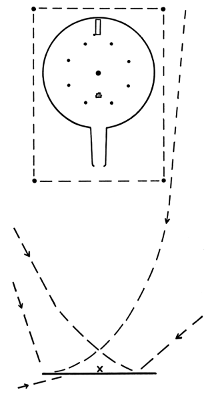
Fig. 1—Paths of the ghost-dancers as they enter the village, and their ceremonial
course before the dance-house.
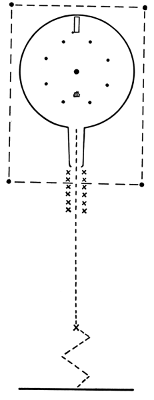
Fig. 2—Positions taken and course traveled by ghost-dancers in approaching
dance-house.
Meantime the crier and the dancers continued their respective cries.
The head ghost-dancer always dressed at a place north (i.e., in the
rear) of the dance-house, so that in entering the village he ran past
the dance-house to take up his position. Here he bowed very low, and
quickly dropped his arms with the bunches of grass above mentioned,
at the same time crying "wē...." He then trotted perhaps twenty
feet in one direction, where he repeated this motion and cry, and then
to a point an equal distance in the opposite direction from his central
position, repeating the same motion and cry there. This he did four
times, finally stopping in the middle of the forty-foot line thus blocked
out, and directly in front of the dance-house door. The next dancer
to enter the village might come from any direction. He ran toward
the head dancer and crossed, if possible, in front of him, though if
necessary he passed behind him. In this case the head dancer turned
around so as to face the runner. The newcomer began to pass back
and forth along the line, making the motions and cries as above
described. He then took up his position at one side or the other of
the chief dancer. These dancers were at liberty to laugh, talk, and
play at will. Frequently they performed various comical antics, such
as pretending to be stung by wasps, and doctoring one another.
The crier continued his calls until finally the leader of the dancers
walked along a zigzag path to a position about one-quarter of the
distance between the line of dancers and the dance-house (see fig. 2).
Here he halted and cried "wuī´ ..." after which the crier at the
dance-house called all the initiated men of the village to assemble.
There was a fixed restriction against the presence of the uninitiated
in this assembly. One informant maintained that the ceremony, as
held in his locality (the coast of the Central Pomo area), required that
four posts be set up, each at a distance of several yards from the
dance-house, as is shown in figures 1 and 2, the imaginary lines from
post to post forming an inclosure for the dance-house and its immediate
vicinity, within which none but the initiated dared venture.
The singers and others officially concerned with the dance came
from within the dance-house and formed two lines, one on each side
of the outer door of the tunnel, as indicated by the small crosses in
figure 2. As the crier gave his call, the initiates answered with a cry
of "ye ..." after which they formed these two lines between which
the ghost-dancers must pass to enter the dance-house.
At the outer ends of these lines were two masters of ceremonies
who directed the ceremony from this point on to its close. They first
chased each of the dancers[15] as he came to enter the house, returning
each time to the heads of the two lines, there to await the arrival of
the next dancer. These masters of ceremonies were called xahlū´īgak
käldaiyaū (E) or masa´n käldaiyaū (E), and were entirely nude except
for a head-net and a feather tuft on their heads.
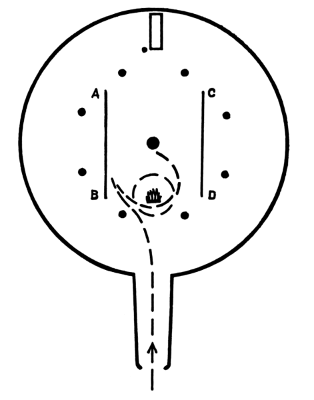
Fig. 3—Course of each ghost-dancer entering dance-house.
The chief ghost-dancer entered the house backwards and started
towards the drum, passing, however, on the west or wrong side of the
fire. Before he had gone very far, he stopped and groped around
with one foot, as if to find his way, and finally inquired which way he
should go. Ghost-dancers used the same words in speaking that ordinary
people did, except that they inverted their statements and reversed
the meanings of words. In this case the spectators replied,
"You must go on the west side,"
[16] meaning, of course, that the dancer
was expected actually to go down the east side of the dance-house.
He then reversed his direction, as is shown in figure 3, and circled
four times about the fire, finally passing to a position in front of the
center pole. The spectators meanwhile constantly called out to each
dancer to pass down the "east" side of the house.
When the dancer entered through the tunnel, the spectators all
cried, "ye´-ye." He at first advanced very slowly backwards until
he reached the point at which he inquired his way. As soon as he
received this direction he sprang up and ran the prescribed four times
around the fire and finally reached the foot of the center pole, making
meanwhile the same "bū ..." noise which he had made upon entering
the village. He here awaited the arrival of the other dancers, who
went through the same succession of movements.
The chief ghost-dancer, upon arriving in front of the center pole,
said, "mamūle´" (E), to which the spectators replied, "hehē´...."
Then he made a short speech in a more or less archaic language. Its
purport was: "I do not come to do any one harm, but rather to take
all sickness away and to make everybody strong."
habadūtkīya
-
gahnū
-
kūdī´
good
pūtsa´lwal
-
gakba
-
ga´kalik
chiefs
gaba
-
da´kalik
chieftainesses
gaba,
rich
ka´lnīne
people
gaba
-
bēkal
-
sīma
-
bexba
-
gahnū
-
cama
-
īhīwala
-
He next marked off, according to one informant, two or three places
on the east side of the floor, saying that he and his followers would
dance there. This was contrary to the usual procedure in dances,
for the regular dancing area in front of the center pole was always
used. As a matter of fact, the ghost dance itself was actually performed
in the usual area also, but this indicating of another area, and
this announcement, are only other evidences that the spirits must
always do things differently from mortals. In fact, the whole dress
and conduct of these dancers, their reversal of terms of direction, their
groping their way, etc., typify the conduct of the spirits of the departed,
who find everything strange when they return to the realm of
mortals.
Throughout the entire ceremony, and especially during the time
that the ghost-dancers were entering, the spectators were obliged to
use great care not to obstruct their passage in any way, or otherwise
to interfere with them, else they were likely to be very roughly handled
by the dancers.
As the last ghost-dancer entered the tunnel leading into the dance-house,
the men in the two lines outside cried "yūhē´" four times, after
which they entered and took up their positions.
The above described entry of the dancers was according to the
regular procedure. However, these dancers, especially the ash-devils,
were privileged to perform many comical antics, and it not infrequently
happened that one or more of them would run up on to the
roof of the dance-house and dive through the smoke-hole. In fact,
this was one of the usual modes of deception practiced in this ceremony.
A special net, cko´l tabiū käle hai (N), was stretched about two feet
below the smoke-hole to catch the dancer. A special post was set in
the ground beside this net for the dancer to slide down. He would
then go through the usual series of movements, running four times
around the fire. After this he usually took up a position at one of
the posts near the door, there to levy tribute upon the spectators.
This tribute might be in the form of firewood, tobacco, or other
commodities.
The music for this ceremony was provided by a drummer, two
chief singers, and a number of burden-singers. The ghost-dancers
sometimes sang a kind of burden of their own while dancing. This
was simply "hī, hī, hī, hī," etc., in a very high key. The chief singers
were provided with cocoon rattles. These and the drum were the
only instruments used. The dancers carried no whistles, although
these were ordinarily used by performers in other dances. The burden-singers
also used no split-stick rattles, but clapped their hands instead
in time to their singing.
After the performers had in this way entered the dance-house, the
chief ghost-dancer called to the singers to start. The drummer then
jumped upon the drum, crying "hūtsaiya´hīī" (E).
[17] With the first
cry of the drummer, the chief singers sounded their rattles. After
an interval of perhaps a minute, the drummer repeated his jump and
call. The song started and the dance began.
The song as given by one of the informants is as follows:
yōhīya´ yōhīya´, yōhīya´ yōhīya´,
kūlī kūlē kūlē ....
kūlī kūlē kūlē ....
hūtsaiya´ hūtsaiya´
hīī ....
(Repeat indefinitely.)
The two masters of ceremonies took up their respective positions
at A and C (fig. 3) and danced back and forth along the lines AB
and CD. In starting the movement, they stood with hands outstretched
and bent their bodies sidewise toward the drum as they
shouted "hūtsaiya´hīī." They then ran rapidly sidewise to the opposite
ends of their respective courses, where they repeated the same
bending, this time in the opposite direction. When they had gone
back and forth over these courses and had returned to their original
positions for the fourth time, they again shouted as at first. This
particular set of the dance was repeated four times, thus completing
this part. After any such part had ended, it occasionally happened
that one dancer would continue his steps just as though the music
were in full swing. Ultimately one of his fellow-dancers would strike
him lightly to call his attention to the fact that the dance was over,
and he also would stop.
Four such parts completed the first division of the dance. After
this the masters of ceremonies advanced toward the ghost-dancers,
motioning them back toward the center pole with the palms of their
hands turned outward and held in front of them, while they said
"hahyū´, hahyū´" (repeated indefinitely).
The singers, masters of ceremonies, and the drummer then seated
themselves or stood a short distance away from the drum, and the
ghost-dancers proceeded with their ceremonial disrobing.
The chief ghost-dancer proceeded from the foot of the center pole
by a path, as is indicated in figure 4, leading around the center pole
and fire and back to the east side of the drum, which the ghost-dancers
term cūna´ bilat (E), literally "canoe worn out." Upon his arrival
at the drum the chief ghost-dancer made a speech in which he said
that he and his fellows "had come from the hollow stems of the grass,
crawling like snakes," to visit the people.
katsa´ mūtō´lai
grass hollow
waha badūt´kiū (E)
travel like a snake
He told them that he had come for their good and with no evil
motives, that he had come to bring them good health and happiness,
not sickness and misfortune. With a cry of "mē ..." he then
jumped across the drum to its west side. The spectators cried "mī´bax
bō´wōwa" (E), literally "go on your west side," indicating the west
side of the drum, according to the ghost-dancers' inverted method of
speech. In compliance with this instruction, the chief ghost-dancer
jumped across the drum, after which he sometimes felt around with
his foot as if in search of something. Thus he jumped back and
forth four times across the drum. He had really been in search of
the drum all the time and had feigned his inability to find it. He
finally, however, jumped upon it and stamped rapidly for a minute
or so to indicate his satisfaction. Throughout this whole performance
the singers and others near the drum continually cried "hō ...
hō ..." etc. While standing on the drum, the chief ghost-dancer
faced toward the wall, thus bringing his back toward the fire. Frequently
he made some comic observation to those near by,
[18] and from
time to time turned his head toward the right so as almost to face the
fire, the while he made the peculiar noise, "bū ..." characteristic
of this dance. Meanwhile he turned his head slowly, first to the right
and then to the left, until he had done this four times in each direction.
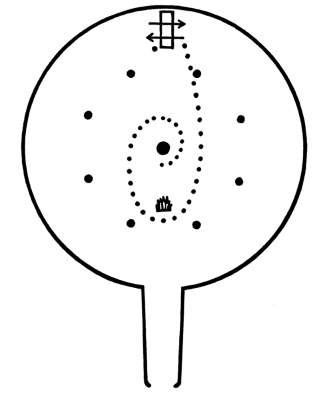
Fig. 4—Ghost-dancer's course in disrobing.
He next took the brush or grass, which he had throughout the
ceremony been carrying in his hands, first in his left hand and passed
it downward over the right side of his body until he had passed it
down and up four times. He then took it in his right hand and
passed it in the same manner over his left side. He next took part
of it again in each hand and passed both hands back and forth sidewise
over his legs while standing in a bent posture, until he had done
this also four times. The brush or grass was then placed upon the
ground.
He next took off the girdle of twigs about his waist and dropped it
to the ground, usually without ceremony, though if he chose he might
pass this through the same series of motions as the twigs carried in
his hand. He next took off his entire head-gear at once. This he held
in his left hand and passed from his right shoulder up over his head
four times, repeating the same motions with the right hand on the
left side. He then placed this with the other paraphernalia on the
ground.
He next left the drum and went directly back to the foot of the
center pole, where he rejoined the rest of the ghost-dancers. The
remaining dancers went, one by one, or in small groups, and performed
exactly the same ceremony as that just described. When all had
disrobed, each took his costume and retired to the woods or brush,
redressed himself, endeavoring to change his painting to one as different
as possible from that which he wore before. Later the same
performance was repeated: the calling by the crier, entry of the
dancers, series of dances, and ceremonial disrobing.
On the first day this entire series of dances was repeated four
times in all—at about 5 a.m., 10 a.m., 2 p.m., and 5 p.m., respectively.
After the ceremonial disrobing at the end of the fourth series, the
ghost-dancers left their suits in the dance-house and repaired to the
river or lake to swim, after which they returned to the dance-house.
During the other three days of the ceremony they might appear any
desired number of times during the day.
The dancers were forbidden to eat or drink on any particular day
as long as the dance continued, but as soon as they had gone down to
swim this restriction was removed.
As a rule, fire-eating and fire-handling were only incidental to the
ghost dance proper. However, if occasion arose, the ghost-dancers
themselves might handle fire, though they could not eat it. This
privilege was especially reserved to the ash-devils, nō' xahlūīgak (E).
In case something was done to offend the ghost-dancers, such as an
inadequate provision of wood or some inattention on the part of the
officials, they might attempt to show their displeasure by throwing
fire about the dance-house. It then became the duty of the two fire-tenders
to hold sticks of wood across the fire. This operated as a
taboo to the ghost-dancers, who were prevented from touching the fire.
If there were any of the ash-devils present, even though not regularly
participating in this particular ceremony, they at once brought their
special bird-shaped staffs, which served as their badges of authority,
[19]
and gave them absolute control over the entire assemblage, including
even the head captain. This caused the fire-tenders to remove their
restriction, and the ghost-dancers were then privileged to do as they
wished as long as they were under the patronage of the ash-devils.
While serving, during the regular ghost dance, as messengers,
sergeants-at-arms, and collectors of fines, the ash-devils were called
katsa´tala (E), and were the special clowns who performed all manner
of antics in their endeavors to provoke an outward expression of mirth
from some unfortunate spectator. Should he so forget himself as to
laugh or even smile at the antics, one of these katsa´tala ran at him
with his wand and levied tribute in the form of a payment of beads
or some other commodity, or imposed a penalty requiring the offender
to bring wood or water for the dancers. Furthermore, if some one
of the dancers should see a spectator in possession of something desirable,
he sent one of these katsa´tala with his wand to this spectator to
demand the desired article. The spectator must then bring it to the
foot of the center pole and deposit it for the dancers.
In order to provoke the spectators to mirth, these katsa´tala did
many odd things and made themselves as grotesque as possible. For
instance, one of them would prop his eyelids open with small wooden
pegs (an action called ū´ībatak (E)), or he would hold his mouth
open and stretch it out of shape (an action called katsī´da batak (E)),
or he would fill his cheeks very full and puff them out with grass
(called kawe´ts kale (E)).
These ash-devils never actually danced in the ghost dance proper,
but accompanied the regular ghost-dancers when they appeared. The
intervals between dances were filled and greatly enlivened by their
antics, and it was during these intervals that they made good their
name by rolling in the ashes of the fire, and by sometimes throwing
live coals about, and "eating" them.
From time to time during the "rests," or ceremonial pauses, one
of these katsa´tala would seize a cocoon rattle, run four times about
the fire and center pole, and throw the rattle at the chief singer, calling
upon him for a song. This must be at once forthcoming, and the
ghost dance itself was then resumed. If some one in the audience
wished to have the singing and dancing resumed, he threw a cocoon
rattle at one of the fire-tenders, who passed it to one of the katsa´tala,
who then ran about the fire and presented it to the chief singer as
just described.
Songs were sometimes sung independently and unaccompanied by
dancing. This was especially the case in what may be termed singing
contests. Upon receiving the rattle, a singer was obliged at once to
sing some song. He then passed the rattle to another singer, who did
likewise. Thus each of the renowned singers was given an opportunity
to prove his merit. Each man's song was accompanied by a parade
of the performers, which carried the party, including the singer, four
times around the dancing area.
Fire-eating was restricted, as above stated, to the ash-devils, and,
while sometimes practiced during intermissions in the regular ghost
dance, it was usually held as a separate ceremony in the evening and
was preceded by a short dance.
The dress of the ash-devils consisted of a coat of paint and a very
simple headdress.[20] In addition, however, they carried special ceremonial
staffs called tōa bīla´t (E), kasa´ūsaūa (E), and kasa´Isala (E).
To one end of this ceremonial staff was fixed the head of a crane.
Grass was used to stuff the neck part, bits of abalone (Haliotis) shell
made the eyes, and bluejay feathers were made into a topknot. It
was permissible to use wands of slightly different forms, but all were
crooked in some way, and the crane-headed staff was the recognized
variety.
When this special ceremony commenced, the ash-devils became
supreme and took precedence over everybody. A guard was posted
at the foot of the side post to the east of the door, and no one was
permitted to leave the dance-house after the ceremony had begun
except upon payment of a certain sum of what was termed upon this
occasion "bead money" (cata´ne (E)). As a matter of fact, two or
three stems of rush, from four to six feet in length, were bound together
and were given to the guard as payment. He took this
"money" and hung it on the wall near the drum, after having
danced a few quick steps upon the drum with it in his hands. These
rushes were legal tender during this ceremony; and if the dancers
asked a favor of any one else in the dance-house they paid him for
the service in this same legal tender. Their authority was especially
shown by their use of the crane-head wands, which no one else was
permitted to touch. They could be handled only after a long fast
involving complete abstinence from water and from meat or grease
in any form.
As soon as the ash-devils entered the dance-house absolute silence
fell upon all. Except the ash-devils, no one, not excepting the head
captain, was permitted to speak during the ceremony. The rule was
that the ash-devils themselves must consult one another in low tones.
Immediately upon entering the dance-house the main group of
ash-devils took up a position at the foot of the center pole and, in
case some one of the spectators did not almost immediately start a song
for their dance, they might jump into the fire and begin to throw
brands and live coals about among the spectators. This drastic action
quickly called forth a protest, and some one volunteered to sing.
The actual dancing lasted for perhaps half an hour, after which
the ash-devils sat down and began to "eat fire," jump into it, and
perform other miraculous feats with it. They, to all appearances,
actually picked up live coals, which they called bū (E), and devoured
them, preferring the coals of manzanita wood, as these were the
strongest and hottest. This term bū is translated by the Pomo as
"potatoes," a term applied to the many species of bulbs and corms
formerly an important part of their food supply. The word for coals
is masi´k (E).
During the progress of the dancing a fire-tender had been preparing
the fire for the special benefit of the ash-devils, and had selected
a considerable quantity of live coals, which he had piled at one side
of the main fire. Suddenly one of the fire-dancers put his hand into
these coals and scattered them out over the dancing floor. Then he
pretended to be burned and danced about as if in pain. Finally,
however, he struck the center pole with his hand and evinced great
satisfaction, for to him the center pole was as cold water. During
this fire-eating ceremony many other feats were performed, such as
catching with the mouth a live coal which had been thrown into the
air, then running back to the drum and dancing upon it. The dancer
usually turned toward the audience, opened his mouth, and exhaled
his breath in such a way as to cause the coal to glow between his teeth
or farther back in his mouth. Such comical antics would in ordinary
life provoke an outburst of merriment, but the rules of the ceremony
absolutely forbade a sound of any kind, mirthful or otherwise, from
the audience, and if the rule were violated a fine was exacted.
During this ceremony, and apparently as an initiation of novices,
little boys were thrown by the ash-devils back and forth a number of
times through the blaze of a large fire.
Finally, after about half an hour of this eating and handling of
fire, the ash-devils formed at the drum and danced over a course such
as that shown in figure 5. This was repeated four times, and as each
dancer stepped upon the drum he danced a few short, quick steps, as
did the regular drummer in producing music for an ordinary dance.
Upon completing this cycle of four, the dancers reversed their direction
and traveled over the same course four times. They next passed over
the course represented in figure 6, stopping at the four points marked
I, where each dancer waved his wand, which he held with both hands,
above and in front of his head in such a manner as to describe with
it a semicircle, while the spectators cried "hee´...."
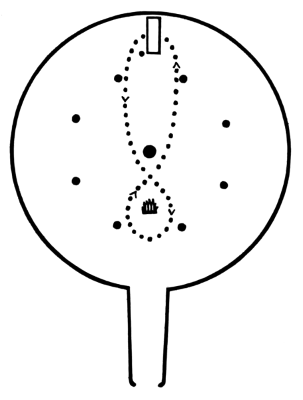
Fig. 5—Course in first part of final fire dance.
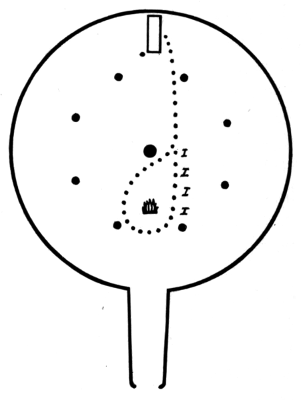
Fig. 6—Course in second part of final fire dance.
The dancers then returned to the drum, removed their head-dresses
and nets, and danced back and forth four times along the line indicated
in figure 7. At the end of each journey along this line, the dancers
blew their breath forcibly through their lips and waved their hands
from their mouths. At the end of this cycle they sat down and became
ordinary persons[21] once more. The spectators were then permitted
to do as they wished. They could resume their normal ways, including
smoking, which had been prohibited because the fire and everything
pertaining to it belonged exclusively to the fire-dancers during this
ceremony.
During the first three days and nights of the ghost ceremony, either
the ghost dance itself or some other dance associated with it might
be held. On the fourth night it was necessary that the entire night
be spent in dancing, and near dawn there occurred a purification rite
accompanied by special songs. Every ceremonial object about the
dance-house, whether it had been used during the preceding days or
not, had to undergo this purification, and in case the owner of such a
ceremonial object was not present, some near relative performed the
ceremony with it.
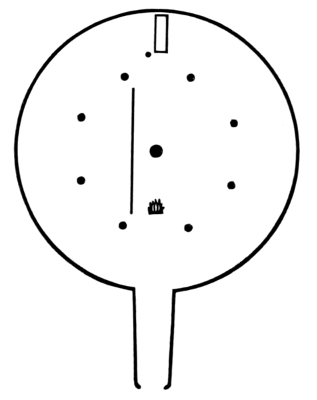
Fig. 7—Course in third part of final fire dance.
Just before sunrise each dancer, holding up his personal ceremonial
paraphernalia in his right hand, danced back and forth in time to the
songs. He danced four times looking toward each of the six cardinal
directions in the following order: east, north, west, south, up, down.
All the ceremonial objects were then hung up in the dance-house and
later stored away secretly by the chief Gū´ksū doctor.
The ceremony ended during the following forenoon with a grand
feast, which differed materially from other feasts held at times during
the ceremony, in that each separate class of individuals dined by
itself in the order of rank—captains, fire-tenders, singers, drummers,
masters of ceremonies, ash-devils, ghost-dancers, and spectators. The
food served to each class was, however, of the same kind and quality.
Certain restrictions were imposed upon the dancers after the ceremony
was over. The regular ghost-dancers were not allowed to eat
meat for eight days. Those who wore the chaplet of twigs upon the
head were obliged to abstain from meat for four days. The Gū´ksū
doctor who assisted a dancer in dressing might ask him for some article,
such as a powerful poison. This had to be given the Gū´ksū and, in
that case, the dancer was forced to abstain from meat for eight days.
A dancer who wore certain kinds of feather ornaments abstained from
meat for a month. The chief Gū´ksū doctor, who knew all about the
ghost dance and who was called yō´mta bate (E), was compelled to
abstain from meat for several months. It was his duty to care for
the ceremonial paraphernalia between dances. This had to be carefully
hidden away in some lonely spot where no one could find it except
this chief Gū´ksū doctor and his two or three assistants.
Whenever any one of these individuals ate meat or fish for the
first time after this period of restriction had expired he was enjoined
to say a short prayer over it.
The following are the most characteristic features of the ghost or
devil ceremony:
- The ceremony is supposed to have had its origin in mythical
times and to have been instituted as an atonement for an offense against the dead.
- It lasted four days, ending with an all-night dance, and, on the
morning of the fifth day, a purification rite followed by a feast in
which each class of individuals dined by itself.
- The participants were several ghost-or devil-dancers personating
the spirits of the departed and accompanied frequently, though
not always, by one or more ash-devils or ash-ghosts, who filled the
double office of clown and sergeant-at-arms, and who usually performed their special fire dance and
fire-eating ceremony.
- The officials particularly concerned with the ceremony were two
head singers, an indefinite number of burden-singers, a drummer, two
fire-tenders, and two masters of ceremonies. The village captains
retained their full authority in this ceremony except when the ash-devils were performing.
- The audience consisted of initiated men only, and silence was
the rule. Any exhibition of mirth was absolutely prohibited under penalty.
- The attire of the ghost-dancer consisted of several pieces of
headgear, supplemented in some cases by a chaplet of leaves, a girdle,
and sometimes a neck-ring of leaves. The body was otherwise nude
except for very elaborate painting in black, white, and red. The
dancers dressed secretly in the woods and came to the village carrying
bunches of grass or twigs in their hands, behind which they at times
pretended to hide.
- The ash-devils wore only a simple head-dress and a coat of
paint.
- The special crane-head shaped wand of the ash-devil gave him
absolute authority.
- The dancers entered the village at the call of a crier stationed
on top of the dance-house, performed an elaborate ceremony in front
of the dance-house, and finally entered it backwards, groping their
way, using an inverted style of speech, and in every other manner
showing that the spirits of the departed were unaccustomed to the
ways of mortals.
- The dancing was elaborate and was characterized by the occurrence
of movements in cycles of four, followed by an elaborate ceremonial
disrobing at the drum, and then by swimming.
- During the fire dance the ash-devils initiated novices.
- The dancers were subject to certain restrictions for varying
periods of time following the ceremony.