Open Old Books

Cartoons

Whole book · 4 sections

Cartoons


Note: Cartoon images link to higher resolution versions.

Illustration — Cartoons — from Cartoons

Illustration — Cartoons — from Cartoons
Elliott & Fry]
[London.
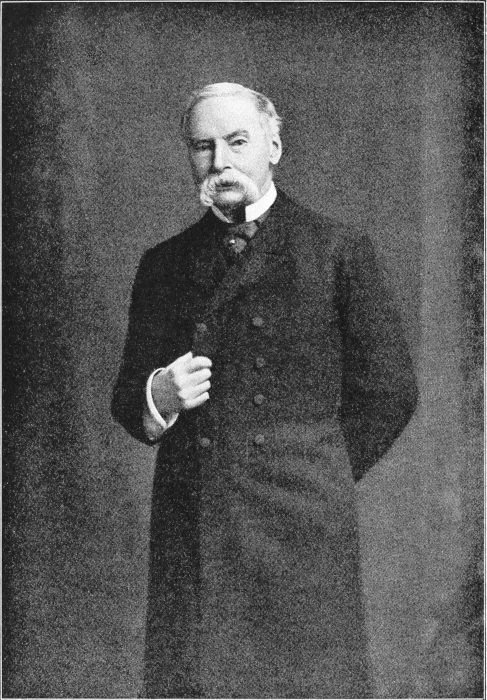
Sir John Tenniel.
by
Sir John Tenniel
Selected from the Pages of “PUNCH.”
LONDON:
“PUNCH” OFFICE, 10, BOUVERIE STREET.

BRADBURY, AGNEW & CO., LTD., PRINTERS,
LONDON AND TONBRIDGE.

Prefatory Note.


THE present collection of Sir John Tenniel’s Cartoons is intended to be a selection comprising the more memorable of those which have appeared in “Punch” during the last 50 years. The first in the collection bears the date of 1851, and the last is Sir John Tenniel’s final Cartoon in January, 1901. Short explanatory notes have been provided, but as most of them will, perhaps, be unnecessary to those to whom the Cartoons themselves are familiar, they have been grouped together and combined with the Table of Contents at the commencement of the volume, where they can readily be referred to.

March, 1901.


Contents.

 
PAGE
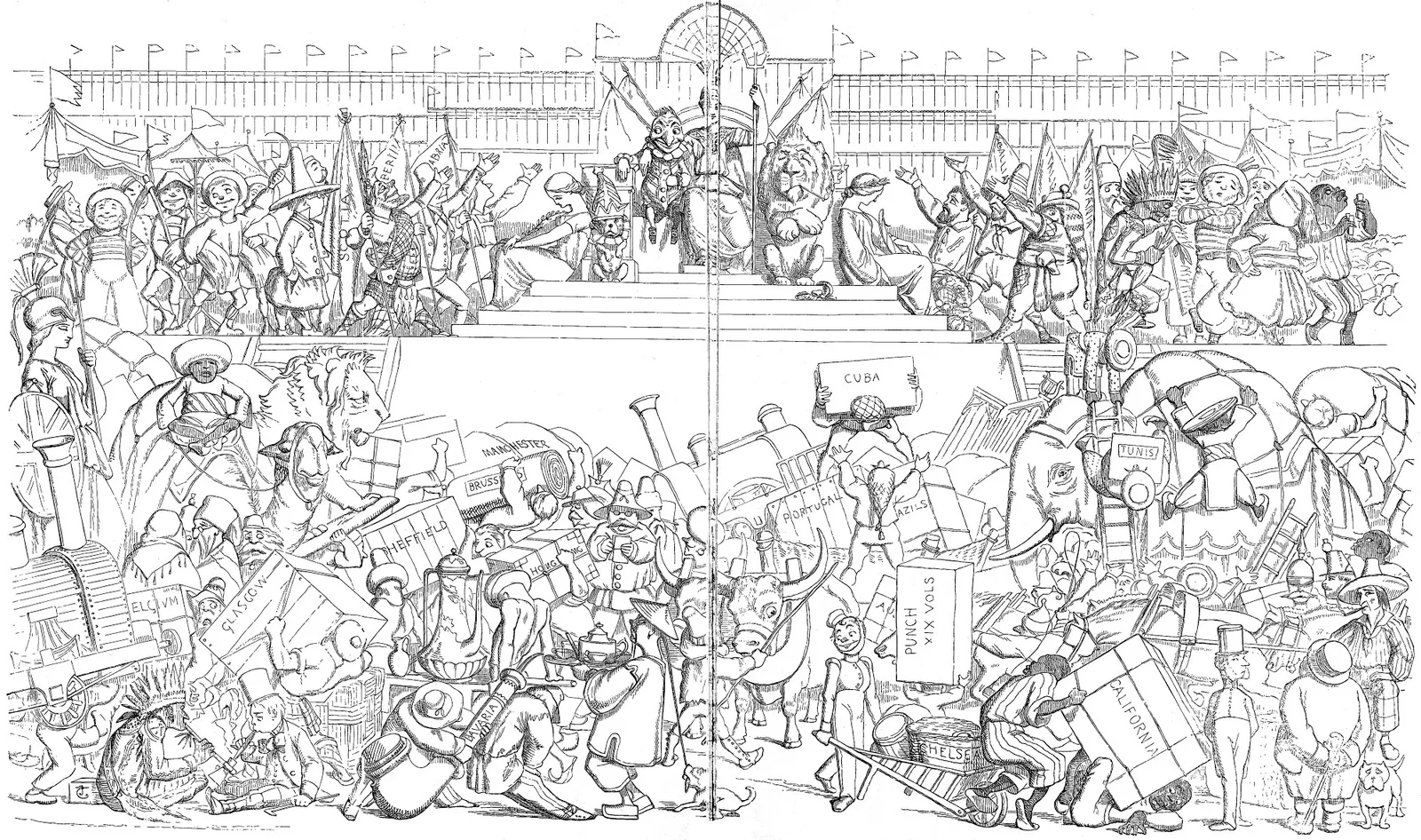
May Day, 1851
2-3
The Great Exhibition of All Nations was opened in Hyde Park on May Day, 1851, by the Queen and the Prince Consort.  
Illustration — Contents. — from Cartoons
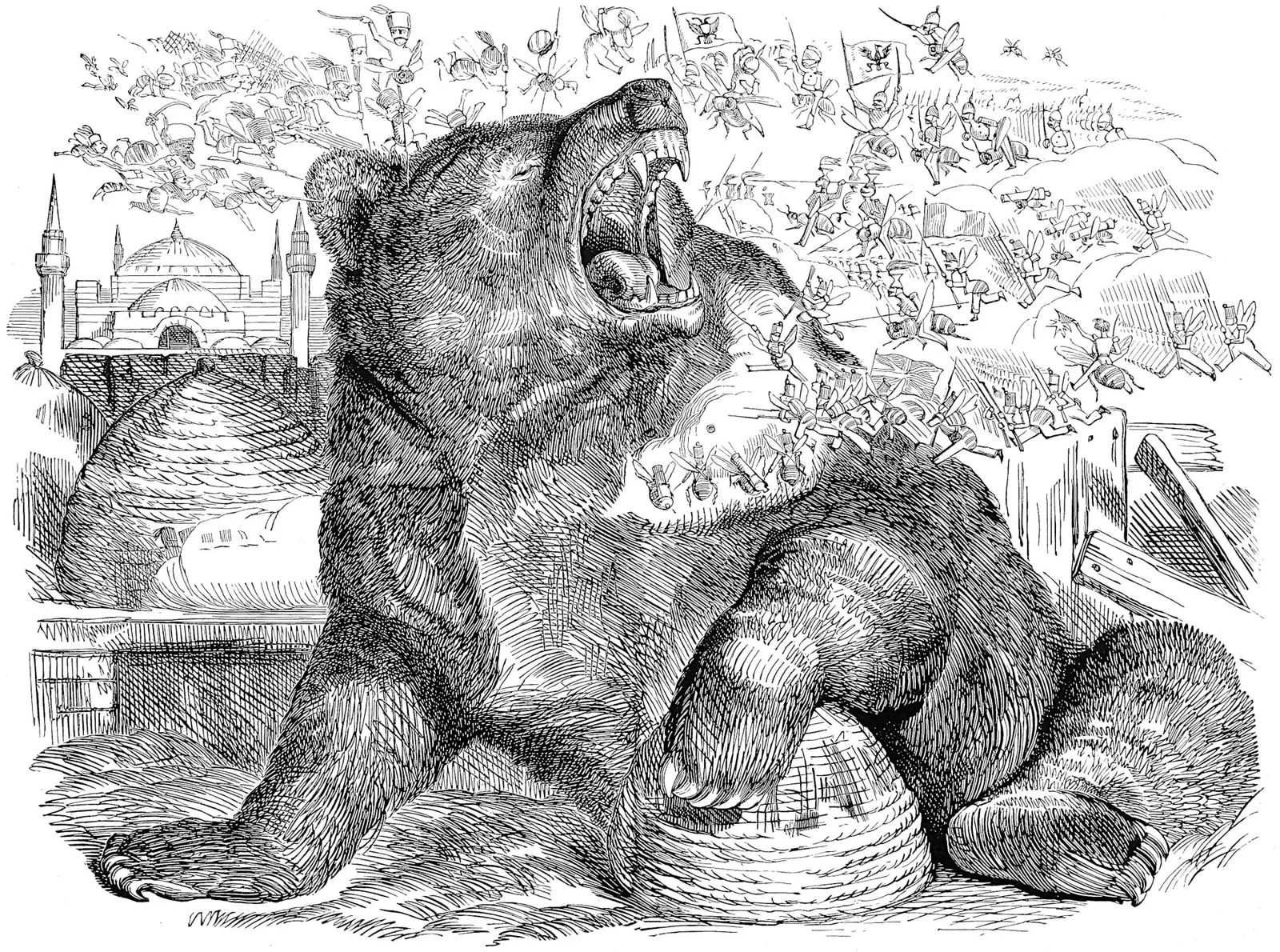
The Bear and the Bees.—A New Version of an Old Story
4
The invasion of Turkey by the Russian forces had been met by an unexpected resistance, and had aroused the hostility of the European Powers.  
Illustration — Contents. — from Cartoons
What Nicholas Heard in the Shell
5
The Emperor Nicholas of Russia had provoked a declaration of war by England and France, and his armies had already suffered several defeats.  
Illustration — Contents. — from Cartoons
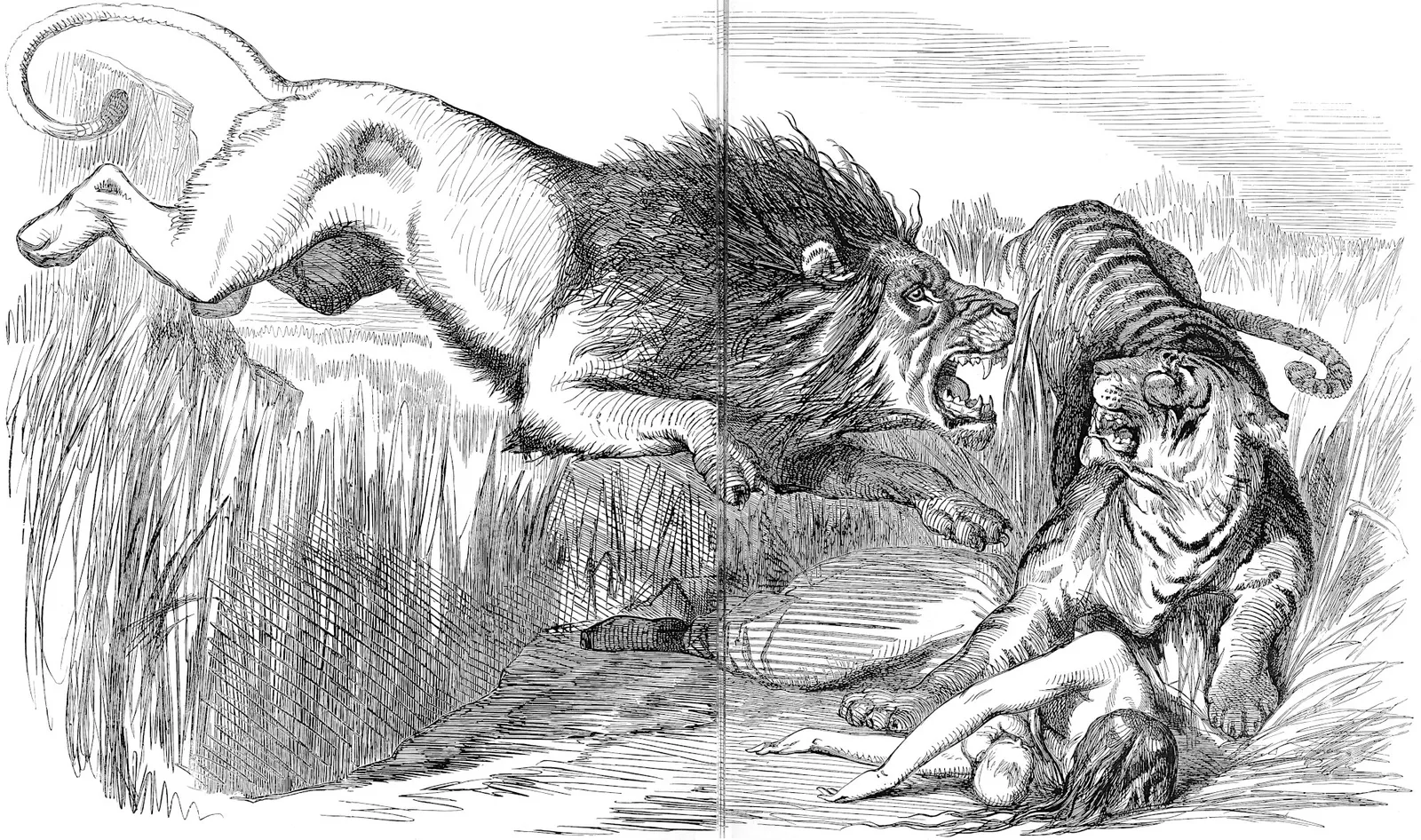
The British Lion’s Vengeance on the Bengal Tiger
6-7
The horrible misdeeds of the native Indian soldiers after the Mutiny aroused throughout the country an uncontrollable desire for revenge.  
Illustration — Contents. — from Cartoons
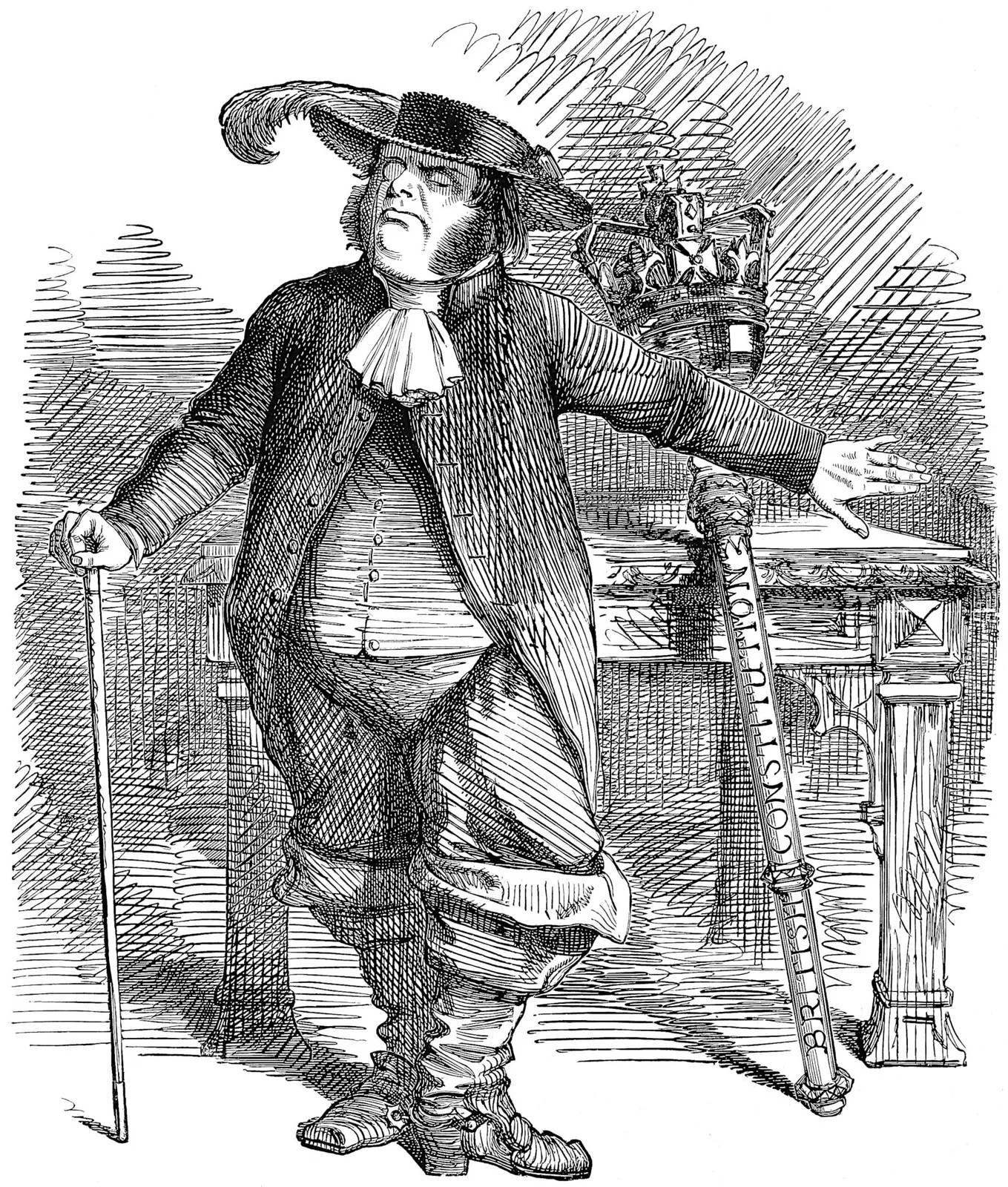
The Quaker and the Bauble
8
Mr. Bright, at this time, in his zeal for Parliamentary Reform, was unsparing in his attacks upon the Landed Interest and the Aristocracy.  
Illustration — Contents. — from Cartoons
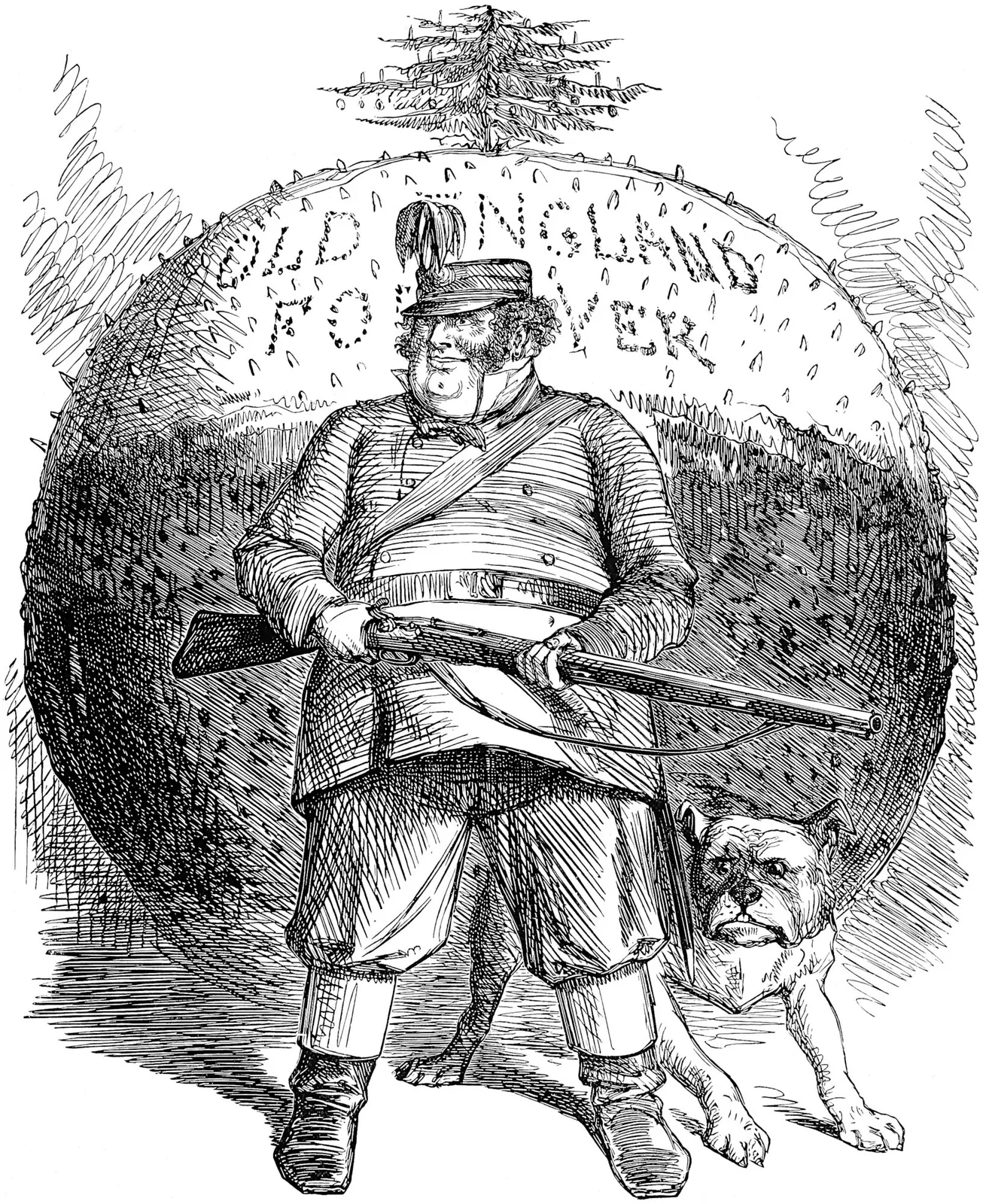
John Bull Guards his Pudding
9
This year marks the formation of the Volunteer force, which elicited an enthusiastic response from all classes.  
Illustration — Contents. — from Cartoons
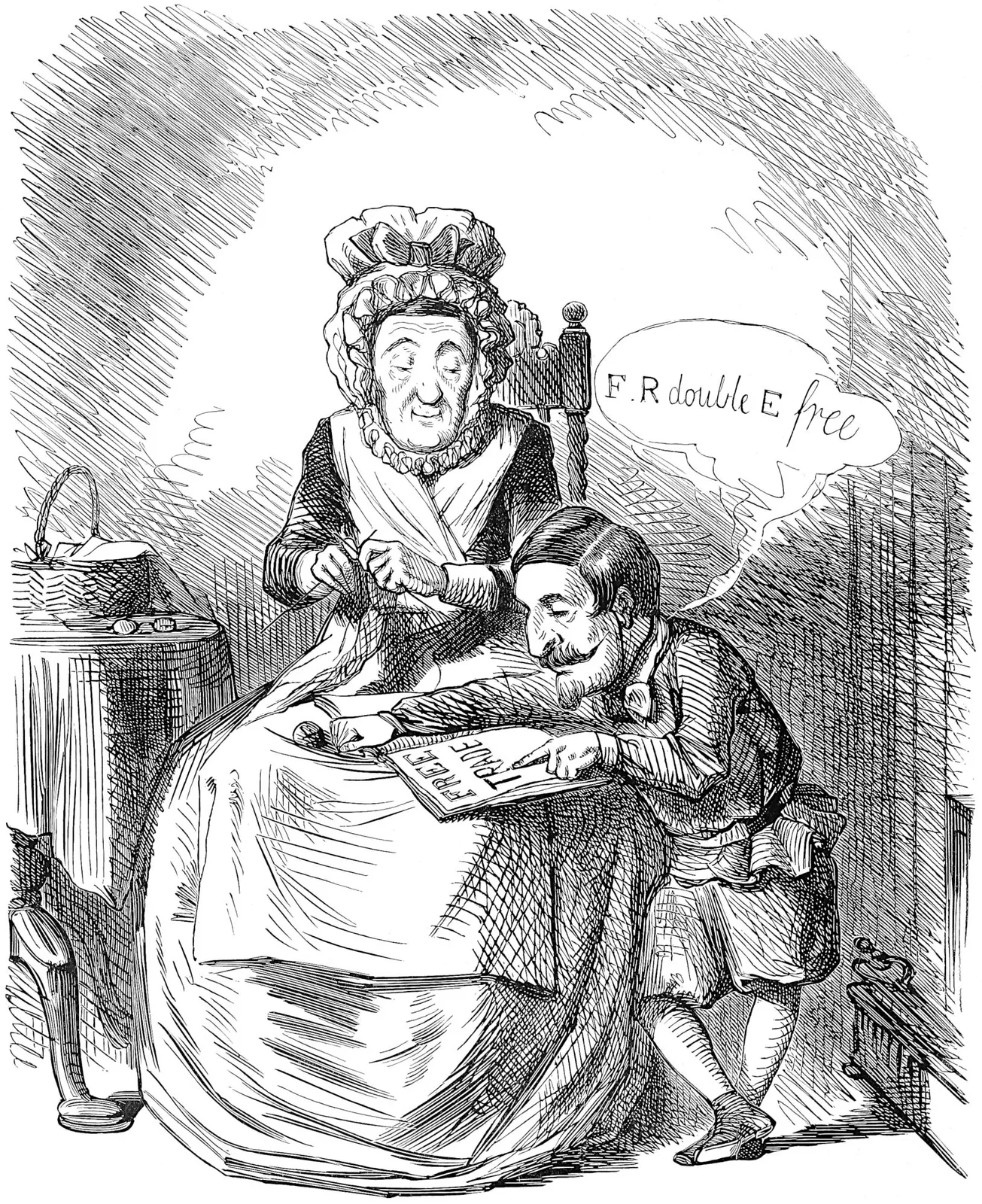
Dame Cobden’s New Pupil
10
Richard Cobden was the means of procuring a Treaty of Commerce between France and England—beneficial to both countries.  
Illustration — Contents. — from Cartoons
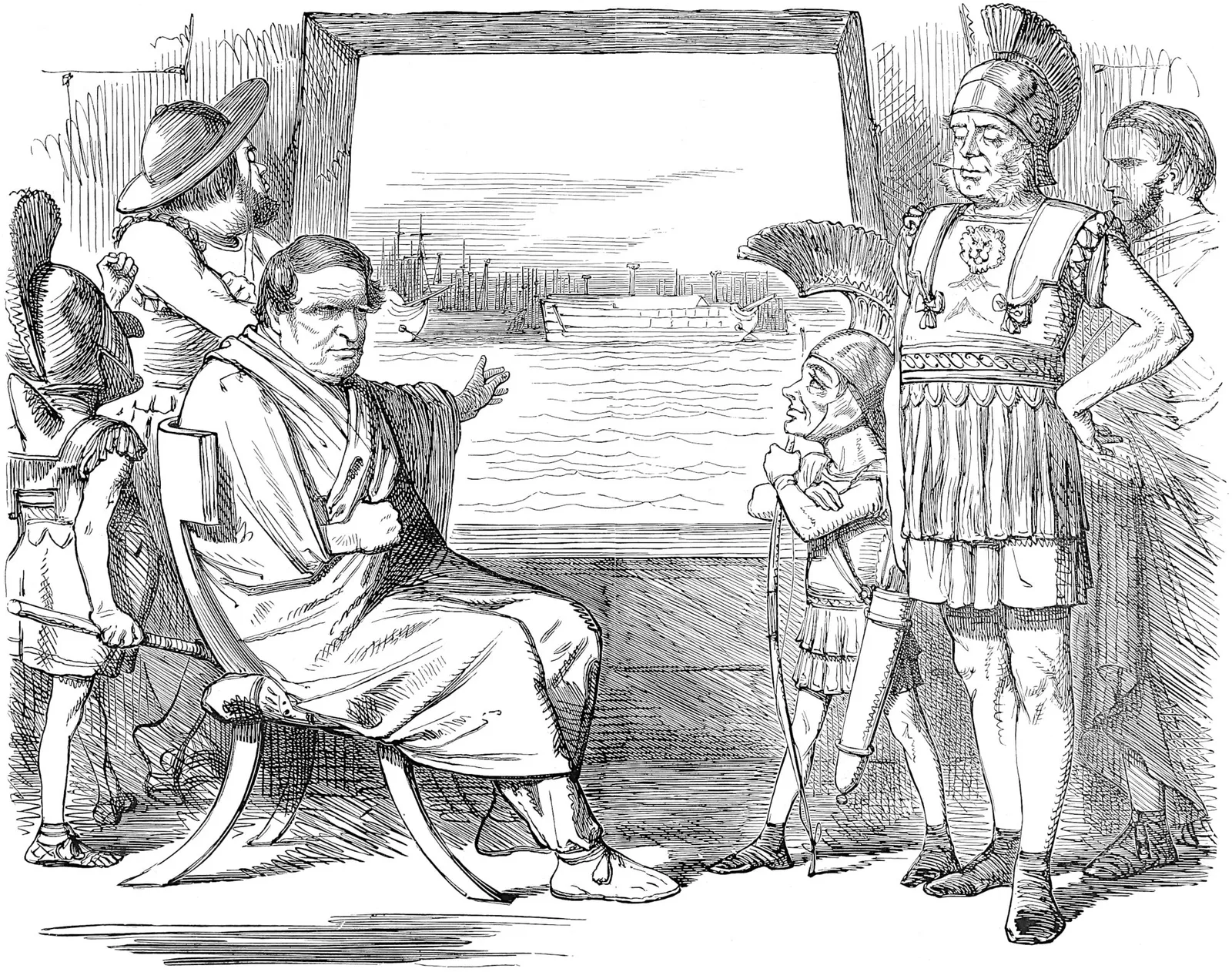
Lyndhurst as Nestor rebukes the Chiefs
11
Lord Lyndhurst—the Nestor of the House of Lords—in a speech of great power reproved the Government for their neglect of the Navy.  
Illustration — Contents. — from Cartoons
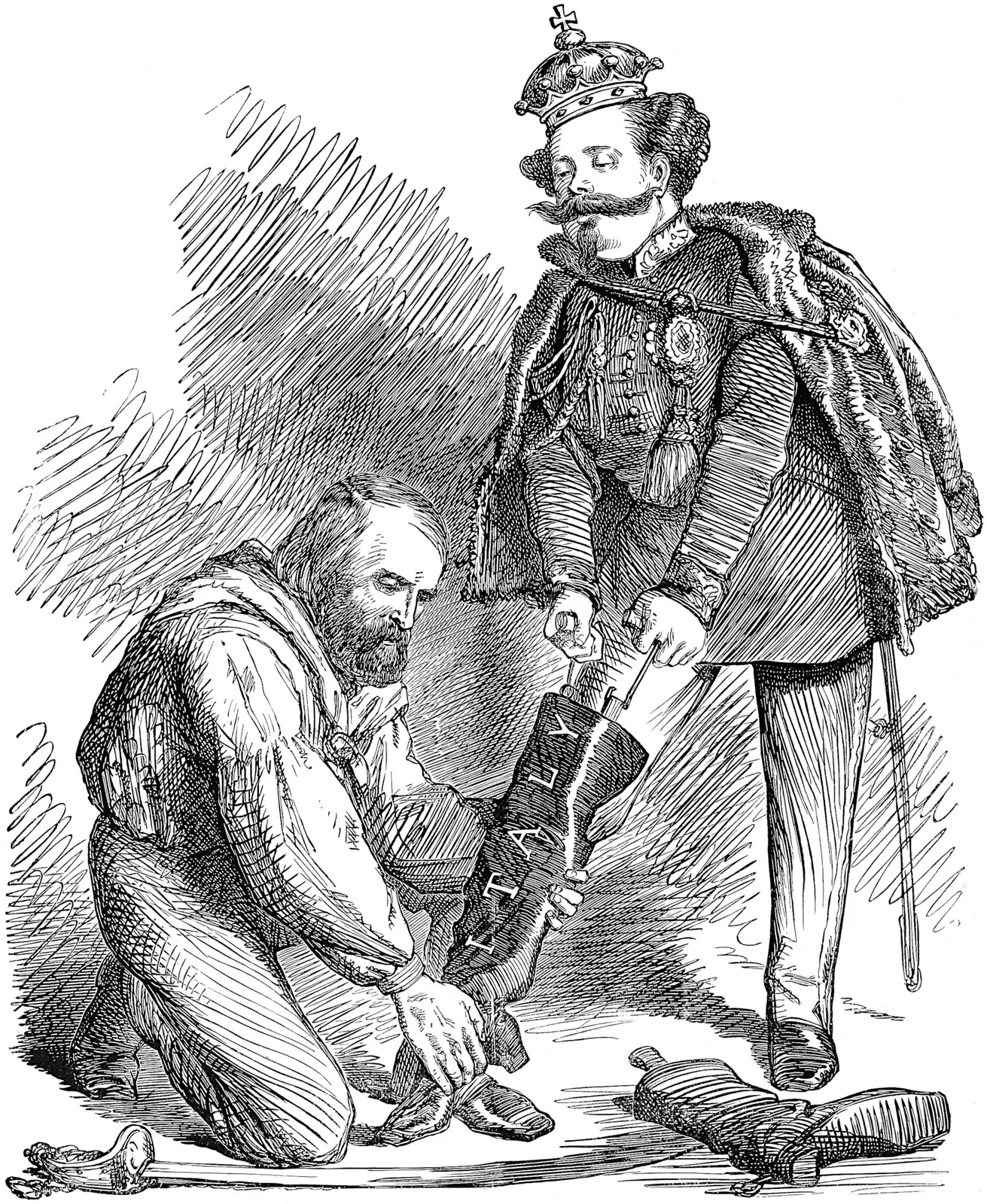
Right Leg in the Boot at Last
12
Victor Emmanuel, King of Sardinia, was patriotically urged by General Garibaldi to aid in the liberation of the Italian Peninsula.  
Illustration — Contents. — from Cartoons
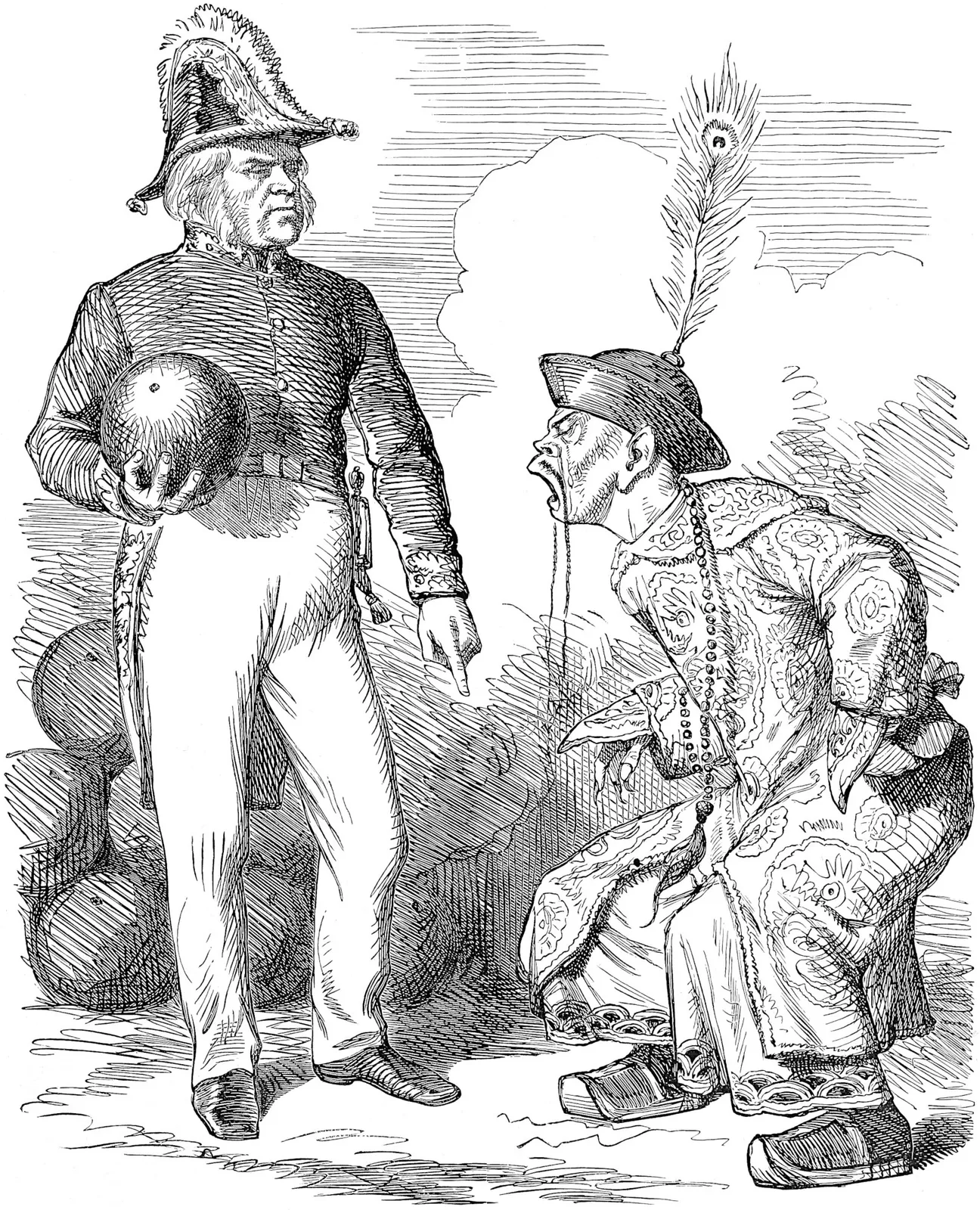
New Elgin Marbles
13
Lord Elgin, having with the English and French forces occupied Pekin, compelled the Chinese Emperor to pay the indemnity for the last war.  
Illustration — Contents. — from Cartoons
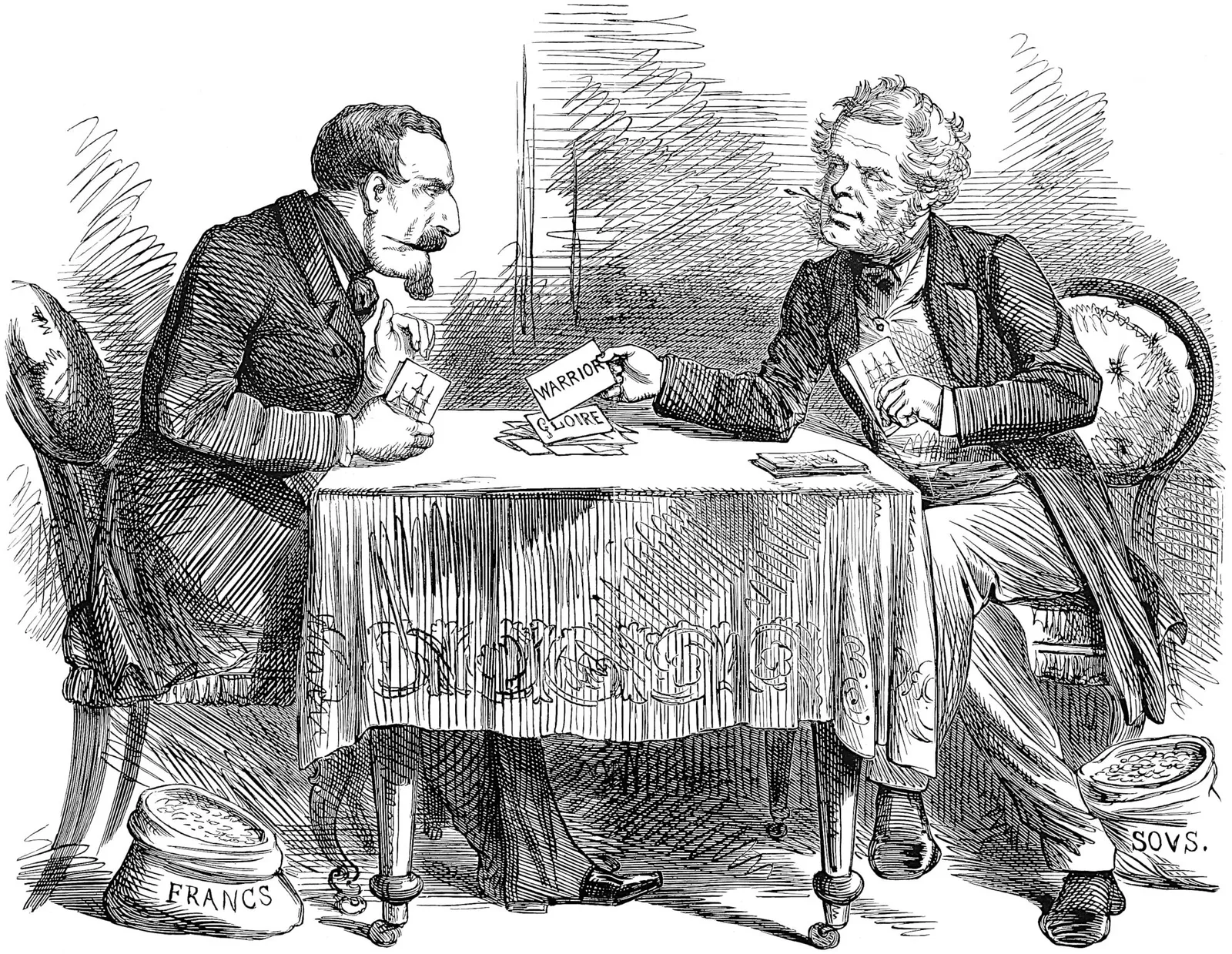
“Beggar my Neighbour”
14
The Emperor Napoleon was making great additions to the French Navy, provoking a corresponding increase by Great Britain.  
Illustration — Contents. — from Cartoons
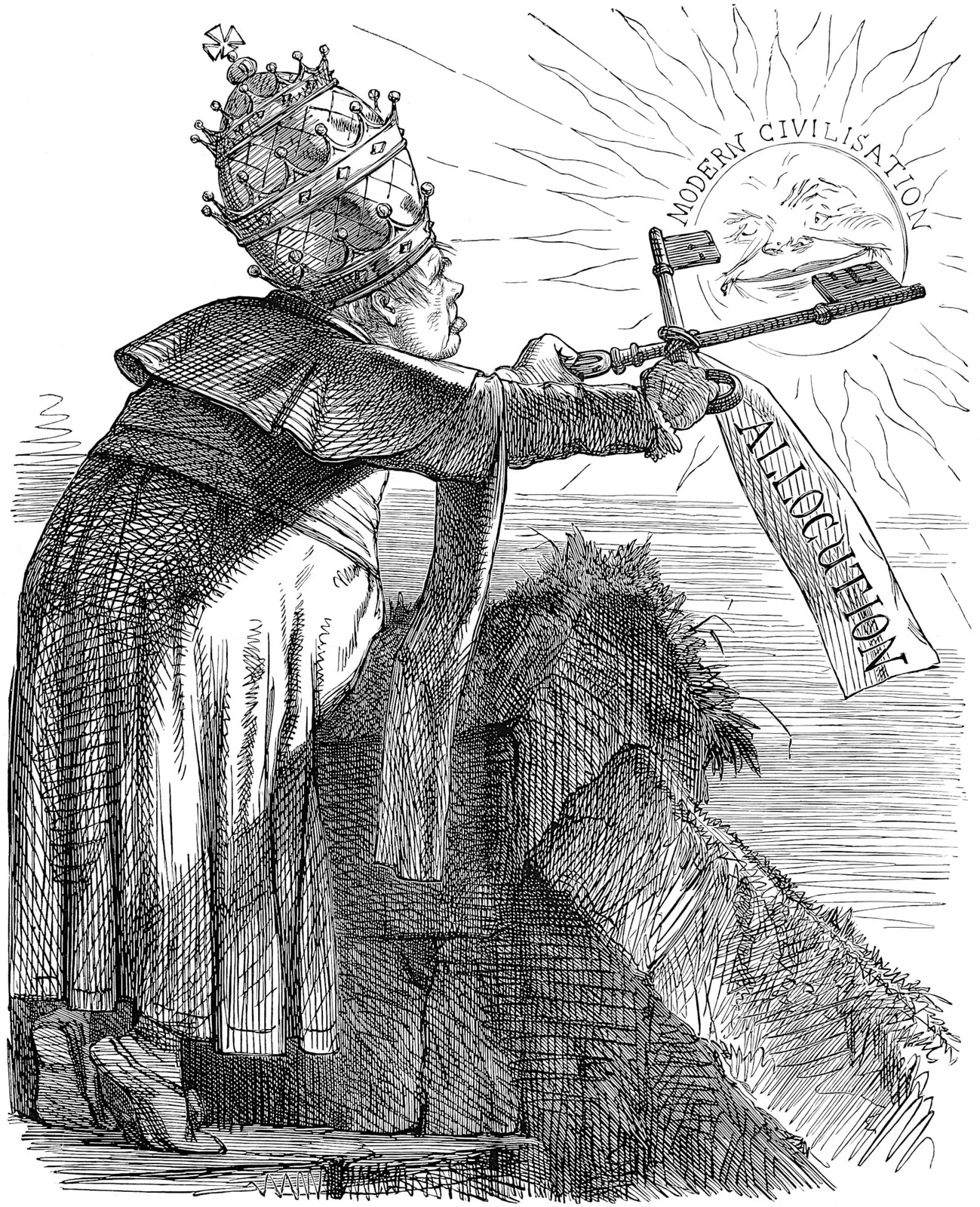
Papal Allocution.—Snuffing out Modern Civilisation
15
Pope Pius the Ninth had issued an Allocution condemning without reserve all aspirations for Reform at home and abroad.  
Illustration — Contents. — from Cartoons
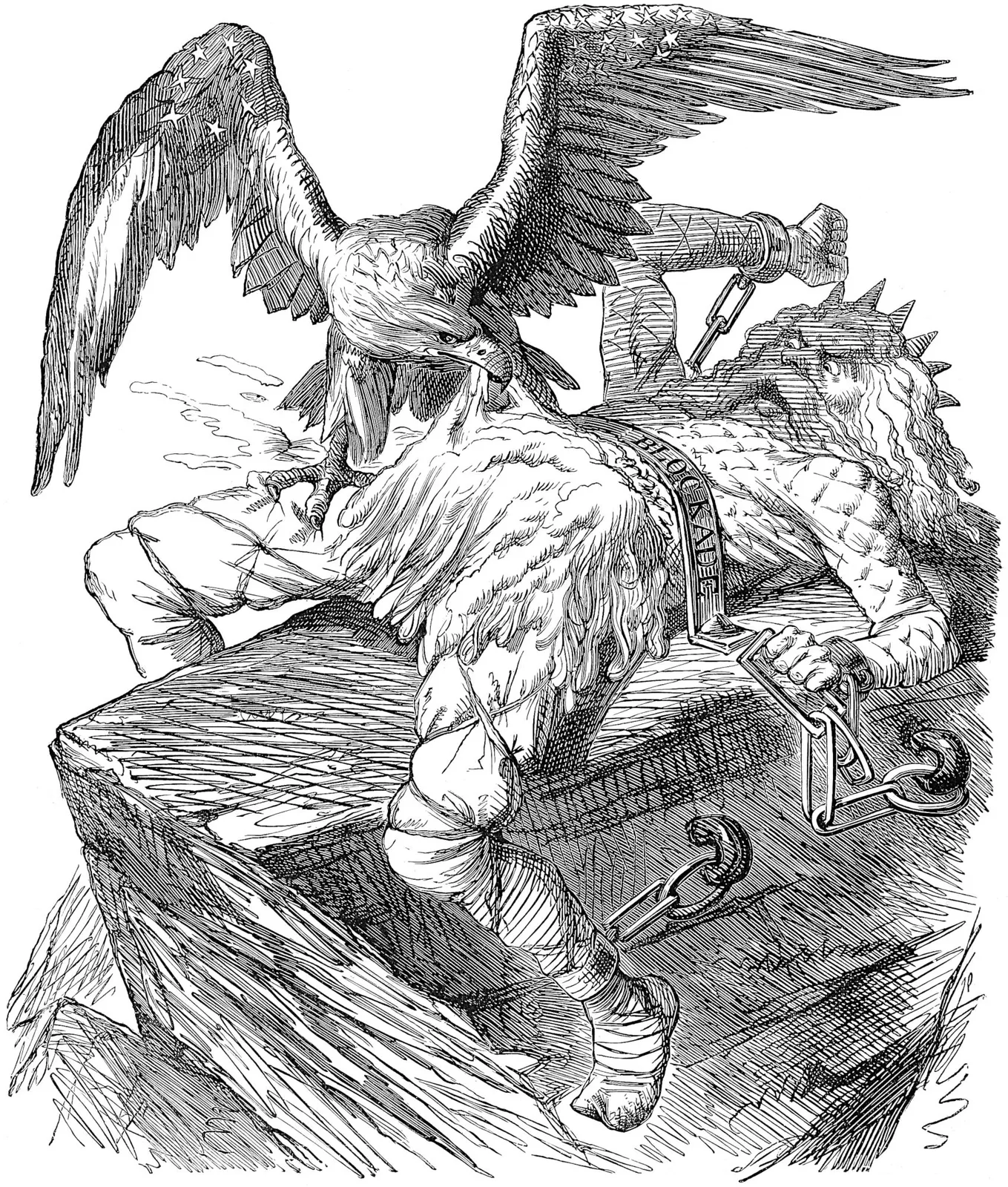
King Cotton Bound
16
The outbreak of the Civil War in the United States prevented the exportation of cotton, and produced great misery in our manufacturing districts.  
Illustration — Contents. — from Cartoons
Waiting for an Answer
17
The intrusion on a British ship by United States officials and the seizure therefrom of Envoys from the Southern States, led to a demand from Great Britain for their release.  
Illustration — Contents. — from Cartoons
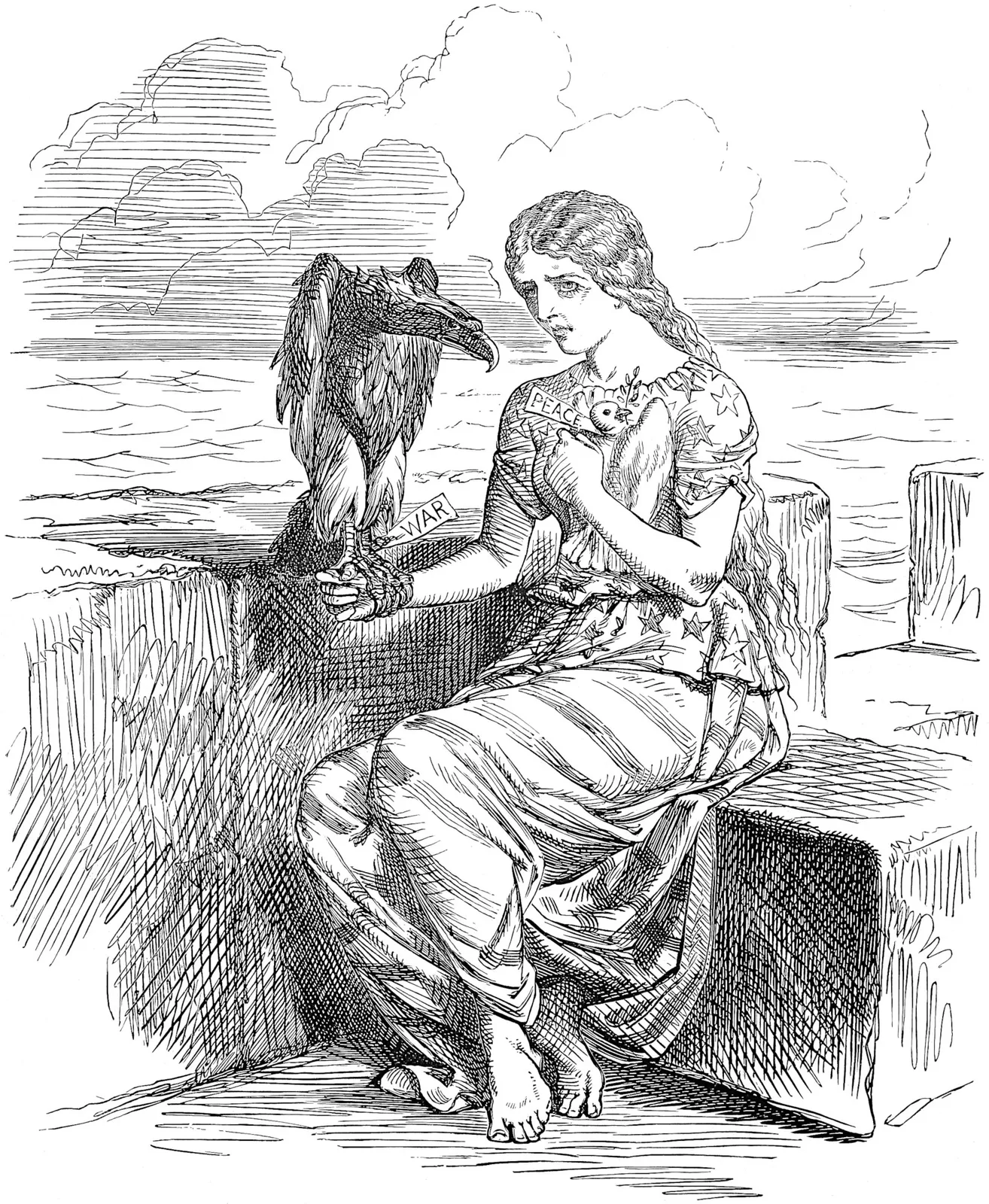
Columbia’s Fix
18
The justice of Great Britain’s demand was eventually acknowledged by the United States, and the Envoys were set at liberty.  
Illustration — Contents. — from Cartoons
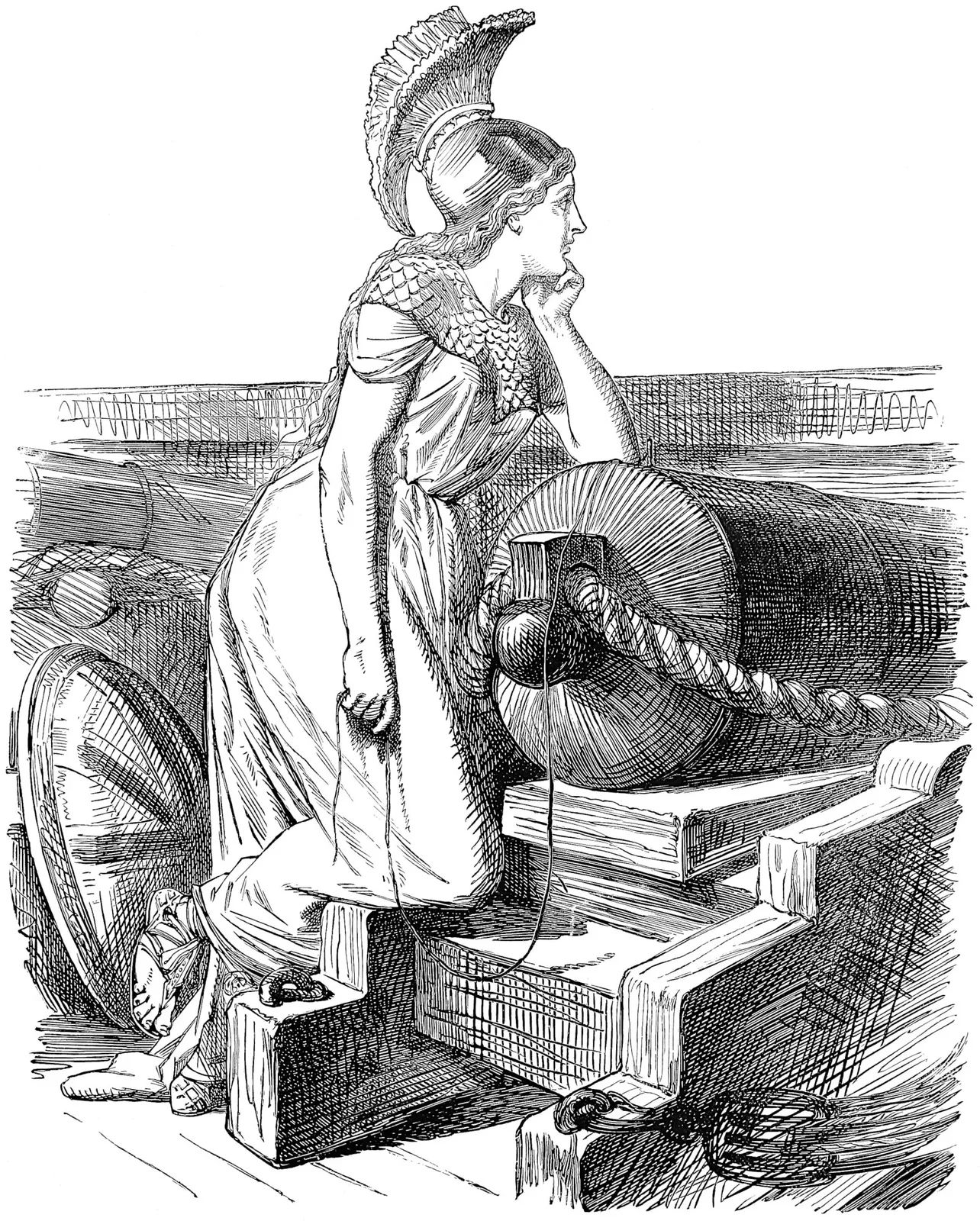
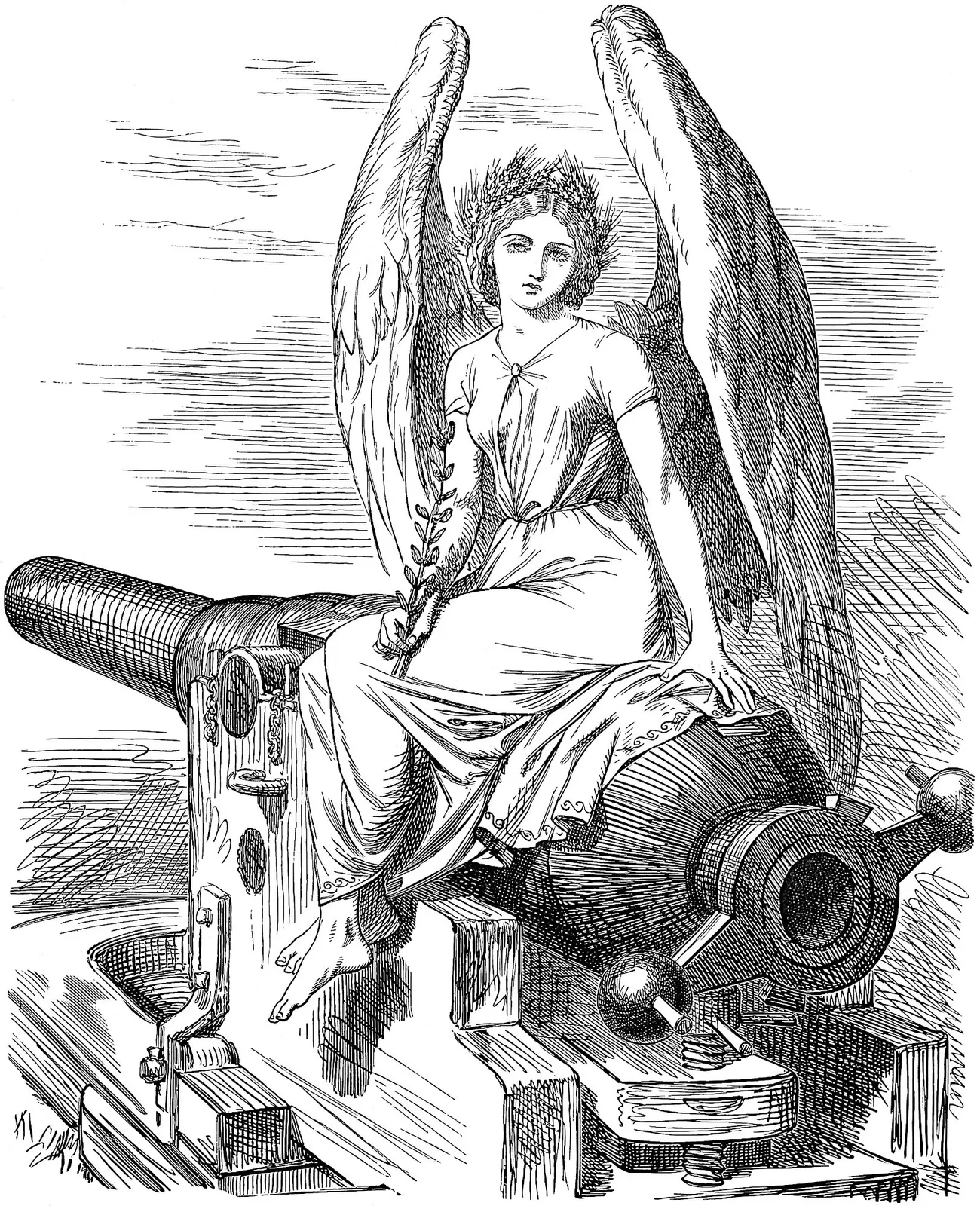
Peace
19
“Mr. Punch’s” design for a Colossal Statue, which ought to have been placed in the International Exhibition.  
Illustration — Contents. — from Cartoons
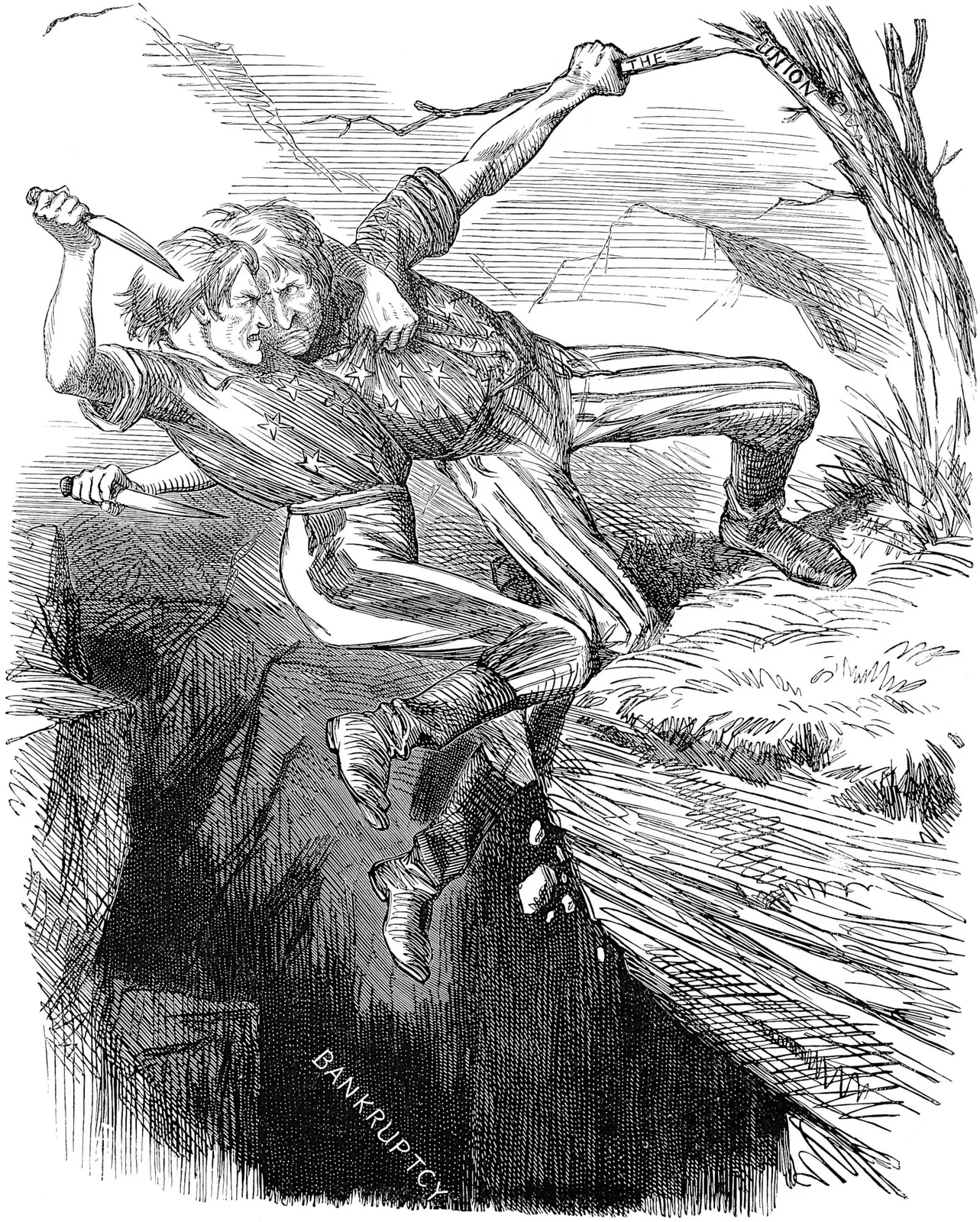
The “Sensation” Struggle in America
20
The Civil War in the United States was being conducted with great courage on both sides, and many bloody battles had been fought.  
Illustration — Contents. — from Cartoons
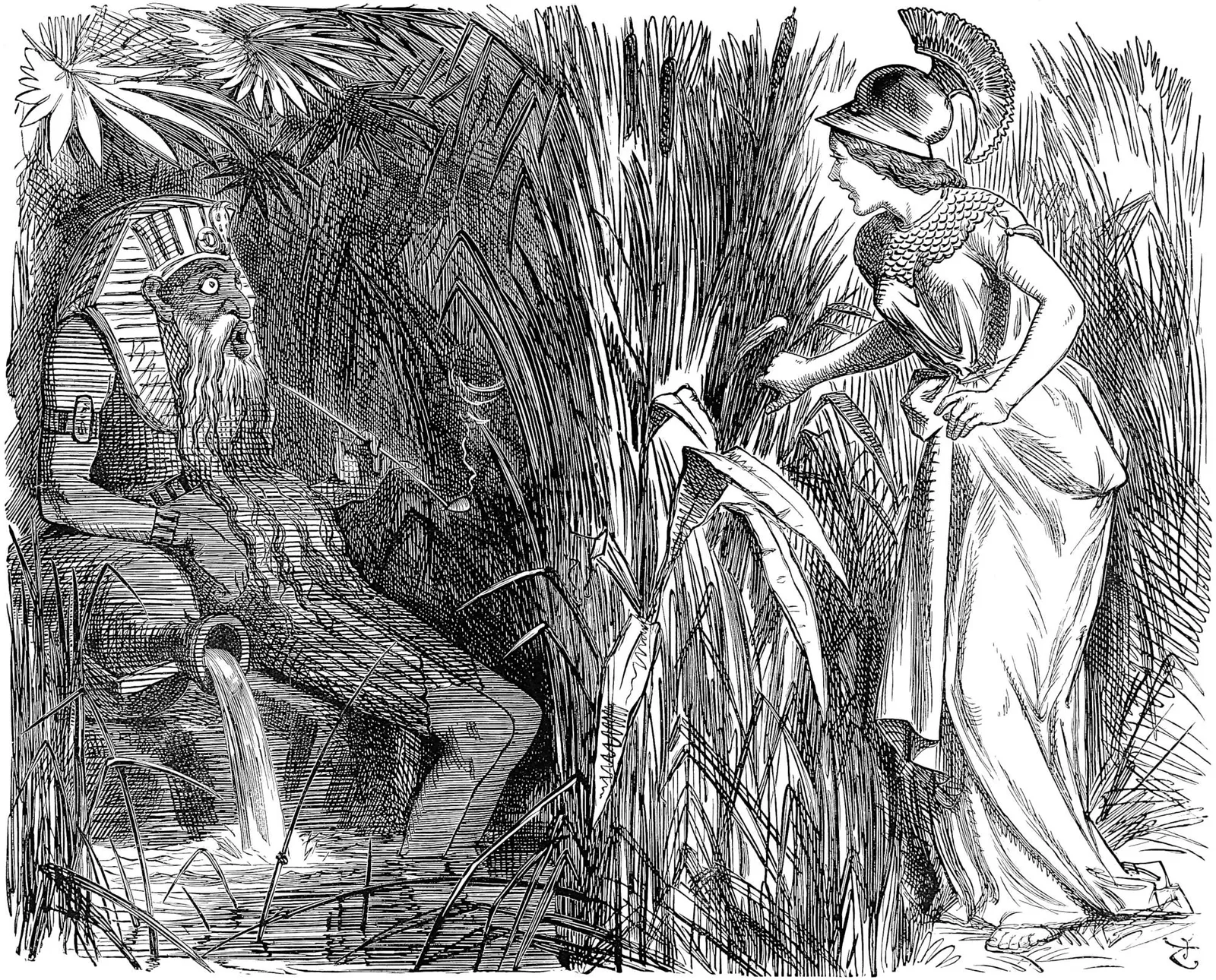
Britannia Discovering the Source of the Nile
21
The sources of the river Nile, which previously had been unknown, were discovered by two British travellers, Captains Speke and Grant.  
Illustration — Contents. — from Cartoons
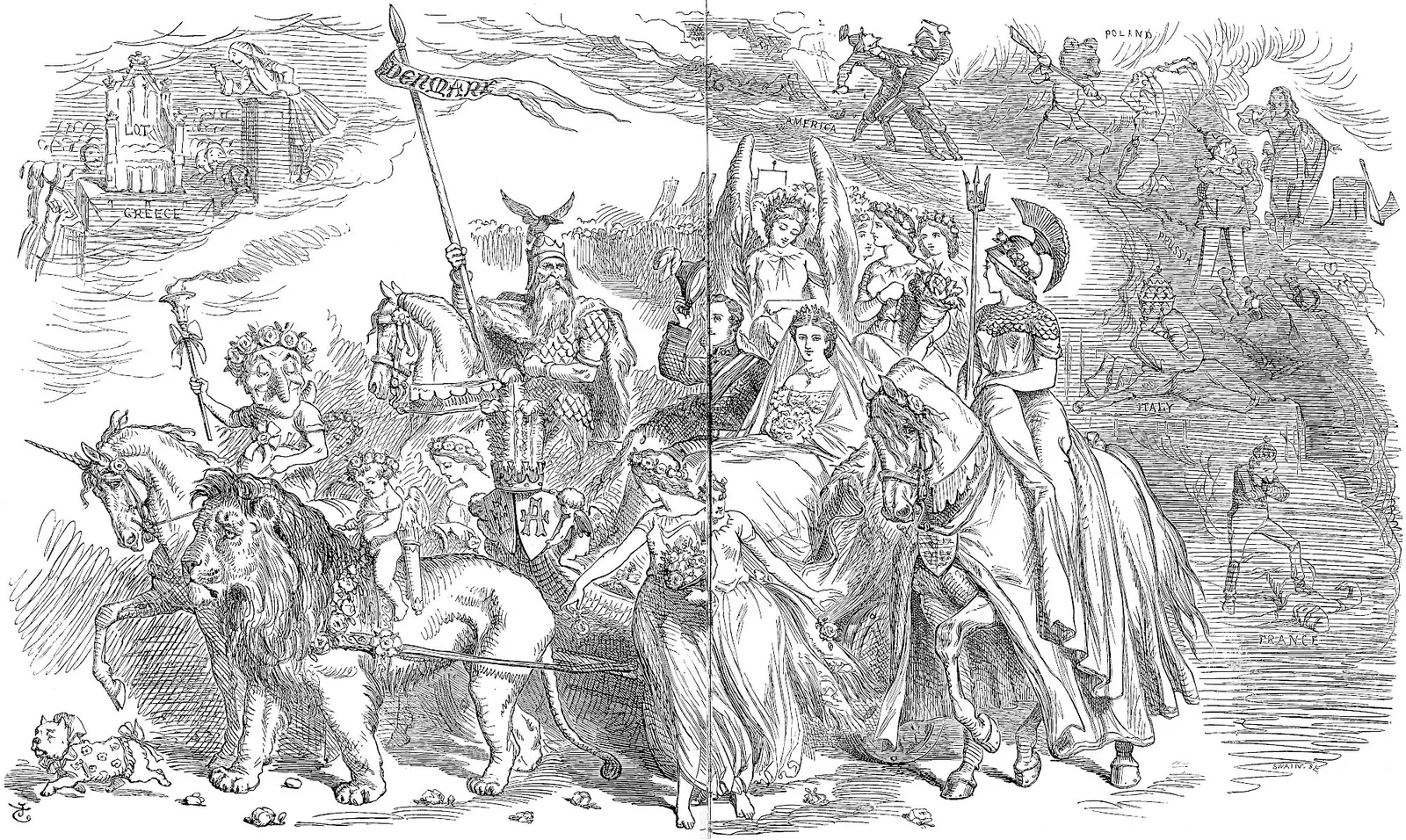
At Home and Abroad
22-23
The Princess Alexandra of Denmark (now our Queen) made her entry into London amidst an amazing outburst of affection from all classes.  
Illustration — Contents. — from Cartoons
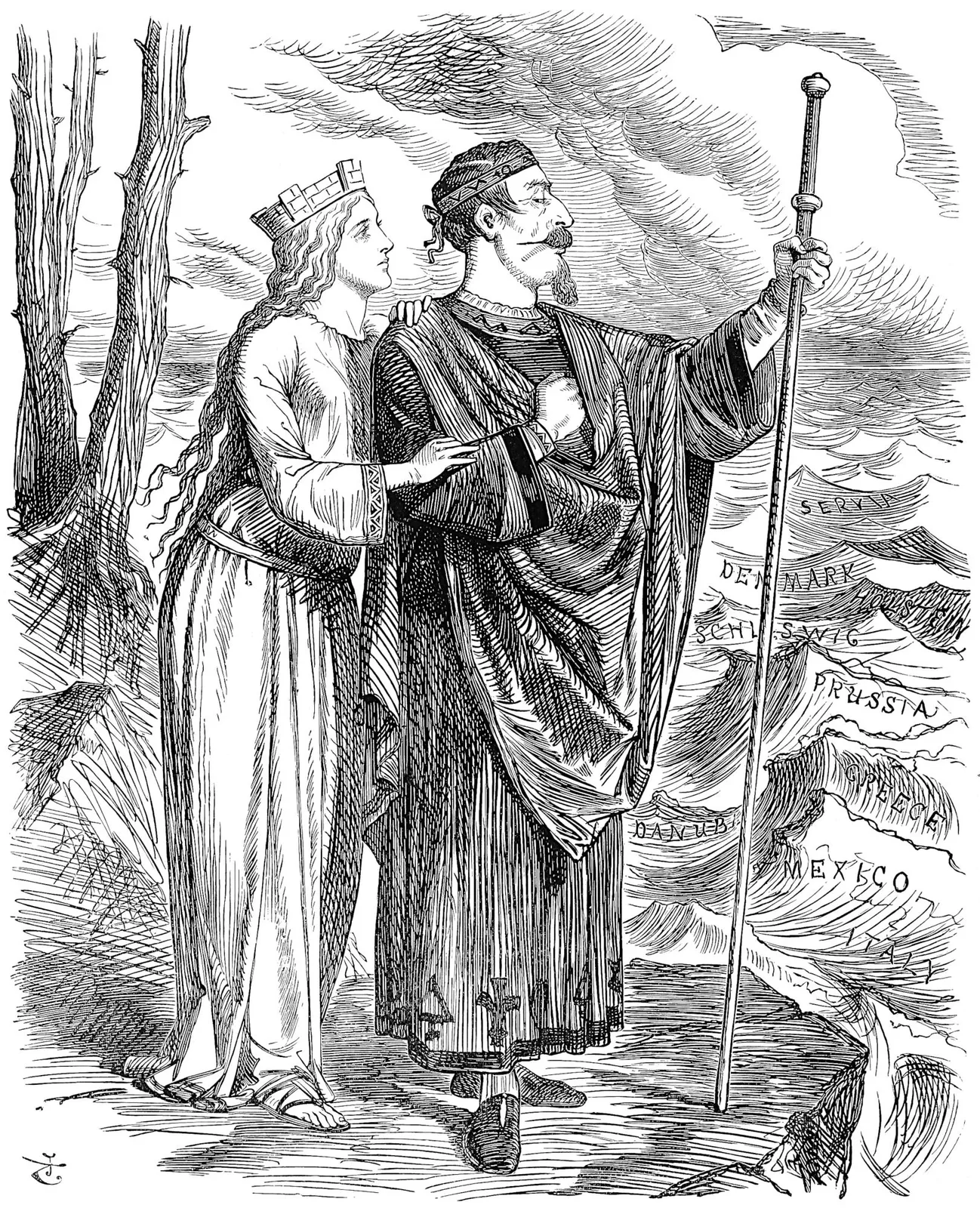
Miranda and Prospero
24
The signs of unrest amongst the European Nationalities were attributed to the unscrupulous policy of the Emperor of the French.  
Illustration — Contents. — from Cartoons
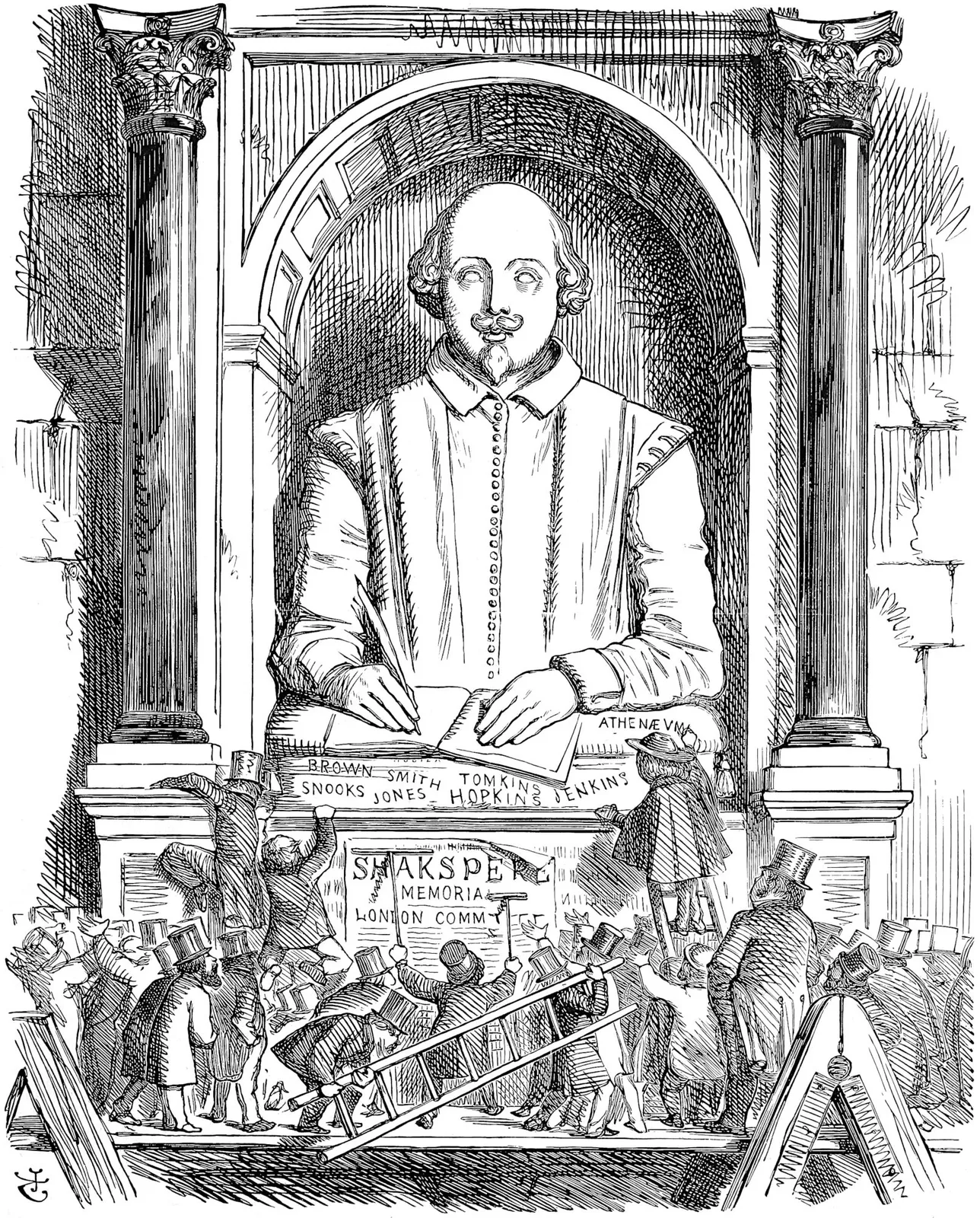
Shakspeare and the Pigmies
25
The celebration of the Tercentenary of the birth of Shakspeare was believed to have been productive of much self-advertisement amongst professional journalists.  
Illustration — Contents. — from Cartoons
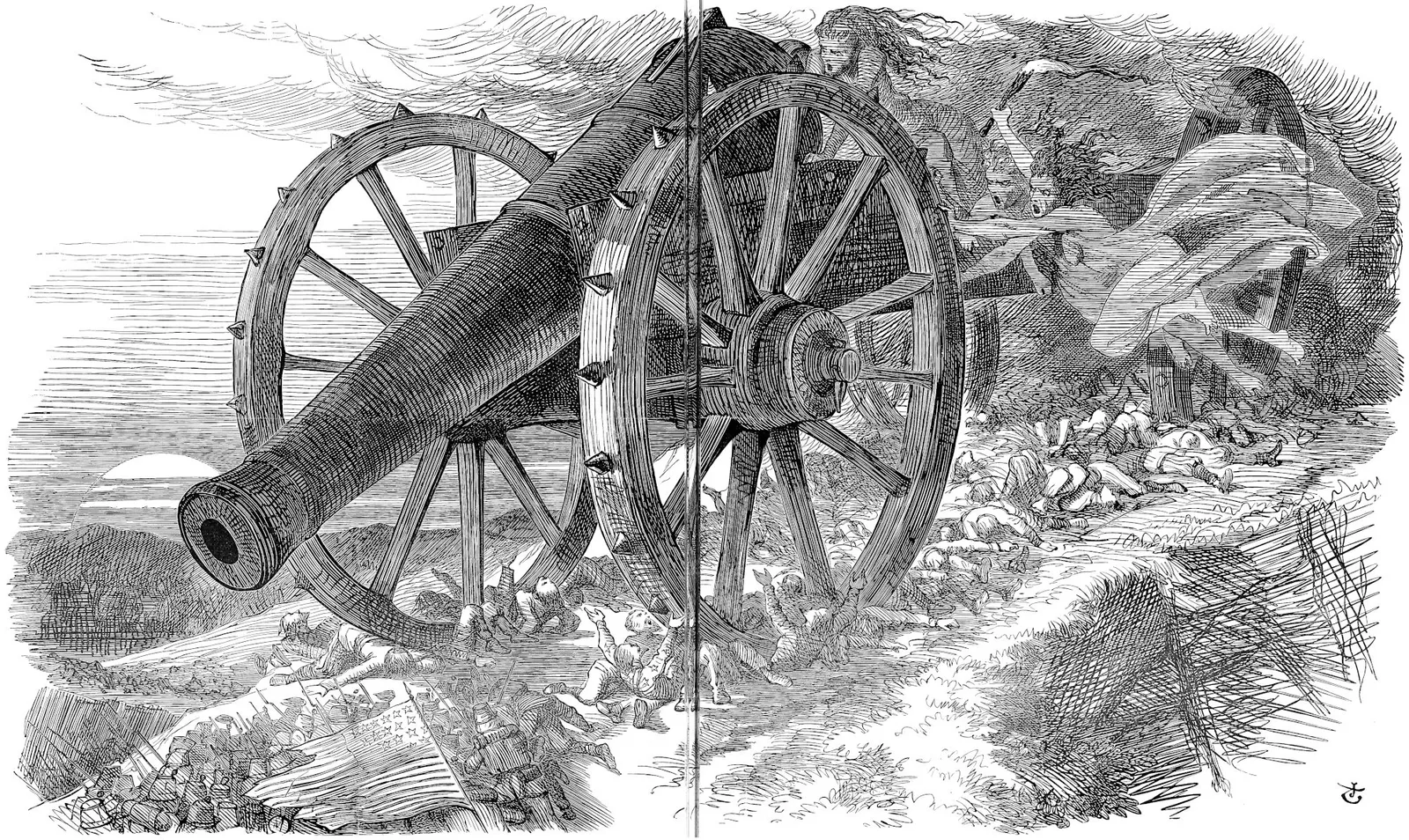
The American Juggernaut
26-27
The long-continued intensity of the Civil War in the United States had been accompanied by enormous losses on both sides.  
Illustration — Contents. — from Cartoons
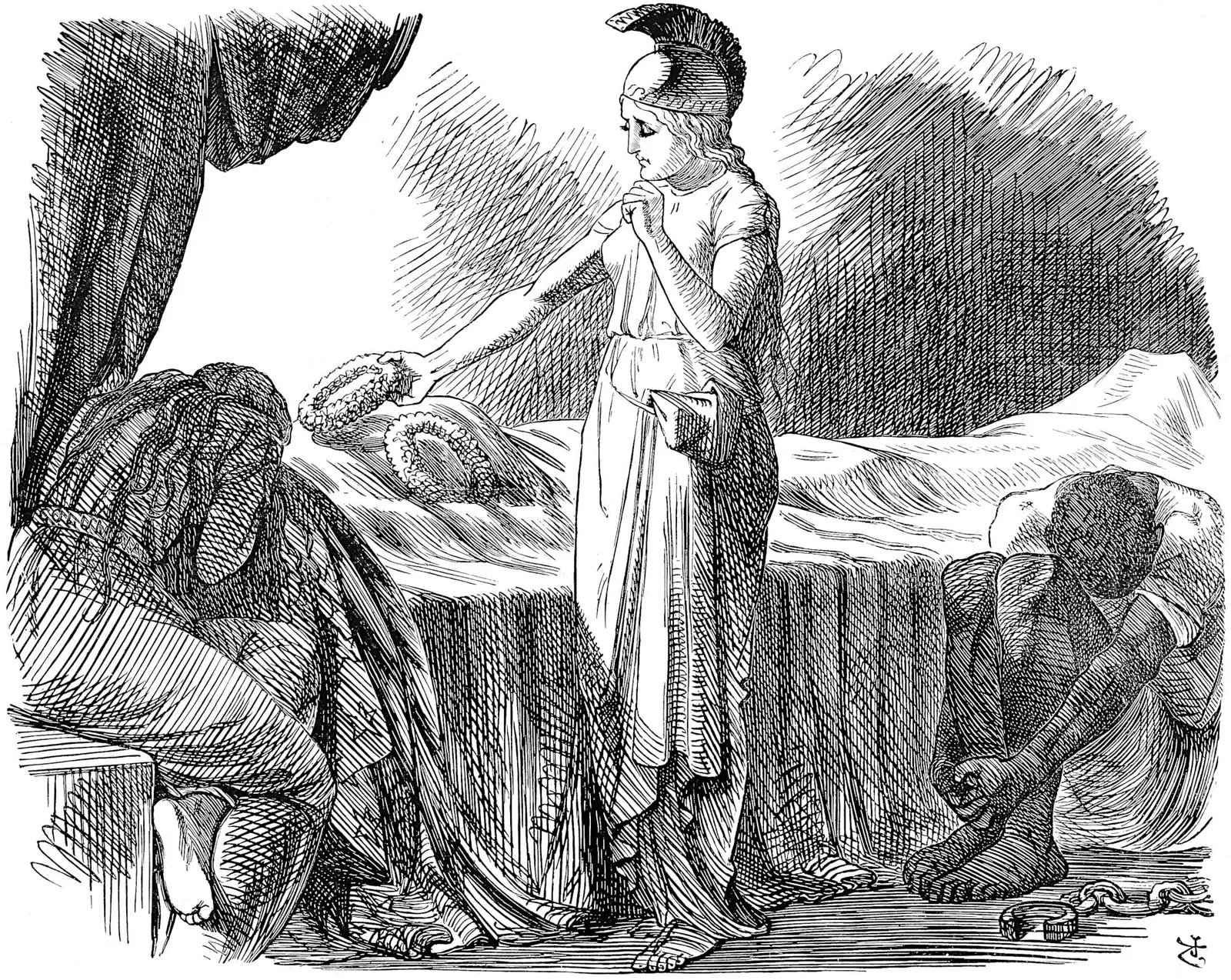
Britannia Sympathises with Columbia
28
The murder of Abraham Lincoln, President of the United States, after the conclusion of the Civil War, evoked widespread feelings of sympathy from all classes of society.  
Illustration — Contents. — from Cartoons
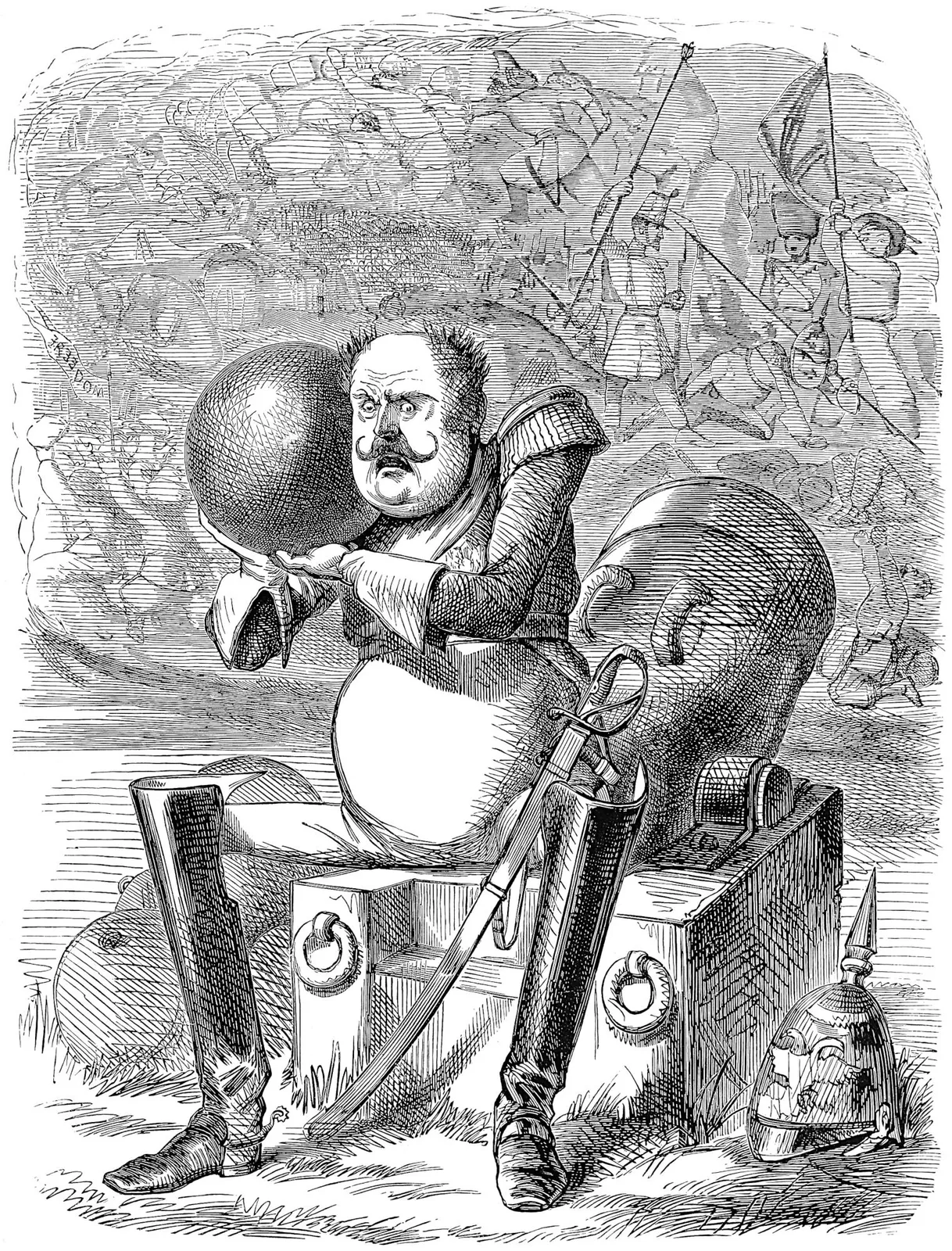
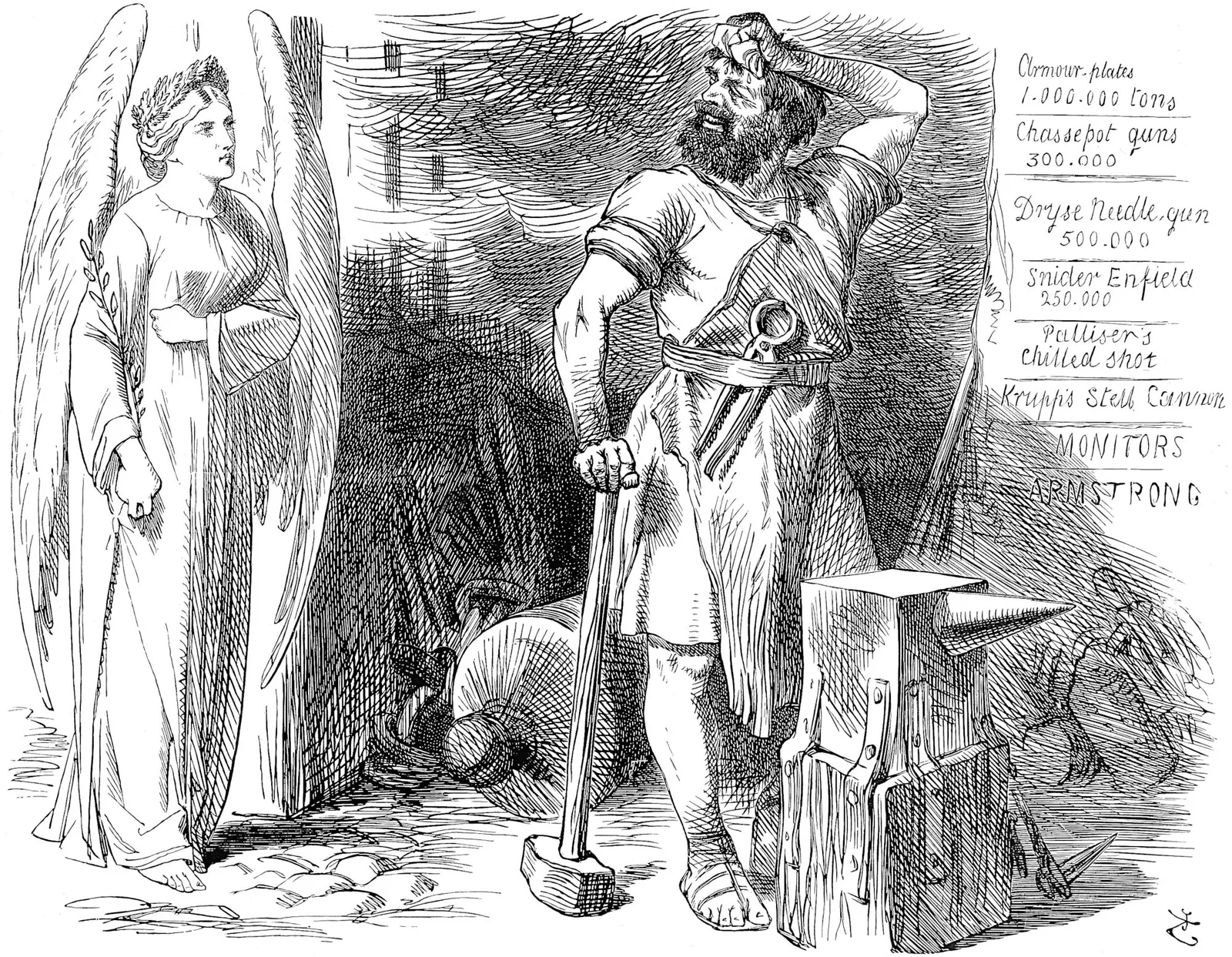
Vulcan’s Best Customer
29
The overmastering success of the Prussian Needle-gun in the Austro-Prussian War had given an immense impetus to the manufacture of arms of precision.  
Illustration — Contents. — from Cartoons
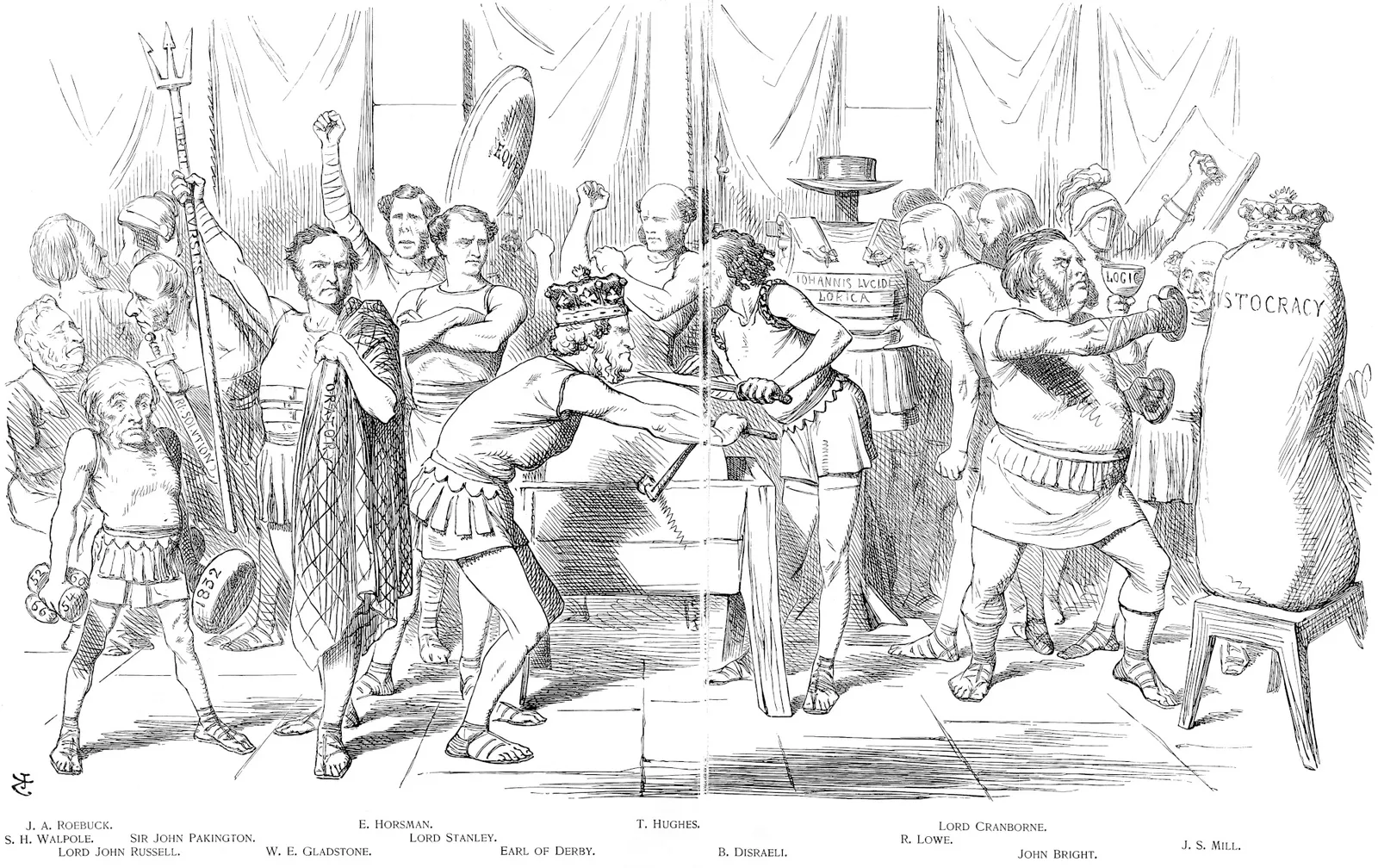
Gladiators preparing for the Arena
30-31
The Conservatives being at this time in office, Parliament opened with indications of an unusual bitterness of party warfare.  
Illustration — Contents. — from Cartoons
“Onward!”
32
Impressed by the indications of unrest in France, the Emperor had proposed to grant a modified form of Constitutional Government.  
Illustration — Contents. — from Cartoons
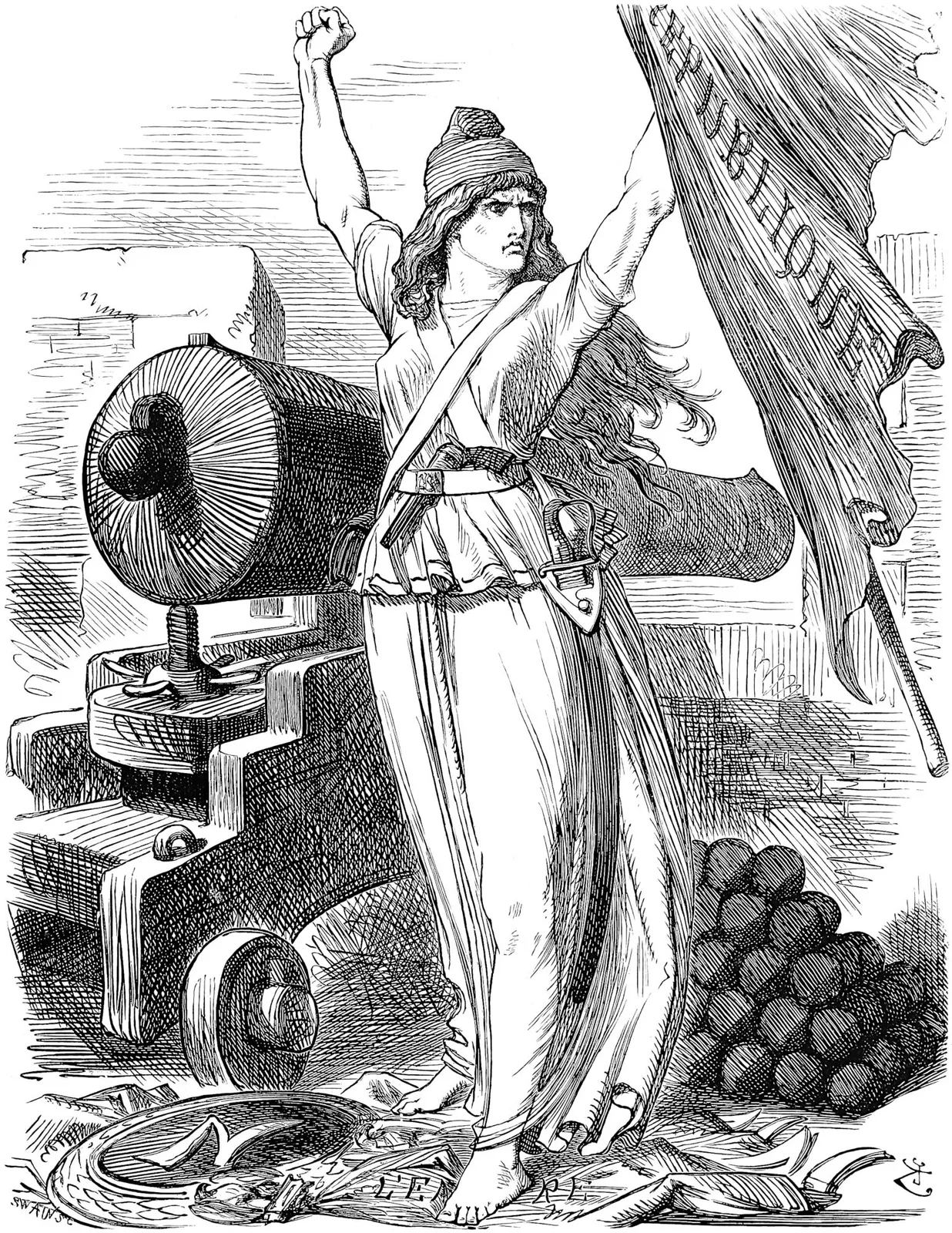
France, Sept. 4, 1870
33
The surrender of the French Emperor at Sedan was followed by the fall of the Empire and the establishment of the Republic at Paris.  
Illustration — Contents. — from Cartoons
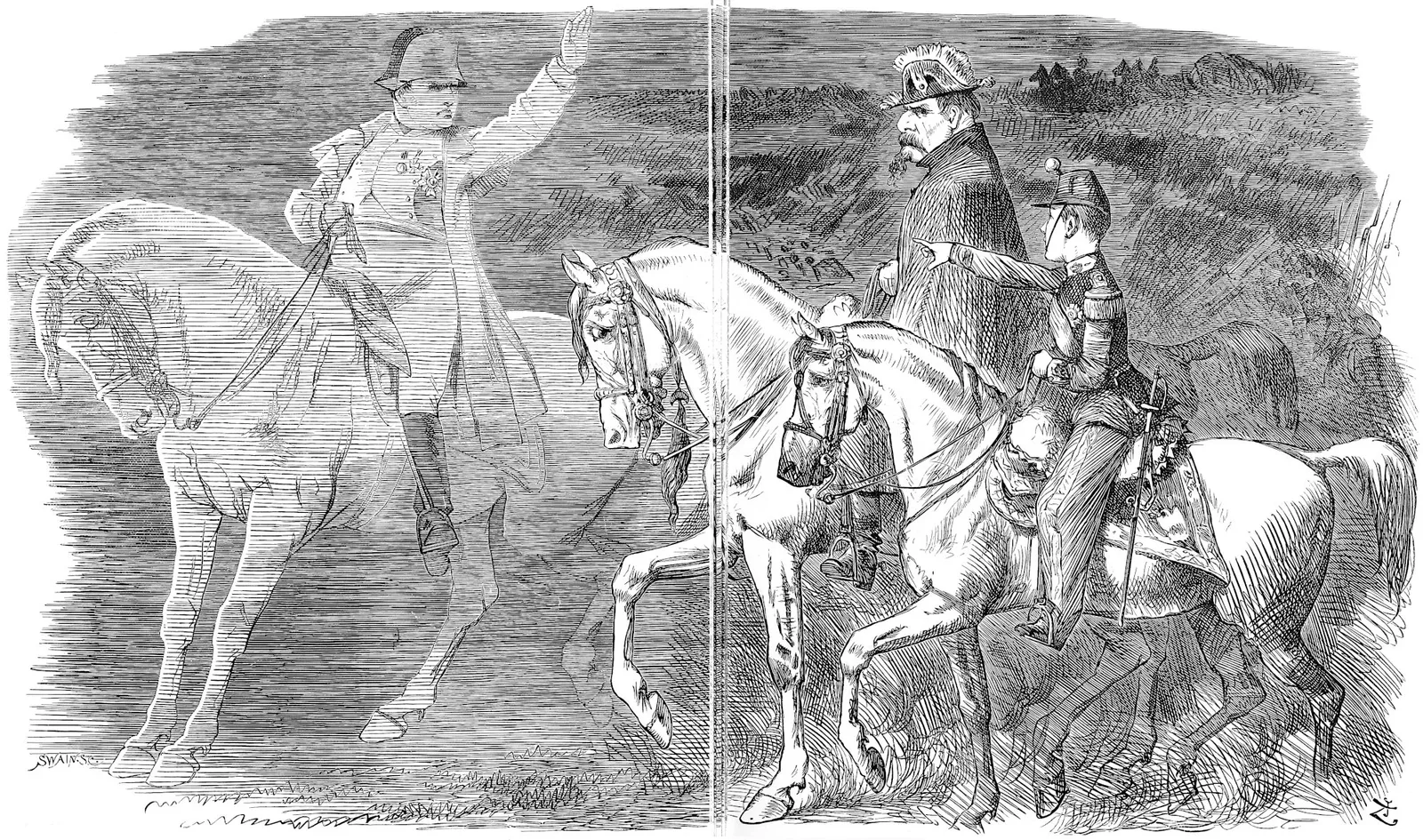
A Vision on the Way. “BEWARE!”
34-35
France had declared war against Germany, and the Emperor Napoleon and his son had left Paris to take command. The shade of the Great Napoleon forebodes the disasters which followed.  
Illustration — Contents. — from Cartoons
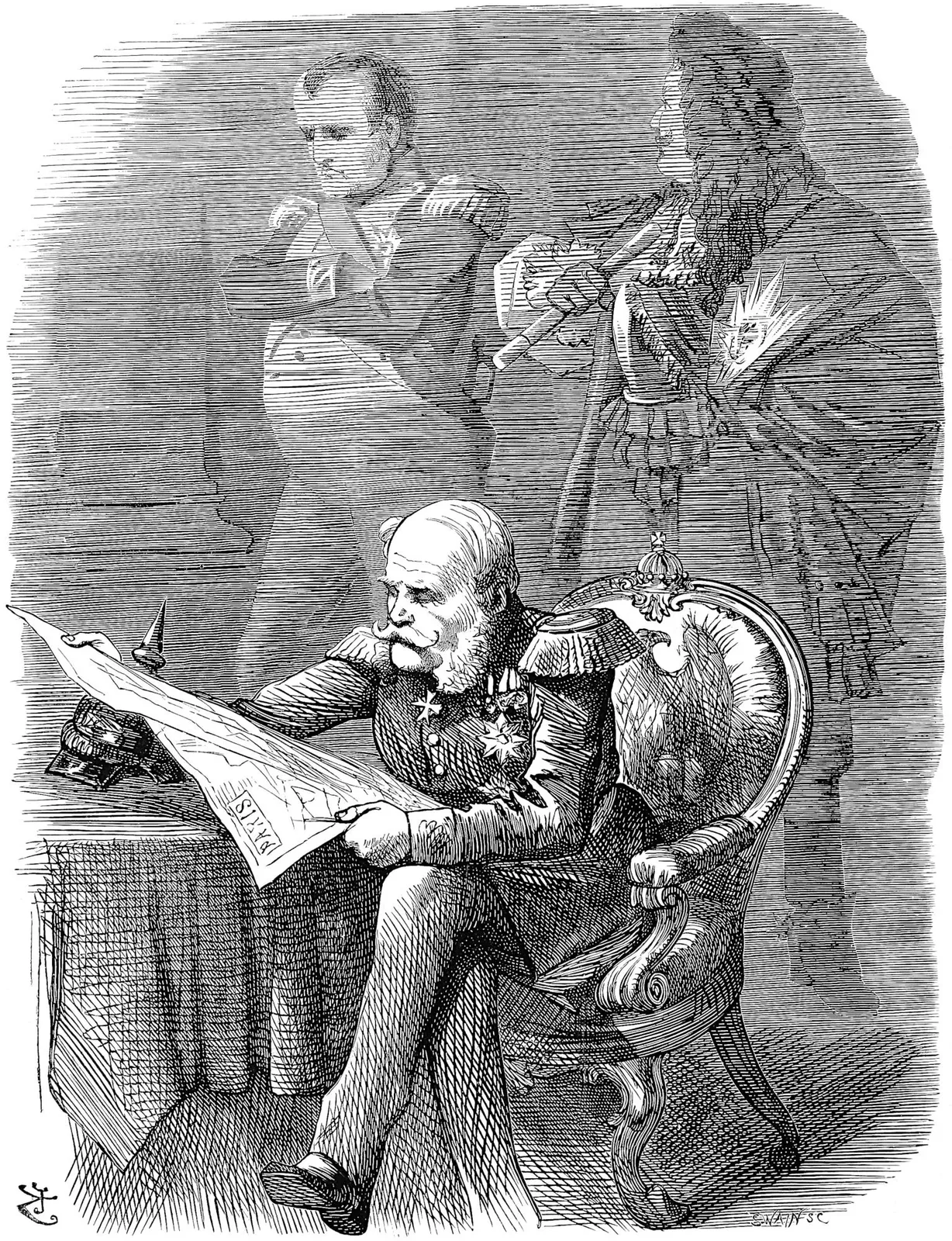
Versailles, Oct. 5, 1870
36
Versailles from this date became the head-quarters of the German army investing Paris, and the Prussian King was here proclaimed Emperor in Germany.  
Illustration — Contents. — from Cartoons
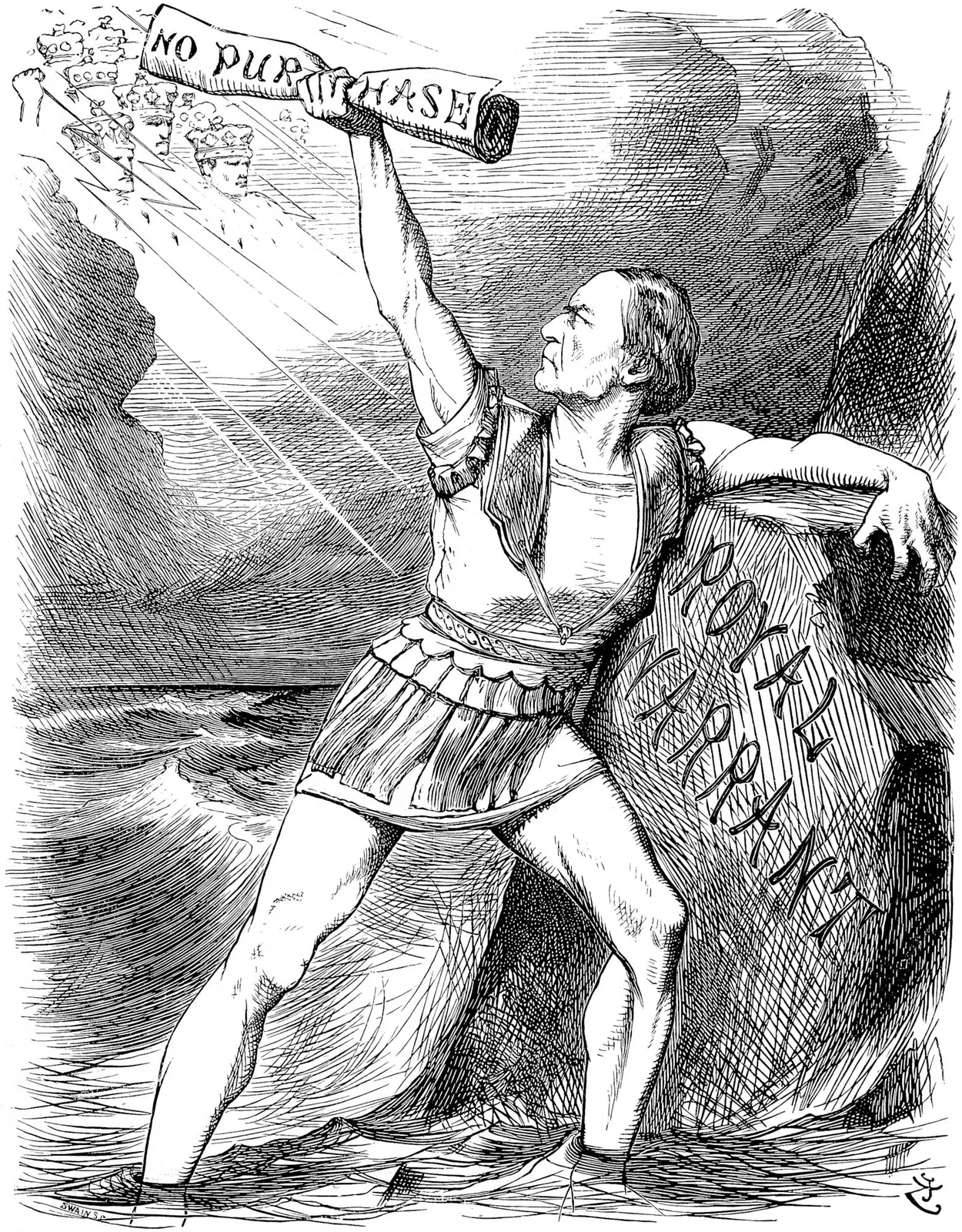
Ajax Defying the Lightning
37
Mr. Gladstone, after being defeated on the question of Abolition of Purchase, advised the Queen to put an end to purchase by Royal Warrant.  
Illustration — Contents. — from Cartoons
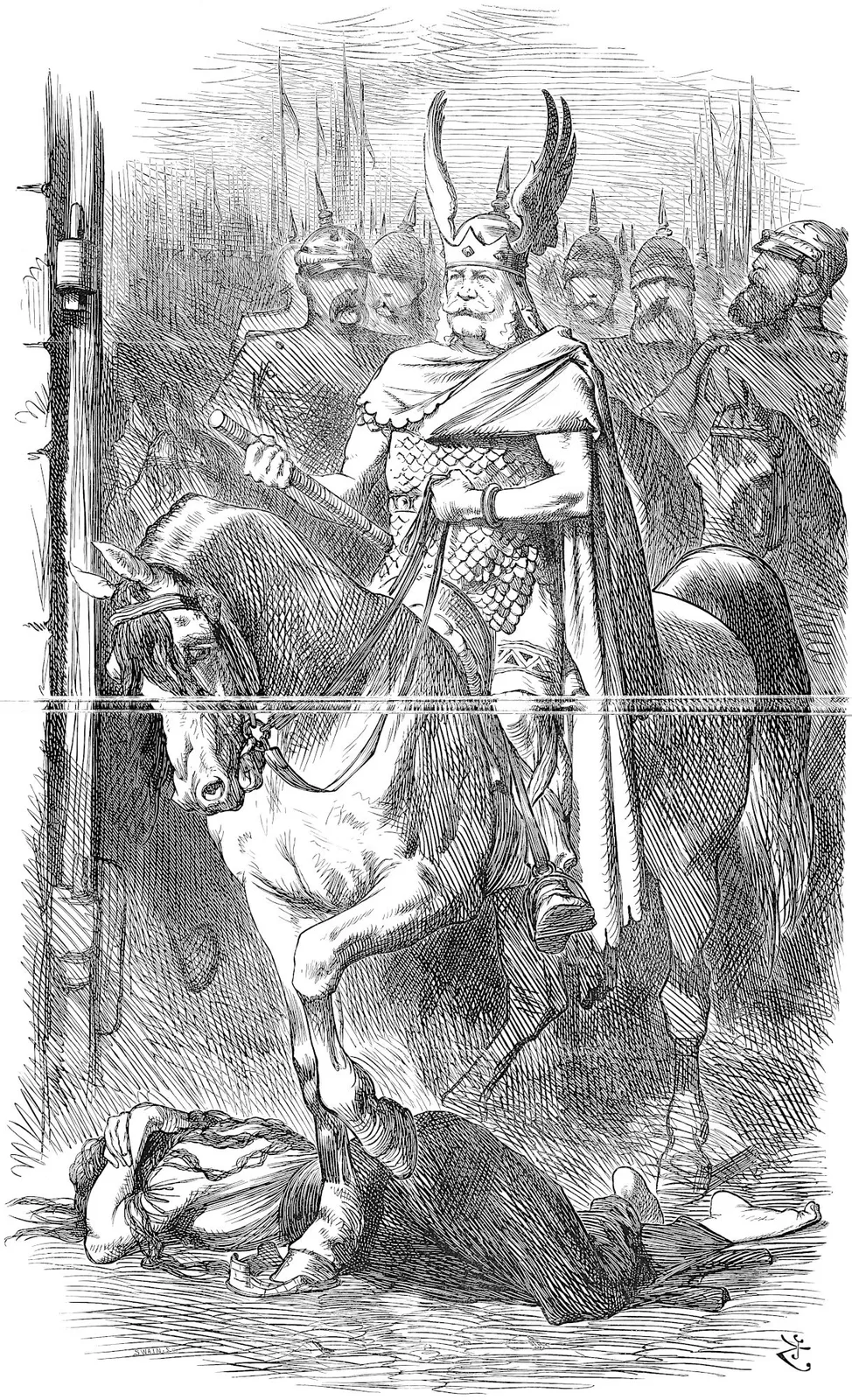
“Vae Victis!”
38-39
On March 1st, after the conclusion of Peace at Versailles, the German army marched into Paris.  
Illustration — Contents. — from Cartoons
Suspense
40
The country was in great anxiety on account of the critical condition of the Prince of Wales.  
Illustration — Contents. — from Cartoons
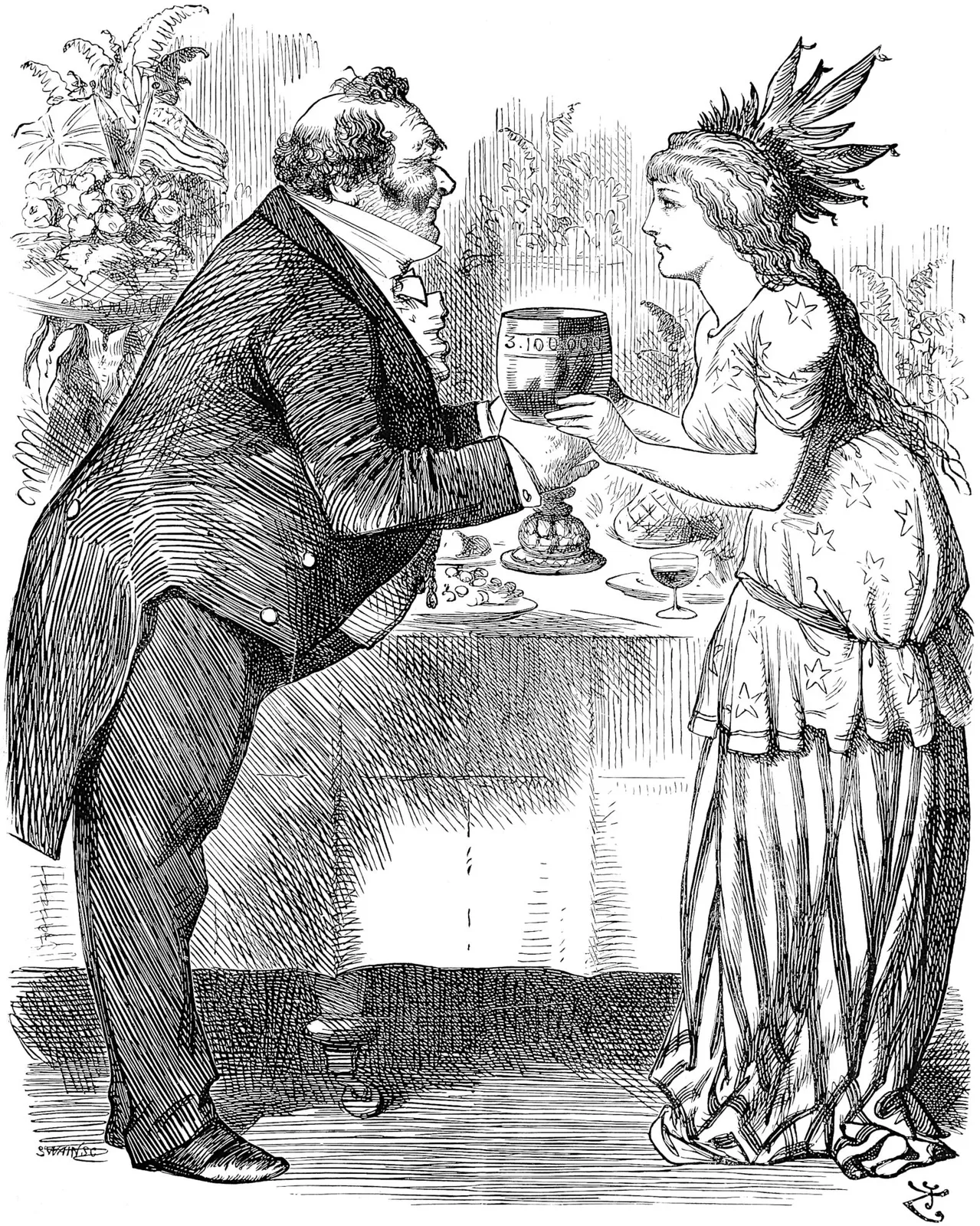
The Loving Cup
41
In respect to the “Alabama” Claims Great Britain was judged responsible for a sum of 15,500,000 dollars in gold, in full satisfaction of all claims.  
Illustration — Contents. — from Cartoons
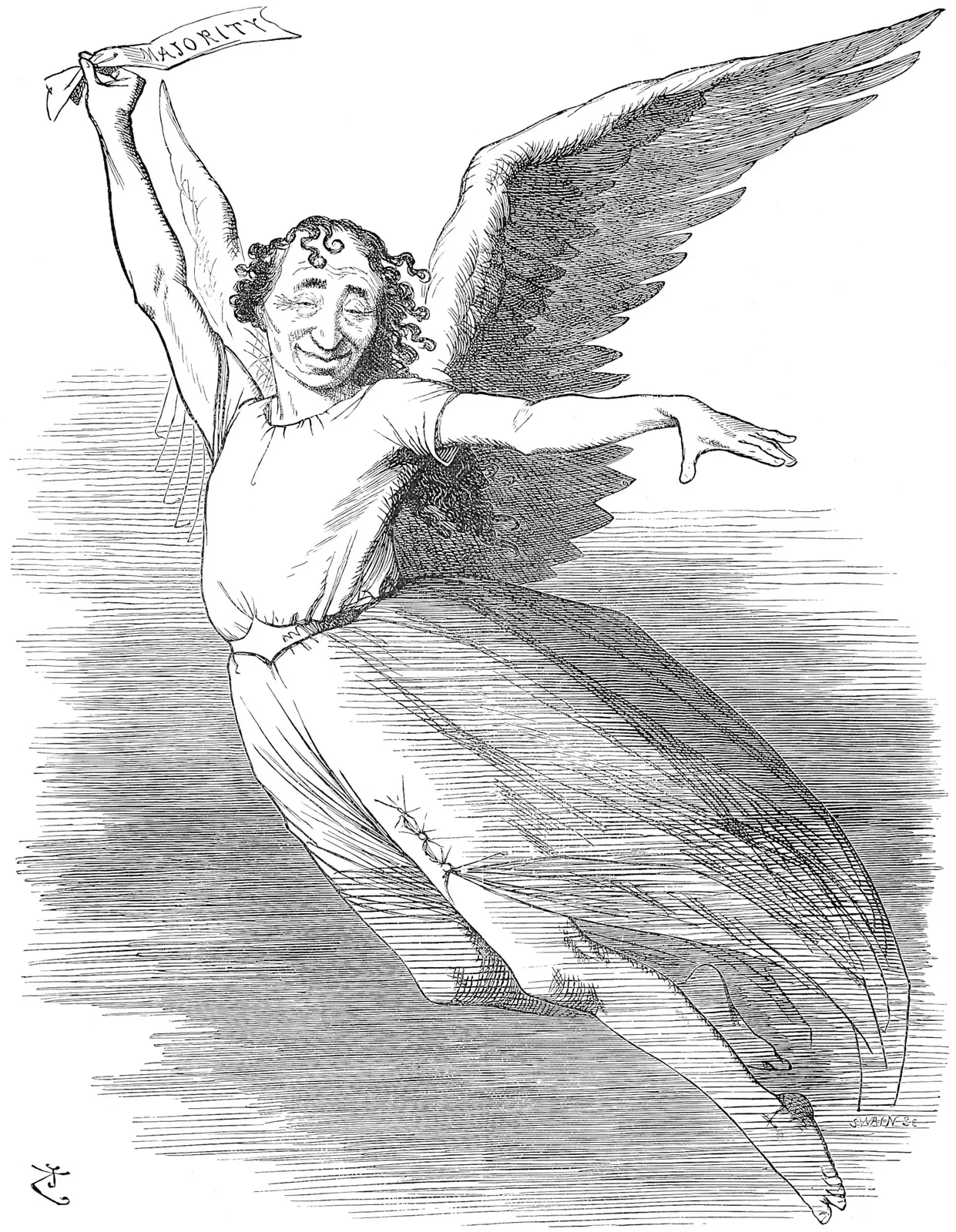
Paradise and the Peri
42
The General Election had given the Conservatives a majority, and Mr. Disraeli became Premier for the second time.  
Illustration — Contents. — from Cartoons
Dearly Bought
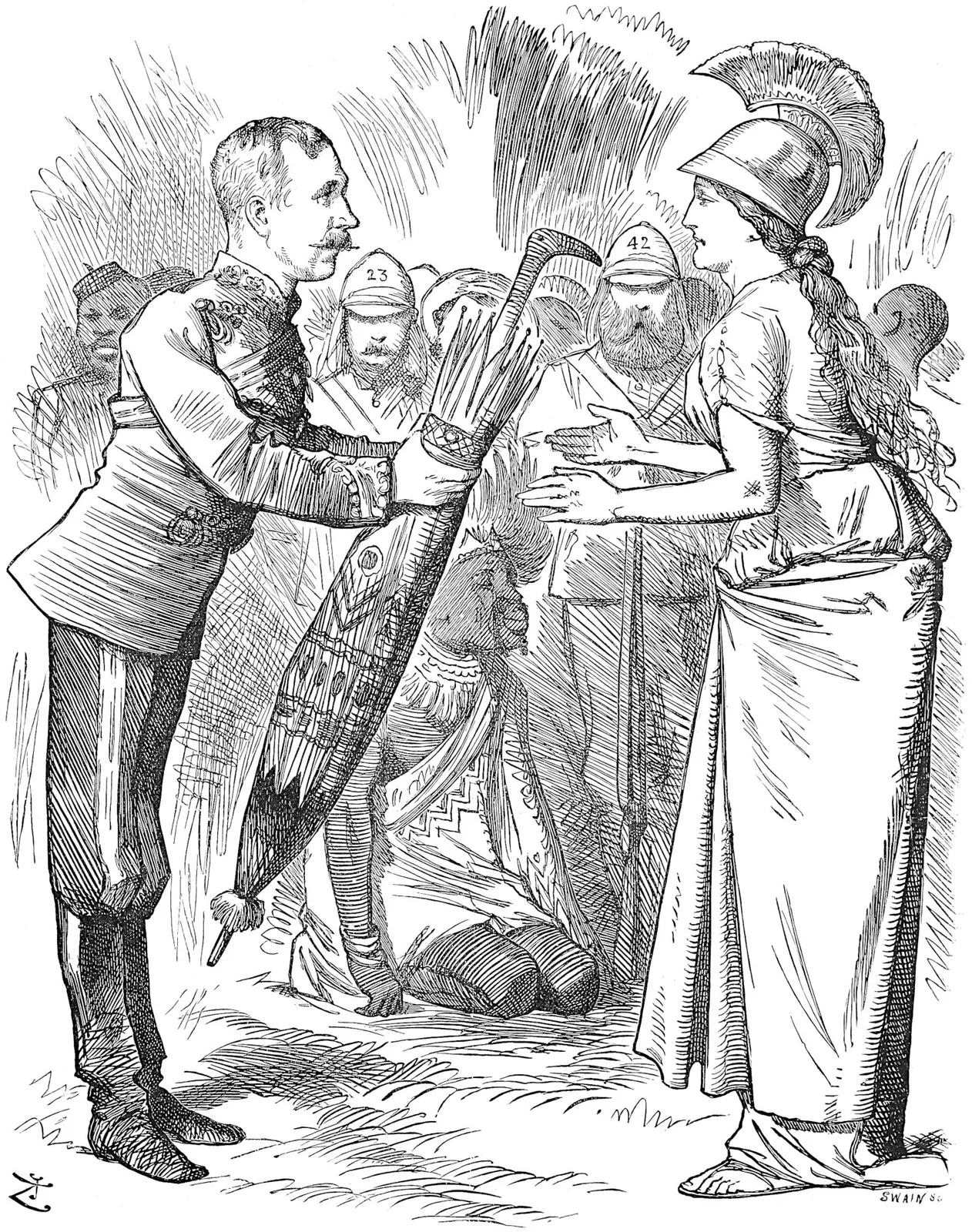
43
Sir Garnet Wolseley’s march to Coomassie involved much loss of life, with little more result than the possession of the Umbrella, the symbol of Ashanti sovereignty.  
Illustration — Contents. — from Cartoons
The Damp Roman Candle
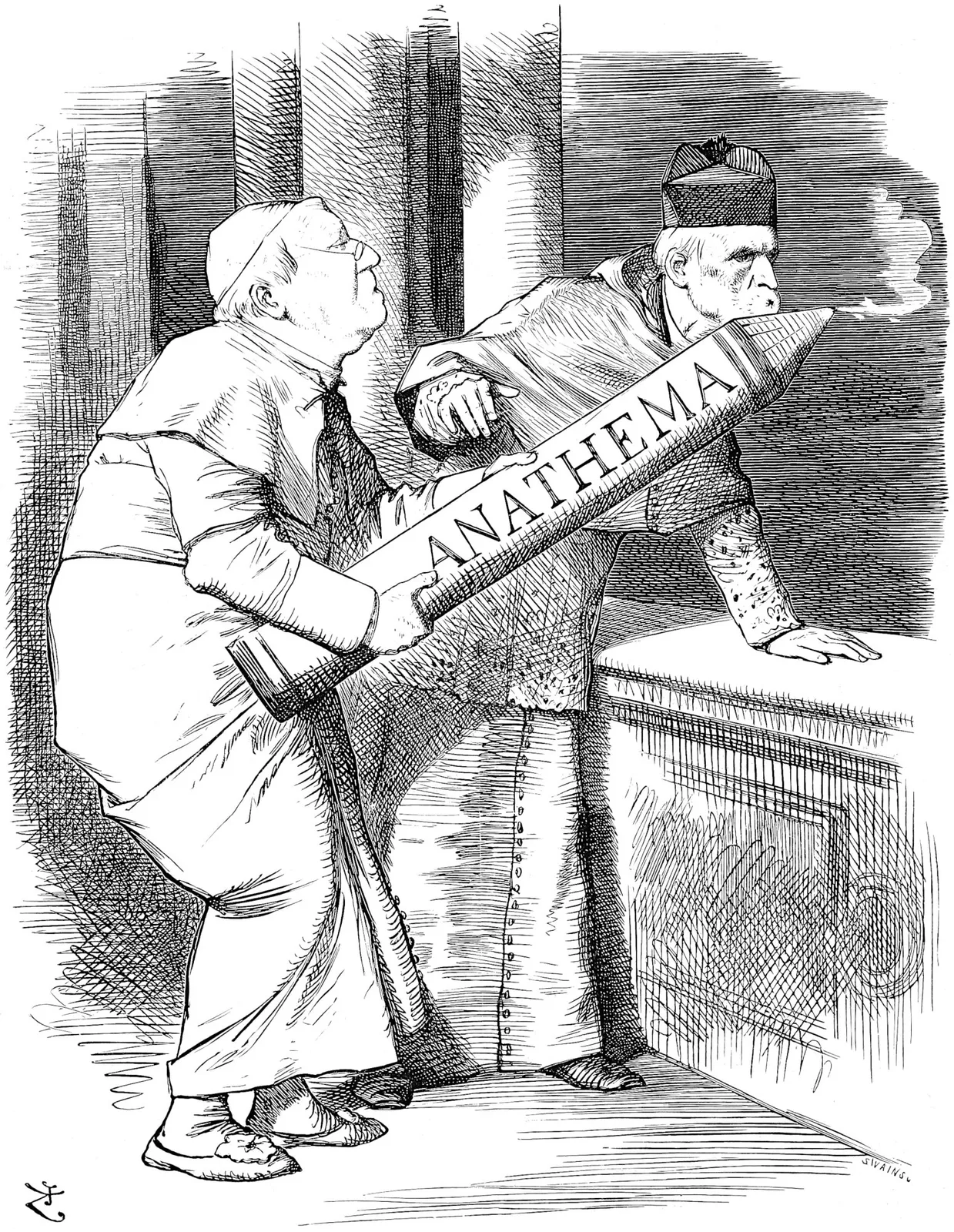
44
The fulminations of the Vatican against the Anti-Infallibility pamphlet of Mr. Gladstone had failed to produce the effect intended.  
Illustration — Contents. — from Cartoons
“Mosé in Egitto!!!”
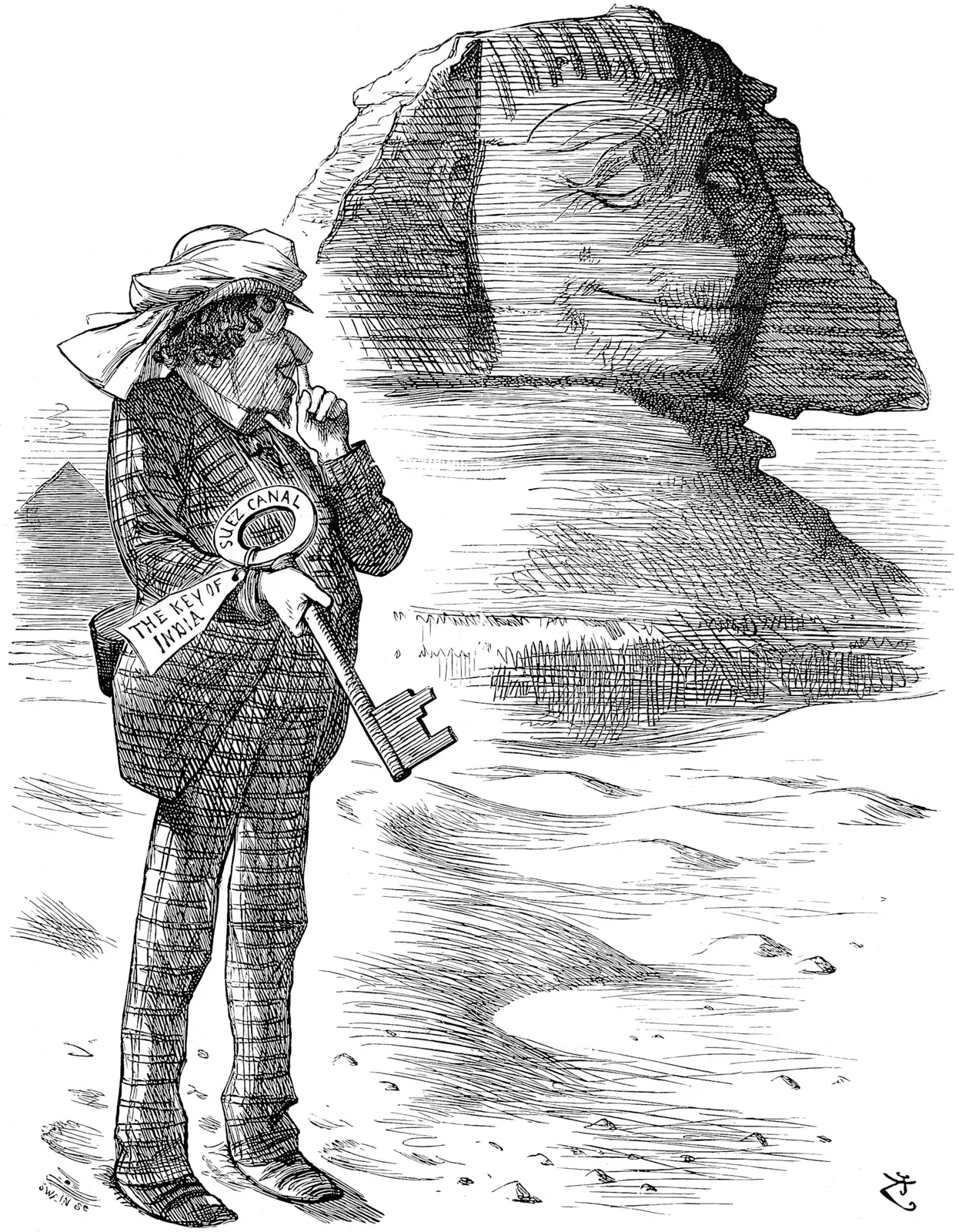
45
Mr. Disraeli had successfully effected the purchase from the Khedive, for the sum of £4,000,000, of all his shares in the Suez Canal.  
Illustration — Contents. — from Cartoons
Waiting to be Won
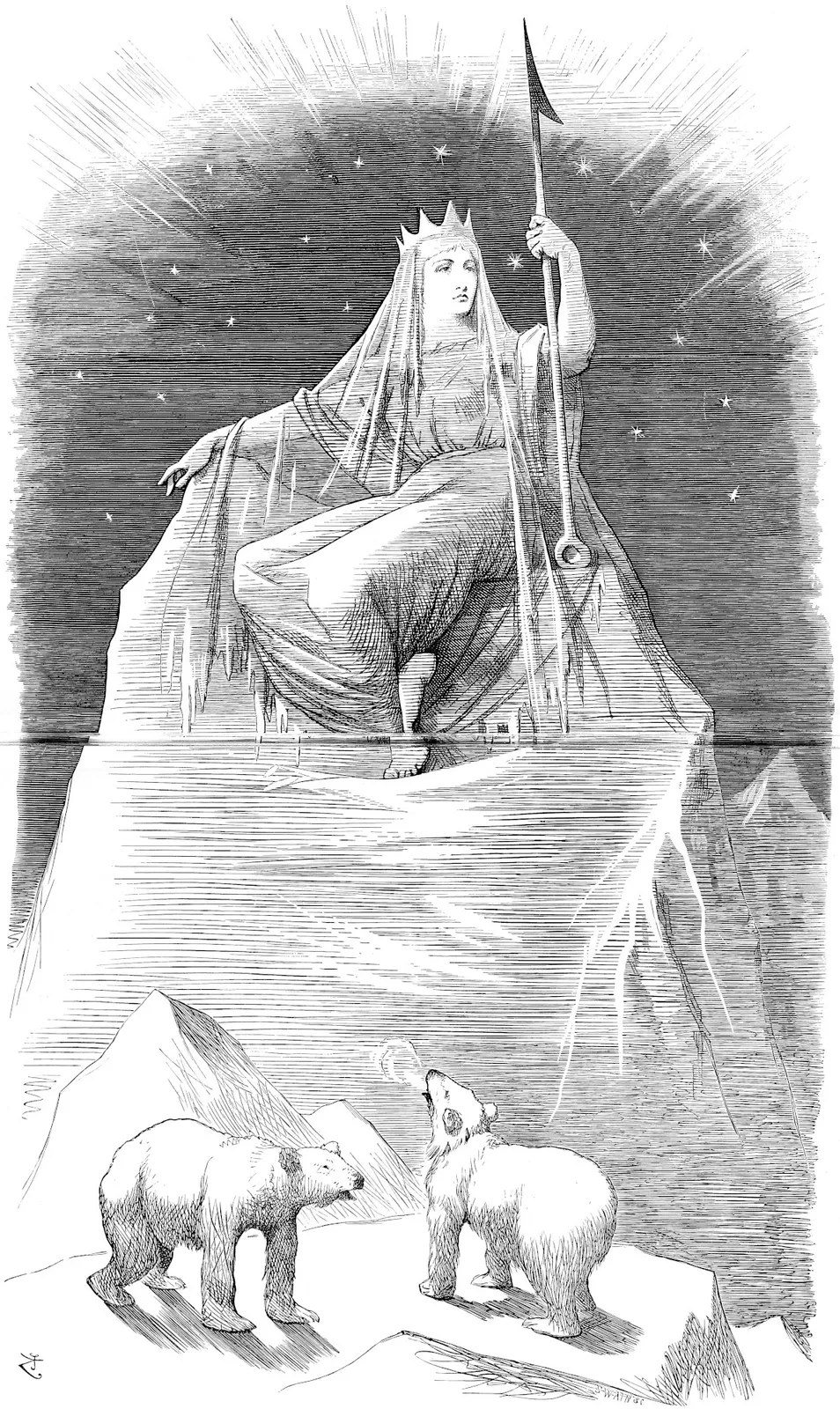
46-47
An Arctic expedition in search of the North Pole, consisting of H.M. ships Alert and Discovery, had sailed on the 29th of May.  
Illustration — Contents. — from Cartoons
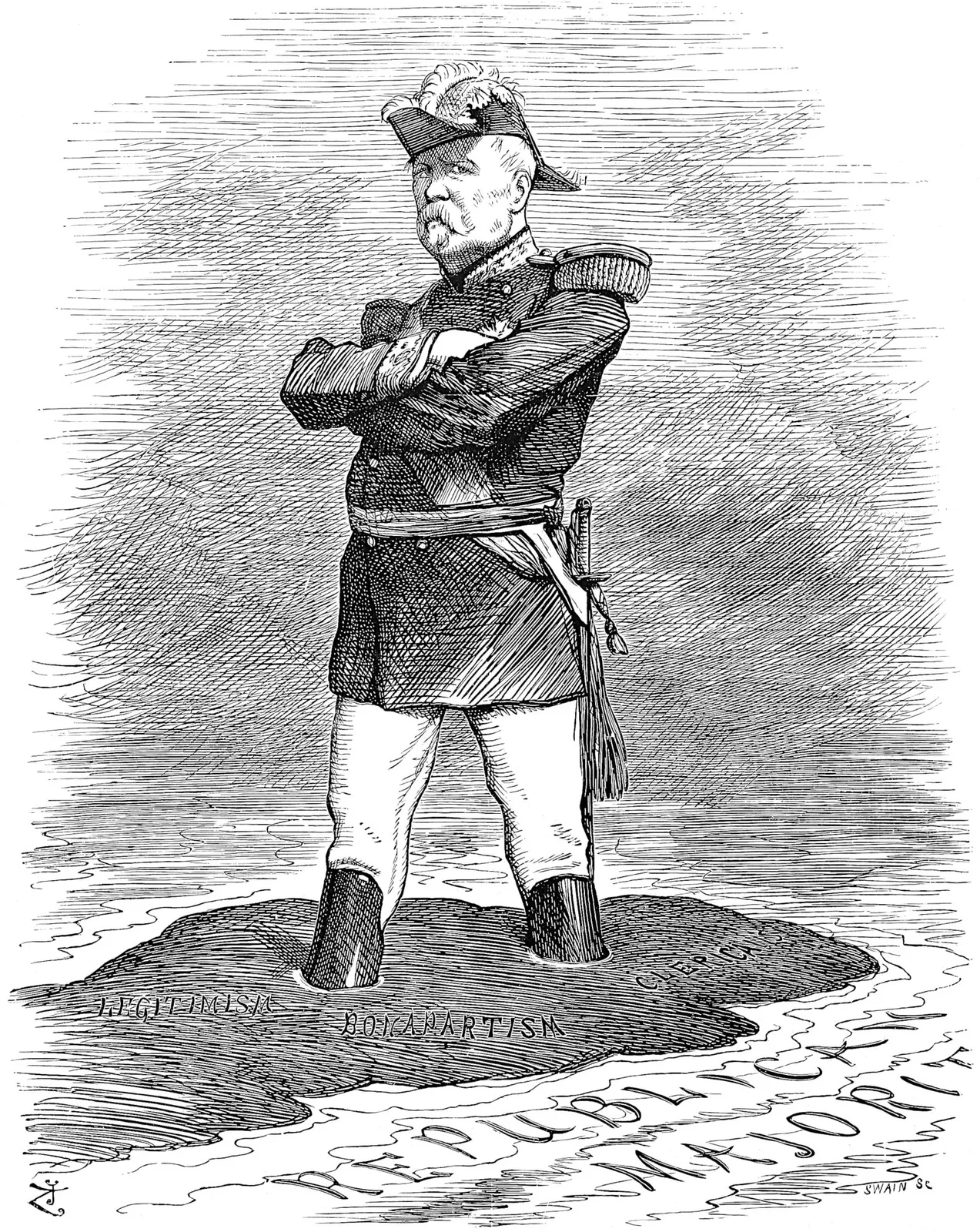
Stuck in the Mud
48
After the death of M. Thiers, Marshal MacMahon maintained a stubborn attitude; he was believed to be under the influence of reactionary advisers.  
Illustration — Contents. — from Cartoons
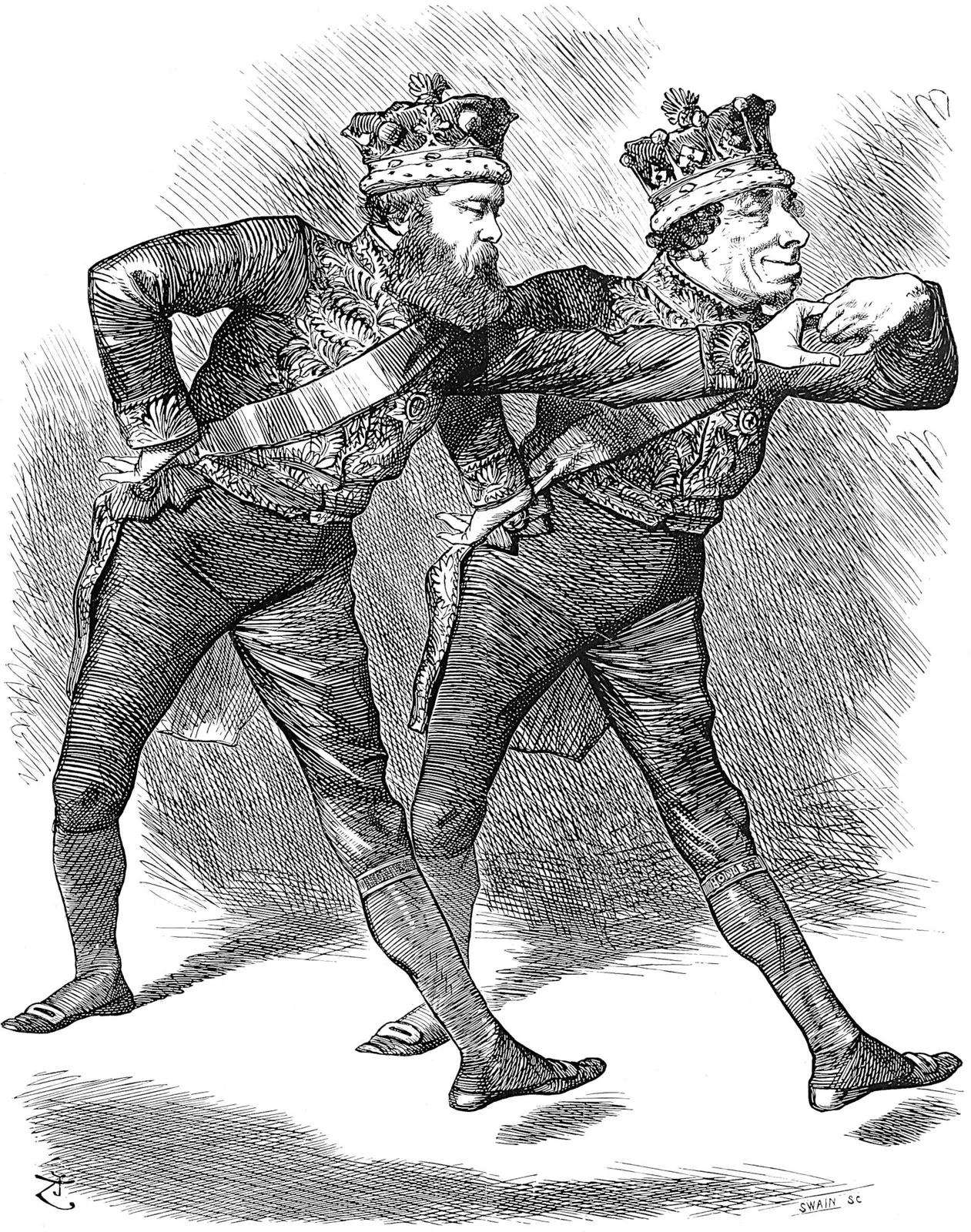
The “Pas de Deux!”
49
Upon their return from Berlin Lords Beaconsfield and Salisbury were invested with the Order of the Garter.  
Illustration — Contents. — from Cartoons
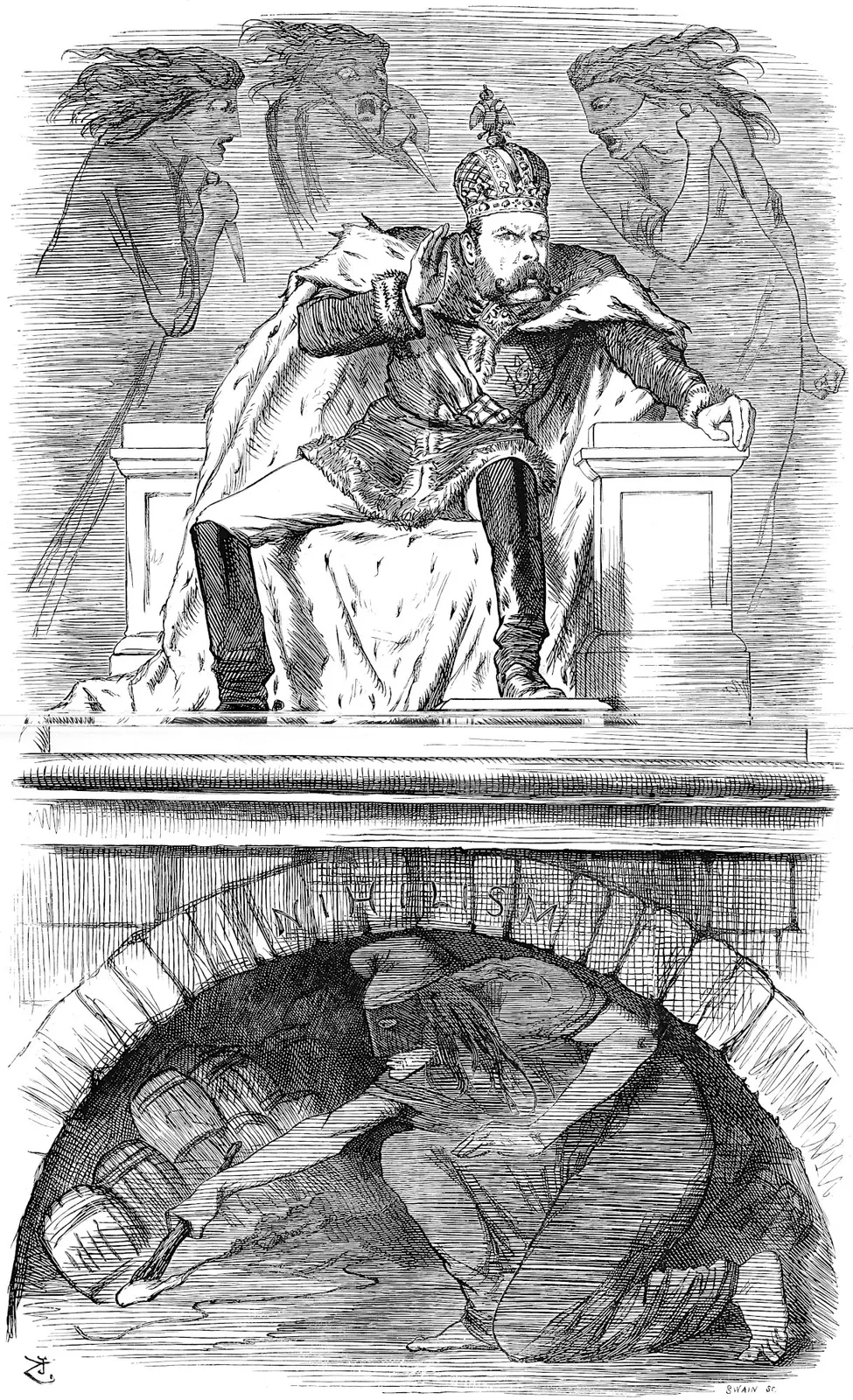
Imperium et Libertas!
50-51
An adaptation of Lord Beaconsfield’s phrase, suggested by the state of things in Russia, where there had been another Nihilist attempt upon the life of the Emperor.  
Illustration — Contents. — from Cartoons
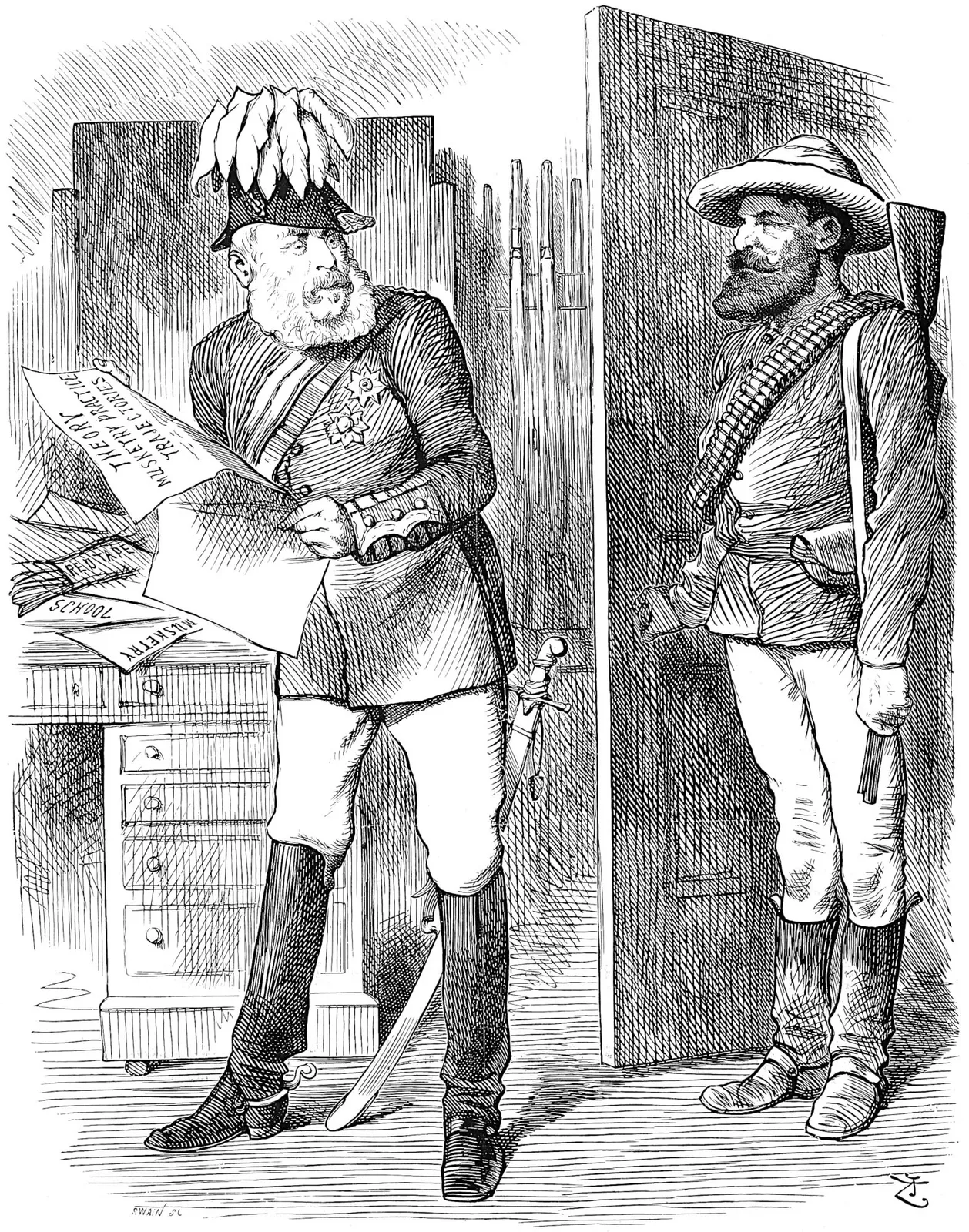
The School of Musketry
52
At the battle of Majuba Hill the Boers had shown their superiority in marksmanship. “Mr. Punch” points the lesson for the benefit of the Duke of Cambridge.  
Illustration — Contents. — from Cartoons
A Common Sorrow
53
General Garfield, President of the United States, had succumbed to the effect of the shot of the assassin Guiteau, who had fired at him on July 2nd.  
Illustration — Contents. — from Cartoons
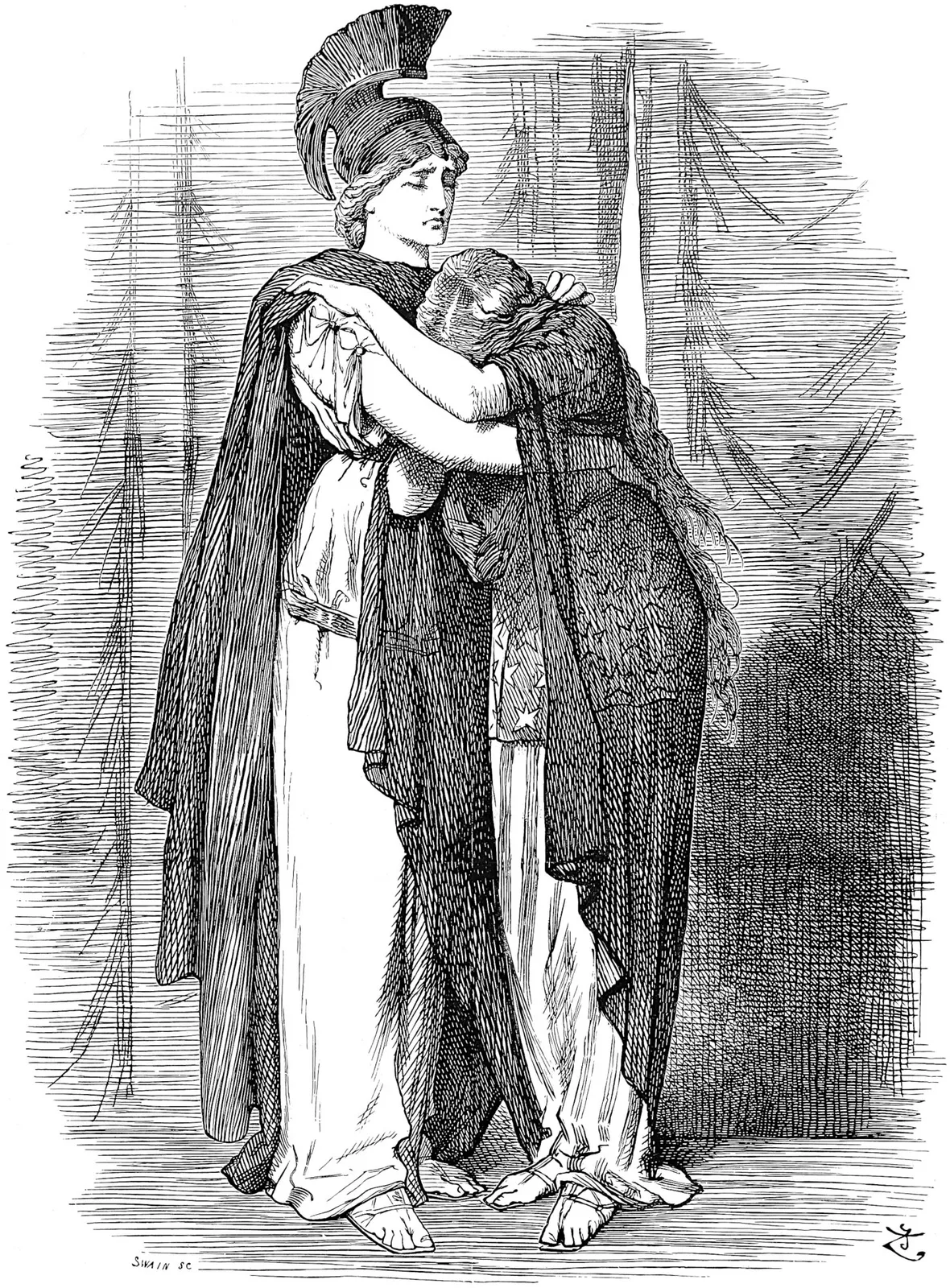
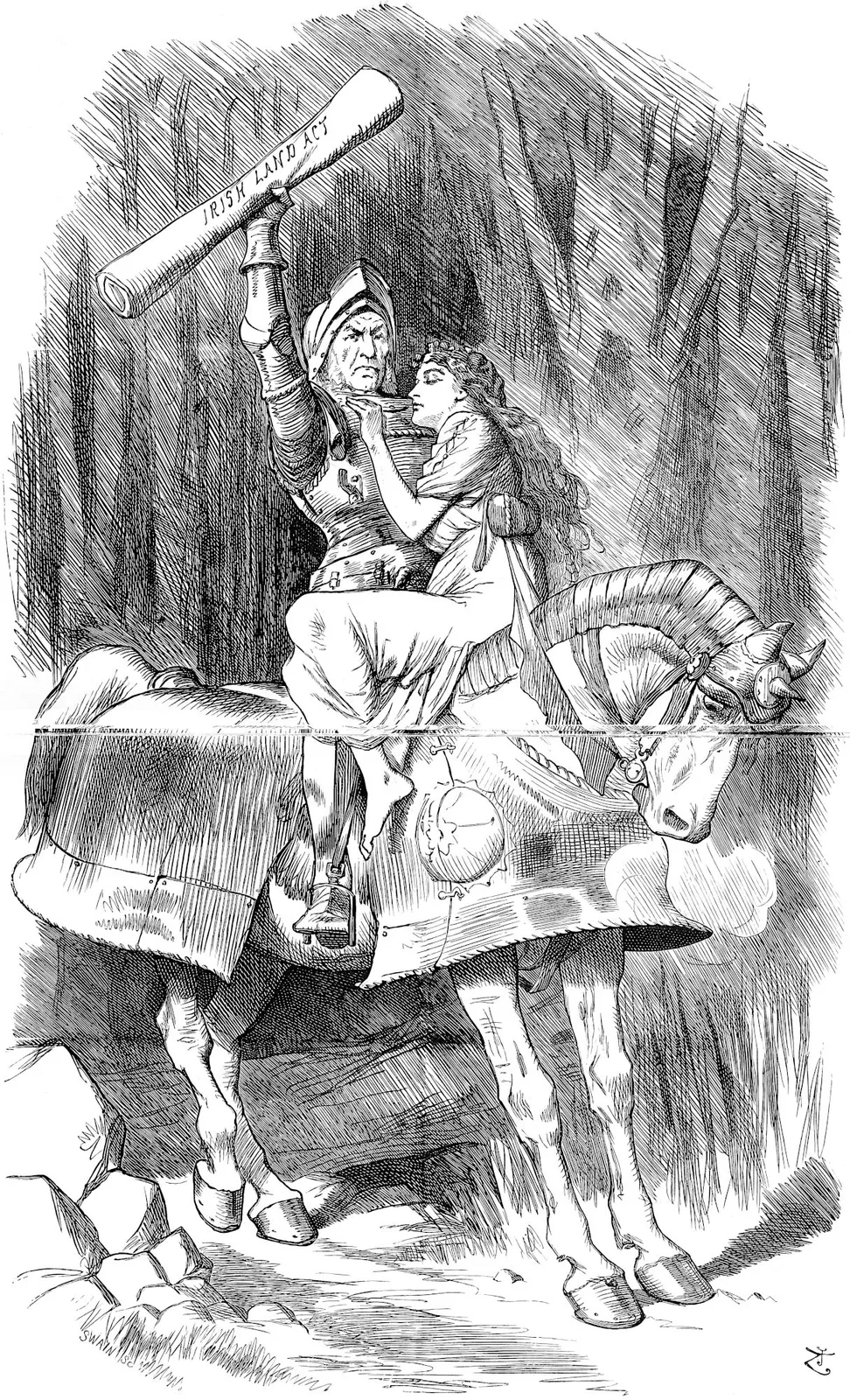
“Out of the Wood!”
54-55
The Irish Land Bill, designed in the interests of Hibernia, after many difficulties had finally passed.  
Illustration — Contents. — from Cartoons
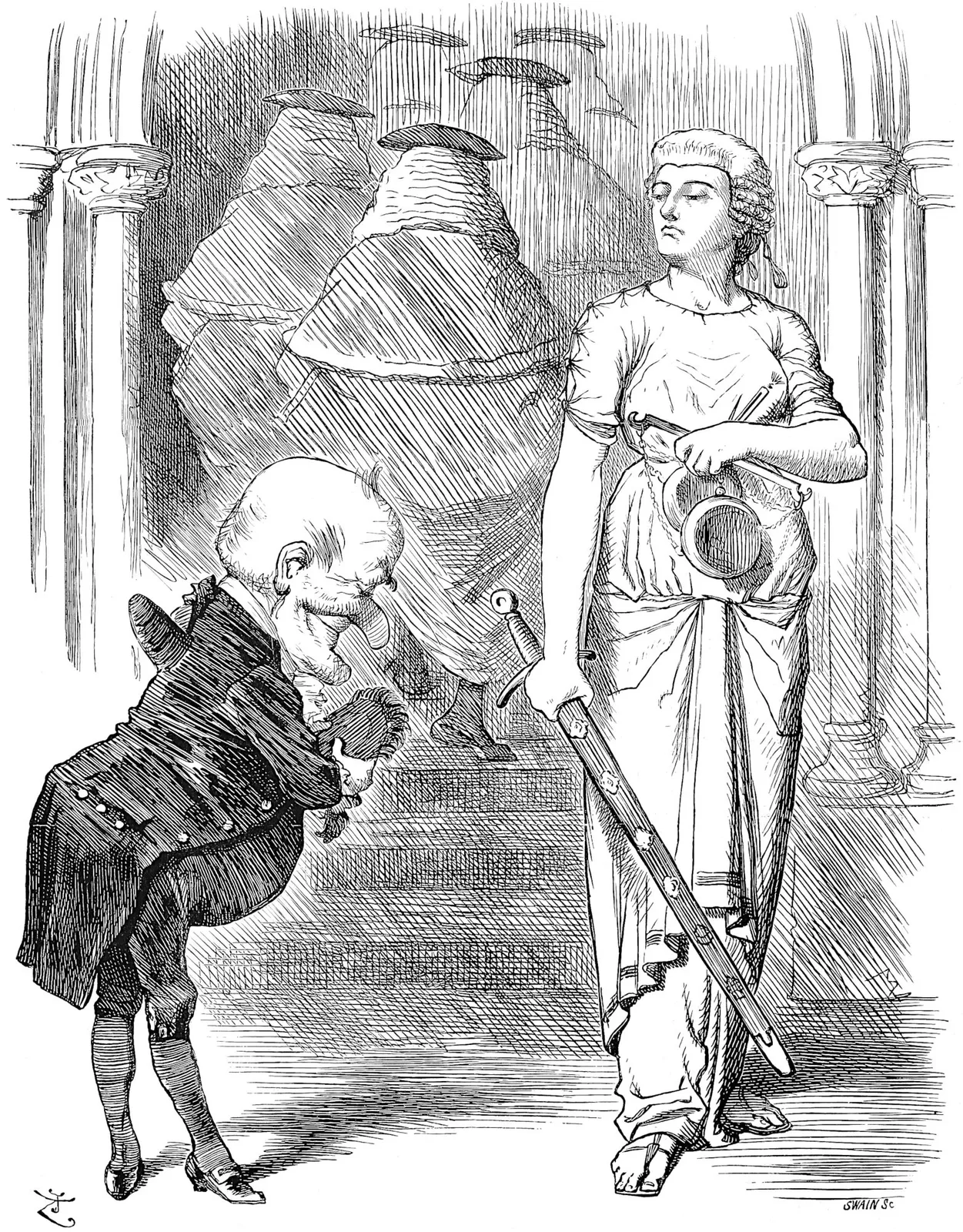
Change of Address
56
The new Royal Courts of Justice in the Strand were opened by Queen Victoria on the 4th December.  
Illustration — Contents. — from Cartoons
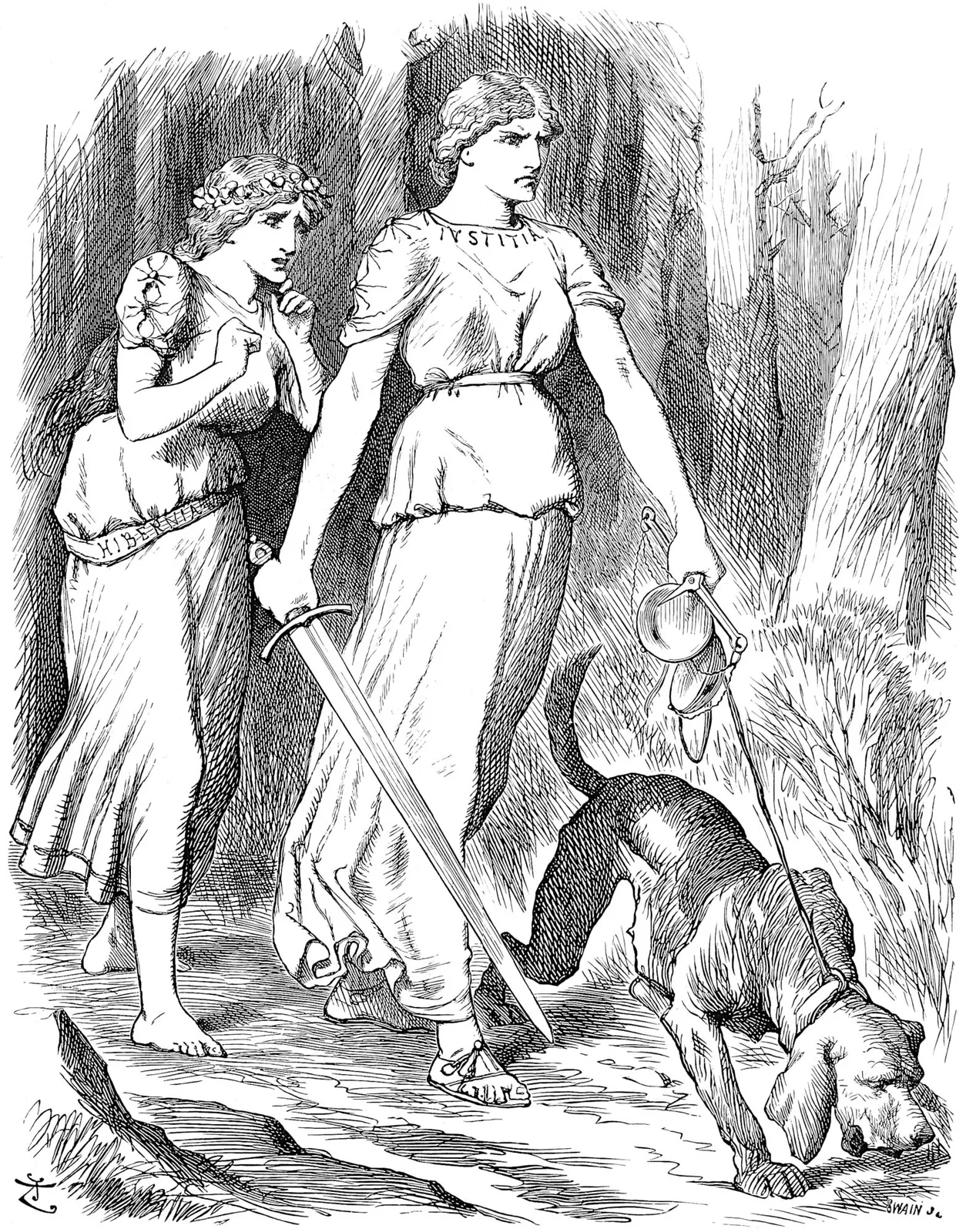
On the Trail
57
Seventeen persons suspected of complicity with the Phœnix Park murders had been arrested. There was a good hope of at length securing the clue to the series of crimes.  
Illustration — Contents. — from Cartoons
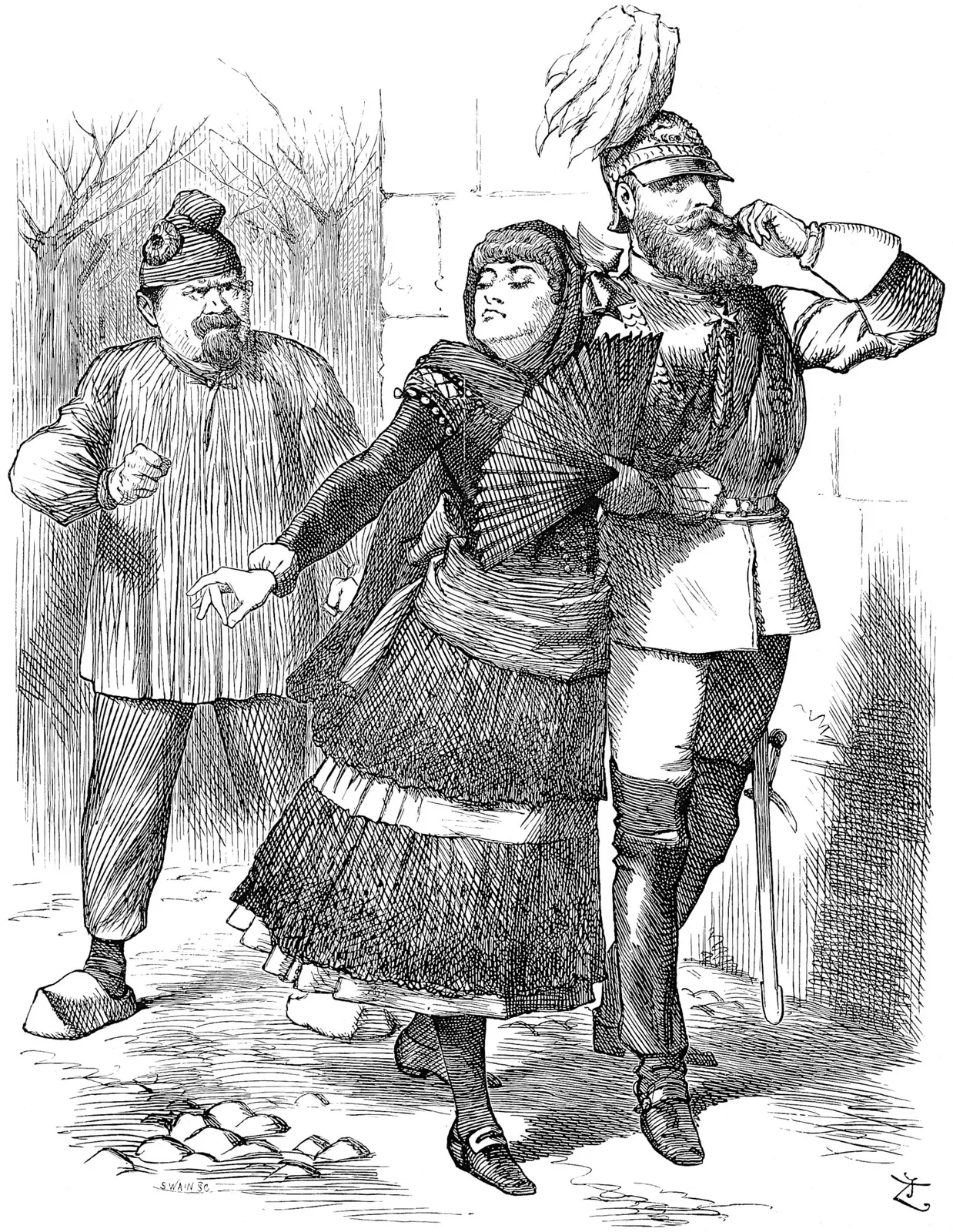
Snubbed!
58
An exchange of visits, the first for the last 200 years, had taken place between the German and Spanish Courts. This aroused jealousy in France, where the Spanish King had recently been rudely received.  
Illustration — Contents. — from Cartoons
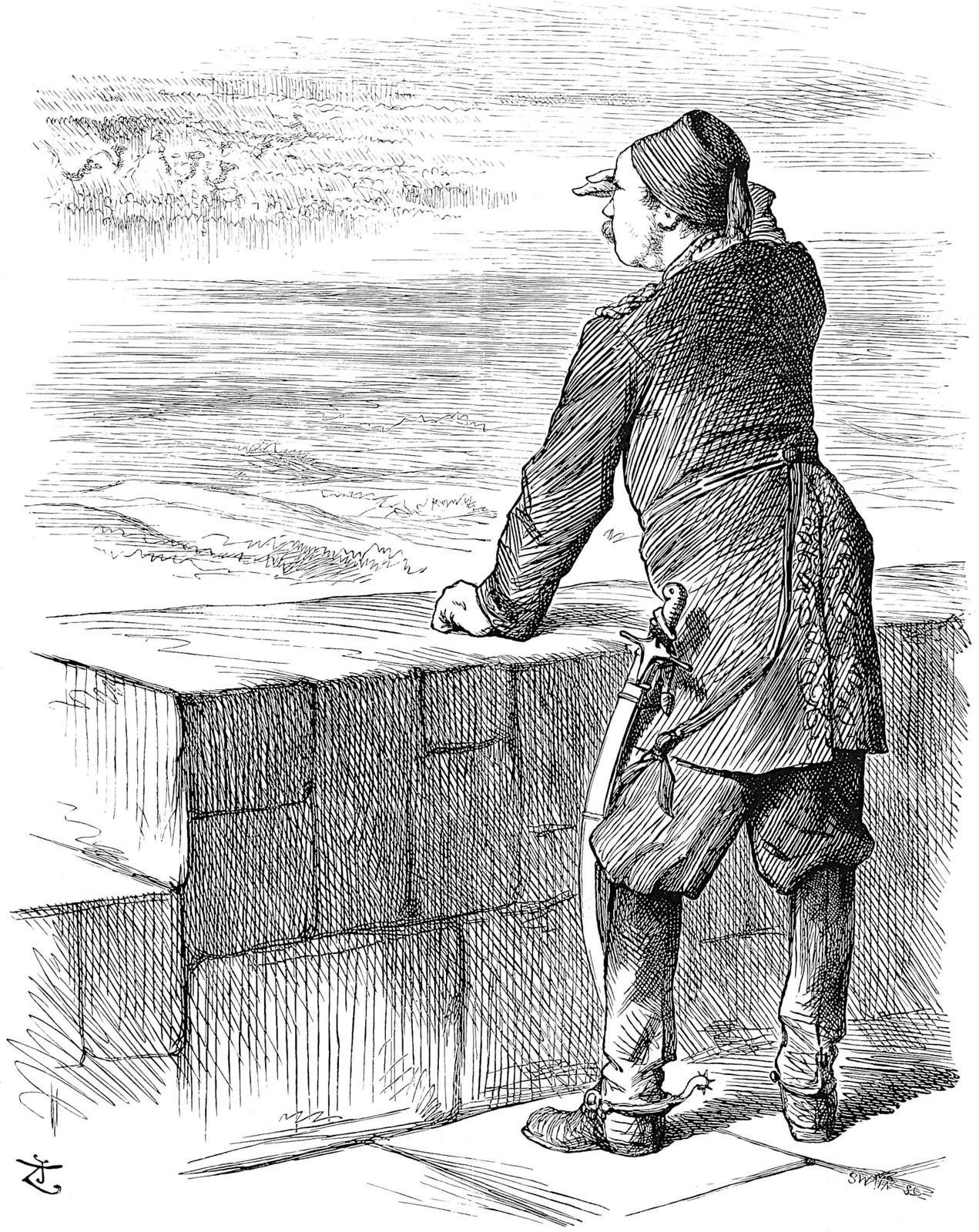
“Mirage”
59
At this time General Gordon at Khartoum was isolated. His appeal for assistance and the opening of communications with Khartoum by the Suakin-Berber route, was still delayed.  
Illustration — Contents. — from Cartoons
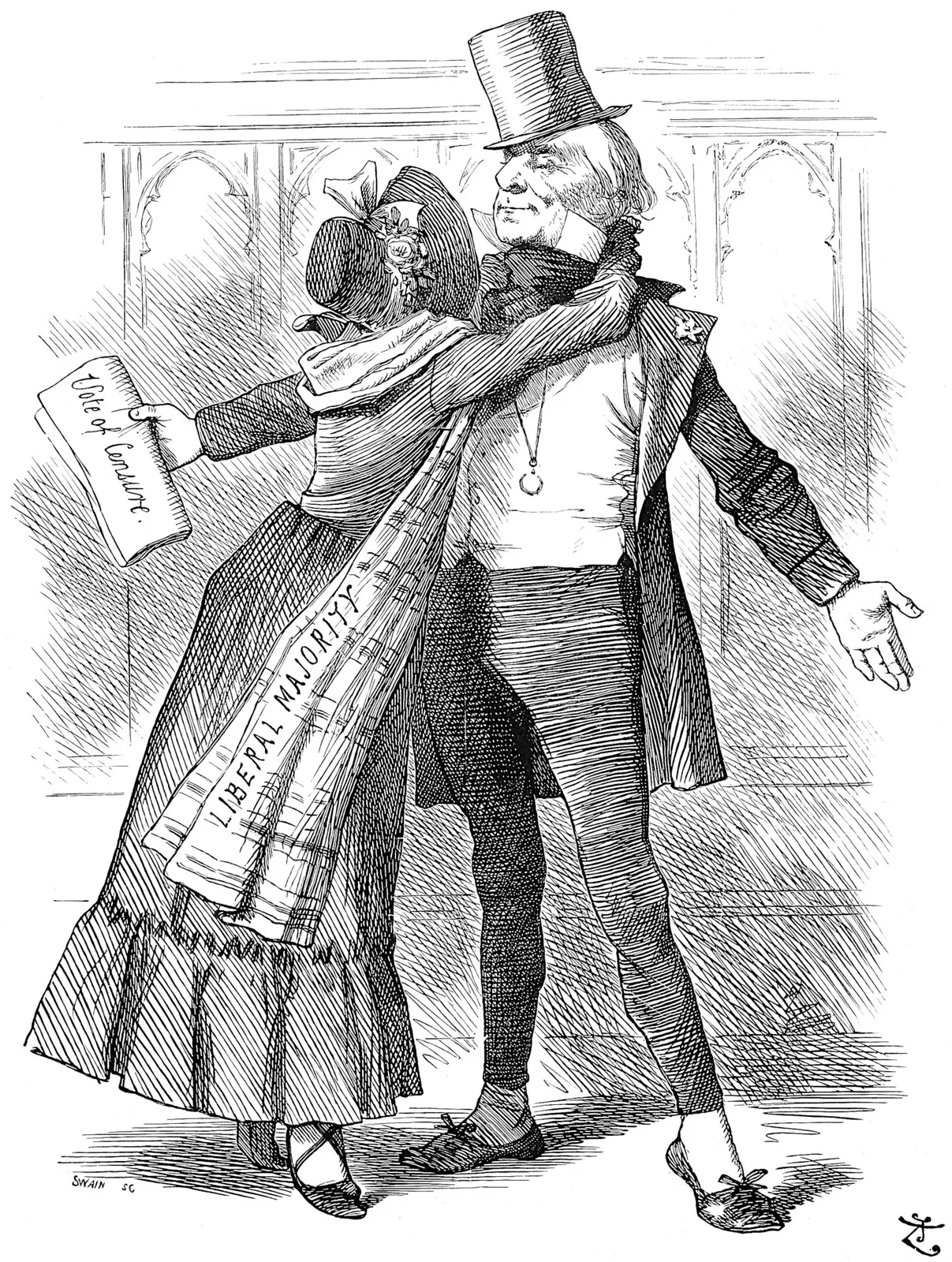
“Mrs. Micawber”
60
This Cartoon refers to Mr. Gladstone’s vacillating Egyptian policy, and pictures him as “Micawber waiting for something to turn up.” The Liberal Party, however, like Mrs. Micawber, remained loyal to the Premier.  
Illustration — Contents. — from Cartoons
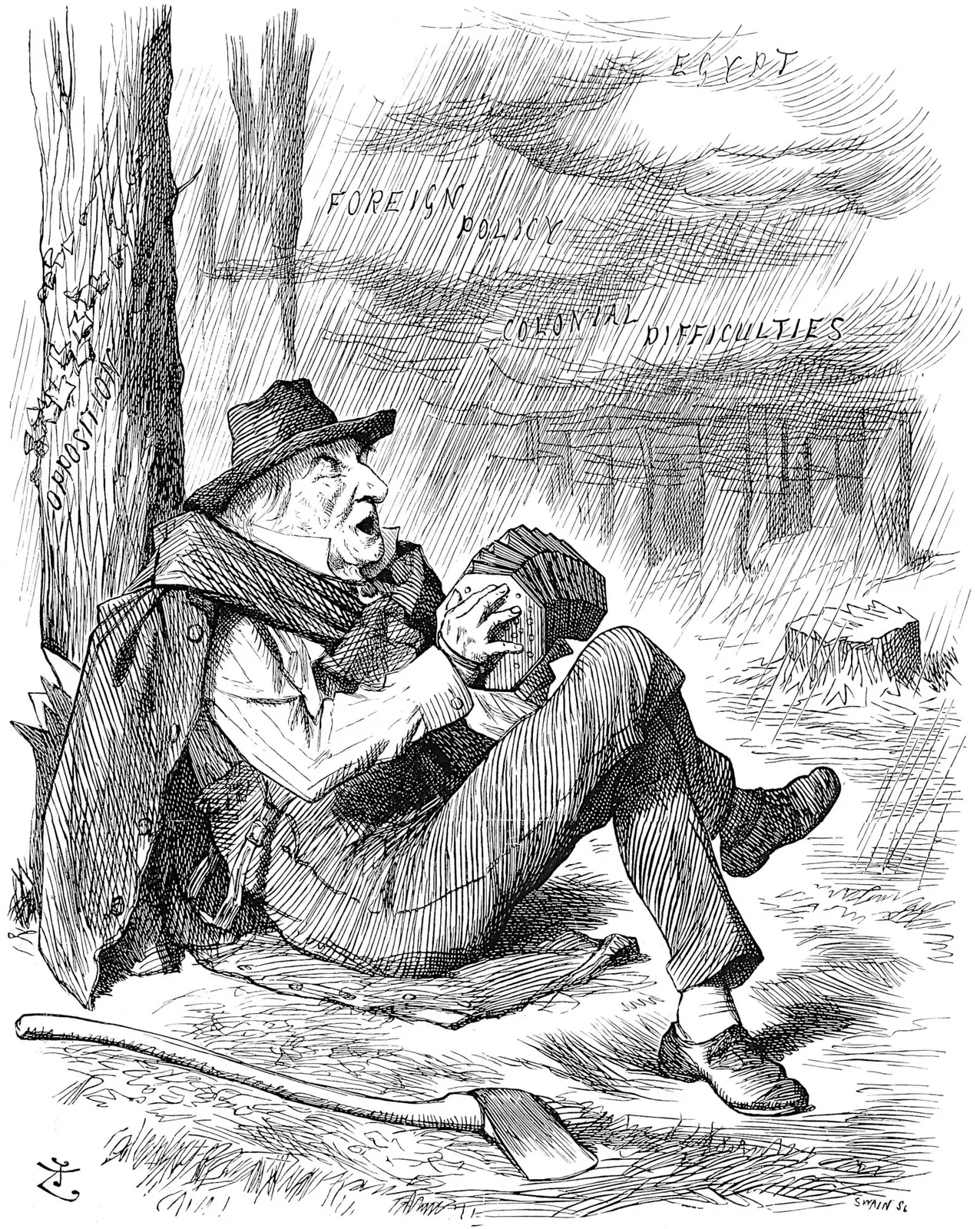
“Wait till the Clouds roll by”
61
Mr. Gladstone, burdened with political complications at home and abroad, ill-health and impaired voice, was resting and recruiting at Hawarden. The advice here tendered to him was the title of a popular song.  
Illustration — Contents. — from Cartoons
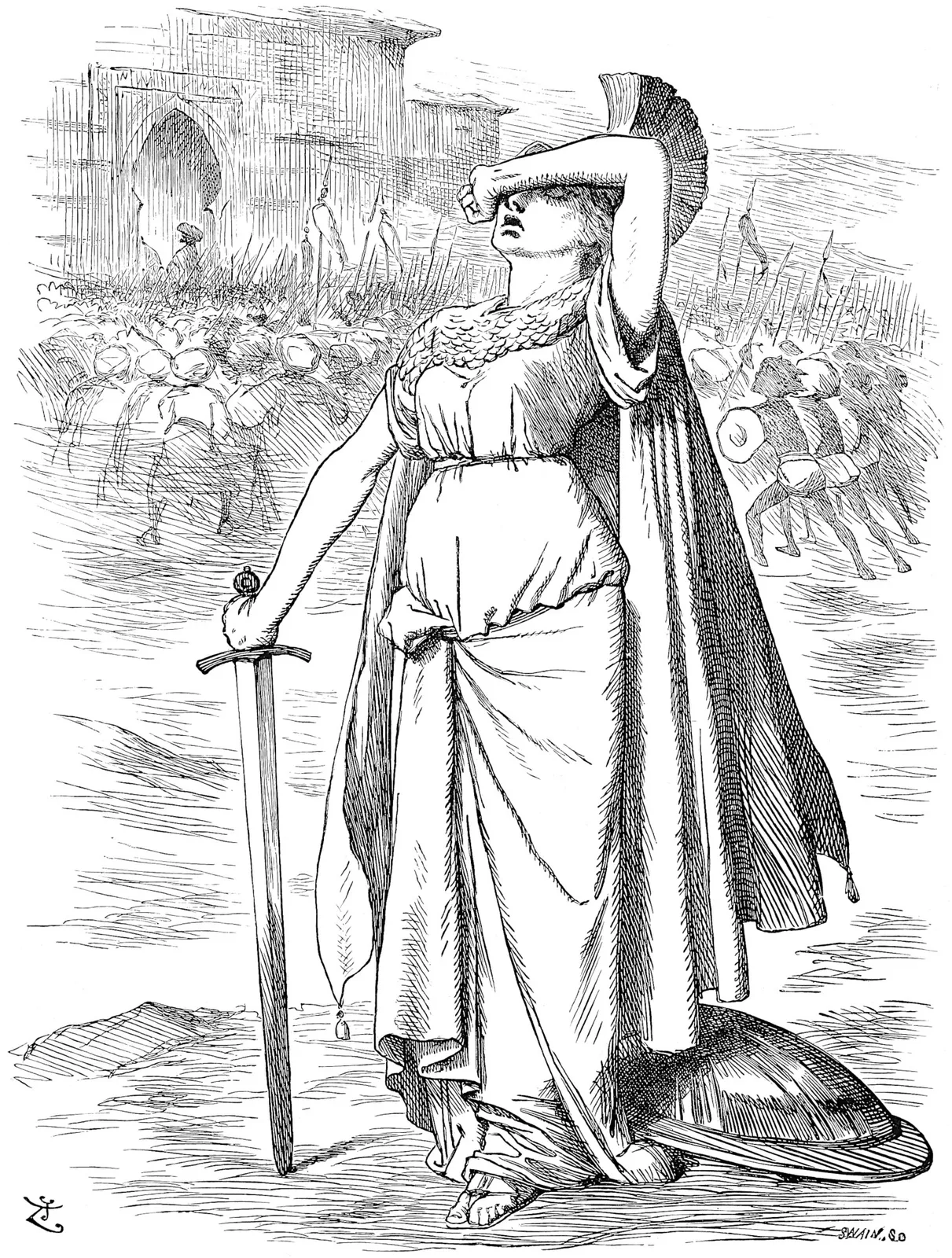
“Too Late!”
62
When Sir Charles Wilson at last succeeded in approaching Khartoum, the Mahdi’s flag was flying upon what had been Gordon’s citadel. Khartoum had fallen, and its dauntless defender with it.  
Illustration — Contents. — from Cartoons
“Only his Play” (!!!)
63
The Russians had attacked the Afghans at Penjdeh, and each side charged the other with provoking the conflict.  
Illustration — Contents. — from Cartoons
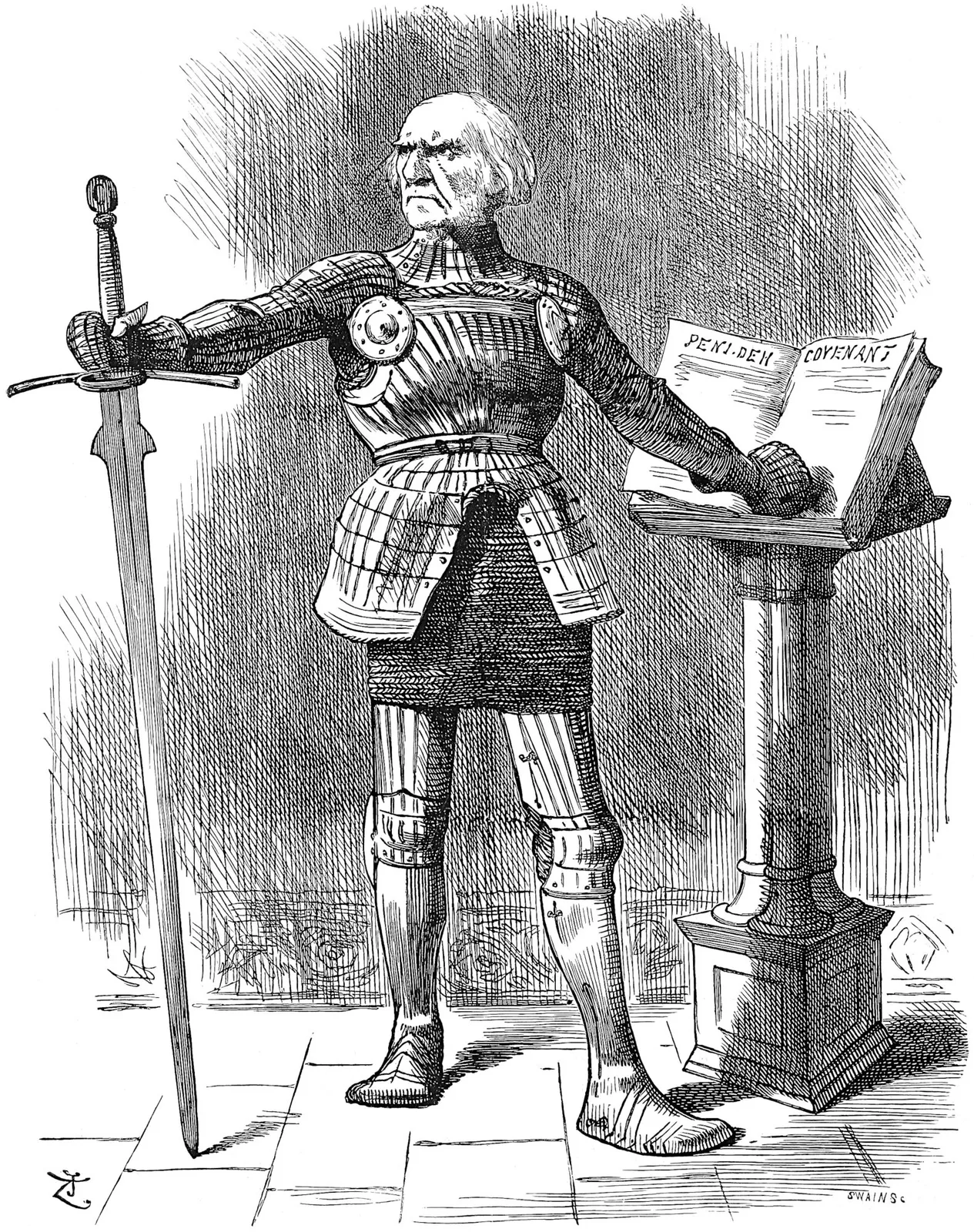
The Broken Covenant
64
On April 27 Mr. Gladstone made use of the above significant words with reference to an arrangement or covenant with Russia concerning Afghanistan, which Russia appeared to have broken.  
Illustration — Contents. — from Cartoons
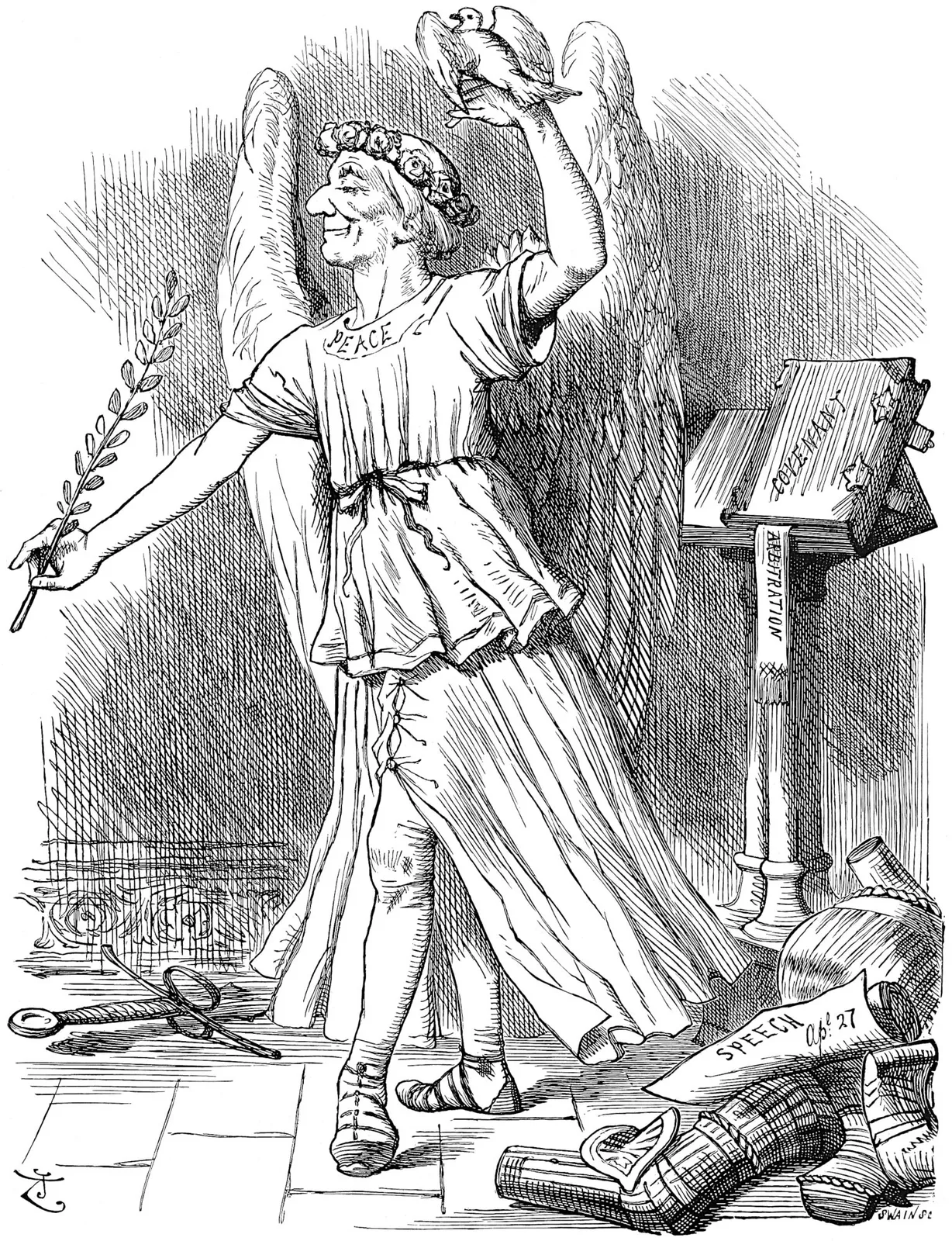
Our Protean Premier!
65
On May 4 Mr. Gladstone removed all immediate fear of war, by announcing that Russia and England would resume negotiations for the delimitation of the Afghan frontier.  
Illustration — Contents. — from Cartoons
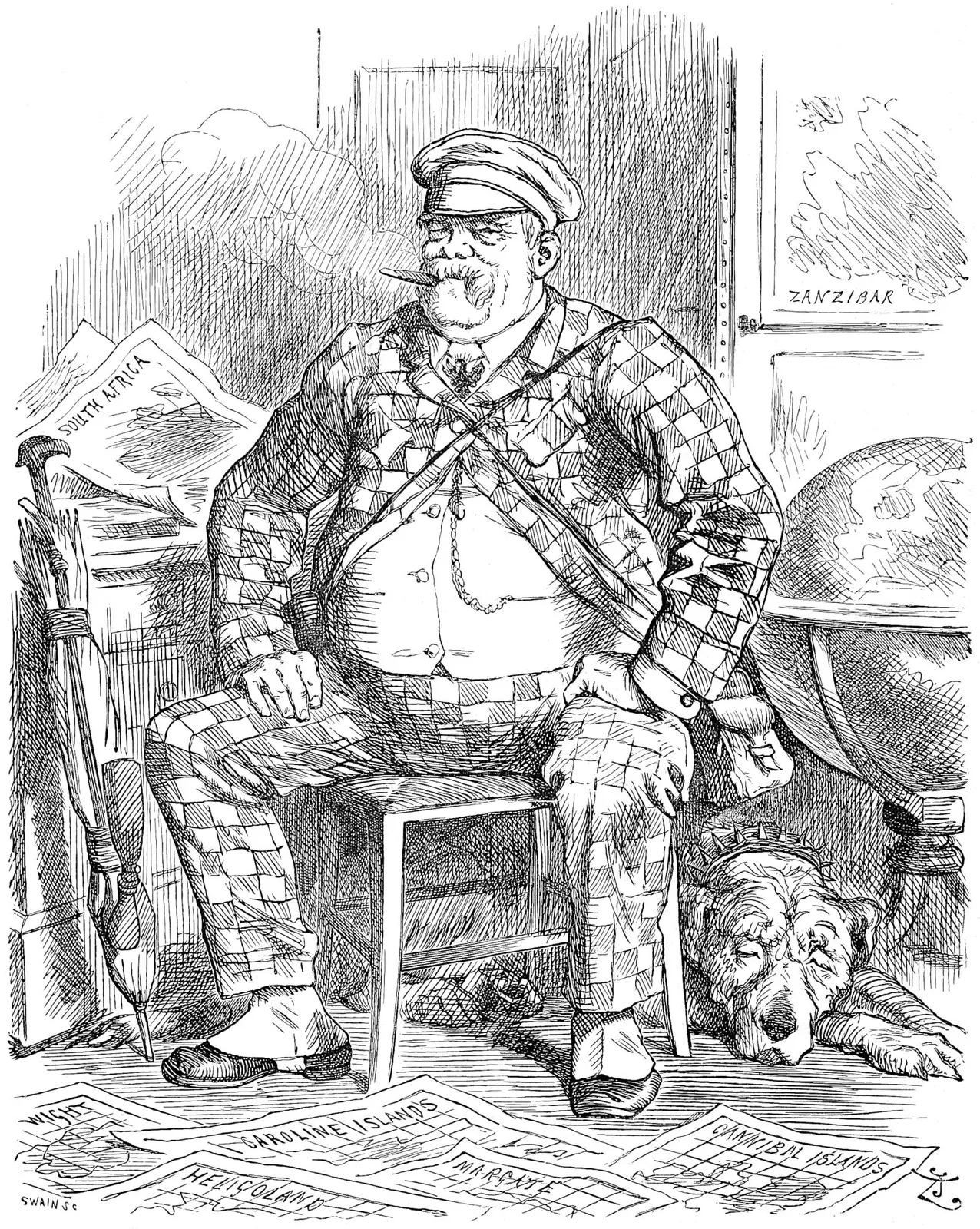
The “Irrepressible” Tourist
66
The occupation by Germany of the Caroline Islands had excited Spanish feeling. England, too, regarded with apprehension the active “Colonial Policy” of Bismarck at this time.  
Illustration — Contents. — from Cartoons
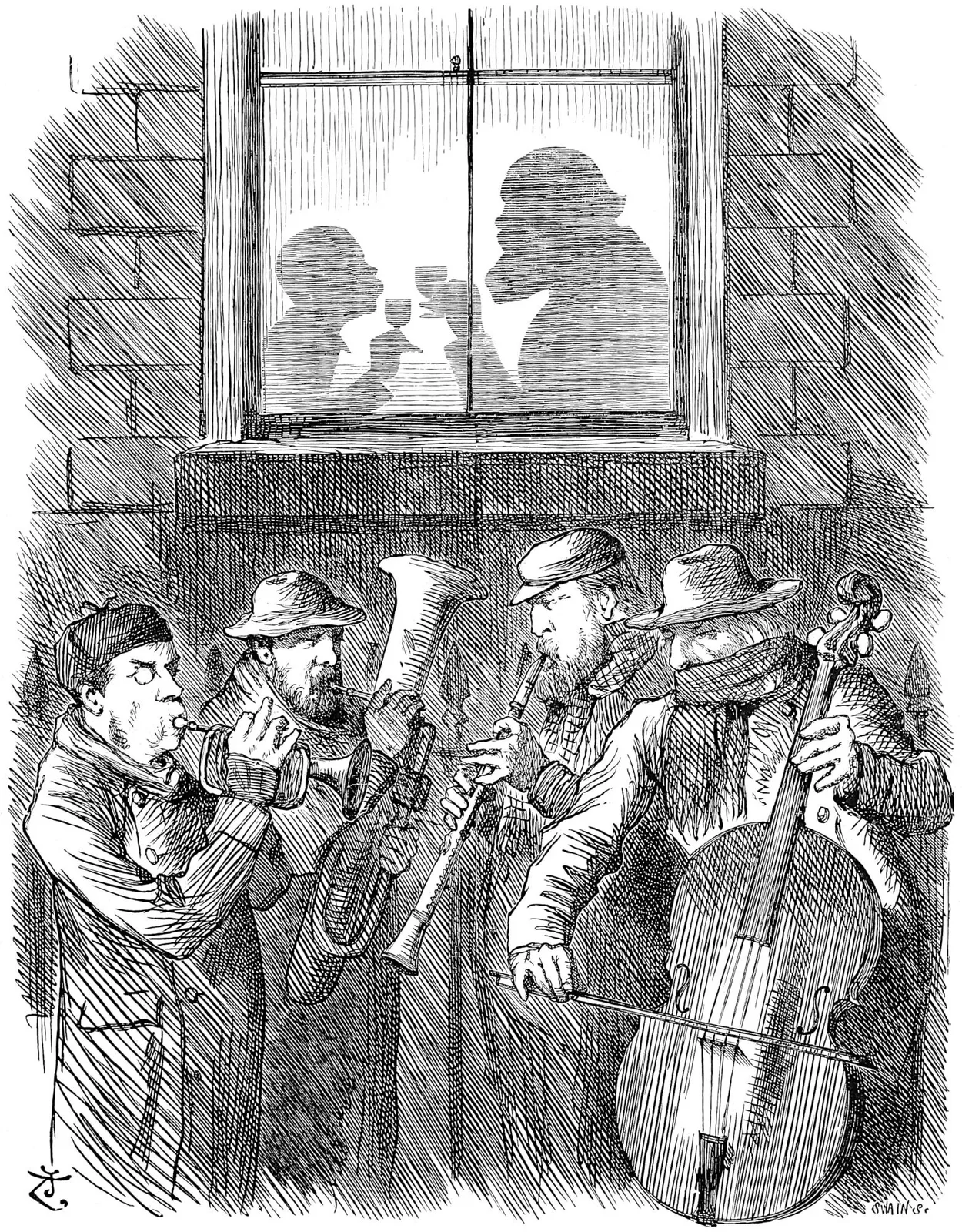
The Waits
67
At the end of the year, Lord Salisbury determined to remain in office, though left by the General Election in a minority.  
Illustration — Contents. — from Cartoons
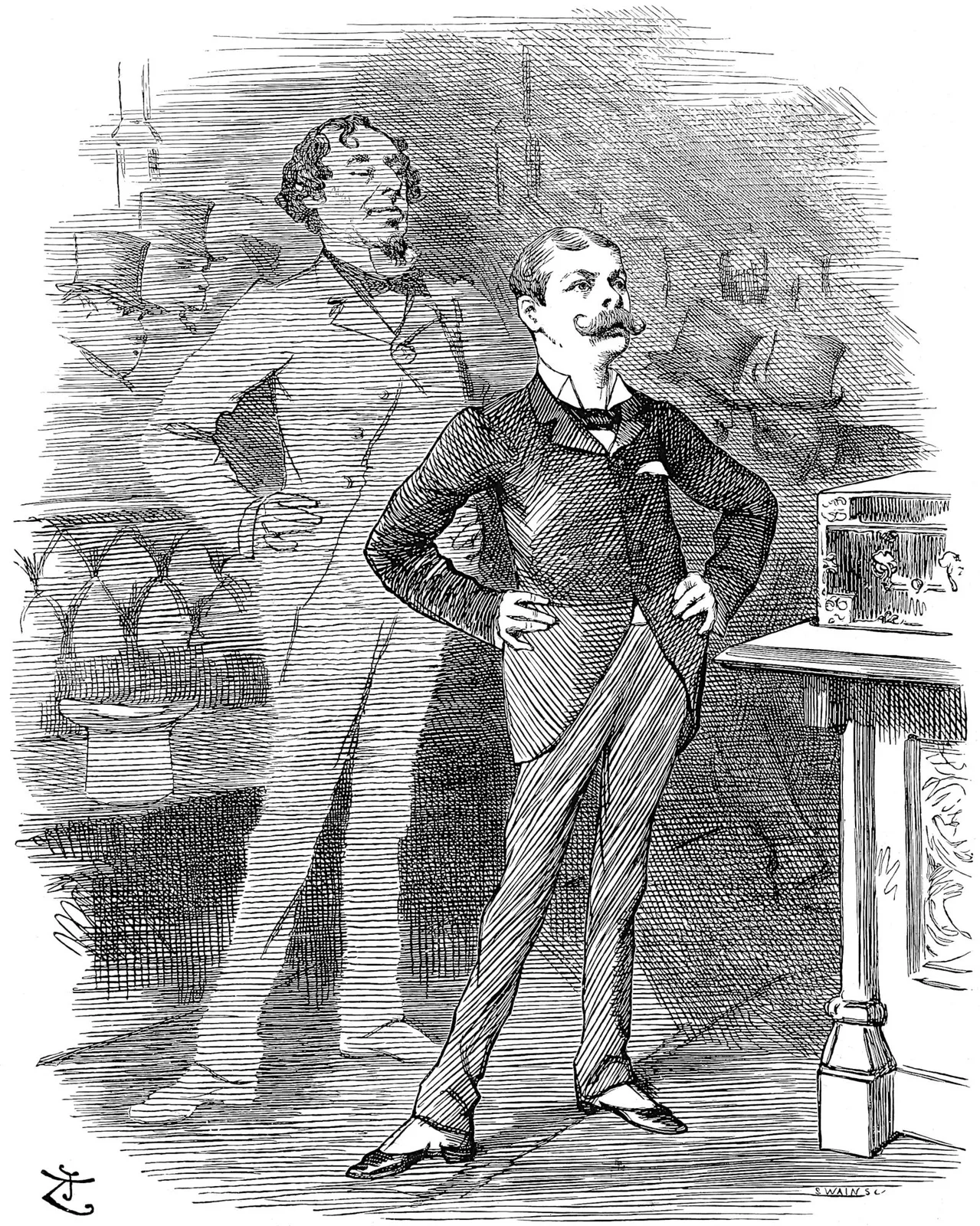
The Grand Young Man!!
68
Lord Randolph Churchill had been appointed Chancellor of the Exchequer and Leader of the House of Commons in the new Salisbury Ministry.  
Illustration — Contents. — from Cartoons
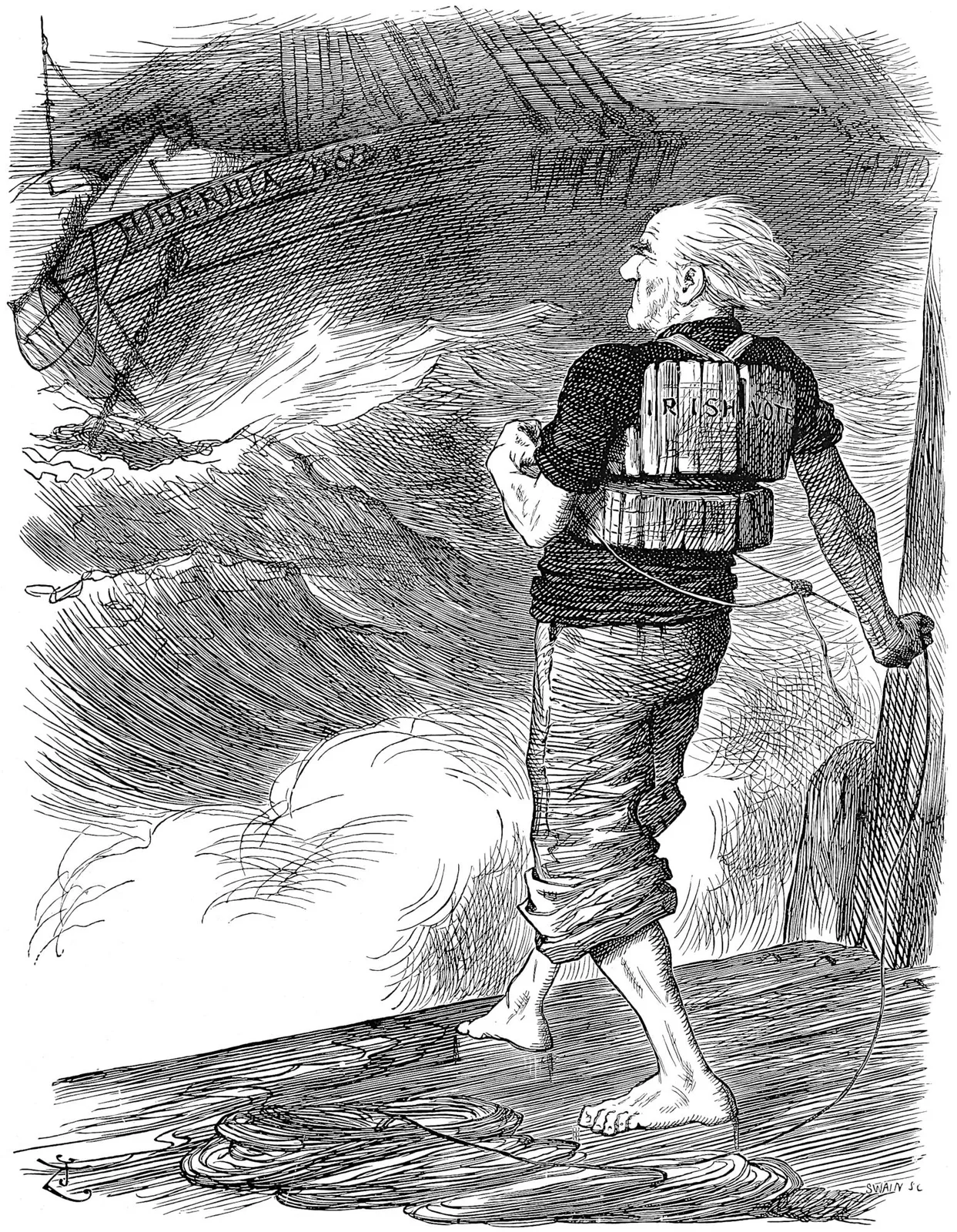
Sink or Swim!!
69
Mr. Gladstone had introduced his Home Rule Bill, and had deliberately set his fortune and that of his party upon the policy thereby involved.  
Illustration — Contents. — from Cartoons
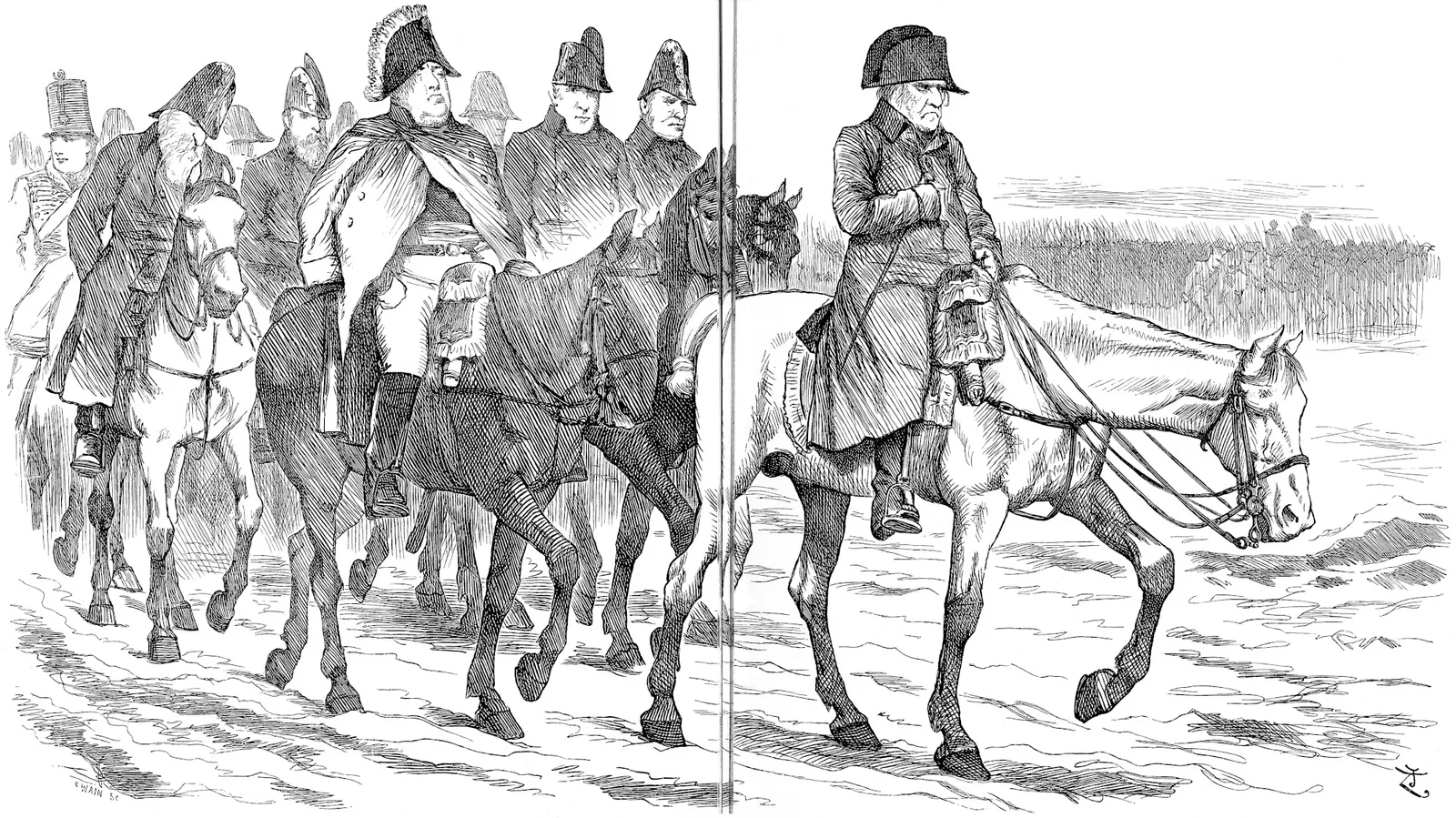
“1886”
70-71
This travesty depicts the retreat of the Liberal Party on the defeat of the second reading of Mr. Gladstone’s Home Rule Bill.  
Illustration — Contents. — from Cartoons
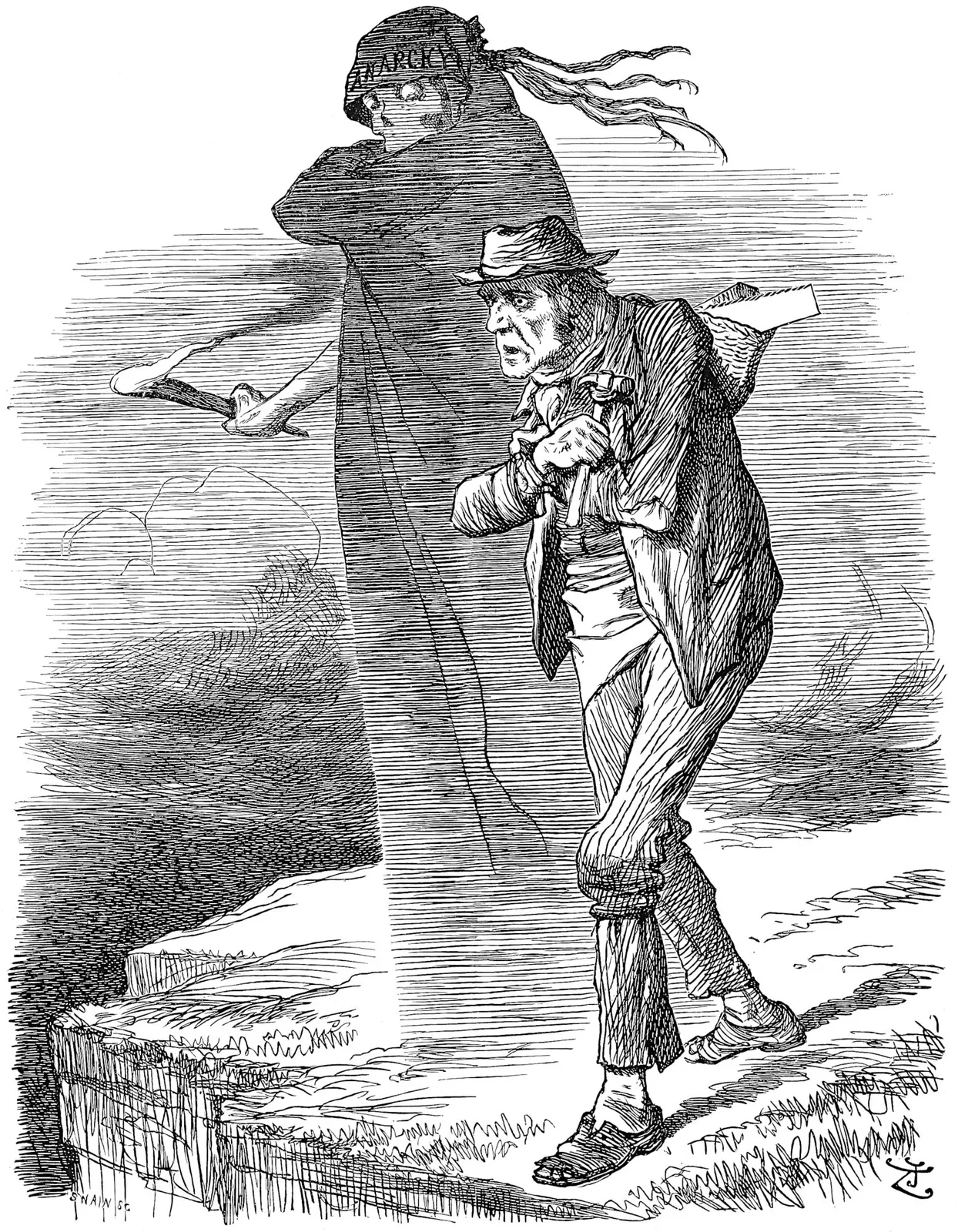
The Tempter
72
Certain Socialists and Anarchists had taken advantage of the prevailing poverty and lack of work to make inflammatory appeals to the unemployed.  
Illustration — Contents. — from Cartoons
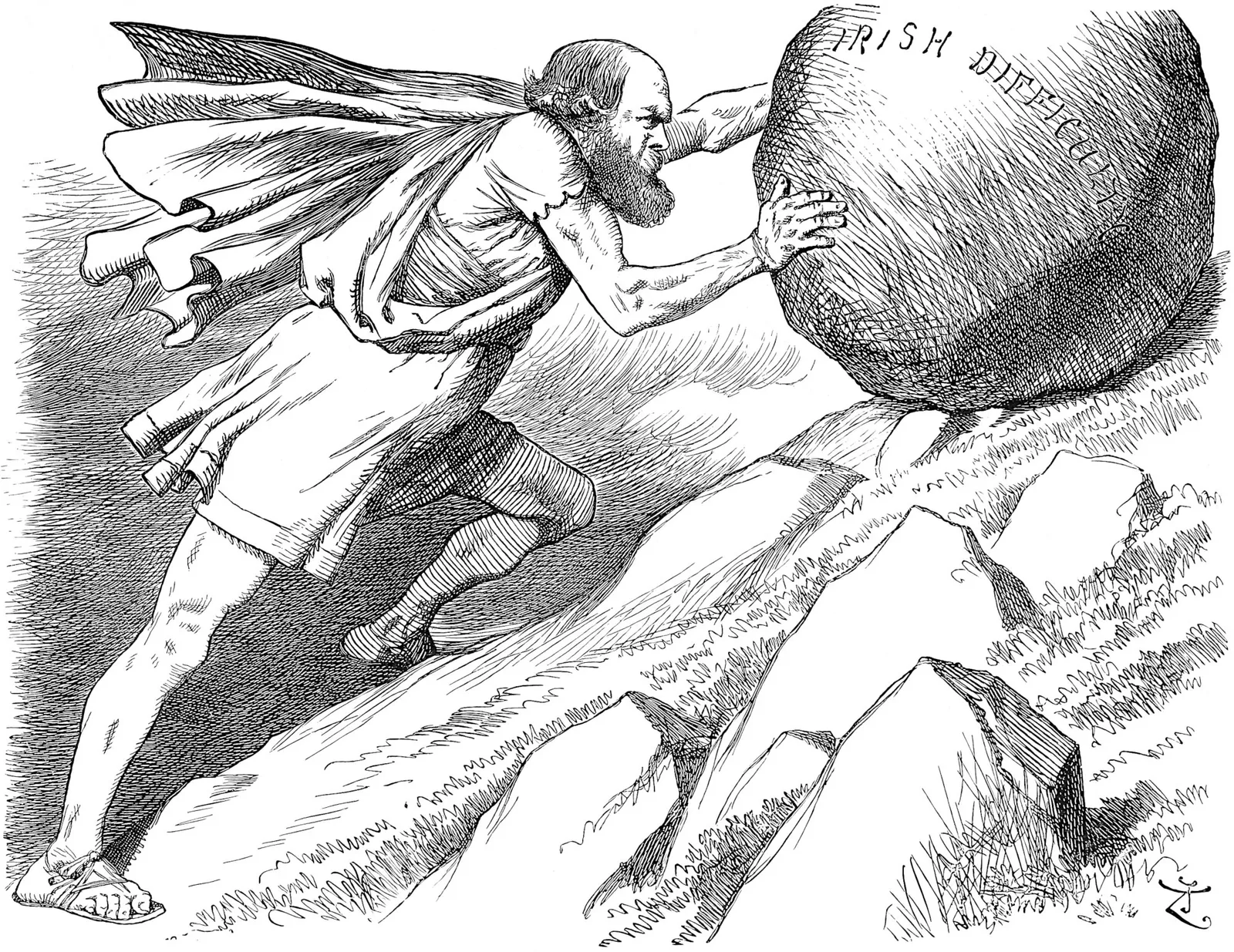
Salisbury Sisyphus
73
Lord Salisbury had to face the difficulties of the Irish question—a task as formidable to him as to his predecessors.  
Illustration — Contents. — from Cartoons
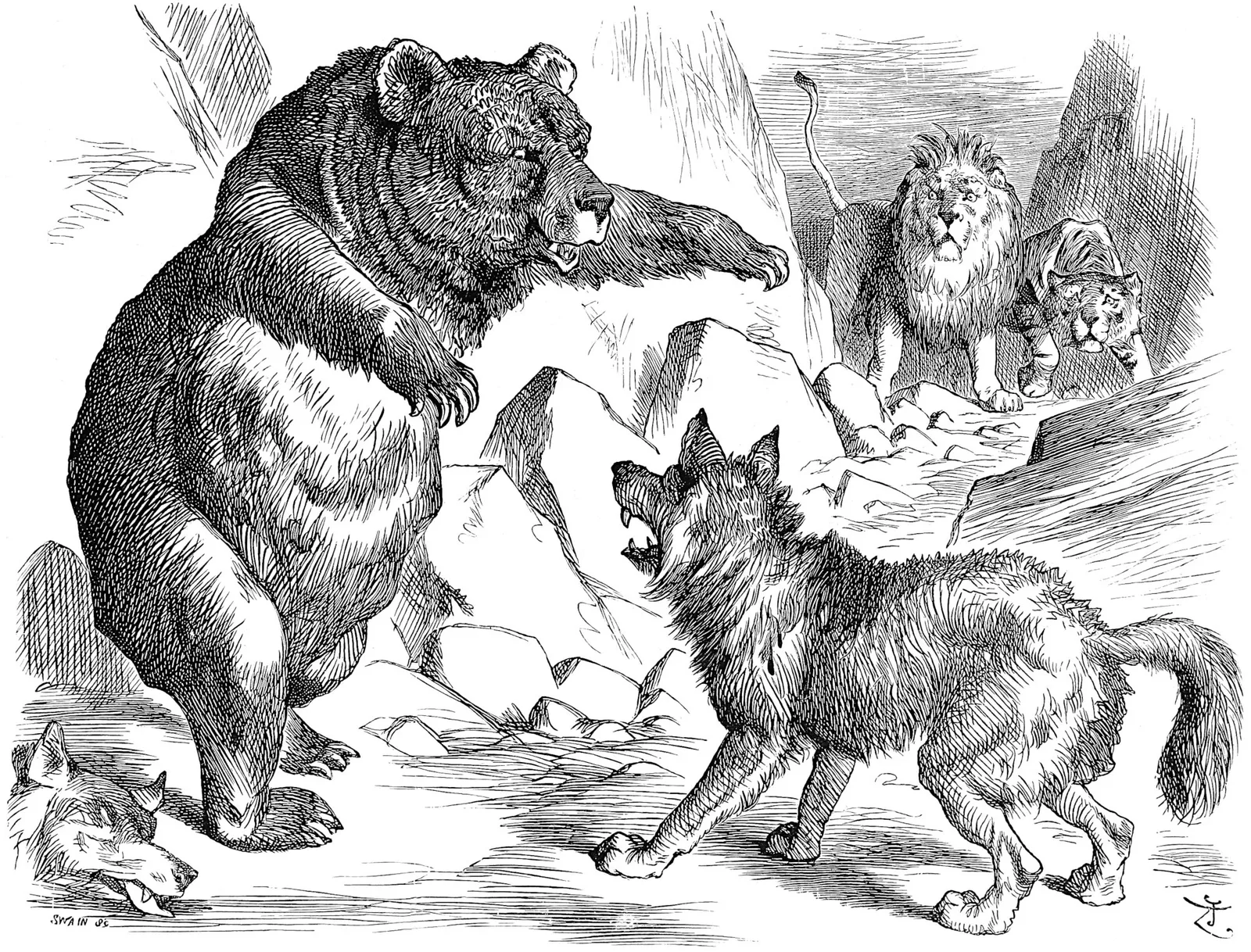
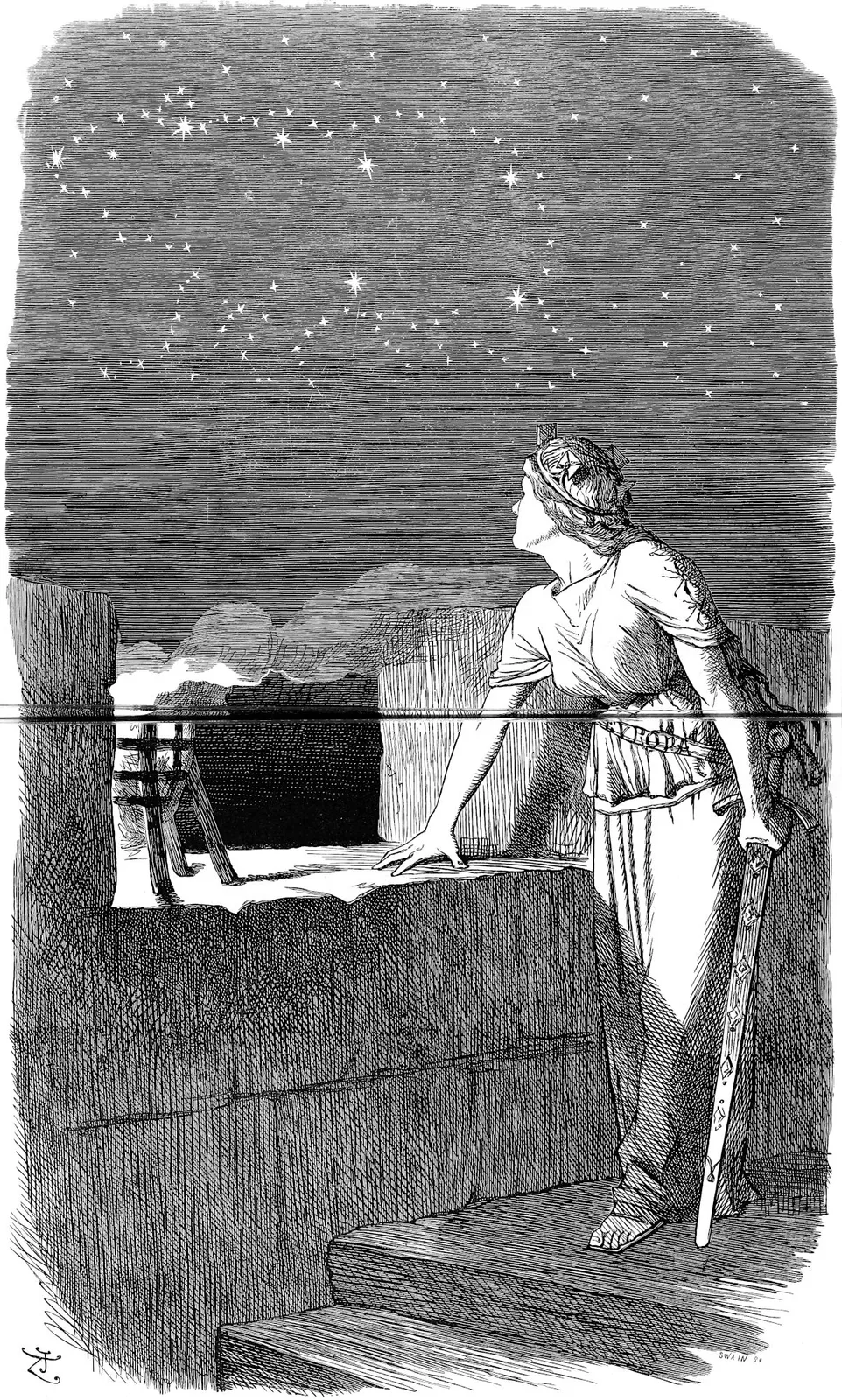
“What of the Night?”
74-75
The action of Russia (the Great Northern Bear) in Bulgaria and elsewhere at this time seemed likely to involve a disturbance of the peace of Europe.  
Illustration — Contents. — from Cartoons
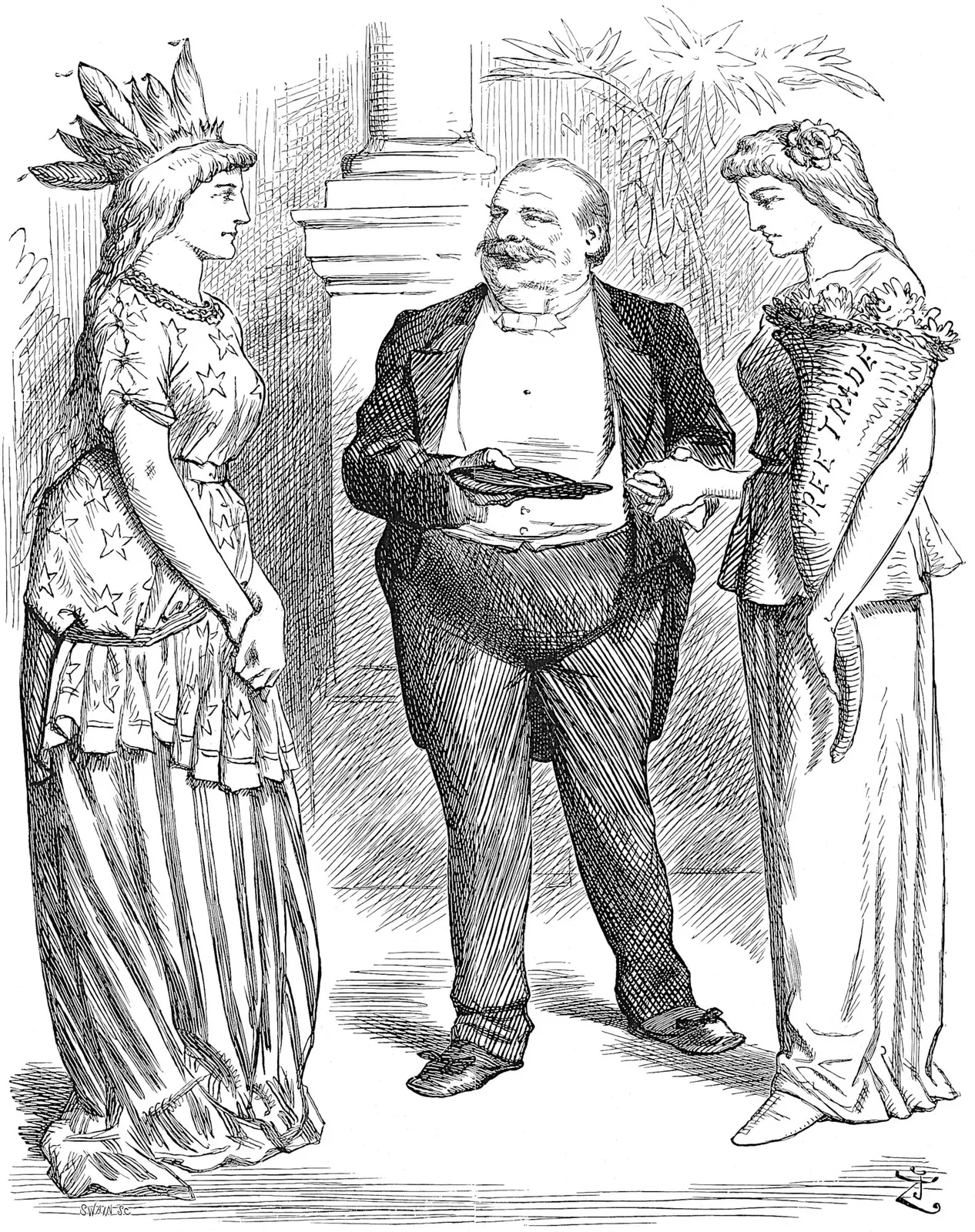
“Quite English, you know”
76
President Cleveland was at this time advocating in America the adoption of the English system of Free Trade.  
Illustration — Contents. — from Cartoons
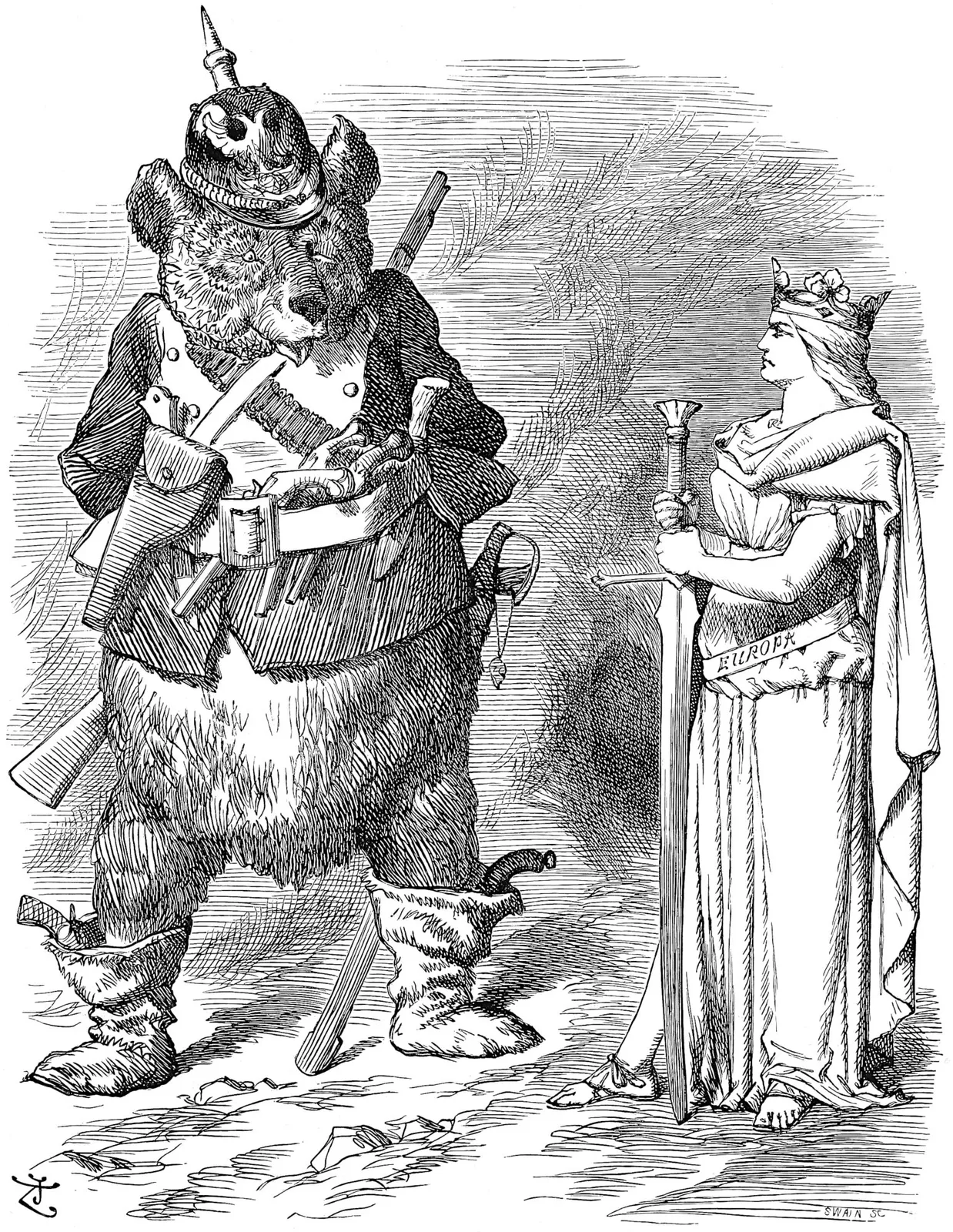
Bear or Bug-Bear?
77
Russia, in consequence of her huge armaments and equivocal policy, seemed a standing menace to the peace of Europe.  
Illustration — Contents. — from Cartoons
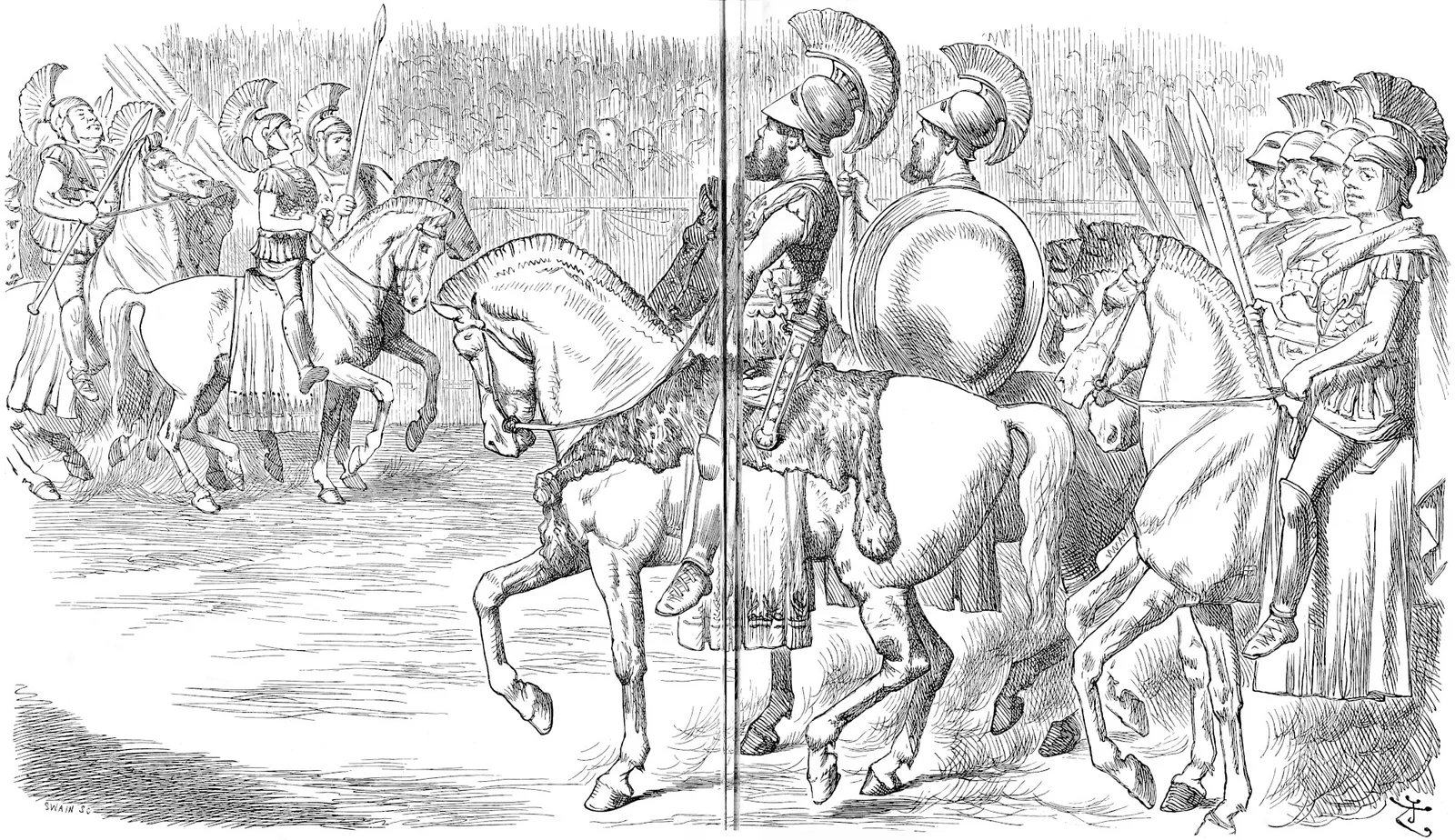
In the Arena
78-79
The two sides are shown parading before the reassembling of Parliament—the Unionists (Tory and Liberal) under Lord Salisbury, the Home Rulers under Mr. Gladstone.  
Illustration — Contents. — from Cartoons
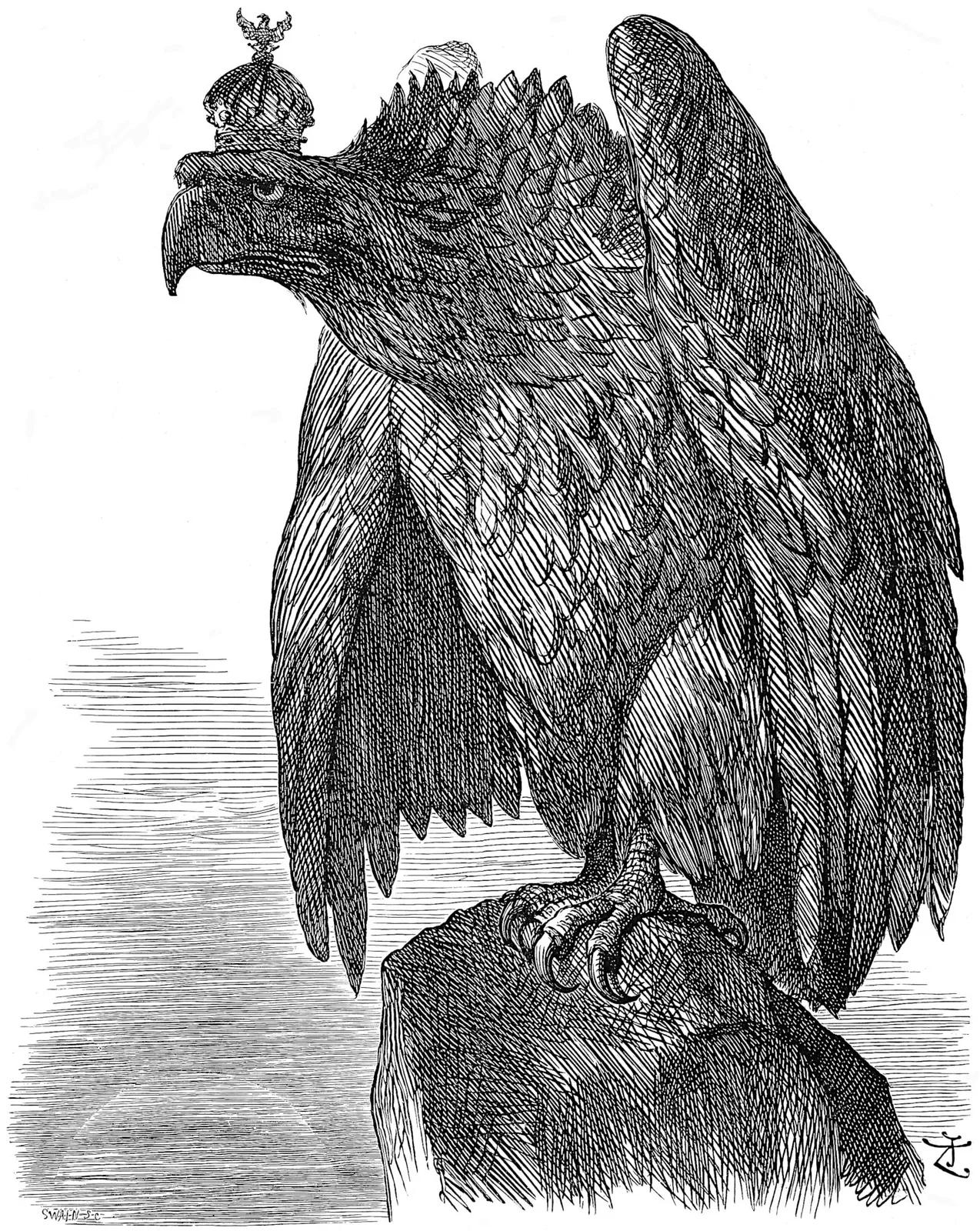
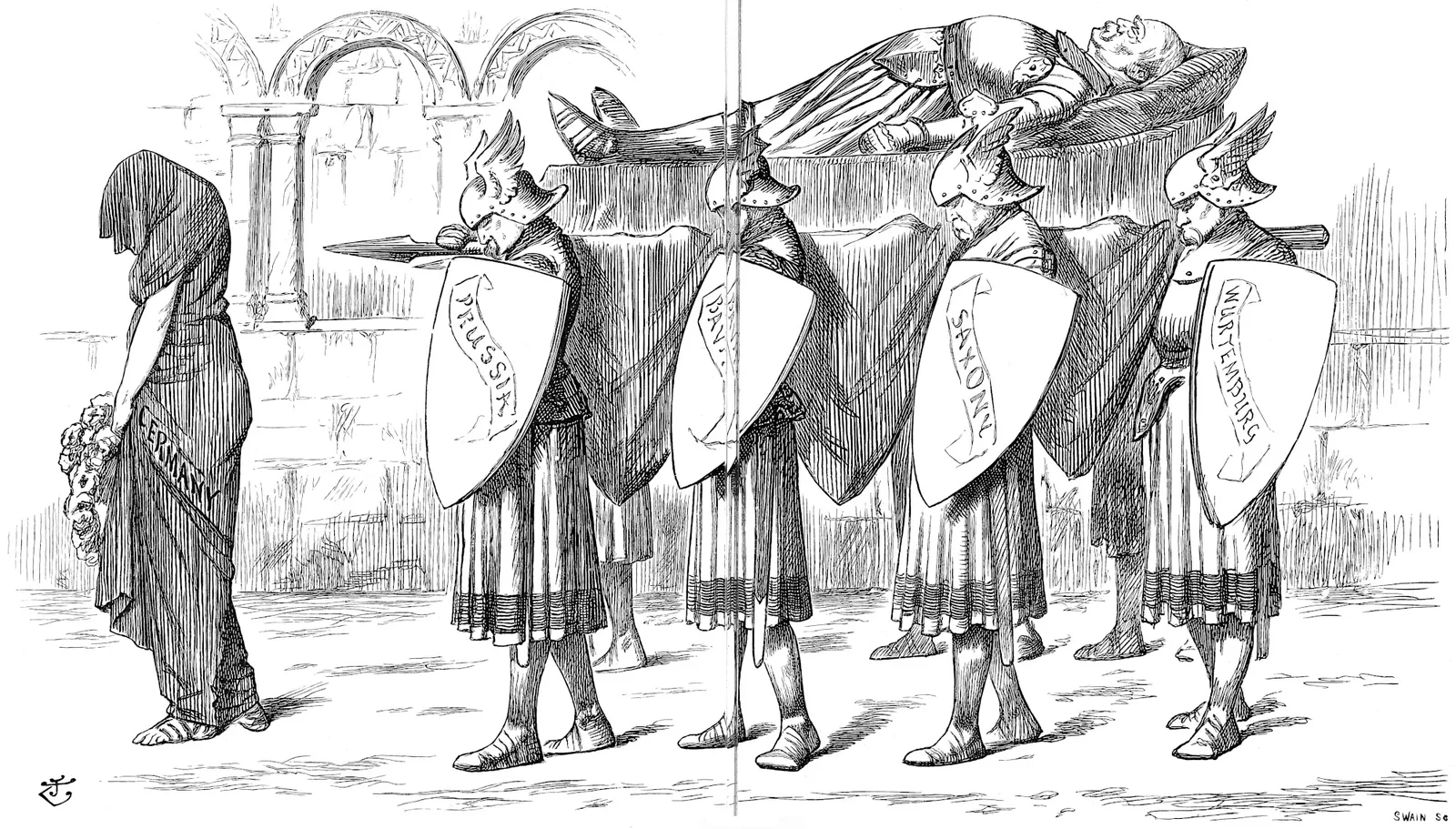
Germany, March 9, 1888
80
On this date Germany was plunged into mourning owing to the death of the Emperor William.  
Illustration — Contents. — from Cartoons
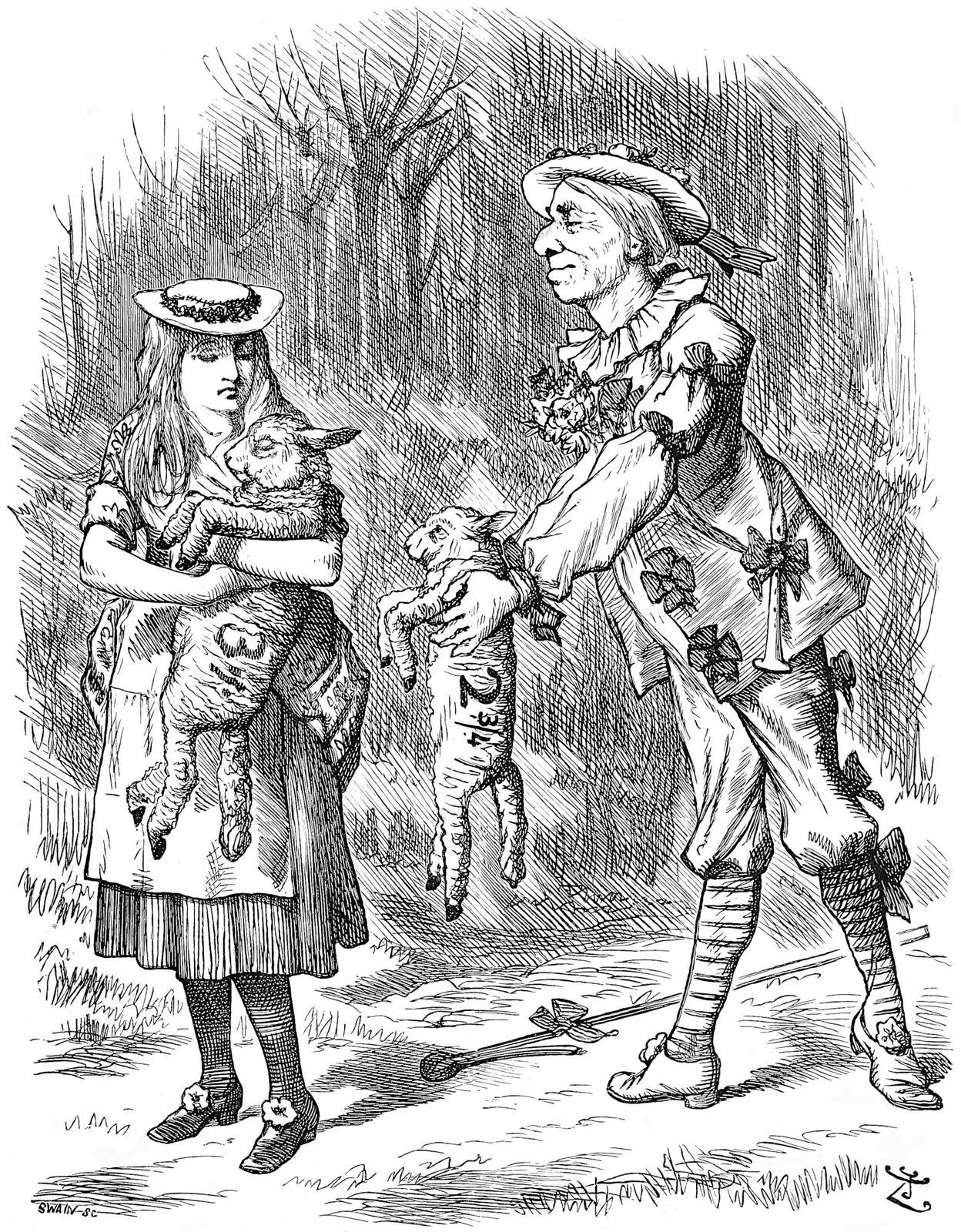
Consol-ation
81
Mr. Goschen’s National Debt Conversion Bill provided for the conversion of the 3 per cent. Stocks into a new Stock bearing 2-3/4 per cent. interest for fifteen years, and thereafter a guaranteed 2-1/2 per cent. for 20 years.  
Illustration — Contents. — from Cartoons
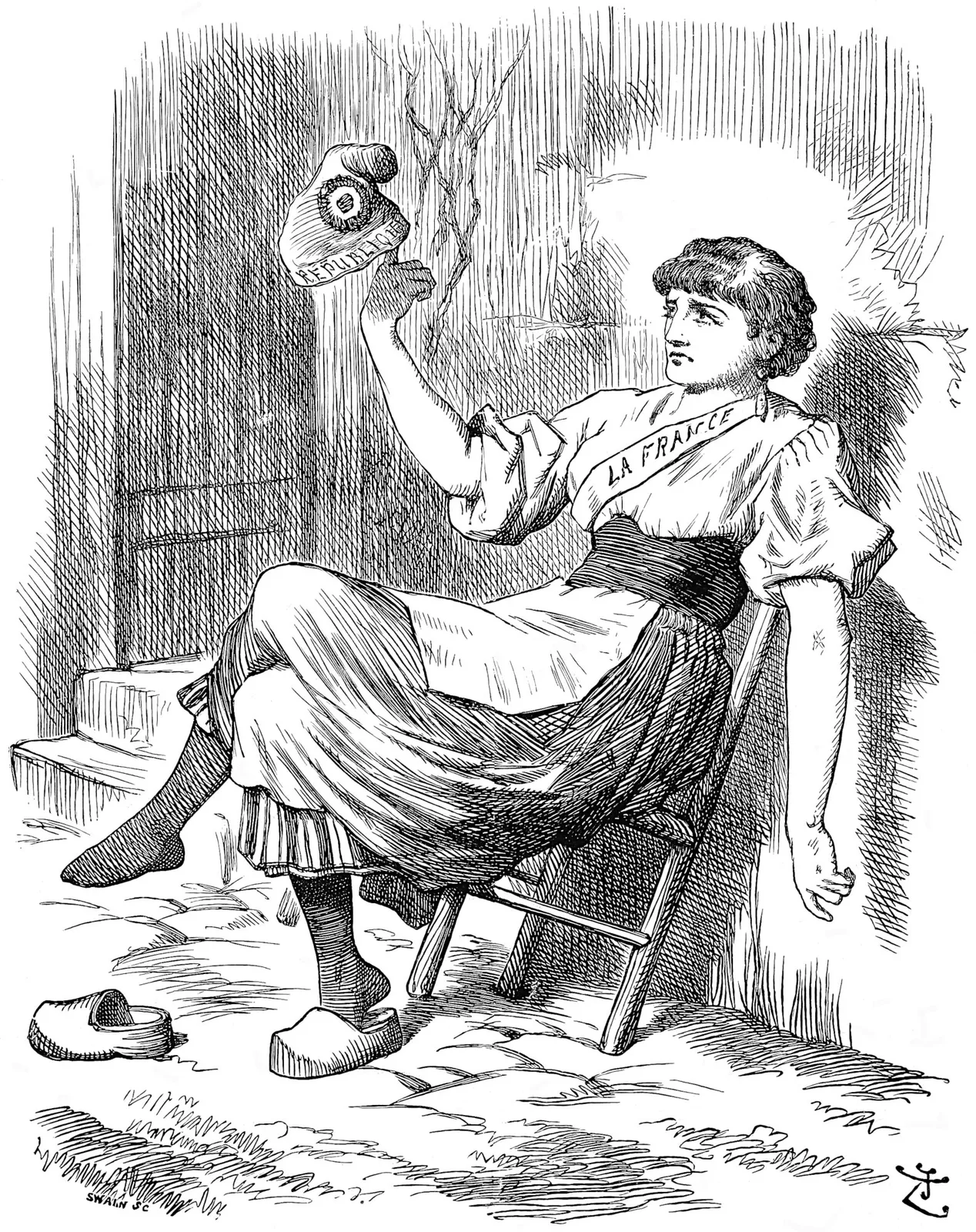
What next?
82
The popularity of General Boulanger suggested the idea that France was growing weary of a Republican “regime.”  
Illustration — Contents. — from Cartoons
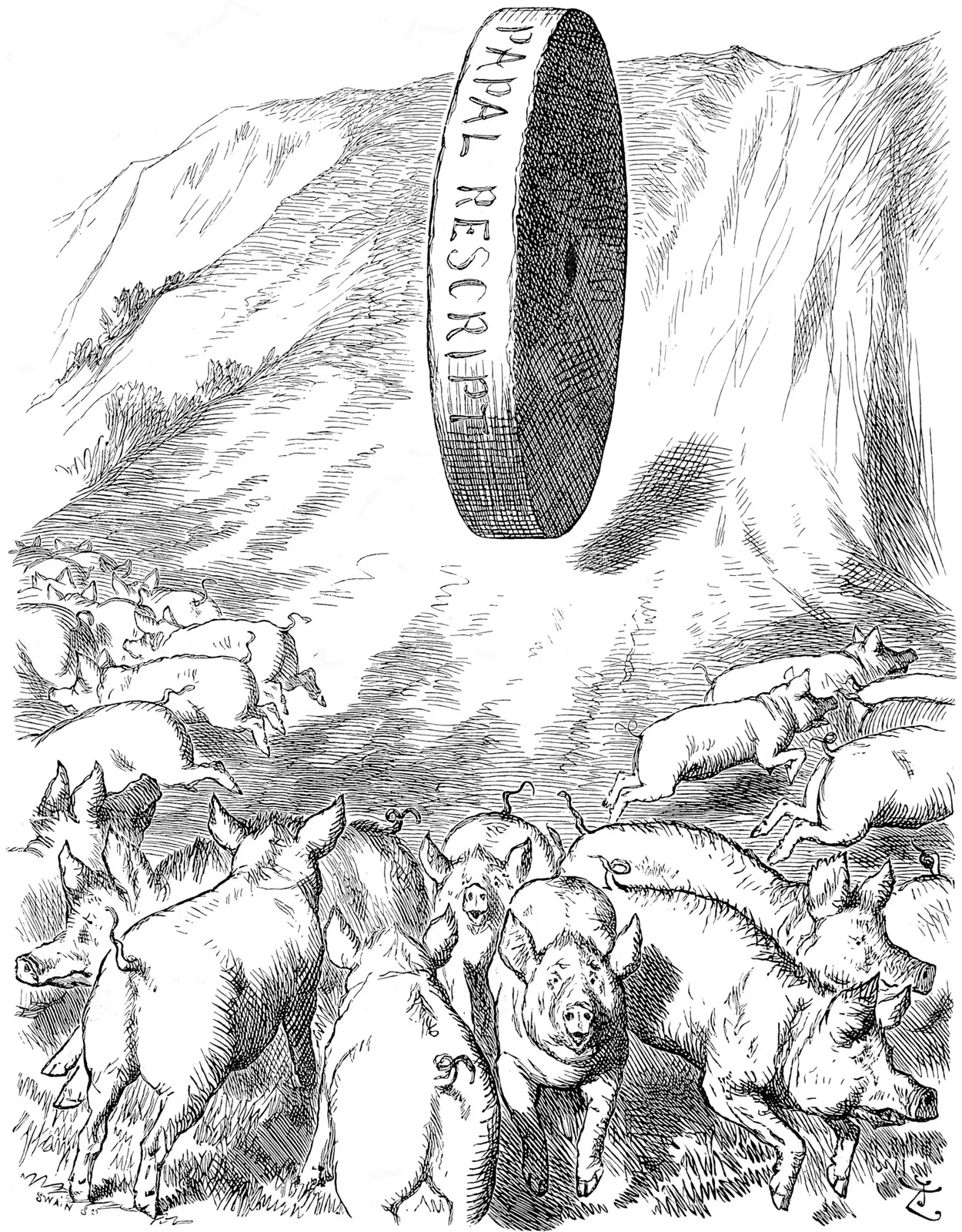
“Panic amongst the Pigs!”
83
A Papal Rescript, condemning the Plan of Campaign and the practice of Boycotting, caused some excitement among the Irish Nationalists.  
Illustration — Contents. — from Cartoons
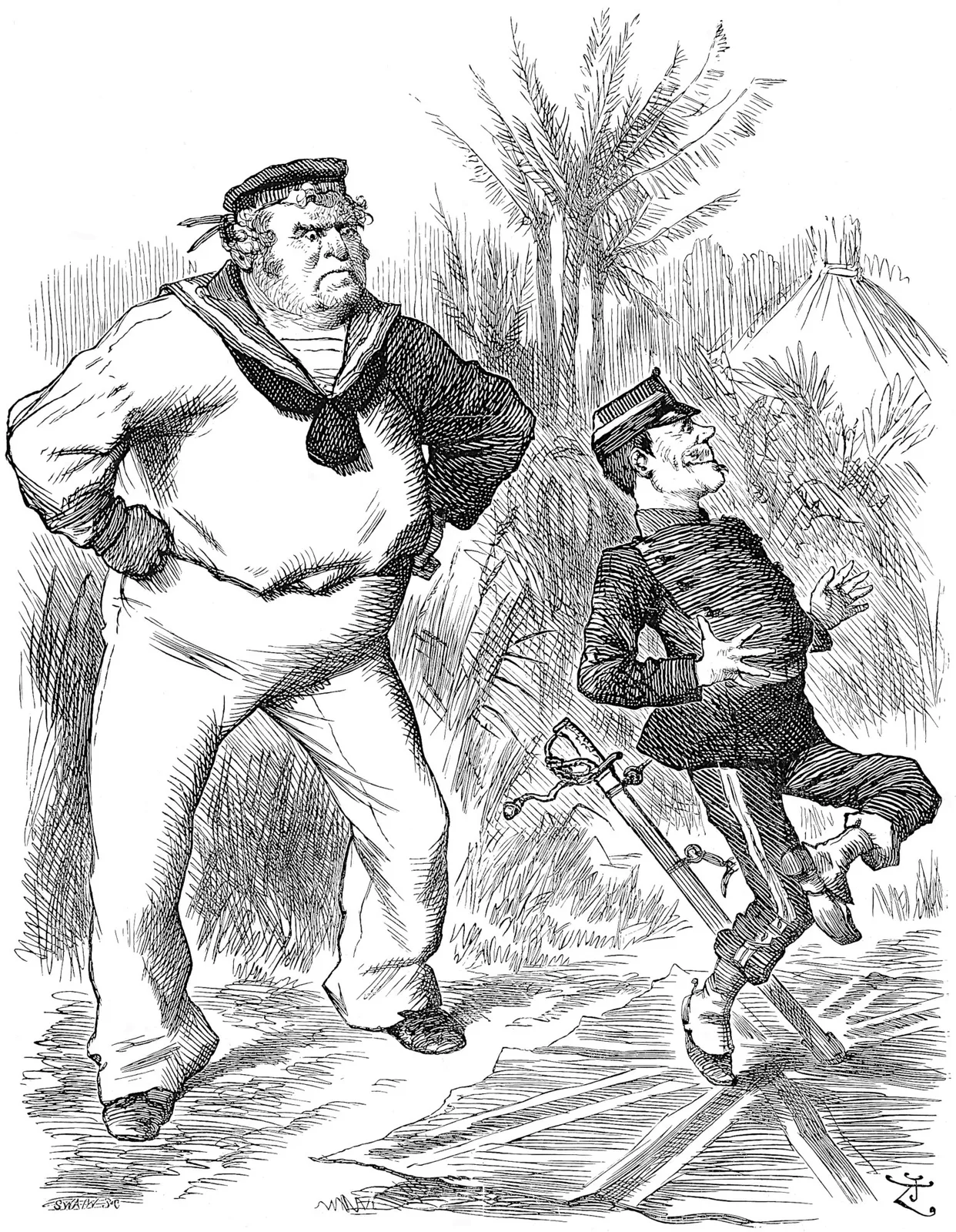
Plain English!
84
England was aggrieved by the action of Portugal in reference to the Delagoa Railway, and by insults to the British flag committed by the Portuguese.  
Illustration — Contents. — from Cartoons
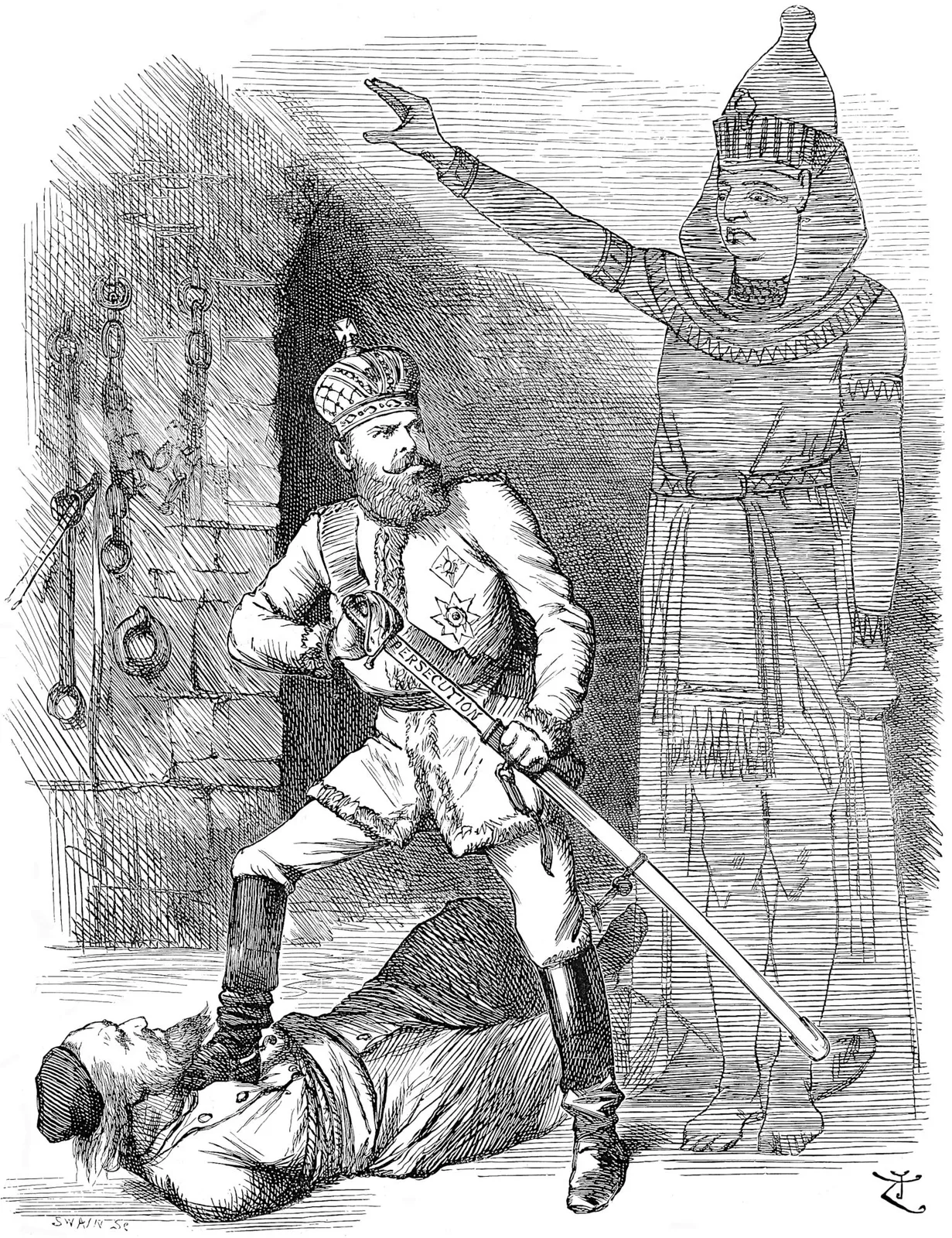
From the Nile to the Neva
85
“And the Egyptians made the children of Israel to serve with rigour. And they made their lives bitter with hard bondage.”—EXODUS.  
Illustration — Contents. — from Cartoons
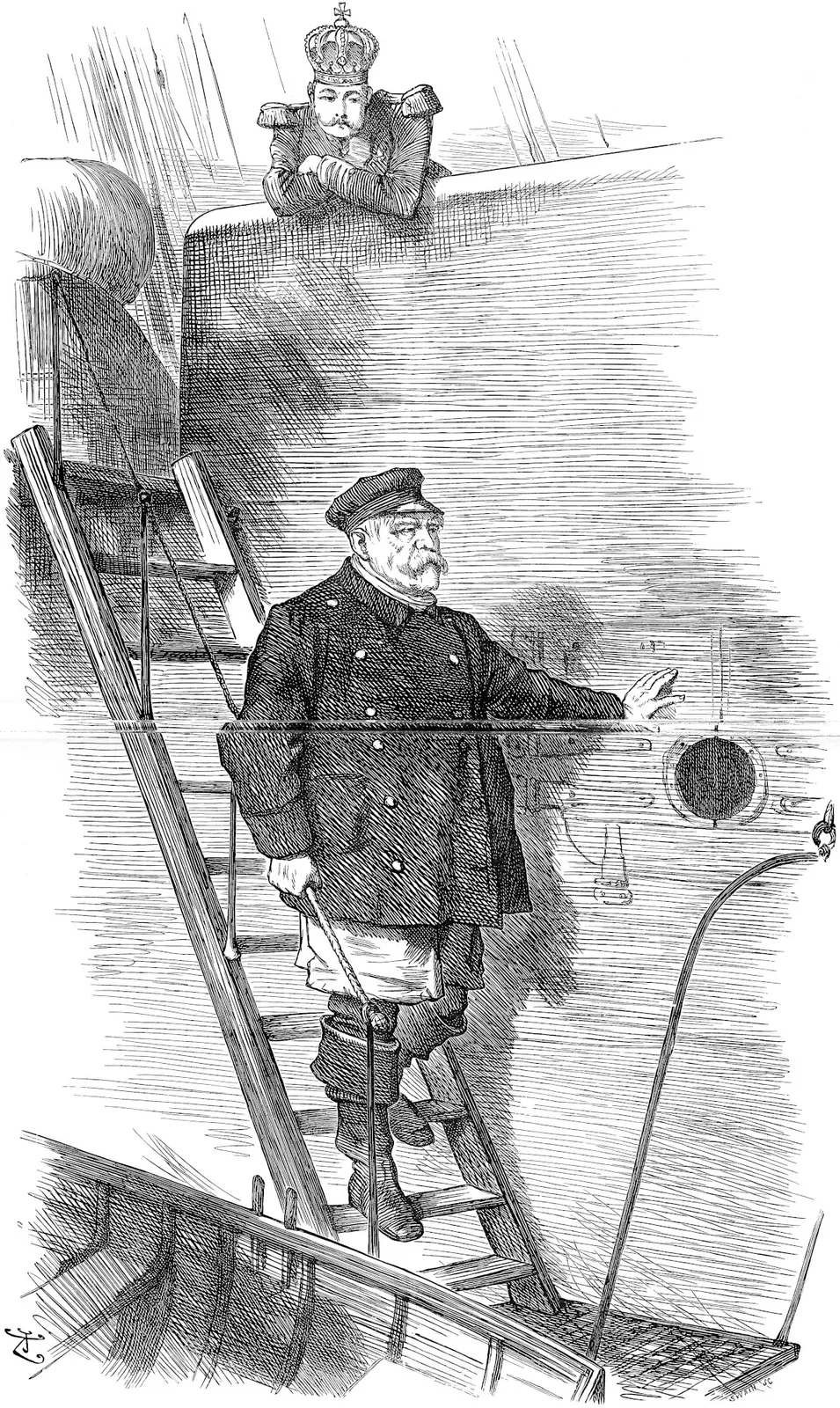
Dropping the Pilot
86-87
In consequence of disagreement with the German Emperor, Prince Bismarck resigned his post of Chancellor.  
Illustration — Contents. — from Cartoons
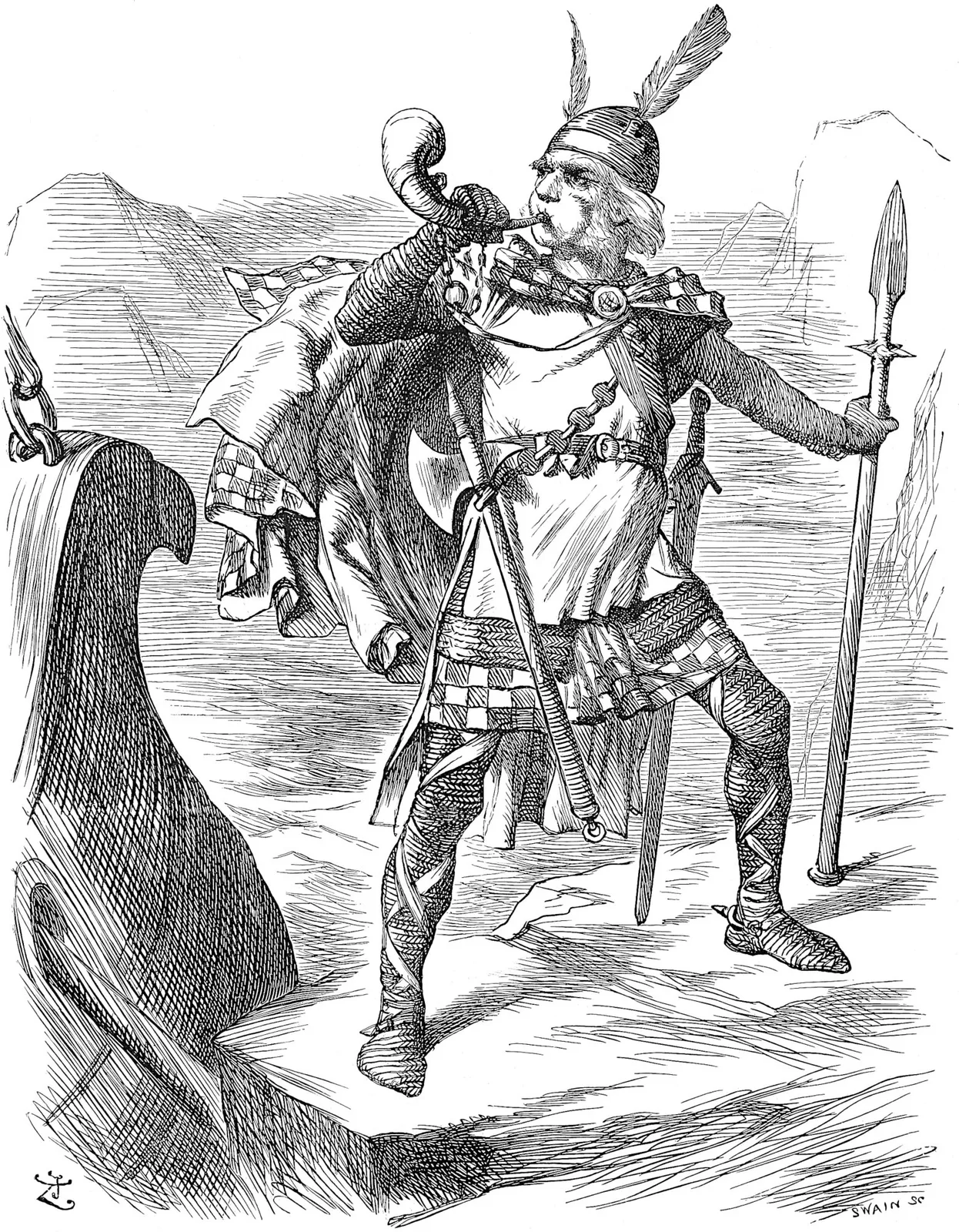
The McGladstone!
88
Mr. Gladstone had started for Midlothian to carry on another political campaign for the rallying of his forces.  
Illustration — Contents. — from Cartoons
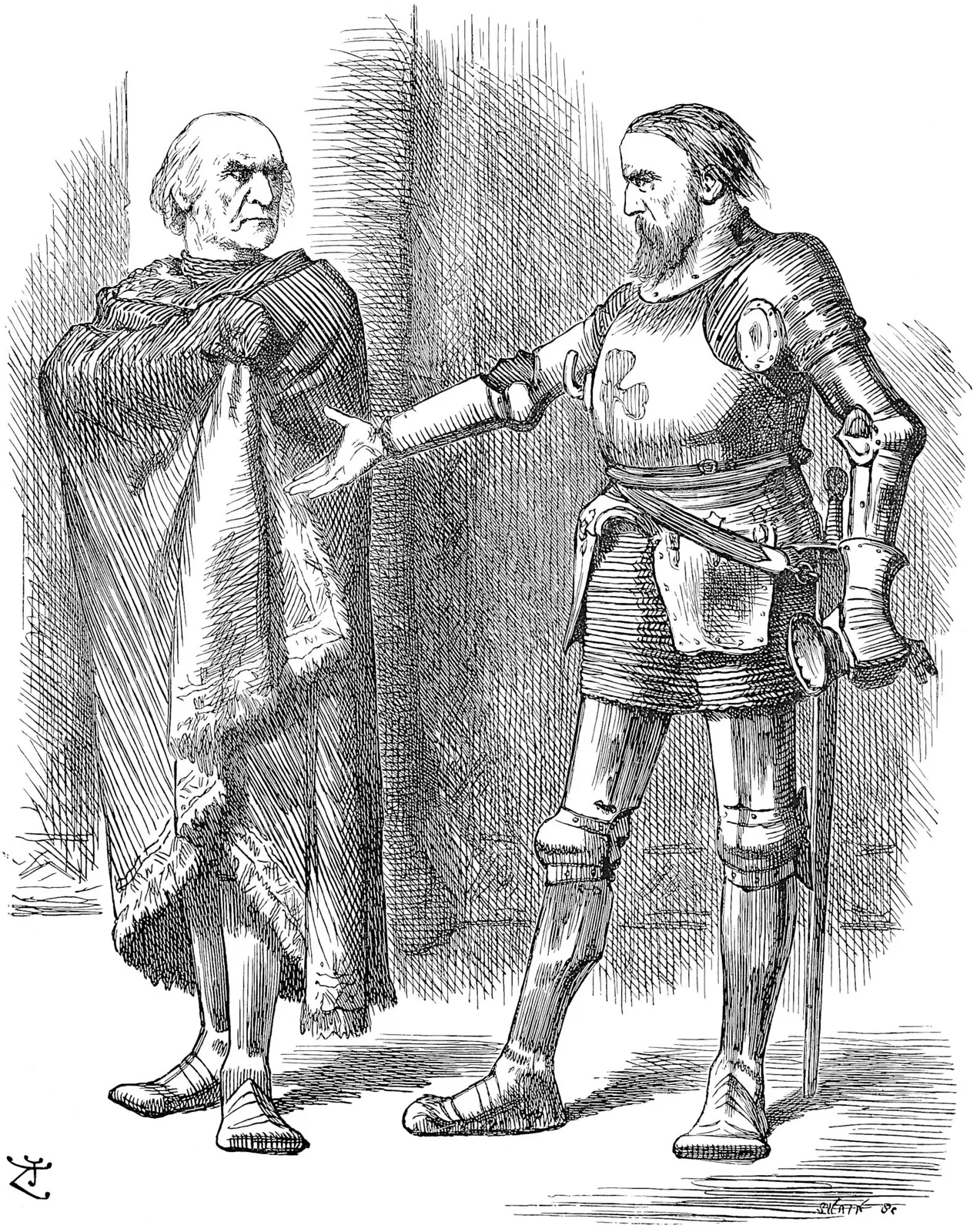
“Separatists”
89
Owing to the scandal arising out of the O’Shea divorce case, Mr. Gladstone refused to co-operate any longer with Mr. Parnell as leading the Irish Home Rule Party.  
Illustration — Contents. — from Cartoons
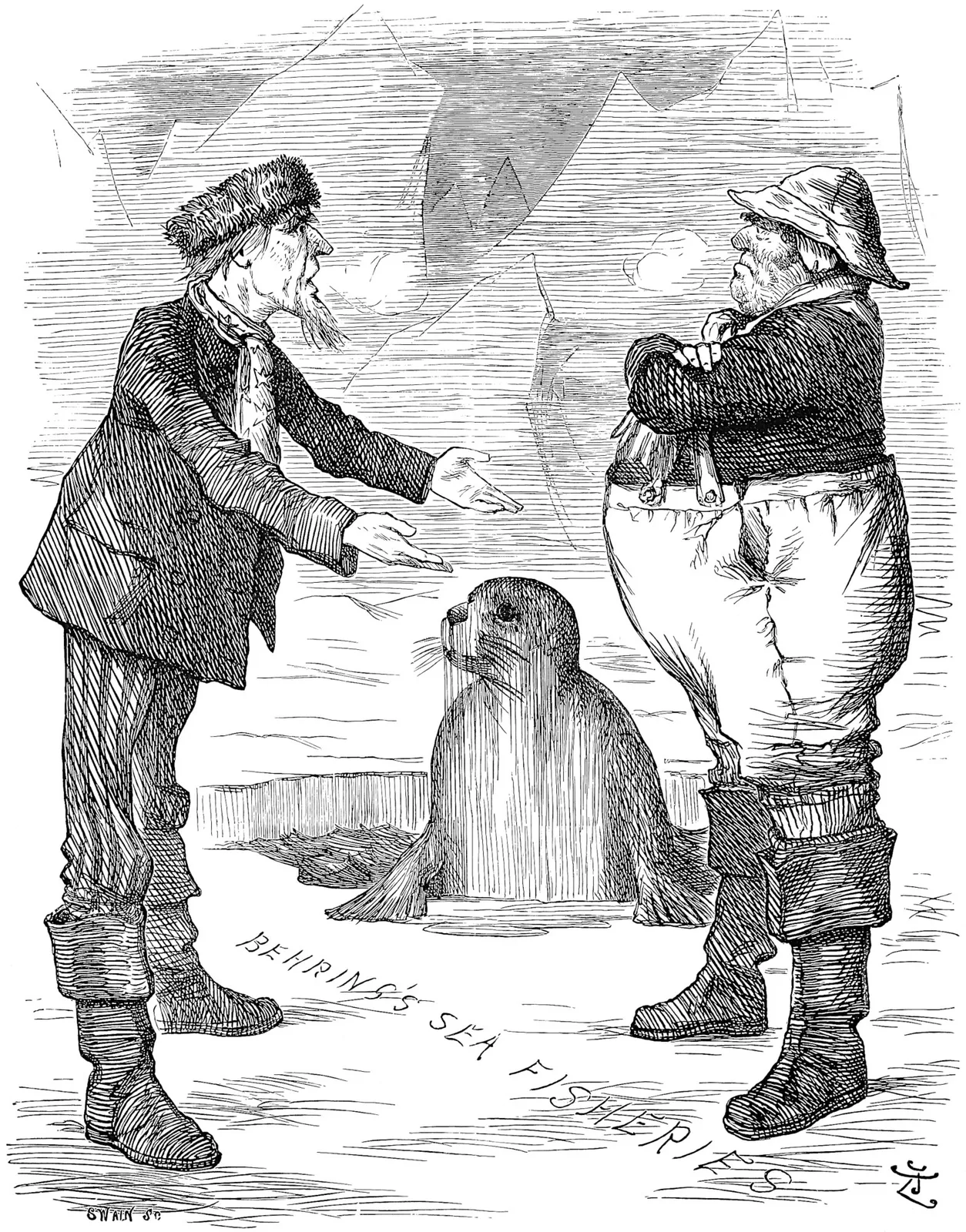
Arbitration
90
The Americans claimed to make the Behring Sea a mare clausum, and it was thought advisable to establish a “close-time” for the seals.  
Illustration — Contents. — from Cartoons
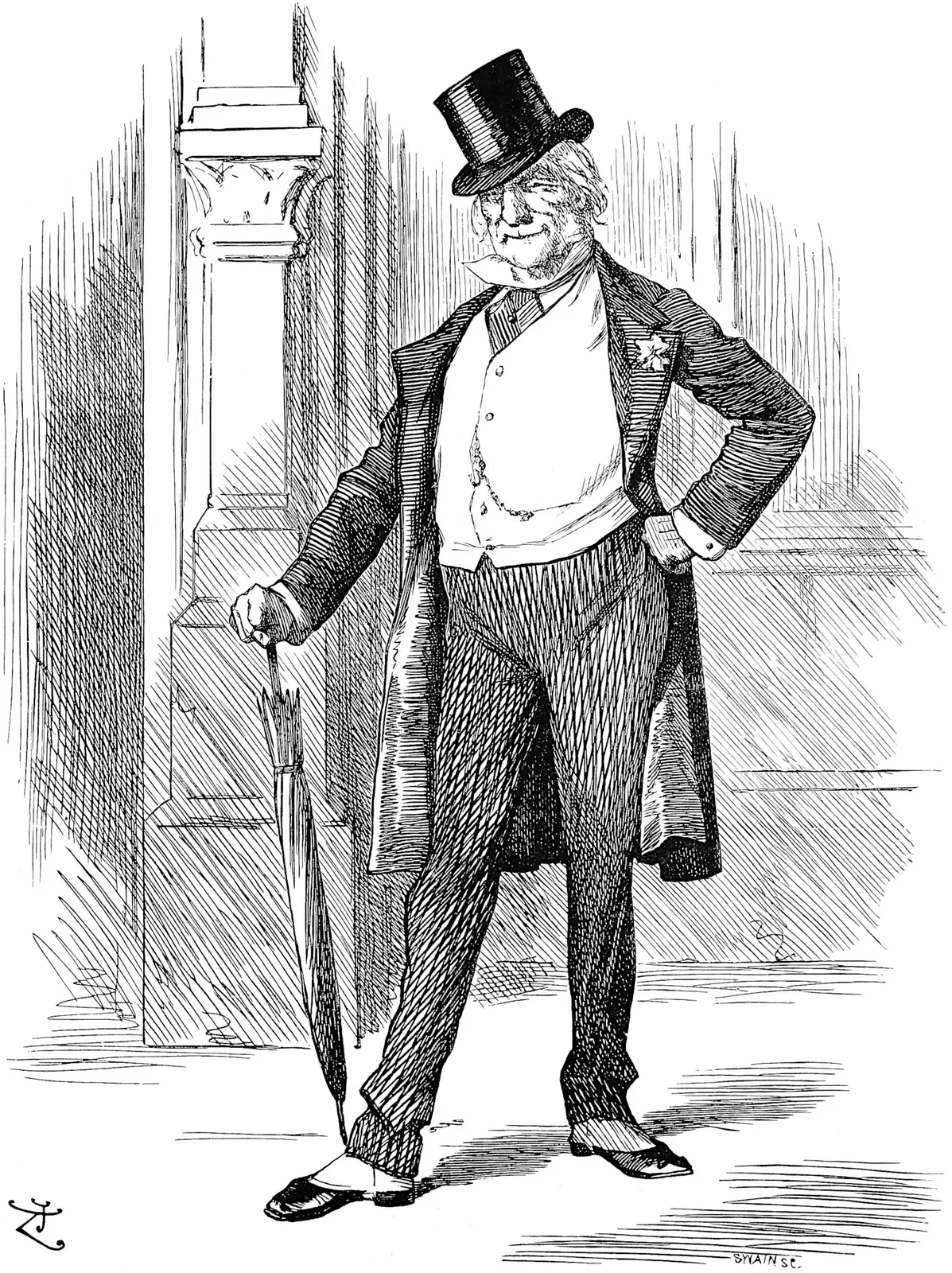
“Retire!—What do you think?”
91
A rumour that Mr. Gladstone was about to retire from political life proved to be without foundation.  
Illustration — Contents. — from Cartoons
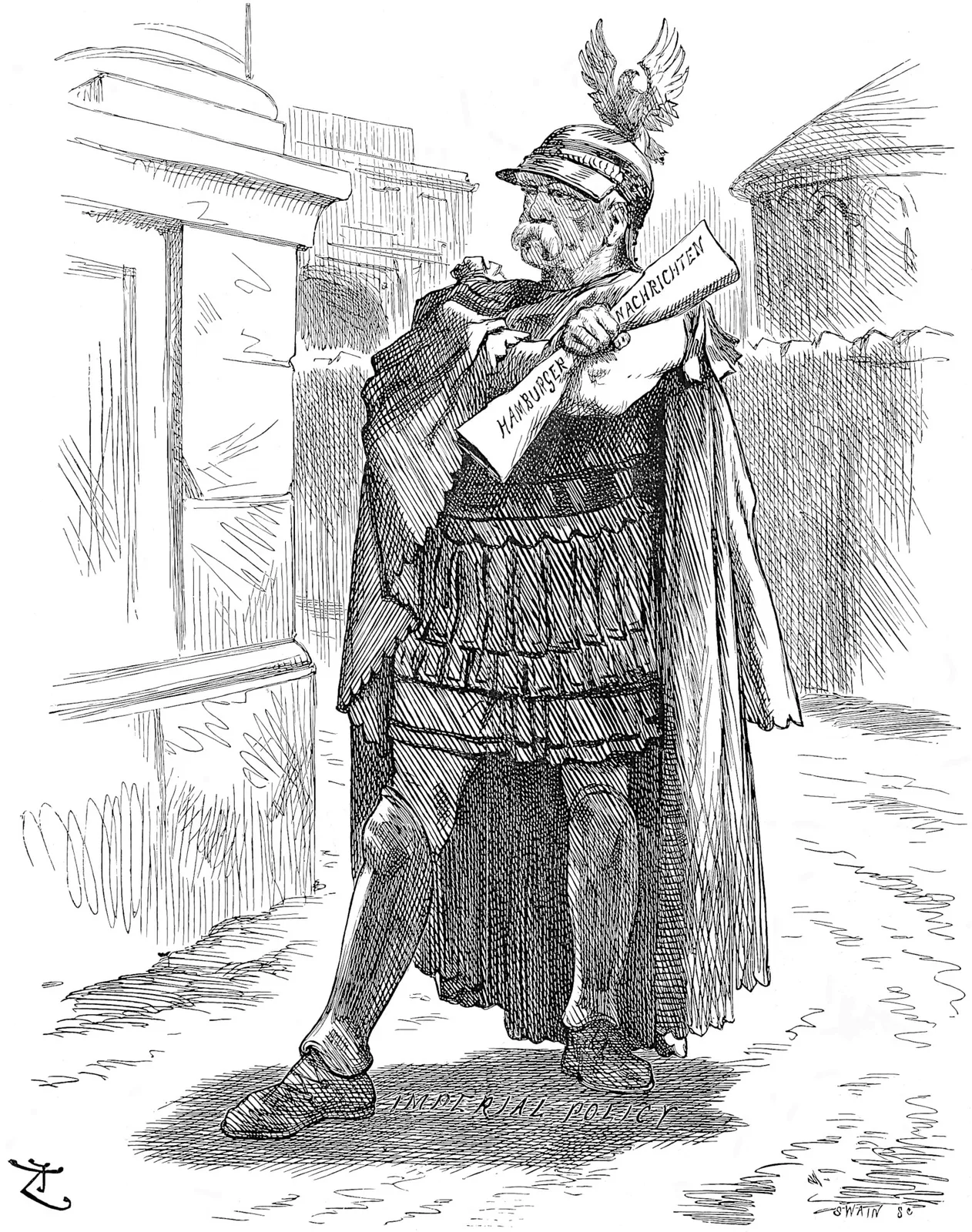
Coriolanus
92
Prince Bismarck had inspired in the columns of the Hamburger Nachrichten, incessant attacks upon the Imperial policy, and especially upon the proceedings of his successor, Caprivi.  
Illustration — Contents. — from Cartoons
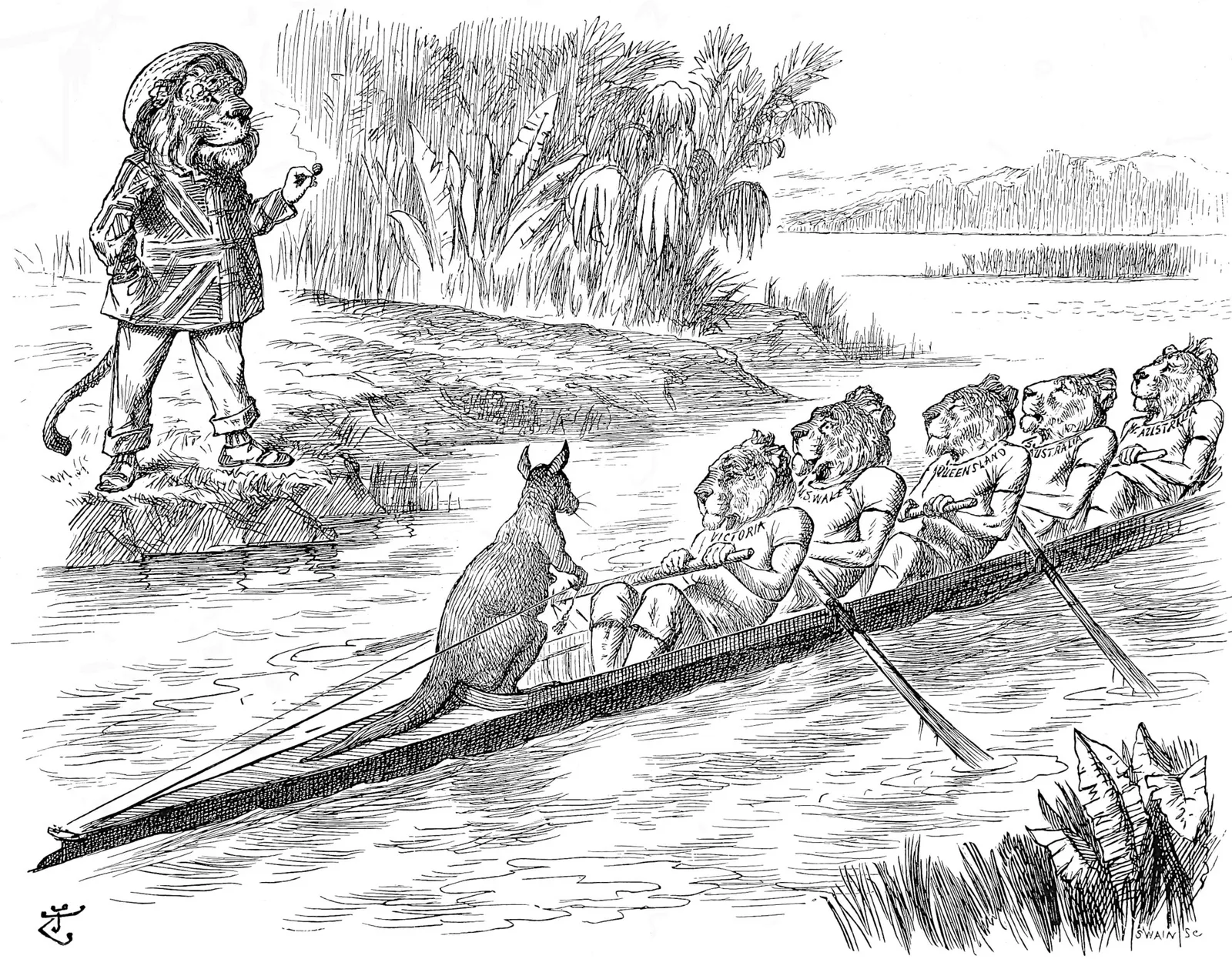
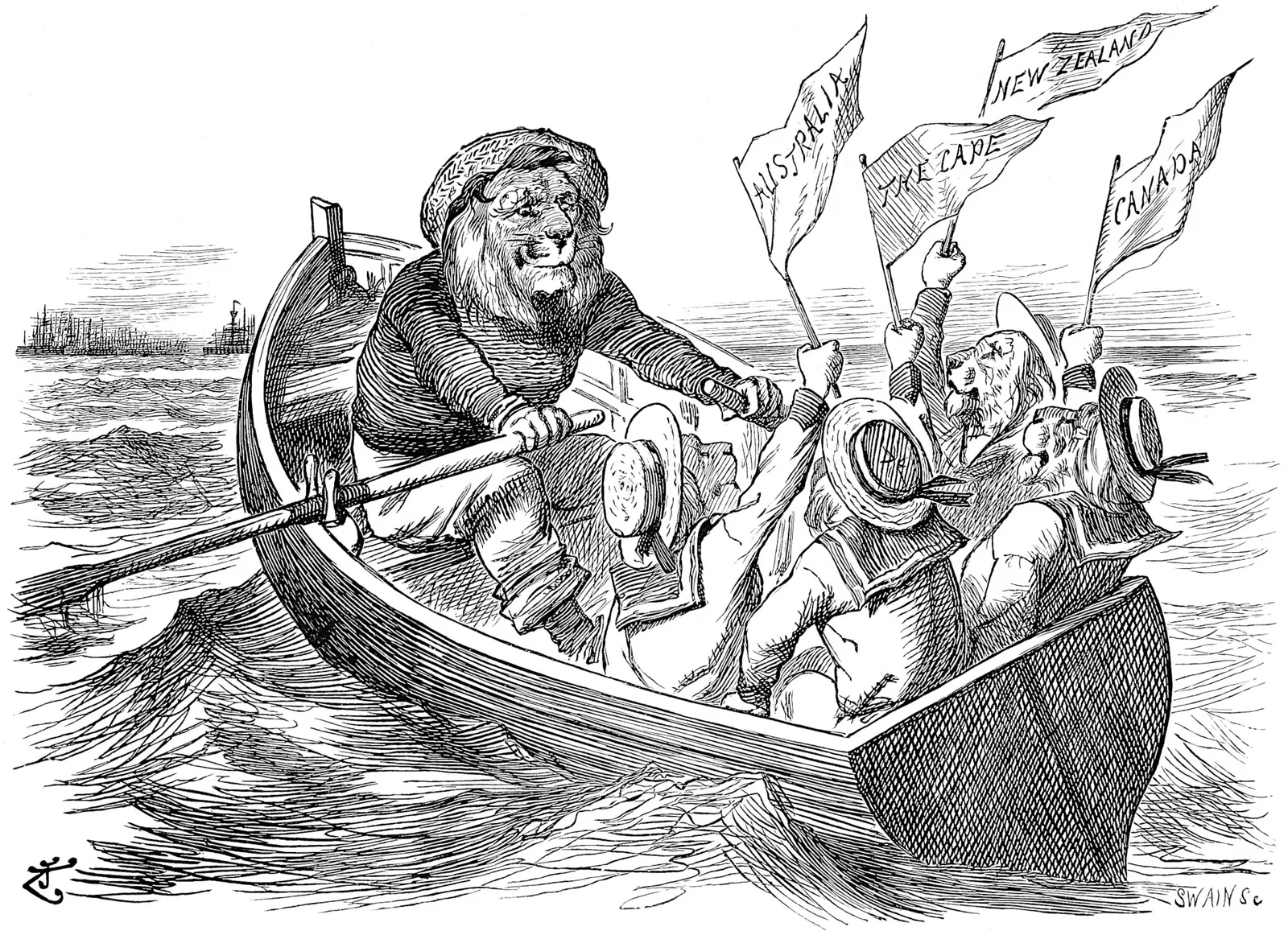
“Advance, Australia!”
93
A scheme, advocated by Sir Henry Parkes, was under consideration for establishing “one great Union Government” amongst the Australian Colonies.  
Illustration — Contents. — from Cartoons
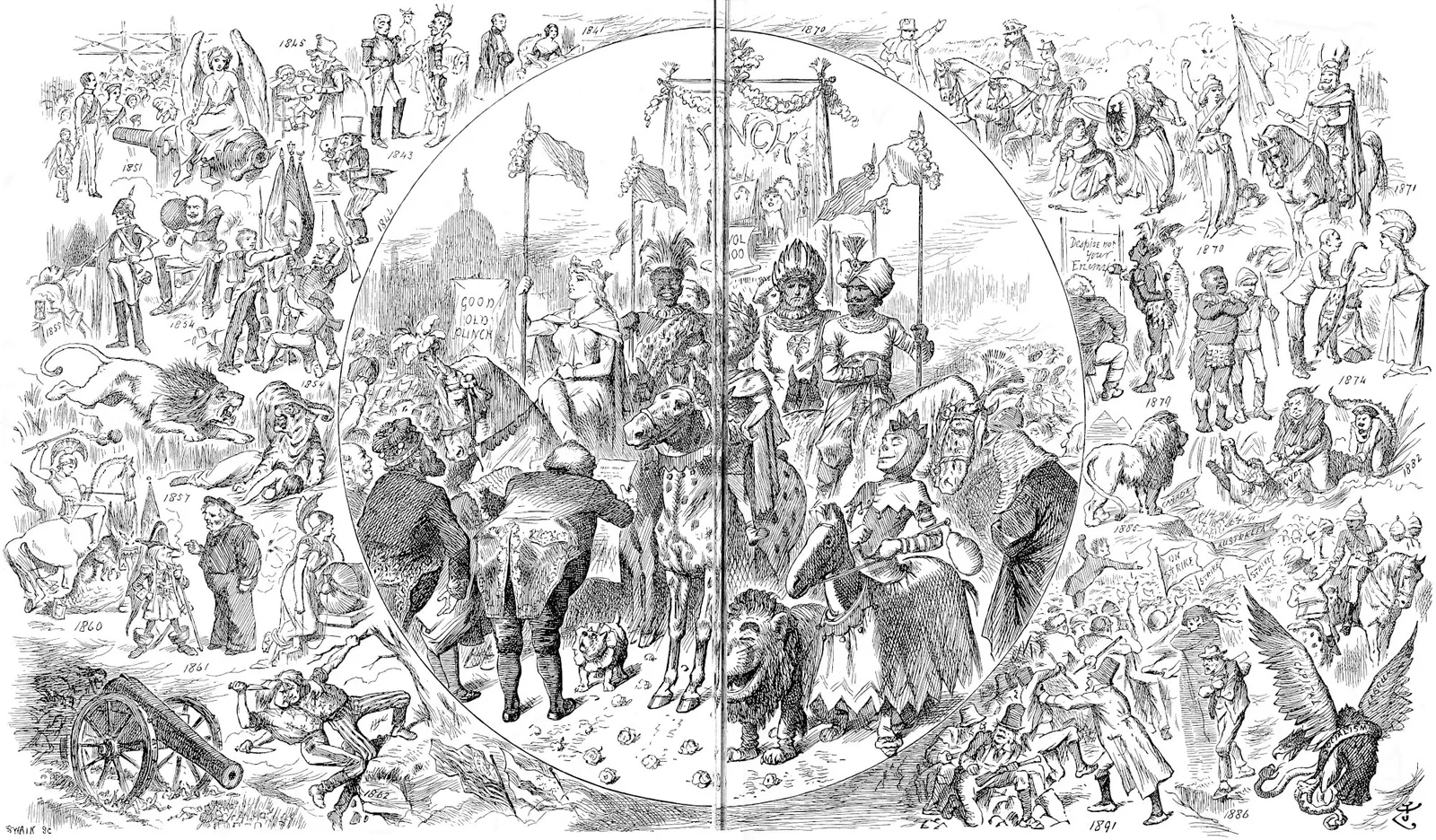
Mr. Punch’s Jubilee Pageant
94-95
In July “Mr. Punch” celebrated his Jubilee. The sketches surrounding the Pageant are of selected cartoons illustrating events ranging over 50 years.  
Illustration — Contents. — from Cartoons
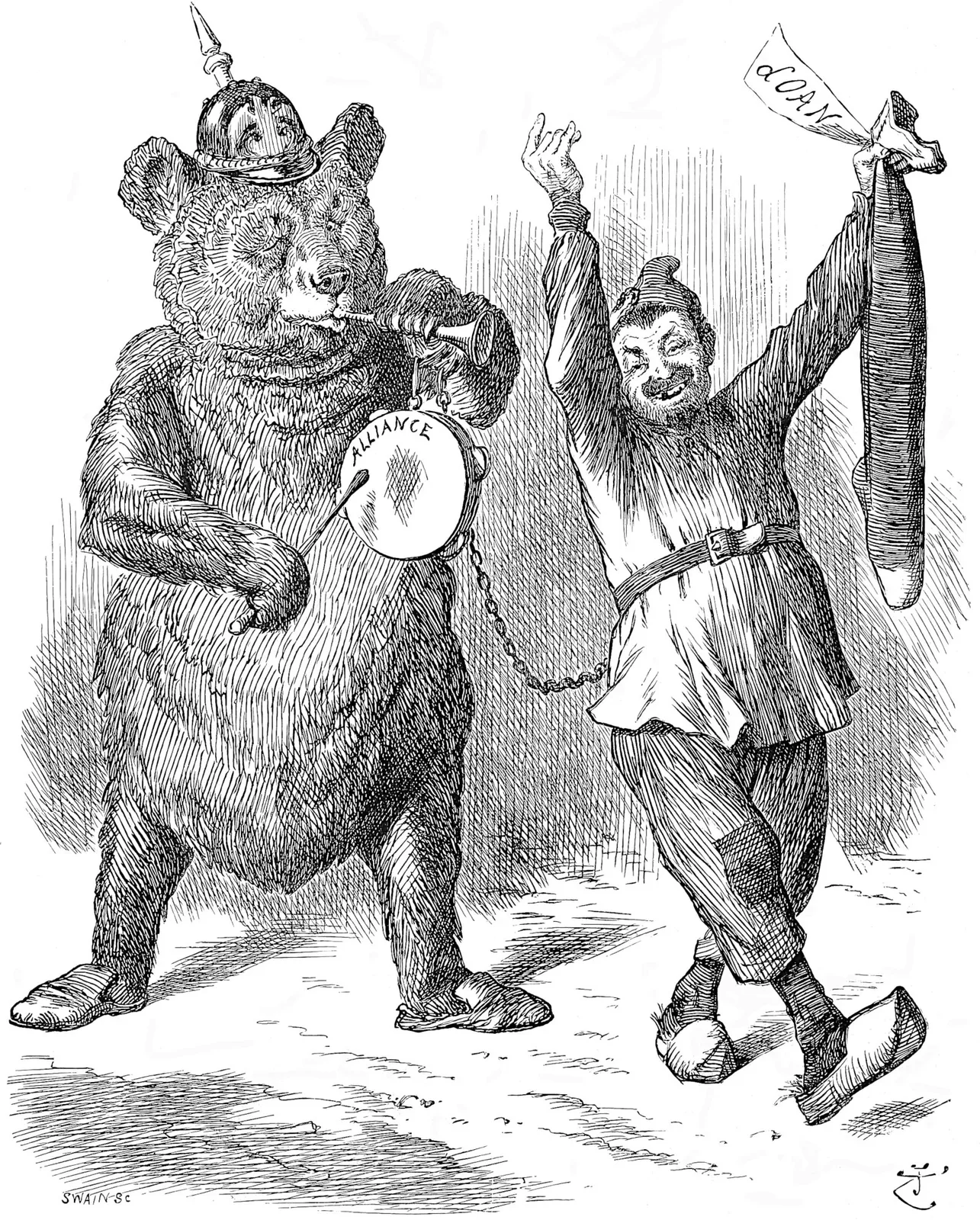
“Turning the Tables”
96
The suggestion of “Turning the Tables” was that on this occasion the Man (France) was dancing to the tune of the Bear acting as leader.  
Illustration — Contents. — from Cartoons
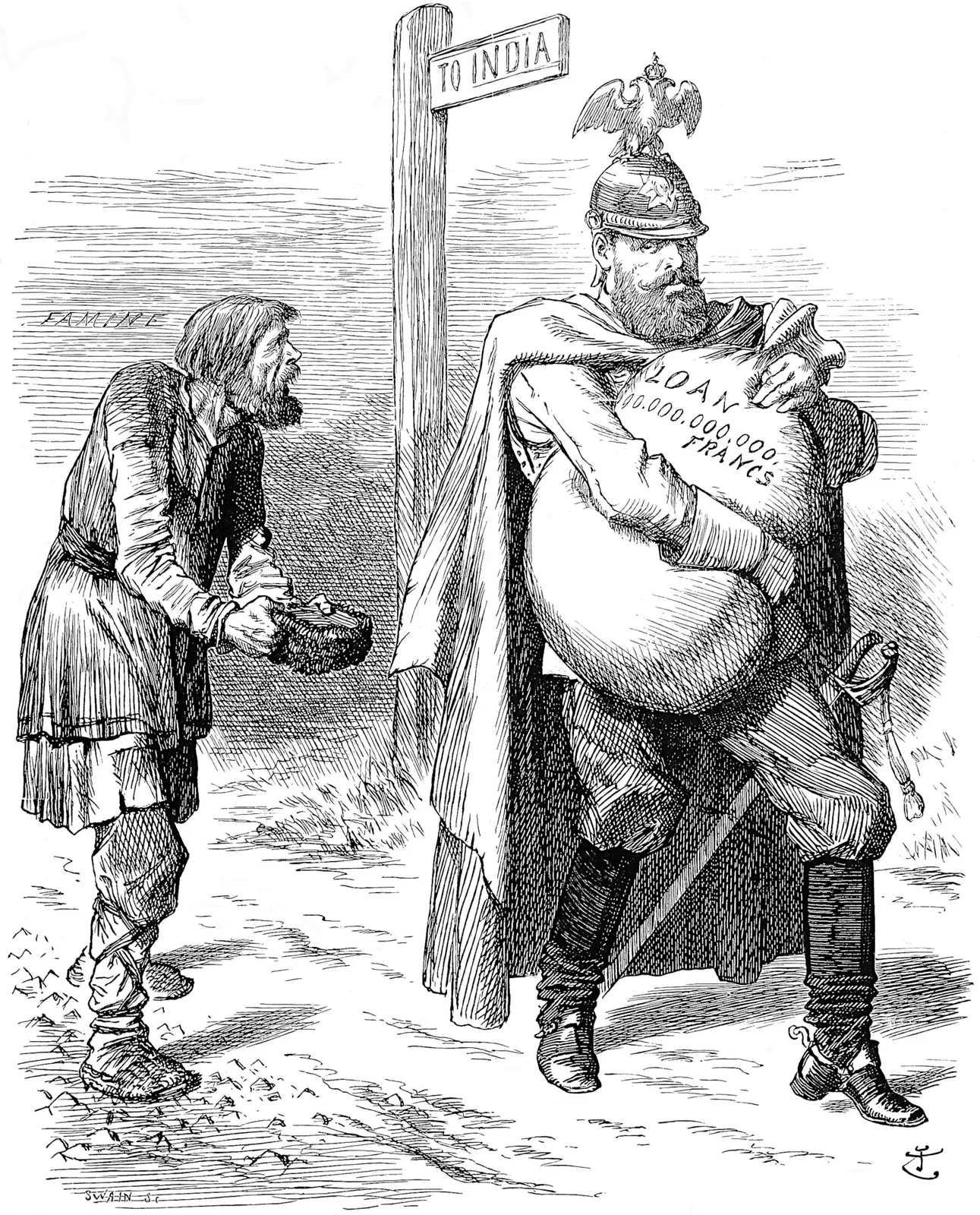
“What will he do with it?”
97
It was hoped that some portion of the large Russian loan might be applied to the relief of misery rather than for war preparations.  
Illustration — Contents. — from Cartoons
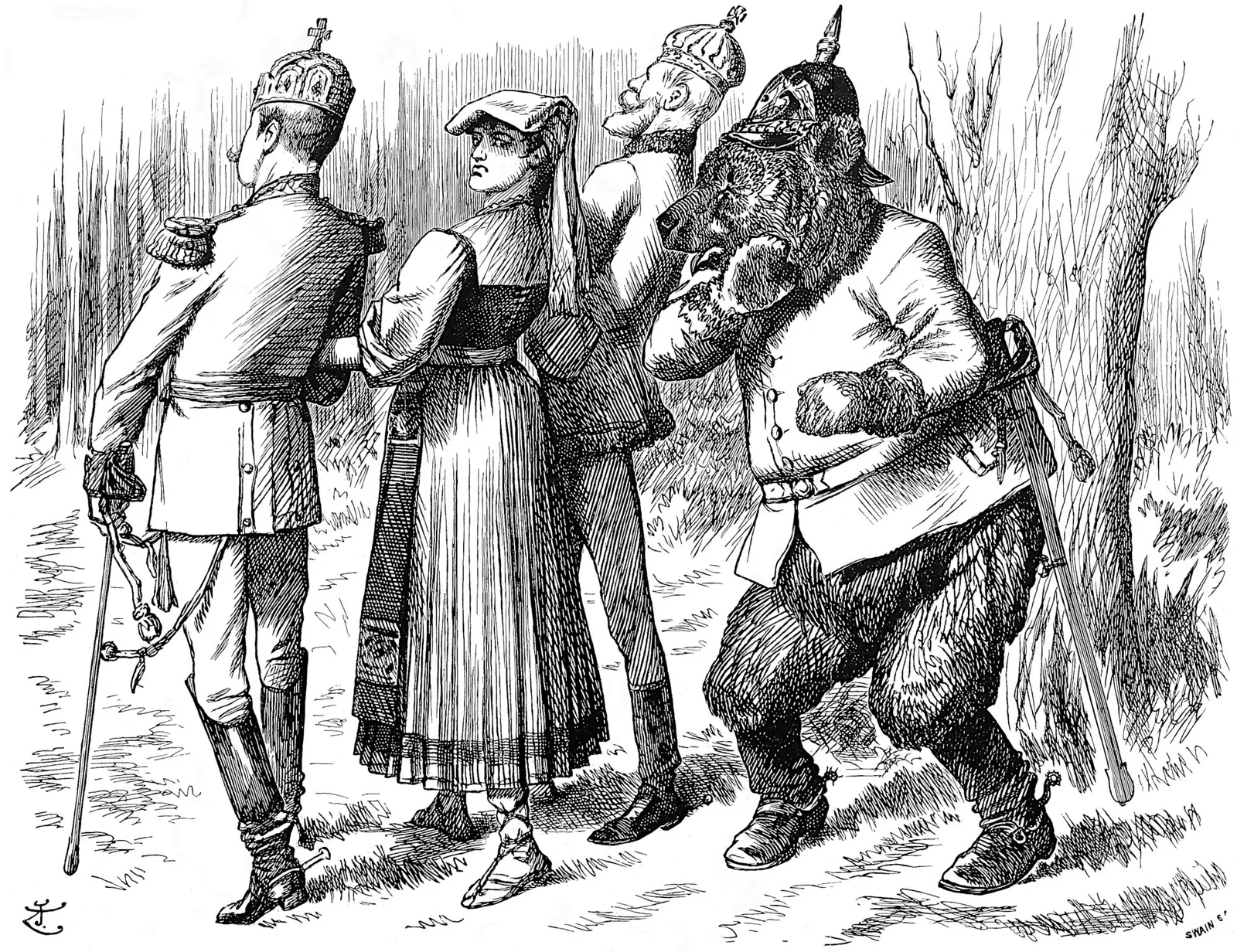
Trying it on!
98
A rapprochement between Russia and Italy was considered likely to weaken the strength of the Triple Alliance.  
Illustration — Contents. — from Cartoons
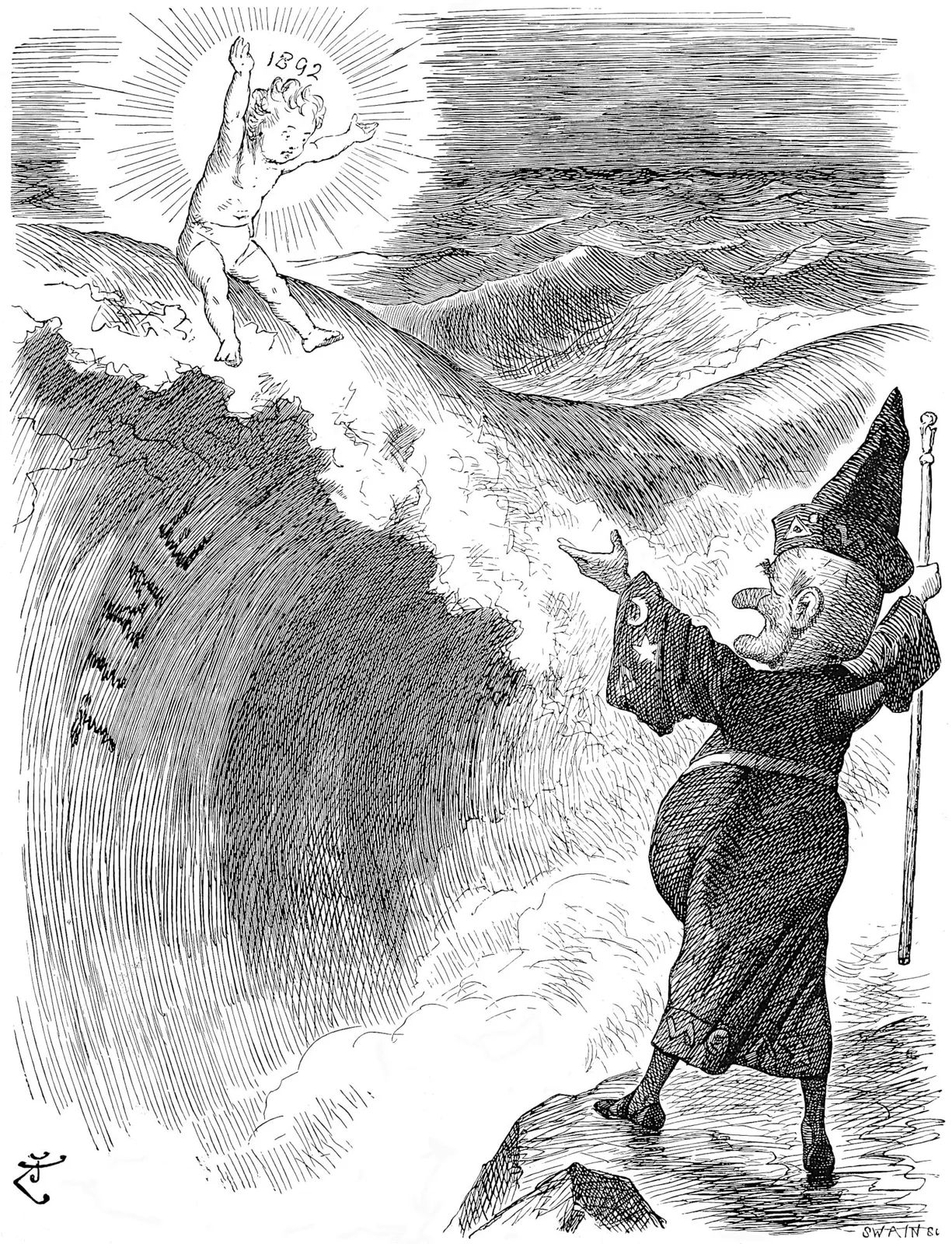
The Coming of Ninety-Two
99
Illustration — Contents. — from Cartoons
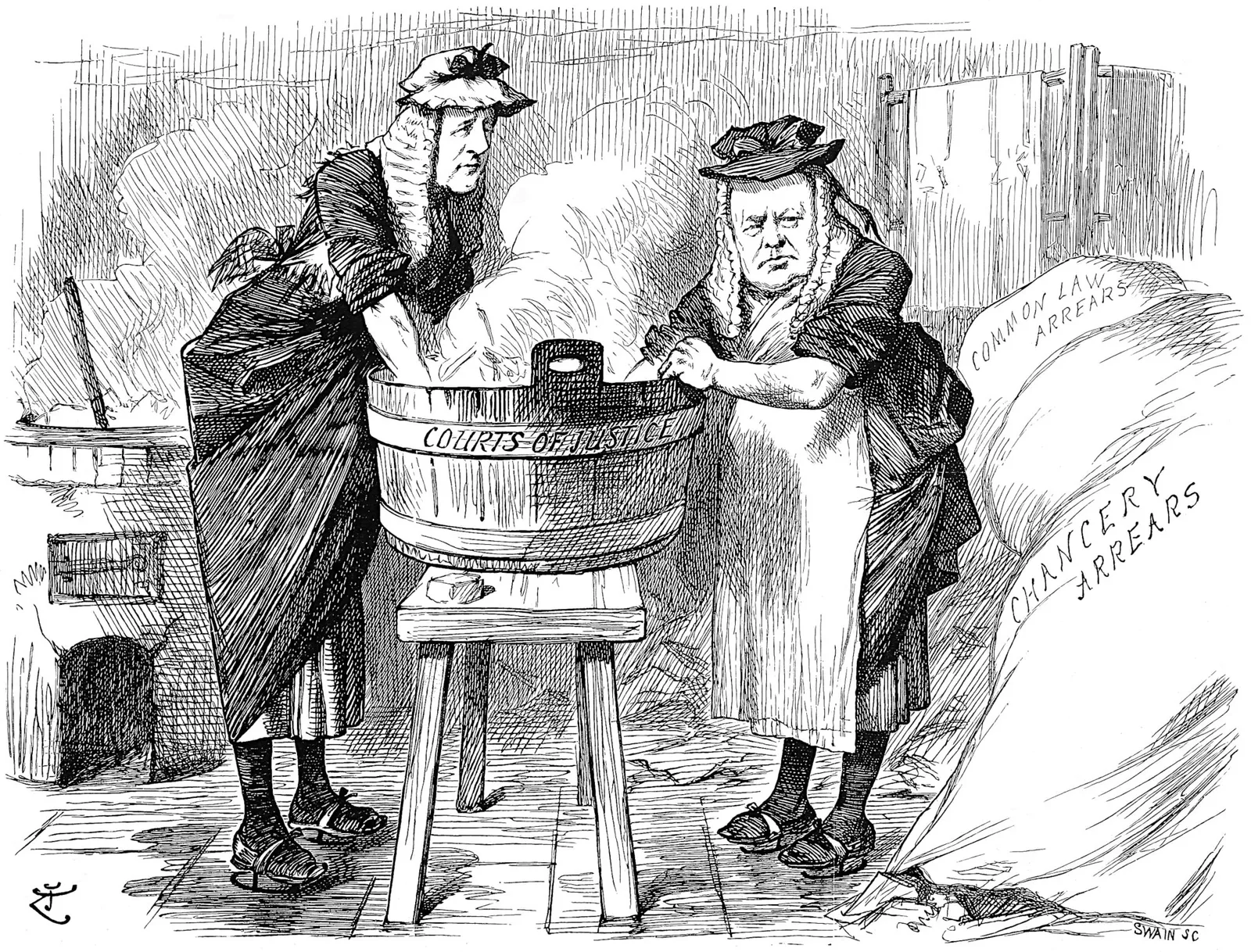
“Short-’anded”
100
“The whole legal machinery is out of gear, and the country is too busy to put it right.”—Law Times.  
Illustration — Contents. — from Cartoons
The Attack on the “Capital”
101
The Liberal Party, which had organised great public meetings in London, were making a determined effort to capture the Tory stronghold.  
Illustration — Contents. — from Cartoons
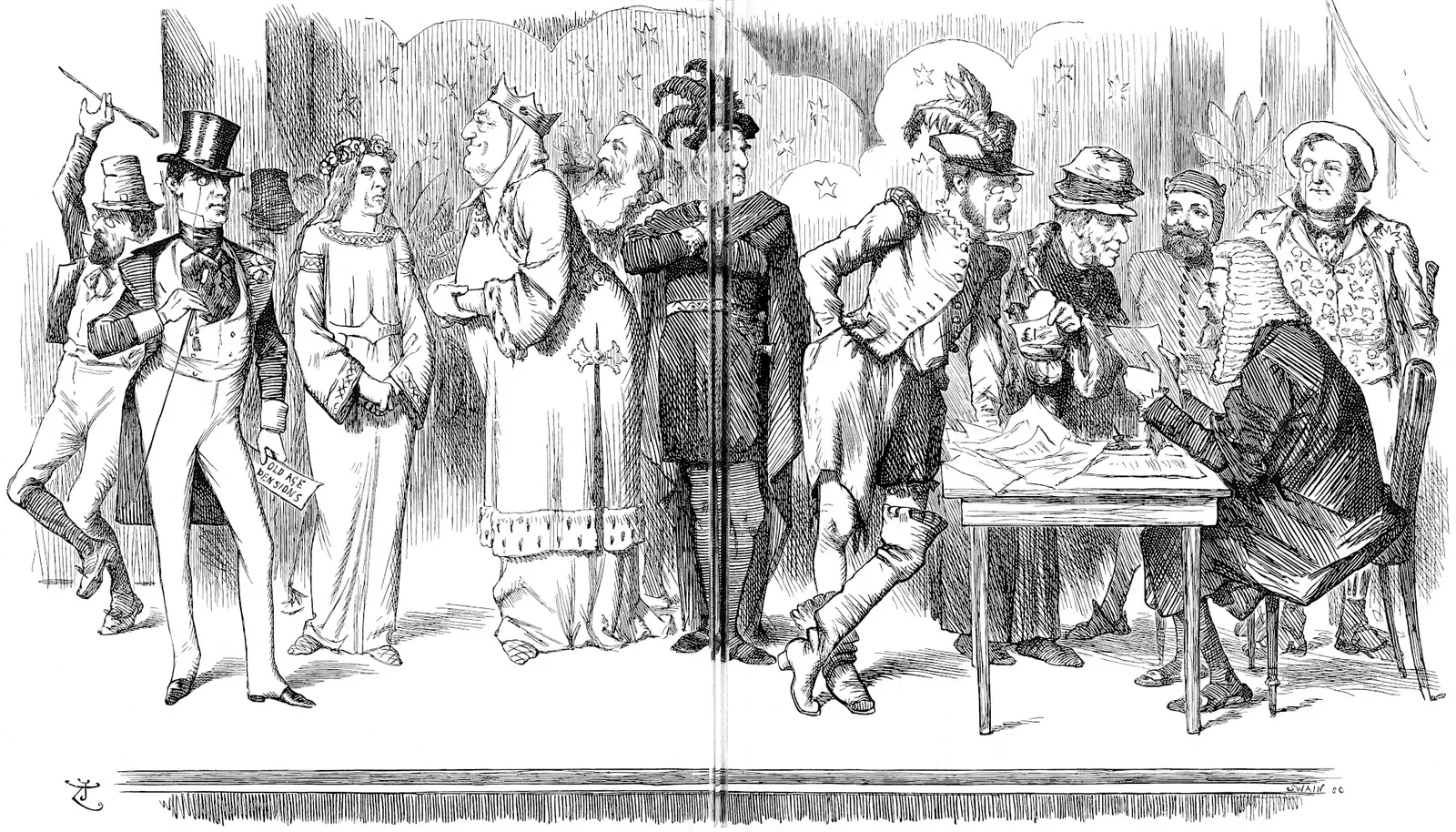
“Her Majesty’s Servants”
102-103
The Parliament opened for its last Session previous to the General Election in July, which gave Mr. Gladstone a small majority.  
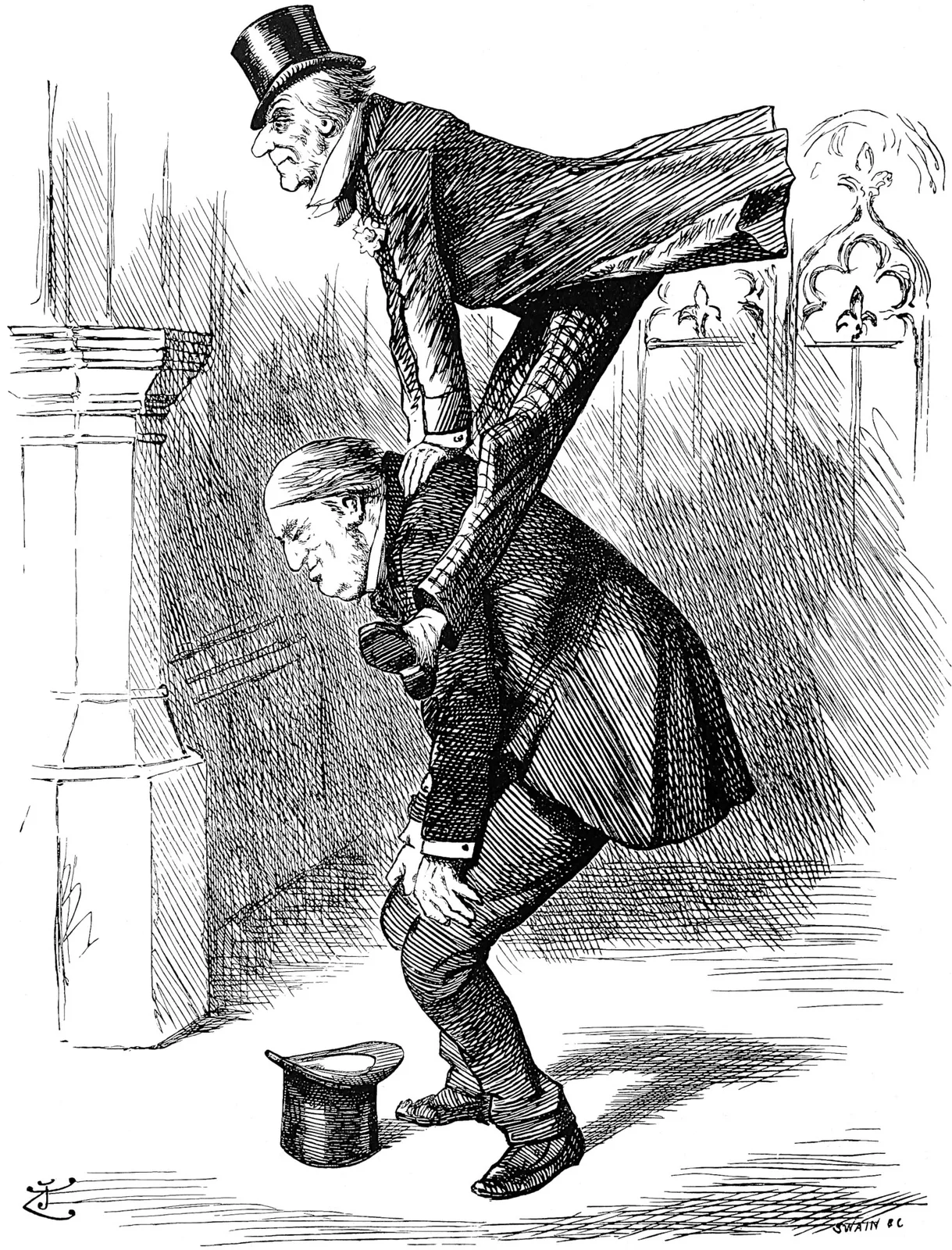
Illustration — Contents. — from Cartoons
Younger than ever!
104
The great Liberal leader, who had been recruiting his health in the South of France, had returned and resumed the leadership.  
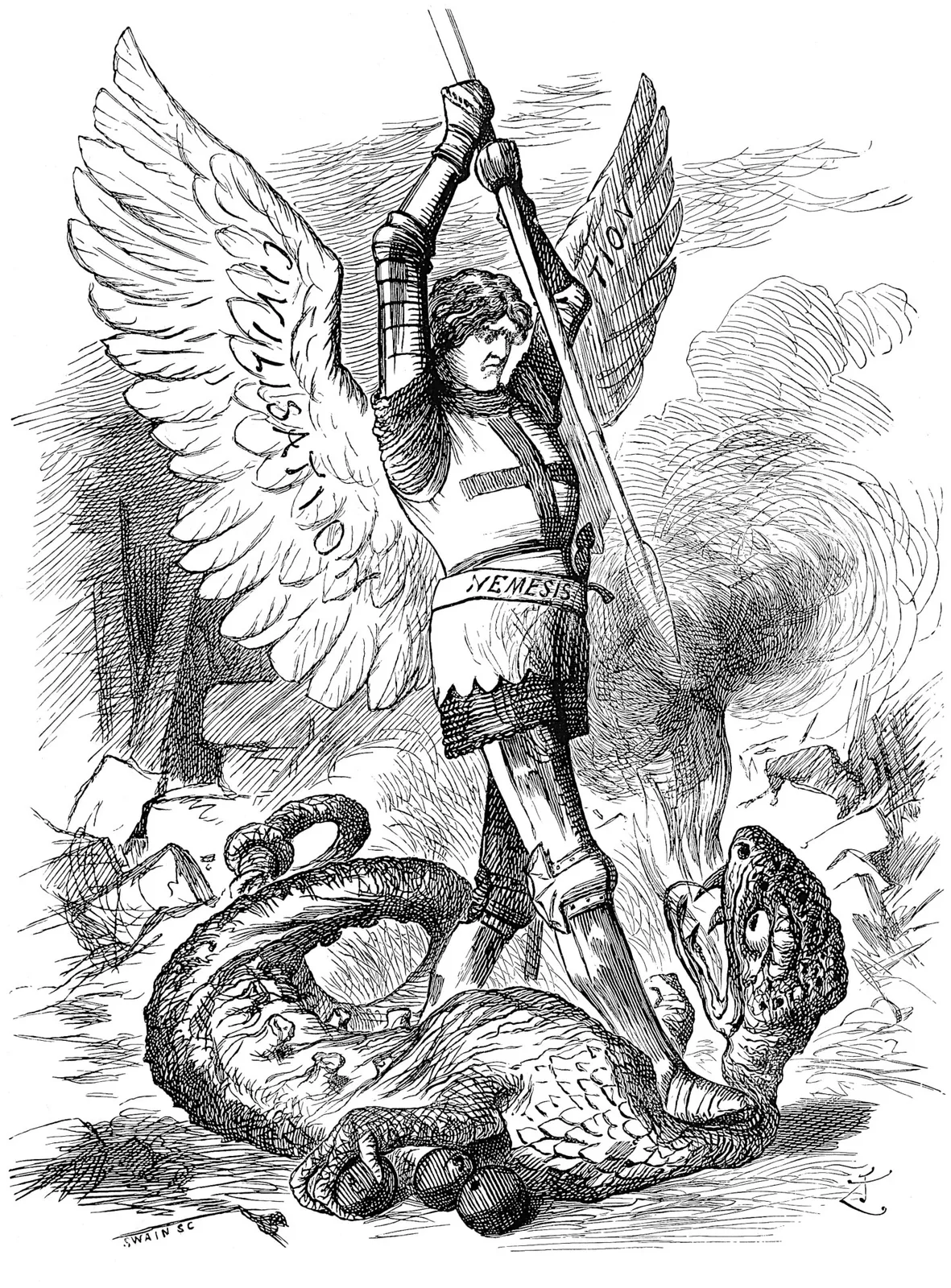
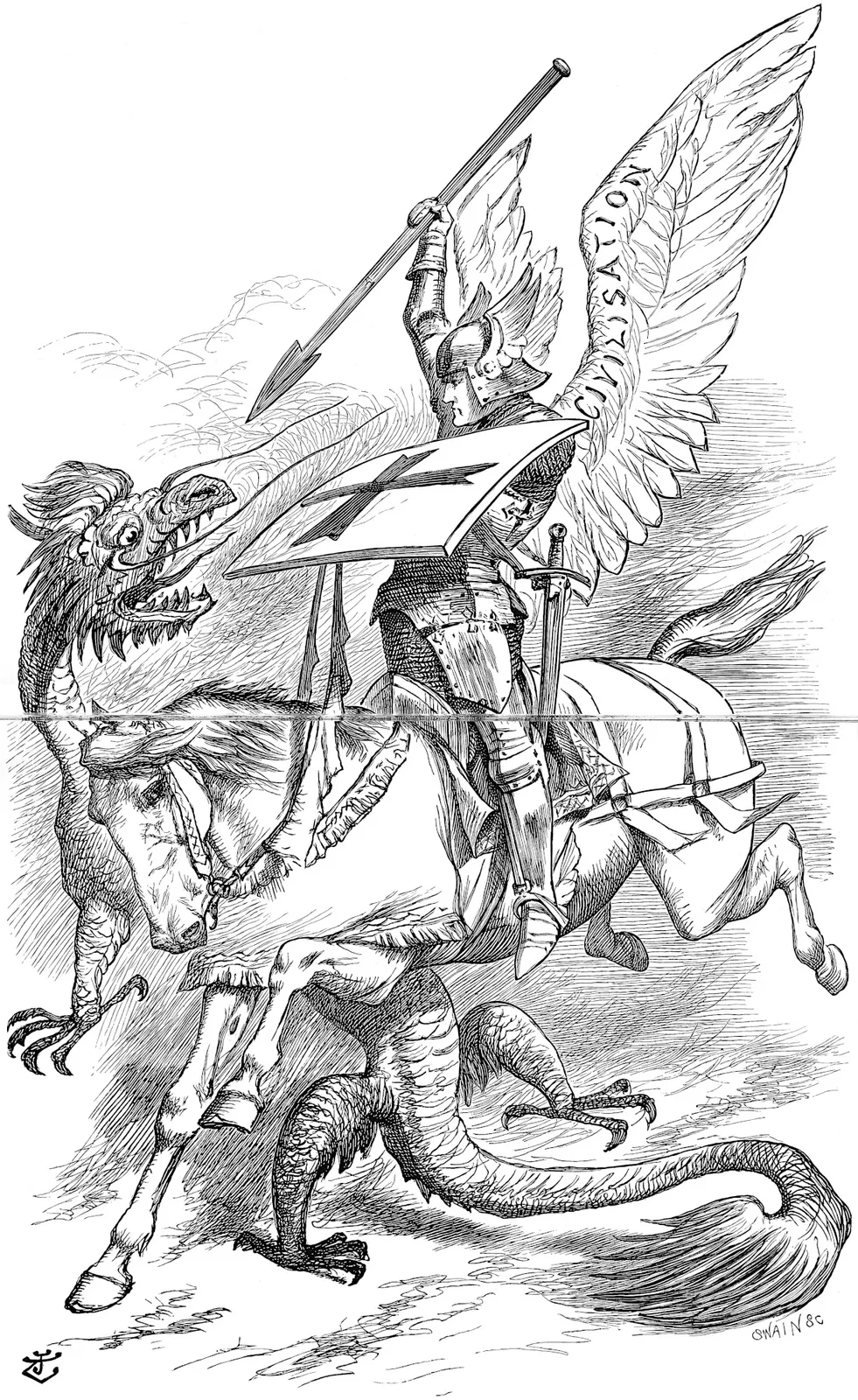
Illustration — Contents. — from Cartoons
The Dynamite Dragon
105
The Dynamitards had committed many outrages on the Continent, and the destruction of property by dynamite had been made a capital offence by the French Chamber.  
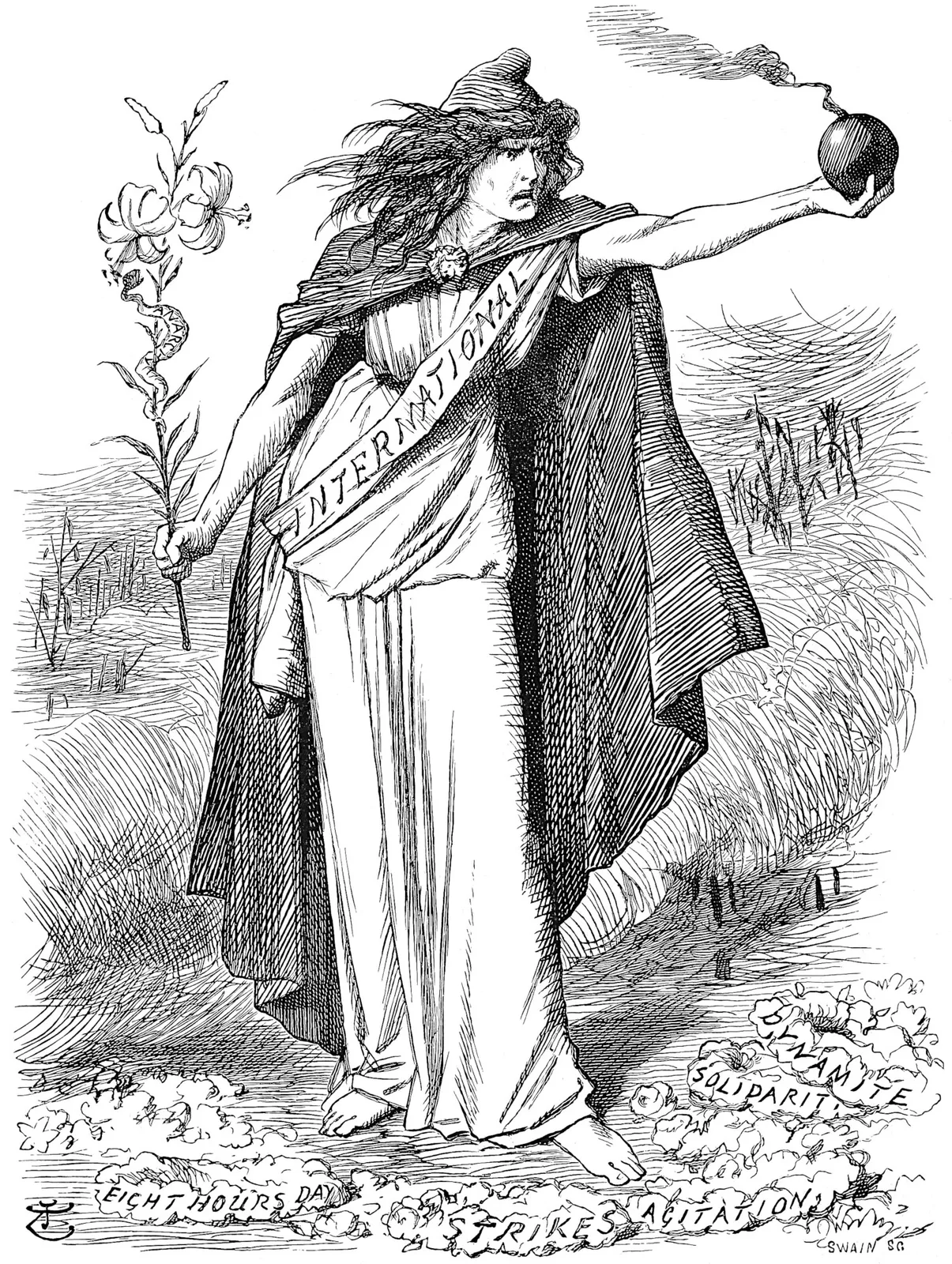
Illustration — Contents. — from Cartoons
The New “Queen of the May”
106
Incendiary Manifestoes having been issued by the French proletariat, it was feared that disturbances might ensue during the May Day celebrations on the Continent.  
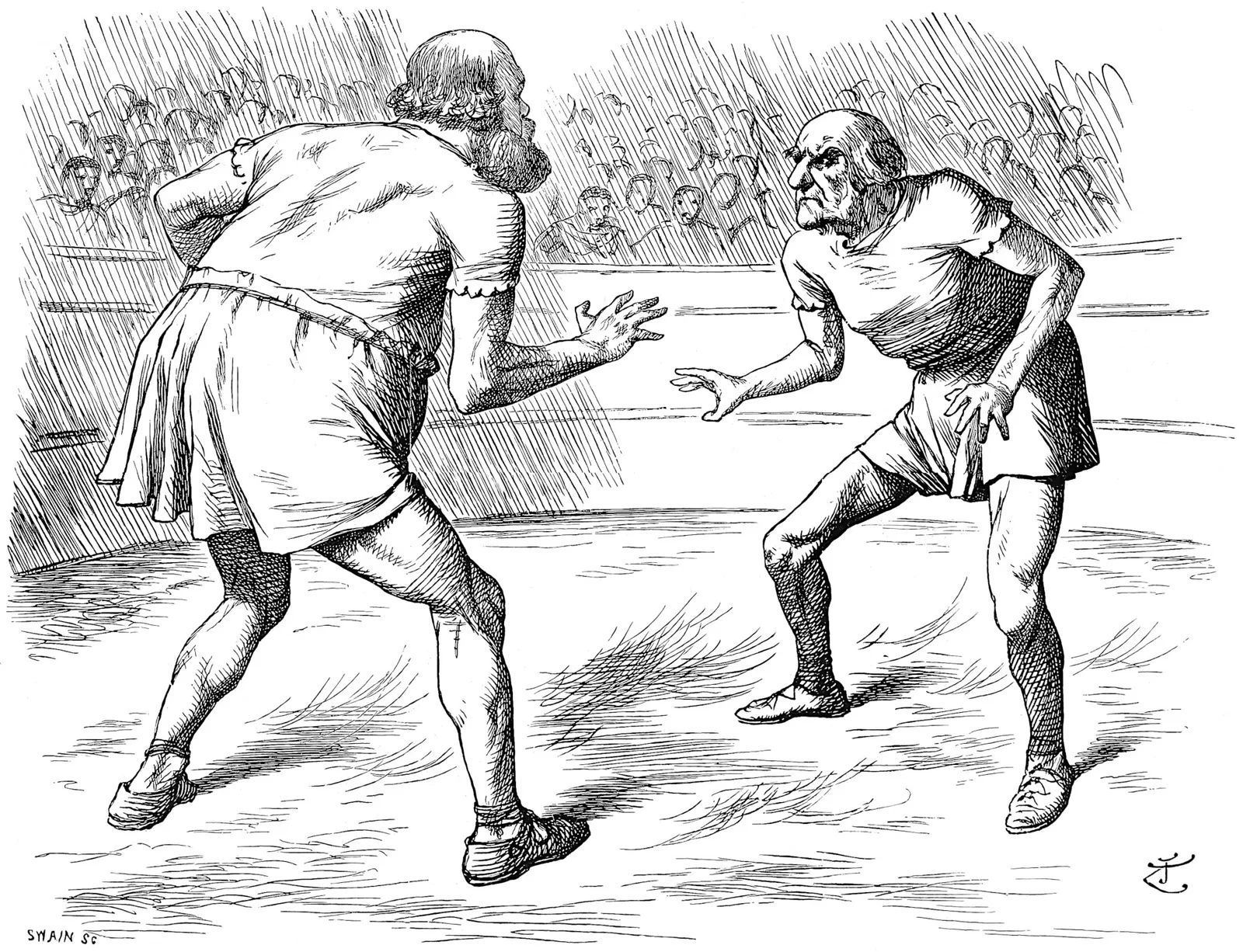
Illustration — Contents. — from Cartoons
“When Greek meets Greek”
107
The two great leaders had issued stirring addresses to the constituencies, and were preparing to grapple for supremacy at the approaching General Election.  
Illustration — Contents. — from Cartoons
Mischief!
108
Mr. Labouchere’s promises of support to the Government were largely discounted by the report that he considered himself slighted at being left out of office.  
Illustration — Contents. — from Cartoons
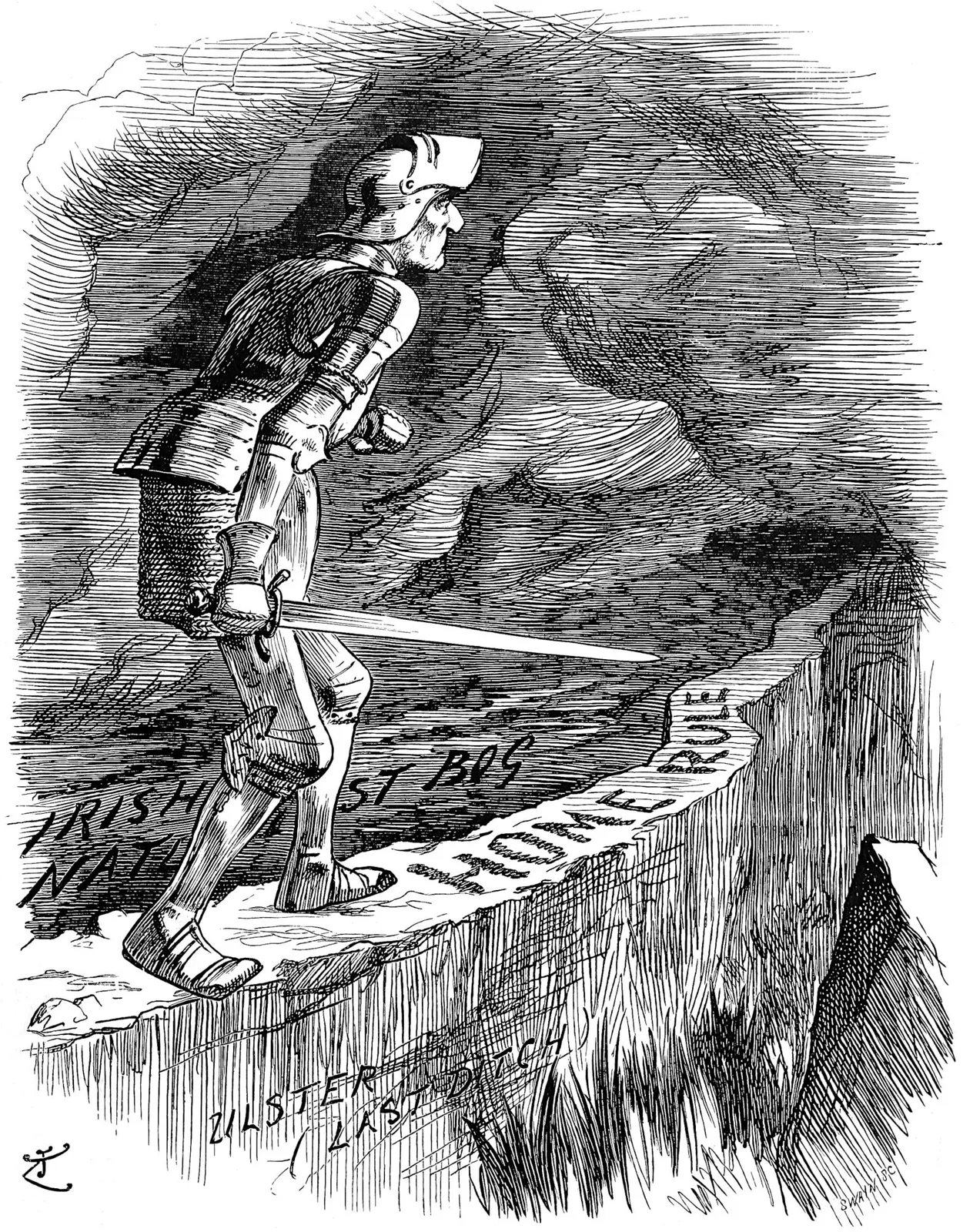
A Pilgrim’s Progress
109
The Liberal leader was resolved to persevere with his Home Rule Bill, despite the lukewarm support of the Irish Nationalists and the fierce opposition of the Ulster Unionists.  
Illustration — Contents. — from Cartoons
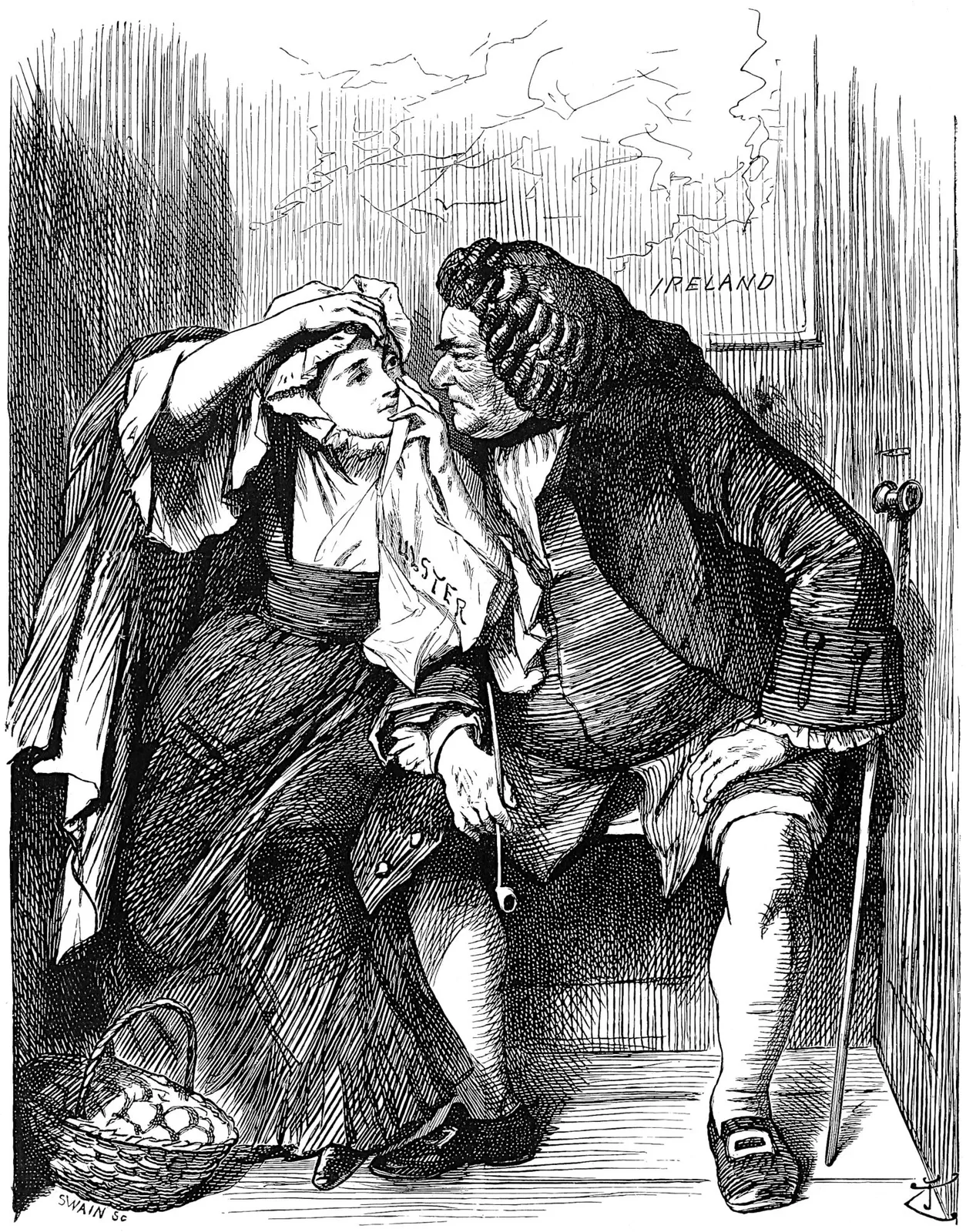
Uncle Toby and Widow Wadman
110
The Ulster Defence Union had issued a Manifesto antagonistic to the Home Rule scheme, and mass meetings were held at Belfast and other parts of Ulster.  
Illustration — Contents. — from Cartoons
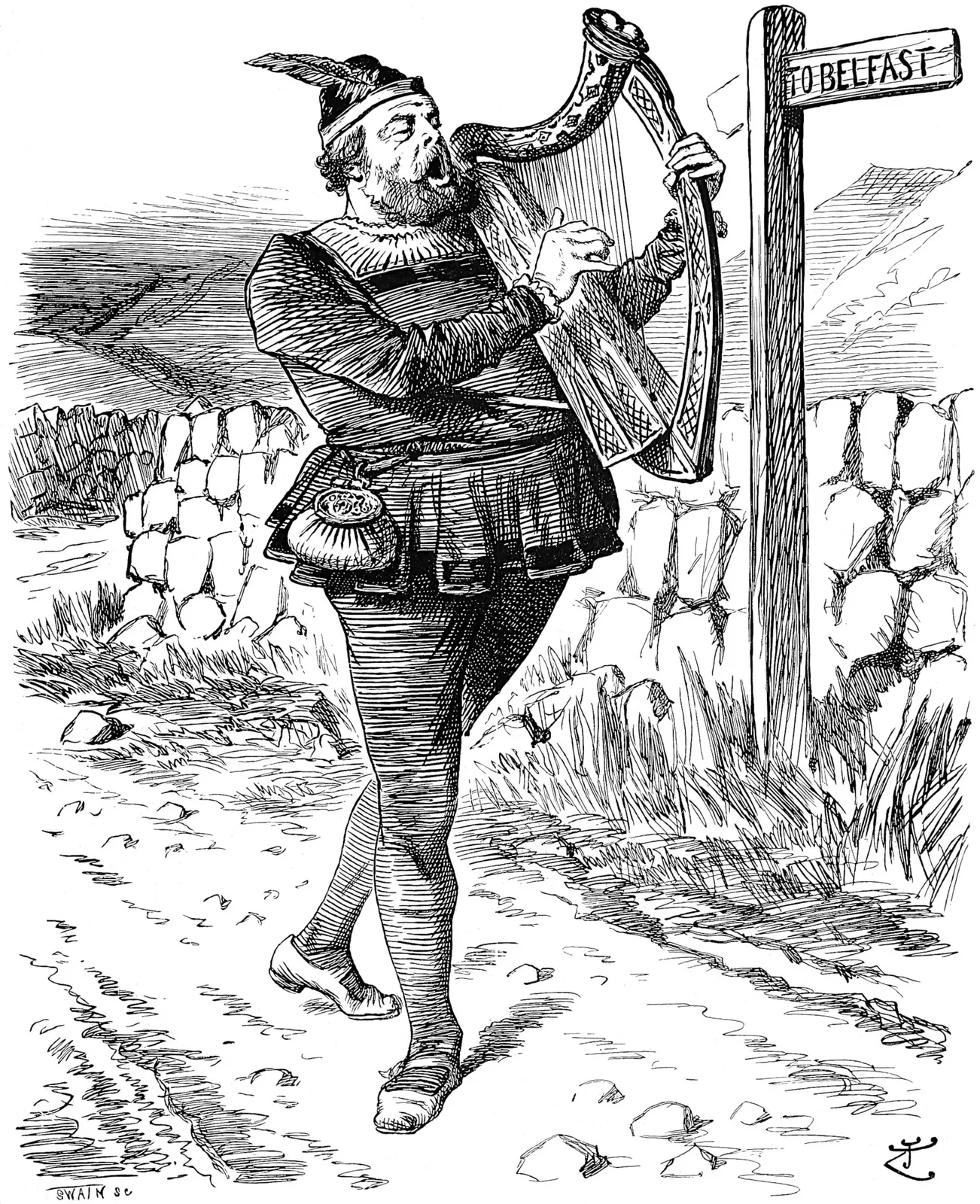
“The Minstrel Boy”
111
The Marquis of Salisbury had visited Belfast, and assisted in the demonstrations against the Home Rule Bill.  
Illustration — Contents. — from Cartoons
“Father William”
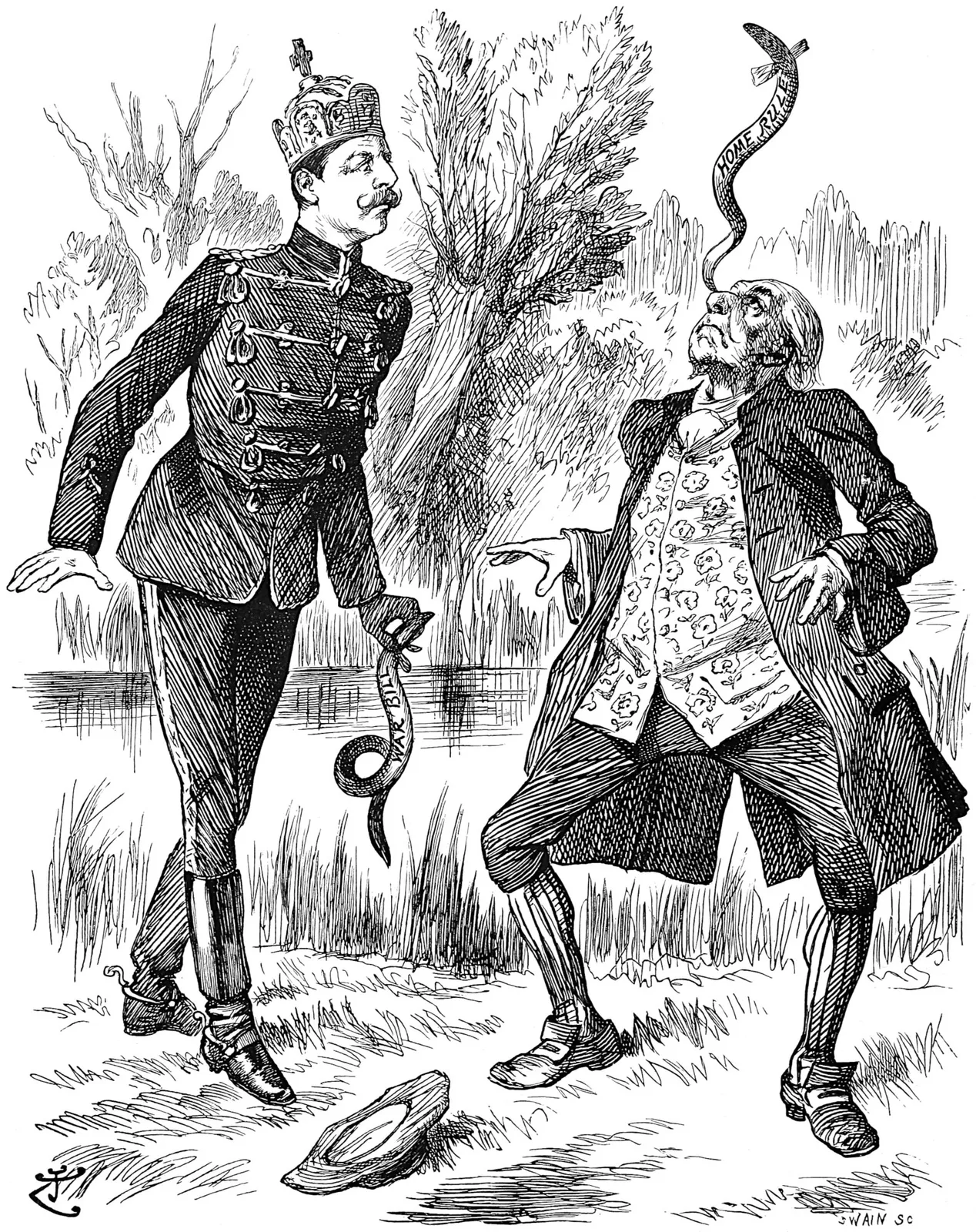
112
The German Army Bill, which had been vehemently opposed and rejected in the previous Parliament, was eventually passed.  
Illustration — Contents. — from Cartoons
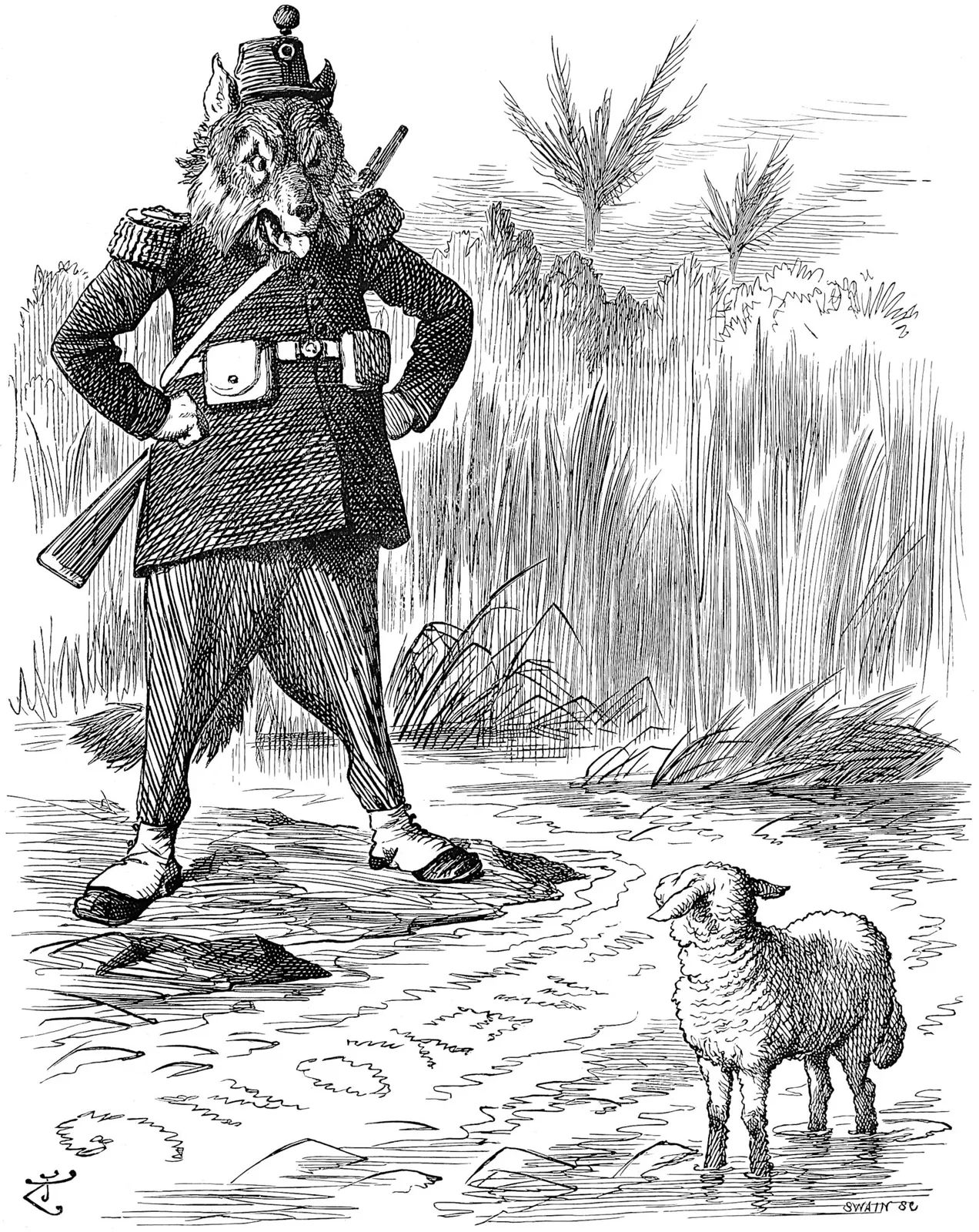
The French Wolf and the Siamese Lamb
113
Disputes having arisen between the French and Siamese Governments concerning the boundary of the river Mekong, an ultimatum was sent by France and unconditionally accepted.  
Illustration — Contents. — from Cartoons
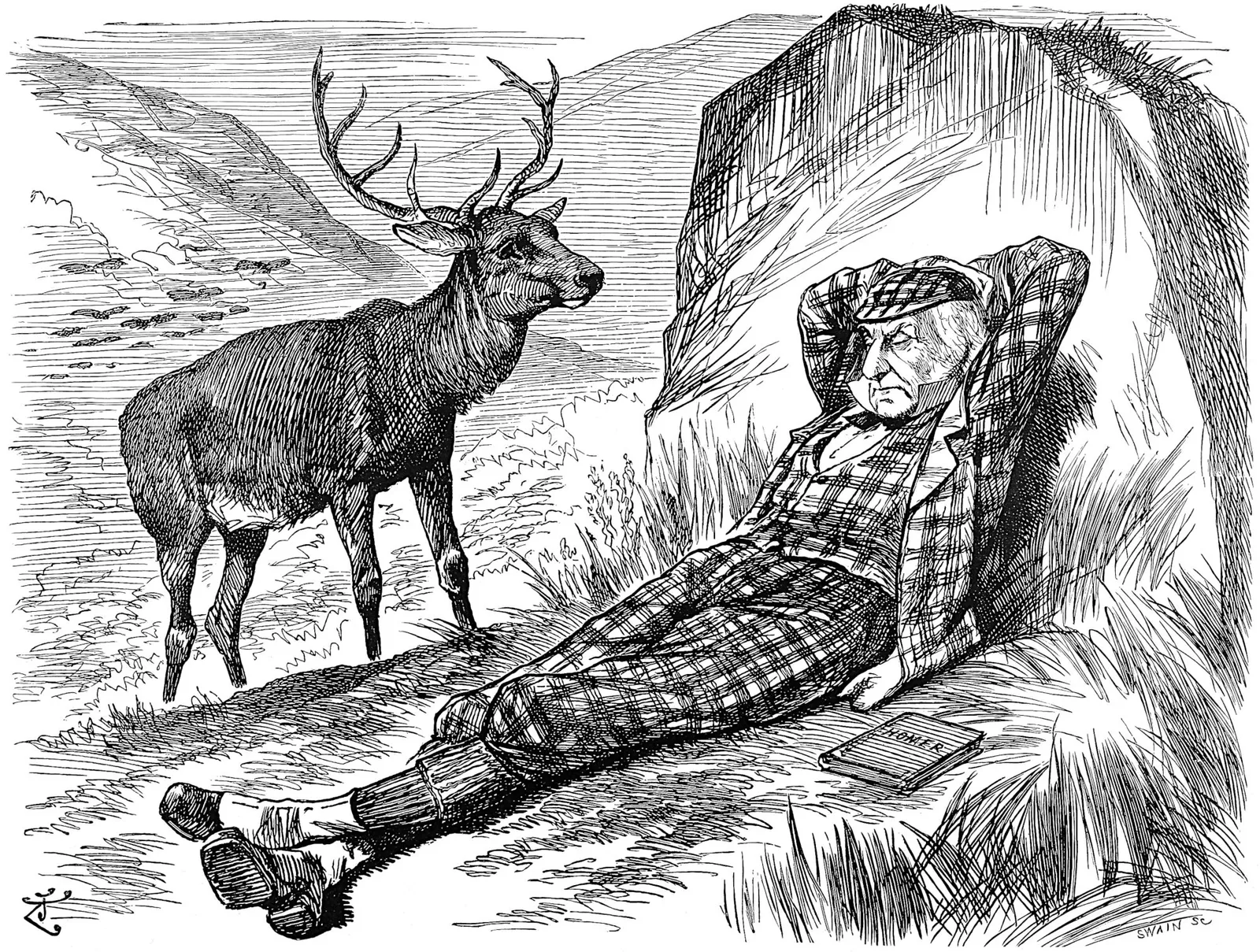
“Over the Hills and Far Away!”
114
The Premier had gone to Scotland for a well-earned holiday rest after his arduous exertions during the debates on the Second Home Rule Bill.  
Illustration — Contents. — from Cartoons
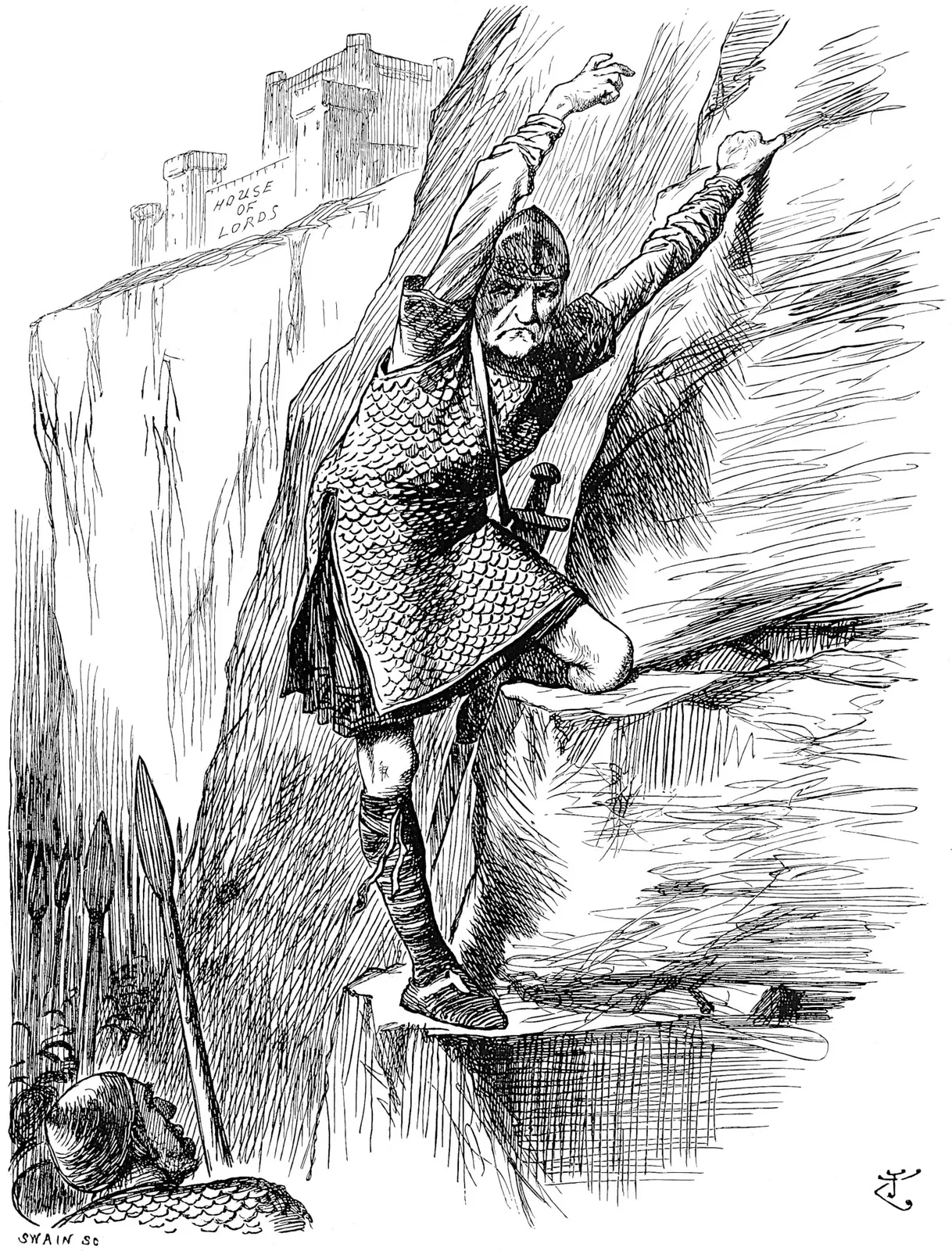
The “Forlorn Hope”
115
After the summary rejection of the Home Rule Bill by the Peers, the liberal Party were daily awaiting the signal for an attack on the House of Lords.  
Illustration — Contents. — from Cartoons
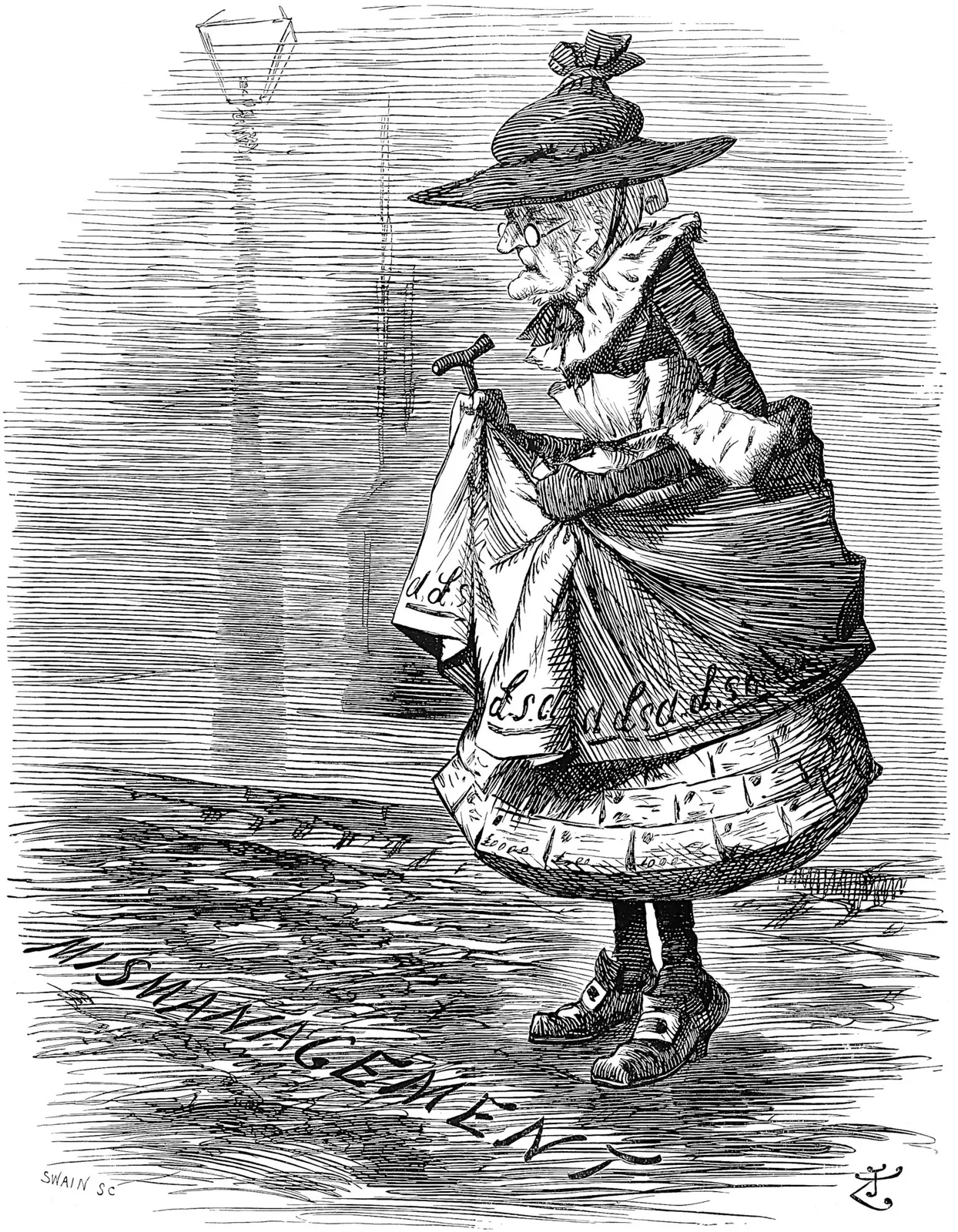
A Dirty Crossing
116
The management of the Bank of England had been freely criticised in the Press.  
Illustration — Contents. — from Cartoons
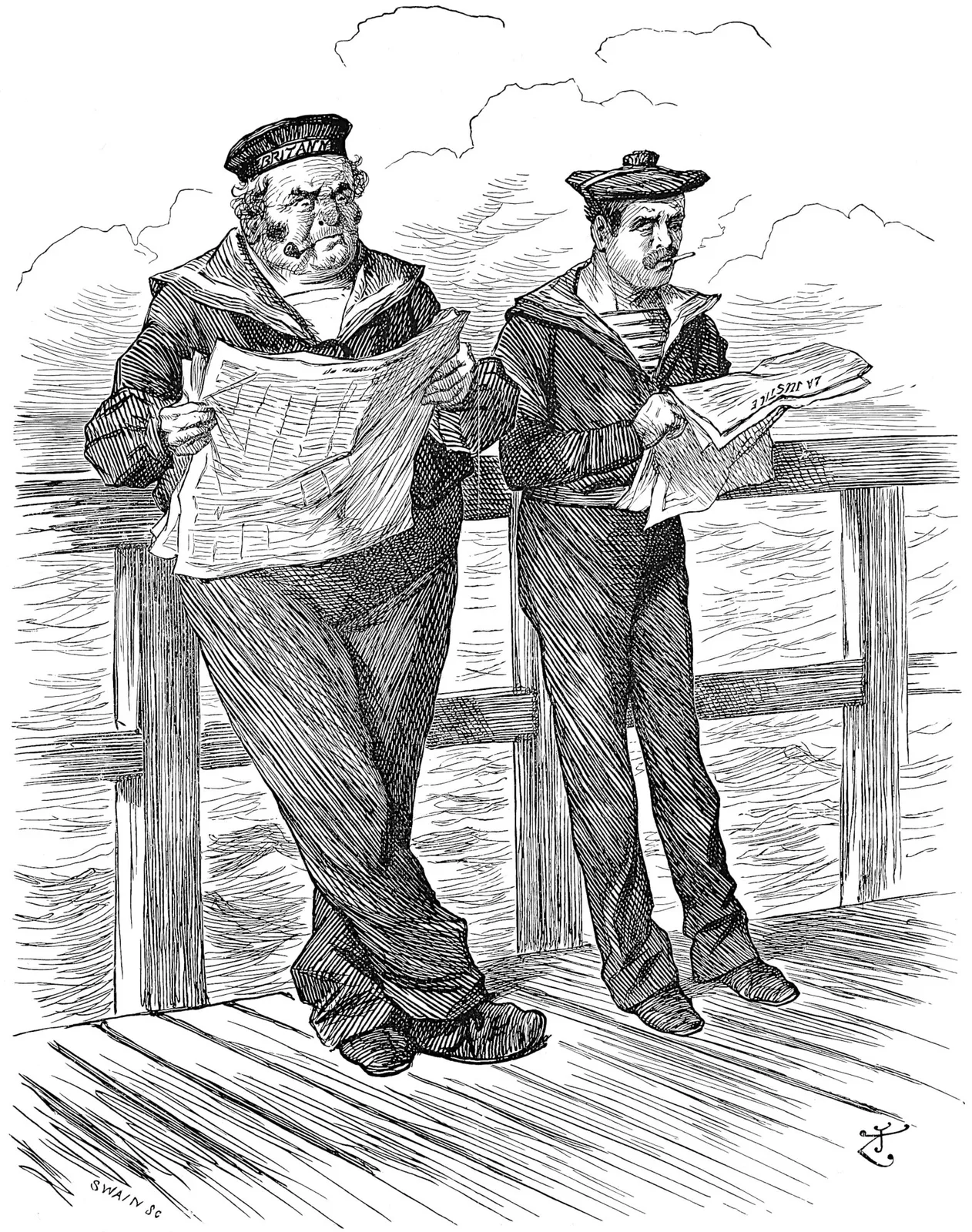
“Confidences”
117
There had been a debate in the Chamber of Deputies which provoked comparisons between the French and English Navies.  
Illustration — Contents. — from Cartoons
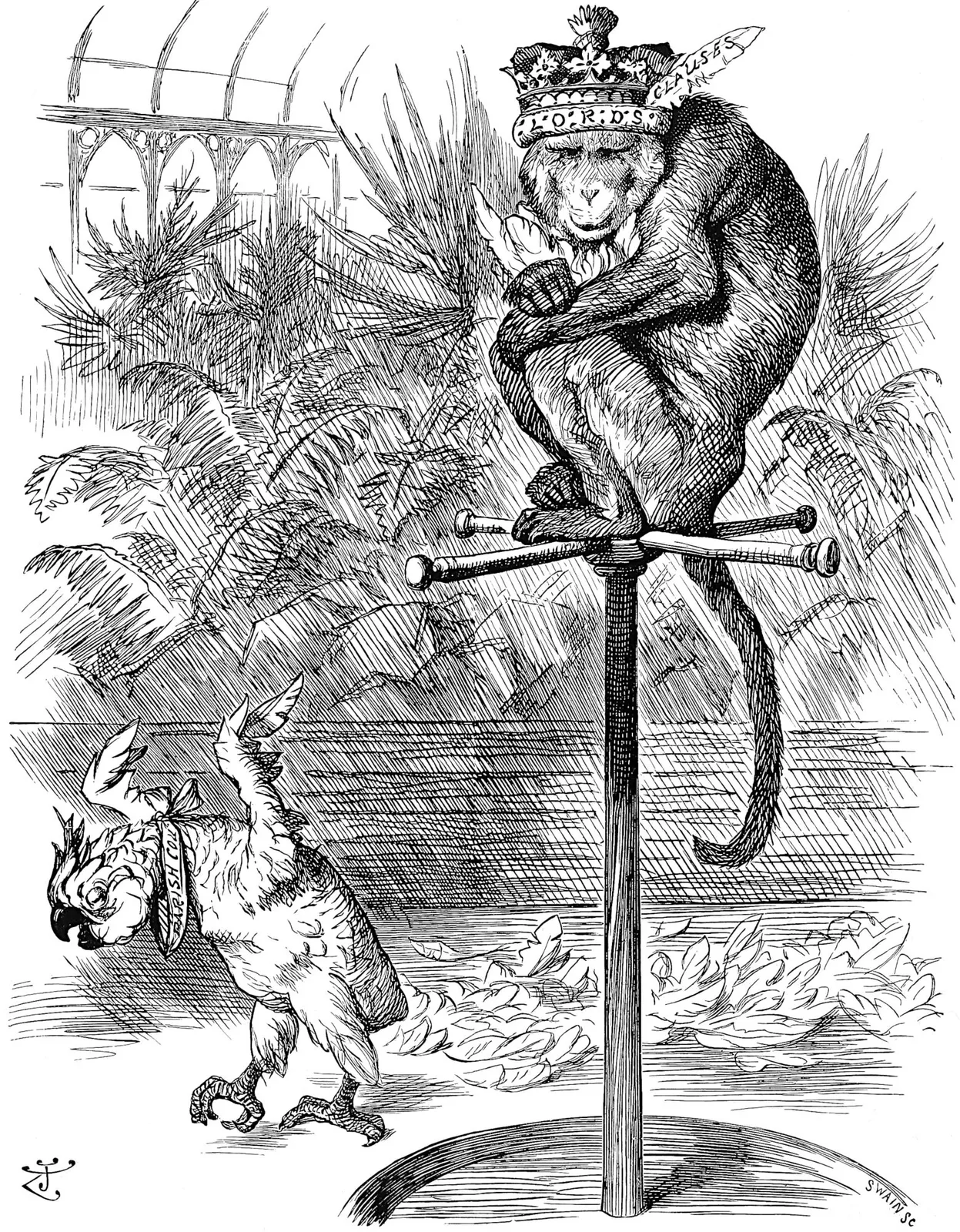
“Pluck’d!”
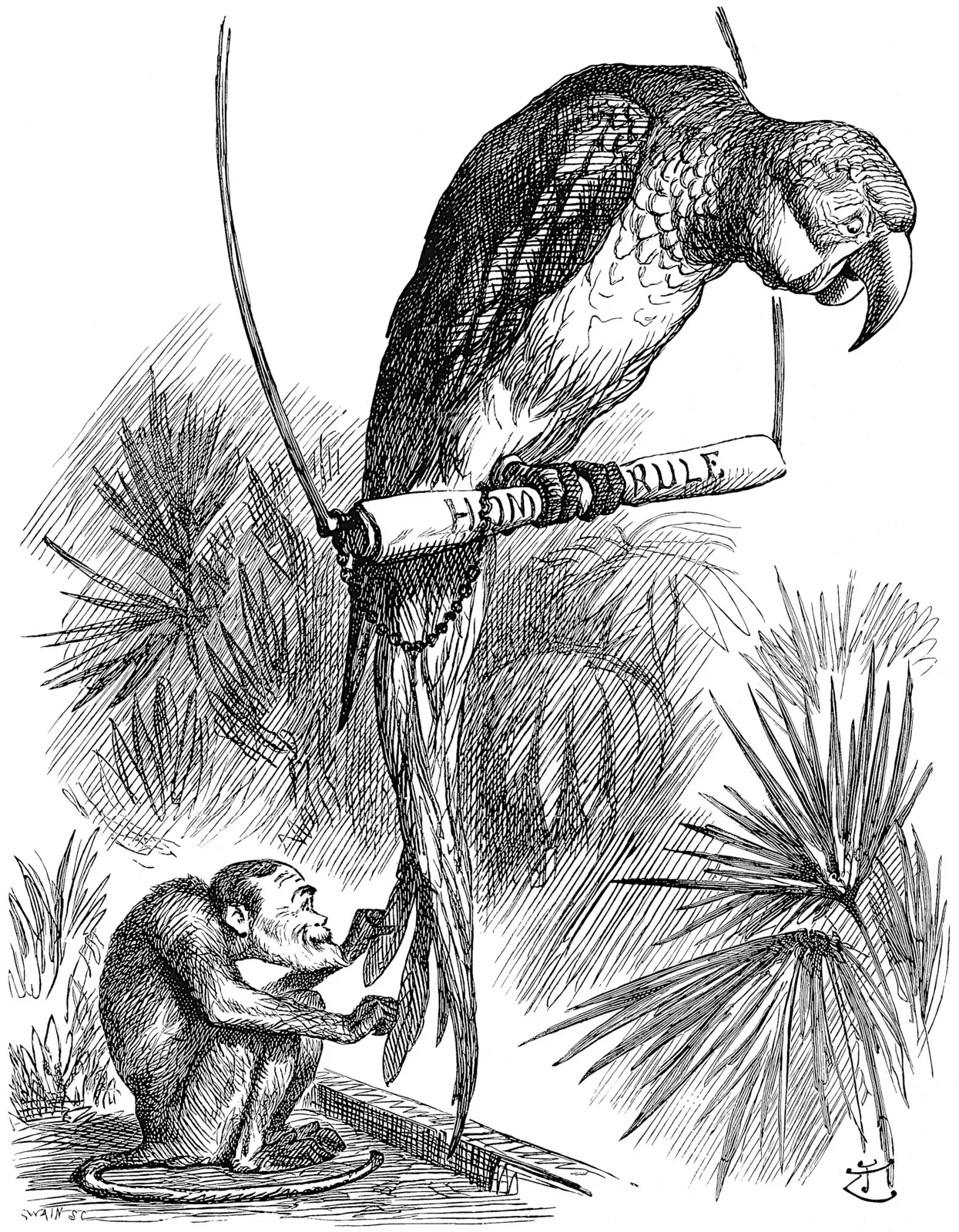
118
The Local Government Bill had been severely dealt with by the Lords in Committee, notably the clauses dealing with the Parish Councils.  
Illustration — Contents. — from Cartoons
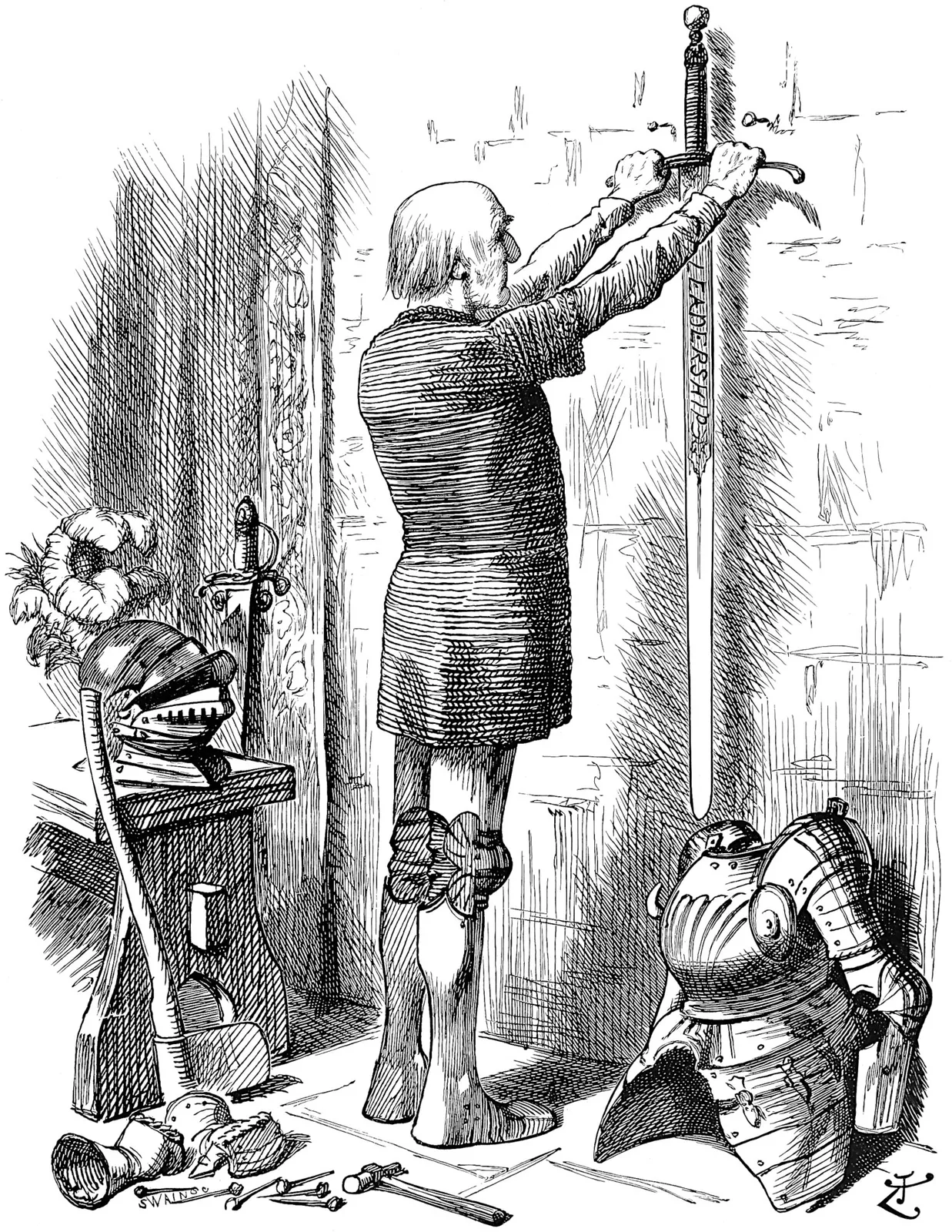
Unarming
119
On March 1, 1894, Mr. Gladstone delivered his last speech in the House of Commons previous to his final retirement from political life.  
Illustration — Contents. — from Cartoons
Lemon-Squash
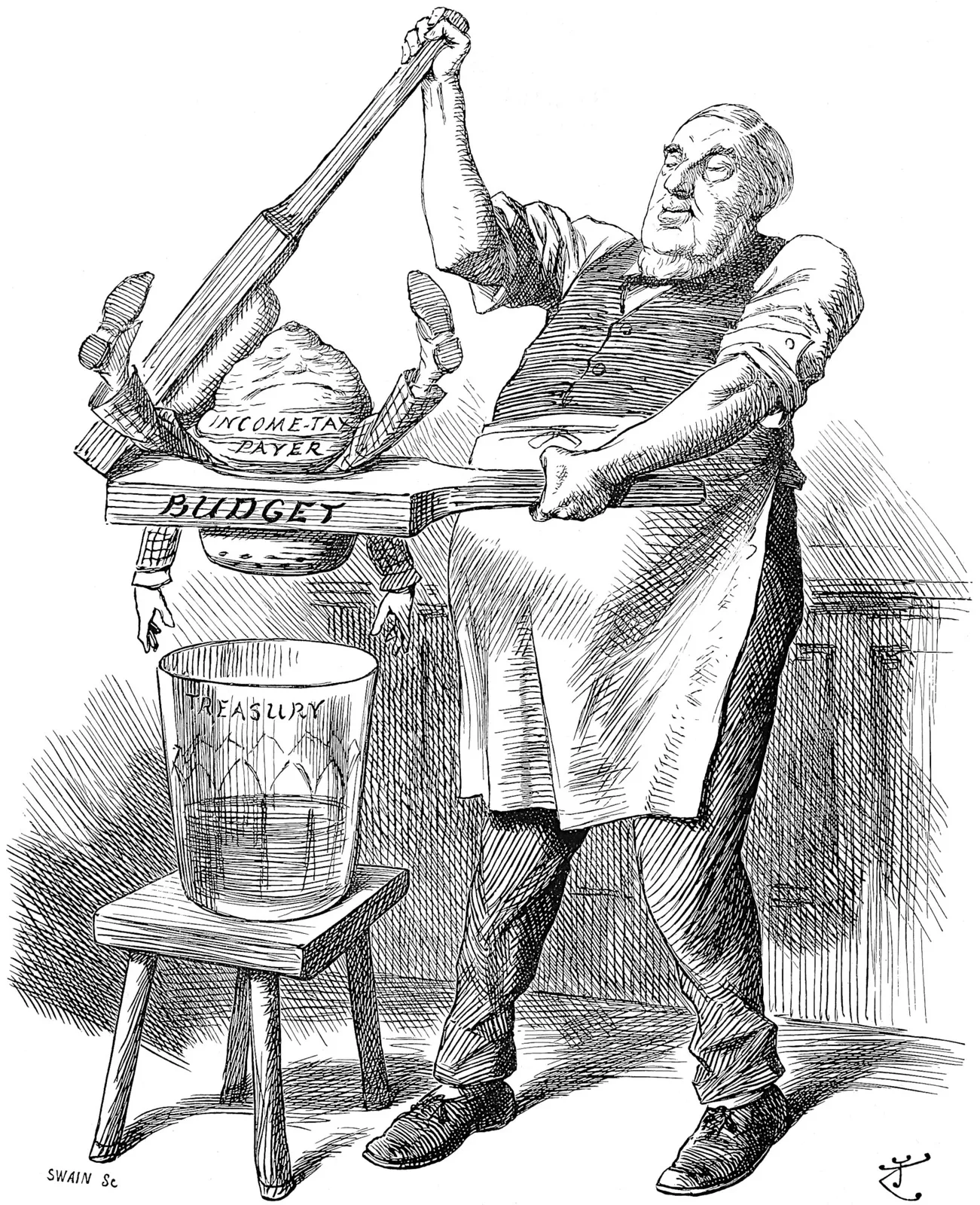
120
The Chancellor of the Exchequer increased the Income Tax from 7d. to 8d.  
Illustration — Contents. — from Cartoons
“Vive la République!”
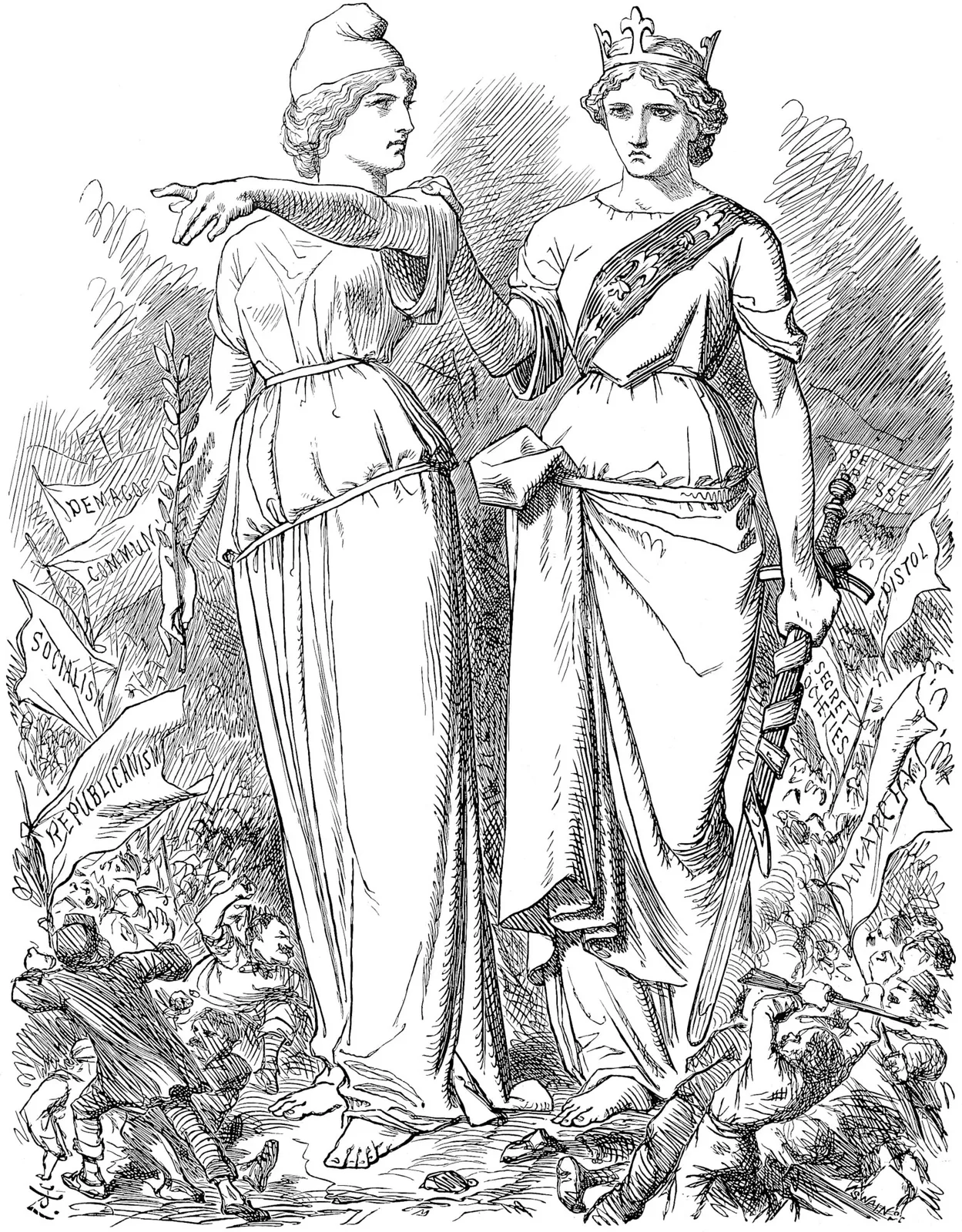
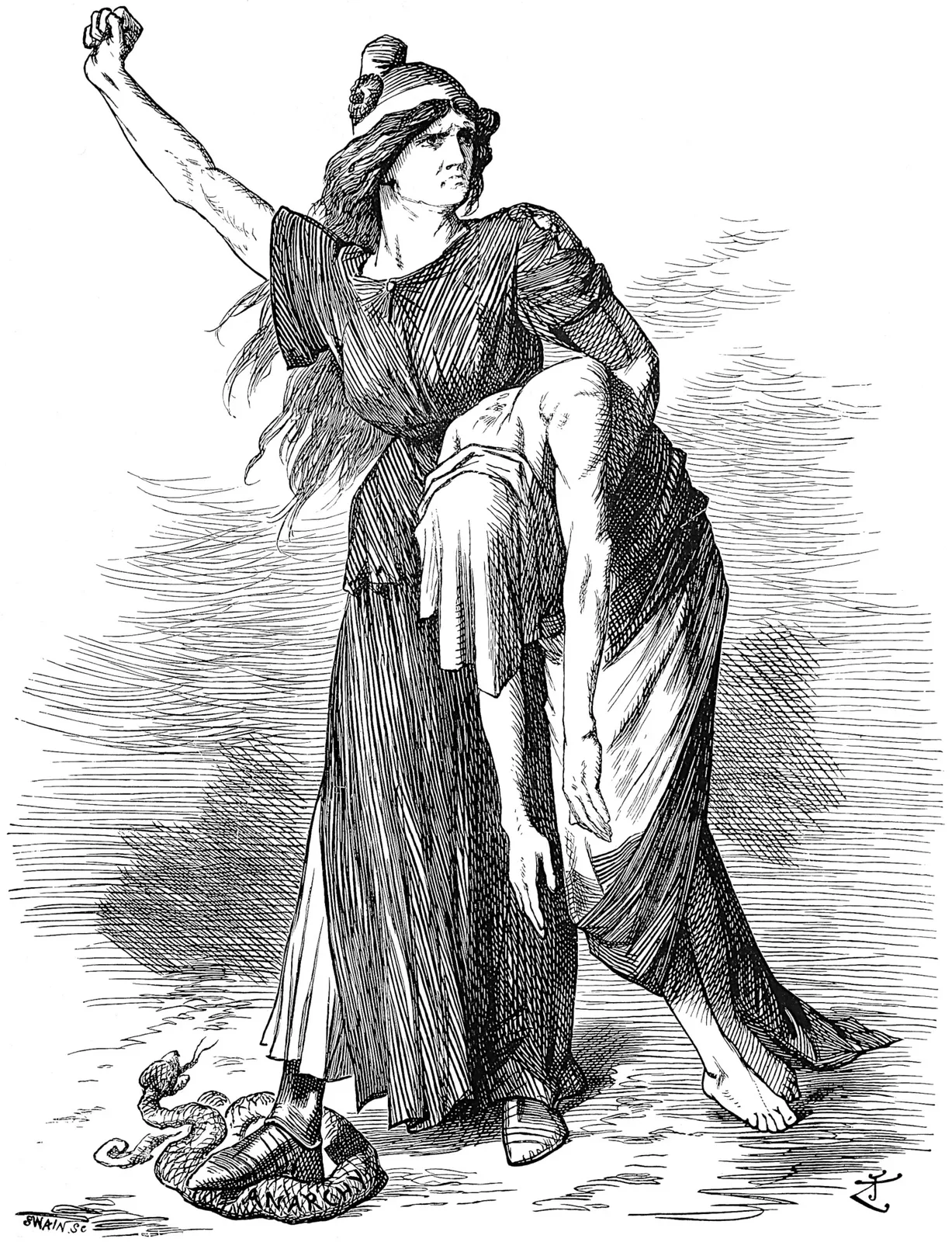
121
A stringent anti-Anarchist Bill had been passed by the French Chamber after the assassination at Lyons of President Carnot.  
Illustration — Contents. — from Cartoons
Jap the Giant-Killer
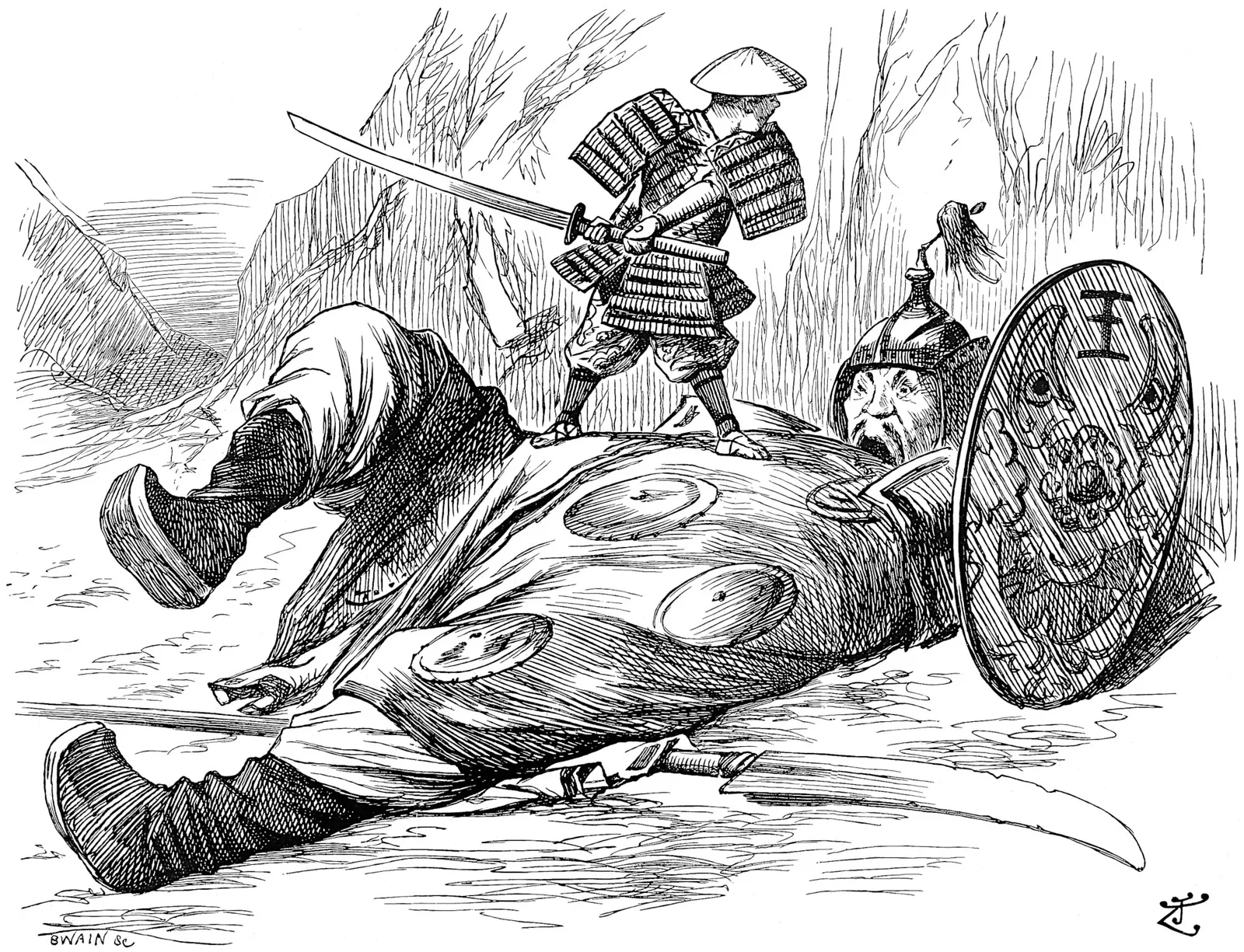
122
In the war arising out of the Corean dispute between China and Japan, the Japanese forces gained easy victories, both on land and sea.  
Illustration — Contents. — from Cartoons
“Vested Interests”
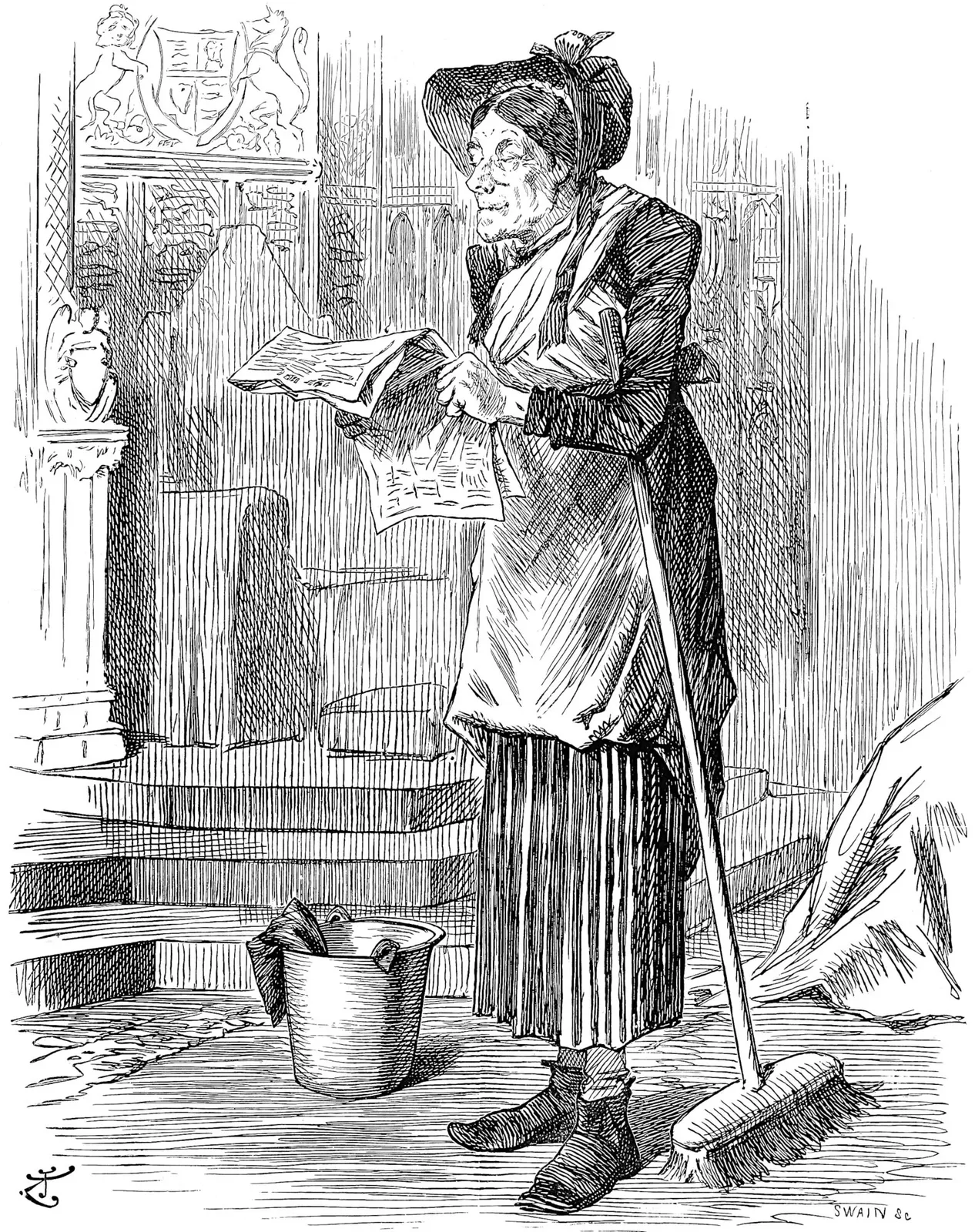
123
The House of Lords had survived the repeated attacks made upon it, both in the Commons and by its own Members.  
Illustration — Contents. — from Cartoons
“All’s Well!”
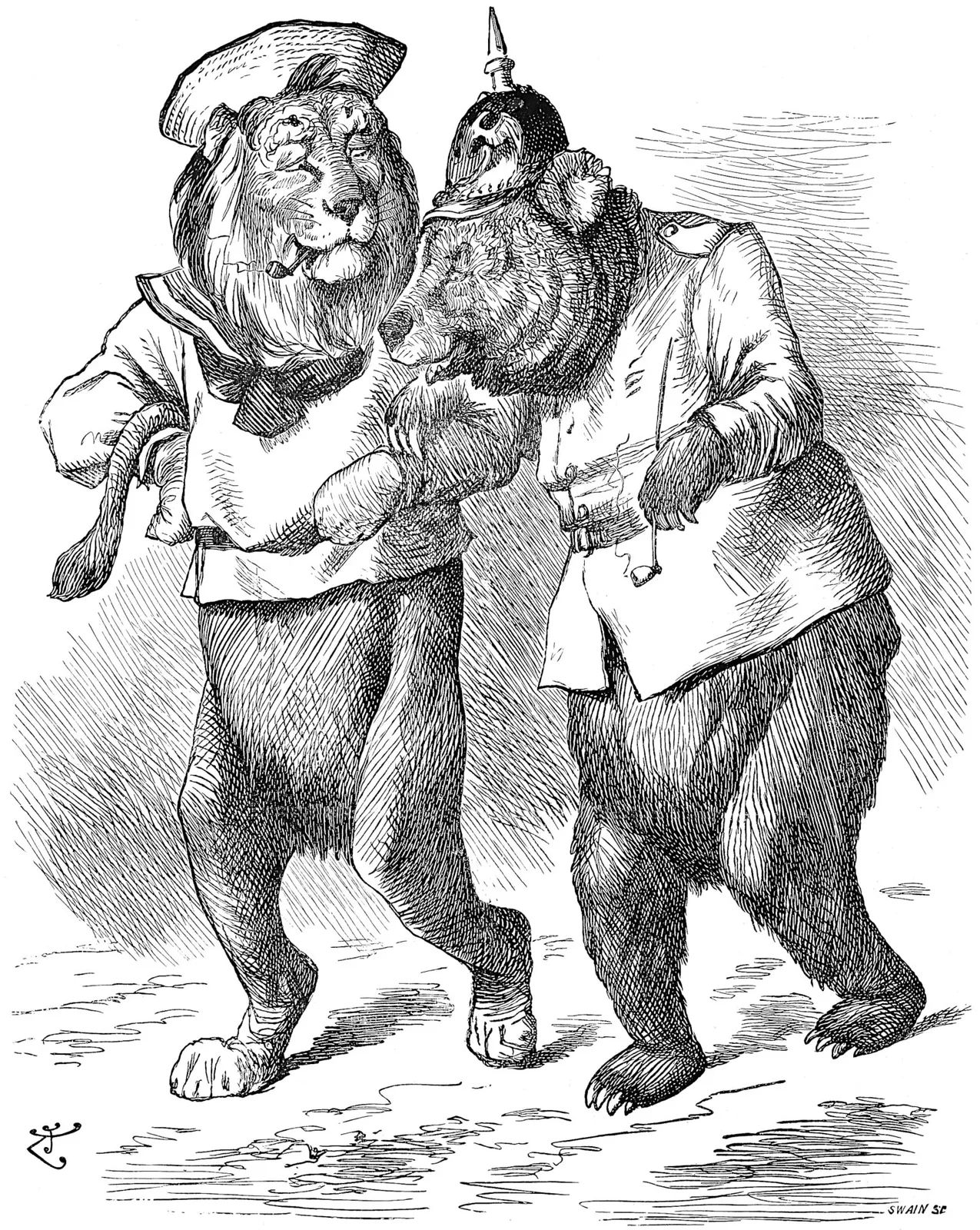
124
The Russian Press at this time suggested that an Anglo-Russian understanding would be of great advantage to the two nations.  
Illustration — Contents. — from Cartoons
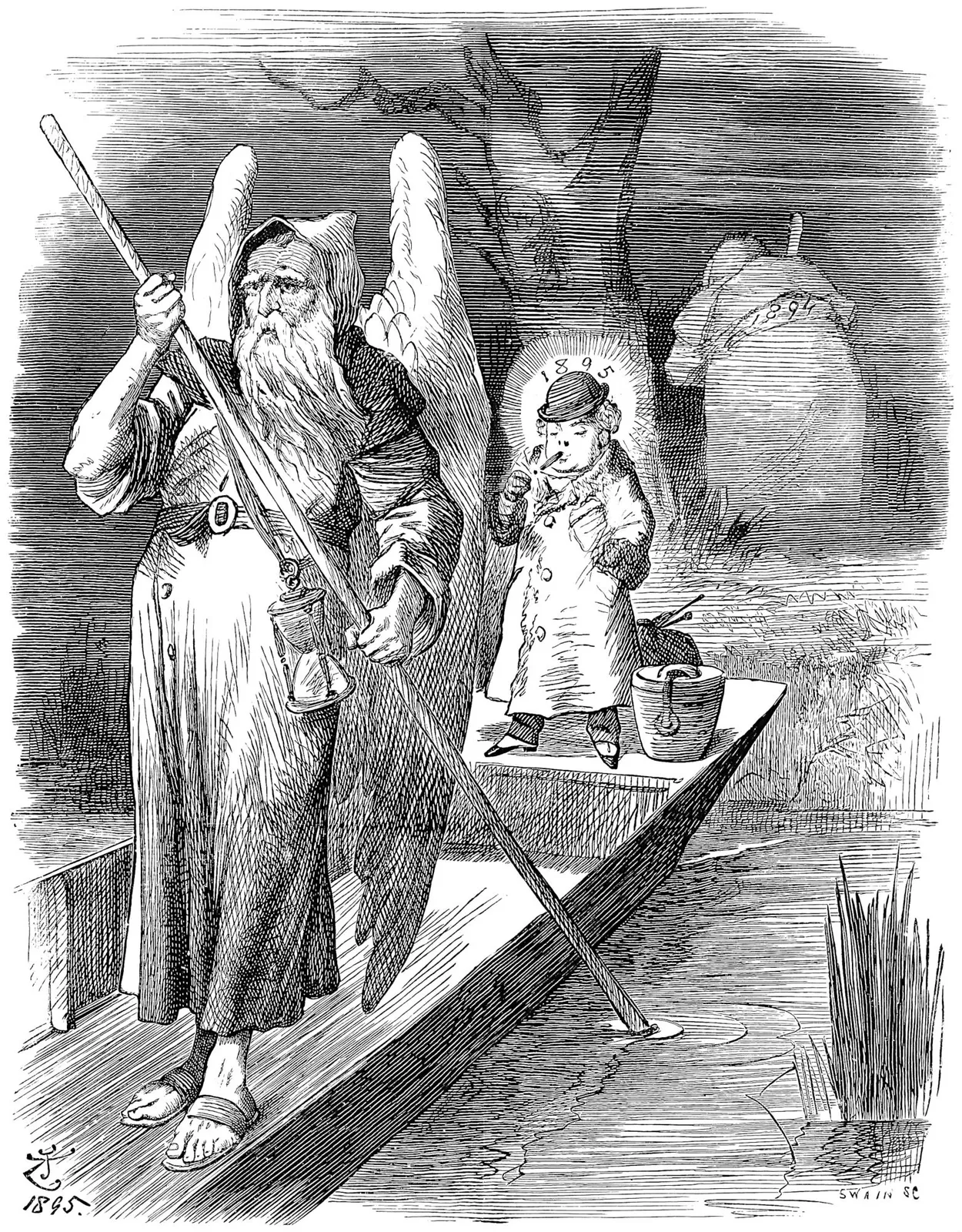
The New Passenger
125
The year 1894 had been marked by many dynamite outrages on the Continent, and specially by the assassination of President Carnot. The New Year opened under brighter auspices.  
Illustration — Contents. — from Cartoons
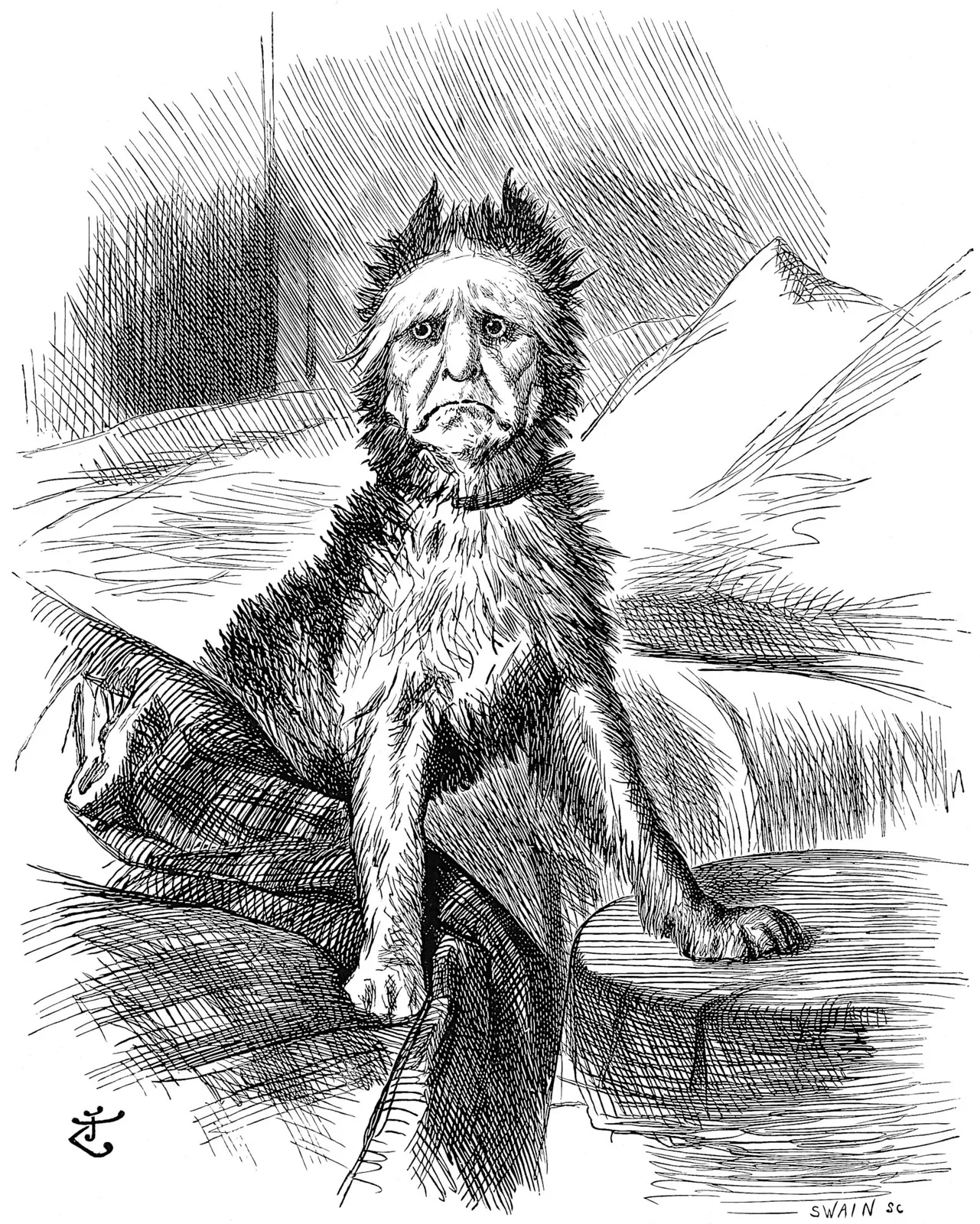
“Who said—‘Atrocities’?”
126
Mr. Gladstone had expressed his strong indignation at the atrocities in Armenia, which had profoundly shocked the mind of the country.  
Illustration — Contents. — from Cartoons
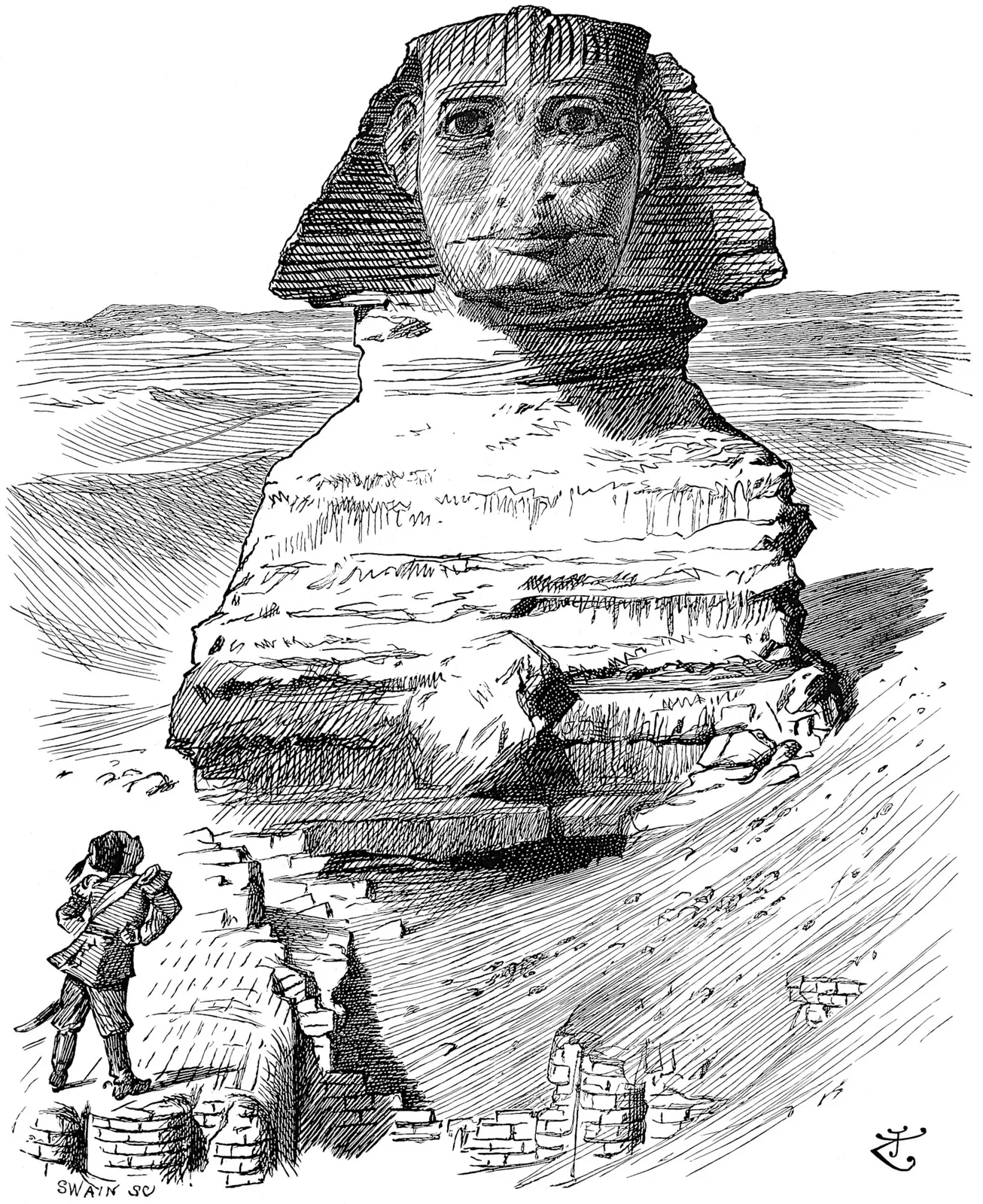
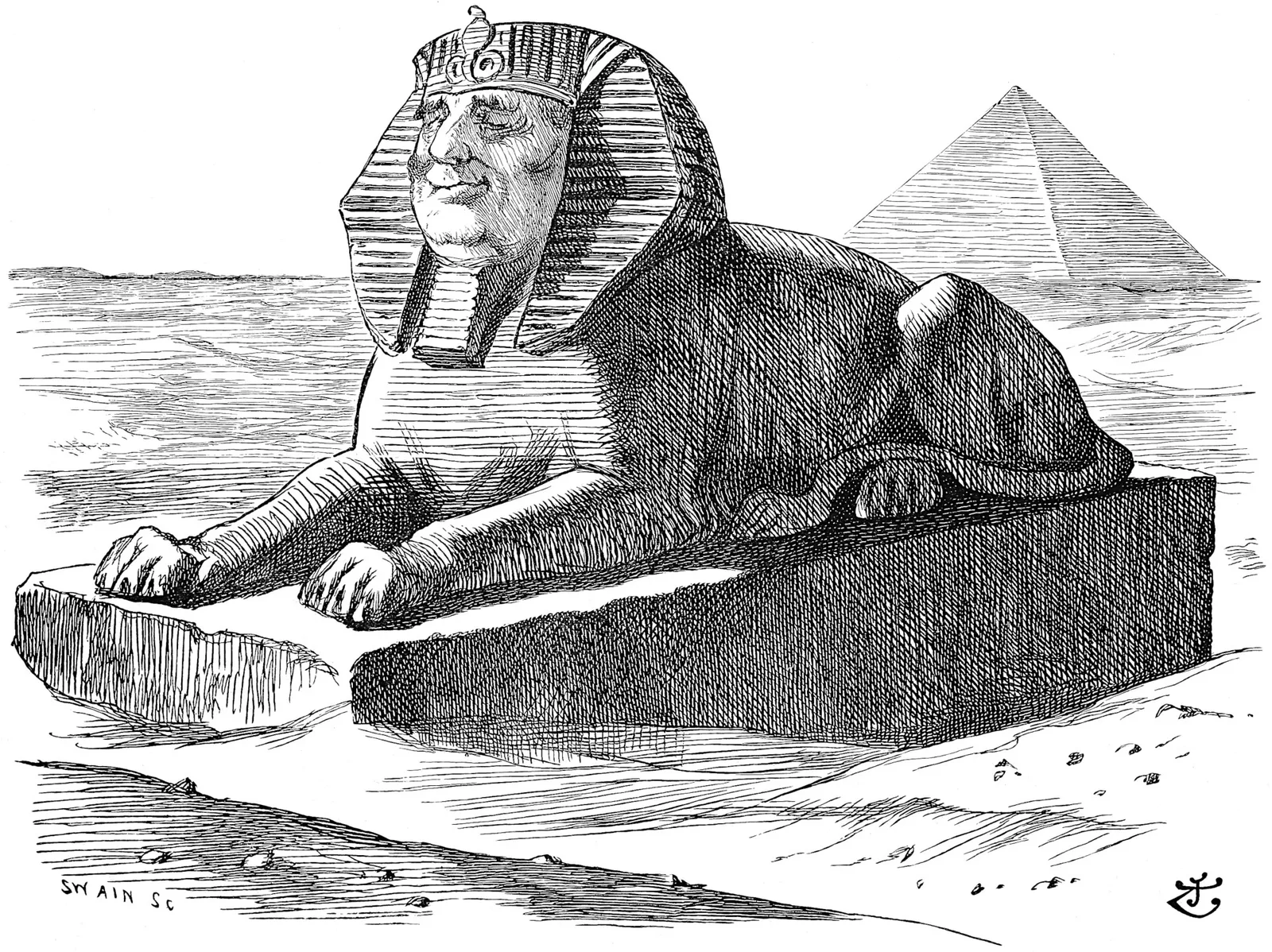
Silent!
127
The British occupation of Egypt still continued, the Egyptian Government being powerless to suppress outrages on Europeans in Alexandria.  
Illustration — Contents. — from Cartoons
An Easter ’Oliday
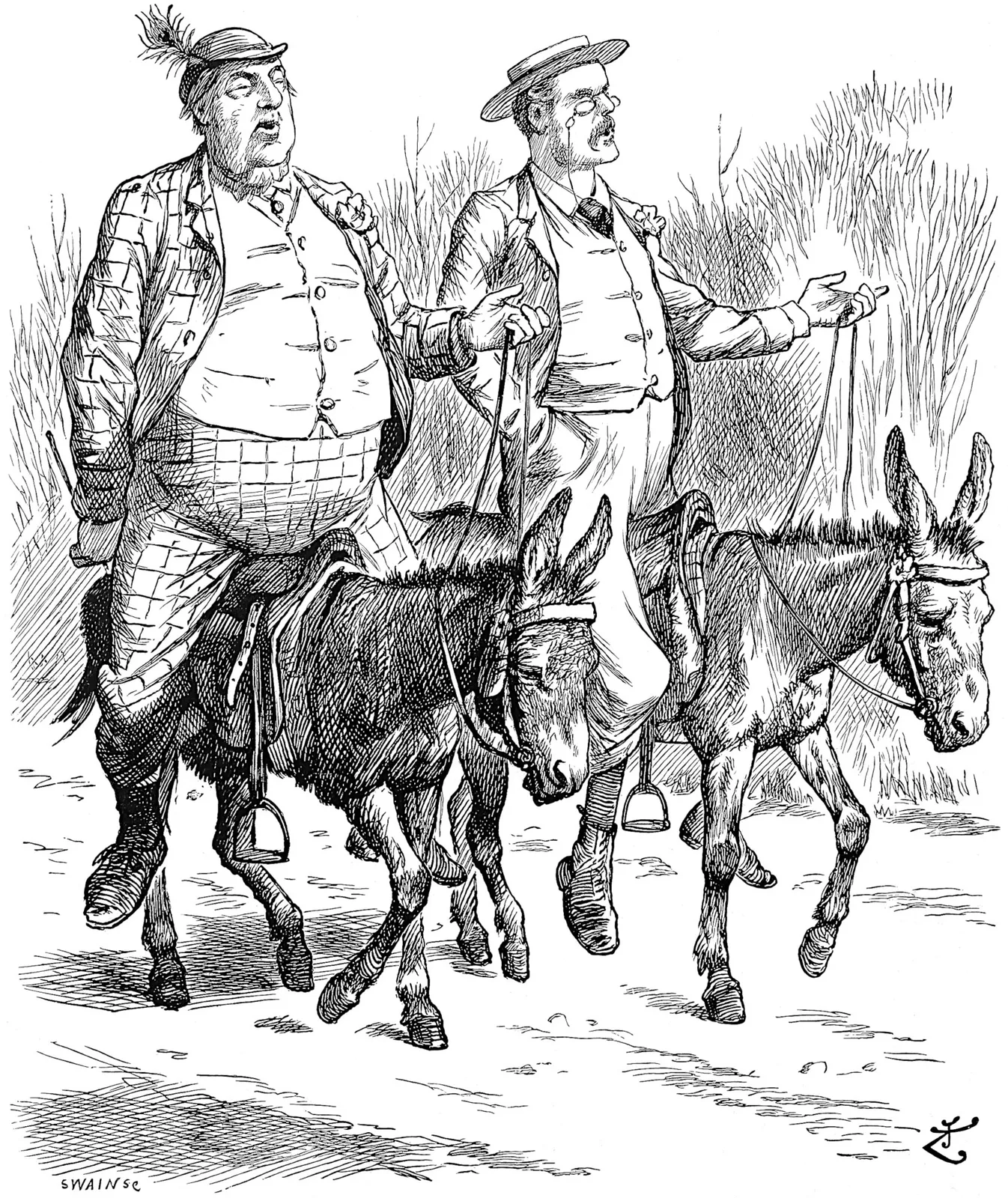
128
The House of Commons had adjourned for the Easter vacation. Both leaders were glad of repose after the exciting debates on the Welsh Disestablishment and Irish Land Bills.  
Illustration — Contents. — from Cartoons
“William! ahoy!”
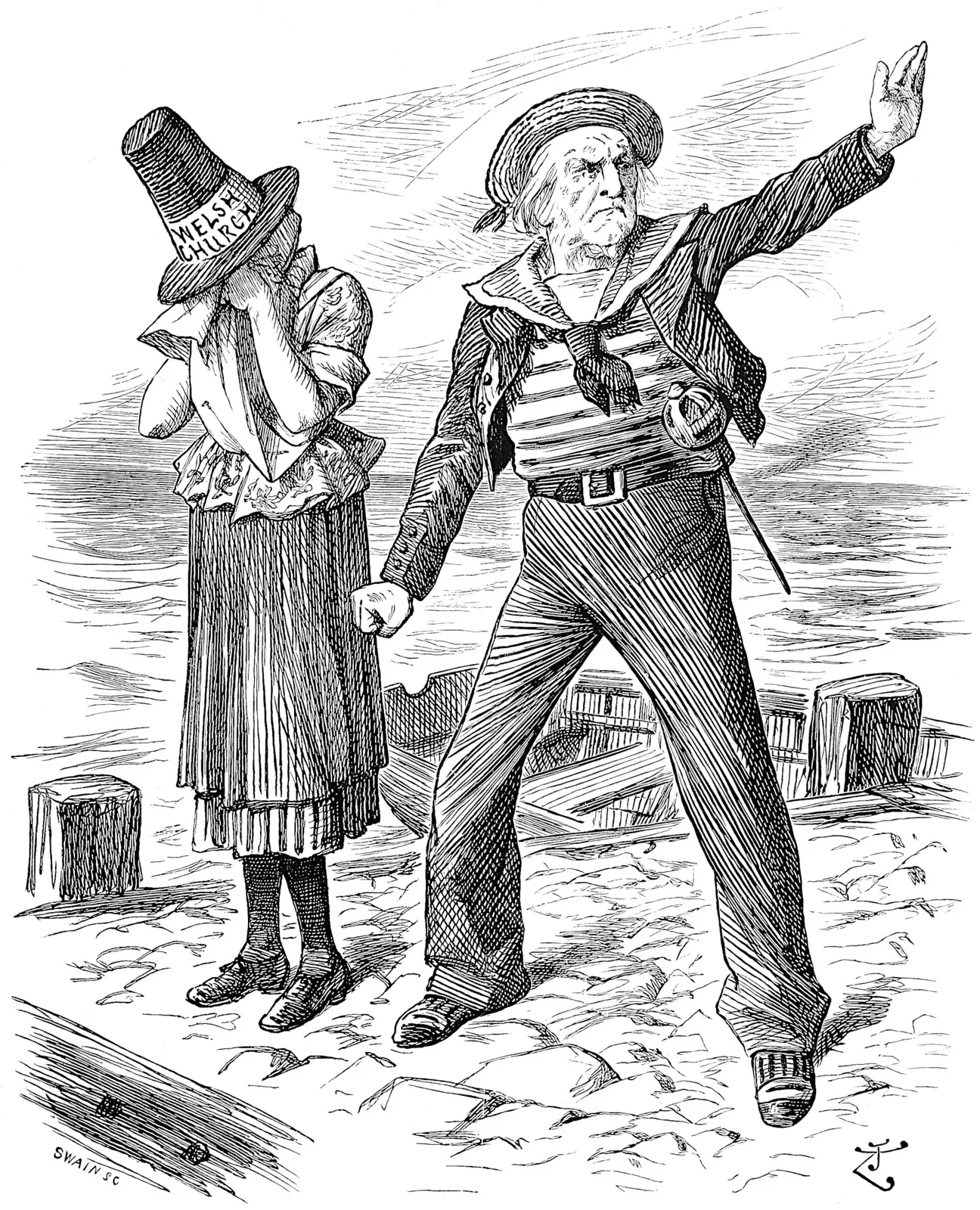
129
The Welsh Disestablishment Bill having been warmly discussed in the Commons, Mr. Gladstone had withdrawn his pair with Mr. Villiers in order to keep “an open mind” on the question.  
Illustration — Contents. — from Cartoons
The Old Crusaders!
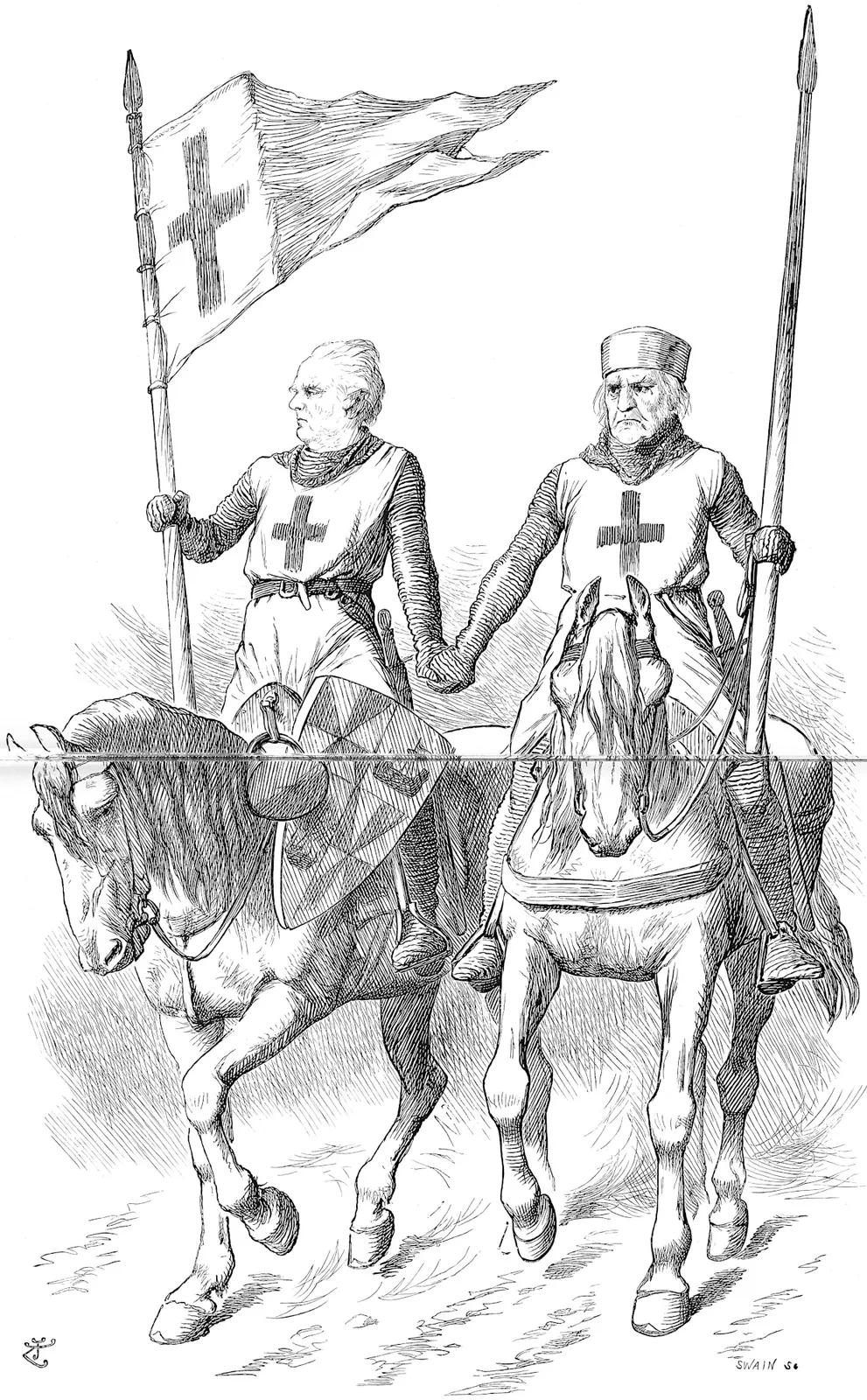
130-131
The Duke of Argyll had presided at an indignation meeting held in St. James’s Hall to protest against the Armenian atrocities.  
Illustration — Contents. — from Cartoons
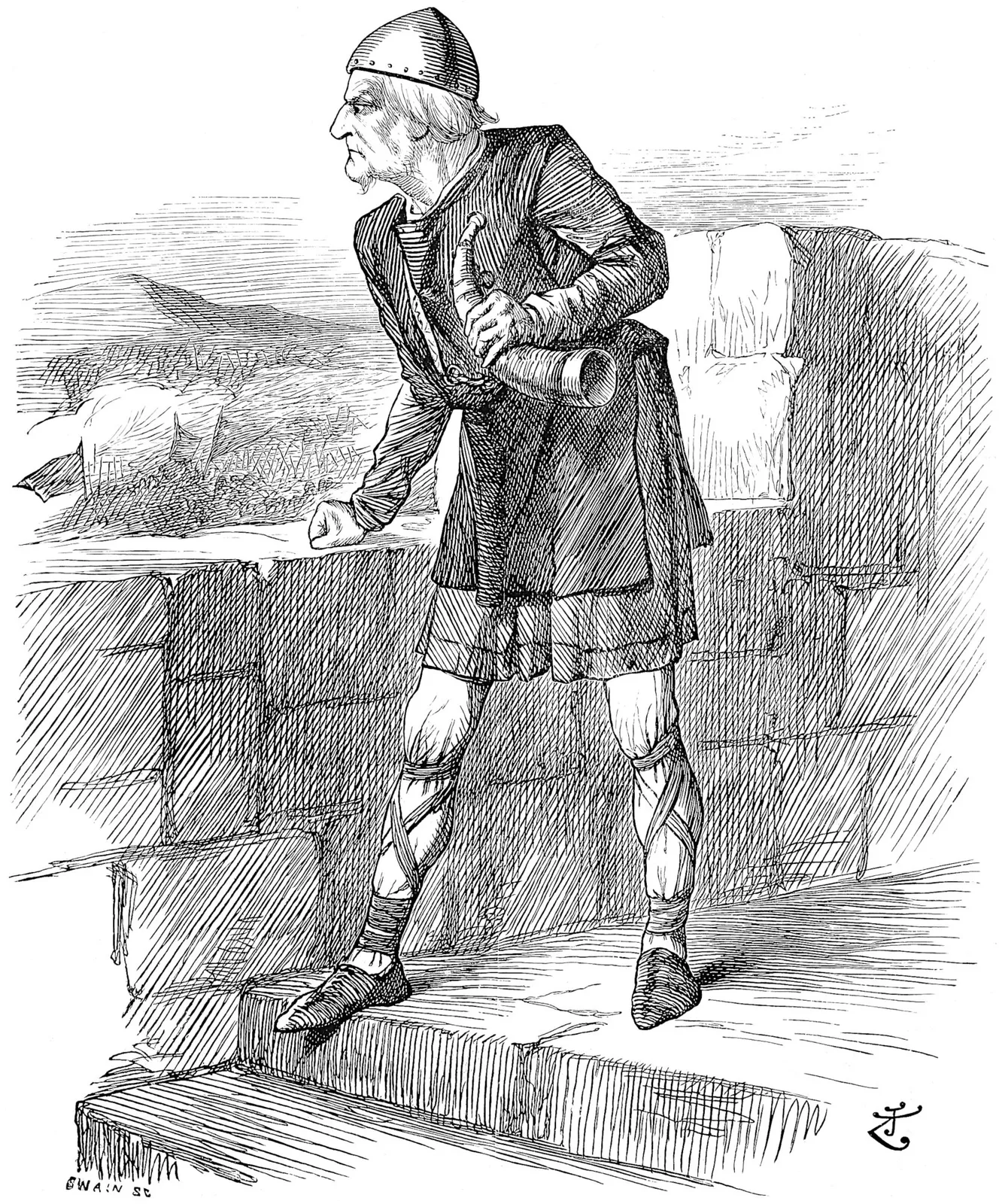
Old Warder William
132
After Sir William Harcourt’s defeat at Derby he was elected for West Monmouthshire, the Radical candidate having retired in his favour.  
Illustration — Contents. — from Cartoons
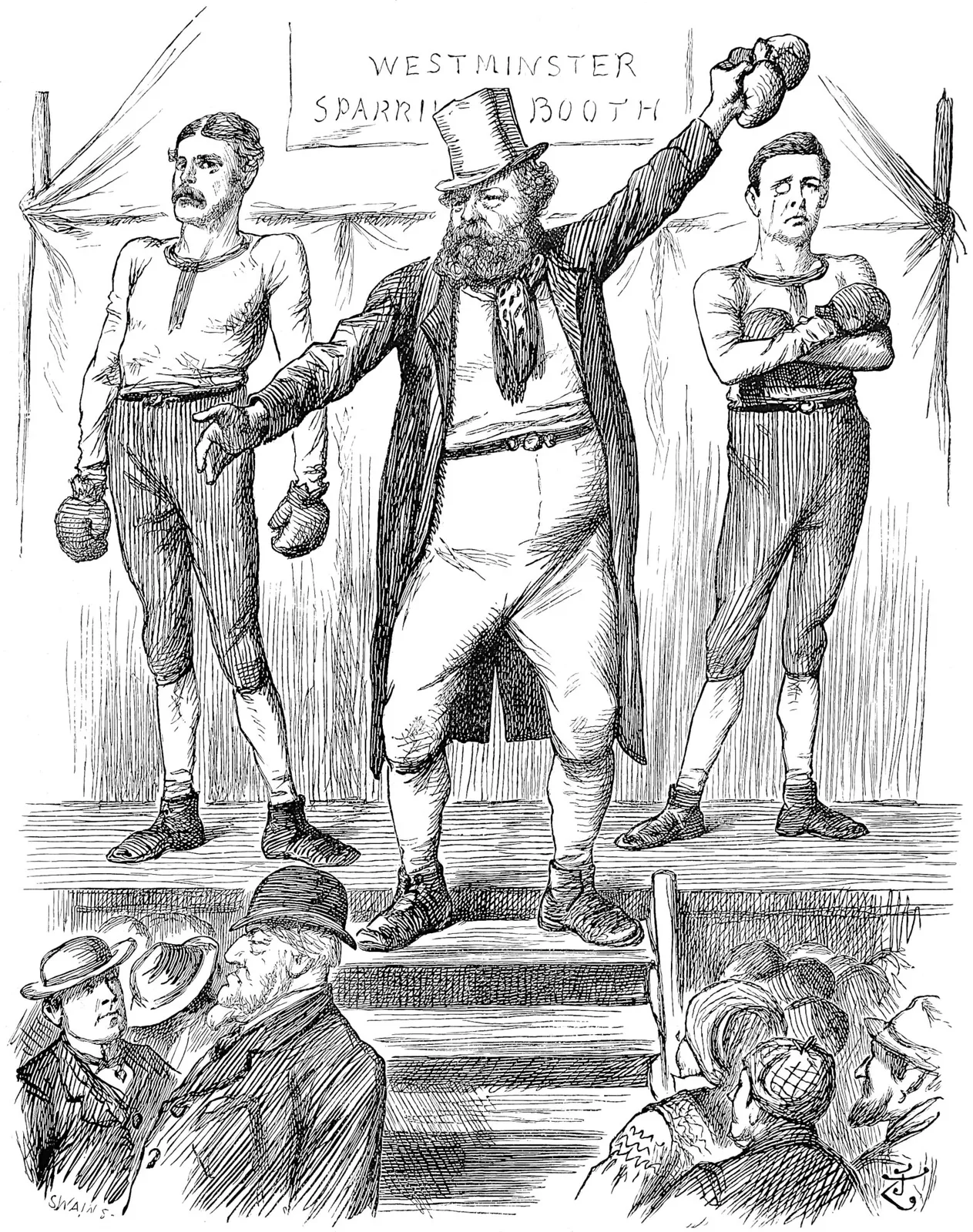
“Just a-goin’ to Begin!”
133
It was thought that in the coming Session the Jameson raid would bring trouble to the Ministry, but this was averted by the skillful management of Mr. Balfour and the Colonial Secretary.  
Illustration — Contents. — from Cartoons
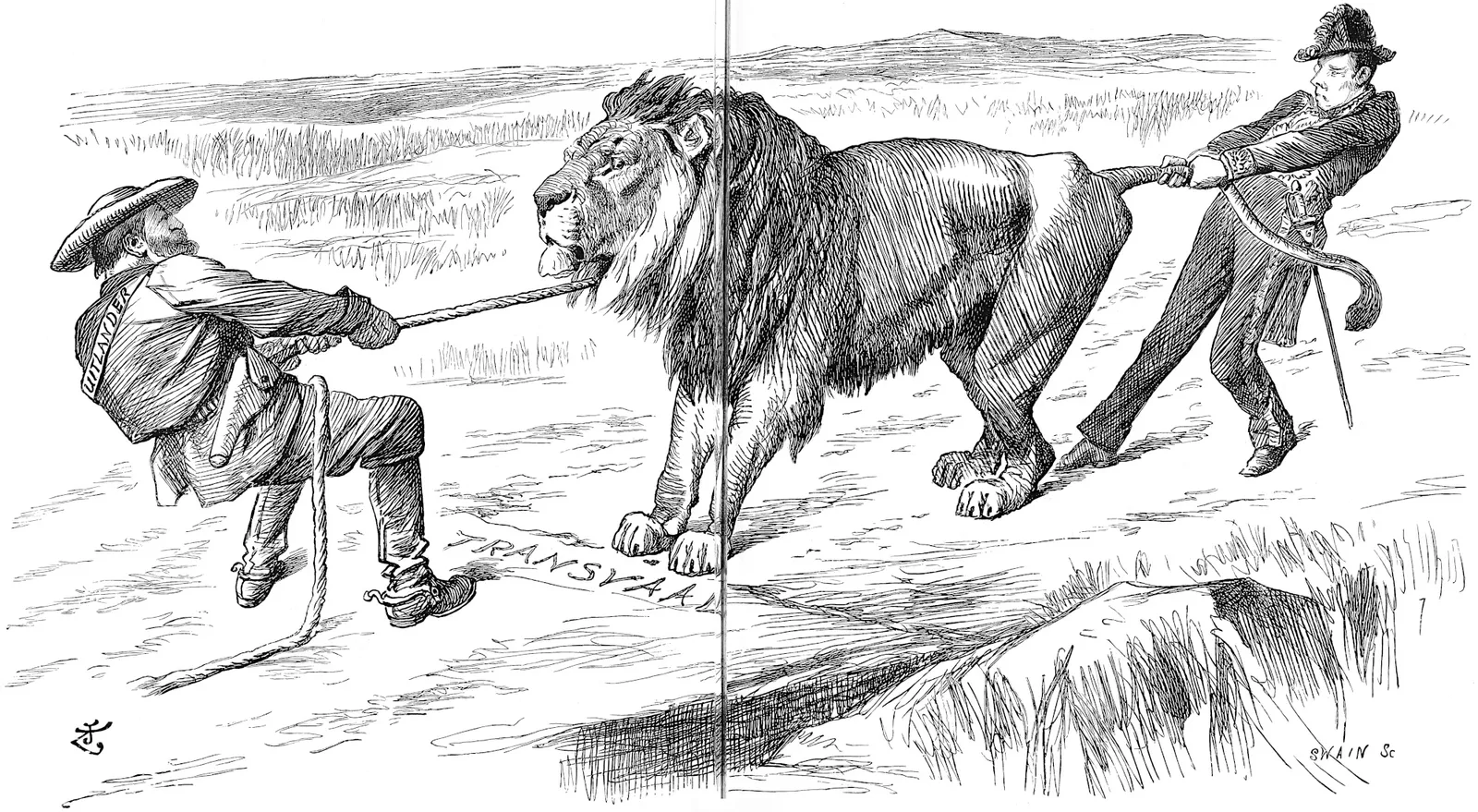
The Tug of War
134-135
On an appeal from the Uitlanders at Johannesburg, Dr. Jameson crossed the Transvaal frontier with an armed force. Mr. Chamberlain, however, intervened, and ordered him to retire.  
Illustration — Contents. — from Cartoons
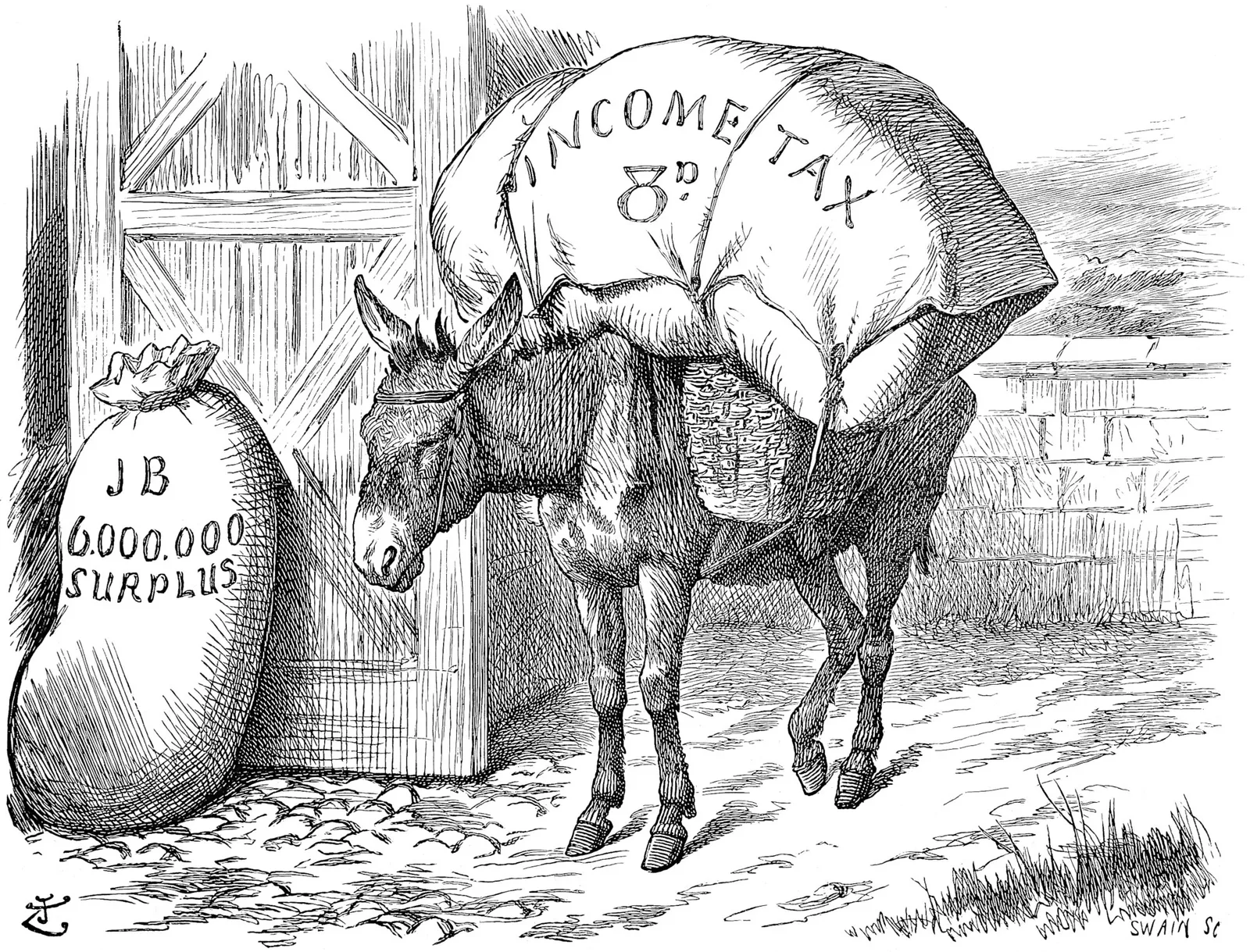
The Patient Ass
136
The Budget having shown a considerable surplus, an idea was prevalent that the Chancellor of the Exchequer would relieve the income-tax payer.  
Illustration — Contents. — from Cartoons
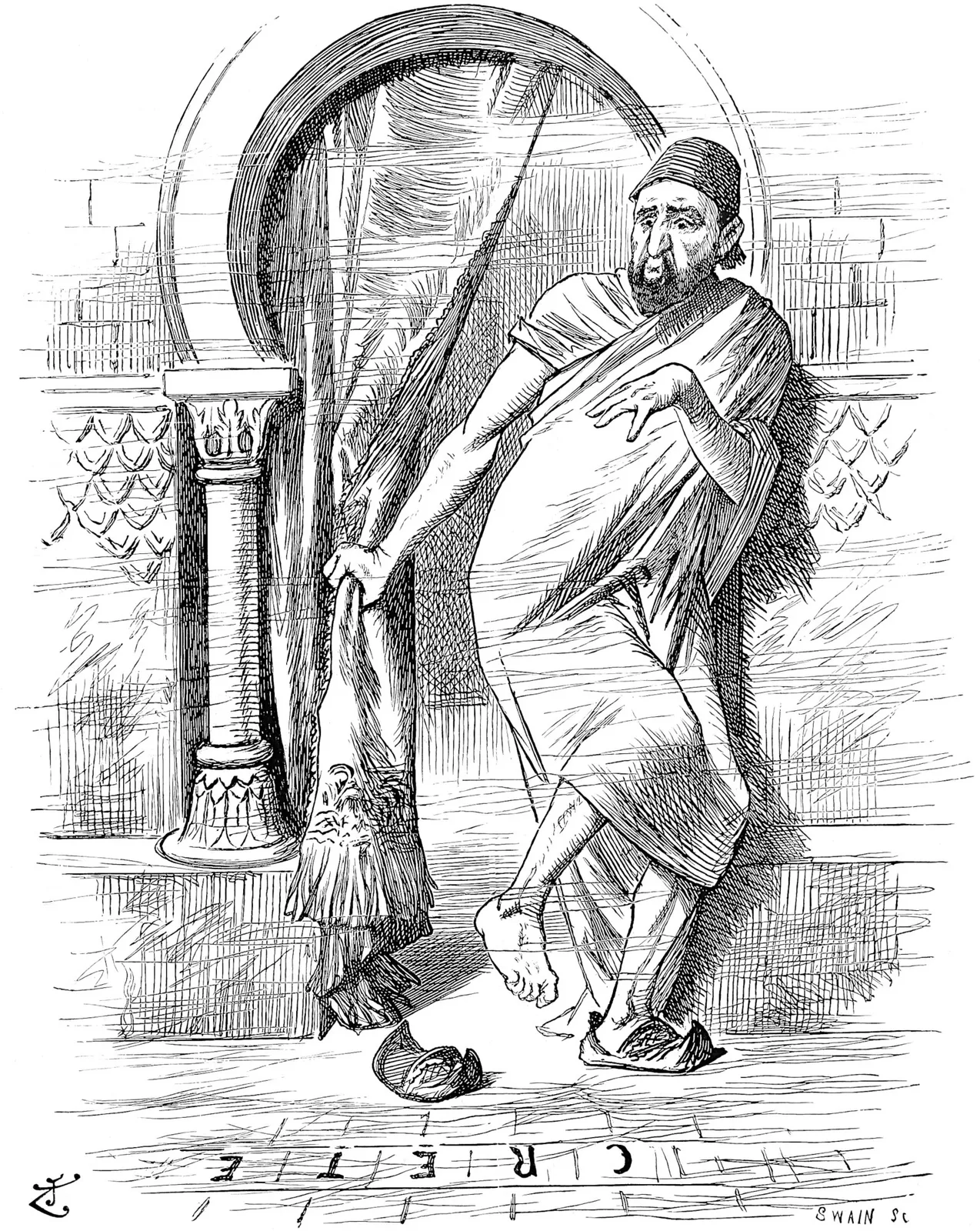
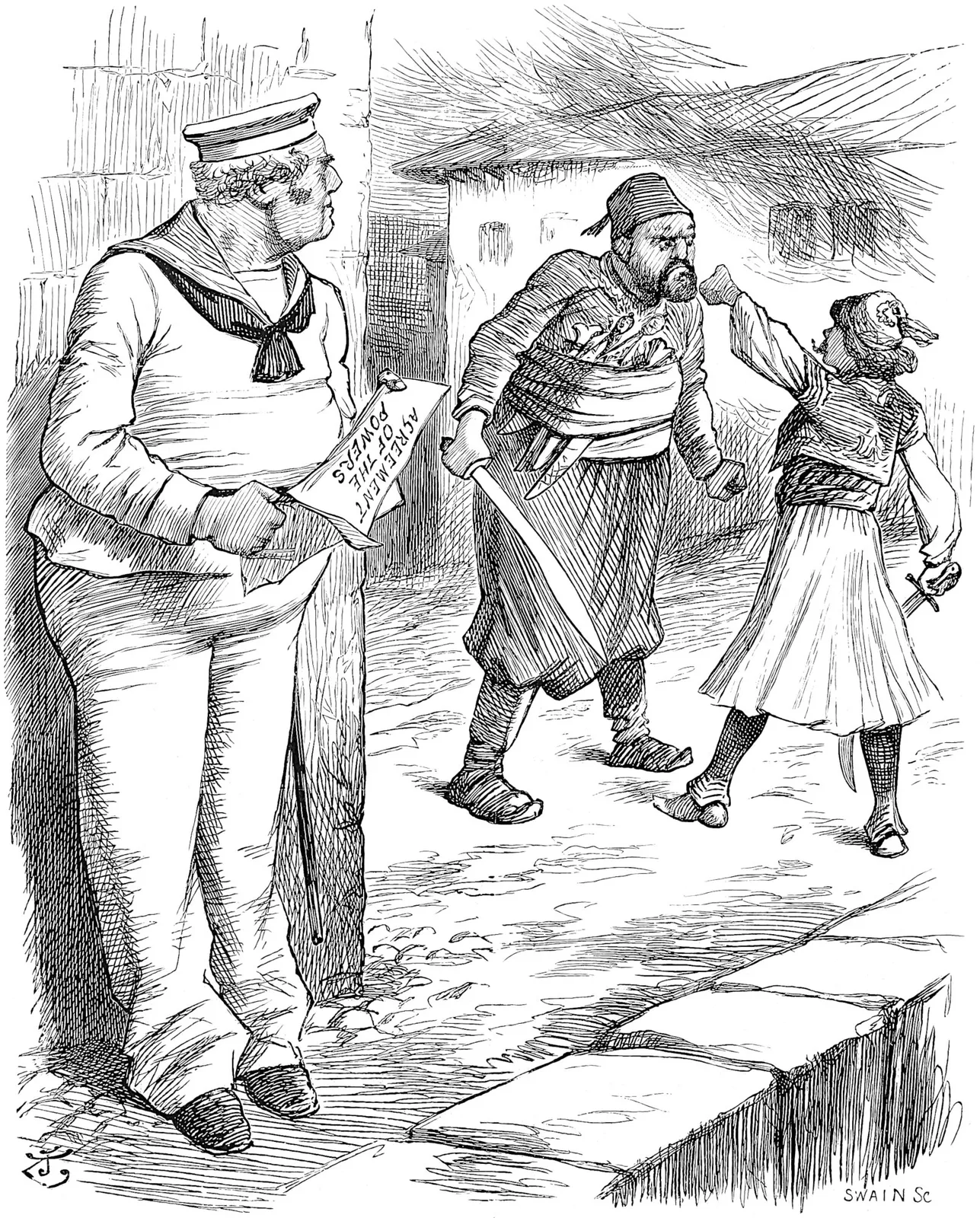
A Turkish Bath
137
The Porte at length realised the gravity of the situation in Crete.  
Illustration — Contents. — from Cartoons
Preparing his Speech
138
A genial allusion to the many changes which had marked Mr. Chamberlain’s political career.  
Illustration — Contents. — from Cartoons
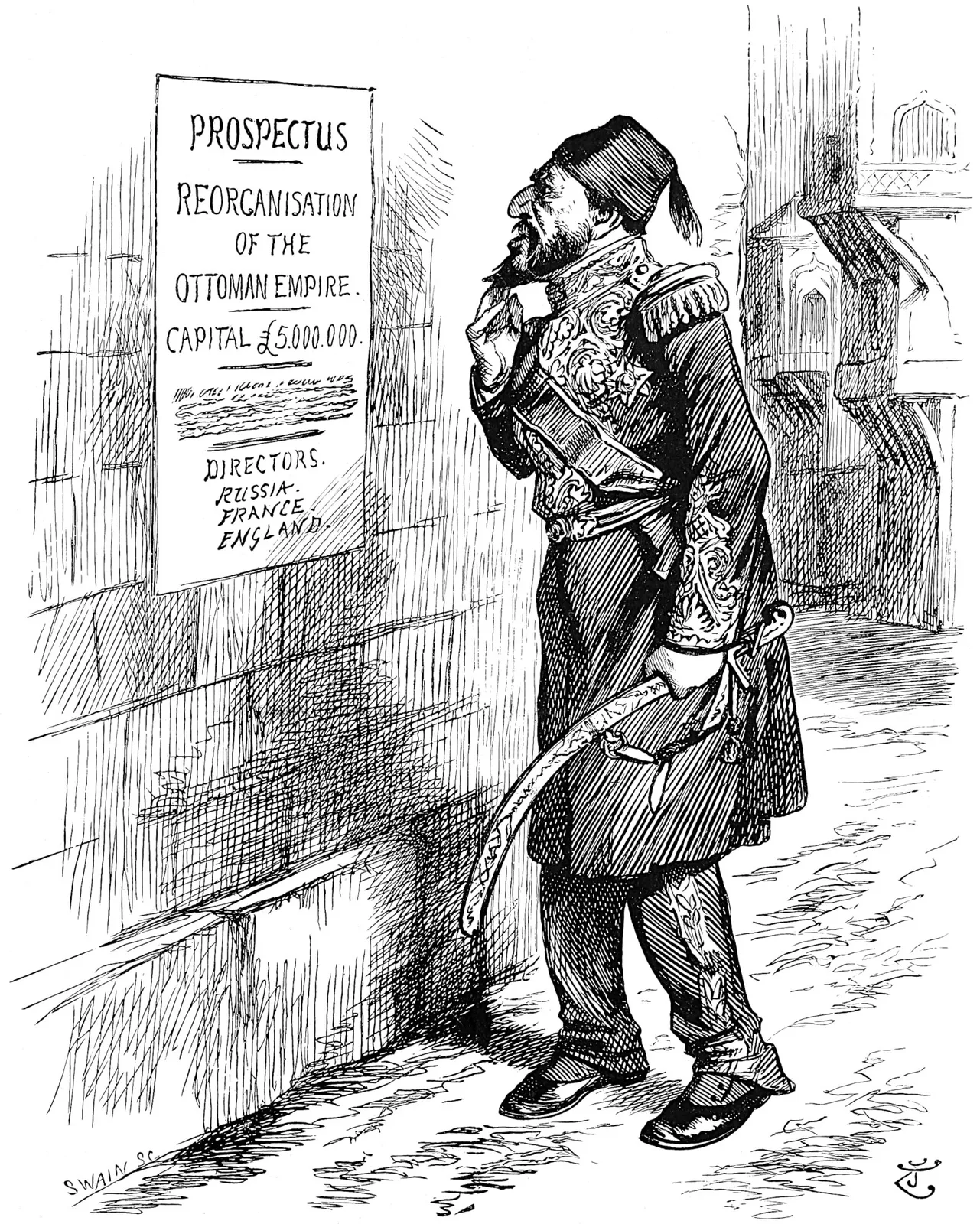
“Turkey Limited”
139
It was reported that the Powers had considered a scheme for a Turkish loan, to be applied under European control to the cost of the Judiciary, Revenue and Police service.  
Illustration — Contents. — from Cartoons
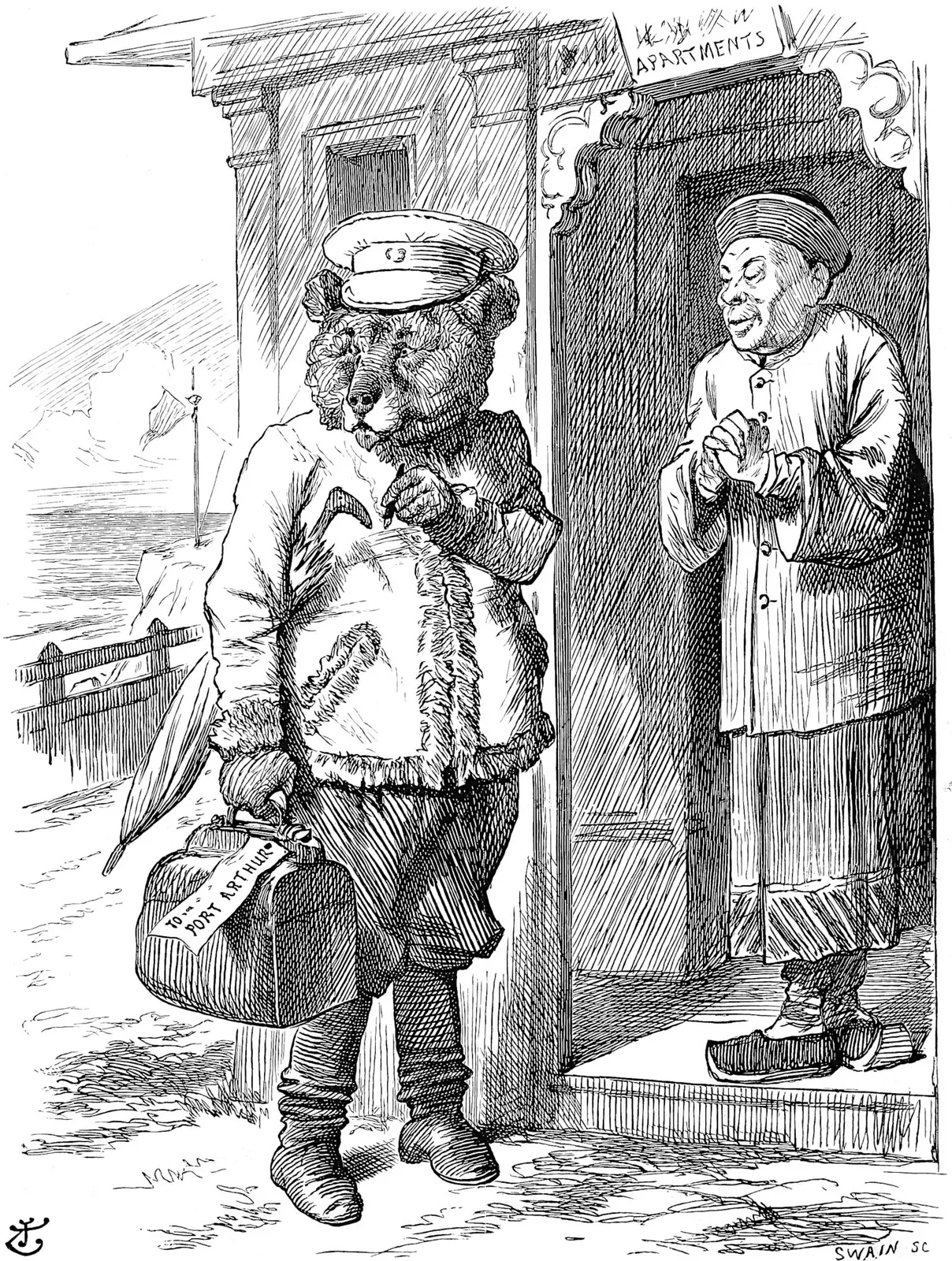
“Seaside Lodgings”
140
The Cartoon foreshadowed Russian designs upon the Chinese naval arsenal at Port Arthur, which in fact came into her possession a year later.  
Illustration — Contents. — from Cartoons
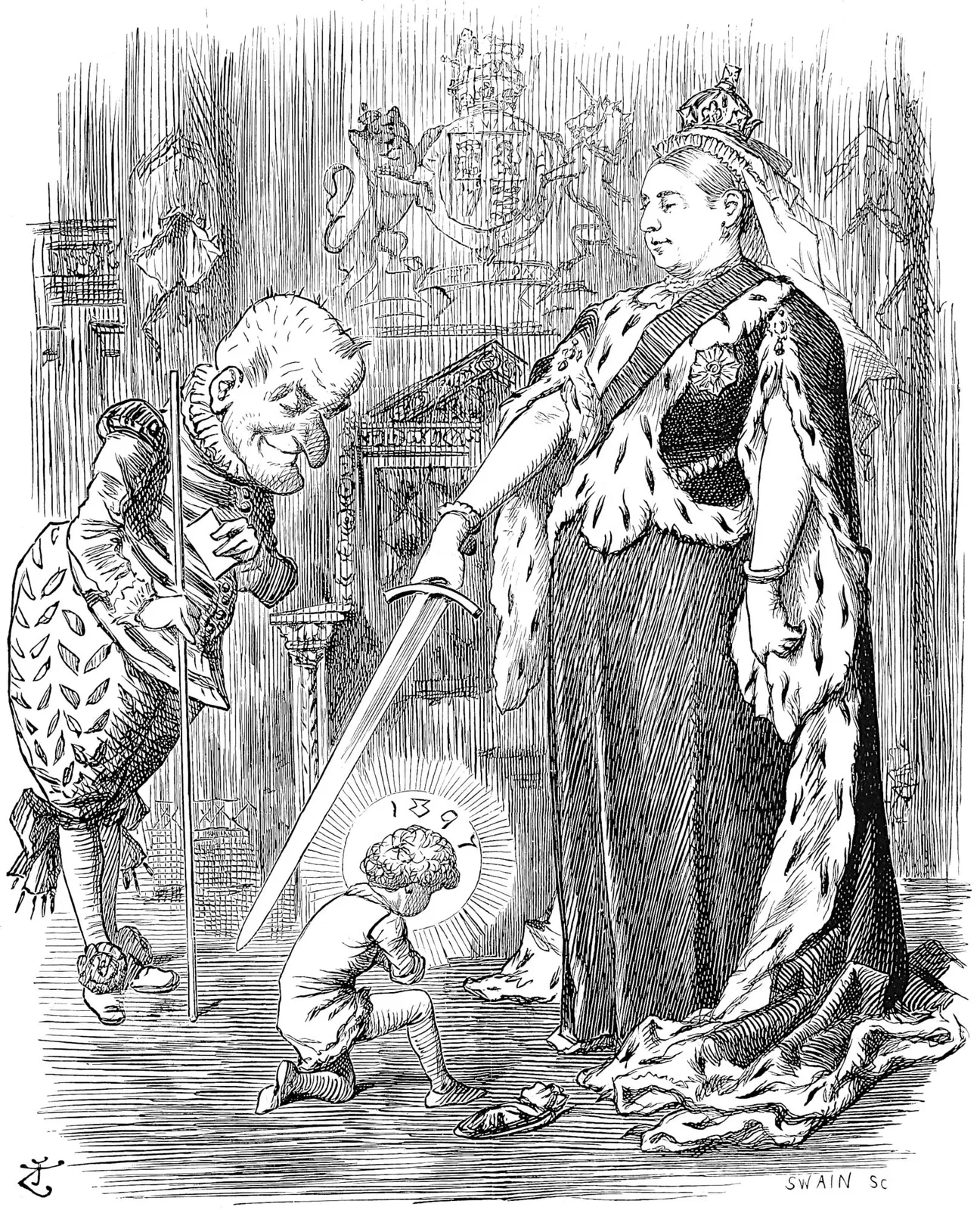
The Queen’s Year!
141
In June of this year Queen Victoria celebrated her Jubilee.  
Illustration — Contents. — from Cartoons
Against the Grain
142
The Cretans having revolted against Turkish misrule, Greece intervened with an armed force, but was ordered by the Allied Powers to withdraw.  
Illustration — Contents. — from Cartoons
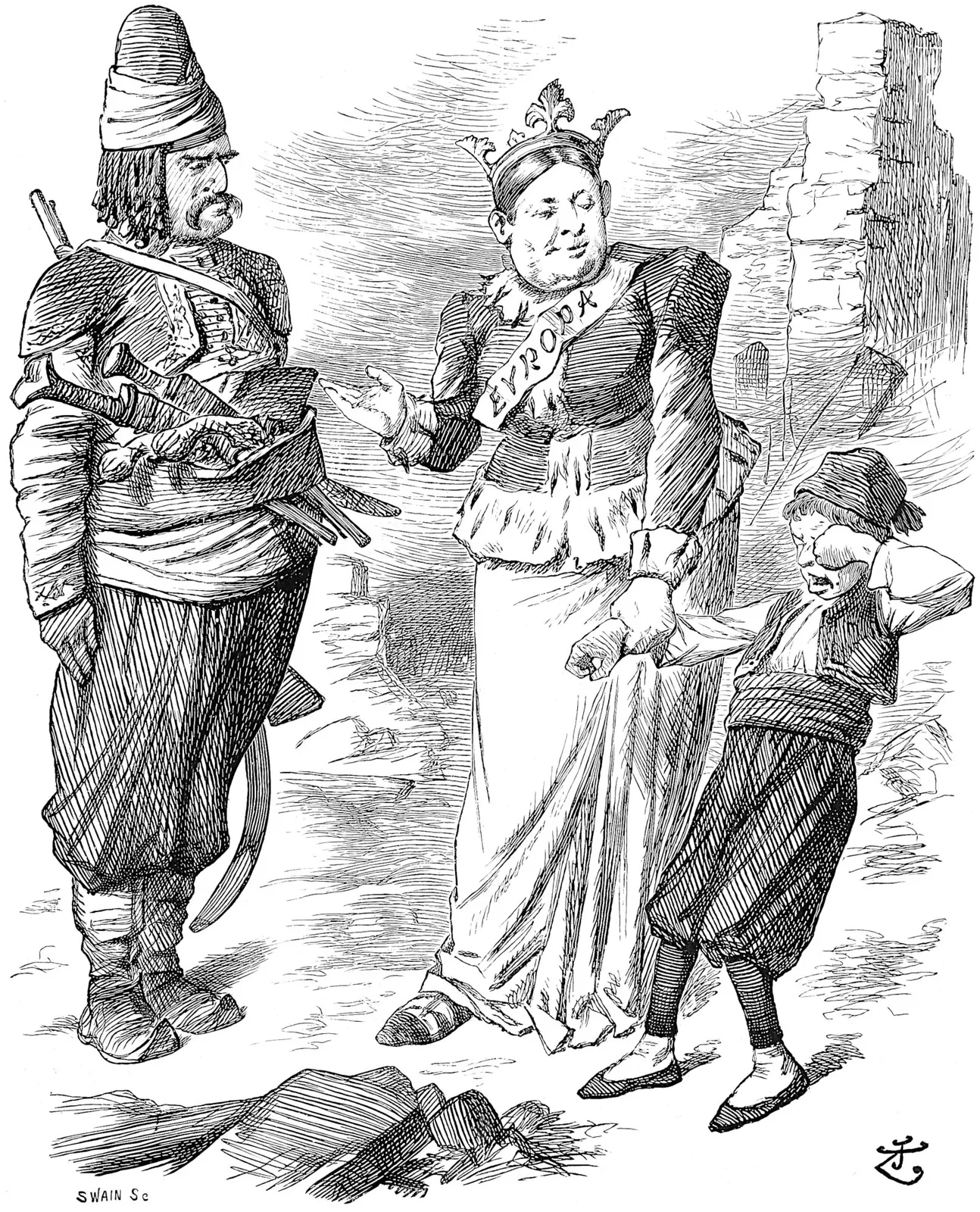
Tender Mercies!
143
The Allied Powers had decided to grant autonomy to Crete, but under Turkish suzerainty.  
Illustration — Contents. — from Cartoons
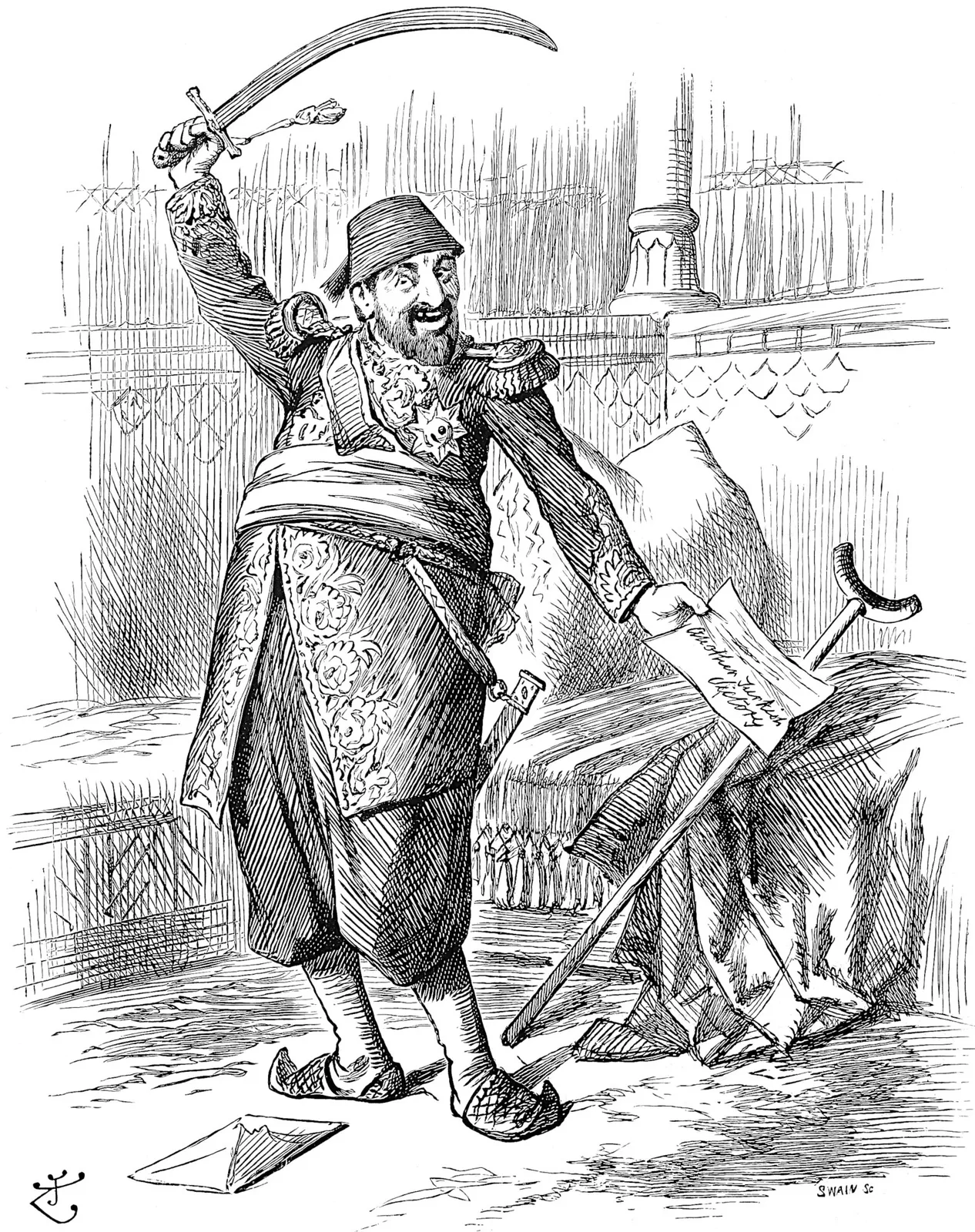
“Who says ‘Sick Man’ now?”
144
After the recall of the Greek army, the Turkish forces were successful in a conflict with the Cretan insurgents.  
Illustration — Contents. — from Cartoons
Spithead, June 26
145
At this great Review of the Fleet there were present 165 British war-ships. Official representatives from the various Colonies participated in the display.  
Illustration — Contents. — from Cartoons
“For Queen and Empire!!”
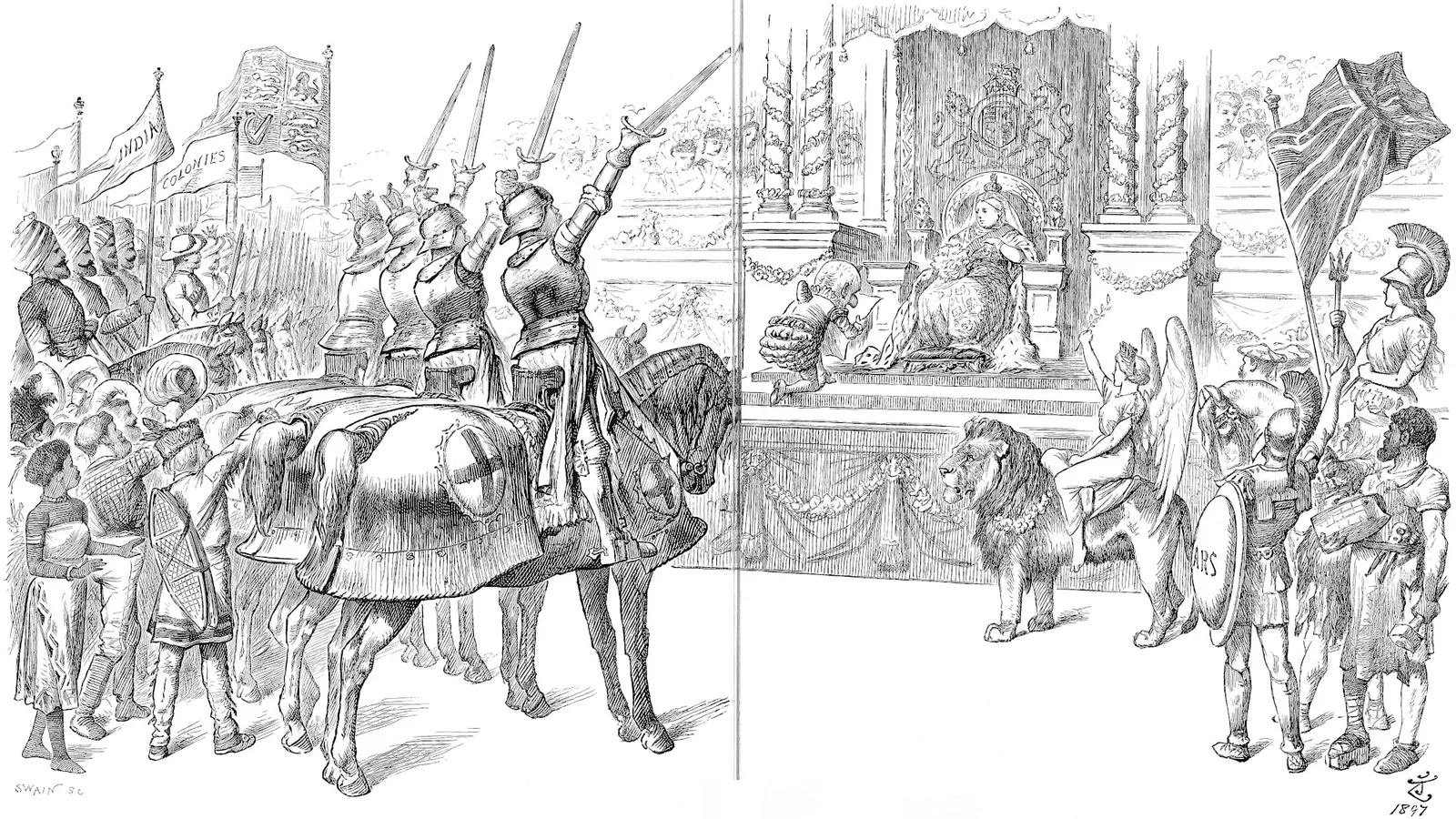
146-147
The Cartoon is typical of the great celebrations which marked the Queen’s Diamond Jubilee. The Colonial, Asiatic, and African contingents took part in the procession on June 22.  
Illustration — Contents. — from Cartoons
“Brothers in Arms”
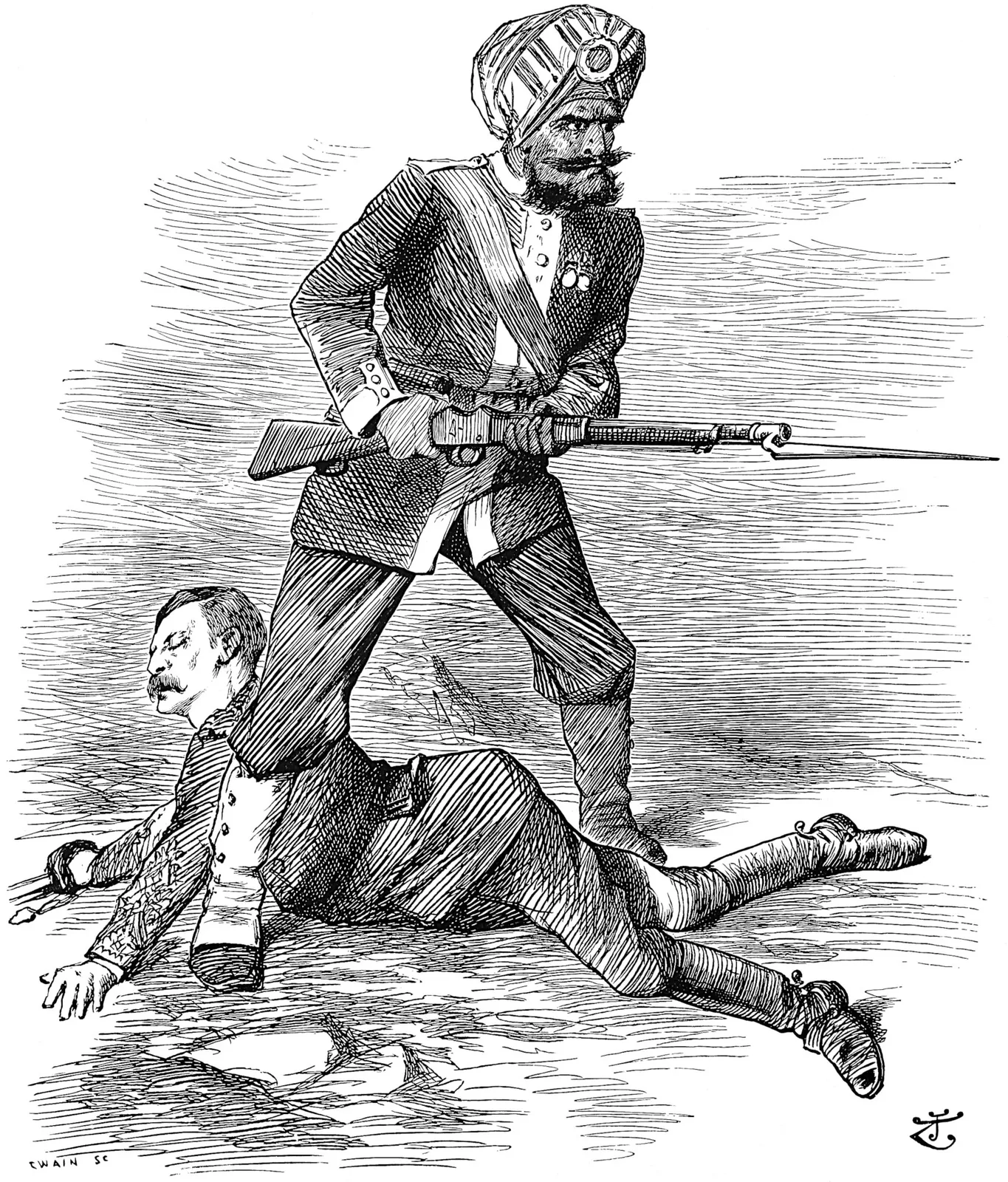
148
A treacherous attack had been made at Maizar on the Political Officer’s escort. The British loss was heavy, but the Native Infantry behaved with the greatest gallantry.  
Illustration — Contents. — from Cartoons
Saved!
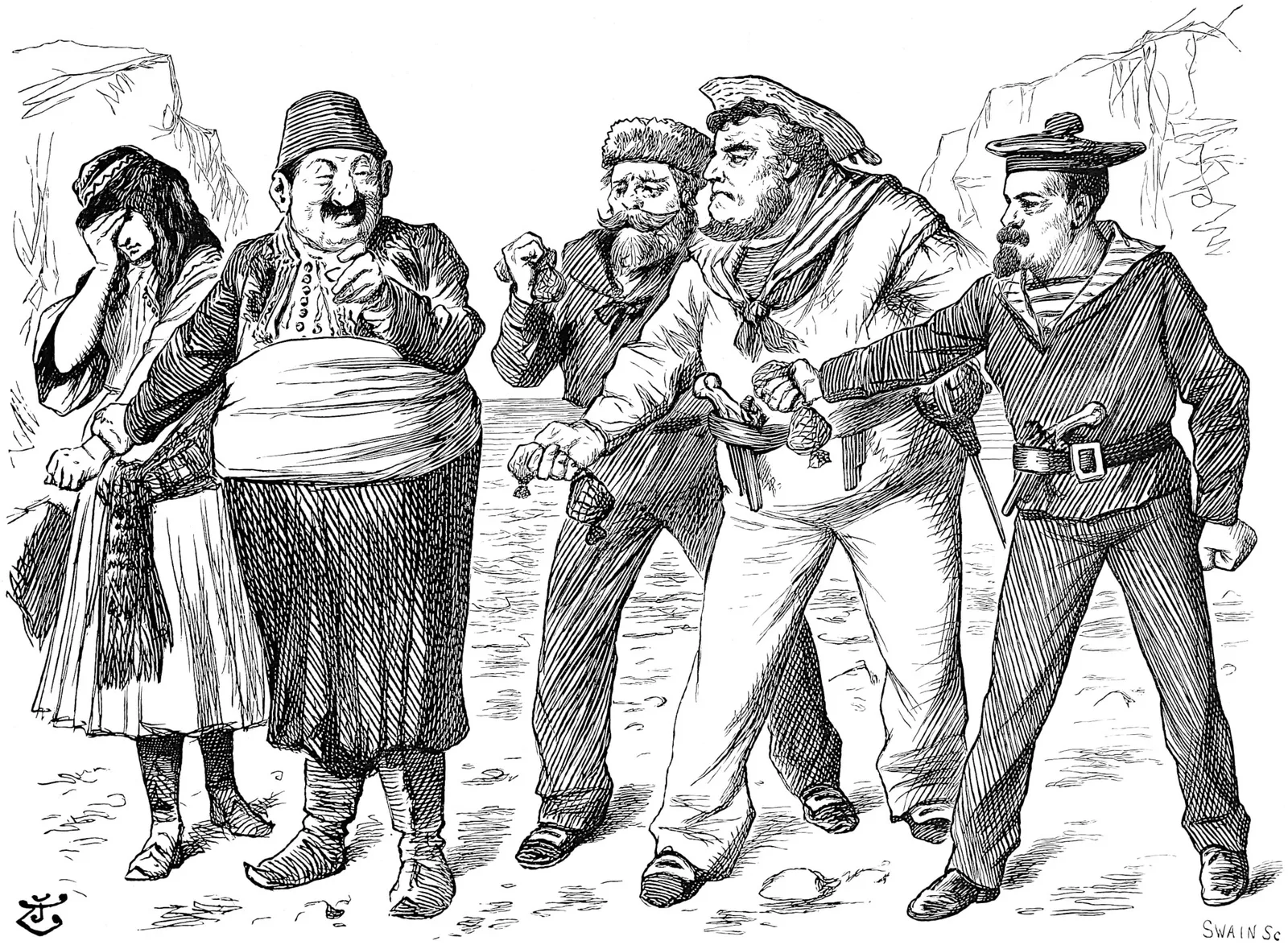
149
England, Russia and France, the Powers originally responsible for the freedom of Greece, agreed to jointly guarantee a loan to that country.  
Illustration — Contents. — from Cartoons
“Financial Relations”
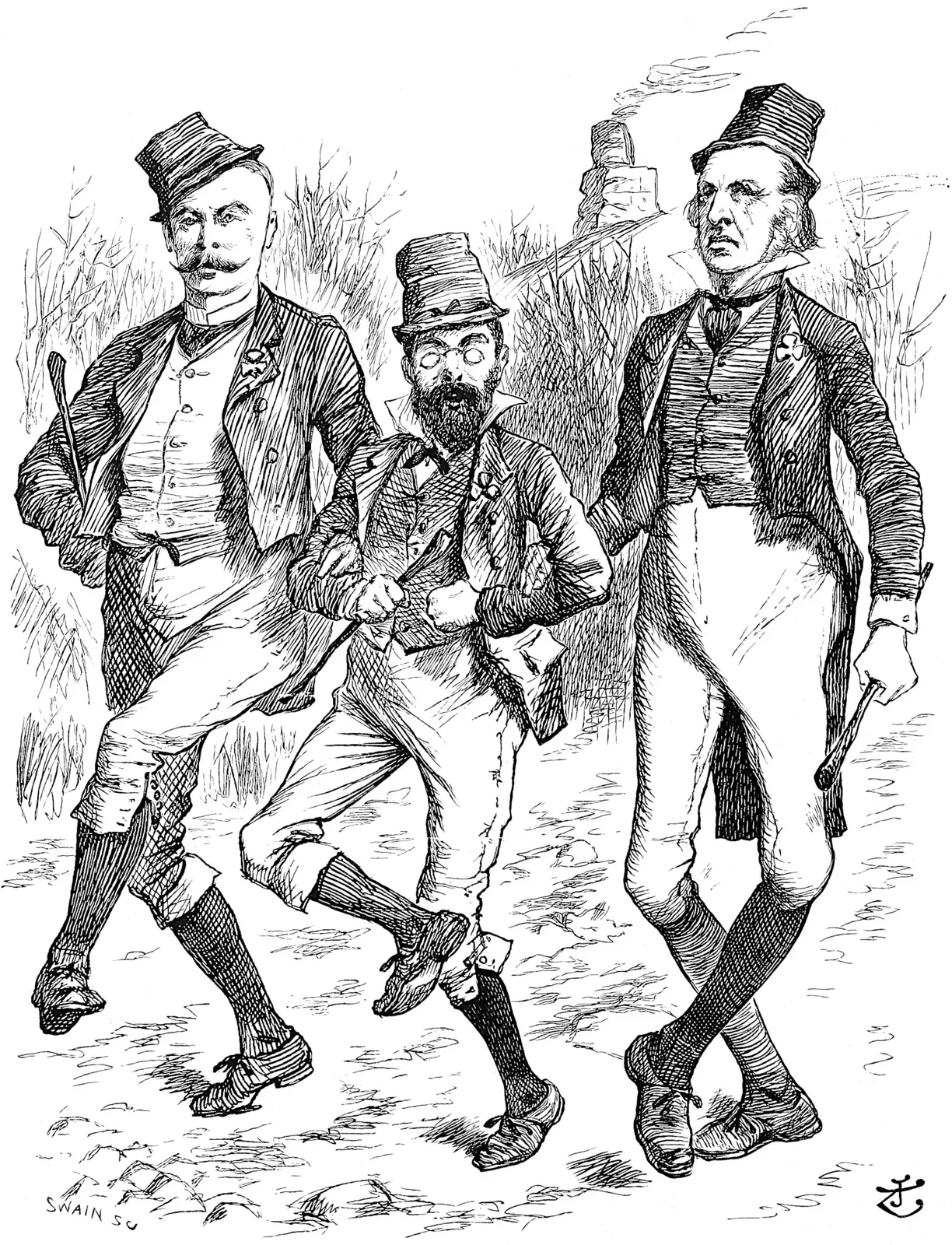
150
Colonel Saunderson, Mr. Healy, and Mr. Lecky had united in supporting the Irish Local Government Bill, which assigned £700,000 a year to Ireland.  
Illustration — Contents. — from Cartoons
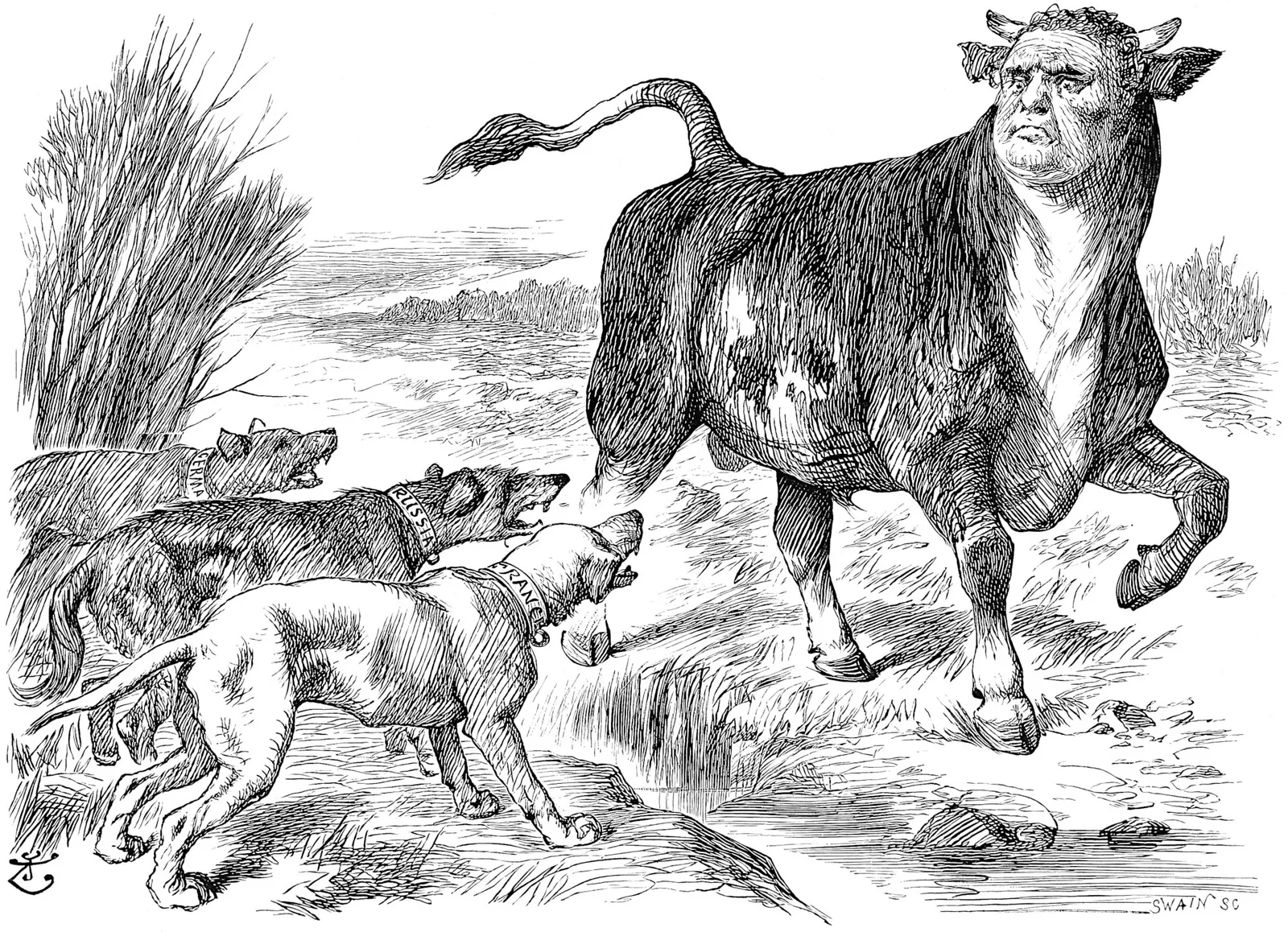
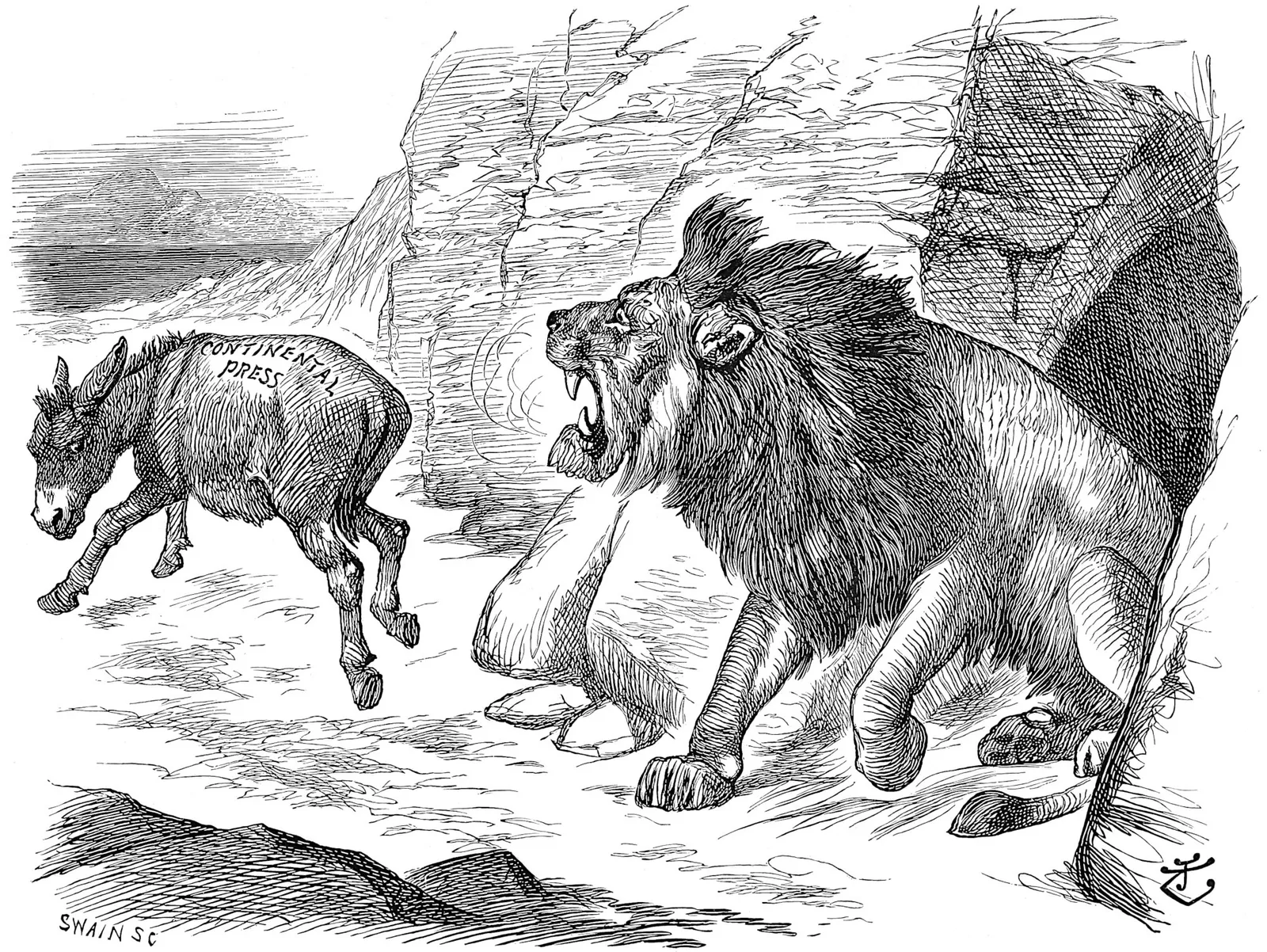
Bull-Baiting
151
Continental ill-feeling against Great Britain was at this time more than usually manifested.  
Illustration — Contents. — from Cartoons
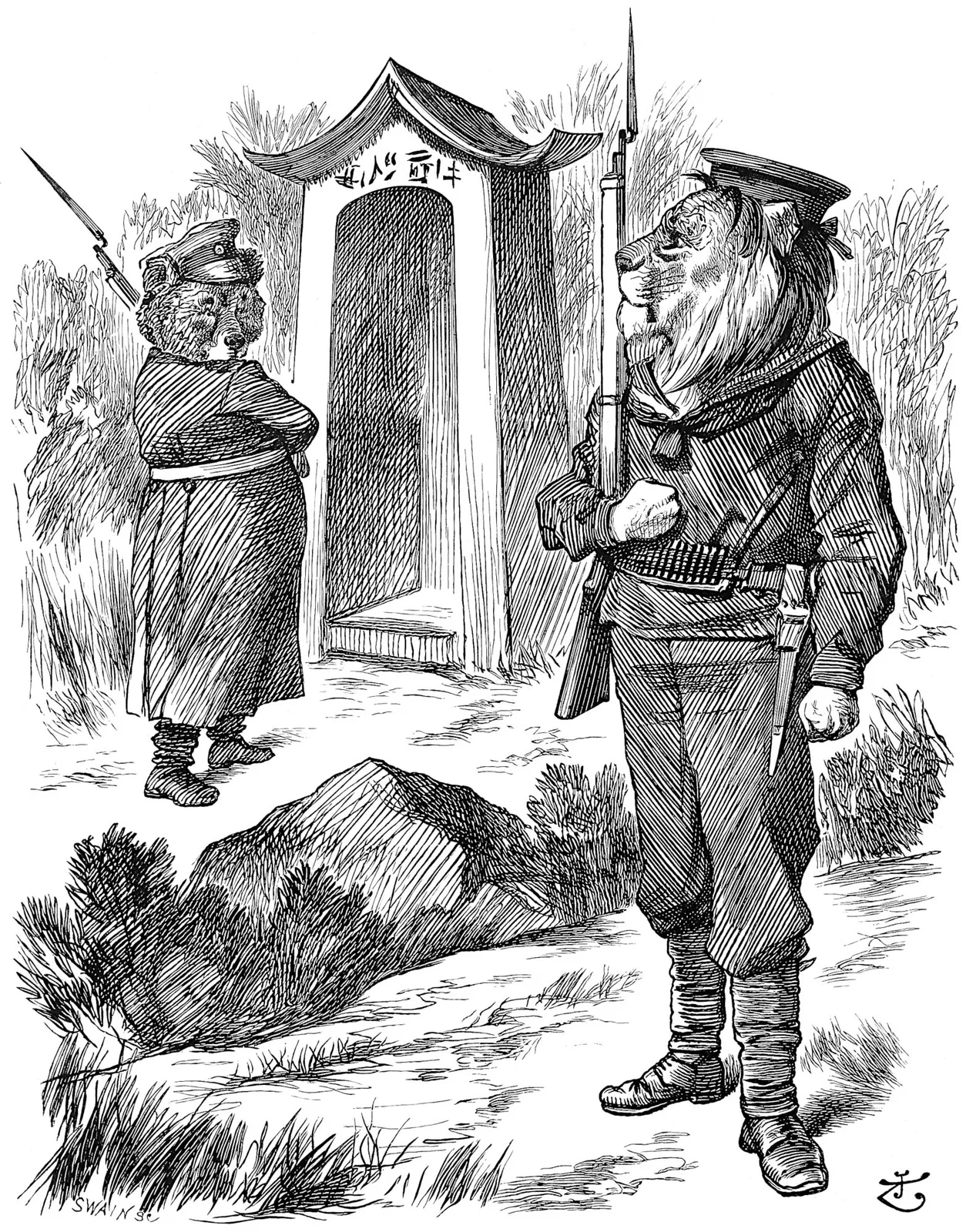
Sentinels
109
The occupation of Port Arthur by Russia seemed to leave Great Britain no alternative but to adopt a similar course with Wei-Hai-Wei.  
Illustration — Contents. — from Cartoons
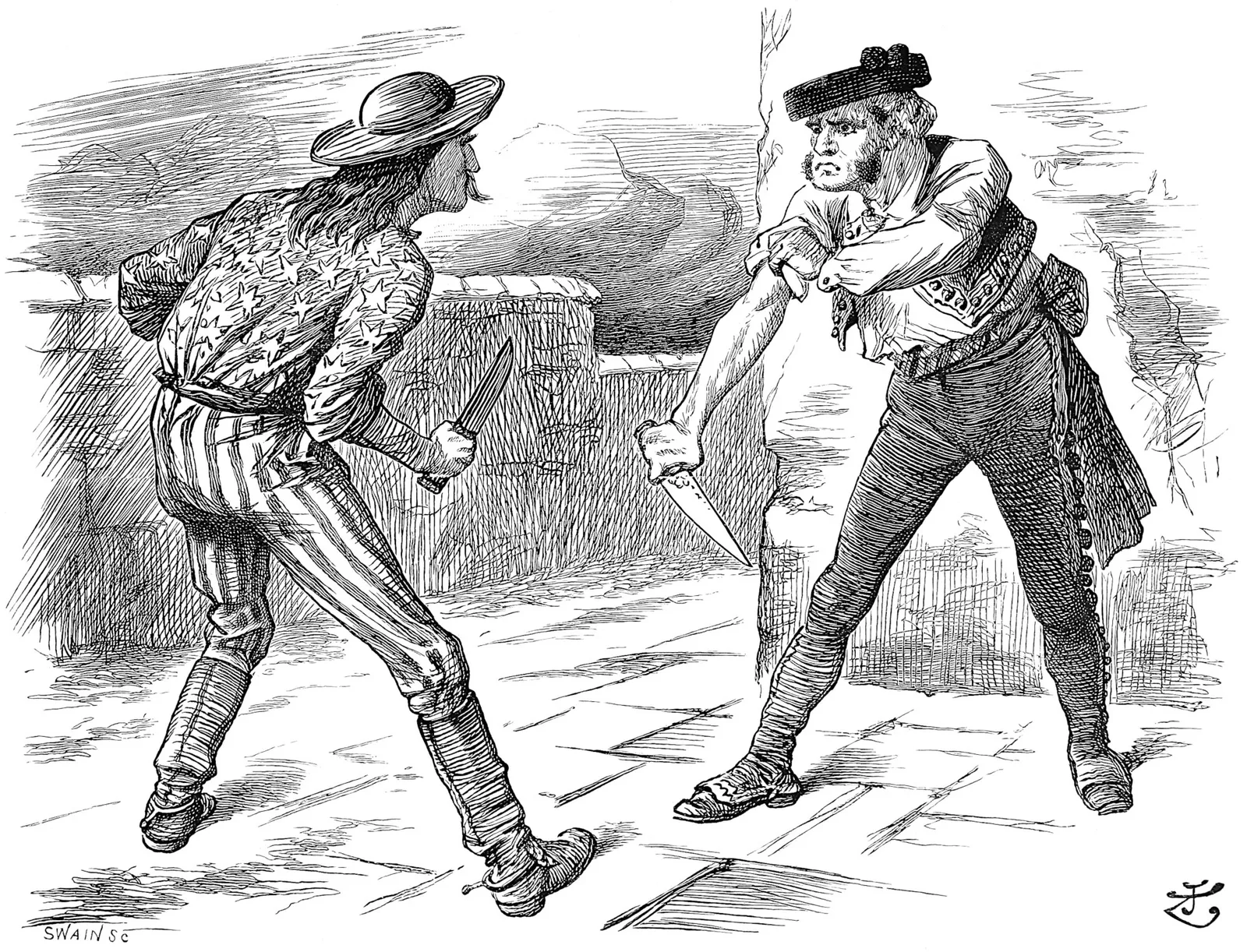
The Duello
153
The United States, on account of Spanish misrule in Cuba, had declared war against Spain.  
Illustration — Contents. — from Cartoons
Bismarck
154-155
Prince Bismarck, the great Chancellor of the German Empire, died on July 30, 1898.  
Illustration — Contents. — from Cartoons
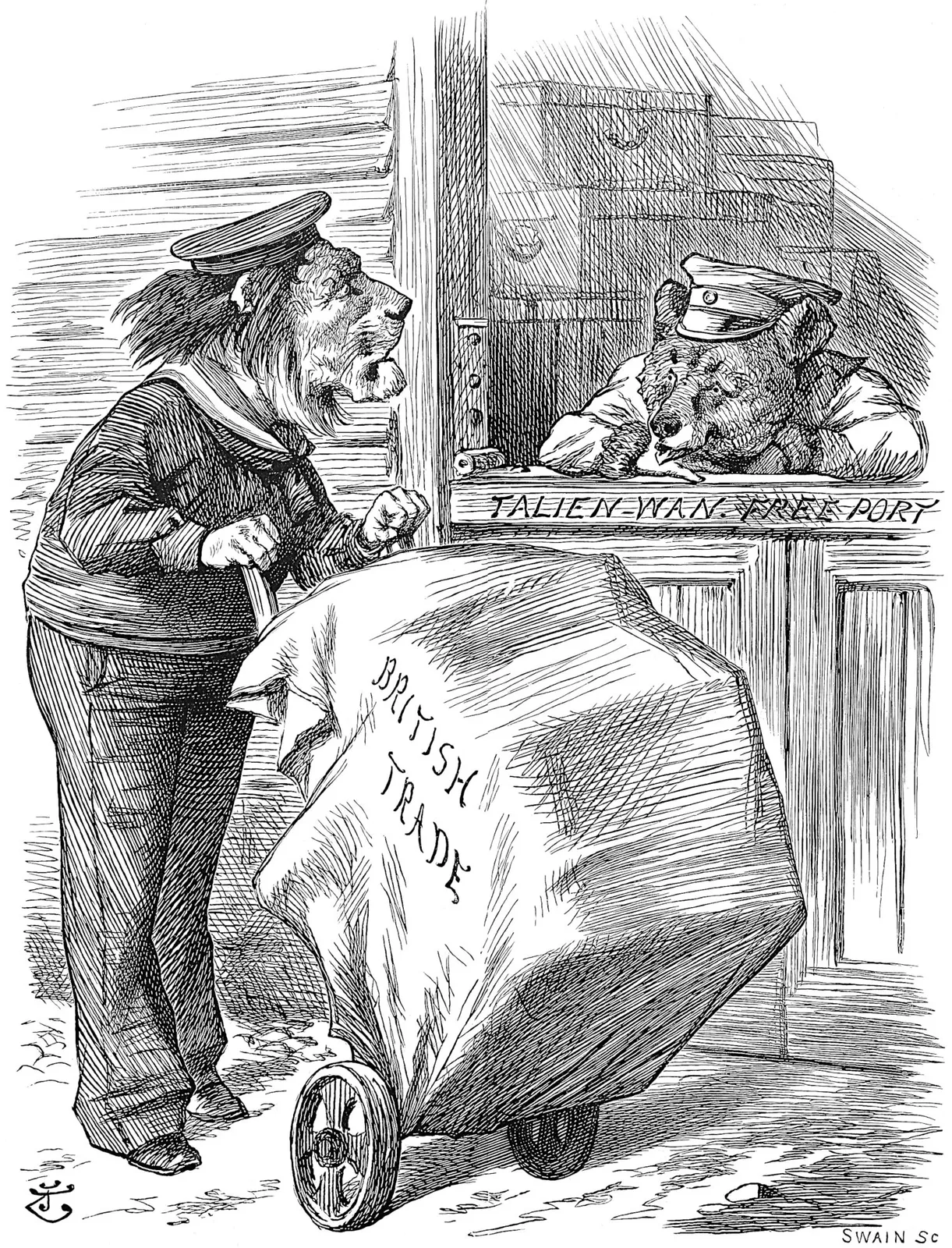
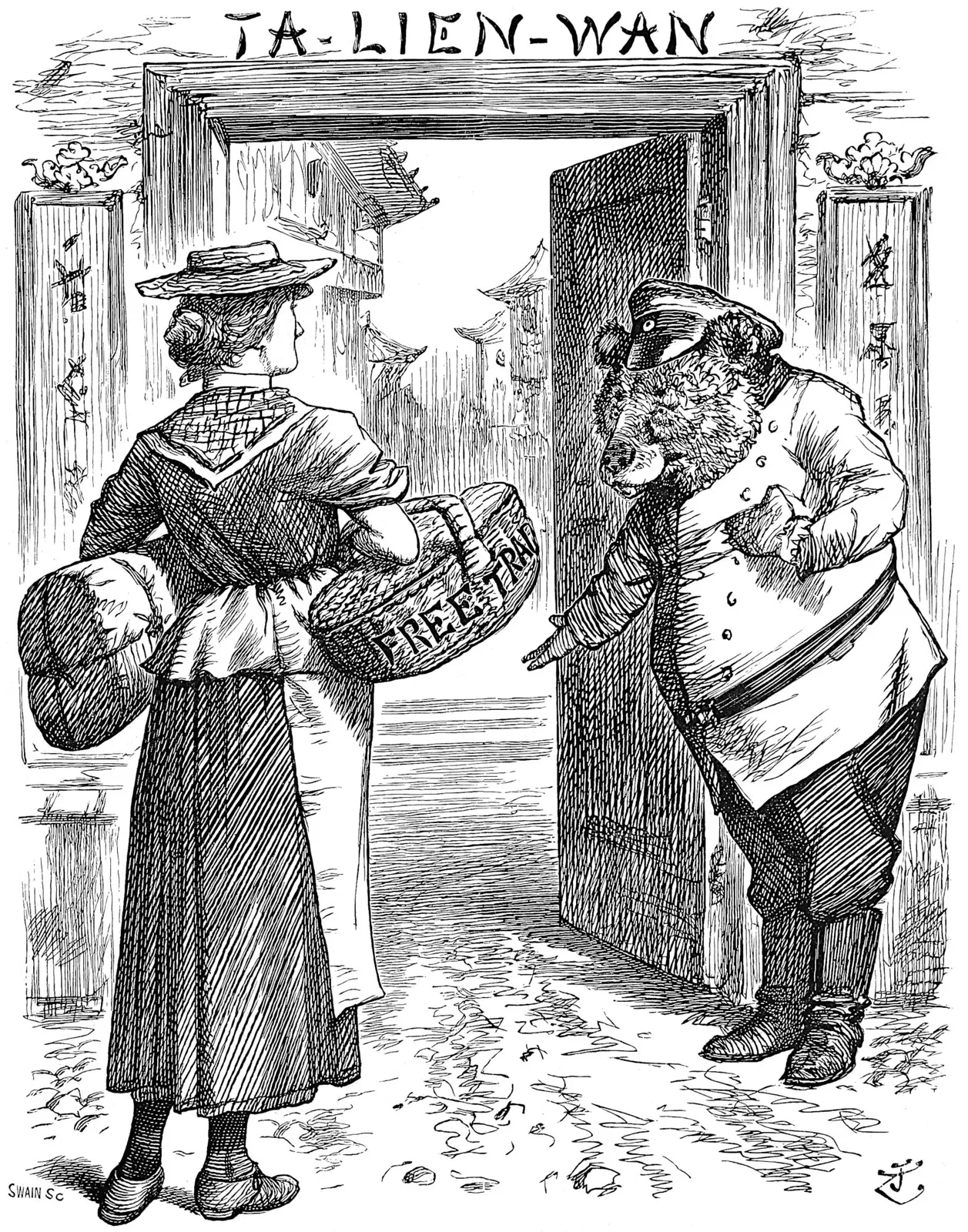
Honour à la Russe
156
When the Russians occupied Talien-Wan it was understood that it was to be a free port.  
Illustration — Contents. — from Cartoons
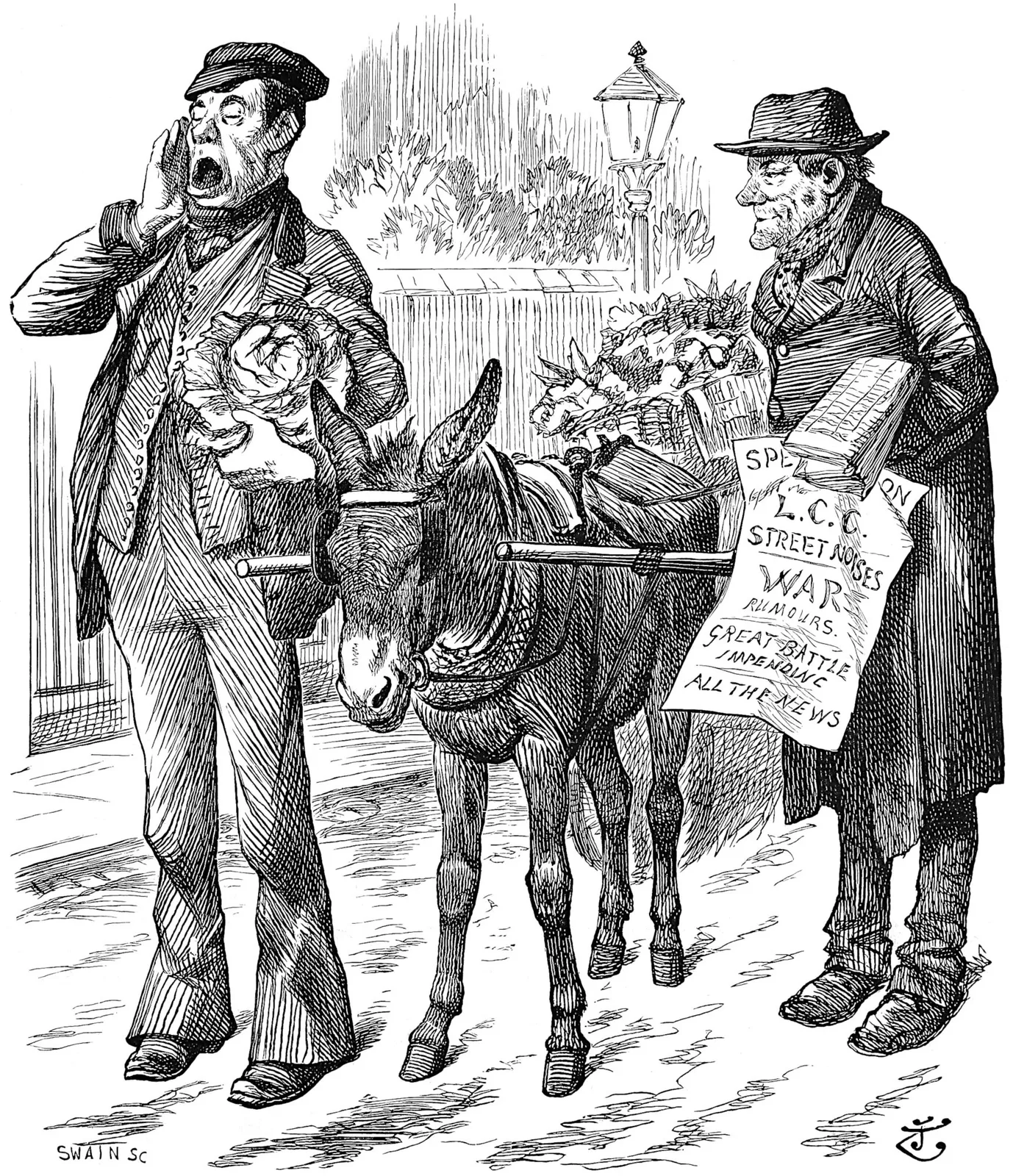
Our Masters’ Masters
157
Sympathy for the Costers had led to the rejection of a municipal bye-law for the repression of street shouting.  
Illustration — Contents. — from Cartoons
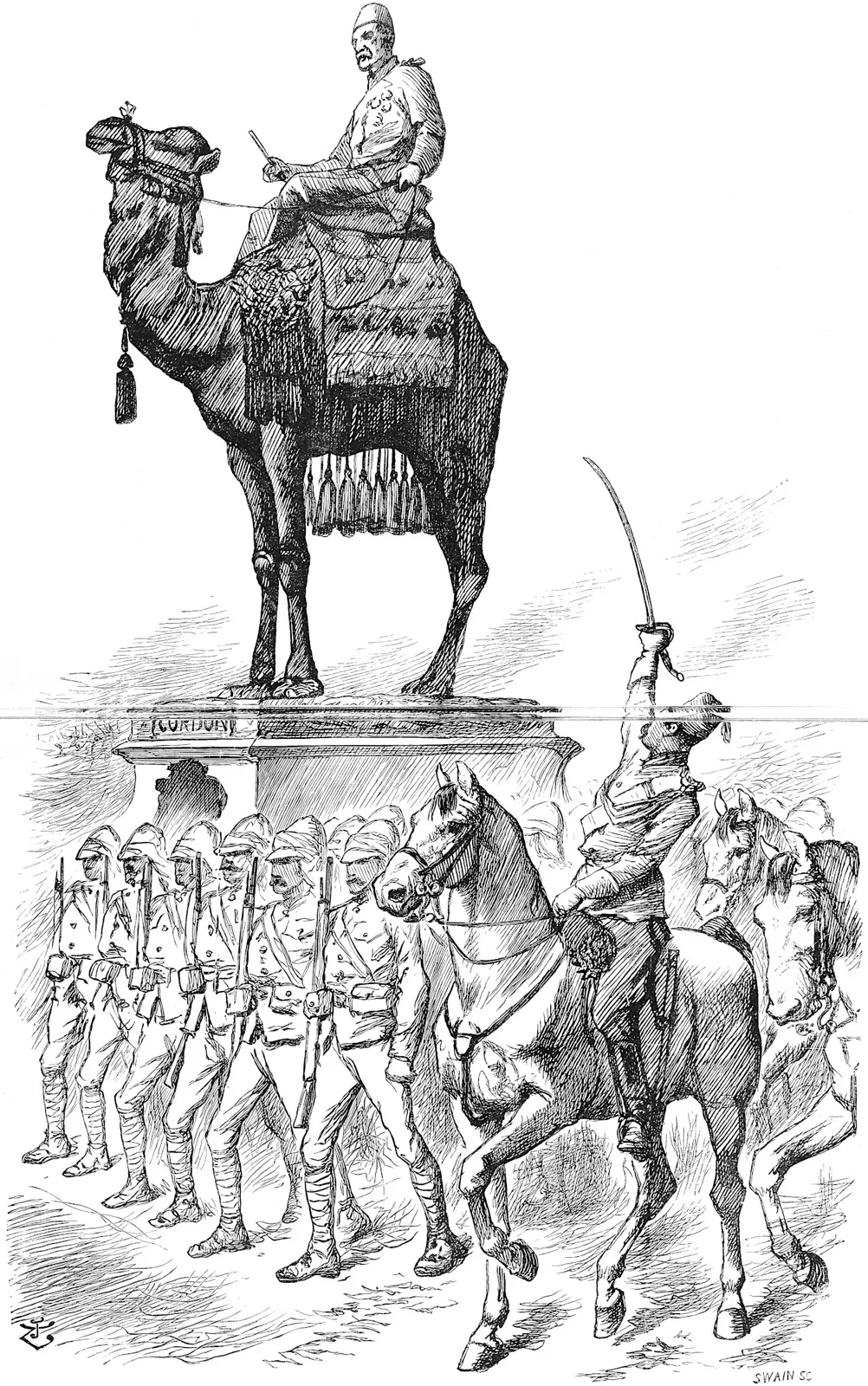
Khartoum!
158-159
Khartoum was captured by the Mahdi on Jan. 26, 1885, and General Gordon assassinated. On Sept. 2, 1898, General Kitchener annihilated the Khalifa’s army and re-entered the town.  
Illustration — Contents. — from Cartoons
A Fixture
160
The conquest of the Soudan seemed to indicate a permanence of the British occupation of Egypt.  
Illustration — Contents. — from Cartoons
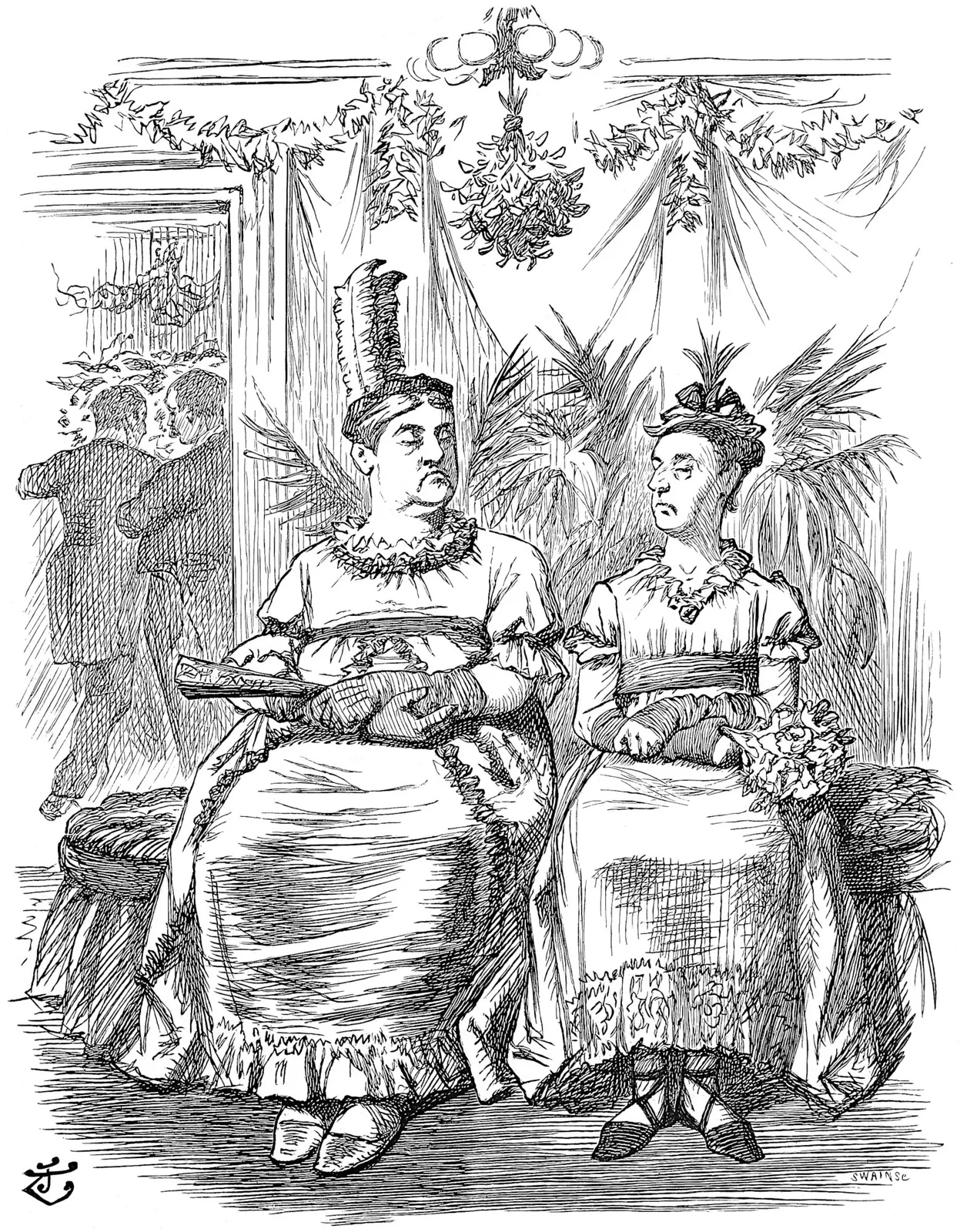
Under the Mistletoe
161
Sir William Harcourt had written to Mr. John Morley announcing his retirement from the leadership of the Liberal Party.  
Illustration — Contents. — from Cartoons
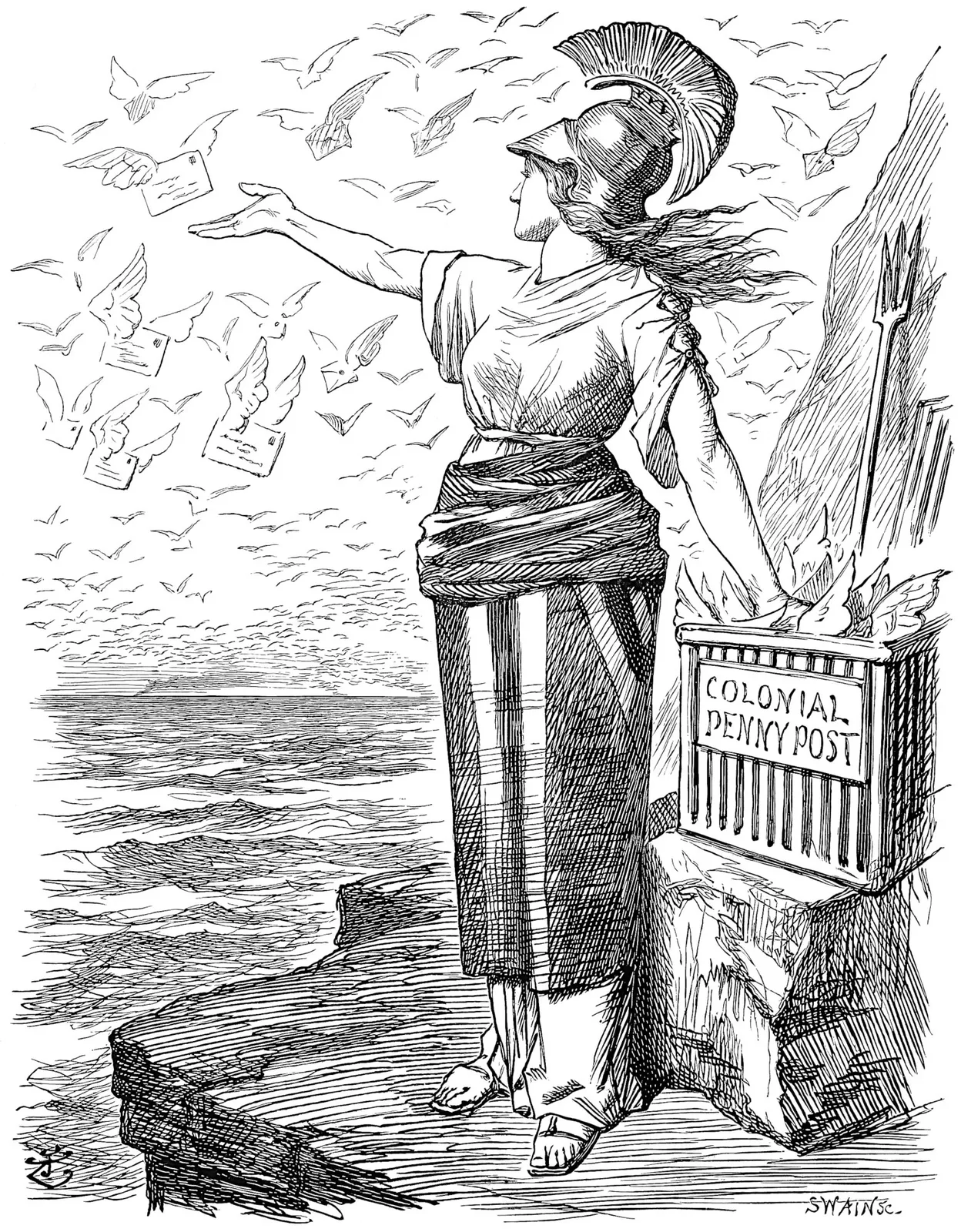
A New Year’s Greeting
162
Thanks to Mr. Henneker Heaton, some of the Colonies had accepted the principle of an International Penny Postage.  
Illustration — Contents. — from Cartoons
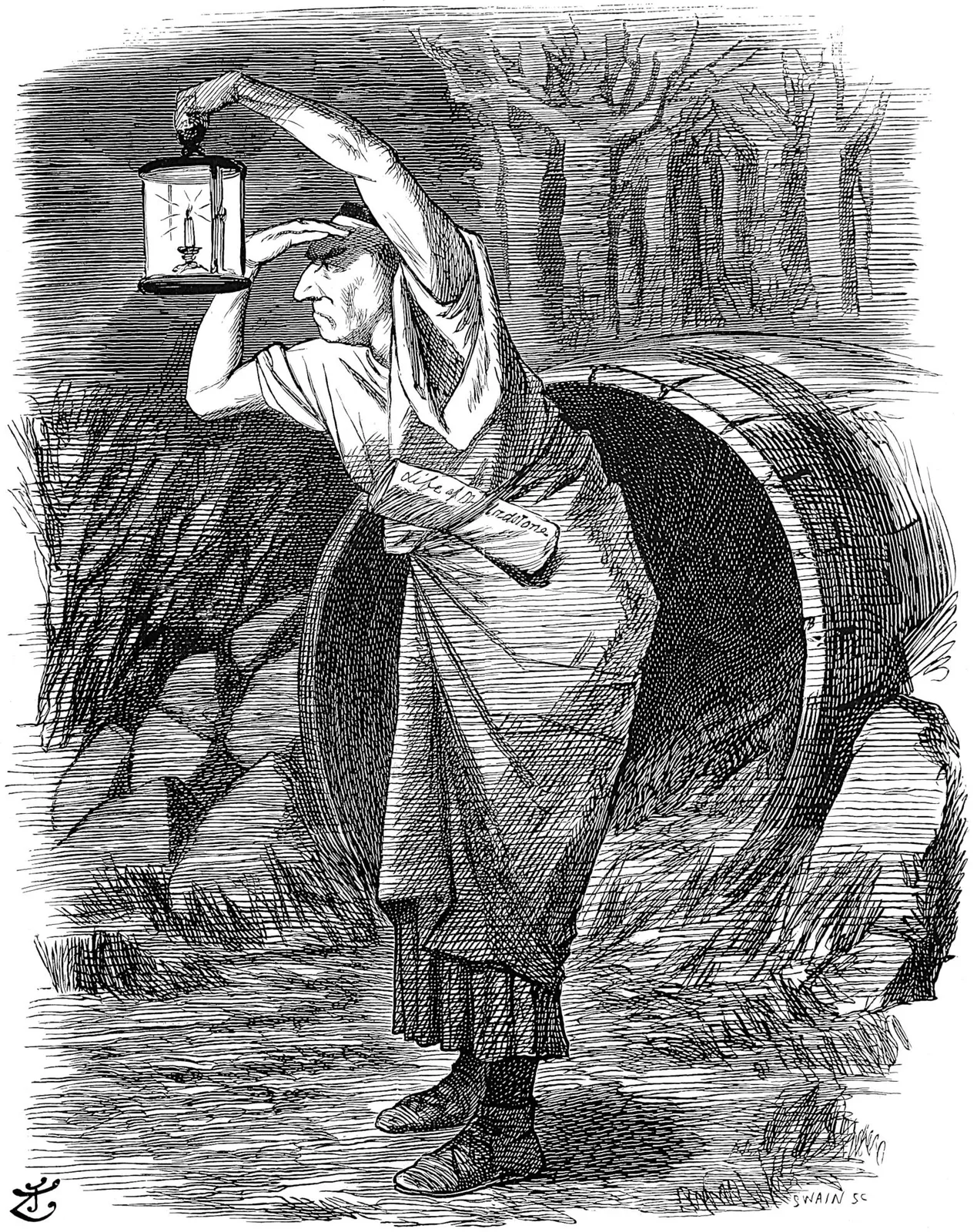
Diogenes-Morley
163
Mr. Morley was one of the few who remained faithful to the traditions of the old Liberal Party.  
Illustration — Contents. — from Cartoons
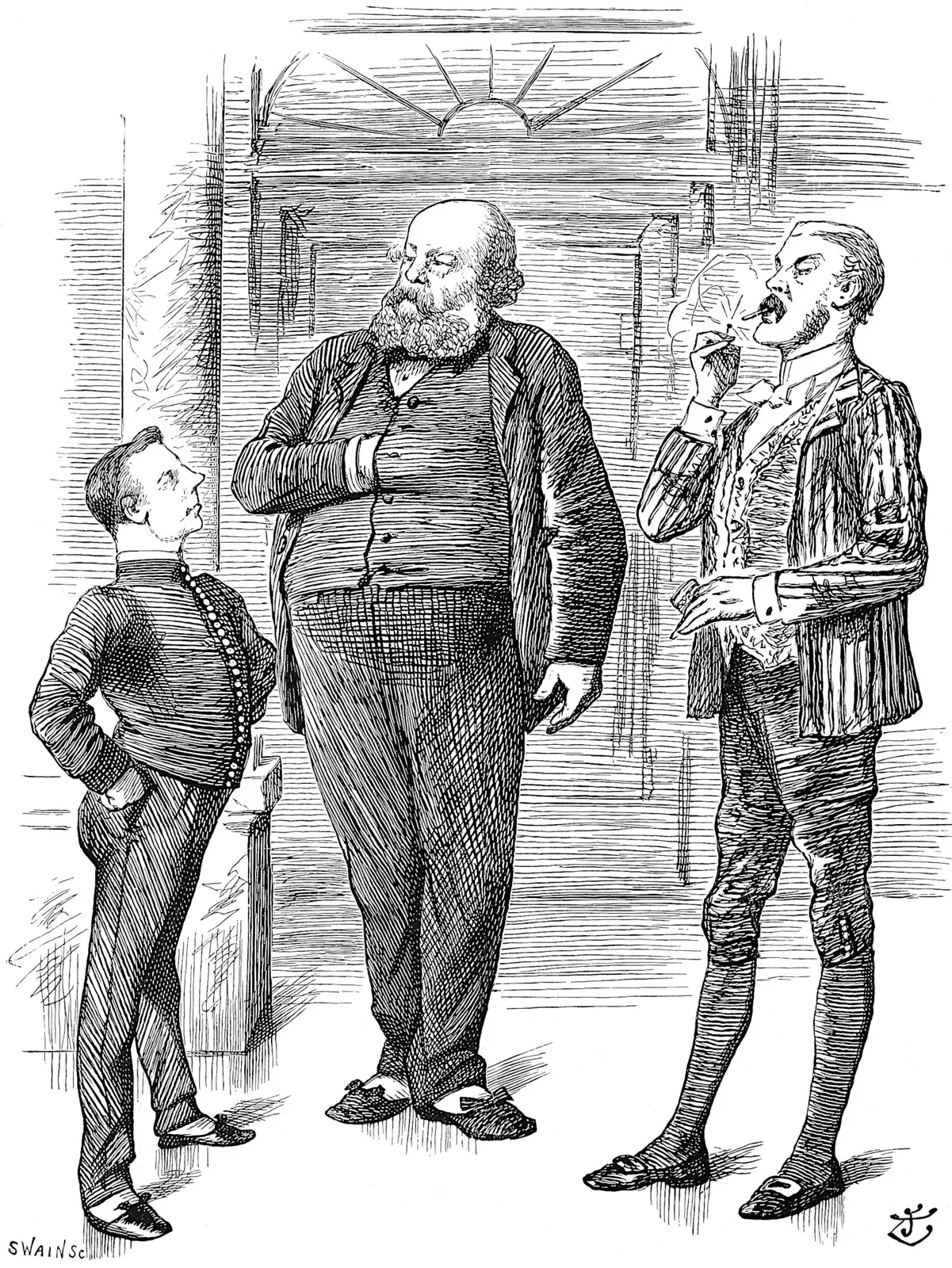
A Free Hand!
164
Parliament had been prorogued, and the Government would in the interim, it was thought, have a free hand in the South African and other questions.  
Illustration — Contents. — from Cartoons
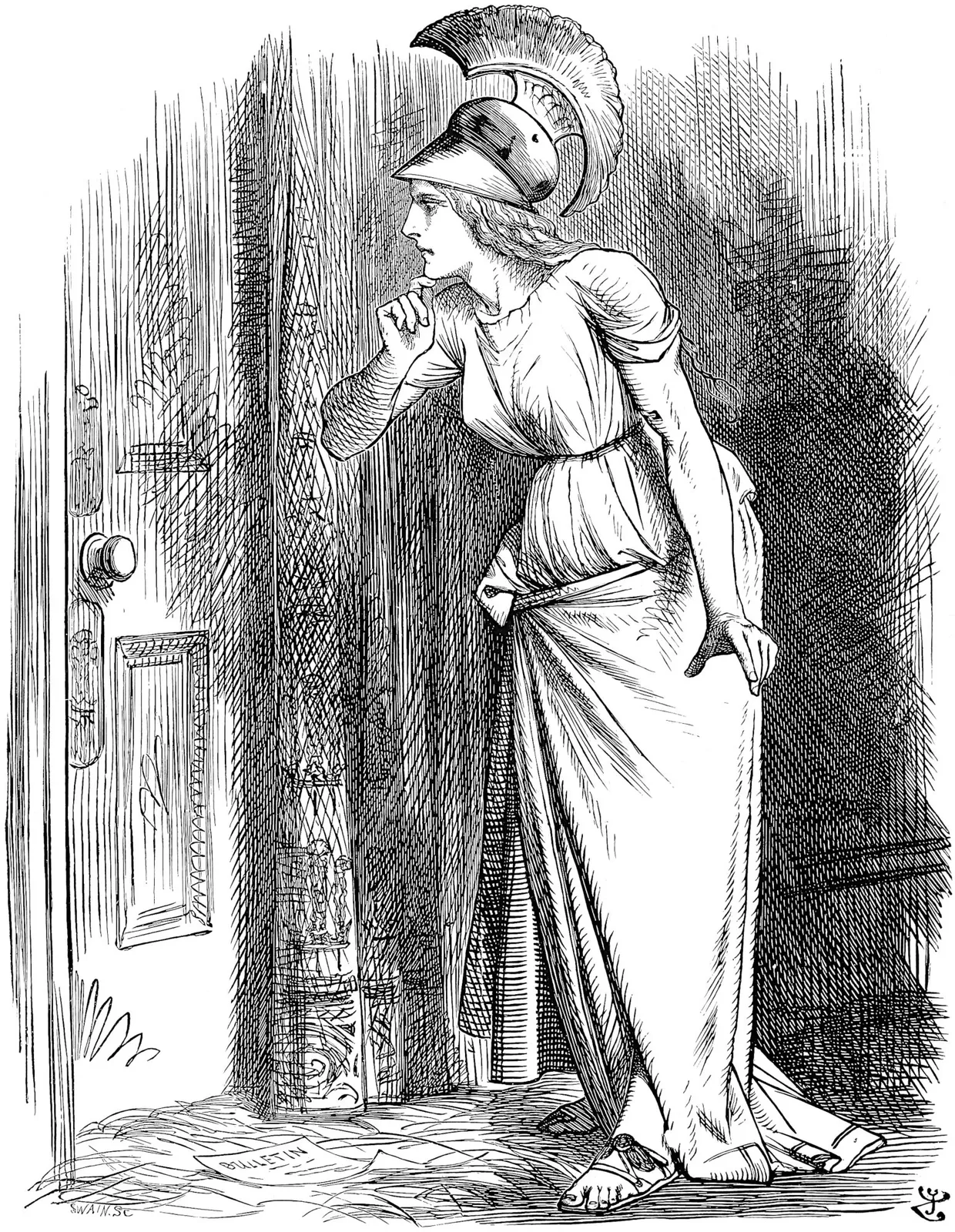
Open at Last!
165
The Russians had made Talien-Wan a free port. There had been some doubt as to Russia’s intentions.  
Illustration — Contents. — from Cartoons
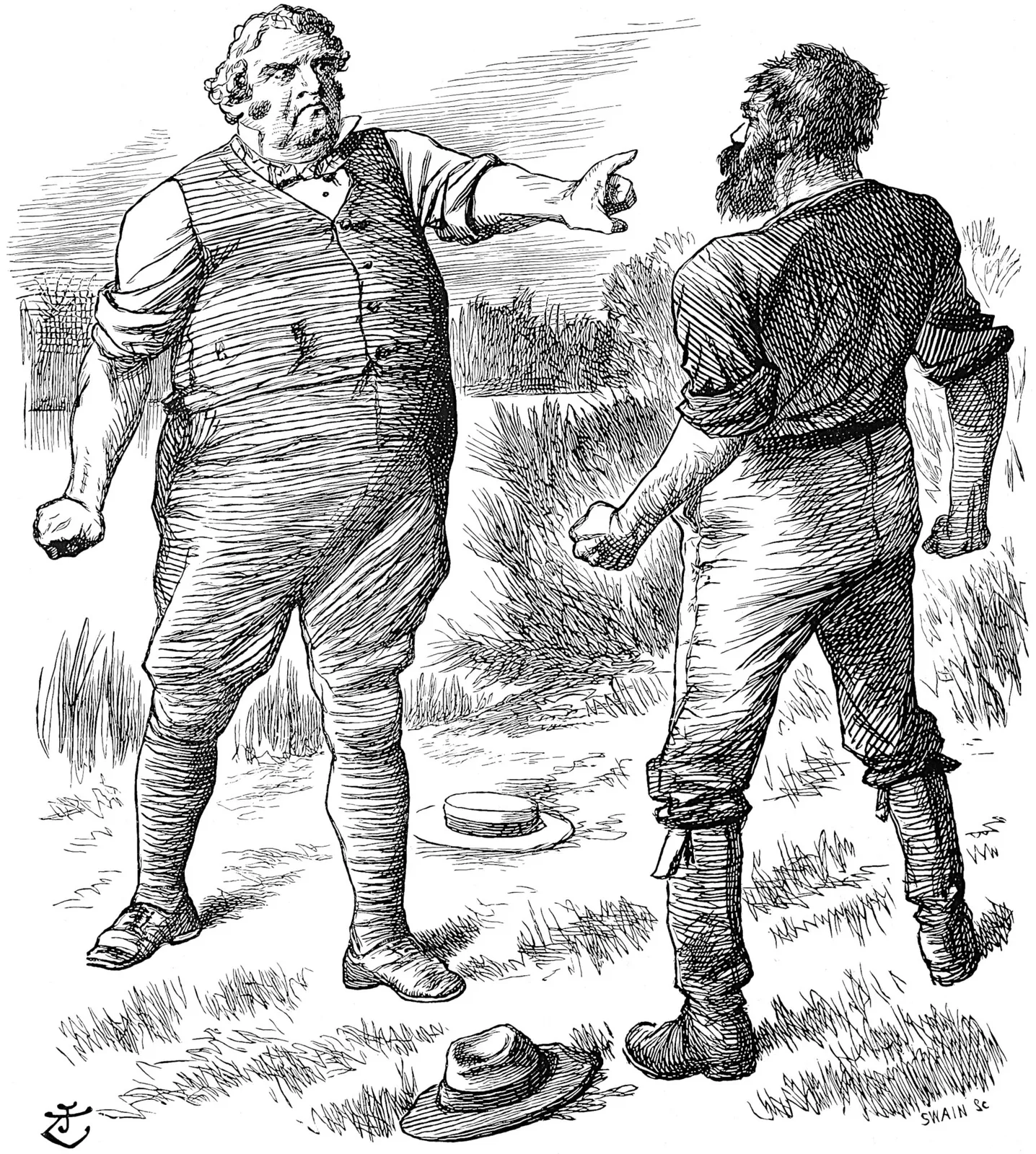
Plain English
166
The Transvaal Government had sent an insolent Ultimatum to Great Britain, requiring the withdrawal within forty-eight hours of the British forces from the Boer frontiers.  
Illustration — Contents. — from Cartoons
Who said “Dead”?
167
On Feb. 27, 1900, the anniversary of the Majuba Hill disaster, General Cronje surrendered to General Roberts.  
Illustration — Contents. — from Cartoons
Full of Resource
168
The Chancellor of the Exchequer had announced in his Budget speech that he hoped to recover a large proportion of the war expenses by taxation of the Transvaal.  
Illustration — Contents. — from Cartoons
Good Wishes!
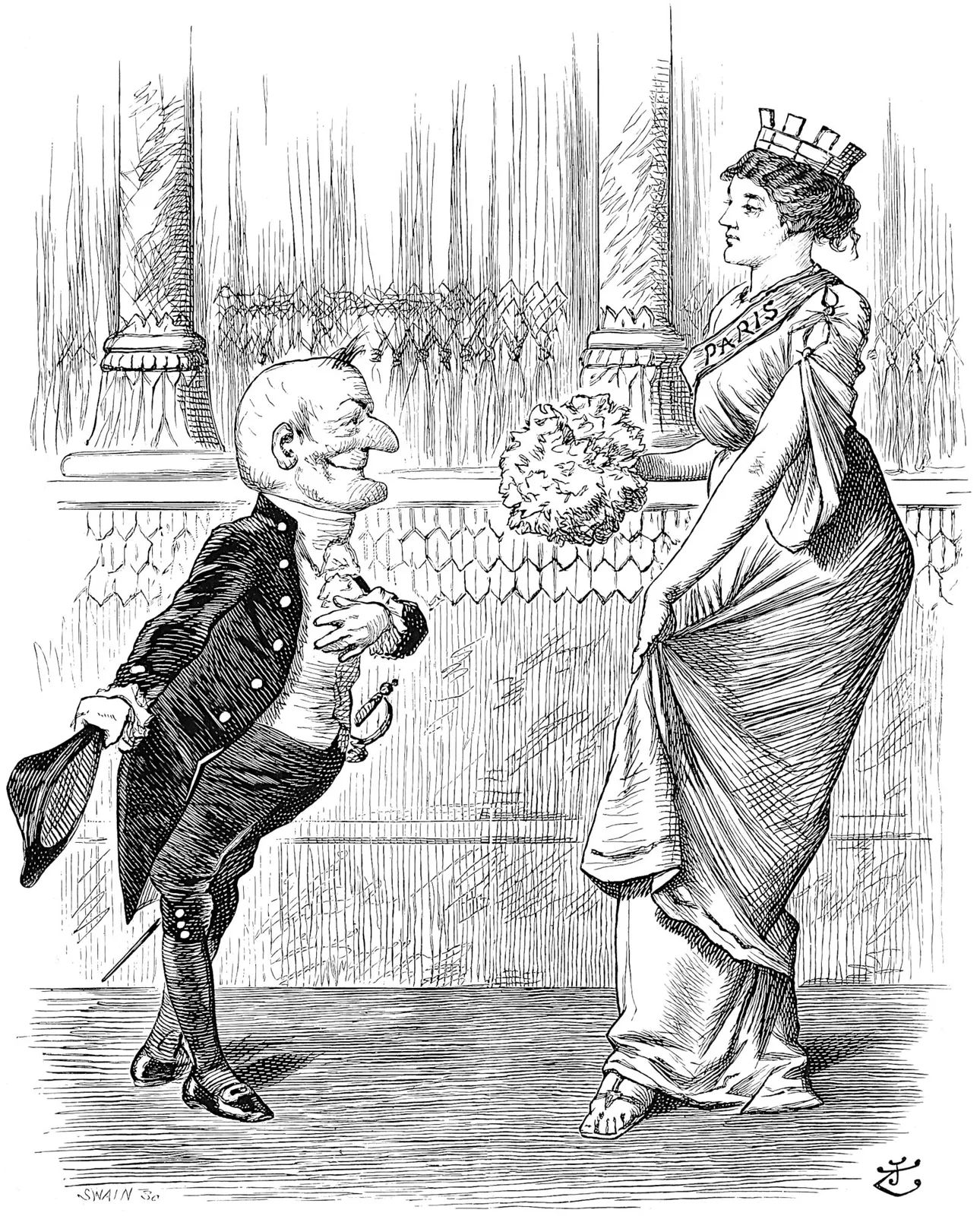
169
“Mr. Punch” here expresses his good wishes for the success of the Paris Exhibition, which was shortly to be opened.  
Illustration — Contents. — from Cartoons
The Avenger!
170-171
Thrilling details had been published of the reported massacre of the British and Foreign Ministers in Pekin. Happily this proved to be unfounded.  
Illustration — Contents. — from Cartoons
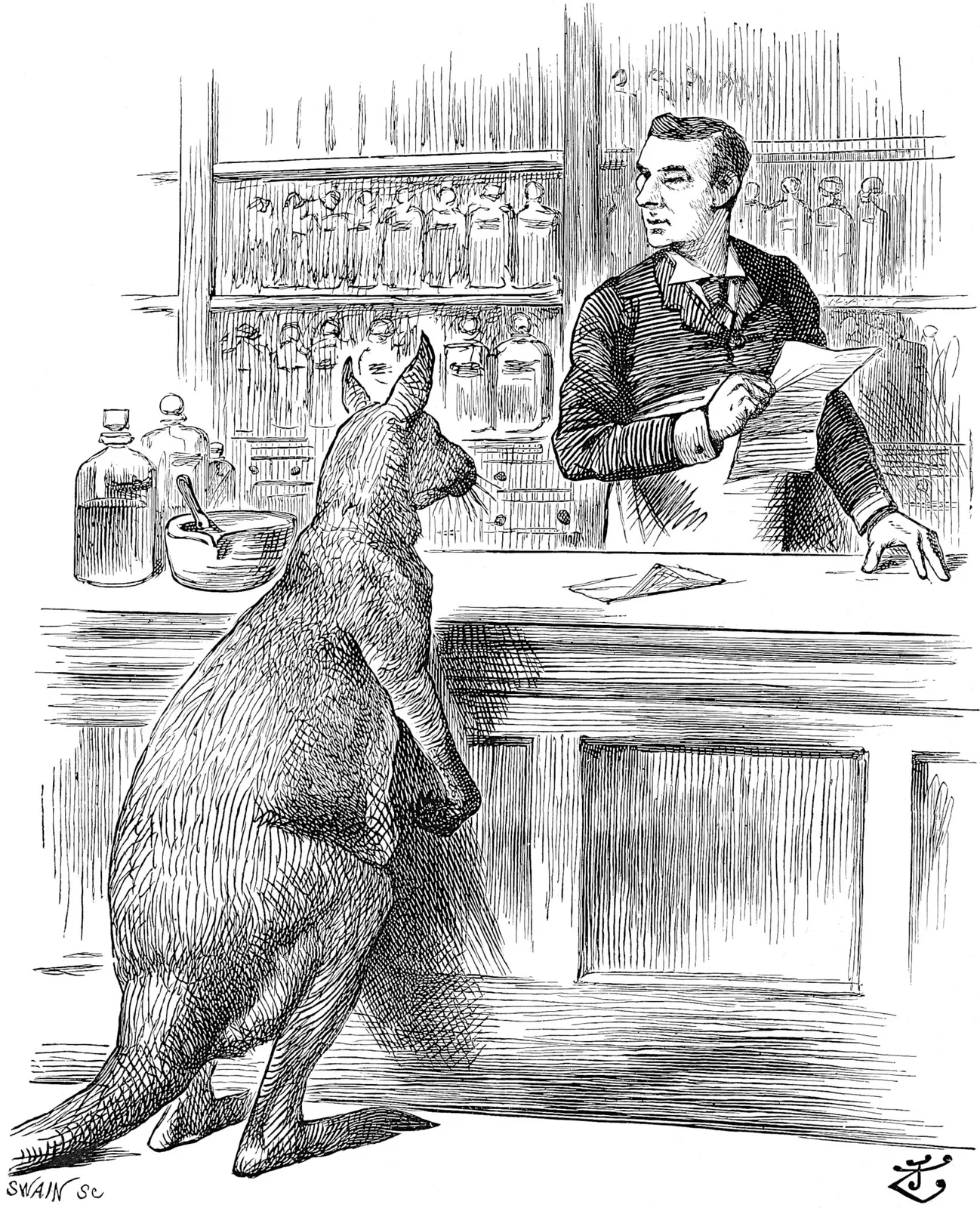
The Imperial Dispensary
172
Great satisfaction was felt in the Colonies at the introduction by Mr. Chamberlain of his Commonwealth of Australia Bill.  
Illustration — Contents. — from Cartoons
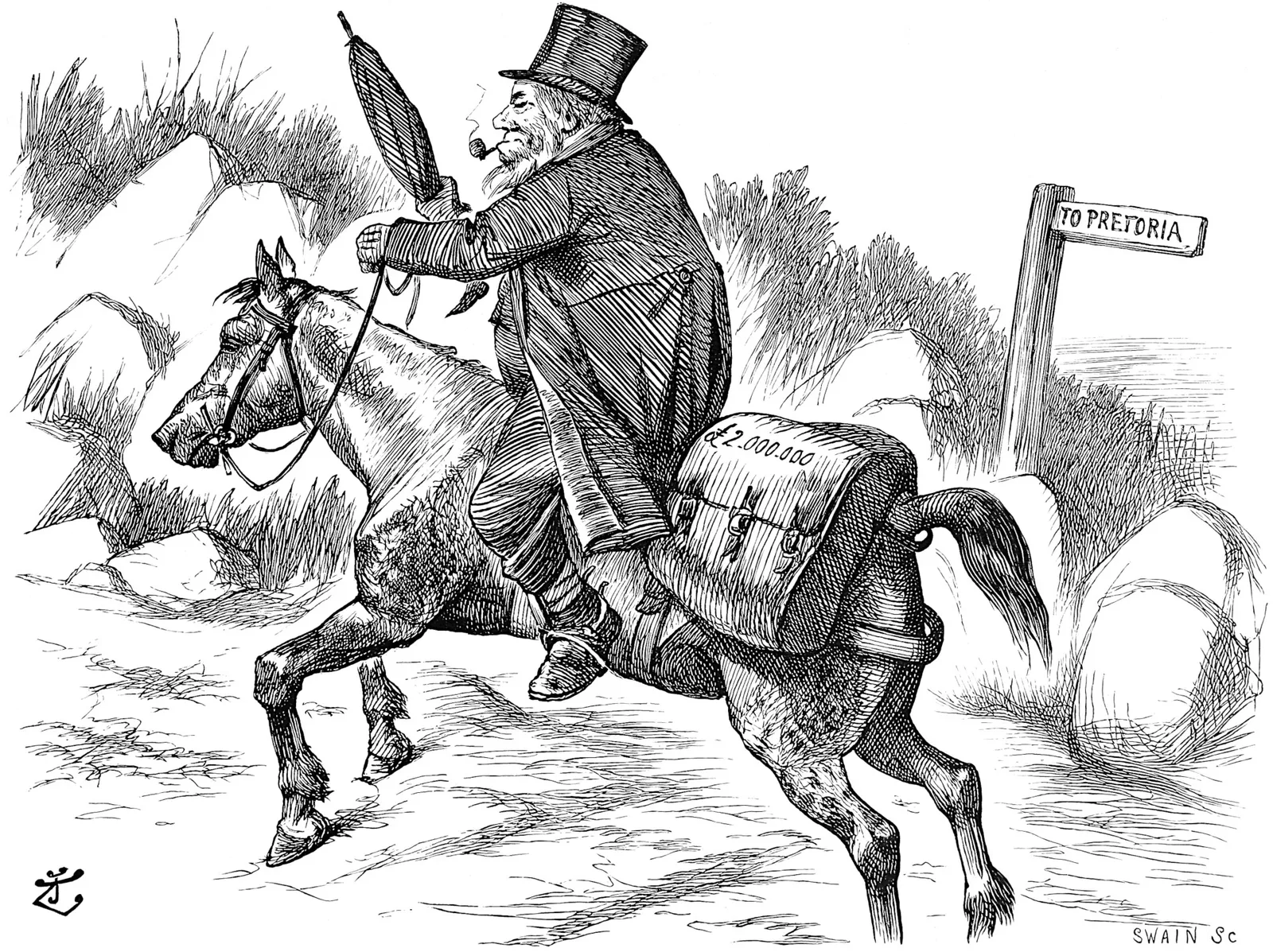
Shifting his Capital
173
President Kruger had abandoned Pretoria on the near approach of the British forces, taking with him, it was reported, bullion to the value of £2,000,000.  
Illustration — Contents. — from Cartoons
In the Movement
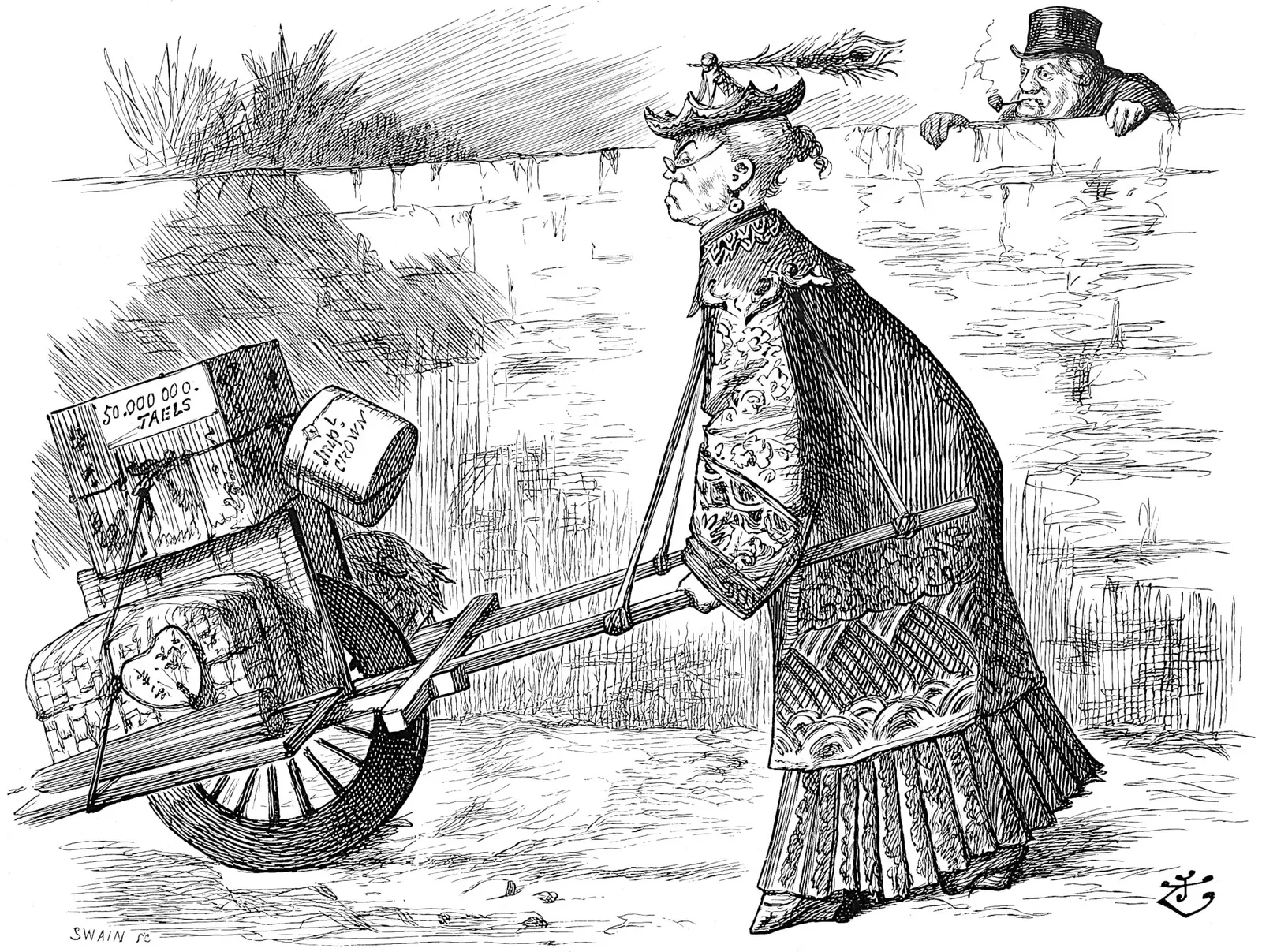
174
On the advance of the Allied troops to Pekin the Empress and the Chinese Court had fled to the interior.  
Illustration — Contents. — from Cartoons
Reporting Himself
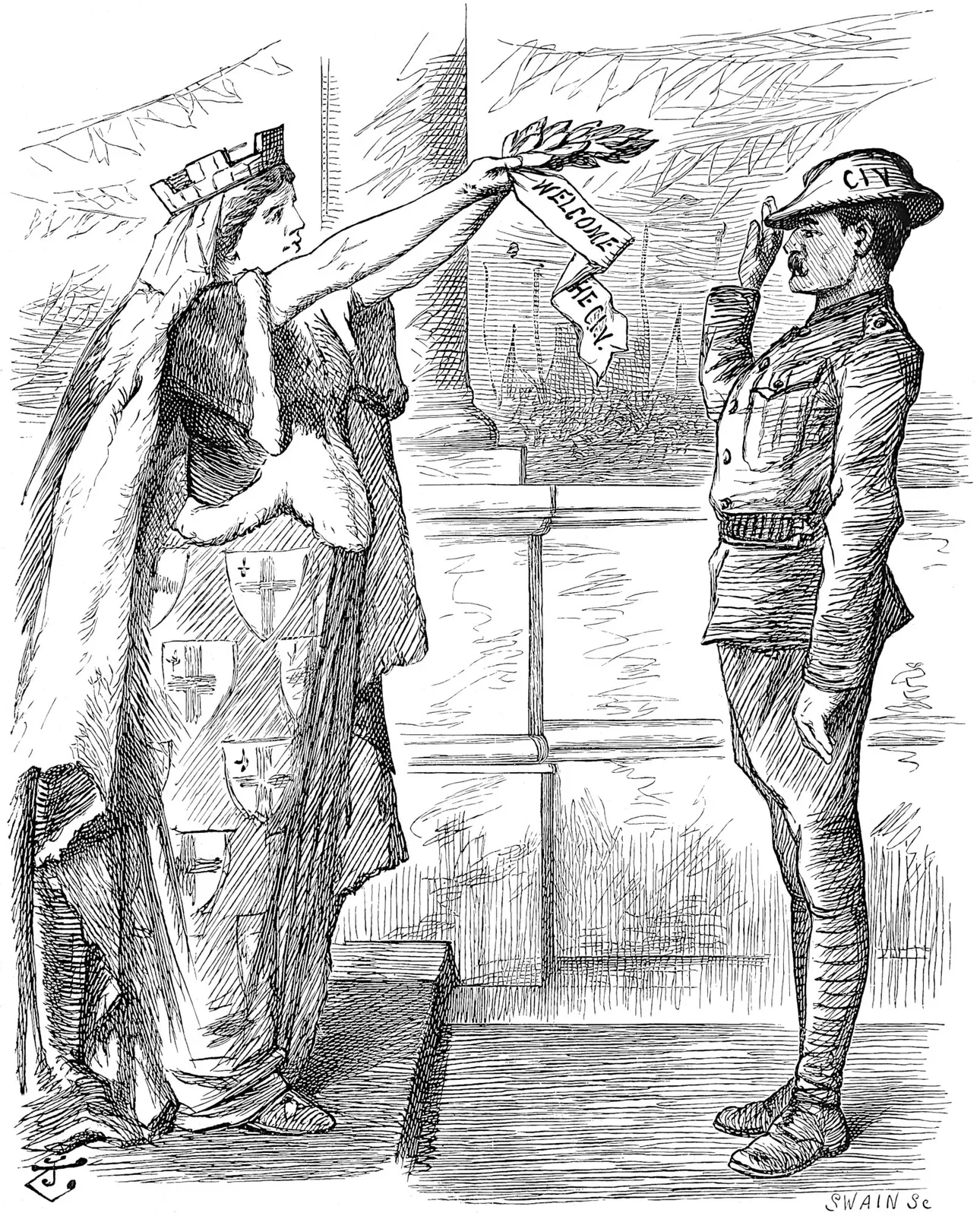
175
The City of London Imperial Volunteers met with an enthusiastic reception in the City and elsewhere on their return from South Africa.  
Illustration — Contents. — from Cartoons
Time’s Appeal
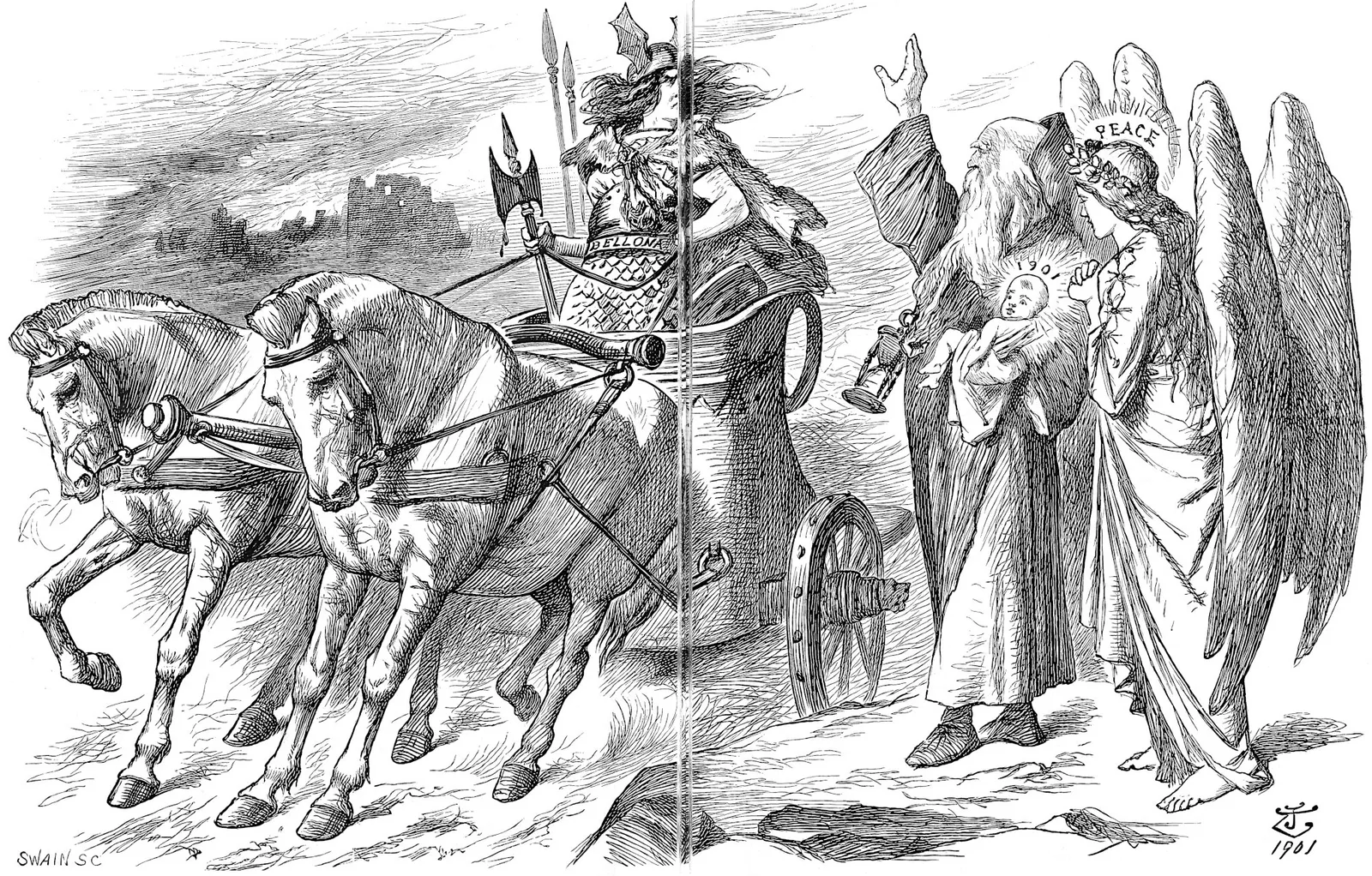
176-177

Cartoons by Sir John Tenniel


Illustration — Cartoons by Sir John Tenniel — from Cartoons
May Day, Eighteen hundred and Fifty-one.

July, 1853.
Illustration — Cartoons by Sir John Tenniel — from Cartoons
The Bear and the Bees.—A New Version of an Old Story.

June, 1854.
Illustration — Cartoons by Sir John Tenniel — from Cartoons
What Nicholas heard in the Shell.

August, 1857.
Illustration — Cartoons by Sir John Tenniel — from Cartoons
The British Lion’s Vengeance on the Bengal Tiger.

February, 1859.
Illustration — Cartoons by Sir John Tenniel — from Cartoons
The Quaker and the Bauble.

“It is the Land which the territorial party represents in Parliament.... That is the theory of the Constitution: Blackstone says so. But it is a thing which is not likely to be respected much longer, and it must go, even if involving the destruction of the Constitution.”—Mr. Bright.


December, 1859.
Illustration — Cartoons by Sir John Tenniel — from Cartoons
John Bull Guards his Pudding.

January, 1860.
Illustration — Cartoons by Sir John Tenniel — from Cartoons
Dame Cobden’s New Pupil.

May, 1860.
Illustration — Cartoons by Sir John Tenniel — from Cartoons
Lyndhurst as Nestor rebukes the Chiefs.

November, 1860.
Illustration — Cartoons by Sir John Tenniel — from Cartoons
Right Leg in the Boot at last.
Garibaldi. “If it won’t go on, Sire, try a little more powder.”

November, 1860.
Illustration — Cartoons by Sir John Tenniel — from Cartoons
New Elgin Marbles.
Elgin to Emperor. “Come, knuckle down! No cheating this time!”

March, 1861.
Illustration — Cartoons by Sir John Tenniel — from Cartoons
“Beggar my Neighbour.”
Pam. “Is not your Majesty tired of this foolish game?”

April, 1861.
Illustration — Cartoons by Sir John Tenniel — from Cartoons
Papal Allocution.—Snuffing out Modern Civilisation.

November, 1861.
Illustration — Cartoons by Sir John Tenniel — from Cartoons
King Cotton Bound;
Or, The Modern Prometheus.

December, 1861.
Illustration — Cartoons by Sir John Tenniel — from Cartoons
Waiting for an Answer.

December, 1861.
Illustration — Cartoons by Sir John Tenniel — from Cartoons
Columbia’s Fix.
Columbia. “Which answer shall I send?”

May, 1862.
Illustration — Cartoons by Sir John Tenniel — from Cartoons
Peace.
Mr. Punch’s Design for a colossal Statue which ought to have been placed in the International Exhibition.

June, 1862.
Illustration — Cartoons by Sir John Tenniel — from Cartoons
The “Sensation” Struggle in America.

June, 1863.
Illustration — Cartoons by Sir John Tenniel — from Cartoons
Britannia Discovering the Source of the Nile.
Britannia. “Aha, Mr. Nilus! So I’ve found you at last!”

March, 1863.
Illustration — Cartoons by Sir John Tenniel — from Cartoons
At Home and Abroad.

January, 1864.
Illustration — Cartoons by Sir John Tenniel — from Cartoons
Miranda and Prospero.
Miranda (Europe). “If by your art, my dearest Louis, you have put the wild waters in this roar, allay them.”

January, 1864.
Illustration — Cartoons by Sir John Tenniel — from Cartoons
Shakspeare and the Pigmies.

September, 1864.
Illustration — Cartoons by Sir John Tenniel — from Cartoons
The American Juggernaut.

May, 1865.
Illustration — Cartoons by Sir John Tenniel — from Cartoons
Britannia Sympathises with Columbia.

September, 1866.
Illustration — Cartoons by Sir John Tenniel — from Cartoons
Vulcan’s Best Customer.
Peace. “Not much doing, I suppose, Mr. Vulcan?”
Vulcan. “Doing! Thanks to you, Miss, I’ve a’most more work than I can manage.”

February, 1867.
Illustration — Cartoons by Sir John Tenniel — from Cartoons
J. A. Roebuck. E. Horsman. T. Hughes. Lord Cranborne.
S. H. Walpole. Sir John Pakington. Lord Stanley. R. Lowe. J. S. Mill.
Lord John Russel. W. E. Gladstone. Earl of Derby. B. Disraeli. John Bright.
Gladiators preparing for the Arena.

January, 1870.
Illustration — Cartoons by Sir John Tenniel — from Cartoons
“Onward!”

September, 1870.
Illustration — Cartoons by Sir John Tenniel — from Cartoons
France, Sept. 4, 1870.
“Aux armes, Citoyens;
Formez vos bataillons!”
The “Marseillaise.”

July, 1870.
Illustration — Cartoons by Sir John Tenniel — from Cartoons
A Vision on the Way. “BEWARE!”

October, 1870.
Illustration — Cartoons by Sir John Tenniel — from Cartoons
Versailles, Oct. 5, 1870.
Ghost of Louis the Fourteenth (to Ghost of Napoleon the First).
“Is this the end of ‘All the Glories?’”

July, 1871.
Illustration — Cartoons by Sir John Tenniel — from Cartoons
Ajax Defying the Lightning.

March, 1871.
Illustration — Cartoons by Sir John Tenniel — from Cartoons
“Væ Victis!”
Paris, March 1st, 1871.

December, 1871.
Illustration — Cartoons by Sir John Tenniel — from Cartoons
Suspense.

September, 1872.
Illustration — Cartoons by Sir John Tenniel — from Cartoons
The Loving Cup.
“In this we bury all unkindness!”—Shakspeare.

February, 1874.
Illustration — Cartoons by Sir John Tenniel — from Cartoons
Paradise and the Peri.
“Joy, joy for ever! My task is done—
The gates are passed, and Heaven is won!”
Lalla Rookh.

March, 1874.
Illustration — Cartoons by Sir John Tenniel — from Cartoons
Dearly Bought.
Sir Garnet. “It don’t look much, Madam, but it has cost good money, and better lives.”
Britannia. “And but for you, Sir Garnet, might have cost more of both!”

December, 1874.
Illustration — Cartoons by Sir John Tenniel — from Cartoons
The Damp Roman Candle.
Papa Pius. “But it won’t go off!”

December, 1875.
Illustration — Cartoons by Sir John Tenniel — from Cartoons
“Mosé in Egitto!!!”

June, 1875.
Illustration — Cartoons by Sir John Tenniel — from Cartoons
Waiting to be Won.

November, 1877.
Illustration — Cartoons by Sir John Tenniel — from Cartoons
Stuck in the Mud.
M. le Maréchal (loq.). “J’y suis! J’y reste!” (?)

August, 1878.
Illustration — Cartoons by Sir John Tenniel — from Cartoons
The “Pas de Deux!”
(From the “Scène de Triomphe” in the Grand Anglo-Turkish Ballet d’Action.)

February, 1880.
Illustration — Cartoons by Sir John Tenniel — from Cartoons
Imperium et Libertas!
(Russ. Translation.)

May, 1881.
Illustration — Cartoons by Sir John Tenniel — from Cartoons
The School of Musketry.

Boer (to F. M. H. R. H. the Commander-in-Chief). “I say, Dook! You don’t happen to want a practical ‘Musketry Instructor,’ do you?”


October, 1881.
Illustration — Cartoons by Sir John Tenniel — from Cartoons
A Common Sorrow.

August, 1881.
Illustration — Cartoons by Sir John Tenniel — from Cartoons
“Out of the Wood!”

December, 1882.
Illustration — Cartoons by Sir John Tenniel — from Cartoons
Change of Address.
“For Despatch of Business.”

Mr. Punch (to Themis). “Well, Madam, now that your New Establishment is open, I trust the system you mean to adopt is—Low Charges and no Delays.”


February, 1883.
Illustration — Cartoons by Sir John Tenniel — from Cartoons
On the Trail.

November, 1883.
Illustration — Cartoons by Sir John Tenniel — from Cartoons
Snubbed!
Mossoo (aside). “Ha!—with my hated Rival! Why was I so rude to her?!”

April, 1884.
Illustration — Cartoons by Sir John Tenniel — from Cartoons
“Mirage.”
General Gordon.... “What is it that I seem to see
Across the sand waste? Is it the quick gleam
Of English steel, or but a desert-dream?
Help—or that last illusion of distress,
The mocking Mirage of the wilderness?”

May, 1884.
Illustration — Cartoons by Sir John Tenniel — from Cartoons
“Mrs. Micawber.”

Mrs. M. (hysterically). “I never will do it! It’s of no use asking me! I never will desert Mr. Micawber!!”

David Copperfield.

January, 1885.
Illustration — Cartoons by Sir John Tenniel — from Cartoons
“Wait till the Clouds roll by!”

February, 1885.
Illustration — Cartoons by Sir John Tenniel — from Cartoons
“Too Late!”

April, 1885.
Illustration — Cartoons by Sir John Tenniel — from Cartoons
“Only his Play.” (!!!)

“The Russian Government hope that this unlucky incident may not prevent the continuance of the negotiations. (Laughter.)”—Mr. Gladstone, quoting M. de Giers.


May, 1885.
Illustration — Cartoons by Sir John Tenniel — from Cartoons
The Broken Covenant.

“We cannot close this book, and say we will look into it no more.”—Mr. Gladstone’s Speech, April 27th.


May, 1885.
Illustration — Cartoons by Sir John Tenniel — from Cartoons
Our Protean Premier!
(As “The Angel of Peace,” in his Unrivalled Variety-and-Quick-Change Entertainment.)

August, 1885.
Illustration — Cartoons by Sir John Tenniel — from Cartoons
The “Irrepressible” Tourist.
Bismarck. “H’m!—Ha!—Where shall I go next?”

December, 1885.
Illustration — Cartoons by Sir John Tenniel — from Cartoons
The Waits.

August, 1886.
Illustration — Cartoons by Sir John Tenniel — from Cartoons
The Grand Young Man!!
Shade of “Dizzy.” “Dear me! Quite reminds one of old times!!”

April, 1886.
Illustration — Cartoons by Sir John Tenniel — from Cartoons
Sink or Swim!!

June, 1886.
Illustration — Cartoons by Sir John Tenniel — from Cartoons
“1885.”
(A Playful Adaptation of Meissonier’s Famous Picture, “1814.”)

November, 1886.
Illustration — Cartoons by Sir John Tenniel — from Cartoons
The Tempter.
Spirit of Anarchy. “What! No work! Come and enlist with me—I’ll find work for you!!”

April, 1887.
Illustration — Cartoons by Sir John Tenniel — from Cartoons
Salisbury Sisyphus.
“Unending task!”        .      .      .      .      .
.      .      .      .      .      .      .      .
“Swift roll the years, and still the ceaseless round,
The toilsome press up the precipitous ground,
The sullen slow ascent, the swift rebound!”

October, 1886.
Illustration — Cartoons by Sir John Tenniel — from Cartoons
“What of the Night?”

December, 1887.
Illustration — Cartoons by Sir John Tenniel — from Cartoons
“Quite English, you know.”
President Cleveland (to Columbia). “Will you allow me to introduce this Young Lady?”

January, 1888.
Illustration — Cartoons by Sir John Tenniel — from Cartoons
Bear or Bug-bear?
“Thou com’st in such a questionable shape!”—Hamlet.

February, 1888.
Illustration — Cartoons by Sir John Tenniel — from Cartoons
In the Arena.
The “Parade” before the Conflict.

March, 1888.
Illustration — Cartoons by Sir John Tenniel — from Cartoons
Germany. March 9, 1888.

March, 1888.
Illustration — Cartoons by Sir John Tenniel — from Cartoons
Consol-ation;

Or, “A Fair Exchange no Robbery.”

Sweet Simplicity. “I am sorry to part with him!”

Shrewd but Seductive Shepherd. “Nay, dear Child! What though this one be but indifferent fair to look on at present? He’ll last longer—and you will learn to love him!!”


April, 1888.
Illustration — Cartoons by Sir John Tenniel — from Cartoons
What Next?

May, 1888.
Illustration — Cartoons by Sir John Tenniel — from Cartoons
“Panic amongst the Pigs!”

January, 1890.
Illustration — Cartoons by Sir John Tenniel — from Cartoons
Plain English!

John Bull. “Look here, my little Friend, I don’t want to hurt your little feelings—but, come off that Flag!!!”


August, 1890.
Illustration — Cartoons by Sir John Tenniel — from Cartoons
From the Nile to the Neva.
Shade of Pharoah. “Forbear! That weapon always wounds the hand that wields it.”

March, 1890.
Illustration — Cartoons by Sir John Tenniel — from Cartoons
Dropping the Pilot.

October, 1890.
Illustration — Cartoons by Sir John Tenniel — from Cartoons
The McGladstone!
“To land McGladstone lightly sprang,
And thrice aloud his bugle rang
With note prolong’d and varied strain,
Till bold Ben-Ghoil replied again.”
“Lora of the Isles.” Canto IV.

December, 1890.
Illustration — Cartoons by Sir John Tenniel — from Cartoons
“Separatists.”
Douglas  .  .  .  Mr. Gladstone.         Marmion  .  .  .  Mr. Parnell.
Douglas. “The hand of Douglas is his own;
And never shall in friendly grasp
The hand of such as Marmion clasp!”—Marmion. Canto VI.

January, 1891.
Illustration — Cartoons by Sir John Tenniel — from Cartoons
Arbitration.

The Seal. “Belay, you two Johnnies!—avast quarrelling! Give me a ‘Close-time,’ and leave the ‘Sea’ an open question.”


February, 1891.
Illustration — Cartoons by Sir John Tenniel — from Cartoons
“Retire!—What do You Think?”

February, 1891.
Illustration — Cartoons by Sir John Tenniel — from Cartoons
Coriolanus.
“Such a nature,
Tickled with good success, disdains the shadow
Which he treads on at noon.”—Coriolanus, Act I., Sc. 1.

March, 1891.
Illustration — Cartoons by Sir John Tenniel — from Cartoons
“Advance, Australia!”
British Lion. “Bravo, Boys!—Swing together!!”

July, 1891.
Illustration — Cartoons by Sir John Tenniel — from Cartoons
Mr. Punch’s Jubilee Pageant.
(As reflected in Punch’s Magic Mirror.)

September, 1891.
Illustration — Cartoons by Sir John Tenniel — from Cartoons
“Turning the Tables.”

October, 1891.
Illustration — Cartoons by Sir John Tenniel — from Cartoons
“What will he do with it?”
Starving Russian Peasant. “Is none of that for me, ‘Little Father’?”

October, 1891.
Illustration — Cartoons by Sir John Tenniel — from Cartoons
Trying it on!
Russia. “SS-S-T! (Whispers.) I want to speak to you, my dear!”

January, 1892.
Illustration — Cartoons by Sir John Tenniel — from Cartoons
The Coming of Ninety-Two
To the Modern Merlin, Mr. Punch.
“And down the wave, and in the flame was borne
A naked babe, and rode to Punch’s feet,
Who stoopt, and caught the babe, and cried, “The Year!
Here is an heir for Ninety-One!”—Adapted from Tennyson’s “Coming of Arthur.”

January, 1892.
Illustration — Cartoons by Sir John Tenniel — from Cartoons
“Short ’Anded.”

Mrs. Halsbury. “I tell you what it is, Mrs. Coley, Mum—if all this ’ere dirty linen’s to be got through, we must ’ave ’ELP, Mum!!”


February, 1892.
Illustration — Cartoons by Sir John Tenniel — from Cartoons
The Attack on the “Capital.”

February, 1892.
Illustration — Cartoons by Sir John Tenniel — from Cartoons
“Her Majesty’s Servants.”
View of the Stage on the re-opening of the Theatre Royal Westminster.

March, 1892.
Illustration — Cartoons by Sir John Tenniel — from Cartoons
Younger than Ever!
The G.O.M. “Now then, Harcourt!—Tuck in your tuppenny!——Over!!”

April, 1892.
Illustration — Cartoons by Sir John Tenniel — from Cartoons
The Dynamite Dragon.

April, 1892.
Illustration — Cartoons by Sir John Tenniel — from Cartoons
The New “Queen of the May.”

June, 1892.
Illustration — Cartoons by Sir John Tenniel — from Cartoons
“When Greek meets Greek.”

January, 1893.
Illustration — Cartoons by Sir John Tenniel — from Cartoons
Mischief!

April, 1893.
Illustration — Cartoons by Sir John Tenniel — from Cartoons
A Pilgrim’s Progress.

April, 1893.
Illustration — Cartoons by Sir John Tenniel — from Cartoons
Uncle Toby and Widow Wadman.
(Modern Ulster Version. After C. R. Leslie, R.A.’s celebrated picture.)
Mrs. Ulster. “Now, Mr. Bull, do you see any ‘green’ in my eye?”

May, 1893.
Illustration — Cartoons by Sir John Tenniel — from Cartoons
“The Minstrel Boy.”
Lord Salisbury (sings). “I’ll harp wild war, aye, from sea to sea,
Ere the Loyalists stoop to slavery!”

July, 1893.
Illustration — Cartoons by Sir John Tenniel — from Cartoons
“Father William.”
“You are old,” said the Youth; “one would hardly suppose
That your eye was as steady as ever;
Yet you balance that Eel on the end of your nose—
What makes you so awfully clever?”

August, 1893.
Illustration — Cartoons by Sir John Tenniel — from Cartoons
The French Wolf and the Siamese Lamb.

September, 1893.
Illustration — Cartoons by Sir John Tenniel — from Cartoons
“Over the Hills and Far Away!”

September, 1893.
Illustration — Cartoons by Sir John Tenniel — from Cartoons
The “Forlorn Hope.”

January, 1894.
Illustration — Cartoons by Sir John Tenniel — from Cartoons
A Dirty Crossing.

The Old Lady of Threadneedle Street (loq.). “O dear, O dear! I wish I were out of this nasty mess!”


February, 1894.
Illustration — Cartoons by Sir John Tenniel — from Cartoons
“Confidences.”
John Bull. “Did you ever see anything worse than my Navy?”
Jean Crapaud. “Yes—mine!!”

February, 1894.
Illustration — Cartoons by Sir John Tenniel — from Cartoons
“Pluck’d!”
Parish Councils Cockatoo (sadly). “I’ve had a doose of a time of it!!!”

March, 1894.
Illustration — Cartoons by Sir John Tenniel — from Cartoons
Unarming.
“Unarm!—the long day’s task is done!”—Antony and Cleopatra, Act IV., Sc. 12.

April, 1894.
Illustration — Cartoons by Sir John Tenniel — from Cartoons
Lemon-Squash.
William Harcourt (the Barman). “Wonder if I can squeeze any more out of him?”

July, 1894.
Illustration — Cartoons by Sir John Tenniel — from Cartoons
“Vive la République!”
“The tear that brimmeth, blindeth not her eye,
So fixed aloft it lowereth not to greet
The writhing reptile bruised by her unfaltering feet!”

September, 1894.
Illustration — Cartoons by Sir John Tenniel — from Cartoons
Jap the Giant-Killer.

October, 1894.
Illustration — Cartoons by Sir John Tenniel — from Cartoons
“Vested Interests.”

House of Lords Charwoman. “Well! them Rogeberries, and ’Erbert Gladstings, and Haskwidges, and the rest on ’em may tork—and they may tork—but they h’aint turned hus out yet!!”


December, 1894.
Illustration — Cartoons by Sir John Tenniel — from Cartoons
“All’s Well!”
British Lion and Russian Bear (together). “What a pity we didn’t know each other before!”

January, 1895.
Illustration — Cartoons by Sir John Tenniel — from Cartoons
The New Passenger.

January, 1895.
Illustration — Cartoons by Sir John Tenniel — from Cartoons
“Who said ‘Atrocities’?”
(After the Popular Engraving.)
“Old as I am, my feelings have not been deadened in regard to matters of such a dreadful description.”
Mr. Gladstone’s Speech at Hawarden, December 29.

March, 1895.
Illustration — Cartoons by Sir John Tenniel — from Cartoons
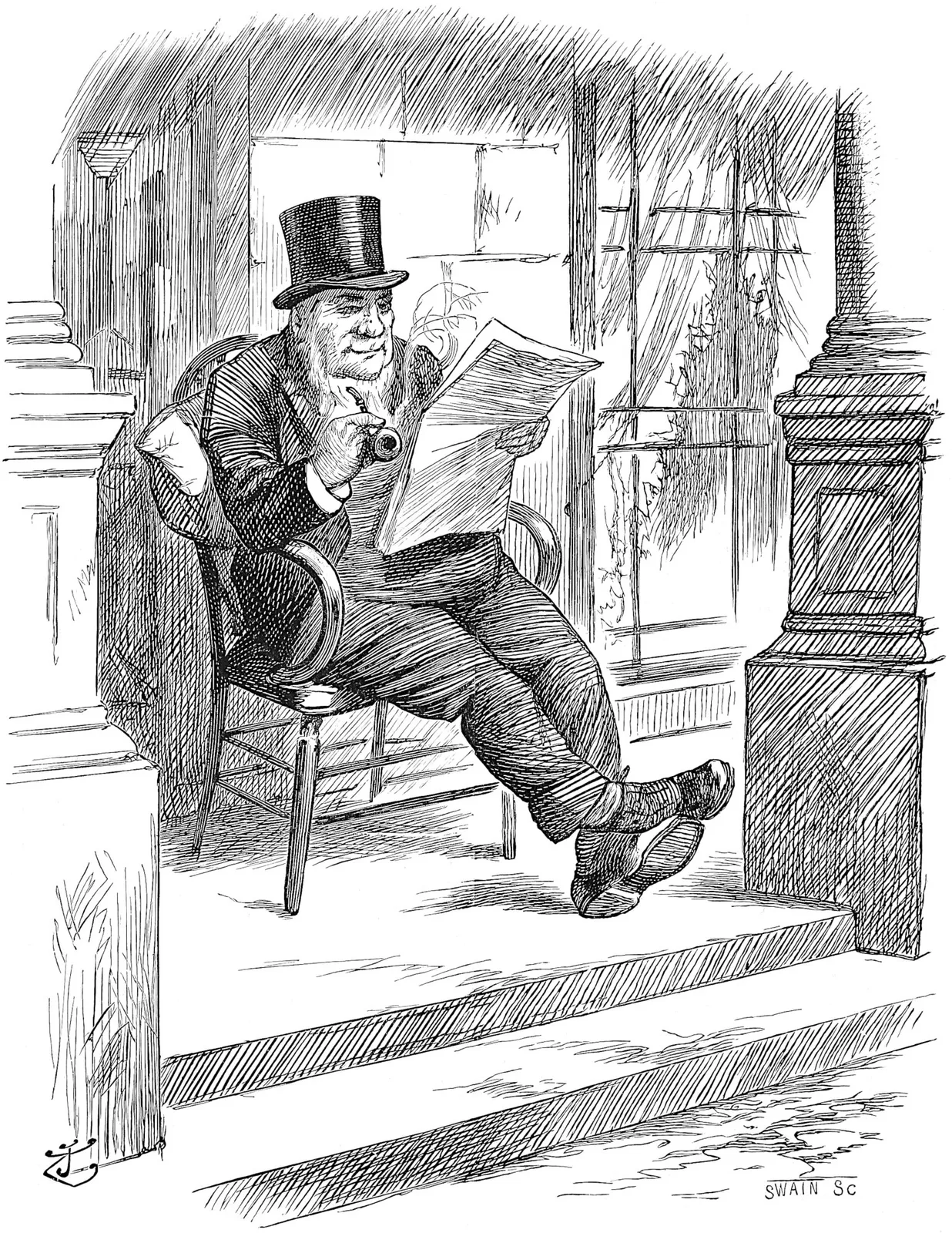
Silent!
Little Khedive. “Tell me, great Sphinx—is Egypt for the Egyptians?”

April, 1895.
Illustration — Cartoons by Sir John Tenniel — from Cartoons
An Easter ’Oliday.
Duet (’Arcourt and Harthur sing while being jolted).
“La-a-zi-ly la-a-zi-ly! Drow-ow-ow-sily! Drow-ow-ow-sily!” etc.

June, 1895.
Illustration — Cartoons by Sir John Tenniel — from Cartoons
“William! ahoy!”

Open-minded William (having come ashore from “The Stormy Petrel”). “Avast there, Messmates! The statesman who would lay his hands on a steeple-hatted female in distress—save in the way of ke-indness,” etc., etc.

[The “Messmates” “avast” accordingly.

May, 1895.
Illustration — Cartoons by Sir John Tenniel — from Cartoons
The Old Crusaders!
The Duke of Argyll and Mr. Gladstone “Brothers in Arms” again!
Bulgaria, 1876.      Armenia, 1895.

July, 1895.
Illustration — Cartoons by Sir John Tenniel — from Cartoons
Old Warder William.
The Veteran (loquitur). “Dear me! What has become of Harcourt?”

February, 1896.
Illustration — Cartoons by Sir John Tenniel — from Cartoons
“Just a-goin’ to Begin!”

Professor Salisbury (P.P.R.). “Now, my Sportin’ Gents, ’ere’s the ‘Atfield Pet and the Brummagem Bruiser—Who’ll have ’em on with either of ’em?”


January, 1896.
Illustration — Cartoons by Sir John Tenniel — from Cartoons
The Tug of War.

April, 1896.
Illustration — Cartoons by Sir John Tenniel — from Cartoons
The Patient Ass.
The Income-taxed One murmureth. “I don’t grumble, but—I should like just a little taken off.”

August, 1896.
Illustration — Cartoons by Sir John Tenniel — from Cartoons
A Turkish Bath.
Sultan. “They gave it me pretty hot in that Armenian room! But Bismillah! This is——Phew!!”

October, 1896.
Illustration — Cartoons by Sir John Tenniel — from Cartoons
Preparing his Speech.

Mr. Joe Chamberlain (to himself). “‘In short, Gentlemen—if you are only true to your principles, any one of you may become—as I have done—a Minister in a Liber—I should say in a Conserv—I beg pardon—I should say in an Unionist Government.’ H’m rather confusing—I don’t think that’ll quite do!”


November, 1896.
Illustration — Cartoons by Sir John Tenniel — from Cartoons
“Turkey Limited.”

Sultan. “Bismillah! Make me into a Limited Company? M’m—ah s’pose they’ll allow me to join the Board after allotment!”


December, 1896.
Illustration — Cartoons by Sir John Tenniel — from Cartoons
“Seaside Lodgings.”
Russian Bear. “Nice view of the sea! Just what I wanted! Think I’ll take ’em!”

January, 1897.
Illustration — Cartoons by Sir John Tenniel — from Cartoons
The Queen’s Year!

February, 1897.
Illustration — Cartoons by Sir John Tenniel — from Cartoons
Against the Grain.

John Bull (loq.). “Ah! that Greek’s a plucky little chap! Precious sorry that me and my Forin’ Mates has to stop him!”


March, 1897.
Illustration — Cartoons by Sir John Tenniel — from Cartoons
Tender Mercies!

Dame Europa (to Little Crete). “Don’t cry, my little Man. I’ve asked this nice, kind Turkish Policeman to stay and take care of you!”


May, 1897.
Illustration — Cartoons by Sir John Tenniel — from Cartoons
“Who says ‘Sick Man’ now?”

June, 1897.
Illustration — Cartoons by Sir John Tenniel — from Cartoons
Spithead. June 26.

British Lion (taking the Young Lions out to see the Great Naval Review). “Lor’ love yer, my Lads, this is the proudest moment of my life!”


June, 1897.
Illustration — Cartoons by Sir John Tenniel — from Cartoons
“For Queen and Empire!!”

September, 1897.
Illustration — Cartoons by Sir John Tenniel — from Cartoons
“Brothers in Arms.”

February, 1898.
Illustration — Cartoons by Sir John Tenniel — from Cartoons
Saved!

(Scene from Grand International Nautical Melodrama, first performed in 1833, and now revived with all the Original Scenery and Effects.)

The Three Sailors (together). “Avast there! you lubberly Swab! Take the gold, and let the Gy-url go free!!”


February, 1898.
Illustration — Cartoons by Sir John Tenniel — from Cartoons
“Financial Relations.”
Chorus of Long-lost Brothers.
Saunderson, Healy, Lecky (singing):
“It’s the most disthressful counthry that ever you did see!
We want Siv’n Hundred Thousand Pounds from the Saxon Treasuree!”

March, 1898.
Illustration — Cartoons by Sir John Tenniel — from Cartoons
“Bull-Baiting.”

April, 1898.
Illustration — Cartoons by Sir John Tenniel — from Cartoons
Sentinels.

April, 1898.
Illustration — Cartoons by Sir John Tenniel — from Cartoons
The Duello.
“Oh, the pity of it!”

August, 1898.
Illustration — Cartoons by Sir John Tenniel — from Cartoons
Bismarck.

May, 1898.
Illustration — Cartoons by Sir John Tenniel — from Cartoons
Honour à la Russe.
British Lion. “What! Not come in here! Why, you gave me your word!”
Russian Bear. “My friend! How you misunderstand me!”
British Lion. “Do I! All right! Never no more!”

July, 1898.
Illustration — Cartoons by Sir John Tenniel — from Cartoons
Our Masters’ Masters.
Newspaper Hawker. “Shout away, Bill! We’re safe enough as long as we votes ‘Progressive’!!”

September, 1898.
Illustration — Cartoons by Sir John Tenniel — from Cartoons
Khartoum!
Monday, January 26, 1885.      Friday, September 2, 1898.

November, 1898.
Illustration — Cartoons by Sir John Tenniel — from Cartoons
A Fixture.

December, 1898.
Illustration — Cartoons by Sir John Tenniel — from Cartoons
Under the Mistletoe.

Miss Wilhelmina Harcourt (to Miss Joanna Morley). “Really, my dear, I don’t think it seems much use our staying here any longer.... They won’t come!”


January, 1899.
Illustration — Cartoons by Sir John Tenniel — from Cartoons
A New Year’s Greeting.

January, 1899.
Illustration — Cartoons by Sir John Tenniel — from Cartoons
Diogenes-Morley.
(In search of a genuine Liberal.)
D.-M. “Can’t see one anywhere.”
[Gives it up.

August, 1899.
Illustration — Cartoons by Sir John Tenniel — from Cartoons
A Free Hand!
Harthur B. (to the Butler). “Well, thank ‘Evins, Mr. Salisbury, they’ve all left the ’Ouse!”
Joe (the Buttons). “Now we can do just as we like, and no questions arst.”

August, 1899.
Illustration — Cartoons by Sir John Tenniel — from Cartoons
Open at Last!
Russian Bear (politely). “Come in, Miss. How could I keep my door closed against you!”

October, 1899.
Illustration — Cartoons by Sir John Tenniel — from Cartoons
Plain English.
John Bull (to Boer). “As you will fight, you shall have it. This time it’s a fight to a finish.”

March, 1900.
Illustration — Cartoons by Sir John Tenniel — from Cartoons
Who said “Dead”?

March, 1900.
Illustration — Cartoons by Sir John Tenniel — from Cartoons
Full of Resource.

President Kruger (reading the Chancellor of the Exchequer’s speech on the Budget debate):—“I am not going to bind myself as to what I will do on the termination of the War. I look first to the Transvaal.”

“Oh, does he? I know what I’m going to do on the termination of the war. I’m going through the Bankruptcy Court!”


April, 1900.
Illustration — Cartoons by Sir John Tenniel — from Cartoons
Good Wishes!

July, 1900.
Illustration — Cartoons by Sir John Tenniel — from Cartoons
The Avenger!

May, 1900.
Illustration — Cartoons by Sir John Tenniel — from Cartoons
The Imperial Dispensary.

The Kangaroo. “I’ve got a sort of—er—feeling of oppression. My doctor at home gave me that Prescription!”

Mr. Chamberlain (Colonial Chemist and Druggist according to the British Pharmacopœia). “‘Abolition of Appeal to Privy Council’—of course, I could make it up for you, but I think I can give you something that will exactly suit your constitution!”


June, 1900.
Illustration — Cartoons by Sir John Tenniel — from Cartoons
Shifting his Capital.

August, 1900.
Illustration — Cartoons by Sir John Tenniel — from Cartoons
In the Movement.
Oom Paul (to himself). “Shifting her Capital? My idea!”

September, 1900.
Illustration — Cartoons by Sir John Tenniel — from Cartoons
Reporting Himself.
You that answered England’s call
At the darkest of the night,
Come and take your coronal
Won in many a gallant fight!
She that armed your eager ranks,
She from whom you have your name,
London’s city yields you thanks
For your gift of added fame!

January, 1901.
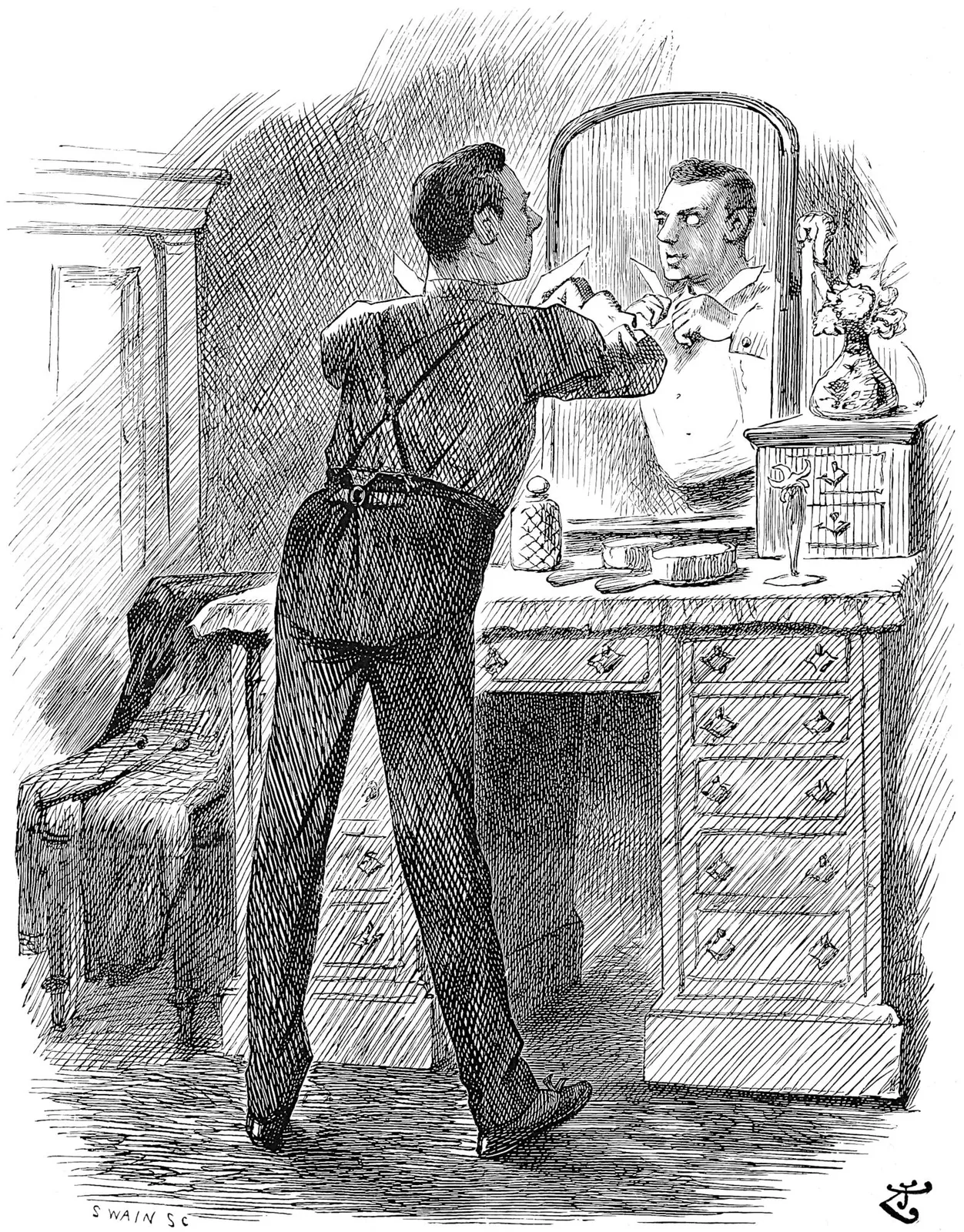
Illustration — Cartoons by Sir John Tenniel — from Cartoons
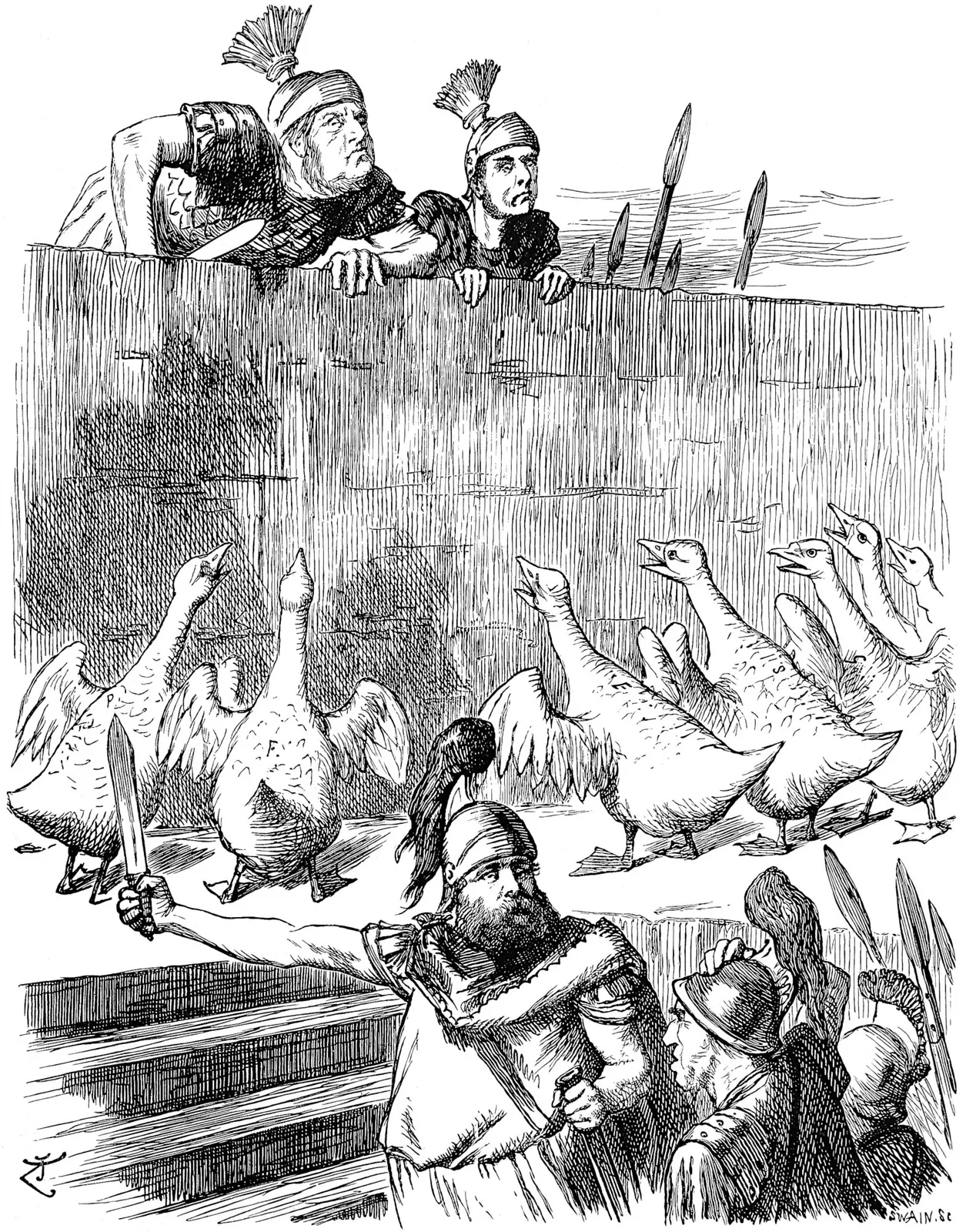
Time’s appeal.

Transcriber’s Notes:

Blank page has been removed.

Redundant title page removed.

Page 33: “Marseilliase” corrected to “Marseillaise”.

Images link to higher resolution versions.

For the 2-page images, the joins were not fixed up, as it would require substantial subjective art work that would not do justice to Sir Tenniel.