Â'dal-hâ´ñgya Ähágyä-de Sai, "Winter that they captured the
money." The first event recorded occurred about New Near, in the
winter of 1832—33, being an encounter with a small party of Americans,
resulting in the death of Gúi-kóñgya, "Black-wolf," and the capture
of a large quantity of silver coin. The winter is indicated according
to the regular system by a black bar below the principal figure, which
is that of a man with the picture of a black wolf over his head and
joined to it by a line. The breech-cloth shows the figure to be that of
a man, the black wolf connected by a line expresses his name, while
the red spot with blood gushing from it between the shoulders shows
that he was shot through the body. Beside it is a very good picture
of a silver dollar to indicate the money captured. This last does not
appear on the Dohásän calendar, although the capture gives name to
the winter.
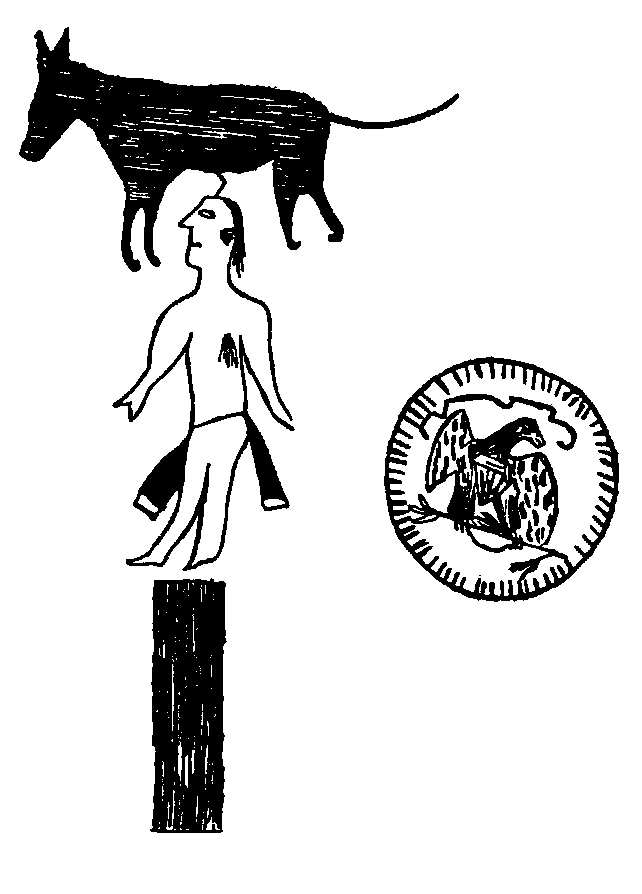
Fig. 62—Winter 1832—33—Money captured.
According to the Kiowa story, a war party led by Tóñp'ódal-kyä`tó,
"Lame-old-man," met a small train in charge of a few Americans close
to South Canadian river (Gúădal P'a, "Red river"), a short
distance below the entrance of a southern creek, which they call
T'ä´ñpeä´ P'a, "Skunkberry-bush river," about opposite the present
town of Lathrop, in the panhandle of Texas. They call Americans
Hâñpóko, "Trappers," for the reason that the first Americans known
to the tribe were trappers. Texans are considered as of a different
nation, and are distinguished as Tehä´neko from the Spanish
Tejano. In this instance the Americans were traveling eastward, and
as the place was remote from any regular trail the Indians were at a
loss to know why the whites were there. The Kiowa attacked the train,
killed several of the party, and captured the money, with the loss to
themselves of but one man, Gúi-kóñgya. They found a few coins upon
the ground, but this being the first money they had ever seen, they
did not know its proper use, and so beat the coins into disks to be
fastened to straps worn attached to the scalp lock, and hanging down
behind (hence the name for money, â´dal-hâñ´gya, literally "hair
metal"). After leaving the place they met some Comanche, who already
knew the use of money, and on hearing the story told them the value
of the silver pieces, upon which the Kiowa returned and searched
until they succeeded in finding a large quantity. From this it
appears that whatever trade the Kiowa had previously carried on with
the Spanish settlements had been by barter in kind, as was usual
along the Indian frontier in the early days. This was some time
before the beginning of regular intercourse with Americans.
Gregg, the author of a most valuable account of the early Santa Fé
trade, passed over the same ground a few years later and gives full
details of the affair with its tragic sequel. His description of the location
agrees with the Indian statement, and his account explains also
how the whites happened to be traveling in such an unfrequented place.
The Kiowa statement was obtained without any reference to Gregg.
It was somewhere in this vicinity that a small party of Americans experienced a
terrible calamity in the winter of 1832—3 on their way home, and as the incident had
the tendency to call into play the most prominent features of the Indian character,
I will digress so far here as to relate the facts.
The party consisted of twelve men, chiefly citizens of Missouri. Their baggage
and about ten thousand dollars in specie was packed upon mules. They took the
route of the Canadian river, fearing to venture on the northern prairies at that season
of the year. Having left Santa Fé in December, they had proceeded without
accident thus far, when a large body of Comanches and Kiowas were seen advancing
towards them. Being well acquainted with the treacherous and pusillanimous disposition
of these races, the traders prepared at once for defence; but the savages,
having made a halt at some distance, began to approach, one by one or in small parties,
making a great show of friendship all the while, until most of them had collected
on the spot. Finding themselves surrounded in every direction, the travelers
now began to move on in hopes of getting rid of the intruders, but the latter were
equally ready for the start, and mounting their horses kept jogging on in the same
direction. The first act of hostility perpetrated by the Indians proved fatal to one
of the American traders named Pratt, who was shot dead while attempting to secure
two mules which had become separated from the rest. Upon this the companions
of the slain man immediately dismounted and commenced a fire upon the Indians,
which was warmly returned, whereby another man of the name of Mitchell was
killed. By this time the traders had taken off their packs and piled them around
for protection, and now falling to work with their hands they very soon scratched
out a trench deep enough to protect them from the shot of the enemy. The latter
made several desperate charges, but they seemed too careful of their own personal
safety, notwithstanding the enormous superiority of their numbers, to venture too
near the rifles of the Americans. In a few hours all the animals of the traders were
either killed or wounded, but no personal damage was done to the remaining ten
men, with the exception of a wound in the thigh received by one, which was not at
the time considered dangerous.
During the siege the Americans were in great danger of perishing from thirst, as
the Indians had complete command of all the water within reach. Starvation was
not so much to be dreaded, because in case of necessity they could live on the flesh of
their slain animals, some of which lay stretched close around them. After being
pent up for thirty-six hours in this horrible hole, during which time they had seldom,
ventured to raise their heads above the surface without being shot at, they resolved
to make a bold sortie in the night, as any death was preferable to the death which
awaited them there. As there was not an animal left that was at all in a condition,
to travel, the proprietors of the money gave permission to all to take and appropriate
to themselves whatever amount each man could safely undertake to carry. In
this way a few hundred dollars were started with, of which, however, but little
ever reached the United States. The remainder was buried deep in the sand, in
hopes that it might escape the cupidity of the savages, but to very little purpose,
for they were afterward seen by some Mexican traders making a great display of
specie, which was without doubt taken from this unfortunate cache.
With every prospect of being discovered, overtaken, and butchered, but resolved
to sell their lives as dearly as possible, they at last emerged from their hiding place
and moved on silently and slowly until they found themselves beyond the purlieus
of the Indian camps. Often did they look back in the direction where from three
to five hundred savages were supposed to watch their movements, but much to their
astonishment no one appeared to be in pursuit. The Indians, believing, no doubt,
that the property of the traders would come into their hands, and having no amateur
predilection for taking scalps at the risk of losing their own, appeared willing
enough to let the spoliated adventurers depart without further molestation.
The destitute travelers having run themselves short of provisions, and being no
longer able to kill game for want of materials to load their rifles with, they were
very soon reduced to the necessity of sustaining life upon the roots and the tender
bark of trees. After traveling for several days in this desperate condition, with
lacerated feet and utter prostration of mind and body, they began to disagree among
themselves about the route to be pursued, and eventually separated into two distinct
parties. Five of these unhappy men steered a westward (sic) course, and after a
succession of sufferings and privations which almost surpassed belief, they reached
the settlements of the Creek Indians, near the Arkansas river, where they were
treated with great kindness and hospitality. The other five wandered about in the
greatest state of distress and bewilderment, and only two finally succeeded in getting
out of the mazes of the wilderness. Among those who were abandoned to their
fate and left to perish thus miserably, was a Mr Schenck, the same individual who
had been shot in the thigh, a gentleman of talent and excellent family connections,
who was a brother, as I am informed, of the Honorable Mr Schenck, at present a
member of congress from Ohio (Gregg, 2).
The Kiowa had undoubtedly attacked the traders, believing them to
be their enemies the Texans, instead of Americans, as the place was
outside of what were then the limits of the United States, and over a
hundred miles from the trail usually traveled by the American traders
to Santa Fé. This is apparent from Gregg's experience in 1839 in
nearly the same place. While proceeding up the Canadian with an
escort of dragoons they fell in with a large party of Comanche, and
after a doubtful preliminary talk, in which the Comanche very pointedly
refused to smoke the proffered pipe, the officer began to speak of
the advantages of peace and friendship, and invited some of their
headmen to visit the great chief at Washington and make a treaty.
But they would not then converse on the subject. In fact, the interpreter inquired,
"Are we not at war? How, then, can we go to see the Capitan Grande?" We knew
they believed themselves at war with Mexico and Texas, and probably had mistaken
us for Texans.... Upon this we explained to them that the United States was a
distinct government and at peace with the Comanche. On this explanation the
chiefs said they were glad to see Americans in their country and hoped more of
them would come (Gregg, 3).
Ĭmk`ódaltä-dé Pai, "Summer that they cut off their heads." This
picture commemorates one of the most vivid memories of the older
men of the tribe—a wholesale massacre by the Osage, who cut off the
heads of their victims and deposited them in buckets upon the scene
of the slaughter. Set-t'an, the author of the calendar, was born in
this summer. The picture of a severed head with bloody neck and a
bloody knife underneath is sufficiently suggestive. The absence of
the usual figure of the sun-dance lodge shows that no dance was held
this summer, owing to the fact that the Osage captured the taime
medicine at the same time. The massacre occurred just west of a
mountain called by the Kiowa K`ódaltä K`op, "Beheading mountain,"
on the headwaters of Otter creek, not 2 miles northwest from Saddle
mountain and about 25 miles northwest from Fort Sill.
It was in early spring and the Kiowa were camped at the mouth of
Rainy-mountain creek, a southern tributary of the Washita, within the
present limits of the reservation; nearly all the warriors had gone
against the Ute, so that few, excepting women, children, and old men,
were at home. One morning some young men going out to look for
horses discovered signs of Osage and immediately gave the alarm.
According to one story, they found a buffalo with an Osage arrow sticking
in it; according to T'ébodal and other old men, they came upon the
Osage themselves and exchanged shots, wounding an Osage, but with
the loss of one of their own men killed. On the alarm being given,
the Kiowa at once broke camp in a panic and fled in four parties in
different directions—one party toward the west, another toward the
east, and two other bands, among whom was T'ébodal, then a boy,
went directly south toward the Comanche. Three of these escaped,
but the fourth, under A`dáte, "Island-man," thinking the pursuit was
over, stopped on a small tributary of Otter creek, just
west of the mountain.
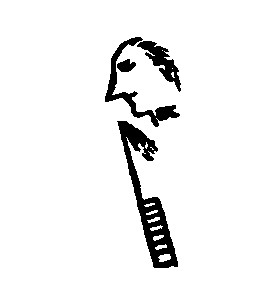
Fig. 63—Summer 1833—They cut off their heads.
Early in the morning, almost before it was yet light, a
young man (whose grandson was present during T'ébodal's
narration) went to look for his ponies, when he saw the
Osage creeping up on foot. He hastily ran back with the
news, but all the camp was still sleeping, except the wife
A`dáte, who was outside preparing to scrape a
hide. Entering the tipi, he roused the chief, who ran out
shouting to his people, "Tsó bätsó! Tsó bätsó!"—To the rocks! To
the rocks! Thus rudely awakened, the Kiowa sprang up and fled to
the mountain, the mothers seizing their children and the old men hurrying
as best they could, with their bloodthirsty enemies close behind.
The chief himself was pursued and slightly wounded, but got away;
his wife, Sémätmä, "Apache-woman," was taken, but soon afterward
made her escape. One woman fled with a baby girl on her back and
dragging a larger girl by the hand; an Osage pursuing caught the
older girl and was drawing his knife across her throat when the
mother rushed to her aid and succeeded in beating him off and rescued
the child with only a slight gash upon her head. A boy named Äyä,
"Sitting-on-a-tree" (?), was saved by his father in about the same way,
and is still alive, an old man, to tell it. His father, it is said, seized
and held him in his teeth, putting him down while shooting arrows to
keep off the pursuers, and taking him up again to run. A party of
women was saved by a brave Pawnee living in the camp, who succeeded
in fighting off the pursuers long enough to enable the women to reach
a place of safety.
The warriors-being absent, the Kiowa made no attempt at a stand;
it was simply a surprise and flight of panic-stricken, women, children,
and old men, in which everyone caught was butchered on the spot.
Two children were taken prisoners, a brother and sister—about 10 and
12 years of age, respectively—of whom more hereafter. The Kiowa lost
five men killed and a large number of women and children; none of the
Osage were killed, as no fight was made. When the massacre was
ended, the enemy cut the heads from all the dead bodies, without scalping
them, and placed them in brass buckets, one head in each bucket,
all over the camp ground, after which they set fire to the tipis and left
the place. When the scattered Kiowa returned to look for their friends,
they found the camp destroyed, the decapitated bodies lying where they
had fallen, and the heads in the buckets as the Osage had left them.
The buckets had been obtained by the Kiowa from the Pawnee, who
procured them on the Missouri and traded them to the southern tribes.
For allowing the camp to be thus surprised the chief, A`dáte, was deposed,
and was superseded by Dohá, or Doháte, "Bluff," better known
as Dohásän, who thenceforth ruled the tribe until his death, thirty-three
years later.
Among the victims of the massacre was a Kiowa chief who had been
present the previous winter at the attack on the American traders.
His friends buried with him a quantity of silver dollars which had
formed his share of the spoil on that occasion. An old woman, the last
remaining person who knew the place of sepulture, died a few years ago.
In this affair the Osage also captured the taíme medicine, already
described, killing the wife of the taíme keeper as she was trying to
unfasten it from the tipi pole to which it was tied; her husband, Ansó te,
escaped. In consequence of this loss, there was no sun dance
for two years, when, peace having been made between the two tribes,
as will be related farther on, the Kiowa visited the Osage camp, somewhere
on the Cimarron or the Salt fork of the Arkansas, and recovered
it, afterward giving a horse in return for it. Dohásän, who conducted
the negotiations, asked the Osage about it and offered a pinto pony and
several other ponies for it. The Osage said that they had it, and went
home and brought it, but in token of their friendship refused to accept
more than a single pony in return. On this occasion both taíme images
were captured, together with the case in which they were kept.
Two points in connection with this massacre deserve attention.
First, the Osage war party was on foot; this, as the Kiowa state, was
the general custom of the Osage and Pawnee, more especially the latter,
who are sometimes called Domáñk`íägo, "Walkers," by the Kiowa,
and was occasionally followed by other tribes, including also the
Kiowa. Grinnell states that the Blackfeet always went to war on foot
(Grinnell, Blackfeet, 2). There was an obvious advantage in the practice,
as a foot party could more easily travel and approach a hostile
camp without attracting observation, relying on themselves to procure
horses to enable them to return mounted. T'ébodal, when a young
man, was twice a member of a large Kiowa war party which went out
on foot. The Kiowa say that the Pawnee in particular went afoot on
war expeditions, and more recently when they visited other tribes for
the purpose of a social dance, in the latter case always returning with
large numbers of ponies given them by their entertainers (see summer
1851 and winter 1871—72). Gregg says that small war parties of
the Pawnee were accustomed to rove on foot through every part of the
plains, even to the Mexican frontier, but generally returning mounted
on captured horses. When, on one occasion, his train was attacked
upon the upper Canadian, he says:
It was evidently a foot party, which we looked upon as another proof of their
being Pawnees, for these famous marauders are well known to go forth upon their
expeditious of plunder without horses, although they seldom fail to return well
mounted (Gregg, 4).
Dunbar says that Pawnee runners have been known repeatedly to
travel over 100 miles in twenty-four hours or less, going at a swinging
trot, without stopping on the way for sleep or food (Clark, 11).
Secondly, it is to be noted that the Osage beheaded the Kiowa without
scalping them. This, the Kiowa say, was a general Osage practice;
in fact, according to the Kiowa, the Osage never scalped their enemies,
but cut off the heads and left them unscalped upon the field. They
kept tally of the number killed, however, and when an Osage warrior
had killed four he painted a blue half circle, curving downward, upon
his breast. So far as Kiowa knowledge goes, no other tribe of the
plains practiced the custom of beheading, but all of them scalped their
enemies. It seems certain, however, that the Dakota at an early period
had the same custom, as they are called "Beheaders" in several Indian
languages, while their name is indicated in the sign language by drawing
the hand across the throat to signify the same thing. Clark says:
In former times the Sioux Indians, if they had time, cut off the heads of their
slain enemies and took them to their first camp after the fight, where the entire
scalp was taken off. To make it particularly fine, they kept on the ears with the
rings and ornaments. In case a woman had lost some of her kin by death, and her
heart was, as they say, bad, she was at times allowed to go with the war party,
remaining in the camp established near the point of attack. The head of a slain
foe would be given to her, and after removing the scalp she would make her heart
good by smashing the skull with a war club (Clark, 12).
Among other tribes, as well as the Osage, especially in the north, the
number of enemies slain or other brave deeds performed was sometimes
indicated by the style of body paint or dress adornment. Among
the Kiowa the number of transverse stripes upon a woman's legging
indicates the scalps or coups won by some warrior kinsman.
D'ä´-p'é'gyä-de Sai, "Winter that the stars fell." This winter takes
its name from the memorable meteoric display which occurred shortly
before daylight on the morning of November 13, 1833. It was observed
throughout North America, and created great excitement among the
plains tribes, as well as among a large part of our own population;
the event is still used as a chronologic starting point by
the old people of the various tribes. It is pictorially
represented on most of the Dakota calendars discussed
by Mallery in his valuable work on the Picture Writing
of the American Indians. Set-t'an was born in the preceding
summer, and the small figure of a child over the
winter bar indicates that this is his first winter or year;
the stars above his head represent the meteors.
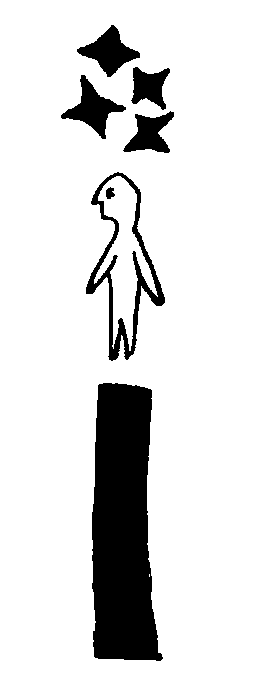
Fig. 64—Winter 1833—34—The stars fell.
The Kiowa say it occurred in the winter season, when
they were camped on a small tributary of Elm fork of
Red river, within the present Greer county, Oklahoma.
The whole camp was asleep, when they were wakened by
a sudden light; running out from the tipis, they found
the night as bright as day, with myriads of meteors darting
about in the sky. The parents aroused the children,
saying, "Get up, get up, there is something awful
(zédălbe) going on!" They had never before known such
an occurrence, and regarded it as something ominous or dangerous,
and sat watching it with dread and apprehension
until daylight. Such phenomena are
always looked upon as omens or warnings by
the ignorant; in Mexico, according to Gregg,
it was believed to be a sign of divine displeasure
at a sacrilegious congress which had
recently curtailed the privileges of the church,
while in Missouri it was regarded by some as a
protest from heaven against the persecution of
the Mormons then gathered near Independence
(Gregg, 5).
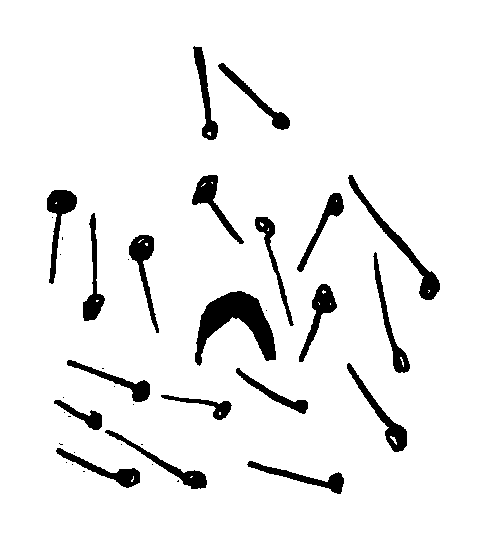
Fig. 65—The star shower of 1833 (from the Dakota calendars)
The figure is intended to commemorate the
return of the girl captured by the Osage in the
massacre of the preceding summer. The tipi above the female figure,
with which it is connected by a line, indicates her name,
Gunpä´ñdamä, Medicine-tied-to-tipi-pole(-woman) (see the
glossary, Gunpä´ñdamä). She was restored to her friends
by a detachment of the First dragoons from Fort Gibson.
Although this occurred in the summer, the season is not
indicated by the usual figure of the medicine lodge, for
the reason that, the taíme being still in possession of the
Osage, there was no sun dance held that year. It is
omitted also in the picture for the preceding summer, the
taíme having been captured early in the spring.
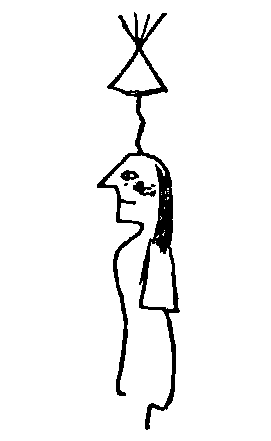
Fig. 66—Summer 1833—34—Return of Gunpä´ñdamä
As the return of this girl was the object of the first
American expedition up Red river, and the beginning
of our official and trading relations with the Comanche,
Kiowa, Wichita, and affiliated tribes, it merits somewhat extended
notice. The expedition and subsequent council are noted in the report
of the Commissioner of Indian Affairs for 1834 (page 240), and are
described at length in the journal of Lieutenant Wheelock (Greer, 1),
and in the letters of the artist Catlin, who accompanied the party and
painted the first pictures ever made of any of these tribes. The resulting
treaties of 1835 and 1837 are noted in the Commissioner's reports
for these years (Report, 74). The first Indian story of the occurrence is
here given:
After the massacre at K`ódaltä K`op, already described, the Osage
returned to their own country, where there was a soldier camp (i. e., Fort
Gibson), bringing with them the Kiowa girl Gunpä´ñdamä (Medicine-tied-to-tipi-pole)
and her brother, taken at the time of the massacre.
The woman captured at the same time had escaped and made her way
back to her people. At Fort Gibson the soldiers told the Osage that
as they and other Kiowa were all alike Indians they should be friends.
They then bought the two captive children from the Osage and proposed
that some of the Osage should return with them (the soldiers) to
the Kiowa country, there to give back the children to their friends and
invite the Kiowa to come down to the fort and make a permanent treaty
of peace and friendship between the two tribes. The Osage agreed,
and accordingly a large party of soldiers, accompanied by a number of
Osage, with the girl Gunpä´ñdamä, set out for the Kiowa country. The
little boy had been killed by a sheep before starting. With them went
also the famous trader, Colonel Auguste Chouteau, called "Soto" by the
Kiowa, the first American trader known to the Kiowa, Wichita, and associated
tribes. Up to this time the Kiowa had been at war with the Osage
and had no knowledge of our government, and these dragoons were the
first United States troops they had ever seen. The soldiers first met
the Comanche, who told them that the Kiowa were near the Wichita
village at the farther end of the mountains. When the troops arrived
at the village, the Kiowa were afraid and kept at a distance until they
saw the girl, which convinced them that the soldiers were their friends.
The girl was given back to her people, and at the request of the soldiers
a number of Kiowa, including the head chief, Doháte, returned with
them and the Osage to the camp at Fort Gibson. They do not remember
whether any of the Apache went. There the soldiers entertained
the Kiowa with food, coffee, and sugar, and gave them blankets and
other presents. A treaty of peace was made between the Kiowa
and soldiers (i. e., Americans), and the Osage and other Kiowa were
invited to trade with Chouteau, who promised to bring goods to their
country. Since that time the two tribes have been friends. Hitherto
the Kiowa had never had any traders in their country, but after this
peace a regular trade was established. The first trader, whom they
call Tóme or Tóme-te (Thomas?) came soon afterward and built a
trading post on the west side of Cache creek, about 3 miles below the
present Fort Sill; but he did not stay long.
Dohá, Doháte, or Dohásän (Bluff or Little-bluff), the head of the
tribe at the time of this expedition, had superseded A`dáte, who had
been deposed as a punishment for having allowed his people to be surprised
and massacred by the Osage. In his youth Dóha had been,
known, as Äanóñte. He was the fourth head chief of the tribe from
the time of the treaty with the Comanche, the order of succession
being Políăkya (Harelip), alias Kágiätsé (Thick-blanket); Tsóñbohón
(Feather-cap), A`dáte, and Dohásän. He continued to be recognized
as head chief until his death in 1866. The name is hereditary in the
family, which is one of the most prominent in the tribe, and has been
borne by this chief—distinguished as Old Dohásän—by his nephew,
who died at an advanced age at Anadarko in the winter of 1893—94, and
by his son. The older men state that the father of the great Dohásän
was also called Dohá, and that his son, after assuming the same name,
was known as Dohásän, (Little-bluff) for distinction. He is spoken of
as Doháte as frequently as Dohásän.
According to one informant, at the time of the Osage massacre
Chouteau had a trading post about a day's journey east of the present
Fort Sill, and the Kiowa went to him and told him of their misfortune,
whereupon he went to Fort Gibson and induced the soldiers to rescue
the captives from the Osage and return them to their friends. This is
perhaps a confusion of events. The trading post referred to was at
Chouteau spring, on the east side of Chouteau creek which flows into
the South Canadian from the east, about 5 miles northeast of the present
town of Purcell, Indian Territory. It does not appear, however, to
have been established until after, and as a result of, this expedition.
The expedition is described in detail by the artist Catlin, who accompanied
it and was present at the council on its return. As the Comanche,
Kiowa, and Wichita lived so remote from the frontiers, they had
not yet been brought into official connection with the United States,
and consequently had several times, as we have seen, come into collision
with small parties of Americans on the borders of their country.
The government had for some time been desirous of entering into treaty
relations with them, more especially as the plan of colonizing the eastern
tribes in the western country had been put into operation. As the
Osage, who were already in treaty relations with the government, had
several captives taken from the more western tribes, it was decided to
purchase these prisoners and send them home under military escort as
a token of the friendly intentions of the government, with an invitation
to the chiefs of those tribes to come to the military post and make a
treaty with the United States, the Osage, and the immigrant tribes.
Accordingly, the two Kiowa children and two Wichita children, captives,
were purchased from the Osage and brought to Fort Gibson;
unfortunately, the little Kiowa boy was killed near the post shortly after
by a blow from a ram. An expedition of the First dragoons was organized,
under command of General Leavenworth, to restore the children to
their parents and open communication with their tribes. The troops,
numbering about four hundred, left Fort Gibson toward the end of June,
1834, taking with them the three children and accompanied by about
thirty of the Osage, Cherokee, Delaware, and Seneca tribes, together
with the artist Catlin, and, according to the Indian account, Chouteau
and perhaps another trader. Their interpreter was a Cherokee with a
"very imperfect" knowledge of Spanish, through which language he
hoped to open communication with Spanish-speaking Indians among the
tribes visited; his ignorance probably accounts for the atrocious names
and etymologies given by Catlin. The march in the heat of summer
proved so severe that by the time the command reached the junction of
Washita and Red rivers about one third of the number, including the commanding
general, were prostrated; the remainder, constantly dwindling,
pushed on in charge of Colonel Henry Dodge, keeping a general northwest
course along the divide between the two streams. They were considered
to be within the Comanche country after crossing the Washita.
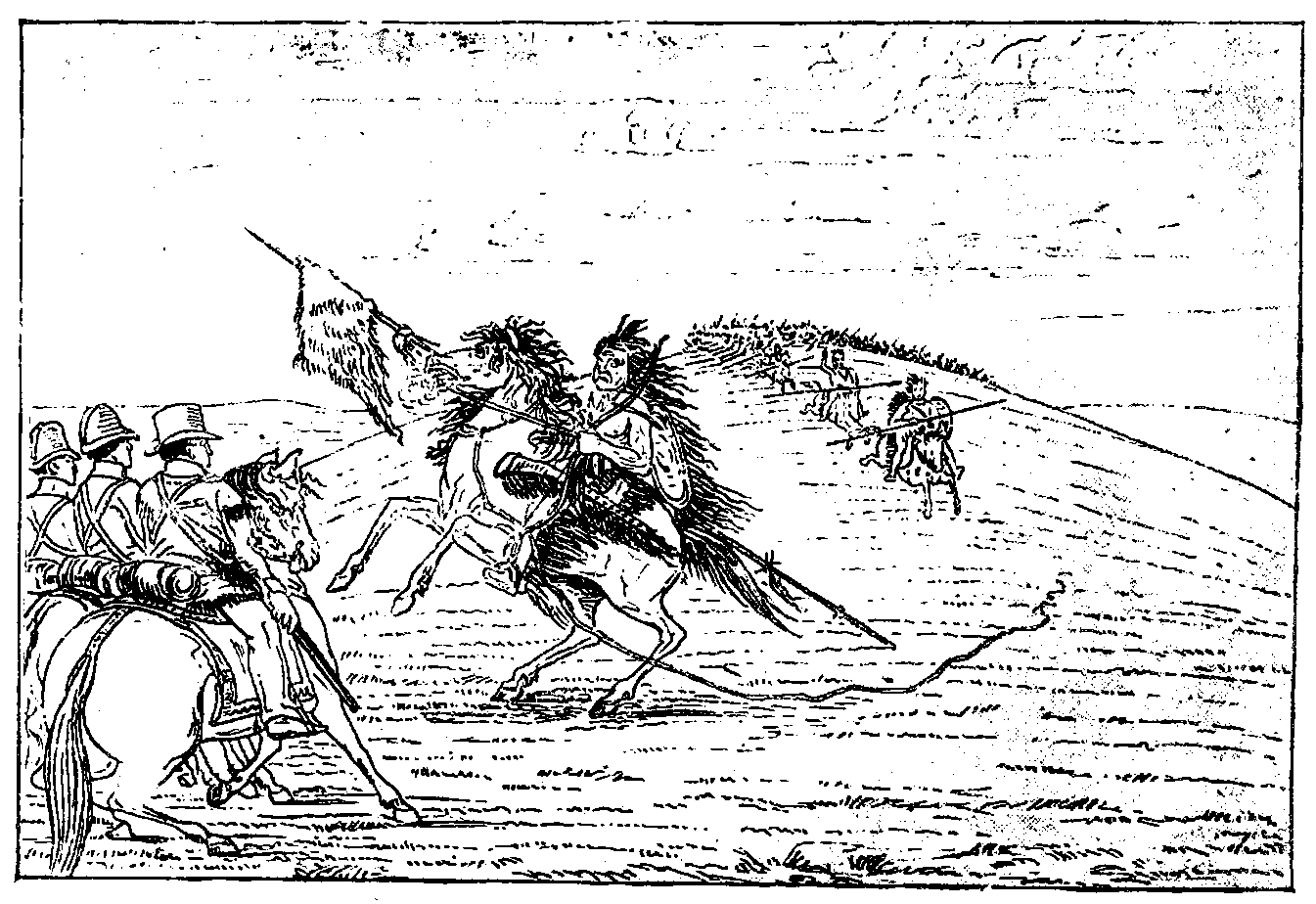
Fig. 67—Meeting of the dragoons and the Comanche (after Catlin).
Having traveled about two weeks, they one day discovered a large
party of Comanche several miles ahead, sitting quietly on their horses
watching the movements of the advancing troops, and holding, their long
lances in their hands, the blades glistening in the sun. As the cavalry
advanced toward them the Indians retreated to another ridge. This
was repeated several times, until at last, says Catlin—
Colonel Dodge ordered the command to halt, while he rode forward with a few of
his staff and an ensign carrying a white flag. I joined this advance, and the Indians
stood their ground until we had come within half a mile of them and could distinctly
observe all their numbers and movements. We then came to a halt, and the
white flag was sent a little in advance and waved as a signal for them to approach,
at which one of their party galloped out in advance of the war party on a milk-white
horse, carrying a piece of white buffalo skin on the point of his long lance in
reply to our flag.... The distance between the two parties was perhaps half a
mile, and that a beautiful and gently sloping prairie, over which he was for the
space of a quarter of an hour reining and spurring his maddened horse and gradually
approaching us by tacking to the right and left like a vessel beating against
the wind. He at length came prancing and leaping along till he met the flag of the
regiment, when he leaned his spear for a moment against it, looking the bearer full
in the face, when he wheeled his horse and dashed up to Colonel Dodge with his
extended hand, which was instantly grasped and shaken. We all had him by the
hand in a moment, and the rest of the party seeing him received in this friendly
manner, instead of being sacrificed, as they undoubtedly expected, started under
full whip in a direct line toward us, and in a moment gathered like a black cloud
around us.... The warrior's quiver was slung on the warrior's back, and his bow
grasped in his left hand ready for instant use if called for. His shield was on his
arm; and across his thigh, in a beautiful cover of buckskin, his gun was slung, and
in his right hand his lance of fourteen feet in length. Thus armed and equipped
was this dashing cavalier, and nearly in the same manner all the rest of the party
(Catlin, 4).
When the purpose of the expedition had been explained to them, the
Comanche said that their great village was a few days farther ahead,
and abandoning their war expedition, they turned and escorted the
troops to their camp. According to statements made by old men of
the tribe to Horace P. Jones, post interpreter at Fort Sill, this Comanche
village in 1834 was situated on Chandler creek, close to its junction
with Cache creek, about ten miles north of the present Fort Sill. The
artist gives a glowing account of the surrounding country and of their
reception by the Comanche.
Having led us to the top of a gently rising elevation on the prairie, they pointed
to their village at several miles distance, in the midst of one of the most enchanting
valleys that human eyes ever looked upon. The general course of the valley is
from northwest to southeast, of several miles in width, with a magnificent range of
mountains rising in distance beyond, it being without doubt a huge spur of the
Rocky mountains, composed entirely of a reddish granite or gneiss, corresponding
with the other links of this stupendous chain. In the midst of this lovely valley
we could just discern amongst the scattering shrubbery that lined the banks of the
water courses, the tops of the Comanche wigwams and the smoke curling above
them. The valley for a mile distant about the village seemed speckled with horses
and mules that were grazing in it. The chiefs of the war party requested the regiment
to halt until they could ride in and inform their people who were coming.
We then dismounted for an hour or so, when we could see them, busily running and
catching their horses, and at length several hundreds of their braves and warriors
came out at full speed to welcome us, and forming in a line in front of us, as we
were again mounted, presented a formidable and pleasing appearance. As they
wheeled their horses, they very rapidly formed in a line and dressed like well-disciplined
cavalry. The regiment was drawn up in three columns, with a line
formed in front, by Colonel Dodge and his staff, in which rank my friend Chadwick
and I were also paraded, when we had a fine view of the whole manœuvre, which
was picturesque and thrilling in the extreme.
In the center of our advance was stationed a white flag, and the Indians answered
to it with one which they sent forward and planted by the side of it. The two lines
were thus drawn up face to face within 20 or 30 yards of each other, as inveterate
foes that never had met; and to the everlasting credit of the Comanches, whom the
world had always looked upon as murderous and hostile, they had all come out in
this manner, with their heads uncovered, and without a weapon of any kind, to
meet a war party bristling with arms and trespassing to the middle of their country.
They had every reason to look upon us as their natural enemy, as they have been in
the habit of estimating all pale faces; and yet instead of arms or defences, or even
of frowns, they galloped out and looked us in our faces, without an expression of
fear or dismay, and evidently with expressions of joy and impatient pleasure, to
shake us by the hand, on the bare assertion of Colonel Dodge, which had been made
to the chiefs, that we came to see them on a friendly visit.
After we had sat and gazed at each other in this way for some half an hour or so,
the head chief of the band came galloping up to Colonel Dodge, and having shaken
him by the hand, he passed on to the other officers in turn and then rode alongside
of the different columns, shaking hands with every dragoon in the regiment; he
was followed in this by his principal chiefs and braves, which altogether took up
nearly an hour longer, when the Indians retreated slowly toward their village,
escorting us to the banks of a fine, clear stream and a good spring of fresh water,
half a mile from their village, which they designated as a suitable place for our
encampment (Catlin, 5).
While there the artist painted the pictures of the chief men of the
tribe, together with camp scenes. The pictures form a part of the
Catlin gallery in the National Museum at Washington, District of
Columbia. In his usual incorrect style, he estimated the population
of the tribe at thirty thousand to forty thousand. It may possibly
have been one-tenth of that number.
After a few days the command, guided by some of the Comanche,
started for the Wichita village lying farther to the west. After four
days' march, keeping close along the base of the mountains, they reached
the village, which was situated on the northeast bank of the North
fork of Red river, about 4 miles below the junction of Elm fork, and
within the present limits of the reservation. It was close to the mouth
of Devil canyon, with the river in front and the mountains behind.
It was an old settlement site of the Wichita, having been occupied by
them as far back at least as about the year 1765 (Lewis and Clark, 8).
Catlin thus describes it:
We found the mountains inclosing the Pawnee [i.e., Pawnee Pique, or Wichita]
village, on the bank of Red river, about 90 miles from the Comanchee town. The
dragoon regiment was drawn up within half a mile or so of this village and encamped
in a square, where we remained three days. We found here a very numerous village
containing some five or six hundred wigwams, all made of long prairie grass thatched
over poles which are fastened in the ground and bent in at the top, giving to them
in distance the appearance of straw beehives, as in plate 173 [figure 68 herein], which
is an accurate view of it, showing the Red river in front and the "mountains of
rocks" behind it. To our very great surprise we have found these people cultivating
quite extensive fields of corn (maize), pumpkins, melons, beans, and squashes; so,
with these aids and an abundant supply of buffalo meat, they may be said to be
living very well (Catlin, 6).
The picture by Catlin gives a good idea of the location and a tolerable
idea of the peculiar conical grass houses of the Wichita, who have
always been noted as an agricultural tribe. As usual, however, he has
grossly overestimated their number, attributing to the village five or
six hundred houses, and to the Wichita and Kiowa eight to ten thousand
population. It is very doubtful if the two tribes, with all their
affiliated bands, ever numbered a total of twenty-five hundred. The
Wichita village may have had, all told, seventy or eighty houses. When
the author examined the ground, in 1893, the circular depressions where
the houses had stood were still regular in shape and plainly visible.
According to Wichita information, the village was called Kĭ´tskûkătû´k,
a name which seems to refer to its situation beside the mountain, and
was abandoned soon after 1834, when the tribe removed to a new location,
where Fort Sill is now located. From there they again removed
to Rush spring, about 25 miles farther east, where Marcy found them
in 1852. The mountains immediately about the site of the village
visited by the dragoons are still known to the Kiowa as Do`gúat
K`op, "Wichita mountains," the name not being applied by them to
the more eastern portion of the range.
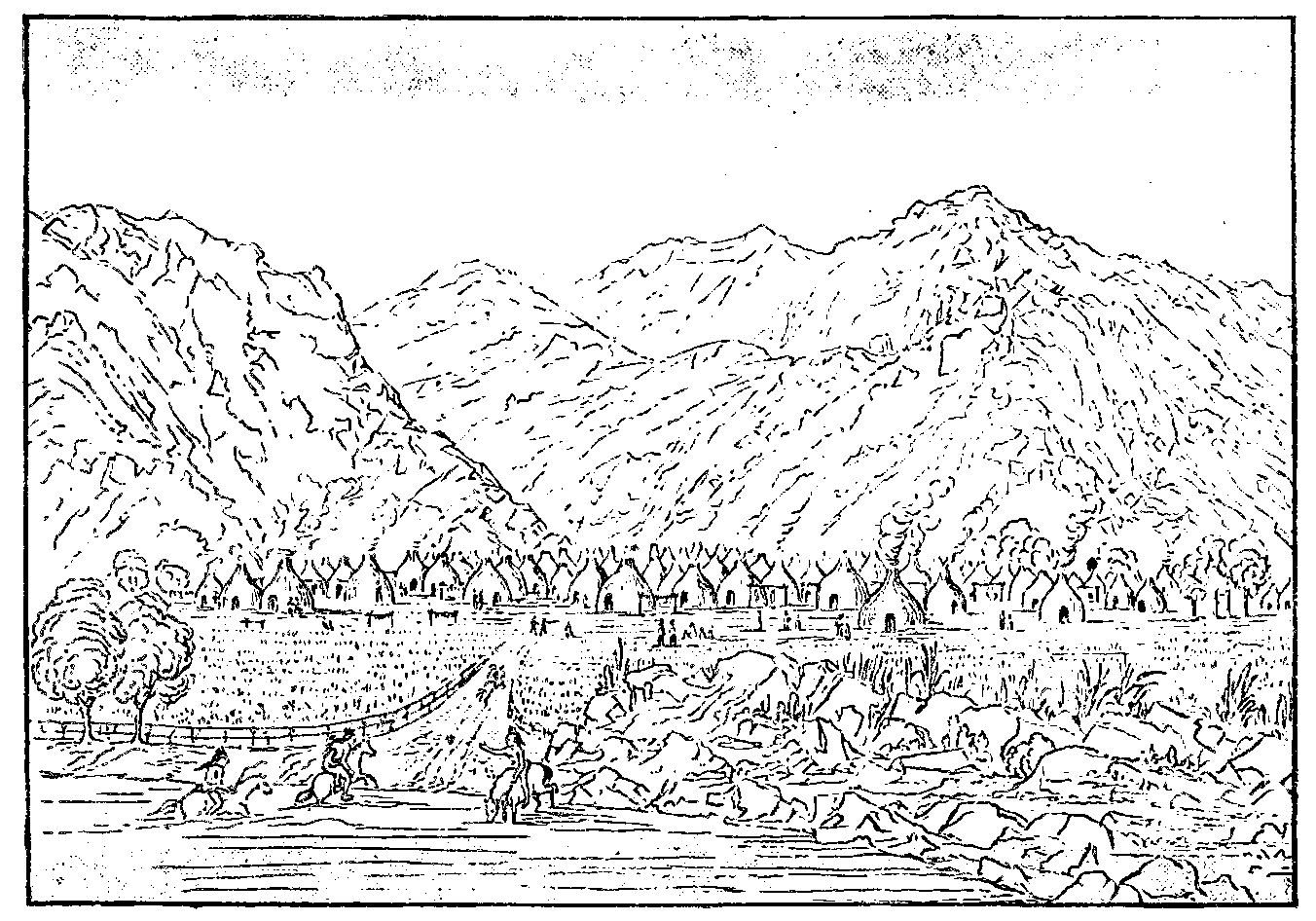
Fig. 68—Kĭ´tskûkătû´k, the Wichita village on Northfork in 1834 (after Catlin).
The meeting with the Wichita threatened at the start to be hostile.
Having learned that they had in their possession a captive white boy,
Colonel Dodge demanded that he be surrendered. They repeatedly
denied having any knowledge of the boy or the circumstances attending
his capture until, being convinced by the sight of their own children
brought back by the dragoons that the intentions of the white
visitors were friendly, they produced him.
An order was immediately given for the Pawnee and Kiowa girls to be brought
forward. They were in a few minutes brought into the council house, when they
were at once recognized by their friends and relatives, who embraced them with the
most extravagant expressions of joy and satisfaction. The heart of the venerable
chief was melted at this evidence of the white man's friendship, and he rose upon
his feet, and taking Colonel Dodge in his arms and, placing his left cheek against
the left cheek of the colonel, held him for some minutes without saying a word,
whilst tears were flowing from his eyes. He then embraced each officer in turn in
the same silent and affectionate manner, which form took half an hour or more
before it was completed.
From this moment the council, which before had been a very grave and uncertain
one, took a pleasing and friendly turn, and this excellent old man ordered the women
to supply the dragoons with something to eat, as they were hungry. The little
encampment, which heretofore was in a woeful condition, having eaten up their last
rations twelve hours before, were now gladdened by the approach of a number of
women who brought their "back loads" of dried buffalo meat and green corn, and
threw it down amongst them. This seemed almost like a providential deliverance,
for the country between here and the Comanchees was entirely destitute of game
and our last provisions were consumed.
The council thus proceeded successfully and pleasantly for several days, whilst
the warriors of the Kiowas and Wicos [Wacos], two adjoining and friendly tribes
living farther to the west, were arriving, and also a great many from other bands
of the Comanchees, who had heard of our arrival, until two thousand or more of
these wild and fearless-looking fellows were assembled, and all, from their horses'
backs, with weapons in hand, were looking into our pitiful little encampment of two
hundred men, all in a state of dependence and almost literal starvation, and at the
same time nearly one-half the number too sick to have made a successful resistance
if we were to have been attacked (Catlin, 7).
The result of the council was that a large delegation from the allied
tribes returned with the troops to Fort Gibson, where arrangements
were made for the subsequent treaties of 1835 and 1837, as already
described, which mark the beginning of the modern history of the
Kiowa, Comanche, Wichita, and affiliated bands.
The Wichita, as well as the Kiowa, still remember this friendly meeting.
Nasthoe, a Wichita chief, in giving testimony in 1894 in regard to
the location of the old village, said: "I was told that the white people
and the Osage and the Kidi-ki-tashe [Wichita] came to that old village,
where they lived and brought that girl and boy, and inside of one of
those tipis they had made a feast among themselves, and the soldiers
had fired their guns around there. The meaning of that was a peace"
(Greer County, 1).
While with this expedition Catlin painted a number of portraits,
the first on record from these tribes. He has this to say of his Kiowa
subjects:
The head chief of the Kioways, whose name is Teh-toot-sah [Dohásän, see page 175],
we found to be a very gentlemanly and high-minded man, who treated the dragoons
and officers with great kindness while in his country. His long hair, which was put
up in several large clubs and ornamented with a great many silver brooches, extended
quite down to his knees. This distinguished man, as well as several others of his
tribe, have agreed to join us on the march to Fort Gibson, so I shall have much of
their company yet, and probably much more to say of them at a future period. Bon-son-gee
(The New Fire) [Bohón-kóñkya, Black-cap], is another chief of this tribe,
and called a very good man; the principal ornaments which he carried on his person
were a boar's tusk and his war whistle, which were hanging on his breast. Quay-ham-kay
(The Stone Shell) is another fair specimen of the warriors of this tribe
... Wun-pan-to-mee (The White Weasel) [Gunpü´ñdamä´, Medicine-tied-to-tipi-pole],
a girl, and Tunk-aht-oh-ye (The Thunderer), a boy, who are brother and sister,
are two Kioways who were purchased from the Osages, to be taken to their tribe by
the dragoons. The girl was taken the whole distance with us, on horseback, to the
Pawnee village, and there delivered to her friends, as I have before
mentioned; and the fine little boy was killed at the fur trader's house,
on the banks of the Verdigris, near Fort Gibson, the day after I
painted his portrait, and only a few days before he was to have
started with us on the march. He was a beautiful boy of nine or ten
years of age, and was killed by a ram, which struck him in the abdomen,
and knocking him against a fence, killed him instantly. Kots-a-to-ah
(The Smoked Shield) is another of the extraordinary men of
this tribe, near 7 feet in stature, and distinguished not only as one
of the greatest warriors, but the swiftest on foot in the nation. This
man, it is said, runs down a buffalo on foot, and slays it with his knife
or his lance as he runs by its side! (Catlin, 8).
BUREAU OF AMERICAN ETHNOLOGY—
SEVENTEENTH ANNUAL REPORT PL. LXXVI
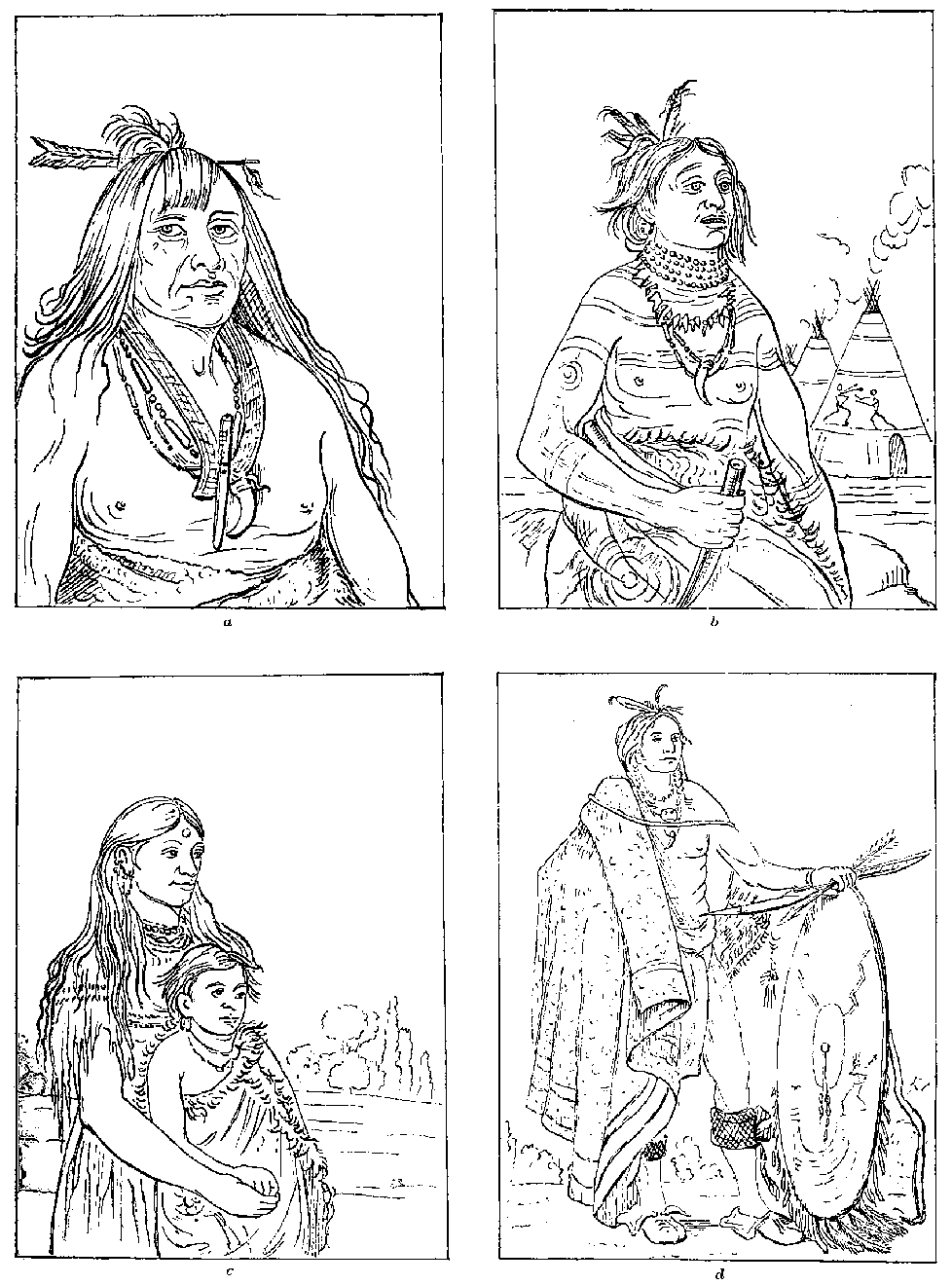
BÓHON-KÓÑKYA, "QUAYHAMKAY," GUNPÄÑDÂMÄ, AND "KOTSATOAH" (AFTER CATLIN).
Two of those mentioned by Catlin—Dohásän and Bóhónkóñkya—were
signers of the first Kiowa treaty, in 1837, and
are still well remembered, as is also the girl, Gunpä´ñdamä´.
The other names are too badly mangled to be identified,
and the memory of the swift runner seems to have utterly
perished.
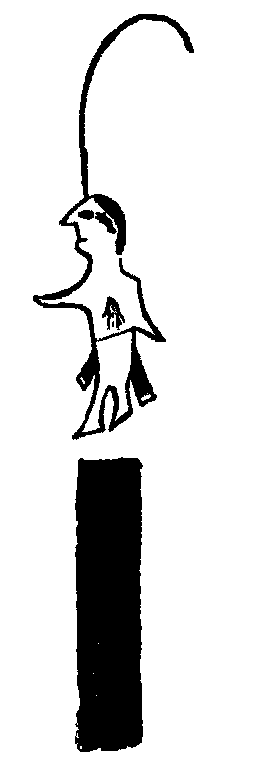
Fig. 69—Winter 1834—35—Bull-tail killed.
Pá-tón Ehótal-de Sai, "Winter that Bull-tail was killed."
He was killed by the Mexicans. The figure above the winter sign has
a blood spot upon the body to represent the wound, while the erect
cue from the head indicates his name.
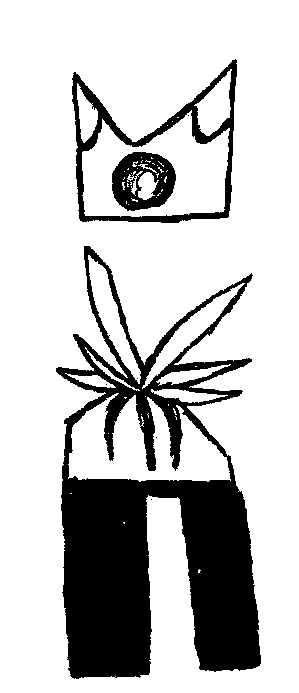
Fig. 70—Summer 1835—Cat-tail rush sun dance.
The Kiowa had made their winter camp on the Washita, when a war
party set out against the Toñhéñ-t'a`ká-i (Mexicans of
the waterless country), or Chihuahuans. Having
started late, they camped all winter at a mountain
toward the southern edge of the Staked plain, known
as Déngyä-kóñ K`op, or "Black-ice mountain." One
morning in the early spring, while several men were
out looking for their ponies, they were suddenly surrounded
by the Mexicans and all killed, including
Pa-ton, who was shot through the body. Their comrades
saw the fight from a distance, but, being outnumbered
and therefore afraid to come near to help
them, they got away as soon as they could.
Donpä K`ádó, "Cat-tail rush sun dance." This was
the first sun dance held by the Kiowa after the recovery
of the taíme from the Osages, already narrated, and is
thus distinguished because it was held at a place where a great many
cat-tail rushes (Equisetum arvense) were growing on the south bank of
North Canadian river, at the Red hills, about 30 miles above the
present Fort Reno, Oklahoma. The soft white portion of the lower
part of the stalk of this rush is eaten raw by the Indians with great
relish. The picture above the medicine lodge represents the taíme
bíĭmkâ-í or rawhide box in which the taíme is kept.
It was immediately after this dance that a war party of Kiowa made
the raid far down toward the coast in which they captured Bóiñ-edal
(Big-blond), now the oldest captive in the tribe. This man, sometimes
known to the whites as Kiowa Dutch, was born in Germany and is now,
according to his own account, about 70 years of age. He remembers
having gone to school in Germany as a small boy, and came to this
country, when about 8 or 9 years of age, with his father, stepmother, and
an elder brother. He describes the place where they located as being
a small settlement on a large river, up which ships could sail, where
there were alligators and trees with long moss, and which was within
a day's ride of the sea. The people were engaged in raising cotton, his
family being the only Germans. From other evidence it
seems to have been about Matagorda or Galveston bay,
showing that the Kiowa carried their raids in this direction
even to the coast. Within a year of their coming,
and before he had learned English, a Kiowa war party
attacked the settlement at night, carried off himself, his
mother, and his brother, and probably killed his father;
his mother was taken in another direction and he never
saw her again; she was afterward ransomed by Tométe,
the trader already mentioned; his brother committed suicide
during the cholera epidemic of 1849; Bóiñ-edal is still
with the tribe. As his name indicates, he is a typical German
in appearance, and still remembers a few words of his
mother language, besides having a fair knowledge of English
and Spanish, although he does not remember his own
name or birthplace. It was about the same time that the
Comanche raided Barker's fort, on the Navasota, in eastern
Texas, and carried off the girl Cynthia Parker, who afterward
became the mother of Quanah, the present chief of the tribe. The story
of these captives may have a hundred parallels among the three confederated
tribes.
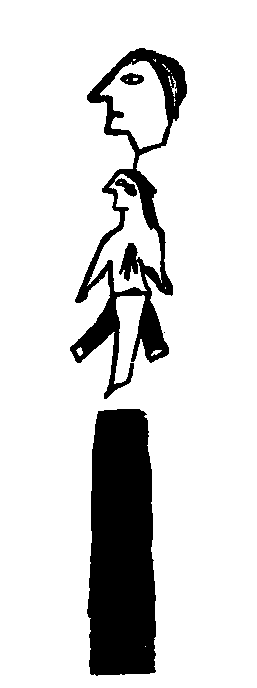
Fig. 71—Winter 1835—36—Big-face killed.
Tó`-edalte (Big-face) was shot through the body and killed by the
Mexicans while on a raid into old Mexico. This is Set-t'an's statement,
which is borne out by the picture of a man, whose name is indicated
by the figure of a big head or face above. Other informants, however,
deny any knowledge of such a man, and in the notes accompanying the
Scott calendar he is called Wolf-hair. The gunshot wound is indicated
in the ordinary way.
Gui P a K`ádó, "Wolf-river sun dance." The figure of a wolf or
coyote above the medicine lodge indicates that the dance was held on
Gui P a or Wolf river, i. e., Wolf-creek fork of the
North Canadian. Soon after the dance the Kiowa
moved to another camp north of the Arkansas,
while the Kiñep band went on to pay a social visit
to the Crows and buy from them ermine and elk
teeth for ornamenting their buckskin shirts and
the dresses of the women. After they had gone,
those who remained behind were attacked in their
camp by the whole Cheyenne tribe, but the Kiowa
threw up breastworks and defended
themselves until their assailants were
compelled to retire.
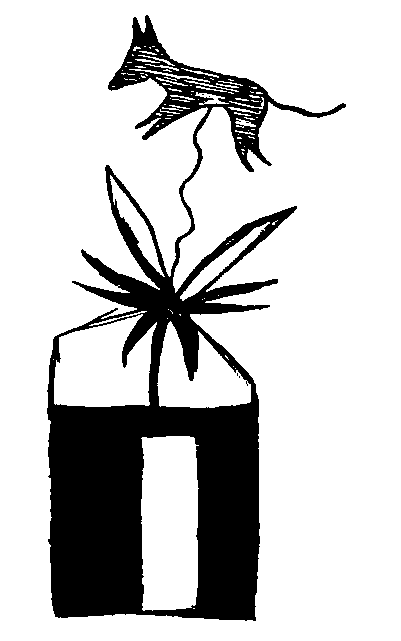
Fig. 72—Summer 1836—Wolf-river sun dance.
K`íñähíate Ehótal-de Sai, "Winter
that K`íñähíate was killed." K`íñähíate
("Man") was killed in an expedition against the
Ä´-t'á`ká-i, "Timber Mexicans," or Mexicans of Tamaulipas
and the lower Rio Grande. The tribe was camped on
upper Red river at the time. The name is indicated by a
small figure of a man above a similar larger figure, with
which it is connected by a line, the death wound being
indicated on the lower figure. No better illustration of
the wide range of the Kiowa could be
given than the fact that while one
band was thus raiding in Mexico
another, as we have just seen, was visiting upon
the upper Missouri.
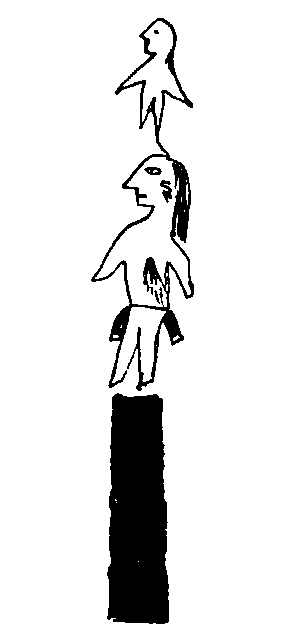
Fig. 73—Winter 1836—37—K`íñähíate killed.
Säk`ota Ä´otón-de Pai, "Summer that the Cheyenne
were massacred," or Á`k`ádo Pai, "Wailing
sun-dance summer." The figure is the conventional
Indian symbol for a battle, with the party
attacked defending themselves behind breastworks
thrown up in the sand, and the arrows flying
among them; below the main figure is another of a man wearing a war
bonnet. Compare the battle pictographs from the Dakota calendars
as given by Mallery (figure 75).
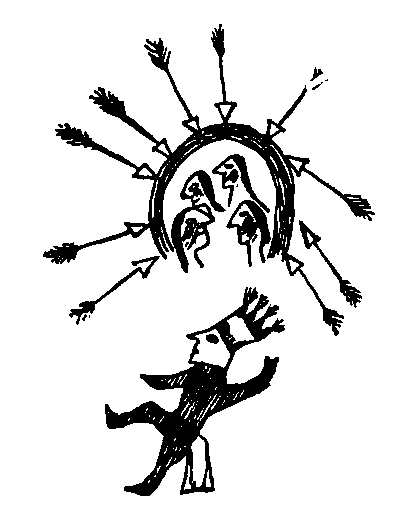
Fig. 74—Summer 1837—Cheyenne massacred.
At the time of the fight the Kiowa, Comanche, and Apache were
camped upon a small tributary of Scott creek (Pohón-ä P'a, "Walnut
creek"), an upper branch of the North fork of Red river, southward
from the present Port Elliott in the panhandle of Texas. It was in
early summer, and they were preparing for the sun dance; a young
man was out alone straightening arrows when he saw two men creeping
up, with grass over their faces. Thinking they were Kiowa deer
hunters, he advanced to meet them, when they fired and wounded him
and his horse; he fled back to camp and gave the alarm, and Kiowa,
Comanche, and Apache rushed out in pursuit. They soon came up
with a small party of the enemy, who proved to be Cheyenne. The
Kiowa and their allies killed three of them there, and following the
fugitives killed several others; continuing along the trail down the
north side of the creek to a short distance below its junction with
Sweetwater, they came upon the main camp of the Cheyenne, who dug
holes in the sand and made a good defense, but were at last all killed
except one, who strangled himself with a rope to avoid capture. The
bodies of the dead Cheyenne, 48 in number, were scalped, stripped, and
laid along the ground in a row by the victors. Six Kiowa were killed,
including the grandfather of the present Lone-wolf. T'ébodal, the
oldest man now in the tribe, was engaged in this encounter.
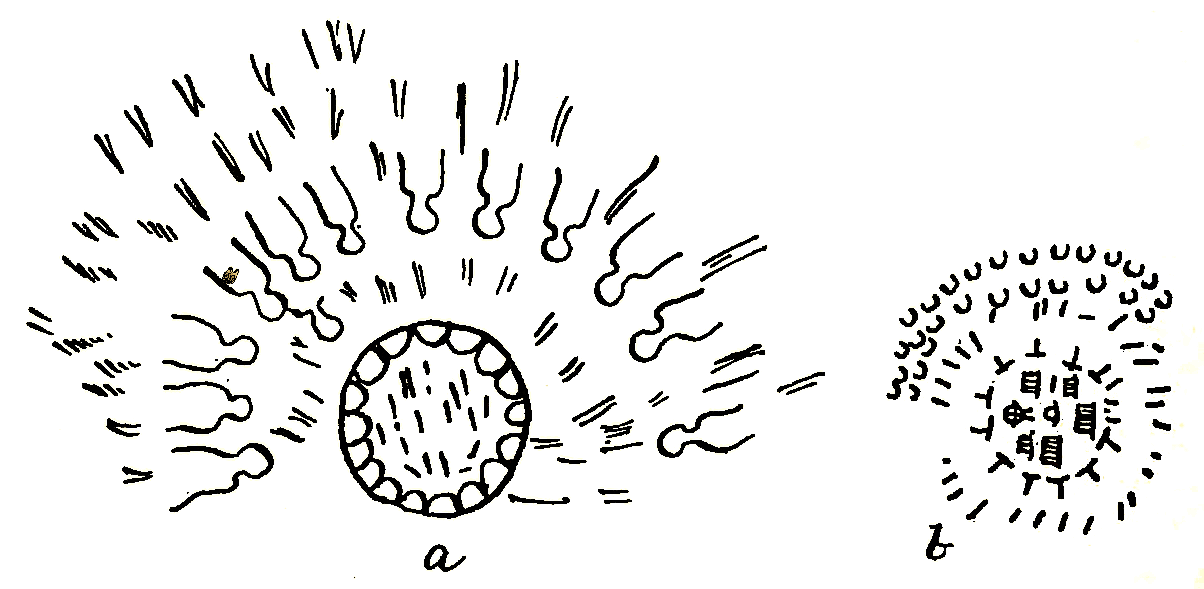
Fig. 75—Battle pictures (from the Dakota calendars).
Set-t´an states that one Cheyenne wearing a war bonnet was killed as
he came out of a tipi (see figure 71). Other informants do not remember
this, but say that the Kiowa captured a fine medicine lance in a
feathered case, and also a pabón or Dog-soldier staff, of the kind
carried by those who were pledged to die at their post. The stream
where the battle took place is since, called Sä´k`ota Ä´otón-de P'a,
"Creek where the Cheyennes were massacred." The summer of the
occurrence is sometimes called Á'k`ádá Pai, "Wailing sun-dance
summer," because, although the Kiowa wailed for their dead, the sun
dance was not on that account abandoned.
A´daltem Etkúegán-de Sai, "Winter that they dragged the head."
The figure above the winter mark shows a horseman carrying a bloody
scalp upon a lance and dragging a bloody head at the end of a reata.
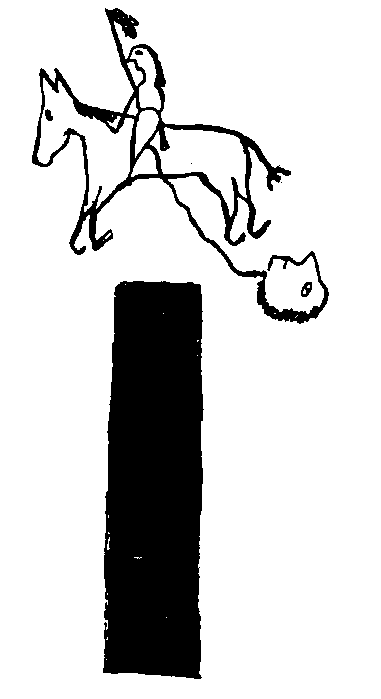
Fig. 76 — Winter 1837—38—Head dragged.
Three Comanche, two men and a woman, were camped alone one
night in a tipi on the Clear fork of the Brazos (Ä´sese P'a, "Wooden-arrowpoint
river"), in Texas, when one of them noticed somebody
raise the door-flap and then quickly drop it again; he told the others,
and as silently and swiftly as possible they ran out, and jumping over
a steep bank of the creek hid themselves just a moment before their
enemies returned and fired into the vacated tipi.
The Comanche returned the fire from their hiding
place and then made their escape to a Kiowa camp
near by. In the morning the Kiowa returned to the
spot, together with the Comanche, and found a dead
Arapaho lying where he had been shot; they scalped
and beheaded him, and brought the head into camp
dragging at the end of a reata. The old German
captive, Bóiñ-edal, then a little boy and who had been
with the Indians about two years, witnessed this
barbarous spectacle and still remembers the thrill
of horror which it sent through him.
Gúi-p'ágya Sä´k`ota Ĭmdóhä´pa-de Pai, "Summer
that the Cheyenne attacked the camp on "Wolf
river." The combined warriors of the Cheyenne and
Arapaho organized a great war party against the Kiowa, Comanche,
and Apache, to revenge the defeats of the previous two years.
They attacked the camps of the three confederated tribes on Wolf
creek (Gui P'a), a short distance above where that stream joins
Beaver creek and forms the North Canadian, in Oklahoma. They
killed several women who were out digging roots and some men whom
they found out on the prairie after buffalo, but
were unable to take the camp, as the Kiowa and
their allies sheltered themselves in holes dug in
the ground so as to form a circular breastwork.
Among others the Kiowa lost Gui-k`ate and
several other distinguished men.
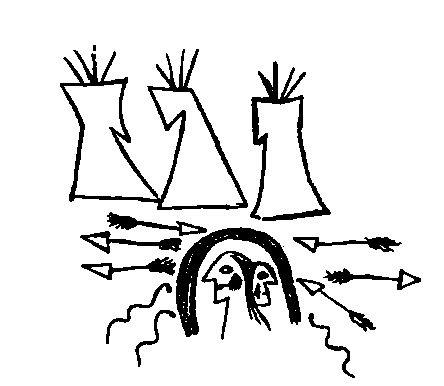
Fig. 77—Summer 1838—Attacked by Cheyenne.
The figure shows the warriors of the three
confederate tribes, indicated by the three tipis,
within the breastwork, with the bullets and
arrows flying toward them, the bullets (from
which it is evident that the Cheyenne had some guns) being represented
by black dots with wavy lines streaming behind to indicate
the motion.
While the Kiowa were all together in their winter camp some who
had gone out upon the prairie discovered a party approaching. They
returned and gave the alarm, upon which all the warriors went out and
attacked the strangers, who proved to be Arapaho, killing them all.
Set-t'an's father, Tĕn-píäk`ia ("Heart-eater"),
was wounded in the leg in this fight, as indicated
by the figure of a man, with blood flowing
from a wound in the leg, below the battle picture.
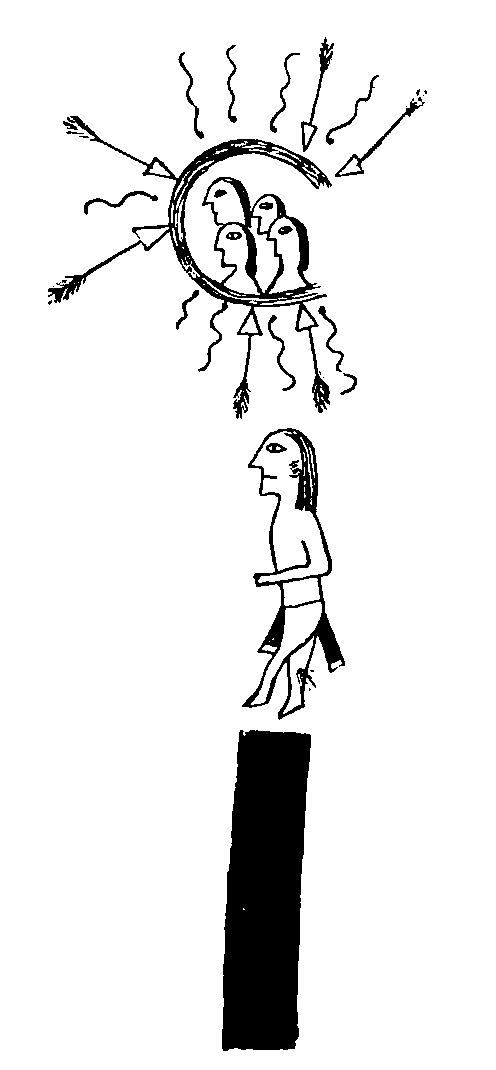
Fig. 78—Winter 1838—39—Battle with Arapaho.
Píhó K`ádó, "Peninsula sun dance." The
peninsula or bend is indicated by a line bending
around the medicine lodge. The dance is thus
designated because held in the píhó, or peninsula,
on the south side of the Washita, a short
distance below Walnut creek, within the present
limits of the reservation. This dance simply
serves as a tally date, as nothing of more special
interest is recorded for the summer. It would
seem that the incursions of the Cheyenne and
Arapaho had prevented the usual holding of
the k`ádó for the two preceding
years.
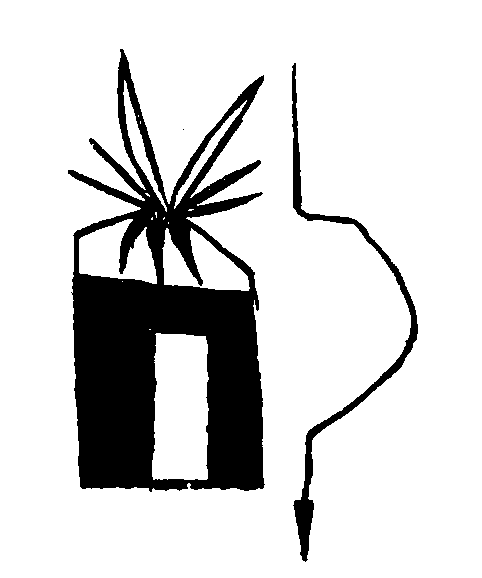
Fig. 79—Summer 1839—Peninsula sun dance.
Tä´dalkop Sai, "Smallpox winter." The Kiowa were ravaged by the
smallpox, the second visitation of that disease within their memory,
the first having been in 1818. The disease is indicated in the
conventional Indian manner by means of the figure of a man covered
with red spots (compare figures from Mallery's Dakota calendar; see
also 1861—62 and 1892). It was brought by some visiting Osage, and
spread at once through the Kiowa, Apache, and Comanche, killing a
great number in each tribe. The Kiowa and Apache fled to the Staked
plain to escape it, and the Comanche in some other direction.
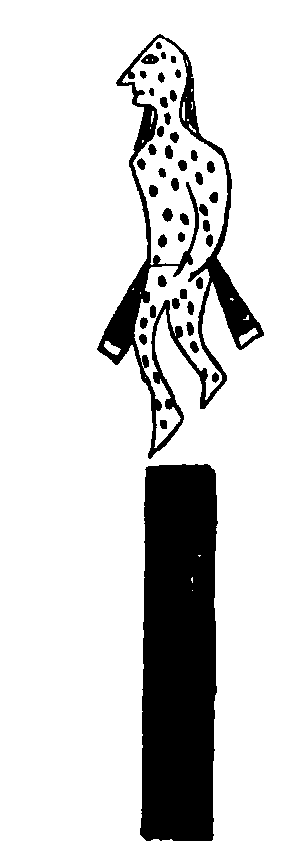
Fig. 80—Winter 1839—40—Smallpox.
This was the great smallpox epidemic which began on the upper
Missouri in the summer of 1837 and swept the whole plains north and
south, destroying probably a third, if not more, of the native
inhabitants, some whole tribes being nearly exterminated. The
terribly fatal result of smallpox among Indians is due largely to the
fact that their only treatment for this disease and for measles, both
of which came to them from the whites, is the sweat bath followed by
the cold plunge. In this instance the disease first broke
out among the passengers of a steamer in the Missouri river above
Fort Leavenworth, and although every effort was made to warn the
Indians by sending runners in advance, the sickness was communicated
to them. It appeared first among the Mandan about the middle of July,
1837, and practically destroyed that tribe, reducing them in a few
weeks from about sixteen hundred to thirty-one souls. Their
neighboring and allied tribes, the Arikara and Minitarí, were reduced
immediately after from about four thousand to about half that number.
The artist Catlin gives a melancholy account of the despair and
destruction of the Mandan.
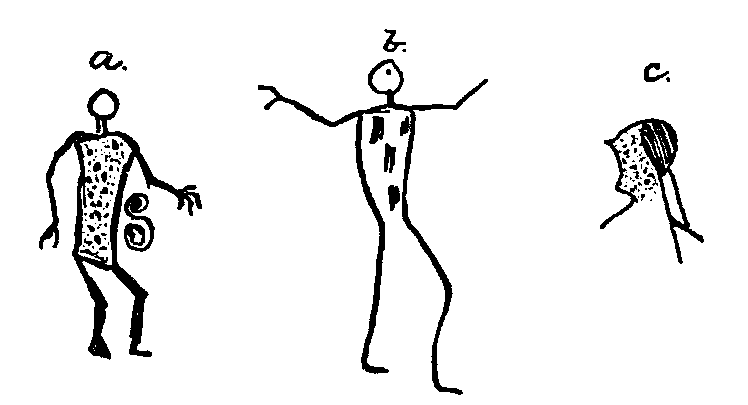
Fig. 81—Smallpox (from the Dakota calendars).
From the Mandan it spread
to the north and west among
the Crows, Asiniboin, and
Blackfeet. Among the last
named it is estimated to have destroyed from six to eight thousand
(Clark, 13). As the plains tribes were then almost unknown to the
general government, we find little of all this in the official reports
beyond the mention that over sixty lodges of Yanktonais Dakota—perhaps
four hundred persons—died by this disease about the same time
(Report, 75). In 1838 it reached the Pawnee, being communicated
by some Dakota prisoners captured by them, in the spring of that year.
From the best information it seems probable that at least two thousand
Pawnee perished (Clark, 14), about double the
whole population of the tribe today. It probably
continued southward through the Osage until it
reached the Kiowa and Comanche the next year,
although it is possible that it may have come more
directly from the east through the emigrating Chickasaw,
who brought it with them to Indian Territory
in the spring of 1838 (Report, 76). We learn (Gregg, 6)
that the disease ravaged New Mexico in the spring
of 1840 and was again carried east to the frontiers
of the United States by the Santa Fé traders.
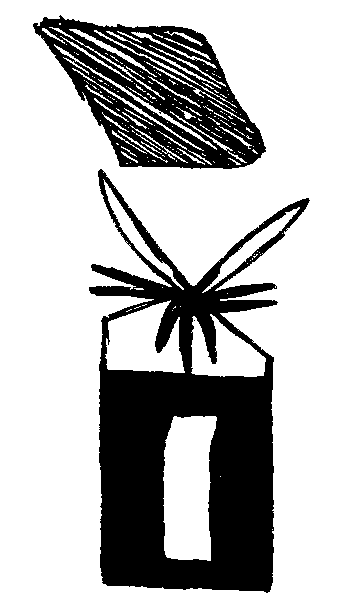
Fig. 82—Summer 1840—Red-bluff sun dance.
Gúadal Dóhá K`údó, "Red-bluff sun dance," so
called because held at Gúadal Dóha on the north side
of the South Canadian, about the mouth of Mustang creek, in the
panhandle of Texas. The (red) figure over the medicine lodge is
intended to represent the "red bluff." The Red hills on the North
Canadian above Fort Reno are called by the same name, but distinguished
by the prefix Sä´k`odal, "Cheyenne."
The prominent event of this summer was the peace made by the
Arapaho and Cheyenne with the Kiowa, Comanche, and Apache—a
peace which, with trifling interruptions, has been kept to this day.
According to the Kiowa account, the first overtures were made by the
Cheyenne, who sent two delegates with proposals, but the Kiowa were
suspicious and sent them back. The Cheyenne then
made a second attempt, with more success, and a peace
was concluded. The Arapaho were included in this
treaty, but, as the Kiowa say, had always been in doubtful
friendship, even when their allies, the Cheyenne,
were at war with the Kiowa. On the occasion of the
notable massacre of Cheyenne, in 1837, the Arapaho
were camped with the Kiowa and left to give the alarm
to their friends. This agrees with the conduct of the
Arapaho in more recent times in remaining neutral while
their Cheyenne confederates were at war with the
whites.
Ká-i Sabíña Dam Sai, "Hide-quiver war expedition
winter." The figure of a quiver is above the winter
mark. This winter is so called on account of a notable
war expedition made by the old men into Mexico, they
equipping themselves with old bows and quivers of buffalo
skin, as all the younger warriors had already gone
against Mexico, carrying all the more efficient weapons
and ornate quivers. The latter were usually of panther
skin or Mexican leather, but never of deer, antelope, or
buffalo skin if it could be avoided.
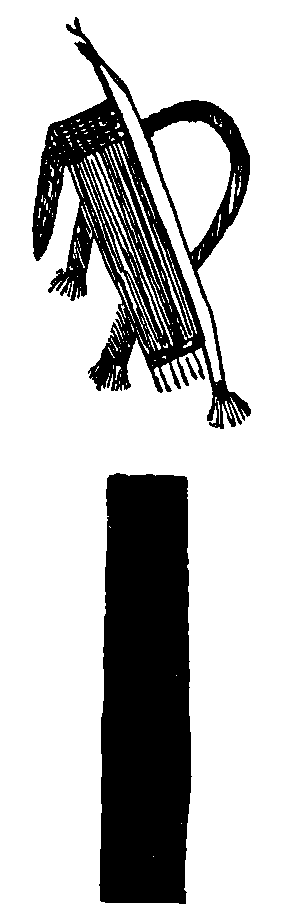
Fig. 83—Winter 1840—41—Hide-quiver war expedition.
As the Kiowa were constantly moving about this summer, no sun
dance was held. The Arapaho met and attacked
a party of Pawnee at T'aíñ Dóhá, "White bluff,"
on the upper South Canadian, near the line of New
Mexico, and killed all of them. The Pawnee threw
up breastworks, but, according to the Kiowa account,
an Arapaho medicine-man who knew the
proper medicine song sat down facing the breastworks
and sang the song, moving his hands as
in the hand game, and thus "drove them out,"
when they were killed in line one after another
as they ran. The Kiowa were not present at
the fight, but met and joined the Arapaho just
afterward, when a final treaty of peace was concluded
between the two tribes. Stumbling-bear
visited the spot some years afterward and saw
the skeletons of the dead Pawnee warriors still lying as they fell.
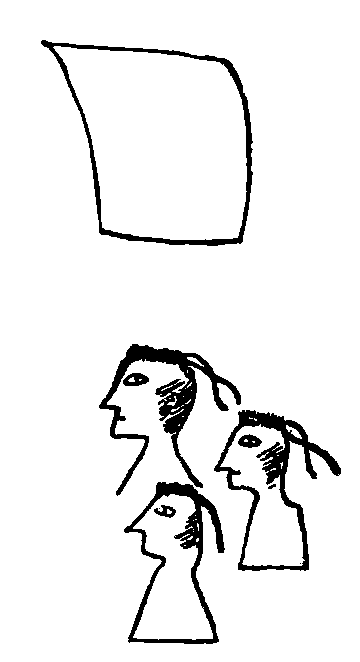
Fig. 84—Summer 1841—Pawnee fight.
The figure represents the bluff with the Pawnee below it, the tribe
being indicated by the peculiar Pawnee scalplock and headdress (see
winters 1849—50 and 1852—53, and summer 1851). The breastwork is
omitted, perhaps through oversight. As there was no sun dance this
summer, the medicine lodge is not represented. It will be noted that
the "white bluff" is drawn only in outline, i. e. white, while the figure
of the "red bluff" (summer 1840) is filled in with red.
´dalhabä´-k`ia Ehótal-de Sai "Winter that ´dalhabä´k`ia was killed."
´dal-habä´ or âdl-habä´, "sloping, or one-sided hair," is the name applied
to a style of wearing the hair shaved close over the right side of the
head, so as to display the ear pendants, and at full length on the left.
The hair is not braided, but is sometimes tied, and the scalplock is worn
as usual. The man killed, who was a noted war
chief, wore his hair in this fashion, hence his name.
The picture is intended to represent the style of
hair dress, with the mark of a wound on the body
to show where he was shot. The bird on top of
his head is intended to represent an ornament of
red woodpecker feathers, which he wore on the
left side of his head. Another Kiowa chief present
on this occasion was K'adógyä´`tó, "Old-man-of-the-sun-dance,"
so called because consecrated
to the taíme, the sacred image of the sun dance.
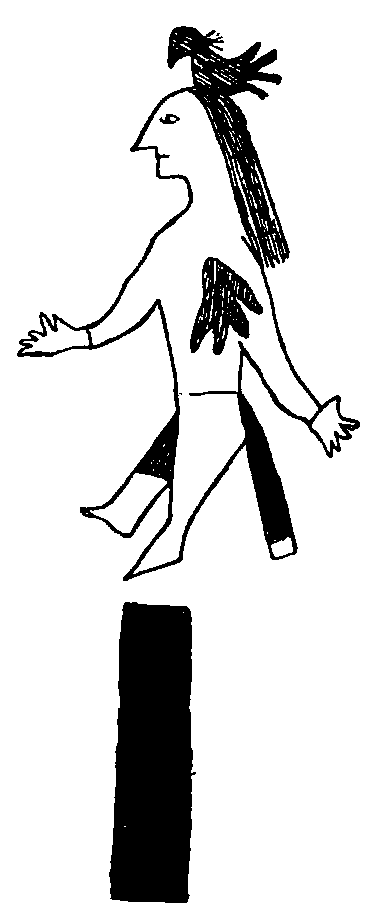
Fig. 85—Winter 1841—42—´dalhabä´k`ia killed.
The fight occurred in the fall of 1841 on a small
stream called by the Kiowa Tóñ-zó`gódal P'a,
"Swift-water river," or Päbo P'a, "American-horse
river," south of Red river, near the Staked
plain, and apparently a head branch of Pease
river in northwestern Texas. The whole Kiowa
tribe was camped on the stream when a party of
Texan soldiers advanced against them. Five
scouts who were in advance of the soldiers were
killed by the Kiowa and their horses captured, but
with the loss of ´dalhabä´k`ia. Abandoning their camp, the Kiowa
fled, but returning a few days later, they found the soldiers still there
and succeeded in killing another. On account of the number of large
American horses captured by the Kiowa in this encounter the stream
was afterward called by them "American-horse river."
The party encountered by the Kiowa on this occasion was the Texan
Santa Fé expedition, and the fight occurred on August 30, 1841. The
whole story as given by Kendall corresponds remarkably with the
Indian account, which was obtained without any knowledge of the
printed statement on the part of either the author or his informants,
having been handed down orally for over half a century. The affair
occurred, as already stated, on the edge of the Staked plain while the
party was searching for Red river and near a stream which Kendall
calls the Quintufue. Several days previously the expedition had met
a number of Kiowa, who had acted insolently, and were apparently
responsible later on for several missing horses and mules.
On the 28th the Texans had crossed the stream and come suddenly
upon the main camp of the Kiowa, who fled at their approach.
Scarcely had we unsaddled our horses and turned them loose before one of our
hunting parties came in and reported that a large body of Indians were in our immediate
vicinity, and that they had driven off an immense cavallada or drove of horses.
Soon another party arrived with information that they had met a small body of
Indians, one of whom spoke Spanish. They said that they were Caygüas, and on
being interrogated concerning the direction towards Santa Fé, gave equivocal
answers. They pointed to the southwest, however, to what appeared a passage
through the hills, and said that was the direction to Chihuahua. They pretended to
know nothing about Rio Colorado or Red river. These Indians were mounted on
fine horses, were dressed in buckskin, and armed with lances and bows and arrows.
The stream upon which we were now encamped appeared to have its source in the
long chain of hills upon our left and ran in nearly a northeast direction. A short
distance above us, occupying a beautiful situation on the same stream, the main
camp of the Indians in our neighborhood was discovered. It had apparently been
just deserted, the inhabitants in their great haste to drive off and secure their
horses not having time even to cache their other property. Tent poles, skins,
numerous rough utensils, besides a quantity of dried buffalo, mustang, and deer
meat were found precisely as they had left them. The latter we appropriated to our
own use, and in our half-starving condition was found extremely palatable....
Two days later they were preparing for their morning start, when suddenly a
young man came dashing into camp from the northward, evidently much agitated,
and announced that a large body of Indians were pursuing a party of our men
directly towards us. Scarcely had he finished speaking before firing was heard but
a few hundred yards distant, a slight roll of the prairie concealing the combatants
from our sight. Fast as they could mount horses a party of some fifty of our men
dashed off toward the scene of strife, while the wagons were drawn up in square,
the cattle and horses brought inside, and every preparation made to resist an attack,
which was now considered certain. The first impression was that the scouting
parties had been entirely cut off and that these successes would induce the Indians
to attack our main body.
Just as the party of our men who had gone out to the relief of their companions
reached the spot the Indians retreated; but their bloody work was done. Scattered
about within the circumference of a few yards were the dead bodies of Lieutenant
Hull and four of our men, stripped, scalped, and horribly mutilated, while the appearance
of the ground gave strong evidence that manfully and with strong hearts they
had resisted the attack of their adversaries. They had left camp but a short time
previous, probably with the hope of finding water, and in returning had been thus
cruelly murdered. But one look at their mangled bodies was sufficient to stir deep
feelings of revenge in every heart, and madly did our men spur their horses in pursuit,
with the vain hope of avenging the death of their companions. The Indians
were at least four times their number, yet they retreated, and being far better
mounted were able to keep out of the way. So near, however, were our men that
they could plainly see the dead bodies of several of the Indians packed upon extra
horses they had with them for that purpose. The prairie warriors always have
horses trained especially to carry off their dead or wounded companions, which they
take with them on going into action, and it is considered one of the greatest calamities
that can befall them if they are compelled to leave one of their number in the
hands of an enemy.
The pursuit of the bloodthirsty Caygüas, for such the Indians proved to be, was
continued by our men until it was evident that they could not be overtaken, and
then reluctantly given up. Several times during the chase the Indians reined up
their well-trained horses on the higher rolls of the prairies and formed in line as if
intending to give battle; but before our men could get within gunshot they were
off again with lightning speed across the plain. On returning to the spot where our
men had fallen, a closer examination showed how hard and desperate had been the
struggle. Lieutenant Hull had received no less than thirty arrow and lance wounds
before he fell, and the broken stock of one of Colt's rifles was still retained in the
grasp of a stout man named Mayby, plainly telling us that he had fought to the last,
and that after discharging the piece he had still continued the combat. The heart
of one of the men was cut out, and had not the Indians been driven off the other
bodies would have been mutilated in the same way. Two of the horses of our
unfortunate comrades were lanced close by; the others were probably in better condition
and more able to run, and had been taken off as spoils by the savages. It
was evident enough that Lieutenant Hull and his men had retreated from the
Indians until they had found it impossible to elude them, and that they had then
thrown themselves from their horses in a body and sold their lives at a fearful rate.
The resistance they made had probably terrified their adversaries and induced them
to fly when they saw our party coming up, although they outnumbered the Texans
at least as three to one.
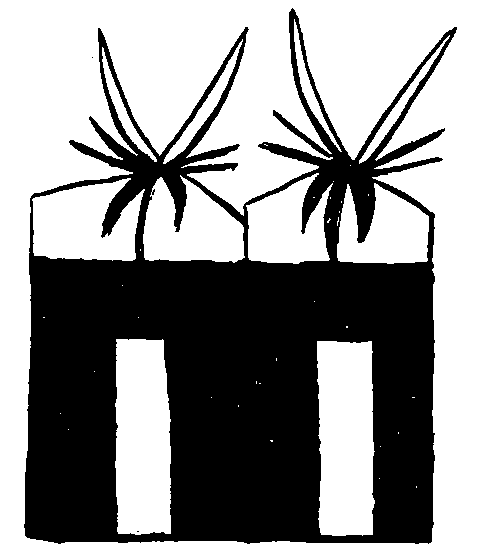
Fig. 86—Summer 1842—Repeated sun dance.
A party of fifty well-armed men, taking with them shovels, were sent out immediately
on the melancholy errand of burying our
murdered companions, while the main body retraced
their steps toward the Quintufue...
They [the Kiowas] appear to be on terms of peace
with the New Mexicans so far as it suits their interest
and convenience—no further; at one time trading
and exchanging their skins in amity, and almost in
the same breath making a descent upon the unprotected
frontiers, plundering and frequently murdering
the inhabitants. When we passed through their
country a party of Mexican traders were among them
bartering meal, blankets, and trinkets for buffalo and
deer skins. Some of these Mexicans we afterward
saw, and from them learned that ten of their warriors,
besides a principal chief, were killed by Lieutenant
Hull and his brave companions before they were
overpowered. The traders also gave us an account
of their ceremonies on returning to camp with their scalps and trophies. A wild
dance was executed by the braves in celebration of their victory, while the
women tore their hair and faces and ran naked through the prickly pear and thorn
bushes in token of their grief for the loss of their husbands and brothers (Kendall,
2).
Ä´dăldä K`ádó, "Repeated sun dance." The summer is called by
this name because, as indicated in the figure, it was remarkable for two
sun dances held at the same place on K`ádó P'a, or "Sun-dance creek"
(Kiowa Medicine-lodge creek, which enters the North Canadian near
100°). This could happen only when two individuals in succession had
been so instructed in dreams. In this instance the two dreamers
belonged to different camps and made their requests of the taíme
keeper almost simultaneously. After the first sun dance, when the
taíme priest had gone home, instead of taking down the medicine lodge
and building a new one, they decked it with fresh leaves and held the
second dance in it.
Gaá-k`ódălte Hém-de Sai, "Winter that Crow-neck died." The chief
Gaá-k`ódălte, or "Crow-neck," died in the late fall of 1842 at Gómgyä
Dan, "Wind canyon," above Gáñta P'a, "Trading river," an upper
branch of Double-mountain fork of Brazos river in Texas. He was
a Kiñep with a Crow wife (see summer, 1836), and was
the adopted father of the German captive, Bóiñ-edal,
already mentioned. The figure shows him in connection
with a crow, to indicate his name.
Ä´ntsenkúădal-de K`ádó, "Nest-building sun dance."
The figure is intended to show a bird's nest at the top of
the center pole of the medicine lodge. This dance, like
the last, was held on K`ádó P'a, which was a favorite
resort for the purpose, as the name indicates, at least five
Kiowa sun dances having been held there. The occasion
is rendered memorable by the fact that a crow built her
nest and laid her eggs upon the center pole of the medicine
lodge after the dance was over.
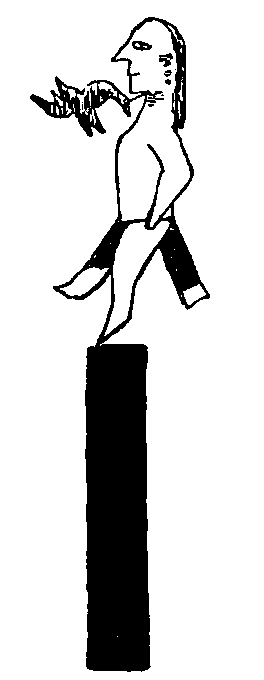
Fig. 87—Winter 1842—43—Crow-neck died.
After the dance a war party under (the former) Big-bow
and Kicking-bird went into Texas and captured a
number of horses. On their return they met a party of soldiers carrying
American flags, and believing them to be Americans (i. e., Northerners,
as distinguished from Texans), whom they regarded as friends,
they shook hands with them and gave them back the horses. They
afterward learned that the whites were Texans, who had adopted this
stratagem to deceive them. The Texans also had with
them a captive Comanche and a Mexican. The Kiowa
rescued the Comanche, but left the Mexican, as no
one wanted him.
The event here recorded occurred at or immediately
after the sun dance in the summer of 1843, but is indicated
above the winter mark as a matter of convenience.
The figure represents a woman wounded in the breast.
After the women have cut down the trees for the
medicine lodge they drag them to the place where the
lodge is to be erected, escorted by a body of warriors
in front and on each side. A warrior frequently invites a woman
to get up and ride behind him, and the invitation is generally accepted.
Among some tribes a procession in which the women ride behind
the men is a feature of the ceremony. Although this is customary,
it sometimes gives rise to jealous feelings on the part of husbands
or lovers. On this occasion, at the invitation of the chief Dohásän,
a woman got upon his horse behind him, which so enraged her husband
that he stabbed her. The woman recovered, and the husband
received no other punishment than a rebuke from Dohásän, who told
him that he ought to have better sense, as he (Dohásän) was a great
chief and an old man—too old to be running after girls.
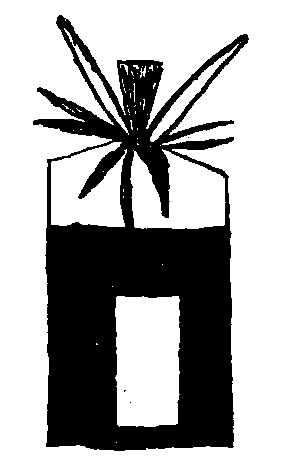
Fig. 88—Summer 1843—Nest-building sun dance.
Immediately after the dance, a war party under Gíădedéete (Faces-the-line),
went against the Ä´-t'a`ká-i (Timber Mexicans) or Mexicans of
Tamaulipas. They killed a number of people and destroyed
houses, but on recrossing the Rio Grande encountered
a body of Mexican troops when Gíădedéete and two
others were killed.
In the following winter K`ódal-aká-i, "Wrinkled-neck,"
a clerk of the Bents, built a log trading house about a
mile below Gúadal Dóha, "Red bluff," on the South
Canadian, near the mouth of Mustang creek and a few
miles above Adobe Walls, in the Texas panhandle (see
winters 1845—46 and 1864—65). It is also stated that the
same man, at a later period, built another trading post
at a fine spring a few miles above this one at Gúadal
Dóha on the same (north) side of the river.
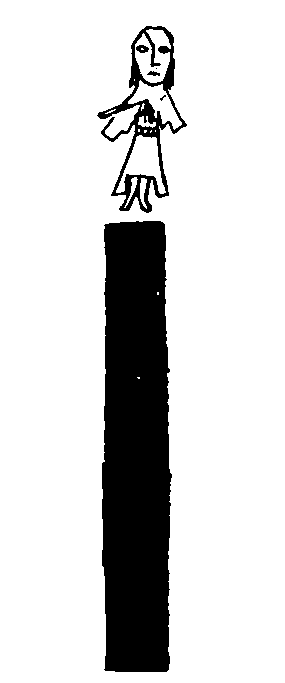
Fig. 89—Winter 1843—44—Woman stabbed.
K`ódalpäk`iä K`ádó, "Dakota sun dance." A number
of mounted Dakota paid a friendly visit to the Kiowa to
dance and receive presents of ponies, while the Kiowa were engaged
in the sun dance, which was held, like the last two preceding, on K`ádó
P'a or Kiowa Medicine-lodge creek. Although the
Dakota had been at war with the Kiowa when the
latter lived in the north, the two tribes had now
been friends for a long time, so long that the
old men do not remember when the peace was
made.
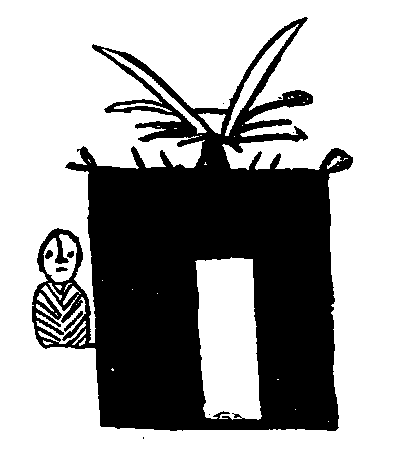
Fig. 90—Summer 1844—Dakota sun dance.
The Dakota are represented by the figure of a
man's bust, wearing a k`ódalpä or necklace bracelet
of long shell or bone tubes, popularly known
among the traders as Iroquois beads. The Kiowa
call the Dakota the K'ódalpä-k`íägo, "Necklace
people," and say that the Dakota were the original
wearers of such necklaces.
The explanation appears to be a myth founded on a misconception
of the tribal sign for Dakota, which is the same as for necklace, i.e., a
sweeping pass of the hand across the throat, but commonly translated
"beheaders" when applied to that tribe.
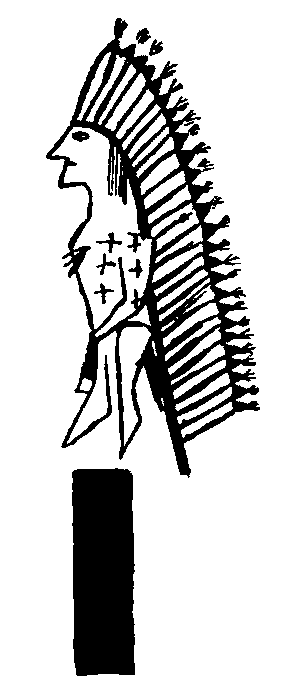
Fig. 91—Winter 1844—45—Ä´-tahá-ik`í killed.
Ä´-tahá-ik`í Ehótal-de Sai, "Winter that War-bonnet-man was
killed." The figure shows a man wearing a war-bonnet (ä´-tahá-i) and
with a wound in his breast. He is further distinguished by the crosses
(stars) with which his war shirt is ornamented. This "medicine shirt"
was covered with dark-blue stars, with a green moon in
front, in addition to which he wore a fine war-bonnet.
He was also called Sét-k`ódalte, "Bear-neck."
The brother of Zépko-eéte (Big-bow, grandfather of
the present old Big-bow, from whom he takes his name)
had been killed in Tamaulipas, and at the last sun dance
Big-bow had "given the pipe" to the Kiowa and their
allies to revenge him. A large party of over two hundred
warriors, including a number of Apache and Comanche,
set out under Big-bow, and after crossing the Rio Grande
and approaching the Salado (Señ P'a, "Cactus river")
they reached a stone fort, in which a small number of
Mexicans, not soldiers, had taken refuge. The Mexicans
had with them their families, also two Indians, who
wore feather crests upon their heads. The fort was so
provided with loopholes that they could fire upon the
attacking party, themselves remaining concealed. The
first attack was repulsed, and Ä´-tahá-ik`í was killed; but the
besiegers succeeded in piling wood against the log walls of the fort and
setting fire to it, when all the defenders were either burned or killed as
they tried to escape. ´dalpepte took part in this affair. After this
fight the Kiowa warriors went farther into Mexico and had another
encounter, in which Big-bow, the leader, was killed, in
consequence of which the war party returned home.
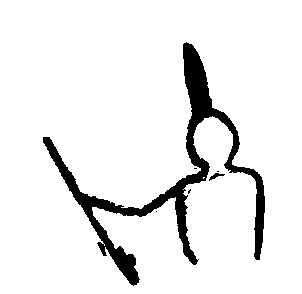
Fig. 92—Giving the war pipe (from the Dakota calendars).
"Giving the pipe" is the ceremonial way of enlisting
recruits for a large war party. For small expeditions
the invitation is given as described in treating of the
Gúa-dágya (winter 1862—63). At the time of the annual
summer assemblage for the sun dance the organizer of
the expedition, who must necessarily be a person of
some prominence, sends a pipe to the leaders of each
of the principal warrior orders—Kâ´itséñko, T'äñpéko, etc.—in turn.
If these leaders sanction the enterprise, they themselves smoke and
present the pipe to the members of their orders at their next meeting,
and all who smoke engage themselves by this act to join the expedition
at the time appointed by the original giver of the pipe. No one is
obliged to smoke against his will, but when a sufficient number have
determined upon the expedition, it takes precedence of all others, and
no other parties or individuals may start out against the enemy in any
direction until this expedition is concluded.
Tsó-`k`ódal K`ádó, "Stone-necklace sun dance." The figure above
the medicine lodge is intended to represent a girl, distinguished by
short sleeves, with a stone hanging from her neck.
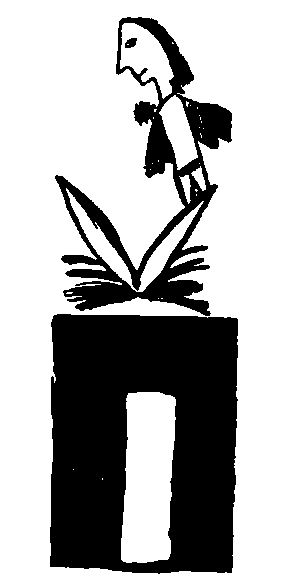
Fig. 93—Summer 1845—Stone-necklace sun dance.
This dance, like the three preceding, was held on K ádó P'a (Kiowa
Medicine-lodge creek), which was a favorite stream
for the purpose, on account of the abundance there
of cottonwoods, of which the medicine lodge was constructed.
The event which distinguished the dance
was the death of a girl named Tsó-k`ódalte (for Tsó-k`ódalpä-te),
"Stone-necklace," who was much beloved
by her father, and the consequent wailing for her during
the season of the ceremony.
In this winter K`ódal-aká-i, "Wrinkled-neck," built
a trading post on the South Canadian. The picture
is sufficiently suggestive. This post was in the panhandle
of Texas, on the north bank of the South Canadian
(Gúadal P'a, "Red river"), just above Bosque
Grande creek and about 2 miles above the entrance of Red-deer
creek (Ko`gá-i P'a, "Elk creek"). It was in a swampy and well-timbered
location, just west of one of the main trails
from Arkansas river southward. It was owned by
William Bent, called by the Kiowa Máñtahák`ia
("Hook-nose-man," "Roman-nose") who, in the spring
of 1844, had built a trading post, as already noted,
at Gúadal Dóha, higher up on the same river. Both
were in charge of a clerk known to the Kiowa as
K`ódal-aká-i, "Wrinkled-neck."
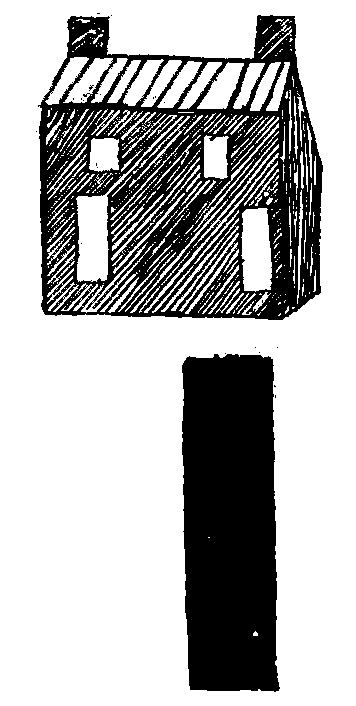
Fig. 94—Winter 1845—46-Wrinkled-neck's trading post.
The removal of Bent's base of operations from the
Arkansas to the Canadian seems to have marked the
southward drifting of the tribes, in consequence of
the destruction of the buffalo and the encroachments
of the Dakota, as noted by Frémont and other western
explorers of this period. At the same time the
Kiowa had dealings with another trading post, kept
by William Allison, known to them as Tsódal-héñte,
"No-arm," on Arkansas river at the junction of upper
Walnut creek, in Kansas. As has been stated, the
first trading post ever established in their country was built by Chouteau,
on Cache creek, near the present Fort Sill.
Pá-guñhéñté Äópäñ-de K`ádó, "Sun dance when Hornless-bull was
made a Kâ´itséñi-k`ia." The figure beside the medicine lodge represents
a man with the feather headdress and paint of the Kâ´itséñko,
the chief order of the warrior society. There is nothing to indicate
the name of the individual, which is carried in the memory of the artist.
This dance was held on a small tributary of the North Canadian, a
short distance above Kiowa Medicine-lodge creek.
The Yä´`pähe or military organization of the Kiowa has been already
noted. The highest order was the Kâ´itséñko, or "Real dogs (?)," a
select body of ten of the bravest warriors, who were pledged to lead
every desperate charge and to keep their place in the front of battle
until they won victory or death. With this purpose in view, their
leader carried a ceremonial arrow, with which he anchored himself to
the ground by means of a broad sash of elk-skin, which encircled his
neck like a collar and hung down at his right side to the earth; at the
lower end, where it trailed upon the ground, there was a hole, and when
forming line for the charge it was his duty to dismount in front of his
warriors, and, by thrusting the arrow through this hole, to fix himself
in this position, there to remain until his party was victorious, or until,
seeing that all was lost, they gave him liberty
to retreat by pulling out the arrow from
the ground. Should they forget this in the
hurry of their flight, he must remain and die
at his post. During the action, also, he was
obliged to remain stationary, without endeavoring
in any way to avoid the danger.
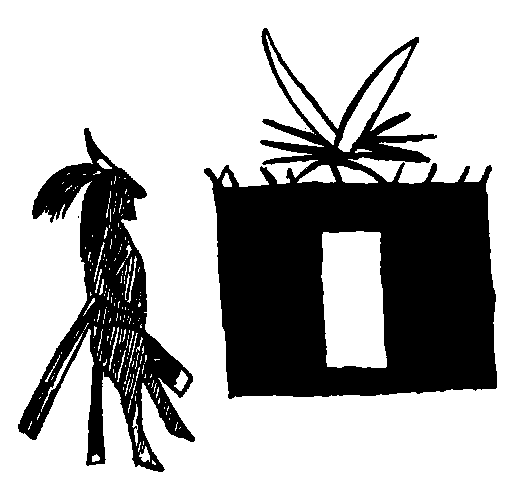
Fig. 95—Summer 1846—Hornless-bull
initiated.
Whenever a leader died or was killed
another was selected from among the
Kâ´itséñko to carry the arrow. As the regulations
governing it were adhered to very
strictly, it can readily be understood that
on the occasion of an election the office usually sought the man. As
the Kiowa or other tribes, however, had no desire to sacrifice their
bravest men needlessly, the ceremonial arrow or its equivalent was
carried only when the expedition meant war to the bitter end against
the enemy. In the absence of this emblem of his rank the owner took
his place as an ordinary warrior. He might even lend it to a warrior
who wished to distinguish himself in a war party while the owner
remained at home; but should he do this when any serious expedition
was in preparation, he was considered to be a coward and was degraded
from his rank. The leaders of the Tóñkóñko, "Black legs," another
warrior order, carried a lance somewhat resembling a shepherd's crook
and called a pabón, which had nearly the same purpose as the arrow
of the Kâ´itséñko. The noted chief Set-ängya, who was killed at Fort
Sill in 1871, was the leader of the Kâ´itséñko at that time, and deliberately
invited death in accordance with the obligation of his office.
The Kâ´itséñko initiations took place only on the occasion of a sun
dance and were not of frequent occurrence, so that the event was
always a matter of considerable importance. The membership was
always kept up to the requisite number of ten. The prominent feature
of the ceremony was the investiture of the new members with the
ópäm-yaípo, or collar sash of the order; hence the verb äópä, "to
initiate into the Kâ´itséñko," which is derived from the verb äópäñ,
"to tie with a rope around the neck." This ceremony evidently
explains the picture from the Dakota calendar (figure 96) which Mallery
translates "they made bands of strips of blankets in the winter," and
goes on to say: "These bands were of mixed colors and reached from
the shoulders to the heels. They also made rattles of deer-hoofs by
tying them to sticks with bead-covered strings. The man has a sash
over his shoulders and a rattle in his hand." The rattle was also a part
of the ceremonial equipment of the Dog-soldiers, and as the Dakota
calendar does not distinguish between seasons, the ceremony may as
easily have taken place in the summer, the ordinary
season for Indian celebrations on the plains.
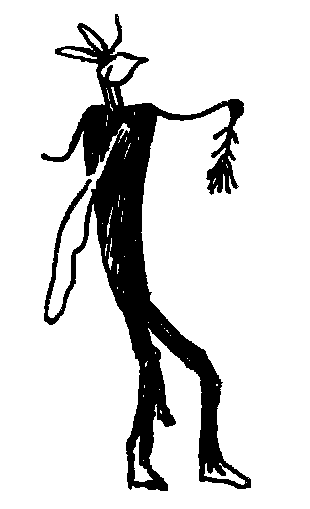
Fig. 96—Dog-Soldier initiated(?) (from the Dakota calendars).
Of the ten ópäm-yaípo, the principal one, called the
yaípo-kóñkya, "black rope," was made of elk-skin colored
black and was worn by the leader, the most noted of
whom in recent memory was Set-ängya. Three were
made of red cloth and were called yaípo-gúădal, "red
ropes," while the remaining six were made of elk-skin
dyed red and were called simply ópäm-yaípo. Any of
the Kâ´itséñko was at liberty, if he did not choose to
go on a particular expedition, to lend his sash to
another for the occasion; but if cowardice was suspected
to be his motive for this action he was degraded
from his rank and the sash taken from him and given
to a braver man. Usually each one had a younger
partner (tsä), whom he allowed to wear his sash while in camp or even on
less important expeditions, but when any great war party was on foot,
he must wear it and go himself or run the risk of being considered a coward.
When a wearer became too old to go to war, he formally resigned
his sash to some younger man whom he deemed worthy to wear it, the
recipient acknowledging the honor with presents of blankets or other
property. Sometimes the sash was publicly taken from a warrior grown
too old to wear it in battle, but this was not necessarily regarded as a
degradation when there was no implication of cowardice.
Sénpága Etá`ga-de Sai, "Winter when they shot the mustache."
The figure represents a man shot in the mustache or upper lip by an
arrow. The long hair and the breech-cloth shows that he was an
Indian, and the beard or mustache is exaggerated to accentuate the
idea. Mustaches are not infrequent among the older men of the Kiowa,
and Set-ängya had almost a full beard.
While the Kiowa were encamped for the winter on Elk creek, a
tributary of the North fork of Red river, within the limits of the
present reservation, a band of Pawnee coming on foot stole a number
of their horses. The Kiowa pursued them northward and overtook
them on the Washita and recovered the horses after a
fight in which one Pawnee was killed. In this action
Set-ängya engaged a Pawnee and was about to stab
him with his lance when, his foot slipped on the snow,
causing him to fall, and the Pawnee sent an arrow
through Set-ängya's upper lip.
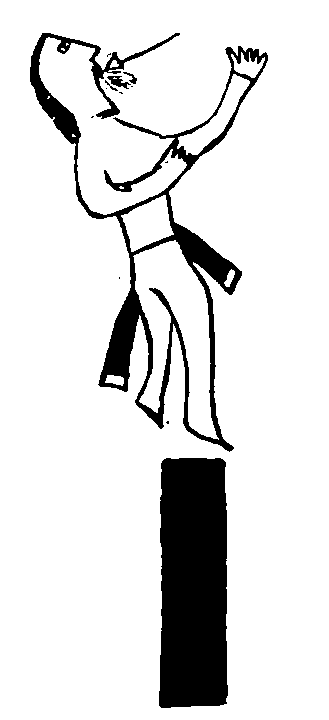
Fig. 97—Winter 1846—47—Mustache shooting.
Mâ´nka-gúădal Ehótal-de Pai, "Summer that Red-sleeve
was killed." The figure shows the Indian leader
with his war-bonnet and red sleeve. The medicine lodge
is absent, showing that there was no sun dance that
year.
Mânka-gúădal is the Kiowa name of the Comanche
chief Red-sleeve (Îkämosa?), who was killed in an attack
against a party of Santa Fé traders in Kansas, where
the Santa Fé trail crossed Pawnee fork of the Arkansas,
below the present Fort Larned, which was not
built until 1859. Pawnee fork, properly called by the Kiowa Aíkoñ
P'a, "Dark-timber river," is sometimes called by them from this circumstance
Mâ´nka-gúădal-de P'a, "Red-sleeve's river."
According to the story told by the Kiowa, they and
the Comanche were out in search of the Pawnee when
they met at this point a large party of white men with
wagons—evidently Santa Fé traders. Red-sleeve
wanted to attack them, but Set-ängya, the Kiowa
leader, refused, saying that the whites were their
friends. Red-sleeve then taunted the Kiowa as cowards,
put on his war-bonnet, and, calling his Comanche,
attacked the traders. The Kiowa, wishing to
avoid trouble, drew off. About the first fire a bullet
went through the leg of Red-sleeve and into the
spine of his horse, so that the animal fell, pinning his
wounded rider to the ground. He called on Set-ängya
to help him, but the Kiowa chief refused on account
of the taunt of cowardice, and the white men came
up to Red-sleeve and shot him.
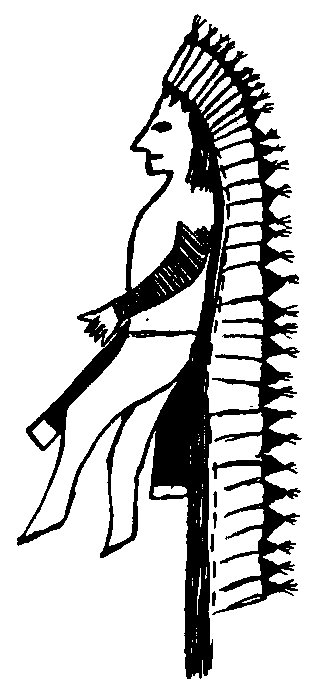
Fig. 98—Summer 1847—Red-sleeve killed.
As the government had but little communication with the tribes of
the southern plains until some years after the Mexican war, there is no
direct notice of this occurrence in the official reports, but a letter by
agent Fitzpatrick in the report of the Indian Commissioner for 1848,
the year after the attack upon the train, bears out the statement of the
Kiowa that they were anxious to keep peace with the whites, even at
the risk of quarreling with the Comanche and losing some very profitable
business opportunities. Speaking of depredations upon parties
traveling on the emigrant roads and the Santa Fé
trail, he says:
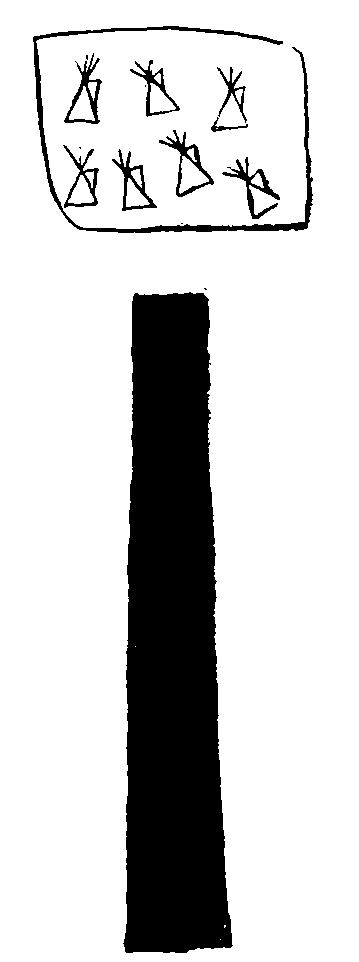
Fig. 99—Winter 1847—48—Winter camp.
Before leaving there [Bent's fort] last February I had an
interview with some of the Kiaway chiefs, and who have heretofore
been allies of the Comanches. They expressed themselves
as sorry for having anything to do with the war against
us, and promised to quit their country and all intercourse with
the Comanches and join the Cheyennes on the Arkansas, who
are the friends of the whites. This course I approved, and
since my departure from that country last spring learned that
nearly all the Kiaways have moved to the country of the
Cheyennes and Arapahoes and are living in perfect amity with
the surrounding tribes.
He also states that there seem to have been fewer
attacks made upon travelers along the Santa Fé road
recently, which he can account for only on the supposition
that "the Indians having, in 1846 and 1847,
secured so much booty by their daring outrages upon
travelers, are now and have been the past summer
luxuriating in and enjoying the spoils" (Report, 77).
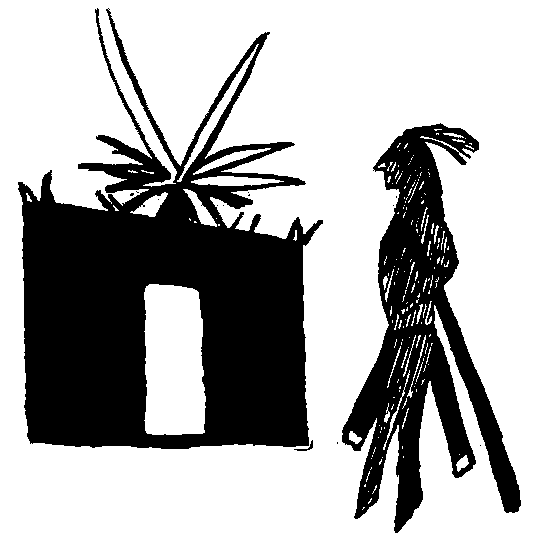
Fig. 100—Summer 1848—Initiation sun dance.
They camped all winter on T'aiñ P'a, "White river," an extreme
upper branch of the South Canadian (perhaps identical with Major
Long's creek). The figure represents the winter camp with the brush
windbreak around it.
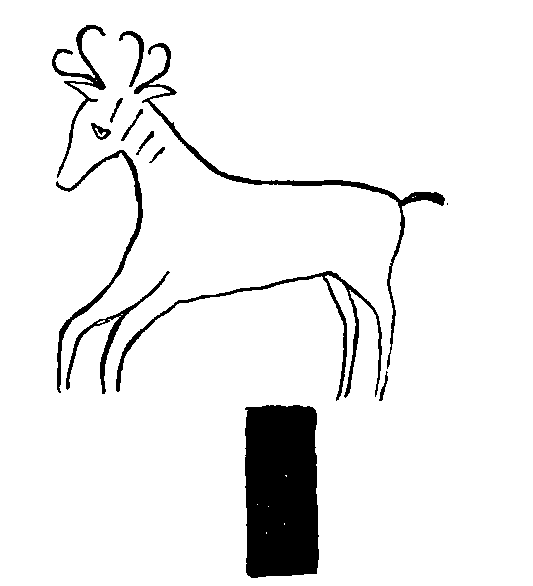
Fig. 101—Winter 1848—Antelope Drive.
Ópäñ K`ádó,
"Kâ´itséñko initiation
sun dance."
This dance was
held on Arkansas
river near Bent's
fort, in Colorado,
and was distinguished
by the initiation of several Kâ´itséñko
(see summer 1846). The figure represents an initiate with his (red) body
paint and ópäm-yaípo.
The Kiowa were camped on Arkansas river near Bent's fort and
made "antelope medicine" (ät'á´kagúa) for a great antelope drive.
Compare the figures from the Dakota calendars of Mallery (figure 102).
The antelope drive was made only in seasons of scarcity, when the
supply of buffalo meat was insufficient, and only in the winter, at
which season the antelope are accustomed to go in herds, while in the
spring and summer they scatter. Such a drive was an event so rare
that one informant over 60 years of age had seen but one in his
lifetime.
When it has been decided to have an antelope drive, the "antelope
medicine-man" builds a special tipi and remains in it all night, singing
his medicine songs until daylight. In the morning he starts out in the
probable direction of the antelope, carrying in each hand a rod about
two feet long decorated at each end with eagle feathers and in the center
with a wheel from which depend the feathers of other carnivorous
birds, his face is painted white, a buffalo robe is thrown over his
shoulder, and a whistle hangs from his neck. He is accompanied by
the whole tribe, mounted and on foot—men, women, and children. On
arriving at the place selected for the hunt, he sits upon the ground,
facing the direction in which the antelope are supposed to be; in most
other Indian ceremonies the priest faces the east. Beside him sit
some of the principal men, while behind stand several women. The two
men chosen to sit next him on each side must be men known as successful
in the hunt and on the warpath. He plants the two decorated
sticks in the ground in front of him, lights his pipe, and begins to smoke;
after smoking a little while he hands the rods to the men sitting next
him, crossing his right hand over his left as he does so, and giving
their hands a peculiar pressure four times. These two men then rise,
put their hands upon his head—a gesture of prayer or invocation—step
across each into the place of the other so as to again reverse the position
of the rods, and then, after the same four hand pressures, again
plant the rods in front of the priest.
Fig. 102—Antelope drives (from the Dakota calendars).
Two other men, noted war chiefs, then take their places beside the
priest, while the first two sit next them. Grasping the upright sticks
at the top, the priest now sings the first antelope song, blowing upon
the whistle at intervals, while all the surrounding men and women join
in the song, and the four men sitting beside him beat time on the
ground. Four different songs are sung in this manner, the sticks being
grasped lower down at each song, until at the last song the priest pulls
them out from the ground, and, holding them by their lower ends,
pushes them out alternately in front of himself, while the whole company—mostly
women now, as the men have gone on ahead—swell the
chorus, waving their arms with a sweeping motion, as if grasping at the
antelope. Then the two war chiefs place their hands upon his head as
before, and he gives them the sticks, with four other hand pressures.
Taking the rods, the two chiefs run forward on foot at full speed on
diverging lines until they meet two horsemen, to whom they deliver the
rods, and then return to the place where the priest is sitting with the
women and children. In the meantime the hunters have ridden far
out in a semicircle, so as to inclose a large area of country. The two
hunters who have taken the rods now also ride far out on diverging
lines, then turn, cross each other's paths, and return to the priest.
The four songs "draw the minds" of the antelope to the priests, and
the crossing of the paths typifies the surrounding of the game by the
lines of hunters.
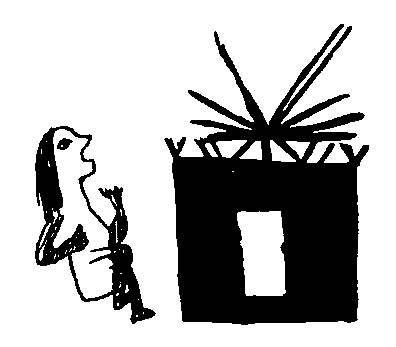
Fig. 103—Summer 1849—Cholera sun dance.
The horsemen now begin to close in toward the center, driving before
them the antelope and any other animals that may be within the semicircle;
as they approach, the women close in from, the opposite side,
and as the circle contracts, with the frightened animals running about
within it, they seize them with their hands or with reatas. It is said
that once, in such a drive, a woman caught a
coyote by throwing her arms about its neck. No
shooting is allowed within the circle, but any antelope
that break through are pursued and shot
outside (for other methods, see winter 1860—61).
Mayíagyă´ K`ádó, "Cramp (i. e., cholera) sun
dance." The figure beside the medicine lodge
represents a man with his limbs drawn up by the
pangs of cholera, which the Kiowa name "the cramp," from its characteristic
feature. Compare the corresponding figure (104) from the
Dakota calendar for the same disease.
This was during the great cholera epidemic that swept the country
in the spring and summer of 1849, which was carried to the plains by
the California and Oregon emigrants and by some of the tribes then in
process of removal from the east. The Kiowa remember this as the
most terrible experience within their history, far exceeding in fatality
the smallpox of nine years before. It was a disease before entirely
unknown to them, and was particularly dreaded on account of its
dreadful suddenness, men who had been in perfect health in the morning
being dead a few hours later. The disease appeared immediately
after the sun dance, which was held on Mule creek (Ädóä P'a, "Tipi
windbreak river"), between Medicine-lodge creek and the Salt fork of
the Arkansas, and, like the previous smallpox, it was brought by visiting
Osage who attended the dance. During the performance a man
became inspired or "crazy," as in the ghost dance, and prophesied that
something terrible was about to happen after the taíme had been
returned to its box. Hardly was the dance over and the taíme put
away when a man was attacked by this strange disease and died in
a few hours; then another became sick and died as suddenly, and
another, until in a few days the epidemic spread through the tribe,
killing great numbers, including an unusual proportion of medicine-men.
The Kiowa say that half their number perished during its prevalence;
this is probably an exaggeration, but whole families and camps
were exterminated and their tipis were left standing empty and
deserted. Many in their despair committed suicide, but the survivors
saved themselves by scattering in different directions until the disease
had spent its fury.
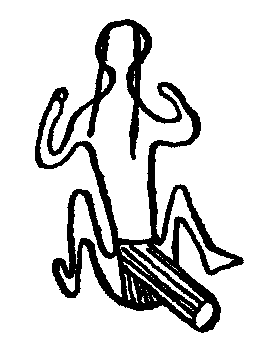
Fig. 104—Cholera (from the Dakota calendars).
The tribes of the lake region and those which had been recently
removed to Indian Territory generally escaped the disease, but among
the wild tribes of the plains, from the Dakota to the Comanche, the
ravages of the cholera during this season were as awful as among
the white population of the eastern states. The western
Dakota, who suffered severely, believed that the disease
had been deliberately introduced by the whites for their
more speedy extermination (Report, 78). The agent for
the Pawnee states that up to June of 1849 twelve hundred
and thirty-four persons, or nearly one-fourth of
the tribe, had already died, and the disease was still
making fearful ravages among them, while the survivors
were in such dread of the terrible scourge that no persuasion
could induce them to bury the dead, and within
a short distance of the agency it was not unusual to find the unburied
corpses partially devoured by wolves (Report, 79).
In the spring of 1850 an attempt was made to assemble the tribes of
the southern plains for the purpose of making treaties with them to
insure the safety of the emigrant roads. The Comanche, however,
declined to attend on account of the cholera, which they said their
medicine-men had predicted would be communicated to them again by
the whites unless they kept at a proper distance until the grass had
died in the fall, when the cholera would die out with it, and they would
no longer be afraid to meet their white friends (Report, 80). This
caused a postponement of the negotiations, which resulted later in the
treaties of Fort Laramie in 1851 and Fort Atkinson in 1853.
The Kiowa killed several of the Pawnee and were received by their
friends with a dance on returning to camp. The figure over the winter
mark (figure 105) represents a Pawnee, as shown by the peculiar shaving
of the head, with two long scalp-locks or "horns." In this connection
Dunbar says:
The name Pawnee is most probably derived from páriki, a horn, and seems to
hare been once used by the Pawnees themselves to designate their peculiar scalp
lock. From the fact that this was the most noticeable feature in their costume the
name came naturally to be the denominative term of the tribe (Clark, 18. See also
summers 1841 and 1851, and winter 1852—53).
The half circle above represents the circle of dancers opening in the
direction from which the warriors are returning, and the cross in the
center represents a fire made of a pile of buffalo chips around which
they danced.
The Kiowa were camped in two divisions near the Salt fork of Arkansas
river when a war party of Pawnee stole the horses of the first camp,
whose warriors at once started in pursuit. In the meantime another
party of Pawnee stole a number of horses from the Kiowa at the other
camp, who also sent their warriors in pursuit of the thieves. The first
Kiowa party overtook the Pawnee warriors, dismounted, and attacked
them, killing one. While this was transpiring the other band of the
Pawnee came up in the rear and stole the horses from which the riders
had dismounted to fight. The second Kiowa party, coming up behind
the Pawnee, at once attacked them, killed four, and recovered nearly
all the horses.
As the victorious Kiowa warriors approached their home camp after
this double pursuit and encounter, they imitated the cry of a wolf, to
let their friends know that they had killed some of the Pawnee—designated
as "Wolf-people" in the Kiowa language and in the sign language
of the plains—and their friends at once formed the circle and began the
dance to receive them, as indicated in the figure. The dance performed
on this occasion is a peculiar one, with a particularly pleasing
song accompaniment.
The scalp dance is called ´daldá-`gúăn, literally "hair-kill dance."
Should one of the war party have been killed, all the others go into
mourning (dóát) and do not rejoice or paint themselves as they return,
even though bringing back a scalp. In this case they hold no dance,
but sacrifice the scalp to the sun by "throwing it away" on some hillside.
If, on the contrary, they have taken one or more scalps without
the loss of one of their own party, they return to camp in full war dress,
including their war-bonnets, and with faces painted black, to show that
they have killed an enemy. They enter the camp running, to imitate a
charge, firing their guns and discharging arrows, to show how they had
met and struck the foe; if they approached in silence, they might be
mistaken for enemies. Their friends run out to meet them, shouting
"Ĭmkágyä´gya!" ("They are coming in triumph!"), and at once commence
preparations for the dance. The entry is generally made in the
morning, or perhaps just after noon, in order to give plenty of time to
prepare for the dance; should they reach the camp late in the evening,
the entry is postponed until the next morning. The warriors take the
women up behind them on their horses and ride around the circle singing,
while the scalps, stretched over hoops and painted red on the
inside, are carried at the ends of poles about 6 feet long
by other women in the dance; at night a fire is built in
the center of the circle. As the interpreter said, in his
quaint English, "Everybody very happy time like picnic."
No men excepting those of the returned war
party engage in the dance, but all the women take part.
The dance may continue every afternoon and night for
a month, after which the scalp is usually "thrown
away" in some unfrequented spot by fastening it to the
branch of a tree, or to the end of a pole planted on the
hillside, with a prayer offering it to the sun. This act
of sacrifice was called pä´ñgun, a word signifying "to
give by throwing away."
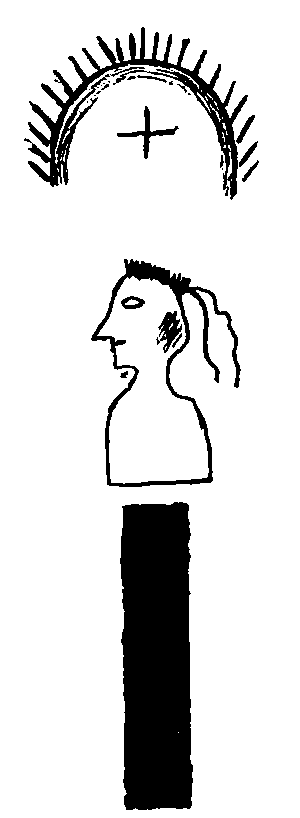
Fig. 105—Winter 1849—50—Dance over slain Pawnee.
An instance of the employment of buffalo chips
among the Crows in ceremonial dances of a warlike
character is noted by an officer concerned in the Dakota
campaign of 1876. Several officers and men had left
camp for a short hunting trip—
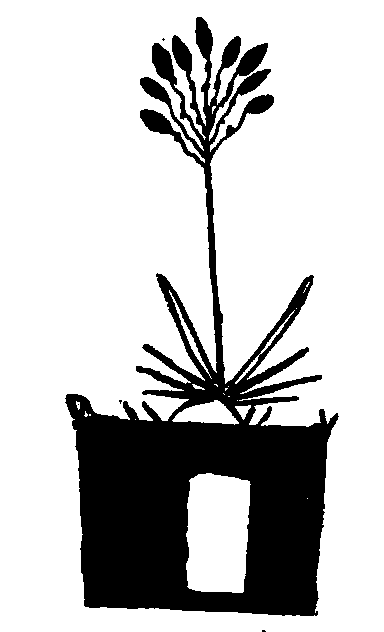
Fig. 106—Summer 1850—Chinaberry sun dance.
They were sighted by the Crow scouts at some distance below
and mistaken for Sioux, whereupon the latter made a tragical
rush for our camp to give the alarm. As they appeared in view
across the valley running in single file at a lively speed, occasionally deviating
from a direct line to describe a small circle indicating that they had seen an enemy,
quite an excitement was aroused in the camp. The soldiers
gathered in throngs, while the Crows formed in line, shoulder
to shoulder, behind a pile of buffalo chips placed for the purpose
and stood there swaying their bodies and singing while
the scouts approached. As the leader of the scouts came up
he paused to kick over the pile of buffalo chips, which was
equivalent to a solemn pledge to tell the truth, then sat
down surrounded by his fellow Crows, and after resting a
minute or two, told what he had seen (Montana, 1.)
Ä´`gótä K`ádó, "Chinaberry sun dance," so called
because held near a thicket of these trees on
Beaver creek (P'o P'a) or upper North Canadian
river, a short distance above the junction of Wolf
creek at Fort Supply, Oklahoma. In the figure
the tree above the medicine lodge represents the
chinaberry tree with its leaves and berries. No other event is recorded
in connection with this summer.
Tañgíapá Ehótal-de Sai, "Winter that Tañgíapa was killed." The
bust above the winter mark represents the man killed, whose name,
signifying a male deer, is indicated by the connected figure of a male
(horned) deer.
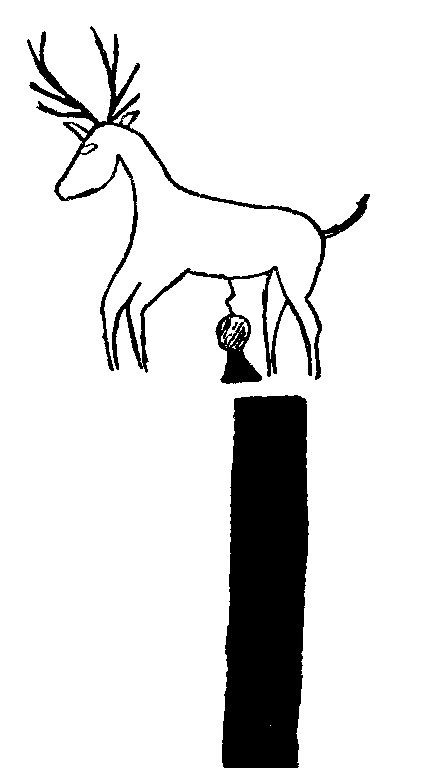
Fig. 107—Winter 1850—51—Buck-deer killed.
He had led a small war party into Tamaulipas or the adjacent region
beyond the Rio Grande. They overtook a party
of Mexicans, and Tañgíapa, who was mounted,
was pursuing a Mexican on foot and was just
about to stab him with a lance when the Mexican
turned and shot him through the body, and was
himself immediately killed by the Kiowa warrior.
Tañgíapa was carried into the mountains, where
he died the same evening. No other Indian was
killed.
Paiñ K`ádó, "Dusty sun dance." It was held
on the north bank of the North Canadian, just below
the junction of Wolf creek, near where the last
sun dance had taken place. It is so called on account
of a strong wind that prevailed during the
ceremony, which kept the air filled with dust.
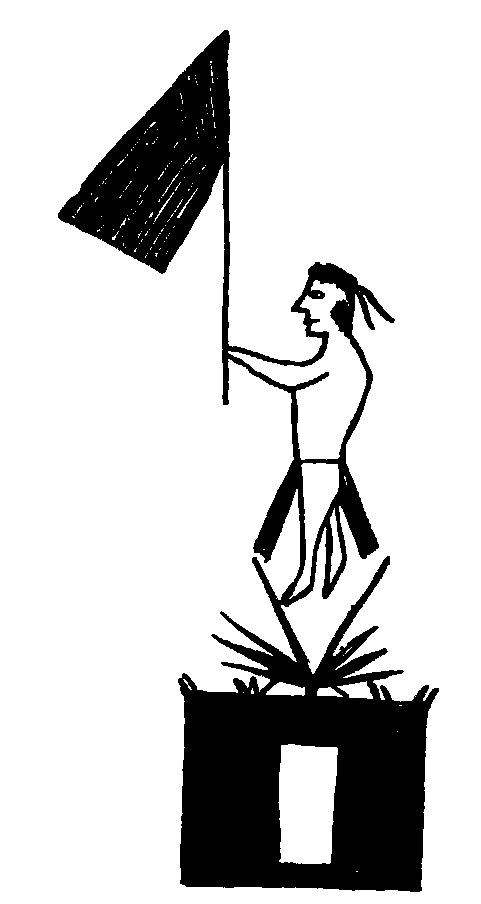
Fig. 108—Summer 1851—Dusty sun dance; flag stolen.
When the dance was over and the Kiowa had
left the spot and gone northward toward the
Arkansas, a band of the Pawnee came to the place and stole from the
center pole of the medicine lodge the offerings which had been hung
upon it as a sacrifice, including a number of
blankets and a flag which had been given by
the Kiowa to the Osage when the two tribes had
made peace in 1834. The figure over the medicine
lodge represents a Pawnee—indicated by
the peculiar scalplock, as already described—holding
a flag in his hand.
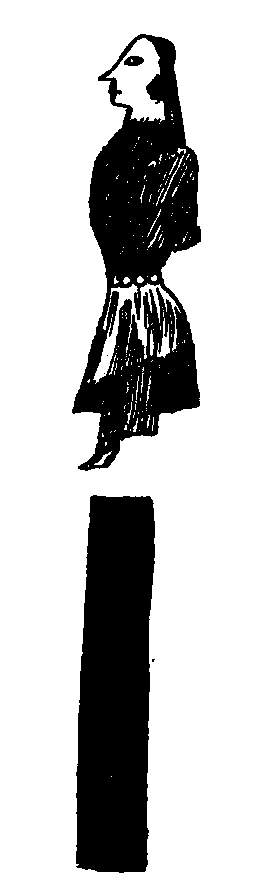
Fig. 109—Winter 1851—52—Woman frozen.
The Pawnee followed the trail of the Kiowa,
and on coming near them set fire to the prairie
to attract their attention. Two young men of
the Kiowa went out to learn the cause of the
fire and found the Pawnee party, who said that
they had come with presents and goods to make
peace and to trade with the Kiowa. The young
men rejoined their party with the news, and the
Kiowa, under chiefs Dohasän and Set-ängya,
turned back to meet the Pawnee band and escort
them to a camping place. As the latter
were on foot, in accordance with their usual
custom, they asked the Kiowa to carry for them
the skin bags which they said contained the
presents. The Kiowa took the bags upon their horses, but as they
went along, knowing well the tricky character of their ostensible
friends, they opened several of the bags and found them filled, some
with buffalo chips for fuel, and others with arrows, showing that the
Pawnee force had come to fight as soon as a favorable
opportunity offered. Disgusted by this treachery, they at
once attacked and defeated them, killed the chief, who
wore a shell gorget, and captured a boy, who was taken
by Set-ängya himself. It was an expensive capture, however,
as will appear later. The Kiowa lost two prominent
men, Set-äyaí, "Bear-on-trees," and Tén-ät'ánte,
"Little-heart." The fight occurred in Kansas, north of
the head of Medicine-lodge creek.
Mä´ñyí Dó`gyähón-de Sai, "Winter the woman was
frozen." The figure over the winter mark represents the
woman, indicated by the dress and belt with disks of German
silver.
During the winter the present chief, Zépko-eét-te, "Big-bow,"
then a young man, stole a very pretty woman whose
husband was away on the warpath, and took her to his
own home camp. On coming near his father's tipi he
concealed the woman among the trees and went into the
tipi to get something to eat before going on. His father, who knew
what he had done, held him and prevented his return to the woman
waiting outside, who remained there exposed to the extreme
cold until her feet were frozen.
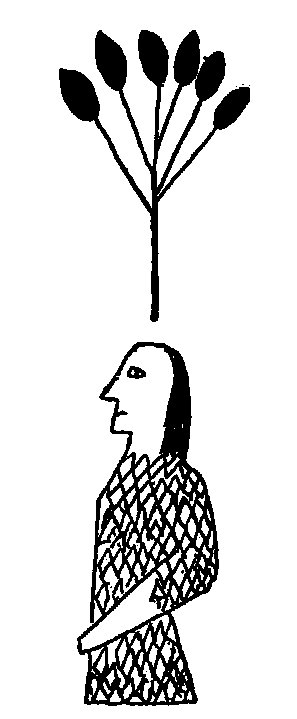
Fig. 110—Summer 1852—Iron-shirt killed.
To "steal" a woman is to elope with or take possession
of her in a manner contrary to tribal usage, i. e., secretly
and without having made the customary presents to her
relatives by which the transaction becomes ratified as a
marriage.
Á`pätáte (K`a-t'ógyä or Hâñt'ógyä-k`ía) Ehótal-de Pai,
"Summer that Touch-the-clouds (Knife-shirt, or Iron-shirt-man)
was killed." There was no sun dance this
year. The Pawnee warriors killed a Cheyenne chief who
wore a cuirass. The cross marks over the human figure
represent the cuirass, and the tree with leaves shows
that it occurred during the summer.
At a great Cheyenne camp upon a stream, apparently
in Kansas or Nebraska, known to the Kiowa as Hâ´ñtso
P'a, "Cannonball (literally, metal rock) River," the Cheyenne, Arapaho,
and some Dakota had made medicine for a combined expedition against
the Pawnee, to which they invited the Kiowa and Apache, who were
camped at the time on Koñyä´daldä P'a, "Black-hill river," in Kansas,
north of the Arkansas. About half the warriors of the two latter tribes
accepted the invitation, and the united force, moving
with all their women, children, and tipi outfits,
started against the Pawnee. They met the enemy,
but were defeated, with the loss of the Cheyenne
chief Wóifdóĭsh, "Touch-the-clouds," called by the
Kiowa Á`pätáte, "Far-up," otherwise known as
Hañt'ógyä-k`ía, "Iron-shirt-man," from a cuirass
which he wore and which had probably been procured
originally from Mexico, where the Kiowa
once captured another.
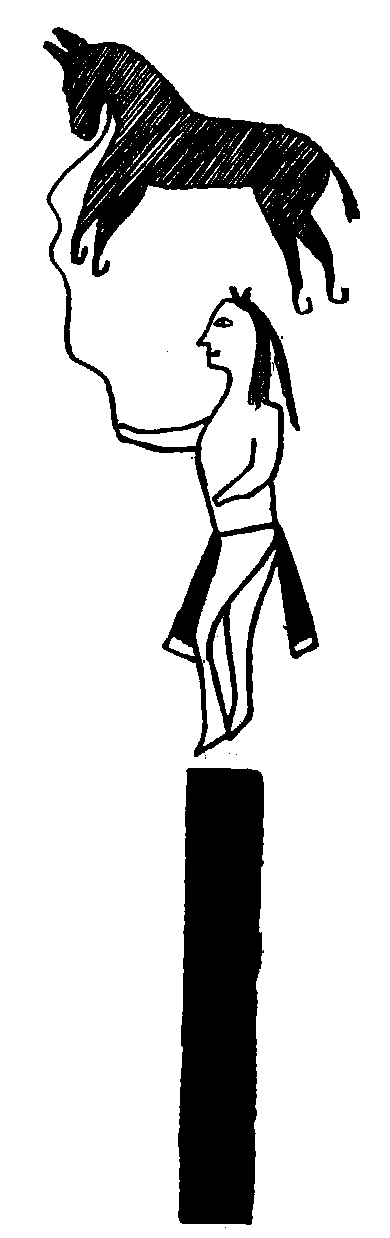
Fig. 111—Winter 1852—53—Gúădal-tséyu stolen.
The official report for the year thus notices the encounter:
A war party of Osages, Kioways, and Kaws, consisting of
about four hundred warriors, went in pursuit of the Pawnees
while out on their last hunt. They overtook the Pawnees
and attacked them, but, being greatly outnumbered by the
Pawnees, they ingloriously fled, leaving on the ground one
war chief killed, and having killed and scalped one Pawnee
woman (Report, 81).
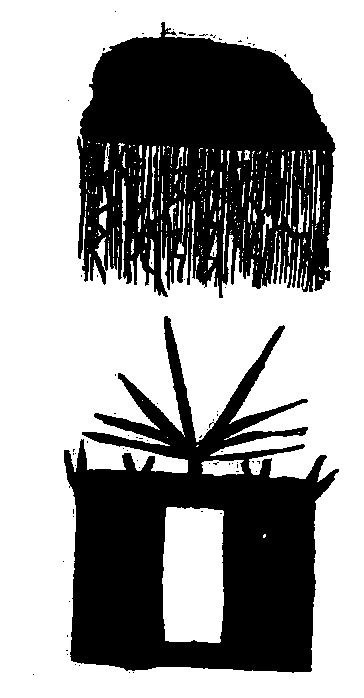
Fig. 112—Summer 1853—Showery sun dance.
The Pawnee boy captured by Set-ängya in the
summer of 1851 escaped, taking with him two
horses, including the finest one in the tribe, a bay
race horse known as Gúădal-tséyu, "Little-red" or
"Red-pet." The figure above the winter mark
shows the Pawnee boy, distinguished
by the peculiar headdress
of his tribe, holding the bay (red)
horse by the halter. The importance of the horse
to the equestrian Kiowa is shown by the fact that
this is recorded as the important event of the
winter.
Bíăsot K`ádó, "Showery sun dance," so called
because there were continual showers during the
dance. The figure above the medicine lodge is
intended to represent the drizzling rain descending
from the black clouds overhead, with occasional
red flashes of lightning. Compare the corresponding
rain and cloud symbols given below. The dance
was held at the same place where the "dusty" sun dance was celebrated
in 1851, near the present Fort Supply.
Fig. 113—Rain symbols (a Chinese; b Hopi; c Ojibwa).
This sun dance is distinguished for a deliberate violation of the taíme
rules by Ten-píäk`ia, "Heart-eater," a noted warrior and medicine-man,
rival of Ansó`te, the taíme keeper, and
father of Set-t'an, the author of this calendar.
One of the strictest regulations of
the sun dance was the taboo against mirrors,
which form part of the toilet equipment
of nearly every Indian, but which
must not even be brought near the taíme
of the Kiowa. Notwithstanding this, Ten-píäk`ia,
in defiance of the medicine and
its priest, deliberately rode around inside
the circle with a small mirror while the
taíme was exposed, and afterward tried
to poison Ansó`te by scraping off the mercury
from the back and mixing it with some
tobacco which he gave to the priest to
smoke. Ansó`te took one puff, but detecting
something wrong, put away the pipe,
saying, "There is something there of which
I am afraid." Soon afterward Ten-píäk`ia, while hunting buffalo, was
thrown from his horse and killed, which was regarded
as a speedy punishment of his sacrilege.
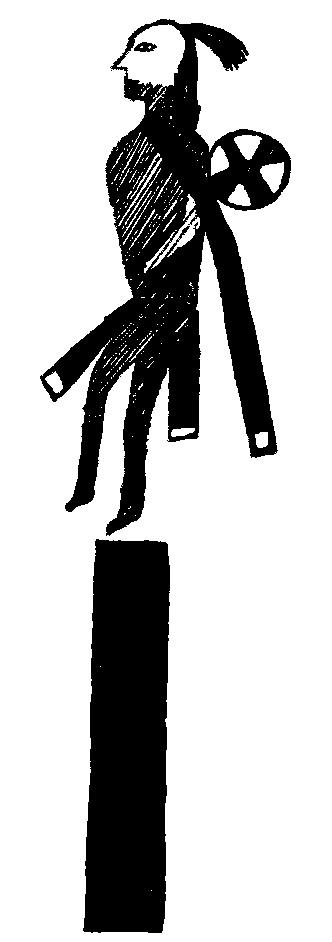
Fig. 114—Winter 1853—54—Pä´ñgyägíate killed.
Although Indian tradition records frequent instances
of careless and unthinking neglect of some of the numerous
taboos and other regulations in connection with
sacred matters, such a deliberate defiance of their ordinances
is almost unexampled; more rare, indeed, than
heresy in the old days when Europe held but one religious
doctrine. It is of interest as showing that even
among savages attempts are sometimes made by bolder
spirits to break away from the bonds of mental slavery.
A somewhat similar incident is recorded for 1861.
Soon after the last sun dance a war party went into
Chihuahua (Toñhéñ-t'a`ká-i-dómbe, "waterless Mexican
country"), east of the Sierra Madre, where they met and
attacked a mule train. The Mexicans made a circle of
the wagons, with the mules on the inside, and prepared
to defend themselves. A distinguished warrior named
Pä´ñgyägíate succeeded in entering the circle and was
striking the mules with his bow, equivalent to putting his seal of
ownership upon all thus struck, when he was shot and killed by a
Mexican who had approached him unseen. No other Kiowa was killed.
Pá-tadal was one of this party.
BUREAU OF AMERICAN ETHNOLOGY—
SEVENTEENTH ANNUAL REPORT PL. LXXVII
SAND MOSAIC OF THE HOPI ANTELOPE PRIESTS, (AFTER FEWKES).
The man killed was one of the Kâ´itséñko (see summer 1846), as
indicated by the headdress and the red sash of the order pendent from
his shoulder. He is further designated by his shield—represented
hanging at his side—which was made by Äk`ódalte, "Feather-necklace,"
and the picture of which is at once recognized by the old
warriors of the tribe. The name Pä´ñgyägíate may be rendered
"Sacrifice" or "Sacrifice-man," from pä´ñgyä, a sacrifice or offering
"thrown away" on the hills as a gift to the sun.
Äyä´daldä´ P'a K`ádó, "Timber-mountain creek sun dance." This
dance was held upon the creek upon which the most
important treaty of the Kiowa was afterward made
(see winter 1867—68). The event of the summer was
the killing of Black-horse by the Sauk and other
allied tribes.
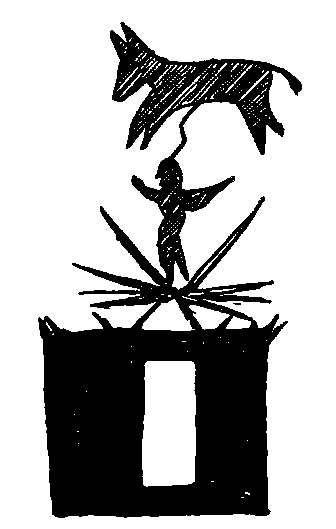
Fig. 115—Summer 1854—Black-horse killed.
The brother of Set-ĭmkía, "Pushing-bear," more
commonly known as Stumbling-bear, had been killed
by the Pawnee, and at this dance he sent the pipe
around as a summons for a great expedition against
that tribe. Other tribes were invited to join the
Kiowa, and a large war party set out, consisting
of several hundred warriors of seven tribes—Kiowa,
Apache, Comanche, Cheyenne, Arapaho, Osage, and
some Crows. They crossed the Arkansas and proceeded to the northeast
until they reached Gúigyä P'a, "Pawnee river" (Smoky Hill),
where they met a small party of about eighty Säkíbo (i. e., Sauk and
Fox), with a few Potawatomi, three cognate tribes which had been
removed from beyond the Mississippi to reservations in eastern Kansas.
The latter advanced against the Kiowa, who summoned them to
halt, but notwithstanding the great disparity in numbers, the eastern
Indians at once attacked the prairie warriors. Securing a sheltered
position, and being all well armed with rifles with which "they hit
every time," while the Kiowa and their allies were in the open prairie
and armed chiefly with bows, the Sauk not only kept them off but
defeated them with the loss of about twenty killed, among whom were
twelve of the Kiowa, including Tseñ-kóñkyä, "Black-horse," a prominent
war chief.
This is the story as given by the Kiowa themselves, who ascribe
their disastrous defeat by a comparative handful of men to the rifles
in the hands of the Sauk warriors. This battle occurred either on
Smoky-hill or Saline river, in Kansas, about midway between the present
Fort Harker and Fort Hays.
Although Set-ĭmkía says that the expedition was originally organized
against the Pawnee to avenge the killing of his brother by that
tribe, other informants state that it was organized and led by Tseñ-kóñkyä,
the man who was killed, for the special purpose of exterminating
the immigrant tribes, and this statement agrees with the official
accounts. The Indian Report for 1854 contains an extended notice of
this great war party, which went after wool and came back shorn.
In the summer of that year the agent for the southern plains tribes
started for the Indian rendezvous near Fort Atkinson, on the Arkansas,
with a large train of goods for distribution in accordance with the
terms of the treaty made at that point in the previous year, having first
sent messengers ahead to inform the Indians of his approach.
The Indians were encamped on Pawnee fork, at the crossing of the Santa Fé road,
where they were collected in larger numbers than had ever been known to assemble
on the Arkansas before. Old traders estimate the number at twelve to fifteen hundred
lodges, and the horses and mules at from forty to fifty thousand head. The
entire Kiowa and Prairie Comanches were there; several hundred of Texas or Woods
Comanches had come over; the Prairie Apaches, one band of Arapahoes and two
bands of Cheyennes and the Osages composed the grand council. They had met
for the purpose of forming a war party, in order, as they in their strong language
said, to wipe out all frontier Indians they could find on the plains. Two days previous
to my arrival they broke up camp and started north. As soon as I heard that they
were gone I sent two runners to try and bring them back. They, however, declined
coming, and sent word that they would soon return, as it would take but a short
time to clear the plains of all frontier Indians. They were doomed to be disappointed,
as other nations, great in their own imaginations, have been. At some
place near Kansas river they met about one hundred Sac and Fox Indians and the
fight commenced, and from their own account lasted about three hours, when, to
their great surprise, the combined forces were compelled to retreat, leaving their
dead on the field, which Indians never do unless badly whipped. They report their
loss at about sixteen killed and one hundred wounded. From the best information
I can get, the Sacs and Foxes were as much surprised at the result as the others,
for there is no doubt but that they would have run too if they could have seen a
hole to get out at. They had taken shelter in a ravine and were for a long time surrounded.
The prairie Indians were armed with the bow and arrow, while the others
had fine rifles. One is a formidable weapon in close quarters, but worthless at more
than about fifty yards. The rifle told almost every shot. It is easily accounted for
why one hundred whipped fifteen hundred. The former had a weapon to fight with;
the latter had none at the distance they were fighting. I learn that the Sacs and
Foxes lost six killed, but they were killed with the rifle. The Osages have fine guns,
and they must have shot them, for I am certain the other Indians have nothing in
the shape of guns, except a few Northwest shotguns, and they are of but little use.
The Sacs and Foxes are satisfied that the Osages did them the only damage they
received, and as an evidence I learn that war has been declared between the nations,
and already some scalps have been taken. This may save the government from
whipping them (the Osages), as it is certain somebody will have it to do soon
(Report, 82).
In his report for the same year the Indian superintendent says:
I am officially advised that on the arrival of Agent Whitfield at Fort Atkinson, on
the Arkansas river, with the annuity goods for the Comanches, Kiowas, and Apaches,
in July last, he found that they had all gone on a war party against the tribes of the
north, confident from their numbers, estimated at fifteen hundred, to gain an easy
victory over any tribes they should encounter. In the vicinity of Smoky Hill they
came up with a party of Sacs and Foxes and a few Pottawatomies, the whole not
exceeding two hundred [sic] in number. The Comanches, believing, to use the words
of one of their chiefs, that they could "eat up" so small a force in a few minutes,
made a general charge. The Sacs allowed them to approach until within a hundred
yards, when they opened upon them a well-directed fire from their rifles, which,
being unexpected, appalled, and for the moment checked, their assailants. Three
times these charges were repeated, and each time with a like fatal result. The
Comanches at length retired, crestfallen and dispirited, having twenty-six killed
and over one hundred wounded. On their return to Fort Atkinson their appearance
and deportment were quite changed. They seemed humble and dejected, and quietly
and submissively received their annuities and retired. The loss
of the Sacs and Foxes is reported to be very inconsiderable
(Report, 83).
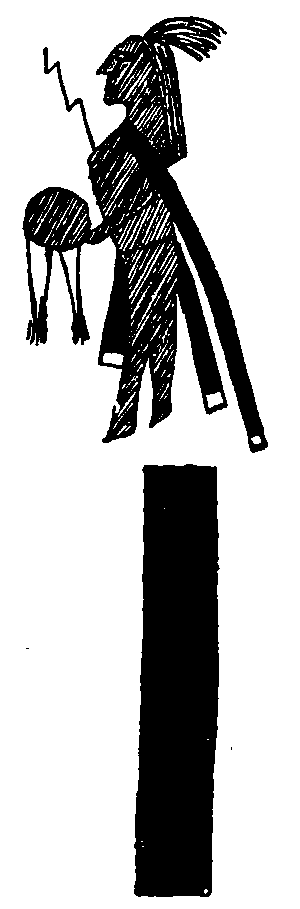
Fig. 116—Winter 1854—55—Gyaí`koaóñte killed.
The agent for the Sac and Fox tribes gives a sequel which illustrates
Indian vengeance:
On the second of August, by the request of the chiefs and head
men of the Sac and Fox tribe of Indians, I reported to the honorable
Commissioner of Indian Affairs, through your office, an
account of an attack made on the Sacs and Foxes by the Comanches,
Arapahoes, and Osages, about the tenth of July, one hundred
miles west of Fort Riley. Some five or six days ago a Sac Indian,
who had a brother killed in that battle, left here by himself, went
within four hundred yards of an Osage encampment, met two
Osage men, shot one down and went up and scalped him; could
have killed the other, but wished him to live to carry the news
of what he had done to the Osage camp; waited until he had
done so; heard the cries and lamentations of those in the camp
for their dead kinsman, mounted his horse and returned with his
scalp. The nation immediately upon his return moved to within
a mile of the agency, where they are now dancing with joy and
triumph over the trophy brought back in this warlike achievement
to them (Report, 84).
Whirlwind, the famous war chief of the southern
Cheyenne, who died in 1895, had every feather shot
away from his war bonnet in this engagement, which he always
declared was the hardest fight he had ever been in. Notwithstanding
this, he was not wounded, owing to the protecting power of a medicine
hawk which he wore upon his war bonnet! He said:
When all the feathers were shot away the hawk was not hit. Balls went to
the right and left, above and below me. I was mounted and the Sacs and Foxes
were on foot in a hollow like a buffalo wallow. It was the Great Spirit and the
hawk which protected me (Clark, 15).
Gyaí`koaóñte "Likes-enemies," is killed by the Ä´lähó. He is identified
in the picture by his shield, which is recognized as one made by
Set-pate, "He-bear," and by the collar of the Kâitséñko, to which order
he belonged. The zigzag stroke touching his breast is intended to show
that he was killed by a bullet.
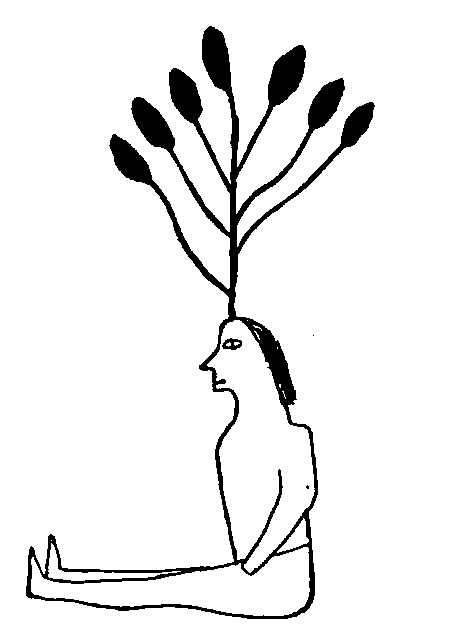
Fig. 117—Summer 1855—Sitting summer.
According to one statement, the Kiowa warriors had gone against the
Osage on Arkansas river and found their camp with a number of horses
hobbled near by. They waited until night and
then made an attempt to steal the horses, but
were ambuscaded by the Osage and this man was
killed. Another informant states that the Indians
concerned were not the Osage (K`apä´to, "Shaved-heads,")
but the Ä´lähó (Kwapa? Omaha?), described
as a tribe living to the northward of
the Osage and similar to them in language and
costume. As the Kiowa generally state that they
have been friends with the Osage since the peace
of 1834, and more particularly as they had been
allies against the Sauk only a few months before
this occurrence, the latter story is probably
correct.
Toñgúayo Paídă, "Summer of sitting with legs crossed and
extended." For some reason the word for summer is here used in
the plural form. The figure is sufficiently
suggestive. There was no sun dance this
summer. The weather was extremely hot
and the grass dried up, in consequence of
which the horses became so weak that
when traveling the Kiowa were frequently
obliged to halt and sit down to allow the
animals to rest.
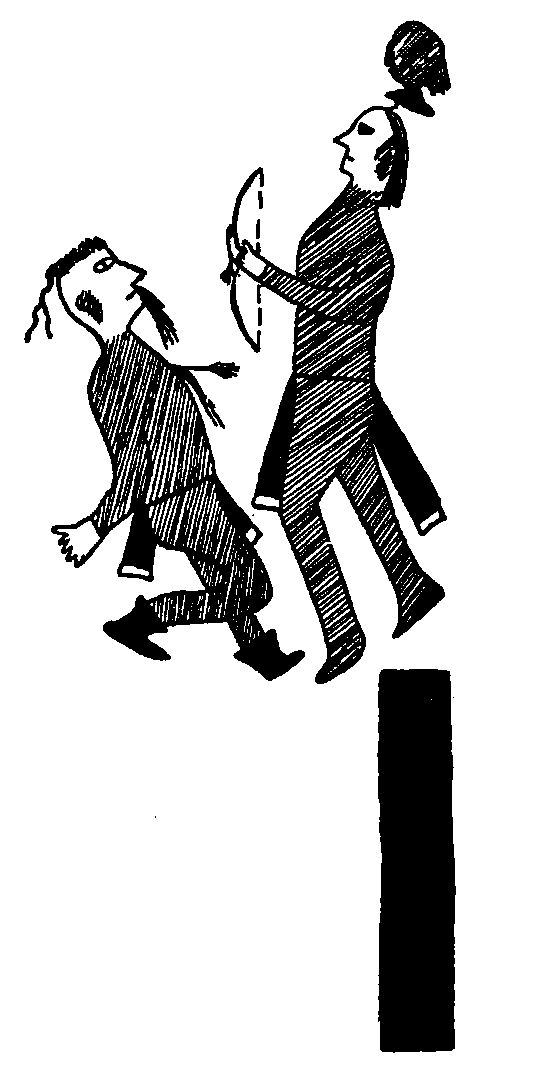
Fig. 118—Winter 1855—56—Big-head kills an Ä´lähó.
´daltoñ-édal, "Big-head," the brother of Gyaí`koaóñte, who had been
killed by the Ä´lähó (? see ante) in the preceding winter, after
having cried all summer, went this winter for revenge, met an
Ä´lähó (or an Osage?) hunting buffalo, and killed him.
The figure with a bow above the winter mark represents A´daltoñ-édal,
indicated by the head above the head of the figure, while in front of
him is the Osage (?), with the arrow in his breast and the blood
pouring from his mouth. The headdress is like that hitherto used to
indicate a Pawnee, both tribes wearing the head shaved, leaving a
crest. During this winter also a war party went into Chihuahua and
brought back a large number of horses, but lost one man, "Going-on-the-road."
Séñ-äló K`ádó, "Prickly-pear sun dance." The prickly-pears or
tunas (Opuntia tortispina ?) are shown above the medicine lodge.
This dance was held at a place where there was an abundance of
prickly-pears, at the mouth of a small creek, probably Caddo or Rate
creek, entering Arkansas river about 10 miles below
Bent's fort, in Colorado. It was held late in
the fall, when the prickly-pears were ripe, instead
of in midsummer, as usual, and the women gathered
a large quantity. This circumstance has given the
distinctive name to the k`ádó. The sweet fruit of
the tuna is much prized by the Indians, who eat it
raw, while the fleshy leaves are used as a mordant
in their painting upon buckskin.
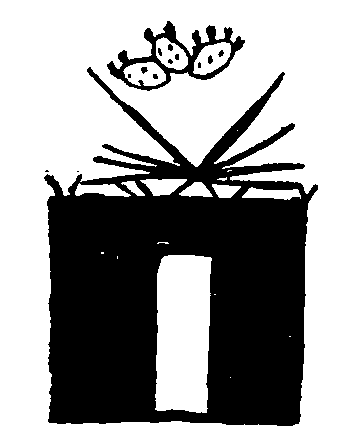
Fig. 119—Summer 1856—Prickly-pear sun dance.
Dó-gyäkódal-de Sai, "Winter that they left their tipis behind." The
two tipis above the winter mark are intended to convey the idea.
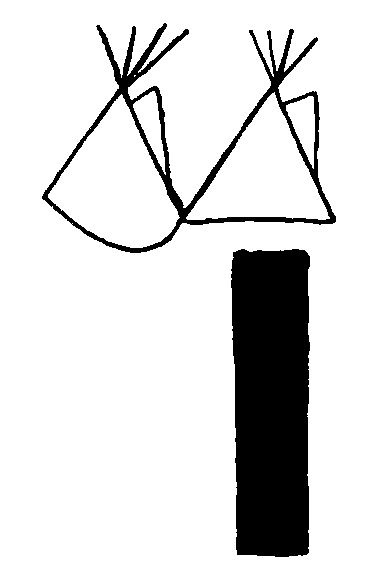
Fig. 120—Winter 1856—57—Tipis left.
After the last sun dance, while the Kiowa, Cheyenne, and Arapaho were
still camped near Bent's fort, a Kiowa war party under Big-bow and
Stumbling-bear went against the Navaho, while the rest, men and
women, under old Lone-wolf, went after buffalo, leaving their tipis
rolled up in care of Bent. On their return they found the Cheyenne in
possession of their tipis, and on complaining to Bent he said, "I
have given them to my people" (i. e., the Cheyenne). A quarrel
ensued, in which the Cheyenne shot Lone-wolf's horse and slightly
wounded one Kiowa and drove the others away, retaining possession of
the tipis. This appears to have been the most serious break between
the two tribes since they had made peace in 1840.
Ä´potó Ek`iädă´-de K`ádó, "Sun dance when the
forked stick sprouted." The figure (121) represents a forked stick, with
leaves, growing out from the side of the medicine lodge.
This dance was held on the north side of Salt fork of the Arkansas
(Ätäntaí P'a, "Salt river") at a small creek, probably Elm creek, a
considerable distance below upper Mule creek (Ädóä P'a) in Oklahoma.
A Kiowa named K`ayä´ñte, "Falls-over-a-bank," owned a sacred ä´poto,
or two-pronged stick of ä`gótä, or chinaberry wood about four feet long,
trimmed with wild sage, which had been given him by his uncle Kóñabíñate
or Kóñate, "Black-tripe." It was his medicine, which he carried
publicly only in the sun dance, and no one else had such a stick.
He carried it on this occasion, keeping time to the dance with it, and
at the end of the ceremony planted it, with the fork down, inside the
medicine lodge as a sacrifice. On returning to the place next year the
Kiowa found that it had been reversed by someone and had taken root
and put forth green leaves. This was the more remarkable, as it had
previously been stripped of its bark. The news of the phenomenon
spread through the tribe and confirmed the previous impression concerning
the mysterious powers of the ä´poto. Ten years later, on the
occasion of the treaty of Medicine Lodge, the Kiowa visited the spot
and found that the rod had grown into a tree and was still alive. It
is just possible that K`ayä´ñte, who is still living, could explain the
matter.
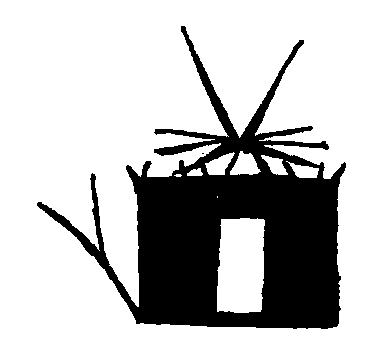
Fig. 121—Summer 1857—Forked-stick-sprouting sun dance.
After this dance two war parties started out, one against the
Pä´sûñko (Paseños, Mexicans of El Paso), and another, consisting principally
of Comanche under the chief Mäwi, against the Sauk and Fox
tribes, who had so badly punished them three years
before. They met the Sauk northeast of the scene
of the former battle and had an engagement in
which several of the Sauk were killed. Gaápiatañ
was one of this party. No mention of these expeditions
occurs in the official reports.
The story of the origin of the ä´poto staff is
romantic, and throws light upon several interesting
points of Indian belief and custom. Eighteen years
before this sun dance (i. e., in 1839) a small party of
about twenty Kiowa warriors led by Gúădalóñte, "Painted-red,"
started against the Pä´sûñko, already mentioned. The old chief Dohasän
accompanied the party, but not as leader. It should be noted
that usually every war party had a substitute leader or lieutenant, who
took command in case of the death of the leader. For some reason
they made no attack upon El Paso, probably because they found it too
vigilantly guarded, but stayed only one night and started the next day
on their return. In the desolate Jornada del Muerto, between the lower
Pecos and the Rio Grande, they halted for the night at a spring coming
out of a cave since known to the Kiowa as Tsó-dói-gyätä´dă´-dée, "the
rock house (cave) in which they were surrounded." None of the Kiowa
can define its exact location, but they describe it as a deep rock well
with a large basin of water, and on one side of it a cave running under
the rock from the water's edge. Pope's statement shows it to have been
the Hueco Tanks, in western Texas, just south of the New Mexico line.
While resting there they were surrounded by a large force of Mexican
soldiers, who killed several of their horses and forced them to take
refuge in the cave. The Mexicans had with them several Mescalero
Indians (E´sikwita), who, however, were rather doubtful allies, as one
of them, who spoke Comanche, shouted to the Kiowa in that language,
encouraging them to hold out.
On being driven into the cave the Kiowa found themselves cut off from
both food and water. They were watched so closely by the Mexicans
that they could only venture out to the edge of the water under cover
of darkness to get a hasty drink or cut from the dead horses a few
strips of putrefying flesh, which they had to eat raw. One man was
shot in the leg while thus endeavoring to obtain water. From the
stench of the dead horses, and the hunger, thirst, and watchfulness,
they were soon reduced to a terrible condition of suffering.
On exploring the cave to see if there might be any means of escape,
they found that it extended a considerable distance, and at the farther
end was a hole opening to the surface. One of them climbed up and
thrust his head out of the opening, but was seen by the soldiers, who
at once effectually closed the hole. It was evident that the Mexicans
were afraid to attack the Indians and were determined to keep them
penned up until they were starved. To add to their distress, the decaying
carcasses of the horses soon made the water unfit to drink. After
ten days of suffering they realized that a longer stay meant dying in the
cave, and it was resolved to make a desperate attempt to escape that
night.
The sides of the well were steep and difficult, but they had noticed
a cedar growing from a crevice in the rock, the top of which reached
nearly to the height of the cliff, and it seemed just possible that by its
means they might be able to climb out. That night, after dark, they
made the attempt and succeeded in gaining the top without being discovered
by the soldiers on guard. One only, the man who had been
shot in the leg, was unable to climb. He implored his comrades to
take him with them, but finding that impossible, they answered that it
was his life against theirs and if they remained with him or lost time
in trying to get him out they would all perish together. They urged
him to have a strong heart and die like a warrior; he calmly accepted
the inevitable, saying only; "When you get home, tell my comrades to
come back and avenge me." Then he sat down by the side of the well
to await death when daylight should reveal him to his enemies. His
name, Dágoi, deserves to be remembered.
Dohasän was the first to reach the top; he belonged to the Kâitséñko,
and it is said that before leaving the cave he had sung the song of that
warrior order in which they bid defiance to death, the same which
Set-ängya afterward chanted before he sprang upon the guard and was
riddled with bullets by the soldiers.
As they emerged they saw the fires of their enemies burning in various
directions about the mouth of the cave. The Indians were sheltered
by the darkness, but some of the soldiers heard a slight noise
and fired at random in that direction, and seriously wounded Koñate,
who was shot through the body. The Kiowa succeeded in making
their escape, probably helping themselves to some of the Mexican
horses, and carried with them their wounded comrade until they reached
a noted spring, perhaps on the edge of the Staked plain, known as
Pai-k`op tóñtep, "Sun-mountain spring," from its circular shape and its
situation on the top of a mountain. By this time Koñate's wounds
were in such condition that it seemed only a question of a few hours
when he would die. Finding themselves unable to carry him in his
helpless condition across the desolate plains, his friends reluctantly decided
to leave him to his fate. Placing him within reach of the water,
they raised over him an arbor of branches to shield him from the sun,
and rode away, intending on reaching home to send back a party, in
accordance with their custom, to bring back his bones for burial.
Deserted by his companions, his wounds putrefying under the hot
sun, Koñate lay stretched out by the spring silently awaiting the end.
The sun went down and day faded into night, when far off on the hillside
he heard the cry of a wolf; the wounded man roused himself from
his stupor and listened; again he heard the cry of the wolf, but this
time from another direction and evidently near; despair seized him as
he realized that the coyotes had scented their prey and were gathering
to the feast, and now he heard the patter of the light feet and the sniffing
of the animal as a wolf prowled around him; but instead of springing
upon the helpless man and tearing him in pieces, the wolf came up
and gently licked his wounds, then quietly lay down beside him.
Now he heard another sound in the distance, the tsó dal-tem, or eagle-bone
whistle of the sun dance; it approached, and he heard the song of
the k`ádó, and at last the spirit of the taíme stood before him and said:
"I pity you, and shall not let you die, but you shall see your home and
friends again." The taíme then sent a heavy rain to clear out his
wounds and afterward talked long with him, giving him instructions
for a new shield and conferring upon him mysterious powers of medicine,
of which the proof and emblem should be the ä´poto staff, which
he instructed him to make after his return. Then the spirit left him,
saying, "Help is near." The Kiowa insist that all this was not a
dream or vision, but an actual waking occurrence; but of course most
of it was the delirium of fever.
As his comrades proceeded on their way, they met six Comanche
warriors on their way to Mexico, to whom they told the story of their
encounter, also that they would find Koñáte's dead body at the spring,
and asked them to cover it from the wolves. Then they parted, the
Kiowa continuing on to the northward, while the Comanche proceeded
toward the spring, where they intended to camp for the night. On
arriving, they were astonished to find Koñáte alive and in somewhat
better condition than when his comrades had left him. Seeing that
there was a chance of saving his life, the Comanche washed his wounds
and fed him; next morning they put him upon one of their extra horses,
and abandoning their proposed raid turned back and brought him
safely to his friends and tribe, where he fully recovered and lived for
many years. A few years after his return, he made several shields,
as directed by the taíme, one of which still exists in possession of
Dr J. D. Glennan, U.S.A., now stationed at Fort Clark, Texas; he also
made the sacred ä´poto, which he carried for some time in the annual
sun dance, and afterward bestowed it upon his son (i. e., nephew) K`ayä´ñti,
who still lives, now an old man. Koñáte subsequently assumed
the name, of Pá-tadal, "Lean-bull," which he conferred later on its
present owner, commonly known to the whites as Poor-buffalo.
Captain Pope, who visited the Hueco tanks in 1854, describes the
peculiar formation of the cave springs and mentions the Gúadalóñte
fight of some years before, his statements being evidently derived from
the Mexicans, who were disposed to magnify their
own part in the affair. He says:
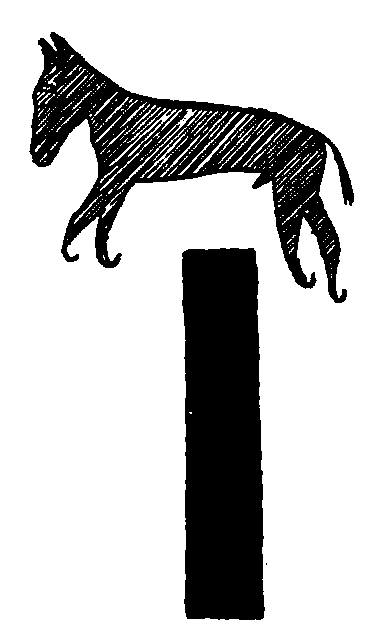
Fig. 122—Winter 1857—58—Horses stolen.
Besides the water contained in the tanks there are numerous
holes and crevices in the mountains, which contain
sufficient for every purpose to last for a considerable time.
It is proper to remark that animals can not drink from the
tanks; the water is taken out in buckets and thrown down
the rocks until all have been supplied. Thus watering is a
matter of time and labor. The peculiar formation of these
mountains, their innumerable caverns and hiding places,
seem to have been intended for a refuge for the Indians; nor
have they neglected to avail themselves of its advantages.
In one instance, however, they "reckoned without their
host." About fourteen years ago these Arabs of New Mexico,
the Apaches, having made a desperate foray upon the Mexicans,
retreated with their plunder to these mountains. The
Mexicans surprised and surrounded them, hemming them up
in the rocky ravine forming the eastern tank. Here an engagement
took place, in which the Indians were totally defeated and nearly exterminated,
only two or three escaping. It is said that upward of one hundred of
them were killed (Pacific Railroad, 1).
The Kiowa camped this winter on Two-butte creek (Ä´zót P'a,
"Driftwood creek"), a southern tributary of the Arkansas, below Bent's
Fort in Colorado. A band of Pawnee came on foot and stole six bunches
of horses, including all those of T'ébodal and Set-ängya; among them
were three spotted mules. The Kiowa pursued the thieves for three
days and came in sight of them at sunset; they intended to strike
them next morning and get the stock, but that night a snowstorm
came on and stopped the pursuit; however, they killed one Pawnee who
had been crippled by the cold. The figure above the winter mark
represents the stolen horses.
Ädo-byúñi K`ádó, "Timber-circle sun dance." This dance was held
on lower Mule creek, entering the Salt fork of the Arkansas from the
north, near the mouth of Medicine-lodge creek; it was so called because
held in a natural circular opening in the timber, as indicated in the
figure representing a circle of
trees around the medicine lodge.
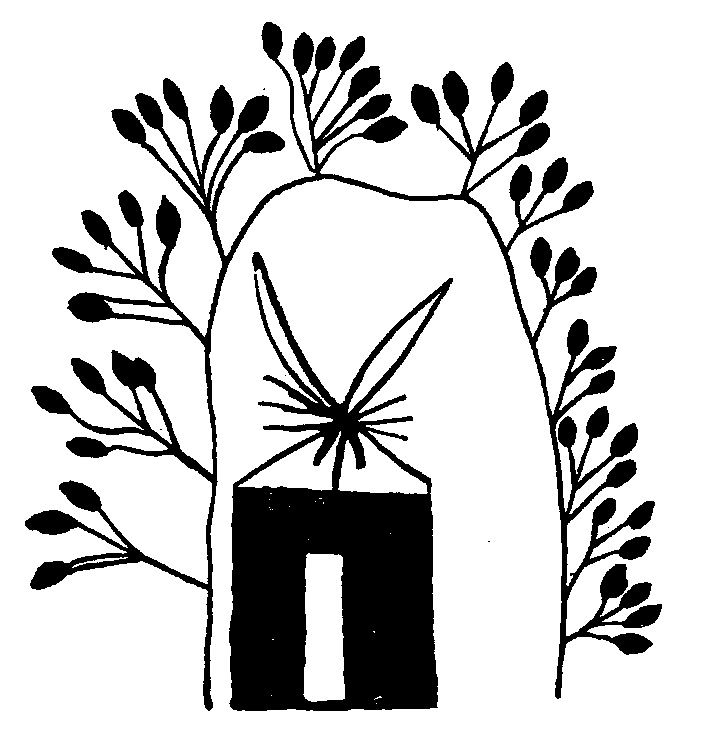
Fig. 123—Summer 1858—Timber-circle sun dance.
Gúi-k`áte Ehótal-de Sai, "Winter
that Wolf-lying-down was
killed." The figure above the
winter mark represents a man
shot through the body, his name
being indicated by the connected
figure overhead.
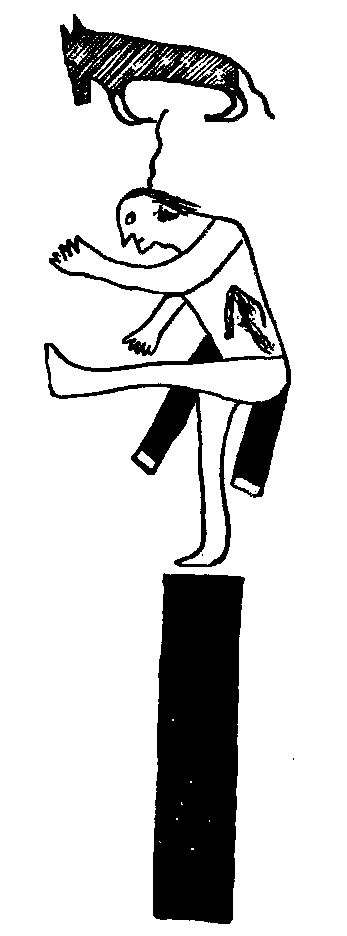
Fig. 124—Winter 1858—59—Gúi-k`áte killed.
After the last sun dance, the Kiowa warriors made a great raid into
Chihuahua and captured a number of horses. They had recrossed the Rio
Grande and camped on the northern side, when they were attacked at
sunrise by a pursuing party of Mexicans. The Indians fled and
escaped, excepting Gúi-k`áte, "Wolf-lying-down," who rode a mare
which was delayed by a colt in following, and was therefore unable to
get away from the enemy, who shot and killed him.
Set-t'aiñte and Set-ĭmkía also went against the Ute
this fall and found and attacked a single tipi on the
upper South Canadian, killing one man and wounding
several others.
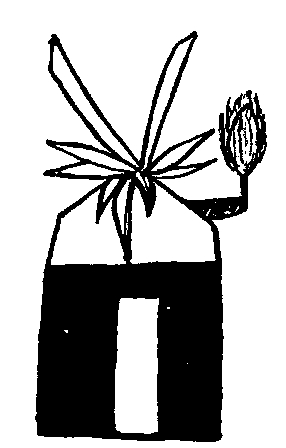
Fig. 125—Summer 1859—Cedar-bluff sun dance.
Ahíñ-dóha K`adó, "Cedar-bluff sun dance." The
figure at the side of the medicine lodge
is intended to represent a cedar tree on
a bluff.
This dance was held at a place known
to the Kiowa as "Cedar bluff," on the northern side
of Smoky-hill river (Pe P'a, "Sand river"), about
opposite the mouth of Timber creek, near the present
Fort Hays, Kansas. The Kiowa state that they
went so far north on account of the abundance of
buffalo in that vicinity. This dance is sometimes
also called Ää'otón-de K`adó, "Timber-clearing sun
dance," from the fact that most of the trees once
there had been cut down.
Gíaká-ite, "Back-hide," died, and a cross was afterward erected over
his bones. The figure of the individual, with the cross above his head,
explains itself. The gíăká-i or "back hide" (see the Glossary) is a
piece of rawhide worn over the shoulders by women, to protect the
back when carrying wood or other burdens.
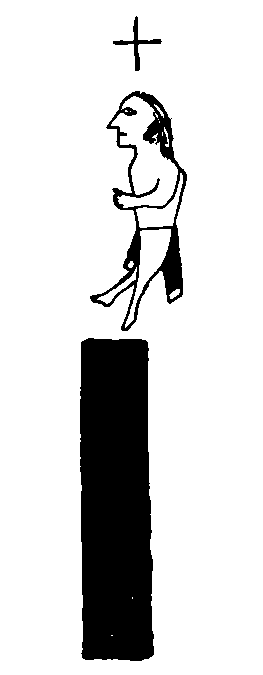
Fig. 126—Winter 1859—60—Gíaká-ite died.
Gíaká-ite was a very old man, and died on the Staked plain (Päsä´ngya,
"Edge prairie"), at a salt pond called Tóñ-kóñ, "Black water,"
perhaps the Agua Negra, just within the Texas boundary. Having
become so old and enfeebled in mind and body as to be a continual
source of trouble and anxiety, his unfeeling relatives deliberately abandoned
him. Shortly before this the old man asked Dohasän, who was
of his own family, where they intended to camp next winter. The chief
brutally replied, "What is that to you? We shall not
take you with us." The poor old man, thinking it a joke,
laughed and said, "How can you leave me behind? There
are not many chiefs, and you can't afford to lose one."
However, on their next move they left him behind to shift
for himself, and as he was too feeble to keep up with the
party he died alone. Whether he died a lingering death
of starvation or met a quicker fate by the coyotes, is unknown;
but some time afterward a small war party of the
Kiowa, passing near the spot, found his skeleton, over
which kind hands—probably Mexican travelers—had
erected a rude cross.
The winter before his death, while the Kiowa were on
the move somewhere in the same neighborhood, Âdalpepte
and his wife, being some distance behind the others, met
the old man mounted upon an animal nearly as feeble as
its rider, vainly endeavoring to catch up with the main
party. It was bitterly cold and he had no blanket. Âdalpepte,
unable to endure the sight, generously took off his own buffalo robe
and threw it over the old man's shoulders, saying to him, "Take it; I
am young and can stand more." Thus, before we make an estimate of
Indian character from this story we must decide how far the generosity
of the one act offsets the heartless cruelty of the other. It is but fair
to state that Gíaká-ite had no immediate relatives who were in condition
to help him, as his children were dead and his grandson was but
a small boy, so that no one felt directly responsible for his welfare.
Abandonment of the aged and helpless was not infrequent among the
prairie tribes, but was rather a hard necessity of their wandering life
than deliberate cruelty, as generally the aged are treated with the
greatest respect and consideration. This is particularly the case
among tribes who are less nomadic in habit.
T'ené-badaí, "Bird-appearing," was killed. The figure shows a man
shot through the body, with blood streaming from his mouth, while the
bird above is intended to indicate his name. As there was no sun
dance this year, the medicine lodge is omitted.
A part of the Kiowa tribe was south of the Arkansas, while the rest,
with the Kwáhadi and other western Comanche, under the chiefs
Täbi-nä´năkă (Hears-the-sun) and Ĭsä-hä´bĭt (Wolf-lying-down), were
camped north of that stream, when one day the latter party discovered
a large body of people crossing the river. Täbi-nä'năka went out to
reconnoiter, and returned with the report that there were a great many
of them and that they were probably enemies. The Kiowa and Comanche
at once broke camp and fled northward, and on their way met the
Cheyenne and Arapaho, to whom they told the news, whereupon the
latter also fled with them. By this time it had been discovered that the
pursuers were white soldiers, accompanied by a large body of Caddo,
Wichita, Tonkawa, and Pénätĕka Comanche. As they
fled, the Kiowa and their allies kept spies on the lookout,
who one night reported their enemies asleep, when they
turned and attacked them at daylight, killing a soldier,
but losing a Comanche named Silver-knife (properly Tin-knife,
Hâ´ñt'aiñ-k`á in Kiowa), who was shot through the
neck with an arrow, and a Kiowa named T'ené-badaí,
"Bird-appearing," noted for his handsome appearance,
who was killed by a Caddo. The engagement took place
in Kansas, somewhere northward from Smoky-hill river
(Pe P'a).
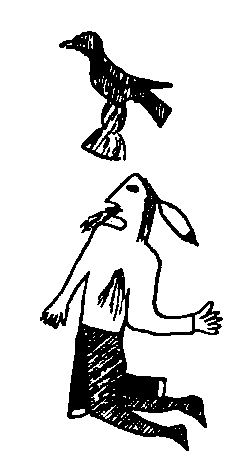
Fig. 127—Summer 1860—Bird-appearing killed.
The Pénätĕka Comanche lived in Texas, near the settlements,
and associated more with the Caddo, Wichita,
and whites than with their western kinsmen, the Kwáhadi Comanche,
against whom and their allies, the Kiowa and Apache, they several
times aided the whites.
There is no direct notice of this engagement in the Indian Report,
but the Commissioner states that peace had prevailed among the treaty
tribes during the year, with the conspicuous exception of the Kiowa,
whose increasing turbulence would seem to render military operations
against them advisable. In another place he states that both the
Kiowa and Comanche were known to be hostile, and that the army had
been ordered to chastise them, as the only way to make them respect
their engagements and to stay their murderous hands. In going to
Bent's fort, he says:
Citizens of the United States in advance of me as I went out, and also on my return,
were brutally murdered and scalped upon the road. It is a fact also worthy of
remark that the murders were committed almost within range of the guns at Fort
Larned. The Indian mode of warfare, however, is such that it is almost impossible
to detect them in their designs. They cautiously approach the Santa Fé road, commit
the most atrocious deeds, and flee to the plains (Report, 85).
This winter is known as ´dálká-i Dóha Sai, "Crazy-bluff winter."
While the Kiowa were encamped on the south side of the Arkansas,
near the western line of Kansas, a man named Gaá-bohónte, "Crow-bonnet,"
the brother of the man who had been killed by the Caddo the
preceding summer, raised a party for revenge. They went to the
Caddo camp on the head of Sugar creek, in the present Caddo and
Wichita reservation, where they encountered a Caddo looking for his
horses. They killed and scalped him, and brought back with them the
scalp over which the Kiowa held a scalp dance at a bluff on the south
side of Bear creek (T'á-zótă´ P'a, "Antelope-corral river"), near its
head, between the Cimarron and the Arkansas, near the western line
of Kansas. From the rejoicing on this occasion the place
took the name of Foolish, or Crazy bluff.
The picture represents a man with a scalp on a pole,
while the projection at the upper end of the winter mark
indicates the bluff.
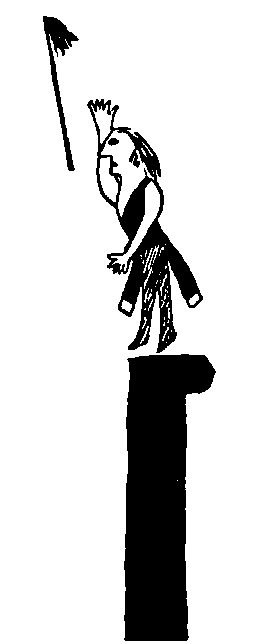
Fig. 128—Winter 1860—1861—Crazy-bluff winter.
About the same time a war party went into Texas,
but lost three men.
The zótă´ or driveway for catching antelope was an
open corral of upright logs, stripped of their branches,
with an entrance, from which diverged two lines of posts
set at short distances from one another and covered with
blankets to resemble men. The antelope were surrounded
on the prairie and driven toward the corral until they
came between the converging lines of posts, when it was
an easy matter to force them into the closed circle, where
they were slaughtered. The zótă´ was used for catching
antelope at any season of the year. It was not used for deer, as the
deer could jump over an ordinary corral.
For a description of another method, the ät'ákagúa, or "antelope
medicine," see Winter 1848—49. Antelope make regular trails from
their shelter places to their grazing grounds, and the Indians sometimes
caught them by digging a large pitfall along such a trail—an
entire band assisting in the work—and carrying the excavated earth a
long distance away, so as to leave no trace on the trail, after which the
pitfall was loosely covered with bushes and grass. The hunters then concealed
themselves until the herd approached, when they closed in behind
and drove the frightened animals forward until they fell into the pit.
Wild horses also were sometimes taken in driveways called t'á-tséñ-zótă´
("wild-horse driveway"), which were set up near the water holes
in the Staked plain, usually in summer, when the streams were dry
and the animals were obliged to resort to these places for water. A
steep cliff was sometimes utilized to form one side of the corral or driveway.
In hunting buffalo the Indians sometimes built converging leadways
to the edge of a cliff and then drove the animals over the precipice.
T'óigúăt Äpäñ´tsep-de K`ádó, "Sun dance when they left the spotted
horse tied." The picture shows the spotted or pinto horse tied to the
medicine lodge.
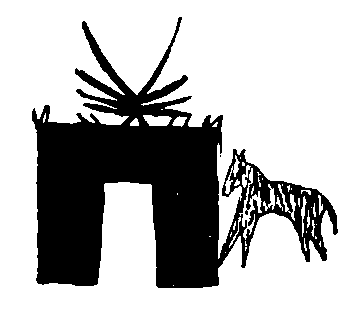
Fig. 129—Summer 1861—Pinto left tied.
This dance was held near a canyon, on the south bank of upper Walnut
creek, entering the Arkansas at the Great Bend in Kansas. The
event recorded throws another curious light on Indian belief. At the
sun dance no one but the taíme priest must attempt any "medicine,"
but on this occasion a man called Dogúatal-edal, "Big-young-man,"
became "crazy" and committed sacrilegious acts, tearing off his feather
headdress and throwing it upon the taíme image, and afterward,
when they were smoking to the sun, taking the pipe and throwing it
away. No reason is given for these strange actions, except that he
was temporarily crazy, as he had never acted strangely before, but the
Indians believe that, as his conscience troubled him after he came to his
senses, he gave this horse to the taíme as an atonement.
At the close of the dance he tied a spotted
horse to one of the poles inside the medicine lodge
and left it there, where it probably died. Such a
thing as tying a horse to the medicine lodge had
never before been heard of, although a horse was
sometimes sacrificed to the sun by tying it to a tree
out upon the hills and leaving it there to perish.
The old war chief Gaápiatañ twice sacrificed a
horse in this manner, once during the cholera of 1849, when he offered
a gray horse as a propitiatory sacrifice for himself, his parents, and
brothers and sisters; also again, in the smallpox epidemic of 1861—62
(see next year), he offered a fine black-eared horse, hobbling it and
tying it to a tree, with a prayer to the spirit of the disease to take his
horse and spare himself and his children and friends. On both occasions
his faith appears to have been rewarded, as none of his relatives
died. The horse offered on this last occasion was of the kind called
t'á-kóñ, "black-eared," considered by the Kiowa to be the finest of all
horses.
Dogúatal-édal afterward led a small war party, seven in number,
including one woman, into Mexico. None of them ever returned, all
the warriors having been killed, probably by Ute warriors, among
whom the woman was found living by Big-bow and his companions
when they visited that tribe in 1894. It was on this occasion that the
Kiowa tribe gained the first intimation concerning the fate of the party.
The woman was then the wife of a Ute and the mother of three of his
children. Big-bow wanted her to return home with them, especially
as her son by her Kiowa husband was still living, but her Ute husband
was unwilling to come, and she refused to leave him and her three
other children.
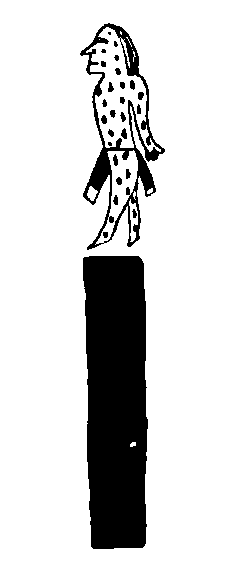
Fig. 130—Winter 1861—62—Smallpox.
Tä´dalkop Sai, "Smallpox winter." The smallpox, like the measles,
is indicated by a human figure covered with red spots (see 1839—40
and 1892). The Kiowa were camped for the winter about the Arkansas,
in the vicinity of Âdalka-i Doha, in southwestern Kansas, and a party
went into New Mexico to trade. They stopped at a town in the mountains
at the head of the South Canadian, where smallpox
was prevalent at the time, and the people warned them
of the danger; they therefore left, but one Kiowa had
already bought a blanket, which he refused to throw
away, although requested to do so. On returning to their
home camp, about New Year, he was attacked by the
disease and died, and the epidemic spread through the
tribe; many died, and the others scattered in various
directions to escape the pestilence. The Cheyenne, Arapaho,
Dakota, and other tribes also suffered greatly at
the same time, as appears from the official report (Report,
86). It was in consequence of this epidemic that the
Arikara abandoned their village lower down the Missouri
and removed to their present location near Fort Berthold,
North Dakota.
It will be noticed that for several years the Kiowa appear to have
been drifting eastward from their former haunts on the upper Arkansas.
Although no definite reason is assigned for this movement, it may have
been due to the influx of white men into Colorado, consequent upon the
discovery of gold at Pike's peak in 1858, which would have a tendency
to drive away the buffalo as well as to disquiet the Indians.
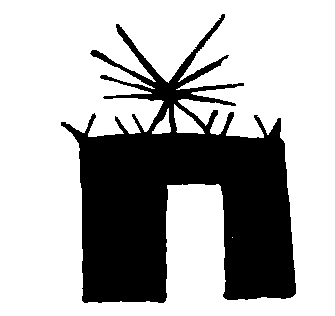
Fig. 131—Summer 1862—Sun dance after smallpox.
Tä´dalkop Kyäkán K'ádó, "sun dance after the smallpox," or sometimes
simply Tä´dalkop K'ádó, "smallpox sun dance."
It was held a short distance west of where the sun
dance had been held in 1858, on Mule creek, near
the junction of Medicine-lodge creek with the Salt
fork of the Arkansas. No event of importance
marked this summer, which is indicated only by the
medicine lodge.
Ä´pätsä´t Sai, "Treetop winter," or Tséñko Sápän
Étpata Sai, "Winter when horses ate ashes." This winter the Kiowa
camped on upper Walnut creek (Tsodal-héñte-de P'a, "No-arm's river"),
which enters the Arkansas at the Great Bend, in Kansas. There was
unusually deep snow upon the ground, so that the horses could not
get at the grass, and in their hunger tried to eat the ashes thrown out
from the camp fires.
In the early spring a large war party, accompanied by women, as was
sometimes the custom among the Kiowa, started for Texas, along the
trail which runs south through the Panhandle, crossing the North Canadian
near Kiowa creek and passing on by Fort Elliott. While singing
the "travel song" on a southern head stream of Wolf creek the tree
tops returned the echo. The phenomenon was a mystery to the Indians,
who ascribed it to spirits, but it may have been due to the fact that
just south of the camp was a bluff, from which the sound may have been
echoed back. The figure over the winter mark is intended to indicate
the sound above the tree tops.
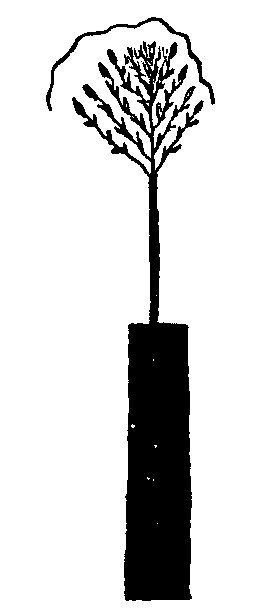
Fig. 132—Winter 1862—63—Treetop winter.
When a man wishes to gather a small war party he sends around to
invite those who may desire to join him. On the night before he
intends to start he sits alone in his tipi, having previously bent a long
stick, like a hoop, around the fire hole; then he begins the Gua-dagya
or travel song, beating time upon the hoop with another stick which
he holds in his hand. When those who intend going with him hear the
song, they come in one by one and join in it, beating
time in the same way with sticks. The women also come
in and sit behind the men, joining in the song with them,
but without beating time; after some time the leader
invites them to come outside, to a buffalo hide, which
the men surround and each holds it up with one hand
while they beat time upon it with the sticks. The
women and those who can not reach the hide stand behind
and all sing together. The song is sung at intervals
during the march. It has words with meaning and
is different from all their other songs; the first singing
by the leader is the signal that he intends to start the
next day; the pipe was sent around only for a very large
war party.
A contributor to the Montana Historical Society gives a
humorous account of a rawhide dance by a party of packers
on Columbia river, in 1858, when the tribes of that region had
combined against the whites. The account is of interest as showing
that the dance was found from the Columbia to the Rio Grande:
About dark some seven or eight canoes loaded with Yakima warriors landed near
our camp. They were painted and rigged up in first-class war style and just spoiling
for a fight. Our few Indian packers and the interpreter took the situation in
and suggested that we bluff them. So we built a large camp fire out of sage brush
and greasewood, and all of us, the Major included, formed a circle, and with one
hand holding a rawhide, with a stick in the other, batted that rawhide and yelled
and danced until we were nearly exhausted. This act, the interpreter said, was
intended to show these Yakimas that we were not afraid of them and were ready to
give them "the best we had in the shop," and to my utter surprise when I turned
out in the morning not a canoe was to be seen. It was a complete bluff. They had
taken the hint and gone away during the night. I must confess I felt pleased, and
so would anyone, from the fact that there is less danger in thumping the rawhide
as a bluff than trying to dodge their bullets (Montana, 2).
Tsodalhéñte-de P'a K`ádó, "No-arm's river sun dance." The figure
near the medicine lodge shows a man with his right arm gone.
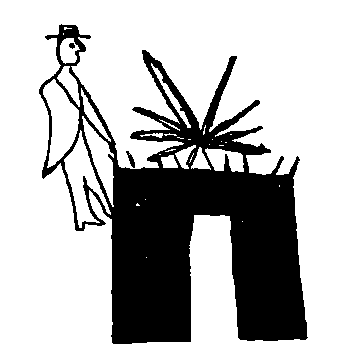
Fig. 133—Summer 1863—No-arm's-river sun dance.
This dance was held on the south side of Arkansas river, in Kansas,
at the Great Bend, a short distance below the
mouth of upper Walnut creek, called Tsodalhéñte-de
P'a, "Armless man's creek," from a trader, William
Allison, who kept a trading store at its mouth, on the
east side, and who had lost his right arm from a
bullet received in a fight with his stepfather, whom
he killed in the encounter. From this circumstance
the Kiowa knew him as Tsodalhéñte, or sometimes
Man-héñk'ia, "Armless man" or "No-arm." He
had as partners his half brother, John Adkins,
known to the Kiowa as Kábodalte, "Left-handed,"
and another man named Booth. Fort Zarah was built in the immediate
vicinity of Allison's trading post in 1864.
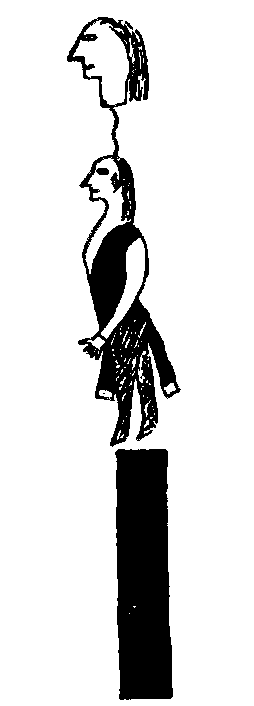
Fig. 134—Winter 1863—64—Big-head dies; Hâñzephó`da dies.
Âdaltoñ-édal Hém-de Sai, "Winter that Big-head died." The Set-t'an
figure is sufficiently suggestive. Âdaltoñ-edal was the uncle of the
present chief Gomä´te (Comalty), who has taken the same name. He
died while the Kiowa were in their winter camp on the
North Canadian, a short distance below the junction of
Wolf creek at Fort Supply.
The Anko calendar begins with this winter, the first
event recorded being the death of Hâ´ñzephó`da, "Kills-with-a-gun."
He is represented below the winter mark,
holding a gun to indicate his name, while the irregular
black marking above his head is intended to show that
he is "wiped out" or dead.
Ä´sâhé K`ádó, "Ragweed sun dance," so called because
held at a place where there was a large quantity of this
plant growing, at the junction of Medicine-lodge creek
and the Salt fork of the Arkansas, a short distance below
where the dances had been held in 1858 and 1862. On
the Set-t'an calendar the medicine lodge, instead of being
painted black, as usual, is blue-green, to show the color
of the plant (ä´-sâhé, literally "blue or green plant"), and is surmounted
by a blue-green stalk of ä´-sâhé or ragweed.
In this summer the Anko calendar records a fight between the Kiowa
tribe and soldiers, at which Anko himself was present. In the figure
the ragweed is indicated by irregular markings at the base of the
medicine pole, while the fight is represented in the conventional way
by means of bullets at the ends of wavy lines.
The encounter occurred at Port Larned, Kansas, called by the Kiowa
"The soldier place on Dark (i. e., shady)-timber (ai-koñ) river." The
Kiowa had camped outside the post and were holding a scalp dance
when Set-ängya and his cousin approached the entrance but were
warned away by the sentry. Not understanding his words, they continued
to advance, whereupon the soldier made a threatening motion
with his gun, as if about to shoot. Upon this Set-ängya discharged
two arrows at the soldier, shooting him through the body, while another
Kiowa fired at him with a pistol. A panic immediately ensued, the
Indians mounting their horses and the garrison hastily preparing to
resist an attack. It so happened that the soldiers' horses were grazing
outside the post and the Indians stampeded and ran them off, abandoning
their camp, the soldiers being unable to follow on foot. The
Indians did not risk an attack on the post, but remained
satisfied with the capture of the horses. No one was
hurt excepting the sentry. Whether his wound proved
fatal or not the Kiowa are unable to say. They state
that this was their first hostile encounter with United
States troops.
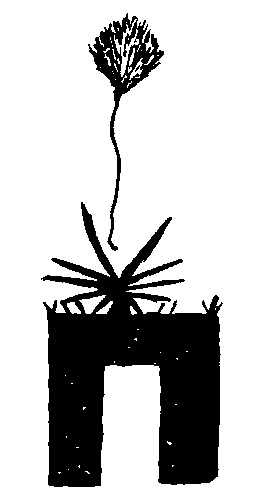
Fig. 135—Summer 1864—Ragweed sun dance; soldier fight.
At the time of this occurrence there was a general
Indian war in progress on the plains. The encounter is
thus referred to by Agent Colley in a letter to the governor
of Colorado, dated July 26, 1864:
When I last wrote you I was in hopes that our Indian troubles
were at an end. Colonel Chivington has just arrived from Larned
and gives a sad account of affairs at that post. They have killed
some ten men from a train and run off all the stock from the post.
As near as they can learn, all the tribes are engaged in it. The
colonel will give you the particulars. There is no dependence to be put in any of
them. I have done everything in my power to keep peace. I now think a little
powder and lead is the best food for them.
In another place he states that "while the war chief of the Kiowa
tribe was in the commanding officer's quarters at Fort Larned, professing
the greatest friendship, the young men were running off nearly all
the horses, mules, and cattle at the post" (Report, 87).
Tsenhó Sai, "Muddy-traveling winter," so called because the mud
caused by the melting of heavy snows made traveling difficult. The
Kiowa and Apache, with a part of the Comanche, made their winter
camp on the South Canadian at Gúădal-dóhá, "Red bluff," on the
north side, between Adobe Walls and Mustang creek, in the Texas
panhandle. While here early in the winter they were attacked by the
famous scout Kit Carson, with a detachment of troops, assisted by a
number of the Ute and Jicarilla Apache. According to the Indian,
account, five persons of the allied tribes, including two women, were
killed. The others, after a brave resistance, finally abandoned their
camp, which was burned by the enemy. One of those killed was a
young Apache warrior who wore a war-bonnet. He was shot from his
horse and his war-bonnet was captured by a Ute warrior. An old
Apache warrior, who was left behind in his tipi in the hurry of flight,
was also killed.
In the Set-t'an calendar the attack upon the camp is indicated by
conventional bullets and arrows around two tipis above the winter
mark. In the Anko calendar it is indicated by a picture of the captured
war-bonnet.
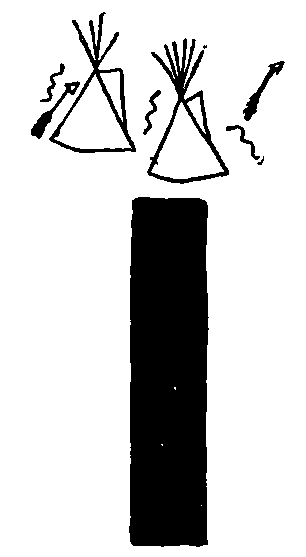
Fig. 136—Winter 1864—65—Ute fight.
According to the Kiowa statement, most of the younger men were
away on the warpath at the time, having left their families in the
winter camp in charge of the old chief Dohásän. Early one morning
some of the men had gone out to look for their ponies,
when they discovered the enemy creeping up to surround
them. They dashed back into camp and gave
the alarm, and the women, who were preparing breakfast,
hastily gathered up their children and ran, while
the men mounted their horses to repel the assault.
The Ute scouts advanced in Indian fashion, riding
about and keeping up a constant yelling to stampede
the Kiowa ponies, while the soldiers came on behind
quietly and in regular order. Stumbling-bear was
one of the leading warriors in the camp at the time
and distinguished himself in the defense, killing one
soldier and a Ute, and then killing or wounding
another soldier so that he fell from his horse. Another
warrior named Set-tádal, "Lean-bear," distinguished himself by his
bravery in singing the war song of his order, the Toñkóñko, as he
advanced to the charge, according to his military obligation, which
forbade him to save himself until he had killed an enemy. Sét-k`opte,
then a small boy, was there also, and describes vividly how he took his
younger brother by the hand, while his mother carried the baby upon
her back and another child in her arms, and all fled for a place of
safety while Stumbling-bear and the warriors kept off the attacking
party. The Kiowa escaped, excepting the five killed, but the camp
was destroyed.
The engagement is thus mentioned in the testimony of an army officer
a few months later:
I understand Kit Carson last winter destroyed an Indian village. He had about
four hundred men with him, but the Indians attacked him as bravely as any men in
the world, charging up to his lines, and he withdrew his command. They had a
regular bugler, who sounded the calls as well as they are sounded for troops. Carson
said if it had not been for his howitzers few would have been left to tell the tale.
This I learned from an officer who was in the fight (Condition, 1).
The engagement is described in detail by Lieutenant George H. Pettis,
who had charge of the two howitzers during the fight. The expedition,
which consisted of three hundred and thirty-five volunteer
soldiers and seventy-two Ute and Jicarilla Apache Indians, was under
command of Colonel Christopher ("Kit") Carson, the noted scout and
Indian fighter, then holding a commission in the First New Mexico
infantry. Starting from Fort Bascom, New Mexico, they proceeded
down the Canadian, the intention being to disable the Indians by taking
them by surprise in their winter camp, as Custer did on the Washita
four years later. The first village, a Kiowa camp consisting of one
hundred and seventy-six tipis, was discovered on the Canadian at the
entrance of a small stream since known as Kit Carson creek, in what
is now Hutchinson county, Texas, a short distance above Adobe Walls.
The attack was made at daybreak of November 25, 1864. After some
resistance the Kiowa retreated a few miles down the river, where there
were other camps of the allied Kiowa, Apache, and Comanche. Reenforced
from these, they returned and made such a desperate attack
upon the invaders that Carson was glad to retire after burning the
upper village, although the other camps against which the expedition
was directed were in plain sight below. The battle lasted all day, the
Indians disputing every foot of his advance and following up his
retreat so closely that only the howitzers saved the troops from utter
destruction.
In the early part of the engagement the soldiers corralled their horses
in an old abandoned adobe building which Pettis calls the Adobe Walls,
but which was probably the ruins of the trading post built by Bent
twenty years before (see winter 1843—44). The Adobe Walls, where
Quanah led his celebrated fight, were not built until 1873 or 1874 and
were some distance down the river. Several white captives, women
and children, were in the hands of the Indians at the time of the attack,
but none of these was rescued. The Kiowa also saved all their horses,
although most of their winter provision and several hundred dressed
buffalo skins in the first village, together with the tipis, were destroyed
by the troops.
Quite a number of the enemy acted as skirmishers, being dismounted and hid in
the tall grass in our front, and made it hot for most of us by their excellent marksmanship,
while quite the larger part of them, mounted and covered with their war
dresses, charged continually across our front, from right to left and vice versa, about
200 yards from our line of skirmishers, yelling like demons, and firing from under the
necks of their horses at intervals. About 200 yards in rear of their line, all through
the fighting at the Adobe Walls, was stationed one of the enemy, who had a cavalry
bugle, and during the entire day he would blow the opposite call that was used by
the officer in our line of skirmishers; for instance, when our bugles sounded the
"advance," he would blow "retreat," and when ours sounded the "retreat," he
would follow with the "advance;" ours would signal "halt," he would follow suit.
So he kept it up all the day, blowing as shrill and clearly as our very best buglers.
Carson insisted that it was a white man, but I have never received any information
to corroborate this opinion (Pettis).
It was most probably a Kiowa, possibly Set-t'aiñte himself, who was
famous for a bugle, which instrument he blew as a signal on state
occasions.
Deeming it unsafe to remain longer after destroying the first village,
Carson formed the troops in marching order, with skirmishers in front
and on the flanks and the howitzers bringing up the rear, and began
the return march.
The enemy was not disposed to allow us to return without molestation, and in a
very few minutes was attacking us on every side. By setting fire to the high, dry
grass of the river bottom, they drove us to the foothills, and by riding in rear of
the fire, as it came burning toward us, they would occasionally get within a few
yards of the column; being enveloped in the smoke, they would deliver the fire of
their rifles and get out of harm's way before they could be discovered by us.
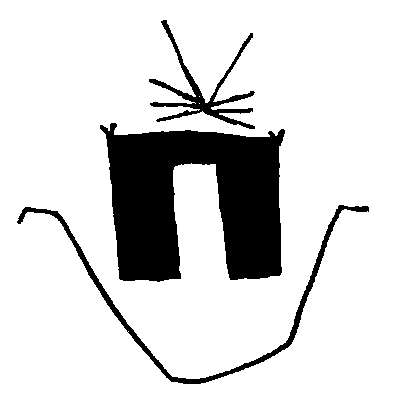
Fig. 137—Summer 1865—Peninsula sun dance.
On the side of the troops, Pettis reports two soldiers killed and
twenty-one wounded, several mortally, together
with one Ute killed and four wounded. He puts
the Indian loss at nearly one hundred killed and
between one hundred and one hundred and fifty
wounded. The official report, which he quotes,
makes the number of tipis in the village destroyed
about one hundred and fifty and the Indian loss
in killed and wounded together only sixty. Among
these were four crippled or decrepit old Indians,
who were killed in the tipis by a couple of Ute
squaws searching for plunder. A buggy and
spring wagon belonging to Sierrito or "Little-mountain" (Dohásän) are
also mentioned as having been destroyed.
A signal instance of Indian bravery is noted by Pettis:
At one of the discharges the shell passed directly through the body of a horse on
which was a Comanche riding at a full run, and went some 200 or 300 yards farther
on before it exploded. The horse, on being struck, went head foremost to earth,
throwing his rider, as it seemed, 20 feet into the air, with his hands and feet sprawling
in all directions, and as he struck the earth, apparently senseless, two other
Indians who were near by proceeded to him, one on each side, and throwing themselves
over on the sides of their horses, seized each an arm and dragged him from
the field between them, amid a shower of rifle balls from our skirmishers. This act
of the Indians in removing their dead and helpless wounded from the field is always
done, and more than a score of times were we eyewitnesses to this feat during the
afternoon (Pettis).
Pihó K`ádó, "Peninsula sun dance." It is so called because held
in the peninsula or bend of the Washita on the south side, a short
distance below the mouth of Walnut creek (Zódăltoñ P'a, "Vomiting-water
river") within the present reservation. The Set-t'an calendar
represents the medicine lodge in the bend, indicated by a curved line.
In the Anko calendar the peninsula is more rudely indicated by a circle
around the base of the medicine pole.
In this winter the Set-t'an calendar records the death of the noted
war chief, Tä´n-kóñkya, "Black-warbonnet-top," on a southern tributary
of the upper South Canadian. The war-bonnet is made conspicuous
in the figure to call attention to his name.
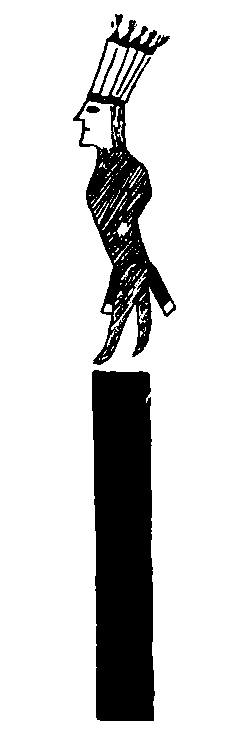
Fig. 138—Winter 1865—66—Tän-kóñkya died; Dohásän died.
The Anko calendar notes the death of the celebrated chief Dohásän,
"Little-bluff," the greatest and most noted chief in the history of the
tribe, who died on the Cimarron in this winter. The event is indicated
by the figure of a wagon, he being the only Kiowa who owned a wagon
at that time. For more than thirty years from the massacre
by the Osage in 1833, he had been the recognized
head chief of the Kiowa. His death left no one of sufficiently
commanding influence to unite the tribe under
one leadership, and thenceforth the councils of the Kiowa
were divided under such rival chieftains as Set-t'aiñte and
Kicking-bird until the unsuccessful outbreak of 1874
finally reduced them to the position of a reservation tribe
and practically put an end to the power of the chiefs.
This winter is notable also for the arrival of a large
trading party from Kansas under the leadership of a man
named John Smith. He traded also among the Cheyenne,
whose language he spoke, and was called by them
Póomûts, "Gray-blanket," or "Saddle-blanket," these articles
forming a part of his trading stock; this name the
Kiowa corrupted into Pohóme. The party visited all
the various camps of the Cheyenne and Kiowa, trading
blankets and other goods for buffalo hides. Smith died
among the Cheyenne after having lived more than forty
years in the Indian country, and was buried in the sand hills near
the present agency at Darlington, Oklahoma. His name appears in
the official reports as government interpreter for the Cheyenne, and
he rendered valuable assistance at the Medicine Lodge treaty in 1867.
Hâñ-kopédal K`ádó, "Flat metal (i. e. German silver) sun dance,"
was held on Medicine-lodge creek, near its mouth, in Oklahoma. It was
so called because a trader brought them at this time a large quantity
of German silver, from which they made headdresses, belts for women,
bracelets, and other ornaments. German silver is known to the Kiowa
as "flat metal," because it is furnished to them in sheets, which they
cut and hammer into the desired shapes. On both calendars the event
is recorded in the same way, by the figure of a head pendent with
silver disks placed near the medicine lodge. Such pendants were
attached to the head of the scalplock, and consisted of a strip of
buffalo hide reaching nearly to the ground and covered along the whole
length with a row of silver, copper, or German-silver disks, gradually
decreasing in size toward the bottom, which was usually finished
off with a tuft of bright-colored horsehair. They were called góm-â´dal-hâ´ñgya,
"back-hair-metal," and were highly
prized by the warriors. This was not the first time
the Kiowa had obtained German silver. In the
old days these ornaments were made for them, of
genuine silver, by Mexican silversmiths near the
present Silver City, New Mexico.
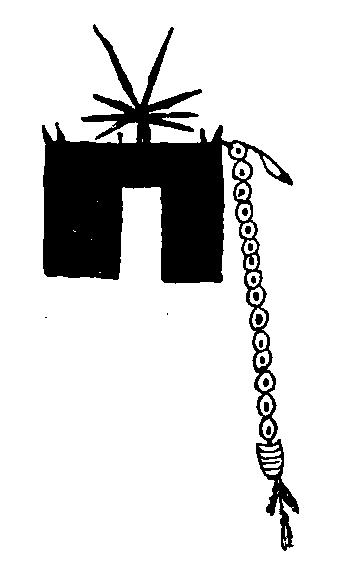
Fig. 139—Summer 1866—German-silver sun dance.
Charles W. Whitacre (or Whittaker), the trader
who brought their supply of metal on this occasion,
together with sugar and other goods, had some
knowledge of the Kiowa language, as well as of
Comanche and Caddo, and is familiarly known to
the older Kiowa as Tsâli, i. e., Charley. He was
present at the Medicine Lodge treaty the next year,
and afterward kept a trading store on the north
side of the Washita, near the place where the
Wichita school is now located, a short distance from the agency at
Anadarko. He was killed by accidentally shooting himself about 1882.
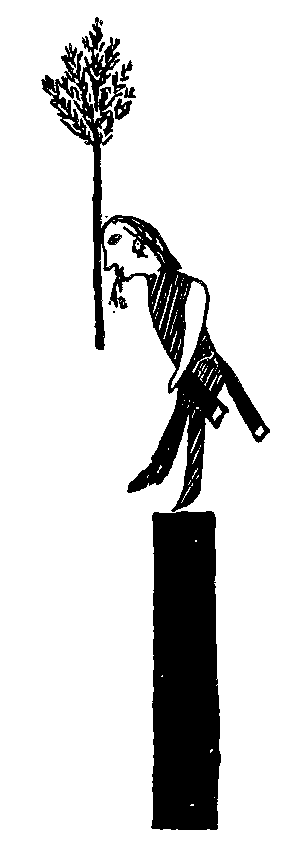
Fig. 140—Winter 1866—67—Äpämâ'dalte killed.
Ä´pämâ´dal Ehótal-de Sai, "Winter that Ä´pämâ'dalte was killed."
The name signifies "Struck-his-head-against-a-tree." The same event
is recorded on both calendars, the figures being sufficiently
suggestive. He was a Mexican captive among
the Kiowa, and was killed, in an encounter with troops
or Texans, while with a party led by the present Big-bow,
at a small creek on the main emigrant road to California
(Hóan T'a`ká-i, "White-man's road") in southwestern
Texas. When killed he was trying to stampede the
horses which the Texans had left a short distance away.
There is no official notice of this encounter in the reports,
beyond general references to continual Kiowa raids into
Texas.
In this winter, also, Andres Martinez, the most influential
captive among the Kiowa, was bought by them
from the Mescalero Apache, who had captured him a
few months previously near Las Vegas, New Mexico.
He was then seven years of age, and was adopted by
the Kiowa, and at once taken by them on a raid into
Mexico. His purchaser was Set-dayá-ite, "Many-bears,"
who was killed by the Ute in 1868.
T'á-kóñ Ä´semtse-de K`ádó, "Sun dance when Black-ear was stolen.
This dance was held on the north bank of the Washita, near the western
line of Oklahoma. The Cheyenne also attended. While the dance
was in progress a party of Navaho stole a herd of Kiowa ponies, including
a fine white racer with black ears, the kind most highly prized by
the Indians. The Kiowa had no idea that the horses
had been stolen by lurking enemies, but supposed that
they had simply strayed, until after the dance was over,
when the three tribes organized an expedition against
the Navaho, at that time upon a reservation in eastern
New Mexico, and there captured a number of horses,
including the stolen herd. The event is recorded on the
Set-t'an calendar by means of the figure of a white horse
with black ears above the medicine lodge.
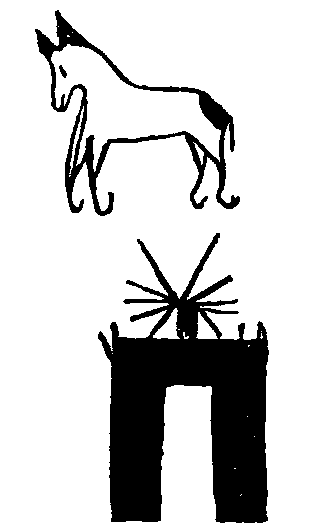
Fig. 141—Summer 1867—Black-ear stolen; the Kâ´itseñko.
This dance is also designated as Kâ´itséñko Edópäñ-de
K`ádó, "Sun dance when the Kâitseñko were initiated"
(and further distinguished from similar occasions by
describing it as "Ä´guntä P'a-gya, "on Washita river"),
from the fact that on this occasion the members of this
order made new sashes for themselves. Some who had
acted in a cowardly manner were degraded at the same time, their
sashes stripped from them and given to others more worthy (see
summer 1846). The event is indicated on the Anko calendar by
means of a figure above the medicine lodge representing a man with
the Kâitseñko headdress and sash.
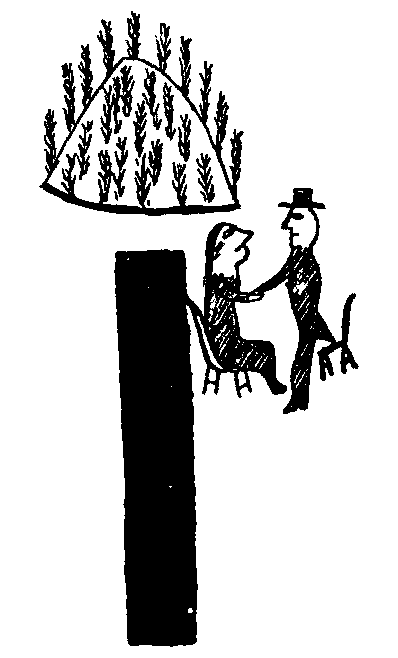
Fig. 142—Winter 1867—68—Medicine Lodge treaty; Navaho killed.
Ä´yä´daldä Sai, "Timber-hill winter," so-called
on account of the famous treaty made this winter
with the confederated tribes on Medicine-lodge
creek, Kansas, known to the Kiowa as "Ä´yä´daldä
P'a, Timber-hill river." The picture on the Set-t'an
calendar is highly suggestive. It represents
a white man, who appears to be a soldier, grasping
the hand of an Indian, the locality being shown
by the figure of a tree-covered hill above the winter-mark.
The Anko calendar has no reference to this
treaty, which is the leading event in Kiowa history
of the last thirty years, but records instead
a minor occurrence, the killing by the Kiowa of a Navaho, indicated
below the winter mark by the figure of a man with his hair bunched in
Navaho fashion, wearing the characteristic black leggings and moccasins
and carrying a quiver. He was killed near Gúădal Dóhá, on the upper
South Canadian, by a party under White-horse, of which Anko was a
member. On examining the body of the dead man they found that he
had no ears, having probably been so born. For this reason the winter
is sometimes known as T'á-bódal Ehótal-de Sai, "Winter that Spoiled-ear
was killed." Several parties went against the Navaho on the Pecos
this year (that tribe being still at the Bosque Redondo), particularly a
large expedition, including nearly all the Comanche and about half of
the Kiowa and Apache, which started immediately after the sun dance,
defeated the Navaho in an important engagement, and returned in
time for the treaty.
The treaty of Medicine Lodge has already been discussed at length
in another place. According to the statement of the Kiowa they were
camped on the creek where they had held their sun dance, when they
were summoned to Fort Larned. Set-t'aiñte, Set-ängya, Set-ĭmkía, and
the other chiefs, with all their people, at once moved to that point,
where they met an officer who, they say, was called Gánúän, "General"
by the whites, and whom the Indians called Pasót-kyä'tó, "Old-man-of-the-thunder,"
because he wore upon his shoulders the eagle or thunderbird.
This was General Winfield S. Hancock, then in command in that
section. By his direction they camped on the river near the post, where
they were supplied with rations for some days until the purpose of the
government was explained to them. They then returned to Medicine-lodge
creek and prepared a council house among the trees, ready for
the arrival of the commissioners. The medicine lodge and Kiowa
camp were on the south (west) side of the creek, while the council house
in which the treaty was made was on the opposite (northeast) side, 12
miles above, or about 3 miles above the junction of Elm creek and
near the present site of Medicine Lodge, Barber county, Kansas. It is
described in the treaty itself as "the council camp on Medicine Lodge
creek, 70 miles south of Fort Larned, in the State of Kansas." The low,
timbered hill, from which the stream takes its Kiowa name of Ä'yä'daldä
P'a, "Timber-hill river," is on the east side, opposite the medicine lodge
of the last preceding dance, from which the stream derives its present
name. It was a favorite dance headquarters, as several other dances
had already been held in the same vicinity.
The Kiowa say that the white man, Philip McCusker, who interpreted
the treaty to the three confederated tribes, spoke only Comanche,
and his words were translated into Kiowa by Bä'o ("Cat"), alias
Guñsádalte, "Having-horns," who is still living. They sum up the
provisions of the treaty by saying that the commissioners promised to
give them "a place to go," to give them schools, and to feed them for
thirty years, and hoped that they would then know how to take care of
themselves. Only a part of the Comanche were represented, most of
the Kwáhadi band being then on an expedition against the Navaho.
According to contemporary notices, there were present at the treaty over
eight hundred and fifty tipis, or about five thousand souls, of the Cheyenne,
Arapaho, Kiowa, Comanche, and Apache, together with about
six hundred whites, including the commissioners and attachés, a large
detachment of the Seventh infantry, and miscellaneous camp followers,
the various groups and bands being scattered for a distance of several
miles along the stream, forming probably the largest Indian gathering
that had ever been held on the plains.
Íătä'go Dahótal-de K'ádó, "Sun dance when the Ute killed us," or
Ä'yädaldä P'a K'ádó, "Timber-hill river (Medicine-lodge creek) sun
dance." The dance this summer was held on Medicine-lodge creek,
near where the treaty had been made, this, as has been said, being a
favorite place for the purpose. The Cheyenne and Arapaho also frequently
held their sun dance in the same neighborhood, but not in connection
with the Kiowa, although they always attended the Kiowa
dance in large numbers. The Comanche had no sun dance of their own,
but sometimes joined with the Kiowa. On one occasion
they tried to get up such a dance, but the attempt was
a failure.
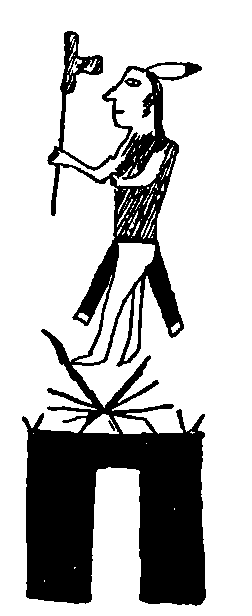
Fig. 143—Summer 1868—Ute fight.
This summer was signalized by a disastrous encounter
with the Ute, in which two of the three taímes of the
Kiowa were captured. On the Set-t'an calendar this
battle is indicated by the figure, above the medicine
lodge, of a man holding out the red stone war-pipe,
which was sent around as an invitation to the warriors
to join the expedition. On the Anko calendar it is indicated
by flying bullets about the medicine lodge.
This battle was the most disastrous in the history of
the Kiowa tribe since the memorable massacre by the
Osage in 1833. The impression made was perhaps even
greater, for the reason that their sacred palladium captured
on this occasion has never since been recovered.
In the previous winter Pá-tadal, "Lean-bull" (alias Poor-buffalo),
who is still living, had led a small party against the Navaho beyond
the head of the South Canadian. On reaching the salt beds on that
river, near the line between Texas and New Mexico, they met some
Navaho coming on foot to steal Kiowa horses. A fight ensued, resulting
in the death of one Navaho and one Kiowa, the latter being Pá-tadal's
stepson. The father thirsted for revenge, and at the next sun dance he
sent around the pipe to all the warriors of the tribe to enlist them for a
great expedition against the Navaho. A large number responded,
perhaps two hundred, including some of the Comanche, and placed themselves
under his leadership. Among these was Set-dayá-ite, "Many-bears,"
the son (nephew?) of Ansó'te, the medicine keeper. To render
victory more certain and complete, he asked and obtained permission
from his father to carry with the expedition the two smaller taíme
images, viz, the small "man" figure and the "bear kidney." These
were sometimes carried to the field, but the larger one, the "woman,"
which the tribe still retains, was never allowed to leave the home camp.
Set-dayá-ite carried one and intrusted the other to his friend
Pá-guñhéñte, "Hornless-bull." According to another story, Pá-guñhéñte's
medicine was one which belonged to himself and had no connection
with the taíme, although it was a smaller image of similar
appearance. However, Pá-guñhéñte was killed and his medicine
captured, together with the other.
They set out for the Navaho country, but the omens were unpropitious
from the start. Among the numerous things tabooed to the
taíme are bears, skunks, rabbits, and looking-glasses, none of which
must be permitted to come near the sacred image or be touched by the
taíme keeper. Almost at the start the warriors were alarmed by seeing
a skunk cross their path, and soon afterward it was discovered that
the Comanche had brought with them their looking-glasses, which they
refused to break or throw away, but wrapped them up and concealed
them at one of the camping places to await their return. Farther on,
at a place where the warriors had halted for the night to prepare supper,
the wind carried to the nostrils of the Kiowa the smell of burning
grease. On investigating the cause they found that their sacrilegious
allies had killed a bear and were broiling the flesh over their fire.
Realizing that nothing but defeat could now be in store for them, many
of the warriors turned back, but Set-dayá-ite, trusting to his medicine,
persisted in going forward, while Pá-tadal, although he foresaw disaster,
as the organizer and leader of the expedition felt bound in honor to
proceed.
They went up the north bank of the South Canadian until they
reached the salt beds in the vicinity of Red-river spring, near where
they had encountered the Navaho the preceding winter. Here they
met a much smaller party of Ute, said to have numbered only thirty or
forty, and the battle at once began. For some reason, perhaps because
the Kiowa felt that their gods had deserted them, they did not fight
with their accustomed dash, and the battle soon became a flight, the
Ute pursuing them for some miles down the river and killing seven,
including Set-dayá-ite and his adopted son, a Mexican captive. Set-dayá-ite
on this occasion rode a balky horse, which became unmanageable,
so that he dismounted and met his fate on foot, telling his
comrades that there was his place to die. His adopted son might have
saved himself, but on seeing his father's plight he returned and was
killed with him. Pá-guñhéñte, who carried the other medicine, was
also among the slain.
Set-dayá-ite had the taíme bag tied upon his back, where it was
found by the Ute after the fight. They readily recognized it as some
great "medicine," a conjecture which was made certain if it be true, as
some say, that the dead man had cut (painted?) upon his body sacred
emblems similar to those painted upon the image itself, viz, a crescent
upon each breast, the sun in the center, and upon his forehead another
crescent. Stumbling-bear, who was in the fight, as was also Anko,
went back shortly afterward to bury his remains. He found a beaten
circle around the skeleton of Set-dayá-ite, as though the Ute had
danced around his dead body.
The Ute carried the taíme with them to their own country, but misfortune
went with it. The son of its capturer was shortly afterward
killed in a fight with the Cheyenne, and soon after that the custodian
himself was killed by a stroke of lightning. Afraid to keep longer
such "bad medicine," they brought both images down to the trader
Maxwell, in New Mexico, who placed them on a shelf in his store, where
they remained in plain view for a long time, but were finally lost. The
Ute left word with Maxwell that the Kiowa, if they came for the images,
might have them, on payment of a specified number of ponies. For
some reason the Kiowa did not come—perhaps because they were afraid
to trust themselves so far in their enemies' country.
While the sacred images were on Maxwell's shelf they were seen by
a brother of George Bent, of the noted pioneer trading family, from
whom the author obtained a description of their appearance. They
were two small carved stones or petrifactions, the taíme proper having
the shape of a man's head and bust, and was decorated and painted.
The other resembled in form a bear's kidney. While in New Mexico
some years ago the author made diligent inquiry among Maxwell's former
business associates concerning the images, but found no one who could
throw any light upon their whereabouts. In 1893 Big-bow and some
others of the tribe visited the Ute, chiefly for the purpose of ascertaining
the fate of the taíme, not knowing that it had passed out of their
possession. They learned nothing, however, as they asked no direct
questions concerning it and the Ute volunteered no information. This
was the first friendly meeting between the two tribes, although as early
as 1873 the Kiowa chiefs in council had made an urgent request to the
agent that some good white man should be sent with them to make
peace with the Ute (Battey, 18).
When the news of the defeat reached them, the Kiowa were encamped
on the Arkansas, near Fort Larned, where at that time they drew their
government issues. They at once moved down to the Washita and
encamped adjoining the Cheyenne village under Black-kettle, on the
western border of Oklahoma. This village was soon after destroyed by
Custer. About this time steps were taken to confine the confederated
tribes to the reservation assigned them by the late treaty, which was
soon after accomplished, and as a people the Kiowa never again went
back to the neighborhood of Arkansas river.
The only official reference to this fight, if indeed it does refer to it, is
the incidental mention in a letter of about June 20 that an appointment
by the agent for the Ute and Jicarilla Apache had been postponed
in consequence of the absence of Kaneatche, who was away and had
had a fight with the Kiowa and Comanche (Report, 88). Kaneatche,
Kanache, or Conyatz (Kanats according to Major Powell) was the
head chief of the confederate Ute and Jicarilla band of Apache, and
on his death was succeeded by Ouray.
The encounter is thus noted by a contemporary author:
During the previous summer [1868] a war party of Ute left their haunts in New
Mexico, and after marching on foot a distance of over 500 miles fell upon a band of
Kiowa, completely routed them, captured a number of ponies, took many scalps,
and, more calamitous than all, got possession of the "medicine" of the band. As
might be inferred, the Kiowa had a superstitious dread of the very name Ute
(Keim, 2).
The action and the grief of the Kiowa over the loss of their medicine
are further described by a writer in a contemporary Kansas newspaper,
who evidently speaks with exact knowledge:
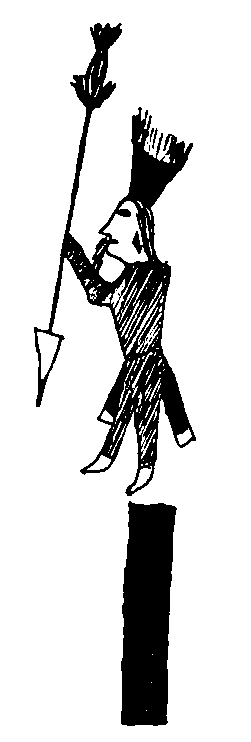
Fig. 144—Winter 1868—69—Tän-gúădal killed.
About the 10th of July [1868] the Kiowa had a battle with the Ute, in which the
chief Heap-of-Bears and seven other Kiowa braves were killed. Heap-of-Bears had
on his person the medicine of the Kiowa, which was captured by
the Ute, who still retain it. This medicine consists of an image
about 18 inches in length, carved to represent a human face, and
covered with the down and feathers of the eagle and other birds
and swathed in wrappers of different materials of value. Although
I have been conversant with Indian habits and customs for a long
time, I was surprised to find the value these people attach to this
medicine. They begged and implored Colonel Murphy to recover
it for them, and promised to pay the Ute as many horses as they
wanted, and also to make a permanent and lasting peace, not only
with the Ute, but also to refrain from further depredations on the
Texas border, if this should be restored. Colonel Murphy promised
to endeavor to recover it, but I think his success in the matter will
be doubtful, as the Ute also attach great importance to their capture,
believing that while they retain it the Kiowa will be powerless to do
them harm (Abbott, 1).
Tän-gúădal Ehótal-de Sai, "Winter that Tän-gúădal was
killed." Tän is the name of a particular variety of headdress,
also of an edible root resembling a turnip; gúădal
signifies red. Shortly after the removal to the Washita,
a small raiding party went to Texas. In an encounter with a white
man and boy both parties fired simultaneously and Tän-gúădal was
killed. Although a young man, he was a noted warrior and the hereditary
owner of a medicine lance or zebat, shaped and adorned like an
arrow. The event is indicated on the Set-t'an calendar by the figure,
above the winter mark, of a man holding the arrow lance. On the
Anko calendar it is indicated by the rude figure of the medicine lance.
This medicine lance, which was hereditary in Tän-gúădal's family,
came originally from the Crows. The one carried by him on this occasion,
as described by Set-k`opte, who was with the party, had a Mexican-made
steel blade and was left sticking upright in the ground at the
place where they rested before the encounter, the owner not having
taken it into the fight. Set-t'aiñte claimed the hereditary right to this
medicine lance, through marriage into the family of one of Tän-gúădal's
ancestors. Despite the protest of Tän-gúădal, he made a similar lance,
which he carried for several years (see summer 1874). This lance of
Set-t'aiñte is said to have had a separable ornamented wooden point,
which was inserted on ceremonial occasions, while an ordinary steel
blade was substituted when it was to be used in actual
service. Similar "medicine" lances for ceremonial
purposes were used also among other tribes.
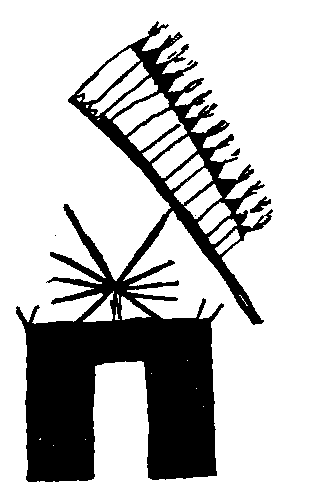
Fig. 145—Summer 1869—War-bonnet sun dance.
While this expedition was in Texas another party,
under Stumbling-bear, went up the Canadian to bury
the bones of those killed with Set-dayá-ite in the
encounter with the Ute.
Ä´tahá-i Gyä´`gan-de K`ádó, "Sun dance when they
brought the war-bonnet." On both calendars this sun
dance is designated by the figure of a war-bonnet
(ä-tahá-i, "feather crest") above the medicine lodge.
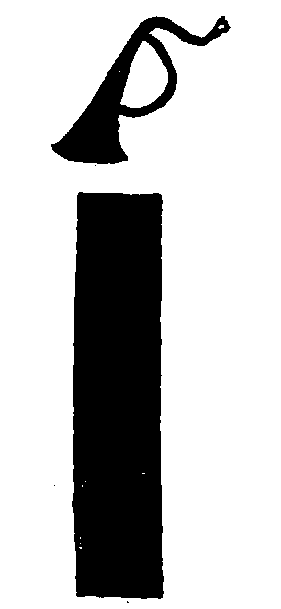
Fig. 146—Winter 1869—70—Bugle scare.
The dance was held on the north side of the North
fork of Red River, a short distance below the junction of Sweetwater
creek, near the western line of Oklahoma, the Kiowa having been
removed during the preceding autumn from Kansas and the north to
their present reservation, but still ranging outside the boundaries, under
the hunting privilege accorded by the late treaty. While the dance was
in progress, Big-bow, who had gone with a large party against the Ute
to avenge the death of Set-dayá-ite the year before, returned
with the war-bonnet of a Ute whom he had killed
in the mountains at the head of the Arkansas, in Colorado.
By a curious chance this Ute was one whom the Cheyenne
or Arapaho had wounded and scalped on a former expedition.
The Ute had taken their wounded comrade to
the Mexicans of New Mexico, who cured him, only to die
soon afterward by the hand of a Kiowa. The facts in the
case were learned by Big-bow on his friendly visit to the
Ute in 1893.
Dómbá Etpé-de Sai, "Winter when they were frightened
by the bugle." The circumstance is indicated on
both calendars by means of a bugle in connection with
the winter mark.
This was a winter of chronic alarm, as the Cheyenne, the neighbors
and friends of the Kiowa, were on the warpath and were being hard
pressed by Custer. The Kiowa had made their winter settlement in
two camps on Beaver creek, near the junction of Wolf creek, in the
vicinity of the present Fort Supply, in Oklahoma. It was reported
that soldiers were in the neighborhood, and a party of young men went
out to look for them. On returning, about daylight, one of them, who
carried a bugle, blew it to announce their approach, with the result
that the whole camp, thinking that the troops were about to attack
them, fled precipitately several miles before the truth was discovered.
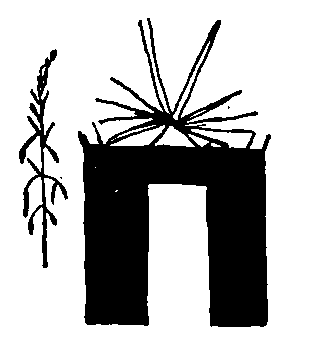
Fig. 147—Summer 1870—Plant-growing sun dance; dusty sun dance.
According to another account, the bugle was blown by Set-t'aiñte,
who for many years carried on ceremonial occasions a
bugle which he had probably obtained from some army
post. He had been on a visit to the Arkansas, and
blew it on his return in order to locate the camp.
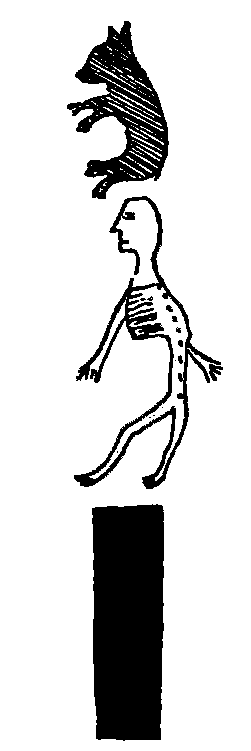
Fig. 148—Winter 1870—71—Set-ängya's bones brought home; drunken fight; negroes killed.
É`gú Gyäk`íädă-de K`ádó, "Plant-growing sun dance,"
or K`ádó Paíñyoñhä´-de, "Dusty sun dance." The former
is the more common designation. This sun dance, like
the last, was held on the North fork of Red river,
but on the south side, in what is now Greer county,
Oklahoma, near where the reservation line strikes the stream. During
the dance the traders brought corn and watermelons to sell to the
Indians. The seeds were thrown away, and on returning to the spot
in the fall the Kiowa found that they had germinated in the sandy soil
and developed into full growth; hence the common name of the dance,
indicated on the Set-t'an calendar by a stalk of green (blue) corn beside
the medicine lodge. On the Anko calendar it is distinguished
as the "Dusty sun dance," on account of the
high winds which raised clouds of dust during the dance
and which are rudely indicated by close black lines across
the medicine pole. No other event is recorded, the dance
serving merely as a chronologic point.
Set-ä´ngya Ä´ton Ágan-de Sai, "Winter when they
brought Set-ängya's bones."
For this winter the Set-t'an calendar records the bringing
home of the bones of young Set-ängya, indicated by a
skeleton above the winter mark, with a sitting bear over
the head.
In the spring of 1870, before the last sun dance, the son
of the noted chief Set-ängya ("Sitting-bear"), the young
man having the same name as his father, had made a raid
with a few followers into Texas, where, while making an
attack upon a house, he had been shot and killed. After
the dance his father with some friends went to Texas, found
his bones and wrapped them in several fine blankets, put
the bundle upon the back of a led horse and brought them home. On
the return journey he killed and scalped a white man, which revenge
served in some measure to assuage his grief. On reaching home he
erected a tipi with a raised platform inside, upon which, as upon a bed,
he placed the bundle containing his son's bones. He then made a feast
within the funeral tipi, to which he invited all his friends in the name
of his son, telling them, "My son calls you to eat." From that time
he always spoke of his son as sleeping, not as dead, and frequently put
food and water near the platform for his refreshment on awaking. While
on a march the remains were always put upon the saddle of a led horse,
as when first brought home, the tipi and the horse thus burdened
being a matter of personal knowledge to all the middle-age people of
the tribe now living. He continued to care for his son's bones in this
manner until he himself was killed at Fort Sill about a year later, when
the Kiowa buried them. Although a young man, Set-ängya's son held
the office of Toñhyópdă´, the pipe-bearer or leader who went in front
of the young warriors on a war expedition.
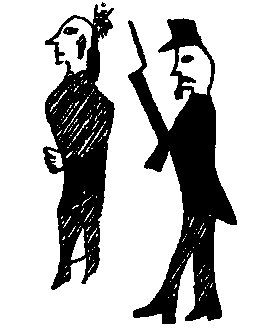
Fig. 149—Summer 1871—Set-t'aiñte arrested; Koñpä´te killed.
The Anko calendar records two incidents. The first was a drunken
fight between two Kiowa, in which one killed the other, indicated by
the rude representation of two heads with a bottle
between them. The other event was the killing of four
or five negroes in Texas by a party led by Mamä´nte
("Walking-above)," who brought back the scalps with
the woolly-hair attached. It is shown on the calendar
by means of a figure with bullet and arrow wounds, drawn
below the heads and the bottle. An attempt has been
made to indicate the peculiar woolly hair of the negro;
the trousers are blue, like those worn by soldiers, Anko
thinking they were probably soldiers, because, as he
says, "Negroes can't go alone."
In this winter Ansó-gíăni or Ansó`te, "Long-foot," the great medicine
keeper, died of extreme old age. He had been in charge of the
taíme for forty years; consequently there was no sun dance for two
years until his successor was selected.
For this summer the Anko calendar records the death of Koñpä´te,
"Blackens-himself," who was shot through the head in a skirmish
with soldiers. He was the brother of the noted raider, White-horse.
The event is indicated by the rude representation of a head struck by
a bullet. As there was no dance this summer, the medicine lodge is
not represented on either calendar.
The great event of the summer was the arrest of the noted chiefs
and raiders, Set-t'aiñte, Set-äñgya and Ä´do-eétte, "Big-tree." The
figure on the Set-t'an calendar shows the soldier arresting Set-t'aiñte,
distinguished by the red war-paint which he always used.
Notwithstanding the promises of good conduct which had induced
General Sheridan to release Lone-wolf and Set-t'aiñte when the tribe
had been brought to the reservation in December, 1868, the Kiowa
had never ceased their raids into Texas, and had constantly behaved
in the most insolent manner toward the agent and military commander
on the reservation. On May 17, 1871, a party of about one hundred
warriors, led by Set-t'aiñte and Set-ängya, attacked a wagon train in
Texas, killed 7 men and captured 41 mules. Shortly afterward Set-t'aiñte
had the boldness to avow the deed to the agent, Lawrie Tatum,
who at once called upon the commander at Fort Sill to arrest Set-t´aiñte
and several other chiefs who had accompanied him, viz:
Set-ängya, Big-tree, Big-bow, Eagle-Heart and Fast-bear. The officer
promptly responded and arrested the first three; Eagle-heart escaped
and the other two were absent at the time. On May 28, the three
prisoners were sent under military guard to Fort Richardson (Jacksboro),
Texas, to be tried for their crimes, when Set-ängya attacked the
guard and was killed in the wagon (Report, 89; Record, 11; Battey,
19; Tatum letter). The fate of the other prisoners is noted elsewhere.
According to the Kiowa account, which is correct in the main incidents,
the prisoners having been disarmed, Set-ängya was placed in a
wagon, accompanied by a single soldier, and Set-t'aiñte and Big-tree
were put into another wagon with other guards, and an escort of cavalry
and Tonkawa scouts rode on either side. Leaving Fort Sill, they
started toward the south on the road to Texas, when Set-ängya began a
loud harangue to the two prisoners in the other wagon, telling them
that he was a chief and a warrior, too old to be treated like a little
child. Then pointing to a tree where the road descends to cross a small
stream about a mile south of the post, he said: "I shall never go beyond
that tree." As he spoke in the Kiowa language, none but the prisoners
knew what he was saying. Then raising his voice, he sang his death
song, the song of the Kâitséñko, of whom he was chief:
I´ha hyo´ o´ya i´ya´ i´ya' o i´ha ya´ya yo´yo´
A´he´ya ahe´ya´ ya´he´yo´ ya e´ya he´yo e´he´yo
Kâ´itseñ´ko änä´obahe´ma haa´-ipai´-degi o´ba´-ikă´
Kâi´tse´ñko änä´obahe´ma hadâ´mga´gi o´ba´-ikă´
I hahyo, etc.
Aheya, etc.
O sun, you remain forever, but we Kâitse´ñko must die.
O earth, you remain forever, but we Kâitse´ñko must die.
The song ended, he suddenly sprang upon the guard with a knife
which he had managed to conceal about his person, and had cut him
seriously when the soldiers following behind fired and he fell dead in
the wagon. He was buried in the military cemetery at Fort Sill, but
there is nothing to distinguish the grave. The Kiowa statement of his
singing his death song is corroborated by Battey and by agent Tatum.
Although a noted warrior and a chief of the Kâitséñko, Set-ängya was
generally feared and disliked by the tribe on account of his vindictive
disposition and his supposed powers of magic. It was believed that he
could kill an enemy by occult means, and that he had in this manner
actually disposed of one or two who had incurred his displeasure. The
knife with which he attacked the soldier is reputed to have been a
"medicine knife," which he could swallow and disgorge as demanded
by the necessity of concealment or use; several stories are told by the
Indians to confirm this belief. His paternal grandmother was a woman
of the Sarsi (Pákiägo, a small tribe incorporated with the Blackfeet,)
who had married a Kiowa when the latter tribe lived in the far north.
Unlike Indians generally, he habitually wore a mustache and straggling
beard. He left two children; the elder, a son, was adopted into a white
family under the name of Joshua Given, was educated in the east, married
a white lady, afterward returned as a missionary to his people,
and died of consumption about four years ago. The younger child,
Julia Given, was until recently employed in one of the mission schools
on the reservation.
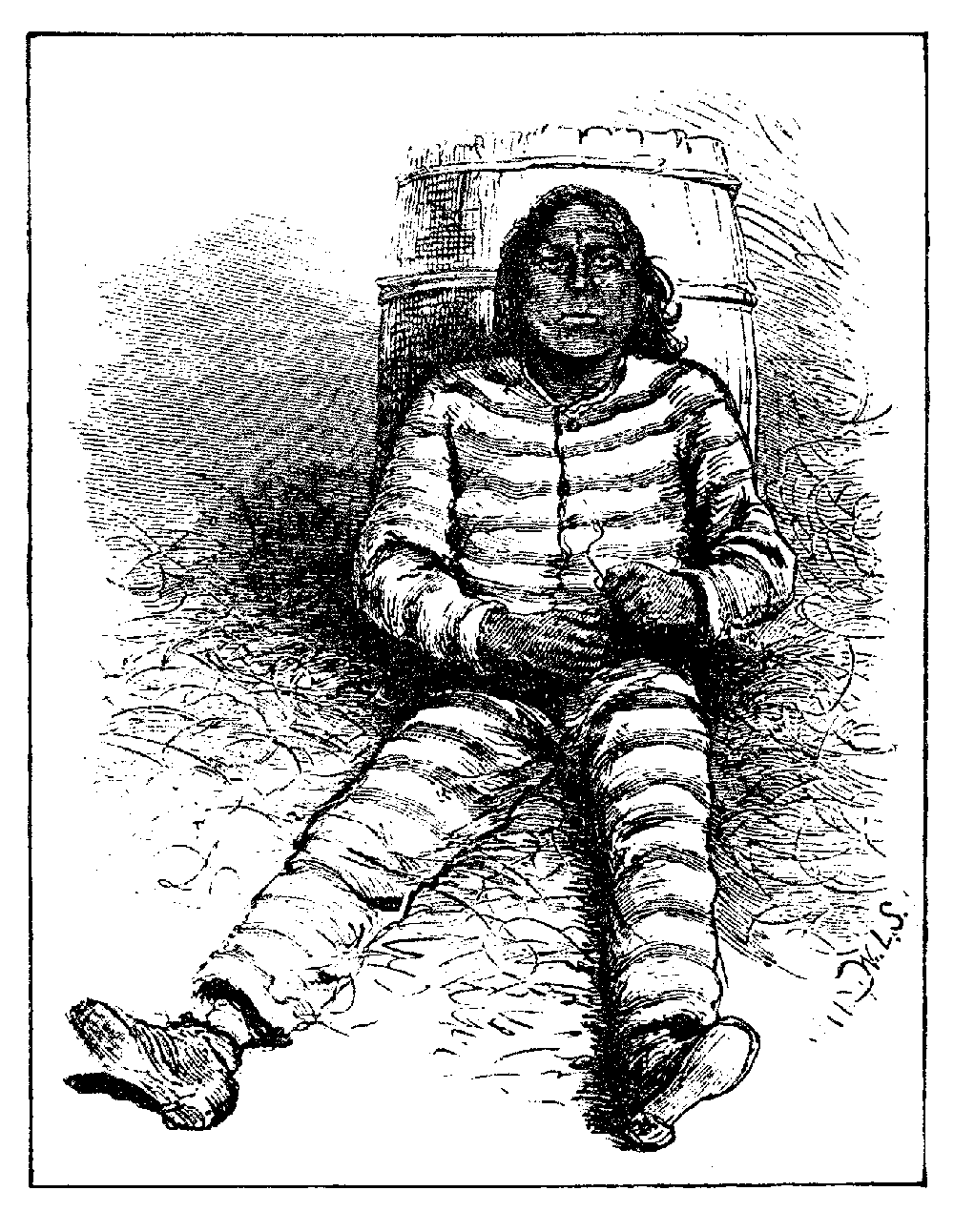
Fig. 150—Set-t'aiñte in prison (from Scribner's Monthly, February, 1874)
BUREAU OF AMERICAN ETHNOLOGY—
SEVENTEENTH ANNUAL REPORT PL. LXXVIII
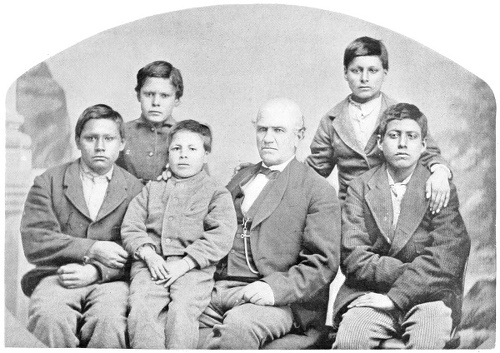
PHOTO BY SOULE (1) 1872.
LAWRIE TATUM, FIRST KIOWA AGENT, WITH GROUP OF RESCUED CAPTIVES.
Bearing on the subject of the arrest of the three chiefs and the
death of Set-ängya, we quote at length from a letter written by Lawrie
Tatum, the first agent for the Kiowa and associated tribes, from whom
the author has obtained much valuable information in response to letters
of inquiry. Mr Tatum, who is now (1896) living in Springdale,
Iowa, at the advanced age of 75 years, is a member of the Society of
Friends, and was appointed, on their recommendation, in accordance
with the "Indian peace policy" of President Grant, soon after the
tribes were brought upon the reservation. He took charge, as he
states, July 1, 1869, and resigned March 31, 1873, in consequence of the
release of Set-t'aiñte and Big-tree, a measure which he opposed, as it
was on his motion that these men were originally arrested. During his
incumbency he rescued a number of white captives without ransom—a
thing before unexampled. On this point he states, in a letter of
March 31, 1896:
I recovered fourteen white captives from the Indians, two of whom had forgotten
their names and every word of English. I advertised for their parents and found
them. I also recovered twelve Mexicans. I was the first agent, I think, that those
Indians had, who obtained captives of them without paying a ransom. A part of
them were procured by withholding rations from the band that had them, and a part
were obtained by means of the leverage that Colonel Mackenzie gave by taking a
hundred women and children from a raiding camp to Texas.
His stringent measures at times brought him into disfavor with his
co-religionists, but had great influence in bringing these unruly tribes
under effectual control. He writes, under date of April 7, 1896:
General Sherman called at my office, Kiowa and Comanche agency, Indian Territory,
fifth month, 23, 1871, to see if I knew of any Indians having gone to Texas
lately. He said that a party of Indians, supposed to number about one hundred and
fifty, had attacked a train of ten wagons about 17 miles from Fort Richardson and
killed the trainmaster and six teamsters. Five others escaped. Being at the fort
at the time, he gave orders for the available troops to follow them with thirty days'
rations and report at Fort Sill.
I told the general that I could not then tell what Indians they were, but thought
that I could ascertain in a few days. Four days later the Indians came after their
rations. Before issuing I asked the chiefs to come into the office, and told them of
the tragedy in Texas, and wished to know if they could tell by what Indians it had
been committed. Satanta immediately arose and said:
"Yes; I led in that raid. I have been told that you have stolen a large amount of
our annuity goods and given them to the Texans. I have repeatedly asked for arms
and ammunition, which have not been furnished, and made other requests which
have not been granted. You do not listen to my talk. The white people are preparing
to build a railroad through our country, which will not be permitted. Some
years ago they took us by the hair and pulled us here close to Texas, where we have
to fight them. When General Custer was here some years ago he arrested me and
kept me in confinement several days, but that is played out now. There are never
to be any more Kiowa Indians arrested. I want you to remember that.
"On account of these grievances a short time ago I took about one hundred of
my warriors, whom I wished to teach how to fight, to Texas, with the chiefs Satank
[Set-ängya], Eagle-heart, Big-tree, Big-bow, and Fast-bear. We found a mule train,
which we captured, and killed seven of the men. Three of our men got killed, but
we are willing to call it even. It is all over now, and not necessary to say much
more about it. We don't expect to do any raiding around here this summer. If
any other Indian claims the honor of leading that party he will be lying to you, for
I led it myself."
Satank, Eagle-heart, and Big-tree were present, and assented to the correctness of
the statement made by Satanta. That they were guilty of murder in the first degree
I had not the shadow of a doubt, and thought that forbearance in the case had ceased
to be a virtue and would become a crime. I told the men to go to issuing and I
would go to the fort (Sill). I went to Colonel Grierson's quarters and requested
him to arrest Satanta, Satank, Eagle-heart, Big-tree, Big-bow, and Fast-bear on the
charge of murder. Scarcely had the order been given when, to the surprise of all of
of us, Satanta took the post interpreter into Colonel Grierson's quarters. He had
heard that there was a big Washington chief there (General Sherman), and he
probably wished to measure up with him and see how they compared. When I
started to the agency he said he would go with me, but some soldiers stepped in front
of him with their revolvers and ordered him back, and he quietly obeyed. The
colonel sent for Satank and Eagle-heart to go to his quarters. Satank went and
was arrested. Eagle-heart got nearly there and saw Big-tree being arrested, and he
turned and fled. Kicking-bird pled eloquently for the release of the three prisoners,
although he entirely disapproved of their raiding.
A day or two after the arrest, Colonel Mackenzie, in command of the troops from
Fort Richardson, arrived at Fort Sill and reported that the heavy and continued
rains had obliterated the tracks of the raiding Indians so that they could not be
followed. After remaining a few days, the colonel with his troops took charge of
the prisoners to convey them to Texas for trial. Satank was so refractory that he
was put into a wagon with two soldiers, and Satanta and Big-tree were put into
another wagon. George Washington, a Caddo Indian, rode alongside of the wagons
as they left Fort Sill. Satank called to him and said: "I wish to send a little
message by you to my people. Tell them that I am dead. I died the first day out,
and my bones will be lying on the side of the road. I wish my people to gather
them up and take them home." Satanta also sent a message, saying: "Tell my
people to take the forty-one mules that we stole from Texas to the agent, as he and
Colonel Grierson require. Don't commit any depredations around Fort Sill or
in Texas."
When about a mile from the post Satank sang his death song, and with his back
to the guard drew the shackles off his hands by taking some of the skin with them.
Then with a butcher knife which he had secreted, he started for the guard in the
front part of the wagon, cutting one of the soldiers slightly in the leg. They both
jumped out, leaving their guns. Satank picked up one of them and commenced
loading it, wanting to kill one more man. Before he got it loaded he received
several shots, and in twenty minutes died in much agony, gritting his teeth. Colonel
Grierson had him buried at Fort Sill. He gave the Indians permission to take him up
and convey him to their camp for interment, which they declined to do.
Mr Leeper, my interpreter, who has since been a practicing physician in Chicago,
and Horace P. Jones, the post interpreter, attended the trial of Satanta and Big-tree
at Jacksboro. The jury brought in a verdict of murder in the first degree, and sentenced
them to be hung on the 1st of the following September. I had requested
that they be not executed, and gave my reasons for thinking that such a course would
have a better effect upon the Indians of the reservation. The judge wrote me that
he approved of my request and would ask the governor to commute the sentence to
life imprisonment, which was done. The Kiowas delivered to me the stolen mules,
as Satanta requested.
Although Set-ängya was a bad Indian and deserved punishment, it
is impossible not to admire the grim courage of the old man, as, true
to his warrior oath to despise death, though laden with chains and
surrounded by armed troops, he boldly sang his death song, and then,
wrenching the manacles from his bleeding wrists, drove the guards
from the wagon, picked up their abandoned guns, and coolly prepared
to kill one more enemy of his race before he fell, shot to death.
A part of the Kiowa camped during this winter on Ä´-gíăni P'a,
"Long-tree creek," a branch of Elk creek of upper Red river. The
name is indicated on the Anko calendar by the figure of a tree below
the winter mark. The remainder of the tribe camped on the Washita,
near Rainy mountain. During this winter the Kiowa
were visited by a large party of Pawnee, who came to
make peace. They came on foot and remained a long
time, returning with many horses given them by their
hosts. On the Set-t'an calendar the event is indicated
by a representation of three characteristic Pawnee heads
above the winter mark.
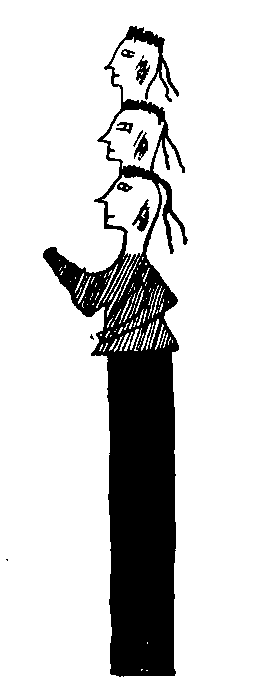
Fig. 151—Winter 1871—72 (1872—73)—Pawnee visit; camp on Long-tree creek.
This was the first friendly meeting within the memory
of the two tribes. The Pawnee first came to the
Wichita, their near relatives, and then announced their
intention to visit the Kiowa to make a treaty of peace.
The Kiowa debated the matter for some time, but finally
agreed, and after the visit dismissed their guests with
many presents of horses. The older men describe the
identical horses which were given. In the fall of 1873
another large party of the Pawnee visited the Wichita
and remained some time. On their return home they
gave such an account of their experience that the
entire tribe decided to remove to the south from
Nebraska, where they were constantly harassed by the Dakota. The
matter was brought to the attention of the government and a new
reservation was selected for them in Indian Territory (Oklahoma), to
which they removed in the spring of 1875 (Report, 90).
From the concurrent notices by Battey, Grinnell, and the Indian
Commissioner, together with the statements of a number of Indians,
it is plain that in this instance the author of the calendar has made
an error in the date, which should be the winter of 1872—73. As the
Indians tell it, the Pawnee came late in the fall, after the Kiowa
had left Ä´gíăni P'a. The explanation may be in a confusion
between the visit of the Pawnee and that of the Pueblos (see winter
1872—73).
In regard to this Pawnee visit, which led to the removal of the tribe
to Indian Territory, Grinnell says that in the summer of 1870 Lone-chief
led a large party of the Pawnee southward to visit the Wichita.
Again in the winter of 1871—72, the same chief, with a party, started
on another visit to the Wichita, but for some reason turned back. The
next winter (1872—73) in consequence of renewed inroads of the Dakota,
the Pawnee were thrown into an unsettled condition and the question
of removal to a safer situation began to be seriously discussed. It was
finally decided to send a small party under Lone-chief and one or two
others to the southern tribes to learn how these would look upon
a general Pawnee migration into Indian Territory. The delegates
visited the Oto, Kansa, Wichita, Comanche, Kiowa, and Apache, and
were everywhere received in a friendly manner. The Pawnee then
invited the chiefs of the various tribes to meet them at the Wichita
camp, where the Pawnee speaker broached the proposition, stating
that his people wished to be at peace and had made up their minds to
come and live with their friends in the south.
They received a cordial invitation from all the chiefs of the different tribes, who
said that they had good land and plenty of buffalo for them, and the result was that
in 1873 the first party moved south and was followed by others, until in 1875 the
whole tribe had removed from Nebraska to the Indian Territory (Grinnell, Pawnee, 1).
Grinnell is not entirely consistent with himself, but in another place
says that the first expedition under Lone-chief took place "the following
summer in August" of 1869 or 1870, and that it was on that occasion
that the Pawnee visited and made peace with the Kiowa, and
afterward visited the Comanche (Grinnell, Pawnee, 2).
The Quaker teacher, Battey, was with Kicking-bird in the Kiowa
camp on Cache creek on the arrival of the Pawnee dancers, numbering
forty-five, in March, 1873. He gives an extended account of their
reception and performance:
A party of Pawnees came in last evening, giving notice of their arrival by their
headman and two or three others coming into camp, while the main body remained
2 or 3 miles distant. This morning a public reception was given them.
The party was seen coming over a ridge in single file, bearing a white flag.
Approaching to within 20 rods, they planted their flag, upon which was painted the
single letter P, and sat down in a line on each side of it, facing the village. After
sitting in this manner for perhaps half an hour, during which they maintained entire
silence, and preliminary arrangements for their reception were made in the camp,
the chiefs, followed by most of the headmen, and these by the young men, women,
and children, went forth to welcome them. Upon drawing near to them, the Kiowa
chiefs walking with a slow step and dignified mien, some of the old women set up a
chant in a shrill voice, whereupon the head chief of the Pawnees and two or three
others, perhaps the nearest in rank, arose, and with a quick, firm step approached
the Kiowa chiefs, and after embracing them retired to their former position.
Others of the Pawnees came forward, a few at a time, until all had embraced and
been embraced by the Kiowa chiefs and headmen. The women, remaining some
distance behind, renewed their shrill chant from time to time. Some of the Pawnees
occasionally placed a shawl or embroidered blanket upon the shoulders of a Kiowa,
while several of the old men passed along in front of the whole line of the visitors,
shaking hands with them. After this the Pawnees set up a weird song, during the
continuance of which Kiowa fathers, each carrying a small child in his arms, bearing
a piece of stick in its little hands, young girls, and occasionally a woman, would
approach the Pawnees, and selecting someone, would present themselves before
him, holding out the stick. Thereupon he would arise, place his hands upon the
donor's head in a solemn, reverential manner, as if blessing, pass them down the
sides, following the arms, take the stick, and sit down. Each stick thus given was
a pledge from the giver to the receiver for a pony, to be given when the visitors are
ready to return to their country. Old men, from time to time addressing the Kiowas,
urged them to liberality, to show the largeness of their hearts and the warmth of
their friendship by giving ponies to these poor Pawnees, who had come so far to see
them and renew their friendship, and not allow them to return on foot, as they
came. I know not how many ponies were thus pledged to them, but there must
have been many.
At the conclusion of the ceremony the Pawnees arose in a body, ceased their song,
took up their flag, and a part following one Kiowa chief and a part another, accompanied
them to their lodges to partake of their hospitality. The head chief, with
four or five others, including the flag bearer, accompanied Kicking-bird to his lodge,
thus becoming his guest.
In the afternoon the visitors gave a Pawnee war dance, of which
Battey wisely remarks:
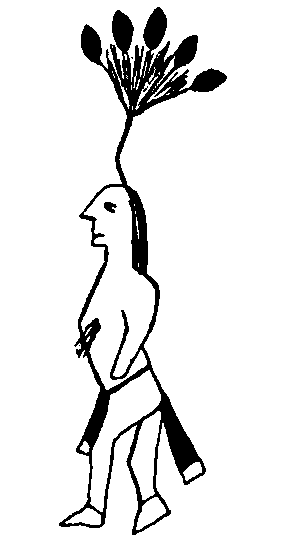
Fig. 152—Summer 1872—Viejo shot.
I shall not render myself ridiculous by attempting to describe that which is indescribable....
Individuals occupied the intervals between the
dances by narrating their own former valorous exploits, not even
omitting that their victims were in some instances Kiowas, concluding
by throwing their war implements upon the ground with
such force, in case of tomahawk or hatchet, as to cause the metal
to ring. Then, with gesture of covering it up, they would go
away, leaving it to lie there; thus intimating that, though they
had been foolish and fought, they now rejoiced in the beams of
peace and hoped that the red men everywhere might live in peace
one with another; all of which was received by the Kiowas with
the loud response of "How! how! Yes! yes!" (Battey, 20).
This summer there was no sun dance, and in consequence
the medicine lodge does not appear on either calendar.
For this summer the Anko calendar has two connected human figures,
together with what he explains as a "mule's head" above the
medicine pole. Between the forks of the pole is another human head,
where he commenced to draw the first figure, but found that he had no
room. The joined human figures refer to a drunken fight between
Sun-boy and T'ené-zépte, "Bird-bow" (?), growing out of some whisky
smuggled in by Mexicans, in which Sun-boy shot his antagonist with
an arrow. The mule's head indicates a raid into Kansas, in which the
Kiowa captured a large number of mules. This may have been the
same raid in which Bíako was shot.
The Set-t'an calendar has a picture of a man wounded in the chest,
with a tree above his head to show that the event occurred in summer.
This has reference to a skirmish with the whites in which a Mexican
captive named Bíako (Viejo) was shot, but afterward recovered. He
was one of those selected for confinement in Florida a few years later,
and is still living and with the tribe. The fight took place in the
course of a raid into Kansas by a small party of Kiowa under T'ené'taide,
"Bird-chief," which was undertaken against the protests of the
other chiefs, who desired to be at peace with the Americans. Near
Medicine-lodge creek, not far from the Kansas line, they were joined
by some of the Osage, and soon afterward met a party of white men
in wagons, whom they thought were surveyors; a skirmish ensued,
resulting in the wounding of the captive and one of the Osage.
Téguăgo Tsän-de Sai, "Winter that the Pueblos came." In this winter,
while most of the Kiowa were encamped on the Washita near Rainy
mountain, a party of Pueblo Indians and Mexicans visited them to
trade biscocho, or Pueblo bread, and eagle feathers for horses and
buffalo robes. The Kiowa were very fond of this bread and willingly
gave a pony for a small bag of it. The figure on the Set-t'an calendar
represents a Pueblo Indian, with his hair tied in a bunch behind,
driving before him a burro (donkey) with a pack
upon his back. The Kiowa say that the Pawnee
visited them late in the fall, while the Pueblo
party came in the winter, stopping south of Stumbling-bear's
present camp. From an early period
the Pueblo Indians of the Rio Grande had carried
on a trade with the southern plains tribes, with
which they appear to have been always on friendly
terms. This was the next to their final visit.
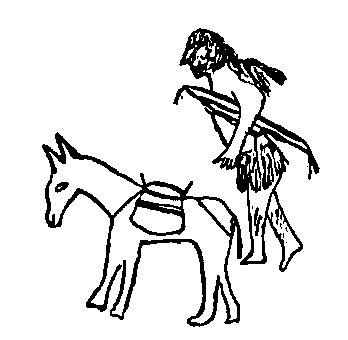
Fig. 153—Winter 1872—1873—Pueblo visit; battle tipi burned.
The Anko calendar records the accidental burning
of a noted heraldic tipi, hereditary in the family of the great
Dohásän. It was known as the Dó-gíägyä gúăt, "Tipi with battle
pictures," being ornamented with battle pictures on the northern side
and horizontal stripes of black and yellow alternating on the southern
side; it occupied the second place from the entrance in the camp circle
on ceremonial occasions. A small facsimile model has been deposited
by the author in the National Museum. Plate LXXIX shows the
appearance of the buckskin model when open and spread out.
The Kiowa, like the plains tribes generally, had an elaborate system
of heraldry, exemplified in the painting and decoration of their shields
and tipis. Every prominent family had its heraldic tipi, which had
its appointed place in the great camp circle of the tribe and descended
by inheritance from generation to generation. The system may form
the subject of a future study by the author.
Iyúgúa P'a K`ádó, "Maggot-creek sun dance," so called because
held on that stream, known to the whites as Sweetwater creek, a tributary
of the North fork of Red river, near the western line of the reservation,
just within the Texas panhandle. The dance was made by
Dóhéñte, "No-moccasins," the successor of Anso te; it occurred in
June and was attended by Battey, who describes it in detail in his book.
There were present most of the Kiowa, Comanche, and Apache, with a
large part of the Cheyenne and Arapaho, who discussed the question
of starting another war in consequence of
the continued imprisonment of Set-t'aiñte
and Big-tree. Although Battey himself had
come to bring them the news of the further
detention of these chiefs on account of the
Modok war, he was able, with the help of
Kicking-bird, to dissuade the Indians from
their hostile intent.
BUREAU OF AMERICAN ETHNOLOGY—
SEVENTEENTH ANNUAL REPORT PL. LXXIX
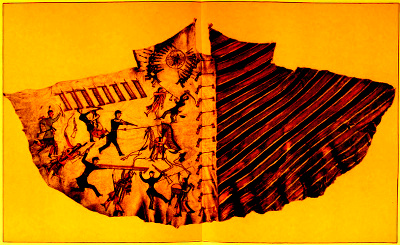
THE DO-GÍÄGYÄ-GUAT OR TIPI OF BATTLE PICTURES
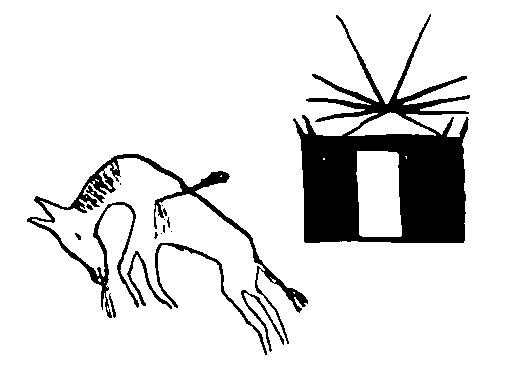
Fig. 154—Summer 1873—Pa-kóñkya's horses killed.
While the dance was in progress Pa-kóñkya
("Black-buffalo") "stole" the wife of Guibadái,
"Appearing-wolf," in retaliation for
which the injured husband killed seven of Pa-kóñkya's horses and took
a number of others, in accordance with the tribal custom; he threatened
also to kill the seducer, so that the Toñkóñko Dog-soldiers had
to interfere. The killing of the horses or the seizure of the property of
the offender by the injured husband is the regular tribal punishment
for such offenses, but in extreme cases, as in this instance, the Dog-soldiers
interfere. The same event is recorded on both calendars, the
Set-t'an picture being sufficiently suggestive, while
the Anko calendar has above the medicine pole
the figure of a horse's head struck by a bullet,
with another head below it to represent the
woman.
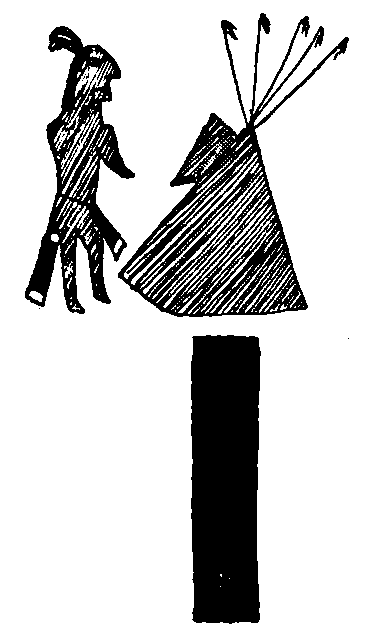
Fig. 155—Winter 1873—74—Set-t'aiñte returns; Lone-wolf's son killed.
Set-t'aiñte Tsän-de Sai, "Winter of Set-t'aiñte's
return." The notable event of this season was
the return of Set-t'aiñte from prison October 8,
1873. The figure above the winter mark on the
Set-t'an calendar shows Set-t'aiñte, distinguished
by his red headdress, coming into his tipi, which
was conspicuous by being painted entirely red,
with red streamers at the ends of the poles. The
red marks above the tipi are intended to represent
his return footprints. The event is noted at length
in another place.
The Anko calendar commemorates the killing in Mexico of two "sons"
(i. e., a son and a nephew) of Lone-wolf, rudely indicated below the
winter mark by a human figure wearing a k`ódalpä or shell breastplate,
with several flying bullets at the side.
Battey, who was in the Kiowa camp when the news arrived, has this
entry in his diary under date of January 13, 1874:
This is a day of wailing in our camp. News arrived this morning of the death of
two Kiowa braves, the one a son of Lone-wolf, the other of Red-otter [Ápeñ-gúădal]
Lone-wolf's brother. They were killed while on a raid in Mexico. Lone-wolf's
son was wounded in the knee a year ago last summer while raiding in Texas, and
came near losing his life. This, it seems, did not satisfy his thirst for blood, and
the Kiowa determining to raid no more in Texas, he, the past autumn, went into
Mexico, where it appears he has been killed. The camp resounded with the death
wail, the song of mourning for the unreturning braves mingled with the war whoop.
This was revived at stated intervals for several days (Battey, 21).
According to information given by the Indians to Battey, Lone-wolf's
son, with a few other young Kiowa warriors, had accompanied a raiding
party of Comanche into Mexico. On their return they were attacked
at a night camp by Mexican troops and the two Kiowa were killed.
The remaining Kiowa at once returned home with the news, but the
Comanche crossed the Rio Grande into Texas and began a series of
raids on Nueces river, when they were attacked by soldiers and several
killed. The rest started for home, but meeting another party of
Comanche, they turned back with them and were again attacked by
the troops, losing, in both encounters, twenty-two killed. A desire to
avenge these losses had much to do with the ferment among them
which led to the outbreak in the following summer; they also tried to
make it appear that the Kiowa had been raiding in Texas when killed,
in order to involve that tribe with themselves, although it seems
beyond question that the Kiowa were killed
in Mexico and had not been engaged in
the Texas raids.
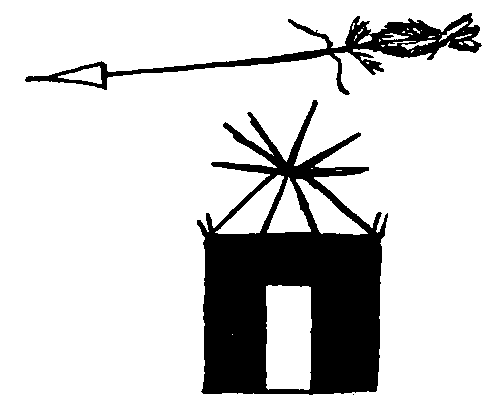
Fig. 156—Summer 1874—The medicine lance; Bluff-end sun dance.
Lone-wolf went to Mexico to bury the
body of his son, the sun dance having been
postponed in the meantime, and it is said
that on finding it he knelt down beside it
and vowed to avenge his death with the life
of a white man. A lot of government horses
were soon afterward stolen from Fort Concho
(or Clark?), in Texas, and it was charged
that this was done by Lone-wolf and his party on their return, although
they denied it. The killing of his son was the chief reason assigned
by Lone-wolf for his part in the outbreak which followed (Battey, 22;
Report, 91).
Tsó`kakánă-de K`ádó, "Sun dance at the end of the bluff." The
dance was held at a place called Tsó`kakán, "end of the bluff," on the
south side of the North fork of Red river, above the junction of Elm
fork, at a mountain called by the Kiowa the "Last mountain," in Greer
county, Oklahoma. On the Anko calendar the bluff is indicated by a
projection from one side of the medicine pole.
At this dance Set-t'aiñte, in thanksgiving for his release from prison,
gave his famous zébat, or medicine arrow-lance, to Ä´`to-t'aiñ, "White-cowbird,"
brother of the chief Sun-boy, thus resigning his own chieftainship
in favor Ä´`to-t'aiñ. There were only two lances of this kind in
the tribe, both being regarded as medicine lances, the other belonging
to Tän-gúădal (see winter 1868—69).
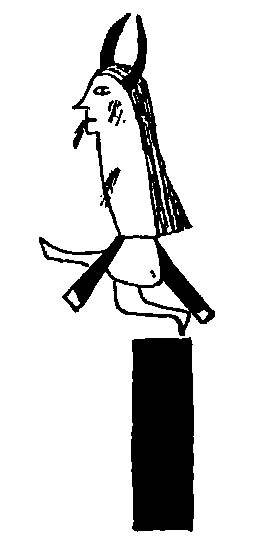
Fig. 157—Winter 1874—75—Gi-edal killed; Kiowa imprisoned.
Gí-edal Ehótal-de Sai, "Winter that Big-meat was killed." The
southern plains tribes, including a large part of the Kiowa, went out
together on the warpath. After the fight at the Wichita
agency, at Anadarko, in August, 1874, as previously
detailed, the Comanche warriors who were implicated fled
to the Staked plain, and the Kiowa to the head of Red
river, with the troops in pursuit. While there a small
party of the Kiowa went on a horse-stealing raid into
New Mexico, resulting in an encounter, in which they
killed two men, captured a woman, and ran off several
horses. On their return they stopped to rest in the
mountains, and were stretched at ease telling stories
when they were suddenly attacked by the soldiers.
Gi-edal was mortally wounded at the first fire, but
propped himself against a rock and succeeded in killing
one soldier and wounding another before he died.
Another Kiowa was killed also, but the troops were
finally repulsed. The Set-t'an calendar shows Gi-edal,
who is distinguished by buffalo horns on his war-bonnet,
wounded, with the blood gushing from his mouth.
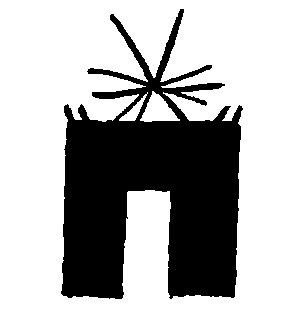
Fig. 158—Summer 1875—Love-making spring sun dance.
At the close of the outbreak, a number of warriors were
selected and sent to confinement at Fort Marion, Florida.
The figure on the Anko calendar is intended to represent
Fort Sill, with the imprisoned Kiowa warriors confined
before being sent to Florida.
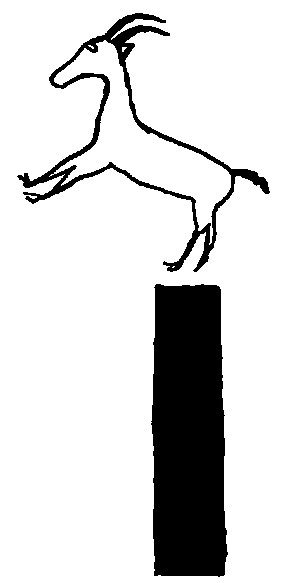
Fig. 159—Winter 1875—76—Sheep and goats issued.
K`ioñ-Toñ K`ádó, "Love-making spring sun dance."
It was held at a spring in a bend on the north (reservation)
bank of North fork of Red river, a few miles
from K`ób-akán, "Last mountain" (Mount Walsh, in
Greer county). As conditions were yet unsettled on
account of the outbreak, the Kiowa were escorted on
this occasion by a body of troops.
The spring takes its name from the fact that on one
occasion, while the Kiowa were encamped there, some
young men "stole" two girls who had gone to the spring
for water. On the Anko calendar the place is identified
by a figure of a woman above the medicine pole.
In this instance the same event is recorded on both
calendars by means of the figure of a ram or goat in
connection with the winter mark.
In the various engagements during the last campaign and at the
final surrender, several thousand ponies and mules had been taken from
the Indians. These were sold under direction of Colonel Mackenzie, who
determined to invest the proceeds in sheep and cattle for the benefit of
the Indians, with the idea of changing their habits from hunting to
pastoral. A detachment of troops, accompanied by several Kiowa and
Comanche, was sent to New Mexico, where they purchased thirty-five
hundred sheep and goats, with which they returned in November, 1875,
the flock being driven by Mexican herders. Many died on the journey,
and the remainder arrived in poor condition, but recuperated in the
spring, when they were distributed to those Indians deemed most
deserving. Stumbling-bear received one hundred, and others smaller
flocks. Six hundred cattle were also purchased from the same fund
and distributed in the same manner (Report, 92).
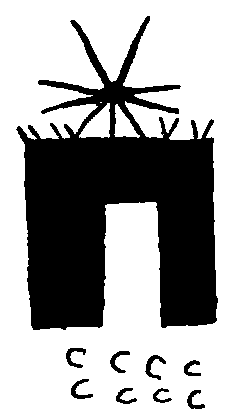
Fig. 160—Summer 1876—Horse-stealing sun dance.
Just previous to the outbreak the Kiowa, Comanche, and Apache,
with the few of the Delaware tribe living among them, were officially
reported to have over sixteen thousand horses and mules. At the close
of the troubles they had only six thousand remaining, having lost ten
thousand within a little more than a year. They had also a small number
of cattle before the outbreak, but no sheep (Report, 93).
This was the first general attempt by the Kiowa to
raise stock (except horses). Although at the start the
experiment promised well, the herds were soon reduced
by neglect, killing for food, etc., and in a few years the
last animal was gone. It is said that some of the sheep
escaped to the Wichita mountains, where for several
years they roamed wild.
Iyúgúa P'a Pähä´dal K'ádó, Sun dance at the fork of
Maggot (Sweetwater) creek, or Paí-tälyí-de Tseñko Edásémk`opa-de
K`ádó, "Sun dance when Sun-boy's horses
were stolen." This dance was held at the junction of
Sweetwater creek and the North fork of Red river, on the western line
of the reservation. While it was in progress some Mexicans stole all
of Sun-boy's horses. After the dance the Kiowa pursued the thieves,
but their horses gave oat, and they failed to recover the stolen animals.
On both calendars the event is indicated by means of figures representing
horse tracks near the medicine lodge.
Dó-héñte, "No-moccasins" ("Tohaint" of Battey) had died in the
preceding fall and had been succeeded as taíme priest by Set-dayá-iti,
"Many-bears," who made this dance. He was the uncle of Set-dayiá-iti,
who was killed by the Ute, and the cousin ("brother") of Taímete,
who afterward had charge of the taíme.
This winter is distinguished on the Set-t'an calendar by the killing
of the woman A`gábaí, "On-top-of-the-hill," by her husband Íăpa,
"Baby," in the Kiowa camp, which at that time was a short distance
below Fort Sill. The figure shows the woman above the winter mark,
with a character intended for a cliff beside a river (the wavy line)
to indicate her name. Although the killing occurred in summer, it
was some time after the sun dance, and hence is marked as happening
in winter. The woman was sick and promised Íăpa,
who was considered a doctor and was then unmarried,
that if he would make her well she would marry
him; he succeeded in curing her and she married
him, but soon after left him, and for this he stabbed
her.
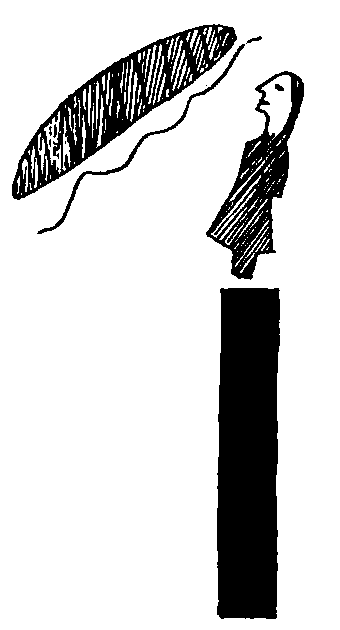
Fig. 161—Winter 1876—1877—A'gábaí killed; scouts enlisted.
The incident is thus noted by Agent Haworth in
his official report:
A young man in a mad fit killed his wife. On hearing of it,
I called a council of Kiowa chiefs and asked them to take some
action about it. I explained to them the penalties the white
man's law inflicted for such terrible crimes. After a short
consultation they decided they would do with him whatever I
said—kill him, if I said so. They said, however, that he was
young and foolish and did not know the white man's laws or
road, but they would arrest him as soon as he could be found
and bring him to me, and I could do with him as I desired.
Two of their number, Dangerous-eagle and Big-tree, about
nine oclock the same evening brought him to my house, having made the arrest
themselves. I sent them on with him to the guard-house, where he was confined
for several months, most of the time with ball and chain, working around the garrison
in full view of his people. After his arrest they made the request that, in consideration
of his ignorance of the white man's laws, his life be spared. I told them
he would not be hurt, but the arrest was made without any promises of mercy being
exacted or made, no soldiers being required, and done simply on
my suggestion or request (Report, 94).
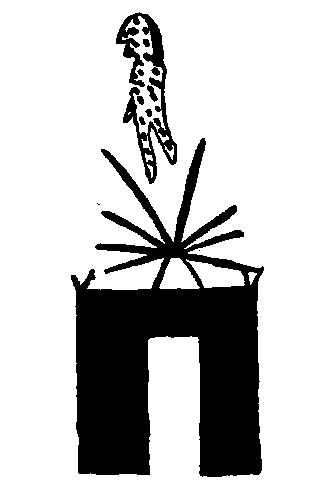
Fig. 162—Summer 1877—Measles sun dance.
Anko's calendar commemorates the fact that he, with
about twenty other Kiowa braves, enlisted as scouts this
year at Fort Sill, remaining in the service two or three
years. The figure below the winter mark shows a man
holding a gun and wearing a peculiar variety of hat
then used by the scouts. The first Kiowa scouts were
enlisted at the time of the surrender in 1875.
Dä´-mä´tánä´ P'a K`ádó, "Star-girl-tree river sun
dance," or Á`gat-hódal K`ádó, "Measles sun dance."
This dance took place within the present Greer county, Oklahoma, on
Salt fork of Red river, called by the Kiowa the "Star-girl-tree river,"
from a noted tree which originated from a sapling used in a medicine
sacrifice to the "Star girls" or Pleiades. On this occasion the troops
accompanied the Kiowa on their buffalo hunt and afterward escorted
them to the place selected for the dance.
This summer is noted for an epidemic of measles, which is said to
have killed more children in the tribe than the measles epidemic of
1892. It is represented on both calendars by a human figure covered
with red spots, above the medicine lodge. Strangely enough there is no
notice of this epidemic in the report of the agent for this year, which may
perhaps be accounted for by the fact that he was himself prostrated
by sickness which occasioned his retirement in the following spring.
From the report of the agent for the Cheyenne and Arapaho, however,
we learn that the epidemic broke out among the latter tribes in April,
and in spite of the best efforts of the physician, killed two hundred and
nineteen children, so that almost every family was in mourning. In
happy contrast to the more recent experience of the Kiowa, the government
school was temporarily turned into a hospital, with the teachers
for nurses, so that although seventy-four children
were sick at the same time, not one died (Report, 95).
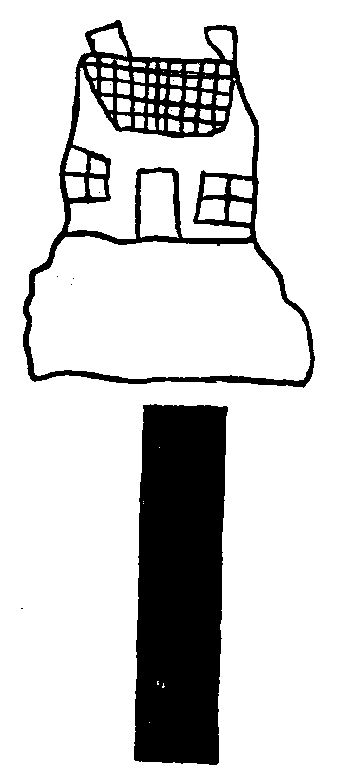
Fig. 163—Winter 1877—78—Camp at Signal mountain; hunt on Pecan creek.
K`op-taíde-do-tsédal-de Sai, "Signal-mountain winter."
During this winter a part of the tribe camped
near Mount Scott, while the remainder camped west
of Fort Sill, at the foot of Signal mountain, called
by the Kiowa "the mountain with a house built
upon it," referring to a stone lookout station built
during the last Indian outbreak. The figure on the
Set-t´an calendar is sufficiently suggestive of a house
upon a mountain.
Anko records the fact that he hunted buffalo this
winter on Elk creek (on upper Red river), called by
the Kiowa Dónä´-i P'a, "Pecan river." The rounded
figure below the winter mark is intended to represent
a pecan nut.
This winter is noted for an epidemic of fever, which
is mentioned in the report for 1878. In the fall of
1877, under Agent Haworth, as an inducement to the Indians to abandon
their roaming habit, the government built houses for ten prominent
chiefs of the three tribes, including Stumbling-bear, Gaápiatañ (Heidsick),
Guñsádalte (Cat), and Sun-boy, of the Kiowa, and White-man
and Taha, of the Apache. These were the first Indian houses ever
built upon the reservation, excepting two erected by the military. At
first the new owners continued to live in the tipis, which they preferred
from long usage, but by the further gift of beds and chairs they
were induced to go into the houses. An attempt to get the Indians
to cut the logs and do a part of the work themselves under instruction
seems to have been a failure. The houses were reasonably good
frame structures of three rooms, having doors, glass windows, and
substantial double fireplaces and chimneys of stone; they cost $600
each (Report, 96). In 1886 there were nine Kiowa families living in
houses (Report, 97), but a few years later most of these dwellings were
vacant or occupied by white renters, the Indian owners being again
in the tipis.
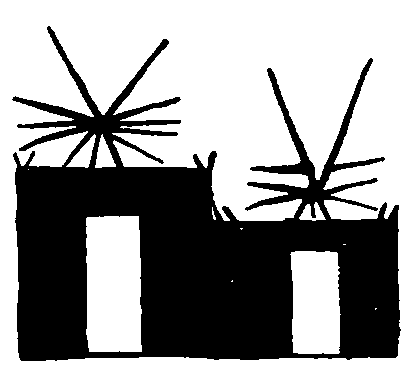
Fig. 164.—Summer 1878—Repeated sun dance.
Adăldä K`ádó, "Repeated sun dance." This is the second recorded
instance of this kind, the first having occurred in 1842. On the Set-t´an
calendar it is indicated by the figure of
two adjoining medicine lodges, and in the Anko
calendar by a double-forked medicine pole. The
two dances were held on the North fork of Red
river. Part of the Kiowa had gone to the plains
on the western part of the reservation to hunt
buffalo, while the others remained at home. Each
party, unknown to the other, promised to make
a sun dance, in consequence of which one dance
was held at the regular period, after which the
leaves were renewed and another dance was held for another four days.
On this occasion also the buffalo hunters, who made one sun dance,
were escorted by a detachment of troops as a protection and as a precaution
against their committing depredations (Report, 98).
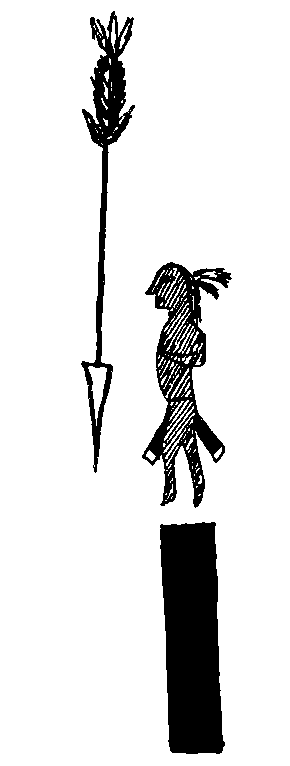
Fig. 165—Winter 1878—79—Ä´to-t'aíñ killed.
The event noted for this winter on both calendars is the killing of
Ä´to-t'aíñ, "White-cowbird," the man to whom Set-t'aiñte
had given his medicine lance five years before, thus resigning
his chieftanship to him (see summer 1874). On
the Set-t'an calendar it is indicated by a human figure
painted red and with the red headdress, both characteristic
of Set-t'aiñte, above the winter mark, and with the
medicine lance or zébat in front. On the Anko calendar it
is indicated by the figure of the arrow-lance below the winter
mark. By a curious coincidence Set-t'aiñte himself
committed suicide in a Texas prison about the same time.
Ä´to-t'aíñ was the brother of the chief Sun-boy, and on
account of his relationship and the dignity conferred upon
him by Set-t'aiñte, if not for his personal merits, was a
prominent man in the tribe. On account of having this
lance he was also known as Zébä-dó-k`ía, "Man-who-has-the-arrows,"
i. e., "Arrowman." He was killed by Texans
while with a party who had gone, by permission of the
agent and accompanied by an escort of troops, to hunt
buffalo on upper Red river in what is now Greer county,
Oklahoma; the Texans shot him through the body and both arms,
scalped him, and cut off a finger upon which was a ring. The hunt
occurred in the winter season, but the buffalo were now so nearly exterminated
that it was practically a failure and the Indians suffered
much in consequence. The killing with its sequel is thus noted in the
official report:
Captain Nolan, commanding the company of troops who were escorting the Indians
while on the hunt, had, in view of the scarcity of buffalo, allowed parties, each
accompanied by a squad of soldiers, to go off from the main camp to points where
it was said straggling droves of buffalo could be found. While a Kiowa man was
one day a short distance from the camp of one of these parties and alone he was run
onto by a company of Texas state troops, shot down, killed, and scalped. A few
moments after this grand military feat was performed the little Indian camp was
discovered, and they were just in the act of covering themselves with additional
glory by charging it and butchering the squaws and pappooses when the squad of
colored troops presented themselves, mounted on the bare backs of their horses,
having had no time to saddle them, and the warlike band disappeared. Upon the
return of the Indians to the agency a request was made that the Texans who
murdered the Kiowa should be arrested and punished by the authorities, expressing
at the same time no intention of avenging his death themselves. It seems that
after waiting some time and concluding that nothing could or would be done by the
authorities, a party of young Kiowas, headed by the brother of the murdered man,
quietly left their different camps, dashed hurriedly across the line into Texas, killed
and scalped a white man they met in the road, and returned as secretly to their
camps, apparently feeling that they had avenged the death of their brother and
friend by this taking of one scalp.
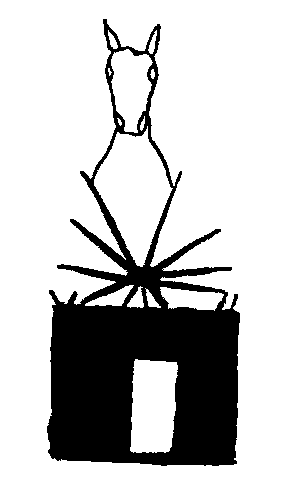
Fig. 166—Summer 1879—Horse-eating sun dance; Boy shot.
A party of troops was sent after this avenging party immediately on
learning of this last killing, but so quietly had they proceeded
that no trace of them could be found or any
definite information procured on which to base measures
for their punishment. The white man killed was named
Earle, and the agent expresses his belief that if proper
satisfaction had been made in the first place by punishing
the murderers of the Kiowa or making presents
to his family according to the Indian custom, the avenging
party would not have entered Texas on their deadly
mission (Report, 99).
Tséñ-píä K`ádó, "Horse-eating sun dance." It is indicated
on the Set-t'an calendar by the figure of a horse's
head above the medicine lodge. This dance was held on Elm fork
of Red river, and was so called because the buffalo had now become
so scarce that the Kiowa, who had gone on their regular hunt the
preceding winter, had found so few that they were obliged to kill and
eat their ponies during the summer to save themselves from starving.
This may be recorded as the date of the disappearance of the buffalo
from the Kiowa country. Thenceforth the appearance of even a single
animal was a rare event. The official report says:
In the month of June last a portion of each band was permitted to go to the western
part of the reservation to subsist themselves awhile on buffalo, deer, etc, as the
supplies for the year had been so nearly expended it was not seen how they could
all be fed until those for the next year were received. But again they failed to find
game sufficient to feed themselves, and the Kiowa, who while out were engaged in
their annual medicine dance, suffered some with hunger. I think their failures in
finding buffalo the past year, and their consequent suffering while out, will have a
good effect in causing them to abandon their idea of subsisting in this way and to
look to their crops and stock for a support. It is a fact worthy of note that the reports
of the agents show the value of the robes and furs sold by the Indians now belonging
to the Kiowa, Comanche, and Wichita agency for the year 1876 amounted to $70,400;
for 1877, $64,500; for 1878, $26,375; while in 1879 only $5,068 was received, showing
that buffalo hunting is not a thing of profit as it once was; and, besides, the most
serious drawback to the Indians is the lack of the buffalo meat which at one time
helped to subsist them, and which, added to the insufficient rations furnished by
the government, kept them partly comfortable. As that supply is
cut off, the Indian must go to work and help himself or remain
hungry on the rations furnished (Report, 100).
The Anko calendar records the fact that while the Kiowa
were driving away their issue of beef cattle some mischievous
boys, shooting at the cattle with their arrows, accidentally
shot another boy in the shoulder, but not fatally.
In giving this explanation it was evident that Anko did
not want to mention the boy's name, probably because
he was now dead.
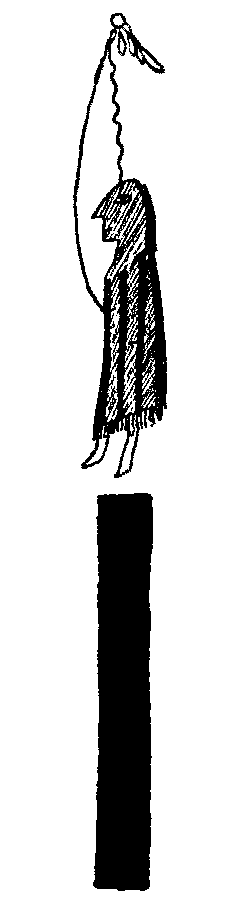
Fig. 167—Winter 1879—80—Eye-triumph winter.
Tä´kágyä Sai, "Eye-triumph winter." The name and
story furnish a curious illustration of Indian belief.
Káäsä´nte, "Little-robe" (or Little-hide), with two or three
others, had gone to the North fork of Red river to look
for antelope. According to another story they went to
look for their old enemies, the Navaho, who, it seems,
although now removed to their former reservation in
western New Mexico, still occasionally penetrated thus
far. Among them was a man named Pódodal (a variety
of bird), who claimed to understand the language of owls,
a bird believed by the Kiowa to be an embodied spirit.
While resting one night in camp this man warned Little-robe
not to go to bed, but to round up the ponies and keep watch over
them, for an owl had told him that the Navaho would try to steal them
that night. During the night Pódodal fired at something in the darkness,
and on looking in the morning they found the trail of a man, and
blood drops, which they followed for a long distance, but at last gave
up the pursuit. That night the owl again came and told Pódodal that
the wounded Navaho was lying dead beyond the point where they had
turned back, and that he (the owl) would go and fetch him.
On rising in the morning Pódodal saw some strange-looking object
lying on the ground in the lodge, and on examining it it proved to be
the eye of a dead Navaho. On the advice of Pódodal they then
abandoned the hunt and returned to the Kiowa camp, on a small branch
of Apache creek (Sémät P'a), an upper branch of Cache creek. They
carried with them the eye, hung at the end of a pole after the manner
of a scalp, and danced over it as over a scalp on arriving at the camp
on the small stream, since called Tä´-kágyä P'a, "Eye-triumph creek"
from this circumstance.
It should be added that there were some skeptics who laughed at the
whole story and declared that the eye was that of an antelope which
Pódodal had secretly shot.
On the Set-t'an calendar the event is indicated by a figure intended
to represent a scalp at the end of a pole, carried by a man wearing a
striped robe to indicate his name, Little-robe. On the Anko calendar
there is a representation of a scalp on a pole under the winter mark.
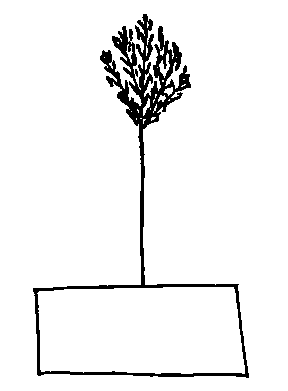
Fig. 168—Summer 1880—No dance; Päbóte died.
This summer there was no sun dance, perhaps on account of failure
to find buffalo, and instead of the medicine lodge the summer is indicated
on the Set-t'an calendar by the figure of a leafy
tree above a square figure, which is explained as meaning
that the author of the calendar stayed at home, the
lines being intended to show a space inclosed in a fence
after the manner of a white man's farm. A similar
device is several times used for the same purpose in later
years. Under date of September 1, 1881—a year later—the
agent says:
Last year I was encouraged in the belief that the Indians under
my charge were rather disposed to lay aside these ideas and
ceremonies, from the fact that very little was heard of their
medicine men during the year, and the Kiowas failed to hold
their annual "medicine dance." The latter part of this year,
however, from some cause, their medicine men have been unusually active, as I learn
has been the case at other agencies, and the Kiowas have recently returned from the
western part of their reservation, where they held their annual dance (Report, 101).
The Anko calendar records the death of a chief named Päbóte,
"American-horse." He was a man of unusual height and size, hence
his name, which signifies literally an animal taller than the average.
He was buried in a coffin by the whites at the agency nearly opposite
Fred's store. On the calendar the square figure below the picture of
the man, and connected with it by a line, is intended to represent the
coffin.
On first explaining the calendar, in 1892, Anko evaded the mention
of this man's name, in accordance with the Kiowa custom which forbids
naming the dead, but three years later consented to do so. The
same objection was frequently encountered, but finally overcome in
regard to other names on the calendars.
For this winter the Set-t'an calendar has a house over the winter
mark, but he could not remember whose house it was intended to represent.
In Captain Scott's notes it is said to be Paul Set-k'opte's new
house, but Set-k'opte did not return from the east until 1882. It is
probably intended to represent a new house built for another, Paul
Zoñtam, who returned from the east in 1881 as an ordained Episcopal
minister.
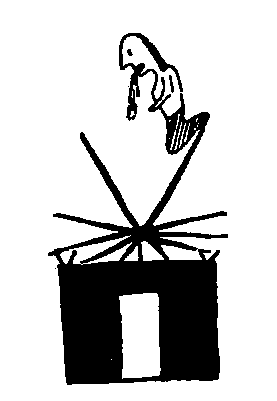
Fig. 169—Winter 1880—81—House built; Pueblo visit.
The Anko calendar records the visit of a large party of Pueblo
Indians from New Mexico, indicated by a human figure below the winter
mark with the hair bunched up in Pueblo fashion. There were
about a hundred of them and they stopped at various camps of the
Kiowa and Apache, remaining some time. This was the
last time the Pueblos ever visited these tribes. In the
following fall Big-bow returned their visit.
K`ádó Sä' lä´ti, "Hot-sun dance," or Dóguătal Sáomhäpä-de
K adó "Sun dance when blood came up from the
young man." It was called the "hot sun dance" from
the fact that it was held late in August, instead of in
June as usual, the delay being due probably to the difficulty
of finding a buffalo for the purpose; after a long
search a solitary bull was found. The dance was held
on North fork of Red river, a short distance beyond the
end of the mountains.
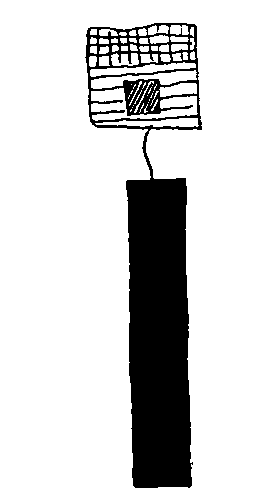
Fig. 170—Summer 1881—Hemorrhage or hot sun dance.
The close upright lines between the forks of the medicine
pole on the Anko calendar he explains to indicate the heat, probably
from the Indian gesture sign for fire, made by
holding the hand with thumb and fingers together
pointing upward, and separating them with a quick
motion, the concept being the upward motion of the
sparks and smoke.
The suggestive figure on the Set-t'an calendar records
an incident which gives another name to this sun dance,
a young man, the adopted son of Poor-buffalo, having
been attacked by hemorrhage. He was called Măsá`te,
"Six," from the fact that he had six toes on each foot;
his brother, Bóhé, still living, is said to have six fingers
on each hand, Such instances of malformation are at
least as rare among Indians as among whites.
Ĭmdádóá-de Saiá, "Winter when they played the dó-á medicine
game." This winter is noted for a great dó-á game played under the
auspices of two rival leaders, each of whom claimed to have the most
powerful "medicine" for the game. The game was played in the winter
camp on the Washita, near the mouth of Hog creek, the Kiowa leader
being Pa-tepte, "Buffalo-bull-coming-out," alias Dátekâñ, now dead (see
summer 1882), while his opponent was the Apache chief and medicine-man
Dävéko. The Kiowa leader was recognized distinctively as having
"medicine" for this game, and it was said that he could do wonderful
things with the "button," making it pass invisibly from one hand to
another while he held his hands outstretched and far apart, and even
to throw it up into the air and cause it to remain there suspended invisibly
until he was ready to put out his hand again and catch it; in other
words, he was probably an expert sleight-of-hand performer. His
Apache rival, Dävéko, is known as a medicine-man as well as a chief,
and is held in considerable dread, as it is believed that he can kill by
shooting invisible darts from a distance into the body of an enemy.
On this occasion he had boasted that his medicine was superior for the
dó-á game, which did not prove to be the case, however, and as the
Kiowa medicine-man won the victory for his party, large stakes were
wagered on the result and were won by the Kiowa. It is said that
this was a part of Pa-tepte's effort to revive the old customs and amusements
on a large scale. The game was witnessed by
a large concourse, all dressed and painted for the
occasion. The picture on the Set-t'an calendar is
very suggestive.
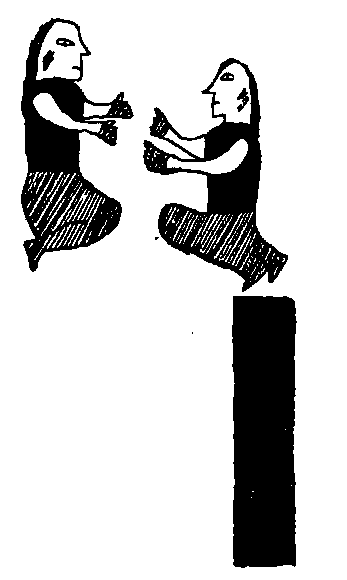
Fig. 171—Winter 1881—82—Dó-á game; medicine tipi.
The name dó-á signifies the "tipi game," from do,
tipi or house, and a, a game, because, unlike most
of their games, it is played inside the tipi, being
essentially a game for the long nights when the whole
tribe is assembled in the winter camp. A similar
game is found among nearly all our wild tribes; it is
played by both sexes, but never together. In its
general features it resembles our game of "hunt the
button," the players forming a circle around the fire
in the tipi, one-half of them playing against the
others, sitting facing them on the opposite side of
the fire. The leader of one party then takes the k`íäbo or button, a
short piece of stick wrapped around the middle with a strip of fur and
small enough to be concealed in the hand. Putting his closed hands
together, he raises his arms above his head, clasps them across his
chest or puts them behind his back, endeavoring to pass the k`íäbo
from one hand to another, or from his own hand to that of his next
partner, without being perceived by any of the opposite party, all the
while keeping time to the movements of his hands with one of the peculiar
dó-á songs, in which the members of his party join.
When the opposing player thinks he has detected in which hand the
other has concealed the stick, he indicates it with a peculiar jerk of his
thumb and index finger in that direction, with a loud Tsoq! (Comanche
for "That!"); if he has guessed correctly, he scores a certain number of
points, the account being kept by means of a bundle of green-painted
tally sticks. He then takes the k`íäbo and begins a similar set of
movements in time to another song, in which his partners join; so the
game goes on far into the night, until the contest is decided and the
stakes won by one side or the other. It is a most animated and interesting
game, of which they are very fond, and frequently at night in the
winter camp the song chorus may be heard from several games in progress
simultaneously, the high-pitched voices of the women in one tipi
making a pleasing contrast to the deeper tones of the men in another.
The Anko calendar notes the building of a medicine tipi by Dátekâñ,
for the purpose of bringing back the buffalo (see summer 1882). The
tipi is shown below the winter mark.
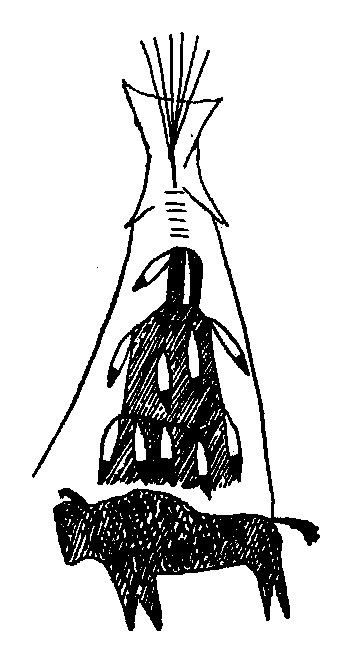
Fig. 172—Summer 1882—Buffalo medicine; Pätso`gáte died.
This summer Dohásän, whose hereditary duty it was to supply the
buffalo for the sun dance, failed to find even one, and in consequence
there was no dance. For this summer the Anko
calendar notes the death of Pätso`gáte, "Looking-alike,"
a daughter of Stumbling-bear, noted for her
beauty. In accordance with the tribal custom in
regard to speaking of the dead, Anko for a long
time refused to mention her name. The incident is
indicated by the figure of a woman where the medicine
pole is usually pictured.
The Set-t'an calendar notes the excitement caused
by the efforts of Dátekâñ, or Pa-tepte, to bring back
the buffalo, also noted by Anko in the preceding
winter season. The figure represents the medicine-man
seated in his sacred lodge, wearing his ceremonial
red blanket trimmed with eagle feathers, and
with a buffalo beside him.
The buffalo had now disappeared, and with it the
old Indian life, the sacred sun dance, and all else
that they most cherished threatened also to pass away. According to
Kiowa mythology, the buffalo originally lived in a cave underground,
from which they had been released by their great hero Sinti and scattered
over the prairies for the benefit of his children, the Indians.
Somewhat similar beliefs are entertained by other tribes. As the
buffalo had disappeared with the coming of the white man, who, by
reason of his superior knowledge, was rapidly dispossessing the Indian,
the native tribes almost universally believed, not that the buffalo had
been exterminated—a calamity too terrible for their comprehension—but
that it had been shut up again underground by their enemy, the
white man, in order more easily to accomplish their subjection. It was
believed that by prayer and sacred ceremonial the buffalo might again
be released to furnish food and life for the Indian, and in every tribe
there sprang up medicine-men who undertook to effect the restoration.
Among the Kiowa this task was adventured by a young man named
Dátekâñ, "Keeps-his-name-always," who announced early in 1882 that
he had had a vision in which he received a mission to bring back the
buffalo. Accordingly, he began to make medicine and assumed the
name of Pá-tépté, "Buffalo-bull-coming-out," in token of his new powers.
He was already noted in other directions as a medicine-man, and
had been the winner in the great dó-á contest mentioned in the calendar
of the preceding winter. It is possible that his success on that
occasion encouraged him to this attempt, as he began his buffalo medicine
immediately afterward. He erected a medicine tipi, in front of
which he set up a pole with a buffalo skin upon it, and prepared for
himself a medicine shirt ornamented with blue beads, over which he
threw a red blanket trimmed with eagle feathers. Thus attired, and
carrying a sacred pipe in his hand, he began his mystic ceremonies
within the tipi, and from time to time announced the results to the
people, most of whom believed all he said and manifested their faith by
gifts of blankets, money, and other property; they were further commanded
to obey him implicitly, on pain of failure of the
medicine in case of disobedience. His pretensions were
opposed by the younger men among the returned prisoners
from the east, who used all their influence against him, but
with little effect. After nearly a year of medicine-making,
being unsuccessful, he announced that some one had violated
some of the innumerable regulations, and that in consequence
his medicine was broken for the time and they
must wait five years longer, when he would begin again.
Before that time had elapsed, however, he died, but his
claims and prophecies were revived and amplified five years
later by Pá-iñgya (see summer 1888).
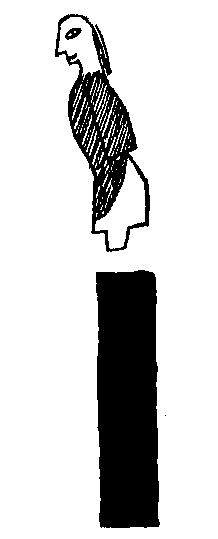
Fig. 173—Winter 1882—83—Bot-édalte dies; Grass leases; Camp on Pecan creek.
For this winter the Set-t'an calendar records the death
of a woman named Bot-édalte, "Big-stomach," indicated
by the figure of a woman with an abnormal abdomen
above the winter mark.
The Anko calendar notes that the Indian police camped this winter
on Dónä´i P'a, "Pecan creek" (Elk creek of North fork of Red river),
indicated, as in 1877—78, by the figure of a pecan nut below the winter
mark. The Texas cattle trail crossed at that point and the police were
stationed there to keep the cattle off the reservation. Quanah, chief
of the Comanche, was there also in the interest of the cattlemen, and it
was through his persuasion that the allied tribes finally agreed to lease
their grass lands.
Anko notes also that the Indians now "began to talk about grass
leases," but that as yet there was no grass money paid. It is indicated
on the calendar by three circles for dollars below the winter mark,
with a +, intended for a picture of the Indian gesture sign for "cut
off" or "stop," made by bringing the extended right hand downward
in front of the other, as if cutting a rope with a knife-stroke.
On this subject the agent says, under date of August 17, 1883:
The grass question seems to be the most difficult thing I have to contend with. I
find it impossible to keep trespassing cattle entirely off the reservation, and we are
now crowded on all sides. It seems to do very little good to put them off, for it is
found that cattle that have just been driven off will come back on the reservation as
soon as the police force advances. Our Indians are not disposed to rent the grass,
yet if it is used it seems they should be paid for it.... The grass should be utilized
in some way that will benefit the Indians, and if it is not possible to supply
them with herds sufficient to consume it, it does seem as if the grass should be
rented and the Indians receive the money for it (Report, 103).
The final result was the establishment of the system of grass leases.
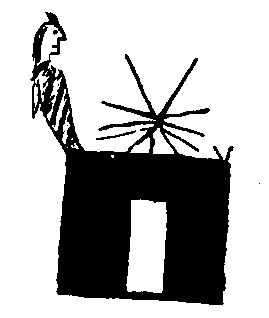
Fig. 174—Summer, 1883—Nez Percé sun dance.
´dalk`atói K`ádó, "Nez Percé sun dance," so called on account of
a visit from the Nez Percés, called by the Kiowa the "people with hair
cut off across the forehead." The figure above the medicine pole on
the Anko calendar is intended to represent a man in the act of cutting
off his front hair. The Set-t'an calendar has beside the medicine lodge
the figure of a man wearing the peculiar striped blanket
of the Nez Percés. This sun dance is sometimes known
as Máp'ódal K`ádó, "Split-nose sun dance," because held
on the Washita on pasture lands inclosed by a cattle
man known to the Indians by that name.
On account of difficulties with the whites, the Nez
Percés of Chief Joseph's band had left their homes in
eastern Oregon in the summer of 1877, and after a retreat
of a thousand miles were intercepted in Montana by
General Miles, when within a few miles of the British
border, and compelled to surrender. They were brought as prisoners
to Fort Leavenworth, and thence removed, in July, 1878, to a reservation
assigned to them in Indian Territory. The climate and surroundings
proving entirely unsuited to them, they were returned to reservations
in Washington and Idaho in 1885, their numbers in the meantime
having been reduced from about four hundred and fifty to three hundred
and one, about one-third of their whole number having died. It
was while domiciled in Indian Territory that they visited the Kiowa
and other tribes, dancing with the Kiowa and Apache at the head of
Sémät P'a, "Apache creek" (upper Cache creek), and attending the
Kiowa sun dance, which was held on the north side of the Washita,
about ten miles above Rainy-mountain creek, near where now is Cloud
Chief. This was the first time the Kiowa had ever seen the Nez
Percés, although they had a dim traditional memory of them in their
old northern home.
In the spring of this year the keeper of the taíme medicine, Set-dayá-ite,
"Many-bears," died, and the image was taken by Taímete,
"Taíme-man," who continued to hold it until his death in 1894.
For this winter the Set-t'an calendar has the picture of a house with
smoking chimney beside a tipi. It appears to be a canvas house, such,
as those Indians in a transition state sometimes use. Set-t'an explains
it to mean that Big-tree was given a stove by the government and put
it into a large tipi which he occupied; but Scott's
informant, who is corroborated by Anko and others,
explains it as meaning that Gákinãăte, "Ten," the
brother of Lone-wolf, built a house this fall on the
south side of the Washita, about opposite Cobb
creek. Stumbling-bear says that he himself had
received a stove as far back as 1875, two years
before the government built his house.
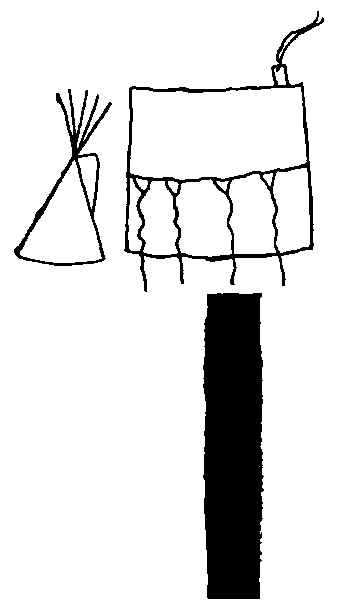
Fig. 175—Winter 1883—84—House built; children taken; Sioux dances.
The Anko calendar records the taking of a large
number of children to the Chilocco Indian school,
near Arkansas City, Kansas. The heavy drafts
made during the term to furnish children for Chilocco
and other schools very considerably reduced the
number of pupils in attendance at the reservation
schools; according to the agent's statement, seventy
were thus taken at one time (Report, 103). The figure
below the winter mark is intended to represent two
wagons filled with children.
Anko notes also that a party of Dakota came down to dance with the
Kiowa, indicated by the feather dance-wand at the side of the winter
mark.
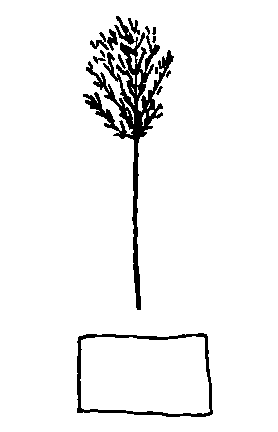
Fig. 176—Summer 1884.—No sun dance; Hauled freight.
There was no sun dance this summer, and the Set-t'an calendar has
only the figure of a tree to indicate summer, with a
figure below intended to represent an inclosed field,
implying that the owner stayed at home. Concerning
this the agent says, under date of August 28:
The Kiowas have danced less this year than usual, and they seem
to have given up their annual medicine dance, for as yet they have
said nothing about it. The holding of this dance has always been
a great occasion and considered one of their most important ceremonies,
for they have believed it absolutely necessary to secure
their health and success in all their undertakings, either at war
or in the chase. They have generally gone out on the plains from
40 to 60 miles from the agency and been absent from five to six
weeks. On several occasions since the buffalo disappeared, they
have suffered very much with hunger while out, and I hope we have
heard the last of the dance (Report, 104).
The calendar of Anko for this summer notes the hauling of government
freight by the Kiowa, including himself, indicated by a figure of a
wagon where the medicine pole would otherwise be. This was in agreement
with a plan inaugurated several years before, by which those
Indians who had suitable teams and wagons—the latter furnished by
the government—were permitted to haul supplies for the agency and
were paid for their labor as an inducement to get them to adopt the
white man's industries. As there was no railroad near at that time,
most of the freight had to be hauled overland from Caldwell, Kansas,
a distance of 150 miles. For such labor during this year the Indians
received nearly $8,000, and performed the work cheerfully
and in a satisfactory manner (Report, 105).
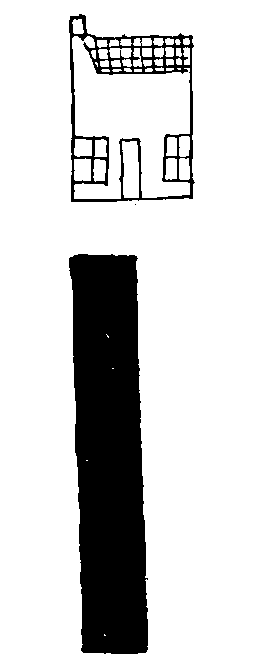
Fig. 177—Winter 1884—85—Winter camp; Tón-ak`á's elopement.
The Set-t'an calendar has a house above the winter
mark, which is interpreted to mean that the Kiowa camped
all winter on the Washita near Set-k`opte's house, just
above the agency. This was the fact, but another informant
suggests that the original intention was to
record the event that the Kiowa about this time began
to build houses for themselves. On this subject the
agent says at this time:
These Indans retain much of their roving disposition, and except
during the cropping season do not camp long in one place, but do
not go far from their fields. Few of the Kiowas, Comanches, and
Apaches have houses, and most of them live in tents. This will
probably be the last of their savage customs to be abandoned
(Report, 106).
In 1886 it is officially stated that only nine Kiowa
families were living in houses, all the rest being in tipis (Report, 107).
The Anko calendar records the stealing of another man's wife by
Tón-ak`á, "Notched-tail," i. e. "Water-turtle," a noted medicine-man,
for which the woman was whipped and a number of Tón-ak`á's horses
were killed by the injured husband. The turtle
below the winter mark indicates the event.
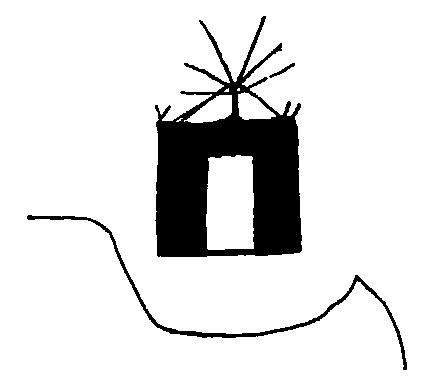
Fig. 178—Summer 1885—Little Peninsula sun dance; Grass payment.
Píhó K`ádó Sän, "Little Peninsula sun dance,"
so called because it was held in a peninsula
formed by a bend of the Washita about twenty
miles above the agency; the same place where
another dance, the Píhó K`ádó, had been held in
1839. The figure on the Set-t'an calendar shows
the medicine lodge within the bend (see summer
1839). The figure on the Anko calendar is
intended to represent the medicine pole with the buffalo head fastened
below the forks.
On this occasion Dohásän had to go to the Staked plain to find a
buffalo for the purpose. This dance was the first held by Taímete, the
successor of Set-dayá-ite. On this point the agent has to say:
I mentioned in my last report the fact that the annual medicine dance of the
Kiowa would not be held that year, and I expressed the hope that they had abandoned
it; but their old medicine man has since died, and his successor, unfortunately
a young man of little ability or character, ordered that another be held this year.
The Comanche have no such ceremonial as an annual dance, and the
other tribes of the reservation have no medicine dance, but the Caddoes
frequently meet together and dance for enjoyment, as white
people do (Report, 108).
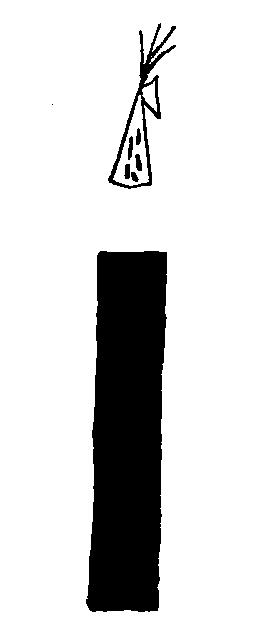
Fig. 179—Winter 1885—86—Camp burned.
The Anko calendar notes that the Comanche received
their first grass money this summer, shown by the circles
for dollars below the medicine pole, but with nothing to
indicate the tribe. The Kiowa did not make leases until
a year later. For some reason, perhaps on account of a
change of agents which occurred about this time, there
is no notice of this payment in the official report.
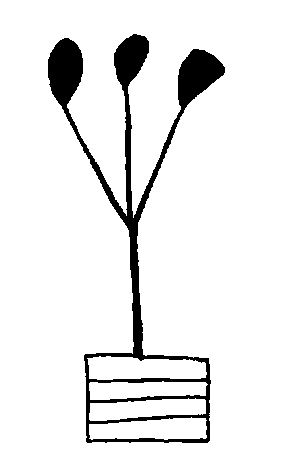
Fig. 180—Summer 1886—No sun dance; Policemen; Grass payment.
For this winter both calendars record a prairie fire which
destroyed all the tipis and much of the
other property of T'ébodal's and Â'dal-pepte's
camps, northwest of Mount Scott, while most of
the tribe had gone to the agency for rations. The
Set-t'an calendar indicates the event by means of the
picture of a tipi, streaked with red for the fire, above
the winter mark. The Anko calendar has below the
winter mark a peculiar symbol, which he explains to
mean the rising flames.
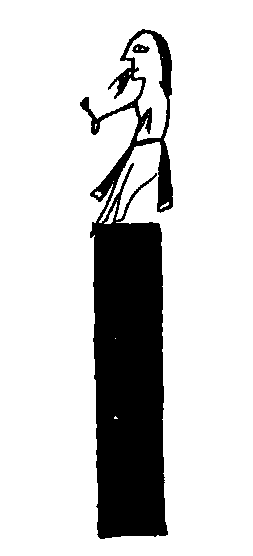
Fig. 181—Winter 1886—87—Peyi commits suicide.
There was no dance this summer, owing to the failure to
find a buffalo for the purpose, consequently
everybody remained at home—indicated
on the Set-t'an calendar by the figure of a leafy
tree, for summer, above an inclosure, intended to represent
a field.
As there was no dance, the Anko calendar for this
summer lacks the medicine pole, while by means of a star
and several circles he records the fact that he enlisted
in the agency police force, and also that there was another
payment of grass money by the cattlemen, this time
to the Kiowa, being the first they had received.
For this winter both calendars note the suicide of
Peyi, "Son-of-the-sand," nephew of the great chief Sun-boy.
Having taken a horse without the owner's permission,
he was reproved for it, which so hurt his feelings that, saying,
"I have no father, mother, or brother, and no one cares for me," he
went out and shot himself with a revolver. Indians are very sensitive
to reproof or ridicule, and suicides among them from this cause are more
frequent than is generally supposed.
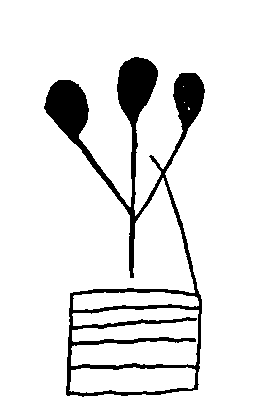
Fig. 182—Summer 1887—No sun dance(?); Grass payment.
The Set-t'an calendar has above the winter mark the figure of a man
holding a pistol, and with a wound in his side, the blood gushing from
his mouth. The Anko calendar has a pistol below the winter mark.
Two circles (dollars) above the winter mark have evidently
been placed there inadvertently.
K`adóliä P'a K`ádó, "Oak creek sun dance." According
to the Set-t'an calendar, there was no sun dance this
summer and everybody remained at home—indicated as
before by the figure of a leafy tree above a square inclosure.
This, however, is a mistake. The agent states that
"the Kiowas held this year a sun dance with my permission,
but with a distinct understanding that it should be
the last, and (it) was not of a barbarous nature" (Report,
109). The dance was held near the mouth of K adóliä P'a, "Oak creek,"
a small southern tributary of the Washita above Rainy-mountain
creek, and takes its name from the stream on which it was held. As
the wild buffalo had now been exterminated, the animal for this occasion
was bought from a ranchman named Charles Goodnight, who had
a small herd of domesticated buffalo in northern Texas.
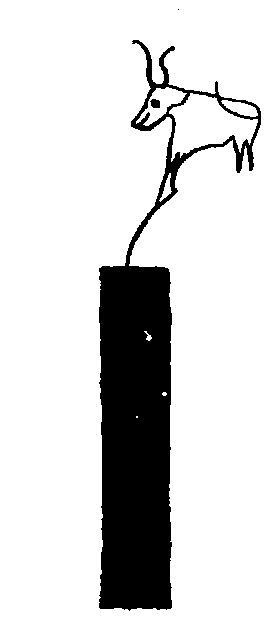
Fig. 183—Winter 1887—88—Cattle payment.
The Anko calendar has several circles, for dollars,
below the medicine pole, to indicate another payment
of grass money, of which again there is no official
record.
The name of the creek on which the dance was held
was originally Do`gótä P'a, "Oak creek," but in consequence
of the death of a woman named Do`gótä about
1891, the name was tabooed according to tribal custom,
and the stream is now known as K adóliä P'a, from an
old word which conveys the same idea.
This winter the Indians received a large number of
cattle from the stockmen in part payment for their grass
leases; the remainder was paid in money. These were
the first cattle received from that source. A number of
the Indians refused to accept them and insisted on money, while
quite a large number refused to have any part in the leases, believing
it to be a plot to deprive them of their lands. The event is indicated
on both calendars by the figure of a cow's head in connection
with the winter mark.
By a mistake Set-t'an depicts a medicine lodge for this summer
instead of for the one preceding. No sun dance was held this year,
owing to the opposition of the new agent. In his official report he
states that early in May the chiefs and head men of the Kiowa had
called to request permission for the holding of the dance at the regular
season, but that on investigation he became convinced that it should
not be allowed and so informed the Department, which instructed him
to prevent it, even by calling on the military if necessary. He says:
On receipt of this information I at once communicated the fact to the Indians,
but could not get them to promise to abandon it. I informed them that on the
slightest intimation that any preparation was being made for the celebration of the
dance I would be compelled to call on the military and cause the arrest of every
Indian who expressed a determination to participate in the same. Many of the
young men, belonging to the worst element, privately declared their intention of
holding the dance, but as yet nothing has been done in that direction. I am firmly
of the opinion I will be able to prevent it without the aid of the troops (Report, 110).
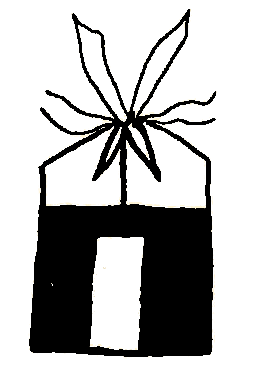
Fig. 184—Summer 1888—Sun dance (?); Pá-iñgya's prophecy.
The Anko calendar records for this summer the preaching of the
prophet Pá-iñgya. It is indicated by a figure intended
to represent a flying bullet, referring to his claim of invulnerability.
Pá-iñgya, "In-the-middle," had commenced preaching
during the previous winter, reviving the doctrine
of the return of the buffalo, which had been taught
by Pa-tepte several years before (see summer 1882).
He continued to preach and make medicine for several
months, adding to his predecessor's prophecies another
of the invulnerability of his followers and the speedy
destruction of the whites, so that for a while the excitement
assumed a dangerous form. In the official
report for 1887 the agent briefly notes that—
The Kiowas were troublesome in the early spring, owing to the bad advice of their
medicine-men and chief Lone-wolf, and refused to plant their seed and took
their children from school. Later on they went to work, but would have made a
much better showing in their crops had they planted earlier (Report, 111).
According to Pá-iñgya's pretensions, he was the legitimate successor
of Pa-tepte, with all of his predecessor's powers and considerably more
of his own. He predicted the near approach of a mighty whirlwind,
which would blow away the whites and all Indians living among them
or following their customs. After the whirlwind would come a great
prairie fire, which would burn for four days and consume the agency
buildings, schools, and all that the white man had established in the
country, together with any whites left by the whirlwind. Having thus
cleared the way, he would then restore the buffalo and game, with all
the old Indian life. His followers were commanded to resume at once
their aboriginal dress and weapons, with all the old habits. He made
a sacred new fire with the block and stick, according to the primitive
Indian method, and gave the fire thus made to all his disciples to be
used instead of that procured from matches or flint and steel; he
refused to give any of this sacred fire to those chiefs and others who
were regarded as being on the white man's side, including Stumbling-bear
and Sun-boy. He established his headquarters on upper Elk
creek, near Lone-wolf's camp, in the western part of the reservation, to
which he commanded all the faithful to repair in order to escape the
destruction which was to come upon the whites and their renegade supporters,
and appointed ten assistant priests, to whom he delegated a
share of his powers and duties. To quiet any fear of interference by
the authorities, he claimed to have a medicine which would render his
followers invulnerable, while he himself was not only invulnerable but
could kill soldiers or other enemies by his mere glance, as by a lightning
stroke, as far as he could see them.
His preaching roused great excitement among the Kiowa, nearly all
of whom—excepting those of Stumbling-bear's and Sun-boy's bands—abandoned
their homes and repaired to the appointed place on Elk
creek, the parents taking their children from the schools in order that
they might not be involved in the general conflagration and destruction.
In the summer the prophet's son died, and he promised to raise
him from the dead in the fall, but when the time came his medicine
unaccountably failed.
The unrest among the Indians, for which no apparent cause could be
assigned, greatly alarmed the whites, who feared that the Indians
meditated an outbreak. As a precaution, the agent, Captain Hall,
summoned a detachment of troops, and taking with him a small escort,
went to the neighborhood of the prophet's camp and sent Stumbling-bear
and Sun-boy to him to bring him and some of the prominent
chiefs in order to discuss the matter. The result was that the Kiowa
agreed to go home and await developments. As the time fixed for the
fulfillment of the prophecy came and passed without event, they became
convinced that they had been deceived and the excitement died out.
In the meantime Pá-iñgya, who had before been poor and obscure,
had become rich by the horses and blankets which he had received
from the faithful; there were even those who were so uncharitable as
to say that it was for this he had been working. Nothing was done to
punish the prophet, who still lives, and when the news of the messiah
came a few years later, he claimed it as the fulfillment of his prophecy.
He has more recently assisted to revive the ghost dance at his home
on the Washita.
The Set-t'an calendar records that the Kiowa were encamped during
this winter on the Washita, near the house of Ä´tä lä´te, "Feather-headdress",
indicated by the figure of a tipi near a house above the winter
mark.
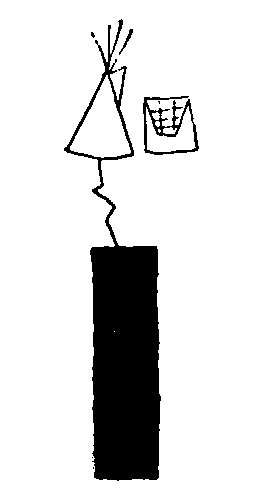
Fig. 185—Winter 1888—89—Winter camp; Sun-boy died; Split rails.
The Anko calendar notes the death of the chief Paí-tälyí, "Sun-boy,"
shown by the figure of a man in a coffin, with a circle for the
sun upon his breast. He died at Eoñte's camp, northwest
of Mount Scott. Anko records also the fact that
he split rails for himself this winter, shown by the figure
of an ax immediately below the winter mark.
This summer there was no sun dance and everybody remained at home on
his farm, the fact being indicated as before on the Set-t'an calendar
by means of the figure of a leafy tree above a square inclosure
intended to represent a field.
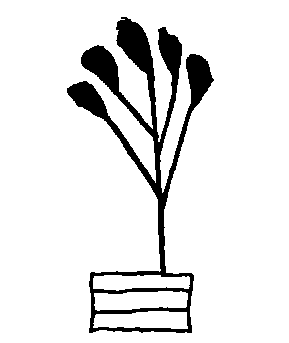
Fig. 186—Summer 1889—No sun dance; Grass payment.
Anko records a receipt of grass money, indicated by
several circles intended for dollars where the medicine
pole is usually shown; also the death of a son of Stumbling-bear,
indicated by the figure of a man wearing
an eagle feather in his hair.
For this winter the Set-t'an calendar has only the
figure of a tipi above the winter mark, to show that
the Kiowa spent the season in their winter camp on
the Washita.
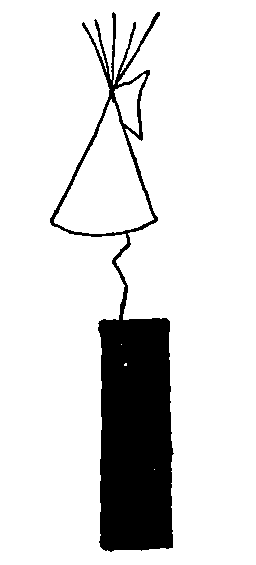
Fig. 187—Winter 1889—90—Winter camp; Grass payment; Íâm dance.
The Anko calendar notes another grass payment, indicated
by the circles representing dollars, and also
a visit by the Kiowa to the Comanche to perform the
Íâm, dance, indicated by the feathered dance-staff below
the winter mark.
The name of this dance, Íâm Guan, is derived from i,
"child or offspring," and âm, the root of the verb "to
make," for the reason that one of its main features is the
formal adoption, by the visiting dancers, of a child of
the other tribe. The performance and dress somewhat
resemble those of the Omaha dance, but only two men
dance, while the rest sit around as spectators. There is
an exchange of horses by the visited tribe for presents
placed on the ground by the visitors, and at the end of
the ceremony the boy adopted is formally restored to his
people. This dance is found also among the Wichita
and Pawnee and perhaps other tribes.
Ä´poto Etódă-de K`ádó, "Sun dance when the forked
poles were left standing." This summer the Kiowa were preparing to
hold the sun dance, when it was stopped by agent Adams, backed by
military force. It has not been held since in the tribe. Both calendars
tell the same story in the figure of the medicine pole standing
outside the completed medicine lodge and decorations. Set-t'an has
also the square inclosure to indicate that he remained at
home, while Anko, by means of a row of circles, notes
the occurrence of another grass payment.
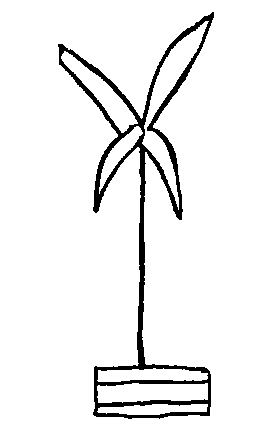
Fig. 188—Summer 1890—Unfinished sun dance.
The Kiowa had decided to celebrate their usual annual
sun dance at the Piho or bend in the Washita, where
they had already held it twice before, when the agent
determined to prevent it. They were not disposed to
yield, and had assembled in their great tribal circle of
tipis, with the center pole of the medicine lodge already
erected, having an old buffalo robe in lieu of a buffalo
head and skin at the top, when word came that the
troops were on their way to stop the dance, having been
sent from Fort Sill for that purpose by request of the
agent. The news was brought to Stumbling-bear, who had remained
at home on account of the death of his son, by Quanah, chief of the
Comanche, who advised him to send word to the Kiowa to stop, as the
soldiers would kill them and their horses if they persisted. Stumbling-bear
thereupon sent two young men to the sun dance
camp to tell the Kiowa to disperse and go home, which,
after considerable heated discussion, they finally did, leaving
the unfinished medicine lodge standing. In the meantime
the troops had arrived at the agency, but the Indians
having gone home, they returned to their post.
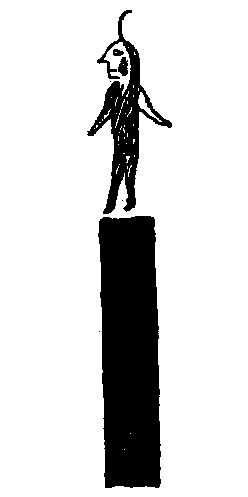
Fig. 189—Winter 1890—91—Sitting-bull comes; Ä´piatañ; Boys frozen.
Concerning this affair the agent says in his annual report:
There has been nothing of special note during the year, with the
exception of the excitement raised in connection with the proposed
sun dance. That matter having been fully laid before the department,
it is hardly necessary to say more (Report, 113).
On the same subject the report of the Secretary of War says:
The commanding officer at Fort Sill reported July 19 that the Indian
agent had notified him of the intention of the Indians to hold a
medicine dance, and had asked for troops to prevent them from doing
this. He was directed to be guided by instructions of last year on the
subject, and consequently three troops of cavalry proceeded to Anadarko, Indian
Territory, on July 20,... but the Indians having abandoned the plan of holding
their dance upon the arrival of the troops, the latter, after remaining at the point for
a few days, were withdrawn (War, 7).
Pá-ä´ngya Tsän-de Sai, "Winter that Sitting-bull came." This refers
to the first coming among the Kiowa of Sitting-bull, the Arapaho
prophet of the ghost dance, in the fall of 1890. The human figure
above the winter mark is intended for Sitting-bull. The first Kiowa
ghost dance was held on this occasion on the Washita at the mouth
of Rainy-mountain creek, and was attended by nearly the whole tribe.
Even the progressive chief Stumbling-bear attended and encouraged
the dance, in the hope and faith, as he says, that by so doing his youth
would be renewed. About the same time the Kiowa sent Ä´piatañ,
"Wooden-lance," to visit the northern tribes and the messiah himself
for the purpose of investigating the truth of the reports. The event is
recorded on the Anko calendar by means of the figure of a man wearing
a head feather and a shell breastplate, as Ä´piatañ did when he
started on his journey. He returned in February, 1891.
As the whole subject of the ghost dance has been exhaustively
treated by the author in his report on "The ghost-dance religion" in
the Fourteenth Annual Report, it is unnecessary to give here more
than the reference by the agent in his report for 1891:
Ghost dance.—This has been a disturbing occurrence throughout most of the year.
This form of dancing has been indulged in mostly by the tribes north of the river.
The Kiowas sent some of their number to the north to investigate the matter.
Ah-pe-ah-tone, the leader in this journey, returned in the early spring and brought
such a report with him as thoroughly convinced the Kiowas of the falsity of the
so-called messiah. They have danced little or none since his return. The Wichitas
and Caddos have clung to the superstition and danced until spring. They were led
to greater excess by the visit of Sitting-bull, the Arapaho prophet from the north,
who is becoming rich in stock through the gifts of his followers. He has been absent
in the north, but has now returned to the Cheyenne and Arapaho agency and will
probably repeat his performances of last year. Our Wichitas have already commenced
to dance again and the Comanches seem to be feeling the craze, and unless
decided measures are taken, we will probably have a repetition of last year's scenes
(Report, 113).
For the same winter, but above instead of below the winter mark, the
Anko calendar records the death of three schoolboys, indicated by the
picture of a boy in civilized dress holding a book. Their names were
Sétä, "Small-cow-intestines;" Ká-ikonhódal, "Dragonfly," and Mótsä-tsé,
from the Spanish muchacho, "boy," his mother being a Mexican
captive. They were attending the government Kiowa school, and one
of them had been whipped by a teacher, in consequence of which the
little fellow, with the two others, ran away from school and attempted
to reach their homes, some 30 miles out in the mountains. The same
night a terrible blizzard came on, and after they had struggled painfully
along nearly the entire distance they sank in the snow, exhausted
by fatigue, cold, and hunger, and all were found a few days later lying
together, frozen stiff, on the bleak slope of a mountain, by a search
party of Indians. This occurrence nearly precipitated an outbreak,
and for a time it was thought that troops would be necessary to
quell the disturbance, but through the judicious management of
Captain H. L. Scott, who was sent from Fort Sill to investigate and
report on the situation, the Indians were quieted without resort to
force.
In his official report, Captain Scott says:
It was learned that three Kiowa boys had run away from the Kiowa school on the
9th [of January, 1891], on account of a whipping the eldest one had received from
one of the teachers, Mr Wherrit. They had been overtaken by a snowstorm, the
most severe this country has seen for years, and had been frozen to death. The
body of the eldest, "Sailor" [from Setä?], about 14 years old, had been found, and
they were still searching for the other two. They had been trying to reach the
Kiowa camp on Stinking creek. The talk about the threatening attitude of the
Kiowas being inquired into, it was resolved into this, that some of the school children
had said that "Mother Goodeye," a one-eyed Kiowa woman, related to one of the
dead children, had said that if she caught Mr Wherrit she would stick a knife into
him. This, coupled with the fact that the woman afterwards denied having said it,
would not seem to demand the presence of two troops of cavalry. It was said that
Mr Wherrit had hid himself the day before, and had fled the agency during the
night to escape the coming wrath (From report of Captain H. L. Scott to Post Adjutant,
January 18, 1891; copy in Indian Office, 5070—1891).
On the same subject the agent says:
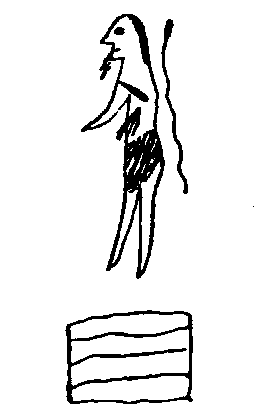
Fig. 190—Summer 1891—P'ódalä´ñte killed; Visit Cheyenne.
The loss of the three boys who ran away from the Kiowa school and were frozen
to death in the snow, was an occurrence which might have been productive of most
serious results. It speaks well for the Kiowa Indians that it not
only was passed without such consequences, but seems to have left
no prejudice against the school. It has been most gratifying to
me on several occasions during the year to note the growing spirit
of self-control among these people, and their desire to stand by
lawful authority (Report, 114).
There was no sun dance, and consequently, instead of
the medicine lodge, the Set-t'an calendar has the square
inclosure to show that he stayed at home.
The event of the summer was the killing of P'ódalä´ñte
(abbreviated P'olä´ñte], "Coming-snake," in Greer county,
Oklahoma. He was shot by a young white man in self-defense,
as it was claimed, while endeavoring to recover a horse which
he said had been stolen from him; he had sent a boy after the animal,
but the holders had refused to give it up except to the owner.
P'ódalä´ñte himself then went after it and a dispute followed, resulting
in his death. It is said he was shot as he was loosening his gun from
its scabbard at the saddle. The Kiowa claim not to know the particulars,
as no other Indian was with him at the time, but say that he
was notoriously quarrelsome and rough in his manner. The shooting
occurred opposite the mouth of Elk creek. It is indicated on the
Set-t'an calendar by means of a human figure, with blood flowing from
a wound in the side, standing above the square inclosure, with a
snake behind it to show the name. Anko records it for the following
winter, q.v.
The Anko calendar records for this summer a visit made by the Kiowa
to the Cheyenne, indicated in the usual place for the medicine lodge by
the figure of a tipi (i. e., camp), connected with which is a line with
several cross marks, intended as a pictorial presentment of the tribal
sign for "Cheyenne," made by drawing the right index finger several
times across the left.
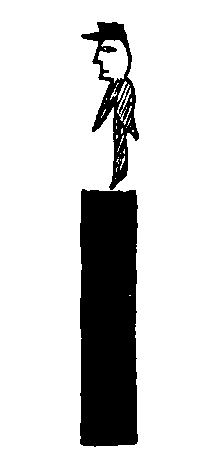
Fig. 191—Winter 1891—92—Soldiers enlisted; P'ódalä´ñte killed.
The Anko calendar records here the killing of P'ódalä´ñte, as just
described for the preceding summer, the discrepancy arising
perhaps from the fact that it occurred after the middle
of summer. It is indicated below the winter mark by
means of the figure of a man, with a bullet wound in his
side, lying in a coffin or grave, and with a snake above
the winter mark to show his name.
The Set-t'an calendar records the enlistment of the Indian
troop at Fort Sill in the spring and summer of 1891. It
was composed chiefly of Kiowa, and was organized as troop
L of the Seventh cavalry, under command of Lieutenant
(now Captain) H. L. Scott. It is indicated by the figure
of a soldier above the winter mark.
The event of this summer was the measles epidemic. The Set-t'an
calendar indicates it by means of a human figure covered with red
spots, and beside it the leafy tree and square inclosure to show that it
occurred in the summer, when there was no dance and everybody
remained at home. The Anko calendar has a similar red-spotted figure.
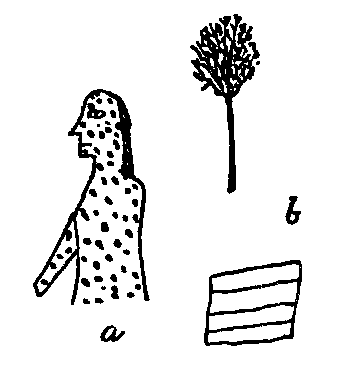
Fig. 192—Summer 1892—Measles; Grass payment.
The epidemic broke out early in spring and continued through the
summer; it began in the Kiowa school, and its terribly fatal consequences
were due largely to the course pursued by the superintendent,
who insisted on sending the sick children back to the
camp, where it was impossible for them to receive
necessary attention, instead of caring for them in the
school. The result was that the infection spread
throughout the Kiowa and Apache tribes, and as the
Indians, in their ignorance, endeavored to wash out
the blotches by drenching the children in cold water,
nearly every case was fatal. Watching and anxiety
brought fevers and other sickness to the parents, so
that there was not a family in the two tribes that did
not suffer the loss of a near relative. The feeling
already existing among the Kiowa against the superintendent, on
account of the death of the schoolboys the year before, was now so
intensified that he was obliged to leave the country.
When the author returned to the Kiowa in the early summer of that
year, the epidemic had nearly spent its force, although deaths were still
occurring every day or two. The condition of the Indians was pitiable
in the extreme; nearly every woman in the tribe had her hair cut off
close to her head and her face and arms deeply gashed by knives, in
token of mourning, while some had even chopped off a finger as a sign
of grief at the loss of a favorite child. The men also had their hair
cut off at the shoulders and had discarded their usual ornaments and
finery. On one occasion, while driving near the camp, the author's
attention was attracted by a low wail, and on looking for the cause he
saw, sitting in the tall grass near the roadside, a bereaved father
stripped to the breech-cloth, with his hair cropped close to the head
and the blood dripping from gashes which covered his naked body; he
did not look up or turn his head as the wagon passed, but continued
the low wail, with his eyes cast to the ground. Wagons, harness, tipis,
blankets, and other property were burned, and horses and dogs shot
over the graves of their owners, to accompany them to the world of
shades, the destruction of property in this way amounting to thousands
of dollars. Every night and morning the women went into the hills
to wail for their lost ones, and returned to camp with the blood dripping
from fresh gashes in their faces and arms; this continued for
weeks and months, far into the fall.
The responsibility for this terrible calamity rests upon the school
superintendent, who sent the infected children into camp, and upon the
agent who permitted it. The superintendent of the Comanche school,
so soon as the disease appeared on the reservation, suspended teaching,
turned the school into a temporary hospital, with the teachers as
nurses, and stationed a guard of police to keep the parent from interfering
with or withdrawing the children. The result was that not one died
in his school and only one was affected. The census of the Kiowa and
Apache tribes for this year shows a decrease from the preceding year
of two hundred and twenty-one, or 15 per cent, among the two tribes,
due almost entirely to this epidemic. The agent reports, after noting
the mortality:
The above deaths occurred chiefly among the infants and young children, and can
be attributed to the fact that in most every case they invariably immersed their sick
in the water, thereby causing death in every case thus treated (Report, 115).
Dr J. D. Glennan, attending surgeon to the Indian troop at Fort
Sill, had already distinguished himself at Wounded Knee two years
before by his bravery and coolness in attending to the needs of the
wounded and dying while bullets were flying thick around him. Now,
when the epidemic broke out among the Kiowa, he gave his services
with the same quiet devotion to duty, with such good result that,
although for months the hospital camp was crowded with stricken
Indians, whose relatives outside were dying all over the reservation,
only six of those under his care died, and these not from the prevailing
epidemic, but from a complication of diseases. In recognition of
his services the Kiowa soldiers afterward raised a sum of money with
which to purchase a horse for him, but as the doctor already had a
horse, the testimonial took the form of a valuable piece of silver.
The Anko calendar has also a row of circles, representing dollars, to
indicate a large payment of grass money by the cattlemen this summer.
As by this time the Indians had learned that the leasing of their surplus
grass lands was very much to their advantage, they held a council in
February, 1892, to select delegates to go to Washington for the purpose
of negotiating leases for the whole reservation; also to secure some back
payments due from previous leases. Quanah, Lone-wolf, and White-man
were chosen on behalf of the Comanche, Kiowa, and Apache, respectively,
and proceeded to Washington, where they received the desired
permission, under which authority leases were negotiated producing
for the three tribes an average income of about $100,000. On their
return they received through a special agent nearly $70,000 due under
the new and old leases. This large payment gave occasion for general
rejoicing and marked an era in their history. A large part of the money
was invested in lumber for building permanent houses; so that in this
way, and with the additional help of a small appropriation for the hire
of carpenters, the agent reports about sixty houses built within the
year, and says:
With the assistance of the Indian Office as to the pay of carpenters, together with
the revenues from their grass leases, I see no reason why in the near future the
tepee should not be banished and comfortable houses he substituted in their stead
(Report, 116).
Here end the yearly calendars. The subsequent events, including
the unratified treaty negotiations and the present condition of the
tribes, will be found noted in the preliminary tribal sketch.