Acorn Bank, Privileges of tenants of, 67
Ale possets, 202
Allendale, Old school-days at, 250
Alms corn, Payments of, 88
Altar, Horn of the, at Carlisle, 74
Ambleside—curious church tradition, 49
Appleby, Privileges of burgesses of, 69;
Barring out custom at, 254-255;
Curious assize incident at, 7;
Bull-baiting at, 195;
Excommunication at, 102;
Grammar School, 242;
Public whipping at, 126-128;
Stocks at, 125
Appleby Castle, Old corn measures at, 159-160;
Curfew bell at, 238
Applethwaite (Windermere), Curious regulations at, 89
Apprentices and salmon, 178
Apprenticeship custom, An, 233
Archdeacon’s Court, 59-60
Archery, 196-199
Arlecdon, Rector of, chasing a parishioner, 42;
Church font used as water-trough, 50;
Church, Dogs in, 63;
Tradition concerning buried church, 133;
An old school at, 249;
Barring out custom at, 252
Armathwaite, Gibbeting of Whitfield at, 94
Armboth Hall, Skulls at, 147
"Web-stone at, 237
Armour in churches, 13, 34
Assessors of bread and ale, 89
Assize incident, A curious, 7
Atkinson, Execution of Captain, 97
Bampton, Arrangement of families in church, 53;
Punishment of Quakers, 107-109
Barguest, The, 141
Barring out custom at school, 252-255
Barton, Probable fortified church at, 34;
Curious manorial custom at, 80
Beacons, 10-13
Beating the bounds, 227
Bees, Telling the, 138
Beetham Church, Penance at, 111
Bell-gate at Dalston, 238
Bell-horses, 217, 238
Bell legends, 132
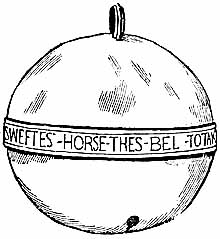
Bell, Mayor of Wreay’s old silver, 201
Bells, Carlisle racing, 191
Bishop of Carlisle and cock-fighting, 195
Bishops excommunicated, 100
Bishops, Fighting, 22-28
Blackmail rent, 75
Bode, bodesmen, bodeword, bode-hill, 14
Boggles, 139
Bongate—A reminder of serfdom, 66
Boon services, 76-79
Bootle, Beacon at, 15
Border service, 9-16, 68-70, 229
Bridekirk, Excommunication at, 101
Brigham, Fortified church at, 33
Brough, Probable fortified church at, 34;
Church font in private grounds, 50;
Holly Night at, 205
Brougham, Curious horn at, 73;
Countess’s Pillar at, 223
Bull and boar, Obligation to keep, 87
Bull-baiting, 195
Burgh Barony Cup, Races for, 190
Burgh-by-Sands, Fortified church at, 30
Burrell Green, Luck of, 151
Burton, Curious dispute at, 40
“Burying the old wife” custom, 233
Calgarth skulls, 146
Caldbeck, Manorial customs at, 83
Carleton—A reminder of serfdom, 65
Carlisle, Watch and ward at, 19;
Cathedral, Rioting in, 37;
Cathedral used as a prison, 37;
Charter Horn at, 74;
Pillory and stocks at, 124;
Racing Bells, 191
Cartmell Church, Troops quartered in, 37
Carriage money service, 89
Castleward, Service of, 71
Charms, 136
Charter Horn at Carlisle, 74
Chimney and hearth tax, 182-186
Church curiosities, 38-63;
Stock, 51, 52;
Holding manorial courts in, 58;
Dog-whippers in, 60-63;
Legends, 131-133, 139;
Fined for not going to, 226
Churchwardens’ duties, 51, 52, 107, 108, 226;
Selection of, 245
Churchyards, Keeping swine out of, 60;
Announcing sales in, 158
Churches, Fortified, 28-37;
Armour in, 13, 34;
Division of sexes in, 53;
Seating arrangements in, 51;
Swallowed by the earth, 131-132
Churning, Superstitions about, 137
Christmas festivals, 202
Clergy, Old-time, 40-46
Clergymen as publicans, 41;
as schoolmasters, 248-252
Cliburn, A probable fortified church at, 34
Clifton, Old school-days at, 251
Clogs, 171
Cloth searchers, 164
“Clothe Dightinge,” 163
Coaching days, The old, 213-216
Coals carried on horse-back, 217
Cockermouth tolls dispute, 83;
Old manorial officers at, 90
Cock-fighting, 192-195, 201, 242
Cockpenny, 242, 243
Corby Castle, Radiant Boy of, 146
Cordwainers, Rules for, 164
Cornage, Service of, 15, 69, 70, 73
Coronation festivities, 205
Corryhole at Great Salkeld Church, 32
Councils, Old Parish, 230-232
Countess’s Pillar at Brougham, 223
County guinea incident near Penrith, 20
Courts in church, Holding, 58
Courts, Old, 58, 90, 181
Crack Nut Sunday, 225
Croglin, Manorial customs at, 82
Crosby Garrett, A probable fortified church at, 33
Crosby-on-Eden, Old school-days at, 249
Crosby Ravensworth Church, Keeping dogs out of, 61
Cross Fell, Legend of, 132
Crosthwaite, Rivalry between Cockermouth and, 157
“Culyet,” 52
Cumin tenure, 85
Cumwhitton, Manorial customs at, 82
Curfew Bell, Ringing the, 238
Customs, Old, 223-239;
Old School, 240-255
Dacre Church, Curious custom at, 55
Dalston Church, Whipping dogs from, 61-62;
Holy well at, 207
“Dalston Black-reeds,” 194
Dearham Church tower used as a beacon, 32
Death stroke superstition, 137
Dissenters, Punishment of, 107-109
Dog-laws at Egremont, Old, 87
Dog-whippers in church, 60-63
Downies and Uppies at Workington, 200
Drengage tenements, 66
Drenges, 66
Dress, Old-time, 171-173
Drigg, Manorial customs at, 82
Drunkards, Punishment of, 119-121
Edenhall, Church tower used as a beacon, 13;
Manorial customs at, 81;
A possible plague stone at, 237
Eden Hall, Luck of, 148
Egremont, Manorial customs at, 77, 87, 90
Epidemics, Old-time, 235-238
Excommunication and penance, 98-119
Executions, Wholesale, for political offences, 97
Expeditious wagons, 216
Fairies, 137
Fairs, Old laws concerning, 155;
Churchyard, 155-158
Farleton Knott beacon, 13
Festivities and sports, Old, 188-208
Fighting Bishops and Fortified Churches, 22-37
Firebote, 75
Fire, Old methods for quenching, 186
“First-foot” superstition, 147
Flimby, Old tenure at, 71
Fonts in private grounds, 50-51
Food-stuffs, Old-time, 174-178
Fools, Old-time, 232
Football, 199-200, 243
Forest Court at Hesket, 69, 73
Forestalling and regrating, Laws against, 165-167, 169
Fortified churches, 28-37
Foster-oats, An old manorial rent, 78
Free-bench, 81
Furth-neets at Orton and Ravenstonedale, 228-229
Gallows Hills, 94, 98
Gambling, Punishment for, 115
Gaol-life, Old-time, 122
Ghosts, 142-143
Giant’s Cave Sunday, 207
Giant’s Thumb at Penrith, 124
Gibbeting of criminals, 94-97
Gilcrux, Old tenure at, 70
Glassonby, Manorial customs at, 80
Glove service, 72
God’s penny custom, 83
“Gospel side” of a church, 54
Gowrie Plot celebration, 203
Great Salkeld, Fortified church at, 31
Greenhue rent, 77
Greystoke, Anchorites at, 46;
Sanctuary stone at, 115;
“Pelican in her piety” at, 58;
Church miserere used as church sign at, 58;
Manorial customs at, 78, 80;
Penance at, 113;
Excommunication at, 101;
Foot stocks at, 124;
Gowrie Plot celebration at, 203;
Gunpowder Plot celebration at, 203
Guilds and old trade societies, 162-4
Gunpowder Plot celebration, 203
Hack-pudding, 227
Halts, 218
“Hanging days,” The, 123
Hanging, drawing, and quartering, 91, 97, 98
Harcla, The execution of Sir Andrew de, 91
Hawk service, The, 69, 70
Hawkshead, Dog-whippers at, 63
Hayton paupers hired to contractors, 234
Hedge-lookers, 89
Helton, Old Council at, 231
Heriots, 79, 85, 100
Hesket Thorn Court, 70, 73
Holme Cultram, Abbey of, also a fortress, 29;
Petition of inhabitants to Cromwell, 29;
Curious dispute at, 39;
Old-time school life at, 244
Holy bell at Ravenstonedale, 114
Holy wells, 206-208
Holly Night at Brough, 205
Homage, Service of, 15, 65
Horn tenures, 73
Hospitals, Old-time, 211, 212
House-boot, 76, 82
House in two parishes, 228
Inglewood Forest, 70, 73, 74, 197, 212
Ireby, Manorial customs at, 77
Irthington, Old school-days at, 249
Jesters, Old-time, 232
Journeys, Some noteworthy old-time, 209-221
Judges, Perils of the King’s, 212
Kaber Rigg Rising, The, 98
Kattstick and Bullvett, 199
Kendal, Scolds’ bridle at, 115;
Punishments at, 115-121;
Watch and ward at, 17-19;
Parson of moiety of church of, 38;
Church incident at, 35-37;
Bowmen, 198;
Barring out custom at, 254
Kentmere, Reminders of Border service at, 229
Keswick, Bull-baiting at, 195;
endowed school, 245
Kirkby Lonsdale, Church inscription at, 47;
Bridge legend, 133;
Sale of church font, 51
Kirkby Stephen, Curious tithe custom at, 56;
A probable fortified church at, 34;
Burial of Sir Andrew de Harcla at, 94;
Fair, Proclamation at, 160;
School ordinances, 240
Kirkby Thore, Penance at, 112
Kirkland, Unusual tenure at, 85
Kirkoswald, Curious church tower at, 47;
Bull-baiting at, 195;
Old manorial measures at, 160
Knitters, Famous, 228
Knur and spell, 199
Lancaster, Execution and gibbeting of Thomas, 95
Lanercost Abbey, Tragic origin of, 111
Langdale, Curate of, as alehouse keeper, 41
Langwathby Church, Armour in, 13, 34
Lawyers, Restrictions upon, 167
Leather searchers, 89
Legend of St. Bega, 131;
Kirksanton, 131;
Fisherty Brow, 132;
Arlecdon, 133;
Kirkby Lonsdale Bridge, 133;
Concerning wolves, 135;
Warthol Hall, 135;
Calgarth skulls, 146;
Armboth Hall, 147;
Machell family, 142;
Radiant Boy of Corby, 146
Legends and Superstitions, Some, 131-147
Leper windows, 45-46;
Hospitals, 46
Lepers in Cumberland and Westmorland, 45-46
Levens, Luck of, 153
Levens Radish Feast, 208
Life in the old gaols, 122
Little Salkeld, Desecration of church at, 58
Long Marton, An infant rector of, 39
Lucks, 148-154
Manorial laws, 64-90
Market bells, 167
Markets and fairs customs, 155-168
Maskers, 202
Meat selling at church doors, 156;
On Sundays, 165;
Bequest, A, 177
Milling laws, Old, 76, 82, 83
Mill lookers, 89
Millom, Manorial jurisdiction at, 64;
Penance at, 112
Minstrel galleries, Old, 181
Miracle workers, Supposed, 138
Mock Mayors, 200
Moor lookers, 89
Moota, Beacon at, 14
Morland, Manorial custom at, 75, 82
Mortuary rights of the Church, 100
Multuring, 83, 84
Muncaster, Luck of, 149
Musgrave Church font in private grounds, 50
Needfire superstition, 143-146
Newbiggin (Dacre), Curious custom at, 79
Newton Arlosh, Fortified church at, 30
Night watch, 245
Nunnery, Privileges of prioress and nuns of, 67
Nutgeld service, 71
Nut Monday, 225
Nutting days, School, 255
Old-time Home Life, 169-187
Old-time school life, 240-255
“Orders of the Watch,” 11
Ormside, A probable fortified church at, 33
Orton, Probable fortified church at, 33;
Sworn men at, 230;
Stocks, 125
Pack-horses, 209, 210, 217, 219, 220, 221, 238
Parsonby, Manorial customs at, 77
Paupers hired to contractors, 234
Peat silver, 78
Peculiar contrivances, 171
Penance, Excommunication and, 98-119
Penrith Beacon, 12, 13
Penrith Church font in private grounds, 50;
Plague-stones at, 235-237;
Excommunication at, 103;
Stocks and pillory at, 124;
Races, 192-194;
Badge of poverty at, 235
Penrith Fell, Ludicrous incident on, 27;
Burial of excommunicates on, 104
Penthouses at Orton, 229
Peppercorn rents, 87
Pie Poudre Court at Kirkby Stephen, 161
Pillar, Countess’s, 223
Pillions, Riding on, 217, 220
Pillory and stocks, 124, 125
Plague-stones, Old, 235-238
Plumpton, Manorial custom at, 82
Plowbote, 75
Poor people let out to contractors, 234
Porridge, A tribute to the value of, 169
Posset cups, 202
Pot fairs, 156
Poverty, The badge of, 235
Proclamations at fairs, 160-162
Punishments, Old-time, 91-129
Quakers, Punishment of, 107-109
Racing, Curiosities in horse, 190-193
Radiant Boy of Corby Castle, 146
Radish Feast at Levens, 208
Rapier dancers, 202
Ravenglass, Proclamation of fair at, 161
Ravenstonedale, Holding a Court in church at, 58;
Sanctuary bell at, 114;
Penance at, 110;
Stocks at, 125
Rebel’s Cap at Kendal, 35
Rector, An infant, 39
Refuge bell at Ravenstonedale, 114
Renwick tithe exemption, Curious, 88
Riding the stang at Ambleside, 128
Road, On the, 209-222
“Robin the Devil’s” escapade, 35-37
Rod, Surrendering by the, 247
Rose tenure, 70, 72
Rowan tree superstition, 137
Running Gressom, 85
Rush-bearing custom, 224
Rushes and bents for churches, 59-61
Rushes, Curious belief about, 170
Rushlights, Old-time, 170
Sacrilege, Punishment at Appleby for, 113
Sales in churchyards, Announcing, 158
Salmon, Abundance and cheapness of, 177;
as apprentices’ food, 178
Sanctuary at Ravenstonedale, 114;
Nunnery, 115;
Greystoke, 115
Scale Houses, Peculiar tithe exemption at, 88
Scholars’ badge of poverty at Penrith, 235
School customs, Old, 240-255
Schools in churches, 248-251
Schoolmasters, Old-time, 240-255
Scolds’ bridles, 115
Seawake, Service of, 15, 71
Sebergham, A protest in rhyme at, 48;
School in a mud hut at, 248
Sexton, A female, 45
Shearing days, 203
Sheriffesses of Westmorland, 2-4
Sheriffs’ law suits with Appleby burgesses, 6
Sheriffwick, An Unparalleled, 1-8
Shrovetide festival at Wreay, 201
Silver-penny fines, 79
Skirsgill well custom, An old, 206
Skirwith, Manorial customs at, 76
Snow on Midsummer’s Day, Legend of, 131
Soar-hawk tenure, 69
Sparket Mill, Peculiar obligation at, 86
Sports and Festivities, Old, 188-208
Spur service, 71, 72
Stang, Riding the, at Ambleside, 128
St. Bega, Legend of, 131
Steading stone at Thirlmere, 121
Stirrup tenure, 68
Stocks, 124, 125
Stockings, Curious method of treating, 171
Sunday markets, 156-158
Sunday observance, 225-226
Superstitions and Legends, 131-147
Surrendering by the rod, 247
Swine in churchyards, 60;
Ringers, 89
Tailors, Rules for, 164
Tea, Curious methods of dealing with, 178
Telling the bees, 138
Tenures, Curiosities of, 64-90, 247
Thirlmere, Steading stone at, 121
Threlkeld, Manorial customs at, 76
Timber-lode, 75
Tithe exemption, Curious, 88
Toll-free, Rights of tenants and burgesses to go, 67
Tolls, An old dispute about, 83
“Tom Candlestick,” 170
Toothache, Charm for, 136
Torpenhow, Old Council at, 230-244
Town and village watch and ward, 16-21
Trading Laws and Customs, Old 155-168
Traditions, 131-147
Troutbeck dole custom at Dacre, 55
Troutbeck (Windermere), Manorial jurisdiction at, 64
Tummel wheel’d carts, 218
Uppies and Downies at Workington, 200
Village schoolmasters, Old-time, 244-253
Waberthwaite Church, Dog-whippers at, 63
Warthol, Watching station at, 14
"Hall, Legend concerning, 135
Warwick, Old school-days at, 249
Watch and Ward, 9-21
Watch, Orders of the, 11
Watermillock, Manorial custom at, 81;
Head Jurie, 51, 231
Webstone at Armboth, The, 238
Well festivals, 206-208
Wetheral, Manorial customs at, 78
Whipping of criminals, Public, 124-128
Whitbeck, Old customs at, 227
Whitehaven, Society of Archers, 198;
Watch and ward at, 19;
Public whipping at, 125
Whittlegate, The old custom of, 43, 44, 251
Wigton, Curious epitaph at, 157;
Selling meat at parish church, 156
Wine, Curiosities concerning church, 54-55
Witch, Drowning of a supposed, 91;
Mary Baynes, the Orton, 139;
Lizzy Batty, the Brampton, 141
Witness man, Service of, 15
Woful Bank, Legend concerning, 135
Women as judges, 2
Workington Easter football play, 200
Wotobank, Legend concerning, 135
Wreay, Mock mayoral festivities at, 201
Wreck of the sea privilege at Millom, 84
Wrestling, 188-190
WILLIAM ANDREWS & CO., PRINTERS, HULL.
LIST OF PUBLICATIONS
OF
William Andrews & Co.,
5, FARRINGDON AVENUE, LONDON.
“Valuable and interesting.”—Times.
“Readable as well as instructive.”—The Globe.
“A valuable addition to any library.”—Derbyshire Times.
“There is a charm about the chapters seldom found in works dealing with
antiquarian lore, for they are never dry and always entertaining. The
illustrations are a splendid feature. These county histories call for
appreciation and deserve every success.”—Birmingham Daily Gazette.
The Bygone Series.
In this series the following volumes are included, and issued at 7s. 6d.
each. Demy 8vo, cloth gilt.
These books have been favourably reviewed in the leading critical journals
of England and America.
Carefully written articles by recognised authorities are included on
history, castles, abbeys, biography, romantic episodes, legendary lore,
traditional stories, curious customs, folk-lore, etc., etc.
The works are illustrated by eminent artists, and by the reproduction of
quaint pictures of the olden time.
BYGONE BERKSHIRE, edited by Rev. P. H. Ditchfield, M.A., F.S.A.
BYGONE CHESHIRE, edited by William Andrews.
BYGONE CUMBERLAND AND WESTMORLAND, by Daniel Scott.
BYGONE DURHAM, edited by William Andrews.
BYGONE GLOUCESTERSHIRE, edited by William Andrews.
BYGONE HAMPSHIRE, edited by William Andrews.
BYGONE HERTFORDSHIRE, edited by William Andrews.
BYGONE LINCOLNSHIRE (2 vols), edited by William Andrews.
BYGONE MIDDLESEX, edited by William Andrews.
BYGONE NORFOLK, edited by William Andrews.
BYGONE NORTHUMBERLAND, edited by William Andrews.
BYGONE NOTTINGHAMSHIRE, by William Stevenson.
BYGONE SCOTLAND, by David Maxwell, C.E.
BYGONE SOMERSETSHIRE, edited by Cuming Walters.
BYGONE SOUTHWARK, by Mrs. E. Boger.
BYGONE STAFFORDSHIRE, edited by William Andrews.
BYGONE SUFFOLK, edited by Cuming Walters.
BYGONE SURREY, edited by George Clinch and S. W. Kershaw, F.S.A.
BYGONE SUSSEX, by W. E. A. Axon.
BYGONE YORKSHIRE, edited by William Andrews. |
England in the Days of Old.
By WILLIAM ANDREWS.
Demy, Cloth extra, 7s. 6d. Numerous Illustrations.
Contents:—When Wigs were Worn—Powdering the Hair—Men Wearing
Muffs-Concerning Corporation Customs—Bribes for the Palate—Rebel Heads
on City Gates—Burials at Cross Roads—Detaining the Dead for Debt—A
Nobleman’s Household in Tudor Times—Bread and Baking in Bygone
Days—Arise, Mistress, Arise!—The Turnspit—A Gossip about the
Goose—Bells as Time-Tellers—The Age of Snuffing—State
Lotteries—Bear-Baiting—Morris Dancers-The Folk-Lore of Midsummer
Eve—Harvest Home—Curious Charities—An Old-Time Chronicler—Index.
“A most delightful work.”—Leeds Mercury.
“Mr. Andrews has the true art of narration, and contrives to give us
the results of his learning with considerable freshness of style,
whilst his subjects are always interesting and
picturesque.”—Manchester Courier.
“The old customs, domestic habits, and dress of our forefathers
described in these chapters are too much neglected by historians, and
a study of them will while away a leisure hour very pleasantly.”—The
Times.
Bygone Punishments.
By WILLIAM ANDREWS.
Demy, Cloth gilt, 7s. 6d. Numerous Illustrations.
Contents:—Hanging—Hanging in Chains—Hanging, Drawing, and
Quartering—Pressing to Death—Drowning—Burning to Death—Boiling to
Death—Beheading—The Halifax Gibbet—The Scottish
Maiden—Mutilation—Branding—The Pillory—Punishing Authors and Burning
Books—Finger Pillory—The Jougs—The Stocks—The Drunkard’s
Cloak—Whipping and Whipping-Posts—Public Penance—The Repentance
Stool—The Ducking Stool—The Brank, or Scold’s Bridle—Riding the
Stang—Index.
“A book of great interest.”—Manchester Courier.
“Full of curious lore, sought out and arranged with much
industry.”—The Scotsman.
“Mr. Andrews has produced a most entertaining book, without departing
from authenticated facts, there is no moralising, and the writer never
obtrudes himself. The result is a work well worth a place on a
bookshelf, and readable to a degree.”—Eastern Morning News.
Literary Byways.
By WILLIAM ANDREWS.
Demy, Cloth gilt, 7s. 6d.
Contents:—Authors at work—The Earnings of Authors—“Declined with
Thanks”—Epigrams on Authors—Poetical Graces—Poetry on Panes—English
Folk Rhymes—The Poetry of Toast Lists and Menu Cards—Toasts and
Toasting—Curious American Old-Time Gleanings—The Earliest American
Poetess: Anne Bradstreet—A Playful Poet: Miss Catharine Fanshawe—A
Popular Song Writer: Mrs. John Hunter—A Poet of the Poor: Mary Pyper—The
Poet of the Fisher-Folk: Mrs. Susan K. Phillips—A Poet and Novelist of
the People: Thomas Miller—The Cottage Countess—The Compiler of “Old
Moore’s Almanack”: Henry Andrews—James Nayler, the Mad Quaker, who
claimed to be the Messiah—A Biographical Romance: Swan’s Strange
Story—Short Letters—Index.
“Readable and entertaining.”—Notes and Queries.
“Turn where you will, there is information and entertainment in this
book.”—Birmingham Daily Gazette.
Curious Epitaphs.
Collected and Edited with Notes
By WILLIAM ANDREWS.
Demy, Cloth extra, 7s. 6d. Numerous Illustrations.
Contents:—Epitaphs on Tradesmen—Typographical Epitaphs—Epitaphs on Good
and Faithful Servants—Epitaphs on Soldiers and Sailors—Epitaphs on
Musicians and Actors—Epitaphs on Sportsmen—Bacchanalian
Epitaphs—Epitaphs on Parish Clerks and Sextons—Punning
Epitaphs—Manxland Epitaphs—Epitaphs on Notable Persons—Miscellaneous
Epitaphs—Index.
“A most entertaining collection.”—Newcastle Daily Chronicle.
“A book that is sure to be widely read and appreciated.”—People’s
Journal.
“It is an entertaining and instructive work, it may fairly be regarded
as the best on its subject, and it will take a permanent place in our
literature.”—Hull Critic.
Curious Church Customs.
Edited by WILLIAM ANDREWS.
Demy, Cloth extra, 7s. 6d.
Contents:—Sports in Churches—Holy Day Customs—Church Bells: When and
Why They were Rung—Inscriptions on Bells—Laws of the Belfry—Ringers’
Jugs—Customs and Superstitions of Baptism—Marriage Customs—Burial
Customs—Concerning the Churchyard—Altars in Churches—The Rood Loft and
its Uses—Armour in Churches—Beating the Bounds—The Story of the
Crosier—Bishops in Battle—The Cloister and its Story—Shorthand in
Church—Reminiscences of our Village Church—Index.
“A thoroughly excellent volume.”—Publishers’ Circular.
“A handsomely got up and interesting volume.”—The Fireside.
“We are indebted to Mr. Andrews for an invaluable addition to our
library of folk-lore, and we do not think that many who take it up
will slip a single page.”—Dundee Advertiser.
Ecclesiastical Curiosities.
Edited by WILLIAM ANDREWS.
Demy, Cloth gilt, 7s. 6d. Numerous Illustrations.
Contents:—The Church Door—Sacrificial Foundations—The Building of the
English Cathedrals—Ye Chapell of Oure Ladye—Some Famous Spires—The Five
of Spades and the Church of Ashton-under-Lyne—Bells and their
Messages—Stories about Bells—Concerning Font-Lore—Watching Chambers in
Churches—Church Chests—An Antiquarian Problem: The Leper
Window—Mazes—Churchyard Superstitions—Curious Announcements in the
Church—Big Bones Preserved in Churches—Samuel Pepys at Church—Index.
“An interesting and engrossing volume.”—Church Bells.
“It consists of studies by various writers in the history, customs,
and folk-lore of the Church of England. Whilst it will appeal most
strongly to those who are given to antiquarian and ecclesiological
inquiry, it contains much that should prove of interest to any
intelligent reader. The various contributions give evidence of
diligent and discriminating research, and embody much old-world lore
that is curious and instructive.”—Aberdeen Free Press.
The Church Treasury of History, Custom, Folk-Lore, etc.
Edited by WILLIAM ANDREWS.
Demy, 7s. 6d. Numerous Illustrations.
Contents:—Stave-Kirks—Curious Churches of Cornwall—Holy Wells—Hermit
and Hermit Cells—Church Wakes—Fortified Church Towers—The Knight
Templars: Their Churches and their Privileges—English Mediæval
Pilgrimages—Pilgrims’ Signs—Human Skin on Church Doors—Animals of the
Church in Wood, Stone, and Bronze—Queries in Stones—Pictures in
Churches—Flowers and Rites of the Church—Ghost Layers and Ghost
Laying—Church Walks—Westminster Waxworks—Index.
“The book will be welcome to every lover of archæological
lore.”—Liverpool Daily Post.
“It is a work that will prove interesting to the clergy and churchmen
generally, and to all others who have an antiquarian turn of mind, or
like to be regaled occasionally by reading old-world customs and
anecdotes.”—Church Family Newspaper.
Bygone Church Life in Scotland.
Edited by WILLIAM ANDREWS.
Demy, Cloth gilt, 7s. 6d.
Contents:—The Cross in Scotland—Bell Lore—Saints and Holy Wells—Life
in the Pre-Reformation Cathedrals—Public Worship in Olden Times—Church
Music—Discipline in the Kirk—Curiosities of Church Finance—Witchcraft
and the Kirk—Birth and Baptisms, Customs and Superstitions—Marriage Laws
and Customs—Gretna Green Gossip—Death and Burial Customs and
Superstitions—The Story of a Stool—The Martyrs’ Monument,
Edinburgh—Index.
“The volume is certain to receive a welcome from Scotsmen at home and
abroad.”—Daily Chronicle.
“Every sentence in the book is either instructive or amusing, and it
should consequently find many appreciative readers. It contains a vast
amount of traditional and historical lore referring almost to every
district of Scotland. There are some artistic illustrations,
especially those of Glasgow Cathedral and views of ancient portions of
that city from the pencil of David Small.”—Dundee Advertiser.
Lore and Legend of the English Church.
By the Rev. GEO. S. TYACK, b.a.
Crown, Cloth extra, 7s. 6d. Numerous Illustrations.
Contents:—Introduction—The Building of the Church—The Church
Steeple—The Churchyard—Graves and Funerals—The Nave—The Pulpit and the
Lectern—The Font—Folk-Lore and Customs of Marriage—The Chancel and the
Choir—Alms and Offerings—Conclusion—Index.
“A work that will be read with much interest.”—Somerset Herald.
“A handsome and substantial volume.”—Birmingham Daily Gazette.
“The volume could scarcely be too warmly commended.”—Staffordshire
Advertiser.
“A valuable addition to the splendid series of books on church
curiosities published by Messrs. William Andrews & Co.”—Church
Family Newspaper.
A Book About Bells.
By the Rev. GEO. S. TYACK, b.a.
Crown, Cloth extra, 3s. 6d.
Contents:—Invention of Bells—Bell Founding and Bell Founders—Dates and
Names of Bells—The Decoration of Bells—Some Noteworthy Bells—The Loss
of Old Bells—Towers and Campaniles—Bell-Ringing and Bell-Ringers—The
Church-Going Bell—Bells at Christian Festivals and Fasts—The Epochs of
Man’s Life Marked by the Bells—The Blessings and the Cursings of the
Bells—Bells as Time-Markers—Secular Uses of Church and other
Bells—Small Bells, Secular and Sacred—Carillons—Belfry Rhymes and
Legends—Index of Subjects, Index of Places.
“Covers the whole field of bell-lore.”—Scotsman.
“‘A Book About Bells’ can be heartily commended.”—Pall Mall
Gazette.
“A most useful and interesting book.... All who are interested in
bells will, we feel confident, read it with pleasure and
profit.”—Church Family Newspaper.
The Grotesque in Church Art.
By T. TINDALL WILDRIDGE.
ONLY 400 COPIES PRINTED, AND EACH COPY NUMBERED.
Quarto Cloth extra, 16s. 6d. Many illustrations.
Contents:—Introduction—Definitions of the Grotesque—The Carvers—The
Artistic Quality of Church Grotesques—Gothic Ornament not
Didactic—Ingrained Paganism—Mythic Origin of Church Carvings—Hell’s
Mouth—Satanic Representations—The Devil and the Vices—Ale and the
Alewife—Satires without Satan—Scriptural Illustrations—Masks and
Faces—The Domestic and Popular—Animal Musicians—Compound
Forms—Nondescripts—Rebuses—Trinities—The Fox in Church Art—Situations
of Grotesque Ornament in Church Art—Index.
“The book is one which will appeal strongly to book-lovers; for the
edition is a handsome one, exquisitely printed and profusely
illustrated, and the edition is strictly limited to four hundred
copies.”—Sheffield Daily Telegraph.
The Miracle Play in England.
An Account of the Early Religious Drama.
By SIDNEY W. CLARKE, Barrister-at-Law.
Crown, 2s. 0d. Illustrated.
Contents:—The Origin of Drama—The Beginnings of English Drama—The York
Plays—The Wakefield Plays—The Chester Plays—The Coventry Plays—Other
English Miracle Plays—The Production of a Miracle Play—The Scenery,
Properties, and Dresses—Appendix—The Order of the York Plays—Extract
from City Register of York, 1426—The Order of the Wakefield Plays—The
Order of the Chester Plays—The Order of the Grey Friars’ Plays at
Coventry—A Miracle Play in a Puppet Show—Index.
“An admirable work.”—Eastern Morning News.
“Mr. Clarke has chosen a most interesting subject, one that is
attractive alike to the student, the historian, and the general
reader.... A most interesting volume, and a number of quaint
illustrations add to its value.”—Birmingham Daily Gazette.
Legal Lore: Curiosities of Law and Lawyers.
Edited by WILLIAM ANDREWS.
Demy, Cloth extra, 7s. 6d.
Contents:—Bible Law—Sanctuaries—Trials in Superstitious Ages—On
Symbols—Law under the Feudal System—The Manor and Manor Law—Ancient
Tenures—Laws of the Forest—Trial by Jury in Old Times—Barbarous
Punishments—Trials of Animals—Devices of the Sixteenth Century
Debtors—Laws Relating to the Gipsies—Commonwealth Law and
Lawyers—Cock-Fighting in Scotland—Cockieleerie Law—Fatal
Links—Post-Mortem Trials—Island Laws—The Little Inns of
Court—Obiter—Index.
“There are some very amusing and curious facts concerning law and
lawyers. We have read with much interest the articles on Sanctuaries,
Trials in Superstitious Ages, Ancient Tenures, Trials by Jury in Old
Times, Barbarous Punishments, and Trials of Animals, and can heartily
recommend the volume to those who wish for a few hours’ profitable
diversion in the study of what may be called the light literature of
the law.”—Daily Mail.
Divine Song in its Human Echo.
Or, Song and Service.
A Series of Short, Plain Sermons on Old-Fashioned Hymns.
By the REV. J. GEORGE GIBSON.
Crown, Cloth gilt, 7s. 6d.
“This volume contains thirty-seven sermons on old-fashioned hymns, and
when we say that each discourse averages about ten octavo pages, printed
in good-sized type, it will be seen that they are entitled to be called
short. The Rector of Ebchester is an adept at the production of short
sermons, and the line he has adopted in this instance is an extremely
happy one. It is a conception that appeals to a great multitude, and the
hymns which give the cue to the reflections form a large variety of
well-known spiritual songs, the favourites, indeed, in communities of
every name. Some of the sermons, indeed, most of them, have been prepared
for anniversaries and special occasions, and all are such as might be
expected from a man who is an undoubted lover of hymns. Their brevity
excludes prolixity, and terse summaries of facts, sharp statements of
doctrine, succinctness of argument, and directness of appeal characterise
the whole.”—Newcastle Daily Leader.
Footnotes:
[1] Paper communicated by Sir G. Duckett, July, 1879.
[2] “Sir Ewain; or, the Giant’s Cave.” Penrith, 1860.
[3] Historical Manuscripts Commissioners’ Ninth Report.
[4] At Kirkby Stephen, September, 1871.
[5] “Annals of Kendal,” 1832.
[6] 8th series, vol. 9, 1896.
[7] “Survey of the Lakes,” 1789.
[8] Sayer.
[9] Sayer.
[10] “Bygone Punishments,” 1898.
[11] “History and Traditions of Ravenstononedale,” 1877.
[12] “Beneath Helvellyn’s Shade,” 1892.
[13] At Cockermouth, October 10th, 1867.
[14] The Rev. E. H. Sugden’s “History of Arlecdon and Frizington,” 1897.
[15] “Craven and North-West Yorkshire Highlands.”
[16] “Traditions of Lancashire.”
[17] Carlisle Journal, May, 1895.
[18] “Church Treasury of History, Custom, and Folk Lore,” 1897.
[19] “The Manners and Customs of Westmorland, etc., in the Former Part of
the Eighteenth Century.”
[20] “Romantic Richmondshire,” 1897.
[21] “The Parish Registers of Dalston,” 1893.
[22] “Survey of the Lakes,” by James Clarke. Penrith, 1789.