This district, as already defined, includes East Tennessee, western
North Carolina, southwestern Virginia, and the southeastern part of
Kentucky. It is probable that northeastern Georgia and the northwestern
part of South Carolina should be included, but the investigations in
most of the sections named have not been sufficiently thorough to enable
us to fix with any degree of certainty the boundaries of the district.
Although there is uncertainty in reference to the area occupied by the
people who left behind them the antiquities found in this region, there
can be no doubt that here we find a class of burial mounds differing in
several important respects from any we have so far noticed.
Some of the most important mounds of this class found in this district
were discovered in Caldwell County, North Carolina, and opened in 1882
by Mr. J. P. Rogan, one of the Bureau assistants, aided by Dr. J. M.
Spainhour, a resident of the county.
As Mr. Rogan's descriptions are somewhat full, I give them substantially
as found in his report:
The T. F. Nelson mound.—This mound, so insignificant in appearance as
scarcely to attract any notice, was located on the farm of Rev. T. F.
Nelson, in Caldwell County, North Carolina, on the bottom land of the
Yadkin, about 100 yards from the river-bank. It was almost a true circle
in outline, 38 feet in diameter, but not exceeding at any point 18
inches in height. The thorough excavation made revealed the fact that
the builders of the mound had first dug a circular pit, with
perpendicular margin, to the depth of 3 feet, and 38 feet in diameter,
then deposited their dead in the manner hereafter shown, and afterwards
covered them over, raising a slight mound above the pit.
A plan of the pit, drawn at the time (after the removal of the dirt),
showing the stone graves and skeletons, is given in Fig. 25.
The walled graves or vaults and altar-shaped mass were built of water
worn bowlders and clay or earth merely sufficient to hold them in place.
No. 1, a stone grave or vault standing exactly in the center of the pit.
In this case a small circular hole, a little over 3 feet in diameter and
extending down 3 feet below the bottom of the large pit, had been dug,
the body or skeleton placed perpendicularly upon its feet, and the wall
built up around it from the bottom of the hole, converging, after a
height of 4 feet was reached, so as to be covered at the top by a single
soapstone rock of moderate size. On the top of the head of the skeleton
and immediately under the capstone of the vault were found several
plates of silver mica, which had evidently been cut with some rude
implement. Although the bones were much decayed, yet they were retained
in position by the dirt which filled the vault, an indication that the
flesh had been removed before burial and the vault filled with dirt as
it was built up.
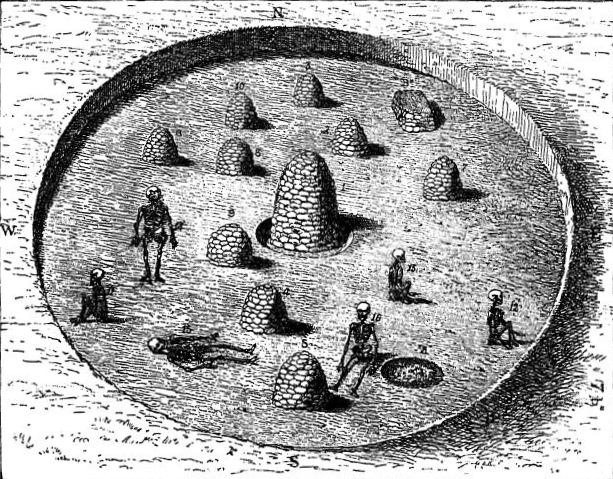 Fig. 25.—Appearance of T. F. Nelson mound after excavation.
Nos. 2, 3, 4, 5, 6, 7, 8, 9, and 10, although walled around in a similar
manner, were in a sitting posture on the bottom of the pit. In the grave
of No. 2 was found a polished celt, in that of No. 3 a single discoidal
stone, in that of No. 6 two polished celts, and immediately over No. 9 a
pitted stone.
Nos. 11, 12, and 13 are three skeletons in a squatting posture, with no
wall around them and unaccompanied by relics of any kind.
Nos. 14 and 15 are two uninclosed skeletons, lying horizontally at full
length. With the former some pieces of broken soapstone pipes were
found, and with the latter one polished celt.
No. 16, an uninclosed "squatter," of unusually large size, not less than
7 feet high when living. Near the mouth was an uninjured soapstone pipe.
The legs were extended in a southwest direction, upon a bed of burnt
earth.
The faces of all the squatting skeletons were turned away from the
standing central one.
At A was found a considerable quantity of black paint in little lumps,
which appear to have been molded in the hull of some nut. At B was a
cubical mass of water-worn bowlders, built up solidly and symmetrically,
24 inches long, 18 inches wide, and 18 inches high, but with no bones,
specimens of art, coal, ashes, or indications of fire on or around it.
Many of the stones of the vaults and the earth immediately around them,
on the contrary, bore unmistakable evidences of fire; in fact, the heat
in some cases left its mark on the bones of the inclosed skeletons,
another indication that the flesh had been removed before burial here,
either by previous burial or otherwise.
Scattered through the dirt which filled the pit were small pieces of
pottery and charcoal. The bottom, and sides of the pit were so
distinctly marked that they could be traced without difficulty.
This mound stood about 75 yards south of the triangular burial pit
described below.
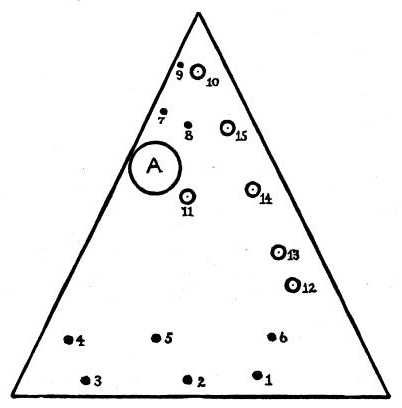 Fig. 26.—Burials in the T. F. Nelson triangle, Caldwell County, North Carolina.
The T. F. Nelson triangle.—This is the name applied by Mr. Rogan to
an ancient triangular burying ground found on the same farm as the mound
just described and about 75 yards north of it.
It is not a mound, but simply a burial pit in the form of a triangle,
the two longest sides each 48 feet and the (southern) base 32 feet, in
which the bodies and accompanying articles were deposited and then
covered over, but not heaped up into a mound; or, if so, it had
subsequently settled until on a level with the natural surface of the
ground. The apex, which points directly north, was found to extend
within 3 feet of the break of the bank of the Yadkin River, the height
above the usual water-level being about 12 feet. The depth of the
original excavation, the lines of which could be distinctly traced,
varied from 2½ to 3 feet. A rude sketch of this triangle, showing the
relative positions of the skeletons, is given in Fig. 26.
Nos. 1, 2, 3, 4, 5, 6, 7, 8, and 9 indicate the positions of single
skeletons found lying horizontally, on their backs, heads east and
northeast. With No. 2 was found a broken soapstone pipe, and with Nos. 5
and 9 one small polished celt each.
Nos. 10, 11, 12, 13, 14, and 15 indicate the positions of skeletons
inclosed in rude stone vaults built of cobblestones and similar to those
in the preceding mound. (See Fig. 25.) Nos. 10, 12, 13, and 15 were in a
sitting posture, without any accompanying articles.
Graves 11 and 14 contained each two bodies, extended horizontally, the
lower ones, which were of smaller stature than the upper ones, face up
and with heavy flat stones on the extended arms and legs. The upper
ones, with face down, were resting on those below. No implements or
ornaments were found with them.
Near No. 12 about a peck of singular, pinkish-colored earth was found.
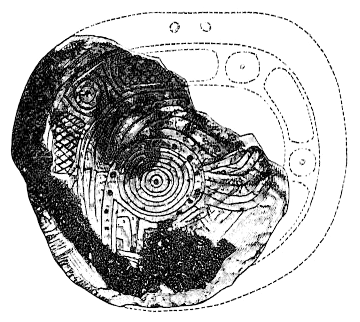 Fig. 27.—Engraved shell gorget from mound, Caldwell County, North Carolina.
In the northwest part of the triangle (at A in Fig. 26) ten or more
skeletons were found in one grave or group, which from the arrangement
the explorers concluded must have been buried at one time; the "old
chief" (?), or principal personage of the group, resting horizontally on
his face, with his head northeast and feet southwest. Under his head was
a large engraved shell gorget (Fig. 27); around his neck were a number
of large-sized shell beads, evidently the remains of a necklace; at the
sides of the head, near the ears, were five elongate copper beads, or
rather small cylinders, varying in length from one and a quarter to four
and a half inches, part of the leather thong on which the smaller were
strung yet remaining in them. These are made of thin pieces of copper
cut into strips and then rolled together so that the edges meet in a
straight joint on one side. (See Fig. 28.) The plate out of which they
were made was as smooth and even in thickness as though it had been
rolled.
 Fig. 28.—Cylindrical copper bead from mound, Caldwell County, North Carolina.
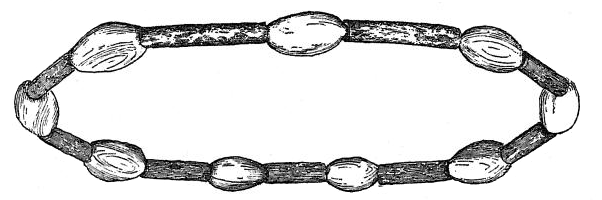 Fig. 29.—Bracelet of copper and shell beads, Caldwell County, North Carolina.
A piece of copper was also under his breast. His arms were partially
extended, his hands resting about a foot from his head. Around each
wrist were the remains of a bracelet composed of copper and shell beads,
alternating, thus (Fig. 29):
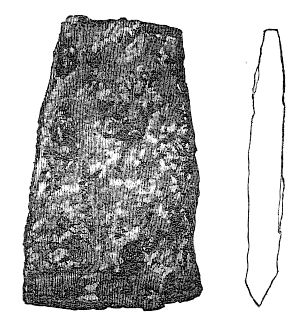 Fig. 30.—Iron celt from mound, Caldwell County, North Carolina.
At his right hand were four iron specimens, much corroded but still
showing the form. Two of them were of uniform thickness, one not
sharpened at the ends or edges, the other slightly sharpened at one end,
3 to 3½ inches long, 1 to 1½ inches broad, and about a quarter of
an inch thick. The form is shown in Fig. 30. Another is 5 inches long,
slightly tapering in width from one and an eighth to seven-eighths of an
inch, both edges sharp; it is apparently part of the blade of a long,
slender, cutting or thrusting weapon of some kind, as a sword, dagger,
or knife. (Shown in Fig. 31.) The other specimen is part of a round,
awl-shaped implement, a small part of the bone handle in which it was
fixed yet remaining attached to it.
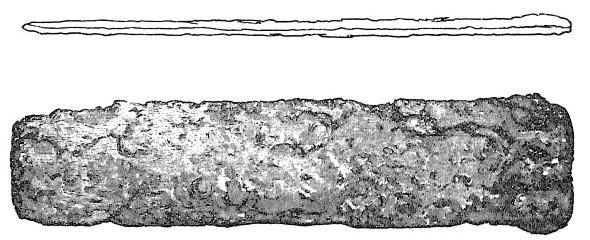 Fig. 31.—Iron implement from mound, Caldwell County, North Carolina.
Under his left hand was another engraved shell, the concave surface
upward and filled with shell beads of all sizes.
Around and over the skeleton of this chief personage, with their heads
near his, were nine other skeletons. Under the heads of two of these
were two engraved shells. Scattered over and between the ten skeletons
of the group were numerous polished celts, discoidal stones, copper
arrow-points, plates of mica, lumps of paint, black lead, etc.
The W. D. Jones mound.—Two miles east of Patterson, same county, and
near the north bank of the Yadkin River, running out from a low ridge to
the river bank, is a natural terrace about 12 feet high, with a level
area on top of about an acre, the sides steep and abrupt. According to
tradition this terrace was formerly occupied by an Indian village.
About 200 yards east of this, on the second river bottom or terrace, was
located a low, circular mound 33 feet in diameter and not more than 1
foot high, on the land of Mr. W. D. Jones.
This mound was found on investigation to cover a circular pit 32 feet in
diameter and 3 feet deep, the margin and bottom being so well defined as
to leave no doubt as to the limits of the pit; in fact, the bottom,
which was of clay, had been baked hard by fire to the depth of 2 or 3
inches. The mound and the filling of the pit consisted of earth and
loose yellow clay, similar to that around it. In this mound were found
twenty-five skeletons and one stone heap, the relative positions of
which are shown in Fig. 32.
1. A "squatter," walled in with water-worn stones, the face turned
toward the west; no relics.
2. Sitting with the face toward the center; two polished celts at the
feet, and immediately in front of the face a cylinder of hard gray
mortar (not burned) about 5 inches long and 2 inches in diameter, with a
hole through one end.
3. Sitting with the face toward the center; several polished celts at
the feet.
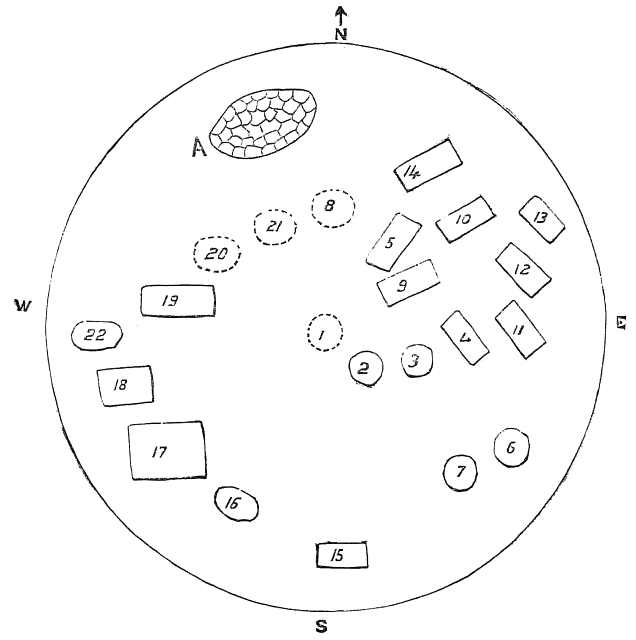 Fig. 32.—W. D. Jones mound, Caldwell County, North Carolina.
4. Horizontal, head southeast; several celts at the feet.
5. Horizontal, head toward the center; several celts at the feet.
6. Facing the center, sitting; shell beads around the neck, a Unio
shell on top of the head, with the concave surface down, a conch shell
(Busycon perversum) in front of the face, and celts at the feet.
7. Sitting, facing the center; celts at the feet.
8. Very large, lying on the left side, legs partially drawn up, walled
in with bowlders; no implements.
9. Horizontal, face down, head toward the center; celts and discoidal
stones at the feet, and a pot resting, mouth down, upon the head.
10. Horizontal, face up, feet toward the center; pot resting on the
face, stone implements at the feet.
11. Horizontal, head southeast, arms extended, and a bracelet of copper
and shell beads around each wrist; shell beads around the neck; face up
and food-cup (without handle) at the right side of the head.
12. Horizontal, face up, head southeast; shell beads around the neck, a
hook or crescent shaped piece of copper on the breast, and a soapstone
pipe near the face; one hand near each side of the head, each grasping
small, conical copper ornaments (ear-drops) and a bunch of hair. Was
this individual, apparently a female, buried alive?
13. Horizontal, lying on the back, head southeast; copper and shell
beads around the neck and wrists, a hook or crescent shaped piece of
copper on the breast, a food-cup (with handle) lying on its side with
mouth close to the face, a pipe near the mouth, and two celts over the
head.
14. Horizontal, lying on the back, head northeast, arms extended; each
hand resting on a shell which had evidently been engraved, though the
figures are almost totally obliterated.
15. Horizontal, on the back, head west, knees drawn up; stone implements
at the feet.
16. Too much decayed to determine the position.
17. Four skeletons in one grave, horizontal, heads toward the east, and
large rocks lying on the legs below the knees; no implements.
18. Two skeletons in one grave, heads west, faces down, knees drawn up;
no implements.
19. On the back, horizontal, head east; no implements.
20. Sitting, with face toward the east, walled in, a large rock lying on
the feet (though this may have fallen from the wall); no implements.
21. Sitting, walled in; over the head, but under the capstone of the
vault, a handful of flint arrow-heads.
22. Doubled up, with the head between the feet.
A. A solid oval-shaped mass of bowlders, 33 inches long, 22 inches wide,
and 24 inches high, resting on the bottom of the pit. No ashes or other
indications of fire about it.
Fragments of pottery, mica, galena, charcoal, red and black paint, and
stone chips were found scattered in small quantities through the earth
which filled the pit. All the celts were more or less polished.
R. T. Lenoir burial pit.—This is a circular burial pit, similar to
those already described, but without any rounding up of the surface. It
is located on the farm of Mr. Rufus T. Lenoir, about 9 miles northeast
of Lenoir and nearly a mile west of Fort Defiance.
A diagram showing the relative positions of the graves or burials is
given in Fig. 33.
It is on the first river terrace or bottom of Buffalo Creek and some 200
yards from the stream, which empties into the Yadkin about half a mile
southwest of this point. This bottom is subject to overflow in time of
high water.
The pit, which is 27 feet in diameter and about 3½ feet deep, is
almost a perfect circle, and well marked, the margin, which is nearly
perpendicular, and the bottom being easily traced. The dirt in this
case, as in the others, was all thrown out.
No. 1. A bed of charred or rather burnt bones, occupying a space 3 feet
long, 2 feet wide, and about 1 foot deep. The bones were so thoroughly
burned that it was impossible to determine whether they were human or
animal. Beneath this bed the yellow sand was baked to the depth of 2 or
3 inches. Under the bones was an uncharred shell gorget.
No. 2. A skeleton in a sitting posture, facing northeast; a pipe near
the mouth and a polished celt over the head.
No. 3. Sitting, facing east, with shell beads around the neck and also
around the arms just below the shoulders.
No. 4. Horizontal, on the back, head east and resting on the concave
surface of an engraved shell; a conch shell (Busycon perversum) at the
side of the head, and copper and shell beads around the neck.
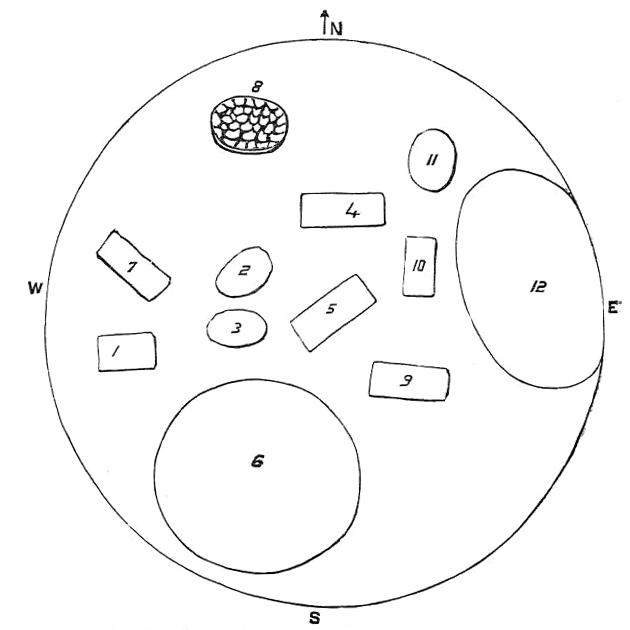 Fig. 33.—Plan of the R. T. Lenoir burial pit, Caldwell County, North Carolina.
No. 5. Horizontal, head northeast; shell beads around the neck and two
discoidal stones and one celt at the feet.
No. 6. A communal grave, containing at least twenty-five skeletons, in
two tiers, buried without any apparent regularity as to direction or
relative position. Thirteen of the twenty-five were "flat-heads;" that
is, "the heads running back and compressed in front."
Scattered through this grave, between and above the skeletons, were
polished celts, discoidal stones, shells, mica, galena, fragments of
pottery, and one whole pot. Around the neck and wrists of some of the
skeletons were also shell beads. There may have been more than
twenty-five individuals buried here, this, however, being the number of
skulls observed.
No. 7. Horizontal, on the left side, head northwest; no implements.
No. 8. An irregular layer of water-worn stones, about 4 feet square. On
top was a bed of charcoal 3 or 4 inches thick, on and partially imbedded
in which were three skeletons, but showing no indications of having been
in the fire. Scattered over these were discoidal stones, one small,
saucer-shaped dish, shells (of which one is engraved), pipes, shell
beads, and pieces of pottery.
No. 9. A grave containing three skeletons, lying horizontally on their
backs and side by side, the outer ones with their heads east and the
middle one with the head west; no implements.
No. 10. Horizontal, on the right side, head north, with stone implements
in front of the face.
No. 11. Doubled up, top of the head south; shell beads around the neck
and celts at the feet.
No. 12. A grave containing seventeen skeletons, seven of which had flat
heads, two of the number children. Two of the adult heads were resting
on engraved shells.
In this grave were found four pots and two food-cups, the handle of one
representing an owl's head and that of the other an eagle's head. One of
the small pots was inside a larger one. Scattered among the skeletons
were shell beads, polished celts, discoidal stones, paint, etc. None of
the skeletons were inclosed in stone graves.[36]
In order to convey an idea of the number of articles deposited with the
dead in some of these burial places, I give here a list of those
obtained from the pit last described:
One stone ax.
Forty-three polished celts.
Nine vessels of clay.
Thirty-two arrow-heads.
Twenty soapstone pipes, mostly uninjured.
Twelve discoidal stones.
Ten rubbing stones.
Two hammer stones.
One broken soapstone vessel.
Six engraved shells.
Four shell gorgets.
One Busycon perversum entire, and two or three broken ones.
Five very large copper beads.
One lot of fragments of shells, some of them engraved.
A few rude shell pins.
Shell beads.
A few small copper beads.
Specimens of paint and plumbago.
Three skulls.
It is evident from the foregoing descriptions that the mode of burial
and the depositories of the dead of the mound-building tribes of this
part of North Carolina differed in several marked and important respects
from the mode of burial and burial mounds of the sections previously
alluded to, and in fact from those of any other district.
Here the pit seems to have been the important part of the depository and
the mound a mere adjunct. In some cases the bodies appear to have been
buried soon after death, while in others—as, for example, the groups in
the triangle and Lenoir burial pit—the skeletons were probably
deposited after the flesh was removed.
We are reminded by these pits of the mode of burial practiced by some of
the Indian tribes, as mentioned by Lafitau,[37] Brebeuf,[38] etc.;
but, before attempting to draw conclusions, we will give other
illustrations of the burial mounds of this district, which are far from
being uniform in character.
Comparatively few mounds have as yet been opened in North Carolina;
hence the data relating to this region is somewhat meager. As bearing
upon the subject, and probably relating to a period immediately
following the close of the mound-building era, I give from Mr. Rogan's
notes the description of a burial place explored by him on the farm of
Mr. Charles Hunt, in the central part of Wilkes County:
This is not a "burial place," in the usual sense of that term, but is
probably the site of a camp or temporary village. It is about three
miles and a half east of Wilkesborough, on the second bottom or terrace
of the Yadkin River. It differs from the burial places just described in
having no large pit, the graves being separate and independent of each
other. A diagram showing the relative positions of the graves and small
pits accompanies Mr. Rogan's report but is omitted here, although the
numbering of the graves is retained in the description.
No. 1 is a grave or oval-shaped pit 2 feet long and 18 inches wide, the
top within 8 inches of the surface of the ground, while the bottom is
2½ feet below it. This contained the remains of two skeletons, which
were surrounded by charcoal; some of the bones were considerably
charred. In the pit were some fragments of pottery, a few flint chips,
and a decayed tortoise shell.
No. 2. A grave 2 feet wide, 6 feet long, and 5 feet deep. It contained
quite a quantity of animal bones, some of them evidently those of a
bear; also charcoal, mussel shells, and one bone implement.
No. 3. A grave of the same size and depth as No. 2, containing animal
bones, broken pottery, and some charcoal.
No. 4. Grave; the size, depth, and contents same as the preceding.
No. 5. A circular pit 2 feet in diameter and 2 feet deep. This contained
a very large pot, in which were some animal bones; it was on its side
and crushed.
No. 6. A pit 2½ feet deep and 2 feet square, with a bed of charcoal
in the bottom 6 inches deep. On this bed was a layer of flint chips, and
on the chips a quantity of broken pottery, animal bones, a discoidal
stone, and a bone implement.
No. 7. A grave similar to those described.
No. 8. A large grave, containing three skeletons, lying at full length
upon the right side, with the heads a little east of north. Between the
front and the middle one was a mass of mussel shells. At the head and
back of the front one were a number of animal bones, and between it and
the middle one, opposite the pelvis, was a large broken pot. The right
arm of the third or back one was extended forward and upward, the left
arm resting across the head, a white flint chip grasped in the hand. The
head of this skeleton was resting on a piece of a broken pot, and in
front of the face, at the distance of a foot, was also part of a pot,
containing a stone fragment and some animal bones. Under the legs of the
three skeletons, the head extending in front of the legs of the third or
back one, was the skeleton of a bear, and in front of the latter were
three broken pots, containing animal bones.
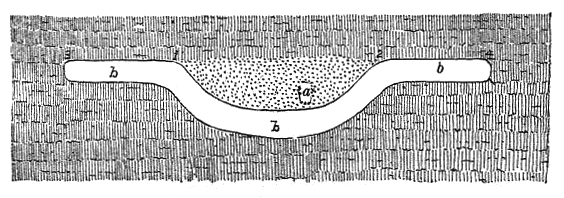 Fig. 34.—Fire-bed, Wilkes County, North Carolina.
No. 9. A basin-shaped fire-bed, or bed of burnt clay, 8 inches thick.
A section of this bed is shown in Fig. 34—b, b, b, the bed
of burnt clay, 8 inches thick, the material evidently placed here and
not a part of the original soil. The basin a was filled with ashes, to
the depth of 12 inches; the diameter, from 1 to 2, 2 feet 3 inches, from
1 to 3 and from 2 to 4, 1 foot 6 inches.
No. 10. A bed of mussel shells, 3 inches thick and 3 feet in diameter,
lying on a flat bed of burnt earth 3 inches thick.
No. 11. A pit 5 feet deep and 3 feet in diameter, filled with animal
bones, mussel shells, and broken pottery.
There was no mounding over any of these graves or pits.
The basin-shaped fire-bed, No. 9, reminds us very strongly of the
so-called altars of the Ohio mounds, and may possibly assist us in
arriving at a correct conclusion concerning these puzzling structures.
A mound opened by Dr. J. M. Spainhour in Burke County, some years ago,
presents some variations, though, so far as the posture and relative
positions of the skeletons are concerned, reminding us of those in
Caldwell County. The following extract is from the article containing
the description:[39]
Digging down I struck a stone about 18 inches below the
surface, which was found to be 18 inches long and 16 inches
wide and from 2 to 3 inches in thickness, the corners
rounded. It rested on solid earth and had been smoothed on top.
I then made an excavation in the south of the mound, and soon
struck another stone, which upon examination proved to be in
front of the remains of a human skeleton in a sitting posture;
the bones of the fingers of the right hand had been resting on
the stone. Near the hand was a small stone about 5 inches long,
resembling a tomahawk or Indian hatchet. Upon a further
examination many of the bones were found, though in a very
decomposed condition, and upon exposure to the air they soon
crumbled to pieces. The heads of the bones, a considerable
portion of the skull, jaw-bones, teeth, neck-bones, and the
vertebræ were in their proper places. Though the weight of the
earth above them had driven them down, yet the frame was
perfect, and the bones of the head were slightly inclined
toward the east. Around the neck were found coarse beads that
seemed to be of some substance resembling chalk.
A small lump of red paint, about the size of an egg, was found
near the right side of this skeleton. From my knowledge of
anatomy, the sutures of the skull would indicate the subject to
have been twenty-five or twenty-eight years of age. The top of
the skull was about 12 inches below the mark of the plow.
I made a further excavation in the west part of this mound and
found another skeleton similar to the first, in a sitting
posture, facing the last. A stone was on the right, on which
the right hand had been resting, and on this was a tomahawk
which had been about 7 inches in length, broken into two
pieces, and much better finished than the first. Beads were
also on the neck of this one, but were much smaller and of
finer quality than those on the neck of the first; the
material, however, seemed to be the same. A much larger amount
of paint was found by the side of this than the first. The
bones indicated a person of larger frame and I think of about
fifty years of age. Everything about this one had the
appearance of superiority over the first. The top of the skull
was about 6 inches below the mark of the plow.
I continued the examination, and after diligent search found
nothing at the north part of the mound, but on reaching the
east side found another skeleton, in the same posture as the
others, facing the west. On the right side of this was a stone
on which the right hand had been resting, and on the stone was
also a tomahawk about 8 inches in length, broken into three
pieces, much smoother and of finer material than the others.
Beads were also found on the neck of this, but much smaller and
finer than on those of the others, as well as a large amount of
paint. The bones would indicate a person of forty years of age.
The top of the skull had been moved by the plow.
There was no appearance of hair discovered; besides, the
principal bones were almost entirely decomposed, and crumbled
when handled.
A complete exploration of this mound, the dimensions of which are not
given, would possibly have shown that the skeletons were arranged
somewhat in a circle. The doctor does not state whether there was a pit.
 Fig. 35.—Section of mound, Henderson County, North Carolina.
Some mounds in Henderson County, opened in 1884 by Mr. J. W. Emmert, who
was temporarily employed by the Bureau, present some peculiarities
worthy of notice. One of these, situated on the farm of Mrs. Rebecca
Conner, and perfectly circular, was found to be 44 feet in diameter and
6 feet high; a number of small trees were growing on it. The annexed cut
(Fig. 35) shows a vertical section of it, the dark central triangle
representing a conical mass of charcoal and ashes. The conical mass
measured 16 feet in diameter at the base and 5 feet high, the top
reaching within 1 foot of the top of the mound. The outer portion
consisted of charcoal, evidently the remains of pine poles, which had
been placed in several layers, sloping toward the apex. The inner
portion consisted of ashes and coals mixed with earth, in which were
found some burnt human (?) bones, and some accompanying articles, among
which were two stones with holes drilled through them. The fragments of
bones and the specimens were at the base, in the center.
A mound on the farm of Mr. J. B. Alexander, 2 miles above the one just
described, was examined by Mr. Emmert, and found to cover a pit similar
to those explored in Caldwell County.
This mound was situated on an elevated level, about a quarter of a mile
from the creek, in an old field which had been plowed over for sixty
years. It was 2 feet high when he explored it, but the old people stated
to him that it was formerly 10 feet high, and had a "tail" or ridge
running away from it 200 feet long; but the only indication of this that
Mr. Emmert could see was a strip of clay running off where it was stated
to have been. It runs in the direction of the creek bottom, where any
quantity of broken pottery may be picked up. The mound, which was 30
feet in diameter and composed wholly of red clay, was entirely removed
to the original surface of the ground. Nothing was found in it, but
after reaching the surface he discovered a circular pit 12 feet in
diameter, which had been dug to the depth of 4 feet in the solid red
clay. This he found to be filled full of ashes and charcoal, but failed
to find any bones or specimens in it.
Although Mr. Emmert failed to find any evidence that this was a burial
mound, its similarity with those of Caldwell County will, I think,
justify us in concluding it was constructed for this purpose.
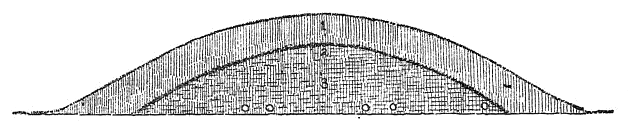 Fig. 36.—Section of mound, Henderson County, North Carolina.
Another mound on the same farm as the one last mentioned, a
cross-section of which is shown in Fig. 36, is of the common type,
examples of which are found in most of the districts: diameter 52 feet
and height 9 feet; the upper layer, No. 1, red clay, about 4 feet thick,
No. 2, a thin layer of charcoal, about 3 inches thick; the lower stratum
or central core, No. 3, dark-colored earth. In this lower layer were
found five skeletons, on the natural surface and at the points indicated
by the dots, which crumbled to pieces as soon as exposed to the air.
With one were sixteen large, rudely made, white flint arrow-heads, so
nearly alike as to make it apparent they were the work of one
individual, and with another a small pipe and some arrow-heads.
Passing westward over the mountains into East Tennessee, we find some
variations in the modes of burial, but not so widely different from
those east of the range as to justify the belief that the authors of the
works of the two localities were different peoples or belonged to
different tribes.
A burial mound opened by Mr. Emmert in the valley of the Holston,
Sullivan County, described by him as mound No. 1, on the north side of
the river, was found to be 22 feet in diameter and 4 feet high. It was
composed of red clay and sand. Digging down to the level of the
surrounding ground, there was found a pile of rock in the center, which
proved to be a burial vault built of water-worn bowlders, over a sitting
skeleton. It was 3½ feet in diameter at the base and 3 feet high. On
the head of the skeleton was a slender, square copper spindle about 11
inches long and a quarter of an inch thick in the middle. It has
evidently been hammered out with a stone hammer. Under the lower jaw
were two small copper drills or awls, with portions of the deer-horn
handles still attached. About the shoulders, one on each side, were two
polished stones, with holes in them. Near the head was a small pile of
flint chips, and at the knees a flint scalping knife. The bones were so
badly decayed that but few of them could be secured.
Mound No. 2 was on the south side of the river, opposite No. 1 and about
the same distance from the river. It was 38 feet in diameter and 5 feet
high, and on the top was a pine stump 14 inches in diameter.
Mr. Emmert, in opening it, commenced at the edge to cut a ditch 4 feet
wide through it, but soon reached a wall 3 feet high, built of "river
rock." He then worked around this, finding it to be an almost perfect
circle, 14 feet in diameter, inside of which were found, on throwing
out the dirt, twelve stone graves or vaults, built of the same kind of
stones, each containing a sitting skeleton, as shown in Fig. 37. One of
these graves or vaults was exactly in the center, the other eleven being
placed in a circle around it, and about equally spaced, as shown in the
diagram.
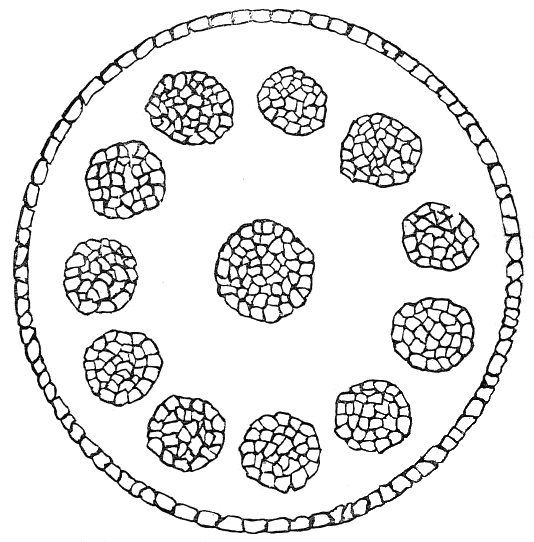 Fig. 37.—Mound on Holston River, Sullivan County, Tennessee.
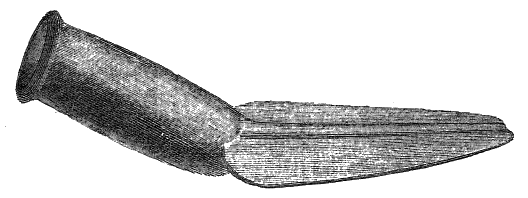 Fig. 38.—Pipe from mound, Sullivan County, Tennessee.
In the center grave he found shell beads around the neck of the
skeleton, and near the mouth the pipe shown in Fig. 38.
The bottom of the area within the circular wall was covered to the depth
of about 3 inches with charcoal, and the graves were built on this
layer. Both of these mounds were on the bench or upper bottom, and about
three-fourths of a mile from the river.
Mr. Emmert says he learned that there was a tradition of the
neighborhood that the Indians once fought a great battle at this place,
and that one party buried some of their dead in mound No. 2, and the
other party buried their dead on the opposite side of the river, where
there is a large pile or mound of "river rock."
He opened one of the rock mounds occurring in this region half a mile
from the river and near the foot of the mountain. A large tree had grown
up through it, the stump of which was yet standing, or the mound had
been built around it. After removing the rock and digging up the stump,
he found, at the depth of 4 feet and directly under the stump, two stone
axes, a large number of arrow-heads, two polished celts, and some pieces
of mica.
Another mound on the Holston River, 2 miles above the two heretofore
described, was examined. This was 60 feet in diameter and 4½ feet
high. The original surface of the earth had been first covered over
about 3 inches thick with charcoal, then the bodies or skeletons laid on
it, and each walled up separately with river rock. These were then
covered with black earth, over which was cast a layer of sand about the
same thickness, the remainder being top soil.
Mr. Emmert, who opened this, commenced cutting a ditch 4 feet wide,
proceeding until he struck the bed of charcoal; then followed around the
outer edge of it, finally removing all the dirt inside the circle. One
side of the circle had six skeletons in it, all walled up, as before
stated, separately, but so thoroughly decayed that only one skull could
be saved.
The other side of the mound had nothing in it except a fine pipe which
he found on the bed of coals, some 10 or 12 feet from the nearest
skeleton; some beautiful arrow-heads, shell beads, a polished celt, and
two small stones with holes in them were also discovered.
In addition to the foregoing descriptions from the reports of my
assistants, I present the following, from accounts of earlier
explorations in this region:
A burial mound situated on the left bank of the Tennessee River, about 1
mile from Chattanooga, was opened by Mr. M. O. Read in 1865. This was
oval in form and flat on top, the diameters of the base 158 and 120
feet, and those of the top 82 and 44 feet; height, 19 feet. Mr. Read
says:[40]
For the purpose of examination, a tunnel was excavated into the
mound from the east, a little one side of the center and on a
level with the natural surface of the ground. When the point
directly under the outer edge of the top of the mound was
reached, holes were found containing fragments of rotted wood
showing that stakes or palisades had been erected here when the
mound was commenced. The sound of the pick indicating a cavity
or different material below, the excavation was carried
downward about 2 feet, when two skeletons were uncovered,
fragments of which preserved are marked No. 1. The bones were
packed in a small space, as though the bodies were crowded
down, without much regard to position of hands, into a pit not
exceeding 3 feet in length. One of the skulls is of especial
interest, as possibly indicating that the remains are those of
victims immolated in some sacrificial or burial rites.
The side was crushed in, as if with a club. I have connected
together the pieces of the upper jaw so that they retain the
position in which they were found, a position which cannot with
probability be supposed to be the result of the settling of the
earth around it, if unbroken when buried. The bones of the
bodies, although so friable that they could not be preserved,
were entire, in positions indicating that the bodies had not
been dismembered and forbidding the supposition that they were
the remains of a cannibal feast.
The excavation was carried forward as indicated on the plat and
on a level with the location of the skeletons first found. It
became evident at once that the material of which the mound was
constructed was taken from the immediate neighborhood, it being
composed of the same alluvial soil, full of the shells found on
the surface, but in a much better state of preservation; but no
arrow-heads, chippings of flints, or fragments of pottery now
covering the surface were found. These would have been abundant
if the mound had been erected subsequent to the manufacture of
the pottery and arrow-heads at that place. Single fragments of
pottery were found, but these were painted and of much better
quality than those found on the surface.
The mound was composed of alternate layers of earth and ashes,
showing that a surface of the size of the top, when finished,
was kept substantially level, and raised only 2 to 3 feet at a
time, when fires were kindled, which must have been large or
continued for a long time, as the amount of the ashes and
charcoal abundantly indicates.
Near the center of the mound rows of stake-holes were found, as
far as followed, marking two sides of a rectangular
parallelogram, which continued would have formed an enclosure
around the center. In some of these were the remains of the
wood and bark, not enough to show the marks of tools, if any
had been used. They penetrated the natural surface of the
ground to the depth of about 2 feet.
Here and at about the same level as at No. 1 were found the
skeletons of which the skull bones and other parts are marked
No. 2. They were apparently the remains of a youngish woman and
two children, all so far decomposed that only the parts sent
could be preserved. The larger skeleton was in such a position
as a person would take on kneeling down, then sitting upon the
feet; the hands were brought to the head and the body doubled
down upon the knees. The head was toward the south. The remains
of the children were found at the right side of this body, the
bones mingled together.
About 2 feet directly under these the skeleton of which the
skull is marked No. 3 was found, in a similar position, it is
said (I was not present when it was taken out), with the one
above it.
I attempt no description and indulge in no speculations in
regard to these remains, as I have decided to forward them to
you for the examination of those who can compare them with
other skulls and are better qualified to make a proper use of
them. They are unquestionably of the age of the mound-builders.
We are reminded, by the remains of upright timbers found here, of the
wooden vaults of the Grave Creek and other mounds of West Virginia, but
in the form of the mound we have an indication that it belongs to the
southern class of ancient works.
Rev. E. O. Dunning mentions[41] a stone-grave mound which he examined
in the valley of the Little Tennessee. Speaking of this mound he
remarks:
I did not expect to find rock graves in a mound of earth, but
after clearing away rubbish and penetrating 6 feet below the
top, near the center the workman struck a slab of slate, which
proved to be part of the covering of a stone tomb. It was much
like those scattered over the "river bottom"—more nicely
constructed, however, and fitted with more care, being arched
over the top, at an acute angle, with pieces of slate 3 inches
thick. Owing to its situation, raised above the level of the
river and covered with sand to the depth of 6 feet, its
contents were better preserved than those of the graves just
mentioned. At the head of it I took out a vessel of fine red
clay and pulverized mussel shells a foot in diameter,
gourd-shaped, and having a handle and spout 6 inches long, and
holding about a quart. It was preserved nearly whole.
Artificial fire had been kindled in the tomb, but it had been
smothered by the throwing in of sand before all the contents
were consumed. Besides some entire bones of the human skeleton,
flint arrow-heads and a large number of flint and stone beads
were removed. The beads could be traced along the lines of the
legs and arms, as if they had been attached to the garment in
which the dead was buried. Further excavations disclosed two
more of these stone sepulchers, the first 3 feet below the one
described, the other 2 feet from it, in the same plane. They
contained only fragments of bones, charcoal, and ashes.
The mound, which was conical in shape, must have been 15 feet
high and 50 feet in diameter. Successive floods had impaired
its original dimensions. The last carried away a section on the
west side, exposing a tomb and some valuable relics, which have
not been preserved. Among them were large shells, pyrulas,
probably, judging from the description, from the Gulf of
Mexico. In connection with marine shells, images in stone were
found in this tomb. The mound was composed of sand-loam taken
from the bank of the river, and raised upon a foundation of
water-washed rocks 4 feet high, from the bed of the stream hard
by. There had been extensive burnings throughout this mound, at
various depths, indicated by layers of charcoal, ashes, and
burned clay, simply in honor of the dead, or to consume their
effects or mortal parts, or for human sacrifices to their
manes.
Speaking of stone graves in the immediate vicinity as explanatory of
those in the mound, he says:
They are built of slabs of slate, nicely fitted together, about
3 inches thick, 4 feet long, and 2 broad, enclosing receptacles
not of uniform space, generally 5 feet long, 4 feet high, and 2
broad, covered with flat pieces, resting upon the upright slabs
and conforming to the rounded corners of the tomb.
As one of the principal objects in view in exploring and studying the
mounds of our country is to ascertain, if possible, by what people or
tribes they were built, a brief discussion of the question so far as it
relates to the district now under consideration will be in place. My
reasons for touching upon the topic in this connection, and limiting the
discussion to the antiquities of the one district, are as follows:
First. The characteristics of the works of this section are so well
marked as to leave little, if any, doubt on the mind of any one who will
study them carefully that they are work of one people, probably of a
single tribe.
Second. Because in this instance I think the evidence points with at
least reasonable certainty to the particular tribe by which they were
erected.
Third. Whether our second reason prove to be correct or not, we find
data here which appear to form connecting links between the prehistoric
and the historic times, and hence call for some discussion in regard to
the authors.
Fourth. The statement of the result of our explorations of these works
(especially the burial mounds) will, as I conceive, be incomplete
without some intimation of the bearing they have had on my own mind in
reference to their authorship. This it is true will apply with equal
force to the works of other districts. I have already briefly stated my
conclusions in this respect regarding the antiquities of Wisconsin, but
have refrained from entering at length upon the question as to the Ohio
and West Virginia works, as I confess and have already intimated that
these present more difficulties in the way of explanation than most of
the other sections.
It may be thought premature to speculate in this direction, and some of
our ablest scientific journals appear to deprecate any such attempts
until more data have been obtained and the materials already collected
are more thoroughly digested. I admit that, as a very general and almost
universal rule, such a course is the proper one in respect to scientific
investigations, but must dissent from its application in this instance,
for the following reasons:
The thought that a mighty nation once occupied the great valley of the
Mississippi, with its frontier settlements resting on the lake shores
and Gulf coasts, nestling in the valleys of the Appalachian Range and
skirting the broad plains of the West, a nation with its systems of
government and religion, its chief ruler, its great central city, and
all the necessary accompaniments, but which has disappeared before the
inroads of savage hordes, leaving behind it no evidences of its
existence, its glory, power, and extent save these silent forest-covered
remains, has something so fascinating and attractive in it, that when
once it has taken possession of the mind, it warps and biases all its
conclusions.[42]
So strong, in fact, is the hold which this theory (in the broad sense,
including also the Toltec and Aztec theories) has taken of the minds of
both American and European archæologists, that it not only biases their
conclusions, but also molds and modifies their nomenclature, and is
thrust into their speculations and even into their descriptions as
though no longer a simple theory but a conceded fact. Hence it is
necessary, before a fair and unbiased discussion of the data can be had,
to call attention to the fact that there is another side to the
question.
Unless some protest is presented or some expression of opinion is made
on this point in my paper, the facts I give will be viewed through the
medium of this "lost race" theory. This I desire, if possible, to
prevent, and whether the "Indian theory" proves to be correct or not, I
wish to obtain for it at least a fair consideration. I believe the
latter theory to be the correct one, as the facts so far ascertained
appear to point in that direction, but I am not wedded to it; on the
contrary, I am willing to follow the facts wherever they lead.
Although additional data will hereafter be obtained and many new and
important facts be brought to light, yet, as I believe, sufficient
evidence has been collected (though much of it remains unpublished) to
indicate what will be the final result so far as this general question
is concerned.
We see that already the theory that these remains scattered over the
face of our country from Dakota to Florida and from New York to
Louisiana were the work of one people, one great nation, is fast
breaking down before the evidence that is being produced.
The following quotation from the last report of the Peabody Museum,
which is repeated in substance in Science, June 27, 1884, p. 775, will
serve not only to indicate the conflict which is going on in the minds
of some of our most active and progressive archæologists on this
subject, but also to show the difficulty of finding applicable and
well-defined terms, and of clearly stating the real question at issue:
The different periods to which the various mounds and burial
places belong can only be made out by such a series of
explorations as the museum is now conducting in the Little
Miami Valley, and when they are completed we shall be better
able to answer the question, "Who were the mound-builders?"
than we are now. That more than one of the several American
stocks or nations or groups of tribes built mounds seems to me
to be established. What their connections were is not yet by
any means made clear, and to say that they all must have been
one and the same people seems to be making a statement directly
contrary to the facts, which are yearly increasing as the spade
and pick in careful hands bring them to light. That many Indian
tribes built mounds and earthworks is beyond doubt, but that
all the mounds and earthworks of North America were made by
these same tribes or their immediate ancestors is not thereby
proved.
Mr. Carr, in his recent paper published by the Kentucky
Geological Survey, has taken up the historical side of the
question, but it must not be received for more than he
intended. He only shows from historical data what the spade and
pick have disclosed to the archæologist. It is simply one side
of the shield; the other is still waiting to be turned to the
light; and as history will not help us to read the reverse,
only patient and careful exploration will bring out its
meaning.[43]
This, it is true, is but an incidental paragraph thrown into a report of
the work of the museum, but I have selected it as the latest expression
on this subject by one of our most active and practical American
archæologists, and because it will furnish a basis for the remarks I
desire to make on this subject.
In order that the reader may clearly understand the particular points to
which I shall call attention, I will introduce here a brief review of
the leading opinions so far presented regarding the authorship of these
ancient works.
It was not until about the close of the eighteenth century that the
scientific men of the Eastern States became fully impressed with the
fact that remarkable antiquities were to be found in our country.
About this time President Stiles, of New Haven, Dr. Franklin, Dr.
Barton, and a few other leading minds of that day, becoming thoroughly
convinced of the existence of these antiquities, and having received
descriptions of a number of them, began to advance theories as to their
origin. William Bartram had come to the conclusion, from personal
observation and from the statement of the Indians that "they knew
nothing of their origin," that they belonged to the most distant
antiquity.
Dr. Franklin, in reply to the inquiry of President Stiles, suggested
that the works in Ohio might have been constructed by De Soto in his
wanderings. This suggestion was followed up by Noah Webster with an
attempt to sustain it,[44] but he afterwards abandoned this position
and attributed these works to Indians.
Captain Heart, in reply to the inquiries addressed to him by Dr. Barton,
gives his opinion that the works could not have been constructed by De
Soto and his followers, but belonged to an age preceding the discovery
of America by Columbus; that they were not due to the Indians or their
predecessors, but to a people not altogether in an uncultivated state,
as they must have been under the subordination of law and a
well-governed police.[45]
This is probably the first clear and distinct expression of a view which
has subsequently obtained the assent of so many of the leading writers
on American archæology.
About the commencement of the nineteenth century two new and important
characters appear on the stage of American archæology. These are Bishop
Madison, of Virginia, and Rev. Thaddeus M. Harris, of Massachusetts.
Dr. Haven, to whose work we are indebted for reference to several of the
facts above stated, remarks:
These two gentlemen are among the first who, uniting
opportunities of personal observation to the advantages of
scientific culture, imparted to the public their impressions of
western antiquities. They represent the two classes of
observers whose opposite views still divide the sentiment of
the country; one class seeing no evidence of art beyond what
might be expected of existing tribes, with the simple
difference of a more numerous population, and consequently
better defined and more permanent habitations; the other
finding proofs of skill and refinement, to be explained, as
they believe, only on the supposition that a superior race, or
more probably a people of foreign and higher civilization, once
occupied the soil.[46]
Bishop Madison was the representative of the first class. Dr. Harris
represented that section of the second class maintaining the opinion
that the mound-builders were Toltecs, who after leaving this region
moved south into Mexico.
As we find the principal theories which are held at the present day on
this subject substantially set forth in these authorities, it is
unnecessary to follow up the history of the controversy except so far as
is required to notice the various modifications of the two leading
opinions.
Those holding the opinion that the Indians were not the authors of these
works, although agreeing as to this point and hence included in one
class, differ widely among themselves as to the people to whom they are
to be ascribed, one section, of which, as we have seen, Dr. Harris may
be considered the pioneer, holding that they were built by the Toltecs,
who, as they supposed, occupied the Mississippi Valley previous to their
appearance in the vale of Anahuac.
Among the more recent advocates of this theory are Mr. John T. Short,
author of "The North Americans of Antiquity;"[47] Dr. Dawson, in his
"Fossil Man," who accepts the tradition respecting the Tallegwi, but
identifies them with the Toltecs; Rev. J. P. MacLean, author of the
"Mound Builders" and Dr. Joseph Jones, in his "Antiquities of
Tennessee."
Wilson, in his "Prehistoric Man,"[48] modifies this view somewhat,
looking to the region south of Mexico for the original home of the
Toltecs, and deriving the Aztecs from the mound-builders.
Another section of this class includes those who, although rejecting the
idea of an Indian origin, are satisfied with simply designating the
authors of these works a "lost race," without following the inquiry into
the more uncertain field of racial, national, or ethnical relations. To
this type belong a large portion of the recent authors of short articles
and brief reports on American archæology, and quite a number of diligent
workers in this field whose names are not before the world as authors.
Baldwin believes that the mound-builders were Toltecs, but thinks they
came originally from Mexico or farther south, and, occupying the Ohio
Valley and the Gulf States, probably for centuries, were at the last
driven southward by an influx of barbarous hordes from the more northern
regions, and appeared again in Mexico.[49] Bradford, thirty years
previous to this, had suggested Mexico as their original home.[50]
Lewis H. Morgan, on the other hand, supposes that the authors of these
remains came from the Pueblo tribes of New Mexico. Dr. Foster[51]
agrees substantially with Baldwin. We might include in this class a
number of extravagant hypotheses, such as those held by Haywood,
Rafinesque, and others among the older, as well as by a few of the more
recent authors.
The opposite class, holding that the mound-builders were the ancestors
of some one or more of the modern tribes of Indians, or of those found
inhabiting the country at the time of its discovery, numbers
comparatively few leading authorities among its advocates; in other
words, the followers of Bishop Madison are far less numerous than the
followers of Dr. Harris. The differences between the advocates of this
view are of minor importance, and only appear when the investigation is
carried one step further back and the attempt is made to designate the
particular tribe, nation, people, or ethnic family to which they
appertained.
The traditions of the Delawares, as given by Heckewelder, in his
"History of the Indian Nations," having brought upon the stage the
Tallegwi, they are made to play a most important part in the
speculations of those inclined to the theory of an Indian origin. As
this tradition agrees very well with a number of facts brought to light
by antiquarian and philological researches, it has had considerable
influence in shaping the conclusions even of those who are not professed
believers in it.
One of the ablest early advocates of the Indian origin of these works
was Dr. McCulloch; and his conclusions, based as they were on the
comparatively slender data then obtainable, are remarkable not only for
the clearness with which they are stated and the distinctness with which
they are defined, but as being more in accordance with all the facts
ascertained than perhaps those of any contemporary.
Samuel G. Drake, Schoolcraft, and Sir John Lubbock were also disposed to
ascribe these ancient works to the Indians. But the most recent advocate
of this view is Prof. Lucien Carr, of Cambridge, Massachusetts, who has
presented, in a recent paper entitled "The Mounds of the Mississippi
Valley historically considered" (contained in the Memoirs of the
Kentucky Geological Survey), a very strong array of historical evidence
going to show not only that the Indian tribes at the time of the
discovery were capable of producing these works, but also that several
of the tribes were in the habit of erecting mounds.
But it is proper that we should mention an article by Dr. D. G. Brinton
in the October number, 1881, of the American Antiquarian, bearing upon
the same subject, in which considerable historical evidence tending to
the same conclusion is given. These two papers may justly be considered
the commencement of a rediscussion of this question, in which the
Indians, after a long exclusion, will be readmitted as a possible factor
in the problem.
The reader will observe from the foregoing brief review that the
opinions regarding the authors of the mounds—or, as Dr. Brinton
expresses it, "the nationality of the mound-builders"—as heretofore
given to the world, may be divided into two classes—those holding that
the builders were "Indians," and those holding that they were not
"Indians." But the paragraph we have quoted from the Report of the
Peabody Museum introduces other considerations, which render it
necessary not only to define the terms used but to restate the question
at issue in a more exact and definite form.
What mounds? What earth works? The authority quoted remarks, "That many
Indian tribes built mounds and earthworks is beyond doubt, but that all
the mounds and earthworks of North America were made by these same
tribes or their immediate ancestors is not thereby proved."
That the term "mound-builders" is as applicable to the people who
constructed the mounds of Siberia, Japan, or elsewhere as those who
built the tumuli of the Mississippi Valley must be admitted, but the
term, when used in this country with reference to the mounds of this
country, has, as is well known, been generally understood to include
only those found in that part of the United States east of the Rocky
Mountains unless otherwise stated; and Mr. Carr's paper, to which
allusion is made in the next sentence of the quotation, is expressly
limited to the "mounds of the Mississippi Valley." North America is
therefore a broader field than is generally understood by those who
enter upon the discussion, and I may add that "these same tribes,"
unless with explicit definition, is a limitation claimed by no one.
The term "Indian" is so indefinite and so variously applied that more or
less uncertainty must ensue unless the writer discussing this question
makes clear the sense in which he uses it. It was probably an
appreciation of this fact that caused the author of the report referred
to to make use of the terms "American stocks," "nations," and "groups of
tribes." We can fully appreciate the difficulty he and all others
writing upon this subject experience from the want of an adequate and
definite nomenclature that is applicable. But his expansions in one
direction and limitations in another, in the paragraph quoted, as it
seems to me, have left the statement of the question in worse confusion
than it was before.
In what sense does he use the terms "Indians," "Indian tribes,"
"American stocks," and "groups of tribes"? Are the cultured Central
American and Mexican nations and the Pueblo tribes to be included or
excluded? Professor Carr evidently proceeds upon the idea that they are
to be excluded, and that the mounds and other ancient works of the
Mississippi Valley are to be attributed to one or more of the American
stocks found in possession of this region at the time of its discovery
by Europeans.
This I believe to be the correct view, except in this: Professor Carr
fails to clear his work of the idea of one people, one stock, when the
evidence is conclusive that the mound-builders were divided into tribes
and stocks, as were the Indians when first encountered by the whites.
Hence when I use the terms "Indians," "Indian tribes," and "American
stocks" in this connection, they are to be understood as thus limited.
I do not claim that this use of these terms is correct, but it is not my
intention at present to discuss the question "What is the proper use of
the indefinite term Indian?" My only object in referring to it and the
other equivalent terms is to explain the sense in which I use them in
this connection, because I can find no better ones.
As thus limited the question for discussion maybe stated as follows:
Were all the mounds and other ancient works found in that part of the
United States east of the Rocky Mountains (except such as are manifestly
the work of Europeans of post-Columbian times) built by the Indians
found in possession of this region at the time of its discovery and
their ancestors, or are they in part to be attributed to other more
civilized races or peoples, as the Aztecs, Toltecs, Pueblo tribes, or
some lost race of which we possess no historical mention? I say in part,
as it has long been conceded, that some of these works are to be
attributed to the Indians.
If it can be shown that some of the mounds and other works of all the
different types and classes found in the Mississippi Valley and Gulf
States were built by Indians, or even that they were built by people in
the same stage of culture and art and having the same customs and habits
as the Indians of this region in the fifteenth and sixteenth centuries,
we shall be justified in concluding that the rest are the work of the
same race and of the same tribes, or those, closely allied in habits,
customs, art, and culture. That here and there a single mound-building
tribe may have become extinct or absorbed into other tribes in
pre-Columbian times, as has been the fate of some since the discovery of
the continent, does not alter the case, unless it be claimed that such
tribes belonged to different "American stocks" and had reached a higher
degree of culture than those found in this part of the continent at the
time of the arrival of the Europeans.
No one believes that we will ever be able to ascertain the history of
the construction of each mound and earthwork; the utmost to be hoped is
that we may be able to determine with satisfactory certainty that such
and such works were built by such and such tribes.
But one step in the investigation is to reach the general conclusion as
to whether all classes of these remains in the region designated may
justly be attributed to the Indians, or whether there are some types
which must be ascribed to a different race, to a people that had
attained a higher position in the scale of civilization than the
Indians. This it is possible to accomplish, without being able to
determine conclusively what tribe erected any particular work.
Nevertheless the conclusion will be strengthened by every proof that the
works of certain sections are to be ascribed to certain tribes or
stocks. It is for this reason that I propose to discuss somewhat briefly
the question of the probable authorship of the works in the Appalachian
district.


![Fig. 7.—Section of burial mound, Davenport, Iowa. [From the Proceedings of the Davenport Academy of Sciences.]](images/image07.png "Fig. 7.—Section of burial mound, Davenport, Iowa. [From the Proceedings of the Davenport Academy of Sciences.]")


