[Return]
The poem is based on an old myth found in many forms, all
turning upon the attempt to cheat a magician out of his promised
reward. See Brewer's Reader's Handbook, Baring-Gould's
Curious Myths of the Middle Ages, Grimm's Deutsche Sagen,
and the Encyclopaedia Britannica. There are Persian and Chinese analogues.
The eldest son of William Macready, the actor, was confined
to the house by illness, and Browning wrote this jeu
d'esprit to amuse the boy and to give him a subject for illustrative drawings.
1. Hamelin. A town in Hanover, Prussia.
89. Cham, or Khan. The title of the rulers of Tartary.
91. Nizam. The title of the sovereign of Hyderabad, the
principal state of India.
158. Claret, Moselle, etc. Names of wines.
179. Caliph. The title given to the successor of Mohammed,
as head of the Moslem state, and defender of the faith. Century
Dictionary.
[page 236]
[Return]
The poem tells in detail an actual incident, and was written
as a protest against vivisection.
3. Sir Olaf. A conventional name in romances of mediæval
chivalry.
6. A satire upon Byronism. Manfred and Childe Harold
are heroes of this type.
Note the abruptness and vigor of the style. Where does it
seem effective? Where unduly harsh? Why does the poet
welcome the third bard? What things does the poem satirize?
[Return]
The incident is real, except that the actual hero was a man,
not a boy.
1. Ratisbon (German Regensburg). A city in Austria,
stormed by Napoleon in 1809.
11. Lannes. Duke of Montebello, a general in Napoleon's
army.
20. This sentence is incomplete. The idea is begun anew in
line 23.
What two ideals are contrasted in Napoleon and the boy?
By what means is sympathy turned from one to the other?
Show how rapidity and vividness are given to the story.
[Return]
Browning thus explains the origin of the poem: "There is
no sort of historical foundation about Good News from Ghent.
I wrote it under the bulwark of a vessel off the African coast,[page 237]
after I had been at sea long enough to appreciate even the fancy
of a gallop on the back of a certain good horse 'York,' then in
my stable, at home." It would require a skilful imagination to
create a set of circumstances which could give any other plausible
reason for the ride to "save Aix from her fate."
14. Lokeren. Twelve miles from Ghent.
15. Boom. Sixteen miles from Lokeren.
16. Düffeld. Twelve miles from Boom.
17. 19, 31, etc. Mecheln (Fr. Malines), Aershot, Hasselt,
etc. The reader may trace the direction and length of the ride
in any large atlas. Minute examinations of the route are,
however, of no special value.
Note the rapidity of narration and the galloping movement
of the verse; the time of starting, and the anxious attention to
the time as the journey proceeds. How are we given a sense
of the effort and distress of the horses? How do we see Roland
gradually emerging as the hero? Where is the climax of the
story? Note, especially, the power or beauty of lines 2, 5, 7,
15, 23, 25, 39, 40, 47, 51-53, 54-56.
[Return]
(Published in the Cornhill Magazine, 1871. Browning gave
the £100 received for the poem to the fund for the relief of
the people of Paris, who were starving after the siege of
1870.)
The cause of James II., who had been removed from the
English throne in 1688, and succeeded by William and Mary,
was taken up by the French. The story is strictly historical,[page 238]
except that Hervé Riel asked a holiday for the rest of his life.
5. St. Malo on the Rance. On the northern coast of France,
in Brittany. See any large atlas.
43. pressed. Forced to enter service in the navy.
44. Croisickese. A native of Croisic, in Brittany. Browning
has used the legends of Croisic for poetic material in his
Gold Hair of Pornic and in The Two Poets of Croisic.
46. Malouins. Inhabitants of St. Malo.
135. The Louvre. The great palace and art gallery of Paris.
Note the suggestion of the sea, and of eager hurry, in the
movement of the verse. Compare the directness of the opening
with that of the preceding poem: What is the advantage of
such a beginning? How much is told of the hero? By what
means is his heroism emphasized? How is Browning's departure
from the legend a gain? Observe the abrupt energy of lines
39-40; the repetition, in 79-80; the picture of Hervé Riel in
stanzas viii and x.
[Return]
The story is from Herodotus, told there in the third person.
See Herodotus, VI., 105-106. The final incident and the reward
asked by the runner are Browning's addition.
Χαίρετε, νικωμεν. Rejoice, we conquer.
4. Zeus. The chief of the Greek gods (Roman Jupiter).
Her of the ægis and spear. These were the emblems of
Athena (Roman Minerva), the goddess of wisdom and of [page 239]
warfare.
5. Ye of the bow and the buskin. Apollo and Diana.
8. Pan. The god of nature, of the fields and their fruits.
9. Archons. Rulers. tettix, the grasshopper, whose image
symbolized old age, and was worn by the senators of Athens.
See the myth of Tithonus and Tennyson's poem of that name.
13. Persia attempted a conquest of Athens in 490 B.C. and
was defeated by the Athenians in the famous battle of Marathon,
under Miltiades.
18. To bring earth and water to an invading enemy was a
symbol of submission.
19. Eretria. A city on the island of Eubœa, twenty-nine
miles north of Athens.
20. Hellas. The Greek name for Greece.
21. The Greeks of the various provinces long regarded themselves
as of one blood and quality, superior to the outer barbarians.
32. Phoibos, or Phœbus. Apollo, god of the sun and the arts.
Artemis (Roman Diana), goddess of the moon and patroness of
hunting.
33. Olumpos. Olympus. A mountain of Greece which was
the abode of Zeus and the other gods.
52. Parnes. A mountain on the ridge between Attica and
Bœotia, now called Ozia.
62. Erebos. The lower world; the place of night and the
dead.
89. Miltiades (?-489 B.C.). The Greek general who won the[page 240]
victory over the Persians at Marathon in 490 B.C.
106. Akropolis. The citadel of Athens, where stood the
court of justice and the temple of the goddess Athene.
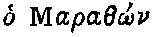
109. Fennel-field. The Greek name for fennel was
'ο Μαραθών
(Marathon). Hence the prophetic significance of Pan's gift to
the runner.
Compare the story in Herodotus (VI., 105-106) with Browning's
more spirited and poetic version. Observe how the strong
patriotism, the Greek love of nature, and the Greek reverence
for the gods are brought to the fore. What imagery in the
poem is especially effective? What is the claim of Pheidippides—as
Browning presents him—to memory as a hero? What
ideals are most prominent in the poem?
[Return]
4. angled spar. The Iceland spar has the power of polarizing
light and producing great richness and variety of color.
11. Saturn. The planet next beyond Jupiter; here chosen,
perhaps, for its changing aspects. See an encyclopedia or dictionary.
This dainty love lyric is said to have been written with Mrs.
Browning in mind. It needs, however, no such narrow application
for its interpretation. It is the simple declaration of the
lover that the loved one reveals to him qualities of soul not
revealed to others. Observe the "order of lyric progress" in
speaking first of nature, then of the feelings.
[page 241]
[Return]
The lover denies the evanescence of human love. He implies
that in some future time the love will reappear and be rewarded.
Browning's optimism lays hold sometimes of the
present, sometimes of the future, for the fulfilment of its hope.
Especially strong is his "sense of the continuity of life."
"There shall never be one lost good," he makes Abt Vogler
say. The charm of this poem is more, perhaps, in its tenderness
of tone and purity of atmosphere than in its doctrine of
optimism.
[Return]
This poem was written in Rome in the winter of 1853-1854.
The scene is the Roman Campagna. The verse has a softness
and a melody unusual in Browning. Compare its structure
with that of Holmes's The Last Leaf. Note the elements of
pastoral peace and gentleness in the opening, and in the coloring
of the scene. What two scenes are brought into contrast?
Note how the scenes alternate throughout the poem, and how
each scene is gradually developed according to the ordinary laws
of description. What ideals are thus compared? What does
the poem mean?
[Return]
11. Dalmatic. A robe worn by mediæval kings on solemn
occasions, and still worn by deacons at the mass in the Roman
Catholic church.
The lyric order appears sharply developed here in the parallelism
of the two stanzas. Point out this parallelism of idea.
Does it fail at any point? Note the chivalrous absence of reproach[page 242]
by the lover. Observe the climax up to which each
stanza leads, and the climax within the last line of each stanza.
[Return]
5. Nautch. An Indian dancing-girl, to whom Browning
ascribes the skill of a magician.
The poem celebrates the transforming and life-giving power
of affection. Note the abrupt and excited manner of utterance,
and how the speaker begins in the midst of things. He
has already told his story once, when the poem opens. Note
also the parallelism of structure, as in Misconceptions, the
climax in each stanza, and the echo in the last line of each.
Tell the story in the common order of prose narrative.
[Return]
Study the development of the idea in the same manner as
in Misconceptions and Natural Magic. Note the felicity of
imagery and diction.
[Return]
The clew to the meaning is to be sought in the last two
stanzas. This is one of the best examples of Browning's
"assertion of the soul in song."
[Return]
First construct the scene of the poem. What has the priest
said? What is the sick man's answer? What evidence is
there that his imagination is struggling to recall the old memory?[page 243]
What view of life does the priest offer, and he reject?
Does Browning indicate his preference for either view, or tell
the story impartially?
[Return]
What key to the situation in the first line? Who are the
speaker and the one addressed? What mood and feeling are in
control? Comment upon the condensation of the thought and
the movement of the verse.
[Return]
25-27. Compare Emerson's lines in The Rhodora:—
"If eyes were made for seeing,
Then beauty is its own excuse for being."
To what things is the "Pretty Woman" compared? Of
what use is she? How is she to be judged?
[Return]
8. Gibson, John (1790-1866). A famous sculptor.
12. Grisi, Giulia. A celebrated singer (1811-1869).
18. In allusion to the asceticism of the Hindoo religious
devotees.
58. bals-parés. Fancy-dress balls.
The poem is half-humorous, half-serious. The speaker, in
her imaginary conversation, gives her own history and that of
the man she thinks she might have loved. The story is on the[page 244]
"Maud Muller" motive, but with less of sentimentality. The
setting suggests the life of art students in Paris, or in some
Italian city. The poem is a plea for the freedom of the individuality
of a soul against the restrictions imposed by conventional
standards of value. Its touches of humor, of human
nature, and its summary of two lives in brief, are admirably
done. Its rhymes sometimes need the indulgence accorded to
humorous writing.
[Return]
The source of the story is an epigram given in Mackail's
Select Epigrams from Greek Anthology. It is one of the happiest
pieces of Browning's lighter work.
65. Lotte, or Charlotte. A character in Goethe's Sorrows
of Werther, said to be drawn from the heroine of one of Goethe's
earlier love-affairs.
Who are the speaker and the one addressed? Whom does
the cicada of the tale symbolize? Whom the singer helped by
the cicada? What application is made of the story? What
serious meanings and feelings underlie the tone of raillery?
What things mark the light and humorous tone of the speaker?
Point out the harmony between style and theme.
[Return]
Note the swinging, martial movement, and the energetic spirit
in these lyrics. For an account of the history of the period, see
Green's Short History of the English People, Chapter VIII, and
Macaulay's History of England, Chapter I. For an account of[page 245]
the qualities of the Cavaliers, see Macaulay's Essay on Milton.
1. Kentish Sir Byng. The first of the family known to fame
was George Byng, Viscount Torrington (1663-1733), who could
not be the man meant here by Browning.
2. crop-headed. In allusion to the close-cropped hair of the
Puritans. Long wigs were the fashion among the Cavaliers;
hence the Puritans were nicknamed "Roundheads."
7. King Charles the First. Pym, John (1584-1643). Leader
of the Parliament in its actions against King Charles and the
Royalist party.
13. Hampden, John (1594-1643). One of the leaders of
Parliament, known principally for his resistance to the illegal
taxations of Charles I.
14. Hazelrig, Sir Arthur. One of the members of Parliament
whom Charles tried to impeach. Fiennes, Nathaniel.
One of the leading members of Parliament. young Harry.
Son of Sir Henry Vane, and a member of the Puritan party.
15. Rupert. Prince of the Palatinate (1619-1682), and
nephew of Charles I. He served in the King's army during
the civil war.
23. Nottingham. "Charles I raised his standard here, in
1642, as the beginning of the civil war."—Century Dictionary.
[page 246]
16. Noll was a contemptuous nickname for Oliver Cromwell,
the leader of the Puritans.
[Return]
This poem is a companion piece to Home Thoughts, from
Abroad. It is, however, distinctly inferior to it in clearness,
vividness of feeling, and lyric sweetness.
3. Trafalgar, The scene of the famous victory of the English
admiral, Nelson, over the French fleet in 1805.
4. Gibraltar. The famous rocky promontory at the entrance
of the Mediterranean. It has been held as an English fort
since 1704.
[Return]
This little poem, published in 1890, is one of the good examples
of a love lyric written by an old man whose spirit is still
youthful. There are some similar things by Tennyson, in
Gareth and Lynette, and elsewhere in his later publications.
Note here the somewhat exaggerated art of the poem in the
alliterations and in the multiple comparisons.
[Return]
The drama of Pippa Passes is a succession of scenes, each
representing some crisis of human life, into which breaks, with
beneficent influence, a song of the girl Felippa, or "Pippa," on
her holiday from the silk-mills. She is unconscious of the influence
she exerts. William Sharp says these songs "are as[page 247]
pathetically fresh and free as a thrush's song in a beleaguered
city, and with the same unconsidered magic."
[Return]
The desertion of the liberal cause by Wordsworth, Southey,
and others, is the germinal idea of this poem. But Browning
always strenuously insisted that the resemblance went no further;
that The Lost Leader is no true portrait of Wordsworth,
though he became poet-laureate. The Lost Leader is a purely
ideal conception, developed by the process of idealization from
an individual who serves as a "lay figure."
13. Shakespeare was more of an aristocrat, surely, than a
democrat. Milton had championed the cause of liberty in prose
and poetry, and had worked for it as Cromwell's Latin secretary.
14. Burns, Shelley. What poems can you cite of either poet
to place him in this list?
Who is the speaker? What is the cause? Why does he not
wish the "lost leader" to return? How does he judge him?
What does he expect for his cause? What does he mean by
lines 29-30? lines 31-32? Point out the climax in the second
stanza.
[Return]
3. your Prince. Son of Napoleon III., born in March, 1856.
7. The Congress assembled to discuss Italy's unity and freedom.
Gortschakoff represented Russia; Count Cavour, Italy;
Buol, Austria. Austria had conquered Italy. See Browning's[page 248]
The Italian in England.
12. Petrarch's Vaucluse. The fountain from which the
Sorgue rises. The town of Vaucluse (Valclusa) was the home
of the poet Petrarch (1304-1374).
14. debt. The obligation to visit a famous place.
39. Tuileries. The imperial palace in Paris.
43-44. What is meant? Death? Freedom?
46-47. . In allusion to the game of rouge-et-noir. Criticise
the taste shown here.
In what sense does the poet intend to "save" the building?
Describe the scene that he recalls. What three types are the
suicides? How does the poet know? Why does he deny the
failure of their lives? Does he base his optimistic hope on reason
or feeling? Note the climax in line's 55-57. State in your
own words the meaning of the last six lines.
[Return]
The problem of the religions doubter is here set forth by an
analogy.
5. letters. The reference is of course to the Scriptures.
17 ff. In reference to sceptical criticism.
What are the "fears and scruples" held by the speaker?
What proof does he desire to allay his doubts? Does he settle
the doubt or put it aside? Where is his spirit of reverence best
shown?
[page 249]
[Return]
"Instans Tyrannus", the threatening tyrant. The phrase is
from Horace's Odes, Book III., iii., as is probably the idea of
the poem. Gladstone translates the passage:—
"The just man in his purpose strong,
No madding crowd can turn to wrong.
The forceful tyrant's brow and word
. . .
.
. . .
His firm-set spirit cannot move."
There is novelty of conception in giving the situation from the
tyrant's point of view. Compare also the seventh Ode of
Horace in Book II.
44. gravamen. Latin for burden, difficulty, annoyance.
69. Just (as) my vengeance (was) complete.
What conception do you get of the tyrant? What is his
motive? What things aggravate his hatred? How does he
seek to "extinguish the man"? What baffles him at first?
What defeats him finally? Is he deterred by physical or moral
fear? By what means is the poem given vigor and clearness?
Note the dramatic effect in the last stanza.
[Return]
At what point in his career does the speaker give his story?
What have been his motives? How was he at first treated?
What indicates that the change is not in him, but in the fickle
mob? How does he view his downfall? In what thought lies
his sense of triumph? How does his greatness of soul appear?
[page 250]
[Return]
24. "the voice of my delight". That is, the boy's simple
praises.
What quality did the praise of the Pope and of the angel
lack? What is the meaning of the legend?
[Return]
In Browning's early youth, while he was under the influence
of Byron and Pope, he found, at a bookstall, a stray copy of
Shelley's Dæmon of the World. From this time on, Shelley's
poetry was his ideal. The term "moulted feather" has peculiar
significance from the fact that this was a poem which Shelley
afterwards rejected.
How is childlike wonder expressed in the first two stanzas?
How is the difference between the speaker and his friend indicated?
Why does the name of Shelley mean so much more to
one than to the other? In the figure that follows, what do the
moor and the eagle's feather stand for?
[Return]
Note the essential elements of sonnet structure in metre,
rhyme, and number of lines. See the Introduction to Sharp's
Sonnets of this Century. Compare the idea of the poem with
that of The Lost Leader.
[Return]
Written shortly after the death of Mrs. Browning.
Note the vividness of the imagery, the swiftness of the movement,
the rise to the climax, the change in spirit after the climax,[page 251]
and the note of courage and hope that informs this poem.
Compare it with Tennyson's Crossing the Bar. What difference
in spirit between the two?
[Return]
Sharp's Life of Browning has the following passage: "Shortly
before the great bell of San Marco struck ten, he turned and
asked if any news had come concerning Asolando, published
that day. His son read him a telegram from the publishers, telling
how great the demand was, and how favorable were the
advance articles in the leading papers. The dying poet turned
and muttered, 'How gratifying!' When the last toll of St.
Mark's had left a deeper stillness than before, those by the bedside
saw a yet profounder silence on the face of him whom they
loved."
What claim does Browning make for himself? Do you find
this spirit in any of his poetry which you have read?
[Return]
Image the scene in the first stanza. Why are the poppies
known by their flutter, rather than their color? Note the
rhyme effect and climax in lines 11-13. What qualities predominate
in the first scene? How does the second scene differ
from it? What are the characteristic objects in the second?
Has it more or less of the romantic, or of grandeur? Compare
the human element introduced in each scene. Note the effectiveness
of the epithets a-flutter, wind-grieved, baked,red-rusted,
iron-spiked. Show how the poem explains its title.
[page 252]
[Return]
The setting of the story is Italy's struggle against Austria for
her liberty, known as the Revolution of 1848.
8. Charles. Carlo Alberto, Prince of Carignano, of the
house of Savoy.
19. Metternich (1773-1859). The Austrian diplomatist, and
the enemy of Italian liberty.
25. Lombardy. See the Atlas.
76. Tenebrae = darkness. A religious service in the Roman
Catholic church, commemorating the crucifixion.
[Return]
Ferrara still preserves the mediæval traditions and appearance
in a marked degree. The Dukes of Ferrara were noted art
patrons. Both Ariosto and Tasso were members of their household;
but neither poet was fully appreciated by his master.
3. Frà Pandolf. An imaginary artist.
45-46. Professor Corson,
in his Introduction to Browning,
quotes an answer from the poet himself: "'Yes, I meant that
the commands were that she should be put to death.' And
then, after a pause, he added, with a characteristic dash of
expression, as if the thought had just started in his mind, 'Or
he might have had her shut up in a convent.'"
56. Claus of Innsbruck. An imaginary artist.
This poem is a fine example of Browning's skill in the use of
dramatic monologue. (See Introduction.) The Duke is skilfully
made to reveal his own character and motives, and those
of the Duchess, and at the same time to indicate the actions of[page 253]
himself and his listener.
Construct in imagination the scene and the action of the
poem. What has brought the Duke and the envoy together?
What things indicate the Duke's pride? Was his jealousy due
to pride or to affection? Does he prize the picture as a work of
art or as a memory of the Duchess? What faults did he find in
her? What character do these criticisms show her to have
had? What did he wish her to he? Note the anti-climax in
lines 25-28: what is the effect? What shows the Duke's difficulty
in breaking his reserve on this matter? What motive has
he for so doing? Where does the poet show skill in condensation,
in character drawing, in vividness, in enlisting the reader's
sympathy?
The Flight of the Duchess should be read as a development
and variation of this theme.
[Return]
Ruskin gives this poem high praise: "Robert Browning is
unerring in every sentence he writes of the Middle Ages.... I
know no other piece of modern English prose or poetry in
which there is so much told, as in these lines, of the Renaissance
spirit—its worldliness, inconsistency, pride, hypocrisy, ignorance
of itself, love of art, of luxury, and of good Latin. It is
nearly all that I have said of the central Renaissance, in thirty
pages of The Stones of Venice, put into as many lines; Browning's
also being the antecedent work."
It is not, however, for its historical accuracy that a poem is
mainly to be judged. The full and imaginative portrayal of a[page 254]
type, belonging not to one age only, but to human nature, is a
greater achievement. And this achievement Browning has
undoubtedly performed.
5. Old Gandolf. Evidently one of the Bishop's colleagues in
holy orders, and like him in holiness.
31. onion-stone. See the dictionary for descriptions of this
and other stones named in the poem.
41. olive-frail. A crate, made of rushes, for packing olives.
42. lapis lazuli. A very beautiful and valuable blue stone.
46. Frascati. A town near Rome, celebrated for its villas.
56-62. Such mixture of Christian and Pagan elements was a
common feature in Renaissance art and literature.
58. tripod. The triple-footed seat from which the priestesses
of Apollo at Delphi delivered the oracles. thyrsus. A
staff entwined with ivy and vines, and borne in the Bacchic
processions.
77. Tully. Marcus Tullius Cicero, the Roman orator, statesman,
and philosopher.
79. Ulpian. A celebrated Roman jurist of the third century.
99. Elucescebat. Late Latin, from elucesco. The classical
or Ciceronian form would be elucebat, from eluceo. Here
appears the Bishop's love of good Latin.
108. Term. A pillar, widening toward the top, upon which
is placed a figure or a bust.
Who are grouped about the Bishop's bed? What does he
desire? Why? What tastes does he show? Point out evidences
of his crimes, his suspicion, his sensual ideals, his artistic[page 255]
tastes, his canting hypocrisy, his confusion of the material
and the immaterial, and the persistency of his passions and
feelings. Note the subtlety with which these things are suggested,
especially lines 18-19, 29-30, 33-44, 50-52, 59-62, 80-84,
122-125.
[Return]
This is a little masterpiece in its vividness and condensation.
The passions of hate and jealousy have seldom been so well portrayed.
The time and place are probably France and the sixteenth
or seventeenth century. Berdoe has called attention in
his Browning Cyclopædia, to the number of fine antitheses in the
second stanza.
Who are present in the scene? Who are to be the victims?
Account for the speaker's patience in stanza iii. Point out the
things that show the intensity of her hate. Does she display
any other feeling than hate and jealousy?
[Return]
Where is the speaker? What scene is in his imagination?
Trace the growth in his mind of this scene: in color effects, in
the kind of life introduced, in the intensity of the feeling, in
the vividness with which he enters into it. What is the charm
in lines 12-14?
[Return]
4. Bacchus. The Roman god of wine, frequently invoked in
the garnishment of Latin and Italian speech.
42. Pulcinello is the Italian for clown or puppet, and the[page 256]
prototype of the English Punch.
48. Dante, Boccaccio, and Petrarch. Italy's first three great
authors. See a biographical dictionary or encyclopædia for
their dates and their works.
St. Jerome (340-420.) One of the fathers of the Roman,
church. He prepared the Latin translation of the Bible known
as the Vulgate.
49. the skirts of St. Paul has reached. Has done almost as
well as St. Paul.
51. Our Lady. The image of the Virgin Mary. Observe our
hero's taste and his religions solemnity.
52. seven swords, etc. Representing the seven "legendary
sorrows" of the Virgin. See Berdoe's Browning Cyclopædia,
or Brewer's Reader's Handbook, or Dictionary of Phrase
and Fable for the list.
UP AT A VILLA is one of the best humorous poems in the language.
The hero's desires and sorrows are so naïve, his tastes
so gravely held, that he provokes our sympathy as well as our
laughter. One of the charms of the poem is the way in which
he is made to testify, in spite of himself, to the beauties of the
country (as in lines 7-9, 19-20, 22-25, 32-33, 36) and to the
monotony or clanging emptiness of the city (as in lines 12-14,
38-54). Compare lines 8 and 82 with the picture in De
Gustibus.
[page 257]
[Return]
Toccata. See an unabridged dictionary.
1. Galuppi. Baldassare Galuppi, Venice, 1706-1785, a celebrated
musician and prolific composer.
6. St. Mark's. The famous cathedral of Venice. Doges ...
rings. The Doge was chief magistrate of Venice. The annual
ceremony of "wedding the Adriatic" by casting into it a gold
ring was instituted in 1174, in commemoration of the victory of
the Venetian fleet over Frederick Barbarossa, Emperor of Germany.
8. Shylock's bridge. By the Rialto. A house by the bridge,
said to be Shylock's, is still pointed out to visitors.
18. clavichord. An instrument of the type of the piano.
19. ff. thirds, sixths, etc. For the musical terms see an unabridged
dictionary or a musical dictionary.
30. Compare the lines in Fitzgerald's translation of the
Rubaiyat:—
"For some we loved, the loveliest and the best
That from his vintage rolling Time hath prest,
Have drunk their cup a round or two before,
And one by one crept silently to rest."
This is the characteristic note of poetic melancholy, found
again and again from Virgil to Tennyson.
37-39. Is the ironical tone of these lines in harmony with
the spirit of the rest of the poem?
What does Galuppi's music mean to Browning? What does
it recall of the life in Venice? Is the lightness of tone in the
music itself or in the poet's idea of Venice? What emotions
are aroused? What causes the poet's sadness? Is the verse[page 258]
musical? Does it suit the ideas it conveys?
[Return]
George Joseph Vogler, known also as Abbé (or Abt) Vogler
(1748-1816), was a German musician. He composed operas
and other musical pieces, became famous as an organist, and
invented an organ with pedals and several keyboards. Browning
seems to have in mind the complex musical harmonies of
which the instrument was capable. See lines 10, 13, 52, 55, and
84 of the poem. See also the Encyclopædia Britannica.
3. Solomon. Legends about Solomon and his power over the
spirits of earth and air are common in Jewish and Arabic literature.
9 ff. building. The idea of building by music is an old one.
See the classical story of Amphion and the walls of Thebes,
Coleridge's Kubla Khan, and Tennyson's Gareth and Lynette,
lines 272-274.
19. rampired. Furnished with ramparts.
23. The reference is to St. Peter's in Rome.
The musician's imagination takes fire from his playing, and
his music seems like a glorious palace which he is building.
The notes are conceived as spirits doing his bidding (stanzas
i-iii). As he proceeds the images change, and heaven and
earth seem to unite with him in his creative activity: light
flashes forth, and heaven and earth draw nearer together.
Now he sees the past, the beginnings of things, and the future;
even the dead are back again in his presence. His imagination
has anulled time and space. As he thinks of his art, it seems[page 259]
more glorious to him than painting and poetry: these work by
laws that can be explained and followed, while music is a direct
expression of the will, an act of higher creative power.
When the music ends he cannot be consoled by the thought
that as good music will come again. So he turns to the one
unchanging thing, "the ineffable Name." Thus he gains confidence
to say, "there shall never be one lost good." All failure
and all evil are but a prelude to the good that shall in the end
prevail. So he returns in hope and patience to the C major,
the common chord of life.
ABT VOGLER is famous, not only for its confident optimism,
but as an example of Browning's power of annexing a new
domain—that of music—to poetry.
Where does the musician cease to speak of Solomon's building
and begin to describe his own? Note, in stanza ii, how he
speaks first of the "keys," and afterwards has in mind the
notes; how he speaks of the bass notes as the foundation, and
the upper notes as the structure. Where is the climax of his
creative vision? What does he mean in line 40? Is he right in
saying music is less subject to laws than poetry and painting?
Why is he sad when his music ceases? Why does he turn to
God for consolation? Follow carefully the argument in stanza
ix. Is it convincing? What analogy does he find between
music, and good and evil?
[Return]
Abraham Ben Meir Ben Ezra, into whose mouth Browning
puts the reflections in this poem, was born in Toledo, Spain, in
1090, and died about 1168. He was distinguished as philosopher,[page 260]
astronomer, physician, and poet. The ideas of the poem
are drawn largely from the writings of Rabbi Ben Ezra. See
Berdoe's Browning Cyclopædia.
1. Grow old along with me. Come, and let us talk of old
age.
7-15. Not that. Connect "not that" of lines 7 and 10, and
the "not for, etc.," of 13, with "Do I remonstrate" in line 15.
29. hold of. Are like, share the nature of.
39-41. Compare A Grammarian's Funeral.
117. be named. That is, known, or distinguished.
124. Was I (whom) the world arraigned. Browning frequently
omits the relative.
139-144. Compare lines 36-41. Note here and elsewhere in
this poem the frequent repetition, and variation of the same idea.
151. Potter's wheel. The figure of the Potter's wheel is frequent
in Oriental literature. See Isaiah lxiv. 8, and Jeremiah
xviii, 2-6; see also Fitzgerald's Rubaiyat, stanzas xxxvii,
xxxviii, lxxxii-xc.
169-171. In the period of youth.
172-174. In old age.
What cares agitate youth? Why is it better so? Wherein
does man partake of the nature of God? What plea is made
for the "value and significance of flesh"? Show how Browning
denies the doctrine of asceticism. What is meant by "the
whole design," line 56? Why does Rabbi Ben Ezra pause at
the threshold of old age? What has youth achieved? What
advantage has old age? What are its pleasures? Its employments?[page 261]
Explain the figure in lines 91-5. By what are the man
and his work to be judged? Compare the use of the figure of
the Potter's wheel with that in the Old Testament. What has
Browning added? Point out the element of optimism in the
poem. How does its view of old age differ from the pagan
view? See Browning's Cleon.
[Return]
The Grammarian is a type of the early scholars who gave to
Europe the treasures of Greek thought by translating the manuscripts
recovered after the fall of Constantinople. The time is
therefore the Renaissance, the latter part of the fifteenth century,
and the place probably Italy. The Grammarian was a
scholar and thinker, not a mere student of grammar in the
modern sense.
23. Our low life. Lacking the learning and high endeavor
of their master.
45-46. the world bent on escaping. That is, the world of the
past.
48. shaping, their mind and character.
97-98. Compare with lines 65-72, 77-84, and 103-4.
129-131. The Greek particles οτι,
ουν, and δέ.
Describe the scene and action of the poem. Note the march-like
and irregular movement of the verse: does it fit the
theme? Why do they carry the Grammarian up from the
plain? What was his work? What was his aim? What is
the value of such work (1) in presenting an ideal of life, (2) in
the history of culture? What circumstances in his life enhance[page 262]
his praise? Did he make any mistake? Does Browning think
so? How does Browning defend him? What imagery in the
poem seems especially effective? Are you reminded of anything
in "Rabbi Ben Ezra"? Criticise the rhymes and metre.
[Return]
An Italian painter, of the Florentine school; born 1487, died
1531. His merits and defects as an artist are given in the poem.
The crime to which he is here made to refer was the use, for
building himself a house, of the money intrusted to him by the
French king for the purchase of works of art. For an account
of his life and work see the article in the Encyclopædia Britannica,
and Vasari's Lives of the Painters.
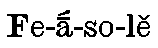
15. Fiesole (pronounced Fe-´ā-so-lě). A small Italian town
near Florence.
119. Rafael. The great painter, Raphael (1483-1520).
130. Agnolo. Michael Angelo (1475-1584), one of Italy's
greatest men: famous as sculptor, painter, architect, and poet.
150. Fontainebleau. A town southeast of Paris, formerly
the residence of French kings, and still famous for its Renaissance
architecture and for the landscapes around it.
241. scudi. The scudo is an Italian silver coin worth about
one dollar.
262. Leonard. Leonardo da Vinci (1452-1519), another of
Italy's great men: artist, poet, musician, and scientist.
Construct the scene and action of the poem. How does the
coloring harmonize with the artist's mood? Why is he weary?
How does he think of his art: what merit has it? What does[page 263]
it lack? How does he explain this lack? What clew to it does
his life afford? Is his art soulless because he has done wrong?
Or, do the lack of soul in his painting, and the wrongdoing,
and the infatuation with Lucrezia's beauty, all arise from the
same thing,—the man's own nature? Does he appeal to your
sympathy, or provoke your condemnation? Does he blame
himself, or another, or circumstances?
What idea have you of Lucrezia? What does she think of
Andrea? Of his art? What things does he desire of her?
What problems of life are here presented? Which is principal:
the relation of man and woman, the need of soul for great
work, or the interrelation between character and achievement?
Or, is there something else for which the poem stands?
Can you cite any lines that embody the main idea of the
poem? Does anything in it remind you of The Grammarian,
or of Rabbi Ben Ezra?
[Return]
Setebos was the god of Caliban's mother, the witch Sycorax,
on Prospero's island.
Read Shakespeare's The Tempest. Observe especially all
that is said by or about Caliban. Observe that Browning
makes Caliban usually speak of himself in the third person, and
prefixes an apostrophe to the initial verb, as in the first line.
Tylor's Primitive Culture and Early History of Mankind
give interesting accounts of the religions of savages.
How is Caliban's savage nature indicated in the opening
scene? What things does he think Setebos has made? From
what motives? What limit to the power of Setebos? Why[page 264]
does Caliban imagine these limits? How does Setebos govern?
Out of what materials does Caliban build his conceptions of his
deity? Why does he fear him? How does he propitiate him?
Why is he terrified at the end? Compare this passage with
the latter part of the Book of Job. What, in general, is the
meaning of the poem? Can you cite anything in the history of
religions to parallel Caliban's theology?
[Return]
When Browning was asked by Rev. Dr. J.W. Chadwick
whether the central idea of this poem was constancy to an
ideal,—"He that endureth to the end shall be saved,"—he
answered, "Yes, just about that."
4-5. to afford suppression of. To suppress.
11. 'gin write. Write.
48. its estray. That is, Childe Roland himself.
66. my prisoners. Those who had met their death on the
plain? Or, its imprisoned vegetation?
68. bents. A kind of grass.
70. as. As if.
91. Not it! Memory did not give hope and solace.
106. howlet. A small owl.
114. bespate. Spattered.
133. cirque. A circle or enclosure.
137. galley-slaves whom the Turk, etc.
140. engine. Machine.[page 265]
143. Tophet. Hell.
160. Apollyon. The Devil.
Note the hero's mood of doubt and despair. At what point
in his quest do we see him? What does he do after meeting
the cripple? How does the landscape seem as he goes on?
What moral quality does it seem to have? See lines 56-75.
What new elements are introduced to add to the horror of the
scene? What memories come to him of the failures of his
friends? Was their disgrace in physical or moral failure?
How does he come to find the Tower? Why does Browning
represent it as a "dark tower"? Does his courage fail at the
end of his quest? Or does he win the victory in finding the
tower and blowing the challenge?
[Return]
The Arabs were among the earliest in the cultivation of
mathematical and medical science. This fact, together with
their monotheism, makes Karshish an appropriate character
for the experience of the poem.
1-14. An ancient and oriental idea of the soul and its relation
to the body.
15. Sage. Abib, to whom the letter is sent.
17. snake-stone. A stone used to cure snake-bites.
19. charms. Note here and elsewhere the mixture of science
and superstition.
21-33. The poet has given local color to the journey.
28. Vespasian was appointed general-in-chief against the [page 266]
insurgent Jews in 67 A.D., and began the great siege of Jerusalem
in 70 A.D. The date of the poem and the length of time
since Lazarus's return to life may thus be estimated.
37-38. Note the vividness gained by making Karshish keep
the physician's point of view.
44. falling-sickness ... cure. Epilepsy. Karshish is already
admitting into his letter the story of Lazarus.
48. Not only spiders, but many other animals or parts of
animals were formerly used as medicines.
64-65. Karshish, still half ashamed of his interest in the marvellous
story he has to tell, first gives this as a pretext, and then,
in the next lines confesses.
171 ff. Belief in magic survived in some degree among the
educated until a century or two ago.
177. Greek-fire. A violently inflammable substance, supposed
to have been a compound of naphtha, sulphur, and nitre, which
was hurled against the enemy in battle. As it was first used
in 673, in the siege of Constantinople, Browning is guilty of an
unimportant anachronism.
252-255. A good touch, to make the earthquake mean to
Karshish an omen of the gravest event within his ken.
268-269. Karshish, still unconvinced by the story of Lazarus,
naturally regards it as irreverent.
304-311. This comes to Karshish as an afterthought, a corollary
to the idea in the body of the poem.
How is the general style of the verse-letter maintained?
What is Karshish's mission in Judea? How does he show his[page 267]
devotion to his art? Point out instances of local color. Are
they in harmony with the main current of the poem, or do they
detract from the interest in the story? Why does Karshish
work up to his story so diffidently? Why has the incident
taken such hold upon him? What do you conceive to be his
character and worth as a man?
What of Lazarus? What change has been wrought in him?
Is he in any way unfitted for this life? To what does Karshish
compare him, with his sudden wealth of insight behind the veil
of the next world? Which of the two men is better fitted for
the condition in which he is placed? What religious significance
does the story of Lazarus come to have to Karshish?
What parallel ideas do you find in Rabbi Ben Ezra and in this
poem? Compare George Eliot's story, The Lifted Veil.
[Return]
This is generally regarded as one of Browning's greatest
poems. Even his detractors concede to it beauty of form,
fervor of feeling, and richness of imagery. The incident upon
which it is based is found in 1 Samuel, chapter xvi. Saul is
in the depths of mental eclipse, and David has been summoned
to cure him by music. The young shepherd sings to him first
the songs that appeal to the gentle animals; then the songs
that men use in their human relationships,—songs of labor,
of the wedding-feast, of the burial-service, of worship; then
he sings the joy of physical life, ending in an appeal to the ambition
of King Saul. Saul is roused, but not yet brought to
will to live. So David sings anew of the life of the spirit, the
spirit of Saul living for his people. Then a touch of tenderness[page 268]
from the king flashes into David a prophetic insight: If he, the
imperfect, would do so much for love of Saul, what would God,
the all-perfect, do for men? And so he reaches the conception
of the Christ, the incarnation.
The poem is full of echoes of the Old Testament, fused with
the spirit of modern Christianity and modern thinking. It is
touched here and there with bits of beauty from Oriental landscape.
The long, even swell of the lines carries one along with
no sense of the roughness so common in Browning's verse.
Rising by steady degrees to the climax, we feel, like David,
some sense of the "terrible glory," some sense of the unseen
presences that hovered around him as he made his way home
in the night.
[Return]
One Word More was appended to Browning's volume Men
and Women (1855), by way of dedication of the book to his
wife. It is characteristic of its author in its reality of feeling,
in its seeking an unusual point of view, in its parenthetic and
allusive style, and its occasional high felicity of expression.
Those who feel overpowered by Browning's vigor and profundity
of thought, might stop here to note the exquisite inconsistency
between the examples cited and the thing thus illustrated.
The painter turning poet, the poet turning painter, the moon
turning her unseen face to a mortal lover; these are compared
to Browning the poet,—writing another poem. The only difference
in his art is that the poet here speaks for himself in
the first person, and not, as usual, dramatically in the third
person. The idea of the poem may be found, stripped of digression[page 269]
and fanciful comparisons, in the eighth, twelfth, fourteenth,
seventeenth, and eighteenth stanzas. Something of the same
idea appears in My Star.
5. Rafael, etc. More commonly spelled Raphael. Born in
Italy in 1483, died in 1520; generally regarded as the greatest
of painters. The Sistine Madonna, at Dresden, is considered
his greatest work. See lines 21-24.
Only four of his sonnets exist. A translation of these is given
in Cooke's Guide Book to Browning. There is no authentic
record of such a "century of sonnets" having ever existed.
10. Tradition is dim and uncertain as to the identity of this
love of Raphael's.
27. Guido Reni (1576-1642). A celebrated Italian painter.
Berdoe says that the volume owned by Guido Reni was a collection
of a hundred drawings by Raphael.
32-33. Dante (1265-1321). The greatest of Italian poets.
His Divina Commedia, consisting of the Inferno, Purgatorio,
and Paradiso, is his most famous work. His romantic passion
for Beatrice (pronounced: Bā-a˙-trē-che) is referred to in his
Divina Commedia, and is recounted in his Vita Nuova.
37-43. In allusion to the fact that Dante freely consigned
his enemies, political and personal, living or dead, to appropriate
places in his Inferno and Purgatorio.
45-48. This interruption of his work is described in the
thirty-fifth section of the Vita Nuova. The hostile nature of
the visit seems to be of Browning's invention.—COOKE.
57. Bice. Beatrice.
74 ff. In allusion to Moses smiting the rock and bringing [page 270]
forth water. See Exodus, chapter xvii.
95. Egypt's flesh-pots. See Exodus, chapter xvi.
97. Sinai's cloven brilliance. See Exodus, chapter six. 16-25.
101. Jethro's daughter, Zipporah. See Exodus, chapters ii
and xviii.
136. Cleon. See the poem of that name. Norbert. See In
a Balcony.
138. Lippo. See Fra Lippo Lippi.
150. Samminiato. San Miniato, a church in Florence.
160. Mythos. In reference to the myths of Endymion, the
mortal with whom the goddess Diana (the moon) fell in love.
See a classical dictionary, and Keats's poem Endymion.
163. Zoroaster. The founder of the Persian religion. Reference
is here made to his observations of the heavenly bodies
while meditating on religious things.
164. Galileo (1564-1642). The great Italian physicist and
astronomer.
165. Keats. See note on line 160.
174. Moses, Aaron, Nadab, and Abihu. See Exodus, chapter
xxiv.
186. Compare the idea in My Star.
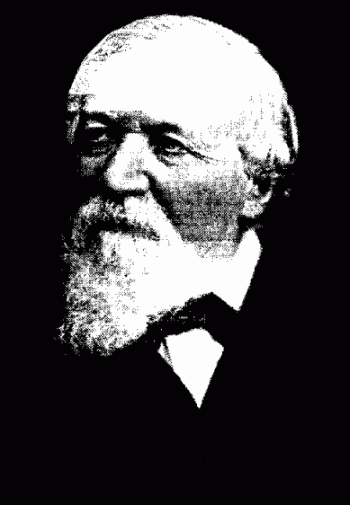
ROBERT BROWNING
[Transcriber's note: These are the images for the Greek text and prounciation
referred to in the notes.]