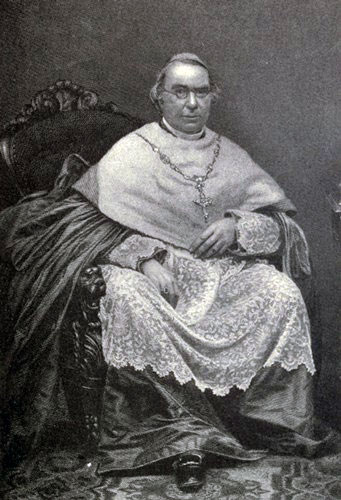
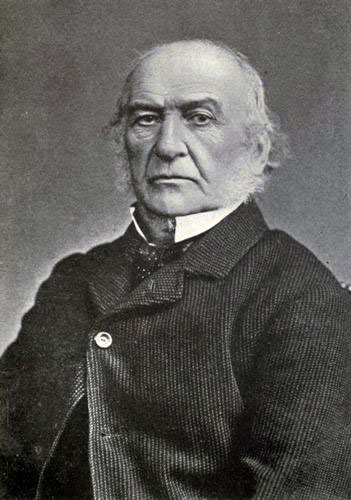
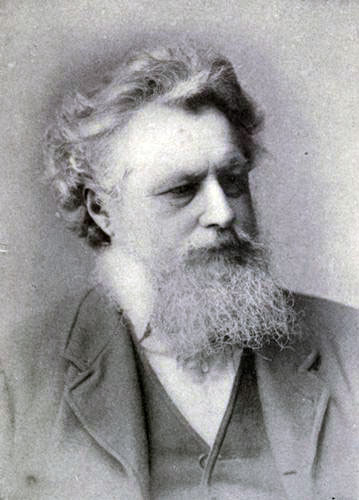
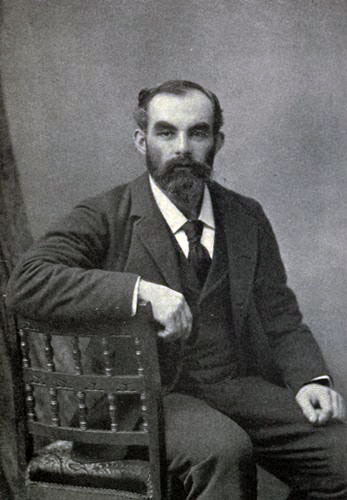
THE BATTLE OF MIND AND SPIRIT
During the nineteenth century, which has already receded far enough into
the perspective of the past for us to be able to take a comprehensive view
of it, the advance guard of the human race found itself in a position
entirely different from that ever before occupied by it. Through the
knowledge of cosmic, animal, and social evolution gradually accumulated by
the laborious and careful studies of special students in every department
of historical research and scientific experiment, a broader and higher
state of self-consciousness was attained. Mankind, on its most perceptive
plane, no longer pinned its faith to inherited traditions, whether of
religion, art, or morals. Every conceivable fact and every conceivable
myth was to be tested in the laboratory of the intellect, even the
intellect itself was to undergo dissection, with the result that, once for
all, it has been decided what particular range of human knowledge lies
within the reach of mental perception, and what particular range of human
knowledge can be grasped only through spiritual perception.
Such a momentous decision as this in the history of thought has not been
reached without a long and protracted struggle extending back into the
early days of Christianity, nor, it may be said, is the harmony as yet
complete, for there are to-day, and perhaps always will be, human beings
whose consciousness is not fully orbed and who either seek their point of
equilibrium too entirely in the plane of mind or too entirely in the plane
of spirit.
In the early days, before Christianity came to bring its “sword upon
earth,” there seems to have been little or no consciousness of such a
struggle. The ancient Hindu, observing Nature and meditating upon the
universe, arrived intuitively at a perception of life and its processes
wonderfully akin to that later experimentally proved by the nineteenth
century scientist, nor did he have a suspicion that such truth was in any
way antagonistic to religious truth. On the contrary, he considered that,
by it, the beauty and mystery of religion was immeasurably enhanced, and,
letting his imagination play upon his intuition, he brought forth a theory
of spiritual evolution in which the world to-day is bound to recognize
many elements of beauty and power necessary to any complete conception of
religion in the future.
Even the Babylonians made their guesses at an evolutionary theory of the
universe. Greek philosophy, later, was permeated with the idea, it having
been derived by them perhaps from the Chaldeans through the Phœnicians,
or if the theories of Aryan migrations be correct, perhaps through
inheritance from a remote Aryan ancestry.
When Christian thought gained its hold upon the world, the account of
creation given in Genesis became so thoroughly impressed upon the minds of
men that it was regarded as the orthodox view, rooted in divine
revelation, and to question it was to incur the danger of being called an
atheist, with its possibly uncomfortable consequences of being martyred.
Strangely enough, the early Church adopted into its fold many pagan
superstitions, such as a belief in witchcraft and in signs and wonders, as
well as some myths, but this great truth upon which the pagan mind had
stumbled, it would have none of.
These two circumstances—the adoption on the part of Christianity of pagan
superstitions and its utter repudiation of the pagan guesses upon
evolution, carrying within it the germs of truth, later to be unearthed by
scientific research—furnished exactly the right conditions for the
throwing down of the gauntlet between the mind and the spirit. The former,
following intellectual guidance, found itself coming more and more into
antagonism with the spirit, not yet freed from the trammels of
imagination. The latter, guided by imagination, continued to exercise a
mythopœic faculty, which not only brought it more and more into
antagonism with the mind, but set up within its own realm an internecine
warfare which has blackened the pages of religious history with crimes and
martyrdoms so terrible as to force the conviction that the true devil in
antagonism to spiritual development has been the imagination of mankind,
masquerading as verity, and not yet having found its true function in art.
Regarded from the point of view of the student of intellectual
development, this conflict of two thousand years has the fascination of a
great drama of which the protagonist is the mind struggling to free the
spirit from its subjection to the evil aspects of the imagination. Great
thinkers in the field of science, philosophy, and religion are the
dramatis personæ, and in the onward rush of this world-drama the
sufferings of those who have fallen by the way seem insignificant.
But when the student of history takes his more intimate survey of the
purely human aspects of the struggle, heartrending, indeed, become the
tragedies resulting from the exercise of human bigotry and stupidity.
Indignation and sorrow take possession of us when we think upon such a
spectacle as that of Roger Bacon, making ready to perform a few scientific
experiments before a small audience at Oxford, confronted by an uproar in
which monks, fellows, and students rushed about, their garments streaming
in the wind, crying out, “Down with the magician!” And this was only the
beginning of a persecution which ended in his teaching being solemnly
condemned by the authorities of the Franciscan order and himself thrown
for fourteen years into prison, whence he issued an old and broken man of
eighty.
More barbarous still was the treatment of Giordano Bruno, a strange sort
of man who developed his philosophy in about twenty-five works, some
prose, some poetry, some dialogues, some comedies, with such enticing
titles as “The Book of the Great Key,” “The Explanation of the Thirty
Seals,” “The Expulsion of the Triumphant Beast,” “The Threefold
Minimum,” “The Composition of Images,” “The Innumerable, the Immense and
the Unfigurable.” His utterances were vague, especially to the intellects
of his time, yet not so vague that theology, whether Catholic or
Calvinistic, did not at once take fright.
He held that the investigation of nature in the unbiased light of reason
is our only guide to truth. He rejected antiquity, tradition, faith, and
authority; he exclaimed, “Let us begin by doubt. Let us doubt till we
know.” Acting upon these principles, he began to unfold again that current
of Greek thought which the system imposed by the Church had intercepted
for more than a thousand years, and arrived at a conception of evolution
prefiguring the modern theories.
He conceived the law of the universe to be unceasing change. “Each
individual,” he declared, “is the resultant of innumerable individuals;
each species is the starting point for the next.” Furthermore, he
maintained that the perfecting of the individual soul is the aim of all
progress.
Tenets so opposite to the orthodox view of special creation and the fall
of man could not be allowed to go unchallenged. It is to be remembered
that he was a priest in holy orders in the Convent of St. Dominic, and in
the year 1576 he was accused by the Provincial of his order of heresy on
one hundred and thirty counts. He did not await his trial, but fled to
Rome, thence to northern Italy, and became for some years a wanderer. He
was imprisoned at Geneva; at Toulouse he spent a year lecturing on
Aristotle; in Paris, two years as professor extraordinary in the Sorbonne;
three years in London, where he became the friend of Sir Philip Sidney,
and influenced the philosophy of both Bacon and Shakespeare. Oxford,
however, was unfriendly to his teachings and he was obliged to flee from
England also. Then he wandered for five years from city to city in
Germany—at one time warned to leave the town, at another excommunicated,
at another not even permitted to lodge within the gates. Finally, he
accepted the invitation of a noble Venetian, Zuane Mocenigo, to visit
Venice and teach him the higher and secret learning. The two men soon
quarreled, and Bruno was betrayed by the count into the hands of the
Inquisition. He was convicted of heresy in Venice and delivered to the
Inquisition in Rome. He spent seven years in its dungeons, and was again
tried and convicted, and called upon to recant, which he stoutly refused
to do. Sentence of death was then passed upon him and he was burned at the
stake on February 17, 1600, on the Campo de’ Fiori, where there now stands
a statue erected by Progressive Italy in his honor.
His last words were, “I die a martyr, and willingly.” Then they cast his
ashes into the Tiber and placed his name among the accused on the rolls of
the Church. And there it probably still remains, for no longer ago than
1889, when his statue was unveiled on the ninth of June, on the site of
his burning, in full view of the Vatican, Pope Leo XIII, it is said,
refused food and spent hours in an agony of prayer at the foot of the
statue of St. Peter. Catholic, and even Protestant, denunciation of Bruno
at this time showed that the smoke from this particular battle in the war
of mind with spirit was still far from being laid.
With the fate of Giordano Bruno still fresh in his mind, Galileo succumbed
to the demands of the Inquisition and recanted, saying that he no longer
believed what he, himself, with his telescope had proved to be true.
“I, Galileo, being in my seventieth year, being a prisoner and on my
knees, and before your Eminences, having before my eyes the Holy
Gospel, which I touch with my hands, abjure, curse, and detest the
error and the heresy of the movement of the earth.”
If this recantation had brought any comfort or peace into his life it
might have been hard to forgive Galileo’s perjury of himself. His
persecution, however, continued to the end. He was exiled from his family
and friends, and, even when he had become blind and wasted by sorrow and
disease, he was still closely watched lest he might utter the awful heresy
that the earth moved.
A hundred years later than this, when Buffon attempted to teach the simple
truths of geology, he was deposed from his high position and made to
recant by the theological faculty of the Sorbonne. The man who promulgated
geological principles, as firmly established to-day as that of the
rotation of the earth upon its axis, was forced to write: “I declare that
I had no intention to contradict the text of Scripture; that I believe
most firmly all therein related about the creation, both as to order of
time and matter of fact. I abandon everything in my book respecting the
formation of the earth, and generally all which may be contrary to the
narrative of Moses.”
Such are the more heinous examples of the persecution of the men who
discovered the truths of science. To these should be added the wholesale
persecution of witches and magicians, for unusual knowledge of any sort
ran the chance of being regarded as contrary to biblical teaching and of
being attributed to the machinations of the Prince of Darkness.
Every new step made in the direction of scientific truth has had thus to
face the most determined opposition. Persecution by torture and death died
out, but up to the nineteenth century, and well on through it,
denunciation, excommunication, suppression, the loss of honorable
positions have all been used as weapons by church or university in the
attempt to stamp out whatever it considered dangerous and subverting
doctrines of science.
The decisive battle was not to be inaugurated until the latter half of the
nineteenth century, with the advent in the field of such names in science
as Spencer, Darwin, Tyndall and Huxley, and such names in biblical
criticism as Strauss and Renan.
The outposts, it is true, had been won by advancing scientific thought,
for step by step the Church had compromised, and had admitted one
scientific doctrine after another as not incompatible with biblical truth.
But now, not only theology, the imperfect armor in which the spirit had
been clothed, was attacked, but the very existence of spirit itself was to
be questioned. The thinking world was to be divided into materialists and
supernaturalists. Now, at last, mind and spirit, who in the ages long gone
had been brothers, were to stand face to face as enemies. Was this mortal
combat to end in the annihilation of either, or would this, too, end in a
compromise leading to harmony?
At the dawn of this century, in 1812, came into the world its master
poetic mind. I say this to-day without hesitation, for no other English
poet of the century has been so thoroughly aware of the intellectual
tendencies of his century, and has so emotionalized them and brought them
before us under the humanly real conditions of dramatic utterance.
It is not surprising, considering this fact, that in his second poem,
written in 1835, Browning ventures into the arena and at once tackles the
supreme problem of the age, what is to be the relation of mind and spirit?
It is characteristic of the poetic methods, which dominated his work, that
he should have presented this problem through the personality of a
historical figure who played no inconsiderable part in the intellectual
development of his time, though not a man to whom general historians have
been in the habit of assigning much space in their pages. Browning,
however, as Hall Griffin informs us, had been familiar with the name of
Paracelsus from his childhood, of whom he had read anecdotes in a queer
book, Wanley’s “Wonders of the Little World.” Besides, his father’s
library, wherein as a boy he was wont to browse constantly, contained the
Opera Omnia of Paracelsus.
With the confidence of youth and of genius the poet attempts in this poem
a solution of the problem. To mind he gives the attribute of knowledge, to
spirit the attribute of love.
The poem as a whole does not concern us here except as a background for
its final thoughts. In order, however, to put the situation clearly before
readers not already familiar with it, I venture to transcribe a portion of
a former analysis of my own.
Paracelsus aspires to the acquisition of absolute knowledge and feels born
within him the capabilities for attaining this end, and, when attained, it
is to be devoted to enlarging the possibilities of man’s life. The whole
race is to be elevated at once. Man may not be doomed to cope with
seraphs, yet by the exercise of human strength alone he hopes man may one
day beat God’s angels.
He is a revolter, however, against the magical and alchemistic methods of
his age, which seek for the welfare of men through the elixir of youth or
the philosopher’s stone. He especially disclaims such puerile schemes in
the passionate moment when he has realized how futile all his lifelong
efforts have been. He stands, indeed, at the threshold of a new world. He
has a glimmering of the true scientific methods which would discover first
the secrets of life’s laws, and then use these natural laws to bring about
life’s betterment, instead of hoping for salvation through the discovery
of some magic secret by means of which life’s laws might be overcome. Yet
he is sufficiently of his own superstitious age to desire and expect
fairly magical results from the laws he hopes to discover. The creed which
spurs him to his quest is his belief that truth is inborn in the soul, but
to set this truth free and make it of use to mankind correspondences in
outer nature must be found. An intuitive mind like Paracelsus’s will
recognize these natural corollaries of the intuition wherever it finds
them; and these are what Paracelsus goes forth over the earth to seek
and find, sure he will “arrive.” One illustration of the results so
obtained is seen in the doctrine of the signatures of plants according to
which the flowers, leaves, and fruits of plants indicate by their color or
markings, etc., the particular diseases they are intended to cure. The
real Paracelsus practised medicine upon this theory.
Though such methods are a long distance from those of the modern
scientist, who deduces his laws from careful and patient observation of
nature, they go a step toward his in seeking laws in nature to correspond
to hypotheses born of intuition.
Browning’s presentation of the attitude of mind and the place held by
Paracelsus in the development of science is exactly in line with the most
recent criticisms of this extraordinary man’s life. According to these he
fluctuated between the systems of magic then prevalent and scientific
observation, but always finally threw in the balance of his opinion on the
side of scientific ways of working; and above all made the great step from
a belief in the influence of nature upon man to that of the existence of
parallelisms between nature processes and human processes.
Though he thus opened up new vistas for the benefit of man, he must
necessarily be a failure, from his own point of view, with his “India” not
found, his absolute truth unattained; and it is upon this side that the
poet dwells. For a moment he is somewhat reassured by the apparition of
Aprile, scarcely a creature of flesh and blood, more the spirit of art who
aspires to love infinitely and has found the attainment of such love as
impossible as Paracelsus has found the attainment of knowledge. Both have
desired to help men, but Paracelsus has desired to help them rather
through the perfecting, even immortalizing, of their physical being;
Aprile, through giving man, as he is, infinite sympathy and through
creating forms of beauty which would show him his own thoughts and hopes
glorified by the all-seeing touch of the artist.
Paracelsus recognizes his deficient sympathy for mankind, and tries to
make up for it in his own way by giving out of the fulness of his
knowledge to men. The scornful and proud reformer has not, however, truly
learned the lesson of love, and verily has his reward when he is turned
against by those whom he would teach. Then the old ideal seizes upon him
again, and still under the influence of Aprile he seeks in human
experience the loves and passions of mankind which he learns through
Aprile he had neglected for the ever-illusive secret, but neither does
success attend him here, and only on his deathbed does his vision clear
up, and he is made to indulge in a prophetic utterance quite beyond the
reach of the original Paracelsus.
In this passage is to be found Browning’s first contribution to a solution
of the great problem. That it is instinct with the idea of evolution has
become a commonplace of Browning criticism, a fact which was at least
independently or, as far as I know, first pointed out by myself in an
early essay upon Browning. At the time, I was reading both Browning and
Spencer, and could not but be impressed by the parallelisms in thought
between the two, especially those in this seer-like passage and “The Data
of Ethics.”
Writers whose appreciation of a poet is in direct ratio to the number of
exact historical facts to be found in a poem like to emphasize this fact
that the doctrine of evolution can be found in the works of Paracelsus.
Why not? Since, as we have seen it had been floating about in
philosophical thought in one form or another for some thousands of years.
Indeed, it has been stated upon good authority that the idea of a gradual
evolution according to law and of a God from whom all being emanates,
from whom all power proceeds, is an inherent necessity of the Aryan mind
as opposed to the Semitic idea of an outdwelling God and of
supernaturalism. Thus, all down the ages the Aryan mind has revolted from
time to time against the religious ideas superimposed upon it by the
Semitic mind. This accounts for the numerous heresies within the bosom of
the Church as well as for the scientific advance against the superstitions
of the Church.
Generalizations of this sweeping order are apt to contain only partial
truth. It would probably be nearer the whole truth, as we are enabled
to-day to trace historical development, to say that, starting with
opposite conceptions, these two orders of mind have worked toward each
other and the harmonization of their respective points of view, and,
furthermore, that this difference in mind belongs to a period prior even
to the emergence of the Aryan or the Semitic. Researches in mythology and
folklore seem to indicate that no matter how far back one may go in the
records of human thought there will be found these two orders of mind—one
which naturally thinks of the universe as the outcome of law, and one
which naturally thinks of it as the outcome of creation. There are
primitive myths in which mankind is supposed to be descended from a
primitive ancestor, which may range all the way from a serpent to an oak
tree, or, as in a certain Zulu myth, a bed of reeds growing on the back of
a small animal. And there are equally primitive myths in which mankind is
created out of the trees or the earth by an external agent, varying in
importance from a grasshopper to a more or less spiritual being.
Browning did not need to depend upon Paracelsus for his knowledge of
evolution. He may not have known that the ancient Hindu in the dim mists
of the past had an intuition of the cosmic egg from which all life had
evolved, and that he did not know of the theory as it is developed in the
great German philosophers we are certain, because he, himself, asseverated
that he had never read the German philosophers, but it is hardly possible
that he did not know something of it as it appears in the writings of the
Greek philosophers, for Greek literature was among the earliest of his
studies. He might, for instance, have taken a hint from the speculations
of that half mythical marvel of a man, Empedocles, with which the
Paracelsus theory of the universe, as it appears in the passage under
discussion, has many points of contact.
According to Empedocles, the four primal elements, earth, air, fire and
water, are worked upon by the forces of love and discord. By means of
these forces, out of the primal elements are evolved various and horrible
monstrosities before the final form of perfection is reached. It is true
he did not correctly imagine the stages in the processes of evolution, for
instead of a gradual development of one form from another, he describes
the process as a haphazard and chaotic one. “Many heads sprouted up
without necks, and naked arms went wandering forlorn of shoulders, and
solitary eyes were straying destitute of foreheads.” These detached
portions of bodies coming together by haphazard produced the earlier
monstrous forms. “Many came forth with double faces and two breasts, some
shaped like oxen with a human front, others, again, of human race with a
bull’s head.” However, the latter part of the evolutionary process as
described by Empedocles, when Love takes command, seems especially
pertinent as a possible source of Browning’s thought:
“When strife has reached the very bottom of the seething mass, and
love assumes her station in the center of the ball, then everything
begins to come together, and to form one whole—not instantaneously,
but different substances come forth, according to a steady process of
development. Now, when these elements are mingling, countless kinds of
things issue from their union. Much, however, remains unmixed, in
opposition to the mingling elements, and these, malignant strife still
holds within his grasp. For he has not yet withdrawn himself
altogether to the extremities of the globe; but part of his limbs
still remain within its bounds, and part have passed beyond. As
strife, however, step by step retreats, mild and innocent love pursues
him with her force divine; things which had been immortal instantly
assume mortality; the simple elements become confused by interchange
of influences. When these are mingled, then the countless kinds of
mortal beings issue forth, furnished with every sort of form—a sight
of wonder.”
Though evolution was no new idea, it had been only a hypothesis arrived at
intuitionally or suggested by crude observations of nature until by
perfected methods of historical study and of scientific experimentation
proof was furnished of its truth as a scientific verity.
Let us glance at the situation at the time when Paracelsus was published.
In 1835 science had made great strides in the direction of proving the
correctness of the hypothesis. Laplace had lived and died and had given to
the world in mathematical reasoning of remarkable power proof of the
nebular hypothesis, which was later to be verified by Fraunhofer’s
discoveries in spectrum analysis. Lamarck had lived and died and had
given to the world his theory of animal evolution. Lyall in England had
shown that geological formations were evolutionary rather than
cataclysmal. In fact, greater and lesser scientific lights in England and
on the continent were every day adding fresh facts to the burden of proof
in favor of the hypothesis. It was in the air, and denunciations of it
were in the air.
Most interesting of all, however, in connection with our present theme is
the fact that Herbert Spencer was still a lad of fifteen, who was
independently of Darwin to work out a complete philosophy of evolution,
which was to be applied in every department of cosmic, geologic, plant,
animal and human activity, but (and this is of special interest) he was
not to give to the world his plan for a synthetic philosophy until 1860,
and not to publish his “First Principles” until 1862, nor the first
instalment of the “Data of Ethics,” the fruit of his whole system, until
1879.
Besides being familiar with the idea as it crops out in Greek thought, it
is impossible that the young Browning was not cognizant of the scientific
attitude of the time. In fact, he tells us as much himself, for when
Doctor Wonivall asked him some questions as to his attitude toward Darwin,
Browning responded in a letter: “In reality all that seems proved in
Darwin’s scheme was a conception familiar to me from the beginning.”
Entirely familiar with the evolutionary idea, then, however he may have
derived it, it is just what might be expected that he should have worked
it into Paracelsus’s final theory of life. The remarkable thing is that he
should have applied its principles in so masterly a fashion—namely, that
he should have made a complete philosophical synthesis by bringing the
idea of evolution to bear upon all natural, human and spiritual processes
of growth twenty-five years before Herbert Spencer, who is regarded on
this particular ground as the master mind of the century, gave his
synthetic philosophy of evolution to the world.
A momentary glance at the passage in question will make this clear.
Paracelsus traces first development as illustrated in geological forms:
“The center-fire heaves underneath the earth,
And the earth changes like a human face;
The molten one bursts up among the rocks,
Winds into the stone’s heart, outbranches bright
In hidden mines, spots barren river beds,
Crumbles into fine sand where sunbeams bask.”
Next he touches upon plant life and animal life. The grass grows bright,
the boughs are swollen with blooms, ants make their ado, birds fly in
merry flocks, the strand is purple with its tribe of nested limpets,
savage creatures seek their loves in wood and plain. Then he shows how in
all this animal life are scattered attributes foreshadowing a being that
will combine them. Then appears primitive man, only half enlightened, who
gains knowledge through the slow, uncertain fruit of toil, whose love is
not serenely pure, but strong from weakness, a love which endures and
doubts and is oppressed. And out of the travail of the human soul as it
proceeds from lower to higher forms is finally evolved self-conscious
man—man who consciously looks back upon all that has preceded him and
interprets nature by means of his own human perceptions. The winds are
henceforth voices, wailing or a shout, a querulous mutter or a quick, gay
laugh, never a senseless gust, now man is born.
But development does not end with the attainment of this
self-consciousness. After this stage has been reached there continues an
evolution which is distinctively spiritual, a tendency to God. Browning
was not content with the evolution of man, he was prophetic of the final
flowering of man in the superman, although he had never heard of
Nietszche.
The corollary to this progressive theory of life, a view held by
scientific thinkers, is that sin is not depravity, but is merely a lack of
development. Paracelsus is therefore made wise to know even hate is but a
mask of love, to see a good in evil, a hope in ill-success, to sympathize,
even be proud of man’s half-reasons, faint aspirings, dim struggles for
truth—all with a touch of nobleness despite their error, upward tending
all, though weak.
Though there are points of contact between the thought of the true
Paracelsus and of Browning, the points of contact between Spencer and
Browning are far more significant, for Browning seems intuitively to have
perceived the fundamental truths of social and psychic evolution at the
early age of twenty-three—truths which the philosopher worked out only
after years of laborious study.
We, who, to-day, are familiar with the application of the theory of
evolution to every object from a dustpan to a flying machine, can hardly
throw ourselves into the atmosphere of the first half of the last century
when this dynamic ideal was flung into a world with static ideals. The
Christian world knew little and cared less about the guesses of Greek
philosophers, whom they regarded when they did know about them as
unregenerate pagans. German thought was caviare to the general, and what
new thought of a historical or scientific nature made its way into the
strongholds of conservatism filled people with suspicion and dread. Such a
sweeping synthesis, therefore, as Browning gives of dawning scientific
theories in Paracelsus was truly phenomenal. That it did not prove a bone
of contention and arouse controversies as hot as those which were waged
later around such scientific leaders as Spencer, Darwin, Huxley, and
Clifford was probably due to the circumstance that the poem was little
read and less understood, and also to the fact that it contained other
elements which overlaid the bare presentation of the doctrines of
evolution.
So far I have spoken only of the form of the Paracelsus theory of life,
but a theory of life to be complete must have soul as well as form. Only
in adding the soul side to his theory of life does Browning really give
his solution of the problem, what is to be the relation of mind and
spirit?
One other point of resemblance is to be noted between the thought of
Browning’s Paracelsus and Herbert Spencer. They agree that ultimate
knowledge is beyond the grasp of the intellect. Neither was this a new
idea; but up to the time of Spencer it was taken simply as a negative
conclusion. Spencer, however, having found this negation makes it the body
of his philosophy—a body so shadowy that many of his critics consider it
too ghostly to stand as a substantial basis for philosophical thought. He
regards the failure of the intellect to picture the nature of the absolute
as the most certain proof that our intuitions of its existence are
trustworthy, and upon this he bases all religious aspiration. Like the
psalmist, he exclaims, “Who by searching can find out God?”
The attitude of Paracelsus is identical as far as the intellect is
concerned. His life, spent in the search for knowledge, had proved it to
him. But he does not, like Spencer, make it the body of his philosophy.
Through the influence of Aprile he is led to a definite conception of the
Infinite as a Being whose especial characteristic is that he feels!—feels
unbounded joy in his own creations. This is eminently an artist’s or
poet’s perception of the relation of God to his universe. As Aprile in one
place says, “God is the perfect poet, who in his person acts his own
creations.”
As I have already pointed out, the evil of pain, of decay, of degeneration
is taken no account of.
There is the constant passing onward from joy to joy. All the processes of
nature from the simplest to the most complex bring, in their turn, a
delight to their Creator until man appears, and is not only a joy to his
Creator, but is the first in the order of creation to share in the joy of
existence, the first to arrive at the full consciousness of beauty. So
overwhelming is this consciousness of beauty that man perceives it
struggling for expression in the hates and fallacies of undeveloped
natures.
All this is characteristic of the artistic way of looking at life. The
artist is prone either to ignore the ugly or to transmute it by art into
something possessing beauty of power if not of loveliness. What are plays
like “Hamlet” and “Macbeth,” “Brand” and “Peer Gynt,” music like “Tristan
and Isolde” or the “Pathetic Symphony,” Rodin’s statues, but actual,
palpable realizations of the fact that hate is but a mask of love, or that
human fallacies and human passions have within them the seeds of immense
beauty if only there appear the artist who can bring them forth. If this
is true of the human artist, how much more is it true of the divine
artist in whose shadow, as Pompilia says, even a Guido may find healing.
The optimism of such a theory of existence is intoxicating. Not only does
this artist-man look backward and rejoice in all the beauty of past phases
of creation, but he looks forward to endless progression in the enjoyment
of fresh phases of beauty—“a flying point of bliss remote.” This is a
universe in which the Prometheus of the old myths is indeed unbound.
Mankind is literally free to progress forever upward. If there are some
men in darkness, they are like plants in mines struggling to break out
into the sunlight they see beyond.
The interesting question arises here, was Browning, himself, entirely
responsible for the soul of his Paracelsus theory of life or was there
some source beyond him from which he drew inspiration?
It has frequently been suggested that Aprile in this poem is a sort of
symbolic representation of Shelley. Why not rather a composite of both
Shelley and Keats, the poet of love and the poet of beauty? An examination
of the greatest poems of these two writers, “Prometheus Unbound” and
“Hyperion,” will bring out the elements in both which I believe entered
into Browning’s conception.
In the exalted symbolism of the “Prometheus Unbound” Shelley shows that,
in his view, evil and suffering were not inherent in the nature of things,
the tyranny of evil having gained its ascendancy through the persistence
of out-worn ideals, such as that of Power or Force symbolized in the Greek
idea of Jupiter. Prometheus is the revolting mind of mankind, enslaved by
the tyranny of Jupiter, hating the tyrant, yet determined to endure all
the tyrant can inflict upon him rather than admit his right to rule. The
freeing of Prometheus and the dethronement of Jupiter come through the
awakening in the heart of Prometheus of pity for the tyrant—that is,
Prometheus has learned to love his enemies as he loves his friends. The
remainder of the poem is occupied with showing the effects upon humanity
of this universal awakening of love.
In the fine passage where the Spirit of the Earth hears the trumpet of the
Spirit of the Hour sound in a great city, it beholds all ugly human shapes
and visages which had caused it pain pass floating through the air, and
fading still
“Into the winds that scattered them, and those
From whom they passed seemed mild and lovely forms
After some foul disguise had fallen, and all
Were somewhat changed, and after brief surprise
And greetings of delighted wonder, all
Went to their sleep again.”
And the Spirit of the Hour relates:
“Soon as the sound had ceased whose thunder filled
The abysses of the sky and the wide earth,
There was a change: the impalpable thin air
And the all-circling sunlight were transformed
As if the sense of love dissolved in them
Had folded itself around the sphered world.”
In the meantime, the over-souls of humanity—Prometheus, symbolic of
thought or knowledge, is reunited to Asia, his spouse, symbolic of Nature
or emotion, from whom he has long been separated and together with Asia’s
sisters, Panthea and Ione—retire to the wonderful cave where they are
henceforth to dwell and where their occupations are inspired by the most
childlike and exalted moods of the soul.
Before considering the bearing of their life of love and art in the cave
upon the character of Aprile let us turn our attention for a moment to a
remarkable passage in “Hyperion,” which poem was written as far back as
1820. Keats, like Shelley, deals with the dethronement of gods, but it
is the older dynasty of Titans—Saturn and Hyperion usurped by Jupiter and
Apollo. Shelley’s thought in the “Prometheus” is strongly influenced by
Christian ideals, but Keats’s is thoroughly Greek.
The passing of one series of gods and the coming into power of another
series of gods was a familiar idea in Greek mythology. It reflected at
once the literal fact that ever higher and higher forces of nature had
been deified by them, beginning with crude Nature gods and ending with
symbols of the most ideal human attributes, and at the same time that
their thought leaned in the direction of interpreting nature as an
evolutionary process. Seizing upon this, Keats has presented in the words
of the old Titan Oceanus a theory of the evolution of beauty quite as
startling as a prophecy of psychological theories upon this subject as
Browning’s is of cosmic and social theories. Addressing Saturn, Oceanus
says:
“We fall by course of Nature’s law, not force
Of thunder, or of love....
... As thou wast not the first of powers
So art thou not the last; it cannot be:
From chaos and parental darkness came
Light, the first fruits of that intestine broil,
That sullen ferment, which for wondrous ends
Was ripening in itself. The ripe hour came
And with it light, and light, engendering
Upon its own producer, forthwith touched,
The whole enormous matter into life.
Upon that very hour, our parentage
The Heavens and the Earth were manifest;
Then thou first-born, and we the giant-race,
Found ourselves ruling new and beauteous realms
······
As Heaven and Earth are fairer far
Than chaos and blank darkness, though once chiefs,
And as we show beyond that Heaven and Earth
In form and shape compact and beautiful,
In will, in action free, companionship
And thousand other signs of purer life,
So on our heels a fresh perfection treads,
A power more strong in beauty, born of us
And fated to excel us, as we pass
In glory that old darkness: nor are we
Thereby more conquered than by us the rule
Of shapeless chaos. For ’tis the eternal law
That first in beauty should be first in might.
Yea, by that law, another race may drive
Our conquerors to mourn as we do now.”
There is in the attitude of Oceanus a magnificent acceptance of this
ruthless course of nature reminding one of that taken by such men as
Huxley and Clifford in the face of their own scientific discoveries, but
one is immediately struck by the absence of love in the idea. An Apollo,
no matter what new beauty he may have, himself, to offer, who yet
disregards the beauty of Hyperion and calmly accepts the throne of the sun
in his stead, does not satisfy us. What unreason it is that so splendid a
being as Hyperion should be deposed! As a matter of fact, he was not
deposed. He is left standing forever in our memories in splendor like the
morn, for Keats did not finish the poem and no picture of the enthroned
Apollo is given. Perhaps Keats remembered his earlier utterance, “A thing
of beauty is a joy forever,” and cared for his own Hyperion too much to
banish him for the sake of Apollo.
Be that as it may, the points in relation to our subject are that
Shelley’s emphasis is upon the conservation of beauty, while Keats’s
emphasis is upon the evolution of new beauty.
In the cave where Prometheus and Asia dwell—the cave of universal
spirit—is given forth the inspiration to humanity for painting, poetry
and arts, yet to be born, and all these arts return to delight them,
fashioned into form by human artists. Love is the ruling principle.
Therefore all forms of beautiful art are immortal.
Aprile,[1] as he
first appears, is an elaboration upon this idea. He would love all
humanity with such intensity that he would immortalize in all forms of
art—painting, poetry, music—every thought and emotion of which the human
soul is capable, and this done he would say:
“His spirits created—
God grants to each a sphere to be its world,
Appointed with the various objects needed
To satisfy its own peculiar want;
So, I create a world for these my shapes
Fit to sustain their beauty and their strength.”
In short, he would found a universal art museum exactly like the cave in
which Prometheus dwelt. The stress is no more than it is in Shelley upon a
search for new beauty, and there is not a hint that a coming beauty shall
blot out the old until Aprile recognizes Paracelsus as his king. Then he
awakes to the fact that his own ideal has been partial, because he has
not been a seeker after knowledge, or new beauty, and in much the same
spirit as Oceanus, he exclaims:
“Lo, I forget my ruin, and rejoice
In thy success, as thou! Let our God’s praise
Go bravely through the world at last! What care
Through me or thee?”
But Paracelsus had learned a lesson through Aprile which the Apollo of
Keats had not learned. He does not accept kingship at the expense of
Aprile as Apollo would do at the expense of Hyperion. He includes in his
final theory of life all that is beautiful in Aprile’s or Shelley’s ideal
and adds to it all that is beautiful of the Keats ideal. The form of his
philosophy is evolutionary, and up to the time of his meeting with Aprile
had expressed itself as the search for knowledge. Through Aprile his
philosophy becomes imbued with soul, the attributes of which are the
spirit of love and the spirit of beauty, one of which conserves and
immortalizes beauty, the other of which searches out new beauty.
So, working hand in hand, they become one, while the search for knowledge,
thus spiritualized, becomes the search for beauty always inspired by love.
The aim of the evolutionary process thus becomes the unfolding of ever
new phases of beauty in which God takes endless delight, and to the final
enjoyment of which mankind shall attain.
To sum up, Browning’s solution of the problem in the Paracelsus theory of
life is reached not only through a synthesis of the doctrines of evolution
as applied to universal activities, cosmic and human, prophetic, on the
one hand, of the most advanced scientific thought of the century, but it
is a synthesis of these and of the art-spirit in its twofold aspect of
love and beauty as already expressed in the poetry of Shelley and Keats.
It is not in the least probable that Browning set to work consciously to
piece together these ideals. That is not the method of the artist! But
being familiar to him in the two best beloved poets of his youth, they had
sunk into his very being, and welled forth from his own subconsciousness,
charged with personal emotion, partly dramatic, partly the expression of
his own true feeling at the time, and the result be it said is one of the
most inspiring and beautiful passages in English poetry.
Paracelsus
At the end of his life and the end of the century Herbert Spencer, who had
spent years of labor to prove the fallacies in all religious dogmas, and
who had insisted upon religion’s being entirely relegated to
intellectually unknowable regions of thought, spoke in his autobiography
of the mysteries inherent in life, in the evolution of human beings, in
consciousness, in human destiny—mysteries that the very advance of
science makes more and more evident, exhibits as more and more profound
and impenetrable, adding:
“Thus religious creeds, which in one way or other occupy the sphere
that rational interpretation seeks to occupy and fails, and fails the
more, the more it seeks, I have come to regard with a sympathy based
on community of need: feeling that dissent from them results from
inability to accept the solutions offered, joined with the wish that
solutions could be found.”
Loyal to the last to his determination to accept as knowledge only what
the intellect could prove, he never permitted himself to come under the
awakening influence of an Aprile, yet like Browning’s ancient Greek,
Cleon, he longed for a solution of the mystery.
At the dawn of the century, and in his youth, Browning ventured upon a
solution. In the remainder of this and the next chapter I shall attempt to
show what elements in this solution the poet retained to the end of his
life, how his thought became modified, and what relation his final
solution bears to the final thought of the century.
In this first attempt at a synthesis of life in which the attributes
peculiar to the mind and to the spirit are brought into harmonious
relationship, Browning is more the intuitionalist than the scientist. His
convictions well forth with all the force of an inborn revelation, just as
kindred though much less rational views of nature’s processes sprang up in
the mind of the ancient Hindu or the ancient Greek.
The philosophy of life herein flashed out by the poet was later to be
elaborated fully on its objective or observational side by Spencer—the
philosopher par excellence of evolution—and finally, also, of course, on
the objective side, to become an assured fact of science through the
publication in 1859 of Darwin’s epoch-making book, “The Origin of
Species,” wherein the laws, so disturbing to many at the time, of natural
selection and the survival of the fittest were fully set forth.
While the genetic view of nature, as the phraseology of to-day goes, had
been anticipated in writers on cosmology like Leibnitz and Laplace, in
geology by such men as Hutton and Lyall, and had entered into the domain
of embryology through the researches of Von Baer, and while Spencer had
already formulated a philosophy of evolution, Darwin went out into the
open and studied the actual facts in the domain of living beings. His
studies made evolution a certainty. They revealed the means by which its
processes were accomplished, and in so doing pointed to an origin of man
entirely opposed to orthodox views upon this subject. Thus was inaugurated
the last great phase in the struggle between mind and spirit.
Henceforth, science stood completely revealed as the unflinching searcher
of truth. Intuition was but a handmaid whose duty was to formulate working
hypotheses, to become scientific law if provable by investigation or
experiment, to be discarded if not.
The aspects which this battle has assumed in the latter half of the
century have been many and various. Older sciences with a new lease of
life and sciences entirely new have advanced along the path pointed out by
the doctrines of evolution. Battalions of determined men have held aloft
the banner of uncompromising truth. Each battalion has stormed truth’s
citadel only to find that about its inmost reality is an impregnable wall.
The utmost which has been attained in any case is a working hypothesis,
useful in bringing to light many new objective phenomena, it is true,
but, in the end, serving only to deepen the mystery inherent in the nature
of all things.
Such a working hypothesis was the earlier one of gravitation whose laws of
action were elaborated by Sir Isaac Newton, and by the great mind of
Laplace were still further developed with marvelous mathematical precision
in his “Méchanique Celeste.”
Such another hypothesis is that of the atomic theory of the constitution
of matter usually associated with the name of Dalton, though it has
undergone many modifications from other scientific thinkers. Of this
hypothesis Theodore Merz writes in his history of nineteenth-century
scientific thought:
“As to the nature of the differences of the elements, the atomic view
gives no information; it simply asserts these differences, assumes
them as physical constants, and tries to describe them by number and
measurement. The atomic view is therefore at best only a provisional
basis, a convenient resting place, similar to that which Newton found
in physical astronomy, and on which has been established the
astronomical view of nature.”
The vibratory theories of the ether, the theories of the conservation of
energy, the vitalistic view of life, the theory of parallelism of physical
and psychical phenomena are all such hypotheses. They have been of
incalculable value in helping to a larger knowledge of the appearances of
things, and in the formation of laws of action and reaction, but in no way
have they aided in revealing the inner or transcendent realities of the
myriad manifestations of nature and life!
During the last half of the century this truth has forced itself with ever
increasing power upon the minds of scientists, and has resulted in many
divisions among the ranks. Some rest upon phenomena as the final reality;
hence materialistic or mechanical views of life. Some believe that the
only genuine reality is the one undiscoverable by science; hence new
presentations of metaphysical views of life.
During these decades the solid phalanx of religious believers has
continued to watch from its heights with more or less of fear the advance
of science. Here, too, there has been division in the ranks. Many
denounced the scientists as the destroyers of religion; others like the
good Bishop Colenso could write such words as these in 1873: “Bless God
devoutly for the gift of modern science”; and who ten years earlier had
expressed satisfaction in the fact that superstitious belief in the letter
of the Bible was giving way to a true appreciation of the real value of
the ancient Hebrew Scriptures as containing the dawn of religious light.
From another quarter came the critical students of the Bible, who
subjected its contents to the keen tests of historical and archæological
study. Serene, above all the turmoil, was the small band of genuine
philosophers who, like Browning’s own musician, Abt Vogler, knew the very
truth. No matter what disturbing facts may be brought to light by science,
be it man’s descent from Anthropoids or a mechanical view of sensation,
they continue to dwell unshaken in the light of a transcendent truth which
reaches them through some other avenue than that of the mind.
Browning belonged by nature in this last group. Already in “Sordello” his
attention is turned to the development of the soul, and from that time on
to the end of his career he is the champion of the soul-side of existence
with all that it implies of character development—“little else being
worth study,” as he declared in his introduction to a second edition of
the poem written twenty years after its first appearance.
On this rock, the human soul, he takes his stand, and, though all the
complex waves of the tempest of nineteenth-century thought break against
his feet, he remains firm.
Beginning with “Sordello,” it is no longer evolution as applied to every
aspect of the universe but evolution as applied to the human spirit which
has his chief interest. Problems growing out of the marvelous developments
of such sciences as astronomy, geology, physics, chemistry or biology do
not enter into the main body of the poet’s thought, though there are
allusions many and exact which show his familiarity with the growth of
these various objective sciences during his life.
During all the middle years of his poetic career the relations of the mind
and the spirit seemed to fascinate Browning, especially upon the side of
the problems connected with the supernatural bases of religious
experience. These are the problems which grew out of that phase of
scholarly advance represented by biblical criticism.
Such a poem as “Saul,” for example, though full of a humanity and
tenderness, as well as of a sheer poetic beauty, which endear it alike to
those who appreciate little more than the content of the poem, and to
those whose appreciation is that of the connoisseur in poetic art, is
nevertheless an interpretation of the origin of prophecy, especially of
the Messianic idea, which places Browning in the van of the thought of the
century on questions connected with biblical criticism.
At the time when “Saul” was written, 1845, modern biblical criticism had
certainly gained very little hearing in England, for even as late as 1862
Bishop Colenso’s enlightened book on the Pentateuch was received, as one
writer expresses it, with “almost unanimous disapprobation and widespread
horror.”
Critics of the Bible there had been since the seventeenth century, but
they had produced a confused mass of stuff in their attacks upon the
authenticity of the Bible against which the orthodox apologists had
succeeded in holding their own. At the end of the eighteenth and the dawn
of the nineteenth century came the more systematic criticism of German
scholars, echoes of whose theories found their way into England through
the studies of such men as Pusey. But these, though they gave full
consideration to the foremost of the German critics of the day, ranged
themselves, for the most part, on the side of orthodoxy.
Eichhorn, one of the first of the Germans to be studied in England, had
found a point of departure in the celebrated “Wolfenbüttel Fragments,”
which had been printed by Lessing from manuscripts by an unknown writer
Reimarus discovered in the Wolfenbüttel library. These fragments represent
criticism of the sweepingly destructive order, characteristic of what has
been called the naturalistic school. Although Eichhorn agreed with the
writer of the “Fragments” that the biblical narratives should be divested
of all their supernatural aspects, he did not interpret the supernatural
elements as simply frauds designed to deceive in order that personal ends
might be gained. He restored dignity to the narrative by insisting at once
upon its historical verity and upon a natural interpretation of the
supernatural—“a spontaneous illumination reflected from antiquity
itself,” which might result from primitive misunderstanding of natural
phenomena, from the poetical embellishment of facts, or the symbolizing of
an idea.
Doctor Paulus, in his commentary on the Gospels (1800), carried the idea
still farther, and the rationalistic school of Bible criticism became an
assured fact, though Kant at this time developed an entirely different
theory of Bible interpretation, which in a sense harked back to the older
allegorical interpretation of the Bible.
He did not trouble himself at all about the historical accuracy of the
narratives. He was concerned only in discovering the idea underlying the
stories, the moral gist of them in relation to human development. With the
naturalists and the rationalists, he put aside any idea of Divine
revelation. It was the moral aspiration of the authors, themselves, which
threw a supernatural glamour over their accounts of old traditions and
turned them into symbols of life instead of merely records of bona fide
facts of history. The weakness of Kant’s standpoint was later pointed out
by Strauss, whose opinion is well summed up in the following paragraph.
“Whilst Kant sought to educe moral thoughts from the biblical writings,
even in their historical part, and was even inclined to consider these
thoughts as the fundamental object of the history: on the other hand he
derived these thoughts only from himself and the cultivation of his age,
and therefore could seldom assume that they had actually been laid down by
the authors of these writings; and on the other hand, and for the same
reason, he omitted to show what was the relation between these thoughts
and those symbolic representations, and how it happened that the one came
to be expressed by the other.”
The next development of biblical criticism was the mythical mode of
interpretation in which are prominent the names of Gabler, Schelling,
Bauer, Vater, De Wette, and others. These critics among them set
themselves the difficult task of classifying the Bible narratives under
the heads of three kinds of myths: historical myths, philosophical myths,
and poetical myths. The first were “narratives of real events colored by
the light of antiquity, which confounded the divine and the human, the
natural and the supernatural”; the second, “such as clothe in the garb of
historical narrative a simple thought, a precept, or an idea of the time”;
the third, “historical and philosophical myths partly blended together and
partly embellished by the creations of the imagination, in which the
original fact or idea is almost obscured by the veil which the fancy of
the poet has woven around it.”
This sort of interpretation, first applied to the Old Testament, was later
used in sifting history from myth to the New Testament.
It will be seen that it has something in common with both the previously
opposed views. The mythical interpretation agrees with the old allegorical
view in so far that they both relinquish historical reality in favor of
some inherent truth or religious conception of which the historical
semblance is merely the shell. On the other hand it agrees with the
rationalistic view in the fact that it really gives a natural explanation
of the process of the growth of myths and legends in human society.
Immediate divine agency controls in the allegorical view, the spirit of
individuals or of society controls in the mythical view.
Neither the out-and-out rationalists nor the orthodox students of the
Bible approved of this new mode of interpretation, which was more or less
the outcome of the study of the sacred books of other religions. In 1835,
however, appeared an epoch-making book which subjected the New Testament
to the most elaborate criticism based upon mythical and legendary
interpretation. This was the “Life of Jesus, Critically Examined,” by Dr.
David Friedrich Strauss. This book caused a great stir in the theological
world of Germany. Strauss was dismissed from his professorship in the
University of Tübingen in consequence of it. Not only this, but in 1839,
when he was appointed professor of Church History and Divinity at the
University of Zurich, he was compelled at once to resign, and the
administration which appointed him was overthrown. This veritable bomb
thrown into the world of theology was translated by George Eliot, and
published in England in 1846.
Through this translation the most advanced German thought must have become
familiar to many outside the pale of the professional scholar, and among
them was, doubtless, the poet Browning, if indeed he had not already
become familiar with it in the original. When the content and the thought
of Browning’s poems upon religious subjects are examined, it becomes
certain that he was familiar with the whole trend of biblical criticism in
the first half of the century and of its effect upon certain of the
orthodox churchmen, and that with full consciousness he brought forward in
his religious poems, not didactically, but often by the subtlest
indirections, his own attitude toward the problems raised in this
department of scientific historical inquiry.
Some of the problems which occupied his attention, such as that in “The
Death in the Desert,” are directly traceable to the influence of Strauss’s
book. Whether he knew of Strauss’s argument or not when he wrote “Saul,”
his treatment of the story of David and Saul is not only entirely in
sympathy with the creed of the German school of mythical interpreters, but
the poet himself becomes one of the myth makers in the series of
prophets—that is, he takes the idea, the Messianic idea, poetically
embellishes an old tradition, making it glow with humanness, throws into
that idea not only a content beyond that which David could have dreamed
of, but suggests a purely psychical origin of the Messianic idea itself in
keeping with his own thought on the subject.
The history of the origin and growth of the Messianic ideal as traced by
the most modern Jewish critics claims it to have been a slow evolution in
the minds of the prophets. In Genesis it appears as the prophecy of a time
to come of universal happiness promised to Abraham, through whose seed all
the peoples of the earth shall be blessed, because they had hearkened unto
the voice of God. From a family ideal in Abraham it passed on to being a
tribal ideal with Jacob, and with the prophets it became a national ideal,
an aspiration toward individual happiness and a noble national life. Not
until the time of Isaiah is a special agent mentioned who is to be the
instrument by means of which the blessing is to be fulfilled, and there we
read this prophecy: “There shall sprout forth a shoot from the stem of
Jesse, upon whom will rest the spirit of Yahveh, the spirit of wisdom
and understanding, of counsel and strength, of the knowledge and fear of
God. He will not judge according to appearance, nor will he according to
hearsay. He will govern in righteousness the poor, and judge with equity
the humble of the earth. He will smite the mighty with the rod of his
mouth, and the wicked with the breath of his lips.”
The ideal expressed here of a great and wise national ruler who would
bring about the realization of liberty, justice and peace to the Hebrew
nation, and not only to them but to all mankind, becomes in the prophetic
vision of Daniel a mystic being. “I saw in the visions of night, and
behold, with the clouds of heaven came down as a likeness of the son of
man. He stepped forward to the ancient of days. To him was given dominion,
magnificence and rule. And all the peoples, nations and tongues did homage
to him. His empire is an eternal empire and his realm shall never cease.”
In “Saul” Browning makes David the type of the prophetic faculty in its
complete development. His vision is of an ideal which was not fully
unfolded until the advent of Jesus himself—the ideal not merely of the
mythical political liberator but of the spiritual saviour, who through
infinite love would bring redemption and immortality to mankind. David
in the poem essays to cheer Saul with the thought of the greatness that
will live after him in the memory of others, but his own passionate desire
to give something better than this to Saul awakens in him the assurance
that God must be as full of love and compassion as he is. Thus Browning
explains the sudden awakening of David, not as a divine revelation from
without, but as a natural growth of the human spirit Godward. This new
perception of values produces the ecstasy during which David sees his
visions, the “witnesses, cohorts” about him, “angels, powers, the
unuttered, unseen, the alive, the aware.”
This whole conception was developed by Browning from the single phrase in
I Samuel: “And David came to Saul, and stood before him: and he loved him
greatly.” In thus making David prophesy of an ideal which had not been
evolved at his time, Browning indulges in what the biblical critic would
call prophecy after the fact, and so throws himself in on the side of the
mythical interpreters of the Bible.
He has taken a historical narrative, embellished it poetically as in the
imaginary accounts of the songs sung by David to Saul, and given it a
philosophical content belonging on its objective side to the dawn of
Christianity in the coming of Jesus himself and on its subjective side to
his (the poet’s) own time—that is, the idea of internal instead of
external revelation—one of the ideas about which has been waged the
so-called conflict of Science and Religion as it was understood by some of
the most prominent thinkers of the latter half of the century. In this,
again, it will be seen that Browning was in the van of the thought of the
century, and still more was he in the van in the psychological tinge which
he gives to David’s experience. Professor William James himself could not
better have portrayed a case of religious ecstasy growing out of genuine
exaltation of thought than the poet has in David’s experience.
This poem undoubtedly sheds many rays of light upon the feelings, at the
time, of its writer. While he was a profound believer in the spiritual
nature and needs of man, he was evidently not opposed to the contemporary
methods of biblical criticism as applied to the prophecies of the Old
Testament, for has he not himself worked in accord with the light such
criticism had thrown upon the origin of prophecy? Furthermore, the poem is
not only an instance of his belief in the supremacy of the human spirit,
but it distinctly repudiates the Comtian ideal of a religion of humanity,
and of an immortality existing only in the memory of others. The Comte
philosophy growing out of a material conception of the universe and a
product of scientific thought has been one of the strong influences
through the whole of the nineteenth century in sociology and religion.
While it has worked much good in developing a deeper interest in the
social life of man, it has proved altogether unsatisfactory and barren as
a religious ideal, though there are minds which seem to derive some sort
of forlorn comfort from this religion of positivism—from such hopes as
may be inspired by the worship of Humanity “as a continuity and solidarity
in time” without “any special existence, more largely composed of the dead
than of the living,” by the thought of an immortality in which we shall be
reunited with the remembrance of our “grandsires” like Tyltyl and Mytyl in
Maeterlinck’s “Blue Bird.”
Here, as always, the poet throws in his weight on the side of the
paramount worth of the individual, and of a conception of life which
demands that the individual shall have a future world in which to overcome
the flaws and imperfections incident to earthly life.
Although, as I have tried to show, this poem undoubtedly bears witness to
Browning’s awareness to the thought currents of the day, it is couched in
a form so dramatic, and in a language so poetic, that it seems like a
spontaneous outburst of belief in which feeling alone had played a part.
Certainly, whatever thoughts upon the subject may have been stowed away in
the subconscious regions of the poet’s mind, they well up here in a
fountain of pure inspiration, carrying the thought forward on the wings of
the poet’s own spirit.
Poems reflecting several phases of the turmoil of religious opinion rife
in mid-century England are “Christmas Eve” and “Easter Day.” Baffling they
are, even misleading to any one who is desirous of finding out the exact
attitude of the poet’s mind, for example, upon the rival doctrines of a
Methodist parson and a German biblical critic.
The Methodist Chapel and the German University might be considered as
representative of the extremes of thought in the more or less prescribed
realm of theology, which largely through the influence of the filtering in
of scientific and philosophic thought had divided itself into many sects.
Within the Church of England itself there were high church and low
church, broad church and Latitudinarian, into whose different shades of
opinion it is not needful to enter here. Outside of the Established Church
were the numerous dissenters, including Congregationalists, Baptists,
Quakers, Methodists, Swedenborgians, Unitarians, and numerous others.
There was one broad line of division between the Established Church and
the dissenting bodies. In the first was inherent the ancient principle of
authority, while the principle of self-government in matters of faith
guided all the dissenters in their search for the light.
It is not surprising that with so many differing shades of opinion within
the bosom of the Anglican Church it should, in the earlier half of the
century, have lost its grip upon not only the people at large, but upon
many of its higher intellects. The principle of authority seemed to be
tottering to its fall. In this crisis the Roman Catholic Church exercised
a peculiar fascination upon men of intellectual endowment who, fearing the
direction in which their intellect might lead them, turned to that church
where the principle of authority kept itself firmly rooted by summarily
dismissing any one who might question it. It is of interest to remember
that at the date when this poem was written the Tractarian Movement, in
which was conspicuous the Oxford group of men, had succeeded in carrying
over four hundred clergymen and laity into the Catholic Church.
Those who were unafraid followed the lead of German criticism and French
materialism, but the large mass of common people found in Methodism the
sort of religious guidance which it craved.
To this sect has been attributed an unparalleled influence in the moral
development of England. By rescuing multitudes from ignorance and from
almost the degradation of beasts, and by fostering habits of industry and
thrift, Methodism became a chief factor in building up a great,
intelligent and industrious middle-class. Its influence has been felt even
in the Established Church, and as its enthusiastic historians have pointed
out, England might have suffered the political and religious convulsions
inaugurated by the French Revolution if it had not been for the saving
grace of Methodism.
Appealing at first to the poor and lowly, suffering wrong and persecution
with its founder, Wesley, it was so flexible in its constitution that
after the death of Wesley it broadened out and differentiated in a way
that made it adaptable to very varied human needs. In consequence of this
it finally became a genuine power in the Church and State of Great
Britain.
The poem “Christmas Eve” becomes much more understandable when these facts
about Methodism are borne in mind—facts which were evidently in the
poet’s mind, although the poem itself has the character of a symbolic
rather than a personal utterance. The speaker might be regarded as a type
of the religious conscience of England. In spite of whatever direct
visions of the divine such a type of conscience may gain through the
contemplation of nature and the revelations of the human heart, its
relations to the past cause it to feel the need of some sectarian form of
religion—a sort of inherited need to be orthodox in one form or another.
This religious conscience has its artistic side; it can clothe its inborn
religious instincts in exquisite imaginative vision. Also, it has its
clear-sighted reasoning side. This is able unerringly to put its finger
upon any flaw of doctrine or reasoning in the forms of religion it
contemplates. Hence, Catholic doctrine, which was claiming the allegiance
of those who were willing to put their troublesome intellects to sleep
and accept authority where religion was concerned, does not satisfy this
keen analyzer. Nor yet is it able to see any religious reality in such a
myth of Christ rehabilitated as an ethical prophet as the Göttingen
professor constructs in a manner so reminiscent of a passage in Strauss’s
“Life of Jesus,” where he is describing the opinions of the rationalists’
school of criticism, that a comparison with that passage is enlightening.
Having swept away completely the supernatural basis of religion, the
rationalist is able still to conceive of Jesus as a divine Messenger, a
special favorite and charge of the Deity:
“He had implanted in him by God the natural conditions only of that
which he was ultimately to become, and his realization of this destiny
was the result of his own spontaneity. His admirable wisdom he
acquired by the judicious application of his intellectual powers and
the conscientious use of all the aids within his reach; his moral
greatness, by the zealous culture of his moral dispositions, the
restraint of his sensual inclinations and passions, and a scrupulous
obedience to the voice of his conscience; and on these alone rested
all that was exalted in his personality, all that was encouraging in
his example.”
The difficulty to this order of mind of the direct personal revelation
lies in the fact that it is convincing only to those who experience it,
having no basis in authority, and may even for them lose its force.
What then is the conclusion forced upon this English religious conscience?
Simply this: that, though failing both from the intellectual and the
æsthetic standpoint, the dissenting view was the only religious view of
the time possessing any genuine vitality. It represented the progressive,
democratic religious force which was then in England bringing religion
into the lives of the people with a positiveness long lost to the Anglican
Church. The religious conscience of England was growing through this
Methodist movement. This is why the speaker of the poem chooses at last
that form of worship which he finds in the little chapel.
While no one can doubt that the exalted mysticism based upon feeling, and
the large tolerance of the poem, reflect most nearly the poet’s personal
attitude, on the other hand it is made clear that in his opinion the
dissenting bodies possessed the forms of religious orthodoxy most potent
at the time for good.
In “Easter Day,” the doubts and fears which have racked the hearts and
minds of hundreds and thousands of individuals, as the result of the
increase of scientific knowledge and biblical criticism are given more
personal expression. The discussion turns principally upon the relation of
the finite to the Infinite, a philosophical problem capable of much
hair-splitting controversy, solved here in keeping with the prevailing
thought of the century—namely, that the finite is relative and that this
relativity is the proof of the Infinite.
The boldness of this statement, one such as might be found in the pages of
Spencer, is by Browning elaborated with pictorial and emotional power.
Only by a marvelous vision is the truth brought home to the speaker that
the beauties and joys of earth are not all-sufficient, but that they are
in the poet’s speech but partial beauty, though through this very
limitation they become “a pledge of beauty in its plenitude,” gleams
“meant to sting with hunger for full light.” It is not, however, until
this see-er of visions perceives the highest gleam of earth that he is
able to realize through the spiritual voice of his vision that the nature
of the Infinite is in its essence Love, the supreme manifestation of which
was symbolized in the death and resurrection of Christ.
This revelation is nevertheless rendered null by the man’s conviction that
the vision was merely such “stuff as dreams are made on.” At the end as
at the beginning he finds it hard to be a Christian.
His vision, which thus symbolizes his own course of emotionalized
reasoning, brings hope but not conviction. Like the type in “Christmas
Eve,” conviction can come to him only through a belief in supernatural
revelation. He is evidently a man of broad intellectual endowment, who
cannot, as the Tractarians did, lay his mind asleep, and rest in the
authority of a church, nor yet can he be satisfied with the unconscious
anthropomorphism of the sectarian. He doubts his own reasoning attempts to
formulate religious doctrines, he doubts even the revelations of his own
mystic states of consciousness; hence there is nothing for him but to
flounder on through life as best he can, hoping, fearing, doubting, as
many a serious mind has done owing to the nineteenth-century reaction
against the supernatural dogmas of Christianity. Like others of his ilk,
he probably stayed in the Anglican Church and weakened it through his
latitudinarianisms.
A study in religious consciousness akin to this is that of Bishop
Blougram. Here we have not a generalized type as in “Christmas Eve,” nor
an imaginary individual as in “Easter Day,” but an actual study of a real
man, it being no secret that Cardinal Wiseman was the inspiration for the
poem.
Wiseman’s influence as a Catholic in the Tractarian movement was a
powerful one, and in the poet’s dissection of his psychology an attempt is
made to present the reasoning by means of which he made his appeal to less
independent thinkers. With faith as the basis of religion, doubt serves as
a moral spur, since the will must exercise itself in keeping doubt
underfoot. Browning, himself, might agree that aspiration toward faith was
one of the tests of its truth, he might also consider doubt as a spur to
greater aspiration, but these ideals would connote something different to
him from what he makes them mean to Blougram. The poet’s aspiration would
be toward a belief in Omniscient Love and Power, his doubts would grow out
of his inability to make this ideal tally with the sin and evil he beholds
in life. Blougram’s consciousness is on a lower plane. His aspiration is
to believe in the dogmas of the Church, his doubts arise from an
intellectual fear that the dogmas may not be true. Where Browning seems to
miss comprehension of such a nature as Blougram’s is in failing to
recognize that on his own plane of consciousness genuine feeling and the
perception of beauty play at least as large a part in the basis of his
faith as utilitarian and instinctive reasoning do. While this poem shows
in its references to the scientific theories of the origin of morals and
its allusions to Strauss, as well as in the indirect portrayal of
Gigadibs, the man emancipated from the Church, how entirely familiar the
poet was with the currents of religious and scientific thought, it falls
short as a fair analysis of a man who is acknowledged to have wielded a
tremendous religious influence upon Englishmen of the caliber of Cardinal
Newman, Kingsley, Arnold, and others.
If we leave out of account its connection with a special individual, the
poem stands, however, as a delightful study of a type in which is depicted
in passingly clever fashion methods of reasoning compounded of tantalizing
gleams of truth and darkening sophistication.
The poem which shows most completely the effect of contemporary biblical
criticism on the poet is “A Death in the Desert.” It has been said to be
an attempt to meet the destructive criticism of Strauss. The setting of
the poem is wonderfully beautiful, while the portrayal of the mystical
quality of John’s reasoning is so instinct with religious feeling that it
must be a wary reader indeed who does not come from the reading of this
poem with the conviction that here, at least, Browning has declared
himself unflinchingly on the side of supernatural Christianity in the face
of the battering rams of criticism and the projectiles of science.
But if he be a wary reader, he will discover that the argument for
supernaturalism only amounts to this—and it is put in the mouth of John,
who had in his youth been contemporary with Christ—namely, that miracles
had been performed when only by means of them faith was possible, though
miracles were probably not what those who believed in them thought they
were. Here is the gist of his defence of the supernatural:
“I say, that as a babe, you feed awhile,
Becomes a boy and fit to feed himself,
So, minds at first must be spoon-fed with truth:
When they can eat, babes’-nurture is withdrawn.
I fed the babe whether it would or no:
I bid the boy or feed himself or starve.
I cried once, ‘That ye may believe in Christ,
Behold this blind man shall receive his sight!’
I cry now, ‘Urgest thou, for I am shrewd
And smile at stories how John’s word could cure—
Repeat that miracle and take my faith?’
I say, that miracle was duly wrought
When save for it no faith was possible.
Whether a change were wrought in the shows o’ the world,
Whether the change came from our minds which see
Of shows o’ the world so much as and no more
Than God wills for his purpose,—(what do I
See now, suppose you, there where you see rock
Round us?)—I know not; such was the effect,
So faith grew, making void more miracles,
Because too much they would compel, not help.
I say, the acknowledgment of God in Christ
Accepted by thy reason, solves for thee
All questions in the earth and out of it,
And has so far advanced thee to be wise.
Wouldst thou improve this to re-prove the proved?
In life’s mere minute, with power to use the proof,
Leave knowledge and revert to how it sprung?
Thou hast it; use it and forthwith, or die!”
The important truth as seen by John’s dying eyes is that faith in a
beautiful ideal has been born in the human soul. Whether the accounts of
the exact means by which this faith arose were literally true is of little
importance, the faith itself is no less God-given, as another passage will
make clear:
“Man, therefore, thus conditioned, must expect
He could not, what he knows now, know at first;
What he considers that he knows to-day,
Come but to-morrow, he will find misknown;
Getting increase of knowledge, since he learns
Because he lives, which is to be a man,
Set to instruct himself by his past self;
First, like the brute, obliged by facts to learn,
Next, as man may, obliged by his own mind,
Bent, habit, nature, knowledge turned to law.
God’s gift was that man should conceive of truth
And yearn to gain it, catching at mistake
As midway help till he reach fact indeed.”
The defence of Christianity in this poem reminds one very strongly of the
theology of Schleiermacher, a résumé of which the poet might have found in
Strauss’s “Life of Jesus.” Although Schleiermacher accepted and even went
beyond the negative criticism of the rationalists against the doctrines of
the Church, he sought to retain the essential aspects of positive
Christianity. He starts out from the consciousness of the Christian, “from
that internal experience resulting to the individual from his connection
with the Christian community, and he thus obtains a material which, as its
basis of feeling, is more flexible and to which it is easier to give
dialectically a form that satisfies science.”
Again, “If we owe to him [Jesus] the continual strengthening of the
consciousness of God within us, this consciousness must have existed in
him in absolute strength, so that it or God in the form of the
consciousness was the only operative force within him.” In other words, in
Jesus was the supreme manifestation of God in human consciousness. This
truth, first grasped by means which seemed miraculous, is finally
recognized in man’s developing consciousness as a consummation brought
about by natural means. John’s reasoning in the poem can lead to no other
conclusion than this.
Schleiermacher’s theology has, of course, been objected to on the ground
that if this incarnation of God was possible in one man, there is no
reason why it should not frequently be possible. This is the orthodox
objection, and it is voiced in the comment added by “One” at the end of
the poem showing the weakness of John’s argument from the strictly
orthodox point of view.
With regard to the miracles being natural events supernaturally
interpreted—that is an explanation familiar to the biblical critic, and
one which the psychologist of to-day is ready to support with numberless
proofs and analyses. How much this poem owes to hints derived from
Strauss’s book is further illustrated by the “Glossa of Theotypas,” which
is borrowed from Origen, whose theory is referred to by Strauss in his
Introduction as follows: “Origen attributes a threefold meaning to the
Scriptures, corresponding with his distribution of the human being into
three parts, the liberal sense answering to the body, the moral to the
soul, and the mystical to the spirit.”
On the whole, the poem appears to be influenced more by the actual
contents of Strauss’s book than to be deliberately directed against his
thought, for John’s own reasoning when his feelings are in abeyance might
be deduced from more than one passage in this work wherein are passed in
review the conclusions of divers critics of the naturalist and rationalist
schools of thought.
The poem “An Epistle” purports to give a nearly contemporary opinion by an
Arab physician upon the miracle of the raising of Lazarus. We have here,
on the one hand, the Arab’s natural explanation of the miracle as an
epileptic trance prolonged some three days, and Lazarus’s interpretation
of his cure as a supernatural event. Though absolutely skeptical, the Arab
cannot but be impressed with the beliefs of Lazarus, because of their
revelation of God as a God of Love. Thus Browning brings out the power of
the truth in the underlying ideas of Christianity, whatever skepticism may
be felt as to the letter of it.
The effect of the trance upon the nature of Lazarus is paralleled to-day
by accounts, given by various persons, of their sensations when they
have sunk into unconsciousness nigh unto death. I remember reading of a
case in which a man described his feeling of entire indifference as to the
relations of life, his joy in a sense of freedom and ineffable beauty
toward which he seemed to be flying through space, and his disinclination
to be resuscitated, a process which his spirit was watching from its
heights with fear lest his friends should bring him back to earth. This
higher sort of consciousness seems to have evolved in some people to-day
without the intervention of such an experience as that of Lazarus or one
such as that of the above subject of the Society for Psychical Research.
In describing Lazarus to have reached such an outlook upon life, Browning
again ranges himself with the most advanced psychological thought of the
century. Hear William James: “The existence of mystical states absolutely
overthrows the pretension of non-mystical states to be the sole and
ultimate dictators of what we may believe. As a rule, mystical states
merely add a supersensuous meaning to the ordinary outward data of
consciousness. They are excitements like the emotions of love or ambition,
gifts to our spirit by means of which facts already objectively before
us fall into a new expressiveness and make a new connection with our
active life. They do not contradict these facts as such, or deny anything
that our senses have immediately seized. It is the rationalistic critic
rather who plays the part of denier in the controversy, and his denials
have no strength, for there never can be a state of facts to which new
meaning may not truthfully be added, provided the mind ascend to a more
enveloping point of view. It must always remain an open question whether
mystical states may not possibly be such superior points of view, windows
through which the mind looks out upon a more extensive and inclusive
world. The difference of the views seen from the different mystical
windows need not prevent us from entertaining this supposition. The wider
world would in that case prove to have a mixed constitution like that of
this world, that is all. It would have its celestial and its infernal
regions, its tempting and its saving moments, its valid experiences and
its counterfeit ones, just as our world has them; but it would be a wider
world all the same. We should have to use its experiences by selecting and
subordinating and substituting just as is our custom in this ordinary
naturalistic world; we should be liable to error just as we are now; yet
the counting in of that wider world of meanings, and the serious dealing
with it, might, in spite of all the perplexity, be indispensable stages in
our approach to the final fulness of the truth.”
The vision of Lazarus belongs to the beatific realm, and the naturalistic
Arab has a longing for similar strange vision, though he calls it a
madman’s, for—
“So, the All-Great, were the All-Loving too—
So, through the thunder comes a human voice
Saying, ‘O heart I made, a heart beats here!
Face, my hands fashioned, see it in myself!
Thou hast no power nor mayst conceive of mine,
But love I gave thee, with myself to love,
And thou must love me who have died for thee.’”
A survey of Browning’s contributions to the theological differences of the
mid-century would not be complete without some reference to “Caliban” and
“Childe Roland.” In the former, the absurdities of anthropomorphism, of
the God conceived in the likeness of man, are presented with dramatic and
ironical force, but, at the same time, is shown the aspiration to
something beyond, which has carried dogma through all the centuries,
forward to ever purer and more spiritual conceptions of the absolute. In
the second, though it be a purely romantic ballad, there seems to be
symbolized the scientific knight-errant of the century, who, with belief
and faith completely annihilated by the science which allows for no realm
of knowledge beyond its own experimental reach, yet considers life worth
living. Despite the complex interpretations which have issued from the
oracular tripods of Browning Societies, one cannot read the last lines of
this poem—
“Dauntless the slug-horn to my lips I set,
And blew, ‘Childe Roland to the dark Tower came’”—
without thinking of the splendid courage in the face of disillusionment of
such men of the century as Huxley, Tyndall or Clifford.
When we ask, where is Browning in all this diversity of theological
opinion? we can only answer that beyond an ever-present undercurrent of
religious aspiration there is no possibility of pinning the poet to any
given dogmas. Everywhere we feel the dramatic artist. In “Paracelsus” the
philosophy of life was that of the artist whose adoration finds its
completion in beauty and joy; now the poet himself is the artist
experiencing as Aprile did, this beauty and joy in a boundless sympathy
with many forms of mystical religious ecstasy. Every one of these poems
presents a conflict between the doubts born of some phase of theological
controversy and the exaltation of moments or periods of ecstatic vision,
and though nowhere is dogmatic truth asserted with positiveness,
everywhere we feel a mystic sympathy with the moving power of religious
aspiration, a sympathy which belongs to a form of consciousness perhaps
more inclusive than the religious—namely, a poetic consciousness, able at
once to sympathize with the content and to present the forms of mystic
vision belonging to various phases of human consciousness.