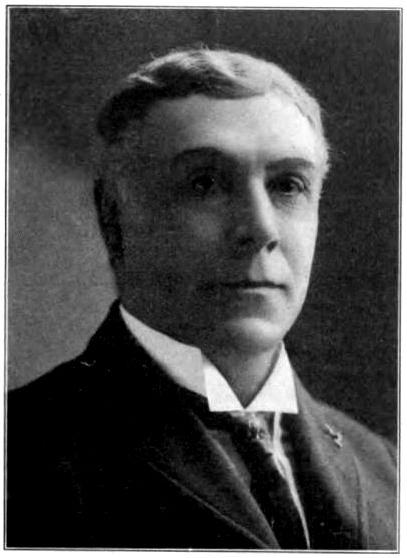
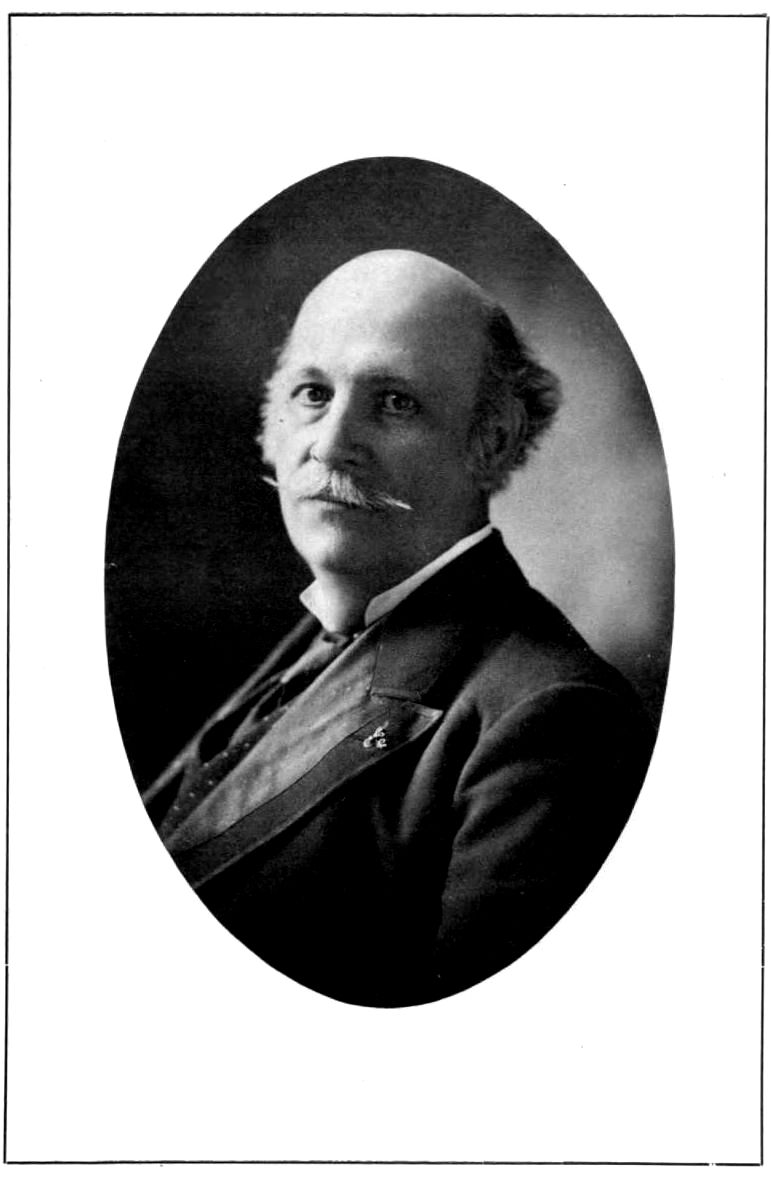
Copyright 1905 by The Taylor Publishing Co. All rights reserved
The Taylor Publishing Company, Publishers,
Vanderbilt Law Building, Nashville, Tenn.
STANDARD FURNITURE CO.
MANUFACTURERS OF THE
“STANDARD LINE” OF FURNITURE
are
the largest Furniture
Makers in the Metropolis
of the South.
We shipped more
car loads of
furniture last year
than any other factory
in this section.
This is proof that
Our
Furniture
is
Right
Send for Catalogue
Standard Furniture Company
OFFICE AND SALESROOM
Russell and First Streets, NASHVILLE, TENNESSEE
In writing to advertisers please mention Bob Taylor’s Magazine.
2
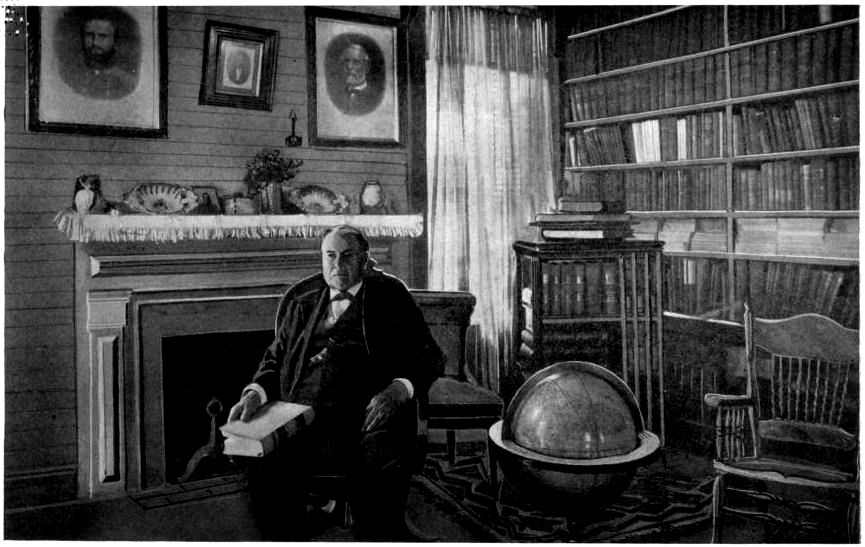
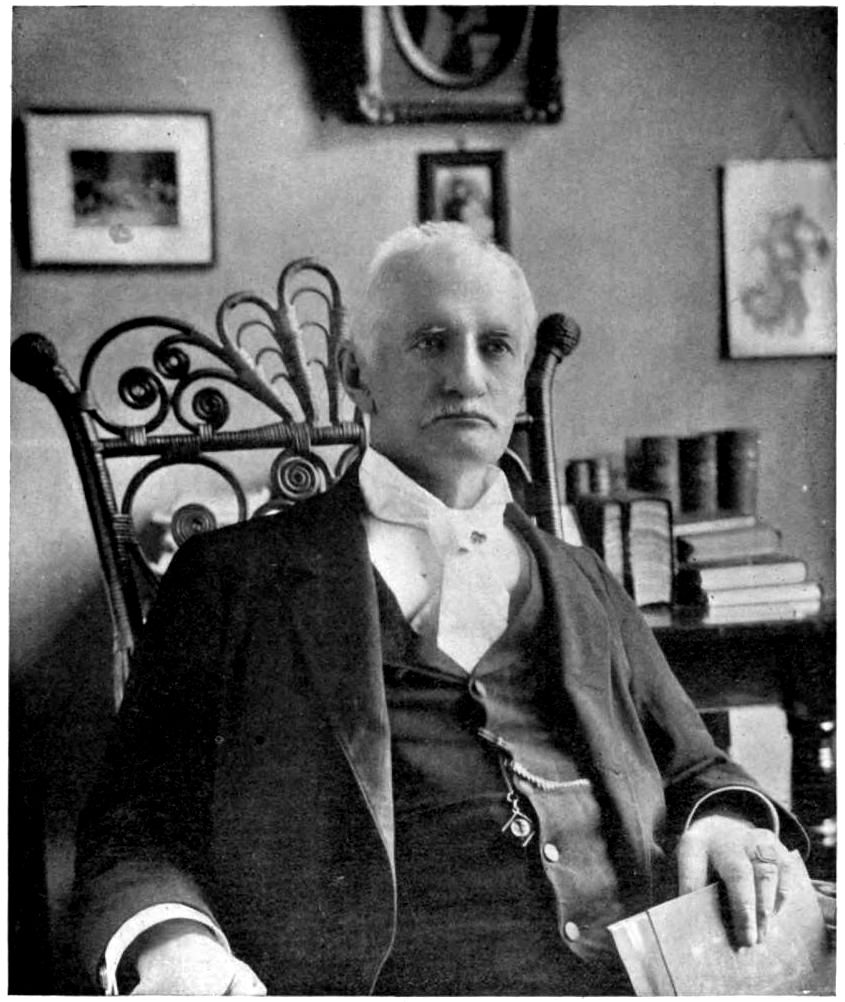
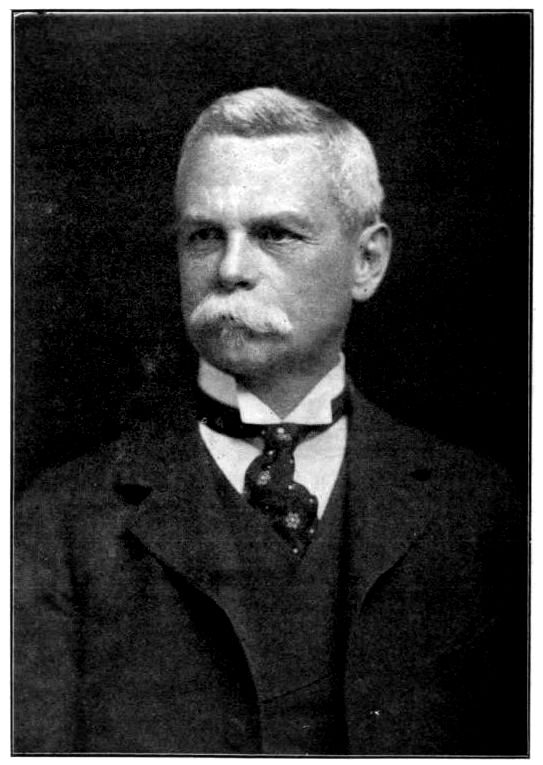
THE LATE HON. JOHN H. REAGAN IN HIS STUDY AT PALESTINE, TEXAS.
BOB TAYLOR’S MAGAZINE
VOL. I
APRIL, 1905
NO. 1
3
By Robert L. Taylor.
One of the most brilliant civilizations
that ever flourished
in the history of the world
staggered and fell with broken
sword and shattered shield on that
dark day when the flag of Southern
hope and glory went down in blood
and tears. Its decimated armies, too
exhausted from loss of blood to longer
pull the trigger, too weak from starvation
to charge the enemy, too footsore
and too proud to run, stacked their
old, bent and battered muskets in the
anguish of defeat and went limping
back to their ruined homes in Dixie.
There is nothing left of that civilization
now but a few remnants of its
gray columns—themselves grown gray
as if in honor of the uniforms they
wore—and the thrilling and pathetic
story of its vanished prestige and
power lingering among its tombstones
and monuments like the fragrance of
roses that are faded and gone. Never
again will the white-columned mansions
of the masters glorify the groves
of live oak and the orange and the palm
where Southern beauty was wooed and
won by Southern chivalry, and life was
an endless chain of pleasure. Never
again will the snowy cotton fields and
rice fields, stretching away to the Gulf
or to the river, teem with happy slaves
and ring with their old time plantation
melodies. Hushed forever is the music
of the Old South! Closed are the lips
of its matchless orators! The dust of
its statesmen mingles with the dust
of the heroes who died to save it.
Only three are left in the counsels of
the nation: Morgan, the brave and the
true, the able, the eloquent and
learned Senator from Alabama; Pettus
from the same state, the peer of Morgan
in all the exalted traits of character
that distinguish the unswerving
and incorruptible representative and
defender of Southern ideals and Southern
traditions; and Bate, that grand
old man of dauntless courage, that
fearless soldier with many scars, the
hero of Shiloh, the strong and faithful
Senator who in private life is as pure
and gentle as the mother of his children,
and in war as bold and daring
a cavalier as ever drew a sword![1] It
is true there are other splendid men
from the land of cotton and cane in
Congress, whose heads are silvered
o’er, and who have nobly led Southern
thought and sentiment. They are superb
exponents of the old ante-bellum
civilization, but they were too young
to taste the sweets of its glory. Some
of them were born soon enough to
listen to the lullaby of the old black
mammy and to sit in the negro cabin
and listen to the blood-curdling tales
of uncle ’Rastus about ghosts and
goblins; some, like Daniel of Virginia,
Berry of Arkansas, and Blackburn of
Kentucky, were old enough to follow
Lee and Jackson and to fight to the
finish; but their youth forbade them
from sitting on the throne of living
ebony with these older men, who, in
reality, are all that is left of the Old
South in the national legislature; and
in whose presence all men, whether
of the North or of the South, delight
to lift their hats with that profound
reverence which true nobility of character
always commands. What a
shame there are not four!
A sigh of deep regret came from the
Southern heart when Missouri registered
the decree that Cockrell, the soul
of honor, the impersonation of truth
and integrity, the soldier and the
statesman, must cease to reflect honor
upon that great commonwealth as
one of its representatives in the United
States Senate. But it must be a sweet
consolation to him to go back among
the people whom he has served so
faithfully and so well, with the consciousness
of a clean life behind him,
both private and public, and with the
prestige of a glorious record in the
service of his country.
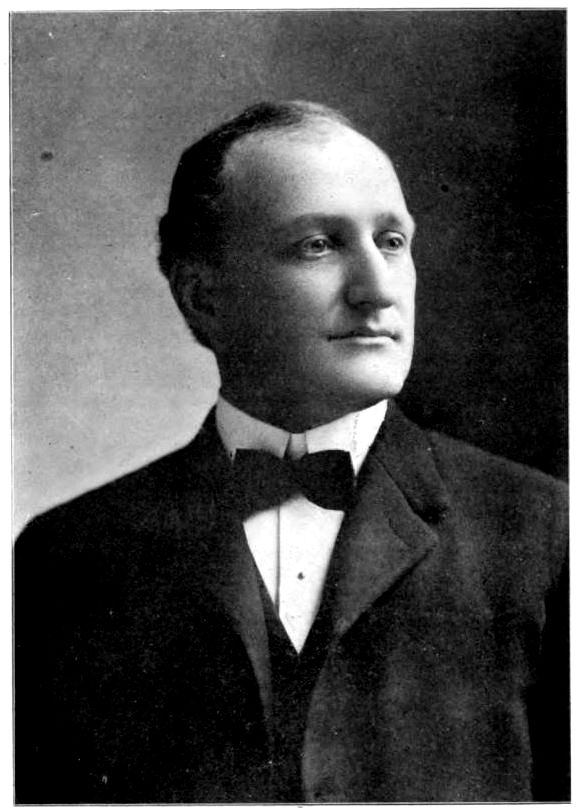
GOVERNOR JOHN C. W. BECKHAM, OF KENTUCKY
To those who have marked the passing
of men in recent years, how solemn
the thought that there are so few left
to tell the tale of the manhood, the
wealth and the influence of that chivalrous
race who staked all and lost
all save honor in the struggle to preserve
its institutions. There is only
one remaining who served in the
cabinet of Jefferson Davis, in the person
of the venerable and beloved John
H. Reagan of the Lone Star State.
The dews of life’s evening are condensing
on his brow and its shadows
are lengthening around him, but the
burden of his fourscore years and five
still rests lightly upon him. The
snows that never melt have fallen
upon his head, but there’s no snow
upon his heart; ’tis always summer
there! He has been distinguished
through life for his rigid honesty and
the fearless discharge of duty, and he
will die, as he has lived, the idol of
his people. May God lengthen the
twilight of his declining years far into
the twentieth century![2]
2. Since this article was set up, Judge Reagan, too, has passed away.
One by one the great majority of
the star actors in the thrilling drama
of the past have made their exit behind
the sable curtain of death, and
in all probability another decade will
clear the stage.
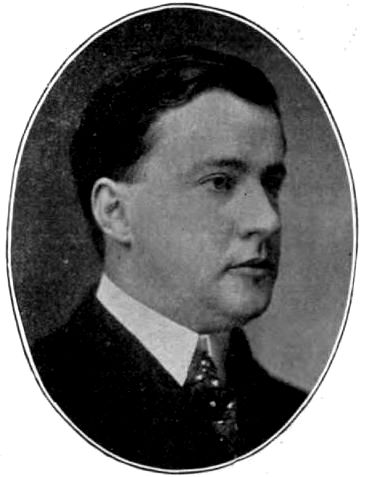
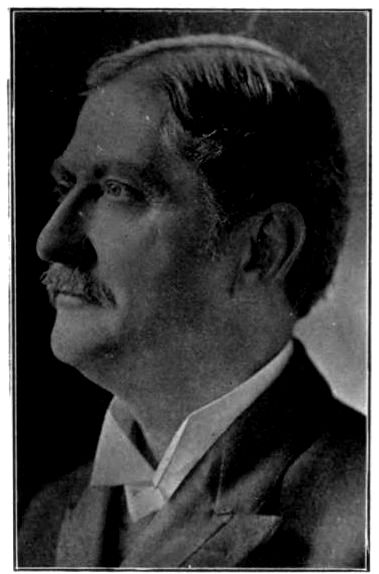
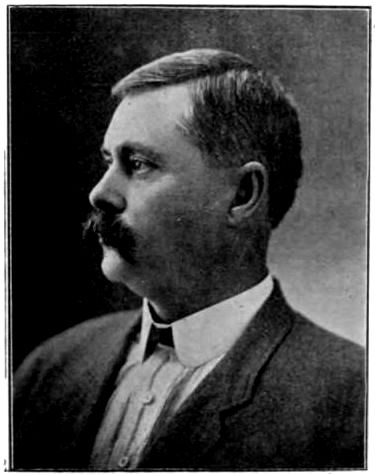
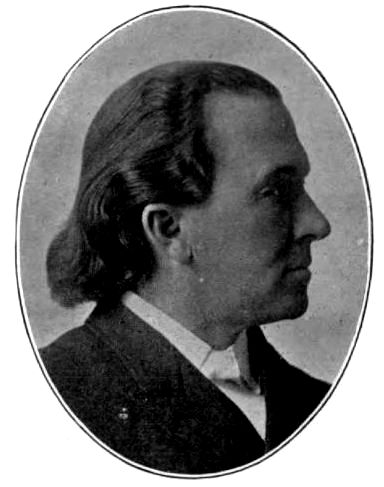
GOVERNOR ANDREW J. MONTAGUE, OF VIRGINIA.
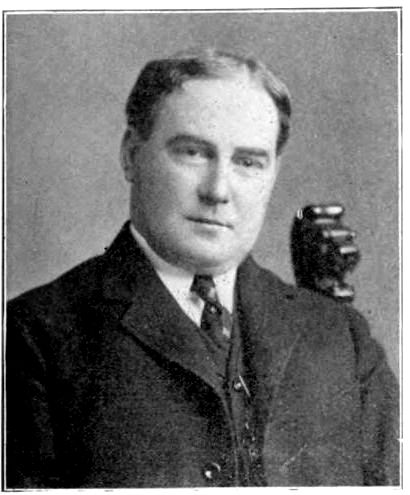
GOVERNOR EDWIN WARFIELD, OF MARYLAND.
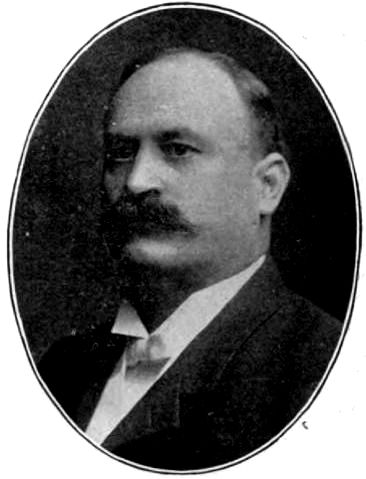
GOVERNOR J. M. TERRELL, OF GEORGIA.
It is one of the purposes of this
magazine to aid in keeping ever fresh
and green the history and traditions
of the Old South; to keep alive its
chivalrous spirit, and to tell the pathetic
story of the lion-hearted men
around whose names are woven some
of the greatest events of history. It
has been beautifully said that “literature
loves a lost cause.” If this
be true, the South will yet be a flower
garden of the most enchanting literature
that ever blossomed in any age
or in any land. Some Homer will
rise, greater than the Greek, and dream
among the cemeteries where its heroes
sleep and sing the sweetest Iliad ever
sung! The spirit of another Hugo
will brood over its battle fields and
gather tales of valor and reckless
courage; of grim visaged men scorning
shot and shell and riding to the cannon’s
mouth; of bayonets mixed and
crossed; of angry armies clinching and
rolling together in the bloody mire
of the awful strife; of Death on the
pale horse, beckoning the flower of
the Old South to the opening grave!
He will gather up the tears and
prayers and the withered hopes of
a dying nation; the piteous wails of
pale and haggard maidens for lovers
slain in battle; the shrieks of brides
for grooms of a day brought back with
pallid lips sealed forever and jackets
all stained with blood; and the swoons
of mothers with the kisses of fallen
sons still warm upon their wrinkled
brows. He will gather them up and
weave them all into volumes of romantic
love more vivid and terrible
than the story of Waterloo! He will
paint in burning words a picture, not
of all the horrors that followed the
blunder of Grouchy in that battle upon
which hung the fate of empires, but
of Stonewall Jackson falling in the
noontide of his brilliant career and
passing over the river to rest under
the shade of the trees; a picture, not
of Wellington seizing the fallen Napoleon
and banishing him to solitude
and death on a rock in the sea, but
of the great and generous Grant receiving
our own immortal Lee like a
king at Appomattox, declining to accept
his sword and bidding him return
to the peaceful walks of private life
among the green hills of old Virginia;
a picture, not of Ney, who had fought
so long and so bravely for the triumph
of his beloved France, shot through
the heart by cowards within the very
walls of Paris, but of Gordon, with
golden tongue portraying the last days
of the Confederacy amid the shouts
and tears of the brave men who had
faced him with booming cannon and
rattling musketry on a hundred fields
of glory; a picture, not of the English
Channel as the dividing line between
the drawn swords of France and
Britain, but of Mason and Dixon’s
line healing into a red scar of honor
across the breast of the great Republic
and marking the unity of a once divided
country!
GOVERNOR NEWTON C. BLANCHARD, OF LOUISIANA.
GOVERNOR N. B. BROWARD, OF FLORIDA.
GOVERNOR JAMES K. VARDEMAN, OF MISSISSIPPI.
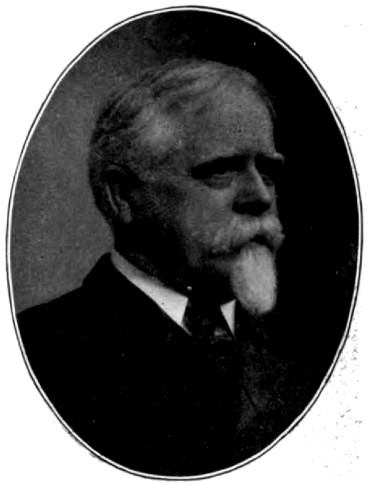
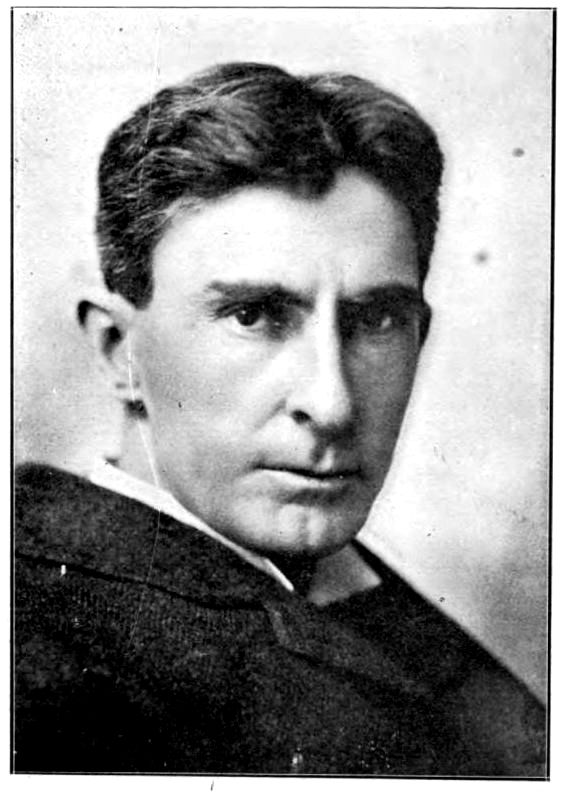
SENATOR JOHN T. MORGAN.
Not very long ago, during the
Spanish-American War, there was
commotion in a far Southern town,
caused by a coterie of young men
bitterly protesting against the sons of
Confederate veterans wearing the blue
and fighting under the old flag. An
elderly man with “crow’s feet” at the
comers of his eyes and silver in his
hair, listened for a while in silence, but
finally arose from his chair and said:
“Young men, you are wrong. I followed
the stars and bars for four long,
weary years! I saw its colors go
down at last and I straggled back to
my native state, barefooted and in
rags, only to find my home in ashes.
I swore eternal enmity to the stars and
stripes and to the blue. But one day,
after the battle of Manila Bay had
been fought, a Mississippi regiment
went marching up the main street of
my town and lo! my boy was in the
ranks dressed in the Federal uniform.
In my rage I rushed to the Colonel
and shouted, “Take that blue uniform
off these young men and let them put
on the gray and show the world how
the sons of Confederate veterans can
fight!” but the Colonel smiled and
shook his head and the regiment
marched on eager for the fray. I
went home in my fury more bitter
against the North than ever before.
But when one day they brought my
boy home in his coffin and I looked
down upon him pale and motionless,
in his blue uniform and wrapped in
the old flag, my animosity vanished
in a moment and in my tears I said:
‘Henceforth that uniform is my uniform, that flag is my flag and this
whole country is my country.’” This
sentiment is not incompatible with
loyalty to the gray nor to the folded
stars and bars, but it is the expression
of the only feeling that will ever unite
all the sections of the Union.
SENATOR B. F. PETTUS.
We must recognize the fact that a
new civilization has arisen in the South
from the ashes of the old, and while
her people cherish the past for its
precious memories, their faces are
turned toward the morning. They
are not only producing more cotton
than ever before, but building gigantic
plants among its snow-white fields, and
with the magic of modern machinery
are transforming the raw material into
finished fabrics; they are pulling down
the hills and dragging forth their
treasures of coal and iron, of marble,
zinc and lead, and are converting
them into all the finished implements
of peace; they are harnessing their
beautiful rivers to the thunder-clad
steeds of the storm and turning the
myriad wheels of industry with electric
power; and they will some day out-herod
Herod in the marts of the world.
The representatives and governors
of the South, confronted with new and
perilous problems, have had the courage
to grapple with them, the brain
to control them and the heart to turn
many of them into blessings. They
have brought wealth out of poverty
and prosperity out of desolation; and
Hope stands on the horizon with a
new crown in her hand, beckoning this
new civilization to a throne of power
never dreamed of by the old. And
yet, while the Southern people rejoice
in the resurrection of their country
from the dead and in the bright prospects
spread out before them, let
them never forget to worship at the
shrine of memory nor to permit the
glory of the blessed past to be dimmed
by the splendor of the future.
POPULAR EDUCATION IN THE SOUTH.
9
By Henry N. Snyder, LL.D.
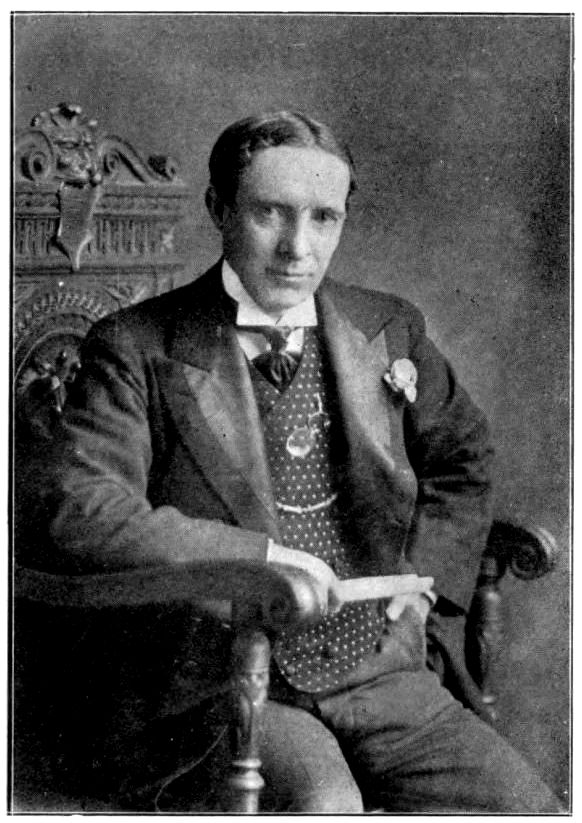
HENRY NELSON SNYDER, M.A., LITT.D., LL.D.
President Henry N. Snyder, of Wofford College, speaks to our readers in a thoughtful and
commanding way on a question, that with the rapid and general development of the South
is becoming more and more recognized as a vital popular problem.
As the executive head of one of the South’s most representative denominational colleges
and as a lecturer on the subject before representative summer schools for teachers,
President Snyder has had occasion to bestow upon his theme serious and special study and
his intelligent and earnest treatment of his topic tends to present it in a practical
and popular form and to eliminate from it those speculative and academic qualities that
have so generally characterized its discussion.
A native of Macon, Ga., where he was born during the final year of the Civil War, President
Snyder was reared and educated in Nashville where, after completing the course of the
city high schools he entered Vanderbilt University in 1883, and from which he graduated in
arts, with both his bachelor’s and master’s degrees.
He was until 1890 connected with his alma mater, the last three years of which
time he was instructor in Latin and student of graduate subjects. He subsequently pursued
advanced special work in German and English universities, since which time, until
1902, he was professor of the English Language and Literature in Wofford College. He
has been president of this institution since 1902.
President Snyder’s contribution to the actual promotion and solution of his subject
has been considerable, as he has served as lecturer on English Literature at the South Carolina
State Summer School and the Summer School of the South, at Knoxville, Tenn.
He is a frequent contributor to magazines on literary and educational subjects and is a
member of the Modern Language Association of America, and the Religious Education
Association.
The American democracy is not
so much an achievement as a
prophecy. Its chief glory cannot
be in what it is, but in what
it is to be. It has not attained the
measure of its growth till every man
in it has a fair chance and an open
field to make the most of himself, and
has done so with reasonable completeness.
It is therefore essentially
idealistic, and, however deeply concerned
with the present hour’s duty
and work, its face is ever set toward
a larger future for itself. But this
larger future can only be realized in
a finer and more efficient quality of
the men and women who are to do the
work and continue the unfolding life
of this free democracy of equal opportunity,—equal
opportunity not for
the few favored by fortune or circumstance,
but for every child born in it.
No democracy dare have any other
mind with reference to itself.
The most necessary, as the most inspiring,
work therefore which a democracy
assumes to do is that of seeing
to it that all its children are rightly
trained for intelligent service and
skilled efficiency. This task it undertakes
not only that it may live as a collective
body but also that each citizen
may in the best and fullest manner express
his own individual life. In this
two-fold view of the matter popular education,
the putting of all the children
of all the people into the best possible
schools, under the best possible teachers,
for the longest possible time, becomes
the sacred and imperative duty
of a democracy that cares for to-morrow
as well as for to-day. And
the to-morrow of a democracy, in all
the manifold activities of its complex
life, is determined by what it
does for the child of to-day.
From this viewpoint no democracy
ever had a better opportunity to test
itself and its ability to control the
future than that phase of democratic
life working out its destiny here at
the South. For the conditions are
such as to make the task of training
the citizenship of the future almost
the one thing to be done. The figures
representing those conditions have
been so often used of late that one is
really inclined to resent the very mention
of them. Nevertheless, a proper
understanding of the conditions entering
into this, as into any problem,
is the first step toward the solution.
Moreover, in this struggle now on for
popular education at the South, it is
no part of courage to blink a fact because
it is ugly, nor of sane judgment
to let anything or anybody beguile
us into fighting our battle in the dark.
We should keep steadily before us the
facts as they are, the stupendous nature
of the work that lies ahead and
how it is to be done, and withal the
eternally vital need of doing it now
and in the right way.
Now as far as figures can give one
anything like an adequate conception,
the situation is about this: In 1900
there were 8,683,762 persons of school
age in what we are used to call the
Southern states,—5,594,284 white persons
and 3,089,478 black. It should
be said in passing, yet with all emphasis,
that the South may as well get
used to reckoning the children of its
former slaves in both its educational
assets and educational liabilities.
Justice and expediency are both vitally
involved in this view of the situation.
Now, of this future citizenship
only sixty out of every hundred
were actually in process of school
training, and of this enrollment only
forty-two were, on the average, in
daily attendance. The only comfort
that one can get in this situation is
by looking back and seeing that conditions
have been worse and forward
to see that they are bound to be better.
These figures, then, represent the
mass of material that popular education
has to deal with and the actual
portion upon which it is really working.
Now when one considers the machinery
of instruction, the teachers,
the school-property, the length of
terms, and the capital invested, one
sees even more vividly that the democracy
of the immediate future must
be limited in its development, not
alone because its children are not in
process of training but because the
means themselves are inadequate and
inefficient. The entire country pays,
on the average, for its men teachers
a salary of $49.00 per month, for its
women $40.00. The South gets its
men for $35.63 and its women for
$30.47. Leaving out of consideration
the quality of service to be had at
such a pitifully low price, one can be
perfectly sure that no high professional
ideals and standards can be
maintained at such rates. But let us
look at the matter from another standpoint;
upon every child in its schools
the South spends $6.95 as against
$10.57 for the entire country; while
some states of the West spend $31.49,
some Southern states are spending
only $4.50. It is not surprising therefore
to see what this means as to the
average length of school term among
us: in the entire country every child
has a chance to be in school at least
145 days, while the child of the South
has open to him only 99 days. Clear
enough is it, then, that democracy in
this section is, in comparison with the
rest of the Union, handicapped in the
very beginning of its race. Moreover,
the relation of popular education to
its best life, in the light of the situation
revealed by these figures, is a
deep and fundamental one.
How deep and fundamental this is,
can be best realized by the comparative
density of illiteracy already prevailing
at the South. Fifty out of
every hundred negroes ten years old
and over can neither read nor write,
and nearly thirteen out of every hundred
whites are in the same condition
of darkness. In the United States as
many as 231 counties report a proportion
of twenty per cent of illiterate
white men of voting age, and of the
total, 210 of these counties are in the
South. Now the conditions represented
by all these figures—and at
best they can only bring the matter
vaguely to our conception—in one
sense, on account of the magnitude
of the work to be done and the difficulties
in the way, are of a nature almost
to take hope and courage from
us. On the other hand, the absolute
need of doing the work, the fruits that
must follow, and the progress already
made are a clarion call to patience,
patriotism, faith, and unresting effort.
But before taking up the progress
already made, it would be well to remind
ourselves once more of some of
the causes which have brought about
the present state of affairs and render
the Southern situation as to popular
education a peculiar one. In the first
place, there was the all but disheartening
poverty due to the collapse of the
entire social and industrial system of
the South. War, followed by Reconstruction,
did the work with ruthless
thoroughness. From 1860 to 1880
taxable property at the South suffered
a decrease in value of $2,167,000,100,
that is, to less than one-half its value
at the breaking out of the War. Indeed,
in 1870 the one little state of
Massachusetts paid considerably over
one-half the amount of taxes paid by
the entire South. It is clear, then,
that for nearly twenty years the South
was under the simple yet stern and
inexorable compulsion of how to live.
In this light, therefore, what it did
accomplish in the matter of training
its children is to be regarded as a
really heroic achievement, and is no
occasion of blame because, by comparison,
it seems so little. Absolutely,
it is worthy of all praise.
It should be remembered, too, that
in spite of its poverty, in spite of the
fact that its energies have been given
to a pressing struggle for its very existence,
the South has had to maintain
a two-fold system of popular education.
It has had to care for the children
of its former slaves in separate
schools, and bear virtually all the expense.
This has both complicated its
problem and necessarily limited its
educational advancement. But at
this time it can be asserted with emphasis,
that the South, in spite of
certain reactionary eddies in the current
of its thinking, will still continue
to support Negro schools. Our best
thought is fast fixing itself in the unalterable
conviction that to keep the
black man in ignorance is an injustice
to ourselves as well as to him; and,
moreover, that expediency itself dictates
that he shall neither remain
sunken in the night of illiteracy nor
mistrained for the sphere of life for
which he is, in his present stage of
advancement, fitted. Therefore popular
education has meant, will continue
to mean, with the South a two-fold
system of education. And the Southern
white man, with his own taxes,
is largely to maintain it,—at least for
many years to come.
But above everything else, the
chief consideration with reference to
the whole question of popular education
in the South, both as to its needs
and difficulties, is that we are dealing
with a rural folk and rural conditions.
More than eighty-three per cent of the
Southern people live in the country,—a
pure, wholesome Anglo-Saxon stock
of unwasted, if untrained, physical,
intellectual and moral qualities. The
problem of popular education in villages,
towns, and cities is virtually
solved. The task therefore is concerned
wholly with what we shall do
for and with the saving, and in this
case, the larger remnant which draws
its support from the fields. No
democracy ever had better or richer
assets from which to recuperate itself,
or a more inspiring duty to perform
in giving this class opportunity for
training and development. But from
the very nature of the case the proper
performance of this duty is a task of
stupendous magnitude, and even an
approximate accomplishment of it
must wait upon necessarily slow processes.
The deep-seated conservatism
of the people, the extent to which
illiteracy prevails and the narrow
poverty in many sections, remote and
widely-sundered homes, roads almost
impassable at certain seasons of the
year, the immediate need of the children
in the fields, even if the best of
schools were at their doors,—here are
conditions which would discourage
any but a brave and patient people
who believe in the divine right of all
to whatever power there is in knowledge
and the bounden duty of the
state to offer to all its opportunities.
However, neither the pressure of
poverty, nor the double burden of
caring for two races in separate schools,
nor the special difficulty growing out
of the peculiar nature of conditions,
nor the huge magnitude of the task,
has daunted courage or enfeebled effort.
On every hand there are inspiring
marks of progress, and results
prophetic of greater advances yet to
follow. In the first place, the last
six or eight years have been a period
of quite remarkable educational agitation
throughout the entire South.
Every kind of leadership has been
systematically at work to quicken the
conscience and stir the sentiment of
the people on this subject. Pulpit,
press, organized philanthropy, and
civil authority have combined with
professional educators in a campaign
whose rallying-cry has been the uplifting
of democracy through the
power of the schoolhouse. The general
result is an interest both wide and
intelligent, an awakened conscience,
and an aroused sentiment throughout
all this Southern land, all of which
tends to put behind special and definite
efforts of improvement an irresistible
public opinion. The South is
therefore keenly realizing its sense of
civic obligation and its duty to its
own future, and when the South once
sees its duty and that rich vein of
sentimentality, which lies at the basis
of its temperament, is once touched,
there will be no turning back. And
surely it has now seen its duty and
its sentimentality is thoroughly alive
to all that popular education means
to the child of to-day and the state
of to-morrow.
For this condition we have to thank,
not only the church, the press, and
organized philanthropy, but a strikingly
courageous and far-sighted political
leadership, which the situation
has called forth,—men, for example,
like Governor Frazier of Tennessee,
Governor Aycock of North Carolina,
Governor Heyward of South Carolina,
and Governor Montague of Virginia,
men who have convincingly fought
for the inalienable right of every
child to be trained by the state at
public expense. To their influence
must also be added the skilled patriotic
service of such State Superintendents
of Public Instruction as
Mynders, Martin, MacMahan, Merritt,
Whitefield and Joyner,—men who
seemed to regard their office as peculiarly
the most sacred of all trusts
committed by a people to public servants.
The people have listened to
such as these when they might have
turned deaf ears to voices from any
other source.
Too much importance cannot be
attached to the sentiment which has
been thus created in the last half-dozen
years. It was the necessary step in
the preparation for more definite
things. Its immediate value has been
in the awakening of people to such an
extent that they will not only put their
children in school but will also tax
themselves for educational purposes.
General and local taxation, as a result,
has been increasing at a significant
rate. Indeed, some of the
Southern states are now giving a
larger proportion of their income from
taxes to the use of education than the
states of the North and West. They
are everywhere building better schoolhouses,
furnishing better equipment,
and demanding better trained teachers.
Consolidation of schools, free
transportation, longer terms, expert
supervision, the removal of educational
matters from the blight of political
influence, are the things which now
make the educational atmosphere fairly
electric with reform, and the next
few years will show a growth that will
please even the most ardent optimist.
This general agitation has thus connected
with it certain definite aims
and methods of educational policy,
which have already taken shape and
are bearing fruit. Not the least important
among them has been the
effort to secure, above everything,
trained teachers. Many of the states
have either established Normal Schools
for this purpose or have added to
their Universities departments of Education.
But it has been felt that
even these were not sufficient to meet
the demands for a trained teaching
force. Hence in some of the states,
in Georgia, Mississippi, and South
Carolina, for example, summer schools
with an attendance of from four to
six hundred have been running for a
number of years, and at Knoxville the
great Summer School has been drawing
from all over the South a choice
body of teachers to the number of
two thousand, and offering them the
best instruction to be had, North or
South. To the influence of these general
schools is to be added that of
the County Institutes, which of themselves
have been an inestimable source
of power. All have stood for an intelligent
knowledge of the situation,
for the missionary spirit of propaganda,
for a broader and more accurate
scholarship on the part of the
teacher, for the application of expert,
up-to-date methods of instruction and
organization, and for the raising of
the teacher’s work to the dignity of
a great profession. The significance
of all this is that this movement for
popular education is laying its foundations
in wisdom in that it sees that
the teacher himself must first be
taught.
And the work has already begun to
tell to a degree that can even now be
measured. In the last score of years
Virginia has reduced its ratio of white
illiteracy by 7 per cent, Georgia and
Mississippi by 8, Kentucky by 10,
Alabama by 11, North Carolina and
Florida, by 12, Tennessee by 13, and
Arkansas by 14 per cent. These figures
are eloquent of present progress
and inspiringly suggestive of the future.
Democracy is really caring for
its own. It is told that a famous
German teacher of the Reformation
once stepped into his schoolroom and
greeted his pupils with these words:
“Hail, reverend pastors, doctors, superintendents,
judges, chancellors,
magistrates, professors.” Some there
were who laughed at him as a joker
and mocker. But he was wiser than
they, and in his wisdom was the prophet
of that true democracy which sees
not merely the child in the school,
but the future man in the state. The
South therefore views in this way
the progress already made and realizes
that what it now does and will
do with its children in the schools
of the people is the true measure of
its own life in the coming years.
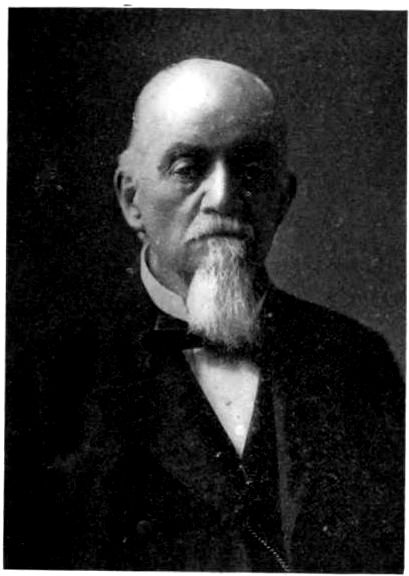
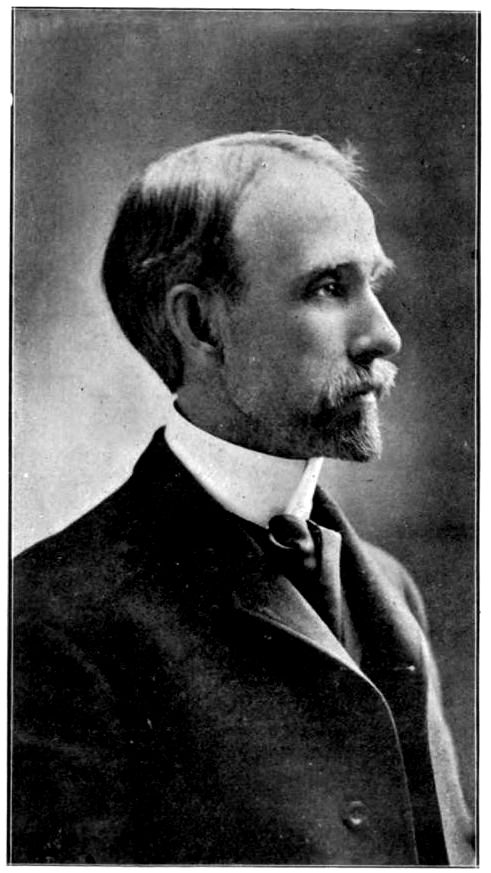
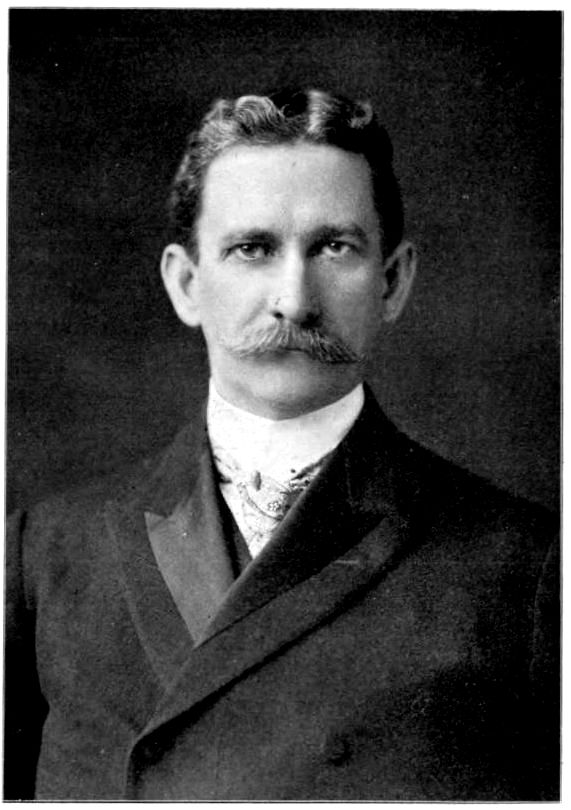
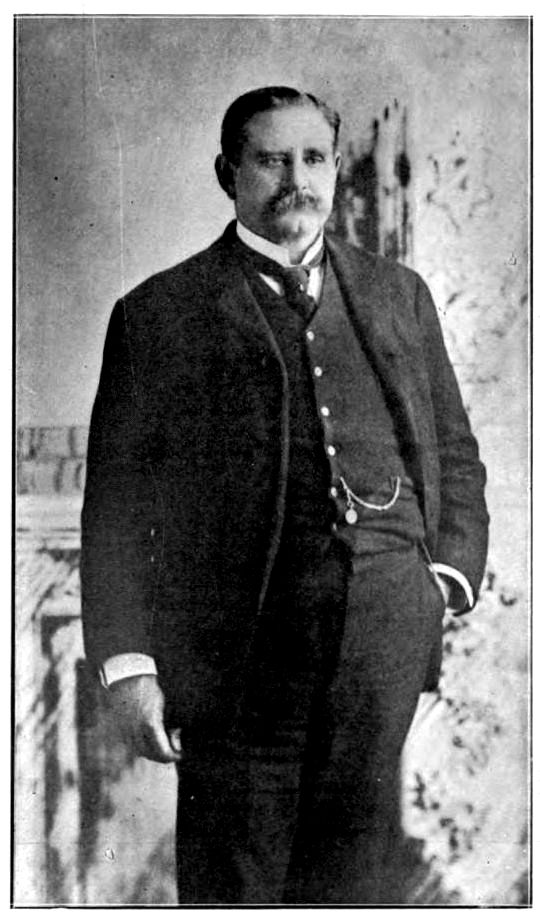
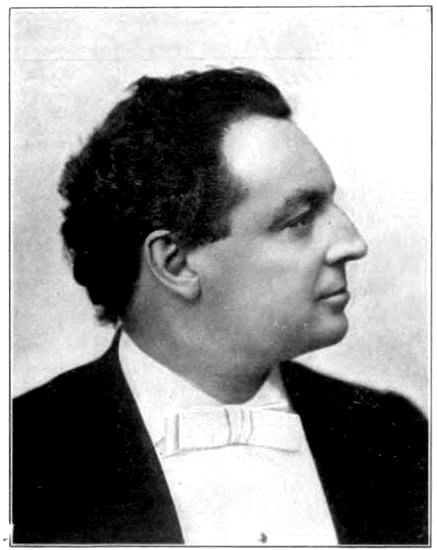
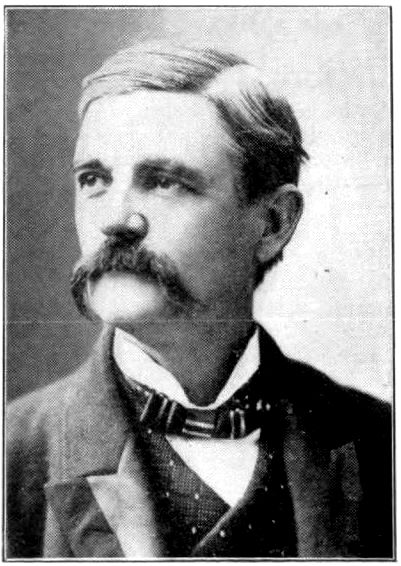
TO HELEN KELLER. — MEN OF AFFAIRS — Richard M. Edmonds. — Jacob McGavock Dickinson. — Samuel Spencer. — James Clarke McReynolds. — Thomas Dixon, Jr. — John Temple Graves. — IN VENICE.
14
BY JAMES TAYLOR.
Forever veiled thy piteous eyes,
Forever sealed thine ear;
How dark and still creation lies,
How distant, yet how near!
Thy sightless orbs to heaven upturn
To crave the blessed light;
Nor sun, nor stars, above thee burn—
Alas, what hopeless night.
The jeweled arch that bends above,
The earth, the air, the sea,
O’erspanned by wings of Boundless Love,
How vainly smile for thee!
The blush of morn, the sunset glow,
The dew-gemmed paradise
Where Summer’s roses blow,
Are not for thy dim eyes.
Hushed is the sound of Music’s voice,
Hushed is the murmuring sea;
No trembling harp bids thee rejoice,—
’Tis silence all to thee.
On Beauty’s loom which Nature wields
With deft, mysterious skill,
To deck with tapestries her fields,
Her every vale and hill,
She weaves with gorgeous threads of light
In mist, and cloud and rain,
Her irised gossamers so bright—
But weaves for thee in vain.
But God will make thee doubly whole,
And give thy spirit sight,—
His glory shall illume thy soul,
For God is love and light!
15
With the commercial awakening of the South and the increased importance of the section
as a factor in the national life, has developed a new citizenship—a sub-structure of the Old
South with a modernized superstructure—in which with the sterling and standard traits
of the old regime is strongly blended the nervous activity of the new. As a means of
paying special tribute to the work being accomplished in the local and general fields by
new generation of the South it is the intention of this magazine to devote a department
toward setting forth their achievements as well for public information as for acknowledgment
of their services, and in offering the initial installment of this special column it is desired to
direct attention to the highly representative types herein noticed with the significant intimation
that all are yet in the prime of life with greater opportunities ahead of them.
The Manufacturers’ Record, the
South’s, if not the country’s, most
representative trades journal, had a
modest origin less than a quarter of a
century ago in a small desk in an obscure
business office in Baltimore. Its
founder and guiding spirit was Richard
M. Edmonds, who from nothing in the
way of working capital save sagacity,
energy and determination, has developed
a magnificent journalistic property,
occupying its own seven-story
building and has himself become a
man of large affairs and wide influence.
In the development of the now admittedly
fertile field of trades journalism,
no one point may be more emphasized
as having been significantly demonstrated
than that it holds peculiar
and pronounced opportunities for those
desirous of actively participating in
the vital activities of commerce.
In no less than three distinct phases
of Southern development have Mr.
Edmonds and his paper conspicuously
figured—in the encouragement of industrial
and technical education, in
the promotion of the cause of immigration
from among the most desirable
domestic elements and the diverting
of the cotton manufacturing business
from New England to the cotton fields.
It was Mr. Edmonds’ editorial columns
that first started the now irresistible
southward migration of the mills by
pointing out the many and conclusive
reasons why the advantages for cotton
manufacturing were all in favor of
the South.
As a commercial and financial
figure it may be noted that Mr. Edmonds
is now a member of the executive
committee of the International
Trust Company, a three million dollar
Baltimore corporation, and is chairman
of the executive committee of
the Alabama Consolidated Coal and
Iron Company, with a capitalization
twice that of the former. He is a
member of the American Association
for the Advancement of Science, the
American Academy of Political and
Social Science, the Southern History
Association, the Maryland Historical
Society, the Southern Society of New
York, and other organizations.
Mr. Edmonds was born in Norfolk,
Va., in 1857, receiving a common
school education in Baltimore, where
he started life as a clerk in the office
of the old Journal of Commerce.
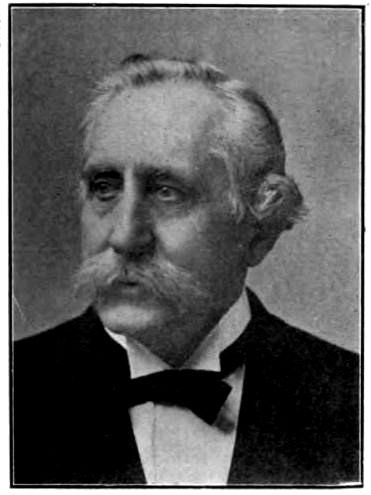
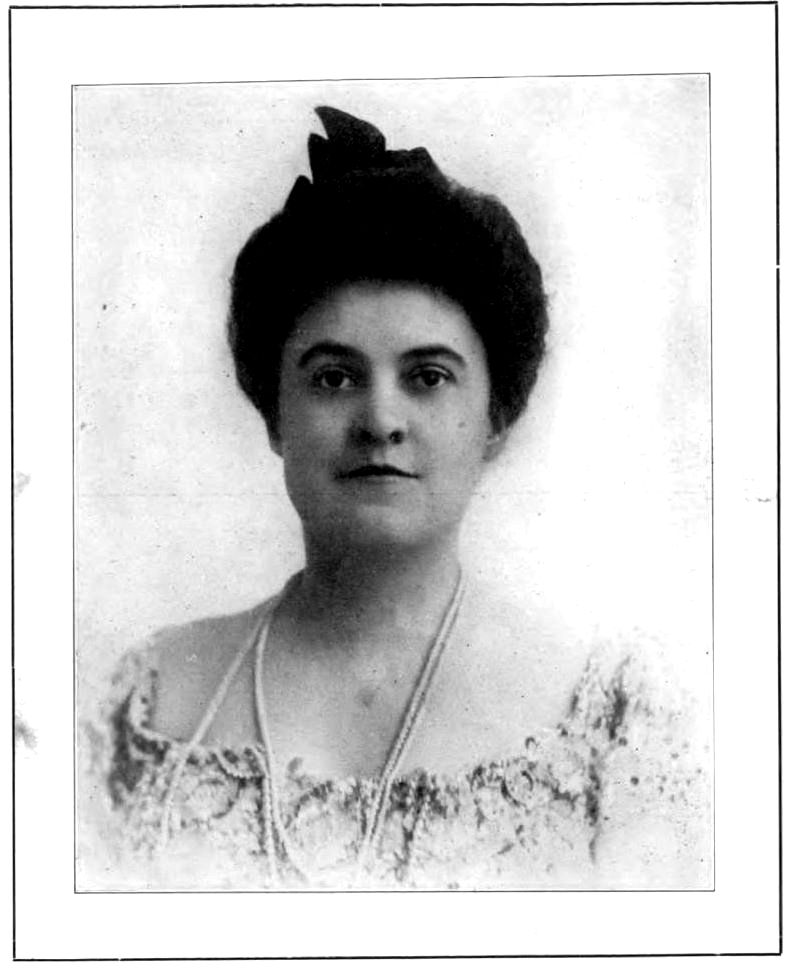
RICHARD M. EDMONDS.
Successively a teacher, a practitioner
of law, a railroad attorney, a teacher
of law, Assistant Attorney General of
the United States, general counsel for
one of the country’s large railroad
systems and a leading legal representative
of the nation’s interests before
the Alaskan boundary tribunal,—this
is the record of this distinguished
Southerner, yet in his physical and
mental prime.
A native of Mississippi and a product
of ultra Southern environment, himself
a soldier of the gray at the very
early age of fourteen, Mr. Dickinson’s
evolution into a representative
type of national citizenship comprises
an interesting study in contemporary
American life.
Educated at the old University of
Nashville and at the Columbia Law
School, New York, with a capstone of
extensive travel abroad and special
work in law and economics at the universities
of Leipsic and Paris, Mr.
Dickinson has combined an ideal working
equipment with a tremendous energy
and a capacity for laborious and
sustained mental effort.
As a practitioner his unusual ability
was several times recognized by gubernatorial
appointments as special judge
on the Tennessee Supreme Bench, to
which he declined a permanent appointment,
shortly thereafter being
called to the very high duties of the
position of Assistant Attorney General
of the United States. After his retirement
from this position he became
District Attorney for Tennessee and
northern Alabama for the Louisville
and Nashville Railroad Company, from
which he was promoted to his present
position as Chief Counsel for the Illinois
Central, with headquarters at
Chicago.
His greatest public service, as is
well known, was his representation of
the government in the Alaskan boundary
dispute, wherein his presentation
of the nation’s claims is admitted to
have had a material influence in the
successful outcome of that famous
piece of international litigation.
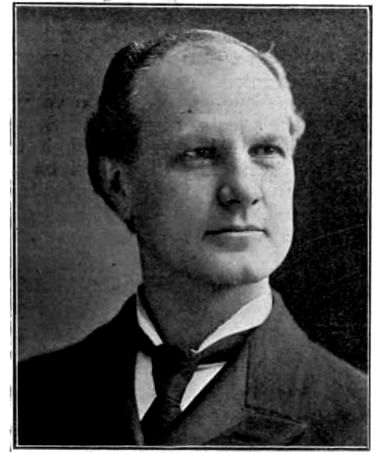
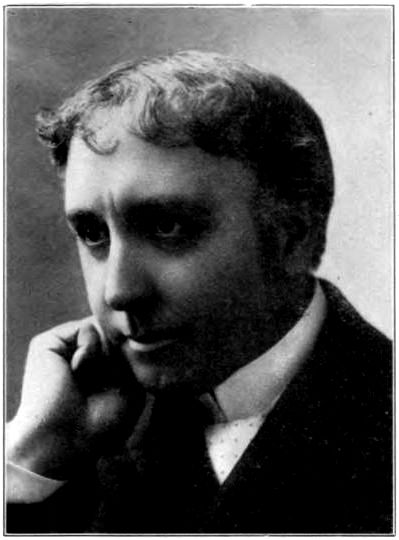
JAMES McGAVOCK DICKINSON.
Judge Dickinson maintains a close
identity with Southern matters by
keeping up his connection with various
societies and organizations, among the
number being the Isham Harris Confederate
Bivouac, at his native town,
Columbus, Miss.
In the executive feature of railroad
operation Samuel Spencer is a prominent
national figure. From an humble
position in the ranks, a combination
of native ability, splendid equipment
and consistent application has
resulted in his promotion to the presidency
of six large roads, while he is
in addition a member of the board
of directors of nearly a score of others
and of nearly a dozen of the country’s
most representative banking and other
corporations.
SAMUEL SPENCER.
A native of Georgia, where he was
born at Columbus, in 1847, Mr. Spencer
entered the Confederate army,
serving the last two years and with
much credit, after which he graduated
from the University of Georgia
with A.B., and subsequently from the
University of Virginia with his engineering
degree.
Since leaving college in 1869 Mr.
Spencer has devoted his energies uniformly
to his ambition to rise to the
highest round of the railroad ladder,
with the result that he is now president
of the Southern, the Mobile and Ohio,
the Alabama and Great Southern, the
Cincinnati, New Orleans and Texas
Pacific, the Georgia Southern and
Florida, and the Northern Alabama,
aggregating a mileage of over nine
thousand miles and employing more
than forty thousand men.
Besides innumerable other roads, in
the management of which Mr. Spencer
is director, he is also a director of the
Western Union Telegraph Company,
the Old Dominion Steamship Company,
three large New York Trust
companies, the Hanover National
Bank of New York, and one of Boston’s
large street railway systems.
Mr. Spencer is identified with the
American Society of Civil Engineers
and other representative political,
scientific and forestry associations,
and is socially very much of a cosmopolite,
being a member of New York,
Chicago, Cincinnati, Atlanta and Macon
clubs, besides that wealthy sportsman’s
paradise, the Jekyl Island Club.
One of the very few Southerners
who have advanced into the circles
of millionairedom, Mr. Spencer
resides principally in New York and
Washington, but is much in the South
and is still in feeling and sentiment
very much a Southerner.
JAMES C. McREYNOLDS
In the appointment of James C.
McReynolds to be Assistant Attorney
General of the United States the President
followed his revolutionary precedent
in the selection of Judge Thomas
G. Jones, of Alabama, as occupant of
the Federal Bench. In this instance
conventional custom was further ignored
in the elevation of a man considerably
younger than the age generally
considered requisite.
Born at Elkton, Ky., a little over
forty years ago, Mr. McReynolds was
graduated from Vanderbilt University
and the University of Virginia with
his academic and law degrees, respectively,
in both of which institutions
he ranked high in scholarship and
character.
His initial experience in public life
was gained as the private secretary of
Judge Howell E. Jackson of the United
States Supreme Bench, which, with
his already ample legal equipment,
served him in good stead in the general
practice in Nashville where his
career at the bar was characterized
by ability, integrity and a high order
of fidelity to the many large interests
that he represented.
In civic and political movements
Mr. McReynolds’ record was signalized
by a notably courageous, independent
and unselfish interest.
Since his promotion to the duties
of Assistant Attorney General of the
United States he has established
principles of large governmental significance
and his able presentation of
the government’s litigation before the
Supreme Court has elicited the unanimous
commendation of that impartial
and august body.
Mr. McReynolds’ appreciation by
the President would have been further
displayed by his appointment as
United States District Judge to succeed
Judge Hammond, had not a technicality
involving residence interfered.
THOMAS DIXON, JR.
One of the most picturesque and
dramatic figures in the limelight of
to-day is the Rev. Thomas Dixon, Jr.,
a man who has at his age probably
succeeded in as many different lines of
endeavor as any other man of the times.
An intense product of the new
South, Mr. Dixon speaks his opinions
on his section’s great and peculiar
problems with an incisive virility and
a fearless conviction, and with his
novels, “The Leopard’s Spots” and
“The Clansman” has gained a popular
audience for the Southern point
of view, before unreached. He has
also illumined the divorce evil and the
subject of socialism in his dramatic
story, “The One Woman.”
Born in North Carolina just forty
years ago, and educated at Wake
Forest, a Baptist denominational
school, Mr. Dixon has in rapid succession
essayed the fields of law, the
ministry, lecturing and authorship,
and has been prominently identified
with each. He was a member of the
North Carolina legislature at one time
and is said to have essayed the histrionic
for a brief spell.
First attaining more than casual
prominence as a Baptist minister in
New York, Mr. Dixon felt the opportunity
of a non-sectarian evangelist
fraught with higher possibilities in the
metropolis and more in keeping with
his temperament and convictions,
founding a popular church wherein as
a religious and civic free lance he attracted
a large and influential hearing.
On the lecture platform he found a
broader and more congenial labor still,
and from lecturing he took to literature,
to which he is now devoting his
time exclusively. He has planned a
trilogy of novels in exposition of the
negro question, the second of which,
“The Clansman,” takes its text from
the vital role played by the Ku Klux
in the redemption of the South from
the triple scourge of the carpet bagger,
the scalawag and their irresponsible
tool, the ignorant African.
Mr. Dixon’s late successes have constituted
him a man of affairs and he
now resides upon his extensive Virginia
plantation, where he does much
of his literary work and incidentally
lives the life of the Virginia planter
and gentleman of the olden day.
He is proud to admit the valuable
assistance rendered him by his wife,
not only as literary critic but as a
ready helper in the physical construction
of his productions.
JOHN TEMPLE GRAVES.
As lecturer, orator and editor, John
Temple Graves, of Atlanta, is well
known to the country at large. As a
lecturer he is classed by George R.
Wendling as being in a class with
Governor Taylor at the head of the
Southern field; as an orator he has
had the distinction of presenting his
section’s sentiments and peculiar problems
to the national ear as has no
other man since Henry W. Grady; and
as an editor he has by the forcefulness
of his personality developed in a brief
period of time an extensive business
enterprise and a material public influence
in his section.
Mr. Graves’ most telling work on
the platform has doubtless been his
contribution to the enlightenment of
the Northern mind on the negro question,
while on this and various other
subjects he has appeared three times
as the orator of the New England
Society of Boston, twice of the Merchants’
Club of Boston, once of the
New England Society of Philadelphia
and twice of the Southern Society of
New York. In the capacity of journalist
he has officially represented the
South as spokesman before the World’s
Congress of Journalists at Chicago, in
1893, and also before the World’s
Press Parliament at St. Louis, last
summer.
As a memorial orator Mr. Graves is
entitled to distinguished rank, it having
devolved upon him to deliver the
funeral orations over the remains of
his state’s most eminent sons—Grady
and Gordon.
Mr. Graves is still a young man and
is a native of Rome, Ga., and a graduate
of his state institution at Athens,
of which he is a devoted alumnus.
He now devotes his time chiefly to
his journalistic interests and resides
in Atlanta.
Though not a politician Mr. Graves
has been twice elector at large in two
consecutive presidential campaigns in
different states, and has led the Democratic
ticket in both instances.
BY ISABELLA HOWE FISKE.
All seems a dream of art—upon the arch
Of the grey bridge, the dim canal that spans,
A child steps, hand-raised, and my eye that scans,
Can scarce believe that here too, centuries march,
For Titian might have painted her just so,
Slow-foot Venetian centuries ago.
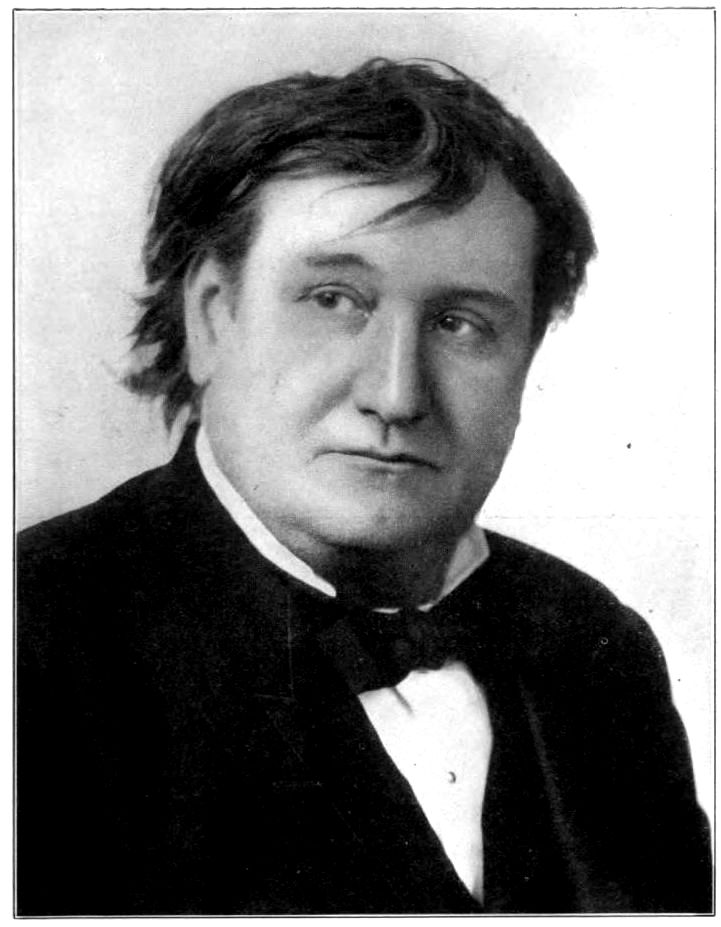
JOSEPH A. ALTSHELER.
Joseph A. Altsheler, whose story, “The Lost Herd,” follows, is a representative type of the
new generation of Southerners in contemporary literature.
Born, reared and educated in the South, he has won successive and substantial laurels
in both journalism and literature, and is at present the unusual combination of a successful
figure in both fields.
Born in Kentucky, that commonwealth that has contributed so many distinguished workers
to the literary history of the day, he attended the local schools of his native heath in the
southern part of the state until entering Vanderbilt University, where he ranked high in
class work, being a Latin scholarship man.
After leaving college, he immediately took up journalistic work in Louisville with The
Evening Post, subsequently going with the Courier-Journal, with which paper he remained
several years, gaining wide journalistic experience as legislative correspondent, dramatic
critic, city editor and editorial writer.
In 1892 Mr. Altsheler followed the almost inevitable ambition of the American with pronounced
literary attainments, migrating to the broad and inviting field of the metropolis,
since which time he has successively filled responsible positions with the New York World,
being at present in charge of its tri-weekly edition.
About nine years ago Mr. Altsheler turned his attention seriously to fiction, since which
time he has produced no less than ten novels, in many of which he has drawn largely upon
his own extensive personal experiences as a journalist.
His first book was “The Sun of Saratoga,” while his latest is “Guthrie of the Times,” a
contemporary romance with a strong political flavor. He has now in press “The Candidate,”
also a novel of the day, and likewise treating of political life, this time in the West instead
of in Kentucky.
THE LOST HERD.
23
By Joseph A. Altsheler.
Redfield parted the twining
bushes with both hands, and
pushed his body through the
cleft, while I stood by to see
the issue. He took but a
single step and then threw himself
back like a soldier who would escape
a bullet, his face, now turned toward
me, showing a yellowish hue in the
moonlight. He raised his hand and
wiped his damp forehead, while I
gazed at him in silence, seeing fear,
sudden and absolute, in his gaze, as
if death had faced him, with no
warning.
We stood so, for a few moments,
until the terror died slowly in his eyes,
when he took another step back, and
laughing a little, in a nervous way,
pointed before him with a long forefinger.
I advanced, but he put a restraining
hand upon my shoulder, and bade me
take only a single step. I obeyed and,
with his hand still on my shoulder,
looked down a drop of a thousand feet,
steep like the side of a house, the hard
stone of the wall showing gray and
bronze, where the light of the moon
fell upon it.
I saw at the bottom masses of
foliage like the tops of trees, and running
through them a thread of silver,
which I felt sure was the stream of a
brook or creek. We were looking into
a green valley, and now I understood
Redfield’s terror, when instinct or
quickness of eye, or both, saved him
from the next step, which would have
taken him to sure death.
The valley looked pleasant, with
green trees and running water, and I
suggested that it would furnish a good
camp to us who were weary of mountains
and ravines and stony paths.
Redfield pointed straight before us,
and three miles away rose the mountain
wall again, steep and bare, the
hard stone gleaming in the moonlight.
I followed his finger as he moved it
around in a circle, and the wall was
there, everywhere. The valley seemed
to be enclosed by steep mountains as
completely as the sea rings around a
coral island.
I said that I had never heard of such
a place in these mountains, and Redfield
reminded me that there were
many things of which neither he nor
I had ever heard, and perhaps never
would hear.
His retort did not dim my curiosity,
in which he shared fully, and, lying
down for greater security, we stared
over the brink into the valley, which
looked like a huge bowl, sunk there
by nature. The sky was clear, the
moon was rising, and we could see the
boughs of the trees below waving in
the gentle wind. The silver thread
of the brook widened, cutting across
the valley like a sword blade, and we
almost believed that we saw soft green
turf by its banks. But on all sides of
the bowl towered the stone walls,
carved into fantastic figures by the
action of time and mountain torrents.
The green valley below could not
remove the sense of desolation which
the walls, grim and hard, inspired.
My eyes turned from the foliage to
the sweep of stone rising above, black
where the light could not reach it,
then gray and bronze and purple and
green as if the moon’s rays had been
tinted by some hidden alchemy. I
assisted nature with my own imagination
and carved definite shapes—impish
faces and threatening armies
in the solid stone of the walls. I felt
the shiver of Redfield’s hand, which
was still upon my shoulder, and he
complained that he was chilled. I
knew it to be the stony desolation of
the walls, and not the cold of the
night, that made him shiver, for I,
too, felt it in my bones, and I proposed
that we look no more, at least not
then, but build a fire, and rest and
sleep.
We did as I proposed, but while we
gathered the fallen brushwood, each
knew what was in the other’s mind;
the mystery of the valley was upon
us, and we would wait only until daylight
to enter it and see what it held.
Redfield lighted the fire, and the
blaze, rising above the heaps of dry
sticks and boughs, was twisted into
coils of red ribbon by the wind; a thin
cloud of smoke gathered and floated
off over the valley, where it hung like
a mist, while the wind moaned in the
great cleft.
Redfield complained that he was
still cold, and wrapping his blanket
tightly around him, sat close to the
fire, where I noticed that he did not
cease to shiver. I spread out my own
blanket, and by and by both of us lay
down on the grass seeking sleep.
When I awoke far in the night, the
fire had burned down, the moon was
gone, and Redfield’s figure, beyond
the bed of coals, was almost hidden
by the darkness. Damp mists had
gathered on the mountain, and my
hand, as I drew the corners of the
blanket around my throat, shook with
cold.
Not being able to sleep again just
then, I rose and put more wood on the
heap of coals. But the fire burned
with a languid, drooping blaze, giving
out little warmth and offering no resistance
to the encroaching darkness.
Redfield slept heavily and was so still
that he lay like one dead. The flickering
light of the fire fell over his face
sometimes and tinted it with a pale
red.
I sat by the coals a little while, looking
around at the dim forest, and then
the attraction of the great pit, or valley,
drew me toward it.
I knelt down at the brink, holding
to the scrubby bushes with each hand,
and looked over, but I could no longer
see the trees and brook below. The
valley was filled with mists and vapors,
and from some point beneath came
the loud moan of the wind.
I stayed there a long time, gazing
down at the clouds and vapors, which
heaped upon each other and dissolved,
showing denser vapors below, and
then heaped up in terraces again. The
stone walls, when I caught glimpses
of them, seemed wholly black in the
darkness of the night, and the queer
shapes which took whatever form my
fancy wished were exaggerated and
distorted by the faintness of the light.
The place put a spell upon me; if Redfield
would not go with me in the
morning to explore it, though knowing
well he would, I resolved to go
alone, and see what, if anything, was
there besides grass and trees and
water. I felt the strange desire to
throw myself from a height which
sometimes lays hold of people, and
instantly pulling myself back from
the brink I returned to the fire.
Redfield was yet sleeping heavily and
the flames had sunk again, flickering
and nodding as they burned low. I
lay down and slept until morning,
when I awoke to find that Redfield
was already cooking our breakfast.
He proposed that we begin the descent
in an hour, and like myself he
seemed to have accepted the conclusion
that we had agreed upon the
attempt, though neither had said a
word about it.
The valley assumed a double aspect
in the bright light of the morning,
green and pleasant far down where
the grass grew and the brook flowed,
but grim and gaunt as ever in its wide
expanse of rocky wall. The rising
sun broke in a thousand colored lights
upon the cliffs, and the stony angles
and corners threw off tiny spear points
of flame. The majesty of the place
which had taken hold of us by night
held its sway by day.
We had no doubt that we should
find a slope suitable for descent if we
sought long enough, and we pushed
our way through the bushes and over
the masses of sharp and broken stone
along the brink until our bones ached
and our spirit was weak. Yet we encouraged
each other with the hope
that we would soon reach such a place,
though the circle of the valley was
soon proved to be much greater than
we had expected.
Noon came and we were forced to
rest and eat some of the cold food that
we had wisely brought with us. The
sun was hot on the mountains and
the stone walls of the valley threw the
light back in our eyes until, dazzled,
we were forced to look away. But
we had no thought of ceasing the
quest; such a discovery was not made
merely to leave the valley unexplored,
and rising again after food and rest
we resumed our task. About the
middle of the afternoon I saw a break
in the wall which we thought to be a
ravine or gully of sufficient slope to
permit of our descent into the valley,
but it was nearly night when we
reached the place and found our opinion
was correct.
The ravine was well lined with
short bushes which seemed to ensure
a safe descent, even in twilight, and
we began the downward climb, seeking
a secure resting place among the
rocks for each footstep and holding
with both hands to the bushes and
vines.
The sun, setting in a sky of unbroken
blue, poured a flood of red and golden
light into the valley. The walls blazed
with vivid colors, and the green of
the trees and grass was deepened.
Redfield stopped, and touching me
on the shoulder pointed with his finger
to the little plain in the center of the
valley where a buffalo herd was grazing.
Such they were we knew at the
first glance, for one could not mistake
the great forms, the humped shoulders
and shaggy necks.
Neither of us sought to conceal his
surprise, and perhaps neither would
have believed what his eyes told him
had it not been for the presence and
confirmation of the other. We knew,
as everybody else knew, that the wild
buffalo had been exterminated in this
region years ago, and that even now
the only herd left in the whole United
States was somewhere in the tangled
mountains of Colorado, and yet here
we were gazing upon another herd of
these great animals, at least fifty of
them, for we could count them as they
moved placidly about and cropped
the short turf.
We remained a quarter of an hour
in that notch in the wall exulting over
our second discovery, for we considered
the tenants of the valley of as
great importance as the valley itself,
and exchanged with each other sentences
of surprise and wonder. The
sun hovered directly over the further
brink, and poised there, a huge globe
of red, shot through with orange light,
it seemed to pour all its rays upon the
valley.
Every object was illumined and enlarged.
The buffaloes rose to a gigantic
height, the trees were tipped
with fire, and the brook gleamed red
and yellow where the rays of the sun
struck directly upon it. Again we
said to each other what a wonderful
discovery was ours and looked to the
rifles that we had strapped across our
backs, for seeing the great game of
the valley we had it in mind to enjoy
unequalled sport. I lamented the
speedy departure of the day, but Redfield
thought the night would give us
a better chance to stalk the big game,
and thus talking we resumed the descent.
The sun sank behind the
mountains, the red and golden lights
faded, and the valley lay below us in
darkness. The buffalo herd had disappeared
from our sight, but feeling
sure that we should find it we continued
our descent, clinging to the
bushes and vines, and wary with our
footing.
The twilight was not so deep that
the gray mountain walls did not show
through it, and as we painfully continued
our descent the trees and the
brook rose again out of the dusk.
Nearing the last steps of the slope we
could see that the valley was much
larger than it had looked from above,
and our wonder at the presence of the
herd was equalled by our wonder at
the manner in which it had ever
reached such a place, as there seemed
to be no entrance save the perilous
path by which we had come.
At last we left the bushes and stones
of the ravine and, standing with feet
half buried in the soft turf of the valley,
looked up at the sky as if from
the bottom of a pit.
The twilight was as clear around us
as it had been on the mountain above,
and we could see a pleasant stretch
of sward, the land rolling gently, with
clumps of bushes and large trees clustering
here and there.
We did not pause to look about,
both being filled with the ardor of the
chase, and we walked quickly toward
the little bit of prairie in which we had
seen the buffaloes, examining our
rifles to be sure that they were loaded
properly. I felt that sense of unreality
which strange surroundings always
give.
The night, now fully come, was not
dark, the stars were appearing and a
pale light glimmered along the edges
of the cliffs, which seemed, as I looked
up, to overhang and threaten us.
We reached the brook that we had
seen from above, a fine stream of clear
water, a foot deep and a dozen or
more across. We paused there to
drink and refresh ourselves, and found
it cool and natural to the taste. I
supposed that it flowed into some cave
through the mountain, since I could
not imagine any other outlet; but the
matter remained for only a few seconds
in my mind, as Redfield began
to tug at my sleeve and urge me on
to the chase, to which I was nothing
loth.
Yet I noticed that there were no
other signs of animal life in the valley.
Not a rabbit popped up in the grass;
the trees were fresh with foliage, but
no birds flew among the boughs. All
around us was silence, save for the
soft crush of our own footsteps and our
breathing, now quickened by our exertions.
I called Redfield’s attention
to this silence and absence of life, and
we stopped again and listened but
heard nothing. The night was without
wind; I could not see a leaf on the
trees stir, the air felt close and heavy,
and Redfield told me that my face
was without color; I had noticed that
fact already in his.
Fifty yards farther and we came
to the open space in which we had
seen the herd, and we felt sure that
it was not far beyond us, for the heads
of the animals had been turned south
and we believed they had continued
to move in that direction as they
nibbled the grass. We paused to
take another look at our rifles, our
ardor for the chase rising to the highest,
leaving us no thought of anything
but to kill.
I had never before hunted such big
game and I felt now the thrill which
leads men to risk their own lives that
they may take those of the most
dangerous wild beasts. The twilight
had deepened somewhat, and though
of a grayer tone in the valley, where
mists seemed to be collected and
hemmed, it was not dense enough to
hinder our pursuit.
Redfield paused suddenly and put
his hand upon my shoulder though
I had seen them as soon as he. The
herd was grazing in the edge of a little
grove a few hundred yards ahead of
us, but within plain sight. This closer
view confirmed our count from the
mountain-side that they were about
fifty in number, and admiration mingled
with our wonder, for they were
magnificent in size, true monarchs of
the wilderness, grazing, unseen by
man, while the rush of civilization
passed around their mountains and
pressed on, hundreds of miles into the
Farther West. Their figures stood
out in the gray twilight, huge and
somber, surpassing in size anything
that I had imagined. I felt a joy that
I was one of the two whose fortune it
was to find such game, a proud anticipation
of the trophies that I would
show. I saw the same exhilaration
in Redfield’s eyes, and again we spoke
to each other of our fortune.
I held up a wet finger, and finding
that the wind was blowing from the
herd toward us we resumed our advance,
sure that we could approach
near enough for rifle shot. The herd
was noiseless, like ourselves, the huge
beasts seeming to step lightly as they
cropped the grass, the scraping of the
bushes as they pushed through them
not reaching our ears. Again the
sense of silence, of desolation oppressed
me. The grayness over everything,
the trees, the grass, the mountains,
Redfield, myself even, the unreality
of the place and our situation seized
me and clung to me, though I strengthened
my will and went on, the zeal of
the chase directing all else.
Our stalking proceeded with a success
that was encouraging to novices
like ourselves, and a few more cautious
steps would take us within good rifle
shot. We marked two of the animals,
the largest two of the herd, standing
near a clump of bushes, and we agreed
that we should fire first upon these,
Redfield taking the one on the right.
If we failed to slay at the first shot,
which was very likely, the chase would
be sure to lead us directly down the
valley, and we could easily slip fresh
cartridges into our rifles as we ran.
Nor could the game escape us within
such restricted limits; and thus, feeling
secure of our triumph, we slipped
forward with the greatest caution until
we were within the fair range that
we wished. Then we stood motionless
until we could secure the best aim,
each selecting the target upon which
we had agreed.
The herd seemed to have no suspicion
of our presence. However
acute might be the buffalo’s sense of
smell, it had brought to them no warning
of our presence. Their heads were
half buried in the long grass, and as I
looked along the barrel of my rifle, I
felt again the stillness of the valley,
the utter sense of loneliness which
made me creep a little closer to Redfield,
even as I sought the vital spot
in the animal at which I aimed my rifle.
Redfield whispered that we could
hardly miss at such good range, and
then we pulled trigger so close together
that our two rifles made one report.
We were good marksmen, but both
the buffaloes whirled about, untouched
as far as we could see, and looked at us.
The entire herd followed these two
leaders, and in an instant fifty pairs
of red eyes confronted Redfield and
myself. Then they charged us like
a troop of cavalry, heads down, their
great shoulders heaving up. We
slipped hasty cartridges into our rifles
and fired again, but the shots, like the
first, seemed to have no effect, and,
in frightened fancy, feeling the breath
of the angry beasts already in our
faces, we turned and ran with all
speed up the valley, in fear of our
lives and praying silently for refuge.
I hung to my rifle with a kind of instinct,
and I noticed that Redfield,
too, carried his. I looked once over
my shoulder and saw the herd pursuing,
not fifty feet away, in solid
line like the front of an attacking
square. I shouted to Redfield to dart
to one side among some trees, hoping
that the heavy brutes would rush past
us as we could not hope to outrun
them in a straight course, and he
obeyed with promptness. We gained
a little by the trick, but the buffaloes
turned again presently, and then we
seized the hanging boughs of two
convenient trees, and, managing to
retain our rifles, climbed hastily up
and out of present danger.
The buffaloes stopped about a hundred
feet away, still in unbroken
phalanx, and stared at us with red eyes.
I was filled with fear; I will not deny
it, I felt it in every fiber. I had heard
always that these beasts, however
huge, were harmless, their first rush
over, but they were looking at us now
with eyes of human intelligence and
even more than human rage; a steady,
tenacious anger that threatened us,
and seemed to demand our lives as
the price of our attempt upon theirs.
I felt cold to the bone, and the angry
gaze of the besieging beasts held my
own eyes until I turned them away,
with an effort, and looked at Redfield.
Then I saw that he was as white and
afraid as I knew myself to be. I told
him that we were besieged, and he rejoined
that the attitude, the look of
our besiegers, betokened persistency.
While we talked, the buffaloes began
to move and we hoped that we had
been mistaken in our belief, and that
they would abandon us, but the hope
was idle. They formed a complete
circle around us, a ring of sentinels,
each motionless after he had assumed
his proper position, the red eyes shining
out of the massive, lowered heads,
and fixed on us. Redfield laughed,
but it was not the laugh of mirth.
He asked me what we had to fear from
the buffalo, which was not a beast of
prey; they would turn away presently
and begin to crop the grass again, but
his tone did not express a belief in
his own words.
The night had not darkened, but
the curious grayness which was the
prevailing quality of the atmosphere
in the valley had deepened, and the
forms of the beasts on guard became
less distinct. Yet it seemed only to
increase the penetrating gaze of their
eyes, which flamed at us like a circle
of watch fires. The sentinels were
noiseless as well as motionless. The
wind whimpered gently through the
leaves of the trees, but there was
nothing else to be heard in the valley,
and saving ourselves and the buffaloes,
nothing of human or animal life to be
seen. Redfield said to me that he
wished our guards would move, that
while they stayed in such fixed attitudes
he felt as if we were watched by
so many human beings. His voice
was at a higher pitch than usual, and
I felt a strange pleasure in noticing it,
for I knew then that he had been affected
as I by our peculiar position.
He burst suddenly into a laugh, and
when I asked him where he found
amusement, he reminded me that both
of us yet carried our rifles, though we
seemed to have forgotten the use for
which they were made. He added
that the sentinels were within easy
range, and since our object was now
self-preservation and not sport, we
could sit on the boughs in perfect
safety and shoot as many of them as
we chose, unless they retired.
It was the power of surprise and fear
that had prevented us from thinking
of this before, though the weapons
were in our hands, and I felt a sense
of shame that we had permitted ourselves
to be overwhelmed in such a
manner. I waited before raising my
own rifle, to see the effect of Redfield’s
shot. I saw him select his target and
look down the barrel of his rifle as he
sought to make his aim true. The
eyes of the buffalo had seemed so human
in their intelligence and anger
that I expected to see the animal,
knowing his danger, retreat when the
rifle was raised. But he made no
motion, looking straight into the muzzle
of the weapon which was threatening
him. Redfield pulled the trigger
and fired, and then both of us cried
out in surprise and displeasure.
The buffalo did not move, and if the
bullet had touched him there was no
mark upon him that we could see to
tell of its passage. Redfield said it
was the bad light that had made him
miss, but I believed it was a trembling
hand—that the chill, though the
night was warm, which affected me
had seized him, too. Yet I steadied
myself now that my own time to fire
had come, and took good aim at the
buffalo nearest to my tree. It may
have been the strength of my imagination,
and in reality the eyes of the
brute may not have been visible at
all at such a distance and in the night,
but I was sure that they were staring
at me with human malice, and another
expression, too, that I interpreted as
defiance. I was seized with a sudden
and fierce anger—anger because I had
been afraid, anger because there was
a taunt in the eyes of the beast.
I pulled the trigger and looked
eagerly at the result of my shot; then
I cried aloud in disappointment, as
Redfield had done. The buffalo, untouched,
was staring at me with the
same malicious eyes, not even moving
his head when I fired.
Redfield laughed once more in a
mirthless way, and I told him angrily
to hush; that he was afraid but I was
not, and I would fire again. I put in
a second cartridge but the shot was as
futile as the first, and Redfield, who
tried once more, had a similar lack of
success. But we told each other, and
with all the greater emphasis because
we were not sure of it, that it was the
imperfect light and our nerves strained
by the descent of the rough cliff. I
noticed that Redfield’s voice was growing
louder and more uneven as we
talked, and his eyes were gleaming.
At last we exhausted our cartridges
without touching the silent ring of
sentinels, or making any of them move,
and Redfield, throwing his rifle to the
ground, laughed in the curious, unnatural
way that makes one shiver. I
bade him stop and I spoke with anger,
but he paid no attention either to my
words or my manner. His laughter
ended shrilly, and then he said that
he understood it all: that these animals
had been hunted from the face of the
earth except this lone herd, which was
left here to hunt any man who came
against it. Behold the present as the
proof of what he said!
I laughed at him, yet my laughter,
like his, sounded strange even in my
own ears, and looking at the silent
ring of sentinels, I believed his words
to be true. When or how we should
escape I could not foresee, and I did
not feel the fear of death; and yet there
was nothing that I had in the world
which I would not have given to be
out of the valley. The rifle which I
had used to such little purpose burned
my hands, and I let it drop to the
ground.
Redfield laughed again in a shrill,
acrid way, and when I asked him to
stop, jeered at me and bade me notice
how faithful our besiegers were to
their duty.
Not one of them had moved from
the circle, their forms becoming duskier
as the night deepened, but growing
larger in the thick atmosphere. The
sky above was cloudless, and we
seemed to see it from interminable
depths; the huge cliffs rose out of the
mists, shapeless walls, and the trees
became gray and shadowy. Redfield
began to talk, volubly and about
nothing, varying his chatter with the
same shrill, unpleasant laughter, and
I, finding it useless to bid him hush,
said nothing. Yet I wished that he
would cease, and I might hear other
sounds, the leap of a rabbit or the
scamper of a deer, anything to disturb
that horrible chatter, and the equally
horrible silence, otherwise. Securing
myself in the crook of a bough and the
tree I tried to sleep, and I think that
at last I fell into a kind of stupor, in
which I heard only Redfield’s shrill
laugh. But I awoke from it to find a
clear moon, and our silent line of sentinels
still there. The wind, risen
somewhat, was moaning up the valley
and the night was cold.
Redfield was silent then, but when
I called to him he answered in a natural
tone for the first time in hours
and asked me if I had anything to
suggest, as we must change our present
position very soon. I told him that
we must descend from the trees, find
the path out of the valley and leave
by it, at once. He pointed to the
sentinels and said nothing would induce
him to face them, but I told him
we must do it since it was the only
thing left for us, though I will admit
that my own sense of fear was of such
strength that my words were braver
than myself.
The moon came out again and the
forms of our guards grew more distinct,
ceasing to have the shadowy
quality which at times in the last hour
had made them waver before me.
Nevertheless, the light still served to
distort them and enlarge them to gigantic
size, and my imagination gave
further aid in the task.
Redfield became silent again, and I
thought he might be asleep, but when
I looked at him I saw his eyes shining
with the same unnatural light that I
had marked there before, and I felt
with greater force than ever that we
must not long delay our attempt to
leave the valley. But I remained for
a while without movement or without
thought of what we should do. The
belief that we had come there to be
hunted by the survivors of the millions
whom we had hunted out of existence
became a conviction, and I felt
a reluctance to meet the eyes of the
avenging beasts, eyes that I could
always see with my imagination if
not with my own gaze. The light of
the moon struck fairly on the sides
of the great cliffs and the grotesque
and threatening faces which my fancy
had carved there in the rock lowered
at us again. I could even distort the
trees into gigantic half-human shapes,
leaning toward us and taunting us,
but I shut my eyes and drove them
away. I had not forgotten the curious
light gleaming in Redfield’s eyes.
An hour later I told Redfield that
we must descend, that we could not
stay forever where we were and it was
foolish for us to delay, wearing out our
strength and weakening our wills with
so long and heavy a vigil. He said
no, that he would not stir while those
beasts were there watching; he could
see a million red eyes all turned upon
him and he knew that as soon as he
touched the earth the owners of those
eyes would rush upon him and trample
him to death. I felt some of his own
reluctance, but knowing that it was
no time to waste words I told him that
he could stay where he was, if he chose,
but I was going; I had seen enough of
the valley and certainly I would never
come near it again. So speaking I
began to descend the tree, and Redfield
instantly began to tremble and
beg me, like a child, not to go. He
said he could not be left there alone
and he would not be for all the world.
Strengthened in my purpose by his
pleadings and believing that my method
would compel him to come I again
bade him stay if he wished, it was
nothing to me; but while I said these
things I continued to descend. When
he saw that I was in truth going he
began to lower himself from his tree,
though still begging me not to make
the attempt.
My foot struck the ground and I
stood there afraid, but resolute. Our
guards still gazed at us but made no
movement to attack, and I drew
courage from the fact.
Redfield was shivering, and perhaps
my own courage was not of the best,
but I pointed to a dark line in the face
of a distant cliff where the moonlight
fell clearly, and asked if it were not
the ravine by which we had come.
He said yes, and not giving him time
to think and to hesitate about it I
seized him by the arm and pulled him
on, telling him that we must reach
the ravine as quickly as we could and
leave the valley. Then we advanced
directly toward that segment of the
watchful circle which stood between
us and the point we desired to reach.
I retained my firm grasp upon Redfield’s
arm and I felt the flesh trembling
under my fingers. We did not
recall until long afterward that we
had forgotten our rifles. As we advanced,
the line of buffaloes parted
and we passed through it. Redfield
cried out in childish delight and said
they were afraid of us, but I shook
him, more in anger than from any
wiser motive, and hastened our steps.
Fear rolled away from me and I felt
an exhilaration that made me walk
with buoyant step. I dropped my
hand from Redfield’s arm and we
walked on at a swift pace, my eyes
fixed on the dark line in the cliff
which marked the ravine, our avenue
of escape from the valley. Redfield
suddenly put his hand upon my shoulder
and motioned me to look back.
When I obeyed I saw the buffaloes following
us in a long line, as regular
and even as a company of soldiers.
Redfield laughed in the mirthless way
which marked him that night and said
we had an escort who would see that
we did not linger in the valley. I
could not say that he was wrong, but
I grew impatient with him when he
tried to make a jest of it and talked of
our bodyguard. I knew that he was
trembling, and I asked angrily, though
not in words, why they could not let
us alone. We were leaving as fast as
we could, and as for coming back,
nothing could drag me to that valley
again; no, nothing, and I said the
“nothing” aloud with angry emphasis.
Our guard did not desert us, but
followed at fifty or sixty yards with
noiseless step. And again I noticed
that there was no other animal life
in the valley, though the grass was
green and the woods abundant, a place
that the birds and rabbits should love.
The outlines of the pass grew more
distinct, the tracery of bushes and
vines that lined it was revealed, and
in a few minutes we would arrive at
the first slope. I felt like a criminal,
a murderer, taken in disgrace from
the place of his crime, and this feeling
once having seized me would not leave,
but grew in strength and held me.
Redfield was my brother in crime, and
certainly his face, his nerveless manner,
showed his guilt.
I hastened my footsteps, eager to
leave the place. Redfield kept pace
with me, and in silence we reached
the first slope. It was a rugged and
toilsome ascent, but I thought little
of such things, the joy of escape from
the valley mastering all other emotions.
A third of the way we paused,
and, looking back, saw the silent line
of sentinels watching at the foot of
the cliff, their eyes turned up at us.
Then we resumed our ascent, and,
reaching the top of the cliff, left the
lost herd, forever.
THE ISLES OF SCILLY.
32
By James Henry Stevenson.
Do not visit The Scillies. Go to
Penzance—a charming spot
that has not received the attention
from the tourist that it
deserves—and see the hopeful passengers
take ship in the morning for the
“blessed isles;” inspect them again on
their return in the evening; if you are
still curious go to Land’s End—a
drive of eight or ten miles—and look
across the sea that lies between you
and The Scillies; buy a guide book and
a few pictures when you come home,
and bless your stars that you did not
tempt the deep.
This is the advice which I vowed I
would give, when, one day last summer,
for three awful hours I “hove”
with the heaving deep. I am not
usually a poor sailor. Indeed I have
generally crossed the Atlantic without
making my offering to the gods of the
Abyss. Anything in reason I am prepared
to do, but the demands of the
little steamer that plies between the
Islands and Penzance are altogether
unreasonable.
It was a beautiful morning and
Mount’s Bay, on which Penzance is
so picturesquely situated, was as
placid as a swimming tank, but I
noticed that the wind was blowing
fresh from the southeast, and I mentally
observed that there was likely
to be trouble when we rounded Land’s
End. I am proud of that prophecy
now, though trouble came sooner than
I had anticipated.
Long before we had lost the shelter
of the rocky and fascinating coast
that girts the shores of Cornwall
towards Land’s End, many a swain,
who had started off that morning with
a light heart and “Arriet,” sadly admitted
that “all was vanity.”
When we reached Land’s End I lost
interest in the scenery and gave up—among
other things—the unequal
struggle. The “Lyonesse” was
crowded and there was no place to
lie down. Indeed one was fortunate
to find a seat. I secured a camp stool
and a vacant place in the gang-way,
and as I watched, or rather was conscious
of, the movements of our vessel,
she seemed like a fabled sea monster
sporting in the deep. Poised for
a moment jauntily on the wave’s
crest, or plunging her nose beneath a
huge billow, she was equally happy.
I called to mind the legend of the
Lyonesse, the continent that once
stretched between Cornwall and the
Isles of Scilly, and which in the days
of “good king Arthur” sunk below
the deep at the command of Merlin,
engulfing Mordred and his host as
they thundered hard after the remnant
of the slain Arthur’s army. I
thought of this and then I knew that
our ship was trying to justify her
high sounding title. Just at this moment
she made a plunge towards the
sunken continent and a huge wave
swept in over the bow, most thoroughly
drenching a party of ambitious
sightseers who were tempting Providence
on the ship’s nose. The wave
rolled on towards me but I was too
busy just at that moment to successfully
evade it.
As we passed close by Land’s End
I roused up for a moment to look at
the celebrated point and again as we
came in sight of Woolf lighthouse, a
solitary sentinel in the waste of waters,
midway between the mainland and
the islands, and an eloquent witness
for the Lyonesse legend.
As for the rest, I can say I was conscious
of existence, but not taking
much interest in life, when a sudden
cessation of the turmoil within and
without re-awakened somewhat my
torpid senses, and as we made fast
to the dock, I dragged myself ashore
and followed the haggard and bedraggled
passengers through a narrow
street into the town. A short walk
brought me beyond the city to a
grassy hillside, where, with my camera
for a pillow, having cast aside all literary
and artistic aspirations as worthless,
I was soon blissfully unconscious
of the beauty and romance I had come
so far and braved so much to see.
In the course of an hour or so, I was
awakened by a grazing horse on the
alert for something green, and, recollecting
my mission, started forth to
make the tour of the island.
ST. MARY’S AND OLD TOWN.
We landed, as a matter of course,
at Hugh Town, St. Mary’s, the largest
and most important island of the
group, with Star Fort situated on its
eastern promontory, and Hugh Town
on a narrow isthmus connecting this
promontory with the main body of
the island.
As I have already intimated, the
first thing of interest to me, on coming
ashore, was a vacant bit of real estate
wherein to lie down and forget my
past. So, after shaking myself awake,
I walked up a hill and came in sight
of the historic little church which is
situated at the head of the bay of Old
Town, formerly the chief town of the
island. The church, a very quaint
old structure, stands in an enclosure
which rises in successive terraces on
the hillside and is filled with a striking
mixture of English and tropical
vegetation.
Among the many interesting monuments
in the churchyard, I noticed a
granite obelisk, erected by Mr. Holtzmaister
of New York, to the memory
of his wife, who perished in the wreck
of the ill-fated S. S. Schiller, May
7, 1875. The inscription reads: “In
memory of Louise Holtzmaister, born
at New York, May 15th, 1851, who
lost her life in the wreck of the S. S.
Schiller off the Scilly Isles, May the
7th, 1875. Her body rests in the deep.
This monument has been erected to
her memory as a mark of affection by
her surviving husband.”
The memory fain would linger round
some spot where the beloved take their
last long sleep. Tennyson’s beautiful
lines awaken a heartfelt response in
every human breast:
“Oh to us
The fools of habit, sweeter seems
To rest beneath the clover sod,
That takes the sunshine and the rains,
Or where the kneeling hamlet drains
The chalice of the grapes of God,
Than if with thee the roaring wells
Should gulf him deep in fathom brine;
And hands so often clasped in mine
Should toss with tangle and with shells.”
THE CHURCH AND THE TOMBS.
The people of these islands have
witnessed many a tragedy of the sea
in their day, but perhaps none more
awful than that which this monument
recalls. The Schiller, a staunch boat,
built on the Clyde in 1873, was in command
of Captain Thomas, an Englishman
by birth, but then a naturalized
German. She left New York on the
27th of April with fifty-nine saloon,
seventy-five second, and one hundred
and twenty steerage passengers. She
was due at Plymouth on the 8th of
May, but for three days previous to
the disaster no observations were obtained
on account of the weather.
Early on Friday, the 7th, a heavy fog
came down. Captain Thompson,
thinking he was near the islands, ordered
the engines at half speed, but
about 10 P.M. she ran on the Retarrier
Ledges, near the Island of St. Agnes.
Few were in bed at the time of the
accident; the boats were quickly
launched, the sailors behaved splendidly,
but the sea was running high,
and as the women and children
crowded together into the pavilion a
heavy sea swept over it and carried
all away. About forty-five out of
three hundred and forty-five were
saved. Mrs. Jones was the only lady
survivor. By Saturday evening seventy-eight
bodies, nearly all with
life-preservers on, had drifted ashore.
The old church, which is now restored
and used only as a mortuary
chapel, was originally built in the form
of a cross. In 1662 it was enlarged.
On each side of the communion table
ran a long seat, the one for the members
of the Council and the other for
their wives or the widows of dead
councilmen. In 1732 it was decreed
that if a councilman died, his wife
was entitled to a seat among the
wives of living councilmen during her
widowhood, but if she married she
was deprived of that privilege, unless
she married a councilman. This high
esteem in which they held their women,
and the fact that they used the church
as a council chamber, throw an instructive
sidelight on the character
of these old representatives of the
right of the people to govern themselves.
THE LOGAN ROCK.
We leave the quiet churchyard and
its tragic story to continue our walk
around the island. A tramp on the
promontory Peninnis, which stretches
out southward into the sea, brings to
view many fantastic rock formations.
Great boulders are left curiously poised
upon each other by the action of wind
and wave in ages past. Pulpit Rock,
composed of huge flat blocks of stone
resting on each other and leaning out
to sea, is perhaps the most famous,
though why it should be called “Pulpit
Rock” is more than one can well
guess. It looks more like an hundred
other things than it does like a pulpit.
Most of all it resembles a great gun
mounted on the rock to command
the sea at this point. We next encounter
the Logan Rock (pronounce
loggan). Everyone who has read
Baedaker’s “Great Britain” knows of
the existence of Logan Rock in Cornwall,
a rock of sixty-five tons weight
so delicately poised that it can be
set in motion quite easily. I was not
aware before that the phenomenon
had repeated itself, but I learned last
summer that there was quite a number
of these “loggan,” or rolling rocks
to be found at different places.
The Logan Rock at St. Mary’s is
quite famous and was discovered somewhat
recently by accident. A resident
of the town, overtaken by the
storm, took shelter beneath a huge
rock. The wind was blowing fiercely
and to his great surprise, if not terror,
he discovered that the rock was moving
gently to and fro. He could
scarcely believe his senses at first, but
on further examination, he found it
was so poised that it readily responded
to his efforts and could be made to
sway back and forth. Its estimated
weight is three hundred and sixty
tons, and while it requires some energetic
effort to put it in motion it
rocks with ease afterwards.
Hugh Town, the port and principal
town of the island of St. Mary’s,
and indeed of the entire group of
islands, enjoys a very unique situation.
On the southwest a promontory
juts out into the sea. This is
the site of Star Fort, and one can
make its circuit in about half an
hour. It is joined to the mainland
by a narrow isthmus of sand which
separates St. Mary’s Pool, the harbor
on the north, from Porth Cressa
Bay, on the south. On this narrow
strip of land, across which a boy can
cast a stone, and over which the high
tide threatens to leap, Hugh Town
is built. There is no pretension to
architecture, no striking buildings,
none even that have the interest of
antiquity to recommend them. The
town is practically contained on the
narrowest part of the isthmus, though
westward, where the strip of land
widens, the houses scatter somewhat.
Save for its audacious situation, daring,
as it does, the rage of the sea from
both sides, it is commonplace and
uninteresting.
HUGH TOWN.
Too much cannot be said in favor
of the islands as a health resort.
They are so small in area, and lie so
low, that living on them is practically
living at sea. One may here take a
protracted cruise with no reeling deck
beneath him, and no nightmare of
mal-de-mer to threaten his dreaming
hours.
There are no manufactures of any
kind on the island, nor is anything
present to vitiate the air. Sea breezes,
from the illimitable reaches of the
ocean, sweep at will across these tiny
bits of land, from every point of the
compass, in quick succession. In winter
the mean temperature is 45 and in
summer it is 58. The rain fall is very
moderate and, with fine consideration
for the tourist, the rain generally
comes at night, a phenomenon noticeable
in Cornwall also.
Here is a fine resting place for men
and women, physically or mentally
weary. The rush of modern business
life is wholly unknown; there are no
street cars nor elevated trains to catch;
there is no congestion of traffic in the
streets; no roar of vehicles nor hum
of business to disturb the absolute
rest that the place suggests or to
chide one who is disposed to take life
easy. One lies down at night with
the murmur of distant waters echoing
through his dreams and wakens in the
morning to the song of the surf.
The islands are said to be a “haven
of refuge for sufferers from chronic
bronchitis, phthisis and consumption
in all its terrible forms, insomnia, and
the strain of overwork; and for children
one vast playground with
free and open beaches and sands difficult
to surpass.”
Certainly it would be hard to find a
more ideal place for overworked humanity
seeking rest and recuperation.
The climate is all that could be desired,
living is cheap, the whole atmosphere
breathes rest, and there are
ever present the constant sunshine
and the eternal sea.
On St. Mary’s Sir Walter Besant
lived while engaged on his celebrated
romance, “Armorel of Lyonesse,” the
home of whose beautiful Armorel Sir
Walter located on the now uninhabited
island of Samson. Half a century
ago Samson had a population of fifty
souls, with ten houses, among which
“Armorel’s cottage” may still be
seen. In 1885, only one family was
left, and now nothing remains save
the wreck of the houses and the traces
of former cultivation, rapidly disappearing.
The inhabitants were moved
to other islands to insure the better
education of their children, and, incidentally,
to curtail a little private
and untaxed trade which they carried
on with their French neighbors.
To trace the history of these fragments
of a lost continent through
former generations would be most interesting,
but it must be here foregone.
They have, however, bulked considerably
in English history and figured
frequently in her relations with her
continental neighbors. They remained
true to the royal cause after Charles I
had been put to death, having been
held by Sir John Grenville for Charles
II. The garrison was reduced to submission
by Ascue and Blake in 1651.
Prince Charles was sheltered in Star
Castle for a short while after his flight
from Cornwall.
The islands were notorious as the
scenes of smuggling operations during
the eighteenth century, but this was
so vigorously dealt with that it proved
as unprofitable as the various honest
efforts to earn a livelihood that have
been successively experimented with
in this little world.
It is said that Hamilco of Carthage,
a colony of Phœnicia, discovered the
islands in 3000 B.C.; at any rate, they
have been identified with the Cassiterides
or Hesperides of the Greeks,
and the Sillinæ Insulæ of the Romans.
The Phœnicians traded with them for
tin, which was most probably brought
from Cornwall, as there is no evidence
that tin was ever found on the islands.
An allusion in Diodorus Siculus throws
light on this custom. He says: The
tin “was first refined and then carried
to an adjacent island for shipment to
Gaul.” The Romans reduced the islands
during their occupation of Great
Britain and made them a place of
banishment, a use to which they were
put by Great Britain also during the
seventeenth century.
The Danish sea-kings found them a
convenient rallying point for raids
upon places in the Bristol Channel,
but Athelstan drove the Danes out
in 927. Subsequently an order of
monks settled there, retaining an independent
government till Henry I
subordinated them to the Abbot of
Tavistock. Scilly remained under the
jurisdiction of the monks till the dissolution
of the monasteries in the
reign of Henry VIII. The ruins of
an old abbey are still visible on the
island of Tresco.
During the reign of Elizabeth, Sir
Francis Godolphin built a number of
forts and Star Castle near Hugh Town.
The latter remains to the present, on
the left of the harbor, at Star Fort.
We have noted that the islands were
used by both Romans and Britons as
a place of punishment, and we learn
that in 1637 John Bastwick, M.D.,
after having been banished there for
writing libelous books against church
and government, was sentenced to
pay a fine of £1,000, to stand in the
pillory, to have his ears cut off, and
finally to be confined in St. Mary’s
castle. After such a generous assignment
the story of the “ducking chair”
sounds like comedy. The offender
guilty of some trifling misdemeanor
was tied in the chair at the head of the
dock and thrown into the water. One
cannot help feeling that this would be
fine treatment for the American “hobo,”
especially if the salt water was
available and it was not necessary to
haul him out too soon.
The inhabitants have had a hard
fight for existence and have been on
the verge of starvation more than once.
Farming proved a failure. So likewise
did smuggling, shipbuilding, fishing,
and other experiments, that for
a time seemed to promise success.
Now, however, they are more prosperous
than they have ever been.
Early potatoes, asparagus, and other
vegetables are raised in large quantities
for the English market. In this
respect Scilly is to London what Bermuda
is to New York. Besides the
vegetables, flowers are cultivated for
the London market, and grow in such
luxuriant profusion as to guarantee
a handsome return to the gardener.
Anyone who has seen an acre or two
of lilies abloom in Bermuda knows
what a glorious sight a field of flowers
is. We cannot judge from a florist’s
window how splendid is a flower farm.
During Christmas week wallflowers,
marguerites, daisies, narcissi, roses,
pinks, marigolds, fuchsias, geraniums
and chrysanthemums are found in
bloom.
The fields are divided off into little
squares of about a quarter of an acre,
by high hedges. Here the flowers are
protected from the winds and cuddled
up to the gracious sun. Under this
nurture aloes attain a height of five
or six feet, and in blossoming throw
up a bloom-spike as high as eighteen
or twenty feet.
As London is distant from the islands
only about eleven hours it follows
that if the inhabitants are prepared
to supply the metropolis with
its flowers and vegetables they may
rest easy about “the wolf at the door.”
The islands number about forty,
and are situated some twenty-seven
miles west of Land’s End. Five of
them are inhabited, and the total
population, which increased during the
decade by one hundred and four, is
some two thousand.
As we steamed out of the harbor a
fleet of British war ships, twenty-two
in number, was lying at anchor in the
bay. When one reflects that these
fighting machines are similarly in evidence
in almost every harbor round
the world, he is convinced that Great
Britain’s arm upon the sea is a significant
factor to be reckoned with in
questions relating to the world’s peace.
I met the captain of our ship as I
stepped aboard and besought him,
though unbelief was regnant, to assure
us of a smooth passage home. I explained
to him that I had contributed
everything I possessed on the way
hither and that since then I had been
too busy sleeping and seeing the island
to replenish my larder. He replied
with cordial good humor that the
return voyage would be pleasant. Of
course I was sceptical, but to my
great surprise, when we rounded the
point where Star Fort is situated, I
saw at once that the ocean’s wrath
was greatly appeased.
Time heals most wounds, and, while
she banishes to a merciful oblivion
what is sad and unpleasant, she graciously
leaves with us the undimmed
vision of our happy days. Thus it
is that I have forgotten the raging of
the sea and the tossing of the ship,
and treasure the picture which that
August morning brought me, “a small
sweet world of wave-encompassed
wonder.”
THE LABOR QUESTION. WITH SPECIAL REFERENCE TO SOUTHERN CONDITIONS.
39
By Herman Justi.
The writer of the following pages is one of
the recognized authorities of the country
on labor questions. Born in Kentucky
about fifty-three years ago, he has been in
his time merchant, manufacturer, banker,
editor, traveler and sociologist. He lived
in Tennessee for fifteen years and since 1898
has been in Chicago. As commissioner of
the Illinois Coal Operators’ Association he
has dealt with the perplexing problems of
labor face to face, and thus has been obliged
to test theory in the crucible of practice.
Although a representative, in a sense, of
capital, he is the friend of organized labor
and is so recognized by its leaders.
Mr. Justi has contributed to the current
discussions of economic topics many valuable
papers which have been printed in the leading
periodicals of the country and it is therefore
felt that the following paper, treating
a question new to the South, but none the
less, of prime and growing importance, will
be read with deep interest.—Ed.
In almost every discussion of
the labor problem practically
the only class of labor taken
into consideration is that
known as common labor—by which
term is meant the labor that is grouped
into large bodies. That labor which
is known in the North, East and West
as common labor is similarly known
in the South. Mill, mine and factory
hands, workers on streets and highways,
employes in railway depots
and on wharves are everywhere, for
want of a better term, designated as
common labor. In this discussion no
notice need be taken of highly skilled
laborers who can be safely classified
among the crafts, and who are seldom
found in considerable groups. The
craftsmen can take care of themselves
and need no union to protect them.
They are treated, not like a commodity
that can be easily replaced by substitutes
from an emigrant ship, but
like intelligent human agents, who
must be handled with care and respect.
In considering the general subject
of labor with special reference to the
South, the question of labor in itself,
while important, is not complicated
with so many difficulties as confront us
in the North; and yet the difficulties
are many, and some of them, unless
intelligently dealt with, may become
serious.
For instance, the loss of the black
man as a laborer at the South might
prove a serious embarrassment, or the
loss by the black man of confidence in
and respect for the white man’s authority,
might necessitate an admixture,
by immigration, of races and nationalities
which would push the black
laborer to the wall, and should be
avoided if it is possible to avoid it.
To no one is this a matter of so much
importance as to the black man.
The labor problem at the North
would be infinitely simpler if there
were fewer nationalities, all of them
speaking and understanding the English
tongue. This statement does not
imply that those speaking foreign
tongues are necessarily inferior in
character or intellect to the English
speaking laborer, but the troubles
arise rather because the non-English
speaking laborers are the victims of
deception by unscrupulous interpreters
who purposely misrepresent what is
said to them for their benefit, or what
is said by them to their employers.
The fact that the black man speaks
a language understood by the white
man is a point in his favor, and that
is also a reason why he should continue
to be the most desirable common
laborer obtainable. The negro
at the North is discriminated against
in all labor organizations as well as
in every relation of life, but in the
South he still has a fair chance to
market his labor, if he will avail himself
of it and will realize his opportunity.
So far the very abundance of
cheap common labor in the South has
hindered the growth of the labor union
there and has in many instances defeated
its purposes when established.
The want of ambition, which makes
the negro content with low wages and
inferior conditions of living, is sometimes
found in common labor at the
North, but it is by no means so general
as among the black race in the
South. Particularly is this the case
in the cities, to which the negroes
have flocked in great numbers, denuding
the plantations of needed help
while, in the cities, holding down the
wages of common labor,—the only
labor in which the negro competition
has yet been apparent. The employers
of labor in the South should do
everything in their power to make
of the black man all that it is possible
to make of him as a laborer; but, as
he has his limitations and as the black
man will at times leave the South and
so leave an opening for new white
labor, the South must use her energies
to educate this newly acquired immigrant
labor up to American standards—and
no work that it can do will
bring greater returns than teaching
the non-English laborer the language
of his newly adopted home.
The very fact that union or organized
labor is not strong in the South,
when compared with the average sections
of the North, gives the employer
class in the South an opportunity
which they may and should utilize in
preparing for that time when the contests
incident to organization are sure
to come. And in this preparation they
want to bear in mind the undeniable
truth that the quality of the laborer
is generally determined by the quality
of the employer. In considering the
capacity of any body of laborers we
are unfailingly considering the capacity
and intelligence of the employers
in directing their employes. Employer
and employe alike have splendid
opportunities opening to them in
the South, opportunities in many respects
unrivalled; and it is of the highest
importance that they make a right
beginning and understand each other
at the start. The union will indubitably
grow, and the employer should
welcome it if it presents itself as a
business body seeking the highest
wages compatible with commercial
or competitive conditions in return
for the best services of which the labor
offered is capable.
But in the South labor must come
with reason in its request. It need
not be servile, but it must be respectful,
for it is still, as it has always been,
characteristic of the people of the
South that they will brook no interference
with their individual liberty.
The North does not, and never did,
understand the strength of this underlying
principle of Southern manhood.
It is a principle so strong that
it does not disappear in a single generation.
A notable instance of this was seen
in a recent dispute over the mining
scale in Franklin County, Illinois.
The southern part of Illinois was settled
by Southerners, mainly by Tennesseans
and Kentuckians, who poured
into that rich country for a few years
before the war and for a few years
afterwards. There are whole communities
now dominated by Southern
thought and principles. When the
miners’ union was seeking to establish
itself in Franklin County, these
farmers, either of Southern birth or
of Southern ancestry, having heard
that the representatives of the miners,
whom they described as agitators,
were undertaking to interfere with the
individual rights of their sons to work
without dictation from any one, offered
their services to the newly established
companies. The newly established
companies, however, politely
declined the proffered assistance, preferring
peaceable adjustment. But
the tendered services would have been
given just as willingly as they were
tendered.
What is needed in the North is also
needed in the South; namely, wise and
well informed teachers who are able
to illumine the great problem of labor
to the masses, in order that they may
distinguish between anarchy or socialism
on the one hand and the accepted
political principles of our country
on the other. But there is one
thing to be truly said about the South
that will always commend itself to
employers contemplating a change of
base or the establishment of themselves
for the first time—and it will
commend itself to labor whether organized
or unorganized—and that is
the doctrines of the socialist have
found no encouragement there. Such
doctrines cannot thrive in the South
any more than tropical plants can
survive in the polar regions. Labor
leaders should rejoice—in fact wise,
educated, far-seeing labor leaders do
rejoice—that this spirit prevails in the
South, for only so can they hold their
own against the radical, trouble-making
element in their own ranks.
Thinking too much of established
institutions and guarding them too
zealously may at times be a disadvantage,
but as a general thing that
community is most law-abiding and
most conservative in maintaining the
rights and privileges of all where due
reverence is cherished for old established
institutions; and yet the wisest
conservatism is that which steadily,
no matter how slowly, prepares itself
for changes that are inevitable. Labor
conditions in the South cannot
endure as they now exist, unless the
South is to lose all that she has gained
since the overthrow of slavery, and
is to stand and view the triumphal
march of the country without participating
in it.
The South should not seek to rest
under present conditions for they cannot
continue. If the present labor of
the South becomes educated and then
improves, it will organize. And if it
does not improve, new labor will come
in either already organized or to organize
immediately on its arrival. I
know this view will be contested by
many able employers, but, believing
it to be true, I deem it best to say it.
It is a great deal better to make yourself
strong so that you may trust in
your strength when the certain change
comes than to rely upon the fairness
of the other side—and this is equally
true of the employer and the employe.
Experience has taught the South
much on the question of labor, but
so far as a thorough understanding
of the matter goes, the South is barely
at the threshold. The first and greatest
thing that the South has to realize,
which as yet is not realized there at
all, is this: In the South as elsewhere,
it will be found that cheap labor is the
most expensive. To secure good results
is the desired end of all industry
and the experience of older industrial
communities has taught that the best
results are, have been, and will ever
be obtained by the employment of the
best labor. The best labor is and
will always be that labor which receives
the highest wages and which
is most nearly satisfied with surrounding
conditions. We can therefore set
ourselves no more important task, no
more sacred duty, than that of finding
the most nearly perfect system
under which the highest wages can
be paid in return for the most efficient
service. And, aside from the justice
of this course, aside from the material
benefit to the employer, there is no
investment that brings its returns so
quickly to the community at large,
as money paid for good labor. Money
so paid is at once spent for the necessities
of life, for all the comforts that
can be afforded by the family receiving
it, and so is circulated almost
automatically.
Labor organizations have made
small headway in the South for other
reasons than the preponderance of
negro cheap labor; the first to be stated
being the advantages of climate and
of cheap living possessed by the Southern
worker. The winters are short,
the summers long. Outdoor vocations
can be pursued in comparative
comfort almost the entire year. Fuel
bills are smaller, the cost of clothing
less, and the cheapness of land opens
the way for the workman of even moderate
means to possess his own home,
if frugal and industrious. He can be
his own landlord on easier terms than
in the North. But on the other hand,
while the climatic and other conditions
favor the workman of the South,
it must also be remembered that the
housing of workmen in the sparsely
settled communities or in mining
camps is not as good as in the North
where legislation and the agitation of
the labor leaders have brought about
greatly improved conditions.
In the cities of the North the conditions
and surroundings of the workmen
are even more noticeably superior
to those of the workmen in
Southern cities. The comforts of such
flats as workingmen occupy in the
large cities of the North, notably in
Chicago, are practically, if not altogether,
unknown in the South, where
conveniences are fewer. This very
custom of living without comforts
and conveniences has operated to
keep wages down and consequently
to offer a check to the spread of unionism.
The homes of many skilled
Northern workmen belonging to the
union would be a revelation to the
workman in the South equally skilled
but not a member of any labor organization,
and receiving less pay for
his services.
The organization of labor in the
South has also proceeded more slowly
as compared with the North because
of the more rapid growth and development
of the North. It is a fact at
once apparent that cities where the
unions are strong are the cities that
are growing most rapidly. Another
cause is the scarcity of manufacturing
interests in the South and the
consequent small demand for skilled
workmen, who are therefore not in
the South in sufficient number to organize
effectively against the mass
of unskilled and partly skilled labor.
The lack of numerous large manufacturing
enterprises, and of enormous
mercantile interests, also causes a lack
of sharpness in competition and has
made employes less ready or able to
exact the utmost that could be paid
them in wages.
The difficulties of organizing labor
in the South are such as always mark
the initial efforts at organization. The
union men are out of the Alabama
mines, just at this time, for instance,
and new men have their places. The
new men are being trained to their
work, and are receiving practically,
if not exactly, the wages asked for by
the union. As the number of these
skilled workmen increases, the necessity
of organization will become more
apparent to them all, and the larger
the number of men trained for the
work, the more effective the union
will become. The union wins victories
for others oftentimes where it is
itself nominally defeated.
The question is asked, and with
propriety, of the leaders of organized
labor, why it is, if organized labor
offers or promises the best workmen,
that employers constantly resist its
encroachment and turn it out and replace
it with unorganized labor if they
can. There are several reasons why
this is so. It is not, as the labor
leader frequently answers, because the
employer is short-sighted and imagines
that when he can get cheap
labor he is making money, although
it is at times due to the want of discernment
and enlightenment on the
part of the employer. The objection
made to organized labor by its very
best friends among the employers is
the short-sighted policy of the organization
in winking at or permitting
the well-known tyranny of the unions,
and also that air of proprietorship
which petty labor leaders so often
assume.
I have never denied the right of
labor to organize, nor can I deny the
necessity for labor to organize; and,
in the very nature of things, it seems
to me that it is best that capital deal
with labor as a unit. But at the same
time I have, in pursuing my duties in
adjusting labor disputes, been brought
in contact with labor leaders here and
there whose insolence and arrogance,
whose absurd claim of being labor’s
unselfish and only friend,—made me
wish the whole world of organized
laborers and their leaders at the bottom
of the sea. More than one true
friend of organized labor has been
lost to a worthy and noble cause for
no other reason than that they have
been grossly offended and outraged
by unworthy representatives of labor
organizations.
While the slow growth of the union
in the South is no doubt a discouragement
to labor organizations, it is a
benefit to labor in the long run. It
is also at the same time an advantage
to capital that labor is being slowly
organized. Looking to the future it
is an advantage both to capital and
labor that the growth of the labor
organization does not go too far in
advance of the education of the laboring
classes and that the employer class
may, if it has an eye to its own interest,
organize in order successfully
and intelligently to treat with organized
labor when it has become a force
to be dealt with in the South.
Experience proves that even the
most thoroughly organized labor unions
are not all-powerful when the employers
stand together, and the paramount
importance of organization
among the employers has been repeatedly
demonstrated. When this
organization of the employers shall
have been effected, inquiry into cause
and effect, careful study of the labor
problem, will quickly show the great
advantage and profitableness of dealing
fairly with labor. It will show
that, if the employers are loyal to each
other, and if they have an organization
in which all of its members have
confidence, they, whether dealing with
organized or unorganized labor, are
certain to obtain their approximate
rights. The many labor tangles in
which the country has at times been
involved were due far more to the
disorganized condition of the employer
class than to the cohesiveness and
power of the labor class. Whenever
the labor class has become needlessly
strong and where it practices tyranny
and oppression, there the employer
class will be found to have neglected
its duty to itself.
Another result of the study of conditions
will be that the employer class
will decide to be fair in dealing with
labor, because in the long run it will
bring the largest dividends. This cannot
be accomplished by dealing with
unorganized labor, where the employers
have the whole matter practically
under their own control, and thinking
only of immediate returns, will,
consciously or unconsciously, take advantage
of the worker. Dealing with
organized labor is not only more satisfactory,
but it is more profitable
in its ultimate results.
The question of individual rights
has had a large part in Southern
labor troubles. It was a question of
the employer’s right to manage his
property for himself in his own way
that defeated an almost universal
strike of the Nashville Street Railway
employes two or three years ago.
The union was formed and made its
demands. The management declined
to recognize the union or to grant the
demands, and successfully resisted the
resulting strike. But the management,
I am informed, gave careful
examination to the facts thus brought
to their attention and has voluntarily
advanced wages and improved conditions
to a point far beyond what
was formulated in the union’s demands.
There is no union of the
street railway’s employes now at
Nashville, and so long as the present
intelligent and progressive policy is
pursued there will be none and there
will be none needed. Indeed, the only
excuse for labor to organize is that the
policy of the employer has too often
been unintelligent, unprogressive and
not in sympathy with the reasonable
rights and needs of labor.
But the organization of labor and
the advancement of wages will do
more than any other one thing to lend
confidence to those who are looking
to the South as a field for investment.
The Northern capitalist and investor
cannot be made to believe that labor
as good and efficient as Northern labor
will remain unorganized and render
its service for one-third or one-half
of what the Northern workman receives.
Nor does the Southern worker
have the same incentive to the high
efficiency reached by the Northern
workman. One of the most serious
mistakes made by many Southern
communities in presenting to the
Northern investor the advantages at
the South is that they put emphasis
on the fact that skilled and unskilled
labor is “cheap.” Cheap labor that
is at the same time efficient is an unknown
thing in the North, and Northern
men who are familiar with the
labor question will not believe that
it exists in the South. “If it were as
efficient, it would be as well paid,”
they say. The proffer of “cheap”
labor has done much to retard the industrial
development of the Southern
states. It is now the universal cry
among the employers of the North,
particularly among those who oppose
organized labor, that they are willing
to pay and do pay the highest wages
anywhere obtainable and that they
are willing to afford and do afford
to their employees the most favorable
working conditions.
The question of child labor is one
which must be determined by humane
principles, and yet it is a question on
which much fanaticism has been expended
and much maudlin sentiment
indulged. The child develops earlier
in the South, where the average boy
of fourteen is as mature as the average
boy of sixteen in the North. It is a
cause for gratification, a fact to the
credit of the South, that recent child
labor laws have removed from mills
and mines and factories a vast army
of child laborers who properly belonged
in the nursery or at school. It was
the South’s shame that they were ever
permitted there under conditions once
existing, and still existing to a degree.
But, while believing that the question
of child labor should be closely
studied and the interest of the child
guarded, I know that this is not always
accomplished in the case of boys by
making it an offense punishable by
fine and imprisonment to keep boys
of thirteen and fourteen years at work,
particularly since in certain classes of
society they have no idea of continuing
at school after they reach that age.
Anything is better than idleness. It
is a thousand to one better for a boy
of twelve to be at work in mine, factory
or mill than to be allowed to
remain unemployed and unoccupied.
If he is to be forced out of employment,
then provision must be made to force
him into school. The attention that
has been drawn to child labor in the
South comes about not so much by
the efforts of philanthropists, not so
much by the work of earnest students,
as by that class of employers in New
England who formerly employed children
of tender years, but who were
forced to desist as the result of legislation,
and who for this reason, and
not from any high motives, directed
attention to child labor in the cotton
mills of the South. I do not mean to
justify what is injurious to the children,
but in considering this whole
question trade or competitive conditions
cannot be wholly ignored.
We know that the advocates of child
labor laws are often selfishly influenced
and that they aim to reduce
the army of workers in the hope
thereby to monopolize labor as far
as possible. It is often for the same
selfish reason that the hours of labor
are restricted.
Much of the opposition to child
labor has undoubtedly been removed
by the course of mill owners in the
South, such as the Eagle and Phœnix
mills at Columbus, Ga., the Unity
Cotton Mills at Lagrange, Ga., and
mills in Guilford County, N. C., and
Pelzer, S. C. In these the children
are required to spend a certain portion
of their time in schools ranging from
kindergartens to industrial training
schools, which are supported mainly,—and
in many cases altogether,—by the
cotton mills themselves. The press
and pulpit unite in saying that in those
mills many of the children have much
better facilities for improvement than
they had before their parents left the
farms and brought them to the
mills.
The South suffers from poorly paid
labor, and continues to suffer despite
the fact that conditions are such as
make it possible for her to pay higher
prices without injuriously affecting
any of her industries. As the wealth
of the world increases the individual
wants more and greater conveniences,
and more and more grows the demand
for excellence rather than cheapness
to be the chief consideration. The
era of cheapness is on the decline; the
product of mill and factory, of shop
and lathe and hand, must be better
to-day to be satisfying than at any
time in the world’s history. While
excellence is sought the more, cheapness
is laughed at and passed by.
The Southern states are in an enviable
position to-day. The South
ought to produce nearly all it consumes,
and those things it can economically
produce for its own consumption
it should certainly be able
to sell in Mexican and South American
markets in successful competition with
the rest of the world. How successfully
this can be done will depend upon
the ability of the South to produce the
best goods for the least money, and
it can only do this provided its labor
is the best. But its labor cannot be
the best unless it is paid the highest
wages and is afforded the most satisfactory
conditions under which the
workmen can perform their services,
and under which they and their families
can live.
When labor is once organized on
business lines and is a fair competitor
of unorganized labor, it will not
only be the successful competitor but
will furnish the best labor obtainable.
Nowhere has organized labor under
such conditions so fine an opportunity
or so fair a chance as in the South.
But as I said before, the South is the
stronghold of individual rights. The
workman must respect the individual
rights of the employer and the employer
in return will respect the individual
rights of the workman.
It is not only skilled, law-abiding
laborers that are necessary to the
South’s industrial success, but it is
first of all necessary that employers
be enlightened and abreast of the
times in order that they may see
clearly what their rivals are doing
and what the markets of the world
require. And chiefly employers must
be just, wise and humane in order that
they may enjoy the confidence and
respect of their men.
It is indisputable that wherever
there are employers who are wise and
humane, working in harmony with
laborers who are skilled, frugal and
law-abiding, the community where
the combination is found has a sure
guaranty of numerical growth and
of substantial material prosperity.
Growth in population is gratifying
to most citizens, notably so when accompanied
with industrial growth as
well, but substantial and lasting prosperity
has too often been sacrificed
in the eager desire of one community
to herald to the world a larger population
than its rival possessed. Increased
numbers and wealth—if they
bring in their train an unnatural increase
in vice and crime, as we too
often find to be the case,—are infinitely
worse than if there were no growth.
Southerners sometimes lament that
the South does not grow fast enough,
yet that it makes haste slowly is the
South’s good fortune, since the criminal
classes have not increased with
the population as at the North. The
Southern people, conservative always,
should be in nothing so conservative
as in the determination that this shall
still be true; that while it is increasing in
population and wealth the South shall
also accomplish the more difficult and
important duty of diminishing the
percentage of vice and crime.
TILDY BINFORD’S ADVERTISEMENT.
46
By Holland Wright.
The advertising agent had done
his worst. He had subsidized
the county paper, crowding
out valuable editorials to
make room for pictures of the yawning
hippopotamus and the unconventional
summer girl. Every barn within
five miles was decorated with big
red pictures and big black letters, all
telling of the wonders exhibited by
the Grand Combination of Railroad
Circuses.
Hodges was but an advertising
agent—a ruthless purveyor of publicity.
Callous to æsthetic emotions,
blind to the beauties of nature, his
conscience was dead to the vandalism
of highway advertising. Having bedaubed
the smiling face of nature in
the vicinity of Johnsonville, he was
ready to advance on Jonesboro.
“Hello!” he said, stepping briskly
into Elrod’s livery stable, “have you
got a team that can snatch me into
Jonesboro in four hours?”
“That’s just what we have,” said
old Bill Elrod—“Truthful Bill,” the
boys called him.
“Well, I mean exactly what I say,”
said Hodges. “Exactly four hours.
I know it’s a hard drive, and I’m willing
to pay a dollar or two extra if
you can do it.”
“That’s all right, stranger,” said
Truthful. “You’ve come to the right
place. I’ve got a pair of plugs that
can put you there to the minute.”
“Well, hitch ’em up,” said Hodges.
“I’ve got no time to spare.”
Old Elrod called to a stable boy to
harness the grays, while he went out
to get old Eli Wetherford to drive.
He took Eli off into a corner of the
blacksmith shop, to give him his instructions.
“See here, Eli, that lunatic of a
bill-poster wants to be took to Jonesboro
in four hours.”
“Well,” said Eli, “it’ll take ever’
minute of six hours to make the trip,
but if he’s dead set on doin’ it in four,
you’d better give him all kinds of
encouragement. If he goes over to
see Hopkins & Brown, they’ll agree
to put him through in twenty minutes.”
“I’ll ’tend to that,” said Truthful.
“I want you to drive him. If I send
a boy, that feller will hustle him along
fast enough to kill my horses, in spite
of all I can do. Now I want you to
take him and dash away with him
like you was goin’ for a doctor.
When you git to the first toll-gate,
you can be talkin’ so fast he won’t
think about the time o’ day no more
till he hears the town clock strike
in Jonesboro.”
“Jerusalem!” said Eli: “I ain’t
no funnygraph, to be talkin’ a man
blind for six hours on a stretch.”
“Oh, you’ll make it easy enough,”
said Truthful. “I’ll put a pint of
good liquor under the seat.”
“Well, now,” said Eli, persuasively,
“if you could just make it a quart,
so the stranger can take a nip now
and then, it would encourage him
powerful.”
“All right,” said Elrod. “I’ll put
in a full quart of the best in town.
And say, Eli, try to make up some
yarn about advertisin’. The hotel
clerk says this looney ain’t interested
in nothin’ else.”
Thus it happened that when they
passed the tollgate, old Eli, who is
a bachelor, was telling Hodges of
an imaginary wife, who kept him poor
by reading advertisements and buying
patent medicines.
“I do believe,” he said, “my old
woman would have a fit any
day if she should happen to
read a double-column advertisement
of a real good
fit medicine.”
“What kind of advertisement
does she seem to like
best?” asked Hodges.
“Well, you see,” said Eli,
“they ain’t a blessed thing
the matter with her, so she
likes advertisements that
calls for ever’-day symptoms—You
know some advertisements
says if it makes you
dizzy to stan’ on your head
fifteen minutes, and if you feel
warm in the summer time and cold
in winter, you’ve got the very ailment
that their bitters’ll cure. Ever’ time
she sees a advertisement of that kind
it costs old Eli a dollar,” and the indulgent
husband of the extravagant
hypochondriac solaced himself with
a dose of his own favorite prescription.
“Try to make up some yarn about advertisin’.”
When they were half way to Jonesboro,
they met Hank Binford, and
Eli thought it would add some personal
interest to a romance he had in
mind to make Hank its hero. True,
the hero must have a wife and a comfortable
fortune, while Hank had
neither, but that was immaterial, as
the listener was a stranger in a strange
land.
“Notice that feller we jest passed?
That’s Hank Binford. He’s one of
our leadin’ citizens. Owns half the
houses in town, and a fine four-hundred-acre
farm in the river bottom.
Well, sir, when he married, five years
ago, he didn’t own two shirts, and he
was drunk half of the time. It’s a
strange thing, but one little four dollar
advertisement changed him into a
prosperous citizen, with money in the
bank.”
“Must have been a pretty good ad.
Tell me about it,” said Hodges,
moistening his lips with a half pint
of whiskey, and settling down comfortably
to listen.
Eli took a long pull at the bottle,
and began his story. Even with the
bottle of inspiration at his elbow, he
could not expect to invent his story
quite as fast as he could talk, so he
told it with due deliberation and
great impressiveness.
“When Tildy Maclin married Hank
Binford, her folks all said if she didn’t
have no more sense than to tie to such
a drinkin’, gamblin’ cuss, she would
deserve all she got, and mighty apt
to git all she deserved. Tildy said
Hank would settle down and do all
right, and the other Maclins all predicted,
mighty confident, that he’d
do all wrong. Well, sir, I never did
perfess to be no prophet, so naturally
of course I couldn’t foresee in advance
just what Tildy would make out of
Hank. It appeared to me he might
turn out as well as Tildy expected, or
full as bad as her folks hoped, and
neither way, it needn’t surprise nobody
that knows what a powerful
sight of human nature there is in a
average man.
“Well, Tildy she managed to keep
Hank tolerable straight for about a
year. He’d go for months without
so much as takin’ a dram, and when
he did start in for a spree she always
managed to git him straight before
he could manage to git plum heedless
drunk, and it begun to look like she
had him safe, and would finally land
him in old Rehoboth church.
“But, as I was sayin’, you can’t
most always tell for certain just what
a man critter is goin’ to do, so I wasn’t
overly surprised to hear, one day,
that Hank had took advantage of
Tildy’s visit to her Wilson County
kin, and had filled up with red liquor,
and was down to Ike Denman’s grocery
playin’ poker with Eb Wetherford
and Eli Scoggins and Devil Bill
Anderson. That is to say, Hank
thought he was playin’, though in
reality he was only bein’ played; him
bein’ plum drunk and the other boys
tolerable sober. One or two of Hank’s
friends had dropped in, kinder incidentally,
and tried to steer him outside,
but of course they didn’t have
no luck. ’Long about sundown, next
day, I saw Tildy drive up to her gate
and ’light, and in about a pair of minutes
Miss Sallie Kate Slemmons followed
her in, lookin’ powerful pleased,
and I didn’t feel no sort of uneasiness
but what Tildy would hear the news.
Bill just went sailin’ down the road with a armful of ’em, a-strowin’ ’em to the wind.
“Well, early Saturday mornin’ I
happened to be goin’ right by the
grocery, and I thought I’d jest step
in and pass the time o’ day with Ike,
seein’ as I wasn’t in no particular rush.
I found Ike all alone by hisself, and he
invited me to have somethin’, and I
excused myself at first, as men will,
and after a while I inquired if the game
was still on, and what was the prospects
for Hank to lose out, and go
home and see Tildy, and hear all
about his Wilson County kin folks.
Ike said he hadn’t kept the run of
the game and didn’t know how Hank
stood, but he seemed to imagine that
Hank wasn’t in no swivet to swap
news with Tildy.
“Ike said Bunk Wetherford had
come in early Friday night and took
Eb home, and for a while it looked
like the game was broke up; but Eli
had bantered one of the Edwards boys
to take Eb’s place, and he went up and
took a hand, and the game broke out
in a fresh place, and at last accounts,
looked like it might last till all the
spots was wore off the cards. I told
Ike I’d go up and advise Hank that
Tildy had come home.
“‘All right,’ says he, ‘walk right up.
I don’t git no takeout from the game,
and I’m more’n willin’ to see it broke
up any time. I don’t like to interfere
myself, jest because it would look like
the boys wasn’t welcome here, so I
jest lets ’em do mostly as they like,
so long as they pays for what they
gits, and don’t break nothin’.’
“So I went up and looked on a while,
and tried to ketch Hank’s eye, but
I could see ’twas no use. He was
feelin’ his licker, and talkin’ powerful
smart, and losin’ good hard-earned
money just as cheerful as if money
growed on trees and he owned all the
timber land. After a while Denman
come up to the head of the stairs, a-grinnin’
all over his face, and motioned
me to come to the door. I went
over and he handed me a printed
poster, about two foot square, and
containin’ the followin’ advertisement
in big, black type:
‘LOST, STRAYED OR STOLEN:
ONE YOUNG MAN!
About 28 years old, 5 ft. 10 in. High, Weighs about 140 lbs., Tow Headed, Sandy Complected, Weak-eyed, and When Sober answers to the name of
HANK BINFORD!
$4 reward will be paid for his return in good order, Securely Tied.
Signed: Tildy Binford.’
“‘Gee Whilikins!’ says I; ‘where
did you find it?’
“‘Didn’t find it,’ says he. ‘Jest
picked it up. Old man Weekly Clarion
Johnson’s little boy, Bill, jest went
sailin’ down the road with a armful
of ’em, a-strowin’ ’em to the wind.
The whole settlement’s full of ’em.
They’re all over the floor downstairs,
and all over the road, fur as you can
see in both directions.’
“The boys at the table was so set
on the game that they didn’t take no
notice of me and Ike, till I steps over,
while Hank was tryin’ to shuffle the
cards, and lays the paper down right
plum in the middle of the table.
“‘Take the blame thing away,’ says
Hank, without readin’ a word.
“‘Read it,’ says I.
“‘Read nothin!’ says he. ‘This is
no literary society. Take the blasted
thing out of the way so I can deal
the kyards.’
“‘I see your name on it,’ says I,
‘and I thought it might interest you.’
“Hank laid down the cards and
glanced over the paper. * * First he
looked kinder dazed. Then he picked
the thing up and looked at it a long time.
His face got mighty white, and I thought
he was goin’ to faint, but he didn’t.
He looked around at the boys; all of
’em a-grinnin’ and lookin’ tickled to
death. I begins to have my suspicions
about the meanin’ of that white look
on his face, and I steps back and takes
a stand nigh the door. It was mighty
plain to me that Hank had misery
to spare, and he meant to pass it
around promiscuous. He come up
with his chair, and before them grinnin’
idiots had time to back off from
the table and climb out of their chairs,
Hank had raised a knot on every head,
and started ’round the circuit to repeat
the dose. They closed in on
him and mauled him and gouged him
till you couldn’t tell who he was, only
by the familiar cut of his clothes and
the complexion of his hair and moustache.
The only way we could know
for certain it was Hank, was by takin’
a sort of inventory of them that could
be identified. As none of the whole
men was Hank, it stood to reason that
this remnant must be him. It was
also observed that the critter had a
voice some like Hank’s, and used his
favorite cuss words quite familiar like.
There ain’t nobody in the settlement that will go out of his way to have a difficulty with Ike.
“Now, endurin’ of the row, Devil
Bill Anderson had received a tremenjous
big lump on his head, which he
could not recall that he had done any
overt act or said any word to justify
any human man to hit him that
vengeful lick, and he was by no means
satisfied. The more he thought over
the details and narrated the circumstances,
the more rebellious he felt
and the louder he talked; insomuch
that it finally became necessary for
Denman to assert hisself and preserve
order in his own grocery; which he
finally said, quite emphatic, that if
anybody wanted to hurt anybody,
they might try their hand on Ike
Denman. Now there ain’t nobody in
the settlement that will go out of the
way to have a difficulty with Ike; so
Devil Bill kinder cooled off, the best
way he could, and everything got
quiet, and Denman poured a big
sluice of raw whiskey into Hank, and
put him to sleep under the big tree at
the back of the grocery.
Tildy came out to the gate, looking a little pale, but holding her head up.
“I went to dinner, and when I got
back Bud Runnels had just come up
and was readin’ Tildy’s advertisement.
Bud always did love to joke, and this
one seemed to tickle him all over.
After inquirin’ all about the particulars,
he asked where Hank was at.
“‘He’s back there under the big
ellum,’ says Denman, ‘sleepin’ sound
as a baby.’
“‘What about the four dollars reward?’
says Bud.
“‘Why, I guess that’s jest a part
of the joke,’ says Ike.
“‘Well, I don’t see it that away,’
says Bud. ‘The lady has lost her
husband, and she wants him found
and fetched home. Now, I’m goin’
to take him home, and if she don’t
want him, I can easy fetch him back.’
“Ike grinned, and looked ‘round
at the boys, and they grinned.
“‘I don’t hear no objection,’ says
Ike. ‘You’ll find him back there under
the tree.’
“‘Well,’ says Bud, ‘I can easy load
him into my wagon and haul him home
and unload him in his own yard, but
it might be better for you boys that
beat him up to jest take holt and come
along with me; all a-totin’ of him home
in a friendly way. Then if Tildy
wants to know how come his face all
broke up, you can jest show her the
knots on your own heads and it’ll
sorter help to explain matters.’
“Nobody didn’t answer right away,
and before anybody could think of
any objection, Bud added in his insinuatin’
way: ‘It might save trouble
to keep Tildy pacified, so she’ll explain
to Hank that he was to blame
for all that’s been done to him. Now,
ever’ body come on and take holt, and
I’ll set ’em up to the crowd soon’s we
get back.’
“Bud always seems to state a proposition
so fair an’ reasonable that you
jest can’t turn him down, so the boys
jest got up without wastin’ any words,
and followed him around to where
Hank was. They gathered him up,
one at each corner, and Bud holdin’
up his head. They ketched the step,
‘hayfoot-strawfoot,’ and marched up
to Hank’s front gate.
“Tildy was sweepin’ off the front
porch, and when she saw the crowd
she come out to the gate, lookin’ a
little pale, but holdin’ her head up,
and a stiff upper lip.
“‘What is it?’ says she.
“‘It’s Hank,’ says Bud.
“‘Is he hurt?’ says she.
“‘Oh, no,’ says Bud. ‘That is to
say, they ain’t any bones broke. He’s
been a-fightin’ ‘round promiscuous,
but he’s got no hurts to call for anybody
to fetch him home. Fact is I
saw a advertisement offerin’ a reward
for Hank, and I just discovered him,
and rescued him, and fetched him
home.’
“‘Didn’t the advertisement say to
return him in good order?’ says Tildy.
“‘I b’leeve it did,’ says Bud, ‘but
I couldn’t p’form no miracle for four
dollars, so I jest fetched him as I
found him.’
“‘And didn’t it say bring him securely
tied?’ says Tildy.
“Bud was set back considerable at
that. ‘That’s a fact,’ says he, ‘and
I jest plum overlooked it. It didn’t
appear to me to be of no consequence,
nohow.’
“‘Well, it’s mighty important to
me,’ says Tildy. ‘If he wakes up in a
tantrum, and untied, he might be
troublesome.’
“‘That’s so,’ says Devil Bill, thinking
of the lump on his own head.
“‘So it is,’ says Eli Scoggins,
solemnly.
“‘I believe you,’ says Buck Edwards.
“‘Well,’ says Bud Runnels, ‘it ain’t
none too late to tie him, but if I was
you, Mizzes Binford, I b’leeve I’d jest
sew him up, good and snug, in cotton
baggin’ or heavy canvas or somethin’
good and stout like that, and leave
nothin’ stickin’ out but jest his head.’
“‘Oh,’ says she, ‘I’ve got the very
thing!’ and she went ‘round to the
shed, and come back with the stoutest,
heaviest, widest piece of cotton duckin’
that I ever see.
“‘I bought it at the auction,’ says
she, ‘because it was cheap, and Hank
said I never would have no use for it
but you see he was mistaken.’
“Well, we sewed him up good and
tight, and put him on the bed in the
spare room and cut a big peachtree
limb for Tildy to keep the flies off of
him, and she paid Bud the four dollars.
“When Hank waked up, Sunday
mornin’, he could hear Tildy fryin’
meat in the kitchen, and he knowed
she was cookin’ breakfast. He didn’t
seem to want any breakfast, but he
thought a cup of strong coffee might
be good for his head. He tried to git
up, but the sheet seemed to be rolled
‘round him so he couldn’t rise. Then
he tried to roll over, so he could git
untangled, but he couldn’t even turn
over. Then he got mad, and tried to
bust the sheet, but he strained at it
till he was black in the face, and
couldn’t break a stitch. Then he
called Tildy. She come in and walked
’round in front of him.
“‘Tildy,’ says he, ‘what’s the matter
with this sheet?’
“‘I don’t see nothin’ wrong with
it,’ says she.
“‘Well, then,’ says Hank, ‘what in
the nation is the matter with me?’
“‘Oh!’ says Tildy; ‘that’s different.
If I undertake to stan’ here and tell
all that’s wrong with you, my breakfast’ll
be burnt to a cinder before I’m
half through.’ And with that, she
turned ‘round and marched away to
the kitchen.
“Well, of course Hank was fightin’
mad, but he wasn’t in no shape to do
nothin’ but jest lay still and think,
and not in no great shape for thinkin’,
so he jest went to sleep again.
“Next time he opened his eyes,
Tildy was standin’ over him with a
dish of meat and bread, and a cup of
hot coffee.
“‘Good mornin’,’ says she, mighty
polite. ‘Would you like to have some
breakfast?’
“Hank grinned, kinder sheepish,
and she propped up his head, and begun
to feed him with a spoon. When
he tried to speak, she would pour a
spoonful of coffee in his mouth, right
quick, and he’d have to stop to swaller,
and time he’d git that down, she’d
have another one ready for him. He
was tryin’ to talk all the time, but she
didn’t give him a chance to say a word.
Finally, she got so tickled, seein’ him
swaller so fast, that she spilt a lot of
hot coffee down his neck.
“‘Jerusalem!’ he yelled. ‘Woman,
do you want to scald me to death?’
And with that he begun to cuss, and
bluster about what he would do when
he got loose. Tildy set the dishes on
the table without sayin’ a word. Then
she went to the front door, and called
to little Johnnie Martin, in the next
yard.
“‘Johnnie,’ she says, ‘is Brother
Collins at home?’
“‘Yessum,’ says Johnnie.
“‘All right,’ says Tildy, and she
went in and put on her bonnet and
started out the front door.
“‘Where you goin’, Tildy?’ Hank
asked.
“‘I’m goin’ after Brother Collins.’
“‘What for?’
“‘I want him to talk to you.’
“‘Me?’ says Hank. ‘I don’t want
to talk to no preacher!’
“‘I don’t want you to talk to him,’
says Tildy. ‘I want him to talk to
you,’ and she walked out the door.
When Hank heard her slam the gate
behind her, he hollered like the house
was afire.
“‘Oh, Tildy!’ She come back to
the door and looked in.
“‘Why, Tildy,’ says Hank, pitiful
as a baby, ‘you don’t aim to make me
the laughin’-stock of the settlement,
do you?’
“‘I don’t see why you need to
bother about that,’ says Tildy. ‘If
it’s no disgrace to git drunk, and
gamble, and fight, in a corner grocery,
it’s no disgrace to talk to a minister
of the gospel.’ She started out again,
but Hank called her back.
“‘Hold on, Tildy; I’ll agree to anything
you say, if you won’t call in the
preacher.’
“‘What you goin’ to do about them
circulars I got printed?’ she asked.
“‘Why, I’m goin’ down there and
maul the life out of old Goatwhiskers
for printin’ them things,’ says Hank.
Tildy started out again, and he yelled
after her to come back. Promised
he wouldn’t say a word to him.
“‘What are you goin’ to say to the
boys you had the fight with?’
“‘Fight!’ says Hank. ‘It wasn’t
no fight. The whole crowd lit into
me and mauled me most to death,
and I hadn’t said a word.’
“‘I understand you knocked ’em all
down with a cheer, if that’s any satisfaction
to you,’ says Tildy.
“‘All right, then,’ says Hank, ‘I’m
willin’ to call it square, if they are.’
“‘Not goin’ to say a word to nobody
about nothin’?’ she asked.
“‘Not a word,’ says he.
“‘Not goin’ to drink any more?’
“‘Not a drop, Tildy. Now, come
on and cut this devilish thing off.
I feel like I’ll die if it stays on me another
minute.’ Tildy couldn’t think
of nothin’ more he could promise, so
finally she cut the bastin’ threads and
let him loose. Well, sir, he didn’t say
a word out of the way to them boys
that beat ’em up, and he wouldn’t
even take a few drinks to taper off,
and it’s my opinion,” said old Eli,
solemnly, “that he wouldn’t drink a
drop of liquor, right now, if he was
bit by a snake.”
They were driving into Jonesboro
when the old man finished his story,
and the big town clock struck four.
“Great guns!” cried Hodges in
amazement, “it’s four o’clock!”
“Egzackly,” said Eli, with an air
of innocent triumph. “I’ve drove
over this road so often, I can time the
trip to a minute. You said you
wanted to be here egzackly at four
o’clock—”
“Four devils!” Hodges yelled. “I
said four hours! I’m two hours late.
I’ll have to stay in this jay town a
whole day!”
“My, my!” exclaimed old Eli.
“Somebody’s made a terrible mistake.
I do hope I wasn’t in no way to blame
for it. Now, if you’d just mentioned
that you was behind time, I could
easy have put them grays through
two hours earlier.”
“Oh, it’s my fault, I guess,” said
Hodges, when his wrath had subsided.
“I told old Elrod, but I ought to have
told you, too. Then I rode along for
four mortal hours sucking that bottle
of foolkiller, and didn’t have sense
enough to look at my watch once.
Well, well! I’ll just charge it up to
Hodges, and see it don’t happen
again.”
Though Eli was not to blame, he
was inconsolable, till Hodges gave
him a dollar at parting. Tears of
gratitude stood in the old man’s
eyes.
“Good-bye, Stranger,” he said. “I
do hope old man Elrod won’t find
out about you bein’ late. He’d be
powerful pestered to know you’d been
disappointed. Good-bye.” And as he
drove away, he muttered to himself:
“Darn the feller! I think he might
have offered to fill my bottle.”
The modern lecturer is the alarm clock of civilization wound up to go
off with a whiz and a bang at any hour in the evening, according to the
whims of his audience. A Northern audience wants to be aroused at 8
P.M. sharp, a Southern audience anywhere between 8.30 P.M. and daylight,
A.M. But some time in the night he is sure to wake the natives, for he is
a traveling gesture tied to a bell clapper and
When his hands begin to swing
And his bell begins to ring
His waking listeners laugh and weep
And then, alas! go back to sleep.
But still he screams and fights the air
And stamps his foot and pulls his hair
And growls and roars upon the stage
Like some fierce lion in a rage,
Until at last his clock runs down
And he winds it up for another town.
Selah!
—Robert L. Taylor.
THE MAN AND THE MATINEE BY SYBIL STEWART
54
There was a ring at the door,
a light tripping of feet up the
stairs, a swish of skirts in the
hall, then a quick little tap at
Mabel’s door.
Mabel had looked up from her book
at the first of these sounds with the
eager interest an invalid must feel in
any interruption to the long day. At
each succeeding sound her face grew
brighter until she cried a cordial,
“Come in,” and, as the door flew open,
added, “There, I knew it was you and
I’m awfully glad. You are as good
as a breath of the blessed out-doors.”
And she kissed the newcomer’s glowing
cheeks.
There was a general breeziness about
Cora that justified Mabel’s words.
She sailed into the room, veils fluttering
and skirts rustling, kissed her
friend swiftly and settled upon the
arm of her chair like a bird on a bough.
“But, Angel of Peace, there’s nothing
blessed about me. I’m in another
scrape.” She opened her big eyes
impressively upon her audience. The
audience sat up in her chair and asked
with interest, “What disagreeable
thing has happened now?”
“Oh, I didn’t say it was disagreeable,
did I? It wasn’t at all; at least
it is not. Quite otherwise, really.”
“Well, Cora, you are the only person
I know who can get into a dreadful
scrape and have a lovely time
there.”
“That’s because I feel so much at
home. And then, some way, even if
the scrape is personally painful I can
enjoy its picturesqueness objectively,
you know. That’s the way with this
one. Personally it was very painful
to be placed in such a position, especially
with such people, you know.”
“No, I don’t know, but I’m dying
to. I only live to hear your adventures.
I never could have stood this
sprained ankle if you had not come in
to refresh me with your hairbreadth
escapes. You are a perfect Sinbad.”
“Now you need not poke fun at me.
Queer things do happen to me and I
thought you liked to hear about them.”
“Why, I do, I do. I was just telling
you how I liked it.”
“Well, you may thank your poor
little ankle for preventing you from
sharing this adventure, because if you
had been able to walk I should have
invited you to go to the Valley of
Diamonds with me, and then I wonder
what you would have done with that
conscience of yours?”
“What are you talking about? I
suppose you have been entering Tiffany’s
vaults?”
“Not exactly—and it wasn’t a Valley
of Diamonds, but a Valley of Matinee
Tickets, which is quite as remarkable
as anything Sinbad saw.”
“Don’t prelude so much. I am
harrowed to the last degree.”
“I’ll tell you the whole story.”
Cora shook her broad hat back over
her tawny hair, dropped down upon
a stool and clasped her hands about
her knees. Mabel settled herself in
the Morris chair with a sigh of satisfaction
and anticipation.
“Well, you know this is the 28th of
the month. That means I’ve been
absolutely broke for a week.”
Mabel accepted this axiom and told
her to go on and not be slangy.
“And doubtless you know too that
‘The Golden Quest’ has been running
all week at Howards?
“I should think I did know it. I’ve
been reading the papers every morning
and eating my heart out in bitterness
and tears. I’d give my eyes to see
that third act. They do say she has
the most gorgeous costumes in America,
and her voice—”
“Oh, yes, her voice, but lots of
people have voices. Not many of us
have quarts of diamonds, and I was
wild to see those, and I hadn’t a cent
except the quarter Uncle Joe gave me
when I had my first tooth pulled.
That always stands between me and
starvation and I like to keep it there;
besides, the tickets were two dollars.
I could not go to Daddy after the
affair of The Gold Buckles, and I felt
a certain delicacy in approaching the
cook on the subject. I was thinking
of selling my new shoes when Laura’s
note came saying six of us were to
lunch with her Saturday. I thought
that would make me forget myself
during the worst time and keep me
from pawning my gold handled umbrella.
“Saturday came and I rode down
to Laura’s, trying to avoid the posters.
It was an awfully nice luncheon and
Geraldine wore her new green. Beautiful
dress but it makes her look
bunchy. Well, any way we had just
gotten to mushroom timbales—don’t
you love timbales? I wonder how
they make them—. Well, we were at
timbales when the ’phone rang and
the maid said someone wanted me.
It was Mary, our cook, and she said a
messenger boy had just brought some
theater tickets and should she send
them to me or was I coming back
before the matinee. My heart leaped
within me, but I calmed myself by considering
that they were probably
tickets for Stereopticon Views of Palestine,
for Aunt Myra is always sending
me that kind of thing. So I managed
to contain myself sufficiently to
ask details. My dear, can you imagine
the tumult and wild joy raised
in my bosom when Mary read over the
tickets and found they were for ‘The
Golden Quest’ and there were six of
them? I told her to send them to
Laura’s and then I tore back to the
dining room. You should have heard
the shrieks of jubilation. We beat
the table with our forks and sang the
opening chorus. Six tickets and six
girls and all in our happy clothes, the
matinee only an hour off and they
had all wanted to see it as much as I.
When the first wild burst was over, it
occurred to me to wonder where the
tickets came from. At first they
seemed a direct answer to prayer, but
I began to think there must be a more
palpable source. It wasn’t Daddy.
He had not forgiven me enough yet to
be so horribly generous. And the
only other person was Aunt Myra and
she is old fashioned and Presbyterian.”
“What has that to do with it,
Cora?”
“Why, it means she regards me as
a raging heathen and never shows me
any consideration as her niece, but a
great deal of attention as a soul to be
saved. She sends me little books and
a weekly paper, and when a missionary
visits her house she invites me over.
She hopes to show me the beauties of
a Higher Life, but it only sets me
against Presbyterianism, because all
the missionaries make noises with their
soup and it must be awful to belong
to a church like that.”
“Cora, you are a disgrace to a civilized
family. And besides, it may
after all have been your aunt that
sent the tickets, hoping to win you
through kindness.”
“Mabel, you rave! Aunt Myra regards
the theater as the clearest manifestation
of the Evil One on earth,
and her saintly little Caddie is not
allowed to look at a poster. A nephew
is visiting them now, and I dare say
they are taking him to the midweek
lectures on Genesis in the Light of
Arabian Topography. I know Aunt
hopes to win him to her church, as he
has heaps of money and they need a
new chapel. As he belongs to her side
of the family I suppose he trots along,
and perhaps leads the experience
meeting. I should not wonder if he
wears a lawn tie in the morning,—that
is a special mark of sanctity,
you know.”
“Cora, I refuse to listen to you.
You don’t know a thing about real
church life, so leave it alone and go
back to your matinee.”
“With gleesome heart, my dear.
After I had cut Aunt Myra off my list
of possible donors I was absolutely at
a loss, and we girls just decided to believe
in fairy godmothers, when the
boy came with the tickets. How we
gloated over that little envelope. I
pulled them out, and Mabel—they
were box-seats—six seats, box-seats
to “The Golden Quest.” Talk about
your Valley of Diamonds! We were
all dazed and felt as if we were enchanted.
It is such a beautiful thing
to have your dreams come true in that
miraculous way, though to be sure I
had no more dreamed of box-seats
than I had dreamed of the Koh-i-nor
in my new hat. We wondered more
than ever, and took turns looking at
the tickets for some revealing clue.
They were good bona-fide tickets, but
that was all. There was no card, no
name, no hint; even the envelope was
the theater one with just the address
scribbled over the ads. on the outside.
“Well, we didn’t care and scrambled
into our things and hied us to the
theater, while the girls chanted my
praises and sang pæans of rejoicing and
gratitude. The theater was full when
we arrived and everybody was in her
most gorgeous things, and we were the
haughtiest ever when the usher showed
us to our box. Our box! Why, we
acted as if we’d always had it for the
season. There was a little delay, for
some reason, that gave me time to
think. The mystery of the tickets
puzzled me and was beginning to
worry me a little, too. What if there
was some mistake and I had rushed
into all this with my usual mistaken
velocity! The responsibility made me
feel a little queer, Mabel, honestly.
If it had not been such a frightfully
extravagant thing I wouldn’t have
thought so much of it. But not many
people send thirty dollar tickets around
promiscuously among the deserving
poor. The girls were as gay as larks,
but I couldn’t let myself go some way.
They could afford to be gay. They
were simply guests, but I,—whose
guest was I? It was sort of getting on
my nerves when a little diversion
came. Six dashing young men came
into the theater and stood talking to
the usher. They were quite different
from the men about here and created
a sensation. Any one could see they
were strangers and we all wondered
where they got their beautiful clothes.
One seemed to be the head of the party
and he was having quite a lengthy
consultation with the usher, so we had
a good look at them. We were staring
with all our eyes, I dare say, when
suddenly that first young man lifted
his head from talking to the usher and
looked straight into our box—looked
not casually and accidentally but deliberately
and prolongedly, Mabel, and
I began to feel my hat was wrong
when he turned back to the usher and
shook his head decidedly. Then the
usher looked at us and my heart
jumped right up into my new stock.
It was something about those awful
tickets and perhaps there was something
the matter and they would come
and turn us out of the box. What
would the girls do to me and what
would the people think and who was
that man and who was responsible for
the tickets? I was beginning to wish
I had never heard of “The Golden
Quest” and was sure I couldn’t stand it
till the third act, when the usher and
the man turned around and went out
to the box office. Something was
going to happen. What could I do?
Here were the five girls at the heights
of bliss and anticipation, and here was
I in the depths of anxious misery, and
there were the five young men staring
coolly around, waiting for their friend,
and there was the man out at the box
office probably demanding that I be
seized and turned with my friends
into the streets. But what could I do?
It wasn’t my fault, for the tickets had
been sent to me, surely. Perhaps they
had been stolen and sent to me as a
revenge from some inhuman enemy.
I thought of everything, Mabel, and
then the man came back, collected his
friends and the whole party with their
usher at their head, came down the
side aisle toward our box. I had just
time to arrange my sad story and be
thankful I had on my best hat when
they reached the curtains of our box.
I started up, but, Mabel, they went
right on to the next box and sat down.
I breathed again, but not very freely,
for surely that man knew something
about our box, or was my guilty
conscience causing me hallucinations?
Yet why guilty? What had I done?
Apparently the worst was over now,
but I was not at ease and thought the
incident might at any moment repeat
itself with different results. There
was a blare of orchestra and the curtain
went up; after one hurried glance
at the stage I glued my eye to the door
again. Fifteen minutes passed and
nothing happened and so I turned
around—turned to look into the interested
eyes of the man in the other
box. Perhaps he was a detective and
watching me, but he didn’t look a bit
like that, though he had quite a different
look from the one a man ordinarily
gives a girl in a pretty hat. My hat
was very pretty—you remember the
big black one—but it didn’t justify,
the inquiring interest with which he
regarded me. Yet he did not stare.
Really he did not, Mabel, but was very
decent. I looked at the stage now
but sort of felt him there some way,
and had a little feeling about the door,
too, so I wasn’t very comfortable.
When the curtain went down on the
first act I expected to have a swarm
of irate claimants for the box swoop
down upon me, but not a soul appeared,
and surely no one would come
after that. I took the little envelope
out of my bag and looked at it again.
Nothing but 1229 Second on it—in
pencil—. That was our number all
right. Then something struck me.
It was just 1229 Second, and ours is
1229 West Second. But after all that
could make little difference, as heaps of
our things come out marked that way
and there is rarely a mistake, as Aunt
Myra’s, by some freak of fate, is 1229
East Second, and everybody knows
us both and knows which is which.
The only accident that ever happened
was that awful thing about Mme.
Durant and the bridesmaid’s hat—you
remember that? That incident
made me notice the address, but I
could not explain the mystery that
way, for no theater tickets like these
could ever have been sent to Aunt
Myra’s respectable door. These were
the things I pondered and puzzled
while the play went merrily on. I
didn’t see or hear much of it and I
don’t believe that man in the box saw
much more. He seemed to be pondering
something, too.
“At last the thing was over and the
crowd trooped out—among them the
five young men and the man. You
would have called him the man, too,
Mabel, for he was quite different from
the rest. Such shoulders and such a
carriage! He held his head as if he
were commanding an army or a yacht.
Yet when we passed them in the corridor
outside the box he bowed with
such respectful humility. He was
awfully impressive, but I was too much
troubled to consider him long.
“The girls were wild with enthusiasm,
so I suppose the play was really
good. Anyway the girls were so full
of admiration and adjectives that it
was very easy to slip away from them
a minute. I stepped to the box office
and inquired about those tickets. The
man was very polite, but didn’t know
anything except that they had been
ordered by ’phone to be sent to that
address. They had been sent, but
the man who said he had ordered them
arrived shortly before the matinee and
said they had not come. The usher
assured him they must have been delivered
for they had been presented
just a few minutes before, and he
showed the man the box. Whereupon
the man paid for the tickets and procured
another box. The man in the
box office was very calm about it as
he had his money, but I wasn’t. I
told him I had gotten the tickets by
mistake and must pay for them. He
said he had been paid. I tried to show
him I must pay, but he seemed to
think me very foolish and said if I
paid anyone I must pay the man who
bought the tickets. I said that was
what I wanted to do, but couldn’t he
do it for me. He said he couldn’t as
he had no idea who the man was or
where he could be found. But if I
could get the address he would gladly
forward the money through the theater.
He had begun to look as if he
thought it a joke, so I had to be satisfied
with that and went back to the
girls.”
“But, Cora, what would you have
done if he had said, ‘Oh, yes; Mr. Z.
is one of our regular patrons. If you
will give me the money I’ll give you
a receipt and reimburse him.’ You
didn’t have your chatelaine full of
bills, did you? I suppose you would
have passed your gold handled umbrella
through the window and given
that to the man as a token of your
grateful esteem.”
“I haven’t the remotest idea what I
would have done if he had asked for
the money. As it was, I became from
that hour a man-hunter. It has its
fascinations as a pastime but is discouraging
in its results. My method
has its limitations. My only hope is
that he can’t escape the girls long and
I’ll soon hear of him again. I’m
praying I may hear of him before I
meet him face to face. Wouldn’t it
be ghastly, Mabel, if at a crush some
time my hostess should suddenly confront
me with this man—and he would
cry, ‘This is the young person who defrauded
me of thirty dollars worth of
matinee tickets?’ Only I know he
would never denounce me openly.
He would just wither me with silent
scorn. Yet he didn’t look withering
Saturday. Why on earth didn’t he
give me a chance to straighten things
out then and there?”
“Yes, it would have been so much
more comfortable if he had demanded
an explanation as the curtain went
down and your guests turned to thank
you. No, Cora, I think he did the only
thing to do and did it beautifully.
His effacement of himself shows he
has a heart of gold. Most men would
have left some chance to be thanked,
any way. Still, it is embarrassing for
you. However, I would not look too
hard for him till my next allowance
came. Your father would never understand
this delicate situation.”
“Father! Heavens, no! Not a
soul knows but you and the box office
man, and I know you understand,
don’t you, dear? Isn’t it awful—but
isn’t it interesting? I wish you could
have seen the man. And I do wish
your ankle was well enough to permit
of your going about with me, for I
know I shall faint when I see him
again.”
Cora glanced at her absurd little
watch, and jumped to her feet.
“Goodness, nearly five, and I’m due
at Aunt Myra’s for dinner at seven.
It is to meet that nephew of hers and
a missionary or two, probably. I hate
to waste the time, because if I were
somewhere else I might get a clue to
my man.”
“So you haven’t met the nephew
yet?”
“No, indeed; Aunt wanted to give
Caddie a good chance at him first, because
she wants Caddie to have what
is left after he builds the chapel. As
if I would look at the solemn prig.”
“How do you know he is a prig?”
“Because Aunt Myra likes him.
Caddie won’t look at him, either,
though, because her eyes are full of
that downy little theologue, and all
Aunt Myra’s talk against worldliness
is going to rebound upon her own head.
Is that a mixed metaphor? Anyway,
Caddie has set her affections on things
above and wouldn’t look twice at a
million. Good-bye, dear. This burst
of confidence has eased my nerves
wonderfully, and I’ll come again the
instant I find a clue and tell you all
about it. You are the only relative
I have that does not think me shocking,
and I love you—good-bye.” An
airy kiss and she was gone, leaving a
faint suggestion of violets behind her
fluttering veils.
It was half past nine the next morning
and Mabel was having coffee and
rolls in bed when in rushed Cora,
radiant, glowing, and evidently bursting
with news.
Mabel rose on her elbow.
“Cora, you have found him!”
Cora settled herself in a fluffy pink
heap on the foot of the bed.
“Now, it’s not fair unless you let me
tell you the whole affair just as it
happened.”
“All right, but do hurry.”
“Well,” began Cora, then paused
long enough to remove her hat carefully,
toss it beside her on the bed, and
pat her little fingers over the most
obstreperously crinkly waves around
her face. “Well,” she said, “when I
got home last night I began right away
to dress for Aunt Myra’s. Daddy
sent word to tell her he couldn’t come
because a business friend had just
arrived. Daddy’s friends always arrive
just about an hour before Aunt
Myra’s dinners. I think he keeps a
corps of them just for such emergencies.
Then I was nearly late trying to
decide whether I’d wear that black
chiffon that I can’t afford to throw
away just yet, or my sweet new pale
green and make the missionaries dream
of other worlds than theirs. I finally
decided on the green because the other
fastens in the back and Jane had a
terrible toothache. So I wore the
green, and of course that horrid little
opal pin Aunt Myra gave me, but it
didn’t show much.
“Aunt received me with her usual
sanctimonious frigidity and inquired
after my health. We sat in stony
silence for a few minutes. Caddie
was sitting by the window but there
were no missionaries about. Finally
the clock struck seven. We had
waited only three minutes but I was
already frozen to my chair. When
the clock struck Aunt Myra turned to
Caddie and said:
“‘Where is your cousin Robert?’
I should have asked if I were my
cousin’s keeper, but Caddie is meek
and said he had been detained down
town and was dressing, she thought.
“‘Your cousin seems to have no
regard for a regular family life,’ said
Aunt accusingly, and stalked out, evidently
to drag the culprit to his dinner.
I knew by the way she shoved the relationship
off on Caddie that she didn’t
approve of her nephew, and so I
thought he might prove a possible
person, after all.
“The minute Aunt had closed the
door after her Caddie rushed over to
me and began to whisper. She is a
sweet little thing, but suppressed beyond
belief.
“‘Oh, Cousin Cora,’ she said, ‘I have
been dying to tell some one and you
will be just the one to understand.
It is the most exciting thing! Poor
Cousin Robert isn’t a bit like us and
he has a dreadful time with Mamma.
He hasn’t been brought up in our way,
but lives in New York in such a worldly
family, and he doesn’t think anything
of dancing and the theater, and
he even plays cards. He seems very
nice, though, and as long as that is
the way he was taught I don’t know
that he is to blame. But Mamma
preaches at him all the time and he
escapes whenever he can politely, because
he is always considerate, even
when Mamma is the worst. He has
been lovely to me and I told him all
about Clifford and he is going to help
us. Well, he told me his troubles,
too. A lot of his college friends came
through here the other day and he
couldn’t invite them to the house, because
he knew Mamma wouldn’t approve
of them, so he gave a little lunch
down town somewhere and invited
them to go to some play. He ’phoned
for the tickets early in the morning
and they were to come here, but they
didn’t come, so he said he would get
them at the theater. Well, Cora, he
got home just in time for dinner and
was so excited, and afterwards he took
me into the library and told me
all about it. There was some mistake
about the tickets for they had been
used already and the people were in
the box—,’ Mabel, it would sound
awfully silly for me to tell you all she
said he said.”
“Go on,” said Mabel, sternly; “I
must hear all.”
“Well, Caddie said he said it was
the mistake of his life for it showed
him the sweetest girl in the world.
And then she told me a lot of stuff like
that and wound up by asking me if
I’d help her find the girl for him, because
he had vowed he would spend
the rest of his life looking, if necessary,
and if she helped him he would see that
Clifford had the new chapel. She was
explaining it all to me when in came
her Cousin Robert. He stopped short,
and I was the color of that cushion.
Caddie didn’t notice, but introduced
us and told Mr. Page that she was sure
I could help him in his search, as the
girl was probably in my set. He
looked hard at me and said he thought
I might be able to help him—and,
Mabel, I was awfully glad I had on
that green. And Caddie said, ‘Tell
Cousin Cora what the girl was like,
Robert,’—and Mabel, that man had
the brazen effrontery to do it. He
looked me straight in the eye and told
me what he thought of my hair and
eyes and nose and even my clothes.
And Aunt Myra came in and was
displeased. Caddie had told her something
of the matinee experience, and
Aunt said severely, ‘Are you still discussing
that impudent creature at the
theater? I should think it would have
been enough to have seen her at such
a place without her being there on
stolen tickets!’ So we dropped the
matinee girl, to my infinite relief.
When I rose to go home Mr. Page insisted
upon accompanying me and
told Aunt Myra he hoped to interest
me in the plans for the chapel. And
on the way home, Mabel, he didn’t
allude to the matinee and I hated to
drag it in. He kept talking about that
chapel and said he wanted me to help
him with the architect’s plans, as he
wished my opinion on it because I
might have to go there some time.
He expected to. I suppose he was
just talking to kill time. He said he
was nearly dead from an excess of
virtue that came from staying with
Aunt Myra a week, and wouldn’t I
please, as one heathen to another, ask
him to tea? So he is coming this
afternoon, Mabel. What do you think
of it all, anyway?”
“I think it is beautiful and just
what I always expected, Cora, and I
shall order my hat of Mme. Durant.”
“O, you horrid thing!” and Cora
buried her rosy face in the counterpane.
61
THE OLD ORDER PASSETH.
BY GRACE McGOWAN COOKE.
I can’t read, yit I knows de Book,
As you won’t never know it.
“You reads a chapter every day?”
Well, honey, you don’t show it.
Now, gal, you lay it by, an’ sing
De hymn I loves de best,
‘Bout de wicked cease dey troublin’,
An’ de weary be at rest.
De wicked—dat’s dese new style folks,
Pleased wid de things dey see,
Wid ruffled caps an’ uppish ways,—
And de weary—dat is me!
SOURCES OF SOUTHERN WEALTH.
62
By Austin P. Foster.
In the undeveloped resources
of the South lie dormant the
possibilities of fortune that “far
surpass the wealth of Ormus or of
Ind.” For more than two centuries
the incomparable climate and soil of
this section have commanded the admiration
of the world; and during
this period fortunes were amassed
purely by agriculture, mainly in the
last century by cotton, and were handed
down from father to son, until the
corner stone of the industrial system
was wrenched loose by a fratricidal
war, and anarchy for a time supervened.
As Henry Watterson pithily
puts it: “The whole story of the
South may be summed up in a sentence:
She was rich, and she lost her
riches; she was poor and in bondage;
she was set free, and she had to go
to work; she went to work, and she
is richer than ever before.”
Yet what a change from the happy
years of ante-bellum prosperity, when
the South was by far the wealthiest
section of the country, to the desolation,
the poverty and the criminal
oppression of reconstruction times!
After four years of the most sanguinary
strife in the history of the world the
Southern soldier took up the battle
of existence and of maintenance and
of rehabilitation. Let Henry W.
Grady tell the situation:
“What does he find when, having followed
the battle-stained cross against
overwhelming odds, dreading death not
half so much as surrender, he reaches
the home he left prosperous and beautiful?
He finds his house in ruins, his
farm devastated, his slaves free, his
stock killed, his barn empty, his trade
destroyed, his money worthless; his
social system, feudal in its magnificence,
swept away; his people without
law or legal status; his comrades slain,
and the burdens of others heavy on
his shoulders. Crushed by defeat, his
very traditions gone; without money,
credit, employment, material training;
and besides all this, confronted
with the gravest problem that ever
met human intelligence—the establishing
of a status for the vast body
of his liberated slaves.
“What does he do—this hero in
gray with a heart of gold? Does he
sit down in sullenness and despair?
Not for a day. Surely God, who had
stripped him of his prosperity, inspired
him in his adversity. As ruin
was never before so overwhelming,
never was restoration swifter. The
soldier stepped from the trenches into
the furrow; horses that had charged
Federal guns marched before the plow,
and fields that ran red with human
blood in April were green with the
harvest in June; women reared in
luxury cut up their dresses and made
breeches for their husbands, and, with
a patience and heroism that fit women
always as a garment, gave their hands
to work.”
None but people whose civilization
has never had its equal in chivalric
power and grace, whose ability
of mind and strength of heart were
derived from the purest Anglo-Saxon
blood, could have restored their fortune
and excelled the material welfare of
its past as have the people of the South
within the short expanse of forty years.
In its struggles for advancement the
South has known, and still knows,
two problems:
First, its duty to an inferior, dependent
race; and second, its duty
to industrial development.
In its conscious and its unconscious
evolution and in its conscious and its unconscious
solutions of these problems
the South has been favored by certain
material and climatic advantages:
It possesses by nature the fairest and
richest domain on the face of the earth.
Here we find a vast stock of the materials
proper for the art and ingenuity
of man to work upon; treasures of
immense worth, concealed from the
ignorant aboriginal red man, unknown
or neglected by the planter, and utilized
only within the last thirty years.
Now the rocks are disclosing their
hidden gems; huge mountains of iron
and coal and limestone, of lead and
zinc and marble and phosphate, are
pouring forth vast stores; and more
than one-half the timber wealth of
the entire country is found within the
Southern states conserved in virgin
forests and reserved for the present
and for the coming generations. The
South produces two-thirds of the cotton
of the world. The water power
is enormous and perennial, and the
commercial situation relative to the
world is unequalled. Of the four essentials
to all industries, therefore,
iron, wood, cotton and motive power,
the South is abundantly blessed. Add
to these a perfect climate and a fertile
soil which yields every product of
the temperate zone, and who shall
deny to the South the primacy in
the years to come?
The remarkable results effected in
the South since the war between the
States have been attained principally
in the last twenty-five years. Statistics,
which are often dry and uninteresting,
in this case prove the argument
most conclusively.
The wages paid to factory hands
in the South, which in 1880 were
$75,900,000, had risen to $249,413,150
in 1900, and are now $350,000,000
annually.
The capital invested in manufacturing
in the South in 1880 was $257,000,000;
in 1900, $1,153,002,368, and
now $1,500,000,000, annually, and
rapidly increasing.
The value of its manufactured products
in 1880 was $457,400,000; in 1900,
$1,463,643,177, and now $2,000,000,000.
In the last twenty-five years the increases
of other important products
were:
Pig iron from 397,000 tons to 3,000,000
tons.
Coal from 6,000,000 tons to 45,000,000
tons.
Phosphate (since 1890), from 750,000
tons to 3,000,000 tons.
Railroad mileage, from 20,600 miles
to 55,000 miles.
Cotton, from 5,757,397 bales to
12,162,000 bales.
The grain crop (corn, wheat, oats
and rye), from 431,000,000 bushels
to 791,000,000 bushels.
These facts are impressive, convincing
and full of hope for the future.
The value of the staple crops—corn,
wheat, oats, Irish potatoes, rye and
hay—in 1904 was $542,121,000; the
value of the other farm crops was
$550,000,000; and the value of the
cotton not less than $515,000,000, besides
the cotton seed, amounting to
$50,000,000 more. All this amounts
to an aggregate sum of $3,657,121,000,
earned annually by the South
from the sources indicated, not including
the lumber and other raw material,
which, amounting to hundreds of millions
of dollars, leave the South annually
for all the parts of the habitable
globe.
No wonder the South is prosperous!
And an indubitable proof of its prosperity
lies in its increase in the assessed
valuation of its property. This increase
since 1900 amounts to $1,000,000,000
for the fourteen states of
the South. This is partly due to
raised assessments, partly to increased
prices for its products, but mainly to
an increase of customary products and
to new products. The increase in the
wealth of the South, however, has been
steady for the last twenty years, and
in that time has aggregated more than
$2,300,000,000.
What now is the magic spell which
has wrought this abundant prosperity,
the sesame by the pronouncing
of which is opened the secret hiding
place of Southern wealth? Diversification
is the word—diversification of
crops and diversification of manufacturing
and diversification of all industries.
Cotton, though a puissant
monarch, seated upon a throne, from
which for reasons of perfect adaptability
of soil and climate he can never
be deposed, is not the only king who
conducts a beneficent sway for the
complex needs of an enterprising
people.
The forest king rears his august
head and stretches out his hands
cornucopia-like from the Potomac to
the Rio Grande and from the Gulf
to the Ohio, inviting capital and effort
to his virgin domains, which, if properly
protected, will in the future be a
source of perpetual and inestimable
wealth; and which even now furnish
to the South approximately $400,000,000
per annum.
Phosphate is another king whose
sway within his narrow domain is as
absolute as is that of cotton. The
United States furnishes more than
half the phosphate rock of the world,
and of this the South supplies all
but an inconsiderable quantity. This
product, of vast consequences to the
agriculture of this section, is a comparatively
recent discovery. The active
development of phosphate mining
commenced in South Carolina in
1868; it was greatly stimulated by
the discovery of large deposits in
Florida in 1888, and has been attaining
greater and ever greater proportions
since the exploitation of the immense
bodies of rich rock in Middle
Tennessee.
And of like importance to cotton
and phosphate is that modern industrial
triumvirate, coal, iron ore and
limestone. These essential elements
in the production of pig iron are found
in close juxtaposition in thousands of
localities from Birmingham, Ala., to
West Virginia. In the latter named
state are twenty thousand square
miles of coal; in Tennessee five thousand;
in Alabama still more, besides
the smaller fields of Virginia, North
Carolina, Georgia and Texas.
A few years ago Henry Watterson
was criticised as visionary for his assertion
that pig iron, which was then
selling at Pittsburg at $20 to $25 per
ton, could be profitably produced in
the South at $10 per ton. Yet it has
been sold on the market at Birmingham
and other points at $7 per ton.
This is rendered possible by the fact
that two tons of iron ore, two tons of
coal and one ton of limestone can be
bought in the ground for an average
of twenty cents a ton, or $1.00 for the
whole. And the consequence is that
Southern iron is offered in the English
markets and on the Continent of Europe
in competition with the whole
world.
Besides the elements of wealth of
prime importance, which have heretofore
been mentioned, there are many
others, the aggregate of which contributes
materially to the riches of
the South, such as cotton-seed, tobacco,
rice, leather, fruits, vegetables,
cattle, wool, fine horses and other
live stock. But when all is said it is
manufacturing which produces most
wealth; it is manufacturing which the
South most needs, and it is manufacturing
which offers in the South a
most attractive avenue for investment.
Textiles should accompany
and follow the production of cotton
and wool. Steel should be made from
pig iron and machinery from both.
Fertilizers should be manufactured in
close proximity to the phosphate rock;
and furniture and fine finishing in
contiguity to the forests.
In all these directions the South has
done and is doing much. Twenty-five
years ago Judge Kelley of Pennsylvania,
“Pig Iron” Kelley, predicted
the coming power of the South in industrial
pursuits, and said, “The development
of the South means the
enrichment of the nation.” What
though a cotton mill remove from New
England to that region of the South
which produces the staple; what
though a furniture factory from Michigan
seek the incomparable forests of
the South, or a boot and shoe factory
from any other section depart to the
localities abounding in hides and tanning
bark; their places will be taken
by other industries, conducted by
other men with new capital.
And the South has another source
of wealth which has hitherto been unsuspected,
one which means additional
annual income by the hundreds of
millions of dollars; one which represents
a new industry in the economy
of the world, and a new source of
supply for an ever-increasing demand.
It is the production of sugar from the
stalk of the common maize or Indian
corn. The inherent interest in such
a surprising announcement and the
far-reaching effects of the industry
primarily upon the fortunes and the
commerce of the South and secondarily
upon those of the world, warrant, if
they do not demand, a brief account
of a discovery which means a new
departure in several different directions:
Several years ago Prof. F. L. Stewart,
the eminent scientist of Murrysville,
Pa., discovered that, if the immature
ears of corn be removed at
nearly the roasting ear period, a physiological
change then takes place in
the plant. Its life is greatly prolonged
and the vigor which was previously
expended toward the maturing
of the grain is thereafter directed
toward the production of sugar, as
certainly, as uniformly, and to as
great an extent as is the case of the
ripening sugar cane. As a consequence
from twelve to fifteen per cent
of sugar is then contained in the stalk,
instead of the five or six per cent which
it ordinarily possesses; and the yield
is from 140 to 200 pounds of sugar to
the ton, while each acre will produce
from twelve to seventeen tons of
trimmed stalks. And the cost of the
production of sugar by the Stewart
processes is only one and a half cents
per pound, as against two and one-fourth
cents from sugar cane and
three cents from sugar beets.
And this is not all; the by-products
are as valuable as the sugar. These
are paper pulp, cellulose, fine charcoal,
stock feed and preparations of
value in the arts and sciences.
Here is food for thought indeed!
How its application to the South enlarges,
for it is the South which is
destined to be the main beneficiary
of this astounding discovery. Sugar
cane cannot be grown successfully
farther north than thirty degrees of
latitude; the sugar beet cannot be
grown successfully farther south than
forty degrees of latitude. This leaves
a broad strip of ten degrees of latitude,
mainly in the South, in which sugar
from cornstalks can be and will be produced
in enormous quantities. The
North cannot share in the profits of
this industry, because its season is
too short for the maturing of the
sugar in the juice.
The effect of this industry will be
a revolution in the raising of corn in
the Southern states.
And what of the future of the South
in its dealings with the countries of
Central America and of South America?
But a few miles of railroad are
now needed to unite the two American
continents, and but a few miles
of canal will cleave them in twain—union
and disunion in commercial
harmony. Then will the South come
into its own in the advantages of
foreign commerce which will not be
restricted to its trade with the western
hemisphere. The Eastern and
the Southern nations need everything
that we produce. We need nearly
everything that they produce, and
in the ensuing reciprocity of the new
order of things many indirections of
the present laws of commerce shall
be straightened.
And yet—shall it be said?—there
are those who fear that, in the hurrying
strife for wealth, the sterling
qualities which characterized the old
regime may become atrophied, if
not entirely lost. Such fears are futile
and unfounded. The present generation
is not so immersed in its progress
that it is unmindful of the patriotism
and example of its forbears; it
knows that the hope of the nation in
former times rested in the South; that
its leaders were the bearers of the ark
of the covenant and the puissant directors
of the policies of an entire
country; to them and to their history,
biography and traditions do the present
leaders turn for inspiration toward
the best achievement. And while industrial
conditions have changed, the
South needs her sons to-day as much
as when she summoned them to the
forum to maintain her political supremacy
and when she called them
to the field to maintain her honor.
And they will never fail her.
SOCIETY OF THE FOREST. (A STORY FOR CHILDREN.) — At Mrs. Frog’s House. — At Mrs. Rabbit’s House. — Mrs. Frog Returns Home. — Everybody Who is Anybody. — Everybody Who Is Nobody. — Mrs. Rabbit’s Dining.
66
By M. W. Connolly.
On the bank of a clear lake that
lay near the edge of a great
forest lived a family in a
house all its own. This family
consisted of Mr. Frog and Mrs. Frog
and a number of Baby Frogs. They
lived very happily. The books say
that frogs are tadpoles at first, and the
books are right; but this is another
family of frogs, as you shall see.
In the rear of their house stretched
a marsh in the shallow waters of which
grew reeds, rushes, willows and water
lilies. Here and there a bulging
gnarled and knotty cypress knee
raised its head above the water.
Here and there rotted an old log,
moss-covered and sodden. Here and
there lay a block of wood left behind
by the hewers, a tuft of grass or a
mound of earth.
Mr. Frog and Mrs. Frog and all the Baby Frogs visited this marsh.
Mr. Frog and Mrs. Frog and all the
Baby Frogs visited this marsh every
night. They were fond of music and
they gave nightly concerts. When
the sun slipped down behind the distant
pines and tamarisks, and when
the stars came out to glisten in the
heavens, the entire family left their
home and sought the marsh.
Mr. Frog always swam out to a
cypress knee that rose a few inches
above the water. It was broad and
flat and he seemed to like to lie on it.
Mrs. Frog used to sit on a log near
by and all the Baby Frogs crowded
around her and tried to cuddle up to
her. There was not room for all, but
the tiniest Baby Frog used to hop up
on her back and lie there until it was
time to go home.
One of the Baby Frogs never mingled
with the rest but hid himself
away in a tuft of grass. They said
he was “odd.” Why he preferred
the grass I cannot say. He was morose
and taciturn and probably wanted
to be by himself.
On dark nights the concert did not
begin early. Mr. and Mrs. Frog and
all the Baby Frogs remained quiet
and watched Will-o’-the-Wisp flash
his lamp about; or they listened to
the cry of the witch-dog far out in
the marsh.
But my story deals with the moonlight
nights, and on moonlight nights
the singing began early and lasted
until midnight. Some people will tell
you that frogs sing all night and they
sometimes do; but only sometimes.
These same people tell you that frogs
croak, but I say they sing and you can
understand and enjoy their music
quite as much as some of the grand
operas.
Mr. Frog usually began. He had
a deep bass voice of which he was very
proud and when he flung out a rich
tremolo, every one else hushed. You
could hear him ever so far up the lakeside,
and Mr. Peckerwood said he
heard him on the other side of the lake.
Mrs. Frog once had a well-trained
contralto voice of which she was a
trifle proud; but of late years she had
so many babies to croon for that she
got out of practice and could not sing
as she once could. She knew how to
sing and she knew she couldn’t sing.
And this night she sang worse than
usual—she seemed out of sorts.
The “odd” Frog who went away
to himself sang whenever he wanted
to and in the funniest way. He did
not try to make music but just rattled
like an alarm clock. They let
him alone because he was “odd.”
Another little Frog tried to sing,
but he couldn’t. You would have
laughed, I am sure, to have heard him
try. His voice sounded like a piccolo
into which someone was blowing who
did not know how to play.
Another Baby Frog had a splendid
tenor voice, but he was always trying
to sing as his papa sang. The result
was that he injured his tenor voice
without ever learning to sing bass.
People very often harm themselves
by trying to do what they cannot do
and by leaving undone that which
they can do.
The other singer was a Baby Frog
with a beautiful soprano voice. And
she sang, and sang her very best,
whenever she was called on. Her
singing was the talk of the whole
neighborhood and, at night, when all
the Baby Frogs were asleep, Mr. and
Mrs. Frog used to talk of putting by
something with which to send her
abroad and have her voice cultivated.
Whether they ever did so or not I
cannot say.
The night of which I am telling
you, Mr. Frog jumped into the water
with a plunk and swam ashore, the
rest following him. They returned
home and Mrs. Frog soon had all the
little Frogs tucked away in bed.
Mrs. Frog was restless and nervous,
for some reason. She would pick
something off the dresser and lay it
down again, mechanically. She would
move a chair there, and in a moment
set it elsewhere. She would fold her
hands and sit down only to jump up
in a few minutes and go hurriedly to
do something quite unimportant.
Meantime Mr. Frog, who had been
out, came stumbling in quite angry
and demanded to know why the children
had not brought in the kindling
for the morning’s fire, saying that he
should not be left everything to do.
He did not notice the pained expression
on Mrs. Frog’s face—people fail to see
these things, sometimes—and he busied
himself in closing up the house and
fastening the doors and windows, after
Mrs. Frog had shown him the kindling
wood in the shadow of the ingle.
Mrs. Frog retired, but Mr. Frog lay
with his head in the doorway until
daylight, and some say that he slept
with one eye open. How any one
found out I cannot tell, because Mr.
Frog’s house was dark as pitch and
only Mr. Owl could have seen; and
Mr. Owl is too wise to tell anyone if
he did. The reason Mr. Frog guarded
the door is because Mr. Garter-snake
lived in the neighborhood and Mr.
Garter-snake is a prowler and likes to
feast on Baby Frogs whenever he can
find them. Mr. Garter-snake goes
home at daylight and never ventures
out unless it is going to rain, when he
crosses the road in front of people to
warn them to seek shelter. At daylight
Mr. Frog turned in and slept
until high noon. A bright fire was
blazing on the hearth and Mrs. Frog
was fixing breakfast, and the way she
handled the skillets and spiders and
sauce-pans, and at the same time
urged the little Frogs to get ready for
breakfast, was a caution.
Breakfast over and the
things cleared up, Mrs. Frog
was still restless. Sit still she
could not. The Baby Frogs
irritated her. She would go
out and look about her in
front of the door a moment,
only to hurry back again for
nothing. Her face was pale
and her eyes shone unusually.
Once she thought if she could
scream it would do her great good.
She was looking and acting strangely,
but Mr. Frog did not notice anything.
She announced her intention of going
to visit Mrs. Rabbit who lived in the
briar patch across the lake. Mr. Frog
was a little surprised but made no
objection, only observing that he
hoped she would be home before sunset
as he could do nothing with the
Baby Frogs when they got sleepy;
and that Mr. Moccasin-snake would
be on the lookout for his supper as
soon as it was dark.
Mrs. Frog put on her things and
powdered her face. She looked at
herself in the mirror a moment and
then feverishly rushed to the bank
and plunged in with a ker-plunk that
could be heard a long distance. She
kept deep under the water and would
first swim this way and then that way;
now to the right and then to the left,
and she came to the surface a good
distance from where she entered the
water so that Mr. Moccasin-snake,
if he had been on a log in the sun
waiting for her, could not locate her.
She looked back and saw Mrs. Turtle
and Mr. Turtle asleep on a half-floating
cottonwood stump, and then she struck
out across the lake.
—put on her things and powdered her face.
She had not gone far when she began
to feel better. Her nervousness
and fever left her. She enjoyed a
sense of freedom and liberty, and the
cool, clear waters were as a health-giving
and soothing anodyne to her.
The sense of smothering and confinement
which she found so oppressive
at home had left her, and her spirit
expanded and reveled in its new-found
independence and she only regretted
that Mr. Frog and the Baby Frogs
were not with her to enjoy her raptures.
Arriving at the opposite bank, which
she clambered up in no time, Mrs.
Frog was feeling refreshed; she came
to a road that fringed the lake, and,
crossing this, she came to the briar
patch. She went up and down the
road, now entering one opening in the
briar patch and then another, only
to find that they were “blind” and
that they led nowhere. One after another
she entered these openings and
had to come out again. She was about
to give up the task and return home
and she was soothing her disappointed
feelings with the reflection
that while she had not found Mrs.
Rabbit and returned her call, she had
enjoyed the outing immensely and had
been benefited by the trip, when she
saw a small opening nearly covered
by hanging leaves. After some hesitation
she entered this and found, to
her great joy, that it was an arched
pathway, well beaten by travel, which
led to the home of Mrs. Rabbit. She
followed this until she neared the
house and saw Mrs. Rabbit standing
in her front yard. Mrs. Frog saluted
her cheerily but Mrs. Rabbit pretended
that she was frightened and
rushed in her house and hid in a heap
in the darkest corner. Mrs. Frog
followed her in, exclaiming: “La! Mrs.
Rabbit, you need not hide. It is only
Mrs. Frog that has come to see you
and she is not going to hurt you.”
Mrs. Rabbit came out and said:
“Why, Mrs. Frog, I am so glad to see
you. I have been thinking of you and
wondering if you never would come
or if you had quite forgotten me.
You are looking so well. I really believe,
Mrs. Frog, that you are getting
younger every day. I am sure you
are getting better looking. How is
Mr. Frog and the children—the dear
things, how I would like to see them—how
are they all?”
“The children,” replied Mrs. Frog,
“are just as dear and sweet as they
can live; and growing? You never
saw the like! Why, they are perfect
Jonah’s gourds, one would think, to
see how they grow. And they are
just as bad! Not mean, you know,
but just mischievous and into everything.
They run me wild, at times.
But with all the trouble they give us,
what would life be without them?
Dear me! This would be a sad place
without children. I needn’t ask how
you are,” continued Mrs. Frog, “because
your looks speak for themselves
and tell the story of your good health
and happiness. How are the dear
children and Mr. Rabbit? I suppose
he is like my old man, grumbledy and
fussy, but just as good as he can be.
I hope he will come in before I leave
because I want to see him.”
There was an undertone of sadness
in the forced mirth of Mrs. Rabbit’s
voice as she replied: “The children
are all well. Now and then one of
them gets sick but it is only for a
little while and it amounts to nothing.
Mr. Rabbit has gone to mill with a
turn of corn so that I may have flour
to make bread for Sunday dinner.
We usually have a good deal of company
on Sunday.”
Mrs. Rabbit said this with the faintest
suggestion of vanity, and then
continued: “I am sure you must be
famished after your long trip across
the lake. Dear me, how I wish I
could swim.” (Mrs. Rabbit was only
too sincere in this.)
“Spread this mullein leaf over your
dress to protect it. What a pretty
dress you have and it is so becoming
to you. I always did like green.
Your appetite must provide the relish
for what I have to set before you, as
I have only scraps to offer and it would
keep you too long waiting to cook
something fresh. Somebody once said
something in praise of a dinner of
herbs; but for my part, I would prefer
something else.”
Mrs. Frog spread the mullein leaf
over her lap and fell to with much
energy, but her thoughts were on her
dress, of which she was very proud.
“I am glad you like my dress,” she
said. “I like it very much. I got
it at a bargain, too, because I bought
the goods by the quantity and made
dresses of the same material for all
children and had quite a lot left for
mending. Children are so hard on
clothes. This dress like all the rest
does not fit me. I suppose I must
have an awful figure”—Mrs. Frog said
this, but did not mean a word of it;
she was really proud of her fine
figure—“and the dressmakers never
fit me. It is all right around the neck
but, you see, it is much too tight and
binding across the bust and it is not
full enough about the hips; while the
waist is baggy—it is so loose, and,—dear
me! if I wore corsets it would
look like a meal sack on a hoe handle,
on me.”
Mrs. Frog asked: “What is the news over this way?”
Mrs. Rabbit could not see the defects
mentioned and concluded they
were imaginary. People frequently
differ in opinion.
The conversation turned to general
topics and Mrs. Frog asked: “What
is the news over this way?”
Said Mrs. Rabbit: “We never hear
anything in this out-of-the-way place.
It is so quiet. The overflow has
caused some suffering and one of Mr.
Fox’s sons, who had been stealing a
farmer’s chickens in the clearing, was
killed the other night and his skin is
going to be worn by the farmer’s
daughter next winter to keep her neck
and shoulders warm. Mr. Bear’s
brother, who had been killing and
eating the farmer’s calves in the canebrake,
was caught in a trap and shot
dead. His skin is stretched on the
door of the farmer’s barn and his body
is hung up in the smokehouse near by.
Mr. Woodpecker brought this news to
us and warned us to be on our guard
because there are so many hungry animals
abroad. I am afraid to let the
children out of my sight.”
“Well, well!” exclaimed Mrs. Frog.
“That is too bad! But you know,”
continued Mrs. Frog, glancing furtively
at her reflection in the mirror and comparing
her appearance with the appearance
of Mrs. Rabbit, the result of which
seemed to please her, “you know the
way of the transgressor is hard. But
really I must go as it is getting late.”
Mrs. Frog jumped up and made
ready to take her departure, taking
at the same time a mental inventory
of everything in the house.
Mrs. Rabbit begged her to stay
longer, assured her it was quite early
and that she had plenty of time to reach
home, and reproached her for hurrying
off. Mrs. Rabbit accompanied Mrs.
Frog to the end of the path through the
briar patch and out into the opening
on the bank of the lake.
“You must come and see me again,
soon,” said Mrs. Rabbit. “Come early
and spend the day and bring the children
and I will keep mine home from
school and we will have a nice time.”
“I am coming right soon. You
cannot keep me away because I enjoy
these visits hugely. I am sorry I did
not see Mr. Rabbit and the dear children.
Now, I will not take no. You
must come to see me soon; you must.”
Mrs. Frog was very emphatic.
“I’m coming before long,” said Mrs.
Rabbit. “I’m coming, sure. I would
have been over before this but I cannot
take a short cut across the lake,
like you, but must go around. And,
since his son was killed, Mr. Fox lives
up at this end of the lake, which makes
me go the long way, around the lower
end. And getting through the switch-cane
is a job, I tell you. When I
brought home the coffee I borrowed
from you it took me until evening to
make the trip. Mr. Bear has plenty
of paths through the switch-cane, but
they run all which ways and you are
coming home half the time when you
think you are going; but there is no
way out of it unless you could fly over
it as Mr. Jaybird does when he goes
over to the deadening to tote down
fire-wood for the devil on Friday mornings,
and the Cotton-tail family cannot
fly nor even jump like the Jackrabbit
family. But I’ll manage to
get there soon.”
They shook hands and kissed and
Mrs. Frog plunged into the lake with
a ker-plunk and swimming gaily out
a distance turned around and said:
“You must come soon.”
“I will, and you must come soon.”
Mrs. Rabbit watched her guest depart
and when out of hearing almost
hissed: “Horrid thing! I don’t see
what brings her here. I wish Mr.
Moccasin-snake or Mr. Hawk would
come along and catch her. She just
came here to show that green dress
because she knew neither myself nor
my children have a stitch to wear
but these old grey gowns trimmed
with fur, and here it is the middle of
summer.”
Mrs. Rabbit returned home just as
Mr. Rabbit, who had been to mill with
a turn of corn to have ground into
flour to make bread for Sunday dinner,
turned the corner.
Mrs. Frog swam rapidly over the
glassy surface and she noticed that a
golden pathway led from where she
was to the sun that hung low in the
west at the other end of the lake.
This narrow pathway she could not
cross, which alarmed her, as she fancied
she was held fast by it, and could
make no headway. The ripples caused
by her efforts broke this golden mirror
into many sparkling fragments; but,
farther away, it lay undisturbed and
placid. On looking at the trees the
other side of her she saw that she was
making excellent progress and that,
instead of the sun’s pathway detaining
her, it was following her. Her
alarm gave way to gladness at being
accompanied by such a splendid convoy—people
sometimes fret over the
slow progress which they think they
are making, when, in reality, they are
traveling very fast. She eluded Mr.
Hawk and Mr. Moccasin-snake by
diving when near the shore and then
hurrying up the bank to the door of
her house. On looking back she discovered
that the sun’s bright pathway
did not follow her but remained
below on the lake—there are places
into which things that we prize will
not accompany us.
On entering she found confusion and
disorder. The dishes on which the
cold midday meal had been served
lay spread on the table. The Baby
Frogs were unkempt and disheveled
and some of them were crying. The
youngest one had cried itself to sleep.
Mr. Frog was a sight to behold. He
was almost frantic and went about
tripping over bits of furniture and
clothing that were strewn on the floor.
His face was inflamed and he greeted
Mrs. Frog hoarsely with: “What on
earth kept you so late? I thought you
would never come! These children
have set me almost crazy with their
mischief and carrying-on. I wouldn’t
put in another day like this for anything.
You shouldn’t inflict on me
such misery when I told you to be
back before night.”
Mrs. Frog’s cheeriness, gained from
her outing, was something abated; but
she set about to right matters and put
things in order. She reminded Mr.
Frog that the sun had not yet set; but
he did not hear, or feigned not to hear
her. He went out and hopped down
the way to Mr. Toad’s house, where he
supped and talked about the coming
election of a new king of the forest,
which was growing smaller every year.
Mr. Lion and Mr. Tiger and Mr. Wolf
had gone away and it was reported
that Mr. Bear intended moving farther
West because his only brother
was dead. Mr. Wildcat would be a
candidate and so would Mr. Fox, but
neither was admired.
Meantime Mrs. Frog busied herself
about the house. The Baby Frogs
came out from their hiding places
where they had been driven, in terror,
by their angry father. She dried
their tears and dressed them for
supper which she prepared. Deftly
she put everything in place and restored
order and soon smiles and
laughter returned to her little ones.
She waited supper until late and then
told the Baby Frogs to eat and be
ready to go to the concert in the
marsh when Mr. Frog came. She ate
nothing. After supper she waited
until far into the night and one by one
the Baby Frogs fell asleep and were
put to bed. When all was still and
the fire burned low she sat holding
her Baby Frog that was considered
“odd” on her knee. She wondered
if it were very wrong in her to go away
and enjoy herself as she had done
when so much unhappiness resulted.
The thought came to her that Mr. Frog
did not love her else he would have
reflected that the crosses and trials
borne by him so impatiently for one
day were her usual portion and that
she had to bear them every day in the
year and meet him pleasantly
and with smiles in the evening or be
charged with ill-temper and making
home unpleasant. She hugged her
Baby Frog that was considered “odd”
closer to her. It had taken cold, because
left to sleep without covering
while she was away. Then she blamed
herself and resolved never to go away
again and fell to crying and upbraiding
herself.
Very late at night or early in the
morning Mr. Frog came home in great
spirits. His countenance was beaming.
He had tarried late at Mrs.
Toad’s house and halted on the way
home to hear the songs of Mr. Whippoorwill
and Mr. Mocking-bird, and
to see the fine display given by Mr.
Fire-fly. When he found Mrs. Frog
crying he scowled at her and said
gruffly: “What’s the matter now?
If gadding about has this effect on you,
you had better stay at home and not
tire yourself out traipsing around seeing
people who care nothing for you.”
Then he flung himself down to sleep.
Mrs. Frog, with her Baby Frog that
was considered “odd” held close in
her arms, also went to bed where her
tears flowed in secret. She did not
know the meaning of those tears;
they came unbidden. She fancied she
had done something very wrong and
she fell asleep only when exhaustion
came.
It is most unfortunate that those
who make sacrifices for others are
never noticed or given credit for them
and that they are cruelly reproached
when those sacrifices halt, temporarily,
or wholly cease. It is most
unfortunate that we inflict pain on
those we love, in our thoughtlessness,
and that they suffer this pain
without always knowing its source.
Mr. Squirrel and Mrs. Squirrel were invited and were glad to accept.
Mr. Peckerwood had been abroad
early. Mrs. Rabbit was going to
give a dining and had commissioned
him to invite her friends. Mrs. Rabbit had baked up the entire turn of
corn that Mr. Rabbit had taken to
mill to provide for Sunday’s dinner.
Mr. Squirrel and Mrs. Squirrel were
invited and were glad to accept and
promised to attend. Mr. and Mrs.
Toad were invited but were compelled
to decline. In discussing the
matter among themselves Mrs. Toad
observed: “We have lived long here
in our own simple way and have never
gone in society. It was a hard struggle
for a time and no one thought of
us or cared for us. We have always
lived at peace with our neighbors and
we now have their good will; but, because
we have prospered, we have not
changed our habits of life. We are
old-fashioned and we would be out
of place in grand society if it is as
those who have been there picture it.
Of course those present would be very
kind to us and do what they could
to make us feel at home; but their
efforts would only make us sense the
more keenly how unfitted we are for
such company. We are unused to
gaiety and fine things and we would
be at a loss to know what to do and
always fearful of making mistakes.
We had better remain as we are and
where we are. Here we know what to
do and how to extract simple pleasure
from our surroundings. There,
everything would be new and strange
and untoward.”
Mrs. Toad said these things not
without an effort. In spite of her,
she had a curiosity to see the fine
sights in the upper and polite world.
Mr. Toad agreed with her and
added: “They used to say every Toad,
however ugly, had a precious jewel
in its head. Of late years this has
been disputed by the wise who call
themselves scientists. You, my dear,
at least, vindicate the truth of the
older claim. You have in your head
the precious jewel of sound sense and
wise discretion.”
Mrs. Toad smiled and her desire to
go vanished. The commendation of
those we love is always conciliating
and soothing.
Mr. and Mrs. Frog were invited and
Mrs. Frog accepted for the entire
family. She wanted Mr. Frog and
the Baby Frogs to have a pleasant
outing and she was flattered by the
thought that green dresses and white
stomachers would look uncommonly
well. Frogs could not fly, but they
could swim and dive, and that is
something the birds of the air cannot
do, she mused. She began at once
preparing for the event.
Mr. Jaybird and Mrs. Jaybird were
invited by mistake and they accepted
instantly and Mrs. Jaybird flew over
to Mrs. Magpie’s home and told her
all about it and how she hated to go
to the stupid function and be bored,
as she knew she would be; but, as
Everybody who is Anybody is to be
there, she presumed she would have
to attend. Mrs. Magpie received no
invitation; neither did Mr. Magpie,
but Mrs. Magpie flew about and told
Everybody who is Nobody that she
would not attend such a meeting or
mix in with such company, and Everybody
who is Nobody commended her
discrimination and solemnly declared
that she would not attend such a
meeting or mix in such company.
Mr. Beaver and Mrs. Beaver were
invited, and Mrs. Beaver said that
she would attend to the R. S. V.
P. later on. As soon as Mr. Peckerwood
was out of sight she came out
of her house and slapped the water
with her flat tail, producing a sharp
sound that could be heard a long distance.
Mr. Beaver, who was cutting
into convenient lengths a tree he had
felled the day previous, so that he
could roll it down the bank and use
it in strengthening the dam in front
of his house, plunged into the water
and dived down to the door of his
stronghold in alarm, thinking serious
danger impended and that the noise
was the usual warning given by the
sentinels. He was met by Mrs. Beaver,
whose face was lit up and smiling,
and who exclaimed: “What do
you think! We have been invited to
a dining at Mrs. Rabbit’s and we are
sure to have a good time. Everybody
who is Anybody will be there, and I
don’t think we will have to take a back
seat for any of them. It is rather
warm for furs, but it is late in the
season, and—furs are always furs.”
Mrs. Beaver was radiant and enthusiastic
and she looked proudly at
her sleek coat, from which the water
had almost disappeared.
Mr. Beaver looked at her for a while
before he spoke, loth to lessen the
pleasure she found in anticipating so
great an event, and then he kindly
but firmly said: “I do not like to
differ from you. I dislike to. Nevertheless,
I do not think it is wise in us
to attend Mr. Rabbit’s dining. It is
flattering to be invited to the tables
of the great, but it is unwise to accept
attentions that cannot be returned.
To return such a compliment we are in
no way prepared. To accept it would
put us under an obligation that we could
not discharge, and we would be carrying
the burden of a debt we could not pay.
Mr. Rabbit is wealthy. He has a broad
briar patch in which he is safe, and
into which not even Mr. Rattlesnake
can enter. He has an abundance of
clover and sweet grasses and tender
buds at his door and his home is
spacious. But these he neither created,
produced nor builded. They
were given him, and he has no other
interest in them save possession.
With us, what we have we produced
by our own efforts. We cut down
and hauled trees and fashioned houses
and dams. We are our own architect
and builder. Unlike some animals
who claim to be much wiser
than we and who design and build
houses for other people, while going
homeless themselves, we provided
for ourselves and what we have is
our own. So long as we guard it
and continue our custom of healthy,
hard work, we will be happy. As
soon as we leave our narrow sphere
we will meet trouble. Our bodies
are covered with rich fur that is
seasonable enough, but our tails are
covered with scales, and strange company
would not know how to take
us. They could not make flesh of
one and fish of the other.” As he
said this Mr. Beaver felt much pleased
with his own fluent rhetoric.
Mrs. Beaver, who had listened
glumly, was silenced but not convinced.
She puffed up and said
nothing. Her heart was set on going
to the dining, and no argument
could change her. And the misery
of it all was her silence. Had she
said something or done something;
had she talked back, or thrown a
billet of wood at Mr. Beaver, it
would have been a relief to him.
But she merely looked and said nothing,
and this was killing.
Mr. Beaver returned moodily to
his work, feeling that his philosophy
was weak and useless, and that there
are times when it is better to be unwisely
happy than to be unhappily
wise.
Mr. Chipmunk and Mrs. Chipmunk
were invited. Mr. Swamp Rabbit
and Mrs. Swamp Rabbit were invited.
Mr. Otter and Mrs. Otter were
invited. Mr. Mink and Mrs. Mink
were invited. Mr. Groundhog and
Mrs. Groundhog were invited; but
Mr. Groundhog excused himself, saying
that he was afraid of losing his
shadow and becoming like the unfortunate
Peter Schlemihl in the
story. Mr. and Mrs. Kildee, Mr.
and Mrs. Redbird, Mr. and Mrs.
Sparrow, Mr. and Mrs. Dove, Mr.
and Mrs. Quail were invited and
Mr. and Mrs. Humming-bird promised
to look in on the company.
Mr. and Mrs. Thrush were invited,
but announced that they could not
sing, as they were under contract,
unless paid for it, or unless their
manager, Mr. Wildcat, was bidden
as a guest, which, of course, could
not be thought of. All members of
the Mocking-bird family were invited,
and Mr. Mocking-bird promised to
bring his music, providing Mr. and
Mrs. Linnet were not of the party.
Mr. Parrot and Mrs. Parrot and Mr.
Goose and Mrs. Goose were on the
list to be invited; but they were
later removed for fear the one would
repeat everything that was said and
the other would talk and gabble so
much that nothing could be said.
Mr. Rabbit suggested inviting Mr.
Stork and Mrs. Stork, old friends of
the family, but Mrs. Rabbit said
that while they would be welcome
as far as she was concerned, she knew
that many of her friends who go
much in society would object.
On the day appointed all the guests
attended and it was a goodly company.
As the invited guests arrived, some
coming by water, some by land, and
some through the air—Mr. Squirrel
and Mrs. Squirrel came through the
tops of the trees, sometimes jumping
long distances from the limbs of
one to the limbs of another—Everybody
who is Nobody crowded around
the entrance to the briar patch.
Everybody who is Nobody had no
tickets of admission, but they surrounded
the guests, and would have
crowded in, uninvited, were it not that
Mr. ’Possum, with a large detachment
of his kinsmen, acted as policemen and
drove them back. In spite of this and
in spite of the harsh means used to keep
the crowd back, some of the guests
were jostled, crushed and injured.
Mr. ’Possum acted as policeman and drove them back.
Everybody who is Nobody
retired a short distance
to a little knoll
that had been flung up
by the uprooting of a
great tree that had long
since rotted away. Everybody
who is Nobody
was anxious to appear on
the ground by mere accident;
but Mr. Owl, who
was looking on from a
high tree, knew they were
all impelled by the same
motive.
Mr. Muskrat and Mrs.
Muskrat concluded early
in the day that they had
opened more mussel
shells than was really
necessary, and that they
might as well take a walk
and enjoy a holiday.
They were the first to
climb to the top of the
knoll, to dry their clothing,
they said. Mr.
Polecat and Mrs. Polecat,
Mr. Porcupine and
Mrs. Porcupine, Mr. Turtle
and Mrs. Turtle, Mr. Weasel and
Mrs. Weasel, Mr. Hawk and Mrs.
Hawk, Mr. Gopher and Mrs. Gopher,
and, in fact, Everybody who is Nobody
was there. Mr. Buzzard and
Mrs. Buzzard started on the way, but
they were attracted by the odor arising
from a carrion that lay rotting
far out on the festering marsh. Mr.
Rattlesnake and Mrs. Rattlesnake remained
a short distance away—there
are exclusive folk in society where
Everybody is Nobody—and Mr. Rattlesnake
made the buttons on his tail
sound like a fire of musketry when
things did not suit him. Mr. Magpie
and Mrs. Magpie were dressed early
and ready to go, but Mrs. Magpie began
gossiping with Mr. Crane, who
had just swallowed Mr. Garter-snake
and prevented him from going, and
she forgot all about it until too late.
Mr. Fox approached very cautiously
to where he could hear and to where
he could not be seen. Mr. Tarantula
blundered in, but, discovering his mistake,
retired at once.
When all were assembled, Mrs.
Muskrat observed that she was glad
that she was not in the briar patch
at the dining. She knew she could
have been invited if she had put herself
in the way of it as some other
folks have done; but she had no use
for Mrs. Rabbit. Mrs. Rabbit put
on a great many airs. She considered
herself better than other people. She
shouldn’t forget that she married Mr.
Rabbit, who is old enough to be her
father, for his property, and that,
when she married him, she had nothing
but the clothes on her back.
And since her marriage she has been
given but one new dress a year in
spite of all her wealth. Mrs. Muskrat
averred that she believed in taking
people for what they are and not
for what their ancestors were, and
for which they should be in no way
held accountable; still, it was commonly
known that Mrs. Rabbit’s
grandmother hired out.
Mrs. Porcupine ventured to say that it
might be well enough to be an old man’s
darling, if he had money enough; but
she did not believe in becoming the
slave of a house full of little ones, and
the way Mrs. Rabbit was surrounding
herself with olive branches was positively
scandalous, and the talk of
the entire forest.
Mr. Porcupine had been listening
to the talk, and knowing that he had
to agree with his wife, laughed immoderately
and applauded loudly.
Other animals have found it wise and
expedient to do the same thing. In
doing this his quills penetrated the
fur coat of Mrs. Polecat, who indignantly
exclaimed:
“Sir! I would have you remember
in whose presence you find yourself.
You should select a more willing target
for your murderous weapons.”
“Ah, Mrs. Polecat,” said Mr. Porcupine,
not knowing the injury he had
done—some people never know the
injury they do—“You possess a weapon
and wield it so effectively that it
is much more cruel and painful than
is my poor quill. Mine is a sword
stab, but there are torments and sufferings
greater than sword stabs.”
As he said this, Mr. Porcupine
thought it an uncommonly fine speech
with an obvious meaning.
Mrs. Polecat was placated. Her
anger was turned to pleasure. She,
too, thought it an uncommonly fine
speech, and fancied that it meant that
her beauty was such as to inspire love
and destroy the heart and peace of
mind of those who saw her. There
are people in this world who are always
ready to take a veiled censure
of a fault which they possess as a
compliment to an assumed virtue
which they do not possess.
Mrs. Porcupine frowned and scowled.
She knew what Mr. Porcupine meant,
but she frowned and scowled because
Mrs. Polecat had misunderstood it
and had taken it as a compliment.
Mrs. Turtle, who had been waiting
for a chance to speak, said she didn’t
see how any one could go about without
reasonable protection. For her
part, she was not afraid of Mr. Porcupine’s
quills, and she invited him to
come as close to her as he desired.
Mrs. Porcupine frowned and scowled
again, and no doubt a pitched battle
would have ensued, had not Mr. Rattlesnake
sounded an alarm, and slipped
away under a huge rock.
Just then two hunters, with their
dogs, rode up, and—bang! bang!—Mr.
Porcupine and Mrs. Muskrat fell over
dead. The younger hunter took out
after Mr. Polecat and Mrs. Polecat, but
he was warned back by the elder, who
said that, like some people, the Polecats
had methods of assault against which
there is no defense excepting distance,
and that the part of wisdom
is to keep well away from them.
Mr. Turtle and Mrs. Turtle, in spite
of their strong armor, were captured
and hung by whang leather thongs
to the horns of the hunters’ saddles.
Their heads were battered, but of
course they did not die until put in
the soup-pot the next day. Mr. Hawk
and Mrs. Hawk flew away and the
rest of the animals escaped with more
or less injury, one way and another,
with the exception of Mr. Weasel, who
was killed and his skin converted into
a purse.
Mrs. Rabbit put on a great many airs.
It was many and many a long day
before Everybody who is Nobody met
again to criticise their neighbors. It
sometimes requires a great catastrophe
to teach a valuable lesson; but,
once learned, this lesson is not soon
forgotten.
Mrs. Rabbit’s home was a delight
to see when the guests arrived. Mrs.
Rabbit was a trifle tired and apprehensive.
It was her first formal
function and she did not know how
many “regrets” were in store for her.
(Some she knew would come, but
others whom she desired to lionize
gave her concern. Their absence
would mean disappointment and humiliation.
If some benign power
would remove all the empty chairs
from around the table of a hostess
who has made elaborate preparations
for the entertainment of guests who
do not come, and who is not wholly
certain of her approaches, some of the
bitterest sorrows would be removed
from earth and many a heart-break
would be escaped. Such a spectacle,
presented to a hostess, not only stuns
and stings, but corrodes.)
Mrs. Rabbit was not long in suspense.
Her guests came, every one
of them, came in a crowd, and each
one had something to tell about the
escape from Everybody who is Nobody
at the entrance to the briar
patch, all of which pleased Mrs. Rabbit
greatly.
Mr. Toad and Mrs. Toad were not expected.
Mr. Beaver and Mrs. Beaver
were not missed. They were working
people, and working people are
seldom much sought after until they
cease working and become representatives
of working people.
Mr. Peckerwood was seen coming
from far away across the lake. He
would soar high up in the air, remain
poised an instant, and then plunge
headlong downward until near the
earth, when he would gracefully glide
upward again. He moved as a light
vessel moves across high billows between
which there are great troughs
or valleys, now on the crest of the
wave, now in the deep chasm. He
came on with a freedom and a swing,
describing a series of parabolas that
were beautiful to behold.
On arriving he informed the party
that an important engagement, he
was sorry to say, prevented him from
remaining; but he would beat the drum
on a hollow tree from time to time to
let them know where he was in the
forest.
Every one was sorry, and Mr. Otter
remarked that he always noticed that
those who take the most active part
in movements for good, and who do
most to bring these movements to a
splendid result, seldom enjoy the benefits
and pleasures of their efforts.
They sow and others garner. They
build and others occupy. They provide
and others enjoy.
After a short silence Mr. Mink said
that he had observed the same thing,
and, according to his way of thinking,
it is small compensation to see
that those who take the most active
part in movements for evil, and who
do the most to bring these movements
to a climax, always escape before the
explosion comes and leave their followers
and dupes to suffer the penalties.
This is all that Mr. Mink and Mr.
Otter said until time to bid their hosts
good-bye, and it is a great deal for
either Mr. Mink or Mr. Otter to say
at any time, and especially on this
subject, which, perhaps, had better
not be discussed on so joyous an
occasion.
The evening was a pleasant one.
Everyone present was delighted. Mr.
Mocking-bird sang his sweetest. He
had no rival and few capable critics,
and he had the musical program all
to himself. Mr. Frog thought and
felt secretly that he could furnish a
pleasing variation with one of his
favorite bass solos, and Mrs. Frog
was sure that if her Baby Frog of the
soprano voice were given musical advantages
she would take the shine out
of any singer in the forest; but they
were both too well bred to say anything.
Mr. Frog, indeed, chimed in
with his bass once or twice, with an
stave or two, on the last line of the
stanza, which he fancied helped matters
along famously; but, as he led
the applause by crying out “Bravo,”
he excited no comment.
The dinner was bountiful and of
such variety as to furnish each guest
that which he or she most desired—from
great fish for Mr. Otter and Mrs.
Otter to blooming hollyhocks for Mr.
Humming-bird and Mrs. Humming-bird.
Curious delicacies were served in
tiny buttercups and in pale-tinted morning-glories
that had been kept in the
dark and had not closed their eyes.
Corn was provided for Mr. Jaybird
and Mrs. Jaybird from “volunteer”
stalks that grew in the farmer’s cotton
patch near by. Assorted nuts
of excellent flavor were furnished Mr.
Squirrel and Mrs. Squirrel, and those
who liked this kind of food.
Mrs. Rabbit laid great store by her
bread, of which she was very proud.
It was not sliced and laid within reach
of her guests, as is usually done. Mrs.
Rabbit put her left arm around a huge
loaf, which she pressed firmly against
her breast and, with a knife in the other
hand moved about from guest to
guest, cutting and serving each in turn
with a generous piece. As each guest
politely praised her cooking and housewifery
her face beamed with pleasure,
and she forgot all about her old grey
gown with its fur trimmings. The
pleasure she felt she communicated
to those around her, and all were supremely
happy until a becoming hour
for departure.
The guests went their several ways
after many good-byes and promises to
meet again, and each was in the best
of spirits. The day was long remembered
in the forest.
When the guests had gone and the
little ones had cuddled down in bed
Mrs. Rabbit confessed that while she
was tired, she had never enjoyed herself
as much in her life and, she added,
“I never thought our neighbors were
such charming people. They all
seemed delighted and happy.”
Mr. Rabbit had eaten bountifully
and was somewhat drowsy and his
philosophy may not have been wholly
sound. Nevertheless, he said
with much gravity and deliberation:
“Happiness is what the learned ones
call a personal equation. It rests
largely with ourselves. Those who
selfishly seek it never find it. Those
who give it to others find their own
store increasing in exact proportion
to the amount they dispense. Happiness
is like the purse of Fortunatus
that could never be emptied. You
were proud of your bread and with
reason. It proved that you could do
one thing well and whoso does one
thing well is master of many things.
When you sought to make others
happy you found no trouble. In making
others happy lies concealed the
secret of our own happiness. Your
neighbors have not changed only as
you have changed them. The change
is in yourself. Whenever you feel morose,
despondent and unhappy, set
about to do some one some good and
joy will return; because doing good
to others is life’s chief luxury, and it
never palls.”
By this time Mrs. Rabbit was nodding,
but Mr. Rabbit did not notice
it, so interested was he in his own wisdom
and so charmed by his own eloquence.
After a slight pause they
both retired to enjoy a sweet and refreshing
sleep.
SUNSHINE — GREETING. — Fly in Your Own Firmament. — The Governor. — The Lieutenant Governor. — The Commercial Traveler. — THE GATE IN THE GROUND.
80
CONDUCTED BY THE EDITOR IN CHIEF.
Hope leads the builders of this magazine
to believe that its explosion can
be prevented by filling it with sugar
instead of dynamite.
We propose to gather our cane
mostly from Southern fields and run
it through Southern cane mills and
sweeten as much of the world as possible
from Southern sugar barrels; but
of course our doors are open to Northern
bees, Eastern butterflies, and
Western humming-birds, and suckers
from everywhere.
We believe that sugar is better for
the world than dynamite, and we
propose to barrel it in bulk so that
every boy and girl who loves to read
a sweet story may dive into our columns
with both hands and shout as
the boy did when he got into the
sure enough sugar hogshead, “O, for
a thousand tongues!” so that every
old literary bug who sighs for the
sweeter side of life may gambol among
our granulated tropes and pulverized
similes and dream that he is the
beautifulest ant in the sugar bowl.
The journalistic market is glutted
with explosives, it is overstocked with
poisoned arrows. We believe in the
philosophy that “More flies are caught
with sugar than with vinegar.”
But while this magazine shall be
a colossal sugar lump, yet its management
has a whole squadron of torpedo
boats, and a huge quiver of arrows
for all the enemies of the South and a
stupendous tank of vinegar as large
as all the tanks of the Standard Oil
Company for the spiteful spiders and
blue-bottle flies of sectional journalism.
But these weapons shall never
be used so long as sugar will melt in
the mouths of men and persuade unrighteousness
to bridle its tongue.
With these sweet sentiments upon
our lips we stand on the tallest tower
of our castle in the air and with our
politest bow toss a large sugar lump
of greeting to every one who is wise
enough to subscribe for Bob Taylor’s
Magazine.
When downy-lipped youth first begins
to peep through the knothole in the
temple of knowledge, he is the happiest
of all mortals because his vanity is
unbridled and free.
He knows it all. When he “orates”
on commencement day he robs the
gardens of rhetoric and twines their
choicest flowers about the beautiful,
but hollow and flimsy columns of his
speech. He misquotes the classic
poets and taxes the old philosophers
with things they never said. He
twists the tail of history, strangles
science, and spouts wisdom never
dreamed of by Solomon. His impassioned
sentences are chains of gold
with blazing diamonds strung, and
his tropes and similes cavort like
flaming meteors athwart the intellectual
heavens. But after he leaves
the classic halls of college, and after
a few hard bumps against the rock
walls of reality, and a few hard falls
on the ice pond of experience, his self-conceit
springs a leak, his immense
learning oozes out, and his dream of
kinship with the gods vanishes into
the limbo of the forever forgotten
like a sweet scent before a high wind.
His vanity is un’ridled and free.
And so runs the endless story of
callow youth—a comedy of errors reenacted
by each successive generation,
in whose quips and cranks and boyish
antics we see ourselves repeated as in
a mirror, and we only laugh and wish
that youth might last forever—we
laugh and enjoy its beautiful vanities.
But our laughter melts into sighs
as we recall the Persian poet’s plaintive
lines:
“Ah! that spring should vanish with the rose,
That youth’s sweet scented manuscript should close!”
Time but dissipates each rapturous
dream, and the revelation of our ignorance
comes with the experience of
riper years. Only once are we the
proud possessors of all knowledge and
all wisdom, and this is in the dreamy
days of life’s happy morning. And
yet, we never lose our self-conceit as
we advance in years; we only adjust
our vanity to the knowledge we acquire.
We learn how to dodge some
of the jagged walls of trouble and to
avoid some of the mud holes of calamity;
but vanity still lures us on in
myriad paths of folly. Its most dangerous
form is that which conjures in
men the delusion that they know
everything, and that they can turn
from one field of effort to another
without disturbing their equilibrium
and gather fruits and flowers with
equal success from all alike. This is
the snag upon which so many little
kites get hung.
As no single honey-bee can rob all
the flowers of the land, so no one mind
can master all branches of knowledge.
Nature has endowed humanity
with different aptitudes for different
lines of labor. Indeed, she seems to
delight in infinite diversity. Ever
true to this wonderful impulse of variation
she confers on mankind intellectual
gifts as multiform as her flowers—flinging
them into the hovel as
freely as into the palace.
A hard fall on the ice pond of experience.
One individual has the gift of speech,
another the gift of thought. One
talks without thinking, another thinks
without talking. One man sees, hears
and notes everything; another sees
and hears, but notes nothing. He
cannot recall whether he has been
alive for the past hour or not; and if
his wife asks him what manner of
gown Mrs. So-and-so wore last night
at the reception, he could not tell for
the life of him whether she wore any
gown at all. One touches business
and it turns to gold; another touches
it, and it turns to rags. One touches
the button of politics, and the doors
of office fly open with a national hymn
in their hinges; another presses it, and
the doors fly open to his competitor.
One youth whispers a magical word
into the listening ear of a laughing
girl and lo! her little head of auburn
curls falls upon his shoulder; another
youth whispers the same word to the
same girl and lo! his head falls into
the sawdust! One fair maiden sings
as gloriously as a lark in June skies;
another thinks she sings, but doesn’t—she
only screams, and her trills are a
cross between a fife and a cane-mill
as she twists her neck and walls her
eyes like a dying swan.
But there is scarcely a human being
under the sun who is not blessed with
some special gift of mind for the
achievement of success in some special
field of endeavor.
A good old farmer and his wife had
four sons, and they believed that three
of them possessed talent which would
some day make them great. But
when they came to poor John, the youngest
of the flock, they agreed that he was
a natural born fool. Finally a sudden
light beamed in the old man’s face
and with melody in his voice he said:
“Nancy, I can say one thing for John;
he’s the best whistler that ever twisted
wind into music—by gum.” Here
was nature’s compensation for lack of
brains—for John was endowed with
a talent which is esteemed, in these
modern days, as one of the rarest
among men—a talent which might
some day make John a sort of Eolian
Orpheus whose slightest breath would
open to him the door of fame; for have
we not recently read in the public
prints of a whistling artist in the person
of a charming young woman who
has taken the music loving world by
storm and whistled herself into the
choir of a rich and fashionable church?
How the hearts of the young male
worshipers must thrill and palpitate
when she puckers her pouting lips to
join in the sacred anthem. It must
be like the nectared melody of the
nightingale dripping and tinkling from
the heart of a puckered rose.
Many a dull and sluggish youth,
blinded by vanity, is to-day frittering
away the golden hours in some
law college or medical school, who is
totally incapable by birth of ever
grasping or assimilating the principles
of law or medicine, while under the
leaf-fat of his stupid brain some talent
may lie sleeping, which, if aroused and
called into full play, might elevate
him to the pedestal of glory as the
champion whistler of the world.
The man of one talent, if he develops
and uses it intelligently, is always the
highest example of success, even in the
humblest sphere. The bootblack in
the street, who, by his masterful touch,
makes your shoes reflect the sun, is as
much an artist in his sphere and entitled
to as much credit as the man
who made the shoes. The difficulty
is that we often rebel against Nature’s
purpose, which if followed always
leads to success.
It is an old saying that “Fortune is
fickle,” but there is not much truth in
the proverb. The trouble lies in the
fact that human nature is fickle and
full of vanity; and we dream ourselves
into the belief that we can win
applause in roles of life for which we
have neither talent nor adaptation.
This is vanity, and the logical result is—limbs
of the law all leafless and
briefless and weeping alone; business
ventures dodging the sheriff and sighing
for a lodge in some vast wilderness;
medical aspiration hopeless and patientless
in the valley of dry bones;
literary spirit with broken wings and
tail feathers gone; and political ambition
with black eye and broken nose,
sighing and singing wherever he goes:
“I am nobody’s darling,
Nobody cares for me.”
When a young man comes to choose
a vocation in life let him buck-and-gag
vanity and enter the field for which he
is best adapted. Let him analyze and
synthesize himself and approximate
as nearly as possible the capacity of
his mental powers. Let him study
his own talent as he would study a
book and when he has determined
upon his calling let him pursue it
without the shadow of turning, and
he will surely win.
A good woman is the embodiment of
man’s dream of the beautiful; a mean
one is a perpetual nightmare. They
are the two extremes of melody and
discord, of wine and vinegar, of violet
and volcano in every station in life.
All men stand with uncovered heads
in the presence of a good woman.
Her prudence and modesty, her gentleness
and purity, are her shields from
the low and vulgar; they are the
heralds of her virtue and innocence;
they charm in her voice, they beam
in her eyes, they are eloquent in her
actions and mingle and shine in the
graces of her life. She is the governor
of every happy home and her throne
is built of human hearts.
A mean woman revels in strife and
in the anguish of those around her.
She delights in the abuse of others and
in mysterious actions that breed suspicion.
Treason lurks in her very
eyes, the tracks of treachery are in
her every smile and her bosom cloaks
a dagger.
A good woman often weeps and her
soul is sometimes tossed with righteous
indignation; but she knows how to
pity and to forgive. Sometimes she
is compelled to combat a wicked and
self-willed husband, and to suffer the
stings of his tyranny and injustice;
but when her virtues and goodness
assert themselves and the governor
stamps her foot and demands her
rights she can always subdue him and
lead him like a lamb.
But let a mean woman be installed
as governor of the household, and on
the slightest provocation her eyes will
flame with fury, an ashy pallor will
mantle her funnel face and she will
roar like an approaching cyclone;
forked lightnings will leap from her
frenzied tongue and strike everybody
and everything for miles and miles
around; her shivering husband is
usually the victim, whether guilty or
innocent,
And there’s nothing left, when the heavens clear,
But skin and hair in the atmosphere.
The chasm of calamity into which
many an unwary lover falls in the leap
of matrimony is his ignorance of the
woman who takes this leap with him.
She conjures him into the belief that
she is an angel of light and worthy
to govern the world, when in reality
she is a ferocious feline from away
back, a pussy of despair from the
night’s Plutonian shore.
Forked lightnings leap from her frenzied tongue.
Many a good woman, on the other
hand, is deceived and cajoled by her
suitor into the faith that he is a saint
on earth, a sweet spirit of prayer, and
fit only for the companionship of the
seraphim and cherubim, when, in
fact, he is a carrion crow from far away,
a beautiful buzzard from Paradise Bay.
Happiness follows in the footsteps
of a good woman as the flowers follow
in the footsteps of June; and laughter
hand in hand with tears greets her
every day. All the pure and beautiful
ideals of the heart, all the chaste
and tender emotions of the soul are her
priceless jewels. Her life is a willing
sacrifice, and she passes from the morning
to the evening with blessings upon
her lips and the light of peace and
joy in her shining train. She is the
star that eclipses every sun and dispels
the darkness of every cloud. But it
is hard to foretell results in the Monte
Carlo of love. He who ventures there
is playing a hazardous game and should
not bet too high, for it is surely a
game of chance. Sometimes hearts
are trumps, alas, sometimes clubs!
Infatuation often stacks the cards,
the intoxication of overweening confidence
sometimes dims the player’s
eyes, and even what seems to be a
winning hand may quickly lose the
game. But blessed is the gambler in
the perilous game of marriage who
wins a good woman for she is the richest
stake ever won by man in this
world. She is the handmaid of the
Lord, establishing his kingdom in the
home and linking earth to heaven
every day.
Without her, nations would fall and
civilizations crumble; without her, all
the suns and moons of love would
darken and all the stars of hope forget
to shine; without her, charity
would lose its sweetness, mercy its
tenderness and sentiment its very life;
without her, the genius of Phidias and
Praxiteles never would have glorified
the marble; Raphael and Angelo never
would have dreamed in immortal
colors; Burns never would have written
his sweetest lyrics of love, and the
dreams of Shakespeare never would
have blossomed into song; without
her, home, happiness and family ties
would be but mockeries and the
Christian religion itself would perish
among its worshipers.
The brightest stars in the crown of
civilization are its pure and virtuous
homes. They reflect the wealth, the
power and the glory of the state and
the nation. They are the culmination
of man’s highest ideals of peace and
love and perfect happiness beneath the
stars that shine above him.
Within the hallowed walls of every
home where children dwell, there is a
commonwealth of prattling science and
toddling art and mewling music in its
mother’s arms. Dimpled genius, with
heaven in his eyes, is playing around
many a hearthstone to-day; and under
many an humble roof love is rocking
the cradle of a poet or an orator;
heroes of the future are fighting cob
battles in the barn yard and statesmen
of the years to come are ruling republics
and empires on the play ground
of the public school or in the society
hall of the university.
In every well regulated home the
governor of each commonwealth wears
dresses and the lieutenant governor
wears pantaloons. The wife reigns
supreme. Her scepter is her slipper,
under whose swing and sway juvenile
civilization often worms and squirms,
firmly held across her lap face downward;
and one shake of the scepter
thoroughly subdues the lieutenant
governor. ’Tis well! for what right
has he to butt into policies of home
rule and to stick his nose into the prerogatives
of petticoat government?
A good husband’s dominion lies beyond
the boundary line of the home.
He is supreme in the office, the shop
or at the plow handles. His province
is to provide revenue and to fill the
flour barrel. He must receive his reward
in the golden coin of kisses and
in the exercise of the high privilege of
paying all bills, obeying all commands,
and acknowledging his eternal loyalty
and devotion to the flounced and
powdered governor. It is only in her
absence from home that he becomes
great and seizes the opportunity to
exercise his veto power. Instantly
all dusting and sweeping cease until
he leaves the house for a stroll; all
romping and frolicking and sliding down
the banisters come to a standstill; all
practicing on the piano is suspended;
and the changing of sheets and pillowslips
and putting rooms in order except
once a week, are abolished as nuisances.
The acting governor reforms
everything but his appetite. He taps
the exchequer and every meal must
be a banquet at the peril of the cook’s
tenure of office. His reign is brief
but glorious, and business is dispatched
in a hurry with the view of the early
return of the slippered and skirted
governor. His old cronies flock into
his touseled and disordered bedroom
every night to share his limitless liberty
and his boundless bonhomie.
And often the jubilant uproar is punctuated
with the popping of corks and
the clinking of glasses, while the ceaseless
rattle of poker chips emphasizes
the ancient proverb that
“When the cat’s away,
The mice will play.”
And so each little domestic commonwealth
has its lights and shadows,
its ups and downs, and its seasons of
mal-administration. But when the
real governor again assumes the reins
of power, a good husband, if he has
been guilty of high crimes and misdemeanors
in office during her absence,
repents in sackcloth and ashes, and a
good wife, after a curtain lecture and
a cry, always exercises the pardoning
power and restores the lieutenant
governor to his former prestige and
favor with the powers that be, and
again “all goes merry as a marriage bell.”
Wandering in strange and unknown pastures of romance.
A good husband has his faults and
foibles, and sometimes falls from
grace; but he is the salt of the earth
when properly managed.
A mean husband is either a Nero
or a zero; he either dethrones his wife
in the home and stabs his helpless and
innocent little ones with curses and
cruelty, or starves them with cold
neglect. He rules with sneers instead
of smiles—with blows instead of blessings,
or strangles laughter and love in
his home with drunkenness and debauchery.
How many wives walk the
floor every night waiting for footsteps
they dread to hear! How many children
shiver in their rags and watch
for brutal and improvident fathers.
God pity the home of the man who
staggers out of the path of righteousness.
A good man goes out into the world
and bears the burdens of life with a
willing heart. If virtue sanctifies his
home and peace and contentment
laugh and sing around his hearthstone,
there is no anguish he will not endure
for the happiness of his children, there
is no agony he will not suffer for the
sake of his wife, no sin of hers he will
not condone save one, and that is
disloyalty.
Many a fortune has been lost in the
lottery of love by drawing the wrong
ticket. Many a sweet home has been
broken up and many a guiltless man
has been butted to death by the billy
goat of Ananias as a penalty for unwittingly
wandering in strange and
unknown pastures of Romance.
Commercial travelers are the Eden
builders of the world; they are the
evangels of human happiness; they
carry heavens of pure delight in their
sample cases.
There are heavens of music in the
rustle of their silks, heavens of the
beautiful in their laces and lawns,
heavens of rapture in their spring
bonnets and jewels.
They are the tidal waves of commerce,
the rolling billows of progress,
the trade winds of civilization. They
touch all shores and never cease to
blow.
Many a castle builder presses their
fragrant havanas to his lips and his
dreams turn to curling castles in the
air. Many a dreamer sips their mellow
wines and lo! a thousand fairies
with jeweled wings flutter in his veins
and flit among the flowers in the garden
of his dreams.
Wherever the commercial travelers
swarm there is honey in the gum and
the flowers of prosperity are in bloom.
They carry the pollen-dust of business
on their wings and the honey
of wealth in their grips. And whenever
they cease to hum about a town
it is a sure sign that prosperity is a
withered blossom there and that there
are weevils in the gum.
The garden spider weaves her web
among the honeysuckles and spins as
she weaves without distaff or loom.
She stretches her radial warp of silvery
filaments and then lays on her
woof. From the center outward she
glides in one continuous spiral, and
as she crosses each radius of the warp
she touches it deftly with her foot
as if to weld the viscid fiber.
And thus her shining net grows
until it hangs suspended in the air,
half visible, half vanishing, like some
phantom wheel of moonbeams.
The commercial travelers are the
spiders of enterprise, spinning and
weaving without distaff or loom, swinging
from town to town, from city to
city, from continent to continent; and
they are weaving the golden web of
commerce around the world, drawing
the nations closer together in the warp
and woof of universal love and the
universal brotherhood of man.
BY ROBERT LOVEMAN.
At the end of the lane of joy and pain,
We come to the little gate,
The king and the clown, and the court go down,
Through its portals soon or late;
The peasant, the peer, the sage and the seer,
Depart when the hour comes round,
With a kiss and a sigh, and a last good-bye,
Through the little lone gate in the ground.
’Tis fixed by fate, we must pass through the gate,
The dear little gate in the ground,
At the end of our ways of nights and days,
It is marked by a grassy mound;
We bend o’er the bier, with a sob and a tear,
From the still lips comes no sound,—
We never can know, where God’s gardens grow,
’Till we pass through the gate in the ground.
Lyrical and Satirical — THE RURAL SHEET. — JIU-JITSU. — LAWSON OF BAWSON. — A HEART TO HEART WHISPER TO OTHER MILLIONAIRES. — HER SPECIALTY. — HOW LONG?
87
CONDUCTED BY VERMOUTH.
The rural paper is a peach without a single doubt,
It is patent on the inside, patent medicine without;
Yet it giveth information both select and wide of reach
From a card of thanks for kindness to a double column preach;
It tells about the infant at the home of Bill and wife,
And it gives a thrilling storiette replete with love and strife;
It says the roads are passable though slightly out of shape,
An obituary notice names survivors wearing crepe;
It has a bristling column full of legislative news,
And when you have the cold or croup it tells you what to use;
Its special news to farmers is both choice and up-to-date
And it recommends the tablets that will keep your liver straight;
It is warmly Democratic and agin the robber class,
And although it hates the railroads it will sometimes use a pass;
The editor’s a pungent cuss and calls a spade a spade,
And he takes subscriptions right along in any kind of trade;
The paper is a weekly, but be careful how you spell,
And “drop around to see us when you’ve anything to sell.”
If newspaper stories relative to this
strange and recently introduced Japanese
science are to be credited, Munchausen
is henceforth the standard
Sunday school literature and the
Arabian Nights prosy historical narrative.
A squad or so of New York policemen
were recently compelled to rescue
a Bowery mob from extinction at the
hands of a burly young Jap, weighing
in the neighborhood of a hundred
pounds, while an American, after a
few lessons, has solved the long delayed
problem of the domestication
of the hind leg of a mule.
These things being true—and they
are conclusively backed by advertisements
in magazines and insinuating
approvals from the White House,
whose occupant in chief now never
uses more than one finger on the most
strenuous opponent,—how many presumably
settled social institutions are
longer secure? What, for instance,
of the historic traditions hovering
around the revered institutions of
mother-in-law and cook lady? And
what of the cherished monthly anticipation
of the horrific bill collector, the
eleemosynary insurance agent and the
sad-faced representative of a worthy
charity? Consider the epochal iconoclasm
involved in the passage of
these time-honored social, domestic
and civic pests!
On the other hand, however, reflect
upon the counter possibilities of the
parties enumerated becoming wise to
jiu-jitsu before you! Authorities state
that the initiated can strangle a victim
as readily by a gentle pressure about
the waist as by a strangle hold about
the throat and that the lower extremities
may be hopelessly disarranged by
a finger gently exerted midway the
spine. With casual instruction sub
rosa, a man’s wife might economically
elect the tender and twining embrace
as an effective substitute for the divorce
court, or might at pleasure convert
him into a permanent invalid
while affecting to innocently scratch
his back.
That biblical narrative which has
disturbed the faith of many of the
credulously reverent, wherein the ant
inquires insinuatingly of the elephant
if he fully realizes the thoughtlessness
of his disposition to overcrowd or
shove, in this sidelight of modern criticism,
receives a luminous and comforting
ray of explanation and reassurance.
The erring faith of many honest but
superficial doubters is further bolstered
by the reputed but till now little appreciated
attitude of the elephant in
preferring to pass the observation as
facetious.
Great is jiu-jitsu but greater still
the higher criticism!
Who is it that’s yearning the people to save?
Lawson of Bawson.
Who murders the system and then digs its grave?
Lawson of Bawson.
Who is it hates lyin’ and fakin’ and sich?
Who can’t stand the plutocrats ’cause they are rich?
Who leads simple life at a Hetty Green pitch?
Lawson of Bawson.
Who is it that’s sporting the sportiest vest?
Lawson of Bawson.
And also disporting the chestiest chest?
Lawson of Bawson.
And who affects sparklers of forty-horse ray?
And puts up a thousand to buy a bouquet?
And who’d probably talk if he’d something to say?
Lawson of Bawson.
The crusade of a few iconoclastic and
revolutionary vulgarians to endow libraries,
cheap schoolhouses and retreats
for cripples, old maids and other
unmentionables, should encounter our
organized and unanimous resistance.
The conservatives and respectables
among us are called upon to sweep
back the tide of delusion threatening
our decent and time-honored prerogative
of making wills and having them
broken for the benefit of unknown
collateral relatives, lawyers, chorus
girls and other common law tenements.
It is no less incumbent upon us as
Americans and plutocrats to thwart
the disposition of meddlesome and
impertinent persons of questioning in
print the wisdom of the Almighty in
constituting us trustees without bond
for the great indigent and financial
unwashed. Aside from the blasphemous
character of such delusions, expressed
misgivings do nobody good
and actually mislead the public into
a complete misconception of the profound
contumely of riches.
Those foolishly inclined to consider
our lot a bed of roses, hyacinths and
Lawson pinks, will please reflect upon
the dread uncertainty of not knowing
at what moment “one” may be precipitated
overboard from a yacht or
be hurled to a violent finish from the
back of a vicious polo pony or perchance
dislocate the spine on the
palace stair or the inlaid floor, or
superinduce apoplexy by overindulgence
in golf or bridge! And reflect
for a moment upon the hazard of the
auto from infants and common pedestrians
getting tangled in the machinery!
And how about being written
up in the putrid press and being
called a congenital money maker with
pictures of some exceedingly primitive
people called parents! And how about
being compelled to worry along without
means to buy new hair, new lungs
and new stomachs? And how about
irritating irregularities in the water
supply when the stock is famishing
and how about the Sunday school
class coming in late after a peevish
week in rebates?
Fellow plutocrats, aristocrats and
autocrats, let us steel—ourselves—yea,
to callousness against the crime
of being misunderstood by the molten
masses and betrayed from within by
the two-faced Tom Lawson!
There’s a prejudice extensive ’gainst the Russian and his ways,
For the ruler or his people there is very little praise;
In the hurried march of progress they are badly out of date
(By the way, they’ve information on this subject just of late);
But with all their backward learning, yea, their sodden ignorance,
In one respect the Russians lead us all a merry dance
In a single branch of knowledge they can put us all to shame,
They can give us every face-card and then skin us at the game.
A high official undertakes a pleasant social drive
And it constitutes the last time he is ever seen alive;
In fact, the mere narration rather fills us with a dread,
For it is his last appearance, whether in the flesh or dead.
There’s a missile thrown, a loud report, and when the smoke is gone
There are not sufficient fragments left to pin a medal on;
There’s a gentle human drizzle, lasting frequently a day,
And they hold a tweedledeum o’er the dissipated spray.
To her style in execution as to neatness or dispatch,
There’s no other Christian nation that can hold a decent match.
To the patriotically inclined, the
callousness of the public conscience to
reforms freely demanded by the popular
welfare is indeed alarming.
Consider for example the supine indifference
of the country at large over
the ignominious defeat in Kansas of a
great moral measure to enact the
ten commandments into law! And
that it was accomplished in the teeth
of a united support of a large, active
and pious Methodist, Congregationalist
and Presbyterian lobby!
And who does not recall the humiliating
failure of the Georgia patriot to
have passed a bill to protect the long
neglected interests of bull bats, turtles
and other game birds hitherto and still
entirely ignored by that presumably
enlightened commonwealth?
And while there was a low and sullen
popular rumble in Tennessee
against a shameless lobby of centralized
bachelors that by bribes, imprecations
and cajoleries smothered a
pro bono publico measure to tax their
immunity from the strenuous life,
public sentiment is once more callous
and numb.
As a climax in corporate effrontery,
however, as well as an extreme illustration
of popular lethargy, a Missouri
bill to prohibit the criminal practice of
tipping waiters in hotels, restaurants
and cafés was ingloriously snowed
under and that, too, in the face of the
lynx-eyed young governor. A cunning
realization by the beef trust of
the impossibility of getting its unrighteous
commodity before the eating
public with such a regulation in vogue,
is no doubt responsible for this grave
popular misfortune.
Hence the inquiry, what of the
times when the public continues indifferent
and when those who alone
have the courage to essay the people’s
relief from the thrall of mammon and
general unrighteousness are to be
derided as freaks or purchased, and
nothing done about it!
A CUBAN SKETCH
90
By Harvey H. Hannah.
“Anita, my child, the Alcalde declared
last night at the market place
that the Americans would come to-day.
I want you to braid fresh flowers in
your hair as your mother used to do,
then take my hand, child, and lead me
down by the Plaza de Jesus, close by
the fountain, that we may await the
coming of our friends.”
“But, father, my dress is all torn and
ragged, and you are old and blind;
they will not expect such as we are to
welcome them. They are soldiers,
father, and I am afraid of soldiers since
the Spanish guards beat you down at
the Palace gate when you asked for
alms.”
“Yes, I know, little one, they are
soldiers, but they are American soldiers,
American volunteers who have
come to liberate Cuba; then let us
hurry, child, and reach the Plaza before
it is crowded.”
The old man was a Cuban reconcentrado,
lame and blind and homeless,
the miserable creature of Spanish
cruelty. The child that led him was
his grandchild, whose father was killed
at “Royal Blanco,” defending the Cuban
flag. She was a typical little creole
beauty, with face as sweet as a poet’s
dream, yet sorrow and poverty made
her beauty pathetic. Leading the old
blind man, she entered the crowded
Plaza, and whispering to him, said:
“Father, we are near the fountain,
now, and your seat on the stone bench
is vacant.”
“Yes, my Anita,” said the old man,
making the sign of the cross, “I hear
the gurgling of the water which the
blessed Virgin gives to us poor people
to drink; now let me sit down and we
will wait. There seem to be many
people on the Plaza to-day and from
their voices they must indeed be
happy.”
“Oh! yes, father,” said the child,
“I have never seen so many people
since General Wilder’s army was here;
and all the ladies are dressed in white
and carry wreaths of flowers on their
arms; and so many, father, have little
flags in their hands. I’ve never seen
such flags before; they are striped with
red and white, and one corner is blue
like the sky, all full of silver stars.
They are beautiful! and must mean
something good for our poor Cuba.”
“Yes, Anita,” said the old man, as a
strange light lit up his face, “it’s the
flag of liberty, the American stars and
stripes. Oh! that I could only see
them; but what is the cheering, child?
What is the cause of the people’s
huzzas? Are the soldiers coming?”
“No, father, no,” said the little one;
“but General Gomez is taking down
the yellow flag of Spain from the City
Hall and putting up your liberty flag—the
one of the stars and stripes—in
its place.”
“God be praised,” muttered the old
man on the stone bench, feebly making
the sign of the Cross. He leaned back
as if he had fallen asleep, but it was
a sleep from which no mortal could
awake him. The old patriot’s heart had
when he ceased to beat, with happiness,
knew that his unhappy land was free.
Anita, thinking that he had fallen
asleep, tried to arouse him, and
cried out to him, “Father, don’t go to
sleep—don’t you hear the music?
And listen to the people’s cheer! Let
us join in their cry, ‘Viva los Americanos!’
Oh, father, here they come!
Look! look! all dressed in blue with
that beautiful flag waving over them.
See the ladies throw their wreaths of
flowers on the ground before them!
Wake up, dear father; please wake up.
I will take the roses out of my hair
and throw them, too.” And holding
the hand of the old dead man on the
rock bench at the fountain, little Anita
threw her only rosebud to our Volunteers
in Blue.
One soldier in the ranks saw the child
and picked up the flower. It brought
to him memories of one back in Tennessee.
The next day the city officials
reported the death and burial of an
old pauper, with many others, but the
world never knew that the old man’s
heart stopped beating with happiness
over his country’s freedom, and none
inquired what had become of the dark-eyed
child who held his hand. Anita
was all alone in the street, but the
Tennessean who picked up her rosebud
watched after her, and she soon became
the pet of the American camp.
New dresses, new shoes, new friends,
made in her a great change, and she
was soon the idol of the boys in blue.
But again Anita stands at the fountain
in the Plaza de Jesus all alone.
The Tennessee Volunteers have been
ordered home, they have done everything
in their power to leave the child
comfortable and in tender hands, but
she follows them to the Plaza. Tears
fill the eyes of the boys as they tell
her good-bye; the flowers seem to
wither in her hair, the smiles die on
her lips, the old sorrow comes back
in her eyes, her soldier friends are
gone, the liberty flag is gone; the old
rock bench by the fountain is empty;
she is all alone on the Plaza to-night—poor
little Anita. How much like
Anita is Cuba, and how much like
Cuba is Anita.
WITHIN A VALLEY NARROW.
91
BY INGRAM CROCKETT.
Within a valley narrow
I heard the vireo sing,
And many a white-crowned sparrow,
In silvery whispering.
The blue-eyed grass was gleaming
Upon a bank of green,
And drowsy winds were dreaming
The tulip trees between.
Above a pool unwrinkled,
Their faces fair to see
The sunlight o’er them sprinkled,
Leaned purple fleur-de-lis.
And with a grace entrancing,
Above the avens low,
White butterflies were dancing
In bright adagio.
And while for them a cricket
His silver strings did smite,
From out a wild-grape thicket
Was thrust a hand of white.
And thro’ the leaves uplifted,
I saw, a moment’s space,
Where dogwood blossoms drifted—
A dryad’s laughing face.
LEISURE HOURS
92
For Conference Between the Magazine and its Readers.
Let us be mutually helpful. In
this, the initial number of Bob Taylor’s
Magazine, one of the dominant
thoughts in our minds is that of
friendly reciprocity. You would not
have subscribed to this periodical,
we take it, were you not friendly to
it and to its editor.
We wish not merely to amuse you,
but to help you; and we wish you to
help us, that, through us, you may
help your own people, your own
state and section and the whole country.
To this end we invite, for the
use of this department, communications
on all subjects of unusual interest
and importance, such as:
Prose and poetry of sentiment, fact
and fancy.
Forgotten or unpublished bits of
history and tradition.
Anecdotes of famous men and
women, and of quaint and curious
occurrences.
The best short stories and tales
you have heard or read, if unusual
or unfamiliar.
Suggestions for the special benefit of
Bob Taylor’s Magazine, how it may
be improved, what it should contain,
what it should omit.
Write us these things that all may
profit by something of transcendent
interest to each.
Also ask questions of interest and
importance on any subject. If we
can answer them, we will do so; and
if we can’t answer them, we will invite
our readers to do so.
Address all such communications
to Leisure Hours Department of Bob
Taylor’s Magazine.
What a mine of hidden wealth
there is in the unrecorded legends of
the South and the Southwest! What
tales of the cavaliers of the Old Dominion,
of the mountaineers, of those
modern argonauts who braved in the
wilderness more and greater dangers
than did the fabled followers of Jason,
and whose descendants are now enjoying
the golden fleece which eluded
their grasp! What of Oglethorpe,
and Boone and Crockett, Whitefield
and Doak, Jackson and Sam Houston,
Lafitte and Bowie and Burr; of Lost
Island, Barrancas and the Everglades;
of the Creoles and Acadians, and the
thousand and one thrilling tales of
the treacherous red man! All these,
and more, offer to the present and
the future story teller an inexhaustible
supply of the purest ore for transmuting,
fusing genius.
And what gems of prose and poetry
lie unnoticed in the literature of the
South! While other sections have
given wide and constant publicity to
their writers and their writers’ productions
(and it was their duty to do
so), the poets and the masters of
prose of the South of former days lie
in forgotten graves and the dust of
the library gathers thick upon their
unopened volumes.
What does the present generation
know of Timrod, the “sweetest singer
of America?” What of Sims, pronounced
by Poe to be the greatest
writer of romantic fiction since the
time of Cooper? These are but two
out of the galaxy of unnumbered stars
in the Southern firmament, and they
are mentioned merely to give point
to the fact that suitable homage is
not being rendered to the lights of
other days.
For many years has Governor Taylor
desired to establish a magazine that
should be not only a medium by
which to reach an audience as widespread
as the country itself, but which
should also be a vehicle of Southern
expression, for the exploitation and
advancement of Southern literature,
for the preservation of old time
Southern ideals, and for the dissemination
of knowledge concerning the
material resources and advantages
of this section of our country—this
primarily. And, secondarily, to
breathe abroad a catholic spirit of patriotism,
uncramped by a scintilla of
sectionalism (opprobriously so termed),
of envy, or of ill will to any one; but
to carry to every home and to each
individual therein personally a message
of peace, of harmony and of
happiness.
Bob Taylor’s Magazine, like its
editor, stands for the South and for
the sunshine that smiles on its beauty
and ripens the fruit of its rich and
fertile soil. Every fair and precious
possession of this section will find
representation and appreciation in
these pages, and every uplift of purpose,
every outspreading of energy
now working toward the development
of the South will receive the encouragement
of this publication.
What the past holds in precious
memory, great achievement and pure
ideals shall be cherished and held.
But in a special sense Bob Taylor’s
Magazine is working in the present
and for the future. The record of the
last decade in the South has become
the wonder of the industrial and commercial
world, but if the spiritual and
intellectual development does not keep
pace with this material growth, the
figures which record our wealth and
prosperity will be but the handwriting
on the wall, warning us of downfall
and ruin.
It is, therefore, the purpose of Bob
Taylor’s Magazine to offer each
month, stories, poems and articles
mined from the rich vein of Southern
sentiment and of Southern life; and
these riches will be offered to an audience
as numerous and appreciative
as any to which a Southern writer
can appeal.
A momentous change impends in
the citizenship of the South, perhaps
in character, certainly in number.
For the South is vibrant with energy,
its commercial interests have never
before throbbed with such activity;
and never before has the need of intelligent
labor been quite so urgent.
The negro, indeed, is here, and for certain
kinds of work is the best toiler in
the world, if he be properly handled.
For field labor, for forest work, for
outdoor rough work of every description,
for numerous kinds of inside
work and for porterage and drayage,
he is unequalled, provided he be not
given authority over others, or an
official position of any kind. In such
event he becomes spoiled, foolish and
useless.
To skilled labor in factories and
mills the negro is not adapted, as a
rule, and is inefficient; and the manufacturing
industries of the South are
growing apace. Extraordinary efforts
are, therefore, being made to divert to
the states south of Mason and Dixon’s
line a part of the enormous flood of
immigrants which for many years
has been directed toward the West
and the Northwest.
And these aliens are coming South
in ever increasing streams. Railroads
transport them; land agents urge
them; commercial organizations invite
them, and farms and factories
employ them—and what will be the
result? Let us see!
Until this horde of foreigners began
to debouch upon the fertile soil of
Dixie, this section possessed the purest
Anglo-Saxon blood, not only in America,
but in the world. In the area
south of the Ohio and east of the
Mississippi, there were, and still are,
fewer foreign-born inhabitants than
are found in the single state of Connecticut.
How will the South be affected by
the new trend? Can it preserve its
old ideals and the purity of its blood,
while utilizing the new elements in
the building up of its material welfare?
BOOKS AND AUTHORS
95
CONDUCTED BY GENELLA FITZGERALD NYE.
The Clansman: An Historical Romance of
the Ku Klux Klan. By Thomas Dixon,
Jr. Doubleday, Page & Co., New York.
Price, $1.50.
Bethany: A Story of the Old South. By
Thomas E. Watson. D. Appleton & Co.,
New York. Price, $1.50.
In considering these two books, it is impossible
to avoid comparing and contrasting
them with each other. Both aim at historical
study as well as romantic presentation,
and both are conceived from the Southerner’s
view-point of the great Civil War.
Both writers are famous platform figures,
and neither, it may be conceded, is equipped
by taste, temperament, or training, for purely
literary work. Both Mr. Dixon and Mr.
Watson have interests more absorbing than
the production of artistic fiction, and the
novels of neither can fairly be judged by the
higher critical standards. One feels in reading
the fiction of Mr. Dixon and Mr. Watson
that it is but the vehicle of a purpose other
than literary, and furthermore, that that
purpose must be the presentation of truth.
And here it is that the gap between the two
authors begins to widen, for Mr. Dixon’s
self-conscious rhetoric and platform appeal
give the lie even to unimpeachable history,
while Mr. Watson’s narration has the
very accent of truth in its homely simplicity
and utter absence of pose.
“The Clansman” opens upon the political
ferment at Washington just before Lincoln’s
assassination, and Lincoln, Stanton, Thaddeus
Stevens, and other prominent men of
that period are depicted in somewhat daring
detail of characterization and narration.
With the revolution of the national policy
which followed Lincoln’s death, the scene is
shifted to South Carolina, where the horrors of
reconstruction and the heroic work of the Ku
Klux Klan are painted in Mr. Dixon’s most
highly colored rhetoric. We have no disposition
to belittle the tragedy of that period
in the South, and there is no doubt that the
secret organization known as the Ku Klux
Klan did save the Southern people from
much indignity and degradation, but the
manner of Mr. Dixon’s narration has not the
dignity of truth, and, however true his individual
instances may be, the effect of the
story is not that of truth. The note of
heroic determination and impressive mystery
which dignified the mummery of the
Ku Klux Klan into a power to save Southern
civilization and protect Southern womanhood,
Mr. Dixon misses entirely, and his
treatment, like a tawdry bit of gilding, vulgarizes
what it touches.
“Mr. Dixon, in literature, has repeated
his successes of the pulpit and platform,”
his publishers’ note informs us, and it is so
far true that he has repeated in his novels
the methods of his platform and pulpit successes.
But save in the commercial sense,
it cannot be said that Mr. Dixon’s work in
fiction is a success, and it stands justified
only by a prevailing bad taste and his own
and his publishers’ pocket-book.
“A Story of the Old South”—we may be
pardoned for a slightly tired feeling on reading
those words on the title page of “Bethany,”
but the first chapter is reassuring in
its sturdy presentation of middle class
Georgia life, simple, unpretentious, plain,
and absolutely uncolored with the grandeur,
so familiar in “befo’ the wah” fiction. It is
refreshing to read such passages as these:
“We Hortons were a family of middle
class farmers. We had never been anything
else. We never expected to be anything
else. Our condition was good enough for
us. We had plenty of land. We had always
had it.... Yes; we had prospered;
and had always been independent. We were
not rich, you understand: just comfortable;
with good farms, fat stock, and likely niggers
We owed no debts; we had a few hundred
of dollars in pocket, ready for an emergency—such
as a request for a loan to some friend
who might have got into a temporary ‘tight’
by betting on the wrong horse, or by trying
to make four queens beat a straight flush....
“So far as we came into touch with the
outside world at all, we were indebted to
Bethany—a little, one-horse hamlet, where
we worshiped and got the mail. Bethany
had a granite depot on the Georgia railroad.
Bethany had a post office. Bethany had a
dry-goods store and two doggeries. Anyone
who wished to run a horse race, fight chickens,
play poker, or throw ‘chuck-a-luck,’
could do so at Bethany.
“The mansion in which we lived was a
very modest affair. It did not, in the least,
resemble a Grecian temple which had been
sent into exile and which was striving, unsuccessfully,
to look at ease among corn-cribs,
cow-pens, horse-stables, pig-sties, chicken-houses,
negro cabins, and worm-fenced cotton
fields. It did not perch upon the top
of the highest hill for miles around, and
browbeat the whole community with its
arrogant self-assertion. No; ours was just
a plain house and none too large, not built
out of bricks brought over from England,
but of timbers torn from the heart of the
long-leaf Georgia pine.”
In this vein Mr. Watson proceeds to give
a picture of the plain Georgian and his environment,
which has all the charm of personal
reminiscence and the weight of historic
truth. One feels in reading these
simple annals of the Hortons of Georgia that
just so they must have lived and not otherwise,
and the last paragraph of the first
chapter describes for us the effect of Mr.
Watson’s portrayal:
“It all rises before me complete as a picture,
vivid as a flash of lightning—a plain,
unpretentious, comfortable, happy Southern
home of the old regime—and like a castle
among the clouds it is gone forever, even
while I gaze; just as the republic of our
fathers, of which that old home was a typical
part, is gone, forever gone.”
In Georgia, perhaps, this sturdy middle
class exercised a more potent and pervading
influence over social and political life than
was the case in other Southern states, and
its flavor and quality are reproduced to the
life by Mr. Watson. As we read his record
we see what was perhaps the most practical
realization of the democratic ideal of society
which this democracy has yet produced—a
community of Anglo-Saxon blood, rugged
manhood, gentle womanhood, simple habits
and neighborly fraternity. Mr. Watson gives
us the picture of this period with no reservation
or exaggeration,—its beauties and its
blots, its virtues and its vices, its development
and its limitation, and throughout his
work there is a rare mingling of impartial
honesty and the sympathetic touch of close
and intimate knowledge and association.
The political agitation of the two years
previous to the war in Georgia is reproduced
carefully and effectively by Mr. Watson, and
the Toombs and Stephens struggle set forth
clearly and skilfully. The pen portraits of
these great Georgians are sharply and strongly
outlined, and may be regarded as of historic
interest and importance. A spicy and
forcible chapter is that describing a political
barbecue at Bethany at which Toombs and
Stephens spoke, and of which the festivities
were further marked by an eye-gouging
affair between two drunken patriots. We
see in Mr. Watson’s narrative the various
currents of Southern sentiment and their
irresistible convergence into the tide of secession,
and the Southern attitude is strongly
justified as a logical result of the Northern
breach of contract in refusing to obey the
Fugitive Slave laws. “As to the right of
secession,” says Mr. Watson, “no one denied
it.... With Adams, Webster, and Calhoun
harmonized in favor of secession, it did seem
that the principle must be sound.”
The second part of Mr. Watson’s book, and
not the more interesting, treats of the war
and a rather shadowy love affair, pitched in
the key of the sentimental songs of that period,
with their faded flowers, mocking-birds,
and pathetic partings. The story of the war
is told briefly, with no prejudice or passion,
from the gallant days of hope and victory to
the last sad struggle against the inevitable.
There is no swagger of tone, no attempt at
glamour in these war pictures, but a faithful
and forcible presentation of what that time
meant to the common soldier and the South.
Indeed, the whole book has a historic value
as a truthful study of an interesting period
of Southern and national life, and with no
pretense of literary art, it has a distinct
charm of simple narration and vivid reminiscence.
The Law of the Land. By Emerson
Hough, Author of “The Mississippi Bubble,”
etc. The Bobbs-Merrill Company,
Indianapolis. Price, $1.50.
There is no lack of excitement in Mr. Hough’s
latest novel—intrigue, mystery, villainy,
a negro uprising, a Mississippi overflow—these
succeed each other rapidly and
bewilderingly, and there is “something
doing” in every chapter. The scene is
the Yazoo-Mississippi Delta,—“the richest
region on the face of the whole earth,”
“the heart of the only American part of
America”—and the race question in its intensest
and most picturesque form is the
theme of the book. From a dramatic and
artistic standpoint, the theme and the setting
are well chosen, and in the description of the
negro gathering in the forest at the call of
the savage drum and the half-hinted horrors
of the revenge of the whites, there is the unmistakable
thrill of literary power and skill.
The conventional hero is a railroad claim
agent, rather an original role for a Southern
hero of romance, and a thoroughly good
fellow he is, but the masterpiece of characterization
is that of Colonel Calvin Blount of
the Big House,—rough, brave, chivalrous,
lordly, ruling over his wide acres with the
imperious will and open-handed generosity
of a feudal baron. His trial for murder in
a lynching case is the culminating point of
the book, and Eddring’s speech in his defense
presents the author’s solution of the
race problem in the South. “The law of
the land” must be transgressed sometimes
in the letter that it may be kept in the spirit,
and Colonel Blount is acquitted of the murder
which he committed in view of the horrors
which negro rule would bring to Southern
civilization. There is nothing new or
profound in Mr. Hough’s treatment of the
race problem, but in presenting it as it exists
in the lower South in its most extreme form,
he has availed himself of excellent material
for dramatic romance. To the average
American the life to which Mr. Hough introduces
us in “The Law of the Land” will seem
as strange and foreign as a glimpse into the
jungles of Africa, but it is real, if exceptional,
and Mr. Hough’s vivid picture may disturb
the academic theories of New England to
some extent. Had the author spared us the
treatise on the race problem as embodied in
Eddring’s defense of Colonel Blount, the
novel would have been lightened by so much
dead weight of argument and rhetoric. As
it is, “The Law of the Land,” leaving out
the tinselly plot on which the heroine’s identity
and fortune depend, is a good story of
dramatic power, picturesque description,
and strong characterization.
The Master-Word. A Story of the South
To-day. By L. H. Hammond. The Macmillan
Company, New York. Price, $1.50.
This, the first novel, of a Southern woman,
bears no mark of immaturity, feminine weakness,
or sectional prejudice. The style is
notably compact and finished, the handling
strong and restrained, and the grasp of philosophic
breadth and impartiality. Mrs.
Hammond is something more than the clever
woman who, in such numbers, is pervading
the literature of the day—she is clearly a
woman who can think closely and deeply,
and her literary work has a real solidity of
substance and significance. She has given
us in “The Master-Word” a strong and
original story, direct from her own thought,
experience and observation, though it does
not prove always humanly convincing or
artistically satisfactory.
“The Master-Word” is a problem novel
in a double sense, for though the race question
is the theme with which it is chiefly concerned,
the sex question figures also in a
subordinate way. Both problems are solved
by the writer with the master-word, Love,
not Law—Love that suffers, sacrifices, and
conquers, not Law that judges, condemns
and punishes. This idea is wrought out with
psychical insight and vigorous reasoning, and
as a thesis is eminently satisfactory, but the
story which is the medium of its illustration
does not always ring true, and moreover is
weakest at the crucial points.
Margaret, the young wife of Philip Lawton,
a prosperous and aristocratic lawyer and
farmer of Tennessee, discovers suddenly the
fact of her husband’s criminal relations with
a mulatto woman and his fatherhood of the
latter’s child, a girl about the age of Margaret’s
own daughter. She refuses to forgive
and their estranged relations continue till
he is stricken with pneumonia. At his deathbed
the love she thought dead revives, and
she forgives, as she realizes that the master-word
is Love, not Law. This scene, by the
way, is strongly reminiscent of the concluding
chapter of “The Mettle of the Pasture,”
where the dying husband delivers himself
of his stagy and unnatural monologue.
After Philip’s death, Margaret, as a sort
of reparation in Philip’s name, conceives the
idea of taking his illegitimate negro child,
deserted by its mother, under her protection
and care, so the little quadroon girl is brought
to the Lawton home and placed in charge of
Aunt Dilsey, the old mammy, who proclaims
it her grandchild. There Viry is reared,
playing with the Lawton children, sharing
much of their life, but recognized as a
“nigger” and treated on that basis. She
is sent, as she grows older, to a negro college,
where she learns rapidly, and finally comes
back to the Lawtons and Aunt Dilsey, dissatisfied
and embittered, frankly hating the
race with which she is classed, but attached
by the strongest affection to Bess Lawton,
her half-sister. She becomes a teacher in a
negro school, but holds herself aloof from the
negroes, and grows more bitter and desperate.
Bruce Carleton, the lover of Bess, is
the object of her secret passion, and the
savage, bestial strain in her make-up comes
out in her plan to attract him and hold him
in what to him would be a purely sensual
tie. Finding out that Bess really loves him,
however, she renounces her purpose, and,
hopeless of happiness, tries to commit suicide.
Then comes the culminating point of the
book in the disclosure to Viry by Margaret
of the secret of the former’s birth. Margaret
lays bare her own suffering and her husband’s
sin and makes a powerful appeal to the girl
to accept her maimed and burdened life and
make it in some measure an atonement and
a redemption. Viry’s heart is reached at
last, and she, too, bows to the master-word,
Love, which means for her a life of service
and loneliness. The race line must not be
obliterated—this is made plain, and Mrs.
Hammond’s argument is notably strong and
unhackneyed. Margaret’s reply to Viry,
when the latter, “the red blood burning in
her face,” throws up to her the existence of
three million mulattos as a proof that instinct
is not against the union of black and
white, is the most convincing and complete
answer to that plea that has yet been presented.
It seems to us unfortunate that Mrs. Hammond
should have chosen to base her story
on an incident at once so repulsive and so
untrue as that of Philip Lawton’s criminal
connection with the degraded mulatto. For,
under the conditions described and set forth
by the author, the case of Philip is so absolutely
untypical and strikingly exceptional
that its use as the foundation stone of so
serious a story seems an amazing blunder
of judgment, taste and ethics. Then, again,
it is hardly conceivable that a woman of
Margaret’s training and temperament, would
have found her duty in bringing her husband’s
negro child into her own household
in constant contact with herself and her
children. The step seems forced and unnatural
in the highest degree, and no less so
appears the wife’s disclosure of her husband’s
shame after so many years to the quadroon
girl. Nature, womanhood, taste, all revolt
against such a situation. Reality is sacrificed
to theory, and Margaret becomes the
author’s creature, not her creation; her
spokesman, not a natural woman. Viry,
too, is not quite genuine to our perceptions,
and can certainly not be regarded as a typical
product of her blood and environment. At
best her story is an extreme case, put in its
most extreme terms.
The phosphate region of Middle Tennessee
is the scene of the story, and its peculiar
conditions of labor and the twists and turns
of local politics are presented with a keen
and trenchant touch. The young people of
the book are an extremely natural and agreeable
set, and the love affair of Bess and
Bruce is as fresh and wholesome as the fine
country air that pervades the book. Bruce
is really a wonder for a woman’s hero, being
neither cad nor prig, but merely a straight
and likable young fellow with human faults
and failings. Aunt Dilsey is at once a photograph,
a phonograph, and a sympathetic
sketch of the old-time negro mammy.
There is a looseness of construction, a
prolixity of trifling incident, at certain portions
of the book which at times weaken its
interest, and it is evident that purely artistic
ideals were not its chief inspiration.
Still, when all is said, its merits far outweigh
its faults, and it is well worth the serious
criticism it will receive. It testifies strongly
to the writer’s brain and skill and arouses
interest in her future work.
The Secret Woman. By Eden Phillpotts.
The Macmillan Company, New
York. Price, $1.50.
The comparison to Hardy has become a commonplace
of any criticism of Mr. Phillpotts’
literary output, and the comparison carries
an inevitable distinction and disparagement.
The distinction is that Mr. Phillpotts is the
one writer worthy to be called a disciple of
the Wessex chronicler, and the disparagement
is in the differentiation at once apparent in
the similarity. Primitive nature, physical
and human, is Mr. Phillpotts’ theme as it is
Mr. Hardy’s, and the primal passions in
rustic life are the elements of both novelists’
tragedy and comedy. But though one man
may want and try to make from the same material
the same things as wrought by another,
it is out of his power to do so, and Mr. Phillpotts’
work lacks the strength and seriousness
of Mr. Hardy’s. In the first place, the
colorless irony of the older writer, epitomized
so perfectly in his title, “Far from the Madding
Crowd,” is lacking entirely in Mr. Phillpotts,
and the latter’s florid descriptions and
psychologic analyses fail of the Hardy effect
because of this lack. The personal note of
Mr. Hardy, ironic, accentless, incisive, is the
salt to his magnificent dish of natural elements,
without which their strength and
freshness would pall upon the taste. And
as a literary artist, too, Mr. Phillpotts falls
below his master. Despite the wealth of
natural description with which he burdens
so heavily his narratives, there is nothing
that touches the Hardy landscapes in power
and artistic truth. The wonderful and
haunting picture of the moor in “The Return
of the Native” is Hardy at highwater mark,
it is true, but there is nothing in the Phillpotts
gallery that can even be compared to it.
“The Secret Woman” is a story of human
frailty, passion, crime, and soul struggle, set
in the rocks and glades of Dartmoor. An
illicit love between a married man and a
beautiful and pagan-hearted girl is the basis
of the plot, and the murder of the man by
his wife in a fit of jealous rage is the first act
of the tragedy. A touch worthy of Hardy
occurs in the interview between husband and
wife just after the latter’s discovery of the
man’s unfaithfulness, when a sudden gust
of wind and rain drowns the wife’s voice as
she offers pardon, thus through the blow of
blind fate sealing the husband’s doom. The
murder is witnessed by the two sons, but is
kept secret, though it divides the brothers
and fills the mother’s life with a never-dying
repentance. The figure of the murderess,
Anne Redvers, and the study of her character
and soul development, are the most elaborate
and striking work of the book, but it is Salome,
“the secret woman,” and her intrigue
with the dead man, unknown and unsuspected,
that furnish the motive for the
drama. In striking contrast are the two
women, one dark, stern, conscientious, softening
and mellowing through sorrow and repentance
into sympathy and forgiveness,
the other fair, conscienceless, self-indulgent,
swayed but by emotion and passion.
Jesse, one of the sons of the murdered man,
loves this girl, his father’s paramour, and she
becomes his betrothed, driven to this step
by poverty, though she never intends to
marry him. This intolerable situation is
finally ended by his confession to Salome of
his mother’s crime which has darkened his
soul, and this is followed by Salome’s reckless
disclosure of her love and sin to Anne Redvers,
whom she denounces as a murderess.
Anne goes to prison gladly, Jesse kills himself,
and Salome lives on, constant to her
dead lover and incapable of repentance.
Truly Mr. Phillpotts has not spared us a
possible horror.
We have, of course, the rustic comedy beneath
the tragedy—the artless peasants,
their quaint talk and ancient superstitions;
and the figure of Joseph Westaway, the
shiftless, tender-hearted incompetent, bravely
and unreasonably optimistic amid crowding
misfortunes, is very nearly a masterpiece of
portraiture.
In this terrible drama, Mr. Phillpotts offers
us in succession the various theories of materialism,
Old Testament theology, pagan
indifference, and simple, unquestioning faith
in a divine power. Each is presented with
admirable impartiality, its play upon the
story being merely an aid to the desired dramatic
effect. At the last, the struggle is
between Anne and Salome, and the former
who has found peace in Christian faith and
atonement, makes her appeal to Salome to
seek comfort and salvation by the same road.
Finally Salome promises to take the sacrament,
but as she kneels at the sacred table,
her heart is unchanged—
“A man’s voice suddenly ended the silence
and—echoes from a far past—his words fell
upon her ear strangely. All solemnity has
perished from them. The Commandments
tinkled like a child’s little prayer at bedtime....
Light rained down and quenched the
candles and touched the petals of exotic
flowers. The air of the sanctuary was sweet
with them; but Salome’s thoughts harboured
in the dust.”
America, Asia and the Pacific. By Wolf
von Schierbrand, Ph.D. Henry Holt &
Co., New York.
The interest of the ancient and of the mediæval
world centered around the Mediterranean.
Recall the names of the states that fought
for and obtained the trade of that sea and
you have the history of civilization. Egypt,
Phœnicia, Greece, Carthage, Rome, Venice,
Spain, one after another, played the leading
role. With the discovery of the new world
the scene shifted to the Atlantic and England
shouldered her way to the limelight. Now,
it seems, another new world and a richer has
been discovered. It happens also to be the
oldest world and the last act of the drama is
to be played on the Pacific, the widest stage
of all. Before the whole world as audience,
the nations are contending for the prize—the
trade of China. Which one is to get it?
Mr. von Schierbrand contributes to the
solution of this question a very entertaining
and instructive volume. From his standpoint,
which is a most interesting one, the
importance of the trade of the Far East to
ourselves is not to be overestimated. The
wonderful productive energy of the United
States makes the need of new markets imperative.
Four hundred millions of Chinese
can furnish us such markets. Basing our
figures on the precedent of Japan, China, if
she would, could buy of the world $35,000,000,000
more. Her mineral wealth, still undeveloped,
is greater than that of North
America.
The author’s masterly marshaling of the
means and the methods necessary to increase
our commercial opportunities is the feature
of his book. The political school to which
he belongs and to which an immense majority
of Americans belong, if the recent election
meant anything, studies, at the same moment,
the tonnage of the battleships and the quality
of the cotton blouse on the Chinese coolie’s
back. It carries us around the immense
circle of the Pacific and calls the roll of the
powers and principalities of the future—Canada,
America, Java, Sumatra, Celebes,
Borneo, Australia, the Philippines, Japan,
China, Siberia,—and asks which of the nations
shall share with us these riches. England’s
claim the writer dismisses with few
words. England is conservative and decadent.
Russia is more dangerous. She aims
to absorb all Asia and close the door in the
face of the world. The writer has an interesting
discussion of the Russo-Japanese war
in the course of which he prods the English
again for not choking the Russians while they
can.
Germany he pronounces our most formidable
rival. German industry, frugality, patience
and skill have brought her up since
1870, when she was purely an agricultural
state, to the front rank in manufactures and
in foreign trade. It may be added, parenthetically,
that she is making persistent
efforts to free herself from the American
cotton monopoly.
Turning to the Japanese, the writer mentions
a fact whose significance is little appreciated
in America. Japan practically monopolizes
now the trade in manufactured cotton
with China, and, what is still more significant,
she gets nearly all her raw cotton from
India.
What is the secret purpose of Japan? Nobody
knows. Does she see herself supplanting
the wornout Manchu dynasty and leading
the millions of the East to the mastery of
Asia by the strength of her military genius?
Will she then shut the doors to the outside
world, as, in the sixteenth century, she shut
her own? The writer makes light of the so-called
Yellow Peril, arguing that Japan does
not wish to exploit the latent military
strength of China, but aspires to lead her in
the path of industrial progress after the
Western models upon which Japan has fashioned
herself.
Mr von Schierbrand ignores the underlying
spiritual differences that separate the
Oriental from the European, differences that
will always be the cause of hostility, open or
veiled, between them. After all it is not so
important who is to get the trade of the East
but what are the ideals that are finally to
prevail there—the Christian ideals or Oriental
fatalism. It could be wished that the
author felt more interest in such discussions.
One is tempted to quote against him his own
words in another connection: “Beside the
mad passion for gain there is no charm in
rest, lettered ease, travel, still less in labor
for the general good—charity, education,
the state; the ruling passion must rage on,
business must be expanded regardless of
profit and with eyes closed to impending
loss. Instead of making ourselves more
homes and more beautiful things and cultured
people in them, we cherish the tenement
house and the narrow life, and go on piling up
and shoving out what we are pleased to
call goods, goods, goods.” It is well enough
to chasten ourselves with such reflections
as we go on with the author to weigh the
claim of the United States to the lion’s share
in the trade of the Pacific.
The author bases our claim on the strategic
advantage which the Panama Canal is to
give us, and this part of the book is unquestionably
most interesting to the South. The
relation of the richest granary in the world,
the Mississippi Valley, to the Canal will rid
it of the need of railways. The canal will
bring New York closer to the west coast of
South America than San Francisco, and New
Orleans will be seven hundred miles nearer
still. The commercial availability of Southern
coal and iron will be immensely increased
and the harbors of the South will assume
an importance long withheld from them as
ports of call.
The book as a whole is well written, and
the last chapters, which summarize the
author’s conclusions, especially so. What
he has to say about public opinion and of
the force, more universal still, the primary
need of the human race of food, which together
share the sovereignty of the modern
world, is well said and more philosophical
by far than is usual with the books of the
imperialists.
L.
The Color Line. By William Benjamin
Smith. McClure, Phillips and Co., New
York.
It is always a satisfaction when what has been
dumbly felt is put at last into a clear-cut
scientific concept. This is what William
Benjamin Smith has done for us with his
book on the negro problem. The South has
always felt that the problem was not one involving
philanthropy or the rights of man or
any sort of altruism. Those are considerations
that have to do with individuals. The negro
problem is purely a question of race. As
Mr. Bagehot pointed out in his clever book,
“Physics and Politics,” the differences existing
to-day between the Aryan races and the
negro are greater than any causes now acting
are capable of creating in present-day men.
The laws of heredity are not fully known, but
it is certain that the descendants of cultivated
parents have an inborn aptitude for civilization
due to the structure of their nervous
systems. The uncivilized races do not improve;
they have not the basis on which to
build, but instead have inherited natures
twisted into a thousand curious habits, a
thousand strange prejudices and a thousand
grotesque superstitions. The moment it is
admitted that the difference between white
and black is the product of evolution the hope
of bridging the difference by education is gone.
That it must be admitted is the thesis of
Mr. Smith’s book, which ought to be read by
every man and woman in the country who
is open to reason. Once admitted, the conclusion
follows swiftly and irresistibly. The
duty of the white man to maintain in its
purity the germ plasm of the white race
justifies the denial of social equality to the
black man. This is a duty which no sentimentality
can excuse for it is a duty to civilization,
to posterity, to the country. Neglect
it, and mongrelization follows inevitably. We
quote from the book: “It is this immediate
jewel of her soul that the South watches with
such a dragon eye, that she guards with more
than vestal vigilance, with a circle of perpetual
fire. The blood thereof is the life thereof;
he who would defile it would stab her in her
heart of hearts, and she springs to repulse him
with the fiercest instinct of self-preservation.”
Mr. Smith has brought to his argument a
wealth of learning and research which places
his book in the rank of an authority on a
much misunderstood question.
L.
The Pursuit of Phyllis. By John Harword
Bacon. Henry Holt, New York.
Price, $1.25.
Tom Mott, a clever literateur of New York,
is ordered to take a rest by his physician,
and goes abroad to seek recreation and relaxation.
At his London hotel, he finds in
his dresser drawer some letters addressed
to Miss Phyllis Huntingdon in the handwriting
of an old chum, and impelled by a
Quixotic impulse, he determines to restore
them to their owner in person. From London
he proceeds to Paris, thence to Marseilles,
through the Mediterranean to Port
Said and the Orient, very much in the style
of an up-to-date Gabriel and Evangeline
affair, always finding at each port that Miss
Huntingdon’s departure had antedated his
arrival by a few hours. Finally his quest
is rewarded at Colombo on the island of
Ceylon, where he meets Phyllis, a ruddy-haired,
winsome young woman, who is likened
successively by the imaginative Mr. Mott to
a dish of pink ice cream, a rosy-tipped peony,
and the summer girl on a magazine cover.
They come back together across the world,
ending the trip, after the excitement of a
misunderstanding and a quarrel, in orthodox
fashion. A lively trifle of globe-trotting and
philandering is “The Pursuit of Phyllis,”
easy to read, and disarming criticism by its
utter lack of seriousness and significance.
Daphne and Her Lad. By M. J. Lagen
and Cally Ryland. Henry Holt, New
York. Price, $1.25.
A story told in letters—the brilliant and
showy correspondence so much affected in
fiction and so rarely indulged in in real life.
The writers, too, are newspaper folk, a man
and a woman, each editor of a woman’s
page, and we mildly wonder how they ever
found time to sacrifice so much good “copy”
to private correspondence. At first, the exchange
of letters is but a journalistic flirtation
between two unknown personalities, and
it is maintained and continued to the point
of intimate self-revelation and ardent lovemaking
before the writers meet in the last
chapter. The disclosure and denouement
of the conclusion come with somewhat of
a shock to the unsuspecting reader who has
followed the airy persiflage and sentimental
outpourings of these industrious letter writers
with no thought of such a tragic ending
as that on which the curtain falls. It was
Stevenson who said that to give a bad ending
to a story meant to end happily, or vice
versa, was an unpardonable literary crime,
and we must hold the authors of “Daphne
and Her Lad” guilty of this offense. The
story was not framed along the tragic lines
which logically or artistically lead to hopeless
misery, and the final impression is disturbing
and ineffective.
The Millionaire Baby. By Anna Katherine
Green. The Bobbs-Merrill Company,
Indianapolis. Price, $1.50.
A startling crime, innumerable clues, the
gradual elimination of every reasonable and
plausible theory, and the construction of the
wildest, most improbable explanation to fit
the problem—these are the lines on which
the detective stories of Anna Katherine
Green are invariably framed, and “The
Millionaire Baby” is no exception to the rule.
A little girl, heiress to an immense fortune,
is kidnapped during a garden fete at her
parents’ palatial home on the Hudson, under
most unusual circumstances, and the reader
is at once lost in a labyrinth of mysterious
old men, magnetic ladies, amazing coincidences,
and secret chambers. The way out
is pointed ultimately by a young detective,
and the reader emerges feeling rather “sold.”
Despite the writer’s unspeakable rhetoric
and crude methods, her stories have a way
of getting themselves read, and a large constituency
will welcome “The Millionaire
Baby.”
Tennessee History Stories. By T. C.
Karns. B. F. Johnson Publishing Co.,
Richmond, Va.
The writer belongs to that loyal band of
missionaries who are spreading abroad
among the children of the nation the knowledge
of the importance of the western chain
of settlements on the Tennessee and Kentucky
frontiers in the history of the United
States. The stories he tells of John Sevier,
of James Robertson and Daniel Boone, while
written for the children, are well worth reading
and the book is sure to earn a place in
the curriculum of the primary schools.
THE FIDDLE AND THE BOW.
103
By Robert L. Taylor.
We dream of a heaven beyond
the stars, but there
are heavens all around us
with beautiful gates ajar
to those who have eyes to see and ears
to hear. I have seen heavens of delight
where the meadows flashed with
dew and the crows were on the wing.
I have seen heavens of music where
the linnet swept her lute and the thrush
rang his silver bells in the dusky
chambers of the forest.
I once sat on the grassy brink of
a southern stream in the gathering
twilight of evening and listened to a
concert of Nature’s musicians
who sang as God hath
taught them to sing. The
katydid led off with a trombone
solo; the cricket
chimed in with his E flat
cornet; the bumble-bee
played on his violincello,
and the jaybird laughed
with his piccolo. The music
rose to grandeur with
the deep bass horn of the
big black beetle; the mocking-bird’s
flute brought me
to tears of rapture, and the
screech-owl’s fife made me
want to fight; the tree-frog
blew his alto horn; the jar-fly
clashed his tinkling
cymbals; the woodpecker
rattled his kettledrum and
the locust jingled his tambourine.
The music rolled
along like a sparkling river
in sweet accompaniment
with the oriole’s leading
violin; but it suddenly
hushed when I heard a
ripple of laughter among
the hollyhocks before the
door of a happy country
home. I saw a youth
standing there in the shadows
holding his sweetheart’s hand in
his. There were a few whispers, tender
and low—the lassie vanished in
the cottage—the lad vanished over
the hill, and as he vanished he swung
his hat in the shadows and sang back
to her his happy love song:
“My thoughts will fly to thee, my own,
Swift as a dove,
To cheer thee when alone,
My own true love.”
And the birds inclined their heads to
listen to his song as it died away on
the drowsy evening air.
I saw a youth holding his sweetheart’s hand.
That night I slept in a mansion
“I closed my eyes on garnished rooms
To dream of meadows and clover blooms,”
but while I dreamed, I was serenaded
by a band of mosquitoes and this is
the song they sang above my pillow:
“Buz-z-z! buz-z-z! no bars around this bed,
Buz-z-z! buz-z-z! no hair upon this head, mosquitoes,
Buz-z-z! buz-z-z! we’ll paint old baldy red,
There’ll be a hot time in the old town to-night!”
There are heavens all around us
with beautiful gates ajar. I have seen
a June morning unbar a gate of roses
and come forth from her palace in
the sky bearing in her girdle of light
the keys to a thousand heavens. I
have seen her kindle a sun
in every dewdrop and
touch the waking hills
with glory. I caught the
odor of honeysuckles and
the note of a lark as it rose
exultant from the meadow.
There were the
glimmer of painted wings
among the clover blossoms
and the hum of
teeming bees rich with the
spoils of plundered beauty.
There were the green
trail of a winding river and
the low music of its joyous
waters dashing among
the rocks of distant rapids.
I heard the shouts
and splashes of noisy boys
down at the old swimming
hole under the spreading
elms. An old time darky
went shambling by, with
his cup of bait and his
fishing pole. The wine of
June was in his veins and
he tangled his song with
the honey song of the
bees:
“O, my Hannah, lady,
I do a-love-a you!
They ain’t no baby
So good and true!
In Louisiana I could die,
If you wuz only nigh!
O, tell me, Hannah, lady,
Whose black-a-baby is a-you?”
And he cut the pigeon wing in the clover
and then sat down on a bumble-bee.
It invited him to rise, and he rose;
and it was difficult for the old man
to tell which was the warmer—the
June in his heart or the June in the
bumble-bee.
He cut the pigeon wing in the clover.
The convict’s plea for pardon.
A lovesick lad met his sweetheart
down in the shady lane and poured
out his soul to her under the locust
bloom. I saw him push his boat
from the shore and dip his oars in the
clear heaven of the crystal waters.
She was his only companion. And
as the painted keel darted away like
a bird beneath the bending boughs
and went skimming round the bend
of the river I heard their voices blending up among the cliffs and shadows
singing a sweet love song. To him,
she was a full blow’n rose of beauty;
to her, he was a daisy. To him her
ribbons were streaks of light; to her
his fuzzy upper lip was a poem. They
floated and fished and fished and
floated away the golden hours; and
while they fished and floated, he
wooed her—he wooed and he wooed
and he wooed—until, at length, he
won her; and, as they floated homeward
in the evening, dreaming of
wedding bells and orange blossoms,
He held her soft little hand in his,
Smoothing her hair so brown;
The boat struck a rock and they both fell in,
Just as the sun went down!
I looked upon these scenes of light
and love and I walked in the heaven
of the beautiful, the somnambulist of
a rapturous dream.
O, matchless dream maker, voluptuous
June! Enchantress of the sun,
Eden builder of the world! There is
a magic in thy touch which melts the
icicles in the veins of age and makes
the tropic blood of youth run roses.
There are heavens all around us with
beautiful gates ajar: I have seen October
open a gate of opal and I walked
in the heaven of autumnal glory. I
have seen her splash the forest with
the tints of a thousand shattered
rainbows, and then draw the misty
veil of Indian summer—that mysterious
phantom of the air that conjures
the sunlight into yellow amber and
turns the world into a dream.
I joined the farmers in the jubilee
of the county fair, and walked through
streets of pumpkins, purple avenues
of turnips, and fragrant boulevards of
onions, enough to bring the world to
tears.
There was the sound of the hunter’s
horn at the break of day. I mounted
my gallant steed and galloped away
to the rendezvous, and every breath
of the cool, crisp October air was like
a draught of exhilarating wine. The
hunters assembled at the appointed
place, the eager hounds were unleashed
and they scurried away like
ghosts in the gloomy woods. They
coursed and circled like flying shadows—now
and then giving tongue as
they took up the scent of some cold
and doubtful trail. Faster and faster
they circled, until they jumped the
fox from his covert and opened in full
cry, and it was like a sudden burst of
music from a band. Away they
bounded, bellowing their deep-mouthed
serenade to the wily knight of the
red plume, who showed them a
clean pair of heels. They pushed him
up the rocky steeps and pressed him
down the dusky hollows, they swung
him through the highland gaps and
whirled him round the ridges. Over
the hills and round the knob Sir Reynard
led the band until the waking
echoes caught up the flying melody
and sent it pulsing from cliff to cliff and
from crag to crag! On fled the fox
with tireless leap! on followed the
hounds with smoking mouths! On
and on, over hill and dale, through
forest and field until finally the music
died away like the chime of distant
bells!
How sweet are the lips of morning
that kiss the waking world; how sweet
is the bosom of night that pillows the
world to rest; but sweeter than the
lips of morning and sweeter than the
bosom of night is the voice of music
that wakes a world of joys and soothes
a world of sorrows. It is like some
unseen ethereal ocean whose silver
surf forever breaks in song. All nature
is full of music. There is a melody
in every sunbeam, a sunbeam in
every melody. There is a love song
in every flower, a sonnet in every gurgling
fountain, a hymn in every rolling
billow. Music is the twin angel of
light, the first born of heaven, and
mortal ear and mortal eye have caught
only the echo and the shadow of their
celestial glories.
He wooed and he wooed and he wooed.
The violin is the poet laureate of
music—violin of the virtuoso and
master, fiddle of the untutored in the
ideal art. It is the aristocrat of the
palace and the hall; it is the democrat
of the unpretentious home and humble
cabin. As violin, it weaves its garlands
of roses and camellias; as fiddle
it scatters its modest violets. It is
admired by the cultured for its magnificent
powers and wonderful creations.
It is loved by the millions for
its simple melodies.
One bright morning just before
Christmas Day, an official stood in the
executive chamber in my presence as
governor of Tennessee, and said:
“Governor, I have been implored by
a poor, miserable wretch in the penitentiary
to bring you this rude fiddle.
It was made by his own hands with a
penknife during the hours allotted to
him for rest. It is entirely without
value, as you can see, but it is his petition
to you for mercy. He begged
me to say that he has neither influential
friends nor attorneys to plead for
him; and all that he asks is that, when
the governor shall sit at his own
happy fireside on Christmas eve with
his own happy children around him,
he will play one tune to them on this
rough fiddle and think of a cabin far
away in the mountains whose hearthstone
is cold and desolate and surrounded
by a family of poor little
helpless ragged children, crying for
bread and waiting and listening for
the footsteps of their father.”
Who would not have been touched
by such an appeal? The record was
examined. Christmas eve came. The
governor sat that night at his own
happy fireside, with his own happy children
around him and he played one
tune to them on that rough fiddle.
The fireside of the cabin in the mountains
was bright and warm. A pardoned
prisoner sat with his baby on
his knee, surrounded by his happy
children and in the presence of his rejoicing
wife. And, although there was
naught but rags and squalid poverty
around him his heart sang,
“Be it ever so humble,
There’s no place like home.”
When I used to play the role of
governor of the old Volunteer State,
I often felt the stings of criticism for
the liberal use of the pardoning power.
But I saw old mothers with their white
locks and wrinkled brows swoon at
the governor’s feet every day. I saw
old fathers with broken hearts and
tear-stained faces and heard them
plead by the hour for their wayward
boys. I saw a wife and seven children
clad in tatters and rags and barefooted
in midwinter fall down upon their
knees around him who held the pardoning
power. I saw a little girl
climb upon the governor’s knee and
put her little arms around his neck
and I heard her ask him if he had little
girls; and then I saw her sob upon
his bosom as though her little heart
would break and heard her plead for
mercy for her poor, miserable, wretched
convict father. I saw want and
woe and agony and anguish unutterable
pass before the gubernatorial
door. And I said: “Let this heartless
world condemn! let the critics frown
and rail, but he who hath power and
doth not temper justice with mercy
will cry in vain himself for mercy
on that great day when God shall
judge the merciful and the unmerciful!”
SOUTHERN PLATFORM DEPARTMENT — WAITING IN THE ANTE-ROOM. — UP AND KISSED HER. — THE STORY OF JOSEPH. — THE MOCKING-BIRD. — THE YOUTH OF SHAKESPEARE. — THE MASQUERADER.
107
CONDUCTED IN
THE INTEREST
of THE LYCEUMS
of THE SOUTH
The aim of this department is to present to the readers of Bob Taylor’s Magazine, and
particularly to those who are directly interested in the Lyceum, all obtainable information
with reference to the bright lights of the platform—the men and women of real genius, whose
work has contributed to the establishing and development of an interest in that higher and
more wholesome entertainment to which all enlightened communities are rapidly turning,
from the coarser and more purposeless forms of amusement. This being a department devoted
to the particular interests of the platform of the South, it is our desire to give special
attention to all worthy attractions which include the South in their field of operation. We
shall not “puff” the unworthy for a price, but among those who come to the Southland with
the genius and the power to instruct, entertain and uplift us, there shall be none too poor in
pocket to command our columns and our full energies for the exploitation of their merits
for the benefit of the public. Our people are wide awake, and the South is no field for the
marketing of gold bricks and wooden nutmegs, whether they be moulded in Dixie or manufactured
in the land of Yankee Doodle. While the Southern tongue is the quickest to condemn
a fraud or a fake, the Southern hand is the readiest to place the laurel wreath on the
brow which deserves it. As in everything else, the jewels of the platform are very rare.
There are too many paste diamonds mixed with the real—too many so-called stars which
neither shine nor sparkle. Let us seek out the real and genuine sparklers, and throw the
light of our approval upon them, that they may glint and glance on the platform for our
pleasure and edification.
THE ROYAL ITALIAN BAND OF TWENTY-ONE MUSICIANS.
This Band is to come South next fall for the first time, and it will undoubtedly be one of the popular hits of the season, and one of the strongest attractions offered.
OPIE READ
Who will tour the South the coming season under the direction of The Rice Bureau, of Nashville.
Opie Read, author, humorist, playwright and philosopher, known and beloved by Americans,
rich and poor alike, not only in his own Southland, but all over the great West, and
the East as well—his is indeed a name to conjure with. As an entertainer, Mr. Read has been
a surprise even to his most sanguine friends. Very few who write clever stories can read them
in a way to evoke either tears or laughter, and when an author who has gained his reputation
mainly through humorous work appears in a varied program, his path is beset by so
many difficulties that failure almost invariably lies in wait for him. Opie Read is the exception
that proves the rule. We laugh with him when he “shoots out the moon,” and we
weep over the pathetic story of “The Bronsons,” and the “moonlight parting to let her pass.”
We are thrilled with the tales of simple heroism and we marvel at the rich mine of romance
which lies hidden among the Tennessee mountains whence he draws the quaint characters
that figure in his stories and plays.
MME. JOHANNA GADSKI,
One of the great artists of Grand Opera, to be presented by The Rice Bureau of Nashville for a tour of the South next fall.
March 1, 1895, Mme. Gadski made her debut at the New York Metropolitan Opera House
in the role of Elsa in “Lohengrin,” and during two more seasons with the Damrosch-Ellis
Company, of which Mme. Melba was also a prominent member, she constantly increased
her repertoire, progressing from merely lyric to heavier dramatic parts and thereby growing
in public favor.
In 1898 Mme. Gadski became a member of the Grau Opera Company, at New York. When
Grau retired, in the spring of 1903, Mme. Gadski received and accepted a flattering offer from
Heinrich Conried, the successor to Mr. Grau at the Metropolitan Opera House.
Besides her American engagements Mme. Gadski found time to appear at Covent Garden,
London, during the seasons 1899, 1900 and 1901. She also sang Eva in the “Meistersinger”
performances at Bayreuth in the summer of 1899.
MME. CHARLOTTE MACONDA.
The greatest of American born and American educated singers, who will make a limited tour in the South next fall and winter under the exclusive direction of The Rice Bureau, of Nashville.
Mme. Maconda has received her musical training almost wholly in the United States, and
by every right she stands the coloratura soprano par excellence of to-day on this continent.
With a vocal organ of richest quality and remarkable range, a charming personality, and that
undefinable something called magnetism, this great artist charms her hearers, and has won
her way to the very front rank of great artists. Moreover, she sings to the heart and the
soul as well as to the ear, and in the clearness and tender pathos of her notes she perhaps
more nearly approaches the divine music of the great Patti than any singer of the present
generation.
LELAND T. POWERS,
The foremost Impersonator of America, who will make a limited tour in the South next season.
KATHERINE RIDGEWAY,
Who, assisted by her splendid company of artists, will be a strong feature on many of the leading courses of the South, the coming season. She has for several years been the most popular lady entertainer in the North and East.
CAPT. JACK CRAWFORD.
The Poet-Scout.
Capt. Jack Crawford, who has long been
prominent as soldier, poet and entertainer,
has achieved a new success in his article in
the Munsey Magazine of February, entitled
“The Last of the Indian Chiefs.” This article
is intensely interesting and discloses some
astonishing facts with reference to certain
supposedly great Indian warriors, who were
in reality the creations of sensationalists and
dime novel writers. It is so seldom we meet
a man with courage enough to deliver facts
which turn a hero into a fake, that we are
refreshed with the very presence of such a
man.
We are glad to have the privilege to present
to our readers this tender and beautiful little
poem from the pen of the Poet-Scout.
I saw her face in the pansy,
I caught her breath in the rose,
And my heart went out on a fine love scout
To the land where the daisy grows.
In the brook I heard her laughter
Like an anthem from afar,
Or the echoing where the angels sing
And the gates are just ajar.
Then I closed my eyes in dreamland
And joined my heart on the scout;
And I wandered away to a mound of clay
Where she sleeps since the light went out.
And there in the Southwest sun land
I knelt by my darling’s tomb,
And I whispered low: “My dear child, you know,
I am here in the ante-room.”
—Capt. Jack Crawford.
FRED EMERSON BROOKS.
Fred Emerson Brooks, the poet-humorist
of the West, who loves the South and is one
of the favorites of Southern people. No
more beautiful tribute has ever been paid to
the valor of the Southern soldier than is paid
in Mr. Brooks’ great poem, “Pickett’s
Charge.”
Cupid knew a maiden fair—
Flying round about he met her—
Told her of a youth’s despair,
Who was dying just to get her.
Every time the youth would pass
By some strange mischance he missed her
Till at length he met the lass,
Then he straightway up and kissed her.
Kissed her
Missed her
Then he straightway up and kissed her!
When she seemed a trifle mad
At the liberty, he told her;
’Gainst his heart so very sad
For her pardon he would hold her.
Thought he needn’t hold so tight!
Said she’d be to him a sister.
Claiming quick a brother’s right,
Many, many times he kissed her!
Kissed her!
Sister!
Many, many times he kissed her.
“You don’t leave me any chance,”
Said the maiden, “to deny you;
You may see, sir, at a glance,
I’ve no power to defy you!”
Loved her more each time they met—
Strange that lips don’t sometimes blister—
Stranger still, they sweeter get—
Did to him each time he kissed her!
Kissed her!
Blister!
Did to him each time he kissed her.
—Fred Emerson Brooks.
SAM JONES.
Rev. Sam P. Jones, the great evangelist
and Southern lecturer, who possesses a style
of oratory unique and powerful, and a
wonderful magnetism.
IDA BENFEY,
Who makes a short tour in the South each season, and who is always welcomed for her high art.
By Ida Benfey.
“Out of the fulness of the heart the
mouth speaketh,” and just now I find
myself almost completely absorbed by
the Story of Joseph, which Tolstoi
calls the greatest short story ever
written. And he adds, significantly,
that it would make no difference in
telling it to the people of China what
the customs were—that the human
interest in the story is so powerful it
sweeps all minor details to one side.
Joseph is not at all a perfect man.
He hasn’t the kind of faults that
David possessed, that show clearly to
the person that isn’t even looking for
them; but he has what seem to be more
terrible faults because they are gilded
over with success. And I can think
of no character in history more magnanimous
than was Joseph, for when
his father was dead and his brethren
came to him and were afraid that he
would be avenging, he wept at their
doubting him, and then said these
significant words: “Fear not: for am
I in the place of God?” It seems to
me that these are the words that best
show the high ideal that ruled Joseph.
As far as I can see it is the same spirit
which was in Luther, only in another
form—that is, that each one of us
must settle all our doubts with God
alone. Human help is unavailing
here. Such a high ideal as this of
Joseph fills me with awe and reverent
admiration, and when I realize that
he was at the head of, and the former
and the creator of the most stupendous
trust that the world has ever known,
I find myself bewildered in trying to
reconcile such different elements in
one man,—Joseph’s tenderness and
magnanimity to his brethren, and
Joseph’s creating a trust which forced
the Egyptians to sell their land to
him and finally their bodies as slaves
to ward off starvation. Think of one
man combining such opposite qualities.
Is it because the golden rule
that Christ gave us had not yet come
into the world? Of course Joseph did
what John D. Rockefeller is trying to
do, and has in no small degree accomplished,
though perhaps we do not see
the slave-chains that he has put upon
us. But John D. Rockefeller hasn’t,
as far as we know, the godlike nature
that Joseph had. He and Joseph are
alike in each possessing the inhuman
quality of being able to crush out the
life of their fellowmen.
I wonder if Joseph created this trust
and carried it out merely because he
was a man of business, or because he
enjoyed the game he was at, as does
Russell Sage. Until I began to study
this story, I never knew what the
parable of the wise and foolish virgins
meant, but it seems plain to me now.
Joseph was like the wise virgin. The
thirteen years which he spent as a
slave and in prison he gave entirely
to living each moment to the glory
of God. He wasted no time in bearing
hatred towards his brethren, or thinking
how much better he was than the
position he occupied, or wishing God
wouldn’t forget him quite so long,
but would try and be a little more attentive
to him personally. No, he
simply did each act in the best and
sunniest way, and the day when Pharaoh
sent hastily for him and they
brought him hurriedly out of the prison,
he stopped and shaved himself and
changed his raiment. Why? Because
he was a gentleman and he had
been in the habit of daily shaving
and of daily caring for his body in the
best possible way. And when we read
that he came in to Pharaoh we know
exactly how he walked, with the calm
quietness that belongs to a person that
has sufficient self-respect to last through
the night and lap over into the next
morning.
Gibbon, in his “History of Rome,”
says that the hatred between the religions
began about the fourth century;
that people before that had been
willing that people should worship as
they thought best, the idea being that
all were striving for the same noble
end. I wonder if there was something
of this beautiful spirit in Egypt. It
has made a tremendous impression
upon me that Moses, a Hebrew, in
telling the story says that the Egyptians
would not eat with the Hebrews
because it is an abomination for
Egyptians to eat with Hebrews. One
would have thought that Moses would
have put the Hebrew first, naturally
caring most for his own. And I keep
wondering whether he put them in
the inferior position of making them
second because of that same exquisite
courtesy which Lincoln exercised
when he always mentioned the North
first, as though they were the more
guilty in everything connected with
the War; or was it because the Egyptians
were the most powerful nation,
and, as a matter of fact, should be
mentioned first? This, however, is
but a side issue to the wonderful fact
that though the Egyptians would not
eat with the Hebrews, yet Pharaoh
and Potiphar immediately saw, and
Pharaoh publicly announced, that the
Spirit of God was in Joseph. Why, I
hardly know anyone who is an enthusiastic
church worker that feels that
the spirit of God is really and surely
in a church worker of another denomination.
Come thou, sweet Mock-Bird, fill my dreams with song!
—Mary H. Flanner.
FREDERICK WARDE,
the eminent Shakespearian tragedian, who leaves the stage, laurel-crowned, to take up the higher work of the platform.
By Frederick Warde.
“By indirection, find direction out.”
—Hamlet.
The mistaken impression that prevails
in the minds of many as to the
social position and general conditions
of the parents of Shakespeare is in a
great measure responsible for the
doubts that are so frequently expressed
as to the authenticity of the
works ascribed to that great master.
It is erroneously supposed that they
were in very humble circumstances,
in fact, little more than peasants, and
the question is frequently asked: “Is
it possible that a man of such humble
origin and with such limited opportunities
of mental development, could
have written a series of plays that indicate
such universal knowledge of
men and manners and display such
transcendent genius?”
Hazlett, in one of his essays, truly
says: “No really great man ever
thought himself to be one,” and I
doubt if Shakespeare in his wildest
dreams ever imagined that the world
would credit him with the sublime
genius that it now justly acknowledges.
We find no memoirs or autobiographic
notes to enlighten us as to his hopes,
his fears, his ambitions, the thoughts
that occupy his mind, or the details
of his daily life.
It is greatly to be deplored that we
have so little authentic information
as to the life of Shakespeare. The
facts, however, that have been gleaned
from the meagre records of the period,
conflicting though they be, enable us
to arrive, with some degree of accuracy,
at the probabilities, if not the actual
facts of his history. Supplementing
these facts with some imagination, intelligently
directed, I think we are
justified in the conclusion that there
is nothing inconsistent with the conditions
of his birth, parentage, education,
the environment of his youth,
and the universality of the genius
subsequently displayed.
The father of Shakespeare was legally
a gentleman, by a license from
King Henry VII, granting him a crest
and a coat of arms, and the privilege
of bearing arms for substantial services
rendered his sovereign; and it
is recorded that this honor was not
only bestowed for his own individual
services, but was renewed by inheritance
from his father and grandfather;
so that, engaged in peaceful pursuits
himself, he was honorably descended
from warriors and fighting men, almost
the sole means of obtaining distinction
in those days.
We have no means of discovering
if John Shakespeare was a man of any
education. The fact that he made his
mark instead of signing his name to
public documents being no evidence
to the contrary, for at the period in
which he lived, the art of pencraft was
almost entirely limited to clerks and
scholars; even gentlemen and men of
quality holding it “a baseness to write
fair.” Yet Sidney Lee assures us there is
evidence in the Stratford archives that
he (John Shakespeare) could write with
facility. The offices held by him in
the Borough of Stratford indicate that
he was a man of more than average
intelligence among his fellows, and of
considerable executive ability. After
holding several minor offices he was
elected successively one of the Chamberlains
(1561), Alderman (1565),
Borough Bailiff (1569), and Chief Alderman
(1571), and by the county
records was possessed at various times
of considerable property, principally
real estate. In the deeds relating to
the transfer of this property he is
sometimes described as “yeoman,” at
others as a “glover,” and it is known
that he dealt in cattle, corn and
country produce generally.
If asked what was the strongest influence
for good in their lives, I think
most men of any worth or eminence
would reply, “My mother.” In this
respect Shakespeare was most fortunate.
His mother was Mary Arden,
the youngest of seven daughters of
Robert Arden of Wilmecote, whose
tenant Richard Shakespeare, the father
of John, had been; and who, on her
marriage to John Shakespeare, brought
him a good estate in money and
property. The Ardens were an old
family of good standing and consequence
in the midland counties of
England, tracing a long line of honorable
ancestry, and worthily representing
that substantial and independent
class, “the yeoman squires of
England.” Rowe asserts that this
worthy couple (John and Mary Shakespeare)
had ten children, but the parish
register of Stratford makes the number
only eight. However, William
was the eldest son, though not the
first child.
There is no evidence that Mary
Arden was a woman of any great accomplishments,
but it is reasonable to
suppose from the position and wealth
of her family she was not without education.
It is also reasonable to suppose
that in spite of the onerous
duties of such a large family Shakespeare’s
mother should have found time
to guide and form the youthful mind
of her eldest son, and impart to him
the first rudiments of knowledge.
His father at that period was well-to-do
and abundantly able to provide his
family with comfortable surroundings
and adequate service.
Thus the first seven years of Shakespeare’s
life were passed in comfort
and comparative affluence, under the
care of a father who was honored and
respected for his ability and integrity
by his fellow-townsmen, and a mother
whose family and connections would
indicate a woman of worth and refinement.
In the town of Stratford was a Free
School, founded in the reign of Edward
IV and subsequently chartered by
Edward VI—one of those foundation
schools of which a number exist in
England to-day, notably, Christ’s (the
blue-coat school), made familiar to us
by Thackeray, in The Newcombs; the
City of London School, St. Paul’s, and
The Charterhouse. To the Free School
was Shakespeare sent, and it is said
attended it until he was fourteen
years old.
There are no records of Shakespeare’s
life at school to indicate if he
were an apt scholar. We have no account
of the course of study pursued
by him, but from Ben Jonson’s statement
that Shakespeare “knew a little
Latin and less Greek,” the inference
is that it was (in part, at least) a
classical one, and the quotations in
his plays, imperfect as they are, indicate
that he must have studied with
some diligence.
At the age of fourteen Shakespeare
left school to assist his father, who at
this time had met with some business
reverses, and we have little or no record
of his life until his nineteenth
year when, in the autumn of 1582 he
married Anne Hathaway, the daughter
of a substantial yeoman of Shottery,
the village adjoining Stratford. The
baptism of his daughter Susanna is
next recorded on May 26, 1583; and
that of a son Hamnet and a daughter,
Judith (twins), on Feb. 2, 1585. His
departure for London followed, probably
in 1586.
Of Shakespeare’s migration to London
and his life in that city I do not
propose to speak here, but from the
foregoing facts, it will be seen that
Shakespeare came of a good family,
enjoyed in his infancy tender parental
care, and received the rudiments of a
sound and substantial education at a
period of his life when the youthful
mind is most receptive.
To an intelligent observer the influences
and experiences of his youth
are clearly reflected in the work of
his later years.
A mere cursory reading of the plays
will show his intimate knowledge of
the Holy Scriptures, probably begun
at his mother’s knee and continued in
his leisure hours—the Bible being one
of the few books within his reach at
that time.
In the pastoral scenes we cannot
but marvel at the knowledge he displays
of forestry, botany, the flora of
the fields and woods, and the nature
and habits of the animals, birds and
insects.
It requires but a slight stretch of
imagination to see young Shakespeare
as a sturdy country lad strolling with
his youthful companions by the side
of the gentle Avon. Noting the flight
of the swallow over its glassy surface,
the nodding reeds and grasses on
its sedgy banks, and dart of the
startled pickerel from its weedy lair,
unconsciously absorbing by his yet
undeveloped genius of observation the
minute knowledge of nature that is
so perfectly displayed in “As You Like
It” and other silvan plays.
We see him wandering through the
meadows listening to the lark rising
with its morning song on high; by the
little gardens where the primrose, the
cowslip and the yellow daffodil grow
round the cottage door, and the ivy
and the honeysuckle climb the rustic
porch; in the green lanes between the
quickset hedges where the modest
violets lift their purple heads upon
the mossy banks. May not the youthful
Shakespeare himself have seen in
the woods of Charlecote or Shottery
“the poor sequestered stag that from
the hunter’s aim had ta’en a hurt”
augment with his tears the already
swollen stream, and himself startled
the timid hare and the antlered deer
from their leafy coverts, and in those
majestic solitudes found “tongues in
trees, books in the running brooks,
sermons in stones, and good in everything?”
Picture young Shakespeare hand in
hand with gentle Anne Hathaway, in
their walks in the unfrequented paths
of Shottery and Stratford, charming
her mind with the poetry of his nature,
the glow of admiration deepening
into love for her youthful suitor; the
bridegroom standing at the altar assuming
the responsibilities of marriage
before nineteen years had passed over
his head, and the pride of paternity
when his first child was born; and
realize the sense of importance of the
departure of the youthful husband
and father for London. Whether to
better his fortunes or to escape from
the anger of Sir Thomas Lucy after
his unlucky escapade on that worthy
gentleman’s estate at Charlecote, matters
not.
These I conceive to be some of the
factors in the formation of the mind
and character of William Shakespeare:
a mother’s gentle influence, a fair
mental development at school, an
early appreciation of the vicissitudes
of fortune and the necessities of labor,
a love of nature developed by the surroundings
of his youth, a remarkable
capacity of observation, and an experience
of the sacred mystery of love,
marriage and paternity ere he had arrived
at years of mature manhood;
and they do not appear to be at all
incompatible with the life, the knowledge,
the friendships, the accomplishments
and the genius which the world
has conceded to this great and glorious
man.
By Katherine Cecil Thurston.
Grasp and constructive ability are
the two attributes of genius or of talent
absolutely necessary to a novelist.
When Katherine Cecil Thurston
grasped the results that bound together
those two incidents of January twenty-third,
incidents so widely different in
character, she created novelistic material.
To this material she applied
the same constructive ability, but
maturer, that she evidenced in “The
Circle.” And from the first statement
in her book, that these incidents were
bound by results, the reader’s interest
does not flag till the last phase of the
complicated result is clearly given, as
it is in the final statement of the final
chapter. Nor then, for it is a book
to hold after it is closed, while the mind
reverts to its scenes and its interest in
pleasant retrospect.
Self-accusation may follow analysis of
the book, for, after all, nothing is
actually acquired in the reading. The
aggressive, acquisitive attitude of Russia,
which is the one historical episode
of the novel, has been made so much
clearer and so much more forcible in
the last twelve months than a mere
statement or even a masterful speech
can make it that the book is not worth
reading for this episode.
To repeat, it is the situation that
grew out of the chance meeting in the
fog, the interchanging of identities,
that holds the interest so absorbingly.
This contrast of similarity, if the paradoxical
phrase is pardonable, is dramatic
in intensity that grows, and
when Eve, the alienated wife of Chilcote
tentatively accepts Loder, the
substitute, the masquerader, this intensity
presents a new aspect that
quite absorbs all others—political,
social, even practical. From that moment
the interest centers in the final
outcome when she will discover or be
told of the substitution. And because
of this interest, which lasts even after
the book is read, the inconsistency
of the situation is forgiven and the
impossible accepted as possible.
Reason rejects the position but
charm is a matter of the emotions and
the charm of “The Masquerader” is
such as to put the emotions in the
ascendency. It is sufficient to have
carried the book to almost twice the
popularity of any other recent book
and to have kept it there for two
months—quite a period in the life of
an ephemeral novel. It is sufficient
to have kept men at the library lamp
late at night and to force itself in upon
business through the next and succeeding
days. And it has made women
break the silence of bridge and whist,
even where it has not kept them from
the classes altogether.
The inconsistency of the situation
is the only inconsistency of the book.
The characters are convincing and
stand out in flesh and blood.
The palest of these is Lillian, Lady
Astrupp, but the paleness is not one
of portrayal. It is the paleness of
individuality shown in terms to suit
the character, just as Fraide’s power
and ruggedness is shown in blunt,
abrupt allusions and dismissals.
For Chilcote there is only sympathy
that deepens into pity mixed with disgust,
the sympathy and pity begotten
by the spectacle of a man under the
power of a habit that has come to
be his master.
There is resentment towards Loder
for assuming another man’s name
rather than for doing another man’s
work, which was his only opportunity.
To create is to prove one’s kinship to
God, and the instinctive feeling is that
no strong man would create for another
man’s credit. Respect for Loder
would have been aroused had he
finally made public the masquerade,
at all costs; but had he done this the
climax of the situation would have
been ruined.
Neither is Eve’s attitude in the
climax inconsistent. Pride is the dominating
characteristic of this woman,
who excites admiration in every situation
where circumstances place her.
If it governed her through years of
unhappiness it would be inconsistent
to expect her to yield it and happiness
together for a convention, though
it were the divinest convention of
life.
James Hunt Cook.
GOV. BOB TAYLOR
Who has long been identified with the platform of the South and whose tours have recently been extended throughout the United States.
Governor Taylor’s new lecture for the coming season will be “The Funny Side of Politics.”
TRANSCRIBER’S NOTES
Silently corrected typographical errors and variations in spelling.
Archaic, non-standard, and uncertain spellings retained as printed.