“And the plant she named Liberty Tree,” sang
Nita blithely up in the window of the sun
parlor, where she sat with her mother and
her old Scotch nurse, Ellen, watching the brilliant scene
being enacted down on the lawn.
As the last verse ended—and there were four—Helen
stepped before the Goddess, and after saluting
told in a few words how the brave pioneers had
brought to this land a tiny spark which had flamed into
the sacred fire of Liberty. As time wore on, trampled
by the sons of Tyranny, it was in danger of being
stamped out, when the daughters of these pioneers fled
to its aid in their great fight for the right, and by their
bravery and heroic self-denial had revived the sacred
fire. The ensigns now floating before her were the
signals of their success in making this land, “The
Land of the Free and Home of the Brave!”
An expression of regret flitted across Nita’s face
as she realized that she could not hear the words
Helen was speaking, but in a moment, remembering,
she cried, “But I have them, Mamma, for Nathalie
309
not only taught me the words of the songs, but wrote
down for me the speeches of the girls. Ah, Helen is
telling the Goddess how the Pilgrims came to this land
and planted the Liberty Tree. Of course they did not
really plant it, you know, only in their hearts, for they
were determined to have liberty of conscience, speech,
and action.
“Oh, and there’s another daughter speaking to the
Goddess. See, she carries the flag that came over in
the Mayflower with the Pilgrims.” Then Miss Nita,
finding she had an appreciative audience in her mother
and Ellen, rattled on, highly pleased to think she was
giving them such good entertainment. She repeated
the words of each fair daughter as she displayed her
trophy of liberty, and could clap as enthusiastically as
the spectators watching from the hillocks in the distance.
Mrs. Van Vorst, as she heard her daughter’s
words and witnessed her joy, entering with as much
zest and spirit into the patriotic little drill as the Pioneers
smiled in attune with the invalid, showing more
enjoyment than she had done for years.
“There’s the flag of Bunker Hill; it is just like the
Pine Tree flag, only it is blue instead of red,” exclaimed
Nita. “And, oh, Mother, see, there’s the real
Liberty Flag with its pine tree, and motto, ‘An Appeal
to Heaven.’ Look quick! that’s the Markoe flag!
See, it is yellow and has thirteen stripes of blue and
silver. Nathalie said this flag was the first one on
310
land to float stripes, and that it was the flag carried
by the Philadelphia Troop of Light Horse when they
escorted Washington to New York. And that crimson
silk flag is the Casimir flag; it belonged to Count
Casimir. He was the son of Pulaski, who perished in
a dungeon for advocating the cause of liberty. The
Count came to America and organized a corps of cavalry
at Baltimore, and when the Moravian nuns heard
of it they presented him with that flag. But, oh,
Mother, the poor Count died after all; he was shot at
the siege of Savannah in 1779.”
Ellen, the old Scotch nurse who adored her invalid
charge, and who had always taken care of her from
the time she was a wee tot, was deeply stirred as she
saw how Nita entered into the new life that had suddenly
been opened up to her, and her face fairly beamed
with gratified pride as she heard her repeat the songs
and speeches of the girls in the playlet.
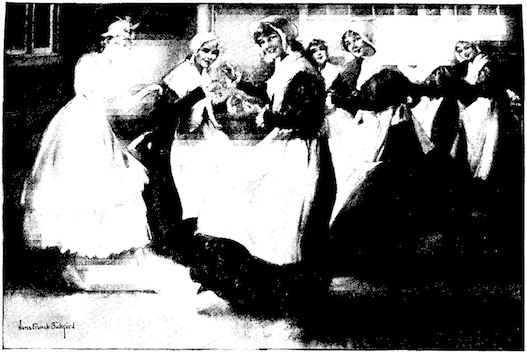
When the last speech ended, the strains of Yankee
Doodle were heard, and presently a Scout in the uniform
of a Continental soldier appeared on the platform
carrying a draped flag. After saluting the
mother of Freedom he planted his pole in the center of
the circle of Liberty maidens, and the next instant
each one had caught up one of the red, blue, and white
streamers that hung from it, and were swinging gayly
around, singing “The Red, White, and Blue.”
This song was followed by the “Battle Cry of
311
Freedom,” and then the soldier, saluting the Goddess
again in a short speech, said he desired to present to
her an emblem, the outgrowth of the labors of the
Sons and Daughters of Liberty. The ensign that
stands for everything that is just, true, and progressive,
the symbol of the sovereignty of Civilization, the banner
that had been unfurled in more movements for the
protection, the liberty, and the elevation of mankind,
than any ensign that ripples to the four winds of
Heaven.
Oh, no, the little company up in the window didn’t
hear all these words from the lips of the soldier, but
from Nita as she read them softly from her paper.
But they did see the signal given by the soldier, and
clapped with joy when each fair daughter pulled her
streamer, the red drapings fell from the pole, and Old
Glory stood revealed. And as the colors swayed
softly in the gentle breeze they joined with patriotic
fervor as the girls and audience broke into “The Star
Spangled Banner!”
The Flag Drill was over, and the girls, breaking
ranks, were soon scattered here and there over the lawn
in groups, as they stood receiving the congratulations
of their friends on the success of the entertainment.
It was but a moment or so, however, and the girls had
all rushed back to duty, and each one with a scout was
serving ice-cream and cake to the buyers at the gayly
festooned tables under the trees.
312
Nathalie, nerve and bone tired, was wishing that she
could sit down if only for a moment, when her eyes
suddenly grew bright with thought, and the next second
she had darted across the grass crying, “Oh,
Grace, don’t you think it would be nice if we could
take some cream and cake up to Nita and her mother?”
“Nita?” repeated that young lady, who had never
heard the name before. “Why, what do you mean?”
Nathalie started. “Oh, why, to be sure, I forgot
to tell you about her, but Mrs. Morrow thought best
to—”
Nathalie broke off in despair as she realized that
Grace knew nothing about the princess in the tower
and the many other happenings at the gray house, only
that its owner had consented to allow the girls to use
her lawn.
“Why, you know Nita is Mrs. Van Vorst’s daughter;
she was the one who got her mother to let us have
the lawn. She’s just lovely, I have been going to see
her every day for—”
At this moment Ellen, her face glowing with pleasure,
touched Nathalie on the arm as she cried, “Oh,
Miss Nathalie, Mrs. Van Vorst has sent me to ask you
to come up and see Miss Nita, and to bring two of
your friends with you!”
Nathalie stared a moment as if not comprehending
what Ellen had said, and then, “Oh, Ellen, do you
313
mean that Mrs. Van Vorst wants me to come up to
see Miss Nita and to—”
“Yes, that is just what I mean, Miss,” rejoined
Ellen, evidently enjoying Nathalie’s amazement.
“Miss Nita wants to meet some of your Pioneer
friends. Bless the child, Miss Nathalie, but you and
your friends have brought real sunshine straight to the
heart of my bairn. Bless you for it!”
Nathalie smiled and nodded as she answered, “All
right, Ellen, I’ll be right up!” Then, as the old nurse
disappeared among the throngs on the lawn Nathalie
turned to Grace, who was standing in open-mouthed
astonishment at this sudden turn in the day’s
doings.
“Oh, Grace, will you go with me? Didn’t I tell
you Nita was lovely?” Then seizing the girl by the
arm she swept her across the grass to where Helen was
standing talking to her brother.
“Helen,” she panted, “I want you to come with me
to see Nita. Mrs. Van Vorst has sent for me to come
up and says for me to bring two of my friends. Will
you come?”
“Come!” exclaimed Helen, “of course I will. I
have been on the point of expiring with curiosity ever
since you told me of your adventure at the gray house.”
“Adventure?” repeated Grace. “Oh, Nathalie, you
have not told me about it!” in an aggrieved tone.
314
“But I’m going to! Oh, but I must hurry and get
the cream ready or it will be too late!” She started
to run, but after a few steps turned back, and waving
her hand at the girls, called, “Helen, you tell her while
I am getting the tray.”
“But I’m coming to help you,” replied that young
woman. “You come, too,” she added, catching Grace
by the arm. But to her surprise Grace pulled away
from her with the exclamation, “Oh, Helen! I
wouldn’t go in that house for a mint of money! Why
didn’t you know? No, I’m not to tell,” she ended
mysteriously, “but you go,” she added, “that is if you
are not afraid.”
“Afraid?” echoed her companion in amazement,
“why should I be afraid, surely you don’t think any
one could harm us as long as Nathalie has been there
and come away safely?”
“I don’t know,” hesitated Grace, “I!—”
“Oh, girls, I have the tray all ready, but you will
have to help me carry it. Do come on, for I do not
want to keep Mrs. Van Vorst waiting too long!” Nathalie
was back again.
“Grace says she is afraid to go,” explained Helen.
“Afraid!” repeated Nathalie bewildered. “What
are you afraid of?” she demanded abruptly turning towards
her friend.
“Why Nathalie, don’t you remember that day
we—”
315
Nathalie continued to gaze at her blankly, and then
her face broke into a smile as she remembered the day
she and Grace had run away from the gray house
afraid of the crazy man.
“Oh, Grace,” she cried with merry laughter, “that
was the best joke on you and me, for, O dear, why,
Grace, it wasn’t any crazy man at all, it was only a
cockatoo!”
The long kept secret that had troubled Nathalie so
much at first was out at last, and she and Helen, who
had been told about that when her friend’s silence was
first broken as far as she was concerned, broke into
prolonged laughter at the richness of the joke.
“A cockatoo?” exclaimed Grace incredulously, and
then annoyed at the girls’ merriment she added crossly,
“Oh, I do wish you would explain what is so funny,
I think it real mean of you both to laugh that way!”
“Yes, it is mean,” added Nathalie, stifling her laughter
as she saw the irate expression on her friend’s face.
“But, Grace, it was funny. I would have told you all
about it before—that is how I found out—only I
had sworn not to tell. But if you will promise not to
reveal what I am going to tell you—honor bright—”
this in answer to the girl’s nod of assent, “I will tell
you the mystery of the gray house!”
It was not long now before Grace heard the long
story of how Nathalie had come to go to the house,
how she had found out about the cockatoo, the star
316
part she had played with the princess, and the many
other happenings that had taken place within the last
few weeks.
“But is the poor thing such a terrible monster?” demanded
Grace in ready sympathy.
“A monster?” ejaculated Nathalie in amazement.
“Who said she was a monster?”
“Why, don’t you remember? Edith—”
“Now, see here,” exclaimed Nathalie stamping her
feet angrily, “don’t tell me another word of what the
Sport says. I am just beginning to hate that girl, she
is always saying and doing things she has no—”
She stopped suddenly as it came to her in a conscience-stricken
flash that Pioneers were never to say evil of
any one.
Helen, seeing the strange expression in her eyes and
noticing how her color was coming and going in
flashes, cried, “Oh, Nathalie, what is it?”
“It is nothing,” replied the girl quickly in a choked
voice, “I just stopped—because—well, I remembered
that one of the Pioneer laws is not to speak evil
of any one. I’m going to keep mum after this, but
that girl,” her eyes shadowed again, “does provoke
me so!”
“Oh, Nathalie, you are a dear girl,” exclaimed
Helen, putting her arm around her friend and giving
her a hug. “I wish we were all as careful about keeping
the Pioneer laws as you, but gracious, child, don’t
317
repent with such dire woe, for none of us are saints,
and the Sport is trying, the Lord knows. But explain
to Grace about your friend.”
“No,” said Nathalie determinedly. “I am not going
to say another thing, only that Nita is not a monster,
only a humpback, and—but there, if you want
to know about her, come and see her.”
“Well,” spoke up Helen, “if we are going to see
the Princess in the tower—how fairylike that sounds—we
had better go. And then, as seeing is believing,
we’ll go and tell the Sport all about it, and stop that
funny little tongue of hers that creates so much trouble
at times.”
“Oh, that will be just the thing; Helen, you are a
dear!” cried Nathalie. Then the three girls hurried to
the ice-cream table for the tray. Hastily taking it they
pushed their way through the crowd, coming and going
about the tables, to the porch, where Ellen relieved
them of their burden and then conducted them to the
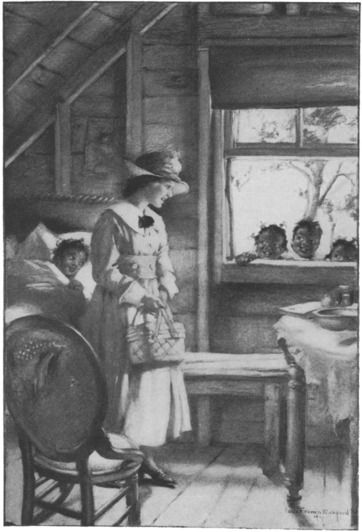
sun parlor, where Mrs. Van Vorst and Nita sat waiting
to receive them.
“Oh, Mrs. Van Vorst,” cried Nathalie as she
greeted that lady and her daughter, “it was lovely of
you to allow me to bring my two friends to meet Nita.
This is Miss Helen Dame,” she continued drawing
Helen to her, “and this is another Pioneer friend, Miss
Grace Tyson.”
“I am very glad to meet you, Mrs. Van Vorst,”
318
broke in Helen, “for I feel that we are very much indebted
to you for allowing us to use your lawn.”
“Yes,” chimed Grace, as she shook the lady’s hand,
“we all feel that you have given us a lovely afternoon.”
“I think the indebtedness is on my side,” smiled the
lady, looking down with pleased eyes at the two girls,
as they stood glancing shyly at her, their white dresses
and red caps making them appear unusually pretty.
“But let me make you acquainted with my daughter,”
she added, leading them to where Nita sat, her blue
eyes almost black with the excitement of meeting these
two new Pioneers, while her cheeks, usually so pale,
were flushed with a delicate pinkness.
After the general hand-shaking was over and the
little party had gathered closer to the window to admire
the gay-colored flags that fluttered, one from each
table, showing with unusual vividness between the
green foliage and light dresses of strollers across the
lawn, Nathalie asked Nita how she had liked the drill.
“Oh, Nathalie,” rejoined the princess enthusiastically,
“it was just the prettiest sight, and I told Ellen
and Mamma every flag story, didn’t I?” Then suddenly
remembering the two strangers, she relapsed into
a shy silence and crouched back in the friendly shelter
of her chair as if with the sudden thought of her deformity
and the fear that the girls would see it.
But Grace and Helen were not thinking of the “awful
319
hump” as Nathalie had defined it, but of the pale
sweet face with the lovely violet eyes that were shining
like bright stars.
“I am awfully glad you liked it,” said Helen, suddenly
recalled to her duties as the leader of one of the
groups. “We tried to make it look as festive as we
could with Uncle Sam’s old liberty banners, but if it
had not been for the lawn we should not have been able
to have the drill.”
“You are all very kind to thank me so prettily,” said
Mrs. Van Vorst, “but, as I said, I think you have given
me and my little daughter more pleasure than we have
given you. The poor child sees so little of life, as we
are so secluded here behind these high walls.”
In a few moments, as Nita’s shyness began to wear
off, the little group was chatting in the most friendly
way, talking over the incidents of the drill, the Pioneers
telling about the nice little sum they had made
for their camp expenses, while they all ate their cream
and cake. Ellen, like a good soul that she was, had
hastened out to the lawn and brought enough of those
delicacies to provide for the whole group.
Helen’s remark about the Camping Fund started a
new subject of conversation and opened the way for
Nita to ask many questions about this summer dream
of the Pioneers. “Oh,” she declared at length, “I
just wish you could come up to Eagle Lake and camp
on its shores. We have a bungalow up there, you
320
know, and it is just a glorious place. But it gets so
lonely after a while, with nothing but the birds and
squirrels to talk to. Oh,” she ended suddenly with a
little sigh, “if I was only well and strong, then I would
be a Pioneer, too.”
“Oh, but you—” interrupted Nathalie, and then she
paused. She was going to say “why you can be,” but
the quick remembrance of the hump and the delicate
face of the girl caused her to halt. With quick readiness
she changed to, “Oh, but you would enjoy seeing
one of our cheer fires; they are an inspiration for all
kinds of dreams with the burning logs and glowing
embers.”
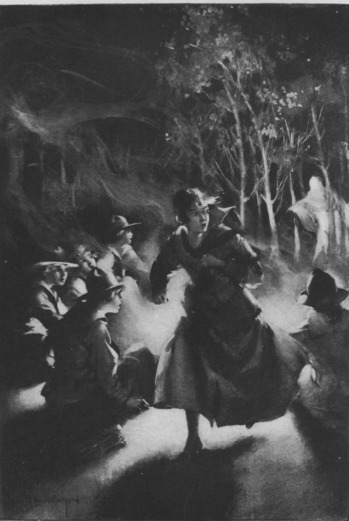
“You ought to see the fagot party we are going to
have Monday night,” chimed in Grace. “It is to be
a burning send-off to one of the girls who is going
South to live for a while.”
“A fagot party?” exclaimed Nita with interested
eyes. “Oh, do tell all about it; it sounds, well it
sounds fagoty. What do you do?”
“Why, we use small fagots tied into bundles,” explained
Helen, “that is, after we have started a good
blazing fire. Each girl has her fagot bundle and as
soon as one burns up she throws hers on—”
“Oh, but you haven’t told the best part,” broke in
Grace. “While each girl’s fagot bundle is burning she
tells a story, which has to be ended by the time her
fagots are burned.”
321
“Does she have to stop on the very second?” questioned
Nita.
“Yes, she begins as soon as she throws her bundle
on the blaze, and keeps on talking until it is all burned
up and falls to a shower of fiery sparks. But of course
she has to keep a sharp look out on the burning fagots,
so as to end her tale with a good climax as the fagots
fall,” explained Helen.
“Where are you going to have it?” questioned Nita,
a shade of disappointment on her face as she thought
how she would like to see this fagot party.
“We haven’t found a place yet,” answered Grace,
who was one of the committee, “but we are working
hard to have it down in Deacon Ditmas’s lot, near the
cross-roads.”
“Why can’t you have it on our lawn?” exclaimed
Nita timidly, turning appealing eyes towards her
mother. “Oh, Mother, do say they can have it here,
and then I can see it.”
The girls were so amazed at this sudden and unexpected
proposition that they all remained silent, Nathalie
in a spasm of dread for fear that Mrs. Van Vorst
would think that the Pioneers were a great nuisance
being thrust upon her hospitality in this abrupt manner.
But she was quickly undeceived as the lady rejoined
hastily, “Why, I should be most pleased to let
the Pioneers have the lawn for the fagot party. It
would give Nita great pleasure, I am sure.”
322
“That will be just lovely!” cried her daughter,
clapping her hands delightedly. “And you will take
it, won’t you?” she coaxed pleadingly, suddenly stopping
her demonstrations as if realizing that her plan
might not be pleasing to the girls.
“I think it would be dandy,” answered Grace.
“What do you girls think?” turning towards them as
she spoke.
“Why, I think it would be fine,” added Helen,
“and—”
“But oh, Mrs. Van Vorst, it will destroy the grass
on the lawn,” spoke up Nathalie doubtfully, “for our
cheer fires always leave a blackened burnt place on the
ground.”
“That will not make any difference,” was the prompt
rejoinder from that lady. “Peter can rake it off and
if necessary he can resod it. I shall only be delighted
if you young girls can use it, and the favor will all be
on my side—” her voice trembled slightly—“for it
will give my little daughter so much pleasure.”
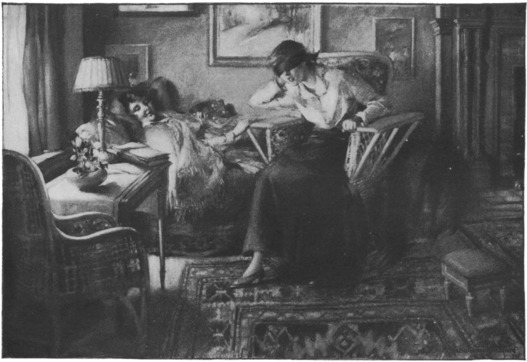
“Oh, Nita! you are walking, you will fall and hurt
yourself!” exclaimed Nathalie excitedly, as she entered
that young lady’s room the Monday after the
Flag Drill, and found her walking about with a coolness
and ease that she had never before seen her
display.
Nita broke into merry laughter at the look of dismay
on her friend’s face. “Of course I’m walking,
323
the doctor says I can, so there!” There was a triumphant
toss of her head at Nathalie.
“But you have never walked, that is not much since
I have known you!” cried the puzzled girl.
“And you thought I never could,” replied the little
lady independently. “Well, you are wrong. I used
to walk when I felt able, sometimes quite a little.
Then a crank of a doctor frightened Mamma to death
by telling her I should always lie on my back or side,
and for years I have been nailed like a mast to a ship
on that couch. But Dr. Morrow says if I have the
strength I should walk, and that my strength will come
gradually. Oh, who knows what I can do? Walk off
this old hump, I hope!”
“Oh, you dear thing!” cried Nathalie, rushing to
her friend and giving her a squeeze. “Isn’t that just
the loveliest thing? What nice times we can have after
a while if you can walk, and Dr. Morrow, I always
knew he was a dear!”
“There, don’t squeeze me to bits, but tell me all the
things that have happened since the Flag Drill, and oh,
Nathalie, your friends are dears. The one you call
Grace is sweet, and the other one, why, she isn’t so
pretty, but she looks a good sort.”
“She is something more than a ‘good sort,’” answered
Nathalie swiftly, “she is a gem, she is so
clever and sensible, and, oh, what a friend she has
proved to me! She has a wonderful way of helping
324
you over the hard places. But there, I will tell you
what Grace said about you, she said you were a sweet
little cherub—and—”
“Just arrived from angel land I suppose, with wings
all sprouting,” ventured Nita sarcastically. “Well,
she ought to see me when I’m mad. Cherub indeed!
What did the other one say?”
Nathalie hesitated; her face flushed, “Oh—why,
she thought you were a dear, but said you were a bit
spoiled.”
Nita looked surprised for a minute; then her eyes
flashed as she cried with a defiant lift of her head.
“Well, I guess if Miss Sensible had a hump to carry
about that could never be taken off, no matter how it
hurt, and had to be shut up behind walls with nothing
to see or any one to talk to, she’d be spoiled, too!”
There was a quiver of the chin as the red lips closed
tightly in the effort not to cry.
“Oh, you poor little thing, I should not have told
you that, for really, Helen thought you were lovely!”
Nathalie regretted with all her heart the impulse that
had prompted her to tell the truth to Nita. It seemed
unkind but it was really spoken in the hope of doing
her little friend good.
But Nita pushed her away, “Oh, don’t pet me!” as
Nathalie attempted to caress her, “I was only teasing.
Yes, I know I’m spoiled, but there, do tell me
325
the news, for your face shows that you are just dying
to tell me something worth the hearing.”
“Well, yes, I have some news—that’s slang, but
O dear, it does mean so much sometimes,” laughed
Nathalie as she and Nita seated themselves on the
couch. “Saturday we had a Pioneer Rally. Judge
Benson, a friend of Dr. Morrow’s from the city, gave
us a talk on self-government. He explained the difference
between natural, spiritual, and civic law. He
also explained the meaning of an ordinance, told us
how justice was administered in the different courts,
and how self-government, or the reform system is having
its try-out in some of the prisons to-day. He says
it bids fair to make criminals—men hardened in sin
and crime—respectable members of a community.”
“Self-government?” queried mystified Nita, “why,
the Pioneers are not citizens or criminals; you don’t
have to be governed!”
“Yes, we do,” asserted Nathalie stoutly, “and so
does everybody. Civic, natural, and spiritual laws are
all right, but back of those laws is the law of self-government,
that is the something within each one of us
that makes us what we want to be, that makes us control
ourselves even when we are babies, when we get
slapped for being naughty. If there was no self-government
in the world—for it is the government of
self when we make ourselves obey the laws of God and
326
man, when we cease evil and do the right—why, if
there was no self-government we would all be savages
without law and order.
“Judge Benson told us how self-government came
to be used in the schools and prisons. Of course, as
I said, we all have to govern ourselves in a measure,
but it is the applying of this self-government in a new
way that has done so much good.
“A very good man, he said, took some waifs from
the poor settlements in New York to the country and
tried to better them physically and morally by teaching
them to be good. But of course, they would do wicked
things and have to be punished, and he became very
much discouraged because the punishments didn’t seem
to do them any permanent good. So he thought for a
long time and then he formed a Junior Republic, made
all the boys and girls citizens, and then told them to
appoint their own officials, that is, their own lawyers,
judges, officers, and so on. Then when any of them
did wrong they were haled into court and tried by
their own comrades. Of course, they all became so
interested in this new system of punishing—for you
see, they all had a part in it—that they became wonderfully
good. You see, the boys and girls had to
learn to control themselves, for of course, they not only
wanted to stand high in the court and be lawyers and
judges themselves, but they did not like to be corrected
and called down—that’s what the judge said—by
327
their own comrades. This venture at making boys and
girls learn to control themselves not only taught them
self-denial, self-repression, self-development, and the
difference between right and wrong, and their duty to
themselves as well as to their companions, but it was
the means of introducing the same system into the public
schools, and in time into the prisons.”
“Yes, but I don’t understand how it interests you
girls.”
“Why, Mrs. Morrow read so much about self-government
and the good it did that she introduced it into
the Pioneer organization, and it has worked wonderfully
well there, Mrs. Morrow claims. Instead of a
court we have a senate, which is composed of two girls
from each bird group, elected by the girls. The Pioneers
also elected a president, that’s Helen, and a vice-president,
she’s an Oriole girl and quite clever, too.
Jessie Ford is the secretary, and Mrs. Morrow is the
Advisory Judge and has the power to veto any ruling
of the president, but she never has as yet.
“So you see what it does for the Pioneers, for if
any member of the organization breaks a law or does
anything wrong she is brought before the Senate.
Every Pioneer served with an indictment to appear
before the Senate has, of course, the right to choose
one of the girls as a counsel, and when there are two
girls implicated they both choose counsel. Then after
the witnesses are all heard the lawyers sum up, and the
328
case goes to the Senate, who act as a jury and vote by
ballot. The case can be appealed to the Advisory
Judge; or an offender, by asking or showing contrition,
can have her sentence lightened. You don’t know
what fun it is, and then it helps to make us govern
ourselves and teaches us law, too, in a small way, of
course.”
“Well, I wish they’d try to punish that hateful
Sport for using your idea, and to think she got all the
credit for it! Why—”
“No, she didn’t,” laughed Nathalie with an odd
little gleam in her eye, “for she was tried before the
Senate Saturday.”
“Oh, Nathalie, you don’t mean it! Oh, I’m so
glad!” cried Nita clapping her hands delightedly. “I
do hope she got her deserts, the deceitful thing!”
“Well, I am afraid she got all that was coming to
her, as Dick said.” Nathalie’s bright face sobered.
“Nita, I was awfully sorry for her. It was so humiliating
to have to face that Senate, oh, the girls just hate
to be brought before it. I had to tell as a witness,
about losing the Stunt, the librarian told of helping me
get data and then helping me to look for it, and then
how she saw Edith pick it up as it fell from under a
book on the table.”
“Do tell me what they did to her!” Nita bent forward
in curious excitement as she spoke.
“Poor thing! she had all her stars and badges of
329
merit taken from her. Just think, she will have to begin
all over again to win them! At first it was voted
that she would have to go back and be a third-class
Pioneer again, but I was so sorry that I pleaded for
clemency, and so the sentence was lightened.
“You see, there is an awful lot of good in Edith,
and I am never again going to say anything against
her, she has been punished enough. And oh, Nita,
Dorothy at the Rally received her third-class badge,
and I received my badge for a second-class Pioneer.
I’m going to work awfully hard while at camp, so as
to qualify as a first-class Pioneer. But there, it is
getting late and we shall have to stop talking and take
up our reading on the ‘Pioneer Women of America.’”
Nita nodded, and in a few moments the two girls
were busily engaged; Nita listening with the keenest
attention while Nathalie read about the Dutch women
who came from Holland and settled New York, little
dreaming as she read that this lesson was to culminate
in an event of the utmost importance to the Girl
Pioneers of Westport.