Jack and Murph — I — II — III — IV — V — VI — VII — VIII — IX — X — XI — XII — XIII — XIV — XV — XVI — XVII — XVIII
Jack and Murph were friends, old
friends, trusty and tried.
It was now nearly six years since the
day chance had brought them together
as members of the same company.
Jack had come straight from the
African forests; he had crossed the
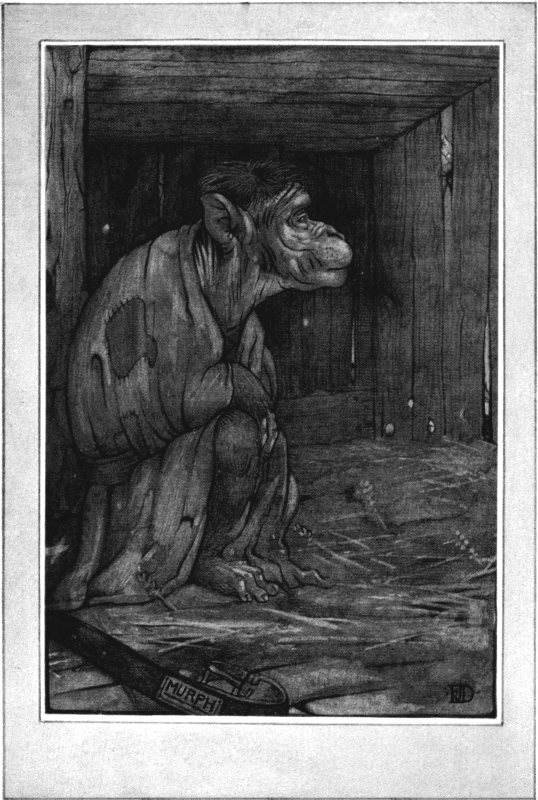
seas, and set foot on the continent
of Europe for the first time; his
amazement knew no bounds.
2
It is not for nothing a little fellow
of his sort is torn from the freedom
of his vagabond life in the woods and
surrendered to the tender mercies of
a showman of performing animals.
He learned to know the cruel tedium
of captivity; shut up in a cage, he
thought sadly of his merry gambols
in the tree-tops; his little face grew
wan and withered, and he came near
pining to death. But time damped
the keenness of his grief; by dint of
seeing around him other little creatures
that, like himself, had wearied for their
native wilds, then little by little had
grown reconciled to their fate, and now
seemed to get a prodigious amount
of fun out of their new life, he made
the best of the bars, the tainted air of
the booth, and the clown’s grimaces,
rehearsing his drolleries before the
animals’ cages.
3
At the same time he could never
quite share the gaiety of his companions
in misfortune. While they
were enjoying everlasting games of
hide-and-seek, scuffling, squabbling,
pelting each other with nuts, he would
cower timidly in a corner, too sad at
heart to join in their noisy merriment.
Sometimes, when his feelings grew too
much for him, he would break out in
a series of sharp, shrill outcries, or
wail like a new-born babe in his doleful
despair.
4
The master was very fond of him,
for he was both intelligent and teachable.
In a very short time he learned
to do his musket drill, to walk the
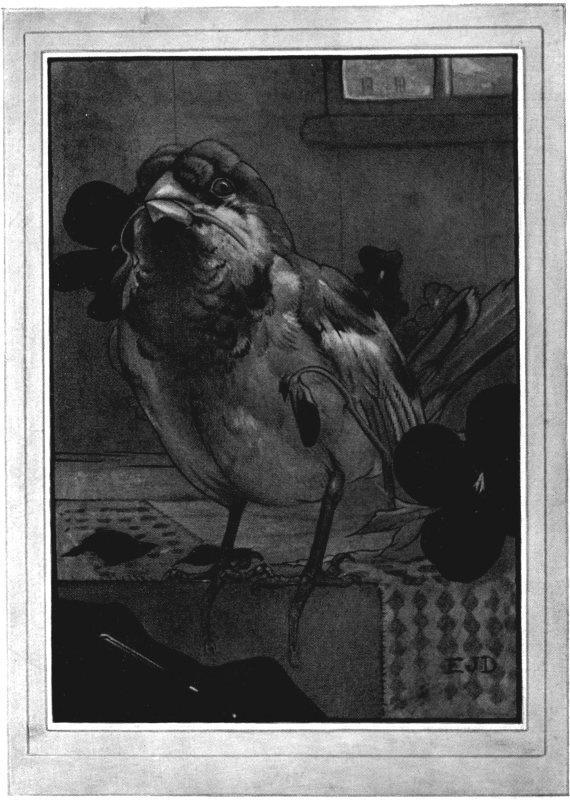
slack-rope, and use the spring-board.
But these accomplishments only earned
him the ill-will of the other pupils.
There was never a prank they did not
play him. No sooner had he cracked
a nut, to eat the kernel, than a hand
would dart over his shoulder and
snatch the morsel just as he was putting
it between his teeth. They slapped
his face, pinched his tail, scarified his
head with their nails, jumped upon
him, or half strangled him in a corner,
till a day came at last when his master,
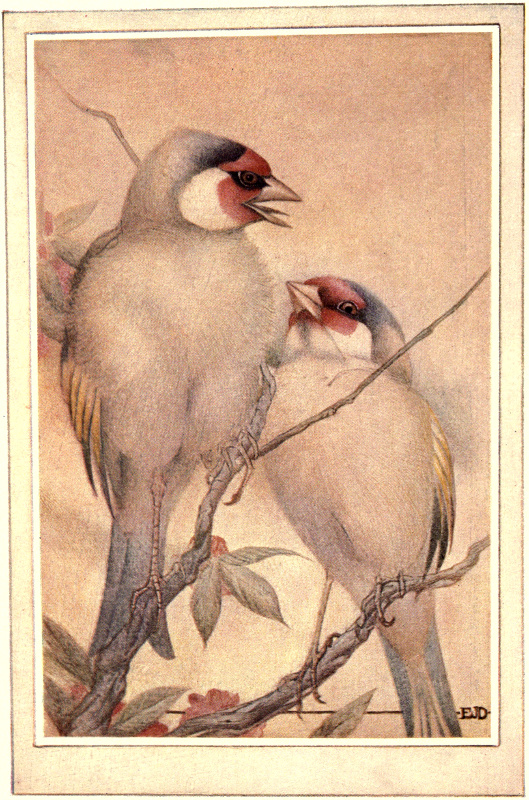
noticing how he was bullied, put him
in a separate cage all by himself. But
this loneliness only made him more
unhappy still; he spent his life in
lamentation, sitting stock-still all day
long, with his arms hanging limp, and
his eyes fixed on vacancy, refusing either
to eat or drink. This would never do;
so they left him at liberty to wander at
will in the house.
5
Oh! but this house was not a bit
like mine or yours; yet it had doors
and windows like any other house,
but so tiny these doors and windows
were, they were hardly worth mentioning.
Imagine a house on four wheels,
and no higher than a man of middle
size, with three little windows high up
admitting light and air from outside;
you entered by a wooden staircase that
looked more like the ladder of a windmill
than anything else.
6
This queer construction rolled most
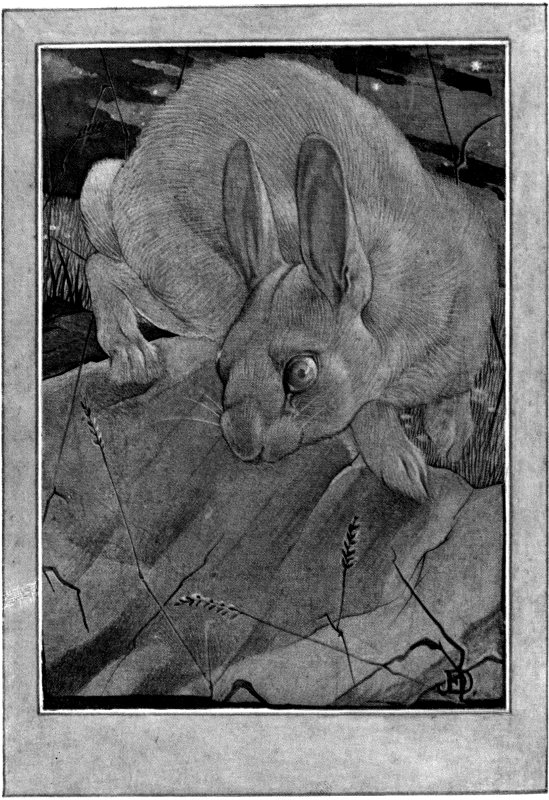
part of the year along the high roads,
jolting, gee-wo, gee-hup! in and out
of the ruts, and carting about in its interior
men and animals, to say nothing
of household stuff—beds, cooking-stoves,
chests crammed with clothes,
and a whole heap of other things. An
old horse, who was little better than
a bag of bones, was in the shafts;
when a halt was called, they let him
crop the grass alongside the hedgerows.
It was the funniest thing, being
hauled along like this, tossing and
tumbling in this box on wheels where
the furniture seemed to be always just
on the point of starting a polka. The
table would throw up its legs in the
air, and the chairs turn head over
heels, while the pots and pans knocked
together in the corners, making the
quaintest music, sharp or flat in key
according to the jolts.
7
Jack, perched atop of a big press,
held on tooth and nail to save a
tumble. More often than not he
found himself under the table along
with his good friend Murph, a Stoic
philosopher, who let nothing ever disturb
his equanimity, but calmly went
on beating the bush of his thick woolly
coat in search of the game that lived
there. All the while the caravan, bumping
and thumping with a terrific rattle,
was tacking and luffing over the rolling
billows of the stony roads.
8
It is high time to tell you that Jack
was a dear, pretty little monkey of the
chimpanzee kind, with tiny, delicate
hands, nervous and semi-transparent, almost
like a sick child’s. He was no
bigger, the whole body of him, than
a pocket-handkerchief, and you could
have easily hidden him inside your hat.
He was slim and slender, daintily made,
with narrow chest and sloping shoulders—a
creature all nerves, with a wonderful
little pale phiz of his own, puckered
and wrinkled, and long, drooping eyelids,
greyish-white, and as thin as an
onion skin, that slowly, rhythmically,
opened and closed over brown eyes
ringed with yellow. He bore the
solemn, serious look of those who
suffer; his eyes seemed fixed on something
beyond the visible world, and
now and again he would pass his long,
dry fingers across his eyes as if to wipe
away a tear. He seldom gambolled,
and never indulged in the grotesque
contortions of other apes; their restless,
ceaseless activity seemed foreign to
his nature, and even his grimaces had
nothing in common with theirs.
9
Noise scared him; he was never angry,
but habitually silent and thoughtful.
He preferred to lurk alone in dark
corners, where he would spend long
hours, squatted on his tail, almost motionless,
dreaming sadly of some mysterious,
unattainable future. But, for all
his unlikeness to his colleagues and their
comicality, his queer little crumpled,
wrinkled face never failed to produce
its effect on the spectators. Jack was
perfectly irresistible; no one could look
at him for any length of time without
bursting out laughing. His aspect was
at once so piteous and so ridiculous,
his gaze so pathetic and so grotesque,
his deadly earnestness so side-splitting,
while his eyelids would droop suddenly
ever and anon in so anxious and appealing
a wink, that the result was comic
beyond belief. An old, old man’s head
on a baby’s body, a mask that was for
ever changing, twitching, wrinkling,
with eyes that looked out grave,
intense, solemn, from beneath a low,
flat brow crowned by what looked for
all the world like a wig!
10
The louder the merriment he excited,
the more serious Jack became. On show
days, while the audience was convulsed
with mirth, the gravity of his mien, the
careworn look in his eyes, over which
the lids dropped mechanically at regular
intervals, as if weighed down with their
load of melancholy, reached the acme of
fantastic absurdity.
11
Alas! men cannot tell what monkeys
are thinking of. If they knew, they
would not always laugh. Jack was
dreaming of the sun, the vast green
forests, the friends he had left behind;
he was dreaming of the delights of
swinging high in the air, cradled in the
leafy hammocks of the boughs, dreaming
of the trailing lianas, of the romps
and games with his fellows throwing
cocoanuts at one another’s heads, and of
the endless chivyings and chasings from
tree-top to tree-top above the rolling
billows of the wind-tossed jungles,
through which the wild beasts—elephants,
panthers, and lions—plough
their way like ships on the high seas,
leaving in their wake a broad furrow of
floating odours and deep-toned sounds.
But Jack had a friend, and he never
embarked on his voyages into the far-away
dreamland without calling on his
old chum Murph to join him.
12
Yes, Murph gambolled with him in
the tropical jungles, Murph frolicked
with him in the tall grasses, Murph
and he amused themselves together at
never-ending games of play; if ever
it was granted him to see his native
land again, he fully hoped to take
Murph along with him.
Poor Jack! he did not understand
that the worthy Murph, acrobat as he
was, would have found it hard to follow
him in the lofty regions where his congeners
are wont to disport themselves,
nearer to the stars than the earth. Not
a doubt of it, Murph would have had
to kick his heels at the foot of a tree,
while his friend was off and away aloft;
and the smallest of his perils would have
been to find himself, on looking round,
face to face with a python-snake, just
uncoiling his folds to spring, or else,
on the river-banks, confronted with the
gaping jaws of a crocodile.
13
Murph could play dominoes, tell
fortunes, hunt for a handkerchief in
a spectator’s pocket, read the paper.
Murph had many other accomplishments
besides, but it is far from certain
that he would have extricated himself
successfully from a tête-à-tête of this sort
with beasts that could boast neither his
education nor his manners.
The liking was reciprocal. From the
very first Jack had taken a fancy to the
big woolly-coated dog, as woolly as a
sheep, who never barked or growled or
grumbled or showed his teeth—so unlike
the other dogs in the menagerie;
in the same way Murph, the big dog,
had formed an affection for the well-behaved,
sad-faced little ape, who never
pulled his tail and never tried to scratch
out his eyes.
14
As it happened, the showman had
made up his mind to make them perform
together. Murph was the best
runner in the troupe; there was nobody
like him for a round trot or a swinging
gallop, for wheeling suddenly round
and dropping to his knees just before
making his exit, nobody to match
Murph, always good-tempered and imperturbable,
always on the look-out,
with his bright eyes half hid under the
bushy eyebrows, for a bit of sugar and
a round of applause.
15
Jack, for his part, had very soon
become a brilliant horseman, lissom and
fearless, an adept at leaping through the
hoops and vaulting the bars. Thus the
two seemed made for each other, both
in body and mind. They bore the
hardships of the life together, and they
shared its successes; by dint of standing
so often back against back and
muzzle against muzzle, they found
their hearts brought close together too,
and became fast friends. Murph was
never to be seen without Jack; wherever
Jack was, Murph was there as well;
they lived curled up on the same rug,
in the same corner, under the same
table, Murph licking Jack in the neck,
and Jack stroking Murph’s nose, each
bound to each in perfect trust and
amity.
Murph was older than Jack by nearly
nine years, and his years made him
nearly as serious-minded as his friend.
But it was a different sort of gravity.
Murph was neither morose nor disillusioned;
his was the gentle seriousness
of old age. He had seen many things
since he had been in the world, but life
did not appear to have left only its
dregs in him. He still believed in
springtide, in friendship, in the master’s
kind heart; then he had neither family
nor native land to regret, for he had
been born in the menagerie of a father
and mother broken in like himself to
circle the trapeze and leap through the
hoop.
16
His horizon was bounded by the four
walls of the caravan in which, as a
puppy still sucking at his mother’s
breast, he had been carted from fair to
fair. Day by day he had watched from
behind the window-panes the long procession
of cities and countries filing past; he
had visited most parts of Europe, in company
with the strange omnium-gatherum of
apes, goats, parrots, and dogs that at
each halting-place was the delight of
the infant population. But he had
never taken it upon him to covet the
kingdom of this world; he had never
craved to roam at liberty through the
streets; never, in one word, had he
so much as dreamt of playing truant.
He was a very learned dog, and, like
other learned people, he lived absorbed
in his own thoughts, self-centred within
the circle of his meditations, seeking
nothing of things outside.
17
Murph was a poodle by breed, and
you might have searched long before
you found a bigger or better-built one.
Standing well on his legs, with a good,
strong, supple back of his own, he
carried his head high, as a self-respecting
poodle should. I mean, of course,
in the days when Murph was still young,
for since age had crept on him, it would
droop more or less; but even so, there
was something proud and dignified
about its carriage that always attracted
attention. He walked slowly and sedately,
as if intent on the solution of
an ever-insoluble problem. His thick,
curly fleece clothed his neck like a mane,
while a stout pair of long drooping
moustaches gave him the look of an
old cavalry officer; his skin was smooth
and polished where the coat had been
cut very close; he wore heavy ruffles
round his ankles, and his tail ended in
a woolly tuft.
18
Thus accoutred, Murph was a fine-looking
dog; the curs of low degree
that came prowling round the van, and
caught a glimpse of him through the
crack of the door, gazed at him with
admiration. He had the majestic port
of beings destined to greatness; it was
easy to see he might have been a
diplomatist, or a great general, if nature,
in fashioning his lot, had not chosen
rather to give him the shape of a poodle;
nor was Murph slow to appreciate and
enjoy the impression he produced.
19
Fine fellow as he was, he was not altogether
free from vanity; the humblest
animal with which Murph compared
himself was the lion; he had seen one
once in a travelling menagerie, and been
struck by his own likeness to the king
of beasts. Why, had he not, like the
lion, a mane about his neck, a tuft to
his tail, and bracelets of hair about his
ankles? Had he not likewise his Olympian
look and superb carriage? By
dint of a little imagination, Murph had
come to believe the lion a degenerated
type of poodle dog.
20
But let us pass lightly over his
foibles; every one has his little weaknesses.
Time, moreover, that damps
the foolish ardour of mankind and dogkind,
had tamed our friend’s ambitions.
He was by now as contemplative and
calm as some wise philosopher satiated
with the glories of this world. More
often on his back than on his feet,
he would watch the younger dogs, his
juniors in the profession, capering and
giving themselves the airs of a drum-major
heading his regiment, without
any other feeling towards them but
one of kindly indulgence; and if any
one else was disposed to rebuke them,
he would shake his head, as much as
to say, “There, there, we have all of
us done the like in our day!”
Jack had come as a solace to his
old age; he had loved him as a friend,
almost as a son, with a truly fatherly
affection.
21
This little suffering, delicate creature,
so morbidly nervous and excitable, had
roused in him some mysterious instinct
of protection, that had grown little by
little and ended by forming an unbreakable
bond of brotherhood. Ceaselessly
he watched over his protégé, sheltered
him, defended him, kept for him the
best of his bodily heat and his warm
heart. If a bullying animal ran after
Jack, in one bound the latter was beside
Murph, who would show a determined
front, that soon sent the would-be tormentor
to the right-about. One day,
indeed, Murph, usually so good-tempered,
showed his teeth to the master
himself, who, for some small fault, had
thought good to lift his whip at the
little monkey. If Jack was a-cold—and
he was always shivering, blow the
wind from what quarter it might—quick
he would slip between Murph’s
paws and cuddle against his breast in
the warm, cosy place. Murph was
Jack’s special providence.
22
Thus they had been living for nearly
half-a-dozen years. Never a cloud had
dimmed their good accord; never an
angry snap of the teeth—never a pettish
fit; mankind might have taken a lesson
in the art of friendship from them.
Thus they had grown old, loving, fondling,
helping each other, making between
them the prettiest happy family ever
known in the world, never weary one
of the other, but realising the ideal of
the most perfect union.
23
Mutual esteem further increased
their affection. Murph had never seen
an ape more alert and clever, more
intelligent and active than Jack; he
would gladly have stood for hours
watching him performing his tricks,
clinging to the cords with his delicate,
dry little hands, then hurling himself
into space to alight again on his feet,
or else holding on by his tail and
swinging from earth to heaven on the
trapeze.
On his side Jack—Jack the cynic,
whose lack-lustre eyes seemed incapable
of any curiosity—admired his friend
Murph as a creature of extraordinary
gifts.
And what wonderful things the good
dog could do, to be sure! I have mentioned
some of them; I could tell of
many others. Murph could climb a
ladder; Murph could walk along a line
of bottle necks; Murph could nose out
the prettiest lady in the audience;
Murph could play the cornet-à-piston;
Murph could smoke a pipe; Murph
was almost a man.
24
It did one good to see him “come
on,” a big pink bow knotted in the
tufts that adorned his tail. He would
enter gravely, bow politely to right and
left, then cast a questioning look at his
master, quite motionless the while, except
for a slight quiver of the tail, waiting
for the conclusion of the introductory
remarks which the “old man” never
failed to address to the audience. At
last came the loud “Hi, Murph!”—and
the good dog began his evening’s
work.
25
He could have given points to the
most experienced actors by his aplomb,
his punctiliousness, his patient and
never-flagging attention. Nothing ever
distracted him from his part. Wags
would amuse themselves sometimes by
offering him a lump of sugar, or even
pitch a sausage or a cake right between
his paws; but Murph was adamant
against such temptations. How the
crowd cheered and clapped hands and
stamped feet when he went bounding
from hoop to hoop, so supple and
nimble and self-possessed, never losing
step or missing a spring, striking the
paper with his head fair and square
in the middle every time, crashing
through and landing again on his feet,
gravely and yet so elegantly.
26
His tricks finished, he would repeat
his bows to right and left, still quite
sedate and unintoxicated by the thunders
of applause. The fact is, Murph
respected both his audience and himself;
he knew how to keep his feelings to
himself—how different from those ill-trained
dogs that yelp and bark and
lose their heads in the hurly-burly,
quite forgetting that the finest thing
on earth is to take one’s triumph
modestly.
But Murph was particularly admirable
in the tricks he went through with Jack.
Each of the two friends seemed made
to help out the other, and each vied
with the other in sacrificing himself to
enhance the general effect. Now it
was “Mazeppa’s ride”; you know—Mazeppa
bound on the back of his
fiery charger and borne on and on in
wild career over the steppes in a whirlwind
of flying stones and smothering
dust. Now it was a powder-play of
Bedouins, pursuing, retreating, prancing,
curvetting, rising in their stirrups and
brandishing their muskets; or else a
mortal combat between two troops of
horse, firing at each other, reloading
and firing again. The spectacle, whatever
it was, was always thrilling.
27
Murph would stand waiting in the
side-scenes for his cue. Suddenly he
would give a spring, a tremendous
spring, and like a bomb-shell he was on
the stage, with mane erect and flashing
eyes; clearing every obstacle, upsetting
everything he encountered, animate or
inanimate, he hurled himself on to the
boards; on his back, clinging to his
woolly coat, shaking and shivering,
teeth hard set and mouth awry, rode a
little black figure wrapped in a voluminous
burnous that flapped in the wind.
28
And bing! bang! bang! as his steed
dashed by, with all the flash and dazzle
of red saddle braided with gold, scarlet
bridle, and red, green, blue spangles,
shaking the boards, rattling the lustres,
rustling the curtain, to reiterated cries
of “Hi! hip! hurrah, hurrah!” and the
crack of the whip going off like pistol-shots
behind, Jack would fire off his
gun over and over again, till he was
shrouded in a cloud of smoke, through
which he could be discerned still tireless,
still indefatigable, bestriding Murph in
every possible position, now perched on
the neck, now on the crupper. He
seemed made of iron, the frail little
being! Murph might prance and jib
and shy, buck-jump and leap fences—nothing
could unseat Jack. The performance
over, the latter would shake
his little head under its jockey-cap two
or three times, by way of bow, and so
exit, as his friend the poodle gave one
last tremendous bound that carried him
and his rider out of sight.
29
The enthusiasm of the spectators
followed him behind the scenes, and
the floor trembled and shook under the
drumming of heavy boots. The applause
grew deafening, and suddenly
Jack and Murph made a final whirlwind
dash across the stage, executed a last
frantic fantasia—and retired for good
and all.
But, alas! Murph was getting old.
His exertions tired him dreadfully;
after each performance he had to be
rubbed down and attended to, or he
would have lain moaning and groaning
for an hour.
30
His master was sorry for him, and
with deep regret—for he saw no glimpse
among his troupe of any talent to take
the place of the “falling star”—he set
him to do his more quiet tricks—playing
dominoes, finding handkerchiefs,
walking on bottles.
At the same time he resolved to
try a young poodle to fill the hole in
the receipts his good, faithful Murph’s
retirement was bound to make. He
trained the animal to run in circles, to
leap through hoops, to clear obstacles,
and one fine day clapped Jack on his
back.
Banco—that was the poodle’s name—had
not gone three steps before he was
bitten, beaten, garrotted, and left blinded
and bleeding. The master punished
Jack severely, and presently made a
fresh attempt. But, no—Jack would
not obey; he tore Banco’s ear in two, and
then sprang from the saddle and hid
himself in a dark corner.
31
Much the same thing happened at
every new trial. The whip was no sort
of use; Jack was not to be moved. At
last, wearied out, the showman gave in,
and Jack and Murph remained inseparable,
living and working together as
before.
One night Murph came in from
his performance utterly worn out, his
tongue hanging out of his mouth and
his strength exhausted; his midday
meal had proved indigestible, and, to
cap all, the applause to-night had been
faint and feeble.
32
Ah! few of us know how actors live
on that elusive thing, the favour of the
public, and what renewed force, when
they are grown old and have one foot
in the grave already, what fresh vigour
the smiles of a delighted audience instil
in their veins, when the blood is beginning
to run feeble!
No, the thankless audience did not
for once acknowledge Murph as their
old favourite, the veteran of the boards,
the good and gallant beast that had
so often been their darling and their
delight. Under his outward show of
indifference Murph hid a vast fund of
sensibility, and the coldness of his audience
cut him to the quick, coming so
soon after his late successes. He
thought the dark night of public neglect
was beginning for him; he realised his
loss of vigour, his waning energies, and,
like other old players, he saw himself
superannuated, out of date, unknown,
and misunderstood by a new public,
become a mere shadow on the scene of
his former triumphs. Add to this his
master’s evident ill-humour, as he foresaw
the inevitable moment when his
old servant would be a mere pensioner
on his bounty.
33
Murph staggered off, and fell panting
on the rug that formed his bed.
Then Jack came to help him; but,
alas! even Jack could not console him
just at first. Murph rejected his
friend’s ministrations, so bitter was his
rancour against mankind. But his
pique was soon over, and his wounded
heart found healing under the gentle
hand of his lifelong companion.
34
But the fatal hour had struck; old
age was upon him. Murph had grown
infirm; he would take a dozen steps,
crawling from one corner to another,
and then sink down helplessly. His
legs, once so prodigiously strong and
active, tottered and stumbled from
sheer weakness. In vain his master’s
voice called him to show his tricks; he
would struggle to his feet, for an instant
his head would recover its proud
carriage of old days; then suddenly,
his momentary strength exhausted, his
limbs tingling with rheumatic pains
that cut like whip-lashes, he would
slink away to fall back again into the
lifeless attitude of an aged invalid.
35
A cloud floated before his eyes, he
could no longer see things clearly, and
a growing deafness filled his head with
a buzz-buzzing that never stopped.
Life was slowly dying down in the
old body. He would lie torpid for
hours and doze away the time in dark
corners, under tables, where nothing
would wake him, neither the yapping
of the other dogs nor the chattering of
the monkeys, neither the noise of footsteps
coming and going nor the shrill
trumpetings of the clown’s cornet-à-piston
playing “Malbrouck s’en va-t-en
guerre!”
It was a deep, dreamless sleep. Jack
did not like it, and would crouch down
beside him, watching him with sad
eyes, like a friend at a sick man’s bedside.
Poor beast, he could make
nothing of this new state of affairs.
Some change he could not comprehend
had come over his chum and laid him
low. He seemed to be mutely questioning
him, asking him why he never
nowadays trotted about behind the
scenes. But it was all Murph could
do to see his little anxious, sorrowful
face; he could only view him as if
through a fog, an indistinct shape of
sympathy hardly distinguishable from
surrounding objects.
36
Nevertheless, he still tried hard to
make out in the dusk of his blindness
his kindly comrade of yore; he would
raise his palsied head, and from the
depths of his dim eyes, veiled by a
milky film, dart a pale look of infinite
gentleness.
Sometimes the two bushy tufts on
his forehead dropped right over his
eyes and further confused his vision.
But Jack would put them back lightly
with the tips of his delicate fingers.
Indeed he never left his side, tickling
his ears to amuse him, tapping and
stroking him, ever on the watch, a
tender-hearted nurse of inexhaustible
care and foresight.
37
This lowly being had learnt to love
like a mother; his little dim soul had
emerged from its darkness to answer
his dying comrade’s need, and now,
shining bright in the light of day, was
working deeds of charity.
One evening the show pitched on the
outskirts of a big town. The booth
was raised, the trestles fixed, the boards
laid, and the costume-chests emptied of
their miscellaneous finery.
Murph lay curled up by himself behind
the stove; all round him reigned
a deafening uproar, a rush and scurry of
feet, a perfect hurricane of noise. The
master was shouting and scolding; the
Jack-pudding with his hoarse voice was
yelping like a dog, mewing like a cat,
crowing like a cock, getting into trim
for the patter-speech with which to
tickle the ears of the groundlings, while
the general hands were bustling about,
nailing and hammering, stimulated by
copious libations of wine.
38
The monkeys, too, bore their part;
hearing all this uproar, they joined in
with a will. Their shrill scolding rose
above the hammering, and they chattered
incessantly and shook the bars of their
cages. The dogs barked, a solemn-faced
parrot repeated a bad word over
and over again, while the musicians hired
for the evening performance drew lugubrious
notes from their instruments by
way of keeping their hand in.
Hurrah! the stage was set up at
last.
39
Then the dogs were dressed, the seats
given a last wipe-down—and suddenly
boom! boom! the big drum, furiously
beaten, rolled out its deep-toned summons.
Instantly a perfect hurricane of
discordant, ear-splitting noises was let
loose in front of the show-tent. Answering
the deafening rumble of the big
drum, the fifes and ophicleide awoke,
the kettledrum began its rub-a-dub, the
cymbals clashed, and the whole booth
shivered and shook from floor to roof-tree.
Shouts, yells, bursts of ribald laughter,
combined in one deep-toned, incessant
roar to form the bass, while cat-calls,
cries of vituperation and repartee, the
trampling of many feet marking time
before the doors, the clown’s voice rising
and falling amid a tempest of scuffling
and kicking, all met and mingled in
the air above the red glow of the pitch-pine
torches flaring in the wind, and
punctuating the general din one never-ceasing
refrain—
40
“First seats one franc; second seats
half a franc; third places twenty centimes—only
twenty centimes. Walk up, ladies
and gentlemen; just about to begin!
Citizens and soldiers, walk up, walk
up!”
A torrent of humanity surged up the
steps, pushing, shoving, shouting; then,
suddenly released, poured tumultuously
over the seats of the auditorium. Then
the big drum redoubled its efforts, the
fife blew its shrillest, the ophicleide lost
all control of its keys, tom-toms and
hand-bells, frantically beaten, added their
quota to the din, the kettledrums made
a terrific rub-a-dub, and the whole force
of the company, a mad whirl of startling
colours and flashing spangles, danced a
fandango on the platform.
41
“Walk up, gentlemen, walk up!”
the master-showman kept yelling; “here
you shall see what you shall see—marvels
and miracles you’ve never seen the like
of before! Look at me! I am the
world-famous Brinzipoff, director-in-chief
to the Royal Theatre of St. Petersburg
and to all the crowned heads of
Europe! Hi! ho! hup! only twenty
centimes the back seats! Halloa! ha!
hurrah! here you are, here you are,
ladies and gentlemen, this way for the
front seats!”
A pause of comparative calm succeeded
this grand chorus of ear-splitting
noises.
42
The close-packed audience was waiting,
stamping with impatience, for the
curtain to rise. Then Jack-pudding
came on, pulled his funny faces, and
let off his jokes amidst a dropping
fire of jeers and bravos, and presently
made way for Esmeralda, the performing
goat, “the unique, the incomparable
Esmeralda, the very same identical
animal described by the immortal
Alexandre Hugo!” The musicians
struck up an appropriate air, mostly
made up of the vigorous thumping of
drumsticks on drumheads.
Murph had never budged from his
corner; he was quite insensible as yet
to the din that had once had such power
to excite him. His head resting on his
outstretched paws, he lay asleep, stolid
and stupid, callous to all external things.
Round his neck, buried in the dirty,
matted fleece, now long untouched by
the curry-comb, were wound Jack’s
arms; for Jack never left his side.
43
Esmeralda made her exit, and then
suddenly bombarding the audience with
a tornado of sound, the big drum rolled
again, as if to announce some special
and extraordinary turn.
Murph knew this furious, frantic
prelude well; this was always the way
Mazeppa’s headlong ride began. Yes,
next moment, fifes, drums, bells, tom-toms
struck up together in a mad concert
of all the instruments combined,
whereby the bandsmen strove to depict
poor Mazeppa’s terrors as his galloping
steed bore him off to be the prey of all
the fiends of hell!
44
Then something stirred in the old
dog’s brain. Did he recall his former
triumphs, the shouts of excited audiences,
the encores, all the intoxicating
successes of his life on the boards?
Did some vision of an applauding multitude,
of arms outstretched, and voices
raised in gratitude, amid the crash of
trumpet and drum, in the hot air thick
with men’s breath and the fumes of
powder—did some vision of all this
pass before the poodle’s dying eyes?
It was a strange awakening, at any
rate. Murph sprang suddenly to his
feet, took a leap, and bounded on the
stage, tail proudly swinging, and head
erect, Jack hanging on to his woolly coat.
Delighted, entranced, amazed, the poor
little beast kept craning over to peer into
his comrade’s face, to see if it was really
true, and watch the light of life dawning
and brightening in his deep-set eyes.
45
So his friend was himself again at
last! So they were to begin the old
merry life again, to gallop and leap,
and risk their necks as in the dear, daredevil
days of yore! Jack danced and
pranced on the poodle’s back, as if drunk
with the delight of this miraculous transformation.
At sight of this great, hollow-flanked,
unkempt beast, with his dirty, greasy,
tangled fleece, standing there stark and
stiff, his legs tottering under him, his
body shaken from head to foot by a
nervous tremor, paws sprawling, back
bending, a few scanty hairs bristling in
his tail—when the crowd beheld this
pitiful ruin, to which Jack, alert and
debonair, Jack and his grimaces and
contortions, Jack and his caresses, the
tender eyes he made, and the close, loving
embrace he cast about his comrade’s
neck, all added a touch of comedy, at
once sad and irresistibly ludicrous, a
mighty shout of laughter arose.
46
It burst like a rocket, then spread
from row to row of the spectators, till
it ended in a tempest of merriment that
from the audience extended to the stage,
and burst on the dying comedian who
stood there.
Suddenly the dog’s legs gave way
beneath him, and Murph fell over on
his side. His supreme effort had killed
him; he had succumbed, as great men
sometimes will, at the very moment of
their greatness.
47
He lay there, the death-rattle in his
throat, the death-agony shaking his poor
body in a last, dreadful spasm. He
opened his eyes wide, unnaturally wide,
in a stony, sightless stare, as empty as the
heads of the thoughtless crowd in front.
Then they came and dragged him
off the scene.
Jack was farther from understanding
things than ever; his wonder had only
increased.
Why had his friend stopped short
when so well under way? He could
not tell; he could only gaze at him
with questioning eyes, his eyelids winking
very fast in a startled way.
He pressed closer and closer to
Murph, and felt a shock as of something
snapping, a shudder, the quiver
of a breaking chain. A deeper darkness
still crept over poor Murph’s senses;
he was dying!
48
Jack crouched over him, gazing down
at his friend.
Just then Murph made a supreme
effort, half turned his head and peered
up in his friend’s face, while a look of
tender affection passed over his glazing
eyeballs, mingled with the reflection of
the objects he had known all his life.
The tip of a white, dry tongue came
out between his teeth, and lengthening
out like a slender riband, licked Jack’s
paw. It was not drawn back again;
Murph was dead.
Close by in the slips the fifes were
shrilling, the drums beating, the audience
in front clapping hands and stamping.
Jack watched beside his friend all
night. At first he had crept in between
his paws, as he had always done; but
the chill of the cold, rigid limbs had
forced him to abandon his position.
49
His little brain was sorely exercised,
you may take my word for that. What
was this icy chill, like the coldest winter’s
frost, that drove him from his dear
comrade’s bosom, generally so warm a
refuge? He lay there by Murph’s side,
dozing with one eye open; then, suddenly
starting wide awake in a panic, he
would touch his friend with exploring
fingers to see if he was still asleep.
Finally, he lost all patience at the
other’s prolonged slumbers; he shook
him, he plucked at the tufts of his
woolly coat, he tickled his nose—gently
at first, then more roughly. But it
was all no use.
50
Then he took Murph’s head in his
little arms; it was as heavy as lead and
dragged him down all sideways. But
he would not let it go, holding it hard
against his breast, examining it all the
while with surprise and consternation.
Presently, recalling what he had seen
his master’s wife do, he began to rock
it to and fro, cradling it softly and
swaying it slowly, unceasingly from side
to side, his queer little head swaying in
time, like an old man’s crooning over
an infant.
The dawn filtered in through the
shutters of the van, and a sunbeam
trembled for an instant in the dead
poodle’s eyes.
Jack absolutely refused to be parted
from Murph. He fell into a fury, and
bit the men who tried to separate them
on face and hands. He had to be
dragged away and shut up in a cage.
There he lived for three days, whimpering
like an old man fallen into the
imbecility of dotage, his haggard eyes
looking out despairingly from between
his wrinkled temples, his little
face all shrivelled like a medlar, his lips
as pale as wax, and an expression of
utter life-weariness in every feature.
51
He would eat nothing, leaving untasted
the carrots he was once so fond
of, and refusing to touch either sugar
or milk. All day long he cowered
motionless in a corner, moaning, his
eyes fixed on something invisible to
others, outside the cage, far away.
52
On the morning of the third day
they found him stark and cold, his
angular little skeleton almost piercing
through the skin. His long, dry hands
were closed convulsively; the lips were
drawn back and showed the small,
white teeth; two deep, moist furrows
were visible on either side his nose,
as if, before he died, the ape had been
weeping for his friend.
THE CAPTIVE GOLDFINCH
53
The Captive Goldfinch — I — II — III — IV — V — VI — VII — VIII — IX — X
Once upon a time, far away in the
depths of a great orchard, there lived a
goldfinch. He was born in the spring,
amid the fragrance of the fresh leaves,
and there was not a prettier, sweeter
little fellow to be found in any of the
nests round about. His mother longed
to keep him near her always, she loved
him so dearly; but then, there is
nothing so tempting as a pair of wings,
and once July was come, the month of
daring flights and dashing enterprises,
light and agile as only young birds are,
he left the maternal nest in search of
distant adventures.
54
Oh! but it is enough to turn any
goldfinch’s head, this flying free over
the blue expanse of the skies! Hardly
had he passed the limits of the orchard
where he was born ere he clean forgot
all about his fond mother, her warm
breast, and her dark eye so full of tender
solicitude.
A sort of frenzy seized him. Thinking
the leaves were as eternal as the
springtide, he boldly took his flight, and
away across the sky; soaring ever higher
and higher, he rose into the heat and
glory of the sun, into the regions
where the larks sing and the swallows
dart, where all the wild wings make a
sound as of a mighty fan opening and
shutting.
55
Wonder of wonders! now the earth
below him looked round and shining
like a ball of flowers floating in an
enveloping cloud of gold-dust; and
bathed in splendour, he saw the sun
rise and set in the glory of limitless
horizons.
Oh! what glorious flights he had in
the blue depths of the clouds! what
games of hide-and-seek among the
flickering leaves, what cries and songs
and dartings after gnats, and all the
delights known only to the little winged
souls we call birds!
The nightingales lulled him to sleep
with the melody of their concerts, the
cock woke him with the shrill clarion-call
of his crowing; all the day long he
flitted and flew amid the endless twittering
and warbling of linnets, tomtits,
bullfinches, sparrows, and chaffinches,
taking his part too in the orchestra, and
near bursting his little throat to produce
his finest notes, with that vanity that
makes us one, and believe Nature has
implanted in us the soul of an artist—a
great, mysterious, unappreciated artist.
56
But the summer passed into autumn,
and drenching rains succeeded the sunny
days; the poor goldfinch had to perch
of nights in rain-soaked trees, where he
had to sit cold and shivering, feeling his
feathers getting wet and draggled one
by one. Furious winds tore away the
leaves, and lo! one morning when he
opened his eyes, he saw a new and
strange world—the ground was covered
with snow, and far as sight could reach
were only white roofs, white hedges,
and white trees. Winter was come!
57
Then oh! how bitterly he regretted
his mother’s warm breast! How gladly
would he have given the joys of the
past summer to find himself once more
pressed close to her side and feel her
heart beating against his in the cosy
nest! But all summer the wind had
been busy confusing the pathways of
the air, so that it was now impossible
to discover the one that should have led
him back to the nest; nay, a more
blighting wind than all the rest blew
out of the skies; the wind of forgetfulness
had breathed upon his spirit,
carrying away the memory of that happy
road—the first that young folks forget.
And now winter grew fierce and fell,
devastating the orchards, bombarding
the cottages with hailstones, driving
hope from all breasts and killing the
little birds in the nests—the young
birds that are the hope of the verdant
springtide and happy days to come.
58
The little goldfinch was quite sure
this horror would never end, that the
trees would never grow green again,
that never more would the harvest
clothe the fields in green, that gaiety,
sunshine, and youth were vanished away
for good and all.
Cowering in the hollow of an old
branch, he watched the days go by like
a procession of white phantoms, each
uglier than the other, and his little feet
all stiff with cold, his feathers frozen
together with hoar-frost, sad and shivering,
he thought many and many a time
his last hour was come.
In vain the old birds told him of a
re-birth; he could not believe in the
resurrection of things when this dreary
time of mourning should be over.
59
Little by little, however, the snowstorms
grew rarer, stray sunbeams
pierced the murkiness of the heavens,
and a verdant down, at first light as
a vapour, but which presently grew
denser and soon took on the solidity
and sheen of satin, hemmed round the
sombre garment of the fields. A mildness
filled the air—something restful,
calm, and kindly, that was like a benediction,
something the winds distilled,
the sun diffused, the growing grass and
humming insects and fragrant violets
spread abroad, something which, like a
river fed by a myriad rippling rills,
gushed forth along the torrent-bed of
creation.
60
A door seemed to open in the sooty
firmament of winter, and this portal,
rolling back on golden hinges, suddenly
revealed the sun in his splendour, like a
king stepping forth to bring peace to
the peoples. Then sounded the first
chord in the plain-song of the woods;
waters, sky, and earth joined in the
harmony with a deep, long-drawn note
that rose and swelled, sobbed and sighed,
grew louder and louder, assumed the
majestic breadth of an orchestral symphony,
and waxing gradually, ended by
filling the depths and heights of air with
a mighty diapason, as if all mouths, all
voices, all breaths were raised together
in one vast unison.
I leave you to guess if the goldfinch
lifted up his voice in this universal hymn
of praise!
61
So it was true, then! The sun had
indeed returned! A fine lacework of
filmy greenery began to clothe the tree
boles, and the water-springs to sparkle
in the shy recesses of the forest; the air
was free; once more he and his comrades
could laugh and sing, flit idly to
and fro, pilfer and steal, plunder the
orchards, peck the flowers, drink in from
a drop of dew intoxication to last the
livelong day, and revel in that twice-blessed
existence that is full of a fine
frenzy of delight to make the thrushes
envious.
Good-bye to the winter covert, the
crevice in the protecting bough, the
moss that still keeps the impress of his
little body! Nothing will satisfy him
now but the wild fields of space; and
with a bold sweep of wing the masterful
goldfinch has left his dolorous refuge,
never to return. A second piece of
ingratitude, another act of forgetfulness!
Yes, it must be allowed a little bird’s
head has small room in it for remembrance.
62
Good times began again. White and
pink, the orchards blossomed like bridal
bouquets. It snowed butterflies’ wings
and flower stamens in the tall grass;
lilacs hung in clusters over the walls;
like a good priest saying mass, the earth
donned a golden cope, and all Nature
trembled and loved.
63
Then was the time for our pretty bird
to abandon himself to endless idle wanderings
and loiterings, hopping hither
and thither, always on one leg, barely
lighting and then off again, shaking the
leaves with an incessant flutter of wings,
twittering and chirping, flirting with the
daisies, ruffling the hawthorn, hooting
the holly. At peep of dawn he never
failed, when the harebells rang their
morning summons, to come down to
attend the good God’s church whither
the flies and sparrows assemble, still
half asleep and blundering against the
pillars; next the beetles get under way
along the roads, teased and tormented
by the butterflies and ladybirds; then
the linnet leaves her bough and flies off
to where the bells tinkle, but of a sudden
darts back again, finding she has left
something behind, lost something—more
often than not her head—for the
poor lady generally wears it wrong side
before! Thither fly the chaffinches too,
and the grave-faced oriole, the pretty
bullfinch, and the chattering cock-sparrow.
Then the cockchafers come,
too, too often, alas! trailing after them
the thread of captivity clinging to them—the
burly cockchafers that, with the
bumble-bee, are the bass voices of the
underwoods. Plain and woodland are
all alive, for there is never a creature at
this fair hour of daybreak, while the
skies are brightening, but is eager to
come and make its orison to God in
His temple.
64
So the little goldfinch followed their
example; he preened his feathers, looking
at himself admiringly in a dewdrop
the while. Then, his toilet done, like
all the rest of the world, he bustled off
to his business and his pleasures.
Goldfinches’ hearts are made much
the same as men’s; the spring awakes
both to thoughts of love.
65
Our hero had remarked in his neighbourhood
a sweet little hen-goldfinch.
She lived with her parents in the tall
branches of an apple-tree; more than
once, coming home at evening, he had
admired the fascinating smile of her beak
at the window, embowered in foliage,
where she sat watching for his going-by.
Was it his fancy? Was it really and
truly a modest blush, or only the rosy
reflection cast by the setting sun? Yes,
sure—he had seen her redden. It needed
no more to decide him to ask her hand
in marriage.
One morning he made his bravest
toilet, scented himself with lavender and
thyme, polished up his little claws, and
in this gallant array he set out, with a
shining face but an anxious heart, to see
the parents. They received him politely,
but could not make up their minds, and
begged him to come again.
66
He came again and again, and the
more he saw of his little sweetheart, the
deeper he fell in love. She was as pretty
as seven in her little brown mantle with
yellow facings, and her dainty head in its
red hood was poised on her neck with
an incomparable grace. Saucy and alert,
she was as slight and slim as a flower
waving in the breeze, as bright as a
sunbeam piercing through the leaves, as
agile as the wind. Dewdrops seemed to
sparkle in the depths of her little round
pupils. She was a vision of the spring-tide
made into a bird!
True, our hero was no less brave to
see. Gallant and gay, he cocked his
beak boldly and carried the colours of
his race with becoming pride.
67
At last the wedding-day was fixed;
but the bride’s trousseau was still to
seek. No doubt birds are able to start
housekeeping at small cost, neither
needing tables and chairs nor pots and
pans; still, there must be some little
fitting-out to be done.
And so thought the bride’s parents,
who were prudent people, and loved
their daughter.
A fine to-do there was, to be sure, on
the bough where the old couple had
their home; a stir that never ceased all
day long kept the green hangings of
the house shaking, and the doors banging;
everlasting comings and goings
turned the stairways upside down. Pale
and eager-eyed, the little hen-goldfinch
awaited the happy hour when she could
fly away with her mate.
68
Soon the news of the betrothal spread
amongst the neighbours. The nearest
trees were all agog; nothing was to be
heard but twitterings and whisperings,
not to mention backbitings, for envy is
to be found everywhere in this world.
The tomtits above all took a delight
in saying evil of the bride, calling her
a silly, insipid little thing; they chirped
and chattered, whistled and whispered,
pecking and pulling to pieces the poor
innocent child’s good name. In vain
the bullfinches, good, decent bodies, tried
to interfere: the tomtits’ cackle quite
drowned their grave remonstrances. The
critics had enlisted a naughty grisette, a
chaffinch, a minx who had kicked over
the traces in her day, and was renowned
for her spiteful tongue; a blackbird too
had joined the conspiracy, and now,
perched all together on a high branch,
from which they could spy upon the
comings and goings of the goldfinch
household, they kept up a famous
uproar.
69
The Master of Ceremonies of the
birds’ parish arrived in the afternoon;
he had come to inquire the hour at
which the young folks were to be married,
and if they wanted choristers to
attend. It was agreed to engage a lark
and a chaffinch; nightingales were too
expensive. A pretty carpet of green
would be laid down, as green as on the
finest summer’s day; the porch was to
be decorated with anemones, and the
chancel with daisies; the sun would be
ordered for five o’clock, to make a grand
show of purple and gold. Of course
the drones would be at the organ, and
they would ask the wind to give them
a helping hand by roaring in the pipes.
The harebells would strike up a merry
peal at peep of day, and ring till the
bridal pair arrived. The holy-water
stoup would be filled with dew. As
for incense, the violets would see the
censers were well filled, and the bees
would keep them swinging all through
the ceremony.
70
I forgot to tell you that a wedding
breakfast had been ordered, at which,
besides flies and worms galore, they
were to regale themselves on a cricket
and a locust—a magnificent spread indeed.
The nearest spring would supply
the wine; they were to have corn-berries
for dessert, and the table would be laid
in the thickest of an apple-tree in full
blossom, where a cloud of gnats was
always buzzing and making beautiful
music. A yellowhammer was invited;
he was a rollicking blade, and there was
nobody to match him at singing a comic
song.
71
All was going as well as could be;
yet how long seemed the hours of waiting
to the little bridegroom! To and
fro he flitted, up and down the roads
he sauntered, trying to cheat his impatience
by incessant movement; presently
he would light on a bough and
fall a-dreaming, while his little heart
beat fast and furiously.
Every minute he kept glancing up
at the great dial God has set in the sky,
and which only the birds can read; but
the sunbeam which is the hand of this
aerial clock would not move fast enough
for his impatience. He could only bewail
his lot, and force himself to drop
asleep to kill the lagging time. He
even went to see the village clockmaker,
an old cuckoo, a greybeard bird with
a nid-nodding head, who all day
long used to strike the hours with
exasperating punctuality, and besought
him to quicken up the evening a bit.
72
But the cuckoo shook his head.
“Little madcap,” he told him, “am
I to put out all the folk of the countryside
for you? Don’t you know everything
goes on by rule and regulation
among your neighbours, and that each
hour brings its own tasks? Why, whatever
would they think if I rang vespers
before the great timepiece of the heavens
had indicated the time of twilight?
What would the mole say if I brought
him out of his underground house,
looking black as a collier, before nightfall,
and if suddenly the sun dazzled
him with its light—poor purblind fellow
who had never in his life dared look at
anything but the moon?”
So, the cuckoo having shown him
the door, he wandered off again, flitting
from hedgerow to hedgerow, burning
with impatience.
73
A heap of little white grubs lay under
the hedge of an orchard. More for lack
of anything else to do than because he
was hungry, the goldfinch flew up and
fell upon it.
Ah! have a care, pretty birdie. A
man was busy thereabouts just now.
But, alas, it is too late; a whole life
of happiness is ruined by a moment’s
curiosity. Hardly had the poor fellow
plunged his beak in the mass when a
string pulled the catch; down comes the
trap, and he is a prisoner. Then the
shape crouching behind a tree comes out
from its hiding-place; it approaches,
looms larger and larger, turns into a big
bearded man, who opens enormous great
hands, seizes the poor bird, and claps it
in a cage, grinning a broad grin of satisfaction.
Good-bye, little bride! Good-bye,
marriage-feast and wedding-march!
Good-bye, woods and orchards, gardens
and flowers! Good-bye, twittering nests!
Good-bye, life and love!
74
Consternation nailed our little hero
to the spot; something had befallen
him he could make nothing of; he
gazed at the cage with haggard eyes,
too scared to think.
Ah! if only he had lost his memory!
But this consolation was denied him.
He shook himself, dashed at the bars,
pecked and bit at them, thinking maybe
they would open and leave him free as
air again.
But no; the bars would not give
way.
75
Then he shuddered from head to
foot. Anger and terror frenzied his
little brain. He flew wildly at the
bars; but all in vain—the cage was
solid and strong.
Suddenly he realised his calamity,
and, filled with a perfect frenzy of despair,
with panting breath and trembling,
shuddering limbs, he hurled himself
at the bars, beat his head against the
wires, tearing and lacerating beak and
claws, flew madly up and down, breaking
his wings, till, battered and bruised, his
feathers all dripping with blood, exhausted
and out of breath, he rolled half-dead
into a corner.
It was all over!
While joy was paramount yonder in
his bride’s home, while song and laughter
were the order of the day, while preparations
for the wedding—bitter mockery!—were
completing, and all things, leaves
and butterflies and nests, were a-flutter,
the poor bridegroom lay in his agony
amid the silence of a prison.
76
Evening lit up the sky with its gleaming
tints of copper; little by little the
chattering family groups fell silent, and
the darkling trees assumed the look of
long-drawn, solemn colonnades. Alas!
it was not under this familiar aspect that
night fell for our captive goldfinch. A
dirty whitewashed wall, on which hung
strangely shaped objects, replaced the
sable curtain spangled with stars that
twilight spreads over the countryside.
A guttering, flaring candle smoked on
the table, bearing how faint a resemblance
to the silver moon! and by its
sordid light the hard-hearted wretch
who had robbed him of his liberty was
moving to and fro.
77
Ah! what right had he, this miserable
birdcatcher, this highway robber, to tear
him from the free air, the hedgerows
and the green fields? Tiny though he
be, is the bird therefore of no import to
the leaves, the winds, the trees, which
without him would be voiceless? Has
the blue sky no need of his outspread
wings, his echoing song, the flutter of
his plumage?
What use the pool glittering in the
woodland, if he was not there to dip his
beak in it and absorb in a drop of water
the red of dawn, the gold of noon, the
deep shadow of the quivering leaves?
Is not a little bird the less a disaster in
the forests and orchard-closes, a voice
silenced in the symphony of nature, a
furrow left barren in the fields of space,
a bright point vanished from the azure
sky? Is not the universe disturbed for
the loss of a little creature wherein all
nature is summed up and glorified?
78
The man blew out the taper, and a
moonbeam shot in at the garret-window
and fell on the poor captive.
It formed, as it were, a luminous rail
on which his thoughts glided; and
they always travelled in one direction—to
his little fiancée, who at that
moment, softly cradled by the night
wind, was fast asleep and dreaming of
the great to-morrow.
The moon paled and daylight appeared.
Yonder no doubt all was ready; the
harebells were ringing their peal, the
drones were organing their deep music,
while the trembling bride, white as the
lilies, was asking herself why her bridegroom
did not come.
79
The cuckoo clanged out the hour
of dawn. One and all were ready for
the fête; only his arrival was waited
for.
The hours slipped by without his
appearing, and little by little the murmuring
and muttering, low at first, grew
louder and louder, and rose into a
perfect tempest of cries and jeers and
gibes. The chaffinches were jubilant, the
parents disconsolate. And what of her,
the poor, despairing bride? Her pretty
innocent eyes could not bear the light
of day; stricken to the heart by this
unaccountable desertion, she was borne
away fainting, half dead with shame and
sorrow.
80
Dark days followed. At first only
a prisoner, his cruel master now made
him into a galley-slave. He put a
chain round his foot, and condemned
him to the servitude of the car and
cord. So drag your weight, work your
pulley, haul in your little car, poor
outcast! Who has not seen the monstrous
spectacle—one of God’s creatures,
created to fly free in the realms of air,
coming and going on a toy platform,
a ring about its leg? Who has not
seen the unhappy captive, to win meat
and drink, drawing up by little laborious
jerks the water-jar and car, its
eye gleaming with pitiful longing, gaining
its subsistence by a never-ending
useless martyrdom? Only he who
has seen the cruel sight knows to
what lengths the cruelty of bad men
can go.
81
This was the fate of the poor goldfinch.
The man had given him a cage to
imitate a Swiss châlet, in front of which
was a little terrace. On the terrace
was fixed a post, with a pulley attached
worked by a thread. This thread the
captive had to pull in with his beak,
little by little, till the little drinking-bucket
hooked to the other end rose to
the level of the platform; then putting
his foot on the cord, he had to hold
it in place and so drink a drop, bitter
as a tear, hurriedly and fearfully, lest
the thread should slip from under his
claw and suddenly let the bucket run
down again.
82
More often than not the bucket
upset in its descent, and then he had to
go without water for the rest of the
day.
A second thread made it possible for
him to haul to the edge of the platform
a miniature car running on an
inclined plane outside the cage; this
held his bird-seed. What a struggle it
was to drag it up! At each snap of
the beak the car would ascend, but oh!
so slowly. By successive jerks, never
tiring, never stopping, with straining
neck, working with the adroitness of a
galley-slave, and clapping his foot on
the cord after each pull, he had to drag
up the accursed car, which would sometimes
elude him and dash down the
incline again, spilling the seed and
mocking all his laborious efforts!
A hundred times a day he was forced
to begin the horrid task again.
83
Many a time the goldfinch resolved
to give in and die of hunger; but
hunger is a terrible thing, and no
sooner did its pangs begin to pinch his
little stomach than he would seize the
cord afresh and pull for dear life.
So passed the hours for the once
happy bridegroom. Never a chirp
now, never a flirt of the tail! Disconsolate
and draggled, every feather of
his little body betraying the misery of
his broken life, he seemed an embodiment
of the bitter protest of the winged
creation against the cruelty of man.
84
A feeble ray of sunshine used to
flicker on the garret walls towards
midday; he would watch for it, and
when it came at last, shooting a slender
pencil of gold, in which the dust-motes
danced athwart the gloom of his prison-house,
it was like a brief instant of
recovered freedom; for a moment he
forgot his chain, his car, his slavery, and
away he flew in fancy to the great
orchards that showed their black masses
of shadow on the horizon. Alas! the
sunbeam slid along the wall and disappeared,
and the appalling reality came
home to him again.
What had he done to deserve this
cruel fate? To filch a grain of corn
here and there, to forage in the kitchen-gardens,
to play the truant, to make
the most of life, all day long to fly
hither and thither, the free denizen of
air—was this a crime? He never
reflected how he had forgotten his
mother, and that this crime alone
deserved the sternest expiation.
85
His master was one of those good-for-nothing
workmen who make the
whole week a series of Sundays. One
night he forgot to come home at all;
next morning the ill-starred captive
found bucket and car both empty. No
use hauling them up to him and pecking
about in every corner; never a
grain of seed was to be found, never a
drop of water! Then indeed he knew
the torments of hunger and thirst. In
vain he toiled at his cruel, slavish task;
the car ascended, the bucket rose, but
without bringing solace to his famished
cravings. His tools refused their office;
with pale eyes of consternation the poor
prisoner gazed at them, and could not
understand.
86
As if by the irony of fate, the window
had been left wide open, and
he could plainly see the green of the
nearest trees, in which the birds, his
more fortunate brethren, were squabbling.
He saw the sun slowly sink and
the shadows of the house-roofs lengthen.
Then a frenzy of madness seized him;
with quick, frantic pecks he tore at the
chain riveted round his leg, and by sheer
fury burst its rings.
To dart to the window, to sail away
for the paling blue of the sky, was the
work of an instant; but next minute he
fell to earth again, so weak was he with
hunger. Luckily, not far from the
foot of the tree where he had dropped,
a flock of pigeons was enjoying a feast
of oats at the door of a stable. He
joined the band, and in a very short
while had plumped his crop to such
good purpose that he felt his full strength
come back to him.
87
A long time had passed since he had
quitted his bonny bride, and he trembled
to think what changes the days might
have brought with them in her life.
Still the longing to see her again
grew so irresistible after he had been
free an hour that, even if she had
forgotten him, he was fain to bid her
farewell.
And pr-r-r-rt! he was off like the
wind.
All the world was asleep when he
arrived—even the tomtits, those inveterate
gossips, who love to loiter at their
doors long after dark, talking scandal
of their neighbours.
“Little bride! little bride!” he
breathed softly.
A yellowhammer answered him in a
cross voice—
“Third tree to the left in the next
orchard!”
88
Why, actually the goldfinches had
removed! He hurried to the tree indicated,
and once again, “Little bride!”
he whispered.
A faint cry answered, and next moment
his sweetheart appeared.
“I was waiting for you,” she cried.
Ah! these were happy moments that
made up for all their sufferings. He
told her all his adventures; she told
him how her faith in him had never
faltered. They woke the parents,
who warmly welcomed the returned
prodigal.
“Just think,” said the mother, “those
odious chaffinches positively forced us
to leave the neighbourhood. Life was
become unbearable; morning, noon,
and night it was nothing but insulting
remarks. But now you are come back
again! So these spiteful folks will be
finely confounded.”
89
Another old hen-goldfinch was there,
who was gazing at him with wet eyes
and wings all a-tremble.
“Ah!” cried our hero, “why, it
is mamma, my poor mother I had forgotten
so long!”
Yes, it was his mother indeed: his
little bride, after his disappearance, had
never wearied till she found her, telling
herself that, with her for company, there
would be two of them to wait for his
return.
Their happiness was complete.
Two days after, but soberly this time,
without drum or trumpet, the wedding
was solemnised.
The story has its moral, as every
story should. It was the goldfinch’s
father-in-law who undertook
to draw it for his young friend’s
benefit.
90
“Son-in-law,” he said, “I hope you
will teach your little ones two lessons.
The first is—never forget your mother;
the second—beware of traps in the
hedgerows.”
STRANGE ADVENTURES OF A LITTLE WHITE RABBIT
91
Strange Adventures of a Little White Rabbit
Four little rabbits had seen the light
in a hutch snugly stuffed with straw,
where they lived cosy and warm by
their mother’s side.
They were pretty, plump little things,
all four as fat as butter, and just as
well-liking one as the other; but while
three of them had white bellies and
dappled backs, one was white all over
from head to foot, and his mother was
mighty proud of his beauty, you may
be sure.
92
You could not have found so exquisite
a rabbit, no, not for three leagues
round, and every day he grew handsomer
and handsomer, like a king’s son.
Two great rubies glittered in his fine
eyes, and his teeth were just like the
edge of a saw; yes, and he had a
moustache—three hairs, which made
him, oh! so conceited.
Mother Rabbit loved them all tenderly;
but she loved Jannot, her firstborn,
best of all.
To begin with, he was the eldest;
then she had had more trouble to rear
him, and ill-health always draws a
closer bond between mother and child;
besides, she was inordinately proud of
his white coat, and dreamt he was
destined for greatness. What form
would it take? This she could not
tell. Perhaps he would take first prize
at a show—perhaps he would found a
breed of white rabbits like himself. She
lavished every delicacy upon her darling,
and his prospective honours consoled
her for the triviality of everyday
existence.
93
They would soon be two months old,
and that is the age when young bunnies
are taken from their mothers. She
dreaded the moment of parting; Jannot
would have to go with the rest.
In fact, all four were weaned by this
time; they were beginning to gnaw at
carrots now, and would often try to get
out through any gaps they could find,
for they longed to see the great world.
The hutch had open bars, and they could
look out into a kitchen-garden with
lettuce-beds, and beyond that see a flock
of ducks paddling about beside a brook.
There was an apple-tree to the right,
with a cloud of sparrows always squabbling
round it. To the left an outhouse
door gave a glimpse of cows and horses,
dimly outlined in the gloom of the
interior. There were cats, too, stretching
themselves in the sun or stalking
sedately up and down.
94
At peep of day the whole farmyard
woke up; noon brought a momentary
silence; then, as the sun grew hotter,
sparrows chirped, ducks quacked, cows
lowed, and the din went on uninterruptedly
till dusk.
The little bunnies would fain have
joined the other animals; they would
gaze wistfully at the birds flying high
in the air, and the sight of the cattle
marching off cheerfully for the pastures
gave them a craving for the green
fields.
95
How big the farmyard seemed, to be
sure! and how amazed they were when
Mother Rabbit told them there were
other places bigger still which they
could not see. She described the woods
and ravines and burrows, for she knew
these well enough from hearsay; why,
they could not have travelled round the
world in a whole day, so enormous it
was! Squatted round their mother, the
youngsters listened to all this, and their
hearts almost failed them.
But not so Jannot; his imagination
was stimulated by what he heard.
“Ah!” he would cry, “will they
never let me out, that I may have my
chance of seeing all these wonderful
things?”
Then his mother was alarmed; but
he would kiss her and promise he would
come back again directly, once he had
seen the world. But she only shook
her head, and could not make up her
mind to let him go.
96
“The world is full of cruel beasts;
you will never, never escape its
dangers.”
“I have teeth and claws.”
“So have they, child; but their teeth
are longer and their claws sharper than
yours. Restrain your eagerness; time
enough yet to go forth into the wide,
wide world.”
He would shake his head impatiently
and fall to gnawing at the woodwork of
the hutch; in fact his mind was full of
guilty thoughts of escape. At last, one
fine morning, when his mother was tidying
the litter, he made a bolt for it.
Scarcely had he gone a hundred steps
when he was arrested by a startling
sight. He beheld half-a-dozen hairy
brown skins nailed up in a row. They
still retained the shape of the bodies
they had once clothed, and little trickles
of blood ran down the wall where they
hung. There was no mistaking; they
had belonged to rabbits like himself.
97
“Oh, dear!” he thought, “so they
kill rabbits, do they?”
But this sinister sight was quickly forgotten
in the variety of new wonders he
encountered. A pig was grunting on a
dunghill, with a young foal kicking at
him and destroying his peace of mind,
and a goat gambolling near by; one
after the other he saw a rat, a dog, a
calf, and a flock of pigeons that suddenly
took wing.
They rose in the warm morning air,
glittering in the sun, flying so high
he soon lost sight of them altogether.
Looking down again, he noticed a cat
watching him, and remembered he had
seen her in the garden, prowling among
the lettuces.
98
The width of the yard was between
them, and he had a barn behind him.
The cat lay crouched on the kitchen
steps; she never moved, but her eyes
were wide open and glittered cruelly.
Then she got up slowly.
Jannot believed his last hour was
come; he thought of his mother, and
shut his eyes. A furious barking made
him open them again. The cat was
gone; with one bound Jannot sprang
into a cart round which a bull-dog was
racing with his mouth wide open, and
leapt from there into the barn.
Inside the straw was piled up mountains
high, so close to the wall he had
some difficulty in forcing a passage;
still, it was only betwixt the wall and
the straw he could hope to find a safe
refuge. He durst not come out again,
and stayed there in hiding till nightfall.
99
Then he plucked up spirit, took a
step or two in the dark, and came upon
a hole close down to the floor through
which he could slip.
What a sight met him outside! The
country lay white in the moonlight,
house-roofs, pools, watercourses glittering
in the beams. The leaves quivered
restlessly in the night wind, and the
distant clumps of brushwood stood out
in clear-cut outline. It was very
beautiful; but look! suddenly, close
to him, two long, black, moving
shadows scared him out of his seven
senses.
The cat!
100
Jannot never stopped till he reached
the woods, after darting across the
garden, leaping a brook, scurrying over
the fields, breathless and exhausted.
Vague shadows loomed around him;
flying footsteps sounded about his
path; suddenly, by the startled cry that
escaped a little creature which halted
right before his nose, he knew he was
in presence of another rabbit.
“I am Jannot,” he said, in a low
voice; “perhaps we are relations.”
From the first moment the rabbit saw
him, he loaded him with polite attentions,
declared he loved him already,
and offered him the hospitality of his
house; so the two of them jogged off
in company. But after a moment or
two Goodman Rabbit stopped dead,
saying—
“You’d best go by the clearing, and
I through the scrub; it will never do
to let the polecat see us. We will meet
at the foot of a great oak you can’t
help seeing.”
101
Jannot followed his companion’s
advice; but no sooner were they together
again than the rabbit, after fifty yards
or so, cried out once more—
“The place we’re in now is just as
dangerous as the other. A wild-cat
lurks hereabouts, and slaughters whatever
comes under his claws. You go
that way; I’ll go this. A rock you
will see will serve as rendezvous.”
They reached the rock at the same
moment, and then trotted off again.
They were just coming to a coppice of
young trees with narrow winding paths
through it when his experienced friend
called a halt for the third time, crying—
102
“Well, we did well not to travel side
by side. My advice is that we go each
his own way again, without bothering
about one another, till we come to the
crossroads you’ll find down yonder.
Ah! d’ye see those snares? Mind you
don’t get into them, for if the polecat
and the wild-cat are lords of the lands
we have just been through, the poacher
rules here as monarch paramount.”
The advice was good, but its giver
had no time to finish it; he was caught
by the foot in one of the gins, and the
more he struggled to get free, the
tighter the dreadful noose was drawn.
“Help! help!” he clamoured.
But already Jannot was off and away,
panic-stricken; he ran on and on, never
once stopping till he won back as quick
as ever he could to the edge of the
woodland where he and Master Rabbit
had first met.
“If the world is so strewn with
dangers,” he thought to himself, “better
to live in peace and quietness in a hutch.
What use in roaming the woods, when
death is at the journey’s end?”
103
Then in his mind’s eye he saw his
mother again and his brothers; and the
safe shelter where they awaited his
return seemed a far-off, happy refuge he
could hardly hope to reach.
Field-mice and weasels and martens
were stirring in the dark underwood and
shaking the leaves. Suddenly a new
terror, more appalling than all the rest,
gripped him; he thought he was being
pursued. Then he dashed out into the
plain that lay clear in the moonlight,
and, with ears pricked, thinking all the
while he could hear at his heels the unwearying,
unflagging trot, trot of the
fell creatures that were on his track, he
pushed through hedges, leapt ditches,
climbed banks.
104
He had his back to the moon, and
two black shadows, the same he had
seen at the outset of his escapade,
stretched out before him; this time
they went in front, never leaving him,
and sometimes lengthening out to portentous
proportions.
No doubt about it, a whole host of
enemies was after him!
At last his breath failed him and he
sank down in despair, waiting for death;
but as it was a long time coming, he
began to recover a little courage, and,
turning round, stared hard into the
night.
Not a thing was visible amid the loneliness
of the fields, and the moon seemed
to be grinning down at him from the
sky.
Then he discovered that the two
shadows that had terrified him so were
only the shadows of his own two ears.
This was mortifying!
105
Day dawned by slow degrees; and
presently he found himself back by the
brook, the ducks, the cow-shed and the
kitchen-garden.
“Mind this,” his mother told him,
“there’s no adventures so fine as to
match the pleasure of being safe at
home, among the folks who love you.”
106
“Monsieur Friquet”
Nature had not been generous to the
poor thing; Claire was born a hunchback,
and a hunchback she had grown
up—if indeed she can be said ever to
have grown up—an undersized, sickly,
suffering creature, who at thirty was
not as high, from head to heels, as a
little girl of nine.
She had been left an orphan when
quite a child; first her mother died,
and her father had not survived her
long. So Claire had had to face the
world alone, with her own ten fingers
for all her fortune. Her parents had
never spoilt her with overmuch indulgence.
They were poor, hardworking
folks, who hardly knew what it was to
smile. Even when they were alive, she
had led a lonely enough existence. Still,
after their death, she missed the life
lived in common, the destitution shared
with others, the bustle of the hugger-mugger
household, where scolding and
grumbling were by no means unknown.
Her parents were her parents after all;
with them life had its happy moments,
now and then.
“MONSIEUR FRIQUET”
107
They were hard times now for Claire.
Shut up all day long in the unhealthy
air of workrooms, she seemed to grow
more and more emaciated, and smaller
and smaller every day. Nobody ever
thought of pitying the poor, uncouth
being who sat sewing apart from the
rest, who, with a gentle humility,
always sought the shade, where her
deformity was less noticeable; nobody
ever dreamed of asking if there was a
soul within that misshapen body, and
her great eyes—light blue, sickly-looking
eyes, which she would raise slowly
and languidly, as if afraid of the light—encountered
only mockery and indifference
from all about her.
108
The tall, handsome girls who sat
round the sewing-table had nothing but
hard words for her; scarcely knowing
why, yielding to a cruel impulse which
a little thought, if nothing better, would
have checked, they treated her vilely.
Little by little she had become the
general butt of the workroom; one
dismal day in December a last outrage
was added to all the rest.
109
An ill-conditioned cripple, a girl who
had borne Claire a grudge from the
first day of her coming, because of their
sisterhood in misfortune, which caused
twice as many gibes to be levelled at
her own club-foot, contrived to secrete
a piece of silk, in order to accuse Claire
of the theft. She declared stoutly she
had taken the piece and hidden it inside
her dress. In vain the poor girl,
bursting into tears, swore she was innocent.
The head of the shop ordered
her to strip. She begged piteously for
mercy, clasping her hands in supplication;
but the cripple moved heaven
and earth to set the others against her.
Rough hands were laid on her; she
was bruised and shaken and hurt; all
she could do was to stammer out
appeals to their compassion; she was
nearly fainting, and the tears were
streaming down her cheeks. No use;
the poor back was bared, and while the
mistress was searching her, the pretty,
rosy-cheeked workgirls were feeling the
deformity curiously, examining what
like a hump exactly was.
110
Claire had buried her face in her
hands; her hair had fallen about her
ears, and there she stood, quite still
and helpless, terrified at the angry faces
about her; her throat was dry and her
whole body quivering with overmastering
agitation. She wished she was dead.
The mistress’s hard voice dismissing
her roused her at last; she got to her
feet amidst the jeers of the workroom,
buttoned her frock, collected
her needles and scissors, and, shuddering
and shaking, catching her feet in
her skirts, she hurried to the door;
there was a loud buzzing in her ears,
and she seemed to see everything through
a sort of mist.
111
She dashed downstairs two steps at a
time and reached the riverside quays,
looking in her despair for an unfrequented
bridge from which an unhappy
hunchback might throw herself into the
water and not be noticed. But everywhere
she seemed to see mocking eyes
pursuing her.
By degrees she began to think of the
dreadful publicity of such a death; she
saw herself dragged from the river, laid
on the crowded bank, under the eyes of
a throng of curious onlookers, in the
glaring light of day.
No, what she craved was a quiet death
in some dark corner, where she would
be sheltered from prying looks.
She retraced her steps, bought a supply
of charcoal, which she hid in a fold of
her gown, and made her way home. Her
poor worn hands had helped her—how
hardly!—to live, now they should help
her to die.
112
Possessed by these ideas, she pushed
open the door of the room—and suddenly
stopped....
How, when, by what way had he got
in, the little sparrow she saw beating his
wings against the walls, looking so scared
and frightened, trying in vain to find a
way out of the garret he had invaded
so impudently, like the little good-for-nothing
scamp he was?
Yes, she remembered; that morning,
before leaving, she had left the window
ajar; but no doubt the wind had blown
it to, and after coming in unhindered,
like a conquering hero taking possession
of a new kingdom, the bird was now a
prisoner.
A prisoner? But why a prisoner?
What had she and he in common? He
only asked to live, to fly, to soar in the
free air, while she, she was fain to die.
Begone, little madcap! you shall have
your freedom again.
113
She went to the window; but as her
hand touched the latch, she paused. The
sparrow had stopped fluttering about the
room; cowering in the corner of a cupboard,
his little breast heaving with terror
and breathlessness, he was looking at her
with his frightened eyes.
To see him shivering and shaking and
ruffling his feathers in terror, she seemed
to recognise a fellow-sufferer. Her life,
from first to last, had it not been one
long quaking agony of fear, exposed
to never-ending uncertainties and disappointments?
The similarity made a
sort of common bond between them,
and her heart stirred with a longing
for a last touch of love and sympathy
with the living creatures of this earth
she was about to quit.
114
She left the window, advanced a step,
and held out her finger to beckon and
encourage him. But the movement,
gentle as it was, was misunderstood
by the bird; he spread his wings and
darted up to the ceiling. Then she
spoke to him, and very humbly—she
found it very easy to be humble—besought
him—
“Poor birdie, why should you be
afraid of me? Do you think I want to
hurt you? I only ask you one favour—to
kiss you once, just once, before....
There, come, light there on my
hand; let me just hold you; you shall
fly away again directly after. Come,
dear birdie, I know I am ugly to look
at, but I am not cruel.”
115
And stepping softly, silently, she
followed him about the room, with
outstretched fingers and smiling lips,
almost like a mother, as if she were
talking to a little child. Then, as he
would not come—
“Come, now.... Does my back shock
you—like the others? Why should you
care if I am hunchbacked, when you
are so pretty? Come, pretty birdie—if
only to give me the strength I need so
badly.”
She crumbled some bread on the
table. This made the bird hesitate;
he did not come down at once, but,
still perching aloft, gazed down at the
white crumbs, craning his neck, his eyes
glittering with greediness.
Finally appetite overcame prudence.
He darted down on to the table and
began to peck—tock, tock! at the food,
stopping every now and then to shake
out his feathers and cocking up his
head to look about him.
116
Presently she scattered more crumbs,
first on the floor and then on the window-sill,
and he soon came hopping up to them
on his little pink toes, flirting his tail and
looking as happy as a king, the glutton!
What a darling he was, to be sure!
She forgot all thoughts of death, to see
him so alive and so handsome, coming
and going, marching up and down with
his mettlesome air, his rolling eye, his
tossing head, his everlasting pickings
and peckings and his fine look of
swagger and impudence. He had a
way of peeping at her askance, winking
one eye with a merry, mocking
glint in it, that seemed to say unmistakably:
“I don’t mind eating your
bread, because it’s downright good; but
never you think I’m going to give up
my freedom for you. I shall be off and
away again just whenever I choose.”
117
Other times he would fix his little
black beads of eyes meditatively upon
her face, scrutinising her features as if
bent on reading her inmost thoughts,
but never missing a peck at the food
for all that, or one crumb of this long,
luxurious repast.
When he had eaten up every scrap,
she got some more and offered it him,
this time in her palm.
Up he fluttered, took his stand in
front of her hand, examined it from
every side, from above and from below,
wishing but not daring; then suddenly
caution carried the day, and he hopped
away.
118
“Pst! pst!” she chirped to him, but
never stirred. Her stillness reassured
him; with a determined air, feeling a
sinking again in his insatiable little
stomach—it was not every day he had
such a chance of filling it—he hopped
forward, then drew back again; finally,
making up his mind once for all, he
began to peck warily at the contents of
the well-stored hand.
She watched him with delight and
admiration. The sight of him and his
pretty ways stirred deep, unsuspected
feelings within her. The blue sky
seemed to have entered at her humble
window, as if the bird had brought in
along with him a fragment of space.
Under his wing he hid, Claire thought, all
the gaiety and brightness of the spring.
119
Memories awoke in her heart; she
dreamed of the woodlands, the fields of
golden grain, the water-springs, all the
glories of kindly Mother Nature. Three
or four times in her colourless life she
had been taken into the country; she
had heard the birds sing, the great trees
swaying and rustling in the breeze and
the prattling of the brooks. One day—it
was fifteen years ago at least—she
had actually dropped asleep on the moss
in the warm shadow of the woods, and
when she awoke the old oaks seemed to
be smiling down on her.
Her black thoughts fled before this
memory of rosy hours.
120
Besides, after days of gloom do not
happier days follow? Had not he, too,
her little friend, had not he known the
hardships of winter? Shivering with
cold, he had endured frost and bitter
wind; his nest battered by the hail, his
plumage soaked by the rain, his wings
stiff with pain—was not all this far
harder to bear than the gibes and insults
of a few silly girls, giddy-pated perhaps
rather than really ill-natured? Twenty
times, a hundred times over, death had
hovered near, when the storms scattered
the leaves and tore down the nests all
round him; but he had kept a good
heart, and when spring-time came back
again, had he not been rewarded for his
bravery by happy, happy days? As she
thought of the stubborn courage of the
little sparrow, she was ashamed of her
own weakness.
121
Who knows?—perhaps the bird had
been sent to call her back to duty, to
encourage her never to despair, to bring
her a lesson straight from Mother
Nature. Something of Nature’s tender
care for the weak and unprotected was
in his coming to visit her garret; it was
not for nothing he had chosen out the
barest and poorest of them all, driving
away with the rustle of his tiny wings
those other dark, overshadowing wings—the
wings of death. She found
herself calling down blessings on him,
thanking him for arriving so opportunely,
weeping with joy to see his
graceful gambols; for he was not
frightened now, but bright and gay,
and rather amused than otherwise at
the four walls that had suddenly replaced
the boundless plains of air.
A new life began for the two.
Monsieur Friquet—that was the
name she had given him—seemed to
be quite content to take his place as
house-mate with the poor work-girl,
whose heart was so full of affection,
and who, to his partial eyes, looked as
pretty as the prettiest things he had
ever seen in the world outside. Did
she not always wear a kind smile on
her lips whenever she came home?
And is not kindness, when all is said
and done, the same thing as beauty?
122
Monsieur Friquet had forgotten all
about the distractions of the streets.
Like a rakish younger son who has
been living for years on his wits, he
thoroughly enjoyed this life of slippered
ease in a cosy house, where, it
is true, the sun did not often penetrate,
but then neither did the wind.
Its quiet was unbroken all day long
while his mistress was abroad, allowing
him to doze and dream away the
long hours till her return set stove and
saucepans in activity again.
He was a lazy loon, and nothing
could have suited him better than to
have a place at table laid out for him
morning and evening, without his having
so much as to put his head outside the
door.
123
He had known so many of his comrades
who had perished miserably under
a cat’s claws, at the corner of a gutter-pipe
or in the treacherous shadow of a
chimney-stack; so many who, grown
old and impotent, and unable to find
themselves a warm lodging, had died a
lonely death on some deserted housetop;
in fact, he had witnessed so much
disappointment and disillusion and
misery that he was ready—some days,
at any rate—to swear he would not
exchange for all the spacious blue of
heaven shining in through the windowpane
the indigo-blue paper with white
bunches of flowers that covered the
garret walls.
He had put on flesh, and his chirp
had grown thick and fruity; nowadays
the graceless fellow had nothing but ill
to say of the freedom he had lost, but
which, after all, was limited, in summer,
to scolding and squabbling in the
tree-tops, and, in winter, to freezing
on a wretched perch.
124
And pr’t! prr’t! chirp! chirp! he
went, in scorn of everything that could
remind him of the old bad times of his
life.
How much better to sit soft and
warm over a good feed of bird-seed, to
sleep away his afternoons in slothful
ease, never to soil his feathers scratching
for doles in a dungheap, but to live
like a gentleman on his means, among
his own belongings, without even a
thought of work or worry!
Monsieur Friquet, you see, was a
philosopher of an accommodating
temper.
125
Thank God! everybody does not
think alike; for what would become
of the sky and the woodland if all the
race of sparrows forsook them like him
for cosy quarters and a free table? He
was one of those selfish folk who deem
all is well directly all is well with them,
and who only think of being on the
best terms with the world and with
themselves, without ever a care beyond.
True, he was barely awake ere he
saw his kind mistress bustling about
in her room and filling up his bowl
with new milk; true, she shared her
loaf and her eggs with him, always
giving him the best of everything and
cheerfully keeping the crust and the
white for herself; true, all day long the
table was laid for him, and he had
nothing to do but to eat and drink to
his heart’s content, like the regular
glutton he was; but Monsieur Friquet
never once thought at the cost of what
painful sacrifices he enjoyed all these
good things.
126
Claire had resumed the cruel slavery
of the workroom.
Every morning, at seven o’clock, she
set out, a meagre hunch of bread in
her basket, and along the sleeping
streets where the yawning passers-by
were few and far between, half dozing
herself, but brave and thinking of Monsieur
Friquet, she would make her way
to the dismal room where she was to be
kept prisoner all day. Her companions
never dreamed what strength to bear
unhappiness a friend affords, a good
friend you are sure to find at home on
your return, who welcomes you with
bright eyes of pleasure and who fills your
thoughts even when he is not there.
How he filled her thoughts, to be
sure! What endless dialogues she had
with him down in her own heart, just
between the two of them.
127
“Now then, Monsieur Friquet, what
are we going to have for dinner? A
couple of poached eggs? I’ve just
bought them, new laid, at the green-grocer’s.
Oh! you can almost see
through them; just you look. And
not too dear either, thank God! There,
the fire just burning up nicely. Well,
have you made up your mind? Will
you have them poached or boiled?
Oh! never mind me. To begin with,
I don’t care which; I like one as well
as the other. I’ve got some salad too—fine
fresh salad. Ah! so you’re laughing,
Monsieur Friquet! You’ll laugh
better still directly. Boiled, then, it’s
to be, eh? You see, you bad boy, we
only think of pleasing you.”
128
She was hardly home before the fire
was crackling, the egg-boiler singing;
in next to no time the eggs were on the
table, and the two of them, Claire and
the sparrow, were pecking away, she
sitting in front of the cloth, he perched
in front of her on the edge of a glass
or else clinging to her fingers.
At every mouthful he would give
his wings a shake, looking saucily now
at the food, now at Claire, with his
head on one side.
Chirp! chirp! chirp! he would say in
his shrill treble. It was at once an
appeal to his mistress to give him
more, and a way of thanking her
for the trouble she took in feeding
him.
His impudent little beak would dive
into every single thing—bread, salt,
salad, the hollow of his mistress’s hand,
poking everywhere, filching bits from
her very lips, never still for an instant.
Teasing, defying, thieving, he was in
perpetual motion, as his brethren are
among the leaves of the forest trees.
129
They drank out of the same cup, ate
off the same plate. Ah! but Monsieur
Friquet had his wilful moods too at
times; he was not the fellow to be satisfied
with everything; now it was the
bread he refused with a little decided
peck that said as plain as words: “I
won’t have it!”—now it was the egg,
or the salad, or something else. You
see, he knew quite well, did Monsieur
Friquet, there was a biscuit waiting for
him in the cupboard, and he was inordinately
fond of biscuit.
Sunday was a special festival.
Up betimes as usual, for workgirls
are never lie-abeds, Claire would set to
rights the disorder of the week, tripping
on tip-toe about the room, not to wake
Monsieur Friquet, who was snoring in
a corner, a fat ball of feathers, with his
head under his wing.
130
“Monsieur Friquet won’t be awake
for another hour,” she would think to
herself. “I shall have time enough to
set all straight”—and she would set
to work, dusting, sweeping, washing the
floor, happy in the prospect of the
coming Sunday that would release her
a while from her chain of servitude.
At last the bird would wake up, and
there would be quick cries of: “Good
morning, Monsieur Friquet! How
have you slept?”
“Chirp! chirp!” would come the
answer.
And she would reply—
“Oh! so have I—excellently, thank
you.”
131
Then breakfast would be served at
once. He would come to table still
half asleep, with heavy eyes, to be
scolded and fondled and chided.
“Lazybones! why, it’s close on eight
o’clock!”
But he would hop on her shoulder,
and put his little round head to her lips
as if to ask pardon.
Then they would talk of serious
matters.
“Monsieur Friquet! I say, Monsieur
Friquet!”
“Chirp! chirp!”—which meant:
“Well, what? I’m all attention!”
“Monsieur Friquet, I want your
advice. What shall we have to eat for
Sunday?”
“Chirp!”
132
“I hear you! Biscuit! biscuit!
But people can’t live only on biscuit!
We must have something else to go
with it. Suppose we bought a couple
of artichokes! Do you like artichokes,
Monsieur Friquet? Yes? Ah! I knew
an artichoke would please you. Wait
here for me, and I’ll run round to the
greengrocer’s.”
So the Sunday wore away in happy
play and merry nonsense between the
pair.
What more was needed to transform
the sharp thorns of pain into fragrant
roses of content? She had invested the
bold little chattering fellow with all the
treasures of her tenderness; on him she
lavished all her care and devotion; he
was father and mother and family to
her, and where he was, was home.
They lived long and happily together,
and their love was never interrupted.
A LOST DOG
133
A Lost Dog — I — II
Have you ever noticed the melancholy
pensive look masterless dogs assume at
the hour when the press thins, and
the passers-by slacken their pace on
the side-walks, like waters from a tap
running dry?
134
As the silence deepens they appear
from every side, these poor, friendless
beasts, their meagre forms slinking
through the fog and gloom; up and
down the streets they prowl, noses to
the ground, and tails drooping, like so
many lost souls. Some have sound legs
to run on, others can hardly drag themselves
along; but all have hollow flanks
and protruding ribs. They are out in
search of food, nosing in the refuse
heaps, scratching in the mud, filching
from the scavengers bones as fleshless
as themselves.
What the world lets fall from its
table is still a banquet for their starving
bellies. They are not hard to please;
till the wan light of dawn surprises
them, they hunt the streets, rain-soaked
and frost-bitten; then they creep back
into mysterious holes and corners,
where they curl themselves up in a
round and sleep away the livelong day.
135
Most of them are wild and shy, for
they have only known the blackest side
of life—cuffs and kicks, wretchedness
and desertion. For them no hope
survives the shipwreck of friendships
betrayed; alone they live and alone
they creep into a hole to die—creatures
of the dunghill whose obsequies will be
performed by the scavenger’s cart.
But if some are discouraged and disillusioned,
there are bolder spirits too
who will sometimes, when they hear the
steps of a belated wayfarer, tear themselves
from the heap they are foraging
in and stand panting and eager in the
dark street, with the desperate eye of a
swimmer looking out across the raging
foam in search of a port of safety.
Hope is not yet dead in them; they still
have faith in mankind, and each shadowy
form that emerges in the light of the
gas-lamps entices them as offering promise
of a home. For hours they will
trot, with a humble, gentle, deprecating
gait, at the heels of a casual passer-by,
a shadow among shadows, dogging his
steps to the last, hoping against hope.
It is a friend they are fain to run to
earth; but alas! the chase is one that
is repeated night after night—and it
is almost always unsuccessful. More
often than not, the pursued has no
inkling even of the dumb escort that
attends him through the night.
136
How should he know? Behind his
back the dog treads noiselessly, with
paws of velvet and nose to earth, checking
his pace when the stranger slackens
his, stopping when he stops, bit by bit
learning his walk and ways. At last,
when he has journeyed far through the
dark streets, when his legs ache with
pursuing under the wayfarer’s form
a dream that is never to come true, a
door will interpose, a ponderous, an
impassable barrier between him and his
fond hopes. Yet, who can tell? perhaps
he will still linger on, shivering, till
daylight, so unconquerable is his faith
in man.
137
It was one of these hopeful but unappreciated
souls that encountered an
old schoolmaster one night, when the
latter had tarried late in the fields outside
the fortifications, anxious to assist
at the noble spectacle the sun gives
gratuitously to one and all, as he sets
in the glowing west.
He was returning by the boulevards,
his heart full of these glories no fireworks
have ever yet been invented to
match; as he jogged along, he was
thinking of God’s goodness, who every
night lights up these ruddy lamps of
the sky to make fine flame-coloured
curtains for the slumbers of His
creatures.
138
A little black dog, the ugliest little
dog you ever saw, without ears and
without a tail, or as good as without,
saw the solitary stranger. Did he divine
perhaps beneath the man’s easy, good-natured
exterior a fellow-sufferer, the
heart of a disappointed, disillusioned
being like himself? Sometimes animals
can see very far into things.
At any rate he started off in pursuit.
The stranger noticed nothing, but
marched along, striding over gutters
and stamping across pavements, knocking
sometimes against benches and trees
in his preoccupation. It had been raining
for an hour past, as it does come
down in spring, in floods of warm
soaking rain and sudden showers that
wetted man and dog to the skin, without
either one or the other being much
disturbed.
139
Absent-minded as he was, the old
man presently felt something rubbing
softly against his leg, and, looking down,
was surprised to see the wretched-looking
cur beside him.
It was crawling and cringing, and with
little half-stifled barks seemed to be appealing
to the generosity of this unknown
friend, perhaps less hard-hearted than
the generality of mankind.
Many people, seeing what a hideous
beast it was, would have said “No,
no!” at once. But it was just the
creature’s hideousness that moved the
worthy man’s pity irresistibly. Touched
by its repulsive looks, he guessed at the
pitiful hardships the wretched animal
must have borne in secret. He saw
its sunken flanks, its mangy coat, its
sharp-ridged back, and loved it with a
sudden ardour of affection—the affection
poor suffering folks feel for one another.
All very well for happy people to test
and try one another for ever so long to
see if they suit each other, but they
who have nothing to lose by mutual
affection make no bones about clapping
hand in hand straight away and swearing
eternal friendship.
140
And so it was with these two new
comrades.
Both were poor, and they fraternised
at once. The dog was enchanted to
have met a kind stranger to help him
in his need, while his benefactor thought
to himself how pleasant it would be
to have the faithful creature to share
his solitude. He stooped, patted the
animal’s streaming coat, tickled his ear,
or as much of it as there was to tickle,
and ended by taking him home to his
garret.
141
It was many a day since the poor
beast had known the comfort of four
walls and a roof—if indeed he ever
had! For two whole days, barring
meal times, he slept like a log; on the
third he roused himself from his lethargy,
trotted up and down the room,
poked his nose into every corner, and
showed every sign of being wide awake
at last.
The dog must have a name, and the
good schoolmaster was not long in finding
one. Azor and Faithful are names
that never come amiss for poor folk’s
dogs; he chose Azor, perhaps keeping
Faithful for himself—and he well deserved
it! He had only to move his
lips, pronouncing the two syllables
“Az-or” below his breath, and the
dog was instantly on the alert, looking
up at him with roguish eyes, wondering
what he was going to say next.
No doubt of it, he was a very intelligent
animal.
142
It was a happy household. Not that
bread was over and above plentiful;
but people who have nothing are cheaply
satisfied, and if stomachs were pinched
some days, at any rate hearts were never
chilled. The dog had come into the
man’s life like a special providence;
henceforth his existence had an object;
he had some one to love, some one besides
himself to think of; poverty, so
heavy a burden for a lonely man, seemed
almost a boon now there were two to
bear it—like a load of which each carries
his half.
143
He loved and indulged him like a
child, and something of selfishness entering
into all ardent affections, Azor
soon came to represent all humanity
in his eyes. One day, to make him
look fine, he fastened in the coarse hair
of his neck a pink bow a young girl had
dropped in the street, and told himself
the dog was the handsomest beast alive.
Slender greyhound, fleet-footed pointer,
sturdy Newfoundland, none were a patch,
in the eye of this partial judge, on the
little ragged-haired, undersized mongrel
he had introduced to his hearth and
home.
Azor had just as great an admiration
for his master. Sitting up on his
haunches in front of him, he would
gaze into his face for hours together
in a sort of ecstasy.
144
Did he see him transmuted into
something other than he was, or did
the rough face, scored with its network
of heavy wrinkles, from amid which the
nose shone like a beacon-fire, embody
for the wee doggie the beau-ideal of
manly beauty? For my part, I think
Azor beheld in it a beauty of a higher
sort than the perishable beauty of the
features; the old man, to be sure, was
goodness incarnate, and is not goodness
the highest form of beauty?
They lived for one another. Azor
yapped, and the old man talked, and
between them they had wonderful fine
dialogues; beginning in the garret, these
were resumed in the street the days they
took the air together.
The pair might be seen marching side
by side, the old man laughing, the dog
laughing, too, in a way he had of his
own. And so they wandered through
the streets, in search of quiet, both
taking little short steps. True, Azor
was young still, and would have liked
to dart on ahead; but his friend could
not have kept up, and that was quite
enough to make him adopt the peaceful
gait of a dog who has ceased to care for
the distractions of the roadside.
145
But out in the fields you may be sure
this sedateness was exchanged for wild
excitement. Intoxicated by the open
air, Azor would dash away, gambolling
and wheeling and leaping like a mad
creature, and performing a hundred
tricks that mightily amused his good
old master.
Azor had his little ways. Every morning
he used to go down into the street
to inspect the gutters and pay a visit to
the dogs of the neighbourhood. He
was always back in a quarter of an hour
or so.
But one day he did not return.
146
His master waited patiently for him
till midday. Animals are like men,
and love to linger; perhaps he had
met friends—and the old schoolmaster
smiled indulgently at the notion.
However, when half the afternoon
was gone, and still Azor did not appear,
he began to get anxious. Had some
accident befallen him? and he thought
of carriage wheels and horses’ hoofs
and the rush and roar of the main
streets.
His first impulse was to rush to the
stairs; but Azor might come back at
any moment, so he stayed where he
was, more dead than alive.
147
The window opened on the roof;
the old man took a chair, climbed on
it and craned his head over the sill
till he could see down over the edge
of the rain-shoot. There he stood for
ever so long watching the little black
dots darting in and out among the legs
of the passers-by. But not one of them
was Azor.
A cold sweat broke out on his forehead;
he was obliged to get down off
the chair.
At last, as dusk was falling, a paw
came scratching at the door, and he
flew to open it.
Yes, it was his old comrade—but in
what a plight! dyed blue, with a rope’s
end still dangling round his neck!
Some tragedy had befallen, no doubt,
of which he had been the victim—and
he patted the poor beast, his mind a
prey to a hundred sinister apprehensions.
Azor meantime fawned round
him, looking as contrite as a culprit
who cannot hope to be forgiven.
148
The dye refused to be washed out;
soap was of no avail, and they had to
resort to caustics; but for all they
could do, a tinge of blue remained. It
lasted nearly a month, but at last the
black reappeared. While his master
was busy over these operations, Azor
would lick his hands, only stopping to
sneeze, when the strong fumes got up
his nose. He seemed cured of all wish
for adventures.
Nevertheless, when a month was
over, these prolonged absences began
again. Sometimes he would stay away
an hour; one Saturday he was abroad
six hours. This irregular behaviour
vexed his good master exceedingly.
What could the mysterious attraction
be that kept his faithful friend like this?
He determined to find out.
149
He had noticed that Azor, the better
to elude his vigilance, apparently used
always to loiter a bit in front of the
house, not starting away before he felt
certain no one was looking; then in
one bound he would be at the end of
the street and disappear.
One day he followed the truant.
Now and again the dog would stop,
nose all along the pavement, then, reassured,
set off again at a trot. He
turned the corner, then down a broader
street, and so eventually into a square.
The clumps of rhododendrons hid him
for a moment from his master, who
came puffing up; but presently he
caught sight of him in the middle of a
group of children. He was barking
joyously, leaping up at them, rolling
on his back in the grass, in transports
of delight. They were five little pale-faced
things, and among them one face
paler still and pinched with illness.
150
The shock nailed the old man to the
spot. Was it possible? Was Azor a
traitor to his friend? And he gazed
first at the dog and then at the children
with the look a man wears who sees an
edifice he has long been labouring at
crumbling into ruin. He had put his
trust in the animal; he esteemed him
as well as loved him—and, lo! the
ingrate was sharing his caresses with
others. He hated duplicity, and his
gorge rose at the thought.
“Come here!” he shouted.
Azor knew his voice instantly, and,
crawling along the ground like a serpent,
he crept up to his benefactor, his tail
dragging in the dust. But the latter
never so much as thought of punishing
him, and patted him on the back gently.
Their eyes met; the man’s were full
of sadness, the dog’s besought forgiveness.
Then, still in the same humble
attitude, he tried to draw his master
towards the little group of pale faces.
151
The children had come forward—all
except the little invalid, who stayed
where he was; and all with one accord,
their hands behind their backs, were
staring at the new arrival.
Was he going to take their dog from
them? Their brows were puckered
with anxiety, and as he watched them,
he was amazed to think his anger had
been so easily roused.
What harm had Azor done after all?
Ah! the blow would have been harder
to bear if he had betrayed him for
another man; but children! The
piteous air of the little one who had
remained behind touched him so that
he took his hands with a smile and
asked him if he loved Azor too.
“Oh! yes,” cried the child.
152
His eyes moved languidly under
drooping lids, and he wore the careworn
look of an invalid. Azor laid his head
on the child’s knees, and he caressed
him with his thin fingers long and
lovingly.
The others soon found their tongues.
Azor, they said, used to come every
morning, and they romped together.
They had known him for a long time
in fact; but he had been a month once
without appearing, and they had believed
he was dead. A dyer’s apprentice,
after tying a cord round his neck,
had dragged him off, and as they never
saw him any more, they had laid his
death at the bad boy’s door.
153
“So that’s the explanation!” the old
man muttered, and remembered the
long day of agonised suspense when he
waited for him at the garret window,
and then how he had come back dyed
blue. It was a relief to know the
truth.
He went again at the same time next
day, the dog careering gaily ahead as
if he quite understood. Presently all
found themselves in the square again,
and all faces lit up with a common
pleasure.
They became fast friends; he learned
their names, and that two of them were
brothers of the pale-faced little fellow;
their mother always sent them to look
after him in the garden; they lived
only a few steps away. His heart was
filled with compassion for the frail-looking
little lad. As Pierre could not
walk, he got into the way by degrees of
carrying him home in his arms as far as
the door, Azor galloping after them,
wagging his tail.
154
One day the child’s mother came
down to thank the “kind gentleman,”
and they fell into talk. The boy’s
father was a workman on the railway,
while she worked at fine sewing; the
little one was a sore trouble to them;
he had to be taken out for fresh air,
and constantly looked after; and all
hope of cure had had to be abandoned
long ago.
“And yet he’s no fool either, sir; of
the three he’s the cleverest.”
He only nodded, his head full of a
notion that still occupied him after he got
home; Azor lay at his feet and watched
him thinking, thinking all day long.
At nightfall he took the dog’s head
between his hands.
“There!” he cried merrily, “you’ll be
pleased with your old master this time.”
155
Three days later he bought a go-cart,
in which he installed Pierre, and every
morning they used to set out for the
country, Azor scouting ahead and his
master following with the child in tow.
The old schoolmaster would explain
all they saw to him—animals and
things; he had made him a present
of an alphabet with coloured pictures
where a yacht stood for Y and a zebra
for Z. And Pierre soon learnt to read.
On Sundays, instead of three, they
were seven; the whole family would
join the expedition, and they would
linger on till dark in the starlit fields.
They were very happy, and their
happiness lasted many long years.
156
Misadventures of an Owl
His plumage was glossy and abundant,
his eye alert, his claws long and strong;
in all points he was everything a handsome
young owl should be. For two
years he had slept snug under his
mother’s wing, the fond object of her
jealous care; but when spring came
round again, his father, who was a very
sententious bird, addressed him in these
terms—
MISADVENTURES OF AN OWL
157
“You are grown up now, and the
time is come when we must part. The
nest would be too small to hold both
you and those who will come after you.
Moreover, no owl is ever happy save as
head of a household. All sorts of trials
and tribulations await us; men feel
nothing but anger and contempt for our
race. No matter for the watch and
ward we keep over the orchards, the
war of extermination we wage on the
prolific broods that devastate the wheat,
for all our well-meant efforts to aid the
harvests to grow and the fruit-trees to
bloom, our only guerdon is to be shot
at with guns. Alas! the most of us
end by being nailed up to a barn-door,
with spread-eagled wings. A wife and
family will console you under all this
cruel injustice. Year by year your
heart will grow green again amid the
joys of domesticity, and you will attach
a higher value to life when you no
longer stand alone to bear its burden.
So quit the nest, as I did before you;
choose a good helpmeet of your own
age, and may you be happy together,
as we are, your mother and I.”
158
Accordingly the youngster took his
departure. Gravity comes early to
owls, and though only two years old,
he already wore the severe air of an old
philosopher. But the young lady owls,
likewise brought up to scorn worldly
pleasures, prefer this serious deportment
to the gay exterior the other birds find
so fascinating.
He went methodically round the
village, and was well received by the
parents, while more than one young
thing turned her head to look after
him. But there was not one of them,
he thought, like his mother, and as she
was the paragon of all merit in his eyes,
he had sworn only to choose a mate who
should resemble her in mind if not in
face. He was in despair, and on the
point of returning to the paternal roof
when, one evening, as he was hovering
about an old church-steeple, he caught
sight of a charming little head peeping
out between the luffer-boards.
159
Was he weary of the search perhaps,
or did the little face really remind him
of the adored image of his parent? He
lingered long in admiration, never tired
of watching her dainty ways, and little
by little something began to thump inside
him, something he had never felt
before. She was busy crunching a
mouse, pecking and worrying at it
with her sharp beak, and had very
soon left nothing but the bare bones.
Then she wiped her beak and preened
her feathers prettily, as every well-bred
young lady owl should.
160
Just as she was finished, she saw him
sitting in the next tree, and, startled at
being caught at her toilet, she hid her
head under her wing; nor was he a whit
less embarrassed, and each of them gazed
at the other in equal confusion, without
saying one word. At last he made up
his mind and spoke to the parents, who
both thought him a very charming
fellow.
It was a quiet wedding, as weddings
always are among the owls. There was
no music or nonsense; they were married
at night, in the old steeple, and the
moon lent her illumination. When all
was over, the parents gave their blessing,
and the young couple set out on their
honeymoon.
161
But it was not the sort of jaunt the
sparrows indulge in, sailing away into
the blue, so high, so high they seem
as if they would never come back
again; they lighted sedately on the
bough of an old oak, and, finding it
a good place, stopped there for good.
Besides, the oak, being decrepit with
years, had not, as a younger tree would,
a whole host of impudent little cock-sparrows
for its denizens; a blackbird
lodged on the first floor, and a magpie
had selected the trunk as his residence,
and though both were great chatterers,
the owls did not find their company
disagreeable.
But it was not so with Father Blackbird
and Mother Magpie; they were
fond of gaiety, and the newcomers
struck them as dismal neighbours to
have. So they went off to see the
tomtits, who are naturally very daring
fellows, and told them about the hum-drum
life the happy pair led; and
between them they planned a fine
charivari for the benefit of their new
neighbours in the early hours of the
morning.
162
Our friends were still fast asleep,
snugly ensconced in the depths of a
hollow bole, when the hostile band
appeared. Suddenly an appalling uproar
woke them with a start; screwing
up their eyes, they tried to discover
what was the matter, but they could
not see a thing. Meantime dawn had
broken, the sun was already shooting
his beams like fireworks through the
boughs, and great dragonflies were darting
to and fro, glittering like emeralds.
At last they made out a whirl of wings,
looming like a black shadow in the clear
morning air. Their assailants swept
down and crowded every branch of the
old oak, which hummed like a gigantic
harp with the twittering of a thousand
throats.
163
The poor owls could make nothing
of it; owls are simple-minded folk, and
all they could think of was that another
newly-married couple were celebrating
their nuptials, and that the discordant
noises they heard were the cries of transport
to be expected under the circumstances.
They shrunk away still deeper
in their hole, not wishing to interrupt
other people’s enjoyment. But the
tomtits were not satisfied—not they;
it was nothing merely to have startled
them in their slumbers; they meant to
expel them from the old oak altogether.
Prompted by the magpie, who sat
screaming defiance from the foot of the
tree, some of the bolder spirits poked
in their heads at the entrance of the
cavern. Inside it was dark as night,
and from the depths four eyes blazed
out like balls of fire. The champions
took fright, and fell back hurriedly on
the main body.
164
“Cowards!” screeched their amiable
ally, raising her harsh voice to its shrillest
pitch; “d’ye mean to leave the
villains in peace in their den? Think
of the horrid carnage there will be in
the woods every night! Not one of
you will be safe in his nest any more.
From time immemorial the owl tribe has
been the scourge of the whole bird nation.
Their heads are full of nothing but wile
and wickedness, and the better to shed
blood, they go to work like murderers
in the dark! Worse still, they are all
heretics. The witches use them in their
incantations. They are birds of hell.
Slay, slay the foes of Holy Church!”
This speech rallied the waverers, and
all together they forced a way into the
dark, yawning cavern.
165
In a moment a hundred beaks were
pecking savagely at the two victims,
who, blinded by the light, struck out
wildly in self-defence. Two of the
tomtits were left on the field, while
the rest flew away in a panic, screaming
in chorus—“Vengeance! vengeance on
the rascally owls!”
What had they done? What crime
had they committed? Astounded as
they were, and amazed to think what
motive should have prompted the attack,
they could no longer doubt that open
war was declared upon them.
So they went in search of another
home, and as night was falling, found
a safe retreat under the eaves of a
lonely presbytery. “Here, at any rate,”
they thought, “no one will come to
molest us. Alas! it is only too true—we
are not made for the society of our
fellow-creatures, and this deserted roof
will hide us better than a prison.”
166
They had happy times; they reared
a family of little ones, and lived a patriarchal
life in the hollow under the roof.
Everybody has his own way of being
happy in this world of ours, and for all
it was different from the general fashion,
this was good enough for them. To
begin with, dwelling by themselves, they
knew nothing of envy, and no thought
of ambition vexed them; their only wish
was to live as long as possible, pariahs
and outcasts as they were, and grow old
together.
Let others go in search of adventures;
their desires were limited by the
modest horizon they had before their
eyes, and a secure abode, poor and
bare though it might be, seemed to
them preferable to all the treasures of
Golconda. You see what reasonable,
respectable people they were!
167
Certainly their dun-coloured plumage
was not of the sort to let them flaunt
in the sunlight like other birds; after
spending a luxurious morning dozing
side by side, they would wake just when
the linnets, goldfinches, and chaffinches
were going to bed. A great silence
brooded over nature; for the giddy-pates
who had been playing truant all
the day, and had left a feather or two
of their plumage to dance in every sunbeam,
it would have seemed as dull as
death; but they thought otherwise, and
for them the night was filled with infinite
music. Did not the breeze blow
soft in the leaves with a murmur as of
running waters and prattling brooks?
A wide peace fell upon the woodlands
which from noon to twilight had
throbbed under the golden beams of the
sun, while the moon, the owl’s sun,
spread her white beams over the landscape
like a river of milk.
168
Then their keen ear, an instrument
of extraordinary delicacy, being very
large, and forming, as every bird-lover
knows, a double spiral of enormous
dimensions, and admirably adapted to
catch the faintest sounds, noted from
afar light rustlings and soft sighs, and
a confused murmur of music, wherein
the wind seemed, turn and turn about,
to pipe through clarinet and oboe.
Silent and awe-struck, the two outcasts
felt the kindly beneficence of nature
moving on the face of the world. At
times louder sounds would mingle with
the whisperings of the night, telling
them of the fawns pushing through the
matted undergrowth, of companies of
woodland creatures sallying out to feed,
lovers like themselves of the darkness—badgers,
polecats, wild-cats, weasels,
and rabbits, of a vast stir of life and
activity down in the dim, intricate
forest tracks. Cats were prowling,
their yellow eyes flaming along the
darkling ways, while from the homesteads
rose rhythmically, pledge of
security for all the host of fur and
feathers, the heavy snoring of the
sleepers within.
169
Then they would come out and stand
at the edge of the eaves, and gaze
forth, as from a balcony, on all the
moving spectacle of the kindly night.
Sparkling gleams would flash along the
ground like diamonds, and the slates
glitter like so many mirrors on the
house-roofs. They could see the stars
reflected in the brook; mysterious eyes
looked out from under the trees, vague
shapes went gliding along the road,
while high in the heavens, with a
round face that seemed to laugh good-humouredly,
sailed the lady moon.
170
As long as they had no children, they
enjoyed these hours of contemplation
like true artists who grudge to miss
one note of harmony or one gleam of
beauty; they would never stir till
dawn, hardly troubling themselves even
to go in search of food. But when the
brood of youngsters arrived, they had
perforce to forgo these ecstasies. The
little beaks were for ever crying for
more, and Goodman Owl, who was
the best of parents, became a mighty
hunter.
171
Scarce was evening fallen ere he had
taken post on the roof, heedless now
of the mysterious splendours of the
night, the furtive comings and goings
of his prey occupying all his thoughts;
the music of the spheres was henceforth
confined for him to the rustling of the
field-mice climbing the espaliers and
the house-mice scuttling along the walls;
still as a statue he stood there watching
and picking out the fattest victim.
Before the little creature had time to
turn its head, he held it in his terrible
jaws, and was flying off with his prey,
panting in mortal terror, to his young
ones, who instantly made a meal of it.
The poor little mouse saw nothing,
heard nothing. A soft, fanning sound
from the night-bird’s velvety pinions
was the only warning that anything
untoward was near; but already the
ravisher had seized his prey; there was
a stifled squeal, and all was over!
172
Every ten minutes—the same regular
interval has been observed in all owls
questing for food—he would bring
fresh provender to the nest. The
darkest night was no hindrance; his
shining eyes, with their widely dilated
pupils, pierced the blackest shadows as
if they were transparent, and there was
no hole or corner where the little night
prowlers did not go in terror of their
lives.
Meanwhile the mother-bird was feeding
her brood, sometimes when the
mouse was particularly tough, tearing
it piecemeal for her little ones to devour
more easily.
173
At other times father and mother
together would guide the little family
along the roofs, patiently teaching the
inexperienced wings to fly, and giving a
helping touch with beak or wing when
they stumbled and tumbled in their
attempts. At full moon they carried
the youngsters to a neighbouring tree,
he taking one, she another, and it was
pretty to see their amazement when,
craning their little necks, they watched
the dim outlines of moving objects
against the blue distance.
174
But they were getting big now, and
the old owl lectured them sagely, as his
father had lectured him; he would tell
them of the joys and sorrows of life,
and advise them to marry. No, it was
not callousness—far from it; he loved
them tenderly, for by reason and instinct
he was a pattern of all the domestic
virtues. But he was a wise and
far-seeing parent, who dreaded what
their fate would be, should he and his
mate one day meet the doom all owls
are liable to. Perhaps one morning a
yokel would climb to their hiding-hole
and carry them off to kill them. True,
the good Curé, whose house sheltered
them, had forbidden their being molested;
but he was an old man now, and
nobody cared much what he said; then,
with a ladder, it was so easy to reach
the nest! The old owl always spoke
like a philosopher; the future did not
terrify him, and he seemed quite resigned
to the cruel lot men mete out
to his species. His words were without
gall or bitterness; but a deep-seated
melancholy gave them the gravity that
ever marks creatures born to suffer.
175
In younger days he had known rebellious
thoughts, and the sense of
human injustice had oppressed his spirit;
he had even dreamt of flying his country
for the lands the swallows in
September told him of, and far away
from cruel men, living in peace and
quietness with the mate who had joined
her life to his. But time had softened
these resentments; he had bowed his
head, recognising a higher power above
him, and content to live on, harmless
and obscure, asking only to repay good
for evil.
One morning the young birds deserted
the nest.
176
Then, alone once more, they resumed
their former existence in the dark hollow
of the old oak, so solitary and silent
now; they bore their children’s departure
as only another of nature’s inevitable
necessities. They seldom stirred
from home now, seeing hardly a soul
except a couple of old friends sometimes
on Sabbath days; as of old, they held
long, long talks of nights with the
moon. Perched side by side on the
eaves, their dark shapes threw long
black shadows across the roof; there
they sat stiff and still, save when, from
time to time, they spread their wings,
swooped down on their prey, then resumed
the same rigid attitude. These
murderous assassins were at heart the
most peaceable of good citizens. It
was never their way, coming home at
night, to wake the other birds asleep
among the foliage; no one ever heard
them quarrelling or shifting the furniture
or pecking at the wall, as the
cuckoos, linnets, and chaffinches are so
fond of doing; only, six or eight times
in the night, to advertise the country
folk, they would cry To-hoo! to-hoo!
if next day was going to be fine,
and To-whit! if it was going to
rain, at regular intervals, like talking
barometers.
177
A pair of young turtle-doves nesting
on the next roof found this habit annoying,
and went to the judge of the
district to lodge a complaint.
The judge was a very old raven,
whom years had only made more sly
and artful; he was said to be a hundred,
and certainly his bald pate was as
shiny as a polished stone. He lived in
a crevice in the rocks, alone with his
own thoughts. But these thoughts,
unlike most old men’s, were full of
mockery for all created beings. This
feathered Methuselah had seen so much
in his day! and experience had only
taught him to laugh at griefs and joys
and everything else.
While appreciating his usefulness, he
did not like Mr. Owl, and was not sorry
to make things unpleasant for him; he
could always dismiss the case in the end,
after getting his fun out of it, if the
turtles proved, as he half suspected, to
have been in the wrong after all.
178
Three blackbirds he employed as constables
arrived at break of day at the
owls’ front door and knocked. Three
times they had to repeat the summons,
so fast asleep was the worthy couple,
till, roused at last, the latter poked out
their heads in great alarm to ask what
was wanted with them. Both looked so
upset, he, poor fellow, in a nightcap,
and she, good dame, in morning deshabille,
that the blackbirds, who are always
fond of a joke, burst into such a peal of
laughter it took them ten minutes to
recover their gravity.
They laughed so heartily that the
sparrows of the neighbourhood were
attracted by the noise, and began to
turn and wheel in flocks above the
roof, while a horrid hubbub, a vile
chirp! chirp! chirp! broke out, deafening
and confusing the poor owls still
more.
179
The blackbirds, when they had done
laughing, called for silence, which, however,
it took some time to establish.
Then they announced—
“We, assistant officers of justice of
this district, and by order of His
Honour the Judge, do hereby summon
you to appear this day before stroke of
noon at his Court, situate, to wit, in
the first crevice on the right hand,
beginning from above, of the cliff
bordering the Great Meadow.”
This order was promulgated in shrill,
nasal tones amid the rustling of the
wings of all present, who, the instant the
last word was uttered, began to amuse
themselves by screaming in frantic
delight. On the blackbirds departing,
a number of sparrows lingered on to
enjoy the confusion of the two owls.
180
These had shrunk away into the
deepest recess of their lair, terrified yet
resigned, and their inquisitive tormentors
heard none of the lamentations they
expected.
What black deed had been laid to
their charge? The blackbirds had
given no indication, and they began
mentally to review their past, searching
in vain for any crime they could be
accused of. They had not robbed
other people’s goods, nor slandered
their neighbours; they had never, no,
never caused any one’s death, while
they had honestly and honourably performed
the duties Nature had given
them to do. What more could be
asked of them?
181
The Judge was waiting—they must
be off. It was a woeful pilgrimage.
The bright daylight dazzled them, and
they went along blindly, running against
everything and perpetually losing their
way; twenty times over they lost
their bearings and had to retrace their
steps, covered with confusion, while
their dusky plumage made a dirty-looking
blotch in the fresh morning
air.
“This way!” cried some tomtits,
flying ahead of them—and, taking their
word, they blundered into a nest of
yellowhammers, which luckily happened
to be empty.
“Don’t listen to them—come along
with us,” the chaffinches advised them
next—and they went crash! head first
into a wall.
182
A cloud of small birds followed behind.
They were clawed and scratched,
and half-dazed, as they wandered about
like phantoms of the night masquerading
at high noon.
When at last, after a thousand tribulations,
with eyeballs starting from their
heads, battered and beaten and jeered at,
they reached the Court, another swarm
of tormentors was waiting to receive
them. There were at least eight hundred,
and every second others kept
coming up, who, after flying wildly
about in search of places, lighted here
and there and everywhere, chattering
and squabbling. The rock was soon
so crowded from top to bottom that
a linnet, who had been detained at
home feeding her chicks, could not
find a perch anywhere, and fluttered
up and down the tumultuous ranks,
beseeching the audience in vain to sit
a little closer. The ladies especially
seemed determined not to give up a
single inch of room, and all vied together
in raising a hubbub, shrieking
and laughing and chattering as if they
would never stop.
183
“Accused,” ordered the raven suddenly,
“stand up. Our Clerk of the
Court will now read the statement of
misdemeanours charged against you.”
For a little while the uproar still
continued, mingled now with sharp
calls to order and appeals for silence;
then, diminishing gradually, died away
into the light rustle of many wings.
Then a magpie was seen to rise briskly
to his feet; his dark eye rolled
roguishly, as he unfolded with his
beak a huge sheet of paper scribbled
all over with writing and read out in
a dry, rasping voice—
184
“We, Clerk of the Court, &c., &c.,
do hereby certify that the appellants,
to wit M. Narcisse Tourtereau and his
consort, Mme. Virginie Tourtereau or
Colombelle, have duly appeared before
us and deponed that the said appellants,
cohabiting near by the messuage whereat
the Owls, man and wife, have taken up
their abode, are nightly awakened by
the clamours, complaints, moans, groans,
and quarrels of the aforesaid Owls, who,
instead of sleeping in their beds during
the interval of time falling betwixt sunset
and sunrise, as do all the other birds, do
choose these selfsame hours, that are customarily
devoted to repose, for robbing
and murdering and maliciously and mischievously
disturbing their neighbours’
night’s rest by reason of unseemly and
uncouth noises.—I have spoken.”
185
The magpie flirted his tail four times
in token of satisfaction at his own
performance, snapped up a gnat to clear
his throat, and, resuming his seat, devoted
himself to an endless succession
of smiles directed to the feminine portion
of his audience. An approving
murmur greeted the conclusion of the
statement of accusation.
Then, after a few moments of disorder,
which was promptly checked,
“Caw! caw!” went the raven, with a
fine attempt at seriousness, his great
round-eyed spectacles perched on his
nose; then, turning to the owl, he
lisped in an affected voice—
“The word is with you; the Court
will hear you in your own defence.”
186
Never, never had the birds enjoyed
so laughable a spectacle before, as they
beheld the fowl of night step forward,
looking oh! so awkward and uncouth,
with such a heavy hang-dog air! His
great eyes rolled in his head, he stumbled
at every step, while behind his back
grimaced his shadow, mimicking every
movement of his neck as it jerked in
and out, first short, then long, like
the barrels of an opera-glass.
A wild spasm of merriment seized the
vast concourse at sight of the grotesque
creature, and tomtits, linnets, birds of
every sort and kind, broke into a frantic
peal of mirth.
“Silence in the Court!” shrieked the
magpie.
But laughter is infectious. Quickly
it extended to the lower ledges of the
rock, where the spectators sat half
hidden from each other in the semi-darkness,
and the mighty cliff shook as
if lashed by a hurricane.
187
The contagion caught even the magpie,
the blackbirds, the Judge himself,
who began to sneeze again and again,
in the effort to recover his dignity. By
fits and starts, the laughter would die
down, only to burst out afresh with
redoubled vigour, and it was long before
the excitement subsided and heads
ceased to wag. When at last the audience
had recovered something like composure,
even then fans could be seen
here and there waving to hide behind
their shield a last dying echo of hilarity.
Meanwhile, the poor buffoon, the
butt of all this scathing opprobrium,
stood silent and uncomplaining, humbly
waiting his chance to speak. Finally,
when quiet was restored, he said—
188
“I am aware, your Honour, that
men and birds all hold me and mine
in detestation. There is no villainy
they do not impute to us, no crime they
do not charge us with, and when we
have the misfortune to show ourselves,
the howl of hate rises as high about us
as a tower. But are we criminals? Do
we lurk in the woods to rob our fellow-birds
by night or day? Do we plunder
the granaries? Do we go thieving in
the hedges? Do we ever interfere with
the livelihood of any of God’s creatures
with whom He has bidden us live in
peace? Never, your Honour, never!
All the day we lie quiet in our hole,
loving our wives and children, and
troubling nobody; then, when night is
fallen, we win our nourishment by exterminating
rats and mice, field-rats and
field-mice. I would hurt no one’s feelings,
but it is well to make comparisons
sometimes, and I ask myself—Which
fulfils the more useful function, he who
from dawn to dark scours the orchards,
stealing cherries, plums, and pears, so
that the countryman, when winter comes,
has but the half of the crop he hoped for,
or he who, seconding the farmer’s toils
with an incessant but unseen activity
that wins no reward, secures him the
proper reward of his pains?”
189
Protests were heard at these words,
the goldfinches and sparrows crying
out indignantly—
“Ah! he shifts the blame on us, the
sly-boots! He knows he can say what
he likes here, but outside the Court—why,
he durst not so much as look us
in the face.”
“Oh! but, my good gentlemen,”
retorted the orator quietly, “it is no
fault of mine if I cannot look at you in
the way you wish; a natural infirmity
makes it impossible for us to see in
daylight; such floods of light beat into
the wide pupils of our eyes as would
blind us if we had to face the sunshine
long. That is the reason why you
mocked at us just now, when you saw
us disabled by this excess of light,
whose rays pricked and pained our eyeballs
like so many needles. Would you
not feel yourselves at the same painful
disadvantage if you were obliged to fly
at night, when we owls come and go at
our ease, our great pupils serving us as
lamps to see by? You would very
soon break your heads against a wall,
let me tell you!
190
“But let me come to the allegations
that have brought me here, into the
dock. Indeed, I have touched on them
already; for is not the specific charge
against us that we choose the night to
come out of our holes and find our
food? Why, what else could we do,
when by daylight, by dint of seeing too
much, we cease to see anything at all?
Nature has given us the night, as she
has given other birds the day, unwilling,
in her kindly wisdom, to see the dark
less useful than the light; she has appointed
us her guardians to watch over
the storehouses and orchards and granaries,
which, above all in the night-time,
become the prey of a host of pillagers.
191
“They talk of robbery; why, what
robbery can they reproach us with? Is
it a malefactor’s work to purge the
earth of the creatures that pick and
steal, and, like unnatural cannibals,
would bring their mother to her
death, if we and some others, our
colleagues in the same beneficent task,
did not put a check on their never-ending
mischiefs? Just think if we
folded our arms and left them a free
field; they would end by devouring
the trees, along with the bit of ground
where they grow, and the very folks
who can never satiate their spite against
us, finding themselves deprived of
shady leaves and luscious fruits alike,
would very soon come begging and beseeching
us to return to our never-ending
task.
192
“Yet the owls, as your Honour
knows, win neither respect nor profit
from their irksome labours. They are
not proud; you will never hear them
bragging of the services they render;
but modest, as becomes good workers to
be, they roost quietly at home all the
time they do not devote to the chase.
Scorned by their brethren the birds, and
persecuted by mankind, they are victims
of consistent ingratitude from the very
creatures they benefit; if I say this, it
is to have the fact known once for all,
not to protest against a state of things
established for all time. We are therefore
compelled to find in ourselves a
happiness which society refuses us, and,
living in solitude, we rear our little
ones for a lot like our own. There is
the head and front of our offending.
193
“There is yet another grievance
against us; we disturb, so they allege,
our neighbours’ rest by our uproar.
Surely the word is rather strong to
apply to us who are lovers of silence,
shunning noise in others as much as
we avoid it in our own homes. If we
make ourselves heard, it is not for the
pleasure of listening to our own voices!
We well know we are no sweet-voiced
choristers, and when the nightingale
sings, we have never dreamt of posing
as his rivals. There are, so the migrants
have told us, in the far-off cities of
other lands, men who proclaim the hour
from the tall minarets in the silence of
the night. We do not announce the time—the
cuckoo alone has this office to perform
during daylight—but we instruct
the swallows on the point of winging
away, we inform the cricket, the bee,
the ant, the ploughman, all to whom
rain and sunshine are not matters of
indifference, if they may count or not
on a favourable morrow. So the kindly
mother of man and beast has put
two notes in our throats, deeming we
needed no more, not to make us singing
birds, but only birds of good help.
194
“I have no more to say, for indeed we
are no great talkers, and oratory is
an art unknown to us. I will say no
more, therefore, save only this—that if
you are not satisfied with my pleas, I
offer myself—and my companion here
present will do the like—I offer myself
a willing victim to your resentment, if
so be the common good, which could
not heretofore exist without our aid, is
now only to be secured by the sacrifice
of our lives.”
195
Not a little surprised at his own
eloquence, the bird of night stepped
back to his place with tottering limbs.
Thereupon the jays and yellowhammers
began a hoot of derision, which was
quickly drowned by the protests of the
mother birds trembling for their young;
and then the old raven, rising slowly to
his feet, folded up his glasses, coughed,
croaked, and, inspired apparently by
the general sense of justice, summed up
as follows—
196
“You, Sir Owl, you have done wrong
in crying out over loud; but you,
young Turtle-dove, you have done a
far graver wrong by haling an innocent
prisoner to the bar. You therefore will
pay the fine to which you would have
had your neighbours condemned, and
the costs of the trial to boot. Moreover,
I will take this opportunity to do
an act of justice, and extend a hand
of brotherly affection to our honoured
friend the owl, who is henceforth to
be treated with proper consideration
and respect, or I will know the reason
why.”
Little by little the audience dispersed,
the swarm of birds scattered into space,
and the raven’s rock was left to its
former solitude.
Printed by Ballantyne, Hanson & Co. Edinburgh & London
Transcriber’s Notes
Retained publication information from the printed edition: this eBook is public-domain in the country of publication.
Corrected a few palpable typos.
In the text versions only, text in italics is delimited by _underscores_.