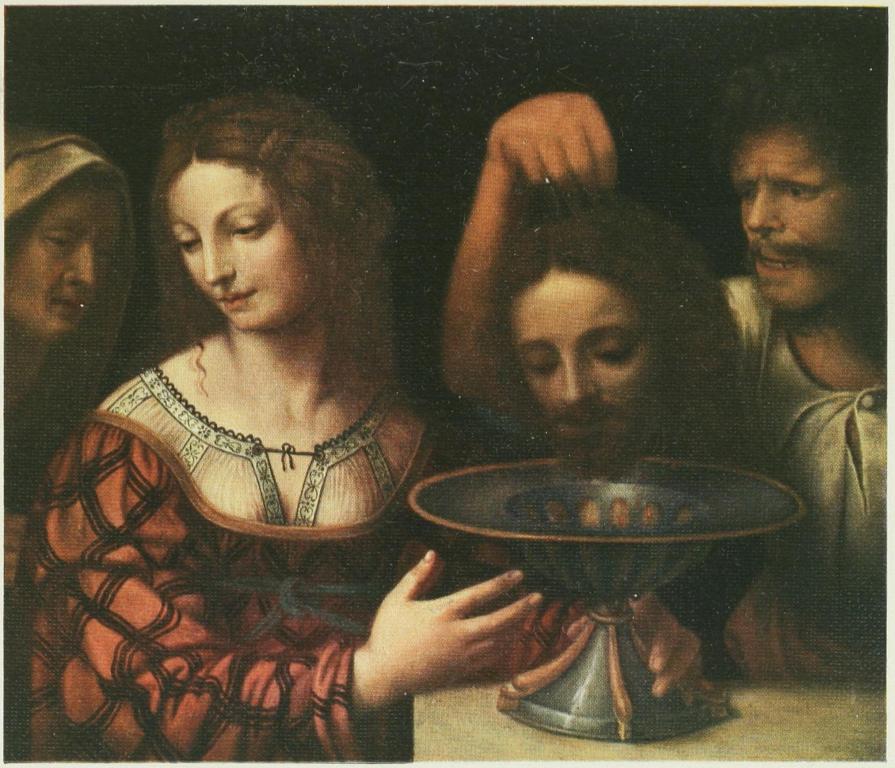
As we have said already nothing is
known of Luini’s early life, although the
fact that he was born at Luino on the Lago
Maggiore seems to be beyond dispute. The
people of that little lake side town have
no doubt at all about the matter, and they
say that the family was one of some distinction,
that Giacomo of Luino who founded
a monastery in his native place was the
painter’s uncle. Perhaps the wish was
father to the thought, and because every
man who sets out to study the life and
work of an artist is as anxious to know as
was Miss Rosa Dartle herself, there are
always facts of a sort at his service. He
who seeks the truth can always be supplied
with something as much like it as paste
is to diamonds, and can supplement the
written word with the aid of tradition.
The early life of the artist is a blank, and
the authorities are by no means in agreement
about the year of his birth. 1470
would seem to be a reasonable date, with
a little latitude on either side. Many men
writing long years after the painter’s death,
have held that he was a pupil of Leonardo
da Vinci, indeed several pictures that were
attributed to da Vinci by the authorities
of different European galleries are now recognised
as Luini’s work, but the mistake
is not at all difficult to explain. If we turn
to “La Joconda,” a portrait by da Vinci
that hangs in the Louvre to-day, and is
apparently beyond dispute in the eyes of
the present generation of critics, and then
go through the Brera in Milan with a
photograph of “La Joconda’s” portrait in
our hand, it will be impossible to overlook
the striking resemblance between Luini’s
types and da Vinci’s smiling model. Leonardo
had an academy in Milan, and it is
reasonable to suppose that Luini worked in
it, although at the time when he is supposed
to have come for the first time to the capital
of Lombardy, Leonardo da Vinci had left,
apparently because Louis XII. of France,
cousin and successor of that Charles VIII.
who had troubled the peace of Italy for so
long, was thundering at the city gates, and
at such a time great artists were apt to
remember that they had good patrons elsewhere.
The school may, however, have remained
open because no great rulers made
war on artists, and Luini would have learned
something of the spirit that animated Leonardo’s
pictures. For other masters and
influence he seems to have gone to Bramantino
and Foppa. Bramantino was a
painter of Milan and Ambrosio Foppa
known as Caradosso was a native of Pavia
and should not be reckoned among Milanese
artists as he has so often been. He was
renowned for the beauty of his medals and his
goldsmith’s work; and he was one of the men
employed by the great family of Bentivoglio.
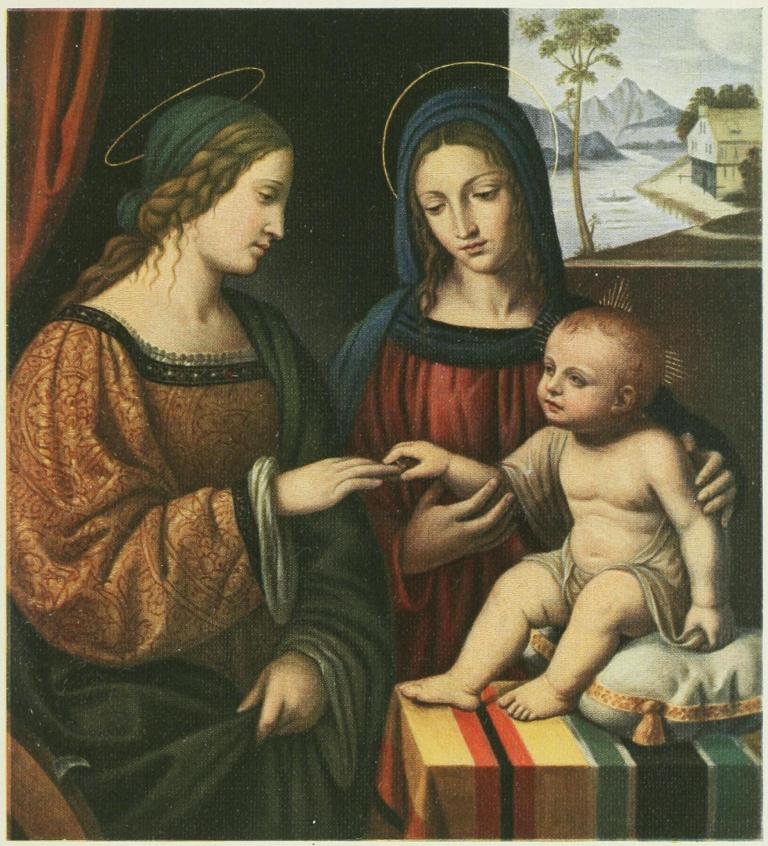
PLATE IV.—THE MYSTIC MARRIAGE OF ST. CATHERINE
(In the Brera, Milan)
This is a singularly attractive picture in which the child Christ
may be seen placing the ring upon the finger of St. Catherine. The
little open background, although free from the slightest suggestion
of Palestine, is very charming, and the head of the Virgin and St.
Catherine help to prove that Luini used few models.
It may be mentioned in this place that
many Italian artists, particularly those of
the Florentine schools, suffered very greatly
from their unceasing devotion to the art of
the miniaturist. They sought to achieve
his detail, his fine but cramped handling,
and this endeavour was fatal to them
when they came to paint large pictures
that demanded skilled composition, and the
subordination of detail to a large general
effect. The influence of the miniature
painter and the maker of medals kept
many a fifteenth-century painter in the
second grade and Luini never quite survived
his early devotion to their methods,
often making the fatal mistake of covering
a large canvas with many figures of varying
size but equal value. It may be remarked
that Tintoretto was the first great
painter of the Renaissance who learned to
subordinate parts to the whole, and he
had to face a great deal of unpopularity
because he saw with his own eyes instead
of using those of his predecessors.
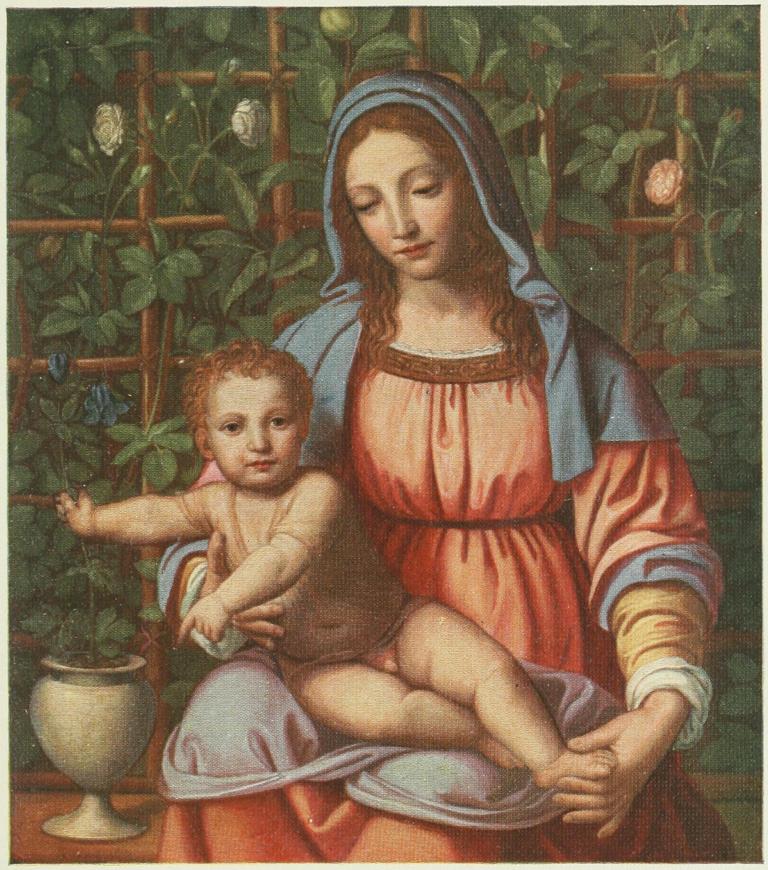
PLATE V.—THE MADONNA OF THE ROSE
(In the Brera, Milan)
Modern criticism proclaims this picture of the Virgin in a Bower of
Roses to be the finest of the master’s paintings. Not only is it
delightfully composed and thought out but the background is painted
with rare skill, and the colour is rich and pleasing to this day.
It may be suggested, with all possible
respect to those who hold different opinions,
that Luini, though he responded to certain
influences, had no master in the generally
accepted sense of the term. One cannot
trace the definite relation between him and
any older painter that we find between
Titian and Gian Bellini, for example. He
took a certain type from Leonardo, his
handling from time to time recalls the
other masters—we have already referred to
the most important of these—but had he
studied in the school of one man, had he
served an apprenticeship after the fashion
of his contemporaries, his pictures would
surely have been free from those faults of
composition and perspective that detract
so much from the value of the big works.
He seems to have been self-taught rather
than to have been a schoolman. While his
single figures are wholly admirable whether
on fresco or on panel, his grouping is nearly
always ineffective, one might say childish,
and his sense of perspective is by no means
equal to that of his greatest contemporaries.
As a draughtsman and a colourist Luini had
little to learn from anybody, and the poetry
of his conceptions is best understood when
it is remembered that he was a poet as well
as a painter. He is said to have written
poems and essays, though we are not in a
position to say where they are to be found,
and it is clear that he had a singularly detached
spirit and that the hand of a skilled
painter was associated with the mind of a
little child. In some aspects he is as simple
as those primitive painters of Umbria whose
backgrounds are all of gold. Like so many
other painters of the Renaissance Luini’s
saints and angels are peasant folk, the people
he saw around him. He may have idealised
them, but they remain as they were made.
A few records of the prices paid for
Luini’s work exist among the documents
belonging to churches and religious houses,
and while they justify a belief that at the
time he came to Milan Luini had achieved
some measure of distinction in his calling,
they seem to prove that he was hardly regarded
as a great painter. The prices paid
to him are ridiculously small, no more than
a living wage, but he had the reputation of
being a reliable and painstaking artist and
he would seem to have been content with
a small reward for work that appealed to
him. His early commissions executed in
and around Milan when he first came from
Luini were numerous and consisted very
largely of frescoes which are the work of a
young man who has not yet freed his own
individuality from the influence of his elders.
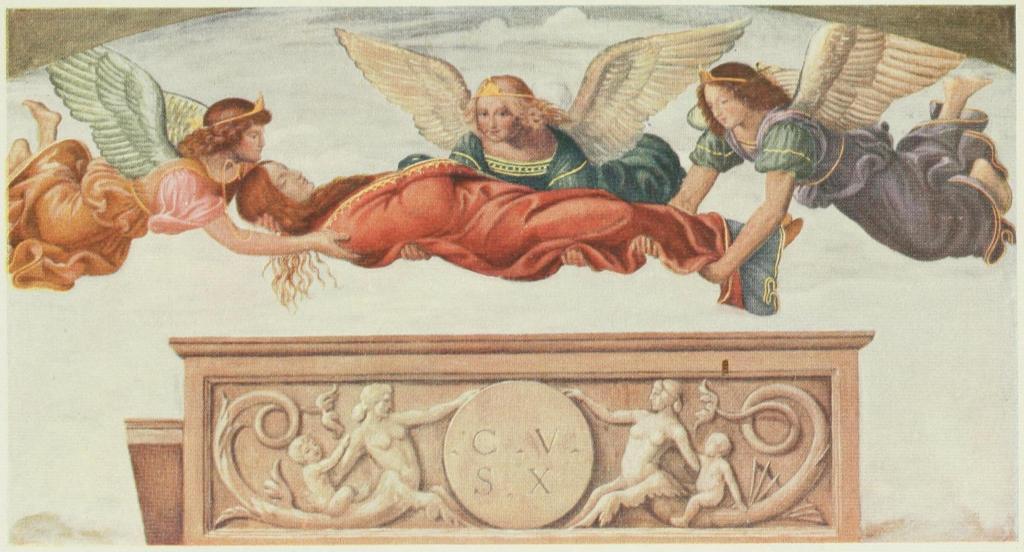
One of the most charming works associated
with this period is the “Burial of St.
Catherine,” which is reproduced in these
pages. The composition is simple enough,
the handling does not touch the summit of
the painter’s later achievements, but the
sentiment of the picture is quite delightful.
St. Catherine is conceived in a spirit of
deepest reverence and devotion, but the
angels are just Lombardy peasant girls
born to labour in the fields and now decorated
with wings in honour of a great
occasion. And yet the man who could
paint this fresco and could show so unmistakably
his own simple faith in the story
it sets out, was a poet as well as a painter
even though he had never written a line,
while the treatment of his other contemporary
frescoes and the fine feeling for appropriate
colour suggest a great future for the
artist who had not yet reached middle age.
We see that Luini devoted his brush to
mythological and sacred subjects, touching
sacred history with a reverent hand, shutting
his eyes to all that was painful, expressing
all that was pitiful or calculated
to strengthen the hold of religion upon the
mass in fashion destined to appeal though
in changing fashion for at least four centuries.
Where the works have failed to
triumph as expressions of a living faith
they have charmed agnostics as an expression
of enduring beauty.
From Milan Luini seems to have gone
to Monza, a city a few miles away from
the capital of Lombardy where the rulers
of united Italy come after their coronation
to receive the iron crown that has been
worn by the kings of Lombardy for nearly
a thousand years. This is the city in
which the late King Umberto, that brave
and good man, was foully murdered by an
anarchist. To-day one reaches Monza by
the help of a steam-tram that blunders
heavily enough over the wide flat Lombardy
plain. The Milanese go to Monza for the
sake of an outing, but most of the tourists
who throng the city stay away, and it is
possible to spend a few pleasant hours in
the cathedral and churches with never a
flutter of red-covered guide book to distract
one’s attention from the matters to
which the hasty tourist is blind. Here
Luini painted frescoes, and it is known that
he stayed for a long time at the house of
one of the strong men of Monza and
painted a large number of frescoes there.
To-day the fortress, if it was one, has
become a farmhouse, and the frescoes,
more than a dozen in all, have been taken
away to the Royal Palace in Milan. Dr.
Williamson in his interesting volume to
which the student of Luini must be deeply
indebted, says that there is one left at the
Casa Pelucca. The writer in the course
of two days spent in Monza was unfortunate
enough to overlook it.
It has been stated that the facts relating
to Luini’s life are few and far between.
Fiction on the other hand is plentiful, and
there is a story that Luini, shortly after
his arrival in Milan, was held responsible
by the populace for the death of a priest
who fell from a hastily erected scaffolding
in the church of San Giorgio where the
artist was working. The rest of the legend
follows familiar lines that would serve the
life story of any leading artist of the time,
seeing that they all painted altar-pieces
and used scaffolding. He is said to have
fled to Monza, to have been received by
the chief of the Pelucca family, to have
paid for his protection with the frescoes
that have now been brought from Monza
to the Brera, to have fallen violently in
love with the beautiful daughter of the
house, to have engaged in heroic contests
against great odds on her behalf, and so on,
ad absurdum. If we look at the portraits
the painter is said to have made of himself
and to have placed in pictures at
Saronna and elsewhere we shall see that
Luini was hardly the type of man to have
engaged in the idle pursuits of chivalry in
the intervals of the work to which his life
was given. We have the head of a man
of thought not that of a man of action,
and all the character of the face gives the
lie to the suggestions of the storytellers.
It is clear, however, that the painter made
a long stay in Monza and when he came
back to Milan he worked for the churches
of St. Maurizio, Santa Maria della Pace,
Santa Maria di Brera, and St. Ambrosia.
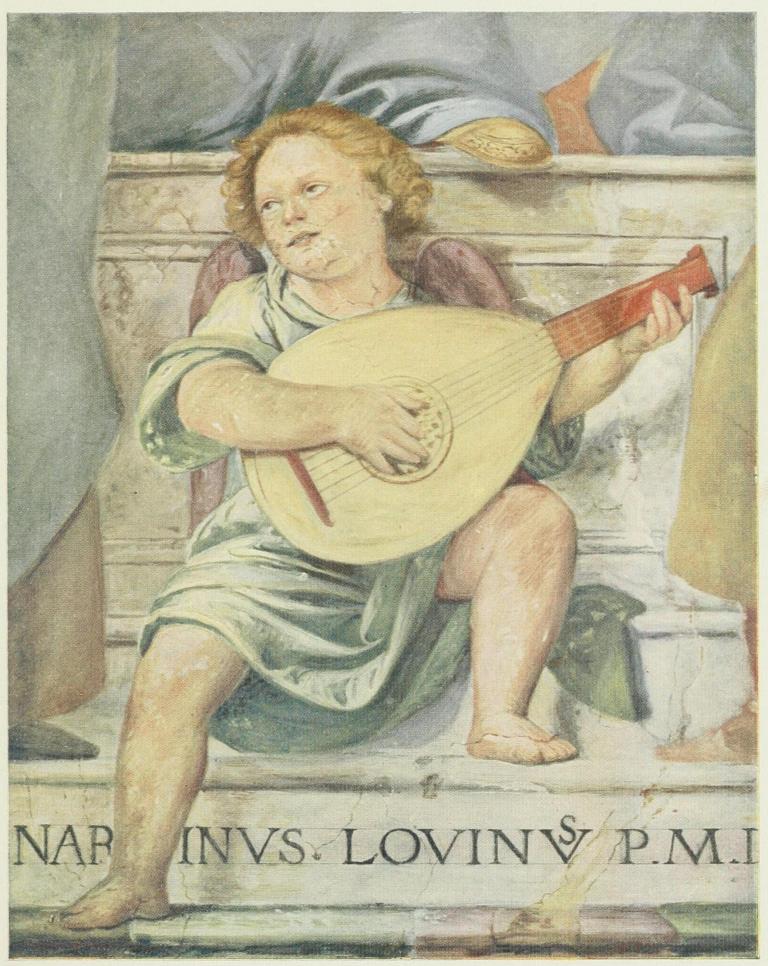
PLATE VI.—DETAIL OF FRESCO
(In the Brera, Milan)
This prettily posed figure is at the base of a fresco of the Virgin
with Saints in the Brera. Part of the artist’s signature (Bernardinus
Louinus) may be seen below. It will be remembered that Carpaccio
painted a very similar subject. The fresco is not too well preserved.
In Milan he found a great patron, no
less a man than Giovanni Bentivoglio who
had been driven from his rule over Bologna
by the “Terrible Pontiff” Julius II., that
life-long opponent and bitter enemy of the
Borgia Pope Alexander VI. Alessandro
Bentivoglio, the son of the ruined Giovanni,
married Ippolita Sforza, daughter of one
of the house that had done so much to
rule Rome until Pope Alexander VI. broke
its power. Alessandro Bentivoglio commissioned
Luini to paint altar-pieces in
St. Maurizio where his father was buried, and
the painter included in his work a portrait of
Ippolita Sforza with three female saints. He
did much other work in this church; some of
it has faded almost beyond recognition.
At the same time there is no need to
think that we have recovered the last work
of Luini or indeed of the great masters
even in the churches of Italy. Only a few
months ago the writer was in a small
Italian church that had suffered a few
years ago from disastrous floods. The
water unable to find no outlet had risen
for a time almost to the top of the supporting
columns. The smooth wall above was
plastered, and when the waters had subsided
it was found that the plaster had become
so damaged that it was necessary to remove
it. Happily the work was done
carefully, for under the whitewash some
excellent frescoes were discovered. They
would seem to have profited by their covering
for as much as has been uncovered is
rich and well preserved. It may be that
in days when the State of Italy was seriously
disturbed, and Napoleon, greatest of highwaymen
and conquerors, after being crowned
in Milan with the famous Monza crown,
was laying his hand on all that seemed
worth carrying away, some one in authority
thought of this simple method of concealment,
and obtained expert advice that
enabled the frescoes to be covered without
serious damage. Under similar conditions
we may yet discover some of the earlier
work of Luini, because it is clear that the
years in which his reputation was in the
making must have been full of achievement
of which the greater part has now been
lost. He could hardly have been less than
thirty years of age when he came to Milan
with a reputation sufficient to gain commissions
for work in churches; that reputation
must have taken years to acquire, and
must have been associated with very definite
accomplishment. The lack of all record
was essentially the misfortune that beset
men who were not very high in the esteem
of their contemporaries. A painter like
Luini would have executed a great many
pictures for people who could not pay very
well, and had no great gallery or well-built
church to harbour the work, and in the
course of time the work would tend
inevitably to disappear before the devouring
candle-smoke, or to be carried away
by unscrupulous purchasers who chanced
to be better equipped with taste than
conscience. On the other hand, painters
who led the various movements of their
time would be honoured by successive
generations and their work would be stored
in the best and safest places. To be sure,
fire was never a respecter of palaces or
persons, and the flames have consumed
more work than a collection of the finest
Renaissance pictures in existence could
show, but even then the odds seem to be
in favour of the bigger men because special
efforts would be made to save their paintings
while those of lesser men would be
left with few regrets to take their chance.
When Luini was engaged to work in
the Church of St. Maurizio there was
a fair chance that his altar-pieces and
frescoes would be well looked after, but
when he worked for a small provincial
family like the Pelucca the house sank
with the family fortunes till at last it became
a farm, and in the early years of the nineteenth
century the frescoes were taken
from the walls with as much care as was
deemed advisable. Doubtless Luini worked
for many men whose worldly position was
not as considerable as that of the Pelucca
family, and that work may have disappeared
altogether. The painter, as we have
seen, did not enjoy the patronage of many
great men before Alessandro Bentivoglio, and
large institutions were not numbered among
his early clients. But he was not altogether
without valuable patronage in the latter
days, and in the early ’twenties of the sixteenth
century the influential Brotherhood
of the Holy Crown, one of the leading
charitable institutions of Milan, would seem
to have given him some official connection
with their institution; a recognised
position without fixed salary. For them he
painted the magnificent frescoes now in the
Ambrosian Library. The great work there
was divided by the artist into three parts
separated by pillars. In the centre Luini
has depicted the crowning with thorns,
Christ being seated upon a throne while
thorns are being put upon His head; His
arms are crossed; His expression one of
supreme resignation. Above Him little
angels look down or point to a cartouche
on which is written “Caput Regis Gloriæ
Spinis Coranatur.” In the left hand division
of the fresco and on the right, the fore-ground
is filled with kneeling figures whose
heads are supposed to be portraits of the
most prominent members of the Society.
Clearly they are all men who have achieved
some measure of honour and distinction.
Above the kneeling figures on the left hand
side St. John is pointing out the tragedy
of the central picture to the Virgin Mary,
while on the right hand side a man in
armour and another who is seen faintly
behind him call the attention of a third to
what is happening. A crown of thorns
hangs above the right and the left hand
compartment and there is a landscape for
background. It is recorded that this work
took about six months, and was finished in
March 1522 at a cost to the Society of 115
soldi. So Luini’s work looks down to-day
upon a part of the great Ambrosian Library,
and it may well be that the library itself will
yield to patient investigation some record,
however simple, of the painter’s life, sufficient
perhaps to enable us to readjust our mental
focus and see his lovable figure more clearly.
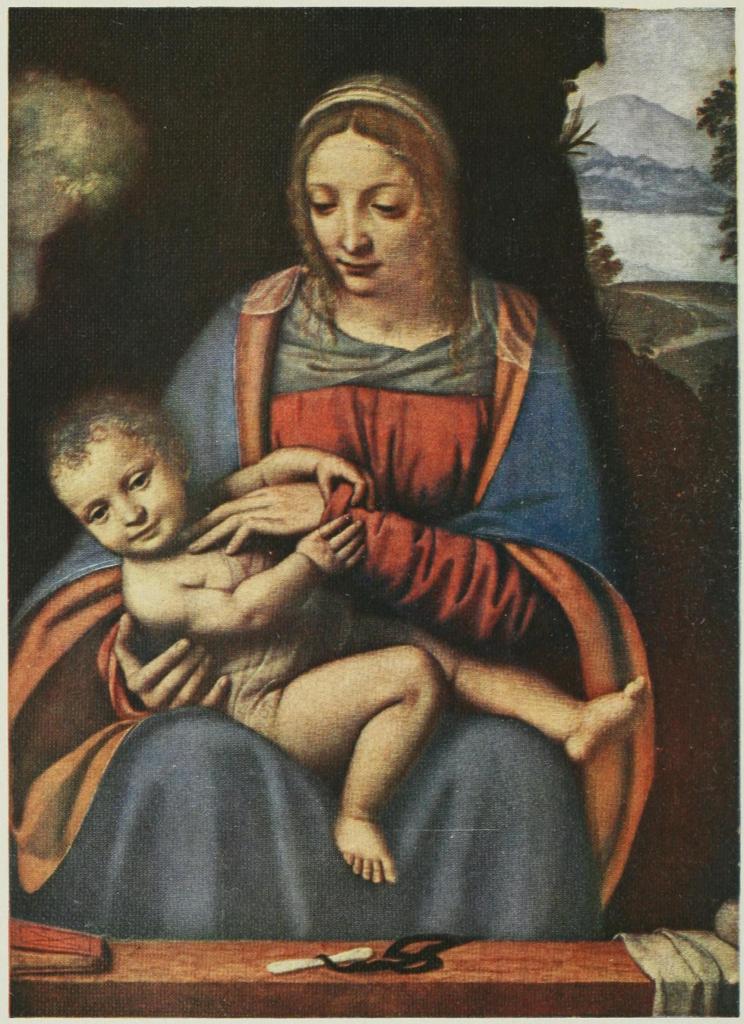
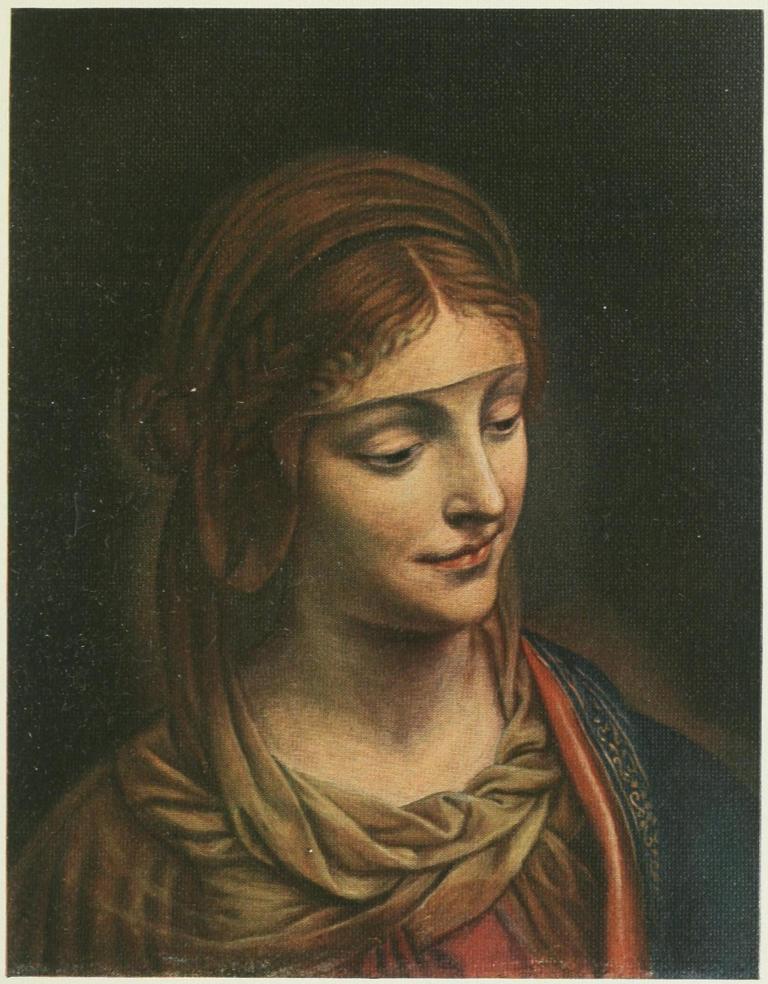
PLATE VII.—HEAD OF VIRGIN
(In the Ambrosiana, Milan)
Here we have another well painted and finely preserved head
painted from one of Luini’s favourite models. The artist must have
known most of the secrets of colour preparation, for his work has
survived much that was painted centuries later. Unfortunately his
frescoes were exposed to the elements and have suffered accordingly.
It may be urged that for those of us
who are content to see with the spiritual
eye Luini is expressed more eloquently by
his work, and particularly by this great
picture in the Ambrosian Library, than he
could hope to be by the combined efforts
of half-a-dozen critics, each with his own
special point of view and his properly profound
contempt for the views of others. The
painter’s low tones and subtle harmonies,
his pure but limited vision, speak to us of a
gentle, refined, and delicate nature, of an
achievement that stopped short of cleverness
and consequently limited him to the
quieter byways of artistic life, while those
whose inspiration was less, and whose
gifts were more, moved with much pomp
and circumstance before admiring contemporaries.
The refined mind, the sensitive
soul, shrank from depicting the tragedy of
the Crown of Thorns in the realistic fashion
that would have proved acceptable to so
many other artists. Luini forgets the blood
and the spikes, he almost forgets the
physical pain, and gives us the Man of
Sorrows who has forgiven His tormentors
because “they know not what they do.”
Continental galleries show us many treatments
of the same familiar theme, they have
none to show that can vie with this in a
combination of strength and delicacy that
sets out an immortal story while avoiding
the brutal realism to which so many other
artists have succumbed. We may suppose
that the objects of the Society roused Luini’s
sympathy to an extent that made it easy
for him to accept the somewhat paltry
remuneration with which the Brotherhood
of the Holy Crown rewarded him, and so
the picture makes its own appeal on the
painter’s behalf, and tells a story of his
claims upon our regard. A man may lie, in
fact it may be suggested on the strength of
the Psalmist’s statement that most men do,
but an artist’s life work tells his story in spite
of himself, and if he labour with pen or brush
his truest biography will be seen in what
he leaves behind him. It is not possible to
play a part throughout all the vicissitudes
of a long career, and no man could have
given us the pictures that Luini has left
unless he chanced to be a choice and rare
spirit. We may remember here and now
that the time was richer in violent contrasts
than any of its successors, the most
deplorable excesses on the one hand, the
most rigid virtues on the other, seem to
have been the special product of the Renaissance.
While there were men who
practised every vice under the sun there
were others who sought to arrest Divine
Retribution by the pursuit of all the virtues,
and while the progress of the years has to
a certain extent made men neutral tinted
in character, the season of the Renaissance
was one of violent contrasts. On behalf of
the section that went in pursuit of righteousness
let it be remembered that heaven and
the saints were not matters for speculation,
they were certainties. Every man
knew that God was in heaven, and that if
the workers of iniquity flourished, it was that
they might be destroyed for ever. Every
man knew that the saints still exerted their
supernatural powers and would come down
to earth if need be to protect a devotee.
Satan, on the other hand, went armed
about the earth seeking whom he might
devour, and hell was as firmly fixed as
heaven. In order to understand Luini, his
life and times, these facts must be borne
in mind. The greater the unrest in the
cities the more the public attention would
be turned to statesmen and warriors, and
when the personalities of artists began to
be considered, those who lived and thrived
in the entourage of popes and rulers monopolised
the attention. Hundreds of men
were at work earning a fair living and
some local repute, it was left to foreign
favour to set a seal upon success. Had
Luini chanced to be invited to Venice or
to Rome he would have been honoured
throughout Lombardy; but a painter like
a prophet is often without honour in his
own country. Luini’s gifts were of a more
quiet and domestic order than those of his
great contemporaries Leonardo da Vinci and
Michelangelo, for example, were more than
painters, and perhaps it was only in Venice
that painting stood by itself and managed
to thrive alone. Luini would have come
into his kingdom while he lived had Venice
been his birthplace. The genius of the
Florentine school sought to express itself
in half-a-dozen different ways, no triumph
in one department of work could satisfy
men whose longing for self-expression was
insatiable. In those days it was possible
for a man to make himself master of all
knowledge, literally he could discourse de
omnibus rebus et quibusdam aliis. And
this diffusion of interests was fatal to many
a genius that might have moved to amazing
triumph along one road.
It is clear that Bernardino Luini never
travelled very far from his native country
either physically or mentally. In the eyes
of his contemporaries he was not a man of
sufficient importance to receive commissions
from the great art centres of Italy. This,
of course, may be because he did not have
the good fortune to attract the attention of
the connoisseurs of his day, for we find that
outside Milan, and the little town of Luino
where he was born and whence he took
his name, his work was done in comparatively
small towns like Como, Legnano,
Lugano, Ponte, and Saronno. Milan and
Monza may be disregarded because we
have already dealt with the work there.
Saronno, which lies some fourteen miles
north-west of Milan, is little more than a
village to-day, and its chief claim upon the
attention of the traveller is its excellent
gingerbread for which it is famous throughout
Lombardy. It has a celebrated church
known as the Sanctuary of the Blessed
Virgin and here one finds some very fine
examples of our painter’s frescoes. Some
of the frescoes in the church are painted
by Cesare del Magno others by Lanini, and
the rest are from the hand of Bernardino
Luini. Round these frescoes, which are of
abiding beauty, and include fine studies
of the great plague saint, St. Roque, and
that very popular martyr St. Sebastian,
many legends congregate. It is said that
Luini having killed a man in a brawl fled
from Milan to the Church of the Blessed
Virgin in Monza to claim sanctuary at the
hand of the monks. They gave him the
refuge he demanded, and, says the legend,
he paid for it with frescoes. This is little
more than a variant of the story that he
went to Monza under similar circumstances
and obtained the protection of the Pelucca
family on the same terms. In the absence
of anything in the nature of reliable record
this story has been able to pass, but against
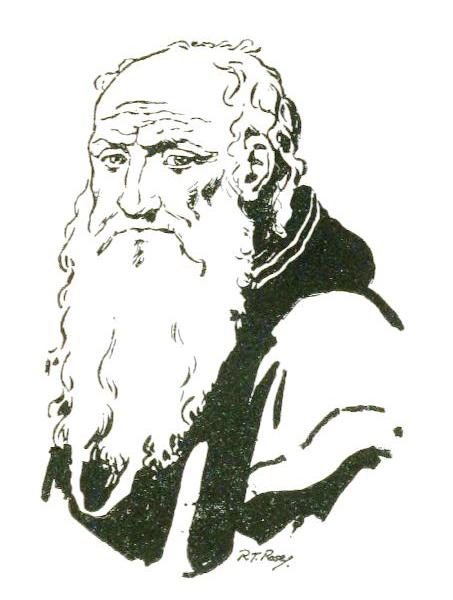
it one likes to put the tradition that one of the
heads in the frescoes is that of Luini himself.
We find that head so simple, so refined, and
so old—the beard is long and the hair is
scanty—and so serene in its expression
that it is exceedingly difficult to believe
that brawling could have entered into the
artist’s life.
PLATE VIII.—BURIAL OF ST. CATHERINE
(In the Brera, Milan)
This is one of the frescoes painted by Luini for the Casa Pelucca
and transferred to Milan in the beginning of the nineteenth century.
It will be seen that although the three angels bearing the Saint to
her grave are obviously peasant girls from the plains of Lombardy
winged for the occasion, the artist has handled his subject with faith
and reverence. The fresco is better preserved than others from the
same house.
The subjects of the pictures in Saronno’s
Sanctuary are all biblical. We have an
Adoration of the Magi, showing the same
muddled composition that detracts from the
other merits of the artist’s work; a beautiful
Presentation in the Temple in which the
composition is a great deal better; and a
perfectly delightful Nativity. There is a
Christ is Disputing with the Doctors, and
this is the picture in which we find the
head that is said to be a portrait of the
painter himself. Two female saints figure
in another picture, and Luini’s favourites
St. Roque and St. Sebastian are not forgotten.
Certainly if the monks obtained all
that work at the price of the painter’s safety
they were very fortunate in his choice of
sanctuary.
Como is, of course, a more important
town with large industries and important
factories, and one of the finest cathedrals
in northern Italy. For the interior Luini
painted another Adoration of the Magi and
another of his favourite Nativities. It is
not easy to speak about the conditions
under which this work was done, and the
inhabitants have so many more profitable
matters to attend to that they do not seem
to trouble themselves about the history of
the painter who helped to make their
beautiful cathedral still more beautiful.
Legnano, with its memories of Frederick
Barbarossa, is within twenty miles of Milan,
and for the Church of San Magno Luini
painted one of his finest altar-pieces. It
is in seven divisions and has earned as
much critical admiration as any work from
the master’s brush.
Lugano is of course in Switzerland, well
across the Italian border. It is a popular
place enough to-day, and so far as we can
tell, it was the city in which Luini painted
his last pictures. He must have left Milan
about 1528 or 1529, and he would seem to
have gone there to execute commissions,
for in the Church of Santa Maria degli
Angioli we find some of his latest and finest
work. The Crucifixion and the Passion, on
the wall of the screen, contains several hundred
figures arranged in lines in most
archaic fashion. At first sight the work
appears as a mere mass of figures without
any central point in the composition, and
with very little relief for the eye of the
spectator who may come to the church
surfeited with the bewildering riches of
many Italian galleries. But for those who
will take the trouble to study the details
of this fine work there is very much to
admire. In the scene of the picture Christ
is seen on the cross surrounded by angels.
On his right hand the penitent thief on the
cross is guarded by an angel, while on the
left the impenitent one is watched by a devil
with a curly tail and spiked wings. Below
in perfectly bewildering fashion are many
figures that may be recognised with little
effort—Mary Magdalen, the Madonna,
Joseph of Arimathæa, Roman soldiers, some
of the general public—a confused crowd.
The whole picture is supported by figures
of San Sebastian and St. Roque seen on
either side of the arch. Stories from the
life of Christ are depicted in the upper
parts of the picture, all are painted with
the skill of a great artist and the fervour
of a devotee, but the arrangement is hopelessly
confused. Luini also painted a “Last
Supper” for this church and a “Madonna
with the Infant Christ and St. John.” This
is signed “Bernardino Luini, anno 1530.”
From 1530 until 1533 the career of the
artist cannot be traced, but in 1533 he was
in Lugano again, and after that year he
passes altogether from our sight. Stray
writers mention his name, some venture to
carry the date of his life into the ’forties,
but we have no proof save their word, no
work to record the later years, and all our
conjecture is vain. It must suffice for us
that Luini’s life as far as his art was concerned
ends for us with the year 1533. If
he lived and worked after that date the
facts relating to the following years and
the work done in the latter days are left
for future students to discover. It is well
to remember that the Saronno portrait
makes the painter look much older than
he is supposed to have been.
To his contemporaries it is clear that
Luini was a man of small importance. His
best work is seen outside the radius of the
great Art centres of Italy, and it was only
when he attracted the attention of great
critics and sound judges like Morelli, John
Ruskin, and John Addington Symonds that
the lovers of beautiful pictures began to go
out of their way to find his best work in
the little towns whose churchmen were his
patrons. So many of the lesser men had
all his faults—that is to say, lack of perspective
and inability to compose a big
picture—that he was classed with them by
those critics whose special gift lies in the
discovery of faults. The qualities that make
the most enduring appeal to us to-day were
those that were least likely to make a
strong impression upon the strenuous age
of physical force in which he lived. When
great conquerors and men who had accomplished
all that force could achieve felt
themselves at liberty to turn to prolonged
consideration of the other sides of life they
employed other masters. Then as now there
were fashions in painters. The men for
whom Luini strove were of comparatively
small importance. A conqueror could have
gathered up in the hollow of his hand all
the cities, Milan excepted, in which Luini
worked throughout his well-spent life, and
in the stress and strife of the later years
when great pictures did change hands from
time to time by conquest, Luini’s panel
pictures in the little cities of his labours
passed quite unnoticed, while even if the frescoes
were admired it was not easy to move
them. When at last his undoubted merits
began to attract attention of connoisseurs,
these connoisseurs were wondering why
Leonardo da Vinci had left such a small
number of pictures. They found work that
bore a great resemblance to Leonardo and
they promptly claimed that they had
discovered the lost masterpieces. Consequently
Leonardo received the credit that
was due to the man who may have worked
in his Milanese school and was undoubtedly
under his influence for a time. And many of
the beautiful panel pictures that show Luini
at his best were attributed to Leonardo
until nineteenth-century criticism proved
competent enough to render praise where
it was due, and to say definitely and with
firm conviction that the unknown painter
from Luino, who lived sometime between
1470 and 1540, was the true author.
If, in dealing with the life of Bernardino
Luini, we are forced to content ourselves with
meagre scraps of biography and little details
that would have no importance at all in dealing
with a life that was traceable from early
days to its conclusion, it is well to remember
that the most important part of the great
artist is his work. Beethoven’s nine symphonies,
Milton’s “Paradise Lost,” the landscapes
of Corot, the portraits of Velazquez,
and the carving of Grinling Gibbons are
not more precious to us because we know
something of the life of the men who did
the work. Nor are the “Iliad” and the fragments
that remain of the works of the
great Greek sculptors less to us because a
shadowy tradition is all that surrounds the
lives of the men who gave immortal work
to the world. We must remember that it
is as difficult to deal with art in terms of
literature as it is to express the subtle
charm of music in words. Had Luini’s years
boasted or regretted a series of gossiping
newspapers we should have gathered a
rich harvest of fact, but the facts would
have left the painter where he is. There
is enough of Luini left in Milan and the
smaller places we have named to tell us
what the man was and the spirit in which
he worked, and while we will welcome the
new-comer who can add to our scanty
store of authenticated facts we can hardly
expect that they will deepen our admiration
of work that for all its shortcomings
must be remembered when we turn to
ponder the greatest achievements of Italian
Art. It forms “a magic speculum, much
gone to rust, indeed, yet in fragments still
clear; wherein the marvellous image of his
existence does still shadow itself, though
fitfully, and as with an intermittent light.”
The plates are printed by Bemrose Dalziel, Ltd., Watford
The text at the Ballantyne Press, Edinburgh