Adam, according to tradition, was created in full
King-Beaverhood, and, burgeoning amid the bougainvillea
and borage of the Garden of Eden, the
Beard, throughout the centuries, has bloomed and
faded, resurged, again faded, then blossomed anew
that, in the fullness of time, the Beard-Bearer might
be crowned with the honourable title of Beaver. “The
soft susurrus of his silken stride” brings joy to the
heart of man, perhaps also “game, set, match,” and
the shape, the colour, the texture of his adornment
provoke a fastidious scrutiny akin to that of a connoisseur
appraising a Crown Derby figurine. For
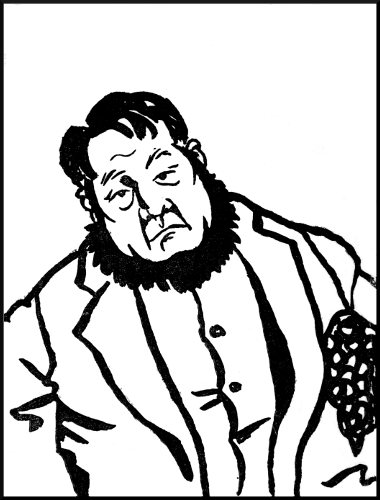
many years the auburn-haired hero who grew a beard
was not, ipso facto, a person of any importance. A
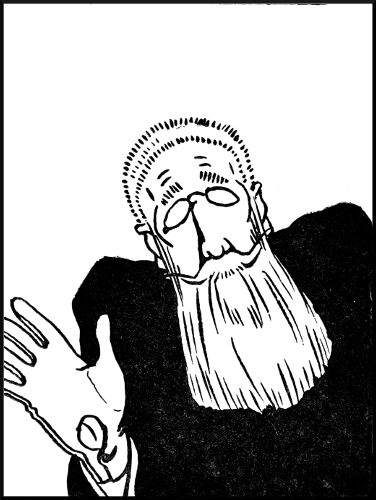
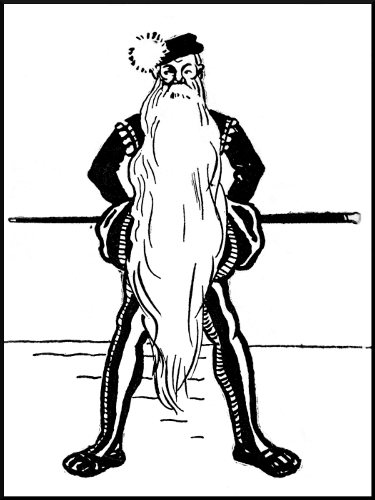
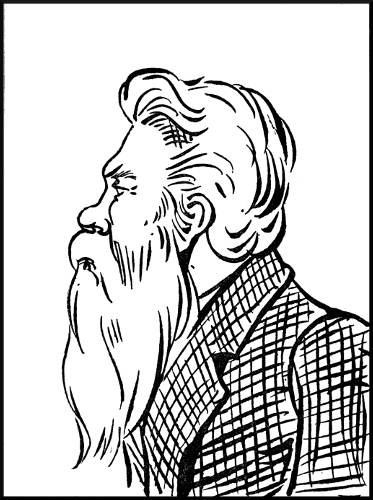
dignitary of the Church, whose venerable features
were complemented or obscured by a snowy, a
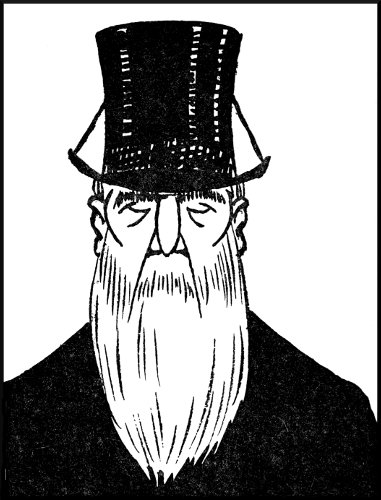
grizzled or a brindled beard of majestic length, was
not, inherently, remarkable. Behold them now, a
Red-King and an Ecclesiastical King, cynosures,
orchids upon the unlovely tree-trunk of our common
life. As the poet might have written:—
Beaver, beaver, burning bright,
In what forest of the night,
What immortal hand or eye
Could frame thy xanthine symmetry?
The celebrated Beavers of history need not be
catalogued at length. Shakespeare was a Bald-Beaver,
apparently an Anticipatory-Vandyke.
Napoleon Bonaparte was not a Beaver. Julius
Cæsar, Edward Gibbon, Sir Joshua Reynolds, Alexander
VI. and Beethoven did all “... against the edicts
of God, the oracles of the Prophets, the placits of
councils and the judgment of learned men, hold
fast the foolish custom of shaving.”[2] Contrariwise,
Hannibal, William Morris, Rodin, St. Paul and Juan
Rodriguez de Silva y Vélasquez were all content with
“nourishing their horrid bushes of vanity.”[3] The
Jews bore their beards proudly from out the Captivity.
Indeed they took captivity captive; did not
the Egyptians from time to time, asserting their
masculinity, assume ceremonial false beards, “double
faults” to a man? The most antient Romans
were King-Beavers; the Normans were Walruses;
the Greeks supported a considerable number of King-Beavers,
among them Pericles and Socrates, “shaving
was very rare in the early part of our period (440
B.C.–330 B.C.).”[4] Until the eighteenth century
Beaverhood was common, since that time it has
grown rarer and rarer, with a sudden uprush of fur
to the face in the middle of the last century, an
uprush which has now almost died away. We read
“... the value of their fur has caused their
destruction in great measure where they were
once numerous, and has led to their extirpation where
there is evidence that they existed as a not uncommon
animal. They were formerly distributed over
the greater part of Europe. In England semi-fossilised
remains show that they were not uncommon
... in 1188 Giraldus stated that they were
living on the river Teify in Cardiganshire ... some
were known to frequent the Elbe in 1878.”[5]
The origin of the game, which is scored in exactly
the same manner as Lawn Tennis, is unknown. There
are, however, various theories; one school holds that
it came to birth in Oxford, another that it emerged
in the other place, and a third traces it to Malta
(where “my brother from Gozo” was, doubtless, a
local champion) and seeks for some association with
antient mysteries.
The outlines of the game itself are so simple and
well-defined that the question of rules scarcely arises.
A bearded man is a Beaver, claim him, crying aloud,
as musically as possible, “Beaver, fifteen love”—or
appropriately to the score. If both players cry aloud
simultaneously it is a “no-ball.”
The system of “double faults” deserves explanation.
The educational value of the game is high,
fostering as it does quickness of observation and that
desirable attribute, an eagle-glance. When a player
has had some little practice he will often score winning
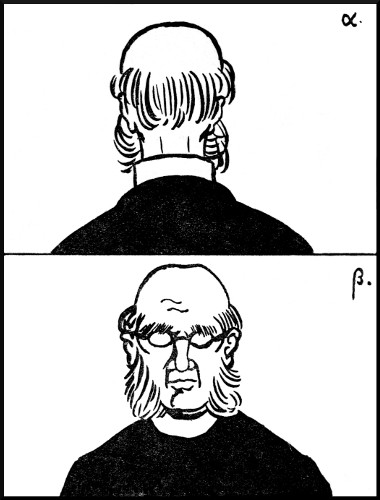
points from behind the specimen. Thus a side-whiskered
gentleman may be claimed from the rear
but, on drawing level with the quarry, it is observed
that the chin is bare ... double fault.
“Local double faults” are always a matter of
courtesy, and if one claims a “local D. F.” one is
not mulcted in the point. Usually it is some revered
and Friend-of-all-the-World Beaver who is created,
by general consent, a “local D. F.,” to enable players
to discuss, unembarrassed, the day’s sport with him.
Juvenile players find this convention of the greatest
possible service. Hot-tempered, hard-handed uncles
and such like are swiftly appeased by being made
“local D. F.s,” and join whole-heartedly in the
triumph occasioned by the capture of some other
Brindled-King.
It has been mentioned in the notes that very high
standards have been from time to time set up as
regards the status of Beaver. Passionate purists
have, indeed, claimed that the charming Half-Beaver
is a D. F., that the delicate wilding, the Fringed-Georgic,
is a D. F., even that the Imperial and the
Nanny are suspect. Heed not such persons. Remember
Knut and Mrs. Partington, nor seek to gild the
lily. The sign manual of the Beaver is the not-naked
chin, ἂγυμνος. No one of the specimens
mentioned above has a naked chin, therefore, they
are all Beavers; quod erat demonstrandum.
The game can be played anywhere, except in
Burithabeth, for “these men have no beards at all,
for we saw them carry a certain iron instrument in
their hands wherewith, if any hairs grow upon their
chin, they presently pluck them out.”[6] Cathedral
cities are a favourite habitat of the genus, and some
are always to be found in the neighbourhood of Pall
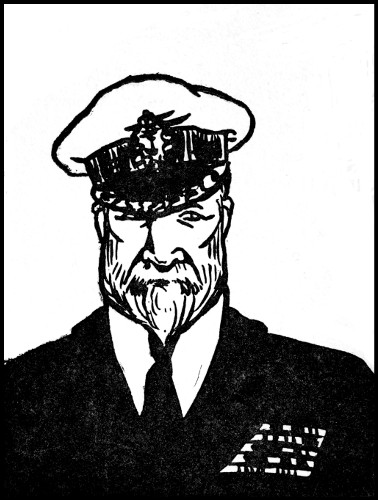
Mall. Dockyard towns provide large numbers of
the ordinary variety, but very few Kings.
It is not generally known that a rigidly conscientious
person can play single-handed Beaver with great
content. One scores Beavers walking in the same
direction as oneself to the server, Beavers coming
from that direction, and so passing the player, to the
striker and stationary Beavers in accordance with
the direction in which their heads are turned, towards
or away from the player. Beavers debouching suddenly
from cross-roads, if one has not time, as on a
swift omnibus, to observe their ultimate direction,
are “no-balls.”
It has been objected that the game is nonsensical,
anti-social and essentially discourteous. Nonsensical
it is, an it please you; but is not nonsense a rare and
a precious thing? Is not the nonsense of Lewis
Carroll quite entirely adorable? Is not Lear’s story
of Violet, Slingsby, Guy and Lionel a thing of impressive
beauty? The game is not anti-social, for it
entails an increased interest in and admiration of
one’s fellow-men and, as regards discourtesy, surely
it is as much a compliment to a Red-King to cry
on him, “Beaver, game, set, match,” as it is to
comment upon some damsel’s handsome eyes.
“Aristotle in his ethics takes up the conceit of the
Bever,”[7] and, in general, one may assume that the
bearded are proud of their adornments, love them,
cherish them, even going so far in some cases as to
enclose them in silken bags before retiring to rest.
Controversy has long raged as to the propriety or
otherwise of shaving. The Greek Church held strong
views on the point, “... and also they say, that we
sin deadly in shaving our beards, for the beard is
token of a man, and gift of our Lord.”[8] The antient
Greeks, as we have observed, for long clutched their
hairiness, but finally succumbed to the Macedonian
mode, and shaved clean; it is an interesting point
that they did utterly abhor the Walrus. In England
the matter has been entirely regulated by fashion,
and I cannot trace the existence of any important
body of opinion in favour of or against the practice
of shaving. It would, nevertheless, be safe to say
that an immature Beaver in the present year of grace
is so rare as to be practically unknown—English
specimens are seldom lighter than medium-brindle—which
shows the trend of modern thought.
It may be accepted, then, that the Beaver indulges
in efflorescence in order to gratify his vanity (or in
a few cases, perhaps, to keep his throat warm and
save the expense of cravats). Perhaps he remembers
the dictum, “l’habit long et la barbe imposent de
respect.”[9] In which connection it may be emphasised
that the intense interest now taken in fine specimens
should be (and probably is) a source of considerable
gratification to them. I have even been told of
one superb Red-King who invariably congratulates
the fortunate player who scores him.
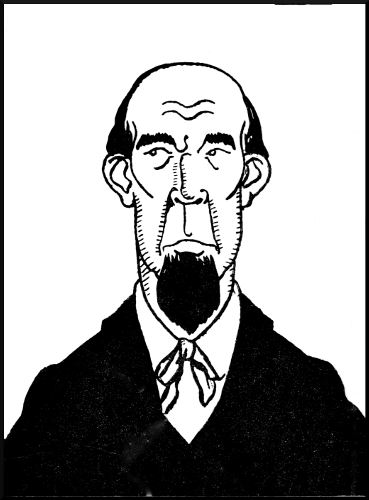
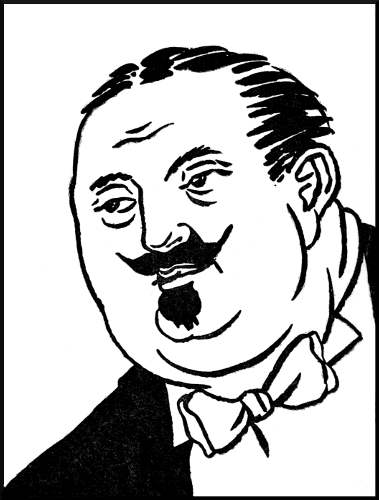
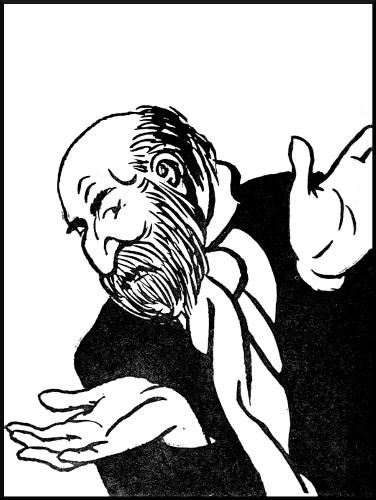
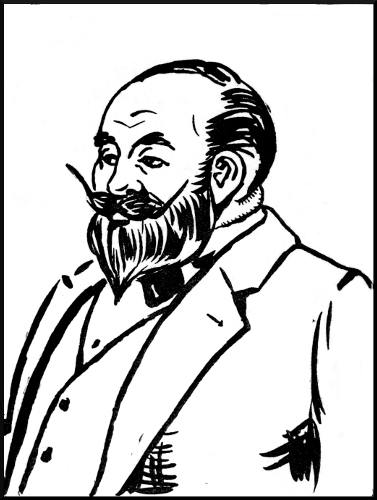
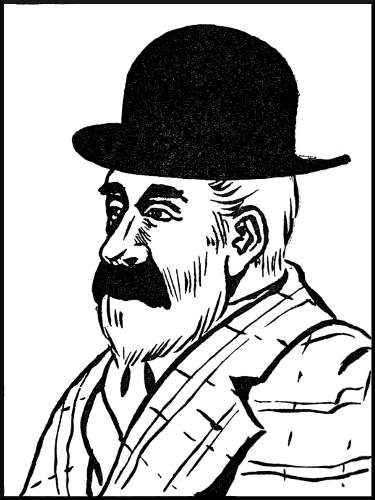
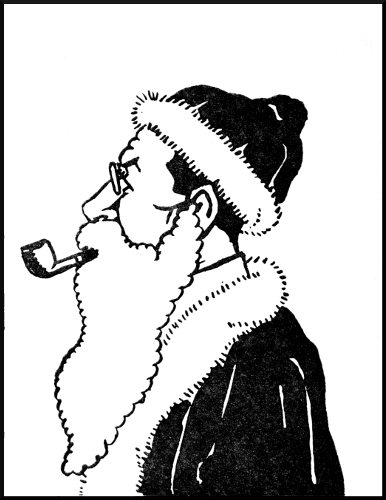
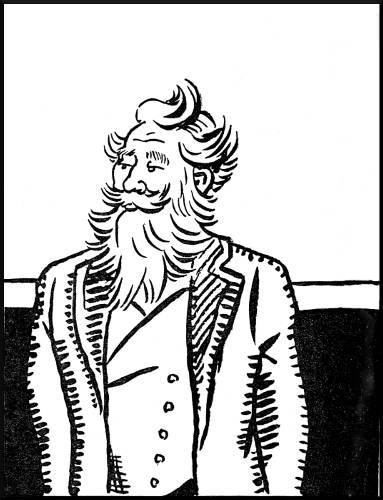
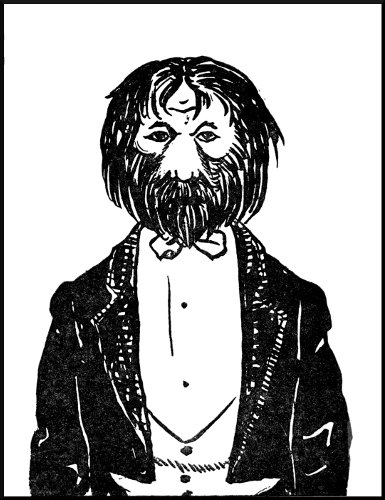
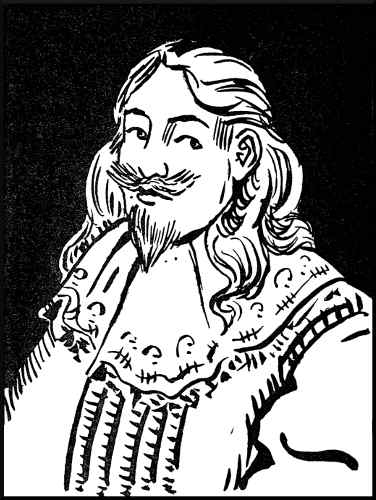
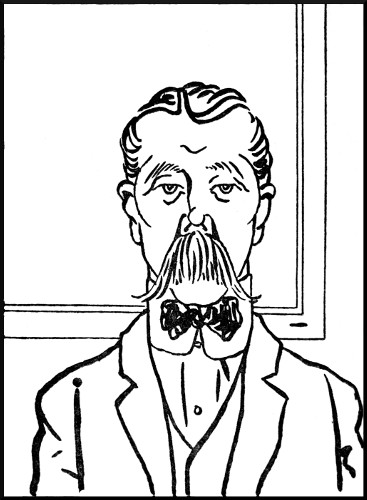
It is interesting to observe the very marked personal
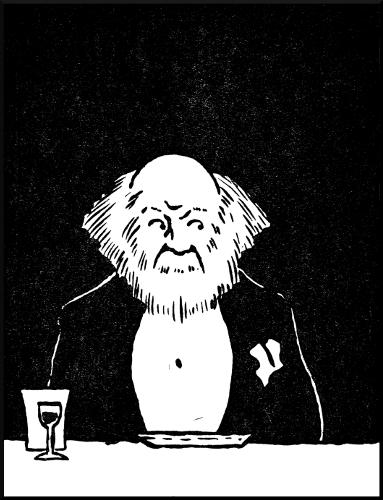
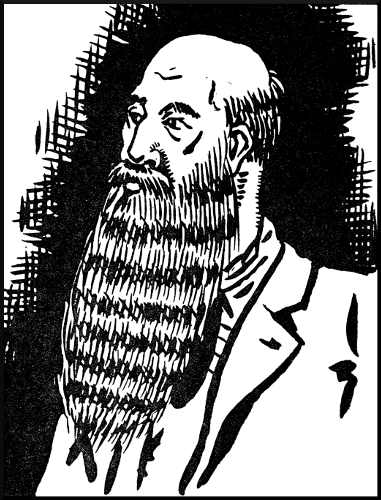
characteristics of the various species. A Brindled-King-Beaver
is commonly distinguished by a dignified
port and an air of profound weightiness. In a Red-King
something of wistful may be remarked, in a
Xanthine a touch, maybe, of bewilderment. Parti-colours
are usually rather bird-like (perhaps the
unconscious influence of the wag-tail) and Yellows
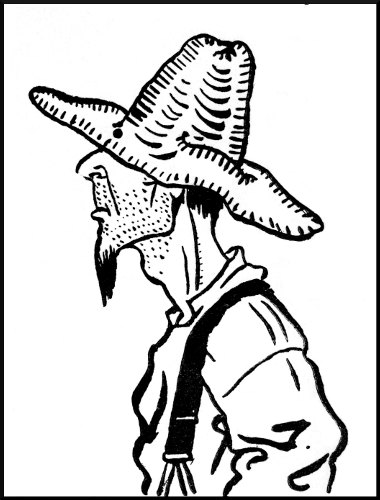
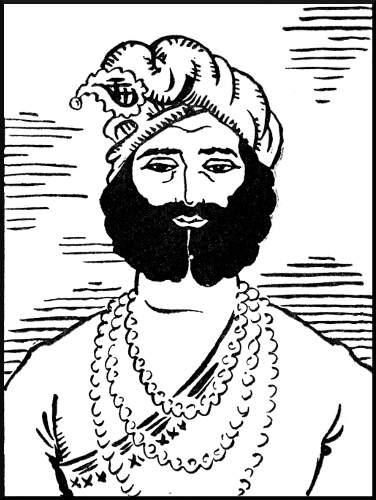
are always pugnacious in appearance. The Fringed-Georgic
smacks of the soil, the Imperial of cafés
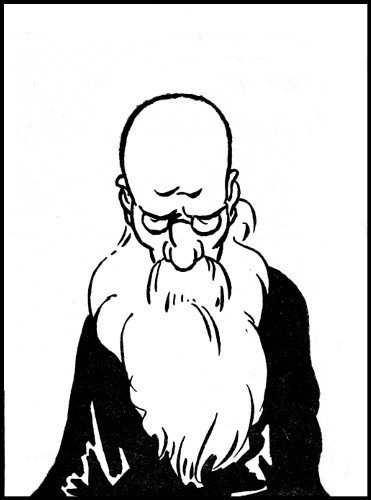
with red velvet, the Bald-King of the Reading-Room
of the British Museum, the Tufted of antimaccassars
and bronze horrors wriggling under glass domes. But
all, without exception, carry an indefinable air of
exotisme, a something that raises them above the
herd; they appear never natural products, always
“sports.”
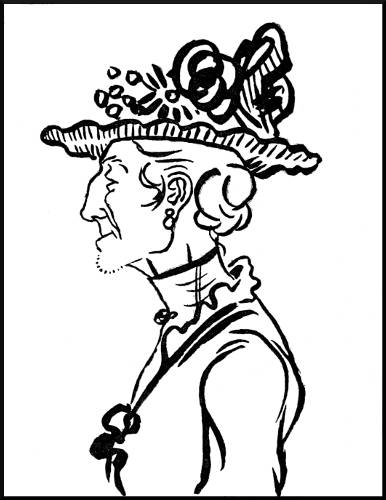
Of the Queen-Beaver it may be safely said that
“the female of the species is more deadly than the
male.” A really fine Pink-Queen is awe-inspiring,
and a Grey-Queen infinitely terrifying. The dainty
Blonde-Queen (it is advisable to have two assessors,
for the signs of her beaverhood are “plus follets,
plus doux, plus imperceptibles”[10] than in any other
species) has a sinister air; a Black-Queen suggests
“Macbeth.” It is curious to read that “in Cyprus
the Goddess of Love wore a beard.”[11] Queens are
rare and no false gallantry should prevent a player
from scoring them whenever possible. It is, however,
the mark of the gentleman to claim them sotto voce,
almost in a whisper.
We have now examined the game briefly, investigated
the characteristics of the Beaver family, cast a rapid
and perfunctory glance at the Beaver in History
(a subject deserving of a tome), and suggested
explanations that may be offered, a defence that may
be attempted, when a player is assailed by a non-player.
“To beaver or not to beaver, that is the
question.” The decision must be taken; paltering
is no part of a man. Myself, I took it on the top of
an omnibus outside the Ritz, and I played a most
excellent game with myself as far as St. Mary Abbott’s.
Having set my hand to the plough I did not look
back, but entered upon the game in all seriousness.
When Fortune appeared I did not give her a chance
to “present her bald noddle,” but I grabbed her
firmly by the forelock. Being from town I chanced
upon a small coterie of learned enthusiasts, and much
improved my game, as also my knowledge. The city
was a very warren of Beavers; most of my finest
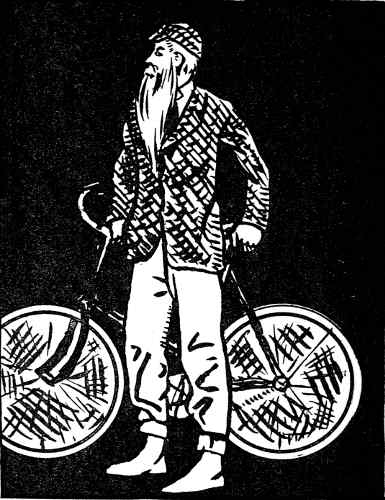
specimens were secured there. Does not the mouth
of every collector water on reading that I scored—with
two witnesses, one of whom viséd the prey—a
glorious Pink-Queen, leaning on a green bicycle
outside the Post-Office? and, subsequently, an
American Grey-Queen with young? The only rarity,
roughly speaking, which eluded me was a fine Fringed-Georgic.
I scored a somewhat moth-eaten specimen
of uncertain colouration. Thus, “on stepping-stones
of our dead” Beavers I attained to a certain skill.
It would have been impossible to choose a better
place for my little holiday, and my gratitude to my
genial instructors and coaches knows no bounds.
Local rules were well-framed, simple and reasonable.
There are two “local D. F.s,” easily recognisable,
and a certain number of markedly fine specimens
which have great repute in the district and bear a
very high scoring-value. All unknowing I claimed
and scored the Ecclesiastical-King and was, instantly,
awarded two games. It was, in very truth, a noble
creature, a Pointed-Brindle, which is, of course, as
rare and valuable as a pointed fox, in gorgeous coat
and official robes of a searching scarlet. I had the
good fortune to secure also the finest King in Full
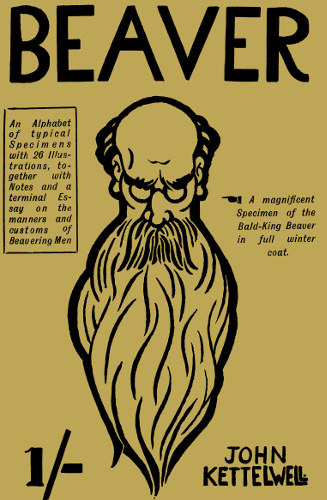
Winter-Coat that I have ever seen. The adornment
was almost incredibly bushy and “white as the neck of
Lalage,” while the specimen wore brown suéde shoes.
Heigh ho! for the brave days that are dead. Golly,
what a garland I wove me in that dear place.
To what point are we come? Is the game of Beaver
the expression of a passionate mass-protest against
the furred face, or is it the forerunner of a revival of
beards, that is, do we see here the shadow of that
antient custom which led peoples to sacrifice yearly
the animals who else were deities, whom they adored?[12]
In any case the Beard is again burgeoning. But a
few years gone the bearded were not, qua beards, of
any importance, now they loom upon the social horizon
considerably larger than a man’s hand. Of the
importance of the Beard it may well be that the
apogee is upon us. Perchance the Beard will again
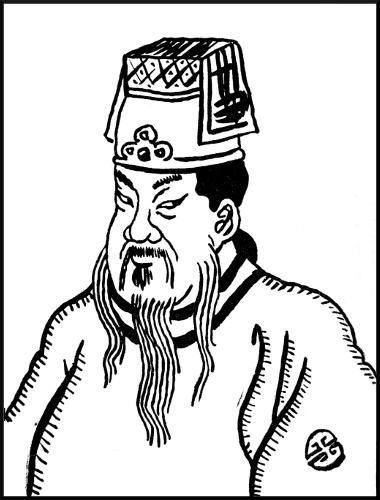
be invested with the dignity of ceremonial as in
antient China. “After the coffining,” so we read of
the obsequies of an officer, “the Master of the Ceremonies
does away with his hair-tufts.”[13] Shall we
live to see the Beard exalted as an horn on high?
Will the game of Beaver re-instate the Beard as the
Crimean campaign instituted the now almost extinct
(but exquisite) moustache-whisker fitment, or will it
drive the hairy to put off the whole armour of hairiness?
Quien sabe? These things remain, in the
charming phrase of M. Cliché, “on the knees of the
gods,” but it is safe to assert that, even now, we can
as a people, we English, rebut the accusation of Samuel
Butler, “we often do not notice that a man has grown
a beard.”[14]
Printed in Great Britain by Miller, Son & Compy., Fakenham and London.