CHAPTER I — - — Tangier , 1662-1680. — Gibraltar , 1704-05. — Gibraltar , 1727. — Gibraltar , 1779-1783. — Maida, July 4, 1806. — Mediterranean. — Mediterranean, 1901-02. — CHAPTER II — - — Namur , 1695. — The War of the Spanish Succession. — Blenheim, August 2, 1704. — Ramillies, May 12, 1706. — Oudenarde, June 30, 1708. — Malplaquet, September 11, 1709. — CHAPTER III — - — Dettingen, June 27, 1743. — Minden, August 1, 1759. — Emsdorff, July 16, 1760. — Warburg, July 31, 1760. — Wilhelmstahl, June 24, 1762. — CHAPTER IV — - — Louisburg, July 25, 1758. — Quebec, September 12, 1759. — Monte Video, 1807. — NORTH AMERICA, 1812-1814. — Detroit — Queenstown — Miami — Niagara — Bladensburg, August 24, 1814. — CHAPTER V — - — Arcot, August 31, 1751. — Plassey, June 23, 1757. — Condore, December 9, 1758. — Masulipatam, April 8, 1759. — Badara, November 25, 1759. — Wandewash, January 22, 1760. — Pondicherry, 1761, 1778, 1793. — Buxar, October 23, 1764. — CHAPTER VI — - — Rohilcund, 1774. — The Carnatic. — Guzerat, 1778-1782. — Sholinghur, September 27, 1781. — Mangalore, 1783. — Mysore. — Nundy Droog, October 19, 1791. — Rohilcund, 1794. — Seedaseer, March 6, 1799. — Seringapatam, May 4, 1799. — CHAPTER VII — - — Lincelles, August 18, 1793. — Nieuport, October, 1793. — Villers-en-Couches, April 24, 1794. — Beaumont, April 26, 1794. — Willems, May 10, 1794. — Tournay, May 22, 1794. — Egmont-op-Zee, October 2, 1799. — CHAPTER VIII — - — Guadeloupe, 1759. — Martinique, 1762. — Havana. — St. Lucia, 1778. — Martinique, 1794. — St. Lucia, 1794. — St. Lucia , 1796. — Surinam, 1804. — Dominica, 1805. — Martinique, 1809. — Guadeloupe, 1810. — CHAPTER IX — - — Egypt (with the Sphinx). — Mandora, March 13, 1802. — Marabout, August 17, 1802. — Egypt, 1882. — Tel-el-Kebir, September 12, 1882. — Nile, 1884-85. — Abu Klea, January 28, 1885. — Kirbekan, February 10, 1885. — Suakin, 1885. [11] — Tofrek, March 22, 1885. — Hafir. — Atbara, April 8, 1898. — Khartoum, 1898. — CHAPTER X — FIRST MAHRATTA WAR, 1803-04. — Ally-Ghur, September 3, 1803. — Delhi, September 11, 1803. — Assaye, September 23, 1803. — Laswarree, November 1, 1803. — Deig, November 13 to December 23, 1804. — Cochin, 1809. — CHAPTER XI — - — Roleia, August 17, 1808. — Vimiera, August 21, 1808. — MOORE'S CAMPAIGN IN SPAIN. — Sahagun, December 21, 1808. — Corunna, January 16, 1809. — THE PENINSULAR WAR (SECOND PHASE), 1809-1814. — Douro. — Busaco, September 27, 1810. — Barrosa, March 4, 1811. — Fuentes d'Onor, May 5, 1811. — Albuera , May 16, 1811. — Almaraz, May 19, 1811. — Arroyos dos Molinos, October 28, 1811. — Tarifa, December, 1811. — Ciudad Rodrigo, January, 1812. — Badajoz, March and April, 1812. — Salamanca, July 22, 1812. — Vittoria, June 21, 1813. — Pyrenees, July 28 to August 2, 1813. — San Sebastian, August, 1813. — Nivelle, November 10, 1813. — Nive, December 9 to 13, 1813. — Orthes, February 27, 1814. — Toulouse, April 10, 1814. — Peninsula, 1808-1814. — CHAPTER XII — - — Waterloo, June 18, 1815. — The Order of the Bath. — CHAPTER XIII — THE SECOND MAHRATTA WAR, 1817-18. — Kirkee, November 5, 1817. — Seetabuldee, November 26, 1817. — Nagpore, December 16, 1817. — Maheidpore, December 23, 1817. — Corygaum, January 1, 1818. — Nowah, January 21, 1819. — Medal for the Second Mahratta War. — Bhurtpore, January, 1826. — Hindoostan. — India. — CHAPTER XIV — - — Amboyna, 1796 and 1810. — Ternate, 1801 and 1810. — Banda, 1796 and 1810. — Arabia, 1809. — Bourbon, July 8, 1810. [18] — Java, 1811. — Persian Gulf, 1819. — Beni Boo Alli, March, 1821. — Aden, 1839. — Persia, 1856-57. — Bushire, December 5, 1856. — Reshire, December 7, 1856. — Koosh-ab, February 8, 1857. — CHAPTER XV — - — Ava, 1824-1826. — Kemmendine, November 30 to December 9, 1824. — Arracan, 1825. — Pegu. — Burmah, 1885-1887. — CHAPTER XVI — - — Afghanistan. — Ghuznee, 1839. — Khelat, November 13, 1839. — Kahun, 1840. — Jelalabad. — Khelat-i-Ghilzai. — Candahar , 1842. — Ghuznee , 1842. — Cabool , 1842. — Cutchee, 1839-1842. [22] — CHAPTER XVII — - — Scinde, 1843. — Meeanee, February 17, 1843. — Hyderabad, March 24, 1843. — THE GWALIOR CAMPAIGN. — Maharajpore and Punniar, December 29, 1843. — CHAPTER XVIII — - — Moodkee, December 18, 1845. — Ferozeshah, December 21, 1845. — Aliwal, January 28, 1868. — Sobraon, February 10, 1846. — Punjaub. — Chillianwallah, January 13, 1849. — Mooltan, January, 1849. — Goojerat, February 21, 1849. — CHAPTER XIX — - — Alma, September 20, 1854. — Balaclava , October 25, 1854. — Inkerman, November 5, 1854. — Sevastopol. — The Victoria Cross. — CHAPTER XX — INDIA, 1857-1859. — Delhi, May to September, 1857. — Lucknow. — Relief of Lucknow by Sir Colin Campbell, November, 1857. — Siege and Capture of Lucknow. — Central India, 1857-58. — Defence of Arrah—Behar, 1857. — CHAPTER XXI — - — China, 1840 (with the Dragon). — Canton (1858). — China (1857-1860). — Chinese Expeditionary Force of 1860. — Taku Forts (August 12, 1860). — Pekin (October 12, 1860). — China, 1900. — Pekin , 1900. — CHAPTER XXII — - — Cape of Good Hope , 1806. — Cape of Good Hope, 1806. — South Africa, 1835. — South Africa, 1846-47. — South Africa, 1851-52-53. — South Africa, 1879. — CHAPTER XXIII — - — Jersey, 1781. — A Naval Crown, superscribed April 12, 1782. — A Naval Crown, superscribed June 1, 1794. — St. Vincent, February 14, 1797. — Fishguard, February 24, 1797. — 1800. — Copenhagen, April 2, 1801. — Copenhagen, 1807. — NEW ZEALAND. — New Zealand, 1846-47. — New Zealand, 1860-61. — New Zealand, 1863-1866. — Abyssinia, 1867-68. — Ashantee, 1873. — Sierra Leone, 1898. — WEST AFRICA. [28] — West Africa, 1887. — West Africa, 1892. — West Africa, 1893. — West Africa, 1894. — British East Africa, 1896-1899, 1901. — Ashanti, 1900. — CHAPTER XXIV — - — Afghanistan, 1878-1880. — Ali Masjid. — Peiwar Kotal, December 2, 1879. — Charasiah, October 6, 1879. — Kabul, 1879. — Kandahar, September 1, 1880 . — CHAPTER XXV — - — Defence of Chitral, 1895. — Chitral, 1895. — Punjab Frontier. — Malakand, 1897. — Samana, September 12-14, 1897. — Tirah, 1897-98 — CHAPTER XXVI — - — South Africa, 1899-1902. — St. Helena. — Medals granted for the War in South Africa. — Battle Honours for the Campaign. — Modder River, November 28, 1899. — Relief of Kimberley, February 15, 1900. — Paardeburg, February 18 to 27, 1900. — Relief of Ladysmith. [32] — The Defence of Ladysmith, [33] October 29, 1899, to February 27, 1900. — CHAPTER XXVII — - — APPENDIX I — APPENDIX II — APPENDIX III — APPENDIX IV — INDEX — FOOTNOTES:
BATTLE HONOURS FOR SERVICES IN THE
MEDITERRANEAN, 1662-1902
Tangier, 1662-1680—Gibraltar, 1704—Gibraltar, 1779-1783—Maida,
1806—Mediterranean—Mediterranean, 1901-02.
In the year 1910, just two centuries and a half after the
event, the regiments which upheld British honour on
the coast of Morocco were authorized to bear the above
battle honour on their colours and appointments:
Royal Dragoons, 1662-1680.
Grenadier Guards, 1680.
Coldstream Guards, 1680.
Royal Scots, 1680.
The Queen's, 1662-1680.
The King's Own Lancaster Regiment has been unaccountably
omitted from this list; but there is no doubt
that the 4th (King's Own), under Colonel Kirke took
part in the final series of actions with the Moors prior to
our evacuating the fortress.
Tangier passed into our hands, together with Bombay,
as a portion of the dowry of Catherine of Braganza on
her marriage with Charles II. At that time there were
many who considered it the more valuable of the two
acquisitions, commanding as it did the entrance to the
Mediterranean. Immense sums were spent in strengthening
the fortifications and in improving the harbour. The
inveterate hostilities of the Moors, however, only increased
with time. The one regiment first raised for the garrison,
then styled the "Regiment of Tangier" (now The Queen's
Royal West Surrey) was from the outset of its career
engaged in a long series of engagements waged against
desperate odds. Soon it was found necessary to raise a
regiment of horse to supplement the task of the infantry
in dealing with the Moorish horsemen. The Royal
Dragoons then came into existence, and laid the foundations
of that reputation for dash and discipline which has
never left them. Later on, owing to the persistent
hostility of the Moors, the Grenadier Guards, the Coldstreams,
and the 2nd Tangier Regiment (now the
4th King's Own) were sent as reinforcements; and a
reference to the Tangier Papers shows that men from the
fleet were continually employed against the enemy. On
one occasion Sir Cloudesley Shovel, with 600 seamen, took
a leading part in the defence. Casualty returns were
not so carefully prepared in the seventeenth as in the
twentieth century, and I have found it impossible to
discover the total losses incurred during our occupation.
Between the years 1660 and 1664 there was scarcely a
month in which our troops were not fighting for their lives,
and on one occasion at any rate they were so hard
pressed that the Governor applied, and successfully, to
the Spaniards at Gibraltar for assistance. Thus it comes
about that in the casualty list which has come down to us
of the action on October 27, 1680, the Spanish Horse
figures side by side with the Grenadier Guards.
Casualties in Action at Tangier, October 27, 1680.
| Regiments. | Officers. | Men. |
| K. | W. | K. | W. |
| Royal Dragoons | - | 2 | 11 | 35 |
| Grenadier Gds. | - | 1 | 7 | 51 |
| Royal Scots | 4 | 15 | 36 | 100 |
| The Queen's R. W. Surrey | 2 | 10 | 34 | 120 |
| Spanish Horse | 5 | 4 | 12 | 22 |
A few weeks after this action the King's Own (Lancaster
Regiment), then commanded by Colonel Kirke, arrived as
a reinforcement, and later in the year the Coldstream
Guards. In 1684 the place was evacuated, having cost
us many millions in money and many thousand valuable
lives.
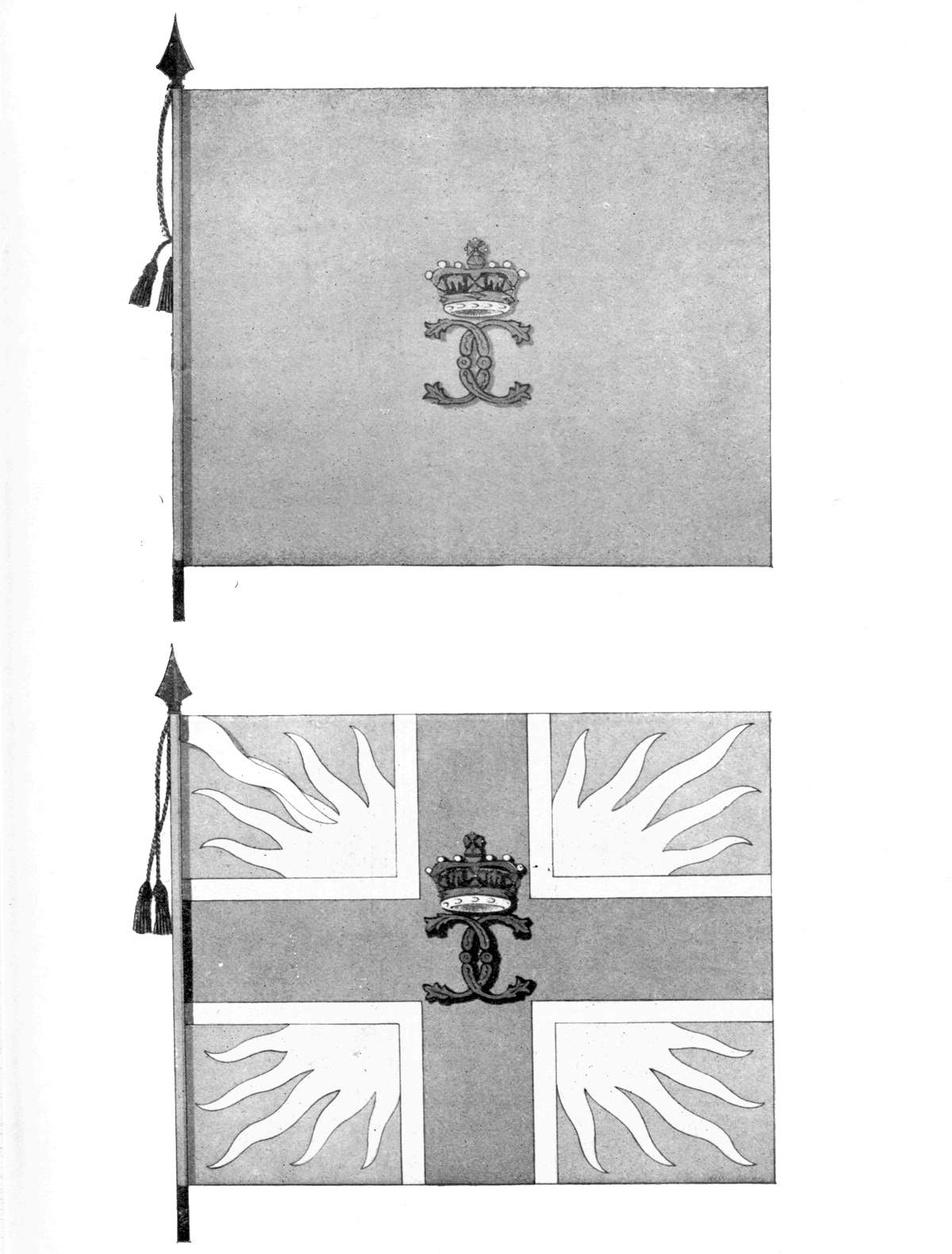
THE COLOURS OF THE TANGIER REGIMENT, 1684.
(Now The Queen's Royal West Surrey Regiment.)
To face page 2.
This battle honour, which commemorates the capture
of Gibraltar by the fleet under Admiral Sir George Rooke,
and the subsequent defence of the fortress under Prince
George of Hesse, is borne by the following regiments:
Grenadier Guards.
Coldstream Guards.
King's Own (Lancaster).
Somerset Light Infantry.
East Lancashire.
East Surrey.
Cornwall Light Infantry.
Royal Sussex.
Queen Anne caused a medal to be struck in recognition
of the services of the senior officers at the capture of this
historic fortress, but it was left to King Edward VII. to
sanction the grant of the battle honour to the regiments
which added the Rock to the possession of Great Britain.
Owing to our having espoused the cause of Charles III.
in the War of the Spanish Succession, a fleet of fifty sail
was sent into the Mediterranean, under the command of
Sir John Rooke, but it was practically placed at the
disposal of King Charles. Embarked on the fleet under
the command of Prince George of Hesse were the
4th (King's Own), 30th (East Lancashire), 31st (East
Surrey), the 32nd (Cornwall Light Infantry), with Holt's
and Shannon's Regiments, all acting as Marines. On
July 22, 1704, the fleet anchored in Gibraltar Bay, and
landed on what is now known as neutral ground. To a
summons to surrender, the Governor sent a defiant
answer. He, at all hazard, refused to recognize King
Charles as his Sovereign, or our right to dictate to
Spaniards in the choice of their monarch. On the
following day Admiral Byng, with twenty-seven vessels,
stood close in and silenced the batteries, when the
bellicose Governor, in order to avoid the effusion of
blood, accepted the terms offered. Rooke then landed
the troops under Prince George, and sailed away to attack
the allied fleets which were in the offing. In the course
of the month of August he fought the Battle of Malaga,
the effects of which were overshadowed by the glorious
victory of Blenheim. The French and Spaniards were
not prepared to sit down and see England established at
the entrance of the Mediterranean, and at once took
steps to recover possession of Gibraltar. We, on the
other hand, took equally decisive measures to hold it.
At that moment we had a considerable force in Portugal,
acting in support of Charles III., and from this force
reinforcements were immediately despatched to Gibraltar.
Casualties at the Capture of and Subsequent
Operations at Gibraltar, 1704-05.
| Regiments. | Officers. | Men. |
| K. | W. | K. | W. |
| Royal Artillery | |
| Grenadier Gds. |
| Coldstream Gds. |
| 4th K.O. (R. Lancaster Regt.) |
| 13th Somerset L.I. |
| Roy. Engineers |
| 30th East Lancashire |
| 31st E. Surrey |
| 32nd Cornwall L.I. | 1 | - | - | - |
| 35th R. Sussex | |
Note.—I have been unable to ascertain the casualties of individual
corps at Gibraltar. I leave this table in the hope that at
some future day the omission may be repaired; the total losses
amounted to 3 officers and 57 men killed, 8 officers and 258 men
wounded.
A combined battalion of the Grenadier and Coldstream
Guards, the 13th (Somerset Light Infantry), and the
35th (Royal Sussex), some 1,800 of all ranks, embarked on
transports. Narrowly escaping capture,[1] they succeeded
in eluding the French fleet, and landed in Gibraltar
Harbour on December 18. On the 23rd Prince George
made a successful sortie at the head of his new troops,
and destroyed a considerable portion of the siege-works;
but the allies, having the land side open to them, were
able to bring up supplies and fresh troops without difficulty,
whereas we were dependent entirely on our fleet—in
fact, on our command of the sea. In the early dawn of
February 7, 1705, the allies made a determined attempt
to carry the place by assault, but they were repulsed with
terrible loss by the Coldstream Guards and the 13th (Somersets);
then, finding their efforts useless, they abandoned
the siege. Seventy-five years later a fresh attempt to
dispossess us of the fortress led to a new battle honour
appearing on the colours, but the siege of 1727 has been
unaccountably lost sight of.
It is somewhat difficult to understand why the defence
of Gibraltar in the year 1727 has not been considered
worthy of being inscribed on the colours of the regiments
which fought so well under the veteran Lord Portmore.
From February 22 to June 23 the garrison, barely 6,000
strong, withstood a close siege, repelling many assaults
and suffering many casualties. Famine as well as disease
stared them in the face. I have been unable to ascertain
the complete details of the losses of individual regiments
engaged, but from the accounts of contemporary writers
who went through the siege it would appear that the
Grenadier Guards alone lost upwards of 100, of whom nineteen
were killed in one day. Surely "Gibraltar, 1727,"
might be added to the colours of the twelve regiments
which held the fortress for England under Lord Portmore.
The story of the siege is not pleasant reading. It is an
early exemplification of the manner in which the warnings
of the "man on the spot" are almost invariably disregarded
by the authorities at home, and how our soldiers
are expected to make bricks without straw, and to undergo
perils which with a little exercise of forethought might be
avoided. In the month of August, 1726, the Acting
Governor, Colonel Kane, reported the threatening attitude
of the Spaniards, and that Malaga was being converted
into a military base, where large quantities of war material
were being collected. He further asked for the paltry
sum of £3,000, in order to place the fortress in a better
state of defence. One of the most pressing questions
was the levelling of the earthworks constructed by the
Spaniards during the last siege, which were still left
standing, and which would afford shelter to the enemy
in the event of the outbreak of hostilities. The troops
were lodged in houses in the town; there were no barracks,
and no casemates to the various outworks. His garrison
consisted of but four weak battalions. On these representations
one battalion was sent from Minorca. In
December Kane reported the mobilization at Malaga of
5,000 Walloon Guards, of fourteen Spanish battalions, and
eight regiments of cavalry. No doubt as to the intention
of the Spaniards now remained. Orders had been published
for the Governors of the four Andalusian provinces
to raise 8,000 men, and in reporting this circumstance
Kane drew attention to the fact that the artillery under
his command consisted of three non-commissioned officers
and fifteen gunners, whilst the infantry amounted to but
1,400 men. His lines of defences were three miles in
extent, and the two works mounted no less than 150
guns, the large majority of which had long since been
condemned. In the month of January the Spaniards
openly commenced their siege-works, throwing up
batteries within gunshot of the fortress; but it was not
until the month of April that General Clayton arrived
with the first reinforcements, but with no siege material.
By the end of April the garrison had been increased to
a total of 6,000 men, two only of the regiments being
over 600 strong, whilst the reinforcements of artillery
brought up the strength of the Royal Regiment to 127
of all ranks; and of these Lord Portmore wrote that
the gunners "are the worst that ever were employed."[2]
The want of fresh provisions told heavily on the men, and
all ranks and all arms were busily employed in throwing
up fresh defensive works. Complaints were rife as to the
guns—large numbers burst—and the Governor reiterated
his complaints that the Spanish guns were far superior in
range and accuracy to our own. By the end of May the
garrison was reduced to 4,427 effectives, the men rarely
getting one night in three in bed. Still the stout old
veteran answered shot for shot, warning the Government
that the Spaniards were evidently determined on wresting
the position from us, and that unless reinforcements were
speedily sent the place was liable to be carried by assault,
as his men were not sufficiently numerous to man the whole
of the works. Fortunately for the garrison, diplomacy was
at work, and by the end of July preliminaries of peace
had been signed, and the safety of the fortress was assured.
When actual hostilities broke out, the garrison of
Gibraltar, including the two regiments that had been sent
from Ireland and Minorca, consisted of the 5th (Northumberland
Fusiliers), 13th (Somerset Light Infantry), 18th
(Royal Irish), 20th (Lancashire Fusiliers), and the 29th
(Worcesters). Considerable delays occurred in despatching
the reinforcements, and, as I have remarked, it was not
until the month of April that these left England. The
Governor, the veteran Lord Portmore, who was at home
on leave, returned to his post, and at the same time a
battalion of the Grenadier Guards, under Colonel Guise—a
name which has ever been synonymous in the service
with daring gallantry—the 14th (West Yorks), 25th (Scottish
Borderers), 26th (Cameronians), 34th (Border Regiment),
and 39th (Dorsets), were despatched under convoy
of the fleet to Gibraltar.
There would appear to have been the same eagerness
amongst the younger members of the House of Lords
to see active service in those days as there was in the
Crimea and in the Boer War. The Duke of Richmond,
who was a Knight of the Garter and a member of the
King's Household, applied for leave to join the army,
and so did a son of the Duke of Devonshire. On the other
hand, the Duke Wharton joined the Spanish forces, and
was happily wounded very early in the siege, and so
spared the shame of taking a prolonged share in the
operations against his own fellow-countrymen.
I have experienced considerable difficulty in obtaining
any records of the casualties, but the following list appears
in a contemporary publication written by an officer who
took part in the siege, and may, I think, be relied on as
showing to a certain extent the losses incurred during a
portion of the siege:
| Regiments. | Officers. | Men. |
| K. | W. | K. | W. |
| Royal Artillery | 1 | - | 11 | 16 |
| Grenadier Gds. | - | - | 2 | 19 |
| 5th Fusiliers | - | - | 4 | 18 |
| 13th Somerset L.I. | - | - | 7 | 26 |
| 14th W. Yorks | - | - | 6 | 22 |
| 18th Roy. Irish | - | - | 8 | 17 |
| 20th Lanc. Fus. | 1 | - | 8 | 12 |
| 25th K.O. Scottish Borderers | 1 | - | 3 | 13 |
| 26th Cameronians | - | - | 6 | 28 |
| 29th Worcesters | - | - | 2 | 11 |
| 30th E. Lancs | - | - | 8 | 14 |
| 34th Border Reg. | - | - | 2 | 16 |
| 39th Dorsets | 1 | - | 6 | 13 |
(With Castle and Key and motto, "Montis Insignia Calpe.")
The regiments permitted to bear these distinctions
are the
Suffolk.
Dorset.
Northampton.
Essex.
Highland Light Infantry.
In the month of June, 1779, Spain declared war against
England, France having done so in the preceding year.
There was no doubt as to the object of the Spaniards—the
recapture of Minorca, Gibraltar, and the American
Colonies lost to us in the preceding wars. Fortunately,
we had in Gibraltar a soldier who knew his work. Though
the name of Eliott will ever be associated with the Rock,
soldiers may also like to know that the gallant defender of
Gibraltar raised and trained that distinguished regiment
the 15th Hussars. From the moment that he took over
the command in 1777 Eliott set to work to strengthen
the defences. On the declaration of war he had but 5,382
of all ranks in his garrison, including 458 gunners. His
chief danger was starvation, for on the land side he was
completely hemmed in, whilst on the sea the Spaniards
instituted a close blockade, and brought pressure to bear
on His Shereefian Majesty to forbid the exportation of
fresh meat and vegetables to the garrison from Morocco.
In November of that year Rodney defeated the blockading
fleet, and threw in the 71st (Highland Light Infantry), a
welcome reinforcement, and also stores sufficient to
maintain the garrison for a year. The Spaniards now
drew closer the blockade, and commenced to throw up
elaborate siege-works; but it was not until April, 1781,
that the blockade was converted into a siege in earnest,
and it is said that between then and November upwards
of 100,000 shot and shell were poured into the place. Our
casualties were by no means heavy, nor did the fortifications
suffer much, though the town itself was utterly
destroyed. On the 27th of that month (November) Eliott
attacked the Spaniards, destroyed and burnt their
batteries, spiking a large number of guns, but though his
losses in this sortie were slight, his men suffered much
from scurvy and the incessant duty which was imposed
on an all too scanty garrison. From time to time a vessel
would elude the blockading fleet; and on one occasion
Admiral Darby forced his way through with the 97th Regiment,
and later still the King's Own Scottish Borderers and
the 59th (East Lancashires) were also thrown in. In May,
1782, the Spaniards were reinforced by a strong French
division, and the siege was continued with renewed
vigour. Floating batteries, with massive timber roofs
to protect the gunners, were built by the allies, and then
on September 14, 1782, convoyed by forty-seven sail of
the line, this formidable armada entered the bay,
and opened a fresh bombardment from the sea. To this
Eliott responded with red-hot shot, and once more the
garrison was saved. In the following month Howe was
enabled to convoy a fleet of transports under the Rock,
and so relieved Eliott of his one dread—starvation. In
February, 1783, peace was signed between Spain and
England, and on the 6th of the month the gates of the
fortress were thrown open, after a bombardment of
thirteen months.
Casualties at the Defence of Gibraltar, 1779-1783.
| Regiments. | Officers. | Men. |
| K. | W. | K. | W. |
| Royal Artillery | 2 | 8 | 29 | 121 |
| Roy. Engineers | - | - | - | - |
| 12th Suffolks | 1 | 3 | 27 | 110 |
| 25th K.O. Scottish Borderers | - | - | 2 | 8 |
| 39th Dorsets | 2 | 3 | 27 | 60 |
| 56th Essex | - | 3 | 27 | 67 |
| 58th N'amptons | 1 | 2 | 18 | 74 |
| 59th E. Lancs. | - | - | 8 | 9 |
| 71st Highland L.I. | - | 6 | 42 | 115 |
| 72nd Seaforth Highlanders | - | 3 | 55 | 148 |
| 73rd Regt. | - | 6 | 44 | 115 |
| 97th Regt. | - | - | 13 | 41 |
This distinction is borne on the colours of the
Lancashire Fusiliers.
Inniskilling Fusiliers.
Royal Sussex.
North Lancashire.
Northamptons.
Seaforth Highlanders.
Gloucestershire Regiment.
It recognizes the gallant services of these regiments in
the engagement fought in defence of our ally, the King
of Naples, by the little force under the command of
General Stuart against a superior body of French under
General Regnier. In 1847, when the so-called Peninsular
medal was issued, a special clasp, "Maida," was awarded
to the survivors of the brilliant little action on the shores
of the Straits of Messina. The Grenadier and Light
Infantry battalions, which bulk so largely in the accompanying
list of casualties, were composed of the flank
companies of the five battalions engaged, supplemented
by 250 men of the 35th (Royal Sussex) and a company of
the 61st (Gloucesters), and so it comes about that, although
the headquarters were not present, the old 35th and
61st were accorded the battle honour. The losses in this
engagement were:
| Regiments. | Officers. | Men. |
| K. | W. | K. | W. |
| Grenadier batt. | 0 | 1 | 4 | 26 |
| Lancs Fusiliers | - | - | 1 | 6 |
| 27th Inniskillings | - | - | 6 | 47 |
| 58th Northamptons | - | - | - | 2 |
| Light Infantry battalion | 1 | 3 | 7 | 42 |
| 78th Seaforth Highlanders | - | 7 | 4 | 74 |
| 81st North Lancashire | - | 2 | 19 | 63 |
This distinction was awarded to the following regiments
of Militia for their services during the Crimean War of
1854-55, when they volunteered to perform garrison duty
in order to set free line regiments for service at the front:
3rd Batt. the Buffs.
3rd Batt. the King's Own (Royal Lancaster).
5th Batt. Royal Fusiliers.
3rd Batt. South Stafford.
3rd Batt. West Yorkshire.
3rd Batt. Loyal North Lancashire.
3rd Batt. Oxford Light Infantry.
3rd Batt. Northamptons.
3rd Batt. Royal Berkshire.
3rd Batt. Wiltshire.
The above honour is borne on the colours of the following
regiments, in recognition of their services in performing
garrison duty in the Mediterranean during the South
African War of 1899-1902. For these services they were
also granted a medal.
3rd Batt. Northumberland Fusiliers.
5th Batt. Royal Fusiliers
3rd Loyal North Lancashire.
3rd Batt. West Yorkshire.
3rd Batt. King's Own Yorkshire Light Infantry.
3rd Royal West Kent.
3rd Batt. Seaforth Highlanders.
5th Batt. Royal Munster Fusiliers.
BATTLE HONOURS FOR SERVICES IN NORTHERN
EUROPE, 1695-1709
Namur, 1695—Blenheim, 1704—Ramillies, 1706—Oudenarde,
1708—Malplaquet, 1709.
In the month of February, 1910, an Army Order was
published announcing that His Majesty King Edward VII.
had been graciously pleased to approve of the following
regiments being permitted to bear the honorary distinction
"Namur, 1695" upon their colours, in recognition
of services rendered during the siege and capture of
that city, 215 years previously:
Grenadier Guards.
Coldstream Guards.
Scots Guards.
Royal Scots.
Queen's (Royal West Surrey).
King's Own (Lancasters).
Royal Warwicks.
Royal Fusiliers.
West Yorkshire.
Bedfords.
Leicesters.
Royal Irish.
Royal Welsh Fusiliers.
King's Own Scottish Borderers.
Previously to this date the only regiment which in
any way commemorated its association with the siege
of Namur was the 18th (Royal Irish), which was entitled
to bear on its colours the words "Virtutis Namurcensis
præmium," and which had received the title of the
"Royal Regiment of Ireland" from King William himself
for its conduct at the storming of that fortress.
There was no good reason why the Royal Irish should
have been honoured above its fellows. The details of
the operations at Namur were open to all the world,
and the casualties suffered by other corps showed that
they too had borne their fair share of the fighting.
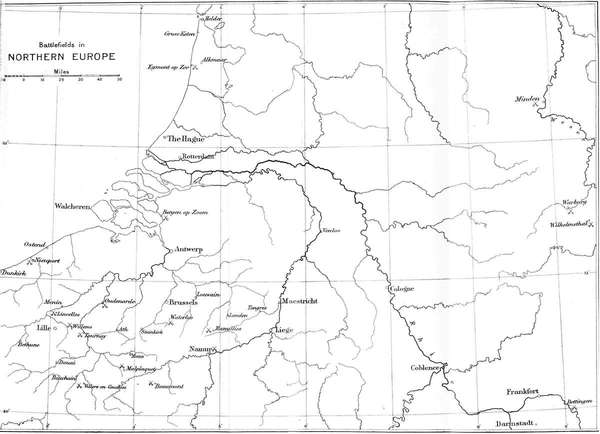
Battlefields in NORTHERN EUROPE
Namur was one of the many fortified towns in Flanders
which had fallen into the hands of the French during
our struggles with that nation in the closing years of
the seventeenth century. King William's military operations
had not been attended with any marked degree of
success. His troops, despite the gallantry of the English
regiments, had been worsted at Steenkirk, Landen, and
many other fights, and in the ranks of our own regiments
there was a very decided feeling that our friends the
Dutch were prone to throw the brunt of the hard work
on us, and were not too eager to afford us that assistance
in action which we had a right to expect. A glance at
the casualty lists which follow the various actions—the
names of which are inscribed on our colours—proves the
truth of this statement. Whether at Namur, Dettingen,
Emsdorff, in Flanders or in Spain, the British regiments
were invariably expected to pull the chestnuts out of
the fire for their allies.
The Siege of Namur commenced on July 3, 1695, and
three days later King William determined to carry the
outworks by assault. The Guards attacked on the right,
the Royal Scots and Royal Fusiliers on the left. The
assault was perfectly successful, but the loss was enormous,
the Brigade of Guards losing thirty-two officers, the
Royal Scots and Royal Fusiliers ten. A few days later,
after the fire of the batteries had opened a practicable
breach in the walls near the St. Nicholas Gateway, the
British were again called upon to carry this work. This
they did with a loss of 800 killed and wounded. Then
came the final assault on the citadel, for which the
Leicesters, the Royal Irish, and Mackay's and Buchan's
Highlanders were told off. These two last are no longer
with us. These four battalions lost 63 officers and 925
men killed and wounded. But the day was ours, and
with the fall of the citadel Namur once more passed into
the possession of the House of Orange.
Although the Army Order of February, 1910, only
grants the distinction to infantry regiments, there were
a number of British cavalry regiments employed in
covering operations during the siege. There were the
1st and 2nd Life and the Royal Horse Guards, all
seven regiments of Dragoon Guards, the Royal Dragoons,
Scots Greys, 4th Hussars, 5th Lancers, and 7th Hussars.
I regret I have not been able to ascertain the losses
they suffered. Those of the infantry were as follows:
Casualties at the Siege and Assault of Namur, 1695.
| Regiments. | Officers. | Men. |
| K. | W. | K. | W. |
| Grenadier Gds. | 6 | 12 | 152 | 298 |
| Coldstream Gds. | 4 | 9 | 101 | 193 |
| Scots Guards | 3 | 4 | 51 | 60 |
| Royal Scots | 6 | 5 | 62 | 109 |
| 2nd Queens | 2 | 4 | 54 | 46 |
| 3rd Buffs | - | 1 | 8 | 47 |
| 4th K.O. (Lancaster Regt.) | 3 | 4 | 46 | 59 |
| 6th R. Warwick | 2 | 3 | 66 | 40 |
| 7th R. Fusiliers | 1 | 3 | 33 | 58 |
| 14th W. Yorks | 5 | 5 | 47 | 82 |
| 16th Bedfords | 2 | 2 | 56 | 77 |
| 17th Leicesters | 4 | 8 | 101 | 149 |
| 18th Roy. Irish | 12 | 13 | 86 | 185 |
| 19th Yorkshire | - | - | 8 | 11 |
| 23rd Roy. Welsh Fusiliers | 6 | 15 | 92 | 123 |
| 25th K.O. Scottish Borderers | 7 | 4 | 79 | 95 |
| 27th R. Innis. | - | 3 | 44 | 25 |
| Mackay's Regt. | 2 | 15 | 73 | 126 |
| Buchan's Regt. | 4 | 9 | 65 | 140 |
| Collingwood's Regt. | 1 | 5 | 77 | 36 |
| Saunderson's Regt. | - | 8 | 80 | 128 |
| Seymour's Regt. | - | - | 49 | 71 |
| Lauder's Regt. | 4 | 2 | 70 | 99 |
Note.—I am indebted to the courtesy of the Army Council for
the figures relating to the Grenadier and Coldstream Guards, as
well as for the casualties amongst the commissioned ranks of all
regiments. I am bound to observe that the figures given by the
Army Council do not correspond with a return which I have
seen at the Record Office, entitled "Liste des Soldats Morts et
blessés devant Namur depuis le Commencement jusqu'à la fin
du Siege," which may have been overlooked by the War Office.
In the month of May, 1701, just two months after the
death of William III., we found ourselves involved in
war with France, in consequence of the quarrel as to
the right of succession in Spain. One hundred and thirty
years later a similar cause led to the Franco-German
War. In those far-off days England was a Continental
Power, and whatever affected the Low Countries affected
also the United Kingdom. The Dutch provinces of
Flanders lent themselves to attack, and as in the wars
under William, so now once more they formed the
theatre of war. We had no King to assume the command,
and to Marlborough was confided the task of
commanding our armies. The Spaniards were no longer
our allies, and Spanish Flanders was in the hands of our
enemies, adding considerably to the military difficulties.
The Dutch, too, showed themselves no more favourably
disposed to us than when William of Orange was on the
throne, and the whole year of 1701 was wasted in fruitless
wrangling. There was infinite jealousy between ourselves
and the Prussians and Dutch as to Marlborough's
position, and both nations seemed to forget that their
troops were but mercenaries, maintained in the field to
a very great extent by the subsidies voted by the English
Parliament. In 1702 Marlborough found himself in
nominal command of about 60,000 men, of whom 12,000
were British soldiers. His freedom of action was much
hampered by Dutch Deputies and Prussian jealousies.
That year, however, saw him victorious on three occasions:
at Venloo, which, after a short siege, was carried
by assault in the most gallant manner by the English,
led by the noted fire-eater Cutts; at Maestricht, in
August, where we lost 4 officers and 132 men killed,
7 officers and 134 men wounded; and at Liège, which
was captured with a loss to us of 11 officers and 143 men
killed, 20 officers and 360 men wounded. As was the
custom in those days, the army went into winter-quarters,
whilst the Commander-in-Chief returned to England to
face Parliament and secure funds and reinforcements for
the coming year.
In 1704 Marlborough determined to carry the war into
his enemies' country, and by a masterly movement,
worthy of Napoleon in his best days, transferred the
scene of operations from the Valley of the Meuse to that
of the Danube, and on June 21, 1704, gained a brilliant
victory at Schellenberg, on the banks of that river—a
name that might well be borne on the colours and
appointments of the sixteen regiments which bore such
a distinguished part in the fight. I append the casualty
lists of the losses incurred in this now almost forgotten
battle, which surely deserves recognition.
Casualties at Schellenberg, June 21, 1704.
| Regiments. | Officers. | Men. |
| K. | W. | K. | W. |
| Scots Greys | 1 | 2 | 7 | 17 |
| 5th Lancers | - | 2 | 4 | 19 |
| Grenadier Gds. | 4 | 8 | 82 | 135 |
| Royal Scots | 5 | 25 | 115 | 302 |
| Buffs | 2 | - | 3 | 37 |
| King's Liverpool Regt. | 1 | 2 | 5 | 33 |
| Lincolns | 1 | - | 13 | 39 |
| East Yorkshire | - | 3 | 10 | 22 |
| Bedfords | 2 | 3 | 30 | 34 |
| Royal Irish | - | 4 | 12 | 36 |
| Royal Scots Fusiliers | - | 3 | - | - |
| Royal Welsh Fusiliers | 5 | 11 | 66 | 162 |
| 24th S. Wales Borderers | 1 | 4 | 29 | 44 |
| 26th Cameronians | - | 2 | 19 | 60 |
| 37th Hampshire | 4 | 10 | 17 | 61 |
Marlborough, in conjunction with the Prince Eugène
of Savoy, now pushed up to the vicinity of Munich, and
there is little doubt, had he been in possession of a
sufficient artillery force, that the capital of Bavaria would
have fallen into his hands. He had with him but thirty-five
guns of the Royal Artillery, and he felt compelled
to relinquish the attempt. Falling back, he attacked
the Allies at Blenheim, where again the British troops
covered themselves with glory.
This battle honour has been conferred on the
King's Dragoon Guards.
3rd Dragoon Guards.
5th Dragoon Guards.
Carabiniers.
7th Dragoon Guards.
5th Lancers.
Royal Scots Greys.
Royal Scots.
Grenadier Guards.
King's Liverpool Regiment.
Buffs.
East Yorkshire.
Lincolns.
Royal Irish.
Bedfords.
South Wales Borderers.
Royal Welsh Fusiliers.
Hampshire.
Cameronians.
A medal to commemorate this victory was struck by
order of Queen Anne, but, unfortunately, no lists of the
losses suffered by regiments as regards the rank and file
have been preserved, or, if preserved, they have been lost
sight of. We know from contemporary journals that there
were eighteen squadrons and fourteen battalions of British
troops engaged, and that the total casualties amounted
to 51 officers and 625 men killed, 147 officers and 1,381
men wounded, the casualties amongst the officers being—
Casualties at Blenheim.
| Regiments. | Officers. | Men. |
| K. | W. | K. | W. |
| King's Dragoon Guards | - | - | } | |
| 3rd Dragoon Guards | 3 | 5 | } |
| 5th Dragoon Guards | 1 | - | } 93 | 156 |
| Carabiniers | 5 | 5 | } |
| 7th Dragoon Guards | 3 | 3 | } | |
| | | | |
| Royal Dragoons | - | - | } | |
| Scots Greys | - | - | } |
| 5th Lancers | - | - | } 10 | 22 |
| Grenadier Gds. | 1 | 5 | } |
| Royal Scots | 3 | 8 | } |
| Buffs | 3 | 9 | - | - |
| King's Liverpool | 1 | 3 | - | - |
| Lincolns | 8 | 9 | - | - |
| East Yorkshire | 5 | 13 | - | - |
| Bedfords | 4 | 12 | - | - |
| Royal Irish | 4 | 10 | 57 | 96 |
| Royal Scots Fusiliers | 5 | 12 | - | - |
| Royal Welsh Fusiliers | - | 9 | - | - |
| South Wales Borderers | 3 | 9 | 84 | - |
| Cameronians | 5 | 13 | - | - |
| Hampshire | - | 3 | - | - |
Seldom has there been a victory more complete.
Twenty-four battalions surrendered en bloc, the total
number of prisoners aggregating upwards of 11,000,
amongst them being two General officers; 124 guns and
109 stand of colours also fell into our hands. Ireland is
now an integral portion of the British Empire, and Irish
soldiers have in all our campaigns fought with stubborn
determination on our side. So, too, the Royal Irish
covered itself with glory on this day, as it has ever done
when fighting for us. At the same time, it is worthy of
note that the fiercest of our opponents at Blenheim were
the regiments of the Irish Brigade in the pay of the King
of France.
Marlborough now retraced his steps to the Low
Countries, and once more prepared to oppose the French
in the field and the Dutch in the Council. The whole of
the following year was spent in futile attempts to organize
a successful series of military movements in face of the
persistent antagonism of our Dutch colleagues.
A medal was struck to commemorate this victory,
which is inscribed on the colours and appointments of
the following regiments:
1st King's Dragoon Guards.
3rd Dragoon Guards.
5th Dragoon Guards.
6th Carabiniers.
7th Dragoon Guards.
5th R.I. Lancers.
Royal Scots Greys.
Grenadier Guards.
Royal Scots.
Buffs.
Liverpool Regiment.
Lincolns.
East Yorkshire.
Bedfords.
Royal Irish.
Royal Scots Fusiliers.
Royal Welsh Fusiliers.
South Wales Borderers.
Cameronians.
Gloucesters.
Worcester.
Hampshire.
Though inscribed on our colours, there were but few
British troops actually under fire at the Battle of
Ramillies. On the cavalry fell the task of converting
a victory into a rout, and to this end the six regiments
of British dragoons enumerated above were worthily
employed, their trophies being 56 guns, 80 stand of colours,
and 2,000 prisoners. No regimental lists of casualties
have been preserved, but it would appear that the
Cameronians lost two officers killed, and that the
cavalry in the pursuit lost 384 of all ranks killed and
wounded.
Ramillies was not the only success that attended our
arms in Flanders during the year 1706, and it is difficult
to understand why it alone should have been selected for
recognition. The whole of Flanders in those days was
studded with fortresses, under cover of which the French
lay secure. To capture these was a necessity, and one
by one they fell into our hands. In the months of
August, Menin, after a siege of six weeks, was carried
by assault, our loss being 32 officers and 551 men killed,
80 officers and 1,944 men wounded; the regiments
which took part in the siege and assault being the Scots
Greys, the 3rd and 5th Dragoon Guards, the King's,
Liverpool Regiment, the Lincolns, the Royal Irish, and
the Royal Welsh Fusiliers, the latter losing fifteen officers
killed and wounded.
Casualties at the Battle of Ramillies.
| Regiments. | Officers. | Men. |
| K. | W. | K. | W. |
| King's Dragoon Guards | |
| 3rd Dragoon Guards |
| 5th Dragoon Guards |
| Carabiniers |
| 7th Dragoon Guards |
| Grenadier Gds. |
| Coldstream Gds. |
| Royal Scots |
| Buffs |
| King's Liverpool Regt. |
| Lincolns |
| East Yorkshire |
| Bedfords |
| Royal Irish | - | - | 4 | 6 |
| Royal Scots Fusiliers | |
| Royal Welsh Fusiliers |
| 24th S. Wales Borderers |
| 26th Cameronians | 2 | - | - | - |
| 28th Gloucester | |
| 29th Worcester |
| 37th Hampshire |
Note.—I have left the tables of casualties blank in the hope
that some more diligent searcher after truth may be fortunate
enough to find the missing details.
This, again, was one of those victories to commemorate
which a medal was struck by order of Her Majesty Queen
Anne, whilst a century and three-quarters later the
name "Oudenarde" was inscribed on the colours and
appointments of the following regiments, by order of
Her Majesty Queen Victoria:
1st King's Dragoon Guards.
3rd Dragoon Guards.
5th Dragoon Guards.
Carabiniers.
7th Dragoon Guards.
Scots Greys.
5th Lancers.
Grenadier Guards.
Coldstream Guards.
Royal Scots.
King's Liverpool Regiment.
Buffs.
Lincolns.
East Yorkshire.
Bedfords.
Royal Irish.
Royal Scots Fusiliers.
Royal Welsh Fusiliers.
Cameronians.
South Wales Borderers.
Hampshire Regiment.
The year 1707 was wasted, owing to the opposition of
the Dutch and the treachery of the Austrians. The
French were accordingly enabled by the early spring of
1708 to mass an army of 100,000 men in Flanders. To
face them the Allies could bring but 80,000; but
the weight of Marlborough's name and the few thousand
British veteran troops in his army made up for this
deficiency; and when, after a series of the most brilliant
manœuvres, the Duke at last met the French at Oudenarde,
he at any rate had no doubt as to the result.
At Oudenarde, as at Ramillies, the British troops were
not heavily engaged, their losses numbering 4 officers
and 41 men killed, 17 officers and 160 men wounded.
Lille, the capital of French Flanders, was Marlborough's
next objective. The difficulties attendant on the siege
were enormous, owing to the swampy nature of the
neighbourhood and the strength of the fortifications.
In spite of being some 10,000 men inferior to the French
mobile army, Marlborough determined to essay the task,
and from the month of August to October there were
five British battalions actively employed in the siege,
the rest of the army being engaged in covering the
operations and holding in check 96,000 French who
were endeavouring to find an opening to save the fortress.
On October 11 the place was carried by assault, our
losses during the operations having been 17 officers
and 447 men killed, 82 officers and 1,093 men wounded.
The Bedfords, Royal Irish, Royal Scots Fusiliers, Royal
Welsh Fusiliers, and the South Wales Borderers, were
the regiments which would be entitled to this distinction.
To commemorate the capture of Lille, Queen Anne caused
a medal to be struck, but the name is not on our colours.
Casualties at the Battle of Oudenarde, June 30, 1708.
| Regiments. | Officers. | Men. |
| K. | W. | K. | W. |
| 1st King's Dragoon Guards | |
| 3rd Dragoon Guards |
| 5th Dragoon Guards |
| 6th Carabiniers |
| 7th Dragoon Guards |
| Scots Greys |
| 5th Lancers |
| Grenadier Gds. | 2 | - | - | - |
| Coldstream Gds. | |
| Royal Artillery |
| Royal Scots |
| 3rd Buffs |
| 8th Roy. Liverpool Regt. |
| 10th Lincoln |
| 15th E. Yorkshire |
| 16th Bedford |
| 18th Roy. Irish | 1 | - | 8 | 12 |
| 21st Roy. Scots Fusiliers | |
| 23rd Roy. Welsh Fusiliers |
| 24th S. Wales Borderers |
| 26th Cameronians |
| 37th Hampshire |
Note.—According to the published Diary of Private Deane, the
Grenadier Guards lost 2 officers killed at Oudenarde, but no
detailed list of casualties is forthcoming.
A medal was struck by Queen Anne to commemorate
this victory, and in the reign of Queen Victoria the
regiments which were present were permitted to add
the name "Malplaquet" to the other distinctions won
in more recent battles:
1st King's Dragoon Guards.
3rd Dragoon Guards.
5th Dragoon Guards.
Carabiniers.
7th Dragoon Guards.
Royal Scots Greys.
5th Lancers.
Grenadier Guards.
Coldstream Guards.
Royal Scots.
Buffs.
King's Liverpool Regiment.
Lincolns.
East Yorkshire.
Bedfords.
Royal Irish.
Yorkshire Regiment.
Royal Scots Fusiliers.
Royal Welsh Fusiliers.
South Wales Borderers.
Cameronians.
Hampshire Regiment.
Prior to the Battle of Malplaquet, the Royal Scots, the
Buffs, and the Hampshires had been actively employed
at the siege and capture of the Fortress of Tournay, in
which they suffered heavily; but no distinction was
awarded for this siege, save a medal struck by Queen
Anne, the word "Tournay" borne by the West Yorkshire,
the Hampshire, and the Shropshire, being granted
for the action, which took place in the same neighbourhood
in 1794, and which I have dealt with on
page 94.
Leaving a force to level the fortifications of Tournay,
which was looked upon as one of the masterpieces of the
great master, Vauban, Marlborough moved towards Mons,
where the French, under Marshal Villars, lay with 95,000
men. Their position was a most formidable one. From
the forest of Laignieres to the wood of Blangier (a
distance of three miles) a series of entrenchments had
been thrown up, following the sinuosities of the ground.
In advance of this position a number of formidable
redans had been constructed, in some of which as many
as twenty guns were placed. Fortune, however, favoured
the allies in many ways. In front of the position, but
out of cannon shot, were the woods of Sart, which enabled
Marlborough to conceal his intended movements from the
French; whilst the nature of the ground in rear of the
French entrenchment prevented Marshal Villars from
making any use of his cavalry in the early stages of the
fight. On this occasion at any rate we had no reason
to complain of the conduct of our allies. The Dutch,
under the Duke of Orange, fought with unaccustomed
gallantry, whilst the Germans showed that they were
not disposed to allow the English to carry off all the
honours of the day. Of the details of the battle but little
is known, except that it was one of the bloodiest ever
fought, scarcely exceeded even by the passage of the
Beresina. Although we were the victors, there is no
doubt that our losses were greater than those of the French.
Sixteen guns and twenty colours remained in our hands.
The twenty British battalions engaged lost 36 officers and
571 men killed, 66 officers and 1,281 men wounded.
There were many more occasions in which we crossed
swords with the French in Flanders before peace was
declared. At Douai, Bethune, and Bouchain, our
troops suffered severely, but no honorary distinctions were
granted for any of these fights, so they do not fall within
the scope of this chapter.
Unfortunately, the lists of regimental losses of non-commissioned
officers and men have not been preserved,
and all it is possible to give, with any degree of accuracy,
are the number of officers killed, and, to a certain extent,
of men wounded at Malplaquet.
Casualties at the Battle of Malplaquet,
September 11, 1709.
| Regiments. | Officers. | Men. |
| K. | W. | K. | W. |
| 1st King's Dragoon Guards | 1 | - | - | - |
| 3rd Dragoon Guards | - | - | - | - |
| 5th Dragoon Guards | - | - | - | - |
| 6th Carabiniers | - | - | - | - |
| 7th Dragoon Guards | - | - | - | - |
| Scots Greys | - | - | - | - |
| 5th Lancers | - | - | - | - |
| Grenadier Gds. | 1 | 2 | - | - |
| Coldstream Guards | 5 | 2 | - | - |
| Royal Scots | 1 | 3 | - | - |
| 3rd Buffs | 6 | 9 | - | - |
| King's Liverpool | 1 | 8 | - | - |
| 10th Lincoln | - | 2 | - | - |
| 15th East Yorks | 3 | - | 2 | 62 |
| 16th Bedford | - | 4 | - | 50 |
| 18th Roy. Irish | - | - | - | - |
| 19th Yorkshire Regiment | - | - | - | - |
| 21st Roy. Scots Fusiliers | 5 | 3 | - | - |
| 23rd Roy. Welsh Fusiliers | 3 | 7 | - | - |
| 24th S. Wales Borderers | - | - | - | - |
| 26th Cameronians | 4 | 3 | - | - |
| 37th Hampshire | 1 | - | - | - |
BATTLE HONOURS FOR SERVICES IN NORTHERN
EUROPE, 1743-1762
Dettingen—Minden—Emsdorff—Warburg—Wilhelmstahl.
This battle honour is now borne by the following regiments:
1st Life Guards.
2nd Life Guards.
Royal Horse Guards.
1st King's Dragoon Guards.
7th Dragoon Guards.
1st Royal Dragoons.
Scots Greys.
3rd Hussars.
4th Hussars.
6th Inniskillings.
7th Hussars.
Grenadier Guards.
Coldstream Guards.
Scots Guards.
Buffs.
King's Liverpool Regiment.
Devons.
Suffolk.
Somerset Light Infantry.
Lancashire Fusiliers.
Royal Scots Fusiliers.
Royal Welsh Fusiliers.
East Surrey.
Cornwall Light Infantry.
West Riding Regiment.
Hampshire.
It commemorates the last battle in which a King of
England was present in person, the last in which the Order
of Knighthood was conferred on the field. The actual
command was in the hands of the veteran Earl of Stair,
a soldier who had learned the art of war under Marlborough.
He had commanded a brigade at Ramillies,
and served on the great commander's staff at Blenheim,
Oudenarde, and Malplaquet.
We were fighting in support of the claims of Maria
Theresa to the throne of Austria. France, on the other
hand, was supporting those of the House of Bavaria.
Side by side with our own men fought the armies of
Austria and Hanover. The field of battle was on the
banks of the Main, midway between Darmstadt and
Frankfort, hard by the village of Aschaffenburg, where,
in the "Seven Weeks' War," the Prussians gained one
of their many successes over the Germans of the Southern
States. At Dettingen the brunt of the fighting fell
on the British, whose losses far exceeded the combined
casualties of the allies, the principal sufferers being the
3rd Dragoons, all their officers but two, and more than
half their men, being killed or wounded. The heroism
of Trooper Brown of this regiment has been handed down
to this day, and King George, recognizing his valour,
dubbed him Knight-Banneret at the close of the fight,
the Commander-in-Chief (the Earl of Stair), and the
Honourable J. Campbell, Colonel of the Scots Greys,
being similarly honoured. Brown's deed is recorded in
the regimental history, but it is little known outside the
ranks of what is now the 3rd King's Own Hussars. Three
times did this gallant regiment charge into the French
massed infantry, outnumbering them four to one; thrice
did they overthrow the enemy's horse. Their standards
had been torn to ribbons, the staves shot through and
riddled. At the close of one charge a colour fell from
a dead Cornet's hand and lay abandoned on the ground.
Trooper Brown dismounted to recover it, and, as he
regained the saddle, a French trooper with a sabre-cut
disabled his bridle-hand. His horse bolted with him into
the midst of the French army, when the colour was torn
from his grasp and borne away by a gendarme. Wounded
and faint, but with the lust of battle strong upon him,
the dragoon rallied to his flag, cut down the triumphant
captor, then, gripping the broken staff between knee
and saddle, bore it in safety to the skeleton squadrons
of his own corps. Historians ridicule the part played by
King George on the field of Dettingen, but we may rely
upon it that the British army appreciated the kingly
action when, at the close of the day, veteran Field-Marshal
and wounded dragoon alike received from their
Sovereign the accolade of honour. In these prosaic
days the prosperous tradesman receives the knighthood,
the wounded dragoon is relegated to the workhouse.
Casualties at the Battle of Dettingen, June 27, 1743.
| Regiments. | Officers. | Men. |
| K. | W. | K. | W. |
| 1st Life Guards | - | 3 | 3 | 4 |
| 2nd Life Guards | - | 1 | 2 | 1 |
| Royal Horse Guards | - | 1 | 8 | 11 |
| 1st King's Dragoon Guards | 3 | 4 | 8 | 30 |
| 7th Dragoon Guards | - | 5 | 22 | 31 |
| 1st Royal Dragoons | - | - | 3 | 3 |
| Scots Greys | - | 1 | - | - |
| 3rd Hussars | 1 | 6 | 41 | 100 |
| 4th Hussars | - | - | 4 | 5 |
| 6th Inniskillings | - | - | 2 | 1 |
| 7th Hussars | 2 | 2 | 2 | 15 |
| Royal Artillery | 1 | - | 4 | 8 |
| Grenadier Gds. | - | - | - | - |
| Coldstream Gds. | - | - | - | - |
| Scots Guards | - | - | - | - |
| 3rd Buffs | - | - | 3 | 3 |
| 8th King's Liverpool Regt. | 1 | 2 | 6 | 30 |
| 11th Devons | - | 2 | 11 | 28 |
| 12th Suffolk | 2 | 3 | 27 | 65 |
| 13th Somerset L.I. | - | 2 | 21 | 30 |
| 20th Lancashire Fusiliers | - | - | 1 | 2 |
| 21st Roy. Scots Fusiliers | 1 | 1 | 36 | 55 |
| 23rd Roy. Welsh Fusiliers | 1 | 1 | 15 | 27 |
| 31st E. Surrey | - | - | - | 1 |
| 32nd Cornwall L.I. | - | 1 | - | 3 |
| 33rd W. Riding Regt. | 4 | - | 26 | 50 |
| 37th Hampshire | - | 1 | 4 | 14 |
The Brigade of Guards, though bearing the honour, were not
actually engaged at Dettingen.
Note.—Lieutenant Shaw of the Royal Welsh Fusiliers was
promoted to a Lieutenant-Colonelcy in the Marines for gallantry
at Dettingen.
The following six regiments bear this honour:
Suffolks.
Lancashire Fusiliers.
Royal Welsh Fusiliers.
King's Own Scottish Borderers.
Hampshire.
King's Own Yorkshire L.I.
As at Dettingen, so at Minden, the British troops were
acting in support of foreign allies. At the former we were
supporting the cause of Austria against France, at the
latter we were assisting Frederick the Great in his campaign
against the combined forces of France and Austria.
Our troops were under the command of Prince Ferdinand
of Brunswick, whose rôle it was to prevent Hanover
(then an appanage of the British Crown) from being
overrun by the French. In addition to the above
regiments, there were present fifteen squadrons of English
cavalry under Lord George Sackville, and four batteries
of artillery under Captains Foy, Phillips, Drummond, and
MacBean. The fruits of the victory and the glory of the
day were marred by the inaction of the British cavalry,
due to the supineness or something worse of Lord George
Sackville. The feature was the majestic advance of
the British infantry under Brigadiers Waldegrave and
Kingsley, and the magnificent manner in which the
four batteries of artillery followed the retreating French,
converting an orderly retirement into a disorderly rout.
Casualties at Minden.
| Regiments. | Officers. | Men. |
| K. | W. | K. | W. |
| Royal Artillery | 1 | 2 | 2 | 9 |
| Suffolk | 3 | 14 | 82 | 190 |
| Lancs Fusiliers | 6 | 11 | 80 | 224 |
| Royal Welsh Fusiliers | - | 10 | 35 | 161 |
| K.O. Scottish Borderers | - | 7 | 19 | 119 |
| 37th Hampshire | 3 | 12 | 43 | 188 |
| 51st K.O. Yorkshire L.I. | 1 | 9 | 20 | 78 |
On the morning after the battle Prince Ferdinand
addressed a personal letter to Captain MacBean of the
"Royal British Artillery," in which he said: "It is to you
and your brigade that I am indebted for having silenced
the fire of a battery of the enemy, which extremely galled
the troops."
Still further to show his appreciation of the services
of the Royal Artillery, the Prince ordered the Paymaster-General
to hand 1,000 crowns to Captain Phillips, and
500 each to Captain MacBean, Drummond, Williams,
and Foy, for distribution amongst their men.
Concerning the Marquis of Granby, he wrote: "Had
he (Lord Granby) been at the head of the cavalry of the
Royal King, his presence would, I am persuaded, have
greatly contributed to have made our success more complete
and more brilliant."
This distinction is borne only by the
15th Hussars,
and commemorates their association with a body of
German troops in Prince Ferdinand's campaign against
the French, the opening action of which was Minden.
A French division, consisting of six battalions with a
regiment of hussars, was surprised by a force of similar
strength under Prince Ferdinand, and by sundown
the "King's" Hussars had gained for the Allies a glorious
victory. It was to the 15th, and to the 15th alone, that
the credit of the day was due. It was their baptême de
feu, and well may they pride themselves on their conduct
at Emsdorff. Their gallantry was the theme of the
whole army, and the recollection of it has stood them in
good stead on many a hard-fought field. As Fortescue
so generously writes: "The traditions of charging home
remained with the regiment, and doubtless remains with
it to this day."
In his official despatch Prince Ferdinand bears high
testimony to the very distinguished services rendered
by the 15th. After describing the action and the conduct
of the troops generally, the Prince wrote: "Particularly
to Eliott's regiment, which was allowed by
everybody present to have done wonders.
"H.S.H. the Prince could not enough commend to the
Duke the bravery, good conduct, and good countenance,
with which that regiment fought."
In addition to the 15th, a regiment of Hanoverian
cavalry and five battalions of Hanoverian infantry were
engaged at Emsdorff, their total casualties being 8 men
killed, 2 officers and 52 men wounded. The total losses
of the French were never ascertained, but that evening
the prisoners numbered 2 Generals and 177 other officers,
with 2,482 non-commissioned officers and men, whilst
9 stand of colours and 5 guns remained in our hands.
The 15th have good reason to be proud of the battle
honour "Emsdorff." Their casualties were 2 officers
and 73 non-commissioned officers and men killed,
2 officers and 48 of other ranks wounded, their casualties
in horses being 168 killed and wounded.
It was not until the close of the year 1909, just 150
years after the battle, that the cavalry regiments which
took part in this brilliant action were authorized to bear
on their colours and appointments the battle honour
"Warburg." Why the infantry regiments which bore
the brunt of the fighting should be denied this distinction
is not for me to tell. The regiments now
honoured are the
Royal Horse Guards.
King's Dragoon Guards.
Queen's Bays.
3rd Dragoon Guards.
Carabiniers.
7th Dragoon Guards.
1st Royal Dragoons.
Scots Greys.
Inniskillings.
7th Hussars.
10th Hussars.
11th Hussars.
At Emsdorff, just a fortnight previously, the 15th
Hussars had nobly retrieved the slur which had been
cast on the British cavalry owing to the unfortunate
behaviour of Lord George Sackville at Minden. At
Warburg the mass of the cavalry under Lord Granby had
an opportunity of showing that they were by no means
behind the 15th in dash or steadiness. De Muy, the
French Commander, occupied a very strong position in
a bend of the River Diemel. His right resting on the
village of Warburg. The British infantry, consisting of one
brigade of four battalions under the command of Colonel
Beckwith of Kingsley's Regiment (now the Lancashire
Fusiliers) attacked in two columns. The right, under
Major Maxwell of the Lancashire Fusiliers, consisted of the
Grenadier companies of the Suffolks, Lancashire Fusiliers,
Royal Welsh Fusiliers, Scottish Borderers, 37th (Hampshire),
and 51st (King's Own Yorkshire Light Infantry).
On its outer flank was the Heavy Cavalry Brigade under
Lord Granby. The left infantry column was under
Major Daulhat of the West Riding Regiment; this
comprised the flank companies of the Northumberland
Fusiliers, the King's Liverpool Regiment, the Devons,
the South Wales Borderers, the 33rd (West Riding
Regiment), and the 50th (West Kent). On Daulhat's
left were the light cavalry under General Mostyn, the
7th Hussars leading. In support came the two
regiments of Highlanders, Keith's and Campbell's.[3]
Between the two infantry columns were three troops of
Horse Artillery, under Captains Phillips, MacBean, and
Stephens; these earned Prince Ferdinand's highest
praise for their dash and the accuracy of their fire. Some
delay occurred in supporting the attack of the British
infantry, who alone sustained the early stages of the
action; and the Prince ordered Lord Granby to move
round the rear of the columns and press home an attack
on the French right rear. Granby was a different stamp
of leader to Lord George Sackville. Two hours at the
trot brought him within striking distance of the French.
Then, forming his six regiments of heavy cavalry in two
brigades, and supporting them with Mostyn's Light
Dragoons, charged straight home. The French never
waited the attack, save three squadrons which stood
firm and which were cut to pieces. The main portion
of the French cavalry turned and fled. Ordering Mostyn
to follow these up, Granby (always well to the front)
wheeled the heavies to the right, and threw himself
on the right rear of De Muy's infantry. These, like
the cavalry, broke, throwing down their arms and
making for the ford across the Diemel in their rear.
Our artillery now came up at the gallop, and effectually
prevented any attempt at reforming on the part of the
beaten foe. The loss in our cavalry was trifling. That
of the French amounted to nearly 8,000 killed, wounded,
and prisoners, whilst 12 guns remained in our hands as
trophies of war at Warburg.
Casualties at Warburg.
| Regiments. | Officers. | Men. |
| K. | W. | K. | W. |
| Royal Horse Guards | - | 1 | 2 | 6 |
| King's Dragoon Guards | - | 1 | 7 | 28 |
| Queen's Bays | - | 3 | 12 | 11 |
| 3rd Dragoon G. | - | - | 1 | 5 |
| Carabiniers | - | - | 3 | 3 |
| 7th Dragoon G. | - | 2 | 4 | 3 |
| Royal Dragoons | - | - | 8 | 12 |
| Scots Greys | - | - | 1 | - |
| Inniskillings | - | - | 2 | 3 |
| 7th Hussars | - | - | 1 | - |
| 10th Hussars | 2 | - | 2 | 10 |
| 11th Hussars | - | - | 3 | 2 |
| Royal Artillery | - | - | 2 | 7 |
| Northumberland Fusiliers | - | 2 | 4 | 26 |
| King's Liverpool Regt. | - | 1 | 4 | 13 |
| Devons | - | - | 12 | 21 |
| Suffolks | 1 | 1 | 15 | 35 |
| Lancs. Fusiliers | - | 1 | 15 | 38 |
| Royal Welsh Fusiliers | - | 2 | 12 | 19 |
| 24th S. Wales Borderers | 1 | 1 | - | - |
| K.O. Scottish Borderers | - | 1 | 8 | 25 |
| W. Kent Riding Regt. | - | - | 5 | 33 |
| Hampshire | - | 2 | 10 | 20 |
| Royal W. Kent | - | - | 4 | 14 |
| K.O. Yorkshire L.I. | - | 1 | 9 | 23 |
For his services at Minden, Major Daulhat was given
the Lieutenant-Colonelcy of the 51st (King's Own Yorkshire
Light Infantry), and his battalion of Grenadiers
was placed under Major Welsh, of the 11th (Devons), who
commanded it at Wilhelmstahl.
In his official report of the action to King George,
Prince Ferdinand wrote:
"The English artillery got up at a gallop and seconded
the attack in the most spirited manner. All the troops
have done well, and particularly the English."
"The loss on our side is very numerous, and falls
chiefly upon the brave battalions of Maxwell's Grenadiers,
which did wonders. Colonel Beckwith, who commanded
the Brigade of English Grenadiers and Scotch Highlanders,
distinguished himself greatly, and is badly
wounded in the head. My Lord Granby with the
English cavalry contributed extremely to the success of
the day."
This casualty return exemplifies the lack of system
in the method of distributing battle honours. The losses
in the cavalry amounted to 129 killed and wounded, in
the infantry to 376, yet the latter have no "distinction"
to show the part they played at Warburg.
The Northumberland Fusiliers
is the only regiment authorized to bear this honour; but
here, as in so many other instances, it is difficult to
understand why one regiment should be singled out for
a battle honour to the exclusion of others which have
borne an equally meritorious part in the same engagement.
Wilhelmstahl was one of the closing actions in Prince
Ferdinand's campaigns. As at Warburg, the Valley of
the Diemel was the scene of the fight, and, as at Warburg,
the honours of the day rested with the English. The
French, some 70,000 strong, had their right resting on
the forest of Rheinhardswald, with their headquarters
at the village of Wilhelmstahl. Ferdinand detached
Generals Luckner and Sporcke to attack the flank of the
enemy, whilst he with the ten battalions of English
infantry—some Brunswickers and Hessians—supported
by Lord Granby's cavalry, made a direct attack on their
front. With the other columns I have no concern. That
under the personal command of the Prince consisted of the
three battalions of the Brigade of Guards—one of Grenadiers,
one of the Coldstreams, and one of the Scots Guards;
a brigade under Colonel Beckwith, of the 20th (Lancashire
Fusiliers), comprising a composite battalion, made up of
the flank companies of the Brigade of Guards, a second
battalion of the grenadier companies of the Northumberland
Fusiliers, the 8th (King's), 11th (Devons), 24th (South
Wales Borderers), the 33rd (West Riding Regiment), and
the 50th (Royal West Kent), commanded by Major Welsh,
of the Devons. The third battalion in Beckwith's
brigade was under Major Maxwell, of the Lancashire
Fusiliers, and was made up of the flank companies of the
Suffolks, Lancashire Fusiliers, Royal Welsh Fusiliers,
King's Own Scottish Borderers, 37th (Hampshire Regiment),
and the 51st (King's Own Yorkshire Light Infantry).
The 5th (Northumberland Fusiliers), 8th (King's
Liverpool Regiment), and the two Highland regiments of
Keith and Campbell (then the 87th and 88th), completed
the English portion of Prince Ferdinand's column.
The combined movement was well executed. The
central column was in presence of the enemy before they
had the least apprehension of being attacked. Finding
themselves threatened in front, flank, and rear, they
struck their tents and fell back in some confusion. Prince
Ferdinand, to quote an officer who was present, "pursued
and pressed upon them as close as possible. They
would have been entirely routed had not Monsieur de
Stainville thrown himself forward with the Grenadiers of
France, the Royal Grenadiers, and the Regiment of
Aquitaine (the flower of the French infantry), to cover
their retreat. His resolution cost him dear, his whole
infantry having been either killed or dispersed after a
very gallant defence. Two battalions only succeeded
in escaping. Some of these troops surrendered to Lord
Granby's cavalry, and when the infantry came up, the
remainder, after one fire, laid down their arms to the
5th Fusiliers, having been driven out of the forest at the
point of the bayonet by Beckwith's Grenadiers." Amongst
the prisoners taken were 58 officers of the Grenadiers of
France, 38 of the Royal Grenadiers, and 22 of the Regiment
of Aquitaine, "the flower of the French army."
In all 162 officers and 2,570 men.
In his official despatch Prince Ferdinand wrote:
"All the troops behaved exceedingly well, and showed
great zeal and willingness, but particularly the battalions
of Grenadiers belonging to Colonel Beckwith's brigade,
which distinguished themselves exceedingly."
Casualties at Wilhelmstahl.
| Regiments. | Officers. | Men. |
| K. | W. | K. | W. |
| Royal Horse Guards | - | - | 1 | 5 |
| 15th Hussars | - | - | 2 | 3 |
| Royal Artillery | 1 | - | 2 | 5 |
| Grenadier Gds. | 1 | - | 8 | 28 |
| Coldstream Gds. | - | - | 9 | 11 |
| Scots Guards | - | - | 11 | 17 |
| Grenadier Batt. of the Guards | - | 1 | 8 | 25 |
| King's Liverpool | - | - | - | 1 |
| Northumberland Fusiliers | 1 | - | 1 | 11 |
| Welsh's Gren. | - | - | 3 | 41 |
| Maxwell's Gren. | 2 | - | 3 | 58 |
| Keith's Highlanders (87th) | - | - | 9 | 23 |
| Campbell's Highlanders (88th) | - | - | 5 | 22 |
| Fraser's Chasseurs | - | - | 1 | 12 |
An artillery officer who was present wrote of the battle:
"They [the French] were fairly surprised, and our
troops behaved with a bravery not to be paralleled in
history, especially our Grenadiers and Highlanders, who
sent prisoners, I dare say, more than double their own
numbers out of the forest. The 5th Regiment behaved
nobly, and took prisoners about twice their own number.
We had the misfortune to lose Lieutenant Cock (an
officer of our regiment, and as pretty an officer as any
in the army) by a cannon-shot, which took off his
head."
The casualties in the British regiments amounted to
54 killed and 249 wounded; those of the allies, only to
144 killed and wounded.
The surrender of the French Grenadiers to the old
"Fighting Fifth" is commemorated by the Fusilier or,
rather Grenadier, cap, which at one time was worn only
by the Northumberland Fusiliers. Now, however, all
Fusilier regiments share this honour with the Northumberlands.
Studying the above list in conjunction with Prince
Ferdinand's despatch gives rise to the question, Why
should the Northumberland Fusiliers alone bear the
battle honour "Wilhelmstahl"?
Note.—During the years 1756-1762 the annual subsidies voted
by the English Parliament to enable the Prussian armies to keep
the field amounted to £670,000, aggregating £3,350,000. During
the same period England paid for the upkeep of the armies of
Hesse-Cassel £2,631,438.
BATTLE HONOURS FOR SERVICES IN NORTH
AND SOUTH AMERICA, 1758-1814
Louisburg, 1758—Quebec, 1759—Monte Video, 1807—Detroit,
August 12, 1812—Miami, April 23, 1813—Niagara, July 25,
1814—Bladensburg, October 24, 1814.
The following regiments are authorized to bear this
honour:
Royal Scots.
East Yorkshire.
Leicester.
Cheshire.
Gloucester.
Royal Sussex.
South Lancashire.
Sherwood Foresters.
North Lancashire.
Northampton.
King's Royal Rifles.
Wiltshire.
It commemorates the siege and capture of the fortress
of Louisburg (Cape Breton's Island, North America) from
the French in July, 1758. The army, which was under
the command of General the Lord Amherst, numbered
12,000 of all ranks, and was distributed as follows:
First Brigade—Brigadier Whitmore: 1st Royal Scots, 22nd
(Cheshires), 40th (South Lancashire), 48th (Northampton),
and 3rd Batt. 60th (King's Royal Rifles).
Second Brigade—Brigadier James Wolfe: 17th (Leicester), 35th
(Royal Sussex), 47th (Loyal North Lancashire), and 2nd Batt.
60th (King's Royal Rifles).
Third Brigade—Brigadier Lawrence: 15th (East Yorkshire), 28th
(Gloucester), 45th (Sherwood Foresters), and 58th (Northampton).
The grenadiers and light companies of the various
regiments were, as was customary in those days, organized
into separate battalions. The force, which was convoyed
by twenty-three ships of the line, under Admiral Boscawen,
on which the 62nd (Wiltshires) were serving as marines,
arrived at Gabarus Bay, a little to the westward of the
fortress, on June 8, 1758. The country was well known,
for Commodore Sir R. Warren, with some colonial troops,
had wrested it from the French in 1745. A reconnaissance
revealed three possible landing-places, and, to make
assurance trebly sure, Amherst determined to threaten all
three, whilst the true attack should be made by Wolfe's
brigade, with the grenadier and light infantry battalions,
at Freshwater Cove, about three miles from the city.
Casualties at the Siege and Capture of Louisburg,
July 25, 1758.
| Regiments. | Officers. | Men. |
| K. | W. | K. | W. |
| Royal Artillery | - | 1 | 4 | 5 |
| Royal Scots | 2 | 4 | 13 | 27 |
| 15th E. Yorks | 2 | 3 | 27 | 26 |
| 17th Leicester | 1 | 3 | 11 | 33 |
| 22nd Cheshire | - | 3 | 7 | 15 |
| 28th Gloucester | - | 1 | 12 | 25 |
| 35th R. Sussex | - | 4 | ? | ? |
| 40th S. Lancs | - | 1 | 8 | 21 |
| 45th Sherwood Foresters | - | - | 10 | 14 |
| 47th N. Lancs | - | - | 9 | 30 |
| 48th N'hampton | 1 | 1 | 8 | 17 |
| 58th N'hampton | - | 1 | 2 | 11 |
| 60th King's Royal Rifles | 1 | 1 | 24 | 57 |
| 78th[4] |
4 | 3 | 17 | 41 |
The landing was stubbornly contested by the French,
but, thanks to the gallantry of Major Scott, at the head
of the light infantry battalion, Wolfe was enabled to
effect his object with a loss of about 100 killed and
wounded. Lawrence's brigade was immediately thrown
ashore, and by nightfall Amherst had pitched his camp
to the westward, and just out of the range of the guns
of the fortress. The task of disembarking the siege
material was exceedingly arduous, and Amherst, owing
to the nature of the ground, was compelled to restrict
the siege operations to the western face of the fortress.
Wolfe, however, was detached to move round the city,
and seize some works on the northern side of the harbour.
This he effected with but slight loss, and was enabled
by a daring coup de main to occupy a commanding position
some 300 yards distant from the northernmost bastion.
Thanks to the powerful and cordial co-operation of the
fleet, Amherst carried on the bombardment with ceaseless
vigour. By the end of July the walls were so battered
that they could barely withstand the shock of their own
guns, and on the 27th of that month the French General
surrendered unconditionally, with 5,600 men.
The following regiments are authorized to bear this
honour:
Oxford Light Infantry.
North Lancashire.
Northampton.
King's Royal Rifles.
East Yorkshire.
Royal Sussex.
Gloucester.
It commemorates that glorious eleven weeks' campaign
which culminated in the capture of Quebec and established
British supremacy in Canada. It is doubly
memorable owing to the fact that the two opposing
commanders, Wolfe and Montcalm, fell in the hour of
victory, and that vanquished as well as victor are held
in veneration by friend and foe alike.
The capture of Louisburg and the successes over the
French in West Africa, as well as on the continent of
North America, determined Pitt to carry out the scheme
formulated in the preceding year for the capture of
Quebec. Wolfe, who had so distinguished himself at
Louisburg, was, to the surprise of the army, nominated
to the command, having under him three Brigadiers—Monckton,
Townsend, and Murray. The former had as
a regimental commander shown himself possessed of every
capacity for high command. The force, which numbered
about 8,000 men, was composed of ten battalions of the
line: two of grenadiers, made up from the flank companies
of all regiments in North America; two of light
infantry; and a corps of local troops styled "Roger's
Rangers," men inured to war and of proved capacity.
The distribution of the force was as under:
First Brigade—Brigadier Murray: 35th (Royal Sussex), 48th
(Northampton), and 3rd Battalion King's Royal Rifles.
Second Brigade—Brigadier Townsend: 28th (Gloucester), 47th
(North Lancashire), and 2nd Battalion King's Royal Rifles.
Third Brigade—Brigadier Monckton: 15th (East Yorkshire), 43rd
(Oxford Light Infantry), 58th (Northampton), and Fraser's
Highlanders.
It was not until June 27 that Wolfe landed, without
resistance, on the Island of Orleans, just below Quebec,
and on the following day Monckton's brigade, with some
heavy guns, was thrown across to the right bank of the
St. Lawrence. Emboldened by the passive attitude of
the French Commander, who seemed averse to adopt
any offensive measures, Wolfe moved the brigades of
Murray and Townsend to the left bank of the St. Lawrence,
below the French entrenched camp, whilst he himself, still
holding on to the Isle of Orleans, threw up batteries
on the left bank below the city. This dissemination of
his forces constituted a grave danger, but Montcalm
took no advantage of such a palpable error. On July 31
a determined attempt to assault the city was repulsed,
our loss being upwards of 500 killed and wounded, and
the spirits of the besiegers sank to zero. The British
Admiral pointed out to Wolfe that the proper course
to pursue was to transfer his main force to a position on
the right bank of the St. Lawrence, above Quebec, so
as to prevent Montcalm from obtaining supplies or reinforcements
from Montreal. This proposition was
concurred in warmly by the General, and early in September
Townsend and Murray took up their new position
to the west of the citadel. On September 13 Wolfe, by
a most daring midnight movement, scaled the Heights
of Abraham, and so encompassed the fall of what was
considered an impregnable city. Shot in the wrist early
in the fight, the heroic young commander still led on his
men, until, just as the French were falling back, he
received a second ball in the groin, and finally fell at the
head of the 28th (Gloucesters), at the moment of victory.
The command now devolved on Townsend (Monckton
having been disabled by a severe wound), and he pressed
forward the siege with vigour. On September 18 General
Ramesay, who had succeeded Montcalm in command of
the French, signed the capitulation of a city which was
little better than a mass of shapeless ruins. The praise for
the capture of Quebec is due to Wolfe; but Quebec was
but an incident in the long-drawn-out campaign which resulted
in transferring Canada from the Bourbon to British
rule, and the credit for this belongs to a General little
remembered in these days—General the Lord Amherst.
Casualties during the Operations at Quebec, 1759.
| Regiments. | Officers. | Men. |
| K. | W. | K. | W. |
| Staff | 1 | 5 | - | - |
| Royal Artillery | - | - | 1 | 14 |
| 15th E. Yorks | 1 | 11 | 13 | 107 |
| 28th Gloucesters | 1 | 7 | 18 | 100 |
| 35th R. Sussex | 3 | 10 | 29 | 69 |
| 40th S. Lancashire | 1 | 7 | 1 | 29 |
| 43rd Oxford L.I. | - | 3 | 12 | 33 |
| 47th L.N. Lancashire | 1 | 3 | 16 | 49 |
| 48th N'hampton | 1 | 4 | 13 | 47 |
| 58th N'hampton | 1 | 8 | 17 | 129 |
| 60th King's Royal Rifles (3rd Batt.) | 4 | 13 | 22 | 176 |
| 60th King's Royal Rifles (4th Batt.) | - | 1 | 2 | 30 |
| 78th Seaforth Highlanders | 3 | 11 | 35 | 138 |
| Grenadiers of Louisburg | 1 | 7 | 13 | 112 |
| Roger's Rangers | 2 | 2 | 21 | 26 |
| Royal Marines | - | - | 8 | 22 |
A battle honour borne by the
South Staffords.
South Lancashire.
Royal Irish Fusiliers.
Rifle Brigade.
The expedition to South America redounds little to
the credit of our arms, and, as is well known, ended in
disaster. A few words are necessary as to its inception.
Prior to the expedition to the Cape of Good Hope in 1806,
the Admiral, Sir Home Popham, who was in command
of the naval forces in the South Atlantic, had been at
some pains to impress upon Pitt, the Prime Minister, the
immense advantages that would accrue to our trade by
the conquest of the Spanish possessions in South America;
and though it would appear that Popham was not
entrusted with any mission in furtherance of his design,
there is no doubt that Pitt did look with considerable
favour on his proposals, and a force under General
Crawford was actually despatched to make a descent on
the western shore of the continent, and to occupy Chili
or Peru. Popham, however, did not lose sight of his
own scheme, which was the conquest of Buenos Ayres;
and no sooner were we in possession of the Cape than he
persuaded Sir David Baird to place General Beresford,
with the 38th (South Staffords) and the 71st (Highland
Light Infantry) at his disposal. With these and the
St. Helena Regiment, which consisted of an infantry
battalion and a company of artillery, Popham sailed
across the Atlantic, and early in June appeared off the
coast near Monte Video. After reconnoitring Mondanado,
Popham decided that an attack on Monte Video was
impracticable, and, overcoming the scruples of Beresford,
proceeded to Buenos Ayres. The troops were landed
a short distance from the city, and, after a short skirmish,
the Spaniards, completely surprised, surrendered. The
troops engaged at the first capture of Buenos Ayres
were the 71st (Highland Light Infantry), a naval brigade,
consisting of seamen and marines, and the St. Helena
Regiment, the casualties only amounting to 4 men
killed, an officer and 15 men wounded.
The Spaniards soon recovered from their surprise,
and, realizing the weakness of our force, took measures for
the recapture of the city. On August 12 a body of some
12,000 men appeared before Buenos Ayres, and at the
end of the day, our men being entangled in the streets,
and the 71st having lost 165 killed and wounded, Beresford
felt himself obliged to surrender.
When the news of the disaster reached England,
reinforcements were at once despatched to the coast,
and Baird was ordered to send all troops he could
spare from the Cape. The command of the new expedition
was entrusted to Sir Samuel Auchmuty, whilst the
naval forces were placed under Admiral Sterling, Popham
being recalled for the purpose of undergoing trial by
court-martial. On arriving at Mondanado, Auchmuty
found the troops from the Cape. These were unprovided
with artillery, and there was much difficulty in securing
the necessary provisions. Meat there was in plenty,
but for flour and other food-stuffs the troops were
dependent on England. After consultation with the
Admiral, it was decided to make an attack on Monte
Video as a necessary preliminary to the recapture of
Buenos Ayres, and the release of the troops in the hands
of the Spaniards (close on 1,500 in number). On
January 18, 1807, the force was successfully disembarked
at Carretas, some seven miles to the eastward of Monte
Video. A reconnaissance proved that the defences of
the city were far more formidable than had been reported,
and on the 19th the Spaniards made a sortie, in which
they displayed a gallantry which our men had by no
means anticipated. Heavy guns were landed from the
fleet, and breaching batteries erected within 1,000 yards
of the citadel. The Admiral also landed upwards of
1,400 seamen and marines to assist the troops. The
General did not possess the means for a regular siege,
and, risky though the experiment was, he determined
to carry the place by storm so soon as a practicable
breach was effected. On the night of January 24 Sir
Samuel made the preparations for the assault. The
storming column was composed of the Rifle Brigade,
the light and grenadier companies of all the regiments
of the force, with the 38th (South Staffords). The 40th
(South Lancashire) and the 87th (Royal Irish Fusiliers) were
in immediate support, whilst the General held in reserve
the 47th (North Lancashire), a company of the 71st (Highland
Light Infantry), 700 seamen and marines, and the
details of the 17th Lancers, 20th and 21st Light Dragoons.
The night was very dark, and it was found that the
Spaniards had repaired the breach with timber faced
with damp hides, to avoid the contingency of their being
set on fire; but the Rifle Brigade and light infantry
battalion forced their way over all obstacles in the face
of a very determined resistance, and by daybreak we
were in possession of the town. The conduct of our
men during the actual assault and during the occupation
called forth the warmest praise of the General.
Casualties during the Operations at Monte Video.
| Regiments. | Officers. | Men. |
| K. | W. | K. | W. |
| Royal Navy | - | 2 | 6 | 32 |
| 17th Lancers (dismt. troop) | - | - | - | 4 |
| 20th Light Dragoons | - | - | 1 | 3 |
| 21st Light Dragoons | - | - | - | 4 |
| Royal Artillery | - | 1 | 1 | 4 |
| 38th S. Staffs | 2 | 10 | 29 | 98 |
| 40th S. Lancs | 4 | 5 | 18 | 76 |
| 47th Loyal N. Lancashires | - | - | 3 | 16 |
| 72nd Seaforths | - | 1 | - | - |
| 83rd R. Irish Rifles | - | 1 | - | - |
| 87th R. Irish Fusiliers | 3 | 3 | 60 | 80 |
| 95th Rifle Brig. | 1 | 3 | 15 | 45 |
| Light Infantry Battalion | 1 | 6 | 66 | 99 |
In the month of March the troops, under General
Crawford, which had been destined for the Chilian coast
arrived at Monte Video, and General Whitelock assumed
command. An advance was now made on Buenos
Ayres, which resulted in the capitulation of our force
and the trial of the Commander-in-Chief. This disaster
cast no reflections either on the gallantry of our troops
or the skill of Auchmuty. At the same time, it is impossible
to think of this battle honour without recalling
the unfortunate circumstances connected with the two
attacks on Buenos Ayres.
The war in North America in the early years of the
nineteenth century gave rise to much hard fighting, and
though at the close of the campaign in the Iberian
Peninsula we were enabled to send a number of our
seasoned regiments as reinforcements, the operations were
by no means creditable to our arms.
On the institution of the Land General Service Medal
in 1847 (commonly called the Peninsular Medal), a certain
number of engagements which had taken place in North
America were included in the list of those for which the
medal was granted, and clasps were issued for the following
actions:
Fort Detroit, August, 1812.
Châteaugay, October 26, 1813.
Christler's Farm, November 11, 1813.
But in the distribution of battle honours the two last
names were not authorized to be borne on the colours
of the regiments engaged. In the case of Christler's
Farm an application for permission to bear this honour
on behalf of the 89th Regiment (now the 2nd Royal Irish
Fusiliers) met with a decided refusal. On the other
hand, four battle honours were granted to regiments to
commemorate engagements for which the medal was
not issued—namely, Queenstown, Miami, Niagara, and
Bladensburg.
is borne only on the colours of the Welsh Regiment,
and commemorates the services of the old 41st Regiment
at the affair which took place in the vicinity
of Fort Detroit, on August 16, 1812, when its casualties
amounted to 1 officer and 3 men killed, 1 officer and 10
men wounded.
records the services of the Welsh Regiment and the
Berkshires in the affair of October 26, 1813, in which
their casualties were—
| Regiments. | Officers. | Men. |
| K. | W. | K. | W. |
| 41st Welsh | - | - | 2 | 18 |
| 49th Berkshire | - | 2 | 8 | 30 |
This, again, is an honour which was granted alone to
the Welsh Regiment as a recognition of its services in
the affair of April 23, 1813, when the casualties were
11 men killed, 1 officer and 38 men wounded.
is borne on the colours and appointments of the
19th Hussars.
Royal Scots.
Royal Warwick.
Welsh Regiment.
King's Liverpool Regiment.
Royal Canadians.
Royal Irish Fusiliers.
South Lancashire.
In the London Gazette of July 25, 1814, the above
regiments, as well as the 103rd Regiment, were authorized
to add this battle honour to their other distinctions. In
November, 1815, the 104th Regiment were also awarded
the honour.[5]
The casualties at this engagement were—
Losses at Niagara.
| Regiments. | Officers. | Men. |
| K. | W. | K. | W. |
| 19th Hussars | - | - | - | 2 |
| Royal Artillery | - | - | - | 15 |
| Royal Scots | 1 | 3 | 15 | 112 |
| 8th King's Liverpool | - | 3 | 12 | 57 |
| 41st Welsh Regiment | - | - | 3 | 34 |
| 89th R. Irish Fusiliers | 2 | 11 | 27 | 177 |
| 100th Royal Canadians | - | - | - | - |
| 103rd Regiment | - | 1 | 6 | 46 |
| 104th Regiment | - | - | 1 | 5 |
This honour is borne on the colours of the following
regiments:
King's Own (Royal Lancaster).
Royal Scots Fusiliers.
Essex.
Shropshire Light Infantry.
The campaign on the Canadian frontier had been
waged with varying fortune: sometimes success attended
our arms, at others we suffered considerable reverses.
We were fighting, however, under many disadvantages.
The bulk of our forces were employed in Spain, or in
the abortive expedition to the Low Countries. The
abdication of Napoleon, however, set free a portion of
our troops, and a brigade was despatched, under the
command of Major-General John Ross, from the South
of France to North America. It consisted of the 4th
(King's Own), the 41st (Welsh), and the 44th (Essex). On
arrival at Bermuda it was met by the 21st (Royal Scots
Fusiliers), and by Admiral Cochrane, commanding the
naval forces on the station. The Admiral had been in
the habit whilst blockading the coast of landing at the
mouth of the Potomac River, and making incursions into
the country, accompanied only by a few Marines. He
pointed out to the General the feasibility of an attack
on Washington, the young capital of the United States.
On August 15 the General, accompanied by the Admiral,
landed and made a lengthy reconnaissance up the
Patuxent River, which runs parallel to the Potomac, and
a short distance to the east. The landing presented no
difficulties, and on the 20th the whole of the brigade,
having arrived, were disembarked without opposition at
a place called Benedict, on the right bank of the Patuxent,
only fifty miles from Washington. On the following day
the force moved to Nottingham in three columns. The
right, under Colonel Brooke, of the 44th, consisted of the
4th (King's Own) and the 44th (Essex); the centre, commanded
by Colonel Patterson, of the 21st (Royal Scots
Fusiliers), comprised that corps and a strong naval brigade;
whilst the left column, which was under Colonel Thornton,
of the 85th (King's Light Infantry), was made up of that
regiment and the light companies of the other three
battalions, and was accompanied by the little artillery
force, which consisted of but a couple of 3-pounders
and a howitzer. On August 22 the brigade reached
Marlborough, a small town sixteen miles from the
capital, and here Ross learnt that a body of American
troops, about 6,000 strong, was drawn up for the defence
of Washington at Bladensburg, to the north of the city.
Leaving some marines to guard his lines of communication
at Marlborough, Ross pushed on, the left column, under
his own personal command, leading, and on the morning
of the 24th he found the enemy. The action was soon
over, and by nightfall Ross entered Washington, having
captured ten of the enemy's guns. Whether the subsequent
burning of the Capitol was justified or not is a
question that everyone will decide for himself. Suffice
to say that public property to the extent of close on
half a million sterling was destroyed, in addition to
several ships on the stocks, and that we carried away
206 guns. Our losses were by no means heavy. In
justice to the memory of the General, it should be put on
record that a perfectly orderly entry into the city was
effected, and that all firing had long since ceased when,
as he and the Admiral were passing through the city,
some shots were fired from a private house, and that by
his orders that house was set on fire. The flames
spread to neighbouring buildings, and before they could
be stopped the Capitol was in flames.
The raid—for raid it was—was looked upon as a
decided success, and Ross, who had succeeded in carrying
off the greater part of the guns found in Washington,
determined to carry out a similar raid on Baltimore.
This, too, was successful, but it was achieved at the
loss of the gallant General, who was one of the four
officers who fell in the engagement outside Baltimore
on September 12. The action of Bladensburg is commemorated
not only on the colours of the four regiments
which were present, but the family of the General were
authorized by royal licence to add the word "Bladensburg"
to their own name of Ross.
Casualties at Bladensburg.
| Regiments. | Officers. | Men. |
| K. | W. | K. | W. |
| Royal Artillery | - | - | - | 6 |
| R. Engineers | - | - | 2 | - |
| 4th King's Own | 1 | 7 | 23 | 56 |
| 21st R. Scots Fusiliers | - | 2 | 2 | 11 |
| 44th Essex | - | - | 14 | 35 |
| 85th K. Shropshire L.I. | 2 | 11 | 12 | 53 |
| Royal Marines | - | - | 6 | 1 |
| 6th West India | - | - | 1 | - |
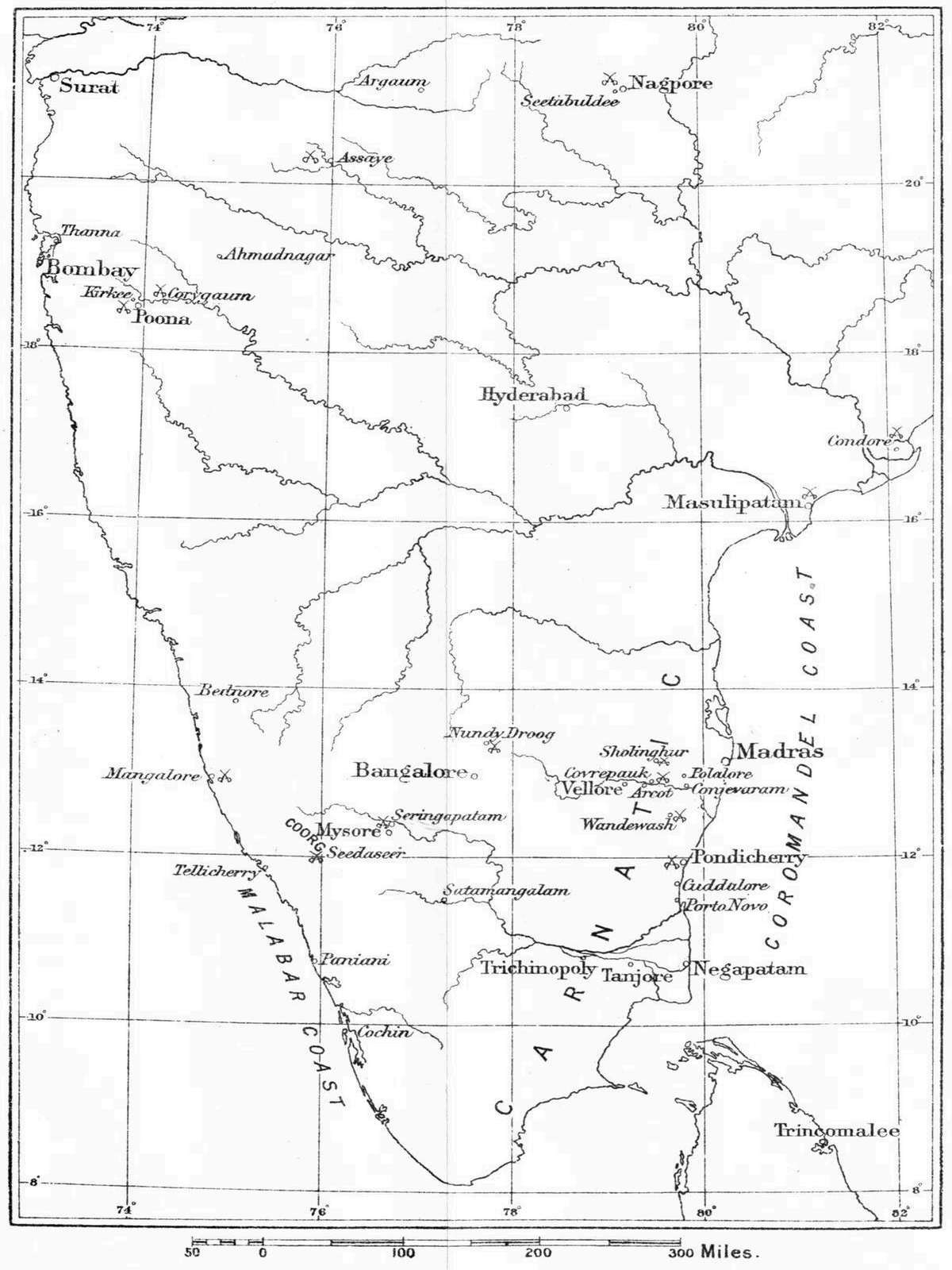
BATTLEFIELDS IN SOUTHERN INDIA
INDIA, 1751-1764
Arcot—Plassey—Condore—Masulipatam—Badara—Wandewash—Pondicherry—Buxar.
The names at the head of the chapter commemorate a
number of long-forgotten Indian campaigns, waged against
desperate odds and extending over many years. The
Colar Goldfields, Dindigul Cigars, and the Nundy Droog
Mine are names of pleasant memories to the fortunate
shareholders in those concerns. Little did soldier or
sepoy think that those fields on which he shed his blood in
order to maintain British supremacy in India would thus
become familiarized to British speculators. For us, their
successors, it is humiliating to feel that the heroic forging
of the link which connects them with the military history
of our Empire should have been long since forgotten. A
few words in retrospect are necessary.
In the year 1600 a charter was granted by Parliament
to the East India Company, and within ten years factories
had been established at Surat, to the north of Bombay,
and Petapolam, to the north of Madras. We were not
the first-comers in the field, for both Dutch and Portuguese
had been for many years engaged in commerce
with the East. In 1612 our first troubles arose with the
Portuguese, whom we defeated at Surat, and since then
no question of their supremacy has arisen. Fifty years
later the French had firmly established themselves at
Masulipatam and Pondicherry, on the south-east coast,
as well as at Chandernagore, a few miles above
Calcutta, and for the next 150 years the rivalry
between France and England was the cause of much
strife. The policy of the French was to stand well in
with the native rulers, to organize their armies on a
European model, and so, with their aid, to drive the
English out of India.
At the commencement of the eighteenth century Calcutta,
Bombay, and Madras were our chief centres, the
former with factories stretching to Patna, in the northwest.
The influence of the Governor of Bombay extended
from the settlement at Ahmedabad, in the north, to Calicut,
on the west or Malabar coast, whilst Madras had
under its rule all factories on the eastern coast from
Vizagapatam to Cuddalore. The British East India
Company of those days boasted of but little Government
support; the French company was fast becoming a
military rather than a commercial force. In 1750 the
French had driven us out of Madras, and were virtually
rulers of Southern India, and the bulk of our forces were
besieged in Trichinopoly. Fortunately for England, even
in her darkest hour a man has arisen to cope with and
surmount her difficulties. Amongst the writers or clerks
in the employ of the factory at Madras was one Robert
Clive. He, with rare prescience, argued that, as the bulk
of the French forces, aided by their ally, the ruler of the
Carnatic, were employed in the reduction of Trichinopoly,
therefore Arcot, the capital of the Carnatic, in all probability
lay unguarded. Mr. Saunders, the Governor of
Madras, cordially supported the plan advocated by the
young writer, which was to carry the war into the enemy's
country, and to seize Arcot, the capital, by a coup de
main.
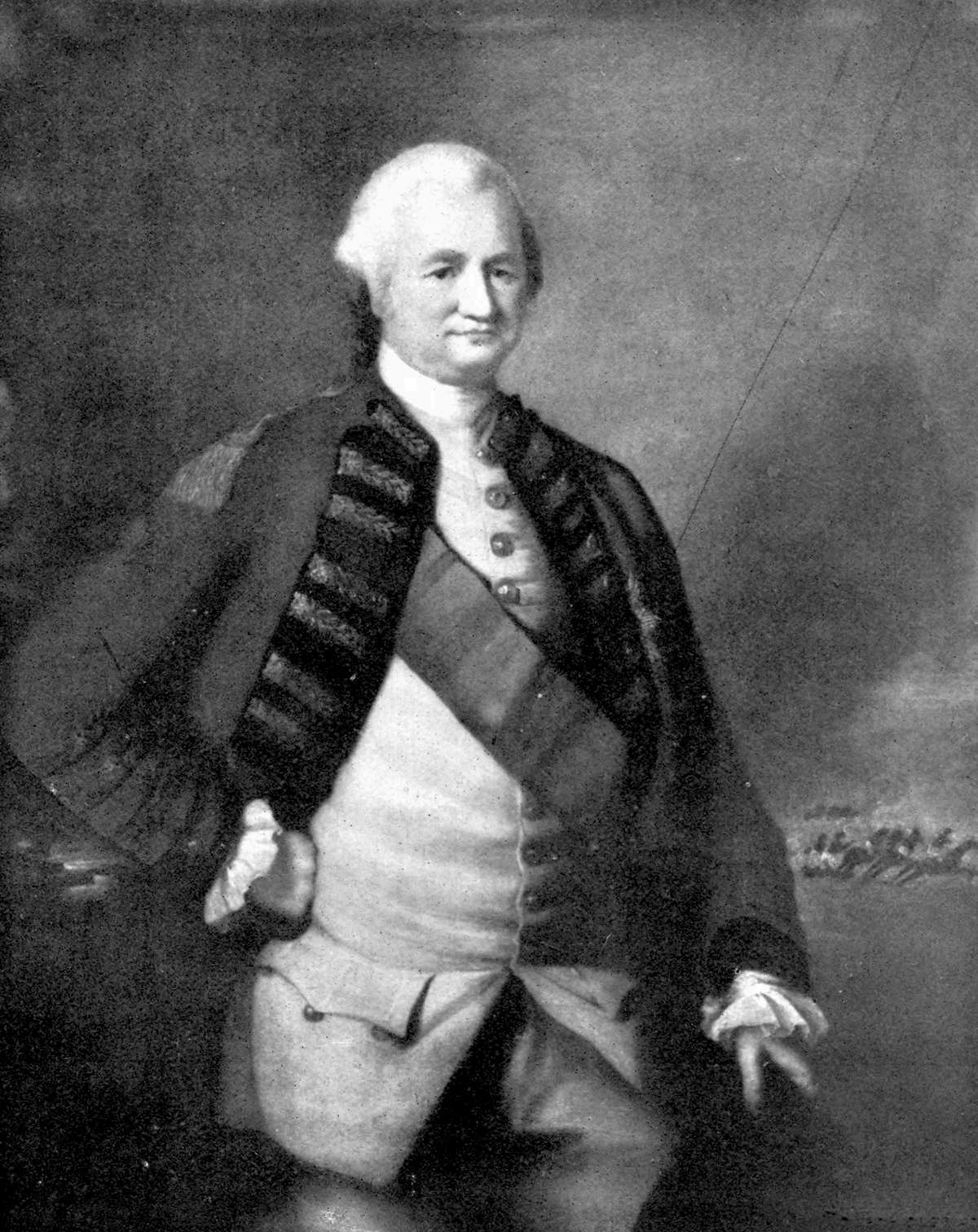
ROBERT, LORD CLIVE.
To face page 50.
This honour is alone borne by the Royal Dublin Fusiliers,
the lineal descendants of the gallant band of Englishmen
in the service of the East India Company at Madras, who
in the year 1751, under the incomparable Clive, laid the
foundation of our Indian Empire. In those days Arcot,
the capital of the Carnatic, was a city of about 100,000
inhabitants, dominated by a fort almost in ruins. It lies
some sixty miles south-west of Madras, and Clive determined
not only to effect the relief of Trichinopoly, then
besieged by the French, but also to strike at French
supremacy by seizing the capital of their most powerful
ally, the Sovereign of the Carnatic. He left Madras on
September 6, 1751, in command of a small force of 200
Englishmen and 300 sepoys, with but three field-guns.
Of his officers, eight in number, four, like him, were
"writers" in the Company's factory. Five days later
Clive had thrown himself into the half-ruined fort of
Arcot, which had been hastily evacuated by its garrison,
mounted the guns, which had been abandoned, repaired
the defences, and made every preparation for a siege.
A month later the siege commenced in earnest, 10,000
trained troops of the Nawab, aided by 300 French, drawing
a close cordon round the fort, whilst a siege-train
directed by Frenchmen opened fire on its walls. Macaulay,
in his brilliant essay on Lord Clive, has borne eloquent
testimony to the heroism both of the leader and the led
(I have not the space to dwell on the details of the siege)—how
the sepoys, with starvation staring them in the
face, brought their rations of rice to their English comrades,
with the remark that the water in which it was
boiled was sustenance enough for them; and how, after
being beleaguered for fifty days, in which he had lost one-third
of his force, Clive repelled a final assault, and was
enabled to assume the offensive against his disheartened
and discomfited foes.
Arcot was a prelude to a campaign in which many
gallant actions were fought—actions long since forgotten,
and which are unrecorded on our colours. Trichinopoly
and Covrepauk are no less worthy of emblazonment than
Reshire or Koosh-ab. But, alas! no connection can now
be traced between the sepoys who fought under Clive
and the regiments of our native army, whilst the identity
of the First Madras Europeans has for a whole generation
been hidden under the title of "Royal Dublin
Fusiliers."
Little by little public interest was now being centred
on India. The desperate efforts of France to gain an
ascendancy in the Peninsula of Hindoostan, and the gallant
endeavour of the servants of the East India Company
to thwart those efforts, had at last aroused our
Ministers to the value of Indian commerce, and to the
necessity of affording military assistance in the shape of
trained regiments to the "Honourable Company of Merchants
trading to the East." In 1754 a first step was
made in this direction, and in that year the 39th Regiment
(now the 1st Dorsets) landed in Madras, and, in memory
of their connection with our early struggles in India, have
been permitted to bear on their colours the legend "Primus
in Indis." The following year a truce was signed between
France and England, thus putting an end to active hostilities.
No steps, however, were neglected by either
party in order to secure a paramount influence with
native rulers. In this, however, we were less successful
than our rivals.
The following regiments are entitled to bear this battle
honour:
The Dorsetshire Regiment.
Royal Munster Fusiliers.
Royal Dublin Fusiliers.
Just as in the South of India the rulers of the Carnatic
and of Mysore were the bitter foes of the English settlement
at Madras, so at Calcutta we had against us Surajah
Dowlah, the ruler of Bengal, Behar, and Orissa—a
nominal Viceroy of the Mogul Emperor—straining every
nerve to wrest from us the territories on which our
factories were built. The tragedy of the Black Hole of
Calcutta is familiar to every schoolboy. Fortunate
indeed for England was it that, when the news of the
fall of Calcutta reached Fort St. George an English
fleet, under Admiral Watson, was lying in Madras Roads,
and that men of action sat in the Madras Council. Two
hundred Europeans were at once despatched to the
Hooghly, and a force of 2,500 men hastily organized,
consisting of 250 men of the 39th Regiment (1st Dorsets),
700 Madras Europeans, and 1,500 sepoys, for their
support. This force was under the joint command of
Admiral Watson and Robert Clive. Calcutta was relieved;
and as war with France had again broken out,
it was determined—now that all pressure on the part of
Surajah Dowlah was removed—to attack the French
settlement at Chandernagore. The fleet sailed up the
Hooghly, and on March 23 the British flag was flying over
the French fortress. I have been unable to ascertain
the losses of Clive's troops on this occasion. Those of
the Royal Navy amounted to 4 officers and 46 men
killed, 9 officers and 156 men wounded. In the burial-ground
of St. John's Church, Calcutta, may yet be
seen two monuments recording thus daring feat of arms
and of superb seamanship—the one raised in memory
of the Admiral, the other of a midshipman. The
former reads:
Here lies interred the Body of
CHARLES WATSON, Esq.,
Vice-Admiral of the White,
Commander-in-Chief of His Majesty's
Naval Forces in the East Indies,
Who departed this Life the 16th Day of August, 1757,
In the 44th Year of his Age.
Gheria taken, February 13th, 1756.
Calcutta freed, January 11th, 1757.
Chandernagore taken, March 23rd, 1757.
Exegit monumentum ore perennius.
On the boy's tomb is inscribed:
Here lyes the Body of
WILLIAM SPEKE,
Aged 16, Son of Henry Speke, Esq.,
Captain of His Majesty's Ship Kent.
He lost his Leg and Life in that Ship
At the Capture of Fort Orleans,
The 24th March, Anno 1757.
Having punished the French for their refusal to afford
assistance to our beleaguered countrymen and countrywomen
in Calcutta, Clive now determined to march against
the Nawab Surajah Dowlah. On June 13, having received
fresh reinforcements on this occasion from Bombay,
he left Chandernagore at the head of 3,000 men, with ten
guns. Of these about 1,000 were English—the 39th
Foot, under Major Eyre Coote, some gunners of the Royal
Artillery who had accompanied the 39th from England,
and detachments of the Bengal, Madras, and Bombay
European regiments. The Englishmen were conveyed
in boats up the Hooghly; the sepoys marched along the
banks. On June 23 Clive found himself face to face
with Surajah Dowlah's army at Plassey, a town on the
River Hooghly, about 100 miles due north of Calcutta.
The odds were hopelessly unequal—Clive with 3,000 men
and ten light field-guns on the one side; Surajah Dowlah
with 55,000 men, of whom 15,000 were cavalry, and fifty
guns of all calibres on the other. Had Englishmen ever
been in the habit of counting the odds, the Indian
Empire would never have been ours. Neither Clive nor
Coote were men to quail before difficulties. From eight
until eleven our infantry lay motionless, the field-guns
only maintaining an unequal duel with the more numerous
artillery of the enemy, which were being served—and
very badly served—by some Frenchmen in the service of
the Nawab. Plassey was the foundation-stone of British
supremacy in Bengal, as Arcot was in Madras; yet the
fight was, from the soldier's standpoint, a very hollow
one. Dawn broke with the odds immeasurably in favour
of the Mogul host. At sunset that host was in full
retreat, and yet our total losses were but 11 English
and 13 sepoys killed, the wounded being 22 and 21
respectively. Such was the price we paid for the establishment
of British rule over what is known as the Province
of Bengal.
Casualties at Plassey.
| Regiments. | Officers. | Men. |
| K. | W. | K. | W. |
| Royal Navy | - | 1 | - | 2 |
| Royal Artillery | 1 | 2 | 6 | 10 |
| 39th Dorset | 1 | - | 1 | 4 |
| Royal Munster Fusiliers | - | 1 | 1 | 2 |
| 1st R. Dublin Fusiliers | - | - | 1 | 3 |
| 2nd R. Dublins | - | - | - | 1 |
| Bengal sepoys | - | - | 9 | 11 |
| Madras sepoys | - | - | 4 | 10 |
Royal Munster Fusiliers.
Royal Dublin Fusiliers.
In the course of this year there was incessant fighting
between our troops in Madras and the French and their
allies; but the value of India was now becoming more
thoroughly appreciated by the Cabinet, and a second
regiment, then numbered the 79th, was sent out to
Madras, under Colonel William Draper. The French,
on their part, were not behindhand. The Count Lally
and Admiral d'Ache arrived, with close on 3,000 French
troops, and the British forts at Cuddalore and St. David
were captured. Matters were looking serious indeed in
Southern India, when Clive, still in Calcutta, determined
to make a diversion. Eyre Coote, the Major of the 39th,
who had shown such gallantry at Plassey, was in England
busily employed in raising a regiment for service in India,
and so was not available; but Clive detached Major
Forde, of the 39th, with detachments of his own regiment
and of the 1st Bengal Europeans (now the Munster
Fusiliers), barely numbering 600 men, and some 2,000
sepoys, down the coast to Vizagapatam, which was being
threatened by a French force, under Conflans. Despite
the odds against him—for the French army outnumbered
his by at least three to one—Forde pushed on, finally
meeting Conflans near the mouth of the Godavery River.
Casualties at Condore.
| Regiments. | Officers. | Men. |
| K. | W. | K. | W. |
| Royal Munster Fusiliers (1st Bengal Europeans) | 1 | 4 | 15 | 29 |
There has been a long-standing dispute as to whether
this honour can be rightly claimed by the Dublin Fusiliers
as the representatives of the Madras and Bombay regiments
which were sent to assist Clive in 1757. It appears
certain that the men from Madras and Bombay were
incorporated with the Bengal European Regiment in
April, 1758, and that none but Bengal troops accompanied
Forde to Vizagapatam. The India Office has therefore
given its decision in favour of the Munsters for both
Condore and Masulipatam.
This honour is borne by the Royal Munster Fusiliers
alone. In spite of many obstacles thrown in his way after
the action of Condore by our native allies, Forde determined
to follow up Conflans. It was not until March 6
that he arrived before Masulipatam, behind the fortifications
of which the French were awaiting him. A fortnight
was taken up in landing siege-guns from the fleet,
which had followed the army down the coast, and a small
number of bluejackets were disembarked to aid in the
siege. On April 6 Forde learnt that a force of 40,000
natives, under Salabad Jung, was advancing to the
relief of Conflans, and he determined on storming at
once. His position was full of difficulty: in front a
formidable work, with a garrison exceeding his own force
in number, his land communications threatened by a
Franco-native army 40,000 strong, and an empty
treasure-chest. A weaker man would have taken advantage
of the presence of the fleet, contented himself with
his own marvellous success at Condore, and embarked his
little army for Bengal. Not of such stuff was Forde, and
fortunate for him and for England that he had with him
men of like metal to himself. On April 8 Forde ordered
the assault, and by nightfall Conflans, with 3,000 men,
had unconditionally surrendered. Salabad Jung, the
Viceroy of the Circars Province, now realizing that all
power did not belong to the French, entered into a treaty
with Forde, by which he ceded to the English eighty miles
of coast-line, and entered into an agreement, not merely
to dismiss all the French then in his service, but also
never again to employ French troops or instructors.
Forde was now free to return to Bengal, where his
services were soon to be urgently needed.
Casualties incurred during the Operations at Masulipatam,
ending with the Action of April 8, 1759.
| Regiments. | Officers. | Men. |
| K. | W. | K. | W. |
| Royal Munster Fusiliers | 2 | - | 22 | 62 |
An honour borne by the Royal Munster Fusiliers only.
The crushing defeats inflicted by Forde on Conflans
had the effect of restoring our prestige in Madras. But
in Bengal Clive was in no very enviable position. The
Dutch, who had a settlement at Chinsura, on the Hooghly,
had commenced open hostilities, and a Dutch fleet,
with a considerable force on board, entered that river.
Clive had at his disposal about 300 of the 1st Bengal
Europeans, and until the return of Forde from Masulipatam
matters at Calcutta were serious. As soon as
Forde arrived, Clive, who believed only in the offensive,
ordered the victor of Condore to attack the land force,
whilst he determined to destroy the Dutch fleet with some
armed East Indiamen at his disposal. On November 20
Forde marched to Chandernagore (the French settlement
on the Hooghly, some miles above Calcutta), and on the
following day moved on to Chinsura—only a few miles
distant—where a small detachment of the Dutch were
encamped. He was joined here by Knox (a Company's
officer who had been under Forde at Condore), with a
body of eighty volunteer cavalry, raised from the English
residents in Calcutta, and a strong battalion of sepoys.
He now learnt that the Dutch force was moving to attack
him. Confident of victory, Forde wrote to Clive, asking
for permission to forestall them. The story runs that
Clive was playing cards when Forde's letter reached him.
Laying down his hand, Clive scribbled on the back of
the letter: "Dear Forde,—Fight them. I will send you
the Order in Council to-morrow." Then, taking up his
cards, went on with the game. On November 25 the two
forces came into collision. Forde's handful of cavalry
converted the check, which the steady fire of Knox's
guns had inflicted on the Dutch, into a rout. Practically
the entire Dutch force was either killed, wounded, or
taken. The Government in Holland repudiated the action
of the Governor of their Indian settlements, and paid
compensation to the East India Company. But Forde's
little fight at Badara is deserving of recognition, not merely
because it was a gallant action fought against serious odds,
but more especially because it put an end once and for all
to all pretensions of the Dutch to supremacy in the East.
Unfortunately, no records exist showing the casualties
we suffered at the action of Badara.
An honour borne only by the Royal Dublin Fusiliers.
The operations in Southern India had not been characterized
by the same degree of success which had marked
Forde's campaign against Conflans and the Dutch, but
in the very month that we won the action of Badara
Eyre Coote disembarked at Madras at the head of his
newly-raised regiment, then numbered the 84th. At the
same time some 300 recruits arrived for the Company's
battalions, bringing the total force at the disposal of the
Government of Madras to four battalions of infantry,
100 English troopers, and eighteen field-guns. With
these Coote determined to resume the offensive, and on
January 22 the two armies met at Wandewash, about
100 miles south-west of Madras. The forces were fairly
equally matched. Hyder Ali, with his allies, the French,
however, had a considerable preponderance in cavalry.
When we reflect on the momentous issue decided by this
and the preceding actions between the French and ourselves
in India, and compare the number of the troops
engaged with those we now mobilize for an Indian
frontier campaign, it seems little short of marvellous
that our Indian Empire should have been built up with
such slender means.
The troops engaged, under the command of Eyre Coote,
consisted of Draper's Regiment (then the 79th), his own
(the 84th), and two English battalions in the Company's
employ (now the Munster Fusiliers), 2,000 sepoys, 1,200
Indian cavalry, and one squadron of English horse, with
sixteen guns. The brunt of the fighting fell on the British
regiments, Draper's suffering the most heavily; but our
total casualties—63 killed and 124 wounded—was a
small price to pay for a victory which cost the French
600 killed and wounded and 24 guns.
Step by step Coote now undertook the reduction of all
the French ports in Southern India. Arcot, Trincomalee,
and finally Pondicherry, all fell into our hands, only to be
restored, as was Chandernagore, to the French at the
conclusion of peace in 1763—an act of generous imbecility
which necessitated their recapture on the renewal
of the war fifteen years later, at the cost of many hundred
valuable British soldiers.
Casualties at Wandewash.
| Regiments. | Officers. | Men. |
| K. | W. | K. | W. |
| Draper's Regiment (79th) | 3 | 4 | 17 | 66 |
| Coote's Regiment (84th) | 1 | 3 | 13 | 36 |
| Royal Dublin Fusiliers | 1 | 1 | 3 | 29 |
This battle honour is borne only by the Royal Dublin
Fusiliers (at that time the 1st Madras European Regiment),
and was conferred upon it by the Governor of Madras in
recognition of its services at the three sieges of that
fortress in the years 1761, 1778, and 1793. The operations
were conducted by Sir Eyre Coote, an officer who had
received his early training in the 39th (Dorsets), and who,
on that regiment being recalled to England, undertook,
as I have shown, to raise a battalion for service in India.
This corps, which was numbered the 84th, and which
we have already seen at Wandewash, played an all-important
part in the early campaigns waged in India;
but as it was disbanded in the year 1788, the battle
honours it gained are not to be found on the colours of
any existing regiment. Coote laid siege to Pondicherry
in the month of September, 1760, but it was not until
the January following that the Governor surrendered.
In accordance with our invariable custom, the fortress
and neighbouring colony were restored to the French on
the conclusion of peace in 1763. The regiments associated
with the Dublin Fusiliers in the Siege of Pondicherry
in 1760 were the 79th (Draper's Regiment), the
84th (Coote's), the 89th (Highlanders), under Major Hector
Munro, and the 96th, under the Hon. G. Monson. None
of these corps survive to bear the battle honour.
In the year 1778, on the renewal of the war with
France, the reduction of Pondicherry once more became
a matter of urgent necessity. On this occasion the
Dublin Fusiliers were again to the fore in their capacity
as the 1st Madras European Regiment (two of its battalions
being present). With them were no less than
ten battalions of sepoys. Many of these are still borne
on the rolls of the Madras army. The distinction has
not been conferred on the Indian corps for the operations
in 1778; but if the losses suffered during a successful campaign
constitute a claim to a battle honour, the words
"Pondicherry, 1778," may well be accorded to the regiments
who figure in the subjoined list of casualties.
Casualties at Pondicherry, 1778.
| Regiments. | Officers. | Men. |
| K. | W. | K. | W. |
| Dublin Fus. (two battalions) | 1 | 8 | 45 | 92 |
| Bengal Recruits | 1 | 1 | 4 | 12 |
| 62nd Punjabis (Natives) | - | 2 | 17 | 57 |
| 67th Punjabis (Natives) | - | 2 | 10 | 37 |
| 69th Punjabis (British) | 1 | - | - | - |
| Do. (Natives) | - | 2 | 7 | 36 |
| 72nd Punjabis (British) | 1 | 1 | - | - |
| Do. (Natives) | - | 1 | 6 | 43 |
| 73rd Carnatic Inf. (British) | - | 1 | 1 | - |
| 73rd Carnatic Inf. (Natives) | 1 | - | 6 | 14 |
| 74th Punjabis (Natives) | - | - | 21 | 34 |
| 75th Carnatic Inf. (British) | 1 | - | - | - |
| Do. (Natives) | - | - | 23 | 44 |
| 76th Punjabis (Natives) | - | - | 8 | 29 |
| 79th Carnatic Inf. (British) | 1 | 1 | - | - |
| Do. (Natives) | - | 1 | 5 | 12 |
| 80th Carnatic Inf. (British) | 1 | 1 | - | - |
| Do. (Natives) | - | 2 | 8 | 35 |
Note.—The total losses of the Company's troops at Pondicherry
in 1778 were 148 sepoys killed and 482 wounded. For
this success Hector Munro, who commanded, was made a K.B.
The Bengal Recruits alluded to above were a party of
recruits on their way out to join what is now known as
the Munster Fusiliers. They were detained by the
Governor of Madras to swell the British element at the
siege, and they well sustained the honour of the regiment
now known as the Royal Munster Fusiliers.
In the year 1793 the reduction of Pondicherry became
once more necessary. The fortress had been captured by
Sir Eyre Coote and its works demolished in 1761. On
its restoration to the French, the place was converted
into an exceptionally strong fortification, and its capture
by Sir Hector Munro in 1778 entailed a loss of upwards
of 600 killed and wounded. In 1793 we found that our
friends the French had once more—and very rightly, too—done
their utmost to render the place impregnable, and
that a very considerable force would be necessary for its
reduction. Colonel Braithwaite, of the Madras army,
was entrusted with its capture. The force at his disposal
consisted of the following troops:
Cavalry Brigade—Colonel Floyd: 19th Hussars and 4th Madras
Cavalry.
First Infantry Brigade—Colonel Nesbitt: 36th (Worcesters),
52nd (Oxford Light Infantry), and the battalion companies
of the Dublin Fusiliers.
Second Infantry Brigade—Colonel David Baird: 71st (Highland
Light Infantry), 73rd (Royal Highlanders), and the flank
companies of the two battalions of the Madras European
Regiment (Dublin Fusiliers), under Majors Petrie and Vigors.
Third Infantry Brigade—Colonel Bilcliffe: 61st Pioneers, 62nd
Punjabis, and 63rd Light Infantry.
Fourth Brigade—Colonel Campbell: 66th Punjabis, 67th Punjabis,
and the 8th Madras Infantry, which has ceased to
exist.
Fifth Infantry Brigade—Colonel Trent: 69th Pioneers, and the
old 17th and 19th Regiments of Madras Infantry, which
have been merged in other corps.
Sixth Infantry Brigade—Colonel Cuppage: 23rd, 24th, and
25th Regiments of Madras Infantry.
The artillery consisted of 117 men of the Royal
and 731 of the Madras Artillery, and there were 75
English sappers, together with that well-tried regiment
which has fought so bravely on so many fields—the
Madras Sappers and Miners.
I regret that I have been unable to trace the losses of
all the native regiments; their total casualties amounted
to 4 British officers and 135 native ranks killed and
wounded.
Casualties at Pondicherry, 1793.
| Regiments. | Officers. | Men. |
| K. | W. | K. | W. |
| Royal Artillery | - | 2 | 12 | 17 |
| Roy. Engineers | 1 | 4 | 5 | 18 |
| 36th Worcesters | - | - | 5 | 9 |
| 52nd Oxford L.I. | 1 | - | 2 | 5 |
| 71st Highl. L.I. | - | 1 | 8 | 14 |
| 73rd R. Highl. | 3 | - | 7 | 13 |
| Petrie's batt. | - | 1 | 2 | 6 |
| Vigor's batt. | - | 1 | 1 | 3 |
| 61st Pioneers | - | - | 2 | 8 |
| 62nd Punjabis | 1 | - | 6 | 12 |
| 66th Punjabis | - | - | 3 | 5 |
| 67th Punjabis | 1 | - | 9 | 16 |
Although no battle honours have been awarded to the
Indian regiments which took part in the operations against
Pondicherry in the years 1778 and 1793, I have been at
some pains to give a brief account of the operations, both
of which, with their accompanying loss of life, might
have been avoided had the Home Government either
insisted on the retention of the conquests we had made
in the East, or, were that impracticable, refused to allow
the rebuilding of fortifications in the French settlements
in India. "Pondicherry, 1778 and 1793," might be added
with propriety to the battle honours of regiments which
took part in the sieges of those years.
Royal Munster Fusiliers.
Royal Dublin Fusiliers.
In the interval between Eyre Coote's victory at Wandewash
in January, 1760, and the Battle of Buxar in October,
1764, our troops in India had been continuously at
war; yet the colours even of those regiments which still
survive, and which were then in the service of the Company,
bear no record of the many stubborn fights, the
by no means inglorious victories achieved over our
gallant foes. In the South, the Government of Madras
had been carrying on campaign after campaign against
the trained troops of France and the scarcely less formidable
army of Mysore. In the North, Clive and his
successor had found foemen no less worthy of their steel
in the armies of the Emperor of Delhi and those of the
ruler of Oude, under Surajah Doolah. History—even
Greek history—affords no more striking episodes than
those early struggles of our countrymen in India; and
though the names of Beerpore, Sooty, and Oondna Nullah
are forgotten, they deserve to stand side by side with
other well-remembered names that are emblazoned on the
colours of the old Company's regiments. The Battle of
Buxar was the final episode in the long-fought campaign
with the ruler of Oude.
Now that the two senior battalions of the old Company's
army have been converted into the Royal Munster and
Royal Dublin Fusiliers, they are the only regiments which
bear on their colours a memento of one of the finest actions
ever fought in India. The British force numbered between
6,000 and 7,000 men, with twenty-eight guns. It
included, besides the two European regiments in the Company's
employ, a composite battalion, just 167 strong,
made up of detachments of the 84th, or Coote's Regiment,
and volunteers from the disbanded 89th Regiment and
90th (Light Infantry); two companies of Royal Marines,
under Captain Wemyss; a handful of seamen, with a midshipman,
working some guns side by side with the Bengal
Artillery; and a small troop of cavalry, the total being
about 1,200 Englishmen. To these must be added 900
Mogul horse and 5,000 sepoys. This little army was
under the command of Colonel Sir Hector Munro, of the
89th Regiment. The two Company's battalions were
inured to Indian warfare, and the men of the 90th (then
the only Light Infantry regiment in the British army),
had learned their lesson at the capture of Belleisle, Martinique,
and Havana, under their brave Colonel, James
Stuart, who was destined to add to the laurels gained at
the Moro a great reputation in Southern India.
The force opposed to Munro was a formidable one. It
included eight battalions trained and commanded by
French officers, two batteries of artillery manned by
Europeans, 5,000 Afghan horse, and 40,000 men of Shah
Shujah Daulah's own fairly trained army. The battle
was stubbornly contested, but the victory was complete.
Our weakness in cavalry, however, prevented Munro
reaping the full benefits of his success. In addition to
the losses of the British contingent, the sepoy battalions
lost 257 killed and 435 wounded. Our trophies included
137 guns, whilst the enemy left upwards of 2,000 dead
on the field.
Casualties at Buxar.
| Regiments. | Officers. | Men. |
| K. | W. | K. | W. |
| R. Munster Fus. | - | 3 | 37 | 58 |
| Composite batt. | 1 | 1 | 2 | 13 |
| Royal Artillery | 1 | 1 | 2 | 3 |
| Royal Dublin Fusiliers | - | - | 2 | 3 |
| British cavalry | - | 1 | 2 | 4 |
Broome, in his admirable "History of the Bengal
Army," states that the two officers who figure in the list
of casualties in the composite battalion both belonged
to the 90th Light Infantry. This is an error. On comparing
the names of the officers with the Army Lists, I am
convinced that they belonged to the 96th Regiment, and
that the error has arisen in the transcription by a clerk
at the War or India Office. I have come across many
such errors. Perhaps the most amusing is in the Gazette
recording the capture of Havana in 1762, where the
42nd is referred to in the casualty rolls as the "42nd
Royal Hunters"!
INDIA, 1774-1799
Rohilcund, 1774—Carnatic—Guzerat, 1778-1782—Sholinghur,
1781—Mangalore, 1783—Mysore—Nundy Droog, 1791—Rohilcund,
1794—Seedaseer, 1799—Seringapatam, 1799.
This honorary distinction was awarded to the 2nd
European Regiment of the Bengal army for its services
in the campaign undertaken in that year to defend our
ally, the King of Oude, against the incursions of the
Mahrattas. It is now borne by the Royal Munster
Fusiliers.
The campaign of 1774 was under the personal command
of Colonel Champion, the Commander-in-Chief in Bengal.
There was a good deal of hard work, of privations little
to be understood by the soldier who serves in India in
these days, and more than one sharp skirmish. The
principal engagement was that fought at Kutra, in the
near neighbourhood of Bareilly, on St. George's Day
(April 23), 1774, long known in India as St. George's
Battle. Colonel Champion had with him the 2nd Bengal
European Regiment (now the 2nd Battalion Royal
Munster Fusiliers) and six battalions of native infantry.
Unfortunately, no representatives of these remain to bear
the honour on their standards.
Our casualties amounted to 2 officers and 37 men killed,
7 officers and 93 men wounded. Immense booty was captured,
and in the distribution of this, officers and men
benefited largely, the respective shares being: Colonels,
£1,900; Lieutenant-Colonels, £1,600; Majors, £1,300; Captains,
£685; subalterns, £343; cadets, £100; sergeants,
£6; privates, £4; Subadars, 131 rupees; Jemidars, 65
rupees; havildars, 40 rupees; sepoys, 35 rupees.
This honour has been awarded to the following regiments:
Highland Light Infantry.
Royal Munster Fusiliers.
Seaforth Highlanders.
Royal Dublin Fusiliers.
27th Light Cavalry.
2nd Queen's Own Sappers and Miners.
61st Pioneers.
62nd Punjabis.
63rd Light Infantry.
64th Pioneers.
66th Punjabis.
67th Punjabis.
69th Punjabis.
72nd Punjabis.
73rd Carnatic Infantry.
74th Punjabis.
75th Carnatic Infantry.
76th Punjabis.
79th Carnatic Infantry.
80th Carnatic Infantry.
It records their services in repelling the invasion of the
Carnatic by Hyder Ali, the ruler of Mysore, and covers
all the operations undertaken against him up to the
invasion of Mysore by the army under Lord Cornwallis
in 1791.
The renewal of the war with France in 1788 found Sir
Hector Munro, the victor of Buxar, Commander-in-Chief
at Madras. It now became necessary to reoccupy the
fortified positions which we had captured during the
previous war with the expenditure of many lives, and
which had been restored to France on the conclusion of
peace. Although subsequent to the battle at Wandewash
Hyder Ali, the ruler of Mysore, had entered into a
treaty with us, it was well known that he had a striking
predilection for the French; and on the resumption of
the war between France and England he openly espoused
the cause of our enemies, and prepared to invade the
Carnatic at the head of his troops. The Mysorean army
was by no means contemptible. It was partly trained
on the European model, and numbered little short of
100,000 men, of whom 25,000 were cavalry, and it included
a battalion of French troops. Munro's first care
was to prevent Hyder Ali receiving assistance from
France, and he at once took measures to seize the sea-ports
of Mahé and Pondicherry. In the defence of the
former some of Hyder Ali's troops took an active part,
and the place made a gallant defence before it surrendered.
Sir Hector Munro undertook the reduction of Pondicherry
in person, but the garrison, anticipating the arrival of a
French fleet, made a most stubborn defence; and it was
not until the middle of October, after a siege lasting over
two months, that the British flag flew over its walls, our
losses during these operations amounting to upwards of 800
of all ranks, British as well as native, killed and wounded.[6]
When Hyder Ali, in June, 1779, actually crossed the
frontier, our forces were much dispersed. Braithwaite,
with 1,500 men, held Pondicherry; Colonel Baillie, with
3,000, was at Guntoor, on the Kistnah River; Colonel
Cosby, with 2,000 native troops, was at Trichinopoly;
and Munro, with barely 5,000 men, at Madras. Braithwaite
and Baillie were immediately called in to strengthen
the Commander-in-Chief, whilst Colonel Cosby was ordered
to threaten Hyder Ali's line of communication. Wandewash,
an important strategical point on the Mysorean
line of advance, was held by a gallant young subaltern,
Lieutenant Flint, with 200 sepoys, aided by one single
sergeant of the line. From August 11, 1780, until
January 22, 1781, this little band of heroes withstood
assault after assault, holding Hyder Ali's besieging force
at bay until relieved by Eyre Coote. The story of that
siege has yet to be written. Flint improvised his own
artillery, made his own powder, infused his own cheerful
daring into the breasts of his sepoys, and died unhonoured
and unsung. There were, unfortunately, grievous disasters
to counterbalance this gallant achievement. Hyder
Ali threw himself on Baillie's force before it effected its
junction with Munro, practically annihilating it, the survivors,
including fifty English officers (amongst them
Captain, afterwards Sir David, Baird, of the 71st), being
sent as prisoners to Seringapatam.
Whenever our fortunes in India have been at their
lowest ebb we have, fortunately, had men at hand to
retrieve them. The "man on the spot," unhampered
from "home," has rarely failed us. In 1781 Warren
Hastings was Governor-General, Eyre Coote Commander-in-Chief
at Calcutta. On hearing of Baillie's disaster and
of Munro's indecision, Warren Hastings despatched Eyre
Coote to Madras armed with full powers (suspending both
Munro, the Commander-in-Chief, and Whitehill, the
Governor, from their functions). Coote had at his disposal
barely 8,000 men—the 71st (Highland Light Infantry),
1st Bengal, and 1st Madras European Regiments,
some 1,600 men in all, with six sepoy battalions and
three regiments of native cavalry. Munro, a gallant
leader of men, but no General, at once put himself under
Coote's orders, and was entrusted with the command of
a brigade composed of the three British regiments. James
Stuart, who had commanded the 90th Light Infantry at
Martinique and Havana, and who had subsequently
entered the Company's service, being placed in command
of the sepoy battalions. On July 1, 1781, Coote inflicted
his first defeat on Hyder Ali at the Battle of Porto Novo,
a fortified position on the sea-coast about 100 miles south
of Madras. On September 27 the two armies again met
at Sholinghur, about fifty miles west of Madras, when
Coote, with 11,000 men and thirty guns, signally defeated
Hyder Ali's army, 70,000 strong, killing, it is said, 5,000
of the enemy.
This distinction is borne by the Royal Munster
Fusiliers and the Royal Dublin Fusiliers. There is,
however, considerable doubt as to the propriety of the
Munsters bearing the honour. Colonel P. R. Innes, the
painstaking and accurate historian of that regiment, maintains
that the old 1st Bengal European Regiment has no
right to it, and if the honour was granted, as it undoubtedly
was, for the operations conducted by General Goddard in
Guzerat in the years 1778-1782, it is very certain that
the 1st Bengal Europeans never were with Goddard.
The early part of the year 1778 found the army of the
Bombay Presidency hard pressed, and help was solicited
from Bengal, where all for the moment was quiet. Warren
Hastings at once despatched a force consisting of six
battalions of sepoys (none of which are now remaining),
a couple of batteries of artillery, and 500 Afghan horsemen,
to Bombay. The march was an arduous undertaking—to
cross India from east to west, with a possible
and very probable combination of Mahratta chieftains to
bar its progress. The officer originally nominated to the
command was soon superseded by Brigadier-General
Goddard, an officer who had received his early training
in the 84th under Coote, and who, on that regiment being
ordered to England, had been offered increased rank in
the army of the East India Company. Goddard marched
via Cawnpore and Kalpee, which he stepped aside to
capture, to Hoshungabad, finally co-operating with a
column sent up from Bombay, which included the 1st
Bombay European Regiment, now the Royal Munster
Fusiliers, as well as some battalions of native infantry.
Later the Madras Presidency was also called upon to
assist, and 500 men of the Madras Europeans, now the
1st Battalion of the Dublins, with a battery of artillery
and a sepoy battalion, was sent round by sea to Surat,
to which place Goddard had advanced. For close on two
years the little army was constantly engaged. It captured
Bassein on December 11, 1780, Ahmadabad in the
following month, and in the space of a little more than
a year after the arrival of the Madras troops Goddard
had reduced the provinces of Guzerat and the Concan.
The Bengal troops were now allowed to return, and once
more they marched across India, reaching Cawnpore in
April, 1784.
To commemorate their services the supreme Government
struck a medal, which was distributed to all ranks,
officers receiving gold and the sepoys silver, medals.
According to Mayo, this was the first occasion in which
a medal was granted to the private soldiers of our army.
I regret that I have been unable to ascertain the
casualties of all the forces engaged. Stubbs, in his invaluable
history of the Bengal Artillery, gives the names
of the officers of his corps who were killed, but Begbie
ignores the fact that Madras artillery were employed.
Colonel Harcourt does not allude to the losses of the
Madras European Regiment in his history of the old "Blue
Caps." The Royal Dublin Fusiliers, then the 1st Bombay
Regiment, lost 3 officers and 19 men killed, and 14 officers
and 41 men wounded, in the course of these operations,
and there is no doubt that the campaign in Guzerat was
attended with considerable loss.
This battle honour, which commemorates the defeat of
the Mysorean Army of Hyder Ali and its expulsion from
the Carnatic by Sir Eyre Coote, is borne by the following
regiments:
Highland Light Infantry.
Royal Dublin Fusiliers.
Royal Munster Fusiliers.
27th Light Cavalry.
2nd Queen's Own Sappers and Miners.
63rd Light Infantry.
64th Pioneers.
66th Punjabis.
69th Punjabis.
72nd Punjabis.
73rd Carnatic Infantry.
74th Punjabis.
75th Carnatic Infantry.
76th Punjabis.
79th Carnatic Infantry.
80th Carnatic Infantry.
The total casualties in the action were by no means
heavy. They fell principally on the British troops.
Unfortunately, although Sir Eyre Coote alludes to a
casualty return in his despatch announcing the battle,
all trace of this has disappeared, so that the losses sustained
by individual regiments must, in the case of
Sholinghur, as in those of Marlborough's earlier battles,
always remain unrecorded.
Early in the following year welcome reinforcements
arrived from England, the 73rd (then the 2nd Battalion
of the 42nd) Highlanders, the 98th and 100th Regiments
disembarking on the Malabar coast, the 72nd coming to
Madras to reinforce Coote. These reinforcements came
none too early. Tippoo Sultan (Hyder Ali's son, his most
able Lieutenant and his successor) had surprised and
annihilated a British force under Colonel Braithwaite,
all the officers save one being either killed or carried
prisoners to Seringapatam. A few months later fresh
reinforcements arrived in the 23rd Light Dragoons (now
the 19th Hussars), the 101st and 102nd Regiments (long
since disbanded, and not to be confused with the 101st
Royal Bengal and 102nd Royal Madras Fusiliers), with
two Hanoverian battalions. With these forces Stuart inflicted
a severe defeat on Tippoo Sultan at Cuddalore,
taking from him thirteen guns. For this fine action
no battle honour was granted, though there are many
names on many colours less hardly earned.
Casualties at Cuddalore.
| Regiments. | Officers. | Men. |
| K. | W. | K. | W. |
| Royal Artillery | - | 2 | 19 | 67 |
| 71st H.L.I. | 2 | 6 | 84 | 112 |
| 101st Regiment | 4 | 6 | 42 | 55 |
| Hanoverians | 4 | 12 | 62 | 144 |
| 64th Pioneers | - | - | 6 | 16 |
| 67th Punjabis | - | - | - | 8 |
| 72nd Seaforths | 1 | - | 23 | 47 |
| Dublin Fus. | - | 2 | 8 | 29 |
| 72nd Punjabis | - | 3 | 6 | 39 |
| 18th Madras In. | - | 3 | 4 | 50 |
| 20th M.N.I. | 1 | 1 | 6 | 14 |
| Bengal Infantry | 7 | 5 | 12 | 90 |
On the opposite or Malabar coast Colonel McLeod,
with the 2nd Battalion of the 42nd, details of the 98th,
100th, and 102nd Regiments, and the 8th Battalion of
Bombay Sepoys, won a decisive victory at Paniani on
November 27, 1782, the 42nd losing 3 officers and
57 men in the action; but the chief honours were
reserved for the 42nd at Mangalore.
The Royal Highlanders and 101st Grenadiers alone
bear this battle honour, and surely in the many names
inscribed on the colours and appointments of the Black
Watch, there is not one which redounds more to the
glory of the regiment than this little-known achievement,
one of the brightest in the military history of our
own or of any other country.
A glance at the map of India will show Mangalore on
the west or Malabar coast of the peninsula. During our
operations against Hyder Ali, and subsequently against
his son, the redoubted Tippoo Sultan, its possession was
of vital importance to both ourselves and to the Mysoreans.
Tippoo Sultan was in direct communication with Napoleon,
and through the Malabar ports reinforcements and supplies
reached him from France. When, in 1783, General
Matthews, the Commander-in-Chief in Bombay, led a
column to reduce the fortress of Bednore, in which Tippoo's
treasure was stored, he left garrisons at Mangalore and
Onore to keep open his communication with the sea.
At first successful, Matthews was in the end compelled
to capitulate, and he, with the bulk of his army, were
done to death by the Mysoreans. Mangalore was held
by a force of about 1,800 men, under Colonel Campbell, of
the 42nd; Onore by an officer of the Bombay Army named
Torriano, with whom at present I have nothing to do.
Early in May Colonel Campbell learned of the disaster
to General Matthews, and at the same time he received
a summons from Tippoo Sultan demanding the surrender
of the fort and town of Mangalore in virtue of the terms
of the capitulation arranged with the Commander-in-Chief.
Now, it is necessary for me here to interpolate
that General Matthews and the officers of the King's
regiments had not been on the best of terms. He, a
servant of the East India Company, refused to recognize
their superior rank, and two of the Colonels of the King's
regiments (McLeod, of the 42nd, and Humberston, of the
100th) had left his camp and formulated complaints
against the Commander-in-Chief to the Governor-General.
Campbell therefore replied to Tippoo Sultan's envoy that
he refused to recognize any arrangements which might
have been made by the Commander-in-Chief, and that he
intended to defend the fort to the last.
On May 9 the siege commenced on the land side, and
for the next six months Campbell was hemmed closely in
by some 60,000 men. It is true that communication by
sea was still precariously maintained. On May 23 the
Indiaman Fairford appeared off the port, and threw
ashore a small party of English recruits destined for the
Bombay European Regiment, which had been practically
annihilated with Matthews.[7] That day, May 23, Colonel
Campbell made a vigorous sortie, and destroyed a portion
of the enemy's siege-works and batteries; but in the retirement
three companies of native troops were cut off, and
three British officers with 225 sepoys fell into Tippoo
Sultan's hands. On the morrow Campbell prepared for
a determined resistance. The women of the 42nd were
told off to the hospitals, and a stern code of orders published.
The men were forbidden to fire without explicit
orders, and officers were enjoined to remember that the
bayonet, and the bayonet alone, was the weapon of the
British soldier. "Englishmen must recollect," runs the
order, "that the bayonet is the service required of them,
and that they demean themselves by firing at such a
dastardly foe."
A return, dated May 24, showed the garrison to consist
of 70 British and 67 native officers, with 315 British and
1,394 native soldiers. Attached to and included in the
total of the 42nd were a few of the then 98th and
101st Regiments (not to be confused with the present
Royal Munster Fusiliers), both of which were with
General Matthews at Bednore. The native troops included
the headquarters of the 8th Battalion (now the
101st Grenadiers), some companies of the 15th Bombay
Battalion, and details of other regiments which were
with the Commander-in-Chief at Bednore. Amongst the
officers was Lieutenant MacKay, of the Royal Navy,
who volunteered to act as a gunner during the siege.
He did right good and gallant service, and was twice
wounded in the course of the operations. Another name
appears prominently in the despatches—a name which
has since become a household word in the British Army.
Campbell's Brigade-Major was a certain Captain Wolseley,
of the 98th Regiment, and much of the credit of the
defence was due to the gallantry and unwearied exertions
of this officer.
Between the Highlanders and the 8th Battalion of
Bombay Grenadiers a strong camaraderie existed; they
had fought side by side at Panianee, when Colonel
Macleod had drawn attention to the dash and steady
gallantry of the regiment. Campbell, in his despatches
from Mangalore, bore frequent testimony to the unselfish
devotion of the native officers, and the uncomplaining
heroism of the men.
Into the details of the siege it is not my intention to
enter. Suffice to say that from May 23 until July 27,
when news arrived of peace between France and England,
there was only one day in which the garrison did
not suffer some casualties, and that from June 12 the
men were on half-rations of flour; of meat they had from
the first been deprived. Desertions amongst the sepoys
were frequent, and this was not to be wondered at. Life
within the walls was not a bed of roses, whereas Tippoo
Sultan offered golden inducements to those who would
enter his service. On August 2 an armistice was arranged,
a French officer attached to Tippoo Sultan's army acting
as intermediary, Campbell declining to surrender the
fortress until he had received specific instructions on
this head from Bombay. The Mysorean Prince promised
to furnish supplies on condition that no attempts were
made to strengthen the works or to communicate with
the outside world, except with the consent of the Tippoo
Sultan himself. On several occasions vessels came close
enough for Campbell to send an officer on board (indeed,
Colonel McLeod, the acting Commander-in-Chief, landed
at Mangalore, and had an interview with Tippoo Sultan).
Campbell's pitiable condition was well known to the authorities
in Bombay;[8] but no well-sustained effort appears to
have been made to relieve him, and at last, on January 30,
his men reduced to skeletons with fatigue and sickness,
and his garrison reduced in numbers to one-half of their
original strength, he was compelled to capitulate; but he
marched out with all the honours of war, and even Tippoo
Sultan kept honourably to the terms of the capitulation,
and gave the garrison a safe conduct to Bombay.
Colonel Campbell arrived there on March 13, and ten
days later he was laid to rest in the cathedral in
that city. The Bombay Government, at last recognizing
his work, erected a monument to commemorate his
heroic defence of the little fort committed to his charge.
The actual siege of Mangalore lasted from May 23 to
July 27, 1783, when hostilities ceased; but from that date
until January 30, 1784, the garrison suffered from the
want of food and the exposure necessitated by being ever
on the alert in case of treachery.
The losses of the garrison between those dates amounted
to—
| British Troops. | Officers. | Men. |
| K. | W. | K. | W. |
| Total of British troops | 12 | 15 | 45 | 127 |
| 42nd R. Highlanders | 5 | 4 | 34 | 96 |
| Native Troops. | Officers. | Men. |
| K. | W. | K. | W. |
| Total of Native troops | 5 | 16 | 121 | 438 |
On p. 74 I have given the strength of the garrison
on May 24, the actual date of the commencement of the
siege. The "marching-out" state on January 27, 1784,
shows the true extent of the sufferings of the garrison of
Mangalore:
| Regiments. | May 24, 1783. | Jan. 27, 1784. |
| Officers. | Men. | Officers. | Men. |
| British: | |
| 42nd and details | 28 | 245 | 16 | 119 |
| Bombay Artillery | 4 | 15 | 3 | 9 |
| Bombay Fusiliers | 6 | 55 | 4 | 19 |
| Officers of Sepoy Corps | 32 | - | 23 | - |
| Natives: | |
| Bombay Artillery | 4 | 133 | 3 | 83 |
| 8th Grenadiers and details | 63 | 1,261 | 53 | 490 |
This honour is now borne by the following regiments:
19th Hussars.
Worcester.
West Riding.
Oxford Light Infantry.
Middlesex.
Highland Light Infantry.
Seaforth Highlanders.
Gordon Highlanders.
Royal Dublin Fusiliers.
26th Light Cavalry.
27th Light Cavalry.
28th Light Cavalry.
2nd Queen's Own Sappers and Miners.
61st P.W.O. Pioneers.
62nd Punjabis.
63rd Light Infantry.
64th Pioneers.
66th Punjabis.
67th Punjabis.
68th Punjabis.
73rd Carnatic Infantry.
74th Punjabis.
75th Carnatic Infantry.
76th Punjabis.
79th Carnatic Infantry.
80th Carnatic Infantry.
81st Pioneers.
82nd Punjabis.
101st Grenadiers.
103rd Light Infantry.
104th Rifles.
105th Light Infantry.
107th Pioneers.
108th Infantry.
109th Infantry.
The aggressive action of Tippoo Sultan, who had been
recognized as ruler of Mysore on the death of Hyder Ali,
and the cruelties perpetrated on the English prisoners
in Seringapatam, rendered fresh hostilities with Mysore
inevitable. The Home Government therefore agreed to
raise four more regiments, to be paid by, and held at the
disposal of the East India Company. These were numbered
74th and 75th Highlanders, and 76th and 77th of
the line. All four arrived in India in the course of the
year 1788. It was known that Tippoo Sultan had sent
emissaries to France in the hope of securing French aid
in his efforts to drive us out of India, and in 1789 he
threw down the glove by invading the territory of our
ally, the Maharajah of Travancore. The Commander-in-Chief
at Madras, General Meadows, was a most gallant
officer, who had distinguished himself in the West Indies,
but who was new to the East, and, brave man that he
was, was quite prepared to recognize that as yet he had
not sufficient experience of Eastern life to warrant his
assuming command of a large army operating under
entirely novel conditions. Lord Cornwallis, the Governor-General
in India, therefore determined to come down
from Calcutta and take command of the army destined
for the subjugation of Tippoo Sultan. The task was
no easy one. Circumstances arose which delayed the
Governor-General, and the year 1790 was wasted in an
abortive campaign under Meadows.
The year 1791 opened more auspiciously. The Commander-in-Chief
at Bombay, General Robert Abercromby,
who was to co-operate with the Governor-General, had
by a well-executed movement seized Cannanore, and
made himself master of the province of Malabar.
Tippoo was now threatened from both sea-coasts, and
seems to have been utterly unprepared for the daring
stroke so brilliantly carried out by Cornwallis, who,
leaving Madras early in February, and passing through
the famous Colar Goldfields, arrived before Bangalore
on March 5, and two days later had carried the
fortifications of that city by assault, and so secured
a base of operations for his projected advance on
Seringapatam.
In May, after an unsuccessful attempt to carry
that fortress by storm, Cornwallis was compelled to
fall back on Bangalore, where he passed the hot
weather.
Casualties at the Capture of Bangalore, March, 1791.
| Regiments. | Officers. | Men. |
| K. | W. | K. | W. |
| 19th Hussars | - | 1 | 3 | 7 |
| 36th Worcester | 1 | 4 | 9 | 54 |
| 52nd Oxfd. L.I. | 1 | 2 | 4 | 12 |
| 71st Highl. L.I. | - | 1 | 6 | 14 |
| 72nd Seaforths | - | - | 5 | 18 |
| 74th Highl. L.I. | - | 2 | 1 | 7 |
| 76th W. Riding Regiment | - | 1 | 8 | 45 |
| 2nd Q.O. Sappers | - | 3 | 24 | 25 |
Note.—The Indian regiments present at the capture of Bangalore
were the 61st Pioneers, 62nd Punjabis, 63rd Palamcottah L.I.,
64th Pioneers, and 80th Carnatic Infantry; their total losses were
62 killed and 123 wounded.
This honour is borne by the Royal Dublin Fusiliers
alone, and records the capture of what was considered
by the Mysoreans an impregnable stronghold by the
force under Cornwallis prior to the capture of Seringapatam
in 1792. Nundy Droog lies some thirty miles
north of Bangalore, and threatened the communications
between Cornwallis's army and that of our ally, the Nizam
of Hyderabad. It became necessary then to possess it.
It bore a great reputation, and for three years had defied
the whole strength of Hyder Ali's army, and then only
fell into his hands through starvation. Early in September,
1791, Cornwallis detached Major Gowdie, with
the 1st Madras European Regiment (now the Dublin
Fusiliers) and six battalions of sepoys, to effect its reduction.
The fort is on the summit of a granite mountain,
its walls being three miles in circumference, the hill itself
being inaccessible except on one side. With much difficulty
heavy guns were dragged up the cliffs, and the siege
begun in due form. Cornwallis, chafing at the delay,
moved out from Bangalore with his whole army, thinking
to overawe the defenders; but on the night of October 18
he determined to carry the place by assault. This was
performed in the most dashing manner, and with but
slight loss, by the flank companies of the 36th (Worcester)
and 71st (Highland Light Infantry), with the 1st Madras
European (Dublins) in support.
Abercromby was now approaching from the Malabar
coast, and Lord Cornwallis was preparing for the final
advance on Tippoo Sultan's famed stronghold.
In January, 1792, Cornwallis, apprised that Abercromby,
with the Bombay division, was within striking
distance, commenced his advance on Seringapatam.
His force consisted of the 19th Light Dragoons, two regiments
of Madras cavalry, and the Governor-General's
Bodyguard, which he had brought down from Calcutta,
the 36th (Worcester), 52nd (Oxford Light Infantry), 72nd
(Seaforths), 74th (Highland Light Infantry), 76th (West
Riding), 1st Madras Europeans (Royal Dublin Fusiliers),
and sixteen battalions of sepoys, with forty-six field and
forty siege guns.
Abercromby's force comprised the 73rd (Royal Highlanders),
75th (Gordons), 77th (Middlesex), 1st Bombay
Europeans (2nd Battalion of the Dublins), and eight
battalions of sepoys, with twenty field and sixteen siege
guns, giving a total of about 9,000 British and 22,000
native troops.
On February 7 Seringapatam was carried by assault,
our casualties numbering about 535 of all ranks, and our
trophies amounting to eighty guns. On March 19 Tippoo
Sultan signed a definitive treaty of peace, ceding to
England Malabar and Coorg on the west, Baramahal and
Dindigul on the Carnatic frontier, besides restoring to
the Nizam the territories wrested from Hyderabad by
Hyder Ali.
The distribution of prize-money afforded Lord Cornwallis
and General Meadows, the second in command, an
opportunity of giving an example of noble generosity,
these two commanders placing their shares, amounting
to £47,000 and £15,000, into the common fund. The
following were the shares for each rank: Colonels, £1,160;
Lieutenant-Colonels, £958; Majors, £734; Captains, £308;
Lieutenants, £205; Ensigns, £159; sergeants, £29; and
privates, £14 10s. In the native army Subadars received
275 rupees; Jemidars, 132 rupees; havildars, 110 rupees;
and sepoys, 51 rupees.
Casualties at the Siege and Capture of
Seringapatam, 1792.
| Regiments. | Officers. | Men. |
| K. | W. | K. | W. |
| 19th Hussars | - | - | - | - |
| Royal Artillery | 1 | 9 | 9 | 20 |
| 36th Worcesters | 2 | 3 | 6 | 33 |
| 52nd Oxfd. L.I. | 1 | 5 | 9 | 25 |
| 71st Highl. L.I. | 2 | 1 | 25 | 54 |
| 72nd Seaforth Highlanders | 1 | 4 | 15 | 43 |
| 73rd R. Highlanders | - | - | - | 3 |
| 74th Highl. L.I. | - | 2 | 2 | 18 |
| 75th Gordon Highlanders | - | - | 3 | 12 |
| 76th W. Riding Regiment | 1 | 4 | 1 | 8 |
| Royal Dublin Fusiliers | - | 1 | 2 | 32 |
| 61st P.W.O. Pioneers | 0 | 1 | 5 | 18 |
| 62nd Punjabis | - | - | 1 | 3 |
| 66th Punjabis | - | 1 | 9 | 14 |
| 76th Punjabis | - | - | 3 | 12 |
| 79th Carnatic I. | - | 2 | 5 | 9 |
| 80th Carnatic I. | 1 | 2 | 6 | 25 |
This distinction is borne only by the Royal Munster
Fusiliers.
The campaign was necessitated owing to a serious
rising in the independent State of Rampur, and Lord
Cornwallis, the Governor-General, deemed the occasion
so grave that he took the field in person. The troops
employed were the 2nd Regiment of Bengal Europeans
(now the 2nd Battalion Royal Munster Fusiliers), with
ten regiments of sepoys, none of which are now borne
on the Army List. The force was divided into three
brigades of infantry, commanded respectively by Colonel
Ware, who afterwards lost his life at the Battle of Laswarree,
Colonel MacGowan, and Colonel Burrington. One
brigade of two regiments of native light cavalry and four
batteries of artillery made up the army. The only action
of importance was that of Betourah, which took place
some nine miles north of Bareilly. The enemy fought
with great gallantry, and charged home on our native
cavalry, who do not appear to have been well led—indeed,
they fell back in disorder, breaking through the
ranks of the 13th Bengal Infantry. This regiment suffered
very heavily, all its officers being either killed or
wounded, and the Brigadier of the Third Brigade, Colonel
Burrington, was cut down in endeavouring to rally the
cavalry. The officer commanding that arm disappeared
in the course of the action, and so escaped court-martial.
It was reported that he entered the service of the French,
and was given a commission by Napoleon.
Our casualties were heavy, fourteen officers falling on
the field. A monument was erected by Lord Cornwallis
to mark the site of their interment, and may yet be seen
by the roadside near the village of Betourah. The action,
though costly, was decisive as to its results. The recalcitrant
leaders of the insurrection made their submission to
the Governor-General, and the army was immediately
demobilized.
Casualties at Betourah.
| Regiments. | Officers. | Men. |
| K. | W. | K. | W. |
| Staff | 3 | - | - | - |
| Artillery | 2 | - | - | - |
| Munster Fuslrs. | 2 | - | - | - |
| 13th Bengal I. | 5 | 4 | - | - |
| 18th Bengal I. | 2 | - | - | - |
Here again it would appear that no record of the
losses of the men has been kept.
This distinction is borne on the colours of the
103rd Mahratta L.I.
105th Mahratta L.I.
107th Pioneers.
It commemorates a brilliant engagement with the army
of Tippoo Sultan, in which these three regiments of
Bombay sepoys held at bay for eight long hours some
18,000 of the flower of the Mysorean army.
As in 1792, so now in 1799, the armies of all three presidencies
were employed in a last endeavour to crush the
power of the Mysorean usurper. The Bombay column,
under the command of Major-General James Stuart,
moving from the coast at Cannanore, consisted of three
brigades. The Centre Brigade, under Colonel Dunlop,
comprised the 75th (Gordon Highlanders), 77th (Middlesex),
and the 1st Bombay Europeans (now the 2nd Dublin
Fusiliers); the Right Brigade, under Colonel Montresor,
was made up of the 1st Battalions of the 2nd, 3rd, and
4th Bombay Infantry (now the 103rd, 105th, and 107th
Regiments of the Indian army); the Third or Left
Brigade, under Colonel Wiseman, comprised the 2nd
Battalion of the 2nd, 2nd Battalion of the 3rd, and 1st
Battalion of the 5th Regiment of Bombay Infantry.
For convenience of supplies, and also owing to the bad
state of the roads, the army was marching in three columns,
the Right Brigade, under Colonel Montresor, leading.
On March 5 the Right Brigade had reached Seedaseer,
on the frontiers of Coorg, the British Brigade being about
eight miles in its rear, and the Left Brigade some four
miles farther off. Tippoo Sultan was well informed of
all our movements, and he endeavoured to put into effect
one of the great Napoleon's maxims—namely, to beat
your enemy in detail. With the bulk of his army,
amounting to some 20,000 men, he cut in between
Montresor's brigade and the British General, never
doubting of an easy victory over the three sepoy battalions.
Montresor, however, had been warned of his
approach, and at once commenced to strengthen his
position. Stuart, too, had learnt of the near approach
of the Mysoreans, and he sent forward the 1st Battalion
of the 5th Bombay N.I. to support Montresor, and later
in the day hurried up with the flank companies of the
75th (Gordon Highlanders) and the whole of the 77th
(Middlesex). In the meantime Montresor had fought out
the battle unaided. The 1st Battalion of the 5th N.I.
had never been able to reach him, and the British troops
only arrived in time to relieve the pressure and to follow
up the defeated enemy. The result of the fight augured
well for the future, and showed the Bombay sepoy that
he was more than a match even for Tippoo Sultan's men.
The casualty returns prove that the name of Seedaseer
was worthily earned by the three regiments which have
been allowed to place that battle honour on their colours;
but it may reasonably be asked why the same honour
has not been conferred on the 109th Infantry, which in
those days was the 1st Battalion of the 5th Bombay
Regiment, and which contributed in some measure to the
success of the day. The Gordon Highlanders and the
Middlesex content themselves with the battle honours
"Mysore" and "Seringapatam."
Casualties at the Action of Seedaseer.
| Regiments. | Officers. | Men. |
| K. | W. | K. | W. |
| Royal Artillery | - | 1 | 6 | 18 |
| 75th Gordon Highlanders | - | - | 3 | 9 |
| 77th Middlesex | - | - | 2 | 6 |
| 103rd Mahratta L.I. (British) | 1 | 3 | - | - |
| Do. (Natives) | - | 2 | 11 | 25 |
| 105th Mahratta L.I. (British) | - | 1 | - | - |
| 105th Mahratta L.I. (Natives) | - | - | 4 | 33 |
| 107th Pioneers (British) | - | - | - | - |
| Do. (Natives) | - | - | 3 | 48 |
| 109th Infantry (British) | - | 1 | - | - |
| Do. (Natives) | - | - | 1 | 26 |
The regiments authorized to bear this battle honour
are the
Suffolks.
West Riding.
Royal Highlanders.
Middlesex.
Highland Light Infantry.
Gordon Highlanders.
Connaught Rangers.
Royal Dublin Fusiliers.
26th Light Cavalry.
27th Light Cavalry.
28th Light Cavalry.
2nd Queen's Own Sappers and Miners.
61st Pioneers.
66th Punjabis.
73rd Carnatic Infantry.
76th Punjabis.
79th Carnatic Infantry.
80th Carnatic Infantry.
81st Pioneers.
82nd Punjabis.
83rd Light Infantry.
84th Punjabis.
103rd Light Infantry.
104th Wellesley's Rifles.
105th Light Infantry.
107th Pioneers.
109th Infantry.
The troops destined for the final capture of Seringapatam
were placed under the command of General Harris,
the Commander-in-Chief at Madras. All three Presidencies
were represented.
The cavalry division was under Major-General Floyd
(an officer well versed in Indian warfare), who had commanded
the 19th Hussars in the previous capture of the
fortress in 1792. It consisted of the 19th and 25th Light
Dragoons and four regiments of Madras cavalry, organized
in two brigades, each consisting of one British and two
native regiments.
The Madras Column was distributed in three brigades,
one composed entirely of British regiments—the 12th
(Suffolks), 74th (Highland Light Infantry), and the Scots
Brigade (now 2nd Connaught Rangers). Major-General
David Baird was in command of this brigade. The
six regiments of Madras sepoys were formed in two
brigades, under Colonels Gowdie and Roberts, of the
Company's service, the Madras Division being under
Major-General Bridges, an officer of the Company's
service.
The Bengal Column was commanded by Major-General
Popham, a Company's officer, and consisted of three
brigades. The First, under Colonel Sherbrooke, comprised
the 73rd (Royal Highlanders) and a regiment of
Swiss mercenaries (de Meurons); the Second Brigade was
made up of three battalions of Bengal sepoys, under
Colonel Gardiner; and the Third Brigade was composed
of three battalions of Madras sepoys, under Colonel Scott,
of the Scots Brigade.
The Bombay Column was commanded by General J.
Stuart, and consisted of the 75th (Gordon Highlanders),
the 77th (Middlesex), and the 1st Bombay Europeans
(now the Royal Dublin Fusiliers), under Colonel Dunlop,
with six battalions of Bombay sepoys in two brigades,
under Colonels Montresor and Wiseman. A fourth
column was under the command of Colonel Arthur
Wellesley, and comprised two regiments of Bengal and
four of Madras infantry, with his own regiment, the
33rd Foot (West Riding Regiment), to stiffen the whole.
Wellesley also was given the supervision of the Nizam's
troops, numbering some 6,000 irregular cavalry and 3,000
infantry, trained and organized by French officers. In
round numbers, the force at General Harris's disposal
numbered 7,000 British and 27,000 native troops, with
a well-equipped siege-train of forty-seven pieces of heavy
ordnance.
Early in February the Commander-in-Chief received
his final orders to advance from Madras, and on April 14
he joined hands with Stuart's column in the immediate
vicinity of Seringapatam. Three days afterwards the
siege commenced, and on May 3 the breach was declared
practicable. Baird claimed the privilege of leading the
stormers (a privilege his by right). He had been a
prisoner in the fortress for over four years as a young
Captain, and he had been present in command of a
brigade of Madras sepoys at Cornwallis's capture of the
fortress seven years before. Taking into consideration
the strength of the work and the immense numerical
superiority of the enemy, the fortress was carried with
marvellously slight loss, the killed numbering 69 English
and but 12 sepoys, the wounded 248 and 32 respectively,
that of the Mysoreans being estimated at 1,000 killed
alone. The total casualties during the siege, however,
testified to the stubborn stand made prior to the assault,
as the following figures show:
Casualties at the Siege and Capture of Seringapatam
in May, 1799.
| British Troops. | Officers. | Men. |
| K. | W. | K. | W. |
| 19th Light Dragoons | 2 | 6 | 17 | 49 |
| 22nd Light Dragoons | - | - | - | - |
| Royal Artillery | 2 | 2 | 35 | 85 |
| 12th Foot (Suffolks) | - | - | 17 | 49 |
| 33rd W. Riding Regiment | - | - | 6 | 28 |
| 73rd Royal Highlanders | 1 | 4 | 21 | 99 |
| 74th Highland L.I. | 4 | - | 45 | 111 |
| 75th Gordon Highlanders | 1 | 3 | 16 | 64 |
| 77th Middlesex | 1 | 2 | 10 | 51 |
| 94th Connaught Rangers | - | - | 14 | 86 |
| 1st Royal Dublin Fusiliers | - | 1 | 5 | 17 |
| 2nd Royal Dublin Fusiliers | - | 1 | 9 | 25 |
| Native Troops. | Officers. | Men. |
| K. | W. | K. | W. |
| 25th Light Cavalry | - | - | - | - |
| 27th Light Cavalry | - | - | - | - |
| 28th Light Cavalry | - | - | - | - |
| 61st Pioneers | 1 | - | 3 | 14 |
| 66th Punjabis | - | - | 5 | 13 |
| 73rd Carnatic I. | 1 | 2 | 12 | 47 |
| 76th Punjabis | - | - | 11 | 33 |
| 79th Carnatic I. | - | - | 4 | 16 |
| 80th Carnatic I. | - | - | 4 | 10 |
| 81st Pioneers | - | - | 3 | 11 |
| 82nd Punjabis | - | - | 1 | 4 |
| 84th Punjabis | - | - | 4 | 7 |
| 83rd L.I. | 1 | 3 | 8 | 46 |
| 103rd L.I. | 1 | 1 | 4 | 10 |
| 104th Wellesley's Rifles | - | 2 | 2 | 10 |
| 105th L.I. | - | 1 | 6 | 21 |
| 107th Pioneers | - | - | 3 | 14 |
| 109th Infantry | - | 1 | 2 | 25 |
| 2nd Q.O. Sappers and Miners | - | - | 2 | 26 |
Note.—The prize-money at the second capture of Seringapatam
was unusually satisfactory, the share of the Commander-in-Chief
being upwards of £100,000. General officers received in
round figures £10,000, other ranks having as their share:
| Colonels | £4,320 |
| Lieutenant-Colonels | £2,590 |
| Majors | £1,720 |
| Captains | £864 |
| Lieutenants | £432 |
| Warrant Officers | £108 |
| Sergeants | £14 |
| Privates | £7 |
BATTLE HONOURS FOR SERVICES IN FLANDERS,
1793-1799
Lincelles—Nieuport—Villers-en-Couches—Beaumont—Willems—Tournay—Egmont-op-Zee.
These seven names record engagements between the
allied forces of Prussia, Austria, and Great Britain, with
the French at the outbreak of the Revolutionary War in
1793 and 1794. Our army, which was composed of
British, Hanoverians, and Hessians, was under the command
of the Duke of York. His Royal Highness, who
was but eight-and-twenty, had studied his profession in
Berlin, and was a thorough partisan of the red-tape and
pipe-clay system of the Prussian army. He possessed
undeniable courage, with but little experience; and as all
his movements were controlled, on the one hand, by the
Cabinet at home, and on the other by the Austrian Commander-in-Chief,
it is a matter for small wonder that the
results of the campaign were something less than negative.
At the opening of the operations the British troops
at the disposal of the Duke consisted of three cavalry
brigades, composed of the Blues; the 1st, 2nd, 3rd, 5th,
and 6th Dragoon Guards; the Royal Scots Greys and
Inniskilling Dragoons, with the 7th, 11th, 15th, and 16th
Light Dragoons. His infantry was made up of three
battalions of the Guards, the 14th (West Yorks), 37th
(Hampshire), and 53rd (Shropshire) Regiments—the three
latter brigaded under Sir Ralph Abercromby, an officer
of very considerable experience.
In 1794 it became necessary to strengthen the army
very largely, and by the month of July of that year the
Duke of York had under his command some 26,000
British troops, distributed as under:
First Cavalry Brigade: 2nd and 6th Dragoon Guards, the Scots
Greys, and the Inniskilling Dragoons.
Second Cavalry Brigade: The Blues, 3rd and 5th Dragoon
Guards, and the Royal Dragoons.
Third Cavalry Brigade: 7th, 11th, 15th, and 16th Light Dragoons.
Fourth Cavalry Brigade: 1st Dragoon Guards, the 8th and
14th Light Dragoons.
Brigade of Guards: 1st Battalion of the Grenadiers, the Coldstream
and the Scots Guards.
First Infantry Brigade: The Buffs, 63rd (Manchesters), and
88th (Connaught Rangers).
Second Infantry Brigade: 8th (King's Liverpool Regiment),
33rd (West Riding Regiment), and 44th (Essex).
Third Infantry Brigade: 12th (Suffolks), 36th (Worcesters), and
55th (Border Regiment).
Fourth Infantry Brigade: 14th (West Yorkshire), 37th (Hampshire),
and 53rd (Shropshire).
Fifth Infantry Brigade: 19th (Yorkshire), 42nd (Black Watch), and
54th (Dorsetshire).
Sixth Infantry Brigade: 27th (Inniskilling Fusiliers—two battalions).
Seventh Infantry Brigade: 40th (South Lancashire), 57th (Middlesex),
67th (Hampshire), and 87th (Royal Irish Fusiliers).
There is ample evidence to show that all these regiments
were actually under fire during the campaign in
Flanders, yet of the twenty-two infantry regiments employed,
only ten bear on their colours any record of the
share they took in the operations undertaken against
revolutionary France. All regiments that served under
Wellington in Spain and Portugal bear the word "Peninsula"
on their colours and appointments; all which
served under Cornwallis in India, the honour "Mysore";
all which landed in the Crimea bear the honour "Sevastopol";
whilst the distinction "South Africa" was conferred
on every battalion of Volunteers which sent a
company to guard Boer prisoners. Surely, then, the
regiments which fought and bled under the Duke of
York have a claim to some recognition of their
services.
This battle honour is peculiar to the three senior regiments
of the Brigade of Guards—
Grenadier Guards.
Coldstream Guards.
Scots Guards.
—and commemorates one of the many actions fought in
Flanders at the outset of the Revolutionary War with
France. The Brigade, under Lord Lake, had just arrived
at Menin, en route to the Siege of Dunkirk. When the
sound of firing was heard, and information reached the
Duke of York that the Prince of Orange had met with a
sharp rebuff at the hands of the French, he immediately
ordered the Brigade of Guards to march to the assistance
of the Prince. Although the men had but just arrived
from a long, hot, and tiring march, Lake at once marched
to the sound of the guns, covering the six miles in a little
over the hour; but on reaching Lincelles, which was supposed
to be in possession of the Duke of Orange, he was
met with a "whiff of grape-shot." The Guards, with
their usual dash, at once stormed the French redoubts,
which they carried at the point of the bayonet, capturing
twelve guns, one stand of colours, and close on 100
prisoners. The action was one of those isolated affairs
which had no bearing on the campaign, but merely serve
to show the superior stamina and discipline of the Brigade
of Guards. Taking into consideration the strength of the
force engaged, the casualties were undoubtedly heavy.
Present at Lincelles.
| Grenadier Guards | 378 | of all ranks. |
| Coldstream Guards | 346 | " |
| Scots Guards | 398 | " |
Casualties at Lincelles, August 18, 1793.
| Regiments. | Officers. | Men. |
| K. | W. | K. | W. |
| Grenadier Gds. | - | 5 | 21 | 44 |
| Coldstream Gds. | 1 | 2 | 8 | 47 |
| Scots Guards | - | 2 | 8 | 45 |
| Royal Artillery | 1 | - | 1 | 3 |
This battle honour is borne by the Shropshire Light
Infantry, and commemorates the gallant defence of this
town by the old 53rd Foot, when besieged for ten days
by a force of 12,000 French troops, under Vandamme,
who later became one of Napoleon's most famous Marshals.
With the 53rd were associated some artillery, a
half-company of the Black Watch, and two Hessian battalions—all
told, some 1,300 men; but the honours of the
defence rested with a regiment which throughout its career
has ever borne the highest reputation for steady gallantry.
Casualties.
| Regiments. | Officers. | Men. |
| K. | W. | K. | W. |
| 42nd Black Watch | - | - | - | 3 |
| 53rd Shropshire L.I. | 1 | 1 | 12 | 32 |
This is one of the four honours which the 15th Hussars
has alone the privilege of wearing. It records the gallantry
of the regiment practically under the eyes of the
Austrian Emperor, when two squadrons of the 15th
charged side by side with the Austrian Leopold Hussars,
overthrowing a vastly superior body of the French, taking
three guns, and sabring, it is claimed, some 1,200 of the
enemy. The eight officers of the regiment were awarded
the coveted distinction of the Maria Theresa Order.
Casualties at Villers-en-Couches.
| Regiments. | Officers. | Men. |
| K. | W. | K. | W. |
| 3rd Drag. Gds. | - | - | 38 | 2 |
| 1st R. Dragoons | - | - | 1 | 2 |
| 11th Hussars | - | - | 1 | - |
| 15th Hussars | - | 1 | 17 | 12 |
This honour, which was not conferred until the year
1909, is borne by the
Royal Horse Guards.
1st Royal Dragoons.
1st King's Dragoon Guards.
7th Hussars.
3rd Dragoon Guards.
11th Hussars.
5th Dragoon Guards.
16th Lancers.
There had been rumours after the fight at Villers-en-Couches
that General Mansel's brigade of cavalry, consisting
of the Blues, Royals, and 3rd Dragoon Guards,
had not supported the 15th with sufficient promptitude
in the affair on April 22.[9] It was Minden and Warburg
over again. So when, on April 25, at Beaumont, General
Otto, the Austrian officer in command of the allied cavalry,
led his division against 20,000 unbroken French infantry,
British Dragoons and Austrian Hussars cheerfully essayed
what seemed a mad undertaking. The total loss of the
allied cavalry amounted to 15 officers and 284 men killed
and wounded, amongst the former being General Mansel,
who commanded the British heavies, two of his sons
figuring amongst the wounded. Forty-one guns and 750
prisoners were taken, whilst the French casualties, it is
said, numbered over 7,000, 1,200 being killed by the sabre
alone.
Casualties at the Action of Beaumont, April 26, 1794.
| Regiments. | Officers. | Men. |
| K. | W. | K. | W. |
| R. Horse Gds. | 1 | - | 15 | 20 |
| 1st King's Dragoon Guards | - | - | 6 | 13 |
| 3rd Drag. Gds. | 2 | 2 | 15 | 8 |
| 5th Drag. Gds. | - | 1 | 9 | 9 |
| 1st Royal Dragoons | - | 1 | 6 | 13 |
| 7th Hussars | - | - | 1 | 19 |
| 11th Hussars | - | - | - | - |
| 16th Lancers | - | - | 1 | 14 |
In the month of January, 1910, an Army Order was
published authorizing the following regiments to assume
this battle honour:
Royal Horse Guards.
1st Royal Dragoons.
2nd Queen's Bays.
Scots Greys.
3rd Dragoon Guards.
6th Inniskilling Dragoons.
6th Carabiniers.
11th Hussars.
15th Hussars.
16th Lancers.
As at Beaumont a fortnight earlier, so here at Willems,
our cavalry showed themselves able to break the French
infantry formation, even when not pounded by artillery.
Thirteen guns and 450 prisoners were the trophies of the
day, and fully 2,000 of the enemy fell under the sabres of
the British horse.
Casualties at the Action of Willems, May 10, 1794.
| Regiments. | Officers. | Men. |
| K. | W. | K. | W. |
| Royal Horse Guards | - | 1 | 2 | 8 |
| 2nd Drag. Gds. | - | - | 2 | 2 |
| 3rd Drag. Gds. | - | - | - | 3 |
| 6th Carabiniers | - | 1 | 7 | 19 |
| 1st Roy. Drag. | - | - | - | 1 |
| 2nd Scots Greys | - | 1 | 6 | 11 |
| 6th Inniskill. | - | - | 3 | 7 |
| 7th Hussars | - | - | - | 1 |
| 11th Hussars | - | - | 7 | 3 |
| 15th Hussars | - | - | - | 14 |
| 16th Lancers | - | 2 | 13 | 7 |
An honour borne by the
West Yorkshire.
Hampshire.
Shropshire Light Infantry.
Just four days previously to the fight, the allied army,
under Field-Marshal Otto, had received a handsome beating
at the hands of the French. It is true we were hopelessly
outnumbered, being able to oppose but 18,000 to
64,000. Though beaten, we were not disgraced. Fox's
brigade, consisting of the three regiments above, losing 520
of all ranks, whilst in the retirement the 7th and 15th
Hussars showed persistent gallantry. Nevertheless, it was
a defeat, for nineteen guns were left in the hands of the
victors. We were soon to learn that the failure on the
part of the Archduke Charles to support Otto and the
Duke of York was a deliberate design to discredit the
British, and was due to jealousy of the Royal Duke, who,
if not a brilliant strategist, was at any rate a brave
commander, and ever solicitous for the comfort of his
men.
On May 19 the Allies were concentrated in the immediate
neighbourhood of Tournay. The French were
attempting to press home their success of the preceding
day. In the early morning of the 22nd Pichegru, who
had hastened to assume command, attacked in four
columns. After some hours his superior numbers told,
and the Allies were gradually forced back. Then, late in
the day, four brigades were moved up to recapture the
position of Pont-à-chin, which practically commanded the
Valley of the Scheldt. Fox's brigade, having lost very
heavily on the 18th, had been held in reserve, and now
numbered barely 600 men. At last, even they were
pushed forward into the fight, and, though entirely unsupported,
these three fine regiments, nobly responding
to the Brigadier's call, dashed forward, sweeping the
French out of their hard-won vantage-ground and capturing
seven guns. This timely action turned the fortunes
of the day, and by nightfall the French had been beaten
back, with a loss of 6,000 men. So ended Tournay.
Casualties at the Battle of Tournay, May 22, 1794.
| Regiments. | Officers. | Men. |
| K. | W. | K. | W. |
| 14th W. Yorks. | - | 1 | 5 | 29 |
| 53rd Shrops. L.I. | - | 3 | 6 | 29 |
| 37th Hampsh. | - | 3 | 1 | 30 |
| Royal Artillery | - | - | 1 | 2 |
In 1799 a fresh attempt was made to wrest Holland
from the French, and Sir Ralph Abercromby was despatched
to the Low Countries at the head of a division
to co-operate with the Russians. His force consisted of
a Brigade of Guards (one battalion from each of the three
regiments, with a composite battalion of the grenadier
companies of the whole Brigade) and two brigades of
infantry, under Generals Coote and John Moore. On
April 17 a landing was effected at Grote Keten, in face
of the determined opposition of a brigade of French
troops, our total loss being 27 officers and 440 men killed
and wounded. Before the end of the month Abercromby
had been reinforced by seven more battalions, and by
September 20 the British forces had been brought up to
a total of 30,000, with H.R.H. the Duke of York once
more in chief command, the whole being distributed as
follows:
Cavalry Brigade: 7th, 11th, and one squadron of the 18th Light
Dragoons.
First Brigade—Major-General D'Oyley: 1st Battalion Grenadier
Guards, and a composite battalion of the grenadier companies
of the whole Brigade.
Second Brigade of Guards—Major-General Burrard: 1st Battalion
Coldstreams, 1st Battalion Scots Guards.
Third Brigade—Major-General Coote: 2nd (Queen's), 27th (Inniskillings),
29th (Worcesters), and 85th (Shropshire Light
Infantry).
Fourth Brigade—Major-General Sir John Moore: 1st (Royal
Scots), 25th (King's Own Scottish Borderers), 49th (Berkshires),
79th (Cameron Highlanders), and the 92nd (Gordon
Highlanders).
Fifth Brigade—Major-General Don: 17th (Leicesters—two battalions),
40th (South Lancashires—two battalions).
Sixth Brigade—Lord Cavan: 20th (Lancashire Fusiliers—two
battalions), and the 63rd (Manchesters).
Seventh Brigade—Lord Chatham: Three battalions of the
4th (King's Own) and the 31st (East Surrey).
Eighth Brigade—H.R.H. Prince William: Two battalions of the
Northumberland Fusiliers and the 35th (Royal Sussex).
Ninth Brigade—Major-General Manners: Two battalions of the
9th (Norfolks) and the 56th (Essex).
Reserve Brigade—Colonel Macdonald: The Royal Welsh Fusiliers
and the 55th (Border Regiment).
In garrison at the Helder were a battalion of the 35th (Royal
Sussex) and the 69th (Welsh).
After an indecisive action on September 19, the Duke
of York attacked the French on October 2 at Egmont-op-Zee,
inflicting on them a severe defeat. The brunt of
the fighting fell on the Fourth and Sixth Brigades, under
Sir John Moore and Lord Cavan, Sir Ralph Abercromby
being present and exercising supreme command. Our
losses were very heavy, amounting to no less than 1,348
of all ranks killed and wounded.
The following regiments alone have been authorized to
bear the honour "Egmont-op-Zee":
15th Hussars.
Royal Scots.
Lancashire Fusiliers.
King's Own Scottish Borderers.
Berkshire.
Manchester.
Cameron Highlanders.
Gordon Highlanders.
But the casualty rolls published in the Duke of York's
despatch show that many other regiments were engaged.
| Regiments. | Officers. | Men. |
| K. | W. | K. | W. |
| 7th Hussars | - | - | 2 | 11 |
| 11th Hussars | - | - | 1 | 4 |
| 15th Hussars | - | 1 | 2 | 2 |
| Royal Artillery | - | 1 | 9 | 65 |
| Grenadier Gds. | - | 3 | 6 | 52 |
| Royal Scots | - | 7 | 7 | 65 |
| The Queen's | - | - | 2 | 16 |
| K.O. Lanc. Reg. | - | 1 | 3 | 9 |
| Leicestershire | - | 2 | 2 | 5 |
| Lancs. Fus. | - | 1 | 3 | 40 |
| R. Welsh Fus. | - | 2 | 7 | 52 |
| K.O. Scottish Borderers | 2 | 8 | 34 | 67 |
| 27th Inniskilling Fusiliers | - | 4 | 4 | 41 |
| 29th Worcester | - | - | 8 | 35 |
| 40th S. Lancs. | - | - | - | 3 |
| 55th Border R. | - | 1 | 2 | 18 |
| 49th Berkshire | 2 | 5 | 31 | 50 |
| 63rd Manchest. | - | 1 | 1 | 36 |
| 79th Cameron Highlanders | 1 | 4 | 13 | 58 |
| 85th King's Own Shrop. L.I. | - | 4 | 7 | 67 |
| 92nd Gordon Highlanders | 3 | 11 | 57 | 182 |
BATTLE HONOURS FOR SERVICES IN THE WEST
INDIES, 1759-1810
West Indies, 1759-1810—Guadeloupe, 1759—Martinique, 1762—Havana—St.
Lucia, 1778—Martinique, 1794—St. Lucia,
1796—St. Lucia, 1803—Surinam—Dominica—Martinique,
1809—Guadeloupe, 1810.
The battle honours conferred for services in the West
Indies cover the half-century from the capture of
Guadeloupe in 1759 to the third capture of the same
island in the year 1810. The appended tables of
casualties show that our losses in action were by no
means contemptible, but these did not represent one-tenth
of those we suffered from disease or from neglect
of the most elementary precautions against the effects
of the climate on our troops. In the event of our being
at war with those nations which had possessions in the
West Indies, the islands formed convenient bases for
operations against our North American Colonies, as well
as harbours of refuge for the innumerable privateers
which preyed upon our commerce. When war unhappily
broke out between our Colonies and the Mother-Country,
it became more than ever a matter of paramount necessity
that no Power but ourselves should hold possession
of these islands. Unfortunately, at the end of each successive
war England, as has ever been her custom,
restored her conquests to their original holders, with the
inevitable result that our soldiers and sailors were called
upon to sacrifice their lives in the recapture of the islands
in pursuance of the time-worn policy of English Cabinets.
In the course of fifty years St. Lucia, Guadeloupe, and
Martinique were thrice wrested from the French, and the
two last-named islands thrice restored. Up to the year
1909 the battle honours "Martinique" and "Guadeloupe,"
which figured on the colours and appointments
of some of our regiments, had been granted only for the
capture of those islands by Sir George Beckwith in the
years 1809 and 1810. Last year it was determined (and
very rightly) that the previous expeditions, which dated
back to 1759, were also worthy of being recorded, and
an Army Order was issued in the month of November,
1909, announcing that the King had been graciously
pleased to approve of the undermentioned honorary
distinctions being borne on the colours and appointments
of a certain number of regiments present in
the following expeditions: "Havana"; "Guadeloupe,
1759"; "Guadeloupe, 1810"; "Martinique, 1762";
"Martinique, 1794 and 1809"; "St. Lucia, 1778, 1793,
and 1803."
In any case where a regiment had been awarded the
same distinction, but with different dates, it was to bear on
its colours or appointments one distinction only, with the
dates. Thus, so far as Martinique is concerned, the East
Yorkshire Regiment will have on its colours "Martinique,
1762, 1794, 1809."
The services performed by our troops in the many
expeditions for the reduction of the Island of Guadeloupe
have been scantily recognized. So far as I have been
able to ascertain, the first capture of the Island of Guadeloupe
took place in the year 1702, when the Yorkshire
Regiment lost 2 officers killed and 3 wounded; the 20th
(Lancashire Fusiliers) 3 officers killed and 5 wounded;
and the 35th (Royal Sussex), 2 killed, 3 wounded, and no
less than 16 by disease.
Then came the expedition of 1759, with which I
deal at length, and for which a battle honour was
granted.
In the year 1794 we once more captured the island, the
losses being:
| Regiments. | Officers. | Men. |
| K. | W. | K. | W. |
| Royal Artillery | 2 | - | 3 | 57 |
| Roy. Engineers | - | 1 | 1 | 3 |
| E. Yorkshire | - | 1 | 3 | 31 |
| R. Scots Fus. | - | 4 | 6 | 97 |
| 35th R. Sussex | - | 4 | 9 | 47 |
| 39th Dorsets | - | - | 3 | 18 |
| 56th Essex | - | 2 | 6 | 35 |
| 60th K.R.R. | 2 | - | 6 | 107 |
For this expedition no battle honour was granted.
In the year 1814 Guadeloupe was handed over to the
French, but on Napoleon's escape from Elba in 1815 it
declared for him, and a fresh expedition became necessary
for which no distinction has yet been awarded. Possibly,
in due course of time, the dates 1702, 1794, and 1815
may be added to the name "Guadeloupe" on the
colours of the regiments which participated in those
long-forgotten, but by no means bloodless, expeditions.
Late in the year 1758 it was determined by the Cabinet
to effect the reduction of the colonial possessions of
France. With the capture of the Settlements on the
West Coast of Africa I have nothing to do. For their
reduction no battle honour was granted. The campaigns,
which resulted in the reduction of Louisburg and Quebec
are narrated on pp. 37 and 38. I now propose to deal with
the expeditions which led to the honour "Guadeloupe,
1759"; "Martinique, 1762"; and "Havana" being inscribed
on the colours and appointments of our regiments.
By the Army Order of November, 1909, the above
battle honour was conferred on the following regiments:
Buffs.
King's Own (Lancaster).
Gloucester.
South Staffords.
Royal Highlanders.
North Staffords.
Manchester.
York and Lancaster.
Thus, a century and a half after the event, the services
of our troops at the second capture of the Island of Guadeloupe
received a tardy recognition.
In November, 1758, the Buffs, King's Own, Gloucester,
North Stafford, Manchester, and York and Lancaster
Regiments embarked at Spithead for Barbados, where
they were joined by the South Staffords and the Royal
Highlanders, Lieutenant-General Peregrine Hopson assuming
the command. The force was divided into four
brigades, under Colonels Robert Armiger, George Haldane,
Cyrus Trapaud, and John Clavering, whilst Major-General
the Hon. John Barrington joined as second in command.
It was also strengthened by a detachment of 500 artillerymen,
under Major S. Cleveland, R.A., and a battalion of
Marines, under Colonel Rycaut, making a total of about
6,800 men. On January 13, 1759, the expeditionary
force sailed for Martinique, where the French were well
prepared for defence, and no landing was attempted.
Three days afterwards the armament stood on to Fort
Royal Bay, Martinique, and, under cover of the guns of
the fleet, the troops disembarked. On the following
morning a sharp skirmish took place, in which the French
were driven out of some entrenched buildings, our
casualties amounting to 100 killed and wounded; but it
was found impossible to follow up the enemy owing to
the denseness of the jungle and the absence of roads.
General Hopson, who was suffering from a mortal
disease, appears to have formulated no plan of operations
for the reduction of Martinique, and on the following
morning the troops re-embarked without opposition, and
the fleet stood on to Guadeloupe, arriving before that
island on January 22. Basse Terre, the capital of the
southern island (for Guadeloupe practically consists of
the two islands, Guadeloupe, or Basse Terre and Grande
Terre), was bombarded by the fleet and utterly destroyed,
the Governor withdrawing his troops to a well-entrenched
and most formidable position some miles distant. The
disembarkation of the troops was consequently unopposed,
but our outposts were much worried day and
night by incessant firing and desultory attacks from the
French, who had taken refuge in the surrounding jungle.
The General again seemed to have no definite plan of
operations, and contented himself with strengthening his
position on the inland side of the capital. Our troops
suffered terribly from the climate. By the end of
January 600 men had been invalided to Antigua, and
1,500 were on the sick-list.
The Commodore was a man of action, as also, indeed,
was General Barrington; but the former was independent
of General Hopson, the latter was not. About the middle
of February Commodore Moore sailed round to Port
Louis, on the northern island, where he found a good
harbour. He at once bombarded its defences, forced the
garrison to surrender, and disembarked a battalion of
Marines, thus securing for Hopson a second base.
On February 16 the Commander-in-Chief died, and Barrington
determined to put an end to the inaction which
was demoralizing the troops. Leaving the 63rd (Manchester)
Regiment to hold Basse Terre (the defences of
which on the land side had been considerably strengthened),
Barrington embarked the rest of his troops and
occupied Port Louis, whence he despatched Colonel
Crump, of the 4th (King's Own), who had succeeded to the
command of Haldane's brigade, to effect the reduction
of the French settlements in the northern island. Early
in April Brigadier Clavering was detached with his
brigade (reduced to 1,300 men) to destroy the French
position at Arnouville, in Guadeloupe itself. In this
attack the 4th (King's Own) and the 42nd (Royal Highlanders)
particularly distinguished themselves, and in the
middle of the month Clavering was able to join hands
with Crump, who had been withdrawn from the Grande
Terre, and to march southwards along the coast. Position
after position was carried until Clavering finally
drove the French from their entrenchments at Capesterre,
in the south-west of the mainland, where the
inhabitants compelled the French commander to sue for
terms; and on May 1 the possession of Guadeloupe passed
into our hands.
Casualties during Expedition to Guadeloupe, 1759.
| Regiments. | Officers. | Men. |
| Killed. | Wounded. | Died of Disease. | Killed. | Wounded. |
| Royal Artillery | 1 | 4 | 1 | 3 | 7 |
| Royal Navy | 1 | 1 | - | 30 | 68 |
| 3rd Buffs (East Kent Regiment) | 1 | 1 | 2 | 9 | 19 |
| 4th King's Own (Lancaster Regt.) | 2 | 2 | 3 | 8 | 5 |
| 38th Regt. (South Staffords) | 1 | 3 | 1 | 11 | 37 |
| 42nd (R. Highlanders) | 1 | 5 | 2 | 11 | 32 |
| 61st (2nd Gloucesters) | 1 | 1 | 1 | 3 | 16 |
| 63rd (1st Manchesters) | 3 | 2 | 2 | 4 | 18 |
| 64th (1st N. Staffords) | 0 | 2 | 6 | 1 | 4 |
| 65th (1st York and Lancaster) | 1 | 3 | 3 | 5 | 9 |
Note.—I am indebted to the courtesy of the Army Council for
this hitherto unpublished return of the rank and file killed and
wounded at Guadeloupe.
This distinction was conferred on the following regiments
by an Army Order in November, 1909:
East Yorkshire.
Leicester.
Cheshire.
Royal Inniskilling Fusiliers.
Gloucester.
Royal Sussex.
South Stafford.
South Lancashire.
Welsh.
Royal Highlanders.
Oxford Light Infantry.
Northampton.
King's Royal Rifles.
The employment of our troops on the Continent of
Europe and in Canada had prevented the Cabinet from
carrying out the designs for the capture of the Islands
of Dominica, Martinique, and St. Lucia; but the
fall of Louisburg and Quebec set sufficient forces at
liberty to enable Pitt in the early part of 1762 to
carry out the long-deferred expedition. Its command
was entrusted to General the Hon. Robert Monckton, an
officer of considerable experience, who had more recently
distinguished himself in command of a brigade under
Wolfe at Quebec. Carlisle Bay (Barbados) was the point
selected for the mobilization of the expeditionary force,
and there, at Christmas, 1761, the Commander-in-Chief
arrived with eleven battalions from North America. He
was joined shortly by Lord Rollo with five more battalions
from Canada, and by General Ruffane with four seasoned
regiments fresh from the capture of Belleisle; a couple of
regiments from Guadeloupe, and two from Antigua,
brought the force at Monckton's disposal to some 12,000
men, distributed in five brigades, under Brigadier W.
Havilland, W. Ruffane, F. Grant, Lord Rollo, and Hunt
Walsh.
On January 5, 1762, escorted by a powerful fleet under
Lord Rodney, the expeditionary force left Barbados, and
on the 7th had arrived at St. Ann's Bay, the southernmost
harbour in Martinique. Our knowledge of the
island was very defective. More than one attempt at
disembarkation proved ineffective, owing to the want of
roads by which the troops might advance, and it was not
until the 16th of the month that the entire force was
landed at Case Navire, a little to the north of the capital,
Port Royal. A series of works, dominated by powerful
entrenchments on the hills, Morne Tortenson and Morne
Grenier, had been thrown up for the defence of Port
Royal. On January 24 the first-named position was
carried by Brigadiers Havilland and Walsh, with a loss
of 33 officers and 357 men killed and wounded, and three
days later the Morne Grenier was taken, with a loss of
about 100 of all ranks. On February 12, finding further
resistance useless, the French commander capitulated,
and Monckton, in conjunction with Lord Rodney, who
was in command of the fleet, despatched detachments
for the capture of St. Lucia, Grenada, and St. Vincent,
which fell into our hands without offering any resistance.
Our casualties during the operations in Martinique were
as follows:
| Regiments. | Officers. | Men. |
| K. | W. | K. | W. |
| 4th K.'s Own | 1 | 1 | 8 | 23 |
| 15th E. Yorks | - | - | 4 | 15 |
| 17th Leicesters | - | - | 4 | 17 |
| 22nd Cheshires | 1 | 1 | 2 | 3 |
| 27th Inniskilling Fusiliers | - | 2 | 4 | 19 |
| 28th Gloucs. | - | 2 | 5 | 9 |
| 35th R. Sussex | - | 2 | 4 | 19 |
| 38th S. Staffs | - | - | 2 | 13 |
| 41st Welsh | - | 1 | 1 | 6 |
| 42nd Royal Highlanders | 2 | 11 | 12 | 76 |
| 43rd Oxford L.I. | - | - | - | - |
| 48th N'hampton | - | 2 | 9 | 15 |
| 60th K.R.R. | - | 3 | 12 | 42 |
| 65th York and Lancaster | - | - | - | 3 |
| 69th Welsh | - | - | 2 | 6 |
| 75th W. Riding Regiment | - | - | - | 3 |
| 77th Middlesex | 1 | 1 | 4 | 21 |
| 90th Scot. R. | - | - | 3 | 17 |
| 91st Argyll Highlanders | - | - | - | - |
| 98th N. Staffs | - | - | 2 | 5 |
| 100th Royal Canadians | - | 1 | 4 | 8 |
It will be seen from the above list, copied from the
London Gazette (in which the 42nd are styled "Royal
Hunters"!), that many regiments suffered casualties
which have not been authorized to assume the honour
"Martinique, 1762."
The regiments authorized by the Army Order of November,
1909, to bear this battle honour are:
Royal Scots.
Norfolk.
East Yorkshire.
Leicester.
Cheshire.
Royal Inniskilling Fusiliers.
Gloucester.
Border.
Royal Sussex.
South Lancashire.
Royal Highlanders.
Oxford Light Infantry.
Essex.
Northampton.
King's Royal Rifles.
A perusal of the following brief account of the campaign
will show that, if the ruling holds good under which
the 5th Lancers, 18th, 19th, and 20th Hussars, together
with many infantry regiments, are permitted to bear
the battle honours won by their predecessors, there
are other regiments equally entitled to inscribe
"Havana" on their colours and appointments than
the fifteen above mentioned, and three at least which
have more claim to the battle honour "Moro" than
the Essex.
The campaign was decided on by the Ministry in the
early spring of 1762, General the Earl of Albemarle being
nominated to the chief command, with orders to co-operate
with Admiral of the Blue, Sir George Pocock,
who was at the time commanding the fleet in the West
Indies. The troops were composed of 4,000 men despatched
from England with the Commander-in-Chief;
8,000 were furnished by the large forces then garrisoning
the West India Islands, and 4,000 were detached by Sir
Jeffrey Amherst from the forces in North America. For
transport service on shore, the Governor of Jamaica
raised a body of 1,500 negroes. These were augmented
on the arrival in Martinique of Lord Albemarle by the
purchase of 500 more! A small force of cavalry was
improvised by the Commander-in-Chief, and placed under
the orders of Captain Suttie, of the 9th Foot. The whole
force assembled at Martinique on May 5, 1762. It would
appear that Lord Albemarle, following the custom of the
day, formed a couple of Light Infantry Battalions from
the light companies, and a couple of Grenadier battalions
from the grenadier companies of the regiments under his
command, the Light Infantry being placed at the disposal
of Colonel Guy Carleton, afterwards Lord Dorchester.
The entire force was brigaded as under:
First Brigade—Brigadier-General W. Havilland: Royal Scots,
56th (Essex), and the 60th (King's Royal Rifles).
Second Brigade—Brigadier-General H. Walsh: 9th (Norfolks),
27th (Inniskilling Fusiliers), and the 48th (Northamptons).
Third Brigade—Brigadier-General John Reid: 34th (Border Regiment),
35th (Royal Sussex), 43rd (Oxford Light Infantry), and
the 75th (Gordon Highlanders).
Fourth Brigade—Brigadier-General F. Grant: 17th (Leicesters),
42nd (Royal Highlanders)—two battalions, two companies of
the 65th (York and Lancaster), and three companies of the
4th (King's Own), and four of the 77th (Middlesex).
Fifth Brigade—Brigadier-General the Lord Rollo: 22nd (Cheshires),
40th (South Lancashires), 72nd (Seaforths), and the 90th
(Scottish Rifles).
Colonel Leith: Royal Artillery, 357 men.
Of these, Brigadiers Havilland, Hunt-Walsh, and Lord
Rollo had been employed in the reduction of the island
of Martinique, and it will be noticed that a large proportion
of the regiments had fought under Wolfe at Quebec,
or Studholme Hodgson at the capture of Belleisle, or
under Monckton at Martinique. Owing to the nature of
the ground, considerable difficulty was experienced in constructing
the siege batteries, which were armed with heavy
guns from the fleet, the stores and ammunition being conveyed
to the front by the corps of negroes purchased in
Martinique by the General. In consequence of the scarcity
and badness of the water, the troops suffered terribly.
The seamen and Marines escaped the sickness which
more than decimated the army, and the Admiral landed
a body of 800 Marines to lighten the labours of the army.
On July 1 a heavy bombardment commenced, the fleet
standing in to aid. In this the Dragon, Cambridge, and
Marlborough suffered severely. For a time the fire of the
defence slackened, only to be renewed with increased
vigour in a couple of days. On the 21st the garrison
made a gallant sortie, which was repelled with equal
gallantry by the 90th Light Infantry, under Colonel
Stuart. From this date the defence gradually slackened,
and on July 30 the General determined to assault the
Moro, which was the key of the situation. The storming-party,
which was under the command of Colonel Stuart,
of the 90th, was composed as follows:
| 1st Royal Scots | 6 | officers, | 107 | N.C.O.'s and men. |
| 90th Light Infantry | 8 | " | 53 | " |
| Marksmen | 8 | " | 29 | " |
the 35th Regiment in support. The assault was admirably
planned, and carried out with dashing gallantry.
Casualties during the Expedition to Havana, from Date
of Landing to Capitulation on August 13, 1762.
| Regiments. | Officers. | Men. |
| Killed. | Wounded. | Died of Disease. | Killed. | Wounded. | Died of Disease. |
| Royal Artillery | 2 | - | 2 | 25 | 49 | 25 |
| Engineers | - | 2 | - | - | - | - |
| 1st Royal Scots | 2 | 3 | - | 34 | 78 | 12 |
| 4th (K.O. Lancs.) | 2 | 1 | 1 | 2 | 1 | - |
| 9th Foot (Norfolk) | 1 | 1 | 3 | 24 | 31 | 28 |
| 15th Foot (E. Yorks) | 1 | 1 | 2 | 12 | 20 | 10 |
| 17th Foot (Leics.) | 1 | 2 | - | 3 | 2 | 26 |
| 22nd Foot (Cheshire Regiment) | 1 | 1 | 2 | 7 | 13 | 28 |
| 27th Foot (1st Inniskilling Fusiliers) | 1 | 1 | 1 | 15 | 23 | 13 |
| 28th Foot (1st Gloucester Regt.) | - | - | - | 11 | 17 | 7 |
| 34th Foot (1st Border Regiment) | 1 | 1 | 2 | 32 | 70 | 85 |
| 35th Foot (1st Roy. Sussex Regt.) | 1 | 2 | - | 19 | 26 | 17 |
| 40th Foot (1st South Lancashire) | - | - | 1 | 9 | 13 | 10 |
| 42nd (Royal Highlanders) | - | - | 9 | 3 | 8 | 73 |
| 43rd Foot (1st Oxford L.I.) | - | 1 | - | 10 | 15 | 13 |
| 46th Foot (2nd Cornwall L.I.) | - | - | - | - | - | 1 |
| 48th Foot (1st Northamptonshire) | - | - | 3 | 8 | 30 | 10 |
| 56th Foot (2nd Essex) | - | - | 2 | 36 | 83 | 85 |
| 60th Foot (King's Royal Rifles) | 2 | 2 | 1 | 24 | 63 | 13 |
| 65th Foot (1st York and Lancaster) | - | - | - | - | 1 | - |
| 72nd Foot (1st Seaforth Highlanders) | 1 | 1 | 2 | 20 | 27 | 85 |
| 77th Foot (2nd Middlesex) | 1 | 3 | - | 3 | 8 | 16 |
| 90th Foot (2nd Scottish Rifles) | 1 | 1 | 2 | 11 | 35 | 49 |
| 98th Foot (2nd N. Staffords) | - | 1 | 1 | 6 | 3 | 32 |
| Totals. | 15 | 19 | - | 284 | 586 | - |
In addition to the losses in action, it will be noticed that
39 officers and 641 N.C.O.'s and men died of disease.
With the Moro in our possession, the capitulation of the
island was a mere matter of time, and on August 14 the
Captain-General signed the articles of surrender of the
Island of Cuba to the British forces. Ninety-one officers
and 29,700 of other ranks surrendered as prisoners of war,
and Admiral Pocock had the satisfaction of taking possession
of thirteen Spanish line-of-battle ships.
Our losses during the forty-four days' campaign had
been considerable, as the table of casualties on page 107
proves.
Hitherto the old 56th Regiment (now the Essex) has
been the only regiment entitled to carry the battle honour
"Moro." The Royal Scots have always, but as yet
unsuccessfully, advanced their claim to this distinction.
The above facts show that the Scottish Rifles and the
Royal Sussex have an equal claim with the Royals to the
double distinction.
In conformity with our usual custom, the island was
restored to the Spaniards on the conclusion of the war,
to be conquered by our American cousins 130 years
subsequently.
In those days the ardour of our sailors and soldiers was
whetted by the prospects of prize-money, and the capture
of Havana, whilst it brought wealth to the senior
officers, brought consolation also to all ranks in the shape
of a rich distribution of doubloons.
Distribution of Prize-Money for the Capture of Havana.
| NAVY. | £ | s. | d. |
| Commander-in-Chief | 122,697 | 0 | 0 |
| Commodore | 24,539 | 0 | 0 |
| Captain | 1,600 | 0 | 0 |
| Lieutenants | 234 | 0 | 0 |
| Warrant officers | 118 | 0 | 0 |
| Petty officers | 17 | 5 | 0 |
| Seamen | 3 | 14 | 9 |
| |
| ARMY. | £ | s. | d. |
| Commander-in-Chief | 122,697 | 0 | 0 |
| Lieut.-General | 24,539 | 0 | 0 |
| Major-General | 6,816 | 0 | 0 |
| Field Officers | 564 | 0 | 0 |
| Captains | 184 | 0 | 0 |
| Subalterns | 116 | 0 | 0 |
| Sergeants | 8 | 18 | 8 |
| Corporals | 6 | 16 | 6 |
| Privates and drummers | 4 | 1 | 8 |
This honour was awarded in 1909 to the following
regiments—
King's Own (Lancaster).
Northumberland Fusiliers.
East Yorkshire.
Inniskilling Fusiliers.
Gloucester.
Cornwall Light Infantry.
Border Regiment.
Royal Sussex.
South Lancashire.
Royal Berkshire.
—for their services at the capture of the island from the
French, and for its gallant defence a few days later against
a vastly superior force.
On the outbreak of war between France and England
in 1778 the French at once assumed the offensive in the
West Indies by the capture of Dominica on September 8,
that island, with a garrison of barely 500 men, being
compelled to surrender to the Marquis de Bouillé, who
landed some 8,000 troops, drawn from the large forces
massed in Martinique and Guadeloupe, which, in pursuance
of our time-honoured custom, had been restored
to France at the end of the previous war in 1763. In the
month of November a combined naval and military expedition
under Admiral Barrington and Major-General
James Grant left Barbados for the reduction of St. Lucia.
It numbered some 6,000 men, composed as under:
First Brigade—Brigadier Robert Prescott: 15th (East Yorkshire),
28th (Gloucester), 46th (Cornwall Light Infantry), and 54th
(Border Regiment).
Second Brigade—Brigadier Sir H. Calder: 27th (Inniskilling
Fusiliers), 35th (Sussex), 40th (South Lancashire), and 49th
(Royal Berkshire).
Third Brigade—Brigadier W. Meadows: 5th (Northumberland
Fusiliers), Grenadier Battalion and Light Infantry Battalion,
made up of the flank companies of all regiments present.
In addition, there were two companies of Royal Artillery
and a troop of Dragoons. Knowing that Admiral
d'Estaing, with a fleet outnumbering his own three to
one, had already left Boston to oppose him, Admiral
Barrington set sail from Barbados on December 10, and
the following day entered in Cul de Sac Bay, on the
western coast of the island. Two brigades were at once
disembarked, and they, carrying the French entrenchments,
made themselves masters of a strong position
overlooking the main works of the enemy at Castries.
On December 12 the remainder of the troops were landed,
and an attack on the French entrenchments at the Morne
Fortunée was successfully carried out, and by evening
we were in possession of all the forts and batteries defending
Castries Bay. Two days later the French fleet,
carrying 9,000 troops, appeared in the offing, and d'Estaing
at once attacked Barrington's squadron, which was
anchored across Cul de Sac Bay. Foiled there, he stood
to the northward, with the intention of turning General
Grant's position at Castries, and, under cover of the guns
of the fleet, several thousand French were landed. Here,
however, they met with stout opposition. Meadows, at
the head of the Northumberland Fusiliers and the Light
Infantry Battalion, repulsing several most determined
attacks, in which the French lost 400 dead left on the
field, with some 1,200 wounded, our casualties in killed
and wounded barely reaching 175. D'Estaing re-embarked
his men on the 28th, and withdrew his fleet to
Martinique, whereupon the French commandant had no
option but to surrender.
Casualties at the Capture of the Island of St. Lucia
in 1778.
| Regiments. | Officers. | Men. |
| K. | W. | K. | W. |
| Royal Artillery | - | - | 1 | 2 |
| 4th King's Own | - | - | - | - |
| 5th North. Fus. | - | 2 | 2 | 20 |
| 15th E. Yorks | - | 1 | - | 1 |
| 27th Innis. Fus. | - | - | - | - |
| 28th Gloucester | 1 | 1 | 1 | 2 |
| L.I. Battalion | - | - | 6 | 48 |
| 35th R. Sussex | - | 1 | - | 1 |
| 40th S. Lancs | - | 1 | 1 | 1 |
| 46th Corn. L.I. | - | 1 | 3 | 9 |
| 49th Berks | - | - | - | - |
| 55th Border Regiment | - | 1 | - | 2 |
| Grenadier Batt. | - | - | 3 | 76 |
Note.—I am indebted to the courtesy of the Army Council for
the above casualty list.
This distinction, awarded in 1909, is borne by the
following regiments—
Royal Warwick.
Norfolk.
East Yorkshire.
Royal Scots Fusiliers.
East Surrey.
North Stafford.
Northampton.
Dorset.
York and Lancaster.
—and commemorates the second capture of the island
from the French. Considerable care had been bestowed
on the preparation of this expedition. Its command was
entrusted to capable hands, Sir John Jervis—afterwards
Lord St. Vincent—having charge of the naval, and
General Sir Charles Grey of the military forces. These
last were divided into five brigades:
First Brigade—Brigadier Sir C. Gordon: 15th (East Yorkshire),
39th (Dorset), and 43rd (Oxford Light Infantry).
Second Brigade—Brigadier Thomas Dunbar: 56th (2nd Essex),
63rd (1st Manchester), and 64th (1st North Staffords).
Third Brigade—Brigadier J. Whyte: 6th (Royal Warwick), 58th
(2nd Northampton), and 70th (2nd East Surrey).
Fourth Brigade—Brigadier Campbell (subsequently replaced by
H.R.H. Duke of Kent): Three battalions, composed of the
grenadier companies of all regiments in Ireland and Flanders.
Fifth Brigade—Colonel Myers: Three battalions, composed of
the light companies of the same regiments.
Profiting by the experience of the expedition in 1762,
a number of gunboats—flat-bottomed craft, to assist
in the disembarkation of the troops—had been sent out
from England in sections, and a number of negroes
purchased for the formation of a transport corps. On
February 3 the expedition set sail from Carlisle Bay,
Barbados, and two days later appeared off the island of
Martinique in three divisions, the Commander-in-Chief
with the Third and Grenadier Brigades, landing at Trois
Rivières, in the extreme south; Dundas, with his own
and the Light Infantry Brigade, near Trinité, on the
east coast; and Gordon at Case Navire, a little to the
north of Port Royal, the capital. By February 12
Grey and Gordon, greatly assisted by the guns of the
fleet, had gradually converged on Port Royal, driving
the French before them, whilst Dunbar was steadily
pushing his way across the island from east to west. On
February 17 St. Pierre (the commercial capital) surrendered
to Dunbar, and on March 8 Grey commenced to
throw up siege batteries for the reduction of the fortifications
at Fort Royal; fourteen days later Fort Louis
fell to a combined assault of seamen and soldiers, and
on the 23rd General Rochambeau surrendered.
Leaving six battalions in the island, Grey, who had
been reinforced by the Buffs and Norfolks, embarked
with these two regiments, the Warwicks, 43rd (Oxford
Light Infantry), 63rd (Manchester), and the Grenadier
and Light Infantry Brigades, for St. Lucia, which was
captured on April 2; then, proceeding to Guadeloupe, he
effected the reduction of that island by the end of May,
not, however, without very sharp fighting. The casualties
we incurred at the capture of Guadeloupe are given on
p. 99. At the capture of St. Lucia our losses were trifling;
those at the capture of Martinique are given below.
No less than 122 officers of the garrison died of disease
before the end of the year:
| Regiments. | Officers. | Men. |
| K. | W. | K. | W. |
| Royal Artillery | - | 3 | 10 | 18 |
| 6th R. Warwick | 1 | - | 1 | 2 |
| 8th King's Liverpool | 2 | - | - | - |
| 9th Norfolks | 1 | - | - | 1 |
| 12th Suffolks | 2 | - | - | - |
| 15th E. Yorks | 2 | - | 3 | 4 |
| 17th Leicesters | 1 | - | - | - |
| 21st Roy. Scots Fusiliers | 3 | - | - | - |
| 34th Border Regiment | 1 | - | - | - |
| 35th R. Sussex | 1 | - | - | - |
| Royal Navy | 2 | 4 | 19 | 65 |
| Three L.I. Battalions | - | 2 | 20 | 62 |
| Roy. Engineers | - | 1 | 1 | 3 |
| 38th S. Stafford | - | - | - | - |
| 39th Dorsets | 1 | - | 1 | 4 |
| 40th Loyal N. Lancashires | 1 | - | - | - |
| 43rd Oxford L.I. | 2 | - | - | 3 |
| 44th Essex | - | - | - | - |
| 58th N'ampton | 2 | - | - | - |
| 60th K.R.R. | 1 | - | - | - |
| 64th N. Staffs | - | - | - | - |
| 63rd Manchesters | - | - | 2 | 11 |
| 70th E. Surrey | - | - | - | 2 |
| Three Grenadier Battalions | 1 | 4 | 30 | 74 |
No battle honour was conferred for the capture of the
island on this occasion.
Immediately after the capture of Martinique, on
March 25, 1794, General Sir George Grey, with Admiral
Sir John Jervis, sailed for St. Lucia with a force composed
as under:
First Brigade—H.R.H. Prince Edward (afterwards Duke of
Kent, father of Queen Victoria): Comprising three battalions,
made up of the grenadier companies of the whole force in
Martinique.
Second Brigade—Major-General Dundas: Comprising three light
infantry battalions.
Third Brigade—Colonel Sir C. Gordon: 6th (Warwick), 9th (Norfolk),
and 43rd (Oxford Light Infantry) Regiments.
On April 1 the squadron arrived off the island, and the
Second Brigade was at once disembarked under the guns
of the Winchelsea, the operation being executed, to use
Sir John Jervis's words, "with neatness and despatch,
under the direction of Lord Viscount Garlies." Colonels
Blundell and Coote, at the head of their battalions, advanced
rapidly on the fortified position on the Morne Fortunée,
which was evacuated by the enemy, when the French
commander hoisted the white flag, and the island for the
second time in its history passed into the possession of
the English. Leaving Sir C. Gordon in command with
the 6th and 9th Regiments as garrison, Sir G. Grey
returned to Martinique.
Owing to the exigencies of the service, and the inability
of the Ministry at home to realize the necessity of maintaining
the troops in the West Indies at a proper strength,
Grey from time to time was compelled to reduce the
garrison, so that when, in the spring of the following year,
the negroes of St. Lucia, in common with their fellows
in the neighbouring islands, rose in revolt, the then
Governor, Colonel Stuart, had only some 400 men to
make headway against the revolt. In June the island
was evacuated.
The only regiments authorized to bear the battle honour
are the Royal Inniskilling Fusiliers and the Shropshires.
Early in the year 1796 it became necessary to re-conquer
practically the whole of the French West India
Islands—not, indeed, from the armies of the French
Republic, but from the hordes of negroes, whose passions
had been inflamed by revolutionary agents, and whose
ambitions had been fired by the pernicious doctrines of
"the rights of man." The command of the expeditionary
force was entrusted to Sir Ralph Abercromby,
with whom was associated the ever-to-be-remembered
Sir John Moore. The total force numbered some 18,000
men, distributed as under, and was mobilized in Carlisle
Bay, Barbados, in March, 1796:
Cavalry: 27th Light Dragoons and Royal Irish Artillery.
First Brigade: 14th, 27th, 28th, and 57th Regiments.
Second Brigade: 3rd, 19th, 31st, and 35th Regiments.
Third Brigade: 8th, 37th, 44th, and 55th Regiments.
Fourth Brigade: 38th, 48th, 53rd, and 63rd Regiments.
Fifth Brigade: 2nd, 10th, 25th, 29th, and 88th Regiments.
Sixth Brigade: 42nd (Highlanders), and two battalions composed
of the grenadier companies of all the regiments present.
Abercromby's first care was to throw reinforcements
into Grenada, which was still holding out, and on
April 21 the convoy left Carlisle Bay for St. Lucia. On
the 26th Moore landed with the 14th and 42nd, and on
the following day he was reinforced by the 53rd, 57th,
and the 2nd West India Regiment, under Brigadier Hope.
By the 28th the whole of the force was ashore, but the
operations dragged on until May 15, when the whole
island was in our hands. On the 17th of that month
there had been a sharp engagement, in which the 31st
(East Surrey) lost heavily. Moore complained bitterly
of the troops, writing as follows: "It is hard to say
whether the officers or men are the worst." Moore was
left in command at St. Lucia, whilst Abercromby undertook
the reduction of Grenada and St. Vincent. Although
the only regiments authorized to carry the distinction
"St. Lucia, 1796" are the Inniskilling Fusiliers (27th),
and Shropshire Light Infantry (53rd), reference to the
casualty lists shows that this selection casts an unnecessary
slur on the other corps which bore their fair share
of fighting in the reconquest of the island.
| Regiments. | Officers. | Men. |
| K. | W. | K. | W. |
| 14th W. Yorks | - | 1 | 1 | 4 |
| 27th Inniskillings | 1 | 6 | 22 | 65 |
| 28th Gloucester | - | 3 | 3 | 18 |
| 31st E. Surrey | 2 | 6 | 61 | 107 |
| 42nd H'landers | - | 1 | - | 4 |
| 44th Essex | - | 3 | 4 | 17 |
| 48th N'ampton | - | 1 | 2 | 15 |
| 53rd Shropshire L.I. | 3 | 13 | 46 | - |
By the close of the year 1796, Moore had buried 1,500
of his garrison. So terrible were the losses we incurred
from sickness—losses due to the neglect of the home
authorities to provide for the sick—that it was with a
sense of relief the army learnt the welcome news that,
under the terms of the Treaty of Amiens, St. Lucia was
restored to the French. This retrocession, however,
necessitated its recapture in 1803.
Note.—The battle honour "St. Lucia, 1803," has been granted
to the Royal Scots and North Staffords for their services in the
expedition under General Grinfield, in which the 68th Durham
Light Infantry and 3rd West India Regiment also shared.
Casualties.
| Regiments. | Officers. | Men. |
| K. | W. | K. | W. |
| Royal Scots | - | 2 | 9 | 45 |
| 3rd W. India R. | - | 2 | 4 | 23 |
| 64th North Staffords | - | 4 | 6 | 33 |
The regiments authorized to bear this distinction are
the Bedfordshire and the North Staffords.
It commemorates the capture of this colony from the
Dutch by a combined naval and military expedition on
the resumption of hostilities with Holland after the
Treaty of Amiens. The colony had been captured in
1799 by Admiral Lord Hugh Seymour and General Trigge,
but had been restored to the Dutch in 1802.
Carlisle Bay (Barbados) was the rendezvous, the
squadron being under the command of Commodore
Samuel Hood, whilst the troops were commanded by
Major-General Sir Charles Green. These consisted of
the 16th (Bedfords), 64th (North Staffords), and the
6th West India Regiment. Leaving Barbados on
April 6, 1804, the squadron, delayed by adverse and
light winds, did not arrive off the mouth of the Surinam
River until the 25th, when the Dutch commander was
invited to surrender. To the summons he returned a
truculent reply; and the troops, divided into two brigades,
under Colonels Maitland and Hughes, were thrown ashore,
reinforced by a naval brigade 600 strong. The defence
was feeble, and in three days the place fell into our hands.
Our loss was trifling, falling on the naval brigade and the
North Staffords, neither the Bedfords nor the West India
Regiment suffering any casualties.
Casualties at the Capture of Surinam, 1804.
| Regiments. | Officers. | Men. |
| K. | W. | K. | W. |
| Naval Brigade | 2 | 2 | 1 | 5 |
| N. Staffords | - | 2 | 2 | 8 |
| Naval Brigade | 2 | 3 | 3 | 8 |
| Bedfords | - | - | - | - |
| 6th West India Regiment | - | - | - | - |
The only regiments authorized to bear this distinction
are the Duke of Cornwall's Light Infantry and the West
India Regiment.
Our connection with the island dates back to the year
1762, when, on June 11, it was captured by a joint naval
and military expedition under Colonel Lord Rollo and
Commodore Sir James Douglas, R.N., with the Belliqueux,
Dublin, Montague, and Sutherland. The troops concerned
in this first capture were detachments of the King's Own
(Lancaster Regiment), the Cheshires, and the Black
Watch. The brunt of the fighting fell on the Highlanders,
who lost 2 officers and 19 men killed, 10 officers and
74 men wounded. The possession of the island was
confirmed to us by the Treaty of Paris in the following
year. In 1778 it was taken from us by the French.
Prior to the outbreak of hostilities, the Governor, Major-General
the Hon. W. Stewart, had reported the precarious
position of the island. His total force amounted to
98 men of the 48th (Northamptons) and 28 gunners; of
these but 41 were fit for duty. On September 7 a French
force of four frigates, convoying 3,000 troops, appeared
before the island, and the Governor was perforce compelled
to surrender to De Bouillé. By the peace of 1783
the island was restored to us, but in 1805, mindful of their
former success, the French made a fresh attempt at its
capture. Five line-of-battleships, headed by the Majestueux,
of 120 guns, stood into the harbour and overwhelmed
the town of Roseau with their fire. The Governor,
General Prevost, withdrew to a second position, and refused
all summons for surrender, when the French, baffled,
left him undisturbed. The garrison consisted of the
46th Foot (now the 2nd Battalion of the Cornwall Light
Infantry), the 1st West India Regiment, and some local
militia. The casualties of the defenders were slight, but
their services were considered sufficiently meritorious for
the following notification in the Gazette:
"As a distinguished mark of the good conduct and
exemplary valour displayed by that regiment in the
defence of the Island of Dominica against a very
superior French force on February 22, 1805, the 46th
Regiment is permitted to bear on its colours and appointments
the name 'Dominica.'" For many long years
this was the only distinction borne by that regiment.
The casualties were—
Cornwall Light Infantry: 11 men killed, 1 officer and 7 men
wounded.
The West India Regiment: 9 men killed, 2 officers and 8 men
wounded.
This distinction is borne by the
Royal Fusiliers.
King's Liverpool Regiment.
Somerset Light Infantry.
East Yorkshires.
Royal Welsh Fusiliers.
King's Own Scottish Borderers.
King's Own Royal Rifles.
Manchesters.
Scottish Rifles.
West India Regiment.
Under the terms of the Treaty of Amiens, Martinique,
amongst our many other conquests from France, was
restored, thus necessitating its recapture on the resumption
of hostilities. Had it not been for the fact
that it was made a port of call and refit for all the privateers
in the Western Atlantic, the island might have been
left in peace; but in the interests of our commerce, as
well as for military reasons, its recapture was decided on,
and General Sir George Beckwith was entrusted with
the command of the operations. His divisional commanders
were Lieutenant-General Sir George Prevost and
Major-General Maitland. The Commander-in-Chief himself
accompanied the First Division, which comprised the
First Brigade—Brigadier-General Hoghton: Royal Fusiliers, Royal
Welsh Fusiliers, and a wing of the 3rd West India Regiment.
Second Brigade—Brigadier-General Colville: 8th (King's Liverpool
Regiment), 13th (Somerset Light Infantry), and a wing
of the 1st West India Regiment.
Reserve Brigade: The 3rd and 4th Battalions of the King's Royal
Rifles and the 4th West India Regiment.
This force disembarked on January 30 at St. Luce Bay,
on the western coast of the island, and on the following day
took possession of the town of Trinité without opposition.
First Brigade—Colonel Riall: 63rd (Manchesters) and the York
Rangers (a colonial corps which did most excellent service in
our West India campaigns).
Second Brigade—Major-General Maitland: 15th (East Yorkshire),
the flank companies of the 46th (Cornwall Light Infantry),
the 8th West India Regiment, and a body of local volunteers,
known as the York Light Infantry.
Reserve Brigade—Colonel Macnair (90th): 90th (Scottish Rifles)
and the 3rd West India Regiment.
This force disembarked on the south of the island, near
the Three Rivers—a spot at which considerable fighting
had taken place in our previous descents on the island—and
here again Maitland encountered some resistance.
But his brigades, working over the hills to the left,
effected a junction with the Commander-in-Chief, and by
February 4, thanks to the effective co-operation of the
fleet, the French Governor surrendered.
Amongst the trophies were the colours, or rather the
eagles, of the 62nd and 80th Regiments of the French
line. One of these fell to the Royal Fusiliers, the other
to the 90th, and the Commander-in-Chief selected Captain
Wilby, of the 90th, to carry these trophies to England and
depose them at the feet of the King. These were the
first eagles to be received in England, and His Majesty
was pleased to command that they should be escorted
in state by the regiments of the Household Brigade to
St. Paul's Cathedral, where they were received with all due
solemnity. In the early days of the reign of Queen Victoria
these eagles were removed to the chapel of the Royal
Hospital at Chelsea, where they may be seen to this day.
Casualties at the Capture of Martinique, 1809.
| Regiments. | Officers. | Men. |
| K. | W. | K. | W. |
| Roy. Fusiliers | 1 | 2 | 36 | 119 |
| 8th K. Liverp. | 1 | 0 | 4 | 13 |
| R. Welsh Fus. | 0 | 1 | 19 | 101 |
| 90th Scot. Rifles | - | 2 | 8 | 31 |
| W. India Regt. | - | - | 2 | 19 |
| L.I. Battalion | 1 | 5 | 26 | 71 |
In the year 1847, when the late Queen Victoria granted
a medal to the survivors of the wars against France,
Martinique was included in the list of campaigns for
which the medal was to be conferred, and a special clasp
"Martinique" was issued with both the military and
naval General Service Medal.
By the Treaty of Amiens Martinique was handed over
to the French, but on Napoleon's escape from Elba it
declared for the Emperor, and General Leith was
despatched with a strong force to recapture the island.
Fortunately, the Governor, recognizing the hopelessness
of resistance, surrendered without attempting a useless
defence, and so for a few months Martinique again became
a British possession, only to be handed back when
Napoleon was safe under restraint.
The regiments which are authorized to bear this honour
are the
East Yorkshire.
Scottish Rifles.
East Surrey.
Manchester.
West India.
The island on three previous occasions had been
captured, and thrice restored to the French. Once again
it became necessary to take measures for its reduction.
Sir George Beckwith, who had so successfully carried out
the conquest of Martinique in the previous year, was
selected for the command of the expedition, with Generals
Hyslop and Harcourt as Divisional Generals under him.
The force was distributed as under:
First Division: Major-General Hyslop.
Third Brigade—Brigadier-General McLean: 90th Light Infantry
(2nd Scottish Rifles), 8th West India Regiment, and a
battalion composed of the light companies of all the
regiments present in the West Indies.
Fourth Brigade—Brigadier-General Skinner: 13th (Somerset
Light Infantry), 63rd (Manchesters), and the York Rangers
(a colonial corps).
Second Division: Major-General Harcourt, who also commanded
the Third Brigade, which consisted of the 15th (East Yorkshire),
3rd West India Regiment, and a second light infantry
battalion.
Third Brigade—Brigadier-General Barrow: 25th (King's Own
Scottish Borderers), 2nd West India Regiment, and a battalion
composed of the grenadier companies of the regiments
present.
Reserve Brigade—Brigadier-General Wale, under whom were
placed a battalion composed of the grenadier companies
of the regiments in the West Indies, a detachment of the York
Rangers, and 300 artillerymen.
Casualties at the Capture of Guadeloupe, 1810.
| Regiments. | Officers. | Men. |
| K. | W. | K. | W. |
| Staff | - | 2 | - | - |
| Royal Artillery | - | - | 1 | 3 |
| 13th Somerset L.I. | - | 1 | 5 | - |
| East Yorkshire | - | 1 | - | - |
| 40th Cornwall L.I. | - | - | - | 3 |
| King's Roy. R. | - | 2 | 4 | 11 |
| 63rd M'chesters | - | - | - | 1 |
| 90th Scottish Rifles | - | 1 | 3 | 9 |
| West India Regiments | - | 4 | 7 | 84 |
| York Rangers | 4 | 5 | 28 | 102 |
In the year 1847 the General Service Medal was granted
to the survivors of this expedition, with a special
clasp inscribed "Guadeloupe."
In the year 1814, on the conclusion of the war with
France, Guadeloupe was once more restored; but on
the escape of Napoleon from Elba it threw off its allegiance
to Louis XVIII., and declared for the Emperor. Once
more an expedition was organized for its reduction,
and though the futility of resistance was pointed out,
the garrison, by its unnecessary loyalty to a dead cause,
compelled the General to resort to force. The command
of the 1815 expedition was entrusted to Major-General
Leith, the regiments selected being the East Yorkshires,
who have participated in every expedition to the West
Indies since the year 1759; the King's Own Scottish
Borderers; the 63rd (Manchesters); and the local West
India Regiments. The only casualties were—
| Regiments. | Officers. | Men. |
| K. | W. | K. | W. |
| 63rd M'chesters | - | 2 | 3 | 20 |
| W. India Regt . | - | 2 | 13 | 31 |
BATTLE HONOURS FOR SERVICES IN EGYPT AND
THE SOUDAN, 1802-1898
Egypt with the Sphinx—Mandora, 1802—Marabout, 1802—Egypt,
1882—Tel-el-Kebir, 1882—The Nile, 1884-85—Abu
Klea, 1885—Kirbekan, 1885—Suakin, 1885—Tofrek, 1885—Hafir,
1896—Atbara, 1898—Khartoum, 1898.
On July 6, 1802, this distinction was conferred by King
George III. on the regiments named below, "as a distinguished
mark of His Majesty's royal approbation, and as a
lasting memorial of the glory acquired to His Majesty's arms
by the zeal, discipline, and intrepidity of his troops in that
arduous and important campaign." So ran the Gazette.
Five-and-forty years later, after much discussion and
not a little opposition, the grant of the Peninsular medal
was extended to the survivors of the campaign. The
regiments that bear this battle honour are the
11th Hussars.
12th Lancers.
Coldstream Guards.
Scots Guards.
Royal Scots.
Queen's.
King's Liverpool Regiment.
Lincolns.
Somerset Light Infantry.
Royal Irish.
Lancashire Fusiliers.
Royal Welsh Fusiliers.
South Wales Borderers.
Cameronians.
Inniskilling Fusiliers.
Gloucesters.
East Lancashire.
Dorsets.
South Stafford.
Royal Highlanders.
South Lancashire.
Northamptons.
Essex.
Royal West Kent.
Manchesters.
Cameron Highlanders
Royal Irish Rifles.
Gordon Highlanders.
Connaught Rangers.
Royal Irish Fusiliers.
102nd King Edward's Own Grenadiers.
2nd Queen's Own Sappers and Miners.
113th Infantry.
The only regiments of the Indian Army now left which
accompanied the army under Sir David Baird in that
memorable march across the desert from Kosseir to the
Nile are the 102nd King Edward's Own Grenadiers, the
113th Infantry, and the 2nd Queen's Own Sappers and
Miners, a grand offshoot of the Royal Engineers. This
distinguished corps, known in olden days as the Madras
Sappers and Miners, has no less than thirty-one battle
honours on its appointments, all won between the Nile
and the Peiho Rivers.
The object of the expedition to Egypt was to drive
the French out of the country, to restore it to its
rightful owners, the Turks, and to safeguard our Indian
possessions, which were then threatened by attempts on
the part of Bonaparte to enter into alliances with the
independent Princes in Hindoostan. The command of
the army was entrusted to Sir Ralph Abercromby, an
officer who possessed the confidence of the army and of
the country. He had recently effected the conquest
of the West India Islands, and was one of the few Generals
who had emerged from the late campaign in Flanders
with an enhanced reputation. His army of 17,000 men
was brigaded as under:
Cavalry Brigade: One troop of the 11th and the whole of the
12th and 26th Light Dragoons.
Guards' Brigade—Major-General Ludlow: 1st Coldstream and
1st Scots Guards.
First Brigade—Major-General Coote: Royal Scots, 54th (Dorsets—two
battalions), and 92nd (Gordon Highlanders).
Second Brigade—Major-General Craddock: 8th (King's Liverpools),
13th (Somerset Light Infantry), 18th Royal Irish, and
the 90th (Scottish Rifles).
Third Brigade—Major-General Lord Cavan: 50th (West Kent)
and 79th (Cameron Highlanders).
Fourth Brigade—Major-General Doyle: 2nd (Queen's), 30th (East
Lancashire), 44th (Essex), and 89th (Royal Irish Fusiliers).
Fifth Brigade—Major-General John Stuart: Minorca, De Rolles',
and Dillon's Regiments.
Reserve—Major-General Sir John Moore: 23rd (Royal Welsh
Fusiliers), 28th (Gloucesters), 42nd (Royal Highlanders),
58th (Northamptons), and a wing of the 40th (South
Lancashires).
The artillery consisted of four batteries of 6-pounders,
three batteries of 12 pounders, with a small siege-train.
Only one battery was horsed, and although officers had
been despatched many months before to purchase horses
in Syria, the obstacles thrown in their way by the Turkish
authorities had effectually prevented either artillery or
cavalry taking the field properly equipped. When the
army disembarked, the Cavalry Brigade consisted of
320 mounted men—
| Regiments. | Officers. | N.C.O.'s. and Men | Horses. |
| Troop of 11th Light Dragoons (now 11th Hussars), C.-in-C.'s escort | 4 | 55 | 61 |
| 12th Light Dragoons | 23 | 527 | 128 |
| 26th Light Dragoons | 19 | 473 | 131 |
—whilst for the artillery there were but sixty-four horses,
and this despite the promises of the Turkish Government
that all horses necessary for the army should be
delivered in Marmorice Bay before the army left for Egypt.
The disembarkation of the army on March 8, 1802,
was effected under a heavy fire, there being 31 officers
and 642 of all ranks killed and wounded. It was carried
out by the Reserve, under Sir John Moore, and the Brigade
of Guards with a gallantry that compelled the admiration
of the whole army. The point selected had been decided
on by the Commander-in-Chief in conjunction with the
Admiral. By nightfall the whole of the army, with the
exception of the horses, was on shore, and on the morning
of the 13th Abercromby commenced his advance on
Alexandria. The troops moved in three columns, Moore's
brigade being on the right, marching parallel to the sea.
The centre division was composed of the brigades of
Craddock, Coote, and the Brigade of Guards. It was led
by the 90th (Scottish Rifles). The left column consisted
of Lord Cavan's brigade, a battalion of Marines, and the
three foreign regiments; the 92nd (Gordon Highlanders)
was in front. In the course of the march the French made
a most determined attack, their cavalry charging down
on the leading companies of the 90th. This corps and
the 92nd, which bore the brunt of the fighting, behaved
with the utmost steadiness, thus giving the regiments
in rear time to deploy, when the French were driven back
on their own position, from which they were driven with
loss.
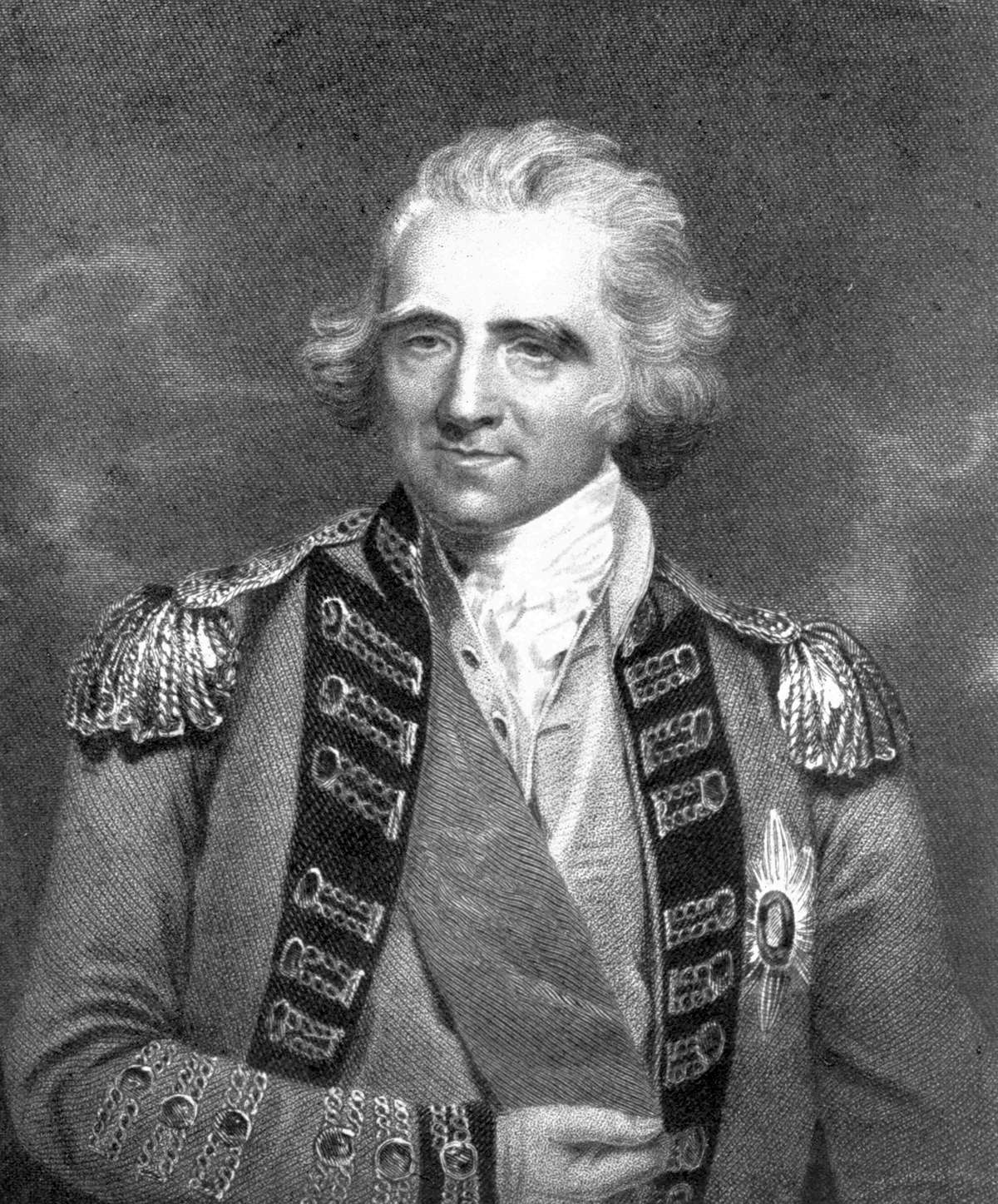
GENERAL SIR RALPH ABERCROMBY.
To face page 124.
This battle honour is borne by the Scottish Rifles and
the Gordon Highlanders, and was conferred upon these
two young regiments in recognition of the gallantry with
which they met and repelled the attack of a vastly
superior body of French, as related above. The total
loss of the army on March 13 amounted to 6 officers
and 153 men killed, 66 officers and 1,936 men wounded,
the heaviest casualties being those of the two regiments
who bear "Mandora" on their colours. The 13th
(Somerset Light Infantry), which was in the immediate
rear of the 90th, at once moved up to its support, and
also suffered very heavily. The 90th (Scottish Rifles)
were under the command of their junior Lieutenant-Colonel,
afterwards better known as General Viscount
Hill, the Commander-in-Chief of the Army. He was
badly wounded at Mandora, when the command of the
regiment devolved on the next senior officer, Major Moncrieff,
who a few days subsequently was given the command
of the 44th (Essex), on its Colonel being killed. Thence
he was moved, at Sir John Moore's request, to the 52nd,
in order to train that distinguished corps as a light
infantry regiment. Although the 90th at that time
had not the designation of light infantry, its founder,
Colonel Graham, afterwards Lord Lynedoch had from
its earliest days trained it as a light infantry corps,
impelled thereto because its predecessor, which had
fought so well at the capture of Belleisle, Martinique,
and Havana, was at that time (1759-1764) the only light
infantry regiment in the British army, and the stout old
Scotsman never rested until he had secured the same
title for the new 90th.
Casualties of the 90th and 92nd at Mandora.
| Regiments. | Officers. | Men. |
| K. | W. | K. | W. |
| 90th Scottish Rifles | 1 | 7 | 29 | 242 |
| 92nd Gordon Highlanders | - | 11 | 19 | 110 |
On March 21 the French made a third and final
attack on Abercromby's army, now in the immediate
vicinity of Alexandria. This again was repulsed, but
our casualties were very heavy, amounting to 75 officers
and 1,400 of all ranks killed and wounded, the heaviest
loss falling on the 42nd (Royal Highlanders), a corps
which in all three actions had shown the most consummate
gallantry, its casualties in the three engagements
being 506 killed and wounded. In the course of
this action Sir Ralph Abercromby received a mortal
wound, and the command of the army devolved upon
General Hutchinson. Leaving a sufficient force to cover
Alexandria, the new Commander-in-Chief at once commenced
an advance on Cairo, and on June 13 he had the
satisfaction of receiving the surrender of 13,000 French
soldiers, who were massed at the capital. Of these, some
8,000 were effectives, and the task of guarding them on
the return march to the sea was one that required much
acumen, for the total number of British troops at this
time at Cairo was barely 4,000. The army at Alexandria
had, however, been reinforced by a strong brigade from
the Mediterranean, made up of the 20th (Lancashire
Fusiliers), 24th (South Wales Borderers), 25th (King's
Own Scottish Borderers), 26th (Cameronians), and the
27th (Royal Inniskilling Fusiliers).
A further addition to the British army was now made
in the shape of a division which had been despatched
from India under the command of a tried and gallant
officer, Sir David Baird. It comprised a squadron of
the 8th Hussars, the 10th (Lincolns), 86th (Royal
Irish Rifles), 87th (Royal Irish Fusiliers), 88th (Connaught
Rangers), four battalions of sepoys, some English gunners
in the Company's service, and some native sappers.
The 8th Hussars and 86th (Royal Irish Rifles) had
landed at Suez, and marched direct across the desert to
Cairo. The other regiments were disembarked at Kosseir,
whence they marched to Keneh, on the Nile, a distance of
100 miles; then, taking native boats, they dropped down
stream to Cairo. As soon as the convoy of prisoners
had embarked to France, General Hutchinson was enabled
to turn his attention to Alexandria, in which a considerable
garrison was closely besieged.
This battle honour is borne by the Dorsetshires, and
commemorates the service of the 54th Regiment in the
operations outside Alexandria in the summer of 1802.
The old 54th had been entrusted with the task of keeping
watch and ward over the French garrison in Fort Marabout,
and it was their successful capture of the redoubt at the
tomb of a Moslem saint which brought home to General
Menou the futility of further resistance. He hoisted
the white flag, when he and his army were permitted a
safe conduct to France, on giving an undertaking that
they would not serve against England during the continuance
of the war. The Treaty of Amiens followed
soon after the surrender of Alexandria, and on the renewal
of hostilities in 1803 the army of Egypt was once
more free to act against us.
Before quitting the subject of the Egyptian campaign
of 1802, it appears pertinent to remark that there seems
to exist no valid reason why the 8th Hussars should not
be accorded this distinction. It may be urged that the
headquarters of the regiment was not present. The
11th Hussars bear the honour, and but one troop was
in Egypt, so that this contention does not hold good.
Again, it may be urged that they were not engaged. This
would bear with equal force against the infantry regiments
which formed a portion of Sir David Baird's force. All
these have been authorized to bear the distinction of
"Egypt" (with the Sphinx). Why the 8th Hussars have
been denied this privilege is one of the many anomalies
which surround the question of battle honours.[10]
Casualties in the Three Principal Engagements in Egypt.
| Regiments. | MARCH 8. |
MARCH 13 (MANDORA). |
MARCH 21 (ALEXANDRIA). |
AUGUST 23 (MARABOUT). |
| Officers. | Men. | Officers. | Men. |
Officers. | Men. | Officers. | Men. |
| K. | W. | K. | W. |
K. | W. | K. | W. |
K. | W. | K. | W. |
K. | W. | K. | W. |
| 11th Hussars | - | - | - | - |
- | - | - | - |
- | - | - | 3 |
- | - | - | - |
| 12th Hussars | - | - | - | - |
- | 1 | 1 | - |
- | - | - | 6 |
- | - | - | - |
| Royal Artillery | - | - | - | - |
- | 2 | 2 | 15 |
- | 5 | 14 | 40 |
- | - | - | - |
| Royal Engineers | - | - | - | - |
- | - | - | - |
- | - | - | - |
- | - | - | - |
| Coldstream Guards | 1 | 5 | 17 | 69 |
1 | 1 | 2 | 4 |
- | - | 7 | 53 |
- | - | - | - |
| Scots Guards | - | - | 5 | 40 |
- | - | 4 | 14 |
1 | 3 | 41 | 153 |
- | - | - | - |
| 1st Royal Scots | - | 4 | 12 | 43 |
- | - | 4 | 21 |
- | 4 | 9 | 69 |
- | - | - | - |
| 2nd Queen's | - | - | - | - |
- | - | 1 | 14 |
- | 1 | - | 10 |
- | - | - | - |
| 8th King's Liverpool Regt. | - | - | - | - |
- | 6 | 11 | 65 |
- | - | 1 | 2 |
- | - | - | - |
| 13th Somerset Light Infantry | - | - | - | - |
1 | 9 | 16 | 100 |
- | - | - | 1 |
- | - | - | - |
| 18th Royal Irish | - | - | - | - |
1 | 3 | - | 45 |
- | - | - | 1 |
- | - | - | - |
| 23rd Royal Welsh Fusiliers | - | 2 | 6 | 38 |
- | - | 2 | 4 |
- | 1 | 5 | 14 |
- | - | - | - |
| 28th Gloucesters | - | - | 5 | 34 |
1 | 1 | 9 | 23 |
- | 4 | 20 | 50 |
- | - | - | - |
| 30th East Lancashire | - | - | - | - |
1 | 2 | 2 | 6 |
- | 2 | 4 | 24 |
- | - | - | - |
| 40th South Lancashire | 1 | 2 | 15 | 31 |
- | - | - | 2 |
- | 1 | 4 | 2 |
- | - | - | - |
| 42nd Black Watch | - | 8 | 21 | 148 |
- | 3 | 1 | 12 |
4 | 8 | 48 | 253 |
- | - | - | - |
| 44th Essex | - | - | - | - |
- | 3 | 2 | 22 |
- | 1 | 1 | 15 |
- | - | - | - |
| 50th West Kent | - | - | - | - |
1 | - | 5 | 39 |
- | 4 | 1 | 37 |
- | - | - | - |
| 54th Dorsetshire | 1 | 2 | 4 | 17 |
- | 7 | 13 | 37 |
1 | 2 | 4 | 48 |
- | 2 | 2 | 14 |
| 58th Northampton | 1 | 2 | 10 | 45 |
- | - | 2 | 9 |
1 | 2 | 2 | 19 |
- | - | - | - |
| 79th Cameron Highlanders | - | - | - | - |
- | 3 | 5 | 58 |
- | 1 | 1 | 20 |
- | - | - | - |
| 89th Royal Irish Fusiliers | - | - | - | - |
- | - | - | 7 |
- | 2 | 2 | 10 |
- | - | - | - |
| 90th Scottish Rifles | - | - | - | - |
1 | 7 | 29 | 214 |
- | - | - | 1 |
- | - | - | - |
| 92nd Gordon Highlanders | - | - | - | - |
- | 11 | 19 | 110 |
- | 2 | 3 | 37 |
- | - | - | - |
The following regiments have been authorized to add
the above honour to their colours and appointments:
1st Life Guards.
2nd Life Guards.
Royal Horse Guards.
4th Dragoon Guards.
7th Dragoon Guards.
19th Hussars.
Grenadier Guards.
Coldstream Guards.
Scots Guards.
Royal Irish.
South Stafford.
Cornwall Light Infantry.
Royal Highlanders.
Royal Sussex.
Sherwood Foresters.
Royal Berkshire.
Royal West Kent.
Shropshire Light Infantry.
King's Royal Rifles.
Manchesters.
York and Lancaster.
Highland Light Infantry.
Seaforth Highlanders.
Gordon Highlanders.
Cameron Highlanders.
Royal Irish Fusiliers.
2nd (Gardner's Horse).
6th King Edward's Own Light Cavalry.
2nd Queen's Own Sappers and Miners.
13th (Watson's Horse).
7th Rajputs.
20th (Brownlow's Punjabis).
129th Baluchis.
Royal Malta Artillery.
In the year 1882 the chronic misgovernment in Egypt
led to serious disturbances, which culminated in the assumption
of power by the military party, and an organized
attack on all Christians. So critical was the situation,
that it was considered necessary to send the fleets of the
allied Powers to Alexandria; and after an Arab mob had
wreaked its vengeance on the city, the British fleet
bombarded the forts and sent ashore landing parties to
restore order. The British Government now determined
to employ armed force to uphold the authority of the
Khedive, and an Expeditionary Force, under the command
of General Sir Garnet Wolseley, was organized for
this purpose.
The Egyptian army, which had thrown off all allegiance
to the Khedive, had taken up a strong position at Tel-el-Kebir
astride of the railway, barring the advance on the
capital. Sir Garnet, on landing at Alexandria, took
steps to secure the safe passage of the Suez Canal, and
on August 21 he was able to land the bulk of his troops
at Ismailia, the halfway station between Port Said, the
Mediterranean terminus, and Suez, the Red Sea terminus
of the canal. After one or two minor actions at Kassassin
and Tel-el-Mahuta, Sir Garnet advanced on Tel-el-Kebir.
The casualties sustained by the troops at the few
engagements that took place during the operations (apart
from those at Tel-el-Kebir) were insignificant:
| Regiments. | Officers. | Men. |
| K. | W. | K. | W. |
| 1st Life Guards | - | - | 6 | 8 |
| 2nd Life Guards | - | 1 | 1 | 6 |
| Royal Horse Guards | - | - | 1 | 9 |
| 4th Drag. Gds. | - | - | - | 1 |
| 7th Drag. Gds. | 1 | 1 | 1 | 8 |
| Royal Artillery | - | - | 3 | 12 |
| Royal Marine Artillery | - | 3 | 6 | 21 |
| 2nd Batt. Roy. Irish | - | - | - | 2 |
| 46th Corn. L.I. | - | 4 | - | 14 |
| R. Marine L.I. | - | - | - | 25 |
| 3rd Batt. 60th Royal Rifles | - | - | 2 | 28 |
| 84th York and Lancaster | - | - | 1 | 21 |
| 2nd Gardner's Horse | - | - | - | 2 |
| 13th Watson's Horse | - | - | 1 | 1 |
The regiments named below are authorized to bear this
battle honour:
1st Life Guards.
2nd Life Guards.
Royal Horse Guards.
4th Dragoon Guards.
7th Dragoon Guards.
19th Hussars.
Grenadier Guards.
Coldstream Guards.
Scots Guards.
Royal Irish.
Cornwall Light Infantry.
Royal Highlanders.
King's Royal Rifles.
York and Lancaster.
Highland Light Infantry.
Seaforth Highlanders.
Gordon Highlanders.
Royal Irish Fusiliers.
Cameron Highlanders.
13th (Watson's Horse).
2nd (Gardner's Horse).
2nd Queen's Own Sappers and Miners.
6th King Edward's Own Cavalry.
20th (Brownlow's Punjabis).
7th Rajputs.
129th Baluchis.
This battle honour commemorates the first action in
which the Household Cavalry were engaged since Waterloo.
The hypercritical may claim that the composite regiment,
under Brigadier Ewart, took part in the midnight
charge on September 28, and this is strictly true; but
Kassassin does not figure on the standards or appointments
of the Household Cavalry, whereas Tel-el-Kebir does.
The Egyptian position at Tel-el-Kebir lay at right
angles to the railway and the Sweet Water Canal. It was
covered by a long line of trenches, flanked with powerful
redoubts, and was held by some 30,000 men, with 60 guns.
Sir Garnet's force barely numbered 15,000. To attempt
the attack of such a formidable position in daylight would
have been to court serious loss, and Sir Garnet, with a
firm faith in his men, essayed the hazardous task of a
long night's march, as a prelude to an attack on the
entrenched position at dawn. At 11 p.m. the advance
commenced, the First Division, under Lieutenant-General
Willis on the right; the Second, under Lieutenant-General
Hamley, on the left. Dawn was just breaking
when the Highland Brigade reached the Egyptian trenches,
and, with a mighty cheer, dashed over the parapet.
Within a few minutes the first division attacked also,
and the cavalry, sweeping round the rear, cut in on the
flying enemy. An immediate pursuit was ordered, and
on the evening of September 14 the citadel of Cairo was
in our hands, the Cavalry Brigade having covered sixty-five
miles in twenty-four hours. The promptitude with
which Sir Garnet Wolseley followed up the victory of
Tel-el-Kebir brought the rebellion to an end, but it
was clear that the continuance of the Khedivial authority
must henceforth rest on the protection that might be
afforded him by the English army of occupation. For
this purpose Sir Archibald Alison, who had commanded
the Highland Brigade with conspicuous success during
the course of the operations, was left in command of a
British force, numbering some 10,000 men, whilst Major-General
Sir Evelyn Wood was entrusted with the re-organization
of the Egyptian army.
As will be seen from a perusal of the following list of
casualties, the brunt of the fighting at Tel-el-Kebir
fell on the Highland Brigade, which suffered more
heavily here than it did at the historic Battle of
the Alma.
Casualties at Tel-el-Kebir, September 12, 1882.
| Regiments. | Officers. | Men. |
| K. | W. | K. | W. |
| Grenadier Gds. | - | 1 | 1 | 9 |
| Coldstream Gds. | - | 1 | - | 7 |
| Scots Guards | - | - | - | 4 |
| 2nd Batt. Royal Irish | 1 | 2 | 1 | 17 |
| 46th Corn. L.I. | - | 1 | - | 5 |
| 42nd Royal Highlanders | 1 | 6 | 7 | 37 |
| 3rd Batt. K. Roy. Rifles | - | - | - | 20 |
| 84th York and Lancaster | - | - | - | 12 |
| 72nd Seaforth Highlanders | - | - | 1 | 3 |
| 74th Highland L.I. | 3 | 5 | 14 | 52 |
| 75th Gordon Highlanders | 1 | 1 | 5 | 29 |
| 79th Cameron Highlanders | - | 3 | 13 | 45 |
| 87th Roy. Irish Fusiliers | - | - | 2 | 34 |
| —— |
| 2nd Gardner's Horse | - | 1 | - | 1 |
| 6th K.E.O. Cavalry | - | - | - | - |
| 13th Watson's Horse | - | - | - | 2 |
| 7th Rajputs | - | - | - | 1 |
| 20th Brownlow's Punjabis | - | - | - | - |
Following the precedent of the Crimean War, when
British officers and soldiers were authorized to receive
and to wear decorations and medals bestowed by our
allies, the Queen sanctioned the acceptance of a very
generous bestowal of orders of the Osmanieh and
Medjidieh, whilst every officer and man received a
bronze star commemorative of the campaign at the
hands of the Khedive.
Turkish Decorations bestowed for the Campaign of 1882.
| Regiments. | Osmanieh. | Medjidieh. |
| General officers | 4 | 6 |
| Staff officers | 51 | 94 |
| 1st Life Guards (one squadron) | 1 | - |
| 2nd Life Guards (one squadron) | 1 | 1 |
| Roy. Horse Gds. (one squadron) | - | 1 |
| 4th Drag. Gds. | - | 3 |
| 7th Drag. Gds. | 2 | 1 |
| 19th Hussars | 2 | 1 |
| Royal Artillery | 3 | 18 |
| Roy. Engineers | 1 | 4 |
| Grenadier Gds. | 2 | 2 |
| Coldstream Gds. | 3 | 1 |
| Scots Guards | 3 | 1 |
| Royal Irish | 3 | 1 |
| 38th South Staffords | 2 | 2 |
| 42nd Roy. Highlanders | 3 | 1 |
| 46th Cornwall L.I. | 3 | 1 |
| 50th West Kent | 3 | 1 |
| 60th King's Royal Rifles | 3 | 1 |
| 72nd Seaforth Highlanders | 3 | 1 |
| 74th High. L.I. | 2 | 2 |
| 79th Cameron Highlanders | 3 | 1 |
| 84th York and Lancaster | 3 | 1 |
| 87th Roy. Irish Fusiliers | 3 | 1 |
| —— |
| 2nd Gardner's Horse | 1 | 2 |
| 6th K.E.O. Cavalry | 1 | 2 |
| 13th Watson's Horse | 1 | 1 |
| 2nd Q.O. Sappers and Miners | 1 | 1 |
| 7th Rajputs | 1 | 2 |
| 20th Brownlow's Punjabis | 1 | 2 |
| 129th Baluchis | 1 | 2 |
This distinction was conferred on the regiments which,
under Generals Earle and Sir Herbert Stewart, essayed
to save General C. Gordon, R.E., then hemmed in by
fanatical Moslems at Khartoum. The regiments entitled
to bear the honour are the
19th Hussars.
Royal Irish.
Cornwall Light Infantry.
Royal Sussex.
South Staffordshire.
Royal Highlanders.
Essex.
Royal West Kent.
Gordon Highlanders.
Cameron Highlanders.
Looking back after the event, it is clear that the
British Government did not appreciate the responsibilities
they had assumed when they left Sir Archibald Alison
in command of the army of occupation after the victory
of Tel-el-Kebir. Not only was the authority of the
Khedive gone in Egypt proper, but it had vanished in the
far-off regions of the Soudan, which were now in the
hands of a fanatical Moslem false prophet, who styled
himself the Mahdi. At one time, in the days of the
Khedive Ismail, the Soudan had been administered by
General Charles Gordon, of the Royal Engineers. One
of the most remarkable men of his generation, General
Gordon was the type of the earlier Christian martyrs,
and as a Christian martyr he died. At the request of
the Khedive, and with the consent of the British Government,
General Gordon assumed the Governorship of the
Soudan, and set out for his post early in 1884. Into the
history of Gordon's gallant defence of Khartoum it is
no part of my province to enter. Towards the end of
the year he was hard pressed, and, though ordered to
abandon the Soudan, he declined to do so. It became
necessary to organize a force, not merely to effect his
rescue, but also to restore the authority of the Khedive
in the Soudan and the Equatorial provinces of Egypt,
where only the writ of the Mahdi was allowed to run.
Once more Sir Garnet Wolseley was selected for the chief
command, and two expeditionary forces were organized,
the one operating by the River Nile, the other from the
Red Sea port of Suakin. The Commander-in-Chief accompanied
the river column, which numbered some 5,500 men.
On reaching Korti, about the end of November, Sir
Herbert Stewart, with the camel corps, was detached
to push across the desert and occupy the Jakdul Wells.
This was successfully accomplished, and on December 8
he commenced another stage on the march to Khartoum;
but on nearing the wells of Abu Klea, these were found to
be in possession of the enemy, when was fought the action
which is inscribed on the colours and appointments of
but two regiments in the British army.
This battle honour was conferred on the 19th Hussars
and the Royal Sussex Regiment for their services in the
sharp action of January 28, 1885, when the commander
of the force, Major-General Sir Herbert Stewart, received
a mortal wound, dying a few days after the fight.
Although the distinction was only granted to the two
regiments above mentioned, the brigade under General
Stewart's command comprised a naval brigade, under
Captain Lord Charles Beresford, and a camel corps, made
up of regiments of heavy and of light cavalry of the
Household Cavalry and of the Brigade of Guards, and a
force of Mounted Infantry: no less than twenty-two
regiments were represented in the camel corps which
fought so well at Abu Klea.
Casualties at Abu Klea.
| Regiments. | Officers. | Men. |
| K. | W. | K. | W. |
| 19th Hussars | - | - | 2 | 4 |
| Naval Brigade | 2 | 2 | 6 | 9 |
| Royal Artillery | - | 2 | - | 2 |
| Heavy Cavalry Camel Corps | 6 | - | 48 | 28 |
| 35th R. Sussex | - | - | 5 | 25 |
| Light Cavalry Camel Corps | 1 | 3 | 8 | 9 |
| Mounted Infantry | - | 1 | 5 | 35 |
This battle honour, which is borne by the South
Staffordshires and the Royal Highlanders, commemorates
the only action fought by what was known as the River
Column in the advance up the Nile for the relief of
General Gordon in the Soudan Campaign of 1885.
Whilst Sir Herbert Stewart with the camel corps was
endeavouring to force his way to Khartoum by the
desert route, Major-General Earle, a guardsman at the
head of the River Column, was slowly moving south from
Korti. On February 10 an indecisive action was fought
with a small body of the enemy. Our losses were
numerically insignificant, but they included the General
in command, Major-General W. Earle, late of the
Grenadier Guards, and the commanding officers of the
two line regiments present.
The news of the death of General Gordon and the
occupation of Khartoum by the Mahdi caused the Home
Government to order the withdrawal of the British troops
from the Nile, and the task of conducting the retirement
was entrusted to Major-General Sir Redvers Buller.
Casualties at the Action of Kirbekan.
| Regiments. | Officers. | Men. |
| K. | W. | K. | W. |
| General Staff | 1 | - | - | - |
| 38th S. Staffs | 1 | 2 | 5 | 22 |
| 42nd Royal Highlanders | 1 | 2 | 4 | 21 |
This honour, which commemorates a short campaign
in the Eastern Soudan, is borne by the
5th Lancers.
20th Hussars.
Grenadier Guards.
Coldstream Guards.
Scots Guards.
Royal Berkshires.
Shropshire Light Infantry.
9th Hodson's Horse.
2nd Queen's Own Sappers and Miners.
15th Ludhiana Sikhs.
17th (Loyal Regiment).
128th Pioneers.
Whilst the Mahdi himself was conducting his successful
campaign against General Gordon at Khartoum, one of
his Lieutenants, Osman Digna, a slave merchant of
Suakin, was pursuing a no less successful career at
Suakin, on the coast of the Red Sea. On two occasions
Egyptian armies had been worsted by him, and in the
month of December, 1883, a British officer, Colonel
Valentine Baker, was routed by an inferior body of
tribesmen in an endeavour to relieve the Egyptian fort
at Tokar. Of his force of 3,700 men, no less than 2,375
were killed, including 11 British officers. In the spring
of 1884 Major-General Sir Gerald Graham was despatched
to Suakin to teach Osman Digna a much-needed lesson,
and in the month of February Sir Gerald inflicted two
severe defeats on the tribesmen at El-Teb and Tamai.
A medal and clasp were granted for these services, but they
have not been recorded on the list of battle honours of
the army.
When the withdrawal from the Nile was decided on,
instructions were despatched to Sir Gerald Graham at
Suakin to prepare for an advance on Berber from Suakin.
His force was brought up to a strength of 13,000 men,
including a contingent from New South Wales and a
brigade from India. This force was distributed as under:
Commander-in-Chief: Lieutenant-General Sir Gerald Graham,
V.C., K.C.B.
Cavalry Brigade—Major-General Sir Henry Ewart, K.C.B.:
The 5th Lancers, 20th Hussars, and 9th (Hodson's Horse).
Brigade of Guards—Major-General Lyon Fremantle: A battalion
of each of the three regiments—the Grenadiers, the
Coldstream and the Scots Guards—and the Australian
contingent.
Second Brigade—Major-General Sir John MacNeill, V.C., K.C.B.:
The 49th (Royal Berkshire Regiment), 53rd (Shropshire
Light Infantry), and a battalion of the Royal Marine Light
Infantry.
Indian Brigade—Brigadier-General J. Hudson, C.B.: The 15th
Ludhiana Sikhs, 17th (Loyal Regiment), and the 128th
Pioneers.
To these must be added a battery of horse and two
of field artillery, with a well-horsed, but only partially
trained, battery of Australians. Sir Gerald's orders were
to press on the construction of the railway to Berber,
a feat which did not receive much encouragement on the
spot, as it was felt that the nature of the country and
the want of water on the route selected somewhat militated
against success. The troops were much harassed
by continuous night attacks, whilst the superior mobility
of the enemy, who invariably shirked attack, prevented
the General from inflicting any serious damage to the
causes of the Mahdi. One action in this expedition has
been rescued from oblivion, but it is open to question
whether at the time it was considered a victory.
This battle honour records the services of the under-mentioned
regiments in a sharp little fight outside the
town of Suakin, on the Red Sea, in the campaign of the
Eastern Soudan, in 1885. It is borne on the colours of the
Royal Berkshire.
Queen's Own Sappers and Miners.
17th (Loyal Regiment).
15th Ludhiana Sikhs.
128th Pioneers.
In the early morn of March 22 Sir John MacNeill, a
gallant and experienced soldier, was sent out from Suakin
with orders to form a halfway camp on the route to
Tamai. The road lay through a dense thorn-bush, and
the reconnoitring was unfortunately confided to the
5th Lancers, a young regiment with no experience of
Eastern warfare. They were all unused to the glare of
the Egyptian desert, and gave no timely warning of the
proximity of the enemy. The brigade was attacked
when half the men were busy cutting the jungle to form
a breastwork, but there was no confusion until the camels,
terrified by the onrush of the Soudanese, who commenced
ham-stringing the animals, broke the line of the rear face
of the hastily-formed square. The commanding officer of
the regiment fell in rallying his men. In twenty minutes
the rush of the tribesmen was repulsed, and though our
losses were severe, those of the enemy were enormous.
Over 2,000 were buried by our men. Such a lesson was
taught them that from that day until the withdrawal
of Sir Gerald Graham's force no further attacks were
made on his camp.
Casualties at the Action of Tofrek.
| Regiments. | Officers. | Men. |
| K. | W. | K. | W. |
| Naval Brigade | 1 | 1 | 6 | 5 |
| 5th Lancers | 1 | - | - | 5 |
| Royal Artillery | - | 1 | - | 4 |
| Roy. Engineers | 2 | 1 | 13 | 3 |
| 49th Berkshires | 1 | - | 22 | 30 |
| Royal Marines | - | - | 7 | 16 |
| Madras Sappers and Miners | 2 | 1 | 12 | 20 |
| 15th Sikhs | - | - | 9 | 11 |
| 17th Loyal Regiment | 1 | 1 | 20 | 33 |
| 128th Pioneers | 1 | 1 | 5 | 9 |
This battle honour is borne only by the Prince of
Wales's (North Staffordshire) Regiment, and was awarded
to them in recognition of their conduct during the operation
leading to the action of Hafir, in the month of
September, 1896.
Eleven years had elapsed since the engagements on the
Nile and at Tofrek, and during those eleven years the
process of reorganizing the Egyptian army had been
ceaselessly carried on under the direction of the British
officers lent to the Khedive. Sir Evelyn Wood had been
succeeded by General Grenfell, and Grenfell by General
Kitchener. Our Consul-General at Cairo occupied a
unique position, for he was the virtual ruler of Egypt.
A soldier by profession, and one of the earliest of the
Staff College graduates, Sir Evelyn Baring had profited
by his experience in many appointments, in all of which
he had acquired ripe stores of priceless knowledge.
Soldier, financier, diplomatist, he was facile princeps in
all; and though Sir Herbert Kitchener was the General
who broke the back of Mahdiism, the brain which
devised and the hand which guided the machinery
were those of Sir Evelyn Baring. During those eleven
years the Egyptian army had on more than one occasion
been pitted against the Mahdi's troops. The men had
learnt self-reliance, and possessed the most boundless
faith in their British officers. Step by step the army
was converted into a battle machine. The battalions
of fellaheen were stiffened with battalions of blacks
from the Soudan. No better fighting material exists in
Africa. And as it improved in value, so were the necessary
measures taken to break the power of the Mahdi. The
railway was pushed farther south up the Nile, a strong
brigade of native troops was despatched from India to
Suakin, and the Egyptian army, stiffened with but one
British regiment, taught that it was now able to face the
Mahdi's men. At Firket, in May, 1896, the first of these
combats took place, and in September, at Hafir, a decisive
success was gained, which opened the road to Dongola.
The 64th (North Staffordshire) Regiment—the only corps
which bears the honour on its colours—was not actually
engaged, and suffered no casualties at the hands of the
enemy; but it lost heavily by disease in the operation
leading up to the action, and so has been authorized to
assume the battle honour.
In the meantime the Khalifa was not idle. He recalled
Osman Digna from Suakin, and personally superintended
the organization of his troops at Omdurman, opposite
Khartoum. Kitchener's force was gradually strengthened.
No less than thirteen gunboats had been brought up the
Nile in sections, and, being of shallow draft, were able
to co-operate with the troops on the banks. The time
had now come for the final attempt to reconquer the
Soudan. In January, 1898, Kitchener's force was further
reinforced by a brigade of British troops under Major-General
Gatacre, an officer who had shown himself
possessed of the highest attributes of a soldier in our
Indian frontier wars. The army that now faced the
Khalifa on the Atbara River comprised Gatacre's brigade
(the Warwicks, Lincolns, Seaforth, and Cameron Highlanders),
three brigades of Egyptian troops, with a brigade
of Egyptian cavalry and the camel corps. On April 5
the Sirdar made a careful reconnaissance of the Khalifa's
position, and on the early morning of the 8th commenced
a severe bombardment of the entrenchments behind
which the Khalifa's forces lay.
This battle honour is borne by the
Royal Warwicks.
Lincolns.
Seaforth Highlanders.
Cameron Highlanders.
It commemorates the action fought by the army
under Sir Herbert Kitchener, prior to the capture
of Khartoum and the overthrow of Mahdiism. In
our earlier dealings with the forces of Mahdiism, even
when they were opposed to British troops, we had
always found the enemy ready to meet us. At
El Teb and Abu Klea, at Tamai and Tofrek, they
had never hesitated to charge our squares. Now a
different system of tactics was inaugurated, showing
that they had learnt a bitter lesson. The fact that the
Mahdists awaited them behind entrenchments, instead
of charging down sword or spear in hand, naturally
infused courage into our own black troops, and when,
after an hour's bombardment, Kitchener stormed the
enemy's position, Egyptian fellaheen vied with kilted
Highlander as to who should lead the way to the front.
Our success was complete: over 3,000 of the enemy
were killed, our losses totalling 88 killed and 472 wounded,
in both British and Egyptian forces.
| Regiments. | Officers. | Men. |
| K. | W. | K. | W. |
| 1st Batt. 6th R. Warwicks | - | 1 | 2 | 11 |
| 1st Batt. 10th Lincolns | - | 3 | 1 | 13 |
| 72nd Seaforth Highlanders | 2 | 4 | 5 | 22 |
| 79th Cameron Highlanders | 3 | 1 | 13 | 44 |
This battle honour, which records the services of the
army commanded by Sir Herbert Kitchener at the
capture of the stronghold of Mahdiism, is borne by
the
21st Lancers.
Grenadier Guards.
Northumberland Fusiliers.
Royal Warwicks.
Lincolnshire.
Lancashire Fusiliers.
Seaforth Highlanders.
Cameron Highlanders.
The decisive success achieved at the Atbara on April 8,
1898, opened the road to Khartoum. The railway was
now pushed on to the Atbara River, and fresh reinforcements
sent out from home, bringing up Sir Herbert
Kitchener's force to nearly 26,000 men, thus distributed:
British Division: Major-General Gatacre.
First Brigade—Brigadier-General A. Wauchope: 1st Warwicks,
1st Lincolns, 72nd (Seaforth Highlanders), and the 79th
(Cameron Highlanders).
Second Brigade—Brigadier-General Hon. N. Lyttleton: 1st
Grenadier Guards, 1st Northumberland Fusiliers, 2nd Lancashire
Fusiliers, and the 1st Rifle Brigade.
Egyptian Division—Major-General Hunter: Consisted of four
strong brigades.
In addition, there were 2 batteries of Royal Artillery,
5 Egyptian batteries, 20 machine guns, a flotilla of 10
gunboats, under Commander Keppel, R.N., the 21st
Lancers, with a brigade of Egyptian cavalry and the
camel corps, making a total force of 8,200 British and
17,600 Egyptian troops, with 44 field, 12 mountain, and
22 machine guns. The flotilla of armoured gunboats
mounted 36 guns in addition, and these in the final action
contributed not a little to the success of the day.
Late in August the whole force was concentrated at
Metemneh, the site of one of the actions between the
little force under Sir Herbert Stewart and the Mahdi's
troops in January, 1885. On the left bank of the river
lay the British force, on the opposite bank a large levy
of friendly tribes eager to throw off the despotism
and tyranny of the Khalifa. On September 4 the British
force encamped four miles from Khartoum, and Sir Herbert
Kitchener, who was not the man to leave anything to
chance, threw up a strong breastwork, and bivouacked
for the night. On the morrow the gunboats bombarded
the fort of Omdurman. The Khalifa, stung into action,
delivered a fierce attack on the zareba, but was repulsed
with heavy loss. Kitchener then left its shelter, and
advanced towards Omdurman; but the spirit of the
Mahdiists was by no means broken. Twice did they
attack the British troops, but all was of no avail. The
training of the British officer now bore good fruit. Under
its incomparable leader, Brigadier Hector Macdonald, his
brigade of black troops manœuvred with all the coolness
of veterans, and the 21st Lancers, seizing their chance,
charged into the struggling mass of the enemy, who met
them with the utmost gallantry. The day was well won,
and ere nightfall the British flag was flying over the walls
of the Khalifa's capital. His black flag was amongst our
trophies, and 10,000 of his misguided followers lay dead
on the sand-hills outside the accursed city. The results
of the battle, in which we lost some 500 of all ranks, killed
and wounded, were the destruction of the Khalifa's army,
and the restoration to the Khedivial Government of
those provinces which had thrown off his rule in the great
upheaval of 1884.
Casualties at the Battle of Khartoum.
| Regiments. | Officers. | Men. |
| K. | W. | K. | W. |
| 21st Lancers | 1 | 4 | 20 | 46 |
| 1st Batt. Grenadier Guards | - | 1 | - | 4 |
| 1st Batt. 5th Northum. F. | - | - | - | 2 |
| 1st Batt. 6th R. Warwicks | 1 | 1 | - | 6 |
| 1st Batt. 10th Lincolns | - | 1 | - | 17 |
| 2nd Batt. 20th Lancs Fus. | - | - | - | 6 |
| 72nd Seaforth Highlanders | - | 1 | - | 17 |
| 79th Cameron Highlanders | - | 2 | 2 | 27 |
| 2nd Batt. Rifle Brigade | - | - | - | 8 |
| Egyptian Army | 2 | 8 | 18 | 273 |
BATTLE HONOURS FOR SERVICES IN INDIA, 1803-1809
Ally-Ghur, 1803—Delhi, 1803-04—Assaye, 1803—Laswarree, 1803—Deig,
1803-04—Cochin, 1809.
In the London Gazette of February 28, 1851, appeared
a notification that Her Majesty the Queen had been
graciously pleased to sanction the bestowal of a medal
on the survivors of the First Mahratta War of 1803-04.
The following clasps were issued with this medal, now
generally known as the First Indian General Service
Medal. It was also bestowed on the survivors—few, indeed,
in numbers—of (1) the siege and capture of Seringapatam,
by the force under Lord Harris; (2) the Second Mahratta
War, 1817-18; (3) the campaign in Nepaul; (4) and that
in Burmah, as well as on (5) the troops who took Bhurtpore,
under Lord Combermere, in 1826.
The following clasps were issued with the medal in
connection with the First Mahratta War:
1. Ally-Ghur.
2. Delhi.[12]
3. Assaye.
4. Asseerghur.
5. Laswarree.
6. Argaum.
7. Gawilghur.
8. Deig.[13]
The growing power of the Mahrattas and the insolence
of the Mahrajah Scindia rendered it necessary for us
to strengthen and rectify our frontiers in the North-West
of India. Delhi, which for centuries had been the capital
of the Mogul Empire, had fallen into the hands of the
Mahrattas, and the aged King had been treated with
barbarous cruelty. Our own territory, as well as that of
our allies, had been invaded. At last Lord Lake, the
brilliant leader at Lincelles, who had become Commander-in-Chief
in India, determined on action. Scindia was
a formidable foe, and it was a matter of doubt as to which
of the other Ruling Chiefs would follow him in the field;
his troops had been organized and drilled by Frenchmen,
many of whom he entrusted with high command, and
it was computed that his army numbered 100,000 men,
the greater part cavalry. India was a country in which
we could take no risks; we were always fighting, as it
were, with our backs to the wall, for there was no Suez
Canal, nor were there fast steamships to pour reinforcements
into the country when necessary. Lord Lake
therefore assembled practically the whole of his available
army, and advanced simultaneously from the north,
south, east, and west.
I. The main army, under his own command in the
north, was the most powerful in point of numbers, but it
contained only one regiment of British infantry (the 76th,
long known as the Hindoostan Regiment). It was composed
as under:
Cavalry Division: Colonel Vandeleur, and also commanding
the First Brigade.
First Brigade: 8th Light Dragoons, 1st and 3rd Bengal Cavalry.
Second Brigade—Colonel St. Leger: 27th Light Dragoons, 2nd
and 6th Bengal Cavalry.
Third Brigade—Colonel Macan: 29th Light Dragoons, and the
4th Bengal Cavalry.
First Infantry Division: Major-General Ware.
First Brigade—Colonel the Hon. G. Monson: 76th Foot, 4th (two
battalions) and 17th Bengal Infantry.
Third Brigade—Colonel Macdonald: 1st Batt. 12th and 15th
Bengal Infantry.
Second Division: Major-General St. John.
Second Brigade—Colonel Clarke: 8th, 9th, 1st Batt. 12th, and
16th Bengal Infantry.
Fourth Brigade—Colonel Powell: 2nd and 14th Bengal Infantry.
Artillery—Colonel Horsford: One horse and three field batteries.
It must be borne in mind that at this time each regiment
of cavalry and battalion of infantry had two galloper
guns. There was also a powerful siege-train attached
to the army. This army was to advance westward on
Agra and Delhi.
II. The division under Sir A. Wellesley:
Sir Arthur Wellesley was entrusted with the army of
the south, and had under his orders, not only his own
division, but also the one in Guzerat and the Hyderabad
subsidiary force, commanded respectively by Colonels
Stevenson and Murray. A fourth army was assembled
in Cuttack, on the coast of Bengal, under Colonel Harcourt.
These forces were composed as follows:
19th Light Dragoons, 4th, 5th, and 7th Regiments
of Madras Cavalry; the 74th and 78th (Highlanders);
and eight regiments of Madras sepoys, of which only
three now survive. This force amounted to 3,000
British and 5,000 native troops, and it was subsequently
strengthened by 2,500 Mysorean horse and a considerable
body of cavalry sent by the Peishwa.
The Hyderabad subsidiary force, also under Wellesley's
orders, comprised 120 English gunners, the Scots Brigade
(now the 2nd Connaught Rangers), 900 native cavalry,
and 6,000 native infantry. It was commanded by
Colonel Murray.
III. The division in Guzerat, which was to insure the
safety of Cambay, and then to operate from the west, was
under Colonel Stevenson, and comprised the 65th (York
and Lancasters), 75th (Gordon Highlanders), the 86th
(Royal Irish Rifles), and detachments of the 61st
(Gloucesters), 84th (York and Lancasters), and 88th
(Connaught Rangers), with 200 English artillerymen.
The most difficult task was that assigned to Wellesley,
for he had to arrange for the security of an enormous tract
of country, ruled over by chiefs whose friendship was more
than doubtful. After providing for the defence of Guzerat,
he left 2,000 men, including the 86th (Irish Rifles), near
Baroda, a force of similar strength with the 65th (York
and Lancaster) on the Taptee, and retained the rest for
active operations under himself and Stevenson.
IV. Harcourt had with him for the advance through
Cuttack the 80th Foot, two companies of the 22nd, and the
25th Light Dragoons, two regiments of Bengal cavalry, including
a squadron of the Governor-General's Bodyguard,
and four regiments of Bengal infantry.
The campaign opened with a simultaneous advance of
all four armies, Lake moving on Ally-Ghur, Wellesley on
Ahmadnagar, Stevenson on Broach, and Harcourt on
Balasore.
On September 3 Lake stormed and carried the fortress
of Ally-Ghur.
This battle honour is borne on the colours of the West
Riding Regiment alone; no other corps which shared
in that decisive victory being now existent; the two
native regiments which bore such a gallant part in the
storming of the fortress having been swept away during
the Mutiny of 1857.
On the issue of the India General Service Medal in
1851 the survivors of this action were granted that medal,
with a clasp inscribed "Ally-Ghur."
Ally-Ghur was held by a powerful force under the command
of the Frenchman Perron, and it made a gallant
defence. The troops selected for the assault were the
76th Foot, the 1st Battalion of the 4th and the 17th
Native Infantry, under Colonel the Hon. G. Monson,
the casualties being:
| Regiments. | Officers. | Men. |
| K. | W. | K. | W. |
| 27th Lt. Drag. | - | - | - | 6 |
| Royal Artillery | - | 1 | 2 | 7 |
| 76th West Ridings | 6 | 4 | 19 | 62 |
| 4th Bengal Infantry | 1 | 4 | 20 | 84 |
| 17th Bengal Infantry | - | 2 | 8 | 36 |
In the fortress were 280 guns, which, with a large
number of prisoners, fell into our hands; Scindia's
French Commander-in-Chief, Monsieur Perron, a man of
unusual ability, also threw himself on the generosity of
Lord Lake.
Leaving a garrison in Ally-Ghur, the Governor-General
now pushed on to Delhi, where a large force had been
assembled, under Monsieur Bourquieu. On the 11th of
the same month (September) was fought the first action
in which British troops were ever engaged on this historic
spot.
This distinction is borne only by the West Riding
Regiment and the 2nd Queen's Own Rajput Light
Infantry, the latter one of the most distinguished regiments
in the Bengal army. The India General Service
Medal of 1851 was issued to the few survivors, with a
clasp inscribed "Delhi." Our total losses in this action
amounted to 463 killed and wounded.
| Regiments. | Officers. | Men. |
| K. | W. | K. | W. |
| 27th Light Dragoons | 1 | 1 | 11 | 18 |
| Royal Artillery | - | 1 | 4 | 27 |
| 76th W. Riding Regiment | - | 1 | 33 | 97 |
| 2nd Bengal Cav. | - | 2 | - | 15 |
| 3rd Bengal Cav. | 1 | 6 | 6 | 11 |
| 2nd Bengal Inf. | - | 3 | 9 | 34 |
| 4th Bengal Inf. | - | 3 | 12 | 76 |
| 12th Bengal Inf. | 2 | 1 | 16 | 36 |
| 14th Bengal Inf. | - | - | - | 13 |
| 15th Bengal Inf. | 1 | 3 | 10 | 34 |
The last regiment in the above return, the 15th Bengal
Infantry, now being the 2nd Queen's Own Rajput Light
Infantry, is the only regiment of the Bengal army still
existing; the others, alas! disappeared in the rebellion
of 1857.
This battle honour, the first won by Wellington as an
independent commander, is borne by the
19th Hussars.
Highland Light Infantry.
Seaforth Highlanders.
2nd Queen's Own Sappers and Miners.
62nd Punjabis.
64th Pioneers.
84th Punjabis.
On the issue of the India Medal of 1851 the survivors were
awarded the medal, with clasp "Assaye."
Wellington's force did not amount to more than 4,500
men, of whom only 1,300 were British, and he was further
handicapped, as, owing to the nature of the ground, he
was compelled to leave his heavy field-guns in the rear.
Opposed to him were some of Scindia's finest troops,
including two brigades commanded by the Frenchmen
Pohlman and Dupont, with a well-equipped brigade
belonging to the Begum Somroo. In all, the enemy were
estimated at 30,000, with 100 guns. That they were well
handled during the fight was self-evident, for when
Wellesley's turning movement was discovered, the
Mahrattas changed position with all the accuracy of
veterans. The fight was one of the most stubbornly
contested of any that we have fought even in India.
Our casualties amounted to 23 officers and 381 men killed,
30 officers and 1,035 men wounded. Those of the enemy
were estimated at upwards of 6,000 whilst of the 100
guns with which they commenced the action, no less than
98 remained in our hands. The losses suffered by the
regiments at Assaye which still figure in the Army List
were as follows:
| Regiments. | Officers. | Men. |
| K. | W. | K. | W. |
| 19th Light Dragoons | 2 | 4 | 15 | 36 |
| Royal Artillery | 4 | 4 | 22 | 31 |
| 74th Highld. L.I. | 11 | 6 | 113 | 231 |
| 78th Seaforth H. | 1 | 4 | 23 | 71 |
| 2nd Q.O. Sappers and Miners | 1 | 5 | 19 | 46 |
| 62nd Punjabis | 1 | - | 20 | 22 |
| 64th Pioneers | 2 | 2 | 26 | 89 |
| 84th Punjabis | 1 | 12 | 43 | 178 |
On November 28 Sir Arthur Wellesley captured
Argaum, where we lost 346 officers and men killed and
wounded. No battle honour was awarded for this action,
but on the issue of the India Medal the survivors received
the medal, with clasp "Argaum."
On December 14 the hill-fortress of Gawilghur was
carried by assault, the Scots Brigade, now the 2nd
Connaught Rangers, being the stormers. Here we lost
126 killed and wounded. No battle honour was granted
for Gawilghur, but it was included in the list of actions
for which the India Medal was granted, and a special
clasp, with the word "Gawilghur," was added to the
decoration.
This battle honour has been awarded to the
8th Hussars.
West Riding Regiment.
1st Brahmins.
2nd Queen's Own Light Infantry.
4th Rajputs.
On the issue of the India General Service Medal in 1851,
it, with a clasp inscribed "Laswarree," was issued to
the survivors.
This was the hardest-fought action in Lord Lake's
campaign, our total casualties amounting to 267 killed
and 682 wounded, amongst the former being General
Ware, commanding the First Division of the army, and
Brigadier-General Vandeleur, commanding the Cavalry
Division. The Commander-in-Chief was, as usual, in
the thick of the fight, having no less than three horses
killed under him, three of his staff being killed. The
victory, however, was complete. It is noticeable for
the fact that our infantry came into action after a forced
march of sixty-five miles in forty-eight hours, a feat
which rivals that so extolled by Napier at Talavera.
Unfortunately, the Indian army had no historian to
paint with stirring language the deeds of the giants who
lived in those days.
Casualties at Laswarree amongst Regiments still
borne on the Army List, November 1, 1803.
| Regiments. | Officers. | Men. |
| K. | W. | K. | W. |
| 8th Light Drag. | 2 | 2 | 16 | 34 |
| Bengal Artillery | - | - | 7 | 6 |
| 76th West Riding Regiment | 2 | 4 | 41 | 165 |
| 1st Brahmins | - | - | 4 | 12 |
| 2nd Q.O. Light Infantry | 1 | 1 | 11 | 26 |
| 4th Rajputs | - | 1 | 17 | 69 |
In the meantime Agra had fallen into our hands,
despite a very gallant defence by the Mahrattas under
their French commanders, our losses amounting to the
respectable total of 228 killed and wounded, amongst
them being 5 British officers.
The other columns had not been idle. Colonel Harcourt,
advancing through Cuttack, had added that province to
our fast-increasing Indian possessions, and at the capture
of the fort of Barabuttee had given the 22nd Foot (the
Cheshires) an opportunity of distinguishing themselves.
He then pushed on to the westward, to co-operate with
the army of Sir Arthur Wellesley.
Sir Arthur, moving from the west, had carried the
fortress of Ahmadnagar by storm, with a loss of but
141 killed and wounded, the 74th (Highland Light
Infantry) and the 78th (Seaforths) being the principal
sufferers. On September 22 he came across the main
army of the Mahrattas, some 30,000 strong, under their
French leaders, and as we have seen on p. 249, defeated
them at Assaye.
The battle honour "Deig" is borne by the
West Riding Regiment.
Royal Munster Fusiliers.
2nd Queen's Own Light Infantry.
It recognizes the services of those regiments at the
battle with Holkar's troops on November 13, and the
subsequent siege operations, which ended with the
capture of that city by assault on December 23 following.
The attitude of Holkar during Lord Lake's campaign
in the year 1803 had given us good cause to doubt his
loyalty. Why he did not throw in his lot with Scindia
in 1803 can only be ascribed to the immemorial jealousy
between the two Princes. No sooner was a truce patched
up between Scindia and ourselves than Holkar embarked
on a series of operations which were evidently intended
to provoke hostilities. Lord Lake spent the hot weather
of 1803 on the frontier, and in September he took up the
challenge. Lord Lake's army was massed in the vicinity
of Agra, and consisted of an infantry division of three
brigades, commanded by Major-General Fraser, a cavalry
division under Brigadier Macan, and a reserve infantry
division of two brigades under Brigadier Don. The
infantry division included the 76th (West Riding Regiment),
the 1st Bengal European Regiment (now the
1st Munster Fusiliers), and six regiments of Bengal
infantry, of which only the 2nd Queen's Own Rajput
Light Infantry now remains. The cavalry division included
the 8th and 27th regiments of Light Dragoons,
and four regiments of native cavalry. Brigadier-General
Don's brigade consisted of four battalions of Bengal
infantry. On October 14, 1803, Holkar, throwing off
the mask, made a sudden attack upon Delhi, which was
held by a garrison of Bengal troops under Colonel
Ochterlony. He was beaten off, with heavy loss, and on
learning that Lord Lake was moving on Delhi, Holkar
precipitately retreated. His infantry retired on Deig,
he himself towards Furracakabad. Lake ordered Fraser,
with his division, to march at once to Deig, whilst he,
with the cavalry and Don's brigade, followed up the
Mahratta Prince. On November 13 Fraser found the
Mahratta army drawn up outside the fortress of Deig.
They held a very strong position, with one flank resting
on a morass and the other on a large tank. After a
sharp fight, in which our little force lost 148 killed and
479 wounded, the Mahrattas broke, and took refuge
behind the walls of the fortress. In the engagement
General Fraser lost his leg from a round shot, and he sank
beneath the effects of the wound. Lake, following up
the Maharajah, overtook him, and cut up his army, with
a loss to the 8th Hussars of but 2 killed and 13 wounded,
those of the enemy being estimated at 2,000. Lake
now made his way to Deig, ordering up the siege-train
from Agra, and he also called up reinforcements in the
shape of a column from Bombay, and the flank companies
of the 22nd (Cheshires) from Cuttack. On the morning
of December 23 the breach was declared practicable,
and the orders for the assault given. Three columns
were told off, under Colonel Macrae, of the West Riding
Regiment. The centre or main column was led by Macrae
in person. It consisted of two companies of the 76th
(West Riding), two of the 22nd (Cheshires), and two of
the 1st Bengal European Regiment.[14] The right and
left columns were each composed of two companies of
the Bengal European Regiment, and five of the 12th
Bengal Infantry, a regiment no longer with us. Considerable
opposition was experienced, especially from
a body of Afghan mercenaries in Holkar's pay; but
Christmas morning found the British flag flying over the
walls of Holkar's stronghold, our total loss amounting to
no more than 43 killed and 184 wounded.
The Regimental History of the 22nd (Cheshires)
gives the casualties of the regiment as 2 men killed and
4 wounded; but as Lord Lake's despatch gives the names
of four officers of that regiment as among the wounded,
I conclude the History is wrong. I have compared the
names of the wounded officers with the official Army List
for the year in question, and as these stand in the official
records it would appear that the Gazette is right, and the
Regimental History wrong. Three out of the four officers
were again wounded in the attacks on Bhurtpore in the
following month, when Sergeant Shipp of the 22nd covered
himself with glory, and obtained a commission in the 65th
for repeated acts of gallantry.
| Casualties at the Battle of Deig. |
| Regiments. | Officers. | Men. |
| K. | W. | K. | W. |
| 76th W. Ridings | 1 | 3 | 31 | 120 |
| 2nd Batt. N.I. | 1 | 1 | 25 | 66 |
| 4th Batt. N.I. | 2 | 2 | 22 | 28 |
| Royal Dublins | - | 5 | 12 | 52 |
| 8th Batt. N.I. | - | - | 4 | 2 |
| 2nd Q.O. Light Infantry | 1 | 6 | 19 | 143 |
| Royal Artillery | - | - | 16 | 47 |
| Casualties at the Siege and Assault. |
| Regiments. | Officers. | Men. |
| K. | W. | K. | W. |
| 8th Hussars | - | - | 2 | 12 |
| Royal Artillery | - | 1 | - | - |
| 22nd Cheshires | - | 4 | 2 | 13 |
| 76th W. Ridings | - | 2 | 5 | 17 |
| Royal Dublins | - | 1 | ? | ? |
| 8th Bom. N.I. | 1 | 4 | ? | ? |
| 12th Bom. N.I. | 1 | - | ? | ? |
| Pioneers | - | 2 | ? | ? |
On September 30, 1840, the Governor of Madras in
Council conferred the above distinction on the 17th
Madras Infantry (the predecessors of the 93rd Burmah
Infantry), for their gallant conduct at the defence of the
Residency of Cochin during the rebellion in Travancore
in the year 1809.
Under the terms of various treaties the Maharajah
of Travancore was bound to maintain a Subsidiary Force
of native troops, officered by Englishmen of our own
army, such force to be at the disposal of the East India
Company, under certain conditions. Differences arose
with the Maharajah, and an attempt to murder the
British Resident unmasked a plot for the expulsion of the
British garrisons in Southern India. The General commanding
the Malabar coast, on learning of the threatening
condition of affairs, at once ordered the 12th (Suffolks)
and the 17th Madras Infantry to reinforce the troops
of the subsidiary force at Cochin, these were permeated
with discontent, having been seduced from their allegiance
by the Prime Minister of the State. A very determined
attack on the Residency at Cochin was repulsed by the
small garrison, which consisted of a detachment of the
Suffolks and a wing of the 17th Madras Infantry. Further
operations became necessary, and a general movement
of troops from all the stations in Southern India was
ordered. The 19th (Yorkshires), 59th (East Lancashires),
69th (Welsh), and 80th (North Staffords), with
a certain number of regiments of Madras sepoys, advanced
on Travancore. At Palamcottah the 69th
(Welsh) and the 3rd Regiment of Madras Infantry had
a sharp brush with the Travancoreans, in which the
Madras regiment showed considerable dash, and earned
for itself the title, which its successor now bears, of Palamcottah
Light Infantry. The 12th (Suffolks) and the
17th Madras Infantry were on another occasion compelled
to submit to an attack on the part of the misguided
Travancoreans, but the advent of such a large
force had a sobering influence on the Maharajah: the
obnoxious Prime Minister was removed and disgraced,
the arrears of subsidy paid, and the independence of the
Maharajah became a mere figment. The distinction
"India" on their colours serves to remind the Suffolks
that in their long tour of service in the early years of
the last century they had some sharp fighting, irrespective
of the campaign in Mysore. The casualties in Cochin
show that it was not a mere summer picnic.
| Regiments. | Officers. | Men. |
| K. | W. | K. | W. |
| Suffolks | 0 | 4 | 9 | 67 |
| 93rd Burmah Infantry | - | 1 | 10 | 45 |
Note.—On the renumbering of the regiments of the Indian
Army in 1903, the 93rd Infantry renounced their claim to these
battle honours, to which, as the direct representation of the old
17th Madras Infantry, they are legitimately entitled.
BATTLE HONOURS FOR SERVICES IN THE
PENINSULAR WAR, 1808-1814
Roleia—Vimiera—Sahagun—Corunna—The Douro—Talavera—Busaco—Barrosa—Fuentes
d'Onor—Albuera—Almaraz—Arroyos
dos Molinos—Tarifa—Ciudad Rodrigo—Badajos—Salamanca—Vittoria—Pyrenees—San
Sebastian—Nivelle—Nive—Orthes—Toulouse.
The campaign was entered upon with a view of preventing
the Iberian Peninsula from falling under the
domination of Napoleon, who, prior to the landing of our
troops in Portugal in August, 1808, had brought about the
abdication of the King of Spain, and placed his brother
Joseph on the throne of Madrid. Portugal had been
invaded also by the French. The King, taking refuge
on an English squadron, had sailed to Brazil, and Lisbon
was at the moment in possession of the French Army,
commanded by Marshal Junot.
The honour "Peninsula" was granted to all regiments
which served under the Duke of Wellington from the
date of his first landing in Figueras Bay in August, 1808,
to the Battle of Toulouse, in April, 1804. Regiments
which served under Sir John Moore and were present
at Corunna in January, 1809, but were not fortunate
enough to return to Spain, were debarred from this
"distinction," the 14th Foot (now the West Yorks)
and the 26th Cameronians being cases in point.[15] Gold
medals and crosses were conferred on field and general
officers during the operations, but it was not until the
year 1847 that the Duke of Richmond was enabled to
carry out the project of inducing Her Majesty Queen
Victoria to grant to the few remaining survivors a silver
medal with clasps for the various actions, as below:
Roleia.
Vimiera.
Sahagun.
Benevente.
Corunna.
Talavera.
Busaco.
Barrosa.
Fuentes d'Onor.
Albuera.
Ciudad Rodrigo.
Badajoz.
Salamanca.
Vittoria.
Pyrenees.
San Sebastian.
Nivelle.
Nive.
Orthes.
Toulouse.
This was the opening action of the Peninsular War,
which, commencing with Roleia in August, 1808, lasted
until the final defeat of Soult by the Duke of Wellington
at Toulouse in March, 1814.
The following regiments have been authorized at different
times to carry the word "Roleia" on their colours
and appointments, and the Land General Service Medal,
with clasp "Roleia," was granted to all survivors on
June 1, 1847:
Northumberland Fusiliers.
Royal Warwick.
Norfolk.
Worcester.
Cornwall Light Infantry.
South Stafford.
South Lancashire.
Sherwood Foresters.
King's Royal Rifles.
Highland Light Infantry.
Argyll Highlanders.
Rifle Brigade.
They were brigaded as under, the chief command being
held by Lieutenant-General the Honourable Sir Arthur
Wellesley:
| First Brigade—Hill: |
| | 5th (Northumberland Fusiliers) | 990 |
| 1st Batt. 9th (Norfolk) | 833 |
| 38th (South Staffords) | 957 |
| | —— | 2,780 |
| Second Brigade—Fergusson: |
| 36th (Worcester) | 591 |
| 40th (South Lancashire) | 926 |
| 71st (Highland Light Infantry) | 903 |
| | —— | 2,420 |
|
Third Brigade—Nightingale: |
| 29th (Worcester) | 806 |
| 82nd (South Lancashire) | 929 |
| | —— | 1,735 |
| Fourth Brigade—Bowes: |
| 6th (Royal Warwick) | 946 |
| 32nd (Cornwall Light Infantry) | 874 |
| | —— | 1,820 |
| Fifth Brigade—C. Crawford: |
| 50th (West Kent) | 948 |
| 91st (Argyll Highlanders) | 917 |
| | —— | 1,865 |
| Sixth Brigade—Fane: |
| 45th (Sherwood Foresters) | 670 |
| 5th Batt. King's Royal Rifles | 936 |
| 2nd Batt. Rifle Brigade | 400 |
| | —— | 2,060 |
| | | ——— |
| | | 12,626 |
| 20th Light Dragoons | 240 |
| Royal Artillery | 226 |
Opposed to these, the French had, under General Delaborde,
not more than 6,000 men. The odds, therefore,
were considerably in our favour; but the opposition was
nowhere very determined, and our casualties were slight.
Three regiments, it will be seen from the accompanying
return, suffered no loss.
Casualties at Roleia.
| Regiments. | Officers. | Men. |
| K. | W. | K. | W. |
| 20th Hussars | - | - | - | 3 |
| Royal Artillery | 1 | - | 1 | - |
| Roy. Engineers | - | 1 | - | - |
| 5th Northumberland Fus. | - | 2 | 3 | 41 |
| 6th R. Warwick | - | 1 | - | 2 |
| 29th Worcester | - | 7 | 33 | 111 |
| 32nd Cornwall L.I. | - | - | 1 | 3 |
| 36th Worcester | - | - | - | - |
| 38th S. Stafford | - | - | 4 | - |
| 40th S. Lancs | - | - | 1 | 2 |
| 45th Sherwood Foresters | 1 | 1 | - | 9 |
| 50th West Kent | - | - | 2 | 1 |
| 60th K.R.R | - | 2 | 8 | 39 |
| 71st Highland L.I. | - | - | 1 | 1 |
| 82nd S. Lancs | - | 1 | 6 | 18 |
| 91st Argyll Highlanders | - | - | - | - |
| 95th Rifle Brig. | - | 2 | 17 | 30 |
Note.—The riflemen of the 60th and 95th (Rifle Brigade) had
been engaged on August 15, when the latter regiment lost one
officer killed and another wounded.
Four days after Roleia, Sir Arthur Wellesley, at the
head of the following regiments, inflicted a second defeat
on the French army under Junot, capturing three guns
and many prisoners. The following regiments bear the
honour:
20th Hussars.
Queen's.
Northumberland Fusiliers.
Royal Warwicks.
Norfolk.
Lancashire Fusiliers.
Worcesters.
Cornwall Light Infantry.
South Stafford.
South Lancashire.
Oxford Light Infantry.
Sherwood Foresters.
West Kent.
King's Royal Rifles.
Highland Light Infantry.
Argyll Highlanders.
Rifle Brigade.
The casualties incurred were as follows:
Casualties at Vimiera.
| Regiments. | Officers. | Men. |
| K. | W. | K. | W. |
| 20th Hussars | 1 | - | 19 | 24 |
| Royal Artillery | - | 2 | - | 2 |
| 2nd Queen's | - | - | - | 7 |
| 5th Northumberland Fus. | - | - | - | - |
| 6th Royal Warwicks | - | - | - | - |
| 9th Norfolk (2nd Batt.) | - | - | - | - |
| 20th Lancs Fus. | 1 | 1 | - | 5 |
| 29th Worcester | - | 1 | 2 | 11 |
| 32nd Cornwall L.I. | - | - | - | - |
| 36th Worcester | - | 5 | 7 | 36 |
| 38th S. Staffs | - | - | - | - |
| 40th S. Lancs | - | 2 | 6 | 30 |
| 43rd Oxford L.I. | - | 3 | 27 | 51 |
| 45th Sherwood Foresters | - | - | - | - |
| 50th West Kent | 1 | 4 | 19 | 63 |
| 52nd Oxford L.I. | - | 2 | 5 | 33 |
| 50th K.R.R. | - | 2 | 14 | 22 |
| 71st Highland L.I. | - | 7 | 12 | 92 |
| 82nd S. Lancs | 1 | - | 7 | 53 |
| 91st Argyll Highlanders | - | - | - | - |
| 95th Rifle Brig. | - | 4 | 37 | 43 |
Immediately after the action negotiations were entered
into with the French to secure their evacuation of
Portugal. The Convention of Cintra, the result of
these negotiations, raised a storm of indignation in
England. The three Generals—Harry Burrard, Sir Howard
Dalrymple, and Sir Arthur Wellesley—were recalled, and
their conduct submitted to a Court of Inquiry held at
the Royal Hospital, Chelsea, under the presidency of
Sir Henry Dundas. The Times took a strong line against
Wellesley, but the Court of Inquiry to a great extent
exonerated him. Subsequently he returned to Portugal,
as we know, to carry the war to a successful conclusion,
thus belying his detractors.
The troops engaged at Vimiera were brigaded as
under:
| | 20th Light Dragoons | 240 |
| Royal Artillery (three batteries) | 226 |
| First Brigade—Hill: |
| 5th (Northumberland Fusiliers) | 944 |
| 1st Batt. 9th (Norfolk) | 761 |
| 38th (South Staffords) | 953 |
| | —— | 2,658 |
| Second Brigade—Fergusson: |
| 36th (Worcester) | 591 |
| 40th (South Lancashire) | 923 |
| 71st (Highland Light Infantry) | 935 |
| | —— | 2,449 |
| Third Brigade—Nightingale: |
| 29th (Worcester) | 616 |
| 82nd (South Lancashire) | 904 |
| | —— | 1,520 |
| Fourth Brigade—Bowes: |
| 6th (Royal Warwick) | 943 |
| 32nd (Cornwall Light Infantry) | 870 |
| | —— | 1,813 |
| Fifth Brigade—C. Crawford: |
| 45th (Sherwood Foresters) | 915 |
| 91st (Argyll Highlanders) | 917 |
| | —— | 1,832 |
| Sixth Brigade—Fane: |
| 50th (West Kent) | 945 |
| 5th Batt. 60th (King's Royal Rifles) | 604 |
| 2nd Batt. Rifle Brigade | 456 |
| | —— | 2,005 |
| Seventh Brigade—Anstruther: |
| 2nd Batt. 9th (Norfolk) | 633 |
| 43rd (Oxford Light Infantry) | 721 |
| 52nd (Oxford Light Infantry) | 654 |
| 97th (West Kent) | 695 |
| | —— | 2,703 |
|
Eighth Brigade—Acland: |
| 2nd (Queen's) | 731 |
| 20th (Lancashire Fusiliers) | 401 |
| 1st Batt. Rifle Brigade | 200 |
| | —— | 1,332 |
| | | ——— |
| Total British | | 16,712 |
To which must be added about 2,000 Portuguese troops.
Of the French forces it is not so easy to speak. Wellesley
estimated their strength at 14,000, inclusive of 1,500
cavalry, with 23 guns. Professor Oman's figures are 13,056,
including 1,850 cavalry. Whatever their strength may
have been, they made but a poor stand against Sir Arthur's
troops.
When the three Generals responsible for the Convention
of Cintra were recalled to England, Sir John Moore was
nominated to the chief command in Spain. The appointment
was a popular one, for Moore had greatly
distinguished himself in command of a brigade at the
capture of the Island of St. Lucia, and later still at the
Battle of Egmont-op-Zee and in Egypt. His masterly
advance from Lisbon to the relief of Madrid, and his still
more masterly retreat from Salamanca to Corunna, are
ably recounted in Professor Oman's monumental work on
the Peninsular War, and by General Maurice in his Life
of Moore. With not more than 30,000 men Moore held
at bay five times that number, and finally, at Corunna,
covered the embarkation of his worn-out army in the face
of 25,000 French, commanded by Marshal Soult. The one
episode during that famous retreat which is emblazoned
on the colours and appointments of our army is the
brilliant cavalry action of Sahagun, for which, as well as
for the cavalry action of Benevente a few days afterwards,
the medal and clasps were granted.
This honour has been awarded to the 15th Hussars
only, and commemorates a brilliant little engagement,
when the 15th attacked and routed a far superior body
of French cavalry. With the trifling loss of 2 Hussars
killed and 18 wounded, they captured 13 officers and
150 men of the enemy. Sahagun and Benevente—a
similar action which took place a few days subsequently,
in which the 10th and 18th Hussars bore their share,
but for which no battle honour was granted, though a
clasp "Benevente" was added to the Peninsular medal—bore
testimony to the admirable manner in which our light
cavalry was handled during Moore's retreat to Corunna.
Authority to assume this battle honour was given
in April, 1823, and the medal and clasp were granted
June 1, 1847.
This honour has been conferred on the following
regiments:
Grenadier Guards.
Royal Scots.
Queen's R.W. Surrey.
King's Own.
Northumberland Fusiliers.
Royal Warwicks.
Norfolks.
West Yorkshires.
Lancashire Fusiliers.
Royal Welsh Fusiliers.
Cameronians.
Gloucesters.
Worcesters.
East Lancashire.
Cornwall Light Infantry.
West Riding.
South Staffords.
South Lancashire.
Black Watch.
K.O. (Yorkshire Light Infantry).
Oxford Light Infantry.
North Lancashire.
Royal West Kent.
Highland Light Infantry.
Gordon Highlanders.
Cameron Highlanders.
Argyll and Suth. Highlanders.
Rifle Brigade.
The following table gives the strength of Sir John
Moore's army at the commencement of the retreat.
Unfortunately, no complete list of casualties exists to
show the exact losses at the Battle of Corunna, but we
know that on that day we had forty French guns opposed
to nine English, and that the losses inflicted on the
enemy were little short of 1,500, ours being about 800 only.
Cavalry Division: Lord Paget.
| 7th Hussars | | 497 |
| 10th Hussars | | 514 |
| 15th Hussars | | 527 |
| 18th Hussars | | 565 |
| | —— | 2,103 |
| Royal Artillery | | | 1,297 |
First Division: Sir David Baird.
| Brigade of Guards—Ward: |
| 1st Batt. Grenadiers | 1,300 |
| 2nd Batt. Grenadiers | 1,027 |
| | —— | 2,327 |
| First Brigade—Bentinck: |
| 1st Batt. 4th (King's Own) | 754 |
| 1st Batt. 42nd (Royal Highlanders) | 880 |
| 1st Batt. 50th (Royal West Kent) | 794 |
| | —— | 2,428 |
| Third Brigade—Manningham: |
| 3rd Batt. Royal Scots | 597 |
| 1st Batt. 26th (Cameronians) | 745 |
| 2nd Batt. 81st (North Lancashire) | 615 |
| | —— | 1,957 |
Second Division: Sir James Hope.
| Third Brigade—Leith: |
| 51st King's Own (Yorkshire Light Infantry) | 516 |
| 2nd Batt. 59th (East Lancashire) | 557 |
| 2nd Batt. 76th (West Riding Regiment) | 654 |
| | —— | 1,727 |
| Fourth Brigade—Hill: |
| 2nd (Queen's) | 616 |
| 1st Batt. 5th (Northumberland Fusiliers) | 835 |
| 2nd Batt. 14th (West Yorkshire) | 550 |
| 1st Batt. 32nd (Cornwall Light Infantry) | 756 |
| | —— | 2,757 |
| Fifth Brigade—C. Crawford: |
| 1st Batt. 36th (Worcester) | 736 |
| 1st Batt. 71st (Highland Light Infantry) | 724 |
| 1st Batt. 92nd (Gordon Highlanders) | 900 |
| | —— | 2,360 |
Third Division: Lieutenant-General Fraser.
| Sixth Brigade—Beresford: |
| 1st Batt. 6th (Royal Warwicks) | 783 |
| 1st Batt. 9th (Norfolk) | 607 |
| 2nd Batt. 23rd (Royal Welsh Fusiliers) | 496 |
| 2nd Batt. 45th (Oxford Light Infantry) | 411 |
| | —— | 2,297 |
| Seventh Brigade—Fane: |
| 1st Batt. 38th (South Stafford) | 823 |
| 1st Batt. 79th (Cameron Highlanders) | 838 |
| 1st Batt. 82nd (South Lancashire) | 812 |
| | —— | 2,473 |
Reserve Division: Major-General E. Paget.
| Eighth Brigade—Anstruther: |
| 20th (Lancashire Fusiliers) | 499 |
| 1st Batt. 52nd (Oxford Light Infantry) | 828 |
| 1st Batt. Rifle Brigade | 820 |
| | —— | 2,147 |
|
Ninth Brigade——Disney: |
| 1st Batt. 28th (Gloucester) | 750 |
| 1st Batt. 91st (Argyll Highlanders) | 698 |
| | —— | 1,448 |
| Light Brigade——R. Crawford: |
| 1st Batt. 43rd (Oxford Light Infantry) | 817 |
| 2nd Batt. 52nd (Oxford Light Infantry) | 381 |
| 2nd Batt. Rifle Brigade | 702 |
| | —— | 1,900 |
| | | ——— |
| Total British | | 27,221 |
Casualties at Corunna.
| Regiments. | Officers. | Men. |
| K. | W. | K. | W. |
| General Staff | 1 | - | - | - |
| 7th Hussars | - | - | - | - |
| 10th Hussars | - | - | - | - |
| 15th Hussars | - | - | - | - |
| 18th Hussars | - | - | - | - |
| Royal Artillery | - | - | - | - |
| Grenadier Gds. (2nd Batt.) | - | - | 13 | 40 |
| 1st Royal Scots | - | - | - | - |
| 2nd Queen's | - | - | - | - |
| 4th K.O. Lancaster Regt. | 1 | 3 | - | - |
| 5th Northumberland Fus. | - | - | - | - |
| 6th Royal Warwick | - | - | - | - |
| 9th Norfolk | - | - | - | - |
| 14th W. Yorks | - | - | 10 | 30 |
| 20th Lancs F. | - | - | - | - |
| 23rd Royal Welsh Fus. | - | - | - | - |
| 26th Cameronians | - | - | - | - |
| 28th Gloucester | - | - | - | - |
| 32nd Corn. L.I. | - | - | - | - |
| 36th Worcester | - | - | - | - |
| 38th S. Stafford | - | - | - | - |
| 42nd Royal Highlanders | - | 6 | 39 | 105 |
| 43rd Oxfd. L.I. (two batts.) | - | - | - | - |
| 50th Royal West Kent | 2 | 3 | - | - |
| 51st K.O. Yorks L.I. | - | - | 5 | 20 |
| 52nd Oxf. L.I. (1st and 2nd Batts.) | - | 2 | 5 | 33 |
| 59th E. Lancs | - | - | - | - |
| 71st Highld. L.I. | - | - | - | - |
| 76th West Riding Regiment | - | - | 1 | 6 |
| 79th Cameronian Highdrs. | - | - | - | - |
| 81st L. North Lancashire | 3 | 11 | 27 | 113 |
| 82nd S. Lancs | - | - | - | - |
| 91st Argyll Highlanders | - | - | - | - |
| 92nd Gordon Highlanders | 1 | 1 | 3 | 15 |
| Rifle Brigade (1st and 2nd Batts.) | - | - | 12 | 33 |
It is useless disguising the fact that the French claim
Corunna as a victory. Moore, who fell during the action,
and who, with General Anstruther, was buried within
the precincts of the work, had been compelled to destroy
the greater number of his horses and to bury some of his
guns prior to giving the order for embarkation, and a large
number of his sick were left behind. Nothing, however,
can detract from the magnificent manner in which he
conducted the retirement in the face of enormous odds,
nor from the gallant way in which his men pulled themselves
together after the hardships endured during the
retreat, and stood at bay outside Corunna. It was not a
victory in the fullest sense of the word, but Corunna was
a grand military achievement.
To give even a summary of the campaign would be
beyond the limits of this work. It is the campaign which
more than any other has formed the theme for countless
books, and is more or less known to every schoolboy.
My scheme is merely to bring before the regimental officer
and those interested in the "price of blood" the losses
sustained by each corps in each action, and so to bring
home to the army the anomalies that exist in the system
under which battle honours have been awarded.
We have seen that the Convention of Cintra, which was
the closing act of the successful campaign of Vimiera, had
been received with a storm of indignation in England.
When it became known that Sir Arthur Wellesley, one of
the Signatories of that Convention, had been appointed
to succeed the late Sir John Moore in command of the
troops in Portugal, the attacks broke out afresh. The
result, however, gave the lie to the arm-chair critics, for the
"Sepoy General" proved a consummate master of the
art of war. Landing at Lisbon on April 22, Sir Arthur
struck at once. There was one French army still in Portugal,
at Oporto, where Soult lay with a considerable force.
Leaving a portion of his army under Beresford to watch
the French main army, who were near Talavera, Wellesley
moved swiftly to the north. By a masterly stroke, he
threw one brigade across the Douro, and, with the loss of
but 190 killed and wounded, drove Soult out of Oporto.
is inscribed on the colours and appointments of the
14th Hussars.
Buffs.
Northamptons.
Royal Berkshires.
and commemorates this, Wellington's first victory after
he had been entrusted with the supreme command in
the Peninsula. In addition to the regiments which are
entitled to bear this battle honour, there was a battalion
of detachments engaged made up of the light companies
of the 29th (Worcesters), 38th (South Staffords), 43rd and
52nd (Oxford Light Infantry), and the Rifle Brigade.
The 16th Lancers, who were generally to the fore when
fighting was expected, also suffered some casualties.
Soult was not only surprised; he was, despite the smallness
of our losses, badly beaten, and it was only Wellesley's
want of cavalry which prevented his being overwhelmed
with disaster. As it was, Soult only succeeded in effecting
a junction with Ney by burning his baggage, throwing
his guns over the mountain-side, and, by following goat-tracks,
he at last escaped the English pursuit.
Casualties at the Passage of the Douro, May 10, 11,
and 12, 1809.
| Regiments. | Officers. | Men. |
| K. | W. | K. | W. |
| 14th Hussars | - | 4 | 13 | 19 |
| 16th Lancers | - | 3 | - | - |
| 20th Hussars | - | - | 1 | - |
| Royal Artillery | - | - | - | - |
| 3rd Buffs | - | 1 | - | - |
| 29th Worcester | - | - | 2 | 7 |
| 38th S. Staffs (detachment) | - | 1 | - | - |
| 48th N'ampton | - | 1 | - | - |
| 52nd Oxf. L.I. (detachment) | - | 1 | - | - |
| 66th Berkshire | - | 3 | 9 | 26 |
Note.—No detailed list of the casualties in the three days'
skirmishing on the Douro is appended to Sir Arthur Wellesley's
despatch. On May 11 we lost 19 men killed and 62 wounded,
and on the 12th 23 killed and 86 wounded. The despatch alludes
to the conduct of the 20th Hussars, and of the light companies of
the 29th, 43rd, and 52nd, and the riflemen of the 95th Regiment.
None of these regiments have been awarded the honour. A detachment
of the 83rd (Royal Irish Rifles) was present, and lost 14
men wounded.
Returning south after the success at the Douro,
Wellesley at once took steps to attack the main French
army, which, under Marshal Victor, with King Joseph
himself as nominal leader, lay at Talavera, to the north-east
of Lisbon, across the Spanish frontier.
This battle honour is borne by the
3rd Dragoon Guards.
4th Hussars.
14th Hussars.
16th Lancers.
Coldstream Guards.
Scots Guards.
Buffs.
Royal Fusiliers.
South Wales Borderers.
Gloucesters.
Worcesters.
East Surrey.
South Lancashire.
Sherwood Foresters.
Northamptons.
Royal Berkshires.
Shropshire Light Infantry.
King's Royal Rifles.
Royal Irish Rifles.
Royal Irish Fusiliers.
Connaught Rangers.
Talavera was a very different stamp of fight to anything
in which our troops had been previously engaged in the
Peninsula. We had but 20,000 men present, and our
losses amounted to 4,000 killed and wounded, those of
the French to over 7,000. The full fruits of the victory
were lost owing to the failure of our Spanish allies to
afford us proper support, and the British army was compelled
to retire on the following day, leaving its wounded
in the hands of the French. It is true that we captured
17 guns, but the fact of our retreat, coupled with the
abandonment of the sick and wounded, have induced
the French to claim Talavera as a French victory.
Marshal Victor was created Duke of Talavera by King
Joseph, while Sir Arthur Wellesley was raised to the
peerage under the title of Lord Wellington,—of Wellington,
in the county of Somerset, and of Talavera. The
fighting was exceedingly severe, and on more than one
occasion matters looked very doubtful. Sir Arthur,
however, had every reason to be proud of the
manner in which his men faced the tried veterans of
France.
Casualties at the Battle of Talavera,
July 27 and 28, 1809.
| Regiments. | Officers. | Men. |
| K. | W. | K. | W. |
| 3rd Drag. Gds. | 1 | 1 | - | - |
| 4th Hussars | - | 3 | - | 9 |
| 14th Hussars | - | 6 | 3 | 7 |
| 16th Lancers | - | 1 | 6 | 5 |
| 23rd Lt. Drag. | 2 | 4 | 47 | 46 |
| Royal Artillery | 1 | 3 | 7 | 23 |
| Roy. Engineers | - | 2 | - | - |
| Coldstream Gds. | 2 | 9 | 33 | 253 |
| Scots Guards | 5 | 6 | 49 | 261 |
| 3rd Buffs | - | 2 | 6 | 107 |
| 7th Royal Fus. | 1 | 3 | 6 | 53 |
| 24th S. Wales Borderers | - | 10 | 45 | 274 |
| 29th Worcesters | - | 7 | 36 | 140 |
| 31st E. Surrey | 1 | 7 | 34 | 190 |
| 40th S. Lancs | - | 1 | 17 | 90 |
| 45th Sherwood Foresters | - | 3 | 13 | 147 |
| 48th N'ampton | - | 12 | 34 | 280 |
| 53rd Shropshire L.I. | - | 2 | 6 | 36 |
| 60th K.R.R. | - | 7 | 10 | 29 |
| 61st Gloucesters | 3 | 11 | 46 | 196 |
| 66th R. Berks | - | 11 | 16 | 88 |
| 83rd Royal Irish Rifles | 4 | 11 | 38 | 282 |
| 87th R. Irish Fus. | 1 | 13 | 35 | 170 |
| 88th Connaught Rangers | 3 | 3 | 19 | 85 |
| 97th West Kent | - | - | 6 | 25 |
Note.—There were two battalions of detachments at Talavera.
The one composed of the flank companies of the 52nd, 79th, and
91st lost an officer, and 74 men killed and wounded. The other,
made up from the 28th, 35th, 38th, 42nd, and 43rd, had 194
casualties.
The Cameron Highlanders lost 9 killed and 28 wounded at
Talavera.
At Talavera Wellington realized that he was too weak
to cope in the field with the immense forces that France
had poured into the Peninsula. His plan of campaign
now was to wear the enemy down until he should have
organized the Portuguese and Spanish armies. He
therefore retired once more into Portugal, and commenced
that systematic defence of the kingdom which
ultimately led to the destruction of French pretensions
in the Iberian Peninsula. By the summer of 1810
Napoleon had 300,000 men in Spain. By that time
Wellington had thrown up the famous lines of Torres
Vedras, behind the shelter of which the task of reorganizing
the Portuguese army proceeded apace. The
winter of 1809-10 was passed without any open conflict.
It was not until the end of September, 1810, that the
next great fight was fought, when Wellington, with 50,000
men, barred Massena's advance at the Ridge of Busaco.
This battle honour has been conferred on the
Royal Scots.
Northumberland Fusiliers.
Royal Fusiliers.
Norfolks.
South Wales Borderers.
Gloucesters.
Royal Highlanders.
South Staffords.
Oxford Light Infantry.
Sherwood Foresters.
King's Royal Rifles.
Highland Light Infantry.
Cameron Highlanders.
Connaught Rangers.
Royal Irish Rifles.
Rifle Brigade.
Our losses are tabulated below. Those of the French
amounted to 4,400 killed and wounded, including 5
General Officers.
Casualties at the Battle of Busaco, September 27, 1810.
| Regiments. | Officers. | Men. |
| K. | W. | K. | W. |
| Royal Artillery | - | - | 1 | 7 |
| 14th Hussars | - | - | - | 3 |
| 16th Lancers | - | 1 | - | - |
| 1st Royal Scots | - | - | - | 2 |
| 5th Northumberland Fus. | - | - | 1 | 7 |
| 7th Royal Fus. | - | 1 | 1 | 22 |
| 9th Norfolk | - | 1 | 5 | 18 |
| 24th S. Wales Borderers | - | 1 | - | - |
| 38th S. Stafford | - | 1 | 5 | 17 |
| 42nd Black Watch | - | - | - | 7 |
| 43rd Oxf. L.I. | - | - | - | 7 |
| 45th Sherwood Foresters | 3 | 4 | 25 | 109 |
| 50th Royal W. Kent | - | 1 | - | - |
| 52nd Oxf. L.I. | - | 2 | 3 | 10 |
| 60th K.R.R. | - | 5 | 3 | 16 |
| 74th Highl. L.I. | 1 | 1 | 6 | 21 |
| 79th Cameron Highlanders | 1 | 2 | 11 | 41 |
| 83rd Royal Irish Rifles | - | 1 | - | 4 |
| 88th Connaught Rangers | 1 | 7 | 29 | 95 |
| 95th Rifle Brig. | - | - | 9 | 22 |
Wellington had once more shown his men that they
were more than a match for the French in the field, but
he still clung to his old plan of campaign, and, retiring
behind the lines of Torres Vedras, prepared to wear the
enemy down. The winter was passed with the English
secure within their formidable entrenchments at Torres
Vedras, the French starving outside. We held the command
of the sea, and, with the Tagus in his rear, Wellington
was able to feed his men without difficulty, to replenish
supplies, and to continue the reorganization and training
of the Portuguese army. In the South of Spain the
French were showing renewed activity and Wellington
detached a division under General Graham to afford
support to the garrison of Cadiz. This the stout old
Scotsman did most effectually by attacking Victor at
Barrosa.
This distinction is borne on the colours of the
Grenadier Guards.
Coldstream Guards.
Scots Guards.
Gloucesters.
Hampshires.
Royal Irish Fusiliers
Rifle Brigade.
Here a little British division not 4,000 strong overthrew
double the number of Frenchmen, capturing six guns
and two eagles. The subjoined list of casualties shows
that others besides the regiments which are authorized
to emblazon this battle honour on their colours did their
duty as Englishmen on that March day. There seems
no valid reason why the Norfolks, North Lancashires,
South Lancashires, and the Rifle Brigade should not be
permitted to assume this honour, albeit the headquarters
of those regiments were not present in the engagement.
Casualties at the Battle of Barrosa, March 4, 1811.
| Regiments. | Officers. | Men. |
| K. | W. | K. | W. |
| Grenadier Gds. | 2 | 8 | 33 | 177 |
| Coldstream Guards | 1 | 2 | 8 | 46 |
| Scots Guards | 1 | 1 | 14 | 85 |
| Royal Artillery | - | 8 | 6 | 40 |
| Roy. Engineers | - | - | 1 | 2 |
| 28th Gloucester | - | 8 | 16 | 135 |
| 67th Hampshire | - | 4 | 10 | 30 |
| 87th R. Irish F. | 1 | 4 | 44 | 124 |
| 9th Norfolk (flank cos.) | - | 4 | 8 | 56 |
| 47th N. Lancs (flank cos.) | 1 | 1 | 20 | 49 |
| 82nd S. Lancs (flank cos.) | - | 2 | 8 | 89 |
| 95th Rifle Brig. | 1 | 3 | 14 | 48 |
Note.—A battalion composed of the flank companies of the
9th (Norfolk), 28th (Gloucester), and 82nd (South Lancashire)
went into action 475 bayonets; its losses were 225 non-commissioned
officers and men killed and wounded. A fellow battalion
of the flank companies of the 47th and three companies of
the 95th (Rifle Brigade) lost 130 men out of 594.
In March, 1811, Massena, with his army much worn
with the hard winter blockade outside Torres Vedras,
fell back into Spain, closely followed by Wellington.
Then ensued a number of rearguard actions which are
not inscribed on our colours, but which brought out, on
the one hand, the capacity of Ney as a rearguard commander,
and, on the other, the admirable handling of our
own Light Division of immortal fame. Pressing Massena
back, Wellington endeavoured to relieve the beleaguered
garrison of Ciudad Rodrigo with his own army, and detached
Beresford to perform the same action with regard
to Badajoz, and so it came about that within a few days
of each other two general actions were fought.
Fuentes d'Onor is borne on the colours or appointments
of the
1st Royal Dragoons.
16th Lancers.
14th Hussars.
Scots Guards.
Coldstream Guards.
Royal Highlanders.
Oxford Light Infantry.
South Wales Borderers.
King's Own (Yorkshire Light Infantry).
Sherwood Foresters.
Shropshire Light Infantry.
Highland Light Infantry.
King's Royal Rifles.
Cameron Highlanders.
Gordon Highlanders.
Connaught Rangers.
Royal Irish Rifles.
Rifle Brigade.
Casualties at the Battle of Fuentes d'Onor,
May 3-5, 1811.
| Regiments. | Officers. | Men. |
| K. | W. | K. | W. |
| 1st Roy. Drag. | - | 4 | 1 | 36 |
| 14th Hussars | - | 5 | 4 | 28 |
| 16th Lancers | - | 2 | 7 | 16 |
| Royal Artillery | - | 3 | 6 | 22 |
| Roy. Engineers | - | - | - | - |
| Coldstream Gds. | - | 1 | 4 | 49 |
| Scots Guards | 1 | 1 | 5 | 52 |
| 24th S. Wales B. | 1 | - | 6 | 21 |
| 42nd Black Wat. | - | 1 | 3 | 29 |
| 45th Sherwood Foresters | - | - | 3 | 1 |
| 51st K.O. Yorks L.I. | - | - | - | 5 |
| King's Roy. R. | - | 4 | 3 | 21 |
| 71st Highl. L.I. | 3 | 8 | 28 | 105 |
| 74th Highl. L.I. | 1 | 3 | 3 | 63 |
| 79th Cameron Highlanders | 3 | 11 | 58 | 166 |
| 85th Shropshire L.I. | 1 | 3 | 12 | 37 |
| 83rd R. Irish R. | 1 | 1 | 6 | 36 |
| 88th Connaught Rangers | 1 | 2 | 12 | 53 |
| 92nd Gordon Highlanders | - | 3 | 7 | 43 |
| 95th Rifle Brig. | 1 | 1 | 3 | 19 |
The feature of the action was the marvellous gallantry
of a troop of horse artillery under Norman Ramsay,
which, though surrounded by the French, cut its way
through the hostile hosts, and, amidst the tumultuous
applause of the whole army, rejoined Wellington, with
guns intact, but with the loss of half its men.
The following regiments appear in the casualty returns
published in the London Gazette, but do not yet bear the
battle honour:
| Regiments. | Officers. | Men. |
| K. | W. | K. | W. |
| Royal Scots | - | - | - | 9 |
| 5th Northumberland Fus. | - | - | - | 7 |
| 9th Norfolk | - | - | - | 4 |
| 30th E. Lancs | - | - | - | 4 |
| 50th West Kent | - | 2 | 3 | 24 |
| 94th Connaught Rangers | - | - | - | 7 |
Ten days after Wellington had defeated Massena at
Fuentes d'Onor, Beresford, at the head of 32,000 men,
of whom only 8,000 were English, repulsed a determined
attack on the part of Soult at Albuera. This battle,
which was one of the most severe ever fought by British
troops, is recorded on the colours of the
3rd Dragoon Guards.
4th Hussars.
13th Hussars.
Buffs.
Royal Fusiliers.
Royal Welsh Fusiliers.
Gloucester.
Worcesters.
East Surrey.
Border Regiment.
Dorsets.
Northamptons.
Royal Berkshire.
Middlesex.
King's Royal Rifles.
The Allies were undoubtedly superior in numbers, but
the brunt of the fighting fell on the British division,
which lost 3,500 out of 8,000 engaged. The French losses
amounted to upwards of 8,000 killed and wounded.
The following table, published in the London Gazette,
shows once more that battle honours are bestowed in a
very capricious fashion:
Casualties at the Battle of Albuera.
| Regiments. | Officers. | Men. |
| K. | W. | K. | W. |
| 3rd Drag. Gds. | 1 | - | 9 | 9 |
| 4th Hussars | - | 2 | 3 | 17 |
| 13th Hussars | - | - | - | 1 |
| Royal Artillery | - | 1 | 3 | 10 |
| Roy. Engineers | 2 | 2 | - | 3 |
| Buffs | 4 | 14 | 212 | 234 |
| 2nd Batt. Royal Fusiliers | 2 | 28 | 112 | 563 |
| Royal Welsh Fusiliers | 2 | 11 | 74 | 245 |
| 29th Worcesters | 5 | 12 | 75 | 232 |
| 31st E. Surrey | - | 7 | 29 | 119 |
| 34th Border Regiment | 3 | 4 | 30 | 91 |
| 39th Dorsets | 1 | 4 | 14 | 77 |
| 48th N'ampton (2nd Batt.) | 7 | 23 | 116 | 276 |
| 57th Middlesex | 2 | 21 | 87 | 318 |
| King's Roy. R. | - | 1 | 2 | 18 |
| 66th R. Berks | 3 | 12 | 52 | 104 |
Note.—In the casualties for Albuera I have included the losses
on May 15, the previous day.
The following regiments figure in the official casualty
returns, but they have not as yet been authorized to
assume the battle honour:
| Regiments. | Officers. | Men. |
| K. | W. | K. | W. |
| 27th Inniskillgs. | - | 3 | 8 | 66 |
| 28th Gloucester | - | 6 | 27 | 131 |
| 40th S. Lancs | - | 3 | 10 | 18 |
| 97th R.W. Kent | - | - | 7 | 21 |
It will be remarked that, whereas the 13th Hussars,
with the loss of one man wounded, has been awarded the
distinction, the Gloucesters, which lost a total of 164
killed and wounded, has been denied it.
Royal West Kent.
Highland Light Infantry.
Gordon Highlanders.
This battle honour is borne on the colours and appointments
of the above regiments for their conduct in one of
the many sharp little engagements under that brilliant
tactician General, afterwards Viscount, Hill, who in his
despatch calling special attention to the services of the
50th (West Kent) and 71st (Highland Light Infantry),
added: "Nor can I avoid mentioning the steadiness of the
6th Portuguese Regiment and two companies of the 60th
Rifles." Particular stress also was laid on the conduct of
the 13th Hussars in capturing some of the enemy's guns.
Neither the 13th Hussars nor the King's Royal Rifles
have as yet been permitted to assume this distinction.
Casualties at the Action of Almaraz, May 19, 1811.
| Regiments. | Officers. | Men. |
| K. | W. | K. | W. |
| Royal Artillery | - | - | - | 3 |
| Roy. Engineers | - | 1 | - | - |
| 28th Gloucesters | - | - | - | 2 |
| 50th West Kent | 1 | 7 | 27 | 93 |
| 71st Highland L.I. | - | 4 | 8 | 28 |
| 92nd Gordon Highlanders | - | - | - | 2 |
Note.—Our trophies at Almaraz included the Standard of
the 4th Battalion of the "Corps Etrangères," taken by the 71st,
and eighteen guns.
This distinction is only to be found on the colours of
the Border Regiment.
Like Almaraz, it was one of the many engagements
fought by Hill's division single-handed, and it has always
been a matter of keen jealousy—if such a word can be
used—on the part of the other regiments present that
they have been denied the privilege of inscribing this
battle honour on their colours. Lord Hill in his despatch
laid no especial stress on the conduct of the 34th; indeed,
his highest praise was reserved for the two Highland regiments,
the 71st and the 92nd. Hill's division consisted of:
Howard's Brigade: The 50th (West Kent), 71st (Highland Light
Infantry), and the 92nd (Gordon Highlanders).
Wilson's Brigade: The 28th (Gloucesters), 34th (Border Regiment),
39th (Dorsets), and a Portuguese battalion.
Erskine's Brigade of Cavalry: The 9th and 16th Lancers, with a
couple of batteries of artillery.
The French occupied the town of Arroyos dos Molinos,
when, to use Hill's own words, "The 71st and 92nd
charged into the town with cheers, and drove the enemy
out at the point of the bayonet." Wilson's brigade had
been sent round to attack the enemy in the rear, and the
50th (West Kent) supporting the Highlanders, secured the
prisoners, whilst the 28th (Gloucesters) and the 34th
(Borderers) pursued the flying French until the arrival of
the cavalry enabled them to follow up the enemy. One
general and 35 other officers, with upwards of 1,000 men,
were taken, our total casualties being but 65 of all ranks
killed and wounded. On more than one occasion the
Gordon Highlanders have applied to be permitted to
assume this distinction, but whilst conceding the valuable
part they played at Arroyos dos Molinos, the War Office
have declined to accede to their request on the plea that
the battle honour was conferred on the 34th in lieu of a
particoloured pom-pom to their shako. As the present
generation of soldiers apply the term "pom-pom" to a
man-destroying weapon, and not to the ornament of
infantry headgear, and as shakos have been relegated
to museums, it might be fitting to reopen the vexed
question of this battle honour.
Casualties of the Action of Arroyos dos Molinos,
October 28, 1811.
| Regiments. | Officers. | Men. |
| K. | W. | K. | W. |
| 9th Lancers | - | - | - | - |
| 13th Hussars | - | - | - | - |
| Royal Artillery | - | - | - | - |
| 28th Gloucesters | - | - | - | - |
| 34th Border | - | - | - | - |
| 50th West Kent | - | - | - | - |
| 60th King's Roy. Rifles | - | - | - | - |
| 71st Highland L.I. | - | - | - | - |
| 92nd Gordon Highlanders | - | 4 | 3 | 7 |
Note.—I have been unable to trace any record of the losses of
individual regiments, except in the case of the 92nd.
This distinction is borne on the colours of the North
Lancashire Regiment and the Royal Irish Fusiliers,
in recognition of their services in the gallant defence
of the fortress of Tarifa in the month of December, 1811.
General Skerrett in his despatch drew particular attention
to the conduct of the companies of the Rifle Brigade which
were also present. The casualty list which I append
shows that this battle honour was earned without a great
effusion of blood.
Casualties at Tarifa, December, 1811.
| Regiments. | Officers. | Men. |
| K. | W. | K. | W. |
| Royal Engineers | - | - | - | 1 |
| 47th Loyal N. Lancashires | 1 | 2 | - | 5 |
| Royal Artillery | - | - | - | 2 |
| 87th Roy. Irish Fusiliers | - | 2 | 5 | 21 |
| 95th Rifle Brig. | - | - | 3 | 17 |
This hardly-earned battle honour has been awarded
to the
Northumberland Fusiliers.
Oxford Light Infantry.
Sherwood Foresters.
Middlesex Regiment.
King's Royal Rifles.
Highland Light Infantry.
Royal Irish Rifles.
Connaught Rangers.
Rifle Brigade.
It will be seen from a glance at the appended casualty
returns that a great many other regiments were present
during the operations connected with the siege and capture
of this fortress from the French, notably the Coldstream
and Scots Guards. The losses of the two Battalions of
Guards and of the Northamptons were far heavier than
those of some of the regiments to whom the distinction
of this battle honour has been granted.
Casualties at the Siege and Capture of Ciudad Rodrigo.
| Regiments. | Officers. | Men. |
| K. | W. | K. | W. |
| Royal Artillery | - | 2 | 1 | 19 |
| Roy. Engineers | 1 | 5 | - | 2 |
| Coldstream Gds. | - | - | 1 | 10 |
| Scots Guards | - | - | 4 | 17 |
| Northumberland Fusiliers | 1 | 8 | 35 | 58 |
| Roy. Fusiliers | - | - | 2 | 8 |
| Royal Welsh Fusiliers | - | - | 2 | 18 |
| South Wales Borderers | - | - | 3 | 19 |
| 40th S. Lancs | - | - | 3 | 19 |
| 42nd Royal Highlanders | - | - | 1 | 14 |
| 43rd Oxford L.I. | - | 3 | 9 | 45 |
| 45th Sherwood Foresters | 3 | 4 | 15 | 29 |
| 48th N'amptons | - | 4 | 15 | 43 |
| 52nd Oxford L.I. | 1 | 5 | 7 | 52 |
| King's Roy. R. | - | 1 | 1 | 5 |
| 74th Highland L.I. | - | 4 | 5 | 17 |
| 77th Middlesex | - | 5 | 14 | 31 |
| 83rd Roy. Irish Rifles | - | 2 | 10 | 31 |
| 88th Connaught Rangers | - | 6 | 10 | 47 |
| 94th Connaught Rangers | 2 | 7 | 11 | 51 |
| 95th Rifle Brig. | - | 6 | 9 | 47 |
Note.—The Coldstream and Scots Guards figure in the casualty
returns for Ciudad Rodrigo, but do not bear the honour.
The losses incurred by the army under Wellington
during the siege and at the assault of this fortress were
most severe. The battle honour is borne by the
King's Own (Lancaster).
Northumberland Fusiliers.
Royal Fusiliers.
Royal Welsh Fusiliers.
Inniskilling Fusiliers.
East Lancashire.
South Staffords.
South Lancashire.
Oxford Light Infantry.
Essex.
Sherwood Foresters.
Northamptons.
Middlesex.
King's Royal Rifles.
Highland Light Infantry.
Royal Irish Rifles.
Connaught Rangers.
Rifle Brigade.
In the year 1811 Wellington had made an unsuccessful
attempt to seize Badajos, in which we suffered heavy
loss. Now, with this fortress and Ciudad Rodrigo in
his hands, the French were deprived of any rallying-point
on the road to Madrid, and the English Commander-in-Chief
at once opened a determined offensive campaign.
The gallantry displayed by our men at the assault are
graphically described by Napier and by many contemporary
historians, French and English; it only remains
for me to record the part played by each unit in the
memorable siege.
Casualties at the Siege and Assault of Badajoz.
| Regiments. | Officers. | Men. |
| K. | W. | K. | W. |
| Royal Artillery | 2 | 4 | 27 | 48 |
| Roy. Engineers | 3 | 7 | 5 | 21 |
| Royal Scots | - | - | - | 2 |
| K. O. Lancs | 2 | 15 | 40 | 173 |
| Northumberland Fusiliers | 1 | 4 | 20 | 55 |
| Roy. Fusiliers | 5 | 12 | 50 | 147 |
| Royal Welsh Fusiliers | 3 | 15 | 31 | 123 |
| 27th Roy. Inniskilling Fus.[16] | 5 | 20 | 51 | 303 |
| 30th E. Lancs | - | 6 | 38 | 88 |
| 38th S. Staffs | 1 | 4 | 12 | 25 |
| 40th S. Lancs[16] | 2 | 24 | 83 | 387 |
| 43rd Oxford L.I. | 3 | 15 | 74 | 255 |
| 44th Essex | 2 | 7 | 37 | 88 |
| 45th Sherwood Foresters | 4 | 11 | 46 | 132 |
| 51st K.O. Yorks L.I.[16] | 1 | 3 | 26 | 75 |
| 52nd Oxford L.I. | 5 | 16 | 66 | 295 |
| King's Royal Rifles | 1 | 4 | 6 | 37 |
| 74th Highland L.I. | 2 | 11 | 20 | 104 |
| 77th Middlesex | - | 4 | 3 | 26 |
| 83rd Royal Irish Rifles | 3 | 7 | 31 | 76 |
| 88th Connaught Rangers | 5 | 10 | 55 | 180 |
| 92nd Gordon Highlanders | - | 1 | - | - |
| 94th Connaught Rangers | 1 | 3 | 14 | 77 |
| 97th W. Kent[16] | - | 5 | 16 | 80 |
| 95th Rifle Brig. | 8 | 16 | 61 | 297 |
This was the first battle on a large scale ever fought by
Wellington, and its name is borne on the colours and
appointments of the
5th Dragoon Guards.
3rd Hussars.
4th Hussars.
11th Hussars.
14th Hussars.
16th Lancers.
Royal Scots.
Queen's.
King's Own.
Northumberland Fusiliers.
Royal Fusiliers.
Norfolks.
Devons.
Royal Welsh Fusiliers.
South Wales Borderers.
Inniskilling Fusiliers.
Gloucesters.
Worcester.
East Lancashires.
Cornwall Light Infantry.
South Staffords.
South Lancashire.
Oxford Light Infantry.
Essex.
Sherwood Foresters.
Northamptons.
King's Own (Yorkshire Light Infantry).
Shropshire Light Infantry.
King's Royal Rifles.
Durham Light Infantry.
Highland Light Infantry.
Cameron Highlanders.
Royal Irish Rifles.
Connaught Rangers.
Rifle Brigade.
Casualties at the Battle of Salamanca, July 22, 1812.
| Regiments. | Officers. | Men. |
| K. | W. | K. | W. |
| General Staff | 2 | 5 | - | - |
| 5th Drag. Gds. | - | 2 | 9 | 42 |
| 3rd Hussars | 1 | - | 6 | 11 |
| 4th Hussars | - | 1 | 7 | 21 |
| 12th Lancers | 1 | - | 2 | 2 |
| 14th Hussars | - | - | 1 | 7 |
| 16th Lancers | - | - | - | - |
| Royal Artillery | - | - | 2 | 6 |
| Coldstream Gds. | - | 1 | 7 | 22 |
| Scots Guards | - | 1 | 1 | 20 |
| Royal Scots | - | 8 | 23 | 131 |
| Queen's | 1 | 6 | 13 | 77 |
| K.O. Lancs. | - | 1 | 2 | 40 |
| N'umberland F. | - | 8 | 11 | 131 |
| Royal Fusiliers | 1 | 10 | 19 | 168 |
| Norfolk | - | 1 | 3 | 42 |
| Devon | 1 | 15 | 44 | 281 |
| Royal Welsh Fusiliers | 1 | 6 | 9 | 90 |
| 27th Inniskilling Fusiliers | - | 1 | 1 | 7 |
| 30th E. Lancs | - | 1 | 3 | 22 |
| 32nd Cornwall L.I. | 2 | 9 | 15 | 111 |
| 36th Worcester | 4 | 4 | 16 | 74 |
| 38th S. Staffs | 2 | 14 | 23 | 155 |
| 40th S. Lancs | - | 5 | 12 | 115 |
| 42nd Bk. Watch | - | - | - | 3 |
| 43rd Oxford L.I. | - | 1 | 1 | 15 |
| 44th Essex | 2 | - | 4 | 23 |
| 45th Sherwood Foresters | - | 5 | 5 | 45 |
| 48th N'ampton | - | 10 | 9 | 60 |
| 51st K.O. Yorks L.I. | - | - | - | 2 |
| 52nd Oxford L.I. | - | - | - | 2 |
| 53rd Shropshire L.I. | - | 11 | 26 | 105 |
| 58th N'ampton | - | - | - | 3 |
| 60th K.R.R. | - | 3 | 6 | 24 |
| 61st Gloucester | 5 | 19 | 38 | 303 |
| 68th Durham L.I. | 1 | 2 | 3 | 14 |
| 74th Highland L.I. | - | 2 | 3 | 41 |
| 79th Cameron Highlanders | - | - | - | 1 |
| 83rd Roy. Irish Rifles | - | 2 | 13 | 30 |
| 88th Connaught Rangers | 2 | 4 | 11 | 110 |
| 94th Connaught Rangers | 1 | 3 | 3 | 21 |
| 95th Rifle Brig. | - | - | 3 | 24 |
Note.—It will be remarked that both the Coldstream and the
Scots Guards figure in the casualty returns, but they have not
been authorized to bear the honour.
In actual numbers the two armies were evenly matched,
Wellington having some 42,000 men against an equal
number of the French. There were, however, nearly
15,000 Portuguese in the allied army, and no one could
assert that they were the equal of 15,000 British. The
victory was complete. Our casualties, though severe,
were little more than half of those sustained by the
French, who lost upwards of 8,000 killed and wounded,
whilst twelve cannon and two eagles remained in our
hands. The road was now open to Madrid, and on
August 12 Wellington entered that capital in triumph.
In the month of October came a damper in the shape
of a decided reverse at Burgos, and the winter was spent
by Wellington in reorganizing his forces for the final
struggle in the coming summer. The French were
heavily engaged in Eastern Europe, and Napoleon was
unable to spare large bodies of men for the war in Spain.
The stars in their courses were fighting for Wellington.
This victory, which gave Wellington his baton of Field-Marshal,
is borne on the colours of the
3rd Dragoon Guards.
5th Dragoon Guards.
3rd Hussars.
4th Hussars.
13th Hussars.
14th Hussars.
15th Hussars.
16th Lancers.
Royal Scots.
Queen's.
Buffs.
King's Own.
Northumberland Fusiliers.
Royal Warwicks.
Norfolk.
Lancashire Fusiliers.
South Wales Borderers.
Royal Fusiliers.
Royal Welsh Fusiliers.
Inniskilling Fusiliers.
Gloucesters.
East Lancashire.
East Surrey.
Border.
South Staffords.
Dorsets.
South Lancashire.
Oxford Light Infantry.
Sherwood Foresters.
Northamptons.
North Lancashire.
Royal Berkshires.
Royal West Kent.
King's Own (Yorkshire Light Infantry).
Shropshire Light Infantry.
Middlesex.
King's Royal Rifles.
Durham Light Infantry.
Highland Light Infantry.
Gordon Highlanders.
Royal Irish Rifles.
Royal Irish Fusiliers.
Connaught Rangers.
Rifle Brigade.
Casualties at Vittoria, June 21, 1813.
| Regiments. | Officers. | Men. |
| K. | W. | K. | W. |
| General Staff | - | 8 | - | - |
| 3rd Dragoon Guards | - | 1 | 3 | 3 |
| 5th Dragoon Guards | - | - | - | 1 |
| 3rd Hussars | - | - | - | 1 |
| 10th Hussars | - | - | 6 | 10 |
| 11th Hussars | - | 1 | - | - |
| 12th Lancers | 1 | - | 3 | 8 |
| 13th Hussars | - | - | 1 | 1 |
| 15th Hussars | - | 2 | 10 | 47 |
| 16th Hussars | - | 2 | 7 | 12 |
| 18th Hussars | 1 | 2 | 10 | 21 |
| Royal Artillery | - | 1 | 9 | 53 |
| Roy. Engineers | - | 1 | - | - |
| Royal Scots | - | 7 | 8 | 96 |
| King's Own Lancaster | 2 | 6 | 11 | 72 |
| Northumberland Fusiliers | 2 | 6 | 22 | 132 |
| Royal Fusiliers | - | - | 2 | 2 |
| Lancs Fusiliers | - | - | 3 | 1 |
| Royal Welsh Fusiliers | - | - | 1 | 3 |
| 27th Inniskilling Fusiliers | - | 3 | 7 | 32 |
| 28th Gloucester | - | 17 | 12 | 171 |
| 31st E. Surrey | - | 1 | 1 | 13 |
| 34th Border | - | 3 | 10 | 63 |
| 38th S. Staffs | - | 2 | - | 6 |
| 39th Dorset | - | 8 | 28 | 181 |
| 40th S. Lancs | - | 3 | 5 | 34 |
| 43rd Oxford L.I. | - | 2 | 2 | 25 |
| 45th Sherwood Foresters | - | 4 | 4 | 66 |
| 47th N. Lancs | 2 | 4 | 18 | 88 |
| 48th N'ampton | - | - | 1 | 18 |
| 50th Roy. West Kent | - | 7 | 27 | 70 |
| 51st K.O. Yorks. L.I. | 1 | 1 | 10 | 20 |
| 52nd Oxford L.I. | 1 | 1 | 3 | 18 |
| 53rd Shropshire L.I. | - | - | 4 | 6 |
| 57th Middlesex | - | 2 | 5 | 21 |
| 59th E. Lancs | - | 8 | 11 | 125 |
| 60th K.R.R. | - | 2 | 2 | 47 |
| 66th Berkshire | - | 1 | 2 | 22 |
| 68th Durham L.I. | 2 | 10 | 23 | 91 |
| 71st Highland L.I. | 3 | 12 | 41 | 260 |
| 74th Highland L.I. | - | 5 | 13 | 64 |
| 82nd S. Lancs | 1 | 3 | 5 | 22 |
| 83rd Royal Irish Rifles | 3 | 4 | 32 | 74 |
| 87th Royal Irish Fusiliers | 1 | 7 | 84 | 177 |
| 88th Connaught Rangers | - | 5 | 23 | 187 |
| 92nd Gordon Highlanders | - | - | 4 | 16 |
| 94th Connaught Rangers | - | 7 | 5 | 59 |
| 95th Rifle Brig. | 1 | 6 | 11 | 61 |
In this battle Wellington, for the first time, had a
decided superiority in numbers, having close on 80,000
men opposed to but 62,000 of the French; but it must
be conceded that the 20,000 Portuguese were by no
means of the same value as 20,000 British infantry. The
victory was undisputed. Practically the whole of the
French artillery—no less than 143 guns, with 1,000
prisoners—fell into our hands, and upwards of a million
in treasure was the booty. The personal effects of King
Joseph and an immense quantity of material was also
taken. Our casualties amounted to more than 4,000 killed
and wounded; those of the French to upwards of 6,000.
Amongst the cavalry regiments which suffered losses at
Vittoria, but which have not yet been authorized to
assume the battle honour, are the 12th Lancers and 15th
and 18th Hussars.[17]
This battle honour was granted as a distinction commemorative
of the three days' hard fighting in the
Pyrenees between July 28 and August 1, 1813. It is
borne by the following regiments:
14th Hussars.
Queen's.
Buffs.
Royal Fusiliers.
Royal Warwicks.
Lancashire Fusiliers.
Devons.
South Wales Borderers.
Royal Welsh Fusiliers.
Gloucesters.
Royal Inniskilling Fusiliers.
East Surrey.
Worcesters.
Border.
Cornwall Light Infantry.
South Lancashire.
Dorsets.
Oxford Light Infantry.
Royal Highlanders.
Sherwood Foresters.
Northamptons.
Royal Berkshire.
Royal West Kent.
King's Own (Yorkshire Light Infantry).
Middlesex.
Shropshire Light Infantry.
King's Royal Rifles.
Durham Light Infantry.
Highland Light Infantry.
Gordon Highlanders.
Cameron Highlanders.
Argyll Highlanders.
Rifle Brigade.
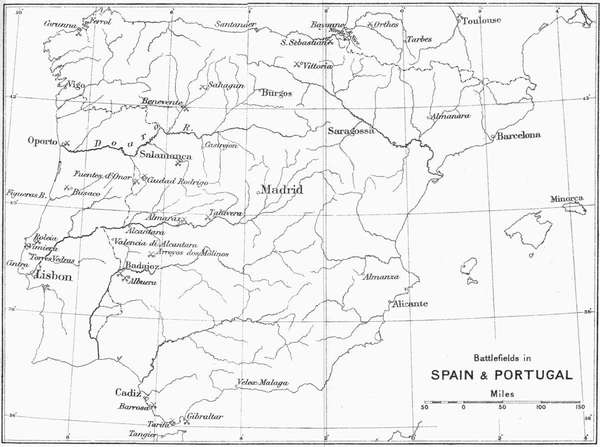
Battlefields in SPAIN & PORTUGAL
There were many reasons which compelled Wellington
to refrain from prosecuting a vigorous pursuit after the
decisive victory of Vittoria. The French were in possession
of the two fortresses of Pampeluna and San Sebastian
in the north, and they were far superior in numbers to
the Allies in the south of the Peninsula. He pushed the
enemy back slowly to the frontier, and at the same time
he detached two of his own divisions, under Sir Thomas
Graham, to reduce San Sebastian, whilst he entrusted
the task of besieging Pampeluna to the Spaniards, resolving
that, as soon as these two fortresses were in his
possession, he would continue the work of expelling the
French from the Peninsula. Emboldened by Lord Wellington's
tactics, Soult turned and attacked the English
at Roncesvalles and in the Maya Pass. At the latter
engagement we were compelled to fall back, leaving some
prisoners in the hands of the French; but reinforcements
coming up, Wellington resumed the offensive, and by
August 1 had once more driven the French to the north
of the Pyrenees. The fighting during these few days
was excessively severe, our casualties amounting to
upwards of 4,000 of all ranks killed and wounded.
Casualties in the Actions in the Pyrenees, July 25
to August 2, 1813.
| Regiments. | Officers. | Men. |
| K. | W. | K. | W. |
| Royal Artillery | - | 1 | 1 | 19 |
| 2nd Queen's | - | 1 | 1 | 9 |
| 3rd Buffs | 1 | 1 | 3 | 27 |
| 6th Royal Warwicks | 1 | 7 | 14 | 140 |
| 7th Royal Fus. | 1 | 10 | 52 | 187 |
| 11th Devons | - | 4 | 7 | 62 |
| 20th Lancs Fusiliers | 3 | 17 | 38 | 189 |
| 23rd Royal Welsh Fus. | 3 | 8 | 23 | 85 |
| 24th S. Wales Borderers | - | - | - | 1 |
| 27th Royal Inniskillings | 3 | 11 | 58 | 228 |
| 28th Gloucester | 1 | 6 | 9 | 121 |
| 31st E. Surrey | - | 3 | 2 | 37 |
| 32nd Cornwall L.I. | - | 4 | 4 | 51 |
| 34th Border R. | 1 | 5 | 48 | 122 |
| 36th Worcesters | - | 3 | 8 | 35 |
| 39th Dorsets | 2 | 7 | 11 | 118 |
| 40th S. Lancs | 2 | 10 | 22 | 197 |
| 42nd Royal Highlanders | - | - | 4 | 26 |
| 45th Derbysh. | - | 1 | - | 7 |
| 48th N'amptons | 2 | 10 | 12 | 109 |
| 50th West Kent | 3 | 12 | 30 | 198 |
| 51st K.O.Y.L.I. | - | - | 7 | 62 |
| 53rd Shrops. L.I. | - | 1 | 1 | 20 |
| 57th Middlesex | - | 3 | 4 | 68 |
| 58th N'ampton | - | 6 | 10 | 61 |
| 60th Royal R. | 2 | 6 | 8 | 72 |
| 61st Gloucesters | - | 4 | 3 | 38 |
| 68th Durham L.I. | 1 | 3 | 8 | 41 |
| 71st Highland L.I. | 2 | 7 | 28 | 181 |
| 74th Highland L.I. | 1 | 4 | 6 | 38 |
| 79th Cameron H. | - | 1 | 5 | 47 |
| 82nd S. Lancs | 4 | 6 | 17 | 146 |
| 91st H'landers | - | 7 | 13 | 100 |
| 92nd Gordon Highlanders | - | 26 | 55 | 363 |
| 95th Rifle Brig. | - | 2 | 7 | 28 |
On July 18, 1817, the following regiments were permitted
to assume the battle honour for their services at
the siege and capture of this fortress:
Royal Scots.
King's Own (Lancaster).
Norfolks.
East Lancashire.
South Staffords.
North Lancashire.
Immediately after the Battle of Vittoria, Lord Wellington
detached two divisions to besiege this fortress, the
possession of which was a necessary prelude to his further
pursuit of the French. Unfortunately, our army was ill-provided
with material for a siege, and two months were
spent before the place was taken. Our losses during the
siege and in the two assaults were very severe, as the
accompanying casualty returns prove:
Casualties at the Siege and Assault of San Sebastian,
July and August, 1813.
| Regiments. | Officers. | Men. |
| K. | W. | K. | W. |
| Royal Artillery | 4 | 7 | 4 | 20 |
| Roy. Engineers | 3 | 3 | 14 | 111 |
| Coldstream Gds. | - | 1 | 3 | 20 |
| Scots Guards | - | - | 1 | 24 |
| Royal Scots | 8 | 15 | 118 | 310 |
| 2nd Queen's | - | - | 1 | 1 |
| 4th K.O. Lancs. | 5 | 6 | 117 | 170 |
| 7th Royal Fus. | - | - | - | 6 |
| 9th Norfolks | 6 | 12 | 62 | 177 |
| 20th Lancashire Fusiliers | 1 | 1 | 2 | 9 |
| 23rd Roy. Welsh Fusiliers | - | 1 | 4 | 4 |
| 27th Roy. Inniskilling Fusiliers | 1 | - | 5 | 2 |
| 38th South Staffords | 5 | 12 | 33 | 174 |
| 40th South Lancashires | - | 1 | 3 | 8 |
| 43rd Oxford L.I. | 1 | - | 2 | 10 |
| 47th Loy. North Lancs | 7 | 6 | 106 | 130 |
| 48th N. Staffs | - | 1 | 4 | 1 |
| 52nd Oxford L.I. | 1 | 2 | 1 | 7 |
| 53rd Shropshire L.I. | - | - | 2 | 1 |
| 59th E. Lancs | 8 | 12 | 109 | 208 |
| 95th Rifle Brig. | - | 2 | 7 | 1 |
The battle honour for this hard-fought action is borne
by the
Queen's.
Buffs.
Northumberland Fusiliers.
Royal Warwicks.
Devons.
Royal Welsh Fusiliers.
South Wales Borderers.
Inniskilling Fusiliers.
Gloucesters.
Worcesters.
East Surrey.
Cornwall Light Infantry.
Border.
Dorsets.
South Lancashire.
Royal Highlanders.
Oxford Light Infantry.
Sherwood Foresters.
Northamptons.
Royal Berkshires.
King's Own (Yorkshire Light Infantry).
Shropshire Light Infantry.
Middlesex.
King's Royal Rifles.
Durham Light Infantry.
Highland L.I.
Royal Irish Rifles.
Royal Irish Fusiliers.
Cameron Highlanders.
Argyll Highlanders.
Connaught Rangers.
Rifle Brigade.
Casualties at the Battle of the Nivelle, November 13, 1813.
| Regiments. | Officers. | Men. |
| K. | W. | K. | W. |
| General Staff | 5 | - | - | - |
| Royal Artillery | 1 | - | - | - |
| 12th Lancers | - | - | - | 1 |
| Coldstream Guards | - | 1 | - | 9 |
| 2nd Queen's | - | - | 2 | 26 |
| Buffs | - | 1 | 3 | 8 |
| K.O. Lancs. | - | 1 | 1 | 4 |
| 5th Northumberland Fus. | - | 2 | 15 | 109 |
| Roy. Warwicks | - | - | 1 | 6 |
| Devons | - | 5 | 3 | 38 |
| S. Wales Bord. | - | 2 | - | 5 |
| 27th Inniskilling Fusiliers | 1 | 3 | 9 | 51 |
| 28th Gloucester | - | - | - | 2 |
| 31st E. Surrey | - | 1 | 1 | 13 |
| 34th Border R. | - | - | 1 | 2 |
| 38th S. Staffs | - | 2 | - | 2 |
| 39th Dorsets | - | - | 1 | 5 |
| 40th S. Lancs | 1 | 6 | 15 | 80 |
| 42nd B. Watch | - | 2 | - | 25 |
| 43rd Oxford L.I. | 2 | 9 | 6 | 60 |
| 45th Sherwood Foresters | - | - | - | 1 |
| 48th N'amptons | - | 4 | 7 | 57 |
| 51st K.O. Yorks L.I. | 2 | 2 | 22 | 73 |
| 52nd Oxford L.I. | - | 6 | 34 | 202 |
| 53rd Shropshire L.I. | - | 1 | 3 | 20 |
| 57th Middlesex | 2 | 7 | 5 | 50 |
| 58th N'ampton | - | - | - | 3 |
| 59th E. Lancs | - | - | 1 | 2 |
| King's Roy. R. | 1 | 3 | 7 | 58 |
| 61st Gloucester | 2 | 5 | 5 | 37 |
| 66th Berkshire | - | 2 | 5 | 32 |
| 68th Durham L.I. | 2 | 6 | 7 | 32 |
| 76th W. Riding | - | - | - | 1 |
| 79th Cameron Highlanders | - | 1 | 6 | 44 |
| 82nd S. Lancs. | - | 6 | 9 | 58 |
| 83rd Royal Irish Rifles | - | 4 | 7 | 36 |
| 84th York and Lancaster | - | - | 2 | 5 |
| 85th Shropshire L.I. | 1 | - | - | 13 |
| 87th Roy. Irish Fusiliers | 1 | 5 | 74 | 133 |
| 91st Argyll Highlanders | 1 | 6 | 13 | 105 |
| 94th Connaught Rangers | 1 | 2 | 10 | 60 |
| 95th Rifle Brig. | - | 8 | 11 | 76 |
Wellington had made all his preparations for a general
advance so soon as he should be in possession of the two
fortresses of San Sebastian and Pampeluna. The former
fell into our hands on August 31, but Pampeluna held
out until the last days of October. Directly he was
apprised of its fall, Wellington commenced his advance.
Soult had profited by the delay, and had constructed
three strongly entrenched positions, each of which was
held with determination. The first has not been inscribed
on our colours; the second was on the banks of
the River Nivelle, and before the French were driven
from it Wellington had lost upwards of 1,200 men. It
is worthy of note that, though the Coldstream Guards
figure in the casualty return, they have not been awarded
the battle honour of Nivelle.
This distinction is borne on the colours of the
16th Lancers.
Grenadier Guards.
Coldstream Guards.
Scots Guards.
Buffs.
Royal Scots.
Norfolk.
King's Own (Lancaster).
Gloucesters.
Devons.
East Lancashire.
Worcesters.
Cornwall Light Infantry.
East Surrey.
Border.
West Riding.
Dorset.
Royal Highlanders.
South Staffords.
Loyal North Lancashires.
Oxford Light Infantry.
Royal Berkshire.
West Kent.
Shropshire Light Infantry.
Middlesex.
King's Royal Rifles.
Wiltshires.
York and Lancaster.
Highland Light Infantry.
Gordon Highlanders.
Cameron Highlanders.
Argyll Highlanders.
Rifle Brigade.
This was Soult's last stand before he was driven across
the frontier, and, as the casualty lists show, a very gallant
stand did he make on those four December days. The
heavy losses incurred by the Grenadier and Scots Guards
failed to obtain for the Household Brigade this well-merited
battle honour until the month of August, 1910,
but full justice has not yet been done to the Brigade of
Guards for its gallant services at Ciudad Rodrigo, Salamanca,
and Sebastian.
Casualties during the Crossing of the Nive,
December 9 to 13, 1813.
| Regiments. | Officers. | Men. |
| K. | W. | K. | W. |
| General Staff | 7 | 6 | - | - |
| Royal Artillery | - | - | 2 | 15 |
| 13th Hussars | - | - | - | 3 |
| 14th Hussars | - | - | 2 | 3 |
| 16th Lancers | - | - | 2 | 5 |
| Grenadier Gds. | 2 | 2 | 21 | 126 |
| Coldstream Gds. | - | 1 | - | 13 |
| Scots Guards | 1 | 3 | 7 | 54 |
| Royal Scots | - | 13 | 7 | 111 |
| K.O. Lancs | - | 15 | 13 | 154 |
| Norfolk | 2 | 6 | 26 | 160 |
| Devons | - | 1 | 1 | 16 |
| 28th Gloucester | - | 5 | 13 | 129 |
| 31st E. Surrey | - | 2 | 2 | 32 |
| 32nd Cornwall L.I. | - | - | 2 | 5 |
| 34th Border R. | - | - | 1 | 12 |
| 36th Worcesters | - | - | - | 3 |
| 38th S. Staffs | - | 4 | 12 | 90 |
| 39th Dorsets | - | 1 | 3 | 26 |
| 42nd B. Watch | 2 | 1 | - | 11 |
| 43rd Oxford L.I. | - | - | 12 | 22 |
| 47th N. Lancs | - | 2 | 12 | 53 |
| 50th West Kent | - | 11 | 20 | 92 |
| 52nd Oxford L.I. | - | 3 | 2 | 15 |
| 57th Middlesex | 3 | 4 | 7 | 113 |
| 59th E. Lancs | - | 11 | 18 | 136 |
| 60th K.R.R. | - | 2 | 9 | 76 |
| 61st Gloucesters | - | 2 | - | 4 |
| 66th Berkshire | - | 1 | 9 | 68 |
| 71st Highland L.I. | 3 | 9 | 27 | 100 |
| 76th W. Riding | - | - | 1 | 15 |
| 79th Cameron Highlanders | - | 1 | 5 | 26 |
| 84th York and Lancaster | 2 | 6 | 24 | 100 |
| 85th K.O. Shrop. L.I. | - | 1 | 1 | 11 |
| 91st Argyll Highlanders | - | - | 7 | 47 |
| 92nd Gordon Highlanders | 4 | 10 | 27 | 140 |
| 95th Rifle Brig. | 1 | 1 | 9 | 71 |
This, the first battle fought by Wellington on French
soil, is borne on the colours of the
7th Hussars.
13th Hussars.
14th Hussars.
Buffs.
Northumberland Fusiliers.
Royal Warwicks.
Royal Fusiliers.
Devons.
Lancashire Fusiliers.
Royal Welsh Fusiliers.
South Wales Borderers.
Inniskilling Fusiliers.
Gloucesters.
Worcesters.
East Surrey.
Border.
Cornwall Light Infantry.
Dorsets.
South Lancashire.
Royal Highlanders.
Oxford Light Infantry.
Sherwood Foresters.
Royal Highlanders.
Northamptons.
Royal Berkshires.
West Kent.
King's Own (Yorkshire Light Infantry).
King's Royal Rifles.
Durham Light Infantry.
Royal Irish Fusiliers.
Highland Light Infantry.
Gordon Highlanders.
Royal Irish Rifles.
Royal Irish Fusiliers.
Connaught Rangers.
Argyll Highlanders.
Rifle Brigade.
The casualties fell heavily on the Sherwood Foresters
and on the two Irish regiments which then bore the
numbers 87th and 88th.
Casualties at the Battle of Orthes, February 27, 1814.
| Regiments. | Officers. | Men. |
| K. | W. | K. | W. |
| General Staff | - | 6 | - | - |
| 7th Hussars | - | 3 | 4 | 6 |
| 10th Hussars | - | - | - | 1 |
| 13th Hussars | - | 1 | 2 | 15 |
| 14th Hussars | - | - | - | 2 |
| 15th Hussars | - | - | - | 9 |
| Royal Artillery | 1 | 1 | 3 | 23 |
| Roy. Engineers | 1 | - | - | - |
| N'umberland F. | 1 | - | 5 | 31 |
| Roy. Warwick | 2 | 8 | 24 | 111 |
| Royal Fusiliers | - | 4 | 6 | 56 |
| Lancs Fusiliers | 2 | 6 | 16 | 97 |
| Roy. Welsh F. | - | 3 | 16 | 75 |
| 27th Royal Inniskilling F. | - | 1 | 1 | 4 |
| 40th S. Lancs | - | - | 1 | 4 |
| 42nd B. Watch | 1 | 4 | 4 | 90 |
| 45th Sherwood Foresters | 1 | 9 | 14 | 106 |
| 48th N'ampton | - | - | 1 | 13 |
| 52nd Oxford L.I. | - | 6 | 7 | 76 |
| 58th N'ampton | - | 3 | 3 | 25 |
| King's Roy. R. | - | 2 | 3 | 31 |
| 61st Gloucesters | - | - | 1 | 6 |
| 68th Durham L.I. | - | 1 | 3 | 27 |
| 74th Highland L.I. | - | 5 | 8 | 21 |
| 82nd S. Lancs | - | 2 | 2 | 24 |
| 83rd Roy. Irish Rifles | - | 6 | 11 | 47 |
| 87th Roy. Irish Fusiliers | 1 | 5 | 92 | 116 |
| 88th Connaught Rangers | 2 | 11 | 41 | 214 |
| 91st Argyll Highlanders | - | 7 | 3 | 27 |
| 94th Connaught Rangers | - | 1 | 1 | 12 |
Note.—In following up the retreating French the army had
been sharply engaged on February 14, 17, 23, and 26, and subsequently
to Orthes. A general action was fought at Tarbes on
March 20, 1814, the brunt of the work falling on the Rifle Brigade.
This, the closing action of the Peninsular War, was
fought after the abdication of Napoleon, and was the
final act of the campaign which Sir Arthur Wellesley
opened at the combat of Roleia on August 17, 1808.
There are ten regiments which bear on their colours the
names of the earliest and the last engagements, Roleia
and Toulouse. Of these, only five suffered any loss in
both engagements. The King's Royal Rifles, Highland
Light Infantry, and Rifle Brigade take pride of place,
each having fifteen Peninsular battle honours on their
appointments. Those to whom the battle honour
"Toulouse" has been awarded are the
5th Dragoon Guards.
3rd Hussars.
4th Hussars.
13th Hussars.
Queen's.
Buffs.
Northumberland Fusiliers.
Royal Fusiliers.
Devons.
Lancashire Fusiliers.
Royal Welsh Fusiliers.
Inniskilling Fusiliers.
Gloucesters.
Worcesters.
South Lancashire.
Royal Highlanders.
Oxford Light Infantry.
Sherwood Foresters.
Northamptons.
Shropshire Light Infantry.
King's Royal Rifles.
Highland Light Infantry.
Cameron Highlanders.
Royal Irish Rifles.
Connaught Rangers.
Argyll Highlanders.
Rifle Brigade.
Casualties at the Battle of Toulouse, April 10, 1814.
| Regiments. | Officers. | Men. |
| K. | W. | K. | W. |
| General Staff | - | 3 | - | - |
| 5th Drag. Gds. | - | 1 | 1 | 2 |
| 3rd Hussars | - | 1 | - | 5 |
| 4th Hussars | - | 1 | 2 | 5 |
| 10th Hussars | 1 | 1 | 4 | 6 |
| 15th Hussars | - | - | - | 4 |
| Royal Artillery | - | - | 7 | 31 |
| Queen's (four companies) | - | - | - | 12 |
| N'umberland F. | - | - | - | 3 |
| Royal Fusiliers | - | - | 1 | 3 |
| Devon | 1 | 4 | 14 | 121 |
| Lancs Fusiliers | - | - | 2 | 9 |
| Roy. Welsh F. | - | - | 1 | 7 |
| 27th Inniskilling Fusiliers | 2 | 5 | 23 | 76 |
| 28th Gloucesters | - | 3 | 3 | 25 |
| 34th Border R. | - | 1 | 2 | 11 |
| 36th Worcester | 1 | 9 | 38 | 104 |
| 39th Dorsets | - | 1 | - | 4 |
| 40th S. Lancs | - | 8 | 7 | 71 |
| 42nd B. Watch | 4 | 22 | 50 | 337 |
| 45th Sherwood Foresters | 1 | 8 | 7 | 72 |
| 48th N'ampton | - | 4 | 5 | 39 |
| 50th W. Kent | - | 2 | 2 | 8 |
| 52nd Oxford L.I. | - | - | - | 5 |
| 53rd Shropshire L.I. (two cos.) | - | 5 | 2 | 14 |
| 60th K.R.R. | - | 3 | 11 | 48 |
| 61st Gloucesters | 1 | 18 | 16 | 140 |
| 71st Highland L.I. | - | - | 3 | 13 |
| 74th Highland L.I. | - | 7 | 32 | 72 |
| 79th Cameron H. | 3 | 15 | 26 | 179 |
| 83rd Roy. Irish Rifles | - | - | - | 1 |
| 87th Roy. Irish Fusiliers | 1 | 2 | 7 | 17 |
| 88th Connaught Rangers | 1 | 2 | 7 | 76 |
| 91st Argyll Highlanders | - | 6 | 18 | 98 |
| 94th Connaught Rangers | - | - | 1 | 5 |
| 95th Rifle Brig. | - | 1 | 10 | 75 |
In this fight the 42nd (Royal Highlanders) was wellnigh
annihilated.
The following regiments bear this battle honour:
1st Life Guards.
2nd Life Guards.
Royal Horse Guards.
3rd Dragoon Guards.
4th Dragoon Guards.
5th Dragoon Guards.
1st Royal Dragoons.
3rd Hussars.
4th Hussars.
7th Hussars.
9th Lancers.
10th Hussars.
11th Hussars.
12th Lancers.
13th Hussars.
14th Hussars.
15th Hussars.
16th Lancers.
18th Hussars.
20th Hussars.
Grenadier Guards.
Coldstream Guards.
Scots Guards.
Royal Scots.
Queen's (Royal West Surrey).
Buffs.
K.O. (Royal Lancaster).
Northumberland Fusiliers.
Royal Warwicks.
Royal Fusiliers.
Norfolk.
Lincoln.
Devons.
Lancashire Fusiliers.
Royal Welsh Fusiliers.
South Wales Borderers.
Royal Inniskilling Fusiliers.
Gloucester.
Worcester.
East Lancashire.
East Surrey.
Cornwall Light Infantry.
West Riding.
Border.
South Staffordshire.
Hampshire.
Dorset.
South Lancashire.
Black Watch.
Oxford Light Infantry.
Essex.
Sherwood Foresters.
Loyal North Lancashire.
Northampton.
Royal Berkshire.
Royal West Kent.
K.O. (Yorkshire L.I.).
King's (Shropshire L.I.).
Middlesex.
King's Royal Rifles.
Wiltshire.
Manchester.
York and Lancaster.
Durham L.I.
Highland L.I.
Gordon Highlanders.
Cameron Highlanders.
Royal Irish Rifles.
Royal Irish Fusiliers.
Connaught Rangers.
Argyll Highlanders.
Rifle Brigade.
Roll of the Principal Actions during the Peninsular War.
| Action. | Date. | Casualties. | Honours. |
| Officers. | Men. |
| K. | W. | K. | W. |
| Roleia | 1808 | August 17 | 4 | 20 | 65 | 315 | Medal, | clasp, | and battle honour. |
| Vimiera | " | August 21 | 4 | 37 | 185 | 497 | " | " | " |
| Sahagun | " | December 21 | - | - | 2 | 18 | " | " | " |
| Benevente | " | December 29 | - | 3 | 5 | 23 | " | " | No battle honour. |
| Corunna | 1809. | January 16 | ? | ? | ? | ? | Medal, clasp, and battle honour. |
| Douro | " | May 24 | - | 10 | 23 | 86 | No medal or clasp. Battle honour. |
| Talavera | " | July 27 | 27 | 171 | 643 | 3,295 | Medal, clasp, and battle honour. |
| Busaco | 1810. | Sept. 27 | 5 | 35 | 102 | 408 | " | " | " |
| Barrosa | 1811. | March 4 | 7 | 45 | 182 | 881 | " | " | " |
| Fuentes d'Onor | " | May 5 | 11 | 62 | 157 | 576 | " | " | " |
| Albuera | " | May 16 | 39 | 165 | 850 | 2,567 | " | " | " |
| Arroyos dos Molinos | " | October 28 | - | 7 | 7 | 51 | No medal or clasp. Battle honour. |
| Tarifa | " | December | 2 | 3 | 7 | 24 | " | " | " |
| Ciudad Rodrigo | 1812. | January | 8 | 60 | 122 | 436 | Medal, clasp, and battle honour. |
| Badajos | " | March, April | 60 | 269 | 751 | 2,539 | " | " | " |
| Almaraz | " | May 19 | 2 | 12 | 32 | 131 | No medal or clasp. Battle honour. |
| Salamanca | " | July 22 | 28 | 178 | 360 | 2,536 | Medal, clasp, and battle honour. |
| Vittoria | 1813. | June 21 | 22 | 173 | 490 | 2,704 | " | " | " |
| Pyrenees | " | July, August | 28 | 221 | 510 | 3,295 | " | " | " |
| San Sebastian | " | September | 35 | 70 | 535 | 1,038 | " | " | " |
| Nivelle | " | November 10 | 21 | 121 | 237 | 1,031 | " | " | " |
| Nive | " | December 9-13 | 19 | 140 | 200 | 2,055 | " | " | " |
| Orthes | 1814. | February 27 | 15 | 105 | 192 | 1,291 | " | " | " |
| Toulouse | " | April 10 | 16 | 134 | 298 | 1,661 | " | " | " |
WATERLOO, AND THE ORDER OF THE BATH
FOR THE NAPOLEONIC WARS
This victory, generally considered the most glorious ever
gained by British troops, was commemorated in divers
manner. The first regiments of Guards were allowed to
assume the title of Grenadiers; all who participated were
granted a medal bearing the effigy of the Prince Regent—the
first medal ever given to all ranks by the British
Government—and were permitted to count two years'
service towards pension; and the word "Waterloo" was
inscribed on the colours and appointments of the following
regiments:
1st Life Guards.
2nd Life Guards.
Royal Horse Guards.
1st Dragoon Guards.
Royal Dragoons.
Royal Scots Greys.
Inniskilling Dragoons.
7th Hussars.
10th Hussars.
11th Hussars.
12th Lancers.
13th Hussars.
15th Hussars.
16th Lancers.
18th Hussars.
Grenadier Guards.
Coldstream Guards.
Scots Guards.
Royal Scots.
King's Own Royal Lancasters.
West Yorkshire.
Royal Welsh Fusiliers.
Royal Inniskilling Fusiliers.
Gloucesters.
East Lancashire.
Cornwall Light Infantry.
West Riding Regiment.
South Lancashire.
Welsh.
Royal Highlanders.
Oxford Light Infantry.
Essex.
King's Own (Yorkshire Light Infantry).
Highland Light Infantry.
Gordon Highlanders.
Cameron Highlanders.
Rifle Brigade.
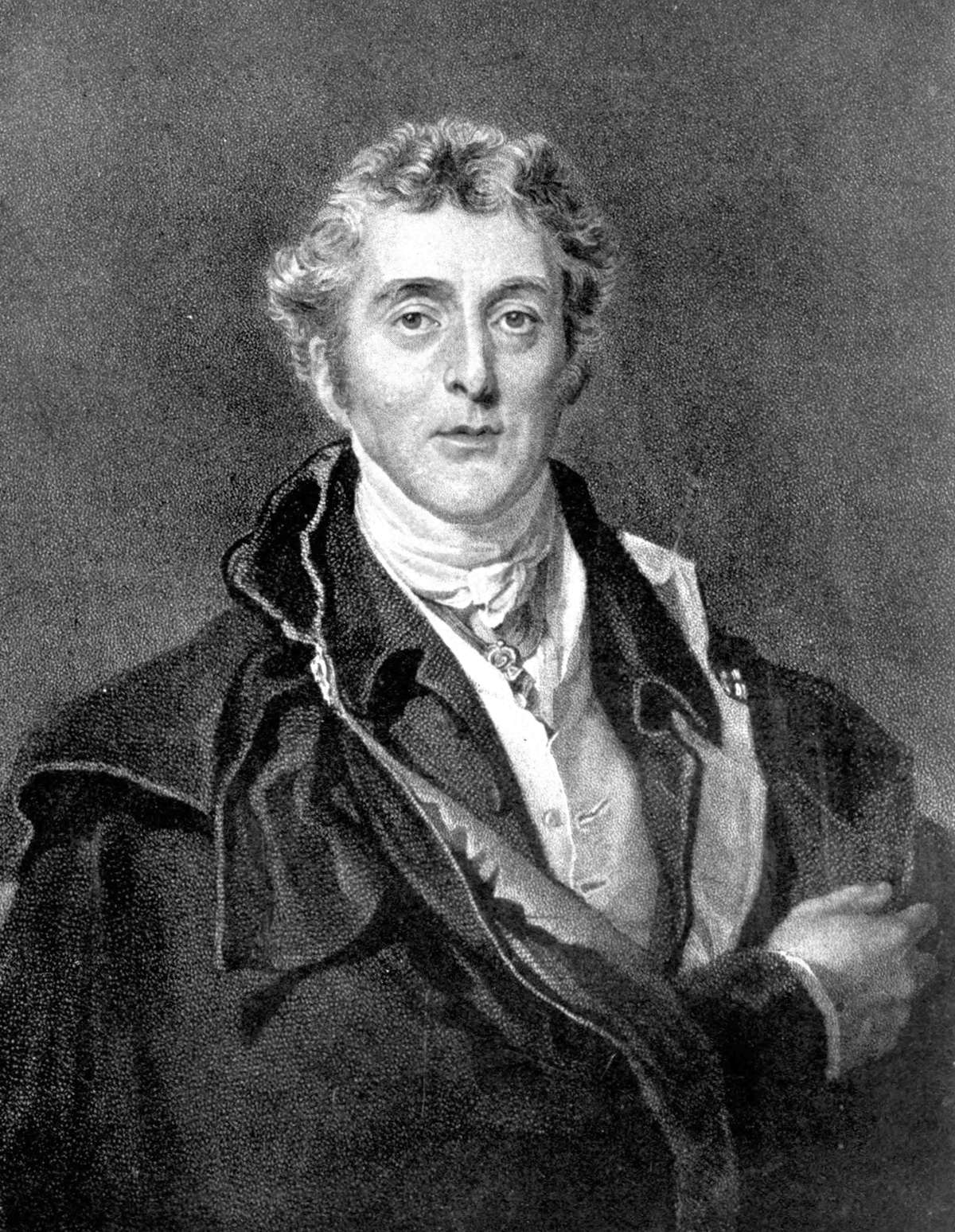
THE DUKE OF WELLINGTON.
To face page 192.
The story of the Battle of Waterloo has been described
in the minutest detail by the most accomplished military
historians in Great Britain, Germany, and France, so that
nothing remains to be told on this head. As is well known,
Napoleon, worn down by the successive campaigns which
had been waged against him in Europe and in Spain, had
at last abdicated, and was relegated to honourable exile
in the Island of Elba. In the early spring of 1815 he
violated his engagements, and returned to France, where
the majority of his soldiery flocked to his standard. The
Allies once more mobilized their armies, and prepared for
war. Whilst Austria and Russia were advancing from
the east, the armies of Prussia and of Great Britain
pushed forward from the north. Napoleon endeavoured
to defeat these before the arrival of the Russians and
Austrians on his frontier. On June 16 he simultaneously
attacked the Prussians at Ligny and Wellington at
Quatre-Bras. The Prussians were undoubtedly worsted,
and we at the best fought a very doubtful action at
Quatre-Bras. The Allies then fell back, and it was
agreed that a further stand should be made at Waterloo.
Circumstances arose which prevented Blücher from
arriving on the field as soon as was anticipated, and for
four long hours the small British army withstood the
onset of the whole of Napoleon's forces; then, early in
the afternoon, the effect of the Prussian advance on our
left began to be felt, and as the divisions of our allies
came successively into action, the success of the day was
no more in doubt. By sundown the battle was won, the
French in full retreat, and Napoleon's sun had set for ever.
The vexed question of the relative part played by the
Prussians and ourselves will never be settled to the satisfaction
of all. One point in regard to this question has,
in my humble opinion, never been sufficiently brought
out. The Prussian army was virtually an army of mercenaries,
kept in the field by the large subsidies so generously
voted by the English Parliament. It is true that
we might have held our own without the arrival of the
Prussians, but it is quite certain that we should never
have inflicted the crushing defeat had not Blücher
arrived—not so opportunely, as some writers assert, but
according to his promise. Then, we know that the battle
was a part of the prearranged plan between the Duke of
Wellington and Prince Blücher. This, however, is
beyond all doubt—that had it not been for the generous
subsidies voted to Prussia by the English Parliament,
amounting to 3,000,000 sterling, in the years 1814-15,
there would have been no Prussian army to assist us.
Throughout the wars with Napoleon, Austria, Prussia,
and Russia received large sums to enable them to keep
their armies in the field. It was not only the King's
German Legion which was paid with English gold, but
the Prussian army also; and when the Germans taunt
the British army with being an army of mercenaries, it
would be well for them to study the financial conditions
under which they fought in the wars with France in the
eighteenth and nineteenth centuries. The following
figures, showing the pecuniary assistance afforded by
England to her allies, are of passing interest:
| Austria. | Prussia. | Russia. |
| 1814 | £545,612 | £1,757,669 | £1,758,436 |
| 1815 | £1,475,632 | £2,555,473 | £1,330,171 |
| 1816 | £1,796,229 | £2,382,823 | £3,241,919 |
Casualties during the Waterloo Campaign.
| Regiments. | Quatre-Bras
(June 16). | (June 17). | Waterloo
(June 18). |
| Officers. | Men. | Officers. | Men. | Officers. | Men. |
| K. | W. | K. | W. | K. | W. | K. | W. | K. | W. | K. | W. |
| 1st Life Guards | - | - | - | - | - | 1 | 8 | 9 | 2 | 3 | 16 | 39 |
| 2nd Life Guards | - | - | - | - | - | - | - | - | 1 | - | 16 | 40 |
| Royal Horse Gds. | - | - | - | - | - | - | 3 | 5 | 1 | 4 | 16 | 56 |
| King's Drag. Gds. | - | - | - | - | - | - | - | - | 3 | 4 | 40 | 100 |
| Royal Dragoons | - | - | 1 | - | - | - | - | - | 4 | 9 | 85 | 88 |
| Roy. Scots Greys | - | - | - | - | - | - | - | - | 3 | 8 | 96 | 89 |
| 6th Inniskillings | - | - | - | - | - | - | - | - | 1 | 5 | 72 | 111 |
|
7th Hussars | - | - | - | - | 1 | - | 6 | 21 | - | 6 | 56 | 96 |
| 10th Hussars | - | - | - | - | - | - | - | - | 2 | 5 | 20 | 40 |
| 11th Hussars | - | 1 | - | - | - | - | - | - | 1 | 4 | 11 | 34 |
| 12th Lancers | - | - | - | - | - | - | - | - | 2 | 4 | 45 | 61 |
| 13th Hussars | - | - | - | - | - | - | - | - | 1 | 9 | 11 | 69 |
| 15th Hussars | - | - | - | - | - | - | - | - | 2 | 3 | 21 | 48 |
| 16th Lancers | - | - | - | - | - | - | - | - | 2 | 3 | 18 | 18 |
| 18th Hussars | - | 1 | 1 | - | - | - | - | - | - | 2 | 12 | 71 |
| Royal Artillery | - | 2 | 9 | 17 | - | - | - | - | 5 | 24 | 53 | 211 |
| Royal Engineers | - | - | - | - | - | - | - | - | - | - | - | - |
| Grenadier Guards (1st Batt.) | 2 | 4 | 23 | 256 | - | - | - | - | 1 | 5 | 50 | 96 |
| Grenadier Guards (3rd Batt.) | 1 | 6 | 19 | 235 | - | - | - | - | 3 | 6 | 81 | 245 |
| Coldstream Gds. | - | - | - | - | - | - | - | - | 1 | 7 | 54 | 242 |
| Scots Guards | - | - | - | 7 | - | - | - | - | 3 | 9 | 39 | 288 |
| Royal Scots | 6 | 12 | 20 | 180 | - | - | - | - | 2 | 13 | 13 | 115 |
| 4th King's Own | - | - | - | - | - | - | - | - | - | 8 | 12 | 113 |
| 14th West Yorks | - | - | - | - | - | - | - | - | - | 1 | 7 | 21 |
| 23rd R. Welsh F. | - | - | - | - | - | - | - | - | 4 | 6 | 11 | 78 |
| 27th Inniskill. F. | - | - | - | - | - | - | - | - | 2 | 13 | 103 | 360 |
| 28th Gloucesters | - | 4 | 11 | 60 | - | - | - | - | 1 | 15 | 18 | 143 |
| 30th East Lancs | - | 2 | 5 | 28 | - | - | 1 | 2 | 6 | 12 | 47 | 157 |
| 32nd Cornw. L.I. | 1 | 16 | 21 | 152 | - | - | - | - | - | 9 | 28 | 137 |
| 33rd W. Riding | 3 | 7 | 16 | 67 | - | - | - | 3 | 2 | 9 | 33 | 92 |
| 40th S. Lancs | - | - | - | - | - | - | - | - | 2 | 10 | 30 | 159 |
| 42nd Roy. Highl. | 3 | 14 | 42 | 228 | - | - | - | - | - | 6 | 5 | 39 |
| 44th Essex | 2 | 15 | 10 | 94 | - | - | - | - | - | 4 | 4 | 57 |
51st King's Own
Yorkshire L.I. | - | - | - | - | - | - | - | - | - | 2 | 9 | 20 |
| 52nd Oxford L.I. | - | - | - | - | - | - | - | - | 1 | 8 | 16 | 174 |
| 69th Welsh | 1 | 4 | 37 | 110 | - | - | - | 3 | 3 | 3 | 14 | 50 |
| 71st Highland L.I. | - | - | - | - | - | - | - | - | 2 | 14 | 24 | 160 |
| 73rd Roy. Highl. | - | 4 | 4 | 43 | 1 | - | 3 | - | 5 | 12 | 47 | 175 |
| 79th Camerons | 1 | 16 | 28 | 248 | - | - | - | - | 2 | 11 | 39 | 132 |
| 92nd Gordons | 4 | 20 | 35 | 226 | - | - | - | - | - | 6 | 14 | 96 |
| 95th Rifle Brigade (1st Batt.) | 1 | 4 | 8 | 51 | - | - | - | - | 1 | 11 | 20 | 124 |
| 95th Rifle Brigade (2nd Batt.) | - | - | - | - | - | - | - | - | - | 14 | 34 | 179 |
| 95th Rifle Brigade (3rd Batt.) | - | - | - | - | - | - | - | - | - | 4 | 3 | 36 |
At the close of the Peninsular War, the Order of the
Bath, which up till then had consisted of but one class
(the K.B.), was enlarged, and henceforth comprised three
classes, as at present. The First Class, or Knight's Grand
Cross, was reserved for General and Flag Officers; the
Second Class was open to officers not below the rank of
Post-Captain in the navy or Lieutenant-Colonel in the
army. In order to obtain the Third Class of the Bath,
better known as the C.B., an officer must have been
mentioned in despatches for service in presence of the
enemy. This qualification does not apply to the two
higher classes, and it has happened more than once that
officers have received the Grand Cross of the Bath who,
under its statutes, are ineligible for the lowest class!
The number of K.C.B.'s was limited to 180, and of these,
80 were bestowed on the Royal Navy and Royal Marines,
and 100 on the army, in the following proportion as to
ranks: 19 Admirals and 9 Lieutenant-Generals were
granted the Order; 23 Vice and 25 Rear Admirals; and
37 Major-Generals, 19 Post-Captains, and 22 Colonels;
whilst 32 Lieutenant-Colonels commanding regiments or
Staff Officers received the same Order. Three officers of
Marines were likewise granted the Order of the K.C.B.
It is very rare now for a regimental commanding officer,
still rarer for a Post-Captain, to obtain admission to the
Second Class of the Bath.
I think I am right in stating that the late Sir William
Peel and Sir Harry Keppel were the last Post-Captains
who obtained this distinction. Sir Robert Sale and Sir
Harry Smith were actually Lieutenant-Colonels of the
13th Light Infantry and of the Rifle Brigade respectively
when they were advanced to the dignity of Grand Crosses
of the Bath, but they held the local rank of Major-General
in the East Indies. The latter was almost immediately
promoted to the rank of substantive General Officer;
the former was killed before reaching the higher grade.
The Battle of Waterloo was the first engagement for
which the C.B. was granted. It is true that in the same
Gazette a number of officers received the decoration for
their services in the Peninsular War, and of these not a
few also appeared in the Waterloo Gazette with a star
against their names, intimating that they had received
the decoration for previous services. The list of officers
granted the dignity of K.C.B. was published in the
Gazette of January 2, 1815; but the C.B.'s, both for the
Peninsula and for Waterloo, appeared in the Gazette of
September 4, 1815.
The following list gives the number of decorations conferred
regimentally. It will be noticed that a number of
regiments do not figure in the list at all. On the other
hand, a number of regiments which participated in these
honours have long since ceased to exist, amongst them
the well-known King's German Legion and the little-known
Greek Light Infantry. Of these I have not given the details.
The First Regimental Recipients of the Bath.
| Regiments. | Peninsula. | Waterloo. |
| K.C.B. | C.B. | C.B. |
| 2nd Life Guards | - | - | 1 |
| Royal Horse Guards | 1 | - | 1 |
| King's Dragoon Guards | - | - | 1 |
| 5th Dragoon Guards | - | 1 | - |
| 7th Dragoon Guards | - | 1 | - |
| 1st Royal Dragoons | - | - | 1 |
| Royal Scots Greys | - | - | 2 |
| 3rd Hussars | - | 1 | - |
| 7th Hussars | - | 1 | - |
| 9th Lancers | - | 1 | - |
| 10th Hussars | - | 1 | - |
| 11th Hussars | - | 1 | - |
| 12th Lancers | - | 1 | - |
| Royal Artillery | 9 | 8 | 8 |
| Royal Engineers | - | 10 | 2 |
| Grenadier Guards | 6 | 4 | 6 |
| Coldstream Guards | 5 | 5 | 4 |
|
Scots Guards | 2 | 4 | 2 |
| Royal Scots | 2 | 2 | 3 |
| 4th King's Own | - | 3 | - |
| 5th Northumberland Fusiliers | 1 | 2 | - |
| 6th Royal Warwicks | - | 2 | - |
| 7th Royal Fusiliers | 1 | 2 | 1 |
| 8th King's Liverpool Regiment | - | 2 | - |
| 9th Norfolks | 1 | - | - |
| 10th Lincolns | - | 1 | - |
| 11th Devons | - | 2 | - |
| 12th Suffolks | - | 2 | - |
| 13th Somerset Light Infantry | 1 | - | - |
| 14th West Yorkshires | - | 3 | 1 |
| 21st Royal Scots Fusiliers | - | 1 | - |
| 23rd Royal Welsh Fusiliers | 2 | 4 | 2 |
| 24th South Wales Borderers | - | 1 | - |
| 27th Royal Inniskilling Fus. | 1 | 3 | 1 |
| 28th Gloucesters | 1 | 1 | 2 |
| 30th East Lancashires | - | 1 | 3 |
| 31st East Surreys | 1 | 1 | - |
| 32nd Cornwall Light Infantry | - | 1 | 1 |
| 33rd Duke of Wellington's | - | - | 1 |
| 34th Border Regiment | - | 2 | - |
| 35th Royal Sussex | 1 | 1 | - |
| 36th Worcesters | - | 3 | - |
| 38th South Staffords | 1 | 3 | - |
| 39th Dorsets | - | 2 | - |
| 40th South Lancashires | - | 2 | 1 |
| 42nd Royal Highlanders | 2 | 3 | 2 |
| 43rd Oxford Light Infantry | - | 2 | - |
| 44th Essex | - | 1 | 3 |
| 45th Sherwood Foresters | - | 3 | - |
| 48th Northamptons | - | 3 | - |
| 49th Royal Berkshires | - | 1 | - |
| 50th Royal West Kent | - | 3 | - |
| 51st King's Own Yorkshire L.I. | - | 1 | 3 |
| 52nd Oxford Light Infantry | 1 | 5 | 1 |
| 53rd Shropshire Light Infantry | 1 | 1 | - |
| 54th Dorsetshire | - | 1 | - |
| 56th Essex | - | 1 | - |
| 57th Middlesex | - | 1 | - |
| 58th Northamptons | - | 1 | - |
| 59th South Lancashire | - | 2 | - |
| 60th King's Royal Rifles | - | 4 | - |
| 62nd Wiltshire | - | 1 | - |
|
66th Royal Berkshire | - | 2 | - |
| 68th Durham Light Infantry | - | 2 | - |
| 69th Welsh | - | 1 | - |
| 71st Highland Light Infantry | - | 2 | 2 |
| 73rd Royal Highlanders | - | - | 2 |
| 74th Highland Light Infantry | 1 | 1 | - |
| 77th Middlesex | - | 2 | - |
| 78th Ross-shire Buffs | - | 2 | - |
| 79th Cameron Highlanders | - | 1 | 2 |
| 83rd Royal Irish Rifles | 1 | 1 | - |
| 85th King's Shropshire L.I. | - | 1 | - |
| 86th Royal Irish Rifles | - | 1 | - |
| 87th Royal Irish Fusiliers | - | 2 | - |
| 88th Connaught Rangers | - | 3 | - |
| 89th Royal Irish Fusiliers | - | 2 | - |
| 90th Scottish Rifles | - | 1 | - |
| 91st Argyll Highlanders | 1 | - | - |
| 92nd Gordon Highlanders | - | - | 2 |
| 94th Connaught Rangers | - | 1 | - |
| Rifle Brigade | 2 | 6 | 8 |
No regimental officers were granted the dignity of a
K.C.B. for the Battle of Waterloo.
BATTLE HONOURS FOR SERVICES IN INDIA, 1818-1826
Kirkee—Seetabuldee—Nagpore—Maheidpore—Corygaum—Nowah—Bhurtpore—Hindoostan—India.
The conclusion of the First Mahratta War of 1803-04
left us nominally at peace with all the ruling Sovereigns
in Central and Southern India. At the same time, the
result of that campaign had in no way impaired their
power for evil. Their armies were, so far as numbers
went, enormously powerful, and in a measure well
organized and equipped. In most cases they had been
drilled by European instructors, and certainly for irregular
warfare they constituted a very formidable foe.
Although they had accepted peace, it was well known
that there was not a ruling Prince in India who would
not willingly see our downfall; and in the event of war
with one, it was doubtful who we should not find arrayed
against us. The Governor-General, then, had to prepare
for an alliance of all the central and probably of one or
more of the southern rulers. Our possible enemies were
the Peishwa, the hereditary chief of the Mahratta Confederacy;
Scindia, the Maharajah of Gwalior; Holkar, the
Maharajah of Indore; the Maharajah of Nagpore; the Nizam
of Hyderabad, in whose dominions there was considerable
disaffection; Ameer Khan, a Moslem freebooter,
who, though possessing neither territory nor population,
had nevertheless a powerful and well-disciplined force at
his command; and, lastly, the Pindarees.
It must be borne in mind that at this time we had
Subsidiary Forces, composed of native troops, maintained
by the different rulers, but officered by Englishmen, at
Hyderabad, Nagpore, Poona, and Gwalior; and through
these officers, as well as through the Residents at the
Courts of these Princes, we were well able to judge of the
numbers and value of the forces that could be brought
against us. These forces were estimated to be as
follows:
| Cavalry. | Infantry. | Guns. |
| Scindia | 14,250 | 16,250 | 140 |
| Holkar | 20,000 | 7,900 | 107 |
| The Peishwa | 28,000 | 13,800 | 37 |
| Nagpore | 15,700 | 17,000 | 85 |
| Ameer Khan | 12,000 | 10,000 | 80 |
| The Nizam | 25,000 | 20,000 | 240 |
| Pindarees | 15,000 | 1,500 | 20 |
With but few exceptions, the cavalry was undisciplined
and unorganized, but well mounted, and the men as a
rule admirable swordsmen. To combat this possible
alliance, the Marquess of Hastings determined to utilize
the troops of all three Presidencies, and to take the field
in person, and so assume the direction of the operations.
The Bengal army would deal with Scindia, and then
push to the south and west to assist the troops of the
other Presidencies. The Madras troops, with Secunderabad
as their base, after assuring the neutrality of the
Nizam, would operate from the south, whilst the Bombay
army was left to deal with the Peishwa, whose disaffection
was beyond doubt.
The Bengal army was composed of four divisions,
under the personal command of the Marquess of Hastings.
These were commanded respectively by Major-Generals
Browne, Donkin, Marshal, and Sir David Ochterlony.
Each division comprised one cavalry and two infantry
brigades. Of the troops which composed that army, few
regiments are left. The 24th Light Dragoons were disbanded
shortly after the campaign, and the majority of
the native regiments fell away from their allegiance in
the unfortunate rebellion of 1857. Of the regiments
which went to make up the First Division, the 87th
(Royal Irish Fusiliers) still survive; of the Second
Division, the 8th (Royal Irish) Hussars, the 14th (West
Yorkshires), and Gardner's Horse are yet on the rolls of
the army. The 67th (Hampshires) and the 2nd Gurkhas,
with Skinner's Horse, also survive.
The Madras army was under the command of Lieutenant-General
Sir Thomas Hislop. Of its cavalry
brigade no representatives remain; of its four infantry
brigades we have many survivors—first and foremost,
the Royal Scots and the Royal Dublin Fusiliers; then the
1st Madras Europeans, which, with the 17th Madras
Infantry (now the 93rd Burmah Infantry), composed
the First Brigade. The Second Brigade was made up of
three light infantry regiments (native), of which the
63rd Palamcottah Light Infantry and the 74th Punjabis
are with us. There were, all told, two regiments
of British and six of native infantry.
The Hyderabad Division, commanded by Major-General
Doveton, comprised a battalion of the Royal Scots and
ten regiments of Madras infantry; whilst the Hyderabad
Subsidiary Brigade was made up of a wing of the 1st
Madras Europeans (now the Royal Dublins) and three
native regiments. Sir John Malcolm commanded the
Third Division of the Madras army. It comprised a
regiment of Madras cavalry, four battalions of Madras
infantry, 4,000 Mysorean horse, and three regiments of
what were so long known as the Hyderabad Contingent.
In the neighbourhood of Poonah was Sir Lionel Smith,
with the 65th (York and Lancasters), the 1st Bombay
Europeans (now the 2nd Royal Dublins), and four regiments
of Bombay infantry.
Watching events in Guzerat was General Sir H. Grant
Keir, with the 17th Lancers, the 47th (Loyal North Lancashires),
and four battalions of Bombay native infantry;
whilst at Nagpore was Colonel Adams, with a regiment
of Bengal and one of Madras cavalry, and seven battalions
of Madras infantry.
Reserve Bombay Division (Brigadier Munro): 22nd
Light Dragoons, 7th Madras Cavalry, a battalion composed
of the flank companies of the 34th, 53rd, 69th, and
84th Regiments, the 1st Bombay European Regiment,
and three battalions of Bombay sepoys.
Prior to the army being put in motion, we had as
garrisons at the various capitals, or in their immediate
vicinity, the following troops:
At Secunderabad, watching the Nizam, a wing of the
Madras European Regiment and three battalions of
Madras sepoys.
At Poonah, watching the Peishwa, a detachment of the
Bombay European Regiment and four battalions of
Bombay sepoys, whilst another detachment of the
65th Foot (York and Lancaster) was on the march as a
reinforcement.
At Nagpore were the 6th Bengal Cavalry, the Madras
Bodyguard, and two battalions of sepoys.
This honour is borne on the colours of the
Royal Dublin Fusiliers.
102nd Grenadiers.
113th Infantry.
112th Infantry.
123rd Outram's Rifles.
The attitude of the Peishwa's advisers left little room
for doubt as to their intentions, and Colonel Burr, who
was in command at Poona, took the necessary steps to
secure the safety of the Resident and to maintain a hold
on the capital of the Mahratta Confederacy. He concentrated
his forces at Kirkee, where on November 5 he
was attacked by the whole of the Peishwa's army. From
a study of the casualties, it would appear that the British
regiment was not engaged seriously, and there is no doubt
that the brunt of the fighting fell on the Bombay sepoys,
who behaved with exemplary steadiness. The result of
the day was a serious check to the Peishwa's forces, our
losses being inconsiderable. General Lionel Smith now
pushed up reinforcements, and assumed command at
Poona, where, on the 17th of the month, a second action
was fought, known as the Battle of Poona; and though
this is not borne on the colours of the regiments engaged,
the troops present were awarded the India medal, with a
clasp inscribed "Poona." Those who were at both engagements
received one clasp, with the names of both actions
engraved.
Casualties at the Action at Kirkee, November 5, 1817.
| Regiments. | Officers. | Men. |
| K. | W. | K. | W. |
| Royal Artillery | - | - | - | 2 |
| Dublin Fusiliers | - | - | 1 | 1 |
| 102nd Grenadiers | - | 1 | 1 | 8 |
| 112th Infantry | - | - | 4 | 10 |
| 113th Infantry | - | - | 12 | 37 |
| 123rd Outram's Rifles | - | - | 1 | 7 |
Casualties at the Action at Poona, November 17, 1817.
| Regiments. | Officers. | Men. |
| K. | W. | K. | W. |
| Royal Artillery | - | - | - | 4 |
| 65th York and Lancaster | - | - | - | 2 |
| Dublin Fusiliers | - | 1 | 5 | 13 |
| 105th Lt. Inf. | - | - | 1 | 10 |
| 107th Pioneers | - | - | 2 | 4 |
| 112th Infantry | - | - | 2 | 7 |
| 113th Infantry | - | - | 3 | 10 |
This distinction is borne on the colours and appointments
of the Madras Bodyguard and the 61st Pioneers.
Colonel Hopeton Scott, who was in command of the
troops at Nagpore when hostilities broke out, withdrew
his force to the fortified hill of Seetabuldee, in the immediate
neighbourhood of Nagpore. He was more fortunately
situated than Colonel Burr at Poona, inasmuch
as he had under his command a regiment of Bengal
cavalry, whose commanding officer was one of those
men not rarely met with in our Indian army—a born
leader of irregular troops, with no idea of shirking responsibility.
On November 26 Colonel Scott found
himself attacked by the whole of the Nagpore army,
numbering some 18,000 men, with thirty-six guns. His
position was naturally a strong one, and the attacks were
never pressed home; but his situation was critical, owing
to the immense numbers opposed to his small force. The
Bengal cavalry were by no means averse to testing the
metal of the Nagporeans, and, in spite of express orders
not to provoke a conflict, their commander, Captain
Fitzgerald, took every opportunity of charging into the
masses of the enemy whenever occasion offered, and
finally charged down on the flank of the Nagpore infantry
as they were recoiling from an attempt to carry the hill
by storm, and converted a momentary confusion into a
rout. In this he was supported by a small detail of the
Madras Bodyguard. Colonel Scott's men had sustained
a series of attacks extending over eighteen hours, and a
glance at the list of casualties shows that the honour
"Seetabuldee" was well earned. More the pity that the
cavalry regiment which bore the major part in that
day's work no longer exists.
Casualties at Seetabuldee.
| Regiments. | Officers. | Men. |
| K. | W. | K. | W. |
| Royal Artillery | - | 1 | 2 | 15 |
| Madras Bodyguard | - | - | - | - |
| 6th Bengal Cav. | - | 3 | 23 | 24 |
| 61st Pioneers | 2 | 3 | 55 | 99 |
| 1st Batt. 20th Bengal Inf. | 1 | 3 | 15 | 46 |
| Resident's Esc. | - | 1 | 10 | 33 |
| Major Jenkin's Levies | - | 3 | 8 | 13 |
Note.—It is worthy of remark that the total strength of the
force engaged at Seetabuldee amounted to 1,315 of all ranks, and
the casualties were 355 killed and wounded—a striking testimony
to the steadiness and devotion of the Sepoys of those days.
On learning of the action at Seetabuldee, Brigadier
Doveton pushed on to reinforce Scott, and on December
16 was fought this action, which is borne as an
honorary distinction on the colours of the
Royal Scots.
6th Jat Light Infantry.
2nd Q.O. Sappers and Miners.
61st Pioneers.
62nd Punjabis.
81st Pioneers.
83rd Light Infantry.
86th Infantry.
88th Infantry.
97th Infantry.
The brunt of the fighting fell on the Royal Scots, who
have ever shown themselves to the front in our Indian
wars, and on the Berar Infantry, who were then fighting
against their own ruler. The honour is borne by one of the
representatives of Russell's brigade, yet, if contemporary
returns are to be trusted, all the Hyderabad regiments
did well at Nagpore.
With the repulse of the Nagporean army, Doveton's
troubles were not at an end. A body of 300 Arabs withdrew
into the fort, and before they surrendered the
English commander was compelled to open a regular
siege, in the course of which many casualties were incurred.
On December 24 the Arabs came to terms, and
we took possession of the city.
Casualties at the Engagements in the Neighbourhood
of Nagpore, November 16-24, 1817.
| Regiments. | Officers. | Men. |
| K. | W. | K. | W. |
| Royal Artillery | - | - | 5 | 19 |
| Roy. Engineers | - | - | 5 | 7 |
| 6th Jat Light Infantry | - | - | 2 | 11 |
| 61st Pioneers | - | - | - | - |
| 62nd Punjabis | - | - | 2 | 6 |
| Royal Scots | 1 | - | 29 | 97 |
| 81st Pioneers | - | - | - | - |
| 83rd Light Inf. | - | - | 14 | 20 |
| 86th Infantry | - | - | 1 | 5 |
| 88th Infantry | - | - | - | - |
| 97th Deccan Inf. | - | - | 12 | 45 |
This battle honour, which commemorates the only
general action fought by the main army during the course
of the Second Mahratta War, is borne on the colours and
appointments of the
Royal Scots.
Royal Dublin Fusiliers.
28th Light Cavalry.
2nd Queen's Own Sappers and Miners.
63rd Light Infantry.
74th Punjabis.
87th Punjabis.
88th Infantry.
91st Light Infantry.
94th Russell's Infantry.
95th Russell's Infantry.
The distinction was granted in recognition of the
services of the army under Sir Thomas Hislop, which
resulted in the total defeat of the army belonging to the
Maharajah Holkar, of Indore, at Maheidpore on December
22, 1817. Holkar's army far outnumbered the
English in cavalry, as well as in guns. We captured no
less than sixty-five of the latter. The Holkar force had
the reputation of being well trained. For many years
the Maharajah had availed himself of the services of
English and French instructors, but on the outbreak of
hostilities he had foully murdered all the English in his
employ, and their absence, no doubt, shook the confidence
of the men, who for so long had been accustomed
to European leadership. From the returns it would
appear that the 27th Light Cavalry (then the 3rd Madras
Cavalry) suffered some casualties on this occasion.
Casualties at the Battle of Maheidpore, December 22, 1817.
| Regiments. | Officers. | Men. |
| K. | W. | K. | W. |
| Royal Scots | 1 | 2 | 8 | 32 |
| Royal Dublin Fusiliers | 1 | 1 | 7 | 51 |
| Bombay Art. | - | 3 | 5 | 12 |
| 28th Light Cav. | - | - | 4 | 8 |
| 29th Deccan Horse | - | - | 19 | 47 |
| 63rd Light Inf. | 1 | 3 | 26 | 71 |
| 74th Punjabis | - | 2 | 14 | 34 |
| 87th Punjabis | - | 1 | 1 | 11 |
| 88th Infantry | - | 1 | 14 | 52 |
| 91st Light Inf. | - | 6 | 16 | 69 |
| 94 and 95th Russell's Inf. | - | 1 | 12 | 61 |
This distinction is borne on the colours of the 34th
Poona Horse and 102nd Grenadiers. It commemorates
a very gallant stand made by a small body of Bombay
Sepoys during the Second Mahratta War, in face of vastly
superior forces. Colonel Burr, who was left in command
of the troops at Poona after the defeat of the Peishwa in
November, found that, owing to various circumstances,
that army, though defeated, was by no means demoralized,
and there was reason to fear a fresh attack. He therefore
ordered Captain Staunton, who was at Seroor, some fifty
miles distant, to fall back on Poona. Staunton had with
him a couple of guns of the Madras Artillery, with twenty-six
English gunners, 500 of the 2nd (now 102nd) Grenadiers,
and 250 of what was then known as the Reformed
Horse (now the 34th Prince Albert Victor's Own Poona
Horse). Staunton moved off on receiving Colonel Burr's
orders, but on nearing Corygaum found himself in the
presence of the main body of the Peishwa's army, estimated
at 18,000 men, with thirty-six guns. The village lent
itself to defence, though the position was much cramped,
especially for the large number of horses attached to his
little force. Staunton knew that Sir Lionel Smith was
within a couple of days' march, and that if he could hold
out for that time he was sure of relief. He had taken the
precaution to move with double the usual supply of
ammunition, and he was seconded by eight British
officers as gallant as himself.
On the evening of December 30 he occupied the
village, which he proceeded to strengthen so far as was
possible. The want of water was a great drawback, and,
as I have said before, the large number of horses within
such a confined space impeded the movements of the
men. The fight was an exceedingly fierce one. The
enemy on more than one occasion obtained an entrance
into the village, and were able to seize the temporary
hospital. The wounded were cruelly massacred, but a
fine charge led by Dr. Wylie enabled Staunton to
regain possession of this building. On another occasion
during an assault by an overwhelming number of the
enemy one of the two guns was lost, but a counter-attack
retrieved this loss. For thirty-six hours the little force
held its own. Five out of the eight officers were hors de
combat, only six men were left to work the guns, and the
sepoy battalion had lost 150 out of 500 men. On the
evening of New Year's Day the fire of the assailants
began to slacken, and ere nightfall it had died away.
News had reached Sir Lionel Smith of the hard straits of
Staunton's force, and he at once moved off to relieve him.
The Peishwa's army was in no mood to face a well-organized
British army, and it hurriedly withdrew from
before Corygaum, leaving Staunton with the consciousness
of having placed on record one of the finest feats of arms
in the history of the Bombay army. Both Staunton and
Dr. Wylie ultimately received the Companionship of the
Bath for their services, and a monument was erected at
Corygaum to commemorate the fight.
Casualties at the Action of Corygaum, January 1, 1818.
| Regiments. | Officers. | Men. |
| K. | W. | K. | W. |
| Bombay Art. | 1 | - | 12 | 8 |
| Poona Horse | - | 3 | 40 | 24 |
| 102nd Grenadiers | 1 | 3 | 50 | 105 |
This name is inscribed on the colours of the 94th and
95th Russell's Infantry, and commemorates a little-known
episode in the history of our dealings with the
peoples of Southern India. A mud fort held by a rebellious
chief defied the power alike of the Hyderabad Nizam and
the British Resident. It became necessary to bring the
recalcitrant chief to reason, and the Resident despatched
a portion of the Hyderabad contingent to reduce the fort.
Fortunately, the operations were attended with no loss
of English life, but a glance at the casualty list shows
that the fighting was far more severe than in many
actions which are recognized on the colours of better-known
regiments than the direct representatives of
Russell's brigade.
Casualties at the Siege and Assault of Nowah,
January, 1819.
| Regiments. | Officers. | Men. |
| K. | W. | K. | W. |
| 94th Russell's Infantry | - | 1 | 12 | 58 |
| 95th Russell's I. | - | 2 | 3 | 56 |
| 96th Berar Inf. | - | 1 | 6 | 44 |
For their services in this campaign the survivors were
awarded the India General Service Medal, the issue of
which was notified in the London Gazette of February 28,
1851. The following clasps were issued with the medal:
Kirkee.—For the action on November 5, 1817.
Poona.—For the engagement on November 17, 1817.
Those who were present at both actions received one
clasp, engraved "Kirkee—Poona."
Seetabuldee.—For the action fought by Colonel Scott on
November 26, 1817.
Nagpore.—For General Doveton's action on December 16.
Those present at both engagements received but one
clasp, inscribed "Seetabuldee—Nagpore."
Maheidpore.—For the action fought by the army under the
command of Sir Thomas Hislop on December 21.
Corygaum.—For the gallant defence of the village of Corygaum
by Colonel Staunton on January 1, 1818.
This battle honour has been conferred on the following
corps:
11th Hussars.
16th Lancers.
West Yorkshire.
East Lancashire.
Royal Munster Fusiliers.
1st Skinner's Horse.
1st Prince of Wales's Own Sappers and Miners.
2nd Queen's Own Rajput Light Infantry.
1st Brahmins.
3rd Brahmins.
4th Rajputs.
1st Gurkhas.
2nd Gurkhas.
9th Gurkhas.
It commemorates the services rendered by the forces
employed at the siege and capture of the famous fortress
which twenty years before had successfully defied Lord
Lake. In 1803 the Maharajah had thrown in his lot
with the Mahratta Princes, and Bhurtpore was a depot of
arms for the armies of Holkar. Lord Lake, after his
successful actions at Deig, Delhi, and Laswarree, determined
to effect its capture. On January 3, 1804, he
appeared before the fortress with a force which included
the 22nd (Cheshire), 65th (York and Lancaster), 71st
(Highland Light Infantry), 76th (West Ridings), and the
1st Bengal European Regiment (Royal Munster Fusiliers).
On January 9 the place was assaulted, and we were driven
back, with a loss of 5 officers and 64 men killed, 23 officers
and 364 men wounded. On the 21st of the same month
a second assault was repulsed, our losses being 18 officers
and 569 men killed and wounded. The siege was now
carried on more systematically, but with a very inadequate
train, and on February 20 and 21 two assaults were
delivered, which cost us no less than 51 officers and 1,771
men hors de combat. Lake then raised the siege.
In 1826, when the British army once more appeared
before its walls, the army of the Maharajah of Bhurtpore,
remembering the successful defence in 1804, felt pretty
confident of holding its own against the British. On
our side, the Commander-in-Chief, Lord Combermere, a
Peninsular veteran, determined to leave nothing to chance.
Two divisions were assembled—one at Agra, under
Major-General Jasper Nicolls; the second at Muttra,
under Major-General Reynell, C.B.; whilst Lord Combermere
assumed the chief command in person. The cavalry
division was composed of two brigades, under Colonel
Sleigh, of the 11th Hussars, who was given the rank of
Brigadier-General.
First Cavalry Brigade—Brigadier Murray (16th Lancers): 16th
Lancers, 6th, 8th, and 9th Bengal Cavalry.
Second Cavalry Brigade—Brigadier Childers (11th Hussars):
11th Hussars, 3rd, 4th, and 10th Bengal Cavalry.
The infantry was composed as follows:
First Division: Major-General T. Reynell, C.B.
First Brigade—Brigadier M'Combe (14th Foot): 14th Foot (West
Yorkshire), 23rd and 63rd Bengal Infantry.
Fourth Brigade—Brigadier Whitehead (4th Bengal Infantry):
32nd, 41st, and 58th Bengal Infantry.
Fifth Brigade—Brigadier Paton, C.B. (18th Bengal Infantry):
6th, 18th, and 60th Bengal Infantry.
Second Division: Major-General Jasper Nicolls, C.B.
Second Brigade—Brigadier Edwardes (14th Foot): 59th Foot
(East Lancashire), 11th and 31st Bengal Native Infantry.
Third Brigade—Brigadier Adams (14th Bengal Native Infantry):
33rd, 36th, and 37th Bengal Native Infantry.
Sixth Brigade—Brigadier Fagan (15th Bengal Native Infantry):
15th, 21st, and 25th Bengal Native Infantry.
The artillery of the force comprised eight horse and
twelve field batteries, with a siege-train of 112 pieces,
including twelve mortars of 10-inch and fifty-eight of
8-inch calibre. The siege operations were under the
directions of a very distinguished Company's officer,
Brigadier Anbury, C.B.
On December 9, 1825, the two columns advanced from
Muttra and Agra respectively, and on the 28th of the
month the first battery opened fire. On January 17 the
breaches were reported practicable, and the Commander-in-Chief
determined to assault, Major-General Reynell
being placed in command of the three storming columns,
which were detailed as follows:
Right Column—Colonel Delamain: 200 of the Munster Fusiliers,
the 58th Bengal Infantry, and 2nd Sirmoor Gurkhas.
Centre Column—Brigadier M'Combe (14th Foot): Four companies
of the 14th (West Yorkshire), the 23rd and 63rd
Bengal Infantry.
Left Column—Brigadier Whitehead: Two companies of the
14th Foot (West Yorkshire), the 18th and 60th Bengal
Infantry.
Left Column—Brigadier Paton: Four companies of the 14th
Foot (West Yorkshire), the 6th and 41st Bengal Infantry.
Reserve—Brigadier Whitehead: Two companies of the 14th Foot
(West Yorkshire), the 21st and 32nd Bengal Infantry.
The remainder of the army was drawn up to the left of
the fortress to afford general aid. The defence was most
stubborn, all three commanders of the assaulting columns
being badly wounded; but the men of the 14th (the "Old
Bucks" of those days, now the West Yorkshire) would
not be denied, and ere sunset the fortress was in our
possession. The individual losses of the existing regiments
were:
| British Troops. | Officers. | Men. |
| K. | W. | K. | W. |
| 11th Hussars | - | 1 | 2 | 7 |
| 16th Lancers | - | 1 | 1 | 5 |
| Bengal Artillery | - | 2 | 8 | 11 |
| Bengal Enginrs. | 2 | 7 | 13 | 30 |
| 14th W. Yorks | 2 | 7 | 31 | 99 |
| 59th E. Lancs | 2 | 8 | 16 | 97 |
| 101st Munster Fusiliers | - | 3 | 10 | 42 |
| Native Troops. | Officers. | Men. |
| K. | W. | K. | W. |
| 2nd Q.O. Rajput Light Infantry | 1 | 3 | 11 | 20 |
| 3rd Brahmans | - | - | 1 | 11 |
| 1st Gurkhas | - | 1 | 4 | 21 |
| 2nd Gurkhas | - | - | 3 | 15 |
| 1st Skinner's Horse | - | - | 1 | 7 |
Note.—Of the many native infantry regiments above enumerated
the 15th have become the 2nd Queen's Own Light Infantry,
the 32nd the 3rd Brahmans, the 33rd is the 4th Rajputs, and the
63rd the 9th Gurkhas. The remainder, with the exception of the
Gurkha regiments, were lost to us in 1857.
The prize-money distributed to the troops was considerable,
but the enormous sums received by the Commander-in-Chief,
compared with the pittance given to
the private, provoked not a little indignation. At
Seringapatam in 1792 Lord Cornwallis and General
Meadows handed over their share for distribution amongst
the non-commissioned officers and privates—an example
which was not followed either by Lord Harris at Seringapatam
in 1799 or by Lord Combermere at Bhurtpore.
At the request of the officers of the force, a sum of £5,000
was retained for distribution amongst the widows of their
comrades who had fallen in action.
Distribution of Prize-Money.
| Commander-in-Chief | | £59,500 |
| General Officers | | £5,900 |
| Lieutenant-Colonels | | £1,420 |
| Majors | | £950 |
| Captains | | £476 |
| Subalterns | | £238 |
| Sergeants | | £8 |
| Privates | | £4 |
| Native Ranks. |
| Subadars | rupees | 322 |
| Jemidars | " | 282 |
| Havildars | " | 53 |
| Sepoys | " | 26 |
This honour has been conferred on the following regiments
for their gallant services in the earlier campaigns
which consolidated our power in our great Indian dependency:
8th Hussars.
Leicesters.
Worcesters.
Oxford Light Infantry.
Highland Light Infantry.
Seaforth Highlanders.
West Riding Regiment.
8th Hussars.—In the month of March, 1825, the Royal
Irish Hussars were authorized to add the harp as well as
the battle honours "Laswarree" and "Hindoostan" to
their colours and appointments. The 8th had been
present with Lord Lake in his campaign against the
Mahrattas; they had served against the Rohillas in
Bundulcund, and were with Rollo Gillespie in the
gallant attack on the Gurkha fort of Kalunga, where a
detachment of 100 dismounted men lost half its numbers.
They had done right good work at the Siege of Hattrass,
and assisted in many long-forgotten but arduous campaigns,
in which our troops were so constantly engaged
during the earlier years of the foundation of the Indian
Empire.
17th (Leicestershire Regiment).—The honour was bestowed
on the old 17th Foot on June 25, 1825, in recognition
of the services of the regiment between the years
1804 and 1823. The 17th had been with Wolfe at Louisburg,
but had missed the hard fighting in the Peninsula.
In the course of its twenty years' Indian service it did
right good work in several of those little-known campaigns
in which there was hard work and little glory.
At the storming of the fort at Chumar, in Bundulcund, it
lost 2 officers and 56 men killed and wounded. In the
following year (October, 1807), at the operations in connection
with the reduction of the fort of Kamounah, near
Allyghur, it lost no less than 4 officers and 47 men killed,
5 officers and 95 men wounded. In the Gurkha War of
1814 its casualties amounted to 74 men killed and
wounded, and in the year 1817 it again suffered heavily
at the capture of Jubbulpore.
36th (Worcestershire Regiment).—This distinguished
corps, which already had the battle honour "Mysore"
emblazoned on its colours, was authorized in October,
1835, to add the battle honour "Hindoostan" in recognition
of its services from 1790 to 1793. In those three
years it had lost 4 officers and 65 men in the action of
Sattimungulum; it had been present at the storming of
Bangalore, Nundy Droog, Pondicherry, and Seringapatam
(1792); and in the course of the latter operations it had
lost 5 officers and 60 men killed and wounded.
52nd (Oxford Light Infantry).—In February, 1821, the
52nd was authorized to add this distinction to its long
list of battle honours as a recognition of its gallant
services in India between the years 1790 and 1793.
The honour "Mysore," already granted, commemorated
its connection with the army which Lord Cornwallis led
against Tippoo Sultan in 1792. In the operations of that
army the 52nd had borne a very distinguished part,
having furnished details for the storming-party at the
assault of Bangalore and Nundy Droog, and had lost
heavily at the first capture at Seringapatam. There
had been several occasions in which the 52nd had shown
an earnest of their future greatness during those three
years, and for which as yet they had received no recognition.
At Cannanore their casualties amounted to 67
killed and wounded, including 4 officers. At Dindigul
they had lost 23 men, and they had borne their fair share
of the hardships and loss at the Siege of Pondicherry, as
well as at the capture of the Island of Ceylon.
71st (Highland Light Infantry).—On January 20, 1837,
the 71st and 72nd Regiments were authorized to add this
battle honour to those already emblazoned on their
colours. No regiment had better earned it than the old
Highland Light Infantry. From the date of its landing
in India in 1780, until its departure for home twenty years
later, the regiment had been continually on active service.
The flank companies had been present at Baillie's unfortunate
defeat at the hands of the Mysoreans, when their
casualties amounted to 6 officers and 181 men killed and
wounded, the two companies being practically annihilated.
They had shared in Eyre Coote's defeat of the
same Mysorean army at the Battle of Porto Novo. At
Cuddalore, on June 13, 1783, they lost 10 officers and
196 non-commissioned officers and men. The Commander-in-Chief,
General Stuart, thus wrote of their
services on this day: "I am also most grateful to Captain
Lamont and the officers under his command, who so
gallantly led the precious remnants of the 73rd Highlanders"—at
that time the regimental number was 73—"through
the most perilous road to glory, until exactly
one-half the officers and men were either killed or
wounded." The 71st furnished a detachment of stormers
at the capture of Bangalore; at the fortress of Nundy
Droog in 1791; and at Seringapatam, in the following year,
they enabled their commander, David Baird, to take a
striking revenge for the indignities and cruelties inflicted
on their comrades who had fallen into Tippoo Sultan's
hands when Baillie met with his defeat. At the storming
of Pondicherry the 71st were, as usual, well to the fore,
and they formed a portion of the force which added
Ceylon to the British Empire. No regiment has a better
claim to the battle honour "Hindoostan" than the
Highland Light Infantry.
72nd (Seaforth Highlanders).—It was not until the year
1837 that the 72nd were authorized to add the battle
honour "Hindoostan" to their other distinctions, and the
honour was then granted to commemorate the gallant
services of the regiment during its tour of Indian service
between the years 1782 and 1793. It had already been
granted the distinctions "Mysore" and "Carnatic"—scanty
recognition of fifteen years' continuous war. At
Cuddalore, in 1783, its losses amounted to 60 killed and
wounded, including 3 officers; at Seringapatam (1792)
they were rather more severe. At the Siege of Nundy
Droog and of Pondicherry the Seaforths did not escape
scathless, and, with the 52nd, they aided in the capture
of Ceylon from the Dutch.
76th (West Riding Regiment).—This regiment from its
earliest days was known as the "Hindoostan Regiment,"
and was the first regiment to bear the word "Hindoostan"
on its colours—a distinction granted to it on the petition
of Lord Lake in the year 1807. Few regiments have
suffered more severely in action than did the 76th at
Allyghur, Delhi, Laswarree, and Deig; whilst in Lord
Lake's attempt on Bhurtpore the regiment was again cut
to pieces. Throughout the earlier phase of Lord Lake's
campaign it was the only British infantry in his army,
and, in recognition of its valour, the Commander-in-Chief
bestowed upon the 76th a third colour—a distinction
which has been disallowed by the War Office.
This distinction is borne by the
Suffolks.
West Yorkshire.
Hampshire.
Welsh.
York and Lancaster.
Gordon Highlanders.
Royal Irish Rifles.
12th (Suffolk Regiment).—On p. 154 I have alluded to
the services of the 12th Regiment at the defence of the
Residency at Cochin. It was for this and other hard
work performed in the early days of the last century that
the 12th earned this well-merited distinction "India."
During the rising in Travancore they lost heavily. A
boat containing the sergeant-major and thirty-three men
was wrecked on the coast below Quilon, and every man
was massacred. At Quilon itself they lost 53 officers and
men in an engagement with the Travancorean troops.
Prior to this the 12th had served with General Harris in
the war with Tippoo Sultan, and had earned the battle
honour "Seringapatam."
West Yorkshire.—The old 14th Foot were actively
employed on several campaigns between 1810 and 1825.
They furnished the stormers at Bhurtpore when that
fortress was captured by Lord Combermere, and they had
previously borne a prominent part in the operations
which led to the capture of Fort Hattrass in 1817.
65th (York and Lancaster).—This regiment was unfortunate
enough to be deprived of the privilege of sharing
in the victories gained by the army under Sir Arthur
Wellesley in 1803. With the 86th they were selected to
maintain order on the line of communications. A detachment
was present at the engagements outside Poonah—engagements
which are borne on the colours of the
Royal Dublin Fusiliers under the name "Kirkee." They
were present in many hard-fought actions in Guzerat, and
were employed more than once in suppressing refractory
Rajahs in the Bombay Presidency. Their conduct in
expeditions against the Arab pirates on the Persian Gulf
earned the distinction of "Arabia." These are described
on p. 224.
67th (Hampshire Regiment).—The old 67th certainly
lost more men in putting this battle honour on their
colours than they did in the better-known but less
arduous campaign in China in 1860. At the capture of
the fort of Ryghur in 1817, and, two years later, at the
storming of Asseerghur, they lost some 60 officers and
men killed and wounded. Indeed, throughout their first
tour of Indian service—from 1805 to 1826—they were
almost continuously in the field.
69th (The Welsh Regiment).—In the early part of the
nineteenth century the 69th was constantly employed on
active service. It lost heavily in the suppression of the
mutiny of the Madras troops at Vellore, and in the operations
in Travancore in the year 1808 it defeated the
rebels on more than one occasion, sharing with the 12th
(Suffolks) the principal honours of that little-remembered
campaign.
75th (Gordon Highlanders).—"Mysore" and "Seringapatam"
on the colours of the old 75th testify to the work
this fine regiment went through in Southern India;
but those honours by no means exhaust its claims on
the honour list of the army. In the year 1802 it was
engaged in a series of hard fights in Western India, in
the province of Cambay, where its casualties amounted
to 4 officers and 161 men killed and wounded. At the
capture of the fort of Jemlanabad the losses were 67 of
all ranks. These were some of the affairs which led
King George III. to accord the 75th permission to
add the honour "India" to the colours of the old
Stirlingshire Regiment, now the Gordon Highlanders.
84th (York and Lancaster Regiment).—The 84th was
one of those regiments whose duty it was to do garrison
duty in the disaffected districts during the campaign
which put "Assaye" on the colours of more fortunate
corps. Between the years 1796 and 1819 it was constantly
employed in little-heard-of expeditions, which
entailed many hardships and not a little hard fighting.
On one occasion, in Guzerat in 1801, it lost an officer and
19 men killed, and its total losses in those twenty-two
years amounted to close on 200 killed and wounded. It
is a strange coincidence that in Guzerat they should have
been fighting side by side with the regiment which eighty
years later became their 1st Battalion.
86th (The Royal Irish Rifles).—During the operations of
the main army, under Sir Arthur Wellesley, the 86th were
employed in keeping in check the turbulent tribes in
Guzerat, and so they, like the 65th and 84th, missed
sharing in the glories of Assaye. Their services in
Guzerat, in Cambay, were sufficiently severe. At the
capture of Kariah their casualties were no less than 67
of all ranks; at Baroda they lost 37 killed and wounded;
at Baroach 4 officers and 39 men; and at Lord Lake's
attack on Bhurtpore the losses of the 86th were 112 of
all ranks.
BATTLE HONOURS FOR MINOR CAMPAIGNS IN
THE EAST, 1796-1857
Amboyna—Ternate—Banda—Cochin—Arabia—Bourbon—Java—Persian
Gulf—Beni Boo Alli—Aden—Persia—Bushire—Reshire—Koosh-ab.
This distinction is borne only by the Royal Dublin
Fusiliers, as the lineal descendants of that most distinguished
corps the 1st Madras European Regiment, which
certainly has the right to bear with the Dorsets the title
of "Primus in Indus."
From the earliest days of our association with the East
Indies there had been mutual jealousies between the
English and the Dutch merchants with regard to commerce
in the Moluccas. So far back as the year 1623 the
summary execution by the Dutch Governor of Amboyna
of the commander of an East Indiaman nearly led to war
between the two nations, and would have done so had
not the States General disavowed the action of their
colonial official. When Holland threw in her lot with
France at the outbreak of the revolutionary wars, and
granted the French fleets the hospitality of her Eastern
harbours, it was determined to relieve the Dutch of these
possessions.
In February, 1796, Admiral Rainier, commanding the
fleet in the East Indies, sailed to Amboyna with a
squadron consisting of the Suffolk (74), Centurion (50),
Resistance (44), Orpheus (32), and Swift (16). The Dutch,
recognizing the futility of resistance, surrendered, and
Amboyna passed into our possession. The small body of
troops employed on this occasion, as well as the navy,
reaped a rich harvest in the shape of prize-money, the
share of the Commander-in-Chief amounting to £90,000,
and that of the Captains of the Royal Navy to £13,000
each. A detachment of the Madras European Regiment,
under Major Vigors, was embarked on Admiral Rainier's
squadron, and participated beneficially in the booty, the
shares that fell to the lot of the soldiers being:
| £ | s. | d. |
| Major in command | 13,583 | 0 | 0 |
| Captains | 1,314 | 0 | 0 |
| Subalterns | 636 | 0 | 0 |
| Sergeants | 229 | 0 | 0 |
| Privates | 44 | 0 | 0 |
At the Peace of Amiens, Amboyna and the neighbouring
islands were restored to the Dutch. In the year 1810
it was found necessary to reoccupy them, and Captain
Edward Tucker, R.N., with the Doris, Cornwallis, and
Samarang, embarked a detachment of 130 men of the
1st Madras European Regiment (Royal Dublin Fusiliers),
with 50 men of the Royal Artillery, as well as some sepoys.
Slight opposition was encountered, our losses being 3
men killed, 1 officer and 9 non-commissioned officers and
men wounded. We maintained a garrison in the island
until the year 1814, when by the Treaty of Paris it was
once more restored to the Dutch, and the British Empire
deprived of one of the richest islands in Eastern waters.
| Details of Force Landed. | Casualties. |
| Force Engaged. | Officers. | Men. | Officers. | Men. |
| K. | W. | K. | W. |
| Naval Brigade | 8 | 235 | - | 1 | 1 | 4 |
| Royal Artillery | 1 | 46 | - | 1 | - | 1 |
| Royal Dublin Fusiliers | 5 | 130 | - | - | 2 | 4 |
This honour is borne only by the Royal Dublin Fusiliers.
It commemorates one of the many little oversea expeditions
which we were compelled to undertake in the
course of our wars with France between the years 1793
and 1815. Ternate is one of the Molucca Islands, and
then, as now, belonged to the Dutch. Its harbours,
however, were open to the French fleets, and gave refuge
to vessels of war and to privateers, which preyed upon
our China commerce. It became necessary, therefore, to
reduce the island, and in the year 1801 a combined naval
and military expedition was despatched for its subjugation.
The Madras troops were under the command of
Colonel Burr, and they encountered a stubborn resistance.
It was not until after a siege of fifty-two days
that the Dutch Governor surrendered. As was our
custom, on the conclusion of peace in the following year
Ternate was restored to its original owners.
In the year 1810 it again became necessary to take
possession of the island, and, after the capture of Amboyna,
Captain Tucker, with a small detachment of artillery and
of the 1st Madras European Regiment, the latter under
Captain Forbes, set sail for the island. There was but
slight opposition, and on August 31 Ternate once more
passed into our hands, only to be restored to the Dutch
under the terms of the Treaty of Paris in 1814.
| Details of Force Landed. | Casualties. |
| Force Engaged. | Officers. | Men. | Officers. | Men. |
| K. | W. | K. | W. |
| Naval Brigade | 8 | 200 | - | - | 1 | 7 |
| Royal Artillery | 1 | 36 | - | - | - | - |
| Royal Dublin Fusiliers | 3 | 74 | - | 1 | 1 | 9 |
The troops received a small solatium in the shape
of prize-money, the share of a Captain being £270, a
Subaltern £120, a sergeant £32, and a private £13.
This distinction was granted by the Governor of Madras
to the 1st Madras European Regiment, and is now borne
only by the Royal Dublin Fusiliers. It commemorates
the two occupations of the Island of Banda, in the Eastern
Archipelago, by a detachment of the old Madras European
Regiment, the first taking place in 1796, the second in
1810. No medal was issued to the land forces engaged,
but on the institution of the Naval General Service Medal
in 1847 the naval commanders of the Caroline, Piedmontaise,
and Barracouta were awarded the naval gold
medal for the capture of the island in 1810, and distinctive
bronze arm-badges, in lieu of medals, were bestowed
by the Governor of Madras on the sepoys. The detachment
of the 1st Madras European Regiment (now the
1st Royal Dublin Fusiliers) was under the command of
Captain Nixon. Their services were cordially acknowledged
by Captain Coles, of H.M.S. Caroline, but the
regiment does not appear to have suffered any casualties.
This distinction was granted to the York and Lancaster
Regiment by a notification in the London Gazette in the
month of March, 1823, in recognition of the gallant
services of the regiment during the operations on the
coast of Arabia in the years 1809 and 1821. The old
65th Regiment, as it then was, had not been fortunate
enough to have been present at any of the well-known
campaigns during its tour of Indian service. Nevertheless,
it had been engaged in several arduous and by no
means bloodless minor expeditions, in which the soldier-like
qualities of a regiment are as severely tested as in
campaigns which bring in their train greater honours and
rewards. Such were the two expeditions for the punishment
of piratical tribes on the Arabian coast.
The expedition in 1809 was under the command of
Lieutenant-Colonel Lionel Smith, of the 65th Regiment.
It was accompanied by the frigates Chiffon (Captain
Wainwright) and Caroline. The military force comprised
the 65th (York and Lancaster), the flank companies of
the 47th (North Lancashire), and the 2nd Bombay Native
Infantry, now the 103rd Mahratta Light Infantry, with
a company of artillery. Nominally the pirates owned
allegiance to the Sultan of Turkey, but his sovereignty
was very shadowy, and as they had embraced Wahabiism
they were looked upon more in the light of rebels than
subjects. For years they had interfered with our commerce
in the Persian Gulf, and had treated their prisoners
with the refinement of cruelty. It therefore became
necessary to root them out of their lair.
The little force left Bombay in the month of September,
1809, and proceeded to the pirate stronghold of Ras el
Khima, on the Arabian coast. The Arabs fought bravely,
but our superior armament and discipline soon told, and
the fort, which had originally been built by the Portuguese
more than two centuries previously, was dismantled.
On December 27 the flotilla arrived at Linga, another
piratical haunt, and this, too, after making a show of
resistance, was destroyed. Hostages were brought to
Bombay as security for the good behaviour of the tribes,
and the force then returned to India, its total casualties
having been:
Casualties at Beni Boo Alli, 1809.
| Regiments. | Officers. | Men. |
| K. | W. | K. | W. |
| Royal Navy | - | - | 2 | 16 |
| 65th York and Lancs Regt. | - | 1 | 2 | 7 |
| 47th N. Lancs | 1 | - | 3 | 10 |
| 103rd Mahratta Light Inf. | - | - | 2 | 31 |
Note.—For this expedition the 2nd Bombay Native Infantry
was granted the battle honour "Beni Boo Alli."
This distinction has been granted to the
Welsh Regiment.
Royal Irish Rifles.
66th Punjabis.
84th Punjabis.
104th Wellesley's Rifles.
A medal was struck, by order of the Governor-General
of India, for distribution to the officers and men
of the Company's forces present during the expedition.
In the London Gazette of July 17, 1826, the 69th Foot
(now the 2nd Welsh Regiment) was authorized to bear
on its colours and appointments the word "Bourbon,"
in commemoration of the distinguished conduct of the
regiment at the attack and capture of that island. Subsequently
the same privilege was conferred on the 86th
(2nd Battalion Irish Rifles).
Bourbon, now better known as Reunion, was a thorn
in the side of the East India Company during our many
wars with France. With Mauritius, then known as the
Isle of France, it was a harbour of refuge for the many
privateers which preyed upon our commerce, and a base
of operations for the French fleet in Eastern waters. Its
reduction became a necessity, but was from time to time
deferred, until at last, in the month of September, 1809,
the Governor-General, Lord Minto, despatched a force,
under Colonel Keatinge, of the 56th Regiment (now the
Essex), to report on the feasibility of the capture of both
islands. With Keatinge was associated Commodore
Josias Rowley, at the head of a squadron comprising the
Raisonnable, Sirius, Boadicea, Nereide, and Otter, with
the Honourable Company's cruiser Wasp. Keatinge's
force consisted of his own regiment, the 56th (Essex),
and the 2nd Bombay Native Infantry (now the 104th
Wellesley's Rifles). A descent was made on the island,
the forts at the principal port destroyed, and some French
men-of-war and armed Indiamen brought away; but the
force was altogether too small for Keatinge to retain
possession.
In the following July, having received reinforcements,
Keatinge and Rowley made a second descent. In the
meantime they had occupied the Island of Rodriguez,
which served as a valuable base of operations. In
addition to the Essex and the Bombay Regiment, Keatinge
now had the 69th (2nd Welsh), the 86th (2nd Irish
Rifles), and the 6th and 12th Regiments of Madras
Infantry (now the 66th and 84th Punjabis); and this
force was strengthened by a naval brigade of seamen and
Marines from the ships, the total numbering about 3,600
men. The French garrison made some show of resistance,
but after a sharp engagement the Governor, seeing
himself cut off from all hope of aid, surrendered, and
until the conclusion of peace in 1814 Bourbon remained
in our possession, Colonel Keatinge being installed as
Governor, and a regiment being raised from the Creole
inhabitants, which was borne on the rolls of our army
as the Bourbon Regiment.
Casualties at the Capture of the Island of
Bourbon, 1810.
| Regiments. | Officers. | Men. |
| K. | W. | K. | W. |
| 12th Suffolk | - | 2 | 2 | 5 |
| 56th Essex | - | - | 1 | 3 |
| 69th Welsh | - | - | 2 | - |
| 86th R. Irish R. | 1 | 6 | 10 | 51 |
Casualties at the Attack on the Island in 1809.
| Regiments. | Officers. | Men. |
| K. | W. | K. | W. |
| Royal Marines | - | 2 | 7 | 17 |
| 56th Essex | - | - | 6 | 27 |
| 104th Wellesley's Rifles | - | 1 | 2 | 11 |
The Essex Regiment, by its participation in both
descents on the island, seem to have some claim to this
distinction.
This battle honour is borne on the colours of the
West Yorkshire.
East Lancashire.
Welsh.
Seaforth Highlanders.
Royal Irish Fusiliers.
Governor-General's Bodyguard.
2nd Queen's Own Sappers and Miners.
The expedition was under the command of General
Sir Samuel Auchmuty, but the Governor-General of India,
Lord Minto, himself accompanied the troops, in order to
arrange for the civil administration of the Dutch islands,
several of which, as I have shown, had already fallen
into our hands.
The troops selected comprised two Madras and one
Bengal division, and were brigaded as follows:
First Madras Division—Major-General R. R. Gillespie: 25th
Light Dragoons (260), Horse Artillery (152), the 14th (West
Yorkshire), a wing of the 59th (East Lancashire), the 89th
(Royal Irish Fusiliers), and four companies of European
Sappers.
Second Madras Division—Colonel Gibbs, of the 59th (East Lancashire):
22nd Light Dragoons (154), Royal Artillery (98), a
wing of the 59th (East Lancashire), the 69th (Welsh), and
the 78th (Seaforth Highlanders).
The Bengal division was under the command of Major-General
J. S. Wood, and consisted of the Governor-General's
Bodyguard, the 1st Battalion of the Bengal
Native Infantry, and five battalions of sepoys, who had
volunteered from the whole of the regiments of the Bengal
army, and who were designated as the 1st, 2nd, 3rd, 4th,
and 5th Regiments of Bengal Volunteers. On the force
being broken up, these men returned to their own regiments,
receiving the medal which the Governor-General
caused to be struck for the expedition, and so it comes
about that, with the exception of the Bodyguard and the
Madras Sappers, no native corps bears the distinction
"Java" on its colours.
A powerful fleet, under the command of Admiral the
Hon. R. Stopford, convoyed the transports. It comprised
the following vessels:
Commander-in-Chief: Rear-Admiral the Hon. R. Stopford.
Commodore: W. R. Broughton.
| GUNS | GUNS | GUNS |
| Scipio | 74 | Illustrious | 74 | Minden | 74 |
| Lion | 64 | Akbar | 44 | Nisus | 38 |
| Présidente | 38 | Hussar | 38 | Phæton | 38 |
| Leda | 38 | Caroline | 36 | Modeste | 36 |
| Phœbe | 36 | Bucephalus | 36 | Doris | 36 |
| Cornelia | 32 | Psyche | 32 | Drake | 32 |
| Procris | 18 | Barracouta | 18 | Hesper | 18 |
| Harpy | 18 | Hecate | 18 | Dasher | 18 |
| Samarang | 12 |
Honourable East India Company's Cruisers.
| Malabar. | Aurora. | Mornington. |
| Nautilus. | Vestal. | Ariel. |
| Thetis. | Psyche. |
and fifty-seven transports carrying troops.
The total strength of the expeditionary force amounted
to 5,344 British and 5,770 native troops. On August 4
the troops disembarked at a place called Chillingcherry,
some ten miles east of the capital, meeting with no opposition;
but on the 10th the advanced brigade, under
Gillespie, a most dashing officer, who had distinguished
himself greatly in the West Indies, had a sharp encounter
with the French, who were driven back, our casualties
amounting to 90 killed and wounded. On the 20th the
siege of Fort Cornelis was commenced, the Admiral
landing a naval brigade and some heavy guns to aid in
the operations. On the 26th the fort was carried by
assault, Gillespie again distinguishing himself, pursuing
the beaten enemy with the 22nd Light Dragoons for a
distance of thirty-five miles, capturing 2 general, 30 field,
and 214 other officers; 280 guns and 6,000 prisoners fell
into our hands as a consequence of this bold attack, and
the operations were brought to a conclusion by the unconditional
surrender of the island. Gillespie, who was
left in command on the departure of the Governor-General,
experienced some difficulty in inducing the natives to
learn submission, and a number of expeditions were
necessary ere peace was fully restored. On the institution
of the Land General Service Medal in 1847, the
survivors of the expedition received that medal with a
clasp inscribed "Java." The Governor-General, on his
own initiative, at the conclusion of the operations,
bestowed gold medals on field officers and silver medals
on all other ranks; but the privilege of wearing these
was confined to officers and men in the service of the
East India Company.
Casualties in the Expedition to Java, 1811.
| Regiments. | Officers. | N.C.O.'s and Men. |
| K. | W. | K. | W. |
| Royal Navy | - | 5 | 15 | 55 |
| Royal Artillery | 1 | 2 | 1 | 9 |
| Bengal Artillery | 1 | 1 | 3 | 12 |
| Madras Artillery | - | 1 | 2 | 6 |
| Bengal Engineers | - | 1 | - | - |
| Madras Engineers | - | 1 | - | - |
| 22nd Light Dragoons | 1 | 1 | 1 | 19 |
| 14th West York | 1 | 5 | 11 | 90 |
| 59th East Lancastrian | 5 | 10 | 18 | 128 |
| 69th Welsh | 3 | 8 | 14 | 60 |
| 78th Seaforth Highlanders | 1 | 7 | 33 | 137 |
| 89th R.I. Fusiliers | - | 8 | 11 | 65 |
| Governor-General's Bodyguard | - | 1 | 1 | 5 |
| Madras Pioneers | 1 | 1 | 1 | 4 |
| 3rd Bengal Native Vols. | - | - | - | 3 |
| 4th Bengal Native Vols. | - | 2 | 11 | 28 |
| 5th Bengal Native Vols. | - | 1 | 2 | 22 |
| 6th Bengal Native Vols. | - | 3 | 4 | 22 |
This distinction is borne only by the 121st Pioneers,
formerly the Bombay Marine Battalion, and was awarded
to that regiment by the order of the Governor of Bombay
in Council as a recognition of its services when employed
under Sir W. Grant Keir in the destruction of the piratical
strongholds in the Persian Gulf in the year 1819. A
previous expedition had been undertaken against the
same tribes in the year 1809, when Sir Lionel Smith,
with the 65th (York and Lancasters), the 47th (North
Lancashire), and the 2nd Bombay Infantry had taught
the pirates that they could not attack vessels flying the
English flag with impunity. For some years the hot
bloods of the Arabian coast abstained from exercising
their predatory habits, but in the year 1817 they plundered
several vessels, massacring their crews. The
vessels of the East India Squadron had more than one
sharp tussle with the pirates, but these were always able
to escape to their lairs, where the seamen were unable to
follow them. It was determined in 1819 to despatch a
second expedition against the Joassma, the offending
tribe. The command was entrusted to Major-General
Sir W. Grant Keir, an officer who had conducted more
than one successful campaign in Cutch and against
other recalcitrant petty potentates. The troops selected
were the 65th (York and Lancaster Regiment), and
the flank companies of the 47th (Loyal North Lancashires).
These two corps had been associated in the
previous expedition in the year 1809. In addition to
the British contingent, the 1st Battalion of the 2nd
Bombay Native Infantry (now the 103rd Mahratta Light
Infantry), the 11th Marine Battalion (now the 121st
Pioneers), and the flank companies of the 1st Battalion
of the 3rd Bombay Infantry (now the 105th Mahratta
Light Infantry), also accompanied the force, which was
convoyed by H.M.S. Liverpool and several of the Honourable
East India Company's cruisers.
The whole force assembled at the Island of Larrack,
in the Persian Gulf, on November 24, and the General at
once proceeded in the Liverpool to Ras-el-Khima, the
pirates' stronghold, where he made a careful reconnaissance.
Attempts were made through the Imaum of
Muscat to open negotiations with the chief of the Joassma
tribe, but to these he returned a defiant reply. The
General thereupon sent for the transports, and on December
3 the whole force disembarked unopposed. It was
evident that the fort had been considerably strengthened
since 1809, and the General borrowed some 24-pounders
from the Liverpool in order to construct and arm his shore
batteries. Whilst the siege operations were in progress,
the Arabs made more than one determined sortie; but
when the bombardment commenced in earnest, they
made but a feeble reply. This is scarcely to be wondered
at. Their guns were all of small calibre, and the
Liverpool claimed that she had thrown upwards of 1,200
32 and 24 pound shot into the place in twenty-four
hours.
On the evening of December 9 the breach was declared
practicable, but when the storming-parties approached
the place at dawn on the 10th it was found deserted.
Information was received through the Imaum of Muscat
that the Arabs had retreated to another stronghold
farther inland. The General then re-embarked a portion
of his force, and proceeded up the coast to Rhams, which
also was found to be abandoned; but here it was ascertained
that the tribes were still defiant, and were massed
in a hill fort of Zaya, some miles inland. The two British
corps, with the artillery, were at once despatched to
destroy this work, and on the 18th of the month Sir
Grant Keir was able to report to Government the destruction
of all the piratical strongholds and the submission of
their chiefs.
The expedition had been attended with some loss, but
the official report of the casualties in the Bombay Gazette
tends to show that these fell on the British, and not on
the native, corps engaged. The York and Lancaster
Regiment have been accorded the distinction "Arabia"
as a recognition of their services; but the 47th (Loyal
North Lancashires), although they were twice employed
with the 56th on the by no means pleasing duty of chastising
Arab pirates, have not as yet been permitted to
add the word "Arabia" to the other battle honours
which are embroidered on their colours.
Casualties during the Expedition to the Persian Gulf
in 1819.
| Regiments. | Officers. | Men. |
| K. | W. | K. | W. |
| Royal Artillery | - | - | 1 | 3 |
| 47th North Lancashires | 1 | - | 2 | 17 |
| 65th York and Lancasters | 1 | 2 | 4 | 24 |
| 103rd Mahratta L.I. | - | - | - | 5 |
| 105th Mahratta L.I. | - | - | - | - |
| 121st Pioneers | - | - | - | - |
Considerable booty was found, and the sum of £38,958
was remitted to England by the prize agents for distribution
amongst the men of the 47th (North Lancashire) and
65th (York and Lancaster) Regiments.[19]
This distinction is borne by the
Royal Dublin Fusiliers.
103rd Mahratta Light Infantry.
104th Wellesley's Rifles.
105th Mahratta Light Infantry.
107th Pioneers.
113th Infantry.
121st Pioneers.
It was awarded to these regiments by the Governor
of Bombay for their gallant services in destroying the
strongholds of Arab pirates in the Persian Gulf. The
65th Regiment (York and Lancasters) was also employed
in the same service, but it does not bear the honour.
The expedition was under the command of Major-General
Lionel Smith, who, as a Lieutenant-Colonel, had
carried through successfully a previous expedition in the
year 1809.
On this occasion his force comprised the 65th (York
and Lancasters), the 1st Bombay European Battalion
(now the 2nd Royal Dublin Fusiliers), the 1st Battalion
of the 7th Regiment of Bombay Native Infantry, and
the flank companies of the 1st Battalion of the 2nd, 2nd
Battalion of the 2nd, 1st Battalion of the 3rd, and 1st
Battalion of the 4th Regiments of Bombay Native Infantry,
with the Bombay Marine Battalion (121st
Pioneers), together with 200 Bombay artillerymen.
H.M.S. Topaze, Liverpool, Eden, and Curlew also accompanied
the force.
The Arabs were in a most defiant mood. They had
inflicted a severe defeat on a native force which had been
sent against them a short time previously. This force
had been driven back, with a loss of nearly 400 sepoys
killed, whilst five British officers were amongst the slain.
Sir Lionel Smith's force landed without opposition under
cover of the guns of the fleet, and on March 2 the stronghold
of the Joassma tribe was carried, after a sharp fight.
The Imaum of Muscat now endeavoured to induce the
tribes to come to terms, but on the 10th they made a
most determined attack on our camp. In this they were
worsted, but our losses were considerable, the 1st Bombay
Fusiliers and the 7th Regiment of Bombay Sepoys (now
the 113th) suffering severely. The destruction of their
forts and vessels by the fleet soon reduced the Arabs to
reason, and they agreed to send hostages to Bombay for
their future good behaviour. Our casualties during this
expedition were as follows:
Casualties at Beni Boo Alli.
| Regiments. | Officers. | Men. |
| K. | W. | K. | W. |
| Royal Navy | 3 | 3 | 5 | 20 |
| 65th York and Lancaster | - | 2 | 4 | 35 |
| 2nd Dublin Fus. | 1 | 3 | 17 | 34 |
| 113th Pioneers (British) | 1 | 2 | - | - |
| 113th Pioneers (Native ) | - | 2 | 21 | 122 |
This distinction is borne by the
Royal Dublin Fusiliers.
121st Pioneers.
124th Baluchistan Infantry.
It commemorates the expedition which transferred the
sovereignty of the well-known coaling-station to the
East India Company. So far back as the year 1799 an
expedition from Bombay had occupied the Island of
Perim, at the entrance of the Red Sea, and during the
expedition to Egypt in the year 1801 we had a garrison
on that inhospitable little islet. At the close of the war
with France the garrison was withdrawn. With the
advent of steam it became evident that the real route to
India would be by the Red Sea, and the value of Aden
as a coaling-station was borne on the minds of the Government
of our great dependency. Commodore Haines, of
the Indian Marine, an officer of exceptional attainments,
was entrusted with the task of carrying on the necessary
negotiations with the Arab ruler of Aden, and in the year
1835, in return for a cash subsidy and a promise of British
protection, we became virtual rulers of the place. Disputes
soon arose. The neighbouring chiefs disapproved
of the action of the chief with whom we had negotiated,
and in the year 1838 it became evident that it would be
necessary for us to maintain a garrison there in order to
assert our supremacy. No resistance was anticipated,
and the force sent was small. It consisted of a wing of
the 1st Bombay Fusiliers (now the Royal Dublin
Fusiliers) and the 24th Bombay Native Infantry, the
whole under Major T. M. Bailie, of the latter regiment.
Two ships of the Royal Navy, the Volage and Cruiser,
and a squadron of the Indian Marine also participated
in the affair. On these were embarked the present 121st
Pioneers, then known as the Bombay Marine Battalion.
On the arrival of the expedition at Aden, the Arabs
declined to allow the troops to land or to supply them
with either food or water. The works were then shelled,
and under cover of this fire the troops disembarked and
occupied the town, which had been abandoned, the Arabs
having taken refuge in one of the forts, from which a
white flag was displayed. After a little parleying, these
men surrendered; but in the act of disarming them a
regrettable incident occurred, in which we lost some sixteen
men killed and wounded; otherwise, with the exception
of one midshipman, who was hurt in the landing,
Aden was acquired without bloodshed.
In the month of November following a half-hearted
attempt was made to recapture the place. This was
repulsed without loss, and in May, 1840, a second attempt
was also repulsed. Since then our hold on Aden has been
unchallenged, though on more than one occasion we have
been compelled to undertake expeditions against the
tribes in the hinterland, none of which, however, have
been deemed of sufficient importance for special mention.
Indeed, with so many hard-fought actions unrecorded,
one is tempted to ask how comes it that the name "Aden"
has been selected for a battle honour.
This distinction is borne by the
14th Hussars.
North Staffords.
Durham Light Infantry.
Seaforth Highlanders.
33rd Queen's Own Light Cavalry.
34th Poona Horse.
35th Scinda Horse.
2nd Queen's Own Sappers and Miners.
3rd Sappers and Miners.
104th Wellesley's Rifles.
120th Rajputana Infantry.
123rd Outram's Rifles.
126th Baluchistan Infantry.
129th Duke of Connaught's Own Baluchis.
It recognizes the services of a force which was employed
in Persia during the winter 1856-57, in a campaign
for which no less than four battle honours were
granted. The army was commanded by Lieutenant-General
Sir James Outram, K.C.B., an officer of the
Bombay army, who was affectionately termed the
Bayard of India. His force was organized as follows:
First Division: Major-General Stalker.
First Brigade—Brigadier N. Wilson, K. H: 64th (North
Staffords), 120th Rajputana Infantry.
Second Brigade—Brigadier R. H. Honnor: 106th (Durham Light
Infantry), and 104th Bombay Rifles.
Second Division: Major-General H. Havelock, C.B.
Third Brigade—Brigadier H. Hamilton: 78th (Ross-shire Buffs),
126th Baluchistan Infantry.
Fourth Brigade—Brigadier J. Hale: 123rd Outram's Rifles and
129th Baluchis.
Cavalry Brigade—Brigadier J. Jacob: 14th Hussars, 33rd Queen's
Own Light Cavalry, 34th Poona Horse, and 35th Scinde
Horse.
The casus belli may be summed up in one word—Herat.
That city had long been considered the key of
India, and when, early in 1856, the Persians captured it
from the Afghans, we insisted on its restoration. On
this being refused, it was determined to compel acceptance
of our demands. Sir James Outram, who had been
nominated to the chief command, was on his way from
England, and, in order to lose no time, the First Division
of the expeditionary force, under General Stalker, accompanied
by a powerful squadron of vessels belonging to
the Indian Marine, left Bombay on November 9 for the
Persian Gulf. On December 5 the fleet bombarded the
fortifications of Bushire, and the following day the troops
disembarked unopposed.
No casualties were incurred either at the bombardment
of Bushire or at the landing of the troops. It was a very
cheaply won battle honour.
The following regiments have been authorized to bear
this battle honour for the bombardment of Bushire:
North Stafford.
Durham Light Infantry.
33rd Queen's Own Light Cavalry.
34th P.A.V.O. Poona Horse.
3rd Sappers and Miners.
104th Wellesley's Rifles.
120th Rajputana Infantry.
129th P.W.O. Baluchis.
This battle honour is borne on the colours of the
North Staffords.
Durham Light Infantry.
34th Poona Horse.
33rd Queen's Own Light Cavalry.
3rd Sappers and Miners.
104th Wellesley's Rifles.
120th Rajputana Infantry.
129th Baluchis.
On December 5 the first division of the Persian Expeditionary
Force had disembarked in the near neighbourhood
of the fortified city of Bushire. The Persians were
holding an old redoubt which dated from the days of the
Dutch occupation. Unfortunately, General Stalker made
no attempt to shell the work, and when, in the early
morning of December 7, the brigade carried it by assault,
the 64th (North Staffords) and 104th Bombay Rifles were
met by a well-sustained fire, which, however, died away
as they neared the parapet. The Colonel of the 64th—Stopford—who
was in command of the brigade, was shot
dead as he led the men over the breastwork, and the 104th
lost two officers mortally wounded. With this insignificant
loss, the formidable work was carried, and on the
following day the Governor of Bushire, thinking he had
done enough for honour, surrendered the fortifications of
the city to the General. The whole brigade now took up
its position close to Bushire, to await the arrival of the
Commander-in-Chief with the remainder of the army.
Casualties at the Action of Reshire, December 7, 1856.
| Regiments. | Officers. | Men. |
| K. | W. | K. | W. |
| Royal Artillery | - | - | - | 3 |
| 64th N. Stafford | - | - | 2 | 5 |
| 33rd Q.O. Light Cavalry | 1 | - | - | 3 |
| 104th Wellesley's Rifles | - | - | - | 5 |
| 120th Rajputana Infantry | 2 | 1 | - | 7 |
| 106th Durham L.I. | - | - | 2 | 7 |
| 34th Poona H. | - | - | - | - |
| 129th Baluchis | - | - | 2 | - |
This battle honour is borne on the colours and appointments
of the
North Staffords.
Durham Light Infantry.
Seaforth Highlanders.
33rd Queen's Own Light Cavalry.
34th Poona Horse.
3rd Sappers and Miners.
104th Wellesley's Rifles.
120th Rajputana Infantry.
126th Baluchis.
129th Baluchis.
It recognizes the services of these regiments at the
action of Koosh-ab, during the Persian campaign under
Sir James Outram. The Persian infantry, which had
been trained by British officers, were well handled, and
actually threw themselves into square when threatened
by our cavalry. These squares were broken by the 3rd
Bombay Cavalry (now the 33rd Queen's Own Light
Cavalry), and two officers obtained the Victoria Cross for
their conduct on this occasion. Sir James Outram, who
had a keen eye for personal gallantry, recommended no
less than ten members of the regiment for this much-prized
decoration, including some of the native ranks.
The casualties which I append below show that the
Persians evinced little determination, or else their shooting
did not reflect much credit on their training:
| Regiments. | Officers. | Men. |
| K. | W. | K. | W. |
| Royal Artillery | - | - | 1 | 7 |
| 64th N. Stafford | - | 2 | 2 | 10 |
| 106th Durham L.I. | - | 1 | 2 | 9 |
| 33rd Q.O. Light Cavalry | - | 1 | 1 | 14 |
| 34th Poona H. | - | - | 3 | 8 |
| 126th Baluchis | - | - | 1 | 5 |
The other regiments present suffered no loss.
BATTLE HONOURS FOR SERVICES IN BURMAH,
1824-1887
Ava—Kemmendine—Arracan—Pegu—Burmah.[20]
This distinction is borne by the following regiments:
Royal Scots.
South Staffords.
Somerset Light Infantry.
Essex.
Welsh.
North Lancashire.
Sherwood Foresters.
Royal Irish Fusiliers.
Dorsets.
Governor-General's Bodyguard.
Royal Dublin Fusiliers.
2nd Queen's Own Sappers and Miners.
26th Light Cavalry.
61st Pioneers.
63rd Light Infantry.
67th Punjabis.
69th Punjabis.
72nd Punjabis.
76th Punjabis.
82nd Punjabis.
86th Carnatic Infantry.
88th Carnatic Infantry.
90th Punjabis.
92nd Punjabis.
It recognizes the services of these regiments in the long
and harassing campaign in Lower Burmah, between the
years 1824 and 1826.
Our relations with our Burmese neighbours had never
been marked with cordiality. They had been in the
habit of committing unprovoked raids across the Assam
or Cachar borders, and had misconstrued our verbal
remonstrances into a sign of weakness. So far back as
the year 1784 they had annexed Arracan in the most
unprovoked manner, and since that date on more than
one occasion considerable bodies of Burmese troops had
actually violated British territory in pursuit of what they
were pleased to call fugitives from justice. In the year
1823 they committed a series of aggressions in Sylhet
and Cachar, and finally occupied an island in the vicinity
of Chittagong, which was undoubtedly British. To our
remonstrances they retaliated with a threat to invade
Bengal and drive us back to our island home. War was
reluctantly decided upon, and it was resolved to invade
Burmah with four separate columns:
I. A column composed entirely of Bengal troops under
the command of Brigadier Richards, was to operate from
the north, and, after capturing the old capital of Assam,
was to threaten the kingdom from that direction.
II. A second Bengal column under Brigadier Shuldham,
was to penetrate by way of Sylhet.
III. A mixed column of Bengal and Madras troops,
under Brigadier-General W. Morrison, was to advance
from Chittagong into Arracan, with the support of a
flotilla of the Indian Marine.
IV. The main attack was entrusted to a joint Bengal
and Madras army, under Major-General Archibald
Campbell, of the 38th (South Stafford Regiment), an
officer who had done good service in the Peninsula. The
troops composing the main army comprised a Bengal
brigade, which consisted of the 13th (Somerset Light
Infantry), 38th (South Stafford), and the 20th Bengal
Infantry. The 1st Madras Brigade comprised the 41st
(Welsh Regiment), the Madras European Regiment
(now the 1st Royal Dublin Fusiliers), and five battalions
of Madras sepoys, with two companies of artillery.
The 2nd Madras Brigade consisted of the 89th (Royal
Irish Fusiliers), five battalions of Madras sepoys, and two
companies of artillery.
The Bengal and Madras troops assembled in Cornwallis
Bay, in the Andaman Islands; thence the main
army proceeded to Rangoon, whilst Colonel McCreagh,
of the 13th (Somersets), was detached to seize the island
of Cheduba. Rangoon was occupied after very feeble
resistance, but in the month of December the Burmese,
finding we were not disposed to advance farther into
their country, made desperate attempts to retake the
city. They found, however, that we were as good
behind stockades as they were, and from that date the
war resolved itself into a number of desultory expeditions,
in which stockade after stockade was carried at the point
of the bayonet, often with heavy loss. There was little
glory to be gained in such a war, nor was there scope for
any display of military talent; but the gallantry of the
officers and the ready valour of our men was never
better exemplified.
The determined attack on Rangoon by the Burmese
in the month of December, 1824, gave the 26th Madras,
now the 86th Carnatic, Infantry an opportunity of putting
an additional battle honour on their colours.
This battle honour is borne only by the 86th Carnatic
Infantry, and was granted to that corps, then the 26th
Madras Infantry, by the Governor of Madras, in recognition
of the gallant defence of the Kemmendine stockade
during the repeated attacks by the Burmese in the
month of December, 1824. Kemmendine was the name
given by the Burmese to one of the principal defences of
Rangoon. We had captured it with some loss on the
first occupation of the city. It was rightly looked upon
as one of the most important works in the vicinity of
Rangoon. In December, when the Burmese made their
desperate attempts to retake Rangoon, the Kemmendine
stockade was the object of their fiercest attacks. It
was held by the 26th Madras Infantry, now the 86th
Carnatics, a company of the Madras Europeans, and some
gunners, the Honourable Company's cruiser Sophie being
moored off its river face. The conduct of the Madras
sepoys was beyond all praise, and even Havelock, ever
chary of encomiums, except to his beloved 13th, wrote
in the most eulogistic manner of the 26th. "The sepoys
of the 26th acquired a lasting reputation for their firmness
at Kemmendine," wrote that distinguished General
in his "History of the War in Ava." "Major Yates,
who commanded them, sent for, and received, frequent
supplies of ammunition, but never talked or dreamt
of reinforcements, surrender, or retreat. Hungry and
watching, pent in, outnumbered, and wearied by night
and day, they repelled their assailants with slaughter."
Another contemporary writer says: "Worn out with
fatigue, they successfully repulsed the successive attacks
of the enemy, contenting themselves with dry rice, not
even laying aside their arms for cooking food." The
safety of the stockade was entirely due to the ceaseless
watchfulness of the little garrison. The Burmese had
no stomach for an assault on a foe who was ready for
them, and so it was that the garrison of Kemmendine
escaped with few casualties.
| Regiments. | Officers. | Men. |
| K. | W. | K. | W. |
| Dublin Fusiliers | - | 1 | 4 | 13 |
| 86th Carnatic Infantry (British) | - | 2 | - | - |
| 86th Carnatic Infantry (Natives) | - | 2 | 6 | 21 |
The battle honour was only conferred on the 26th
Madras Native Infantry, which also was allowed to assume
the honour "Ava." The 1st Madras European Regiment,
a detachment of which was so closely associated
with them in the defence, has been obliged to content
itself with the one distinction "Ava."
On December 7 the Commander-in-Chief determined
to teach the Burmese a fresh lesson, and, attacking the
besieging force (for Rangoon at this time was virtually
besieged) in four columns, he inflicted on them a most
crushing defeat, capturing over 200 pieces of ordnance.
In the course of the next few months our troops
suffered terribly from climate and the criminal neglect of
the most elementary precautions as regards shelter and
food. The British soldier fought in coatee, shako, and
leather stock. Hundreds perished from sunstroke, more
from scurvy and cholera. The 13th (Somersets), 38th
(South Staffords), 41st (Welsh), 45th (Sherwood Foresters),
49th (Royal Berkshires), and 87th (Royal Irish Fusiliers)
buried 3,586 men in eight months; whilst the two regiments
sent to Arracan, the 44th (Essex) and 54th (Dorsets),
lost 595 out of a strength of 1,004.
Not only were our troops suffering from the climate,
but the resistance of the enemy was found to be far more
formidable than was anticipated. It was found necessary
to call for more reinforcements, and early in 1825 the
Royal Scots, the 44th (Essex), the 45th Sherwood Foresters,
and the 87th (Royal Irish Fusiliers) joined Sir Archibald's
army. The want of cavalry had been apparent, so the
Governor-General's Bodyguard and a regiment of Madras
cavalry were also despatched to Rangoon. In the course
of the cold weather expeditionary columns had been sent
to Tenasserim and Martaban, both of which provinces
had been occupied with but little loss. A force despatched
to Kykloo, however, met with a serious repulse, and the
Commander-in-Chief felt that it would be necessary to
carry the war still farther into Burmese territory. In
February the main army advanced towards Prome,
Brigadier Sale, of the 13th (Somersets), being detached to
Bassein, which he occupied after a sharp fight. Sir
Archibald Campbell met with a check at Donabew in
the month of March, but towards the end of April Prome
was occupied, and the summer was passed by the army
with that city as its headquarters. Advances on our part,
with a view to opening negotiations, were construed by the
Burmese into an acknowledgment of our weakness, and
as soon as the season permitted, fresh hostilities commenced.
It was not until the month of February, 1826,
that we were enabled to meet the enemy in the open. So
little did they dread our attacks, and so little had they
taken to heart the numerous defeats we had inflicted on
them, that they actually withstood our attack in the open
at Pagahm, not far from Prome. This was the lesson they
needed. Hitherto the want of cavalry and the density
of jungle had prevented our following up our successes,
but at Pagahm the Governor-General's Bodyguard was
able to reach the flying Burmese, cutting up a large
number. The result of this was a renewal of peace
negotiations; this time the advance was on their
part.
The result of the war was a considerable extension of
our territory to the east of Bengal. Tenasserim, Martaban,
and Rangoon, all fell into our hands, and the King
of Burmah renounced all sovereignty over Arracan and
Assam.
This distinction was conferred by the Governor-General
in Council on the Bengal native regiments which took
part in the invasion of the ancient kingdom of Arracan
during the operations in Burmah in the year 1825. The
British and Madras regiments employed bear the same
honour as that bestowed on the regiments which accompanied
the main army under Sir Archibald Campbell.
The only regiments now left with the distinction "Arracan"
are the 2nd Gardner's Horse and the 5th Light
Infantry.
The force destined for the invasion of Arracan was
placed under the command of Brigadier-General W. Morrison,
of the 54th (Dorsets), and acted in co-operation
with a strong flotilla of the Indian Marine. It was composed
of three brigades—two of Bengal, the third of
Madras troops:
First Brigade—Lieutenant-Colonel W. Richards: 26th Bengal
Infantry, 44th (Essex Regiment), 49th and 62nd Bengal
Infantry.
Second Brigade—Lieutenant-Colonel Grant, C.B. (54th Foot):
54th (Dorsets), 42nd (now the 5th Light Infantry), and
61st Bengal Infantry.
Third Brigade—Lieutenant-Colonel Fair (10th Madras Infantry):
10th and 16th Madras Infantry (the latter now the 76th
Punjabis).
A couple of companies of Bengal and one of Madras
Artillery, as well as two squadrons of Gardner's Horse,
accompanied the force.
Casualties of the Arracan Field Force.
| Regiments. | Officers. | Men. |
| K. | W. | K. | W. |
| 44th Essex | - | - | - | 11 |
| 54th Dorsets | - | 2 | 3 | 25 |
| 2nd Gardner's Horse | - | - | - | 8 |
| 5th Light Infantry | - | 1 | 1 | 18 |
| 76th Punjabis | 1 | 3 | 10 | 30 |
Casualties in Action during the Operations in
Burmah, 1824.
| Regiments. | Officers. | Men. |
| K. | W. | K. | W. |
| Royal Scots | - | 1 | 2 | 5 |
| Somerset L.I. | 5 | 18 | 21 | 138 |
| South Staffords | 2 | 6 | 25 | 130 |
| 41st Welsh | 2 | 2 | 12 | 98 |
| 44th Essex | 1 | 5 | 3 | 14 |
| 45th Sherwood Foresters | - | - | - | - |
| 47th N. Lancs | 1 | 5 | 10 | 80 |
| 54th Dorsets | - | 3 | 3 | 27 |
| 87th Roy. Irish Fusiliers | - | - | - | - |
| 89th Roy. Irish Fusiliers | 3 | 8 | 21 | 147 |
| 1st Roy. Dublin Fusiliers | 1 | 3 | 22 | 120 |
| Governor-General's Bodygd. | - | 1 | 3 | 3 |
| 26th Light Cav. | - | - | - | - |
| 61st Pioneers | - | 3 | 6 | 24 |
| 63rd Light Infantry | 1 | 3 | 10 | 58 |
| 67th Punjabis | - | - | - | - |
| 69th Punjabis | - | 2 | 5 | 16 |
| 72nd Punjabis | - | 1 | 1 | 11 |
| 76th Punjabis | 1 | 3 | 10 | 30 |
| 82nd Punjabis | - | - | - | - |
| 86th Carnatic I. | - | 2 | 4 | 57 |
| 88th Carnatic I. | - | 3 | 2 | 22 |
| 90th Punjabis | - | 1 | 1 | 12 |
| 92nd Punjabis | - | - | - | - |
The force suffered much from sickness, owing to the
unhealthy nature of the country traversed, and experienced
many hardships. The resistance was not very
serious, but on one or two occasions the Burmese fought
well. The total casualties amounted to about 130 killed
and wounded, the Dorsets and 76th Punjabis being the
principal sufferers.
The casualties in action barely reached 3 per cent.,
those by disease exceeded 56 per cent., of the troops
present!
This distinction was granted to the following regiments,
in recognition of their services during the campaign in
Burmah in the years 1852-53:
Royal Irish.
South Staffords.
King's Own Yorkshire Light Infantry.
Royal Munster Fusiliers.
Royal Dublin Fusiliers.
2nd Queen's Own Sappers and Miners.
54th Sikhs.
61st Pioneers.
69th Punjabis.
79th Carnatic Infantry.
86th Carnatic Infantry.
The continual infractions of the Treaty of 1826 by the
King of Burmah, his arbitrary seizure of the persons and
property of British merchants, and his insolent reply to
communications addressed to him by the Governor-General
of India, rendered it necessary for us to take
steps to uphold the dignity of our flag. Early in 1852 a
force, furnished by the armies of Madras and Bengal, was
placed under the command of General Godwin, an officer
who had served in the war of 1834, and who prior to that
had taken part in almost every engagement of note in the
Peninsular War, under Wellington. At the outset of the
operations it was thought that a brigade from each
presidency would prove sufficient, but before the end of
1852 the army under General Godwin's command was
organized into no less than five brigades, as under:
Madras Brigade—Brigadier-General W. H. Elliott: 51st King's
Own Light Infantry, 1st, 9th, and 35th Regiments of Madras
Infantry (now the 61st Pioneers, 69th and 72nd Punjabis).
First Bengal Brigade—Brigadier-General T. S. Reignolds: 18th
(Royal Irish), the 40th and 67th Regiments of Bengal Infantry.
Second Bengal Brigade—Brigadier-General T. Dickenson: 80th
(North Staffords), 10th Bengal Infantry, and the 54th Sikhs.
Third Bengal Brigade—Brigadier-General H. Huishe: 1st Battalion
Munster Fusiliers, and the 37th Bengal Infantry.
Of these five Bengal regiments, the 54th Sikhs alone
remains to bear the honour.
The campaign calls for little remark. The General,
whilst waiting for the Madras Brigade, seized Martaban,
and on April 19 Rangoon was captured, with a loss to us
of 149 officers and men killed and wounded, our trophies
amounting to no less than ninety-two guns, mostly of
large calibre. In the month of August the 1st Madras
Fusiliers (now the 1st Battalion of the Dublin Fusiliers)
arrived from Madras, and in October Pegu was captured.
The war now resolved itself into a succession of attacks
on dacoits, or petty chieftains, and is noticeable for the
fact that in one of these, when matters were looking very
serious for us, a young officer—Ensign Garnet Wolseley,
of the 80th—showed himself possessed of determined
gallantry and ready resource. He was badly wounded
on this occasion, but it is not every Ensign that is fortunate
enough to be mentioned in despatches in his first
action.
The result of the campaign was a considerable addition
to our Indian Empire—or, rather, to the dominions then
administered by the East India Company—and the
annexation of the maritime provinces of the Burmese
kingdom. The casualties show the serious nature of the
fighting which took place:
| Regiments. | Officers. | Men. |
| K. | W. | K. | W. |
| Royal Artillery | 4 | 3 | - | - |
| 18th Royal Irish | 2 | 5 | 12 | 71 |
| 51st K.O. Yorkshire L.I. | 2 | 4 | 5 | 31 |
| 80th North Staffords | 5 | 4 | 4 | 40 |
| 1st Bengal Fus. (Munsters) | 2 | 1 | 3 | 11 |
| 1st Madras Fus. (Dublins) | - | 2 | 2 | 27 |
| 2nd Q.O. Sappers and Min. | - | 3 | 3 | 13 |
| 54th Sikhs | 1 | 3 | 6 | 20 |
| 61st Pioneers | - | 1 | 4 | 17 |
| 69th Punjabis | - | 2 | 3 | 18 |
| 79th Carnatic I. | - | - | - | - |
| 86th Carnatic I. | - | - | - | - |
This distinction was awarded to the regiments named
below, who shared in the long and arduous operations in
Burmah which led to the annexation of that province in
the years 1885-1887:
The Queen's (R.W. Surrey).
King's Liverpool.
Somerset Light Infantry.
Royal Scots Fusiliers.
Royal Welsh Fusiliers.
South Wales Borderers.
Hampshire.
King's Own Yorkshire L.I.
Royal Munster Fusiliers.
Rifle Brigade.
7th Hurriana Lancers.
26th P.W.O. Light Cavalry.
27th Light Cavalry.
31st Lancers.
2nd Q.O. Rajput Light Infantry.
1st P.W.O. Sappers and Miners.
2nd Q.O. Sappers and Miners.
3rd Sappers and Miners.
4th Rajputs.
1st Brahmins.
5th Light Infantry.
10th Jats.
11th Jats.
12th Pioneers.
16th Rajputs.
18th Infantry.
26th Punjabis.
27th Punjabis.
33rd Punjabis.
61st Pioneers.
63rd Light Infantry.
72nd Punjabis.
73rd Carnatic Infantry.
74th Punjabis.
75th Carnatic Infantry.
76th Punjabis.
81st Pioneers.
83rd Light Infantry.
86th Carnatic Infantry.
87th Punjabis.
90th Punjabis.
95th Russell's Infantry.
96th Berar Infantry.
101st Grenadiers.
105th Mahratta Light Infantry.
107th Pioneers.
123rd Outram's Rifles.
125th Napier's Rifles.
127th Baluch Light Infantry.
3rd Gurkhas.
8th Gurkhas.
The absurd pretensions of the Court of Burmah had
led to a cessation of all diplomatic intercourse between
the British and Burmese Governments since the year
1879. In 1884 King Thebaw gave cause for further
remonstrances by the high-handed treatment accorded
to an English company trading in his kingdom, and on
October 22, 1885, a contemptuous reply to an ultimatum
led to a war which placed the battle honour "Burmah,
1885-1887" on the colours of so many of our regiments.
Our Intelligence Department was by no means well informed
as to the nature of the interior of the kingdom,
beyond the main facts that roads were non-existent, and
that it consisted for the most part of thick jungle. In
the operations of 1824-1826, and again during the campaign
of 1882, no efforts had been made to reach the
capital, but it was now determined that no durable peace
was possible until the King himself had felt the power of
our arms. Fortunately, the officials of the Bombay-Burmah
Trading Company possessed a number of
steamers, the officers of which were excellent pilots,
knowing the upper reaches of the river well, and their
knowledge enabled the naval authorities to carry the
operations to a rapid and successful conclusion. The
officer selected to command the expeditionary force was
Sir Harry Prendergast, of the Madras Engineers. He
had well won a Victoria Cross for an act of exceptional
gallantry in the Mutiny, and he had the reputation,
besides personal gallantry, of possessing high powers of
organization. The force at his command numbered
upwards of 9,000 men, with 67 guns, and it was accompanied
by a flotilla of no less than 55 river steamers,
with a naval brigade of 600 men and 26 guns. The
land force was divided into three brigades, each composed
of one British and two native regiments, commanded by
Brigadiers Foord, F. B. Norman, and G. S. White respectively.
There were, as divisional troops, a battalion
of native pioneers and six batteries of artillery. On
November 14, 1885, no answer having been received to
the ultimatum of the Viceroy, the force advanced; on
the following day the forts at Minhla, on the Irawadi
River, were carried by General Norman's brigade, and
on the following day we silenced the various forts between
our frontier and the capital. On the 26th, as we neared
the capital, envoys arrived announcing the unconditional
surrender of King Thebaw, and on the 28th we entered
Mandalay, and the official war was over, our losses
having been comparatively very trifling. Unfortunately,
although a certain number of the Burmese troops laid
down their arms at Mandalay, a very large number
escaped into the jungle, to commence a harassing campaign
of dacoitry. A force of three brigades and 9,000
men had been considered sufficient for the subjugation of
the country; now five brigades and 30,000 men were
mobilized to restore order.
On January 1 the Viceroy published a proclamation,
by the terms of which the sovereignty of Burmah passed
into our hands: "By command of the Queen-Empress,
it is hereby notified that the territories formerly governed
by King Thebaw will no longer be under his rule, but have
become part of Her Majesty's dominions, and will, during
Her Majesty's pleasure, be administered by such officers
as the Viceroy and Governor-General of India may from
time to time appoint." With this simple announcement
88,000 square miles of territory passed into our possession.
Casualties at Mandalay.
| Regiments. | Officers. | Men. |
| K. | W. | K. | W. |
| King's Liverpool Regt. | - | - | - | 4 |
| Hampshires | - | - | - | - |
| 11th Rajputs | 1 | - | 3 | 15 |
| 83rd W.L.I. | 1 | - | 1 | 3 |
| Roy. Welsh Fus. | - | 1 | 2 | 14 |
| 2nd Q.O.L.I. | 1 | - | 6 | 15 |
| 72nd Punjabis | - | 5 | 1 | 6 |
BATTLE HONOURS FOR THE FIRST AFGHAN
WAR, 1839-1842
Afghanistan, 1839-1842—Ghuznee, 1839—Khelat, 1839—Kahun,
1840—Jelalabad—Khelat-i-Ghilzai—Candahar, 1842—Ghuznee,
1842—Cabool, 1842—Cutchee.
This distinction is borne by the
4th Hussars.
Somerset Light Infantry.
The Queen's.
Royal Munster Fusiliers.
Leicesters.
31st D.C.O. Lancers.
3rd Skinner's Horse.
3rd Sappers and Miners.
34th Poona Horse.
2nd Q.O. Light Infantry.
5th Light Infantry.
6th Light Infantry.
16th Lancers.
119th Multan Regiment.
It commemorates their share in the ill-judged campaign
which had for its object the forcible imposition of an unpopular
Sovereign on an unwilling people. Many of the
oldest and most experienced of our Indian statesmen
foretold disaster from the outset. The Duke of Wellington
expressed himself in no measured terms on the folly
of endeavouring to overthrow the de facto ruler of Afghanistan,
and to put on his throne a monarch who did not
own an acre of land nor a rupee which he did not owe to
our bounty. Unsuccessful negotiations were entered into
with Runjeet Singh, the ruler of the Punjab, with a
view to permitting our army to march through the Punjab.
This favour was refused, and the Bengal troops,
which mobilized at Ferozepore, were compelled to march
down the left bank of the Sutlej, through Bhawulpore,
and then, crossing the Indus by a bridge of boats thrown
across that river at Bukkur, to traverse the desert of
Scinde, and, ascending the Bolan Pass, to enter Afghanistan
by way of Kandahar. The chief command it was
intended should have been held by Sir Harry Fane, the
Commander-in-Chief in India, but at the last moment—indeed,
after the army had assembled at Ferozepore—its
composition was considerably reduced, and Sir John
Keane, the Commander-in-Chief in Bombay, assumed the
command. The troops destined for the expedition consisted
of some 27,000 men, including the reserve divisions
at Ferozepore and in Scinde, and were brigaded as under:
Cavalry Division—Major-General E. Thackwell: Wing of the
4th Hussars, 16th Lancers, the 2nd and 3rd Bengal Light
Cavalry, a wing of the 1st Bombay Cavalry (now the 31st
Duke of Connaught's Own Lancers), the 34th Poona Horse,
the 1st and 4th Local Horse (now the 1st Duke of York's
Own Lancers), and the 3rd Skinner's Horse.
This fine force of cavalry was formed in three brigades:
First Infantry Division—Major-General Sir W. Cotton.
First Brigade—Brigadier-General J. R. Sale, C.B.: 13th (Somerset
Light Infantry), the 16th and 48th Regiments of Bengal
Infantry.
Second Brigade—Major-General W. Nott, C.B.: 31st, 42nd,
and 43rd Regiments of Bengal Infantry.
Third Brigade—Brigadier-General A. Roberts: 2nd Bengal
European Regiment, 30th, 35th, and 37th Regiments of
Bengal Infantry.
The 35th Bengal Infantry was left at Bukkur to hold
the bridge over the Indus, and preparations were made
to punish the Scinde Sirdars, who evinced a determination
to oppose the passage of our troops through their
country. Wiser counsels prevailed, possibly due to the
fact that H.M.S. Wellesley had with a couple of broadsides
knocked the forts at Kurrachee into pieces, and
that the Bombay troops were advancing from the south.
On reaching Quettah, the Bombay column, which was
under Sir John Keane, the Commander-in-Chief, joined
hands with the Bengal army. This force consisted of the
4th Hussars, the two Bombay cavalry regiments named
above, the 2nd (Queen's), 17th (Leicesters), and the 19th
(now the 119th) Bombay Infantry. Leaving the 43rd
Bengal Infantry at Quettah, the army pushed on to
Kandahar, losing an immense number of its baggage
animals en route, and suffering much from marauding
Baluchis, and still more from the terrible heat in the
passes. It must be remembered that the men marched
in leather stocks, in leather shakos, and red coatees! In
June the army reached Kandahar, and thence a force was
detached, under Brigadier Sale, to the Helmund River,
meeting with a certain amount of opposition. Leaving a
strong garrison under Colonel Herring in Kandahar, and
entrusting the chief command in Southern Afghanistan
to General Nott, the Commander-in-Chief advanced to
the north towards the end of June, reaching the neighbourhood
of Ghuznee on July 21, where the first serious
opposition was encountered, the Afghans being signally
worsted by our cavalry, who were well handled by General
Thackwell, a Peninsular veteran, who had lost an arm at
Waterloo.
This battle honour was the first granted during the
reign of Queen Victoria, and was awarded to the following
regiments, who were present at the storming of the
Afghan fortress by Sir John Keane on July 23, 1839:
4th Hussars.
16th Lancers.
The Queen's (R.W. Surrey).
13th Somerset L.I.
17th Leicesters.
1st Bengal Fus. (Munsters).
3rd Skinner's Horse.
31st Duke of Connaught's Lancers.
34th Poona Horse.
3rd Sappers and Miners.
119th Multan Regiment.
All the regiments of the old Bengal army which participated
in this feat of arms, or in the subsequent operations
in Afghanistan, were swept away in the Mutiny of 1857.
Sir John Keane, against the advice of his artillery
officers, had left his siege-train behind, owing to difficulties
of carriage, and there was nothing to be done but to carry
Ghuznee by storm. There were men present who had
assisted at the storming of Bhurtpore in 1826, and all
remembered the terrible losses incurred by Lord Lake's
army at the unsuccessful assaults of that fortress in 1805.
The prospect was not a pleasing one, but with the Oriental
l'audace, l'audace, toujours l'audace is the best policy in the
long-run. On July 23 Keane carried the place by assault
with but trifling loss, and so earned a peerage.
Casualties at the Storming of Ghuznee, July 28, 1839.
| Regiments. | Officers. | Men. |
| K. | W. | K. | W. |
| 4th Hussars | - | - | - | - |
| 16th Lancers | - | - | - | - |
| 2nd Queen's | - | 6 | 4 | 27 |
| 17th Leicester | - | - | - | - |
| 13th Somerset L.I. | - | 1 | 1 | 30 |
| Munster Fus. | - | 9 | 1 | 51 |
| Bengal Artillery | - | - | - | - |
| Bombay Artlly. | - | - | - | - |
| Bombay Engrs. | - | 1 | - | - |
| 3rd Skinner's H. | ? | ? | ? | ? |
| 31st Lancers | ? | ? | ? | ? |
| 34th Poona H. | - | - | - | - |
| 119th Mult. R. | - | - | - | - |
On August 8 the army reached Kabul, and the puppet
Shah Sujah was installed on the throne, the brave Dost
Mohammed flying before our arms, only to rally for a fresh
desperate venture for the kingdom. The Bombay column
was now ordered back by way of Ghuznee and Kandahar,
and the Commander-in-Chief, with the 16th Lancers and
some details of the 13th Light Infantry and of the Bengal
regiments, returned to India by the Khyber.
This battle honour is borne by the
Queen's (Royal West Surrey).
Leicesters.
3rd Skinner's Horse.
3rd Sappers and Miners.
2nd Q.O. Rajput L.I.
It commemorates a scarcely remembered, but very successful,
affair carried out by a column of the invading
army of Afghanistan. On the capture of Ghuznee (p. 254)
and the flight of Dost Mohammed, it was erroneously
anticipated that the people of the country were willing
to accept Shah Sujah as their Sovereign. Sir John Keane,
misled by the political officers, determined to send back
a large portion of his army to India, and whilst one column
was to return by the Khyber Pass, in the north, another
was told off to return by the Bolan, in the south. This
column was placed under the command of Major-General
Willshire, and comprised the regiments above named,
with a company of Bombay Artillery and one of Sappers.
All were much under their proper strength, and this I
touch upon in passing, as it brings out into stronger relief
the nature of the task achieved by General Willshire's
force.
Strength of British Troops.
| The Queen's | 13 | officers, | 331 | other ranks. |
| Leicesters | 24 | " | 374 | " " |
| Artillery | 2 | " | 38 | " " |
Strength of Native Troops.
| 2nd Q.O. Light Inf. | 11 | officers, | 373 | other ranks. |
| Sappers | 3 | " | 127 | " " |
The Baluch tribes had shown themselves uniformly
hostile towards us during the whole course of the expedition
to Afghanistan. They had attacked our convoys,
murdered officers, and cut up camp followers with impunity,
and apparently with the full approval of their
chiefs. General Willshire, on the return march of the
Bombay column, was instructed to inflict condign punishment
on the Khans of Khelat. These, on the other hand,
determined to make a sturdy resistance. On approaching
Khelat the General found the Baluchis massed on the
heights surrounding the city, and he at once took measures
to attack them. Whilst the Bombay artillery shelled the
heights, three columns of infantry, each consisting of but
four weak companies, pushed up the three principal spurs,
the remainder of the force, under the General's own
personal command, being held in reserve. The Bombay
artillery always held the reputation of being second to
none, and the accuracy of their fire not only silenced the
few Baluch guns which were posted on the heights, but
compelled the enemy to seek shelter behind the walls of
the fortress before the advancing columns had come to
close quarters. The General, seeing the enemy streaming
towards the walls, endeavoured to forestall them, and it
became a race as to who should reach the open gateway
first. Although in this we were beaten by a short head,
yet we were so close in rear of the Baluchis that they were
unable to make any very well-organized stand: our men
were close at their heels. The gates were blown in, and
British private, well supported by the Bengal sepoy,
pressed into the place. If we compare the numbers
present at Khelat with those which assisted at the storming
of Ghuznee, and then study the two casualty lists, it
will at once be seen that, although the name of Khelat may
not be so familiar as that of Ghuznee, the feat of General
Willshire's army is in no way inferior to that which gained
for Sir John Keane the title of Baron Keane of Ghuznee.
Casualties at the Storming of Khelat.
| Regiments. | Officers. | Men. |
| K. | W. | K. | W. |
| Royal Artillery | - | 1 | 1 | 3 |
| The Queen's | 1 | 5 | 2 | 42 |
| Leicesters | - | 1 | 6 | 32 |
| 2nd Q.O. L.I. | - | 2 | 2 | 17 |
| Bombay Saps. and Miners | - | - | 2 | 6 |
105th Mahratta Light Infantry.
In the month of March, 1841, the Governor of Bombay
issued the following Order in Council:
"In order to testify his admiration of the gallantry,
prudence, and perseverance which distinguished Captain
Brown in the defence of Kahun, and the fidelity and
bravery of the officers and men under his command, the
5th Regiment of Native Infantry shall be permitted to
have 'Kahun' inscribed on their colours and borne on
their appointments."
Outside the ranks of the 105th Mahratta Light Infantry
there are few who know of the gallant deed which this one
word commemorates. On his return to India after the
successful capture of Ghuznee, Sir John Keane deemed it
advisable to occupy the forts of Quetta and Kahun, commanding
as they did two passes between Afghanistan and
the Lower Indus. Quetta is well known to the present
generation of soldiers, but Kahun is still in the territory
of the Murri tribe. It is situated in a valley some ten
miles long by five broad, at the western extremity of an
exceedingly difficult pass. The town in 1840 was surrounded
by a lofty wall, 25 feet in height, with six bastions,
but unprovided with a ditch. The force told off to hold
the fort consisted of 300 men of the 105th Mahratta Light
Infantry (then the 5th Bombay Infantry), under a Captain
Lewis Brown, of that corps. He was instructed to move
in with six months' supplies, as it was considered quite
possible that the Baluchis would refuse to supply him
with provisions. The 500 camels, with provisions, were
to be escorted back to Sukkur, on the Indus, by a company
of the 5th and a squadron of the Scinde Irregular Horse,
under Lieutenant Clarke of the 5th, who were to march
up to Kahun under Brown's orders. Two guns were
at first told off for this force, but this order was afterwards
countermanded. However, Brown, contrary to
orders, did succeed in taking one gun with him. Leaving
Sukkur late in April, Brown reached Kahun on May 12,
his march having been vigorously opposed by the
Baluchis. On the 15th he sent back the camels, adding a
second company to the infantry escort, as he considered
the attitude of the tribes very threatening. He thus
reduced his force to 140 bayonets, 12 gunners, and
1 gun. On the return march Clarke's little force was
attacked by a large body of Baluchis and totally annihilated.
Brown now saw that he would have to fight for
life. He at once commenced to strengthen the walls,
levelled all houses in the immediate neighbourhood, cut
down all trees within musketry range, and dug a ditch
round the place. On August 31 an effort was made to
relieve him. Major Clibborn, of the 101st Grenadiers,
with 300 bayonets of his own regiment, 200 sabres of the
Scinde Horse, with three guns, reached the foot of the
pass, within sound of gunshot of the beleaguered garrison.
There Clibborn was attacked by an overwhelming force
of Baluchis, and after a stubborn fight was driven back,
with the loss of all his guns, 5 officers and 190 men killed.
The garrison had long since been deprived of all meat
rations, and on September 5 Brown found that he had
but six bags of flour left. On this day he received an
official letter from the Brigade-Major at Sukkur, informing
him of the defeat of the relieving force, and further
adding that it would be impossible to make another
attempt, as there were no more troops available. Brown
was therefore told that he must act on his own resources,
and either cut his way out or make arrangements with
the Baluch chiefs for a safe conduct to Sukkur. On more
than one occasion Dodah Khan, the head of the Murri
tribe, had offered to allow Brown to march through his
country if he would hand over the fort, but without
superior orders Brown felt he was not entitled to treat.
Now he had full power to act on his own responsibility,
and on September 12, after a close siege of four months,
the gallant Brown entered into an arrangement with the
Baluch chief, and evacuated the fort which he had held
so nobly. The Baluchis, unlike the Afghans at Kabul,
held to their word. Brown's return march was unmolested,
and early in October the remains of his own worn-out,
half-starved garrison reached Quetta. Few battle
honours have been more worthily earned than Kahun.
The forebodings of the prophets of evil came to pass.
We had placed Shah Sujah on the throne of his fathers,
but it was not in our power to enthrone him in the hearts
of his people. Expedition after expedition was undertaken
to punish tribes which refused to accept his rule,
and who in doing so showed active hostility to ourselves.
In 1841 it was determined to evacuate the country, but a
rising of the tribes in the Khyber Pass effectually cut off
all communication between Kabul and India. Sir Robert
Sale was despatched with a brigade to open the pass,
but he found that he was compelled to fight his way at
every step, and finally threw himself into Jelalabad, a semi-fortified
town midway between Kabul and Peshawur.
Shortly after his arrival he learnt of the murder of the
Envoy, Sir William Macnaghten, and of the attempt of
the Kabul garrison to reach the shelter of Jelalabad. Of
the army which left Kabul, but one man reached the
shelter of Sale's defences, the 44th Foot being absolutely
annihilated. Lady Butler's picture, "The Remnant
of an Army," depicts Dr. Bryden riding, sorely
wounded, into the snowed-in fortress.[21]
This battle honour, with a mural crown, is borne by the
Somerset Light Infantry, and commemorates their gallant
defence of Jelalabad in the winter of 1841-42. As a feat
of arms the defence was not of any striking value. The
garrison suffered from want of food, and they were exposed
to attack on the part of the Afghan tribes; but as a
matter of fact they were left pretty much undisturbed,
their casualties during the six months' siege being but
4 men killed, 2 officers and 14 men wounded. On April 5
Sale made a sortie, driving off the besiegers, and so relieving
himself before the arrival of the avenging army under
Pollock. In this action the 13th lost their gallant Colonel
Dennie, a soldier whose loss would have dimmed a far
more glorious victory than that won under the walls of
Jelalabad; the losses on this day were, in addition to
the Colonel, 8 men killed, 2 officers and 31 men wounded.
As the native infantry regiment which shared with the 13th
the glories of the defence of Jelalabad no longer exists, I
have not given the casualties incurred by any corps but the
Somerset Light Infantry. The total casualties of the 13th
throughout the campaign amounted to 4 officers and 62 men
killed, 19 officers and 238 non-commissioned officers and
men wounded.
This honour, with the word "Invicta," is borne by the
12th Pioneers (the Khelat-i-Ghilzai Regiment). During
our occupation of Afghanistan certain strategic points had
necessarily been held in order to maintain our communications
with India. Amongst these were the forts
of Ghuznee and Khelat-i-Ghilzai, between the capital and
Kandahar. The former was entrusted to a Colonel
Palmer, of the 27th Bengal Infantry; the latter to Captain
Craigie, with a regiment of infantry raised in Hindustan
for the army of the Shah Sujah. Unfortunately, the
Ghuznee garrison was compelled to surrender, but Craigie
and his men weathered the storm, and though besieged for
four long months, and reduced to sore straits for food,
they repelled more than one assault. For its gallant
defence of Khelat-i-Ghilzai the Shah's regiment was
brought on the establishment of the Bengal army, and
now remains with us as the 12th Pioneers (the Khelat-i-Ghilzai
Regiment). In addition to the name "Khelat-i-Ghilzai,"
the regiment is allowed to carry an honorary
standard, and bears on its colours the proud motto
"Invicta."
This battle honour was conferred on the troops which,
advancing from Kandahar under General Nott, aided in
the release of the captives in Kabul, and in the punishment
of the Afghans for the murder of our Envoy in 1841.
The regiments still entitled to bear this honour are the
South Lancashire.
Welsh.
1st Skinner's Horse.
34th Poona Horse.
5th Light Infantry.
6th Light Infantry.
12th Pioneers (Khelat-i-Ghilzai Regiment).
Throughout the winter of 1841-42 General Nott had
been subject to considerable annoyance from the tribes of
Southern Afghanistan. On two occasions he had been
attacked at Kandahar, and he had experienced some
difficulty in keeping open his communications with India
by the Bolan Pass. It was not until he had heard that
General Pollock was at Jelalabad that he was able to
commence his advance towards Kabul. His force was
divided into two brigades of infantry, with a small, but
very efficient, force of cavalry, consisting of the 3rd Bombay
Cavalry (now the 33rd Queen's Own Light Cavalry),
and two regiments of irregular cavalry, one of which is
still with us as Skinner's Horse. His artillery comprised
two batteries of horse and two of field artillery. The
First Infantry Brigade was under Brigadier Wymer, and
consisted of the 40th (South Lancashire Regiment), the
16th and 38th Regiments of Bengal Infantry, and the 12th
Khelat-i-Ghilzai Regiment, this last alone being with us.
The Second Brigade comprised the 41st (Welsh Regiment),
the 42nd and 43rd Regiments of Bengal Infantry
(now the 5th and 6th Regiments of Light Infantry).
On passing Khelat-i-Ghilzai, which all through the
winter had been most gallantly defended by the 3rd Regiment
of the Shah's infantry, under Captain Craigie, Nott,
in obedience to instructions, destroyed the fortifications.
At Ghuznee he met with his first opposition, and was able,
with but little loss, to inflict a sharp defeat on the Afghans.
This distinction was conferred on the regiments which
marched up from Kandahar, under General Nott, and were
present at the successful little skirmish outside the fortress
of Ghuznee in August, 1842. The regiments authorized
to bear this honour are the
South Lancashire.
The Welsh.
33rd Q.O. Light Cavalry.
5th Light Infantry.
6th Jat Light Infantry.
12th Khelat-i-Ghilzais.
The losses were slight; indeed, when we examine the
casualty returns of nearly all the engagements that have
been inscribed on the colours of the British army for
services in Afghanistan, it is impossible to avoid the conclusion
that the honours have been very liberally bestowed.
Casualties at Ghuznee, 1842.
| Regiments. | Officers. | Men. |
| K. | W. | K. | W. |
| Royal Artillery | - | - | - | 3 |
| 40th S. Lancs. | - | 1 | - | 12 |
| 41st Welsh | - | - | - | 4 |
| 33rd Q.O. Light Cavalry | 2 | 2 | 15 | 7 |
| Christie's Horse | - | 1 | 7 | 14 |
| 5th Light Inf. | - | - | - | - |
| 6th Jat. Lt. Inf. | - | - | - | - |
| 12th Khelat-i-Ghilzais | - | - | - | - |
This distinction was granted to all the regiments which
participated in the operations in Afghanistan, having for
their object the release of the captives in the hands of
Akbar Khan, or of the relief of the garrisons at Jelalabad
and Khelat-i-Ghilzai. The command of the army operating
from Peshawur was entrusted to General George
Pollock, of the Bengal Artillery, whilst the Southern army,
which advanced from Kandahar, was, as we have seen,
commanded by General Nott, a distinguished officer of
the Indian army. The regiments authorized to bear this
distinction are the
3rd Hussars.
Norfolk.
Somerset Light Infantry.
East Surrey.
South Lancashire.
Welsh.
33rd Q.O. Light Cavalry.
4th Rajputs.
5th Light Infantry.
6th Light Infantry.
12th Khelat-i-Ghilzai.
Pollock's army was mobilized at Peshawur, in virtue
of an arrangement with Runjeet Singh, the Sovereign of
the Punjab, who had consented to send an army to act in
conjunction with our own. It was not until the commencement
of April that General Pollock had collected
sufficient carriage for his advance. We were now under
no delusions as to the feeling of the people of Afghanistan,
and we also knew that the tribes in the Khyber Pass would
oppose every step of our way. Sir Robert Sale had
relieved himself before General Pollock started, and it was
intended that his troops should join in the advance, and
take their share in carrying out the punishment to be inflicted
on the city of Kabul. Sale's brigade was numbered
the First of Pollock's army, which was thus constituted:
Commanding the Forces: General George Pollock.
Second in Command: Major-General John McCaskill.
First Brigade—Major-General Sir Robert Sale: 13th (Somerset
Light Infantry), 35th Light Infantry, and tribal levies.
Second Brigade—Brigadier-General Tulloch: 9th (Norfolk Regiment),
26th and 60th Regiments of Bengal Infantry.
Third Brigade—Brigadier-General Wilde: 30th, 53rd, and 64th
Regiments of Bengal Infantry.
Fourth Brigade—Brigadier-General Monteath: 31st (East Surrey),
6th and 33rd Regiments of Bengal Infantry.
The cavalry brigade was under Brigadier-General White,
and consisted of the 3rd Hussars, the 1st and 10th Regiments
of Bengal Light Cavalry, and two corps of Irregular Horse.
The artillery comprised two batteries of horse artillery,
three of field, and one mountain battery, under Brigadier-General
H. Delafosse.
Pollock determined to advance before the arrival of his
Third Brigade, leaving that to join him at Jelalabad.
He left Peshawur on April 5, and, after one or two sharp
skirmishes, arrived at Jelalabad on the 16th of the same
month. Here the army was reorganized, Sir Robert Sale
being made a Divisional General, and placed in command
of the second division, which was to consist of the 9th
(Norfolks), the 13th (Somerset Light Infantry), the 16th
and 26th Regiments of Bengal Infantry.
General McCaskill, in command of the first division,
had under him the 31st (East Surrey), the 33rd and 60th
Regiments of Bengal Infantry, and the Sikh army.
In the month of August the army continued its advance
on Kabul. Some opposition was experienced in forcing
the passes in which our troops in the preceding winter
had met their doom, but by the end of September retribution
had been exacted; the captives, amongst whom
were Sir Robert Sale's wife and daughter, had been
released; the Bala Hissar, or citadel, in Kabul had been
destroyed, and Nott's army had joined hands with the
Commander-in-Chief. The retirement to Peshawur was
effected with comparatively little loss, and in the beginning
of November the army was once more on the left
bank of the Sutlej, in British territory.
Pollock's force met with opposition in the Khyber, both
in going up to relieve the garrison of Jelalabad as well
as in the return march from Kabul to Peshawur, the
casualties of his and Nott's force being—
| Regiments. | Officers. | Men. |
| K. | W. | K. | W. |
| 3rd Hussars | - | - | - | 8 |
| 9th Norfolk | 1 | 5 | 26 | 90 |
| 13th Somerset L.I. | - | 1 | 2 | 19 |
| 31st E. Surrey | 1 | 2 | 5 | 40 |
| 40th South Lancs | 1 | 4 | 15 | 33 |
| 41st Welsh | 2 | 3 | 11 | 48 |
| 5th Light Inf. | - | 2 | 8 | 17 |
| 6th Light Inf. | - | 3 | 12 | 76 |
This distinction, which is borne on the appointments
of the 35th Scinde Horse and the 36th Jacob's Horse,
was awarded to those regiments for their services in the
province of Cutchee during the operations in Afghanistan
in 1839-1842. Cutchee is a province of Southern Baluchistan,
and the inhabitants had been enriching themselves
at the cost of the East India Company by a very comprehensive
system of attacks on our convoys. No general
action was fought, and the actual losses incurred by the
two regiments were trifling; but the work was none the
less arduous for the absence of fighting, and Sir Charles
Napier felt it would be an encouragement to the two
newly-raised regiments if they received some outward
token that the Sirkar appreciated their good and gallant
conduct. On several occasions the regiments had shown
considerable dash, and had never hesitated to follow their
British officers against any number of Baluchis.
BATTLE HONOURS FOR SERVICES IN INDIA, 1843
Scinde—Meeanee—Hyderabad—Maharajpore—Punniar.
This distinction was accorded to the Cheshire Regiment
for its services in Scinde—services which brought to the
regiment the two battle honours "Meeanee" and
"Hyderabad." The distinction has not been conferred
on the Bombay native regiments which fought side by
side with the Cheshires in the brilliant and hardly-contested
campaign on the banks of the Indus.
This battle honour, which commemorates the victory
gained by the army commanded by General Sir Charles
Napier over the Amirs of Scinde, is borne by the following
regiments:
Cheshires.
34th Poona Horse.
35th Scinde Horse.
36th Jacob's Horse.
2nd Queen's Own Sappers and Miners.
112th Infantry.
125th Outram's Rifles.
The hostilities with the Amirs of Scinde were the direct
but inevitable result of the first Afghan War. With some
difficulty we had succeeded in obtaining the consent of
some of the Amirs to the passage of the Bombay column
of the army of Afghanistan through their country; but
the people themselves were very averse to this concession.
It was laying them open to future annexation, as they
wisely conjectured. The passage of our convoys through
their territories was an irresistible attraction to Baluch
marauders, and, not content with robbery, they cut up
stragglers with impunity. Then we demanded satisfaction,
and finally the Amirs undertook to enter into a
treaty, by which they were compelled to pay the cost of
a force which we maintained in Scinde for the purpose
of safeguarding our lines of communication. Our reverses
in Afghanistan, as well as the defeat they themselves
inflicted on our troops in the neighbourhood of Kahun,
and one or two other regrettable incidents, led the Amirs
to underrate our strength. They not only neglected to
keep up the payments for the army of occupation, but
they consistently violated the treaty in every possible
way. Frequent attacks were made on parties of troops,
and it was evident either that the Amirs would not, or
could not keep their people in order.
Sir Charles Napier was despatched to Hyderabad to
compel respect to the treaty. The Amirs retaliated by
attacking the Residency. Fortunately, a small vessel
belonging to the Indian Marine was lying in the Indus,
some few miles from the Residency, and Major (afterwards
General) Sir James Outram was enabled to beat
off his assailants, and to reach the steamer in safety.
Napier was a man of action. Knowing that the Amirs
were within a few miles of the city, he at once marched
to attack them. He calculated their numbers at between
30,000 and 40,000 men, well armed with matchlock and
sabres. His own force was just 2,600 men, with twelve
guns. This included but one British battalion—the 22nd
(Cheshires)—barely 600 men, all armed with the old flintlock
Brown Bess—a weapon which, though a more rapid
loader than the matchlock, was its inferior in range.
The Amirs had taken up a strong position in a large
wooded game-preserve, surrounded with a low mud wall.
The one entrance Napier closed with a company of the
22nd, and then he assaulted the place, after he had
thoroughly shaken the defenders with a searching fire
from his twelve guns. The Baluchis fought well, but
this happened to be one of the sepoys' fighting days, and,
after three hours' hard firing, the Baluchis were driven off
in confusion. Estimates vary as to their losses. Napier
himself put it at 5,000 killed; others put it as low as 500.
If the General's estimate was a correct one, then we
must put aside the old saying that it took a ton of lead
to kill a man with Brown Bess. When we consider the
strength of the position held by the Baluchis and their
enormous superiority in numbers, the losses incurred in
gaining such a decisive victory were by no means excessive.
Casualties at Meeanee.
| Regiments. | Officers. | Men. |
| K. | W. | K. | W. |
| 22nd Cheshires | 1 | 5 | 23 | 52 |
| Royal Artillery | - | - | 1 | 4 |
| 34th Poona H. | - | - | - | - |
| 35th Scinde H. | - | - | - | - |
| 36th Jacob's H. | - | - | - | - |
| 3rd Q.O. Sappers | - | - | - | 3 |
| 9th Bengal Cavalry | 1 | 5 | 3 | 29 |
| 101st Grenadiers | - | - | 1 | 4 |
| 112th Infantry | 3 | 2 | 12 | 45 |
| 125th Outram's Rifles | 1 | 2 | 16 | 27 |
Note.—The 101st Grenadiers were present at Meeanee, were
mentioned in Sir C. Napier's despatch and captured a Baluch
standard, but they have not as yet been awarded the battle honour.
The 9th Bengal Cavalry, which behaved with the
greatest gallantry at Meeanee, is, unfortunately, no
longer represented in the Army List. The regiment was
swept away in the Mutiny of 1857, and the present 9th
Regiment of cavalry was raised by the immortal Hodson
in 1857, whose name it bears.
This battle honour is borne by the
Cheshires.
34th Poona Horse.
35th Scinde Horse.
36th Jacob's Horse.
2nd Queen's Own Sappers and Miners.
101st Grenadiers.
108th Infantry.
112th Infantry.
121st Pioneers.
125th Outram's Rifles.
It commemorates a second victory gained by Sir Charles
Napier over the Amirs of Scinde, and was fought, as the
name suggests, in the immediate neighbourhood of
Hyderabad, on the Indus, just one month after Meeanee.
That month had been spent in fruitless negotiations.
Outram, the Political Officer, thought he could induce
the Amirs to accept our terms without further bloodshed.
The hot weather was drawing on apace, and Napier felt
there was no time for further delay. He had been reinforced
by a couple of sepoy battalions from Bombay and
by two field batteries from Bengal, and already some
regiments were on the march from the Sutlej to support
him. On March 24 he attacked the Amirs, and,
though the action was a severe one, it was never for one
moment in doubt. The losses in the 22nd Cheshires were
sensibly higher than at Meeanee, and the 34th Poona
Horse, for the second time in their history, had a fair opportunity
of showing of what material they were made.
They emerged from the ordeal with a reputation they
have maintained to this day.
Casualties at Hyderabad.
| Regiments. | Officers. | Men. |
| K. | W. | K. | W. |
| 22nd Cheshires | - | 5 | 23 | 119 |
| Royal Artillery | 1 | - | - | 5 |
| 34th Poona H. | - | 1 | 3 | 17 |
| 35th Scinde H. | - | - | - | - |
| 36th Jacob's H. | - | - | - | - |
| 2nd Q.O. Sappers | - | - | - | 2 |
| 101st Grenadiers | - | - | 2 | 1 |
| 108th Infantry | - | - | 1 | 1 |
| 112th Infantry | - | - | 2 | 1 |
| 121st Pioneers | - | 2 | 4 | 22 |
| 125th Outram's Rifles | - | - | 3 | 23 |
The result of the campaign was the annexation of
Scinde, and the perpetration of the canard that in announcing
his second victory Napier telegraphed to the
Governor of Bombay the one word "Peccavi."
The troops were well rewarded for their short campaign.
Considerable booty was found in the Amirs'
palaces, and Sir Charles at last, after nearly forty years of
arduous service, found himself the richer by £68,000,
which was his share of the prize-money.
These two general actions, fought on the same day,
recall one of the shortest campaigns on record—a campaign
forced unwillingly on the Government of India by
the truculent conduct of the military oligarchy in the
Mahratta State of Gwalior. This spirit was no doubt
intensified by the feeling—or, rather, by the hope—that,
owing to our recent disasters in Afghanistan, the British
would be unwilling to trust to the arbitrament of the
sword.
"Maharajpore" is borne on the colours of the
16th Lancers.
Dorsetshire.
East Lancashires.
Governor-General's Bodyguard.
3rd Skinner's Horse.
2nd Q.O. Rajput Light Infantry.
6th Jat Light Infantry.
12th Khelat-i-Ghilzai.
"Punniar" on the colours of the
9th Lancers.
Buffs.
Royal West Kent.
6th P.W.O. Cavalry.
On the refusal of the Gwalior Council of Regency to
disband their army, which was a standing menace to the
peace of our North-West Frontier, the Governor-General
determined to undertake the task of that disbandment
himself. A large camp of exercise was therefore formed
at Agra, under the direct superintendence of Sir Hugh
Gough, the Commander-in-Chief; and a second force was
assembled at Jhansi, under General Sir George Grey.
The former force is responsible for the victory of Maharajpore,
the latter for that of Punniar.
Sir Hugh Gough's army was composed of one cavalry
and three infantry divisions:
Cavalry Brigade—Major-General Sir Joseph Thackwell: 16th
Lancers, the Bodyguard, and four native cavalry regiments.
First Infantry Brigade—Major-General Sir John Littler: 39th
Regiment (Dorsets) and 56th Bengal Infantry.
Second Infantry Brigade—Major-General Valliant: 40th Regiment
(South Lancashires), 2nd and 16th Bengal Infantry.
Third Infantry Brigade—Brigadier-General Stacey: 14th, 31st,
and 45th Bengal Infantry.
The plan of attack was simple, and one which has been
invariably successful against an Oriental foe. The Mahrattas
were found holding a strong position around the
village of Maharajpore. The Commander-in-Chief ordered
Sir John Littler, with his own and the Second Cavalry
Brigade, to make a direct attack on the enemy's position,
covered by a heavy artillery fire, Stacey's brigade being
held in reserve. At the same time Sir Joseph Thackwell,
with the First Cavalry Brigade and Valliant's infantry,
turned the enemy's left. The Gwalior troops made a
very determined resistance, but if they thought that the
disasters in Afghanistan were in any way due to deterioration
on the part of the British army, they were woefully
disillusioned. Littler found the Gwalior troops holding
a series of entrenched positions, from which they were
successively driven at the point of the bayonet, not without
heavy loss, our total casualties being 36 officers and
750 men killed and wounded.
Casualties at the Battle of Maharajpore,
December 29, 1843.
| Regiments. | Officers. | Men. |
| K. | W. | K. | W. |
| 16th Lancers | - | - | 2 | 7 |
| 39th Dorset | 1 | 10 | 29 | 174 |
| 40th S. Lancs | - | 8 | 23 | 151 |
| Governor-General's Bodyguard | - | - | - | - |
| 2nd Q.O.L.I. | - | 1 | 3 | 16 |
| Bengal Artillery | 1 | - | 6 | 36 |
| Bengal Engrs. | - | - | - | - |
| 6th Jat Light Infantry | - | - | 1 | 4 |
| 12th Pioneers (Khelat-i-Ghilzai Regt.) | - | - | 2 | 7 |
On the same day General Grey found another division
of the Gwalior army entrenched at Punniar. On this
occasion our losses amounted to 35 killed and 182 wounded,
our trophies to twenty-four guns. The result of the two
engagements was the destruction of the military power
of Gwalior.
Casualties at the Battle of Punniar.
| Regiments. | Officers. | Men. |
| K. | W. | K. | W. |
| 9th Lancers | - | - | - | - |
| The Buffs | 1 | 3 | 10 | 56 |
| Roy. W. Kent | 1 | 1 | 8 | 32 |
| 6th K.E. Cav. | - | - | 1 | 3 |
BATTLE HONOURS FOR THE CONQUEST OF THE
PUNJAB
Moodkee—Ferozeshah—Aliwal—Sobraon—Chillianwallah—Multan—Goojerat—Punjab.
The British conquest of the Punjab embraces two distinct
phases—the one represented by the Sutlej Campaign
of 1845-46, the other better known as the Punjab War of
1849. The extension of our dominions to the North-West,
the gradual break-up and absorption of the hitherto
independent principalities in Southern and Central India,
had brought our frontiers conterminous with those of the
powerful Sikh monarchy of Runjeet Singh. That monarch
was a well-wisher—outwardly, at any rate—of his neighbours,
and during the Afghan War he proved his loyalty
to us. On his death the sovereignty of the Sikhs fell
into the hands of a group bitterly hostile to the English,
and it was evident that there were members of the Sikh
Regency who believed that the overthrow of the British
was a matter of comparative ease. Into the merits of the
quarrel it is not my province to enter. Suffice it to say
that on December 11 the Sikh army crossed the Sutlej,
the boundary river between the two kingdoms, and that
the crossing constituted an act of war.
In those far-off days our frontier stations were Ferozepore
and Ludhiana, with Umballa in support. Ferozepore
was the headquarters of a division, commanded by
a sterling soldier, who had done good service in the
Gwalior Campaign—Sir John Littler. It consisted of the
62nd (Wiltshire) Regiment, two batteries of horse, and
two of field artillery, two regiments of native cavalry,
and seven battalions of native infantry.
At Ludhiana, some eighty miles to the east, lay another
division, under Brigadier Wheler, comprising the 50th
(Royal West Kent), two batteries of horse artillery,
three regiments of native cavalry, and five battalions of
native infantry.
At Umballa, under Sir Walter Gilbert, a well-known
soldier and equally well-known sportsman, were the 9th
(Norfolks), 31st (East Surrey), and 80th (South Staffords),
the 3rd Light Dragoons (now 3rd Hussars), two regiments
of native cavalry, with the Governor-General's Bodyguard
and five battalions of native infantry. At Kussowlie
was the 29th (Worcesters), and at Subathoo the
1st Bengal Europeans (now the 1st Royal Munster
Fusiliers), both these battalions being at the disposal of
Sir Walter Gilbert.
Thus, at the three frontier stations there was a total
force of some 22,000 men ready to face the Sikh advance.
At Meerut, which was the headquarters of the Bengal
Artillery, there were three horse and three field batteries,
the 9th and 16th Lancers, the 10th Foot (the Lincolns),
and a considerable force of native infantry, with one
regiment of native cavalry.
The Sikh army was known to be superior in every way
to any army we had yet met in India, both in training
and in material. There were a considerable number of
foreign officers in the employ of the Sikhs, and the men
had a high reputation, which they maintain to this day,
of being equal to the best material of which any army,
whether European or Asiatic, can boast. Of its numbers
at that time we had no accurate estimate. The Chief
Political Officer, Major Broadfoot, who fell gloriously at
Ferozeshah, reported that it consisted of upwards of
100,000 men, and that the Sikh plan of campaign was to
invade British India with two powerful armies of 50,000
each—with the one to overwhelm Littler at Ferozepore,
with the other to attack Wheler at Ludhiana. Fortunately
for us, at the moment when their services and
their friendly co-operation were most needed, both the
Governor-General and the Commander-in-Chief were on
the spot. The Governor-General, Sir Henry Hardinge,
was a soldier of renown. He had served with Moore at
Corunna, had rallied the men at Albuera with the now
historic saying, "Die hard, my men—die hard!" and had
lost an arm at Ligny, when attached to Blücher's army,
the day before Waterloo. The Commander-in-Chief was
a well-known fighter, and the forerunner of a family of
equally heroic men. Sir Hugh Gough was an old comrade
of the Governor-General's. He, too, had fought throughout
the Peninsular War, but he had won his spurs at the
capture of the Cape of Good Hope in 1805. At Barrosa
under Graham, at Tarifa under Skerret, and in many a
hard tussle under Wellington, Gough and the 87th (Royal
Irish Fusiliers) had won imperishable renown. He had
in more recent days shown himself as good a leader of an
army as he had been commander of a regiment. In the
China War of 1842 he had paved the way for the victory
at Maharajpore. With two such soldiers in the field, the
Khalsa army, despite its numbers, its organization, and
the bravery of its men, was likely to meet its match.
Hard though the campaign was—and for some days
the fate of our Indian Empire hung in the balance—no
blame can be attached to the military authorities for any
shortcomings that were disclosed during this campaign.
On December 11 the Sikhs, crossing the Sutlej, cut in
between Ferozepore and Umballa. On the following day
the Commander-in-Chief moved out of Umballa to meet
them. The din of battle was music in the ears of the
war-worn Governor-General, and he blithely accompanied
the army. On the 17th the Ludhiana division joined that
of Umballa, and on the 18th the Sikhs and British met
at Moodkee. Our troops had covered 150 miles in seven
days, and, as Sir Charles Gough puts it in terse and
soldier-like language, "wearied with long and incessant
marching, the troops were enjoying a well-earned rest,
when reports came in from the cavalry patrols that a
large force of Sikhs was advancing upon them." Orders
were at once given to fall in, and in a very few moments
the force was formed in order of battle. The cavalry,
with the horse artillery, immediately advanced, under
Sir Hugh Gough's personal direction, and formed line in
front of the Sikh position, the guns occupying the centre,
with the cavalry on either flank. The infantry formed
up in second line and moved forward. On the extreme
right was Wheler's brigade, the next stood Bolton's, and
then in succession a brigade of native regiments belonging
to Gilbert's division, which had not yet been joined by
the British battalions from Kussowlie; whilst to the left
stretched Sir John McCaskill's division, which comprised
the 9th (Norfolks) and the 80th (South Staffords), with
three native battalions; and so commenced the opening
scene in the drama which culminated at Goojerat two
years later.
This battle honour was conferred on the regiments
present under Lord Gough at the stubbornly contested
fight at Moodkee. It is now borne by the following
regiments:
3rd Hussars.
Norfolk.
East Surrey.
Royal West Kent.
South Staffords.
Gov.-General's Bodyguard.
3rd Skinner's Horse.
6th K.E.O. Cavalry.
5th Light Infantry.
7th Rajputs.
Moving forward with his cavalry and horse artillery,
Sir Hugh Gough opened a heavy fire on the Sikh line, in
order to give time for his infantry to deploy and his field
batteries to come up into line. Then the cavalry opened
out and threatened both flanks of the enemy. The infantry
pushed resolutely forward. They were received
with equal resolution on the part of our gallant foes.
Night put an end to the conflict, but the success was ours.
Seventeen guns remained in our hands. Our losses had
been most severe, numbering 872 of all ranks killed and
wounded.
Casualties at the Battle of Moodkee.
| Regiments. | Officers. | Men. |
| K. | W. | K. | W. |
| General and Divnl. Staff | 5 | 11 | - | - |
| 3rd Hussars | 2 | 3 | 58 | 32 |
| Royal Artillery | 2 | 4 | 18 | 23 |
| 9th Norfolk | - | 1 | 2 | 49 |
| 31st E. Surrey | 2 | 6 | 24 | 125 |
| 50th W. Kent | 1 | 5 | 11 | 92 |
| 80th S. Staffs | - | 1 | 4 | 19 |
| Gov.-General's Bodyguard | 1 | 2 | 6 | 17 |
| 3rd Skinner's H. | - | - | 2 | 4 |
| 6th K.E.O. Cav. | - | - | 4 | 8 |
| 5th Light Inf. | 1 | 1 | 26 | 61 |
| 7th Rajputs | - | 1 | 6 | 8 |
The casualties in the native regiments which have
disappeared from the Army List are not given.
This battle honour is inscribed on the colours of the
3rd Hussars.
Norfolk.
Worcesters.
East Surrey.
Royal West Kent.
Wiltshire.
South Staffords.
Royal Munster Fusiliers.
Governor-General's Bodyguard.
3rd (Skinner's Horse).
6th K.E.O. Cavalry.
1st P.W.O. Sappers and Miners.
4th Rajputs.
5th Rajputs.
7th Rajputs.
On the 20th, the day after Moodkee, the two battalions
of British troops—the 29th (Worcesters) and 1st Europeans
(Munster Fusiliers)—joined the army, and Gough
at once advanced again to meet the Sikhs, and at the
same time Sir John Littler moved out of Ferozepore to
effect a junction with headquarters, leaving two native
battalions to hold the cantonment. The force now at
Sir Hugh Gough's disposal was as follows:
First Division: Sir Harry Smith.
First Brigade—Brigadier Hicks: 31st (East Surrey), 24th and
47th Bengal Infantry.
Second Brigade—Brigadier Ryan: 50th (Royal West Kent), 42nd
and 48th Bengal Infantry.
Second Division: Major-General Sir Walter Gilbert.
Third Brigade—Brigadier Taylor (29th Foot): 29th (Worcesters),
80th (South Staffords), and 41st Bengal Infantry.
Fourth Brigade—Brigadier McClaren: 1st Europeans (1st Royal
Munsters), 16th and 45th Bengal Infantry.
Third Division—Brigadier-General Wallace: 9th (Norfolks), 2nd
and 73rd Bengal Infantry.
Fourth Division—Major-General Sir John Littler.
Seventh Brigade—Brigadier Reid: 62nd (Wiltshires), 12th and
14th Bengal Infantry.
Eighth Brigade—Brigadier-General the Hon. T. Ashburnham:
33rd, 44th, and 54th Bengal Infantry.
At 3 a.m. the force, under the Commander-in-Chief,
struck its camp, and four hours later Littler also left his
cantonments. It was the intention of the Commander-in-Chief
to attack the enemy without waiting for the
junction of Littler's force, but the Governor-General
vetoed the plan, so that it was nearly dusk before the
Sikh entrenchments were attacked. The Sikhs fought
even more stubbornly than at Moodkee. Littler's attack
on the left was checked, the 62nd (Wiltshires) losing
20 officers and 281 non-commissioned officers and men in
twenty minutes. The fault was not theirs; they were
not properly supported by the Bengal regiments. As one
eyewitness put it: "Jack Sepoy fights well enough on
occasions, but this was not one of his fighting-days."
The 12th and 14th Bengal Infantry, however, did show
much courage and determination. It was the purely
native brigade, under Ashburnham, which hung back,
and this was attributed to the fact that it contained no
British battalion to stiffen the sepoy corps. Littler's
check took place before the Commander-in-Chief had
delivered his attack. The Sikhs, triumphant in having
driven back one British column, fought with more than
usual determination. The main assault took place by
echelon from the right, Sir Hugh Gough leading that
column in person, whilst the Governor-General cheered
on the centre, he having placed his services at the disposal
of the Commander-in-Chief.
Night fell on a scene of great confusion. On the
extreme right Gilbert's division had carried the Sikh
entrenchments, on the left Littler had been repulsed, and
in the centre Sir Harry Smith's division had borne away
to the left, and was cut off from the main army. Men and
officers were worn out with fatigue and chilled with the
bitter cold of a Punjab night. It was impossible to light
fires without drawing down the fire of the enemy, who
were much elated at the result of the engagement, and
who throughout the night kept up an incessant artillery
fire on our bivouac. One heavy gun in particular caused
especial annoyance, and Sir Henry Hardinge called upon
the 80th to silence it. The men nobly responded to the
call. In perfect silence they advanced to the edge of the
Sikh entrenchments, and then, headed by their Colonel,
Bunbury, and supported by the "Dirty Shirts" (Royal
Munsters), they dashed over the parapet with a cheer,
bayoneting the gunners, spiking the gun, and driving
off all the Sikhs in the vicinity. This little episode showed
the Sikhs that the fight was not yet won. The Commander-in-Chief
determined to renew it on the morrow, and the
Governor-General, who felt that the fate of India hung
in the balance, was equally firm in his resolve to support
the Chief. "Better that our bones should bleach
honourably on the field of battle than retire," was the
response to a suggestion to fall back.
When dawn broke on the 22nd it was found that Sir
Harry Smith, who had clung to the village of Ferozeshah
during the night, had effected a junction with the division
under Littler, and that both divisions were now in front
of the extreme right of the Sikh position. They were too
distant to join in the final attack on the entrenchments,
which was delivered in the early dawn, the Commander-in-Chief
leading the division on the right, the Governor-General
that on the left. The attack was preceded by a
heavy artillery fire, and under its cover the infantry,
forgetting fatigue, cold, and hunger, swept forward with
unhesitating devotion, and carried the entrenchments at
the point of the bayonet. Our losses in this battle were
terribly severe—not merely in numbers. Whole regiments
were decimated, but amongst the dead were men
who had helped to build up our Indian Empire, and
whose names are imperishably engraved on the military
history of our country. The total casualties amounted to
2,415 killed and wounded, including 115 British officers.
No means existed of ascertaining the enemy's losses,
but that they were most severe was undoubted. They
abandoned their entrenched position, and recrossed the
frontier, leaving seventy-three guns in our hands. But
the campaign was not over. Reinforcements were called
up from Meerut, Delhi, and Cawnpore, and on January 6
Sir John Grey arrived at headquarters with the 9th and
16th Lancers, the 10th Foot (Lincolns), two regiments of
native cavalry and three of native infantry, whilst the 53rd
(Shropshire Light Infantry) was within a few days' march.
Casualties at the Battle of Ferozeshah.
| Regiments. | Officers. | Men. |
| K. | W. | K. | W. |
| 3rd Hussars | 2 | 7 | 53 | 86 |
| Royal Artillery | 2 | 4 | 39 | 84 |
| 9th Norfolk | 3 | 7 | 67 | 197 |
| 29th Worcesters | 3 | 3 | 52 | 192 |
| 31st E. Surrey | 2 | 6 | 59 | 96 |
| 50th Roy. West Kent | 2 | 6 | 24 | 89 |
| 62nd Wiltshire | 7 | 11 | 97 | 184 |
| 80th S. Stafford | 4 | 4 | 39 | 73 |
| Royal Munster Fusiliers | 4 | 4 | 51 | 164 |
| Staff | 6 | 12 | - | - |
| Gov.-General's Bodyguard | - | - | - | 2 |
| 3rd Skinner's Horse | - | - | 9 | 8 |
| 6th K.E.O. Cav. | - | - | 4 | 9 |
| 4th Rajputs (Natives) | 1 | 3 | 7 | 37 |
| 5th Rajputs (British) | 1 | 2 | - | - |
| Do. (Natives) | 2 | - | 12 | 40 |
| 7th Rajputs (Natives) | - | - | 9 | 26 |
The Sikhs, too, were by no means disheartened, and
towards the middle of January a strong force crossed the
Sutlej and threatened our line of communication at Ludhiana.
Sir Harry Smith was detached to attack them,
which he did at Aliwal, having fought a successful little
action on January 20 at Buddiwal.
The following regiments have been awarded this battle
honour:
16th Lancers.
East Surrey.
West Kent.
Shropshire Light Infantry.
Gov.-General's Bodyguard.
3rd Skinner's Horse.
7th Rajputs.
13th Shekhawati Regiment.
1st Gurkhas.
2nd Gurkhas.
Sir Harry Smith, the hero of Aliwal, was an officer who
had seen considerable service in the Rifle Brigade, having
been present at practically every engagement during the
Peninsular War, either as Adjutant of the Rifle Brigade
or on the staff of the Light Division. He at this time
wore only the Waterloo medal, for a grateful country had
not as yet recognized the services of the Peninsular
veterans. His division constituted a very efficient fighting
force. There were four batteries of horse and one of
field artillery. His cavalry was in two brigades—
First Cavalry Brigade—Brigadier MacDowell: 16th Lancers, 3rd
Light Cavalry, and 4th Irregulars.
Second Cavalry Brigade—Brigadier Stedman: Governor-General's
Bodyguard, 1st and 5th Light Cavalry.
—the two brigades being under a distinguished officer,
Brigadier-General Cureton, who was to fall two years later
at the head of the cavalry brigade at Ramnuggur.
First Infantry Brigade—Brigadier Hicks: 31st (East Surrey),
24th and 36th Bengal Infantry.
Second Infantry Brigade—Brigadier Wheler: 50th (West Kent),
48th Bengal Infantry, and the 2nd Gurkhas.
Third Infantry Brigade—Brigadier Wilson: 53rd (Shropshire
Light Infantry), 30th Bengal Infantry, and the Shekhawati
Battalion (now the 13th Bengal Infantry).
Fourth Infantry Brigade—Brigadier Godby: 47th Bengal Infantry
and the 1st Gurkhas.
The total strength was 3,000 cavalry and 7,100 infantry,
with twenty-eight field-guns and two 8-inch howitzers.
Covering his front with his cavalry and horse artillery,
Sir Harry Smith, who was a consummate drill, advanced
in true light division order against the Sikhs, who held a
position with their rear resting on the River Sutlej, close
by the village of Aliwal. On the extreme right was Stedman's
cavalry brigade, then in succession Godby's and
Hick's infantry, with three batteries and the howitzers in
the centre; then came Wheler's and Wilson's brigades,
with two batteries between them, and on the left the 16th
Lancers, with the 3rd Bengal Light Cavalry.
Casualties at the Battle of Aliwal.
| Regiments. | Officers. | Men. |
| K. | W. | K. | W. |
| 16th Lancers | 2 | 6 | 56 | 77 |
| 31st E. Surrey | - | 1 | 1 | 14 |
| 50th West Kent | 1 | 10 | 9 | 59 |
| 53rd Shropshire L.I. | - | - | 3 | 8 |
| Gov.-General's Bodyguard | - | - | - | - |
| 3rd Skinner's Horse | 1 | - | - | 2 |
| 7th Rajputs | - | - | 1 | 9 |
| 13th Shekhawati | - | - | 2 | 13 |
| 1st Gurkhas | - | - | 6 | 16 |
| 2nd Gurkhas | - | 1 | 9 | 3 |
The village of Aliwal was carried at the point of the
bayonet by the brigades of Godby and Hicks, whilst those
of Wheler and Wilson attacked the Sikh entrenchment.
Cureton, a born cavalry leader, was watching his opportunity,
and as the infantry swarmed over the entrenchments,
the 16th swept down on the Sikh infantry through
an opening on the extreme right. The Sikhs hurriedly
threw themselves into squares. The Red Lancers charged
ere they had time to complete their formation, and, reforming
on the far side, charged again in splendid style.
The infantry brigade gave effective support to Cureton's
cavalry, never allowing the Sikhs a moment to rally, but
pressing them back step by step to the river, into which
at last they were driven in utter rout, with the loss
of sixty-seven guns and all their camp equipage. Our
total losses in this engagement were 580 men killed and
wounded, but the results were far-reaching, for the whole
of the Cis-Sutlej provinces of the Sikh Raj made their
submission to the British, and passed away for ever from
the domination of the Khalsa.
This, the final defeat of the Sikhs on the banks of the
Sutlej, is commemorated on the colours and appointments
of the
3rd Hussars.
9th Lancers.
16th Lancers.
Norfolks.
Lincoln.
Worcesters.
East Surrey.
Royal West Kent.
Shropshire Light Infantry.
Wiltshires.
South Staffords.
Royal Munster Fusiliers.
Gov.-General's Bodyguard.
2nd (Gardner's Horse).
6th K.E.O. Cavalry.
4th Rajputs.
5th Light Infantry.
6th Jat Light Infantry.
1st P.W.O. Sappers and Miners.
7th Rajputs.
8th Rajputs.
1st Gurkhas.
2nd Gurkhas.
9th Gurkhas.
The undoubted success gained by Sir Harry Smith at
Aliwal infused fresh spirit into our troops, and now every
preparation was made for the final bout with the Sikhs.
On February 7 the siege-train arrived in the Commander-in-Chief's
camp, and on the following day Sir Harry Smith
rejoined headquarters. The Sikhs had not been idle.
They had thrown up most formidable entrenchments at
Sobraon, on the banks of the Sutlej, covering the ford on
the direct road to Lahore. To attack this was no easy
task, for the Commander-in-Chief had to provide against
a counter-attack on the part of our gallant foes, who in
point of numbers, as in mobility, were far our superiors.
To avoid this contingency, Sir John Littler, with his
division, watched the fords in front of Ferozepore; Sir
John Grey, with three battalions of sepoys and a regiment
of native cavalry, watched those midway between
that place and Sobraon; whilst Brigadier-General Wheler
fronted the Sutlej near Ludhiana.
The cavalry was now under the command of Sir Joseph
Thackwell, an officer of the highest distinction, who had
served throughout the Peninsular War, lost an arm at
Waterloo, and finally added to his reputation in Kabul and
at Maharajpore. He, with the 16th Lancers and three
regiments of native cavalry, was to threaten the Sikh left
above Sobraon. Next to him came the division led by
Sir Harry Smith, consisting of the 31st (East Surrey), the
50th (West Kent), and four sepoy battalions. Our centre
was composed of Sir Walter Gilbert's division, which contained
the 29th (Worcesters), 1st Bengal Europeans (1st
Munsters), and four sepoy battalions. On our left was a
division commanded by another Peninsular and Waterloo
veteran—Sir Robert Dick. This, which was to lead the
attack, comprised the 10th (Lincolns), 53rd (Shropshire
Light Infantry), 80th (South Stafford), with three battalions
of sepoys; and in Dick's second line were the 9th
(Norfolks), 62nd (Wiltshire), with one sepoy battalion.
The artillery, which numbered sixty guns, was distributed
throughout the whole front.
The troops got under arms at 2 a.m., it being the intention
of the Commander-in-Chief to attack at dawn; but
such a dense fog hung over the river that the actual
advance was delayed until nine o'clock, when the three
horse batteries attached to Sir Robert Dick's division
galloped to the front, and opened a very heavy fire on
the Sikh entrenchments. Under cover of this, Stacey's
brigade, which included the Lincolns and Shropshires,
moved steadily forward. When within 300 yards of the
entrenchments, they were threatened by a body of
cavalry, and also came under the enfilading fire of a
battery, which inflicted heavy loss on the 53rd. Then,
cheering on his men, Dick carried the first line of trenches
with a charge, the brave old General meeting his death-wound
in the mêlée. On the extreme right Sir Harry
Smith's attack had been no less successful, but in the
centre Gilbert's advance had been checked, owing to the
nature of the breastworks in the front, which were from
8 to 10 feet in height, the men having to mount on each
other's shoulders before they could force their way in.
On Dick's left the 3rd Hussars had also found an entrance
to the entrenchments, and were charging down on the
enemy, driving them in confusion towards the one bridge
which was their one and only chance of safety.
Casualties at the Battle of Sobraon.
| Regiments. | Officers. | Men. |
| K. | W. | K. | W. |
| Genl. and Divl. Staff | 4 | 8 | - | - |
| 3rd Hussars | - | 4 | 5 | 22 |
| 9th Lancers | - | - | 1 | 1 |
| 16th Lancers | - | - | - | - |
| Royal Artillery | 1 | 1 | 6 | 46 |
| 9th Norfolks | - | 1 | 5 | 28 |
| Lincoln | 1 | 2 | 30 | 100 |
| 29th Worcesters | - | 12 | 32 | 129 |
| 31st E. Surrey | - | 7 | 35 | 112 |
| 50th West Kent | 1 | 11 | 41 | 186 |
| 53rd Shropshire L.I. | 1 | 8 | 7 | 105 |
| 62nd Wiltshire | 1 | 1 | 3 | 43 |
| 80th S. Staffs | - | 4 | 13 | 74 |
| Royal Munster Fusiliers | 3 | 9 | 33 | 152 |
| Gov.-General's Bodyguard | - | 4 | 6 | 38 |
| 2nd Gardner's Horse | - | - | 1 | 5 |
| 6th K.E.O. Cavalry | - | - | - | - |
| 4th Rajputs (British) | 1 | 1 | - | - |
| Do. (Natives) | 1 | 4 | 4 | 55 |
| 5th Light Inf. (British) | - | 2 | - | - |
| Do. (Natives) | - | 3 | 8 | 53 |
| 6th Jat L.I. (British) | - | 2 | - | - |
| Do. (Natives) | - | 4 | 7 | 90 |
| 7th Rajputs (British) | - | 4 | - | - |
| Do. (Natives) | 1 | 4 | 8 | 64 |
| 8th Rajputs (British) | - | 1 | - | - |
| Do. (Natives) | - | 1 | 4 | 59 |
| 1st Gurkhas (British) | - | 1 | - | - |
| Do. (Natives) | - | 2 | 6 | 74 |
| 2nd Gurkhas (British) | 1 | - | - | - |
| Do. (Natives) | - | 4 | 13 | 126 |
| 9th Gurkhas (British) | - | 3 | - | - |
| Do. (Natives) | - | 1 | 3 | 30 |
By noon the day was ours, but our loss had been enormous.
It is true that the Sikh army was in full retreat,
and that sixty-seven guns, chiefly of large calibre, were
in our hands, but our casualties amounted to close on
2,400 killed and wounded. The little graveyard at
Ferozepore bears testimony to the severity of the fighting
in the Sutlej Campaign. In no war in which Great Britain
has been engaged have the Staff suffered so severely, and
in none has the proportion of General Officers been so
high, Generals Sir Robert Sale, Sir Robert Dick, and Sir
John McCaskill, with Brigadier-Generals Taylor, Bolton,
and Wallace, being killed, and no less than eight Brigadiers
wounded, in the short campaign. The casualties amongst
the British regiments were appalling. The Governor-General
had spared neither himself nor his Staff, every
single member of which was either killed or wounded.
All regiments employed in the operations in the Punjab
against the Sikhs in the year 1848-49 were awarded this
distinction. Some bear it in addition to one of the three
battle honours "Chillianwalla," "Mooltan," and "Goojerat,"
granted for this campaign. Others, which were
not present at any of these general actions, but which
were actually under fire, bear only the word "Punjaub."
The following regiments carry this word on their colours
and appointments:
3rd Hussars.
9th Lancers.
14th Hussars.
Lincolns.
South Wales Borderers.
Gloucester.
Worcester.
Cornwall Light Infantry.
Shropshire Light Infantry.
King's Royal Rifles.
North Staffords.
Royal Munster Fusiliers.
Royal Dublin Fusiliers.
2nd Gardner's Horse.
5th Cavalry.
31st Lancers.
35th Scinde Horse.
36th Jacob's Horse.
Q.O. Corps of Guides.
1st P.W.O. Sap and Min.
2nd Sappers and Miners.
2nd Q.O. Light Infantry.
11th Rajputs.
51st Sikhs.
52nd Sikhs.
103rd Light Infantry.
104th Wellesley's Rifles.
109th Infantry.
119th Multan Regiment.
121st Pioneers.
The victory over the Sikhs at Sobraon had been complete.
That battle had been fought on February 10; on
the 20th of the month our troops entered Lahore, the
capital of the Sikh kingdom. The conditions of peace
were galling enough to a high-spirited and warlike race
like the Sikhs, but they were indispensable for our
security in India. Their army was reduced to reasonable
dimensions, all the artillery was handed over to us, the
whole of the territories on the left bank of the Sutlej were
annexed by Great Britain, and a war indemnity of
£1,500,000 was exacted. The conduct of the administration
was placed in the hands of a Council of Regency,
which was supposed to be favourable to our cause, and
a British Resident was appointed at the Court of Lahore,
in which city a strong British garrison was retained until
all the terms had been complied with.
It was soon evident that the Council of Regency was
unable to govern the country. Spasmodic outbursts of
anti-British fanaticism culminated in the murder of two
English officers at Multan, and in the early summer of
1848 it was clear that we must be prepared to conquer
and to administer the Punjab. Multan was in the hands
of men opposed, not only to the British, but also to the
nominal rulers of the kingdom (the Council of Regency),
and a British force, under General Whish, was despatched
to retake the fortress. This was composed of two troops
of horse artillery and a siege-train manned by four companies
of English gunners. Five companies of sappers,
under Major Robert Napier, later known as Field-Marshal
Lord Napier of Magdala, the 10th (Lincoln) and 32nd
(Cornwall Light Infantry), with four sepoy battalions,
made up the regular forces. To these must be added
some 15,000 native levies, who had flocked to the call of
a subaltern—Lieutenant Herbert Edwardes—and some
loyal Sikhs. A column was under orders from Bombay
to assist Whish. This comprised the King's Royal Rifles,
the 1st Bombay European Regiment (now the 2nd Royal
Dublin Fusiliers), and four sepoy battalions. The task
before Whish was more than his force, without the aid of
the Bombay troops, could encompass, and the check to
his operations had a disastrous effect throughout the
Punjab. All the malcontents threw in their lot against
us, and on December 16 Lord Gough crossed the Ravi
River, and commenced the final conquest of the Land of
the Five Rivers. His army was composed as under:
Distribution of the Army of the Punjab, 1849.
Commander-in-Chief: General Lord Gough, G.C.B.
Cavalry Division: Lieutenant-General Sir Joseph Thackwell,
K.C.B.
First Cavalry Brigade—Brigadier M. White: 3rd Hussars, 5th
and 8th Light Cavalry.
Second Cavalry Brigade—Brigadier Pope: 9th Lancers, 14th
Hussars, 1st and 6th Light Cavalry.
First Infantry Division: Major-General Whish, at Multan.
First Brigade—Brigadier Markham: 32nd Foot (Cornwall Regiment),
49th and 51st Bengal Infantry.
Second Brigade—Brigadier Hervey: 10th Foot (Lincolns), 8th
and 72nd Bengal Infantry.
Second Infantry Division—Major-General Sir Walter Gilbert,
K.C.B.
First Brigade—Brigadier Mountain: 29th Foot (Worcesters),
30th and 56th Bengal Infantry.
Second Brigade—Brigadier Godby: 2nd Bengal Europeans
(2nd Munsters), 31st (now the 2nd Q.O. Light Infantry), and
the 70th Bengal Infantry (now the 11th Rajputs).
Third Division: Brigadier-General Colin Campbell, C.B.
First Brigade—Brigadier Pennycuick: 24th Foot (South Wales
Borderers), 25th and 45th Bengal Infantry.
Second Brigade—Brigadier Hoggan: 61st Foot (2nd Gloucesters),
15th, 36th, and 46th Bengal Infantry.
Third Brigade—Brigadier Penny: 15th, 20th, and 69th Regiments
Bengal Infantry.
Artillery Division—Brigadier-General Tennant: Six batteries of
horse artillery, three field and two heavy batteries.
Ever since the advance from Sobraon we had retained
a strong force at Lahore, as well as at Ferozepore, but no
success had attended our efforts to keep down the numbers
of the Sikh army; in fact, at that time the Sikhs were
a race of warriors, every man carrying arms, and every
second man had undergone military training. Lahore,
it is true, was no longer the headquarters of their army,
but Lord Gough soon found that the Sikh forces drawn
up on the far side of the Chenab were no whit inferior to
those he had met and with difficulty overthrown on the
banks of the Sutlej. On November 23 the opening action
of the campaign took place at Ramnuggur,[23] where the
14th Hussars showed themselves worthy of the high
reputation they had made in the Peninsula; and on the
30th of the month Sir Joseph Thackwell, in command of
the cavalry, fought the successful action of Sadoolapore.[24]
This battle honour, which commemorates one of the
hardest fights ever waged in India, is borne by the following
regiments:
3rd Hussars.
9th Lancers.
14th Hussars.
South Wales Borderers.
Gloucesters.
Worcesters.
Royal Munster Fusiliers.
2nd Q.O. Light Infantry.
11th Rajputs.
On January 10 Lord Gough received orders from the
Governor-General to attack the Sikhs. Up to this date
it had been the intention of the Commander-in-Chief to
await the arrival of General Whish's division from Multan,
the fall of which was daily expected. On January 13
Gough found the enemy in a strongly entrenched position
at Chillianwallah, and attacked them in his usual formation,
with his cavalry on the flanks, the advance being
preceded by a heavy artillery fire. The Sikhs far outnumbered
our forces, and their front, it is said, extended
to a distance of no less than six miles, so that a turning
movement with the small numbers at his disposal would
have exposed Lord Gough to the piercing of his line by a
counter-attack. The ground was much broken and
covered with thick jungle, which rendered it exceedingly
difficult for any General to exercise efficient control over
even one brigade. Some confusion was the inevitable
result, for it must be borne in mind that the only means
of communication then known was by mounted orderlies,
and I am afraid it must be admitted that this was not
one of the Bengal sepoys' fighting-days. The Sikhs had
abandoned their stereotyped plan, and had advanced
from their entrenched position, and literally forced the
hand of the Commander-in-Chief. They relied on the
nature of the ground to hide their dispositions, and in
this they were to a certain extent successful. The result
of the day was by no means satisfactory. Our losses were
abnormally heavy, amounting to 2,338 officers and men
killed and wounded. The Sikhs, it is true, were driven
from their position and fell back during the night, but
they retired unmolested and carried off all their artillery.
The Commander-in-Chief was subjected to a great
amount of harsh criticism for his conduct of the operations—criticism
based on but a very partial knowledge
of the real facts—and in deference to public opinion, too
often the offspring of the fertile brains of armchair critics,
Sir Charles Napier, the conqueror of Scinde, was sent out
to India to relieve the brave Gough. It is but fair to
state that the Commander-in-Chief had never lost the
love or confidence of the officers and men under him, and
the stars fought for the genial Irishman. Multan fell;
Whish, with his own and the Bombay division, joined
headquarters, and before the new Chief arrived Gough
had inflicted a crushing defeat on the Sikhs at Goojerat,
and the Punjab had passed into our hands for ever.
Casualties at the Battle of Chillianwallah,
January 13, 1849.
| Regiments. | Officers. | Men. |
| K. | W. | K. | W. |
| 3rd Hussars | - | 2 | 24 | 14 |
| 9th Lancers | - | - | 4 | 8 |
| 14th Hussars | 1 | 1 | 3 | 14 |
| Bengal Artillery | 1 | 3 | 18 | 39 |
| 24th S. Wales Borderers | 11 | 10 | 237 | 266 |
| 2nd Q.O. L.I. | - | 1 | 3 | 14 |
| 29th Worcester | - | 4 | 34 | 203 |
| 61st Gloucester | - | 3 | 11 | 100 |
| 2nd Bengal Europeans (Munster Fusiliers) | - | 2 | 6 | 59 |
| 11th Rajputs | 2 | - | 3 | 20 |
Note.—I have not given the casualties in the native regiments
which no longer exist.
This distinction was conferred on the troops engaged in
the siege of Multan, under General Whish, during the
Second Punjab Campaign. It is borne on the colours and
appointments of the following regiments:
Lincolns.
Cornwall Light Infantry.
King's Royal Rifles.
Royal Dublin Fusiliers.
5th Cavalry.
31st Lancers.
35th Scinde Horse.
36th Jacob's Horse.
Q.O. Corps of Guides.
1st P.W.O. Sappers and Miners.
3rd Sappers and Miners.
103rd Mahratta L.I.
104th Wellesley's Rifles.
109th Infantry.
119th Multan Regiment.
The siege of Multan was of necessity begun in the very
height of the hottest season of the year—the month of
July. In order to spare the men, the British troops
dropped down the rivers by boat, whilst the native troops
marched. I have already, on p. 288, given the composition
of the force with which General Whish undertook the
siege. Herbert Edwardes, a subaltern of that distinguished
corps the 1st Bengal Fusiliers, was already on
the spot with a large force of irregulars, who, owing to
his personal magnetism, had flocked to our standard;
but the Sikhs, aware of the approach of the British force,
busied themselves steadily in strengthening the works at
Multan. It was not until the commencement of September
that the whole of the siege-train was present, and
then Whish summoned the Sikhs to surrender. This was
an empty form. It was well known that the Sikhs had
no intention of submitting to our rule, and that ere our
flag should be hoisted over the walls of Multan many a
gallant soldier would have met his death.
On September 7 the siege commenced, with, it must be
confessed, very inadequate means. The Pathan and
Baluch levies, who had been won over by Edwardes,
fought gallantly enough in the field, but they resolutely
declined to undergo the fatigue of siege-work, all of which
fell on the British and sepoy battalions. The siege
dragged slowly on until December 12, when General
Dundas arrived with two strong brigades, consisting of the
2nd Battalion King's Royal Rifles, the 1st Battalion Royal
Dublin Fusiliers, three regiments of native cavalry, and
five of native infantry. Now the siege was pushed on with
vigour, and on January 21 all preparations were made for
an assault. The Sikhs, however, never waited for this, and
on January 22 Mulraj, the Sikh commander, surrendered
at discretion. Whish was now free to push on to the north,
and afford much-needed aid to the Commander-in-Chief.
Casualties at the Siege and Capture of Multan,
January 22, 1849.
| Regiments. | Officers. | Men. |
| K. | W. | K. | W. |
| 10th Lincoln | 1 | 4 | 13 | 113 |
| 32nd Cornwall L.I. | 2 | 11 | 17 | 104 |
| 60th K.R.R. | 1 | 2 | 10 | 28 |
| Artillery | 1 | 6 | 21 | 94 |
| Bengal Engrs. | - | 9 | 30 | 96 |
| Roy. Dublin F. | 1 | 6 | 16 | 86 |
| Indian Navy | 1 | 2 | 1 | 3 |
| 5th Cavalry | - | - | 2 | 6 |
| 31st Lancers | - | - | - | - |
| 35th Scinde H. | - | - | - | - |
| 36th Jacob's H. | - | - | - | - |
| Q.O. Corps of Guides | - | - | - | - |
| 103rd Mahratta L.I. | - | 2 | 1 | 20 |
| 104th Wellesley's Rifles | - | 2 | 29 | 72 |
| 109th Infantry | 1 | 2 | 1 | 10 |
| 119th Multan | - | 2 | 6 | 42 |
Note.—The four regiments of Bengal infantry which took
part in the siege of Multan have ceased to exist. Their
casualties, therefore, are not given.
This distinction is borne on the colours and appointments
of the
3rd Hussars.
9th Lancers.
14th Hussars.
Lincolns.
South Wales Borderers.
Gloucesters.
Worcesters.
Cornwall Light Infantry.
Shropshire Light Infantry.
King's Royal Rifles.
Royal Munster Fusiliers.
Royal Dublin Fusiliers.
35th Scinde Horse.
36th Jacob's Horse.
Q.O. Corps of Guides.
1st P.W.O. Sappers and Miners.
3rd Sappers and Miners.
2nd Q.O. Light Infantry.
11th Rajputs.
103rd Light Infantry.
119th Multan Regiment.
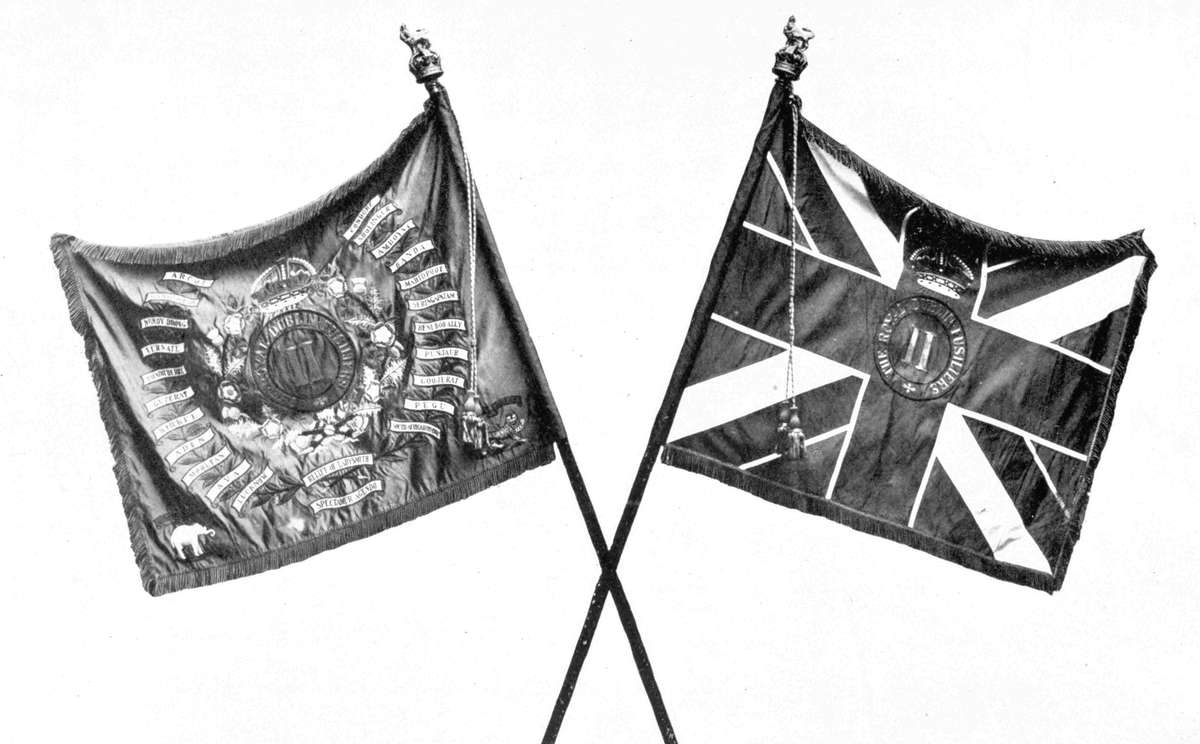
THE COLOURS OF THE ROYAL DUBLIN FUSILIERS.
(Formerly the Bombay Europeans.)
To face page 292.
On February 21 General Whish, with the First Division
strengthened by the Bombay troops, joined the Commander-in-Chief,
so that, in addition to the force enumerated
on p. 288, Lord Gough had with him for the final
attack on the Sikh position two additional battalions of
British soldiers (the 2nd Battalions of the King's Royal
Rifles and Royal Dublin Fusiliers), two regiments of native
cavalry, and two of native infantry. His artillery was
brought up to the respectable total of ninety-six field-guns,
which included three heavy batteries. The Sikhs occupied
a strong position, their flanks resting on two villages, which
they had fortified, and their whole front was covered by
a series of entrenchments. Whish, with the Bombay
troops, as I have said, joined the Commander-in-Chief
on February 21 at dawn; on the morrow Lord Gough
launched his attack. As the British army approached
the broad sandy nullah which ran along the front of the
Sikh line, the guns opened on us, disclosing their whole
front. To this fire the ninety-six pieces at once replied,
and for two hours a storm of shell was poured on the
entrenchments; then, shortly before noon, Gough moved
forward the whole line. The Sikhs fought, as is their
wont, with consummate gallantry, and the Afghan Horse
on our right made a gallant effort to retrieve the fortunes
of the day. They were met in an equally gallant manner
by the Scinde Horse, supported by the 9th Lancers, and
on this flank being uncovered the horse artillery galloped
up and enfiladed the Sikh entrenchments. "By half-past
twelve," writes Sir Charles Gough, who, as a subaltern,
took part in the campaign, "the whole Sikh army
was in full flight. By one o'clock Goojerat itself, the Sikh
camp, their baggage, and most of the guns, were in possession
of the victors." Sir Walter Gilbert, at the head
of 12,000 men, pressed the retreating Sikhs hard, never
slackening his pursuit until he had driven their Afghan
allies through the Khyber Pass and received the unconditional
surrender of their leaders.
At Goojerat the victory was complete, and the Sikhs,
recognizing the inevitable, acknowledged British rule.
Heavy was the price we paid for the conquest of the
Punjab, but the blood shed on the banks of the Sutlej
was not shed in vain, for England has no more faithful
subjects, no braver soldiers in her armies, than the Sikhs
who stood so bravely before us in the campaigns of
1846-1849.
Casualties at the Battle of Goojerat.
| Regiments. | Officers. | Men. |
| K. | W. | K. | W. |
| 3rd Hussars | - | - | - | 1 |
| 9th Lancers | - | - | - | - |
| 14th Hussars | 1 | 2 | - | 4 |
| 10th Lincolns | - | 1 | 7 | 53 |
| 24th S. Wales Borderers | - | - | - | - |
| 29th Worcesters | - | - | 2 | 6 |
| 32nd Cornwall L.I. | - | 1 | 1 | 4 |
| 53rd Shropshire L.I. | - | - | - | - |
| King's Royal R. | - | - | - | 1 |
| 61st Gloucesters | - | - | - | 9 |
| Roy. Munster F. | 1 | 5 | 9 | 135 |
| Roy. Dublin F. | - | - | - | - |
| 35th Scinde H. | - | 1 | 2 | 11 |
| 36th Jacob's H. | - | - | - | - |
| Q.O. Corps of Guides | - | - | - | - |
| 2nd Q.O. Light Infantry | - | 5 | 11 | 127 |
| 11th Rajputs | - | 6 | 10 | 38 |
| 103rd Light Inf. | - | - | - | - |
| 119th Multan | - | - | - | - |
BATTLE HONOURS FOR THE CRIMEAN WAR, 1854-55
Alma—Balaclava—Inkerman—Sevastopol.
The perennial quarrel between Russia and Turkey
entered on a new phase in the year 1854, when England
and France, espousing the Ottoman cause, despatched
their fleets into the Baltic and a combined naval and
military expedition to the Crimea. The command of the
British army was entrusted to General Lord Raglan—a
veteran officer, who had served on the Duke of Wellington's
Staff in the Peninsula and at Waterloo, where he
lost an arm, and who for many years had held the important
post of Military Secretary at the Horse Guards.
He had never exercised the command of an independent
body of troops, and his experience of war was not of
recent date. The whole campaign was grievously mismanaged,
but the chief blame rested with the authorities
at the War Office, who neglected to provide the army
with the thousand and one requisites for troops waging
war in such a climate as a Crimean winter. It was
retrieved by the bravery of our troops and their cheerful
endurance of sufferings—sufferings that might have been
avoided by the exercise of common forethought.
The army that landed in the Crimea on September 14,
1854, numbered some 27,000 men, with fifty-four guns,
and was distributed as under:
Commander-in-Chief: Field-Marshal Lord Raglan.
Cavalry Division: General the Earl of Lucan.
Heavy Brigade—Brigadier-General J. Yorke Scarlett: The 4th
and 5th Dragoon Guards, the Scots Greys, and the Inniskilling
Dragoons.
Light Cavalry Brigade—Major-General the Earl of Cardigan:
4th, 8th, 11th, and 13th Hussars, and the 17th Lancers.
First Division: H.R.H. the Duke of Cambridge.
Brigade of Guards: A battalion of the Grenadier, Coldstream,
and Scots Guards.
Highland Brigade—Major-General Sir Colin Campbell: The
42nd (Royal), 79th (Cameron), and 93rd (Sutherland Highlanders).
Second Division: Lieutenant-General Sir de Lacy Evans.
Third Brigade—Brigadier-General Adams: 41st (Welsh), 47th
(North Lancashire), and 49th (Royal Berkshires).
Fourth Brigade—Brigadier-General Pennefather: The 30th (East
Lancashire), 55th (Border Regiment), and the 95th (Derbyshire).
Third Division: Lieutenant-General Sir Richard England.
Fifth Brigade—Brigadier-General Sir John Campbell: 4th (King's
Own), 38th (South Staffords), and the 50th (Royal West
Kent).
Sixth Brigade—Brigadier-General Eyre: The Royal Scots, 28th
(Gloucesters), and 44th (Essex).
Fourth Division: Major-General Sir George Cathcart.
Seventh Brigade—Brigadier-General Torrens: 20th (Lancashire
Fusiliers), 21st (Royal Scots Fusiliers), and the 68th (Durham
Light Infantry).
Eighth Brigade: 46th (Cornwall Light Infantry), and the 57th
Middlesex (arrived after the landing of the troops on
September 14, not in time to take part in the Battle of the
Alma).
Light Division: Lieutenant-General Sir George Brown.
First Brigade—Major-General W. Codrington: 7th (Royal
Fusiliers), 23rd (Royal Welsh Fusiliers), and the 33rd (West
Riding Regiment).
Second Brigade—Major-General G. Buller: The 19th (Yorkshires),
77th (Middlesex), and the 88th (Connaught Rangers).
In addition to the above, the 2nd Battalion of the Rifle
Brigade was also present, but in the earlier stages of the
campaign it acted as a divisional battalion.
Acting in co-operation with us was a strong French
army, under Marshal St. Arnaud, a division of which was
commanded by one of the Napoleon Princes, and a
Turkish force of 8,000 men, under Omar Pasha.
In the spring of 1855 a division of the Sardinian army
also arrived, and was sharply engaged with the Russians
at the Battle of the Tchernaya.
The army was reinforced from time to time by regiments
from home and from India, and when peace was
declared in 1856 it was composed of close on 50,000 well-equipped
men, capable of carrying on the Siege of Sevastopol
to a satisfactory conclusion. The casualties during
the campaign, apart from those incurred at the Battles of
Alma, Balaclava, Inkerman, and the two assaults on the
Redan, were not heavy, the losses in some regiments
being remarkably small; but the losses from disease were
regrettably severe—the more regrettable as, with proper
forethought, many hundreds—nay, thousands—of valuable
lives might have been saved. The campaign is
memorable as the first in which the whole of our infantry
were armed with a percussion arm, and also the first in
which a body of lady nurses was organized for service in
military hospitals. The honoured name of Florence
Nightingale must for ever be associated with the war in
the Crimea. It was also the first in which officers and
men were authorized to accept and to wear foreign medals
and decorations; and, lastly, it was to recognize the
bravery of subordinate officers and men in the campaign
that the decoration of the Victoria Cross was instituted.
This battle honour is borne by the following regiments:
4th Hussars.
8th Hussars.
11th Hussars.
13th Hussars.
17th Lancers.
Grenadier Guards.
Coldstream Guards.
Scots Guards.
Royal Scots.
King's Own (Lancasters).
Royal Fusiliers.
Yorkshire.
Lancashire Fusiliers.
Royal Scots Fusiliers.
Royal Welsh Fusiliers.
Gloucesters.
East Lancashires.
West Riding.
Border.
South Staffords.
Welsh.
Royal Highlanders.
Sherwood Foresters.
North Lancashire.
Royal Berkshire.
West Kent.
Middlesex.
Manchester.
Durham Light Infantry.
Cameron Highlanders.
Connaught Rangers.
Argyll and Sutherland Highlanders.
Rifle Brigade.
At the Alma the Russians occupied a strong natural
position, following the crest of a range of hills dominating
the valley of the Alma River. Their front was covered
by one or two redoubts, but no serious effort had been
made to strengthen it. Had this been done, the disparity
in numbers would have been compensated for.
The actual strength of the combatants and casualties are
as follows:
| Troops Engaged | Men. | Guns. |
Officers. | Men. |
| K. | W. | K. | W. |
| British | 27,000 | 54 | 26 | 73 | 327 | 1,557 |
| French | 23,000 | 72 | 3 | 54 | 253 | 1,033 |
| Turks | 6,500 | ? | ? | ? | ? | ? |
| Russians | 37,500 | 96 | 45 | 100 | 1,762 | 2,720 |
A good-sized library might be filled with the literature
on the Crimean War. Most of the more valuable books,
such as Hamley's, Kinglake's, Clarke's, and Sir William
Russell's "Letters to the Times," are in every library, so
that it is quite unnecessary to deal in any detail with the
events of this campaign. At the Alma the French took
the right, their right flank resting on the sea. We advanced,
covered by the Rifle Brigade, with the Cavalry
Division on our outer or left flank. The Second Division,
on our right, kept touch with the French, and had in
support the Third Division, under Sir Richard England.
On our left the Light Division, under Sir George Brown,
led, supported by the division under the Duke of Cambridge,
who in this, his first engagement, showed the
hereditary courage of our Royal Family. In the course
of the advance through the vineyards at the foot of the
hill, and before the final advance took place, the troops
suffered much from the artillery fire of the Russians, and
were thrown into some confusion. Few amongst the
senior officers had seen any service since the Peninsular
War, and the number of regimental officers who had
heard the whistle of a bullet was infinitesimal; yet the
behaviour of all was excellent, and after three and a half
hours of hard fighting the Russians were in full retreat,
leaving a couple of guns in our hands. Unfortunately,
we were in no condition to follow up our advantage. The
Russians were able to retire unmolested into Sevastopol,
and we were compelled to embark on a siege of indefinite
length, with totally inadequate means.
It was necessary to secure a harbour as a base of operations,
and the allied armies carried out a flank march
within striking distance of the Russians. No advantage
was taken of this movement, and by the commencement
of October our troops were in possession of the little land-locked
harbour of Balaclava, and the labours of the long-drawn-out
siege commenced.
Casualties at the Battle of the Alma.
| Regiments. | Officers. | Men. |
| K. | W. | K. | W. |
| 11th Hussars | - | - | - | - |
| 13th Hussars | - | - | - | - |
| 17th Lancers | - | - | - | - |
| Royal Artillery | 3 | - | 9 | 21 |
| Grenadier Gds. | - | 3 | 11 | 116 |
| Coldstream Gds. | - | 2 | - | 27 |
| Scots Guards | - | 11 | 26 | 123 |
| Royal Scots | - | - | - | - |
| K.O. Lancaster | - | 2 | 3 | 8 |
| Royal Fusiliers | 1 | 11 | 42 | 168 |
| Yorkshire | 2 | 6 | 45 | 174 |
| Lancashire Fus. | - | - | - | 1 |
| R. Welsh Fus. | 8 | 5 | 45 | 152 |
| Gloucester | - | - | - | - |
| 30th E. Lancs | 1 | 4 | 11 | 63 |
| 33rd W. Riding | 1 | 6 | 55 | 177 |
| 38th S. Stafford | - | - | - | - |
| 41st Welsh | - | - | 4 | 23 |
| 42nd R. High. | - | - | 7 | 32 |
| 44th Essex | - | - | 1 | 7 |
| 47th N. Lancs | - | 4 | 4 | 61 |
| 49th R. Berks | - | - | 2 | 13 |
| 50th West Kent | - | - | - | - |
| 55th Border | 2 | 6 | 11 | 96 |
| 63rd Manchester | - | - | - | - |
| 68th Durham L.I. | - | - | - | - |
| 77th Middlesex | - | - | 3 | 17 |
| 79th Cameron Highlanders | - | - | 2 | 7 |
| 88th Connaught Rangers | - | 1 | 5 | 16 |
| 93rd Sutherland Highl. | 1 | - | 7 | 44 |
| 95th Sherwood Foresters | 6 | 11 | 48 | 128 |
| Rifle Brigade | - | 1 | 11 | 39 |
This battle honour is borne by the
4th Dragoon Guards.
5th Dragoon Guards.
Royal Dragoons.
Royal Scots Greys.
Inniskilling Dragoons.
4th Hussars.
8th Hussars.
11th Hussars.
13th Hussars.
17th Lancers.
Sutherland Highlanders.
The defence of the country surrounding Balaclava had
been entrusted to the Turks, who in a series of actions on
the banks of the Danube had shown that they could
fight well behind stone walls. Some redoubts had been
thrown up on the neighbouring heights, and these were
armed with ships' guns, lent by us to the Turks. In Balaclava
itself was one battalion—the 93rd (Sutherland
Highlanders)—and the command of the place had been
entrusted to one of the few veterans of the army who had
seen modern war. Sir Colin Campbell had served under
Wellington in the Peninsula, and had earned mention in
more than one despatch when still a subaltern. For his
conduct at Barrosa and at San Sebastian, at both of
which actions he was wounded, he was promoted to a
company in the 60th Rifles. In the China War he had
commanded the 98th, and was made an Aide-de-Camp to
the Queen. In the Punjab Campaign he had added to his
reputation by his masterly handling of a brigade in the
hard-fought battles of Chillianwallah and Goojerat, and
he had earned still higher laurels when in command of
the troops at Peshawur in the early days of our occupation
of the Punjab frontier.
On the early morning of October 25 the Russians, who
had no very great opinion of the Turkish troops, made a
determined attack on Balaclava. The valley leading
down to the sea is cut in two by a low range of hills, and
down these two valleys they advanced. The Turks, after
one or two rounds, incontinently abandoned the redoubts,
and fled in haste to the refuge of the town. Sir Colin
moved up the 93rd Highlanders, and awaited the advance
of the Russian cavalry division. He had a firm faith in
the new weapon with which his troops were armed, and
a still firmer belief in his Highlanders. On swept the
Russians, and, as they came within range, a volley from
the 93rd at 600 yards emptied many saddles, but did not
stop the advance; then, as the dense Russian columns
neared the "thin red streak, tipped with steel," a second
volley, at 150 yards, rang out, and as the smoke cleared
away the Russians were seen moving to the rear. Now
was the opportunity for our cavalry, and the Heavies were
not slow in taking advantage of it. Scarlett moved forward
his brigade in two lines, the Greys and Inniskillings
leading, with the 5th and 4th Dragoon Guards on the
right and left flanks respectively, and the Royal Dragoons
in support, the total strength being some 750 men. As
Russell graphically wrote, while the Russians fell back,
Scarlett charged into them. "By sheer steel and courage
the Inniskillings and Scots were winning their desperate
way right through the enemy's squadrons, and already
grey horse and red coat had disappeared right at the rear
of the mass, when the Royals, 4th Dragoon Guards, and
5th Dragoon Guards rushed at the remnants of the first
line of the enemy, and went through it like pasteboard.
In less than five minutes after they met our Dragoons the
Russians were flying at full speed from a foe not half their
strength."
Lord Raglan had in the meantime moved down the
First and Fourth Divisions to reinforce Balaclava, and,
recognizing the military genius of the Brigade Commander,
ordered the Duke of Cambridge to take his instructions
from Sir Colin Campbell. The services of the infantry
were not called into requisition, but, owing to some inconceivable
blunder, never yet properly explained, the
Light Brigade of cavalry, without any supports, were
ordered to attack the Russian troops in the westernmost
valley. Here there was a whole division of Russian
cavalry, with a force of six battalions of infantry supporting
thirty-six guns, and at this force the little cavalry
brigade, just 636 strong, was let loose. "C'est magnifique,
mais ce n'est pas la guerre!" was the comment of
a French General who witnessed the spectacle. The Earl
of Cardigan was not wanting in personal courage, but he
was totally inexperienced in war. He led his men
straight at the guns, and escaped scathless himself, but
he acted in defiance of all the canons of the art of war.
The charge of the Light Brigade has been immortalized
by Tennyson, but, alas! the men who participated in it
were rewarded with the same decoration as the infantry
soldiers who marched down from the camp to act as
spectators of that gallant charge. The clasp "Balaclava"
means nothing; the name on the colours is the battle
honour.
Casualties at the Battle of Balaclava.
| Regiments. | Officers. | Men. |
| K. | W. | K. | W. |
| Staff | 2 | 4 | - | - |
| 4th Drag. Gds. | - | - | 1 | 4 |
| 5th Drag. Gds. | - | 2 | 2 | 11 |
| Roy. Dragoons | - | 4 | 2 | 7 |
| R. Scots Greys | - | 4 | 2 | 53 |
| Inniskilling Dragoons | - | - | 2 | 13 |
| 4th Hussars | 2 | 2 | 32 | 22 |
| 8th Hussars | 2 | 2 | 30 | 23 |
| 11th Hussars | - | 3 | 32 | 23 |
| 13th Hussars | 3 | - | 24 | 14 |
| 17th Lancers | 3 | 4 | 33 | 34 |
| Sutherland Highlanders | - | - | - | - |
This battle honour is borne by the
4th Hussars.
8th Hussars.
11th Hussars.
13th Hussars.
17th Lancers.
Grenadier Guards.
Coldstream Guards.
Scots Guards.
Royal Scots.
King's Own.
Royal Fusiliers.
Yorkshire.
Lancashire Fusiliers.
Royal Scots Fusiliers.
Royal Welsh Fusiliers.
Gloucesters.
East Lancashire.
West Riding.
Border.
South Staffords.
Welsh.
Essex.
Sherwood Foresters.
North Lancashire.
Royal Berkshires.
West Kent.
Middlesex.
Manchesters.
Durham Light Infantry.
Connaught Rangers.
Rifle Brigade.
This was indeed a soldiers' battle. In the early dawn
of November 5 a large Russian force, taking advantage
of a dense fog, issued from Sevastopol and surprised our
troops in the trenches. Reinforcements were hurried up
from the camp, and the men—the few men on duty in
the trenches and in the advanced siege-works—behaved
with unexampled heroism. As each fresh regiment came
up it was hurried into action, without any regard to
brigades or divisions, and, indeed, in many cases men
were found fighting in groups under officers of different
regiments. The Allies were not merely surprised: they
were outnumbered, as the following table shows:
| Troops Engaged. | Men. | Guns. | Officers. | Men. |
| K. | W. | K. | W. |
| British | 8,500 | 38 | 44 | 102 | 616 | 1,878 |
| French | 7,500 | 18 | 14 | 34 | 118 | 1,299 |
| Russians | 42,000 | 106 | 2 | 47 | 4,976 | 10,162 |
After an heroic struggle, in which the Russians displayed
the greatest gallantry, they were driven back, with terrible
slaughter, the fire of those of our regiments which were
armed with the Minié rifle doing fearful execution in the
dense columns of the enemy. It will hardly be believed
that many regiments were still armed with the Brown
Bess with which we fought in the Peninsula, although
the Minié rifle had in the Kaffir War three years before
proved itself a most formidable weapon.
The losses of the army during the winter of 1854-55
were appalling, but the men bore them without a murmur.
With the spring active operations were renewed, and on
June 18, the anniversary of Waterloo, an attempt was
made to carry the fortress by storm. In this disastrous
attack our losses were 22 officers and 247 men killed,
78 officers and 1,207 men wounded. Ten days later the
Commander-in-Chief, Lord Raglan, died, and the command
was given to his Chief of the Staff, another Peninsular
veteran, Sir James Simpson, an officer who did not enjoy
the confidence of the army, and who practically owned
that he felt himself unfitted to exercise its command.
On September 8 a second attack was made on the
Redan, the outwork which had defied our attempt on
June 18. Again we were driven back, after our men had
made good their footing in the place. This defeat was
entirely due to the neglect to support the stormers, who
had shown the habitual gallantry of the British soldier.
Casualties at the Battle of Inkerman.
| Regiments. | Officers. | Men. |
| K. | W. | K. | W. |
| Staff | 5 | 12 | - | - |
| 8th Hussars | - | - | - | - |
| 11th Hussars | - | - | - | - |
| 13th Hussars | - | - | - | - |
| 17th Lancers | 1 | - | - | 1 |
| Royal Artillery | 2 | 4 | 13 | 76 |
| Grenadier Gds. | 3 | 6 | 101 | 124 |
| Coldstream Gds. | 8 | 5 | 65 | 116 |
| Scots Guards | 1 | 8 | 49 | 119 |
| 1st Royal Scots | - | - | 1 | - |
| 4th K.O. Lancs | - | - | - | - |
| 7th Royal Fus. | - | 5 | 13 | 49 |
| 19th Yorkshire | 1 | - | 1 | 3 |
| 20th Lancs Fus. | 1 | 8 | 40 | 122 |
| 21st R. Scots F. | 1 | 6 | 24 | 90 |
| 25th R. Welsh F. | 1 | 1 | 18 | 20 |
| 28th Gloucester | - | - | - | - |
| 30th E. Lancs | 2 | 5 | 29 | 101 |
| 33rd W. Riding | 1 | 2 | 6 | 55 |
| 38th S. Stafford | - | - | - | - |
| 41st Welsh | 5 | 6 | 55 | 101 |
| 44th Essex | - | - | - | - |
| 47th N. Lancs | - | 2 | 19 | 45 |
| 49th R. Berks | - | - | - | - |
| 50th West Kent | 1 | 1 | 8 | 21 |
| 55th Border | - | 5 | 18 | 58 |
| 57th Middlesex | 2 | 3 | 13 | 75 |
| 63rd M'chester | 3 | 7 | 12 | 93 |
| 68th Durham L.I. | 2 | 2 | 16 | 33 |
| 77th Middlesex | 1 | - | 20 | 37 |
| 88th Connaught Rangers | - | 2 | 22 | 80 |
| 95th Sherwood Foresters | - | 4 | 27 | 104 |
| Rifle Brigade | 2 | 4 | 35 | 109 |
On the following day the Redan was found to be
evacuated, and our men entered unopposed. This was
the last general action of the war. The Russians now
abandoned the city, and retired to the far side of the
harbour, and, though actual fighting was at an end, the
winter was passed as if on active service. In the spring
overtures of peace were made, and in the summer of 1856
the army returned to England, Sevastopol being restored
to the Russians.
In writing of battle honours, I must not omit to mention
that our allies, the French, Turks, and Sardinians,
bestowed a certain number of decorations on our officers
and men. The French distributed crosses of the Legion
of Honour, which were, as a rule, given to officers. In
some exceptional cases a cross was given to a non-commissioned
officer, and in some very few cases to privates.
The French war medal was bestowed on a certain number
of men in each battalion, and one was given to H.R.H.
the Duke of Cambridge. The Turks showered the Order
of the Medjidieh with no niggardly hand, and the Sardinians
gave a few crosses of the Order of St. Maurice
and St. Lazarus to senior officers, and a few medals to
each regiment. The distribution of these foreign decorations
gave rise to considerable dissatisfaction. There
were certain regiments which had fought throughout the
campaign; there were others which had landed at the
very close of the operations, and had not lost a man in
action. All shared equally, like the labourers in the
vineyard.
There were few officers on the Staff or in the Brigade
of Guards who did not receive four decorations for this
campaign, and, in truth, the Guards deserved all they
received. They not only took their fair share of trench
duty, but at the Alma and at Inkerman they suffered
most severely. A party of Guardsmen who happened to
be on fatigue duty at Balaclava the morning of the battle
were collected by a young officer, and fell in on the left
of the 93rd. That young officer afterwards acted as
Brigade-Major to the heroic Nicholson at the Siege of
Delhi, and as I write is, I believe, the only living officer
who saw Sevastopol and Delhi fall. I allude to Lieutenant-General
Sir Seymour Blane, who served as a subaltern
of the Scots Guards in the Crimea. Afterwards
exchanging into the 52nd, he marched down with Nicholson
to Delhi, and was by his side when the hero of the
siege was shot down inside the Cashmere Gate.
This distinction was awarded to all regiments which
landed in the Crimea prior to September 8, 1855, the date
of the last storming of the Redan:
King's Dragoon Guards.
4th Dragoon Guards.
5th Dragoon Guards.
Carabiniers.
Royal Dragoons.
Royal Scots Greys.
4th Hussars.
Inniskilling Dragoons.
8th Hussars.
10th Hussars.
11th Hussars.
12th Lancers.
13th Hussars.
17th Lancers.
Grenadier Guards.
Coldstream Guards.
Scots Guards.
Royal Scots.
Buffs.
King's Own (Lancaster).
Royal Fusiliers.
Norfolks.
Somerset Light Infantry.
West Yorkshire.
Leicester.
Royal Irish.
Yorkshire.
Lancashire Fusiliers.
Royal Scots Fusiliers.
Royal Welsh Fusiliers.
Scottish Rifles.
Gloucesters.
East Lancashire.
East Surrey.
Cornwall Light Infantry.
West Riding.
Border.
South Staffords.
Dorsets.
South Lancashire.
Welsh.
Royal Highlanders.
Essex.
Sherwood Foresters.
North Lancashire.
Northamptons.
Royal Berkshires.
West Kent.
Middlesex.
Wiltshire.
Manchester.
Durham Light Infantry.
Highland Light Infantry.
Seaforth Highlanders.
Cameron Highlanders.
Royal Irish Fusiliers.
Connaught Rangers.
Argyll and Sutherland Highlanders.
Rifle Brigade.
In addition to the following casualties in action, between
the landing of the army in the Crimea on September 14,
1854, and the storming of the Redan on September 8,
1855, 11,375 non-commissioned officers and men were
invalided and 16,037 died of disease!
Casualties during the Campaign in the Crimea (including
the Battles of Alma, Balaclava, and Inkerman).
| Regiments. | Officers. | Men. |
| K. | W. | K. | W. |
| K. Drag. Gds. | - | - | - | - |
| 4th Drag. Gds. | - | - | 2 | 12 |
| 5th Drag. Gds. | 1 | 3 | 2 | 4 |
| Carabiniers | - | - | - | - |
| Roy. Dragoons | - | 4 | 3 | 7 |
| Scots Greys | - | 4 | 8 | 57 |
| 4th Hussars | 2 | 2 | 19 | 24 |
| Inniskillings | - | - | 3 | 14 |
| 8th Hussars | 2 | 3 | 26 | 23 |
| 10th Hussars | - | - | - | 4 |
| 11th Hussars | 1 | 2 | 29 | 29 |
| 12th Lancers | - | - | - | - |
| 13th Hussars | 3 | - | 14 | 31 |
| 17th Lancers | 4 | 5 | 39 | 34 |
| Royal Artillery | 12 | 30 | 173 | 632 |
| Roy. Engineers | 15 | 13 | 55 | 86 |
| Grenadier Gds. | 6 | 12 | 144 | 410 |
| Coldstream Guards | 10 | 6 | 128 | 197 |
| Scots Guards | 4 | 23 | 109 | 336 |
| Royal Scots | 3 | 10 | 58 | 225 |
| Buffs | 3 | 13 | 78 | 259 |
| King's Own | 2 | 5 | 38 | 142 |
| Royal Fusiliers | 8 | 23 | 174 | 381 |
| Norfolks | 1 | 2 | 20 | 83 |
| Somerset L.I. | - | - | - | 11 |
| 14th W. Yorks | - | - | 16 | 46 |
| Leicesters | 1 | 5 | 34 | 134 |
| Royal Irish | 3 | 10 | 87 | 267 |
| Yorkshire | 4 | 20 | 138 | 502 |
| 20th Lancs F. | 3 | 10 | 83 | 81 |
| R. Welsh Fus. | 16 | 15 | 193 | 495 |
| 28th Gloucesters | - | 9 | 42 | 89 |
| 30th E. Lancs | 10 | 19 | 144 | 364 |
| 31st E. Surrey | 2 | 1 | 25 | 84 |
| 33rd W. Riding | 8 | 21 | 116 | 293 |
| 34th Border | 7 | 18 | 118 | 375 |
| 38th S. Staffs. | 3 | 7 | 43 | 210 |
| 39th Dorsets | 1 | 1 | 9 | 46 |
| 41st Welsh | 9 | 13 | 145 | 426 |
| 42nd R. Highlanders | 1 | 2 | 39 | 119 |
| 44th Essex | 4 | 8 | 64 | 156 |
| 46th Cornwall L.I. | 1 | 2 | 32 | 71 |
| 47th N. Lancs | 2 | 9 | 120 | 216 |
| 48th N'ampton | - | 2 | 12 | 60 |
| 49th Berkshire | 7 | 10 | 204 | 325 |
| 50th West Kent | 2 | 4 | 56 | 67 |
| 55th Border | 6 | 18 | 145 | 412 |
| 56th Essex | - | 1 | 8 | 13 |
| 57th Middlesex | 8 | 11 | 81 | 237 |
| 62nd Wiltshire | 7 | 7 | 37 | 121 |
| 63rd Manchester | 6 | 8 | 65 | 127 |
| 68th Durham L.I. | 6 | 4 | 51 | 71 |
| 71st Highland L.I. | - | - | - | 1 |
| 72nd Seaforth Highlanders | 1 | - | 12 | 48 |
| 77th Middlesex | 5 | 11 | 411 | 606 |
| 79th Cameron Highlanders | - | 2 | 12 | 55 |
| 82nd S. Lancs | - | - | - | - |
| 88th Connaught Rangers | 7 | 16 | 159 | 400 |
| 89th R. Irish F. | - | 1 | 13 | 73 |
| 90th Scottish R. | 4 | 15 | 92 | 221 |
| 93rd Sutherland Highlanders | 2 | 2 | 19 | 95 |
| 95th Derbysh. | 7 | 21 | 184 | 360 |
| 97th West Kent | 8 | 9 | 108 | 198 |
| Rifle Brigade (two batts.) | 9 | 20 | 245 | 781 |
The Sultan of Turkey, in addition to the Order of the
Medjidieh, bestowed a silver medal on every officer and
man present in the Crimea, and Queen Victoria in like
manner granted the Crimean Medal to every French,
Sardinian, and Turkish soldier or sailor present in the
campaign.
Decorations bestowed by our Allies during the
Crimean War.
| Regiments. | Legion of Honour. | Medjidieh. | Sardinian Medal. | French War Medal. |
| General officers | 22 | 16 | 8 | 1 |
| Staff officers | 47 | 35 | 8 | - |
| Med. officers | 31 | 85 | - | - |
| 1st Drag. Gds. | - | 3 | - | - |
| 4th Drag. Gds. | 2 | 7 | 6 | 4 |
| 5th Drag. Gds. | 3 | 6 | - | 4 |
| 6th Drag. Gds. | - | 2 | 2 | - |
| Roy. Dragoons | 2 | 5 | 3 | 3 |
| R. Scots Greys | 2 | 5 | 3 | 4 |
| 4th Hussars | 3 | 6 | 4 | 4 |
| 8th Hussars | 3 | 5 | 4 | 3 |
| 10th Hussars | - | 7 | 1 | 1 |
| 11th Hussars | 2 | 7 | 2 | 5 |
| 12th Lancers | - | 4 | 2 | 1 |
| 13th Hussars | 2 | 5 | 4 | 2 |
| 17th Lancers | 2 | 6 | 4 | 3 |
| Royal Artillery | 74 | 124 | 50 | 60 |
| Roy. Engineers | 26 | 22 | 15 | 7 |
| 3rd Batt. Grenadier Guards | 6 | 31 | 7 | 9 |
| 1st Batt. Coldstream Gds. | 6 | 32 | 7 | 9 |
| 1st Batt. Scots Guards | 7 | 32 | 9 | 7 |
| Royal Scots (two batts.) | 7 | 25 | 7 | 7 |
| Buffs | 4 | 10 | 3 | 5 |
| 4th King's Own | 4 | 13 | 6 | 9 |
| 7th Roy. Fus. | 8 | 14 | 6 | 9 |
| 9th Norfolk | 4 | 10 | 3 | 7 |
| 13th Somer. L.I. | 2 | 10 | 5 | - |
| 14th W. Yorks | 2 | 10 | 5 | 6 |
| 17th Leicesters | 3 | 12 | 2 | 6 |
| 18th Roy. Scots | 3 | 11 | 4 | 7 |
| 19th Yorkshire | 7 | 11 | 6 | 9 |
| 20th Lancs F. | 5 | 13 | 6 | 9 |
| 21st R. Scots F. | 6 | 11 | 7 | 9 |
| 23rd R. Welsh Fusiliers | 7 | 10 | 6 | 10 |
| 28th Gloucester | 5 | 13 | 8 | 9 |
| 30th E. Lancs | 6 | 17 | 6 | 9 |
| 31st E. Surrey | 2 | 7 | 1 | 5 |
| 33rd W. Riding | 6 | 14 | 7 | 9 |
| 34th Border | 4 | 13 | 6 | 8 |
| 38th S. Staffs | 5 | 12 | 6 | 9 |
| 39th Dorsets | 4 | 10 | 3 | 6 |
| 41st Welsh | 7 | 12 | 6 | 9 |
| 42nd R. Highl. | 6 | 13 | 6 | 8 |
| 44th Essex | 6 | 13 | 8 | 8 |
| 46th Corn. L.I. | 5 | 16 | 6 | 7 |
| 47th N. Lancs | 6 | 17 | 9 | 7 |
| 48th N'amptons | 2 | 9 | 2 | 4 |
| 49th R. Berks | 6 | 12 | 7 | 9 |
| 50th R. W. Kent | 5 | 12 | 8 | 7 |
| 55th Border | 3 | 13 | 6 | 9 |
| 56th Essex | 1 | - | - | 4 |
| 57th Middlesex | 6 | 13 | 6 | 8 |
| 62nd Wiltshire | 5 | 13 | 6 | 8 |
| 63rd Manchester | 2 | 8 | 4 | 8 |
| 68th Durham L.I. | 7 | 11 | 6 | 9 |
| 71st Highland L.I. | 2 | 10 | 4 | 6 |
| 72nd Seaforth Highlanders | 2 | 8 | 1 | 4 |
| 77th Middlesex | 5 | 12 | 6 | 7 |
| 79th Cameron Highlanders | 5 | 12 | 7 | 8 |
| 88th Connaught Rangers | 6 | 14 | 9 | 10 |
| 89th R. Irish F. | 4 | 10 | 4 | 5 |
| 90th Scottish R. | 5 | 11 | 5 | 8 |
| 93rd Sutherland Highlanders | 4 | 14 | 6 | 9 |
| 95th Derbyshire | 6 | 11 | 6 | 8 |
| 97th West Kent | 5 | 11 | 5 | 8 |
| Rifle Brigade (two batts.) | 11 | 33 | 13 | 18 |
This decoration dates from the Crimean War, and was
instituted, as is well known, as a reward open to all ranks
for conspicuous bravery in presence of the enemy. During
the campaign the following regiments were able to add to
their other honours the Victoria Cross:
| Royal Scots Greys | 2 |
| 4th Hussars | 1 |
| Inniskilling Dragoons | 1 |
| 11th Hussars | 1 |
| 13th Hussars | 1 |
| 17th Lancers | 3 |
| Royal Artillery | 9 |
| Royal Engineers | 7 |
| Grenadier Guards | 4 |
| Coldstream Guards | 3 |
| Scots Guards | 5 |
| Royal Scots | 1 |
| The Buffs | 2 |
| 4th (King's Own) | 1 |
| 7th (Royal Fusiliers) | 5 |
| 17th (Leicestershire) | 1 |
| 18th (Royal Irish) | 1 |
| 19th (Yorkshire) | 2 |
| 23rd (Royal Welsh Fus.) | 4 |
| 30th (East Lancashire) | 1 |
| 34th (Border Regiment) | 2 |
| 41st (Welsh) | 2 |
| 44th (Essex) | 1 |
| 47th (North Lancashire) | 1 |
| 49th (Royal Berkshire) | 3 |
| 55th (Border) | 2 |
| 57th (Middlesex) | 2 |
| 68th (Durham Light Infantry.) | 1 |
| 77th (Middlesex) | 2 |
| 90th (Scottish Rifles) | 2 |
| 97th (West Kent) | 2 |
| 1st Batt. Rifle Brigade | 4 |
| 2nd Batt. Rifle Brigade | 3 |
The following table is of interest, as showing the total
losses incurred by the army in the Crimea in the different
arms:
| Cavalry. | Artillery. | Engineers. | Infantry. |
| Officers. | Men. | Officers. | Men. | Officers. | Men. | Officers. | Men. |
| Killed in action | 9 | 114 | 11 | 121 | 9 | 32 | 125 | 2,331 |
| Died of wounds | 4 | 26 | 1 | 52 | 6 | 23 | 73 | 1,832 |
| Died of disease | 23 | 1,007 | 10 | 1,298 | 5 | 175 | 105 | 13,414 |
| Total | 36 | 1,147 | 22 | 1,471 | 20 | 230 | 303 | 17,577 |
| Wounded in action | 26 | 237 | 30 | 632 | 13 | 86 | 435 | 10,406 |
From the above it will be seen that, whilst 2,769 officers
and men were killed in action or died of their wounds,
the losses by disease amounted to no less than 16,037!
For every ten officers killed in action, six died from
disease, whereas in the proportion of the men who fell the
figures were reversed. For every ten who fell in action
or as a result of their wounds no less than sixty died of
disease.
BATTLE HONOURS FOR THE INDIAN MUTINY,
1857-1859
India—Delhi—Lucknow—Central India—Defence of Arrah—Behar.
For some inscrutable reason, the colours of those regiments
which were employed in the suppression of the
Indian Mutiny bear no record of their services unless they
happened to have been employed at the Siege of Delhi or
in the operations at Lucknow or in Central India. There
is, indeed, one notable exception. A group of Sikhs, but
fifty in number, aided Mr. Wake in his determined defence
of Arrah, and subsequently the regiment was engaged in
maintaining peace in the province of Behar. For these
services the 45th Rattray's Sikhs are authorized to bear
the words "Defence of Arrah" and "Behar" on their
colours and appointments. Yet British and native troops—aye,
civilians and delicately-nurtured women—were
engaged for many weary months in a daily contest with
battle and with wounds, with plague, pestilence, and
famine. Throughout the length and breadth of the
northern portion of Hindustan we were waging a life-and-death
struggle for the maintenance of British supremacy
in India. The details of many incidents in that struggle
we never shall know. Our Indian graveyards are filled
with tombs recording the losses of those days, from
Generals who, like Nicholson, fell in the hour of
victory, to wee bairnies who perished from want of the
bare necessaries of life, and, alas! also from the sword
and bullet of our foes. The whole peninsula is hallowed
with the unknown graves of our gallant dead.
The history of the Siege of Delhi, where a force of less
than 10,000 men besieged a city defended by four times
their number of disciplined troops for a period of twelve
long weeks in the hottest season of the year, is only
equalled by the dauntless bravery with which Lucknow
was defended against incalculable odds. Loyal native
vied with his British comrade in upholding the honour of
our flag, whilst the cheerful heroism and self-abnegation
of the women who bore such a noble part in the struggle
is deserving of more than a passing tribute of homage.
The romantic interest that centred round Havelock's
relief of Lucknow has dwarfed the marvellous achievements
of the Delhi force—an achievement never surpassed
in the military annals of our own or any other country.
The losses suffered by the troops at the siege of that
fortress exceeded in number the total casualties incurred
by the rest of the army in the suppression of the rebellion.
The "morning states" of September 13—the day before
the storm of the city—showed a total strength of 9,366
effectives; on the evening of the 20th, when the entire
city was in our hands, there were but 5,520. No less
than 3,846 officers and men had been killed and wounded;
yet four days afterwards General Wilson was enabled to
despatch a little column to aid in the relief of Lucknow.
It consisted of three batteries of Bengal Artillery, 300
men of the 9th Lancers, the headquarters of the 8th and
75th Regiments, totalling only 450 men, so grievously had
these battalions suffered in the siege. Four squadrons of
native cavalry and two battalions of Punjab troops brought
the total strength of the brigade to just under 2,000 men.
The regiments authorized to bear the battle honour
"Delhi" on their colours and appointments are the
Carabiniers.
9th Lancers.
King's (Liverpool).
Gloucesters.
Oxford Light Infantry.
King's Royal Rifles.
Gordon Highlanders.
Royal Munster Fusiliers.
9th Hodson's Horse.
10th Lancers.
21st Daly's Horse.
22nd Sam Browne's Horse.
25th Cavalry.
Q.O. Corps of Guides,
1st P.W.O. Sappers and Miners.
54th Sikhs.
55th Coke's Rifles.
56th Punjab Rifles.
57th Wilde's Rifles.
127th Baluch Light Infantry.
2nd Gurkhas.
3rd Gurkhas.
It will be noted that the Carabiniers is the only corps
which bears the two honours "Delhi" and "Sevastopol."
On the first news of the mutiny at Meerut reaching the
Commander-in-Chief at Simla on May 12, he at once
moved down with the Headquarters Staff to Umballa,
where the regiments at Kussowlie, Dugshai, and Subathoo,
had been ordered to assemble. The 9th Lancers and two
troops of Bengal Artillery were quartered at that station,
and at Meerut were the Carabiniers, the 60th Rifles, and
the headquarters of the Bengal Artillery.
Much unavoidable delay occurred in procuring carriage
for the troops, and, of course, it was necessary to provide
for the safety of the Punjab. It was not until May 24
that the Commander-in-Chief was able to move. Two
days afterwards he died of cholera at Kurnal, and the
command devolved upon General Barnard—a gallant
officer who had been Chief of the Staff during the latter
part of the Crimean War, but who was new to India.
The force moving down from Umballa consisted of two
brigades, and was to be joined before reaching Delhi by
the Meerut garrison. This junction took place on June 7.
The Meerut force had fought a successful action with the
mutineers a week previously, capturing five guns.
On the 7th General Barnard found the mutineers drawn
up in a strong position at Budli-ka-Serai to dispute his
advance. They had thrown up some works, in which
heavy guns were placed. After a sharp fight, in which
we lost 51 killed and 131 wounded, the rebels were driven
out of their vantage-ground, with the loss of thirteen
guns, and from this day the siege may be said to have
commenced. Just one month later General Barnard died
of cholera, which was daily claiming victims from all
ranks. Indeed, until the close of the siege, this scourge
was never absent. From time to time, as circumstances
permitted, reinforcements of both British and native
troops were pushed down from the Punjab, and the loyal
Sikh chiefs also sent contingents, which, though not of
great fighting value, served to keep open our communications
with Lahore, and to a certain extent, no doubt, did
aid in the work of the siege.
Between June 7 and September 14—the day of the
assault—the besieging force fought no fewer than thirty-two
engagements, and so heavy were the duties thrown
on officers and men that it was impossible to relieve the
guards, men remaining for days at a time on duty, whilst
staff officers took their turn in the batteries and trenches.
On the morning of September 13 the decision was taken
to carry the city by storm. Two breaches were declared
practicable on the northern side of the walls at the Water
and Kashmir bastions. Practically the whole available
force was detailed for the assault. The first, second, and
third columns, under the command of General John
Nicholson, were to act on the left; the fourth, under
Major Reid, of the 2nd Gurkhas, on the right. It consisted
of Major Reid's own gallant regiment (now well
known to all soldiers as the 2nd Gurkhas), the infantry
of the Guides, and such men as could be spared from the
picquets of the British regiments on the ridge. No. 1
column of the force, under Nicholson, was composed of
the 75th (now the Gordon Highlanders), the 1st Bengal
Fusiliers (now the 1st Munsters), and the 2nd Punjab
Infantry (now the 56th Rifles). This stormed the breach
at the Kashmir bastion. No. 2 column, under Colonel
Jones, of the 61st, consisted of the 8th (Liverpool) Regiment,
the 2nd Bengal Fusiliers (now the 2nd Munsters),
and the 4th (now the 54th Sikhs). The third column,
under Colonel Campbell, of the 52nd, was composed of
the 52nd (Oxford Light Infantry), the 3rd Gurkhas, and
Coke's Rifles. The total strength of the three columns
amounted to 2,800 men, whilst the fourth, under Major
Reid, was 680 strong, but it had in support 1,200 men of
the Kashmir contingent. The reserve was under Colonel
Longfield, of the 8th, and comprised the 61st Foot (2nd
Gloucesters), the 4th Punjab Infantry (now the 57th),
Wilde's Rifles, and the Baluch battalion (now the 127th
Baluch Light Infantry).
Casualties at the Siege and Assault of Delhi,
May to September, 1857.
| Regiments. | BRITISH TROOPS. | NATIVE TROOPS. |
| Officers. | Men. | Officers. | Men. |
| K. | W. | K. | W. | K. | W. | K. | W. |
| General Staff | 4 | 9 | - | - | - | - | - | - |
| Royal Artillery | 4 | 24 | 43 | 216 | 1 | 1 | 26 | 49 |
| Royal Engineers | 3 | 19 | 6 | 3 | 2 | 1 | 34 | 60 |
| 6th Carabiniers | 1 | 2 | 18 | 9 | - | - | - | - |
| 9th Lancers | 1 | 2 | 26 | 64 | - | - | - | - |
| 8th (King's Liverpool) | 3 | 7 | 41 | 129 | - | - | - | - |
| 52nd (Oxford L.I.) | 1 | 4 | 28 | 75 | - | - | - | - |
| 60th (King's Roy. Rifles) | 4 | 10 | 109 | 266 | - | - | - | - |
| 61st (Gloucestershire) | 2 | 7 | 30 | 112 | - | - | - | - |
| 75th (Gordon Highl.) | 5 | 14 | 79 | 184 | - | - | - | - |
| 1st Roy. Munster Fus. | 3 | 11 | 95 | 210 | - | - | - | - |
| 2nd Roy. Munster Fus. | 4 | 6 | 79 | 156 | - | - | - | - |
| Hodson's Horse | - | - | - | - | - | - | - | - |
| 21st Daly's Horse | - | - | - | - | - | - | - | 3 |
| 22nd Sam Browne's H. | - | - | - | - | - | - | - | - |
| 25th Cavalry | - | - | - | - | - | - | - | - |
| Q.O. Corps of Guides | 2 | 6 | - | - | 5 | 10 | 65 | 215 |
| 54th Sikhs | 1 | 3 | - | - | 2 | 7 | 43 | 116 |
| 55th Coke's Rifles | 3 | 5 | - | - | 3 | 5 | 71 | 141 |
| 56th Rifles | 1 | 2 | - | - | 2 | 4 | 41 | 103 |
| 57th Wilde's Rifles | 1 | 1 | - | - | - | 2 | 9 | 59 |
| 127th Baluchis | 1 | - | - | - | - | 1 | 7 | 48 |
| 2nd Gurkhas (Sirmoor Rifles) | 1 | 6 | - | - | 2 | 8 | 80 | 219 |
| 3rd Gurkhas | 1 | 2 | - | - | - | 3 | 20 | 33 |
Note.—I regret that I have been unable to trace the losses in
those three fine regiments, now the 21st, 22nd, and 25th Cavalry.
The story of the siege and the assault is an epic which
will remain a monument of the heroism of our troops,
British and native, to all time. Those who stand on that
famous ridge and gaze at the stupendous walls before
them, must wonder, as I have wondered, at the audacity
which conceived and the gallantry which achieved such
a feat of arms. As I have said, by September 20 the
city, with its arsenal, was in our hands, and on the following
day a small brigade of all arms was at once despatched
to open up communications with the North-West
Provinces, and to aid in the tranquillization of the
country. Our losses during the siege were grievously
heavy. Out of a total strength of 640, the 60th Rifles
lost 389 of all ranks; the 2nd Gurkhas lost 310 out of
540; the Guides 303 out of 550. Coke's Rifles had all
its officers killed or wounded, and more than half the
men. The 52nd had arrived from Sialkot just a month
prior to the assault. It marched into camp 640 strong;
on the morning of September 14 it paraded 240 rank and
file, having lost 74 men from cholera and sunstroke in
one short month! The table on p. 315 tells its own tale.
The following regiments are authorized to bear this
battle honour on their colours and appointments:
Queen's Bays.
7th Hussars.
9th Lancers.
Northumberland Fusiliers.
King's Liverpools.
Royal Welsh Fusiliers.
Lincolns.
Lancashire Fusiliers.
Border.
Scottish Rifles.
Cornwall Light Infantry.
South Staffords.
South Lancashire.
Black Watch.
Royal West Kent.
Shropshire Light Infantry.
North Staffords.
York and Lancaster.
Seaforth Highlanders.
Gordon Highlanders.
Cameron Highlanders.
Sutherland Highlanders.
Royal Munster Fusiliers.
Royal Dublin Fusiliers.
Rifle Brigade.
9th Hodson's Horse.
10th Hodson's Horse.
11th Probyn's Lancers.
21st Daly's Horse.
22nd Sam Browne's Horse.
25th Cavalry.
1st P.W.O. Sappers and Miners.
2nd Q.O. Sappers and Miners.
14th Sikhs.
16th Lucknow.
32nd Pioneers.
56th Punjabi Rifles.
57th Wilde's Rifles.
This one battle honour, "Lucknow," covers four distinct
military operations—the memorable defence of the
Residency under Sir Henry Lawrence; the first relief,
or rather reinforcement, of the beleaguered garrison by
Sir Henry Havelock; the final relief and withdrawal of
the women and children by Sir Colin Campbell; and,
lastly, the siege and capture of the city in March, 1858.
With the medal granted for the Indian Mutiny clasps
were issued for the Relief, the Defence, and one simply
superscribed "Lucknow," which covered the final operations
only. Wearers of the medal are enabled to show
the distinctive part they played in the grand struggle in
and around Lucknow, but survivors are now few and far
between. In a very few short years there will be no
wearers of the Mutiny Medal left. Whilst the men by
their clasps showed the share they took in the operations,
the regiments bear no distinctive mark showing the part
they played. The Somerset Light Infantry and the 12th
Khelat-i-Ghilzai Regiment are authorized to bear a mural
crown as a distinctive honour for their defence of Jelalabad
and Khelat-i-Ghilzai; the 16th Lucknow Regiment
wears a battlemented gateway, to connect it with the
memorable defence of the Residency; the 45th Sikhs
bear the words "Defence of Arrah"; and the regiments
which formed the garrison, under Sir George White, were
granted the honour "Defence of Ladysmith," to differentiate
them from their comrades who, under Sir
Redvers Buller, effected their relief. It is true that the
32nd were made light infantry as a recognition of their
conduct at Lucknow, but so little is this fact remembered
that in the month of January, 1910, a leading
service paper gravely asserted that the Cornwalls were
given their bugles in the year 1832! Sic transit gloria
mundi.
Defence of Lucknow.
Lucknow, the capital of the newly-annexed kingdom
of Oude, was in 1857 a city of some 150,000 inhabitants,
known to be fanatically hostile to our rule. Only the
year before the Mutiny the King had been deposed, and
with good cause. Misgovernment and tyranny were
rampant throughout his kingdom, and we were performing
a mere act of justice towards his people in
removing him from power. We have not yet learnt the
lesson that a nation prefers bad government under its
own rulers to the best form of government under an alien
administration. The unpopularity of the annexation was
felt beyond the confines of Oude. A very large proportion
of the sepoys of the Bengal army were recruited from
this very country, and their sympathies were naturally
with their fallen King.
Fortunately, Lord Dalhousie, the Governor-General
responsible for the annexation, had selected one of the
very best soldier-statesmen in India for the post of Chief
Commissioner—Sir James Outram, a tried soldier of the
Bombay army. At this moment he was absent from his
post, having been selected to command the troops in the
Persian Expeditionary Force. His successor, Sir Henry
Lawrence, was, like Outram, a soldier—one of that
gallant band of brothers whose names will last so long
as does our Indian Empire. He commenced his career
in the Bengal Artillery, had seen a great deal of service
as a gunner, and had earned a still higher reputation in
the early days of the administration of the Punjab.
Fortunate it was for England that she had such a man
in Lucknow. The Mutiny caused no surprise to Henry
Lawrence. Fifteen years previously, in the pages of the
Calcutta Review, he had predicted an attempt on the part
of the pampered sepoy to gain the upper hand, but his
warnings had fallen on deaf ears. Now he was ready for
the emergency—ready so far as his means permitted.
The garrison of Lucknow consisted of one British battalion—the
32nd (Cornwall Regiment), numbering 19
officers and 517 other ranks—one weak company of the
84th—one officer and 48 men. There were, in addition,
six regiments of native infantry, two of native cavalry,
and two batteries of native artillery.
The news of the mutiny at Meerut and of the capture
of Delhi by the adherents of the old Mogul Emperor was
known in Lucknow on May 12, and then Lawrence commenced
to take steps to meet the coming storm. Measures
were adopted to render the Residency defensible—no
easy task. It was in the heart of the city, surrounded
by a few buildings erected for the convenience of the
staff of the Resident. These were in plots of ground,
separated by low mud walls. Within easy range were
several masonry palaces, which afforded good shelter to
an enemy. It was impossible to include all of the staff
houses in the scheme of defence, owing to the smallness
of the garrison. All that could be done was to connect
the various buildings by a breastwork, and to excavate
a ditch all round. Provisions and ammunition were
brought in, and all the civilians, as well as the British
troops, were concentrated as near the Residency as
possible.
On May 29 the native garrison threw off all semblance
of loyalty, murdered their officers, including the Brigadier
(Handscomb), and moved out of their lines, which they
fired. They were from time to time joined by other
mutineers, who had committed grievous outrages in other
stations in Oude. No attack, however, was made on the
Residency.
On June 29 Lawrence determined to undertake the
offensive, and he moved out to Chinhut, where the
mutineers were massed, to attack them. He met with
a sharp reverse, losing some of his guns, whilst the wing
of the 32nd, who were with him, lost 115 killed out of 300
men engaged. The following morning Lawrence blew up
the magazine, containing 249 barrels of powder and
594,000 rounds of ammunition, which it was found impossible
to carry into the Residency, and made final preparations
for the siege. His garrison consisted of under
2,000 men, of whom 100 were civilians and 765 loyal
natives—men of the mutinied regiments who had determined
to throw in their lot with the Sirkar. With
them were nearly 200 pensioners—men mostly past
work.
It is not within the scope of this work to deal with the
details of that heroic defence, where civilian vied with
soldier, native with Englishman, to uphold the honour
of our name; where delicately-nurtured women and the
no less devoted wives of the privates shared all the
dangers, all the privations, of the humblest sepoy.
Many women and children died from want of the bare
necessaries of life; more than one babe was shot in its
mother's arms, and more than one woman fell a victim
to the bullets of our foes. For a long eighty-seven days
did the siege last, and then the little band under Havelock
forced its way through the many thousands of the
besieging force, and brought the welcome reinforcement
of British bayonets to the beleaguered garrison. The
figures below tell the sad tale of the severe losses which
were endured by the heroic garrison of Lucknow:
Casualties in the Defence of Lucknow.
| Regiments. | Officers. | Men. |
| K. | W. | K. | W. |
| 32nd Corn. L.I. | 7 | 8 | 192 | 171 |
| Royal Bengal Artillery | 1 | 2 | 52 | 18 |
| 84th York and Lancs (one company) | - | 1 | 12 | 8 |
No fewer than eighty-nine women and children also
perished.
Relief of Lucknow by General Sir Henry
Havelock.
The most serious problem that faced the Governor-General
in India, as soon as the real gravity of the Mutiny
was realized, was to effect the relief of the beleaguered
garrisons of Lucknow and Cawnpore, where large numbers
of women and children were hemmed in by the mutineers,
and were in daily peril of their lives. It was well known
that at both places the defences were utterly inadequate,
and that the garrisons were all too small. By a fortunate
coincidence, a strong force was on its way to
China for the purpose of compelling a respect for treaty
rights, and the regiments composing that force were
stopped at Singapore and diverted to Calcutta. At the
same time, the regiment at the Mauritius was despatched
with all haste to India, and the return of the two battalions—the
64th (North Staffords) and the 78th (Ross-shire
Buffs)—from the Persian Campaign enabled Lord
Canning, the Governor-General, to send these up to
Allahabad, and so to form the nucleus of a relieving
army.
The officer selected for the command of the relieving
force was Colonel Henry Havelock, an officer who had
recently commanded a brigade in the Persian War.
Havelock had seen an immensity of service in India,
mostly on the Staff. He had been Adjutant of the 13th
Light Infantry, and had served with that distinguished
regiment throughout the Burmese War of 1824. In
Afghanistan he had earned a Brevet and a C.B. for his
exceptional services at the defence of Jelalabad. He had
been present at Maharajpore, where he had earned a
second Brevet. But he was a disappointed man. Success
had come to him late in life, for he had been twenty-three
years a subaltern, and had been purchased over times
without number.
Immediately on his arrival in Calcutta Havelock
learned of his new command, and he at once pushed up
to Allahabad to take over charge from Colonel Neill, of
the Madras Fusiliers, already at that station. The force
was all too weak for the task imposed upon it. It barely
numbered 1,350 bayonets, including 500 Sikhs. Its
cavalry numbered just twenty sabres, composed of officers
of regiments which had disappeared in the storm and a
few brave planters. The following are the details of the
brigade with which Havelock essayed the relief of Lucknow:
| Royal Artillery | 76 | men. |
| 64th (North Staffords) | 435 | " |
| 78th (Ross-shire Buffs) | 284 | " |
| 84th (York and Lancaster) | 191 | " |
| Madras Fusiliers | 376 | " |
| Ferozepore Sikhs | 448 | " |
| Volunteer cavalry | 20 | sabres. |
Arriving at Allahabad on June 30, Havelock immediately
moved forward; but the weather was terrific,
and his men suffered much—not only from heat, but also
from cholera. Not a day passed without some victim
being claimed by one or other of these deadly foes.
To-day it was a drummer of the Highlanders, to-morrow
the senior Staff Officer of the army. Still, no heart
quailed. The danger that faced their countrywomen
nerved all, but, alas! their gallant efforts were doomed
to failure. When the Nana saw the net closing round
him, he gave the order for the murder of the women and
children who, trusting to his honour, had surrendered to
him at Cawnpore; and when Havelock's force entered
the place, they were met with the most ghastly evidence
of cruelties which had been perpetrated by the man who
for many years professed himself a loyal ally of the
English.
Weakened by losses in action, as well as by disease,
Havelock was compelled to halt at Cawnpore for reinforcements.
These reached him in the shape of the 5th
(Northumberland Fusiliers)—the Fighting Fifth—from
the Mauritius, and six companies of the 90th (Scottish
Rifles)—a regiment which, under its Colonel, Campbell,
had earned a great reputation for dash in the Crimea.
With the reinforcements came the unwelcome news that
he had been superseded by Sir James Outram, who was
reappointed to his old post of Chief Commissioner of
Oude, with the supreme command of all the troops in
that province. Sir James, however, with rare self-denial,
refused to deprive Havelock of the honour of
carrying out the relief, and published an order announcing
his intention to act in the ranks of the volunteer cavalry
until Lucknow was entered.
It was not until the middle of September that Havelock
was enabled to continue his onward march. He
was opposed at every step, but the troops would not be
denied; and on the 25th of that month a welcome reinforcement
of nearly 2,000 fighting men was thrown into
Lucknow, and the lives of the sorely-pressed garrison
assured.
Havelock lived just long enough to know that his
services had been appreciated at last, and that he had
been gazetted a Major-General for distinguished service
in the field, and raised to the dignity of a K.C.B. The
baronetcy conferred upon him was not gazetted until
after his death. The final relief I deal with on
p. 326. A dark shadow was cast over that glorious
achievement. Havelock was able to drag his sorely
stricken frame across the breastwork to welcome Sir
Colin Campbell and the relieving army, and then, worn
out by toil and anxiety, he sank into his grave. In a
shady grove of trees hard by the Alumbagh they made
his humble tomb, and Campbell, Outram, Inglis, Peel,
and many a stout soldier who had followed him in that
stern march from Cawnpore, now followed his remains to
their last resting-place. So long as gallant deeds and
noble aspirations and spotless self-devotion are cherished
in our midst, so long will Havelock's lonely tomb, hard
by the scenes of his triumphs and of his death, be regarded
as one of the most sacred spots where England's
soldiers lie.
No sooner was Delhi in our hands than General Wilson,
as I have shown on p. 312, despatched a small force
towards Agra, where, unfortunately, the civil and military
authorities had not shown themselves possessed of those
qualities which have built up our Indian Empire. Few
indeed were the men that Wilson could spare, but on
the morning of September 21 Brigadier Greathed, Colonel
of the 8th (King's), now the Liverpool Regiment, marched
towards Agra at the head of the little movable column.
His force consisted of two troops of horse and one battery
of field artillery; the 9th Lancers (300 strong); the 8th
and 73rd Regiments, which, in consequence of their heavy
losses, only numbered 450 men; four squadrons of the
21st, 22nd, and 25th Cavalry and of Hodson's Horse, the
four squadrons some 500 strong; and the 2nd and 4th
Punjab Infantry (now the 56th and 57th Rifles). All told,
the brigade numbered 800 cavalry, 1,650 infantry, 200
sappers, and 18 guns.
On the 10th of the following month Greathed reached
Agra, where he was attacked by the rebels. To their
astonishment, these gentry found they had a totally
different stamp of men to deal with than the Agra garrison,
and Greathed, with the loss of but 13 killed and 54
wounded, drove them off, capturing thirteen guns.
During the short halt at Agra, General Hope Grant,
Colonel of the 9th Lancers, arrived in camp with some
300 British soldiers, convalescents of the regiments at
Delhi, and took over command. Pushing on to Cawnpore,
he found a wing of the 93rd (Sutherland Highlanders)
and some men of the regiments which had gone into
Lucknow with Havelock.
The relief of Lucknow was now the principal objective,
and Hope Grant, in obedience to orders received from
Calcutta, moved towards that city, halting at Bhantira
until the arrival of Sir Colin Campbell, who, on the first
news of the Mutiny reaching England, had been sent out
to assume the post of Commander-in-Chief in India.
The new Chief possessed the confidence not only of the
Ministry in England, but of every man in the army.
Probably he was the most deservedly popular General
who had up till then ever commanded an army in the
field. He had a wide experience of war. As a subaltern
he had served in the Peninsula, been repeatedly
mentioned in despatches for gallantry—a rare thing to
happen to a subaltern in Wellington's days. He commanded
a regiment in China in the war of 1842, a brigade
in the Punjab Campaign of 1849, was in chief command
in many of the early expeditions on the Punjab frontier,
and was one of the very few General Officers who emerged
from the Crimean War with enhanced credit. The vast
majority of the reinforcements despatched from England
for the suppression of the Mutiny had served in the
Crimea, and to them the name of Colin Campbell was
that of a man who could lead and whom they were proud
to follow.
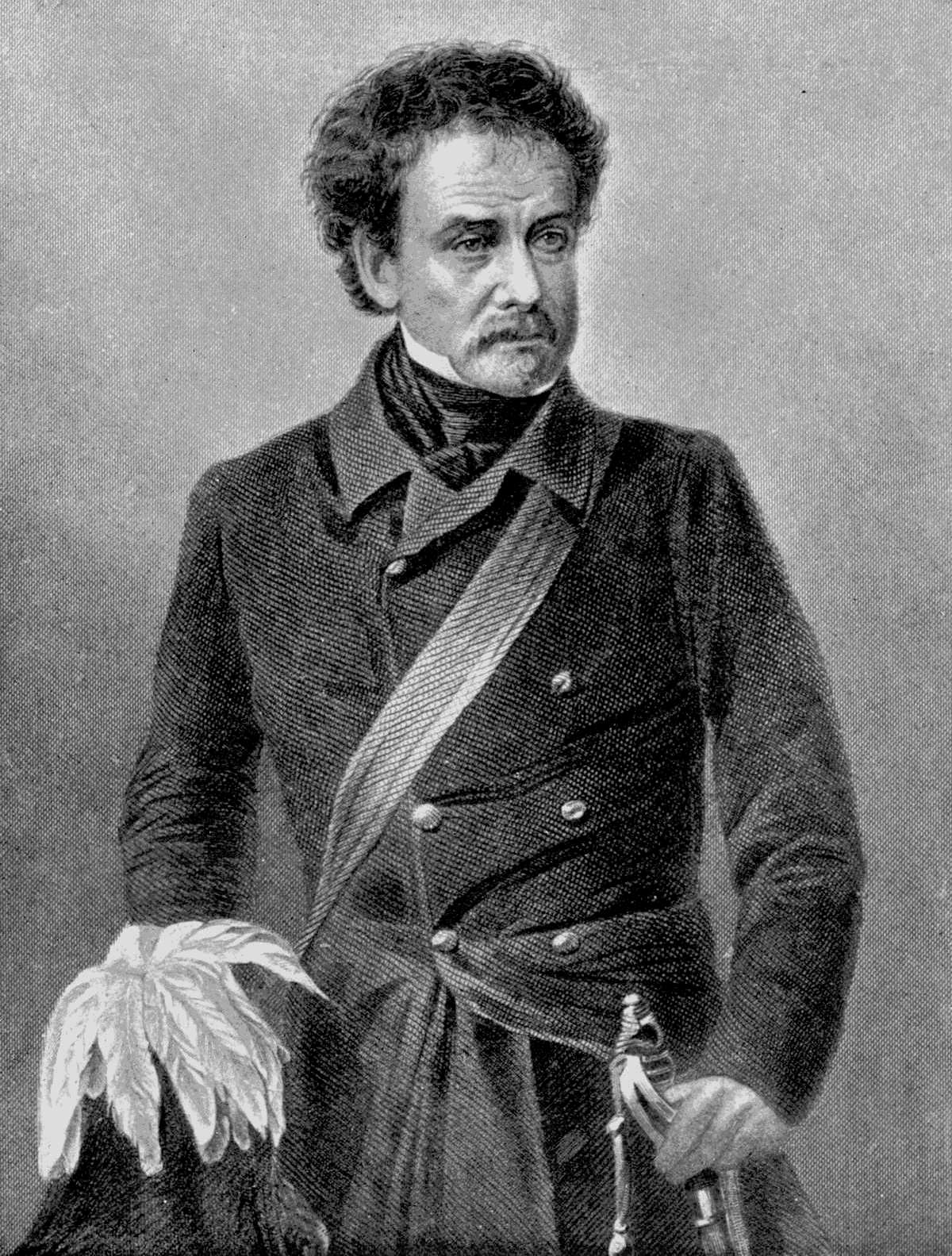
FIELD-MARSHAL COLIN CAMPBELL: LORD CLYDE.
To face page 324.
On November 9 Sir Colin arrived at Bhantira, and
assumed the command of the army. Sir Colin was fully
alive to the imperative necessity of withdrawing the
beleaguered garrison from its perilous position at Lucknow.
Sir James Outram, who, as I have shown, assumed
command on reaching the Residency, was besieged by a
disciplined army numbering 60,000 men. He was encumbered
with 1,500 sick men, women, and children, and
the Residency, over which our flag had been kept flying
for thirteen weary weeks, was but an ordinary Indian
building, commanded on all sides by masonry palaces,
which had been converted into siege-batteries. To carry
through this formidable task Sir Colin had but 4,500
men, distributed as under:
Cavalry Brigade—Brigadier Little (9th Lancers): Two squadrons
9th Lancers, one squadron 21st Daly's Horse, one squadron
22nd Sam Browne's Horse, one squadron 25th Cavalry, one
squadron Hodson's Horse.
These native troops were under Lieutenants Watson,
Probyn, Younghusband, and Hugh Gough respectively,
and it is worthy of note that of these four subalterns one
(Younghusband) was killed; the other three were all
wounded in action, and all three lived to wear the Victoria
Cross and the Grand Cross of the Bath.
Artillery Brigade—Brigadier Crawford, R.A.: Two troops of
Bengal Horse Artillery, two batteries of Field Artillery, two
companies of Royal Artillery, eight guns of the Naval Brigade
under the gallant Sir William Peel, with 250 seamen and
Marines.
First Brigade—Brigadier Adrian Hope: 93rd Highlanders, a
wing of the 53rd (Shropshires), and the 57th Wilde's Rifles.
Second Brigade—Brigadier Greathed: 8th (King's Liverpool
Regiment), a battalion made up of detachments of British
regiments in Lucknow, and the 56th Punjab Rifles.
Third Brigade—Brigadier Russell: 84th Regiment, 23rd (Royal
Welsh Fusiliers), and two companies of the 82nd (South
Lancashires).
To keep open communication with Allahabad and Calcutta,
Sir Colin had left General Wyndham at Cawnpore
with a force of British troops. Wyndham had earned a
great reputation for coolness under fire at the storming
of the Redan, but he had no experience of Indian warfare,
and had never exercised an independent command in his
life. At Cawnpore he did not show to advantage as a
commander.
During Sir Hope Grant's halt prior to Sir Colin's arrival
the most energetic measures had been adopted to obtain
the necessary carriage to enable the Commander-in-Chief
to carry out his design of withdrawing the garrison, so
that, on his assuming command, all was ready for an
immediate advance; and on November 17, after some
hard fighting, which entailed a loss of 45 officers and 496
men killed and wounded, the relieving force entered the
Residency, and the garrison was saved. Ten days subsequently
the evacuation of the Residency had been successfully
accomplished, and the whole force was en route
for Cawnpore, where Wyndham had suffered a sharp
reverse at the hands of the mutinous Gwalior contingent.
When Sir Colin Campbell withdrew the garrison from
the Residency, he felt that but half of his task was done.
His force was not strong enough to warrant his attacking
the mutineers, and so crushing the rebellion in Oude.
This must be left until the arrival of the reinforcements
from England, and undertaken when he was not hampered
with a large convoy of sick and wounded, women
and children. In order to maintain a certain hold on the
country around Lucknow, Sir Colin left Sir James Outram
with a considerable force to occupy the Alumbagh—an
old shooting-lodge of the Kings of Oude, situated in a
park about three miles from the suburbs of Lucknow.
Outram's force numbered over 4,000 men, and comprised
the 5th (Northumberland Fusiliers), 75th (Gordon Highlanders),
78th (Seaforths), 90th (now the Scottish Rifles),
and the 2nd Bengal Fusiliers (now the 2nd Munsters),
with 450 gunners of the Bengal Artillery and 150 sabres.
Opposed to Outram were, according to his report, no less
than 96,000 armed men; and from the end of November,
when the Residency was evacuated, until March 21, when
Sir Colin finally defeated the mutineers and retook Lucknow,
Outram's force was practically besieged in the
Alumbagh.
The months of December, 1857, January, February, and
March, 1858, were occupied in preparing for the final
advance on Lucknow and the break-up of the many bodies
of mutineers scattered over Oude, Bundulcund, and the
North-West Provinces. Reinforcements were daily arriving
from England, but it was not until the beginning
of March that Sir Colin was able to commence his advance
on Lucknow. His army now numbered upwards of
20,000 men, with 180 guns. Never in the history of
India had such a large number of British troops taken
the field.
The Cavalry Division, under Sir Hope Grant, included
the Queen's Bays, 7th Hussars, 9th Lancers, Hodson's
Horse, Daly's Horse, Sam Browne's Horse, and the 25th
Cavalry, in addition to the division under Outram.
The Second Division, under Sir Edward Lugard, was
composed of the Third Brigade (Brigadier Guy)—34th,
38th, and 53rd Regiments; Fourth Brigade (Adrian Hope)—42nd,
93rd, and 57th Wilde's Rifles.
The Third Division, under General Walpole, comprised
the Fifth Brigade (Brigadier Douglas)—23rd, 79th, and
1st Munster Fusiliers; Sixth Brigade (Horsford)—2nd and
3rd Battalions Rifle Brigade and 56th Rifles.
The artillery was under the command of Sir Archdale
Wilson, who had been made a K.C.B. for the capture of
Delhi.
Casualties at the Relief of Lucknow by Havelock.
| Regiments. | Officers. | Men. |
| K. | W. | K. | W. |
| 5th Northumberland Fus. | 1 | 2 | 23 | 29 |
| 64th N. Staffs. | 1 | 3 | 7 | 81 |
| 78th Ross. Buffs | 2 | 6 | 47 | 85 |
| 84th York and Lancaster | 2 | 4 | 25 | 55 |
| 90th Scottish Rifles | 4 | 7 | 39 | 62 |
| 102nd R. Dublin Fusiliers | 1 | 4 | 33 | 83 |
| 14th Ferozepore Sikhs | - | 1 | 7 | 37 |
Casualties at the Relief of Lucknow by Sir Colin Campbell,
November, 1857.
| Regiments. | Officers. | Men. |
| K. | W. | K. | W. |
| Staff | 2 | 6 | - | - |
| Naval Brigade | 1 | 3 | 4 | 17 |
| 9th Lancers | - | - | - | - |
| Royal Artillery | 1 | 6 | 14 | 59 |
| Roy. Engineers | - | 1 | 3 | 17 |
| 5th Fusiliers | - | - | 5 | 3 |
| 8th King's | - | - | - | 1 |
| 23rd R. Welsh Fusiliers | - | 1 | 3 | 18 |
| 53rd Shropshire L.I. | - | 3 | 10 | 63 |
| 64th Regiment | - | - | 4 | 7 |
| 82nd Regiment | 1 | 1 | 1 | 13 |
| 84th Regiment | - | - | 1 | 8 |
| 90th Light Inf. | 1 | 3 | 6 | 22 |
| 93rd H'landers | 2 | 7 | 33 | 62 |
| 102nd R. Dublin Fusiliers | 1 | - | 3 | 12 |
| 21st Cavalry | - | - | 2 | 3 |
| 22nd Sam Browne's H. | - | - | 1 | 2 |
| 25th Cavalry | - | - | - | 3 |
| 56th Punjab R. | 1 | 1 | 5 | 18 |
| 57th Wilde's R. | 1 | 2 | 13 | 50 |
Casualties at the Siege and Capture of Lucknow,
March, 1858.
| Force employed. | Officers. | Men. |
| K. | W. | K. | W. |
| Naval Brigade | 1 | 1 | 1 | 13 |
| The Bays | 1 | 1 | 2 | 5 |
| 7th Hussars | - | 3 | - | 3 |
| 9th Lancers | - | 1 | 1 | 4 |
| Royal Artillery | 1 | 3 | 6 | 33 |
| Roy. Engineers | 3 | 3 | 19 | 34 |
| 5th Fusiliers | - | 1 | - | 3 |
| 10th Lincolns | - | 1 | 4 | 23 |
| 20th Lancs F. | - | 2 | 7 | 28 |
| 23rd R. Welsh Fusiliers | - | 3 | 4 | 25 |
| 34th Border | - | - | - | 4 |
| 38th S. Staffs | - | 3 | 1 | 22 |
| 42nd Royal Highlanders | - | 1 | 5 | 39 |
| 53rd Shropshire L.I. | - | 2 | 1 | 27 |
| 78th Seaforth Highlanders | - | - | - | 1 |
| 79th Cameron Highlanders | - | 2 | 7 | 21 |
| 90th Scottish Rifles | - | 1 | 5 | 28 |
| 93rd Sutherland Highlanders | 2 | 2 | 12 | 59 |
| 97th Royal W. Kent | 1 | - | 2 | 21 |
| Rifle Brigade (two batts.) | 1 | 2 | - | 19 |
| 22nd Sam Browne's Cav. | - | 1 | 1 | 9 |
| 25th Cavalry | - | 1 | - | 6 |
| 56th Punjab R. | 1 | 1 | 8 | 32 |
| 57th Wilde's R. | 1 | 3 | 9 | 30 |
The regiments authorized to bear this distinction are the
8th Hussars.
12th Lancers.
14th Hussars.
17th Lancers.
Inniskilling Fusiliers.
South Staffords.
Sherwood Foresters.
Highland Light Infantry.
Seaforth Highlanders.
Royal Irish Rifles.
Connaught Rangers.
Leinster.
30th Gordon's Horse.
31st Duke of Connaught's Own Lancers.
32nd Lancers.
33rd Q.O. Light Cavalry.
2nd Q.O. Sappers and Miners.
3rd Sappers and Miners.
2nd Q.O. Light Infantry.
44th Merwara Infantry.
61st Pioneers.
79th Carnatic Infantry.
96th Berar Infantry.
98th Infantry.
104th Wellesley's Rifles.
110th Mahratta L.I.
112th Infantry.
113th Infantry.
124th Baluchis.
125th Napier's Rifles.
Although as a whole the Princes of Central India remained
loyal to our rule, their armies threw in their lot
with the mutineers, and the honour "Central India"
was conferred on the regiments which were employed in
stamping out rebellion in those provinces during the
winter of 1857-58 and in the ensuing hot weather. A
number of independent columns were so engaged, but
the brunt of the fighting fell on the troops under that
dashing leader Sir Hugh Rose, afterwards Lord Strathnairn.
The capture of Kotah, Jhansi, Calpee, and Gwalior
all bear witness to the heroism of our troops and to the
sufferings they endured during that terrible hot-weather
campaign of 1858, when men died of cholera and of sunstroke
by hundreds, and when the survivors struggled
on manfully to retain our hold on Hindustan.
The rapidity of the movements of Sir Hugh Rose has
often been held up as a contrast to the slowness of those
of Sir Colin Campbell, but it must be borne in mind that
when Sir Hugh took the field the back of the Mutiny had
been broken. His duty was to hunt down and to destroy
all bodies of armed rebels in the field, and right nobly did
he perform his task. Sir Colin had to organize a force for
the relief of Lucknow (where close on 300 women and
children were besieged), to break the power of the rebel
army in Oude, and to maintain peace in Bengal. His
one line of communications was a narrow strip of railway
open to destruction at many points, and he had in the
field against him over 100,000 trained troops, possessed
of large stores of arms and munitions. The tasks before
the two Generals were entirely different. Whether, had
Sir Colin been in command in Central India, he would
have acted with the rapidity that Sir Hugh showed is a
mere matter of opinion. This much is certain—that Sir
Hugh never could have achieved success had not Northern
India been in our hands, and that it was in our hands was
due first to the gallantry of the Delhi Field Force, and
secondly to the well-organized, if slowly carried out,
campaign by which Sir Colin swept the rebels out of
Oude.
The Central India Campaign divides itself into a
number of well-executed operations in different parts of
the country. First we may take the Malwa Field Force,
under Brigadier C. S. Stuart, which consisted of the 14th
Hussars, 86th (Royal Irish Rifles), 3rd Hyderabad Cavalry,
and 125th Napier's Rifles, which was in the field from
July to December, 1857.
Casualties in Central India.
| Regiments. | Officers. | Men. |
| K. | W. | K. | W. |
| 8th Hussars | - | 9 | 18 | 34 |
| 12th Lancers | - | 1 | 2 | 16 |
| 14th Hussars | 1 | 4 | 15 | 73 |
| 17th Lancers | - | 1 | 2 | 11 |
| Royal Artillery | 2 | 6 | 11 | 37 |
| Roy. Engineers | - | - | - | - |
| 71st High. L.I. | 1 | 1 | 9 | 15 |
| 72nd Seaforth Highlanders | - | 1 | 3 | 14 |
| 83rd R. Irish Rifles | 2 | 1 | 7 | 28 |
| 86th R. Irish Rifles | 1 | 10 | 26 | 109 |
| 88th Connaught Rangers | - | 2 | 7 | 54 |
| 95th Derbys | 2 | 7 | 4 | 37 |
| 3rd Madras Eur. (2nd Innis. F.) | - | - | 3 | 12 |
| 3rd Bomb. Eur. (2nd Leinst.) | - | 6 | 17 | 92 |
| 30th Gordon's Horse | - | 1 | 7 | 18 |
| 31st Lancers | 1 | 4 | 6 | 19 |
| 32nd Lancers | 1 | 3 | 3 | 12 |
| 33rd Q.O. Light Cavalry | - | 2 | 4 | 15 |
| 2nd Q.O. Sap. and Miners | 1 | 4 | 6 | 29 |
| 3rd Sappers and Miners | - | 1 | 2 | 11 |
| 44th Merwara Infantry | - | - | - | - |
| 61st Pioneers | - | - | 2 | 5 |
| 79th Carnatic Infantry | - | 4 | 3 | 27 |
| 96th Berar Inf. | 2 | 1 | 14 | 22 |
| 98th Infantry | - | 1 | 7 | 32 |
| 104th Wellesley's Rifles | - | 1 | 5 | 13 |
| 110th Mahratta L.I. | - | 1 | 2 | 22 |
| 112th Infantry | 1 | 1 | 3 | 6 |
| 113th Infantry | - | - | 2 | 14 |
| 124th Baluchis | - | 1 | 12 | 20 |
| 125th Napier's Rifles | 2 | 6 | 11 | 37 |
Then we have Sir Hugh Rose commanding two brigades,
the one under the same Brigadier C. S. Stuart, the other
under Colonel Stewart, of the 14th Hussars. His first
act was to relieve Saugor, then defended by the 2nd
Queen's Own Rajput Light Infantry. A Madras column
had been toiling up to effect this, but General Whitlock
was impeded by many obstacles. In April Sir Hugh
carried Jhansi by storm; in May Calpee was taken; and
then the General was reinforced by a column from the
north, commanded by Brigadier-General Sir Robert Napier
(afterwards Lord Napier of Magdala). In June Gwalior was
recaptured, and with this the real operations of the Central
India Field Force came to an end, though the appearance
in the field of a rebel General, Tantia Topee, and the
assumption of the title of Peishwa by the notorious Nana
Sahib compelled the Commander-in-Chief once more to
organize a number of flying columns, whose work procured
for the regiments which composed them the battle
honour "Central India."
I have found it an impossible task to ascertain the
losses suffered by some of the regiments. The casualties
given in the table on p. 331 show, however, that the
distinction "Central India" was not earned without hard
fighting.
These two distinctions are the peculiar property of the
45th Rattray's Sikhs, and demand a passing notice.
When the Mutiny broke out, there was but one British
regiment in the long stretch of nearly a thousand miles
between Calcutta and Lucknow—the 10th Foot, at Dinapore.
Here, too, was a large native garrison—the 7th,
8th, and 40th Regiments of Bengal Infantry. Dinapore
is the military cantonment of the city of Patna, the hot-bed
then of Wahabiism, with a population of 150,000, of
whom some 38,000 were Mussulmen. It is the capital,
too, of the province of Behar, the centre then of the
indigo trade, and the home of a number of English
planters—gentlemen and sportsmen, whose sporting
instincts stood England in good stead in that hour of trial.
The General at Dinapore had plenty of warning as to
the temper of his troops and of the neighbouring population,
but no measures were taken to deal with the crisis;
and when the sepoy garrison mutinied, the men were
allowed to leave the station unmolested. A few hours
later a feeble attempt was made to follow them up, but
the detachment of the 10th (Lincolns) returned to Dinapore,
having failed to overtake the mutineers. These
marched at once on Arrah, a civil station, the head of the
railway engineers, some twenty-five miles distant. There,
fortunately, were a handful of Englishmen unfettered by
red tape. Herewald Wake, the Commissioner, and Vicars
Boyle, the railway engineer, had foreseen the coming
storm, and, to meet it, had converted the billiard-room
in Boyle's garden into a little fort, in which ammunition
and provisions had been stored. Its garrison consisted
of sixteen Englishmen, one Moslem gentleman, and fifty
men of Rattray's newly-raised regiment of Sikhs.
On the 27th the Dinapore garrison—three regiments of
sepoys, reinforced by a disaffected Rajput, Rajah Kunwar
Singh, who possessed two pieces of artillery—appeared
on the scene, and demanded the surrender of the treasure.
On that day the siege commenced in earnest.
Two days afterwards the Brigadier at Dinapore sent out
a force, consisting of some men of the 10th (Lincolns) and
37th (Hampshires), to relieve Arrah. The affair was mismanaged
from the outset, and the column was driven
back with heavy loss. Fortunately, there was a man at
hand capable of dealing with the situation. Major Vincent
Eyre, of the Bengal Artillery, was bringing up his
battery to the aid of Havelock, and, hearing of the distress
of the little garrison in Arrah, he undertook its relief.
With but 150 men of the Northumberland Fusiliers, 40 of
his own battery, and 18 gallant planters, who for the nonce
converted themselves into a corps of cavalry, he attacked
the besieging force, and after a sharp fight was enabled to
bring off the garrison without loss. The siege lasted but
five days, but the devotion of the 45th Sikhs and the
gallantry of Vicars Boyle and Herewald Wake stand out
in striking contrast to the supineness of the military
authorities at Dinapore.
For many months subsequently the 45th were employed
in hunting down rebels in the province of Behar, unsupported
by any British troops, and for these services, in
which the men were exposed to many attempts on their
fidelity, the 45th bear the word "Behar" on their colours
and appointments. Their losses during these operations
were unusually severe, 2 British officers and 43 of all
ranks having been killed or died of wounds, and 1 native
officer and 75 other ranks having been wounded.
It is impossible to close this chapter without adverting
to the injustice meted out in the distribution of the battle
honours for the Indian Mutiny. Every regiment that
served on the line of communications in Afghanistan or
in South Africa has been granted a battle honour. The
regiments which maintained peace in the Punjab, which
disarmed mutinous soldiery, which hunted down rebels in
Lower India, have been denied all share in the distinctions
granted for the Mutiny. The Inniskilling Fusiliers
at Peshawar, the 24th (South Wales Borderers) at Jhelum,
the 81st (Loyal North Lancashire) at Lahore, the 13th
(Somerset Light Infantry) at Azimghur, all contributed
to the maintenance of our hold on India, and many of
these regiments suffered severely in action.[25] It is not too
much to say that, had it not been for the 81st at Lahore,
we should never have held the Punjab. The conduct of
this regiment at the disarming of the native garrison at
Meean Meer was one of the finest feats in those dark days.
Again, what are we to think of the failure to recognize
the conduct of the 31st (now the 2nd Queen's Own
Rajput Light Infantry) at Saugor, where they defended
a large number of Englishwomen and children? There
was no stiffening of British bayonets, as at Lucknow or
at Cawnpore, but there were a number of British officers
who had earned the confidence of their men; and when
the mutinous 42nd Bengal Infantry endeavoured to seduce
the then 31st Bengal Infantry from their duty, the answer
was not merely a refusal, but the regiment, under its own
native officers, sallied out from the fort at Saugor, attacked
their mutinous bhaibunds, drove them off in confusion,
and captured a couple of guns. For the defence
of Arrah by one weak company, the 45th Sikhs bear on
their colours the honour "Defence of Arrah." Was the
defence of Saugor one whit less deserving of reward?
Victoria Crosses for the Mutiny.
| Queen's Bays | 2 |
| 7th Hussars | 2 |
| 8th Hussars | 5 |
| 9th Lancers | 12 |
| 14th Hussars | 1 |
| 17th Lancers | 1 |
| Royal Artillery | 19 |
| Royal Engineers | 8 |
| Northumberland Fusiliers | 3 |
| 10th (Lincolns) | 3 |
| 13th (Somerset L.I.) | 2 |
| 23rd (Royal Welsh Fus.) | 2 |
| 32nd (Cornwall L.I.) | 4 |
| 34th (Border Regiment) | 1 |
| 42nd (Royal Highlanders) | 8 |
| 43rd Light Infantry | 1 |
| 52nd (Oxford L.I.) | 2 |
| 53rd (Shropshires) | 5 |
| 60th (King's Royal Rifles) | 8 |
| 61st (Gloucesters) | 1 |
| 64th (North Staffords) | 1 |
| 71st (Highland L.I.) | 1 |
| 72nd (Seaforth H'landers) | 1 |
| 75th (Gordons) | 3 |
| 78th (Ross-shire Buffs) | 8 |
| 84th (York and Lancaster) | 6 |
| 86th (Royal Irish Rifles) | 4 |
| 90th Light Infantry | 6 |
| 93rd (Highlanders) | 7 |
| 95th (Derbyshires) | 1 |
| 101st (Royal Munsters) | 4 |
| 102nd (Royal Dublin Fus.) | 4 |
| 103rd (Royal Munster Fus.) | 1 |
| 109th (Royal Leinster) | 1 |
| Rifle Brigade | 3 |
BATTLE HONOURS FOR SERVICES IN CHINA,
1842-1900
Chinese War of 1840-1842—Canton—China, 1857-1860—Taku
Forts—Pekin—China, 1900—Pekin, 1900.
This distinction was conferred on the regiments which
participated in the first China War, under Sir Hugh (afterwards
Lord) Gough, and is borne by the
Royal Irish.
Cameronians.
Border Regiment.
Royal Berkshires.
North Staffords.
2nd Queen's Own Sappers and Miners.
62nd Punjabis.
66th Punjabis.
74th Punjabis.
The first China War, generally known as the "Opium
War," while not entailing any very severe fighting, cost
us many hundred lives, owing to the neglect of the most
elementary precautions on the part of the officials who
were responsible for the fitting out of the expedition. The
actual casus belli was the refusal of the Chinese Government
to permit the importation of opium into the Empire.
British merchants had been in the habit of importing the
drug from India, and large fortunes had been amassed in
this trade. When the edict was issued, there were large
stocks of the drug in the warehouses of our fellow-countrymen,
and its seizure entailed, it is said, a loss of £3,000,000.
The British Commissioner on the spot insisted on the
right of disposing of the opium, but the Chinese authorities
put this beyond a doubt by destroying the forbidden
article. We then demanded compensation, which was
refused, and a force was despatched from India to enforce
satisfaction and pecuniary compensation. This consisted
of the 18th (Royal Irish), the 26th (Cameronians), and
the 49th (Royal Berkshires), with a battalion of Bengal
infantry, composed of volunteers from the whole of the
Bengal army. Chusan was occupied with but little loss,
and the Viceroy of the province sued for peace. Terms
were arranged, the Chinese ceding Hong-Kong and paying
an indemnity of 6,000,000 dollars. Grave doubts were
felt as to the permanence of this arrangement, and our
troops occupied certain points in the country. No efforts
were made to provide them with suitable clothing or food,
and the mortality was appalling, the Cameronians losing
no less than 286 men between July 1, 1840, and January 1,
1841.
Early in 1841, weary of the vacillation of the Chinese,
the British Government sent out considerable reinforcements,
and Lieutenant-General Sir Hugh Gough was
placed in supreme command. His little army was thus
composed:
First Brigade—Major-General Lord Saltoun: 26th (Cameronians),
98th (North Staffords), and Bengal Volunteers.
Second Brigade—Major-General Schoedde: 55th (Border Regiment),
2nd (now the 62nd), 6th (now the 66th), and 37th
Regiments of Madras Native Infantry.
Third Brigade—Major-General Bartley: 18th (Royal Irish), 49th
(Royal Berkshires), and 14th (now the 74th) Madras Infantry.
Early in May, 1841, the forts at the entrance of the
Canton River were bombarded and captured. The fleet
then passed up the river, and on May 24 Canton itself
was taken, after slight resistance, our losses being 14
killed and 91 of all ranks wounded. In the month of
August Amoy was occupied, and in October Chusan was
reoccupied, our losses being an officer and 19 men killed
and wounded.
The winter of 1841-42 was spent in fruitless negotiation,
and with the opening of the spring Sir Hugh Gough recommenced
operations. In March, 1842, Ningpo was
taken, and in the month of May Chapoo was captured,
after a sharp fight, in which our losses were 6 officers and
51 of all ranks killed and wounded. In the month of July
the fleet pushed up the Yangtse Kiang River, with a view
of showing the Chinese that we could and we would
reach the very heart of their country. A more determined
resistance was met with at Ching-Kiang-Foo, which was
carried with a loss of 13 officers and 111 of all ranks.
This broke the back of the war-party. Emissaries came
in suing for peace. The fresh terms included a war indemnity
of 21,000,000 dollars and the opening of a
number of ports to free and unrestricted trade.
List of Casualties.
| Regiments. | Officers. | Men. |
| K. | W. | K. | W. |
| 18th Roy. Irish | 2 | 6 | 8 | 73 |
| 26th Camer'ians | 2 | 2 | 6 | 24 |
| 49th R. Berks | 1 | 8 | 7 | 49 |
| 55th Borders | 1 | 3 | 5 | 40 |
| 98th N. Staffs | - | - | 13 | 1 |
| 62nd Punjabis | - | 3 | 1 | 8 |
| 66th Punjabis | - | 1 | 1 | 11 |
| 74th Punjabis | - | 1 | 1 | 13 |
The little army was well rewarded for its arduous
services, and the following list of honours conferred for
the China War of 1840-1842 effectually dispels the legend
that the lavish distribution of rewards for military services
is a product of the later Victorian era. Sir Hugh Gough
was created a Baronet, the three Brigadiers received the
Knighthood of the Bath, three officers were made Aides-de-Camp
to Queen Victoria, twenty-nine received the
Companionship of the Bath, eight were made Brevet
Lieutenant-Colonels, and thirteen received the Brevet of
Major. The young Queen was graciously pleased to allow
the East India Company to strike a medal commemorative
of the campaign, and officers and men of her regiments
were authorized to wear this decoration. At the same
time Her Majesty expressed her opinion that in future
medals should only be granted by the Sovereign, and that
it should not be left to a company of "merchant
venturers" trading to the East Indies to issue decorations
to her soldiers.
This distinction was conferred on the 59th Foot (now
the East Lancashire Regiment) for its services when
holding the city of Canton during the second Chinese
War of 1857-1860.
The terms of the treaty entered into after the war of
1842 had never been faithfully observed by the Chinese.
At last the seizure of a vessel called the Arrow, flying the
British flag, compelled us to demand reparation. This
was contemptuously refused, and in the early spring of
1857 a force was despatched from England to enforce
respect to our flag. The outbreak of the Indian Mutiny
necessitated the diversion of the regiments from China to
India, so the punishment was delayed. General Straubenzee
was then in command of the troops in China, which
consisted of the 59th (East Lancashires), four battalions
of sepoys, and a couple of battalions of Royal Marine
Light Infantry.
Sir Michael Seymour, the naval Commander-in-Chief,
who was in supreme command of the naval and military
forces, was acting in conjunction with a French brigade,
and it was deemed advisable to seize Canton with the
available forces, rather than allow the Chinese to
strengthen its defences, and so increase the difficulties of
capture.
In the month of January, 1858, the Admiral, after
consultation with General Straubenzee, determined to
attempt the capture of Canton. The force at his disposal
consisted of the 59th (East Lancashires), two strong battalions
of Royal Marines, and a brigade of bluejackets
numbering 1,800 men. This force was placed under the
command of Major-General Straubenzee. The Chinese
showed considerable determination, but the energy and
gallantry of our bluejackets carried all before them, and
Canton was occupied, with a total loss of 2 officers and
14 men killed, 4 officers and 112 men wounded, the
59th (East Lancashires) contributing to the casualty list
2 officers and 2 men killed, 1 officer and 17 men wounded.
This distinction was conferred on the regiments which
took part in the operations in China during the years
1857-1860, and is now borne by the following corps of
the Indian Army:
7th Rajputs.
10th Jats.
11th Rajputs.
15th Sikhs.
22nd Punjabis.
27th Punjabis.
105th Mahratta L.I.
The necessity for putting forth our whole strength in
the suppression of the rebellion in India led, as I have
said on p. 321, to a temporary cessation of the military
operations in China. Lord Elgin, who had been deputed
by the Home Government to carry through the negotiations,
was naturally anxious to do so without the effusion
of blood. He had a considerable naval force at his disposal,
and a number of native troops had been sent from
India, more with a view of removing them from the
sphere of temptation than with the intention of their
carrying out serious military operations.
In 1858 the Chinese Commissioners agreed to our
demands that the treaty of peace between the two
nations should be concluded at Pekin; but on realizing
that Lord Elgin was determined to carry out this clause,
every obstacle was thrown in his way. Finally, when
Sir Frederick Bruce attempted to pass up the Peiho
River, he was fired on, and three of our gunboats sunk.
The Indian Mutiny was now at an end, and Sir Hope
Grant, who as a cavalry leader had gained great distinction
in its suppression, was nominated to the chief
command of the China Expeditionary Force. Sir Hope
had a double claim to this distinction, for he had acted
as Brigade Major to Lord Saltoun in the war of 1840-42.
It was very evident from the tone of the correspondence
of the Chinese Commissioners that all memory of the
defeats they had experienced in the war of 1840-1842 had
been effaced. Our Envoys were treated with supercilious
disdain, and we were gravely warned of the dangers
we were incurring in thus treating the Celestial Empire.
In reply to our ultimatum they wrote:
"The contents of the letter of the English Envoy fills
us with the greatest astonishment, and the demand for
an indemnity is against all decorum. The language in
which the English letter is couched is too insubordinate
and extravagant even to be discussed. In future the
British Ambassador must not be so wanting in decorum,
or he will give cause for serious trouble."
In face of such language as this, it was evident that
nothing short of a sharp lesson inflicted at the capital
itself would teach this irrepressible people the power of
our arms, and preparations were at once made for the
final advance of the troops, under Sir Hope Grant.
Casualties during the Operations in China, 1858-1861.
| Regiments. | Officers. | Men. |
| K. | W. | K. | W. |
| 7th Rajputs | - | - | - | - |
| 10th Jats | - | - | - | - |
| 15th Sikhs | - | - | - | - |
| 22nd Punjabis | - | - | - | - |
| 27th Punjabis | - | - | - | - |
| 105th Mahr. L.I. | - | - | - | - |
Note.—I have been unable to ascertain the losses of the Sepoy
battalions during the occupation of the Chinese Ports, 1857-62.
The army, under the command of Lieutenant-General
Sir Hope Grant, which was to act in conjunction with a
French force, numbered some 16,000 all told, and was
brigaded as under:
Cavalry Brigade—Brigadier-General Pattle (King's Dragoon
Guards): King's Dragoon Guards, 11th Probyn's Lancers,
19th Fane's Horse.
First Infantry Division—Major-General Sir John Mitchell, K.C.B.
First Brigade—Brigadier-General Staveley, C.B.: The Royal Scots,
31st (East Surrey Regiment), and 15th Ludhiana Sikhs.
Second Brigade—Brigadier-General Sutton: 2nd (Queen's), 60th
(King's Royal Rifles), and 23rd Sikh Pioneers.
Second Division—Major-General Sir Robert Napier, K.C.B.
Third Brigade—Brigadier-General Jephson: The Buffs, 44th
(Essex Regiment), and 20th Brownlow's Punjabis.
Fourth Brigade—Brigadier-General Reeves: 67th (Hampshires),
99th (Wiltshires), and 19th Punjabis.
To each infantry division a field battery was attached,
and a troop of horse artillery acted with General Pattle's
cavalry brigade. At the immediate disposal of the Commander-in-Chief
were three field and two mountain batteries,
a battalion of Sikhs, a company of Royal Engineers,
under that fine soldier the late Sir Gerald Graham, who
had recently gained the Victoria Cross for a series of acts
of gallantry in the Crimea, and with him were two companies
of the Madras Sappers and Miners.
The 87th (Royal Irish Fusiliers) were left to garrison
Hong-Kong, whilst other points on the coast were occupied
by native troops from Bengal and Madras.
This battle honour was awarded to the regiments which
assaulted the Taku Forts at the commencement of the
second phase of the Chinese War of 1860:
King's Own Dragoon Guards.
Royal Scots.
Queen's.
Buffs.
East Surrey.
Essex.
King's Royal Rifles.
Hampshire.
11th Probyn's Horse.
19th Fane's Horse.
2nd Queen's Own Sappers and Miners.
20th Brownlow's Punjabis.
23rd Pioneers.
Early in June, 1860, the force, under Sir Hope Grant,
disembarked in Talien-Wan Bay, where the 99th (Wiltshire)
and the 19th Punjabis were left to hold the base,
whilst preparations were made for the advance on Pekin.
The first objective was the capture of the Taku Forts, at
the entrance of the Peiho River—the forts which had
inflicted such a serious blow to our prestige in the previous
year. On August 20 these were carried by storm by
Napier's division, the colours of the 44th and the 67th
being almost simultaneously placed on the ramparts by
Lieutenants Rogers and Chaplin of those regiments.
Both of these officers received the Victoria Cross for their
heroism, both having been badly wounded in their gallant
dash for the prize of honour.
Casualties at the Storming of the Taku Forts.
| Regiments. | Officers. | Men. |
| K. | W. | K. | W. |
| Royal Artillery | - | 2 | - | 15 |
| 2nd Queen's | - | - | - | - |
| 3rd Buffs | - | - | - | 2 |
| 31st E. Surrey | - | - | - | - |
| 44th Essex | - | 2 | 10 | 50 |
| Royal Marine L.I. | - | 5 | 1 | 24 |
| 67th Hampshire | - | 8 | 6 | 63 |
This battle honour is borne by the regiments which
accompanied General Sir Hope Grant to Pekin during
the second Chinese War of 1860:
King's Dragoon Guards.
Royal Scots.
Queen's R.W. Surrey.
King's Royal Rifles.
Hampshire.
Wiltshire.
11th K.E.O. Lancers (Probyn's Horse).
19th Lancers (Fane's Horse).
2nd Q.O. Sappers and Miners.
20th Brownlow's Punjabis.
23rd Pioneers.
After the fall of the Taku Forts, the Chinese Envoys
made every effort to induce Sir Hope Grant to forgo his
march on the capital, but both the English and the French
commanders felt this was a point that could not be waived.
In the course of the negotiations some members of the
Staff were seized by the Chinese, and, after undergoing
the most brutal torture, were foully murdered. Such
conduct merely emphasized the necessity for the occupation
of the capital, and on October 5 the allied armies
entered Pekin, having experienced but slight opposition
during the advance, the survivors of the little band who
had been so treacherously captured having been previously
released.
Other Casualties in Action during the March to Pekin.
| Regiments. | Officers. | Men. |
| K. | W. | K. | W. |
| K. Drag. Gds. | - | 1 | 1 | 10 |
| 2nd Queen's. | - | - | 1 | 2 |
| 3rd Buffs | - | - | - | 3 |
| 11th Probyn L. | - | 2 | 4 | 16 |
| 19th Fane's H. | - | 2 | 3 | 24 |
| 20th Brownlow's Punjs. | - | - | 2 | 6 |
| 23rd Pioneers | - | 1 | 1 | 8 |
This distinction is borne by the regiments which took
part in the expedition to China in the year 1900, under
the command of General Sir Alfred Gaselee, in conjunction
with the allied army, which was entrusted to the
supreme command of Field-Marshal the Count Waldersee,
a German officer of distinction.
15th Cavalry.
33rd Q.O. Light Cavalry.
2nd Q.O. Light Infantry.
1st K.E.O. Sappers and Min.
2nd Q.O. Sappers and Min.
3rd Sappers and Miners.
6th Jat. Light Infantry.
14th Sikhs.
20th Brownlow's Punjabis.
34th Pioneers.
57th Wilde's Rifles.
61st Pioneers.
63rd Light Infantry.
88th Carnatic Infantry.
91st Punjabis.
98th Infantry.
122nd Rajputana Infantry.
130th Baluchis.
4th Gurkhas.
Anti-dynastic and anti-Christian troubles had been rife
in China for some time previous to the Boxer Rising of
1900. Little is really known of the Boxers, except that
they formed a secret society, having as their object the
extermination of all Christians and the overthrow of the
existing dynasty. The murder of some English missionaries
in the neighbourhood of the capital and a
general sense of insecurity led the various foreign Ministers
in Pekin to call up a mixed force of Marines and bluejackets
from the allied fleets in Chinese waters for the
defence of the Embassies. This step was replied to by
the Chinese by the murder of the German Minister and
a general attack on the Embassies, which for a period of
eight weeks were exposed to one of the closest sieges of
modern times. Thanks to the gallantry of the British
Minister, Major Sir Claude Macdonald—a soldier who had
served his apprenticeship in that excellent regiment the
Highland Light Infantry, and who was unanimously nominated
to the supreme command of the little garrison,
numbering only 400 officers and men—the Legations,
though hard pressed, were enabled to hold out until
assistance arrived.
In June, 1900, on learning of the precarious situation
of the Legations, Admiral Seymour, commanding our
fleet in Chinese waters, and the senior of the foreign
Admirals, essayed to march to their relief with a mixed
force of 2,000 seamen and Marines from the various
fleets. His little force included Americans, Austrians,
French, German, Italian, and Russians, as well as our
own men, our contingent numbering close on half the
total. The Admiral found his force too small to cope
with the hordes of Boxers, and he was compelled to make
a stand at Tientsin. In the meantime the European
Powers, together with Japan, were hastily despatching
troops for the double relief of the Legations and of the
Admiral. On June 16 the allied fleets bombarded and
seized the Taku Forts, as well as the Chinese flotilla, the
torpedo-boats built by the Germans for the Chinese fleet
being gallantly cut out from under the guns of the forts
by a young English Lieutenant, Roger Keyes. By the
beginning of August the Indian brigades, under Sir Alfred
Gaselee, reached the mouth of the Peiho, and after a
series of small engagements pushed its way up to Pekin,
and on August 14 the relief of the beleaguered Legations
was accomplished.
This honour was awarded to the regiments which
accompanied General Sir Alfred Gaselee to the relief of
the beleaguered Embassies in Pekin, when besieged by
Chinese during the Boxer Rising of 1900:
Royal Welsh Fusiliers.
1st Duke of York's Own Lancers.
7th Rajputs.
51st Sikhs.
24th Punjabis.
I have given on p. 344 the names of the regiments which
are entitled to bear the distinction "China, 1900," on
their colours and appointments. It is difficult to fathom
the reasoning which has denied this distinction to the
regiments which accompanied General Gaselee to Pekin.
As well deny a regiment the honour "Sevastopol"
because it had been already granted one for the Alma.
Sir Alfred Gaselee's task was no easy one. The relieving
force was composed of many nationalities, and international
jealousies were not unknown. Some of the
allied commanders were desirous of delaying the advance
until the arrival of the whole of their contingents. Gaselee
and General Chaffee, the chief of the American contingents,
set their faces against this. The lives of women
and children were at stake, and the English General let
it be distinctly understood that he was going to march
on a certain day, whatever the others might decide.
The Americans and the Japanese were one with him.
On August 14 the relieving force started.
| International Force. | Men. | Guns. |
| Japanese | 10,000 | 24 |
| Russians | 4,000 | 16 |
| British | 3,000 | 12 |
| U.S.A. | 2,000 | 6 |
| French | 800 | 12 |
| Germans | 20 | - |
| Austrians | 100 | - |
| British Force. | Men. |
| Royal Welsh Fusiliers | 300 |
| 1st Bengal Lancers | 400 |
| 7th Rajputs | 500 |
| 24th Punjabis | 300 |
| 51st Sikhs | 500 |
| Chinese Regiment | 100 |
| Hong-Kong Regiment | 100 |
| Naval Brigade | 300 |
Little resistance was met with, and on August 20
General Gaselee had the satisfaction of learning that,
thanks to his decision, the lives of the beleaguered garrison
of the Legations had been saved. The force he took
with him was dangerously small, but he had been compelled
to leave a strong detachment, under Generals
O'Moore Creagh and Lorne Campbell, to guard his long
line of communications, as well as to leave garrisons at
Hong-Kong and Shanghai, where there was a considerable
amount of anti-Christian feeling. Originally his brigades
had been organized as under:
First Brigade—Brigadier-General Sir Norman Stewart: 7th
Rajputs, 24th Punjabis, 51st Sikhs, and 126th Baluchis.
Second Brigade—Brigadier-General O'Moore Creagh, V.C.: 2nd
Queen's Own Light Infantry, 14th Sikhs, 1st Battalion
4th Gurkhas, and 130th (Prince of Wales's Own) Baluchis.
Lines of Communications—Brigadier-General Lorne Campbell:
63rd Palamcottah Light Infantry and 122nd Rajputana
Infantry.
Divisional Troops: 1st Bengal Lancers, 61st Pioneers, and two
batteries of artillery.
Sir Norman Stewart, as the second senior officer, and
as the one who had the widest experience of war, was
selected by General Gaselee to command the brigade
which was to have the honour of relieving the garrisons.
BATTLE HONOURS FOR SERVICES IN SOUTH AFRICA,
1806-1879.
Cape of Good Hope, 1806—South Africa, 1835—South Africa,
1846-47—South Africa, 1851-1853—South Africa, 1877-1879.
This distinction has been conferred on the following
regiments:
South Wales Borderers.
East Lancashire.
Highland Light Infantry.
Seaforth Highlanders.
Royal Irish Rifles.
Sutherland Highlanders.
Before touching on the capture of the Cape in 1804, it
will be advisable briefly to allude to the previous capture
in 1795.
When Holland threw in her lot with revolutionary
France, the Cape became a subsidiary base for the French
fleets, which put in there for provisions and water, as
well as for refit. As the islands of Rodriguez, Bourbon,
and Mauritius belonged to France, it became necessary
for the safety of our Indian possessions that we should
seize all those points which were detrimental to the preservation
of the trade route to India. The reduction of
the French islands necessitated the employment of a
force larger than we at that time could dispose of, but
the Dutch settlements presented no such difficulties. It
was therefore determined to despatch a joint naval and
military expedition from England, which should be reinforced
by troops from India.
Admiral Sir Keith Elphinstone was selected for the naval
command, his force consisting of the Monarch (74 guns),
Tremendous (74), America (64), Stately (64), Ruby (64),
Sceptre (64), Trident (64), Jupiter (50), Crescent (50),
Sphinx (24), and Moselle (16). Major-General Craig embarked
on the fleet with the 78th Highlanders, having
instructions to pick up the St. Helena Regiment at that
island. Detachments of the 25th and 27th Light Dragoons
also embarked, the idea being to horse them on arrival
at the Cape.
Commodore Blanket, then commanding the fleet in the
East Indies, had instructions to proceed south to co-operate
with the Admiral, and he was to convoy a force
under the command of Sir Alured Clarke, composed of
the 84th, 95th, and 98th Regiments. Leaving Spithead
in the Monarch on April 5, Elphinstone arrived at the
Cape on July 11, and Craig at once disembarked his
troops. Desultory skirmishing took place with the Boers
until September 3, when the Indian contingent arrived.
The Dutch, seeing the futility of further resistance, surrendered.
In the meantime Elphinstone had taken possession
of the Dutch fleet of eight fine ships—the Dordrecht
(66 guns), Revolution (66), Admiral Tromp (54), Castor
(44), Brave (40), Bellona (28), Sirene (28), and Havik (18).
The total casualties amounted to 9 men killed, 3 officers
and 53 men wounded, and fell, as will be seen, chiefly on
the force commanded by General Craig.
Casualties at the Capture of the Cape of Good Hope
in 1795.
| Regiments. | Officers. | Men. |
| K. | W. | K. | W. |
| 78th Seaforth Highlanders | - | 2 | 6 | 24 |
| 84th York and Lancaster | - | - | - | 1 |
| Royal Navy | - | 1 | 3 | 15 |
| 98th (now Argyll Highlrs.) | - | - | - | 3 |
| 95th | - | - | - | 6 |
In accordance with our time-honoured Parliamentary
custom, the Cape, which had been captured in 1795, was
restored, by the terms of the Treaty of Amiens, to the
Dutch, thus necessitating its recapture on the renewal of
the war in 1803. It was known that efforts had been
made to render this more difficult, and therefore it was
determined to employ a larger force. The command of
the troops was entrusted to Sir David Baird, a soldier
who had shown conspicuous gallantry on several occasions
in India, and who had displayed considerable resource
when in command of the Indian division of the
Egyptian Expeditionary Army in 1801. With him was
associated Admiral Sir Home Popham, whose squadron,
comprised the Diadem, Raisonnable, Belliqueux, Diomed,
Leda, Narcissus, Espoir, and Encounter.
The troops forming the expedition were the 20th
Hussars; a Highland brigade, under Brigadier Ronald
Fergusson, an officer who had distinguished himself as
Lieutenant-Colonel of the 84th at the capture of the Cape
in 1795, and had added to that reputation by his conduct
in Flanders under Abercromby. This brigade consisted
of the 71st (Highland Light Infantry), 72nd (Seaforths),
and 93rd (Sutherland Highlanders). The Second
Brigade, under General Beresford, afterwards the well-known
commander of the Portuguese army in the
Peninsular War, under Wellington, consisted of the
24th (South Wales Borderers), the 38th (South Staffords),
59th (East Lancashires), and the 83rd (Royal Irish
Rifles).
On January 7 the troops were landed, General Beresford,
with the 20th Hussars and the South Staffords,
being sent round to Saldanha Bay to effect a diversion,
his brigade being handed over to Colonel Baird, of the
83rd. In landing, the 93rd unfortunately lost thirty-six
men by the upsetting of a boat. On the following day—January
8—the Dutch were driven from their entrenched
position on the Blue Mountain by the Highland Brigade,
and on the 9th the General capitulated.
When the order was issued conferring this distinction
on certain of the regiments which had taken part in this
expedition, the two corps which were detached under
Beresford were for some reason omitted from the list.
There would seem no reason why the 20th Hussars and
South Staffords should not now be allowed to assume the
honour. The casualties amounted to 15 killed and 189
wounded, and fell chiefly on the Highland Brigade.
Casualties at the Capture of the Cape of Good Hope
in 1806.
| Regiments. | Officers. | Men. |
| K. | W. | K. | W. |
| 24th S. Wales Borderers | 1 | - | 3 | 16 |
| 59th E. Lancs | - | 1 | 2 | 5 |
| 71st Highland L.I. | - | 2 | 6 | 7 |
| 72nd Seaforth Highlanders | - | 2 | 2 | 36 |
| 83rd R. Irish R. | - | - | - | 6 |
| 93rd Sutherland Highlanders | - | 5 | 2 | 57 |
This distinction is borne by the
Royal Inniskilling Fusiliers.
Seaforth Highlanders.
Gordon Highlanders.
Our difficulties at the Cape may be said to have commenced
with its first capture in 1795, and to have lasted
until the conclusion of peace with the Boers more than a
century later. In the year 1819 we had to embark on a
campaign with the Kaffirs, and now, in the early part of
1835, there was a general rising of the Kaffirs against the
European settlers in South Africa. Delagoa Bay was
attacked, the Portuguese Governor killed, and the fort
captured. Our own Colony was overrun, and it became
necessary to use force against force. The garrison of the
Colony had been reduced to a dangerous level. There
were but three weak battalions of the line, one company
of artillery, and that fine old regiment the Cape Mounted
Rifles. Fortunately, we had as Governor a man well
qualified to deal with the crisis. Sir B. D'Urban was an
officer who had acted as Adjutant-General to Lord Beresford
throughout the Peninsular War, and he now had as
his Adjutant-General Colonel Harry Smith, subsequently
known as the victor of Aliwal, and whose name will be
associated with a later war in South Africa.
Leaving the 98th (North Staffords) to garrison Cape
Town, General Sir B. D'Urban moved up the 72nd (Seaforths)
to Grahamstown, then held by a wing of the
75th (now the 1st Gordons). A laager was constructed
round Port Elizabeth, and the inhabitants formed into
battalions of irregulars, and placed under the command
of regular officers. A similar proceeding was adopted at
Grahamstown, and in April Colonel Harry Smith was
ready to take the field. His force did not number more
than 3,000 men. It was composed of the 72nd (Seaforths),
Cape Mounted Rifles, some 1,500 mounted Boers,
and two weak battalions of armed Hottentots. Desultory
fighting continued for some weeks—indeed, it was not
until the month of December that a permanent peace was
concluded, our frontiers being pushed still farther to the
north.
This distinction commemorates a long-forgotten campaign,
and is borne by the
7th Dragoon Guards.
Royal Warwicks.
Scottish Rifles.
Inniskilling Fusiliers.
Royal Highlanders.
Sherwood Foresters.
Argyll Highlanders.
Rifle Brigade.
For some considerable time prior to the outbreak of
hostilities our relations with the Gaikas, a powerful tribe
on the Natal frontier, had been on the verge of breaking-point;
and as no embargo was placed on the importation
of arms, it was foretold that as soon as these gentry felt
themselves strong enough a struggle for the mastery was
inevitable. In the early spring of 1846 the storm broke
by the Gaikas attacking a convoy of prisoners and releasing
some of their own tribesmen, and for a time
Grahamstown was practically besieged. There was but
a small force in the Colony to make head against the
insurrection, but as the Boers had as much, if not more,
to lose at the hands of the Kaffirs, large numbers of them
were enrolled for defence. The Governor of the Colony was
General Sir Peregrine Maitland, and he promptly moved
up to the front with all the available troops. Fortunately,
a transport conveying the 90th (Scottish Rifles) from
Ceylon to England had put into Port Elizabeth in distress,
and the regiment was at once disembarked and sent up
to the front.
In April, Colonel Somerset, of the Cape Mounted Rifles,
took the field, with the 7th Dragoon Guards, the 91st
(Argyll Highlanders), and his own regiment, strengthened
by some Burghers and Hottentot levies, and on April 16
inflicted a sharp defeat on the enemy. The 6th (Royal
Warwicks), 27th (Inniskilling Fusiliers), 45th (Sherwood
Foresters), and the Rifle Brigade were successively sent
out to reinforce Sir Peregrine. In the early part of 1847
an advance was made into the Amatole Bush, and after
a few trifling skirmishes the Gaikas sued for peace, and
our frontier was pushed up to the Kei River.
The following regiments are entitled to bear this distinction,
for which a medal was granted by an Army Order
of November 21, 1854
12th Lancers.
Queen's Royal West Surrey.
Royal Warwick.
Suffolks.
Royal Highlanders.
Oxford Light Infantry.
King's Royal Rifles.
Highland Light Infantry.
Argyll Highlanders.
Rifle Brigade.
Sandilli, the Gaika chief, had never reconciled himself
to accepting loyally the terms of the treaty entered into
after the war of 1847. In December, 1851, a party of
the 45th (Sherwood Foresters) was surprised and cut up,
although we were supposed to be at peace with the tribes.
The Governor of the Colony, Sir Harry Smith, was a man
of energy, and one who knew the country well, for he had
been in actual command of the troops during the war of
1835. Since then he had added to his reputation in
India, both in the Gwalior and Sikh Wars. He was not
the man to sit down tamely under such an insult. He at
once proceeded to Grahamstown to judge for himself the
necessity of the case, and then wrote home for reinforcements.
Without waiting for these, he commenced operations
by an invasion of the Amatole Bush with two
columns, the one commanded by Colonel Fordyce, of the
74th, the other by Colonel Mitchell; these operations
were not unattended with loss, and further movements in
the Waterkloof Mountains cost the 74th their Colonel and
some thirty men.
In the autumn reinforcements commenced to arrive
from England. These included the same battalion of the
Rifle Brigade which had done so well in the previous campaign;
but this time the Rifles were armed with the Minié,
a weapon which ranged up to 1,000 yards. A few of the
same weapons were served out to each company of the
other regiments, and though perhaps in close Bush fighting
the old Brown Bess was effective enough, yet, when it
happened, which it often did, that the Kaffirs were holding
a position with open country in its front, the long
range of our weapons won the day before our men began
to suffer any loss.
The policy of Sir Harry Smith did not commend itself
to the Home Government, and in the early part of 1852
General Sir George Cathcart was sent out to the Cape to
replace him. Sir George had earned a high reputation as
a writer on military subjects, and was an officer of considerable
experience. He had acted on the staff of his
father, who was attached to the Russian army during the
campaign of Leipsic, as well as in that of 1813-14 against
Napoleon, and he had been Aide-de-Camp to the Duke of
Wellington at Waterloo. It was not until the commencement
of 1853 that Sandilli sued for peace, when Sir George
Cathcart returned home. He subsequently became Adjutant-General
of the army, but resigned that position to
take command of a division in the Crimean War, and he
fell gallantly leading on his men at the Battle of Inkerman
on November 5, 1855.
The regiments entitled to bear this distinction on their
colours and appointments are the
King's Dragoon Guards.
17th Lancers.
Buffs.
King's Own Lancasters.
Somerset Light Infantry.
Royal Scots Fusiliers.
South Wales Borderers.
Scottish Rifles.
South Staffords.
Northamptons.
Middlesex.
King's Own Royal Rifles.
Wiltshires.
Connaught Rangers.
Argyll Highlanders.
The campaign was undertaken with a view of punishing
the Zulus, a powerful tribe bordering our Colony of
Natal, for continual violations of our territory. The
Zulus were undoubtedly the most powerful tribe in
Southern Africa, and on more than one occasion they
had defeated the Boers. We unfortunately entered on
the campaign with our usual contempt for the forces
opposed to us. The General in command was Major-General
Lord Chelmsford, an officer who had considerable
war experience, and who had held the highest staff
appointments in India, both in war and in peace. He
had served in the Crimea, first as a regimental officer in
the Grenadier Guards, and subsequently on the staff.
Exchanging into the 95th (Derbyshire Regiment), he
served with that fine old corps in Central India, and in
1867 he was Adjutant-General to the Abyssinian Expeditionary
Force.
The invasion of Zululand was to have been carried out
by five columns, the Commander-in-Chief exercising a
general supervision of the whole, but at the outset moving
with the two centre columns.
No. 1 column was under the command of Colonel Pearson,
of the Buffs, and consisted of the 2nd Battalion of the
Buffs, the 99th (Wiltshires), a strong naval brigade, and
some native levies. It numbered 4,750 men, with four
guns.
No. 2 column was under the command of Colonel Durnford,
of the Royal Engineers. It consisted entirely of
native levies, commanded by British officers, and was
3,300 strong. Its commander had considerable colonial
experience, and was generally looked upon as the best
officer in South Africa for dealing with native questions.
No. 3 column was under the command of Colonel Glyn,
of the 24th (South Wales Borderers). It consisted of both
battalions of that unfortunate regiment, one of native
levies, with six guns. Its strength was 4,700 men.
No. 4 column was under Colonel (better known as Field-Marshal
Sir Evelyn) Wood, V.C., C.B., of the 90th (Scottish
Rifles). He had with him the 13th (Somerset Light Infantry),
his own corps, and native levies, including a regiment
of Frontier Light Horse, under Colonel Redvers
Buller, V.C., C.B. Its strength was 2,270 men, with six
guns. In composition and leadership there is no doubt
that this was the best organized of the five columns.
No. 5 column was under that exceptionally fine soldier
Colonel Hugh Rowlands, V.C. It consisted of the 80th
(South Staffords), with a number of native levies, bringing
up its strength to 1,600 men, with three guns. The
duty of this column was to watch the western frontiers of
Zululand, and to keep a watch over another recalcitrant
chieftain, Sekukuni, who had to be dealt with in the near
future.
The army crossed the frontier in three columns—No. 1,
under Pearson, following the easternmost road, near the
sea, to Etshowe; Nos. 3 and 4, with the Commander-in-Chief,
crossing the Tugela River at Rorke's Drift; whilst
Sir Evelyn Wood took a more northerly course. On
January 22 Lord Chelmsford, leaving Colonel Durnford
at Isandhlwana, within the Zulu border, moved forward
to reconnoitre. No means were taken to keep touch with
Durnford's column, which was attacked by an overwhelming
force of the enemy, and the whole force annihilated,
the 24th losing no less than 25 officers and 591 non-commissioned
officers and men. To the credit of the
corps it must ever be remembered that not a man fell
back; all died at their post. The colours were borne
away at the distinct orders of the commanding officer by
two young officers, Lieutenants Coghill and Melville,
whose dead bodies were found some days after in the bed
of the Tugela River, with the blood-stained standards
lying safe beside them. A few hours later the Zulus followed
up this success by a vigorous attack on the post at
Rorke's Drift, on the Tugela River, held by one company
of the 24th. Its commander, Lieutenant Bromhead,
came of a famous fighting family, and he was associated
with a sapper officer, Lieutenant Chard. The post was
defended with unsurpassed heroism. After some hours
the Zulus, unable to stand against the accurate shooting
of the 24th, fell back, and so the communications with
the Cape were maintained, and the Commander-in-Chief,
who, although within hearing of the firing, was ignorant
of the true state of affairs, was enabled to fall back and
to reorganize his army.
Colonels Pearson and Wood held on to their positions.
Wood was attacked on the 25th by the Zulus at Kambula,
but beat them off after a sharp engagement with
but slight loss, his two regiments showing themselves
worthy of their high reputations as light infantry corps.
Pearson, on the other hand, was shut up in Etshowe,
and was only relieved some days later by the Commander-in-Chief,
who on his march to Etshowe inflicted a defeat
on the Zulus at Ginghelovo.
The news of the disaster to the 24th caused a strong
sensation in England. Reinforcements were hurried out
to the Cape, and the command of the forces entrusted to
Sir Garnet Wolseley. On his arrival in Natal he reorganized
his army, which was now constituted as under:
First Division: Major-General Hope Crealock.
First Brigade—Brigadier C. Pearson: 2nd Battalion 3rd Buffs,
88th (Connaught Rangers), and 99th (Wiltshires).
Second Brigade—Brigadier-General J. Mansfield Clarke: 57th
(Middlesex), 3rd Battalion King's Royal Rifles, and 91st
(Argyll Highlanders).
Divisional Troops: Naval brigade (800 strong), ten mountain
guns, one company of sappers, and two battalions of native
troops.
Second Division: Major-General Newdigate.
First Brigade—Colonel Glyn: 2nd Battalion 21st (Royal Scots
Fusiliers) and the 58th (Northamptons).
Second Brigade—Colonel Collingwood: 1st Battalion 24th (South
Wales Borderers) and the 94th (Connaught Rangers).
Divisional Troops: Three battalions of native levies, one company
of Royal Engineers, and three batteries of artillery.
Flying Column—Colonel Evelyn Wood, V.C., C.B.: 1st Battalion
13th (Somerset Light Infantry), 90th (Scottish Rifles), 80th
(South Staffords), Buller's Frontier Horse, and two squadrons
of mounted infantry.
Cavalry Brigade—Major-General Marshal: King's Dragoon
Guards, 17th Lancers, and native mounted troops.
Lines of Communications—Major-General Hugh Clifford, V.C.,
C.B.: 88th (Connaught Rangers) and details.
Before Sir Garnet Wolseley had time to arrive at headquarters,
Lord Chelmsford moved up from Ginghilovo,
and defeated the Zulus in a serious engagement at Ulundi.
Our losses were trifling, those of the enemy extremely
heavy. With this defeat the active opposition of the
Zulus ceased, and Sir Garnet Wolseley at once organized
a number of flying columns to traverse the country and
to effect the capture of the King. This brought the war
to a close.
Early in the following year Sir Garnet turned his attention
to King Sekukuni, whose stronghold was captured by
a portion of the army which had been engaged at Ulundi.
The troops who took part in the campaigns against the
Zulus and against Sekukuni were honoured by being
awarded the South African War Medal, with a clasp
bearing the date "1879" or "1880," as the case may be, and
the regiments were authorized to add the words "South
Africa" to the other distinctions on their colours. If
we except the losses incurred by the 24th Regiment at
Isandhlwana and the cutting up of a company of the
80th (South Staffords), the losses in the campaign were
not of a very serious nature, as the appended casualty
return shows:
Casualties in South Africa, 1877-1879.
| Regiments. | Officers. | Men. |
| K. | W. | K. | W. |
| Royal Artillery | 3 | 2 | 68 | 4 |
| Roy. Engineers | 1 | - | 4 | - |
| K. Drag. Gds. | - | - | - | - |
| 17th Lancers | 1 | 3 | 1 | 4 |
| Buffs | - | - | 3 | 3 |
| 4th King's Own | - | - | - | - |
| 13th Somerset L.I. | 1 | 2 | 8 | 28 |
| 2nd Batt. 21st Roy. Scots F. | - | 4 | 3 | 24 |
| 1st Batt. S. Wales Bdrs. | 16 | - | 404 | 2 |
| 2nd Batt. S. Wales Bdrs. | 5 | - | 187 | 4 |
| 57th Middlesex | - | 1 | - | 3 |
| 58th N'amptons | - | 2 | 1 | 10 |
| 3rd Batt. 60th Rifles | 1 | - | 1 | 5 |
| 80th S. Staffs. | 1 | - | 60 | 1 |
| 88th Connaught Rangers | - | - | - | - |
| 90th Scottish R. | 2 | 3 | 15 | 46 |
| 91st Argyll Highlanders | - | - | 1 | 8 |
| 94th Connaught Rangers | - | 2 | 2 | 22 |
| 99th Wilts | 1 | - | 2 | 4 |
| Naval Brigade | 2 | 1 | 8 | 15 |
BATTLE HONOURS FOR MISCELLANEOUS ACTIONS
Jersey, 1781—Rodney's Victory of April 12, 1782—The Glorious
First of June, 1794—St. Vincent—Fishguard—Copenhagen—New
Zealand—Abyssinia—Ashantee.
This distinction is borne on the colours of the
1st Royal Jersey Light Infantry.
2nd Royal Jersey Light Infantry.
3rd Royal Jersey Light Infantry.
It commemorates the gallant conduct of these three
regiments in repelling the French attack on that island
in the year 1781. In the early dawn of January 6 a
French force, under the command of the Baron de Rullecourt,
made a sudden descent on the island of Jersey,
landing a short distance to the east of St. Helier, the
capital. Entering the town, they occupied the central
square, and surrounded the house of the Lieutenant-Governor,
who was at once made a prisoner. He was
compelled to sign a capitulation of the island, although
he explained to the French commander that such an act
would, of course, be ignored by the next senior officer.
However, under cover of a flag of truce, the French commander,
accompanied by the unfortunate Governor, approached
Elizabeth Castle, which dominates the town of
St. Helier, and demanded the surrender of the garrison.
The troops at that time in the island, detachments of
which were in the castle, consisted of the 78th Highlanders,
83rd Glasgow Volunteers (now the 71st Highland
Light Infantry), and the 95th Regiment (the forerunners
of the Rifle Brigade), together with the three regiments
of Militia named above. The senior officer was Major
Pierson, of the 95th. So far from obeying the orders of
the Lieutenant-Governor, who, of course, being a prisoner,
was deprived of all vestige of authority, Major Pierson
replied to the French commander that unless the Governor
was released and the French troops laid down their arms
within ten minutes he would open fire on them. Rullecourt
retorted that unless the castle accepted his terms he
would hang the Governor. It is said that Pierson's reply
was brief and to the point: "Hang, and be damned!"
said he. The French officer was allowed to rejoin his
troops, then Pierson, moving a couple of companies
of the 78th to a hill on the opposite side of St. Helier,
which had not been occupied by the French, descended
into the square. The French made a brave resistance,
but at the end of an hour Rullecourt, who had been shot
through the jaw, surrendered. Our losses were by no
means small, the most serious being the death of the
gallant Pierson, who fell at the head of his men, and whose
gallant conduct and heroic death are commemorated by a
monument in the square of St. Helier.
Casualties in Jersey, January 6, 1781.
| Regiments. | Officers. | Men. |
| K. | W. | K. | W. |
| Royal Artillery | - | 1 | - | - |
| 78th Highlanders | - | - | 1 | 3 |
| 83rd Glasgow Volunteers | - | - | 6 | 8 |
| 95th Regiment | 1 | - | 2 | 13 |
| 1st R. Jersey L.I. | - | - | - | 4 |
| 2nd R. Jersey L.I. | - | 3 | - | 6 |
| 3rd R. Jersey L.I. | - | - | 4 | 24 |
This distinction is borne by the Welsh Regiment in
commemoration of the part played by a detachment of
the old 69th Regiment, which were acting as Marines on
the fleet in the action when Rodney defeated De Grasse
off the island of Martinique, taking the French Admiral
a prisoner, with his flagship, the Ville de Paris, of 120
guns.
The total losses in this engagement were 10 officers and
237 men killed, 22 officers and 766 men wounded, the
69th losing 5 officers and 29 men killed and wounded.
This distinction was conferred on the Queen's (Royal
West Surrey) and the Worcester Regiment for their
services when acting as Marines on the ships composing
Lord Howe's fleet in the memorable action on the Glorious
First of June. Our prizes included two line-of-battle ships
of eighty and four of seventy-four guns, whilst the sinking
of the Vengeur afforded our adversaries material for a
pretty piece of fiction. The total losses in this battle
were 15 officers and 235 men killed, 39 officers and 669
men wounded. To this total the regiments above mentioned
contributed as under:
Casualties on June 1, 1794.
| Regiments. | Officers. | Men. |
| K. | W. | K. | W. |
| The Queen's | 1 | 1 | - | - |
| Worcesters | 1 | 1 | 11 | 24 |
This battle honour has been conferred on the Welsh
Regiment in recognition of the services of a detachment
of this regiment, under Lieutenant Pierson, when acting
as Marines in Lord Nelson's ship, the Captain, at the
battle which gave Sir John Jervis his peerage. The gallantry
of a sergeant of the 69th, who smashed in the
quarter gallery of the Spanish flag-ship, was specially
mentioned by Nelson, who also begged to be allowed to
retain the services of Lieutenant Pierson on board his
ship.[26]
This distinction is borne on the appointments of the
Pembrokeshire Yeomanry, and, with the exception of
"Jersey, 1781," borne on the colours of the three regiments
of Jersey Militia, is the only battle honour granted
for services in the United Kingdom. It recognizes the
promptitude with which that regiment turned out to
repel an incursion of French troops on the coast of
Pembrokeshire on the date above mentioned. Strangely
enough, in the despatches in which Lord Cawdor, the
senior officer on the spot, and Lord Milford, the Lord-Lieutenant
of the county, report the circumstance to the
Duke of Portland, the Prime Minister, no mention whatever
is made of the Yeomanry being present. Lord
Cawdor wrote that, hearing that three French ships of
war and a lugger had anchored in a small roadstead near
Fishguard, he at once proceeded to the spot "with a
detachment of the Cardigan Militia and all the provincial
forces" he could collect. He found that 120
men had disembarked, and in the course of the evening
the French commandant surrendered unconditionally.
Lord Milford, the Lord-Lieutenant of the county, reported
that "before the troops arrived many thousands
of the peasantry turned out, armed with pikes and scythes,
to attack the enemy." It does not appear that any shots
were exchanged, or that Monsieur Tate, Chef-de-Brigade,
made any effort to regain his ships or to oppose the armed
peasantry who were ready to attack him. The name
Tate has not a very Gallic flavour. One of the French
ships, La Résistance, was captured on March 9 by H.M.S.
Nymphe, and brought into the navy under her new name
Fishguard, thus connecting the navy with her battle
honour.
This distinction is borne on the appointments of the
King's Own Malta Regiment of Militia, and has been
awarded to that corps for its services during the defence
of the island against the French.
This distinction has been conferred on the Berkshire
Regiment and the Rifle Brigade for the services they
rendered as Marines on the fleet under Sir Hyde Parker
and Sir Horatio Nelson when the Danish fleet was destroyed
at Copenhagen. The casualties suffered by the
troops were slight. It is worthy of remark that the
Queen's, Worcester, and Welsh Regiments have been
granted permission to add a naval crown to the dates of
the fleet actions which they bear on their colours. The
Berkshires and Rifle Brigade have not been accorded this
augmentation.
Casualties at Copenhagen, 1801.
| Regiments. | Officers. | Men. |
| K. | W. | K. | W. |
| Berkshire | - | 2 | 13 | 40 |
| Rifle Brigade | - | - | 3 | 4 |
The regiments that would be entitled to this battle
honour are the
Coldstream Guards.
Scots Guards.
K.O. Royal Lancaster.
Royal Fusiliers.
King's Liverpool.
Royal Welsh Fusiliers.
Gloucester.
Cornwall Light Infantry.
Oxford Light Infantry.
South Lancashire.
Royal West Kent.
Cameron Highlanders.
Gordon Highlanders.
Rifle Brigade.
It is difficult to understand why the troops which took
part in the expedition to Copenhagen in 1807 should be
denied the battle honour conferred on the Berkshires and
Rifle Brigade for their services as Marines in the expedition
of 1801. In neither case were the losses severe, but
the later expedition was in no way less successful than the
former. The attitude of the Danes and the fear that their
fine fleet would fall into the hands of the French led the
Ministry of the day to assemble a powerful fleet and a by no
means inconsiderable army in order to carry out their policy.
The former, which consisted of no less than twenty-six
line-of-battle ships, was under the command of Sir James
Gambier; whilst General the Lord Cathcart was in command
of the land forces. The troops employed were thus
brigaded:
Right Division: Lieutenant-General Sir G. Ludlow.
Brigade of Guards—Major-General Finch: Coldstream, Scots
Guards.
Second Brigade—Brigadier-General J. Walsh: 1st Battalion
28th (Gloucester) and 79th (Cameron Highlanders).
Left Division: Sir David Baird.
Third Brigade—Major-General Grosvenor: 1st Battalion 4th
(King's Own Lancaster) and 1st Battalion Royal Welsh
Fusiliers.
Fourth Brigade—Major-General Spencer: 32nd (Cornwall Light
Infantry), 50th (Royal West Kent), and 82nd (South
Lancashire).
Fifth Brigade—Brigadier-General Macfarlane: 1st Battalion 7th
(Royal Fusiliers) and 1st Battalion 8th (King's Liverpool
Regiment).
Reserve Division—Sir Arthur Wellesley: 1st Battalion 43rd
(Oxford Light Infantry), 2nd Battalion 52nd (Oxford Light
Infantry), 1st Battalion 92nd (Gordon Highlanders), and
1st Battalion 95th (Rifle Brigade).
There was, in addition, a strong division of the King's
German Legion, under Lieutenant-General the Earl of
Rosslyn, comprising three regiments of cavalry, ten
battalions of infantry, two batteries of horse and four
companies of field artillery. For siege purposes, ten companies
of the Royal Artillery, under Major-General Bloomfield,
and three of Royal Engineers, under Colonel D'Arcey,
accompanied the force.
On July 18 the troops, numbering upwards of 27,000
men, embarked on 377 transports, and on the 15th of
the following month disembarked without opposition at
Wibeck, a few miles from Copenhagen. On the 28th of
the month the Reserve Division, under Sir Arthur Wellesley,
had a sharp brush with the Danes, capturing ten
guns and 1,500 prisoners; and on September 1, the siege-works
being complete, the city was summoned to surrender.
General Peiman, the Danish Commander-in-Chief,
returned a bombastic reply, intimating that the
Danes were ready to die to a man rather than surrender
their capital or their fleet. On the following day the
batteries opened fire, and on the 5th the General surrendered
unconditionally. Our trophies included eighteen
line-of-battle ships and fifteen frigates, the prize-money
accruing to the two Commanders-in-Chief amounting to
upwards of £300,000! On October 15 the troops re-embarked,
and in the course of the following month
troops and prizes arrived in England. It is worthy of
note that of the huge convoy of 377 transports, few of
which exceeded 500 tons burden, only six were wrecked.
Five, unfortunately, were picked up by French frigates.
Casualties during the Expedition to Copenhagen, 1807.
| Regiments. | Officers. | Men. |
| K. | W. | K. | W. |
| Royal Artillery | 1 | - | 2 | 4 |
| Scots Guards | - | - | - | 3 |
| 4th K.O. Royal Lancasters | - | - | 1 | 3 |
| Royal Fusiliers | - | - | 2 | - |
| 8th King's Liverpool | - | - | 1 | 1 |
| 23rd R. W. Fus. | 1 | - | 4 | 5 |
| 43rd Oxf. L.I. | - | - | - | 3 |
| 50th Royal W. Kent | - | 1 | 2 | 15 |
| 79th Cameron Highlanders | - | - | 1 | 3 |
| 82nd S. Lancs | 1 | 2 | 4 | 17 |
| 92nd Gordon H. | - | - | 3 | 5 |
| 95th Rifle Bde. | - | - | 1 | 4 |
The total casualties amongst the troops amounted to
4 officers and 39 men killed, and 6 officers and 139 men
wounded. Amongst the latter was Sir David Baird,
who had been badly wounded, as we have seen, in India,
and who was destined to lose an arm at Corunna in the
following year.
This distinction has been conferred for three separate
campaigns, but no attempt has been made by the addition
of dates, as in the case of the wars in South Africa,
to differentiate between the various operations.
The first campaign took place in the years 1846-47,
and the regiments which obtained the honour for these
operations are the
Northamptons.
Manchesters.
Wiltshires.
The regiments which earned this distinction are the
Suffolk.
West Yorkshire.
South Lancashire.
Middlesex.
York and Lancaster.
At the time of the dispute which led to these operations
there was but one British battalion in the islands, and so
critical was the situation that the city of Auckland was
practically besieged by the natives. Urgent messages
were sent to Australia and to Tasmania, where at that
time we had garrisons, and the 12th (Suffolks) and 40th
(North Lancashires) arrived very shortly from Sydney
and Melbourne respectively. At the same time, on the
news reaching England, the 68th (Durham Light Infantry)
was ordered from Burmah, the 57th (Middlesex)
and 70th (East Surrey) from India, and the 2nd Battalion of
the 14th, a newly-raised corps, from the Curragh. General
Pratt, who had arrived from Australia, took command
of the operations, but some dissatisfaction was expressed
at his strategy, and in March, 1863, he was superseded by
Sir Duncan Cameron, an officer who had done good service
in the Crimea.
The New Zealanders—or rather the Maori—showed
themselves most gallant foes. Their pahs, or stockades,
were constructed with much skill, and until these had been
thoroughly searched out with artillery fire we found them
almost impossible to carry.
It was generally conceded that the war was one which,
with a little exercise of forbearance on the part of the
Colonial Government, might have been avoided, and there
was a good deal of friction between the civilian and
military elements in consequence, many of the soldiers
openly expressing an opinion that their foes had not been
fairly dealt with. In the spring of 1861 a hollow truce
was patched up. Our casualties during the operations,
so far as the regular troops were concerned, had not been
heavy, except in the case of the 40th (North Lancashires)
and 65th (York and Lancasters).
| Regiments. | Officers. | Men. |
| K. | W. | K. | W. |
| Royal Artillery | 1 | - | 2 | 12 |
| Roy. Engineers | - | 1 | 1 | 4 |
| 12th Suffolks | - | 1 | 1 | 7 |
| 14th West Yorks | - | - | - | 2 |
| 40th N. Lancs | 2 | 3 | 38 | 58 |
| 57th Middlesex | - | - | - | 6 |
| 65th York and Lancaster | 1 | 1 | 5 | 38 |
| Naval Brigade | - | 2 | 5 | 20 |
The regiments which were present during the operations,
which lasted for nearly three years, are the
Suffolks.
West Yorkshire.
Royal Irish.
North Lancashire.
Oxford Light Infantry.
Royal West Kent.
Middlesex.
York and Lancaster.
Durham Light Infantry.
The same causes which led to the war in 1860 were
once more the origin of armed resistance to the Government.
The natives considered that they were not being
dealt fairly with in the matter of the sale of their lands,
and, as I have said before, there was a very strong party
in the Colony who sympathized with them. At the same
time, it was felt that the Government must be supported
until peace had been restored, and that then, but not till
then, could the cause of the disturbance be removed.
The troops, which included all the regiments named above,
were under the command of Sir Duncan Cameron, and he
had on his staff a number of exceptionally good men—men
who came to the fore in our later wars—amongst
them being Sir George Greaves and Sir Thomas Baker,
both of whom became Adjutant-General in India. With
them were Sir Henry Havelock and Sir John MacNeill,
the latter of whom obtained the Victoria Cross in the
campaign.
Casualties in New Zealand, 1864.
| Regiments. | Officers. | Men. |
| K. | W. | K. | W. |
| Naval Brigade | 3 | 8 | 13 | 34 |
| Royal Artillery | 1 | 2 | 5 | 8 |
| 12th Suffolks | 1 | - | 7 | 24 |
| 14th W. Yorks | 2 | 8 | 13 | 29 |
| 18th Roy. Irish | 1 | 1 | 19 | 44 |
| 40th N. Lancs | 2 | 3 | 22 | 42 |
| 43rd Oxford L.I. | 7 | 2 | 13 | 19 |
| 50th W. Kent | 1 | 3 | 18 | 30 |
| 57th Middlesex | 2 | 2 | 23 | 47 |
| 65th York and Lancaster | 2 | 8 | 24 | 49 |
| 68th Durham L.I. | - | 4 | 9 | 41 |
| 70th E. Surrey | 1 | 2 | 8 | 16 |
| Colonial Troops | 6 | 15 | 650 |
Although the war dragged on for so long, it calls for no
special remark. It resolved itself into the attack of the
Maori stockades, which were constructed with great skill.
On more than one occasion we certainly came off second
best. One point, however, is worthy of note. It was
found that the red coats and shakos of the soldiers were not
the most suitable garments for Bush warfare, and, to the
distress of the old soldiers of the leather stock and pipeclay
school, the men fought in blue jumpers and forage-caps.
In the month of June we experienced rather a serious
reverse at what was known as the Gate Pah; but the distinguished
regiment which suffered heavily on that day
showed a few weeks later that it had lost none of the dash
for which it had been so famous in Wellington's days.
In the early spring of 1866 peace was declared, and since
then there have been no more loyal servants of the Crown
than our Maori fellow-subjects.
The following regiments are authorized to bear this
battle honour:
3rd Dragoon Guards.
King's Own Lancasters.
Cameronians.
West Riding.
Sherwood Foresters.
10th Hodson's Horse.
12th Cavalry.
33rd Q.O. Light Cavalry.
2nd Q.O. Sappers and Miners.
3rd Sappers and Miners.
21st Punjabis.
23rd Pioneers.
102nd K.E.O. Grenadiers.
103rd Mahratta Light Infantry.
104th Wellesley's Rifles.
121st Pioneers.
125th Napier's Rifles.
127th Baluch Light Infantry.
The above regiments formed the expeditionary force,
under Sir Robert Napier, then Commander-in-Chief in
Bombay, which had for its object the release of a number
of English and German prisoners held in captivity by
Theodore, King of Abyssinia. Until the year 1861 our
relations with this half-savage, half-Christian potentate
had been of the most cordial nature. He looked on Mr.
Plowden, the British Consul, as his most trusted adviser,
and amongst the members of his personal household was
more than one Englishman. On Mr. Plowden's death a
change occurred. The new Consul seems not to have
been on the best terms either with the King or with the
Foreign Office, and the neglect of the latter to take any
notice of an autograph letter addressed to our Queen by
King Theodore led to an open rupture. The King swept
all Europeans into prison, including the Consul, and on
remonstrances being made detained other emissaries. As
Theodore had contracted a habit of doing away with his
prisoners, it was considered necessary to back up verbal
remonstrances with force, and the conduct of the negotiations
was removed from the Foreign Office and placed in
the hands of the Commander-in-Chief in Bombay.
Little was known of the country, and the most pessimistic
forebodings were indulged in by the English Press.
The result proved the falsity of the critics. Sir Robert
Napier was a master of the art of organization, and from
the date of the landing of the troops in Zoulla Bay until
their final embarkation there was not a single mishap.
There was practically no fighting. The army traversed
close on 300 miles of country destitute of roads, crossed
mountain-ranges 9,000 feet in height, stormed what Theodore
fancied was an impregnable fortress, effected the
release of the European prisoners, and freed the Abyssinians
from the tyranny of a bloodthirsty King, without
the loss of a single man killed in action, and of only thirty-seven
who died by disease. The result was due to one
man, and to one man alone, and it proved the wisdom of
not interfering with the General in command when once
he has been entrusted with the conduct of military operations.
The House of Commons grumbled at the cost of the
expedition, but Sir Robert Napier judged the value of a
British soldier at a higher price than mere pounds, shillings,
and pence, and preferred that the tax-payer should pay
for the mistakes of the Foreign Office in hard cash rather
than that the army should pay in the lives of its men.
Thirty years later the Italians tried their 'prentice hand
in the same country. The annihilation of their army
threw into stronger relief the wisdom of the tactics employed
by Lord Napier, where, by utilizing native labour
for the construction of the necessary military roads, he
saved the health and the lives of his soldiers.
It is impossible to write of the Abyssinian Expedition
without adding a word as to the marvellous manner
in which the disembarkation and final embarkation of the
army was conducted, without hitch or loss, by the Quartermaster-General
at Zoulla Bay, then Major Fred Roberts,[27]
The casualty rolls are instructive, and may be compared
with advantage with those of the Italian army
which was cut to pieces in Abyssinia thirty years later:
Casualties in Abyssinia, 1867-68.
| Regiments. | Officers. | Men. |
| K. | W. | K. | W. |
| Roy. Engineers | - | 1 | - | 3 |
| 4th King's Own | - | 1 | - | 6 |
| 33rd West Riding | - | - | - | 5 |
| 33rd Q.O. Light Cavalry | - | - | - | 1 |
| 23rd Punjab Pioneers | - | - | - | 12 |
This distinction has been conferred on the
23rd (Royal Welsh Fusiliers).
Black Watch.
Rifle Brigade.
West India Regiment.
It commemorates the services of a force, under the
command of Major-General Garnet Wolseley (now Field-Marshal
Viscount Wolseley), which was organized for the
purpose of putting a stop to the intolerable cruelties and
depredations of the Ashantee monarch on the West Coast
of Africa. In February, 1873, King Coffee Kalkali, not
content with ravaging the territories of our allies, actually
invaded our own territories in the neighbourhood of Cape
Coast Castle. He was beaten off by Colonel Harley, then
in command of the troops, and a second invasion was also
repulsed by Colonel Festing, of the Royal Marine Artillery.
Our relations with the Ashantees had been clouded
by the memory of a severe defeat we suffered at their
hands when Sir Charles Macartney, the Governor of the
Colony, had been killed, and his head carried in triumph
to Coomassie, the capital. It was now deemed imperative
to teach the Ashantees that the English arm was longer
than they imagined, and Sir Garnet Wolseley, who had
only recently carried through a most successful little
expedition in the North-West Territory of Canada, was
selected for the command of the Ashantee Expeditionary
Force. With him were associated a number of special-service
officers, whose duty it was to raise regiments from
the tribes which had suffered at the hands of King Coffee
Kalkali, and to act in co-operation with our own advancing
troops.
The expedition was perfectly successful. After penetrating
to the capital, the force returned to the coast,
and re-embarked for England. There were several sharp
skirmishes during the advance, in which the 42nd (Royal
Highlanders) particularly distinguished themselves, and
in which they suffered severely. The expedition, however,
is more noticeable in that it produced a school of officers
for long known as "the Wolseley Gang," to whom the
army and the nation owe a deep debt of gratitude for the
institution of many of the most valuable military reforms.
At the conclusion of the war a medal was granted to
the officers and men who took part in the expedition,
with a special clasp—"Coomassie"—to those who were
fortunate enough to have been present at the final
advance on the capital.
Casualties in Ashantee War, 1873.
| Regiments. | Officers. | Men. |
| K. | W. | K. | W. |
| Staff | - | 3 | - | - |
| Royal Artillery | 1 | 1 | 1 | 6 |
| Roy. Engineers | 1 | 1 | - | 4 |
| Naval Brigade | - | 7 | - | 32 |
| R. Welsh Fus. | - | 1 | - | 4 |
| 42nd R. Highl. | - | 11 | 6 | 120 |
| Rifle Brigade | - | 3 | 3 | 30 |
| Native Levies | 2 | 11 | 5 | 122 |
This distinction is borne by the West India Regiment
and West African Regiment, and commemorates their
conduct in the campaign undertaken for the purpose of
putting down the rebellion in the Colony of Sierra Leone
in that year. The rising was a most serious one, and for
a time the lives of all the whites on the West Coast were
in danger. Nominally the cause of offence was the imposition
of a hut-tax; in reality the grievance was a
stricter interpretation of the laws regarding slavery.
Little heed was paid to the warnings of disaffection. A
number of towns in the hinterland were burnt and many
English were massacred before we were in a position to
cope with the rebels. The command of the operations
was entrusted at first to Major-General Woodgate, who
afterwards met a soldier's death at the head of his brigade
at the Battle of Spionkop, in the Boer War. On his
falling ill, the operations were brought to a successful
conclusion by Colonel Cunningham, of the Cornwall Light
Infantry. The losses of the West India Regiment
amounted to 3 officers and 8 men killed, 8 officers and
39 men wounded.
The above distinction is borne on the colours of the
West India Regiment, and has been conferred on that
hard-working corps for a series of arduous campaigns on
the West Coast of Africa.
The campaign of 1887 was under the command of
Major-General Sir Francis de Winton, the troops being
accompanied by a naval brigade furnished by H.M.S.
Icarus and Royalist. It was undertaken for the subjugation
of a powerful tribe called the Yonnies, who had
carried fire, sword, and rapine through the hinterland of
the Colony.
The campaign of 1892 was under the command of
Colonel Scott, an officer who had served in the 42nd
Highlanders through the Crimea, the Mutiny, and the
two Ashantee wars of 1874 and 1890. It was necessitated
by the conduct of the Egbas and Jebus, two tribes
who were blocking all the trade-routes from Lagos into
the interior.
The campaign of 1893 was under the command of
Colonel Ellis, of the West India Regiment, and was
undertaken for the punishment of the Sofas, a tribe
which had been giving much trouble on our own and
on the French frontier. The expedition was marred by
an unfortunate contretemps between our forces and the
French Senegalese troops, in which we lost three officers
killed, the subaltern in command of the French detachment
falling a victim to the mistake of his men.
This year was marked by two expeditions—the one
from Bathurst, under Captain Gamble, of the Royal Navy,
accompanied by a detachment of the West India Regiment.
In this the navy were roughly handled, losing
3 officers and 14 men killed, 6 officers and 32 men wounded.
In the following month Major Fairtlough, of the Royal
Artillery, took up the threads of the affair, and brought
it to a successful conclusion. The recalcitrant chief, Foda
Silah, took refuge in French territory, and was handed
over to us for deportation.
In the month of September, 1894, the attitude of the
ruler of Benin compelled us to destroy the armed towns
on his frontier. Admiral Bedford, commanding the Cape
of Good Hope Station, was entrusted with the chief command.
The bulk of the forces were drawn from the ships
on the Cape Station, but a detachment of the West India
Regiment well and worthily upheld the fame of that
corps. Our trophies included 106 guns of all calibres, a
large number of small arms, 14 tons of gunpowder, and
8,300 dozens of gin!
This battle honour has been conferred on the
104th Wellesley's Rifles.
116th Mahrattas.
124th D.C.O. Baluchistan Infantry.
127th P.W.O. Baluch Light Infantry.
It commemorates arduous work, of which little is heard
in England, in tropical regions of East Africa and the
fever-haunted hinterland of Zanzibar. Split up into a
number of small detachments, these regiments have
showed themselves worthy successors to the old Bombay
army, which more than a century ago broke the power of
the Mahrattas and set the stamp of civilization on the
coast of Malabar. The list of casualties shows that sickness
was not the only foe these distinguished regiments
had to face.
Casualties during the Operations in East Africa.
| Regiments. | Officers. | Men. |
| K. | W. | K. | W. |
| 104th Wellesley's Rifles | 1 | - | 27 | 4 |
| 124th D.C.O. Baluchis | - | - | - | - |
| 116th Mahrattas | - | 1 | 2 | 6 |
| 127th P.W.O. Baluch L.I. | 2 | 3 | 19 | 20 |
This distinction has been conferred on the West African
Regiment, in commemoration of its services in the campaign
undertaken for the relief of the Residency of
Coomassie during the rebellion in Ashantee in the year
1900. The practical annexation of the kingdom of
Ashantee after the campaign of 1890, for which no
battle honour was granted, though a bronze decoration
was awarded to the troops, had not been accepted
with any degree of heartfelt loyalty by the
people, and, though peace had been maintained, it was
known that this was due to the personal ascendancy of
successive Residents rather than to the acquiescence of
the people in the new state of affairs. During the absence
of the permanent Resident it was determined to obtain
possession of the Golden Stool, the emblem of royalty.
To effect this, a small expedition was despatched from
Kumassi, the capital and seat of the Residency. This
expedition was repulsed, and the repulse was followed by
a general upheaval of the tribes. The Residency was
closely besieged, and there were no troops on the coast
to despatch to its relief.
Brigadier-General Willcocks, an officer who to youth
added experience, was selected to command an expeditionary
force; but, in consequence of the war in South
Africa, it was found inexpedient to employ British troops.
The General set out on his mission with a mixed force,
made up of detachments from the various corps in West
Africa. The West India Regiment furnished its quota,
as did the West African Frontier Force, the Central
African Frontier Regiment, and the West African Regiment,
of which the greater part was engaged. The
country was an exceedingly difficult one, but its difficulties
were known. Although the rising commenced in
the month of April, it was not until July that Sir William
James Willcocks was ready to move forward. His force
numbered, all told, 152 whites and 2,800 natives, the
former including a number of invaluable non-commissioned
officers. It was fiercely opposed the whole
way from the coast to Kumassi, and the severity of the
fighting may be gauged from the fact that the total
losses amounted to 9 Englishmen and 113 natives killed,
and 53 English and 680 natives wounded.
BATTLE HONOURS FOR THE SECOND AFGHAN WAR
Afghanistan, 1878-1880—Ali Masjid—Peiwar Kotal—Charasiah—Kabul,
1879—Ahmad Khel—Kandahar, 1880.
This battle honour was granted to all regiments which
took part in any of the operations during the course of
the war in Afghanistan between the years 1878 and 1880.
In the two campaigns there were no less than thirty-one
regiments of cavalry and eighty battalions employed, and
though few of these were actually under fire, yet all were
accorded the distinction. It is borne on the colours of
the following regiments:
Carabiniers.
8th Hussars.
9th Lancers.
10th Hussars.
11th Hussars.
15th Hussars.
Northumberland Fusiliers.
Royal Fusiliers.
King's Liverpool.
Norfolks.
Devons.
Suffolks.
West Yorkshire.
East Yorkshire.
Leicesters.
Royal Irish.
K.O. Scottish Borderers.
East Lancashire.
East Surrey.
Hampshire.
North Lancashire.
Berkshire.
K.O. Yorkshire L.I.
Shropshire L.I.
King's Royal Rifles.
Manchester.
Seaforth Highlanders.
Gordon Highlanders.
Rifle Brigade.
1st Skinner's Horse.
3rd Skinner's Horse.
4th Cavalry.
5th Cavalry.
8th Cavalry.
10th Hodson's Horse.
11th Probyn's Lancers.
12th Cavalry.
13th Watson's Horse.
14th Murray's Lancers.
15th Cureton's Lancers.
17th Cavalry.
18th Tiwana Lancers.
19th Fane's Lancers.
21st Daly's Horse.
22nd Sam Browne's Horse.
23rd Cavalry.
25th Cavalry.
26th Light Cavalry.
32nd Lancers.
33rd Light Cavalry.
34th Poona Horse.
35th Scinde Horse.
36th Jacob's Horse.
38th Central India Horse.
39th Central India Horse.
Q.O. Corps of Guides.
1st P.W.O. Sappers and Miners.
2nd Q.O. Sappers and Miners.
3rd Sappers and Miners.
2nd Q.O. Light Infantry.
3rd Brahmins.
4th Rajputs.
5th Light Infantry.
6th Light Infantry.
8th Rajputs.
9th Bhopal Infantry.
11th Rajputs.
12th Pioneers.
13th Rajputs.
14th Sikhs.
15th Sikhs.
16th Rajputs.
17th Loyal Regiment.
19th Punjabis.
20th Brownlow's Punjabis.
21st Punjabis.
22nd Punjabis.
23rd Pioneers.
24th Punjabis.
25th Punjabis.
26th Punjabis.
27th Punjabis.
28th Punjabis.
29th Punjabis.
30th Punjabis.
31st Punjabis.
32nd Pioneers.
42nd Deoli Infantry.
44th Merwara Infantry.
45th Sikhs.
51st Sikhs.
52nd Sikhs.
53rd Sikhs.
55th Coke's Rifles.
56th Punjab Rifles.
57th Wilde's Rifles.
58th Vaughan's Rifles.
61st Pioneers.
64th Pioneers.
75th Carnatic Infantry.
81st Pioneers.
90th Punjabis.
101st Grenadiers.
104th Wellesley's Rifles.
105th Mahratta L.I.
108th Infantry.
109th Infantry.
110th Mahratta L.I.
113th Infantry.
115th Mahrattas.
119th Multan.
124th Baluchistan.
127th Baluch L.I.
128th Pioneers.
130th Baluchis.
1st Gurkhas.
2nd Sirmoor Rifles.
3rd Gurkhas.
4th Gurkhas.
5th Gurkhas.
A very large number of these regiments were employed
in keeping open the three lines of communication with
Afghanistan—viz., by the Khyber, the Kuram, and the
Bolan Passes. Though they did not participate in any
of the actions which appear on the colours of certain more
fortunate regiments, they were nevertheless exposed to
continuous hardship, and some to constant attack by the
fanatical tribes who inhabit the borderland between
Hindustan and the territories of the Amir. Some, indeed,
suffered more heavily in these long-forgotten skirmishes
than did many of the regiments which added two or three
names to their list of battle honours.
In consequence of the Russo-Turkish War of 1877, our
relations with Russia became very strained, and owing
to what the Sultan of Turkey considered our neglect to
afford him material support against Russia, the long-standing
friendship between England and Turkey was
imperilled. Both nations turned towards the Amir of
Afghanistan as the one potentate who could assist them
to indulge in the policy of pinpricks towards England,
and both nations despatched Missions to Kabul with this
end in view. The Afghan Amir soon showed a change
in his policy towards us. In accepting a Russian Mission
at Kabul he defied treaty rights, and in refusing to accept
an English Mission he inflicted on us a deliberate insult.
The English Cabinet in the month of October, 1878,
presented an ultimatum, and on November 21 our armies
crossed the frontier.
The plan of campaign was simple. Afghanistan was
to be invaded by three columns, operating respectively
by the Khyber route from Peshawar, by the Kuram
route from Kohat, and by the Bolan Pass on Kandahar.
The detail of the northern force was as under:
Peshawar Valley Field Force.
Lieutenant-General Sir Samuel Browne, V.C., K.C.S.I., C.B., commanding.
Cavalry Brigade—Brigadier-General C. J. S. Gough, V.C., C.B.:
Two squadrons 10th Hussars, 11th Probyn's Lancers, Guides
Cavalry.
Commanding Royal Artillery—Colonel W. J. Williams: One
horse, one field, three heavy, and three mountain batteries.
First Infantry Brigade—Brigadier-General H. T. Macpherson,
V.C., C.B.: 4th Battalion Rifle Brigade, 20th Brownlow's
Punjabis, 4th Gurkhas.
Second Infantry Brigade—Brigadier-General J. A. Tytler, V.C.,
C.B.: 1st Battalion Leicestershire, Guides Infantry, 51st
Sikhs.
Third Brigade—Brigadier-General F. Appleyard, C.B.: 81st
(North Lancashire), 14th Sikhs, 27th Punjabis.
Fourth Infantry Brigade—Brigadier-General W. Browne: 51st
(King's Own Yorkshire Light Infantry), 6th Jat Light
Infantry, 45th Sikhs.
Mobilizing at Peshawar in the early days of November,
1878, the column crossed the frontier at Jumrood on
November 21, and advanced on Ali Masjid, the hill
fortress at the Afghan entrance of the Khyber Pass.
Some show of fight was made, and Sir S. Browne deferred
making the assault until the arrival of all his troops. In
the course of the night the Afghans evacuated the fort,
which was occupied by our men. Thus, with a casualty list
of under sixty, the main road to Kabul had been opened.
This battle honour is borne by the
10th Hussars.
Loyal North Lancashires.
Leicester.
K.O. Yorkshire L.I.
Rifle Brigade.
11th Probyn's Lancers.
Q.O. Corps of Guides.
6th Light Infantry.
1st P.W.O. Sappers and Miners.
14th Sikhs.
20th Brownlow's Punjabis.
27th Punjabis.
45th Rattray's Sikhs.
51st Sikhs.
4th Gurkhas.
The casualties incurred were:
| Regiments. | Officers. | Men. |
| K. | W. | K. | W. |
| Royal Artillery | - | - | 1 | 9 |
| 51st K.O. Yorkshire L.I. | - | - | 1 | 1 |
| 14th Sikhs | - | 1 | 8 | 24 |
| 20th Punjabis | - | - | - | 1 |
| 27th Punjabis | 2 | - | 4 | 6 |
Kuram Valley Field Force.
Major-General F. S. Roberts, V.C., C.B., commanding.
Cavalry Brigade—Brigadier-General Hugh Gough, V.C., C.B.:
One squadron 10th Hussars, 12th and 25th Cavalry.
Commanding Royal Artillery—Colonel A. H. Lindsay: One horse,
one field, and two mountain batteries.
First Infantry Brigade—Brigadier-General A. H. Cobbe: 1st Battalion
Liverpool Regiment, 23rd Pioneers, 29th Punjabis,
and 58th Vaughan's Rifles.
Second Infantry Brigade—Brigadier-General J. B. Thelwall:
72nd (Seaforth Highlanders), 21st Punjabis, 56th Rifles,
and 5th Gurkhas.
The Central, or Kuram Valley, Field Force assembled
at Kohat, and advanced up the Thull Valley to be ready
to cross the frontier on November 21. The Afghans were
known to be holding the Peiwar Kotal in force, but the
approaches to this position were well known, having been
accurately surveyed many years before by Sir Frederick
Roberts, predecessor in the post of Quartermaster-General
Sir Peter Lumsden. A frontal attack was out of the
question, and there were elements of weakness in Sir
Frederick Roberts's army. One of his British regiments
was dangerously weak, both in physique and in numbers,
and one of his native regiments was disaffected. However,
this did not deter the officer, who throughout his
career had ever displayed, not only great personal gallantry,
but quickness of decision and a long-acquired
habit of accepting to the full all responsibility in cases
of doubt. The frontier was crossed on the exact date,
the Peiwar Kotal reconnoitred, its defences accurately
estimated, and on December 2 the Kuram route was in
our hands.
The regiments authorized to bear this distinction are
the
King's Liverpool.
Seaforth Highlanders.
12th Cavalry.
23rd Pioneers.
29th Punjabis.
56th Punjab Rifles.
58th Vaughan's Rifles.
5th Gurkhas.
A medal and clasp, inscribed "Peiwar Kotal," were
issued to the troops engaged.
The battle honour commemorates a sharp little fight
between the Kuram column of the Afghan army, commanded
by Major-General Frederick Roberts, of the Royal
Artillery, and the Afghan army. The Afghans were
drawn up behind a strongly entrenched position on the
summit of the Peiwar Kotal, a pass at the entrance of
the Kuram route to Kabul. Their numbers were estimated
at 10,000 men, and they had a well-equipped force
of artillery. The position was capable of being turned
by a well-known but exceedingly difficult path, known as
the Spin Gawi. Roberts determined to turn the position
with the bulk of his force, numbering only 2,263 men,
with eight guns, whilst a frontal attack was entrusted to
Brigadier Cobbe, with 1,000 men and five guns. Starting
at midnight, the turning column pushed up an almost
inaccessible path in the dead of night, and as dawn broke
appeared on the left flank of the astonished Afghans.
The resistance was for a time stubborn, but as the troops
were enabled to form across the ridges and bring a rifle-fire
to bear on the enemy, the issue soon was put beyond
doubt, and so the future Earl Roberts was able to secure
his first victory.
Casualties at the Action of the Peiwar Kotal,
December 2, 1879.
| Regiments. | Officers. | Men. |
| K. | W. | K. | W. |
| Royal Artillery | 1 | - | - | 3 |
| 8th K. Liverpl. | - | 1 | 1 | 7 |
| 72nd Seaforth Highlanders | - | 1 | 2 | 9 |
| 12th Cavalry | - | - | - | - |
| 23rd Pioneers | 1 | - | 2 | 7 |
| 29th Punjabis | - | - | 5 | 12 |
| 56th Punjabi Rifles | - | - | 7 | 11 |
| 58th Vaughan's Rifles | - | - | - | 4 |
| 5th Gurkhas | - | - | 2 | 16 |
The army destined for the invasion of Afghanistan
from the south was double the strength of the northern
columns. It was composed of two divisions, which were
under the command of Lieutenant-General Donald
Stewart, an officer of the Indian army who had held a
high staff appointment at the Siege of Delhi, had subsequently
commanded the Bengal division in the expedition
to Abyssinia, and who had seen a considerable amount
of service on the Peshawar frontier when Adjutant of a
native regiment. He had held responsible staff appointments
in peace, and had earned a good reputation for
handling large bodies of troops at manœuvres. The
command of the Second Division was entrusted to Major-General
Michael Biddulph, an artillery officer who had
done good service in the Crimea, and had served in many
situations in India, in all of which he had displayed high
military qualifications. This army, the composition of
which is given below, was intended to provide for the
occupation of Southern Afghanistan, and also to despatch
one division to join hands with the northern army at
Kabul, should such a step be deemed advisable. From
Multan and Quetta as bases, the Kandahar army advanced
on the capital of Southern Afghanistan, which was
occupied without resistance.
Kandahar Field Force.
First Division: Lieutenant-General Donald Stewart commanding.
Cavalry Brigade—Brigadier-General Walter Fane, C.B.: 15th
Hussars, 8th Cavalry, 19th Fane's Lancers.
Commanding Royal Artillery—Brigadier-General C. G. Arbuthnot,
C.B.: One horse, three field, two heavy, three siege,
and one mountain battery.
First Infantry Brigade—Brigadier-General R. Barter, C.B.: 2nd
Battalion King's Royal Rifles, 15th Sikhs, and 25th Punjabis.
Second Infantry Brigade—Brigadier-General W. Hughes: 59th
(East Lancashire), 12th Kelat-i-Ghilzai Regiment, 1st and
3rd Gurkhas.
Second Division: Major-General M. A. S. Biddulph, C.B.
Artillery—Colonel Le Mesurier commanding: One field and two
mountain batteries.
Cavalry Brigade: Brigadier-General C. H. Palliser, C.B.: 21st
Daly's Horse, 22nd Sam Browne's Horse, and 35th Scinde
Horse.
First Infantry Brigade—Brigadier-General R. Lacy: 70th (East
Surrey), 19th Punjabis, and 127th Baluchis.
Second Infantry Brigade—Brigadier-General T. Nuttall: 26th
Punjabis, 32nd Pioneers, 55th Coke's Rifles, and 129th
Baluchis.
The three columns now proceeded to occupy strategic
positions in the country until the Amir should accede to
our demands. Sir S. Browne pushed up the Khyber Pass
to Gundamak, General Roberts undertook the pacification
of the tribes bordering on the Kuram route, and
General Stewart despatched his Second Division to the
Helmund. In the spring of 1879 the Amir Shere Ali
died, and his successor at once opened negotiations with
the Indian Government. A fresh treaty was concluded,
under which the Amir assented to the nomination of a
British Envoy at Kabul. Sir Louis Cavagnari was
selected for this important post, and towards the end of
July left for the Afghan capital, accompanied by a small
escort of the Corps of Guides. Our troops were recalled
within the new frontier, and all boded well, but on September
3 the Mission was attacked in the Residency at
Kabul, and every member slain, the little escort of the
Guides adding to the reputation of the regiment by refusing
all overtures from their co-religionists, and dying
by the side of their officers. Such an outrage demanded
swift retribution, and Sir Frederick Roberts at once took
up the command of the troops in the Kuram Valley, and
prepared for an advance on Kabul. His army was composed
as under:
Details of the Kabul Field Force.
Major-General Sir Frederick Roberts, K.C.B., V.C., commanding.
Cavalry Brigade—Brigadier-General Dunham Massey: 9th
Lancers, 12th Cavalry, 14th Lancers, and 25th Cavalry.
Royal Artillery—Brigadier-General B. L. Gordon: Two horse
and two mountain batteries.
First Infantry Brigade—Brigadier-General Herbert Macpherson,
V.C., C.B.: 67th (Hampshire Regiment), 92nd (Gordon
Highlanders), and 28th Punjabis.
Second Infantry Brigade—Brigadier-General T. D. Baker, C.B.:
72nd (Seaforths), 53rd Sikhs, 23rd Pioneers, 58th Vaughan's
Rifles, and 5th Gurkhas.
Third Brigade—Brigadier-General J. Tytler, V.C., C.B.: 85th
(Shropshire Light Infantry), 11th and 13th Rajputs, and
20th Punjabis.
Fourth Brigade—Brigadier-General T. E. Gordon: 2nd Battalion
King's Liverpool Regiment, 7th Rajputs, 21st and 29th
Punjabis.
Leaving his Third and Fourth Brigades to maintain
communications with India, Sir Frederick at once pushed
on to Kabul, meeting with no opposition until in the
immediate vicinity of the capital. On the way he had
been joined by the new Amir, who wished to disclaim
all participation in the attack on the Residency. His
presence was not an unmixed blessing. It was more than
suspected that he was in close communication with the
malcontents, and that he was cognizant of the intention
of his troops to hold the position at Charasiah, where, on
October 6, Sir Frederick fought and dispersed the Afghan
army, with but little loss on our side.
This battle honour is borne by the following regiments:
9th Lancers.
Hampshires.
Seaforth Highlanders.
Gordon Highlanders.
12th Cavalry.
14th Murray's Lancers.
25th Cavalry.
1st P.W.O. Sappers and Miners.
23rd Pioneers.
28th Punjabis.
58th Vaughan's Rifles.
5th Gurkhas.
The force at Sir Frederick Roberts's disposal only
amounted to 4,000 men and eighteen guns. The enemy
occupied a series of hills some three miles in extent, and
dominating the plain to a height of over 3,000 feet. The
brunt of the fighting fell on the two Highland regiments.
Again the British General, who showed himself an adept
in mountain warfare, essayed a turning movement with
Baker's brigade, and, with a loss of but 88 killed and
wounded, made his way into Kabul.
Casualties at the Action of Charasiah, October 6, 1879.
| Regiments. | Officers. | Men. |
| K. | W. | K. | W. |
| 9th Lancers | - | - | - | 1 |
| Royal Artillery | - | - | - | - |
| 67th Hampshire | - | - | - | - |
| 72nd Seaforth Highlanders | - | 1 | 3 | 33 |
| 92nd Gordon Highlanders | - | - | 3 | 6 |
| 12th Cavalry | - | - | - | - |
| 14th Murray's Lancers | - | - | - | - |
| 25th Cavalry | - | - | 1 | 2 |
| 23rd Pioneers | - | 1 | 1 | 2 |
| 28th Punjabis | - | - | - | - |
| 58th Vaughan's Rifles | - | 1 | 4 | 4 |
| 5th Gurkhas | - | - | 4 | 7 |
On the issue of the medal for Afghanistan, a clasp
inscribed "Charasiah" was issued to all the troops engaged.
This battle honour was granted to the regiments which
took part in the operations in the neighbourhood of Kabul
under Sir Frederick Roberts in the month of December,
1879. It is borne on the colours and appointments of the
9th Lancers.
Norfolk.
Hampshires.
Seaforth Highlanders.
Gordon Highlanders.
12th Cavalry.
14th Murray's Lancers.
25th Cavalry P.F.F.
Q.O. Corps of Guides.
1st P.W.O. Sappers and Miners.
23rd Pioneers.
28th Punjabis.
53rd Sikhs.
58th Vaughan's Rifles.
2nd Gurkhas.
4th Gurkhas.
5th Gurkhas P.F.F.
With his entry into Kabul, which was effected without
further opposition after the Battle of Charasiah, the difficulties
of Sir Frederick Roberts's army were only at their
commencement. The Amir was in our camp, but it was
clear that he was heart and soul with his people, and that
they were bitterly opposed to us was self-evident. They
appeared forgetful of the ease with which they had been
defeated at Ali Masjid, at the Peiwar Kotal, and again
at Charasiah; but they remembered the campaign of 1842,
when they had annihilated a British army. Early in
December the clouds broke, and after a few engagements,
in which we were not uniformly successful, Sir Frederick
Roberts withdrew his whole force into an entrenched
position at Sherpur, just outside the city, and there
awaited the attack. His dispositions were thoroughly
sound. Reinforcements were ordered up from the line
of communications, but these were delayed, owing to
determined attacks by the tribes on our posts at different
points between Kabul and Peshawar.
From December 14 to 24 Sir Frederick was practically
besieged in Sherpur. On the 23rd the much-vaunted
attack was delivered, but the troops vied with their commander
in steadiness. None had lost confidence in him
owing to the unfortunate failure of his combinations
against the enemy at the commencement of the month—a
failure for which the General-in-Chief was by no means
responsible. If the Afghans thought that they were
likely to catch a British army asleep at midnight, the
attack on Sherpur must have woefully disappointed them.
In spite of the fact that 100,000 men had assembled to
sweep the British out of the land, the assault was repelled
before the arrival of a single man of the reinforcing troops,
and with a loss of but 57 officers and men killed and
wounded during the siege of ten days.
A clasp was added to the Afghan medal for this brilliant
feat of arms.
Casualties in the Engagements near Kabul,
December 11 to 23, 1879.
| Regiments. | Officers. | Men. |
| K. | W. | K. | W. |
| 9th Lancers | 3 | 4 | 20 | 28 |
| Royal Artillery | 2 | - | 3 | 8 |
| Roy. Engineers | 2 | 1 | - | - |
| 67th Hampshire | - | - | 1 | 11 |
| 72nd Seaforth Highlanders | 2 | 2 | 12 | 39 |
| 92nd Gordon Highlanders | 1 | 1 | 3 | 25 |
| 12th Bengal C. | - | - | 5 | 4 |
| 14th Lancers | 1 | 1 | 8 | 7 |
| 25th Cavalry P.F.F. | 2 | 2 | 8 | 6 |
| Q.O. Corps of Guides | 1 | 3 | 15 | 37 |
| 23rd Pioneers | - | - | - | 1 |
| 28th Punjabis | - | - | - | 1 |
| 53rd Sikhs | - | 5 | 5 | 9 |
| 58th Vaughan's Rifles | - | - | 4 | 17 |
| 5th Gurkhas | 1 | 1 | 4 | 10 |
The complicity of the Amir Yakub Khan in the attack
on the Residency was never clearly proved, but it was
very evident that he made no attempt to save the lives
of the Envoy and his Staff. His desire, therefore, to
abdicate was encouraged, and he was deported as a State
prisoner to India. His successor, the Amir Abdur Rahman,
had been a fugitive on Russian soil for many years,
and his hold on the people was but slight. It was deemed
advisable to show our strength in those parts of the
country where no British army had been seen, and in the
month of March, 1880, Sir Donald Stewart, who was in
command at Kandahar, left the capital of Southern
Afghanistan for Kabul. His force consisted of:
Cavalry Brigade—Brigadier-General C. H. Palliser, C.B.: 19th
Fane's Lancers, 21st Daly's Horse, and 22nd Cavalry.
Royal Artillery: One horse, one heavy, and two mountain
batteries.
First Infantry Brigade—Brigadier-General R. Barter: 2nd Battalion
King's Royal Rifles, 19th and 25th Punjabis.
Second Infantry Brigade—Brigadier-General R. J. Hughes: 59th
(East Lancashire), 15th and 52nd Sikhs, and 3rd Gurkhas.
In all, some 2,000 British and 5,000 native troops.
Leaving Kandahar on the last day of March, Sir Donald
found himself attacked by a strong body of Afghans on
nearing Ghuznee, and though for a moment things looked
threatening, at the end of an hour the enemy were in full
retreat, and the name "Ahmad Khel" had been added
to the colours of the
East Lancashires.
King's Royal Rifles.
19th Fane's Horse.
21st Daly's Horse.
22nd Sam Browne's Horse.
1st P.W.O. Sappers and Miners.
15th Sikhs.
19th Punjabis.
25th Punjabis.
52nd Sikhs.
3rd Gurkhas.
Our casualties being—
| Regiments. | Officers. | Men. |
| K. | W. | K. | W. |
| Royal Artillery | - | 1 | - | 2 |
| East Lancashire | - | 2 | 1 | 10 |
| 2nd Batt. K. Royal Rifles | - | - | 4 | 1 |
| 19th Punjabis | - | - | - | 3 |
| 19th Fane's H. | - | - | - | 19 |
| 22nd Sam Browne's H. | - | 2 | 3 | 20 |
| 25th Punjabis | - | - | - | 3 |
| 52nd Sikhs | - | - | 1 | 9 |
| 3rd Gurkhas | - | - | - | - |
A few days later a second skirmish took place, but the
march was not further interrupted, and by the end of the
month Sir Donald Stewart had assumed the command in
Northern Afghanistan.
His successor in the south now experienced a series of
mishaps. At the Battle of Maiwand a British force was
totally defeated, and Kandahar closely invested by the
Afghans. A sortie, gallantly led by Brigadier Brooke, in
which that officer lost his life, resulted in the siege being
prosecuted by the Afghans with greater vigour.
Casualties at the Battle of Maiwand, July 27, 1880.
| Regiments. | Officers. | Men. |
| K. | W. | K. | W. |
| Staff | 1 | 1 | - | - |
| Royal Artillery | 2 | 1 | 12 | 12 |
| Roy. Engineers | 1 | - | 2 | 3 |
| 66th Roy. Berks | 10 | 2 | 276 | 30 |
| 33rd Q.O. Light Cavalry | 1 | - | 26 | 18 |
| 3rd Scinde H. | 1 | - | 14 | 5 |
| 3rd Sappers and Miners | 1 | - | 15 | 6 |
| 101st Grenadiers | 10 | 6 | 356 | 55 |
| 130th P.W.O. Baluchis | 6 | 7 | 235 | 25 |
Casualties at the Sortie from Kandahar, August 16, 1880.
| Regiments. | Officers. | Men. |
| K. | W. | K. | W. |
| Staff | 3 | 3 | - | - |
| Royal Fusiliers | 2 | 2 | 22 | 28 |
| 59th E. Lancashire | - | - | 2 | 2 |
| 33rd Q.O. Light Cavalry | - | 1 | 6 | 2 |
| 34th P.W.O. Light Cav. | 1 | 1 | - | 4 |
| 3rd Sappers and Miners | - | 1 | 6 | 7 |
| 119th Multan I. | 2 | 1 | 20 | 24 |
| 128th Pioneers | 1 | 1 | 30 | 22 |
The precarious situation at Kandahar demanded immediate
measures, and once more Sir Frederick Roberts
was chosen to vindicate British honour and to teach the
Afghans that they were powerless in the face of well-led
and well-handled British troops; and he was placed in
command of the following compact force, with instructions
to march to Kandahar with all possible despatch,
and crush the anti-British movement in Southern
Afghanistan.
Details of the Kabul-Kandahar Field Force.
Commander-in-Chief: Lieutenant-General Sir Frederick
Roberts, K.C.B.
Cavalry Brigade—Brigadier-General Hugh Gough, V.C., C.B.:
9th Lancers, 3rd and 23rd Regiments of Cavalry, and Central
India Horse.
Artillery Brigade—Colonel Alured Johnson: Three mountain
batteries.
Infantry Division: Major-General Sir John Ross, K.C.B.
First Brigade—Brigadier-General H. Macpherson, V.C., C.B.:
92nd (Gordon Highlanders), 23rd Pioneers, 24th Punjabis,
and 2nd Gurkhas.
Second Brigade—Brigadier-General T. D. Baker, C.B.: 72nd
(Seaforth Highlanders), 52nd and 53rd Sikhs, and 5th
Gurkhas.
Third Brigade—Brigadier-General C. M. Macgregor, C.B.:
2nd Battalion King's Royal Rifles, 15th Sikhs, 25th Punjabis,
4th Gurkhas.
The total strength being 2,562 British and 7,151 native
troops, with eighteen guns.
On August 11 the Kabul-Kandahar Force commenced
its march to the south, and on the 31st of the month
reached Kandahar—a distance of 313 miles. No opposition
was experienced on the march. The garrison of
Kandahar was found in a state of extreme dejection. In
order not to attract the enemy's fire the General in command
had given instructions that even the British flag
should not be hoisted on the walls. Neither Sir Frederick
Roberts nor his force were the men to delay when a fight
was in prospect, and as the army of Ayub Khan was still
encamped in the vicinity, flushed with their victory over
General Burroughs at Maiwand, Sir Frederick determined
on at once attacking the Afghans, and on the very day of
his arrival the Chief sent out General Hugh Gough to
reconnoitre the enemy's position.
This honour is borne by the
9th Lancers.
Royal Fusiliers.
Royal Berkshires.
King's Royal Rifles.
Seaforth Highlanders.
Gordon Highlanders.
3rd Sappers and Miners.
3rd Skinner's Horse.
23rd Cavalry.
33rd Q.O. Light Cavalry.
34th Poona Horse.
38th Central India Horse.
39th Central India Horse.
15th Sikhs.
23rd Pioneers.
24th Punjabis.
25th Punjabis.
52nd Sikhs.
53rd Sikhs.
101st Grenadiers.
104th Wellesley's Rifles.
119th Multan.
128th Pioneers.
129th Baluchis.
2nd Gurkhas.
4th Gurkhas.
5th Gurkhas.
Sir Frederick adopted the same tactics here as in his
earlier actions: making a wide sweeping movement with
a portion of his infantry and his cavalry, he pressed home
the frontal attack with the two Highland regiments, and
in an hour the Afghan army was in full retreat. The only
troops actually engaged were those who had marched
down with General Roberts from Kabul.
Casualties at the Battle of Kandahar,
September 1, 1880.
| Regiments. | Officers. | Men. |
| K. | W. | K. | W. |
| Staff | 1 | - | - | - |
| Royal Artillery | - | - | - | 6 |
| 60th Roy. Rifles | - | - | - | 2 |
| 72nd Seaforths | 2 | 2 | 11 | 20 |
| 92nd Gordons | - | 2 | 19 | 69 |
| 3rd Skinner's H. | - | 1 | - | 1 |
| 23rd Cavalry P.F.F. | - | 1 | - | 6 |
| 33rd Q.O. Light Cavalry | - | 1 | - | 1 |
| 3rd Scinde Horse | - | - | - | 1 |
| 38th C.I. Horse | 1 | - | - | 5 |
| 15th Sikhs | - | - | 2 | 4 |
| 23rd Pioneers | - | 1 | 2 | 13 |
| 24th Punjabis | - | 1 | 1 | 10 |
| 25th Punjabis | - | 1 | - | 1 |
| 52nd Sikhs P.F.F. | - | 1 | 3 | 23 |
| 53rd Sikhs P.F.F. | - | - | - | 6 |
| 129th D.C.O. Baluchis | - | - | - | 1 |
| 2nd Gurkhas | - | 2 | 8 | 21 |
| 4th Gurkhas | - | 2 | 1 | 4 |
| 5th Gurkhas | - | - | 1 | 2 |
BATTLE HONOURS FOR OPERATIONS ON THE
NORTH-WEST INDIAN FRONTIER, 1895-1897
Defence of Chitral—Chitral—Malakand—Samana—Punjab
Frontier—Tirah.
This battle honour is borne by one regiment—the 14th
Prince of Wales's Own Ferozepore Sikhs.
It commemorates one of those gallant but little-remembered
occurrences where a handful of British officers, at
the head of sepoys no less brave than themselves, have
upheld the honour of our flag against overwhelming odds,
and thus belied the oft-repeated cry of the decadence of
the present generation of Englishmen. There are few
episodes in our military history which can vie with the
defence of Chitral, none which excel it in sublime heroism.
A few words are necessary in retrospect. Chitral is a
small State perched up in the almost inaccessible Himalayas,
on the main route between Hindustan and the
Pamirs. In the year 1876 the ruler of this State, which
hitherto had been independent, placed himself under the
protection of the Maharajah of Kashmir, and so became
one of our vassals.
Matters marched smoothly for some years, but in the
early part of 1895 intertribal disputes arose, the ruler was
murdered, and his throne seized by a usurper, who possessed
the support of all the neighbouring clans, and was,
it was shrewdly suspected, receiving the moral, if not the
material, support of the Amir of Afghanistan. The Chief
Political Agent in those regions was Surgeon-Major George
Robertson, a medical officer who had studied the languages
and customs of the Upper Himalayan tribes, and
who was trusted as implicitly by them as by our own
Government. He hurried from his headquarters at Gilgit
to Chitral in the hope of allaying the excitement, but he
found himself in the face of a determined effort on the
part of the usurper and his supporters—all fanatical
Moslems—to free themselves from the yoke of the Kafir.
All that Robertson could do was to throw himself into the
little native fort of Chitral, and there to hold out until
help arrived from India. The few scattered garrisons in
the Upper Himalayas were isolated, and all were in equal
danger. In one case a detachment of Sikhs was practically
annihilated, its surviving officers being taken prisoners.
Robertson had with him in Chitral five young officers,
a company of the 14th Sikhs, numbering 88 men, and 300
Kashmiri levies—these last all untrained in the use of
the rifle with which they were armed. The story of the
defence of Chitral has been told in all too modest language
by one of the principal actors, and I can cordially recommend
"The Story of a Minor Siege," by Sir George
Robertson, to the attention of those who talk of the
deterioration of our race. For seven long weeks did that
heroic garrison hold out, and when at last relieved, the
relief was effected by a force entirely composed of native
soldiers—the 32nd Pioneers—who, under their indomitable
Colonel, had traversed the gigantic passes of the
Himalayas, swept aside all opposition, and shown the
world that the Indian army contains in its midst, men
who are not to be equalled by any soldiers in the world.
The losses sustained by that one company of the 14th
Sikhs during the defence of Chitral were 1 officer and 17
men killed, 1 officer and 53 men wounded.
This distinction, which was granted to commemorate
the services of the troops which relieved the beleaguered
garrison of Chitral, is borne by the following regiments:
Buffs.
Bedfords.
K.O. Scottish Borderers.
East Lancashire.
King's Royal Rifles.
Gordon Highlanders.
Seaforth Highlanders.
Q.O. Corps of Guides.
9th Hodson's Horse.
11th Probyn's Lancers.
1st P.W.O. Sappers and Miners.
13th Rajputs.
15th Sikhs.
23rd Pioneers.
25th Punjabis.
29th Punjabis.
30th Punjabis.
32nd Pioneers.
34th Pioneers.
37th Dogras.
54th Sikhs.
4th Gurkhas.
The General in command was General Sir Robert Low,
K.C.B., and his force was distributed as under:
First Brigade—Brigadier-General A. A. A. Kinloch, C.B.: 1st
Battalion Bedfords, 1st Battalion King's Royal Rifles, 15th
Sikhs, and 37th Dogras.
Second Brigade—Brigadier-General Waterfield: 2nd Battalion
King's Own Scottish Borderers, 1st Battalion Gordon Highlanders,
54th Sikhs, and the infantry of the Corps of Guides.
Third Infantry Brigade—Brigadier-General Gatacre: 1st Battalion
Buffs, 2nd Battalion Seaforth Highlanders, 25th
Punjabis, and 4th Gurkhas.
On the line of communication and in reserve were the
1st Battalion East Lancashires, the Guides Cavalry, the
11th (Probyn's) Lancers, the 13th Rajputs, the 23rd
Pioneers, and the 30th Punjabis.
Whilst this force was being hastily mobilized, messages
had been despatched to Colonel Kelly, commanding the
32nd Pioneers at Gilgit, far away to the west of Chitral,
advising him of the critical position of the garrison. Kelly
was one of the few officers in the Indian army who had
attained the command of a regiment without having participated
in any great campaign. He was known to be a
good and a keen soldier, but luck had been against him.
Now his turn had come. In the depth of winter, the passes
covered with snow, often waist deep, mountain torrents
unbridged, paths over which even the mules picked their
way with difficulty, every ounce of food to be carried for
the whole long march of 200 miles, and a formidable rising
of all the fanatical Moslem tribes in his front—these were
some of the difficulties that Kelly had to face. The story
of that march vies with the story of the defence. It was
a war against Nature, and the British-led force won.
Sir Robert Low, with the main army pushing up over
the Malakand Pass, easily dispersed the gathering of the
tribes which endeavoured to bar his advance on Chitral,
and so relieved the pressure which otherwise might have
militated against Kelly's success. In these engagements
the relieving force suffered the following casualties:
| Regiments. | Officers. | Men. |
| British. | Native. |
| K. | W. | K. | W. | K. | W. |
| 16th (Bedford) | - | - | - | - | 1 | 2 |
| 25th (K.O. Scottish Borderers) | - | 2 | - | - | 2 | 15 |
| 60th (King's Royal Rifles) | - | - | - | - | - | 4 |
| 78th (Seaforth Highlanders) | - | - | - | - | - | - |
| 75th (Gordon Highlanders) | - | 3 | - | - | 3 | 9 |
| 11th (Probyn's) Lancers | 1 | - | - | - | 1 | 10 |
| 37th Dogras | - | - | 1 | - | 2 | 16 |
| 54th Sikhs | - | 2 | - | 2 | 3 | 7 |
| 4th Gurkhas | - | - | - | - | - | 3 |
This honour, which was sanctioned by the Viceroy of
India, is borne by the following regiments of the Indian
army:
3rd Skinner's Horse.
6th K.E. Cavalry.
9th Hodson's Horse.
11th Probyn's Lancers.
13th Watson's Horse.
18th Tiwana Lancers.
38th Central India Horse.
39th Central India Horse.
Q.O. Corps of Guides.
1st P.W.O. Sappers and Miners.
12th Khelat-i-Ghilzai.
15th Ludhiana Sikhs.
20th Brownlow's Punjabis.
22nd Punjabis.
24th Punjabis.
30th Punjabis.
31st Punjabis.
34th Pioneers.
35th Sikhs.
36th Sikhs.
37th Dogras.
38th Dogras.
39th Gharwal Rifles.
45th Rattray's Sikhs.
53rd Sikhs.
56th Punjabi Rifles.
81st Pioneers.
128th Pioneers.
1st Gurkhas.
2nd Gurkhas.
3rd Gurkhas.
4th Gurkhas.
5th Gurkhas.
9th Gurkhas.
In the year 1897 Greece, in defiance of the warnings of
the Great Powers, threw down the gauntlet to Turkey,
and at the end of a brief fortnight's campaign was compelled
to sue for peace. Through the good offices of the
same Powers she was permitted to escape the just punishment
she had incurred. The victory of the Turks was
greatly exaggerated throughout the Moslem world, and
there is no doubt that emissaries of the Sultan were sent
through all Moslem countries to expatiate on the greatness
of the Ottoman Power and the invincibility of her armies.
About this time the Amir of Afghanistan published a
work appealing to the faithful, and a fanatical priest
perambulated the mountains along our frontier preaching
a war against the infidel. All these causes tended to a
great feeling of restlessness—a restlessness not confined
to one clan, but showing clearly all down the frontier,
from the Black Mountain to the Waziri Hills.
A brief explanation of the condition of affairs on our
Punjab frontier is here necessary. That frontier extends
up to and impinges on that great mountain-range which
interposes between the Indian Empire and the kingdom
of Afghanistan. This range is peopled by wild warlike
tribes, who own allegiance to no man. Their names are
more or less familiar to the British public by reason of
the many punitory expeditions we have been compelled
to undertake into their hills. Intertribal jealousies have
generally been our strongest ally, and never until the
year 1897 have we found such a serious combination of
tribes against us.
The campaign commemorated by this battle honour—"Punjab
Frontier"—commenced by a most treacherous
attack on a detachment of troops in the Tochi Valley.
It was followed up by a most determined attack on our
garrison at Malakand by the Swatis—a tribe who for
many years had given us no trouble. Then came an
incursion of the Mohmands into the Peshawar Valley, and
finally came the attack on the garrisons in the Khyber
Pass by the Afridis, that great clan which furnishes some
of the very best soldiers to the Indian army. For the
operations against the Afridis a separate battle honour—"Tirah"—was
granted.
The casualties suffered by our troops in the various
expeditions for which the battle honour "Punjab Frontier"
was awarded to native regiments are tabulated on
p. 402. It must be remembered that this distinction has
not been conferred on the British regiments engaged.
This battle honour has been awarded to the undermentioned
regiments of the Indian army by the Viceroy
in Council, in recognition of the gallant services rendered
in the defence of the Malakand Pass on the North-West
Frontier of India at the outset of the great rising of the
tribes in 1897:
11th K.E.O. Lancers (Probyn's Horse).
Q.O. Corps of Guides.
24th Punjabis.
31st Punjabis.
35th Sikhs.
38th Dogras.
The Chitral campaign of 1895 had taught us the necessity,
not merely of constructing good gun-roads from our
Punjab frontier stations to the remoter garrisons in the
Upper Himalayas, but also of keeping garrisons on those
roads in order to overawe the frontier tribes. The Malakand
Pass lies some thirty miles beyond Hoti Mardan, the
cantonment which for more than half a century has been
the home of the Guides, the most famous of all our frontier
regiments. The pass was held in strength. Its commander,
Brigadier-General W. Meiklejohn, was a soldier
who had a considerable experience of Frontier Wars, and
who had received his early training under one of the most
accomplished masters of the art of mountain warfare that
the Indian army has ever produced—Field-Marshal Sir
Charles Brownlow. Meiklejohn had with him some of
the pick of the Indian army—a squadron of the 11th
(Probyn's) Horse, the 24th and 31st Regiments of Punjab
Infantry, and the 45th Sikhs. Within thirty-two miles
were the Guides, and twenty-six miles farther south, at
Nowshera, lay a brigade which comprised a battalion of
British troops.
There had been ominous murmurings in the mountains
to the north of Peshawar. As I have shown on p. 397, a
fanatical Moslem priest had been preaching a religious
war, and this spirit of fanaticism had been fanned into a
flame by exaggerated accounts of the success of the Turks
over the Greeks in Thessaly. Although nominally at
peace with his neighbours, Meiklejohn was not a man to
take any risks. On more than one occasion frontier
camps had been rushed by fanatics, and when on the
evening of July 26, 1897, the Swatis of Malakand endeavoured
to rush the camp on the Malakand Pass, they
were met by men who had studied hill warfare in the best
of all schools—that of the Punjab frontier. When dawn
broke the little garrison had lost 50 killed and wounded,
but this they knew was but the commencement of their
troubles. A telegram had been got through to Hoti
Mardan before sundown. It reached that place at half-past
eight in the evening. It must be here remembered
that this was the month of July, the leave season, and
that the cry of "Wolf, wolf!" has so often been heard on
the Punjab frontier that its repetition is never considered
sufficient to stop leave. At that moment the temporary
command of the Guides was in the hands of a Lieutenant,
Lockhart. As I have said, he received the message at
8.30 p.m.; five hours later—at 1.30 a.m.—the Guides
were on the march for Malakand; at half-past six the
following evening they swung up the Pass, having covered
thirty-two miles in the hottest season of the year in just
seventeen hours, thus rivalling the marvellous march they
made in the Mutiny from Mardan to Delhi. It is related
by an officer who was present that so little affected were
the Guides by this trying march that company after
company, as it swung by the main guard of the Malakand
Force, came to the shoulder with all the accuracy of a
battalion of the Guards.
That night the garrison had to meet a second attack,
in which the Guides fought with all their accustomed
élan. The same day the Brigadier at Nowshera, in
response to the messages from Malakand, despatched the
headquarters and two squadrons of the 11th (Probyn's)
Horse, two mountain batteries, and two battalions (the
35th Sikhs and 38th Dogras), to the relief of Malakand.
Some idea of the severity of the weather may be gathered
from the fact that the 35th Sikhs lost 21 men from heat
apoplexy in that march from Nowshera to the foot of the
Pass.
With the arrival of these reinforcements all danger had
passed, but the attitude of the tribes made it abundantly
clear that we were face to face with the greatest frontier
upheaval since Sir Walter Gilbert had driven the Afghans
through the Khyber Pass in the spring of 1849.
The first step was to chastise the tribes in the immediate
vicinity of Malakand, and orders were at once issued for
the mobilization of the following force, under the command
of a distinguished officer of the Royal Engineers,
Major-General Sir Bindon Blood, K.C.B., who had acted
as Chief of the Staff to Sir Robert Low in the Chitral
Expedition in 1895. This force was brigaded as follows:
First Brigade—Brigadier-General W. Meiklejohn, C.B., C.M.G.:
1st Battalion Royal West Kent, 24th Punjabis, 31st Punjabis,
and 45th Sikhs.
Second Brigade—Brigadier-General P. de Jeffreys: 1st Battalion
Buffs, the 35th and 36th Sikhs, and the Infantry of the Guides.
Third Brigade—Brigadier-General J. H. Wodehouse, C.B., C.M.G.:
1st Battalion Highland Light Infantry, 1st Battalion Gordon
Highlanders, 21st Punjabis, and the 2nd Battalion 1st Gurkhas.
The divisional troops consisted of the 10th Hodson's
Horse, 11th Probyn's Horse, four mountain batteries,
and the 22nd Punjabis.
The losses sustained in the defence of the position prior
to the operations of the army acting under Sir Bindon
Blood amounted to—
| Regiments. | Officers. | Men. |
| K. | W. | K. | W. |
| Q.O. Guides | - | 3 | 3 | 27 |
| 24th Punjabis | 1 | 2 | 8 | 24 |
| 31st Punjabis | - | 2 | 12 | 32 |
| 45th Sikhs | 1 | - | 4 | 28 |
No account of the defence of Malakand would be complete
without an allusion to the gallant action of a
company of the 45th Sikhs, under a subaltern, in holding
on to the outpost of Chakdarra, a few miles farther up
the pass. So sudden was the outburst that Lieutenant
Rattray, the officer in command, was actually playing
polo with the officers at Malakand when he heard of the
threatened attack. He at once galloped back to the
outpost, passing en route groups of the tribesmen, who
made no attempt to hinder him. He arrived to find
that his brother subaltern had commenced to prepare for
the fray. That night they were attacked, and from
July 25 until August 2 were continuously under fire.
When they were relieved by the advance of a force from
Malakand, the casualties in the company of the 45th
Sikhs at Chakdarra amounted to 5 killed and 18 wounded,
whilst the sergeant's party of the 11th Bengal Lancers
lost 3 men.
While yet the force was being mobilized for the punishment
of the Swatis for the attack on Malakand, the Mohmands
raided some villages in the Peshawar Valley. The
raiders were promptly punished by the Peshawar Division,
under General Elles; but this was not deemed sufficient,
and in the month of September Sir Bindon Blood, having
dealt with the Swatis, advanced against the Mohmands
from the north, the while that General Elles, with a well-equipped
brigade, moved up from Peshawar.
Distribution of the Mohmand Field Force.
First Division: Major-General Sir Bindon Blood, K.C.B.
First Brigade—Brigadier-General Jeffreys, C.B.: The Buffs,
35th Sikhs, and 38th Dogras.
Second Brigade—Brigadier-General Wodehouse, C.B.: The
Queen's, 22nd Punjabis, and the 39th Punjabis.
Second Division: Major-General Edmond Elles, C.B.
Third Brigade: Somerset Light Infantry, 20th Brownlow's
Punjabis, and 2nd Battalion 1st Gurkhas.
Fourth Brigade: 2nd Battalion Oxford Light Infantry, 37th
Dogras, and the 9th Gurkhas.
After inflicting considerable punishment on the clans
in the lower valleys, the Peshawar Division was withdrawn
to take part in the Tirah Expedition (p. 404),
whilst Sir Bindon Blood remained in occupation of the
country. The Mohmand Expedition was productive of
some sharp fighting, as the subjoined list of casualties
prove:
Casualties in the Swat, Mohmand, and Kuram Valley
Expeditions in 1897.
| Regiments. | Officers. | Men. |
| British. | Native. |
| K. | W. | K. | W. | K. | W. |
| 2nd (Queen's) | - | - | - | - | 3 | 6 |
| 3rd (Buffs) | - | - | - | - | 7 | 19 |
| 11th (Devons) | - | - | - | - | - | - |
| 52nd (Oxford Light Infantry) | - | 3 | - | - | 3 | 11 |
| 50th (Royal West Kent) | 1 | 5 | - | - | 3 | 24 |
| 107th (Royal Sussex) | - | 1 | - | - | 4 | 7 |
| 6th K.E.O. Cavalry | 1 | 1 | - | - | - | 5 |
| 9th Hodson's Horse | - | - | 1 | - | 3 | 4 |
| 18th Lancers | - | 1 | - | - | - | 2 |
| 12th Pioneers | - | - | - | - | 3 | 3 |
| 20th Brownlow's Punjabis | - | - | - | - | 7 | 47 |
| 22nd Punjabis | - | - | - | - | - | 3 |
| 34th Pioneers | 1 | - | - | - | - | 2 |
| 51st Sikhs | 1 | 2 | - | 1 | 13 | 15 |
| 55th Coke's Rifles | 1 | 2 | - | - | 7 | 4 |
| 9th Gurkhas | - | - | - | - | 2 | 2 |
This distinction was conferred on the 36th Sikhs by
the Viceroy of India as a recognition of the gallant conduct
of a detachment of that regiment at the defence of
Fort Gulistan against a very superior force.
The attack on Fort Gulistan was one of the incidents
which led to the expedition against the Afridis, and
which is commemorated on the colours of our army under
the title "Tirah." This fort, which is situated on the
Samana Range, to the west of the frontier station of
Kohat, dominates one of the main roads into the Afridi
Hills, and is held by a detachment of native troops furnished
from the garrison of Kohat. Almost simultaneously
with the attack on the garrison of Malakand (see
p. 398) symptoms of unrest displayed themselves amongst
all the tribes along our North-West Frontier. The forts
on the Khyber Road were attacked, the Mohmands made
their descent into the Peshawar Valley, and the Afridis,
not content with the attacks on the Khyber line, endeavoured
to turn us out of the position on the Samana
Ridge.
The garrison of Fort Gulistan consisted of two companies
of the 36th Sikhs, under Major Des Vœux, and
hard by was a little detached work, with a garrison of but
twenty men, under a native officer. The conduct of this
detachment must for ever remain one of the brightest
pages in the history of our Indian army, and yet the
history of that army abounds with instances of the self-devotion
and heroism of our native soldiery.
Cut off from all communication with any senior officer,
the Subadar[29] in command of the Saragai post was left
entirely to his own devices. Gallantly did he carry out
his orders. Surrounded by 10,000 Afridis, he not only
repelled all attacks for three days, but when offered terms
and a safe conduct to Kohat, his reply was that until he
received instructions from his Colonel he could not abandon
the post committed to his care; and so the brave old
Sikh and his gallant men stayed on and died, true to
the last to their trust. When the Fort Gulistan was
relieved, on September 14, it was found that Saragai
was in the hands of the Afridis, and that every man of
the garrison had died at his post. To commemorate the
heroism of its garrison the Government of India erected
a monument, on which the names of that heroic band are
inscribed, within the walls of the great Sikh cathedral, the
Golden Temple at Umritsar.
The losses sustained by the two companies of the 36th
Sikhs in the defence of the Samana Ridge were 22 killed
and 48 wounded out of a total of 166 combatants.
This battle honour, sanctioned by Army Order No. 23
of 1900, is borne by the following regiments:
Queen's.
Devons.
Yorkshire.
Royal Scots Fusiliers.
K.O. Scottish Borderers.
Sherwood Foresters.
Northamptons.
Gordon Highlanders.
18th Tiwana Lancers.
1st P.W.O. Sappers and Miners.
15th Sikhs.
30th Punjabis.
36th Sikhs.
53rd Sikhs.
56th Rifles.
128th Pioneers.
1st Gurkhas.
2nd Gurkhas.
3rd Gurkhas.
4th Gurkhas.
It was granted in recognition of one of the most arduous
campaigns we have been called upon to wage on the
Indian frontier. Our opponents were the great tribe of
Afridis, who people the mountains to the west of the
cantonment of Peshawar, and who furnish some of the
best soldiers in our Punjab regiments. The Afridis are
subdivided into a number of clans, all antagonistic to
each other. Intertribal wars are of frequent occurrence,
and although on many occasions we have been compelled
to undertake punitory expeditions against certain of these,
it has never been our lot to find such a unanimity of
feeling against us as on this occasion.
It was thoroughly realized that we had a foe well
worthy of our steel. The Afridis were well armed, and
they counted some thousands of men who had been
through the mill of discipline in our own regiments.
Many of the very best regiments of the Indian army
contained a large number of Afridis, and though these
men have never hesitated to fight bravely against their
own co-religionists in our border wars and in Afghanistan,
there was more than a possibility that their loyalty would
be too severely tried were we to employ them against
their own fellow-tribesmen.
The chief command was entrusted to General Sir
William Lockhart, an officer well versed in frontier warfare,
one who understood the Afridi character thoroughly,
and who was well known and well respected by the tribesmen.
His army was the most powerful that we had ever
mobilized for frontier war. It numbered close on 35,000
men, of whom 10,900 were British, and was distributed
as under:
First Division: Major-General W. Penn Symons, C.B.
First Infantry Brigade—Brigadier-General R. C. Hart, V.C.,
C.B.: 1st Battalion Devonshires, 2nd Battalion Sherwood
Foresters, 2nd Battalion 1st Gurkhas, and the 30th Punjabis.
Second Infantry Brigade—Brigadier-General Alfred Gaselee,
C.B.: 1st Battalion Queen's, 2nd Battalion Yorkshire Regiment,
2nd Battalion 4th Gurkhas, and the 53rd Sikhs.
Second Division: Major-General Yeatman Biggs.
Third Brigade—Brigadier-General F. J. Kempster, D.S.O.:
1st Battalion Dorsets, 1st Battalion Gordon Highlanders,
1st Battalion 2nd Gurkhas, and the 15th Sikhs.
Fourth Brigade—Brigadier-General R. Westmacott, C.B., D.S.O.:
2nd Battalion King's Own Scottish Borderers, 1st Battalion
Northamptons, 1st Battalion 3rd Gurkhas, and the 36th
Sikhs.
The divisional troops at the disposal of the Commander-in-Chief
comprised the 18th Tiwana Lancers, three mountain
batteries, and the 128th Pioneers.
A second column was organized to act from Peshawar,
and was placed under the command of Brigadier-General
A. G. Hammond, V.C., an officer who had served in the
famous Corps of Guides for twenty years, and who was
a master in the art of mountain warfare, having won the
Victoria Cross during the Afghan War of 1879, under the
eyes of Lord Roberts. His force comprised the 2nd Battalion
Royal Inniskilling Fusiliers, the 2nd Battalion
Oxford Light Infantry, the 9th Gurkhas, the 32nd
Pioneers, and the 45th Sikhs, with the 9th Hodson's
Horse, one field and one mounted battery.
A third column, under Colonel Hill, of the Indian army,
was assembled in the Kuram Valley. It consisted of the
6th King Edward's Own Cavalry, the 38th and 39th
Central India Horse, the 12th Pioneers, and the 1st Battalion
of the 5th Gurkhas, the total force amounting
to 34,880 fighting men, British and native, with no less
than 20,000 followers.
No white man had ever penetrated the upper valleys of
Tirah, and our knowledge was based on the information
of the Afridi officers and men, who for forty years had
formed the backbone of so many of our Punjab regiments.
The frontier town of Kohat formed the base of operations,
which had of necessity, owing to the absence of
roads, to be carried on in one single line. The advance
took place on October 18, and two days later the Dargai
Heights, which commanded the entrance to the valley,
were stormed, with a loss of 200 killed and wounded.
The Afridis were too wise to risk a general engagement.
They had been trained in our own school, had studied
under our officers, and had well learned their lesson.
Instead of wasting life in futile attacks on our troops
when in mass, they waged a ceaseless war against convoys
or survey parties. Sir William Lockhart remained in
occupation of the Afridi country until the middle of
December, when negotiations for peace were opened; but
it was not until the commencement of April, 1898, that
the Afridis consented to pay the fines imposed or to give
up the rifles demanded.
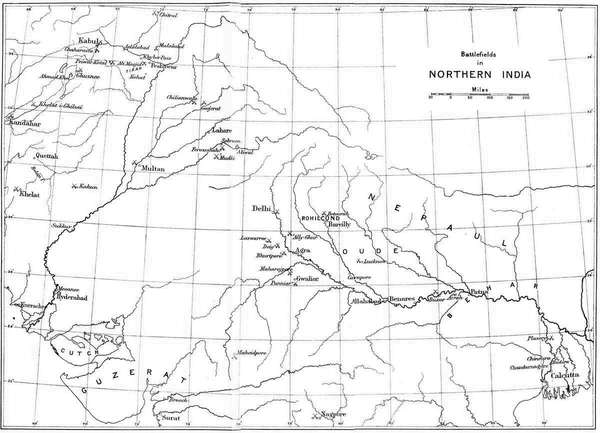
Battlefields in NORTHERN INDIA
Our casualties, which are set out in detail in the subjoined
return, amounted to 23 British officers, 4 native
officers, and 287 other ranks killed; 56 British officers,
16 native officers, and 853 of all ranks wounded—a
tribute to the gallantry of our foe and to the musketry
training of the British officers who had taught them how
to shoot.
Casualties in the Tirah Expedition.
| Regiments. | Officers. | Men. |
| K. | W. | K. | W. |
| Royal Artillery | 1 | 2 | 4 | 21 |
| 2nd Queen's | - | 2 | 10 | 29 |
| 11th Devons | - | - | - | 9 |
| 19th Yorkshire | 1 | 3 | 6 | 33 |
| 21st Roy. Scots Fusiliers | - | 1 | 2 | 13 |
| 25th K.O. Scottish Borderers | - | 3 | 7 | 34 |
| 39th Dorsets | 4 | 4 | 19 | 65 |
| 48th N'amptons | 3 | 1 | 23 | 41 |
| 75th Gordon H. | 2 | 8 | 9 | 63 |
| 95th Derbyshire | 1 | 1 | 8 | 33 |
| Roy. Engineers | 1 | 1 | 3 | 14 |
| 18th Bengal Lancers | - | 1 | 2 | 6 |
| 15th Sikhs | 2 | 7 | 11 | 35 |
| 30th Punjabis | - | - | 3 | 8 |
| 36th Sikhs | - | 5 | 15 | 50 |
| 53rd Sikhs | - | 4 | 8 | 28 |
| 56th Punjab R. | 2 | - | 5 | 27 |
| 121st Pioneers | - | 1 | 2 | 13 |
| 128th Pioneers | - | 1 | 9 | 24 |
| 2nd Gurkhas | 4 | 4 | 23 | 75 |
| 3rd Gurkhas | 1 | 3 | 13 | 43 |
BATTLE HONOURS FOR SOUTH AFRICA, 1899-1902
Modder River—Defence of Ladysmith—Defence of Kimberley—Relief
of Kimberley—Paardeburg—Relief of Ladysmith—Medals
granted for the campaign—Decorations won regimentally—Casualties
by regiments.
This battle honour is borne on the colours and appointments
of practically every infantry regiment in the army,
in the cavalry the only regiments which were so unfortunate
as not to participate in the campaign being the
4th Dragoon Guards, the 4th, 11th, and 15th Hussars,
which were in India, and the 21st Lancers, which were
at home. The following long list of regiments shows
those which are authorized to bear this honour:
1st Life Guards.
2nd Life Guards.
Royal Horse Guards.
King's Dragoon Guards.
Queen's Bays.
3rd Dragoon Guards.
5th Dragoon Guards.
Carabiniers.
7th Dragoon Guards.
Royal Dragoons.
Scots Greys.
3rd Hussars.
5th Lancers.
Inniskillings.
7th Hussars.
8th Hussars.
9th Lancers.
10th Hussars.
12th Lancers.
13th Hussars.
14th Hussars.
16th Lancers.
17th Lancers.
18th Hussars.
19th Hussars.
20th Hussars.
Grenadier Guards.
Coldstream Guards.
Scots Guards.
Royal Scots.
Queen's.
Buffs.
King's Own.
Northumberland Fusiliers.
Royal Warwicks.
Royal Fusiliers.
King's Liverpools.
Norfolks.
Lincolns.
Devons.
Suffolks.
Somerset Light Infantry.
West Yorks.
East Yorks.
Bedfordshire.
Leicesters.
Royal Irish.
Yorkshire.
Lancashire Fusiliers.
Royal Scots Fusiliers.
Cheshire.
Royal Welsh Fusiliers.
South Wales Borderers.
K.O. Scottish Borderers.
Scottish Rifles.
Royal Inniskilling Fusiliers.
Gloucesters.
Worcesters.
East Lancashire.
East Surrey.
Cornwall Light Infantry.
West Riding.
Border.
Royal Sussex.
Hampshires.
South Staffords.
Dorsets.
East Lancashires.
Welsh.
Black Watch.
Oxford Light Infantry.
Essex.
Derbyshire.
Loyal North Lancashire.
Northamptons.
Royal Berkshires.
Royal West Kent.
K.O. Yorkshire L.I.
Shropshire L.I.
Middlesex.
King's Royal Rifles.
Wiltshire.
North Staffords.
York and Lancaster.
Durham L.I.
Highland L.I.
Seaforth Highlanders.
Gordon Highlanders.
Cameron Highlanders.
Royal Irish Rifles.
Royal Irish Fusiliers.
Connaught Rangers.
Argyll and Sutherland Highlanders.
Leinster.
Royal Munster Fusiliers.
Royal Dublin Fusiliers.
Rifle Brigade.
Yeomanry Regiments.
Ayrshire.
Berks.
Buckinghamshire.
Cheshire.
Denbighshire.
Derbyshire.
1st Royal Devon.
Royal North Devon.
Dorset.
Essex.
Fife.
Gloucestershire.
Hampshire.
Herts.
Royal East Kent.
West Kent.
Lanarkshire.
Royal Lanarkshire.
Lancashire Hussars.
Duke of Lancaster's.
Leicestershire.
City of London.
1st County of London.
2nd County of London.
3rd County of London.
Lothian and Border Horse.
Lovat's Scouts.
Montgomeryshire.
Northumberland.
Nottingham Rangers.
South Nottingham Hussars.
Oxford.
Pembroke.
Scottish Horse.
Shropshire.
North Somerset.
West Somerset.
Suffolk.
Warwickshire.
Westmorland and Cumberland.
Worcestershire.
Yorkshire Dragoons.
Yorkshire Hussars.
Militia Regiments.
3rd Royal Scots.
3rd Queen's (West Surrey).
3rd Buffs.
3rd King's Own (Lancaster).
3rd Royal Warwicks.
4th Royal Warwicks.
5th Royal Fusiliers.
4th King's Liverpool.
3rd Norfolks.
4th Norfolks.
3rd Lincolns.
4th West Yorkshire.
3rd East Yorkshire.
4th Bedfords.
3rd Leicester.
3rd Yorkshire.
3rd Lancashire Fusiliers.
4th Lancashire Fusiliers.
3rd Cheshire.
3rd South Wales Borderers.
3rd Scottish Borderers.
3rd Scottish Rifles.
4th Scottish Rifles.
6th Worcester.
3rd East Lancashire.
3rd East Surrey.
3rd West Riding.
3rd Royal Sussex.
3rd South Stafford.
3rd South Lancashire.
3rd Welsh.
3rd Essex.
4th Derbyshire.
3rd Loyal North Lancashire.
3rd Northampton.
5th Middlesex.
6th Middlesex.
3rd Manchester.
4th Manchester.
3rd North Stafford.
3rd York and Lancaster.
3rd Durham L.I.
3rd Highland L.I.
5th Royal Irish Rifles.
3rd Argyll Highlanders.
4th Argyll Highlanders.
4th Royal Munster Fusiliers.
4th Royal Dublin Fusiliers.
5th Royal Dublin Fusiliers.
5th Rifle Brigade.
One militia battalion was deputed to carry out the
thankless but onerous task of guarding the Boer prisoners
at this island, and so it comes about that the distinction
"St. Helena" is borne on the colours of the 3rd Battalion
of the Wiltshire Regiment.
Two medals were given for this campaign—the one
with the head of Queen Victoria, to which a number of
clasps were appended; the other with the head of His
Majesty King Edward VII., to which were attached two
clasps—"South Africa, 1901," and "South Africa,
1902."
The following were the clasps issued with the medal
known as the Queen's Medal.
Battle Clasps.
1. "Talana," for the action on October 20, 1899.
2. "Elandslaagte," for the action on October 21, 1899.
3. "Belmont," for the action on November 23, 1899.
4. "Modder River," for the action on November 28, 1899.
5. "Tugela Heights," for a series of engagements fought by
Sir Redvers Buller in his first endeavours to force his way into
Ladysmith in February, 1900.
6. "Relief of Kimberley," on February 15, 1900.
7. "Relief of Ladysmith," February 26, 1900.
8. "Paardeburg," for the action fought between February 27
and 28, 1900.
9. "Driefontein," for the action on March 10, 1900.
10. "Wepener," for the defence of that position between
April 5 and 25, 1900.
11. "Johannesburg," for the operations leading to the seizure
of that city, ending on May 31, 1900.
12. "Laing's Nek," for the operations by Sir Redvers Buller's
army, ending June 12, 1900.
13. "Diamond Hill," for the action at that place on June 12,
1900.
14. "Witterburgen," for the operations in that district at the
end of July, 1900.
15. "Belfast," for the defence of that position on January 7, 1900.
There were clasps given inscribed:
16. "Defence of Kimberley."
17. "Defence of Ladysmith."
18. "Defence of Mafeking."
Clasps were also issued bearing only the names of the various
Colonies to those troops which had not been engaged in any of
the above-mentioned engagements; these Colony clasps were in
number:
19. "Cape Colony."
20. "Natal."
21. "Orange River Colony."
22. "Rhodesia."
23. "Transvaal."
And there were also two date clasps inscribed:
24. "South Africa, 1901."
25. "South Africa, 1902."
Whilst medals and clasps were distributed with a free
hand, a different policy was enacted with reference to
the names that were inscribed on the colours and appointments
of the regiments which took part in the campaign.
Only six battle honours were authorized for the two and
a half years' fighting—"South Africa" (with a date
indicating the period that the corps remained in the
country), "Modder River," "Defence of Kimberley,"[30]
"Relief of Kimberley," "Defence of Ladysmith," " Relief
of Ladysmith," and "Paardeburg"—and no regiment
obtained more than four of these battle honours. Few were
able to add more than two honours for the campaign.
The relations between the British Government and the
Boers had never been marked by any cordiality. Their
hostility was not confined to ourselves. They had rebelled
against the Dutch East India Company prior to our conquest
of the Cape of Good Hope, and from the earliest
days of the Dutch settlement there had been constant
friction between the Boers and the natives. It is not my
province to enter into the causes of the war, or whether
it might have been avoided, suffice to say that on
October 9, 1899, an ultimatum was handed to our Agent
in Pretoria, couched in such terms as to render hostilities
inevitable. On the 12th the first shot was fired, and
England embarked on a campaign of far greater magnitude
than any in which we had ever been engaged. Our
forces were all too weak to cope with the situation, and
they were widely scattered.
The Boers from the outset assumed the offensive, whilst
we, owing to our numerical inferiority, were compelled to
act strictly on the defensive until the arrival of reinforcements,
which were already on the way from England.
Within a very few days of the outbreak of hostilities it
became apparent that we had, as usual, grievously underrated
the strength of our opponents. Sir George White,
with the bulk of the troops in South Africa, was shut up
in Ladysmith, where he made a gallant defence. Colonel
Kekewich, with a half-battalion of the Loyal North Lancashire
Regiment and some artillery, kept the flag flying
at Kimberley, the headquarters of the diamond-fields;
whilst Colonel Baden-Powell, with irregular troops only,
earned a world-wide reputation for his brilliant defence
of Mafeking. Not content with enveloping our forces in
this way, the Boers carried on a series of daring raids into
Cape Colony. In this they were to a great extent assisted
by the disloyal conduct of many of the Dutch Colonials,
who were actively hostile to our cause.
In justice to the General Officers who were in command
during the earlier and less successful stages of the war, a
brief description of the military resources of the Empire
is desirable. As Lord Salisbury, the Prime Minister, had
stated in the House of Lords that no Indian troops would
be employed, I may eliminate the magnificent fighting
material that we possess in our Indian army. Approximately
we had the following forces to draw on from our
fellow-subjects beyond the seas, who at once let it be
known that they looked on the quarrels of the Mother
Country as their own, and that they were ready to place
at the disposal of the War Office the manhood of their
peoples. Our resources may be thus summarized:
| Regular troops | in the United Kingdom | 108,000 |
| " " | in India | 68,000 |
| " " | in other garrisons | 30,000 |
| " " | in South Africa | 22,000 |
| Army Reserve | in the United Kingdom | 83,000 |
| | ———- | 311,000 |
| Auxiliary forces | in the United Kingdom | 344,000 |
| " " | in Canada | 33,000 |
| " " | in Australia | 29,000 |
| " " | in New Zealand | 7,700 |
| " " | in Tasmania | 2,000 |
| | ———- | 415,700 |
| Total | | 726,700 |
Of this grand total of upwards of 700,000 men it was
clear that large numbers would never be available. India
could only be denuded of a small portion of the British
garrison, and of the auxiliary forces in the United Kingdom
a very large proportion were by no means fit to take
their places in the field; yet before the war was brought
to a close the troops actually sent to the front were not
far short of 400,000 men. Of these were despatched:
| From the United Kingdom and the Mediterranean | 338,000 |
| From India | 19,500 |
| From our Dominions beyond the seas | 30,000 |
For transport purposes and to supply the wastage in
our mounted troops 470,000 horses and 150,000 mules
and donkeys were purchased; for the conveyance of the
troops and animals to the seat of war no fewer than 1,057
ships were taken up, and 1,374,000 tons of stores were
from first to last shipped to South Africa. Unfortunately,
all this energy was delayed until after the actual declaration
of war. So far back as the month of June the Commander-in-Chief
had unsuccessfully applied for permission
to mobilize an army corps on Salisbury Plain and to
convert the existing transport waggons to mule draught.
It was not until October 8 that the order for the mobilization
was sanctioned, and the first reinforcements did
not leave the country until the third week in that month,
war having been declared on the 11th.[31]
Our forces at the outset of hostilities were scattered
necessarily over a wide area. The frontiers of the two
Republics ran conterminously with our own for a distance
of 1,000 miles. To defend this with 22,000 men was a
manifest impossibility. Sir Forestier Walker, who was in
command in Cape Colony, determined to hold the
most important positions on that long line of frontier;
whilst Sir George White in Natal, against his better judgment,
deferred to the views of the Governor of Natal,
and divided his forces, thus paving the way to defeat.
In addition to Kimberley, Sir Forestier Walker had
weak detachments guarding the principal railway junctions
of De Aar, Nauwpoort, and Stormberg. White had
a brigade, under Sir Penn Symons, at Dundee, in the North
of Natal; the remainder of his force was at Ladysmith.
On October 20 the Dundee column fought an action at
Talana, and the following day White's troops, under
General French, defeated the Boers at Elandslaagte;
but the arrival of strong Boer reinforcements and the
death of Penn Symons compelled the retreat of the
Dundee brigade, and on the 30th White suffered a severe
check at Lombard's Kop. It was now clear that the
army in South Africa was powerless until the arrival of
reinforcements from home, and these, late in the day as
it was, were being hurried forward as fast as circumstances
would permit. The Viceroy of India had been
requested to despatch with all haste a cavalry brigade,
one of infantry, and three batteries of artillery. Some
of these, as well as the battalion from the Mauritius, were
already in South Africa, and battalions from Malta,
Cyprus, and Egypt were en route. The army corps asked
for in June was now despatched, with Sir Redvers Buller
to hold the chief command in South Africa. It was
composed as follows:
First Division: Lieutenant-General Lord Methuen.
Guards' Brigade—Brig.-Gen. Paget: 3rd Battalion Grenadiers,
1st Battalion Coldstream, 2nd Battalion Coldstream, 1st Battalion
Scots Guards.
Second Brigade—Brig.-Gen. Hildyard: 2nd Battalion Queen's,
2nd Battalion Devons, 2nd Battalion West Yorks, 2nd
Battalion East Surrey.
One squadron 1st Life Guards and three batteries Field Artillery.
Second Division: Lieutenant-General Clery.
Highland Brigade—Brig.-Gen. Wauchope: 2nd Battalion Royal
Highlanders, 1st Battalion Highland Light Infantry, 2nd
Battalion Seaforths, 1st Battalion Argylls.
Fourth Brigade—Major-Gen. Lyttelton: 2nd Battalion Scottish
Rifles, 3rd Battalion King's Royal Rifles, 1st Battalion Durham
Light Infantry, 1st Battalion Rifle Brigade.
One squadron Royal Horse Guards and three batteries Field
Artillery.
Third Division: Lieutenant-General Gatacre.
Fifth Brigade—Brig.-Gen. Hart: 1st Battalion Inniskilling Fusiliers,
2nd Battalion Royal Irish Rifles, 1st Battalion Connaught
Rangers, 1st Battalion Royal Dublin Fusiliers.
Sixth Brigade—Brig.-Gen. Barton: 2nd Battalion Royal Fusiliers,
2nd Battalion Royal Scots Fusiliers, 1st Battalion Royal
Welsh Fusiliers, 2nd Battalion Royal Irish Fusiliers.
One squadron 2nd Life Guards and three batteries Field Artillery.
Cavalry Division: Lieutenant-General French.
First Brigade: Carabiniers, 10th Hussars, 12th Lancers, one
battery Royal Horse Artillery.
Second Brigade: Royal Dragoons, Scots Greys, Inniskilling
Dragoons, one battery Royal Horse Artillery.
Lines of Communication: 2nd Battalion Northumberland Fusiliers,
2nd Battalion Somerset Light Infantry, 2nd Battalion
Cornwall Light Infantry, 1st Battalion Welsh Regiment,
2nd Battalion Northamptons, 2nd K.O. Yorkshire Light
Infantry, 2nd Battalion Shropshire Light Infantry, 1st Battalion
Gordons, Highland Light Infantry.
Until the arrival of these reinforcements we were
holding on to our own frontiers with but 15,000 men in
Natal, 10,000 in the Cape Colony, and some 1,500 in
Rhodesia, inclusive of colonial forces. Opposed to us
the Boers had at the least 53,000 men. Of these, it was
estimated that 23,000 men were before White in Ladysmith,
7,500 had been despatched against Baden-Powell
in Mafeking, a slightly larger force was enveloping Kekewich
in Kimberley, and the remainder were being mobilized
for the defence of the two Republics.
The original plan of campaign decided on before the
departure of Sir Redvers Buller from England was to
invade the Republics from the south with the army corps,
the composition of which I have just given, whilst making
such diversions as might be possible from Natal. On
Buller's arrival all this had to be changed. The relief of
Ladysmith was now the primary object of our Commander-in-Chief,
all question of an invasion of the Republics being
for the present out of the question. So soon as the reinforcements
commenced to arrive, Methuen, with the
Brigade of Guards, was pushed up to relieve Kimberley;
the Second, Fifth, and Sixth Brigades were at once
directed to Natal, where Buller quickly followed. To
replace the Second Brigade in the First Division a Ninth
Brigade, made up from regiments intended for the line of
communications, was formed, and Wauchope's brigade of
the Second Division advanced to the support of Methuen,
and to strengthen our hold on the line of railway. Generals
French and Gatacre were entrusted with the command
of the railway running parallel with the frontiers of the
Republics, and were stationed respectively at Nauwpoort
and Stormberg, whilst Wauchope was posted at
De Aar.
Buller expressed himself optimistic as to the relief of
Kimberley, which was closely invested by the Boers, and
by the middle of November Methuen commenced his
advance. His force consisted of the Brigade of Guards,
the Ninth Brigade (1st Loyal North Lancashire, 2nd
King's Own Yorkshire Light Infantry, 1st Northumberland
Fusiliers, and 2nd Northamptons), the 9th Lancers,
three squadrons of mounted infantry, three field batteries,
a naval brigade 360 strong, with four long 12-pounder
quick-firers, and the New South Wales Lancers. On
October 23 he defeated the Boers at Belmont, his casualties
being 3 officers and 51 men killed, 23 officers and 220
men wounded. On the 25th he fought a second successful
action at Enslin, losing 3 officers and 15 men killed, 6
officers and 137 men wounded; and on October 28 he
again defeated the Boers on the Riet River. The action,
however, is officially known as that of the Modder River.
This battle honour is borne on the colours and appointments
of the following regiments:
9th Lancers.
Grenadier Guards.
Coldstream Guards.
Scots Guards.
Northumberland Fusiliers.
Northamptons.
K.O. Yorkshire L.I.
Highland Light Infantry
Argyll and Sutherland Highlanders.
It commemorates the third of the three successful
actions fought by Lord Methuen in the early stage of the
South African War in his attempt to relieve Kimberley.
A clasp, inscribed "Modder River," was given for this
engagement, in which the casualties were as follows:
Casualties at the Action on the Modder River.
| Corps or Regiments. | Officers. | Men. |
| K. | W. | K. | W. |
| 9th Lancers | - | - | - | 1 |
| Royal Artillery | - | 4 | 3 | 22 |
| Naval Brigade | - | - | - | - |
| Grenadier Gds. | - | 3 | 8 | 40 |
| Coldstream Gds. | 2 | 1 | 10 | 77 |
| Scots Guards | - | 2 | 10 | 37 |
| N'umberland F. | - | - | 11 | 34 |
| Loyal N. Lancs | - | 1 | 3 | 16 |
| Northamptons | - | - | - | - |
| K.O. Yorks L.I. | 1 | 3 | 8 | 46 |
| Highland L.I. | - | - | - | - |
| Argyll Highl. | - | 2 | 15 | 95 |
The Boer forces covering the Siege of Kimberley were
under the command of General Cronje, and he, falling
back after his third reverse at the Modder River, took up
a strong position at Magersfontein, entrenching his whole
front for a distance of nine miles. To hasten the relief
of Kimberley, Wauchope was now pushed up to reinforce
Methuen, and on December 11 that General attacked
Cronje, but met with a most serious reverse, losing 22
officers and 188 men killed, 46 officers and 629 men
wounded, the bulk of the casualties falling on the Highland
Brigade, which also lost its gallant leader, Wauchope,
the second of his name to fall at the head of English
troops in an unsuccessful action, for Andrew Wauchope's
uncle fell at Rosetta in our little-remembered, but unfortunate,
expedition to Egypt in 1807.
In the meantime Buller had proceeded to Durban, and
was concerting his plans for the relief of Ladysmith. He
had at his disposal 18,000 men and thirty field guns,
besides a naval brigade with fourteen long-range quick-firers.
On December 15 he made his first effort, and was
badly defeated at Colenso, losing, in addition to 7 officers
and 136 men killed, 47 officers and 709 men wounded,
and ten guns. The superior mobility of the Boers, and
the fact that White had with him four regiments of
cavalry shut up in Ladysmith, induced Buller to make
the most earnest representations for a large force of
mounted reinforcements, and the War Office responded
to the call by mobilizing three more divisions, and taking
steps to raise a force of 4,000 Yeomanry.
These repeated disasters had aroused the nation—temporarily,
at any rate—to a proper sense of its responsibilities,
and all ranks and all classes responded to the call
for volunteers. The veteran Field-Marshal Lord Roberts,
who had served his apprenticeship at the Siege of Delhi
just two-and-forty years before, accepted the chief command,
and at once embarked for the seat of war. On his
arrival the situation was no clearer. Methuen, with the
First Division, lay immobile twelve miles south of Kimberley,
with a Boer army strongly entrenched in his front;
Gatacre, at Stormberg, had met with a serious reverse;
Sir George White was closely besieged in Ladysmith; and
Buller was gathering together his forces for a second
attempt to carry the strong position before him. Lord
Roberts landed in South Africa on January 10, and his
first care was to organize his transport, so as to have all
in readiness for an advance so soon as the reinforcements
now on the seas should arrive. As his Chief of the Staff
he had Lord Kitchener, fresh from his successful campaign
in Egypt, where he had shown himself a master in
the matter of organization.
It was not until the commencement of February that
the Field-Marshal felt himself able to move. His plan
of campaign was first the relief of Kimberley with the
Cavalry Division, under French, then an advance on the
capital of the Orange Free State. This advance, he felt
sure, would relieve the pressure in Natal, and so enable
Buller to join hands with Ladysmith. Approximately,
Lord Roberts had now in the Cape Colony 52,000 men,
and in Natal 40,000, of whom some 9,000 or 10,000 were
shut up in Ladysmith. Even now he felt that he would
need heavy reinforcements to meet the wastage of war,
and he requested that 8,000 Imperial Yeomanry and
thirty battalions of Militia might be despatched to the
seat of war as soon as they could be mobilized. Then,
and not till then, did Lord Roberts feel justified in
his advance. His transport was in an effective condition,
and he had received assurance from home that
the reinforcements asked for would be sent without
delay. On February 6 he left Cape Town for the front,
and on the 15th French set forth for the relief of
Kimberley.
The troops actually at Lord Roberts's disposal at this
period consisted of four divisions of infantry and one of
cavalry. The composition of the Cavalry Division is
given on p. 422; that of the four infantry divisions was
as follows:
First Division: Lieutenant-General Lord Methuen.
Brigade of Guards—Major-General Paget: 3rd Battalion Grenadier
Guards, 1st Battalion Coldstream Guards, 2nd Battalion
Coldstream Guards, 1st Battalion Scots Guards.
Ninth Brigade—Brigadier-General Pole-Carew: 1st Battalion
Northumberland Fusiliers, half a battalion of the North
Lancashire, 2nd Battalion Northamptons, 2nd Battalion
King's Own Yorkshire Light Infantry.
Sixth Division: Lieutenant-General Sir Kelly-Kenny.
Thirteenth Brigade—Major-General C. E. Knox: 2nd Battalion
Buffs, 2nd Battalion Gloucesters, 1st Battalion West Ridings,
1st Battalion Oxford Light Infantry.
Eighteenth Brigade—Brigadier-General T. E. Stephenson: 2nd
Battalion Royal Warwicks, 1st Battalion Yorkshire Regiment,
1st Battalion Essex, 1st Battalion Wiltshires. Three
field batteries and two naval 12-pounders.
Seventh Division: Lieutenant-General Sir Charles Tucker.
Fourteenth Brigade—Major-General Chermside: 2nd Battalion
Norfolks, 2nd Battalion Lincolns, 1st Battalion King's Own
Scottish Borderers, 2nd Battalion Hampshires.
Fifteenth Brigade—Brigadier-General Wavell: 2nd Battalion
Cheshires, 1st Battalion East Lancashire, 2nd Battalion
South Wales Borderers, 2nd Battalion North Staffords.
Three field batteries.
Ninth Division: Lieutenant-General Sir H. Colville, K.C.B.
Highland Brigade—Brigadier-General MacDonald: 2nd Battalion
Black Watch, 1st Battalion Highland Light Infantry, 2nd
Battalion Seaforth Highlanders, 1st Battalion Argyll and
Sutherland Highlanders.
Nineteenth Brigade—Brigadier-General Smith-Dorrien: 2nd Battalion
Cornwall Light Infantry, 2nd Battalion Shropshire
Light Infantry, 1st Battalion Gordon Highlanders, Royal
Canadian Infantry. Three field batteries and one of 5-inch
howitzer.
At Sterkstrom, General Gatacre had the remains of the
Third Division, consisting of the 1st Royal Scots, 2nd
Northumberland Fusiliers, 1st Derbyshire, 2nd Royal
Berkshire, 2nd Royal Irish Rifles, and a Militia battalion—the
3rd Durham Light Infantry—with three field
batteries and a couple of naval guns.
At Nauwpoort, General Clements had the 2nd Bedfords,
1st Royal Irish, 2nd Worcester, 2nd Wiltshire, a Militia
battalion—the 4th Derbyshire—with one horse and three
field batteries.
The Second Division was with Sir George White in Ladysmith,
and comprised a cavalry brigade, consisting of the
5th Dragoon Guards, 5th Lancers, 18th and 19th Hussars.
Seventh Brigade—Brigadier-General Ian Hamilton: 1st Battalion
Manchesters, 2nd Battalion Gordons, 1st Battalion Royal
Irish Fusiliers: and 2nd Battalion Rifle Brigade.
Eighth Brigade—Brigadier-General F. Howard: 1st Leicesters,
2nd Battalion King's Royal Rifles, 1st Battalion King's
Liverpools, and a company of the Rifle Brigade.
White also had the following divisional troops, brigaded
under Brigadier-General Knox: 1st Devons, 1st Gloucester,
and 1st King's Royal Rifles. There were also six field,
one mountain battery, two 6-inch howitzers, and a naval
brigade of 280 men, with five long-range quick-firing guns.
Sir Redvers Buller at the time of Lord Roberts's arrival
had upwards of 30,000 men, thus detailed:
Second Division: General Lyttelton.
Second Brigade—Brigadier-General Hildyard: 2nd Battalion
Queen's, 2nd Battalion Devons, 2nd Battalion West Yorks,
and 2nd Battalion East Surrey.
Fourth Brigade—Brigadier-General Norcott: 2nd Battalion
Scottish Rifles, 3rd Battalion King's Royal Rifles, 1st Battalion
Durham Light Infantry, and 1st Battalion Rifle
Brigade, with three field batteries.
Fifth Division: Sir Charles Warren.
Tenth Brigade—Major-General Coke: 2nd Battalion Somerset
Light Infantry, 2nd Battalion Dorset, 2nd Battalion Middlesex.
Eleventh Brigade—Brigadier-General A. S. Wynne: 1st Battalion
King's Own, 1st Battalion East Lancashire, and the
Rifle reserve battalion, with three batteries of field artillery.
Third Division: Clery.
Fifth Brigade—Major-General Hart: 1st Battalion Inniskilling
Fusiliers, 1st Battalion Border Regiment, 1st Battalion Connaught
Rangers, 2nd Battalion Royal Dublin Fusiliers.
Sixth Brigade—Major-General Barton: 2nd Battalion Royal
Fusiliers, 2nd Battalion Royal Scots Fusiliers, 1st Battalion
Royal Welsh Fusiliers, and 2nd Battalion Royal Irish
Fusiliers, with three field batteries.
Buller's cavalry consisted of the Royal Dragoons, 13th
Hussars, and a large number of colonial troops, who were
of the most effective service. He also had a naval brigade
of 400 men, with a number of 4·7 and 12-pounder long-range
guns.
Such was the position of the army commanded by Lord
Roberts when, on February 12, General French was sent
forward with the Cavalry Division (Kelly-Kenny, with the
Sixth Division, following in support) for the relief of
Kimberley.
This battle honour has been conferred on the following
regiments:
1st Life Guards.
2nd Life Guards.
Royal Horse Guards.
Carabiniers.
Scots Greys.
9th Lancers.
10th Hussars.
12th Lancers.
16th Lancers.
Buffs.
Yorkshire.
Gloucesters.
West Riding.
Welsh.
Oxford Light Infantry.
Essex.
There were many reasons why the Boers should have
made great endeavours to seize this town. Cecil Rhodes,
their arch-enemy, was shut up in the place, and the
garrison was certainly none too large for the task confided
to its commander. Lord Methuen had been checked
by two serious reverses in his advance on Kimberley, and
his division now lay a few miles to the south of the town,
with the Boer army under Cronje facing him. Lord
Roberts pushed up the Sixth Division, under General
Kelly-Kenny, to Randam, hard by the Modder River.
The Sixth was followed by the Seventh Division, under
General Tucker; and the Seventh by the Ninth, under
Sir Henry Colville. The Cavalry Division, under Lieutenant-General
French, was also moved westwards towards
the line of railway leading up from the Cape to Kimberley.
With this division Lord Roberts intended to effect the
relief of the Diamond City.
French's division was composed of three brigades of
cavalry, with a strong force of mounted infantry, and was
brigaded as follows:
First Brigade—Brigadier-General Porter: The Scots Greys, the
Carabiniers, one squadron each of the Inniskillings, 14th
Hussars, and New South Wales Horse, and three batteries
of Royal Horse Artillery.
Second Brigade—Brigadier-General Broadwood: Composite regiment
of Household Cavalry, 10th Hussars, 12th Lancers,
and three batteries of Royal Horse Artillery.
Third Brigade—Brigadier-General Gordon: 9th and 16th Lancers,
with two batteries of Royal Horse Artillery.
Mounted Infantry Division—Colonel Alderson: Three battalions
of mounted infantry, Roberts's Horse, Kitchener's Horse, the
Queensland and New Zealand Mounted Infantry.
In the very early morning of February 12 French left
the line of railway, and, bearing to the eastward, crossed the
Riet River between Cronje's camp and the capital. He was
followed by the Sixth (Kelly-Kenny's) Division. Sweeping
round through Watervaal and Klip's Drift, French
found the Boers astride his road. They were not in great
strength, and he made no attempt to bandy words with
them. The road to his objective lay between two hills,
on which the enemy were posted, and French, mindful of
the urgency of his mission, determined to ignore the
enemy, and, putting his men at the gallop, he forced his
way past the Boers with astonishingly little loss. His
way was now clear, and, pushing ahead as fast as the condition
of his horses would allow, he swept round to the
north of the town, and at 6 p.m. had effected the task
before him. Leaving Colonel Porter in command, French
now retraced his steps, in order to take a part in the impending
attack on the position held by General Cronje
near Paardeburg.
Casualties during French's Relief of Kimberley.
| Regiments. | Officers. | Men. |
| K. | W. | K. | W. |
| Scots Greys | 1 | 2 | 3 | 6 |
| Inniskillings | - | 1 | - | 2 |
| 9th Lancers | - | 3 | 1 | 17 |
| 10th Hussars | - | - | - | 1 |
| Buffs | - | 1 | - | 4 |
| Yorkshires | - | - | - | - |
| Gloucesters | - | 1 | 2 | 8 |
| Cornwall L.I. | - | - | - | 3 |
| 12th Lancers | - | - | - | 1 |
| 14th Hussars | - | - | - | 1 |
| 16th Lancers | 1 | 1 | 3 | 18 |
| R.H. Artillery | 1 | 3 | - | 24 |
| West Riding | - | - | - | 19 |
| Hampshires | - | - | 1 | 1 |
| Oxford L.I. | - | 1 | 11 | 38 |
| Roberts's Horse | - | 1 | - | 5 |
This battle honour was conferred on the following
regiments for the operation which resulted in the surrender
of the Boer Commander-in-Chief in the war in the
Transvaal:
1st Life Guards.
2nd Life Guards.
Royal Horse Guards.
Carabiniers.
Scots Greys.
9th Lancers.
10th Hussars.
12th Lancers.
16th Lancers.
Buffs.
Norfolks.
Lincolns.
Yorkshires.
K.O. Scot. Borderers.
Gloucesters.
Cornwall L.I.
West Riding.
Hampshires.
Welsh.
Black Watch.
Oxford L.I.
Essex.
Shropshire L.I.
Seaforth Highlanders.
Gordon Highlanders.
Argyll and Sutherland Highlanders.
By the brilliant relief of Kimberley Lord Roberts had
scored the first real success of the campaign, and had
opened the way for an advance on the capital of the Boer
Republics. General Cronje realized this, and, breaking
up his camp on the Modder River, commenced a hurried
retreat towards Bloemfontein. But Lord Roberts was
already practically athwart his path. French, returning
from Kimberley, threw himself across the head of Cronje's
army, and General Kelly-Kenny, with the Sixth Division,
clung to his rear. The Seventh and Ninth Divisions were
now closing up, and Lord Roberts was free to assault the
strong position which Cronje had taken up at Paardeburg.
Despite the large force at the disposal of the Commander-in-Chief,
the operation was none too simple.
Cronje had with him a large number of women and
children, and, from motives of humanity, Lord Roberts
was averse to resorting to the usual methods of war.
Our first attack on the Boer position at Paardeburg was
met in the most gallant manner, our losses being very
heavy. Little by little we neared the Boer defences, our
troops actually sapping up to the cleverly-devised works;
but it was not until February 27 that General Cronje
decided to surrender.
The road was now open for an advance on Bloemfontein,
the capital of the Orange Free State, and as soon as Lord
Roberts had filled up his convoys with provisions he
recommenced his forward march, and on March 12 the
Field-Marshal hoisted the British flag in Bloemfontein.
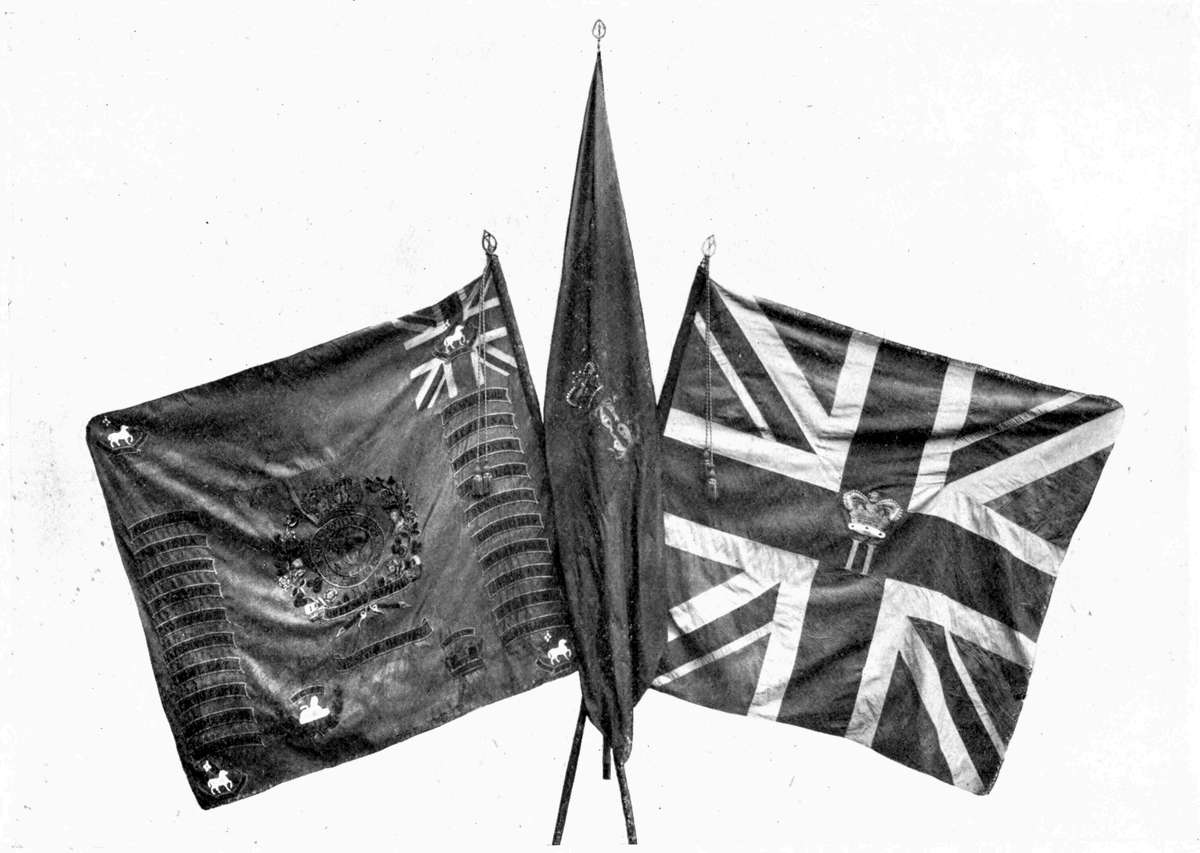
THE COLOURS OF THE QUEEN'S ROYAL WEST SURREY REGIMENT, 1902.
(Formerly the Tangier Regiment.)
To face page 424.
Casualties during the Operations at Paardeburg,
February 18 to 27, 1900.
| Regiments. | Officers. | Men. |
| K. | W. | K. | W. |
| 1st Life Guards | - | - | - | - |
| 2nd Life Guards | - | - | - | 5 |
| Roy. H. Guards | - | - | - | 4 |
| Carabiniers | - | - | - | 1 |
| Scots Greys | - | - | - | 2 |
| 9th Lancers | - | 1 | - | 5 |
| 10th Hussars | - | - | 2 | 10 |
| 12th Lancers | - | - | - | 1 |
| 16th Lancers | - | - | - | 1 |
| Royal Artillery | - | - | 3 | 21 |
| Roy. Canadian | 1 | 3 | 34 | 90 |
| Buffs | 1 | 1 | 2 | 7 |
| Norfolks | 1 | 1 | - | - |
| Lincolns | - | 2 | 2 | 18 |
| Yorkshire | 1 | 7 | 49 | 103 |
| K.O. Scottish Borderers | - | 1 | - | 15 |
| Gloucesters | - | 1 | 5 | 19 |
| Cornwall Light Infantry | 3 | 4 | 25 | 56 |
| West Ridings | 1 | 2 | 22 | 104 |
| Hampshire | - | - | 1 | 4 |
| Welsh | 1 | 5 | 18 | 63 |
| Black Watch | 1 | 3 | 19 | 79 |
| Oxford L.I. | 3 | 4 | 6 | 30 |
| Essex | - | 3 | 15 | 47 |
| K.O. Shrop. L.I. | - | 4 | 8 | 35 |
| Seaforth Highl. | 2 | 6 | 45 | 103 |
| Gordon Highl. | - | 2 | 3 | 15 |
| Argyll Highl. | 1 | 6 | 19 | 66 |
I have already alluded to the reverse that Buller met
with at Colenso on December 15. On January 24 a
second attempt by Sir Redvers Buller met with no better
success, our losses amounting to 1,700 killed and wounded.
The advance of Lord Roberts to the eastward had the
effect that the experienced Field-Marshal anticipated.
The pressure in Natal was lessened, and on the day that
Cronje surrendered to Lord Roberts Buller's mounted
brigade entered Ladysmith, after a series of well-fought
actions, in which, if our men upheld the traditions of the
British army, the Boers showed themselves gallant foemen.
Casualties at the Relief of Ladysmith.
| Regiments. | Officers. | Men. |
| K. | W. | K. | W. |
| Royal Dragoons | - | - | 2 | 6 |
| 13th Hussars | - | - | - | - |
| Royal Artillery | 3 | 10 | 18 | 98 |
| Roy. Engineers | - | - | - | - |
| Queen's West Surrey | 3 | 10 | 30 | 245 |
| K.O. Lancs | 3 | 4 | 107 | 225 |
| Royal Fusiliers | - | - | 5 | 69 |
| King's Liverpl. | - | - | - | - |
| Devons | - | 7 | 16 | 189 |
| Somerset L.I. | 3 | 1 | 16 | 63 |
| West Yorkshire | 2 | 5 | 27 | 173 |
| Lancashire Fus. | 6 | 12 | 85 | 247 |
| Royal Welsh Fusiliers | 2 | 2 | 10 | 54 |
| Scottish Rifles | 6 | 10 | 49 | 102 |
| Royal Inniskilling Fusiliers | 5 | 14 | 98 | 248 |
| East Surrey | 1 | 6 | 27 | 176 |
| Border | 1 | 6 | 14 | 20 |
| Dorsets | - | 1 | 3 | 27 |
| South Lancs | 2 | 4 | 26 | 121 |
| Middlesex | - | - | 20 | 71 |
| K. Roy. Rifles | 3 | 9 | 47 | 143 |
| York and Lanc. | - | 4 | 13 | 137 |
| Durham L.I. | 2 | 6 | 20 | 118 |
| Roy. Irish Fus. | - | - | 14 | 88 |
| Connaught R. | - | 7 | 56 | 177 |
| R. Dublin Fus. | 5 | 12 | 89 | 348 |
| Rifle Brigade | - | 12 | 30 | 151 |
The actual siege of Ladysmith commenced when Sir
George White met with the reverse at Lombards' Kop on
October 30, and lasted for four months. With the large
force at his disposal there was but small chance of the
place being carried by assault, but there was always the
possibility of its being compelled to surrender by famine.
Fortunately, in White we had a commander whose reputation
for personal bravery was proverbial, and he had
with him senior officers whose names were almost as well
known for their gallantry. In his garrison were seasoned
regiments of old soldiers who had but recently arrived
from India. The Boers had experienced the metal of
White's men at Talana and at Elandslaagte, and cared
little to come again to close quarters with them.
During that long siege of four months the Boers made
but one attempt to attack the place. This action, known
as Cæsar's Camp (January 6), was one of the hardest-fought
actions of the war, our losses amounting to 18 officers
and 158 men killed, 29 officers and 221 men wounded,
whereas the total casualties for the rest of the siege only
reached the total of 6 officers and 62 men killed, 33 officers
and 262 men wounded. The losses by sickness were not
unusually heavy. That they were not heavier was due to
the cheerful face put on the situation by the brave commander
and the self-devotion of the officers of the Royal
Army Medical Corps, who, as ever, showed themselves as
careless of their own lives as they were tenderly careful
of those of the men committed to their charge.[34]
Casualties at the Defence of Ladysmith.
| Regiments. | Officers. | Men. |
| K. | W. | K. | W. |
| 5th Dragoon Guards | - | 4 | 1 | 9 |
| 5th Lancers | 1 | 7 | 2 | 14 |
| 18th Hussars | - | 1 | 9 | 19 |
| 19th Hussars | - | - | 6 | 16 |
| Royal Artillery | - | - | - | - |
| Roy. Engineers | 2 | 1 | 7 | 7 |
| Devons | 3 | 4 | 25 | 50 |
| Leicesters | 2 | 1 | 5 | 26 |
| Gloucesters | - | - | 8 | 9 |
| K. Roy. Rifles | 3 | - | 42 | 58 |
| Manchesters | 1 | 10 | 49 | 90 |
| Gordon Highl. | 2 | 3 | 16 | 25 |
| Rifle Brigade | 2 | 9 | 32 | 43 |
With the surrender of Cronje's army, the relief of Ladysmith,
and the entry of our army into Bloemfontein, it
was hoped that the back of the enemy was broken. The
war, however, dragged on for close on two years, the
principal incidents being the relief of Mafeking by Brigadier-General
Mahon on May 15, the occupation of Johannesburg
by Lord Roberts on the 31st of the same month,
and the entry into Pretoria, the capital of the Transvaal,
on June 5. The Boers showed marvellous powers of
recuperation, and many hard actions were fought ere
they were subdued. In the month of October the aged
President Kruger deserted his fellow-countrymen, and
embarked for Europe, and on the 25th of that month
Lord Roberts formally proclaimed the annexation of the
two Republics to the Empire, and in the following month
Lord Roberts handed over the command to General Lord
Kitchener. Then we entered on a long period of guerilla
warfare, for which our troops were little prepared. More
reinforcements were called for, and by the close of the
year 30,000 men were sent out to South Africa. It was
not until the month of March, 1902, that the Boer commanders
consented to treat, although the hopelessness of
the struggle must have been long apparent to the meanest
understanding, and on May 31, 1902, the conditions of
surrender were signed. Never was an enemy treated
with more consideration.
The war in the Transvaal was noteworthy in many
ways. It is true that in the campaign in Egypt a small
body of Canadian Voyageurs had volunteered for service
up the Nile, and that the Government of New South
Wales had despatched a contingent to our assistance at
Suakin in 1885; but during the war in South Africa
contingents were despatched from all our dominions
beyond the seas. Canada, Australia, India, New Zealand,
and Tasmania all had their forces in the field; whilst in
the regiments of Yeomanry were to be found men drawn
from all ranks of society and from all parts of our Empire—from
the islands of the West Indies to Hong-Kong.
Then, again, it was the first occasion in which men from
our Volunteer corps had been permitted to strengthen
the ranks of their line battalions, and the first in which
the Yeomanry and Militia had been pushed forward into
the fighting-line. There were two great lessons taught
by the war—the one that our military organization was
not adapted to modern warfare, and the second that the
Mother Country could count on the warm-hearted support
of her children beyond the seas.
Decorations for the War in South Africa, 1899-1902.
| Regiments. | V.C. | C.B. | C.M.G. | D.S.O. |
D.C.M.[35] |
| 1st Life Guards | - | 1 | - | 3 | 3 |
| 2nd Life Guards | - | 1 | - | 4 | 2 |
| Roy. H. Guards | - | 1 | - | 4 | 2 |
| K. Drag. Guards | - | 1 | - | 2 | 1 |
| Queen's Bays | - | - | - | - | 1 |
| 3rd Drag. Gds. | - | - | - | 3 | 1 |
| 5th Drag. Gds. | 1 | 2 | - | 2 | 6 |
| Carabiniers | - | 2 | - | 5 | 6 |
| 7th Drag. Gds. | - | - | - | 3 | 5 |
| Royal Dragoons | - | 2 | - | 2 | 6 |
| Scots Greys | - | - | - | 4 | 5 |
| 3rd Hussars | - | - | - | 1 | 1 |
| 5th Lancers | 1 | - | - | 3 | 5 |
| Inniskill. Drag. | - | 1 | - | 2 | 7 |
| 7th Hussars | - | 3 | - | 6 | 1 |
| 8th Hussars | - | 3 | - | 1 | 4 |
| 9th Lancers | - | 1 | - | 6 | 10 |
| 10th Hussars | 2 | 1 | - | 2 | 5 |
| 11th Hussars | - | - | - | - | - |
| 12th Lancers | - | 2 | - | 6 | 6 |
| 13th Hussars | - | 1 | - | 4 | 5 |
| 14th Hussars | 1 | - | - | 2 | 5 |
| 16th Lancers | - | - | - | 4 | 6 |
| 17th Lancers | - | - | - | 3 | 3 |
| 18th Hussars | 1 | 1 | - | 6 | 10 |
| 19th Hussars | - | 1 | - | 3 | 8 |
| Royal Artillery | 9 | 27 | 11 | 95 | 261 |
| Roy. Engineers | 1 | 8 | 5 | 35 | 76 |
| Grenadier Gds. | - | 4 | - | 9 | 16 |
| Coldstream Gds. | - | 4 | - | 13 | 19 |
| Scots Guards | - | 2 | - | 7 | 19 |
| Royal Scots | - | - | - | 10 | 16 |
| Queen's | - | 1 | 1 | 10 | 17 |
| Buffs | - | 2 | - | 10 | 16 |
| King's Own | - | 1 | - | 10 | 11 |
| N'umberland F. | - | 2 | - | 8 | 31 |
| Royal Warwicks | - | - | - | 6 | 13 |
| Royal Fusiliers | 1 | 1 | - | 6 | 13 |
| K. Liverpool | 2 | 1 | 1 | 5 | 11 |
| Norfolks | - | 1 | - | 10 | 16 |
| Lincolns | - | 1 | - | 2 | 15 |
| Devons | 1 | 2 | - | 11 | 32 |
| Suffolks | - | 1 | - | 5 | 12 |
| Somerset L.I. | - | 1 | - | 3 | 11 |
| West Yorks | 2 | 1 | - | 8 | 15 |
| East Yorks | - | 1 | - | 5 | 10 |
| Bedfords | - | - | - | 6 | 9 |
| Leicesters | - | - | 1 | 3 | 8 |
| Royal Irish | - | 1 | - | 6 | 12 |
| Yorkshire | 1 | 1 | - | 5 | 17 |
| Lancs Fusiliers | - | - | - | 8 | 21 |
| Roy. Scots Fus. | 1 | 2 | 1 | 3 | 10 |
| Cheshires | - | 2 | - | 2 | 11 |
| Roy. Welsh Fus. | - | 1 | - | 8 | 17 |
| S. Wales Bord. | 1 | 1 | - | 4 | 11 |
| K.O. Scot. Bord. | 1 | 1 | - | 7 | 13 |
| Scottish Rifles | - | - | - | 3 | 15 |
| Inniskilling Fus. | - | - | - | 5 | 13 |
| Gloucesters | - | 1 | - | 5 | 12 |
| Worcester | - | 2 | - | 10 | 21 |
| E. Lancashire | - | 1 | - | 8 | 10 |
| East Surrey | 1 | 1 | - | 9 | 12 |
| Cornwall L.I. | 1 | - | - | 3 | 11 |
| West Ridings | 1 | 1 | - | 5 | 13 |
| Border | - | 1 | - | 6 | 10 |
| Royal Sussex | - | 1 | - | 6 | 15 |
| Hampshire | - | 1 | - | 3 | 11 |
| South Staffords | - | 1 | 1 | 4 | 8 |
| Dorsets | - | 1 | - | 5 | 14 |
| S. Lancashire | - | 1 | - | 5 | 6 |
| Welsh | - | 2 | - | 6 | 12 |
| Roy. Highl. | - | 2 | - | 8 | 13 |
| Oxford L.I. | - | 1 | - | 7 | 13 |
| Essex | 1 | 3 | - | 8 | 13 |
| Derbyshire | 2 | 2 | - | 6 | 20 |
| Loy. N. Lancs | - | 2 | 1 | 8 | 15 |
| Northamptons | - | 1 | - | 5 | 8 |
| Royal Berkshire | 1 | 1 | - | 7 | 14 |
| Royal W. Kent | - | 3 | - | 2 | 9 |
| K.O. Yorks L.I. | 1 | 1 | - | 5 | 15 |
| Shropshire L.I. | - | 1 | - | 7 | 8 |
| Middlesex | - | 2 | - | 6 | 10 |
| K. Royal Rifles | 2 | 2 | 1 | 21 | 38 |
| Wiltshire | - | 1 | - | 3 | 9 |
| Manchesters | 2 | 1 | - | 14 | 23 |
| N. Staffords | - | - | - | 5 | 8 |
| York and Lanc. | - | 2 | - | 3 | 8 |
| Durham L.I. | - | 3 | - | 9 | 16 |
|
Highland L.I. | 1 | 1 | - | 5 | 9 |
| Seaforth Highl. | - | 2 | - | 3 | 14 |
| Gordon Highl. | 6 | 3 | 1 | 10 | 32 |
| Cameron Highl. | 1 | 2 | - | 5 | 13 |
| Roy. Irish Rifles | - | 1 | - | 4 | 15 |
| Roy. Irish Fus. | - | 1 | - | 4 | 9 |
| Argyll Highl. | - | 2 | 1 | 5 | 10 |
| Connaught R. | - | 2 | - | 4 | 12 |
| Leinster | - | 1 | - | 3 | 6 |
| R. Munster Fus. | - | 2 | - | 5 | 14 |
| Roy. Dublin F. | - | 2 | - | 10 | 18 |
| Rifle Brigade | 2 | 2 | 1 | 14 | 35 |
| Army Med. C. | 5 | 12 | 27 | 27 | 38 |
| Army Service C. | - | 7 | - | 9 | 3 |
| Militia Battalions. |
| Royal Scots | - | 1 | - | 2 | 3 |
| Queen's W. Sur. | - | - | 1 | 2 | 3 |
| East Kent | - | 1 | - | 1 | 3 |
| K.O. R. Lancs | - | - | 1 | 4 | 7 |
| Roy. Warwicks | - | 1 | - | 1 | 3 |
| Norfolk | - | 1 | 1 | 1 | 3 |
| Devon | - | - | 1 | - | - |
| Somerset L.I. | - | - | 1 | - | 3 |
| West York | - | - | - | 2 | 3 |
| Bedford | - | 1 | - | 3 | 3 |
| Leicesters | - | - | - | 1 | - |
| Yorkshire | - | - | 1 | 1 | 3 |
| Lancashire F. | - | 1 | 1 | 2 | 2 |
| Cheshire | - | - | - | 3 | 3 |
| S. Wales Bord. | - | - | 1 | 1 | 3 |
| Scottish Bord. | - | - | 1 | 2 | 3 |
| Scottish Rifles | - | 1 | - | 2 | 3 |
| Worcesters | - | - | - | - | 1 |
| East Lancs | - | - | 1 | 1 | 3 |
| East Surrey | - | - | 1 | - | - |
| West Riding | - | 1 | - | 1 | 3 |
| Royal Sussex | - | 1 | - | - | 1 |
| South Staffords | - | - | - | 1 | 4 |
| South Lancs | - | - | - | 2 | 2 |
| Welsh | - | 1 | - | 2 | 3 |
| Oxford L.I. | - | - | - | 1 | - |
| Derbyshire | - | - | - | 2 | 2 |
| Loy. N. Lancs | - | - | - | 1 | 1 |
| Middlesex | - | - | 1 | 2 | 3 |
| K. Roy. Rifles | - | - | 1 | 1 | 2 |
| Manchester | - | - | - | - | 1 |
| North Stafford | - | - | 1 | 1 | 2 |
| Durham L.I. | - | - | 1 | 1 | 2 |
| Roy. Irish R. | - | 1 | - | 1 | 1 |
| Argyll and Sutherland H. | - | 1 | - | 1 | 2 |
| Leinster | - | - | 2 | 3 | 3 |
| R. Munster Fus. | - | - | 1 | - | 2 |
| Roy. Dublin F. | - | - | - | 2 | 3 |
| Antrim Artill. | - | - | 1 | - | 1 |
| Donegal Artill. | - | - | - | - | 1 |
| Londonderry A. | - | - | - | - | 1 |
|
| City Imp. Vol. | - | 2 | 1 | 5 | 17 |
| Engineer Vol. | - | 1 | - | - | 4 |
| Lovat's Scouts | - | 1 | - | 2 | 4 |
| Imperial Yeom. | 1 | 10 | 1 | 96 | 113 |
| Elswick Art. V. | - | - | - | 2 | 1 |
| Scottish Horse | 1 | 1 | - | 3 | 6 |
| Contingents from our Dominions beyond the Seas. |
| Canadian troops | 4 | 5 | 6 | 19 | 18 |
| New South Wales | - | 7 | 1 | 23 | 15 |
| New Zealand | 1 | 5 | 2 | 10 | 11 |
| Queensland | - | 6 | 1 | 8 | 11 |
| South Australia | - | 3 | 1 | 9 | 10 |
| Tasmania | 2 | 3 | - | 4 | 4 |
| Victoria | 1 | 2 | 2 | 7 | 6 |
| West Australia | 1 | 2 | - | 6 | 8 |
| South Africa | 10 | 12 | 34 | 125 | 191 |
| Lumsden's Horse (India) | - | 1 | 1 | 2 | 6 |
Total Casualties during the War in South Africa,
1899-1902.
| Regiments. | Officers. | Men. |
| K. | W. | K. | W. |
| 1st Life Guards | - | - | 2 | 9 |
| 2nd Life Guards | 1 | 1 | 3 | 14 |
| Roy. H. Guards | 2 | 1 | 19 | 15 |
| 1st K.D. Gds. | 4 | 8 | 9 | 30 |
| Queen's Bays | 3 | 5 | 23 | 51 |
| 3rd Drag. Gds. | 1 | 2 | 5 | 15 |
| 5th Drag. Gds. | - | 5 | 9 | 27 |
| Carabiniers | 5 | 4 | 25 | 57 |
| 7th Drag. Gds. | 3 | 8 | 21 | 57 |
| 1st Roy. Drag. | 2 | 2 | 10 | 27 |
| Scots Greys | 6 | 6 | 34 | 103 |
| 3rd Hussars | 1 | - | 4 | 10 |
| 5th Lancers | 1 | 9 | 19 | 74 |
| Inniskillings | 5 | 12 | 37 | 79 |
| 7th Hussars | - | 3 | 2 | 3 |
| 8th Hussars | 3 | 8 | 13 | 42 |
| 9th Lancers | 5 | 15 | 40 | 130 |
| 10th Hussars | 4 | 8 | 61 | 57 |
| 12th Lancers | 3 | 8 | 25 | 79 |
| 13th Hussars | - | 4 | 17 | 45 |
| 14th Hussars | 1 | 1 | 23 | 30 |
| 16th Lancers | 7 | 12 | 29 | 95 |
| 17th Lancers | 7 | 9 | 58 | 100 |
| 18th Hussars | 3 | 10 | 37 | 85 |
| 19th Hussars | 1 | 2 | 25 | 70 |
| 20th Hussars | 1 | 1 | 1 | 2 |
| Royal Artillery | 30 | 96 | 178 | 807 |
| Roy. Engineers | 4 | 16 | 27 | 65 |
| 2nd Gren. Gds. | 2 | 7 | 40 | 132 |
| 3rd Gren. Gds. | 5 | 11 | 53 | 183 |
| 1st Coldst. Gds. | - | 8 | 27 | 99 |
| 2nd Coldst. Gds. | 5 | 5 | 29 | 108 |
| 1st Scots Gds. | - | 6 | 33 | 75 |
| 2nd Scots Gds. | 1 | 5 | 15 | 55 |
| 1st Royal Scots | 2 | 4 | 17 | 32 |
| 2nd Queen's | 4 | 12 | 38 | 294 |
| 2nd Buffs | 4 | 11 | 61 | 184 |
| 2nd King's Own | 13 | 12 | 128 | 249 |
| 1st N'umberland Fusiliers | 9 | 15 | 85 | 189 |
| 2nd N'umberland Fusiliers | 3 | 6 | 37 | 103 |
| 2nd Roy. Warw. | 1 | 5 | 11 | 44 |
| 3rd Roy. Warw. | - | 2 | 10 | 25 |
| 2nd Roy. Fus. | 4 | 4 | 17 | 92 |
| 1st K. L'pools | 1 | 2 | 50 | 190 |
| 2nd Norfolks | 4 | 5 | 11 | 39 |
| 2nd Lincolns | 1 | 8 | 34 | 68 |
| 1st Devons | 5 | 10 | 36 | 92 |
| 2nd Devons | - | 9 | 36 | 203 |
| 1st Suffolks | 6 | 7 | 36 | 103 |
| 2nd Somer. L.I. | 8 | 4 | 21 | 78 |
| 2nd W. Yorks | 5 | 15 | 74 | 251 |
| 2nd E. Yorks | 2 | 3 | 9 | 55 |
| 2nd Bedfords | 5 | 4 | 20 | 65 |
| 1st Leicesters | 2 | 4 | 15 | 71 |
| 1st Royal Irish | 5 | 8 | 39 | 87 |
| 1st Yorkshire | 1 | 10 | 73 | 132 |
| 2nd Lancs Fus. | 6 | 17 | 110 | 266 |
| 2nd R. Scots F. | 5 | 12 | 54 | 145 |
| 2nd Cheshires | 1 | 1 | 5 | 53 |
| 1st R. Welsh F. | 5 | 17 | 67 | 187 |
| 2nd S. Wales B. | 2 | 4 | 32 | 94 |
| 1st K.O.S.B | 7 | 5 | 45 | 90 |
| 27th Innis. Fus. | 10 | 17 | 119 | 261 |
| 28th Gloucesters | 1 | 9 | 65 | 107 |
| 29th Worcesters | - | 4 | 12 | 33 |
| 30th E. Lancs | 1 | 1 | 19 | 39 |
| 33rd W. Ridings | 3 | 13 | 55 | 188 |
| 34th Border | 2 | 9 | 27 | 199 |
| 35th R. Sussex | 2 | 7 | 31 | 94 |
| 36th Worcesters | 4 | 4 | 38 | 88 |
| 38th S. Staffords | 4 | 4 | 16 | 56 |
| 40th S. Lancs. | 4 | 4 | 45 | 130 |
| 41st Welsh | 5 | 12 | 67 | 187 |
| 42nd B. Watch | - | - | 5 | 2 |
| 43rd Oxf. L.I. | 3 | 8 | 29 | 96 |
| 44th Essex | 2 | 7 | 51 | 170 |
| 45th Derbys | 2 | 13 | 57 | 137 |
| 46th Corn. L.I. | 4 | 6 | 32 | 49 |
| 47th Loyal N. Lancashire | 4 | 8 | 27 | 107 |
| 51st K.O.Y.L.I. | 1 | 5 | - | 4 |
| 54th Dorsets | - | 3 | 24 | 92 |
| 56th Essex | - | 4 | 3 | 15 |
| 58th N'amptons | - | 6 | 8 | 32 |
|
1st K.R.R. | 11 | 11 | 72 | 234 |
| 2nd K.R.R. | 4 | 4 | 29 | 78 |
| 3rd K.R.R. | 6 | 14 | 61 | 216 |
| 4th K.R.R. | 3 | 8 | 9 | 39 |
| 61st Glouc. | 1 | 4 | 27 | 91 |
| 63rd Manch. | 5 | 16 | 75 | 145 |
| 65th York & Lancaster | 1 | 5 | 30 | 162 |
| 66th R. Brk. | 1 | 5 | 23 | 93 |
| 67th Hamp. | 3 | 4 | 50 | 60 |
| 68th Durh. L.I. | 4 | 8 | 38 | 147 |
| 70th E. Sur. | 1 | 10 | 50 | 206 |
| 71st H.L.I. | 4 | 9 | 30 | 161 |
| 73rd Royal Highl. | 12 | 17 | 119 | 347 |
| 75th Gordon Highl. | 8 | 16 | 50 | 181 |
| 77th Middl. | 5 | 6 | 47 | 76 |
| 78th Ross. B. | 10 | 23 | 122 | 276 |
| 79th Camer. Highl. | 4 | 8 | 22 | 65 |
| 85th Shrop. L.I. | - | 12 | 44 | 105 |
| 86th Royal Irish R. | 3 | 11 | 31 | 106 |
| 87th Royal Irish Fus. | 2 | 11 | 40 | 96 |
| 88th Con. R. | - | 16 | 58 | 242 |
| 89th Royal Irish Fus. | 4 | 9 | 36 | 148 |
| 90th Scottish Rifles | 10 | 10 | 56 | 134 |
| 91st Argyll Highl. | 4 | 14 | 85 | 208 |
| 92nd Gords. | 9 | 14 | 65 | 173 |
| 94th Con. R. | - | 16 | 58 | 252 |
| 95th Derby | 1 | 3 | 12 | 33 |
| 96th Manch. | 2 | 4 | 7 | 19 |
| 97th Royal W. Kent | 2 | 1 | 18 | 46 |
| 98th N. Staf. | 1 | 1 | 9 | 1 |
| 99th Wiltsh. | 2 | 6 | 33 | 79 |
| 100th Roy. Canadns. | 1 | 2 | 9 | 39 |
| 101st Royal Munsters | 5 | 3 | 19 | 74 |
| 102nd Royal Dublins | 2 | 5 | 78 | 124 |
| 103rd Royal Dublins | 5 | 19 | 63 | 281 |
| 104th Roy. Munsters | - | - | 2 | 2 |
| 105th K.O. York. L.I. | 6 | 11 | 56 | 151 |
| 108th Inniskilling F. | 1 | - | 3 | 5 |
| 109th Leins. | - | 1 | - | 9 |
| Rifle Brig. (1st Batt.) | 6 | 16 | 48 | 291 |
| Rifle Brig. (2nd Batt.) | 8 | 14 | 75 | 165 |
| Rifle Brig. (4th Batt.) | - | 2 | 5 | 30 |
| R.A.M.C. | 7 | 23 | - | - |
| C.I.V.'s | 1 | 1 | 10 | 51 |
| Imp. Yeom. | 67 | 131 | 470 | 1,236 |
| Militia | 15 | 34 | 160 | 368 |
| Volunteers | 2 | 12 | 29 | 117 |
| Gen. Staff | 11 | 30 | - | - |
| Australian contingts. | 29 | 77 | 222 | 658 |
| Canadian contingts. | 7 | 23 | 87 | 255 |
| New Zealand cont. | 7 | 26 | 78 | 176 |
| S. African contingt. | 119 | 328 | 1,354 | 3,005 |
Total casualties, including all departmental corps, killed, died
of wounds, or wounded in action, irrespective of those who died
from disease: Officers, 701 killed, 1,668 wounded; men, 7,091
killed, 19,143 wounded.
MISSING BATTLE HONOURS
Sir A. Alison's Committee—General Ewart's Committee—Marlborough's
forgotten victories—Wellington's minor successes—Losses
at Douai—Peninsula, 1705—Gibraltar, 1727—Peninsula,
1762—Belleisle—Dominica—Manilla—Cape of
Good Hope, 1795—Indian Honours—Pondicherry—Tanjore—Madras
troops—An unrewarded Bombay column—The
Indian Mutiny—Punjab frontier force—Umbeyla—Naval
honours.
Until some thirty years ago, the names inscribed on
the colours and appointments of our regiments were
mainly in recognition of services between the years 1793
and 1815, or for campaigns in India. It so happened that
many regiments which had done good service in the wars
of the Austrian or Spanish Succession were debarred
from sharing in the honours so generously distributed
for the Peninsular campaign, owing to the fact that they
were at the time employed in garrisoning our distant
dependencies, or in holding threatened points in other
quarters of the globe. Several regiments had no names
on their colours, although they had borne their share in
the important victories won by Marlborough, or had
fought in the no less arduous wars later in the eighteenth
century. It was felt that such names as Blenheim and
Malplaquet were as deserving of recognition as, let me
say, Bushire or Surinam. In the year 1881 a Committee,
under the presidency of the late General Sir Archibald
Alison, was appointed to consider the subject, and, after
much deliberation, came to the conclusion that "the
names of such victories only should be retained as either
in themselves or by their results have left a mark in
history which render their names familiar, not only to
the British army, but also to every educated gentleman."
The result of Sir Archibald Alison's Committee was
that four of Marlborough's victories were added to the
battle honours of the army—Blenheim, Oudenarde,
Ramillies, and Malplaquet. What led to the selection
of two out of these four names will ever remain a mystery.
At Oudenarde the twenty-two regiments present lost but
168 officers and men killed and wounded. At Ramillies
the casualties were only slightly heavier. On the other
hand, during the same campaign we had lost far more
heavily at Ath, Douai, Liège, Lille, Maestricht, Menin,
and Namur. Until the present year (1910), the 18th
(Royal Irish) was the only regiment which bore any
reference to Namur on its colours, and the other names
are still lacking.
Within the last few months another Committee, under
the able presidency of the Adjutant-General, has been
adjudicating on the same subject. To this Committee
the regiments of the army owe a deep debt of gratitude.
Its labours are confessedly incomplete. It has rescued
from oblivion some long-forgotten campaigns in the West
Indies; it has given due credit to the regiments which
participated in the costly capture of Namur by
William III.; it has to a certain extent satisfied the
amour propre of our cavalry regiments by adding to
their appointments three somewhat unimportant actions,
and has placed on the colours of a few distinguished corps
the names of battles in Flanders and the Peninsula to
which they were justly entitled. The task of such a
Committee is by no means a light one. The haphazard
way in which battle honours have hitherto been granted,
and the difficulties of obtaining accurate records of many
of the earlier campaigns, have added not a little to its
labours. It would appear that the Committee has been
guided by two main principles in the selection of fresh
battle honours—the one that no distinction should be
granted unless the headquarters of the regiment had been
present in the engagement, and that honours should only
be conferred on regiments with a continuous history from
the date of the action, a break in the direct genealogical
succession invalidating the claim.
These decisions rule out many regiments otherwise
eligible, and hitherto they have never been enforced.
Indeed, in one case, at any rate, General Ewart's Committee
has evaded its own ruling. "Gibraltar, 1704-05,"
has been awarded to both the Grenadier and to the
Coldstream Guards; yet it was a composite battalion,
only 600 strong, made up from the two regiments, which
was sent from Lisbon to assist Prince George of Hesse
in the defence of the Rock. In earlier days battle honours
were not seldom bestowed on regiments which had been
represented in actions by single troops or companies.
A troop of the 11th Hussars acted as personal escort to
the Commander-in-Chief during the Egyptian campaign
of 1801, yet the battle honour was conferred on the regiment.
The three regiments of Household Cavalry bear
the honours "Egypt, 1882," and "South Africa, 1899-1900";
yet it was a composite regiment, made up of a
squadron from each regiment, which earned the battle
honour. The headquarters of the 35th were not present
at Maida, nor of the 69th at St. Vincent, yet the Royal
Sussex and the Welsh have been awarded these battle
honours.
When we come to the question of direct representation,
the same anomalies crop up. A regiment, which I need not
further particularize, affords, perhaps, the most striking
instance. It was disbanded at the close of the eighteenth
century for acts of alleged disloyalty and indiscipline.
The order for disbandment was read at the head of every
troop and company in the army. That order contained
such strong expressions as "seditious and outrageous proceedings,"
"atrocious acts of disobedience," "insubordination,"
"indelible stigma," and generally commented
on the conduct of the regiment in the strongest
possible terms. Half a century later a new corps bearing
the same number sprang into existence, and was permitted
to bear the battle honours that would have accrued
to its predecessor. A similar privilege was conferred on
the 19th and 20th Hussars, when they were taken over
from the East India Company, and on the 18th Hussars
and 100th Royal Canadians when they were resuscitated
some fifty years ago. But there is a long list of regiments
to whom this privilege will now be denied, amongst them
the 76th (Middlesex), 90th (Scottish Rifles), and 98th
(North Staffords), which accompanied General Ruffane
from Belleisle, and were present at the capture of Martinique
and Havana. The 79th, which was with Draper
at Wandewash, Pondicherry, and the capture of Manilla;
the 84th—Eyre Coote's famous regiment—which took
part in all the earlier battles in India, and which, with the
78th and 91st, captured the Cape of Good Hope in 1795;
the 103rd and 104th, which were granted the battle
honour "Niagara" at the same time as the 19th Hussars
and the 100th Regiment. This list could be added to
almost indefinitely. I give these few instances to show
how regiments will be affected by the strict application
of the ruling of General Ewart's Committee.
The halo that surrounds the name of the great Duke
of Wellington has led many to suppose that the battles
fought in the Peninsula were combats of giants. When
we come down to hard facts, and study the casualty
returns, and then reflect on the result of many of these
actions which are inscribed on our colours, it is clear that
they can hardly be described as "having by their results
left their mark on history." In no less than ten engagements
in the Peninsular War for which battle honours
have been granted our losses were less than those at
Oudenarde, the least costly of all Marlborough's battles,
whilst in three, the aggregate of killed only reached
sixteen men.
The following table is, I venture to think, instructive
as showing the scanty recognition accorded to the regiments
which fought under Marlborough, the generous
recognition of those which fought under Wellington:
| Marlborough's Battles for which no Battle Honours have been granted. |
| Engagements. | Officers. | Men. |
| K. | W. | K. | W. |
| Schellenburg | 32 | 85 | 638 | 1,419 |
| Liège | 11 | 20 | 142 | 365 |
| Menin | 34 | 80 | 551 | 1,994 |
| Lille | 17 | 43 | 447 | 1,093 |
| Douai | 13 | 61 | 638 | 1,093 |
| Wellington's Battles for which Battle Honours have been granted. |
| Engagements. | Officers. | Men. |
| K. | W. | K. | W. |
| Sahagun | - | - | 2 | 18 |
| The Douro | - | 10 | 23 | 86 |
| Almaraz | 2 | 12 | 32 | 101 |
| Arroyos dos Molinos | - | 7 | 7 | 51 |
| Tarifa | 2 | 3 | 7 | 24 |
On p. 16 I have given the list of regiments that fought
at Schellenburg, with a return of their individual losses.
At Menin we had four, at Liège and Lille five, and at
Douai eight, battalions engaged, so the severity of the
fighting may be gauged.
It may be urged that, as Schellenburg preceded Blenheim
by only one month, and that as practically the same
regiments were present at both engagements, such a distinction
would merely have the effect of granting two
battle honours to a few specially favoured regiments.
Four days intervened between Roleia and Vimiera—actions
which neither in their severity nor in their results
can be compared to the two victories of Marlborough;
indeed, several regiments which escaped scathless in
Wellington's two earliest fights bear two battle honours
on their colours. The campaign in Persia lasted
exactly two months, and three insignificant skirmishes
brought four battle honours to the fortunate regiments
present.
I have been unable to trace the casualty returns for
Liège, Menin, and Lille. Those of Douai I give in the
following table, as I do not remember having seen them
in any recent publication:
Casualties at the Siege and Assault of Douai.
| Regiments. | Officers. | Men. |
| K. | W. | K. | W. |
| Roy. Artillery | - | - | 34 | 96 |
| Roy. Engineers | - | - | 35 | 45 |
| 19th Yorkshire | - | 11 | 94 | 207 |
| 21st Roy. Scots Fusiliers | 1 | 7 | 49 | 182 |
| 23rd R. Welsh Fusiliers | 2 | 9 | 54 | 147 |
| 24th S. Wales Borderers | 1 | 9 | 35 | 148 |
| 26th Camer'ians | 1 | 6 | 50 | 186 |
| 34th Border | 1 | 5 | 81 | 125 |
| Sutton's Regt. | 5 | 8 | 110 | 113 |
| Honeywood's Regt. | 2 | 6 | 86 | 170 |
Surely these figures are eloquent enough to justify the
award of a battle honour to the regiments engaged!
Whilst Marlborough was fighting in Northern Europe,
another British army was engaged in the South, where a
century later our troops under Wellington were to earn
undying fame. It is true the campaign was tinged with
more than one disaster, owing to the lack of support on
the part of our allies, but it was also relieved by many
gallant actions well worthy of recognition. The storming
and capture of Valenza by the 33rd (West Riding), the
heroic defence of Alicante, Peterborough's daring capture
of Barcelona, are all feats of arms well worthy of being
emblazoned on colours which already bear such names as
Roleia, Douro, and Tarifa. The regiments entitled to
share in the honours that might well be awarded for our
earliest campaign in the Peninsula are:
2nd Queen's Bays.
1st Royal Dragoons.
Royal Scots.
8th Royal Irish Hussars.
Royal Warwicks.
Queen's (Royal West Surrey).
King's Own (Lancaster).
Norfolks.
Leicester.
Somerset Light Infantry.
Cornwall Light Infantry.
East Surrey.
Border.
West Riding.
Worcesters.
Royal Sussex.
On p. 8 I have alluded to the gallant defence of Gibraltar
by Lord Portmore in 1727 as an instance of a
missing battle honour, and have given the losses sustained
by the regiments which formed the garrison in
that memorable defence. Should "Gibraltar, 1727," be
added to the battle honours of the army, as well indeed
it may be, the regiments which would be entitled to the
distinction are the
Grenadier Guards.
Northumberland Fusiliers.
Somerset Light Infantry.
West Yorkshire.
Royal Irish.
Lancashire Fusiliers.
K.O. Scottish Borderers.
Cameronians.
Worcester.
East Lancashire.
Border.
Dorsets.
Five-and-thirty years later, when our armies, under
Prince Ferdinand, were earning the battle honours
"Minden," "Warburg," and "Wilhelmstahl," a second
army, under Lord Tyrawley, was fighting on the historic
battle-fields of Spain. In the year 1910 the 16th Lancers
were authorized to wear a special cap plate in recognition
of their services at Valencia di Alcantara in the campaign
of 1762. On this occasion the Red Lancers made a forced
march of forty-five miles, surprised the Spaniards, taking
the General in command prisoner, and returning with
three stand of colours. This is the only recognition yet
accorded for the campaign in the middle of the eighteenth
century.
As dates have been added to differentiate between our
various campaigns in the West Indies, South Africa, and
Gibraltar, it would be a graceful act, and one of strict
justice, to add the dates 1727 to the battle honour "Gibraltar,"
and 1705-06 and 1762 to the battle honour "Peninsula."
The following regiments would be entitled to this
last distinction—"Peninsula, 1762":
16th Lancers.
Buffs.
Hampshire.
Gordon Highlanders.
Royal Irish Rifles.
Shropshire Light Infantry.
Argyll Highlanders.
These represent the 3rd Buffs, 67th, 75th, 83rd, 85th, 91st,
and 92nd Regiments of those far-off days.
Another name that might well be rescued from oblivion
is Belleisle. A combined naval and military expedition,
under Admiral the Hon. Sir A. Keppel and Major-General
Studholme Hodgson, was despatched to that island in the
spring of 1761. The troops comprised twelve battalions
of infantry, the 16th Light Dragoons, and a strong body
of artillery. As usual, we opened the campaign by
despising our enemy, and on April 6 met with a sharp
reverse. Additional troops were sent out from home,
and two months later the French Governor surrendered.
Our total losses in the campaign amounted to 13
officers and 271 men killed, 21 officers and 476 men
wounded.
The regiments that would be entitled to bear the battle
honour "Belleisle" are the
16th Lancers.
Buffs.
Norfolks.
Yorkshire.
Royal Scots Fusiliers.
East Lancashire.
Worcesters.
Hampshire.
Gordon Highlanders.
Middlesex.
Shropshire Light Infantry.
Scottish Rifles.
Welsh.
West Kent.
North Staffords.
Immediately on the capitulation of the island General
Ruffane, who had commanded a brigade throughout the
operations, was despatched to the West Indies with the
69th (Welsh), 76th (Middlesex), 90th Light Infantry, and
98th Regiment, to assist in the reduction of Martinique
and Havana. These operations have been rewarded with
battle honours, and are fully described in Chapter VIII.
Ruffane's brigade, however, with the exception of the
Welsh, have been denied the honour.
Before leaving the West Indies, I would wish to draw
attention to the fact that, whilst the defence of the Island
of Dominica in 1805 is inscribed on the colours of the
Cornwall Light Infantry, no recognition is made of the
capture of that island by the troops under Lord Rollo in
1762, yet surely the one feat is as worthy of remembrance
as the other. The appended table may not be without
interest to the regiments concerned in the two transactions:
| Capture of Dominica, 1762, for which no Battle Honour has been granted. |
| Regiments. | Officers. | Men. |
| K. | W. | K. | W. |
| 42nd Royal Highlanders | 2 | 10 | 19 | 74 |
| Defence of Dominica, 1805, for which a Battle Honour has been granted. |
| Regiments. | Officers. | Men. |
| K. | W. | K. | W. |
| 46th Cornwall L.I. | - | 1 | 11 | 7 |
Guadeloupe, 1702, 1794, and 1815, are also battle
honours well worthy of remembrance.
Simultaneously with the expedition against Havana,
which is alluded to above, and set forth in detail in
Chapter VIII., a force was despatched from Madras for
the reduction of the Spanish settlement in Manilla, thus
forestalling by 150 years the memorable exploits of
Admiral Dewey on the same spot. This was under the
command of General Draper, who, at the head of his own
regiment (then the 79th), had done good service in
Southern India. The Spaniards were utterly unprepared,
and though the troops with Draper amounted to but one
battalion of the line, a naval brigade 1,000 strong, and a
brigade of Madras sepoys, the little army was thrown
ashore, and after one week's bombardment the forts surrendered,
our losses amounting to 5 officers and 28 men
killed, 5 officers and 106 men wounded.
The prize-money must have been some slight compensation
to the troops for the hardships endured.
Field Officers received £1,500, Captains £900, whilst the
privates received £6. The Spanish colours captured were
presented by General Draper to King's College, Cambridge,
and he raised a monument to the memory of the
officers and men who fell in the grounds of his private
residence, still known as Manilla Hall, Clifton. Under
the present ruling of the Army Council there would appear
to be no prospect of the word "Manilla" being added to
the battle honours of the army.
Another missing distinction is "Cape of Good Hope,
1796." There would appear to be no reason why the
first capture of the Cape should not be commemorated
equally with the second. In connection with this later
expedition there is one unaccountable omission, as I have
explained on p. 351. Sir David Baird detached the 20th
Light Dragoons and the 38th Regiment (South Staffords),
under Brigadier, afterwards Field-Marshal, the Lord Beresford,
to Saldanha Bay. The consequence was that they
were not actually present at the operations on January 8,
and so it comes about that, although they participated in
the hardships of the campaign, and contributed to its
results, the 20th Hussars and South Staffords have been
debarred from bearing the battle honour.
The battle honours for our campaigns in India have
been awarded in the same unequal manner: hard-fought
battles are unrecognized, paltry skirmishes are emblazoned
on our colours. This is partly due to the fact that in the
case of those regiments which were in the service of the
East India Company the Governor-General or the
Governor of the Presidency authorized the distinction,
whereas in the case of "King's regiments" the Sovereign
alone was the fountain of honour. So it comes about
that the Royal Munster and Royal Dublin Fusiliers, the
direct representatives of the old European regiments of
John Company, bear on their colours battle honours
which have not been awarded to the King's regiments
which fought by their side, and which, strangely enough,
have also been denied to the Indian regiments which took
part in the same operations. "Nundy Droog" is on the
colours of the Dublins, but the 36th (Worcesters) and 71st
(Highland Light Infantry) are still without the honour.
The British troops which captured Pondicherry in 1793
comprised the 36th (Worcesters), 52nd (Oxford Light
Infantry), 71st (Highland Light Infantry), and 72nd (Seaforths),
with the Madras European Regiment, but the
Royal Dublin Fusiliers alone bear the honour.
In some cases a single battle honour, such as "Carnatic,"
"Mysore," and "Ava," covers a campaign which
included in its operations a number of general actions,
and had for its results the addition of a province to the
Empire. Other campaigns of less severity, and which
have had negative results, such as the two wars in
Afghanistan and that in Persia, have been rewarded with
a profusion of honours, some, indeed, representing the
paltriest skirmishes. Battles in which we have lost
hundreds are left unnoticed, whilst affairs in which the
casualties may be counted on the fingers receive undue
recognition.
The old regiments of the Madras native army have
suffered under this lack of system. They are much in the
same position that Marlborough's regiments occupied
until Sir Archibald Alison's Committee gave them relief.
They were excluded from any share in the eighteen battle
honours awarded for the Afghan and Persian wars, and
yet received no recognition of their presence in battles
which have been inscribed on the colours of the Madras
European regiment—battles which resulted in the overthrow
of the Mysorean usurper and the expulsion of the
French from India. Surely such battles as these, both in
their severity and by their results, may be deemed of
sufficient historic interest to warrant their being placed
on the colours of the Indian troops which bore their share
in the fighting.
At the siege and capture of Pondicherry in 1778 (a
battle for which an honour was granted to the Madras
Europeans, and which appears on the colours of the
Dublins) the Indian regiments of the Madras army lost
19 officers and 646 of other ranks.
At the third capture of the French fortress by General
Braithwaite in 1793, for which the Dublins also wear the
honour, a strong force of Indian troops was present, and
suffered severe loss. The following Madras regiments
would become entitled to the missing battle honour,
"Pondicherry, 1778-1793":
2nd Q.O. Sappers and Miners.
61st Pioneers.
62nd Punjabis.
63rd Palamcottah Light Infantry.
66th Punjabis.
67th Punjabis.
69th Punjabis.
73rd Carnatic Infantry.
76th Punjabis.
80th Carnatic Infantry.
Another campaign well worthy of recognition is that
which led to the capture of Tanjore in 1771. In this the
Indian regiments lost 8 officers and 297 men—a far heavier
casualty roll than that which earned four battle honours
in Persia. The following table shows the regiments that
would be entitled to adopt the missing battle honour,
"Tanjore, 1771":
Tanjore, 1771.
| Regiments. | Officers. | Men. |
| K. | W. | K. | W. |
| Royal Dublin Fusiliers | 2 | 3 | 27 | 83 |
| 64th Pioneers | - | 3 | 14 | 22 |
| 66th Punjabis | - | 1 | 17 | 49 |
| 67th Punjabis | 1 | - | 29 | 60 |
| 69th Punjabis | - | - | 6 | 21 |
The earlier Indian battles, which were fraught with
great results, but which, fortunately, were not attended
with any serious losses, such as Arcot, Plassey, Condore,
Masulipatam, Badara, and Buxar, are well deserving of
perpetual remembrance, for are they not the foundation-stones
of our Indian Empire? But there are other battles,
no less momentous in their results, and which were
attended with far heavier loss of life, which have been left
unrecorded. Macleod's defeat of Tippoo Sultan at
Paniani, Munro's capture of Negapatam from the Dutch,
Stuart's victory at Cuddalore, were more far-reaching in
their results, and entailed far harder fighting and far more
severe privations, than, let us say, Koosh-ab or Charasia.
"Seringapatam" can be read on the colours of the regiments
which stormed the fortress under Lord Harris, but
the distinction has never been granted to those which
carried the place by assault under Lord Cornwallis seven
years earlier. "Guzerat" was awarded to the Bengal
troops which, under Goddard, marched to the relief of
the Bombay army in 1779, but the services of the Bombay
column which marched across the continent to the
assistance of Lord Lake in the First Mahratta War have
never yet been recorded. The 65th (York and Lancaster),
86th (Irish Rifles), 102nd Bombay Grenadiers, 104th
Wellesley's Rifles, 105th Mahratta Light Infantry, and
117th Mahrattas, did right good and gallant work in that
campaign, for which they have no distinction. In the
same war the 22nd (Cheshires) played a conspicuous rôle,
but their services in Cuttack, as well as at Bhurtpore, have
been forgotten.
"Bourbon" is borne on the colours of the 69th (Welsh)
and 86th (Royal Irish Rifles). Surely the honour should
also be accorded to the 56th (Essex), which were present
at both attacks on the island. If the capture of Bourbon,
which was restored to France on the conclusion of peace,
is deemed worthy of an honour, the taking of the Mauritius,
still a British possession, is no less deserving of one. The
regiments which formed General J. Abercromby's force
included the 12th (Suffolk), 14th (West Yorks), 22nd
(Cheshires), 33rd (West Riding), 56th (Essex), 59th (East
Lancashire), 84th (York and Lancaster), 87th and 89th
(Royal Irish Fusiliers), and 104th Wellesley's Rifles.
From the Mauritius many of these regiments went on to
the conquest of Java, for which they received a battle
honour. It is true that the subjugation of that island
cost us many lives, but it has never been the custom to
take into consideration casualties in awarding battle
honours. It seems difficult to understand why Bourbon
and Java should be deemed worthy of distinction, whilst
Mauritius and Ceylon remain unnoticed.
Another noticeable omission in the list of India battle
honours is "Nepaul." If we except the two campaigns
of 1846 and 1849 against the Sikhs, that against the
Gurkhas entailed the hardest fighting we have ever experienced
in India. At the outset we met with more
than one reverse, and suffered enormous losses, the
casualties of the 53rd (Shropshire Light Infantry) alone
totalling 21 officers and 428 of other ranks killed and
wounded. A dismounted detachment of the 8th Hussars,
100 strong, lost 5 officers and 57 men. The result of the
war was a lasting alliance with the kingdom of Nepaul,
and the opening up to our Indian army of a field of
recruits unsurpassed for heroism, discipline, and loyalty.
The troops entitled to such a distinction would be the
8th Hussars, 17th (Leicesters), 24th (South Wales Borderers),
53rd (Shropshire Light Infantry), 87th (Royal Irish
Fusiliers), and the 2nd Queen's Own Rajput Light Infantry.
The 55th (Border Regiment) have no distinction to
record the loss of upwards of 100 men in the campaign in
Coorg in 1834; nor the Leicesters for their still heavier
losses at the siege and assault of the fort of Kamounah
twenty-five years previously.
A reference to the chapter on the Indian Mutiny will
show that there were but three battle honours (if I except
the two given to the 45th Sikhs) granted for the three
years' campaign—"Delhi," "Lucknow," and "Central
India." Yet there were many regiments whose task was
no less arduous, and whose services were as valuable, as
those performed by the regiments which took part in the
final capture of Lucknow. Hunting down bands of rebels
during the hot weather was not the easiest part of the
campaign, and the disarmament of disaffected native
troops in the Punjab was a task of the heaviest responsibility.
The services of the 13th (Somerset Light Infantry)
at Azimghur, of the 24th (South Wales Borderers)
at Jhelum, of the 27th (Inniskilling Fusiliers) at Peshawar,
of the 81st (Loyal North Lancashire) at Lahore, brought
decorations to the commanders and medals to the men,
but to the regiments nothing to show the part they
played in holding fast to our Indian Empire in the day
of our darkest trouble.
Another fact in connection with the battle honours for
the Mutiny is deserving of remark. The 32nd (Cornwall
Light Infantry) have no special distinction to differentiate
them from those regiments which shared in Sir Colin
Campbell's final and comparatively bloodless capture of
the city in March, 1858. The defence of Lucknow stands
out as a feat apart, and must for ever remain one of the
grandest episodes in our military history. A special clasp
was granted with the medal, but no special battle honour.
The regiments which were with Sir George White bear
the distinction "Defence of Ladysmith"; the Loyal North
Lancashire, "Defence of Kimberley"; the 13th (Somerset)
have a mural crown, with the word "Jelalabad"; and
the regiments that were with Eliott at Gibraltar have
the castle and key, with a distinctive motto, as emblematic
of its defence; but the Cornwall Light Infantry
bear the single word, "Lucknow," with no emblem
commemorative of that heroic defence which thrilled
our country half a century ago, and which made the
name of Havelock a household word wherever the English
language is spoken.
I have alluded to the two special honours awarded to
the 45th Rattray's Sikhs for the Mutiny—"Defence of
Arrah" and "Behar." The gallant defence of Arrah by
a handful of Sikhs, under the leadership of a Bengal
civilian, Wake, was a striking episode in a campaign in
which heroic actions were of daily occurrence; but the
award of this battle honour to the 45th Sikhs brings out
into strong relief the omission to grant a like honour to
the 2nd Queen's Own Rajput Light Infantry for the no
less heroic defence of Saugor. Saugor was in the centre
of a district seething with revolt. The garrison of Jubbulpore,
the nearest cantonment, had fallen away, murdering
their officers, and the other sepoy battalion in
Saugor also joined the mutineers; but the 31st Bengal
Infantry (now the 2nd Queen's Own Light Infantry)
stood firm. They had every inducement to abandon
their trust. The neighbouring Princes had thrown in
their lot with the rebels, and offered tempting rewards
for the rupees that lay in the treasury and the ammunition
that was stored in the arsenal. There was a large
number of Christian women and children in the fort, whose
surrender was demanded. The 31st not merely defended
these, but on more than one occasion sallied out and
attacked the rebels, and on one memorable day returned
with a couple of guns. This was not a defence of a week,
as at Arrah. The Saugor garrison was isolated from the
month of July, 1857, when the Mutiny reached its head,
until its relief by the Central India Field Force, under
the command of Sir Hugh Rose, in January, 1858.
I am well aware that the 32nd (Cornwalls) and the 31st
Bengal Native Infantry were respectively made Light
Infantry regiments for the defence—the one of Lucknow,
the other of Saugor; but memories are short. Few outside
their own ranks know whence their bugles came;
indeed, in this very year (1910) a leading Service paper,
in answer to a correspondent, asserted that the 32nd were
made light infantry in the year 1832! In addition to
the special battle honours, "Defence of Lucknow" and
"Defence of Saugor," all regiments which took part in
the suppression of the great rebellion in India should be
awarded the battle honour "India, 1857-58."
For upwards of half a century a picked body of native
troops kept watch and ward over the North-West Frontier
of our Indian Empire, waging numberless campaigns
against the independent tribes who people the borderland
between our frontiers and those of Afghanistan. In
many of these border wars the fighting has been hard,
the losses very severe, but until the year 1897 no battle
honour was awarded for these services. Three medals
have been issued, with clasps for close on fifty different
expeditions, but the regiments of the old Punjab
Frontier Force, which held that border for fifty years,
and which in so doing lost upwards of 2,000 officers and
men, have never been authorized to add to their colours
the first two names of their old and well-known title.
The distinction "Punjab Frontier" was subsequently
conferred on a number of regiments which were present
in one of the more recent campaigns. In the Umbeyla
Expedition of 1863 the total casualties were 36 officers
and 1,080 men killed and wounded, the heaviest falling
on the 71st (Highland Light Infantry) and 101st (now
Munster Fusiliers), and the three magnificent Punjab
regiments commanded by Majors Ross, Brownlow, and
Keyes. At Umbeyla the Highland Light Infantry suffered
more heavily than in the Crimea and Mutiny combined,
but it bears no battle honours to remind it that it
lost five officers killed in the Boneyr Hills.
Here it may not be out of place to call attention to the
marvellous success that attended the Punjab Frontier
Force as a training-school for officers of the Indian army.
It was formed immediately after the conquest of the
Punjab in 1849, the first commander being Brigadier
Hodgson, a grandson of the Studholme Hodgson who
took Belleisle in 1761. It was raised partly from the
tribes beyond our border, partly from the disbanded
soldiers of the Sikh army, partly from men of the Punjab,
and was officered by selected Captains and subalterns
from the three presidencies of Bengal, Madras, and
Bombay. It was composed of five regiments of cavalry,
two mountain and two field batteries, ten battalions of
infantry, and the famous Corps of Guides. Not only did
it bear the brunt of every expedition on the Punjab
Frontier, but its regiments fought in Burmah in 1852 and
in the Mutiny with rare distinction. In the half-century
of its existence it has seen three of its members reach the
highest rank in the army—that of Field-Marshal—fifteen
have been raised to the dignity of Grand Cross of the Bath,
and sixteen have won the Victoria Cross. The young
officers of the Punjab Force were taught to act on their
own responsibility. There was a total absence of red tape
from the first, and the result was the upgrowth of a school
which did not a little to the saving of our Indian Empire
in the dark days of 1857. Subalterns had found themselves
in command of regiments, Captains at the head of
brigades of all arms, and when the Mutiny broke out
John Lawrence had at his hand a body of youngsters
whom he employed to raise regiments on a nucleus of
their own corps. The squadrons that Probyn and Watson
(both these officers won the Victoria Cross, and have lived
to wear the Grand Cross of the Bath) took down to Delhi
expanded into regiments. As with the cavalry, so with
the infantry. In the China War of 1860 practically the
whole of the native troops employed at the front had
been raised by officers of the Punjab Irregular Force,
and in the Abyssinian War, seven years later, the Bengal
Brigade was composed of regiments raised in the same
manner. The regiments which served under the great
Duke in Spain were authorized to bear the word "Peninsula"
on their colours and appointments, even though
they had not been present at any of the general actions
for which a special distinction was conferred. It would
be a graceful act to recognize the service of the Punjab
Force by granting the battle honour "Punjab Frontier,
1849-1897," to each regiment of the old Frontier Force
which for that long fifty years bore the brunt of the
fighting from Cashmere to Baluchistan.
Honours to regiments for participation in naval actions
appear also to have been bestowed with the same lack of
system. When we remember that for many years prior
to the Napoleonic wars, as well as throughout the period
1793 to 1814, detachments of troops were regularly employed
in the fleet, it is certainly somewhat invidious that
only three regiments should bear the naval crown on their
colours and appointments. The Welsh is doubly honoured
in having the words "St. Vincent," as well as the naval
crown, with the date "April 12, 1782." The Queen's and
Worcesters bear the crown, with the date "June 1, 1794."
I make no pretence of giving an exhaustive list of the
engagements in which soldiers have fought in the fleet.
I merely wish to emphasize the fact that many regiments
are entitled to the distinction conferred on the Queen's,
the Worcesters, and the Welsh.
The headquarters of the 39th (Dorsets) was with
Admiral Watson at the destruction of the nest of pirates
at Gheriah, and subsequently accompanied him to the
relief of Calcutta and the capture of Chandernagore. The
4th King's Own and 46th (Cornwall) were with Lord
Byron in the action off Granada in 1779, the 14th (West
Yorks) with Rodney at the Relief of Gibraltar. The 5th
Fusiliers, 17th (Leicester), and 87th (Royal Irish Fusiliers)
were with the same Admiral when he defeated De Grasse
two years later. The headquarters of the 98th and a
strong detachment of the 78th were in Sir E. Hughes's
fleet in the five actions with Suffren in the Bay of Bengal
in 1782-83. In his despatch Sir Edward alludes to the
valuable services afforded by Colonel Fullerton, of the
98th. In the engagement of July 9, 1782, both regiments
suffered severely.
Long prior to this the Grenadier and the Coldstream
Guards were at the Battle of Solebay, in 1672, and the
Royal Fusiliers were with Byng in the action off Minorca.
The services of the Berkshires and of the Rifle Brigade in
Nelson's fleet brought the battle honour "Copenhagen"
to these distinguished corps, but they are without the
crown to show that it was won for naval services.
I think I have written enough on "missing battle
honours" to show that these distinctions are bestowed
on no definite plan. Abyssinia represents a marvellous
triumph of military organization, which gave the lie
to the most ominous prophecies of disaster. Detroit,
Reshire, and Charasiah record skirmishes rather than
historic battles. Amboyna, Banda, and Ternate recall but
minor deeds of glory. Martinique and Guadeloupe remind
us of conquests oft repeated, with no permanent benefit
to the Empire. Roleia and Vimiera are associated
more with the humiliating Convention of Cintra than
with military triumphs. On the other hand, the regiments
which brought Ceylon, Dominica, and Mauritius
under our flag are still unrewarded; for Marlborough's
victories but four honours have been granted, four-and-twenty
for those of Wellington.
When Reshire and Hafir find a place on our colours,
surely room might be found for Schellenberg and Douai,
for Menin, Nepaul, and Umbeyla. Minorca and its gallant
defence might be embroidered side by side with
Tarifa, El-bodon and Lerena with Sahagun, Ramnuggur
with Aliwal, and Barcelona with St. Sebastian.
The names on our colours do indeed testify to our
"far-flung battle-line." From Niagara to Pekin, from
Copenhagen to the Cape of Good Hope, the British
soldier has fought, and bled, and conquered. To record
all the gallant deeds of the British army would be impossible.
In this chapter it has been my endeavour to
recall a few which have as yet found no place on our
colours. There is still room for the names of many such
victories which "by their results have left a mark in
history, and which are familiar not only to the British
army, but to every educated gentleman."
The names inscribed on our colours should be familiarized
to every schoolboy, and, at the risk of being accused
of militarism, I would suggest that in every Board school
should be hung the facsimile of the colours of the county
regiment, and that every lad should be taught the part
that regiment has played in the building of our Empire—an
Empire which is the heritage of every son of Britain.
Under the territorial system the nation and the army are
being drawn closer to each other. Battle honours are
now no longer the peculiar property of the regiment which
earned them, but are proudly borne by corps which have
never seen a shot fired in anger, and thus they become a
source of pride to the county to which those regiments
belong. The men of territorial regiments and the boys
of cadet corps all have their share in the battle honours
of their county regiments.
History, we are told, is but a record of crimes. Those
crimes cannot be laid to the charge of the men who, in
obedience to orders, went forth to face death in the battles
which are inscribed on the colours of our army. Those
dead heroes lie in long-forgotten graves, but the humblest
private among them was an empire-builder—a member
of that advance guard of civilization which Great Britain
has sent forth to the uttermost ends of the earth. Hateful
though war be, few are the wars we have waged that have
not ultimately brought peace and prosperity in their
train, and there are still fewer names on our colours from
which other lessons than those of tactics and strategy
may not be learnt.
"England expects that every man will do his duty"
was the last signal of the immortal Nelson—one which he
kept flying to the end. That, too, is the signal held before
every soldier when the colours are uncased. The names
embroidered in their letters of gold are a perpetual
reminder to him that those who have gone before him,
and whose privilege it has been to die under those standards,
have ever acted up to Nelson's signal and to the
immemorial traditions of the British army,
DULCE ET DECORUM EST PRO PATRIA MORI.
EGYPT, 1884
This distinction has been conferred on the
10th Hussars.
19th Hussars.
Royal Highlanders.
King's Royal Rifles.
York and Lancaster Regiment.
Royal Irish Fusiliers.
Gordon Highlanders.
It commemorates a short campaign which entailed
some hard fighting in the neighbourhood of Suakin, on
the Red Sea, in the early part of the year 1884. The
campaign of 1884 in Egypt was primarily due to the
action of the mutinous Egyptian army, but it was soon
found that the evil was far more deeply seated. The
British occupation struck at the root of the prosperity of
Upper Egypt, where thousands depended on the slave
trade, and serious risings against the authority of the
Khedive took place throughout the Soudan. The
forces despatched to restore order were signally defeated.
As these were under the command of English officers,
lent to the Egyptian Government, we at once became
involved. One of these armies, commanded by Hicks
Pasha, which had been sent from Khartoum towards the
Equatorial provinces, was annihilated. A second, under
Valentine Baker Pasha, was cut to pieces in the near
neighbourhood of Suakin. It was to wipe out the stain
of this defeat that General Sir Gerald Graham was
despatched with the above force in February, 1884. The
10th Hussars and 89th (Royal Irish Fusiliers) had been
stopped on their way home from India; the other regiments
formed a portion of the army of occupation. Sir
Gerald fought two general actions—the one at El Teb on
February 24, the other at Tamai on March 14. The
Egyptian medal of 1882 was conferred on the troops
present in the campaign, with clasps for the two actions,
those present in both receiving one clasp with the two
names engraved on it. The regiments received but one
battle honour—"Egypt, 1884."
Casualties at El Teb, February 24, 1884.
| Forces employed. | Officers. | Men. |
| K. | W. | K. | W. |
| Royal Artillery | - | 1 | 1 | - |
| 10th Hussars | 2 | 1 | 4 | - |
| Royal Highlanders | - | 3 | 3 | - |
| York and Lancaster | - | 3 | 7 | - |
| Gordon Highlanders | - | - | - | - |
| Roy. Engineers | - | 1 | 1 | - |
| 19th Hussars | 1 | 2 | 13 | 20 |
| King's Royal Rifles | 1 | - | - | - |
| Royal Irish Fusiliers | - | 1 | - | 7 |
| Royal Marines | - | 2 | 3 | - |
| Naval Brigade | 1 | 2 | 2 | 9 |
Casualties at Tamai, March 14, 1884.
| Forces employed. | Officers. | Men. |
| K. | W. | K. | W. |
| 10th Hussars | - | - | - | - |
| Royal Highlanders | 1 | 4 | 60 | 29 |
| York and Lancaster | 1 | 1 | 30 | 23 |
| Gordon Highlanders | - | 1 | 1 | 8 |
| 19th Hussars | - | - | - | - |
| King's Royal Rifles | - | - | - | 5 |
| Royal Irish Fusiliers | - | 1 | - | 5 |
| Royal Marines | - | - | 3 | 15 |
| Naval Brigade | 3 | - | 6 | 7 |
DEFENCE OF KIMBERLEY, 1899-1900
This battle honour is borne only by the Loyal North
Lancashire Regiment. The importance of holding fast to
Kimberley, the headquarters of the diamond industry in
South Africa, was, of course, early recognized by the
authorities at the Cape; but, owing to the extent of
territory we had to guard and the paucity of the troops
at his disposal, Sir Forestier Walker was only able to
spare a half-battalion of regulars for the garrison of
this extremely valuable centre. Its command was entrusted
to Colonel Kekewich, of the old 47th Foot. His
position was one of great delicacy, for the uncrowned
King of South Africa, the Right Honourable Cecil Rhodes,
judged it his duty to undergo the perils of the siege.
The gigantic intellect of Mr. Rhodes and his independence
of character did not lend itself to a due appreciation of
the military situation. He fretted at the action of the
officers in supreme command. At the same time, he
showed unexampled generosity in assisting the civilians
who were beleaguered with him, and spent money like
water in furthering all plans for the defence of the town
which met with his approval. The population of the
place was upwards of 40,000, of whom no less than
35,000 were natives. To feed these and to guard the
long perimeter from attack taxed the slender resources
of the brave commander to the uttermost. The force
at his disposal consisted of one company of Garrison
Artillery, four companies North Lancashire Regiment,
Diamond Field Artillery (six guns), Kimberley Infantry,
Diamond Field Horse, Kimberley Horse, numbering in
all some 1,200 men. From the declaration of war on
October 12, 1899, until the relief by General French on
February 16, 1900, the town was closely besieged. The
civilian element suffered but little from the desultory
bombardment, nor were the casualties amongst the
garrison abnormally heavy.
Casualties at the Defence of Kimberley.
| Forces employed. | Officers. | Men. |
| K. | W. | K. | W. |
| North Lancashire Regiment | 1 | 3 | 4 | 10 |
| Other military details | 1 | 7 | 13 | 43 |
| Civilian population | - | - | 5 | 24 |
AMBOOR
The distinction commemorates the gallant defence of
the Fort of Amboor, in the Carnatic, by a force under
the command of Captain Calvert, of the Madras army,
when closely besieged by Hyder Ali's army in the year
1767. Calvert's garrison consisted of a sergeant's party
of the old 1st Madras European Regiment, now the Royal
Dublin Fusiliers, one company of the 4th Madras Infantry,
and the headquarters of the 10th Madras Infantry,
some 500 strong. On November 15, five days after
Hyder Ali's batteries opened fire, Calvert was compelled
to abandon the lower fort, owing to the severity of the
bombardment and the fact that the siege batteries commanded
his outworks. He held the upper fort until the
advance of the main army, under Colonel Smith, on
December 10, compelled Hyder Ali to withdraw. In
recognition of the steady gallantry displayed by the
10th Madras Infantry, it was officially designated the
Amboor Regiment, and was authorized to carry a third
colour, recording the defence of Amboor. Its casualties
during the siege amounted to a native officer and 11 men
killed and 23 men wounded. The 10th Gurkhas, which
is the lineal descendant of the old 10th Madras Native
Infantry, has not yet been authorized to assume this
battle honour.
WAR MEDALS
In the reign of Queen Anne medals were struck to commemorate
military operations, though it does not appear
that these were actually bestowed on the officers who
assisted at them. In Boyer's "History of the Reign of
Queen Anne" excellent facsimiles are given of the medals
enumerated below:
1. The Capture of Kaiserwart, Venloo, and Liège, 1702.
2. The Destruction of the Spanish Fleet in Vigo, 1702.
3. The Battle of Blenheim, 1704.
4. The Capture of Gibraltar, 1704.
5. The Battle of Ramillies, 1706.
6. The Relief of Barcelona, 1706.
7. The Battle of Oudenarde, 1708.
8. The Capture of Lille, 1708.
9. The Capture of Sardinia and Minorca, 1708.
10. The Capture of Tournay, 1709.
11. The Battle of Malplaquet, 1709.
12. The Capture of Mons.
13. The Capture of Douay.
14. The Capture of Bethune, St. Venant, and Aire, 1710.
15. The Battle of Almancara, in Spain, July 16, 1710.
16. The Battle of Saragossa, August 9, 1710.
17. The Capture of Bouchain, 1711.
The East India Company had for many years been in
the habit of granting medals or other rewards to officers
and men employed in military operations under the
orders of the Governor-General. These had been conferred
on officers of the King's as well as on those of
the Honourable Company's Services, but in the case of
King's officers permission was rarely granted for such
medals to be worn outside the Company's dominions.
It was not until the year 1815 that the Prince Regent,
following the example of the East India Company, suggested
the bestowal of a silver medal on all officers and
men who had been present at the Battle of Waterloo or
the engagements of the two previous days.
Prior to this the East India Company had granted
gold medals to the British officers and silver to native
officers present in the following campaigns:
1. The Campaign in Guzerat in 1778-1782. All ranks.
2. The War in Mysore, 1791-1794. Officers only.
3. The Expedition to Ceylon, 1796. Officers only.
4. The Capture of Seringapatam, 1799. Officers only.
5. The Expedition to Egypt in 1801. Officers only.
6. The Expeditions to Rodriguez, Bourbon, and the Mauritius,
in the years 1809-10. Officers only.
7. The Expedition to Java in 1811. Officers only.
Then came the issue of the Waterloo Medal by the
Prince Regent, subsequently to which the East India
Company continued the issue of medals at the close of
any important campaign. The medals now took a
different form, being assimilated to that issued for
Waterloo. These smaller medals were granted for—
8. The War in Nepaul, 1814-1817.
9. The First Burmese War, 1824-1826.
10. The Capture of Ghuznee.
11. The Defence of Jelalabad, 1842.
12. The Defence of Khelat-i-Ghilzai, 1842.
13. A medal for the War in Afghanistan, inscribed with one
or more of the following names: Candahar, 1842;
Ghuznee, 1842; or Cabool, 1842.
Queen Victoria, on being applied to, gave her consent
to this medal being worn by officers and men in
uniform beyond the dominions of the East India Company.
At the same time the young Queen expressed
her opinion that there should be but one fountain of
honour, and that it should not be left to a company of
merchants to award decorations to soldiers of the Crown.
The next occasion on which the East India Company
bestowed a medal was for—
14. Sir Charles Napier's Expedition in Scinde, when a
medal, inscribed "Meeanee" or "Hyderabad," or,
in the case of those present at both battles, with
both names, to all ranks who fought in Scinde.
15. For the Gwalior Campaign a bronze five-pointed star was
issued; and
16. The First Sikh War of 1846 saw the last issue of a medal
by the East India Company.
17. The Medal for the Punjab Campaign of 1848 being
authorized by Queen Victoria.
The Duke of Richmond, who had served on the Staff
of the Duke of Wellington in the Peninsular War, now
moved in Parliament that a medal be bestowed on the
survivors of the campaigns fought under the Great Duke.
The Duke himself, if he did not actually oppose the
motion, at any rate threw cold water upon it. The young
Queen, however, was a warm supporter of the idea of
rewarding the men who had fought for England long
years before, and, after lengthy discussions, it was decided
that a silver medal should be bestowed on all survivors,
officers and men, of the following battles:
Roleia, August 17, 1808.
Vimiera, August 21, 1808.
Sahagun, December 21, 1808.
Benevente, January 3, 1809.
Corunna, January 16, 1809.
The Douro, May 24, 1809.
Talavera, July 27, 1809.
Busaco, September 27, 1810.
Barrosa, March 4, 1811.
Fuentes d'Onor, May 5, 1811.
Albuera, May 16, 1811.
Ciudad Rodrigo, January, 1812.
Badajoz, March and April, 1812.
Salamanca, July 22, 1812.
Vittoria, June 21, 1813.
Pyrenees, July 28 to August 2, 1813.
St. Sebastian, August and September, 1813.
Nivelle, November 10, 1813.
Nive, December 9-13, 1813.
Orthes, February 27, 1814.
Toulouse, April 10, 1814.
Subsequently the issue of the medal was sanctioned
to the survivors of the following operations:
Egypt, 1801.
Maida, 1806.
Martinique, 1809.
Guadeloupe, 1810.
Java, 1811.
Fort Detroit, August, 1812.
Châteaugay, October, 1813.
Chrystler's Farm, November 1, 1813.
Efforts were made, but unsuccessfully, to extend the
medal so as to include the capture of the Cape of Good
Hope, of Mauritius, and the war in Nepaul. It will
be noticed that the medal was granted for services
extending from the Egyptian campaign of 1801 to the
Battle of Toulouse in 1814; yet the medal bears the
dates 1794-1814, and is graced with the head of the
young Queen Victoria, who was not born until five years
after Toulouse was fought.
In February, 1851, a similar medal was granted to the
survivors of the many campaigns waged in India between
the years 1798 and 1826; with it were issued the following
clasps:
Seringapatam.
Assaye.
Argaum.
Deig.
Seetabuldee.
Corygaum.
Alli Ghur.
Assurghur.
Gawalghur.
Nepaul.
Nagpore.
Ava.
Delhi, 1803.
Laswarree.
Delhi, 1804.
Kirkee.
Maheidpore.
Bhurtpore.
The issue of the Peninsular Medal inaugurated a new
system with regard to the rewards for military services,
and henceforth the officers and men of the navy and
army have been rewarded with a medal for practically
every campaign in which they have been engaged. Times
have indeed changed. In the early days of the Peninsular
War the Duke of Wellington refused to recommend the
issue of the gold medal (which was only granted to field
officers) except to those who had been actually under the
musketry fire of the enemy. Ninety years later we have
seen a medal granted for garrison service in Malta and
St. Helena the while a war was in progress in South
Africa.
A B C D E F
G H I J K L
M N O P Q R
S T U V W X
Y Z
Abercromby, General Ralph, in Flanders, 95, 114;
in Egypt, 123
Abercromby, General Robert, 78
Abraham, the heights of, 39
Abu Klea, action at, 135
Abyssinia, expedition to, 370
Acland, General, in Peninsula, 161
Adams, Brigadier, at Bhurtpore, 212
Aden, capture of, 235
Afghanistan, first war, 252;
second war, 378
Afridis, expeditions against, 404
Afridis soldiers, 398; 405
Agra, capture of (1803), 151;
action at (1857), 324
Ahmadabad, capture of, 70
Ahmad Khel, action at, 389
Ahmadnagar, capture of, 151
Albemarle, Earl of, at Havana, 105
Albuera, Battle of, 172
Ali Masjid, capture of, 381
Alison, General Sir A., in Egypt, 132
Aliwal, Battle of, 281
Alli Ghur, Battle of, 147
Alma, Battle of, 297
Almaraz, action at, 173
Alumbagh, defence of, 327
Amboyna, capture of, 221
Ameer Khan, 200
Amherst, the Earl of, at Louisburg, 37 et seq.
Amirs of Afghanistan: Dost Mohammed, 255;
Shah Sujah, 255;
Shere Ali, 385;
Yakub Khan, 388;
Abdul Rahman, 388
Amirs of Scinde, 266
Amoy, capture of, 337
Anstruther, General, in Peninsula, 160;
killed at Corunna, 164
Arabia, expedition to, 223, 231
Arab pirates, 225
Arcot, capture of, 51
Argaum, Battle of, 150
Armiger, General, in West Indies, 100
Arnaud, Marshal St., 296
Arracan, operations in, 245
Arrah, defence of, 333
Arroyos dos Molinos, action at, 174
Assaye, 149
Atbara, Battle of, 141
Auchmuty, General Sir S., at Monte Video, 42;
in Java, 228
Austria, Emperor of, 91
Austria, subsidies to, 194
Ava, expedition to, 240
Badajos, storming of, 178
Badara, Battle of, 57
Bailie, Major T. M., at Aden, 235
Baillie, Colonel, 68
Baird, Captain David, 69;
afterwards Sir David, 85;
in Peninsular War, 162
Baker, Colonel Valentine, in Egypt, 136
Baker, Major T. D., 369;
afterwards General Sir T., 385
Balaclava, Battle of, 300
Baluchis, the, 256
Banda, capture of, 224
Barabuttee, action at, 151
Baring, Sir Evelyn (afterwards Lord Cromer), 139
Barnard, General, at Delhi, 312
Barrington, Admiral, at St. Lucia, 100, 109
Barrosa, Battle of, 170
Barrow, Brigadier, at Guadeloupe, 120
Bassein, capture of, 244
Basse Terre, 100
Bath, grant of the Order of the, 197
Battles and campaigns:
Abu Klea, 135
Abyssinia, 370
Aden, 234
Afghanistan (1839), 252;
(1879), 378
Agra, 151, 324
Ahmad Khel, 389
Albuera, 172
Ali Masjid, 381
Aliwal, 281
Alli Ghur, 147
Alma, 297
Almaraz, 173
Amboyna, 220
Arabia, 224
Arcot, 50
Argaum, 150
Arracan, 245
Arrah, 332
Arroyos dos Molinos, 174
Ashantee (1874), 372
Ashanti (1900), 376
Assaye, 149
Atbara, 141
Ava, 239
Badajos, 177
Badara, 57
Balaclava, 300
Banda, 224
Bangalore, 79
Baroda, 220
Barrosa, 170
Beaumont, 92
Behar, 332
Belleisle, 440
Beni Boo Alli, 233
Betourah, 81
Bhurtpore, 211
Bladensburg, 46
Blenheim, 16
Bourbon, 226
British East Africa, 376
Budli ka Serai, 313
Burmah, 240 et seq.
Busaco, 168
Bushire, 237
Buxar, 63
Cabool (1842), 263
Candahar (1842), 261
Canton, 339
Cape of Good Hope, 348
Carnatic, 67
Central India, 329
Ceylon, 216, 217, 445
Charasiah, 386
Chillianwallah, 289
China, 336-347
Chitral, 393
Chumar, 215
Ciudad Rodrigo, 176
Cochin, 154, 218
Condore, 55
Coorg, 446
Copenhagen, 364
Corunna, 162
Corygaum, 208
Cuddalore, 72, 216
Cutchee, 265
Deig, 151
Delhi (1803), 148;
(1857) 312
Detroit, 44
Dettingen, 24
Dominica, 116, 441
Douai, 438
Douro, 166
Egmont-op-Zee, 95
Egypt (1801), 122
Egypt (1882-1884), 129, 454
Emsdorf, 28
Ferozeshah, 277
Fuentes d'Onor, 171
Ghuznee (1839), 254;
(1842), 262, 389
Gibraltar (1704), 3;
(1779), 10
Goojerat, 291
Guadeloupe (1759), 99;
(1810), 120
Guzerat, 69
Hafir, 139
Havana, 104
Hindoostan, 214
Hyderabad, 268
India, 218
Inkerman, 302
Java, 228
Jelalabad, 260
Kabul, 387
Kahun, 257
Kalunga, 214
Kamounah, 215
Kemmendine, 242
Khartoum, 141
Khelat, 255
Kimberley, 422, 456
Kirbekan, 135
Kirkee, 203
Koosh-ab, 239
Kutra, 66
Ladysmith, 425
Laswaree, 150
Lille, 20, 437
Lincelles, 90
Louisberg, 36
Lucknow, 316, 329
Maharajpore, 270
Maheidpore, 207
Maida, 10
Malakand, 398
Malplaquet, 21
Mandora, 125
Mangalore, 73
Manilla, 441
Marabout, 127
Martinique (1762), 102;
(1794), 111;
(1809), 118
Masulipatam, 56
Mauritius, 445
Mediterranean, 11
Meeanee, 266
Menin, 19, 437
Miami, 45
Minden, 26
Modder River, 417
Monte Video, 40
Moodkee, 276
Moro, 108
Multan, 291
Mysore, 77
Nagpore, 206
Namur, 12
Naval Crown, 362
Nepaul, 446
New Zealand, 368
Niagara, 45
Nieuport, 91
Nile, 133
Nive, 186
Nivelle, 184
Nowah, 209
Nundy Droog, 79
Orthes, 187
Oudenarde, 19
Paardeburg, 423
Paniani, 72
Pegu, 247
Peiwar Kotal, 382
Pekin, 343;
(1900), 346
Peninsula, 190
Persia, 236
Persian Gulf, 230
Plassy, 52
Pondicherry, 60
Poona, 204
Punjab Frontier, 396, 448
Punjaub, 286
Punniar, 272
Pyrenees, 182
Quebec, 38
Queenstown, 44
Quilon, 218
Ramillies, 18
Reshire, 238
Rohilcund (1774), 66;
(1794), 81
Roleia, 157
Sahagun, 161
St. Lucia (1778), 109;
(1796), 114;
(1803), 115
St. Sebastian, 184
St. Vincent, 362
Salamanca, 178
Samana, 403
Sattimangulum, 215
Scinde, 266
Seedaseer, 82
Seetabuldee, 204
Seringapatam, 84
Sevastopol, 306
Sholinghur, 71
Sierra Leone, 373
Sobraon, 283
South Africa (1835), 351;
(1846-47), 352;
(1851-52-53), 353;
(1878-79), 355;
(1899-1901), 408
Suakin, 136
Surinam, 115
Taku Forts, 342
Talavera, 167
Tangier, 1
Tanjore, 444
Tarifa, 176
Tel-el-Kebir, 130
Ternate, 223
Tirah, 404
Tofrek, 138
Toulouse, 188
Tournay, 93
Villers-en-Couche, 91
Vimiera, 159
Vittoria, 180
Wandewash, 59
Warburg, 29
Waterloo, 192
West Africa, 374
Wilhelmstahl, 32
Willems, 93
Beaumont, Battle of, 92
Beckwith, Colonel, at Warburg, 32;
at Wilhelmstahl, 33
Beckwith, General Sir George, at Martinique and Guadeloupe, 118, 120
Behar, operations in, 334
Benevente, action at, 162
Beni Boo Alli, expedition to, 225, 233
Bentinck, General, in Peninsula, 163
Beresford, Brigadier, at the Cape, 350;
at Monte Video, 41;
in Peninsula, 163
Beresford, Captain Lord Charles, in Egypt, 135
Betourah, Battle of, 81
Bhurtpore, failure at, 211;
capture of, 213
Biddulph, General Sir M., 384
Bladensburg, action at, 46
Blanket, Commodore, at the Cape, 349
Blane, Sir Seymour, at Balaclava, 305
Blenheim, Battle of, 16
Blood, General Sir Bindon, at Relief of Malakand, 400
Bolan, the Pass of, 253
Boneyr Hills, 449
Bourbon, the Island of, expedition to, 226
Bowes, Brigadier, in the Peninsula, 158, 160
Boxer, the, Rising, 344
Braithwaite, Colonel, 62, 68
Bridges, General, at Seringapatam, 85
British East Africa, 376
Bromhead, Lieutenant, V.C., at Rorkes Drift, 357
Brooke, Brigadier, at Kandahar, 390
Brooke, Colonel, at Bladensburg, 46
Brown, Captain, at Kahun, 257
Brown, General Sir George, in Crimea, 296
Brown, Trooper, 3rd Hussars, at Dettingen, 25
Browne, General Sir Samuel, V.C., in Afghanistan, 380
Brownlow, Field-Marshal Sir Charles, 399, 449
Buenos Ayres, defeat at, 41
Budli-ka-Serai, action at, 313
Buller, General Sir R., in Egypt, 136;
in South Africa, 415
Burgos, reverse at, 180
Burmah, war in (1824), 240;
(1852), 247;
(1885-1887), 249;
annexation of, 251
Burr, Colonel, at Kirkee, 203;
at Ternate, 223
Burrard, General, 95
Burrington, Colonel, 81
Busaco, Battle of, 168
Bushire, capture of, 237
Buxar, Battle of, 63
Byng, Admiral, at Gibraltar, 3
Cairo, 127, 131
Calder, Brigadier, at St. Lucia, 109
Cambridge, H.R.H. the Duke of, in Crimea, 296
Cameron, General Sir D., in New Zealand, 369
Campbell, Brigadier, at Martinique (1794), 111
Campbell, Brigadier Colin, in the Punjab, 288;
at Balaclava, 300;
at Lucknow, 324
Campbell, Colonel, at Mangalore, 73
Campbell, General the Honourable, at Dettingen, 25
Campbell, Sir Archibald, in Burmah, 241
Campbell, Sir John, in the Crimea, 296
Campbell's Highlanders at Warburg, 30;
at Wilhelmstahl, 33
Candahar (1842), 261
Canton, 337, 339
Cape of Good Hope (1795), 349;
(1806), 350
Cardigan, the Earl of, 296, 302
Cardigan, the, Militia, 363
Carnatic, operations in the, 67
Caroline, H.M.S., at Banda, 224
Casualties:
at Abu Klea, 135
in Aden, 236
at Ahmad Khel, 389
at Albuera, 173
at Ali Masjid, 381
at Aliwal, 282
at Ally Ghur, 147
at Alma, 299
at Almaraz, 174
at Amboyna, 222
in Arabia (1809), 225
in Argaum, 150
in Arracan, 246
at Arroyos dos Molinos, 175
in Ashantee, 373, 377
at Assaye, 149
at Asseerghur, 219
at Atbara, 141
in Ava, 246
at Badajos, 178
at Badara, 57
at Balaclava, 302
at Bangalore, 79
at Baroach, 220
at Baroda, 220
at Barrosa, 170
at Beaumont, 92
in Behar, 334
at Beni Boo Alli, 225, 234
at Betourah, 82
at Bhurtpore, 211, 213
at Bladensburg, 48
at Blenheim, 17
at Bourbon, 227
in British East Africa, 376
in Burma (1824), 246;
(1852), 248;
(1885), 251
at Busaco, 169
at Buxar, 65
in Cabool, 265
in Cambay, 219
in Cannanore, 216
at the Cape of Good Hope (1795), 349;
(1806), 351
in Central India, 331
at Charasiah, 386
at Chillianwallah, 290
in China (1840-1842), 338;
(1860), 343, 344
in Chitral, 394
at Ciudad Rodrigo, 177
in Cochin, 155
at Condore, 56
at Copenhagen (1801), 364;
(1806), 366
at Corunna, 164
at Corygaum, 209
at Cuddalore, 72, 216
at Deig, 154
at Delhi (1803), 148;
(1857), 315
at Detroit, 44
at Dettingen, 26
at Dindigul, 216
in Dominica, 117, 441
at Douai, 438
at the Douro, 166
at Egmont-op-Zee, 96
in Egypt (1802), 128;
(1882), 130
at Emsdorff, 29
at Ferozeshah, 280
at Fuentes d'Onor, 171
at Gawilghur, 150
at Ghuznee (1839), 255;
(1842), 263
at Gibraltar (1704), 4;
(1727), 8;
(1779-1783), 10
at Goojerat, 294
at Guadeloupe (1702), 98;
(1759), 102;
(1794), 99;
(1810), 121;
(1815), 121
in Havana, 107
at Hyderabad, 269
at Inkerman, 304
in Java, 230
at Jelalabad, 260
at Jemlanabad, 219
at Jersey, 360
at Kabul, 388
at Kamounah, 215
at Kandahar, 390, 392
at Kemmendine, 243
at Khartoum, 143
at Khelat, 257
at Kimberley, 423
at Kirbekan, 136
at Kirkee, 204
at Koosh-ab, 239
at Kutra, 66
at Ladysmith, 426, 427
at Laswarree, 151
at Lincelles, 90
at Louisburg, 37
at Lucknow—Defence, 320;
Relief, 328;
Capture, 329
at Maharajpore, 271
at Maheidpore, 207
at Maida, 11
at Malakand, 401
at Malplaquet, 23
at Mandora, 128
at Mangalore, 76
at Marabout, 128
at Martinique (1762), 104;
(1794), 112;
(1809), 119
at Masulipatam, 57
at Meeanee, 268
at Miami, 45
at Minden, 27
at Modder River, 417
at Monte Video, 43
at Moodkee, 277
at Mooltan, 292
at Nagpore, 206
at Namur, 14
in New Zealand, 368, 369
at Niagara, 45
at Nieuport, 91
at Nive, 187
at Nivelle, 185
at Nowah, 210
at Orthes, 188
at Oudenarde, 21
at Paardeburg, 425
at Paniani, 73
at Pegu (see Burmah)
at Peiwar Kotal, 383
at Pekin, 344
in the Persian Gulf, 233;
(see Arabia, Beni Boo Alli)
at Plassy, 55
at Pondicherry, 61, 63
at Poonah, 204
at Punniar, 272
at Pyrenees, 183
at Quatre-Bras, 195
at Quebec, 40
at Queenstown, 44
at Quilon, 218
at Ramillies, 19
at Reshire, 238
at Rohilcund, 66, 82
at Roleia, 158
at Sahagun, 162
at St. George's Battle, 66
at St. Lucia (1778), 110;
(1796), 115;
(1803), 115
at St. Sebastian, 184
at St. Vincent, 363
at Salamanca, 179
at Samana, 403
at Sattimungulum, 215
at Schellenberg, 16
in Scinde (see Meeanee, 266; Hyderabad, 268)
at Seedaseer, 84
at Seetabuldee, 205
at Seringapatam, 81, 87
at Sevastopol, 307
at Sierra Leone, 374
at Sobraon, 285
in South Africa, 359, 431, 432
at Surinam, 116
at Taku Forts, 343
at Talavera, 168
at Tangier, 2
at Tanjore, 444
at Tarifa, 176
at Tel-el-Kebir, 132
at Ternate, 223
at Tirah, 407
at Tofrek, 138
at Toulouse, 189
at Tournay, 94
at Umbeyla, 449
at Villers-en-Couches, 91
at Vimiera, 159
at Vittoria, 181
at Wandewash, 60
at Warburg, 31
at Waterloo, 195
in West Africa, 374, 375
at Wilhelmstahl, 34
at Willems, 93
Cathcart, General Sir G., 296, 354
Cathcart, General the Lord, 365
Cavan, General the Earl of, 95, 123
Cawdor, the Earl of, at Fishguard, 363
Cawnpore, action at, 326
Central India, operations in, 329
Ceylon, capture of, 216, 452
Chakdara, defence of, 401
Charasiah, action at, 386
Champion, Colonel, in Rohilcund, 66
Chandernagore, capture of, 53
Chaplin, Lieutenant, V.C., in China, 343
Chard, Lieutenant, V.C., at Rorkes Drift, 357
Châteaugay, medal for, 44
Chatham, General the Lord, 95
Cheduba, occupation of, 241
Chelmsford, General the Lord, in South Africa, 355
Childers, Brigadier, at Bhurtpore, 212
Chillianwallah, the Battle of, 290
China, war in (1842), 336 et seq.;
(1860), 341
Chinhut, reverse at, 319
Chitral, defence and relief of, 393
Christler's farm, medal for, 44
Chusan, capture of, 337
Cintra, convention of, 159
Ciudad, Rodrigo, Battle of, 176
Clarke, General, Sir Alured, at the Cape, 349
Clavering, Brigadier J., at Guadeloupe, 100
Cleveland, Major, 100
Clibborn, Major, 259
Clive, Lord Robert, 50, 51, 53 et seq.
Cochin, defence of, 154
Cochrane, Admiral, at Bladensburg, 46
Codrington, General Sir W., in Crimea, 296
Coles, Captain, R.N., at Banda, 224
Colville, Brigadier, at Martinique, 118
Combermere, General the Lord, at Bhurtpore, 211
Condore, the Battle of, 55
Coote, General Sir Eyre, at Plassy, 54;
at Wandewash, 59;
at Pondicherry, 60;
at Sholinghur, 71
Coote, Major-General, at Egmont-op-Zee, 93;
in Egypt, 123
Copenhagen, 364
Cornwallis, General the Lord, 78, 81
Corunna, Battle of, 162
Corygaum, the Battle of, 208
Cotton, General Sir W., 253
Cradock, General, 123
Craig, Major-General, at the Cape of Good Hope, 349
Craigie, Captain, at Khelat-i-Ghilzai, 261
Crawford, General, 158, 163
Crealock, Major-General H. H., 358
Crimean War, the, 295-310
Cromer, the Lord, 139
Crump, General, at Guadeloupe, 101
Cuddalore, Battle of, 72
Cutchee, expedition to, 265
Cutts, General the Lord, 15
Dalhousie, Lord, in India, 318
Dalrymple, General, at Vimiera, 160
Darby, Admiral, at Gibraltar, 9
Daulhat, Major, at Warburg, 30
Deig, Battle of, 151;
siege and capture of, 154
Delaborde, General, in Peninsula, 158
Delamaine, Brigadier, at Bhurtpore, 213
Delhi, (1803) 148;
(1857), 312
De Muy, General, at Warburg, 29
Dennie, Colonel, killed at Jelalabad, 260
De Stainville, General, at Wilhelmstahl, 33
Des Vœux, Major, at Fort Gulistan, 403
Detroit, action at, 44
Dettingen, Battle of, 24
Dick, General Sir Robert, 284;
killed, 286
Dickenson, Brigadier-General, in Burmah, 247
Disney, General, in Peninsular War, 164
Don, Colonel, at Deig, 152
Don, Major-General, in Flanders, 95
Dost Mohammed, ruler of Afghanistan, 255, 256
Douro, Battle of, 166
Doveton, Major-General, in second Mahratta War, 202
Doyle, Major-General, 123
Doyley, Major-General, 95
Drummond, Captain, R.A., at Minden, 27
Dunbar, Brigadier, at Martinique, (1794), 111
Dundas, Brigadier the Hon., at Multan, 292
Dundas, Major-General, at St. Lucia, 113
Dunlop, Colonel, at Seedaseer, 83
Dupont, Monsieur, in India, 149
D'Urban, General Sir B., in South Africa, 352
Durnford, Colonel, R.E., in South Africa, 356, 357
Eagles, French, captured at Martinique, 119
Earle, Major-General, in Egypt, 133, 136
Edwardes, Brigadier, at Bhurtpore, 212
Edwardes, Lieutenant Herbert, at Multan, 287, 291
Egmont-op-Zee, Battle of, 95
Egypt, expedition to (1802), 122;
(1882), 129;
(1884), 133;
(1884), 135;
campaign in (1897-98), 139
Eighth Hussars in 1802, 129
Eighty-ninth Regiment at Buxar, 64
Elles, Major-General Sir E., on Punjab Frontier, 402
Eliott, General Sir George, at Gibraltar, 8
Eliott, Brigadier-General W. H., in Burmah, 247
Elphinstone, Admiral Sir Keith, at the Cape, 349
Emsdorff, the Battle of, 28
England, General Sir R., in the Crimea, 296
Etshowe, 257
Evans, General Sir De Lacy, in the Crimea, 296
Ewart, Brigadier Sir Henry, 131, 137
Eyre, Brigadier-General, in the Crimea, 296
Eyre, Major Vincent, at relief of Arrah, 333
Fagan, Brigadier, at Bhurtpore, 212
Fair, Colonel, in Arracan, 245
Fane, Brigadier General, at Roleia, 158, 160, 163
Fane, General Sir H., in India, 253
Fergusson, Brigadier, at the Cape of Good Hope, 350
Fergusson, Brigadier, at Roleia, 157
Ferozeshah, Battle of, 277
Festing, Colonel, in Ashantee, 372
Firket, action at, 140
Fishguard, 363
Fitzgerald, Captain, at Seetabuldee, 205
Flanders, the campaign in, 88-96
Flint, Lieutenant, at Wandewash, 68
Floyd, Colonel, at Pondicherry, 62;
in Mysore, 85
Forbes, Captain, at Ternate, 223
Forde, Major, at Condore, 55;
at Masulipatam, 56;
at Badara, 58
Foreign decorations, 91, 133, 308
Foreign war medals, 307, 308
Fraser, General, at Deig, 152
Fremantle, General, at Suakim, 137
French, General Sir J., in South Africa, 415 et seq.
French war medal, 308
Fox, General, at Tournay, 93
Foy, Captain, R.A., at Minden, 27
Fuentes d'Onor, Battle of, 171
Gaikas, the wars with, 352
Garlies, Captain the Viscount, 113
Gaselee, General Sir Alfred, in Tirah, 405;
in China, 344
Gatacre, General Sir W., in Egypt, 140;
in Chitral, 395
Gawilghur, the capture of, 150
George, H.R.H. Prince, at Martinique, 111;
at St. Lucia, 113
George, H.M. the King, at Dettingen, 24
Ghuznee, the capture of, 254
Gibbs, Brigadier, in Java, 228
Gilbert, General Sir Walter, 274, 288, 293
Gillespie, General R. R., in Java, 228
Godby, Brigadier, in the Punjab, 288
Goddard, General, in Guzerat, 70
Godwin, General, in Burmah, 247
Goojerat, the Battle of, 292
Gordon, Brigadier Sir C., at Martinique, 111
Gordon, General C. C., at Khartoum, 134
Gough, Brigadier Sir Charles, at Goojerat, 293;
in Afghanistan, 380
Gough, General Sir Hugh, at Maharajpore, 270;
in the Sutlej campaign, 275;
the Punjab War, 288;
in China, 377
Gough, Lieutenant Hugh, 325;
afterwards Brigadier, 381
Gowdie, Major, in Mysore, 79, 85
Graham, Major, at the Taku Forts, 342;
General Sir G., at Suakin, 137
Grahamstown, attack on, 353
Granby, General the Lord, at Menden, 28;
at Warburg, 29;
at Wilhelmstahl, 32
Grande Terre, the Island of, 100
Grant, Brigadier, at Martinique, 103;
at Havana, 106;
at St. Lucia, 109
Grant, General Sir Hope, in the Mutiny, 324;
in China, 341
Grant, Lieutenant-Colonel, in Arracan, 245
Greaves, Major, afterwards General Sir George, 369
Green, General Sir C., at Surinam, 116
Grenfell, General, in Egypt, 139
Grenfell, Major-General, in Egypt, 139
Grey, Major-General Sir C., at Martinique, 111;
at St. Lucia, 113
Grey, Major-General, at Punniar, 272
Guadeloupe, expeditions to, 98-102, 120
Guzerat, operations in, 69
Gwalior mutineers defeat Wyndham at Cawnpore, 326;
capture of, 332
Hafir, action at, 139
Haines, Commodore, at Aden, 235
Haldane, General G., at Guadeloupe, 100
Hale, General, in Persia, 237
Hamilton, General, in Persia, 237
Hamley, General Sir G., in Egypt, 131
Hampshire Regiment, its service in India, 219
Handscomb, Brigadier, murder of, 319
Harcourt, General, at Guadeloupe, 120;
in Mahratta War, 146
Hardinge, the Viscount, 275
Harris, General the Lord, at Seringapatam, 85
Hattrass, capture of the Fort of, 218
Havelock, General, in Persia, 237;
at Lucknow, 321;
death of, 323
Havilland, General, at Martinique, 103;
at Havana, 105
Helena, the Island of St., the Regiment of, 41, 349
Hervey, Brigadier, in the Punjab, 288
Hesse, Prince George of, at Gibraltar, 3
Highland Light Infantry, the, services in India, 216, 449
Hill, Colonel R., 125;
afterwards General, in Peninsula, 157 et seq.
Hindoostan, the battle honour, 214
Hislop, General Sir T., in second Mahratta War, 202
Hoggan, Brigadier, in the Punjab, 288
Hoghton, Brigadier, at Martinique, 118
Holkar, the Maharajpore, war with, 151;
the army, 201
Honnor, General, in Persia, 237
Hood, Commodore, at Surinam, 116
Hope, Brigadier Adrian, 326
Hopson, Brigadier General Sir Peregrine, 100
Hoti Mardan, 398
Hudson, Brigadier Sir J., at Suakim, 137
Hunter, General Sir. A., in Egypt, 142
Hunt-Walsh, Brigadier, 103, 105
Hutchinson, General, in Egypt, (1802), 126
Hyderabad, battle at, 268
Hyder Ali, ruler of Mysore, 67
Hyslop, General, at Guadeloupe, 120
Innes, Colonel P. R., the historian, 69
India, the battle honour, 218
India, the Mutiny in, 311, 335
Inkerman, the Battle of, 302
Invicta (see 12th Pioneers), 261
Isandhlwana, Battle of, 357
Jacob, Brigadier, in Persia, 237
Java, the expedition to, 228
Jelalabad, the defence of, 260
Jemlanabad, the capture of, 219
Jersey, French invasion of, 360
Jersey Militia, 361
Jervis, Admiral Sir J., 111, 113
Jhansi, the capture of, 330
Joassma tribe, the operations against, 230
Joseph, King of Spain, at Talavera, 167
Junot, Marshal, in Portugal, 156
Kabul, capture of, and operations around, 386 et seq.
Kaffirs, the, wars with, 351 et seq.
Kahun, the defence of, 257
Kalunga, attack on, 214
Kamounah, capture of, 214
Kandahar, Battle of, 392
Kane, Colonel, at Gibraltar, 5
Kassassin, action at, 130
Keane, General the Lord, in Afghanistan, 253
Keatinge, Colonel, at Bourbon, 226
Keir, General Sir Grant, 202, 231
Keith's Highlanders at Warburg, 30;
at Wilhelmstahl, 33
Kekewich, Colonel, at Kimberley, 412
Kelly, Colonel H. Harvey, at Chitral, 395
Kemmendine, defence of, 242
Keneh, on the Nile, 127
Kent, H.R.H. the Duke of, 111-113 et seq.
Keyes, Lieutenant R., in China, 345
Keyes, Major, at Umbeyla, 449
Khalifa, the, 140
Khelat, the capture of, 255
Khelat-i-Ghilzai, the defence of, 261
Khyber Pass, the, 260, 379
Kimberley, 412
Kingsley, Brigadier, at Minden, 27
Kinloch, Brigadier A. A., in Chitral, 395
Kirke, Colonel, at Tangier, 1
Kirkee, Battle of, 203
Kitchener, General Sir Herbert, in Egypt, 139;
in South Africa, 419
Knox at Badara, 58
Koosh-ab, action, at, 239
Kosseir, British troops disembark at, 127
Kuram Valley, the, 379, 382, 385
Kutra, Battle of, 66
Ladysmith, 425
Lake, General the Lord, at Lincelles, 90;
in India, 145 et seq.
Lawrence, Brigadier, at Louisburg, 36
Lawrence, Sir Henry, at Lucknow, 318
Lawrence, St., the River, 39
Legion of Honour, the Order of, 305, 308
Leith, General, in the Peninsular War, 163
Leith, Major-General, at Guadeloupe, 121
Liège, capture of, 15, 437
Lille, capture of, 20, 437
Little, Brigadier Sir A., 325
Littler, General Sir J., at Maharajpore, 271;
in the Sutlej campaign, 273, 277, 283
Lockhart, General Sir William, 405
Lockhart, Lieutenant, at Malakand, 399
Losses, Regimental (see Casualties)
Louisburg, capture of, 36
Low, General Sir R., in Chitral, 395
Lucan, General the Earl of, in the Crimea, 295
Luckner, General, at Wilhelmstahl, 32
Lucknow, Defence, Relief, and Capture of, 320 et seq.
Lynedoch, Lord (Colonel Graham), 125
Lyttelton, General the Hon. N., 142, 415
Macan, Brigadier, at Ally-Ghur, 145
MacBean, Captain, R.A., at Minden, 26;
at Warburg, 29
McCaskill, Brigadier, in Afghanistan (1842), 264;
killed, 286
McCombe, Brigadier, at Bhurtpore, 212
McCreagh, Brigadier, in Burmah, 241
Macdonald, Brigadier, at Ally-Ghur, 145
Macdonald, Brigadier Hector, in Egypt (1897-98), 143
Macdonald, Sir Claude, in Pekin, 345
MacKay, Lieutenant, R.N., at Mangalore, 73
McLean, Brigadier, at Guadeloupe, 120
McLeod at Paniani, 72;
at Mangalore, 76
MacNair, Colonel, at Martinique, 118
MacNeill, Major, afterwards General, Sir John, in Egypt, 137;
in New Zealand, 369
Maestricht, the capture of, 15
Maharajpore, the Battle of, 270
Mahdi, 134 et seq.
Maheidpore, the Battle of, 207
Mahrattas, wars with the, 144, 200
Maitland, Major-General, at Martinique, 118
Maitland, Sir P., at the Cape, 353
Maiwand, reverse at, 390
Malwa Field Force, the, 331
Malcolm, Sir John, in Second Mahratta War, 202
Malakand, the defence of, 398
Mandora, Battle of, 125
Mangalore, the defence of, 73
Manners, Major-General, in Flanders, 95
Manningham, Major-General, at Corunna, 163
Mansell, General, killed at Beaumont, 92
Maoris, the, wars with, 368
Marabout, capture of Fort, 127
Maria Theresa, the Order of, 91
Markham, Brigadier, in the Punjab, 288
Marlborough, the Duke of, 15 et seq.
Martaban, capture of, 244
Matthews, General, at Bednore, 73
Maxwell, Major, at Warburg, 30;
at Wilhelmstahl, 33
Maya, action of, 183
Meadows, General, in Mysore, 78;
at St. Lucia (1778), 109
Mediterranean (see Battle Honours), 11
Medjidieh, the Order of, 305, 308
Meeanee, the Battle of, 266
Meiklejohn, Brigadier, at Malakand, 398
Menin, capture of, 19, 437
Methuen, General the Lord, 415 et seq.
Milford, the Earl of, 363
Minhla, capture of Fort, 250
Minto, Lord, in Java, 228
Modder River, Battle of, 417
Mohmunds, expeditions against, 401
Monckton, General, at Quebec, 39;
at Martinique, 103
Moncrieff, Colonel, 125
Monson, Colonel, the Hon. G., 145
Montcalm, Marquis of, at Quebec, 39
Montressor, Colonel, at Seedaseer, 83
Moodkee, Battle of, 276
Mooltan, capture of, 291
Moore, General Sir John, 95, 114, 123, 161-164
Morrison, Brigadier, in Arracan, 241
Mostyn, General, at Warburg, 30
Munro, Sir Hector, 60, 62, 64, 68
Murray, Brigadier, at Quebec, 39;
at Bhurtpore, 212
Murris, the tribes of, 258
Muy, General de (see De Muy), 29
Myers, Brigadier, at Martinique, 111
Nagpore, the army of, 201;
the Battle of, 206
Napier, General Sir Charles, in Scinde, 266
Napier, Major, afterwards Lord Napier of Magdala, 287, 332, 342, 370
Neill, Colonel, at Lucknow, 321
New Zealand, operations in, 367
Nicholson, Brigadier John, at Delhi, 314
Nightingale, General, in Peninsula, 158
Nightingale, Miss Florence, 297
Ninetieth Light Infantry at Buxar, 64
Nive, the Battle of, 186
Nivelle, the Battle of, 185
Nixon, Captain, at capture of Banda, 224
Nizam, the, his armies, 201
Norman, Brigadier F. B., in Burmah, 250
Nott, General Sir William, 253 et seq.
Nowah, the attack on fort at, 209
Nundy Droog, assault of, 79
Ochterlony, Colonel, General Sir David, 152
Oman, Professor, his work referred to, 161
Omar Pasha in the Crimea, 296
Onore, defence of, 73
Opium War, the, 336
Orange, the Duke of, at Malplaquet, 22
Orthes, Battle of, 187
Osman Digna, 136
Osmanieh, the Order of, 133
Outram, Major James, in Scinde, 267;
afterwards General, 236, 318
Paardeburg, the Battle of, 423
Paget, General Lord, 162
Paget, General Sir Edward, in the Peninsular War, 163
Pagham, Burmese defeated at, 245
Palamcottah, action at, 155
Palamcottah, Light Infantry, the, (see 63rd P.L.I.)
Pampeluna, capture of, 183, 186
Paniani, the action of, 72
Paton, Brigadier, at Bhurtpore, 212
Patterson, Colonel, at Bladensburg, 46
Peel, Captain Sir William, R.N., 323, 326
Peishwa, the armies of, 201
Peiwar Kotal, action at, 382
Pekin, occupation of (1860), 343;
in 1900, 346
Pembrokeshire Yeomanry, 368
Peninsular War, the, 156 et seq.;
casualties in, 191;
honours for, 197
Penny, Brigadier, in the Punjab, 288
Pennycuick, Brigadier, in the Punjab, 288
Perim, the Island of, occupation of, 235
Perron, Monsieur, in India, 148
Persian Gulf, operations in, 230
Persian War, the, 236
Phillips, Captain, R.A., at Minden, 27;
at Warburg, 29
Pierson, Lieutenant, 69th Regiment, 363
Pierson, Major, 95th Regiment at Jersey, 361
Pindarris, army of, 201
Plassy, Battle of, 52
Pocock, Admiral Sir George, at Havana, 105
Pohlman, General, in India, 149
Pollock, General Sir George, 263
Poonah, action at, 204
Pope, Brigadier, in the Punjab, 288
Popham, General, at Seringapatam, 85
Popham, Sir Home, at Monte Video, 41
Portmore, Lord, at Gibraltar, 5
Porto Novo, Battle of, 69
Portugal, flight of the King of, 156
Prendergast, General Sir H., V.C., in Burmah, 250
Prescott, General, at St. Lucia, 109
Prevost, General, at Martinique, 118
Prize money, 80, 108, 214, 222, 224, 233
Probyn, Lieutenant, V.C., in India, 325;
in China, 342
Prussia, subsidies to, 194
Prussian army, 192
Punjab, campaign in the, 286
Punjab, Frontier, battle honour, 396
Punjab regiments, 449
Punniar, Battle of, 270
Pyrenees, Battle of, 182
Quatre-Bras, Battle of, 193
Raglan, Field-Marshal the Lord, 295
Rainier, Admiral Sir Peter, at Amboyna, 221
Ramesay, General de, at Quebec, 40
Ramnuggur, action at, 289
Ramsay, Major Norman, at Fuentes d'Onor, 171
Rangoon, capture of, 241
Ras-el-Khima, expedition to, 225, 231
Rattray, Lieutenant, at Chakdara, 401
Rattray's Sikhs at Arrah, 332
Redan, the, storming of, 304
Regiments:
1st Life Guards—At Dettingen, 24;
at Vittoria, 180;
in the Peninsula, 190;
at Waterloo, 192;
in Egypt (1882), at 129;
at Tel-el-Kebir, 130;
up the Nile, 135;
in South Africa (1899-1900), 408;
at the Relief of Kimberley, 422;
at Paardeburg, 424
2nd Life Guards—At Dettingen, 24;
at Vittoria, 180;
in the Peninsula, 192;
at Waterloo, 129;
in Egypt (1882), 129;
at Tel-el-Kebir, 130;
up the Nile, 135;
in South Africa (1899-1900), 408;
at the Relief of Kimberley, 422;
at Paardeburg, 423
Royal Horse Guards—At Dettingen, 24;
at Warburg, 29;
at Beaumont, 92;
at Willems, 93;
at Vittoria, 180;
in the Peninsula, 192;
at Waterloo, 192;
in Egypt (1882), 129;
at Tel-el-Kebir, 130;
up the Nile, 135;
in South Africa (1899-1900), 408;
at the Relief of Kimberley, 422;
at Paardeburg, 424
1st (King's) Dragoon Guards—At Blenheim, 16;
at Ramillies, 18;
at Oudenarde, 19;
at Malplaquet, 21;
at Dettingen, 24;
at Warburg, 29;
at Beaumont, 92;
at Waterloo, 192;
at Sevastopol, 306;
at the Taku Forts, 342;
in South Africa (1879), 355;
in South Africa (1901-02), 408
2nd Dragoon Guards (Queen's Bays), at Warburg, 29;
at Willems, 93;
at Lucknow, 316;
in South Africa (1901-02), 408
3rd (Prince of Wales's) Dragoon Guards—At Blenheim, 16;
at Ramillies, 18;
at Oudenarde, 19;
at Malplaquet, 21;
at Warburg, 29;
at Beaumont, 92;
at Willems, 93;
at Talavera, 167;
at Albuera, 172;
at Vittoria, 180;
in the Peninsula, 190;
in Abyssinia, 370;
in South Africa (1901-02), 408
4th (Royal Irish) Dragoon Guards—In the Peninsula, 190;
at Balaclava, 300;
at Sevastopol, 306;
in Egypt (1882), 129;
at Tel-el-Kebir, 130
5th (Princess Charlotte of Wales's) Dragoon Guards—At Blenheim, 16;
at Ramillies, 18;
at Oudenarde, 19;
at Malplaquet, 21;
at Beaumont, 92;
at Salamanca, 178;
at Vittoria, 180;
at Toulouse, 188;
in the Peninsula, 190;
at Balaclava, 300;
at Sevastopol, 306;
in South Africa (1899-1902), 408;
at the Defence of Ladysmith, 426
6th Dragoon Guards (Carabiniers)—At Blenheim, 16;
at Ramillies, 18;
at Oudenarde, 19;
at Malplaquet, 21;
at Warburg, 29;
at Willems, 93;
at Sevastopol, 306;
at Delhi, 312;
in Afghanistan, (1879-80), 378;
in South Africa (1899-1902), 408;
at the Relief of Kimberley, 422;
at Paardeburg, 423
7th (Princess Royal's) Dragoon Guards—At Blenheim, 16;
at Ramillies, 18;
at Oudenarde, 19;
at Malplaquet, 21;
at Dettingen, 24;
at Warburg, 29;
in South Africa (1846-47), 352;
in Egypt (1882), 129;
at Tel-el-Kebir, 130;
in South Africa (1900-02), 408
1st (Royal) Dragoons—At Tangier (1662-1680), 1;
at Dettingen, 24;
at Warburg, 29;
at Beaumont, 92;
at Willems, 93;
at Fuentes d'Onor, 171;
in the Peninsula, 190;
at Waterloo, 192;
at Balaclava, 300;
at Sevastopol, 306;
in South Africa (1899-1902), 408;
at the Relief of Ladysmith, 425
2nd Dragoons (Royal Scots Greys)—At Blenheim, 16;
at Ramillies, 18;
at Oudenarde, 19;
at Malplaquet, 21;
at Dettingen, 24;
at Warburg, 29;
at Willems, 92;
at Waterloo, 192;
at Balaclava, 300;
at Sevastopol, 306;
in South Africa (1899-1902), 408;
at the Relief of Kimberley, 422;
at Paardeburg, 423
3rd (King's Own) Hussars—At Dettingen, 24;
at Salamanca, 178;
at Vittoria, 180;
at Toulouse, 188;
in the Peninsula, 190;
at Cabool (1842), 263;
at Moodkee, 276;
at Ferozeshah, 277;
at Sobraon, 283;
in the Punjaub, 286;
at Chillianwallah, 289;
at Goojerat, 292;
in South Africa (1902), 408
4th (Queen's Own) Hussars—At Dettingen, 24;
at Talavera, 167;
at Albuera, 172;
at Salamanca, 178;
at Vittoria, 180;
at Toulouse, 188;
in the Peninsula, 190;
in Afghanistan, 252;
at Ghuznee (1839), 254;
at the Alma, 297;
at Balaclava, 300;
at Inkerman, 302;
at Sevastopol, 306
5th (Royal Irish) Lancers—At Blenheim, 16;
at Ramillies, 18;
at Oudenarde, 19;
at Malplaquet, 21;
at Suakin (1885), 136;
in South Africa, (1899-1902), 408;
at the Defence of Ladysmith, 426
6th (Inniskilling) Dragoons—At Dettingen, 24;
at Warburg, 29;
at Willems, 93;
at Waterloo, 192;
at Balaclava, 300;
at Sevastopol, 306;
in South Africa (1899-1902), 408
7th (Queen's Own) Hussars—At Dettingen, 24;
at Warburg, 29;
at Beaumont, 92;
at Willems, 93;
at Orthes, 187;
in the Peninsula, 190;
at Waterloo, 192;
at Lucknow, 316;
in South Africa (1901-02), 408
8th (King's Royal Irish) Hussars—At Leswarree, 150;
in Hindoostan, 214;
in Nepaul, 446;
at the Alma, 297;
at Balaclava, 300;
at Inkerman, 302;
at Sevastopol, 306;
in Central India, 329;
in Afghanistan (1879-80), 378;
in South Africa (1900-1902), 408
9th (Queen's Royal) Lancers—In the Peninsula, 192;
at Punniar, 272;
at Sobraon, 283;
in the Punjaub, 286;
at Chillianwallah, 289;
at Goojerat, 292;
at Delhi, 312;
at Lucknow, 316;
at Charasiah, 386;
at Kabul (1879), 387;
at Kandahar (1880), 392;
in Afghanistan (1878-1880), 378;
in South Africa (1899-1902), 408;
at the Modder River, 417;
at the Relief of Kimberley, 422;
at Paardeburg, 423
10th (Prince of Wales's Own Royal) Hussars—At Warburg, 29;
in the Peninsula, 190;
at Waterloo, 192;
at Sevastopol, 306;
at Ali Masjid, 381;
in Afghanistan (1878-79), 378;
in Egypt (1884), 129;
in South Africa (1899-1902), 408;
at the Relief of Kimberley, 422;
at Paardeburg, 423
11th (Prince Albert's Own) Hussars—In Egypt, 122;
at Warburg, 29;
at Beaumont, 92;
at Willems, 93;
at Salamanca, 178;
in the Peninsula, 190;
at Waterloo, 192;
at Bhurtpore, 211;
at the Alma, 297;
at Balaclava, 300;
at Inkerman, 302;
at Sevastopol, 306
12th (Prince of Wales's Royal) Lancers—In Egypt, 122;
in the Peninsula, 190;
at Waterloo, 192;
in South Africa (1851-2-3), 353;
at Sevastopol, 306;
in Central India, 329;
in South Africa (1899-1902), 408;
at the Relief of Kimberley, 422;
at Paardeburg, 423
13th Hussars—At Albuera, 172;
at Vittoria, 180;
at Orthes, 187;
at Toulouse, 188;
in the Peninsula, 190;
at Waterloo, 192;
at the Alma, 297;
at Balaclava, 300;
at Inkerman, 302;
at Sevastopol, 306;
in South Africa (1899-1902), 408;
at the Relief of Ladysmith, 425
14th (King's) Hussars—At the Douro, 166;
at Talavera, 167;
at Fuentes d'Onor, 171;
at Salamanca, 178;
at Vittoria, 180;
at the Pyrenees, 182;
at Orthes, 187;
in the Peninsula, 190;
in the Punjaub, 286;
at Chillianwallah, 289;
at Goojerat, 292;
in Persia, 236;
in Central India, 329;
in South Africa (1900-1902), 408;
at the Relief of Ladysmith, 425
15th (the King's) Hussars—At Emsdorff, 28;
at Villers-en-Couches, 91;
at Willems, 93;
at Egmont-op-Zee, 95;
at Sahagun, 161;
at Vittoria, 180;
in the Peninsula, 190;
at Waterloo, 192;
in Afghanistan (1878-1880), 378
16th (the Queen's) Lancers—At Belleisle, 440;
at Beaumont, 92;
at Willems, 93;
at Talavera, 167;
at Fuentes d'Onor, 171;
at Salamanca, 178;
at Vittoria, 180;
at the Nive, 186;
in the Peninsula, 190;
at Waterloo, 192;
at Bhurtpore, 211;
in Afghanistan 252;
at Ghuznee (1839), 254;
at Maharajpore, 270;
at Aliwal, 281;
at Sobraon, 283;
in South Africa (1900-1902), 408;
at the Relief of Kimberley, 422;
at Paardeburg, 423
17th (Duke of Cambridge's Own) Lancers—At Monte Video, 43;
at the Alma, 297;
at Balaclava, 300;
at Inkerman, 302;
at Sevastopol, 306;
in Central India, 329;
in South Africa (1879), 355;
(1900-1902), 408
18th (Victoria Mary, Princess of Wales's, Own) Hussars—In the Peninsula, 190;
at Waterloo, 192;
in South Africa (1899-1902), 408;
at the Defence of Ladysmith, 426
19th (Queen Alexandra's Own Royal) Hussars—At Assaye, 149;
at Mysore, 77;
at Niagara, 45;
in Egypt (1882-1884), 129;
at Tel-el-Kebir, 130;
up the Nile (1884-85), 133;
at Abu Klea, 135;
in South Africa (1899-1902), 408;
at the Defence of Ladysmith, 426
20th Hussars—At Monte Video, 43;
at Vimiera, 159;
in the Peninsula, 190;
at Suakin (1885), 136;
in South Africa (1901-02), 408
21st (Empress of India's Own) Lancers—At Monte Video, 43;
at Khartoum, 141
Grenadier Guards—At Tangier, 1;
at Gibraltar (1704), 3;
at Namur, 12;
at Schellenberg, 15;
at Blenheim, 16;
at Ramillies, 18;
at Oudenarde, 19;
at Malplaquet, 21;
at Gibraltar (1727), 8;
at Dettingen, 24;
at Wilhelmstahl, 33;
at Lincelles, 90;
at Egmont-op-Zee, 95;
at Corunna, 162;
at Barrosa, 170;
at St. Sebastian, 184;
at the Nive, 186;
at Waterloo, 192;
at the Alma, 297;
at Inkerman, 302;
at Sevastopol, 306;
in Egypt, 129;
at Tel-el-Kebir, 130;
at Suakin, 136;
at Khartoum, 141;
in South Africa, 408;
at the Modder River, 417
Coldstream Guards—At Tangier, 1;
at Namur, 12;
at Gibraltar (1704), 3;
at Oudenarde, 18;
at Malplaquet, 19;
at Dettingen, 24;
at Wilhelmstahl, 33;
at Lincelles, 90;
in Egypt, 122;
at Copenhagen (1807), 364;
at Talavera, 167;
at Barrosa, 170;
at Fuentes d'Onor, 171;
at Salamanca, 178;
at San Sebastian, 184;
at the Nivelle, 185;
at the Nive, 186;
at Waterloo, 192;
at the Alma, 297;
at Inkerman, 302;
at Sevastopol, 306;
in Egypt, 129;
at Tel-el-Kebir, 130;
at Suakin, 136;
in South Africa, 408;
at the Modder River, 417
The Scots Guards—At Namur, 12;
at Dettingen, 24;
at Wilhelmstahl, 33;
at Lincelles, 90;
in Egypt, 122;
at Copenhagen (1807), 364;
at Talavera, 167;
at Barrosa, 170;
at Fuentes d'Onor, 171;
at Salamanca, 178;
at San Sebastian, 184;
at the Nive, 186;
at Waterloo, 192;
at the Alma, 297;
at Inkerman, 302;
at Sevastopol, 306;
in Egypt, 129;
at Tel-el-Kebir, 130;
at Suakin, 136;
in South Africa, 408;
at the Modder River, 417
The Royal Scots (1st Royals)—At Tangier, 1;
at Namur (1695), 12;
at Schellenberg, 15;
at Blenheim, 16;
at Ramillies, 18;
at Oudenarde, 19;
at Malplaquet, 21;
at Tournay, 22;
at Louisburg, 36;
at the Havana, 104;
at the Moro, 106;
at Egmont-op-Zee, 96;
in Egypt (1801), 122;
at St. Lucia, 115;
at Corunna, 162;
at Busaco, 168;
at Salamanca, 178;
at Vittoria, 180;
at St. Sebastian, 184;
at the Nive, 186;
in the Peninsula, 190;
at Niagara, 45;
at Waterloo, 191;
at Nagpore, 206;
at Mahidpore, 207;
in Burmah (Ava), 240;
at the Alma, 297;
at Inkerman, 302;
at Sevastopol, 306;
at the Taku Forts, 342;
at Pekin, 343;
in South Africa, 405
The Queen's, Royal West Surrey (2nd Queens)—At Tangier, 1;
at Namur (1695), 12;
in Egypt, 122;
at Egmont-op-Zee, 96;
at Vimiera, 159;
at Corunna, 162;
at Salamanca, 178;
at Vittoria, 180;
at the Pyrenees, 182;
at the Nivelle, 185;
at Toulouse, 188;
in the Peninsula, 190;
in Afghanistan, 252;
at Ghuznee, 254;
at Khelat, 255;
in South Africa (1851-2-3), 353;
at the Taku Forts, 342;
at Pekin, 343;
in Burmah, 249;
in Tirah, 404;
in South Africa (1899-1902), 408;
at the Relief of Ladysmith, 425
The Buffs, East Kent (3rd Buffs)—At Namur, 12;
at Schellenberg, 15;
at Blenheim, 16;
at Ramillies, 18;
at Oudenarde, 19;
at Malplaquet, 21;
at Tournay, 22;
at Dettingen, 24;
at Belleisle, 440;
at Guadeloupe, 99;
at the Douro, 166;
at Talavera, 167;
at Albuera, 172;
at Vittoria, 180;
at the Pyrenees, 182;
at the Nivelle, 185;
at the Nive, 186;
at Orthes, 187;
at Toulouse, 188;
in the Peninsula, 190;
at Punniar, 274;
at Sevastopol, 306;
at the Taku Forts, 341;
in South Africa (1879), 355;
at Chitral, 394;
in South Africa (1900-1902), 408;
at the Relief of Kimberley, 422;
at Paardeburg, 423
The King's Own Royal Lancasters (4th Regiment)—At Tangier, 1;
at Namur (1695), 12;
at Gibraltar (1704), 3;
at Guadeloupe (1759), 99;
at Egmont-op-Zee, 96;
at St. Lucia (1778), 109;
at Copenhagen (1807), 364;
at Corunna, 162;
at Badajos, 177;
at Salamanca, 178;
at Vittoria, 180;
at St. Sebastian, 184;
at the Nive, 186;
in the Peninsula, 190;
at Bladensburg, 46;
at Waterloo, 191;
at the Alma, 297;
at Inkerman, 302;
at Sevastopol, 306;
in Abyssinia, 370;
in South Africa (1879), 355;
(1899-1902), 408;
at the Relief of Ladysmith, 425
The Northumberland Fusiliers (5th Fusiliers)—At Gibraltar (1727), 8;
at Warburg, 29;
at Wilhelmstahl, 32;
at St. Lucia (1778), 109;
at Roleia, 157;
at Vimiera, 159;
at Corunna, 162;
at Busaco, 168;
at Ciudad Rodrigo, 176;
at Badajos, 177;
at Salamanca, 178;
at Vittoria, 180;
at the Nivelle, 185;
at Orthes, 187;
at Toulouse, 188;
in the Peninsula, 190;
at Lucknow, 316;
in Afghanistan, 378;
at Khartoum, 141;
in South Africa (1899-1902), 408;
at the Modder River, 417
The Royal Warwick (6th Royals)—At Namur (1695), 12;
at Martinique (1794), 111;
at Roleia, 157;
at Vimiera, 159;
at Corunna, 162;
at Vittoria, 180;
at the Pyrenees, 182;
at the Nivelle, 185;
at Orthes, 187;
in the Peninsula, 190;
at Niagara, 45;
in South Africa (1846-47), 352;
(1851-2-3), 353;
at Atbara, 141;
at Khartoum, 141;
in South Africa (1899-1902), 408
The Royal Fusiliers (City of London Regiment;
7th Fusiliers)—At Namur (1695), 12;
at Copenhagen (1807), 364;
at Martinique (1809), 118;
at Talavera, 167;
at Albuera, 172;
at Badajos, 177;
at Salamanca, 178;
at Vittoria, 180;
at the Pyrenees, 182;
at Orthes, 187;
at Toulouse, 188;
in the Peninsula, 190;
at the Alma, 297;
at Inkerman, 302;
at Sevastopol, 306;
in Afghanistan, 378;
at Kandahar, 392;
in South Africa, 408;
at the Relief of Ladysmith, 425
The King's Liverpool Regiment (8th Kings)—At Schellenberg, 15;
at Blenheim, 16;
at Ramillies, 18;
at Menin, 19, 437;
at Oudenarde, 19;
at Malplaquet, 21;
at Dettingen, 24;
at Warburg, 29;
at Wilhelmstahl, 32;
at Martinique, 118;
at Niagara, 45;
in Egypt (1801), 122;
at Copenhagen (1807), 364;
at Delhi, 312;
at Lucknow, 316;
at Afghanistan, 378;
at the Peiwar Kotal, 382;
in Burmah, 248;
in South Africa (1899-1902), 408;
at the Defence of Ladysmith, 425
The Norfolk Regiment (9th Regiment)—At the Havana, 104;
at Belleisle, 440;
at Martinique, 111;
at Roleia, 157;
at Vimiera, 158;
at Corunna, 162;
at Busaco, 168;
at Salamanca, 178;
at Vittoria, 180;
at St. Sebastian, 184;
at the Nive, 186;
in the Peninsula, 190;
in Cabool (1842), 263;
at Moodkee, 276;
at Ferozeshah, 277;
at Sobraon, 283;
at Sevastopol, 306;
in Afghanistan, 378;
in Kabul, 387;
in South Africa (1900-1902), 408;
at Paardeburg, 423
The Lincolnshire Regiment (10th Regiment)—At Schellenberg, 15;
at Blenheim, 16;
at Ramillies, 18;
at Oudenarde, 19;
at Malplaquet, 21;
in Egypt, 122;
in the Peninsula, 190;
at Sobraon, 283;
in the Punjaub, 386;
at Multan, 293;
at Goojerat, 292;
at Lucknow, 316;
at Atbara, 141;
at Khartoum, 141;
in South Africa (1900-1902), 408;
at Paardeburg, 423
The Devonshire Regiment (11th Regiment)—At Dettingen, 24;
at Warburg, 29;
at Wilhelmstahl, 32;
at Salamanca, 178;
at the Pyrenees, 182;
at the Nivelle, 185;
at the Nive, 186;
at Orthes, 187;
at Toulouse, 188;
in the Peninsula, 190;
in Afghanistan (1879-80), 378;
in Tirah, 404;
in South Africa (1899-1902), 408;
at the Defence of Ladysmith, 426;
at the Relief of Ladysmith, 425
The Suffolk Regiment (12th Regiment)—At Dettingen, 24;
at Minden, 26;
at Gibraltar, 8;
at Warburg, 29;
at Wilhelmstahl, 32;
at Seringapatam, 84;
in India, 218;
at Quilon, 218;
in Cochin, 154;
in the Mauritius, 445;
in South Africa (1851-2-3), 353;
in New Zealand, 367;
in Afghanistan (1878-1880), 378;
in South Africa, 408
The Prince Albert's (Somersetshire Light Infantry) (13th Regiment)—At Gibraltar (1704), 3;
(1727), 8;
at Dettingen, 24;
in Egypt, 122;
at Martinique, 118;
at Guadeloupe, 120;
in Burmah (1824-1826), 239;
in Afghanistan (1839-1842), 251;
at Ghuznee (1839), 253;
at Jelalabad, 260;
at Sevastopol, 306;
in South Africa (1878-79), 355;
in Burmah (1885-1887), 248;
in South Africa (1899-1902), 408;
at the Relief of Ladysmith, 425
The Prince of Wales's Own West Yorkshire Regiment (14th Regiment)—At Namur (1695), 12;
at Gibraltar (1704), 3;
(1727), 8;
at Tournay, 94;
at St. Lucia, 115;
at Corunna, 162;
at the Mauritius, 445;
in Java, 228;
at Waterloo, 192;
at Hattrass, 218;
in India, 218;
at Bhurtpore, 211;
at Sevastopol, 306;
in New Zealand, 367;
in Afghanistan (1879-80), 378;
in South Africa (1899-1902), 408;
at the Relief of Ladysmith, 425
The East Yorkshire Regiment (15th Regiment)—At Schellenberg, 15;
at Blenheim, 16;
at Ramillies, 18;
at Oudenarde, 19;
at Malplaquet, 21;
at Belleisle, 440;
at Louisburg, 36;
at Quebec, 38;
at Martinique (1762), 102;
(1794), 111;
(1809), 118;
at Havana, 104;
at St. Lucia (1778), 109;
at Guadeloupe, 120;
in Afghanistan, 378;
in South Africa, 408
The Bedfordshire Regiment (16th Regiment)—At Namur (1695), 12;
at Schellenberg, 15;
at Blenheim, 16;
at Ramillies, 18;
at Oudenarde, 19;
at Lille, 20;
at Malplaquet, 21;
at Surinam, 115;
in Chitral, 394;
in South Africa, 408
The Leicestershire Regiment (17th Regiment)—At Namur (1895), 12;
at Louisburg, 36;
at Martinique, 102;
at Egmont-op-Zee, 96;
at the Havana, 104;
in India, 215;
in Nepaul, 446;
in Afghanistan, 252;
at Ghuznee, 254;
at Khelat, 255;
at Sevastopol, 306;
at Ali Masjid, 381;
in Afghanistan (1878-79), 378;
in South Africa (1899-1892), 408;
at the Defence of Ladysmith, 426
The Royal Irish Regiment (18th Royal Irish)—At Namur, 12;
at Schellenberg, 15;
at Blenheim, 16;
at Ramillies, 18;
at Menin, 19;
at Oudenarde, 19;
at Lille, 20;
at Malplaquet, 21;
at Gibraltar (1727), 8;
in Egypt (1801), 122;
in China (1842), 336;
in Burmah (1852), 246;
at Sevastopol, 306;
in New Zealand, 367;
in Afghanistan (1879-80), 378;
in Egypt (1882), 129;
at Tel-el-Kebir, 130;
at the Nile, 133;
in South Africa, 408
Alexandra, Princess of Wales's, Own Yorkshire Regiment (19th Regiment)—At Namur, 14;
at Malplaquet, 21;
at Guadeloupe (1702), 98;
at the Alma, 297;
at Inkerman, 302;
at Sevastopol, 306;
in Tirah, 404;
in South Africa (1899-1902), 408;
at the Relief of Kimberley, 422;
at Paardeburg, 423;
at Douai, 438
The Lancashire Fusiliers (20th Regiment)—At Guadeloupe (1702), 98;
at Gibraltar (1727), 8;
at Dettingen, 24;
at Minden, 26;
at Warburg, 29;
at Wilhelmstahl, 32;
at Egmont-op-Zee, 96;
in Egypt, 122;
at Maida, 10;
at Vimiera, 158;
at Corunna, 162;
at Vittoria, 180;
at the Pyrenees, 182;
at Orthes, 187;
at Toulouse, 188;
in the Peninsula, 190;
at the Alma, 297;
at Inkerman, 302;
at Sevastopol, 306;
at Lucknow, 316;
at Khartoum, 141;
in South Africa (1899-1902), 408;
at the Relief of Ladysmith, 425
The Royal Scots Fusiliers (21st Fusiliers)—At Schellenberg, 16;
at Blenheim, 16;
at Ramillies, 18;
at Oudenarde, 19;
at Lille, 20;
at Malplaquet, 21;
at Dettingen, 24;
at Warburg, 29;
at Belleisle, 440;
at Martinique, 111;
at Bladensburg, 46;
at the Alma, 297;
at Inkerman, 302;
at Sevastopol, 306;
in South Africa (1879), 355;
(1899-1902), 408;
in Burmah (1885-1887), 248;
in Tirah, 404;
at the Relief of Ladysmith, 425;
at Douai, 438
The Cheshire Regiment (22nd Regiment)—At Louisburg, 36;
at Martinique, 102;
at Havana, 104;
at Deig, 154;
at the Mauritius, 445;
at Bhurtpore, 210;
at Meeanee, 266;
at Hyderabad, 268;
in Scinde, 266;
in South Africa, 408
The Royal Welsh Fusiliers (23rd Fusiliers)—At Namur (1695), 12;
at Schellenberg, 15;
at Blenheim, 16;
at Ramillies, 18;
at Menin, 19;
at Oudenarde, 19;
at Lille, 20;
at Malplaquet, 21;
at Dettingen, 24;
at Minden, 26;
at Warburg, 29;
at Wilhelmstahl, 33;
in Egypt, 122;
at Copenhagen (1807), 364;
at Corunna, 162;
at Egmont-op-Zee, 96;
at Martinique, 118;
at Albuera, 172;
at Badajos, 177;
at Salamanca, 178;
at Vittoria, 180;
at the Pyrenees, 182;
at the Nivelle, 185;
at the Nive, 186;
at Orthes, 187;
at Toulouse, 188;
in the Peninsula, 190;
at Waterloo, 191;
at the Alma, 297;
at Inkerman, 302;
at Sevastopol, 306;
at Lucknow, 316;
in Ashantee, 372;
in Burmah (1885-1887), 248;
in South Africa (1899-1902), 408;
at the Relief of Ladysmith, 425;
at Pekin (1900), 346;
at Douai, 438
The South Wales Borderers (24th Regiment)—At Schellenberg, 15;
at Blenheim, 16;
at Ramillies, 18;
at Oudenarde, 19;
at Lille, 30;
at Malplaquet, 21;
at Warburg, 29;
at Wilhelmstahl, 32;
in Egypt, 122;
at the Cape of Good Hope (1806), 348;
in Nepaul, 446;
at Talavera, 167;
at Busaco, 168;
at Fuentes d'Onor, 171;
at Salamanca, 178;
at Vittoria, 180;
at the Pyrenees, 182;
at the Nive, 186;
at the Nivelle, 185;
at Orthes, 187;
in the Peninsula, 190;
in the Punjab, 286;
at Chillianwallah, 289;
at Goojerat, 292;
in South Africa (1877-1879), 355;
in Burmah (1885-1887), 249;
in South Africa (1900-1902), 408;
at Douai, 438
The King's Own Scottish Borderers (25th Borderers)—At Namur (1695), 12;
at Gibraltar (1727), 8, 10;
at Minden, 26;
at Warburg, 29;
at Wilhelmstahl, 32;
at Egmont-op-Zee, 96;
in Egypt, 122;
at Martinique (1809), 118;
in Afghanistan (1878-1880), 378;
in Chitral, 394;
in Tirah, 404;
in South Africa (1900-1902), 408;
at Paardeburg, 423
The Cameronians (Scottish Rifles) (26th and 90th Regiments)—At Schellenberg, 15;
at Blenheim, 16;
at Ramillies, 18;
at Oudenarde, 19;
at Malplaquet, 21;
at Gibraltar (1727), 8;
at Martinique (1762), 104;
at Belleisle, 440;
at the Moro, 104;
at the Havana (1762), 107;
in Egypt (1801), 122;
at Mandora, 126;
at Corunna, 162;
at Martinique (1809), 118;
at Guadeloupe, 120;
in South Africa (1846-47), 352;
at Sevastopol, 306;
at Lucknow, 316;
in Abyssinia, 370;
in South Africa (1877-1879), 355;
(1899-1902), 408;
at the Relief of Ladysmith, 425;
at Douai, 438
Royal Inniskilling Fusiliers (27th and 3rd Madras Europeans)—At Namur, 12;
at Martinique (1762), 102;
at Havana, 104;
at St. Lucia (1778), 109;
at Egmont-op-Zee, 96;
at St. Lucia (1796), 115;
in Egypt, (1802), 122;
at Maida, 10;
at Badajos, 177;
at Salamanca, 178;
at Vittoria, 180;
at the Pyrenees, 182;
at the Nivelle, 185;
at Orthes, 187;
at Toulouse, 188;
in the Peninsula, 190;
at Waterloo, 192;
in South Africa (1835, 1846-47), 351;
(1899-1902), 408;
in Central India, 329;
at the Relief of Ladysmith, 425
The Gloucester Regiment (28th and 61st Regiments)—At Ramillies, 18;
at Louisburg, 36;
at Guadeloupe (1759), 99;
at Quebec (1759), 38;
at Martinique (1762), 102;
at Havana, 104;
at St. Lucia (1778), 109;
(1796), 115;
in Egypt (1801), 122;
at Maida, 10;
at Corunna, 162;
at Talavera, 167;
at Barrosa, 170;
at Albuera, 172;
at Salamanca, 178;
at Vittoria, 180;
at the Pyrenees, 182;
at the Nivelle, 185;
at the Nive, 186;
at Orthes, 187;
at Toulouse, 188;
at Waterloo, 192;
in the Punjaub, 286;
at Chillianwallah, 289;
at Goojerat, 292;
at the Alma, 297;
at Inkerman, 302;
at Sevastopol, 306;
at Delhi, 312;
in South Africa (1899-1902), 408;
at the Defence of Ladysmith, 426;
at the Relief of Kimberley, 422;
at Paardeburg, 423
The Worcester Regiment (29th and 36th Regiments)—At Ramillies, 18;
(1 June, 1794), 362;
at Gibraltar (1727), 8;
at Belleisle, 440;
in Mysore, 77;
at Pondicherry, 62;
at Bangalore, 79;
at Seringapatam (1792), 81;
at Egmont-op-Zee, 96;
at Roleia, 157;
at Vimiera, 159;
at Corunna, 162;
at Talavera, 167;
at Albuhera, 172;
at Salamanca, 178;
at the Pyrenees, 182;
at the Nivelle, 185;
at the Nive, 186;
at Orthes, 187;
at Toulouse, 188;
in Hindostan, 214;
at Ferozeshah, 277;
at Sobraon, 281;
in the Punjaub, 286;
at Chillianwallah, 289;
at Goojerat, 292;
in South Africa (1900-1902), 408
East Lancashire (30th and 59th Regiments)—At Gibraltar (1704-5), 3;
(1727), 8;
(1778-1780), 10;
at Belleisle, 440;
at the Cape of Good Hope 122;
at Corunna, 162;
in Java, 227;
at Badajos, 177;
at Salamanca, 178;
at Vittoria, 180;
at St. Sebastian, 184;
at the Nive, 186;
at Waterloo, 192;
at Bhurtpore, 211;
at the Alma, 297;
at Inkerman, 302;
at Sevastopol, 306;
at Canton, 339;
in Afghanistan (1878-80), 378;
at Ahmad Khel, 389;
in Chitral, 394;
in South Africa (1900-1902), 408
East Surrey (31st and 70th Regiments)—At Gibraltar (1704-5), 3;
at Dettingen, 24;
at Martinique (1794), 111;
at St. Lucia (1796), 115;
at Guadeloupe (1810), 120;
at Talavera, 167;
at Albuhera, 172;
at Vittoria, 180;
at the Pyrenees, 182;
at the Nivelle, 185;
at the Nive, 186;
at Orthes, 187;
at Cabool (1842), 263;
at Moodkee, 267;
at Ferozeshah, 277;
at Aliwal, 281;
at Sobraon, 283;
at Sevastopol, 306;
at the Taku Forts, 342;
in New Zealand, 367;
in Afghanistan (1878-79), 378;
at Suakin (1885), 136;
in South Africa (1899-1902), 408;
at the Relief of Ladysmith, 425
Duke of Cornwall's Light Infantry (32nd and 46th Regiments)—At Gibraltar (1704-5), 3;
at Dettingen, 24;
at St. Lucia (1778), 109;
at Dominica, 116;
at Copenhagen (1807), 364;
at Roleia, 157;
at Vimiera, 159;
at Corunna, 162;
at Salamanca, 178;
at the Pyrenees, 182;
at the Nivelle, 185;
at the Nive, 186;
at Orthes, 187;
at Waterloo, 192;
in the Punjaub, 286;
at Multan, 291;
at Goojerat, 292;
at Sevastopol, 306;
at Lucknow, 316;
in Egypt (1882), 129;
at Tel-el-Kebir, 130;
at the Nile (1884-85), 133;
in South Africa (1899-1902), 408;
at Paardeburg, 423
Duke of Wellington's West Riding Regiment (33rd and 76th Regiments)—At Dettingen, 24;
at Warburg, 29;
in Mysore, 77;
at Wilhelmstahl, 32;
at Martinique (1762), 104;
at Bangalore, 79;
at Seringapatam (1799), 84;
at Ally-Ghur, 147;
at Delhi (1803), 148;
at Laswarrie, 150;
at Deig, 151;
at Bhurtpore, 210;
in Hindostan, 214;
at Corunna, 162;
at the Mauritius, 435;
at the Nive, 186;
at Waterloo, 192;
at the Alma, 297;
at Inkerman, 302;
at Sevastopol, 306;
in Abyssinia, 370;
in South Africa (1900-1902), 408;
at the Relief of Kimberley, 422;
at Paardeburg, 423
The Border Regiment (34th and 55th Regiments)—At Gibraltar (1727), 8;
at Havana, 104;
at Egmont-op-Zee, 96;
at St. Lucia (1778), 109;
at Albuera, 172;
at Arroyos dos Molinos, 174;
at Vittoria, 180;
at the Pyrenees, 182;
at the Nivelle, 185;
at the Nive, 186;
at Orthes, 187;
in Coorg, 446;
at the Alma, 297;
at Inkerman, 302;
at Sevastopol, 306;
at Lucknow, 316;
in South Africa (1899-1902), 408;
at the Relief of Ladysmith, 425;
at Douai, 438
The Royal Sussex Regiment (35th and 2nd Bengal Infantry)—At Guadeloupe (1702), 98;
at Gibraltar (1704-5), 3;
at Louisburg, 36;
at Quebec (1759), 38;
at Martinique (1762), 102;
at Havana, 104;
at the Moro, 106;
at St. Lucia (1778), 109;
at Maida, 10;
in Egypt (1882-1885), 129;
at the Nile (1884-85), 133;
at Abuklea, 135;
in South Africa, 408
The Hampshire Regiment (37th and 67th Regiments)—At Schellenberg, 15;
at Blenheim, 16;
at Ramillies, 18;
at Oudenarde, 19;
at Tournay, 22;
at Malplaquet, 21;
at Dettingen, 24;
at Minden, 26;
at Warburg, 29;
at Wilhelmstahl, 33;
at Belleisle, 440;
at Tournay, 93;
at Barrosa, 170;
in India, 216;
at the Taku Forts, 342;
at Pekin, 343;
in Afghanistan (1879-80), 378;
at Charasiah, 386;
at Kabul, 387;
in Burmah (1885-1887), 248;
in South Africa (1900-1902), 408;
at Paardeburg, 423
The South Staffordshire Regiment (38th and 80th Regiments)—At Guadeloupe (1759), 99;
at Martinique, 102;
in Egypt (1802), 122;
at the Cape of Good Hope, 248;
at Monte Video, 40;
at Roleia, 157;
at Vimiera, 159;
at Corunna, 162;
at Busaco, 168;
at Badajos, 177;
at Salamanca, 178;
at Vittoria, 180;
at St. Sebastian, 184;
at the Nive, 186;
in Burmah (1826), 239;
at Moodkee, 276;
at Ferozeshah, 277;
at Sobraon, 283;
in Burmah (1852), 246;
at the Alma, 297;
at Inkerman, 302;
at Sevastopol, 306;
at Lucknow, 316;
in Central India, 329;
in South Africa (1878-79), 355;
(1900-1902), 408;
in Egypt (1882), 129;
at the Nile (1884-85), 133;
at Kirbekan, 136
The Dorsetshire Regiment (39th and 54th Regiments)—At Plassey, 52;
at Gibraltar (1727), 8;
(1779-1783), 10;
at Martinique (1794), 111;
in Egypt (1801), 122;
at the Marabout, 127;
at Albuera, 172;
at Vittoria, 180;
at the Pyrenees, 182;
at the Nivelle, 185;
at the Nive, 186;
at Orthes, 187;
in Burmah (1826), 239;
at Maharajpore, 270;
at Sevastopol, 306;
in Tirah, 404;
in South Africa, 408;
at the Relief of Ladysmith, 425
The South Lancashire Regiment (40th and 82nd Regiments)—At Louisburg, 36;
at Martinique (1762), 102;
at Havana, 104;
at St. Lucia (1778), 109;
at Egmont-op-Zee, 96;
in Egypt (1801), 122;
at Monte Video, 40;
at Copenhagen (1807), 364;
at Roleia, 157;
at Vimiera, 159;
at Corunna, 162;
at Talavera, 167;
at Badajos, 177;
at Salamanca, 178;
at Vittoria, 180;
at the Pyrenees, 182;
at the Nivelle, 185;
at Orthes, 187;
at Toulouse, 188;
at Niagara, 45;
at Waterloo, 192;
at Candahar (1842), 261;
at Ghuznee (1842), 262;
at Cabool (1842), 263;
at Maharajpore, 270;
at Sevastopol, 306;
at Lucknow, 316;
in New Zealand, 367;
in South Africa (1899-1902), 408;
at the Relief of Ladysmith, 425
The Welsh Regiment (41st and 69th Regiments) (April 12, 1782), 362—At Belleisle, 440;
at Martinique (1762), 102;
at St. Vincent, 362;
at Bourbon, 225;
in Java, 227;
at Detroit, 44;
at Queenstown, 44;
at Miami, 45;
at Niagara, 45;
at Waterloo, 192;
in India, 216;
in Burmah (1826), 239;
at Candahar (1842), 261;
at Ghuznee (1842), 262;
at Cabool (1842), 263;
at the Alma, 297;
at Inkerman, 302;
Sevastopol, 306;
in South Africa (1899-1902), 408;
at the Relief of Kimberley, 422;
at Paardeburg, 423
The Black Watch, Royal Highlanders (42nd and 73rd Regiments)—At Guadeloupe (1759), 99;
at Martinique (1762), 102;
at the Havana, 104;
at Gibraltar (1778), 10;
in Mysore, 77;
at Pondicherry, 62;
at Paniani, 72;
at Mangalore, 73;
at Seringapatam (1792), 81;
(1799), 84;
at Nieuport, 91;
at St. Lucia (1796), 115;
in Egypt (1801), 122;
at Corunna, 162;
at Fuentes d'Onor, 171;
at Busaco, 170;
at the Pyrenees, 182;
at the Nivelle, 185;
at the Nive, 186;
at Orthes, 187;
at Toulouse, 188;
at Waterloo, 192;
in South Africa (1846-47), 352;
(1851-52-53), 353;
(1899-1902), 408;
at the Alma, 297;
at Sevastopol, 306;
at Lucknow, 316;
in Ashantee, 372;
in Egypt (1882-1884), 129;
at Tel-el-Kebir, 130;
at the Nile (1884-85), 133;
at Kirbekan, 136;
at Paardeburg, 423
The Oxfordshire and Buckinghamshire Light Infantry (43rd and 52nd Regiments)—At Quebec (1759), 38;
at Martinique (1759), 102;
at Havana, 104;
in Mysore, 77;
at Pondicherry, 62;
at Bangalore, 79;
at Seringapatam, (1792), 81;
in Ceylon, 216;
in Hindostan, 215;
at Copenhagen, 364;
at Vimiera, 158;
at Corunna, 162;
at Busaco, 168;
at Fuentes d'Onor, 171;
at Ciudad Rodrigo, 176;
at Badajos, 177;
at Salamanca, 178;
at Vittoria, 180;
at the Pyrenees, 182;
at the Nivelle, 185;
at the Nive, 186;
at Orthes, 187;
at Toulouse, 188;
at Waterloo, 192;
in Hindostan, 213;
in South Africa (1851-52-53), 353, 408;
at Delhi, 312;
in New Zealand, 367;
at the Relief of Kimberley, 422;
at Paardeburg, 423
The Essex Regiment (44th and 56th Regiments)—At Havana, 104;
at the Moro, 108;
at Gibraltar (1779-80), 10;
at St. Lucia (1796), 115;
in Egypt (1801), 122;
at Badajos, 177;
at Salamanca, 178;
at Bourbon, 226;
at the Mauritius, 435;
at Bladensburg, 46;
at Waterloo, 192;
in Burmah (1826), 239;
at the Alma, 297;
at Inkerman, 302;
at Sevastopol, 306;
at the Taku Forts, 342;
at the Nile (1884-85), 133;
in South Africa (1899-1902), 408;
at the Relief of Kimberley, 422;
at Paardeburg, 423
The Sherwood Foresters (Nottinghamshire and Derbyshire Regiment) (45th and 95th Regiments)—At Louisburg, 36;
at Roleia, 157;
at Vimiera, 159;
at Talavera, 167;
at Busaco, 168;
at Fuentes d'Onor, 171;
at Ciudad Rodrigo, 176;
at Badajos, 177;
at Salamanca, 178;
at Vittoria, 180;
at the Pyrenees, 182;
at the Nivelle, 185;
at the Nive, 186;
at Orthes, 187;
at Toulouse, 188;
in Burmah (1826), 239;
in South Africa (1846-47), 252;
(1899-1902), 408;
at the Alma, 297;
at Inkerman, 302;
at Sevastopol, 306;
in Central India, 329;
in Abyssinia, 370;
in Egypt (1882), 129
The Loyal North Lancashire Regiment (47th and 81st Regiments)—At Louisburg, 36;
at Quebec, 38;
at Maida, 10;
at Monte Video, 43;
at Corunna, 162;
at Tarifa, 175;
at Vittoria, 180;
at St. Sebastian, 184;
at the Nive, 186;
in Arabia, 224;
in the Persian Gulf, 233;
in Burmah (1826), 239;
at the Alma, 297;
at Inkerman, 302;
at Sevastopol, 306;
at Ali Masjid, 381;
in Afghanistan (1878-79), 378;
in South Africa (1899-1902), 408;
at the Defence of Kimberley, 456
The Northamptonshire Regiment (48th and 58th Regiments)—At Louisburg, 36;
at Quebec, 38;
at Martinique (1762), 102;
(1794), 111;
at Havana, 104;
at Gibraltar (1778), 10;
at St. Lucia (1796), 115;
in Egypt (1801), 122;
at Maida, 10;
at the Douro, 166;
at Talavera, 167;
at Albuera, 172;
at Badajos, 177;
at Salamanca, 178;
at Vittoria, 180;
at the Pyrenees, 182;
at the Nivelle, 185;
at Orthes, 187;
at Toulouse, 188;
at Sevastopol, 306;
in New Zealand, 367;
in South Africa (1879), 355;
(1899-1902), 408;
in Tirah, 404;
at the Modder River, 417
The Royal Berkshire Regiment (49th and 66th Regiments)—At St. Lucia (1778), 109;
at Egmont-op-Zee, 96;
at Copenhagen (1801), 364;
at the Douro, 186;
at Talavera, 167;
at Albuhera, 172;
at Vittoria, 180;
at the Pyrenees, 182;
at Queenstown, 45;
in China, 336;
at the Alma, 297;
at Inkerman, 302;
at Sevastopol, 306;
in Afghanistan (1879-80), 378;
at Kandahar (1880), 392;
in Egypt (1882), 129;
at Suakin (1885), 136;
at Tofrek, 138;
in South Africa (1899-1902), 408
The Queen's Own Royal West Kent (50th and 97th Regiments)—At Gibraltar (1778), 10;
at Warburg, 29;
at Wilhelmstahl, 32;
at Belleisle, 440;
in Egypt (1801), 122;
at Copenhagen (1807), 364;
at Vimiera, 158;
at Corunna, 162;
at Arroyos dos Molinos, 174;
at Almaraz, 173;
at Vittoria, 180;
at the Pyrenees, 182;
at the Nive, 186;
at Orthes, 187;
at Punniar, 272;
at Moodkee, 276;
at Ferozeshah, 277;
at Aliwal, 281;
at Sobraon, 283;
at the Alma, 297;
at Inkerman, 302;
at Sevastopol, 306;
at Lucknow, 316;
in New Zealand, 367;
in Egypt (1882), 129;
at the Nile (1884-85), 133;
in South Africa (1900-1902), 408
The King's Own Yorkshire Light Infantry (51st and 2nd Madras Infantry)—At Minden, 26;
at Warburg, 29;
at Corunna, 162;
at Wilhelmstahl, 32;
at Fuentes d'Onor, 171;
at Salamanca, 178;
at Vittoria, 180;
at the Pyrenees, 182;
at the Nivelle, 185;
at Orthes, 187;
at Waterloo, 192;
in Burmah (1852), 246;
at Ali Masjid, 381;
in Afghanistan (1878-1880), 378;
in Burmah (1885-1887), 248;
in South Africa (1899-1902), 408;
at the Modder River, 417
The King's Shropshire Light Infantry (53rd and 85th Regiments)—At Belleisle, 440;
at Nieuport, 91;
at Tournay, 93;
at Egmont-op-Zee, 96;
at St. Lucia (1796), 115;
at Talavera, 167;
at Fuentes d'Onor, 171;
at Salamanca, 178;
at Vittoria, 180;
at the Pyrenees, 182;
at the Nivelle, 185;
at the Nive, 186;
at Toulouse, 188;
at Bladensburg, 46;
at Aliwal, 281;
at Sobraon, 383;
in the Punjaub, 286;
at Goojerat, 292;
at Lucknow, 316;
in Afghanistan (1879-80), 378;
in Egypt (1882), 129;
at Suakin (1885), 136;
in South Africa (1889-1902), 408;
at Paardeburg, 423
The Middlesex Regiment (57th and 77th Regiments)—At Belleisle, 440;
at Martinique (1762), 104;
in Mysore, 77;
at Bangalore, 79;
at Seringapatam (1792), 81;
at Seedaseer, 84;
at Seringapatam (1799), 84;
at Albuera, 172;
at Ciudad Rodrigo, 176;
at Badajos, 177;
at Vittoria, 180;
at the Pyrenees, 182;
at the Nivelle, 185;
at the Nive, 186;
at the Alma, 297;
at Inkerman, 302;
at Sevastopol, 306;
in New Zealand, 367;
in South Africa (1879), 355;
(1900-1902), 408;
at the Relief of Ladysmith, 425
The King's Own Royal Rifle Corps (60th Rifles)—At Louisburg, 36;
at Quebec (1759), 38;
at Martinique (1762), 102;
(1809), 118;
at Havana, 104;
at Roleia, 157;
at Vimiera, 158;
at Talavera, 167;
at Busaco, 170;
at Fuentes d'Onor, 171;
at Albuera, 172;
at Ciudad Rodrigo, 176;
at Badajos, 177;
at Salamanca, 178;
at Vittoria, 180;
at the Pyrenees, 182;
at the Nivelle, 185;
at the Nive, 186;
at Orthes, 187;
at Toulouse, 188;
in the Punjaub, 286;
at Multan, 291;
at Goojerat, 292;
at Delhi, 312;
in South Africa (1851-52-53), 353;
(1879), 355;
(1899-1902), 408;
at the Taku Forts, 342;
at Pekin, 343;
at Ahmad Khel, 389;
in Afghanistan (1879-80), 378;
in Egypt (1882-84), 129;
at Tel-el-Kebir, 132;
in Chitral, 394;
at the Defence of Ladysmith, 426;
at the Relief of Ladysmith, 425
The Wiltshire Regiment (62nd and 99th Regiments)—At Louisburg, 36;
at the Nive, 186;
at Ferozeshah, 277;
at Sobraon, 283;
at Sevastopol, 306;
at Pekin, 343;
in New Zealand, 367;
in South Africa (1879), 355;
(1900-1902), 408
The Manchester Regiment (63rd and 96th Regiments)—At Guadeloupe (1759);
at Egmont-op-Zee, 96;
in Egypt (1801), 122;
at Martinique (1809), 118;
at Guadeloupe, (1810), 120;
in the Peninsula, 190;
at the Alma, 297;
at Inkerman, 302;
at Sevastopol, 306;
in New Zealand, 367;
in Afghanistan (1879-80), 378;
in Egypt (1882), 129;
in South Africa (1899-1902), 408;
at the Defence of Ladysmith, 426
The North Staffordshire Regiment (64th and 98th Regiments)—At Guadeloupe (1759), 99;
at Belleisle, 440;
at Martinique (1794), 111;
at Surinam, 115;
at St. Lucia (1803), 115;
in China, 336;
in the Punjaub, 286;
in Persia, 235;
at Reshire, 236;
at Bushire, 235;
at Koosh-ab, 239;
at Lucknow, 316;
at Hafir, 139;
in South Africa (1900-1902), 408
The York and Lancaster Regiment (65th and 84th Regiments)—At Guadeloupe (1759), 99;
at Martinique (1794), 111;
(1762), 104;
in the Peninsula, 190;
at the Mauritius, 435;
at Poona, 203;
at Bhurtpore, 120;
in India, 216; in Arabia, 224;
at the Persian Gulf, 232;
at Beni Boo Alli, 233;
at Lucknow, 316;
in New Zealand, 367;
in Egypt (1882-1884), 129;
at Tel-el-Kebir, 132;
in South Africa (1899-1902), 408;
at the Relief of Ladysmith, 425
The Durham Light Infantry (68th and 2nd Bombay Infantry)—At Salamanca, 178;
at Vittoria, 180;
at the Pyrenees, 182;
at the Nivelle, 185;
at Orthes, 187;
in the Peninsula, 190;
at the Alma, 297;
at Inkerman, 302;
at Sevastopol, 306;
in Persia, 235;
at Reshire, 236;
at Bushire, 235;
at Koosh-ab, 237;
in New Zealand, 367;
in South Africa, (1899-1902), 408;
at the Relief of Ladysmith, 425
The Highland Light Infantry (71st and 74th Highlanders)—At Gibraltar (1780-1783), 10;
in the Carnatic, 67;
at Cuddalore, 72;
at Pondicherry, 62;
at Sholinghur, 71;
in Mysore, 77;
at Bangalore, 79;
at Seringapatam (1792), 81;
(1799), 84;
at Assaye, 149;
at the Cape of Good Hope (1806), 348;
at Monte Video, 43;
at Roleia, 157;
at Vimiera, 158;
at Corunna, 162;
at Busaco, 168;
at Fuentes d'Onor, 171;
at Ciudad Rodrigo, 176;
at Badajos, 177;
at Arroyos dos Molinos, 174;
at Almaraz, 173;
at Salamanca, 178;
at Vittoria, 180;
at the Pyrenees, 182;
at the Nivelle, 185;
at the Nive, 186;
at Orthes, 187;
at Toulouse, 188;
in the Peninsula, 190;
at Waterloo, 191;
at Bhurtpore, 210;
in Hindoostan, 214;
in South Africa (1851-52-53), 353;
at Sevastopol, 306;
in Central India, 329;
in Egypt (1882), 129;
at Tel-el-Kebir, 132;
in South Africa (1899-1902), 408;
at the Modder River, 417
The Seaforth Highlanders (72nd and 78th Highlanders)—In Gibraltar (1778), 10;
in Jersey, 360;
in the Carnatic, 67;
at Cuddalore, 72;
in Mysore, 77;
at Bangalore, 79
at Seringapatam (1792), 81;
at the Cape of Good Hope (1796), 348;
at the Cape of Good Hope (1806), 350;
at Assaye, 149;
at Monte Video, 43;
at Maida, 10;
in Java, 227;
in South Africa (1835), 351;
in Hindoostan, 213;
at Sevastopol, 306;
in Persia, 235;
at Koosh-ab, 237;
at Lucknow, 316;
in Central India, 329;
at the Peiwar Kotal, 382;
at Charasiah, 386;
at Kabul (1879), 387;
at Kandahar (1880), 392;
in Afghanistan (1878-1880), 378;
in Egypt (1882), 129;
at Tel-el-Kebir, 132;
in Chitral, 394;
at Atbara, 141;
at Khartoum, 141;
in South Africa (1899-1902), 408;
at Paardeburg, 423
The Gordon Highlanders (75th Regiment and 92nd Highlanders)—In Mysore, 77;
at Seringapatam (1792), 81;
(1799), 84;
at Seedaseer, 84;
in India, 218;
at Egmont-op-Zee, 96;
in Egypt (1801), 122;
at Mandora, 126;
at Copenhagen (1807), 364;
at Corunna, 162;
at Fuentes d'Onor, 171;
at Arroyos dos Molinos, 174
at Almaraz, 173;
at Vittoria, 180;
at the Pyrenees, 182;
at the Nive, 186;
at Orthes, 187;
in the Peninsula, 190;
at Waterloo, 191;
in India, 216;
in South Africa (1835), 351;
(1899-1902), 408;
at Delhi, 312;
at Lucknow, 316;
in Afghanistan (1879-80), 378;
at Charasiah, 386;
at Kabul, 387;
at Kandahar (1880), 398;
in Egypt (1882), 129;
at Tel-el-Kebir, 132;
up the Nile (1884-85), 133;
in Chitral, 394;
in Tirah, 404;
at Paardeburg, 423;
at the Defence of Ladysmith, 425
The Cameron Highlanders (79th Highlanders)—At Pondicherry (1760);
at Egmont-op-Zee, 96;
in Egypt (1801), 122;
at Copenhagen (1807), 364;
at Corunna, 162;
at Fuentes d'Onor, 171;
at Salamanca, 178;
at the Pyrenees, 182;
at the Nivelle, 185;
at the Nive, 186;
at Toulouse, 188;
in the Peninsula, 190;
at Waterloo, 191;
at the Alma, 297;
at Sevastopol, 306;
at Lucknow, 316;
in Egypt (1882), 129;
at Tel-el-Kebir, 132;
up the Nile (1884-85), 133;
at Atbara, 141;
at Khartoum, 141;
in South Africa (1900-1902), 408
The Royal Irish Rifles (83rd and 86th Regiments)—In Egypt (1801), 122;
in India, 220;
at the Cape of Good Hope (1806), 348;
at Monte Video, 43;
at Bourbon, 225;
at the Mauritius, 445;
at Talavera, 167;
at Busaco, 168;
at Fuentes d'Onor, 171;
at Ciudad Rodrigo, 176;
at Badajos, 177;
at Salamanca, 178;
at Vittoria, 180;
at the Nivelle, 185;
at the Nive, 186;
at Orthes, 187;
at Toulouse, 188;
in the Peninsula, 190;
in Central India, 329;
in South Africa, 408
The Royal Irish Fusiliers (87th and 89th Regiments)—In Egypt (1801), 122;
at Monte Video, 40;
at Barrosa, 170;
at Tarifa, 175;
in Java, 227;
at Vittoria, 180;
at the Nivelle, 185;
at the Mauritius, 435;
in Nepaul, 446;
at Niagara, 45;
at Orthes, 187;
at Toulouse, 187;
in the Peninsula, 190;
in India, 216;
in Burmah (1826), 239;
at Sevastopol, 306;
in Egypt (1882-1884), 129;
at Tel-el-Kebir, 132;
in South Africa (1899-1902), 408;
at the Relief of Ladysmith, 425
The Connaught Rangers (88th Regiment and the Scots Brigade)—At Seringapatam (1799), 84;
in Egypt (1801), 122;
at Talavera, 167;
at Busaco, 168;
at Fuentes d'Onor, 171;
at Ciudad Rodrigo, 176;
at Badajos, 177;
at Salamanca, 178;
at Vittoria, 180;
at the Nivelle, 185;
at Orthes, 187;
at Toulouse, 188;
in the Peninsula, 190;
at the Alma, 297;
at Inkerman, 302;
at Sevastopol, 306;
in Central India, 329;
in South Africa (1878-79), 355;
(1899-1902), 408;
at the Relief of Ladysmith, 425
The Argyll and Sutherland Highlanders (91st and 93rd Regiments)—The Cape of Good Hope (1806), 348;
at Roleia, 157;
at Vimiera, 158;
at Corunna, 162;
at the Pyrenees, 182;
at the Nivelle, 185;
at the Nive, 186;
at Orthes, 187;
at Toulouse, 188;
in the Peninsula, 190;
at the Alma, 297;
at Balaclava, 300;
at Sevastopol, 306;
at Lucknow, 316;
in South Africa (1879), 355;
(1899-1902), 408;
at the Modder River, 417;
at Paardeburg, 423
The Leinster Regiment (Royal Canadians) (100th Regiment and 3rd Bombay Infantry)—At Niagara, 45;
in Central India, 329;
in South Africa (1900-1902), 408
The Royal Munster Fusiliers (1st and 2nd Bengal Fusiliers)—At Plassey, 52;
at Condore, 56;
at Masulipatam, 56;
at Badara, 57;
at Buxar, 63;
in Rohilcund, 66, 81;
in the Carnatic, 67;
at Sholinghur, 71;
at Guzerat, 69;
at Bitourah, 82;
at Deig, 151;
at Bhurtpore (1804 and 1824), 210;
in Afghanistan (1839), 251;
at Ghuznee (1839), 253;
at Ferozeshah, 277;
at Sobraon, 283;
in the Punjaub, 286;
at Chillianwallah, 289;
at Goojerat, 292;
in Burmah (1852), 246;
at Delhi, 312;
at Lucknow, 316;
in Burmah (1885-1887), 248;
in South Africa (1899-1902), 408
The Royal Dublin Fusiliers (1st Madras and 1st Bombay Fusiliers)—At Arcot, 51;
at Plassey, 52;
at Condore, 56;
in the Carnatic, 67;
at Pondicherry, 61;
at Buxar, 63;
at Wandewash, 60;
at Sholinghur, 71;
at Cuddalore, 72;
in Mysore, 77;
at Nundy Droog, 79;
at Seringapatam (1792), 81;
(1799), 84;
at Deig, 154;
at Amboyna, 220;
at Ternate, 222;
at Banda, 223;
at Pondicherry (1795), 61;
in Guzerat, 69;
at Maheidpore, 206;
at Kirkee and Poona, 203;
at Beni Boo Alli, 232;
at Aden, 233;
at Burmah (1826), 239;
at Kemmendine, 241;
in the Punjaub, 286;
at Multan, 291;
at Goojerat, 292;
in Burmah (1852), 246;
at Lucknow, 316;
in South Africa (1899-1902), 408;
at the Relief of Ladysmith, 425
The Rifle Brigade (95th Rifle Corps)—At Copenhagen (1801), 364;
(1807), 364;
at Monte Video, 40;
at Roleia, 157;
at Vimiera, 158;
at Corunna, 162;
at Busaco, 168;
at Barrosa, 170;
at Fuentes d'Onor, 171;
at Ciudad Rodrigo, 176;
at Badajos, 177;
at Salamanca, 178;
at Vittoria, 180;
at the Nivelle, 185;
at the Nive, 186;
at Orthes, 187;
at Tarbes, 188;
at Toulouse, 188;
in the Peninsula, 190;
at Waterloo, 192;
in South Africa (1846-47), 352;
(1851-52-53), 353;
(1899-1902), 408;
at Sevastopol, 306;
at the Alma, 297;
at Inkerman, 302;
at Lucknow, 316;
in Ashantee, 372;
at Ali Masjid, 381;
in Afghanistan (1878-79), 378;
in Burmah (1885-1887), 248;
at Khartoum, 141;
at the Defence of Ladysmith, 426;
at the Relief of Ladysmith, 425
Royal Marine Light Infantry—In Egypt (1882), 130
Militia Battalions—
The Buffs, 3rd Battalion, 11
King's Own Lancaster, 3rd Battalion, 11
Northumberland Fusiliers, 3rd Battalion, 11
Royal Fusiliers, 5th Battalion, 11
West Yorkshire, 3rd Battalion, 11
South Stafford, 3rd Battalion, 11
Oxford Light Infantry, 3rd Battalion, 11
Loyal North Lancashire, 3rd Battalion, 11
Northampton, 3rd Battalion, 11
Royal Berkshire, 3rd Battalion, 11
Royal West Kent, 11
King's Own Yorkshire Light Infantry, 11
Wiltshire, 3rd Battalion, 11
Seaforth Highlanders, 11
Royal Munster Fusiliers, 5th Battalion, 11
Royal Jersey Light Infantry, 11
King's Own Malta Militia, 11
Regiments, Indian Army:
Governor-General's Bodyguard—In Mysore, 77;
in Java, 227;
in Ava, 239;
at Maharajpore, 270;
at Moodkee, 276;
at Ferozeshah, 277;
at Aliwal, 281;
at Sobraon, 283
Governor's Bodyguard, Madras—At Seetabuldee, 204
1st Duke of York's Own Lancers (Skinner's Horse)—At Bhurtpore, 211;
at Candahar (1842), 261;
in Cutchee, 265;
in Afghanistan (1879-80), 378;
at Pekin (1900), 343
2nd Lancers (Gardner's Horse)—In Arracan, 244;
at Sobraon, 283;
in the Punjab, 286;
in Egypt (1882), 129;
at Tel-el-Kebir, 132
3rd Skinner's Horse—In Afghanistan, 251;
at Ghuznee (1839), 253;
in Cutchee, 265;
at Maharajpore, 270;
at Khelat, 255;
at Moodkee, 276;
at Ferozeshah, 277;
at Aliwal, 281;
at Kandahar (1880), 392;
in Afghanistan (1879-80), 378;
on the Punjab Frontier, 396
4th Cavalry—In Afghanistan (1879-80), 378
5th Cavalry—In the Punjab, 386;
at Multan, 291;
in Afghanistan (1879-80), 378
6th King Edward's Own Cavalry—At Punniar, 272;
at Moodkee, 276;
at Ferozeshah, 277;
at Sobraon, 283;
in Egypt (1882), 129;
at Tel-el-Kebir, 132;
on the Punjab Frontier, 396
7th Hurriana Lancers—In the Punjab, 386;
in Burmah (1885-1887), 248
8th Cavalry—In Afghanistan (1878-1880), 378
9th Hodson's Horse—At Delhi, 312;
at Lucknow, 316;
at Suakin (1885), 137;
in Chitral, 394;
on the Punjab Frontier, 396
10th Duke of Cambridge's Own Lancers (Hodson's Horse)—At Delhi, 312;
at Lucknow, 16;
in Abyssinia, 370;
in Afghanistan (1879-80), 378
11th King Edward's Own Lancers (Probyn's Horse)—At Lucknow, 316;
at the Taku Forts, 342;
at Pekin, 343;
at Ali Musjid, 381;
in Afghanistan (1878-79), 378;
in Chitral, 394;
on the Punjab Frontier, 396;
at Malakand, 398
12th Cavalry—In Abyssinia, 370;
at the Peiwar Kotal, 382;
at Charasiah, 386;
at Kabul (1879), 387;
in Afghanistan (1878-1880), 378
13th Duke of Connaught's Own Lancers (Watson's Horse)—In Afghanistan, 378;
in Egypt, 129;
at Tel-el-Kebir, 130;
on the Punjab Frontier, 396
14th Murray's Jat Lancers—At Charasiah, 386;
in Kabul (1879), 387;
in Afghanistan (1878-1880), 378
15th Lancers (Cureton's Multanis)—In Afghanistan (1878-1880), 378
16th Cavalry—In China (1900), 344
17th Cavalry—In Afghanistan (1879-80), 378
18th Prince of Wales's Own Tiwana Lancers—In Afghanistan (1879-80), 378;
on the Punjab Frontier, 396;
in Tirah, 404
19th Lancers (Fane's Horse)—At the Taku Forts, 342;
at Pekin, 343;
at Ahmad Khel, 389;
in Afghanistan (1878-1880), 378
20th Deccan Horse (1st Hyderabad Cavalry)—In Central India, 329
21st Cavalry, Prince Albert Victor's Own Cavalry (Frontier Force, Daly's Horse) (1st Punjab Cavalry)—At Delhi, 312;
at Lucknow, 316;
at Ahmad Khel, 389;
in Afghanistan (1878-1880), 378
22nd Cavalry, Sam Browne's Cavalry (Frontier Force) (2nd Punjab Cavalry)—At Delhi, 312;
at Lucknow, 316;
at Ahmad Khel, 389;
in Afghanistan, 378
23rd Cavalry (Frontier Force) (3rd Punjab Cavalry)—At Kandahar (1880), 392;
in Afghanistan, 378
25th Cavalry (Frontier Force) (5th Punjab Cavalry)—At Delhi, 312;
at Lucknow, 316;
at Charasiah, 386;
in Kabul (1879), 387;
in Afghanistan (1879-80), 378
26th Prince of Wales's Own Light Cavalry (1st Madras Cavalry)—In Mysore, 77;
at Seringapatam, 84;
in Ava, 239;
in Afghanistan (1879-80), 378;
in Burmah (1885-1887), 248
27th Light Cavalry (2nd Madras Cavalry)—In the Carnatic, 67;
at Sholinghur, 71;
in Ava, 240;
in Mysore, 77;
at Seringapatam, 84;
in Burmah, 248
28th Light Cavalry (3rd Madras Cavalry)—In Mysore, 77;
at Seringapatam, 84;
at Maheidpore, 206
30th Lancers (Gordon's Horse) (3rd Hyderabad Cavalry)—In Central India, 329
31st Duke of Connaught's Own Lancers (1st Bombay Cavalry)—In Afghanistan, 251;
at Ghuznee, 253;
in the Punjab, 286;
at Multan, 291;
in Central India, 329;
in Burmah (1885-1887), 248
32nd Lancers (2nd Bombay Cavalry)—In Central India, 329;
in Afghanistan (1879-80), 378
33rd Queen's Own Light Cavalry (3rd Bombay Cavalry)—At Ghuznee (1842), 262;
in Cabool (1842), 263;
at Hyderabad, 268;
in Persia, 235;
at Reshire, 336;
at Bushire, 235;
at Koosh-ab, 237;
in Central India, 329;
in Abyssinia, 370;
at Kandahar, 392;
in Afghanistan (1878-1880), 378;
in China (1900), 344
34th Prince Albert Victor's Own Poona Horse (4th Bombay Cavalry)—At Corygaum, 208;
at Ghuznee (1839), 251;
in Afghanistan, 253;
at Candahar (1842), 261;
at Meeanee, 266;
at Hyderabad, 268;
in Persia, 235;
at Reshire, 236;
at Bushire, 235;
at Kooshab, 237;
at Kandahar (1880), 392;
in Afghanistan (1879-80), 378
35th Scinde Horse (1st Scinde Horse)—In Cutchee, 265;
at Meeanee, 266;
at Hyderabad, 268;
in the Punjab, 286;
at Multan, 291;
at Goojerat, 292;
in Persia, 236;
in Central India, 329;
in Afghanistan (1879-80), 378
36th Jacob's Horse (2nd Scinde Horse)—In Cutchee, 265;
at Meeanee, 266;
at Hyderabad, 268;
in the Punjab, 286;
at Multan, 291;
at Goojerat, 292;
in Afghanistan (1879-80), 378
38th Prince of Wales's Own Central India Horse (1st Central India Horse)—At Kandahar (1880), 392;
in Afghanistan (1879-1880), 378;
on the Punjab Frontier, 396
39th Prince of Wales's Own Central India Horse (2nd Central India Horse)—At Kandahar (1880), 392;
in Afghanistan (1879-80), 378;
on the Punjab Frontier, 396
Queen's Own Corps of Guides (Lumsden's)—In the Punjab, 286;
at Multan, 291;
at Goojerat, 292;
at Delhi, 312;
at Ali Masjid, 381;
in Kabul (1879), 387;
in Afghanistan (1879-80), 378;
in Chitral, 394;
on the Punjab Frontier, 396;
at Malakand, 398
1st Prince of Wales's Own Sappers and Miners—At Bhurtpore, 210;
in Cabool (1842), 263;
at Ferozeshah, 277;
at Sobrano, 283;
in the Punjab, 286;
at Multan, 291;
at Goojerat, 292;
at Delhi, 312;
at Lucknow, 316;
at Ali Masjid, 381;
at Charasiah, 386;
in Kabul, (1879), 387;
at Ahmad Khel, 389;
in Afghanistan (1879-90), 378;
in Burmah (1885-1887), 248;
in Chitral, 394;
on the Punjab Frontier 396;
in Tirah, 404;
in China (1900), 344
2nd Queen's Own Sappers and Miners—In the Carnatic, 67;
at Sholinghur, 71;
in Mysore, 77;
at Bangalore, 79;
at Seringapatam, 84;
in Egypt (1801), 122;
at Assaye, 149;
at Bourbon, 226;
at the Mauritius, 433;
in Java, 227;
at Nagpore, 205;
at Maheidpore, 206;
in Ava, 239;
at Meeanee, 266;
at Hyderabad, 268;
in Pegu, 246;
in Persia, 355;
at Lucknow, 316;
in Central India, 329;
at the Taku Forts, 342;
at Pekin, 343;
in Abyssinia, 370;
in Afghanistan, (1879-80), 378;
in Egypt (1882), 129;
at Tel-el-Kebir, 132;
at Suakin (1885), 137;
at Tofrek, 138;
in Burmah (1885-1887), 248;
in Chitral, 394;
on the Punjab Frontier, 396;
at Malakand, 398;
in Tirah, 404;
in China (1900), 344
3rd Sappers and Miners—At Beni Boo Alli, 232;
in Afghanistan, 251;
at Ghuznee (1839), 253;
at Khelat, 254;
in the Punjab, 286;
at Multan, 291;
at Goojerat, 292;
in Persia, 235;
at Reshire, 236;
at Bushire, 235;
at Kooshab, 237;
in Central India, 329;
in Abyssinia, 370;
in Afghanistan (1878-1880), 378;
at Kandahar, 392;
in Burmah, 248;
on the Punjab Frontier, 396;
in Tirah, 404;
in Chitral, 394
1st Brahmins (2nd Batt. 9th B.N.I. at Laswarree;
21st B.N.I. at Bhurtpore)—At Laswarree, 150;
at Bhurtpore, 211;
in Burmah (1885-1887), 349
2nd Queen's Own Rajput Light Infantry (2nd Batt. 15th in the earlier wars;
31st B.N.I. from Bhurtpore to Central India;
2nd L.I. from 1861)—At Delhi (1803), 148;
in Laswarree, 150;
in Deig, 151;
in Nepaul, 446;
at Bhurtpore, 210;
in Khelat, 254;
in Afghanistan, 251;
in Maharajpore, 270;
in the Punjab, 286;
in Chillianwallah, 289;
in Goojerat, 292;
in Central India, 316;
in Afghanistan (1879-80), 378;
in Burmah (1885-1887), 248;
in China (1900), 344
3rd Brahmans (32nd B.N.I. at Bhurtpore)—At Bhurtpore, 210;
in Afghanistan, 378
4th Rajputs (2nd Batt. 16th B.N.I. at Laswarree;
33rd B.N.I. from Bhurtpore to Sobraon;
4th B.N.I. from 1861)—At Laswarree, 150;
at Bhurtpore, 210;
in Cabool, 263;
at Ferozeshah, 277;
at Sobraon, 283;
in Afghanistan (1879-80), 378;
in Burmah (1885-1887), 248
5th Light Infantry (2nd Batt. 21st B.N.I. in Arracan;
42nd B.N.I. from 1824 to 1861;
5th from 1861)—In Arracan, 244;
in Afghanistan, 251;
in Candahar (1842), 261;
at Ghuznee (1842), 262;
in Cabool (1842), 263;
at Moodkee, 276;
at Ferozeshah, 277;
at Sobraon, 238;
in Afghanistan (1880), 378;
in Burmah (1885-1887), 248
6th Jat Light Infantry (1st Batt. 22nd B.N.I. at Nagpore;
43rd B.N.I. from 1824 to 1861)—At Nagpore, 205;
in Afghanistan, 251;
at Candahar (1842), 261;
at Ghuznee (1842), 262;
in Cabool (1842), 263;
at Moodkee, 276;
at Ferozeshah, 277;
at Sobraon, 283;
in Afghanistan, (1879-80), 378;
in Burmah, 248
7th Rajputs, Duke of Connaught's Own Rajputs (47th B.N.I. from 1824 to 1861)—At Moodkee, 276;
at Ferozeshah, 277;
at Aliwal, 281;
at Sabraon, 283;
in China (1858-59), 340;
in Egypt (1882), 129;
at Tel-el-Kebir, 132;
in Pekin (1900), 343
8th Rajputs (59th B.N.I. at Sobraon, then 8th B.N.I.)—At Sobraon, 283;
in Afghanistan (1879-80), 378
9th Bhopal Infantry—In Afghanistan (1878-99), 378
10th Jats (65th B.N.I. in China)—In China (1858-59), 340;
in Burmah (1885-1887), 248
11th Rajputs (70th B.N.I. until 1861)—In the Punjab, 286;
at Chillianwallah, 289;
at Goojerat, 292;
in China (1858-59), 340;
in Afghanistan (1878-1880), 378;
in Burmah, 248
12th Pioneers—At Khelat-i-Ghilzai (1842), 261;
at Candahar (1842), 261;
at Ghuznee (1842), 262;
in Cabool (1842), 263;
at Maharajpore, 270;
in Afghanistan (1878-1880), 378;
in Burmah (1885-1887), 249;
on the Punjab Frontier, 396
13th Rajputs—At Aliwal, 281;
in Afghanistan (1879-80), 378;
in Chitral, 394
14th (King George's Own) Ferozepore Sikhs—At Lucknow, 316;
at Ali Masjid, 381;
in Afghanistan (1879-80), 378;
the Defence of Chitral, 393;
at Chiua (1900), 344
15th Ludhiana Sikhs—In China (1860-1862), 340;
at Ahmad Khel, 389;
at Kandahar, 392;
in Afghanistan (1878-1880), 378;
at Suakin (1885), 137;
at Tofrek, 138;
in Chitral, 394;
on the Punjab Frontier, 396;
in Tirah, 404
16th Rajputs (the Lucknow Regiment)—At Lucknow, 316;
in Afghanistan, 378;
in Burmah, 248
17th Loyal Regiment—In Afghanistan, 378;
at Suakin, 137;
at Tofrek, 138
18th Infantry—In Burmah (1885-1887), 248
19th Punjabis—Ahmad Khel, 389;
in Afghanistan, 378
20th (Duke of Cambridge's Own) Brownlow's Punjabis (formerly 8th Punjabis)—At Taku Forts, 342;
in Pekin, 343;
at Ali Masjid, 381;
in Afghanistan, 378;
in Egypt, 129;
at Tel-el-Kebir, 132;
on the Punjab Frontier, 396;
in China, 344;
at Umbeyla, 449
21st Punjabis—In Abyssinia, 370;
in Afghanistan, 378
22nd Punjabis—In China (1860-1862), 340;
in Afghanistan (1878-1880), 378;
on the Punjab Frontier, 396
23rd Sikh Pioneers—At the Taku Forts, 342;
in Pekin, 343;
in Abyssinia, 370;
at Peiwar Kotal, 382;
at Charasiah, 386;
at Kabul, 387;
at Kandahar, 392;
in Afghanistan, 378;
at Chitral, 394
24th Punjabis—At Kandahar, 392;
in Afghanistan, 378;
on the Punjab Frontier, 396;
in Malakand, 398;
in Pekin, (1900), 346
25th Punjabis—At Ahmad Khel, 389;
at Kandahar, 392;
in Afghanistan, 378;
in Chitral, 394
26th Punjabis—In Afghanistan, 378;
in Burmah, 248
27th Punjabis—In China, 340;
at Ali Masjid, 381;
in Afghanistan, 378;
in Burmah, 248
28th Punjabis—At Charasiah, 386;
at Kabul, 387;
in Afghanistan, 378
29th Punjabis—At Peiwar Kotal, 382;
in Afghanistan, 378;
in Chitral, 394
30th Punjabis—In Afghanistan, 378;
in Chitral, 394;
on the Punjab Frontier 396;
in Tirah, 404
31st Punjabis—In Afghanistan, 378;
on the Punjab Frontier, 396;
in Malakand, 398
32nd Sikh Pioneers—Delhi, 312;
at Lucknow, 316;
in Afghanistan, 378;
in Chitral, 394
33rd Punjabis—In Burmah (1885-1887), 248
34th Sikh Pioneers—In Chitral, 394;
on the Punjab Frontier, 396;
in China (1900), 344
35th Sikhs—On the Punjab Frontier, 396;
in Malakand, 398
36th Sikhs—On the Punjab Frontier, 396;
in Samana, 403;
in Tirah, 404
37th Dogras—In Chitral, 394;
on the Punjab Frontier, 396
38th Dogras—On the Punjab Frontier, 396;
in Malakand, 398
39th Gharwal Rifles—On the Punjab Frontier, 396
42nd Deoli Regiment—In Afghanistan (1879-80), 378
44th Merwara Infantry—In Central India, 329;
in Afghanistan, 378
45th Rattray's Sikhs—Defence of Arrah, 332;
at Behar, 332;
at Ali Masjid, 381;
in Afghanistan, 378;
on the Punjab Frontier, 396;
in Malakand, 398
51st Sikhs (late 1st Sikh Infantry)—In the Punjab, 286;
at Ali Masjid, 381;
in Afghanistan, 378;
in Pekin (1900), 346
52nd Sikhs (late 2nd Sikh Infantry)—In the Punjab, 286;
in Ahmad Khel, 389;
in Kandahar, 392;
in Afghanistan, 378
53rd Sikhs (late 3rd Sikh Infantry)—In Kabul, 387;
in Kandahar, 392;
in Afghanistan, 378;
on the Punjab Frontier, 396;
in Tirah, 404
54th Sikhs (late 4th Sikhs)—At Pegu, 246;
at Delhi, 312;
in Chitral, 394
55th Coke's Rifles (late 1st Punjab Infantry)—At Delhi, 312;
in Afghanistan, 378
56th Punjabi Rifles (late 2nd Punjab Infantry)—At Delhi, 312;
in Lucknow, 316;
at Peiwar Kotal, 382;
in Afghanistan, 378;
on the Punjab Frontier, 396;
in Tirah, 404
57th Wilde's Rifles (late 4th Punjab Infantry)—At Delhi, 312;
at Lucknow, 316;
in Afghanistan, 378;
in China, 344
58th Vaughan's Rifles (late 5th Punjab Infantry)—At Peiwar Kotal, 382;
at Charasiah, 386;
in Kabul, 387;
in Afghanistan, 378
61st (King George's Own) Pioneers (late 1st Madras Infantry)—In the Carnatic, 67;
in Mysore, 77;
at Seringapatam, 81, 84;
at Seetabuldee, 204;
at Nagpore, 205;
in Burmah, 240, 246, 248;
in Central India, 329;
in Afghanistan, 378;
in China, 344
62nd Punjabis (late 2nd Madras Infantry)—At Pondicherry, 61;
in the Carnatic, 67;
at Mysore, 77;
at Assaye, 149;
at Nagpore, 205;
in China, 336
63rd (Palamcottah) Light Infantry (late 3rd Madras Infantry)—In the Carnatic, 67;
at Sholinghur, 71;
in Mysore, 77;
at Maheidpore, 206;
in Burmah, 239, 248;
in China, 344
64th Pioneers (late 4th Madras Infantry)—In the Carnatic, 67;
at Sholinghur, 71;
in Mysore, 77;
at Cuddalore, 72;
at Assaye, 149;
in Afghanistan, 378
66th Punjabis (late 6th Madras Infantry)—In the Carnatic, 67;
at Sholinghur, 71;
in Mysore, 77;
at Seringapatam, 81, 84;
at Bourbon, 225;
in China, 336
67th Punjabis (late 7th Madras Infantry)—At Pondicherry, 61;
in the Carnatic, 67;
at Cuddalore, 72;
in Mysore, 77;
in Ava, 239
69th Punjabis (late 9th Madras Infantry)—At Pondicherry, in the Carnatic, 67;
in Sholinghur, 71;
in Mysore, 77;
in Ava, 239;
at Pegu, 246
72nd Punjabis (late 12th Madras Infantry)—At Pondicherry, 61;
in the Carnatic, 67;
at Sholinghur, 71;
at Cuddalore, 72;
in Ava, 239;
in Burmah, 248
73rd Carnatic Infantry (late 13th Madras Infantry)—At Pondicherry, 61;
at the Carnatic, 67;
at Sholinghur, 71;
at Mysore, 77;
at Seringapatam, 84;
in Burmah, 248
74th Punjabis (late 14th Madras Infantry)—At Pondicherry, 61;
in the Carnatic, 67;
at Sholinghur, 71;
in Mysore, 77;
at Maheidpore, 206;
in China, 336;
in Burmah, 248
75th Carnatic Infantry (late 15th Madras Infantry)—At Pondicherry, 61;
in the Carnatic, 67;
at Sholinghur, 71;
in Mysore, 77;
in Afghanistan, 378;
in Burmah, 248
76th Punjabis (late 16th Madras Infantry)—At Pondicherry, 61;
in the Carnatic, 67;
at Sholinghur, 71;
in Mysore, 77;
at Seringapatam, 81, 84;
in Burmah, 240, 248
79th Carnatic Infantry (late 19th Madras Infantry)—At Pondicherry, 61;
at the Carnatic, 67;
at Sholinghur, 71;
at Mysore, 77;
at Seringapatam, 81, 84;
at Pegu, 246;
in Central India, 329
80th Carnatic Infantry (late 20th Madras Infantry)—At Pondicherry, 61;
at the Carnatic, 67;
at Sholinghur, 71;
at Mysore, 77;
at Seringapatam, 81, 84
81st Pioneers (late 21st Madras Infantry)—In Mysore, 77;
at Seringapatam, 84;
at Nagpore, 206;
in Afghanistan, 379;
in Burmah, 248;
on the Punjab Frontier, 396;
in Tirah, 454
82nd Punjabis (late 22nd Madras Infantry)—In Mysore, 77;
at Seringapatam, 84;
in Ava, 239
83rd Light Infantry (late 23rd Madras Infantry)—At Seringapatam, 84;
at Nagpore, 206;
in Burmah, 248
84th Punjabis (late 24th Madras Infantry)—At Seringapatam, 84;
at Assaye, 149;
at Bourbon, 225
86th Carnatic Infantry (late 26th Madras Infantry)—At Nagpore, 205;
at Kemmendine, 241;
in Burmah, 240, 246, 248
87th Punjabis (late 27th Madras Infantry)—At Maheidpore, 207;
at Lucknow, 316;
in Burmah, 248
88th Carnatic Infantry (late 28th Madras Infantry)—At Maheidpore, 207;
at Nagpore, 205;
in Ava, 239;
in China (1900), 344
90th Punjabis (late 30th Madras Infantry)—In Ava, 239;
in Afghanistan, 378;
in Burmah, 248
91st Light Infantry (late 31st Madras Infantry)—At Maheidpore, 206;
in China, 344
92nd Punjabis (late 32nd Madras Infantry)—In Ava, 239
93rd Burmah Infantry—In Cochin, 154
94th Russell's Infantry (late 1st Hyderabad Infantry)—At Maheidpore, 206;
at Nowah, 209
95th Russell's Infantry (late 2nd Hyderabad Infantry)—At Maheidpore, 206;
at Nowah, 209;
in Burmah, 248
96th Berar Infantry (late 3rd Hyderabad Infantry)—At Nowah, 208;
in Central India, 329;
in Burmah, 248
97th Deccan Infantry (late 4th Hyderabad Infantry)—At Nagpore, 205
98th Infantry (late 5th Hyderabad Infantry)—In Central India, 329;
in China, 344
101st Grenadiers (late 1st Bombay Grenadiers)—At Mangalore, 73;
at Panianee, 75;
in Mysore, 77;
in Cutchee, 265;
at Meeanee, 268;
in Hyderabad, 268;
in Kandahar, 392;
in Afghanistan, 378;
in Burmah, 248
102nd Grenadiers (late 2nd Bombay Grenadiers)—In Egypt, 122;
in Kirkee, 202;
in Corygaum, 208;
in Abyssinia, 370
103rd Light Infantry (late 3rd Bombay Light Infantry)—In Mysore, 77;
at Seedaseer, 82;
at Seringapatam, 84;
in the Persian Gulf, 232;
at Beni Boo Alli, 232;
in the Punjab, 286;
at Multan, 291;
at Goojerat, 292;
in Abyssinia, 370
104th Wellesley Rifles (late 4th Bombay Rifles)—At Mysore, 77;
at Seringapatam, 84;
at Bourbon, 225;
at Beni Boo Alli, 232;
in the Punjab, 286;
at Multan, 291;
in Persia, 235;
in Reshire, 236;
in Bushire, 235;
at Koosh-ab, 237;
in Central India, 329;
in Kandahar, 392;
in Afghanistan, 378;
in British East Africa, 376
105th Mahratta Light Infantry (late 5th Bombay Light Infantry)—In Mysore, 77;
at Seedaseer, 82;
at Seringapatam, 84;
at Poona, 203;
in the Persian Gulf, 232;
at Beni Boo Alli, 232;
at Kahun, 256;
in China, 340;
in Afghanistan, 379;
in Burmah, 248
107th Pioneers (late 7th Bombay Infantry)—In Mysore, 77;
at Seedaseer, 82;
at Seringapatam, 84;
at Poona, 203;
at Beni Boo Alli, 232;
in Burmah, 248
108th Infantry (late 8th Bombay Infantry)—In Mysore, 77;
in Hyderabad, 268;
in Afghanistan, 378
109th Infantry (late 9th Bombay Infantry)—In Mysore, 77;
at Seringapatam, 84;
in the Punjab, 286;
at Multan, 291;
in Afghanistan, 378
110th Mahratta Light Infantry (late 10th Bombay Light Infantry)—Central India, 329;
in Abyssinia, 370;
in Afghanistan, 378
112th Infantry (late 12th Bombay Infantry)—At Kirkee, 203;
at Meeanee, 266;
in Hyderabad, 268;
in Central India, 329
113th Infantry (late 13th Bombay Infantry)—In Egypt, 122;
at Kirkee, 202;
at Beni Boo Alli, 232;
in Central India, 329;
in Afghanistan, 378
116th Mahrattas (late 16th Bombay Infantry)—In Afghanistan, 378;
in British East Africa, 376
119th Infantry (late 19th Bombay Infantry) (the Multan Regiment)—At Ghuznee (1839), 253;
in Afghanistan, 251;
in the Punjab, 286;
at Multan, 291;
at Goojerat, 292;
in Kandahar, 392;
in Afghanistan, 378
120th Rajputana Infantry (late 20th Bombay Infantry)—In Persia, 235;
in Reshire, 236;
in Bushire, 235;
in Koosh-ab, 237
121st Pioneers (late 21st Bombay Infantry)—In the Persian Gulf, 229;
at Beni Boo Alli, 232;
in Burmah, 240;
at Aden, 234;
in Hyderabad, 268;
in the Punjab, 286;
in Abyssinia, 370
122nd Rajputana Infantry (late 22nd Bombay Infantry)—In China (1900), 344
123rd Outram's Rifles (late 23rd Bombay Light Infantry)—In Kirkee, 202;
in Persia, 235;
in Afghanistan, 378;
in Burmah, 249
124th Baluchistan Infantry (late 24th Bombay Infantry)—At Aden, 234;
in Central India, 329;
in Afghanistan, 378;
in British East Africa, 376
125th Napier's Rifles (late 25th Bombay Infantry)—At Meeanee, 266;
in Hyderabad, 268;
in Central India, 329;
in Abyssinia, 370;
in Burmah, 248
126th Baluchistan Infantry (late 26th Bombay Infantry)—In Persia, 235;
in Koosh-ab, 238;
in China, 344
127th (Queen Mary's Own) Baluchistan Light Infantry (late 1st Beloochees)—At Delhi, 312;
in Abyssinia, 370;
in Afghanistan, 378;
in Burmah, 348;
in British East Africa, 376
128th Pioneers (late 28th Bombay Infantry)—In Kandahar, 392;
in Afghanistan, 378;
at Suakin, 137;
at Tofrek, 138;
on the Punjab Frontier, 396;
in Tirah, 404
129th (Duke of Connaught's Own) Baluchis (late 2nd Beloochees)—In Persia, 235;
in Reshire, 236;
in Bushire, 235;
at Koosh-ab, 237;
in Kandahar, 392;
in Afghanistan, 378;
in Egypt, 129;
at Tel-el-Kebir, 132
130th Buluchis (late Jacob's Rifles)—In Afghanistan, 378;
in China, 344
1st Gurkha Rifles—At Bhurtpore, 210;
at Aliwal, 281;
at Sobraon, 283;
in Afghanistan, 378;
on the Punjab Frontier, 396;
in Tirah, 404
2nd Gurkha Rifles (the Sirmoor Rifles)—At Bhurtpore, 210;
at Aliwal, 281;
at Sobraon, 283;
at Delhi, 312;
in Kabul, 387;
in Afghanistan, 378;
in Kandahar, 392;
on the Punjab Frontier, 396;
in Tirah, 404
3rd Gurkha Rifles—At Delhi, 312;
at Ahmed Khel, 389;
in Afghanistan, 378;
in Burmah, 248;
in Chitral, 394;
on the Punjab Frontier, 396;
in Tirah, 404
4th Gurkha Rifles—At Ali Masjid, 381;
in Kabul, 367;
in Kandahar, 392;
in Afghanistan, 378;
in Chitral, 394;
on the Punjab Frontier, 396;
in Tirah, 404;
in China, 344
5th Gurkha Rifles (late 5th Goorkhas)—At Peiwar Kotal, 382;
at Charasiah, 356;
in Kabul, 387;
in Kandahar, 392;
in Afghanistan, 378;
on the Punjab Frontier, 396
6th Gurkha Rifles—In Burmah, 249
8th Gurkha Rifles—In Burmah, 249
9th Gurkha Rifles—At Bhurtpore, 210;
at Sobraon, 283;
in Afghanistan, 378;
on the Punjab Frontier, 396
The West India Regiment—At Bladensburg, 46;
at St. Lucia, 114;
at Surinam, 115;
at Dominica, 116;
at Martinique, 118;
at Guadeloupe, 120;
in Ashantee, 376;
in West Africa, 374;
in Sierra Leone, 373
West African Regiment—In Sierra Leone, 373;
in Ashantee, 376
1st Royal Jersey Light Infantry Militia—In Jersey (1781), 360
2nd Royal Jersey Light Infantry Militia—In Jersey (1781), 360
3rd Royal Jersey Light Infantry Militia—In Jersey (1781), 360
Regnier, General, at Maida, 10
Reid, Major John, at Delhi, 315
Reshire, action at, 238
Residency, the, at Lucknow, 319
Richards, General, in Assam, 241
Richmond, the Duke of, 157
Roberts, Brigadier, at Seringapatam, 85
Roberts, Brigadier A., in Afghanistan, 253
Roberts, Major F. S., in Abyssinia, 372;
Major-General, in Kabul, 387;
at Peiwar Kotal, 382;
Lord Roberts in South Africa, 418
Robertson, Sir G., in Chitral, 394
Rodney, Admiral the Lord, at Gibraltar, 9;
in the West Indies, 103, 362
Rodriguez, capture of, 227
Rogers, Lieutenant, V.C., in China, 341
Rohilcund, war in (1774), 66;
(1794), 81
Rohillas, the war with the, 66, 81
Roleia, Battle of, 157
Rollo, General Lord, 103, 106
Roncesvalles, action of, 183
Rooke, Admiral Sir John, at Gibraltar, 3
Rorke's Drift, Defence of, 357
Rose, General Sir Hugh, 330
Ross, General, at Bladensburg, 46
Rowley, Commodore, at capture of Bourbon, 227
Runjeet Singh, 251;
war with, 273
Russia, subsidies to, 194
Sackville, Lord George, at Minden, 27
Sadoolapore, action at, 289
Sahagun, action at, 161
St. Arnaud, Marshal, 296
St. George's Battle, 66
St. Helena, the battle honour, 410
St. Helena Regiment, 41, 349
St. Leger, Brigadier, 145;
in Mahratta War, 145
St. Lucia, the capture of, 109, 114, 115
St. Sebastian, Siege and capture of, 184
St. Vincent, Battle of, 362
Salamanca, the Battle of, 178
Sale, Major Robert, in Burmah, 244
Sale, Brigadier, in Afghanistan, 253;
at Jelalabad, 260;
killed at Moodkee, 286
Saltoun, General the Lord, in China, 337
Samana, operations at, 403
Sardinian troops in the Crimea, 296
Sardinian War medal, 305, 308
Saugor, the Defence of, 334
Savoy, Prince Eugene of, 16
Scarlett, General Sir J. Yorke, at Balaclava, 295, 301
Schellenberg, the Battle of, 15, 16
Schoedde, General, in China, 337
Scinde, operations in, 266
Scindia, army of, 201;
war with, 270
Scott, Brigadier, at Seringapatam, 85
Scott, Colonel Hopeton, at Seetabuldee, 204
Scott, Major, at Louisberg, 37
Seedaseer, Battle of, 83
Seetabuldee, action at, 204
Sekukuni, operations against, 358
Seringapatam, capture of (1792), 80;
(1799), 84
Sevastopol, Siege of, 299;
losses at, 307
Seymour, Admiral Sir Edward, in China (1900), 345
Seymour, Admiral Sir Michael, in China (1857-58), 339
Seymour, Lord Hugh, at Surinam, 115
Shaw, Lieutenant, Royal Welsh Fusiliers, at Dettingen, 26
Sherbrooke, Brigadier, at Seringapatam, 85
Shere Ali, the Amir of Afghanistan, 384
Sherpur, the Defence of, 388
Shipp, Sergeant, 153
Sholinghur, Battle of, 71
Shovel, Sir Cloudesley, at Tangier, 2
Sierra Leone, operations in, 373
Sikhs, wars with, 273, 294
Simpson, General Sir James, 304
Skerritt, General, at Tarifa, 176
Skinner, General, at Guadeloupe, 118
Smith, General Sir Harry, in South Africa, 352;
at Aliwal, 281
Smith, General Sir Lionel, 202, 225, 233
Sobraon, Battle of, 283
Soult, Marshal, in the Peninsula, 161
South Africa, 351 et seq., 408;
medals for, 409
Spanish Horse at Tangier, 2
Spanish Succession, War of, 14
Speke, Captain, at Chandernagore, 54
Speke, midshipman, killed at Chandernagore, 54
Sporcke, General, at Wilhelmstahl, 32
Stair, General, the Earl of, at Dettingen, 24
Stalker, General, in Persia, 237
Staunton, Captain, at Corygaum, 208
Stephens, Captain, R.A., at Warburg, 30
Sterling, Admiral, at Monte Video, 42
Stevenson, Brigadier, in First Mahratta War, 146
Stewart, General Sir Donald, in Afghanistan, 384 et seq.
Stewart, General Sir Herbert, in Egypt, 133
Stewart, General Sir Norman, in China, 346
Stewart, General the Hon. W., at Dominica, 117
Stopford, Admiral, in Java, 228
Stopford, Colonel, killed at Reshire, 238
Stuart, Brigadier, in Central India, 331
Stuart, General James, 90th Light Infantry, at the Moro, 106;
at Sholinghur, 71;
at Cuddalore, 72
Stuart, General James, 71st Highland Light Infantry, at Seedaseer, 83;
at Seringapatam, 86
Stuart, General John, at Maida, 10;
in Egypt, 123
Subsidies to Austria, 194;
to Prussia, 194;
to Russia, 194
Surajah Dowlah, 54
Taku Forts, capture of, 342
Talavera, Battle of, 167
Tangier (1662-1680), 1;
casualties at, 2
Tantia Topee, the rebel leader in Central India, 332
Tarifa, Defence of, 176
Tennant, Brigadier, in the Punjab, 288
Ternate, capture of, 223
Thackwell, General Sir Edward, in Afghanistan, 253;
at Maharajpore, 271;
in Sutlej campaign, 284;
in Punjab War, 288
Theodore, King of Abyssinia, 372
Tippoo, Sultan, 72 et seq.
Torrens, Brigadier-General, in the Crimea, 296
Torres Vedras, the lines of, 168
Torriano, Captain, his defence of Onore, 73
Toulouse, Battle of, 188
Tournay, 22, 93
Townshend, Brigadier, at Quebec, 39
Trapaud, General, at Guadeloupe, 100
Travancore, rebellion in, 154
Tucker, Captain, at Amboyna, 222;
at Ternate, 223
Tugela, the River, 356
Turkish War medal, 305, 308
Ulundi, action at, 358
Umbeyla, the campaign of, 449
Umritsar, the Golden Temple at, 404
Valliant, General, at Maharajpore, 271
Vandamme, Marshal, at Nieuport, 91
Vandeleur, Brigadier, 145;
killed at Laswarree, 150
Victor, Marshal, at Talavera, 167
Victoria Cross, the, 297, 309, 335, 429
Vigors, Major, at Amboyna, 222
Villars, Marshal, at Malplaquet, 22
Vimiera, Battle of, 159
Vittoria, Battle of, 180
Volunteer Cavalry in India, 322, 333
Wake, Mr., at Arrah, 333
Waldegrave, Brigadier, at Minden, 27
Wale, Brigadier, at Guadeloupe, 120
Wandewash, Battle of, 59;
Defence of, by Lieutenant Flint, 68
Ware, General, in Rohilcund, 81;
killed at Laswarree, 150
Washington, the burning of, 47
Waterloo, Battle of, 192
Watson, Admiral, at Calcutta, 53
Watson, Lieutenant, V.C., 325
Wauchope, Brigadier A., in Egypt, 142
Wellesley, Brigadier, at Seringapatam, 86;
in Mahratta War, 146;
(afterwards Wellington) in the Peninsula, 157;
at Waterloo, 192;
views on Afghan War, 251
Wellesley, H.M.S., at Kurrachee, 252
Welsh, Major, at Wilhelmstahl, 33
Wemyss, Captain, at Buxar, 64
West Africa, operations in, 374, 375
West India Islands, operations in, 97-121
Welby, Captain, at Martinique, 119
Wheler, General, in India, 274
Whish, General, at Multan, 287
White, Brigadier, in the Punjab, 288
White, Brigadier G. S., in Burmah, 250;
General Sir G., in South Africa, 412, 426
Whitehead, Brigadier, at Bhurtpore, 212
Whitelocke, General, at Buenos Ayres, 43
Whitmore, General, at Louisburg, 36
Willcocks, Brigadier-General, in Ashanti, 376
William, H.R.H. Prince, in Flanders, 95
Willis, General, in Egypt, 131
Willshire, General, at Khelat, 255
Wiseman, Colonel, 83
Wolfe, General J., at Louisburg, 36;
at Quebec, 38
Wolseley, Captain J. R., at Mangalore, 73
Wolseley, Ensign, in Burmah, 248;
General, at Ashantee, 372;
in Egypt, 129 et seq.;
in Zulu War, 355
Wood, Major-General J. S., in Java, 228
Wood, Major-General Sir Evelyn, V.C., in Egypt, 132;
in Zulu War, 356
Woodgate, General, in Sierra Leone, 374
Wylie, Assistant Surgeon, at Corygaum, 209
Wyndham, General, at Cawnpore, 326
Yakub Khan, the Amir of Afghanistan, 388
Yates, Major, at Kemmendine, 242
York, H.R.H. the Duke of, in Flanders, 88 et seq.
Zaye, attack on, 232
Zoulla Bay, landing at, 372
Zulus, the, 355
THE END
BILLING AND SONS, LIMITED, PRINTERS, GUILDFORD.
TRANSCRIBER'S NOTE
Obvious typographical errors and punctuation errors have been
corrected after careful comparison with other occurrences within
the text and consultation of external sources.
Most casualty lists were printed as two side-by-side tables and
have been joined into a single table, usually 5-columns wide, in the etext.
Most battle-honour lists were printed as two side-by-side columns
and have been joined into a single column in the etext. The
regimental order of precedence has been maintained by 'meshing' the
columns—the first name from column 1, second from column 2, third from
column 1 etc.
The result of this meshing has been adjusted in some cases, to
maintain the intended order of precedence. Specifically:
pg 67; (THE CARNATIC)
pg 71; (SHOLINGHUR)
pg 238; (RESHIRE)
pg 240; (AVA)
pg 444; (missing battle honour, "Pondicherry, 1778-1793")
A few casualty tables were printed in the middle of paragraphs; these have
been moved to the end of the paragraph.
Except for those changes noted below, all misspelling in the text,
and inconsistent or archaic usage, have been retained. For example:
arm-chair, armchair; field-guns, field guns; Candahar, Kandahar;
Cabool, Kabul.
All occurrences of 'Liége' have been replaced by 'Liège'.
Pg xvii. 'St.' replaced by 'San'.
Pg 37. 'Jabarus' replaced by 'Gabarus'.
Pg 37. 'Louisberg' replaced by 'Louisburg'.
Pg 65. 'victoy' replaced by 'victory'.
Pg 67. 'Major' replaced by 'Majors'.
Pg 89. 'Sebastopol' replaced by 'Sevastopol'.
Pg 103. 'Rufane' replaced by 'Ruffane'.
Pg 108. 'takng' replaced by 'taking'.
Pg 111. 'Casé de Navire' replaced by 'Case Navire'.
Pg 112. 'Rochambean' replaced by 'Rochambeau'.
Pg 117. "nam e' Dominica.'" replaced by "name 'Dominica.'".
Pg 183. 'K.O.L.I.' replaced by 'K.O.Y.L.I.'.
Pg 221. 'Beni Boo Ali' replaced by 'Beni Boo Alli'.
Pg 229. 'Shæton' replaced by 'Phæton'.
Pg 273. 'Runjit' replaced by 'Runjeet'.
Pg 329. 'Inafntry' replaced by 'Infantry'.
Pg 344. 'Riffes' replaced by 'Rifles'.
Pg 353. 'avialable' replaced by 'available'.
Pg 375. '1904' replaced by '1894'.
Pg 432. 'Bat.' replaced by 'Batt.'.
Index:
Battles and Campaigns:
'Badli' replaced by 'Budli', and moved.
Coote
'Pondecherry' replaced by 'Pondicherry'.
Darby
'Gibralter' replaced by 'Gibraltar'.
Hesse
'Gibralter' replaced by 'Gibraltar'.
Philips
'Philips' replaced by 'Phillips'.
Portmore
'Gilbraltar' replaced by 'Gibraltar'.
Probyn
missing number '342' added.
Regiments ... 1st (Royal) Dragoons
missing number '1' added.
Regiments ... Prince of Wales
'Hattras' replaced by 'Hattrass'.
Regiments ... The Connaught Rangers
'Bajados' replaced 'Badajos'.
Regiments ... The Rifle Brigade ... Tarbes
missing number '188' added.
Regiments ... 88th Carnatic
'Iafantry' replaced by 'Infantry'.
St. Leger
missing number '145' added.
South Africa
'531' replaced by '351'.
(several variants of 'Beni Boo Alli')
replaced by 'Beni Boo Alli'.