BANK — OF THE — MANHATTAN COMPANY — A PROGRESSIVE COMMERCIAL BANK — 40 WALL STREET NEW YORK
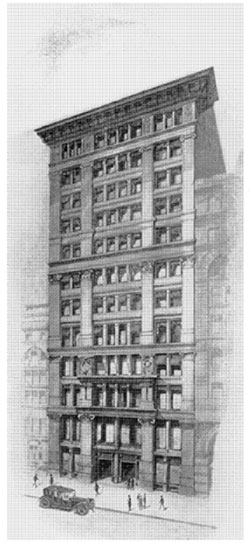
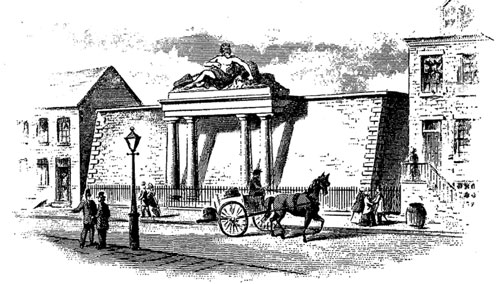
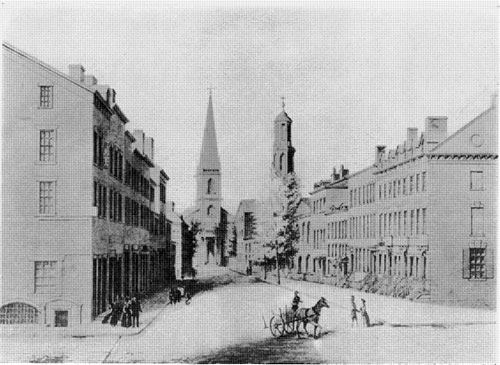
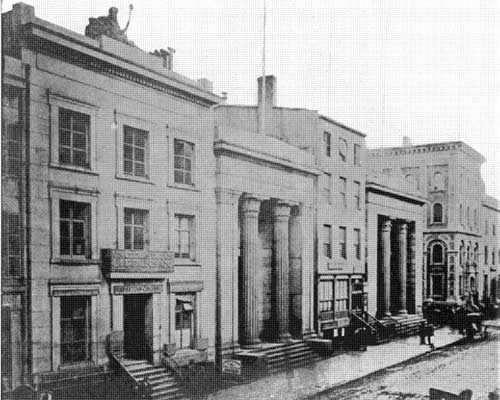
PRESENT OFFICE OF THE MANHATTAN COMPANY.
40-42 , Wall Street.
Building erected jointly in 1884 by the Manhattan Company and the Merchants' National Bank.
CHARTERED 1799
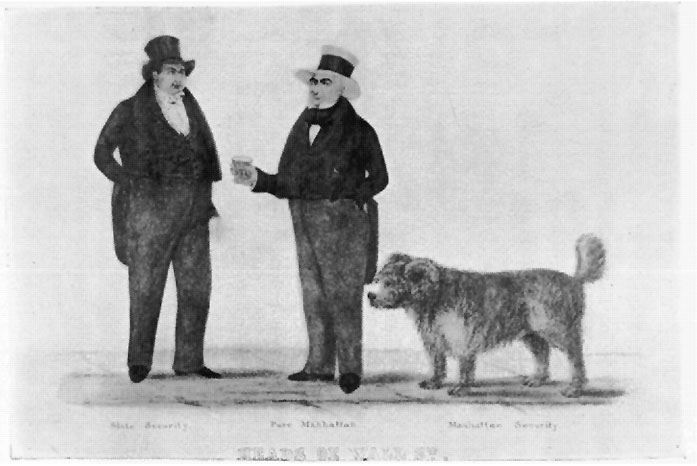
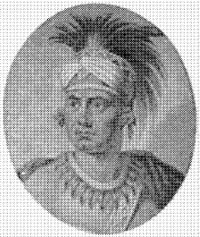 Chief of the Manhattans
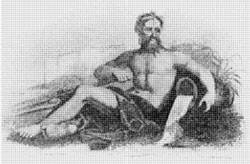
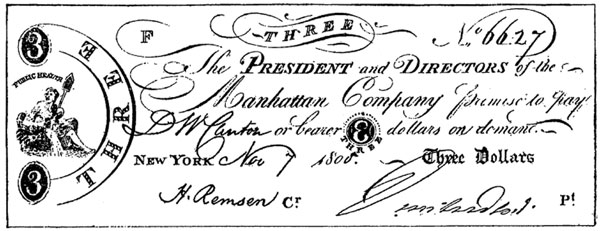
On May 8th, 1799, the Committee of By-Laws reported "that they had devised a common seal for the Corporation, the description of which is as follows:
"Oceanus, one of the sea Gods, sitting in a reclining posture on a rising ground pouring water from an urn which forms a river and terminates in a lake. On the exergue will be inscribed 'Seal of the Manhattan Company.'"
There are nine banks now in existence whose history reaches back into the Eighteenth Century. Of these, two are in Massachusetts, two in Connecticut, one in Pennsylvania, one in Delaware, one in Maryland and two in New York.
Corporate banking in New York began with the organization of the Bank of New York by Alexander Hamilton in 1784, which received its charter in 1792. For fifteen years this bank, together with the New York branch of the first Bank of the United States, were the only banks doing business in either the City or State of New York. With Hamilton and the Federals in control of the Legislature, new bank charters were unobtainable. This monopoly of banking facilities in the City and State was of great strategic value to the political party in control, and naturally aroused jealousy and resentment among the members of the opposition, whose leader was Aaron Burr.
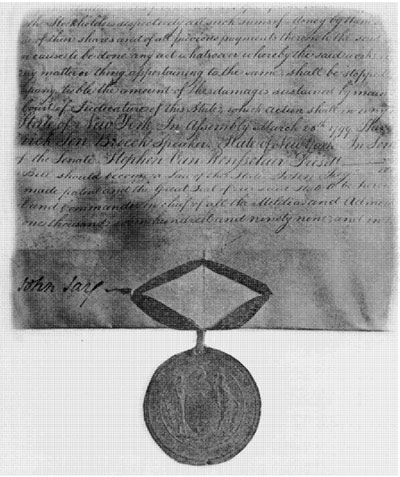 EXCERPT FROM CHARTER
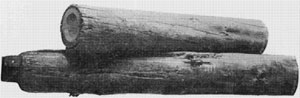
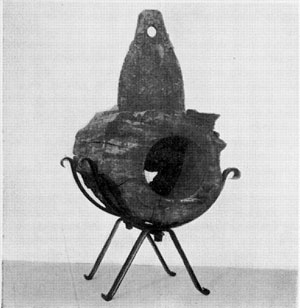
In 1798 New York City suffered from a severe yellow fever epidemic, which was attributed to an inadequate and inferior water supply. Upon the assembling of the Legislature in 1799, an association of individuals, among whom Aaron Burr was the moving spirit, applied for a charter for the purpose of "supplying the City of New York with pure and wholesome water." With a capital of $2,000,000, the project was an ambitious one for those days, and, as there was considerable uncertainty about the probable cost of the water system, a clause was inserted in the charter, permitting the Company to employ all surplus capital in the purchase of public or other stock or in any other monied transactions or operations, not inconsistent with the constitution and laws of New York or of the United States.
A great effort was made to defeat the charter on account of this clause granting the Company banking privileges. But the necessity for a proper water system, which could be procured only by the organization of a responsible company with large capital, carried it through the Legislature and it received the Governor's signature.
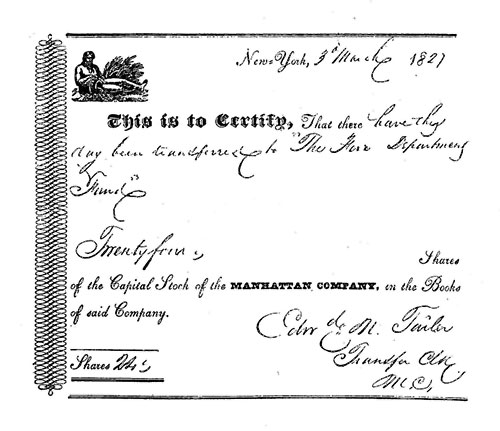 FORM OF EARLY STOCK CERTIFICATE
The Bill was passed April 2d, 1799, and by April 22d books were opened for public subscription to the $2,000,000 Capital Stock of the Manhattan Company, the par value of which was $50. These original books are still in the possession of the Company, and contain the signatures of many of the prominent men of the time. By May 15th the entire amount had been subscribed by several thousand persons—the City of New York having taken 2,000 of the shares. The Charter provided that the Recorder of the city should be ex-officio a director of the Company, a provision which was in effect for 108 years, until the abolition of the office in 1907.
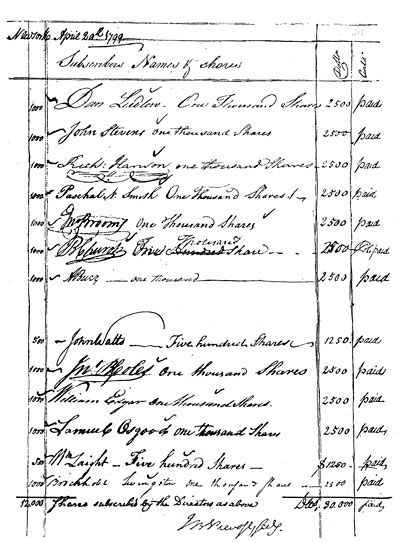 SUBSCRIPTIONS OF DIRECTORS
Reproduced from original subscription book
SUBSCRIPTIONS OF DIRECTORS
Reproduced from original subscription book
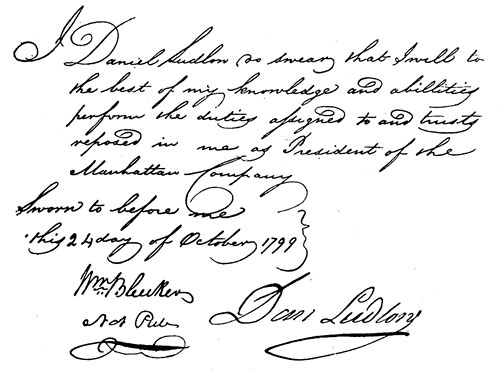 OATH OF FIRST PRESIDENT