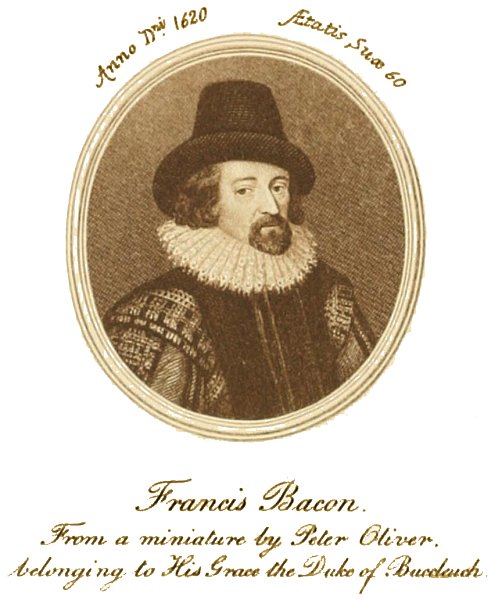
But interesting as it is to find in Bacon yet another and
hitherto an unsuspected pretender to the throne of
England, his pretensions to the authorship of Shakespeare’s
plays is a feature of even more dazzling interest. His
reasons for denying the authorship while he lived have
hitherto demanded a great deal of speculative explanation.
The general theory of the Baconites is that Bacon concealed
his authorship of the plays because such writing
was held in low esteem, or as Mr. Sinnett puts it, Bacon
“shrank from compromising his social reputation by any
open connection with the despised vocation of the playwright.”
The difficulty of accepting this assumption has
hitherto been found in the fact that there was no reason
why Bacon should have confined himself to the writing
of plays. In the case of Shakespeare, it was quite
understandable, for he was an actor, and the stage was
his livelihood. Bacon, on the other hand, had no love
for the theatre; he looked upon play-acting as a toy, and
masques as things unworthy of serious observations. The
tone of his comments is contemptuous, and his criticism
discloses a lack of knowledge and interest in the subject.
Why should this man, who regarded the stage with ill-concealed
repugnance, have written plays which he was
ashamed to own, while all imaginative literature was open
to him. The stigma which it is erroneously alleged was
attached to play-writing was not associated with poetry;
if the playwright was under a ban, the poet was on the
pedestal. There must have been a more tangible reason
for Bacon’s concealment, but we have had to wait for
Mrs. Gallup’s book to disclose it. Bacon’s object in writing
was to unfold the secrets of his birth and to ventilate his
wrongs; he chose plays as his medium because, like Mr.
George Bernard Shaw, he found blank verse easier to
write than prose. He employed the pseudonyms of
Greene and Peele, and the pen name of Marlowe ere taking
that of Wm. Shakespeare as his masque or vizard, “that
we should remayne unknowne, inasmuch as wee, having
worked in drama, history that is most vig’rously supprest,
have put ourselfe soe greatly in dange’ that a word unto
Queene Elizabeth, without doubt, would give us a sodaine
horriblle end—an exit without re-entrance—for in truth
she is authoress and preserve’ of this, our being.”
Bacon’s first claim to authorship, apart from the works
which were issued under his own name, is to be found,
according to the cipher, in the 1596 edition of the Faerie
Queene:
“E. Sp. could not otherwise so easilie atchieve honours
that pertyne to ourself. Indeed, this would alone crowne
his head, if this were all—I speake not of golden crowne,
but of lawrell—for our pen is dipt deepe into th’ muses’
pure source.”
The first mention of Shakespeare as Bacon’s masque
appears in the J. Roberts’ edition (1600) of Sir John Oldcastle
and The Merchant of Venice:
“See or read. In the stage-plaies, two, the oldest or
earliest devices prove these twentie plays to have been put
upon our stage by the actor that is suppos’d to sell dramas
of value, yet ’tis rightlie mine owne labour.”
In the Advancement of Learning (1605) Bacon extends
his claim to embrace the works of Robert Greene, Peele,
Marlowe, and Ben Jonson:
“My stage plaies have all been disguis’d (to wit, many
in Greene’s name, or in Peele’s, Marlowe’s, a fewe, such as
the Queen’s Masques and others of this kind published for
me by Jonson, my friend and co-worker) since I relate a
secret history therein, a story of so sterne and tragick
qualite, it ille suited my lighte’ verse, in the earlier works.”
The only other persons who are permitted the privilege
of communicating with posterity, through the medium of
the cipher, are Bacon’s “friends and co-workers,” Ben
Jonson and William Rawley. In the folio edition of
Jonson’s plays (1616) at Bacon’s “constantly urged
request,” Jonson, who had his friend’s “fame in heart as
much as my honour and dignitie,” writes to the decipherer:
“It shall be noted, indeed, when you uncover his stile,
my works do not all come from mine owne penne, for I
shall name to you some plays that come forth fro’ Sir F.
Bacon, his worthy hand or head, I bein’ but the masque
behind which he was surely hid. Th’ play entitled
Sejanus was his drama, and th’ King’s, Queen’s, Prince’s
Entertainments; the Queen’s Masques are his, as also th’
short Panegyre.”
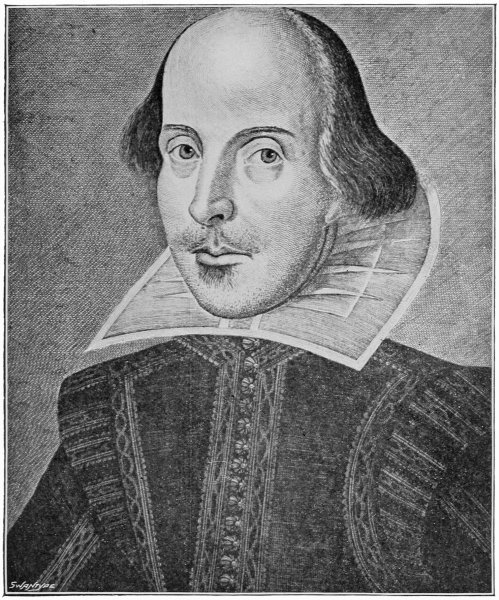
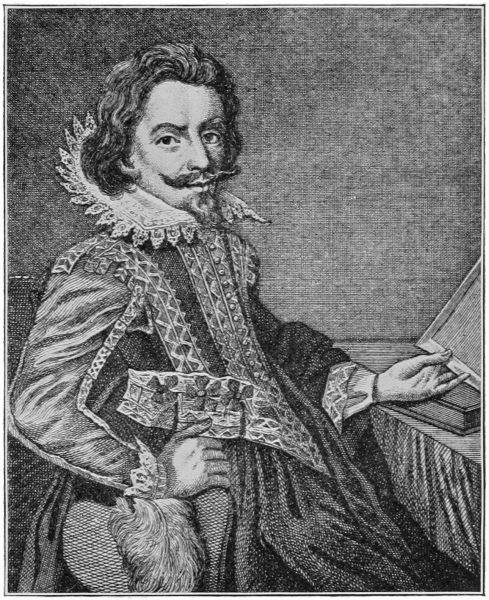
SHAKESPEARE.
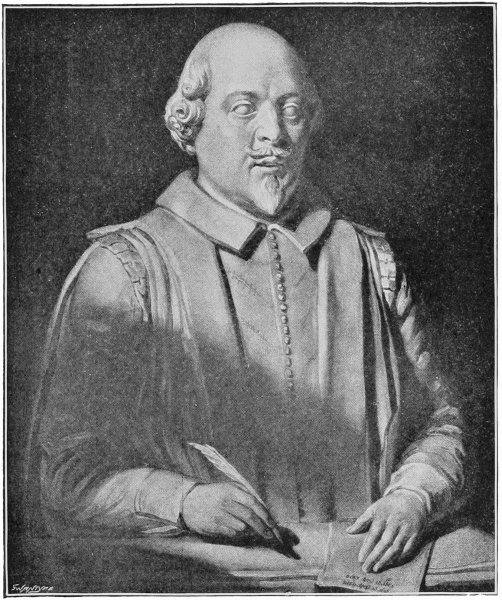
The Droeshout Etching, from the 1623 Folio Edition.
To the Reader.
This Figure, that thou here seest put,
It was for gentle Shakespeare cut;
Wherein the Grauer had a strife
with Nature, to out-doo the life:
O, could he but haue drawne his wit
As well in brasse, as he hath hit
His face; the Print would then surpasse
All, that was euer writ in brasse.
But, since he cannot, Reader, looke
Not on his Picture, but his Booke.
B. I.
But we learn that, in addition to Jonson, “my foster-brother
Anthony, my owne brother Robert, Ben Jonson,
my friend, adviser and assistant, and our private secretary,”
were also “cogniza’t of the work,” and indeed after Bacon’s
death in 1626, William Rawley, his private secretary, took
up the cipher story, and completed it in Burton’s Anatomy
of Melancholy, and in the 1635 editions of Sylva Sylvarum
and the New Atlantis. It has been objected that Bacon
could not have dropped the cipher into books published
after his death, but this objection “vanishes into invisibility,”
as Mr. Theobald would say, when we remember
that faithful old Rawley was living long after Bacon’s work
had been “cut short by th’ sickel o’ death.” He bobs up
serenely in Sylva Sylvarum, drops in another thirty pages
of Bacon’s cipher lamentations, and winds up with a dozen
lines of his own “to speak of th’ errata.” This last
instalment was, it may be assumed, written prior to
1626, and entrusted to Rawley to make use of on the first
opportunity, i.e., as soon as he could obtain command of
the proofs of another book.
In the first folio, published twenty years after the death
of Elizabeth, Bacon still appears to be affrighted by the
memory of the Queen; his life would still be forfeit if
his identity were discovered, “since she is my mother;”
but in his valedictory address to his decipherer, he declares
that it is “not feare, but disstaste of th’ unseemly talk and
much curiosity of the many who read these cipher histories,
that makes him still desirous to preserving his incognito.”
“My time of feare went from me with my greatness,
but I still wish to avoid many questionings—and much
suspicion, perchance on the side of the King, in his owne
prope’ person. I have neede of the very caution which
kept these secrets from the many, when my mother made
me swear secrecy, and my life was the forfeit; nor may I
now speake openly, yet many men for a kingdom would
break their oathes.”
It is possible that Bacon may have considered that
“since witnesses to th’ marriage and to my birth ... are
dead, and the papers certifying their presence” were
destroyed, he would have a better chance of obtaining
credence for his story a few centuries hence than in his
own day. His belief in the credulity of posterity did not
desert him:
“But my kingdome is in immortall glory among men
from generatio’ unto coming generations. An unending
fame will crowne my browe, and it is farre better worthe
in any true thinking mind, I am assured, than many a
crowne which kings do have set on with shewe and
ceremonie. Yet when I have said it, my heart is sad for
the great wrong that I must for ever endure.”
Bacon appears to have foreseen that some future sceptic
would question the justice of his claims; would ask, for
instance, how the hand that wrote Macbeth and The
Tempest, came to produce such comparatively indifferent
stuff as A Quip for an Upstart Courtier, and he meets the
anticipated question with the following explanation:—
“It shall bee noted in truth that some greatly exceede
their fellowes in worth, and it is easily explained. Th’
theame varied, yet was always a subject well selected to
convey the secret message. Also the plays being given out
as tho’gh written by the actor to whom each had been
consigned, turne one’s genius suddainlie many times to
suit th’ new man.
“In this actour that wee now emploie, is a wittie vayne
different from any formerly employed. In truth it suiteth
well with a native spirrit, humorous and grave by turnes
in ourselfe. Therefore when we create a part that hath
him in minde th’ play is correspondingly better therefor. It
must be evident ... that these later dramas (this cipher
message is in the 1611 quarto of Hamlet) are superior in
nearlie all those scenes where our genius hath swaie”....
Over and over again, with almost childish iteration, the
cipher repeats the names of the authors whose works he
claims as his own:
“Spenser, Greene, Peele, Marlowe have sold me theirs
(their names)—two or three others I have assumed upon
certaine occasions such as this (Ben Jonson’s Masques),
besides th’ one I beare among men.”...
“My plaies are not yet finisht, but I intend to put
forth severall soone. However, bi-literall work requiring
so much time, it will readily be seene that there is much to
doe aftee a booke doth seeme to be ready for the presse,
and I could not say when other plays will come out. The
next volume will be under W. Shakespeare’s name. As
some which have now beene produced have borne upon the
title page his name though all are my owne work, I have
allow’d it to stand on manie others which I myselfe regard
as equall in merite.”
“My next work is not begun here: much of it shall bee
found in th’ playes o’ Shakespeare which have not yet
come out. We having put forth a numbe’ of plays i’ his
theatre, shall continue soe doing since we doe make him
th’ thrall to our will. Our name never accompanieth anie
play, but it frequently appeareth plainly in cipher for witty
minds to transla’e from Latine and Greeke....”
“This history (The Tragical Historie of the Earl of
Essex) is contained (i.e., hidden in cipher) in some stage
plays that came out in Shakespeare’s name. Ere long
there will be many of like stile, purpose and scope added
thereto, which shall both ayd and instruct you in th’ work.
This should make it cleare, e.g., sixty stage-plays which, in
varyi’g stiles that are contrary to my owne well-known stile
of expression, whylst for more of our lighter work an
impenetrable mask, for a history, much too varied: hence
these great plays have been devis’d which, being similar,
often held this inne’ history therein unsuspected....”
“Several comedies, which be now strangers, as might
be said, bearing at th’ most such titles ’mongst the plaiers
as they would remember, but th’ author’s name in disguise,
if it bee seen at all, will, as soone as may be found toward
and propitious, be publisht by Shakespeare, i.e., in his
name, having masqued thus manie of the best plaies that
we have beene able to produce. To these we are steadily
making additions, writing from two to six stage plays every
year....”
“All that learne that I, who accompte th’ truth better
than wicked vanitie, publish’d manie late playes under
other cognomen will think the motive some distaste of the
stage. In noe respect is it true....” His real reason
is, firstly, that “all men who write stage-playes are held
in co’tempte,” and, secondly, the plays are employed
to “send out much hidden dang’rous matter.” “In my
plays matters are chosen not alone for value as a subject
to heare and no longer heed. Each play is the meane or
th’ medium, by which cipher histories are sent forth.”
“Severall small works under no name wonne worthy
praise; next in Spenser’s name, also, they ventured into an
unknowne world. When I, at length, having written in
diverse stiles, found three who, for sufficient reward in
gold added to an immediate renowne as good pens,
willingly put forth all workes which I had compos’d I was
bolder....”
“Th’ evidence such plays give of being from the brayne
of one who hath for manie years made himself acquainted
with th’ formes and th’ methode—or art—of this dramatick
or representative poetry, maketh also my claime to other
workes, which have beene publisht in various names,
undeniable. The worke, despight a variety of styles, is
mine owne....”
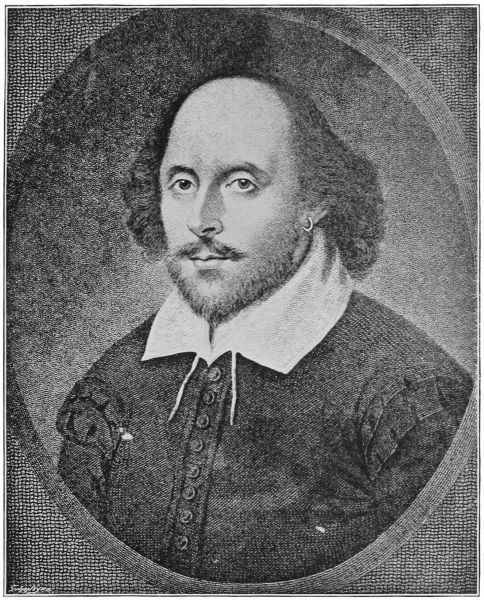
SHAKESPEARE.
The Chandos Portrait.
“So few (plays) can bee put forth as first written
without a slighte revision, and many new being also made
ready, my penne hath little or noe rest. I am speaking of
those plaies that were suppos’d Wm. Shakespeare’s....”
“... small portions (of the cipher story) being used at
one time, sometimes in our Spenser’s name, Marlowe’s,
Peele’s, and Shakespeare’s, anon Greene’s, mine, also Ben
Jonson’s, affording our diverse masques another colour,
as ’twere, to baffle all seekers, to which we shall add
Burton’s....”
“Th’ worke beareth the title of the Anatomy of Melancholy,
and will bee put forth by Burton.”
Here is Bacon’s announcement of the publication of the
First Folio:
“In our plaies ... being in the name of a man not
living, there is still more of this secret historie.... We
have not lost that maske tho’ our Shakespeare no longer
liveth, since twoo others, fellowes of our play actor—who
would, we doubt not, publish those plays—would disguise
our work as well....”
“Our plaies are of diverse kindes—historie, comedie,
and tragedie. Many are upon th’ stage, but those already
put forth in Wm. Shakespeare’s name, we doe nothing
doubt, have won a lasting fame,—comedy, th’ historick
drama and tragedy, are alike in favour....”
“My best playes, at present, as William Shakespeare’s
work fost’red, will as soone as one more plaie be completed,
weare a fine but yet a quiet dresse, as is seemely in
plaies of as much valew and dignity as sheweth cleerly
therein, and be put foorth in folio enlarged and multiplyed
as th’ history conceal’d within th’ comedies, histories, or
tragedies required.”
Then follows a number of further recapitulations of his
masques:
“Francis of Verulam is author of all the plays heretofore
published by Marlowe, Greene, Peele, Shakespeare,
and of the two-and-twenty now put out for the first time.
Some are altered to continue his history....”
“Next write a comedy, a quaint device for making
knowne th’ men that do give, lend, sell, or in anie othe’
waye, have put me into possession of their names. These
I have us’d as disguises that my name might not bee seen
attached to any poem, stage-play, or anie of th’ light
workes o’ this day....”
“As I have often said ... you have poems and prose
workes on divers theames in all such various stiles, as are
put before th’ world as Greene’s, as Shakespeare’s, Burto’s,
as Peele’s, Spenser’s, as Marlowe’s, as Jonso’ dramas ...
for I varied my stile to suit different men, since no two
shew th’ same taste and like imagination....”
“Any play publisht as Marlowe’s, came from th’ same
source as all which you will now work out....”
“Greene, Spense’, Peele, Shakespeare, Burton, and
Marley, as you may somewhere see it, or, as it is usually
given, Marlowe, have thus farre been my masques....”
“A few workes also beare th’ name o’ my friend, Ben
Jonson—these are Sejanus and th’ Masques, used to
conceale the Iliads chiefly and to make use o’ my newe
cipher....”
“I masqued manie grave secrets in my poems which I
have publisht, now as Peele’s or Spenser’s, now as my
owne, then againe in th’ name of authours, so cald, who
plac’d workes of mixt sort before a reading world, prose
and poetry. To Robt. Greene did I entruste most of that
work....”
Bacon has limited our speculations upon the extent of
his literary work by definitely mentioning the works which
he wrote in a cipher discovered by Dr. Owen:
“We will enumerate them by their whole titles
From the beginning to the end: William Shakespeare,
Robert Greene, George Peele, and Christopher Marlowe’s
Stage plays; The Faerie Queen, Shepherd’s Calendar,
And all the works of Edmund Spenser;
The Anatomy of Melancholy of Robert Burton,
The History of Henry VII., The Natural History,
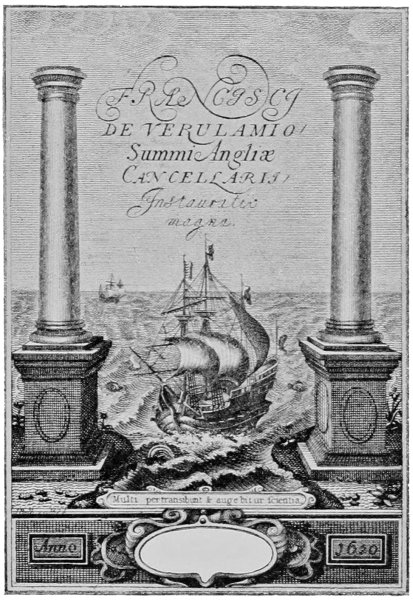
The Interpretation of Nature, The Great Instauration,
Advancement of Learning, The De Augmentis Scientiarum,
Our Essays, and all the other works of our own.”
Even when we note that the Advancement and De
Augmentis are the English and Latin versions of the same
work—a fact that Dr. Owen appears to have overlooked—Mr.
Theobald must acknowledge that this represents a
very fair literary output, but it does not form the full list
of his works. The names of his cipher or interiour works,
are enumerated by Mrs. Gallup:
“There are five histories as followes: The Life o’
Elizabeth, The Life of Essex, The White Rose o’ Britaine,
The Life and Death of Edward Third, The Life of Henry
th’ Seventh; five tragedies: Mary Queene o’ Scots, Robert th’
Earl o’ Essex (my late brother), Robert th’ Earle o’ Leicester
(my late father), Death o’ Marlowe, Ann Bullen; three
comedies: Seven Wise Men o’ th’ West, Solomon th’ Second,
The Mouse-Trap.”