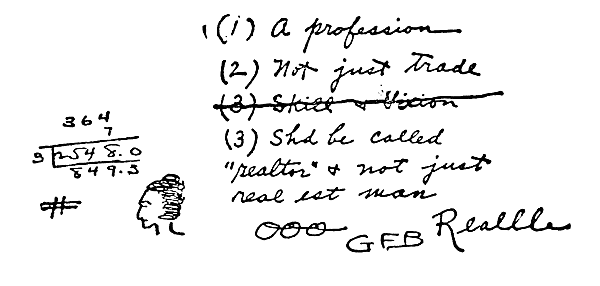
He forgot Paul Riesling in an afternoon of not unagreeable details.
After a return to his office, which seemed to have staggered on without
him, he drove a “prospect” out to view a four-flat tenement in the
Linton district. He was inspired by the customer’s admiration of the new
cigar-lighter. Thrice its novelty made him use it, and thrice he hurled
half-smoked cigarettes from the car, protesting, “I got to quit
smoking so blame much!”
Their ample discussion of every detail of the cigar-lighter led them to
speak of electric flat-irons and bed-warmers. Babbitt apologized for
being so shabbily old-fashioned as still to use a hot-water bottle, and
he announced that he would have the sleeping-porch wired at once. He had
enormous and poetic admiration, though very little understanding, of all
mechanical devices. They were his symbols of truth and beauty. Regarding
each new intricate mechanism—metal lathe, two-jet carburetor, machine
gun, oxyacetylene welder—he learned one good realistic-sounding phrase,
and used it over and over, with a delightful feeling of being technical
and initiated.
The customer joined him in the worship of machinery, and they came
buoyantly up to the tenement and began that examination of plastic slate
roof, kalamein doors, and seven-eighths-inch blind-nailed flooring,
began those diplomacies of hurt surprise and readiness to be persuaded
to do something they had already decided to do, which would some day
result in a sale.
On the way back Babbitt picked up his partner and father-in-law, Henry
T. Thompson, at his kitchen-cabinet works, and they drove through South
Zenith, a high-colored, banging, exciting region: new factories of
hollow tile with gigantic wire-glass windows, surly old red-brick
factories stained with tar, high-perched water-tanks, big red trucks
like locomotives, and, on a score of hectic side-tracks, far-wandering
freight-cars from the New York Central and apple orchards, the Great
Northern and wheat-plateaus, the Southern Pacific and orange groves.
They talked to the secretary of the Zenith Foundry Company about an
interesting artistic project—a cast-iron fence for Linden Lane
Cemetery. They drove on to the Zeeco Motor Company and interviewed the
sales-manager, Noël Ryland, about a discount on a Zeeco car for
Thompson. Babbitt and Ryland were fellow-members of the Boosters’ Club,
and no Booster felt right if he bought anything from another Booster
without receiving a discount. But Henry Thompson growled, “Oh, t’ hell
with ’em! I’m not going to crawl around mooching discounts, not from
nobody.” It was one of the differences between Thompson, the
old-fashioned, lean Yankee, rugged, traditional, stage type of American
business man, and Babbitt, the plump, smooth, efficient,
up-to-the-minute and otherwise perfected modern. Whenever Thompson
twanged, “Put your John Hancock on that line,” Babbitt was as much
amused by the antiquated provincialism as any proper Englishman by any
American. He knew himself to be of a breeding altogether more esthetic
and sensitive than Thompson’s. He was a college graduate, he played
golf, he often smoked cigarettes instead of cigars, and when he went to
Chicago he took a room with a private bath. “The whole thing is,” he
explained to Paul Riesling, “these old codgers lack the subtlety that
you got to have to-day.”
This advance in civilization could be carried too far, Babbitt
perceived. Noël Ryland, sales-manager of the Zeeco, was a frivolous
graduate of Princeton, while Babbitt was a sound and standard ware from
that great department-store, the State University. Ryland wore spats, he
wrote long letters about City Planning and Community Singing, and,
though he was a Booster, he was known to carry in his pocket small
volumes of poetry in a foreign language. All this was going too far.
Henry Thompson was the extreme of insularity, and Noël Ryland the
extreme of frothiness, while between them, supporting the state,
defending the evangelical churches and domestic brightness and sound
business, were Babbitt and his friends.
With this just estimate of himself—and with the promise of a discount
on Thompson’s car—he returned to his office in triumph.
But as he went through the corridor of the Reeves Building he sighed,
“Poor old Paul! I got to— Oh, damn Noël Ryland! Damn Charley McKelvey!
Just because they make more money than I do, they think they’re so
superior. I wouldn’t be found dead in their stuffy old Union Club!
I— Somehow, to-day, I don’t feel like going back to work. Oh well—”
He answered telephone calls, he read the four o’clock mail, he signed
his morning’s letters, he talked to a tenant about repairs, he fought
with Stanley Graff.
Young Graff, the outside salesman, was always hinting that he deserved
an increase of commission, and to-day he complained, “I think I ought to
get a bonus if I put through the Heiler sale. I’m chasing around and
working on it every single evening, almost.”
Babbitt frequently remarked to his wife that it was better to “con your
office-help along and keep ’em happy ’stead of jumping on ’em and poking
’em up—get more work out of ’em that way,” but this unexampled lack of
appreciation hurt him, and he turned on Graff:
“Look here, Stan; let’s get this clear. You’ve got an idea somehow that
it’s you that do all the selling. Where d’ you get that stuff? Where d’
you think you’d be if it wasn’t for our capital behind you, and our
lists of properties, and all the prospects we find for you? All you got
to do is follow up our tips and close the deal. The hall-porter could
sell Babbitt-Thompson listings! You say you’re engaged to a girl, but
have to put in your evenings chasing after buyers. Well, why the devil
shouldn’t you? What do you want to do? Sit around holding her hand? Let
me tell you, Stan, if your girl is worth her salt, she’ll be glad to
know you’re out hustling, making some money to furnish the home-nest,
instead of doing the lovey-dovey. The kind of fellow that kicks about
working overtime, that wants to spend his evenings reading trashy novels
or spooning and exchanging a lot of nonsense and foolishness with some
girl, he ain’t the kind of upstanding, energetic young man, with a
future—and with Vision!—that we want here. How about it? What’s your
Ideal, anyway? Do you want to make money and be a responsible member of
the community, or do you want to be a loafer, with no Inspiration or
Pep?”
Graff was not so amenable to Vision and Ideals as usual. “You bet I want
to make money! That’s why I want that bonus! Honest, Mr. Babbitt, I
don’t want to get fresh, but this Heiler house is a terror. Nobody’ll
fall for it. The flooring is rotten and the walls are full of cracks.”
“That’s exactly what I mean! To a salesman with a love for his
profession, it’s hard problems like that that inspire him to do his
best. Besides, Stan— Matter o’ fact, Thompson and I are against bonuses,
as a matter of principle. We like you, and we want to help you so you
can get married, but we can’t be unfair to the others on the staff. If
we start giving you bonuses, don’t you see we’re going to hurt the
feeling and be unjust to Penniman and Laylock? Right’s right, and
discrimination is unfair, and there ain’t going to be any of it in this
office! Don’t get the idea, Stan, that because during the war salesmen
were hard to hire, now, when there’s a lot of men out of work, there
aren’t a slew of bright young fellows that would be glad to step in and
enjoy your opportunities, and not act as if Thompson and I were his
enemies and not do any work except for bonuses. How about it, heh? How
about it?”
“Oh—well—gee—of course—” sighed Graff, as he went out, crabwise.
Babbitt did not often squabble with his employees. He liked to like the
people about him; he was dismayed when they did not like him. It was
only when they attacked the sacred purse that he was frightened into
fury, but then, being a man given to oratory and high principles, he
enjoyed the sound of his own vocabulary and the warmth of his own
virtue. To-day he had so passionately indulged in self-approval that he
wondered whether he had been entirely just:
“After all, Stan isn’t a boy any more. Oughtn’t to call him so hard. But
rats, got to haul folks over the coals now and then for their own good.
Unpleasant duty, but— I wonder if Stan is sore? What’s he saying to
McGoun out there?”
So chill a wind of hatred blew from the outer office that the normal
comfort of his evening home-going was ruined. He was distressed by
losing that approval of his employees to which an executive is always
slave. Ordinarily he left the office with a thousand enjoyable fussy
directions to the effect that there would undoubtedly be important tasks
to-morrow, and Miss McGoun and Miss Bannigan would do well to be there
early, and for heaven’s sake remind him to call up Conrad Lyte soon ’s
he came in. To-night he departed with feigned and apologetic liveliness.
He was as afraid of his still-faced clerks—of the eyes focused on him,
Miss McGoun staring with head lifted from her typing, Miss Bannigan
looking over her ledger, Mat Penniman craning around at his desk in the
dark alcove, Stanley Graff sullenly expressionless—as a parvenu before
the bleak propriety of his butler. He hated to expose his back to their
laughter, and in his effort to be casually merry he stammered and was
raucously friendly and oozed wretchedly out of the door.
But he forgot his misery when he saw from Smith Street the charms of
Floral Heights; the roofs of red tile and green slate, the shining new
sun-parlors, and the stainless walls.
He stopped to inform Howard Littlefield, his scholarly neighbor, that
though the day had been springlike the evening might be cold. He went in
to shout “Where are you?” at his wife, with no very definite desire to
know where she was. He examined the lawn to see whether the furnace-man
had raked it properly. With some satisfaction and a good deal of
discussion of the matter with Mrs. Babbitt, Ted, and Howard Littlefield,
he concluded that the furnace-man had not raked it properly. He cut two
tufts of wild grass with his wife’s largest dressmaking-scissors; he
informed Ted that it was all nonsense having a furnace-man—“big husky
fellow like you ought to do all the work around the house;” and
privately he meditated that it was agreeable to have it known throughout
the neighborhood that he was so prosperous that his son never worked
around the house.
He stood on the sleeping-porch and did his day’s exercises: arms out
sidewise for two minutes, up for two minutes, while he muttered, “Ought
take more exercise; keep in shape;” then went in to see whether his
collar needed changing before dinner. As usual it apparently did not.
The Lettish-Croat maid, a powerful woman, beat the dinner-gong.
The roast of beef, roasted potatoes, and string beans were excellent
this evening and, after an adequate sketch of the day’s progressive
weather-states, his four-hundred-and-fifty-dollar fee, his lunch with
Paul Riesling, and the proven merits of the new cigar-lighter, he was
moved to a benign, “Sort o’ thinking about buying a new car. Don’t
believe we’ll get one till next year, but still, we might.”
Verona, the older daughter, cried, “Oh, Dad, if you do, why don’t you
get a sedan? That would be perfectly slick! A closed car is so much more
comfy than an open one.”
“Well now, I don’t know about that. I kind of like an open car. You get
more fresh air that way.”
“Oh, shoot, that’s just because you never tried a sedan. Let’s get one.
It’s got a lot more class,” said Ted.
“A closed car does keep the clothes nicer,” from Mrs. Babbitt; “You
don’t get your hair blown all to pieces,” from Verona; “It’s a lot
sportier,” from Ted; and from Tinka, the youngest, “Oh, let’s have a
sedan! Mary Ellen’s father has got one.” Ted wound up, “Oh, everybody’s
got a closed car now, except us!”
Babbitt faced them: “I guess you got nothing very terrible to complain
about! Anyway, I don’t keep a car just to enable you children to look
like millionaires! And I like an open car, so you can put the top down
on summer evenings and go out for a drive and get some good fresh air.
Besides— A closed car costs more money.”
“Aw, gee whiz, if the Doppelbraus can afford a closed car, I guess we
can!” prodded Ted.
“Humph! I make eight thousand a year to his seven! But I don’t blow it
all in and waste it and throw it around, the way he does! Don’t believe
in this business of going and spending a whole lot of money to show off
and—”
They went, with ardor and some thoroughness, into the matters of
streamline bodies, hill-climbing power, wire wheels, chrome steel,
ignition systems, and body colors. It was much more than a study of
transportation. It was an aspiration for knightly rank. In the city of
Zenith, in the barbarous twentieth century, a family’s motor indicated
its social rank as precisely as the grades of the peerage determined the
rank of an English family—indeed, more precisely, considering the
opinion of old county families upon newly created brewery barons and
woolen-mill viscounts. The details of precedence were never officially
determined. There was no court to decide whether the second son of a
Pierce Arrow limousine should go in to dinner before the first son of a
Buick roadster, but of their respective social importance there was no
doubt; and where Babbitt as a boy had aspired to the presidency, his son
Ted aspired to a Packard twin-six and an established position in the
motored gentry.
The favor which Babbitt had won from his family by speaking of a new car
evaporated as they realized that he didn’t intend to buy one this year.
Ted lamented, “Oh, punk! The old boat looks as if it’d had fleas and
been scratching its varnish off.” Mrs. Babbitt said abstractedly,
“Snoway talkcher father.” Babbitt raged, “If you’re too much of a
high-class gentleman, and you belong to the bon ton and so on, why,
you needn’t take the car out this evening.” Ted explained, “I didn’t
mean—” and dinner dragged on with normal domestic delight to the
inevitable point at which Babbitt protested, “Come, come now, we can’t
sit here all evening. Give the girl a chance to clear away the table.”
He was fretting, “What a family! I don’t know how we all get to
scrapping this way. Like to go off some place and be able to hear myself
think.... Paul... Maine.... Wear old pants, and loaf, and cuss.” He said
cautiously to his wife, “I’ve been in correspondence with a man in New
York—wants me to see him about a real-estate trade—may not come off
till summer. Hope it doesn’t break just when we and the Rieslings get
ready to go to Maine. Be a shame if we couldn’t make the trip there
together. Well, no use worrying now.”
Verona escaped, immediately after dinner, with no discussion save an
automatic “Why don’t you ever stay home?” from Babbitt.
In the living-room, in a corner of the davenport, Ted settled down to
his Home Study; plain geometry, Cicero, and the agonizing metaphors of
Comus.
“I don’t see why they give us this old-fashioned junk by Milton and
Shakespeare and Wordsworth and all these has-beens,” he protested. “Oh,
I guess I could stand it to see a show by Shakespeare, if they had swell
scenery and put on a lot of dog, but to sit down in cold blood and
read ’em— These teachers—how do they get that way?”
Mrs. Babbitt, darning socks, speculated, “Yes, I wonder why. Of course I
don’t want to fly in the face of the professors and everybody, but I do
think there’s things in Shakespeare—not that I read him much, but when
I was young the girls used to show me passages that weren’t, really,
they weren’t at all nice.”
Babbitt looked up irritably from the comic strips in the Evening
Advocate. They composed his favorite literature and art, these
illustrated chronicles in which Mr. Mutt hit Mr. Jeff with a rotten egg,
and Mother corrected Father’s vulgarisms by means of a rolling-pin. With
the solemn face of a devotee, breathing heavily through his open mouth,
he plodded nightly through every picture, and during the rite he
detested interruptions. Furthermore, he felt that on the subject of
Shakespeare he wasn’t really an authority. Neither the Advocate-Times,
the Evening Advocate, nor the Bulletin of the Zenith Chamber of
Commerce had ever had an editorial on the matter, and until one of them
had spoken he found it hard to form an original opinion. But even at
risk of floundering in strange bogs, he could not keep out of an open
controversy.
“I’ll tell you why you have to study Shakespeare and those. It’s because
they’re required for college entrance, and that’s all there is to it!
Personally, I don’t see myself why they stuck ’em into an up-to-date
high-school system like we have in this state. Be a good deal better if
you took Business English, and learned how to write an ad, or letters
that would pull. But there it is, and there’s no talk, argument, or
discussion about it! Trouble with you, Ted, is you always want to do
something different! If you’re going to law-school—and you are!— I
never had a chance to, but I’ll see that you do—why, you’ll want to
lay in all the English and Latin you can get.”
“Oh punk. I don’t see what’s the use of law-school—or even finishing
high school. I don’t want to go to college specially. Honest, there’s
lot of fellows that have graduated from colleges that don’t begin to
make as much money as fellows that went to work early. Old Shimmy
Peters, that teaches Latin in the High, he’s a what-is-it from Columbia
and he sits up all night reading a lot of greasy books and he’s always
spieling about the ‘value of languages,’ and the poor soak doesn’t make
but eighteen hundred a year, and no traveling salesman would think of
working for that. I know what I’d like to do. I’d like to be an aviator,
or own a corking big garage, or else—a fellow was telling me about it
yesterday— I’d like to be one of these fellows that the Standard Oil
Company sends out to China, and you live in a compound and don’t have to
do any work, and you get to see the world and pagodas and the ocean and
everything! And then I could take up correspondence-courses. That’s the
real stuff! You don’t have to recite to some frosty-faced old dame
that’s trying to show off to the principal, and you can study any
subject you want to. Just listen to these! I clipped out the ads of some
swell courses.”
He snatched from the back of his geometry half a hundred advertisements
of those home-study courses which the energy and foresight of American
commerce have contributed to the science of education. The first
displayed the portrait of a young man with a pure brow, an iron jaw,
silk socks, and hair like patent leather. Standing with one hand in his
trousers-pocket and the other extended with chiding forefinger, he was
bewitching an audience of men with gray beards, paunches, bald heads,
and every other sign of wisdom and prosperity. Above the picture was an
inspiring educational symbol—no antiquated lamp or torch or owl of
Minerva, but a row of dollar signs. The text ran:
$ $ $ $ $ $ $ $ $
POWER AND PROSPERITY IN PUBLIC SPEAKING
A Yarn Told at the Club
WHAT WE TEACH
YOU!
How to address your lodge.
How to give toasts.
How to tell dialect stories.
How to propose to a lady.
How to entertain banquets.
How to make convincing selling-talks.
How to build big vocabulary.
How to create a strong personality.
How to become a rational, powerful and original thinker.
How to be a MASTER MAN!
Who do you think I ran into the other evening at the De Luxe Restaurant?
Why, old Freddy Durkee, that used to be a dead-or-alive shipping clerk
in my old place— Mr. Mouse-Man we used to laughingly call the dear
fellow. One time he was so timid he was plumb scared of the Super, and
never got credit for the dandy work he did. Him at the De Luxe! And if
he wasn’t ordering a tony feed with all the “fixings” from celery to
nuts! And instead of being embarrassed by the waiters, like he used to
be at the little dump where we lunched in Old Lang Syne, he was bossing
them around like he was a millionaire!
I cautiously asked him what he was doing. Freddy laughed and said, “Say,
old chum, I guess you’re wondering what’s come over me. You’ll be glad
to know I’m now Assistant Super at the old shop, and right on the High
Road to Prosperity and Domination, and I look forward with confidence to
a twelve-cylinder car, and the wife is making things hum in the best
society and the kiddies getting a first-class education.
PROF. W. F. PEET
author of the Shortcut Course in Public-Speaking, is easily the
foremost figure in practical literature, psychology & oratory. A
graduate of some of our leading universities, lecturer, extensive
traveler, author of books, poetry, etc., a man with the unique
PERSONALITY OF THE MASTER MINDS, he is ready to give YOU all the
secrets of his culture and hammering Force, in a few easy lessons
that will not interfere with other occupations.
“Here’s how it happened. I ran across an ad of a course that claimed to
teach people how to talk easily and on their feet, how to answer
complaints, how to lay a proposition before the Boss, how to hit a bank
for a loan, how to hold a big audience spellbound with wit, humor,
anecdote, inspiration, etc. It was compiled by the Master Orator, Prof.
Waldo F. Peet. I was skeptical, too, but I wrote (just on a postcard,
with name and address) to the publisher for the lessons—sent On Trial,
money back if you are not absolutely satisfied. There were eight simple
lessons in plain language anybody could understand, and I studied them
just a few hours a night, then started practising on the wife. Soon
found I could talk right up to the Super and get due credit for all the
good work I did. They began to appreciate me and advance me fast, and
say, old doggo, what do you think they’re paying me now? $6,500 per
year! And say, I find I can keep a big audience fascinated, speaking on
any topic. As a friend, old boy, I advise you to send for circular (no
obligation) and valuable free Art Picture to:—
Shortcut Educational Pub. Co.
Desk WA Sandpit, Iowa.
ARE YOU A 100 PERCENTER OR A 10 PERCENTER?
Babbitt was again without a canon which would enable him to speak with
authority. Nothing in motoring or real estate had indicated what a Solid
Citizen and Regular Fellow ought to think about culture by mail. He
began with hesitation:
“Well—sounds as if it covered the ground. It certainly is a fine thing
to be able to orate. I’ve sometimes thought I had a little talent that
way myself, and I know darn well that one reason why a fourflushing old
back-number like Chan Mott can get away with it in real estate is just
because he can make a good talk, even when he hasn’t got a doggone thing
to say! And it certainly is pretty cute the way they get out all these
courses on various topics and subjects nowadays. I’ll tell you, though:
No need to blow in a lot of good money on this stuff when you can get a
first-rate course in eloquence and English and all that right in your
own school—and one of the biggest school buildings in the entire
country!”
“That’s so,” said Mrs. Babbitt comfortably, while Ted complained:
“Yuh, but Dad, they just teach a lot of old junk that isn’t any
practical use—except the manual training and typewriting and basketball
and dancing—and in these correspondence-courses, gee, you can get all
kinds of stuff that would come in handy. Say, listen to this one:”
CAN YOU PLAY A MAN’S PART?
If you are walking with your mother, sister or best
girl and some one passes a slighting remark or uses
improper language, won’t you be ashamed if you can’t
take her part? Well, can you?
We teach boxing and self-defense by mail. Many
pupils have written saying that after a few lessons
they’ve outboxed bigger and heavier opponents. The
lessons start with simple movements practised before
your mirror—holding out your hand for a coin, the
breast-stroke in swimming, etc. Before you realize it
you are striking scientifically, ducking, guarding and
feinting, just as if you had a real opponent before you.
“Oh, baby, maybe I wouldn’t like that!” Ted chanted. “I’ll tell the
world! Gosh, I’d like to take one fellow I know in school that’s always
shooting off his mouth, and catch him alone—”
“Nonsense! The idea! Most useless thing I ever heard of!” Babbitt
fulminated.
“Well, just suppose I was walking with Mama or Rone, and somebody passed
a slighting remark or used improper language. What would I do?”
“Why, you’d probably bust the record for the hundred-yard dash!”
“I would not! I’d stand right up to any mucker that passed a slighting
remark on my sister and I’d show him—”
“Look here, young Dempsey! If I ever catch you fighting I’ll whale the
everlasting daylights out of you—and I’ll do it without practising
holding out my hand for a coin before the mirror, too!”
“Why, Ted dear,” Mrs. Babbitt said placidly, “it’s not at all nice, your
talking of fighting this way!”
“Well, gosh almighty, that’s a fine way to appreciate— And then suppose
I was walking with you, Ma, and somebody passed a slighting remark—”
“Nobody’s going to pass no slighting remarks on nobody,” Babbitt
observed, “not if they stay home and study their geometry and mind their
own affairs instead of hanging around a lot of poolrooms and
soda-fountains and places where nobody’s got any business to be!”
“But gooooooosh, Dad, if they DID!”
Mrs. Babbitt chirped, “Well, if they did, I wouldn’t do them the honor
of paying any attention to them! Besides, they never do. You always hear
about these women that get followed and insulted and all, but I don’t
believe a word of it, or it’s their own fault, the way some women look
at a person. I certainly never’ve been insulted by—”
“Aw shoot, Mother, just suppose you were sometime! Just suppose!
Can’t you suppose something? Can’t you imagine things?”
“Certainly I can imagine things! The idea!”
“Certainly your mother can imagine things—and suppose things! Think
you’re the only member of this household that’s got an imagination?”
Babbitt demanded. “But what’s the use of a lot of supposing? Supposing
never gets you anywhere. No sense supposing when there’s a lot of real
facts to take into considera—”
“Look here, Dad. Suppose— I mean, just—just suppose you were in your
office and some rival real-estate man—”
“Realtor!”
“—some realtor that you hated came in—”
“I don’t hate any realtor.”
“But suppose you did!”
“I don’t intend to suppose anything of the kind! There’s plenty of
fellows in my profession that stoop and hate their competitors, but if
you were a little older and understood business, instead of always going
to the movies and running around with a lot of fool girls with their
dresses up to their knees and powdered and painted and rouged and God
knows what all as if they were chorus-girls, then you’d know—and you’d
suppose—that if there’s any one thing that I stand for in the
real-estate circles of Zenith, it is that we ought to always speak of
each other only in the friendliest terms and institute a spirit of
brotherhood and coöperation, and so I certainly can’t suppose and I
can’t imagine my hating any realtor, not even that dirty, fourflushing
society sneak, Cecil Rountree!”
“But—”
“And there’s no If, And or But about it! But if I were going to
lambaste somebody, I wouldn’t require any fancy ducks or
swimming-strokes before a mirror, or any of these doodads and flipflops!
Suppose you were out some place and a fellow called you vile names.
Think you’d want to box and jump around like a dancing-master? You’d
just lay him out cold (at least I certainly hope any son of mine would!)
and then you’d dust off your hands and go on about your business, and
that’s all there is to it, and you aren’t going to have any
boxing-lessons by mail, either!”
“Well but— Yes— I just wanted to show how many different kinds of
correspondence-courses there are, instead of all the camembert they
teach us in the High.”
“But I thought they taught boxing in the school gymnasium.”
“That’s different. They stick you up there and some big stiff amuses
himself pounding the stuffin’s out of you before you have a chance to
learn. Hunka! Not any! But anyway— Listen to some of these others.”
The advertisements were truly philanthropic. One of them bore the
rousing headline: “Money! Money!! Money!!!” The second announced that
“Mr. P. R., formerly making only eighteen a week in a barber shop,
writes to us that since taking our course he is now pulling down $5,000
as an Osteo-vitalic Physician;” and the third that “Miss J. L., recently
a wrapper in a store, is now getting Ten Real Dollars a day teaching our
Hindu System of Vibratory Breathing and Mental Control.”
Ted had collected fifty or sixty announcements, from annual
reference-books, from Sunday School periodicals, fiction-magazines, and
journals of discussion. One benefactor implored, “Don’t be a
Wallflower— Be More Popular and Make More Money— You Can Ukulele or Sing
Yourself into Society! By the secret principles of a Newly Discovered
System of Music Teaching, any one—man, lady or child—can, without
tiresome exercises, special training or long drawn out study, and
without waste of time, money or energy, learn to play by note, piano,
banjo, cornet, clarinet, saxophone, violin or drum, and learn
sight-singing.”
The next, under the wistful appeal “Finger Print Detectives Wanted— Big
Incomes!” confided: “YOU red-blooded men and women—this is the
PROFESSION you have been looking for. There’s MONEY in it, BIG money,
and that rapid change of scene, that entrancing and compelling interest
and fascination, which your active mind and adventurous spirit crave.
Think of being the chief figure and directing factor in solving strange
mysteries and baffling crimes. This wonderful profession brings you into
contact with influential men on the basis of equality, and often calls
upon you to travel everywhere, maybe to distant lands—all expenses
paid. NO SPECIAL EDUCATION REQUIRED.”
“Oh, boy! I guess that wins the fire-brick necklace! Wouldn’t it be
swell to travel everywhere and nab some famous crook!” whooped Ted.
“Well, I don’t think much of that. Doggone likely to get hurt. Still,
that music-study stunt might be pretty fair, though. There’s no reason
why, if efficiency-experts put their minds to it the way they have to
routing products in a factory, they couldn’t figure out some scheme so a
person wouldn’t have to monkey with all this practising and exercises
that you get in music.” Babbitt was impressed, and he had a delightful
parental feeling that they two, the men of the family, understood each
other.
He listened to the notices of mail-box universities which taught
Short-story Writing and Improving the Memory, Motion-picture-acting and
Developing the Soul-power, Banking and Spanish, Chiropody and
Photography, Electrical Engineering and Window-trimming, Poultry-raising
and Chemistry.
“Well—well—” Babbitt sought for adequate expression of his admiration.
“I’m a son of a gun! I knew this correspondence-school business had
become a mighty profitable game—makes suburban real-estate look like
two cents!—but I didn’t realize it’d got to be such a reg’lar
key-industry! Must rank right up with groceries and movies. Always
figured somebody’d come along with the brains to not leave education to
a lot of bookworms and impractical theorists but make a big thing out
of it. Yes, I can see how a lot of these courses might interest you. I
must ask the fellows at the Athletic if they ever realized— But same
time, Ted, you know how advertisers, I means some advertisers,
exaggerate. I don’t know as they’d be able to jam you through these
courses as fast as they claim they can.”
“Oh sure, Dad; of course.” Ted had the immense and joyful maturity of a
boy who is respectfully listened to by his elders. Babbitt concentrated
on him with grateful affection:
“I can see what an influence these courses might have on the whole
educational works. Course I’d never admit it publicly—fellow like
myself, a State U. graduate, it’s only decent and patriotic for him to
blow his horn and boost the Alma Mater—but smatter of fact, there’s a
whole lot of valuable time lost even at the U., studying poetry and
French and subjects that never brought in anybody a cent. I don’t know
but what maybe these correspondence-courses might prove to be one of the
most important American inventions.
“Trouble with a lot of folks is: they’re so blame material; they don’t
see the spiritual and mental side of American supremacy; they think that
inventions like the telephone and the areoplane and wireless—no, that
was a Wop invention, but anyway: they think these mechanical
improvements are all that we stand for; whereas to a real thinker, he
sees that spiritual and, uh, dominating movements like Efficiency, and
Rotarianism, and Prohibition, and Democracy are what compose our deepest
and truest wealth. And maybe this new principle in education-at-home may
be another—may be another factor. I tell you, Ted, we’ve got to have
Vision—”
“I think those correspondence-courses are terrible!”
The philosophers gasped. It was Mrs. Babbitt who had made this discord
in their spiritual harmony, and one of Mrs. Babbitt’s virtues was that,
except during dinner-parties, when she was transformed into a raging
hostess, she took care of the house and didn’t bother the males by
thinking. She went on firmly:
“It sounds awful to me, the way they coax those poor young folks to
think they’re learning something, and nobody ’round to help them
and— You two learn so quick, but me, I always was slow. But just the
same—”
Babbitt attended to her: “Nonsense! Get just as much, studying at home.
You don’t think a fellow learns any more because he blows in his
father’s hard-earned money and sits around in Morris chairs in a swell
Harvard dormitory with pictures and shields and table-covers and those
doodads, do you? I tell you, I’m a college man— I know! There is one
objection you might make though. I certainly do protest against any
effort to get a lot of fellows out of barber shops and factories into
the professions. They’re too crowded already, and what’ll we do for
workmen if all those fellows go and get educated?”
Ted was leaning back, smoking a cigarette without reproof. He was, for
the moment, sharing the high thin air of Babbitt’s speculation as though
he were Paul Riesling or even Dr. Howard Littlefield. He hinted:
“Well, what do you think then, Dad? Wouldn’t it be a good idea if I
could go off to China or some peppy place, and study engineering or
something by mail?”
“No, and I’ll tell you why, son. I’ve found out it’s a mighty nice thing
to be able to say you’re a B.A. Some client that doesn’t know what you
are and thinks you’re just a plug business man, he gets to shooting off
his mouth about economics or literature or foreign trade conditions, and
you just ease in something like, ‘When I was in college—course I got my
B.A. in sociology and all that junk—’ Oh, it puts an awful crimp in
their style! But there wouldn’t be any class to saying ‘I got the degree
of Stamp-licker from the Bezuzus Mail-order University!’ You see— My
dad was a pretty good old coot, but he never had much style to him, and
I had to work darn hard to earn my way through college. Well, it’s been
worth it, to be able to associate with the finest gentlemen in Zenith,
at the clubs and so on, and I wouldn’t want you to drop out of the
gentlemen class—the class that are just as red-blooded as the Common
People but still have power and personality. It would kind of hurt me if
you did that, old man!”
“I know, Dad! Sure! All right. I’ll stick to it. Say! Gosh! Gee whiz! I
forgot all about those kids I was going to take to the chorus rehearsal.
I’ll have to duck!”
“But you haven’t done all your home-work.”
“Do it first thing in the morning.”
“Well—”
Six times in the past sixty days Babbitt had stormed, “You will not ‘do
it first thing in the morning’! You’ll do it right now!” but to-night he
said, “Well, better hustle,” and his smile was the rare shy radiance he
kept for Paul Riesling.
“Ted’s a good boy,” he said to Mrs. Babbitt.
“Oh, he is!”
“Who’s these girls he’s going to pick up? Are they nice decent girls?”
“I don’t know. Oh dear, Ted never tells me anything any more. I don’t
understand what’s come over the children of this generation. I used to
have to tell Papa and Mama everything, but seems like the children
to-day have just slipped away from all control.”
“I hope they’re decent girls. Course Ted’s no longer a kid, and I
wouldn’t want him to, uh, get mixed up and everything.”
“George: I wonder if you oughtn’t to take him aside and tell him
about— Things!” She blushed and lowered her eyes.
“Well, I don’t know. Way I figure it, Myra, no sense suggesting a lot of
Things to a boy’s mind. Think up enough devilment by himself. But I
wonder— It’s kind of a hard question. Wonder what Littlefield thinks
about it?”
“Course Papa agrees with you. He says all this—Instruction—is— He says
’tisn’t decent.”
“Oh, he does, does he! Well, let me tell you that whatever Henry T.
Thompson thinks—about morals, I mean, though course you can’t beat the
old duffer—”
“Why, what a way to talk of Papa!”
“—simply can’t beat him at getting in on the ground floor of a deal,
but let me tell you whenever he springs any ideas about higher things
and education, then I know I think just the opposite. You may not regard
me as any great brain-shark, but believe me, I’m a regular college
president, compared with Henry T.! Yes sir, by golly, I’m going to take
Ted aside and tell him why I lead a strictly moral life.”
“Oh, will you? When?”
“When? When? What’s the use of trying to pin me down to When and Why and
Where and How and When? That’s the trouble with women, that’s why they
don’t make high-class executives; they haven’t any sense of diplomacy.
When the proper opportunity and occasion arises so it just comes in
natural, why then I’ll have a friendly little talk with him
and—and— Was that Tinka hollering up-stairs? She ought to been asleep,
long ago.”
He prowled through the living-room, and stood in the sun-parlor, that
glass-walled room of wicker chairs and swinging couch in which they
loafed on Sunday afternoons. Outside, only the lights of Doppelbrau’s
house and the dim presence of Babbitt’s favorite elm broke the softness
of April night.
“Good visit with the boy. Getting over feeling cranky, way I did this
morning. And restless. Though, by golly, I will have a few days alone
with Paul in Maine!... That devil Zilla!... But.... Ted’s all right.
Whole family all right. And good business. Not many fellows make four
hundred and fifty bucks, practically half of a thousand dollars, easy as
I did to-day! Maybe when we all get to rowing it’s just as much my
fault as it is theirs. Oughtn’t to get grouchy like I do. But— Wish I’d
been a pioneer, same as my grand-dad. But then, wouldn’t have a house
like this. I— Oh, gosh, I don’t know!”
He thought moodily of Paul Riesling, of their youth together, of the
girls they had known.
When Babbitt had graduated from the State University, twenty-four years
ago, he had intended to be a lawyer. He had been a ponderous debater in
college; he felt that he was an orator; he saw himself becoming governor
of the state. While he read law he worked as a real-estate salesman. He
saved money, lived in a boarding-house, supped on poached egg on hash.
The lively Paul Riesling (who was certainly going off to Europe to study
violin, next month or next year) was his refuge till Paul was bespelled
by Zilla Colbeck, who laughed and danced and drew men after her plump
and gaily wagging finger.
Babbitt’s evenings were barren then, and he found comfort only in Paul’s
second cousin, Myra Thompson, a sleek and gentle girl who showed her
capacity by agreeing with the ardent young Babbitt that of course he was
going to be governor some day. Where Zilla mocked him as a country boy,
Myra said indignantly that he was ever so much solider than the young
dandies who had been born in the great city of Zenith—an ancient
settlement in 1897, one hundred and five years old, with two hundred
thousand population, the queen and wonder of all the state and, to the
Catawba boy, George Babbitt, so vast and thunderous and luxurious that
he was flattered to know a girl ennobled by birth in Zenith.
Of love there was no talk between them. He knew that if he was to study
law he could not marry for years; and Myra was distinctly a Nice
Girl—one didn’t kiss her, one didn’t “think about her that way at all”
unless one was going to marry her. But she was a dependable companion.
She was always ready to go skating, walking; always content to hear his
discourses on the great things he was going to do, the distressed poor
whom he would defend against the Unjust Rich, the speeches he would make
at Banquets, the inexactitudes of popular thought which he would
correct.
One evening when he was weary and soft-minded, he saw that she had been
weeping. She had been left out of a party given by Zilla. Somehow her
head was on his shoulder and he was kissing away the tears—and she
raised her head to say trustingly, “Now that we’re engaged, shall we be
married soon or shall we wait?”
Engaged? It was his first hint of it. His affection for this brown
tender woman thing went cold and fearful, but he could not hurt her,
could not abuse her trust. He mumbled something about waiting, and
escaped. He walked for an hour, trying to find a way of telling her that
it was a mistake. Often, in the month after, he got near to telling her,
but it was pleasant to have a girl in his arms, and less and less could
he insult her by blurting that he didn’t love her. He himself had no
doubt. The evening before his marriage was an agony, and the morning
wild with the desire to flee.
She made him what is known as a Good Wife. She was loyal, industrious,
and at rare times merry. She passed from a feeble disgust at their
closer relations into what promised to be ardent affection, but it
drooped into bored routine. Yet she existed only for him and for the
children, and she was as sorry, as worried as himself, when he gave up
the law and trudged on in a rut of listing real estate.
“Poor kid, she hasn’t had much better time than I have,” Babbitt
reflected, standing in the dark sun-parlor. “But— I wish I could’ve had
a whirl at law and politics. Seen what I could do. Well— Maybe I’ve made
more money as it is.”
He returned to the living-room but before he settled down he smoothed
his wife’s hair, and she glanced up, happy and somewhat surprised.