Arrian on Coursing.
OF
THE YOUNGER XENOPHON,
TRANSLATED FROM THE GREEK,
WITH
CLASSICAL AND PRACTICAL ANNOTATIONS,
AND A BRIEF SKETCH OF THE LIFE AND WRITINGS OF
THE AUTHOR.
TO WHICH IS ADDED
AN APPENDIX,
CONTAINING
SOME ACCOUNT OF THE CANES VENATICI OF
CLASSICAL ANTIQUITY.
ΑΓΡΑΙ ΚΑΙ ΚΥΝΕΣ. XENOPHdeVEN.
J. BOHN, 17, HENRIETTA STREET, COVENT GARDEN.
by
THE AUTHOR.
PREFACE. — BIBLIOGRAPHICAL AND BIOGRAPHICAL NOTICES. — BIBLIOGRAPHICAL NOTICE OF THE CYNEGETICUS, OR WORK ON COURSING. — ARRIAN ON COURSING.
Tecum Graia loqui tecum Romana vetustas.—Claudian.
The following version does not aim at pleasing the mere literary man. It was not undertaken with the ambitious expectation of being generally acceptable. It is addressed to the coursing public alone—to the amateurs of the leash; for whom the original was written, seventeen centuries ago, by their representative of old, a courser of Nicomedia in Asia Minor; and for whose amusement and instruction the same now assumes an English garb.
The general reader will find little in it to interest him. He will perhaps consider it altogether unworthy of his notice. The sportsman, fond of
will read it with indifference, as treating of a branch of rural sport, not congenial to his taste; and wonder that an attempt should be made to bring under public notice so ancient a treatise on a subject of such partial interest. But the courser, it is humbly conceived, the active patron of the κύνες Κελτικαὶ proud of his greyhounds, that
will peruse it con amore, and find in its pages much that is entertaining and practically useful, and that utility enhanced in the department of annotation.
The literary courser, whose attention it more particularly solicits, will reap the additional benefit of the light which is thrown on Arrian’s text by the ancient authors of Greece and Rome; and be ready to yield to the translator the humble merit of having collected in one point of view the classical elucidations of the Cynegeticus,[1] and the pertinent observations of writers of a later period.
The original manual is conversant with coursing, as practised in the age of Hadrian and the Antonini, at which period the Celtic hound was well known, and highly prized: but the annotations of the translator have a more extensive range, being selected from various Cynegetica in print and manuscript, from the first institution of coursing to the present time.[2]
The imperfect poem of Gratius, the Faliscian, on hunting, and the often-cited simile of his contemporary Ovid, afford the earliest notice of the canis Gallicus—for he was unknown to ancient Greece.[3] The description of a single-handed course by the poet of the Metamorphoses, as it is the first attempt of the kind by any classic author, so is it unrivalled in the accuracy of its technical phraseology, and the beauty of its poetry. Intermediate in point of time between the vivid Ovidian sketch, and the full and perfect picture of Arrian, are the faint outlines of the epigrammatist Martial:Martial. L. iii. Epig. 47. et L. xiv. Epig. 200. and subsequent to the Bithynian’s, the somewhat doubtful portrait of the philologist Julius Pollux,Polluc. Onomast. L. v. Præf. presented to the Emperor Commodus; and yet later, that of Oppian,Oppian. Cyneg. L. i. vs. 401. the Greek poet of Anazarbus, of the reigns of Severus and Caracalla.—In these authors alone do we find any allusion to the courser’s hound, till towards the close of the third century, when he again appears in the Cynegeticon of Nemesian;Nemesian. Cyneg. vs. 106. who has cleverly struck out in a few lines the elegant symmetry of his shape, and added thereto some peculiar remarks on the selection, feeding, and entrance of puppies. With the scanty portraiture of the Carthaginian poet we are brought down to the reigns of Carus,Ejusd. vs. 64. his sons, “Divi fortissima pignora Cari,” and Diocletian: at which epoch, memorable alike in the annals of the world and its literature, the classical history of the leash may be said to terminate, and therewith all notice of the Celtic hound.[4]
We have no ancient records of the chase[5] to succeed the Greek and Latin Cynegetica; for though it be true that the barbarian codes of law, the Spelman. Gloss. pp. 113. et 551. Du Cange Gloss. in voce.Salic, Burgundian, and German, extended their protection to our variety of Canis Venaticus, about the year 500, under the title of Veltris and its synonyms; and some of the Cynegetical writers appear to have been well known in the dark ages, and so highly valued in the eighth century, as to be read among the higher Greek and Roman classics, in the time of Charlemagne; and we believe coursing and other sports were as attractive in the field, as the writers upon such subjects were in the schools, (for the court of this prince had its Veltrarii,Spelman. in voce. officers of the greyhound-kennel, “qui veltres custodiebant,”) still, instead of any formal treatise of this date upon the pastime of the leash, we find for several centuries, only incidental allusions to the greyhound, and his high repute, principally as distinctive of the gentility of his possessor, until the publication of “The Booke of Hawkyng, Huntyng, &c.” by Dame Juliana Berners, in the fifteenth century.
The didactic discourse of hunting, contained in this volume, commonly known by its territorialHaslewood’s Prolegomena to Book of St. Albans. appellation of “The Book of St. Albans,” may be an amplified versification of the prosaic “Venery of Mayster John Gyfford and Willm Twety, that were with Kyng Edward the Secunde;” or possibly a compilation and translation by the sister of Lord Berners, or the “one sumtyme schole mayster of Warton’s Hist. of Engl. Poetry, Vol. ii. p. 172.Seynt Albons” from earlier Latin and French writers: but such authorities are as yet, I believe, unknown to Antiquaries. Excepting, therefore, the few lines, before alluded to, in the latest of the Latin Cynegetica, and the earlier portrait of Oppian, which I consider referable to the hound in question, it may be said that we do not possess in print any full description of “the propriteeBook of St. Albans.s of a good Grehounde” ἐκ τῶν ποδῶν ἐς τὴν κεφαλὴν, from the time of the learned Courser of Nicomedia, till that of the sporting prioress of Sopewell.
Not that I am ignorant of the curious early treatise of Gaston Phœbus, the celebrated Comte de Foix, written in the middle of the fourteenth century, entitled “Des Deduitz de la Chasse de Bestes Sauvaiges et des Oyseaux de Proye;”Ms. Cotton. Vesp. B. xii. Brit. Mus. nor of a more rare work in manuscript, The Mayster of Game, composed by Edmund Duke of York,Henry VI. pt. ii. act ii. “Edmund Langley, Edward the Third’s fifth son,” in the latter part of the fourteenth century; and therefore, in point of date, claiming a priority to the book of St. Albans, as do, of course, the lucubrations of the Second Edward’s attendants before mentioned. But these enchiridia of field sports preceded the Sopewell collection only a few years; and in the Count de Foix’s manual, as given by Fouilloux under the title of “La Chasse du Roy Phebus,” there is nothing on our subject worth noticing.
In The Crafte of Hontyng[6] by Gyfford and Twety, the greyhound is mentioned only once; and hare-coursing is not recorded at all.
The unpublished labours of the Duke of York,[7] “Edmonde, hyght of Langley,” contain much original and valuable information: and it is to be regretted that it is not rendered more available to coursers by being committed to the press. With copious general descriptions of our ancient field-sports, and animals obnoxious to the chase, The Mayster of Game unites specific delineations of the shape of each variety of canis venaticus, employed by British sportsmen of past days, with occasional references to the chace practices of foreign countries “by yonde the see.” The chapter of greyhoundes and of here nature, as cited hereafter in illustration of Arrian, will be read with pleasure. Indeed the Duke’s portrait of the Celtic hound is even more minutely accurate and precise than its Grecian prototype, and her manners as they are quaintly termed, and briefly sketched in the royal Cynegeticus, establish many of the remarks of the younger Xenophon περὶ τῆς γνώμης τῶν κυνῶν.
Still Dame Julyan’s compilation being, at least, the first of the kind that issued from the English press, and the type of our modern works of Venery, may be viewed as the earliest attempt, since the revival of letters, to certify by intelligible canons, the corporeal characteristics of a good greyhound. With the traditionary dogmata of Sir Tristrem de Liones,[8] who was the reputed “begynner of all the termes of huntynge and hawkynge,” it incorporates the accumulated knowledge of many centuries. Script. illust. M. B. auct. I. Baleo Cent. 8. 611.And the Dame[9] being no ordinary personage—“Illustris fœmina, corporis et animi dotibus abundans,Oldys in Biograph. Britannica, in voce Caxton, note. ac formæ elegantiâ spectabilis—heroica mulier, ingeniosa virago”—“a second Minerva in her studies, and another Diana in her diversions”—her contemporaries would doubtless receive a cynegetical treatise from her cloister at Sopewell, with gratitude and admiration.
After the publication of the book of St. Albans, other cynegetica poetical and prosaic, in various languages, followed in rapid succession; of which the earliest in my possession are from the presses of Aldus and Feyerabendi; but collectively they afford very scanty instruction on the history and practice of the leash.
The Epicedium of the Florentine poet, Hercules Stroza, addressed to the Duchess of Ferrara; the hendecasyllables of Adrian Castellesi, and the quatrains of John Adam Lonicer, with their accompanying “icones artificiosissimæ ad vivum expressæ,” add nothing to our stock of information. And the same may be said of the chaste cynegetical eclogues, “Sarnis et Viburnus,” of Petrus Lotichius Secundus,
I have in vain examined the four books of “Natalis Comes de Venatione” for more than the name of the canis Celticus—probably to be interpreted of the war-dog of Gaul, rather than the Vertragus.
The Cynegeticon of Peter Angelio, commonly called, from his Tuscan birth-place, Bargæus, is said to have been the labour of twenty years. It is a splendid specimen of modern Latinity, in beautiful Virgilian hexameters, to which the literary courser will award their merited meed of praise. The most approved shape of the “canis cursor” is correctly portrayed, with a reference to the fabulous tale of the Ovidian Lælaps. Nor has the poet disdained to enter on the minute and necessary details of breeding, and kenneling the pack. Indeed the whole of his fifth book is devoted to the “blanda canum soboles;” and the reader will find incorporated in the instructions therein given, nearly all the arcana of the Greek and Latin Cynegetica, excepting these of Arrian’s Manual, which do not appear to have been known to the poet of Barga. He employs the greyhound in coursing the fox, wolf, deer, and goat, but gives no description of hare-coursing in any of the six books of his Cynegeticon; nor in the eclogues entitled “Venatoria,” forming part of the fifth book of his “Carmina.” Had the manuscript of Arrian’s Cynegeticus been known to him, he would, doubtless, have entered as fully into hare-coursing, as he has into every other variety of chase.
Of Conrad Heresbach’s compendium of fishing, fowling, and hunting,[10] attached to his larger work “de Re Rusticâ,” I have in vain endeavoured to procure a copy. It is a prosaic work, treating more of animal history, as I am informed, than of venation: still as this abbreviator of the labours of his predecessors was a man of various acquirements, and extensive erudition, it would have been satisfactory to me to have examined his “Compendium Thereuticæ Universæ;” or at least the first part of it, devoted to the hunting of terrestrial animals.
The Alcon of Fracastor is in every one’s hands; being annexed to the editions of the Poetæ Venatici by Johnson and Kempher. It contains nothing on the subject of coursing.
To Michael Angelo Blondus or Biondi, we are indebted for the first hint on clothing greyhounds in the field, and for other matters connected with the discipline of the kennel and its inmates; and to Joannes Darcius, a truly classic poet of Venusium, not unworthy the natal town of Horace, for an elegant sketch of a hare-course, cited in the subsequent annotations.
It is singular that the greyhound, indigenous as we suppose him of Gallia Celtica, should have been so little noticed by his countrymen—that a variety of chase heretofore peculiar to Gaul should have been omitted in almost all the cynegetical works of Frenchmen of the olden time; and that the same omission should be chargeable on the moderns,—on the “Venerie Normande” of M. Le Verrier de la Conterie, the “Traité de Vénerie” of M. D’Yauville, and even, to a great extent, on the volume of the Encyclopédie Méthodique, which professes to be a “Dictionnaire de toutes les espèces de Chasses.”
Savary of Caen published a Latin poem on hare-hunting in seven books,[11] entitled “Album Dianæ Leporicidæ, sive Venationis Leporinæ leges,” of some rarity, but of little merit. He appears to have had an especial dislike to the canis Gallicus, anathematizing the ancient Celtic recreation in the very style of our own Somerville, who in many parts of “The Chase” seemingly had his eye on the poet of Caen:
The courser will scarce recognize his favourite dog in the slanderous abstract misnomer of “Lacedæmonii pernix violentia monstri.”
The celebrated works of Jaques du Fouilloux, and his contemporary Jean de Clamorgan, do not treat of the use of the greyhound, except merely “in setting back-sets, or receytes for deare, wolfe, foxe, or such like:” but in “the noble art of Venerie” by Turbervile and Gascoigne, in “the Jewell for Gentrie,” and the compilations of Gervase Markham, we find much illustration of the science and history of the leash in Great Britain.[12]
Turbervile, or whoever be the translator of Fouilloux, has appended an admirable breviary of coursing to “the booke of hunting:” and Wase’s Illustrations of Gratius p. 74.Wase notifies of Gervase Markham, that “he hath reported the fruits of his own experience, as in the whole cycle of husbandry accurately; so in Cynegetiques excellently.” His chapter on coursing with greyhounds[13] is well worthy perusal; as is also the description of the “Leporarius” by Dr. Caius in his “Libellus de canibus Britannicis.”—Need I stop to remark the doubtful features of the “canis alter præpete cursu” of Vanière’s Prædium Rusticum?—Some few points belong apparently to the Celtic hound,
but his latrancy (“insequitur claris lepores latratibus”) would rather assign him to a different kennel. Works of a later date are too well known to need particular notice.
Very few are the improvements, either in the discipline of the courser’s kennel, or his practice in the field, transmitted to us by these collective cynegetica; and modern ingenuity has added little to our knowledge in any department of coursing, as the reader of the Nicomedian’s Manual will readily acknowledge. His remarks on the physical indications of excellence in greyhounds, and of speed and good blood,—derived from external shape and character generally,—on the unimportance of colour,—on the indications afforded by temper, tractability in the field, mode of feeding, &c. are perfect as far as they go. Arriani de VenationeNor can we improve on his kennel management, in feeding, bedding, (εὐνὴ μαλθακὴ καὶ ἀλεεινὴ), c. ix.rubbing down, (τρίψις τοῦ σώματος παντὸς,) exercising, c. x.alternated with confinement, &c. &c. As to slipping-law,c. xv. and the number of hounds to be slipped at once, his injunctions μήτε ἐγγύθεν ἐπιλύειν τῷ λαγῷ, μήτε πλείους δυοῖν, are strictly complied with at present by all fair sportsmen.
The Celts, it appears, had four different ways of coursing, all of which are practised by modern amateurs, according to their several tastes, and the nature of the countries in which they follow their sport.
The superior class of Celtic gentlemen, ὅσοι μὲν πλουτοῦσιν αὐτῶν καὶ τρυφῶσιν, employed persons to look out for hares in their forms, early in the morning, and to inform them by a messenger what success they had met with, before they left home themselves.
A second class, probably less opulent, and not able to afford the expense of hare-finders, mustered all their brother-amateurs, and beat the ground in regular array, abreast of each other. Both these parties were mounted on horseback; but a third class sallied forth on foot, and these, Arrian says, were really workmen at the sport, αὐτουργοὶ κυνηγεσίων: if any person accompanied the latter on horseback, he was ordered to keep up with the greyhounds. A fourth mode of coursing, sometimes adopted by them, was that of first loosing dogs of scent to find,c. xxi. and start the game, and then slipping the greyhounds, as soon as it came within sight.
Upon all of these different practices the father of the leash has entered most fully in his classical Manual: and if to these points we add his sensible remarks on the entering of puppies, on breeding, management after whelping, feeding and naming of young dogs, comparison of sexes, &c.; his merit will be allowed to be commensurate with his antiquity, and his enchiridion not only the earliest in the annals of the leash, but altogether the most abundant in valuable information.
It is foreign to my purpose and inclination to enter into a prolix defence of the courser’s pursuit, against the objections of its adversaries in the field or closet.Countrey Contentments, B. i. c. i. “I would not goe about,” in the words of Gervase Markham, “to elect and prescribe what recreation the husbandman should use, binding all men to one pleasure—God forbid! my purpose is merely contrary: for I know in men’s recreations, that nature taketh to herselfe an especiall prerogative, and what to one is most pleasant, to another is most offensive; some seeking to satisfie the mind, some the body, and some both in a joynt motion.”
We of the coursing fraternity prefer the “canis Gallicus,” and “arvum vacuum” of Ovid, as instrumental to our choicest diversion;
but we do not forbid others
For the refined diversion of coursing may be as disagreeable to the fox-hunter, whose only joy is when
as it is delightful to the genuine amateur, on account of its chaste, and temperate, and contemplative quiet. King James, in his Βασιλικὸν Δῶρον, (himself, according to Sir Theodore Mayerne, “violentissimis olim venationis exercitiis deditus,”) praises “the hunting with running houndes, as the most honourable and noblest sort thereof,” and is supported by the high authority of Edmund de Langley, M. of G. fo. 64.Mayster of Game; adding “it is a thievish forme of hunting to shoote with gunnes and bowes, and greyhounde hunting is not so martiall a game.” B. i. c. 17.But on the other hand, Sir Thomas Elyot, in “The Governour,” speaking of “those exercises apte to the furniture of a gentylman’s personage,” and “not utterly reproved of noble autours, if they be used with oportunitie and in measure,” calls “hunting of the hare with grehoundes a ryght good solace for men that be studiouse, or theim to whom nature hathe not geven personage, or courage apte for the warres; and also for gentilwomen, which feare nether sonne nor wynde for appayryng their beautie. And peradventure they shall be therat lesse idell, than they shold be at home in their chaumbers.”—And the author of “The Booke of Hunting,” annexed to Turbervile’s Falconrie, concludes his treatise with the following singular panegyric “concerning coursing with greyhoundes”—“the which is doubtlesse a noble pastime, and as meet for nobility and gentleman, as any of the other kinds of Venerie before declared: especially the course of the hare, which is a sport continually in sight, and made without any great travaile: so that recreation is therein to be found without unmeasurable toyle and payne:[14] whereas in hunting with hounds, although the pastime be great, yet many times the toyle and paine is also exceeding great: and then it may well be called, eyther a painfull pastime, or a pleasant payne.”
Coursing, more than the other laborious diversions of rural life, while it ministers to our moderate sensual enjoyment, admits also during the intervals of the actual pursuit of hound and hare, much rational reflection, opportunities of conversation with our brethren of the leash, and mental improvement. It tends, as Markham quaintly expresses himself, “to satisfie the mind and body in a joynt motion;” for in the beautiful poetry of a living patron of the Celtic dog, there is no interval of idleness with the well-read courser;
But there are those who anathematize limiting and coursing, and other rural recreation, either as sinful,[15] or indicative of barbarism and mental degradation, in the ratio of the pursuit. Like Cornelius Agrippa,De Incert. et Vanit. &c. c. lxxvii. they view venation in genere as the worst occupation of the worst of mankind; and say with Philip Stubbes, that The Anatomie of Abuses.“Esau was a great hunter, but a reprobat; Ismael, a great hunter, but a miscreant; Nemrode, a great hunter, but yet a reprobat, and a vessell of wrath;” and bid us, in the poetic badinage of the poet of Cyrene, leave off coursing:
swearing, with the melancholy Jaques,
But if “some habites and customes of delight” are allowable and indispensable to the “contentment” of the human mind, and “men of exceeding strickt lives and severity of profession” have indulged in rural diversions, why need we regard the severe reflections of the sensitive Monsieur Paschal, or his more modern plagiarists? why think that wisdom loves not the courser’s sport? or that man is degraded before the tribunal of sound reason by estimating aright the instinct of any of the creatures around him? or made sinful in the eyes of his Creator by availing himself of the adapted powers of the lowliest of the brute race, for the subjugation of such wild animals as were originally designed by a bountiful Creator for the sustenance and recreation of man? Cicero de Nat. Deor. L. ii. c. 63.“Canum verò tam incredibilis ad investigandum sagacitas narium, tanta alacritas in venando, quid significat aliud nisi se ad hominum commoditates esse generatos?”
The inference in regard to the chases and field sports generally is surely just, Manchester Memoirs V. i.“that man, by co-operating with such animals, employs both his and their faculties on the purposes for which they were partially designed: tending thereby to complete the bounteous scheme of Providence, the happiness and well-being of all its creatures.”
Mr. Warton, the talented historian of English Poetry, a bookful Academic, and not a μαθητὴς κυνηγεσίων, Xenophon de Venat. c. i.acquits the hunter of the charge of barbarism, and acknowledges that Hist. of Engl. Poetry, V. ii.“the pleasures of the chase seem to have been implanted by nature; and under due regulation, if pursued as a matter of mere relaxation, and not of employment, are by no means incompatible with the modes of polished life.”
The difference of opinion on the subject of the chase has arisen entirely from the different lights in which it has been viewed; the one exhibiting its rational use, the other its intemperate abuse. Encyclopédie Méthodique sur les Chasses, avertissement.“Elle a trouvé autant de censeurs outrés que d’apologistes enthousiastes, parmi les anciens et les modernes, parce qu’elle a été envisagée sous le double rapport de son utilité et de ses abus.”
Amongst the ancient eulogists, in the Grecian language, will be found Aristotle, Plato, Xenophon, Polybius, and Julius Pollux; in the Latin, Cicero, Horace, Virgil, Seneca, Pliny, Justin, Symmachus, and others. To which numerous phalanx of classic worthies there is no opponent authority, save that of Sallust: and of more recent days, Petrarch, and Cornelius Agrippa. Not to swell this prefatory matter with too many citations from obsolete languages, I have referred the reader, who may wish to know more of the éloges alluded to, severally to the passages in a note subjoined.[16] But touching the adverse party, a word or two may be here admitted.
In appreciating the authority of Sallust’s sentiments on the subject of field-sports, as given in the studied preface of his Bell. Catal. c. i.Catilinarian War, “Non fuit consilium socordiâ atque desidiâ bonum otium conterere: neque verò, agrum colendo, aut venando, servilibus officiis intentum, ætatem agere;” we should remark the ambitious tone of pretended philosophy in which the introduction is written: “Nostra omnis vis in animo, et corpore sita est. Animi imperio, corporis servitio magis utimur; alterum nobis cum Diis, alterum cum belluis commune est.” And that this distinction between mental and corporeal qualities, their proper relation to each other, and the subordinate character of the latter to that of the former,
are kept up in the passage first adduced: in which he merely means to say that he does not wish to spend his time in slothful idleness; and that the rural vocations of agriculture and hunting, being of a secondary and inferior character, more connected with the body than the mind, are not agreeable to his taste, as the business and occupation of life, “ætatem agere.” And we must allow that the entire and constant dedication of time to practical agriculture, or rural sports, to the care of flocks and herds, or the kenneling and coursing of greyhounds, unvaried by such higher studies and pursuits as are characteristic of well-educated men, must be deemed, in polished life, rather lowly employment;—approachingArist. Polit. L. i. c. vii. too near to the class of occupations, which the Stagirite considers sordid and servile, as being exercised by the corporeal powers alone:—to avoid which, Sallust declares a decided preference to speculative over bodily activity; to the Historia Vitæ et Mortis.“vita in literis” over the “vita rusticana:” “quò mihi rectius videtur,” says he, “ingenii quàm virium opibus gloriam quærere.” Disclaiming that union of both, which we so much admire in the Athenian philosopher of the Scilluntian retreat, and his counterpart, the modern literary country gentleman; a fair example of an individual acting upon the twofold principle on which Mr. Addison regulated his conduct. “As a compound of soul and body, obliged to a double scheme of duties; and thinking that he has not fulfilled the business of the day, unless he has employed the one in labour and exercise, as well as the other in study and contemplation.”
“It is not onely called Idelnes,” says Sir Thomas Elyot, “wherin the body or mynde cesseth from laboure, but specially ydelnes is an omission of al honest exercise.”
Passing over, for the present, the objections of Petrarch, let us pause for a moment on the vituperations of Henricus Cornelius Agrippa.Sir T. Elyot’s The Governour, B. i. c. xi. So confessedly crabbed a gentleman as this “noble clerke of Almayn,” can add but little weight to the scanty file of semi-classical oppositionists. Admitting in his dedication to Furnatius his mental approximation to the canine qualities of the metamorphosed Queen of Troy, H. C. Agrippa in Dedicat. D. Aug. Furnatio.“adeò ut ex ipsâ indignatione fermè cum Trojanâ illâ Hecubâ versus sum in canem, ac nullarum virium sim ad benè dicendum, nil amplius memini nisi mordere, oblatrare, maledicere, conviciari,” &c., his verdict cannot be received as that of a candid and unprejudiced adversary. The general contempt with which he visits all the arts and sciences, deprives his De Vanit. et Incert. &c. c. lxxvii.anti-cynegetical calumnies of much of their poignancy, and renders his “ars crudelis et tota tragica, cujus voluptas est in morte et in sanguine, quam ipsa deberet refugere humanitas,”[17] &c. scarce worthy of the courser’s notice.[18]
The moderate and occasional recourse to field-diversions, with the same object that influenced Pliny in their pursuit, “ut animus agitatione motuque corporis excitetur,” is not reprehensible, nor inconsistent with the due cultivation of the mind, and the fulfilment of the higher duties of life.
But “there is an especiall need,” observes Christopher Wase, in the preface of his translation of Gratius, after much just praise of hunting, “to hold a strict reine over our affections, that this pleasure, which is allowable in its season, may not entrench upon other domesticall affaires. We must consider that it wastes much time, and although it have its own praise, being an honest recreation and exercise, yet it is not of the noblest parts of life. There is great danger lest wee bee transported with this pastime, and so ourselves grow wild, haunting the woods till wee resemble the beasts which are citizens of them,[19] and, by continual conversation with dogs, become altogether addicted to slaughter and carnage, which is wholly dishonorable, being a servile employment. For as it is the privilege of man, who is endued with reason, and authorized in the law of his creation to subdue the beasts of the field, so to tyrannize over them is plainly brutish.”
When field amusements are allowed to engross the whole of our attention, and in their pursuit to enslave, as it were, the mind to the body; when they become the ἔργα of life instead of the πάρεργα, its daily occupation, instead of the occasional recreation of its leisure hours;[20] they constitute, as Rittershusius has well observed, a culpable θηρομανία, and certainly tend, by devoting the attention exclusively to inferior objects, to abridge the intellect of that sustenance which it should occasionally derive from more refined and important studies. “Fateor insitam esse nobis corporis nostri caritatem:Senecæ Epist. xiv. fateor nos hujus gerere tutelam: non nego indulgendum illi, serviendum nego.”
With such ultra-sportsmen the translator has no community of sentiment: nor will they experience from common sense less severity of reproofPetrarchæ Remed. Utriusque Fortunæ, Lib. i. Dial. 32. than “Reason” bestows on them in the dialogue with “Joy” in Petrarch’s “Remedia Utriusque Fortunæ.” “Ad honestum nihil idonei,” says Ratio, “sylvas colunt, non vitam solitariam acturi, cui non minùs quàm politicæ se ineptos sciunt, sed feris, ac canibus, et volucribus convicturi, quod non facerent, nisi illis similitudine aliquâ juncti essent: qui, si ex hoc voluptatem quandam, seu solam temporis fugam quærunt, utrinque stulti, voti compotes forsan evaserint. Sin, nescio quam, seu ingenii, seu magnificentiæ gloriam aucupantur, errant,” &c.[21]
The whole dialogue is an admirable rebuke of the licentious sporting in the days of this extraordinary genius.[22] “Hic amor, hæc felicitas, et hoc totum, quod Creatori Deo, quod altrici patriæ, quod parentibus, quod amicis redditis? Quis vos ferat, ad aliud natos, in his vivere, si modo vivitis, hoc agentes?” says “Reason:” and I confess that I am unable and unwilling to furnish “Joy” with a reply of defence; approving, as I do, of the joint worship of Minerva and Diana, recommended by Plin. Epist. L. ix. 10.Tacitus to his correspondent Pliny, and of making the health of the body conducive to that of the mind: “ut sua menti constet sanitas,” says Christopher Wase to William Lord Herbert, “et justum corpori accedat robur.”
It must ever be borne in mind that the illustrious heroes of Xenophon’s classic file acquired not their renown by hunting prowess alone, but by its union with moral and intellectual endowments:Xenophon. Cyneg. c. i. ἐκ τῆς ἐπιμελείας τῆς τῶν κυνῶν καὶ κυνηγεσίων καὶ ἐκ τῆς ἄλλης παιδείας πολὺ διενεγκόντες κατὰ τὴν ἀρετὴν ἐθαυμάσθησαν. Chiron himself was invested with the privileges and science of the chase on account of his moral worth, διὰ δικαίοτητα—for he was δικαιοτάτος Κενταύρων. Orph. Argon. v. 377.And the numerous disciples of the craft, distinguished in the annals of the world as practical sportsmen, from Cephalus and Æsculapius to Æneas and Achilles, left other claims on the notice of posterity than thoseXenophon. Cyneg. c. i. attached to their characters as μαθηταὶ κυνηγεσίων.[23]
But it is time to cease both praise and reprehension: of the latter I have been sparing; of the former, perhaps, too liberal. Symmachus, “the wordy champion of expiring Paganism,” checks his friend and correspondent Agorius in boasting too much of hisSymmachi Epist. L. i. E. 53. “nodosa retia vel pennarum formidines, et sagaces canes, omnemque rem venaticam, meliorum oblitus;” and suggests “quare cum scribis, memento facundiæ tuæ modum ponere. Rustica sunt et inculta, quæ loqueris, ut venator esse credaris.” Wherefore, being myself addicted only to one branch of the craft, viz. that of “greyhound-hunting,” in the phrase of our “pedant king,”
I am fearful of falling into the error of Agorius, and becoming obnoxious to the same rebuke. Enough, therefore: and now for an example.—Will the bookful recluse, the sedentary and learned oppositionist qualify the scorn with which he views our varied course of occupation in the library and the field, if we show him that our opinions and practice Symmachi Epist. L. v. 6.“liberalia studia sylvestri voluptate distinguere” are supported by a renowned example of antiquity; and direct his attention to the latter and sequestered part of the life “secretum iter, et fallentis semita vitæ” of the elder Xenophon,Xenophon. Anab. L. v. in contradiction of the refined antipathies of Sallust?—bid him contemplate the rival of Plato and Thucydides in his delightful retreat at Scillus, “under the protection of the temporal sovereignty of Lacedæmon, and the spiritual tutelage of Diana; diversifying the more refined pleasures of his studious hours with the active amusements of the field; breaking his dogs, training his horses, and attending to the breed of stock; registering the observations of his personal experience in these healthful pursuits with his own immortal pen; and affording an example to scholars in all ages, that they should not disdain to refresh their vigour, and renew their animation, by allowing the unharnessed faculties to recreate themselves freely in country sports, and exercise themselves agreeably in country business.”
I wish it were in our power to enrol the name of the accomplished Athenian among the first patrons of our particular branch of field-sports; but the greyhound was unknown to the son of Gryllus. We may, however, place the honour of the leash under the early patronage of his celebrated namesake: whose talents, as a military chief, were distinguished in the age in which he lived; whose works, as a philosopher and historian, have been transmitted with reputation to posterity, and continue to attract sufficient attention from the literary world, to embolden us in directing the notice of such of our opponents as consider the courser in a state of degraded existence, to the younger Xenophon, in his twofold capacity of a man of literature, and a patron of the leash. And we may conclude from the latter having been considered worthy the illustration of his pen, that coursing was not then classed with the “servilia officia” of rural life.
Before I proceed to the reasons which have induced me to lay before the public the following translation, I cannot resist availing myself of the opportunity, which a defence of the courser’s pursuit affords, of transcribing a spirited and highly poetical production of the late Mr. Barnard, of Brantinghamthorpe,[24] breathing the refined sentiments of a gifted scholar and ardent courser, fired at the idea of his favourite sport, his greyhounds, and his mountain thoughts being lightly or disdainfully received in the world’s esteem!
MY GREYHOUNDS.
But enough—
By my literary friends of the leash, who will alone probably condescend to open the following little treatise, it will be expected, after this too prolix defence of active field-amusements, and too selfish gratification of personal regret, that I should particularly state the reasons which have induced me to devote a few intervals of leisure to the version and illustration of an ancient courser, dignified byDecline and Fall, Vol. vii. c. 42. Mr. Gibbon with the title of “the eloquent and philosophic Arrian.”
But an objection in limine must be first answered to a modern reader giving up any of the “horæ vacivæ” of his library even to the perusal of the cynegetical writers of antiquity, much less to their collation; as treating forsooth of lowly animals, in their nature irrational and ferine.
Should any one address me in the language of the old nurse to Phædra—
or of Menedemus to Chremes—
I would reply, that I do not consider these authors as affording unsuitable mental recreation to any literary gentleman, be his vocation what it may; nor as rendering him amenable to the charge of Dr. Young of beingLove of Fame, Sat. i. “a polite apostate.”[25] Saint Chrysostom, the most eloquent of the Greek fathers of the church, was so enamoured of Aristophanes, notwithstanding the malignity of his satire, his occasional obscenities, and licentious morals, as “to wake with him at his studies, and to sleep with him under his pillow:” and it was never “objected either to his piety or his preaching, even in those times of pure zeal and primitive religion.” To close the ancient cynegetica against the modern student, merely because the lowly quadruped, that gives a name to such works, forms a part of their subject-matter, pregnant in every page with innumerable other beauties, unconnected with the poor tyke, but scattered around him, would be (in an expressive simile of the Sir T. Elyot’s The Governour, B. i. c. xiii.author of “the Governour”) like “prohibiting a man to come into a fayre gardein, lest in gadring good and holsome herbes, he may happen to be stung with a netle”—“Semblaby yf a man doe rede wanton matter, myxt with wysdom, he putteth the worst under fote, and sorteth out the beste.”
But the “Scriptores Rei Venaticæ” are, of all others on the classic file, most chaste and pure of sentiment. The character bestowed by Price on Gratius in particular, is applicable to all collectively:
Their eminent beauties in poetry and prose, their fine moral reflections and religious aspirations, will bear comparison with the brightest productions of Greek and Roman literature, and can only be lightly esteemed, because they are little known. If a candid and susceptible reader, competent to enjoy their beauties, shall, after a perusal, deem his hours of recreative study mispent, I will acknowledge that I have lost a few days of my life. But he, who pretends to decide their claims to attention, must have a mind sensible of the beauties of nature, and of didactic poetry and prose, devoted to the illustration of objects in rural life: and so far, I think, from deeming it beneath the notice of man to mark the hand of Providence among the inferior beings of Creation, and to contemplate the fixed regulations under which they support the economy of the animal world, he will allow that it is rather the entertainment of a correctly-constituted mind to admire the originals in the natural world, and the descriptions of their habits, and the modes of applying them to the service and amusement of mankind in the works of learned men. With such sketches of animal life the cynegetical writers abound: and Oppian, more especially, with the poetic pen of a philosophic naturalist, deduces from the habits of irrational creatures precepts worthy of enrolment in the code of a moralist.
With such instructions, too, for rendering animal powers subservient to the recreation and support of mankind, the works of Xenophon, Arrian, and others De Re Venaticâ are plentifully stored.
Let us hear then no more of the unworthiness of these authors or their subjects—Aristot. de Part. Animal. L. i. c. v.διὸ δεῖ μὴ δυσχεραίνειν παιδικῶς τὴν περὶ τῶν ἀτιμωτέρων ζώων ἐπίσκεψιν. I know the study of them to be eminently entertaining, and believe it to be equally innocent and instructive. Our higher and more grave studies are pleasantly diversified by such intermixture, and the mind returns from its lighter to its more serious avocations with renewed vigour.—Lucian. Hist. Veræ, L. i.τοῖς περὶ λόγους ἐσπουδακόσιν ἡγοῦμαι προσήκειν μετὰ τὴν πολλὴν τῶν σπουδαιοτέρων ἀνάγνωσιν ἀνεῖναί τε τὴν διάνοιαν, καὶ πρὸς τὸν ἔπειτα κάματον ἀκμαιοτέραν παρασκευάζειν.
The amusement derived from the Cynegeticus of Arrian, its terse, elegant language, and valuable information, has been my principal inducement to present it to the patrons of the leash in an English dress; that those who might never have read the original, and might be unwilling, or, like Miramont in “the Elder Brother,”Beaumont and Fletcher’s The Elder Brother, act ii. sc. i. (who could “speak no Greek,” and held “the sound sufficient to confirm an honest man” without a knowledge of its sense) unable to peruse it, might have an opportunity of becoming acquainted with the first author who had treated systematically of coursing. For “those,” says Christopher Wase in his preface to Gratius, “which are curious artisans, doe not content themselves that they have attained to so great perfection in their art, but are extremely pleased to look back and reflect upon the periods and steps whereby that art hath made its graduall progresse; if perchance by comparing the former with the latter, even the present state of it may be advanced.”
It was my wish that the copy should read like an original: and if I have failed in this respect, as I fear and feel I have, (for such an object is attended with far greater difficulties of attainment than the inexperienced may suppose,) the failure must be attributed to a fearfulness of assuming too great a licence of translation, and departing too far from the letter of the original—a fear of paraphrasing instead of translating my author; whose lively and spirited language indicates a power of description, and accurate knowledge of his subject, to which no translation could do justice, but by as faithful an adherence as the different idioms of different languages would allow. Under this impression, I have spared no pains in rendering the version with fidelity, deeming truth and perspicuity more essential than embellishment of language. For it has been well observed by Mr. Pope in his preface to the Iliad, that “it is the first grand duty of an interpreter to give his author entire and unmaimed.” And again, “it is certain no literal translation can be just to an excellent original in a superior language: but it is a great mistake to imagine (as many have done) that a rash paraphrase can make amends for this general defect; which is no less in danger to lose the spirit of an ancient, by deviating into the modern manners of expression. If there be sometimes a darkness, there is often a light in antiquity, which nothing better preserves than a version almost literal.”
If however this translation should be deemed too close and literal, and greater freedom of language desired in a little coursing manual; I am willing to plead guilty to the fault. Still if its style and manner can neither be defended nor excused on the grounds stated, I trust they will be pardoned, because they are acknowledged.
I am fully sensible that what I have done, might have been done by others far better. For though an occasional worshipper of the classic Minerva—“parcus ... cultor et infrequens.” I know that there are, under the tutelage of Diana, many disciples who have been more richly endowed by the goddess of wisdom, and are better qualified for this undertaking. If, however, I have the good fortune to direct the attention of the more learned patrons of the leash to a manual scarce known among them, and to excite the same degree of interest in their minds, which its first perusal excited in my own; I shall rest satisfied that the errors and deficiencies of this attempt will induce them to devote superior knowledge of the Greek language, and greater experience in coursing, to decorating the Athenian Sportsman with an English dress, more becoming the antiquity of his claim to distinction.
Individuals possessed of great accuracy of knowledge in Greek literature, or what Schneider calls “ἀκρίβεια Græcæ doctrinæ,” united to extensive experience in field-sports, must necessarily be rare; and till such shall undertake an improvement on the present version, it may pass its ordeal of utility with the public. Moderate love of the diversion, and moderate experience in the field or on the plain, I conceive to be as indispensable as an acquaintance with the language of the original text to the translator of a courser’s enchiridion, or he will not work in it con amore, Demetrii Constantinop. Hieracosophii i.(πρόδηλον γὰρ εἰ μή τις ἔρως ἐπί τινι παρακολουθήσει πράγματι, ἀμήχανον τοῦτο κατορθωθῆναι,) nor acquit himself to the satisfaction of his readers.
To classic coursers I would particularly recommend the perusal and reperusal of the Greek original; for I am confident that it is far more worthy of their attention than the English version; which “is submitted to the correction and amendment of those worthy and well-knowing gentlemen,” under the hope that it may escape the severity of acrimonious criticism, as the work of a retired countryman, with no learned resources at hand, beyond a library moderately furnished with classic authorities, and writings illustrative of some departments of natural history. I wish I had been endowed with all the qualities essential to a more perfect performance. But such as it is, “I crave,” with an old Chronicler, “that it may be taken in good part. I wishe I had bene furnished with so perfect instructions, and so many good gifts, that I might have pleased all kindes of men, but that same being so rare a thing in any one of the best, I beseech thee (gentle reader) not to looke for it in me the meanest.”
Difficulty has occurred in rendering the ancient technical terms of a courser’s manual, with any degree of elegance, in a modern tongue—“ornari res ipsa negat.” This has partly arisen—
and partly from the corresponding English terms being debased into vulgarity by an usage too familiar to be pleasant to polite ears. Expressions of this kind in Arrian are occasioned by the accuracy which he affects in the most minute particulars connected with the subject of coursing, the shape of Celtic dogs, the discipline of the kennel and field, the breeding of whelps, &c.
In relation to this and other defects, it is requested of all my brethren of the leash, in behalf of the oldest courser who has written on their manly diversion, that whatever may appear inelegant, dull, or uninteresting in the following little work, may be laid to the account of the translator: the errors of whose style and execution ought not to affect the intrinsic merits of the Cynegeticus.
Many classical quotations have been introduced in the notes to elucidate and enliven the text; some in their original language, others in the English tongue. Where the former appeared more illustrative and expressive, it has been retained. The latter has been occasionally substituted, where the passages selected conveyed information acceptable to an English courser, or a version of acknowledged merit faithfully conveyed the sense of the original. And in a few instances the original and translation have been introduced in juxta-position, to enable the reader to judge of their respective excellencies. To this too I have been “moved,” as Wase very nicely observes, by a wish that the quotations from the dead languages “may be understood with ease, and the delight of attending to the elegancies in them rather doubled than intermitted, by adjoyning a translation in equal consort:” “wherein,” as he adds, “I shall have pleased either those that have an affection to see our language enriched with the wit of former ages; or on the other side, even those men whose inclinations do rather move to look upon the native beauties of every piece.”
The references to antiquity, which have imperceptibly increased to some extent,—“nec dubitamus multa esse, quæ et nos præterierint, homines enim sumus, et occupati officiis,”—have not been introduced for the sake of ostentatious display of knowledge of Greek and Latin literature, like those
but that the classical courser might be induced “antiquos exquirere fontes,”
to compare the beauties and defects of the several authors who have treated on the same favourite subject; and that the issue of the comparison might be the illustration of the Nicomedian courser.
To the classic reader (“cui nihil neque non lectum est, neque non intellectum”) no apology is necessary for the number of the extracts made from writers who must ever be prized, while pure and correct taste prevails: and to the courser, who with his academic gown has laid on the shelves of his library the authors of Greece and Rome, to be no more disturbed, like “the rude forefathers” of the rustic cemetery,
and who “wonders” with Sir John Daw in “The Silent Woman,” that “those fellows have such credit with gentlemen;” there is a summary power vested in himself, of reducing the number to the measure of his own taste and capacity. Such, however, not having been the fate of Churchill “The Author.”“the crabbed authors” with myself, I confess that I have found it difficult to check my pen in transcribing apposite and explanatory quotations from these early friends. For in the language of old Gervase, “the minde being preoccupied and busied with a vertuous search, is ever ready to catch hold of whatsoever can adorne or illustrate the excellencie of the thing in which it is imployed.”
This, I trust, will be received as an apology; and that the practical notes interspersed with the classical, will redeem my character as a moderate amateur of the sport, and give admission to this translation on the courser’s table.
With the exception of Somerville, “who has shown,” as Dr. Johnson observes, “by the subjects which his poetry has adorned, that it is practicable to be at once a skilful sportsman and a man of letters,” I have extracted very little from writers of the last century: but the natural historians, poetic and prosaic authors of the olden time, whose works are not of very common occurrence in our libraries, have afforded much information confirmatory of Arrian’s opinions. These selections, as well as those from ancient English authors, incorporated with this preface, have been left in their original spelling, so happily expressed by Specimens of English Poets, Vol. i. p. 11.Mr. Ellis as “that fortuitous combination of letters, which the original transcribers or printers had assigned to them.”
A knowledge of what others have written on a subject on which we ourselves are about to write appears indispensable. “Although I were very much experienced,” says the translator of Gratius, “in any art, and were apt to conceive a good opinion of my own ability therein, yet being to publish a discourse concerning it, I was obliged to inform myself of what others had formerly proposed in the same matter, as far as may conveniently be attained. There are some who esteem it glory to be thought to have declined any other helps but their own wit, which I should charge upon myself as negligence.” Far be such self-sufficiency from me! I am ever glad to avail myself of the opinions and sentiments of others; and in so doing, to give the merit of originality to its rightful owner, and not to a modern plagiarist. Plin. in Præfat. Vespas.“Est enim benignum ut arbitror, et plenum ingenui pudoris, fateri per quos profeceris, non ut plerique ex iis, quos attigi, fecerunt. Scito enim conferentem autores me deprehendisse à juratissimis et proximis veteres transcriptos ad verbum, neque nominatos,” &c.
Few will think me sparing of citation: but if there be such a one, and well disposed to a brother courser, Ausonius Symmacho. Griphus.“si bonus est, quæ omisi, non oblita mihi, sed præterita existimet. Dehinc qualiscunque est, cogitet secum, quàm multa de his non reperisset, si ipse quæsisset. Sciat enim me non omnibus erutis usum;” I hope he will not add with Ausonius, “et quibusdam oblatis abusum.”
Should curiosity induce any one to inquire who is the translator of this treatise, let it suffice, that he is an humble individual of retired habits, too utterly unknown to the world to expect that any additional interest will be imparted to his labours by the publication of the name of their author:—that he is in the enjoyment of the ease and freedom of a private scene, where, in the felicitous language of Sir W. Temple, On Gardening Miscell. Pt. ii.“a man may go his own way and his own pace:”—that his pursuits at home and abroad are rationally diversified. “For honest pleasures,” like Brathwait’s gentleman, “he is neither so Stoicall as wholly to contemne them, nor so Epicureall as too sensually to affect them.” “There is no delight on mountaine, vale, coppice, or river, whereof he makes not an usefull and contemplative pleasure;”
But his “hour-beguiling pastime,” when not occupied in any of the more important duties of life, Plin. Panegyr. Trajan. 81.“si quandò cum influentibus negotiis paria fecit, instar refectionis,” is that of a theoretical and practical courser—desirous of acquiring, in the sedentary retirement of his library, the science of active enjoyment in the field; and of elucidating the mysteries of the leash, and the pertinent anecdotes of animal biography, by collecting in one point of view the scattered glimmerings of classical antiquity, and the illustrations of more modern days, relative to an elegant and manly diversion:—directing the whole under the guidance of experience, and the name of the father of the leash, to the advancement of human recreation.
The translator has his hack, his greyhound, and his slipper, (κυναγωγὸς,) participating of the unimportant character of their master, and equally devoid of interest in the eyes of the public. All, therefore, are consigned to the same fate, and merged in one common namelessness; spite of the example of Hippamon of old, in the metrical commemoration of his sporting establishment:
With regard to the Appendix,
I have only a few remarks to make. To many, though mere sciolists in natural history, it must have appeared, during their progress in classical reading, that much ignorance of the varieties of the canine race is shown by annotators. With the gentlemen è societate Jesu, and others who have favoured us with their expositions of the ancients, there is too great an inclination to generalize both as to the names and properties of the canine tribe. The “veloces Spartæ catuli”[26] are all “lévriers,” though there was not, according to Arrian, (and he is supported by Blumenbach,) a greyhound in the whole of ancient Greece: and certainly as “the babbling echo mocked them” in their quick-scented pursuit of the Laconian quarry, they could be no more entitled to the appellation, than any sharp-nosed mongrel, bred in modern days, between a sagacious yelping hound, and a prick-eared shepherd’s cur. Upon the same principle of generalization, all truculent Molossi, C. Custodes, Pecuarii, &c. are by these worthies at once dismissed as Gallicè “dogues,” Anglicè “mastiffs,” without an attempt to particularize their respective attributes in warfare, or the chase, or the economy of rural life.
This confusion of nomenclature might pass at school, but not longer. Subsequent experience, and the reflection of maturer years would direct the attention of many literary ruralists to the occasional correction of errors in the canine vocabulary. Such at least has been the case with the writer of these pages; and he conceives that errors, apparent to him, must have been manifest to others. Nor is a misapprehension of some of the names and qualities of the individuals of this multifarious genus
to be wondered at in scholiasts and commentators; when we consider their monkish habits of indolent seclusion, and how unfit and unwilling they were to ascertain by actual experiment, whether Pliny was correct in affirming that Minerva was as fond of traversing the hills as Diana. A New Discourse of a Stale Subject, &c.“These bookish fellowes,” in the words of Sir John Harrington, “could judge of no sports, but within the verge of the fair fields of Helicon, Pindus, and Parnassus.” Their practice in the field was not commensurate with their scholastic knowledge. Very few carried their note-books, like the learned and indefatigable Vlitius to the covert side, and examined the difficulties of rural poetry, and obscure allusions to canine instinct in the field of experience. And unless they did so, they had little chance of becoming acquainted with the sylvan goddess, who tells us in her petition to her sire, that she rarely descends from her mountain haunts into the cities of men;
Wherever the different sporting dogs of antiquity are alluded to, or mentioned by name in the Cynegeticus of Arrian, or the classical works to which I have had occasion to refer in illustration of it, I have endeavoured to clear up some of the obscurity, in which they were enveloped; by classifying varieties, and in a few cases even individuals, and comparing ancient types with modern representatives. This I have attempted more especially in relation to the ancient British dogs, and the Celtic greyhound (the subject of Arrian’s Treatise), as being of paramount interest to the British courser.
The observations and extracts on these points, more trite probably than recondite, have been thrown together in an appendix, which I hope may be found amusing to any literary sportsman who may condescend to peruse them.
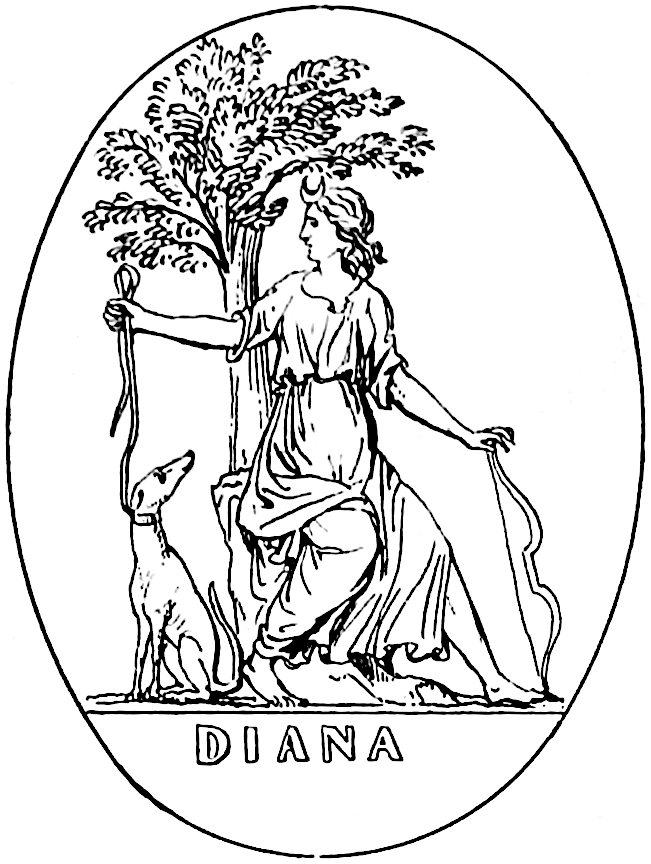
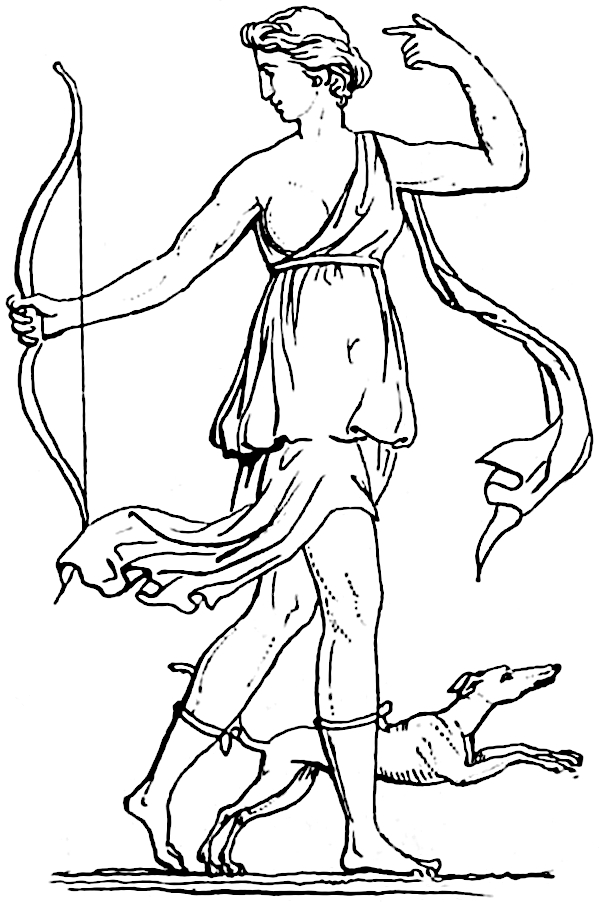
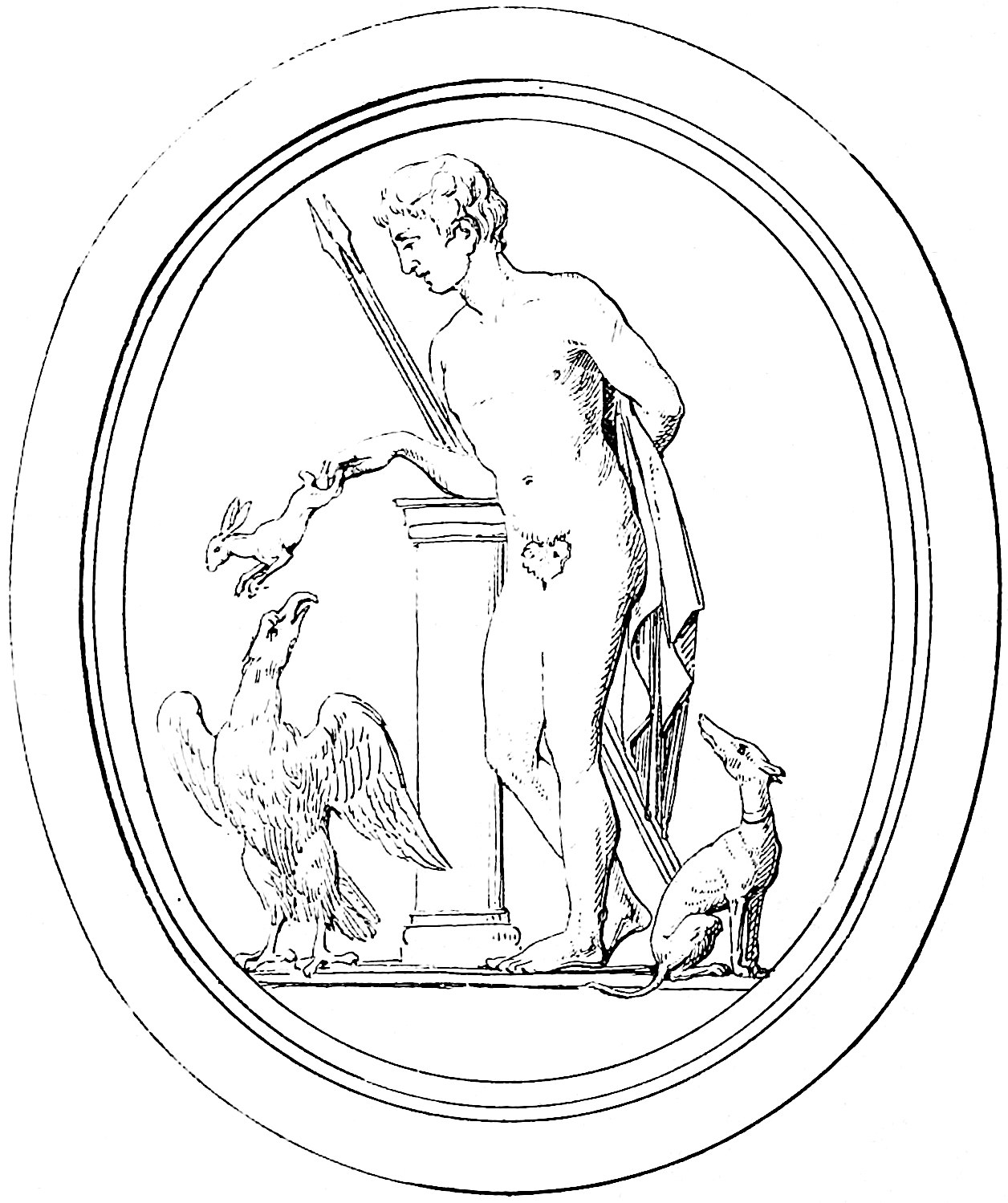

The Cynegeticus was originally written by Arrian, in imitation of Xenophon’s Treatise de Venatione, to supply the lacunæ of that work in the particular department of Coursing.
The manuscript seems to have been neglected in the Vatican library for several years after it had been first discovered, in consequence of its bearing the name of Xenophon: for the persons who accidentally met with it, not being aware of Arrian’s assumption of that title, took no pains to examine it, under an impression that it was the edited Cynegeticus of the elder Xenophon, and not a new and unknown treatise on a different branch of the same subject, by an author of the same assumed name, a pseudo-Xenophon.
We are told by Mausacus that Rigaltius intended to have edited it with the Scriptores de Re Accipitrariâ et de Curâ Canum, (the first edition of which he published in 1612, with a forged epistle in Castilian and Latin from Aquila Symmachus and Theodotion to a Ptolemy, King of Egypt,) but the printers refused their consent, unless he added a Latin translation; a desideratum which was afterwards supplied by Holstein in the first edition. Henry Stephens, however, had previously perused the unpublished treatise, and given to the world, in his Schediasmata, some observations on different passages.
Holstein, the first editor, was a celebrated scholar of his day, and is commemorated in the Sept. Illustr. Vir. Poemata as—
His edition issued from the Paris press of Sebastian and Gabriel Cramoisy in the year 1644. The Greek text, and version attached to it, were amended by Blancard in his Amsterdam edition of 1683; which contains also the minor works of Arrian, and the pertinent schediasmata of Henry Stephens above mentioned. My library affords no editions but the above two, and the accurate reprint of Schneider by the University of Oxford in 1817. The last is certainly the best edition of the Cynegeticus of Arrian which I have seen. The Clarendon press also published in the same volume the Cynegeticus of the elder Xenophon, and his Opuscula Politica; the same collection of the minor works as Zeune comprehended in one volume, printed at Leipsic, 1778.
M. Gail is reported to have published a French translation of the work, with critical notes and dissertations, at Paris, in 1801: but, notwithstanding repeated applications to the Parisian booksellers, I have not been able to procure a copy. Equally unsuccessful have been my endeavours to obtain from the same source Defermat’s version, published by Hortemels of Paris, in 1690. The latter, however, in consequence of the literary character given of its author by Belin de Ballu, in his prolegomena to Oppian, I do not much regret. It accompanied a French version of the two last books of the Cynegetics of the Cilician poet, which are stated to abound in errors of translation, and to be performed in a tedious and barbarous style by Defermat, eminent as a mathematician, but of moderate attainment in Greek literature.
The present version was completed before I was aware of any prior attempt to translate the Cynegeticus into English: the first notice of which, in the partial labours of Mr. Blane, was derived from Schneider’s annotations. I do not believe any other to exist in the English language, with the exception of such fragments of the treatise as may have been occasionally made to speak English, on the emergency of a periodical publication needing an article on Coursing; or a literary sportsman wishing to enliven his communications by a reference to the manual, and quoting it in his vernacular tongue.
Mr. Blane’s attempt did not extend apparently to the whole treatise. It is in parts inaccurately executed, and omits numerous sentences, where he professes to translate; and whole chapters in sequence, where we can see no reason for omission. The fourth, and ten following chapters to the fourteenth inclusive, and the twenty-third and twelve following chapters to the thirty-fifth inclusive, are entirely omitted by this capricious translator. Since, then, in a work consisting of only thirty-five chapters, he has, without assigning any cause, passed over twenty-four unnoticed, nearly all of them important to practical coursers, some evincing the kindly feelings of their author, (as for instance, the one containing the affectionate history of his beloved dog Hormé,) and others most honourable to his humanity, and confirmative of the purity of his religious faith, operative in a heathen breast, (as the two closing chapters, showing, amidst much fabulous allusion, his unreserved acknowledgment of human dependence on divine aid, and the certainty of evil and misfortune being consequent on irreligion and moral transgression,) I hope a complete translation of this ancient courser’s enchiridion will not be considered an useless undertaking.
BIOGRAPHICAL NOTICE OF ARRIAN.
Mr. Addison has remarked, that “a reader seldom peruses a book with pleasure till he knows whether the writer of it be a black or a fair man, of a mild or a choleric disposition, married, or a bachelor, with other particulars of the like nature, that conduce very much to the right understanding of an author.” If, however, the satisfaction of perusing the Cynegeticus of Arrian be dependent on a previous acquaintance with these personal particulars of their author, I fear the modern reader will regret the insufficiency of the following biographical notice. Scanty as it is, it contains all the information I have been able to collect relative to the younger Xenophon.[27]
Flavius Arrianus[28] was a citizen both of Athens and Rome, of Grecian extraction, and born probably in the reign of Domitian, at Nicomedia, a celebrated city of Bithynia; where, according to Photius on the authority of our author’s “Bithynica,” a lost work on the subject of his native country, he was priest of Ceres and Proserpine, to whom the city of Nicomedia was sacred. His fondness for polite literature, and celebrity for philosophical knowledge, acquired him the honour of the twofold citizenship. Arriani Bithynica et Parthica apud Photii Eclogas.But, though a friend and disciple of Epictetus, and the first recorder of his Stoical Apophthegms—φιλόσοφος μὲν ἐπιστήμην, εἷς τῶν ὁμιλητῶν Ἐπικτήτου, he appears, like the elder Xenophon, to have been much engaged in military affairs; and as Roman prefect of Cappadocia, in the reign of Hadrian, to have taken an active part in the war against the Alani and Massagetæ, a people bred to eternal warfare—
It is related by Dion Cassius, and the epitomizer Xiphilin, that the Scythian barbarians under Pharasmanes having committed great havock and spoil in Media, (A.D. 136.) had begun to threaten Armenia and Cappadocia; Dion. Cassii Hist. Roman. L. lxix.but finding Flavius Arrianus, the prefect of the latter province, better prepared for their reception than they had anticipated, they were induced, partly by the bribes of Vologæsus, and partly through fear of the governor, to retire from the territory under his jurisdiction.
Suidas, on the authority of Heliconius, states that Arrian was advanced to the senatorial and consular dignities, and that he was denominated “the second Xenophon” from the sweetness of his literary style. And Photius also, in his “Eclogæ,” speaking of our author’s “Parthica” observes, ἐπωνόμαζον αὐτὸν Ξενοφῶντα νέον· διὰ δὲ τὸ παιδείας ἐπίσημον, ἄλλας τε πολιτικὰς ἀρχὰς ἐπιστεύθη, καὶ εἰς τὸ τῶν ὑπάτων ἀνέβη τέλος: and again he adds, δῆλον δὲ ὡς οὐδὲ ῥητορικῆς σοφίας τε καὶ δυνάμεως ἀπελείπετο.
Like his namesake, as I have remarked, he united the character of a man of letters with that of a warrior, dedicating a great portion of his time to philosophical and historical research. But it is not my intention to enlarge on his literary character in general, nor to enter in detail into the merits of his several compositions.
His principal historical work, “The Anabasis of Alexander, though composed,” says Dr. Robertson, “long after Greece had lost its liberty, and in an age when genius and taste were on the decline, is not unworthy the purest times of Attic literature.” And his “Indian history is one of the most curious treatises transmitted to us from antiquity.” The latter may be considered an episode to the former. It is partly historical and partly geographical, and will be found to contain a fund of entertainment.
On the model of the Socratic Xenophon, he committed to writing the dictates of Epictetus, during the philosopher’s lifetime, and published them as his dissertations:—[29]subsequently compiling his Enchiridion or manual—a brief compendium of all the principles of his master, and acknowledged to be one of the most valuable and beautiful pieces of morality extant.
His Periplus of the Euxine, in the form of a letter from its author to the Emperor, contains an accurate topographical survey of the coast of that sea,
from the commencement of his voyage at Trapezus, within his own prefecture of Cappadocia, to its completion at Byzantium; and was written probably while he held his office of command in the province, a short time before the breaking out of the war against the Alani. Many learned men, as Ramusius, Ortelius, and others, have doubted whether he wrote the Periplus of the Erythrean Sea, which sometimes passes under his name; indeed the late Dean of Westminster says positively “it is not the work of Arrian of Nicomedia:” but his claim to the Circumnavigation of the Euxine has never been disputed. It was compiled expressly for the Emperor; who, according to Spartian and Dion Cassius, was particularly attached to geographical research, and had visited in person a large portion of his extensiveEutropii L. viii. dominions—“orbem Romanorum circumivit.” The elder Xenophon is spoken of, sub initio, by our scientific geographer, in the same relative terms, as in the Cynegeticus, ὡς λέγει ὁ Ξενοφῶν ἐκεῖνος, and it is fair to infer that the Periplus and Cynegeticus are the works of the same individual.
In his Tactics, written, as he states himself, in the 20th year of the reign of Hadrian, there is a brief account of former writers on this subject, and a description of the order and arrangement of an army in general: but in the “Acies contra Alanos,” a short and imperfect fragment annexed thereto, the particular instructions,[30] which were delivered by him as general, for the march of the Roman army against the northern barbarians, are minutely given.
Fragments of other historical works, supposed to have been written by him, are preserved by the learned and indefatigable patriarch of Constantinople—“The History of Events subsequent to Alexander’s Death, in 10 books,” “The Parthica, in 17 books,” and “Bithynica, in 8 books.” Under the review of the first of which works, the Byzantine has left us his opinion of Arrian as an historiographer, and of the style of his compositions: ἀνὴρ οὐδενὸς τῶν ἄριστα συνταξαμένων ἱστορίας δεύτερος, κ. τ. λ.
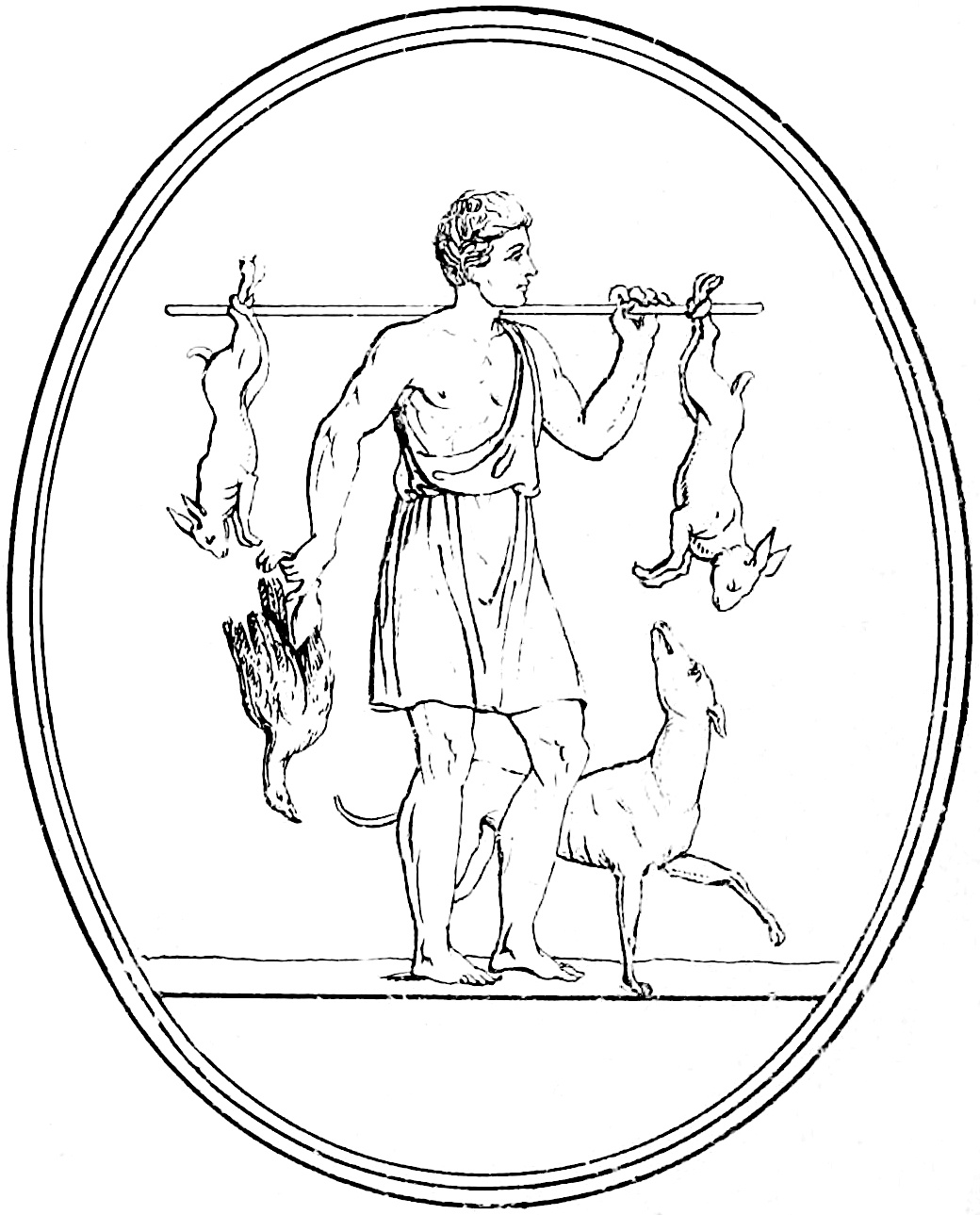
Of the Libellus de Venatione, the treatise on Coursing, I have already made mention; and shall merely add, what is in some degree pertinent to the subject, that there seems to have been a strong similarity of taste between Hadrian and our author. The Emperor, like his prefect, was not only intimately conversant withEutropii L. viii. Greek and Latin literature, “facundissimus Latino sermone, Græco eruditissimus,” but also passionately fond of the chase. While living in his native town of Italica in Spain, Spartian tells us, he bore the title of Græculus, and was, at the same time, “venandi usque ad reprehensionem studiosus—equos et canes sic amavit, ut eis sepulchra constitueret.” To such a height did he carry this regard, that, according to Xiphilin, he graced a monument to the memory of his beloved hunter Borysthenes, with an inscription written by his own pen:
For all which unbounded affection for the brute creation, the reader may remember, De Remediis U. F. L. i. D. xxxii.he incurs the severity of Petrarch’s satire in the dialogue “de Venatu et Aucupio.”
Whether the similarity of Arrian’s rural diversions to those of Hadrian in early life, co-operated with other causes to his elevation by so capricious and eccentric a patron, must ever remain doubtful. He is not mentioned by name in the biography of Hadrian by Spartian: where it is stated, in general terms only, of this singular Emperor, that he was on terms of familiar intimacy with Epictetus, Heliodorus, and all grammarians, rhetoricians, &c. Of his acquaintance with the eminent men of his capital there can be no doubt, and his roving disposition must have introduced such to his notice in the colonies and more distant parts of the empire. One, therefore, who had been following the same pursuits with himself from his youth upwards, a sportsman, a military tactician, and a joint friend of Epictetus, was not likely to escape him. Besides, we are assured that he was, on all occasions, sociable in his field amusements, “venationem semper cum amicis participavit;” and therefore we may suppose that the literary founder of Adrianotheræ would gladly avail himself of the earliest opportunity of adding to his personal friends and sporting associates the most accomplished writer and courser of his day. We know how much the pleasure of intercourse is enhanced by identity of pursuit; and how strong the hold which innocent amusements, shared with congenial friends, have on our affections!
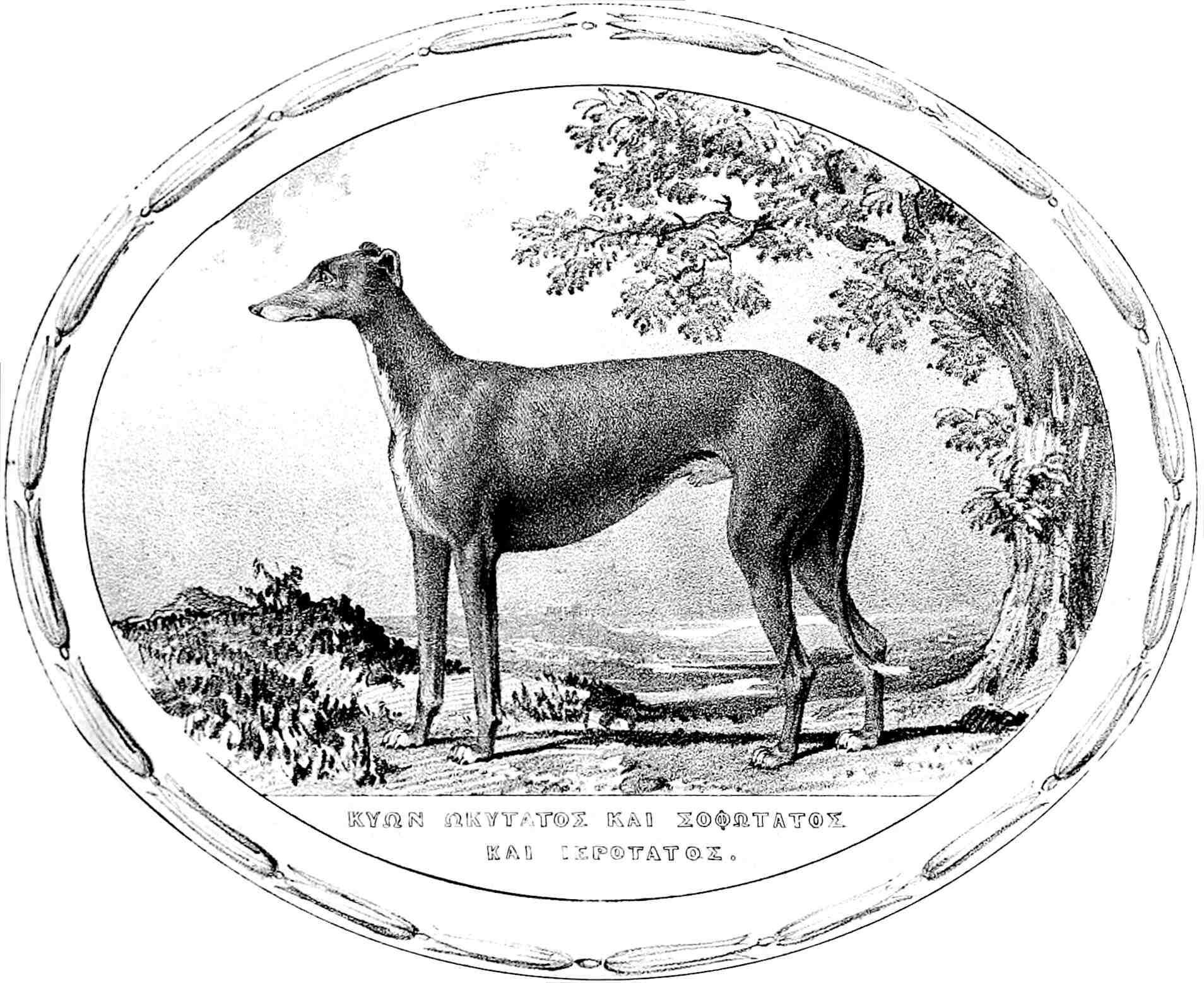
As to the period of his life at which Arrian may be supposed to have written the Cynegeticus, the inference to be drawn from the meagre paragraph of autobiography in the first chapter, wherein he states his fitness to supply the deficiencies of the elder Xenophon’s work,De Venat. c. i. from having been ἀμφὶ ταὐτὰ ἀπὸ νέου ἐσπουδακὼς, κυνηγέσια καὶ στρατηγίαν καὶ σοφίαν, although it establishes the fact of his early predilection for field sports, yet it rather militates against the idea of the Cynegeticus having been written at a very early period of the author’s life. However, be this as it may, his patronage of “the long dogs” continued at the time of his writing this libellus; and his belovedEjusdem c. v. Ὁρμὴ, ὠκυτάτη, καὶ σοφωτάτη, καὶ ἱεροτάτη, was then in his possession, living seemingly in the closest intimacy with his attached and philosophic master, and sharing with Megillus his society at home and abroad, the well-earned recompense in declining years of the excellence he had manifested in the vigour of his youthful days on the coursing plain; where, in Arrian’s own words of eulogy, τέτταρσιν ἤδη ποτὲ λαγωοῖς ἐφ’ ἡλικίας ἀντήρκησεν.[31]
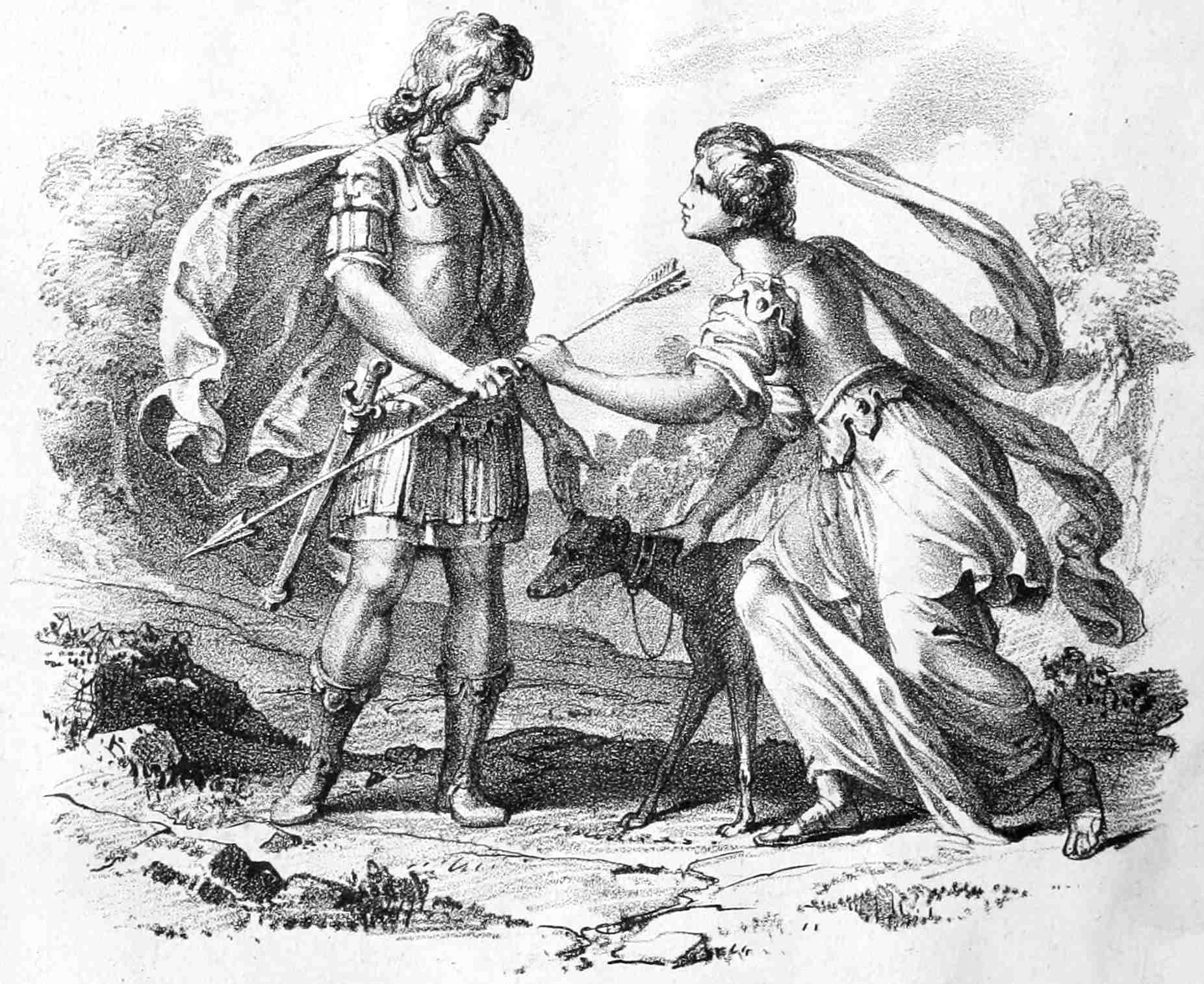
Antiquity is almost silent relative to the personal history of the younger Xenophon;[32] and as an autobiographer, he seems to have been desirous that nothing should be known of himself or family; but rather that his personal history should be darkened under the doubtful celebrity of anonymous authorship, or merged in the somewhat arrogant assumption of a fictitious and equivocal title. In the conclusion of the 12th chapter of the 1st book of his History of Alexander’s Anabasis, he says that the number and magnitude of the exploits of the son of Philip, were his inducement to record them, not deeming himself altogether unworthy to transmit them to posterity.Arrian. de Exped. Alexand. L. i. c. xii. Vide Raphelii annotat. in loc. “But who I am,” he continues, “that thus characterise myself, and what my name, (though far from obscure,) it concerns the reader but little to know. Neither would an account of my family, my city, nor such offices as I have there borne, be of any use to him. Be it sufficient for him to know, that an ardent love of literature, in which I have constantly indulged myself from youth, has been with me instead of family connexion, and civic and magisterial honours. Wherefore I may perhaps be little less worthy of a place among the most celebrated authors of Greece, than Alexander among her most illustrious heroes.”
After the brief sketch which I have given of the writings of the younger Xenophon, it must strike every one that he was influenced in the choice of his subjects as an author, by a recollection of what had engaged the literary attention of his celebrated namesake; and that while writing under the same personal appellative, he probably proposed to imitate the matter and style of composition of hisPhot. Eclog. Arrian. Parthica. prototype—ἰσχνὸς τὴν φράσιν, καὶ μιμητὴς ὡς ἀληθῶς Ξενοφῶντος.
Under this view of his works we have the dissertations of Epictetus from the pen of his most renowned follower, the Bithynian Xenophon, and the Memorabilia of Socrates from that of the son of Gryllus, the most eminent disciple of the Socratic school: the Anabasis of Alexander for that of Cyrus, with the same distribution of the work into seven books, and the same title. The Hellenica of Xenophon gave birth to the Parthica and Bithynica of Arrian: and in imitation of the Essay on Hunting, our pseudo-Xenophon has left us his Observations on Coursing.
Upon their general similarity of character in active life I have already remarked, and shall only observe farther, that, as far as we can judge from the scanty personal anecdotes which have survived of the younger, for comparison with those of the elder philosopher, this similarity appears to have extended to the frame and composition of their minds. Many of the same excellencies, and respectable weaknesses of character, co-existed in both; the same patient and unerring virtue—the same kind and generous feeling—the same credulous and enthusiastic regard to celestial admonitions—πειθομένους τεράεσσι θεῶν—with a proportionate degree of the purest heathen piety.
If it be stigmatised with the title of superstitious credulity in the priest of Ceres, that he supposed himself led by divine inspiration to write the history of a man,De Expedit. Alexandri L. vii. c. xxx. οὐδενὶ ἄλλῳ ἀνθρώπων ἐοικὼς, I would plead his enthusiastic admiration of his hero in palliation of the fond supposition, qualified as it is, with equal good sense and piety, in the concluding sentences of the Anabasis; where he states that as so extraordinary a person as Alexander could not have risen up in the world without divine interference—οὐδ’ ἔξω τοῦ θείου; so, with admiration of his good qualities, and reprobation of his bad ones, with a strict regard to truth, and public utility, he professes himself his historian, writing, as he verily believes, under the same divine influence that first gave being to the subject of his memoir.
Surely such a belief in heavenly interference, exciting its professor to what is just and honourable, and deterring him from every breach of propriety, as an historian of truth, must be applauded by every fair and impartial judge of human character; and more particularly so, when in the person of a Stoic, unenlightened by any philosophy but that of Epictetus, it could have no other foundation than innate rectitude of mind.
Under the conviction that Arrian’s expectation of posthumous fame has been realized in general, and that my brethren of the leash will award him particular honour as the first writer of a Courser’s Manual, I conclude this brief sketch of his life and literary labours; which might have been more full, if his biography by Dion Cassius had come down to us.
As the compiler of the Stoical philosophy of “the Phrygian Slave,” the historian of the son of Philip,[33] the hydrographer of the Euxine, a military tactician, a warrior-prefect, and a classic courser, he has left works behind him which will endure as long as literature itself;—he has done all in his power to benefit and instruct mankind in various departments of human learning;—has contributed his mite to the advancement of rational science and healthful recreation, and proved himself worthy of the immortality he so fondly anticipated.
Οὐ γάρ τοι οὐδ’ ἴσος ὁ ἀγὼν λαγωῷ καὶ κυνί· ἀλλ’ ὁ μὲν, ὅποι βούλεται, θεῖ, ἡ δὲ ἄλλῳ ἐφομαρτεῖ· καὶ ὁ μὲν ἐξελίξας τὸν δρόμον καὶ διαῤῥίψας τὴν κύνα ἴεται τοῦ πρόσω, ἡ δὲ, εἰ διαῤῥιφθείη, πλάζεται· καὶ ἀνάγκη φθάσαντα αὖ μεταθεῖν καὶ ἀναλαβεῖν, ὅσον ἐξηνέχθη τοῦ δρόμου.—Arrian. de Venat. c. xvii.