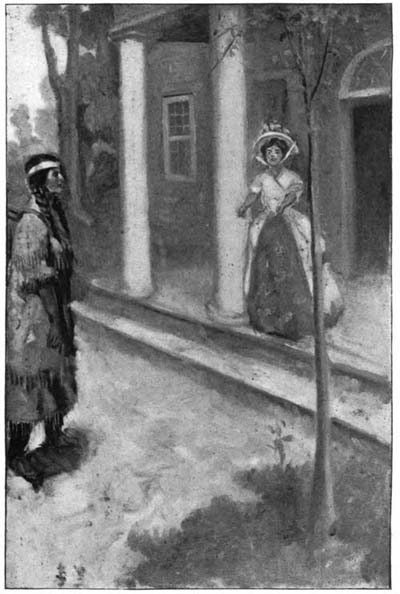
Major Andre went back to his desk, and sat
down for serious reflection.
He reasoned with himself:
“Here was a picture of Arnold and Barclugh.
How did this simple Indian maiden get such
knowledge of my secret affairs? She can have
no means of gaining this knowledge. She is
simply inspired.”
During the next week, Andre could not dispel
the visions of Segwuna’s prophecy. He did not
dare to tell his friends, not even General Clinton,
for they would think him ridiculous. He was
naturally timid, and these words made him doubly
so. They made him hesitate more than once as to
what he ought to do. Whereas he was formerly
all enthusiasm about his plot with Arnold, he now
began to be doubtful and suspicious of his own
ability. The thought of the ire of the Great
Spirit of the Indian maiden being brought to bear
against the project that he had in hand worked
upon the fancy of Andre’s poetical nature and
unnerved him.
However, the Commander-in-Chief, General
Clinton, had ordered Andre to carry out these
plans of ensnaring Arnold and taking West
Point by bribery, for it had been through the
correspondence started by Andre himself, that
Arnold was led into correspondence with the
enemy. The whole plan had to carry or fall
by the exertions of Andre’s own skill.
A letter was received by Major Andre at this
time which read as follows:
Phila., August 20, 1780.
“Sir: I have heard from Mr. P—— about the
arrangements to sell you the goods that you spoke
of in your last favor.
“He has every detail arranged, but he must
meet you to make the contract in person. My
authority in the matter has now come to an end.
“He is still of opinion that his first proposal
is by no means unreasonable, and makes no
doubt, when he has a conference with you, that
you will close with it. He expects when you
meet that you will be fully authorized from your
house; that the risks and profits of the co-partnership
might be fully and clearly understood.
“I am in behalf of Messrs. M—— and Co.
“Sir, Your Obedt. & Hble. Servant,
“Gustavus.
“Mr. John Anderson, Merchant.”
John Anderson answered the above letter.
Then, a few days thereafter, information was
received from Gustavus, agreeing to meet him at
any convenient point, if he, John Anderson, would
make his way to the American outposts above
White Plains; that he would be secure under
the protection of Colonel Sheldon, who was
prepared to meet him.
Arnold had informed Colonel Sheldon that a
person was to come from New York, to the
latter’s quarters, whom he desired to meet for
the purpose of establishing a channel of secret
intelligence with New York.
Accordingly, Colonel Sheldon received the following
letter, which was so uncertain and enigmatical
that Colonel Sheldon despatched it at once
to General Arnold:
“New York, September 7, 1780.
“Sir:
“I am told my name is made known to you
and that I may hope your indulgence in permitting
me to meet a friend near your outposts. I will
endeavor to go out with a flag, which will be sent
to Dobb’s Ferry on Monday next, the 11th instant,
at twelve o’clock, where I shall be happy to meet
Mr. G——. Should I not be allowed to go,
the officer who is to command the escort, between
whom and myself no distinction need be made,
can speak on the affair. Let me entreat you,
sir, to favor a matter so interesting to the parties
concerned, and which is of so private a nature
that the public on neither side can be injured
by it.
“(Signed) John Anderson.”
To Colonel Sheldon,
Salem.
Sheldon was confused by the mention of an
officer taking the place of John Anderson, and
therefore sent the letter to Arnold, who tried
to explain the mysticisms in the letter to Colonel
Sheldon as best he could; and replied that he
would meet the flag and the gentleman himself
at Dobb’s Ferry.
Arnold also instructed his subordinate that if
he did not meet John Anderson, by any mishap,
word must be sent to headquarters of the
arrival of the gentleman within the lines, and that
John Anderson must be sent to his headquarters
with an escort of two or three horsemen.
Arnold went down the river in his barge as
far as King’s Ferry on the afternoon of the 10th
instant, and remained over night at the house
of Joshua H. Smith, who resided near the Ferry.
Early on the morning of the 11th instant,
Arnold proceeded by barge to Dobb’s Ferry for
the purpose of meeting Andre. An accident
prevented the interview. As Arnold was approaching
the destination, his barge was fired upon
by British gunboats and pursued closely enough
to endanger his life and possibly result in his
capture.
He landed, therefore, on the west or opposite
side of the river to Dobb’s Ferry, and went down
to the ferry landing, where he remained till night,
hoping to see Andre. At all events, he failed
to have a meeting on this journey.
The astonishing forecast of Segwuna had made
Andre over-cautious and timid. He did not choose
to hazard his mission by land to Colonel Sheldon.
He chose the safer communication by water.
He went to Dobb’s Ferry with Colonel Beverly
Robinson, and looked for Arnold to come in his
barge, but the firing upon the barge makes clear
why Arnold did not get to the rendezvous.
The timidity of Andre now explains the ultimate
failure of the plot. Arnold was obliged to explain
his public journey down the Hudson, by writing
to General Washington to the effect that guard
boats and signal lights were necessary precautions
to warn the country of the approach of the enemy
up the river.
The object of Segwuna’s visit to New York
had been accomplished. She had intimidated
Major Andre, and foiled the treachery of Arnold.
If the interview as first planned at Dobb’s Ferry
had taken place the recital of subsequent events
would have been unnecessary.
Now complications arose. Every fresh move
that Arnold made required explanations as to
the movements of John Anderson. A second
attempt to have Andre meet with him by means
of the overland route was not considered favorably
by Andre. He would not attempt to meet Arnold,
except under the pretense of an exchange of flags.
The only way for General Arnold to successfully
accomplish his treachery was to meet Major
Andre personally, plan the surrender of West
Point and have his emoluments and rewards
guaranteed. He depended upon such a meeting
and was bold enough himself, but his first attempt
at Dobb’s Ferry was empty of results and he was
now thrown into cautious movements. He had
to explain to the Commander-in-Chief about
his public trip down the river; and the fact that
he had been fired upon and pursued by the enemy’s
gunboats gave notoriety to his whereabouts.
The failure of the Dobb’s Ferry interview must
rest upon Andre, for Arnold was truly bold
and fearless in his approach within the enemy’s
lines; Andre must have been intimidated by the
warning of Segwuna.
Arnold returned to his headquarters from
Dobb’s Ferry disappointed and nonplussed. He
wrote from Robinson House at once to Major Andre:
“I have no confidant here. I have made one
too many already who has prevented some profitable
speculations.”
Arnold’s anxiety for a meeting was now only
exceeded by that of the British, after the first
failure; so Arnold stated that he would send a
trusty person to the east side of Dobb’s Ferry,
Wednesday evening, September 20th, who would
conduct Major Andre to a place of safety where
a meeting between the principals could be held
without fear.
Arnold added:
“It will be necessary for you to be in disguise.
I cannot be more explicit at present. Meet me
if possible. You may rest assured that, if there
is no danger in passing your lines, you will be
perfectly safe where I propose a meeting.”
The letter was signed Gustavus and addressed
to John Anderson, Merchant.
However, before these instructions reached
Major Andre by Arnold’s secret messengers,
the British General Clinton became very anxious
and dispatched the Sloop-of-War Vulture on
the scene, with an emissary on board in the person
of Colonel Beverly Robinson, who was now in
the secret of the negotiations. He had also
accompanied Andre to Dobb’s Ferry when Arnold’s
barge had been fired upon. The Vulture proceeded
to Teller’s Point within view of the American
lines for the purpose of awaiting developments.
The unexpected, however, always happens
to hinder schemes. General Washington came
on a tour of inspection, at this juncture, and crossed
the Hudson at King’s Ferry in full view of the
Vulture soon after her arrival.
General Arnold came down, of course, from
his headquarters, Robinson House, to meet the
Commander-in-Chief in order to throw off any
suspicions surrounding his movements.
Washington and his suite crossed in Arnold’s
barge and as the Commander viewed the Vulture
through his glass and turned and spoke to his
suite in whispers it was noticed and commented
upon, subsequently, that Arnold blanched and
showed much concern.
While still in the boat, Marquis de la Fayette
turned to General Arnold and with a desire to
get information of the whereabouts of the French
fleet under Guichen, now approaching American
waters, and with no suspicions whatever upon
Arnold, pleasantly requested:
“General Arnold, since you have a correspondence
with the enemy, you must ascertain as soon
as possible what has become of Guichen.”
Arnold immediately colored up and demanded:
“Marquis de la Fayette, what do you mean by
asking me such a question?”
The question of Arnold was surprising and
uncalled for and he quickly recovered himself.
Fortunately for him, the boat was nearing
shore and the anxiety to land interrupted the
incident. Arnold imagined that his scheme was
detected and that he was to be captured in the
boat.
Arnold went to Peekskill with Washington
and his party. The next day Washington went
to Hartford to meet the French Commander
and Arnold returned to West Point in his barge.
The British now desired to get into direct
communication with Arnold through Colonel
Robinson on the Vulture. Finesse had to be
used to deceive the watchful post-commanders
on the Hudson under the command of Arnold.
So, under the protection of a flag of truce from
the Vulture, Colonel Robinson sent a letter to
General Arnold asking the military to protect
his property since he had learned that his home
was to be confiscated by the State of New York
for his defection to the British cause.
General Arnold submitted the letter to his
Commander at Fishkill and in consequence
General Washington did not approve of the
proposal to have an interview with the enemy
concerning a purely legal affair.
The Commander-in-Chief informed Arnold:
“Such a conference would afford grounds
for suspicion in the minds of some people and
I advise you to avoid it; the subject in which
Colonel Robinson is interested does not come
within the powers of a military officer and the
Civil Government of the State is the only authority
to which he can properly apply.”
Arnold now used the name of Washington to
answer Robinson’s letter. He, therefore, despatched
a boat openly to the Vulture, under an
officer and a flag.
Here came Arnold’s opportunity to give the
British all the information that he desired. The
answer was in two letters,—one sealed within the
other. The outer one gave Washington’s reply.
The inner one stated secretly that he would send
on the night of the 20th a person to Dobb’s
Ferry, or on board the Vulture. This person
would be furnished with a boat and a flag of truce.
He wished that the Vulture remain where she was
until the messenger reached her. The postscript
of the letter said:
“I expect General Washington to lodge here
on Saturday night next, and I will lay before
him every matter you may wish to communicate.”
The inside one also contained a copy of the
letter heretofore sent to Andre to meet his messenger
on the east side of Dobb’s Ferry on the
evening of September 20th. This was the 19th,
and the three letters were despatched at once
to General Clinton in New York.
September 20th, Major Andre, having received
Arnold’s letters, pressed on to the Vulture and
arrived at seven o’clock in the evening instead of
remaining at Dobb’s Ferry as at first proposed.
Andre was all expectancy when he arrived on
board the sloop-of-war. He waited for Arnold
or his messenger, all night. The next day he
wrote General Clinton that he had made a second
appointment with no results. The interview
must be very soon or suspicions would be aroused
to upset the whole plan.
A ruse was now invented by Major Andre
to acquaint Arnold of his whereabouts. Some
parties had shown a flag of truce on shore to the
Vulture and a boat was sent to communicate with
them. When a boat with a flag from the Vulture
approached the shore it was fired upon from
ambush. This violation of the usage of warfare
was a subject for remonstrance. Therefore, a
letter was sent to General Arnold by Captain
Sutherland of the Vulture, claiming usage against
the code of civilized nations at war. The letter
was in the handwriting of Andre and signed,
“John Anderson, Secretary.” Here was the
information sought. Arnold immediately set
about the plan to bring Major Andre ashore for
an interview.
Joshua Hett Smith lived about two miles below
Stony Point, near the mouth of Haverstraw
Creek. He had boats and boatmen. He was
a confidant of Arnold and was engaged, upon
various occasions, to enter the enemy’s lines for
the Commander of West Point.
Arnold’s plan was finally fixed. He went
to Smith’s house and sent two boatmen with
Smith to bring a gentleman, named John Anderson,
from the Vulture to a point four miles below
Smith’s house, to a lonely spot on the banks of
the Hudson, in the darkness of midnight.
Arnold had provided Smith with three papers
signed by himself.
When the boat started from the mouth of
Haverstraw Creek it was past eleven o’clock and
the night was serene. The boat sped along
undiscovered until the lookout on the Vulture
hailed and ordered the men alongside. Smith
mounted the side and was immediately ordered
below.
There he met Captain Sutherland and Colonel
Robinson. The latter he knew personally, for
Robinson had been his neighbor on the Hudson.
Smith handed over the papers from Arnold.
The cunning displayed by Arnold was portrayed
in these documents. Shielding himself from detection
he secretly intimated his desire to meet
Major Andre.
The first letter addressed to Colonel Robinson
was as follows:
“Headquarters, Robinson House,
“September 21, 1780.
“This will be delivered to you by Mr. Smith
who will conduct you to a place of safety. Neither
Mr. Smith nor any other person shall be made
acquainted with your proposals. If they (which
I doubt not) are of such nature that I can officially
take notice of them I shall do it with pleasure.
I take it for granted that Colonel Robinson will
not propose anything that is not for the interest
of the United States as well as himself.
“(Signed) B. Arnold, M. Gen’l.”
The next letter was to deceive the guard boats,
many of which were stationed along the Hudson
to intercept commerce with the enemy.
“Headquarters, Robinson House,
“September 21, 1780.
“Permit Mr. Joshua Smith to go to Dobb’s
Ferry with three men and a boy in a boat with
a flag, to carry some letters of a private nature
for a gentleman in New York, and to return
immediately, he having permission to go at such
hours and times as the tide and his business
suit.
“(Signed) B. Arnold, M. Gen’l.”
The third one conveyed the knowledge secretly
that Arnold wanted Major Andre to meet him
on shore.
“Headquarters, Robinson House,
“September 21, 1780.
“This grants permission to Joshua Smith,
Mr. John Anderson and two servants to pass
and repass the guards at King’s Ferry, at all
times.
“(Signed) B. Arnold, M. Gen’l.”
When the papers had been examined in the
cabin of the Vulture, Colonel Robinson excused
himself and returned in a little while with a gentleman
whom he introduced to Smith as Mr. John
Anderson. Smith and Anderson entered the boat
and were rowed to the point of rendezvous
arranged by Arnold with Smith. Arnold, concealed
in the shadow of the cliff, lay near
the river bank anxious for the boat to return
with Major Andre. The exact spot had been
agreed upon.
When the boat, which was heavy and cumbersome,
at length arrived, Smith scrambled up the
bank and found Arnold in the bushes. Smith
returned and conducted Mr. Anderson to the
spot. Arnold requested Smith to leave them
to conduct their conversation privately.
Arnold looked around to be sure that Smith
was out of hearing when he extended his hand
to Major Andre, remarking in a subdued and
resigned tone:
“At last, Major Andre, my hour of deliverance
has come! I hope no difficulties stand in the
way of our plans.”
Andre was more than eager for the exploit,—he
was rashly anxious. His voice showed evident
emotion when he said:
“General Arnold, we stand ready to carry
out our part. Can you surrender West Point?”
“I am able to surrender to your forces the stronghold
of our hopes, and end the war for the mother
country. It will be a blessing to my countrymen
and an everlasting benefit to the kingdom of
Great Britain. But, sir, how am I to be sure
that the promise made me by Roderick Barclugh
will be carried out?” was the reply given the
question of Andre.
“General Arnold, I am the authorized representative
of His Britannic Majesty and for your
services to the King you are to be paid twenty
thousand pounds sterling, part of which has already
been advanced by Mr. Barclugh, and you are
to receive a commission as Brigadier-General
in His Majesty’s service. These emoluments
are dependent upon your accomplishment of your
own proposals.”
“That’s all correct, Major Andre,” returned
Arnold, “but how am I to realize these terms
if by chance you were to be killed or I was to be
detected in this business? My only safety is in
having the whole matter drawn up in the form of a
writing.”
“But we cannot do such things here in the dark,
General Arnold. You had better defer too much
formality for the sake of safety. You are dealing
with gentlemen,” argued Andre.
“But governments have no gratitude,” retorted
Arnold, smarting under his experience with
Congress.
“Yet, how can we write in these bushes?”
continued Andre. “I cannot see my hand.
I propose to get back to the ship from here.”
“There is no use for haste in our conclusions
in this matter,” argued Arnold. “I have to
submit to you the plans of the works at West
Point, the disposal of the garrison, the time of
the attack and how you shall approach. I have
brought an extra horse and you can ride with
me to the house of Mr. Smith. I shall guarantee
you protection and safety in returning to your
lines.”
Andre understood what it meant to prepare
for the details of this enterprise and at last he
reluctantly consented to go within the American
outposts as he said:
“I shall rely upon you as a gentleman to convey
me in safety to my lines. My commander has
instructed me not to enter your posts; but since
you insist upon an agreement in writing, I shall
have to comply with your plans.”
“Major Andre, you need not say these words
to me. I have been driven to this course by the
relentless attacks of those for whom I have done
the most. My heart went out at first to my
country, but now it has turned to stone. No
gratitude was shown me. I needed money and
from whom did I get it? I got it from my country’s
enemies. I needed sympathy for my wounds.
From whom did I get it? Not from my countrymen.
I needed encouragement to go out and
win more glory for our cause. Where did I get
it? Not from my country. Bah! These very
mountains taunt me for being a fool! My die
is cast and I am with you heart and soul. We
must succeed.”
“You speak nobly, General Arnold,” insisted
Andre. “I am drawn to you irretrievably and
I am willing to run my risks along with yours.
I shall follow you even though my life were
in the balance.”
At this juncture the conversation was interrupted
by the appearance of Smith from the boat,
who said:
“Gentlemen, I believe that your time is drawing
near to daylight and I must leave this situation
with the boat. We must not be discovered in
this position by the guards.”
These words decided the case. When Arnold
and Andre realized their position and when
Smith informed them that the boatmen had
refused to return to the Vulture for fear of detection,
both of the conspirators mounted horses
and started for Smith’s house, which was four
miles distant by the road through Haverstraw
village.
Smith and the boatmen went by water to Haverstraw
Creek, where the boat was moored. At
his house Smith met Arnold and Mr. Anderson
who had already arrived just at daylight.
The three took breakfast together, since the
family of Joshua Smith had been previously
taken, by arrangements made beforehand, to
visit with their kinsfolk, the family of Colonel
Hay at Fishkill.
During the morning, in a room overlooking
Haverstraw Bay, Andre and Arnold secretly
concluded the plans. Andre made the agreement
in writing with Arnold, and Arnold gave to Andre
a detailed description of the redoubts at West
Point and continued with a plan of attack for
a bloodless English victory.
But again the hand of Providence brings about
unexpected events. While these dealings were
concluding, they heard the booming of cannon
and saw the Vulture drop down stream out of
range of the battery posted by Colonel Livingston
to drive off the enemy’s ship.
Much concern now came over the principals
in this drama. Arnold reassured Andre by
stating that Mr. Smith would convey him by
boat or land through the American lines. Passports
from the Commanding-General would insure
safe convoy through the district under Arnold
and then when Andre reached the British outposts
he could manage himself.
Providing Major Andre with three passes
to meet all possible contingencies, as he thought,
and leaving him in the hands of Mr. Smith
as Mr. John Anderson, Arnold returned in his
barge soon after nine o’clock that morning,
to his headquarters to await the results of his
treachery.
Following are the passes provided for the
return of John Anderson, in Arnold’s own handwriting:
“Headquarters, Robinson House,
“September 22, 1780.
“Joshua Smith has permission to pass with
a boat and three hands and a flag to Dobb’s
Ferry on public business and to return immediately.
“(Signed) B. Arnold, M. Gen’l.”
“Headquarters, Robinson House,
“September 22, 1780.
“Joshua Smith has permission to pass the
guards to White Plains and to return, he being
on public business.
“(Signed) B. Arnold, M. Gen’l.”
“Headquarters, Robinson House,
“September 22, 1780.
“Permit Mr. John Anderson to pass the guards
to the White Plains, or below, if he chooses,
he being on public business by my direction.
“(Signed) B. Arnold, M. Gen’l.”
Andre passed the day in hiding, awaiting
impatiently for darkness to come that he might
be returned to the Vulture. But the more Andre
insisted, the more opposed Smith grew to the
route by boat. However, Smith won his point
for reasons not entirely logical, and after Andre
had exchanged his officer’s red coat for one of
Smith’s, and had wrapped himself up in a great
military coat with a cape, the two set out on
horseback, a little before sunset, accompanied by
a negro servant belonging to Smith.
The route lay across the Hudson at King’s
Ferry from Stony Point to Verplanck’s Point.
The party, after stopping over the first night,
proceeded successfully until they reached Pine
Bridge on the Croton River where Smith left
Andre to pursue his own course through the
neutral country.
Smith now returned to Robinson House and
reported to General Arnold where he had left
Mr. Anderson. Arnold seemed to be more than
pleased with the progress events were making
at this report. He felt sure of Andre reaching
King’s Bridge.
When Andre left Smith he also felt assured
of his success, for he rode boldly along until
he was near Tarrytown.
Here he was accosted by three men dressed in
the uniform of British soldiers.
Their story is best told in their own words.
Paulding, one of the three, said, when relating
the capture:
“Myself, Isaac VanWart, and David Williams
were lying by the side of the road about half a
mile above Tarrytown, and about fifteen miles
above King’s Bridge, on Saturday morning,
the 23rd of September. We had lain there
about an hour and a half, as near as I can recollect,
and saw several persons we were acquainted
with, whom we let pass. Presently one of the
young men who were with me said:
“‘There comes a gentleman-like looking man,
who appears to be well-dressed and has boots
on, and whom you had better step out and stop,
if you don’t know him.’
“On that I got up and presented my fire-lock
at the breast of the person and told him to stand,
and then I asked him which way he was going.
“‘Gentlemen,’ said he, ‘I hope you belong
to our party.’
“I asked him:
“‘What party?’
“He said: ‘The lower party.’
“Upon that I told him:
“‘I do.’
“Then he said: ‘I am a British officer out of
the country on particular business, and I hope
you will not detain me a minute.’
“To show that he was a British officer, he pulled
out his watch, upon which I told him to dismount.
“He then said:
“‘My God, I must do anything to get along.’
“He seemed to make a kind of laugh of it
and pulled out General Arnold’s pass, which
was to John Anderson to pass all guards to White
Plains and below. Upon that he dismounted
and said:
“‘Gentlemen, you had best let me go or you
will bring yourselves into trouble, for your stopping
me will detain the General’s business. I am
going to Dobb’s Ferry to meet a person there
and get intelligence for General Arnold.’
“Upon that I told him I hoped he would
not be offended, that we did not mean to take
anything from him; and I told him there were
many bad people going along the road, and I
did not know but perhaps he might be one.”
Paulding stated:
“If Andre had not declared himself a British
officer, when he produced General Arnold’s
pass I would have let him go. However, when
he pulled out his watch my suspicions were
further aroused.”
The three volunteers searched Andre, and
David Williams, one of the party, relates this
part of the story most minutely:
“We took him into the bushes,” said Williams,
“and ordered him to pull off his clothes, which
he did; but on searching him narrowly we could
not find any sort of writings. We told him to
pull off his boots which he seemed to be indifferent
about, but we got one boot off and searched in
that boot and could find nothing. But we found
there were some papers in the bottom of his
stocking next to his foot, on which we made him
pull his stocking off and found three papers
wrapped up. Mr. Paulding looked at the papers
and said he was a spy. We then made him pull
off his other boot, and there were found three
more papers at the bottom of his foot within
his stocking.
“Upon this we made him dress himself and I
asked him:
“‘What will you give us to let you go?’
“He said:
“‘I will give you any sum of money.’
“I asked him:
“‘Will you give us your horse, your saddle,
bridle, watch and one hundred guineas?’
“He said:
“‘Yes, and I will direct them to any place,
even this very spot, so that you can get them.’
“I asked him:
“‘Will you not give us more?’
“He said:
“‘I will give you any quantity of dry goods
or any sum of money, and bring it to any place
that you pitch upon, so that you may get it.’
“Mr. Paulding answered:
“‘No, if you would give us ten thousand guineas,
you should not stir one step.’
“I then asked the person who called himself
John Anderson:
“‘If it lay in your power, would you not get
away?’
“He answered:
“‘Yes, I would.’
“I told him:
“‘I do not intend that you shall.’
“While taking him along to the nearest post,
we asked him a few questions, and we stopped
under a shade. He begged us not to question
him and said:
“‘When I come to any Commander I will
reveal all.’”
Andre and all of the papers found on him were
taken to North Castle and turned over to Lieutenant-Colonel
Jameson.
Jameson unwittingly sent Andre immediately
under a guard toward Arnold’s headquarters,
and despatched a note with the officer in charge
of the escort, to Arnold, stating that a certain
John Anderson was taken on his way to New
York. He also stated that certain papers found
in his stockings and which were of “a very dangerous
tendency,” had been forwarded to General
Washington.
The mistake made by Lieutenant-Colonel
Jameson was discovered by Major Tallmadge,
next in command, when the Major returned to
North Castle in the evening and heard the story
of the capture. Jameson was convinced of his
mistake in sending the prisoner but he would
not listen to the idea of not informing Arnold,
his Commanding General, of what had happened.
He did not suspect his superior in the least.
However, a messenger was despatched to overtake
the escort and to order the prisoner back
to North Castle, but to still forward the message
to Arnold’s headquarters. The fate of Arnold
now seemed problematical. But a chain of circumstances
favored the traitor.
Andre was ordered back and sent to Salem under
Major Tallmadge. A messenger was sent with
the guilty papers to intercept General Washington,
now on his way to West Point from Hartford,
and the first messenger was riding toward Robinson
House to inform Arnold of the capture of John
Anderson and the papers.
General Washington missed the messenger
because he returned on the road north of the one
on which the messenger was sent.
On the morning when Washington was due
at Robinson House to breakfast with Arnold,
two of the aides-de-camp of the Commander-in-Chief
were sent ahead to inform General Arnold
that the General was delayed because he wished
to inspect the redoubts across from West Point,
and not to wait breakfast. General Arnold
then sat down to breakfast with Mrs. Arnold and
the two aides.
During the progress of the meal a messenger
arrived and presented the Jameson despatches
to General Arnold.
Arnold read them and excused himself from
the table without a sign of excitement. He went
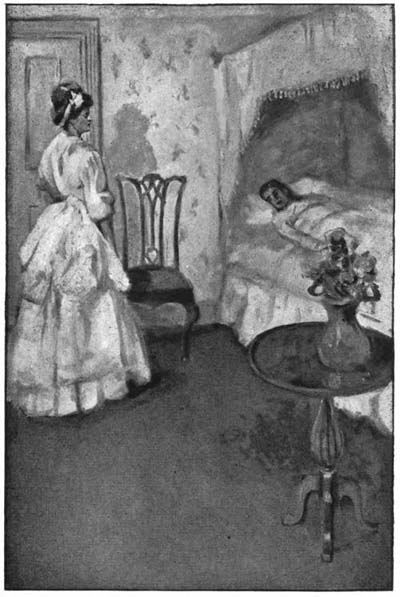
to Mrs. Arnold’s chamber and ordered a servant
to call Mrs. Arnold. When she came to him,
he hurriedly explained that his life depended
upon escape. She swooned in his presence
and he left her prostrate on the floor.
He went to the dining-room and stated to
the aides:
“I have to go to West Point and prepare for
the arrival of the General.”
He then hurriedly mounted a horse of one of
the aides and dashed to the landing where his
barge was moored. Then ordering his men to
row with all their might, as he drew his pistols
and sat in the stern, he sped past the guard boats
with a flag and reached the British Sloop-of-War
Vulture, fifteen miles below Robinson House.
After introducing himself, he surrendered the
innocent boatmen to the British Commander and
wrote a letter to General Washington asking
mercy for his wife.
After General Washington had inspected the
redoubts opposite West Point, he went with his
suite to Robinson House. Upon their arrival
they were informed that General Arnold had
been hurriedly called to West Point. Washington
ate his breakfast and started with all of his staff
except Colonel Hamilton. They took a barge
across the Hudson to the forts.
As Washington stood in the barge viewing the
highlands about him, he said:
“Well, gentlemen, I am glad on the whole,
that General Arnold has gone before us, for we
shall now have a salute and the roaring of the
cannon will have a fine effect among these
mountains.”
When no cannon was heard and they saw nobody
astir among the garrison, Washington exclaimed:
“What! Do they not intend to salute us?”
The General and his party landed and found
no one to greet them except the Commandant,
Colonel Lamb, who was very much surprised
to see his distinguished visitors.
Washington addressed him:
“How is this, sir? Is not General Arnold
here?”
“No, sir,” replied the Commandant, “he has
not been here these two days, nor have I heard
from him within that time.”
“This is extraordinary,” continued Washington.
“We were told that he crossed the river and that
we should find him here. However, our visit
must not be in vain. Since we have come, although
unexpectedly, we must look around a little and
see in what shape things are with you.”
When the forts and redoubts had been visited
and the garrison inspected, Washington and his
party returned to the barge and recrossed to the
Robinson House.
The letters and papers that had been forwarded
by Lieutenant-Colonel Jameson to General Washington
had followed the Commander-in-Chief
on the road to Hartford until it was learned that
the General had returned to West Point by the
upper road. Then the express retraced his
steps to Robinson House.
Colonel Hamilton was alone at Arnold’s headquarters
when the incriminating papers arrived
and immediately opened the despatches in the
absence of his chief at West Point. Here were
the papers found in Andre’s stockings and a
letter from Andre to Washington disclosing his
true character as Adjutant-General of the British
army and relating his entry within the American
lines, his departure therefrom in disguise and
his capture.
Upon the landing of General Washington and
his staff at the Robinson House from West
Point, Colonel Hamilton was seen to walk briskly
toward them, and when he spoke to Washington
in an undertone, they retired quickly together
into the house.
Here lay the exposure of the whole plot when
the papers were perused by Washington, but
too late to entrap the traitor. Arnold had gone
over to the enemy and had made his escape to
the Vulture. Andre was a prisoner at Salem
and had written a confession of the part that
he had played.
Mrs. Arnold had been left ignominiously by
the traitor, her husband, and in her distraction
she wept and raved alternately and accused
General Washington and Colonel Hamilton, when
they sought to console her, with a plot to murder
her child. Her lamentations were pitiable and
heart-rending in the agony of her despair. She
clasped her child to her breast as she stood in
the doorway of her chamber, hair dishevelled,
as she hurled the bitterness of a woman’s tongue
against those who, history tells us, held nothing
but the deepest sympathy for her misfortune.
At last Mrs. Arnold returned to her father’s
home in Philadelphia and remained there until
the Council of Philadelphia passed a resolution,
October 29th, as follows:
“Resolved:—that the said Margaret Arnold
depart this state within fourteen days from the
date hereof, and that she do not return again
during the continuance of the present war.”
Major Andre was conducted under guard,
to the vicinity of the Continental Army at Tappan.
He was there tried by a Court of Enquiry composed
of six Major-Generals and eight Brigadiers,
found guilty as a spy and condemned to be
executed.
Arnold and General Clinton attempted to save
Andre’s life on the ground that he had Arnold’s
pass. But as the pass was issued to John Anderson
it was void when applied to Major Andre.
Credit must be given Andre, however, that
he did not seek justification, personally, during
his trial for his acts under a flag or pass from
Arnold. He was reconciled to his fate and died
as a brave and honorable officer, dressed in the
full uniform of the Adjutant-General of the
British Army, at Tappan, October 2, 1780.
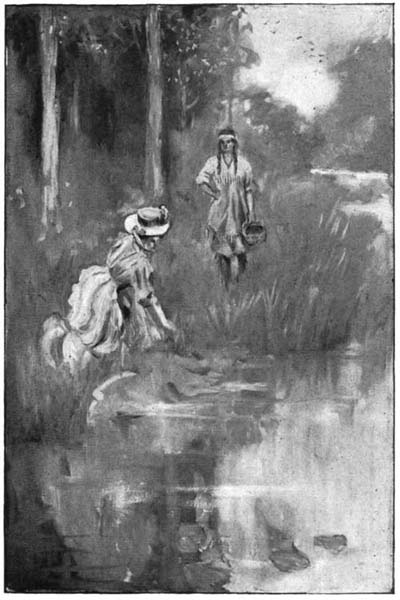
When Segwuna heard of the capture of Major
Andre and the exposure and flight of Benedict
Arnold, she thanked the Great Spirit for the
fulfillment of her prayers. She did not exult
in the downfall of the participants in this attempted
crime against her native land, but she thanked
the Great Spirit for the exposure of their perfidy
and dishonesty. She now could explain to her
friends the part that was played by Barclugh
in this nefarious undertaking and if, then, her
duty had not been performed she could not help
it.
At the first announcement in New York about
the capture of Andre and the flight of Arnold,
Segwuna lost no time in retracing her steps to
Philadelphia.