"THE Christians are accustomed to have private assemblies, which are
forbidden by the law. For of assemblies some are public, and these are
conformable to the law of the land; but others are secret, and these are
such as are hostile to the laws; among which are the Love Feasts of the
Christians *.
      * Why the Romans punished the Christians:

     "It is commonly regarded as a very curious and remarkable
     fact, that, although the Romans were disposed to tolerate
     every other religious sect, yet they frequently persecuted
     the Christians with unrelenting cruelty. This exception, so
     fatal to a peaceable and harmless sect, must have originated
     in circumstances which materially distin-...
"Men who irrationally assent to anything, resemble those who are delighted
with jugglers and enchanters, &c. For as most of these are depraved
characters, who deceive the vulgar, and persuade them to assent to
whatever they please, this also takes place with the Christians. Some of
these are not willing either to give or receive a reason for what they
believe; but are accustomed to say, 'Do not investigate, but believe, your
faith will save you.
     ...guished them from the votaries of every other religion. The
     causes and the pretexts of persecution may have varied at
     various periods; but there seems to have been one general
     cause which will readily be apprehended by those who are
     intimately acquainted with the Roman jurisprudence. From the
     most remote period of their history, the Romans had
     conceived extreme horror against all nocturnal meetings of a
     secret and mysterious nature. A law prohibiting nightly
     vigils in a temple has even been ascribed, perhaps with
     little probability, to the founder of their state. The laws
     of the twelve tables declared it a capital offence to attend
     nocturnal assemblies in the city. This, then, being the
     spirit of the law, it is obvious that the nocturnal meetings
     of the primitive Christians must have rendered them objects
     of peculiar suspicion, and exposed them to the animadversion
     of the magistrate. It was during the night that they usually
     held their most solemn and religious assemblies; for a
     practice which may be supposed to have arisen from their
     fears, seems to have been continued from the operation of
     other causes. Misunderstanding the purport of certain
     passages of Scripture, they were...
'For the wisdom of the world is bad, but folly is good*,'
"The world, according to Moses, was created at a certain time, and has
from its commencement existed for a period far short of ten thousand
years,—The world, however, is without a beginning; in consequence of
which there have been from all eternity many conflagrations, and many
deluges, among the latter of which the most recent is that of Deucalion**.
     ...led to imagine that the second advent, of which they lived
     in constant expectation, would take place during the night;
     and they were accustomed to celebrate nightly vigils at the
     tombs of the saints and martyrs. In this case, therefore,
     they incurred no penalties peculiar to the votaries of a new
     religion, but only such as equally attached to those who,
     professing the public religion of the state, were yet guilty
     of this undoubted violation of its laws."—Observations on
     the Study of the Civil Law, by Dr. Irving, Edin. 1820. p.
     11.
"It is not true that the primitive Christians held their assemblies in the
night time to avoid the interruptions of the civil power: but the converse
of that proposition is true in the utmost latitude; viz. that they met
with molestations from that quarter, because their assemblies were
nocturnal."—Elements of Civil Law, by Dr. Taylor, p. 579.
     * See Erasmus's Praise of Folly, towards the end.

     ** See on this subject the Tinusus of Plato.
"Goatherds and shepherds among the Jews, following Moses as their leader,
and being allured by rustic deceptions, conceived that there is [only] one
God.
"These goatherds and shepherds were of opinion that there is one God,
whether they delight to call him the Most High, or Adonai, or Celestial,
or Sabaoth, or to celebrate by any other name the fabricator of this
world*; for they knew nothing farther. For it is of no consequence,
whether the God who is above all things, is denominated, after the
accustomed manner of the Greeks, Jupiter, or is called by any other name,
such as that which is given to him by the Indians or Egyptians."
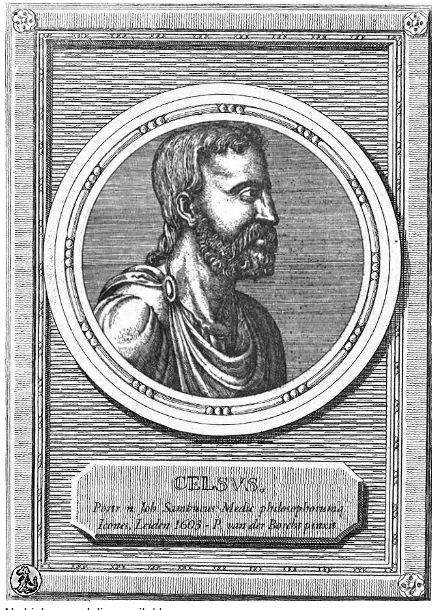
Celsus, assuming the person of a Jew, represents him as speaking to Jesus,
and reprehending him for many things. And in the first place he reproaches
him with feigning that he was born of a virgin; and says, that to his
disgrace he was born in a Judaic village from a poor Jewess, who obtained
the means
     * In the original there is nothing more than [—Greek—] i.
     e. this world; but it is necessary to read, conformably to
     the above translation, [—Greek—]. For the Jews did not
     celebrate the world, but the Maker of the world, by these
     names.
of subsistence by manual labour. He adds, That she was abandoned by her
husband, who was a carpenter, because she had been found by him to have
committed adultery. Hence, in consequence of being expelled by her
husband, becoming an ignominious vagabond, she was secretly delivered of
Jesus, who, through poverty being obliged to serve as a hireling in Egypt,
learnt there certain arts for which the Egyptians are famous. Afterwards,
returning from thence, he thought so highly of himself, on account of the
possession of these [magical] arts, as to proclaim himself to be a God.
Celsus also adds, That the mother of Jesus became pregnant with him
through a soldier, whose name was Panthera*.
"Was therefore the mother of Jesus beautiful, and was God connected with
her on account of her beauty, though he is not adapted to be in love with
a corruptible body? Or is it not absurd to suppose that God would be
enamoured of a woman who was neither fortunate nor of royal extraction,
nor even scarcely known to her neighbours; and who was also hated and
ejected by the carpenter her
     * The same thing is said of Jesus in a work called "The
     Gospel according to the Jews, or Toldoth Jesu." See Chap. I.
     and II. of that work.
husband, so as neither to be saved by her own credulity nor by divine
power? These things, therefore, do not at all pertain to the kingdom of
God."
Celsus, again personifying a Jew, says to Christ, "When you were washed by
John, you say that the spectre of a bird flew to you from the air. But
what witness worthy of belief saw this spectre? Or who heard a voice from
heaven, adopting you for a son of God, except yourself, and some one of
your associates, who was equally a partaker of your wickedness and
punishment?
"Jesus having collected as his associates ten or eleven infamous men,
consisting of the most wicked publicans and sailors, fled into different
places, obtaining food with difficulty, and in a disgraceful manner."
Again, in the person of a Jew, Celsus says to Christ, "What occasion was
there, while you were yet an infant, that you should be brought to Egypt,
in order that you might not be slain? For it was not fit that a God should
be afraid of death. But an angel came from heaven, ordering you and your
associates to fly, lest being taken you should be put to death. For the
great God [it seems] could not
preserve you, his own son, m your own country, but sent two angels on your
account."
The same Jew in Celsus also adds, "Though we do not believe in the ancient
fables, which ascribe a divine origin to Perseus, Amphion, Æacus, and
Minos, yet at the same time their deeds are demonstrated to be mighty and
admirable, and truly superhuman, in order that what is narrated of their
origin may not appear to be improbable." But (speak-ing to Jesus) he says,
"What beautiful or admirable thing have you said or done, though you was
(sp) called upon in the temple to give some manifest sign that you were
the son of God?"
Celsus, pretending not to disbelieve in the miracles ascribed to Christ,
says to him, "Let us grant that these things were performed by you; but
they are common with the works of enchanters, who promise to effect more
wonderful deeds than these, and also with what those who have been taught
by the Egyptians to perform in the middle of the forum for a few oboli;
such as expelling dæmons from men, dissipating diseases by a puff,
evocating the souls of heroes, exhibiting sumptuous suppers, and tables
covered with food, which have no reality. These magicians also represent
animals as moving, which are not in reality animals, but merely appear
to the imagination to be such.—Is it fit, therefore» that we should
believe these men to be the sons of God, because they worked these
wonders? Or ought we not rather to say, that these are the arts of
depraved and unhappy men!"
Again the Jew says, "It is but recently, and as it were yesterday, since
we punished Christ; and you, who are [in no respect superior to] keepers
of oxen, have abandoned the laws of your ancestors and country. Why
likewise do you begin from our sacred institutions, but afterwards in the
progress [of your iniquity] despise them? For you have no other origin of
your dogma, than our law. Many. other such persons also as Jesus was, may
be seen by those who wish to be deceived. How too is it probable that we,
who have declared to all men that a person would be sent by God as a
punisher of the unjust, should treat him ignominiously, if such a person
had appeared among us? Again: How can we think him to be a God, who, that
I may omit other things, performed, as we learn, nothing that was
promised? And when, being condemned by us, he was thought worthy of
punishment, having concealed himself and fled, was most disgracefully made
a prisoner; being betrayed by those whom he called his disciples? If,
however, he was a God, it was not proper that he should either fly, or be
led
away captive. And much less was it fit, that, being considered as a
saviour and the son of the greatest God, and; also the messenger of this
God, by his familiars and private associates, he should be deserted and
betrayed by them. But what excellent general, who was the leader of
many myriads of men, was ever betrayed by his soldiers? Indeed, this has
not happened even to the chief of a band of robbers, though a man
depraved, and the captain of men still more depraved than himself, when to
his associates he appeared to be useful. But Christ, who was betrayed by
those of whom he was the leader, though not as a good commander, nor in
such a way as robbers would behave to their captain, could not obtain the
benevolence of his deluded followers.—Many other things also, and
such as are true, respecting Jesus might be adduced, though they are not
committed to writing by his disciples; but these I willingly omit. His
disciples also falsely pretended, that he foreknew and foretold every
thing that happened to him.
"The disciples of Jesus, not being able to adduce any thing respecting him
that was obviously manifest, falsely assert that he foreknew all things;
and have written other things of a similar kind respecting lum. This,
however, is just the same as if some one should assert that a certain
person is a just
man, and notwithstanding this should show that he acted unjustly; that he
is a pious man, and yet a murderer; and, though immortal, died; at the
same time adding to all these assertions, that he had a foreknowledge of
all things.
"These things Jesus said after he had previously declared that he was God,
and it was entirely necessary that what he had predicted should take
place. He therefore, though a God, induced his disciples and prophets,
with whom he ate and drank, to become impious. It was, however, requisite
that he should have been beneficial to all men, and particularly to his
associates. No one likewise would think of betraying the man, of whose
table he had been a partaker. But here the associate of the table of God
became treacherous to him; God himself, which is still more absurd, making
those who had been hospitably entertained by him to be his impious
betrayers."
The Jew in Celsus also says, that "What is asserted by the Jewish prophets
may be much more probably adapted to ten thousand other persons than to
Jesus. Besides, the prophets say, that he who was to come would be a great
and powerful king, and would be the lord of the whole earth, and of all
nations and armies: but no one would
infer from such like symbols and rumours, and from such ignoble arguments,
that Christ is the son of God.
"As the sun, which illuminates all other things, first shows himself [to
be the cause of light], thus also it is fit that this should have been
done by the son of God*. But the Christians argue sophistically, when they
say that the son of God is the word itself. And the accusation is
strengthened by this, that the word which was announced by the
Christians to be the son of God, was not a pure and holy word, but
a man who was most disgracefully punished and put to death.
"What illustrious deed did Jesus accomplish worthy of a God, who beholds
from on high with contempt [the trifling pursuits of] men, and derides and
considers as sport terrestrial events?
"Why too did not Jesus, if not before, yet now at least, [i. e. when he
was brought before Pilate,] exhibit some divine indication respecting
himself; liberate himself from this ignominy, and punish those
     * Celsus means that Christ should have given indubitable
     evidence, by his sayings, his deeds, and by all that
     happened to him, that he was the son of God.
who had insulted both him and his father? What kind of ichör also or blood
dropped from his crucified body? was it,.....such as from the blest
immortals flows?"*
The Jew in Celsus further adds: "Do you reproach us with this, O most
faithful men, that we do not conceive Christ to be God, and that we do not
accord with you in believing that he suffered these things for the benefit
of mankind, in order that we also might despise punishment? Neither did he
persuade any one while he lived, not even his own disciples, that he
should be punished, and suffer as he did: nor did he exhibit himself
[though a God] as one liberated from all evils.
"Certainly you Christians will not say, that Christ, when he found that he
could not induce the inhabitants on the surface of the earth to believe in
his doctrines, descended to the infernal regions, in order that he might
persuade those that dwelt there. But if inventing absurd apologies by
which you are ridiculously deceived, what should hinder others also, who
have perished miserably, from being ranked among angels of a more divine
order?"
* See Iliad, V, ver. S40.
The Jew in Celsus further observes, on comparing Christ with robbers,
"Some might in a similar manner unblushingly say of a robber and a
homicide, who was punished for his crimes, that he was not a robber but a
God; for he predicted to his associates that he should suffer what he did
suffer.
"The disciples of Jesus, living with him, hearing his voice, and embracing
his doctrines, when they saw that he was punished and put to death,
neither died with nor for him, nor could be persuaded to despise
punishment; but denied that they were his disciples. Why, therefore, do
not you Christians [voluntarily] die with your master?"
The Jew in Celsus also says, that "Jesus made converts of ten sailors, and
most abandoned publicans; but did not even persuade all these to embrace
his doctrines.
"Is it not also absurd in the extreme, that so many should believe in the
doctrines of Christ now he is dead, though he was not able to persuade any
one [genuinely] while he was living?
"But the Christians will say, We believe Jesus to be the son of God,
because he cured the lame and the blind, and, as you assert, raised the
dead.
"O light and truth, which clearly proclaims in its own words, as you
write, that other men, and these depraved and enchanters, will come among
you, possessing similar miraculous powers! Christ also feigns that a
certain being, whom he denominates Satan, will be the source of these
nefarious characters: so that Christ himself does not deny that these arts
possess nothing divine, and acknowledges that they are the works of
depraved men. At the same time likewise, being compelled by truth, he
discloses both the arts of others and his own. Is it not, therefore, a
miserable thing, to consider, from the performance of the same deeds, this
man to be a God, but others to be nothing more than enchanters? For why,
employing his testimony, should we rather think those other workers of
miracles to be more depraved than himself? Indeed Christ confesses that
these arts are not indications of a divine nature, but of certain
impostors, and perfectly wicked characters."
After this, the Jew in Celsus says to his fellow-citizens who believed in
Jesus, as follows: "Let us grant you that Jesus predicted his
resurrection: but how many others have employed such-like prodigies, in
order by a fabulous narration to effect what they wished; persuading
stupid auditors to believe in these miracles? Zamolxis among the
Scythians, who was a slave of Pythagoras, used this artifice; Pythagoras
also himself, in Italy; and in Egypt, Rhampsinitus. For it is related of
the latter that he played at dice with Ceres in Hades, and that he brought
back with him as a gift from her a golden towel. Similar artifices were
likewise employed by Orpheus among the Odryssians; by Protesilaus among
the Thessalians; and by Hercules and Theseus in Tænarus. This, however, is
to be considered,—whether any one who in reality died, ever rose
again in the same body: unless you think that the narrations of others are
fables,but that your catastrophe of the drama will be found to be either
elegant or probable, respecting what was said by him who expired on the
cross, and the earthquake, and the darkness, which then according to you
ensued. To which may be added, that he who when living could not help
himself, arose, as you say, after he was dead, and exhibited the marks of
his punishment, and his hands which had been perforated on the cross. But
who was it that saw this? A furious woman, as you acknowledge, or some
other of the same magical sect; or one who was under the delusion of
dreams, and who voluntarily subjected himself to fallacious phantasms,—a
thing which happens to myriads of the human race. Or, which is more
probable, those who pretended to see this were such as wished to astonish
others by
this prodigy, and, through a false narration of this kind, to give
assistance to the frauds of other impostors.
"Is it to be believed that Christ, when he was alive, openly announced to
all men what he was; but when it became requisite that he should procure a
strong belief of his resurrection from the dead, he should only show
himself secretly to one woman and to his associates?
"If also Christ wished to be concealed, why was a voice heard from heaven,
proclaiming him to be the son of God? Or, if he did not wish to be
concealed, why did he suffer punishment, and why did, he [ignominiously]
die?"
The Jew in Celsus likewise adds, "These things therefore we have adduced
to you from your own writings, than which we have employed no other
testimony, for you yourselves are by them confuted. Besides, what God that
ever appeared to men, did not procure belief that he was a God,
particularly when he appeared to those who expected his advent? Or why was
he not acknowledged by those, by whom he had been for a long time
expected? We certainly hope for a resurrection in the body, and that we
shall have eternal life. We
also believe that the paradigm and primary leader of this, will be he who
is to be sent to us; and who will show that it is not impossible for God
to raise any one with his body that he pleases."
After this, Celsus in his own person says, "The Christians and Jews most
stupidly contend with each other, and this controversy of theirs about
Christ differs in nothing from the proverb about the contention for the
shadow of an ass*. There is also nothing venerable in the investigation of
the Jews and Christians with each other; both of them believing that there
was a certain prophecy from a divine spirit, that a saviour of the human
race would appear on the earth, but disagreeing in their opinion whether
he who was predicted had appeared or not.
"The Jews originating from the Egyptians deserted Egypt through sedition,
at the same time despising the religion of the Egyptians. Hence the
     * This proverb is mentioned by Apuleius at the end of the
     Ninth Book of his Metamorphosis. There is also another Greek
     proverb mentioned by Menander, Plato, and many others,
     [—Greek—], concerning the shadow of an ass, which is said of
     those who are anxious to know things futile, frivolous, and
     entirely useless. These two proverbs Apuleius has merged
     into one.
same thing happened to the Christians afterwards, who abandoned the
religion of the Jews, as to the Jews who revolted from the Egyptians; for
the cause to both of their innovation was a seditious opposition to the
common* and established rites of their country.
"The Christians at first, when they were few, had but one opinion; but
when they became scattered through their multitude, they were again and
again divided into sects, and each sect wished to have an establishment of
its own. For this was what they desired to effect from the beginning.
"But after they were widely dispersed one sect opposed the other, nor did
any thing remain common
to them except the name of Christians; and even this they were at the same
time ashamed to leave as a common appellation: but as to other things,
they were the ordinances of men of a different persuasion.
"What however is still more wonderful is this, that their doctrine may be
[easily] confuted, as consisting of no hypothesis worthy of belief. But
their
     * In the original  [—Greek—], but it is necessary to read,
     conformably to the above translation,  [—Greek—]
dissension among themselves, the advantage they derive from it, and their
dread of those who are not of their belief, give stability to their faith.
"The Christians ridicule the Egyptians, though they indicated many and by
no means contemptible things through enigmas, when they taught that
honours should be paid to eternal ideas, and not, as it appears to
the vulgar, to diurnal animals*." Celsus adds, that "The Christians
stupidly introduce nothing more venerable than the goats and dogs of the
Egyptians in their narrations respecting Jesus.
"What is said by a few who are considered as Christians, concerning the
doctrine of Jesus and the precepts of Christianity, is not designed for
the wiser, but for the more unlearned and ignorant part of mankind. For
the following are their precepts: 'Let no one who is erudite accede to us,
no one who is wise, no one who is prudent (for these things are thought by
us to be evil); but let any one who is unlearned, who is stupid, who is an
infant in understanding boldly come to us.' For the Christians openly
acknowledge that such as these are worthy
     *  See on this subject the Treatise of Plutarch respecting
     Isis and Osiris.
to be noticed by their God; manifesting by this, that they alone wish and
are able to persuade the ignoble, the insensate, slaves, stupid women, and
little children and fools.
"We may see in the forum infamous characters and jugglers* collected
together, who dare not show their tricks to intelligent men; but when they
perceive a lad, and a crowd of slaves and stupid men, they endeavour to
ingratiate themselves with such characters as these.
"We also may see in their own houses, wool-weavers, shoemakers, fullers,
and the most illiterate and rustic men, who dare not say any thing in the
presence of more elderly and wiser fathers of families; but when they meet
with children apart from their parents, and certain stupid women with
them, then they discuss something of a wonderful nature; such as that it
is not proper to pay attention to parents and preceptors, but that they
should be persuaded by them. For, say they, your parents and preceptors
are delirious and stupid, and neither know what is truly good, nor are
able to effect it, being prepossessed with trifles of an unusual nature.
They
     * Celsus, as we are informed by Origen, compares the
     Christians with men of this description.
add, that they alone know how it is proper to live, and that if children
are persuaded by them, they will be blessed, and also the family to which
they belong. At the same time likewise that they say this, if they see any
one of the wiser teachers of erudition approaching, or the father of the
child to whom they are speaking, such of them as are more cautious defer
their discussion to another time; but those that are more audacious, urge
the children to shake off the reins of parental authority, whispering to
them, that when their fathers and preceptors are present, they neither
wish nor are able to unfold to children what is good, as they are deterred
by the folly and rusticity of these men, who are entirely corrupted, are
excessively depraved, and would punish them [their true admonishers]. They
further add, that if they wish to be instructed by them, it is requisite
that they should leave their parents and preceptors, and go with women and
little children, who are their playfellows, to the conclave of women, or
to the shoemaker's or fuller's shop, that they may obtain perfection [by
embracing their doctrines].
"That I do not however accuse the Christians more bitterly than truth
compels, may be conjectured from hence, that the criers who call men to
other mysteries proclaim as follows: 'Let him approach,
whose hands are pure, and whose words are wise.' And again, others
proclaim: 'Let him approach, who is pure from all wickedness, whose soul
is not conscious of any evil, and who leads a just and upright life.' And
these things are proclaimed by those who promise a purification from
error. Let us now hear who those are that are called to the Christian
mysteries. 'Whoever is a sinner, whoever is unwise, whoever is a fool,
and whoever, in short, is miserable, him the kingdom of God will receive.'
Do you not therefore call a sinner, an unjust man, a thief, a
housebreaker, a wizard, one who is sacrilegious, and a robber of
sepulchres? What other persons would the crier nominate, who should call
robbers together?
"God, according to the Christians, descended to men; and, as consequent to
this, it was fancied that he had left his own proper abode.
"God, however, being unknown among men [as the Christians say], and in
consequence of this appearing to be in a condition inferior to that of a
divine being, was not willing to be known, and therefore made trial of
those who believed and of those who did not believe in him; just as men
who have become recently rich, call on God as a witness of their abundant
and entirely mortal ambition.
"The Christians have asserted nothing paradoxical or new concerning a
deluge or a conflagration, but have perverted the doctrine of the Greeks
and barbarians, that in long periods of time, and recursions and
concursions of the stars, conflagrations and deluges take place; and also
that after the last deluge, which was that of Deucalion, the period
required, conformably to the mutation of wholes, a conflagration*. This
the Christians, however, have perverted by representing God as descending
with fire as a spy.
"Again, we will repeat and confirm by many arguments, an assertion which
has nothing in it novel, but was formerly universally acknowledged. God is
good, is beautiful and blessed, and his very nature consists in that which
is most beautiful and the best. If therefore he descended to men, his
nature must necessarily be changed. But the change must be from good to
evil, and from the beautiful to the base, from felicity to infelicity, and
from that which is most excellent to that which is most worthless. Who,
however, would choose to be thus changed? Besides, to be changed and
transformed pertains to that which is naturally mortal; but an invariable
     * See Taylor's translation of Proclus on the Timæus of
     Plato, Book I.
sameness of subsistence is the prerogative of an immortal nature. Hence
God could never receive a mutation of this kind*.
"Either God is in reality changed, as the Christians say, into a mortal
body,—and we have before shown that this is impossible; or he
himself is not changed, but he causes those who behold him to think that
he is, and thus falsifies himself, and involves others in error.
Deception, however, and falsehood are indeed otherwise evil, and can only
be [properly] employed by any one as a medicine, either in curing friends
that are diseased or have some vicious propensity, or those that are
insane, or for the purpose of avoiding danger from enemies. But no one who
has vicious propensities, or is insane, is dear to Divinity. Nor does God
fear any one, in order that by wandering he may escape danger**.
     * See a most admirable defence of the immutability of
     Divinity, by Proclus, in Taylor's Introduction to the Second
     and Third Books of Plato's Republic, in vol. i. of his
     translation of Plato's Works. See also Taylor's note at the
     end of vol. iii. of his translation of Pausanias, p. 235.

     ** The original of this sentence is, [—Greek—] the latter
     part of which, [—Greek—], is thus, erroneously translated
     by Spencer, "ut imposture opus habeat ad evadendum
     periculum."
"The Christians, adding to the assertions of the Jews, say that the son of
God came on account of the sins of the Jews; and that the Jews, punishing
Jesus and causing him to drink gall, raised the bile of God
against them."
Celsus after this, in his usual way deriding both Jews and Christians,
compares all of them to a multitude of bats, or to ants coming out of
their holes, or to frogs seated about a marsh, or to earthworms that
assemble in a corner of some muddy place, and contend with each other
which of them are most noxious. He likewise represents them as saying,
"God has manifested and predicted all things to us; and deserting the
whole world and the celestial circulation, and likewise paying no
attention to the widely-extended earth, he regards our concerns alone, to
us alone sends messengers, and he will never cease to explore by what
means we may always associate with him." He likewise resembles us to
earthworms acknowledging that God exists; and he says that we earthworms,
i. e. the Jews and Christians, being produced by God after him, are
entirely similar to him. All things too are subject to us, earth and
water, the air and the stars, and are ordained to be subservient to us*.
Afterwards
* This reminds me of the following beautiful lines in...
these earthworms add: "Now because some of us have sinned, God will come,
or he will send his son, in order that he may burn the unjust, and that
those who are not so may live eternally with him." And Celsus concludes
with observing that "such assertions would be more tolerable if they were
made by earthworms or frogs, than by Jews or Christians contending with
each other."
Celsus, after having adduced, from the writings of the heathens, instances
of those who contended for the antiquity of their race, such as the
Athenians, Egyptians, Arcadians, and Phrygians, and also of those who have
asserted that some among them were aborigines, says, that "the Jews being
concealed in a corner of Palestine, men perfectly in-erudite, and who
never had previously heard the same things celebrated by Hesiod and
innumerable
     ...Epistle I. of Pope's Essay on Man, in which Pride is
     represented as saying:

     "For me kind nature wakes her genial power,
     Suckles each herb, and spreads out every flower;
     Annual for me the grape, the rose, renew
     The juice nectarious and the balmy dew.
     For me the mine a thousand treasures brings:
     For me health gushes from a thousand springs;
     Seas roll to waft me, suns to light me rise,
     My footstool earth, my canopy the skies."
other divine men, composed a most incredible and inelegant narration, that
a certain man was fashioned by the hands of God, and inspired by him with
the breath of life; that a woman was taken from the side of the man; that
precepts were given to them by God; and that a serpent was adverse to
these precepts. Lastly, they make the serpent to frustrate the commands of
God: in all this, narrating a certain fable worthy only of being told by
old women, and which most impiously makes God to be from the first
imbecile, and incapable of persuading one man fashioned by himself to act
in a way conformable to his will.
"The Christians are most impiously deceived and involved in error, through
the greatest ignorance of the meaning of divine enigmas. For they make a
certain being whom they call the Devil, and who in the Hebrew tongue is
denominated Satan, hostile to God. It is therefore perfectly stupid and
unholy to assert that the greatest God, wishing to benefit mankind, was
incapable of accomplishing what he wished, through having one that opposed
him, and acted contrary to his will. The son of God, therefore, was
vanquished by the devil; and being punished by him, teaches us also to
despise the punishments inflicted by him; Christ at the same time
predicting that Satan would appear on
the earth, and, like himself, would exhibit great and admirable works,
usurping to himself the glory of God. The son of God also adds, that it is
not fit to pay attention to Satan, because he is a seducer, but that
himself alone is worthy of belief. This, however, is evidently the
language of a man who is an impostor earnestly endeavouring to prevent,
and previously guarding himself against, the attempts of those who think
differently from and oppose him. But, according to the Christians, the son
of God is punished by the devil, who also punishes us in order that
through this we may be exercised in endurance. These assertions, however,
are perfectly ridiculous. For it is fit, I think, that the devil should be
punished, and not that men should be threatened with punishment who are
calumniated by him.
"Further still: If God, like Jupiter in the comedy, being roused from a
long sleep, wished to liberate the human race from evils, why did he send
only into a corner of the earth this spirit of whom you boast? though he
ought in a similar manner to have animated many other bodies, and to have
sent them to every part of the habitable globe. The comic poet indeed, in
order to excite the laughter of the audience in the theatre, says that
Jupiter, after he was roused from his sleep, sent Mercury to the Athenians
and Lacedæmonsians:—but do not
you think that it is a much more ridiculous fiction to assert that God
sent his son to the Jews?
"Many—and these, men whose names are not known,—both in
temples and out of temples, and some also assembling in cities or armies,
are easily excited from any casual cause, as if they possessed a prophetic
power. Each of these likewise is readily accustomed to say, 'I am God, or
the son of God, or a divine spirit. But I came because the world will soon
be destroyed, and you, O men! on account of your iniquities will perish. I
wish, however, to save you, and you shall again see me, returning with a
celestial army. Blessed is he who now worships me; but I will cast all
those who do not, into eternal fire, together with the cities and regions
to which they belong. Those men also that do not now know the punishments
which are reserved for them, shall afterwards repent and lament in vain:
but those who believe in me I will for ever save.' Extending to the
multitude these insane and perfectly obscure assertions, the meaning of
which no intelligent man is able to discover,—for they are
unintelligible and a mere nothing,—they afford an occasion to the
stupid and to jugglers of giving to them whatever interpretation they
please.
"Again, they do not consider, if the prophets of
the God of the Jews had predicted that this would be his son, why did this
God legislatively ordain through Moses, that the Jews should enrich
themselves and acquire power; should fill the earth with their progeny;
and should slay and cut off the whole race of their enemies, which Moses
did, as he says, in the sight of the Jews; and besides this, threatening
that unless they were obedient to these his commands, he should consider
them as his enemies;—why, after these things had been promulgated by
God, did his son, a Nazarean man, exclude from any access to his father,
the rich and powerful, the wise and renowned? For he says that we ought to
pay no more attention than ravens do, to food and the necessaries of
life*, and that we should be less concerned about our clothing than the
lilies of the field. Again, he asserts, that to him who smites us on one
cheek we should likewise turn the other**. Whether, therefore, does Moses
or Jesus lie? Or, was the Father who sent Jesus forgetful of what he had
formerly said to Moses? Or, condemning his own laws, did he alter his
opinion, and send a messenger to mankind with mandates of a contrary
nature?
     * Luke xii. 24.

     ** Luke vi. 29.
"The Christians again will say, How can God be known unless he can be
apprehended by sense? To this we reply, that such a question is not the
interrogation of man, nor of soul, but of the flesh. At the same
time, therefore, let them hear, if they are capable of hearing any thing,
as being a miserable worthless race, and lovers of body! If,
closing the perceptive organs of sense, you look upward with the visive
power of intellect, and, averting the eye of the flesh, you excite
the eye of the soul, you will thus alone behold God*. And if you seek for
the leader of this path, you must avoid impostors and enchanters, and
those who persuade you to pay attention to [real] idols; in order that you
may not be entirely ridiculous, by blaspheming as idols other things which
are manifestly Gods**, and venerating that which is in reality more
worthless than any image, and which is not even an image, but a dead
body***; and by investigating a Father similar to it.
     * This is most Platonically said by Celsus.

     ** Such as the sun and moon, and the other heavenly bodies.

     *** The Emperor Julian in the fragments of his Arguments
     against the Christians, 'preserved by Cyril, says, speaking
     to the Christians: "You do not notice whether any thing is
     said by the Jews about holiness; but you emulate their rage
     and their bitterness, overturning temples and altars, and
     cutting the throats not only of those who remain firm in
     paternal institutes, but also of...
"There are essence and generation, the intelligible and the visible. And
truth indeed subsists with essence, but error with generation*. Science,
therefore, is conversant with truth, but opinion with generation.
Intelligence also pertains to, or has the intelligible for its object; but
what is visible is the object of sight. And intellect indeed knows the
intelligible; but the eye knows that which is visible. What the sun
therefore is in the visible region,—being neither the eye, nor
sight, but the cause to the eye of seeing, and to the sight of its visive
power, to all sensibles of their being generated, and to himself of being
perceived;—this the supreme God [or the good] is in
intelligibles: since he is neither intellect, nor intelligence, nor
science, but is the cause, to intellect, of intellectual perception;
     ...those heretics who are equally erroneous with yourselves,
     and who do not lament a dead body in the same manner as you
     do. For neither Jesus nor Paul exhorted you to act in this
     manner. But the reason is, that they did not expect you
     would arrive at the power which you have obtained. For they
     were satisfied if they could deceive maid-servants and
     slaves, and through these married women, and such men as
     Cornelius and Sergius; among whom, if you can mention one
     that was at that time an illustrious character, (and these
     things were transacted under the reign of Tiberius or
     Claudius,) believe that I am a liar in all things."

     * Generation signifies the whole of that which is visible.
to intelligence, of its subsistence on account of him; to science, for its
possession of knowledge for his sake, and to all intelligibles for their
existence as such. He is likewise the cause to truth itself and to essence
itself, of their existence, being himself beyond all intelligibles, by a
certain ineffable power*. And these are the assertions of men who possess
intellect. But if you understand any thing of what is here said, you are
indebted to us for it. If, likewise, you think that a certain spirit
descending from God announced to you things of a divine nature, this will
be the spirit which proclaimed what I have above said, and with which
ancient men being replete, have unfolded so many things of a most
beneficial nature. If, therefore, you are unable to understand these
assertions, be silent, and conceal your ignorance, and do not say that
those are blind who see, and that those are lame who run,
     * This sentence in the original is as follows: [—Greek—].
     But it is requisite to read, conformably to the above
     translation, [—Greek—]. Celsus has derived what he here
     says from the Sixth Book of Plato's Republic, and what he
     says previous to this from the Timæeus of Plato.—See
     Taylor's translation of these Dialogues.
you at the same time possessing souls that are in every respect lame and
mutilated, and living in body, viz. in that which is dead.
"How much better would it be for you, since you are desirous of
innovation, to direct your attention to some one of the illustrious dead,
and concerning whom a divine fable may be properly admitted! And if
Hercules and Esculapius do not please you, and other renowned men of great
antiquity, you may have Orpheus, a man confessedly inspired by a sacred
spirit, and who suffered a violent death. But he perhaps has been adopted
as a leader formerly by others. Consider Anaxarchus, therefore, who being
thrown into a mortar, and bruised in the cruellest manner, most
courageously despised the punishment, exclaiming, 'Bruise, bruise the sack
of Anaxarchus, for you cannot bruise him.' This, indeed, was uttered by a
certain truly divine spirit. Him, however, some physiologists have already
vindicated to themselves. In the next place, consider Epictetus, who when
his master twisted his leg violently, said, smiling gently and without
being terrified, 'You will break my leg;' and when his master had broken
his leg, only observed, 'Did I not tell you that you would break it? What
thing of this kind did your God utter when
he was punished*? The sibyl, likewise, whose verses are used by some of
you, is far more worthy to be regarded by you as the daughter of God. But
now you have fraudulently and rashly inserted in her verses many things of
a blasphemous nature**; and Christ, who in his life was most
reprehensible, and in his death most miserable, you reverence as a God.
How much more appropriately might you have bestowed this honour on Jonas
when he was under the gourd, or on Daniel who was saved in the den of
lions, or on others of whom more prodigious things than these are
narrated!
"This is one of the precepts of the Christians: 'Do not revenge yourself
on him who injures you; and if any person strikes you on one cheek, turn
the other to him also.' And this precept indeed is of very great
antiquity, but is recorded in a more rustic
     * Christ when on the cross exclaimed, "My God, my God, why
     hast thou forsaken me?" But Socrates in his Apology to his
     Judges, as recorded by Plato, most magnanimously said,
     "Anytus and Melitus may indeed put me to death, but they
     cannot injure me."

     ** The collection of the Sibylline Oracles which are now
     extant, are acknowledged by all intelligent men among the
     learned to be for the most part forgeries.—See the account
     of them by Fabricius in vol. i. of his Bibliootheca Græca,
manner by Christ. For Socrates is made by Plata in the Crito to speak as
follows: 'It is by no means therefore proper to do an injury. By no means.
Hence neither is it proper for him who is injured to revenge the injury,
as the multitude think it is; since it is by no means fit to do an injury.
It does not appear that it is. But what! is it proper or not, O Crito, to
be malific? It certainly is not proper, Socrates. Is it therefore just or
unjust for a man to be malific to him by whom he has been hurt? for in the
opinion of the vulgar it is just. It is by no means just. For to be
hurtful to men does not at all differ from injuring them. You speak the
truth. Neither, therefore, is it proper to revenge an injury, nor to be
hurtful to any man, whatever evil we may suffer from him.' These things
are asserted by Plato, who also adds: 'Consider, therefore, well, whether
you agree, and are of the same opinion with me in this; and we will begin
with admitting, that it is never right either to do an injury, or revenge
an injury on him who has acted badly towards us. Do you assent to this
principle? For formerly it appeared, and now still appears, to me to be
true.' Such, therefore, was the opinion of Plato, and which also was the
doctrine of divine men prior to him. Concerning these, however, and other
particulars which the Christians have corrupted, enough has been said. For
he who
desires to search further into them, may easily be satisfied.
"But why is it requisite to enumerate how many things have been foretold
with a divinely inspired voice, partly by prophetesses and prophets, and
partly by other men and women under the influence of inspiration? What
wonderful things they have heard from the adyta themselves! How many
things have been rendered manifest from victims and sacrifices to those
who have used them! How many from other prodigious symbols! And to some
persons, divinely luminous appearances have been manifestly present. Of
these things indeed the life of every one is full. How many cities,
likewise, have been raised from oracles, and liberated from disease and
pestilence! And how many, neglecting these, or forgetting them, have
perished miserably! How many colonies have been founded from these, and by
observing their mandates have been rendered happy! How many potentates and
private persons have, from attending to or neglecting these, obtained a
better or a worse condition! How many, lamenting their want of children,
have through these obtained the object of their wishes! How many have
escaped the anger of dæmons! How many mutilated bodies have been healed!
And again, how many have immediately suffered for insolent behaviour in
sacred concerns! some indeed becoming insane on the very spot; others
proclaiming their impious deeds, but others not proclaiming them before
they perished; some destroying themselves, and others becoming a prey to
incurable diseases. And sometimes a dreadful voice issuing from the adyta
has destroyed them*.
"In the next place, is it not absurd that you should desire and hope for
the resurrection of the body, as if nothing was more excellent or more
honourable to us than this; and yet again, that you should hurl this same
body into punishments, as a thing of a vile nature? To men, however, who
are persuaded that this is true, and who are conglutinated to body, it is
not worth while to speak of things of this kind. For these are men who in
other respects are rustic and impure, without reason, and labouring under
the disease of sedition. Indeed, those who hope that the soul or intellect
will exist eternally, whether they are willing to call it pneumatic**, or
an intellectual spirit holy and blessed, or a living soul, or the
supercelestial and
     * See the scientific theory of Oracles unfolded in the Notes
     to Taylor's translation of Pausanias, vol. iii. p. 259.

     ** This is said conformably to the opinion of the Stoics.
incorruptible progeny of a divine and incorporeal nature*, or whatever
other appellation they may think fit to give it; those who thus hope, (but
I say this in accordance with Divinity,) in this respect think rightly,
that those who have lived well in this life will be blessed, but that
those who have been entirely unjust, will be involved in endless evils.
And neither the Christians nor any other man were ever hostile to this
dogma.
"Since men are bound to body, whether they are so for the sake of the
dispensation of the whole of things, or in order that they may suffer the
punishment of their offences, or in consequence of the soul through
certain passions becoming heavy and tending downwards, till through
certain orderly periods it becomes purified;—for according to
Empedocles, it is necessary that
          'From the blest wandering thrice ten thousand times,
          Through various mortal forms the soul should pass.'—

     * This is asserted in accordance with the doctrine of the
     Platonists.

     ** This 30,000 times must not be considered mathematically;
     since it symbolically indicates a certain appropriate
     measure of perfection. For in units S is a perfect number,
     as having a beginning, middle, and end. And again, 10 is
     perfect, because it comprehends all numbers in itself.
     These numbers, however, were call-...
This being the case, it is requisite to believe that men are committed to
the care of certain inspective guardians of this prison the body.
"That to the least of things, however, are allotted guardian powers, may
be learnt from the Egyptians, who say that the human body is divided into
thirty-six parts, and that dæmons* or certain etherial gods who are
distributed into the same number of parts, are the guardians of these
divisions of the body. Some also assert, that there is a much greater
number of these presiding powers; different corporeal parts being under
the inspection of different powers. The names of these also in the
vernacular tongue of the Egyptians are Chnoumën, Chnachoumën, Knat, Sicat,
Biou, Erou, Erebiou, Ramanor, Reianoor. What, therefore, should prevent
him from making use of these and other powers, who wishes rather to be
well than to be ill, to be fortunate rather than to be unfortunate, and to
be liberated from such
     ...ed by the ancients perfect, in a different way from 6, 28,
     &c.; for these were thus denominated because they are equal
     to the sum of their parts.

     * i. e. beneficent dæmonss; for the ancients divided
     dæmonss into the beneficent and malevolent. They also
     considered the former as assisting the soul in its ascent to
     its pristine state of felicity; but the latter as of a
     punishing and avenging characteristic.
tormentors and castigators as these things are thought to be?*
"He, however, who invokes these powers ought to be careful, lest being
conglutinated [as it were] to the worship of them, and to a love of the
body, he should turn from and become oblivious of more excellent natures.
For it is perhaps requisite not to disbelieve in wise men, who say that
the greater part of circumterrestrial dæmons are conglutinated to
generation, and are delighted with blood, with the odour and vapour of
flesh, with melodies and with other things of the like kind**; to which
being bound, they are unable to effect any thing superior to the sanction
of the body, and the prediction of future events to men and cities.
Whatever also pertains to mortal actions they know, and are able to bring
to pass.
"If some one should command a worshiper of God either to act impiously, or
to say any thing of a most disgraceful nature, he is in no respect
whatever to be obeyed; but all trial and every kind of death are to be
endured rather than to meditate,
     * Vid. Salmas.   In fine libri He Annis climactericis.

     ** See Book II. of Taylor's translation of Porphyry,—On
     Abstinence from Animal Food.
and much more to assert, any thing impious concerning God. But if any one
should order us to celebrate the Sun or Minerva, we ought most gladly to
sing hymns to their praise. For thus you will appear to venerate the
supreme God in a greater degree *, if you also celebrate these powers: for
piety when it passes through all things becomes more perfect."
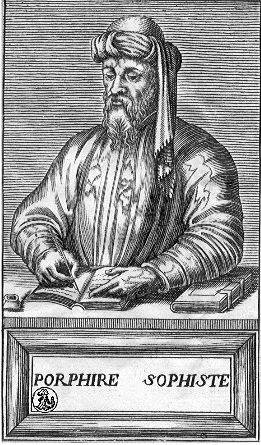
EXTRACTS FROM, AND INFORMATION RELATIVE TO, THE TREATISE OF PORPHYRY
AGAINST THE CHRISTIANS
This work of Porphyry consisted of Fifteen Books, and is unfortunately
lost. It is frequently mentioned by the Fathers of the Church, from whose
writings the following particulars are collected.
The First Book appears to have contained a development of the contrariety
of the Scriptures, and proofs that they did not proceed from Divinity, but
from men. To this end Porphyry especially adduces what Paul writes to the
Galatians, chap. ii.
     * For as the ineffable principle of things possesses all
     power and the highest power, he first produced from himself
     beings most transcendently allied to himself; and therefore,
     by venerating these, the highest God will be in a greater
     degree venerated, as being a greater veneration of his
     power.
viz. that "when Peter came to Antioch, he withstood him to his face,
because he was to be blamed." Hence Porphyry infers, "that the Apostles,
and indeed the chief of them, did not publicly study the salvation of all
men, but that each of them was privately attentive to his own renown."
This the Fathers testify in more than one place. See the Commentary of
Jerome on the above-mentioned Epistle. Jerome also, in his 89th Epistle to
Augustin, informs us that Porphyry says, "that Peter and Paul opposed each
other in a puerile contest, and that Paul was envious of the virtue of
Peter."
The Third Book treated of the interpretation of the Scriptures, in which
Porphyry condemned the mode of explaining them adopted by the
commentators, and especially the allegories of Origen. This is evident
from a long extract from this work of Porphyry given by Eusebius in Hist.
Eccl. lib. i. cap. 13.
The Fourth Book treated of the Mosaic history and the antiquities of the
Jews, as we learn from Eusebius, Proep. Evang. lib. i. cap. 9, and from
Theo-doret, Serm. ii. Therap.
But the Twelfth Book was the most celebrated of all, in which Porphyry
strenuously opposes the
prophecy of Daniel. Of this work Jerome thus speaks in the Preface to his
Commentary on that prophet: "Porphyry's twelfth book is against the
prophet Daniel, as he was unwilling to admit that it was written by that
prophet, but contends that it was composed by a person in Judæa named
Epiphanes, and who lived in the time of Antiochus. Hence he says, that
Daniel does not so much narrate future as past events. Lastly, he asserts,
that whatever is related as far as to the reign of Antiochus contains a
true history; but that all that is said posterior to this time, as the
writer was ignorant of futurity, is false."
The Thirteenth Book also, according to Jerome*, was written against the
same prophet; in which book, speaking of the "abomination of desolation,"
as it is called by Daniel, (when standing in the sacred place,) he says
many reproachful things of the Christians.
The same Jerome likewise, in Epist. ci., ad Pam-machium, testifies, that
Porphyry accuses the history of the Evangelists of falsehood, and says**
that Christ, after he had told his brethren that he should
     * Vid. lib. iv. Comment, in 24 Cap. Matth.

     ** Lib. ii. adversus Pelagianos.
not go up to the feast of tabernacles, yet afterwards went up to it (John
vii.). Hence Porphyry accuses him of inconstancy and mutability. Jerome's
observation on this is curious, viz. "Nesciens omnia scandala ad carnem
esse referenda."
Jerome adds (in Lib. Quasst. Hebraic, in Genesin) "that Porphyry
calumniates the Evangelists for making a miracle to the ignorant, by
asserting that Christ walked on the sea, calling the lake Genezareth the
sea." He likewise says, that Porphyry called the miracles which were
performed at the sepulchres of the martyrs, "the delusions of evil
demons."
The following remarkable passage from one of the lost writings of Porphyry
relative to the Christians, is preserved by Augustin in his Treatise De
Civit. lib. xix. cap. 23.
"Sunt spiritus terreni minimi loco terreno quodam malorum dæmonum
potestati subjecti. Ab his sapientes Hebræorum, quorum unus iste etiam
Jesus fuit, sicut audivisti divina Apollonis oracula quæ superius dicta
sunt. Ab his ergo Hebæi dsemonibus pessimis et minoribus spiritibus
vetabant religiosos, et ipsis vacare prohibebant: venerari autem magis
coelestes Deos, amplius autem venerari Deum patrem. Hoc autem et Dii
præcipiunt, et in
superioibus ostendimus, quemadmodum animadvertere ad Deum monent, et ilium
colère ubique imperant. Verum indocti et impiæ naturae, quibus vere Fatum
non concessit a Dius dona obtinere, neque habere Jovis immortalis
notitiam, non audientes Deos et divinos viros; Deos quidem omnes
recusaverunt, prohibitos autem dæmones non solum nullis odiis insequi, sed
etiam revereri delegerunt. Deum autem simulantes se colère, ea sola per
quae Deus adoratur, non agunt. Nam Deus quidem utpote omnium pater nullius
indiget: sed nobis est bene, cum eum per justitiam et castitatem, aliasque
virtutes adoramus, ipsam vitam precem ad ipsum fa-cientes, per imitationem
et inquisitionem de ipso. Inquisitio enim purgat, imitatio deificat
affectionem ad ipsum operando."
i. e. "There are terrene spirits of the lowest order, who in a certain
terrene place are subject to the power of evil demons. From these were
derived the wise men of the Hebrews, of whom Jesus also was one; as you
have heard the divine oracles of Apollo above mentioned assert. From these
worst of demons therefore, and lesser spirits of the Hebrew, the
oracles forbid the religious, and prohibit from paying attention to them,
but exhort them rather to venerate the celestial gods, and still more the
father of the gods. And we have above
shown how the gods admonish us to look to Divinity, and everywhere command
us to worship him. But the unlearned and impious natures, to whom Fate has
not granted truly to obtain gifts from the gods, and to have a knowledge
of immortal Jupiter,—these not attending to the gods and divine men,
reject indeed all the gods, and are so far from hating prohibited demons,
that they even choose to reverence them*. But pretending that they worship
God, they do not perform those things through which alone God is adored.
For God, indeed, as being the father of all things, is not in want of any
thing; but it is well with us when we adore him through justice and
continence, and the other
     *The Platonic philosopher Sallust, in his golden book On the
     Gods and the World, says, alluding to the Christians, cap.
     18, "Impiety, which invades some places of the earth, and
     which will often subsist in future, ought not to give any
     disturbance to the worthy mind; for things of this kind do
     not affect, nor can religious honours be of any advantage to
     the gods; and the soul from its middle nature is not always
     able to pursue that which is right Besides, it is not
     improbable that impiety is a species of punishment; for
     those who have known and at the same time despised the gods,
     we may reasonably suppose will in another life be deprived
     of the knowledge of their nature. And those who have
     honoured their proper sovereigns as gods, shall be cut off
     from the divinities, as the punishment of their impiety."
virtues, making our life a prayer to him through the imitation and
investigation of him. For investigation purifies, but imitation deifies
the affection of the mind by energizing about divinity."
The following extract from Porphyry concerning a pestilence which raged
for many years at Rome, and could not be mitigated by any sacrifices, is
preserved by Theodoret: "[—Greek—]." i. e. "The Christians now
wonder that the city has been for so many years attacked by disease, the
advent [or manifest appearance] of Esculapius and the other gods no longer
existing. For Jesus being now reverenced and worshiped, no one any longer
derives any public benefit from the gods."