It was a letter to encourage
a hesitating lover, and certainly
Orville Thornton, author of
“Thoughts for Non-Thinkers,”
came under that head. He received
it on a Tuesday, and immediately
made up his mind to
declare his intentions to Miss
Annette Badeau that evening.
But perhaps the contents of the
letter will help the reader to a better
understanding of the case.
Dear Orville: Miss Badeau sails
unexpectedly for Paris on the day
after Christmas, her aunt Madge having
cabled her to come and visit her.
Won’t you come to Christmas dinner?
I’ve invited the Joe Burtons, and of
course Mr. Marten will be there, but
no others—except Miss Badeau.
Dinner will be at sharp seven.
Don’t be late, although I know you
won’t, you human time-table.
I do hope that Annette will not
fall in love in Paris. I wish that she
would marry some nice New Yorker
and settle near me.
I’ve always thought that you have
neglected marriage shamefully.
Remember to-morrow night, and
Annette sails on Thursday. Wishing
you a Merry Christmas, I am,
Your old friend,
Henrietta Marten.
Annette Badeau had come across
the line of Orville’s vision three
months before. She was Mrs.
Marten’s niece, and had come from
the West to live with her aunt at
just about the time that the success
of Thornton’s book made him
think of marriage.
She was pretty and bright and
expansive in a Western way, and
when Thornton met her at one of
the few afternoon teas that he ever
attended he fell in love with her.
When he learned that she was the
niece of his lifelong friend, Mrs.
Marten, he suddenly discovered
various reasons why he should call
at the Marten house once or twice
a week.
But a strange habit he had of
putting off delightful moments in
order to enjoy anticipation to its
fullest extent had caused him to refrain
from disclosing the state of
his heart to Miss Badeau, and so
that young woman, who had fallen
in love with him even before she
knew that he was the gifted author
of “Thoughts for Non-Thinkers,”
often wished to herself that she
could in some way give him a hint
of the state of her heart.
Orville received Mrs. Marten’s
letter on Christmas Eve, and its
contents made him plan a schedule
for the next evening’s running. No
power on earth could keep him
away from that dinner, and he immediately
sent a telegram of regret
to the Bell-wether of the Wolves’
Club, although he had been anticipating
the Christmas gorge for a
month.
He also sent a messenger with
a note of acceptance to Mrs.
Marten....
Then he joined the crowd of
persons who always wait until
Christmas Eve before buying the
presents that stern and unpleasant
duty makes it necessary to get.
It would impart a characteristic
Christmas flavor if it were possible
to cover the ground with snow,
and to make the air merry with the
sound of flashing belts of silvery
sleighbells on prancing horses; but
although Christmases in stories are
always snowy and frosty and sparkling
with ice-crystals, Christmases
in real life are apt to be damp and
humid. Let us be thankful that
this Christmas was merely such a
one as would not give a ghost of a
reason for a trip to Florida. The
mercury stood at 58, and even
light overcoats were not things to
be put on without thought.
Orville knew what he wished to
get and where it was sold, and so
he had an advantage over ninety-nine
out of a hundred of the
anxious-looking shoppers who were
scuttling from shop to shop, burdened
with bundles, and making
the evening the worst in the year
for tired sales-girls and -men.
Orville’s present was not exactly
Christmassy, but he hoped that
Miss Badeau would like it, and it
was certainly the finest one on the
velvet tray. Orville, it will be seen,
was of a sanguine disposition.
He did not hang up his stocking;
he had not done that for several
years; but he did dream that
Santa Claus brought him a beautiful
doll from Paris, and just as he
was saying, “There must be some
mistake,” the doll turned into Miss
Badeau and said: “No, I’m for
you. Merry Christmas!” Then
he woke up and thought how foolish
and yet how fascinating dreams
are.
Christmas morning was spent in
polishing up an old essay on “The
Value of the Summer as an Invigorator.”
It had long been a habit
of his to work over old stuff on his
holidays, and if he was about to
marry he would need to sell everything
he had—of a literary-marketable
nature. But this
morning a vision of a lovely girl
who on the morrow was going to
sail thousands of miles away came
between him and the page, and at
last he tossed the manuscript into
a drawer and went out for a walk.
It was the draggiest Christmas
he had ever known, and the warmest.
He dropped in at the club, but
there was hardly any one there;
still, he did manage to play a few
games of billiards, and at last
the clock announced that it was
time to go home and dress for the
Christmas dinner.
It was half-past live when he left
the club. It was twenty minutes
to six when he slipped on a piece
of orange-peel, and measured his
length on the sidewalk. He was
able to rise and hobble up the steps
on one foot, but the hall-boy had to
help him to the elevator and thence
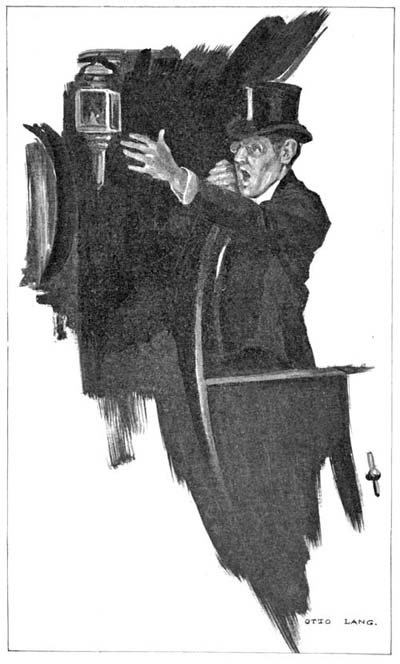
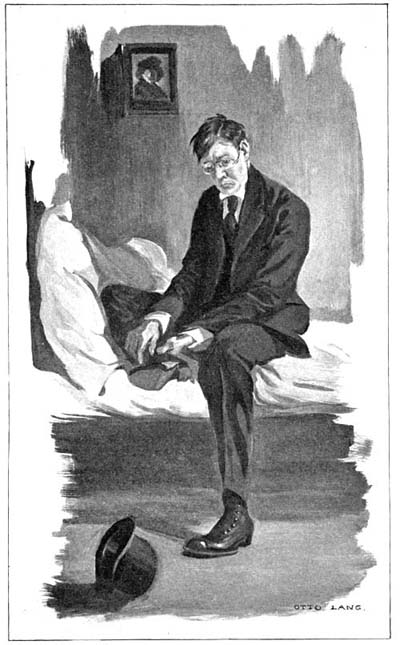
to his room. He dropped upon
his bed, feeling white about the
gills.
Orville was a most methodical
man. He planned his doings days
ahead and seldom changed his
schedule. But it seemed likely
that unless he was built of sterner
stuff than most of the machines
called men, he would not run out
of the round-house to-night. His
fall had given his foot a nasty
wrench.
Some engineers, to change the
simile, would have argued that the
engine was off the track, and that
therefore the train was not in running
condition; but Orville merely
changed engines. His own steam
having been cut off, he ordered an
automobile for twenty minutes to
seven; and after he had bathed and
bandaged his ankle he determined,
with a grit worthy of the cause that
brought it forth, to attend that dinner
even if he paid for it in the
hospital, with Annette as special
nurse.
Old Mr. Nickerson, who lived
across the hall, had heard of his
misfortune, and called to proffer
his services.
“Shall I help you get to bed?”
said he.
“I am not due in bed, Mr. Nickerson,
for many hours; but if you
will give me a few fingers of your
excellent old Scotch with the bouquet
of smoked herring, I will go
on dressing for dinner.”
“Dear boy,” said the old gentleman
almost tearfully, “it is impossible
for you to venture on your
foot with such a sprain. It is badly
swollen.”
“Mr. Nickerson, my heart has
received a worse wrench than my
foot has, therefore I go out to
dine.” At sound of which enigmatical
declaration Mr. Nickerson
hurried off for the old Scotch,
and in a few minutes Orville’s
faintness had passed off, and with
help from the amiable old man he
got into his evening clothes—with
the exception of his left foot, which
was encased in a flowered slipper of
sunset red.
“Now, my dear Mr. Nickerson,
I’m a thousand times obliged to
you, and if I can get you to help
me hop downstairs I will wait for
the automobile on the front stoop.”
(Orville had been born in Brooklyn,
where they still have “stoops.”)
“I’m on time so far.”
But if Orville was on time, the
automobile was not, the driver not
being a methodical man; and when
it did come, it was all the motor-man
could do to stop it. It seemed
restive.
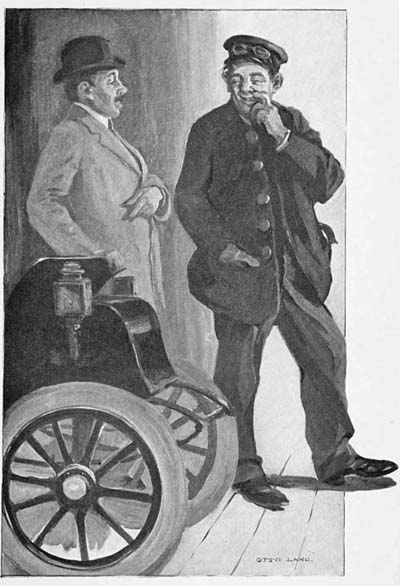
“You ought to shut off on the
oats,” said Orville gayly, from his
seat on the lowest step of the
“stoop.”
The picture of a gentleman in
immaculate evening clothes with
the exception of a somewhat rococo
carpet slipper, seemed to amuse
some street children who were passing.
If they could have followed
the “auto” they would have been
even more diverted, but such was
not to be their fortune. Mr. Nickerson
helped his friend into the
vehicle, and the driver started at
a lively rate for Fifth Avenue.
Orville lived in Seventeenth
Street, near Fifth Avenue; Mrs.
Marten lived on Fifth Avenue,
near Fortieth Street. Thirty-eighth
Street and Thirty-ninth
Street were reached and passed
without further incident than the
fact that Orville’s ankle pained
him almost beyond the bearing-point;
but, as it is not the history
of a sprained ankle that I am writing,
if the vehicle had stopped at
Mrs. Marten’s my pen would not
have been set to paper.
But the motor-wagon did not
even pause. It kept on as if the
Harlem River were to be its next
stop.
Orville had stated the number of
his destination with distinctness,
and he now rang the annunciator
and asked the driver why he did
not stop.
Calmly, in the even tones that
clear-headed persons use when they
wish to inspire confidence, the
chauffeur said: “Don’t be alarmed,
sir, but I can’t stop. There’s something
out of kilter, and I may have
to run some time before I can get
the hang of it. There’s no danger
as long as I can steer.”
“Can’t you slacken up in
front of the house, so that I can
jump?”
“With that foot, sir? Impossible,
and, anyway, I can’t slacken
up. I think we’ll stop soon. I
don’t know when it was charged,
but a gentleman had it before I was
sent out with it. It won’t be long,
I think. I’ll run around the block,
and maybe I can stop the next
time.”
Orville groaned for a twofold
reason: his ankle was jumping with
pain, and he would lose the pleasure
of taking Miss Badeau in to
dinner, for it was a minute past
seven.
He sat and gazed at his carpet
slipper, and thought of the daintily
shod feet of the adorable Annette,
as the horseless carriage wound
around the block. As they approached
the house again, Orville
imagined that they were slackening
up, and he opened the door to be
ready. It was now three minutes
past seven, and dinner had begun
beyond a doubt. The driver saw
the door swing open, and said:
“Don’t jump, sir. I can’t stop
yet. I’m afraid there’s a good
deal of run in the machine.”
Orville looked up at the brownstone
front of the house with an
agonized stare, as if he would pull
Mrs. Marten to the window by the
power of his eyes. But Mrs. Marten
was not in the habit of pressing
her nose against the pane in an
anxious search for tardy guests.
In fact, it may be asserted with
confidence that it is not a Fifth
Avenue custom.
At that moment the purée was
being served to Mrs. Marten’s
guests, and to pretty Annette Badeau,
who really looked disconsolate
with the vacant chair beside
her.
“Something has happened to
Orville,” said Mrs. Marten, looking
over her shoulder toward the
hall door, “for he is punctuality
itself.”
Mr. Joe Burton was a short,
red-faced little man, with black
mutton-chop whiskers of the style
of ’76, and a way of looking in the
most cheerful manner upon the
dark side of things. “Dessay
he’s been run over,” said he choppily.
“Wonder anyone escapes.
Steam-, gasoline-, electric-, horseflesh-,
man-propelled juggernauts.
Ought to be prohibited.”
Annette could not repress a shudder.
Her aunt saw it and said:
“Orville will never be run over.
He’s too wide-awake. But it is
very singular.”
“He may have been detained by
an order for a story,” said Mr.
Marten, also with the amiable purpose
of consoling Annette, for both
of the Martens knew how she felt
toward Mr. Thornton.
“Maybe he’s lying on the front
sidewalk, hit by a sign or bitten
by a dog. Dogs ought not to be
allowed in the city; they only add
to the dangers of metropolitan existence,”
jerked out Mr. Burton, in
blithe tones, totally unaware that
his remarks might worry Annette.
“Dear me! I wish you’d
send some one out to see, Aunt
Henrietta.”
“Nonsense, Annette. Mr. Burton
is always an alarmist. But,
Marie, you might step to the front
door and look down the avenue.
Mr. Thornton is always so punctual
that it is peculiar.”
Marie went to the front door
and looked down the street just as
Thornton, gesticulating wildly, disappeared
around the corner of Fortieth
Street.
“Oh, why didn’t she come
sooner!” said he aloud to himself.
“At least they would know why
I’m late. And she’ll be gone before
I come round again. Was
there ever such luck? Oh for a
good old horse that could stop, a
dear old nag that would pause and
not go round and round like a
blamed carrousel! Say, driver,
isn’t there any way of stopping this
cursed thing? Can’t you run it
into a fence or a house? I’ll take
the risk.”
“But I won’t, sir. These automobiles
are very powerful, and one
of them turned over a news-stand
not long since and upset the stove
in it, and nearly burned up the
newsman. But there’s a plenty of
time for it to stop. I don’t have to
hurry back.”
“That’s lucky,” said Orville.
“I thought maybe you’d have to
leave me alone with the thing.
But, say, she may run all night.
Here I am due at a dinner. I’m
tired of riding. This is no way
to spend Christmas. Slacken up,
and I’ll jump when I get around
there again.”
“I tell you I can’t slacken
up, and she’s going ten miles an
hour. You’ll break your leg if
you jump, and then where’ll you
be?”
“I might be on their sidewalk,
and then you could ring their bell,
and they’d take me in.”
“And have you suing the company
for damages? Oh, no, sir.
I’m sorry, but it can’t be helped.
The company won’t charge you for
the extra time.”
“No, I don’t think it will,”
said Thornton savagely, the more
so as his foot gave a twinge of pain
just then.
“There was no one in sight,
ma’am,” said Marie, when she
returned.
“Probably he had an order for
a story and got absorbed in it and
forgot us,” said Mr. Marten; but
this conjecture did not seem to suit
Annette, for it did not fit what she
knew of his character.
“Possibly he was dropped in
an elevator,” said Mr. Burton.
“Strain on elevators, particularly
these electrical ones, is tremendous.
Some of ’em have got to drop.
And a dropping elevator is no respecter
of persons. You and I may
be in one when it drops. Probably
he was. Sure, I hope not,
but as he is known to be the soul
of punctuality, we must put forward
some accident to account for
his lateness. People aren’t always
killed in elevator accidents. Are
they, my dear?”
“Mr. Burton,” said his wife,
“I wish you would give your morbid
thoughts a rest. Don’t you see
that Annette is sensitive?”
“Sensitive—with some one dying
every minute? It’s merely
because she happens to know Orville
that his death would be unpleasant.
If a man in the Klondike
were to read of it in the paper he
wouldn’t remember it five minutes.
But I don’t say he was in an elevator.
Maybe some one sent him
an infernal machine for a Christmas
present. May have been blown up
in a manhole or jumped from his
window to avoid flames. Why,
there are a million ways to account
for his absence.”
Marie had opened the parlor windows
a moment before, as the house
was warm, and now there came
the humming of a rapidly moving
automobile. Mingled with it they
heard distinctly, although faintly,
“Mr. Marten, here I go.”
It gave them all an uncanny
feeling. The fish was left untouched,
and for a moment silence
reigned. Then Mr. Marten sprang
from the table and ran to the front
door. He got there just in time to
see an automobile dashing around
a corner and to hear a distinctly
articulated imprecation in the well-known
voice of Orville Thornton.
In evening clothes and bare-headed,
Mr. Marten ran to Fortieth
Street, and saw the vehicle approaching
Sixth Avenue, its occupant
still hurling strong language
upon the evening air. Mr. Marten
is something of a sprinter, although
he has passed the fifty mark, and
he resolved to solve the mystery.
But before he had covered a third
of the block in Fortieth Street he
saw that he could not hope to
overtake the runaway automobile,
so he turned and ran back to the
house, rightly surmising that the
driver would circle the block.
When he reached his own doorstep,
badly winded, he saw the
automobile coming full tilt up the
avenue from Thirty-ninth Street.
The rest of the diners were on
the steps. “I think he’s coming,”
he panted. “The driver must be
intoxicated.”
A moment later they were treated
to the spectacle of Orville, still
hurling imprecations as he wildly
gesticulated with both arms. Several
boys were trying to keep up
with the vehicle, but the pace was
too swift. No policeman had yet
discovered its rotary course.
As Orville came near the Marten
mansion he cried “Ah-h-h!” in
the relieved tones of one who has
been falling for half an hour and at
last sees ground in sight.
“What’s the matter?” shouted
Mr. Marten wonderingly, as the
carriage, instead of stopping, sped
along the roadway.
“Sprained foot. Can’t walk.
Auto out of order. Can’t stop.
Good-by till I come round again.
Awful hungry. Merry Christmas!”
“Ah ha!” said Joe Burton. “I
told you that it was an accident.
Sprained his foot and lost power
over vehicle. I don’t see the connection,
but let us be thankful that
he isn’t under the wheels, with a
broken neck, or winding round and
round the axle.”
“But what’s to be done?” said
Mrs. Marten. “He says he’s
hungry.”
“Tell you what!” said Mr. Burton,
in his explosive way. “Put
some food on a plate, and when
the carriage comes round again I’ll
jump aboard, and he can eat as he
travels.”
“He loves purée of celery,” said
Mrs. Marten.
“Very well. Put some in a
clean lard-pail or a milk-pail. Little
out of the ordinary, but so is
the accident, and he can’t help his
hunger. Hunger is no disgrace.
I didn’t think he’d ever eat soup
again, to tell the truth. I was
making up my mind whether a
wreath or a harp would be better.”
“Oh, you are so morbid, Mr.
Burton,” said his wife, while Mrs.
Marten told the maid to get a pail
and put some purée into it.
He dropped upon his bed, feeling white about the gills
When Thornton came around
again he met Mr. Marten near
Thirty-ninth Street.
“Open the door, Orville, and
Joe Burton will get aboard with
some soup. You must be starved.”
“There’s nothing like exercise
for getting up an appetite. I’ll be
ready for Burton,” said Orville,
“Awfully sorry I can’t stop and
talk; but I’ll see you again in a
minute or two.”
He opened the door as he spoke,
and then, to the great delight of at
least a score of people who had
realized that the automobile was
running away, the rubicund and
stout Joe Burton, a pail of purée
in one hand and some table cutlery
and silverware and a napkin in the
other, made a dash at the vehicle,
and with help from Orville effected
an entrance.
“Merry Christmas!” said Orville.
“Merry Christmas! Awfully
sorry, old man, but it might be
worse. Better drink it out of the
pail. They gave me a knife and
fork, but they neglected to put in
a spoon or a dish. I thought that
you were probably killed, but I
never imagined this. Miss Badeau
was terribly worked up. I think
that she had decided on white carnations.
Nice girl. You could
easily jump, old man, if you
hadn’t sprained your foot. Hurt
much?”
“Like the devil; but I’m glad
it worried Miss Badeau. No, I
don’t mean that. But you know.”
“Yes, I know,” said Burton,
with a sociable smile. “Mrs. Marten
told me. Nice girl. Let her
in next time. Unusual thing, you
know. People are very apt to
jump from a runaway vehicle, but
it seldom takes up passengers. Let
her get in, and you can explain
matters to her. You see, she sails
early in the morning, and you
haven’t much time. You can tell
her what a nice fellow you are, you
know, and I’m sure you’ll have
Mrs. Marten’s blessing. Here’s
where I get out.”
With an agility admirable in one
of his stoutness, Mr. Burton leaped
to the street and ran up the steps
to speak to Miss Badeau. Orville
could see her blush, but there was
no time for her to become a passenger
that trip, and the young
man once more made the circuit of
the block, quite alone, but strangely
happy. He had never ridden with
Annette, except once on the elevated
road, and then both Mr. and Mrs.
Marten were of the company.
Round sped the motor, and when
the Martens’ appeared in sight, Annette
was on the sidewalk with a
covered dish in her hand and a look
of excited expectancy on her face
that added a hundredfold to its
charms.
“Here you are—only ten cents
a ride. Merry Christmas!” shouted
Orville gayly, and leaned half out
of the automobile to catch her. It
was a daring, almost an impossible
jump, yet Annette made it without
accident, and, flushed and excited,
sat down in front of Mr. Thornton
without spilling her burden, which
proved to be sweetbreads.
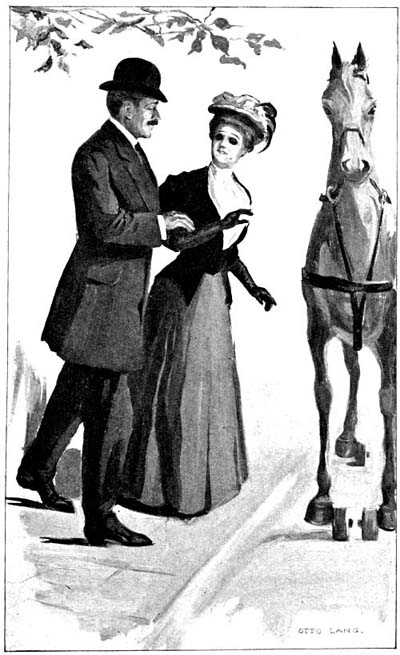
“Miss Badeau—Annette, I
hadn’t expected it to turn out this
way, but of course your aunt doesn’t
care, or she wouldn’t have let you
come. We’re really in no danger.
This driver has had more experience
dodging teams in this last
hour than he’d get in an ordinary
year. They tell me you’re going
to Europe early to-morrow to leave
all your friends. Now, I’ve something
very important to say to you
before you go. No, thanks, I don’t
want anything more. That purée
was very filling. I’ve sprained my
ankle, and I need to be very quiet
for a week or two, perhaps until
this machine runs down, but at the
end of that time would you—”
Orville hesitated, and Annette
blushed sweetly. She set the sweetbreads
down upon the seat beside
her. Orville had never looked so
handsome before to her eyes.
He hesitated. “Go on,” said
she.
“Would you be willing to go to
Paris on a bridal trip?”
Annette’s answer was drowned
in the hurrah of the driver as the
automobile, gradually slackening,
came to a full stop in front of the
Martens’.
But Orville read her lips, and as
he handed his untouched sweetbreads
to Mrs. Burton, and his
sweetheart to her uncle, his face
wore a seraphically happy expression;
and when Mr. Marten and
the driver helped him up the steps
at precisely eight o’clock, Annette’s
hand sought his, and it was a jolly
party that sat down to a big though
somewhat dried-up Rhode Island
turkey.
“Marriage also is an accident,”
said Mr. Burton.
The University Press, Cambridge, U. S. A.
TRANSCRIBER’S NOTE:
Obvious typographical errors have been corrected.
Inconsistencies in hyphenation have been standardized.
An incorrect page reference in the List of Illustrations has been corrected.