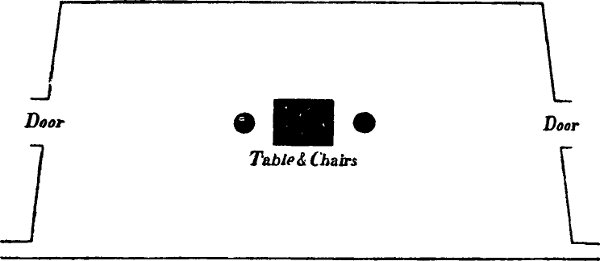
Scene.—Dunnbrowne's parlor. Entrances r. and l. Table, c. Chairs
r. and l. of table. Newspaper and letters on the table.
Dunnbrowne. (without) Well, good morning, my dears, (shows himself in
the doorway r.) Don't be away all the morning, and do be merciful in
your purchases. (enters r.) Happy is the man who is not troubled with
a trio of beautiful daughters, who are incessantly going out shopping.
My daughters seem to take a delight in spending my money. I suppose they
act upon the principle that, if a thing is worth doing at all it is
worth doing well, and as shopping is their chief and only occupation,
they strive, and I may add, succeed, to do it as well as any young
ladies in this mundane sphere possibly could. (sits r.) I find it of
no use whatever to expostulate with them about what I consider their
extravagance in dress, for they argue that as they do all the buying and
I do all the paying, it is nothing but a right and proper division of
labor. Now let me see what trouble has come to me through that
prodigious engine of commerce, the post office, this morning. (opens a
letter) Another bill from Messrs. Newshape and Whitestraw, the
milliners! It is only two weeks since I paid them $25. (looks at the
bill)—$37.50 for millinery! Enough to provide me with hats for twenty
years. (opens another letter) More bills! This is Mrs. Goodfit's bill
for dressmaking: forty dollars. (throws the bill on the table) Oh,
this is going a little beyond all reason. The fact of the matter is, I
shall be ruined if this sort of thing is not stopped. (walks across the
room two or three times—then pauses) I wish some kind, upright and
steady young men of affluent means would come forward and take one or
two of my daughters off my hands. I'm sure they would make excellent
wives. (sits r.,—takes another letter) I am almost afraid to open
this one; but I may as well know the extent of my trouble at
once—suspense is useless—so here goes. (opens the letter) What's
this? (reads it over rapidly in silence) How opportune! This is
precisely what I have long been wishing for. (reads) "Dear sir,—For a
long period of time I have fondly and madly loved your daughter Fanny,
with a passion that would require the prolific brain of a poet to
describe, but I have never had the courage to declare my passion to
her." Well, that is astonishing. If I had known of this before I
should have avoided paying some of her bills, for I would have had them
married long ago. (reads) "My object in writing you is to inform you
that I shall call upon you to-morrow morning, when I trust you will
favor me with an interview." An interview! I'll favor him with forty
interviews if he will only take one of my daughters off my hands.
(reads) "My means are amply sufficient to justify my taking a wife, so
I trust you will not throw cold water on my hopes, but make me eternally
happy by giving your consent to our union." Throw cold water on his
hopes! By no means. If warm water will help to bring about the desired
effect he shall have gallons of it. (reads) "Hoping you will carefully
consider this matter and ultimately arrive at a favorable decision, I am
yours respectfully, John Smith." (folding the letter) John Smith,
umph! Now, the question that arises is, who is this John Smith? John
Smiths are almost as numerous as flies around a sugar-bowl, but I
don't happen to be acquainted with any of them. However, I shall not be
any wiser by wondering who he is, so I shall wait patiently until he
calls. In the meantime I will take a walk around the garden, (goes to
door r.—calls) Jane, I am going into the garden. If anyone calls, show
him in here and let me know immediately. (goes to the table)
By-the-bye I must put these bills out of sight. If John Smith chances to
see them they might set him thinking of what he will have to pay when he
gets married, and be the means of making him alter his mind. (puts the
letters in his pocket)
Exit l.
Enter, James Smith, r.
Smith. (speaks at the entrance) Very well. I'll find a seat if you
will find your master. (Enters—looks around—sits, r.) I wonder what
sort of a fellow this Dunnbrowne is. I don't know anything about him,
but he knows something about me or how would he be aware of the fact
that I am in want of a mare. I hope there is no blunder about the
affair. I don't see how there can be, though. The letter is addressed to
me all fair and square, and this is the address the letter is dated from
(takes a letter from his pocket and reads) "2, Belverley Terrace,
Hedgetown, March 31st. Mr. Smith. Dear sir,—A friend of mine informs me
that you are in want of a good mare, so I take the liberty of writing
you to say that I wish to dispose of my thoroughbred dark bay mare
Fanny. She has splendid action, and is in good condition. If you think
she may suit you, I shall be at home in the morning, and will be glad to
see you and give you any information respecting her soundness, &c. Yours
truly, Peter Dunnbrowne." Oh, it's all right. There cannot be any error
about that—of course not. I am rather fond of the name of Fanny. I had
a mare of that name some years ago, and she was a perfect stunner.
(replaces the letter in his pocket) I wonder what price he wants for
her. I am not particular to a few dollars if she's a good goer. (takes
up the newspaper) What is there fresh in the paper this morning? Ah,
another breach of promise case, I see. $500 damages. Poor fellow. Nobody
will catch me at that game. Marriage is out of my line altogether. I
always drive clear of the ladies. (turns the paper over—reads)
Enter, Dunn., l.
Dunn. (aside) So this is John Smith, my would-be son-in-law. He
appears to make himself quite at home. (coming to the front, aloud)
Good morning, sir. Mr. Smith, I presume. (extending his hand. Smith
hastily puts the newspaper down—rises and shakes hands)
Smith. Good morning, Mr. Dunnbrowne, how do you do, sir; how do you
do? Delighted to make your acquaintance, sir. Fine morning this, isn't
it? Very fine morning indeed.
Dunn. (aside) He doesn't seem at all bashful.
Smith. I beg your pardon? Ah, I thought you were speaking. You are
well, I suppose?
Dunn. Ye—yes, I am quite well, thank you, Mr. Smith, how are you?
Smith. I'm very well, sir, very well indeed; in fact I am never
troubled with any complaint excepting the complaints of my groom, and he
is always full of them—servants usually are.
Dunn. (aside) Groom! he keeps a horse, then. He must be pretty well to
do. (aloud) Take a seat, sir. (they both sit, Dunn., l., Smith, r.)
Smith. Thanks. So you are desirous of disposing of Fanny, Mr.
Dunnbrowne?
Dunn. (aside) Disposing of her! (aloud) Well er—that is one way
of putting it, but I scarcely like to——(pause)
Smith. Oh, I quite understand your feelings, sir. You have grown quite
fond of her, and now you find it rather hard to part with her; but
you'll soon get over that. I've parted with several in my time. Excuse
my asking, sir, but what are your reasons for parting with her? Do you
find her too expensive?
Dunn. Well er—rather; and as I have three of them to keep
I——(pause)
Smith. I see—you thought you could possibly spare one of them. Well
now, what are her good points? Is she good at jumping walls or fences?
Dunn. (aside) Walls! Fences!
Smith. Can she clear a five-barred gate nicely?
Dunn. (smiling) Well, er—I really could not answer that question.
Jumping is an accomplishment that I——(pause)
Smith. Perhaps you never tried her at that sort of thing. You ought to,
sir, it's fine sport. The last I had was a perfect stunner at it.
Dunn. (aside) The last he had! He has been married before, then—a
widower, evidently.
Smith. She turned a little stubborn occasionally, though, and has thrown
me over her head two or three times.
Dunn. (aside) Bless me! what a powerful woman she must have been.
Smith. I cured her of that nasty trick after she had repeated it a time
or two, I did so. I gave her the lash pretty freely.
Dunn. (aside) Why, the man is nothing less than a wife-beater.
Smith. She soon found out who was master. There's nothing so effective
as the whip to cure stubbornness, sir, nothing at all.
Dunn. I suppose not; but don't you think that kind of treatment is
rather too harsh?
Smith. Oh, dear no; on the contrary, I think a little now and again does
them a power of good.
Dunn. (aside) What a hard hearted fellow he must be. He will have to
alter his opinions before he marries my daughter, that he will.
(aloud) I may tell you, Mr. Smith, that if I thought you would
ill-treat Fanny at all, I should not allow you to take her.
Smith. Don't be afraid of that, my dear sir. I should not ill-treat her
if it were not necessary. Does she shy at all when she is out?
Dunn. Shy! That is a peculiar question to ask about a——
Smith. Not at all, Mr. Dunnbrowne. I like to know what I am getting. If
I take her from you and find that she shies at anything I shall get rid
of her without delay. I shall indeed.
Dunn. (aside) Well, that is cool. He has the impudence to tell me
that he would "get rid" of my daughter. I am beginning to dislike this
fellow.
Smith. You see, Mr. Dunnbrowne, I want one who will go ahead in the face
of everything—a regular fast one that's the sort.
Dunn. (aside) What peculiar taste some men have!
Smith. Is Fanny ever troubled with corns?
Dunn. Corns, sir, corns? No!
Smith. I am glad of that. I don't care to see them walking lame in the
slightest. It quite spoils their appearance. Is she quite sound in every
other respect?
Dunn. Well, yes, I never heard her complain. (aside) What odd
questions he asks!
Smith. She does not cough or wheeze, Mr. Dunnbrowne, does she? She is
not broken-winded at all, is she?
Dunn. Broken-winded! I don't understand you, Mr. Smith. Why do you ask
so many absurd questions about her? You are not obliged to have her if
you don't choose to.
Smith. I am perfectly aware of that, sir. I am simply asking fair
questions. As I said before, I want to know what I am getting. I don't
want to make a blind bargain. Can I see her now?
Dunn. Not at present—she is out.
Smith. Taking exercise, I suppose. Well now, Mr. Dunnbrowne, I'll tell
you what I will do. I will take her a month on trial.
Dunn. You'll what, sir? You—you'll take her a month on trial! What the
dickens do you mean? How dare you propose such a thing to me, sir!
(rises)
Smith. Simply because I consider that it is the fairest way of dealing
in transactions of this sort. (Dunn. walks across stage) You have no
occasion to be vexed at my proposal. I give you my word that I will
treat her kindly and pay all expenses during the month, and if she does
not suit me I will return her. That is fair and square for both parties,
don't you think so?
Dunn. No, sir, I do not think so. If you have a notion that I—the
parent of three blooming daughters—am willing to permit you to trifle
and play with the affections of the eldest of them in the manner you
have so basely proposed, I must ask you to dispel that notion at once
and forever, for you never labored under a greater mistake in your life,
never.
Smith. Now there is just a little bit of sentiment in that speech, and I
must admit that you delivered it in a fair dramatic style, Mr.
Dunnbrowne, but you see the general effect is marred by my not knowing
what you are driving at. What do you mean?
Dunn. Mean, sir, mean? I think I explained myself sufficiently.
Smith. Scarcely. You volunteer some remarks about your daughters. Now,
with all the respect that is due to those young ladies, I must ask you
to put your parental feelings aside for a short time, and proceed with
the business we have on hand. Ladies are out of my line altogether.
Between you and me, Mr. Dunnbrowne, I am not a marrying man.
Dunn. Not a marrying man! Then what under the sun did you write me that
letter for respecting your love for my daughter, eh?
Smith. Write you? Why, I never heard your name before this morning.
Dunn. (aside) This is very strange. Can there be a mis—(aloud) Your
name is Smith, is it not?
Smith. Yes, that is my name.
Dunn. Ah! (takes a letter from his pocket and unfolds it) Now tell me,
Mr. Smith, on your honor as a gentleman, did you or did you not write
that letter to me? (giving the letter to Smith)
Smith. (reads) "Dear sir,—for a long period of time I have fondly and
madly loved your daughter Fanny with—" Oh, rubbish! On my honor as a
gentleman, Mr. Dunnbrowne, I never loved any man's daughter, much less
wrote this letter; besides, it is signed John Smith and my name is
James. (returns the letter)
Dunn. (aside) I cannot understand this at all. (aloud) As you are
not the Mr. Smith I took you for, and have not come to see me about
my daughter, perhaps you will inform me what you did come for.
Smith. What I came for? Well, that's not bad for you after listening to
all I have said. Have you forgotten that you wrote me saying you had a
mare to dispose of?
Dunn. Wrote you about a mare!
Smith. What a forgetful man you must be. (takes letter from his
pocket—opens it and gives it to Dunn., who looks it over) That is the
letter; perhaps it will recall the circumstance to mind.
Dunn. I have not written this, sir. (keeps the letter in his hand)
Smith. You have not? On your honor as a gentleman?
Dunn. On my honor as a gentleman.
Smith. That's curious. Have you not got a mare to dispose of?
Dunn. No; more than that I never possessed one or a horse either.
Smith. Then why did you not say so before? You answered my questions
about the mare Fanny and——
Dunn. Because I thought you were speaking of my daughter. You see I am
expecting a Mr. Smith here this morning—the writer of the letter I have
shown you—who is anxious to pay his addresses to my daughter Fanny. As
he is a perfect stranger to me, and as you answered to the name of
Smith, I naturally thought you were the gentleman I expected, hence the
confusion.
Smith. There is something very peculiar about this affair that I——(a
knock is heard at the door, r. Dunn. puts Smith's letter on the
table—goes to the door and opens it. Short pause)
Dunn. What name did you say? Oh, Smith. Ah, yes, it's all right, Jane,
show him in. (turns to James Smith) I must ask you to excuse me now,
Mr. Smith. The other Mr. Smith has arrived. I hope you will hear
something about the mare before the day is over.
Smith. I hope so, Mr. Dunnbrowne. (takes his hat and cane)
Enter, Joseph Smith, r.
James S. (aside) So this is the lover. Ah, poor fellow, (aloud) Good
morning, Mr. Dunnbrowne, good morning.
Dunn. Good morning, Mr. Smith. (Exit, James S., r.) And good morning to
you, Mr. Smith, (shakes hands with Joseph S., who is very pale and
looks very mournful)
Joseph S. Good morning, Mr. Dunnbrowne.
Dunn. Take a seat, Mr. Smith.
Smith. Thank you, sir. (sits, r., stands his umbrella between his
knees—puts his hat on the top of it and looks vacantly before him.
Dunn. sits l. of table)
Dunn. (surveying him—aside) His appearance is not very
pre-possessing; but I must not judge him by his looks. (aloud) This is
a beautiful morning, is it not, Mr. Smith?
Smith. (solemnly) It is.
Dunn. (aside) He is not at all conversational. (aloud)
We—we—er—we have had, I may say, several beautiful mornings lately,
have we not, Mr. Smith?
Smith. (mournfully) We have.
Dunn. (aside) Umph! He must be very bashful and nervous. I'll get a
bottle of wine; perhaps it will help to bring him to the point.
(rises—aloud) I am going to my wine bin, Mr. Smith; you will excuse
me a moment, will you not?
Smith. Oh, certainly. (Exit, Dunn., l.; suddenly—Smith looks quite
cheerful) Wine bin, eh! He does not appear to be greatly distressed
through his daughter's death. It may be that he has a large family and
does not feel her loss so keenly. Let me see now, does he say in his
letter when she died? (takes a black bordered envelope from his pocket
and takes the letter from it—reads) "2, Belverley Terrace, Hedgetown,
March 31st. Mr. Smith. Dear sir, I am grieved to inform you that my
eldest daughter died suddenly this afternoon. Will you kindly call here
in the morning to make the necessary preparations for her interment, and
oblige, yours truly, Peter Dunnbrowne." (replaces the letter in the
envelope and puts it in his pocket) So she died yesterday.
(cheerfully) Ah, well, somebody must die or what would become of us
poor undertakers? If everybody took a notion to live on from this time
forward, the whole body of funeral furnishers would die of starvation. I
hear Mr. Dunnbrowne coming, so I must assume my customary mournful
expression. I always find that it pleases my customers. (looks
mournful)
Enter, Dunn. l., with bottle of wine and glasses—places them on
the table and begins to draw the cork)
Dunn. You will doubtless think it peculiar of me waiting upon myself,
Mr. Smith, when there are servants in the house, but the fact is I never
allow them to go to my wine bin, for I have discovered that they
sometimes imbibe a little on their own account, in consequence of which
I never allow the key to leave my possession. (filling the glasses)
Now, my dear sir, make yourself at home. (putting a glass before
Smith) Taste that and tell me what you think of it.
Smith. (aside) It is not often I am treated in this manner. (aloud)
Thank you, Mr. Dunnbrowne. (leans his umbrella against the chair, and
puts his hat and gloves under the seat—drinks) This is splendid, sir.
It is really delicious.
Dunn. Ah, I thought you would say so. (holds his glass up to the
light—drinks) Is it not exhilarating?
Smith. It is. (aside) He thinks more of his wine than of his poor
daughter.
Dunn. (aside) The wine has not loosened his tongue very much yet. He
must have another glass. (aloud) Have another glass, Mr. Smith, it
will do you a power of good. (re-fills Smith's glass)
Smith. Thank you, sir. (aside) This is what I call good business; but
I must say that, in all my experience as an undertaker and funeral
furnisher, I never met a man who bore a daughter's death with greater
fortitude than this man does, never. (drinks)
Dunn. (aside) Well he is a bashful fellow. Why does he not speak out
like a man? I would commence the subject myself, but he might run away
with the idea that I was anxious to get rid of my daughter, and I should
not like him to think that on any account. How quiet he sits! I don't
see any thing else for it but applying the lotion to his refractory
tongue until the desired effect is produced. (aloud) Come, Mr. Smith,
empty your glass and let me re-fill it for you.
Smith. With pleasure, Mr. Dunnbrowne. (empties his glass. Dunn. refills
it—aside) I am enjoying myself and no mistake. (aloud) Thank you,
Mr. Dunnbrowne, thank you. I'm sure you are very kind.
Dunn. Not at all, Mr. Smith. When business such as we have on hand is to
be transacted, we must make ourselves as sociable as possible.
Smith. (aside) Now that he has mentioned business I had better take
the hint and commence. (turns towards Dunn., aloud) The business that
has brought us together is not of a very cheerful character, I am sorry
to say.
Dunn. Do you think not, sir? For my part I do not see why it should not
be.
Smith. Well, er—it was of your feelings I was thinking, Mr. Dunnbrowne,
for I know that this event must be a sad and sudden blow to you.
Dunn. Not at all, my dear sir, not at all. (aside) His letter a sad
blow to me? Pooh! I look upon it as a very pleasing blow. (drinks and
crosses his knee)
Smith. (aside) He speaks of a death as though it were an everyday
occurrence in his house.
Dunn. Such things will occur sooner or later in any family, sir. We must
expect them.
Smith. Ah, that is true. We never know whose turn is next, but it is a
great affliction when parent and daughter are parted in this way, Mr.
Dunnbrowne.
Dunn. (cheerfully) Oh dear no. I could not expect her to stay with me
always. Besides, we shall not be parted for ever; I can just drop in and
see her now and again, you know.
Smith. (aside) Drop in and see her! What does——Oh, I see, he must
have a family vault. (aloud) Her loss will be a source of immense
grief, sir, I am sure.
Dunn. (in same tone) Why should it be? All young persons are anxious
to commence that blissful state of life, for it is generally supposed
that they are better off—that is to say, they are much happier. Not
that my daughter has ever been unhappy here, but the change will be a
pleasing novelty to her, therefore I see no reason why I should be
grieved at all.
Smith. (aside) How careless he appears to be about her death, and
speaks of the next world as a pleasing novelty. A——h! (draws a long
deep sigh)
Dunn. (aside) What nonsense to think that I shall be grieved because
my daughter leaves my roof to begin married life! He might be arranging
for a funeral instead of a wedding, judging from the mournful manner he
has of expressing himself, although I must say that it is quite in
keeping with his appearance. (aloud) Fanny has always been a good
daughter, Mr. Smith, and deserves to be made happy.
Smith. I can believe you, Mr. Dunnbrowne, and doubt not that she will be
happy for evermore.
Dunn. You will do your utmost to make her comfortable when you take her,
Mr. Smith, will you not?
Smith. You may rest assured that nothing shall be wanting on my part as
far as comfort is concerned.
Dunn. I am glad to hear you say so, sir. Remember that this is a great
undertaking, but I suppose you have carefully considered the matter
before coming here.
Smith. I have, Mr. Dunnbrowne. The responsibilities are very heavy in a
case like this, I know, but I think I am quite able to bear them. When
do you wish the ceremony to take place?
Dunn. You must suit yourself in that matter, Mr. Smith, I am not
particular.
Smith. Very well, sir. Let me see—to-day is Monday—I do not wish to
hurry you, suppose we say Thursday.
Dunn. Thursday! So soon! Do not be too hasty, Mr. Smith, let us take
proper time over this matter.
Smith. Well, then, shall we say Friday, or Saturday at the latest? We
must get it over by Saturday. It would not do to delay it beyond this
week.
Dunn. (aside) Bless us, what a desperate hurry he is in! In his letter
he tells me has not proposed to Fanny, yet he wants to marry her this
week. (aloud) I am not sure that we could make all our arrangements in
so short a time, Mr. Smith.
Smith. I can easily manage my portion of the arrangements, Mr.
Dunnbrowne, and I think you can manage yours if you make an effort. We
will say Saturday and settle that point.
Dunn. Very well. (aside) I don't know what Fanny will say to this. I
wish she would come in.
Smith. Well now, Mr. Dunnbrowne, what church do you intend——
Dunn. Oh, I don't mind. Any will suit me.
Smith. St. Paul's is a very neat and quiet church.
Dunn. Very well. St. Paul's will suit me if it suits you. I suppose the
officiating clergyman there understands his business as well as any
other.
Smith. Oh, certainly. I am partial to St. Paul's because of the good and
dry quality of the ground—there is none of that wet clay about it.
Dunn. Well that is rather a good point, Mr. Smith. (aside) How
considerate he is! He thinks the ground will be drier to walk on up to
the church door. I should not have given that a thought myself.
(aloud) Allow me to fill your glass, sir. (re-fills Smith's glass)
Smith. Thank you, sir. (drinks) I think you did not say how many
carriages would be required, did you, Mr. Dunnbrowne?
Dunn. No, I did not. I leave that matter entirely in your hands, Mr.
Smith. I have no doubt that you understand what is required better than
I do, so I could not think of interfering with any arrangements you can
make.
Smith. Thank you, sir, you do me honor. I suppose you would like to have
the church bell tolled on the morning of the——
Dunn. (stiffly) Church bell tolled! Decidedly not, sir. What under the
sun should we have the bell tolled for?
Smith. It is very common in these cases, Mr. Dunnbrowne.
Dunn. (with determination) Well I don't want to hear it, and
moreover I won't have it tolled.
Smith. I am sorry to cause you annoyance, Mr. Dunnbrowne, but I thought
you would like to follow the custom in such cases.
Dunn. And tolling a bell at a ceremony of this sort is customary, is it?
Well I never heard of it before. (aside) My belief is that I have
given him more wine than is good for him.
Smith. (surprised) You surprise me, sir.
Dunn. (carelessly) As you have named the matter I don't mind having
the whole peal of bells ringing together. Engage the ringers for me,
will you, Mr. Smith, and tell them to ring as many
tripple-bob-majors—or whatever they call them—as they like next
Saturday.
Smith. (aside) The wine is getting into his head or he would never
think of engaging the ringers to ring for a funeral. (aloud) I will
engage the ringers if you wish, Mr. Dunnbrowne, but really I——
Dunn. Oh, I will pay all expenses, sir.
Smith. (aside) Argument is useless while he is under the influence of
that wine. I had better bring my business to an end, and take my
departure. (aloud) Will you kindly permit me to see your daughter?
Dunn. It would give me exceeding pleasure to do so, Mr. Smith, but she
is not in at present.
Smith. Not in! (aside) Who ever heard of a corpse going out for a
walk! The man is hopelessly intoxicated. It is a blessing that I have
not been prevailed upon to take more of that wine, or I should have been
as bad as he. (aloud) If you will allow me to see your daughter now,
Mr Dunnbrowne, I shall not have to come here again to take the
measurements.
Dunn. Take the what?
Smith. The measurements.
Dunn. The dressmaker will do that, sir.
Smith. (aside) That wine again. (aloud) Dressmakers do not usually
take the measurements for a coffin, sir.
Dunn. Coffin! What are you talking about, sir? Coffin! (aside) The
wine has made him more garrulous than I wished. (aloud) What should we
want a coffin here for, eh?
Smith. (aside) He is drunk beyond doubt. (aloud) To put your
daughter in, sir. It is absolutely necessary that you have one.
Dunn. (angrily) Have you come here to have a joke out of me, Mr.
Smith, or to make arrangements for marrying my daughter?
Smith. Neither, Mr. Dunnbrowne. I came to make arrangements for burying
her as requested in your note.
Dunn. (mystified) Burying my daughter! Requested in my note! What does
this mean? Explain yourself, Mr. Smith.
Smith. (takes letter from his pocket and hands it to Dunn.) An
explanation is needless. There is your letter asking me to come here and
make arrangements for your daughter's interment.
Dunn. (examining letter) I never wrote this. There is a great mistake
somewhere. (returns letter)
Smith. Then is your daughter not dead?
Dunn. No; she is enjoying splendid health, I am glad to say. But am I to
understand that you are really an undertaker and that your name is
Smith?
Smith. Certainly! Who and what did you think I was?
Dunn. A gentleman who wished to marry my daughter—not bury her.
(takes letter from his pocket) See, I received this letter this
morning from a Mr. Smith, who wishes to be my son-in-law—(gives the
letter to Smith, who looks it over)—and I was under the impression
that you were the author of it.
Smith. Then your impression was a very wrong one, for I never saw this
letter before. (returns the letter) I am already married, Mr.
Dunnbrowne, and I may say that I have been a father on four separate
occasions. But who can have sent this letter to me?
Dunn. And who has sent this letter to me? I cannot understand what——
James S. (without, r.) All right, miss, I know the way in. (rushes
in) Excuse my abrupt entrance, Mr. Dunnbrowne, but I forgot to take my
letter away, and I want to trace the hand-writing if possible.
Dunn. (gives James S. his letter off the table) There it is, Mr.
Smith. Apparently you are not the only one who is in a quandary about a
letter this morning. This gentleman is not a candidate for the office of
son-in-law, as I thought. He has come here in consequence of receiving a
letter which I know nothing about, though it has my name at the foot. By
a most peculiar coincidence, his name, like yours, is Smith.
James S. How singular.
Joseph S. Yes sir, my name is Smith, general undertaker and funeral
furnisher. At my establishment all orders are promptly attended to.
Kindly make a note of it, sir, you may require my services.
James. (aside, piously) May the time be far distant.
Dunn. Well, gentlemen, what are we to make of this dilemma?
James. That's the point. Ah! I smell a rat!
Joseph. A rat?
Dunn. Bless us! where is it? (Joseph S. and Dunn. mount on chairs and
look round the room in an alarmed manner)
James. Don't be alarmed—it was only a figure of speech. (to Joseph)
Permit me to look at your letter, sir. (Joseph and Dunn. dismount from
the chairs. Joseph hands his letter to James, who compares it with his
own) The same, I'm certain. (returns Joseph's letter—turns to Dunn.)
Kindly allow me to see your letter, sir. (Dunn. gives it—James compares
it with his own) Exactly the same, by Jupiter. (returns the letter to
Dunn.) It is as I thought. All these letters have been written by one
hand.
Dunn. Is it possible? But what can have been the writer's object.
James. Why, don't you know what day it is?
Joseph. I see it all. It is the first of April.
Dunn. So it is; and we are nothing more nor less than a trio of "APRIL
FOOLS."
Dunn.
James S.
Joseph S.
CURTAIN.