1805
Alone, alone, all, all alone,
Alone on a wide, wide sea!
And never a saint took pity on
My soul in agony.
S. T. C.
THE SENSE OF MAGNITUDE Tuesday, Jan. 15, 1805
This evening there was the most perfect and the brightest halo circling
the roundest and brightest moon I ever beheld. So bright was the halo,
so compact, so entire a circle, that it gave the whole of its area, the
moon itself included, the appearance of a solid opaque body, an enormous
planet. It was as if this planet had a circular trough of some
light-reflecting fluid for its rim (that is the halo) and its centre
(that is the moon) a small circular basin of some fluid that still more
copiously reflected, or that even emitted light; and as if the
interspatial area were somewhat equally substantial but sullen. Thence I
have found occasion to meditate on the nature of the sense of magnitude
and its absolute dependence on the idea of substance; the consequent
difference between magnitude and spaciousness, the dependence of the
idea on double-touch, and thence to evolve all our feelings and ideas of
magnitude, magnitudinal sublimity, &c., from a scale of our own bodies.
For why, if form constituted the sense, that is, if it were pure vision,
as a perceptive sense abstracted from feeling in the organ of vision,
why do I seek for mountains, when in the flattest countries the clouds
present so many and so much more romantic and spacious forms, and the
coal-fire so many, so much more varied and lovely forms? And whence
arises the pleasure from musing on the latter? Do I not, more or less
consciously, fancy myself a Lilliputian to whom these would be
mountains, and so, by this factitious scale, make them mountains, my
pleasure being consequently playful, a voluntary poem in hieroglyphics
or picture-writing—"phantoms of sublimity," which I continue to know
to be phantoms? And form itself, is not its main agency exerted in
individualising the thing, making it this and that, and thereby
facilitating the shadowy measurement of it by the scale of my own body?
Yon long, not unvaried, ridge of hills, that runs out of sight each way,
it is spacious, and the pleasure derivable from it is from its
running, its motion, its assimilation to action; and here the scale
is taken from my life and soul, and not from my body. Space is the
Hebrew name for God, and it is the most perfect image of soul, pure
soul, being to us nothing but unresisted action. Whenever action is
resisted, limitation begins—and limitation is the first constituent of
body—the more omnipresent it is in a given space, the more that space
is body or matter—and thus all body necessarily presupposes soul,
inasmuch as all resistance presupposes action. Magnitude, therefore, is
the intimate blending, the most perfect union, through its whole sphere,
in every minutest part of it, of action and resistance to action. It is
spaciousness in which space is filled up—that is, as we well say,
transmitted by incorporate accession, not destroyed. In all limited
things, that is, in all forms, it is at least fantastically stopped,
and, thus, from the positive grasp to the mountain, from the mountain
to the cloud, from the cloud to the blue depth of sky, which, as on the
top of Etna, in a serene atmosphere, seems to go behind the sun, all
is graduation, that precludes division, indeed, but not distinction;
and he who endeavours to overturn a distinction by showing that there is
no chasm, by the old sophism of the cumulus or the horse's tail, is
still diseased with the formication,[B] the (what is the nosological
name of it? the hairs or dancing infinites of black specks seeming
always to be before the eye), the araneosis of corpuscular
materialism.—S. T. .
STRAY THOUGHTS FOR THE "SOOTHER IN ABSENCE"
The least things, how they evidence the superiority of English artisans!
Even the Maltese wafers, for instance, that stick to your mouth and
fingers almost so as to make it impossible to get them off without
squeezing them into a little pellet, and yet will not stick to the
paper.
Everyone of tolerable education feels the imitability of Dr. Johnson's
and other-such's style, the inimitability of Shakspere's, &c. Hence, I
believe, arises the partiality of thousands for Johnson. They can
imagine themselves doing the same. Vanity is at the bottom of it. The
number of imitators proves this in some measure.
Of the feelings of the English at the sight of a convoy from England.
Man cannot be selfish—that part of me (my beloved) which is distant, in
space, excites the same feeling as the "ich"[C] distant from me in
time. My friends are indeed my soul!
Jan. 22, 1805.
I had not moved from my seat, and wanted the stick of sealing-wax,
nearly a whole one, for another letter. I could not find it, it was not
on the table—had it dropped on the ground? I searched and searched
everywhere, my pockets, my fobs, impossible places—literally it had
vanished, and where was it? It had stuck to my elbow, I having leaned
upon it ere it had grown cold! A curious accident, and in no way similar
to that of the butcher and his steel in his mouth which he was seeking
for. Mine was true accident.
The maxims which govern the Courts of Admiralty, their "betwixt and
between" of positive law and the dictates of right reason, resemble the
half-way inter jus et æquitatem of Roman jurisprudence. It were worth
while to examine the advantages of this as far as it is a real
modification, its disadvantages as far as it appears a jumble.
Seeing a nice bed of glowing embers with one junk of firewood well
placed, like the remains of an old edifice, and another well-nigh
mouldered one corresponding to it, I felt an impulse to put on three
pieces of wood that exactly completed the perishable architecture,
though it was eleven o'clock, though I was that instant going to bed,
and there could be, in common ideas, no possible use in it. Hence I seem
(for I write not having yet gone to bed) to suspect that this disease of
totalising, of perfecting, may be the bottom impulse of many, many
actions, in which it never is brought forward as an avowed or even
agnised as a conscious motive.
Mem.—to collect facts for a comparison between a wood and a coal
fire, as to sights and sounds and bodily feeling.
I have read somewhere of a sailor who dreamt that an encounter with the
enemy was about to take place, and that he should discover cowardice
during action. Accordingly he awakes his brother the Captain, and bids
him prepare for an engagement. At daybreak a ship is discovered on the
horizon and the sailor, mindful of his dream, procures himself to be
tied to a post. At the close of the day he is released unwounded but
dead from fright. Apply this incident to Miss Edgeworth's Tales, and all
similar attempts to cure faults by detailed forewarnings, which leave on
the similarly faulty an impression of fatality that extinguishes hope.
What precedes to the voice follows to the eye, as 000.1 and 100. A, B,
C—were they men, you would say that "C" went first, but being letters,
things of voice and ear in their original, we say that "A" goes first.
There are many men who, following, made 1 = 1000, being placed at head,
become useless cyphers, mere finery for form's sake.
Feb. 1, 1805, Friday, Malta
Of the millions that use the pen, how many (query) understand the story
of this machine, the action of the slit, eh? I confess, ridiculous as it
must appear to those who do understand it, that I have not been able to
answer the question off-hand to myself, having only this moment thought
of it.
Feb. 3, 1805
The gentlest form of Death, a Sylphid Death, passed by, beheld a
sleeping baby—became, Narcissus-like, enamoured of its own self in the
sweet counterfeit, seized it and carried it off as a mirror close by the
green Paradise—but the reviving air awakened the babe, and 'twas death
that died at the sudden loss.
THE FRENCH LANGUAGE AND POETRY Feb. 4, 1805
I cannot admit that any language can be unfit for poetry, or that there
is any language in which a divinely inspired architect may not sustain
the lofty edifice of verse on its two pillars of sublimity and pathos.
Yet I have heard Frenchmen, nay, even Englishmen, assert that of the
German, which contains perhaps an hundred passages equal to the—
Und ein Gott ist, ein heiliger Wille lebt,
Wie auch der menschliche wanke;—
and I have heard both German and Englishmen (and these, too, men of true
feeling and genius, and so many of them that such company of my betters
makes me not ashamed to the having myself been guilty of this injustice)
assert that the French language is insusceptible of poetry in its higher
and purer sense, of poetry which excites emotion not merely creates
amusement, which demands continuous admiration, not regular recurrence
of conscious surprise, and the effect of which is love and joy.
Unfortunately the manners, religion and government of France, and the
circumstances of its emergence from the polyarchy of feudal barony, have
given a bad taste to the Parisians—so bad a one as doubtless to have
mildewed many an opening blossom. I cannot say that I know and can name
any one French writer that can be placed among the greater poets, but
when I read the inscription over the Chartreuse—
C'est ici que la Mort et la Verité
Elevent leurs flambeaux terribles;
C'est de cette demeure au monde inaccessible
Que l'on passe à l'Eternité
I seem to feel that if France had been for ages a Protestant nation, and
a Milton had been born in it, the French language would not have
precluded the production of a "Paradise Lost," though it might, perhaps,
that of a Hamlet or a Lear.
THE ABSTRACT SELF On Friday night, Feb. 8, 1805
On Friday Night, 8th Feb. 1805, my feeling, in sleep, of exceeding great
love for my infant, seen by me in the dream!—yet so as it might be
Sara, Derwent, or Berkley, and still it was an individual babe and mine.
"All look or likeness caught from earth,
All accident of kin or birth,
Had pass'd away. There seem'd no trace
Of aught upon her brighten'd face,
Upraised beneath the rifted stone,
Save of one spirit all her own;
She, she herself, and only she,
Shone through her body visibly."
Poetical Works, 1893, p. 172.
This abstract self is, indeed, in its nature a Universal personified, as
Life, Soul, Spirit, etc. Will not this prove it to be a deeper
feeling, and of such intimate affinity with ideas, so as to modify them
and become one with them; whereas the appetites and the feelings of
revenge and anger co-exist with the ideas, not combine with them, and
alter the apparent effect of this form, not the forms themselves?
Certain modifications of fear seem to approach nearest to this
love-sense in its manner of acting.
Those whispers just as you have fallen asleep—what are they, and
whence?
LITERA SCRIPTA MANET Monday, Feb 11, 1805
I must own to a superstitious dread of the destruction of paper worthy
of a Mahometan. But I am also ashamed to confess to myself what pulling
back of heart I feel whenever I wish to light a candle or kindle a fire
with a Hospital or Harbour Report, and what a cumulus lies on my table,
I not able to conjecture of what use they can ever be, and yet trembling
lest what I then destroyed might be of some use in the way of knowledge.
This seems to be the excess of a good feeling, but it is ridiculous.
COWPER'S "LINES TO MRS. UNWIN"
It is not without a certain sense of self-reproof, as well as
self-distrust, that I ask, or, rather, that my understanding suggests to
me the query, whether this divine poem (in so original a strain of
thought and feeling honourable to human nature) would not have been more
perfect if the third, fourth, and fifth stanzas had been omitted, and
the tenth and eleventh transposed so as to stand as the third and
fourth. It is not, perhaps not at all, but, certainly, not principally
that I feel any meanness in the "needles;" but, not to mention that the
words "once a shining store" is a speck in the diamond (in a less dear
poem I might, perhaps, have called it more harshly a rhyme-botch), and
that the word "restless" is rather too strong an impersonation for the
serious tone, the realness of the poem, and seems to tread too closely
on the mock-heroic; but that it seems not true to poetic feeling to
introduce the affecting circumstance of dimness of sight from decay of
nature on an occasion so remote from the το καθολου,
and that
the fifth stanza, graceful and even affecting as the spirit of the
playfulness is or would be, at least, in a poem having less depth of
feeling, breaks in painfully here—the age and afflicting infirmities
both of the writer and his subject seem abhorrent from such trifling
of—scarcely fancy, for I fear, if it were analysed, that the whole
effect would be found to depend on phrases hackneyed, and taken from the
alms-house of the Muses. The test would be this: read the poem to a
well-educated but natural woman, an unaffected, gentle being, endued
with sense and sensibility—substituting the tenth and eleventh stanzas
for those three, and some days after shew her the poem as it now stands.
I seem to be sure that she would be shocked—an alien would have
intruded himself, and be found sitting in a circle of dear friends whom
she expected to have found all to themselves.
ETYMOLOGY
To say that etymology is a science—is to use this word in its laxest
and improper sense. But our language, except, at least, in poetry, has
dropped the word "lore"—the lehre of the Germans, the logos of the
Greek. Either we should have retained the word and ventured on
Root-lore, verse-lore, etc., or have adopted the Greek as a single
word as well as a word in combination. All novelties appear or are
rather felt as ridiculous in language; but, if it had been once adopted,
it would have been no stranger to have said that etymology is a logy
which perishes from a plethora of probability, than that the art of
war is an art apparently for the destruction and subjugation of
particular states, but really for the lessening of bloodshed and the
preservation of the liberties of mankind. Art and Science are both too
much appropriated—our language wants terms of comprehensive generality,
implying the kind, not the degree or species, as in that good and
necessary word sensuous, which we have likewise dropped, opposed to
sensual, sensitive, sensible, etc., etc. Chymistry has felt this
difficulty, and found the necessity of having one word for the supposed
cause, another for the effect, as in caloric or calorific, opposed to
heat; and psychology has still more need of the reformation.
SENTIMENT, AN ANTIDOTE TO CASUISTRY
The Queen-bee in the hive of Popish Error, the great mother of the
swarm, seems to me their tenet concerning Faith and Works, placing the
former wholly in the rectitude, nay, in the rightness of intellectual
conviction, and the latter in the definite and, most often, the material
action, and, consequently, the assertion of the dividuous nature and
self-existence of works. Hence the doctrine of damnation out of the
Church of Rome—of the one visible Church—of the absolute efficiency
in se of all the Sacraments and the absolute merit of ceremonial
observances. Consider the incalculable advantage of chiefly dwelling on
the virtues of the heart, of habits of feeling and harmonious action,
the music of the adjusted string at the impulse of the breeze, and, on
the other hand, the evils of books concerning particular actions, minute
cases of conscience, hair-splitting directions and decisions, O how
illustrated by the detestable character of most of the Roman Catholic
casuists! No actions should be distinctly described but such as
manifestly tend to awaken the heart to efficient feeling, whether of
fear or of love—actions that, falling back on the fountain, keep it
full, or clear out the mud from its pipes, and make it play in its
abundance, shining in that purity in which, at once, the purity and the
light is each the cause of the other, the light purifying, and the
purified receiving and reflecting the light, sending it off to others;
not, like the polished mirror, by reflection from itself, but by
transmission through itself.
THE EMPYREAN
Friday + Saturday, 12-1 o'clock [March 2, 1805.]
What a sky! the not yet orbed moon, the spotted oval, blue at one edge
from the deep utter blue of the sky—a MASS of pearl-white cloud
below, distant, and travelling to the horizon, but all the upper part of
the ascent and all the height such profound blue, deep as a deep
river, and deep in colour, and those two depths so entirely one, as
to give the meaning and explanation of the two different significations
of the epithet. Here, so far from divided, they were scarcely
distinct, scattered over with thin pearl-white cloudlets—hands and
fingers—the largest not larger than a floating veil! Unconsciously I
stretched forth my arms as to embrace the sky, and in a trance I had
worshipped God in the moon—the spirit, not the form. I felt in how
innocent a feeling Sabeism might have begun. Oh! not only the moon, but
the depths of the sky! The moon was the idea; but deep sky is, of all
visual impressions, the nearest akin to a feeling. It is more a feeling
than a sight, or, rather, it is the melting away and entire union of
feeling and sight!
DISTEMPER'S WORST CALAMITY
Monday morning, which I ought not to have known not to be Sunday night,
2 o'clock, March 4, 1805.
My dreams to-night were interfused with struggle and fear, though, till
the very last, not victors; but the very last, which awoke me, was a
completed night-mare, as it gave the idea and sensation of actual
grasp or touch contrary to my will and in apparent consequence of the
malignant will of the external form, whether actually appearing or, as
sometimes happened, believed to exist—in which latter case I have two
or three times felt a horrid touch of hatred, a grasp, or a weight of
hate and horror abstracted from all [conscious] form or supposal of
form, an abstract touch, an abstract grasp, an abstract weight!
Quam nihil ad genium Papiliane tuum! or, in other words, This
Mackintosh would prove to be nonsense by a Scotch smile. The last
[dream], that woke me, though a true night-mare, was, however, a mild
one. I cried out early, like a scarcely-hurt child who knows himself
within hearing of his mother. But, anterior to this, I had been playing
with children, especially with one most lovely child, about two years or
two and a half, and had repeated to her, in my dream, "The dews were
falling fast," &c., and I was sorely frightened by the sneering and
fiendish malignity of the beautiful creature, but from the beginning
there had been a terror about it and proceeding from it. I shall
hereafter, read the Vision in "Macbeth" with increased admiration.
["Quam nihil ad genium Papiniane tuum," was the motto of The Lyrical
Ballads.]
That deep intuition of our oneness, is it not at the bottom of many of
our faults as well as virtues? the dislike that a bad man should have
any virtues, a good man any faults? And yet, too, a something noble and
incentive is in this.
THE OMNISCIENT THE COMFORTER
What comfort in the silent eye upraised to God! "Thou knowest." O!
what a thought! Never to be friendless, never to be unintelligible! The
omnipresence has been generally represented as a spy, a sort of
Bentham's Panopticon.[D] O to feel what the pain is to be utterly
unintelligible and then—"O God, thou understandest!"
POETS AS CRITICS OF POETS
The question should be fairly stated, how far a man can be an adequate,
or even a good (as far as he goes) though inadequate critic of poetry
who is not a poet, at least, in posse? Can he be an adequate, can he
be a good critic, though not commensurate [with the poet criticised]?
But there is yet another distinction. Supposing he is not only not a
poet, but is a bad poet! What then?
IMMATURE CRITICS March 16, 1805
[The] cause of the offence or disgust received by the mean in good
poems when we are young, and its diminution and occasional evanescence
when we are older in true taste [is] that, at first, we are from various
causes delighted with generalities of nature which can all be
expressed in dignified words; but, afterwards, becoming more intimately
acquainted with Nature in her detail, we are delighted with distinct,
vivid ideas, and with vivid ideas most when made distinct, and can most
often forgive and sometimes be delighted with even a low image from art
or low life when it gives you the very thing by an illustration, as, for
instance, Cowper's stream "inlaying" the level vale as with silver, and
even Shakspere's "shrill-tongued Tapster's answering shallow wits"
applied to echoes in an echofull place.
ATTENTION AND SENSATION March 17, 1805
Of the not being able to know whether you are smoking in the dark or
when your eyes are shut: item, of the ignorance in that state of the
difference of beef, veal, &c.—it is all attention. Your ideas being
shut, other images arise which you must attend to, it being the habit
of a seeing man to attend chiefly to sight. So close your eyes,
(and) you attend to the ideal images, and, attending to them, you
abstract your attention. It is the same when deeply thinking in a
reverie, you no longer hear distinct sound made to you. But what a
strange inference that there were no sounds!
ST. COLUMBA
I love St. Combe or Columba and he shall be my saint. For he is not in
the Catalogue of Romish Saints, having never been canonised at Rome, and
because this Apostle of the Picts lived and gave his name to an island
on the Hebrides, and from him Switzerland was christianised.
EXPERIENCE AND BOOK KNOWLEDGE Midnight, April 5, 1805
"I will write," I said, "as truly as I can from experience, actual
individual experience, not from book-knowledge." But yet it is wonderful
how exactly the knowledge from good books coincides with the experience
of men of the world. How often, when I was younger, have I noticed the
deep delight of men of the world who have taken late in life to
literature, on coming across a passage the force of which had either
escaped me altogether, or which I knew to be true from books only and at
second hand! Experience is necessary, no doubt, if only to give a light
and shade in the mind, to give to some one idea a greater vividness than
to others, and thereby to make it a Thing of Time and actual
reality. For all ideas being equally vivid, the whole becomes a dream.
But, notwithstanding this and other reasons, I yet believe that the saws
against book-knowledge are handed down to us from times when books
conveyed only abstract science or abstract morality and religion.
Whereas, in the present day, what is there of real life, in all its
goings on, trades, manufactures, high life, low life, animate and
inanimate that is not to be found in books? In these days books are
conversation. And this, I know, is for evil as well as good, but for
good, too, as well as evil.
DUTY AND SELF INTEREST Sunday morning 4 o'clock, April 7,
1805
How feebly, how unlike an English cock, that cock crows and the other
answers! Did I not particularly notice the unlikeness on my first
arrival at Malta? Well, to-day I will disburthen my mind. Yet one thing
strikes me, the difference I find in myself during the past year or two.
My enthusiasm for the happiness of mankind in particular places and
countries, and my eagerness to promote it, seems to decrease, and my
sense of duty, my hauntings of conscience, from any stain of thought or
action to increase in the same ratio. I remember having written a
strong letter to my most dear and honoured Wordsworth in consequence of
his "Ode to Duty," and in that letter explained this as the effect of
selfness in a mind incapable of gross self-interest—I mean, the
decrease of hope and joy, the soul in its round and round flight forming
narrower circles, till at every gyre its wings beat against the
personal self. But let me examine this more accurately. It may be that
the phenomena will come out more honourable to our nature.
EVIL PRODUCES EVIL
It is as trite as it is mournful (but yet most instructive), and by the
genius that can produce the strongest impressions of novelty by rescuing
the stalest and most admitted truths from the impotence caused by the
very circumstance of their universal admission—admitted so instantly as
never to be reflected on, never by that sole key of reflection
admitted into the effective, legislative chamber of the heart—so true
that they lose all the privileges of Truth, and, as extremes meet by
being truisms, correspond in utter inefficiency with universally
acknowledged errors (in Algebraic symbols Truisms = Falsehoodisms =
○○)—by that genius, I say, might good be worked in
considering the old, old Methusalem saw that "evil produces evil." One
error almost compels another. Tell one lie, tell a hundred. Oh, to show
this, a priori, by bottoming it in all our faculties and by
experience of touching examples!
JOHN WORDSWORTH Monday, April 8, 1805
The favourite object of all Oriental tales, and that which, whist it
inspired their authors in the East, still inspires their readers
everywhere, is the impossibility of baffling Destiny—the perception
that what we considered as the means of one thing becomes, in a strange
manner, the direct means of the reverse. O dear John Wordsworth! what
joy at Grasmere that you were made Captain of the Abergavenny, and so
young too! Now it was next to certain that you would in a few years
settle in your native hills and be verily one of the Concern! Then
came your share in the brilliant action with Linois. (I was at Grasmere
in spirit only, but in spirit I was one of the rejoicers—as joyful as
any, and, perhaps, more joyous!) This, doubtless, not only enabled you
to lay in a larger and more advantageous cargo, but procured you a
voyage to India instead of China, and in this circumstance a next to
certainty of independence—and all these were decoys of Death! Well, but
a nobler feeling than these vain regrets would become the friend of the
man whose last words were: "I have done my duty! let her go!" Let us do
our duty! all else is a dream, life and death alike a dream. This
short sentence would comprise, I believe, the sum of all profound
philosophy, of ethics and metaphysics conjointly, from Plato to Fichte!
[Vide Letters of S. T. C., 1895, ii. 495, note.]
LOVE THE DIVINE ESSENCE
The best, the truly lovely in each and all, is God. Therefore the truly
beloved is the symbol of God to whomever it is truly beloved by, but
it may become perfect and maintained love by the function of the two.
The lover worships in his beloved that final consummation of itself
which is produced in his own soul by the action of the soul of the
beloved upon it, and that final perception of the soul of the beloved
which is in part the consequence of the reaction of his (so ameliorated
and regenerated) soul upon the soul of his beloved, till each
contemplates the soul of the other as involving his own, both in its
givings and its receivings, and thus, still keeping alive its outness,
its self-oblivion united with self-warmth, still approximates to God!
Where shall I find an image for this sublime symbol which, ever
involving the presence of Deity, yet tends towards it ever? Shall it be
in the attractive powers of the different surfaces of the earth? each
attraction the vicegerent and representative of the central attraction,
and yet being no other than that attraction itself? By some such feeling
as this I can easily believe the mind of Fénelon and Madame Guyon to
have coloured its faith in the worship of saints, but that was most
dangerous. It was not idolatry in them, but it encouraged idolatry in
others. Now, the pure love of a good man for a good woman does not
involve this evil, but it multiplies, intensifies the good.
ORDER IN DREAMS
Dreamt that I was saying or reading, or that it was read to me, "Varrius
thus prophesied vinegar at his door by damned frigid tremblings." Just
after, I woke. I fell to sleep again, having in the previous doze
meditated on the possibility of making dreams regular; and just as I had
passed on the other side of the confine of dozing, I afforded this
specimen: "I should have thought it Vossius rather than Varrius, though,
Varrius being a great poet, the idea would have been more suitable to
him, only that all his writings were unfortunately lost in the Arrow."
Again I awoke. N B.—The Arrow, Captain Vincent's frigate, from
which our Malta letters and dispatches had been previously thrown
overboard, was taken by the French, in February 1805. This illustrates
the connection of dreams.
ORANGE BLOSSOM April 8, 1805
I never had a more lovely twig of orange-blossoms, with four old last
year's leaves with their steady green well-placed among them, than
to-day, and with a rose-twig of three roses [it] made a very striking
nosegay to an Englishman, The Orange Twig was so very full of blossoms
that one-fourth of the number becoming fruit of the natural size would
have broken the twig off. Is there, then, disproportion here? or waste?
O no! no! In the first place, here is a prodigality of beauty; and what
harm do they do by existing? And is not man a being capable of Beauty
even as of Hunger and Thirst? And if the latter be fit objects of a
final cause, why not the former? But secondly [Nature] hereby multiplies
manifold the chances of a proper number becoming fruit—in this twig,
for instance, for one set of accidents that would have been fatal to the
year's growth if only as many blossoms had been on it as it was designed
to bear fruit, there may now be three sets of accidents—and no harm
done. And, thirdly and lastly, for me at least—or, at least, at
present, for in nature doubtless there are many additional reasons, and
possibly for me at some future hour of reflection, after some new
influx of information from books or observance-and, thirdly, these
blossoms are Fruit, fruit to the winged insect, fruit to man—yea! and
of more solid value, perhaps, than the orange itself! O how the Bees
be-throng and be-murmur it! O how the honey tells the tale of its
birthplace to the sense of sight and odour! and to how many minute and
uneyeable insects beside! So, I cannot but think, ought I to be talking
to Hartley, and sometimes to detail all the insects that have arts or
implements resembling human—the sea-snails, with the nautilus at their
head; the wheel-insect, the galvanic eel, etc.
[This note was printed in the Illustrated London News, June 10, 1893.]
ANTICIPATIONS IN NATURE AND IN THOUGHT Saturday night, April
14, 1805
In looking at objects of Nature while I am thinking, as at yonder moon
dim-glimmering through the dewy window-pane, I seem rather to be
seeking, as it were asking for, a symbolical language for something
within me that already and for ever exists, than observing anything new.
Even when that latter is the case, yet still I have always an obscure
feeling as if that new phenomena were the dim awaking of a forgotten or
hidden truth of my inner nature. It is still interesting as a word—a
symbol. It is Λογος the Creator, and the Evolver! [Now] what is
the right, the virtuous feeling, and consequent action when a man having
long meditated on and perceived a certain truth, finds another, a
foreign writer, who has handled the same with an approximation to the
truth as he had previously conceived it? Joy! Let Truth make her voice
audible! While I was preparing the pen to write this remark, I lost the
train of thought which had led me to it. I meant to have asked something
else now forgotten. For the above answers itself. It needed no answer,
I trust, in my heart.
[Printed in Life of S. T. C., by James Gillman, 1838, p. 311.]
THE HOPE OF HUMANITY, Easter Sunday, 1805
That beautiful passage in dear and honoured W. Wordsworth's "Michael,"
respecting the forward-looking Hope inspired pre-eminently by the birth
of a child, was brought to my mind most forcibly by my own independent
though, in part, anticipated reflections on the importance of young
children to the keeping up the stock of Hope in the human species. They
seem to be the immediate and secreting organ of Hope in the great
organised body of the whole human race, in all men considered as the
component atoms of Man—as young leaves are the organs of supplying
vital air to the atmosphere.
Thus living on through such a length of years,
The Shepherd, if he loved himself, must needs
Have loved his Helpmate; but to Michael's heart
This son of his old age was yet more dear—
Less from instinctive tenderness, the same
Fond spirit that blindly works in the blood of all—
Than that a child, more than all other gifts
That earth can offer to declining man,
Brings hope with it, and forward-looking thoughts,
And stirrings of inquietude, when they
By tendency of nature needs must fail.
—Poetical Works of W. WORDSWORTH, p. 133.
THE NORTHERN EASTER Easter Sunday, 1805
The English and German climates and that of northern France possess,
among many others, this one little beauty of uniting the mysteries of
positive with those of natural religion—in celebrating the symbolical
resurrection of the human soul in that of the Crucified, at the time of
the actual resurrection of the "living life" of nature.
SPIRITUAL RELIGION
Religion consists in truth and virtue, that is, the permanent, the
forma efformans, in the flux of things without, of feelings and images
within. Well, therefore, does the Scripture speak of the Spirit as
praying to the Spirit, "The Lord said to my Lord." God is the essence as
well as the object of religion.
A SUPPOSITION Wednesday, April 17, 1805
I would not willingly kill even a flower, but were I at the head of an
army, or a revolutionary kingdom, I would do my duty; and though it
should be the ordering of the military execution of a city, yet,
supposing it to be my duty, I would give the order—and then, in awe,
listen to the uproar, even as to a thunderstorm—the awe as tranquil,
the submission to the inevitable, to the unconnected with myself, as
profound. It should be as if the lightning of heaven passed along my
sword and destroyed a man.
ENTHUSIASM
Does the sober judgement previously measure out the banks between which
the stream of enthusiasm shall rush with its torrent-sound? Far rather
does the stream itself plough up its own channel and find its banks in
the adamant rocks of nature!
ADHÆSIT PAVIMENTO COR
There are times when my thoughts—how like music! O that these times
were more frequent! But how can they be, I being so hopeless, and for
months past so incessantly employed in official tasks, subscribing,
examining, administering oaths, auditing, and so forth?
THE REALISATION OF DEATH
John Tobin dead, and just after the success of his play! and Robert
Allen dead suddenly!
O when we are young we lament for death only by sympathy, or with the
general feeling with which we grieve for misfortunes in general, but
there comes a time (and this year is the time that has come to me) when
we lament for death as death, when it is felt for itself, and as itself,
aloof from all its consequences. Then comes the grave-stone into the
heart with all its mournful names, then the bell-man's or clerk's verses
subjoined to the bills of mortality are no longer common-place.
[John Tobin the dramatist died December 7, 1804. His play entitled "The
Honeymoon" was published in 1805.
Robert Allen, Coleridge's contemporary and school-friend, held the post
of deputy-surgeon to the 2nd Royals, then on service in Portugal. He was
a friend of Dr. (afterwards Sir J.) Stoddart, with whom Coleridge stayed
on his first arrival at Malta. See Letters of Charles Lamb, Macmillan,
1888, i. 188.]
LOVE AND DUTY
Würde, worthiness, VIRTUE, consist in the mastery over the sensuous and
sensual impulses; but love requires INNOCENCE. Let the lover ask his
heart whether he can endure that his mistress should have struggled
with a sensual impulse for another man, though she overcame it from a
sense of duty to him. Women are LESS offended with men, in part, from
the vicious habits of men, and, in part, from the difference of bodily
constitution. Yet, still, to a pure and truly loving woman this must be
a painful thought. That he should struggle with and overcome ambition,
desire of fortune, superior beauty, &c., or with objectless desire of
any kind, is pleasing, but not that he has struggled with positive,
appropriated desire, that is, desire with an object. Love, in short,
requires an absolute peace and harmony between all parts of human
nature, such as it is; and it is offended by any war, though the
battle should be decided in favour of the worthier. This is, perhaps,
the final cause of the rarity of true love, and the efficient and
immediate cause of its difficulty. Ours is a life of probation. We are
to contemplate and obey duty for its own sake, and in order to do
this, we, in our present imperfect state of being, must see it not
merely abstracted from but in direct opposition to the wish, the
inclination. Having perfected this, the highest possibility of human
nature, man may then with safety harmonise all his being with this—he
may love. To perform duties absolutely from the sense of duty is the
ideal, which, perhaps, no human being ever can arrive at, but which
every human being ought to try to draw near unto. This is, in the only
wise, and, verily, in a most sublime sense, to see God face to face,
which, alas! it seems too true that no man can do and live, that is, a
human life. It would become incompatible with his organization, or
rather, it would transmute it, and the process of that transmutation,
to the senses of other men, would be called death. Even as to the
caterpillar, in all probability, the caterpillar dies, and he either,
which is most probable, does not see (or, at all events, does not see
the connection between the caterpillar and) the butterfly, the beautiful
Psyche of the Greeks.
HAPPINESS MADE PERFECT
Those who in this life love in perfection, if such there be, in
proportion as their love has no struggles, see God darkly and through a
veil. For when duty and pleasure are absolutely co-incident, the very
nature of our organisation necessitates that duty will be contemplated
as the symbol of pleasure, instead of pleasure being (as in a future
life we have faith it will be) the symbol of duty. For herein lies the
distinction between human and angelic happiness. Humanly happy I call
him who in enjoyment finds his duty; angelically happy he, who seeks
and finds his duty in enjoyment.
Happiness in general may be defined, not the aggregate of pleasurable
sensations—for this is either a dangerous error and the creed of
sensualists, or else a mere translation or wordy paraphrase—but the
state of that person who, in order to enjoy his nature in the highest
manifestation of conscious feeling, has no need of doing wrong, and
who, in order to do right, is under no necessity of abstaining from
enjoyment.
[Vide Life of S. T. C., by James Gillman, 1838, pp. 176-78.]
THOUGHT AND THINGS
Thought and reality are, as it were, two distinct corresponding sounds,
of which no man can say positively which is the voice and which the
echo.
Oh, the beautiful fountain or natural well at Upper Stowey! The images
of the weeds which hung down from its sides appear as plants growing up,
straight and upright, among the water-weeds that really grow from the
bottom of the well, and so vivid was the image, that for some moments,
and not till after I had disturbed the water, did I perceive that their
roots were not neighbours, and they side-by-side companions. So ever,
then I said, so are the happy man's thoughts and things, [or in the
language of the modern philosophers] his ideas and impressions.
SUPERSTITION
The two characteristics which I have most observed in Roman Catholic
mummery processions, baptisms, etc., are, first, the immense noise and
jingle-jingle as if to frighten away the dæmon common-sense; and,
secondly, the unmoved, stupid, uninterested faces of the conjurers. I
have noticed no exception. Is not the very nature of superstition in
general, as being utterly sensuous, cold except where it is sensual?
Hence the older form of idolatry, as displayed in the Greek mythology,
was, in some sense, even preferable to the Popish. For whatever life
did and could exist in superstition it brought forward and sanctified in
its rites of Bacchus, Venus, etc. The papist by pretence of suppression
warps and denaturalises. In the pagan [ritual, superstition] burnt with
a bright flame, in the popish it consumes the soul with a smothered fire
that stinks in darkness and smoulders like gum that burns but is
incapable of light.
ILLUSION Sunday Midnight, May 12, 1805
At the Treasury, La Valetta, Malta, in the room the windows of which
directly face the piazzas and vast saloon built for the archives and
Library and now used as the Garrison Ball-room, sitting at one corner of
a large parallelogram table well-littered with books, in a red
arm-chair, at the other corner of which (diagonally)
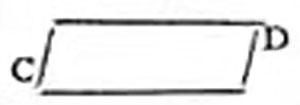
Mr. Dennison had been sitting—he and I having conversed
for a long time, he bade me good night, and retired—I meaning to retire
too, however sunk for five minutes or so into a doze and on suddenly
awaking up I saw him as distinctly sitting in the chair, as I had,
really, some ten minutes before. I was startled, and thinking of it,
sunk into a second doze, out of which awaking as before I saw again the
same appearance; not more distinct indeed, but more of his form—for at
the first time I had seen only his face and bust—but now I saw as much
as I could have seen if he had been really there. The appearance was
very nearly that of a person seen through thin smoke distinct indeed,
but yet a sort of distinct shape and colour, with a diminished sense
of substantiality—like a face in a clear stream. My nerves had been
violently agitated yesterday morning by the attack of three dogs as I
was mounting the steps of Captain Pasley's door—two of them savage
Bedouins, who wounded me in the calf of my left leg. I have noted this
down, not three minutes having intervened since the illusion took place.
Often and often I have had similar experiences and, therefore, resolved
to write down the particulars whenever any new instance should occur, as
a weapon against superstition, and an explanation of ghosts—Banquo in
"Macbeth" the very same thing. I once told a lady the reason why I did
not believe in the existence of ghosts, etc., was that I had seen too
many of them myself. N.B. There were on the table a common black
wine-bottle, a decanter of water, and, between these, one of the
half-gallon glass flasks which Sir G. Beaumont had given me (four of
these full of port), the cork in, covered with leather, and having a
white plated ring on the top. I mention this because since I wrote the
former pages, on blinking a bit a third time, and opening my eyes, I
clearly detected that this high-shouldered hypochondriacal bottle-man
had a great share in producing the effect. The metamorphosis was
clearly beginning, though I snapped the spell before it had assumed a
recognisable form. The red-leather arm-chair was so placed at the corner
that the flask was exactly between me and it—and the lamp being close
to my corner of the large table, and not giving much light, the chair
was rather obscure, and the brass nails where the leather was fastened
to the outward wooden rim reflecting the light more copiously were seen
almost for themselves. What if instead of immediately checking the
sight, and then pleased with it as a philosophical case, I had been
frightened and encouraged it, and my understanding had joined its vote
to that of my senses?
My own shadow, too, on the wall not far from Mr. D.'s chair—the white
paper, the sheet of Harbour Reports lying spread out on the table on the
other side of the bottles—influence of mere colour, influence of
shape—wonderful coalescence of scattered colours at distances, and,
then, all going to some one shape, and the modification! Likewise I am
more convinced by repeated observation that, perhaps, always in a very
minute degree but assuredly in certain states and postures of the eye,
as in drowsiness, in the state of the brain and nerves after distress or
agitation, especially if it had been accompanied by weeping, and in
many others, we see our own faces, and project them according to the
distance given them by the degree of indistinctness—that this may
occasion in the highest degree the Wraith (vide a hundred Scotch
stories, but better than all, Wordsworth's most wonderful and admirable
poem, Peter Bell, when he sees his own figure), and, still oftener, that
it facilitates the formation of a human face out of some really present
object, and from the alteration of the distance among other causes never
suspected as the occasion and substratum.
S. T. C.
N.B.—This is a valuable note, re-read by me, Tuesday morning, May 14.
[Compare Table Talk for January 3 and May 1, 1823, Bell & Co., 1884,
pp. 20, 31-33. See, too, The Friend, First Landing Place Essay, iii.,
Coleridge's Works, Harper & Brothers, 1853, ii. 134-137.]
FOR THE "SOOTHER IN ABSENCE"
Mem. always to bear in mind that profound sentence of Leibnitz that
men's intellectual errors consist chiefly in denying. What they
affirm with feeling is, for the most part, right—if it be a real
affirmation, and not affirmative in form, negative in reality. As, for
instance, when a man praises the French stage, meaning and implying his
dislike of Shakspere [and the Elizabethan dramatists].
"Facts—stubborn facts! None of your theory!" A most entertaining and
instructive essay might be written on this text, and the sooner the
better. Trace it from the most absurd credulity—e.g., in
Fracastorius' De Sympathiâ, cap. i. and the Alchemy Book—even to that
of your modern agriculturists, relating their own facts and swearing
against each other like ships' crews. O! it is the relation of the
facts—not the facts, friend!
Speculative men are wont to be condemned by the general. But who more
speculative then Sir Walter Raleigh, and he, even he, brought the
potato to Europe. Good heavens! let me never eat a roasted potato
without dwelling on it, and detailing its train of consequences.
Likewise, too, dubious to the philosopher, but to be clapped chorally
by the commercial world, he, this mere wild speculatist, introduced
tobacco.
For a nation to make peace only because it is tired of war, and, as it
were, in order just to take breath, is in direct subversion of the end
and object of the war which was its sole justification. 'Tis like a poor
way-sore foot traveller getting up behind a coach that is going the
contrary way to his.
The eye hath a two-fold power. It is, verily, a window through which you
not only look out of the house, but can look into it too. A statesman
and diplomatist should for this reason always wear spectacles.
Worldly men gain their purposes with worldly men by that instinctive
belief in sincerity. Hence (nothing immediately and passionately
contradicting it) the effect of the "with unfeigned esteem," "entire
devotion," and the other smooth phrases in letters, all, in short, that
sea-officers call oil, and of which they, with all their bluntness,
well understand the use.
The confusion of metaphor with reality is one of the fountains of the
many-headed Nile of credulity, which, overflowing its banks, covers the
world with miscreations and reptile monsters, and feeds by its many
mouths the sea of blood.
A ready command of a limited number of words is but a playing cat-cradle
dexterously with language.
Plain contra-reasoning may be compared with boxing with fists.
Controversy with boxing is the cestus, that is, the lead-loaded glove,
like the pugilists in the Æneid. But the stiletto! the envenomed
stiletto is here. What worse? (a Germanism) Yes! the poisoned Italian
glove of mock friendship.
The more I reflect, the more exact and close appears to me the analogy
between a watch and watches, and the conscience and consciences of men,
on the one hand, and that between the sun and motion of the heavenly
bodies in general and the reason and goodness of the Supreme on the
other. Never goes quite right any one, no two go exactly the same; they
derive their dignity and use as being substitutes and exponents of
heavenly motions, but still, in a thousand instances, they are and must
be our instructors by which we must act, in practice presuming a
coincidence while theoretically we are aware of incalculable variations.
One lifts up one's eyes to heaven, as if to seek there what one had lost on earth—eyes,
Whose half-beholdings through unsteady tears
Gave shape, hue, distance to the inward dream.
GREAT MEN THE CRITERION OF NATIONAL WORTH
Schiller, disgusted with Kotzebuisms, deserts from Shakspere! What!
cannot we condemn a counterfeit and yet remain admirers of the original?
This is a sufficient proof that the first admiration was not sound, or
founded on sound distinct perceptions [or, if sprung from], a sound
feeling, yet clothed and manifested to the consciousness by false ideas.
And now the French stage is to be re-introduced. O Germany! Germany! why
this endless rage for novelty? Why this endless looking out of thyself?
But stop, let me not fall into the pit against which I was about to warn
others. Let me not confound the discriminating character and genius of a
nation with the conflux of its individuals in cities and reviews. Let
England be Sir Philip Sidney, Shakspere, Milton, Bacon, Harrington,
Swift, Wordsworth; and never let the names of Darwin, Johnson, Hume,
fur it over. If these, too, must be England let them be another
England; or, rather, let the first be old England, the spiritual,
Platonic old England, and the second, with Locke at the head of the
philosophers and Pope [at the head] of the poets, together with the long
list of Priestleys, Paleys, Hayleys, Darwins, Mr. Pitts, Dundasses, &c.,
&c., be the representatives of commercial Great Britain. These have
[indeed] their merits, but are as alien to me as the Mandarin
philosophers and poets of China. Even so Leibnitz, Lessing, Voss, Kant,
shall be Germany to me, let whatever coxcombs rise up, and shrill it
away in the grasshopper vale of reviews. And so shall Dante, Ariosto,
Giordano Bruno, be my Italy; Cervantes my Spain; and O! that I could
find a France for my love. But spite of Pascal, Madame Guyon and
Molière, France is my Babylon, the mother of whoredoms in morality,
philosophy and taste. The French themselves feel a foreignness in these
writers. How indeed is it possible at once to love Pascal and
Voltaire?
AN INTELLECTUAL PURGATORY Tuesday morning, May 14, 1805
With any distinct remembrance of a past life there could be no fear of
death as death, no idea even of death! Now, in the next state, to meet
with the Luthers, Miltons, Leibnitzs, Bernouillis, Bonnets, Shaksperes,
etc., and to live a longer and better life, the good and wise entirely
among the good and wise, might serve as a step to break the abruptness
of an immediate Heaven? But it must be a human life; and though the
faith in a hereafter would be more firm, more undoubting, yet, still, it
must not be a sensuous remembrance of a death passed over. No! [it would
be] something like a dream that you had not died, but had been taken
off; in short, the real events with the obscurity of a dream,
accompanied with the notion that you had never died, but that death was
yet to come. As a man who, having walked in his sleep, by rapid openings
of his eyes—too rapid to be observable by others or rememberable by
himself—sees and remembers the whole of his path, mixing it with many
fancies ab intra, and, awaking, remembers, but yet as a dream.
OF FIRST LOVES
'Tis one source of mistakes concerning the merits of poems, that to
those read in youth men attribute all that praise which is due to poetry
in general, merely considered as select language in metre. (Little
children should not be taught verses, in my opinion; better not to let
them set eyes on verse till they are ten or eleven years old.) Now,
poetry produces two kinds of pleasure, one for each of the two
master-movements and impulses of man, the gratification of the love of
variety, and the gratification of the love of uniformity—and that by a
recurrence delightful as a painless and yet exciting act of memory—tiny
breezelets of surprise, each one destroying the ripplets which the
former had made—yet all together keeping the surface of the mind in a
bright dimple-smile. So, too, a hatred of vacancy is reconciled with the
love of rest. These and other causes often make [a first acquaintance
with] poetry an overpowering delight to a lad of feeling, as I have
heard Poole relate of himself respecting Edwin and Angelina. But so it
would be with a man bred up in a wilderness by Unseen Beings, who should
yet converse and discourse rationally with him—how beautiful would not
the first other man appear whom he saw and knew to be a man by the
resemblance to his own image seen in the clear stream; and would he not,
in like manner, attribute to the man all the divine attributes of
humanity, though, haply, he should be a very ordinary, or even a most
ugly man, compared with a hundred others? Many of us who have felt this
with respect to women have been bred up where few are to be seen; and I
acknowledge that, both in persons and in poems, it is well on the
whole that we should retain our first love, though, alike in both
cases, evils have happened as the consequence.
THE MADDENING RAIN August 1, 1805
The excellent fable of the maddening rain I have found in Drayton's
"Moon Calf," most miserably marred in the telling! vastly inferior to
Benedict Fay's Latin exposition of it, and that is no great thing.
Vide his Lucretian Poem on the Newtonian System. Never was a finer
tale for a satire, or, rather, to conclude a long satirical poem of five
or six hundred lines.
[For excellent use of this fable, see The Friend, No. 1, June 9, 1809,
Coleridge's Works, Harper & Brothers, ii. 21, 22.]
SENTIMENTS BELOW MORALS
Pasley remarked last night (2nd August 1805), and with great precision
and originality, that men themselves, in the present age, were not so
much degraded as their sentiments. This is most true! almost all men
nowadays act and feel more nobly than they think—yet still the vile,
cowardly, selfish, calculating ethics of Paley, Priestley, Locke, and
other Erastians do woefully influence and determine our course of
action.
TIME AND ETERNITY
O the complexities of the ravel produced by time struggling with
eternity! a and b are different, and eternity or duration makes them
one—this we call modification—the principle of all greatness in finite
beings, the principle of all contradiction and absurdity.
THE PASSION FOR THE MOT PROPRE August 3, 1805 Saturday
It is worthy notice (shewn in the phrase "I envy him such and such a
thing," meaning only, "I regret I cannot share with him, have the same
as he, without depriving him of it, or any part of it,") the instinctive
passion in the mind for a one word to express one act of
feeling—[one] that is, in which, however complex in reality, the mind
is conscious of no discursion and synthesis a posteriori. On this
instinct rest all the improvements (and, on the habits formed by this
instinct and [the] knowledge of these improvements, Vanity rears all the
Apuleian, Apollonian, etc., etc., corruptions) of style. Even so with
our Johnson.
BULLS OF ACTION
There are bulls of action equally as of thought, [for] (not to allude
to the story of the Irish labourer who laid his comrade all his wages
that he would not carry him down in his hod from the top to the bottom
of a high house, down the ladder) the feeling of vindictive honour in
duelling, and the feudal revenges anterior to duelling, formed a true
bull; for they were superstitious Christians, knew it was wrong, and yet
knew it was right—they would be damned deservedly if they did, and, if
they did not, they thought themselves deserving of being damned.
PSEUDO-POETS
The pseudo-poets Campbell, Rogers, etc., both by their writings and
moral character tend to bring poetry into disgrace, and, but that men in
general are the slaves of the same wretched infirmities, they would [set
their seal on this disgrace,] and it would be well. The true poet could
not smother the sacred fire ("his heart burnt within him and he spake"),
and wisdom would be justified by her children. But the false poet—that
is, the no-poet—finding poetry in contempt among the many, of whose
praise, whatever he may affirm, he is alone ambitious, would be
prevented from scribbling.
LANDING PLACES
The progress of human intellect from earth to heaven is not a Jacob's
ladder, but a geometrical staircase with five or more landing-places.
That on which we stand enables us to see clearly and count all below us,
while that or those above us are so transparent for our eyes that they
appear the canopy of heaven. We do not see them, and believe ourselves
on the highest.
["Among my earliest impressions I still distinctly remember that of my
first entrance into the mansion of a neighbouring baronet, awefully
known to me by the name of the Great House [Escot, near Ottery St. Mary,
Devon].... Beyond all other objects I was most struck with the
magnificent staircase, relieved at well-proportioned intervals by
spacious landing-places.... My readers will find no difficulty in
translating these forms of the outward senses into their intellectual
analogies, so as to understand the purport of The Friend's
Landing-Places." The Friend, "The Landing-Place," Essay iv.
Coleridge's Works, Harper & Brothers, 1853, ii. 137, 138.]
WILLIAM BROWNE OF OTTERY
In the Threnæ or funeral songs and elegies of our old poets, I am
often impressed with the idea of their resemblance to hired weepers in
Rome and among the Irish, where he who howled the loudest and most
wildly was the most capital mourner and was at the head of his trade.
So [too] see William Browne's elegy on Prince Henry (Britt. Past.
Songs v.), whom, perhaps, he never spoke to. Yet he is a dear fellow,
and I love him, that W. Browne who died at Ottery, and with whose family
my own is united, or, rather, connected and acquainted.
[Colonel James Coleridge, the poet's eldest surviving brother and Henry
Langford Browne of Combe-Satchfield married sisters, Frances and Dorothy
Taylor, whose mother was one of five co-heiresses of Richard Duke of
Otterton.
It is uncertain whether a William Browne of Ottery St. Mary, who died in
1645, was the author of The Shepherd's Pipe and Britannia's
Pastorals. Two beautiful inscriptions on a tomb in St. Stephen's Chapel
in the collegiate church of St. Mary Ottery, were, in Southey's opinion
(doubtless at Coleridge's suggestion), composed by the poet William
Browne.]
"ASCEND A STEP IN CHOOSING A FRIEND" TALMUD
God knows! that at times I derive a comfort even from my infirmities, my
sins of omission and commission, in the joy of the deep feeling of the
opposite virtues in the two or three whom I love in my heart of hearts.
Sharp, therefore, is the pain when I find faults in these friends
opposite to my virtues. I find no comfort in the notion of average, for
I wish to love even more than to be beloved, and am so haunted by the
conscience of my many failings that I find an unmixed pleasure in
esteeming and admiring, but, as the recipient of esteem or admiration, I
feel as a man, whose good dispositions are still alive, feels in the
enjoyment of a darling property on a doubtful title. My instincts are
so far dog-like that I love beings superior to myself better than my
equals. But the notion of inferiority is so painful to me that I never,
in common life, feel a man my inferior except by after-reflection. What
seems vanity in me is in great part attributable to this feeling. But of
this hereafter. I will cross-examine myself.
A CAUTION TO POSTERITY
There are actions which left undone mark the greater man; but to have
done them does not imply a bad or mean man. Such, for instance, are
Martial's compliments of Domitian. So may we praise Milton without
condemning Dryden. By-the-bye, we are all too apt to forget that
contemporaries have not the same wholeness, and fixedness in their
notions of persons' characters, that we their posterity have. They can
hope and fear and believe and disbelieve. We make up an ideal
which, like the fox or lion in the fable, never changes.
FOR THE "SOOTHER IN ABSENCE"
I have several times seen the stiletto and the rosary come out of the
same pocket.
A man who marries for love is like a frog who leaps into a well. He has
plenty of water but then he cannot get out.
[Not until national ruin is imminent will Ministers contemplate the
approach of national danger]; as if Judgment were overwhelmed like
Belgic towns in the sea, and showed its towers only at dead low water.
The superiority of the genus to the particular may be illustrated by
music. How infinitely more perfect in passion and its transition than
even poetry, and poetry again than painting! And yet how marvellous is
genius in all its implements!
[Compare Table Talk, July 6, 1833. H. N. C. foot-note. Bell & Co.,
1884, p. 240.]
Those only who feel no originality, no consciousness of having received
their thoughts and opinions from immediate inspiration are anxious to be
thought original. The certainty, the feeling that he is right, is enough
for the man of genius, and he rejoices to find his opinions plumed and
winged with the authority of several forefathers.
The water-lily in the midst of the lake is equally refreshed by the
rain, as the sponge on the sandy sea-shore.
In the next world the souls of dull good men serve for bodies to the
souls of the Shaksperes and Miltons, and in the course of a few
centuries, when the soul can do without its vehicle, the bodies will by
advantage of good company have refined themselves into souls fit to be
clothed with like bodies.
How much better it would be, in the House of Commons, to have everything
that is, and by the spirit of English freedom must be legal, legal and
open! The reporting, for instance, should be done by shorthandists
appointed by Government. There are, I see, weighty arguments on the
other side, but are they not to be got over?
Co-arctation is not a bad phrase for that narrowing in of breadth on
both sides as in my interpolation of Schiller.
"And soon
The narrowing line of day-light that ran after
The closing door was gone."
Piccolomini, ii. sc. 4, P.W., p. 257.
THE DEVIL WITH A MEMORY THE FIRST SINNER
In order not to be baffled by the infinite ascent of the heavenly
angels, the devil feigned that all (the ταγαθου, that is,
God himself included) sprang from nothing. And now he has a pretty task
to multiply, without paper or slate, the exact number of all the
animalcules, and the eggs and embryos of each planet, by some other, and
the product by a third and that product by a fourth, and he is not to
stop till he has gone through the planets of half the universe, the
number of which being infinite, it is considered by the devils in
general a great puzzle. A dream in a doze.
THE SUN OF RIGHTEOUSNESS
A bodily substance, an unborrowed Self—God in God immanent! The Eternal
Word! That goes forth yet remains! Crescent and Full and Wane, yet ever
entire and one, it dawns, and sets, and crowns the height of heaven. At
the same time, the dawning and setting sun, at the same time the
zodiac—while each, in its own hour, boasts and beholds the exclusive
Presence, a peculiar Orb, each the great Traveller's inn, yet still the
unmoving Sun—
Great genial Agent in all finite souls;
And by that action puts on finiteness,
Absolute Infinite, whose dazzling robe
Flows in rich folds, and plays in shooting hues
Of infinite finiteness.
FOR THE "SOOTHER IN ABSENCE." Syracuse, September 26, 1805
I was standing gazing at the starry heaven, and said, "I will go to bed,
the next star that shoots." Observe this, in counting fixed numbers
previous to doing anything, and deduce from man's own unconscious
acknowledgment man's dependence on something more apparently and
believedly subject to regular and certain laws than his own will and
reason.
To Wordsworth in the progression of spirit, once Simonides, or
Empedocles, or both in one—
"Oh! that my spirit, purged by death of its weaknesses, which are, alas!
my identity, might flow into thine, and live and act in thee and be
thine!"
Death, first of all, eats of the Tree of Life and becomes immortal.
Describe the frightful metamorphosis. He weds the Hamadryad of the Tree
[and begets a twy-form] progeny. This in the manner of Dante.
Sad drooping children of a wretched parent are those yellowing leaflets
of a broken twig, broke ere its June.
We are not inert in the grave. St. Paul's corn in the ground proves this
scripturally, and the growth of infants in their sleep by natural
analogy. What, then, if our spiritual growth be in proportion to the
length and depth of the sleep! With what mysterious grandeur does not
this thought invest the grave, and how poor compared with this an
immediate Paradise!
I awake and find my beloved asleep, gaze upon her by the taper that
feebly illumines the darkness, then fall asleep by her side; and we both
awake together for good and all in the broad daylight of heaven.
Forget not to impress as often and as manifoldly as possible the totus
in omni parte of Truth, and its consequent interdependence on
co-operation and, vice versâ, the fragmentary character of action, and
its absolute dependence on society, a majority, etc. The blindness to
this distinction creates fanaticism on one side, alarm and prosecution
on the other. Jacobins or soul-gougers. It is an interesting fact or
fable that the stork (the emblem of filial or conjugal piety) never
abides in a monarchy.
Commend me to the Irish architect who took out the foundation-stone to
repair the roof.
Knox and the other reformers were Scopæ viarum—that is, highway
besoms.
The Pine Tree blasted at the top was applied by Swift to himself as a
prophetic emblem of his own decay. The Chestnut is a fine shady tree,
and its wood excellent, were it not that it dies away at the heart
first. Alas! poor me!
TASTE, AN ETHICAL QUALITY
Modern poetry is characterised by the poets' anxiety to be always
striking. There is the same march in the Greek and Latin poets.
Claudian, who had powers to have been anything—observe in him this
anxious, craving vanity! Every line, nay, every word, stops, looks full
in your face, and asks and begs for praise! As in a Chinese painting,
there are no distances, no perspective, but all is in the foreground;
and this is nothing but vanity. I am pleased to think that, when a mere
stripling, I had formed the opinion that true taste was virtue, and that
bad writing was bad feeling.
A PLEA FOR POETIC LICENSE
The desire of carrying things to a greater height of pleasure and
admiration than, omnibus trutinatis, they are susceptible of, is one
great cause of the corruption of poetry. Both to understand my own
reasoning and to communicate it, ponder on Catullus' hexameters and
pentameters, his "numine abusum homines" [Carmen, lxxvi. 4] [and
similar harsh expressions]. It is not whether or no the very same ideas
expressed with the very same force and the very same naturalness and
simplicity in the versification of Ovid and Tibullus, would not be
still more delightful (though even that, for any number of poems, may
well admit a doubt), but whether it is possible so to express them and
whether, in every attempt, the result has not been to substitute manner
for matter, and point that will not bear reflection (so fine that it
breaks the moment you try it) for genuine sense and true feeling, and,
lastly, to confine both the subjects, thoughts, and even words of poetry
within a most beggarly cordon. N.B.—The same criticism applies to
Metastasio, and, in Pope, to his quaintness, perversion, unnatural
metaphors, and, still more, the cold-blooded use, for artifice or
connection, of language justifiable only by enthusiasm and passion.
RICHARDSON
I confess that it has cost, and still costs, my philosophy some exertion
not to be vexed that I must admire, aye, greatly admire, Richardson. His
mind is so very vile a mind, so oozy, hypocritical, praise-mad, canting,
envious, concupiscent! But to understand and draw him would be to
produce a work almost equal to his own; and, in order to do this,
"down, proud Heart, down" (as we teach little children to say to
themselves, bless them!), all hatred down! and, instead thereof,
charity, calmness, a heart fixed on the good part, though the
understanding is surveying all. Richardson felt truly the defect of
Fielding, or what was not his excellence, and made that his defect—a
trick of uncharitableness often played, though not exclusively, by
contemporaries. Fielding's talent was observation, not meditation. But
Richardson was not philosopher enough to know the difference—say,
rather, to understand and develop it.
HIS NEED OF EXTERNAL SOLACE
O there are some natures which under the most cheerless all-threatening
nothing-promising circumstances can draw hope from the invisible, as the
tropical trees that in the sandy desolation produce their own lidded
vessels full of the waters from air and dew! Alas! to my root not a drop
trickles down but from the watering-pot of immediate friends. And, even
so, it seems much more a sympathy with their feeling rather than hope of
my own. So should I feel sorrow, if Allston's mother, whom I have never
seen, were to die?
MINUTE CRITICISM
Stoddart passes over a poem as one of those tiniest of tiny night-flies
runs over a leaf, casting its shadow, three times as long as itself, yet
only just shading one, or at most two letters at a time.
DR. PRICE
A maidservant of Mrs. Clarkson's parents had a great desire to hear Dr.
Price, and accordingly attended his congregation. On her return, being
asked "Well, what do you think?" &c., "Ai—i," replied she, "there was
neither the poor nor the Gospel." Excellent that on the fine
respectable attendants of Unitarian chapels, and the moonshine,
heartless head-work of the sermons.
A DOCUMENT HUMAIN
The mahogany tables, all, but especially the large dining-table,
[marked] with the segments of circles (deep according to the passion of
the dice-box plunger), chiefly half-circles, O the anger and spite with
which many have been thrown! It is truly a written history of the
fiendish passion of gambling. Oct. 12, 1806. Newmarket.
PINDAR
The odes of Pindar (with few exceptions, and these chiefly in the
shorter ones) seem by intention to die away by soft gradations into a
languid interest, like most of the landscapes of the great elder
painters. Modern ode-writers have commonly preferred a continued rising
of interest.
"ONE MUSIC AS BEFORE, BUT VASTER"
The shattering of long and deep-rooted associations always places the
mind in an angry state, and even when our own understandings have
effected the revolution, it still holds good, only we apply the feeling
to and against our former faith and those who still hold it—[a
tendency] shown in modern infidels. Great good, therefore, of such
revolution as alters, not by exclusion, but by an enlargement that
includes the former, though it places it in a new point of view.
TO ALLSTON
After the formation of a new acquaintance, found, by some weeks' or
months' unintermitted communion, worthy of all our esteem, affection
and, perhaps, admiration, an intervening absence, whether we meet again
or only write, raises it into friendship, and encourages the modesty of
our nature, impelling us to assume the language and express all the
feelings of an established attachment.
MORBID SENTIMENT
The thinking disease is that in which the feelings, instead of
embodying themselves in acts, ascend and become materials of general
reasoning and intellectual pride. The dreadful consequences of this
perversion [may be] instanced in Germany, e.g., in Fichte versus
Kant, Schelling versus Fichte and in Verbidigno [Wordsworth] versus
S. T. C. Ascent where nature meant descent, and thus shortening the
process—viz., feelings made the subjects and tangible substance of
thought, instead of actions, realizations, things done, and as such
externalised and remembered. On such meagre diet as feelings, evaporated
embryos in their progress to birth, no moral being ever becomes
healthy.
"PHANTOMS OF SUBLIMITY"
Empires, states, &c., may be beautifully illustrated by a large clump of
coal placed on a fire—Russia, for instance—or of small coal moistened,
and by the first action of the heat of any government not absolutely
lawless, formed into a cake, as the northern nations under
Charlemagne—then a slight impulse from the fall of accident, or the
hand of patriotic foresight, splits [the one] into many, and makes each
[fragment] burn with its own flame, till at length all burning equally,
it becomes again one by universal similar action—then burns low,
cinerises, and without accession of rude materials goes out.
A MILD WINTER
Winter slumbering soft, seemed to smile at visions of buds and blooms,
and dreamt so livelily of spring, that his stern visage had relaxed and
softened itself into a dim likeness of his dream. The soul of the vision
breathed through and lay like light upon his face.
But, heavens! what an outrageous day of winter this is and has been!
Terrible weather for the last two months, but this is horrible! Thunder
and lightning, floods of rain, and volleys of hail, with such frantic
winds. December 1806.
[This note was written when S. T. C. was staying with Wordsworth at the
Hall Farm, Coleorton.]
MOONLIGHT GLEAMS AND MASSY GLORIES
In the first [entrance to the wood] the spots of moonlight of the
wildest outlines, not unfrequently approaching so near to the shape of
man and the domestic animals most attached to him as to be easily
confused with them by fancy and mistaken by terror, moved and started as
the wind stirred the branches, so that it almost seemed like a flight of
recent spirits, sylphs and sylphids dancing and capering in a world of
shadows. Once, when our path was over-canopied by the meeting boughs, as
I halloed to those a stone-throw behind me, a sudden flash of light
dashed down, as it were, upon the path close before me, with such rapid
and indescribable effect that my life seemed snatched away from me—not
by terror but by the whole attention being suddenly and unexpectedly
seized hold of—if one could conceive a violent blow given by an unseen
hand, yet without pain or local sense of injury, of the weight falling
here or there, it might assist in conceiving the feeling. This I found
was occasioned by some very large bird, who, scared by my noise, had
suddenly flown upward, and by the spring of his feet or body had driven
down the branch on which he was aperch.