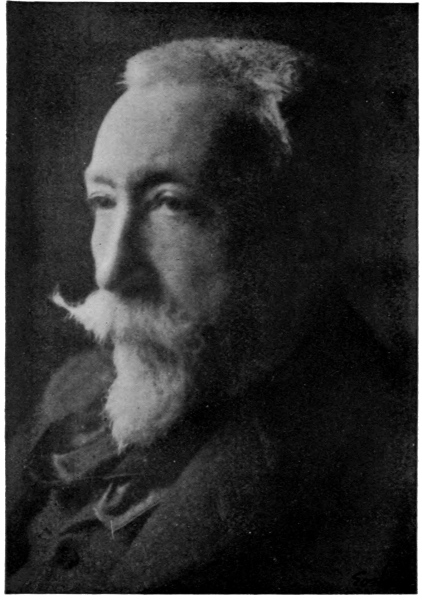
If Anatole France is to be remembered—that
is, for a while, which is perhaps all
a man can hope—it will be as a critic
and as a satirist. Whether he will be remembered
longer than his contemporaries,
Tolstoy or Mr Shaw, I do not know.
Though he has delighted us, the race of
delights is short and pleasures have mutable
faces; he may share the fate of Flaubert,
who is menaced; of de Maupassant, who is
going; or of Schiller, forgotten; of Walter
Scott, reduced to a juvenile circulation; of
Thackeray, staking all upon one novel;
of Dickens, surviving by the picturesque; of
Tolstoy, convicted as a moralist; of Greeks
uneasily staggering under the burden of
illogical murder and absurd incest ... I
do not think that he will join the glorious
band: Homer, Shakespeare, Molière. For
Anatole France has understood all things,
but mainly in their details. He has made
a mosaic, not a marble court; seated on
Olympus, his eyes have been too keen,
and he has seen men too clearly, man not
enough. But still he is, I suppose, assured
of his line in any biographical dictionary
that may be printed in the year 3000, and
that is a good deal. I like to think of that
entry in the Cyclopædia of Literature (published
by the International Government
Press; price, seven days labour bonds, net).
It runs something like this:
France (Anatole). Pen-name of Jacques
Anatole Thibault. French writer, b. 1844.
d. . Satirist and critic. Some of his
work has merit as reflecting the faintly
enlightened views of an observer living in
barbarous times.
Anatole France is the only living satirist.
He has actually no rivals; there are men
such as Messrs Max Beerbohm, Hansi,
Mirbeau, Hector Munro, F. P. Dunne, who
have a glimmering of what satire means;
Mr Wells would have more than a glimmering
if, unfortunately, he did not hold deep
convictions about right and wrong, a weakness
to which, in spite of all appearances,
Mr Shaw also succumbs; but Anatole
France alone upholds the ancient tradition
of Voltaire, of Defoe and Swift. His satire
is always effective because it is always
light, always pointed and always smiling.
He has none of the bitterness of Swift and
therefore he is the truer cynic, for true
cynicism is not fierce; it is always genial.
He never labours a point; he states, presents
the contrasts between, for instance,
what a rich man may do as opposed to a
poor one, and then passes on, laughing,
Pan-like dancing, with perhaps a tear or
two in his laughter.
Though almost every book he has written
is satirical in intent, or at least in incident,
five volumes are satire pure and
simple; as I have no space to analyse all
his works, these five representatives must
expound him. They are Penguin Island
and the four volumes of Contemporary
History (The Elm Tree on the Mall, The
Wickerwork Woman, L’Anneau d’Améthyste,
Monsieur Bergeret à Paris). They overlap
a little, but the spirit which informs them
is different. Penguin Island is broad,
applicable to the whole history of man, while
the other four volumes cover rather the
modern irregularities of the French State.
For this reason, Penguin Island is a bigger
and a finer thing; indeed it is probably the
biggest thing Anatole France has done,
because, dealing as it does with the earliest
superstitions of man, his faith in gods and
in God, with the rise of feudalism, the roots
of democracy, war, the birth of art, the
action and reaction of parties, it has a sweep
so large that it envelops even ages now in
the womb of time. It is a terrible book,
not so much because it is the thinly veiled
history of the French people—that is to say,
the story of follies, miseries and crimes (the
story of any other imperial people)—but
because at the end Anatole France reaches
forth into the future. And what he sees is
a development of capitalism by the side of
which modern capitalism is as a puling child;
he summarises in a phrase a period of greater
New York: “the houses were never high
enough.” He sees the masses rising, revolution,
the break-up of the social system, the
return of pastoralism, man once more
nomadic ... towns forming ... another
aristocracy ... Parliaments ... industry
and capitalism fastening upon the world, and
again the houses never high enough....
That is a vision of horror, of a world unchanging,
unchangeable, of man as a dog ever
returning to his own vomit. I should like
to pursue the dream further, to the death
of the sun, when the earth shall grow
cold and a terrible term be brought to the
stupidity of man; he shall once more be a
fearful brute hiding in a cave, until at last,
upon his cold and dying globe, among
settling mists, he shall yield up the last spark
of a misused life....
Anatole France is certainly wrong, for no
barbarism which the world has ever known
ever was so barbarous as the barbarism
that went before. If the life of man describes
a curve, this is not a circle; he does
not interminably return to the same point;
rather the curve is a cycloid, ever bending
back upon itself and yet slowly moving onwards
towards the unknown goal. Anatole
France does not, I think, quite deny that,
but he is not over-fond of what he calls idle
speculation: where his knowledge stops he
is inclined to say: “After all, what does it
matter to Sirius?”
The island where the penguins lived was
evangelised by St Mael, who quite naïvely
relates how he navigated to its shores in a
stone trough. God served him as rudder
and sail. It would have been all right if the
saint had not been short-sighted, but he took
the penguins for men and baptized them,
which gave rise to great trouble in heaven
and a wonderful ecclesiastical debate. For
St Patrick said that baptism could not
avail birds; St Damasius said it could, for
Mael was competent; St Guenolé said it
could not, because penguins were not conceived
in sin; St Augustine thought it could
if given in proper form. This caused much
ill feeling in Paradise; Tertullian grew
quite vicious and said he was sorry that
the penguins had no soul, as thus they
could not go to hell. The intervention of
the Almighty was hailed with unanimous
cheers, which St Augustine backed up by
begging Him not to give the penguins a
soul because, as they could not keep the
law, they would burn in hell “in virtue of
God’s adorable decrees.” Upon this the
disturbance turned to scandal, and to end
it the penguins were turned into men.
Then the troubles of the once happy birds
began. They were clad and modesty was
born. Property arose, and murder. The
Catholic Devil had a hand in this and remarked
that the murderers were creating
rights, constituting property, laying the
bases of civilisation, of society and the State.
He added that the source of property is
force. Later a state formed and the poor
only were taxed because they could not
resist, and because there were more of them.
A freebooter arose: he became a king. His
armies went to war and were beloved, for
they won. Art appeared; Margaritone
foresaw the decadence of ecclesiastical art
and, in a horrid dream, something like post-impressionism.
The priest, Marbode, visited
Virgil in hell; the Latin poet remarked that
Dante was rather a bore and that Christ was
the god of barbarism. Then history unrolls.
There is a revolution (obviously 1789);
Trinco (Napoleon) appears and a loyal penguin
states that glory cannot cost too much.
Modern times give Anatole France a yet
greater chance, for he takes us to New
Atlantis (America), where commercial wars
are executed on contract, because a business
people must have a policy of conquest; the
European War of 1914, if one dives deep
under the crust of patriotism, sounds very
like the war of New Atlantis against Third
Zealand “where they killed two-thirds of
the inhabitants to compel the remaining
third to buy from New Atlantis umbrellas
and braces.” Plutocracy. Socialism. Royalist
agitations, supported by the leaders of the
army, the wineshops, the newsboys, the
police and the courtesans. All through this
section runs the Pyrot case. A traitor
(Dreyfus) sold ninety thousand bundles of
hay to the foreigner—that is to say, he did
not sell them, for they did not exist. Yet
General Panther says: “Evidently Pyrot
stole them, so all we have to do is to prove
it.” To which another General replies:
“Arrest Pyrot. Find some evidence; the
law demands it.”
Then the agitation, difficult because the
people like to believe in guilt and are too
stupid to doubt. Still no evidence, and
evidence manufactured. Here Anatole
France puts into the General’s mouth
beautiful phrases: “Don’t have evidence;
it makes the case less clear”; and: “It may
be better to have no evidence, but still if
you must have some, trumped-up evidence is
better than the truth, for it is made to order.”
And so on through popular agitations,
Royalist manœuvres, Boulangism, the
renaissance of Catholicism (supported by
Jewish money), political adultery, the rule
of gold, until we come to the time when
houses are never high enough....
This is not the satire of Englishmen. It
has not the truculence of Defoe’s A Short
Way with Dissenters; nor does it state the
author’s view as does any one of Mr Shaw’s
plays; nor is it so veiled as Gulliver’s Travels.
All this is together elusive and obvious; it
aims at showing the reader what lies under
history, man in the soldier’s coat, his meanness,
his greed, his lust for power, and the
horrible, crusted stupidity to which alone
are traceable his crimes.
I should not advise any Englishman who
is not conversant with French history to
read Penguin Island, but I should not advise
any Englishman at all to read the four
volumes of Contemporary History unless he
has lived in France for the last fifteen years
and mixed in every kind of French society.
He will find in those books droll stories, and
droll incidents; he will see that the author
is getting at something, but that is all. For
those volumes do not deal with the big outer
movements which one can watch from the
columns of The Times. They are concerned
with the mysteries inside French politics,
paralleled here by the “Confederates,” the
Marconi case, the theft of the crown jewels
at Dublin, the secret history of the rebellion
of the officers at the Curragh. No Frenchman
would understand a book dealing with
those things, so it is too much to expect an
Englishman to understand Contemporary
History. The circumstances that led to the
writing of these books are simple enough.
The Dreyfus case was used as a platform for
clerical, Royalist and militarist agitation.
The Government set to work to break the
Church and broke it (after which the Church
mended itself and became stronger than
ever); the Nationalist revival took place, and
since that time there has been much manœuvring,
some intended to restore the Bourbons
and quite ridiculous, some of it designed to
gain well-paid posts for reactionaries, and
that one much in earnest. The interesting
parts of the four books are the commentaries
of M. Bergeret, a university professor
in a little town, who, I need hardly say, is (just
like Sylvestre Bonnard, Coignard, Trublet,
Brotteaux) Anatole France himself. The
four books, published between 1897 and 1901,
more or less cover that period. In The Elm
Tree on the Mall unfolds, with local politics,
the life of Bergeret, married to a shrew, unloved
of his daughters, disliked by most
people because he thinks for himself, which
amounts to saying that he does not think
like anybody else. Round him eddy representative
characters, the Abbé Guitrel, who
wants to be a bishop and is proceeding towards
the episcopate half by apostolic mansuetude,
half by way of Ignatius of Loyola;
Worms-Clavelin, the préfet (chief of the local
executive), who is a Jew, a Freemason, a
Conservative Catholic, an advanced Republican,
a Socialist, a Royalist and a few
other things necessary to the maintenance
of his post; his wife is friendly to Guitrel
because the Abbé makes her feel French (she
was born Noemi Coblenz) and because she
“likes to protect one of those tonsured
heads charged for eighteen centuries with
the excommunication and extermination of
the circumcised.” There is General de Chalmot,
a soldier, who thinks that if you
destroy belief you ruin the military spirit,
because you take away the hope of another
life; there is Paillot’s bookshop where
Bergeret meets the county, the lawyers, the
doctors, to talk of books, politics, actresses
and their figures....
Nothing in particular happens. Guitrel’s
bishopric is the leading string of the action;
there is Madame Worms-Clavelin helping
Guitrel, who finds her, at bargain prices,
chasubles with which she covers her armchairs;
there is a young girl, Claudine
Deniseau, who, inspired by St Radegunde,
becomes a prophetess, indulges in healing,
predicts frost and the return of the king;
there is Worms-Clavelin, trying to keep the
prophetess quiet, because so ancient a person
as St Radegunde ought really not to cause a
row in a country town. An old lady of
eighty is murdered by her boy-lover, which
causes Bergeret to remark that murder is
quite natural and fortunate, for without evil
one could not see beauty. Worms-Clavelin
kisses Madame de Gromance on the shoulder,
(a local custom); a senator promotes
shady companies while his wife embroiders
altar-cloths; and somehow the story ends
with Guitrel very much out of the running
for the episcopal stakes.
What matters in the book is Bergeret,
sitting under the elm-tree on the Mall, or
in the bookshop, thinking, talking, smiling
at the comedy. Notable are his talks with
Lantaigne, another candidate for the bishopric,
and the type of the intellectual priest.
Anatole France may detest the Catholic
attitude, but he understands it admirably,
and when Lantaigne contends that one can
have two opinions, one conscious and
rationalistic, the other intuitive and theological,
he makes a very fine case. For him,
in the case of Joshua, celestial astronomy is
not the astronomy of man, and in celestial
mathematics, 3 + 3 may make nine, because
we do not know all the properties of numbers.
At other times Bergeret, who talks to
anybody, tells the melancholic story of
Napoleon III., who never managed to grant
his foster-brother a small post in the civil
service: “The Emperor was a charming
fellow but, alas, he had no influence.” And
so the book wanders on with the opinions
of Bergeret, happy, like Æsop, in the
freedom of his mind, in spite of the narrowness
of his home, conscious that the State
is honoured so long as it taxes the poor, and
that the republic is easiest to live under
because it does not govern much, that revolutions
help none save the flourishing and
the ambitious. It would all be profoundly
pessimistic if it were not always genial.
One feels sure that if Bergeret had an
agreeable wife, a good cook, and a volume
of Lucretius (Oh, Omar!), he would let the
State do just what it liked.
The story continues in The Wickerwork
Woman, with Bergeret working up his
lecture in the worst room in his flat, where
stands the wickerwork figure used for dress-making,
symbolic of his unpleasant wife.
He grumbles, and then considers the Romans.
“They were not heroes, they preferred
making roads, they only made war for
business reasons.” He thinks of soldiers
and wonders whether the sergeant has a
right to tell a conscript that his mother is a
sow: he decides that the sergeant has this
right, for without it there can be no hierarchy
or discipline. Then the cook gives notice,
and Guitrel goes to Paris while Bergeret
talks to a tramp who says that when he was
young he lost his pride because people made
fun of him....
The town is greatly upset because the
prophetess cannot give the logarithm of
nine. (Another case of celestial mathematics?)
Madame de Gromance passes, and
Bergeret reflects that to see a pretty woman
is a stroke of luck for an honest man. He is
“grateful to her for dressing with art and
discretion.” But tragedy invades the
Bergeret household, for Roux, a pupil,
becomes the lover of Madame Bergeret ...
in circumstances which make it impossible
for the professor to doubt his eyes. After
a murderous moment Bergeret decides that
this is all really very trifling, throws the
wickerwork figure through the window, and
goes out to talk to Paillot, the bookseller;
he reflects vaguely on adultery and
its meaninglessness. Guitrel and the archdeacon
hold an earnest discussion on
omelettes. Inspired by Marcus Aurelius,
Bergeret concludes that the art of life
is a benevolent contempt for man: all
Anatole France is there. For him those
lovers were chimpanzees, and he feels a
little superior because he is “a meditative
chimpanzee.”
The conversations continue to develop.
Fremont, inspector of fine arts, is “patriotic,
even in art”; Worms-Clavelin states that
he loathes the Empire, but adds: “Still
we make wine, grow corn, as under the emperor
... we work on the Stock Exchange,
eat, drink, make love as under the emperor.”
The upshot is: “Don’t touch the machine,
for it will be all the same whatever you do.”
The execution of the murderer of the old
lady enables Bergeret to state his views,
which are, as usual, exceedingly unpopular,
for he will not have it that the murderer was
a degenerate: had not Mithridates a double
row of teeth? Nor shall tattooing prove the
crime, for are not fashionable travellers
tattooed? And then he wanders off on the
fiction of the aristocratic type in woman,
which is entirely derived from the smart
shopgirl and the plebeian actress. The
shady senator is arrested, but released, says
his wife, owing to the intervention of the
Almighty. Meanwhile Bergeret refuses to
speak to his unfaithful wife, which causes
great trouble in the house, because the cook,
disliking the goings-on, gives notice again;
the new cook can make only one kind of
soup, which is very annoying. And so the
book rambles on until Madame Bergeret,
unable to bear dumb disdain, leaves with her
two daughters.
Before leaving she has disgraced herself
again with Lacarelle, “the Gaul,” who only
made love to her because his moustache was
so long that this was expected of him. The
Dreyfus case is beginning to bubble, and
Guitrel, friendly to the préfet, finds it difficult
to defend the Jews, except “the converted
ones who have done a lot for the
Church by their wealth.” Long story of
Saint Austregisile, and of the Virgin’s
miraculous foot. Honorine, the visionary,
has a miraculous trance, and then retires into
a bush to make love to a tramp. Fat and
beautiful Madame de Bonmont entertains
Guitrel. History of the rise of this county
family, late Nathan, and of Madame de
Bonmont’s love-making with Raoul, duellist
and gambler, illustrious because he fought a
Jew who had in a café asked for the Army
List and thereby outraged the French flag.
As the agitation progresses, the loyal populace
sacks the shop of Meyer, the bootmaker,
and retires, having struck a good blow for
their country. In these days Bergeret is
happy, talking to Riquet, his dog, “a religious
beast,” thinking and talking of Hercules,
whom he looks upon as a sort of boxer at a
fair, and of the history of Spain....
Little boys pass, shouting: “Down with
Zola!...”
Bergeret is a Dreyfusist. It does not
make him any more popular than he became
when he said that Joan of Arc was only a
military mascot. Bergeret wistfully begins
to desire Madame de Gromance, but knows
that he has no chance; so he returns to his
thoughts and to the all-pervading Dreyfus
case, realising that the crowd cannot reason,
that “it holds with established error.”
Young de Bonmont meanwhile sends his
beautiful mother to see a most glad-eyed
Cabinet minister who has power to make
Guitrel a bishop, because if Guitrel is made
a bishop he can induce the local duke to
invite young de Bonmont to the hunt. One
is sorry for Madame de Bonmont, so fat
and so innocent, but one does not feel sorry
when young Dellion, who is for the time
being favoured of Madame de Gromance,
enlists her influence on the side of Guitrel,
and while she is putting on her stays discusses
the future of the bishopric. The
talk veers to fashions, and while she attaches
her suspenders Madame de Gromance argues
whether his mother, Madame Dellion, was
truly virtuous. Meanwhile Madame Worms-Clavelin,
also supporting Guitrel, makes—well,
let us say, great concessions to the
secretary of the Cabinet minister, in the cause
of chasubles at bargain prices and of good
government....
Bergeret continues to attack most things:
antisemitism, because he is not big enough to
hate ninety thousand people; nationality,
because there is no such thing, for the
alleged French are only Gauls, Iberians,
Celts, Romans, Franks and Saracens.
Guitrel, made a bishop, is broken for attacking
the Government, while poor Madame de
Bonmont leaves her amethyst ring on
Raoul’s bedroom mantelpiece.
In the last volume, Bergeret, now a professor
in Paris, reflects on the quality of meat,
the soul of dogs, and the essence of heroism.
Panneton de la Barge delivers a passionate
speech on the army which is “the consolation
of the present and the hope of the
future,” and ends by enlisting Bergeret’s
influence to get his son out of two years’
military service. Madame de Bonmont has
now fallen into the arms of Lacrisse, secretary
of the Royalist group, for she wishes to
save France. Lacrisse’s chief occupation is
to coach generals in evidence to be used at
the Dreyfus trial. Conspiracy. A letter
from the Pretender; great sensation which
leads to the conquest of Lacrisse, for Madame
de Bonmont gives him “a historic embrace.”
He then compels her reluctantly to subscribe
to the funds. Royalist fête. And Panneton
begins to cook the local elections with the
help of Madame de Gromance: he finds
that the one place where they can talk politics
is a flat furnished with a graduated series
of sofas.
Meanwhile Bergeret indulges in charity to
a beggar called Clopinel, and then remarks:
“I have done wrong, I have given alms ...
I have tasted the shameful joy of abasing
my fellow-man, I have signed the odious
pact which preserves strength for the
strong, weakness for the weak. I have
sold to my brother fraternity at short
weight.... I have been tempted. Oh,
seducer! Oh dangerous Clopinel! Delicious
Clopinel....”
Slump in Royalist plots, arrests. Lacrisse
stands for the town council as a republican
Liberal, with the help of Father Adéodat,
who will let him be a republican in public
if only he will be a true man in committee.
And the Contemporary History ends at a
Royalist dinner-party, on memories of a
riot, the triumph of Mr Loubet, who
triumphed just because he happened to
be there; this is the downfall of reactionary
and clerical hopes, but Madame de
Gromance gives up to Dellion her hospitable
heart....
It all sounds rather cruel, and there are
touches, such as Lacrisse coaching Generals
in the evidence they will deliver against
Dreyfus, such as the description of M. de la
Barge trying to get his son out of military
service after proclaiming that the army is
the ideal of his soul, which provoke in the
reader just what Anatole France wants: not
laughter, but an ironic, lingering, vinegary
smile. Time after time, in every one of his
books he obtains this effect; it is the effect
of sharp contrast, of suddenness; it recalls
a page of Machiavelli who, after describing
how an Italian tyrant had one of his ministers
sawn in half, alive, in the market-place, goes
on: “But to return to more important
things....”
That produces a shock, and when
applied to irony this is an effect still more
powerful than when it is applied to fiction,
as, for instance, in Ambrose Bierce’s An
Occurrence at Owl Creek Bridge. But the
irony is not artificial: it is the sort of irony
given to those who walk the world with their
eyes open. It inspires the feeling of amusement
which invaded a few of us during the
great European War, when we read in the
newspapers articles about Russian culture,
and remembered what the same newspapers
used to say about the Bear. I could not
help smiling at our attitude to the
sausage-eaters when recalling how completely
we had forgotten the frog-eaters and
candle-eaters of times gone by. Very likely,
though the war roused him to action in
defence of ancient French culture, Anatole
France chuckled over the intimate friendship
between France and England, which, in 1898,
at the time of Fashoda, and in 1899, at the
time of the Boer War, was such an intimate
hatred. He would have chuckled still more
had he known that a patriotic English inn-keeper
had changed the name of his tavern
from “The King of Prussia” to “The Czar’s
Head.” For history has staying power, and
one wonders a little whether, as generations
pass, “The Czar’s Head” may not have to
turn into “The Roosevelt Arms,” “The
Garibaldi,” or perhaps one day into “The
Chung Ling Soo....”
But ironic as it all is, it is very living.
This should strike nobody as extraordinary,
for life is most ironic: it would be quite
intolerable to some of us if it were not.
But this is worth saying because a great
many other satirists—Swift, Rabelais, Cervantes—obtain
most of their effects by
distortion. Anatole France obtains his by
bringing out the essential incongruity of life:
funerals passing under the windows of the
Ritz where there is a smart luncheon-party,
sermons bidding us love our enemies while
newsboys shout casualty lists; life is full
of it. That is why the archdeacon and
another cleric hold, in the midst of a theological
crisis, that earnest argument about
omelettes. Life and people are like that,
and there is nothing at all distorted in the
diplomatic, furry, soft-spoken priests who
... well, let us say, do not discourage their
fair penitents from committing adultery with
powerful republicans, provided this serves a
good cause. After all Judith ... and Jael,
and all that. And it does not seem monstrous
that the new bishop should be selected while
Madame de Gromance does up her suspenders,
for it is quite conceivable that lovers
should now and then, at intervals, talk
politics.
And he is fair. He is not fair like Byron,
who hated most people and disliked the
others, but because he can see oddity and
occasionally beastliness in the people of
whom he approves. He is for the Jews in
this Dreyfus quarrel, but that does not make
him anti-Christian; he is as impartial in
his attacks as a mosquito. Indeed a great
many Jews wish they had been saved from
their friend, for pictures such as that of
Madame Worms-Clavelin and her husband,
of Madame de Bonmont, that most Christian
of Jewesses, anxious to forget the tent of
hides, remembering in the most sacred (and
even most amorous) moments that there is
such a thing as a Stock Exchange, are not
always kind.
But, kind or unkind, the satire is never
laid on thickly. Not once does Anatole
France suggest that Mademoiselle Deniseau
is a sham prophetess: no, that would be
clumsy; she merely cannot give the
logarithm of nine....
In those four books modern French society
stands forth quite stark, with a rather decayed
charm, a naïveté born from an excess
of complexity. Anatole France strips it of
all its gewgaws, patriotism, faith, morality:
of all its little affectations; ... and then,
having exposed it, he consents to love it
because his satire rests on his philosophy.
That philosophy, with which I deal further
on, is enunciated in every volume by the
nice old gentlemen who embody him,
Bonnard, Bergeret and the others: irony
and pity; despise man but love him, see his
weakness and yet hope; he may not be
immortal, yet he is eternal, indestructible as
all matter; and though he be no more than
a mite in cheese yet he is the expression of
life, the soul of beauty, the one thing in the
world which is holy. For Anatole France is
sweet and pitiful. All through his work we
feel that, and in none so much as in a little
story, Crainquebille. This is the simple tale
of an old hawker who was run in for not
moving on, just because he was waiting for
sixpence owed to him for vegetables. The
policeman trumped up against him a charge
of having shouted “Down with the Peelers!”
When he comes out of gaol Crainquebille is
ostracised; that makes him quarrelsome;
then, having no friends, he drinks; becoming
drunken, he loses his customers and sinks
deeper and deeper into poverty. And the
terrible indictment of the law that makes
criminals by listening to the strong and
flouting the poor, ends on the picture of old
Crainquebille, forlorn, degraded and starving,
going up to a policeman and shouting:
“Down with the Peelers!” so as to get a
night’s lodging in the cells. But, irony of
ironies, this policeman shrugs his shoulders,
and walks away.
It would not be right to end this chapter
without saying a few words about Anatole
France in his more literal rôle of critic. He
has done an immense amount of literary
criticism in Le Temps and in scattered
articles, most of which have been collected
in the four volumes of On Life and Letters
and in Le Génie Latin. He is sympathetic
and kindly in the extreme when dealing
with the work of young men, particularly
if they are scholars, if they are interested in
the things he loves, mediævalism, sculpture,
history, etc., and he will forgive a great deal
to good intentions, but when he does not
like a book Anatole France is a terrible reviewer,
so terrible a reviewer that I trust
this little monograph will not fall into his
hands. Ignoring then the gentler side of
him, I will reproduce two extracts from his
criticisms. The first is from a review of
Georges Ohnet’s book, entitled Will. Mr
Georges Ohnet, as I suppose everybody
knows, has for a long time enjoyed great
vogue in France for, have no illusions about
it, the French are no more literary than we
are and have a passion for stories of moated
granges, immaculate officers (comparatively
chaste), remorseful women who sacrifice their
beauty for the ideal, and all that sort of
thing; with a little arrangement, the
sentimental-heroic novels of Mrs Barclay, and
the sentimental-religious novels of Mr Hall
Caine would have in France a good circulation.
In fact, the sensuous religiosity of Mr
Hall Caine enjoys in France quite adequate
popularity. And here is what Anatole
France says of this kind of novel, Will, as
published by Mr Georges Ohnet:
“The title is a whole philosophy. Will,
that is what speaks to the heart and mind.
Will by Georges Ohnet! How one feels
the man of principle who has never doubted!
Will by Georges Ohnet, 73rd edition! What
a proof of the power of the will! Locke
did not believe that the world was free.
But his Essay on the Human Understanding
did not reach seventy-three editions in
a single morning. Here we have Locke
victoriously refuted! The will is not an
illusion, for Mr Georges Ohnet has willed
to have seventy-three editions, and he has
achieved them.”
Anatole France, after this amiable beginning,
remarks that Mr Georges Ohnet’s
notions are displeasing, that his style is
ungraceful; he quotes him, and the result is
quite ghastly. And he ends on words which
rescue the reader from doubt:
“There is not a page, not a line, not a
word, not a syllable of that book which has
not shocked, saddened, and offended me. I
was disposed to weep over it with all the
muses for company.”
Another review, that of Zola’s book, The
Dream, I cannot resist mentioning. The
book is not very well known in England,
which is a pity, as it might please the worshippers
of the latter-day Swan of Avon.
It is pure. Anatole France is aware of that,
for he wickedly heads his review: “Mr
Zola’s Purity.” As it certainly was not
Zola’s habit to be pure, surprise at the
accident was legitimate. And so Anatole
France writes:
“If in order to be poetic, graceful, and
touching, it were enough to resolve, Mr Zola
would certainly be at the present moment
the most graceful, the most poetic, the most
winged, and the most uplifted among
novelists ... he espouses chastity and thus
affords us the most edifying example. One
can only regret that he celebrates this mystic
alliance with too much noise and uproar....”
Anatole France analyses the tale of the
beautiful heroine, in her saintly cathedral
town, and adds: “Zinc factories and flat
irons occupy too much space in Mr Zola’s
soul.” He then convicts Zola of gross ignorance
of the period he describes, remarks
casually: “Saint Joseph’s lily becomes in
his hand an instrument for advertisement,”
and, alluding to his previous works, sums
up: “I prefer Mr Zola on all fours to Mr
Zola winged.”