Abbeys, see Monasteries.
Abbot, meaning of, 58.
Abbots chosen by feudal lords, 155.
Abelard, 268 f.
Absolute monarchy, 475 ff., 496 ff.
Acolyte, 20.
Acre taken in First Crusade, 194.
Act of Appeals, 430.
Act of Supremacy, 430.
Act of Uniformity, 491.
Adda, valley of, 471.
Address to the German Nobility, by Luther, 396 f.
Adrian VI, Pope, attempts reformation of Church, 310.
Adrianople, battle of, 25.
Æneid, copies of, in Middle Ages, 333, note.
Agincourt, battle of (1415), 292.
Agricola, Rudolph, 379.
Aids, feudal, 111, 145 and note.
Aistulf, Lombard king, 74 f.
Aix-la-Chapelle, Charlemagne's palace at, 78.
Alaric takes Rome, 26.
Albertus Magnus, 231, 260;
writes commentary on Aristotle, 272.
Albigenses, 221 f.;
crusade against, 223 f., 256.
Alchemy, 672.
Aleander's views of Protestant revolt, 399, 403.
Alemanni, 35;
attempted conversion of, by St. Columban, 65.
Alessandria built, 178.
Alexander III, Pope, 178 f.
Alexander VI, Pope (Borgia), 362, 364.
Alexander I, Tsar, 611, 620.
Alexius, Emperor, and First Crusade, 188, 191.
Alfred the Great, 133 f.
Alsace ceded to Germany, 472 f., 663 and note.
Alva, 448 ff.
Amalfi, commerce of, 243.
Ambrose, 51.
America, North, explored by English, 351.
American colonies of England, revolt of, 532 ff.
American Revolution, 533 ff.
Amiens, rupture of Treaty of, 610.
Anabaptists, 416.
Anagni, attack on Boniface VIII at, 306.
Ancien Régime, 537 ff.
Andrea del Sarto, 346.
Angelico, Fra, 343.
Angevins, see Plantagenets.
Angles, 27;
settle in Britain, 60.
Anglo-Saxon, 253.
Anglo-Saxon Chronicle, 134, 253.
Anjou, 126, 301.
Anne, Queen, 524.
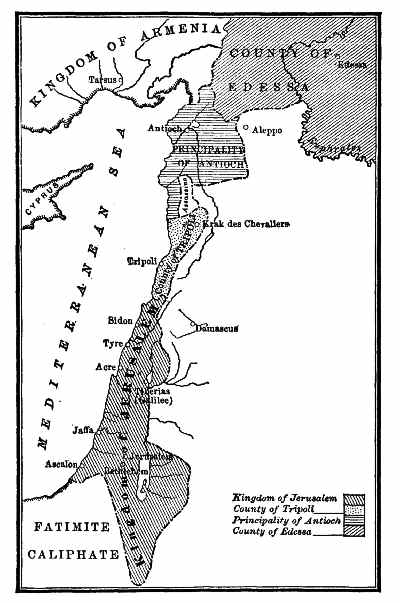
Antioch, Latin principality of, 193.
Antwerp, 450.
Appanages, creation of, in France, 128.
Aquinas, 231, 272.
Aquitaine, 67, 82, 93, 124, 126. See also Guienne.
Arabia, 243.
Arabs, condition of, before Mohammed, 69;
conquests of, 70 f.;
conquer Syria, 188;
civilization of, in Spain, 356.
Aragon united with Castile, 357.
Archbishops, origin of, 21;
powers of, 203 ff.
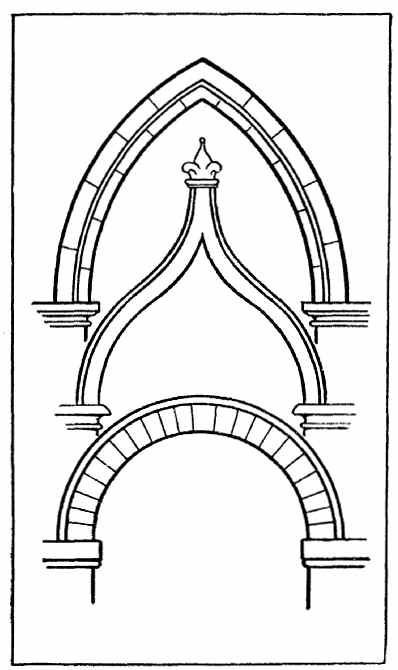
Arches defined and illustrated, 264.
Architecture, mediæval, 262 f.;
Romanesque, 263;
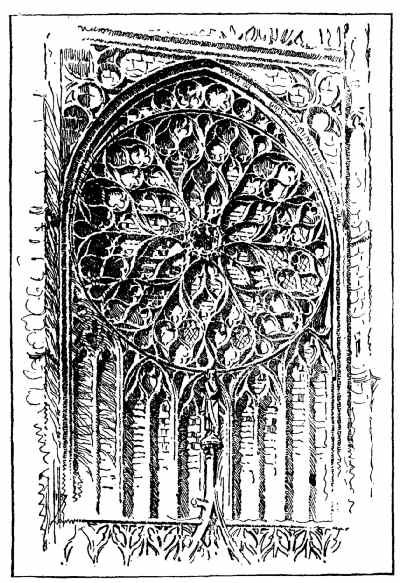
Gothic, 264 f.;
domestic, 266 f.;
Renaissance, 339 f.
Aristotle, mediæval veneration for, 271 f.;
Dante's estimate of, 331.
Arius, 30.
Arles, see Burgundy.
Armada, 463.
Arnold of Brescia, 177.
Arnulf of Carinthia, 97.
Art, mediæval, 261 f.;
fostered by Italian despots, 326;
Renaissance, 339;
Arabic, 356.
Arthur, nephew of John of England, 127.
Artois, count of, 575, 630. See Charles X of France.
Assignats, 571, 591 and note.
Astrology, 260, 672.
Astronomy, mediæval knowledge of, 331;
discoveries of Copernicus, 351;
modern, 672 f.
Athanasius, 50.
Athens, school at, closed, 33.
Attila, 27.
Augsburg, Hungarians defeated near, 150;
confession of, 417 f.;
diet of, 417 f.;
religious Peace of, 419 f., 465.
Augustine, Bishop of England, 61.
Augustine, Bishop of Hippo, 26, note, 51, 390, 393.
Augustinian order, 385, note, 387.
Austerlitz, battle of, 611.
Australia, 685 f.
Austrasia, 37, 38.
Austria, 150, 354 f.;
hold of, on Italy, 507;
conflicts with Turks, 517 f.;
war of 1809 with Napoleon, 619;
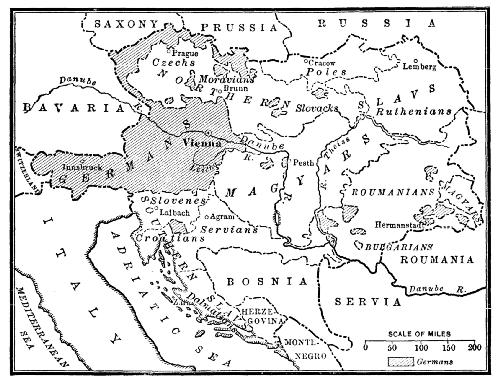
mixed population of, 632;
influence of, after 1815, 640;
revolution of 1848 in, 644 f.;
opposition of, to German unity, 651 f.;
decline of influence of, after 1851, 653 f.;
war with Prussia (1866), 660.
Austrian Mark, 150.
Austrian Netherlands, given to France, 604;
to Holland, 625.
Austrian Succession, War of, 518 ff.
Avignon, seat of papacy (1305–1377), 307 f.;
Clement VII, anti-pope, reëstablishes papal court at, 310.
Azores Islands discovered by Portuguese, 347.
Baber, 529 and note.
Babylonian Captivity of the Church (1305–1377), 307 f.
Babylonian Captivity of the Church, by Luther, 397.
Bacon, Francis, 478.
Bacon, Roger, 273, 478, 671.
Bacteria, 674.
Baden granted a constitution, 635.
Bæda, see Venerable Bede.
Bagdad, 83, note.
Baillis, established by Philip Augustus, 130.
Balance of power, 427 f., 625 f.
Baldwin, in First Crusade, 191 f.;
ruler of Jerusalem, 194.
Balliol, 279.
Banking, origin of, 246.
Bannockburn, battle of (1314), 280.
Banquet, Dante's, 331.
Baptism essential to salvation, 46;
sacrament of, 210.
Baptists, 491.
Barbarians, see Germans.
Barbarians, Laws of the, 40.
Barbarossa, Frederick, see Frederick I, Emperor.
Barebone's Parliament, 489.
Barons, War of the, 146 f.
Basel, Council of (1431–1449), 318 f.
Basil, 51.
Bastile, fall of the, 565.
Bavaria, conquered by the Franks, 37; 65, 67, 82, 93, 98, 112;
made an electorate, 467;
in War of Austrian Succession, 518 f.;
elector of, assumes title of king, 612;
granted a constitution, 635.
Baylen, battle of, 618.
Bede, see Venerable Bede.
Bedford, duke of, 293.
"Beggars" of the Netherlands, 447.
Belgium, 627 f.;
becomes an independent kingdom, 640 f.
Belisarius overthrows the Vandal kingdom, 33.
Benedict, St., 57 f.;
Rule of, 57 f.
Benedict IX, Pope, 160.
Benedict XIII, Pope, deposed by Council of Pisa, 313;
by Council of Constance, 315.
Benedictine order, 57, note.
Beneficium, 105 f.
Berbers, 71.
Berlin, Congress of, 670.
Bible, translated into Gothic, 252;
Wycliffe's translation of, 309;
first printed, 338;
German, before Luther, 378, 405;
Luther's translation of, 405 f.;
German, for Catholics, 413;
English translation of, 431;
King James version of, 478 and note.
Bishop of Rome, not yet pope in Constantine's time, 21;
obscurity of the early, 50;
Valentinian's decree concerning, 51.
See Pope.
Bishops, origin of, 20, 67;
method of choosing, 155;
complicated position of, 156, 174;
duties, position, and importance of, 204, 206 f.
Bismarck, 657 ff., 663.
Black Death (1348–1349), 288.
Black Friars, see Dominicans.
"Black Hole" of Calcutta, 531.
Black Prince of England, at Crécy, 285;
and Poitiers, 287.
Blockade, 615 f.
Boethius, last distinguished Roman writer, 19, 31 f., 134.
Bohemia, Huss spreads Wycliffe's doctrines in, 309;
relation with Council of Basel, 318 f.;
revolts from the Hapsburgs, 466 f.;
in 1848, 646, 648.
Bohemians, Charlemagne forces, to pay tribute, 82.
Bohemond, in First Crusade, 191 f.
Boleyn, Anne, 429 f.
Bologna, study of Roman law at, 177.
Bonaparte, analysis of character of, 595 ff.
See Napoleon.
Bonaventura, head of Franciscan order, quoted, 232.
Boniface, St., apostle to the Germans, 65 f.;
anoints Pippin, 73.
Boniface VIII, Pope, struggle with Philip the Fair, 304 f.
Book of Prayer, English, 435, 458, 482, 491.
Books copied by monks, 58.
Borgia, Cæsar, hero of Machiavelli's Prince, 362.
Borgia, Pope Alexander VI, 362.
Borodino, battle of, 621.
Bosnia, 669, 670 and note.
Boso, count of Vienne, 97.
Bosworth Field, battle of, 297.
Bothwell, 459 f.
Boulogne, Napoleon's army at, 610 f.
Bourbon kings, 453, 630.
Brandenburg, electorate of, 372, 474, 515 f.
See Prussia.
Brazil, 685.
Breitenfeld, battle of, 470.
Bremen, foundation of, 81;
commerce of, 244;
member of the German empire, 604.
Bretigny, Treaty of (1360), 286 f.
Britain conquered by the Angles and Saxons, 60;
church of, yields to Roman Church, 62.
Brittany, 123.
Bruce, Robert, 279 f.
Bruges, 123, 245.
Brumaire, eighteenth, 598.
Bruni, Leonardo, estimate of importance of Greek studies, 336.
Bruno, Archbishop, 149.
Buckingham, 478.
Bulgaria, 669 f.
Bulgaria, South, 670, note.
Bulls, papal, origin of name, 204, note.
Bundesrath, 661, 666.
Burgher class, rise of, 249.
Burgundians, 30, 36;
number of, entering the empire, 39.
Burgundy, county of, 366, 471.
See also Franche-Comté.
Burgundy, duchy of, 124, 292;
alliance with England, 292 f.;
importance of, under Philip the Good and Charles the Bold, 300, 354, 417.
Burgundy, kingdom of, 38, 97, 124 and note, 153.
Burnt Njal, The Story of, 99, note.
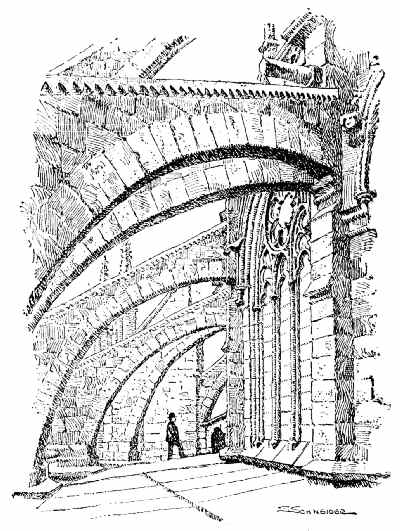
Buttress, flying, defined and illustrated, 264 f.
Byzantium, 22, note.
Cabinet, English, 524 f.
Cadiz, 479.
Cædmon, 253.
Cæsar, drives back the Germans, 5;
conquers Britain, 60.
Cahiers, 562 f.
Calais taken by English, 285, 295.
Calcutta, 529;
"Black Hole" of, 531.
Calendar, French republican, 582 and note.
Caliph, title of, 70.
Calmar, Union of, 469.
Calonne, 556 f.;
reforms proposed by, 558 ff.
Calvin, 425 f., 452.
Calvinists, 420, 473.
Cambray, League of (1508), 365.
Campo-Formio, Treaty of, 594 f.
Canada won by the English, 530, 532, 685 f.
Canary Islands discovered by Portuguese, 347.
Canon law, 202, note;
burned by Luther, 399.
Canonical election, 155.
Canons, 207, note.
Canons and decrees of the Council of Trent, The, 440.
Canossa, 169.
Canterbury, the religious capital of England, 61;
St. Martin's at, 61;
dispute concerning Archbishop of, under John, 183.
Capet, Hugh, 121.
Capetian kings, position of early, 121 f., 124 f.
Capitularies, 87.
Carbonari, 637.
Cardinals, 162 and note, 204.
Carloman, brother of Pippin, 72.
Carlsbad Resolutions, 634 f.
Carlstadt, 407 f.
Carnot, 588.
Carolingian line in France, 120 f.
Cassiodorus, his treatises on the liberal arts and sciences, 32.
Castile, united with Aragon, 357.
Castle, mediæval, 100, 267.
Catechism, Napoleon's, 617.
Cathari, 221.
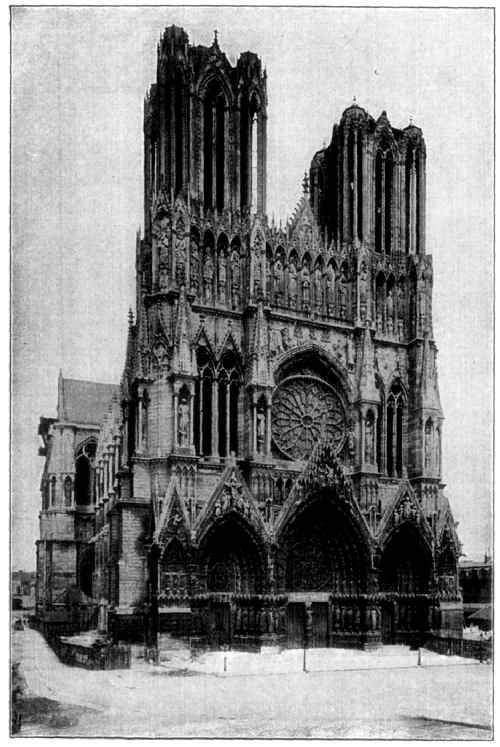
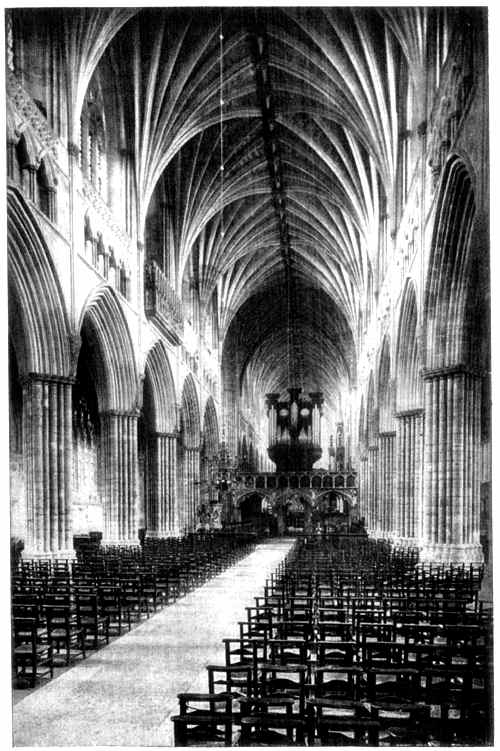
Cathedral, the mediæval, 262 f.;
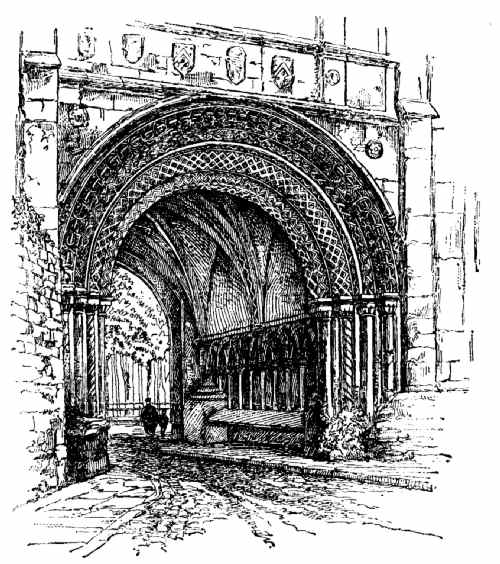
of Wells, 265 f.
Catherine de' Medici, 454 f.
Catherine of Aragon, 367, 428 ff.
Catherine II of Russia, 514.
Catholic Church, early conception of, 20.
See Church, Clergy.
Catholic League of Dessau, 415.
Catholic League in Germany, 466 f.
Catholic party, formation of a, at Regensburg, 412.
Catholic reaction, 438, note.
Catholic reformation, 412 f., 437 ff.
Cavaliers, 485.
Cavour, 654.
Celibacy of the clergy, see Marriage.
Celts in Britain, 60.
Chalcedon, Act of the Council of, 51.
Châlons, battle of, 27.
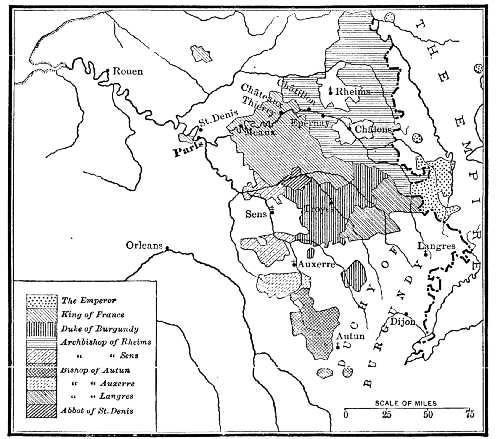
Champagne, counts of, growth of possessions of, 113 f;
position of, 114 f.
Chapter, cathedral, 207.
Charlemagne, 77 ff.;
ideal of, of a great German empire, 79;
coronation of, as emperor, 83 f.;
reëstablishes the Western Empire, 84 f.;
system of government of, 86;
his farms, 86 and note;
interest of, in schools, 87 ff., 268;
disruption of empire of, 92 ff.;
collects German poems, 253;
hero of romances, 254.
Charles Martel, 38;
aids Boniface, 66, 67 ff.;
defeats the Mohammedans at Tours, 72.
Charles the Bald, 92 f., 95.
Charles the Fat, 96 f.
Charles the Simple, 96, note, 113, 121 f.
Charles V of France (1364–1380) reconquers most of English possessions in France, 287 f.
Charles VI of France, 292 f.
Charles VII of France, 293 f.
Charles VIII of France invades Italy, 360 f.
Charles IX of France, 454 ff.
Charles X of France, 630. See also Artois, count of.
Charles the Bold of Burgundy, 300, 422.
Charles V, Emperor, 301;
possessions of, 354, 359 f.;
coronation of, 367;
wars with Francis I, 366, 415, 417;
at diet of Worms, 400;
at Augsburg, 417 f.;
attitude toward the Protestants, 438;
abdicates, 444.
Charles VI, Emperor, 518.
Charles VII, Emperor, 518 f.
Charles I of England, 478 ff.;
financial exactions of, 479, 481;
execution of, 486 f.
Charles II of England, 488, 490 ff.
Charles II of Spain, 502;
will of, 506.
Charles XII of Sweden, 513 f.
Charles Albert of Sardinia, 646, 647, 650.
Charter, French, of 1814, 629 f.
Charter, the Great, of England, 144, 146.
Charters granted to mediæval towns, 239 f.
Chemistry, 672.
Chivalry, 256 f.
Christian IV of Denmark, 467 f.
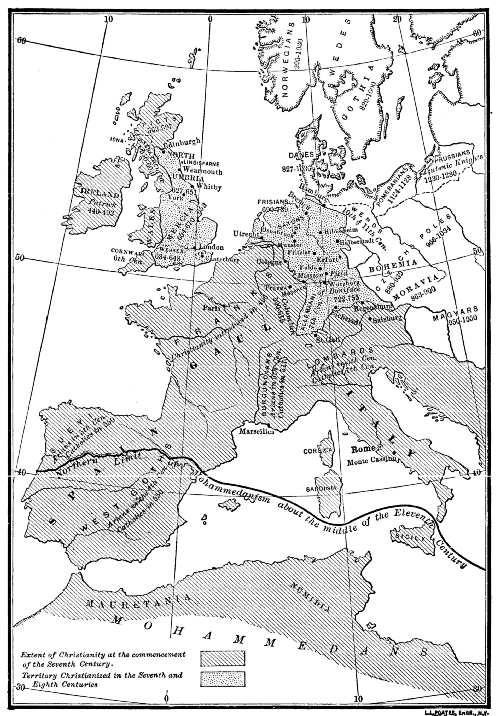
Christian missions, map of, 63.
Christianity, preparation for, in Roman Empire, 18;
promises of, 18;
pagan rites and conceptions adopted by, 19.
Christians, persecution of, 10.
Chrysoloras called to teach Greek in Florence, 336.
Church, apostolic, 19;
organization of, before Constantine, 20;
in the Theodosian Code, 21;
survives the Roman Empire, 22;
greatness of, 44;
sources of power of, 45 ff.;
attitude of, toward the civil government, 47;
begins to perform the functions of the civil government, 48;
coöperation of, with the civil government, 80, note, 81;
maintains knowledge of Latin, 87;
policy of William the Conqueror in regard to English, 138;
wealth of, 154;
lands of, feudalized, 154;
offices bought and sold, 158;
and state, 165, 303;
character and organization of mediæval, 201 ff.;
services of, to civilization, 216;
evil effects of wealth upon, 217 f.;
loses power as modern states develop, 303 f.;
reasons for influence of, in Middle Ages, 303, 370;
corruption of, 217 ff.;
during Babylonian Captivity of, 307;
in Germany, 383;
attempted reformation of, 223;
at Constance, 317;
taxation of, 307;
attempted union of, with Eastern Church, 319;
attitude of humanists toward, 335;
enthusiasm for, in Germany before Luther, 377;
discontent with, in Germany, 385;
in France before the Revolution, 541 ff.;
attacked by Voltaire, 550;
property of, confiscated by the National Assembly, 570 f.;
lands, secularization of, 603.
Church fathers, 50 f.
Cicero, humanists' estimate of, 332, 334.
Cisalpine republic, 595, 601, 602.
Cistercian order, 219.
City of God, The, Augustine's, 26, note, 78.
Civil Constitution of the Clergy, 571 f., 580, 606 f.
Civil war in England, 485 f.
Classics, Greek and Roman, neglect of, in the Middle Ages, 259, 330, 333, note;
Dante's respect for, 331;
revival of, 332 ff.;
Petrarch's enthusiasm and search for, 332 ff.
Clement V, Pope, removes seat of papacy to France, 306.
Clement VII, anti-pope, returns to Avignon, 310.
Clement VII, Pope, 412, 430.
Clergy, minor orders of, 20;
privileges of, in Theodosian Code, 21;
attitude toward civil government, 81;
lower, demoralized by simony, 159;
importance of, to civilization, 214 f.;
benefit of, 214, note;
corruption of, 217 f.;
secular, opposition of, to mendicant orders, 231;
reform of, at Regensburg, 412;
policy of Henry VIII toward, 429 ff.;
in France before the Revolution, 542;
representatives of, join third estate, 564;
Civil Constitution of, 571 f., 580, 606 f.;
non-juring, in France, 572, 579, 606.
See also Marriage.
Clericis laicos, papal bull, 304.
Clive, 531 f.
Clovis, conquests of, 35 f.;
conversion of, 35;
number of soldiers of, baptized, 39.
Cnut, king of England, 134.
Coal, use of, 676.
Code Napoléon, 607 f.
Coinage, French king's control of, 131.
Colbert, reforms of, 499 f.
Colet, 426 f.
Coligny, 455 f.
Cologne, 12, 248;
elector of, 372.
Coloni, condition of, 15 f.
Colonies, European, 527 ff., 684;
Roman, 12;
French, in North America, 527 f.;
Spanish, 684 f.
Columban, St., 65.
Columban St., Life of, 65, note.
Columbus, 350.
Comitatus, 105 f.
Comites, 67.
Commendation, 105 and note.
Commerce, development of, 199 f., 243 f.;
restrictions on, 245 f.;
in Italy, 243, 322 f.;
in France and England, 302.
Commercial war between Holland and England, 488.
Committee of Public Safety, 585, 587 f.
Common law, English, 142.
Commons, House of, 147. See Parliament.
Commons, summoned to the French Estates General, 131;
the English, 147.
Commonwealth, England a, 487.
Commune, Paris, 586;
insurrection of, 1871, 664.
Communes, establishment of, in France in 1789, 566.
Communes, origin of, 239 f.
Communication, modern means of, 678 f., 684.
Communion under both kinds, 432 and note.
Compass, invention of, 352.
Compendiums, reliance upon, in later Roman Empire, 17;
inherited by Middle Ages, 18.
Compurgation, 41.
Concordat, between Francis I and Pope Leo X, 366, note;
of 1801, 607.
Condé, 472.
Condottieri, Italian mercenary troops, 326 f.
Confederation of the Rhine, 612 f.
Confession, 212, note.
Confession of Augsburg, 417 f.
Confirmation, sacrament of, 211.
Congregational church, 483.
Congress of Berlin, 670.
Congress of Vienna, 625 ff.
Conrad II, Emperor, 153.
Conrad III, Emperor, 173, note, 197.
Consolation of Philosophy, The, of Boethius, 19, 134.
Constance, heiress of Naples and Sicily, marries Emperor Henry VI, 180.
Constance, Peace of (1183), 179;
Council of (1414), 314.
Constantine, 21 f.
Constantine VI, 84.
Constantinople, 22 f.;
threatened by Turks, 188;
taken by the Turks, 23, 517;
Bishop of, put on an equal footing with the Bishop of Rome, 51;
during First Crusade, 191;
culture of, affects the West, 336 f.;
desire of Russia for, 668.
Constitution, first French, 576;
of the year VIII, 599;
veneration for a, in Italy, 637.
Constitutional government, desire for, in France, 563;
demand for, in Prussia, 632;
granted in southern Germany, 635;
in Piedmont, 651.
Consul, title of Bonaparte, 600, 608.
Continental blockade, 615 f.
Continental system, the, 616.
Continuity of history, 4.
Conventicle Act, 492.
Convention, French, 582 ff.;
close of, 590 f.
Conversion of the Germans, 56 ff.;
of the Saxons, 80.
Copernicus (Kopernik), astronomical discoveries of, 351 f.
Copyists, carelessness of, 89 and note, 90.
Corbie, school at, 90.
Cordova, emir of, 83;
brilliant civilization of caliphate of, 356.
Corn Laws, 681.
Corneille, 500.
Corsica added to France, 536, 592 f.
Cortez conquers Mexico, 351.
Council, general, 311 f.;
of Clermont, 188;
fourth Lateran, 184;
of Pisa, 313;
of Constance, 314 ff.;
of Basel, 318 f.;
of Ferrara-Florence, 319 f.;
Luther recognizes fallibility of, 393.
Council of Blood, 448.
Council of State, French, 599.
Counter-reformation, 438, note.
Counties, sheriffs in the English, 137.
Counts, origin of, 67;
position of, 102.
Counts of the march, 82, 86.
Coup d'état, 598.
Court, lord's, 110 and note.
Court of High Commission, 482.
Covenant, National, 483 f.
Crécy, battle of, 284.
Crema destroyed by Frederick I, 178.
Crimean War, 668 f.
Cromwell, Oliver, 485 ff.;
death of, 489 f.
Cromwell, Richard, 490.
Crusade, Albigensian, 223 f., 256.
Crusades, 23, 187 ff.;
effects of, 199 f., 243, 347.
Culloden Moor, 527.
Culture, mediæval, 250 f.;
general use of Latin, 250;
Germanic languages, 251 f.;
Romance languages, 251 f.;
literature, romance, 254 f.;
chivalry, 256 f.;
ignorance of the past, 259;
popular science, 260;
art, 261 f.;
education, the universities, 267 f.;
Roman and canon law, 269;
Aristotle, 271;
scholasticism, 272.
Curia, papal, 204.
Customs duties, 246, 681.
Customs lines, interior, 539 f.
Customs union, German, 635.
Cyprian, 20.
Czar, see Tsar.
Dagobert, 38.
Damascus, seat of the caliphate, 70, 83, note.
Danegeld, 134.
Danes, 99, note;
invade England, 133 f.;
defeated by Alfred, 133.
Danish language, derivation of, 251.
Dante, 330 f.
Danton, 589.
Dantzig, 196, 248.
Dark age before Charlemagne, 87.
"Dark ages," meaning of, 6, 91.
Darnley, 459.
Dauphin, origin of title, 292, note.
Deacons, 19 f.
Declaration of Independence, American, 533.
Declaration of Rights, English, 494.
Declaration of the Rights of Man, 568 ff., 629.
Decretum of Gratian, 269.
Degrees, university, explained, 270, note.
Deist, 550.
Departments in France, 538, 567 f.
Desaix, 601 f.
Dessau, League of, 415.
Dialogues of Gregory the Great, 54.
Diaz rounds Cape of Good Hope, 348.
Dictatus of Gregory VII., 164.
Diet, German, attempts to reform government, 375.
Directory, French, 591, 593, 597 f., 601.
Discoveries in fourteenth and fifteenth centuries, 347 f.;
modern scientific, 671 ff.
Dispensations, papal, 203.
Dissenters, 491.
Divine Comedy of Dante, 330.
Divine right of kings, 476 f., 496 ff.
Doge of Venice, 324.
Domain, 121.
Domesday Book, 138.
Dominican order organized, 230.
Donauwörth, 466.
Drake, Sir Francis, 461.
Dresden, battle of, 623.
Dukes, origin of, 67.
Dumouriez, 582, 584.
Dunkirk, 489, 588.
Dupleix, 531.
Dürer, Albrecht, 346.
Dutch, commerce of, 448.
See also Holland.
Dutch language, derivation of, 251.
East Frankish kingdom, 94, 98.
East Goths, 28 f., 30, 33.
East India Company, English, 530;
French, 530.
Eastern Church, see Greek Church.
Eastern Empire, 22;
civilization of, in Middle Ages, 23.
Eastern question, origin of, 535, 667 ff.
Ecclesiastical states, origin of, 156, note;
in Germany, disappearance of, 603 f.
Eck, 392 f., 398, 418.
Economists, French, 552 f.
Edessa, Latin principality of, established, 193;
fall of, 196.
Edict of Nantes, 542.
Edict of Restitution, 468, 473.
Edict of Worms, 403 f., 415.
Education, clerical monopoly of, 213 f.;
mediæval, 267;
humanistic, 335;
compulsory, 683.
Edward the Confessor, 134, 136 f.
Edward I of England, 147, 278 f.
Edward II, 280;
forced to abdicate, 281.
Edward III, claims French crown, 283 f., 286 f.
Edward IV, 296.
Edward V, 297.
Edward VI, 434 f.
Egbert, king of Wessex, 133.
Egypt, Bonaparte's expedition to, 597 f.;
English occupation of, 685.
Eisenach, Luther at, 405.
Elba, 624.
Elders, 19, 426, note.
Elders, Council of, 590, 599.
Electors in empire, 372, 524, note.
Elizabeth, queen of England, 430, 451, 458 ff., 476.
Embargo acts of the United States, 615 f.
Emigrant nobles, 575, 577, 579;
permitted to return, 607.
Émigrés, see Emigrant nobles.
Emirate of Cordova, 83, note.
"Emperor Elect," 152, note.
Emperor, Roman, his will law, 10;
worship of, 10.
Emperor, title of, held by Italian kings, 151;
assumed by Otto the Great, 151;
assumed by Napoleon, 608;
assumed by Austrian ruler, 612.
Empire, reëstablishment of, in the West, 84;
divisions of, 92 f., 96;
relations with papacy, 151 f.;
under Hohenstaufens, 173, 185;
under Hapsburgs, 355.
See Holy Roman Empire.
Empire, Roman, character and organization of, 8 ff.
Engine, steam, 675 f.
England, early culture in, 64;
becomes a part of the Catholic Church, 64;
claims of kings of, to France, 130;
importance of, in history of Europe, 133;
on the accession of William the Conqueror, 135;
feudalism in, 135;
Norman conquest of, 136 ff.;
made tributary to pope by John, 183;
commerce of, 244 f., 351, 460 f.;
conquers Wales, 278;
relations of, with Scotland, 279 f.;
union of, with Scotland, 280;
during the Hundred Years' War, 281 ff., 291 ff., 301 f.;
labor problem of, and Peasants' War, 288 ff.;
Wars of the Roses, 296 f.;
humanism in, 335, 363;
Protestant revolt in, 426 ff.;
struggle for constitutional government, 475 ff.;
establishment of commonwealth, 487 ff.;
restoration of the Stuarts, 490;
revolution of 1688, 493;
in the War of the Austrian Succession, 526;
in the Seven Years' War, 520 f.;
expansion of, 523 ff.;
colonies of, in North America, 527 ff.;
settlements of, in India, 529;
colonial possessions of, at end of eighteenth century, 535;
involved in war with France (1793), 583;
renews war with Napoleon, 610;
expansion of, in the nineteenth century, 685.
See also Britain.
English language, 134, 147, 251, 253 f.
Epictetus, 18.
Equality before the law, 683.
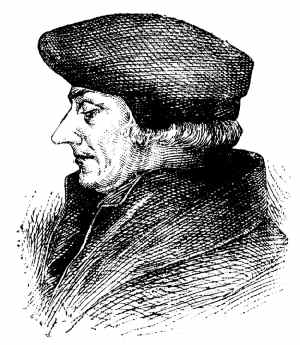
Erasmus, 381 f.;
attitude of, toward Luther, 394, 427.
Estates General, 131 f. and note, 285, 298 f., 305, 475, 496 f.;
demanded by the parlement of Paris, 560;
summoning of, 561;
meeting of (1789), 562 f.
Esthonia, 514.
Etruria, kingdom of, 620.
Eucharist, see Mass.
Eugene IV, Pope, 319.
Eugene of Savoy, 507.
Euric, king of West Goths, 26.
Europe after 1814, 625, 627 f.;
contemporaneous, 671.
Excommunication, 213.
Exorcist, 20.
Fabliaux, mediæval, 256.
Far Eastern Question, 686.
Ferdinand I, Emperor, brother of Charles V, 412, 444, 465, 517.
Ferdinand II, Emperor, 467.
Ferdinand of Aragon, 357, 363, 364.
Ferrara-Florence, Council of, 319 f.
Feudal dues, 110 f.;
in France, 543;
abolition of, 567.
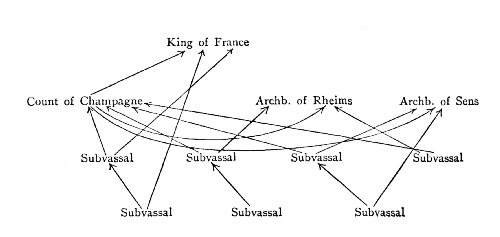
Feudal hierarchy, no regular, 116.
Feudal registers, 112.
Feudalism, 104 ff.;
origins of, 99 ff., 102 f., 104 f.;
anarchy of, 116 f.;
in England, 135;
connection of, with chivalry, 257.
Fief, hereditary character of, 106 ff.;
conditions upon which granted, 110 and note;
classes of, 110, 111 f., 115.
Five Hundred, Council of, 590, 599.
Flanders, 94, 123 f., 244;
weavers from, in England, 139;
relations of, with England, 283 f.;
under dukes of Burgundy, 300;
art of, 346.
"Flayers," 298.
Florence, 321, 325, 327 ff., 342;
under Savonarola, 361 f.
Fontenay, battle of, 93.
Foot soldiers, English, defeat French knights at Crécy, 284;
at Poitiers, 285;
at Agincourt, 292.
Forest cantons, 421.
France, origin of, 94, 95 f., 121;
position of early kings of, 121 f., 125;
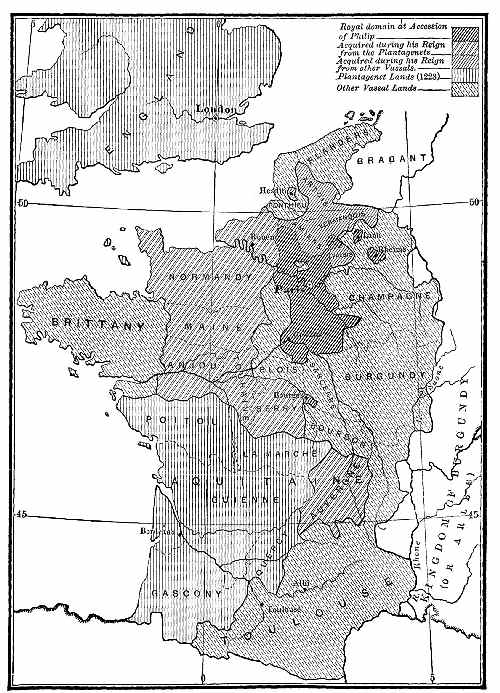
under Philip Augustus, 130;
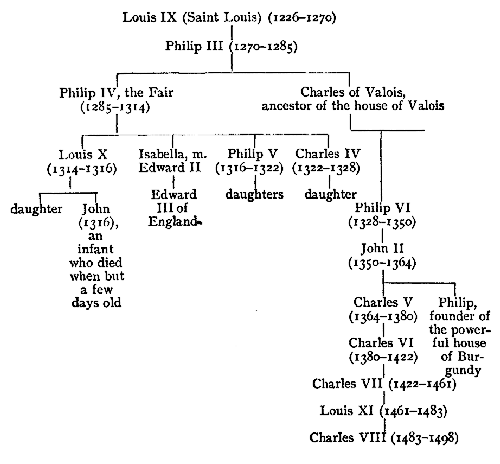
genealogical table of the kings of, 282, note;
during the Hundred Years' War, 281 ff., 288, 291 ff.;
standing army of, established, 298;
condition under Louis XI, 299 ff.;
influence of Italian culture, 335, 363;
Protestantism in, 451 ff.;
wars of religion, 451 ff.;
limits of, in 1659, 501 f.;
ascendency of, under Louis XIV, 495 ff.;
absolute monarchy in, 545;
reforms of Colbert, 499 f.;
condition of, at end of the reign of Louis XIV, 508;
joins in War of Austrian Succession, 518;
alliance with the Hapsburgs, 520;
possessions in North America, 527 f.;
in India, 529 ff.;
losses of, at close of Seven Years' War, 532;
aids the United States, 534;
in the eighteenth century, 535 f., 537 ff.;
first Revolution, cause of, 545, 563;
course of, 558 ff.;
First Republic, 581 ff.;
Reign of Terror, 585 ff.;
constitution of the year III, 590 f.;
reforms of Bonaparte, 599, 606, 616;
restoration of the Bourbons, 629 f.;
revolution of 1848, 642 ff.;
Third Republic, 664 f.
Franche-Comté, 300, 366, 471;
ceded to France, 502 f. See Burgundy, county of.
Francis I, Emperor, 519.
Francis II, Emperor, assumes the title of Emperor of Austria, 612.
Francis I of France, 365, 415, 417, 425;
wars with Emperor Charles V, 366;
persecutes the Protestants, 452.
Francis II of France, 452 f.
Francis Joseph I, accession of, 650.
Francis of Assisi, 226 ff.
Franciscan order founded, 228.
Franconian line of emperors, 153.
Franco-Prussian War, 662 f.
Frankfurt, National Assembly at, 646, 651 f.
Franks, conquests of, 30, 34;
conversion of, 35;
history of, 36 f.;
alliance of, with popes, 73, 75 f. See also Charlemagne.
Frederick, Elector of the Palatinate, 466 f., 477.
Frederick I (Barbarossa), Emperor, 173, 197.
Frederick II, Emperor, 181 f., 198.
Frederick I of Prussia, 516.
Frederick II of Prussia, see Frederick the Great.
Frederick the Great, 516, 518 ff.
Frederick the Wise, of Saxony, collects relics, 377;
patron of Luther, 389.
Frederick William III of Prussia, 613 f., 621 f.
Frederick William IV of Prussia, 652 f., 656, note.
Freedmen, condition of, 15.
Freedom of the Christian, by Luther, 397, note.
Freemen in competition with slaves in Roman Empire, 15.
Free towns, German. See Towns.
French Academy, 501.
French and Indian War, 530.
French language, 94, 251, 254, 260.
French Revolution, 4, 537 f.;
opening of, 557, 558 ff.;
second, 574, ff.
Frequens, decree, of Council of Constance, 318, note.
Friends, Society of, 491.
Frisia, 79.
Fritzlar, sacred oak of Odin at, 66.
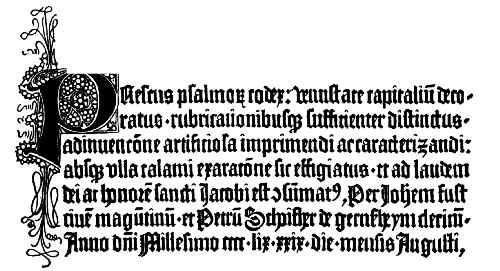
Fust, John, printer of Psalter of 1459, 338, note.
Future life, pagan view of, 18;
Christian view of, 19.
Galileo, 673.
Gall, St., Irish missionary, 65;
monk of, 78 and note.
Garibaldi, 655, 667.
Gascony, 124.
Gaul, West Goths establish a kingdom in, 26;
occupied by the Franks, 30, 35;
church in, reformed and brought under the papal supremacy, 66.
Gelasius, Pope, his opinion of the relation of the Church and the civil government, 47.
Geneva, Calvin at, 425 f.
Genghiz Khan, 510.
Genoa, 174, 194, 198;
commerce of, 243, 347;
given to Sardinia, 626.
Geoffrey, son of Henry II, 126 f. and note.
George I of England, 524.
George II of England, 526.
George III, 533.
German Confederation of 1815, 632 f.;
dissolution of, 660.
German empire, Proclamation of the, 665.
German kings, difficulties of, caused by the imperial title, 85;
vain attempt of, to control Italy, 85.
German kingship, 148, 152 f.
German language, 94 f. and note, 251;
reduced to writing, 252 f., 258 f.;
books published in the, 250, note;
in Luther's time, 405 f.
Germans, infiltration of, into Roman Empire, 8, 12, 16 f.;
objects of, in invading the Empire, 25;
number of invading, 39;
fusion of, with the Romans, 39;
character of early, 42;
conversion of, 56 ff.
Germany, 79, 95 f.;
foundation of towns in northern, 81;
assigned to Louis the German, 92 f., 94;
history of, contrasted with that of France, 148;
under the same ruler as Italy, 151 f.;
confusion in, under Henry VI, 182;
want of unity in, 185, 355;
culture in, 335, 363;
before Protestant revolt: complexity, organization, the electors, the
knights, the cities, neighborhood war, the diet, reorganization in
fifteenth century, social and intellectual conditions, 371 f.;
during the Protestant revolt, 405 ff.;
progress of Protestantism in, 418 ff.;
religious division of, 412, 415 ff.;
after the Thirty Years' War, 473 f.;
territorial reorganization of, in 1803, 604;
condition of, in 1814, 626;
effects of Napoleonic era in, 631 f.;
in 1848, 646;
unification of, 656 ff., 665.
Ghent, 123;
commerce of, 245, 248.
Ghibelline party, 179, note.
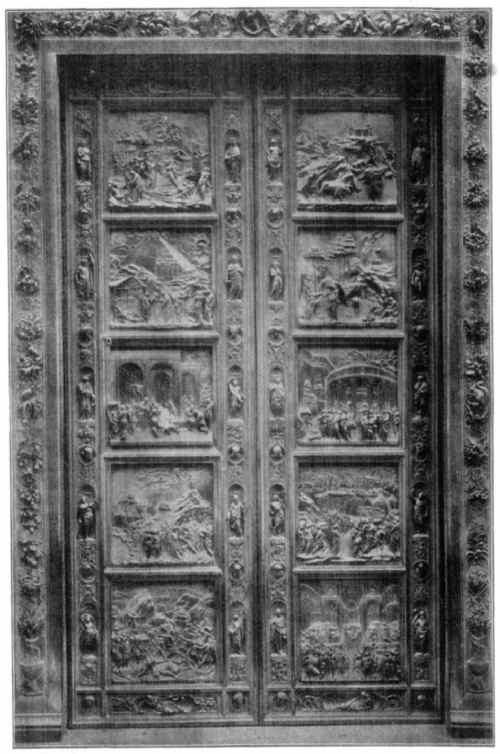
Ghiberti, 342.
Gian Galeazzo Visconti of Milan, 325.
Gibbon, 73, 76.
Gibraltar, 507, 532;
siege of, 534.
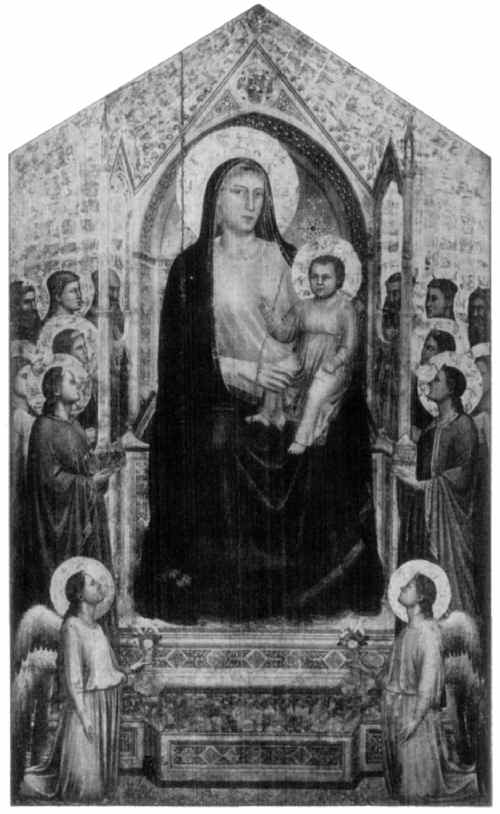
Giotto, 341 f.
Girondists, 585 f., 587.
Glass, stained, 264.
Godfrey of Bouillon, 191 f., 193.
Golden Bull sanctions neighborhood war, 117.
Good Hope, Cape of, rounded by Diaz (1486), 348;
ceded to England, 685.
Gothic language, Bible translated into, 252.
Gothic type, 339.
Government, difficulty of, in the Middle Ages, 67, 85, 98;
effect of feudalism on, 108 f.;
natural, 120;
modern character of, 682 f.
Grail, legend of Holy, 258.
Granada, fall of, 83, 357.
Grand Alliance, 506.
Grand Remonstrance, 484.
Granson, 422.
Gratian, Decretum of, 269.
Gravitation, discovery of universal, 673.
Gray Friars, see Franciscans.
Great Charter of England, 144–146.
Great Elector of Prussia, 516.
Great Khan, 510.
Great Mogul, 529.
Great St. Bernard crossed by Bonaparte, 601.
Greece, creation of the kingdom of, 640, 668.
Greek books brought to Venice in 1423, 337.
Greek Church, tends to separate from the Latin, 51;
union of, with Western Church, 319.
Greek culture in the Roman Empire, 12.
Greek language, knowledge of, in Middle Ages, 64, 336;
revived study of, in Italy, 320, 336 f.
Greek New Testament, 423.
Gregory of Tours, 33, 36.
Gregory the Great, 52 ff.;
writings of, 54;
missionary work of, 55, 61.
Gregory VI, Pope, 160.
Gregory VII, 52, note, 138, 162, 164 ff.;
reform of, 161, 162 f.;
conflict of, with Henry IV, 167 ff.;
death of, 170.
Gregory XI, Pope, 310.
Gregory XII, Pope, 313, 315.
Grotius, 508.
Guelf party, origin of, 179, 182.
Guienne, 130, 140, 283.
See also Aquitaine.
Guilds, craft, 241 f., 500;
abolition of, in France, 555.
Guillotine, 588 f. and notes.
Guise, Henry of, 456.
Guises, 454.
Gunpowder, invention of, 352.
Gustavus Adolphus, 468 ff.
Gustavus Vasa, 469.
Hades, 18.
Hadrian, tomb of, 54.
Hadrian IV, Pope, and Frederick I, 176 f.
Hadrian VI, Pope, 410–412.
Hague, peace conference at The, 686.
Hampden, John, 481.
Hanover, electorate of, 524, note.
Hanover, house of, 524;
occupied by Napoleon, 610;
relations of, with Prussia, 613 f.
Hanseatic League, 247 f.
Hanseatic towns annexed to France, 602.
Hapsburg, Rudolf of, king of Germany, 185.
Hapsburgs, rise of, 354 f., 421, 444 f., 471, 517 ff.
Harold, Earl of Wessex, 136 f.
Hastings, battle of, 136, note.
Hébert, 589.
Heilbronn, articles of, 414.
Hejira, the, 69.
Henrietta Maria, 478.
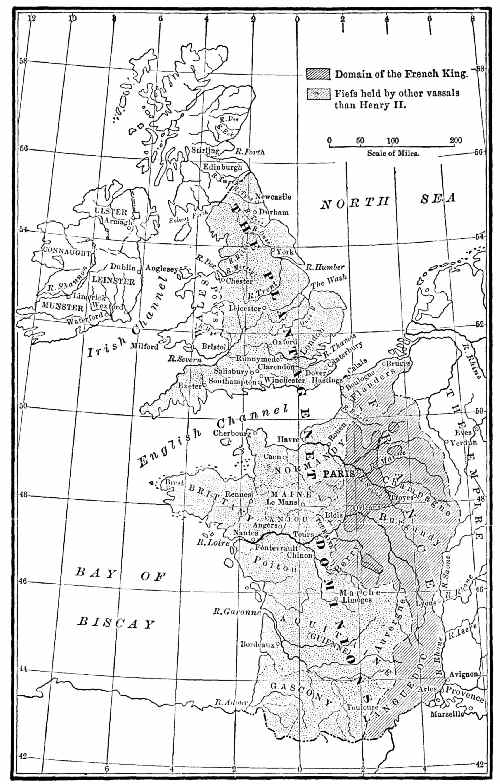
Henry II of England, possession of, 126, 140 ff.
Henry III of England, 146 f.
Henry IV of England, 291.
Henry V of England continues Hundred Years' War, 291 ff.
Henry VII of England, 296 f.
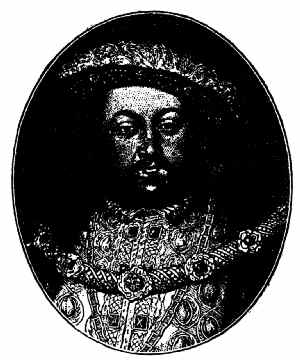
Henry VIII of England, 365, 367, 426 ff., 476.
Henry II of France, 452.
Henry III of France, 456.
Henry IV of France, 457 f.
Henry I of Germany, 149 and note.
Henry III, Emperor, 153 f.;
intervenes in papal matters, 160, 166.
Henry IV of Germany, 165 ff.;
conflict of, with Gregory VII, 167 ff., 174.
Henry V, Emperor, 171.
Henry VI, Emperor, 180 f.
Henry of Navarre, see Henry IV of France.
Henry the Lion, 180.
Henry the Proud, 179.
Heresy, in twelfth and thirteenth centuries, 220 f.;
punishment of, 225;
of Huss, 314 f., 403 and note.
Herzegovina, 669, 670 and note.
Hesse, Philip of, 409 f., 415, 419.
Hesse-Cassel, 628.
Hildebrand, see Gregory VII.
Hindustan, 348, 529 ff.
History, scope of, 1;
continuity or unity of, 4;
notions of, in the Middle Ages, 259 f.
Hohenstaufens, 173 f.
See also Frederick I, Henry VI, Frederick II.
Hohenzollern family, 515.
See also Brandenburg and Prussia.
Holbein, Hans, 346.
Holidays, number of, reduced in Germany, 412.
Holland, 449;
war with England, 492;
war with France, 492 f., 502 f.;
colonies of, 527;
becomes the Batavian republic, 604;
Louis Bonaparte, king of, 613;
annexed to France, 620;
made a kingdom, 625, 632.
See also United Netherlands.
Holy Land, commercial interests of Italian cities in, 198 f.
Holy League formed by Pope Julius II against France, 365.
Holy League, French, 456.
Holy Roman Empire, 85, 152 f., 473;
consolidation of, in 1803, 603 f.;
dissolution of, 612.
See also Germany.
Homage, 109 and note;
refusal of, 116 f.
Horace, idea of life entertained by, 45;
Satires of, 333, note.
Hospitalers, 194 f.
House of Lords, abolition of, 487.
See also Parliament.
Hrolf, 122 f.
Huguenots, 454 ff., 467;
Charles I attempts to aid, 478 f.;
position of, under Louis XIV, 504 f.
Humanists, Italian, 334 f.;
German, 379 f.
Humanities, 334.
Hundred Years' War, 281 ff., 291 ff.
Hungarians, 149;
defeated by Otto the Great, 150.
Hungary, freed from the Turks, 518;
during revolution of 1848, 646, 648 f.;
dual union of, with Austria, 650.
Huns, 25, 27.
Huss, 309, 315 ff., 393.
Hussite wars, 317.
Hussites, 432, 465.
Hutten, Ulrich von, 385 f., 395 f., 399, 404, 410.
Iconoclastic controversy, 74.
See Images.
Illuminations, 261 f.
Images, demolition of, in England, 433 f.;
in the Netherlands, 447 f.
Immunities, 101.
Imperial title, 151 f.
See also Emperor.
Indemnity, the French, 664.
Independents, 482 f. and note.
India, Portuguese seek a sea route to, 348;
Europeans in, 528 ff.;
during Seven Years' War, 530.
Indulgences attacked by Wycliffe, 308;
explained, 390 f.;
attitude of Luther toward, 390 ff., 412, 423.
Industrial revolution, 679 f.
Industry stimulated by commerce in Middle Ages, 244 f.
Infeudation, 106 f.;
of other things than land, 115.
Innocent III, Pope, struggle of, with the Hohenstaufens, 181 f.;
attempts to reform the Church, 223.
Inquisition established, 224, 231;
in Spain, 358, 619;
in the Netherlands, 445, 447.
Institutes of Christianity, Calvin's, 425 f.
Interdict, 183, 213.
International law, 507 f.
Invasions of the ninth and tenth centuries, 98 f.
Invention, progress of, in fourteenth and fifteenth centuries, 352 f.;
modern, 674 ff.
Investiture, lay, 155 ff., 161;
prohibition of, 163, 167;
question of, settled at Worms, 171 f.
Invincible Armada, 463.
Ireland, 461 f., 487 f.
Irene, Empress, 84.
Irish monks in Britain, 62.
Iron industry, 352, 675 f.
Isabella, queen of Castile, 357.
Islam, 69.
Italian language, derivation of, 251;
used by Dante in the Divine Comedy, 330;
by Petrarch, 334.
Italy, during the barbarian invasions, 33;
united to Charlemagne's empire, 85, 93, 96;
German kings make vain attempt to control, 151 f.;
towns of, under Frederick I, 174 f.;
Hohenstaufens in, 180, 186;
commerce of, 198 f., 243 f.;
divisions of, in fourteenth century, 321 f.;
culture of, during the Renaissance, 321, 339 ff.;
invasion of, by Charles VIII, 360 f.;
hold of Austria on, 507;
Bonaparte's campaign in, 594;
Napoleon, king of, 611;
after 1815, 636 f., 638 f.;
war of independence of, 645 f.;
constitutions granted to various states of, 646;
unification of, 654 ff.;
formation of the present kingdom of, 655 f.
Ivan the Terrible, 511.
Jacobins, 578 f., 590.
Jacobites, 526 and note.
James I of England, 467;
theory of kingship of, 475 ff.
James II, 493.
James VI of Scotland, 462.
See also James I of England.
Jamestown, 528.
Jefferson, Thomas, opinion of the condition of France, 544.
Jena, battle of, 614.
Jerome, St., 51;
advocate of the monastic life, 57.
Jerome Bonaparte, 614.
Jerusalem, 185, 188;
Kingdom of, 192 ff., 197 f.
Jesuits, order of, 462, 465 f., 494.
Jewry, 246.
Jews, economic importance of, 246;
persecution of, 246, 358.
Joan of Arc, 293 f.
John of England, 126 f., 144 ff.;
vassal of pope, 183.
John, king of France, 285.
John Frederick of Saxony, 415, 418 f.
John XXIII, Pope, 313.
Jongleurs, 256.
Joseph Bonaparte, king of Spain, 618.
Josephine, 607, 620.
Journal des Savants, 501.
Jousts, 118.
Jubilee at Rome (1300), 305.
Julius II, Pope, 344, 365.
Jury, origin of, 142.
Just price, doctrine of, 245.
Justification by faith, 388, 439.
Justinian 33;
closes government schools, 267.
Kadijah, wife of Mohammed, 69.
Kappel, battle of, 425.
Kent, king of, converted, 61.
King, position of, in Middle Ages, 73, 102, 108, 120.
King of Rome, 620.
King of the Romans, 152, note.
Kneeling Parliament, 436.
Knighthood, 257 f.
Knights, summoned to the English Parliament, 147;
in Germany, 407;
revolt of, 409 f.;
disappearance of, 604.
Knox, John, 459.
Koran, the, 69 f.
Kossuth, 650.
Labor, division of, 677.
Labor unions, 681 f.
Laborers, protection of, 681.
Lafayette, 534, 563, 570.
Laissez faire, 553, 681.
Lancaster, house of, in England, 291, 296;
genealogical table of, 297, note.
Lancelot, description of, quoted, 258.
Landholding, in the Roman Empire, 104.
See also Feudalism.
Lanfranc, 138.
Langton, Stephen, 183.
Langue d'oc, 254, note.
Langue d'oïl, 254, note.
La Rochelle, 455, 457, 478.
La Salle, 528.
Latin Church tends to separate from the Greek, 51.
See also Church.
Latin language, contrast of the written, with the spoken, 39, 252, note;
knowledge of, preserved by the Church, 87 f.;
general use of, in the Middle Ages, 95, 202, 250.
Latin literature, extinction of, 31.
See also Humanists.
Laud, William, 481 f., 484.
La Vendée, revolt of, 587.
Law, see Canon and Civil law.
Law of Free Monarchies, The, of James I, 477.
Law of Nature and Nations, by Pufendorf, 508.
Laws of the Barbarians, 40.
Lay investiture, see Investiture.
Lea, Henry C., description of Church, 214;
account of mendicants, 230.
Lefèvre, 452 f.
Legates, 162.
Legion of Honor, 617.
Legislative Assembly, 576, 579 f.
Legitimists, 664, note.
Legnano, battle of, 179.
Leipsic, disputation at, 392 f.;
battle of, 623.
Leo the Great, 21, 51, 52.
Leo III, Emperor, forbids the veneration of images, 74.
Leo IX, Pope, reform begun by, 161 f.
Leo X (Medici), Pope, patron of art, 344, 365, 391, 410.
Leonardo da Vinci, 344 f.
Leopold II, 577.
Leopold of Hohenzollern, 662, note.
Letters of Obscure Men, 380 f., and note.
Lettres de cachet, 546.
Leyden, siege of, 451, note.
Libraries, destruction of, 32;
established in Italy, 337.
Ligurian republic, 610.
Lisbon, trade in spices, 348.
Lit de justice, 547.
Livonia, 514.
Llewelyn, Prince of Wales, 278.
Logic, esteem for, in the Middle Ages, 268, 271;
decline of, 334 f.
Lombard cities, 170 f., 174 ff.
Lombard League, 178.
Lombard, Peter, Sentences of, 210, 396 f.
Lombards as bankers, 246.
Lombards, History of the, by Paulus Diaconus, 90.
Lombards in Italy, 33, 34, 65, 74 f.;
conquered by Charlemagne, 81.
London, 248, 290.
Long Parliament, 484 ff.;
dissolved by Cromwell, 488 f.;
recalled, 490.
Lord, mediæval, position of, 99 f.;
meaning of term, 106.
Lord Protector, Cromwell, 489.
Lord's Supper, Zwingli's conception of, 425.
See also Mass.
Lorraine, 94, 300, 472;
added to France, 536;
portion of, ceded to Germany, 663 and note.
Lorsch, Chronicles of, passage from, 84.
Lothaire, son of Louis the Pious, 93.
Lotharii regnum, 94.
Louis the Fat of France, 125.
Louis the German, 92, 93, 95.
Louis the Pious, 92.
Louis IX (Saint), 130 f., 198.
Louis XI of France, 299 f.
Louis XII of France, 364 f.
Louis XIII of France, 458.
Louis XIV, 472, 489, 492, 495 ff.;
idea of position of, 496 f.;
court of, 498;
wars of, 501 ff.;
condition of France at end of reign of, 508.
Louis XV, 508, 553.
Louis XVI, position of, 545, 553 f.;
removes to Paris, 570;
flight of, to Varennes, 575 f.;
imprisonment of, 581;
trial and execution of, 583.
Louis XVII, 625, note.
Louis XVIII, 625;
policy of, 629 f.
Louis Philippe, 630, 642 f.
Louisiana, 534, 602.
Low Church party, 482.
Loyola, Ignatius, 440 ff.
Lübeck, 244, 248.
Lucien Bonaparte, 599.
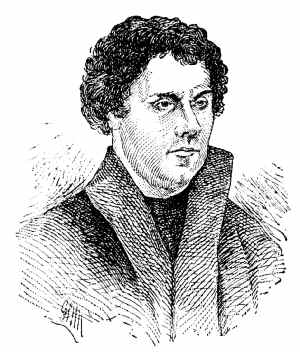
Luther, Martin, 387 ff.;
burns the canon law, 368, 399;
early life and education of, 387;
enters monastery, 387;
justification by faith, 388;
called to Wittenberg, visits Rome, 389;
teaches biblical theology, 389;
the theses of, 390;
warfare against indulgences, 390;
debate with Eck at Leipsic, 392;
relations with humanists, 393;
with Ulrich von Hutten, 395;
Address to the German Nobility of, 396;
Babylonian Captivity of the Church of, 397;
excommunicated, 398;
at diet of Worms, 401;
outlawed by the emperor, 403 and note;
translates the Bible, 405;
view of reform of, 407 ff.;
rash talk of, about princes, 413;
attacks the peasants, 414, 416.
Lützen, battle of, 470.
Luxembourg, 300, 662.
Lyons revolts against the Convention, 587, 589.
Machiavelli, The Prince of, 327, 362.
Machinery, introduction of, 675 ff.
Madras, 529.
Magdeburg, 469.
Magellan circumnavigates the globe, 351.
Magyars, see Hungarians.
Major Domus, see Mayors of the Palace.
Malory, the Mort d'Arthur of, 255, note.
Malta, 195.
Mandeville, Sir John, referred to, 261, note.
Manor, 100, 234 f.;
court of the, 236.
Mantua, 471.
Manufacture, increase of, in thirteenth century, 200;
modern, 675.
Manuscripts, 337 f.
Marches, establishment of, 82.
Marco Polo, 347.
Marcus Aurelius, Meditations of, 18.
Marengo, battle of, 601.
Margaret, queen of Navarre, 452.
Margraves, origin of, 82, 86, 102.
Maria Louisa, 620.
Maria Theresa, 518 ff.
Marie Antoinette, 554, 570, 589.
Marlborough, 506.
Marquette, 528.
Marquises, 86.
Marriage, of the clergy, 154, 157 and note, 161, 163, 418;
sacrament of, 211.
Marseilles, revolt of, 587.
Marston Moor, battle of, 486.
Mary of Burgundy, 301.
Mary of Modena, 493.
Mary, queen of England, 435 f.
Mary Queen of Scots, see Mary Stuart.
Mary Stuart, 454, 459 ff.
Mass, the, 211 f., 407, 409, 432.
Matilda, 126, 140.
Maurice of Saxony, 418 f.
Maximilian I, Emperor, 356, 358 f., 363, 365.
Maximilian of Bavaria, 466, 467.
Mayence, 66, 78;
elector of, 372, 378;
printing at, 338.
Mayflower, 483.
Mayors of the Palace, 38.
Mazarin, 495.
Mazzini, 639, 648.
Mecca, 68, 69, 70.
Medici, 328 f., 361, 366;
Lorenzo de', 328, 344;
library of the, 337.
Medicine, modern advance in, 674.
Medina, 69.
Melanchthon, 417.
Mendicant orders, 225 f.
Merovingian documents, carelessness of, 87.
Merovingian kings, 38, 72.
Mersen, Treaty of, 95 f.
Metric system, 591.
Metternich, 634;
overthrow of, 644 f.
Metz, 452, 473, 663.
Mexican expedition, 662.
Mexico, 351, 358.
Michael Angelo, 342, 344 f.
Microscope, development of, 674.
Middle Ages, meaning of term, 5 f.;
character of, 42 f.
Middle kingdom of Lothaire, 94 f.
Milan, Edict of, 21;
married clergy in, 163;
destruction of, by Frederick I, 176 f.;
despots of, 324 f.;
claimed by France, 364 f.;
claimed by Charles V, 366, 417.
Miles Coverdale, 431.
Military service, feudal, 110.
Miniature, derivation of word, 262.
Minnesingers, 258.
Minor orders of the clergy, 20.
Minorca, 507.
Mirabeau, 564.
Miracles, frequency of, in Middle Ages, 46 f.
Missi dominici, 86, 102.
Missions, greatly increase the power of the pope, 66;
of the Jesuits, 442.
Model Parliament, 147.
Modern languages, origin of, 40, 250 ff.
Mohammed, 68 f.
Mohammedan conquests, see Arabic conquests.
Mohammedan invasion of Italy, 150.
Mohammedanism, 69 f.
Mohammedans, 68 ff., 88;
gradual expulsion of, from Spain, 83, 356 f.;
commerce of, 199, 243.
Molière, 500.
Moluccas, 347, 348.
Monasteries, breaking up of, in Germany, 407 f.;
in England, 432 f.
Monasticism, attraction of, for many different classes, 56 f.
Money, scarcity of, in the Middle Ages, 98;
use of, 236, 247.
Mongol emperors of India, 529 and note.
Mongols, 510.
Moniteur, 578.
Monk, George, 490.
Monk of St. Gall, 78 and note.
Monks, 46;
origin and distinguished services of, 56 f., 219.
Monte Cassino, founding of, 57.
Montesquieu, 552.
Moors, in Spain, 357 f.;
expulsion of, 464.
Moravians, 149.
More, Sir Thomas, 427, 432.
Morgarten, battle of, 421.
Mort d' Arthur, Malory's, 255, note.
Moscow, 512, 514;
princes of, 510 f.;
Napoleon at, 621.
Mosque, 70.
Mountain party, 585 f.
Münster, 472.
Murat, king of Naples, 618.
Murten, battle of, 422.
Nantes, Edict of, granting of, 457;
revocation of, 504 f.
Nantes, massacre at, 589.
Naples, kingdom of, 180, 360, note, 363 f., 613;
revolution in, 635, 637 f.
Napoleon Bonaparte, 536, 574, 592 ff.;
idea of, of a European empire, 609;
Memoirs of, 624.
Napoleon II, 620.
Napoleon III, 644;
intervenes in Italy, 654 f.;
position of, after 1866, 662.
Naseby, battle of, 486.
National Assembly, first French, 564, 570;
close of, 576 f.
National guard, 566.
National workshops, 643 f.
"Natural boundaries" of France, 501 f.
Natural laws, discovery of, 672 f.
Navigation Act, 488.
Necker, 556.
Nelson, 597 f., 615.
Netherlands, 295;
come into Austrian hands, 301;
revolt of, 445 ff.;
Louis XIV claims, 502;
Spanish, ceded to Austria, 507.
Neustria, 37 f.
New Testament, edition of, by Erasmus, 382.
New York, 492.
Newspapers, origin of French, 578;
Napoleon's attitude toward, 608 f.
Newton, Sir Isaac, 673.
Nicæa, Council of, 21;
during First Crusades, 188, 192.
Niccola of Pisa, 340.
Nicholas II, Pope, decree of, 162.
Nicholas V, 320, 337.
Niebelungs, Song of the, 253.
Nimwegen, Peace of, 503.
Nobility, origin of Frankish, 38;
titles of, 86;
character of feudal, 112, 234 f.;
in France under Louis XI, 299 f.;
established by Napoleon, 608, 617.
Nobles, privileges of, in France, 542 f.;
emigration of French, 575.
Nogaret, 306.
Non-juring clergy, 572 f., 579.
Nördlingen, battle of, 470.
Norman conquest of England, 136 ff.;
results of, 138 f.
Normandy, 122 f., 127, 284, 292.
Normans, amalgamate with the English, 139, 146;
in Sicily, 180, note. See also Northmen.
Norse literature, 99, note.
North German Federation, 660 f.
Northmen, treaty of Charles the Fat with, 96 f., 99 and note;
in Russia, 510.
Northumbria, king of, 62.
Notables, meeting of, 558 f.
Novara, battle of, 650.
Novgorod, 248, 510.
Nuremberg, 373;
diet of (1522), 410 f.
Odo, 96, 120 f.
Odoacer, 28.
Ordeal, 41, 142.
Ordination, sacrament of, 211.
Orient, European relations with, 199 f., 244.
Orleanists, 664, note.
Orleans, duke of, 292;
Maid of, 294.
Ormond, 487.
Osnabrück, 472.
Ostrogoths, see East Goths.
Other-worldliness of mediæval Christianity, 45.
Othman, 517.
Otto I, the Great, of Germany, 149 ff.
Otto of Brunswick, 182.
Otto of Freising, 173, 197.
Overlord, 106, note.
Pagan idea of the life after death, 18, 45.
Paganism, merges into Christianity, 19;
of Italian humanists, 335.
Painting, Italian, 340 f., 346;
in northern Europe, 346.
Palace, school of the, 90.
Palatinate, electorate of, 372, 467;
Louis XIV's operations in, 505.
Pallium, 203, 307.
Pan-Slavic Congress of 1848, 648.
Papacy, origin of, 49 ff.;
seat of, transferred to Avignon, 306 f., 308, 317. See also Pope.
Papal legates, 162.
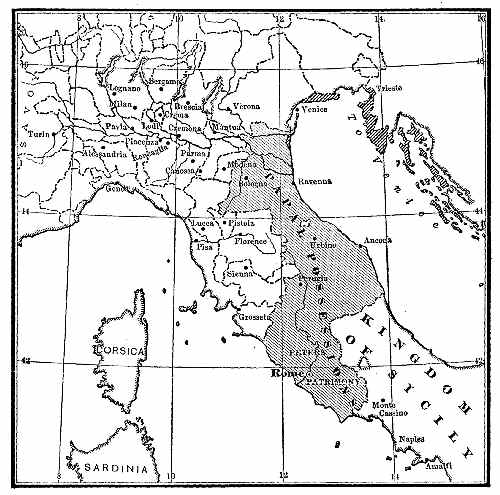
Papal states, 75 f., 170, 320, 620, 639, 655, 667. See also Pope.
Papyrus, supply of, cut off, 87.
Paris, 37, 96;
Treaty of (1763), 532;
Peace of (1783), 534;
importance in the Revolution, 570;
commune of, 581, 589;
insurrection of (June, 1848), 643;
of 1871, 664.
Parish, administration of, 208 f.
Parlements, French, origin of, 130 f., 547 f., 559 f.
Parliament, English, 147, 281, 286, 289;
after Wars of the Roses, 298, 308, 475;
struggle of, with Charles I, 478 ff., 496.
Parma, duchess of, 447 f.
Parsifal, by Wolfram von Eschenbach, 258.
Patrick, St., 62.
Paulus Diaconus, 90.
Peasants' War, in England, 309;
in Germany, 407, 413 ff.
Peasants in France, condition of, before the French Revolution, 544 f.
Penance, sacrament of, 211 f.
Pepys, Diary of, 492.
Persecution, religious, 432, 436;
of English Catholics, 462.
Peter Lombard, Sentences of, 268, 334, 425.
Peter, St., 49 f.
Peter the Great, 511 ff.;
reforms of, 512.
Peter the Hermit, 190.
Petition of Right, 479.
Petrarch, 288, 332 ff.
Philip Augustus of France, 125 ff., 130, 183, 197, 246.
Philip the Fair, of France, 131, 196, 280;
struggle of, with Boniface VIII, 304 f.
Philip VI of France, 283.
Philip the Good, of Burgundy, 293, 295, 300.
Philip II of Spain, 436, 444 ff.;
reign of, 463 f.
Philip V, first Bourbon king of Spain, 506.
Picts, 279.
Piedmont, reforms in, 654.
Piers Ploughman, 290.
Pilgrim Fathers, 483.
Pillnitz, Declaration of, 577 f.
Pins, illustration of the manufacture of, 677.
Pippin of Heristal, 38.
Pippin the Short, 72 f., 75 f.
Pisa, Council of, 313.
Pitt, the elder, 530.
Pius IX, 639, 648.
Plantagenets, 125 ff., 140 ff.
Plassey, battle of, 531 f.
Plebiscite, 600, 644.
Poitiers, battle of, 285.
Poland, 153, 514;
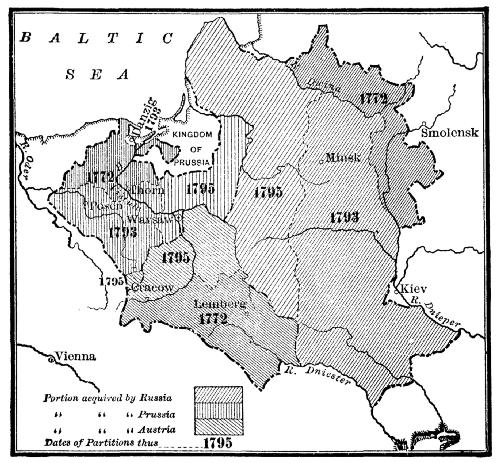
first partition of, 521, 583 f.;
Napoleon's campaign in, 614;
dispute over, at the Congress of Vienna, 626 f.
Pomerania, 473.
Pondicherry, 530.
Pope, 52;
origin of name of, 52, note; 54 f., 66;
alliance of, with Franks, 72 f., 75 f.;
opposition to iconoclasm, 74, 85;
relations of, with Otto the Great, 151 f.;
position of, in tenth and early eleventh centuries, 161;
election of, 162;
powers of, claimed for by Gregory VII, 164 f.;
position of, in the Church, 202 ff.;
during the Great Schism, 310 ff.;
attitude of, toward councils, 438;
attitude of, toward Italian unity, 639, 647;
position of, since 1870, 667.
Popular sovereignty defended by Rousseau, 552.
Port Mahon, 532.
Portuguese, explorations by, 347 f.;
colonies of, 348, 527, 685.
Praise of Folly, by Erasmus, 383, 427.
Prayer-book, English, 435, 458, 482, 491.
Preaching Friars, 231.
Prefects, French, 599.
Presbyterian Church, 425 f., 459, 482 f.
Presbyters, 19 f., 426, note.
Press, censorship of, in the eighteenth century, 549.
Pressburg, Treaty of, 611.
Pride's Purge, 486.
Priest, 20;
duties of, 208 f.
Prime minister, 526.
Prince Charlie, 527.
Prince of Wales, origin of title of, 278.
Printing, invention of, 337 f.;
modern methods of, 678.
Privileges in France, 540;
abolition of, 567.
Protestant, origin of term, 416 f.
Protestant revolt, conditions explaining, 377;
course of, in Germany, 405 ff.
Protestant union of German princes, 415, 466.
Protestantism, in Germany, 418 ff.;
in Switzerland, 423 ff.;
in England, 430–435;
in the Netherlands, 447 ff.;
in France, 451 ff.
"Protests" of the French parlements, 547.
Provençal language, 254;
troubadours' songs in, 256.
Provisors, statute of, in England, 308.
Prussia, 474, 515 ff., 544;
war of, with France, 581, 583 f., 593, 613 f.;
reforms of Stein and Hardenberg, 622 f.;
after 1815, 626 f., 631;
in 1848, 646;
strengthening of army of, 656 f.;
war with Austria (1866), 660;
war with France (1870), 662 f.;
predominating influence of, in the German empire, 666.
Prussians conquered by the Teutonic knights, 196.
Ptolemy's estimate of size of the world, 350.
Pufendorf, 508.
Purgatory, 212.
Puritans, 482, 483 and note, 491.
Quakers, 491.
Quebec, 528, 530.
Racine, 500.
Railroads, development of, 678 f.
Rajah, 529.
Raphael, 344 f.
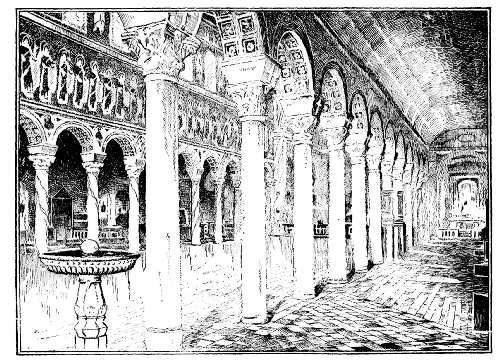
Ravenna, interior of a church at, 29.
Reaction, after Napoleon's downfall, 628;
in Germany, 634 f.
Reason, worship of, 589.
Reform Act, English, 682, note.
Regalia, 177.
Regensburg, formation of Catholic party at, 412.
Regular clergy defined, 59.
Reichsdeputationshauptschluss, 603.
Reign of Terror, 537, 573, 588 ff.;
customs of, abolished, 607.
Relics, German collections of, 377 f.
Relief, 108, note.
Religious equality, 683.
Rembrandt, 346.
Renaissance, 321, 329 f.
Republic, the "red," in France, 643.
Republican calendar, 591.
Republican party in France, origin of, 576.
Restoration in England, 490.
Reuchlin, 380.
Revolution of 1848, 642 ff.;
results of, 653.
Revolutionary Tribunal, 588.
Reynard the Fox, 256.
Rhine, left bank of, ceded to France, 603.
Rhine, the Confederation of the, 612 f.
Richard I, the Lion-Hearted, 126 f., 144, 197 f.
Richard II of England, 291, 315.
Richard III of England, 297.
Richelieu, 458, 467, 495;
intervenes in the Thirty Years' War, 471 f.
Rights of Man, Declaration of, 568 ff.
Rising in the north of England, 460.
Roads, 12;
poor, in the Middle Ages, 98, 242.
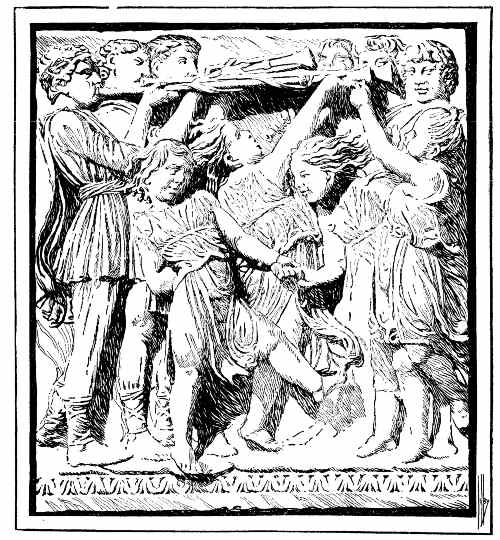
Robbia, Luca della, 343.
Robert Guiscard in Naples and Sicily, 180, note.
Robespierre, 589, f.
Rois fainéants, 38.
Roland, Song of, 83, note, 255.
Rollo, 122 f.
Roman Church, the mother church, 49 f.
Roman Empire, 8 ff.;
reasons for decline of, 12 ff.;
religious revival in, 18;
"fall" of, in the West, 27;
relations of, with Church, 47;
continuity of, 84 f.
Roman law, 11;
retained by Theodoric, 29;
supplanted by German customs, 40;
study of, revived, 177, 269.
Romana lingua, see French language.
Romance languages, derivation of, 251 f.
Romances, mediæval, 254 f.
Rome, city of, 26, 53, 305, 310;
ascendency of, in art, 344;
sack of, 417, note;
made a republic, 648;
added to the kingdom of Italy, 667.
Romulus Augustulus, 28.
Roncaglia, Frederick I holds two assemblies at, 176 f.
Roncesvalles, Pass of, 83, note.
Rossbach, battle of, 520.
"Rotten boroughs," 682, note.
Roumania, 669 f.
Roumelia, Eastern, 670, note.
Roundheads, 485.
Round Table, Knights of the, 255.
Rous, 510.
Rousillon, 471 f.
Rousseau, 551.
Royal library of France, 501.
Rubens, 346.
Rudolf of Hapsburg, 355.
Rule of St. Benedict, 57 f.
Rump Parliament, 487 f.
Rurik, 510.
Russia, 509 ff.;
relations of, with Napoleon, 614, 620 f.;
Crimean War of, 668 f.;
recent expansion of, 686.
Sacraments, 210 f.;
attacked by Luther, 397 f.;
confirmed by the Council of Trent, 439.
Sacrosancta, decree, 317.
Sagas, 99, note.
St. Bartholomew's Day, massacre of, 455 f.
St. Bernard, 197, 219, 268.
St. Dominic, 229 f.
St. Francis of Assisi, 225 ff., 342.
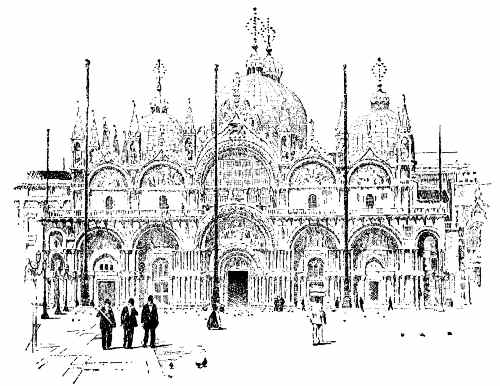
St. Mark's church at Venice, 323.
St. Meinrad, 423.
St. Omer, terms of charter of, 240.
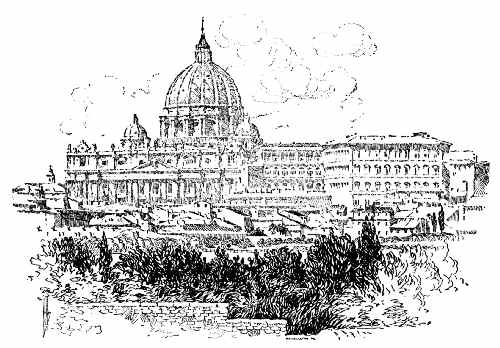
St. Peter's Church at Rome, 344.
St. Petersburg, founding of, 512 f.
Saint-Simon, 500.
Saladin takes Jerusalem, 197.
Salamander, mediæval account of, quoted, 260.
Salisbury, oath of, 137 f.
Salt tax, French, 540.
Saracens, see Mohammedans.
Saratoga, battle of, 534.
Sardinia, kingdom of, 628.
Satires of the sixteenth century, 406.
Savonarola, 361 f.
Savoy, France deprived of, 625.
Saxons, 27, 79 ff., 98;
settle in England, 60;
rebel against Henry IV, 166.
Saxony, 179 f.;
electorate of, 372;
question of, at the Congress of Vienna, 626 f.
Scandinavian kingdoms, 468 f.
Schism, the Great, 310 f., 314 f.
Schleswig-Holstein affair, 657 f.
Schoifher, Peter, 338, note.
Scholasticism, 272 f.
School of the palace, 90.
Schools established by Charlemagne, 88 f.
Science, mediæval, 260, 356;
modern methods of, 678 ff.
Scotch people, 280 f.
Scotland, 135, 278 ff., 459;
under the same ruler as England, 476;
Charles I at war with, 483;
union with England, 524;
welcomes the Young Pretender, 526 f.
Sculpture, mediæval, 262, 265 f.;
Renaissance, 340.
Secular clergy defined, 59.
Sedan, battle of, 663.
Seigneur, derivation of, 106, note.
Seneca, opinion on origin of practical arts, 14.
Senior, late Latin, 106, note.
Senlac, battle of, 136.
Sentences of Peter Lombard, 210, 425.
Sepoys, 531.
September massacres, 582.
Serfdom, 16, 234;
disappearance of, in England, 290 f.;
abolished in France, 567;
in Prussia, 622.
Serfs, coloni resemble the, 16, 100;
condition of, 234 ff., 414. See also Serfdom.
Servia, 668 ff.
Sevastopol, 669.
Seven Years' War, 519 f.;
in India, 530 ff.
Sévigné, Madame de, 500, 505.
Sforza family, 327.
Shakespeare, 477 f.
Sheriffs appointed by William the Conqueror, 137.
Ship money, 481, 484.
Shires, 135 and note.
Sicily, 180, 182, 185, 360, note.
Sickingen, Franz von, 406 f., 409 f.
Sigismund, Emperor, 314 f.
Silesia, 518 f.
Simon de Montfort leads Albigensian crusade, 223.
Simon de Montfort, Parliament of, 146 f.
Simony, 158 f., 161, 218.
"Simple priests" of Wycliffe, 309.
"Six Articles," the, 431 f.
Slavery in Roman Empire, 13 ff.
Slavs, 82;
on the borders of Germany, 150, 153;
settlement of, in Europe, 509, 648 f.
Smith, Adam, 677.
Social Contract of Rousseau, 551.
Social Democrats, 643.
Sophia of Hanover, 524.
Sorbonne, 452.
South Bulgaria, 670, note.
Southampton granted a charter, 240.
Spain, 26, 70 f., 83, 346;
maritime power of, 351;
under Charles V, 354, 356 f., 445, 451, 455;
decline of, 464;
colonies of, 527;
Napoleon attempts to control, 618 f., 623, 637;
loses American colonies, 684 f.
"Spanish fury," 450.
Spanish language, derivation of, 251.
Spanish March, 83, 94.
Spanish Netherlands, see Netherlands.
Spanish Succession, War of the, 506 ff.
Spectacles, invention of, 352.
Speyer, Edict of (1526), 415 f.;
protest of, 316 f. and note.
Spice trade, importance of, 348 f.
Stamp Act, 532.
Star Chamber, Court of, 484.
State, character of, in Middle Ages, 48, 165.
States of the Church, see Papal states.
Statutes of Laborers, 289.
Steam, application of, 675 f.
Steamboats, 678.
Steel, 676.
Steelyard, 248.
Stein, reforms of, 622, 631.
Stem duchies in Germany, 148 f.
Stephen, king of England, 140.
Stone of Scone, 280.
Strafford, 484.
Strand laws, 247.
Strasburg, 473;
seized by Louis XIV, 504, 663 f.
Strasburg oaths, 94.
Stuart, house of, 475.
Students' associations in Germany, 633.
Subdeacon, 20.
Subinfeudation, 106 f.
Subtenant, 107.
Subvassals, 107 ff.
Suffrage, extension of, 682.
Sully, 457 f.
Sutri, the council of, 160.
Suzerain, 106 and note.
Sweden, 468 f., 473;
under Charles XII, 513 f.
Swiss mercenaries, 423 and note.
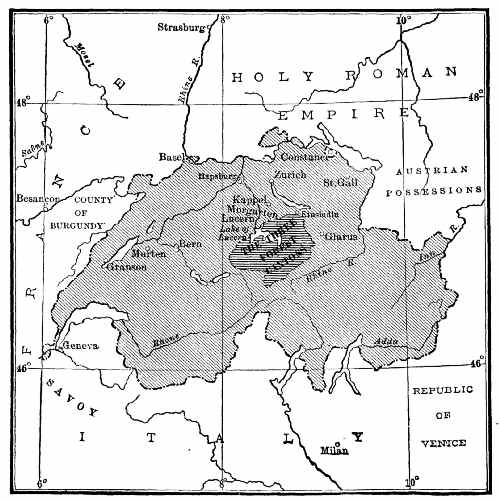
Switzerland, origin of, 421 ff.;
Protestant revolt in, 423 ff., 473, 605, 626.
Symbolism, mediæval, 261.
Syria, Bonaparte's campaign in, 598.
Taille, 299, 540, 545 f., 556, 559.
Talleyrand, 626.
Tamerlane, 529, note.
Tancred, 180 f.
Tartars, 510.
Taxation, in Roman Empire, 13;
papal, 204, 384;
of church property, 304;
without representation, 533;
reform of, in France, 567.
Teachers, government, in Roman Empire, 12, 32.
Telescope, 67.
Templars, 195 f., 306.
Temporalities, 156.
"Tennis-Court" oath, 564.
Test Act 492;
repeal of, 683.
Tetzel, 390.
Teutonic order, 195 f.;
in Prussia, 515 f.
Theodoric, 28 ff.
Theodosian Code, provisions of, relating to the Church, 21.
Theodosius the Great, 22 f., 27.
Theology in University of Paris, 269.
Thermidor, 9th, 590, note.
Theses, Luther's ninety-five, 390 f.
Third estate, 543 ff.
Thirty-Nine Articles, the, 435.
Thirty Years' War, 465 ff.
Thomas à Becket, 142 f.
Thomas Aquinas, 231, 272.
Three Henrys, War of the, 456.
Tilly, 469 f.
Tilsit, treaties of, 614.
Timur, 529, note.
Tithe, 81, 202.
Titian, 346.
Toleration, religious, in Germany, 415 ff., 419 f.;
in France, 454 ff.;
modern, 683.
Tolls in Middle Ages, 246 f.
Toul, 452, 473.
Toulouse, counts of, 124, 256.
Tourneys, 118.
Tours, battle of, 71 f.
Towns, representatives of, summoned to Parliament, 147;
in Middle Ages, 174, 200, 232, 237 f., 248;
German, 373, 375, 604;
growth of the modern, 680.
Trade, mediæval, 238, 242 f.;
restrictions on, abolished, 680.
Trafalgar, battle of, 615.
Transubstantiation, 213, 309, 425, 431.
Treasury of "good works," 378.
Trent, Council of, 437 ff.
Treves, 12;
electorate of, 372.
Trial by jury, 142.
Trials, mediæval, 41, 140 ff.
Triple Alliance, 502 f.
Troubadours, 256.
Troyes, Treaty of (1420), 293.
Truce of God, 118.
Tsar, title of, 511, note.
Tudor, house of, 296 f.
Tuilleries, 581, 664.
Turenne, 472.
Turgot, 553, note, 554 f.
Turkey in Europe, 535;
disruption of, 628, 667 ff.
Turks, 188, 190 f., 376, 514, 517.
Twelve Articles of the peasants, 413 f.
Ulfilas translates Bible into Gothic, 252.
Ulm, 374, 611.
Unction, sacrament of extreme, 211.
United Provinces, 450, 473.
Unity of the Church, by Cyprian, 20.
Unity of history, 4.
Universities, mediæval, 269 f., 333, 356;
German, 380, 398.
Urban II, 188.
Usufruct, 105.
Usury, doctrine of, 245.
Utopia, by Sir Thomas More, 427.
Utrecht, Union of, 450;
Treaty of, 507.
Valentinian III, decree of, 51.
Valois, house of, 455.
Van Dyck, 346.
Van Eyck brothers, 346.
Vandals, 26, 33.
Varennes, flight to, 575 f.
Vassals, origin of, 102 f., 106;
obligations of, 110 f.
Vasco da Gama, 348.
Vassy, massacre of, 455.
Vatican library, 337.
Velasquez, 346.
Vendée, La, revolt of, 587.
Venerable Bede, the, 56, 64.
Venetia given to Austria, 626; 655;
ceded to Italy, 667.
Venice, founding of, 27;
commerce of, 194, 198 f., 243 f., 347;
government of, 321 f.;
painting at, 346;
war of, with League of Cambray, 364 f.;
destruction of republic of, 595;
in 1848, 648. See Venetia.
Verdun, 452, 473;
Treaty of, 93;
fall of, 582.
Versailles, 498.
Vespasiano, Italian bookseller, 337, note.
Veto, royal, in England, 524 and note.
Victor Emmanuel, 650, 654 f.
Vienna, siege of, by Turks, 517 f.;
Congress of, 625 ff.;
revolution of 1848 in, 645, 650.
Vikings, 99, note.
Villa, Roman, 14, 100.
Villehardouin, 260.
Visconti, 324 f., 364.
Visigoths, see West Goths.
Voltaire, 519, 549 ff.
Vulgate, 51, 439.
Wager of battle, 41.
Wagram, battle of, 619.
Waibling, castle of, 179, note.
Waldensians, 221 f., 452.
Waldo, Peter, 221.
Wales, 135, 277 f.
Wallenstein, 468 and note, 469 f.
Wallingford, charter of, 240.
Walpole, 526.
Walther von der Vogelweide, 258, 384.
War and Peace of Grotius, 508.
War, neighborhood, 117 ff.
War of the Barons, 146 f.
Warfare, modern, 684, 686.
Wars of the Roses, 296 ff.
Warsaw, grand duchy of, 614, 626.
Wartburg, 405;
festival at the, 633.
Washington, George, 533 f.
Waterloo, battle of, 624.
Watt, James, 675.
Welf, 179.
Wellington, 623 f.
Wessex, 133.
West Frankish kingdom, 94. See also Franks.
West Goths, 25 f., 36, 39, 71.
Westphalia, kingdom of, 614, 623.
Westphalia, Peace of, 472 f.
Whitby, Council of, 62.
White Hill, battle on the, 467.
William the Conqueror, claim of, to English crown, 136;
policy of, in England, 136 ff., 165.
William III of England, 492 ff., 505, 506, 523 f., 525.
William of Orange, king of England, see William III.
William of Orange (the Silent), 448 ff.
William I of Prussia, 656 f.;
chosen emperor, 665.
"Winter king," 467.
Witenagemot, 135, 137, 147.
Wittenberg, University of, 389;
reform at, 407 f.
Wolfram von Eschenbach, 258.
Wolsey, Cardinal, 367, 427 ff.
Worms, council of, 167;
Concordat of, 171;
diet of, 400 f.;
Edict of, 403 f., 415.
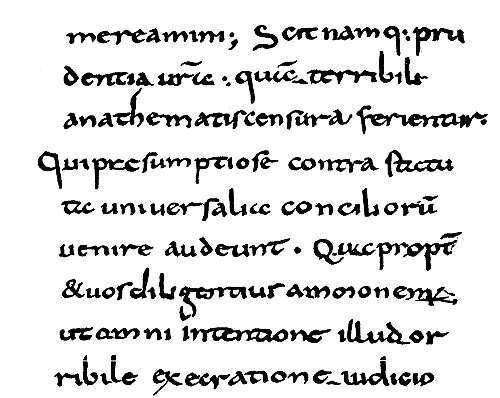
Writing, style of, used in Charlemagne's time, 89.
Würtemberg, 372;
duke of, assumes the title of King, 612;
granted a constitution, 635.
Wycliffe, John, 308 f.;
influence of, on Huss, 315, 393.
Xavier, 442.
"Yea and Nay," by Abelard, 268.
York, house of, 296, 297, note.
Young, Arthur, 544.
Young Italy, 639.
Young Pretender, 526 f.
Zealand, 449.
Zipangu (Japan), 347.
Zollverein, 635.
Zurich, 421 f., 424.
Zwingli, 416, 420, 423 ff.





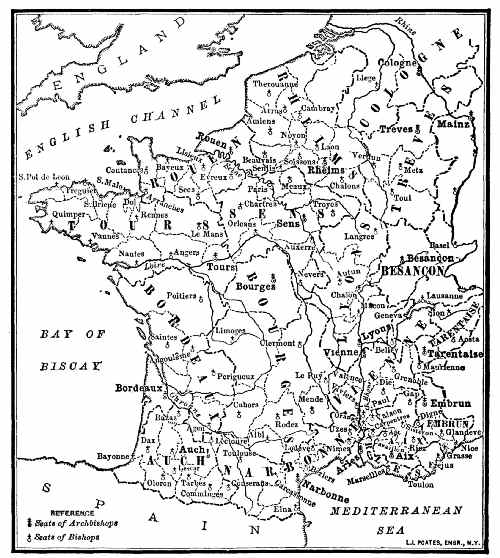










 ; those of the
bishops by
; those of the
bishops by  .
.