There is an old story, told in many countries
through the Middle Ages, of a knight who got into
trouble, and was offered pardon if within a year he
brought the correct answer to the question, “What
do women most desire?” At the last moment he
saved himself by answering, “Their own way,” or
words to that effect.
This is a man’s story, and scores the man’s point in
the perennial strife of wits between the sexes; but the
answer needs but little modification to hold good of
men and women alike. When one takes up a book
like this, dealing with the lives of men who deliberately
and voluntarily left the homes of their fathers to
become citizens of a strange land, one naturally asks
what they wanted, and equally naturally goes on to
ask what men in general want most in life.
Many answers have been given to the question,
and none can be final, because men and circumstances
differ so widely. But I should like to propose one that
seems to me of more general application than most.
Men want most to count among their fellows for
what they are worth. This desire is more persistent
than love, more universal than the thirst for wealth
or power, more fundamental than the demand for
pleasure. It shows itself in early childhood, it steers
the ambitions of manhood, its fulfillment is the crown
of old age. The degree of the chance to achieve it is
the measure of the desirability of a country as a place
to live in; and it is fair to say that the men whose lives
are told in this book, and we others who have come
to America of our own accord, have done so because
we believed that these United States, above all
countries of the world, give men this chance to make
the most of themselves.
“To count among their fellows for what they are
worth”—see what this implies. First, and most
superficially, it means recognition of ability and
character by society. Carried to the highest point, it
would mean the absence of handicaps, of privilege, of
“pull”—the equality of opportunity for achieving
distinction which has always been the theory of this
democracy. Of course, neither here nor elsewhere is
this perfect condition reached; but the biographies in
this book tend to show that there has long been a large
degree of it here, and our social progress has this condition
frankly accepted as a goal.
Secondly, it implies a basis for self-respect. Deeper
than the grudge that a man has against the society
which refuses him due credit for his achievement is the
grudge that a man feels when he has to admit to himself
that his achievement is not really creditable.
The worst curse of slavery was not its external restrictions,
but its effect in crushing the slave’s sense
of the potential nobility of his own soul. The feeling
that a man has a fair chance to be taken at his full
value is an exhilarating feeling, liberating his powers,
freeing him from the gnawing pains of mortified
vanity, impelling him to hold his head up and look
his neighbor in the eye.
Thirdly, it means a chance to do one’s job—one’s
own job—and to do it to the limit of one’s capacity.
This is the foundation on which both recognition and
self-respect must be built. “Blessed is the man,”
says Carlyle, “who has found his work; let him seek
no other blessedness.” Because a man is freer in
America to pass from one calling to another, from one
class to another, from one region to another; because
here people are willing to be shown what he can do;
the chances are greater than elsewhere that he will find
the task and circumstances which fit him best and let
him count for most.
If you read through these nine lives, you will see
that what each of these men was really after, and
what each found more fully here than in the old world,
was not wealth or power or pleasure of the senses, but
the chance to do the biggest job of which he was
capable. Three of them, indeed, did gather great
wealth, but it was either a by-product of the main
achievement of their lives, or the instrument of that
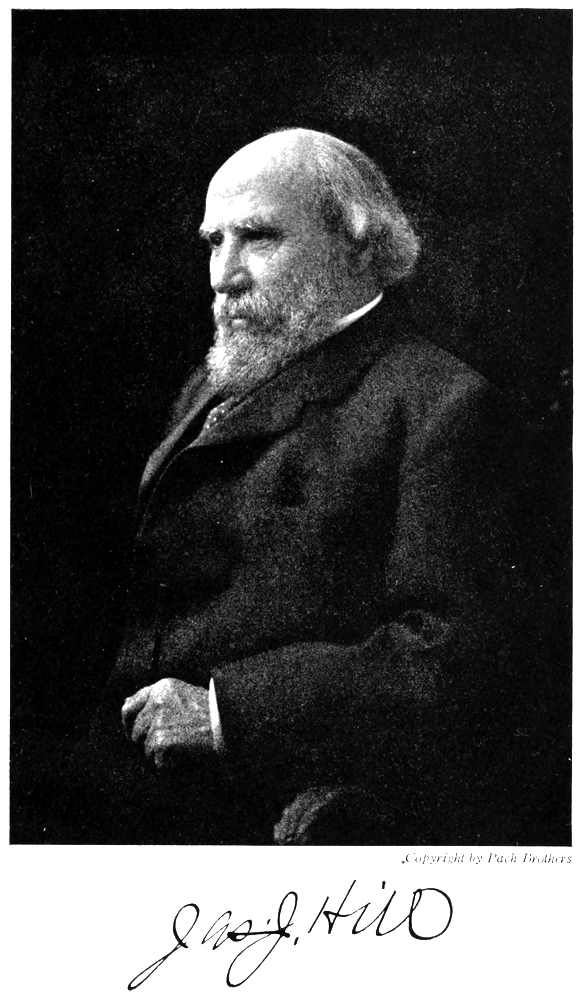
achievement. The vision that inspired James J. Hill
was not a colossal fortune, but the opening up and
populating of a great territory with farmers leading
large, wholesome, and prosperous lives. Two of the
nine were artists, who neither asked nor received great
financial rewards, but who found here the chance to
create beauty and to form taste, and in seizing this
chance they found their supreme satisfaction.
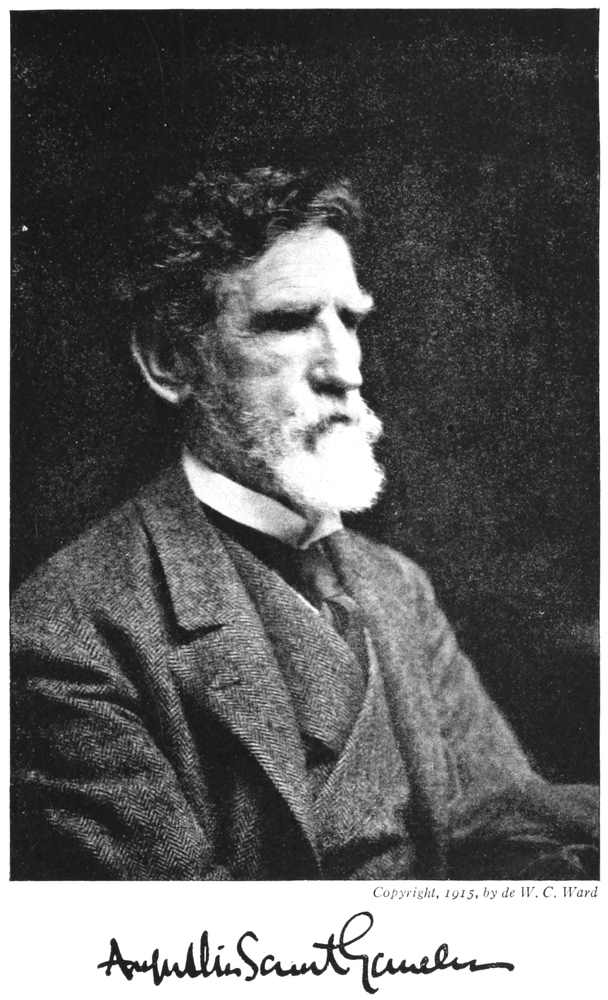
Of these nine men I have known only one, Augustus
Saint-Gaudens; but none could have illustrated better
the spirit in which work has to be done if it is to yield
its greatest reward. What struck me in watching
Saint-Gaudens work was his absolute indifference to
what a statue would cost him in pains or in time, or to
what it would bring him in money, and his complete
absorption in making it as nearly perfect as he could.
He did not “count the mortal years it takes to mould
the immortal forms.” He would work for hours on the
modeling of an inch of surface, seeking for an exactness
of result imperceptible to the lay bystander.
He would never be hurried—and he found America
willing to wait.
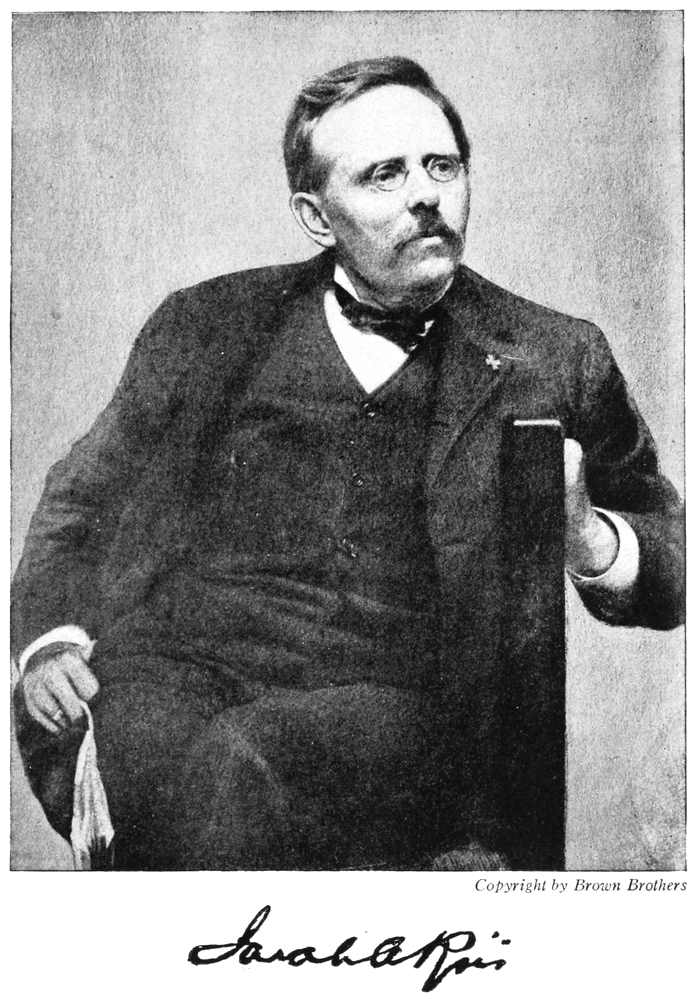
The same spirit worked in Ericsson in his inventions,
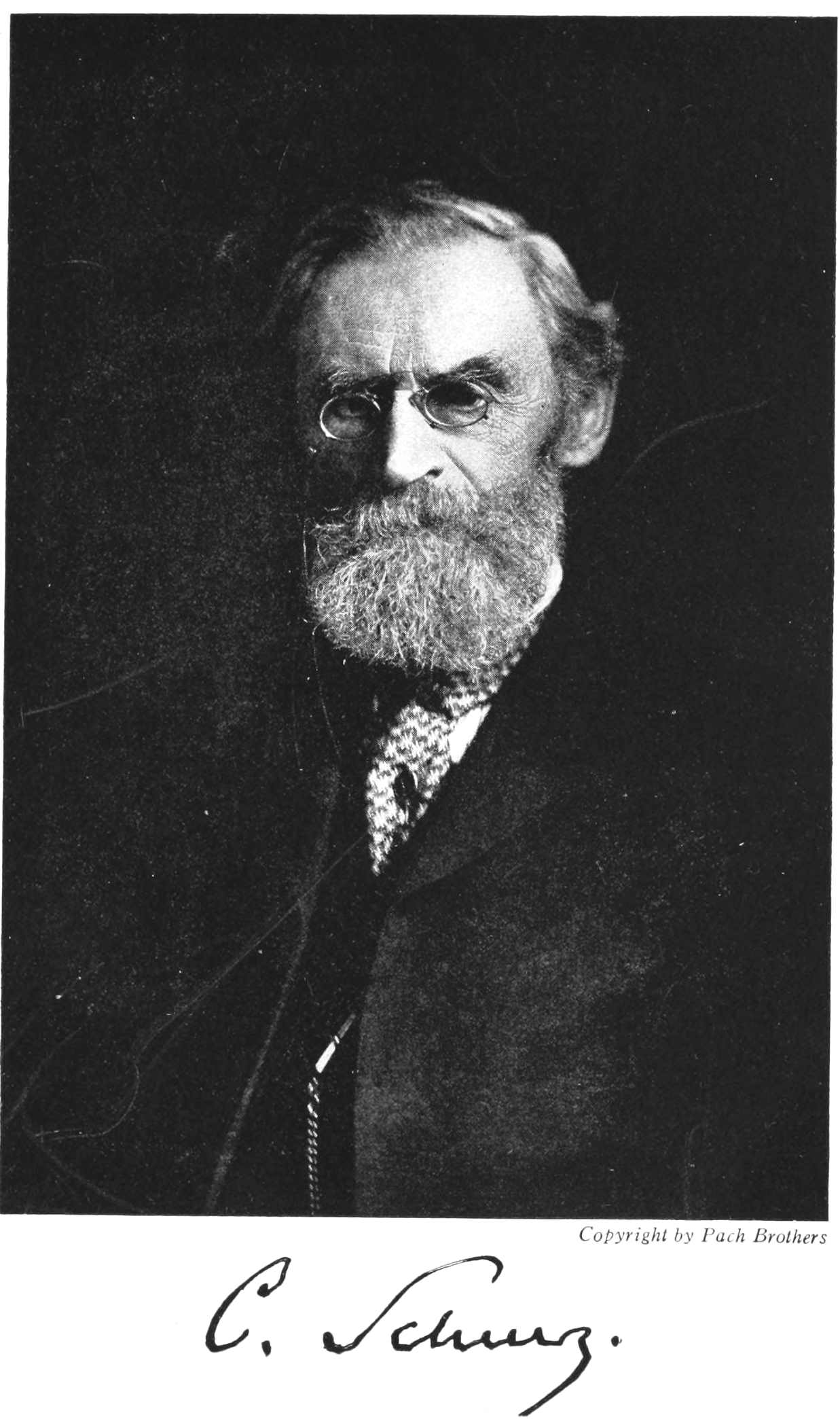
in Carl Schurz in his unceasing quest for
political justice, in Riis in his cleaning up of New
York City. Some of these men were not outstanding
intellects, but each cared intensely about his job, and
to each America gave his chance.
I have a quarrel with the title of this book. “Americans
by Choice” it should be, not “Americans by
Adoption.” “Adoption” suggests that America
adopt us. We who have of our own accord left the
old world and taken up citizenship in the new know
that we have chosen her, not she us. We can leave to
the native-born their natural pride in their birthright,
but we can claim that we pay a greater compliment
to this land than can these others, for our
citizenship is not the result of an accident but of our
free choice. And we have paid our price. We, and we
alone, know what it has cost to leave behind scenes
and traditions and affections which clung close to the
heart. But that we have left them is proof that we
prized still more highly the opportunity that America
offered us to count for what we are worth.
In the face of this proof we have no apologies to
make. We call our nine worthies to witness; and,
while not forgetting our due of gratitude for our
chance, we point to the use we make of the chance,
and ask the native-born to acknowledge that the
balance swings level. More than this we cannot ask;
less than this we will not take. Granted this, without
grudging and without condescension, we can quiet
all fears of divided allegiance, and work with our
fellow citizens for the perfecting of the social order in
which these wise and worthy men found an environment
for accomplishment of the first rank, and with
which we have thrown in our lot in becoming Americans
by choice.
W. A. Neilson.
Northampton, Massachusetts March, 1920
AMERICANS BY ADOPTION
I STEPHEN GIRARD
Born in Bordeaux, France, 1750 Died in Philadelphia, 1831
The old French city of Bordeaux has for centuries
been one of the greatest maritime cities of Europe.
Situated on the low shore of the River Garonne, its
stone quays have for generations been close-packed
with the ships of a world-wide commerce. Under the
Roman Empire it was a flourishing city; in the fourth
century, surrounded by massive walls and lofty towers,
it became the capital of Aquitania Secunda; and
later, for three hundred years, it was ruled by English
kings. Here reigned Edward, the Black Prince, and
here was born his son Richard. Between the Bordeaux
merchants and the English an extensive commerce
developed, and as years passed by, this commerce
branched out into a world-activity that to-day maintains
relations with all civilized lands, but chiefly, as
has been the case for a century and a half, with England,
South America, the West Indies, and the United
States.
In the year 1750 the stone wharves along the river
bristled with the masts and spars of the fleets of the
Bordeaux merchants. Small ships they were compared
with the great steel cargo-carriers that to-day
line the stream; but they were staunchly built and
strongly manned, and their rich cargoes, safely transported
from the distant Indies, filled the city with
wealth and the romance of blue salt water and foreign
lands.
In that same year, in a house in rue Ramonet au
Chartrons, then a suburb of the city, was born
Stephen Girard, son of Pierre Girard, Captain of the
Port of Bordeaux. Pierre the father was a man of
some importance and a prosperous merchant in the
city. In 1744, during the War of the Austrian Succession,
he had served with honor in the French navy,
and at the blockade of Brest, he had received the
Military Order of Saint Louis for his heroic action
in putting out the flames on his ship, which had been
fired by a fire-ship sent into the French squadron by
the British. In later years he became Burgess of Bordeaux,
and during this period he began to trade with
the French ports in the island of San Domingo in the
West Indies. Of such stock was the boy Stephen;
born with the romance of the sea as his inheritance
and with the heroic memory of his father to inspire
him, but born with a handicap which, however, he
never permitted to retard his progress; for from birth
he was sightless in his right eye.
It was natural that the boy should turn to the sea.
When he was twelve years old, the death of his mother
left him a half-orphan. His education had been of the
most general nature. There was little to draw him
into the occupations of the land. To the lonesome lad
the sea offered at least the promise of adventure, and
perhaps the rewards of wealth and distinction. In
the year 1764 Stephen was fourteen. His father’s
trading activities with the West Indies afforded the
opening he desired; and with his few belongings packed
in a sea-chest, he shipped as cabin-boy on a small
merchantman to Port-au-Prince. Five more voyages
followed, and in 1773 he was licensed to act as “captain,
master, or pilot of any merchant ship he could
obtain.”
A year later as “officer of the ship” La Julie, he
sailed from Bordeaux for Port-au-Prince. It was the
final severance of his tie with France. The cargo consisted
chiefly of general merchandise, in which Stephen
had purchased a small share, bought from Bordeaux
merchants with notes, or promises to pay at some
later date. But business was slow in the islands, and
the goods sold at a loss of over twenty-five per cent.
In those days a man might be imprisoned for debt,
and Girard realized that such a fate might await him
should he return to Bordeaux. Accordingly, he obtained
his discharge from the ship, and with a young
acquaintance determined to form a partnership for
the purpose of trading between the island ports. So
with many who have sought freedom in the new world,
cruel laws and the dread of an unjust imprisonment
forced Girard to forsake his native land. But the
just debt which he owed was not forgotten, and in
later years the Bordeaux merchants, whose anger he
had feared, received from him payment in full of the
merchandise they had advanced him.
In July, 1774, Girard sailed for New York with a
small cargo of coffee and sugar. It was a stirring
time in the history of the American Colonies. For a
dozen years the free spirit of the Americans had
chafed under the oppression of British rule. Open
fighting had occurred in Boston in 1770, when, in a
fight between the populace and the British soldiers,
three men were killed and eight were wounded. Two
years later the British revenue schooner Gaspee was
seized and burned by the people of Rhode Island, and
in 1773 the citizens of Boston, disguised as Indians,
emptied into the water of Boston Harbor 342 chests
of tea from an English merchantman, as a protest
against taxation without representation in Parliament.
In retaliation, acts obnoxious to the people of
Massachusetts were passed by the British Government;
and in answer to these, on September 5, 1774,
the Continental Congress was assembled at Philadelphia,
and a declaration of rights was drawn up and
published, defining the spirit of the American Colonies
and indicating the consequences which must follow
further interference with the liberty of the American
people to levy their own taxes and make their own
laws in their own Colonial assemblies.
Backing words with deeds, the Colony of Massachusetts
set up its own government in defiance of
General Gage, the British representative, and placed
at its head John Hancock, an influential merchant of
Boston. Twelve thousand volunteer militiamen were
organized,—of whom about one third were known as
“minute men,” or soldiers ready to march or fight at
a minute’s notice,—and stores and ammunition were
collected. Into such a scene sailed the young French
boy with his cargo of sugar and coffee; and it is not
surprising that his liberty-loving spirit sympathized
with the indomitable determination of the colonists
to rid themselves of the yoke of an old-world nation,
and led him to seek employment in New York City,
with some merchants there who traded with San
Domingo.
First as mate and soon as captain, Girard steadily
sailed back and forth between New York and the
trading town of Le Cap in San Domingo. As captain
of the little vessel, he was allowed by the owners the
privilege of carrying a limited store of goods for his
own venture, in addition to the regular cargo. His
capital was small, but no opportunity to increase it
was ever allowed to pass, and each voyage showed a
steadily increasing profit to the credit of the youthful
trader.
Meanwhile, in America, the fighting at Lexington
and Concord had announced to the world the determination
of the liberty-loving colonists to cast off
British rule, and in 1775 the War of American Independence
was begun. But important as this war is in
American eyes, it was but one of several difficulties
which confronted Great Britain: three years later
war was begun between that country and France, and
in 1779 Spain also declared war on Great Britain; this
was followed in 1780 by the declaration of war between
Great Britain and Holland.
Immediately all American shipping became subject
to seizure by British vessels, and accordingly Girard
availed himself of the neutrality of France and shifted
to the protection of the French flag. But the dangers
of the sea, increased by the hazards of war, were enormous,
and in 1776 Girard found himself practically
shipwrecked off the Delaware coast. With difficulty
he brought his ship to shore, and soon found himself
in the little city of Philadelphia, which was destined
in afteryears to claim him as its foremost citizen.
Philadelphia was a town of twenty-four thousand
inhabitants. By slow-sailing packets its people kept
uncertain contact with the news of the old-world
cities; stage coach and post-rider kept them informed
of home affairs. A few small newspapers reported
the stirring events then occurring. But Girard was
not particularly concerned with the struggle of the
American Colonies. He was still a Frenchman trading
with the West Indies, concerned only with his
ships, his markets, and his fortune. Philadelphia
seemed to him to be an enterprising and growing
place, and accordingly he settled there. It was perhaps
the most important decision in his life.
As he was forced by the presence of British war vessels
off the coast to abandon his trading ventures with
the West Indies, Girard’s activities were for two years
limited to local affairs. During the blockade an event
took place which gave him a real tie with the struggling
states: he married an American, Miss Mary
Lum. In 1778 the British forces occupied Philadelphia
and seized the Water Witch, the first vessel
owned entirely by the enterprising Frenchman.
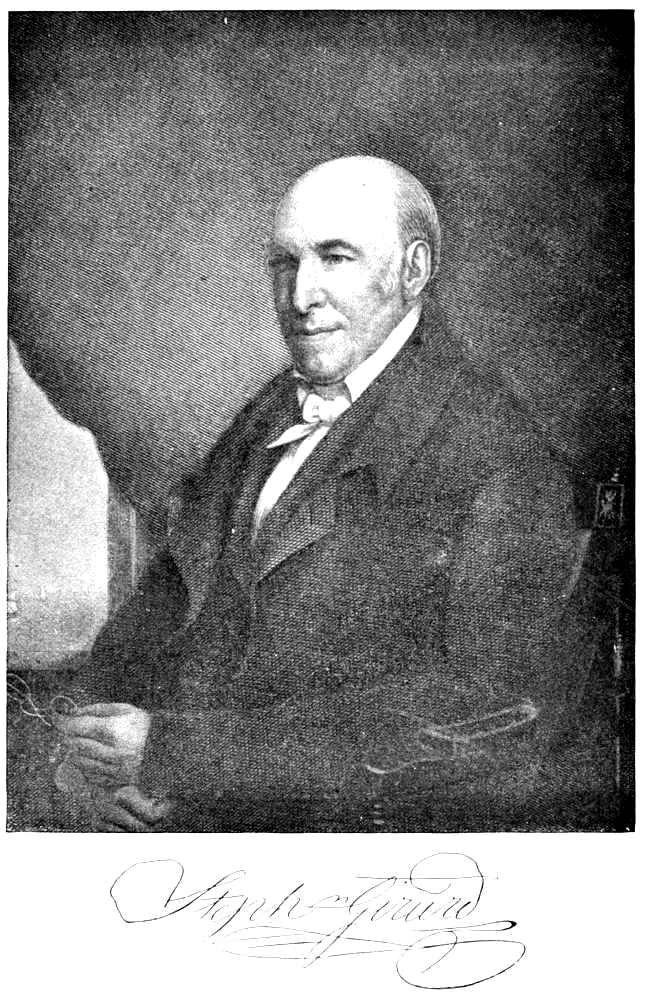
Stephen Girard (signature)
Philadelphia, however, was soon again in American
hands, and the sea communication for foreign trade
was restored. With the reopening of commerce Girard
formed a partnership with his brother, who was now
living at Le Cap, for the purpose of trading between
Le Cap and Philadelphia. Salt, syrup, sugar, and
coffee were desired by the Americans, and by their
importation he saw a “big profit.”
Business prospered, and in 1779 Girard wrote to his
father: “Tired of the risks of a sailor’s life, I determined
to settle ashore.... I have taken a wife who
is without fortune, but whom I love and with whom I
am living very happily. By hard work I have finished
furnishing my house, increased my capital to thirty-five
thousand and hope to make good all my past
losses.”
Peace came in 1783, and with it ports were reopened
and trade resumed. Convinced that by owning
his own vessels his profits on each trading voyage
would be largely increased, Girard became the sole
owner of a small brig, the Two Brothers, which was
built by him for his particular purposes. It was the
actual beginning of that mercantile career which was
to make him in time the richest merchant in America.
The Two Brothers sailed for Le Cap with a
cargo of flour and lumber. The return cargo consisted
of molasses, sugar, coffee, and soap. The profits each
way were large, and a second voyage to Le Cap was
promptly undertaken.
Meanwhile, Girard, realizing the opportunities
which the new Republic promised, had become a citizen,
taking the oath of allegiance at Philadelphia on
the twenty-seventh of October, 1778. Among the first
of the millions of old-world people who in the years
which followed were destined to renounce the oppressive
institutions of their native lands and become naturalized
citizens of the free United States, it is particularly
interesting that Girard was born in a country
which likewise was soon to cast aside the rule of kings
and establish the institutions of a republic.
From now on Girard’s fortune seemed steadily to
advance. In 1789 George Washington became the
first President of the new Republic. With the cessation
of war at home and abroad, commerce was
again resumed, and an era of prosperity gave to such
men as Stephen Girard the opportunity to reap richly
of the world’s commercial harvest.
Crop failures in France had created a demand for
foreign wheat, and to stimulate its importation the
French Government offered a premium to anyone
importing it. It was an attractive speculation, and
Girard, with his eye ever scanning world opportunities
while others passed them by, saw his chance to
turn an honest penny. Promptly his own ships and
other chartered vessels were filled with grain, and an
abundant profit was quickly realized.
In these early days, the yellow fever, now eradicated
by modern knowledge of sanitation, took each
year its death-toll among the inhabitants of southern
countries, and from time to time extended far beyond
its normal field. Girard, and, in fact, most of the
American merchants of that day, had conducted a
large business with San Domingo, the principal trading
centre of the West Indies. In 1791, however, the
large negro population of the island revolted, and fire,
slaughter, and plunder soon turned the prosperous
community into a wilderness. White refugees crowded
every outgoing vessel and by the hundreds began to
pour into Philadelphia and other American seaboard
cities. “Take advantage of my brig Polly,” wrote
Girard to a friend on the unhappy island, “if she still
be in the harbor, to come here and enjoy the peace
which our Republican Government, founded as it is
on the rights of man, assures to all its inhabitants.”
But with the refugees came also the dreaded plague,
and baffling the skill of the doctors, it spread through
Philadelphia until the streets were crowded with funerals
and the church-bells seemed continually to toll.
There were few hospitals in those days, and the Philadelphia
hospital at Bush Hill was not only crowded
far beyond its capacity, but was in wretched condition,
owing to the lack of attendants. Girard was put
on a committee, and that very evening reported the
immediate need of nurses and money. But Girard did
not stop with his duties as committeeman. Without
hesitation, and totally ignoring the probability of contracting
the fever himself, he and a fellow townsman,
Peter Helm, assumed active control of the hospital,
and day and night, throughout the plague, toiled at
this self-imposed work of mercy among the sick and
the dying.
Among the various accounts of the plague the
following is of particular interest in its mention of
Girard: “Stephen Girard, a French merchant long
resident here, and Peter Helm, born here of German
parents, men whose names and services should never
be forgotten, had the humanity and courage constantly
to attend the hospital, and not only saw that the
nurses did their duties, but they actually performed
many of the most dangerous, and at the same time
humiliating services for the sick with their own
hands.”
When the plague was over, Girard returned to his
business. In February, 1793, France declared war on
Great Britain, and immediately British troops and
ships seized the French cities in San Domingo. Ships
of war and privateers of both countries promptly
swarmed over the seas. Decrees were soon published
by the nations at war, forbidding neutral vessels to
trade with enemy ports. The law of nations was disregarded,
and American ships were seized and confiscated.
Great Britain particularly ignored the rights
of American ship-owners, and thousands of dollars
worth of American ships and cargoes were soon in
British hands. Two of Girard’s ships, the Kitty and
the Sally, were taken. Commerce was demoralized.
In retaliation against the outrages perpetrated by
the British and the French, a “non-intercourse bill”
provided that after November 1, 1794, “all commercial
intercourse between the citizens of the United
States and the subjects of the King of Great Britain
should cease.” The bill was lost in the Senate, but
an embargo which closed all American ports to foreign
trade accomplished practically the same end. In
all, five ships belonging to Girard were now in enemy
hands.
In October, 1801, after eight years of war, peace
was concluded between France and Great Britain,
and in December the war which the United States had
been conducting against France was also ended. With
the return of peace came renewed commercial activity.
Girard at once availed himself of the opportunity,
and soon his ships were engaged in trade with the
ports of France and Russia. But this revival of commerce
was of short duration, for the unsettled state of
Europe soon resulted in new blockades of ports, embargoes,
and acts of non-intercourse against the offending
countries. Then, to complete the disaster, in
1810 Napoleon annexed Holland to France and issued
a decree “by which American ships and cargoes,
seized in the ports of Holland, Spain, France, and
Naples, to the value of ten million dollars, were condemned
and sold.” Five of Girard’s ships which had
sailed for northern ports were now seized and held by
the Danes, and it was many months before their release
could be secured. Trade with Europe was at an
end; but despite the heavy losses which Girard had
suffered, he did not hesitate or allow himself to be
mastered by the situation. If Europe was closed,
South America and the Far East were open to him,
and now his ships began new commerce with new continents,
and in December, 1810, the ship Montesquieu
set sail for Valparaiso and Canton.
During these years of commercial activity Girard
had become a large investor in real estate, and of his
profits from his trading ventures at sea he had in 1812
almost four hundred thousand dollars invested in
farm acres and lots and buildings in Philadelphia. In
1812 the United States declared war against Great
Britain. Bad feeling had long existed, due primarily
to the disregard of the British for the rights of American
vessels. For a long time Great Britain persisted
in stopping our ships, taking American seamen out of
them and forcing them to serve on British vessels. It
was more than patriotism could bear, and the nation
enthusiastically entered the war with the cry of
“Free Trade and Sailor’s Rights.” Forced practically
from the sea, Girard turned his great abilities to finance
and the service of his country.
Girard was now sixty-two years old, but age did not
deter him from a new enterprise. A bank had long been
needed in Philadelphia, and to take advantage of the
opportunity, Girard established a banking institution
with a capital of over a million dollars, which was
called Stephen Girard’s Bank. The cost of the war
which was being fought with Great Britain was a
severe strain on the finances of the United States, and
at the close of the year 1812 it became necessary for
the Treasury to borrow money or the nation would become
bankrupt. Sixteen million dollars was all that
was required, but the loan was a failure, and less than
four millions was subscribed. In April a new offering of
the loan was prepared, but again the effort to float it
ended in failure. In all only $5,838,000 was subscribed.
More than ten million dollars must still be
borrowed.
Now came an opportunity for Girard to repay to
the United States the debt of gratitude for all that his
citizenship had brought him. To the United States
he owed his all, for in this free and fearless country he
had been enabled to amass his great fortune. With
two other men of means, Girard came forward and
offered to subscribe for the entire balance of the loan.
The offer was promptly accepted, and a situation of
great embarrassment to the country was avoided.
With the defeat of Napoleon at Leipsic in 1813,
and his abdication in 1814, Great Britain found herself
free to conduct a more strenuous attack on the
United States, and for a time matters went badly
with the youthful nation. A British raid on the city of
Washington resulted in the burning of the Capitol, the
President’s house, and other public buildings; and
this was followed in September by a raid on Baltimore,
which, however, resulted in failure. Great
panic was caused by these actions, and for a time
banking was demoralized and business practically
suspended. But on Christmas Eve, 1814, a treaty of
peace was signed at Ghent, and once more Girard
promptly resumed his world-wide trading, and once
more the Stars and Stripes blew free from halyards.
Girard suffered two severe losses by reason of the
war, in the loss of his ship Good Friends and in a ransom
of $180,000 which he was required to pay for his
ship Montesquieu and cargo, captured while returning
from Canton, China. But in spite of this, so greatly
had his wealth increased, that he now paid more
than a hundredth part of the total taxes of the city of
Philadelphia and his commercial capital was sufficient
to enable him to sell goods on credit and to
carry on a maritime business throughout the world
without aid of discount. “All this,” he has stated, “do
I owe principally to my close attention to business,
and to the resources which this fine country affords to
all active or industrious men.”
In the years which followed, Girard found declining
profit in European cargoes brought to Philadelphia,
and in 1821 he began to trade heavily with the Far
East. Two of his ships, the Voltaire and the Montesquieu,
were wrecked during this period; but Girard
was as good a loser as a gainer, and pocketed his
losses with small comment. Out of his fleet only four
ships remained. Girard was now an old man, markets
were bad owing to the panic in England and on the
Continent, and the prospect for continuous profitable
trading seemed ominous. It was only natural that he
should turn from the sea.
Speculation in land had proved to be as fascinating
as his speculations in ships and cargoes. Girard began
to buy land, and soon his total holdings amounted in
all to 200,370 acres. In March 1830 he purchased for
$30,000 certain tracts of Pennsylvania coal lands
which have to-day a fabulous value. But the land
which chiefly held his interest was those few acres of
his farm. “At my age the sole amusement which I enjoy
is to be in the country constantly busy in attending
to the work of the farm generally.” The peace and
happiness of this final episode made a happy ending of
Girard’s long, useful, and successful life.
“The accumulation of money interested him but
little. He had now entered on his eighty-first year.
His will was made and his great wealth dedicated to
the good of posterity. He was under no incentive to
labor for its increase. Yet in his bank, in his counting-house,
on his farm, he continued to toil as of old from
the sheer love of work.”
At the time of his death in 1831, Girard had for
fifty-five years been a resident of Philadelphia, and
for practically his entire mature life a citizen of the
United States. His funeral was of “immense extent”;
the streets were thronged by people assembled to pay
“a last tribute of respect to a great public benefactor.”
The estate left by Girard amounted to almost
seven million dollars, an amount which, in consideration
of the times, would compare with the greatest
fortunes of the present day. By the terms of his will,
although there were many large charitable bequests,
the bulk of the fortune was bequeathed to the city of
Philadelphia, to be used in building and maintaining a
school “to provide for such a number of poor male
white orphan children ... a better education as well
as a more comfortable maintenance than they usually
receive from the application of the public funds.”
Certain other provisions have kept alive the memory
of the testator’s downrightness and individuality.
In a paragraph of the will, Girard enjoined and required
that “no ecclesiastic, missionary, or minister of
any sect whatsoever shall ever hold or exercise any
station or duty whatever in the said college, nor shall
any such person ever be admitted for any purpose, or
as a visitor, within the premises appropriated to the
purposes of the said college. In making this restriction,
I do not mean to cast any reflection upon any
sect or person whatever; but as there is such a multitude
of sects, and such diversity of opinion among
them, I desire to keep the tender minds of the orphans,
who are to derive advantage from this bequest,
free from the excitements which clashing doctrines
and sectarian controversy are apt to produce.”
Under the wise management of the trustees of the
estate, the public bequests of Girard can now be reckoned
in millions. By the thrift, daring, and vision of
a poor French sailor lad a great city of a mighty nation
has received incalculable benefit throughout a
century past, and will receive increasing benefit for
centuries to come. Grasping eagerly the unlimited opportunities
of the Republic where all men stand sure-footed
in the equal race for the highest rewards that
civilization can bestow, he seized for himself the honors
of high citizenship, the satisfaction of sincere philanthropy,
and the pleasures that the possession of
vast wealth profitably employed can bring.
To every boy of foreign birth the United States to-day
holds equal promise. Not in mass movements,
where progress is measured in the terms of the slowest,
is the reward to be achieved. Only by effort honestly
and sincerely given, in a land where opportunity
is free to all, can the heights be reached. America, oldest
of republics, cradle of liberty, extends its welcome
to the youth that is and is to come, as its welcome
has been extended to the youth of generations past.
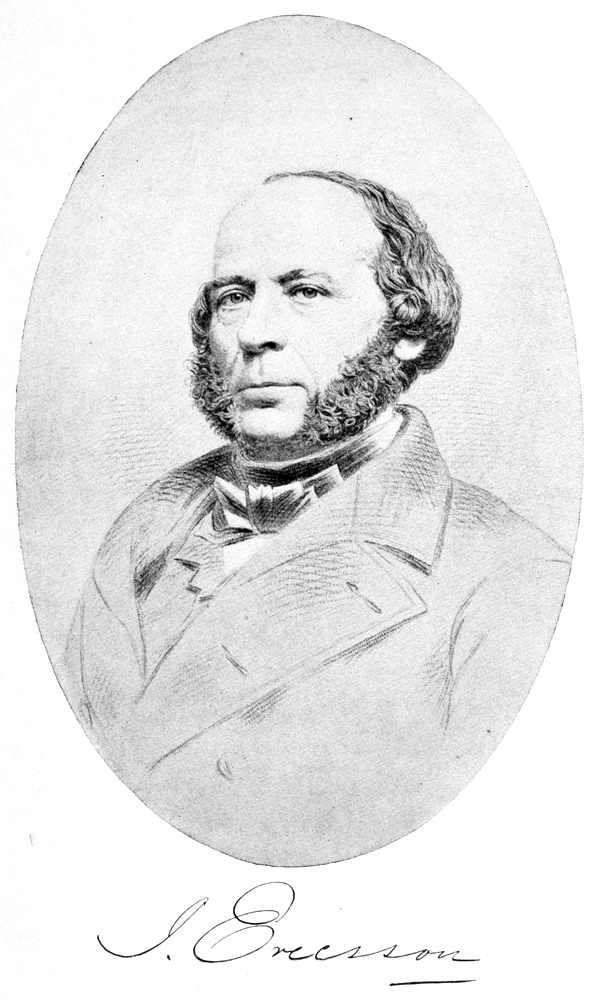
II JOHN ERICSSON
Born in Nordmark, Sweden, 1803 Died in New York City, 1889
High up in the dark forests of Wermland, an ancient
division of Sweden, where deep cold lakes feed the
great rivers with clear water and send them down the
mountains to the sea, was born, in the year 1803, a
baby, John Ericsson, who in the years that followed
made for himself a name which brought glory to the
United States, the land of his adoption, and undying
fame to the country of his birth.
There were few comforts or pleasures waiting to
welcome young Ericsson into the world. The little
village where he was born rested high in the mountains
within six degrees of the Arctic Circle. All
around were dark and gloomy forests, filled with
strange legends and tales of ancient heroes, handed
down from grandfather to father and from father to
son. The hard thin soil of the mountains was unfit
for cultivation, and it was difficult for the people of
the forest villages to live on the poor crops which they
produced in the few acres hewn from the forests.
But down beneath the tree-roots, deep-lying in the
mountain-sides, were vast deposits of iron ore, renowned
throughout the world as the material of the
finest cutlery. So the deep iron-mines gave to the
inhabitants of these mountain villages a hard-earned
living which tempered their own spirits with that
same quality which the Swedish iron developed in the
blade of steel.
Olaf Ericsson, the father of John, was part owner of
a small iron-mine and also superintendent of an iron-works,
and so the small boy, with few playmates and
none of the school advantages of the American lad of
the present day, found his play and early education in
the machinery at the mine and foundry. He was an
industrious boy, and he was quick to discover the interest
and inspiration of the things which surrounded
him. All day, with pieces of paper, a pencil, and some
drawing-tools which he had made for himself, he
studied the principles of the machines and drew clear
designs of them to illustrate their construction.
When John was eleven years old, his father left the
mining village of Langbanshyttan and took with him
his wife and his three children: John, Nils, a year
older than John, and a sister, the oldest of the three.
For many years the Swedish Government had considered
the building of a great ship-canal which
would open navigation across the Swedish peninsular,
and it was as foreman of this project that Olaf Ericsson
settled his family at Forsvik, a hundred miles
from the old mountain home.
J. Ericsson (signature)
The mechanical features of this great engineering
work filled young Ericsson with wonder and enthusiasm,
and in his eagerness to obtain knowledge, in order
that he too might participate, he sought information
and education from everyone who had the time
and inclination to help him. From a boarder in his
father’s household John learned to draw maps and
plans with skill and accuracy. A friendly professor
aided his architectural drawing, and one winter he
studied chemistry and learned to make his own inks
and colors with a few pennies’ worth of chemicals
bought from the town druggist. In these years he also
learned the French language, Latin, and grammar; a
fine foundation which enabled him in after years to
express himself in speech and writing with a clearness
and exactness that proved of immeasurable assistance
to him.
At the age of twelve the boy had so progressed in
his studies that he was commissioned to make some
drawings for the canal company; and in the following
year he became assistant leveler, and a year later,
leveler. In this work he was required to make plans
and calculations for the canal, and had a monthly
salary, quarters, and traveling expenses. Undoubtedly
John possessed unusual ability, but this extraordinary
promotion of so young a boy must in large
measure have been the result of his conscientious devotion
to his studies and his enthusiasm and ambition
in his work.
In his leisure hours the boy found pleasure in building
small working models of machinery, and among
these was a model of a saw-mill which many years
later he counted as the first in the long list of celebrated
inventions which had brought him fame and
prosperity. This model was built entirely of wood,
with the exception of the band-saw, which was filed
out by hand from a broken watch-spring and was operated
by a crank cast from an old tin spoon. A cord
served for the driving-band. No detail was omitted,
and when water was turned into the miniature waterwheel,
the machinery operated perfectly. With similar
ingenuity he made for himself draughtsman’s
compasses, from birchwood and broken needles; and
from the hairs in an old fur garment of his mother’s
he laboriously fashioned brushes with which to apply
colors, also of his own making, to his drawings.
But now the father’s health broke beneath the
weight of his work; the small earnings which supported
the family dwindled, and each year that went
by gave to the growing boys added responsibilities.
In 1820 John realized that the time had come for him
to take his own path and begin actively to build for his
future. His father had died in the previous year and
his mother and sister were supporting themselves by
taking as boarders the workers on the canal. It was
necessary that he also should contribute to their
comfort.
Realizing the physical and moral value of military
training, young Ericsson joined the Swedish army.
He was now seventeen, a fine powerful fellow with
smooth active muscles, a clear eye, and a well-trained
brain. When he was eighteen there were few, if any,
of his fellows who could match him in feats of strength
or agility, and on one occasion he is said to have lifted
a cannon weighing over six hundred pounds.
Advancement came rapidly, and he was soon recognized
as an expert artillery draughtsman and an
expert in the science of artillery, a branch of the service
in which he had begun to specialize. It will be interesting
to see how this early army experience gave to
Ericsson knowledge which in later life brought him
his greatest fame and enabled him to turn the tide of
history and hold nations attentive before his words.
The stirring mind of the young man now yearned
for a wider horizon than the Swedish army afforded,
and for a greater opportunity than his own country
presented. For several years he had been experimenting
with a new type of engine by which he hoped to
obtain greater horse-power with economy of fuel.
England seemed to offer the opportunity, and in 1826
he left his native land and took up his residence in
London.
Ericsson went to England at the opening of an engineering
era. The employment of steam as a motive
power was in its infancy. Travel by sea was entirely
by ships; on land the stage-coach and canal-boat furnished
the only means of transportation. The steam-engine
was an undeveloped toy of science. Electricity
in its industrial application was unknown.
Forming a business partnership with an English
machine manufacturer, John Braithwaite, under the
firm name of Ericsson and Braithwaite, Ericsson immediately
turned his tremendous faculties to various
engineering improvements and inventions. First a
gas-engine occupied his interest; then he turned to his
former conception of a “flame-engine,” in which, by
putting the actual fire directly under the piston, the
expanding air would supply the motor power. In 1828
he built and put into operation in a tin-mine in Cornwall
a water-pump driven by compressed air—an
invention on which he later based his claim as inventor
of a machine utilizing compressed air for transmitting
power.
It was in the year 1819 that the Atlantic was for the
first time crossed by a steam vessel, the United States
ship Savannah, and this revolutionizing event stimulated
Ericsson to new endeavors. In the months following
he produced a number of important improvements
by which smaller and lighter boilers were made possible
by increasing the heat, and hence the power, of the
fire by forced draught, as well as many other radical
improvements in steam-engines and boiler-construction.
Of these he claims particularly the credit of the
invention of “surface condensation applied to steam
navigation.”
The first steam fire-engine—an apparatus which
to-day constitutes perhaps the most important feature
of a city’s fire department—was invented and
built by Ericsson in 1829. Previously, and as a matter
of fact for years afterward, hand-operated engines,
manned by crews of volunteer firemen, fought the
fires which so frequently destroyed vast sections of
the wood-constructed cities of those early days. It is
not surprising that this valuable invention did not
receive immediate recognition, for inventors rarely
obtain such recognition from the people whom their
inventions benefit. In fact, Ericsson’s portable steam
fire-engine was actually condemned as an impracticable
contrivance that could serve no useful purpose.
To-day we travel thousands of miles by railroad; a
hundred years ago our great-great-grandfathers traveled
by horse-drawn coaches. Where we may now
speed a mile a minute behind a giant steam locomotive,
they were content with what seemed to them
the tremendous speed of eleven miles an hour. But
all things change. There are always leaders in the
world’s progress. Of these leaders was John Ericsson.
Travel had been a luxury of the rich; the invention
of the steam locomotive made fast and economical
travel possible to the poor as well.
In 1829 a prize of two thousand five hundred dollars
was offered for the best steam locomotive which
could draw a weight of twenty tons at the rate of ten
miles an hour. Ericsson had never built a locomotive,
but he entered the contest. His greatest competitor
was George Stephenson, who for several years had
built small locomotives for use in coal mines.
On the great day of the trial thousands of people
thronged the track to witness the novel sight. Never
in the world’s history had there been a public experiment
so momentous, unless we except the journey
of the American inventor’s steamship, the Clermont,
on her first historic progress up the Hudson River.
The locomotive entered in the contest by Stephenson
was named the Rocket, a strong well-built engine
that ultimately was awarded the prize. But although
he was not the winner in this great competition, to
Ericsson belongs great credit, for his locomotive, the
Novelty, passed the Rocket at the amazing speed, for
those days, of thirty miles an hour, and failed to win
the prize only because of certain defects in its construction
which caused it to break down before the
goal was reached.
Ericsson was twenty-six years old when he built the
Novelty. Already he had contributed many useful inventions
to the world. But his greatest triumphs
were still to come. He had been beaten fairly and
squarely by Stephenson, but his was not the spirit
that is easily subdued. Ericsson, like the hero of
Greek mythology, rose the stronger each time an adversary
cast him to the earth.
In 1836 he married a nineteen-year-old English girl,
Amelia Byam, granddaughter of Sir Charles Byam,
some time British Commissioner for Antigua.
For a short time he devoted himself to the perfection
of a hot-air engine, and a sounding device by which
ships might ascertain the depth of the water over
which they were passing. Then he turned to a new activity.
The result was revolutionary. What he had almost
accomplished in the field of land-transportation
with the Novelty, he now actually achieved in steam-navigation
on the sea. To Ericsson should be credited
the perfection and application of the screw for the
propulsion of steam-driven vessels.
Up to the dawn of the nineteenth century the sailing-ship
had ruled the seas. And even until the middle
of that century the fast clippers, with their towers of
widespread canvas, had held supreme domination
over the world’s waterways. But in the year 1835
Ericsson designed a rotary propeller driven by a
steam-engine, which marked the beginning of the end
of sailing days. The steam-engine, first placed in a
ship by Robert Fulton, the American inventor, was
no novelty, but it had been used only to propel vessels
by means of paddle-wheels attached to each side
of the vessels, huge cumbersome contrivances, which
were easily damaged by heavy seas and which on
ships of war afforded easy targets for the enemy.
The screw of Ericsson’s was designed to operate underneath
the stern of the vessel, under water and just
forward of the rudder, exactly as it is placed to-day.
To test this new invention Ericsson built a small vessel,
the Francis B. Ogden, which was launched in the
Thames River in the spring of 1837. The experiment
was a great success and a speed of over ten miles an
hour was attained, to the wonder of the stolid English
boatmen who watched in amazement this strange
ship move rapidly through the water with no visible
means of propulsion.
Later in the summer Ericsson invited the Lords of
the British Admiralty to inspect his steamship, and
even conducted them on a trial trip on the Thames;
but the amazing performance of the Ogden created but
little interest in the minds of the British officials, who
dismissed the affair as an “interesting experiment.”
But Ericsson had a friend who stood him in good
stead. This friend was an American, Francis B. Ogden,
our counsul at Liverpool, after whom Ericsson’s
first vessel was named. Ogden was not an engineer,
but he recognized in the Swedish inventor a man of
sincerity and genius, and to his friendship Ericsson
owed much in the way of advice and assistance.
In 1838 Ericsson built and launched a larger steamship,
the Robert F. Stockton which sailed from
Gravesend, England, on April 13, 1839, and made a
successful passage to New York City, the first screw-driven
steamship ever to cross the Atlantic. As the
result of this remarkable achievement Ericsson was
assured that the government of the United States
would try out his invention on a large scale, and
persuaded him to go to America.
Ericsson was not reluctant. For years he had
struggled under the old-world conservatism. With his
energy and ambition, he realized that only in the great
land of opportunity beyond the sea could lie his hope
of recognition. In November, 1839, he sailed for the
United States.
There were no steam vessels in our navy when
Ericsson reached our shores, and it was not until 1842
that the building of the Princeton gave him the opportunity
to display his great invention. The Princeton
was a small iron warship of six hundred tons, and
to her construction Ericsson contributed not only his
screw-propeller, but also a new construction for the
gun-carriage, and, of even greater importance, a cannon
reinforced by steel hoops shrunk on to the breech
of the gun. This reinforcing of the breech of a cannon
may be said to have established the recognized construction
of the modern high-power naval guns of the
present day.
The Princeton marked a new advance in naval construction.
Her speed, the location of her machinery
below the water-line and hence out of danger
from an enemy’s guns, her novel screw-propulsion,
and her powerful armament made her the centre, not
only of national, but of world interest.
For a number of years following, Ericsson continued
his development of the science of naval engineering,
and in 1843 applied for the first time twin-screw
engines to the steamship Marmora. During these
years recognition began to bring to the great inventor
the financial rewards which he had long deserved. In
the year 1844 his receipts from his inventions and contracts
amounted to almost $40,000, and the following
year he received almost $85,000. But the road to
wealth and glory contains many obstacles, and the successes
that crowned the work of these few years were
in a large measure balanced by reverses, although in
the end triumph out-balanced all.
For several years Ericsson devoted his energies to
the perfection of a model type of warship, but his
untiring efforts received scant recognition from the
government. October 28, 1848, was, however, a day
memorable, not only in the life of Ericsson, but in the
history of the United States, for on that day he became
a naturalized citizen. Born in a foreign land, a
sojourner in European countries, it was but natural
that the Swedish genius should find in this young
nation of opportunity the field which he needed
for the expression of his wonderful faculties. By
his naturalization, Ericsson brought to the United
States the fine inheritance of an ancient nation, and
infused into the blood of the new republic additional
strength and virility. Save for the native
Indian, there is no true American; but in the mingled
blood of the people of many lands may be found to-day
a race that combines the best of the nations of the
earth, a composite people, free, prosperous, and masters
of their own glorious destiny.
For many years Ericsson had held faith in the
theory of a hot-air engine in which heated air would
produce the effect of steam, but with greater economy.
With characteristic confidence he carried his experiments
to their completion, and expended practically
his entire capital on the necessary models and machines
which the working-out of his plans required.
Success crowned his efforts, and the hot-air, or caloric,
engine was generally conceded to be a success.
As the result of these experiments a number of New
York capitalists supplied the necessary money to
construct a large steamship, the paddle-wheels of
which were operated by caloric engines designed by
Ericsson. The vessel was named after the inventor
and was a most novel and radical departure from any
vessel up to that time designed. Her cost exceeded
half a million dollars: an investment which showed
the high esteem in which her designer was held. The
Ericsson was launched in September, 1852, and made
her trial trip on January 4, 1853. Never had so strong
or fine a ship been built; the newspapers of the day
were filled with praise, and her designer received from
every quarter the most extravagant congratulations
for the mechanical marvel which he had created.
But unexpected disaster destroyed in a few seconds
the product of these months of thought and energy.
Within a few weeks of her launching the Ericsson
encountered a tornado, and capsized and sank a few
miles off New York Light. Although she was believed
by many to mark the end of the use of steam-power
and the beginning of a new era of hot-air
dynamics, it is now recognized that this invention
reached its maximum development in the Ericsson;
and it is in connection with a later and far greater invention
that history has accorded recognition to the
designer’s great mechanical genius.
Long before Ericsson left England he had thought
out the plans for a strange kind of vessel, protected
with iron, which would be able to fight and defeat
any warship of any size. In 1854, the year in which
he perfected the plan for his new type of warship,
the navies of all the great nations were composed, in
large part, of huge wooden vessels, usually sailing-ships,
but a few combining sails and steam. For a
number of years the use of iron-plating, or armor, on
the sides of battleships had been discussed, and in
1845 R. L. Stevens, an American engineer, actually
began the construction of a vessel, or “floating battery,”
encased in metal.
To France however, probably belongs the credit for
the construction of the first ironclads, consisting of
these floating batteries, the Lave, Devastation, and
Tonnante, protected by 4.25-inch iron plates, which
were used during the Crimean War. The following
year France began the construction of four ironclad
steam frigates, and England immediately followed,
with the construction of a number of similar vessels.
But the warship of John Ericsson in no way resembled
the huge ironclads of France or England. With
characteristic disregard for precedent he designed a
ship which rested so low in the water that only about
three feet of its sides would be exposed. The sides
and deck were protected by heavy plates of iron, and
in the centre of the deck was a circular heavily armored
turret which revolved in either direction
and contained powerful guns. These vessels, or
monitors, as Ericsson named them, were to be propelled
by steam. The particular advantages of the
type were that so little of the craft showed above the
water that it afforded an exceedingly small target to
an enemy; that the heavy plating protected it from
hostile shot, and the revolving target enabled the
crew to fire in any direction without manœuvring the
vessel, while such shot as might strike the turret
would glance harmlessly from its circular side.
During the Crimean War Ericsson offered the plans
for this remarkable vessel to the French Emperor; but
they were politely declined as impractical in much
the same way in which, some years earlier, the British
Admiralty had declined to consider the screw-propeller
as little more than an amusing experiment.
When war was declared in 1861 between the Northern
States and the Confederate States of the South,
Ericsson was fifty-eight years old. In this national
calamity in which brother was armed against brother,
and the fate of the country seemed hanging by a
thread, Ericsson unhesitatingly cast himself with
those who sought the preservation of the Union and
the abolition of slavery from the United States.
Never before had his adopted country needed so vitally
his tremendous services. With superb health
derived from a normal life of conservative habits,
and a brain trained by long years of engineering experiment,
Ericsson found himself ready and able to
meet the call for his greatest service to the nation.
The United States navy at the beginning of the
war was composed entirely of wooden vessels. Early
in 1861 the Confederates began the construction of a
floating battery heavily armored with iron. For this
purpose the old United States frigate Merrimac,
which had been burned and sunk in the Norfolk Navy
Yard, was raised, and the work of encasing her with
armor plates was begun.
Meanwhile, in the North, Congress had called for
proposals for ironclad steam vessels, and less than a
month later, Ericsson addressed to President Lincoln
a letter in which he offered to submit the plans of a
monitor, and described the advantages of its unique
design. On September 13, Ericsson went to Washington
and personally laid before the Navy Department
his plans and received a contract to proceed with
the construction of the Monitor.
The keel was laid on October 25, and on January
30, she slid down the ways into the water. A month
later she was commissioned. The Monitor was 172
feet in length and displaced 776 tons. In the centre of
her low flat deck was the revolving turret, twenty feet
in diameter, protected by eight inches of iron-plating.
Two heavy guns were mounted in the turret. The
vessel was operated entirely by steam-engines, placed
well below the water-line, which propelled a screw beneath
the overhanging stern.
Rushed to completion in the brief period of three
months, the Monitor was barely commissioned in
time to render, at Hampton Roads, the tremendous
service which in a few brief hours revolutionized naval
warfare, made obsolete the navies of the world, rescued
the Union navy from crushing disaster, and immortalized
the name of John Ericsson, her designer
and constructor.
The Monitor had been intended to serve with Admiral
Farragut’s fleet at New Orleans, but a crisis
nearer at hand made a sudden change of plans necessary.
The Monitor left New York on the afternoon of
March 6, 1862, under command of Lieutenant John L.
Worden, U.S.N., and arrived at Hampton Roads on
the evening of March 8, after a stormy passage.
Meanwhile the armored Confederate ram Merrimac
had created havoc with the great wooden warships
of the Federal navy. On the seventh, the Merrimac
had rammed and sunk the frigate Cumberland,
and then destroyed the Congress, vessels powerless to
inflict injury on the iron sides of the Confederate ram.
The tall frigates, St. Lawrence, Roanoke, and Minnesota,
powerless to resist or to escape, awaited their
inevitable destruction on the following day.
But on that eventful morning, as the Merrimac
steamed out into the stream to complete her work,
which would break the blockade the Federal forces
had established, the Monitor glided out from under
the stern of the Minnesota, looking for all the world
like “a barrel-head afloat with a cheese-box on top
of it.”
For four hours these two strange vessels fought this
greatest duel of naval history, which, on the ships and
the shores, was watched by the anxious eyes of soldiers
and sailors of North and South to whom the outcome
was of such tremendous import. Manœuvring
like boxers, the two vessels circled each other, black
smoke pouring from their low funnels and the red
flame of the great guns spurting from the gun-ports.
As she had rammed the Cumberland, so did the Merrimac
endeavor to crush the Monitor with her ram;
but the Monitor either slipped past her heavier and
more ungainly adversary or allowed the Merrimac to
push her aside. Round and round the circular turret
swung, turning away in order to load the two guns
which protruded, and then swinging back to deliver
a volley of metal against the plated sloping side of the
Merrimac.
Unable to damage the Monitor and herself severely
pounded by the forty-one shots which the Monitor
had fired, the Merrimac finally withdrew, leaving the
strange warship of the Swedish-American inventor
the victor. The Minnesota, the Roanoke, and the
St. Lawrence were saved. The blockade remained
unbroken.
In the words of a Confederate who witnessed the
battle, “The Monitor was by immense odds the most
formidable vessel of war on this planet.”
During the following years of the war, Ericsson
devoted his vast energies to the service of his country,
and at great financial loss and immeasurable
personal sacrifice constructed a large number of vessels
of the Monitor type for the navy.
With the close of the war Ericsson continued the
marvelous series of inventions which he had given to
the world. For a number of years he gave his best
thought to the building and mounting of heavy guns;
and later he turned his energies to the construction of
a practical submarine torpedo. In these later experiments
he personally invested over a hundred thousand
dollars.
From the United States and foreign countries came
recognition of his services to the world. In 1866 the
Department of State offered him the appointment of
Commissioner to the Universal Exposition at Paris.
The previous year he had received a resolution of
thanks from the Swedish Parliament. Among other
honors conferred upon him were his election to the
Franklin Institute of Philadelphia, honorary memberships
in the Royal Military Academy of Science
of Stockholm and the Royal Military Academy of
Sweden, a joint resolution of thanks from the United
States Congress, a resolution from the State of New
York, the Rumford gold and silver medals, and a gold
medal from the Society of Iron Masters of Sweden.
In 1863 he received the honorary degree of LL.D.
from Wesleyan University; and later he was made a
Knight Commander with the Grand Cross of the
order of the North Star and a Commander of St. Olaf,
two Swedish honors. In later years came many other
distinctions, not only from the United States and
Sweden, but from Denmark, Spain, and Austria.
In these later years came also many demands on
Ericsson’s generosity, and to the near members of his
family, and even to his most distant relatives, he invariably
responded with a substantial gift. Realizing
the tremendous value of education, he gave freely
when money was needed to provide schooling for the
children of members of his family whom he had never
seen. But these benefactions to relatives and friends
were invariably made only when Ericsson believed in
the true need and the sincerity of the request. Out of
the considerable income which came to him from his
inventions in later years he gave also with a liberal
hand whenever public or private distress was brought
to his attention.
Ericsson’s own wants were few. His temperate
habits, his love of physical exercise, and his simple
tastes made but slender demands on his income. Vigorous
by inheritance, and possessing a fine physique
from his early activities, he preserved his splendid
vigor throughout his long life. Rarely has been given
to the world a finer example of health and character
contributing to a career of splendid usefulness.
On the eighth of March, 1889, John Ericsson died in
his New York house, where for a quarter of a century
he had lived his active and solitary existence. The significance
of his death was recognized, not only by his
native Sweden and the United States, the land of his
adoption, but by the entire civilized world, in which
his inventions had brought such revolutionizing
changes. But the story of his achievements can never
die, and in the history of his useful life is an inspiration
to every succeeding generation to whom the
United States unfolds an ever-increasing opportunity.
III LOUIS AGASSIZ
Born in Motier, Switzerland, 1807 Died in Cambridge, Massachusetts, 1873
When men first received the names which they have
handed down through succeeding generations there
was undoubtedly an appropriate reason for the name
which each man bore. The Smiths quite probably
worked with iron, the Carpenters labored with saw
and hammer, and the son of John became Johnson to
his friends. But centuries have passed, and it rarely
happens to-day that a man’s name describes his vocation
or his characteristics.
Occasionally, however, there is an exception, and
the name of Agassiz is one of these. Lover of nature,
and particularly of the living things which have for
hundreds of thousands of years inhabited the earth,
Louis Agassiz bore a name that suggested his ruling
interests; for Agassiz, or Aigasse as it was written in
old French, is the name of the magpie, a lovable,
friendly bird that was known to every peasant in the
beautiful countryside of La Sarraz.
Louis Agassiz was a naturalist and a geologist.
Wise in all departments of these wide fields of nature
study, and the leading teacher in his time, he will always
be remembered for his discoveries in two particular
departments of his great subject. Agassiz was an
ichthyologist and a palæontologist. These are hard
Latin names, but they are easily understood, for an
ichthyologist is a man who studies fishes, and a palæontologist
is one who is a student of the ancient life of
the globe as it may be seen in the fossil remains deep
buried in the earth. Moreover, to the science of geology
Agassiz contributed a great discovery which revolutionized
the thought of scientists of his day; for it
was he who proved beyond all doubt that at one time,
far back in the world’s history, great moving glaciers
covered a huge part of the earth’s surface, and where
now the summer sunshine warms green fields, at one
time, in an arctic temperature, these same lands were
deep buried under grinding, creeping fields of ice.
Not far from Lake Neuchâtel, in western Switzerland,
is the little village of Motier, a place so small
that it is hard to find it on the maps of ordinary atlases.
Below the village the blue water of Lake Morat
gleams like a bit of sky in the green of hills and fields,
and beyond, like a blue wall against the sky, the Bernese
Alps look down over the ancient country.
Here on May 28, 1807, was born Jean Louis Rudolph
Agassiz. His father was a clergyman and his
mother the daughter of a physician, and the boy inherited
from them a love of study and a delight in
teaching which always distinguished him. From the
beautiful country of his birth came also an inheritance
of nature that kept him throughout his long life always
a boy at heart.
The lakes of Switzerland are among the oldest
dwelling-places of mankind since human life began.
Beneath the waters of Lake Morat are still found
traces of an ancient race that once lived there in huts
built over the water; still may be seen, far down in the
blue deeps, the earthen vessels which, perhaps, fell
from their dwellings; occasionally are found the
stumps of piles on which their houses rested. They
were a water-loving people, and Agassiz, born on the
shores of the same lake as this ancient people, found
in the water a natural and congenial element.
He was a normal, wholesome boy, but from the
very first his love of nature displayed itself at every
turn. He delighted in birds and animals and insects,
and he was constantly scouring the vineyard-clad
hillsides and the woods and meadows for new specimens.
But it was on the waters of the lakes and in
their cold clear depths that his insatiate curiosity
found its greatest gratification. He was a skilful fisherman
and he soon learned the haunts and habits of
every kind of fish that dwelt there. With his brother
Auguste, the bright summer days fled past in one long
excursion. Like the fish which they hunted, the boys
found in the lakes a friendly element. They were
splendid swimmers, so skilled that they would often
abandon entirely the hook and line, and, diving swiftly
into the water, catch the gliding fish in their hands.
Like all boys who live in the country, Louis had
made collections of every kind, and in the garden near
the house he kept constantly increasing families of
rabbits, field-mice, guinea-pigs, and birds. These
were not merely pets which he loved and cared for;
even in his youthful eyes they seemed to have a deeper
significance, for he studied them and observed their
habits in a way that gave him a basis for the scientific
observations of his later life.
It was natural that such a boy should be fearless,
and in this respect Louis was far above the average.
Strong, alert, and resourceful, he was a splendid
swimmer and a strong skater. Many are the tales of
boyish fearlessness that are told about him, tales of
boating exploits, of long excursions, and particularly
of how once he made a bridge of his body across a deep
fissure in the ice too wide to jump, that his brother
Auguste might creep across.
When he was ten years old, his active schooling
began. In the nearby town of Bienne was a public
school for boys. The rules were strict and the hours
long, for the boys were required to study for nine
hours every day. But the father had given Louis a
good grounding in the elements of education, and
this, combined with his natural aptitude, gave him an
advantage over his fellow students.
Vacations, however, were as welcome to Louis and
his brother as they are to boys of the present day; and
long before dawn on the first day of each vacation, the
two boys would be up and homeward bound, swinging
along the twenty miles of country road which lay between
Bienne and Motier. These were happy days,
for although the Agassiz family had but the very
small income which the office of a country minister afforded,
there was a wealth of good fun and love and
wholesome out-of-door happiness in the lives of the
young people who made merry in the little town.
Four years were spent at the school at Bienne, and
as the end of the fourth year neared, Louis, although
only fourteen years old, announced to his parents his
desire to become an author. “I wish to advance in the
sciences,” he wrote his father. “I have resolved to become
a man of letters.” And then he expressed his
hope that he might be permitted, after spending a
year and a half in commerce at Neuchâtel, to pass
four years at a university in Germany, and finally finish
his studies at Paris. “Then, at the age of twenty-five,”
he concluded, “I could begin to write.” Mature
ambitions these, for a boy of fourteen years!
It was fortunate that the elder Agassiz recognized
in the boy those qualities which were uppermost, and
encouraged his studious desires. The year and a half
of business training was abandoned, and in its place
Louis was sent for two years of additional study at the
College of Lausanne. Already he had felt the charm
of study, and his boyish pastimes had now become
studious investigations which absorbed his interest
and energy. His work was as orderly as his mind; his
notebooks, written with remarkable neatness in a
small fine handwriting, are excellent examples of clear
classification of whatever branch of study he undertook.
Everything was arranged and classified; subjects
were clearly separated and subdivided under
marked headings; nothing was begun that was not
completed in every detail.
At Lausanne, Agassiz had access to the first natural
history collection that he had ever seen; and there
also he found friends who sympathized with his favorite
tastes. While he was at Lausanne, it was decided
that he should study medicine, a profession which
would meet his natural inclinations and at the same
time ultimately yield him the income necessary for
his support.
Accordingly, during his seventeenth year, Louis
entered the medical school at Zürich. Here he found
still more congenial surroundings; for among the faculty
of the university were men of reputation in the
particular branches of natural history which most
deeply interested him. Under the professor of natural
history the study of ornithology was opened to
him. Here also the sciences of zoölogy and geology
were taught, and Louis eagerly enrolled in the classes
that were held in these subjects.
In 1826, after two years at Zürich, Louis entered
the great German University of Heidelberg, and there
his true university life began. The four years that he
passed there were among the most important years of
his entire life. They were years of hard conscientious
study, combined with wholesome recreation. “First at
work, and first at play,” was his motto. Here he made
friendships that were tense and enduring. Two fellow
students, Braun and Schimper, became particularly
his intimates, and with Agassiz formed a trio which
their fellow students called “the Little Academy.”
It was an ambitious atmosphere, and the friendships
which were formed were based on a love of intellectual
pleasures. There was also the vivid vital
student life beyond the classrooms; there were long
excursions on foot in vacation times; there were duels
and love-affairs, and there were boisterous evenings
thick with tobacco smoke. Agassiz was a powerful
gymnast and an expert fencer. There was nothing in
the student life that was good in which he did not
participate.
Of the many friendships which his open and affectionate
nature so easily formed, his friendship with
Alexander Braun was deepest and most lasting. Soon
he began to visit Braun at his home in Carlsruhe,
where he met his friend’s two talented sisters, one of
whom was later to become his wife. And it was here,
in the spring of 1827, that the friendly Braun family
nursed him back to health after a serious attack of
typhoid fever.
The earnestness of these young men is perhaps best
described by Agassiz himself. “When our lectures are
over, we meet in the evening at Braun’s room or mine,
with three or four intimate acquaintances, and talk of
scientific matters, each one in his turn presenting a
subject which is first developed by him and then discussed
by all. These exercises are very instructive.
As my share, I have begun to give a course of natural
history, or rather of pure zoölogy. Braun talks to us
of botany; and another of our company, Mahir,
teaches us mathematics and physics in his turn;
Schimper will be our professor of philosophy. Thus
we shall form a little university, instructing one another,
and at the same time learning what we teach
more thoroughly, because we shall be obliged to demonstrate
it.”
From Heidelberg the three companions now transferred
their studies to the new University of Munich,
where a far more stimulating intellectual life awaited
them. Here were some of the most celebrated teachers
of the day, and “the city teemed with resources for
the student in arts, letters, philosophy, and science.”
A fine spirit existed between students and professors,
and there was constant opportunity, not only in the
classrooms, but beyond their walls, for the earnest
young men to draw on the wells of information which
their brilliant instructors freely afforded them.
With an allowance of only $250 a year, Agassiz’s
life was necessarily simple and severe. But the three
companions soon found that their humble rooms
had become the meeting-place of the most brilliant
men in the University. Students and even professors
crowded their simple living quarters, and naturalists
of renown came to visit these extraordinary young
men. “Someone was always coming or going; the half-dozen
chairs were covered with books, piled one upon
another—the bed, also, was used as a seat, and as a
receptacle for specimens, drawings and papers.” Specimens
of various sorts decorated the walls. In Agassiz’s
own room were several hundred fish, “shut up in
a wooden tub with a cover and in various big glass
jars. A live gudgeon with beautiful stripes is wriggling
in his wash-bowl, and he has adorned his table
with monkeys.”
During their vacations the young men made expeditions
to see such museums as were within reach,
and to visit any scientific men to whom they could obtain
an introduction. All of southern Germany was
included in their rambles, and their wanderings carried
them even into explorations of extensive tracts of
the Alps.
But although Agassiz had come to Munich for the
special purpose of taking the degree of doctor of medicine,
his studies soon drifted from those of a medical
student to the studies of a true naturalist. He had
gone to Heidelberg “with a strong taste for natural
history; he left Munich devoted heart and soul to
science.” Under these circumstances it was only natural
that his first degree should be that of doctor of
philosophy; but a year later, to fulfill the desires of
his parents, he received the degree of doctor of medicine
and surgery.
Up to this time Agassiz had paid no particular attention
to the study of ichthyology, which was later
to become the great occupation of his life; but in 1829
he was unexpectedly given the opportunity to prepare
a history of the fresh-water fishes of Brazil, from
a collection which had been made by a celebrated
scientist who had died before he could prepare the report
covering the collection. Agassiz threw himself
enthusiastically into the work of describing and figuring
these Brazilian fishes, and in 1829 the work was
completed and published with the name of the youthful
author on the title-page. His life-work was begun.
It was at this time that he wrote to his father: “I
wish it may be said of Louis Agassiz that he was the
first naturalist of his time, a good citizen, and a good
son, beloved by those who know him.”
In the autumn of 1830 Agassiz left Munich, and
after a short visit in Vienna, where he found himself
“received as a scientific man for whom no letters of
recommendation were necessary,” he returned to
Switzerland and the welcome of his proud parents.
But it was hard to adjust himself to the quiet village
by Lake Morat, and, although money was difficult to
secure, a visit to Paris was finally made possible
through the generosity of a friend of the family. Here
Agassiz formed important friendships with two of
the greatest scientists of the age: Cuvier, the leading
French zoölogist, and Alexander von Humboldt,
the leader of the scientific world.
The years that immediately followed were filled
with scientific progress. The “Brazilian Fishes” had
determined Agassiz’s specialty, and the reputation of
the book led him to plan a history of the fresh-water
fishes of Central Europe, including a natural history
of fossil fishes. It was an enormous undertaking, for
palæontology was a new science, involving the study
of fossil specimens scattered through the museums of
Europe. But Agassiz foresaw only the value which
science would place on such a work, and the five volumes
were finally published by him, at intervals, from
1833 to 1843.
Life in Paris soon proved difficult for the young
scientist, and his poverty was particularly noticeable,
for here there was wealth and position even among
scientific men. He had only forty dollars a month,
and his clothing had become so worn that it was not
possible for him to accept invitations from well-to-do
friends. The position of professor of natural history
at Neuchâtel was offered him, and, although the salary
was only $400 a year, it seemed wise to accept.
His acceptance, and with it the close of his year
in Paris, marks the end of his boyhood and student
days. A new period awaited him.
The college of Neuchâtel was small and unimportant.
The chair of natural history was new, and there
was no scientific apparatus, museum, or lecture-room.
But this mattered little to the young professor.
Soon after his arrival he founded a Natural History
Society among the leading citizens of the town; his
lectures were given in the city hall, and his own collection
formed the nucleus of a natural history
museum.
As in college, so in the quiet Swiss village, Agassiz
soon gathered about him a group of scientific men as
his students and assistants, many of whom in later
life became themselves naturalists of reputation. It
was a “scientific factory” of which Agassiz was the
mainspring. He was poor, but somehow he managed
to go on, supporting many of his staff in his own
house, printing and lithographing his own publications,
and supporting his own family as well, for his
marriage had now brought additional responsibilities
upon his broad shoulders. It was an unstable basis,
but in one way or another Agassiz found the means to
proceed. Money was but the means to an end, never
the end itself. “I cannot spend my time in making
money!” he once said when a profitable business offer
was made to him. The remark expressed clearly his
firm devotion to his chosen profession.
It was during this period of his life that Agassiz
added to scientific knowledge the proof that at some
remote time in the earth’s existence vast glaciers,
moving fields of ice miles in area and often hundreds
of feet in thickness, had played a part in the earth’s
formation almost as important as the recognized
agents, fire and water. It was a geological discovery
the proof of which, although indisputable, seemed so
startling, that it was with difficulty that it was accepted
even by the best scientific minds of the day.
In the Alpine country had been found great boulders
dropped apparently by some strange force in fields
far from the quarries of native rock from which they
had been torn. Here also were moraines and dikes,
great piles of loose gravel deposited by some unknown
agency; and here also, where the bedrock was visible,
could be seen deep furrows and scratches on the polished
stone as if chiseled by a giant tool.
Glaciers existed in the Alps, but it was hard for
men to believe that glaciers had once existed where
now were green fields and meadows. But Agassiz was
not the man to endeavor to found a belief on unsupported
theory, and only after six years of study of the
glaciers and glacial traces in the Alps and actual observations
on the glacier of the Aar, was he prepared
to give his proofs of the theory to the scientific world.
Basing his demonstration on this accumulated evidence,
Agassiz proved that at one time glaciers had
covered a large part of the now civilized world. The
great boulders had been scooped up by them in their
progress, and perhaps some thousands of years later
had been dropped a hundred miles away by the melting
ice-sheet. So also had the masses of gravel been
carried far from their sources, to form strange new
glacial deposits. And on the scarred and grooved
rocks was the final evidence; for these deep scratches
had surely been ground by the advancing glacier as it
slowly and silently moved onward. “The idea that
such phenomena were not restricted to regions where
glaciers now are found, but that traces of glacial action
could be seen over enormous tracts of the earth’s
surface, perhaps including regions in the tropics, and
that in countries now temperate there might be discovered,
not only the remains of tropical fauna and
flora, but also distinct indications of a period of arctic
cold—this was as new as startling.”
During the years of his professorship at Neuchâtel,
Agassiz published many important contributions to
scientific knowledge in those particular departments
of natural science to which he had devoted himself.
At the same time came also many honors, including
offers of professorships from the universities of Geneva
and Lausanne, and the award of the Wollaston
Medal by the Geographical Society of London.
But the second period in Agassiz’s life was drawing
to a close: a great country beyond the Atlantic
would soon be ready to receive him. Agassiz, the
student and now the discoverer, was about to begin
his final great activity as the pioneer and teacher
of natural history to a strange people in a foreign
land. Each year at Neuchâtel had plunged Agassiz
deeper and deeper into debt; his situation had passed
from bad to well-nigh hopeless. Then, unexpectedly,
help was offered. The King of Prussia offered him
three thousand dollars, to be spent in travel for scientific
purposes; and at the same time came an invitation
from the Lowell Institute of Boston to visit the
United States. Agassiz could not refuse. It was a solution
of all his immediate difficulties; a wide horizon
in the eager young republic spread before him. In
September, 1846, Agassiz sailed for Boston.
He had left behind him all that is wealth to a scientific
man. Books and collections were the tools of his
trade; in his fellow naturalists he had found help and
inspiration. In the United States bountiful nature
had provided a fertile and unexplored field, but here
he must work alone. “He came, perhaps, in a spirit
of adventure and of curiosity; but he stayed because
he loved a country where new things could be built
up; where he could think and speak as he pleased; and
where his ceaseless activity would be considered of
high quality.”
On his arrival in Boston Agassiz was cordially received
by John A. Lowell, who, as trustee of the Lowell
Institute, had extended to him the invitation which
was in a large measure responsible for his coming.
The course of lectures which Agassiz had planned for
the Lowell Institute was entitled “The Plan of Creation.”
His success was immediate. The people were
eager to hear the message of the great lecturer. A
second course, on “Glaciers,” was soon arranged, and
in a few months Agassiz found himself the most popular
lecturer in all the great Eastern cities.
The subjects which he chose were always of a character
which made it possible for large untrained audiences
to follow him and clearly understand the points
which he logically developed. His command of English
was at first faulty, but he was never embarrassed,
and his audiences found a peculiar charm in his
foreign accent and the unusual phrases which he so
frequently employed. But the blackboard was his
unfailing assistant, and as he talked, his quick hand
illustrated the subject with sketches so simple and so
clear that the lecture could almost have been comprehended
by these alone.
He had left his collections behind him, but almost
immediately new collections began to grow, and a new
“scientific factory” was established in his house in
East Boston. He always spoke of his specimens as
“material for investigation,” for to Agassiz every
stone and every insect held a story filled with wonder
and romance which only patient study could unfold.
His house, his garden, and even his pockets were filled
with “material”; as an illustration may be mentioned
the occasion when Agassiz, on being asked by a lady
sitting beside him at a dinner-party to explain the
difference between a toad and a frog, instantly produced,
to the amazement of his companions, a live
frog and a live toad from his pockets.
It was but natural that Agassiz should find in Harvard
University, the oldest and most celebrated seat
of learning in the United States, the congenial atmosphere
which his work required. And it is equally natural
that the great University should recognize in
Agassiz a master-teacher who would prove a most desirable
addition to its faculty. Agassiz had already
found in the United States a cordial welcome and a
deep appreciation. The year 1848 marks definitely
the beginning of the last phase of his life, for in this
year the death of his wife in Carlsruhe and his acceptance
of the chair of zoölogy and geology at Harvard
led him to abandon forever his thought of some day
returning to his native land.
Two years later his marriage to Elizabeth Cabot
Cary of Boston bound him still closer to the land of
his adoption, and the remaining years of his life were
years of consistent activity filled with growth and
honor. An expedition to Lake Superior in 1848 was
followed by a trip to study the Florida reefs in 1850
and a visit to the Mississippi River in 1853. During
these years his collections were rapidly increased, and
already he was planning for the establishment at
Harvard of a great Museum of Natural History.
Life in Boston and in the clear atmosphere of the
University must have been highly stimulating to a
man of Agassiz’s sensitive susceptibilities. Emerson,
Holmes, Hawthorne, Motley, and Longfellow were
his companions, and a group of brilliant younger
minds surrounded him in his work.
From abroad now came honors the larger part of
which Agassiz saw fit to decline. In 1852 the Prix
Cuvier was awarded to him in recognition of his work
on fossil fishes. A call to the University of Zürich was
declined in 1854; and during the four years between
1857 and 1861 he three times declined a call to the
chair of palæontology at Paris, perhaps the highest
scientific honor which the world could afford. But
neither honors nor wealth could tempt him. His affection
for America and his love for his work in that
appreciative country held him fast. In 1861 he became
a naturalized citizen of the United States.
Rarely, if ever, was there a man of more lovable and
winning personality. “Everybody sought his society,
and no one could stand before his words and his
smile. The fishermen at Nahant would pull two or
three miles to get him a rare fish.” Rich and poor, the
educated and the uneducated, all paid homage to his
magnetic personality. Physically large, his genial
countenance and smiling eyes made friends with
everyone. And at the same time those laughing brown
eyes, that seemed made only for pleasure and jollity,
“saw more than did all our eyes put together; for he
looked, but we only stared.”
The corner-stone of the great Museum of Comparative
Zoölogy at Harvard was laid in 1859, and in the
years that have followed, the collection has grown to
proportions which make it a worthy memorial to its
celebrated founder. Into this edifice Agassiz freely
poured the material which he had collected on his
many expeditions, including a wealth of specimens
gathered in 1865 and 1866, on an expedition to Brazil;
and in 1871 and 1872, in a specially designed ship, the
Hassler, he rounded the Horn, and with dredging apparatus
collected along both coasts of the South
American continent valuable data concerning the
fauna and physical conditions which were found at
great depths. Meanwhile, although constantly neglectful
of his own income, he devoted his rare personal
persuasion to the cause of obtaining the large
sum necessary for the building and maintenance of
the Museum. And it is to him alone that credit is
due for the money that was thus raised, at a cost to
science of priceless hours of his own all-too-limited
time and energy.
The intellect of Agassiz was gigantic, and yet he
combined with his mighty forces an unfailing patience
with dull or ignorant people. His craving for knowledge
was equaled only by his ability in imparting it to
others. Nothing that he achieved was for himself: his
all was attained that he might give it to the world.
“Good teachers are not commonly original investigators;
and original investigators often lack both the
will and power to tell other people what they know.”
To this Agassiz was perhaps the greatest exception
that the world has ever seen. The scientific world will
ever remember Louis Agassiz for his discoveries in
zoölogy, for his vast researches in the study of fishes,
and for his glacial theories and subsequent revelations
in geology; but the world at large will hold him
perhaps more dear as the master who brought to the
United States the old sciences of an older civilization
and, infusing them with his own vitality, became to
the people of America the first and the great teacher
of the history of the mighty book of nature, which before
his time had remained closed to them.
On December 14, 1873, Louis Agassiz died at Cambridge,
in the shadow of the walls of the great University
of which he had become so loyal a member.
Above his grave a simple granite boulder from the
glacier of the Aar, sent by loving friends in the land of
his birth, gives in its brief inscription the name of a
man whom the United States proudly claims as citizen,
and whom the world honors as a man.
IV CARL SCHURZ
Born in Liblar, Germany, 1829 Died in New York City, 1906
There are few Americans who can say that they
were born in a castle, for the castle-born children of
Europe of whom history tells us have been the children
of royalty who have by virtue of their birth
inherited the privileges of a ruling clan and have ever
handed down these same privileges to succeeding
generations. Europe was for centuries ruled by the
castle-born. Supreme was the tradition of royalty.
And strange in contrast is the story of a baby of
humble parentage who by chance first saw the light
through the high windows of a castle wall, and lived
to become an honored citizen of a land where royalty
is unknown and all men are equal.
In the great republic of the United States, men
who had become wearied of the old order of things
had built a nation on another plan. Here there was no
royalty; it was not where or how a boy was born that
counted, but what kind of a man he became. To all,
equal opportunities were offered. It was not who you
were, but what you were, that counted; and that is
what counts to-day in the United States.
Copyright by Pach Brothers
C. Schurz. (signature)
The first President, George Washington, was a
farmer. Abraham Lincoln was born in a log-cabin
and taught himself to read and write in the early days
of his hard boyhood. Woodrow Wilson was a schoolteacher.
Rich men and poor men have risen to the
presidency; men with the blood of many nations in
their veins. The log-cabin or the castle birthplace has
counted little; high posts of honor have been won
by all.
Carl Schurz was born in a castle at Liblar, a small
German town a few miles distant from the great city
of Cologne, in the year 1829. But in spite of his castle
birthplace, Carl was not of royal blood, but a poor
boy. Like the fathers of so many other distinguished
sons, the elder Schurz was a schoolmaster; but so
small was his pay that he and his family came to live
with his wife’s father, a tenant farmer, in the ancient
castle at Liblar. And in this castle was born the boy
Carl who, in the many years of his useful life, was
destined to fill high places in the great Republic beyond
the seas.
Life in the great castle was much the same in 1829
that it had been for hundreds of years, for changes
came slowly in the peaceful, beautiful German country.
At harvest-time the young and old, with a spirit
of mutual helpfulness, gathered the harvest; and at
other times they met for Rhineland festivals, with
much happy visiting of relatives, with games and contests
of strength and skill. In the big stone hall of the
castle the “folk” assembled for their meals at long
wooden tables, and ate their soup or porridge out of
deep wooden bowls with wooden spoons. During the
day the women spun flax at their spinning-wheels and
the men worked in the shops, the stables, and the
fields.
In the twilight hours the boy listened to stories of
the “French Times,” when the great Napoleon passed
through the land with his mighty army before the
Russian campaign, and later returned, his army shattered
and defeated. He heard of the Cossacks, uncouth,
dirty, bearded men on shaggy ponies, who followed
Napoleon’s retreating army, and how they stole
and plundered and ate the tallow candles in people’s
houses. And he heard, too, of the great men whose
fame was not created by the sword—Schiller, Goethe
Tasso, Shakespeare, Voltaire, Rousseau. Perhaps the
stories of these famous men of history inspired the boy
in later years to become himself a leader among men.
When he was still very young, Carl was sent to
school; and twice a week he walked, each way, to a
town four miles distant, to study music. It was during
these early days that Carl first heard his family
talk about the United States, “that young Republic
where the people were free, without kings, without
counts”; and it is probable that the impressions of
this republican state of free citizens received in his
early years had something to do with the directing of
his ambitions in later life.
When Carl was nine years old his father, believing
that the boy had outgrown the little school at Liblar,
sent him to a school at Brühl, where he continued his
various lessons and the study of music. The next year
Carl was taken by his father to Cologne and entered
the “gymnasium,” a school which bears some resemblance
to the high school in the United States.
Here he studied history, Latin, and German, and
particularly the art of expressing himself in writing
with clearness and ease—a study which perhaps
contributed most to his success in coming years.
But now a new influence began to enter the life of
the boy. During the first fifty years of the nineteenth
century, that part of Germany which extends along
the banks of the Rhine had seen three governments.
First, it had been ruled by the Archbishop Electors;
then it was conquered by the French and had felt
French rule both under the French Republic and the
Empire; and last of all, it had been taken from the
French and annexed by Prussia. The Rhenish people
perhaps liked the Prussian rule least of all; for the
Prussians governed well, but with a stern discipline
that could never be understood by the careless,
pleasure-loving people of the Rhine.
Among the younger people, and particularly those
of the better-educated class, among whom Carl found
himself, there was a restless spirit and the feeling that
great changes were necessary. Young men believed
that the hard Prussian rule must be overthrown and
give place to a new form of constitutional government,
with free speech, free press, and free political
institutions. How this was to be done, no one knew;
but Carl and his companions talked much with each
other of their dreams of liberty and unity for the
Fatherland, and eagerly read every newspaper and
pamphlet that fell into their hands, to keep themselves
informed of the tendencies of the day.
It was the ambition of the elder Schurz that his son,
after graduation from the gymnasium, should enter
the famous university at Bonn. But only a year before
Carl’s graduation the father met with financial
disaster which swept away the small savings of years
and left him practically penniless. Carl was seventeen
years old and was entering his last year in the
gymnasium; by this disaster all his hopes and ambitions
seemed swept aside. His father, bankrupt, was
in a debtor’s prison. Hurriedly, Carl took leave of his
teachers and friends and returned home, where, by
much hard effort, he succeeded in securing his father’s
release.
The question now arose whether or not he must
abandon his studies and take up a new course of life.
Next to his family, his ambition for a literary career
was the greatest factor in his life. By leaving the
gymnasium his hopes seemed destroyed beyond remedy;
for the examinations for the university were very
difficult and practically required this final year of
study and preparation. Fortunately, his father in a
few months became able again to provide for himself,
and Carl immediately undertook the difficult task of
preparing to pass the graduation examinations at
Cologne, which must be accomplished before he could
enter the university. By hard work this was finally accomplished,
and Carl entered the university at Bonn.
German universities have always been known for
their student societies. Too many of these groups of
students have had a reputation only for drinking and
senseless dueling; but there are others that have been
marked by a distinct scientific, literary, or musical
tone. Of the latter class was the Buschenschaft Franconia
at Bonn; its members were not men of wealth or
noble birth, but in later years they found high places
in the world’s history. And of this society Carl Schurz
was elected a member. It was a group of young men
who were destined greatly to affect his entire life.
But of even greater importance in their effect on the
life of Carl Schurz were certain political conditions in
Germany. Early in the century, after Napoleon’s ill-fated
campaign into Russia, the King of Prussia and
the Russian Tsar had called the German people to
arms, promising them a new national union, free political
institutions, and the abolition of arbitrary government.
The victories of Leipzig and Waterloo broke
the power of Napoleon, but the years that followed
did not see the promises of the Prussian King fulfilled.
In 1814 the Congress of Vienna created an alliance
among the German States, but the organization was
composed of kings and princes; there was no popular
representation and no mention of civic rights, a popular
vote, a free press, freedom of assembly, or trial by
jury—all of which were rights desired by the people.
Then followed a bitter period of studied repression
of every liberal tendency, and the advance toward liberal
institutions almost ceased. In 1840, Frederick
William IV ascended the Prussian throne. It was at
first believed that he sympathized with the liberal and
patriotic hopes of the people; but it soon became evident
that the same policy would be continued; the
demands of the people were refused, and the press
censorship was increased. Discontent with general
conditions, and particularly with absolute kingly
power and police despotism, soon became general,
and in 1847 the King convoked a “United Diet” in
Berlin, to consist of members of all the provincial diets.
But only in appearance was this a popular assembly,
and no reforms were, or could be, enacted by it.
Disappointment and discontent followed, and from
the mass of people revolutionary agitators arose, demanding
liberation from the rule of a domineering
King. “God, Liberty, Fatherland” was the motto of
the people. Black, red, and gold were the colors of the
revolutionists.
Schurz was at the beginning of his university training
in the year 1848. It was a year of tremendous import.
In France King Louis Philippe had been driven
out and the republic established. The day seemed to
be dawning for the establishment of “German Unity,”
or, in other words, a “constitutional form of government
on a broad democratic basis.”
The Revolution soon took actual form. In Cologne
the people met in the public squares to formulate their
demands. All through South Germany the revolutionary
spirit flamed forth. And in Austria a similar
revolution demanded liberty and citizens’ rights.
Meanwhile, great activity in the university town of
Bonn burst forth, and Professor Kinkel, representing
the citizens, declared that the liberties and rights of
the German people must be granted by the princes or
taken by force by the people. In Berlin, the King
wavered under the flood of petitions which poured in
on him, and actual fighting between the citizens and
the troops, in March, 1849, resulted in the temporary
acquiescence of the King in the popular demand. But
the victory of the people was not followed up and
proved to be short-lived.
Soon, throughout Germany, the realization began
to spread that the revolution of March, which had
seemed so glorious, would amount to little unless action
was promptly taken. Soon also it became apparent
that the King would give nothing but promises,
and that the people would be no better off than
before. Accordingly, in Frankfurt, Eisenach, Bonn,
Dresden, and other cities, the revolutionists planned
to cast off the yoke of the King, and many bloody
fights took place between the people and the monarch’s
Prussian bayonets.
In all this Schurz and his friend Kinkel played an
active part. But the power was on the side of the
King, and one by one the small bands of revolutionists
were defeated by the trained Prussian troops. Schurz
had fought with credit in several engagements, and
finally, with many other revolutionists, had taken refuge
in the fortress of Rastatt, which for three weeks
held out against the Prussian army that besieged it.
Finally the fortress was compelled to surrender, and
at great peril, Schurz and two companions escaped
through a sewer and, crossing the Rhine by night,
sought refuge on French soil.
The Revolution had ended in disaster and Schurz
was an exile from his native land, to which he dared
not return. He had fought for the cause of freedom;
he had lost all. But his life was saved. Kinkel and
others of the revolutionists, less fortunate than
Schurz, were condemned to life-imprisonment.
But although Schurz was free, the knowledge that
Kinkel was imprisoned inspired in him the resolve to
aid his friend in escaping. It was dangerous work,
for it was necessary for Schurz to return in disguise to
Germany, where, had he been recognized, he would
immediately have suffered Kinkel’s fate. But the loyalty
of Schurz to his friend was rewarded by the final
accomplishment of his plans; and after many exciting
adventures Kinkel succeeded in his escape from prison
by lowering himself at night from a window in his cell,
by a rope which Schurz had smuggled in to him. And
a few days later the two men succeeded in reaching
the seacoast and took passage on a ship to England.
For several years Kinkel and his family lived in
London, where a large number of political refugees
had gathered. It was a brilliant gathering, and in
these many people of varied accomplishment Carl
Schurz found much to interest him. Here, too, it was
that Schurz found, in the daughter of another German
exile, the young woman, Margaretha Meyer,
who a few months later became his wife.
The year 1852 was covered by a gloomy cloud.
Throughout all Europe the Liberal movement seemed
suppressed. In France, Louis Napoleon had made
himself Emperor and was recognized by England;
the French Republic was gone. In Italy, Mazzini had
fought in vain for a united country under a free
government. Kossuth had fought for the national
independence of Hungary, but had gone into exile,
a defeated man. In Germany, revolutionists had met
a similar fate. To Carl Schurz there seemed but one
direction in which he might turn. Far beyond the
Atlantic the United States of America offered a republican
government where the people ruled themselves
by popular laws, free to live their lives and
express their thoughts, free from the yokes of kings
and princes. In August, 1852, Schurz and his young
wife sailed for New York.
The first task which Schurz set for himself on his
arrival was to learn in the shortest possible time to
speak, read, and write the English language. Chiefly
by reading the newspapers this task was soon accomplished,
and in a very few years there were not many
Americans who could claim a more exact and fluent
command of their own language than he.
Schurz had come to the United States a poor man
and an exile, but he was fortunate in possessing a
number of friends who lived in the larger Eastern
cities, and through them he obtained many valuable
introductions and rapidly widened his acquaintanceship,
particularly in political and literary circles.
Since the founding of the Republic slavery had existed
in the United States. Particularly in the Southern
states thousands of negro slaves furnished practically
the only labor on the vast plantations and in the
homes of the owners. Against the slowly widening influence
of slavery a small band of anti-slavery men
were opposing by every means at their command the
growth of this condition so utterly opposed to the
laws of freedom and civilization. “I saw the decisive
contest rapidly approaching,” wrote Schurz, “and I
felt an irresistible impulse to prepare myself for usefulness,
however modest, in the impending crisis: and
to that end I pursued with increased assiduity my
studies of the political history and the social workings
of the Republic, and of the theory and practical workings
of its institutions.”
Schurz had German friends and relatives living in
Illinois, Wisconsin, and Missouri. It seemed to him
that, by visiting them, he would be enabled to see
more of the country and study at first-hand the actual
“real America,” which he must thoroughly understand
if he was to take a helpful part in the impending
struggle.
During the year 1854, Schurz visited all of the large
cities of the Middle West, and particularly the states
of Wisconsin and Missouri, which were largely settled
by Germans. The West attracted him, and after carefully
considering many places, he determined to settle
in the pleasant little village of Watertown, Wisconsin.
In the years of his residence in Watertown, Schurz
took up the law as his profession, and at the same time
began actively to participate in local politics. The
large German population in the Western states was
a voting power that was of great importance, and
Schurz’s high standing and reputation made it only
natural that he should soon be chosen as their spokesman
and leader.
These were stirring days. The great question of
slavery was uppermost. With the entrance of new territory
into the Union, the question flamed forth with
greater violence: would the new states be free states
or slave states? Would the slave-holders or the anti-slavery
men rule the land? Would slavery or freedom
dominate?
Schurz flung himself into politics and the anti-slavery
party of the North. With clear vision he realized
that slavery must be destroyed, but that the
United States must be preserved; a separation of the
slave states from the Union could not be tolerated;
all must be united in freedom.
Rapidly the reputation of Carl Schurz as a political
speaker spread beyond Wisconsin. He was called to
address meetings in neighboring states, and finally he
was summoned even to Boston, to address a great
meeting in the historic Faneuil Hall. In Illinois he
met Abraham Lincoln, soon to hold the office of President
of the United States; everywhere he encountered
the leaders in the great Republic, men of every party
and every type of character; the men who were guiding
the steps of the nation.
Throughout the campaign for the election of Abraham
Lincoln to the presidency, Carl Schurz gave his
entire energy as a speaker and organizer, and as a result
soon became recognized as a person of influence in
the victorious party. During these months the friendship
of Schurz and Lincoln was strengthened, and
other ties with other men were made, which were to
have a strong influence, not only on Schurz’s own life,
but on the history of his adopted country.
On April 12, 1861, the storm which had so long been
brewing between the Northern and Southern states
broke with the capture of Fort Sumter, in Charleston
Harbor, by the Confederate forces. For some time the
government of the so-called Confederate States had
attempted to open negotiations with the Federal authorities
for a peaceful separation. But the North had
stood firm in the position that at all costs the Union
must be preserved. With the fall of Sumter came the
opening of the Civil War, which for four long years
plunged the land in blood.
Three days later President Lincoln issued a proclamation
calling for 75,000 volunteers; and on June 10
the Northern troops were repulsed at Big Bethel, and
July 21, were routed at Bull Run. The long war had
begun. During these first months of the war Schurz
threw himself into the work of organizing in New
York a regiment of German cavalry; but his services
were considered of even greater value in another kind
of activity, and a few weeks later he was on his way to
Madrid, as United States Minister to Spain.
There is probably no other country in the world
where such a rapid and spectacular progress would be
possible. Ten years before, Carl Schurz was an exile
from his native land, a poor newcomer to a strange
country. Now, after this brief period, he was to return
to Europe, the powerful representative of a great
republic.
Early in 1862 Schurz returned to the United States.
During the months which he had spent in Spain he
had rendered valuable service in keeping the Spanish
government informed of the exact condition of affairs
in the United States, and impressing upon the Spanish
authorities the desirability of maintaining friendly
relations with the North, and an interest in the cause
of freedom.
But Schurz was restless in a position of security, no
matter how great its importance, while others were
risking their lives for their country’s cause. “I became
convinced,” he said, “that, in such times, the
true place for a young and able-bodied man was in the
field, and not in an easy-chair.” Schurz laid his case
before Mr. Lincoln, and the President agreed to accept
his resignation and gave him a commission in the
army.
At the outbreak of the war the Regular Army was
very small, its officers few. Of these officers many had
gone over to the army of the Confederate States.
There was great need of officers for the vast volunteer
armies which were being formed, and it became
necessary to select men from civil life, on account of
their general intelligence, and give them appointments
as officers. Few of these had any military experience or
particular knowledge of military science. Because of
these conditions, and also because of his brief military
experience in the revolutionary army of 1849, Schurz
was appointed a brigadier-general for immediate
service.
His experience during the Civil War included many
of the famous campaigns and battles, and in all of
them he played an active and important part. During
the year 1862, Fort Henry and Fort Donelson
were captured by the Union forces, and on March 9,
the Monitor, designed by John Ericsson, defeated the
Confederate ironclad Merrimac. Early in April General
Grant won the victory of Shiloh, and on the 24th
of the same month Admiral David G. Farragut ran
the forts below New Orleans with his ships, and captured
the city. In the East during this same period,
the Confederate army, under General Robert E. Lee,
pressed forward toward the city of Washington, but
was finally thrown back across the Potomac River
after the battle of Antietam.
In the following year, 1863, the Confederate army
under General Lee again marched North, but was defeated,
July 1-3, at the great battle of Gettysburg.
In this battle Schurz took part, and from the crest of
Cemetery Hill watched the Confederate infantry of
General Pickett make their brave charge against the
Union forces. Fifteen thousand strong, in a long close
line, with bayonets gleaming in the sunshine and flags
waving in the breeze, the gray-clad soldiers of the
Confederacy appeared from the dark shadows of the
woods and came steadily across a mile of open fields.
Under a tremendous fire from the Union artillery the
gray line slowly melted as it advanced, leaving the
soft green of the meadow flecked with gray-clad
bodies of dead and wounded. Closing the gaps, they
came steadily on, now lost behind a low rise of ground,
now again in view, their flags still flying above them.
Then, within rifle-range, a cloud of smoke lifted like
fog from the Union guns, and as it floated off on the
light wind, the Union soldiers saw the remnant of
Pickett’s brave band slowly retreating from the field.
Although more than a year of war was to follow, the
strength of the Southern offensive was shattered.
On July 4, Vicksburg surrendered to Grant, and in
November came the victories of Lookout Mountain
and Missionary Ridge. In the following year were
other victories in the battles of the Wilderness and
Spottsylvania. Another drive of the Confederates
against Washington was attempted by General Early,
but he was defeated by General Sheridan in three battles
and was forced to withdraw. Then came the capture
of Atlanta and General Sherman’s famous march
through Georgia to the sea. On the water were
achieved the victory of the Kearsarge over the Confederate
steamer Alabama, and Admiral Farragut’s
successful passage of the forts at Mobile Bay. In
April of the year 1865 came the complete surrender of
the armies of the Confederacy. The Union was preserved;
slavery was destroyed.
With the ending of the war, Schurz began again to
take an active part in the political life of the nation,
and for a time devoted himself to a study of the
perplexing difficulties which surrounded the reconstruction
of the South, impoverished by years of war
and economically ruined by the emancipation of the
slaves.
In the autumn of 1867 he again visited Germany.
The high position which he now held in the great Republic
assured him of a welcome, but the attentions
which were heaped upon him were a particular tribute
to the man who had once fled by night. Bismarck,
“The Minister” of Germany, honored him by inviting
him to long conferences, in which he eagerly questioned
Schurz concerning the great war in which he
had taken part, and asked many questions about the
political and social conditions of the Republic of which
Schurz had become a citizen.
On his return to the United States, Schurz was
elected to the United States Senate, representing the
great state of Missouri, where he had now taken up
his residence. “I remember vividly the feelings which
almost oppressed me when I first sat down in my
chair in the Senate Chamber. Now I had actually
reached a most exalted public position, to which my
boldest dreams of ambition had hardly dared to aspire.
I was still a young man, just forty. Little more
than sixteen years had elapsed since I had landed on
these shores a homeless waif, saved from the wreck of
a revolutionary movement in Europe. Then I was
enfolded in the generous hospitality of the American
people, opening to me, as freely as to its own children,
the great opportunities of the new world. And here I
was now, a member of the highest law-making body of
the greatest of republics.”
But a still greater honor was to come. With the
election of President Hayes in 1877, Schurz became
the Secretary of the Interior of the United States. In
this high position his ability found ample room for
exercise, and the reforms which he in large measure
effected, both in the civil-service system of appointment—by
which men were placed in government
positions as a result of examination on their merits, as
opposed to their appointment regardless of merit but
as a political reward—and in the Bureau of Indian
Affairs, were of unusual value to the nation.
On leaving the Department of the Interior at the
close of President Hayes’s administration, Schurz was
confronted by an almost embarrassing number of positions
for his future occupation. For a time he occupied
an editorial position on the New York Evening
Post; but he still continued to take an active and important
part in the politics of the day. For some years
after his retirement from the Post he devoted himself
to literature, and produced, among other books,
a life of Henry Clay which won high commendation.
After a brief business episode, he again returned to
the field of journalism, and for six years contributed
weekly the leading editorial to Harper’s Weekly. Once
again he visited Europe; but old age was growing
heavy on his shoulders, and on his return to the
United States he retired each year a little more from
the active fields of politics and journalism which
had so long held him, and to which he had so gladly
contributed.
On May 14, 1906, surrounded by his children, the
end came. “Es ist so einfach zu sterben” (it is so simple
to die), was his farewell to those about him. As he
lived, so did he die, simply and unafraid.
V THEODORE THOMAS
Born in Essen, Germany, 1835 Died in Chicago, 1905
Civilization is a condition of organization; in a nation
it is a name for progress and enlightenment. Literature,
art, music, and science are measures of civilization;
so also are agricultural, industrial, and social
progress. All men contributing to the advancement
of civilization are benefactors of mankind. The inventor,
the artist, the physician, the scientist, the
manufacturer, the writer, the explorer, and the musician,
all contribute to human happiness and advancement.
No man who lives for himself alone can add to the
progress of the world. Only they who unselfishly have
lived for others deserve the gratitude of their fellow
men. And it is encouraging that, in almost every case,
those men who have accomplished most have sooner
or later received their high rewards.
Probably no nation in all the world has given so
much in so short a time to civilization as the United
States. The reason is not far to seek, for in no other
country have such opportunities to accomplish their
fine desires ever been offered to men of ambition and
ability; never has there been so fair a field in which
each man might rise as high as his own strength would
carry him.
Courtesy of A. C. McClurg & Co.
Theodore Thomas (signature)
Since the world began, music has been a part of the
very life of every nation. As labor in the shop and
field and mine have produced the material things so
necessary for the health and comfort of the body, so,
for the development of the mind and for the happiness
of all people, have painters, sculptors, and musicians
contributed their fairest conceptions, that life
might be more beautiful and the world a better place
to live in for all mankind.
In the older European countries music has been
handed down for centuries from father to son. In conditions
where music has so completely become a part
of life, great musicians from time to time have lived
and left their lasting contributions. In the older civilizations
there was a fertile field long cultivated for
the ever-increasing growth of music.
In the United States, however, another condition
existed. Here was a new civilization, transplanted by
early settlers from beyond the sea. Here there was no
existing civilization developed through centuries. It
was a land to which had come men and women from
every nation in the world, seeking freedom from the
rule of kings and a place where they might live in
peace and equality, regardless of their birth. Each
brought with him the civilization of his native land.
But much was lost in the migration; there was no
place, at first, for many elements of European civilization
in the busy life of the new world.
For half a century, from the glorious day when the
United States cast off the yoke of a European monarchy
and became a republic, there was small time in
the lives of Americans for music, art, and all the other
finer elements of civilization. It was necessary that
men should explore and open up the vast rich country
in which they lived. They must build cities and plant
fields with grain; they must dig deep mines and find
coal and metals, and they must cut timber from the
forests for the needs of the nation. Also, they found
it necessary to develop the government of their new
nation, and form from the wilderness, where once only
the Indians dwelt, new states to increase the union of
the great Republic.
But through all these years of labor there remained
in the minds of men an appreciation of those other
more beautiful factors of civilization; memories of an
inheritance that were like dreams from which these
pioneers waited to be awakened by someone who, at
the right time, would come to them and, understandingly,
would point out the way. The love of music
was in their hearts.
Meanwhile, in the town of Essen, in Germany, by
the North Sea, was born, on the eleventh of October,
1835, a boy, Theodore Thomas, who in a few short
years was destined to bring to the great United States
that appreciation of music of which it was now so
thoroughly unconscious.
The boy’s father was the Stadtpfeifer, or town musician,
of Essen. It was a position of honor, for the
Stadtpfeifer played on all important occasions, and
many great musicians have held this title.
From infancy the boy showed an aptitude for music.
At the age of five he played the violin in public,
and he spent as much of his play-time as he could with
his father’s orchestra, playing his violin and reading
all the new music he could find.
When he was ten years old, the family emigrated to
America. It was the land of promise, and a bigger and
brighter future seemed to await them in the vast free
United States than in the sleepy German village where
for generations their ancestors had been born and
lived and died.
This was before the days of fast steamships; then
the passage of the Atlantic was made in sailing vessels,
and often the voyage lasted as many weeks as
now it is measured by days. The Thomas family
found passage on an American vessel; and it was six
long weeks after their departure that they landed, on
a hot July morning in the year 1845, in the city of
New York.
There was little or no real music in the United
States. A few people played the piano or cornet, there
were a number of brass bands, and some of the theatres
boasted of a few musicians, but orchestras and
good music were unknown.
The Thomas family was a large one, and the father
worked far into the night, playing in theatre orchestras,
to provide for his wife and children. It was only
natural that young Theodore, with his musical talent,
should be called upon to help; and so almost from the
beginning the boy labored with the father, playing
his violin in various theatres, at a dancing-school, and
wherever he could earn an honest dollar.
Three years later the father enlisted in a navy band,
and the boy followed him, playing second horn to the
father’s first. But a year later, both father and son
left the navy; and as the former was now able alone to
provide for the family, young Theodore found himself
free to carry out his own plans and lay the foundations
for his future.
With a little box of clothing, his violin, and a bundle
of posters announcing a concert by “Master T-T,”
Theodore set out alone to try his fortune with the
world. For a year he wandered through the Southern
states, giving his concerts in hotel dining-rooms, in
schoolhouses, or wherever he considered it possible to
gather an audience. As the people arrived, Theodore
would stand at the door and take in the money; then,
when he thought that all who were coming were present,
he would hurry to the front of the hall and begin
the concert.
A year later he was back again in New York, poor
in pocket but rich in experience of the world. “I was
then fifteen years old,” he later wrote, “and somehow
had recognized the necessity of studying if I expected
to accomplish anything in this world. But what? I
did not know, of course, that a general education was
needed, or even what it meant. My first idea was to
become a virtuoso, so I began to practise and play in
concerts.”
Shortly after his return to New York, the fifteen-year-old
boy was engaged as the leading violinist in
the orchestra of a German theatre. But this experience
gave him more than an actual living; for here he
became acquainted with the plays of the great German
poets and masters of literature, and he also widened
his musical horizon far beyond the rather limited
boundaries which had up to that time confined it.
During the next two or three years his musical education
prospered. Great singers and musicians began
occasionally to visit America: Jenny Lind, Sontag,
Mario, Grisi, Bosio, and Alboni. Thomas played
everywhere in concerts and operas, and this gave him
constant opportunity to hear these artists under the
best of conditions. “The pure and musical quality of
their art,” he has said, “was of great value in forming
the taste of an impressionable boy at the outset of his
career.” The influence of this experience did much to
prepare him for his own triumphs in coming years.
There were at that time no real orchestras in America.
An orchestra meant to Thomas a selected organization
of skilled musicians “sufficiently subsidized to
enable it to hold the rehearsals necessary for artistic
performances, its object and aim to be to attain the
highest artistic performance of master-works.” Of the
existing orchestras of the time all were of negligible
quality, and their leaders mere “time-beaters,” instead
of true musicians.
But at this time such a leader appeared for a short
period in the circle of Thomas’s life. Karl Eckert, the
leader of the orchestra accompanying Mademoiselle
Sontag, appeared in New York, and Thomas secured
a position as one of the first violinists in the orchestra,
a position from which he was soon promoted to leader
of the second violins. Thomas gave his best effort to
his new work. It was a place of responsibility, and the
boy was young, but he saw his opportunity, grasped
it, and held it.
The following year Thomas won promotion to Konzert-meister,
or leader of the first violins; and here his
extreme genius became the more apparent, for he was
now the leader of men many of whom were old enough
to be his father. This was the definite beginning of
his career, for the experience of playing in a well-organized
orchestra gave him a thorough schooling, not
only in his duties as Konzert-meister but—and this
was of particular value to him—in the practical business
side of orchestral management.
In 1853 his education was further broadened by a
year in the orchestra of Jullien, a famous European
conductor. This was the first time that he had heard
or played in a large and complete orchestra, and the
result was that he was now ready to step out from the
ranks and begin to develop his ability as an individual
and a leader.
For about twelve years the New York Philharmonic
Society had struggled, against popular indifference,
to create a source of real music in the community. In
1854 Thomas was elected a member. He was nineteen
years old. For thirty-six years he was destined to
hold a more or less close association with it, first as
violinist and later as its leader.
In the year 1855 William Mason, “a refined, sincere
and highly educated musician,” organized a quartette
of string players. Thomas was invited to play
first violin, although he was the youngest member of
the quartette. Mason played the piano, and the other
members were Carl Bergmann, J. Mosenthal, and
G. Matzka. It was an association of true artists, and
its influence was of great consequence to Thomas in
the opportunity which it afforded for the expression of
his art and in the lasting friendships which it formed.
The concerts which were given by the quartette
were known as “chamber concerts,” and the programmes
included only the best music for the string
quartette, or for a sonata or trio with piano accompaniment.
Three mornings a week were given up to
rehearsals, and as only six programmes were arranged
for the year’s repertoire, the deep interest and enthusiasm
of all the members is apparent. “It was this
exhaustive study of master-works, especially those of
Beethoven, continued through fourteen years, which
gave Thomas his mastery of the string choir of the
orchestra, and his profound insight into the classical
school of music.”
The first experience of Theodore Thomas in conducting
an opera is characteristic of the man and illustrates
his fine self-confidence and his instant acceptance
of opportunity. One evening he came home
from his work and settled down in an easy chair for a
few hours of rest and relaxation. A few blocks away,
at the Academy of Music, an opera (Halévy’s “Jewess”)
was to be sung. The house was filled and an
impatient audience waited for the curtain: but the
conductor was ill, and there was no one to take his
place. Someone thought of Thomas, and a messenger
was sent to ask him if he would conduct the opera.
Thomas had never before conducted an opera; he was
wholly unfamiliar with the one in question. But his
answer was an immediate “I will.” And he did, with
complete success.
But the limitations of the opera, the Philharmonic,
and the quartette could not satisfy him, and in 1862,
for the first time, he announced an orchestral concert
under his own direction. This was the first “Thomas
concert.” The orchestra consisted of about forty
players. In the programme it is interesting to read the
titles of two compositions which had never before
been played in America. Here was the intimation of
his life-policy of giving his American audience the best
current music, often before it was completely recognized
in the Old World.
“In 1862 I concluded to devote my energies to the
cultivation of the public taste for instrumental music.
Our chamber concerts had created a spasmodic interest,
our programmes were reprinted as models of their
kind, even in Europe, and our performances had
reached a high standard. As concert violinist, I was at
that time popular, and played much. But what this
country needed most of all to make it musical, was a
good orchestra, and plenty of concerts within the
reach of the people.”
After several seasons of occasional concerts, Thomas
determined to organize an orchestra of his own. There
was no endowment, there were no backers. All the
responsibility of organization and finance fell on
the shoulders of the young leader. The orchestra was
called the “Theodore Thomas Orchestra,” and it was
truly his, in name and fact. With a firm determination
to bring the highest form of music to the people
and to teach them thoroughly to enjoy it, he began a
regular series of evening concerts; and after a season
of moderate success, he inaugurated a series of Summer-Night
concerts, given in the open air in a park in
the city.
The life-work of Theodore Thomas was begun; the
little violin-player from an obscure foreign village was
fast assuming the musical leadership of a nation—a
nation to which he gave musical standards and an understanding
of his art.
In the next few years a number of important events
brightened the steady work which had become now
necessary to his success. The leadership of the Brooklyn
Philharmonic Society was awarded him, a position
of high honor which enabled him to employ his
own orchestra in a series of twenty additional concerts.
His marriage to Miss Minna L. Rhodes, an
event which brought into his life much happiness and
an influence which did much to hasten the development
of his rare abilities, occurred during this period.
Finally, in 1867, a short trip to Europe became possible;
and at London, Paris, Munich, Vienna, Dresden,
and Berlin he listened to the performances of the most
celebrated European orchestras and gained much by
comparison of them with his own. Moreover, on his
return to the United States, he was enabled to give
to his audiences the most modern music played as he
had heard it under the leadership of the composers
themselves.
The thought has often occurred, Why did not
Theodore Thomas himself become a composer? To be
sure, on a few occasions compositions of his own were
given to the public, but this happened only during his
earlier career. The answer may be quoted in his own
words: “As a young man I wished to be a composer,
but circumstances forced me into the executant’s career.
My creative vein was worthy of development
had I had the time for it, but it fell short of genius,
and I believed I could do more for my art and my
country by familiarizing the people with the literature
already created than by adding to it myself. The exacting
nature of my work in the orchestra required all
my time and strength, and made another kind of serious
work impossible; and as long as I could not give
the time necessary to produce compositions which
would be satisfactory to myself, I preferred to let it
alone altogether.”
The winter concerts and the Summer-Night concerts
in the Central Park Garden were continued; but
the revenue from the winter concerts fell short of the
sum which the expenses of the organization required,
and in 1868 Thomas decided to give them up and play
in New York City in the summer only. During the
winter months he planned to carry his orchestra about
the country, and by playing in all the larger cities, not
only assure himself of larger houses, but at the same
time widen the scope of the musical education which
he longed to afford the entire country.
Beginning in the year 1869, for twenty-two years
Thomas toured the length and breadth of the land.
The Southern states and New England heard his rare
programmes; San Francisco and Montreal anticipated
with eagerness his next arrival; and even to the new
frontier lands of Texas the tireless conductor led his
little company of musicians. For years identified with
New York City, he now became a national figure, an
individual who had given himself to and was claimed
by the entire country.
Among the first cities to give him recognition were
Boston and Cincinnati. In the former city a musical
critic wrote: “The visit of this famous orchestra has
given our music-lovers a new and quick sensation.
Boston has not heard such performances before. We
thank Mr. Thomas for setting palpably before us a
higher ideal of orchestral execution.” In Cincinnati
music had long been an important part of the life of
the city. “We have not seen at any time audiences so
wrought upon as those that attended the concerts of
Theodore Thomas”; and “the finest orchestral music
that has ever been given in this city,” wrote the newspapers.
It was the same everywhere: wherever the
orchestra played, praise unstinted was accorded.
During this period of his life Thomas devoted a considerable
part of his energies to the conducting of “festivals”
in the large cities of the country. These festivals
were elaborately planned musical programmes,
in which the orchestra and often several hundred
voices took part. The festivals were in some cities
annual affairs, in which the local singing societies
coöperated. The festivals held in New York, Cincinnati,
and Chicago were particularly popular, and their
success and popularity may be truly said to have been
almost entirely due to the untiring work of their
great conductor.
But success and recognition in the lives of great
men rarely come without compensating failures and
disappointments; and in the life of Theodore Thomas
were many days when failure seemed to be his chief
reward. The great Chicago fire in 1871, which destroyed
almost the entire city, caused him a financial
loss that he was hardly able to bear. Then, in 1876,
came the Philadelphia Centennial Exposition, commemorating
the hundredth anniversary of the founding
of the United States. A great musical programme
was planned and Thomas was honored with its entire
direction. But the crowds visiting the exposition did
not appreciate the concerts, and to the deep disappointment
of Thomas and the committee behind the
plan, they were so poorly attended that it was soon
necessary to abandon them. This was a hard blow to
Thomas. He had lost much money on account of the
Chicago disaster, and now this new calamity increased
the losses which he could ill afford. Financial
ruin faced him. His large and valuable musical
library, his only asset, was seized by the sheriff to
pay the debts of the orchestra. The library consisted
of musical scores, collected throughout a lifetime,
without which he could not conduct his orchestra.
Only the kindness of a loyal friend, who bought up the
library and gave it back to Thomas several years later,
saved him from complete disaster. As it was, he
might well have gone into bankruptcy and settled his
debts; but his fine sense of honor prevailed, and he
preferred to assume his responsibilities in full and
meet them in their entirety in later years.
In 1878 he received an offer to establish and direct
a college of music which a number of influential and
wealthy men proposed to found in the city of Cincinnati.
Thomas gladly undertook the directorship, and
a splendid institution developed under his wise guidance;
but the scheme which he planned was greater
than the board of directors desired; and, seeing that it
would be impossible for him to carry out his complete
plans, he resigned from his office in 1880 and returned
to his former work as an orchestra leader.
Another trip to Europe brightened the gloom which
had surrounded the recent years of disappointment,
and the recognition which now began to be accorded
him helped to bring back his spirit of optimism for the
future. The conductorship of the London Philharmonic
Society was offered to him; a high honor which
only his love for his adopted country forced him to refuse.
In the same year the honorary degree of Doctor
of Music, “by way of recognition of the substantial
service which he has rendered to musical culture in
the United States,” was conferred upon him by Yale
University. Other universities later conferred similar
degrees, and of the many honors which came to him
there were none which he more highly prized.
The next few years were years of triumph, for during
this period Thomas devoted himself to the management
of great musical festivals in New York, Cincinnati,
and Chicago, and finally, in 1885, conducted
a festival tour from New York to San Francisco.
Another financial setback came now, hard on the
heels of this period of success, for he was induced to
accept the musical leadership of an American opera
company, an enterprise which seemed to contain
every necessary element for success. But after a short
life the entire project proved itself a failure, and once
again Thomas returned to the orchestra, which for
the rest of his life he was destined never again to leave.
In 1889 the death of his wife came as another blow
which seemed impossible, for the time, to bear. But a
new and final period in his life was already dawning, a
period of recognition and accomplishment.
Theodore Thomas had once said: “Chicago is the
only city on the continent, except New York, where
there is sufficient musical culture to enable me to give
a series of fifty successive concerts.” In 1881 a permanent
orchestra was established in Boston, and Chicago
became ambitious to follow the example. The
leadership of the new Chicago orchestra was offered to
Thomas. New York had in a large measure failed to
fulfill his expectations. But what New York would
not provide, Chicago offered. The opportunity could
not be refused, and Thomas accepted.
Conditions for the founding of a permanent Chicago
orchestra were far from favorable. There was no
building suitable for orchestral purposes; the cultivated
class of the population was small, and, moreover,
the city did not afford musicians of a quality suited
for the formation of the orchestra. But Thomas
throve on adversity. From New York he imported
sixty musicians, of whom half a dozen had been members
of the old New York Thomas Orchestra, and with
thirty selected Chicago players he completed the necessary
quota of ninety men. Concerts were given in
buildings unsuited for this kind of entertainment, under
the most trying conditions, but the public was
taught to understand the worth of the great undertaking
by the most carefully arranged programmes.
Success came at last. For a period the expenses of
the orchestra were carried by a number of liberal and
far-sighted citizens; but finally it was decided to find
out how sincerely such music was actually desired by
the people. A general appeal for an endowment fund
was made, the fund to be invested in a suitable home
for the orchestra.
The result was far beyond the wildest hopes of the
projectors of the plan. In less than a year almost
$700,000 was subscribed by over eight thousand subscribers,
from every corner of the vast city, from every
class of society, from rich and from poor.
It was the realization of the dream of Thomas’s
youth. The home of the Thomas Orchestra was dedicated
in 1904. This building, contributed by the
people that the music which he had brought into their
lives might become a part of their existence, is his
monument, which will long endure. But more lasting
than those walls of stone is the recognition which history
will accord to him who in his way made the
world a better living-place for his countrymen.
Theodore Thomas died in the year that followed the
dedication of the home of his orchestra. The fourteen
final years of his life had found in Chicago the material
appreciation which he deserved. A second marriage—this
time to Miss Rose Fay—brought him its happiness.
With no precedents, no traditions, and no experience
of others to guide him, he had done the kind
of work for music in the United States that the first
settlers had done when they ploughed their first furrows
in the wilderness. He had blazed the trail; he
had opened the way that others might follow on.
“German-born, associated with German musicians
all through his life, meeting them daily, and living as
it were in a German atmosphere, yet he was the
strongest of Americans in sentiment, disposition, feeling
and patriotism. Many a time have I heard him
resent foreign slurs upon American institutions, and
defend the national government’s policy against its
critics. His love for the United States, where he had
lived from boyhood, and his respect and admiration
for the broad-minded views of its people as well as
their public spirit, was deep, hearty, and sincere.”
Such was Theodore Thomas in the estimation of one
who knew him well.
His creed was simple, but it was a creed from which
he never deviated. “Throughout my life my aim has
been to make good music popular, and now it appears
that I have only done the public justice in believing,
and acting constantly on the belief, that the people
would enjoy and support the best in art when continually
set before them in a clear and intelligent
manner.”
VI ANDREW CARNEGIE
Born in Dunfermline, Scotland, 1835 Died in Lenox, Massachusetts, 1919
The little town of Dunfermline in Scotland has for
centuries been famous for its weaving. For generations
have the sturdy inhabitants devoted their lives
to the looms. And here, in this quiet and humble corner
of the busy world, was born, on the twenty-fifth
of November, 1835, a small baby whom his parents
named Andrew, who was destined to become one of
the richest men that the world has seen, a citizen of
the United States, a world philanthropist, and a true
captain of industry. So simply was Andrew Carnegie
born into the tremendous nineteenth century.
Andrew’s father was a weaver of damasks, as had
been his father and grandfathers for generations back
in the Carnegie history; and the boy was doubtless
expected by his parents to carry on the established
vocation of the family. But, as so often happens, circumstances
unforeseen and impossible to anticipate
abruptly changed the whole life-work of a community,
and in the change the small boy’s life was directed
into a new channel which was destined to bring him
the greatest material rewards. The Carnegies wove
with hand-looms. Suddenly, invention gave the power-loom
to the world. Gone immediately was the
demand for the now more costly product of skilled
and patient fingers. The swift machines destroyed a
trade to build an industry, and in the destruction the
Carnegie family was swept into new work and a new
environment.
With his only means of earning a living destroyed,
necessity compelled the elder Carnegie to seek occupation
somewhere beyond the limits of the quiet
Scotch town. Across the Atlantic a great new republic
was just reaching its young manhood. Its fast-sailing
clippers had made the Stars and Stripes of its
flag known on every sea, and tales of the daring Yankee
skippers had brought to complacent England
a rude awakening from her peaceful sense of maritime
supremacy. Within its boundaries even greater developments
were taking form under the firm hands of
the Americans. A rich inland empire was disclosing
wealth beyond dreams of men: mines of iron and coal
and various metals, forests unexplored and seemingly
limitless, millions of rich acres unturned by the
ploughshare and destined in time to come to feed the
world. Already minds of vision were organizing railroads
to bring together these riches and to make
them accessible to the nation as a whole. All over
the world people were turning from war-scarred and
time-worn nations oppressed by the rule of kings to
this free land of promise. Men and women and little
children crossed the broad Atlantic to live happily
in a country where men ruled themselves by self-imposed
laws, and where education gave to all an
equal opportunity. And with these went also the
Carnegie family, to add their sturdy strength to the
great Republic.
Andrew Carnegie (signature)
There were four in the little family—the father,
mother, and two boys, Andrew and Thomas. Andrew
was thirteen years old and his brother four when this
great life-changing event occurred—too young to
realize its significance or to find in it much else but
the romance and adventure of a sea-voyage and the
excitement of seeing new places and strange faces.
There was a considerable cotton manufacture in Allegheny
City, Pennsylvania, and there the Carnegie
family settled, in a neighborhood known as Barefoot
Square in a part of the city called Slabtown. Andrew
was old enough to work, and money was needed to
meet the higher costs of living in this new land; so
both father and son found work in the same cotton
mill, Andrew as a bobbin-boy at a wage of $1.20 a
week.
This was the first step in Andrew’s career, and other
steps came with what seemed a marked rapidity.
But it was not that unusual opportunities confronted
the lad; on the contrary, nothing could have seemed
to offer a more slender promise than the arduous and
elementary work which he gladly accepted. The
promise lay rather in the boy; and, as is ever the case,
Andrew was in those early years proving the old truism
that the right kind of a boy rises above adversity
and grows strong by battling with discouragement.
Andrew was soon promoted, at a slight increase in
pay, to be engineer’s assistant in the factory. For
twelve long hours each day he shoveled coal under the
boilers and ran the engine. His pay was now $1.80 a
week, and all of it went into the family purse; for not
only was all the money earned by father and son required
for the household expenses, but Mrs. Carnegie
added her mite by taking in washing from the neighbors.
And it is interesting to recollect that of these
neighbors one named Phipps, a shoemaker, had a son
Harry, a chum of Andrew’s, who also, in later years,
became a man of wealth and importance in the nation’s
business affairs.
A year later Andrew again made an advance; for,
leaving his work in the cellar of the factory, he took a
job as district messenger boy for the telegraph company,
at $3.00 a week. Now came an opportunity
which his conscientious study enabled him to grasp.
Ever since he had obtained his job with the telegraph
company he had studied telegraphy and spent all his
spare time in practice. “My entrance into the telegraph
office,” he once said, “was a transition from
darkness to light—from firing a small engine in a
dirty cellar into a clean office with bright windows and
a literary atmosphere; with books, newspapers, pens,
and pencils all around me, I was the happiest boy
alive.” One morning, before the telegraph operator
reached the office, a message was signaled from Philadelphia.
Andrew was always early at work, and although
the boys were not supposed to know anything
about the instruments or allowed to touch them, he
jumped to the receiver and took down the message
with accuracy. His resourcefulness and willingness
to assume responsibility were immediately recognized,
and he was promoted to operator, at a salary of $300
a year.
In addition to his study of telegraphy Andrew, during
this period, became a constant reader of good
books. A gentleman living in the neighborhood had
opened his private library to Andrew and a few other
boys every week-end, and gave them permission to
take certain books home with them. Andrew made
full use of the opportunity. “Only he who has longed
as I did for Saturdays to come,” he said in after years,
“can understand what Colonel Anderson did for me
and the boys of Allegheny. Is it any wonder that I
resolved, if ever surplus wealth came to me, I would
use it imitating my benefactor?”
The boy’s earnest attention to his work was not
long unnoticed, and the divisional superintendent of
the Pennsylvania Railroad, hearing of his quickness
and enthusiasm, appointed him railway operator in
his own office, increasing his salary to $35 a month.
A second opportunity to assume responsibility occurred.
During the superintendent’s absence from
the office early one morning, an accident was reported
on one of the lines, which tied up the road and threatened
a costly blockade. Andrew at once took charge
of the situation, and knowing exactly what the superintendent
would do in such a situation, wrote out the
necessary orders, to which he signed the superintendent’s
name, to set the trains again in motion, and
straightened out the whole difficulty. When his chief
arrived, Andrew reported what he had done. The superintendent
said nothing to him, but to the president
of the railroad he wrote that he “had a little Scotchman
in his office who would run the whole road if they
would only give him a chance.”
When Andrew was sixteen his father died, and the
boy became the head of the family; and it was at this
time that he made his first investment, although it
was necessary, with his mother’s help, to borrow the
required money.
“One day Mr. Scott [the superintendent of his division],
who was the kindest of men and had taken a
great fancy to me, asked if I had or could find five
hundred dollars to invest.... I answered promptly:
“‘Yes, sir, I think I can.’
“‘Very well,’ he said, ‘get it. A man has just died
who owns ten shares in the Adams Express Company,
that I want you to buy. It will cost you sixty dollars a
share. I will advance the remaining hundred dollars.’
“The matter was laid before the council of three
that night and the oracle spoke. ‘Must be done.
Mortgage our house. I will take the steamer in the
morning for Ohio and see uncle and ask him to arrange
it. I am sure he can.’ Of course her visit was
successful—where did she ever fail?
“The money was procured; paid over; ten shares of
Adams Express Company stock was mine, but no one
knew our little home had been mortgaged ‘to give our
boy a start.’
“Adams Express then paid monthly dividends of
one per cent, and the first check arrived....
“The next day being Sunday, we boys—myself
and my ever-constant companions—took our usual
Sunday afternoon stroll in the country, and sitting
down in the woods I showed them this check, saying,
‘Eureka! I have found it.’
“Here was something new to all of us, for none of
us had ever received anything but from toil. A return
from capital was something strange and new.”
Concentrating his entire efforts on his work, Andrew
learned all that there was to know about train-dispatching
and began to improve on the existing
methods. Time passed, and Colonel Scott becoming
vice-president of the railroad, Andrew promptly
stepped into the position of division superintendent
which Colonel Scott vacated. Carnegie was now
twenty-eight years old and by careful saving and investment
he had acquired a tidy capital. A chance to
invest in one of the first sleeping-car companies had
been accepted by him, and a large profit was ultimately
made out of the investment, although at the
time Carnegie had to borrow the money for the stock
of a banker in Altoona and repay the loan at the rate
of $15 a month. A fortunate speculation in oil, which
his savings permitted him to make, gave him his first
real profit, and put him immediately in a position to
play with larger affairs in a larger way.
In the year 1865 Carnegie was thirty years old. As
division superintendent of the Pennsylvania he had
won for himself a place from which he could view a
wider horizon; a large field of opportunities was visible.
Also, he had saved his money; he was in a position
to seize an opportunity when it appeared.
During the great Civil War Carnegie had been put
in charge of the government telegraph and had done
well the important work which fell to him. But with
the close of the war and the beginning of the period of
reconstruction, he saw a greater field for the exercise
of his business abilities. Iron was in great demand.
Carnegie had already been active in the foundation of
a mill for the production of structural iron; for three
years the company had stood on the brink of failure;
but Carnegie was not a “quitter,” and he hung on to
his faith. Now, with his brother and several other
partners, he formed the Union Iron Mills. The profits
were enormous. Vast railroad development throughout
the country required rails and structural iron.
Steel rails were worth from $90 to $100 a ton. The
manufacture of steel seemed to offer even greater
prospects than iron.
In 1868 Carnegie visited England. In the early
days of the nineteenth century England controlled the
iron business of the world; and when Carnegie made
his first trip abroad, there were fifty-nine Bessemer
Steel plants in Europe and only three in the United
States. To-day, the United States produces over two
fifths of all the steel and iron in the world, and the beginning
of this great American industry can be found
in the enterprise of the son of the poor Scotch weaver.
Carnegie had faith in steel. By the Bessemer process
steel of high quality was economically produced
by decarbonizing cast iron by forcing a blast of air
through the mass of metal when it is in a molten condition.
Carnegie saw the merits of this process,
brought the idea home with him, and adopted it in his
mills. The vindication of his faith was immediate. In
an incredibly short time he had obtained control of
seven great plants in the vicinity of Pittsburgh: the
Homestead, the Edgar Thomson, the Duquesne Steel
Works and Furnaces, the Lucy Furnaces, the Keystone
Bridge Works, the Upper and Lower Union
Rolling Mills. In the town to which he had come a
poor lad from a foreign land, Carnegie was now assuming
the proportions of a giant of industry.
Nothing was too good or too costly for the perfecting
of the industry. “Carnegie was the first steelmaker
in any country who flung good machinery on
the scrap heap because something better had been invented.
He was the first to employ a salaried chemist,
and to appreciate science in its relation to manufacturing.
In his early days he was the biggest borrower
in Pennsylvania; and when the profits grew large
they were poured back, to fertilize the soil from whence
they grew.... So it is clear that, primarily, the aim
of Andrew Carnegie was not to make large dividends
or to sell stock, but to establish a solid and enduring
industrial structure. First of all, he was a business
builder; and the present unequaled prosperity in our
iron and steel trade is largely due to the fact that
American steel-makers have adopted the Carnegie
policy of ranking improvements above dividends.”
To protect the supply of coal which his vast steel
manufacture now required, in 1889 Carnegie joined
forces with Henry C. Frick, who dominated the coke-making
industry. As a result, his companies soon
“owned and controlled mines producing 6,000,000
tons of ore annually; 40,000 acres of coal land, and
12,000 coke ovens; steamship lines for transporting
ore to Lake Erie ports; docks for handling ore and
coal, and a railroad from Lake Erie to Pittsburgh;
70,000 acres of natural-gas territory, with 200 miles of
pipe-line; nineteen blast furnaces and five steel mills,
producing and finishing 3,250,000 tons of steel annually.
The pay-roll of the year exceeded $18,000,000.”
Gradually consolidating his interests, Carnegie
formed in 1890, the Carnegie Company, with a paid up
capital of $160,000,000, and in 1899 his interests were
merged into the Carnegie Steel Company. Although
still as active in affairs as ever, Carnegie now determined
to retire from active business. In an address
delivered at Pittsburgh he gave his reasons. “An
opportunity to retire from business came to me unsought,
which I considered it my duty to accept. My
resolve was made in youth to retire before old age.
From what I have seen around me, I cannot doubt the
wisdom of this course, although the change is great,
even serious, and seldom brings happiness. But this is
because so many, having abundance to retire upon,
have so little to retire to. I have always felt that old
age should be spent, not as the Scotch say, in ‘making
mickle mair,’ but in making good use of what has been
acquired; and I hope my friends will approve of my
action in retiring while still in full health and vigor,
and I can reasonably expect many years of usefulness
in fields which have other than personal aims.”
The “opportunity” to which Carnegie referred was
the merging, in 1901, of the Carnegie Steel Company
into the United States Steel Corporation. For his personal
interest Carnegie received $420,000,000.
Freed from business, the iron-master turned to follow
the paths to which his idealism had constantly
called him. Always a reader and a student of books,
he now found himself able to make, through public
libraries, books everywhere available, and in various
cities and towns he contributed for library buildings
more than $60,000,000. Still further to advance education
and bring its advantages to all who sought it,
he made other gifts, consisting of $24,000,000 to the
Institute at Pittsburgh, $22,000,000 to the Carnegie
Institute in Washington, and $10,000,000 to the Universities
of Scotland. At the time of his death in 1919,
it was estimated that he had given away to education
and other worthy causes over $350,000,000.
Behind this generous distribution of his great
wealth was a desire to distribute his fortune before his
death. “The day is not far distant,” he once said,
“when the man who dies leaving behind him available
wealth which was free to him to administer during
life, will pass away ‘unwept, unhonored and unsung,’
no matter to what use he leaves the dross that he cannot
take away with him. Of such the public verdict
will be: ‘The man who dies thus rich, dies disgraced.’”
Many other worthy causes held Carnegie’s interest
from his retirement from business to his death. Of all
his public activities, he took perhaps greatest interest
in the cause of world peace. He believed in arbitration
instead of war, and aided in the organization
of various leagues and commissions to that end.
But although Carnegie was one of the world’s most
generous givers he had no desire to abolish poverty.
“We should,” he said, “be quite willing to abolish luxury,
but to abolish honest, industrious, self-denying
poverty would be to destroy the soil upon which mankind
produces the virtues which enable our race to
reach a still higher civilization than it now possesses.”
Not to help men were his millions given, but to help
men to help themselves. In his long list of philanthropies,
education is the goal. “Nothing for the submerged,”
was his motto; but for the boy or man who
honestly strove to force his way upward Carnegie
would give all.
During the latter years of his life honors came to
him. He was made Lord Rector of the University of
St. Andrews, Edinburgh, in 1903, and received from
the same university the degree of Doctor of Laws in
1905. In 1907 France made him a Commander of
the Legion of Honor, and in the same year the Queen
of Holland conferred on him the Order of Orange-Nassau.
By his adopted country he was held in high
regard, and among other honors was made an honorary
alumnus of the University of Princeton.
Simple, as his parents had been before him, in spite
of his vast wealth which opened the world to him,
Carnegie desired that the world should know his
pride in his own hard struggle and in the poverty of
his birth. On the crest which he designed for himself is
a weaver’s shuttle, indicating his father’s occupation,
and there is a coronet turned upside down, surmounted
by a liberty cap, and supported by American and
Scots flags. The motto is “Death to Privilege.” To
radical minds there is food for thought in this strange
crest and its motto, for they who cry death to privilege
often mean death to ambition, and without ambition
the son of the weaver would never have become
the world benefactor who made himself able to
give wealth by the hundreds of millions for the good
of humanity.
On the day following his death, in the summer of
1919, a great New York newspaper began an account
of his life with these paragraphs, a final tribute to an
American by adoption:—
“Andrew Carnegie, the outstanding figure of nineteenth-century
industrialism, will go down through
the ages as the very personification of ‘Triumphant
Democracy.’
“Overcoming almost insuperable obstacles by his
unusual energy and sheer tenacity of purpose, Andrew
Carnegie rose from a humble messenger-boy to
wealth beyond the dreams of avarice. He rose from
obscurity to a unique position in the world.
“Yet despite the tremendous effort put into everything
he undertook, Andrew Carnegie’s meteoric rise
was due entirely to the opportunity offered to all in a
land of freedom and of free speech. This fact he emphasized
in all his writings, and in all his speeches.
Moreover, it had a profound effect upon the course he
adopted for the administration of his vast fortune, for
the development of mankind, and the furtherance of
science.”
VII JAMES J. HILL
Born near Guelph, Ontario, Canada, 1837 Died in St. Paul, Minnesota, 1916
A hundred years ago Napoleon, with the sword,
carved out of Europe an empire. To accomplish this,
the lives of men by the thousands were sacrificed.
With misery and bloodshed its boundaries were extended,
and in a few years it had vanished into the history
of the past. In like manner, for centuries have
men of dominance changed the maps of the world,
with armies and the sword.
But within the memory of men who live to-day another
kind of empire-builder gave to the new world an
empire of another kind. With peace and prosperity,
year by year, he developed its vast square miles of territory.
With rails of steel he pushed its boundaries
each year still further into the wilderness. Each year
he opened up to the world new acres of fertile fields,
rich mines, and the tremendous natural resources of a
virgin country. It is an empire that time can never
destroy. It is an empire that has brought prosperity
to the world.
All this was done by a poor Canadian boy, born in a
log-cabin at the edge of the forest in the Province of
Ontario, in the year 1837. James Jerome Hill was his
name.
Copyright by Pach Brothers
Jas. J. Hill (signature)
On his mother’s side the boy inherited the sturdy
characteristics of Scotch ancestry; on his father’s side
he found the brilliance and spirit of the Irish race.
The soil was the sole source of their livelihood. Born
in a wilderness where dark forests still sheltered
wolves and deer, and where the Indians still roamed,
the boy, from earliest childhood, received impressions
that moulded his life’s destiny. He was born to see
man subdue the wilderness, to see his struggle with
the forces of primitive nature, to see his inevitable victory.
As his own father hewed his few acres from the
forest, so in the coming years was James J. Hill to redeem
vast wilderness territories and give them to the
use of man.
Characteristically, the father’s foresight sought
more than an ordinary frontier education for his eldest
son; and with equal eagerness the boy grasped at
the opportunities that were offered him. At eleven he
left the little district school where his education had
begun, and entered an academy in a nearby village,
conducted by an Englishman of college education.
There were no libraries, and in that remote outskirt
of civilization newspapers were rarely seen. But
a few books in the Hill household gave the growing
boy an insight into literature, and the long hours of
out-of-door labor which filled that part of the day
when he was not at school developed him physically
and gave him a foundation of good health which in
later years made possible his tireless energy.
When he was fourteen his father died, and realizing
the responsibilities which were now resting on his
shoulders, the boy gave up his hope of a professional
career and for four years supported his mother and
her household with such small wages as he earned as
clerk in the village store.
For several years, in the imaginative brain of the
boy had grown the hope of some day crossing the
Western plain and sailing across the Pacific to the
Orient. Eagerly he had read all he could find that told
him of those far countries. To his imagination they
seemed to hold a definite promise of opportunity. He
had but little money; but he had faith in himself and
in his future. Each year the longing grew until, when
he was eighteen, he could stand it no more and his
new life began.
Without money, friends, or influence, he crossed the
boundary into the United States, and after visiting
several of the large Eastern cities, made his way to St.
Paul, then a small town situated at the head of navigable
water on the Mississippi River. North and west
the unbroken prairie and the forests were peopled
only by the Indians; buffalo roamed the prairies.
Only along the navigable rivers were the cultivated
farm-lands of the settlers.
The young man had no money; it was necessary for
him to devote himself for a time to some profitable occupation.
He was eighteen years old, but he was willing
to turn his hand to any honest work, and his vivid
imagination inspired him to work hard so that his
future hopes might be realized. All of the business
activity of St. Paul centred on the levees along the
river, where merchandise brought up the Mississippi
by boat was unloaded for shipment by ox-teams to the
outlying settlements.
Hill was attracted by this kind of business. The position
of shipping clerk in the office of the agents of
a steamboat company was open, and he grasped it.
The work was varied: he received incoming and outgoing
freight, ran the warehouse, inspected its contents,
kept an open eye for new business, and when labor
was scarce, helped the men load and unload the
steamboats. On this early experience was to be built
the great triumph of coming years.
Not content with performing well his daily work,
young Hill spent his evenings largely in studying the
more technical and theoretical aspects of the transportation
business and the possibilities, dependent
upon adequate transportation, of the development of
the great unexplored Northwest. Moreover, he saved
his money, realizing that a time would come when his
savings, however small, might prove vital to the grasping
of an opportunity.
The year 1864 marks the close of the second period
of his education. The great Civil War had torn the
country. Hill, eager to serve his adopted land, had
tried to enlist; but an accident in childhood which had
resulted in the loss of an eye made it impossible to
pass the physical examination. Although just beyond
his majority, the boy had become a man in more than
years. His steady attention to his work and the long
hours of study had put him into a position from which
he could now step fearlessly forward. He was a man
of affairs.
The practical business knowledge and the business
relationships which he had formed made him desire to
be more completely his own master. It was not that
he was tired of clerking; it was rather that he realized
that the time had come to strike out for himself. To
this resolve his young wife, Mary Theresa Mehegan,
whom he had married in 1864, lent all her power of
love and encouragement. A true partner in all her
husband’s plans, Mrs. Hill shared every struggle
along the path of success.
The young business man became interested in
many things. Far to the north was the great Red
River country, and he began to identify himself with
the traffic which was carried on between this territory
and St. Paul. He developed his warehouse business;
he became a dealer in salt, coal, cement, and lime; he
transferred freight, and, above all, he studied the developments
of railroading, with a realization that in
the freight-car and the locomotive was the secret of
the transportation of the future. Fuel particularly interested
him, for he believed that, as the railroad train
would supersede the steamboat, so would coal supplant
wood as a motive power.
A year after resigning his clerkship, he entered into
the first of the many partnerships which he formed
during his life. His savings were now an asset of real
value, and the $2500 which he had put by made the
partnership possible. The partners planned to do a
general transportation, commission, and storage business,
and in 1866 he began his enlarged activities.
The following year Hill secured a contract with the
St. Paul and Pacific Railroad Company to supply it
with fuel. It was his first real introduction to the railroad
business, and on it were based the labors and successes
of the coming years. The railroad in the Northwest
was still in its infancy; transportation depended
largely on the rivers and lakes.
During the next few years, Hill studied the transportation
problems of the Northwest with constantly
increasing faith in his belief that, by means of adequate
transportation, it was possible speedily to develop
this vast region for the use of man. More and
more the idea appealed to him. His romantic vision
led him on in his thoughts far beyond the boundaries
which surrounded the mental vision of his fellow citizens,
and his years of study and varied business experience
enabled him, step by step, to turn his dreams
into realities.
Steadily the railroads had extended westward from
the Great Lakes. The end of the Mississippi River
transportation was within sight. But from St. Paul to
the rich lands of the Red River only the clumsy carts
and the lake flatboats carried the merchandise which
the settlers required. Present needs of adequate transportation
were great; future requirements were enormous
beyond comprehension. Hill went into the problem,
and soon had a regular line of boats, carts, and
steamers operating between St. Paul and Winnipeg.
The empire-maker had begun to build.
Many are the stories that are told of Mr. Hill
in those early days. In the heat of summer and in
the blizzards of the northern winters he personally
inspected and carried forward the work which he had
designed. He endured every kind of hardship. On his
steamboats in the open months, and with sled and dog
train in winter, he passed back and forth over the
route, examining every local condition, studying the
soil, the climate, and the mineral deposits along the
way.
On one late winter trip, when the bitter winds were
sweeping across the snowy prairies, blotting out every
landmark and turning the country into a vast white
sea, he started north with dogs and sleds, and an Indian
guide for a companion. After a few days the
nerve of the Indian began to weaken and he urged
that they turn back. Realizing that unless decided
action was promptly taken the Indian might be dangerous,
Hill ordered him to return, and set out again
alone, camping by night among the snow-drifts, making
tea with melted snow, and sleeping wrapped in his
blankets, with his dogs close about him.
The first railroad actually to be constructed into
this new territory was the St. Paul and Pacific. It received
its charter in 1858, under the name of the Minnesota
& Pacific Railroad Company, and was planned
to extend from Stillwater, through St. Paul and Minneapolis,
west to Breckenridge. Immediately a craze
for railroads swept the Northwest, and numbers of
companies were formed; but such frenzied speculation
could end only in disaster, and one by one the
companies fell into bankruptcy.
With anxious eyes Hill watched the rising and
waning fortunes of these various railroad enterprises.
His investigation led him to believe that the St. Paul
& Pacific offered the greatest possibilities. For seventeen
long years he worked hard, dreamed his dreams,
and added to his capital. Then came the opportunity.
The St. Paul & Pacific had become a wrecked property.
In it he saw the possibilities for which he had
worked and saved. With a clear realization of the tremendous
step that he was taking, he cast his entire
fortune into the balance, and with the assistance of
several associates took over the property, and with it
its enormous debt of over $33,000,000. James J. Hill
at last held control of a railroad.
He had bought a property that was bankrupt and
was described as “two streaks of rust reaching out
into the desert”; but in this bold beginning was the
germ of the great railroad system which, under the
name of the Great Northern, was to bring him fame
and fortune in the years to come.
In the six years that followed, Mr. Hill extended his
railroad to the Red River and connected with the government
line from Winnipeg. By this extension the
rich lands of Minnesota were opened to immigrants,
and the great wheat-lands of the Northwest were connected
with the markets of the United States.
The risk that he had taken was justified; but to his
wife and to the friends who knew him it seemed less
great, for they knew the character of the man, and to
know him was to feel complete confidence in any action
which he determined to take. “All his life it was
his custom to know all the facts about anything in
which he was interested, a good deal earlier and a little
better than anybody else. For twenty years he had
lived in the country where the situation had been preparing.
For four or five years he had been consumed
with anxiety to get possession of this property. He
alone fully understood its present value; he alone conceived
its future with any degree of justness.”
But now his dreams of a greater empire began to be
realized. The St. Paul & Pacific, under his able management,
was earning money and building up a surplus.
In 1883 Mr. Hill extended it to Helena, Montana.
And now his belief in the development of the
Northwest was more strongly confirmed with each new
step. His vision already pictured a railroad stretching
across the prairies and over the tremendous barrier of
the Rocky Mountains to the Pacific and the great harbors
of Puget Sound. This was no impractical dream,
but an idea founded on fact and experience; it was a
great constructive enterprise.
Ten years later, in 1893, Mr. Hill began actively to
carry out his plan of extending his railroad from Helena
to the coast. It is hard to realize the tremendous
difficulties which faced him. On the one hand, the
Rocky Mountains seemed to block his path; on the
other, a financial panic made the obtaining of the
money necessary for the project seem almost an impossibility.
But he was undismayed; every obstacle
was overcome, the road was built, and the empire
again extended its boundary, this time to the blue
waters of the Pacific.
Following the completion of the Great Northern, as
the consolidation of his various railroads was now
called, to Puget Sound, Mr. Hill began his struggle to
obtain the control of other railroads in order to combine
them all into one vast coherent system. The
Northern Pacific Railroad was the first to be added,
and then the Burlington System was secured and incorporated
into the vast development of his plan.
Fifty years before, the penniless country boy had left
the small village of his birth to seek his fortune; and
now, after this life of usefulness, he found himself able
to pay in cash over $200,000,000 for the Northern
Pacific Railway System.
Mr. Hill believed that the tilling of the soil was the
true basis of success; that on the soil rested the stability
of government, and that from it came the wealth
of the world. To him, his vast systems of railroads
were the means of opening to settlement regions of
arable land, and later, when these lands had been cultivated,
of connecting them with the rest of the world
and affording markets for their produce. To increase
population and industry along a railroad was the surest
way of making the railroad profitable. He believed
that a railroad would be rich or poor along with
the farmers who cultivated the fields beside its tracks.
In order to help the thousands of farmers along the
lines of his railroads to make their farms more profitable,
Mr. Hill bought, wherever in the world they
could be best obtained, herds of the finest cattle.
These he bred on his own farms, and many he gave
away to the farmers for their own breeding. In all, he
gave away more than eight thousand head of cattle
and hogs, and for many years offered prizes for the
best cattle raised by the farmers. “We must have better
farming,” he said. “We must have more intelligent
methods. Experience has shown that there is no
way in which they can do this so well as by raising
cattle, pigs, and horses, and by dairying.”
As a boy he had dreamed of the Orient. Now his
dreams were to be realized. From the Western states
his trains came eastward heavily loaded with lumber
from the great forests of Oregon and Washington.
To operate most profitably, it was apparent that these
trains should not go west empty, but filled with merchandise.
But there were not enough people in these
Western states to consume the merchandise the trains
could carry. Beyond the Pacific, however, were millions
of people. China and Japan needed many things.
Why should not his railroads carry westward merchandise
for these great markets of the Orient?
With characteristic thoroughness, Mr. Hill sent
agents to China to study the food-problem, and the
best way to make a market there for American flour.
They reported the existence of a great market for
flour, cotton, and steel. To gain this business was to
wage industrial warfare with Belgium and Great
Britain, who had a cheap all-water route to the Orient
by way of the Suez Canal.
But as his railroads extended only to the Pacific
shore, a great ocean still lay between him and these
alluring markets. To solve this problem, Mr. Hill
formed, in 1900, the Great Northern Steamship Company,
and built the Minnesota and the Dakota, the
greatest vessels ever built flying the American flag, to
run between Seattle and Yokohama and Hong Kong.
But in this great venture, with its promise of success,
Mr. Hill encountered disappointment, for the policy
of the United States was unfavorable, rates and regulations
made the cost of the operation of the ships excessive,
and he was at last forced by circumstances to
withdraw from the Oriental field.
Meanwhile, the vast empire of the Northwest was
rapidly filling up with settlers. In a single year eighteen
thousand farmers located along the Great Northern,
and each year, farther and farther back from the
tracks, new lands were developed and new homes
were located where only a few years before the buffalo
and the Indians had wandered. Next after the railroad,
it was the farm which held the closest interest of
the empire-builder.
Second only to Mr. Hill’s belief in the farm as the
foundation of national prosperity was his interest in
the discovery and development of new sources of mineral
wealth. As a young man he had recognized the
tremendous part which coal was to play in the history
of transportation and the consequent development of
the country. For years he had studied the coal deposits
of the Northwest, and there was probably no
one better informed than he regarding their quality,
extent, and location.
In like manner he had investigated the general facts
regarding the world’s supply of iron ore. At this time,
however, there were no known deposits of iron ore in
the Northwest. Then came rumors of the discovery of
iron deposits in northern Minnesota. But now Mr.
Hill’s two oldest sons were taking an active interest
in the vast operations of their father. Like him, they
had traveled extensively, not only over the territory
reached by his railroads, but also over the still undeveloped
lands, particularly in northern Minnesota.
In this way the two younger men became convinced
of the wealth of iron ore which awaited only proper
development and railroad connections to yield an
enormous profit. Mr. Hill saw also the great opportunity
that presented itself, and in 1899 personally purchased,
for $4,050,000, a great tract of land on the
now famous Mesabi Range. Immediately, railroad
connections with the iron country were constructed,
and arrangements for the shipment of the ore over the
Great Northern were made. But although this was in
every respect a private venture, practically discovered
and entirely paid for by Mr. Hill out of his own pocket,
his high sense of honor and responsibility refused to
accept the enormous profits which were soon to be
realized. Believing that the stockholders of the Great
Northern, who with their money had stood behind
him and had in a measure made this new development
possible, were entitled to a share in the profits,
he organized this new mining project, and distributed
its stock, share for share, among them in proportion
to their investment in the railroad. His refusal to take
the entire profit is a fine example of the high principles
which guided his every act and were in large measure
responsible for his success.
Throughout his life, Mr. Hill believed that the success
of men and nations rests entirely on the truest
personal liberty. To him the man was always bigger
than the state. Personal initiative and effort came
first; what man individually could not accomplish,
that the state must do; but never should the state assume
the development or operation of a project until
it was recognized that an individual or a group of
individuals could not better accomplish the desired
result.
The forest, the farm, and the mines, were in his belief
the three sources of wealth. But wealth could
come only from universal industry, honesty, thrift,
and fair dealing among men. In his own dealings with
his fellow men, he required those qualities; and, although
his keen sympathies invariably responded
to true distress, he had scant patience with those
whose false vision saw in wealth honestly acquired a
fund to be drawn upon for the support of the lazy and
shiftless.
He once said: “There are four great words that
should be written upon the four corner-stones of every
public building in the country, with the sacredness of
a religious rite. These watchwords of the Republic are
Equality, Simplicity, Economy, and Justice.” And another
time he said, when speaking of a profit-sharing
arrangement he had made with his employees: “I am
as well satisfied with that institution as with anything
I have ever had to do with. I think that its greatest
value is teaching the men to save. The first two or
three hundred dollars is the hardest to save, but
when once you have started, you all know it comes
easy.”
Long before his death Mr. Hill’s name had become
known throughout the civilized world. “His fame
was international. His services were cosmopolitan.”
Among the many honors which were heaped upon
him in recognition of his services to mankind was the
degree of Doctor of Laws by Yale University. In conferring
this degree, Professor Perrin, of Yale, said:—
“Mr. Hill is the last of the generations of wilderness
conquerors, the men who interpreted the Constitution,
fixed our foreign relations, framed the Monroe
Doctrine, and blazed all the great trails which determined
the nation’s future. He has always been an original
investigator, and we know him now as a man of
infinite information. Every item of his colossal success
rests upon a series of facts ascertained by him
before they had been noted by others, and upon the
future relations which he saw in those facts to human
need and national growth. He believes that no society
can prosper in which intellectual training is not based
upon moral and religious culture. He is a national
economist on broad ethical and religious lines; but the
greatest things in all his greatness are his belief in the
spiritual significance of man and his longing for the
perpetuation of American institutions at their highest
and best.”
His interest in books as a source of education found
expression in the great public library which he presented
to the city of St. Paul. To him, the trained
mind was a necessity for success. Whether trained in
the university or in the active life of the world did not
matter, so long as it was trained; that was all that
concerned him.
Mr. Hill’s reputation in years to come will rest
chiefly on his career as an “Empire-Builder.” But he
was primarily a railroad manager and a railroad engineer.
His knowledge of the great business of transportation
made it possible for him to extend his interests
far and wide; no opportunity came near him that
he did not investigate, and no opportunity which he
accepted was ever put aside until he had developed it
to its most perfect completion.
Physically, he was a man who seemed to express in
his appearance the force and character which distinguished
him mentally among men. Slightly under
average height, with a great head firmly set on square,
powerful shoulders, he commanded attention. He
was physically strong, and his powers of endurance,
which served him so well in the long hard days of his
early life, remained unimpaired almost to his death.
His firm mouth was half hidden by a beard, whitened
in his latter years. His brow was high. His eyes were
alert and looked out from beneath shaggy eyebrows.
He was a man of a notable appearance which demanded
respect and inspired confidence.
“Work, hard work, intelligent work, and then some
more work,” was one of his frequent explanations of
his success, and his advice to others. To young men
he said: “The best advice to a young man, as it appears
to me, is old and simple. Get knowledge and
understanding. Determine to make the most possible
of yourself by doing to the best of your power useful
work as it comes your way. There are no receipts
for success in life. A good aim, diligence in learning
every detail of your business, honest hard work, and a
determination to succeed, win out every time, unless
crossed by some exceptional accident or misfortune.
Many opportunities come to every man. It depends
upon himself, and upon what he shall make of himself,
what he makes of opportunities and what they will
make of him.”
From a poor farmer boy, in fifty years, James J.
Hill, by the force of his own determination, and the opportunities
common to all men in the great Republic of
which he became a citizen, achieved a position among
the world-leaders of his day. Wealth in millions came
to him, not by inheritance or a stroke of speculative
chance, but from the works which he himself had conceived
and created. The achievements of his life will
long be remembered, not only because of their public
service, but because of their inspiration to other men
by affording an example of the heights which may be
reached by hard work, imagination, and determination
to succeed.
VIII AUGUSTUS SAINT-GAUDENS
Born in Dublin, Ireland, 1848 Died in Cornish, New Hampshire, 1907
In a little house in Dublin, Ireland, on March 1, 1848,
was born Augustus Saint-Gaudens. There was nothing
in the humble surroundings which first greeted his
eyes to mark the baby as in any way different from
the many other babies who may have been born on
the same first day of March in the ancient Irish city.
Augustus Saint-Gaudens, however, inherited from
his father and mother something far greater than
wealth or name, for in their sturdy, honest blood
he found that indefinable thing called “character,”
which, throughout his life, led him steadily forward
along the straight path to fame and honor. From his
parents he also inherited the qualities which are inherent
in a romantic people; for his father was born in
France, in the little village of Aspet at the foot of the
Pyrenees, and his mother, whose maiden name was
Mary McGuiness, gave him the love of the beautiful
which belongs to Ireland. But perhaps, after all, his
parents gave him a like inheritance, for Ireland is an
old nation into which in centuries past has been infused
the blood of the proudest families of France—Irish
by birth and French by inheritance, he might be
called.
The elder Saint-Gaudens was a shoemaker, and he
had met the mother of the future Augustus in the
shoe store for which he made shoes and where she did
the binding of slippers. When Augustus was but a
few months old his parents emigrated to the United
States and in the month of September in the year
of his birth he landed in the city of Boston, a place
which in later years became deeply identified with his
activities.
From Boston the little family proceeded to New
York, where Bernard Saint-Gaudens, the father, set
up his small business and secured humble lodging
nearby for his family. And here the young Augustus
made the beginning of his conscious life, in which,
of early memories, most vivid were the “delightful
reminiscences of the smell of cake in the bakery at
the corner of the street, and of the stewed peaches of
the German family in the same house.”
Above the door of the shop hung the sign “French
Ladies’ Boots and Shoes”; and within, the shoemaker,
with his “wonderfully complex mixture of French
accent and Irish brogue,” varied his occupation of
making shoes with endless duties which he undertook
as the organizer and leading figure in several societies
which flourished in the French colony of the city.
Customers came readily to the little shop, for its
proprietor was an able workman, despite certain
agreeable eccentricities, and the business, growing
steadily, provided an adequate, if simple, upbringing
for Augustus and his two brothers.
Copyright, 1915, by de W. C. Ward
Augustus Saint-Gaudens (Signature)
Many are the memories of those early days, memories
of a wholesome and normal boyhood. There are
memories of fires, of street-fights with boys of other
neighborhoods, of school-days, of a never-to-be-forgotten
excursion to the country, of the delight of his
first reading of “Robinson Crusoe,” and of the famous
actress Rachel playing “Virginia” in Niblo’s Garden.
And there are memories of boyhood loves, memories
all that “pass across the field of my vision like ships
that appear through the mist for a moment and disappear.”
With the early end of his school days Augustus
turned to the actual earning of his daily bread. He
was thirteen years old. To his father’s question as to
what kind of work appealed most strongly to him he
had answered, “I should like it if I could do something
which would help me to be an artist.” It was a
decision that must have seemed strange to the father,
who perhaps had seen in the boy a possible assistant
in his growing business; but wisely he respected the
desire that Augustus expressed, and a few weeks later
the boy was apprenticed to a Frenchman named Avet,
the first stone-cameo cutter in America.
A cameo is a fine relief of a human head, or the head
of an animal, cut in a stone or shell, often so done as to
show the design in a layer of one color with another
color as a background. The stones, which were usually
amethysts or malachite, were at that period extremely
fashionable, and were worn in rings, or scarf-pins,
or breast-pins by men and women. The work was
fine and required skill and patience and artistic ability;
so for a long time Augustus was limited to the
preparation of the stones, which Avet would finish
and later sell to the leading jewelers of the city.
Avet was a hard taskmaster and the monotonous
labor over the whirring lathe was irksome to the red-blooded
boy, who looked up from the spinning-wheel
at the white clouds sailing across the little window
above him and heard the rumble of wheels and the
hum of life in the distant street. But in his few hours
of leisure there were glimpses of stirring events never
to be forgotten. There was the excitement attending
the election of Abraham Lincoln to the Presidency,
“Honest Abe, the Rail-Splitter.” There was the recruiting
of troops for the great Civil War which for
four long years racked the land. And later, from the
window in front of his lathe, Saint-Gaudens watched
the volunteers from New England as they tramped
down Broadway, singing “John Brown’s Body” as
they marched.
Day after day Saint-Gaudens ground and turned
the stones on his lathe, and all day long he listened to
the voice of Avet, scolding and swearing as he worked.
One day came the breaking-point. At noon the boy
had quietly eaten his luncheon from the little box
which he brought each morning with him to his work.
Some crumbs had fallen on the floor, and Avet, seeing
them, burst into a fury and discharged him on the
spot. Without comment he folded up his overalls, left
the shop, and going at once to his father’s store, explained
exactly what had occurred. Within a few
minutes Avet followed, apologetic and promising
even more money if the boy would return. Without
hesitation Saint-Gaudens refused, and in later life he
often recalled his father’s “proud smile” as he made
his decision.
There is credit in sticking to a hard job, and there
is equal credit in a manly refusal to continue to work
under intolerable conditions. Saint-Gaudens’s act
brought its own reward, for his next employer, Mr.
Jules le Brethon, a shell-cameo cutter, was a man
unlike Avet in every particular, and it was through
this new connection that the path to Saint-Gaudens’s
career as a sculptor was opened to him.
With his characteristic foresight in availing himself
of every opportunity, the boy had early begun to devote
his evenings to the study of drawing in the free
classes at the Cooper Institute. Every day at six he
left his work, and after a hurried supper, hastened to
his classroom. He was appreciative of the great opportunity
which the school afforded him, and he threw
himself with all his soul into his work. “I became a
terrific worker, toiling every night until eleven o’clock
after the class was over. Indeed, I became so exhausted
with the confining work of cameo-cutting by
day and drawing at night, that in the morning mother
literally dragged me out of bed, pushed me over to the
washstand, where I gave myself a cat’s lick somehow
or other, drove me to the seat at the table, administered
my breakfast, and tumbled me downstairs out
into the street, where I awoke.”
When the courses at the Cooper Union were finally
accomplished, Saint-Gaudens took up new night work
at the National Academy of Design, and it was here
that his first appreciation of the antique came to him,
and his first practice in drawing from the nude—training
so fundamental for his great work in coming
years.
Early in the year 1867 came another turning-point
in his life. Ever since he had first begun to work,
Saint-Gaudens had been giving his wages to his father
to pay his share of the family expenses. And now the
father, realising that the boy’s earnestness and ability
were deserving of every opportunity which he could
afford, made the offer of a trip to Europe, where he
might see the art of the older civilizations and return
to the United States broadened by his experience and
observations.
Saint-Gaudens was nineteen years old. His father
had paid for his passage in the steerage, and in his
pocket were a hundred dollars which had been saved
out of his wages. Arriving in Paris in a “mixed state
of enthusiasm and collapse,” he spent a few days visiting
in the household of an uncle, and then began his
search of employment at cameo-cutting and of admission
to the School of Fine Arts. Work was soon found
in the establishment of an Italian. But entrance to
the school was a more difficult proposition, and in order
that no time should be wasted while he was waiting,
he enrolled in a modeling school, working there
mornings and nights and supporting himself on what
he earned at cameo-cutting in the afternoon.
These were days and nights of almost superhuman
exertion, but at the end of a year the desired admission
to the school was obtained, and his real education
began. It is customary for a student at the
Beaux-Arts to select the master in whose atelier he
wishes to study, and Saint-Gaudens selected Jouffroy,
whose pupils in the preceding years had been particularly
successful in capturing most of the prizes which
were offered by the school.
Here Saint-Gaudens formed several friendships
which endured throughout his life, and here also he
began to mingle more widely with the men in the
great world about him, although his time was far too
occupied for more than an occasional hour or two of
relaxation. “My ambition was of such a soaring nature,
and I was so tremendously austere, that I had
the deepest scorn of the ordinary amusements of the
light opera, balls and what not.” And yet, when he
did play, his play was of the hardest. He was active
beyond measure, and it is doubtless to the hours of
hard physical exercise which he got at night in the
gymnasium and the swimming-baths, that he owed
the health which gave him the endurance necessary
for his long hours in the classroom. Occasionally,
walking trips, with one or two companions, gave well-deserved
vacations—trips from which the walkers
returned tired and penniless, but inspired by the
beauty of nature in the pleasant French countryside
and thrilled with the stupendous grandeur of the
Alpine scenery.
But now, in the year 1870, the dark clouds of the
Franco-Prussian War suddenly gathered. War was
declared. The streets of Paris were congested with
shouting, marching crowds. The enlistment places
were filled with men joining the colors. To the young
American the problem of his own line of action seemed
difficult to decide. Everything within him urged him
to enlist under the flag of France. But he was a citizen
of another land, and aged parents awaited his
return. He decided to withhold his decision. Once, indeed,
he returned to Paris from Limoges fixed in his
purpose to join his French companions; but there
he found a letter from his mother, so pathetic that
he reluctantly abandoned his intention, returned to
Limoges, and a few months later started for Rome.
After the cold, gray months of a Paris winter, and
the misery and suffering of the war, the glowing
warmth and beauty of the Holy City exhilarated and
exalted him. “It was as if a door had been thrown
wide open to the eternal beauty of the classical.”
Here, living almost in poverty, he continued the work
so well begun in Paris. Here, also, he began the
statue of Hiawatha, “pondering, musing in the forest,
on the welfare of his people”—the first of the long
list of world-recognized masterpieces which the strenuous
labor of his life produced. So poor, indeed, was
Saint-Gaudens at this time, that it was only through
the kindness of an American, who advanced him the
money to cast the figure, that he was able to complete
the work. For this same gentleman Saint-Gaudens
modeled busts of his two daughters, and through him
he also received a commission for copies of the busts of
Demosthenes and Cicero.
In Rome Saint-Gaudens also first made the acquaintance
of Dr. Henry Shiff, a comrade whose
friendship lasted throughout his life. Shiff was considerably
the senior of Saint-Gaudens, but his deep
appreciation of art and literature, and his frank,
friendly nature endeared him to the young and struggling
sculptor, and gave him the inspiration that is always
found in the true appreciation of a loyal friend.
In 1872 Saint-Gaudens returned to New York; but
his stay was brief, for he was eager to return to Italy
for a few years more before definitely establishing
himself in the United States. While in New York,
much work was accomplished, but little of it should
be included in a list of his works, for in the main it
consisted of jobs of one sort or another necessary to
earn the money which his living required. Here,
however, he began his bust of Senator William M.
Evarts, one of the foremost orators in the United
States, and, during the years 1877 to 1881, Secretary
of State in the administration of President Hayes.
Then, also, he received a number of other commissions
for busts and, of particular importance, a commission
for a figure of Silence to be placed in a Masonic
building in New York. It was a sudden and bewildering
amount of work for the young sculptor, and it
brought vividly to him, after his struggling years of
poverty in Europe, a realization of the appreciation
and reward which the United States so freely offered.
In 1875 Augustus Saint-Gaudens returned again to
the United States, but this time to take his place as a
full-fledged sculptor. Behind him were years of hard
but fruitful experience. From the long period at
which he had worked at his cameo-cutting he had
developed a keen eye and a sure hand with his tools.
From Paris and Rome he had obtained the practice
which he required in actual work from the human figure,
and from Rome in particular he had learned
“what to leave untouched” and had acquired “an
ability to choose his subjects from among the important
figures of the moment, and then to give his best
efforts to transforming them into vital and eternal
symbols.”
On his arrival in New York he rented a small studio
in an old building, and was soon intensively occupied
in a life in which modeling, teaching, and studying
filled the long hours, and carried on often far into
the night. Dark and depressing seemed the New
York winter after the warmth and color of Italy; and
to bring back more vividly the memory of the tinkling,
splashing fountains that played in the Roman
sunshine, he would turn on the water in the little
wash-basin in his studio and let the gentle sound
carry his thoughts back to the gardens of Rome.
But now came two commissions which left no opportunity
for thoughts of anything but the work in
hand. From Governor Dix of New York came a commission
for a statue of Robert Richard Randall, a
wealthy citizen of New York City in the early years of
the nineteenth century, who had left his fortune for
the founding of the Sailors’ Snug Harbor, on Staten
Island, a home for aged deep-sea sailormen. At the
same time he obtained a commission for the statue of
Admiral David G. Farragut,—the first Admiral of
the United States Navy, and the hero of Mobile Bay,—which
stands in Madison Square, New York. The
importance of these commissions did much to raise
the spirits and fire the ambition of Saint-Gaudens,
and at the same time the constantly increasing friendships
which he was forming helped him to find the
happiness of congenial comradeship which his nature
sought. “There is no doubt,” he has written, “that
my intimacy with John LaFarge has been a spur to
higher endeavor”; and there were others who gave
him similar inspiration by their warm appreciation
of his ambitions.
It was in the year 1877 that Saint-Gaudens took a
principal part in the founding of the Society of American
Artists. The establishment of this society was an
important milestone in the progress of American art,
for with it came a vital change in American painting
and sculpture. Previously, art in the United States
had been more or less burdened with conventions and
a dull technique. But this stagnant state now became
stirred and freshened by the flood of a new generation
of artists. Such men as Saint-Gaudens, Eastman
Johnson, John LaFarge, Winslow Homer, and
John S. Sargent began to remonstrate against the
things that were. These men and their fellows had
felt abroad the new movement in artistic appreciation.
It was their desire to give to America this new
and virile expression, and in spite of the opposition
of the conservatists of the established school,—the
“old-timers,”—the new society received a welcome
and became a constantly increasing factor and force
in the development of American art.
A year was now spent in the modeling of a high
bas-relief depicting the “Adoration of the Cross by
Angels,” which was to form the principal part of
the interior decorations of St. Thomas’s Church in
New York, which were being designed by Mr. John
LaFarge. This was important work and added
greatly to Saint-Gaudens’s reputation; but only the
memory of its beauty remains, for the church was
later destroyed by fire.
In 1878 Saint-Gaudens again visited Paris, but this
time his work and study held him there for three
years. In a quiet studio which he hired in the Rue
Notre Dame des Champs, work was begun on the
Farragut statue, and also on a series of figures which
were designed to ornament a mausoleum which Governor
Morgan of Connecticut had commissioned him
to execute. It is a strange coincidence that the angels
for the Morgan tomb were later destroyed by fire, as
were the angels of St. Thomas’s Church.
“In the years I passed this time in Paris there was
little of the adventurous swing of life that pervaded
my previous struggles.” Work on his commissions almost
wholly occupied him. There were, however, occasional
excursions, and the presence of two friends,
Stanford White and McKim, who were already winning
their reputation as brilliant New York architects,
did much to break the tedium of his work.
The Farragut statue was finally completed, and on
the afternoon of a beautiful day in May, 1881, it was
unveiled to the eyes of the public. In his “Reminiscences”
Saint-Gaudens described this memorable
occasion: “These formal unveilings of monuments are
impressive affairs and variations from the toughness
that pervades a sculptor’s life. For we constantly
deal with practical problems, with moulders, contractors,
derricks, stone-men, ropes, builders, scaffoldings,
marble assistants, bronze-men, trucks, rubbish-men,
plasterers, and what-not else, all the while
trying to soar into the blue.—But if managed intelligently
there is a swing to unveilings, and the moment
when the veil drops from the monument certainly
makes up for many of the woes that go towards the
creating of the work. On this special occasion Mr.
Joseph H. Choate delivered the oration. The sailors
who assisted added to the picturesqueness of the procession.
The artillery placed in the park, back of the
statue, was discharged. And when the figure in the
shadow stood unveiled, and the smoke rolled up into
the sunlight upon the buildings behind it, the sight
gave an impression of dignity and beauty that it would
take a rare pen to describe.”
During the year 1877 Saint-Gaudens was married
to Augusta F. Homer of Boston. Recognition had
come to his work; his professional future seemed assured.
Now, by this happy marriage, domestic tranquillity
and congenial companionship were added.
On his return from Europe Saint-Gaudens took a
studio on Thirty-Sixth Street in New York, and here
were begun the Sunday afternoon concerts which soon
became celebrated because of the literary men and artists
who gathered there, and invitations were eagerly
sought and highly prized. But in 1885 Saint-Gaudens
moved from the city and established his family in an
old Colonial house at Cornish, New Hampshire. “I
had been a boy of the streets and sidewalks all my
life,” he says, “but during this first summer in the
country, it dawned on me seriously how much there
was outside of my little world.” Here was open country,
a land of green hills and sky, a place where the
man to whom beauty was a living thing might find
widening inspiration.
Of the many monuments which Saint-Gaudens
created there are five which commemorate great heroes
of the Civil War. The monument of Admiral
Farragut has been mentioned; standing in the heart
of the country’s greatest city, it carries daily to the
thousands who pass an unconscious inspiration—as
though treading the swinging deck of his flagship, the
Admiral seems to look forward with a grim determination,
inflexible, indomitable—a man.
The Shaw memorial was undertaken in 1884. The
second of this historic series, Saint-Gaudens expected
to complete it within a comparatively short time; but
it was not until 1897 that the memorial was unveiled
in Boston. Robert Gould Shaw was a young Bostonian
who was killed in action while leading his regiment,
the Fifty-fourth Massachusetts—a regiment
of colored men led by white officers. The memorial is
in the form of a large bas-relief. Although unfortunately
placed, it is one of Saint-Gaudens’s most highly
considered works. Across the relief the colored troops
march to the drum beat; there is the rhythm of a passing
regiment and a martial animation, but over all is
a sense of melancholy; in the faces of the soldiers,
the tense look of anticipation of the impending battle.
Occupying the centre of the panel, Shaw rides beside
his men, an expression of sadness on his youthful face.
Above the scene floats a figure to which the master
gave no name, but which his interpreters and pupils
have called Fame and Death.
During the early nineties Saint-Gaudens produced
two more statues, both of which have been placed in
the city of Chicago. In the equestrian monument to
General Logan, Saint-Gaudens gave an indication of
the greater statue, that of General Sherman, which
was soon to follow. In the Logan monument he found
a subject susceptible of broad interpretation. The
general, mounted on a spirited charger, rides with
the air of a conqueror. There is the “smell of the battlefield”
in his face. The body seems a living thing,
moving flesh and blood are incased in the wind-blown
uniform.
But in his statue of Abraham Lincoln, Saint-Gaudens
reached the height of his art. Standing before
the massive chair from which he seems to have risen,
the tall, gaunt, ungainly figure embodies in its attitude
and in every hanging fold of the unfitted garments,
the spirit of infinite tenderness, melancholy,
and strength that characterized the great emancipator.
Although the memory of Lincoln will endure as
long as men live upon the earth, the Lincoln of Saint-Gaudens
will ever recall to coming generations the
plaintive sadness of this greatest of Americans.
In the year 1887 General William Tecumseh Sherman
gave Saint-Gaudens eighteen sittings for a bust.
Sherman had served with distinction in the Mexican
War in 1846, and in May, 1861, at the outbreak of the
Civil War, was appointed colonel of the Thirteenth
U.S. Infantry. Rapidly promoted, he took part in
many famous campaigns, and in 1864 became commander
of the military division of the Mississippi.
Assembling in 1864 his three armies, comprising over
one hundred thousand men, near Chattanooga, he began
an invasion of the State of Georgia, and finally,
with 60,000 picked men, made his celebrated “March
to the Sea,” from Atlanta to Savannah. The statue of
Sherman was begun in 1890, but it was not until 1903
that it was finally erected at the entrance of Central
Park in New York City. Led by a symbolic figure
of Victory, the general rides forward on his charger.
A speaking likeness of Sherman, the statue at the
same time seems infused with the spirit of the great
struggle, a spirit of invincible determination. It is
a monument which may be included among the
great equestrian statues of the modern world. “His
horse is obviously advancing, and Sherman’s body,
tense with nervous energy, is at one with the body
beneath him, equally impressive of movement. The
winged victory in every fibre quivers with the rhythm
of oncoming resistless force.”
In the Rock Creek Cemetery near the City of
Washington is a figure which is not only one of the
greatest productions of Saint-Gaudens, but unquestionably
his most imaginative composition. This is
the memorial erected by Mr. Henry Adams to his
wife. The figure is seated and concealed by a loose
garment which half veils the face. Saint-Gaudens
once spoke of the figure as symbolic of “The Mystery
of the Hereafter; it is beyond pain, and beyond joy.”
Of this monument Henry Adams wrote to Saint-Gaudens:
“The work is indescribably noble and imposing
... it is full of poetry and suggestion, infinite
wisdom, a past without beginning and a future without
end, a repose after limitless experience, a peace
to which nothing matters—all are embodied in this
austere and beautiful face and form.”
The world now began to pour its offerings upon
Saint-Gaudens. From Harvard University came the
honorary degree of LL.D. and the tribute of Dr.
Eliot, its president, who said in conferring it: “Augustus
Saint-Gaudens—sculptor whose art follows but
ennobles nature, confers fame and lasting remembrance,
and does not count the mortal years it takes
to mould immortal forms.” Degrees from the Universities
of Yale and Princeton followed his Harvard
honor; at Paris in 1900 he was awarded the medal of
honor, “and at Buffalo in the following year a special
medal was bestowed upon him, an enthusiastic tribute
from his fellow artists, who sought lovingly to exalt
him above themselves as the one man they regarded
as the master of them all.”
Together with these recognitions came others of
equal significance. In the late nineties he was made
by the French Government an Officer of the Legion
of Honor and a Corresponding Member of the Société
des Beaux-Arts, and later from the same source came
an offer to purchase certain of his bronzes for the Luxembourg
Museum in Paris. In 1904 he was elected
Honorary Foreign Academician of the Royal Academy
of London, and among his other later distinctions
may be included his memberships in the National
Academy of New York and the Academy of St. Luke,
Rome.
Constantly he answered the call of Europe and
found delight and profit in his travels; but the United
States grew more dear to him with each passing year.
“I belong in America,” he wrote; “that is my home,
that is where I want to be and to remain.” But now
the tireless energy of his early life began to show its
mark on the vigorous vitality which had so long supported
him. With his work, and congenial assistants
and friends, he began to identify himself more closely
with the simple life of his Cornish home. On the third
of August, 1907, came the final episode in his memorable
career. A long illness attended by much suffering
had failed to separate him from his work; carried
to his studio to superintend the work of his assistants,
he labored until the end. But his life was over, and
as he had lived in a realm of spiritual beauty, so in
the quiet peace of the New Hampshire hills his spirit
passed.
Augustus Saint-Gaudens, although of foreign birth
and for many years, during the early period of his life,
a resident abroad, “remained as distinctly American
in his art as if he had come from a long line of native
ancestors. He showed his Americanism in striking out
in a totally new vein and making his own traditions.”
Of his art much has been written, but a few quotations
may suffice. “The special note of the medallions
which are conspicuous among his first productions
is one of delicacy, and in the character of that
delicacy lies a source of strength which was from first
to last of immense service.” His touch was “at once
caressing and bold,” and he delighted “in giving a
clear, even forcible, impression of the personality before
him. It is portraiture for the sake of truth and
beauty, not for the sake of technique.” In his work in
the round, the Adams memorial stands as his “one
memorable effort in the sphere of loftiest abstraction.
His other greatest triumphs were won in the field of
portraiture.” In his studies of historical subjects,
Saint-Gaudens “struck the one definitive note, made
his Lincoln or Sherman a type which generations must
revere and which no future statues can invalidate.”
“People think a sculptor has an easy life in a studio,”
he once said. “It’s hard labor in a factory.”
And often he remarked, “You can do anything you
please. It’s the way it’s done that makes the difference.”
Such was Augustus Saint-Gaudens. To him America
afforded an opportunity; richly and many times
over did he repay his debt to his adopted land.
IX JACOB A. RIIS — Transcriber’s Notes
Born in Ribe, Denmark, 1849 Died in Barre, Massachusetts, 1914
There are many good citizens of the United States
who can look back with pride to their Danish ancestry.
Denmark, that land of low-lying, storm-swept
coasts, and level plains, has bred for centuries a race of
hardy, freedom-loving people. It is only natural that
America should hold out to them a promise of even
greater opportunity and personal liberty.
On the bleak coast of the North Sea is the little
town of Ribe. There, in 1849, was born Jacob A. Riis,
son of a schoolmaster and one of fourteen children.
Scant were the means for the education and upbringing
of so large a family; but from this humble home on
the Danish seacoast came a man who, in later years,
was to become famous in the new land of his adoption:
famous, not because of wealth or inventive genius, but
for his citizenship, and for his deeds, which left the
world better than he found it.
Copyright by Brown Brothers
Jacob A Riis (signature)
There were no railroads or steamboats in Ribe in
those days. It was as it had been almost for centuries.
And yet Ribe took pride in its history: its people were
a fighting race, fighters for honor and liberty, fighters
for the little of peace and security that encroaching
neighbors and unfriendly Nature had permitted them
to have. They had fought back the Germans in 1849,
as they had fought for their homes in years before.
And every year, when the wind set in from the northwest,
they fought back the sea that rose up over the
low beaches and flooded the land as far back as the
eye could see.
With such traditions and in such environment, it is
small wonder that young Jacob grew to be a healthy,
normal boy charged with ambition and energy. There
was fighting blood in his veins, but it was the blood
that rises and fights against oppression and for the
right, and never for conquest or the subjection of the
weak.
It was the ambition of the father that Jacob should
study for a professional career, but to the young boy,
with his strong body and alert mind, the study of a
trade appealed more keenly, and he was apprenticed
for a year to a carpenter in the town.
But before the year was done, the boy’s ambition
grew beyond the opportunities of the little town, and,
with the consent of his family, he removed to Copenhagen
to continue his apprenticeship under a great
builder in that city. Four years were passed here, and
during these years Jacob became proficient in his
trade; but of even greater value were the opportunities
for study which the Danish capital afforded him:
study not only in books, but in men and in the observation
of the life around him.
One other thing drove his ambition steadily forward.
In Ribe was a fair-haired girl, the daughter of
the wealthiest and most prominent citizen. Wide was
the social and financial gulf between the young and
penniless carpenter and the young girl whom he desired
for his wife. To everyone but himself his hopes
seemed almost ridiculous in their impossibility. He
alone refused to accept defeat. If money was needed,
he would make it. If Denmark could not offer him
success, there was a land beyond the Atlantic that
could.
He was twenty-one years old. In his pocket were
forty dollars. It was not much, either in years of experience
or in wealth; but he had his trade to fall back
on, and, above all, he had “a pair of strong hands and
stubbornness enough to do for two; also a strong belief
that in a free country, free from the dominion of
custom, of caste, as well as of men, things would somehow
come right in the end.”
From the deck of the steamer he watched the city
of New York grow large on the horizon. Ships of the
world filled the blue harbor. Tall spires of churches
lifted above the roofs; wharves were alive with activity.
A static quality was in the air; he was filled with
a spirit of adventure and limitless opportunity.
In Castle Garden, at the tip of New York, where
in years past the immigrants were landed, a man
was hiring laborers in an iron-works at Brady’s Bend
in Pennsylvania. The pay seemed good, and Riis engaged
to join the party which was being formed.
The work was hard, but Riis’s knowledge of a trade
stood him in good stead, and he was put at work building
houses for the employees in the foundry. Then
from a clear sky came news which abruptly changed
his plans and the course of his entire life. France had
declared war on Prussia, and Denmark was expected
to join with France and avenge her wrongs of 1864.
Back to his memory came the love of his own country,
of her flag, and of what seemed his duty there.
His brain aflame with patriotism, he threw up his job
and hurried to Buffalo, and from there proceeded
finally to New York. He had just one cent in his
pocket; he had sold his clothes and small possessions
to buy his ticket.
But the Frenchmen in New York did not understand
the young Dane who wanted them to send him
home to fight if his country needed him; nor did those
of his own countrymen whom he saw feel able to pay
his transportation on this patriotic journey. Again
and again young Riis offered himself. At every attempt
rebuff or misfortune countered him. It was
useless to try further. Reluctantly he abandoned his
hope to join the French in their great struggle.
Winter was at hand. To the scantily clad, starving,
and penniless young man, the great city seemed
to turn a cold and forbidding shoulder. But opportunity
does not come to those who wait expectant of it:
it is a prize to be won by struggle, and often by privation.
Opportunity is everywhere, but it is only the
stalwart, indomitable spirits who seek and seize it.
Hard days followed. From New York Riis went to
Jamestown, a small village in the northern part of the
state, and there he spent the winter doing such trivial
jobs as fell to him, glad to receive the small and irregular
pay which enabled him to struggle on. For a
time he worked in a Buffalo planing-mill. Summer
found him working with a railroad gang outside the
city. Then came the winter again, and with it work
at good wages in a Buffalo shipyard. Destined to be
known throughout the United States in later years
for his social reforms, and his virile writings for the
betterment of his fellow men, in these early days it
was his knowledge of an honest trade that made it
possible for him to build the foundations of future
greatness.
Two years later Riis was back again in New York.
Among the “want” advertisements, in a newspaper,
his eye caught one which offered the position of city
editor on a Long Island City weekly. The probability
that a position thus advertised would be of small
value was confirmed by the salary attached to it. Riis
got the position; the salary was eight dollars a week,
and at the end of two weeks the paper failed. Three
wasted years they seemed; three years of no accomplishment.
Then came the turning. A former acquaintance,
casually met, mentioned a job that was open in a news-gathering
agency. “It isn’t much—ten dollars a
week to start with,” he said. The brief two weeks’ experience
on the Long Island City paper had given
Riis a slight familiarity with the requirements. In the
shadow of Grace Church he prayed for strength to do
the work which he had so long and so hardly sought.
Beside him his dog, his only friend in these dark days,
wagged his tail in encouragement. The die was cast.
The next morning Riis presented himself at the office
of the New York News Association. The earnestness
of the young man appealed to the desk editor,
and despite his shabby clothes and thin, worn face, he
was engaged. From that time on the path broadened
and mounted steadily upward. He had begun his major
life-work, a newspaper man.
A winter of hard work followed, but Riis kept his
head and left no stone unturned to take every advantage
of his opportunity. By day he gathered news
about the city; by night he studied telegraphy. In the
spring he took another step forward, and his conscientious
work during the winter made it possible for him
to meet the requirements of his post.
Some South Brooklyn politicians had started a
weekly newspaper. They needed a reporter. Riis
packed his grip and crossed the river. The new job
paid fifteen dollars a week. And two weeks later he
was made editor and his weekly pay was advanced to
twenty-five dollars.
Then came another turning in the long, hard road.
A letter from Denmark, from the little town of Ribe,
from the fair-haired girl whom he had loved as a boy
and for whom his love had grown through these lonesome
years, told him that she loved him. A few
months earlier this letter would have found him destitute,
but now he was at the opening of his career. All
things seemed possible. With redoubled enthusiasm
he flung himself into his work.
By thrifty living Riis had saved seventy-five dollars.
With this small sum and with notes for the balance,
he bought the paper of which he was the editor.
He was determined to succeed. “The News was a big
four-page sheet. Literally every word in it I wrote
myself. I was my own editor, reporter, publisher and
advertising agent. My pen kept two printers busy all
week, and left me time to canvass for advertisements,
attend meetings, and gather the news. I slept on the
counter, with the edition for my pillow, in order to be
up with the first gleam of daylight to skirmish for
newsboys.”
Once, impressed by the fervor of a preacher, he decided
to throw up editorial work and take to preaching.
“No, no, Jacob,” said the preacher, “not that.
We have preachers enough. What the world needs is
consecrated pens.”
That determined him, finally. He would pursue the
vocation he had begun, but his pen would strive for
the high ideal he had set before him.
Local politics were corrupt, and Riis with his paper
began a campaign for reform. He was offered bribes;
politicians urged him to cater to them for the rewards
they could offer. Then, when nothing else could move
him, they turned to violence. One cold winter night a
gang of roughs called at his office. Riis was working
late. One of the roughs, chosen by the others, entered
the office with a club. A minute later Riis flung him
through the front window of the office into the street.
That ended the trouble.
In a few months Riis had paid in full the price of the
newspaper and had established it firmly on its feet.
But the months of cruel work had had their effect on
him. He was badly overstrained. He needed a rest.
The doctors urged it. He knew they were right. With
characteristic rapidity of determination, he sold the
paper for five times what it had cost him, and with a
snug sum in his pocket took the ship for Denmark to
claim his bride.
It was no easy life in America to which he brought
back his young wife. But in their small home they
found in each other a peace and inspiration that made
all things possible.
Eager always to try his hand at something new,
Riis purchased a stereopticon and experimented with
it in such small time as was left from his long day of
newspaper activity and his domestic cares. It was to
play a large part in his later life. “No effort to add in
any way to one’s stock of knowledge is likely to come
amiss in this world of changes and emergencies, and
Providence has a way of ranging itself on the side
of the man with the strongest battalions of resources
when the emergency does come.”
For a long time after the sale of the Brooklyn paper
Riis had tried to get a foothold on one of the New
York dailies. His persistence was again rewarded and
the position of a reporter on the Tribune was opened
to him. Soon after came the recognition of his earnest
and conscientious work in the form of an appointment
to represent his paper at Police Headquarters. It was
a hard and dangerous job, which required cool nerve
and indefatigable energy. But of greater importance
than the money that it paid, or the honor of the advancement,
was the opportunity it afforded the young
reporter to study at first-hand the conditions in which
men and women lived in the congested tenements of
the city—a study which placed at his hand the
knowledge which later enabled him to become the
champion of the slums.
The police reporter on a newspaper gathers and
writes all the news that means trouble to someone—the
fires, suicides, murders, and robberies. The Tribune
office was in Mulberry Street, opposite Police
Headquarters. All the rival newspapers had offices in
the neighborhood, and among the reporters there was
keen rivalry for news. Naturally, the police did not
help, for to be “news” it must be discovered before it
reached Police Headquarters, when all would know of
it. Friendships and detective skill were important
factors. Each reporter tried to be the first to get the
news, write it up, and get it to his paper. There was
lively competition among the reporters, for the man
who got the news in print first had a “scoop” on his
rivals.
Out of this busy life of the newspaper man, Riis
now began to develop that interest which soon dominated
his very existence; for from his daily contact
with the daily life of the city slums he drew the inspiration
to do his small part to better the conditions of
the lives of those around him. Small as were his first
efforts, there was soon inspired a veritable crusade in
the soul of the Danish-American. Not as a newspaper
reporter, not because he won his livelihood in the face
of every difficulty, but because of his unselfish interest
in his fellow men is Jacob Riis great among Americans.
One day he picked up a New York paper and saw
that the Health Department reported that during the
past two weeks there had been a “trace of nitrates”
in the city water. For months cholera, the dreaded
scourge that comes from impure water and has, in the
life of the world, killed more people than all the battles,
had threatened the city. Riis investigated. The
water supplying two million people must be pure.
“Nitrates” were a sign of sewage contamination.
The city was threatened, and no one seemed to realize
the danger. The humble investigations of the
newspaper reporter were to produce far-reaching
results.
Riis wrote an article that day for the Evening Sun,
and advised the people to boil the water before drinking
it. Then, with a camera in his hand, he spent a
week following to its source every stream that discharged
into the Croton River. He found evidence
enough: town after town discharged its sewage into
the water which supplied New York City; people
bathed in it; cities dumped refuse into it. With exact
details, and the evidence illustrated with photographs,
he returned.
The city was saved. So strong was the evidence
that over a million dollars was promptly spent by the
city to guard the water-supply. The real public-service
life of Riis had begun.
In 1884, an awakened interest in the housing conditions
in the tenement districts came to a head with
the establishment of the Tenement-House Commission.
It brought out the fact that the people living in
the tenements were “better than the houses.” Riis
worked heart and soul for the cause. Four years later
the reform was assured, with the backing of such men
as Dr. Felix Adler and Alfred T. White. The Adler
Tenement-House Commission was formed.
Now Riis turned to other conditions which cried
aloud for reform. The “Bend” in Mulberry Street
and the Police Lodging-Room system needed him.
The “Bend” was a crowded slum that for a half-century
had been the centre of vice and misery. Riis
aroused the community, and in 1888 a bill was introduced
in the Legislature to wipe it out bodily. To-day,
a city park, a breathing-place and playground
marks the site.
The Police Lodging-Room was another civic disgrace
and a breeder of crime. In these vile and filthy
rooms the Police Department gave night lodging to
thousands of vagrants. The idea sounds well enough,
but the system was wrong, and Riis realized it. In
these foul quarters young men lodged with professional
beggars and criminals, and learned the ways of
vice; in these rooms was bred disease, physical as well
as moral. Riis warned the city through his paper.
Then his prophecies came true: typhus broke out in
the Police Lodging-Rooms.
Slowly the force of Riis’s newspaper articles made
headway. One by one the rooms were closed. The
Committee on Vagrancy was formed, of which Riis
was a member; and the same year Theodore Roosevelt,
later to be President of the United States, was
appointed Police Commissioner. That was the end.
The reform was accomplished. For the deserving
poor, decent quarters were provided; the professional
vagrants left the city.
In the gloom and dirt of the crowded tenements
the souls of little children were shrunk and dwarfed.
Riis was their crusader. Through his paper he appealed
for flowers—flowers from those who came
each day to the city from the country; flowers for “sad
little eyes in crowded tenements, where the summer
sunshine means disease and death, not play or vacation;
that will close without ever having looked upon
a field of daisies.”
And the flowers came. Express wagons filled with
them crowded Mulberry Street; people brought them
in great armfuls. Little children, slovenly women, and
rough men smiled and were glad. Riis brought God’s
country to Mulberry Street.
Then he turned his attention to the problem of
child labor in the “East Factories” of New York.
Only children over fourteen could be employed. But
as there was no birth-registry, it could not be proved
that thousands of little children quite evidently years
under age were working there. Riis studied the problem.
He found that certain teeth do not appear until
the child is fourteen. He went to the factories and
examined the children’s teeth. His case was proved.
With such evidence a committee was appointed and
a correction of the wrong was begun.
“The Public School is the corner-stone of our liberties.”
The public schools of New York were crowded,
the buildings were old, unsanitary, badly lighted, and
many were actually dangerous fire-traps; dark basements
were used for playgrounds. There was in the
whole city but one school with an outdoor playground.
Worse yet, there were thousands of children who did
not go to school at all, and of those who did, conditions
made truants of many.
Riis enlisted for this new battle. He took photographs,
and gave lectures showing slides made from
his photographs, and he wrote constantly in the newspaper.
Slowly the playgrounds came, and modern
school-buildings more adequate to house the city’s
youth.
It is an endless list of public-service activities. Instigated
by this foreign-born American, the reform of
the greatest American city was begun and carried far
along its way. Unfit tenements were torn down, parks
and playgrounds were established, the whole school-system
was remodeled, the old over-crowded prison
was condemned and a modern one erected, the civil
courts were overhauled; there was no end to his warfare
on conditions which brought death and misery to
the city’s poor.
A writer for a newspaper by vocation, Jacob Riis
found in his pen a strong power in his battles for reform.
Throughout the latter years of his life he contributed
frequent articles to magazines, and in 1890
published a book which alone will long make men remember
the vital purpose of his life. How the Other
Half Lives tells by its title its message to the world; it
is the Golden Rule reduced to modern terms.
“I hate darkness and dirt anywhere, and naturally
want to let in the light ... for hating the slum,
what credit belongs to me?” Unselfish, giving his all
to the common cause, Jacob Riis is of the noble band
of great Americans. As he lived, so he died, relatively
a poor man. But poor only in worldly goods; for in
the peace of his home and the love of wife and children
he found a priceless wealth that gold can never
buy. Many were his chances to profit by his work,
but his creed was to give rather than to receive.
There were worldly honors that he received. There
was the golden cross presented to him by King Christian
of Denmark, and there were other recognitions to
be found in the friendship and respect of the foremost
citizens of the United States. But of all honors, the
greatest was the affection of the thousands whom he
helped a little nearer to the light, for whom he had
opened windows in their souls.
No better advice has been given than this: “As to
battling with the world, that is good for a young man,
much better than to hang on to somebody for support.
A little starvation once in a while, even, is not
out of the way. We eat too much, anyhow, and when
you have fought your way through a tight place, you
are the better for it. I am afraid that is not always the
case when you have been shoved through.”
pg 23 Changed: was named the Rocket, a stong well-built engine to: was named the Rocket, a strong well-built engine
pg 89 Changed: taught to undertsand the worth to: taught to understand the worth
pg 117 Changed: These watchwards of the Republic to: These watchwords of the Republic
pg 150 Changed: The Alder Tenement-House Commission was formed to: The Adler Tenement-House Commission was formed